
The heart of every home deserves thoughtful design that balances functionality with aesthetic appeal, and nothing achieves this harmony quite like a well-crafted wooden kitchen. Wood brings an unmatched warmth and authenticity to culinary spaces, creating environments that feel both sophisticated and welcoming. Whether you’re drawn to the sleek lines of contemporary design or the rustic charm of reclaimed materials, wooden kitchens offer endless possibilities for creating spaces that reflect your personal style while maintaining timeless appeal.
In today’s design landscape, wooden kitchens have evolved far beyond traditional expectations, embracing innovative techniques, sustainable materials, and cutting-edge functionality. From rich walnut cabinetry that speaks to modern luxury to weathered barn wood that tells stories of yesteryear, each approach to wooden kitchen design offers unique benefits and aesthetic rewards. The natural variations in wood grain, color, and texture provide an organic foundation that no manufactured material can replicate, making every wooden kitchen truly one-of-a-kind.
This comprehensive exploration showcases twenty distinctive wooden kitchen designs, each representing different approaches to incorporating nature’s most versatile building material into the culinary heart of your home. From Scandinavian minimalism to Japanese-inspired zen aesthetics, these designs demonstrate how wood can adapt to any style preference while maintaining its inherent beauty and functionality.
1. Modern Walnut Luxury Kitchen

Step into a world where contemporary sophistication meets natural warmth through the stunning presence of rich walnut cabinetry. The horizontal grain patterns create visual flow throughout the space, while soft-close doors whisper quality with every gentle closure. This modern wooden kitchen represents the pinnacle of contemporary design, where every element serves both form and function with uncompromising excellence.
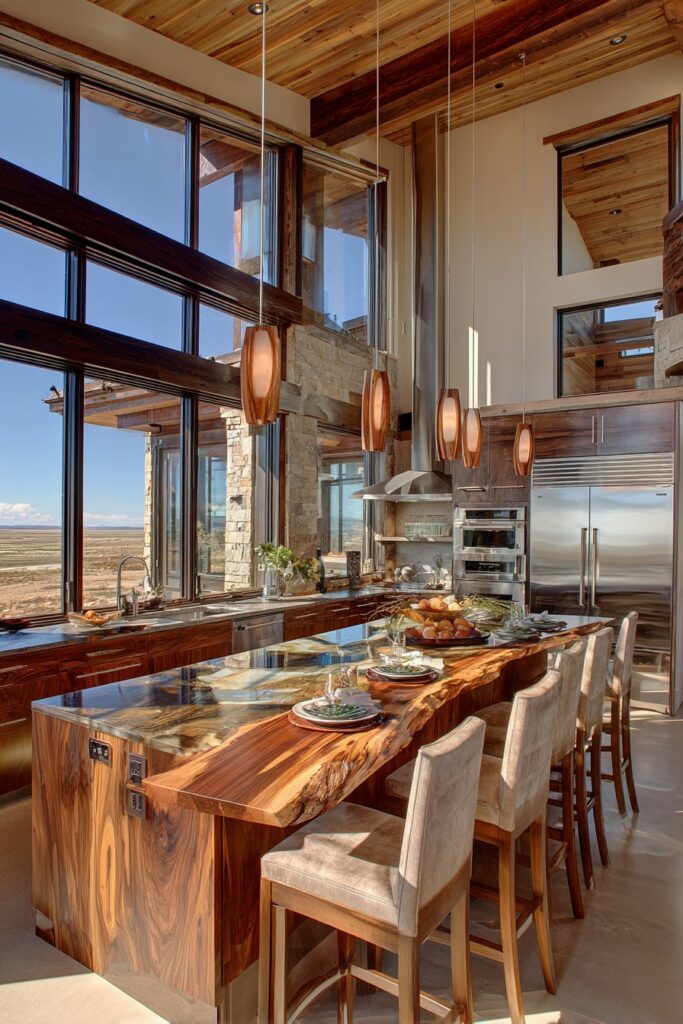
The centerpiece of this design is undoubtedly the kitchen island, crowned with a thick live-edge wooden countertop that celebrates nature’s artistry. Natural wood knots and color variations tell the tree’s story, creating a surface that’s both practical for food preparation and mesmerizing in its organic beauty. Each knot and grain pattern serves as a reminder of the wood’s natural origins, bringing an authentic connection to nature into this refined space.
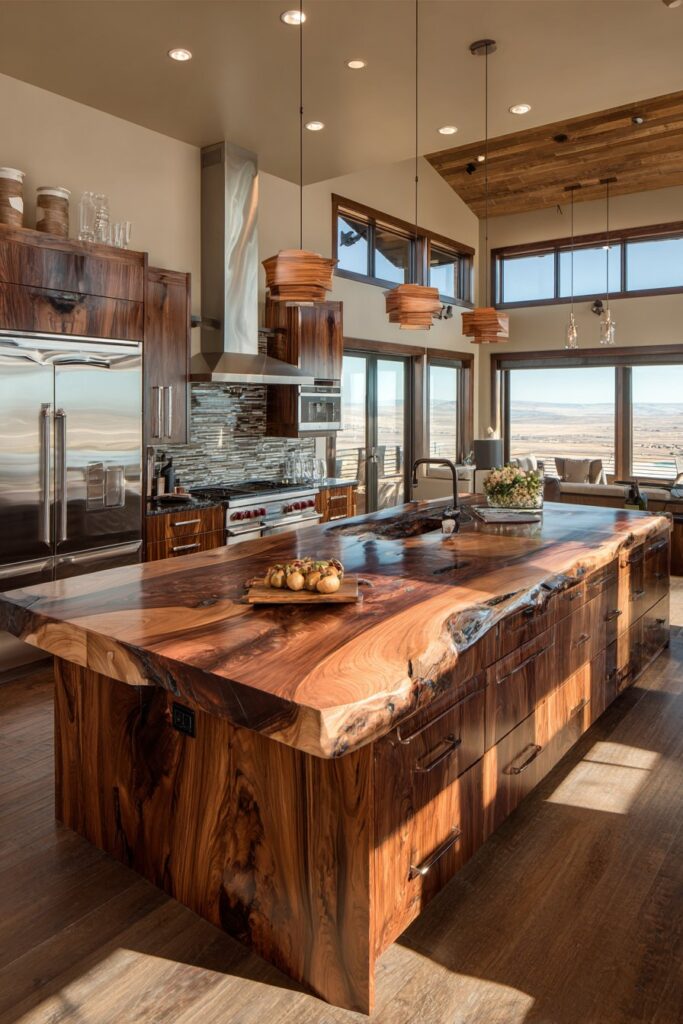
Stainless steel appliances provide the perfect contemporary contrast to the warm wooden surfaces, creating a sophisticated dialogue between natural and manufactured materials. The interplay of textures and temperatures—cool steel against warm wood—elevates the entire kitchen aesthetic while ensuring optimal functionality for serious cooking endeavors.
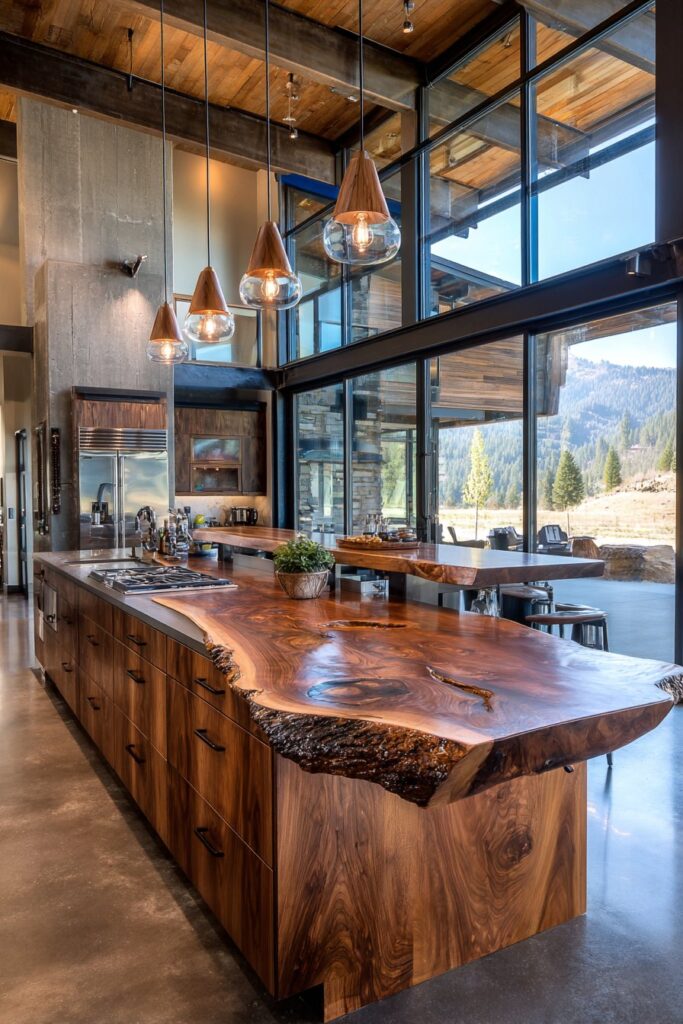
Natural daylight streaming through large windows acts as the perfect spotlight for the authentic wood textures, creating subtle shadows that shift throughout the day and reveal new details in the grain patterns. This dynamic relationship between light and wood ensures that the kitchen never looks exactly the same twice, providing an ever-changing canvas of natural beauty.
Key Design Tips:
- Choose walnut for its rich color and distinctive grain patterns that age beautifully over time
- Incorporate live-edge countertops to showcase wood’s natural artistry and create conversation pieces
- Balance warm wood tones with cool stainless steel for contemporary contrast and visual interest
- Position large windows to maximize natural light and highlight wood textures throughout the day
- Invest in soft-close hardware to maintain the peaceful ambiance and protect cabinet integrity
2. Scandinavian Light Oak Serenity
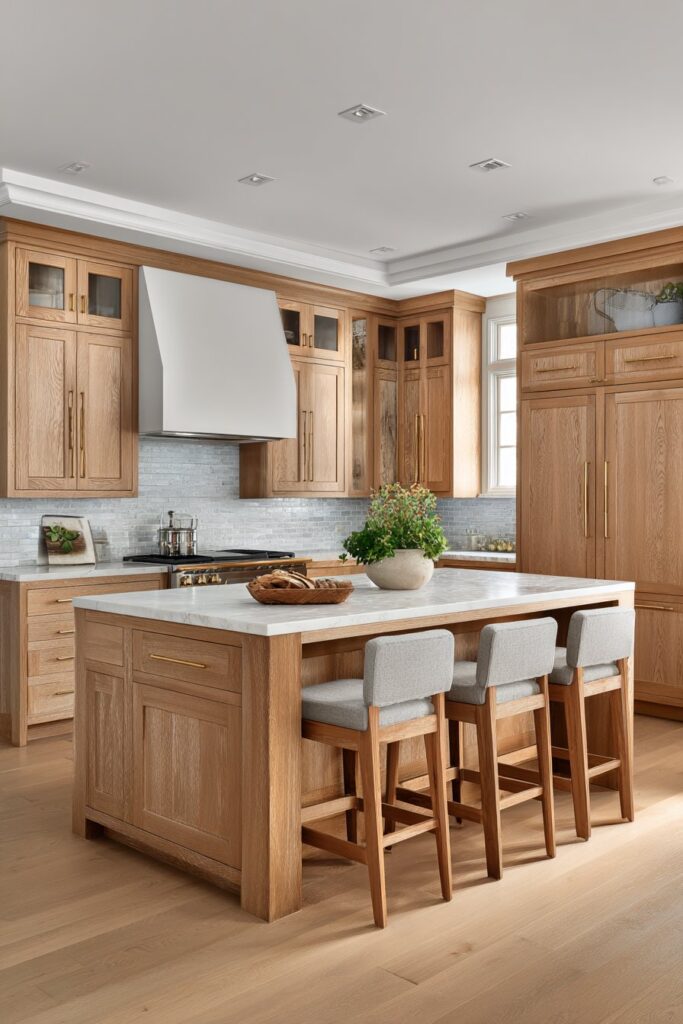
Embrace the essence of Nordic design through light oak cabinetry that embodies the Scandinavian philosophy of functional beauty and understated elegance. The clean lines and minimalist hardware in brushed brass create a serene environment that promotes both efficiency and tranquility in daily kitchen activities. This wooden kitchen design represents the perfect marriage of practicality and aesthetic restraint that defines authentic Scandinavian style.
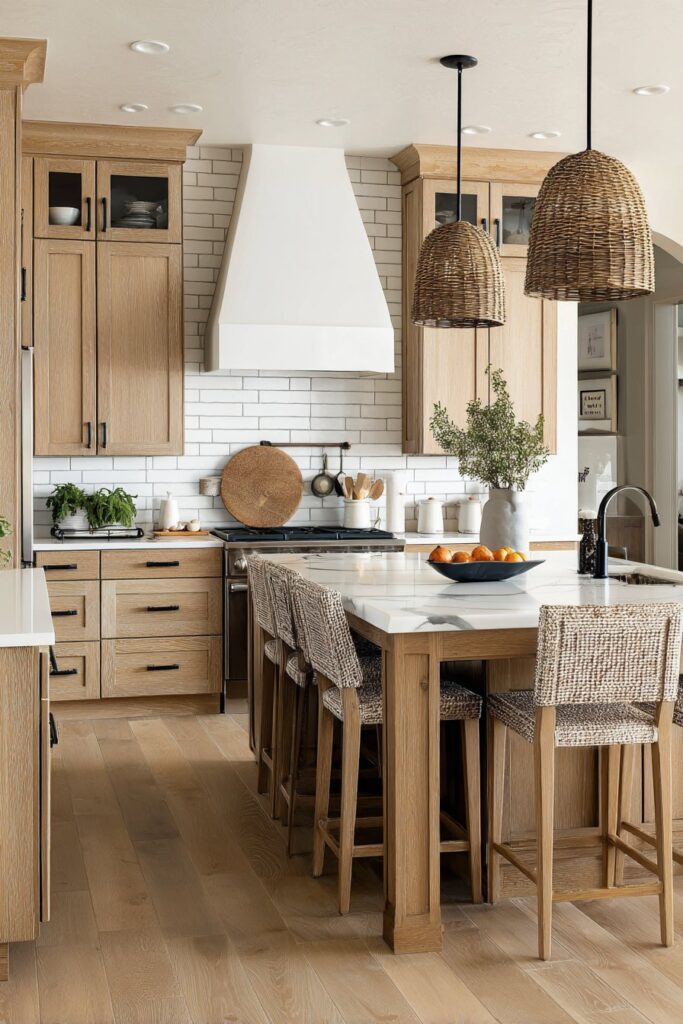
The wooden kitchen island serves multiple purposes, incorporating integrated seating with natural wood bar stools that invite casual dining and social interaction. This thoughtful integration of dining space within the kitchen footprint maximizes functionality while maintaining the clean, uncluttered aesthetic that makes Scandinavian design so appealing to modern homeowners seeking simplicity without sacrificing style.
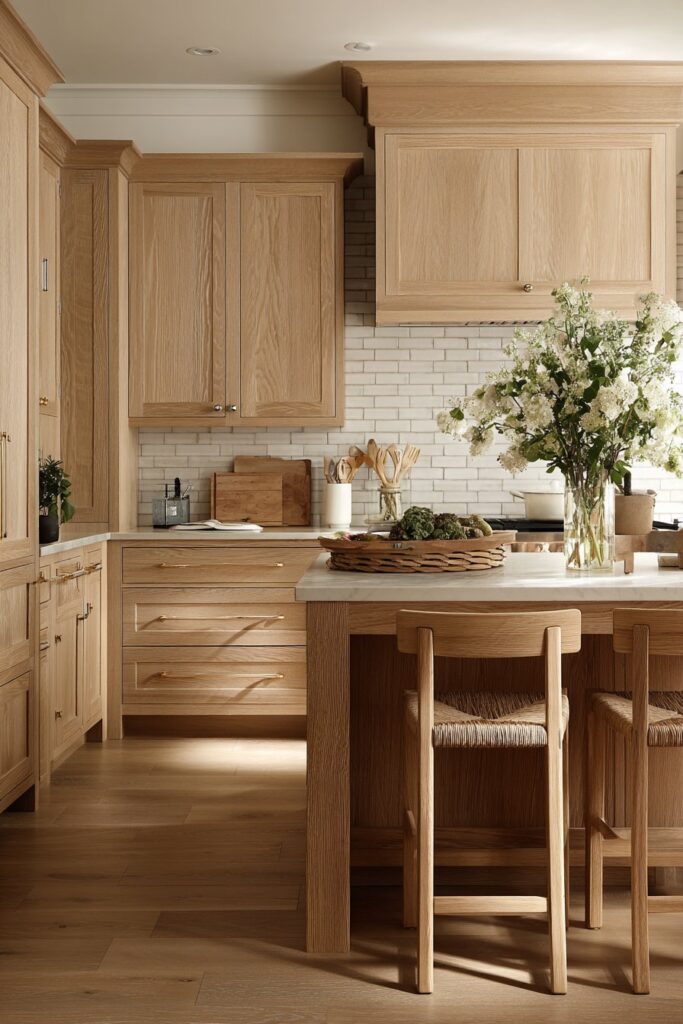
White subway tile backsplash provides a classic backdrop that allows the warm wood tones to take center stage while adding textural interest and easy maintenance. The contrast between the crisp white tiles and honey-colored oak creates a timeless combination that feels both fresh and enduring, ensuring the kitchen will remain stylish for decades to come.
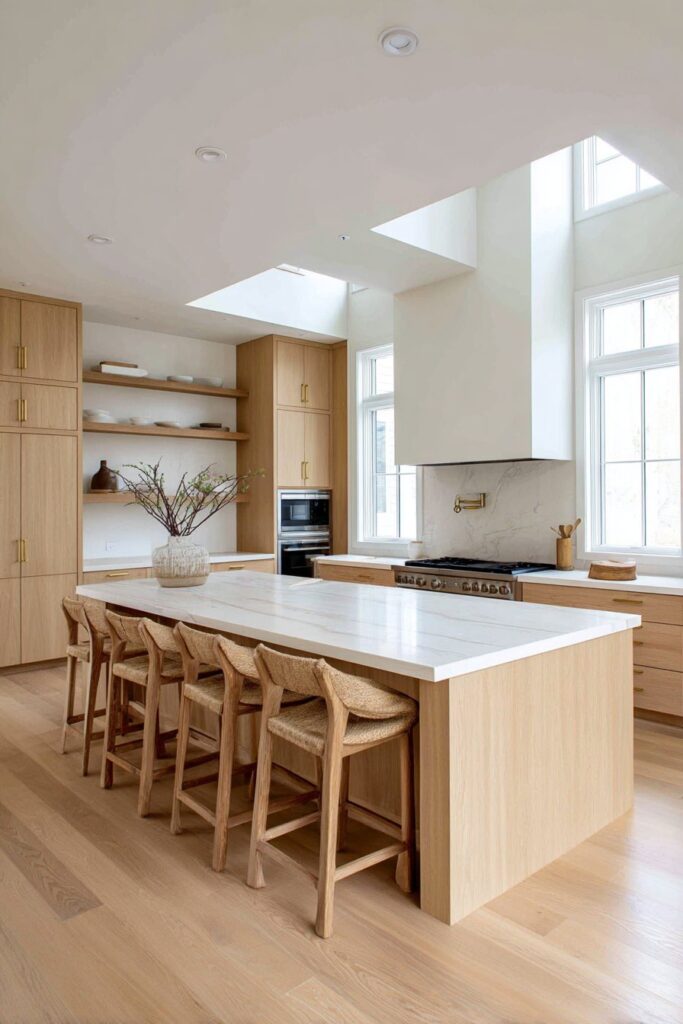
Soft diffused lighting from recessed ceiling fixtures bathes the space in gentle illumination that highlights the natural grain patterns in the oak surfaces without creating harsh shadows. This careful attention to lighting design ensures that the wood’s natural beauty is always showcased to its best advantage, creating an atmosphere of calm sophistication that defines the best of Scandinavian interior design.
Key Design Tips:
- Select light oak for its bright, airy appearance that makes spaces feel larger and more welcoming
- Incorporate integrated seating to maximize functionality while maintaining clean design lines
- Use white subway tile as a neutral backdrop that enhances rather than competes with wood tones
- Install recessed lighting for even illumination that showcases wood grain without harsh shadows
- Choose brushed brass hardware for warm metallic accents that complement light wood tones perfectly
3. Rustic Reclaimed Barn Wood Character
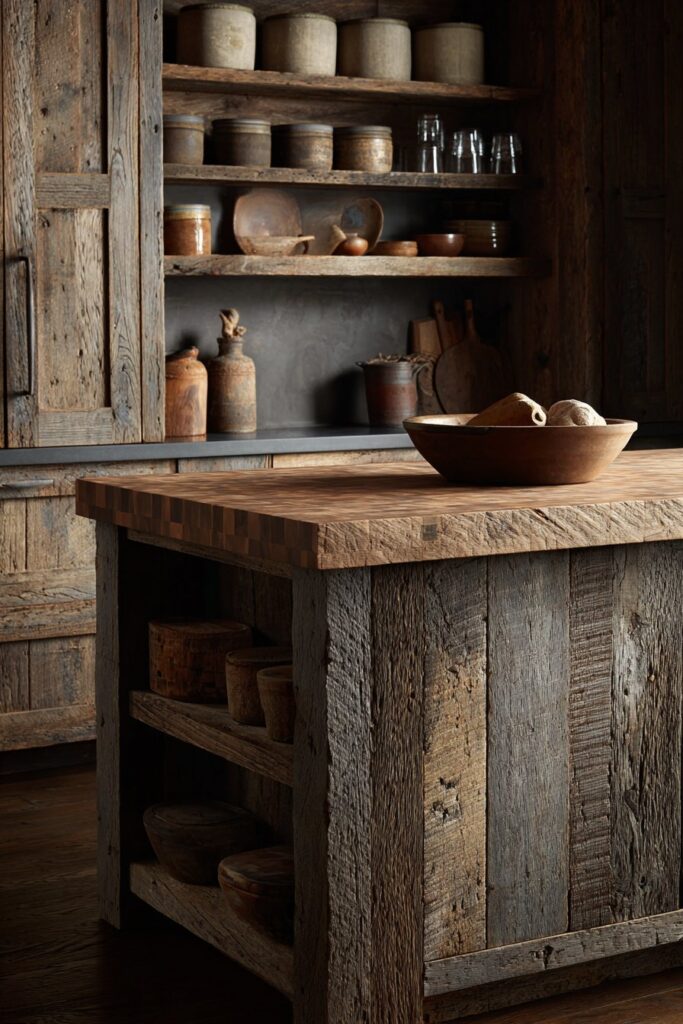
Discover the compelling beauty of reclaimed barn wood cabinetry, where visible weathering and natural imperfections become design features that celebrate the wood’s previous life and authentic character. This rustic wooden kitchen embraces the philosophy that true beauty lies in imperfection, creating a space that feels lived-in and welcoming from the very first day while honoring sustainable design principles through material reuse.
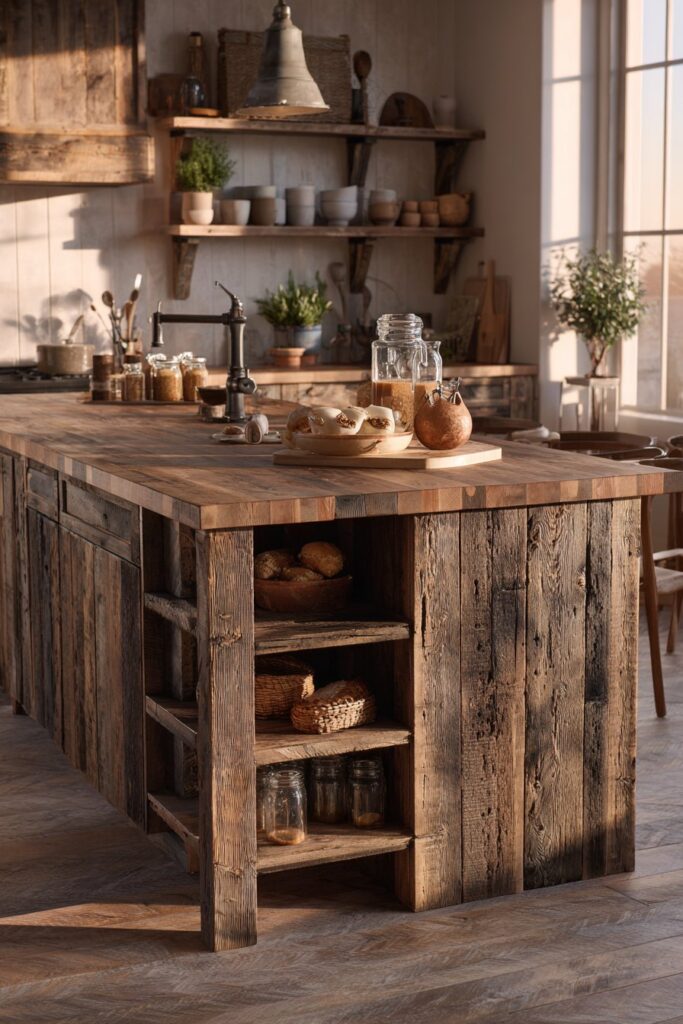
The wooden kitchen island showcases butcher block countertops constructed with end-grain methodology, revealing tool marks and natural wear patterns that speak to traditional craftsmanship methods. This construction technique not only provides an incredibly durable work surface that’s gentle on knife blades but also creates visual interest through the mosaic-like pattern of exposed wood fibers.
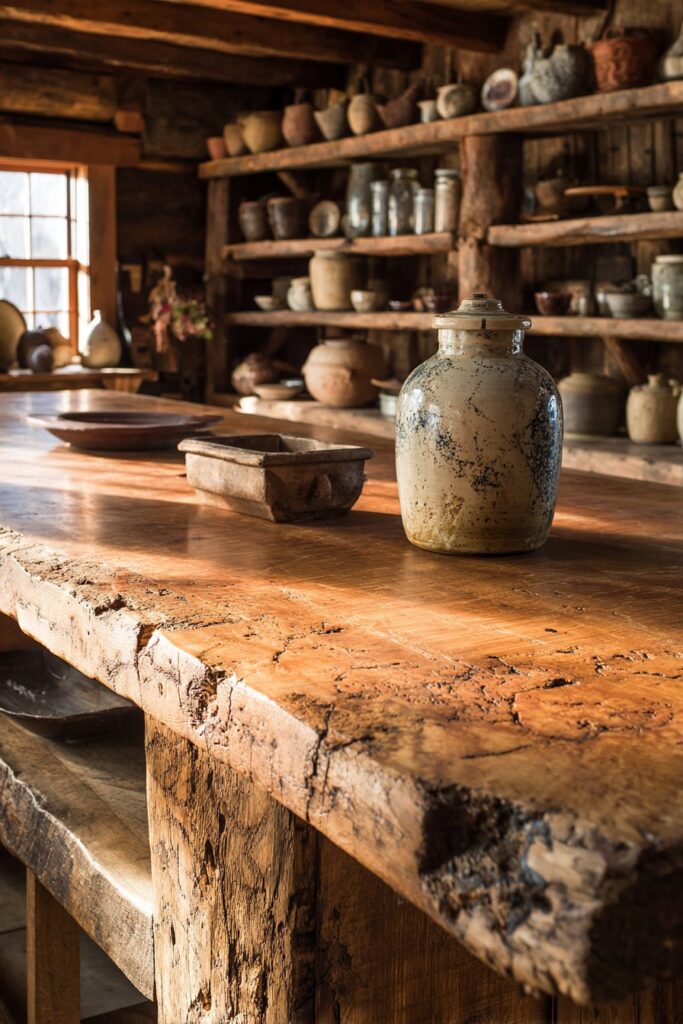
Open wooden shelving becomes a display opportunity for artisanal pottery and vintage mason jars, turning everyday kitchen items into decorative elements that enhance the rustic aesthetic. This approach to storage reduces visual clutter while keeping frequently used items within easy reach, demonstrating how functional design can be both practical and beautiful.
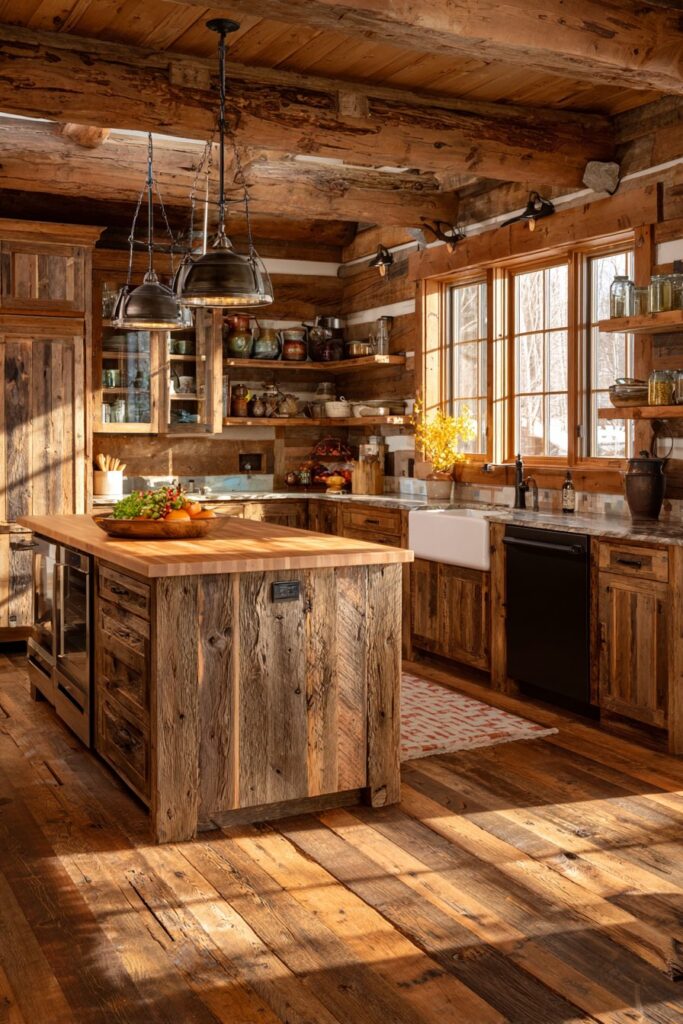
Golden hour natural lighting transforms the aged wood surfaces into warm, glowing features that change throughout the day, highlighting different grain patterns and weathering characteristics as the sun’s angle shifts. This dynamic interplay between natural light and reclaimed wood creates an ever-changing tableau that keeps the kitchen feeling alive and connected to the natural world.
Key Design Tips:
- Source reclaimed barn wood for authentic character and sustainable environmental impact
- Choose end-grain butcher block construction for durability and visual interest in work surfaces
- Incorporate open shelving to display beautiful kitchen items while maintaining easy access
- Position windows to capture golden hour lighting that enhances aged wood patina
- Embrace natural imperfections as design features rather than flaws to be hidden or corrected
4. Contemporary Cherry Wood Storage Solutions
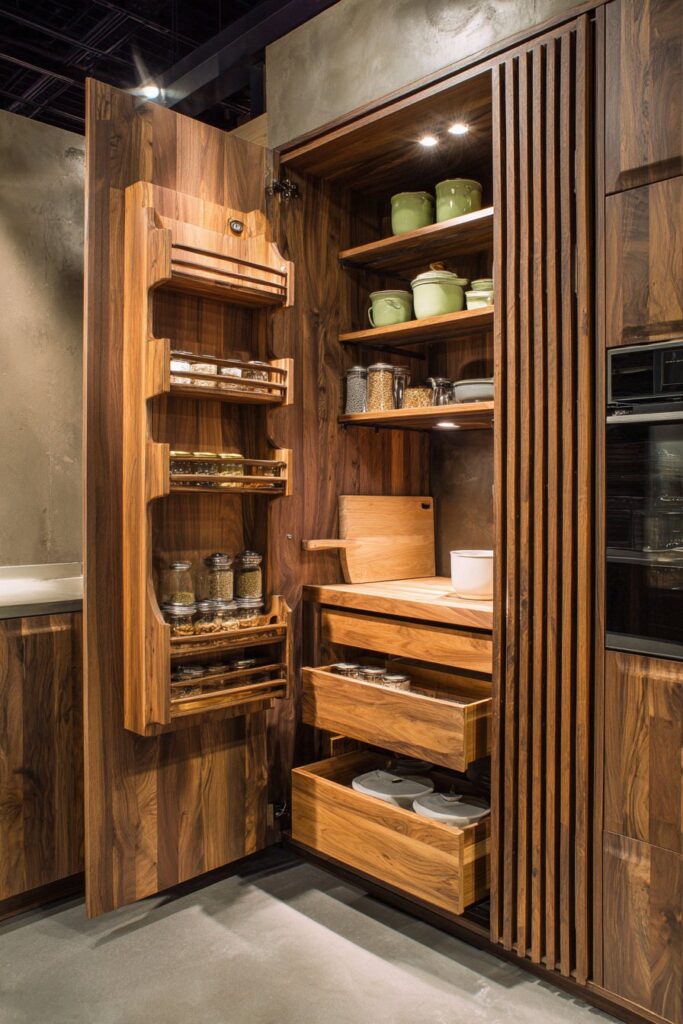
Experience the sophisticated elegance of floor-to-ceiling cherry wood cabinets that transform kitchen storage from necessity into architectural feature. The rich, warm tones of cherry wood mature beautifully over time, developing deeper color and character that makes this wooden kitchen investment more valuable with each passing year. Integrated pull-out drawers and hidden hinges maintain clean lines while providing exceptional functionality for modern kitchen needs.
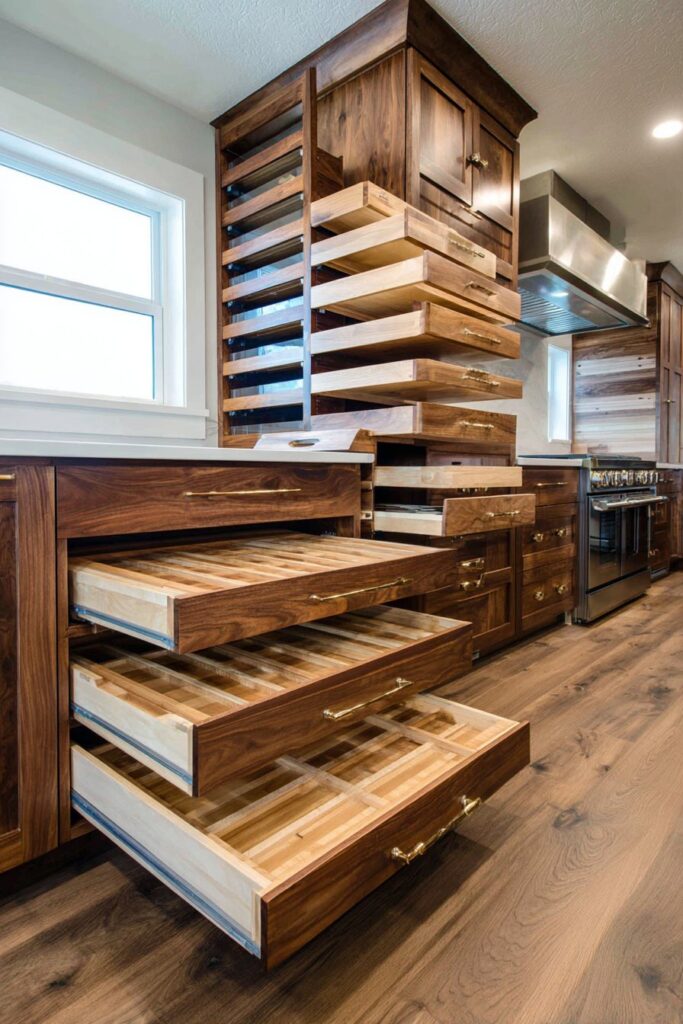
The wooden kitchen design showcases a dedicated pantry wall featuring wooden slat details that add textural interest while concealing interior LED lighting systems. This innovative approach to pantry design creates dramatic visual impact while ensuring that stored items are clearly visible and easily accessible, proving that storage solutions can be both practical and aesthetically stunning.
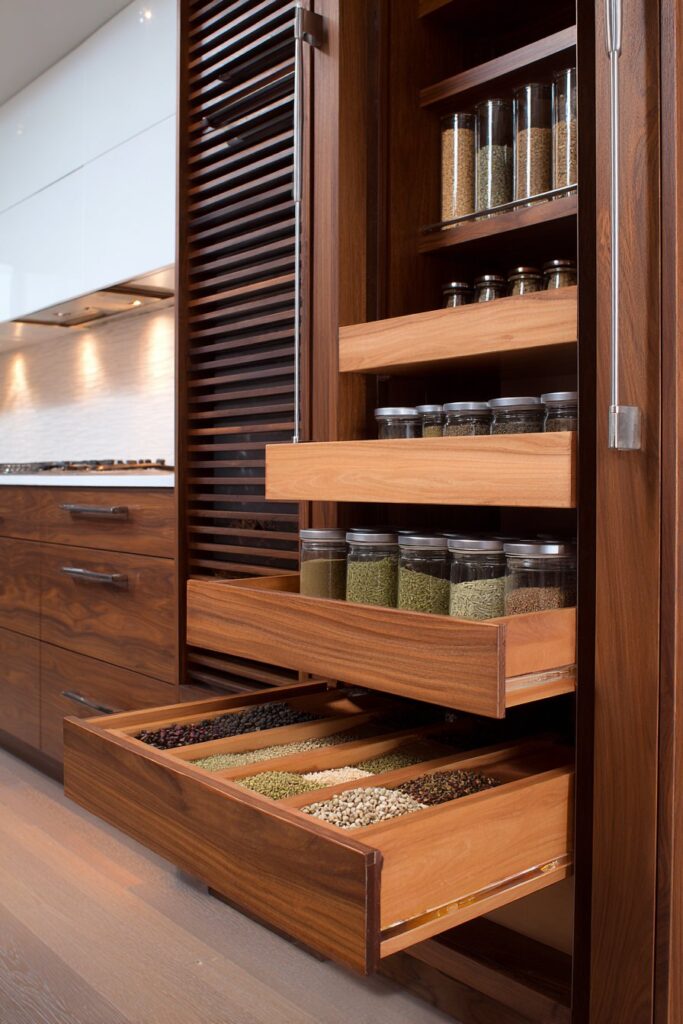
Seamlessly built-in wooden spice racks and cutting board storage demonstrate how thoughtful design can eliminate countertop clutter while keeping essential cooking tools immediately accessible. These custom storage solutions are crafted from the same cherry wood as the cabinetry, creating visual continuity while addressing specific functional needs that make cooking more efficient and enjoyable.
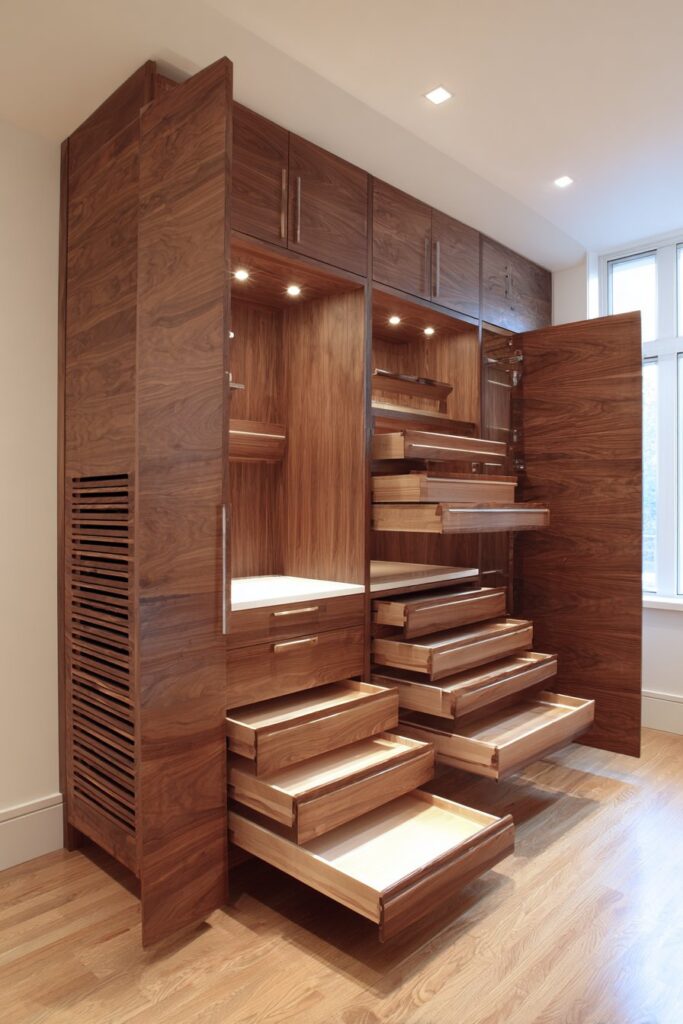
The impressive storage capacity becomes apparent through wide-angle photography that reveals how every inch of vertical space is utilized effectively, while soft shadows emphasize the rich cherry wood grain and sophisticated organization systems. This comprehensive storage approach ensures that even the most elaborate cooking endeavors can be accommodated without compromising the kitchen’s clean, organized appearance.
Key Design Tips:
- Select cherry wood for its natural aging properties that improve appearance over time
- Install floor-to-ceiling cabinets to maximize storage capacity and create architectural impact
- Incorporate LED lighting in pantry areas for better visibility and dramatic effect
- Design custom storage solutions for specific items like spices and cutting boards
- Use hidden hinges to maintain clean lines and contemporary aesthetic appeal
5. Farmhouse Maple Shaker Style Charm
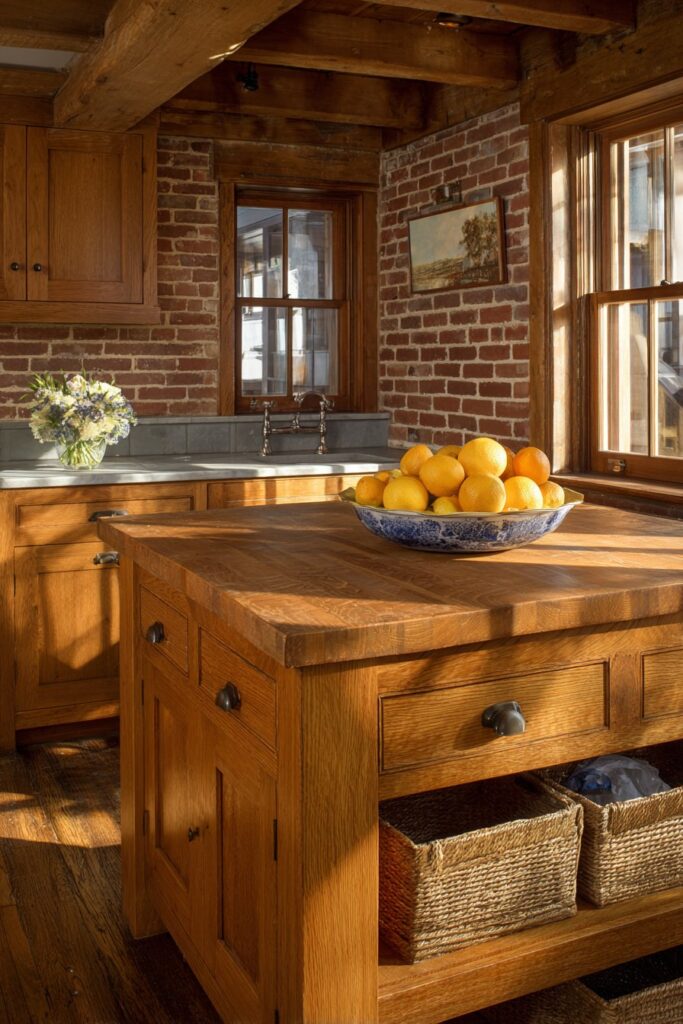
Step into the timeless appeal of shaker-style maple cabinets finished in natural honey tones that embody the enduring charm of farmhouse kitchen design. The traditional raised panel doors showcase classic craftsmanship techniques while providing the durability and beauty that maple wood is renowned for. This wooden kitchen design celebrates American traditional styling with modern functionality seamlessly integrated throughout.
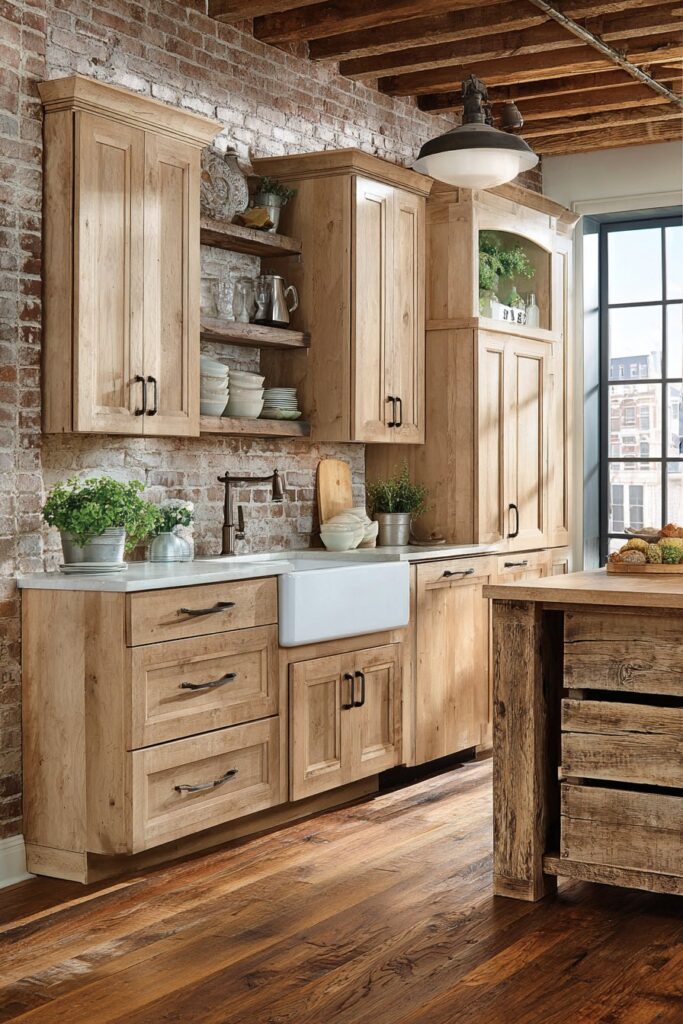
The expansive wooden kitchen island commands attention with its generous proportions, incorporating a prep sink and extensive storage through wooden crate-style drawers that echo classic farmhouse storage solutions. This central feature provides ample workspace for food preparation while maintaining the authentic farmhouse aesthetic that makes this style so enduringly popular among homeowners seeking warmth and tradition.
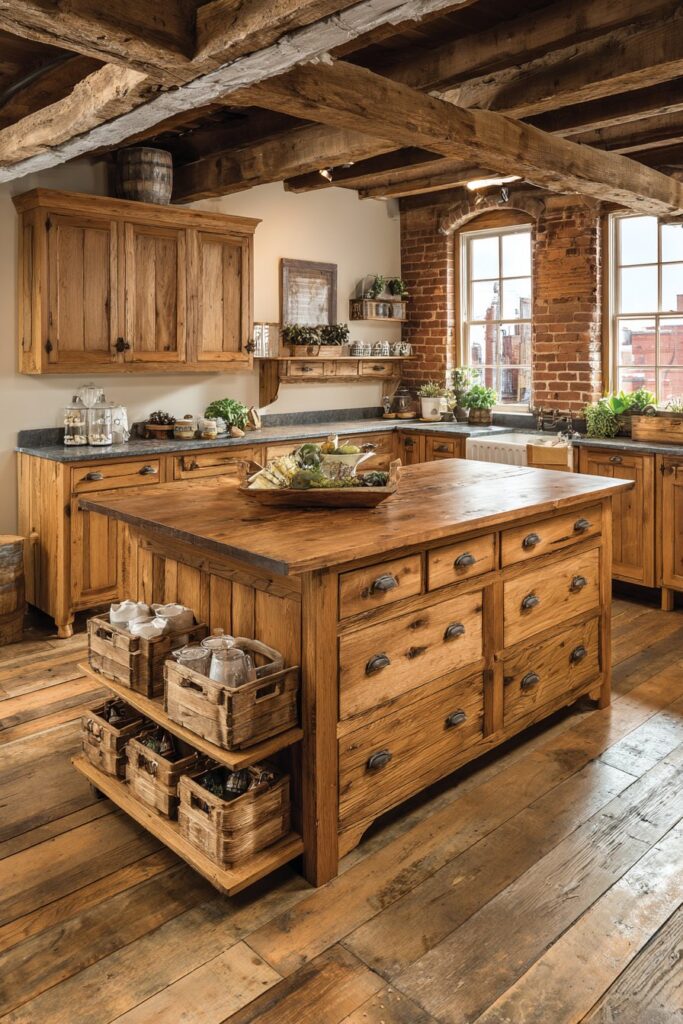
Exposed wooden ceiling beams create architectural interest while complementing the cabinetry through their natural wood tones and rustic presence. These structural elements, whether original to the home or added for aesthetic appeal, provide visual weight and historical authenticity that grounds the entire kitchen design in farmhouse tradition.
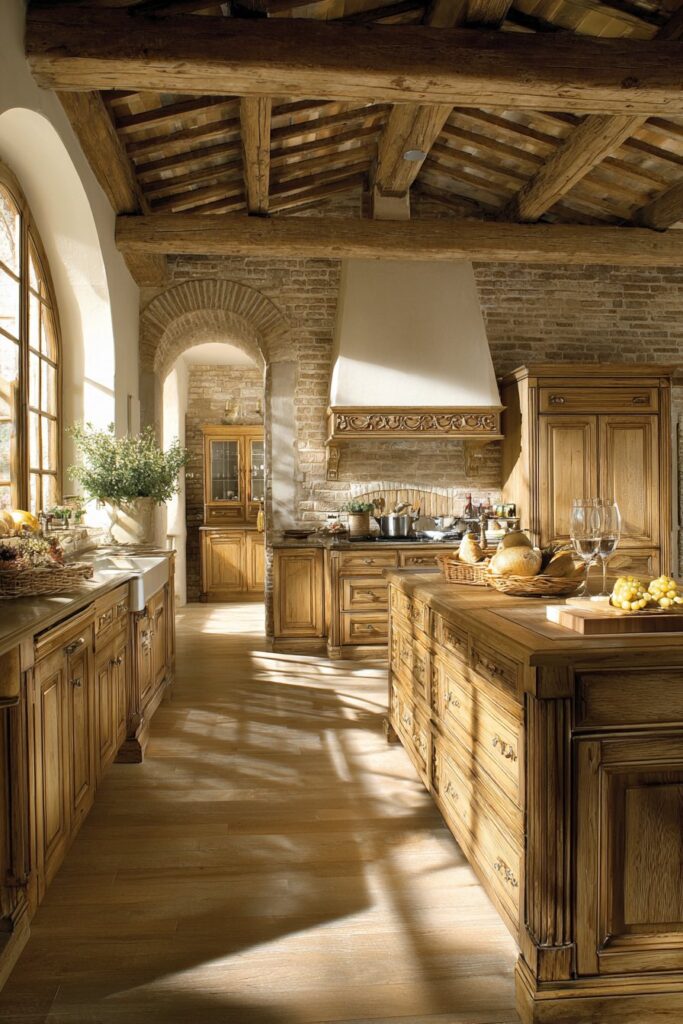
The brick backsplash adds another layer of rustic texture that pairs beautifully with the warm maple cabinetry, creating depth and visual interest while providing an easy-to-clean surface behind cooking areas. Natural window lighting illuminates the handcrafted quality of every wooden element, casting authentic shadows that highlight the substantial construction and attention to detail.
Key Design Tips:
- Choose maple for its fine grain and ability to take stain evenly for consistent color
- Design oversized islands to serve as focal points and maximize functional workspace
- Incorporate exposed beams to add architectural interest and farmhouse authenticity
- Select brick backsplash for texture contrast and easy maintenance in cooking areas
- Position windows strategically to showcase handcrafted details through natural lighting
6. Compact Birch Wood Efficiency
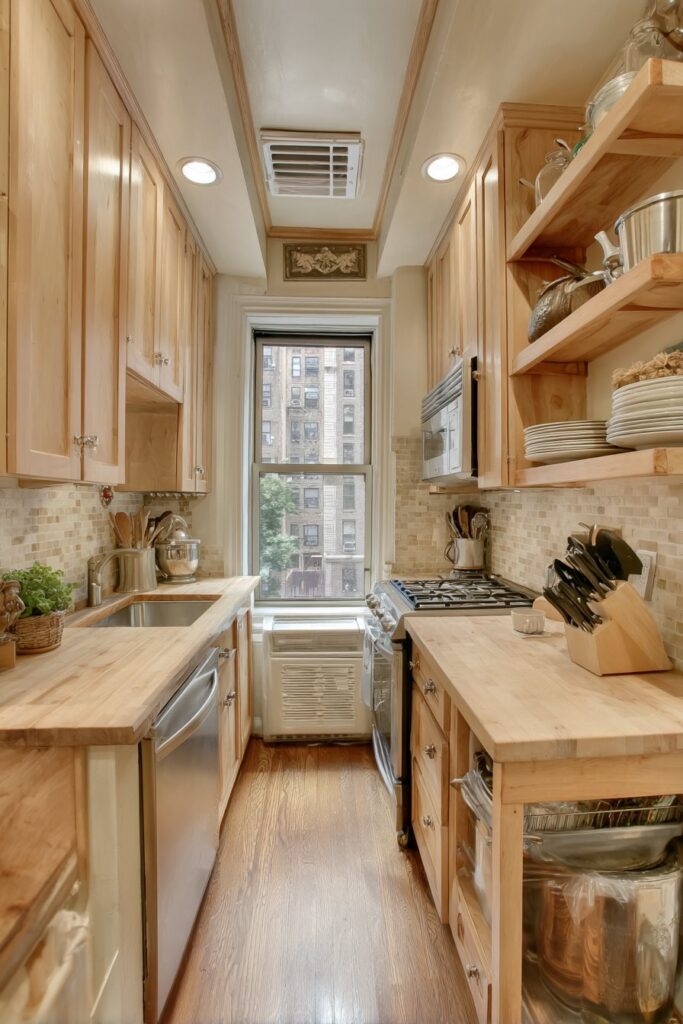
Maximize every square inch of available space through innovative vertical oak cabinetry that reaches to the ceiling, paired with strategic wooden floating shelves that provide display opportunities without overwhelming the compact footprint. This small wooden kitchen design proves that size limitations need not compromise either functionality or aesthetic appeal, demonstrating how thoughtful planning can create remarkable efficiency in modest spaces.
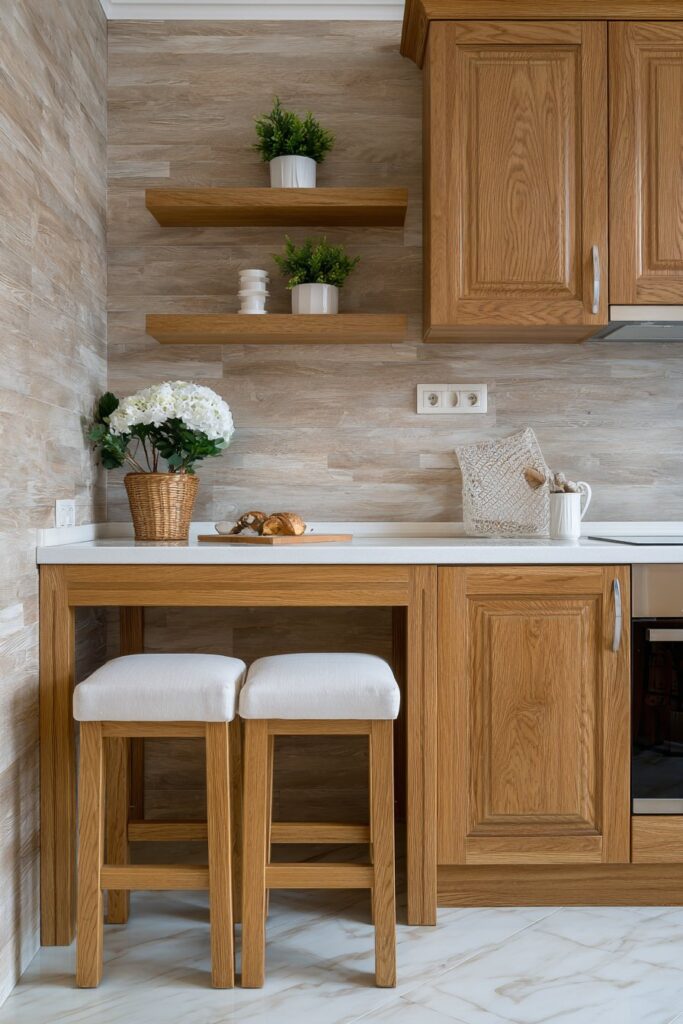
The compact wooden kitchen island on wheels provides brilliant flexibility, offering additional prep space and storage that can be repositioned as needs change throughout the day. This mobile approach to kitchen islands is particularly valuable in smaller spaces where adaptability is essential, allowing the kitchen to transform from cooking workspace to dining area to entertaining hub as required.
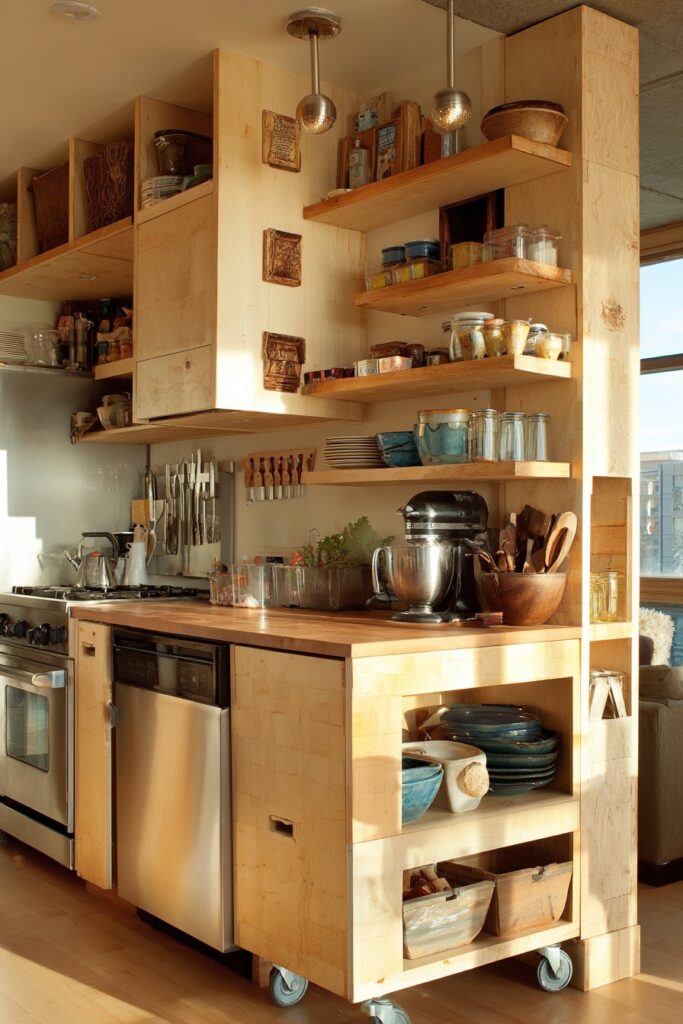
Light-colored birch wood creates an airy, expansive feeling that defies the kitchen’s actual square footage, while the consistent grain pattern provides visual cohesion throughout the space. Birch’s naturally light color reflects available light effectively, making the kitchen feel significantly larger than its actual dimensions would suggest while maintaining the warmth and character that only natural wood can provide.
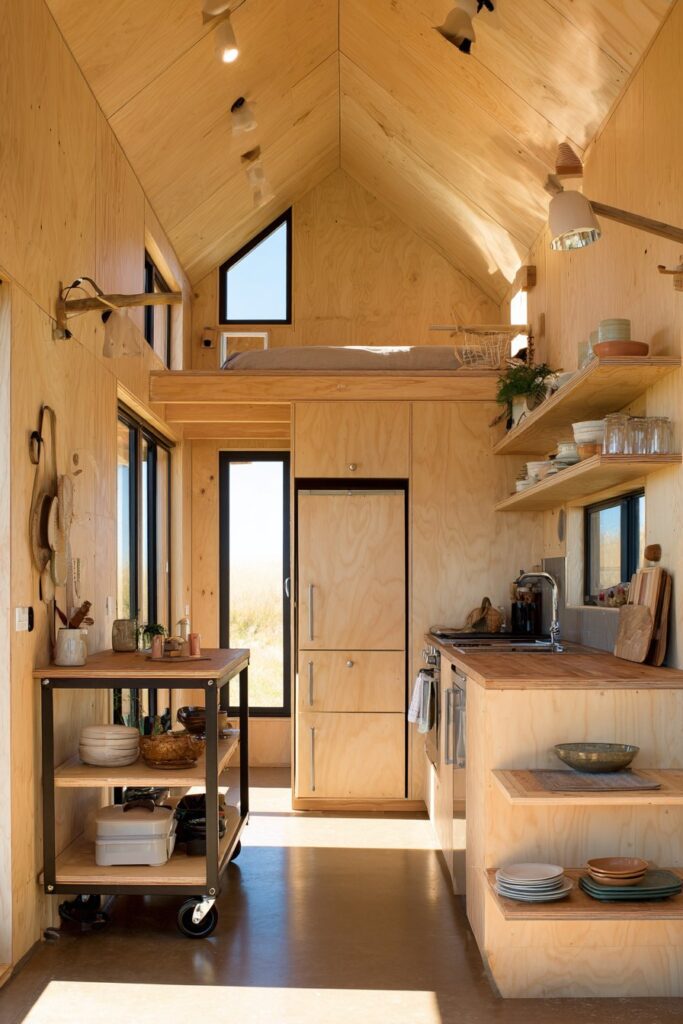
Professional interior photography techniques reveal how every storage solution is carefully planned to maximize utility while maintaining visual appeal, proving that efficient design and beautiful aesthetics are not mutually exclusive. The balanced exposure showcases how light-colored wood can make small spaces feel open and welcoming while providing all the functionality of larger kitchens.
Key Design Tips:
- Use light-colored woods like birch to visually expand small spaces and reflect available light
- Install ceiling-height cabinets to maximize storage capacity without increasing floor footprint
- Choose mobile islands for flexibility in compact spaces that need to serve multiple functions
- Incorporate floating shelves for display and storage without visual bulk
- Plan every storage solution carefully to maximize utility in limited square footage
7. Two-Tone Mahogany and Maple Sophistication
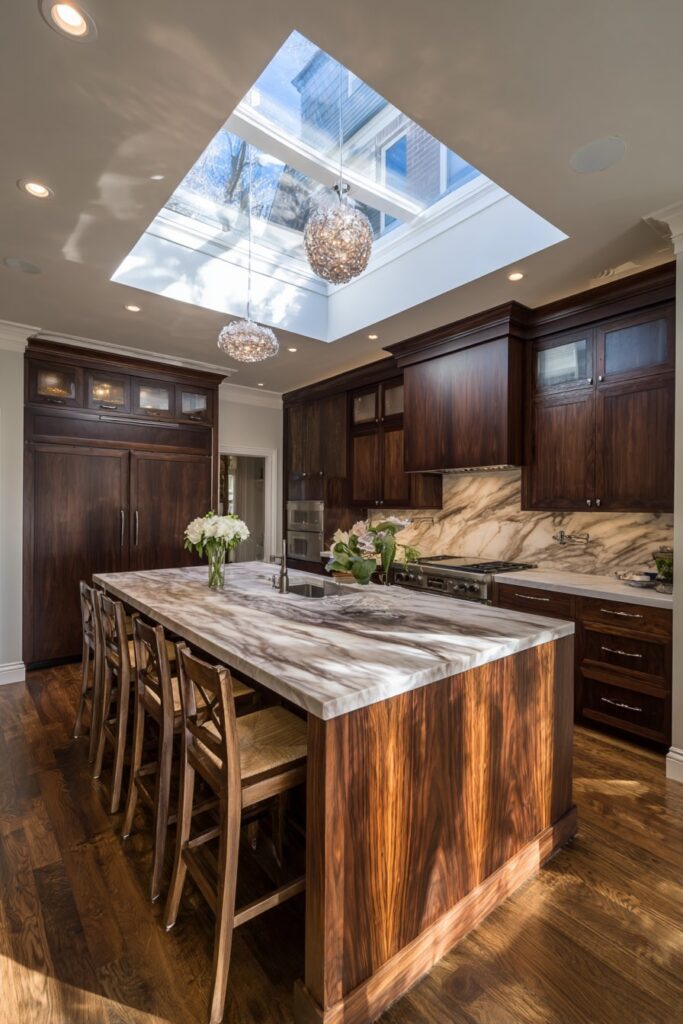
Create visual drama through the sophisticated contrast of dark mahogany lower cabinets paired with light maple upper cabinets, establishing a design hierarchy that adds depth and interest to the kitchen layout. This two-tone wooden kitchen approach demonstrates how different wood species can work together harmoniously while creating distinct zones within the same space, adding complexity and visual sophistication.

The wooden kitchen island becomes a showcase piece through its waterfall-edge design, where continuous wood grain flows seamlessly over the sides, creating an unbroken visual flow that emphasizes the quality of the wood selection and expert craftsmanship. This contemporary detail elevates the island from functional necessity to sculptural art piece that serves as the kitchen’s focal point.
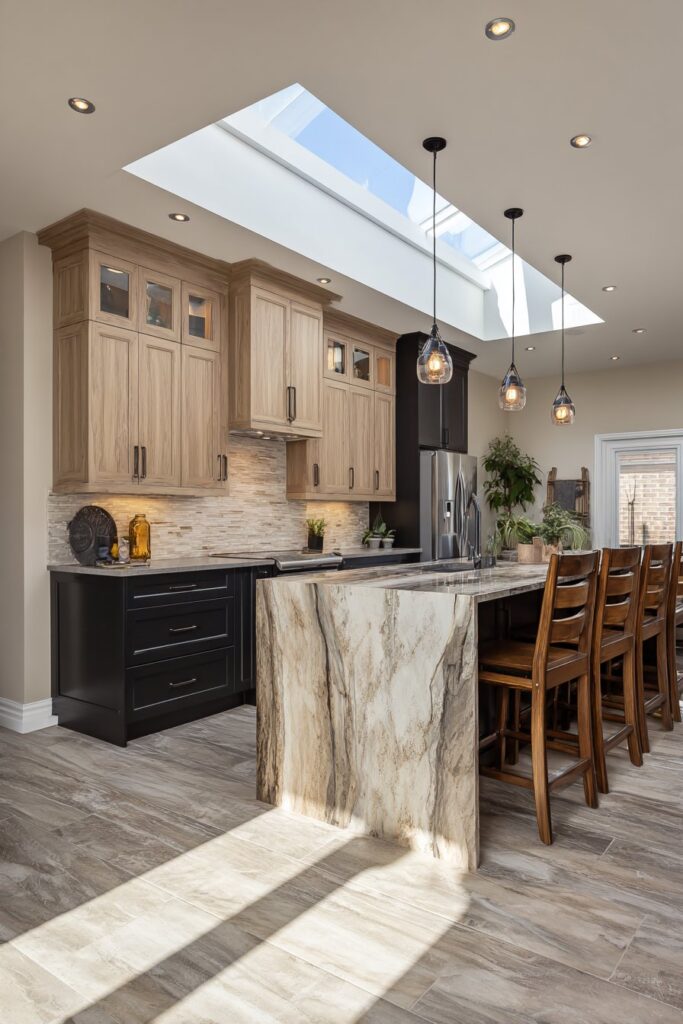
Wooden bar stools with ladder backs provide comfortable seating while echoing traditional furniture design elements that complement the sophisticated cabinetry. The ladder-back design adds vertical interest and maintains the wooden theme throughout the space while providing comfortable seating for casual dining or social interaction during cooking activities.
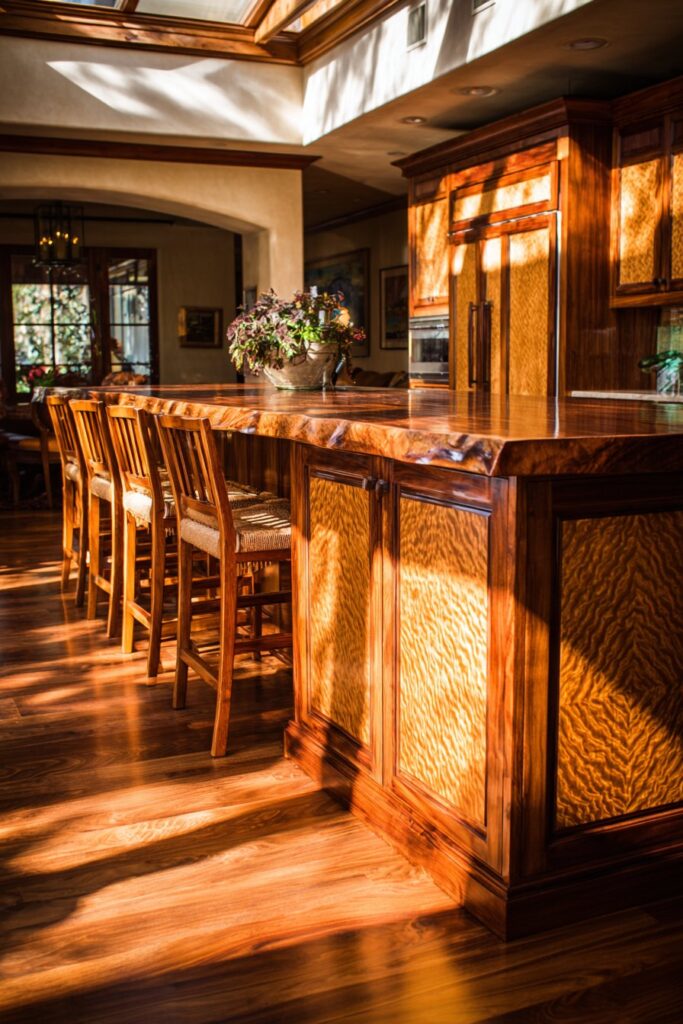
Natural lighting from skylights creates dynamic shadow patterns on the contrasting wooden surfaces, highlighting the different grain patterns and color variations between the mahogany and maple elements. This overhead lighting source provides even illumination throughout the day while emphasizing the sophisticated balance between light and dark wood tones.
Key Design Tips:
- Combine dark lower cabinets with light upper cabinets to create visual balance and prevent heaviness
- Use waterfall-edge islands to showcase premium wood grain and contemporary design sensibilities
- Select complementary wood species that share similar grain characteristics for visual harmony
- Install skylights for dramatic natural lighting that highlights wood grain patterns effectively
- Choose furniture pieces that echo the wooden theme while adding functional seating options
8. Open Concept White Oak Cathedral Grain
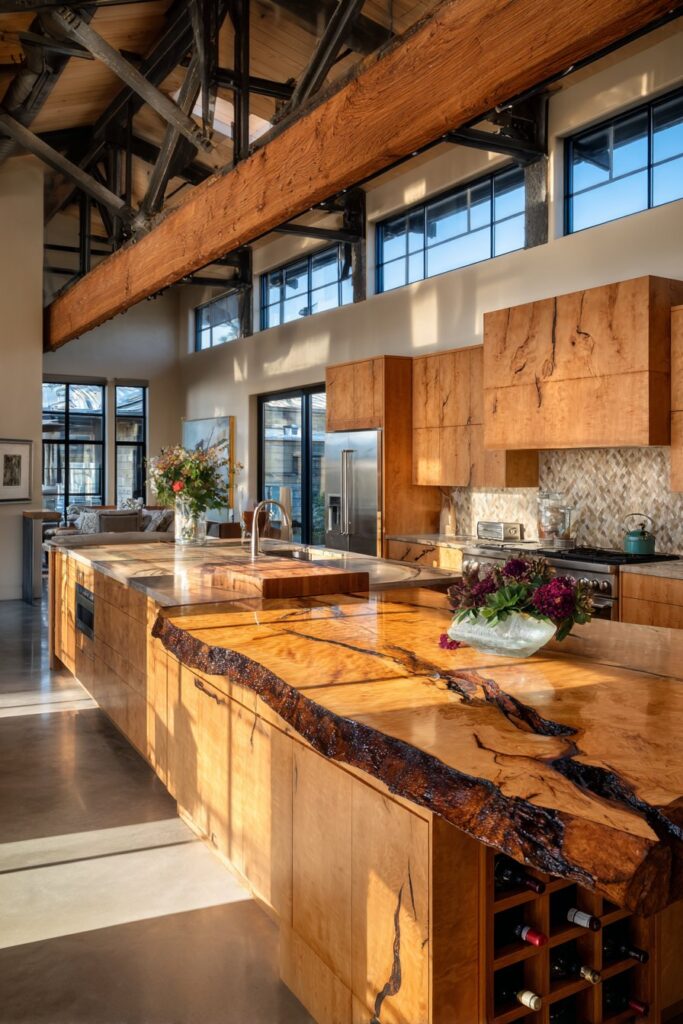
Embrace architectural grandeur through massive wooden beams that support the ceiling while showcasing white oak cabinetry featuring distinctive cathedral grain doors. This open concept wooden kitchen design celebrates the natural beauty of wood grain patterns while creating an impressive sense of space and structural honesty that defines the best of contemporary rustic design.
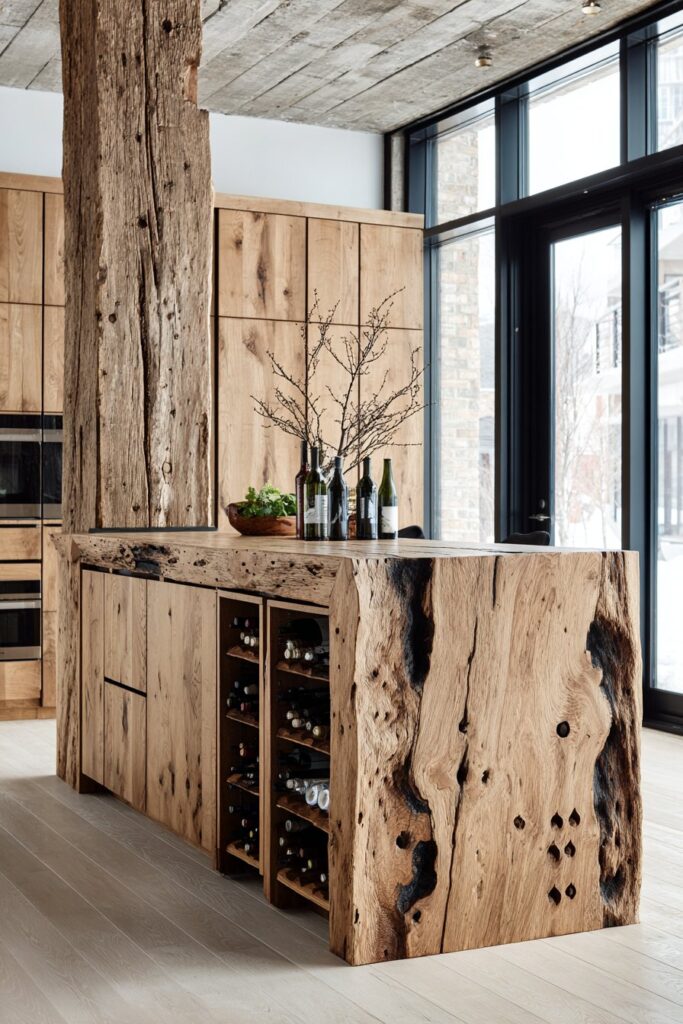
The wooden kitchen peninsula incorporates a breakfast bar with live-edge wood countertop that includes natural bark inclusion, creating an organic sculpture that serves as both functional workspace and natural art piece. This approach to countertop design celebrates the tree’s original form while providing a unique surface that sparks conversation and connection with nature.
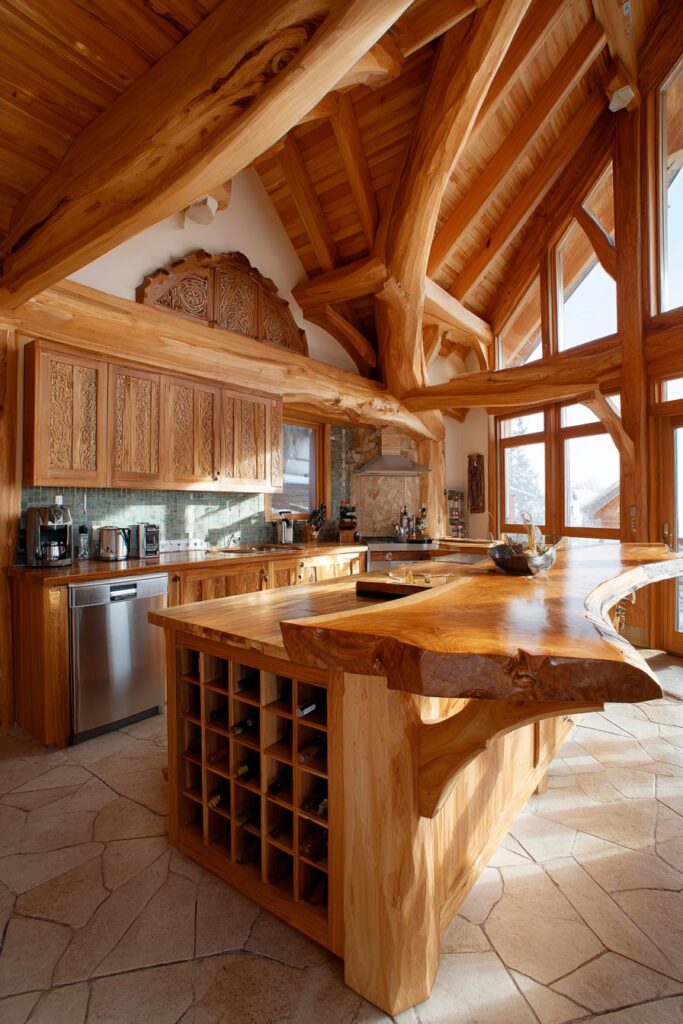
Built-in wooden wine storage within the island base demonstrates how specialty storage can be seamlessly integrated into the overall design while maintaining the wooden theme throughout. This thoughtful inclusion shows how serious cooking enthusiasts can accommodate their passions while maintaining clean, organized spaces that don’t compromise on style or functionality.
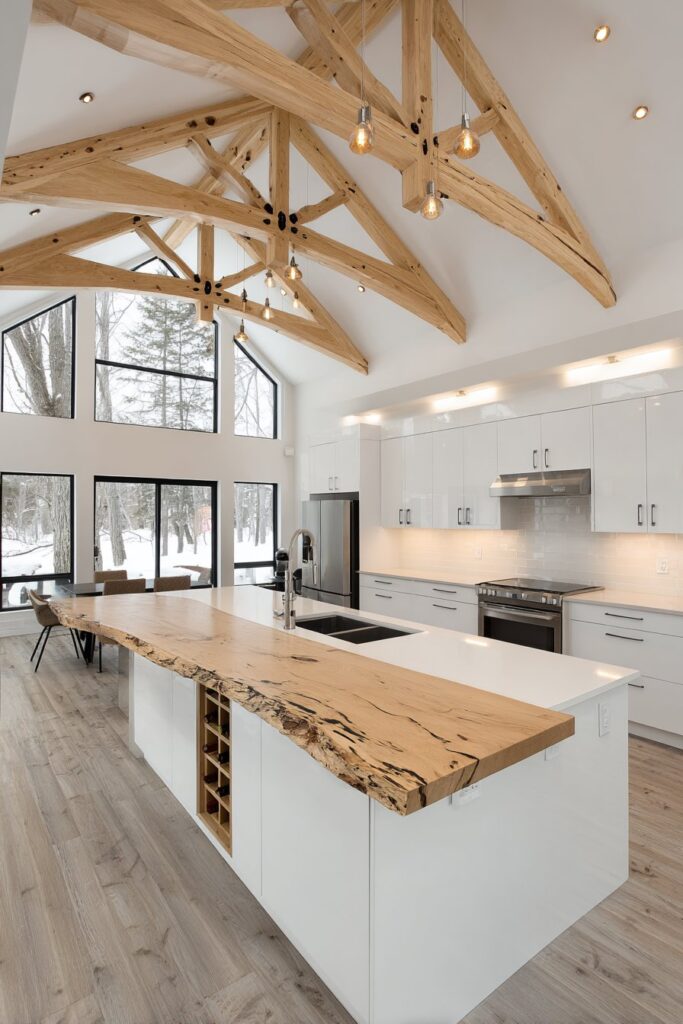
Soft morning light filtering through large windows illuminates the cathedral patterns in the wooden kitchen cabinetry, creating a natural spotlight that reveals the intricate beauty of the wood grain. The wide-angle perspective captures how architectural wooden elements integrate seamlessly with kitchen functionality, creating spaces that are both impressive and highly functional.
Key Design Tips:
- Select white oak for its prominent cathedral grain patterns that create natural visual interest
- Incorporate structural beams as design elements that add architectural authenticity and grandeur
- Use live-edge countertops with bark inclusion for unique natural character and conversation pieces
- Design built-in wine storage to accommodate specific lifestyle needs within the overall aesthetic
- Position large windows to capture morning light that highlights cathedral grain patterns effectively
9. Hickory Natural Variation Beauty
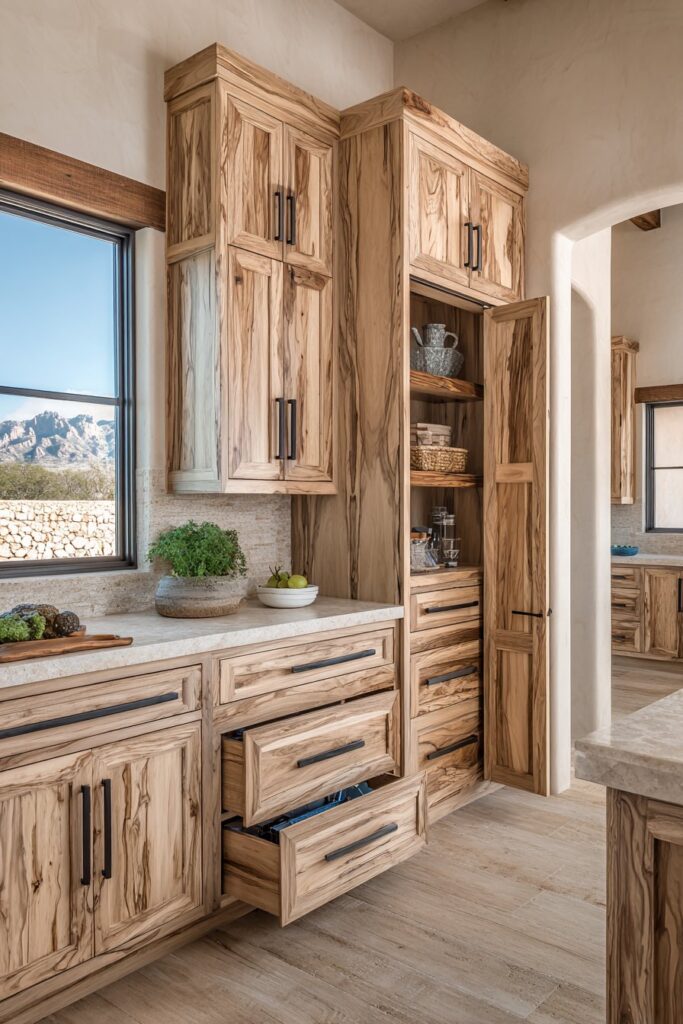
Celebrate the distinctive characteristics of hickory wood through cabinetry that showcases natural color variation and unique grain patterns that make each door and drawer front a individual work of art. This wooden kitchen embraces the philosophy that nature’s variations are features to be celebrated rather than uniformity to be imposed, creating a space that feels alive and organic.
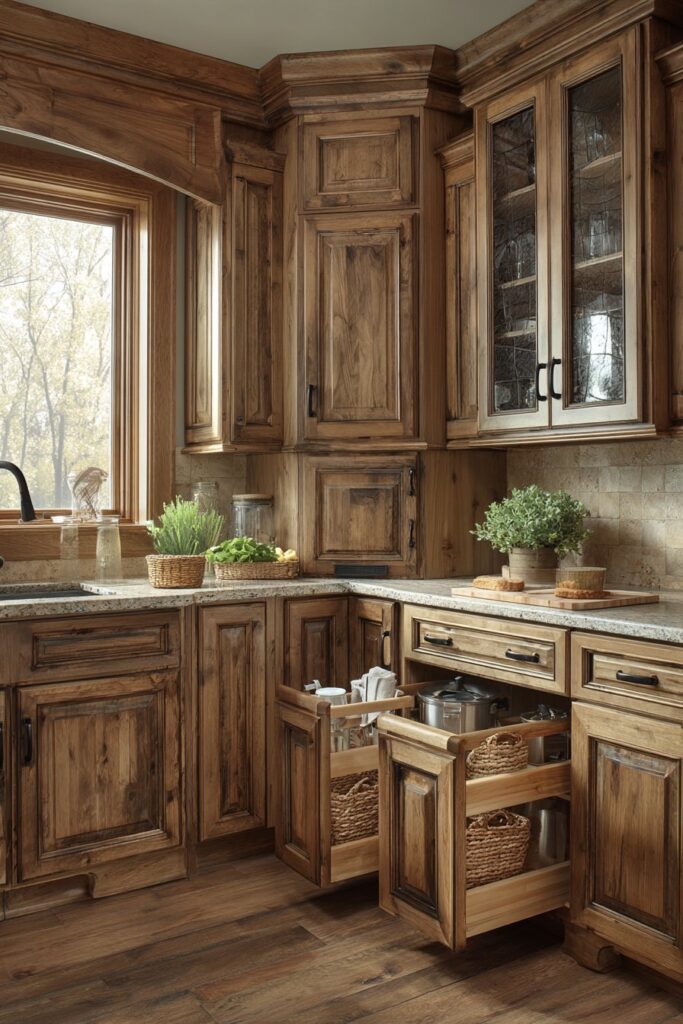
The dedicated butcher block workspace features proper end-grain construction specifically designed for food preparation, providing a surface that’s both beautiful and exceptionally functional for serious cooking tasks. This traditional construction method creates a self-healing surface that maintains its appearance and functionality even with heavy use, making it an ideal choice for active cooking environments.

Custom wooden cutting board storage that slides seamlessly out from specially designed cabinets demonstrates how thoughtful planning can keep essential tools organized and accessible while maintaining the clean lines of the overall design. This integrated storage solution prevents countertop clutter while ensuring that cutting boards remain properly stored and easily accessible when needed.
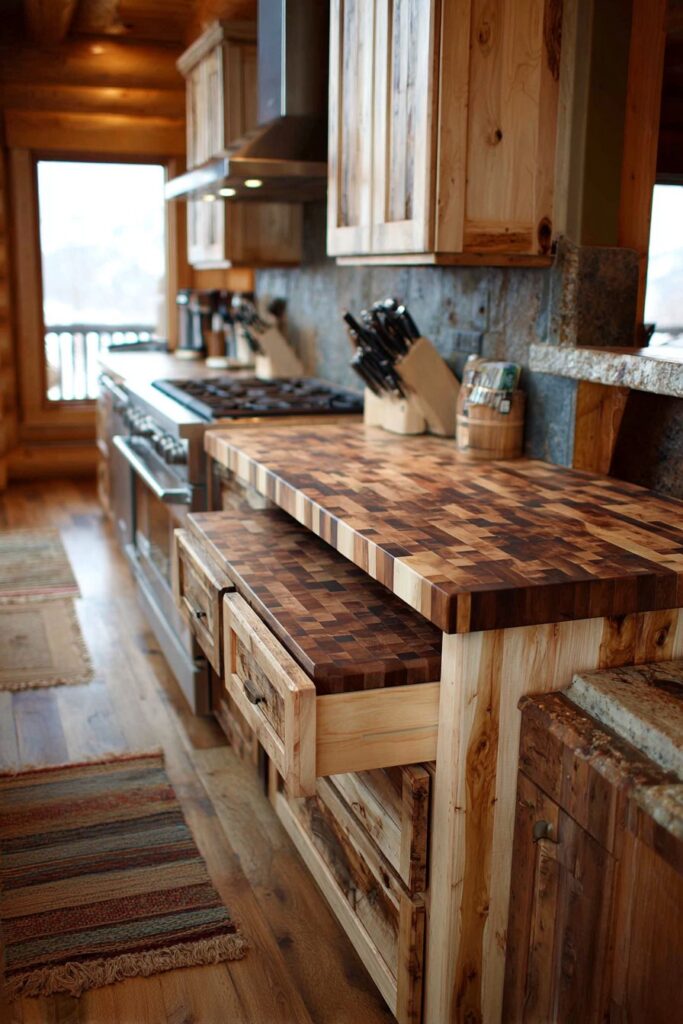
Natural lighting strategically positioned to emphasize the unique grain patterns and color variations in the hickory surfaces creates an ever-changing display of natural beauty throughout the day. Professional interior photography captures these authentic material characteristics, focusing on the inherent beauty that makes hickory such a compelling choice for wooden kitchen design.
Key Design Tips:
- Choose hickory for its dramatic color variations and distinctive grain patterns that add natural character
- Install end-grain butcher block for superior functionality and self-healing properties in work surfaces
- Design custom storage solutions for cutting boards and other wooden kitchen tools
- Use strategic lighting to highlight natural wood variations and create visual interest
- Embrace natural color differences as design features rather than inconsistencies to be corrected
10. Transitional Chestnut Design Harmony
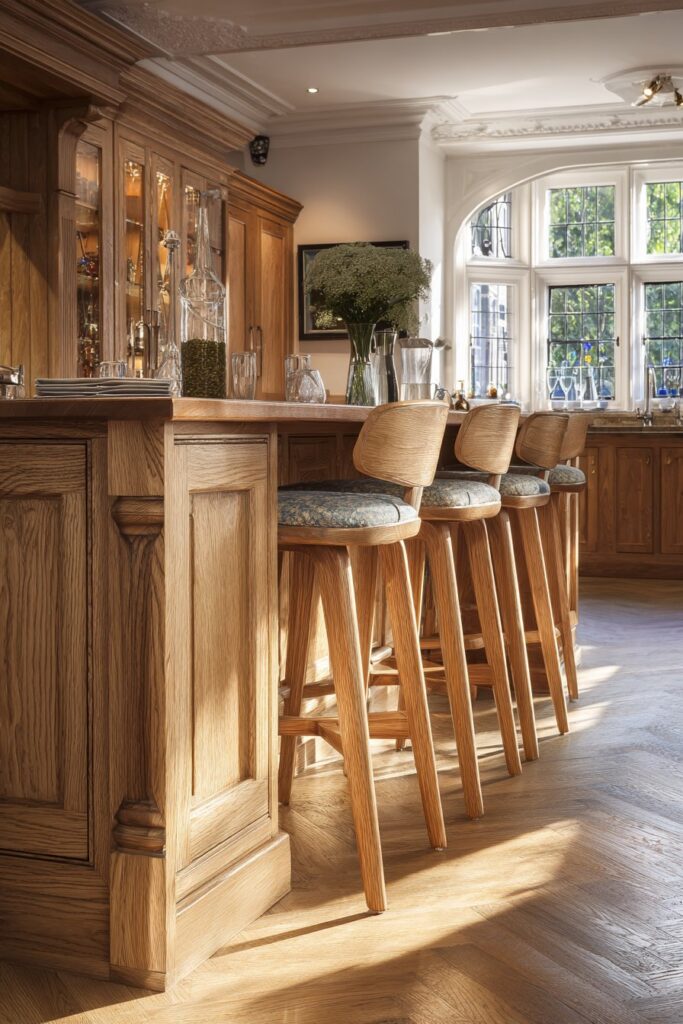
Bridge traditional and contemporary design elements through warm chestnut cabinetry that features traditional raised panel doors on perimeter cabinets paired with contemporary flat-panel design on the matching wooden kitchen island. This transitional approach creates visual interest while maintaining color and material continuity throughout the space, demonstrating how different design eras can coexist harmoniously.
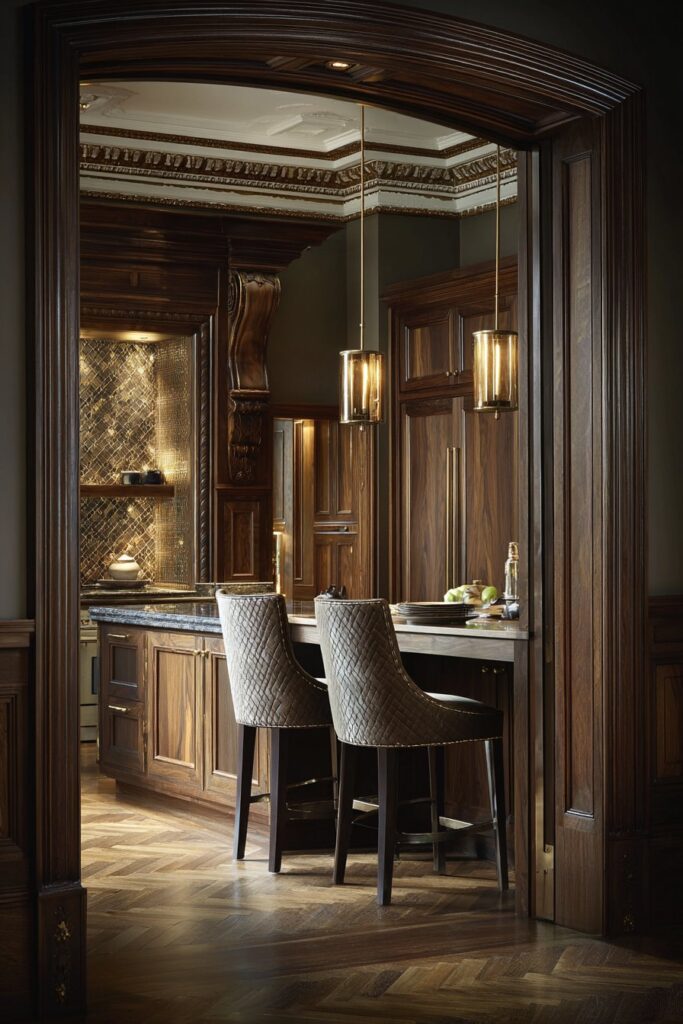
Wooden corbels provide both structural support and decorative detail for the breakfast bar extension, showcasing traditional craftsmanship elements that add character and visual weight to the island design. These architectural details create focal points while serving practical purposes, illustrating how functional elements can enhance rather than detract from overall aesthetic appeal.

The wooden backsplash features vertical planks with subtle spacing that adds texture and visual interest while maintaining the wooden theme throughout the entire kitchen. This approach to backsplash design creates continuity between cabinetry and wall surfaces while providing a unique alternative to traditional tile or stone backsplash options.
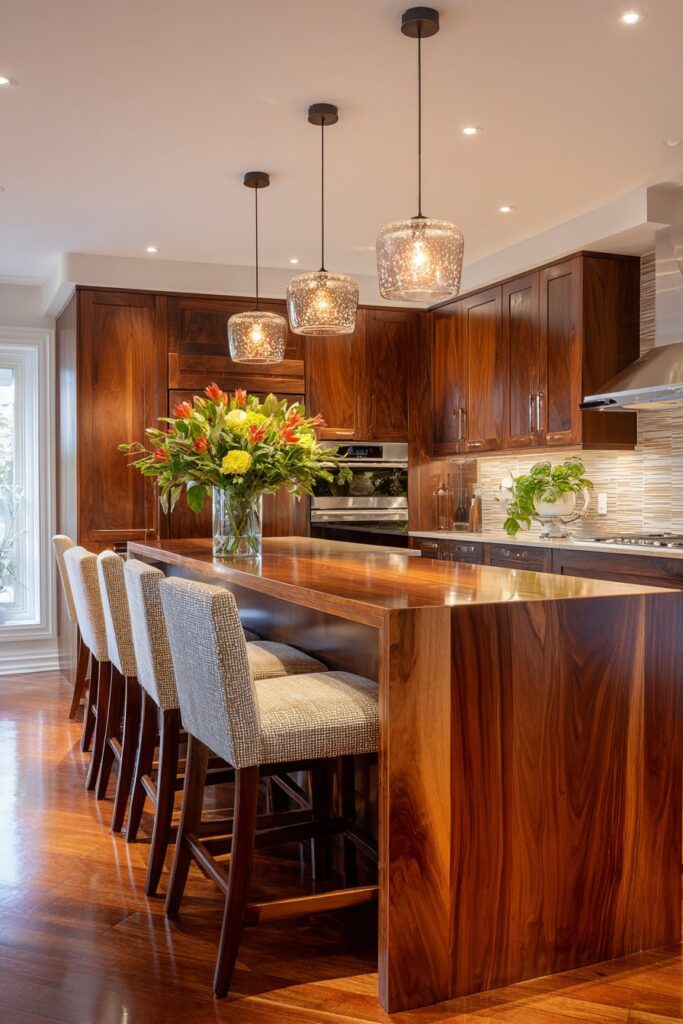
Golden hour lighting creates warm reflections on the polished wooden surfaces throughout the kitchen, highlighting the successful integration of traditional and contemporary elements while showcasing the rich color and grain pattern of the chestnut wood. This dynamic lighting reveals how thoughtful design can honor both historical and modern sensibilities within a single cohesive space.
Key Design Tips:
- Mix traditional raised panels with contemporary flat panels for transitional appeal and visual variety
- Use wooden corbels to add architectural detail while providing structural support for extensions
- Install vertical plank backsplashes to maintain wood theme and create textural interest
- Position lighting to capture golden hour reflections that enhance wood grain and color
- Maintain consistent wood species and finish for cohesive appearance despite varied door styles
11. Quarter-Sawn White Oak Premium Quality
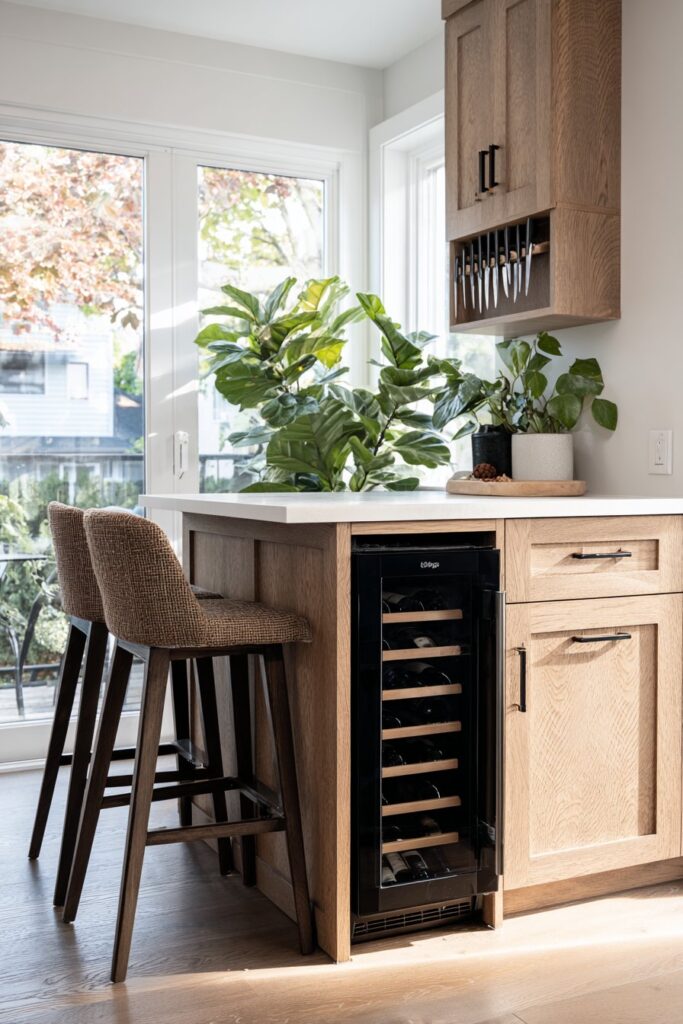
Showcase the exceptional beauty of quarter-sawn white oak cabinetry that displays the distinctive ray fleck patterns unique to this premium cutting method. This wooden kitchen represents the pinnacle of material selection, where the cutting technique creates figure patterns that are impossible to achieve through standard sawing methods, resulting in cabinetry that is truly exceptional in both appearance and value.
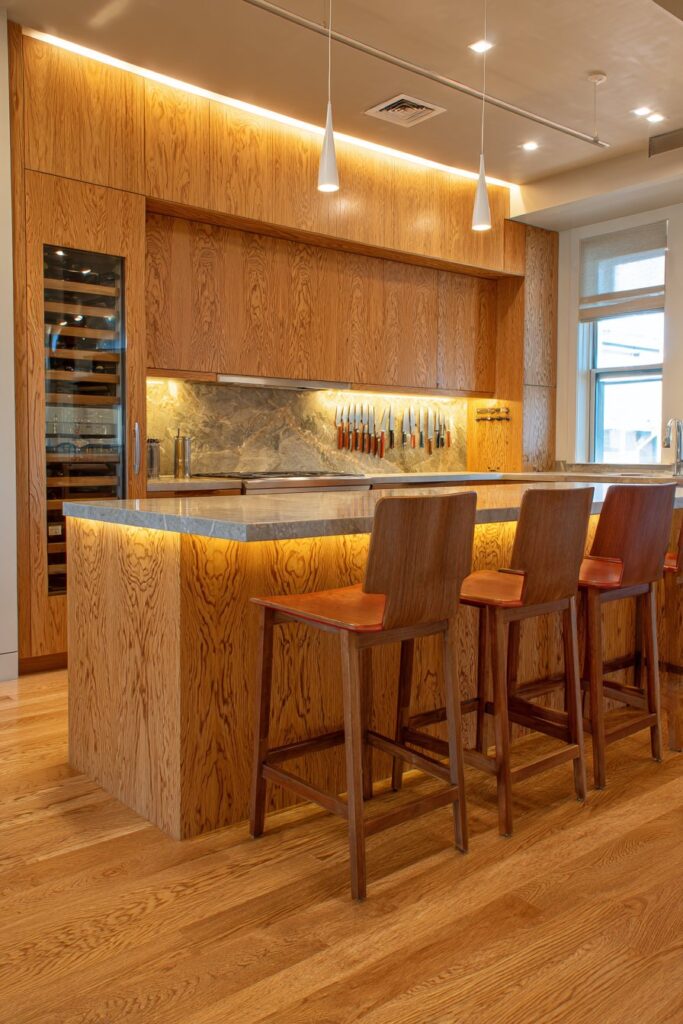
The wooden kitchen island incorporates a built-in wine refrigerator with wooden panel front that maintains visual continuity while concealing modern appliance technology. This seamless integration demonstrates how contemporary conveniences can be incorporated into wooden kitchen designs without compromising the overall aesthetic vision or natural material focus.

Wooden knife strips mounted directly on the backsplash provide functional storage that keeps essential tools within easy reach while adding another layer of wooden detail to the overall design. This practical storage solution eliminates countertop clutter while maintaining the safety and accessibility that serious cooking requires, proving that function and beauty can coexist perfectly.
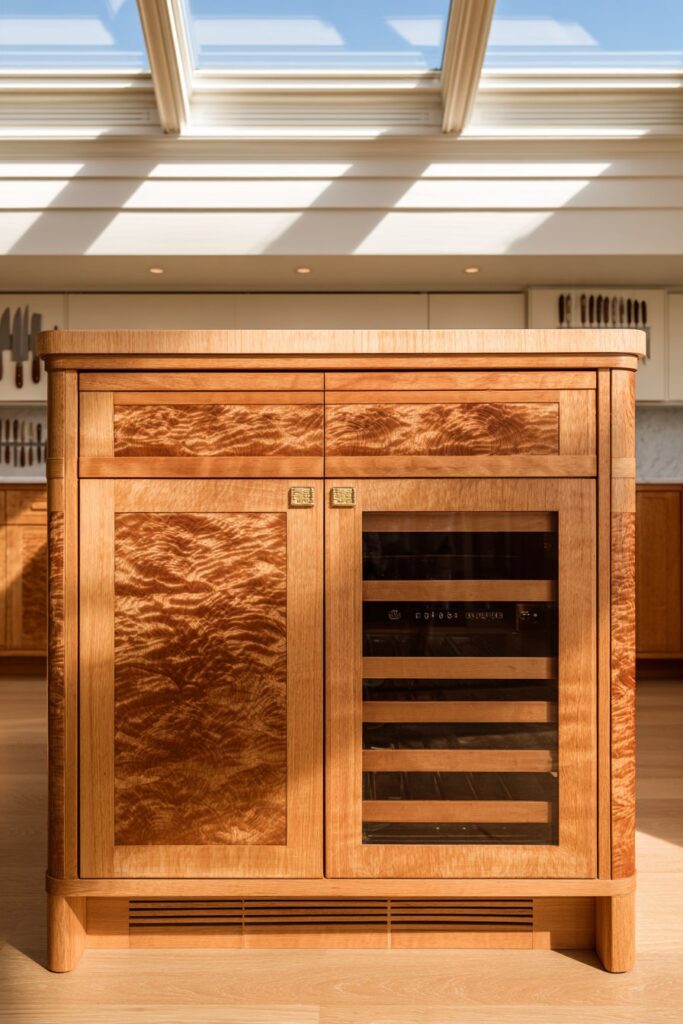
Natural daylight streaming through clerestory windows creates the perfect lighting conditions to highlight the premium quarter-sawn grain patterns, revealing the exceptional quality of the millwork and the authentic material characteristics that make this cutting method so highly prized. Professional interior photography with detailed focus captures the superior quality that justifies the investment in premium materials.
Key Design Tips:
- Invest in quarter-sawn lumber for distinctive ray fleck patterns and superior stability
- Integrate appliances with matching wood panels to maintain visual continuity throughout the space
- Install magnetic knife strips for safe, accessible storage that reduces countertop clutter
- Use clerestory windows for optimal natural lighting that showcases premium wood characteristics
- Focus on millwork quality and joinery details that justify premium material investments
12. Craftsman Mission-Style Oak Artistry
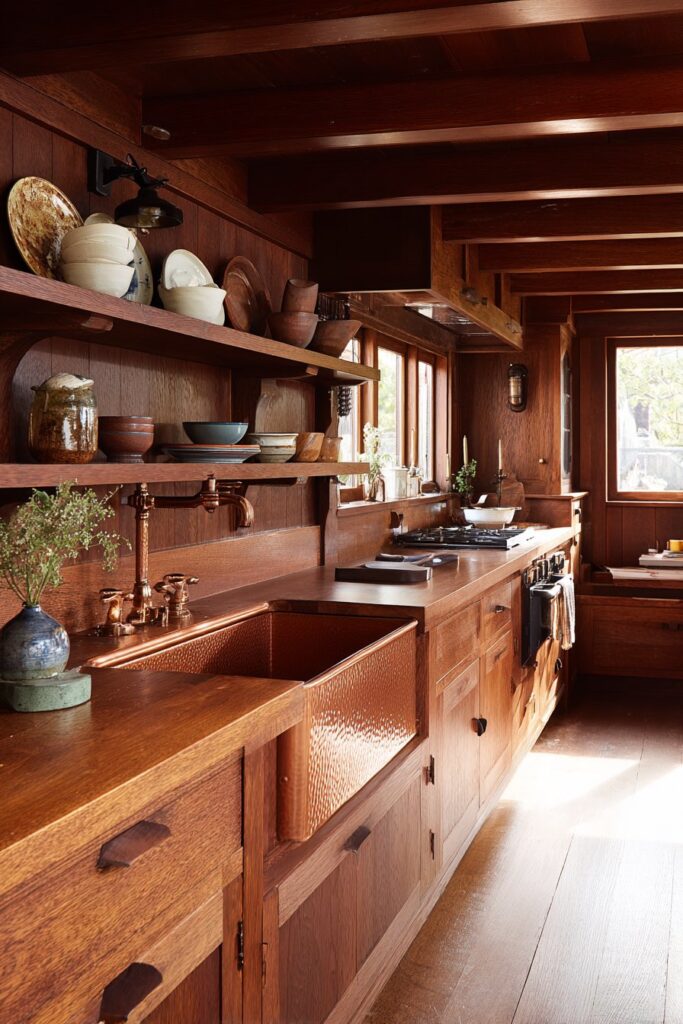
Honor traditional American craftsmanship through mission-style oak cabinetry that proudly displays visible mortise and tenon joinery details, celebrating the woodworking techniques that defined an era of honest construction and lasting quality. This wooden kitchen embodies the craftsman philosophy where construction methods become decorative elements, creating furniture-quality cabinetry that will endure for generations.
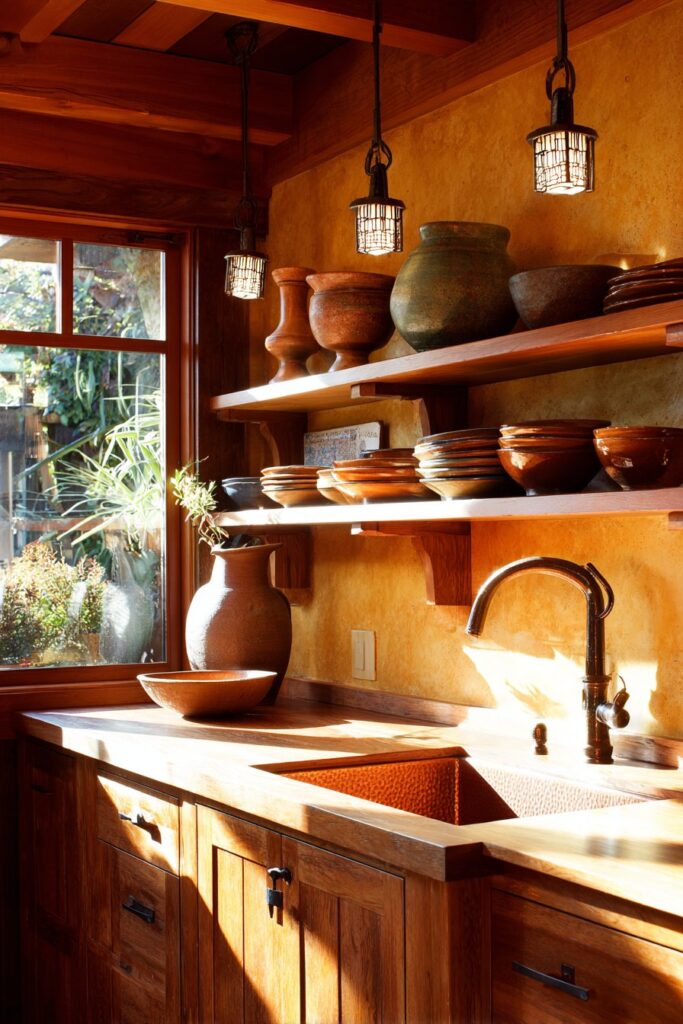
The copper sink surrounded by wooden countertops with integrated drainboards carved from solid wood demonstrates the level of custom craftsmanship possible when designing without compromise. These integrated details show how traditional techniques can create both beautiful and practical solutions that enhance daily kitchen activities while maintaining period-appropriate authenticity.
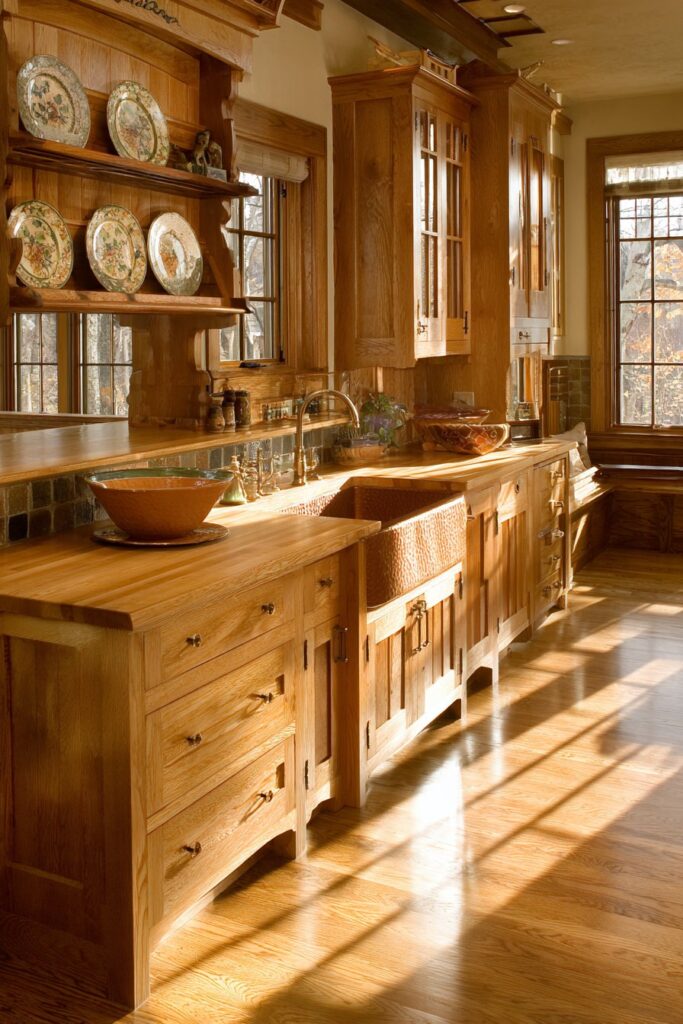
Wooden plate racks provide both functional storage and display opportunities for artisanal ceramics, creating a gallery-like presentation that celebrates handmade objects while keeping them accessible for daily use. This approach to storage reflects the craftsman movement’s emphasis on displaying beautiful, functional objects as integral parts of the home’s aesthetic.

The combination of warm tungsten lighting with natural light creates rich shadows that emphasize every handcrafted detail throughout the wooden surfaces, highlighting the substantial construction and meticulous attention to detail that defines authentic craftsman quality. Interior design photography captures the exceptional craftsmanship while showcasing the enduring appeal of traditional construction methods.
Key Design Tips:
- Showcase traditional joinery techniques as decorative elements that celebrate craftsmanship quality
- Design integrated drainboards for authentic period details and enhanced functionality
- Incorporate display storage for handmade ceramics and artisanal kitchen items
- Use mixed lighting to create rich shadows that highlight handcrafted construction details
- Invest in furniture-quality construction methods that create heirloom-quality kitchen cabinetry
13. Sleek Walnut Modern Minimalism
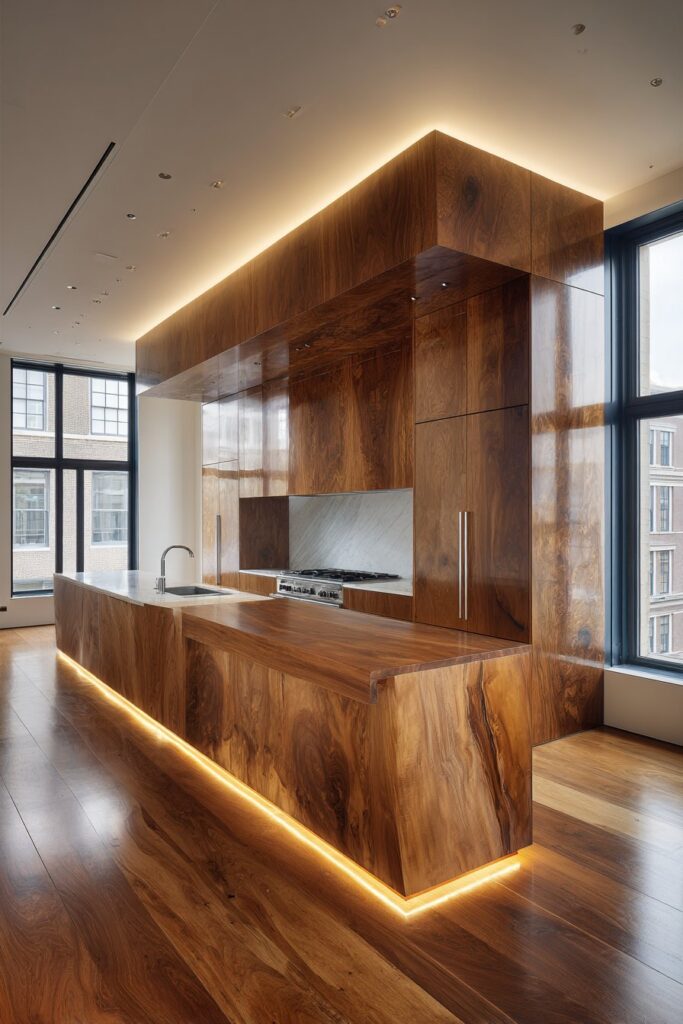
Experience the cutting edge of wooden kitchen design through sleek walnut veneer cabinets featuring invisible push-to-open mechanisms and integrated wooden handles cut from the same material as the cabinet faces. This modern approach eliminates visual hardware while maintaining the natural beauty of wood as the primary design element, creating spaces that feel both high-tech and organically connected to nature.
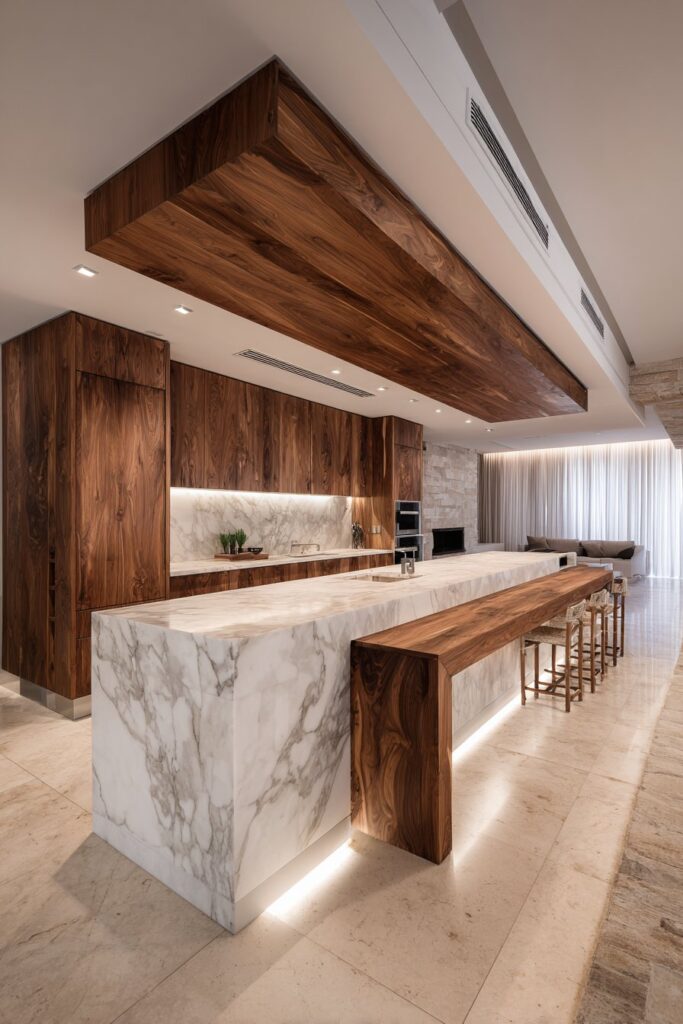
The wooden kitchen island incorporates a breakfast bar supported by a steel frame, creating an interesting dialogue between natural wood and industrial materials while maintaining the clean, minimalist aesthetic. This combination of materials demonstrates how wood can anchor contemporary design while allowing other materials to provide contrast and structural support.
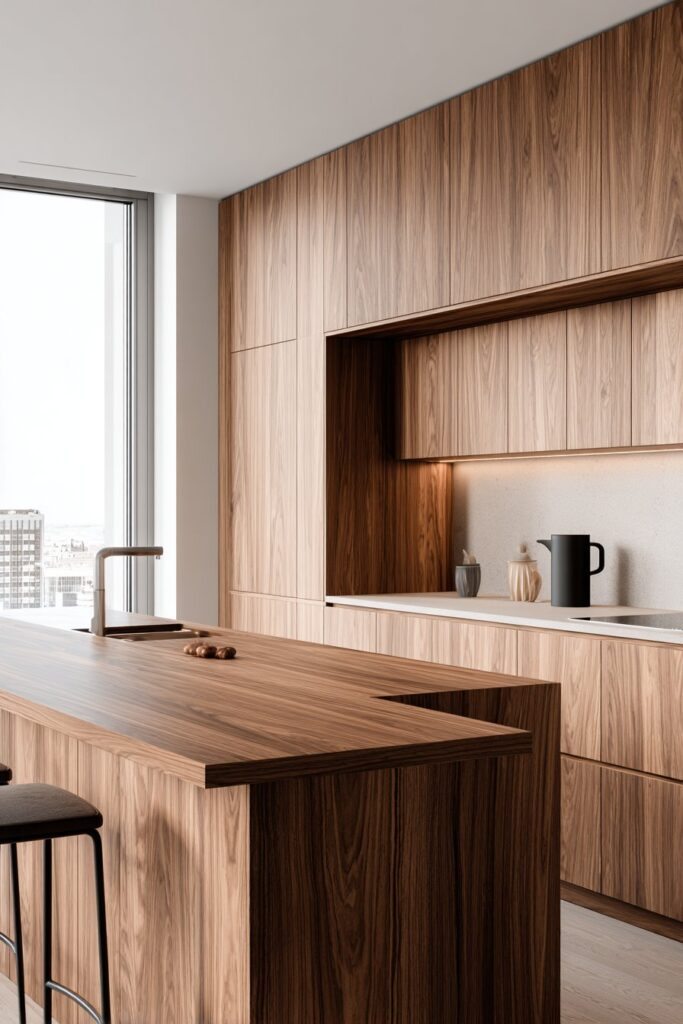
Integrated accent lighting within the cabinet undersides creates a floating effect while providing practical task lighting for work surfaces, showing how modern technology can enhance wooden kitchen functionality without compromising aesthetic purity. This subtle lighting approach maintains the minimalist visual impact while ensuring optimal functionality for food preparation activities.
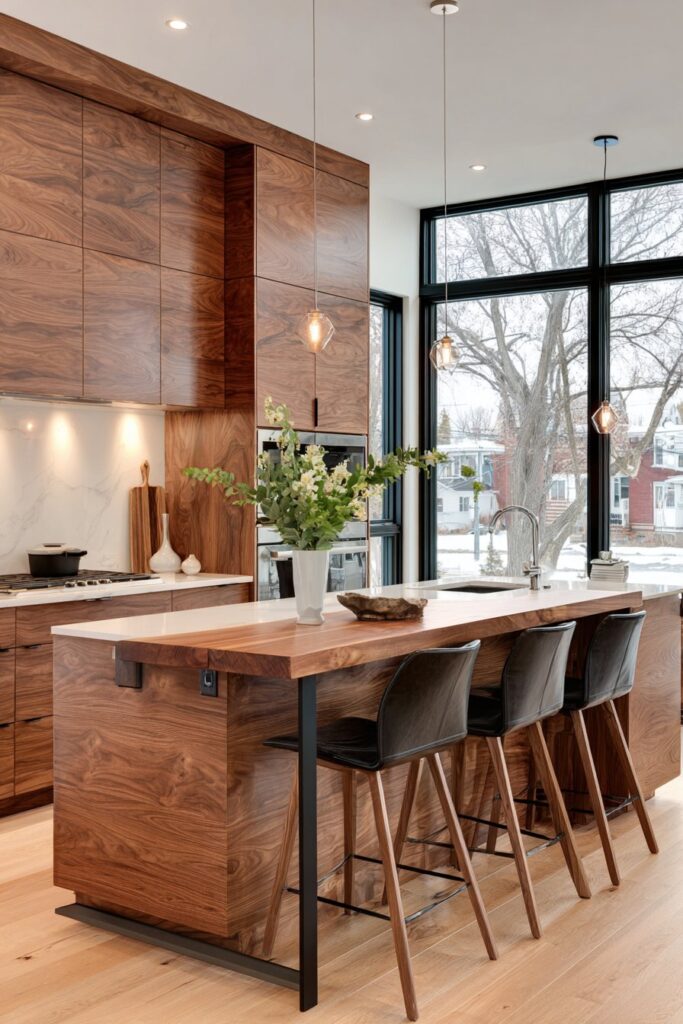
Clean natural lighting highlights the consistent grain matching throughout the wooden kitchen surfaces, revealing the level of attention to detail required to achieve this seamless appearance. Wide-angle interior photography showcases how modern technology integrates seamlessly with natural wooden kitchen materials to create spaces that are both sophisticated and warmly inviting.
Key Design Tips:
- Choose push-to-open mechanisms to eliminate visual hardware and maintain clean design lines
- Use integrated wooden handles cut from matching material for seamless visual continuity
- Combine natural wood with steel frames for contemporary contrast and structural interest
- Install under-cabinet lighting to create floating effects and provide functional task illumination
- Focus on grain matching throughout for premium appearance and attention to detail
14. Sustainable Bamboo Innovation
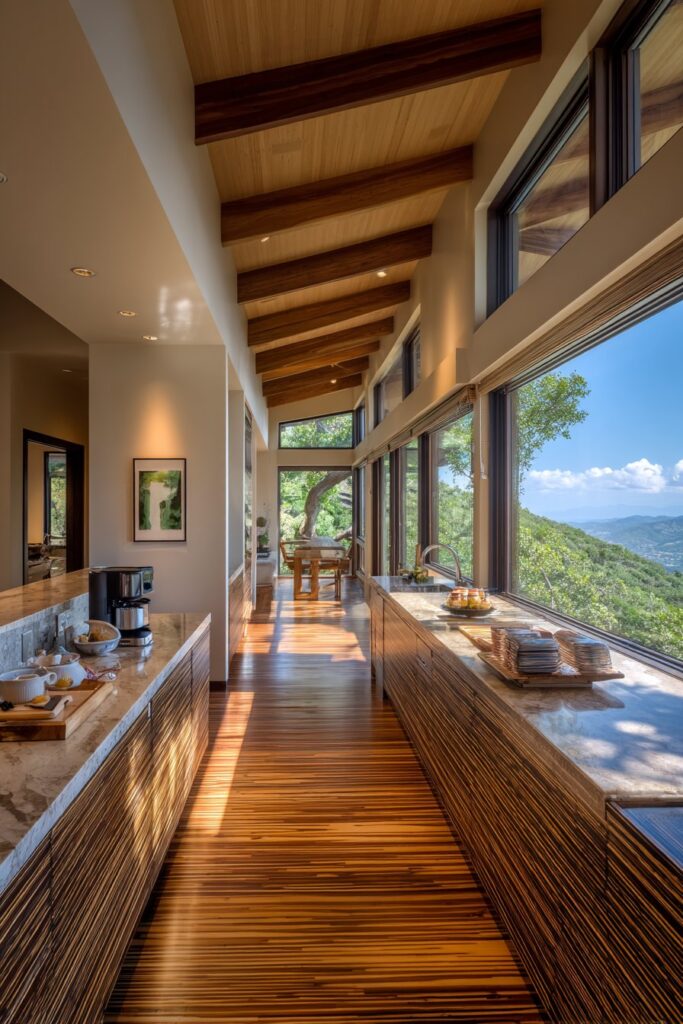
Embrace environmental responsibility through bamboo cabinetry with horizontal grain orientation and sustainable forestry certification that demonstrates commitment to ecological stewardship without sacrificing aesthetic beauty or functional performance. This wooden kitchen design proves that sustainable choices can be both environmentally conscious and visually stunning, paving the way for responsible kitchen design.
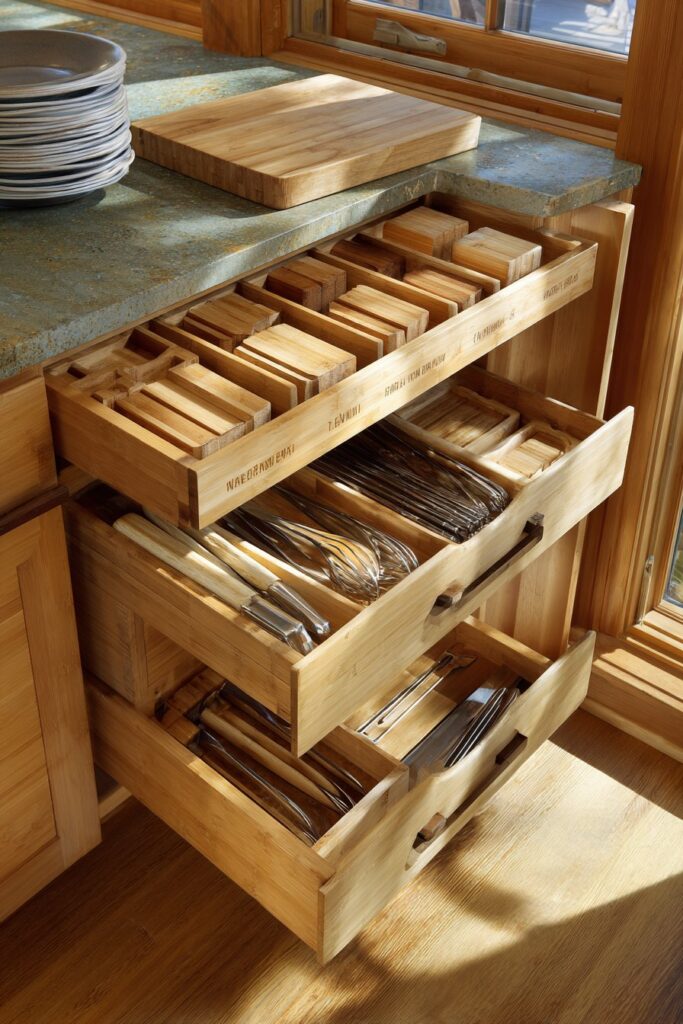
The comprehensive bamboo design includes specialized cutting board collections and utensil organizers integrated into drawers, creating storage solutions specifically designed for bamboo accessories that complement the overall material theme. This coordinated approach ensures that every element works together harmoniously while showcasing the versatility of bamboo as a kitchen material.

Bamboo flooring throughout the kitchen provides visual continuity while demonstrating the durability and beauty possible with fast-growing renewable materials. The consistent material choice from cabinetry to flooring creates a cohesive environment that celebrates bamboo’s unique characteristics while providing the durability required for high-traffic kitchen areas.
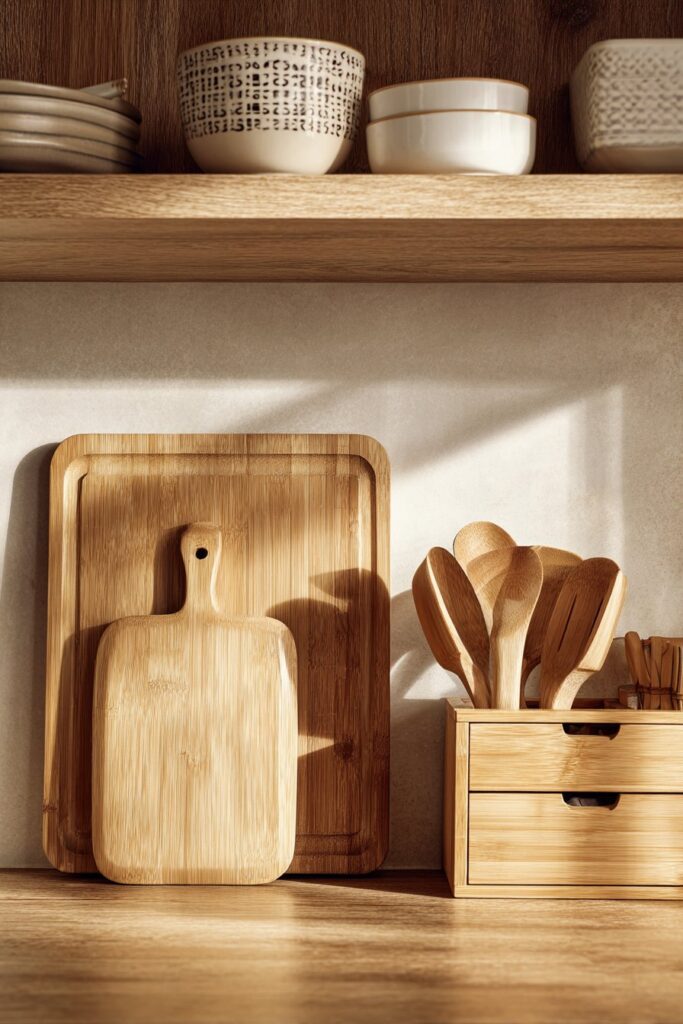
Natural lighting emphasizes the distinctive fast-growth rings characteristic of bamboo, creating visual interest while highlighting the material’s unique properties and sustainable credentials. Interior design photography focuses on the eco-friendly aspects while showcasing the unique grain patterns that make bamboo an attractive alternative to traditional hardwoods.
Key Design Tips:
- Choose certified sustainable bamboo to support environmental responsibility and forest conservation
- Coordinate bamboo accessories and storage solutions for comprehensive material integration
- Use horizontal grain orientation to maximize the visual impact of bamboo’s natural patterns
- Install bamboo flooring for complete material continuity and durability in high-traffic areas
- Highlight fast-growth rings as distinctive design features that celebrate bamboo’s unique characteristics
15. Industrial Reclaimed Douglas Fir Character
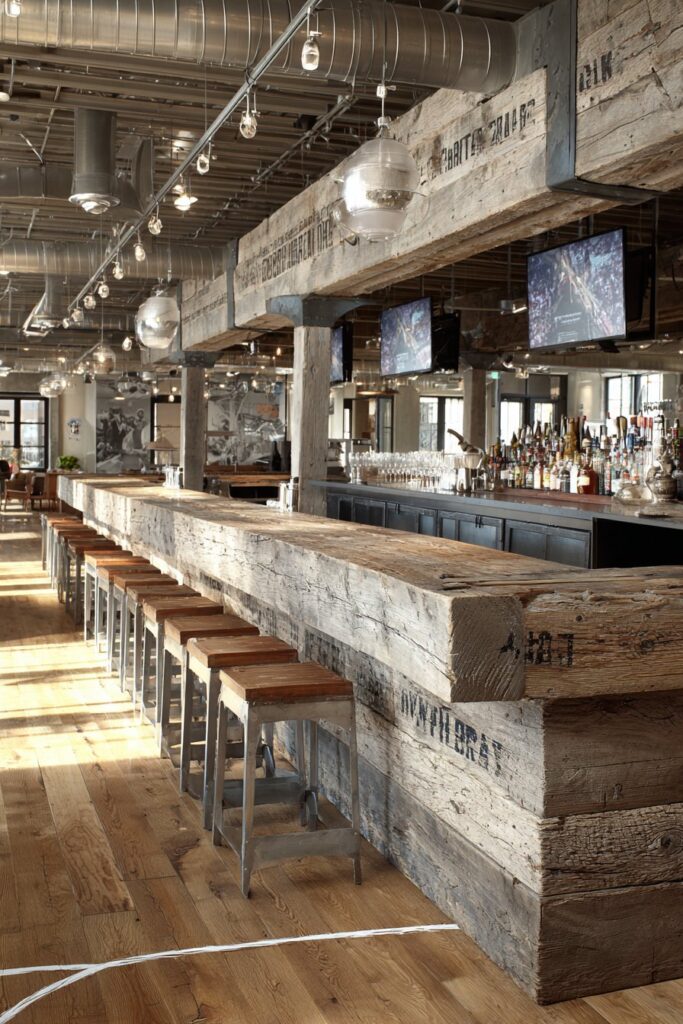
Merge industrial aesthetics with natural wood beauty through reclaimed Douglas fir beams repurposed as open shelving combined with steel brackets that celebrate both materials’ inherent strength and character. This wooden kitchen design embraces the industrial movement while maintaining connection to natural materials, creating spaces that feel both rugged and refined.
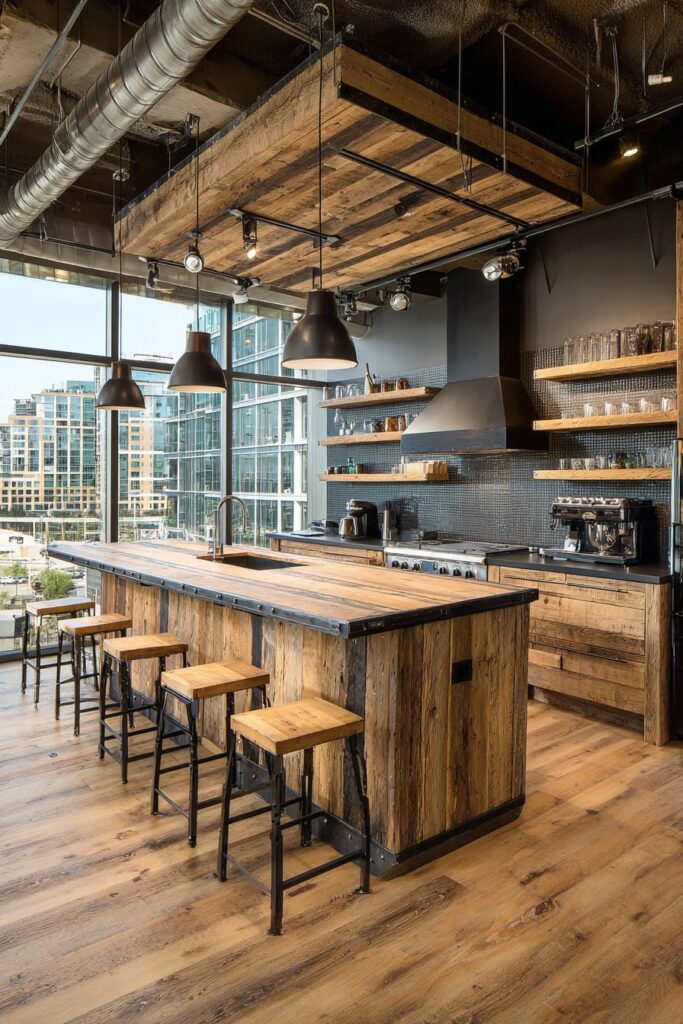
The wooden kitchen island top crafted from salvaged gymnasium flooring retains original line markings that tell the story of its previous life while providing a unique and durable work surface. This creative repurposing approach demonstrates how materials with history can be transformed into functional kitchen elements while maintaining their narrative character and authentic patina.
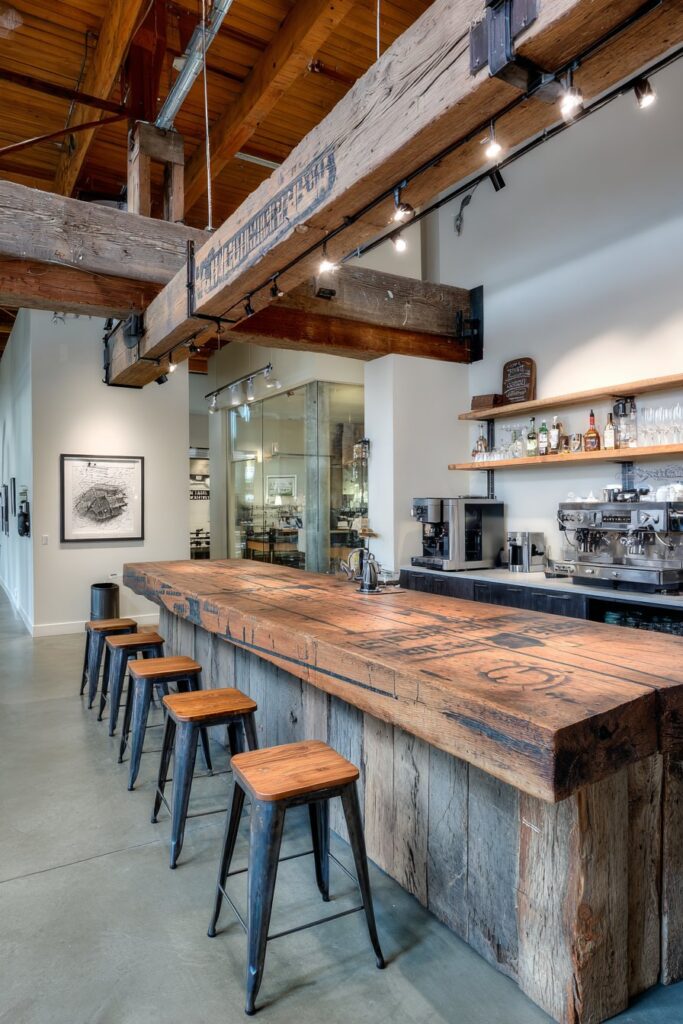
Wooden bar stools with metal frames provide comfortable seating while echoing the industrial theme through their mixed-material construction. This combination of natural wood seats with metal frames creates visual consistency with the overall design approach while providing practical seating solutions that can withstand daily use in active kitchen environments.
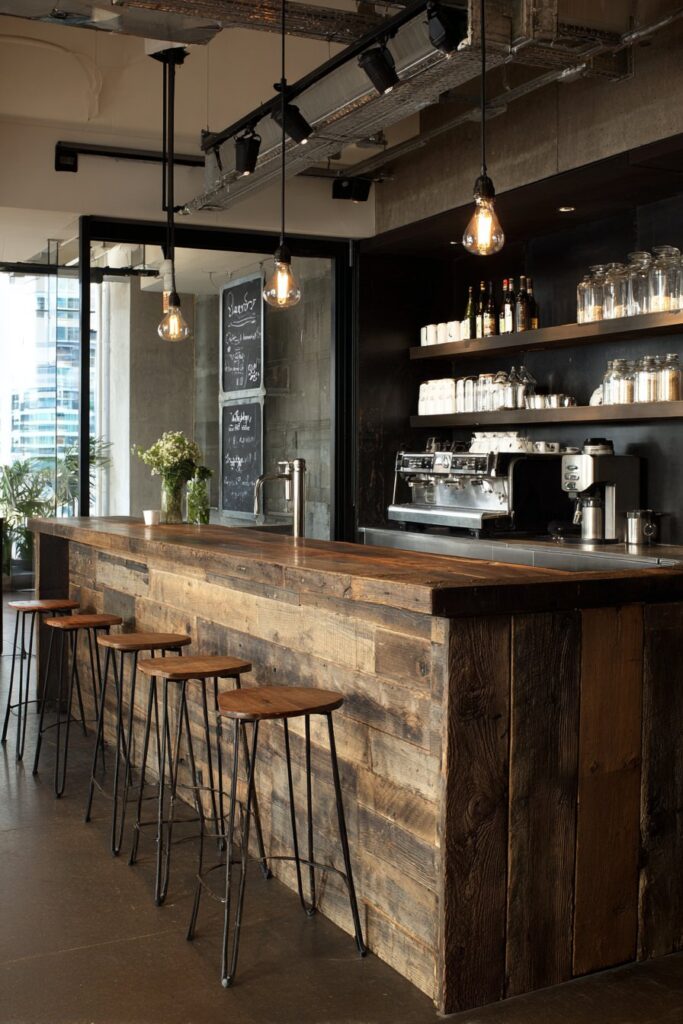
Overhead track lighting creates dramatic shadow patterns on the weathered wooden surfaces, highlighting the authentic industrial character while providing functional illumination for kitchen activities. Professional interior photography captures the compelling history embedded in the reclaimed materials while showcasing how industrial elements can create warmth and character.
Key Design Tips:
- Source reclaimed materials with interesting histories and authentic character marks for storytelling elements
- Combine wood and steel to create industrial aesthetics while maintaining natural warmth
- Preserve original markings and patina to celebrate materials’ previous lives and authentic aging
- Use track lighting to create dramatic shadows that emphasize texture and weathered character
- Balance rugged materials with comfortable seating to ensure functional usability in kitchen environments
16. European Beech Curved Elegance
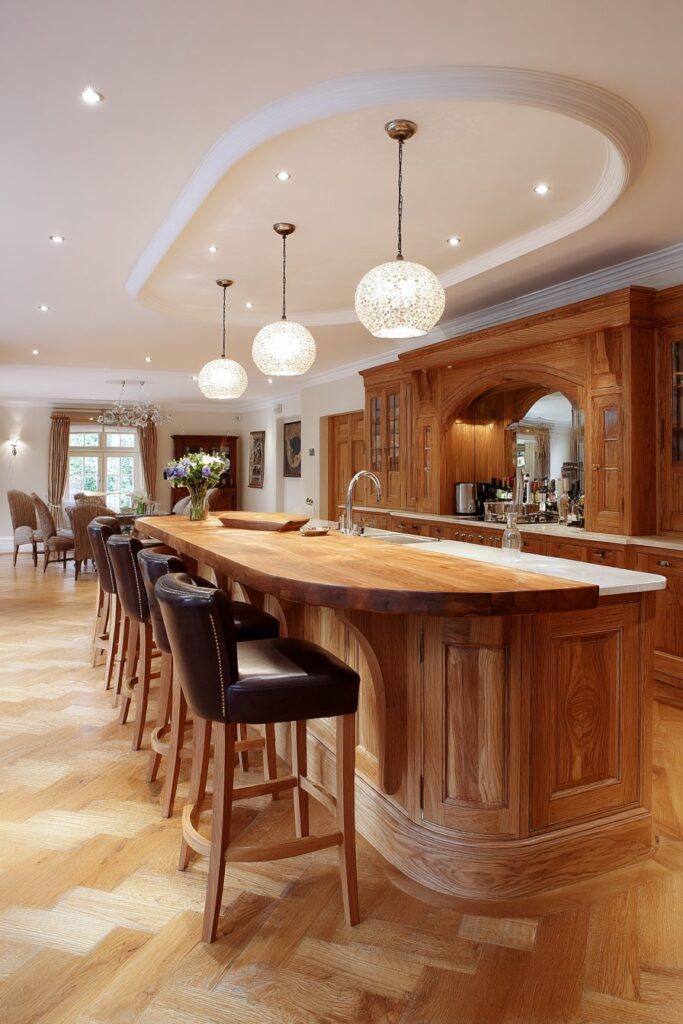
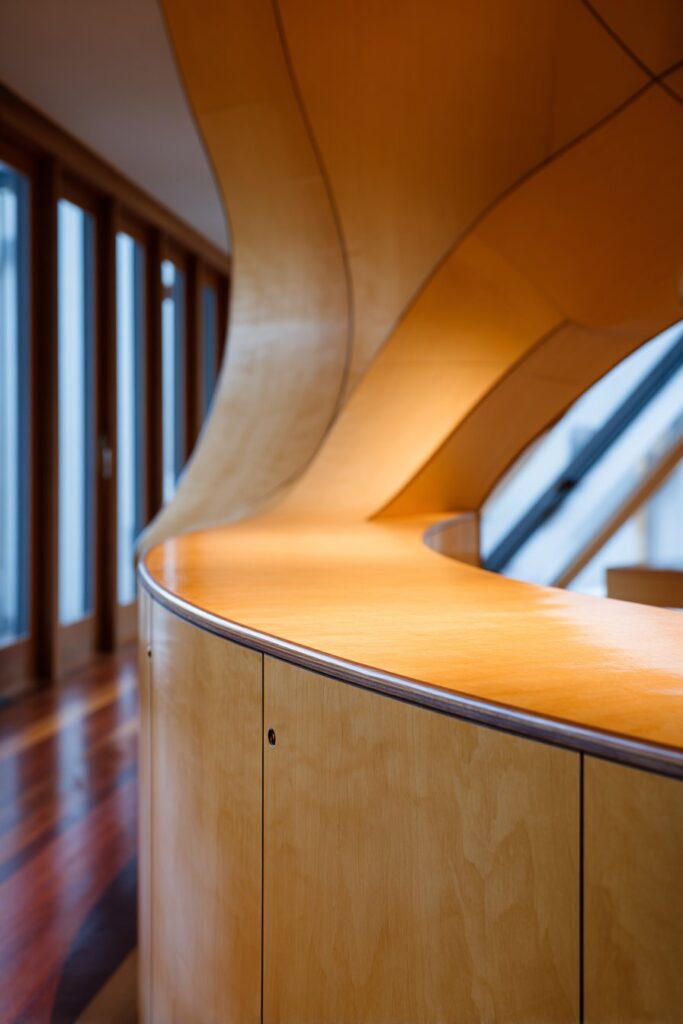
Discover the artistry possible with European beech cabinetry featuring natural steam-bending techniques that create gracefully curved cabinet doors and wooden handles flowing seamlessly with the cabinet lines. This wooden kitchen showcases traditional woodworking techniques that create organic forms impossible to achieve through conventional construction methods, resulting in truly unique and sculptural kitchen elements.
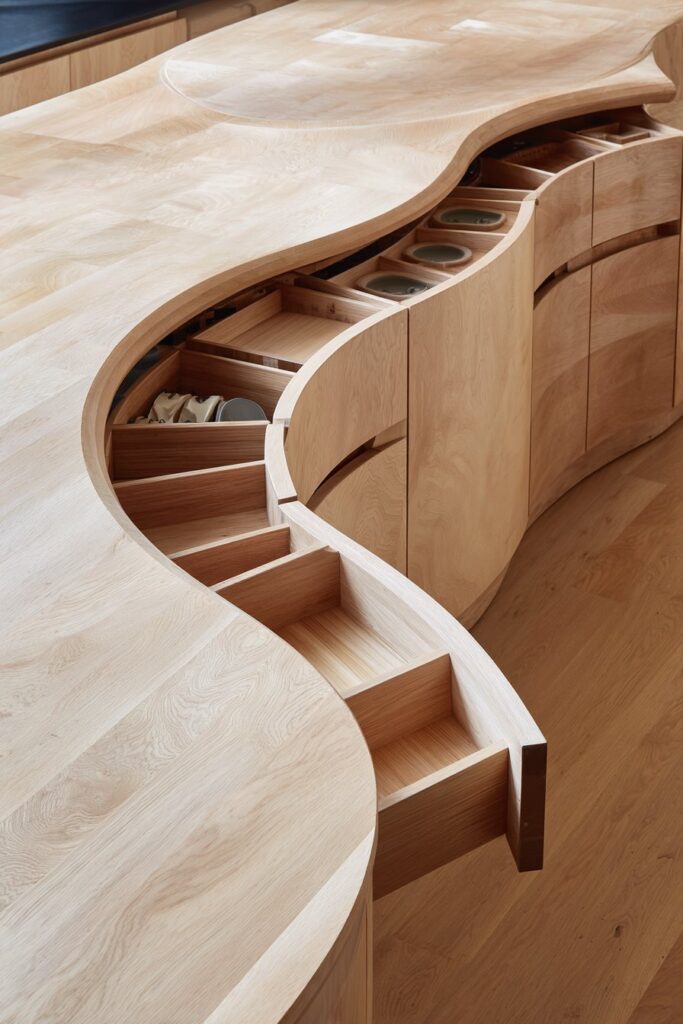
The curved breakfast bar follows the cabinet lines, creating visual continuity while providing comfortable seating that feels natural and inviting rather than rigid and institutional. This flowing approach to kitchen design demonstrates how traditional craftsmanship techniques can create contemporary solutions that feel both innovative and timeless.
Traditional dovetail joinery in the wooden spice drawers showcases exceptional craftsmanship while providing functional storage that will endure for generations. These construction details elevate everyday storage elements to furniture quality, demonstrating how traditional techniques create value and longevity that justifies the investment in handcrafted elements.
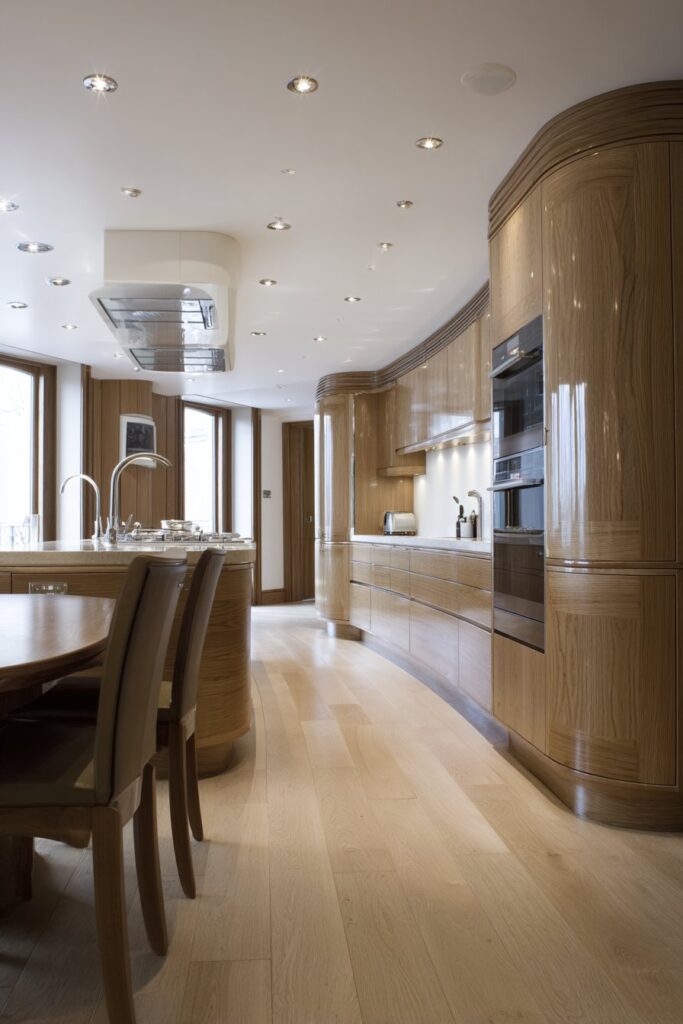
Soft diffused lighting specifically positioned to highlight the smooth curves and steam-bent details creates an almost sculptural quality that emphasizes the exceptional craftsmanship involved in creating these unique wooden kitchen elements. Interior design photography focuses on the flowing lines and exceptional construction quality that makes this approach so distinctive.
Key Design Tips:
- Explore steam-bending techniques for unique curved elements impossible to achieve through standard methods
- Design curved breakfast bars to echo cabinet lines and create visual flow throughout the space
- Use traditional dovetail joinery for spice storage to add craftsmanship details and ensure longevity
- Position lighting to highlight curved details and emphasize the sculptural quality of bent wood
- Invest in traditional woodworking techniques that create truly unique and valuable kitchen elements
17. Aromatic Cedar Storage Solutions
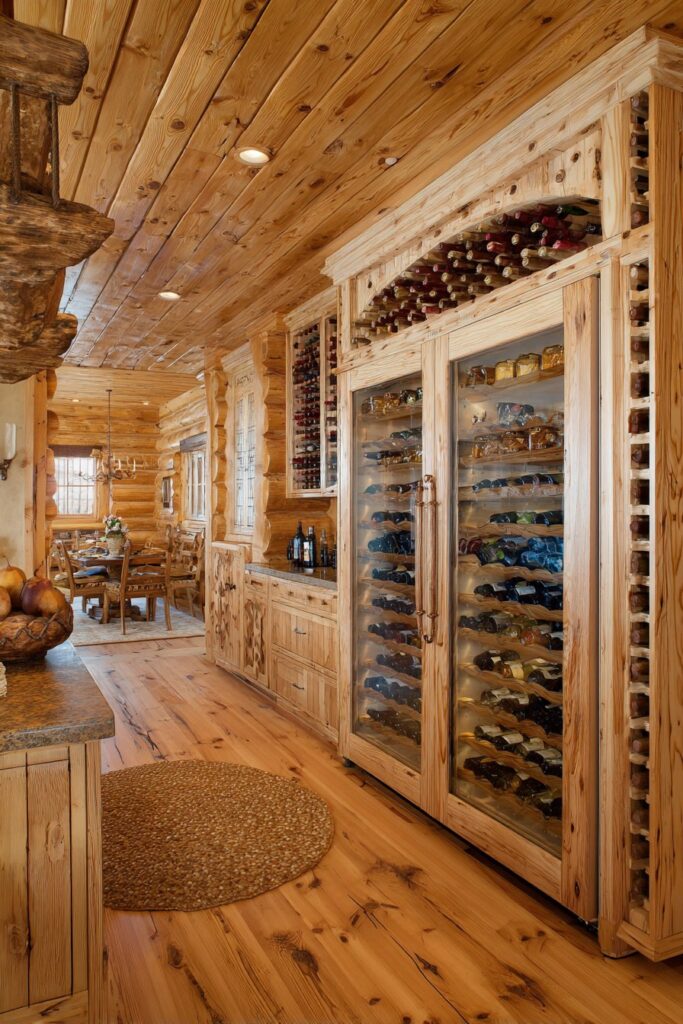
Experience the natural benefits of cedar through specialized storage systems featuring cedar-lined drawers for bread storage and aromatic wooden spice cabinets that provide natural preservation properties while adding pleasant fragrance to the kitchen environment. This wooden kitchen design harnesses cedar’s natural properties to create functional advantages while maintaining beautiful aesthetics.
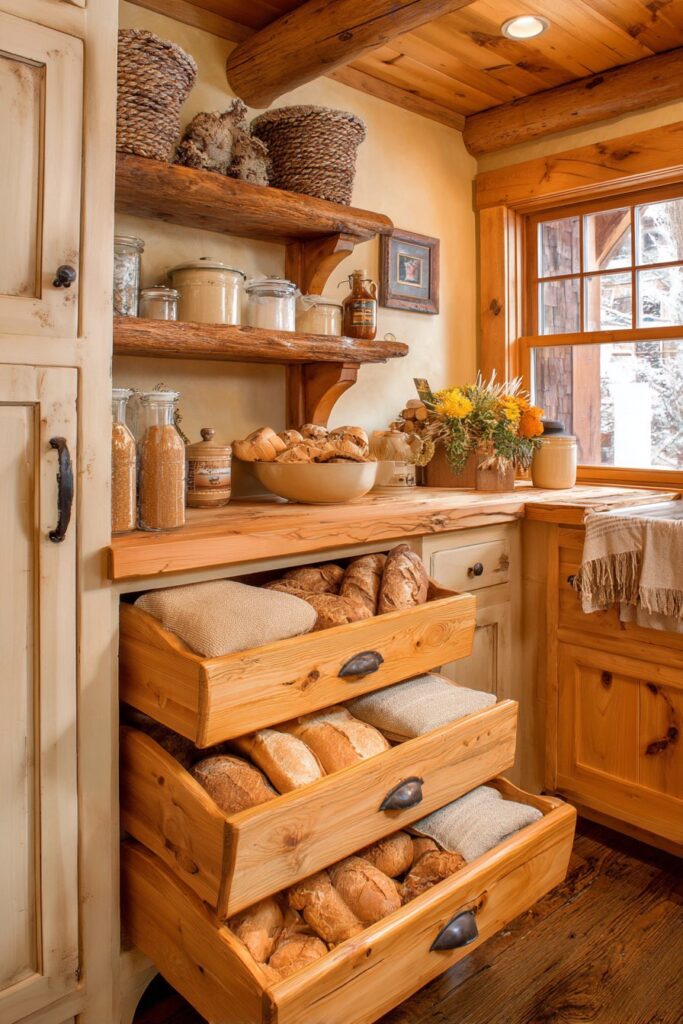
The comprehensive cedar design includes ceiling planks with natural knots and color variation that create visual interest while providing the same aromatic and pest-resistant benefits throughout the space. This whole-room approach to cedar utilization maximizes the material’s natural benefits while creating a cohesive aesthetic that celebrates the wood’s distinctive characteristics.
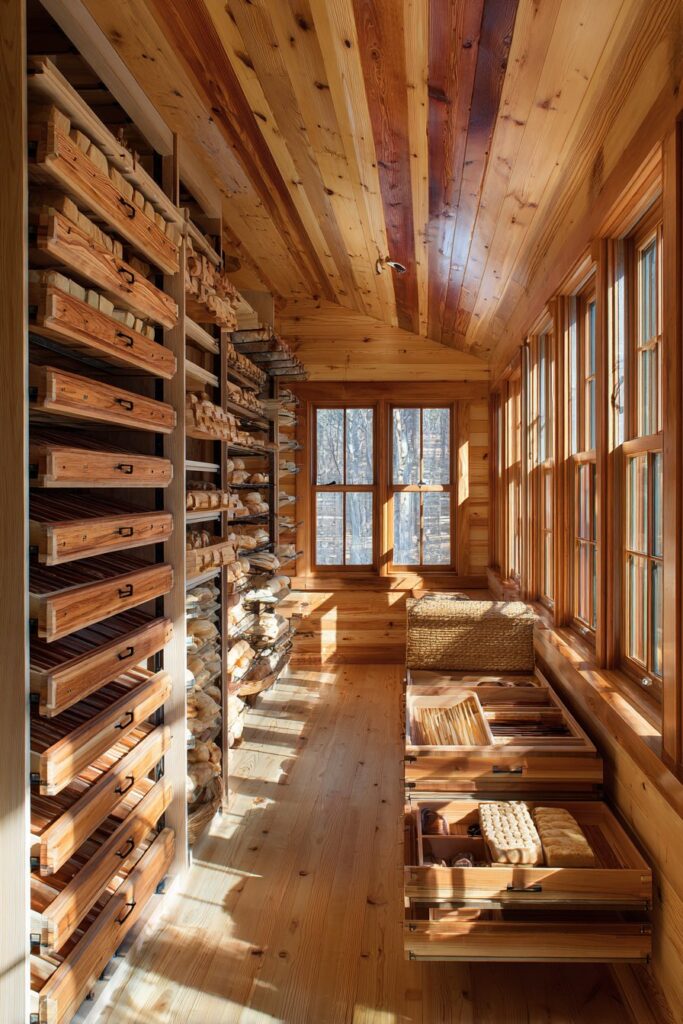
Cedar-lined pantry cabinets provide natural insect protection without chemicals, demonstrating how traditional storage solutions can be both environmentally friendly and highly effective. This approach to food storage honors traditional preservation methods while providing modern convenience and organization systems that make daily kitchen activities more efficient.

Natural lighting filtering through wooden window frames creates warm, golden tones on the aromatic cedar surfaces while allowing the wood’s natural fragrance to contribute to the overall sensory experience of the kitchen. Interior photography captures both the visual appeal and the practical benefits that make cedar such a valuable choice for kitchen storage applications.
Key Design Tips:
- Use cedar lining in bread drawers and pantry storage for natural preservation and pest resistance
- Install cedar ceiling planks to maximize aromatic benefits throughout the entire kitchen space
- Embrace natural knots and color variations as distinctive design features rather than flaws
- Position wooden window frames to complement the cedar theme and filter natural light effectively
- Highlight cedar’s natural properties as both aesthetic and functional design advantages
18. Figured Maple Artistry Exhibition
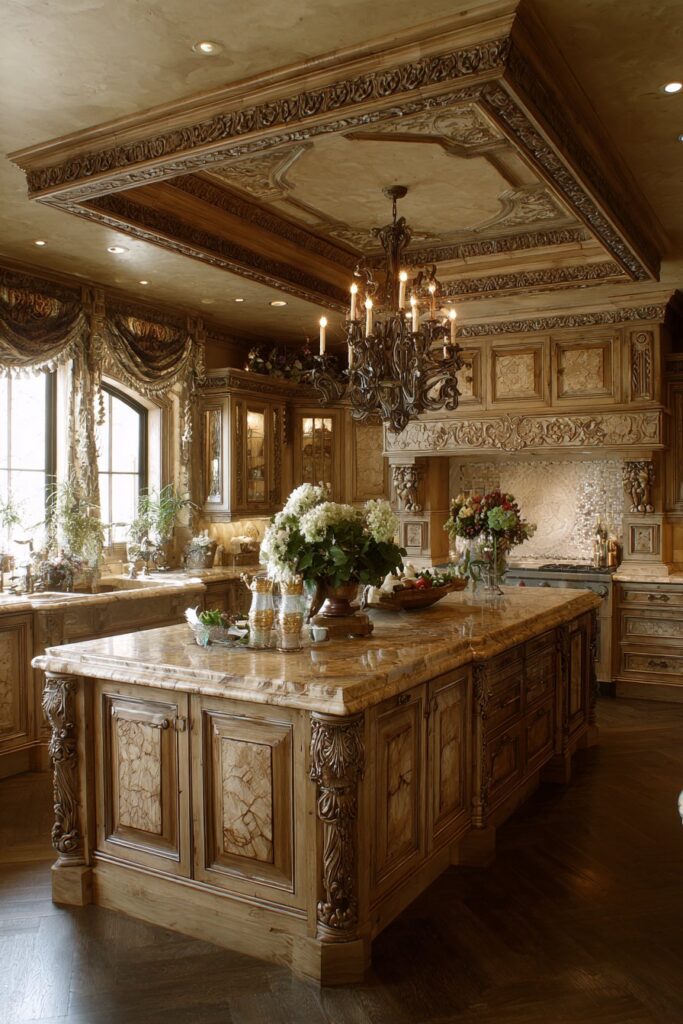
Celebrate nature’s artistry through figured maple cabinetry showcasing bird’s eye and flame patterns in the natural grain that create visual interest impossible to replicate through any manufactured process. This wooden kitchen represents the pinnacle of material selection, where each cabinet door becomes a unique piece of natural art that adds value and beauty to the entire space.
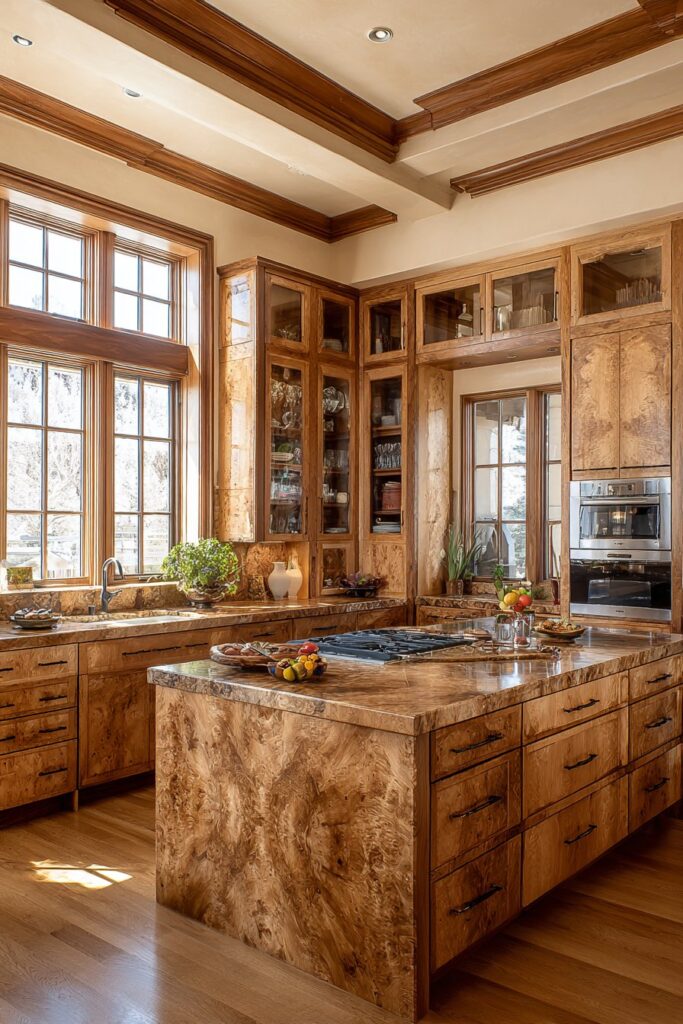
The wooden kitchen island displays book-matched panels showing mirror-image grain patterns that create symmetrical designs reminiscent of abstract art while maintaining the functional requirements of kitchen storage and workspace. This approach to wood selection and installation demonstrates how thoughtful planning can create architectural features that serve as both art and utility.
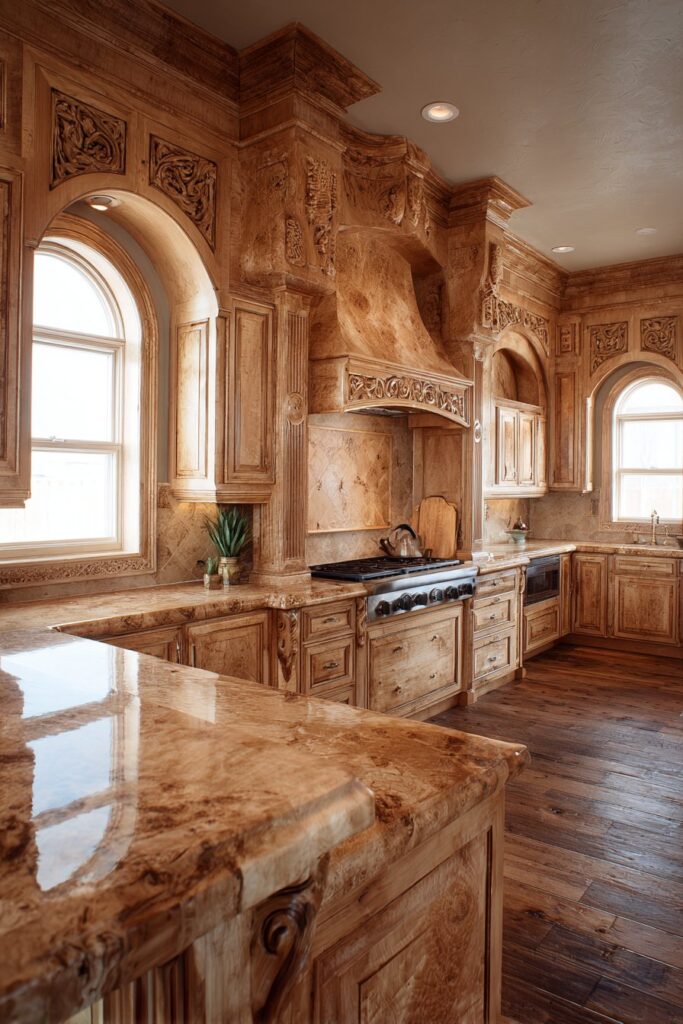
Hand-carved details in the wooden crown molding showcase traditional craftsmanship techniques while adding architectural interest that elevates the kitchen from functional space to artistic environment. These custom details demonstrate how skilled woodworking can create unique elements that cannot be purchased ready-made, adding exclusivity and personal character to the design.
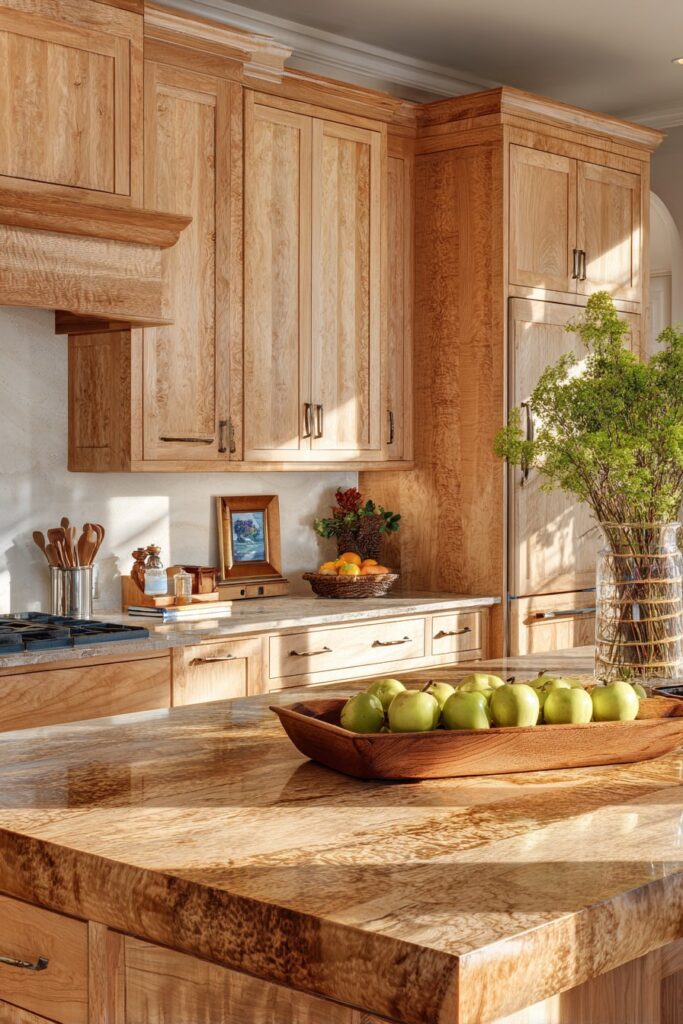
Natural window lighting positioned to create highlights on the premium figured grain patterns reveals the exceptional quality and natural artistry present in every wooden surface. Professional interior photography with macro detail shots captures the intricate beauty that makes figured maple such a prized material for high-end wooden kitchen applications.
Key Design Tips:
- Select figured maple for unique grain patterns that create natural art within functional kitchen elements
- Use book-matched panels for symmetrical grain patterns that add visual drama and sophistication
- Incorporate hand-carved details to add custom craftsmanship and architectural interest
- Position windows strategically to highlight figured grain patterns through natural lighting
- Document exceptional grain patterns through detailed photography to showcase material quality and uniqueness
19. Japanese-Inspired Teak Zen Design
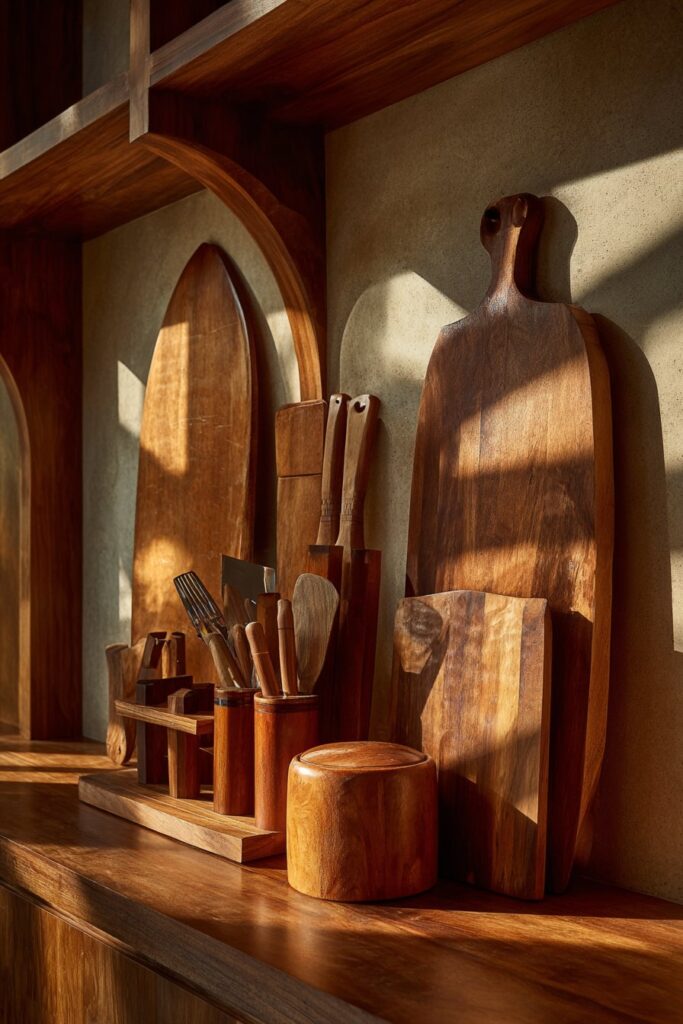
Embrace the principles of Japanese design through teak cabinetry featuring traditional Japanese joinery techniques with no visible hardware, creating clean lines and meditative simplicity that promotes both functionality and spiritual calm. This wooden kitchen design demonstrates how cultural design principles can create spaces that nourish both body and soul through thoughtful material selection and construction methods.
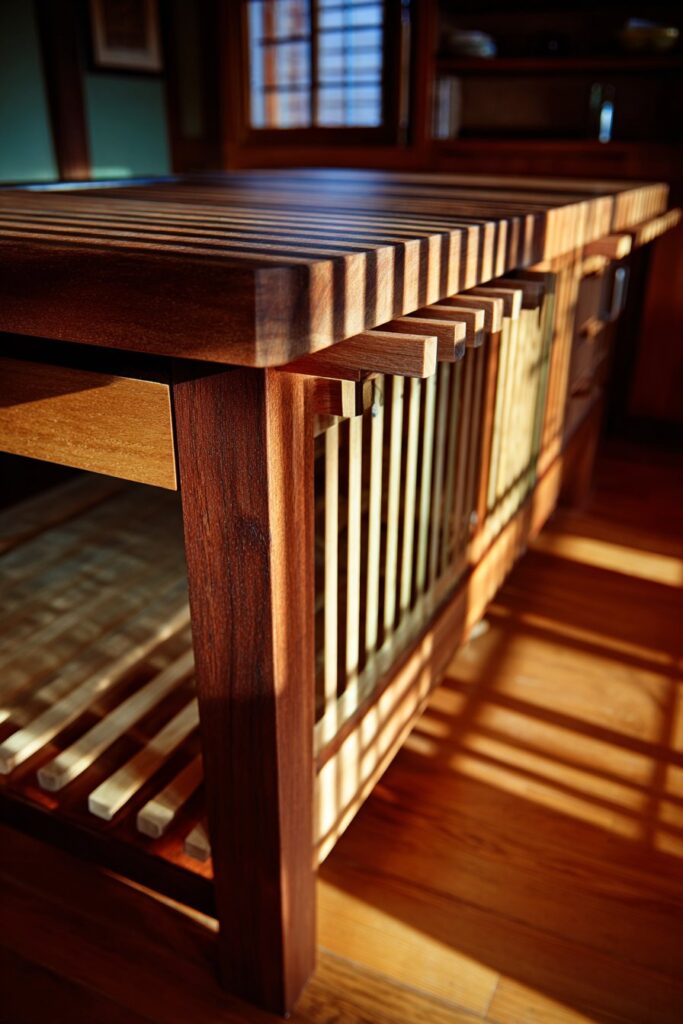
The teak butcher block island incorporates integrated wooden tool storage following Japanese organizing principles that ensure every item has a designated place while maintaining visual simplicity and functional efficiency. This approach to organization reflects the Japanese philosophy that order and simplicity create mental clarity and promote more mindful daily activities.

Custom wooden cutting boards that nest within specially designed wooden slots demonstrate the Japanese attention to detail and space efficiency while creating storage solutions that are both beautiful and highly functional. This nested storage approach maximizes space utilization while maintaining the clean aesthetic that defines Japanese design sensibility.
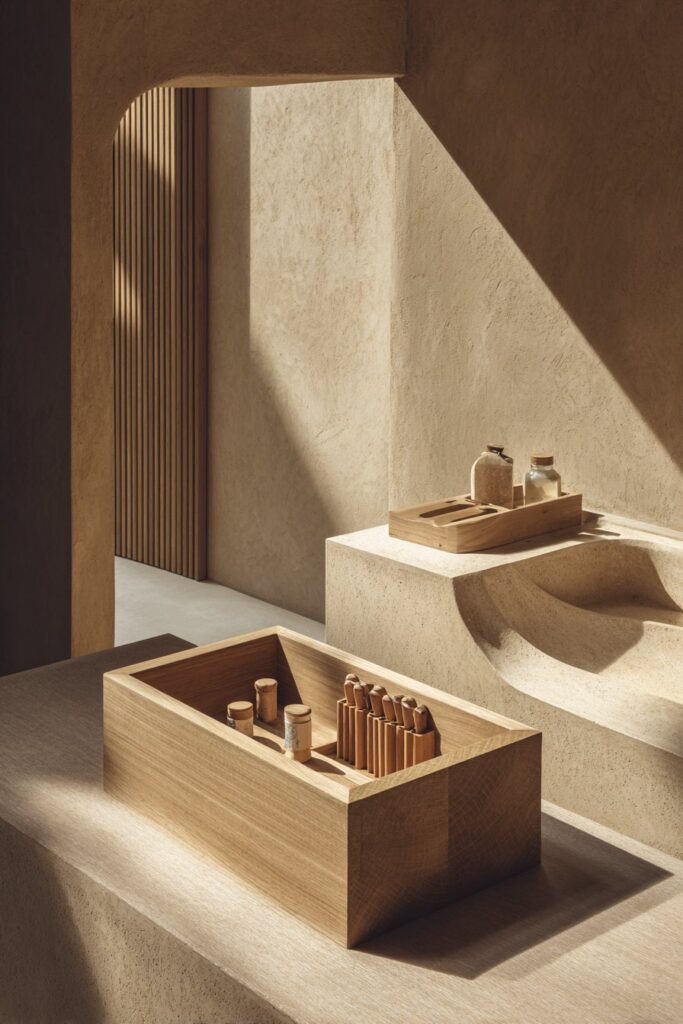
Soft natural lighting creates zen-like shadows on the precisely crafted teak surfaces, emphasizing the meditative quality and exceptional craftsmanship that characterizes this Japanese-influenced wooden kitchen design. Interior design photography captures both the functional excellence and spiritual qualities that make Japanese design principles so enduringly appealing.
Key Design Tips:
- Use traditional Japanese joinery techniques to eliminate visible hardware and create clean lines
- Apply Japanese organizing principles to ensure every item has a designated storage location
- Design nested storage solutions to maximize efficiency while maintaining visual simplicity
- Select teak for its durability and natural beauty that improves with age and use
- Create meditative lighting that promotes calm and highlights exceptional craftsmanship quality
20. Pine Lumber Yard Authenticity
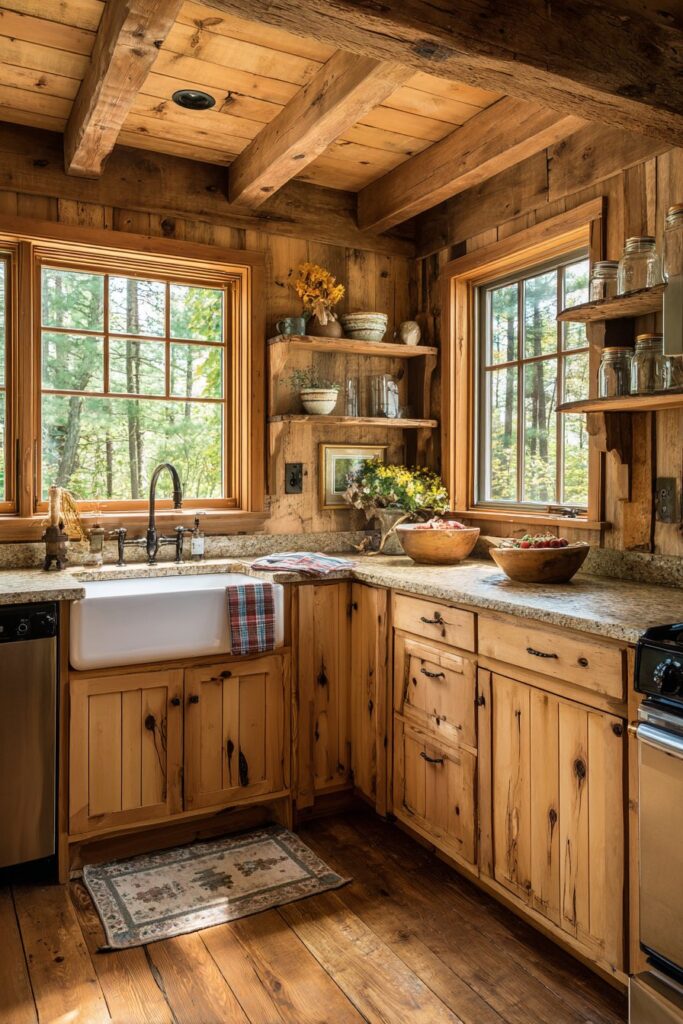
Celebrate the honest beauty of pine cabinetry with natural knots and resin pockets that showcase authentic lumber characteristics often hidden in more refined wood selections. This wooden kitchen design embraces the raw, natural qualities that make pine such an authentic and characterful choice for homeowners seeking connection to traditional lumber yard aesthetics and natural wood beauty.
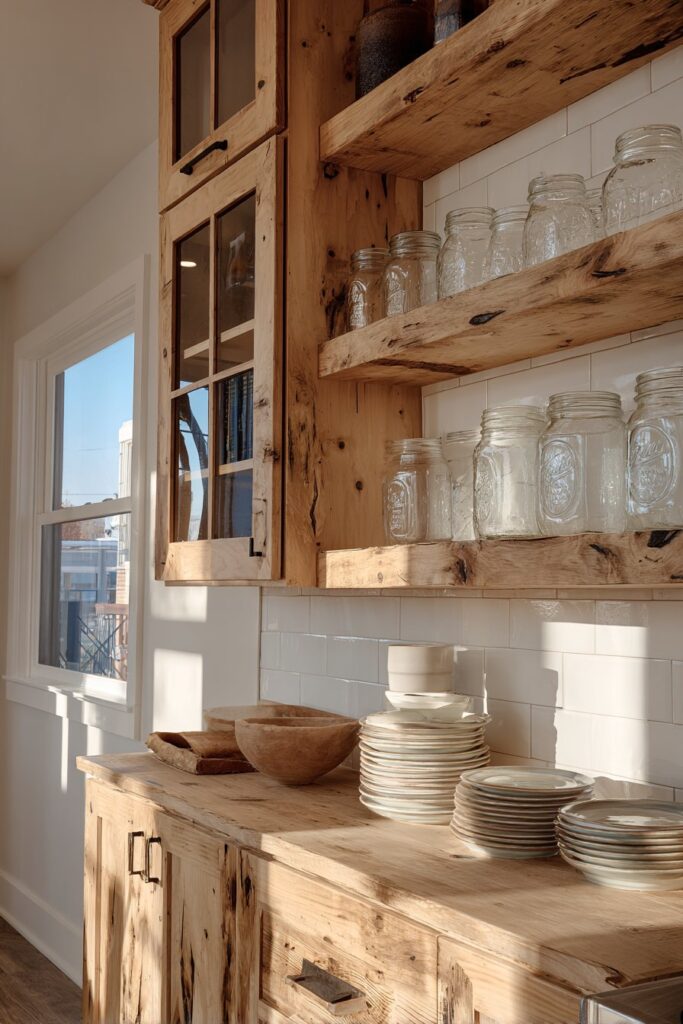
Open pine shelving provides display opportunities for mason jars and wooden bowls while maintaining the authentic lumber theme throughout the space. This casual approach to storage reflects the unpretentious character of pine while providing functional storage that keeps everyday items accessible and beautifully displayed as part of the overall design aesthetic.
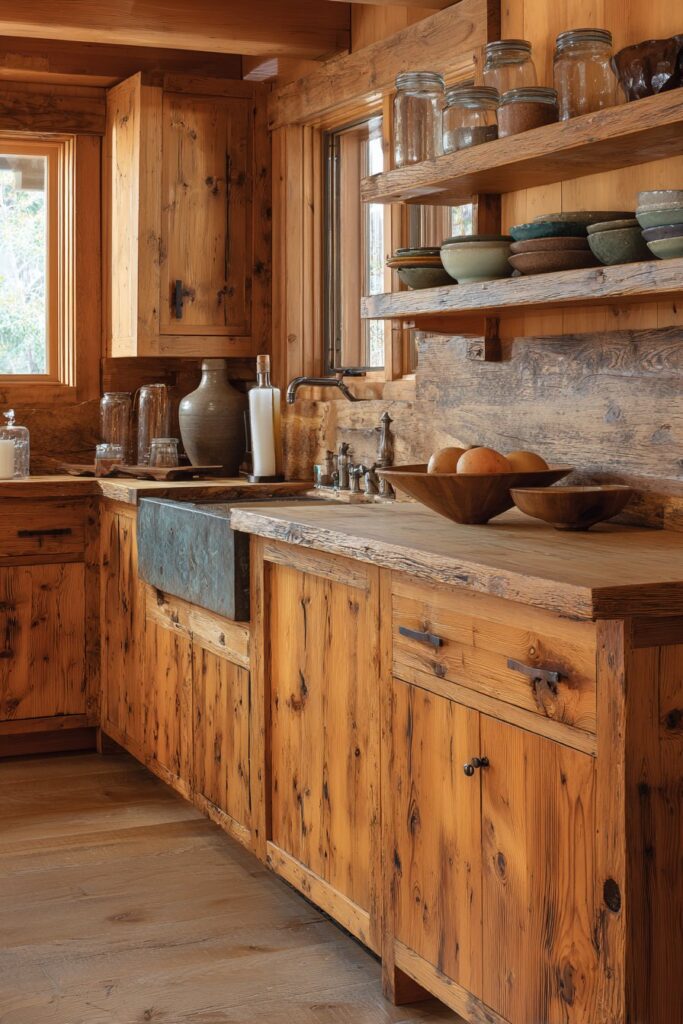
The pine plank backsplash features original saw marks and natural checking that tells the story of the lumber’s origins and processing, creating textural interest while maintaining authentic connection to traditional woodworking methods. These authentic details add character and history to the kitchen while providing a unique surface that cannot be replicated through manufactured materials.
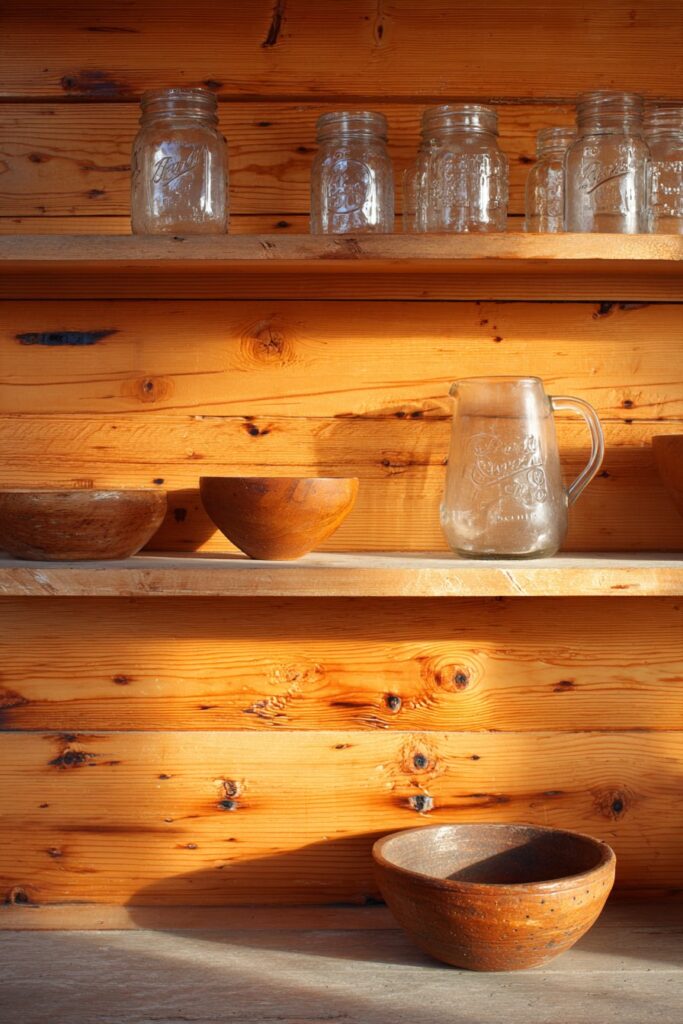
Warm morning light highlights the honey-colored patina developing on the pine surfaces over time, demonstrating how pine naturally ages and improves in appearance through daily use and exposure to natural light. Interior photography captures this authentic aging process while showcasing how pine develops distinctive character that makes each installation unique and personally meaningful.
Key Design Tips:
- Embrace natural knots and resin pockets as authentic design features rather than defects to be hidden
- Use open shelving to display items that complement the lumber yard aesthetic and natural materials
- Preserve original saw marks and check to maintain an authentic connection to traditional processing methods
- Allow natural aging and patina development to enhance pine’s character over time
- Position lighting to highlight pine’s natural color development and authentic lumber characteristics
Why These Wooden Kitchen Designs Represent the Best in Natural Material Integration
These twenty wooden kitchen designs represent the absolute pinnacle of natural material integration in contemporary kitchen design, each showcasing different approaches to celebrating wood’s inherent beauty while meeting modern functional requirements. From the sophisticated luxury of walnut and cherry to the sustainable innovation of bamboo and reclaimed materials, these designs demonstrate how wooden kitchens can adapt to any lifestyle, budget, or aesthetic preference while maintaining their connection to nature’s most versatile building material.
The diversity of wood species showcased—from traditional favorites like oak and maple to more exotic choices like teak and figured maple—illustrates the vast range of possibilities available to homeowners seeking to create truly unique kitchen environments. Each species brings its own character, grain patterns, and aging properties, ensuring that wooden kitchens remain dynamic and evolving rather than static design elements.
Modern construction techniques and hardware innovations have expanded the possibilities for wooden kitchen design while maintaining connection to traditional craftsmanship values. Push-to-open mechanisms, soft-close hinges, and integrated lighting systems prove that cutting-edge functionality can enhance rather than compromise natural material beauty, creating kitchens that serve contemporary lifestyles while honoring timeless aesthetic principles.
The emphasis on sustainable materials and reclaimed wood demonstrates how environmentally conscious design choices can create more character and interest than new materials while reducing environmental impact. These approaches prove that responsible design decisions can enhance rather than limit creative possibilities, opening new avenues for authentic and meaningful kitchen design.
Storage innovations showcased throughout these designs—from cedar-lined drawers to custom cutting board slots to integrated wine storage—demonstrate how wooden kitchen design can be both beautiful and exceptionally functional. These solutions prove that custom craftsmanship can address specific lifestyle needs while maintaining aesthetic integrity, creating kitchens that truly serve their owners’ unique requirements and preferences.
The lighting strategies employed across these designs reveal how proper illumination can transform wood from simple building material into dynamic, living surfaces that change throughout the day. Natural light positioning, LED integration, and strategic accent lighting all contribute to showcasing wood’s inherent beauty while providing the functional illumination necessary for serious cooking activities.
Color theory principles evident in these designs demonstrate how different wood tones can create specific moods and atmospheres within kitchen spaces. Light woods like birch and maple create airy, expansive feelings perfect for smaller spaces, while rich, dark woods like walnut and mahogany provide sophisticated elegance and intimate warmth that makes large spaces feel welcoming and personal.
The integration of contrasting materials—steel, stone, brick, and tile—throughout these wooden kitchen designs proves that wood serves as an excellent anchor material that enhances rather than competes with other design elements. These combinations create visual interest and textural variety while allowing wood to remain the dominant aesthetic influence throughout the space.
Traditional craftsmanship techniques featured in several designs—from mortise and tenon joinery to steam bending to hand carving—demonstrate how time-honored methods can create unique elements impossible to achieve through mass production. These approaches add value, character, and exclusivity while connecting contemporary kitchens to woodworking traditions spanning centuries.
The various organizational philosophies represented—from Scandinavian minimalism to Japanese zen principles to American craftsman ideals—show how wooden kitchen design can embody cultural values and lifestyle approaches while maintaining universal appeal and timeless beauty that transcends temporary trends and fashion movements.
Conclusion
The twenty wooden kitchen designs explored in this comprehensive guide demonstrate that wood remains the most versatile, beautiful, and enduring material choice for creating kitchen spaces that nourish both body and soul. Each design approach offers unique benefits and aesthetic rewards, proving that wooden kitchens can successfully accommodate any style preference, functional requirement, or budget consideration while maintaining their essential connection to natural beauty.
Whether you’re drawn to the sleek sophistication of modern walnut cabinetry, the sustainable innovation of bamboo construction, or the rustic authenticity of reclaimed barn wood, these designs provide inspiration and practical guidance for creating your own wooden kitchen masterpiece. The key lies in selecting wood species, construction techniques, and design approaches that align with your personal values, lifestyle needs, and aesthetic preferences.
The enduring appeal of wooden kitchens stems from their ability to age gracefully, developing character and patina that makes them more beautiful over time rather than showing wear and obsolescence. This long-term value proposition, combined with wood’s natural warmth and organic beauty, ensures that wooden kitchen investments continue paying dividends in both practical functionality and emotional satisfaction for decades to come.
As you embark on your own wooden kitchen journey, remember that the best designs emerge from thoughtful consideration of how you actually use your kitchen space, combined with appreciation for the natural materials that will transform your culinary activities into daily celebrations of craftsmanship, sustainability, and timeless beauty. Let these inspiring examples guide your exploration while encouraging you to discover your own unique expression of wooden kitchen excellence.
"As an Amazon Associate, I earn from qualifying purchases."
