
Winter has a unique way of drawing us into the kitchen. The season calls for simmering soups, freshly baked bread, and the comforting aroma of spiced cider filling every corner of your home. Your kitchen should reflect that warmth and coziness — not just through the food you cook, but through the way the space looks and feels. A thoughtfully decorated winter kitchen can make cooking feel like a retreat rather than a chore.
Interior design has always responded to the rhythms of nature and the seasons. Seasonal decorating is not just a trend — it’s a time-honored practice rooted in creating harmony between your living spaces and the world outside. In winter, when natural light is scarce and temperatures drop, your kitchen becomes one of the most vital rooms in the home. It deserves the same attention you’d give a living room or bedroom.
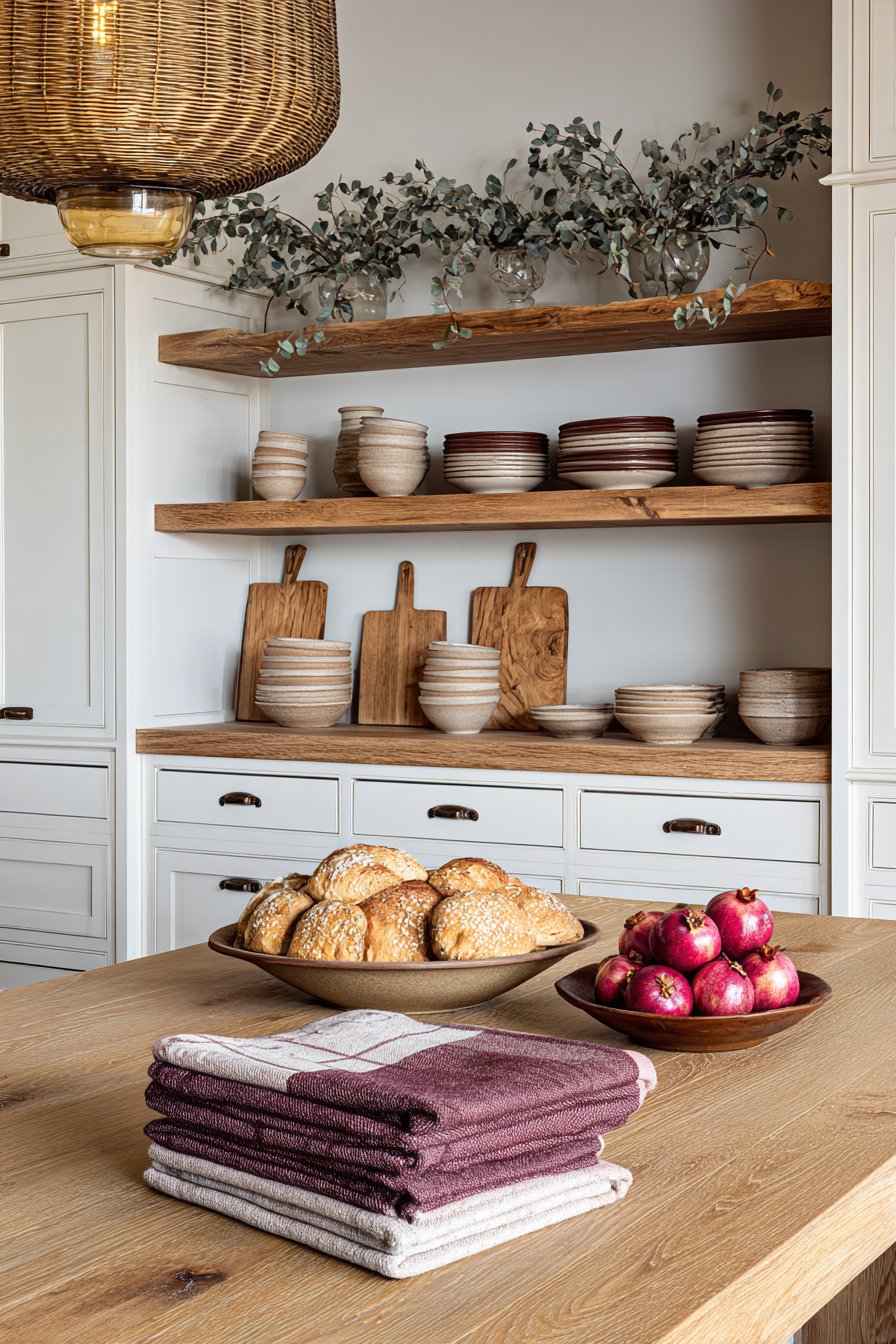
This article walks you through eight expertly curated winter kitchen decor tips. Whether you love rustic farmhouse charm, modern minimalism, or eclectic bohemian flair, these ideas offer something for every style. From lighting strategies to textile choices, each tip is designed to help you build a kitchen that feels genuinely warm, welcoming, and seasonally inspired.
1. Layer Warm Lighting for Ambience
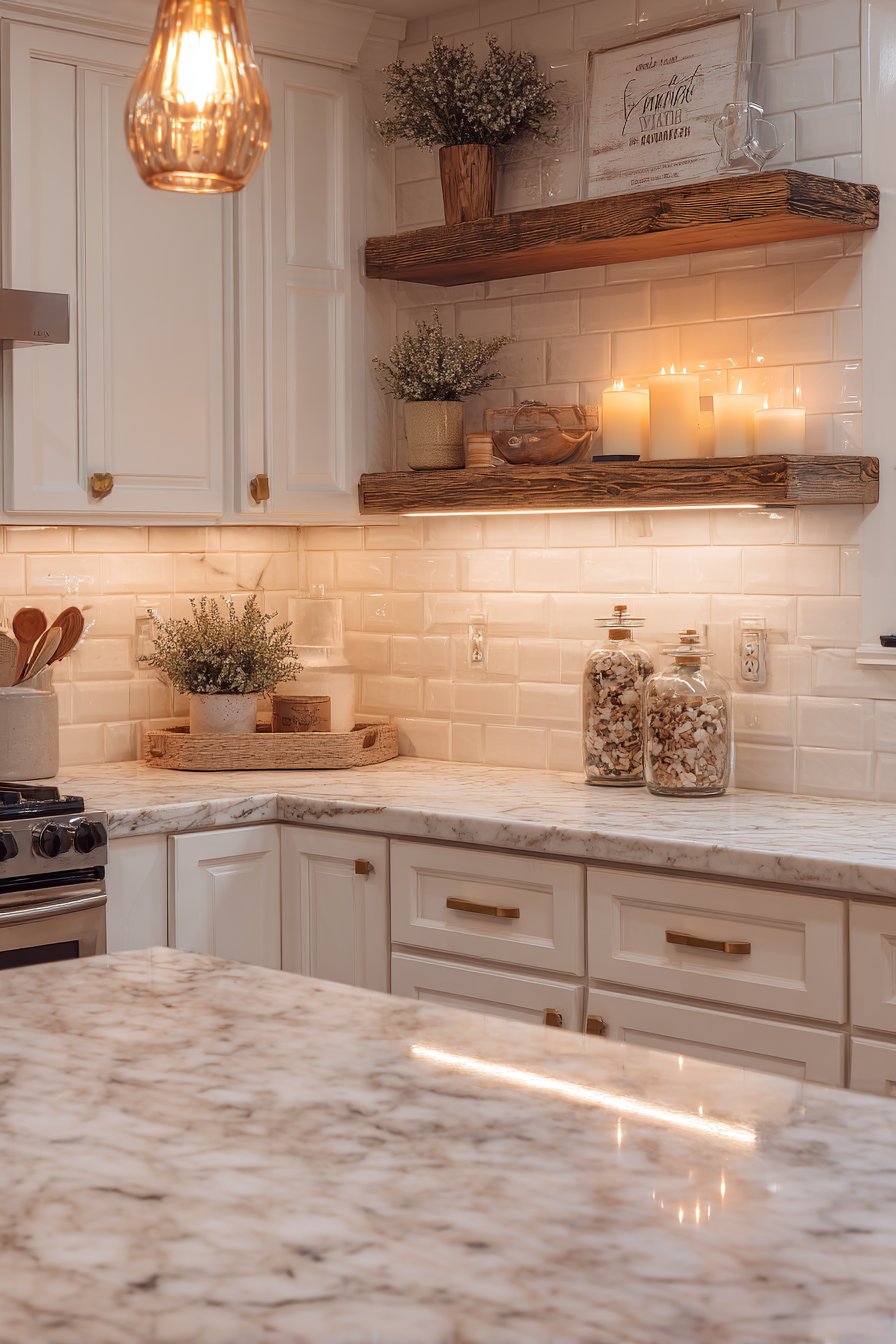
Lighting is the single most transformative element in any winter interior. During the colder months, natural daylight disappears early, and harsh overhead lighting can make your kitchen feel sterile and cold. Instead, think in layers of light — combining ambient, task, and accent lighting to create a warm, dimensional glow throughout the space.
Start by swapping cool-toned bulbs for warm white LEDs in the 2700K to 3000K range. These mimic the golden tones of candlelight and create an immediately cozier atmosphere. Add under-cabinet lighting to illuminate countertops with a soft warmth, and consider pendant lights over your kitchen island or dining nook. Pendants with amber glass or brass finishes are particularly effective in winter, casting a rich, honeyed light.
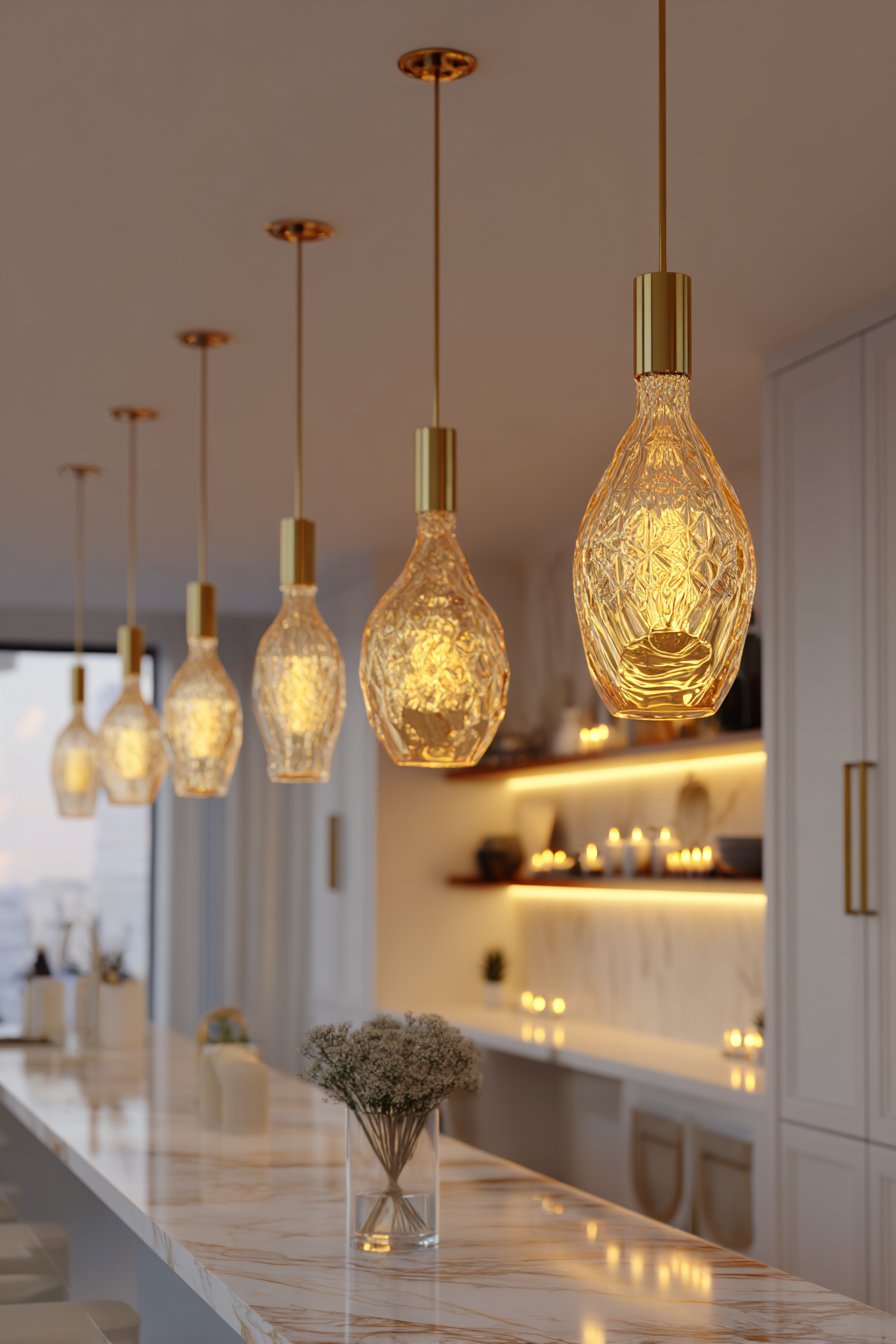
Don’t underestimate the power of candles in a kitchen setting. Pillar candles on a tray or flameless LED candles on open shelves add flickering warmth without safety concerns. Scented candles with notes of cinnamon, vanilla, or cedarwood also reinforce the sensory experience of a winter kitchen beautifully.
- Swap cool bulbs for warm white LEDs between 2700K–3000K
- Add under-cabinet strip lighting for cozy counter illumination
- Hang pendant lights with amber glass or brushed brass finishes
- Use flameless LED candles on shelves and countertops safely
- Dim overhead lights in the evening and rely on accent sources
- Choose lantern-style fixtures for a rustic or farmhouse aesthetic
2. Introduce Cozy Textiles and Soft Layers
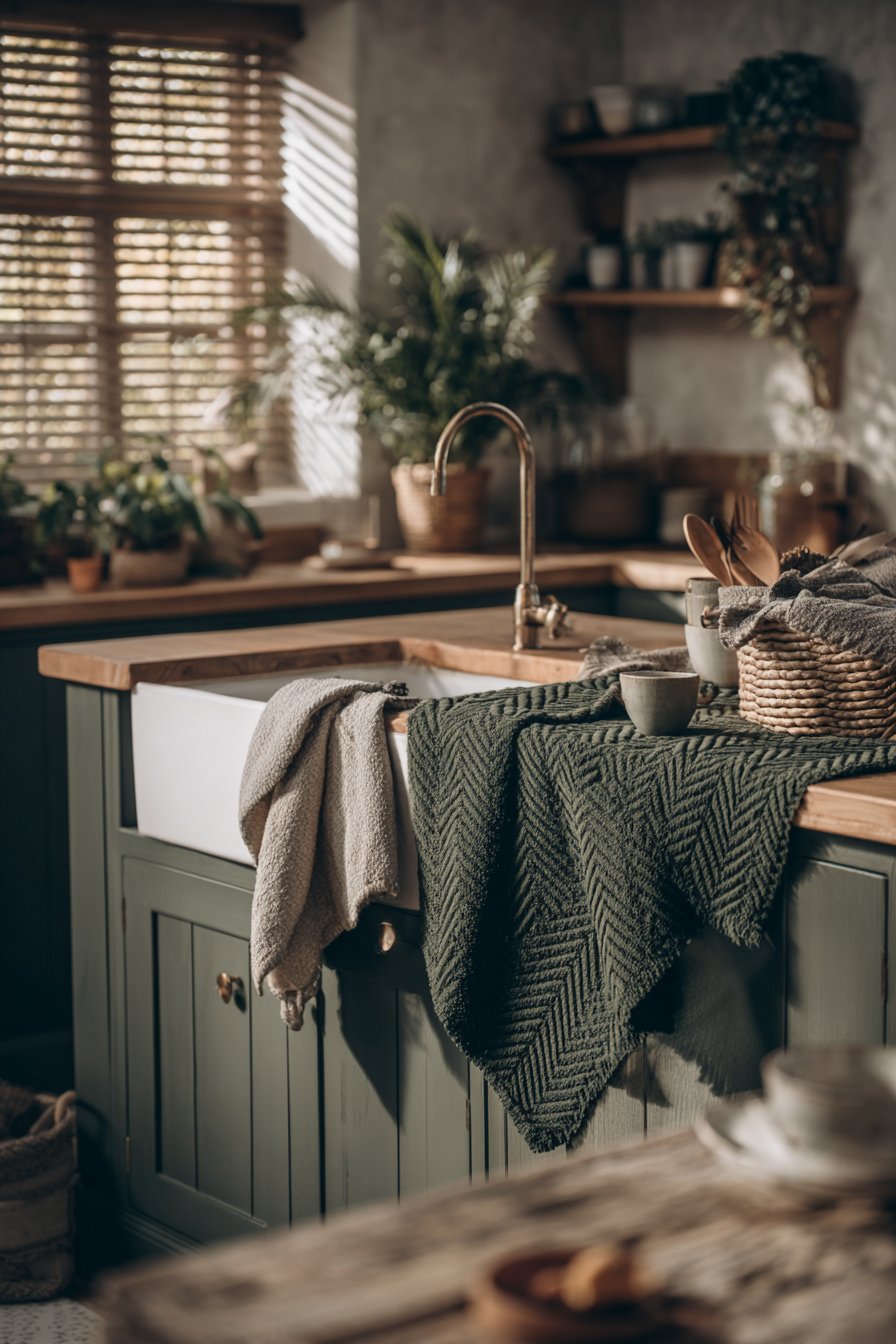
Textiles are often overlooked in kitchen design, but they play a powerful role in seasonal comfort. In winter, adding soft layers to your kitchen immediately shifts the mood from functional to inviting. Think beyond the standard dishcloth — this is the season to bring in plush, tactile fabrics that make the space feel lived-in and warm.
Start with a thick wool or cotton runner rug in front of the sink and stove. Choose patterns that evoke the season — plaids, herringbone, or even subtle Nordic motifs work beautifully. A runner adds both physical warmth underfoot and visual softness to what can often be a hard-surfaced room. Look for low-pile options that are easy to clean and machine washable.
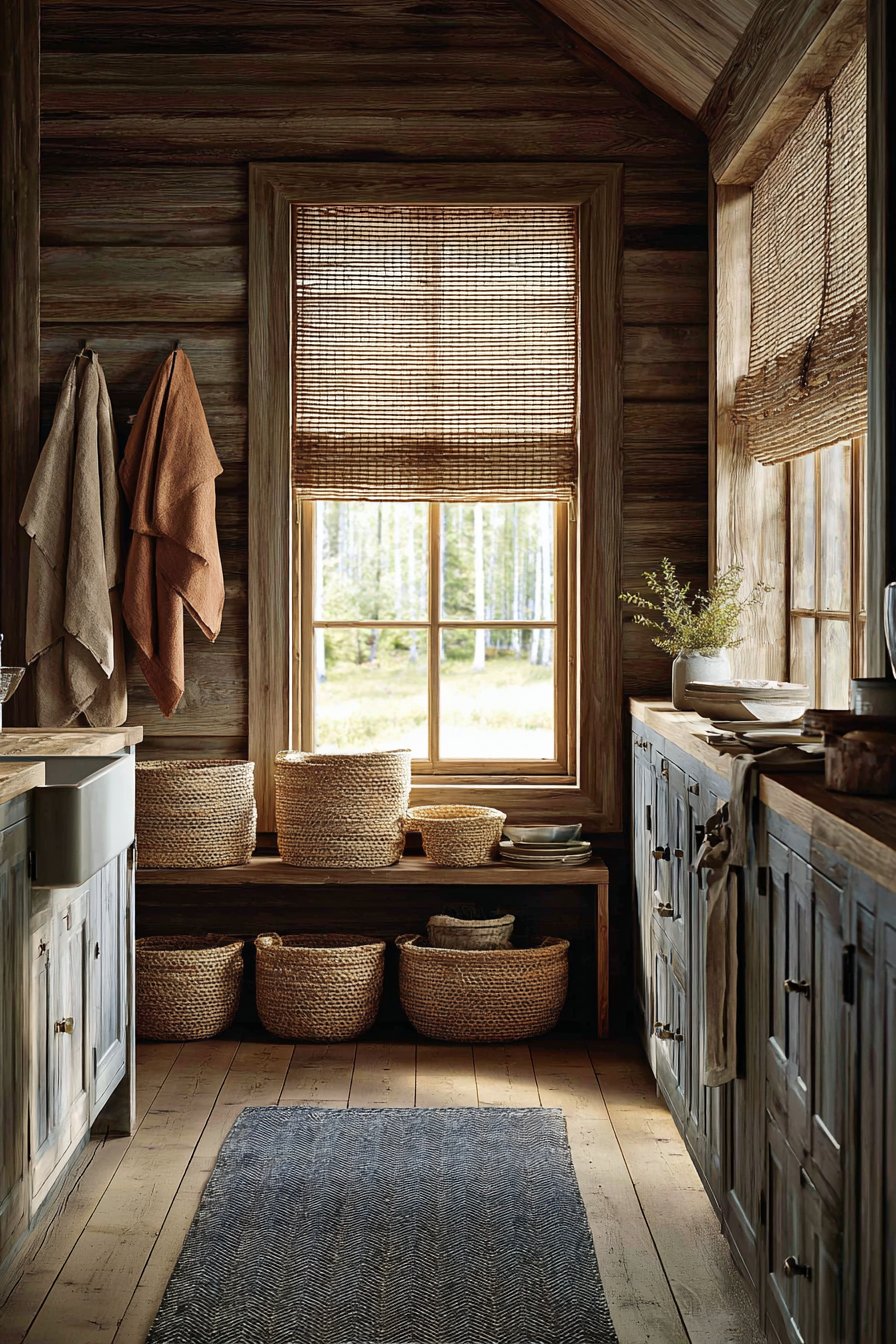
Layer in linen dish towels in deep winter tones — forest green, terracotta, dusty navy, or oatmeal. Drape them over oven handles or fold them neatly on open shelves. Window treatments like woven Roman blinds or café curtains in natural fabrics can also add significant warmth, both visually and thermally, helping to insulate the space from cold drafts.
- Add a thick wool or cotton runner rug in front of sink and stove
- Choose linen dish towels in winter tones like forest green or rust
- Install woven Roman blinds or café curtains for warmth and style
- Drape a small throw over a kitchen chair or bench seating
- Use fabric storage baskets to soften the look of open shelving
- Layer a table runner on your kitchen dining table in seasonal colors
3. Embrace a Winter-Inspired Color Palette
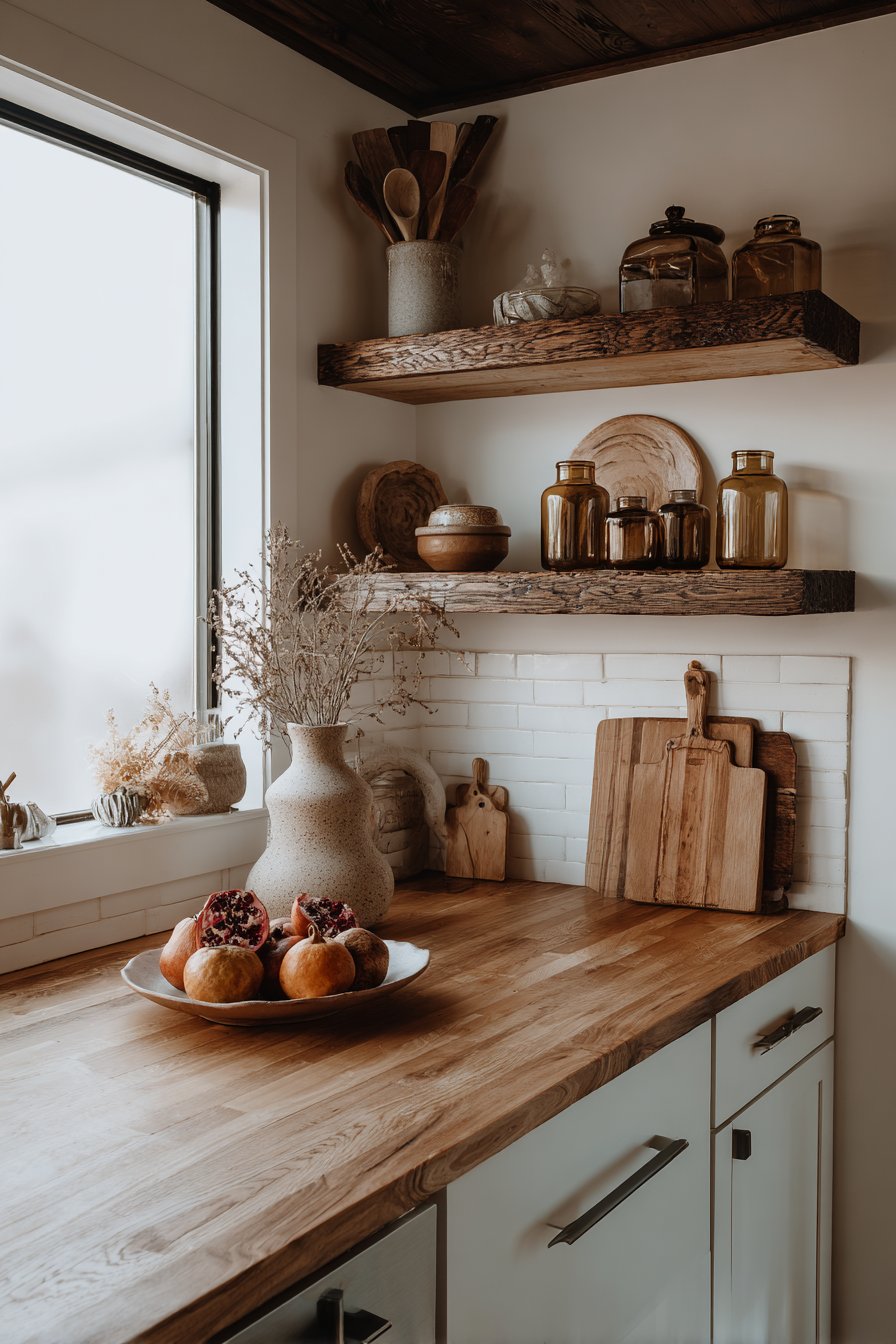
Color has a profound effect on how a space feels. In winter, shifting your kitchen’s accent palette toward warm, earthy tones can completely transform the energy of the room. You don’t need to repaint walls — small changes to accessories, textiles, and decorative objects are enough to signal a seasonal shift.
Think rich terracotta, deep burgundy, warm caramel, and muted sage. These colors carry the warmth of hearth and harvest, making them ideal for the winter kitchen. Introduce them through ceramics, pottery, glassware, or even a statement bowl of seasonal produce like pomegranates, oranges, or persimmons sitting on the counter.
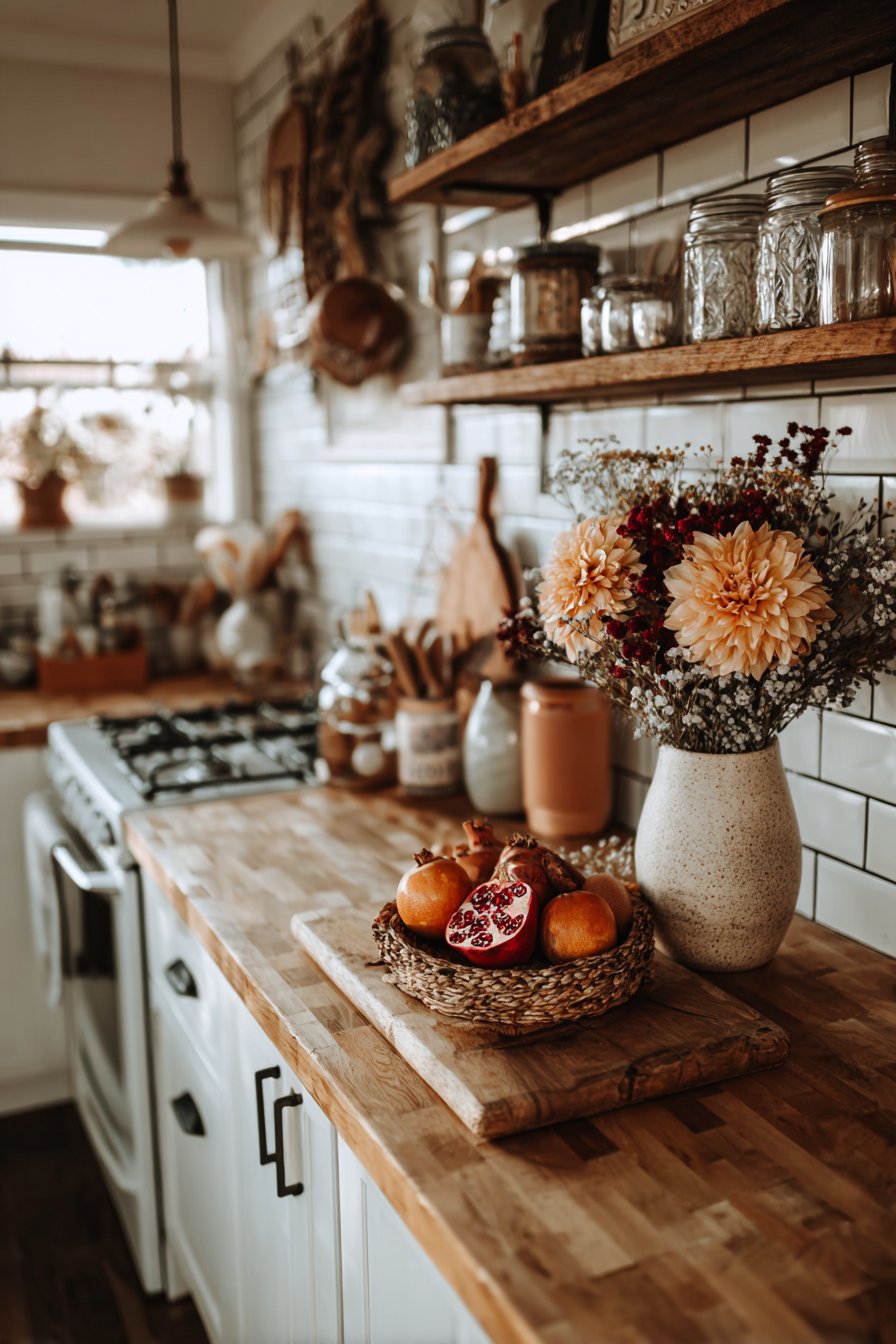
Neutral backgrounds — creamy whites, warm beiges, and natural wood tones — act as the perfect anchor palette against which deeper winter hues can shine. If your kitchen already features white cabinetry or light countertops, you’re ideally positioned to layer in rich seasonal accents without overwhelming the space. The key is intentional contrast — enough warmth to feel cozy, but balanced enough to feel sophisticated.
- Introduce terracotta, burgundy, and caramel through small accessories
- Display seasonal produce like pomegranates or oranges as natural decor
- Swap summer-tone ceramics for deeper, earthier glazed pottery
- Add a deep-colored ceramic vase or pitcher to open shelving
- Use amber and smoked glass jars for dry goods storage on counters
- Choose wooden cutting boards and utensils to warm up white kitchens
4. Decorate with Natural and Seasonal Elements
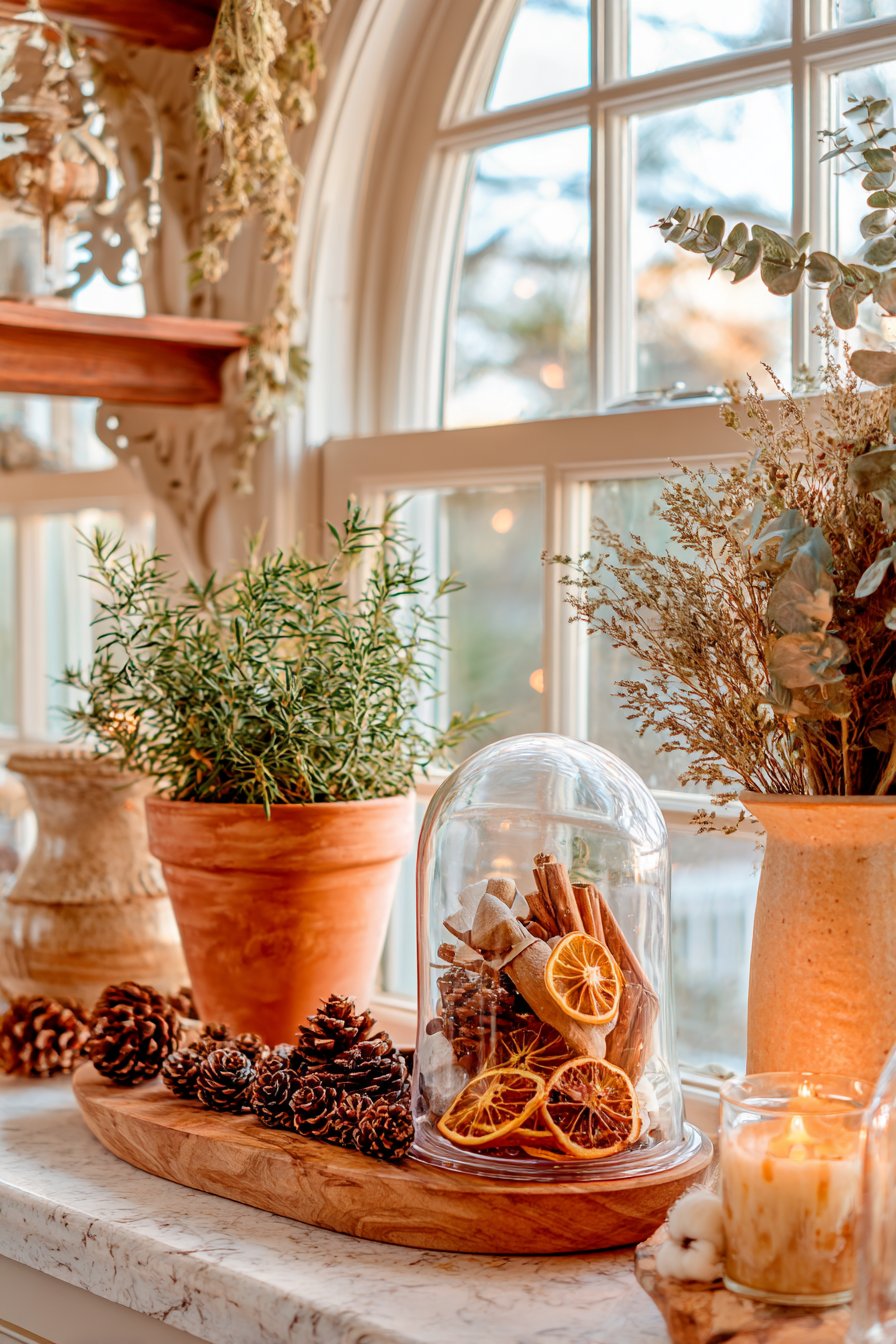
Nothing connects your kitchen to the spirit of winter quite like natural seasonal elements. Nature offers an abundant supply of free or affordable decor that is beautiful, organic, and deeply evocative of the colder months. Incorporating these elements into your kitchen gives the space an authentic, grounded quality that manufactured decor simply cannot replicate.
Pine cones, dried citrus slices, cinnamon sticks, and sprigs of eucalyptus or evergreen are classics for good reason. Arrange them in a shallow wooden bowl, tuck them into a glass cloche, or scatter them along a shelf. A bundle of dried botanicals like wheat, cotton stems, or dried hydrangeas in a stoneware vase adds height, texture, and a beautiful wabi-sabi quality to your kitchen decor.
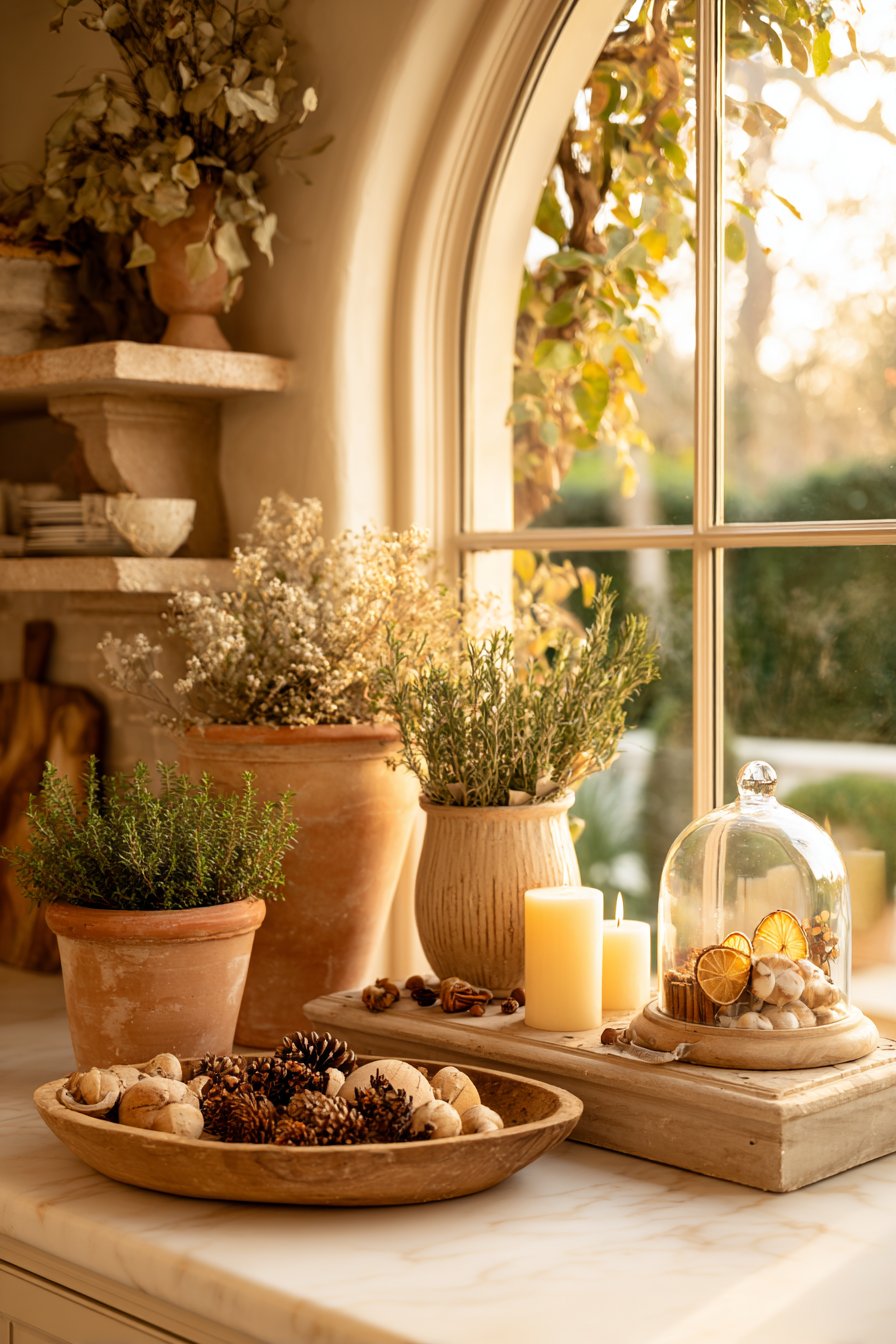
Fresh herbs also deserve a spotlight in the winter kitchen. A small arrangement of rosemary, thyme, and sage in terracotta pots on the windowsill is both decorative and functional. These hardy herbs thrive indoors and fill the kitchen with a subtle fragrance that feels entirely appropriate for the season.
- Fill a wooden bowl with pine cones, dried citrus, and cinnamon sticks
- Place dried botanical bundles in stoneware vases on open shelves
- Grow rosemary, thyme, and sage in terracotta pots on the windowsill
- Use a glass cloche to display a curated seasonal vignette
- Hang a small eucalyptus bundle from a cabinet knob or faucet
- Incorporate natural beeswax candles alongside botanical arrangements
5. Style Open Shelves with Intentional Vignettes
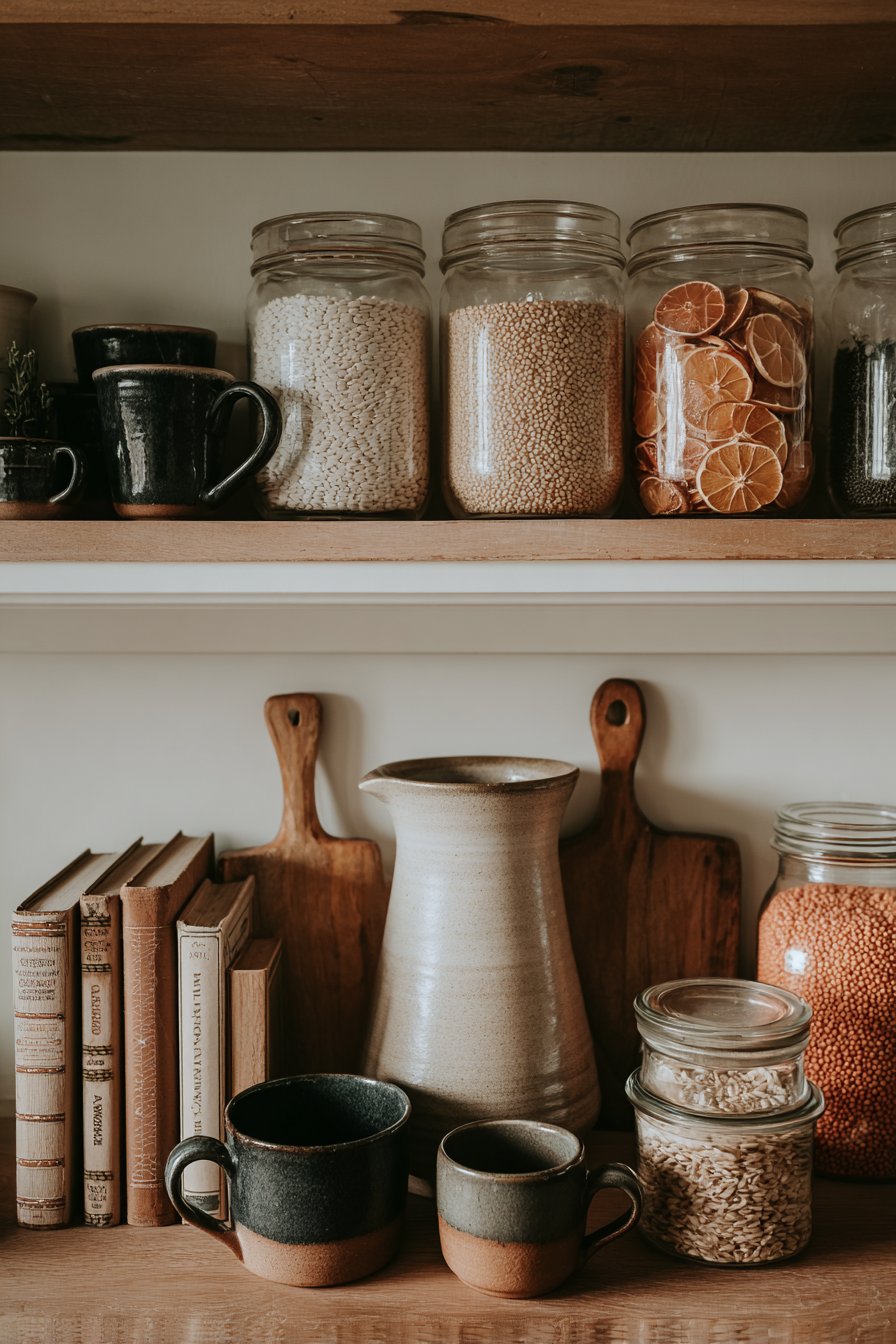
Open shelving is one of the most powerful tools for seasonal kitchen styling. Unlike closed cabinets, open shelves are visible and expressive — they reflect your personality and the current season. In winter, this is your opportunity to curate warm, cozy vignettes that make the kitchen feel like a place of comfort and care.
Start by editing ruthlessly — winter shelving should feel curated, not cluttered. Remove items that don’t contribute to the seasonal palette or mood. Replace summer-bright accessories with warmer alternatives: deep-glazed ceramics, wooden serving boards, hand-thrown mugs in earthy tones, and glass jars filled with warm-colored dry goods like red lentils, cinnamon, or dried orange slices.
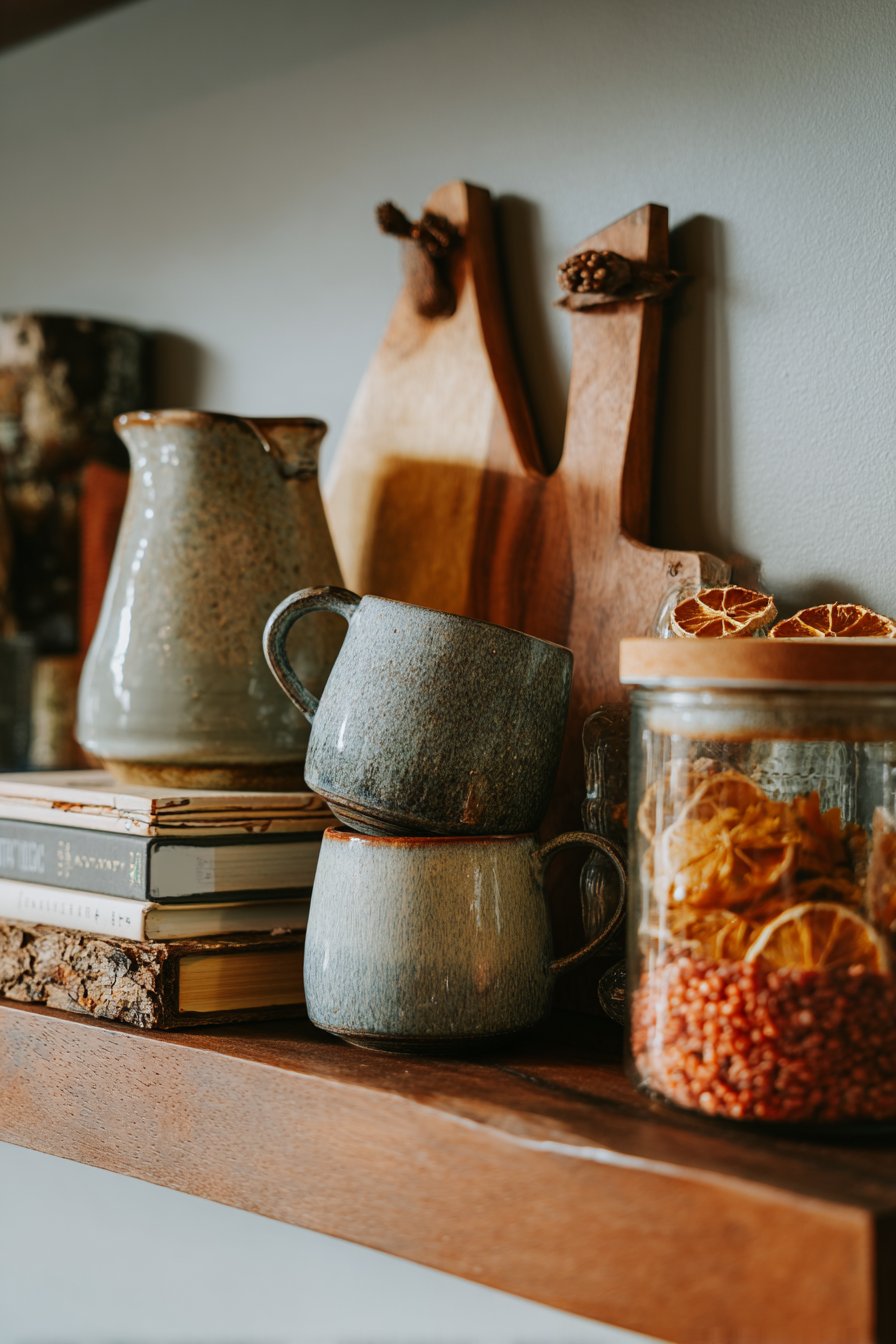
Group items in odd numbers for a visually pleasing arrangement. A classic vignette might include: a tall stoneware pitcher, a small potted herb, and a stack of linen-bound cookbooks. Vary the height of objects and mix textures — matte ceramics against smooth glass, rough wood against polished metal. The goal is a shelf that looks intentional but lived-in, curated but not too precious.
- Edit shelves down to only winter-palette items
- Group objects in threes or fives for visual balance
- Mix textures: matte ceramics, rough wood, and clear glass together
- Include at least one living element like a small plant or herb pot
- Stack vintage cookbooks or wooden boards to add height variation
- Use lidded jars to display colorful dry goods as decorative storage
6. Incorporate Wood and Natural Materials
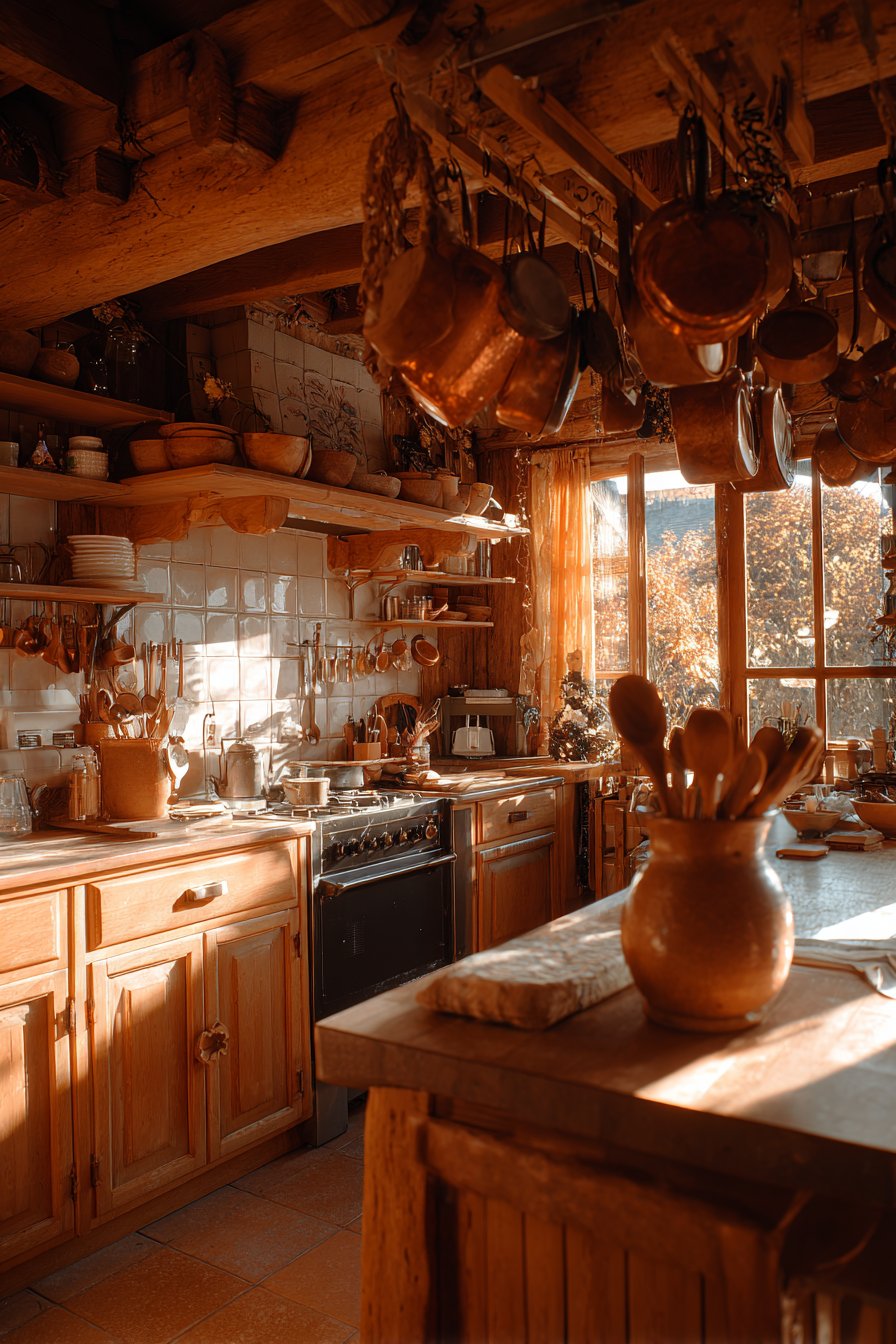
Wood is the quintessential winter material. It is warm, organic, and brings an immediate sense of coziness to any space. In a kitchen that may already feature cold surfaces like tile, stone, or stainless steel, wood acts as the great equalizer — softening edges and inviting touch.
If your kitchen lacks built-in wood elements, introduce them through accessories. Large wooden cutting boards propped against a backsplash, a butcher block serving tray on the counter, or a collection of hand-turned wooden bowls on a shelf — these small additions carry significant visual and tactile impact. Look for woods with warm grain patterns: acacia, walnut, oak, and cherry are all beautiful choices for winter kitchen styling.
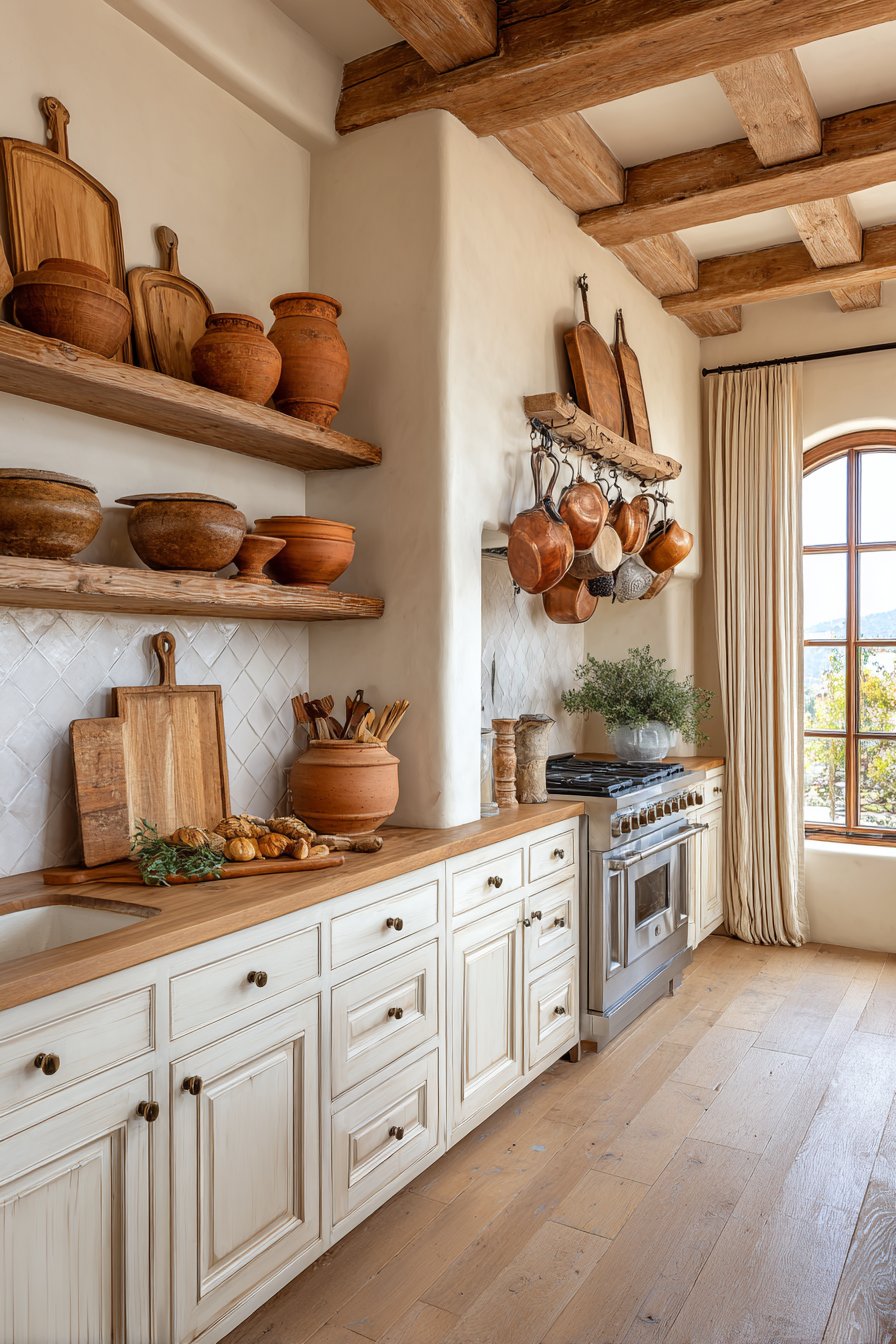
Consider a wooden fruit bowl or bread box as a functional centerpiece on the counter. These pieces serve a practical purpose while doubling as decor. A wooden pot rack hung from the ceiling adds rustic warmth while keeping your most-used cookware within easy reach. Even small touches like wooden drawer pulls or cabinet hardware in a warm bronze finish can shift the entire feel of the kitchen.
- Add large wooden cutting boards as decorative counter elements
- Use hand-turned wooden bowls for fruit, bread, or dry storage
- Install a wooden pot rack for rustic charm and functional storage
- Choose acacia, walnut, or cherry for the warmest visual tones
- Replace chrome hardware with warm bronze or antique brass options
- Display wooden spoons and utensils in a tall ceramic crock on the counter
7. Add Warmth Through Seasonal Scent
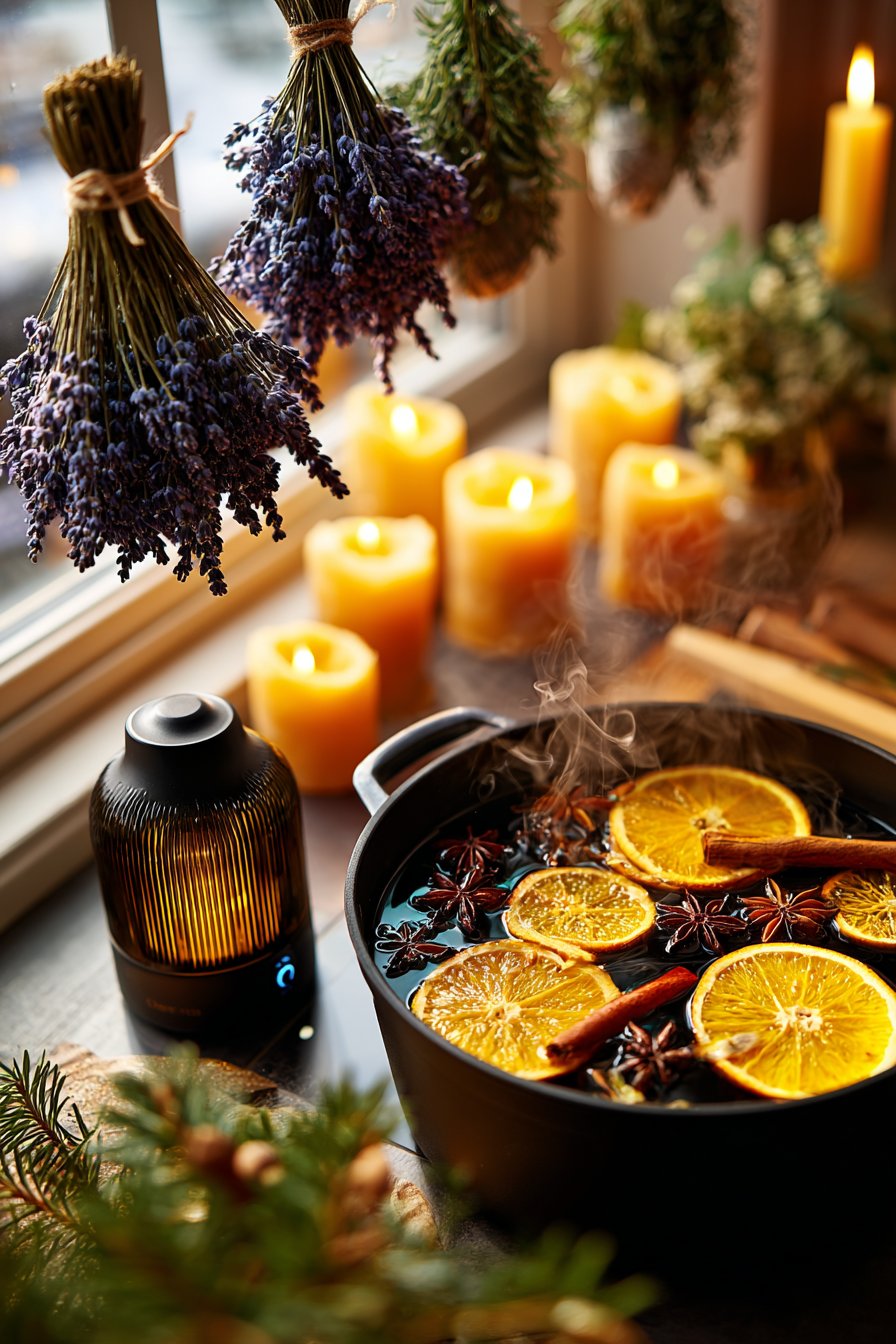
Scent is the most emotionally powerful of our senses, and in a winter kitchen, aromatic layering is one of the most effective tools you have. The kitchen already produces wonderful aromas through cooking — but you can enhance and extend that warmth with intentional scent choices that evoke the season.
Simmering stovetop potpourri is a beautiful and natural way to fill your kitchen with winter fragrance. Combine orange slices, cinnamon sticks, star anise, and cloves in a small pot of water set to the lowest heat. The result is a long-lasting, deeply warming scent that requires no candles or diffusers. Refresh with water as needed throughout the day.
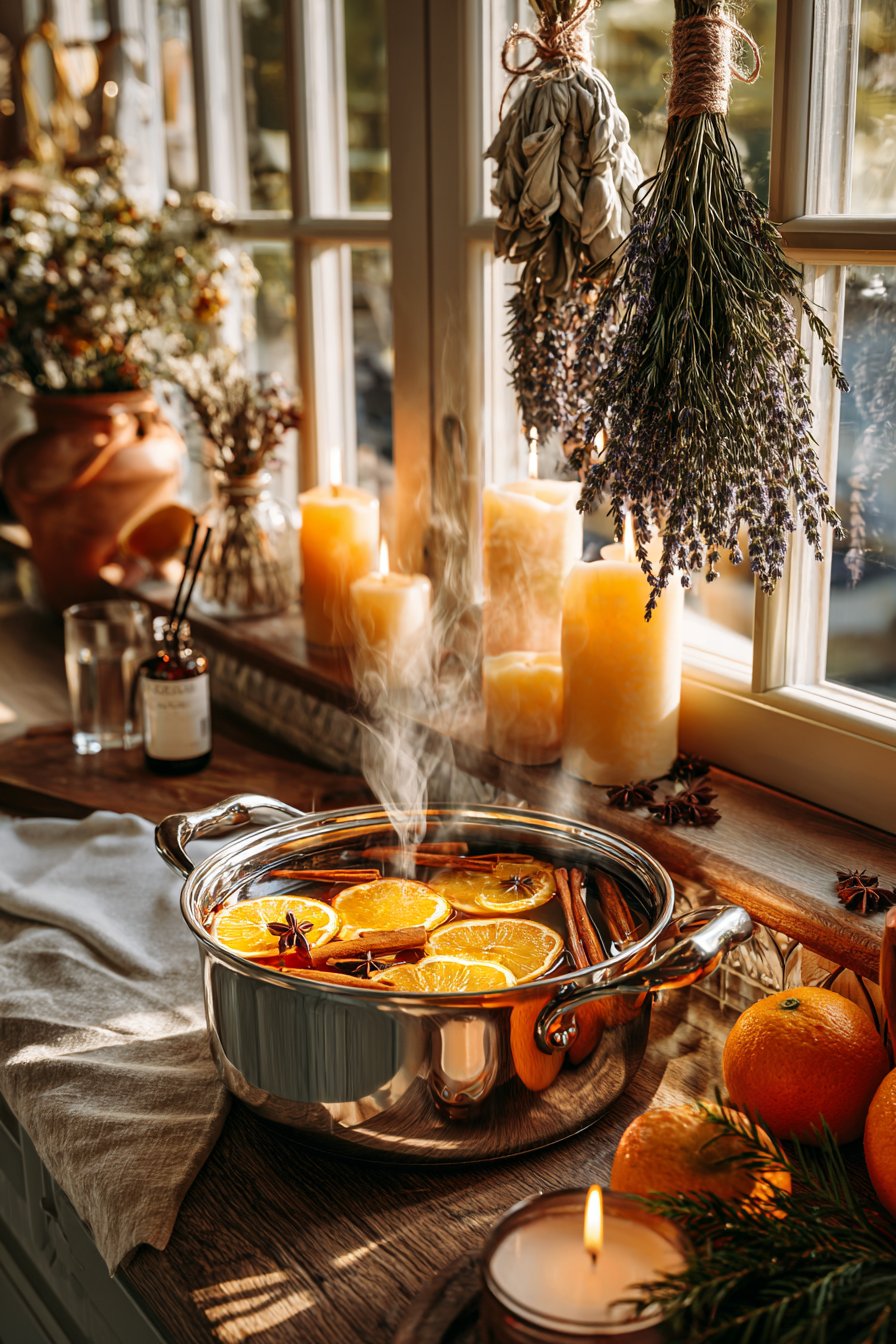
Scented soy or beeswax candles in fragrances like fireside, spiced amber, black tea, or cedarwood are excellent choices for the kitchen windowsill or countertop. Avoid overly sweet fragrances that might compete with food aromas. Instead, lean toward warm, earthy, or woody scents that complement rather than clash. Essential oil diffusers with blends of clove, cardamom, and sandalwood are another elegant option.
- Simmer orange slices, cinnamon, cloves, and star anise on the stovetop
- Choose beeswax or soy candles in earthy, woody winter fragrances
- Use an essential oil diffuser with clove, cardamom, and sandalwood
- Display dried lavender or rosemary bundles for subtle passive fragrance
- Avoid overly sweet scents that compete with cooking aromas
- Refresh stovetop potpourri throughout the day for lasting fragrance
8. Create a Cozy Coffee or Hot Drinks Station
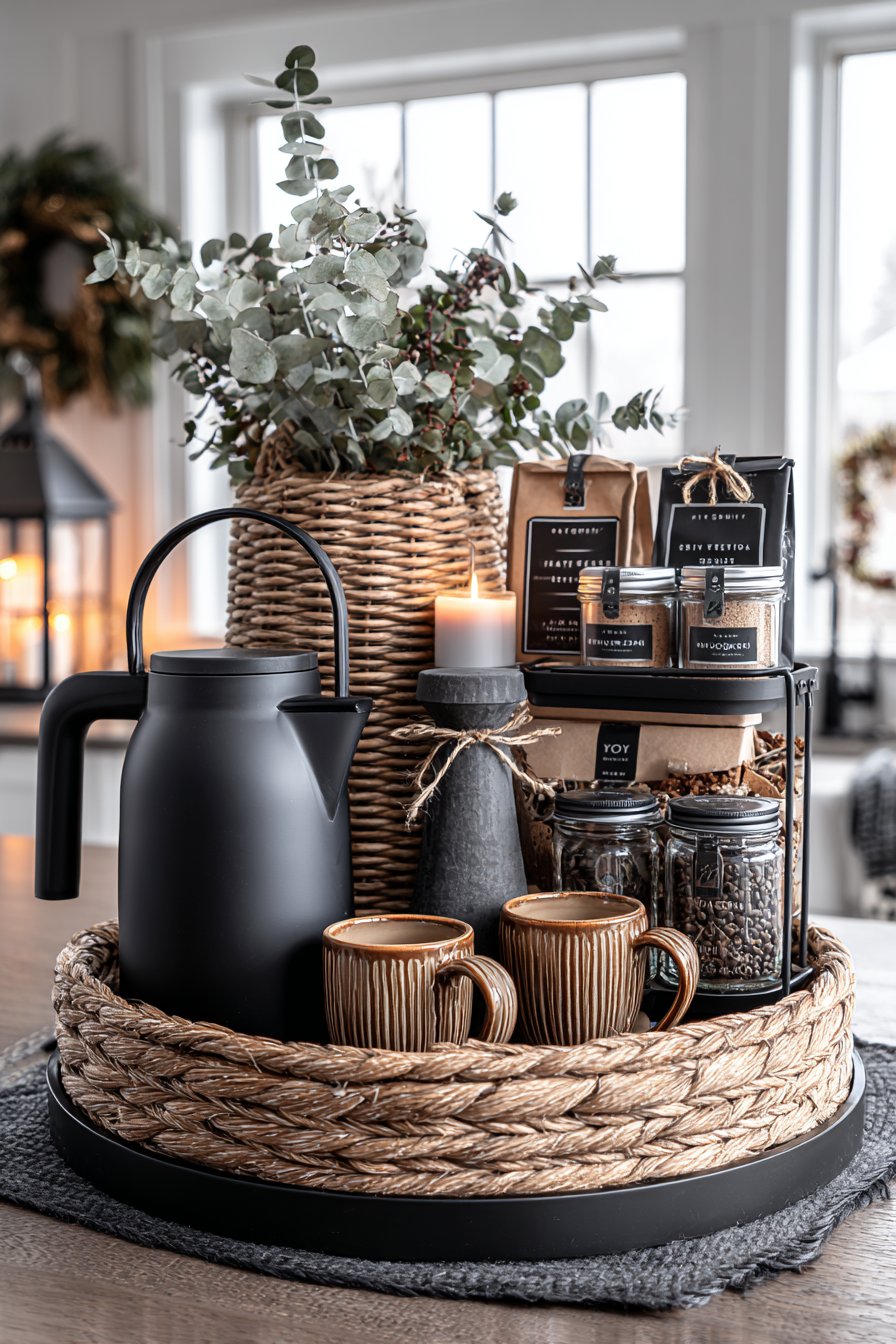
One of the most beloved winter kitchen additions is a dedicated hot drinks station. As temperatures drop, the ritual of making a warming cup of tea, cocoa, or coffee becomes a genuine daily pleasure. Designating a small corner of your kitchen for this purpose adds both function and charm to the space.
Choose a tray in wood, slate, or ceramic to define the station on your countertop. Group your coffee maker, kettle, and French press together alongside a small selection of mugs in winter tones. Stack them on a tiered stand or hang them from hooks underneath a cabinet to save space while adding visual interest. A woven basket or wooden crate nearby can hold an assortment of teas, hot chocolates, and spiced mixes for easy access.
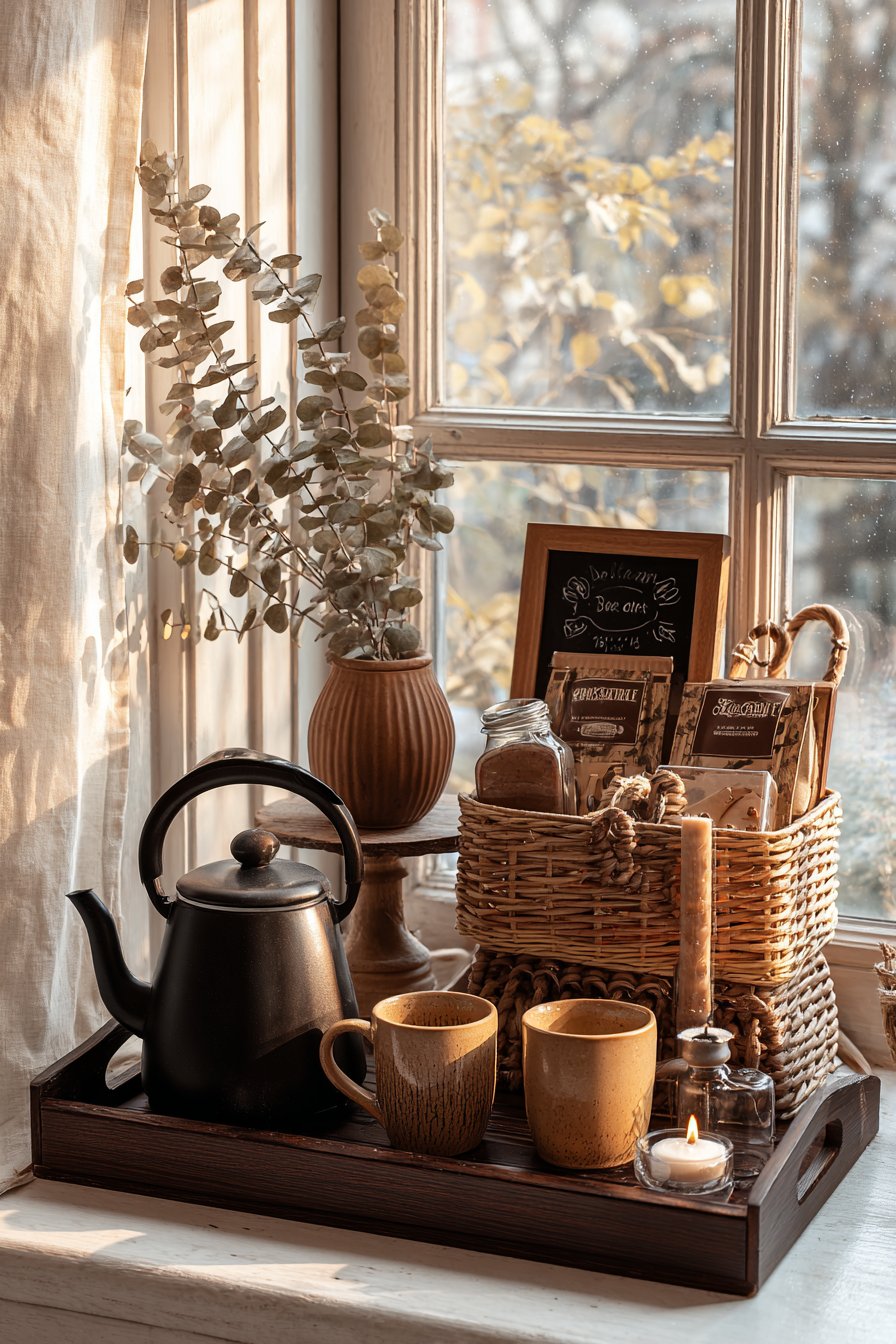
Style the station with a few seasonal flourishes: a small candle, a sprig of greenery in a bud vase, or a tiny chalkboard sign listing that day’s drink specials. Personalized mugs or handmade ceramic cups add a deeply personal touch that elevates the ritual. This station transforms a practical corner of your kitchen into a moment of daily warmth — a small sanctuary that makes winter mornings genuinely something to look forward to.
- Use a wooden or slate tray to anchor and define the drinks station
- Stack mugs in earthy winter tones on a tiered stand or shelf
- Store tea, cocoa, and spiced mixes in a woven basket nearby
- Add a small seasonal candle or greenery sprig for styling detail
- Include a chalkboard sign for a charming personalized touch
- Choose handmade ceramic mugs for warmth and artisan character
Conclusion
A warm, beautifully styled winter kitchen is within every homeowner’s reach. These eight tips — from layered lighting and cozy textiles to natural elements and a charming hot drinks station — offer a complete seasonal toolkit. Together, they create a kitchen that doesn’t just function well, but feels genuinely welcoming during the coldest months of the year.
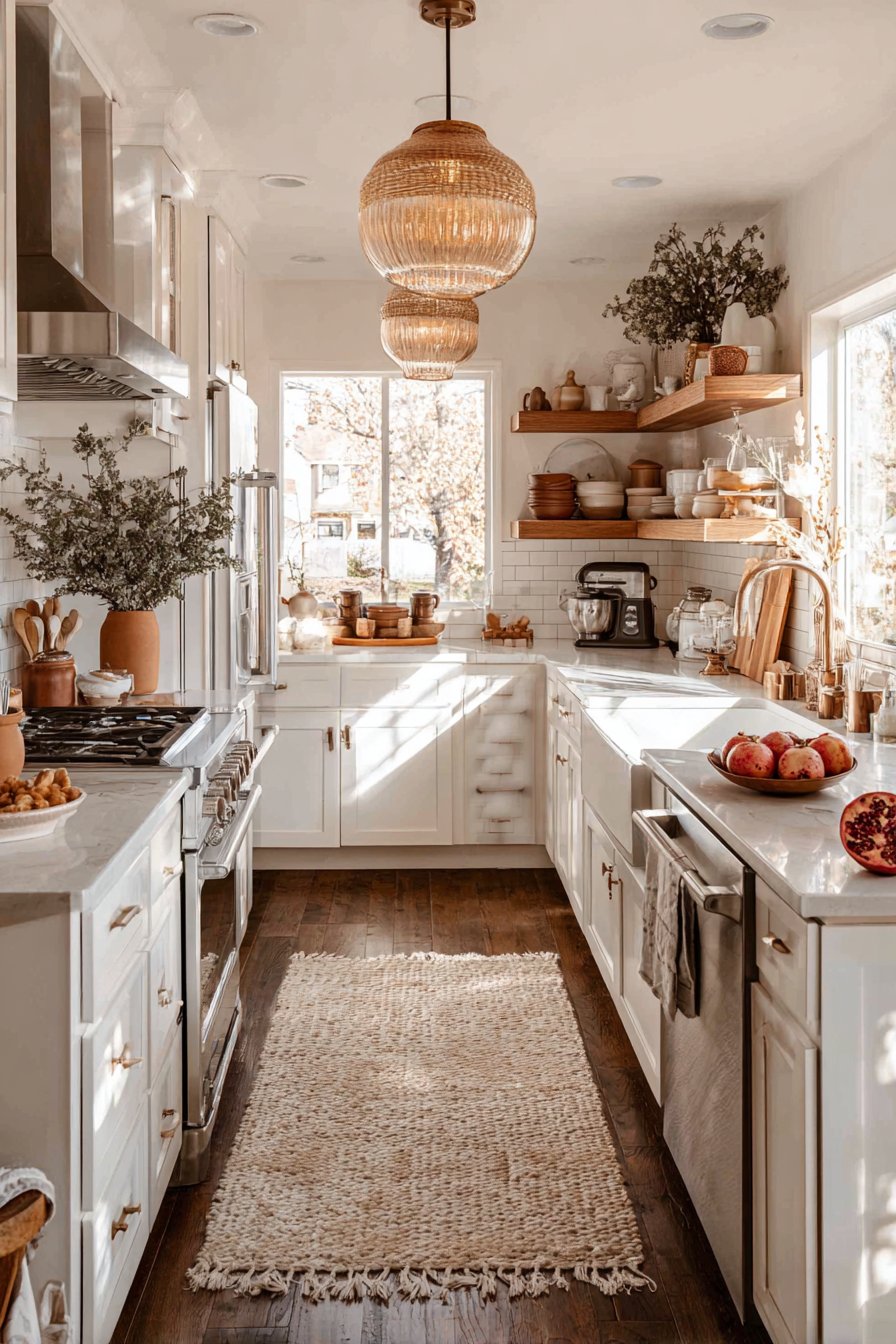
The most important thing is to begin. Start with one small change — a new rug, a cluster of candles, a bowl of seasonal produce — and let the transformation unfold naturally. Design is always evolving, and your kitchen should evolve with the seasons too. Embrace winter as an opportunity to slow down, create beauty, and make your cooking space the warm heart of your home that it was always meant to be.
"As an Amazon Associate, I earn from qualifying purchases."
