
The white living room has emerged as one of the most sought-after interior design choices for homeowners seeking to create spaces that feel both expansive and serene. Far from being stark or clinical, a thoughtfully designed white living room becomes a canvas of texture, light, and subtle variations that invite relaxation while maintaining an undeniable sophistication. The beauty of an all-white or predominantly white living space lies in its versatility—it can adapt to countless design styles, from minimalist Scandinavian to romantic French country, from coastal casual to modern farmhouse charm. Each approach brings its own personality while maintaining the calming, cohesive foundation that white provides.
White living rooms have the remarkable ability to transform how we experience our homes. They maximize natural light, making spaces feel larger and more open than they actually are. They create a sense of peace and clarity that’s increasingly valuable in our busy, overstimulated world. The key to designing an exceptional white living room lies not in simply painting everything white, but in understanding how to layer different shades, textures, and materials to create depth and visual interest. From the subtle warmth of cream and ivory to the crispness of pure white, from the softness of linen to the smoothness of marble, each element contributes to a rich, multidimensional space.
In this comprehensive guide, we’ll explore twenty distinct white living room designs, each offering unique inspiration for creating your own luminous sanctuary. Whether you’re drawn to the cozy comfort of textured fabrics, the clean lines of contemporary design, or the architectural drama of vaulted ceilings, you’ll discover how white can serve as the perfect foundation for a living room that reflects your personal style while providing a peaceful retreat from the outside world.
1. Textured White Linen Sanctuary
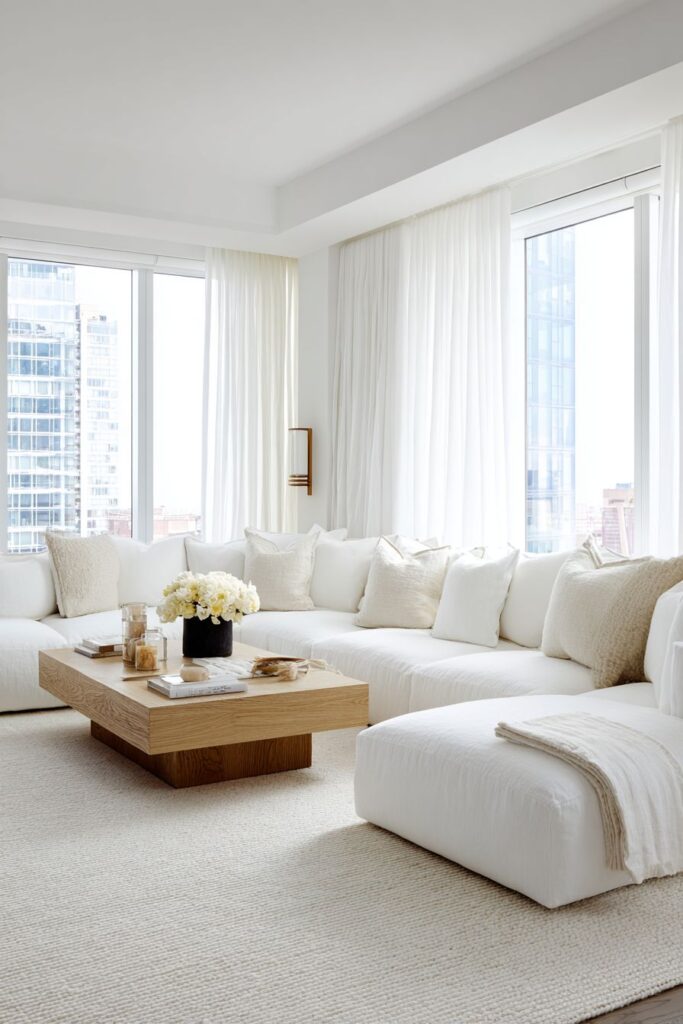
Imagine stepping into a white living room where a plush white linen sectional sofa takes center stage, its subtle texture variations and natural fabric wrinkles creating an inviting, lived-in quality that immediately puts you at ease. The sectional wraps around a light oak coffee table, its visible wood grain providing a gentle contrast that grounds the space in natural warmth.
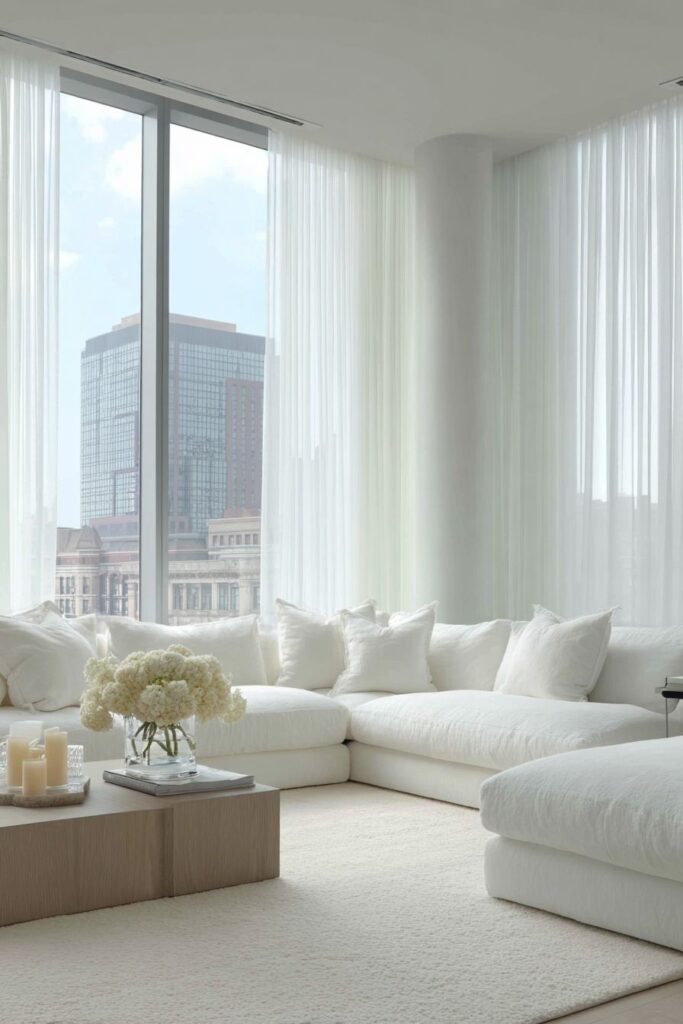
Beneath your feet, a cream-colored wool area rug anchors the seating area, its soft pile adding another layer of tactile comfort. Floor-to-ceiling windows dressed with flowing white sheer curtains allow soft, diffused natural light to flood the room, creating an ethereal glow that changes throughout the day.
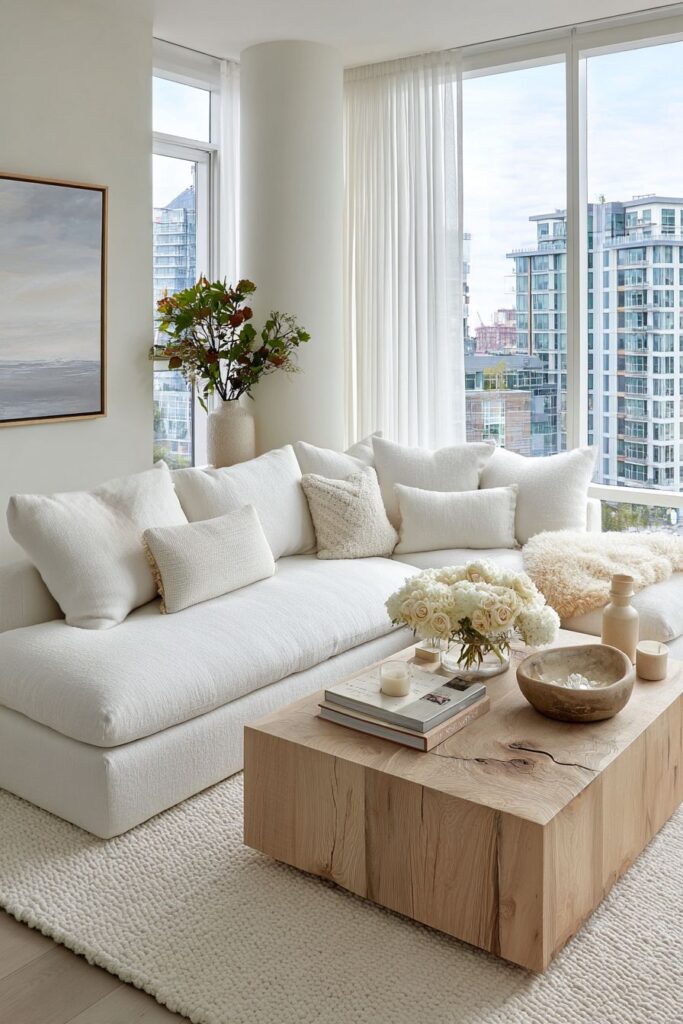
The magic of this white living room lies in its masterful use of texture to create depth without relying on color. The linen sofa’s natural wrinkles and slight irregularities tell a story of comfort and authenticity, while the wool rug’s dense fibers provide a plush foundation that contrasts beautifully with the smooth oak table. The sheer curtains add movement and life to the space, billowing gently when windows are open and filtering harsh sunlight into a soft, diffused radiance that flatters every surface.
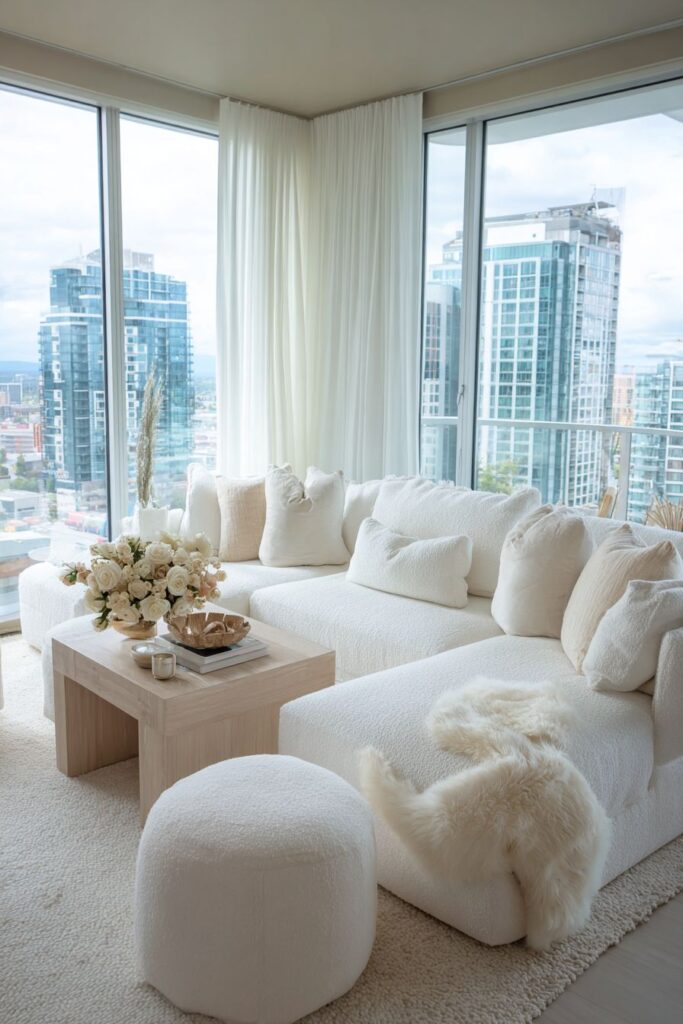
This layered approach to white-on-white design demonstrates that monochromatic doesn’t mean monotonous. The interplay of different white and cream tones—from the cooler pure white of the walls to the warmer ivory of the rug and the natural white of the linen—creates a sophisticated color story that’s anything but boring. Each element has been carefully selected to contribute both functionally and aesthetically, resulting in a living room that feels both curated and comfortable.
Key Design Tips:
- Choose natural fabrics like linen and wool that develop character over time and add authentic texture to your white living room
- Layer different shades of white and cream to create depth—pure white, ivory, cream, and bone all work together to prevent flatness
- Invest in quality sheer curtains that filter light beautifully while maintaining privacy during daytime hours
- Incorporate at least one natural wood element to warm up the white palette and provide visual grounding
- Allow fabrics to display their natural qualities rather than over-styling—wrinkles in linen add character and lived-in appeal
2. Minimalist White Shiplap Retreat
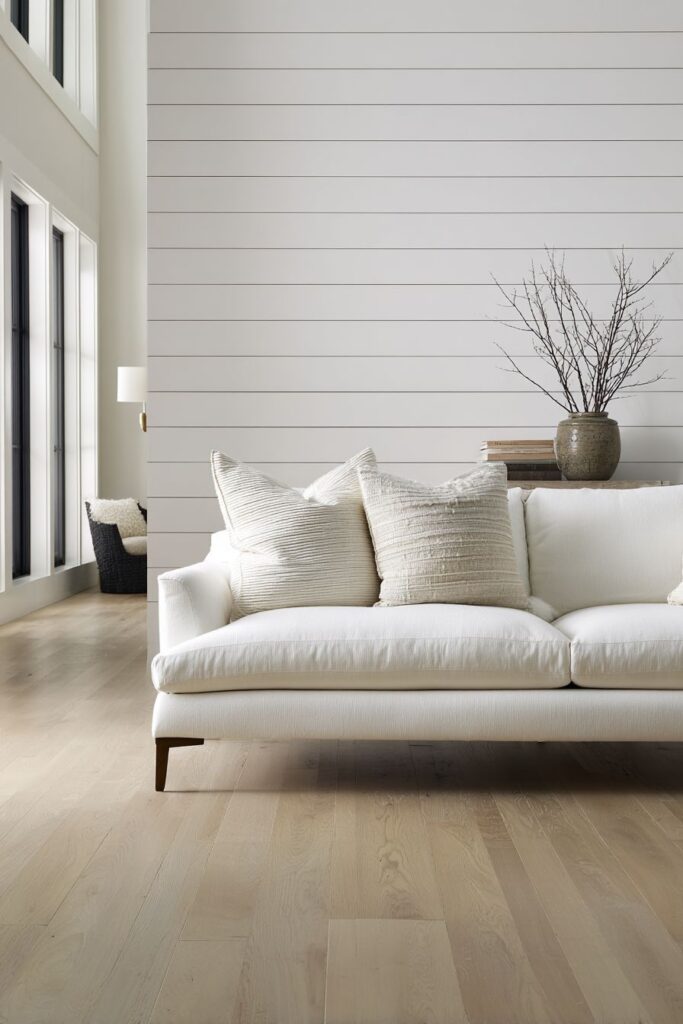
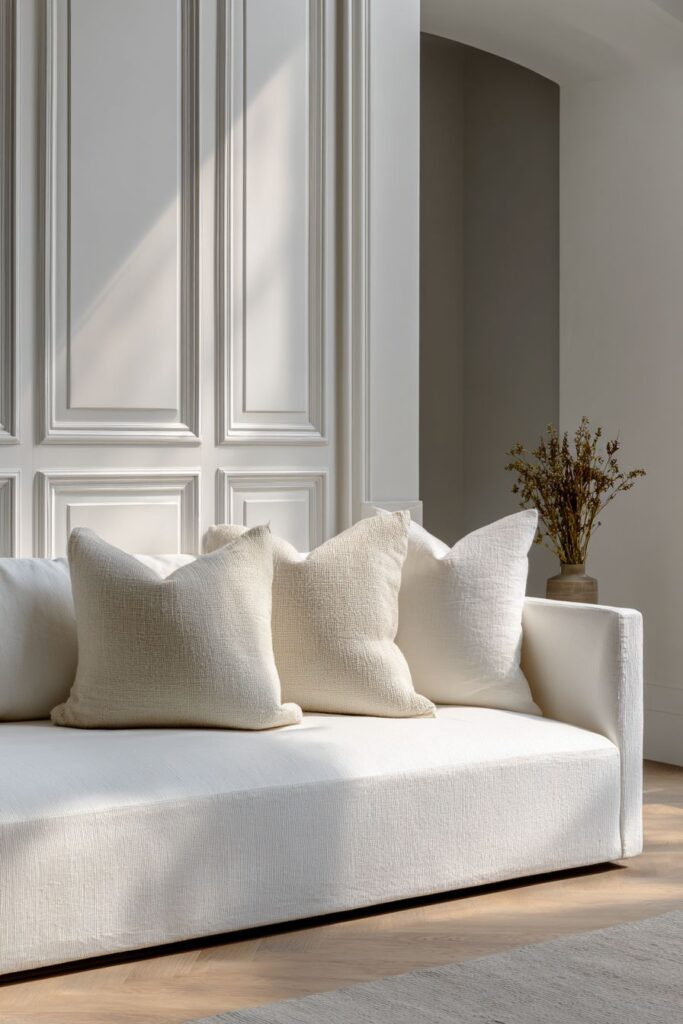
A white living room embracing minimalist principles creates a sense of calm that’s almost meditative in its simplicity. At the heart of this space sits a low-profile white sofa with clean, unadorned lines that embody the “less is more” philosophy. Textured throw pillows in natural linen provide subtle visual interest and tactile comfort without disrupting the room’s serene aesthetic. The true architectural star is a white shiplap accent wall that adds dimensional interest while maintaining the monochromatic palette, its horizontal lines creating a subtle rhythm that draws the eye across the space.
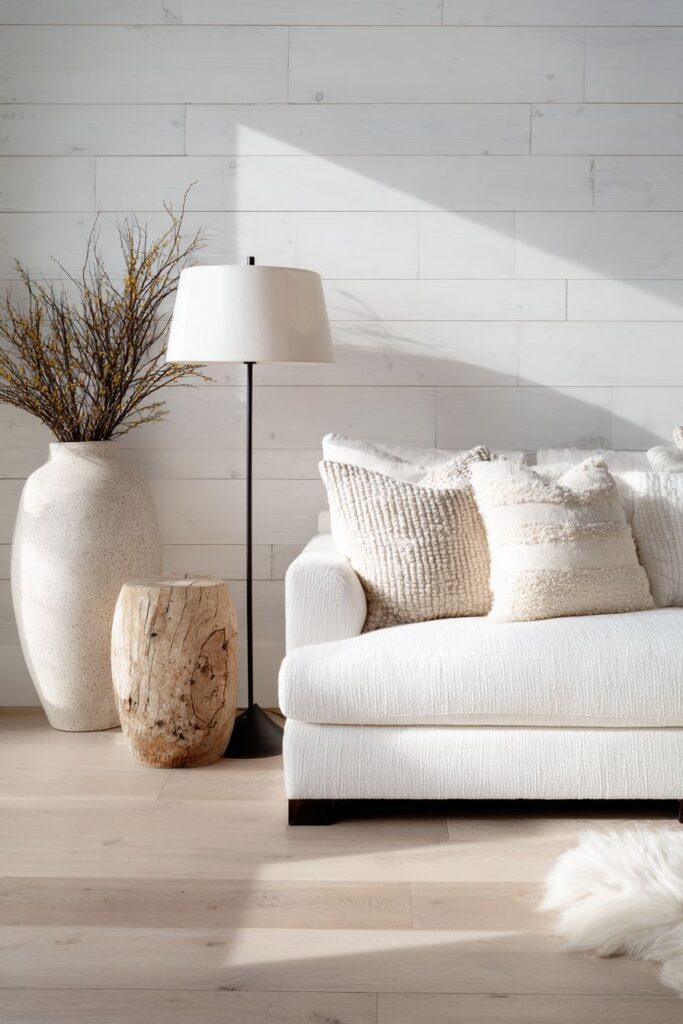
Natural light oak flooring provides the perfect foundation for this minimalist white living room, its warm honey tones preventing the space from feeling too cool or sterile. The grain patterns in the oak introduce organic irregularity that contrasts beautifully with the geometric precision of the shiplap and the sofa’s straight edges. This balance between natural and man-made elements is essential in minimalist design, ensuring the space feels warm and welcoming rather than austere.
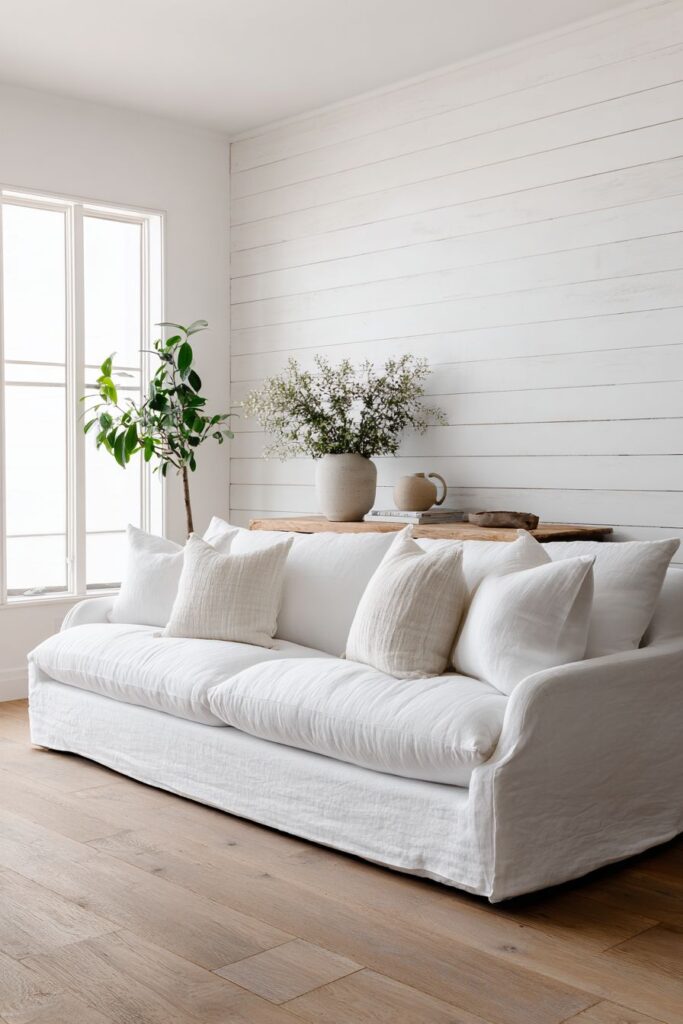
The beauty of this minimalist approach lies in what’s been left out as much as what’s included. Every piece in the room serves a purpose, and the absence of clutter allows each element to be appreciated fully. The shiplap wall provides visual texture without requiring additional artwork or decoration, while the simple sofa becomes a study in form and proportion. This restraint creates a living room that functions as a mental refuge, a place where the eye can rest and the mind can decompress.
Key Design Tips:
- Select furniture with clean lines and minimal ornamentation to maintain a true minimalist aesthetic in your white living room
- Use architectural features like shiplap or paneling to add interest without introducing additional objects or colors
- Balance cool whites with warm wood tones to prevent a clinical or cold feeling
- Limit decorative items to a few carefully chosen pieces that serve both functional and aesthetic purposes
- Embrace negative space as an essential design element rather than something to be filled
3. Built-In Entertainment Elegance
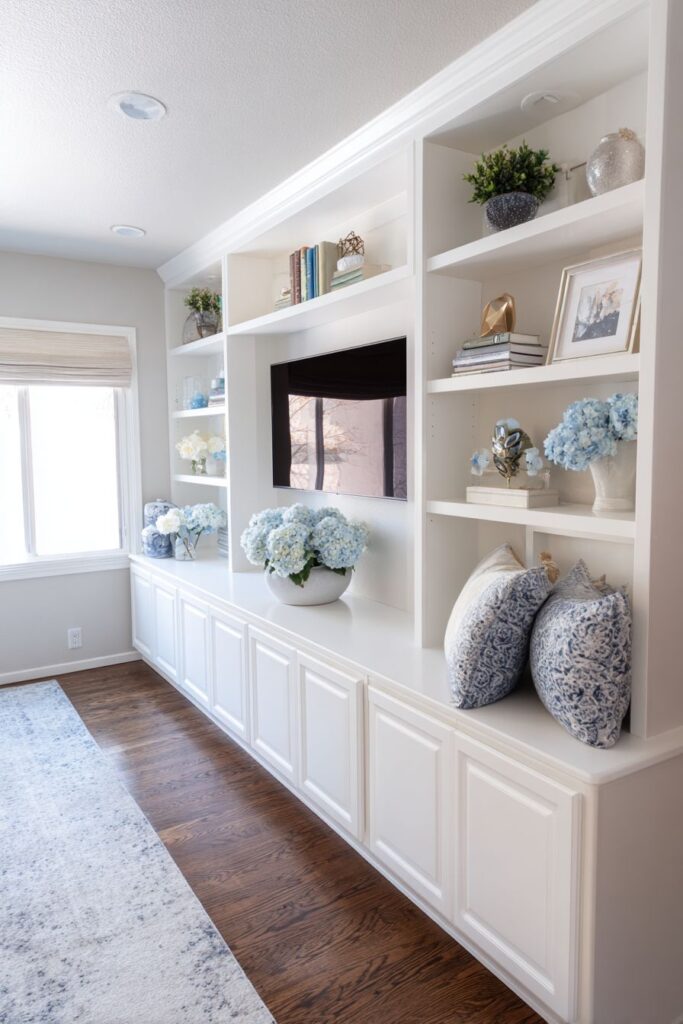
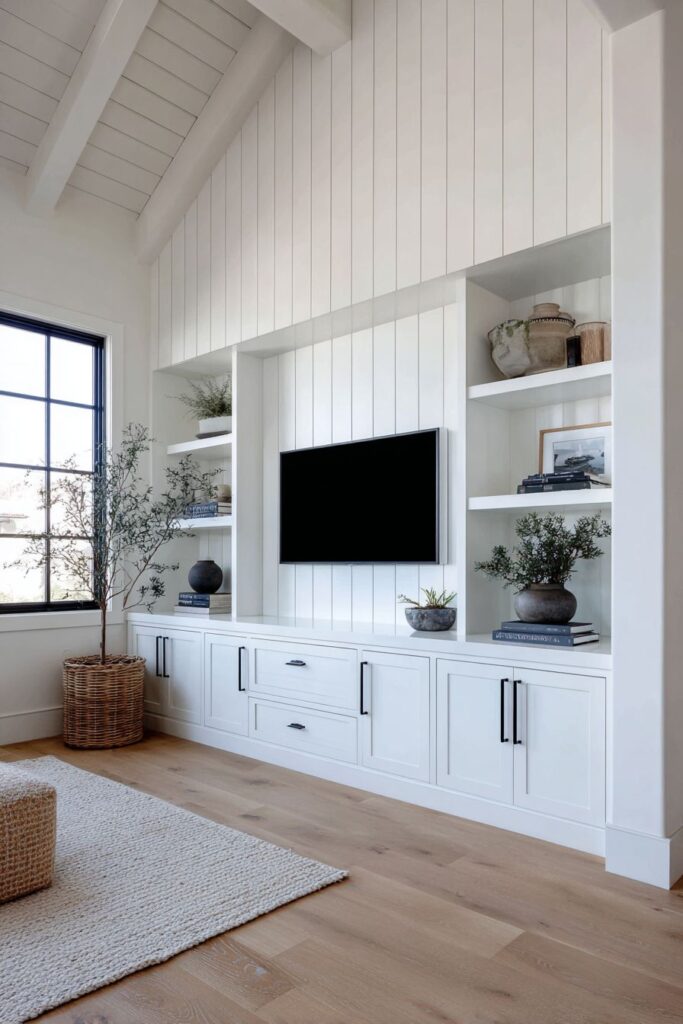
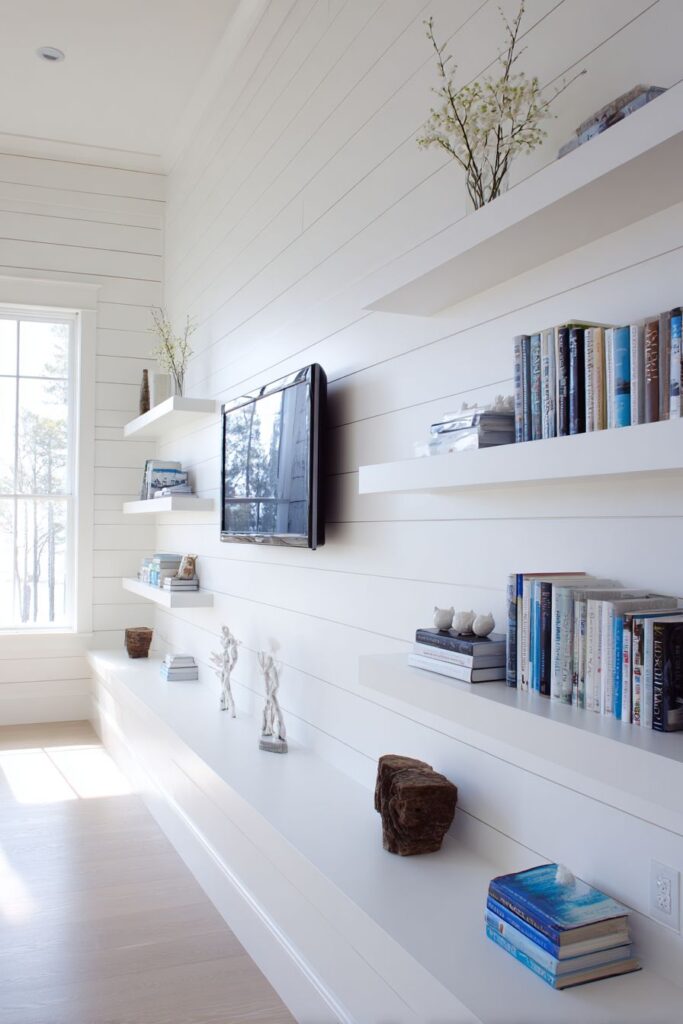
The modern white living room entertainment center has evolved far beyond a simple TV stand, and this design showcases the possibilities when storage meets style. Built-in white floating shelves with integrated LED lighting create a stunning focal point that displays carefully curated decor items and books while keeping the television’s cables and components neatly hidden. White painted wood paneling creates a cohesive backdrop that transforms the entire wall into a unified design element, while the mounted flat-screen TV integrates seamlessly rather than dominating the space.
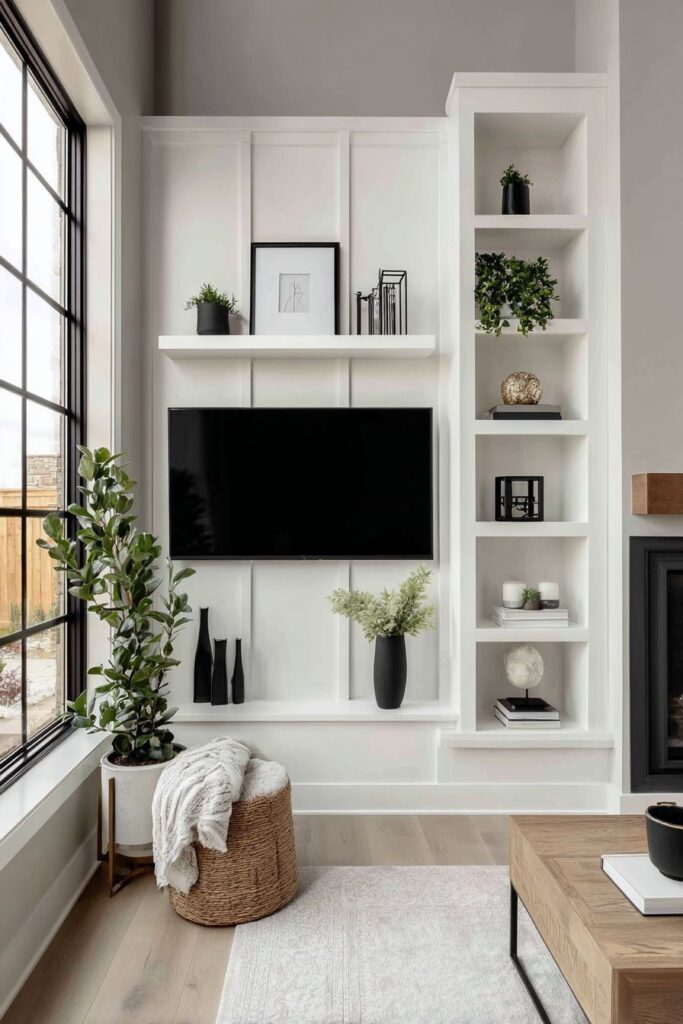
This white living room demonstrates how functional necessities can be elevated into beautiful design features. The floating shelves appear to defy gravity, their clean lines enhanced by subtle LED lighting that creates a gentle glow in the evening hours. The lighting serves multiple purposes—it illuminates displayed objects, adds ambient light to the room, and creates visual drama that draws the eye upward and across the wall’s full expanse. The symmetry of the shelving arrangement provides structure and order, while the varied items on display add personality and individuality.
Natural window light plays a crucial role in this space, highlighting the clean architectural details and revealing the subtle texture variations in the white surfaces throughout the day. Morning light casts gentle shadows that emphasize the shelves’ depth, while afternoon sun creates a bright, energetic atmosphere perfect for daily living. This interplay between natural and artificial lighting ensures the space remains dynamic and interesting from dawn to dusk.
Key Design Tips:
- Invest in custom built-ins when possible—they maximize storage while creating a polished, intentional look in your white living room
- Incorporate integrated LED lighting to add functionality and ambiance to shelving displays
- Use the rule of thirds when arranging objects on shelves, leaving some areas empty to prevent visual clutter
- Paint all woodwork and shelving the same shade of white to create seamless integration with walls
- Choose a TV size proportionate to the wall and viewing distance to maintain visual balance
4. Scandinavian Simplicity and Natural Materials
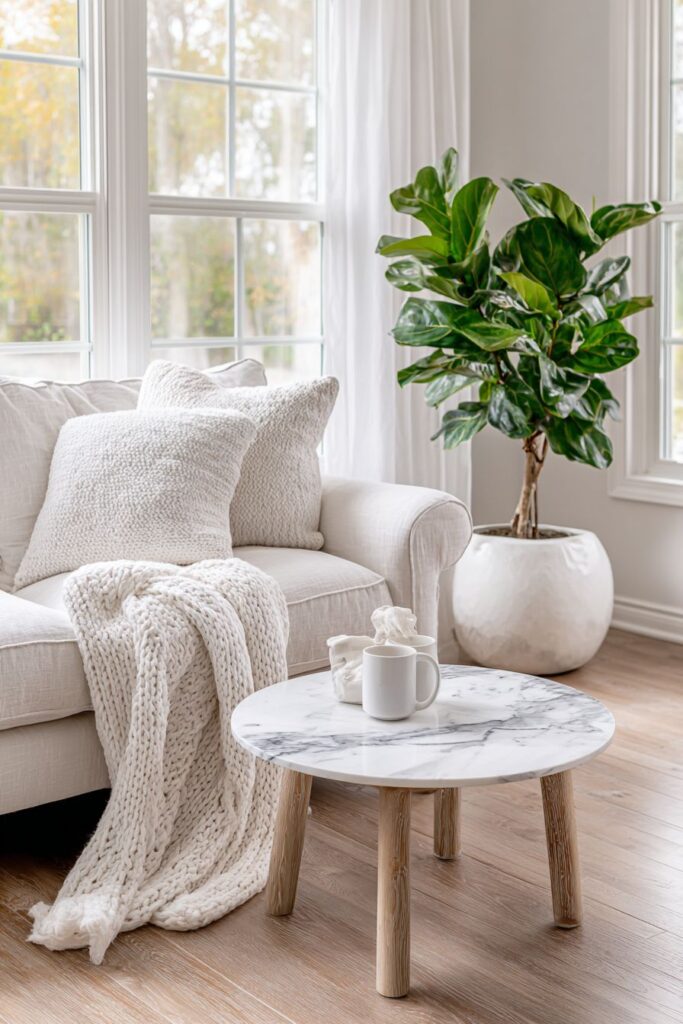
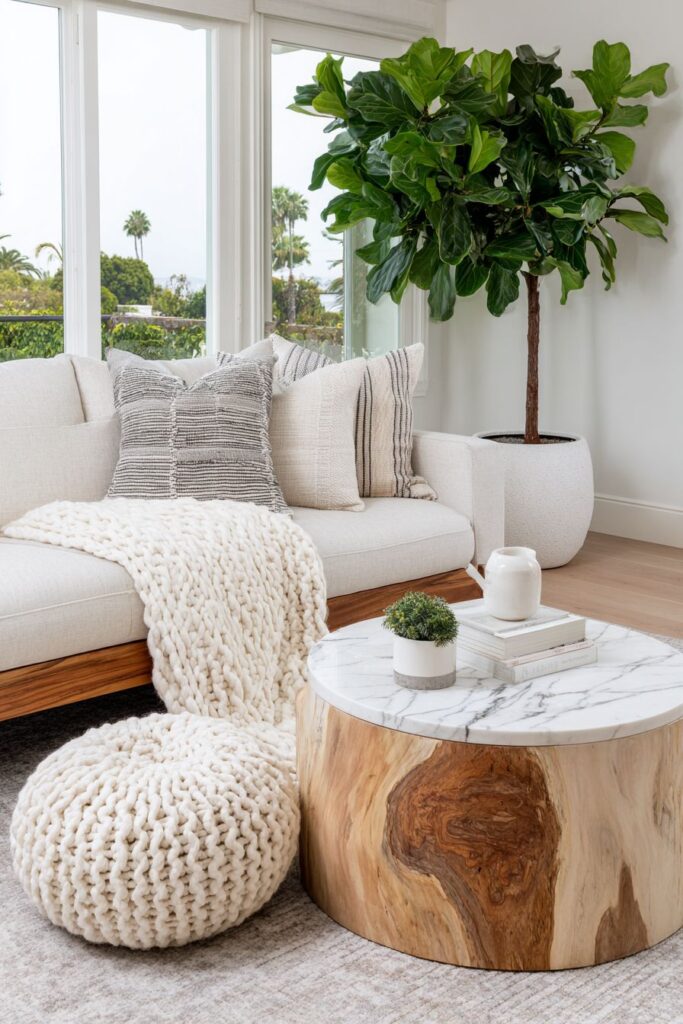
Scandinavian design principles shine in this white living room that perfectly balances minimalism with warmth and livability. A white fabric sofa with wooden legs in a natural finish anchors the space, its simple silhouette and visible wood grain celebrating honest materials and functional beauty. Paired with a round white marble coffee table showing natural grey veining, the room demonstrates the Scandinavian love for bringing natural elements indoors. A soft white knit throw blanket draped casually over the sofa’s arm adds the essential element of hygge—that Danish concept of cozy contentment that makes Scandinavian interiors so inviting.
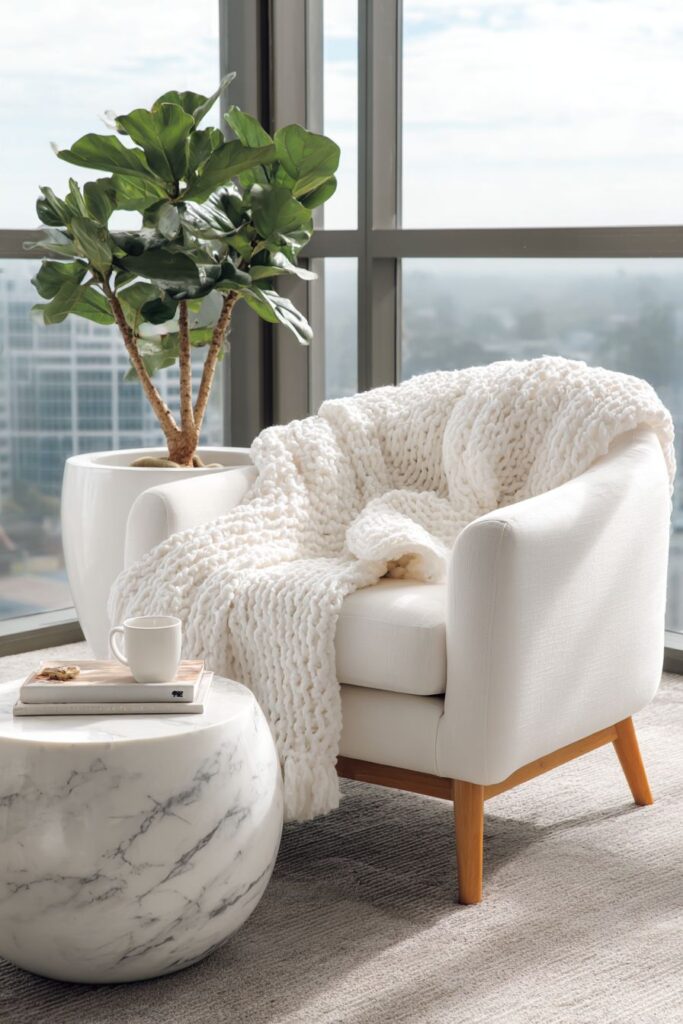
The addition of a large potted fiddle leaf fig in a white ceramic planter provides crucial organic contrast in this predominantly white living room. The plant’s broad, vibrant leaves create a focal point of life and color without disrupting the serene palette, while its vertical form adds height and draws the eye upward. This connection to nature is fundamental to Scandinavian design philosophy, which recognizes the human need for natural elements even in modern, minimalist spaces.
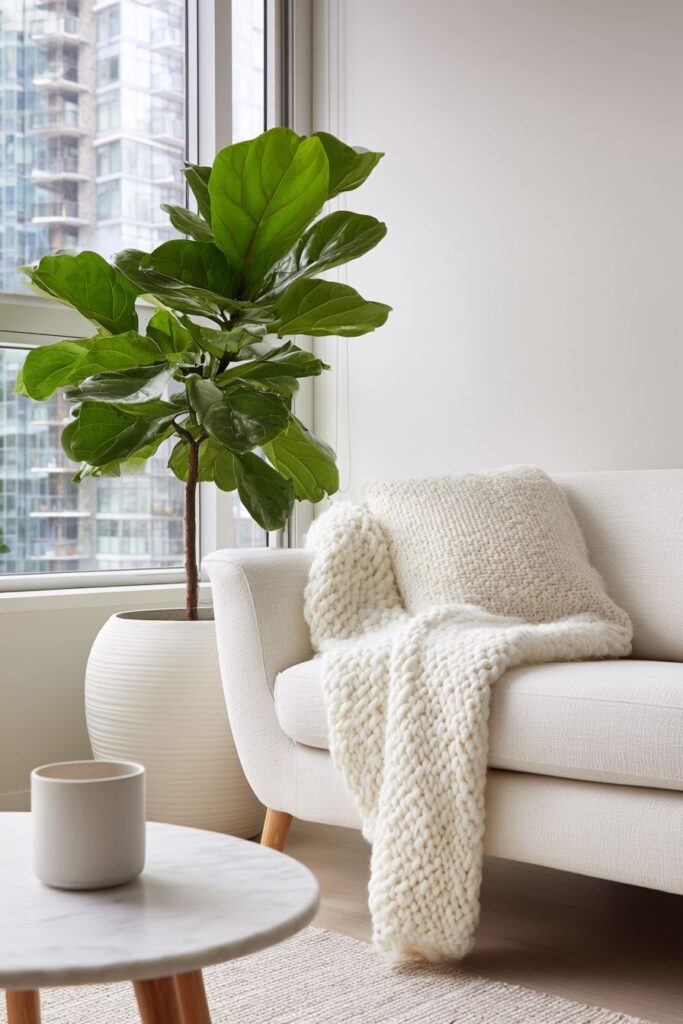
Soft, diffused daylight streaming through windows bathes the space in the kind of natural light that Scandinavian designers prize above all else. Given the limited daylight hours in Nordic countries, maximizing natural light becomes both practical necessity and design priority. The all-white palette serves this goal perfectly, reflecting and amplifying every ray of sunlight to create a bright, life-affirming space even on cloudy days.
Key Design Tips:
- Choose furniture that exposes natural wood elements rather than hiding them—wood legs, frames, and accents warm white living rooms beautifully
- Incorporate at least one substantial plant to bring life and improve air quality in your white living room
- Select marble or stone elements with natural veining to add subtle pattern without introducing color
- Layer textiles in different weights—from light linen to heavy knits—to create tactile interest
- Prioritize natural light by keeping window treatments minimal and reflective surfaces abundant
5. Fireplace-Focused Gathering Space
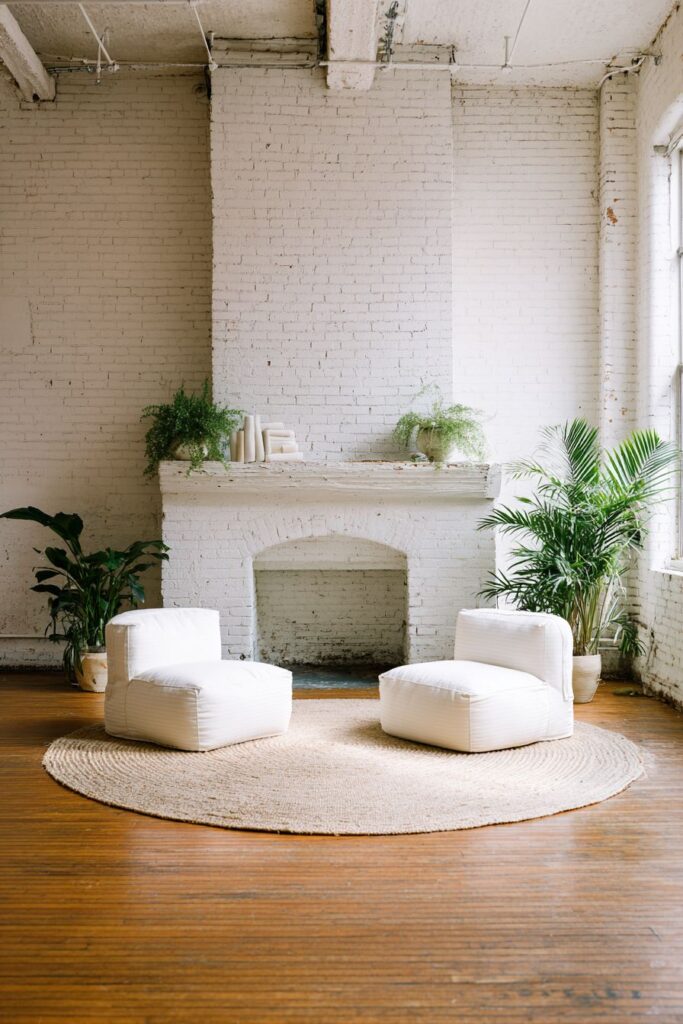
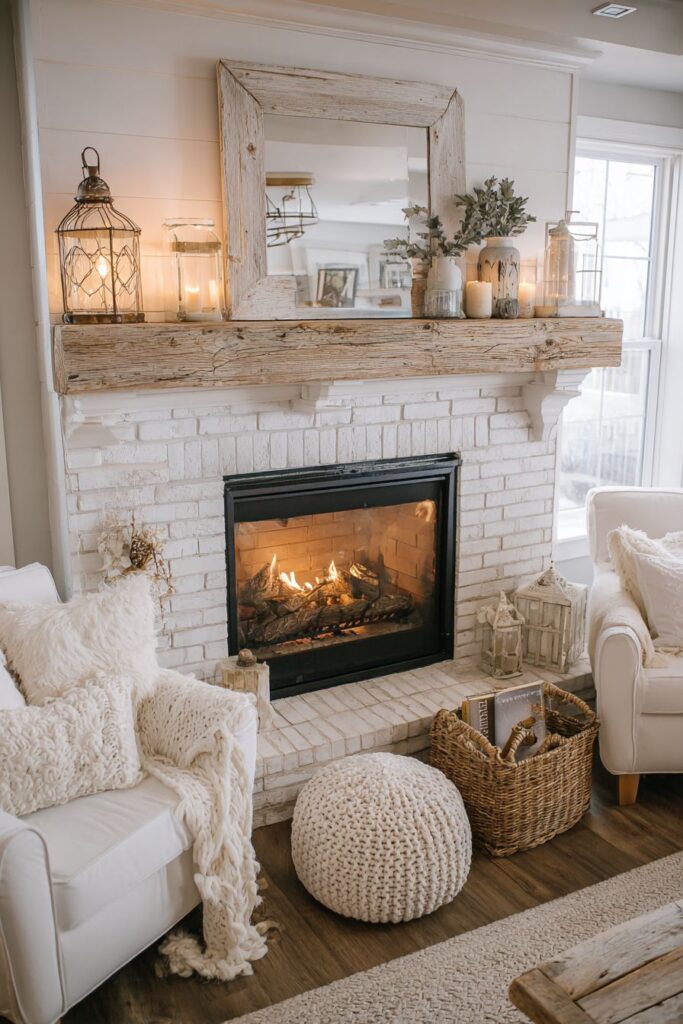
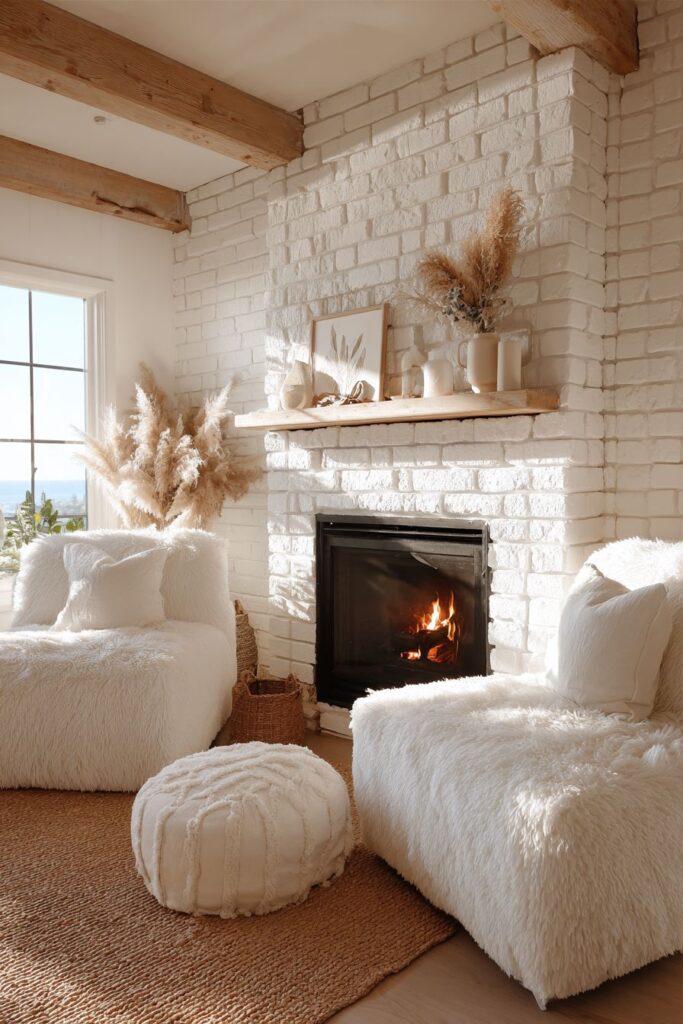
The fireplace becomes an irresistible focal point in this white living room, surrounded by white painted brick that showcases subtle texture and natural imperfections that add character and authenticity. Unlike perfectly smooth drywall, the painted brick retains its dimensional quality, with each brick’s edges and surface variations creating a play of light and shadow that brings the wall to life. A white wooden mantel provides the perfect display surface for minimalist decor items, keeping the focus on the fireplace itself while offering opportunities for seasonal styling.
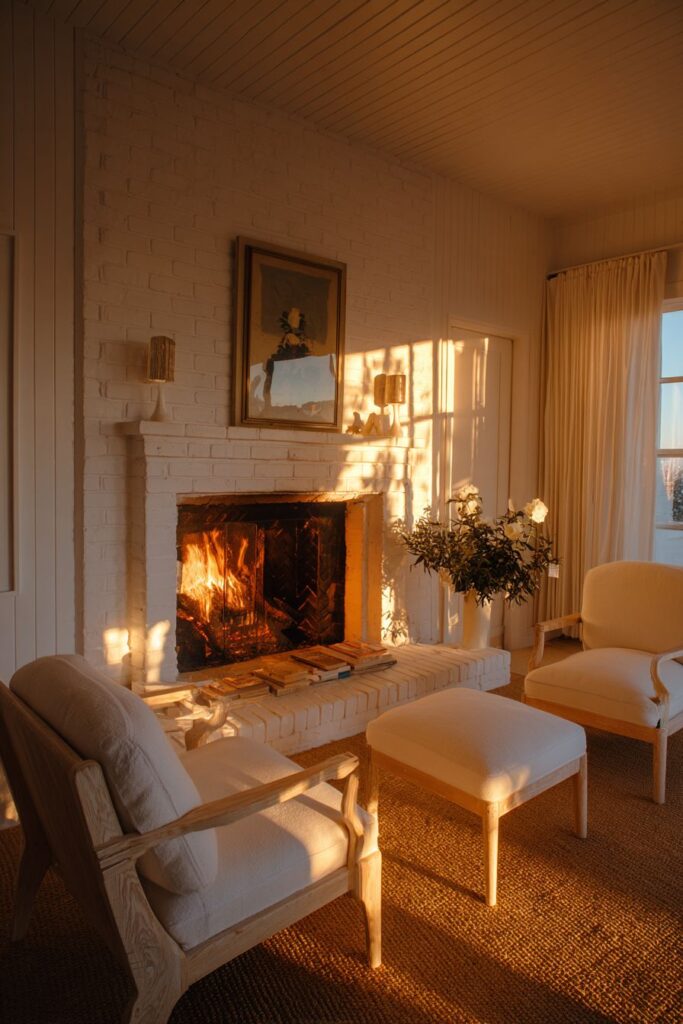
Two white upholstered armchairs flank the fireplace, creating an intimate conversation area that invites lingering and connection. This symmetrical arrangement is both aesthetically pleasing and functionally brilliant, offering cozy spots for reading, chatting, or simply basking in the fireplace’s warmth. The chairs’ upholstery picks up the white theme while their comfortable forms ensure this beautiful white living room is also a lived-in, welcoming space.
Captured during golden hour, this space reveals how natural light transforms white interiors throughout the day. Warm, horizontal rays create soft shadows that emphasize the textured white brick, making it appear almost sculptural. The fireplace surround seems to glow from within, its white surface catching and reflecting the sun’s amber light. This demonstrates why white living rooms are particularly magical during dawn and dusk—they respond dramatically to changing light quality, offering a constantly evolving visual experience.
Key Design Tips:
- Paint brick fireplaces white rather than leaving them natural to lighten and modernize traditional architectural features
- Use symmetrical furniture arrangements around fireplaces to create formal balance and encourage face-to-face conversation
- Keep mantel styling minimal in predominantly white rooms—three to five items maximum prevents visual clutter
- Choose armchairs with comfortable proportions that invite extended sitting rather than prioritizing visual sleekness alone
- Consider the fireplace’s viewing angles when positioning seating to maximize enjoyment of the flames
6. Coastal Casual Comfort
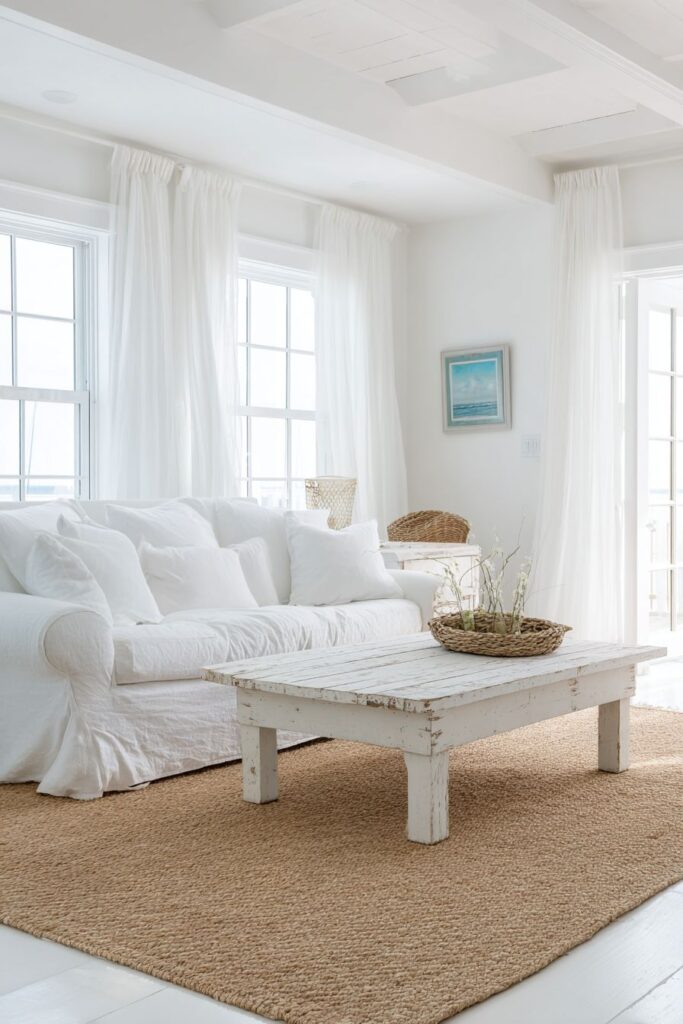
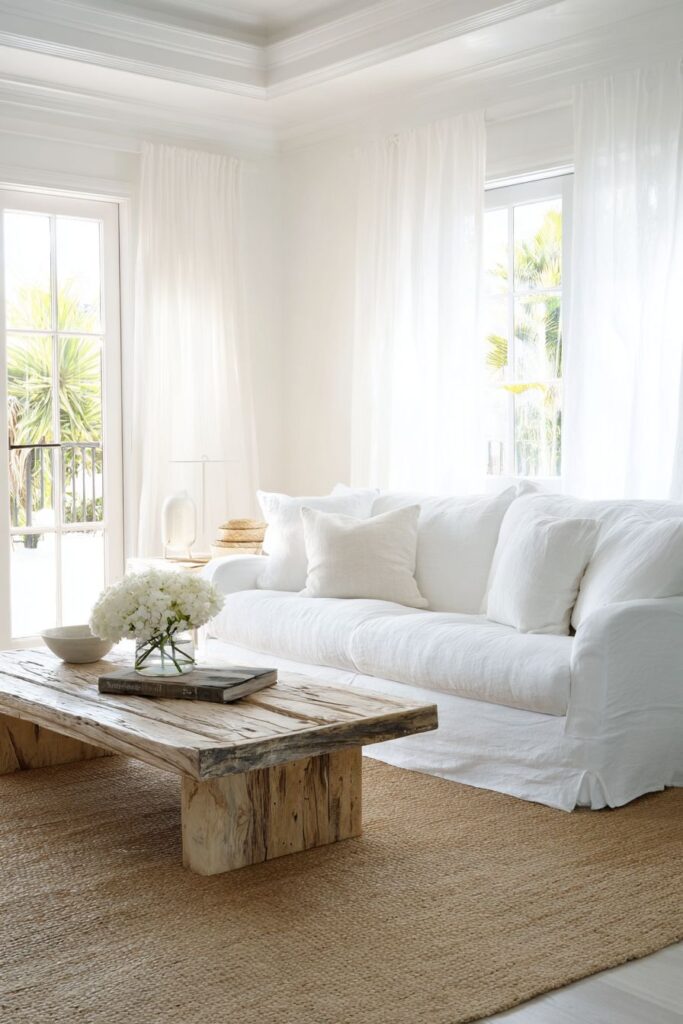
This white living room channels the relaxed elegance of coastal living, where the goal is beauty without pretension and comfort without sacrificing style. A white slipcovered sofa with slightly rumpled linen fabric embodies this philosophy perfectly—its lived-in appeal signals that this is a space for living, not just looking. The removable slipcover offers practical benefits for families, while its casual draping and soft wrinkles add visual texture and authenticity that perfectly pressed upholstery simply cannot provide.
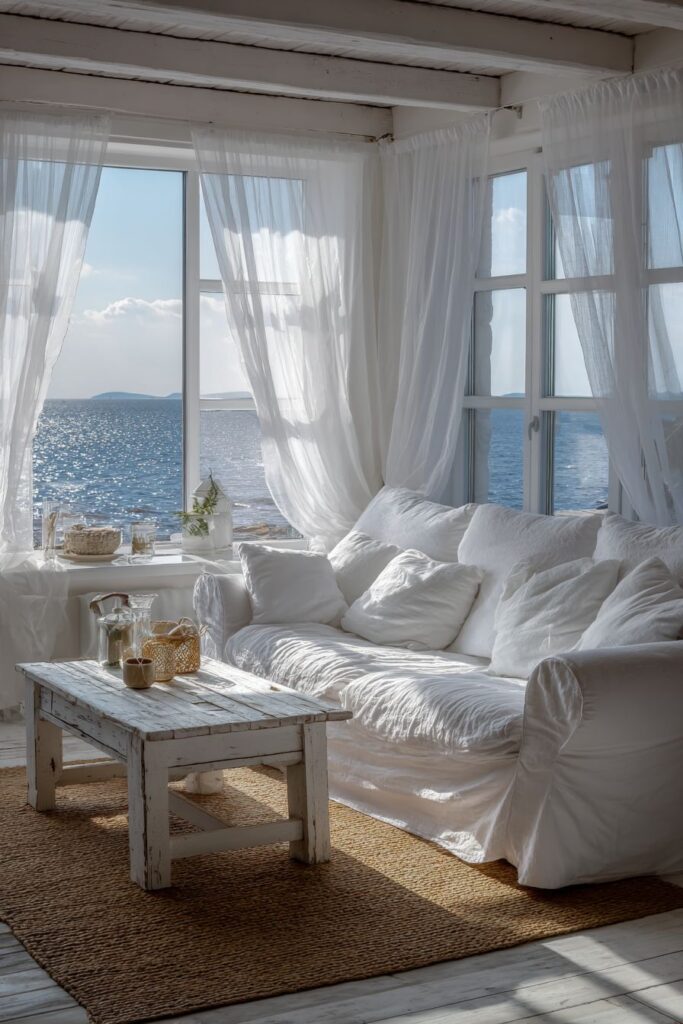
A whitewashed wood coffee table with natural wear patterns centers the space, its distressed surface telling stories of seaside living and casual gatherings. This piece bridges the gap between the all-white upholstery and the natural jute area rug in tan, which provides essential textural and tonal contrast. The jute’s natural fiber brings earthy warmth that prevents the white living room from feeling too precious or formal, while its nubby texture adds another layer to the room’s tactile story.
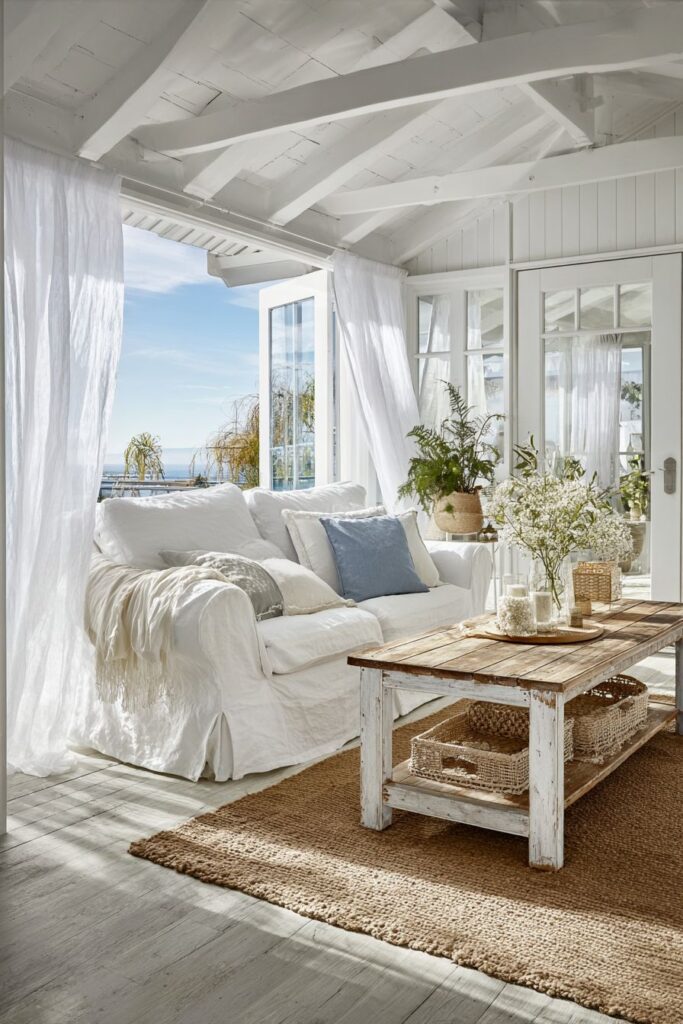
Sheer white curtains billow gently near open windows, creating movement that brings the space to life. This detail is quintessentially coastal—the sense that ocean breezes flow freely through the home, that the boundary between indoors and outdoors is permeable and welcoming. Bright natural lighting floods the space, enhanced by the reflective white surfaces that bounce light into every corner, creating the sun-drenched quality that makes coastal interiors so irresistible.
Key Design Tips:
- Choose slipcovered furniture for white living rooms with children or pets—removable, washable covers make white practical for real life
- Embrace imperfection in coastal white interiors—wrinkles, wear marks, and weathering add authentic character
- Incorporate natural fiber rugs like jute, sisal, or seagrass to ground all-white rooms and add warmth
- Keep windows treatments light and breezy to maximize natural light and create visual softness
- Select furniture with relaxed, casual lines rather than formal or structured pieces to achieve true coastal style
7. Window Seat Reading Sanctuary
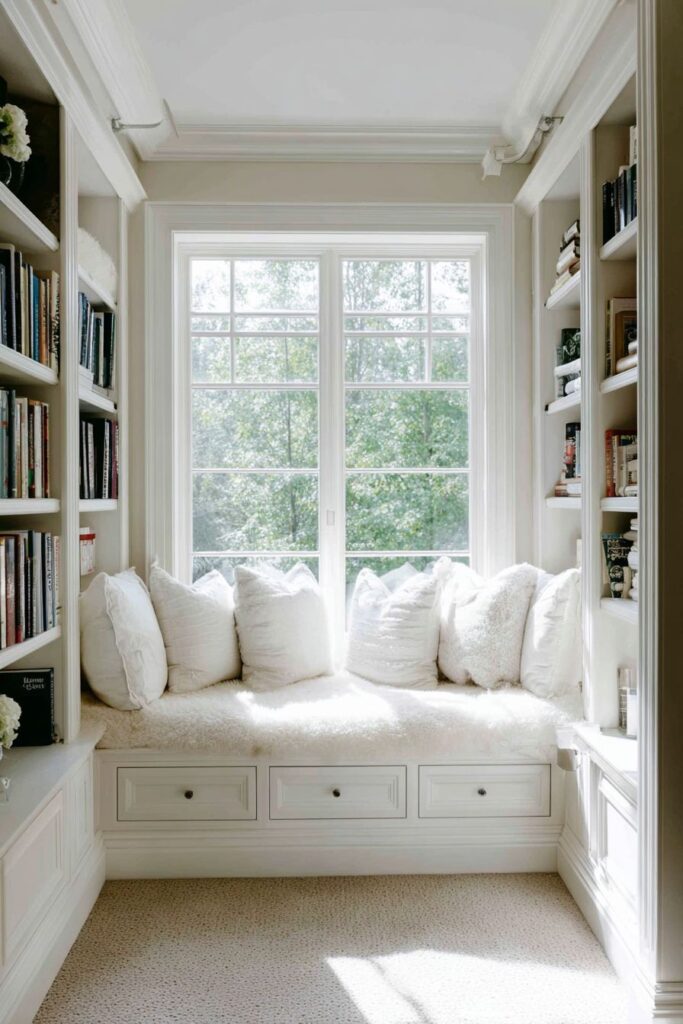
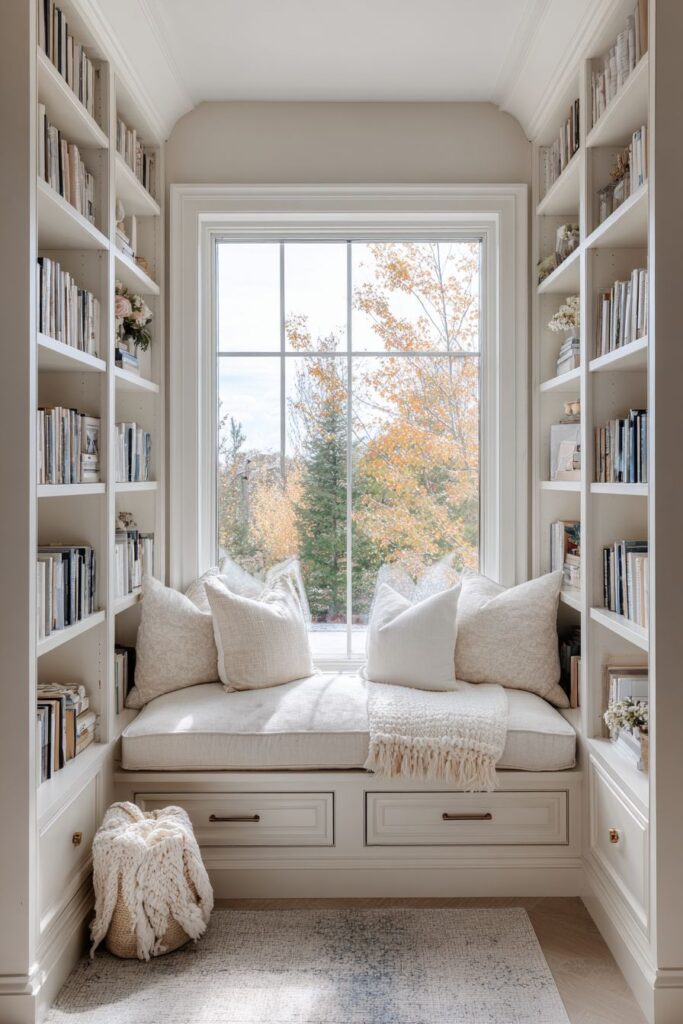
Every book lover dreams of a cozy reading nook, and this white living room delivers with a window seat positioned to capture maximum natural light and create an inviting retreat within the larger space. White painted built-in seating with storage drawers below demonstrates how beautiful design can be supremely functional, providing comfortable seating while eliminating clutter. Plush white cushions with visible linen texture and cream throw pillows create a nest-like comfort that beckons you to curl up with a good book for hours.
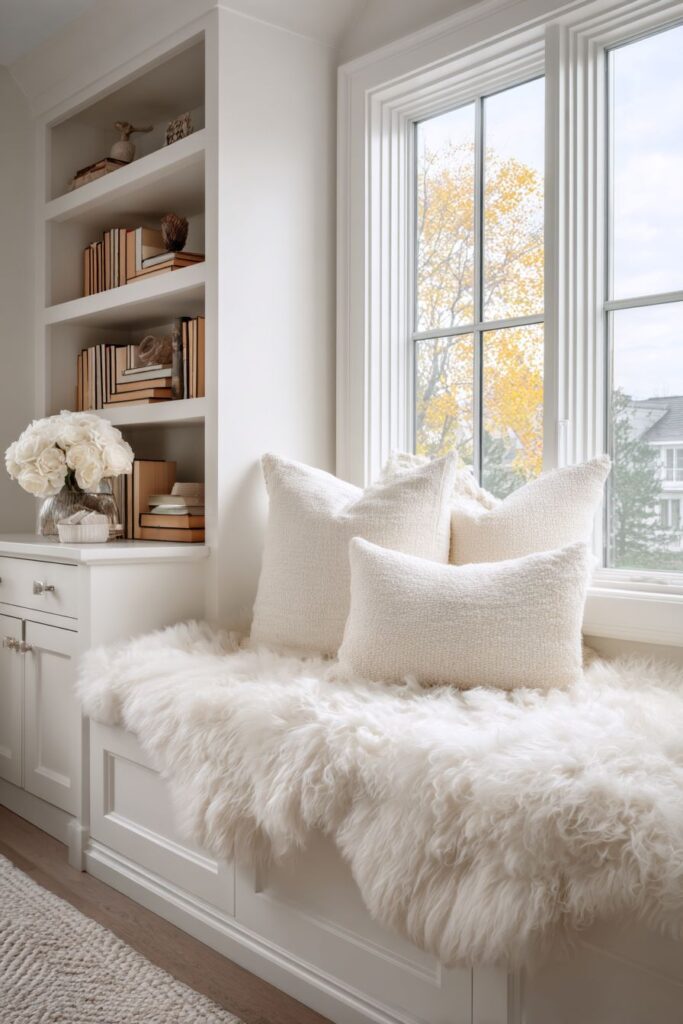
White built-in bookshelves flanking the window transform the nook into a complete reading environment where everything you need is within arm’s reach. The shelving provides both storage and visual interest, with books’ colorful spines adding welcome variety to the white palette without requiring additional decoration. This integrated approach to design—where storage, seating, and style merge seamlessly—represents the highest level of interior planning.
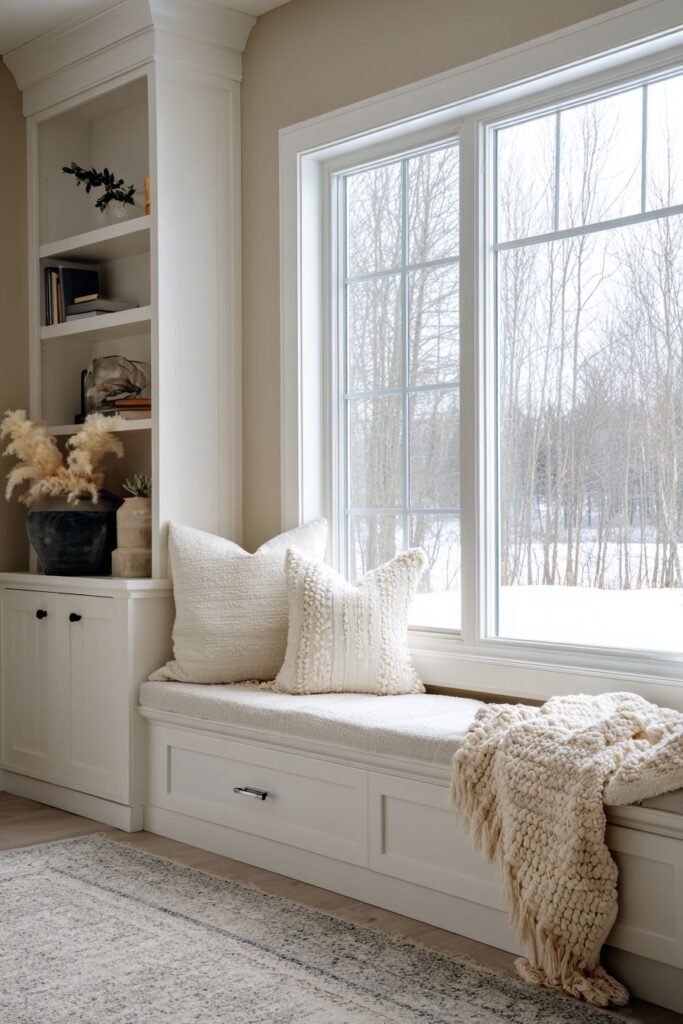
Natural daylight floods this white living room reading nook throughout the day, providing ideal illumination for reading while creating an inviting atmosphere that draws you to the spot again and again. The window’s placement ensures the reader enjoys views of the outdoors, connecting interior comfort with exterior beauty. This combination of natural light, comfortable seating, and thoughtful design creates a functional space that enhances daily life while contributing to the room’s overall aesthetic.
Key Design Tips:
- Build window seats with storage underneath to maximize functionality in your white living room
- Layer cushions and pillows in varying textures to create inviting, comfortable seating for extended reading sessions
- Flank window seats with built-in shelving to keep books organized and accessible
- Choose window seat locations that receive good natural light throughout the day
- Add a small side table or built-in shelf for beverages and reading glasses within easy reach
8. Modern Farmhouse Character
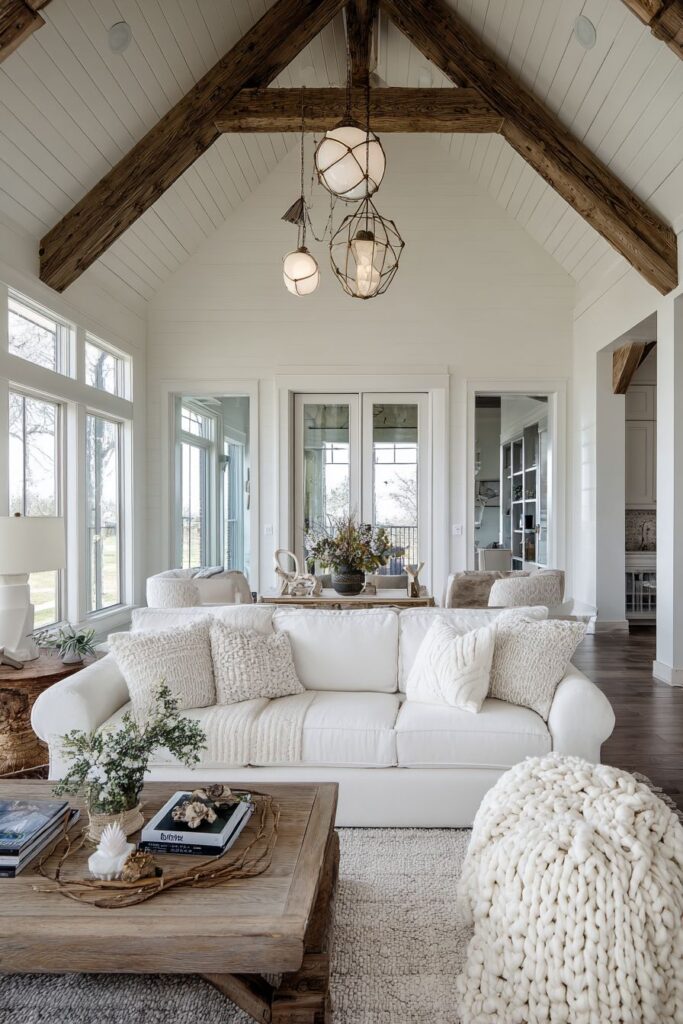
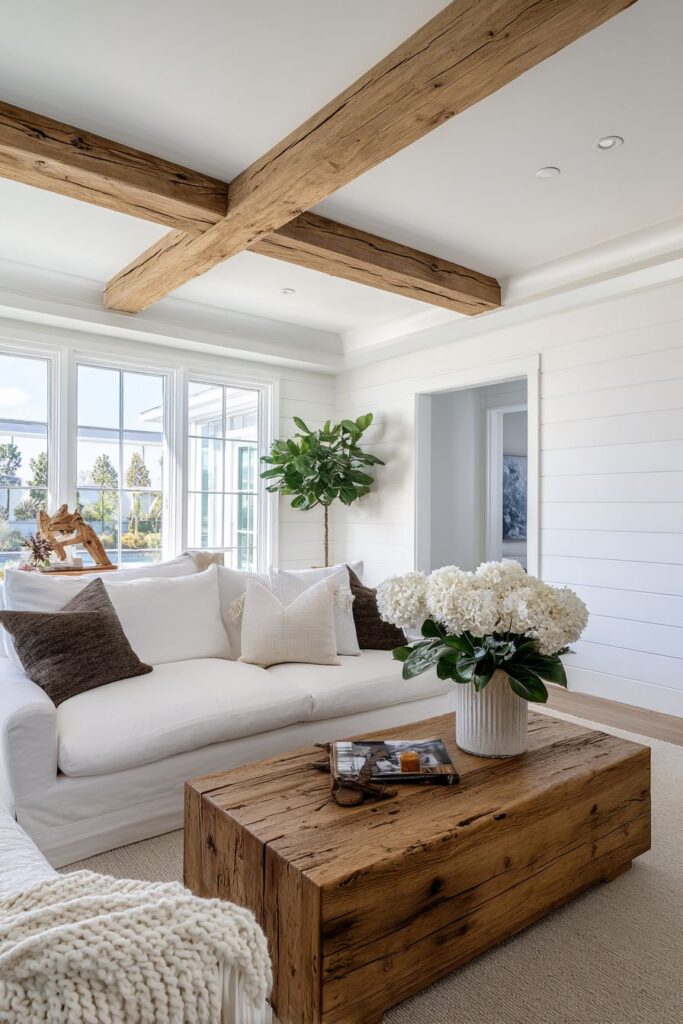
The modern farmhouse style has captured design enthusiasts’ hearts by blending rustic authenticity with contemporary cleanliness, and this white living room exemplifies that perfect balance. White shiplap walls showcase authentic wood texture and natural knots, celebrating the material’s imperfections rather than hiding them. These subtle variations prevent the white walls from feeling flat or generic, adding character that mass-produced drywall simply cannot match. A white cotton sofa with rolled arms nods to traditional farmhouse comfort while maintaining the clean aesthetic modern sensibilities demand.
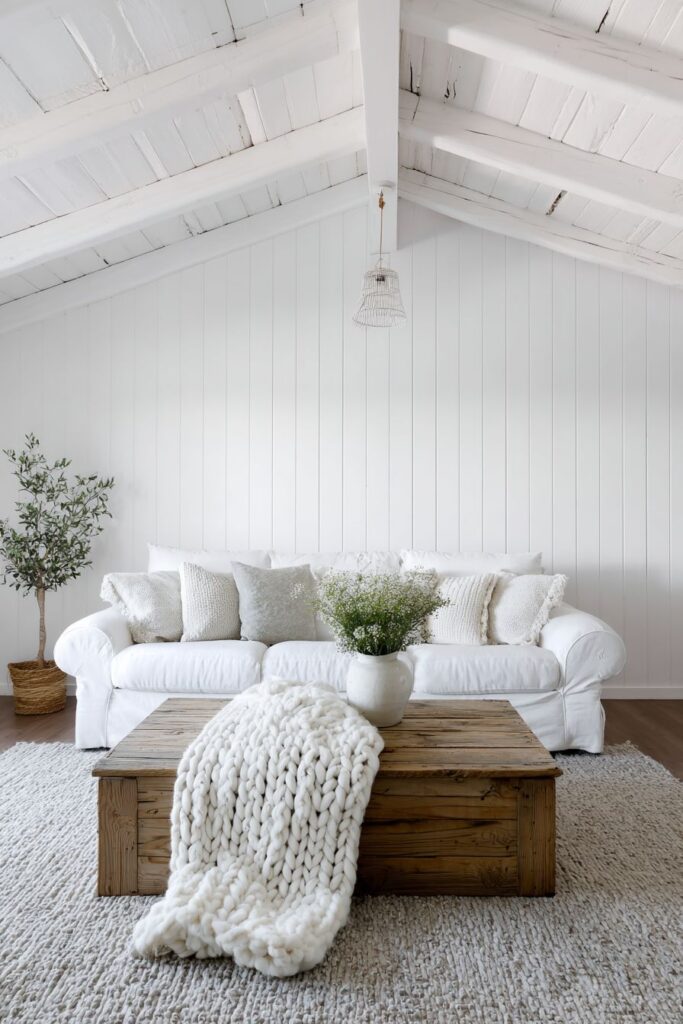
The reclaimed wood coffee table provides essential contrast and warmth in this predominantly white living room, its natural color variations and weathered surface telling stories of previous lives and uses. This single piece grounds the entire space, preventing it from floating in excessive whiteness while introducing organic irregularity that pleases the eye. A soft white cable knit throw draped across the sofa adds crucial texture—its chunky weave creates dimensional interest and invites tactile engagement.
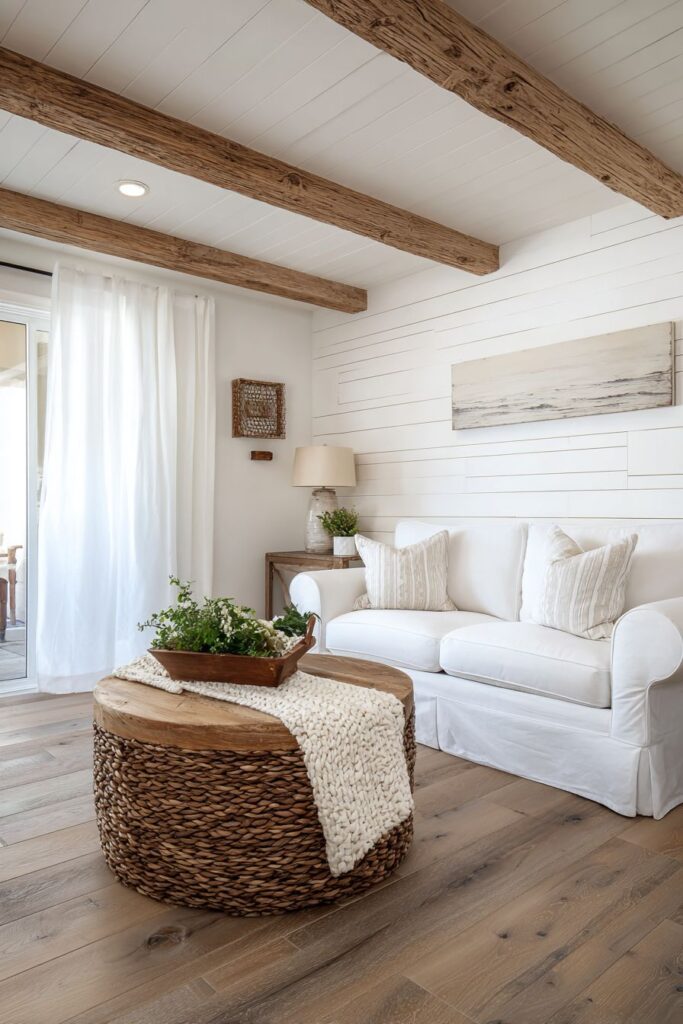
Exposed white-painted ceiling beams provide the architectural drama that elevates this white living room from nice to truly memorable. These beams draw the eye upward, emphasizing the room’s vertical space while adding structural character that references the farmhouse’s agricultural heritage. The beams’ white paint keeps them from overwhelming the space or creating excessive contrast, instead integrating them into the cohesive white palette while maintaining their three-dimensional presence.
Key Design Tips:
- Embrace authentic materials in modern farmhouse white living rooms—real shiplap, actual wood beams, and genuine reclaimed pieces add irreplaceable character
- Paint architectural elements white to maintain a cohesive look while preserving their dimensional qualities
- Mix traditional furniture shapes like rolled-arm sofas with contemporary elements for true modern farmhouse balance
- Incorporate at least one substantial reclaimed wood piece to provide warmth and prevent sterility
- Use cable knit and other textured throws to add visual and tactile interest without introducing color
9. Monochromatic Gallery Wall Statement
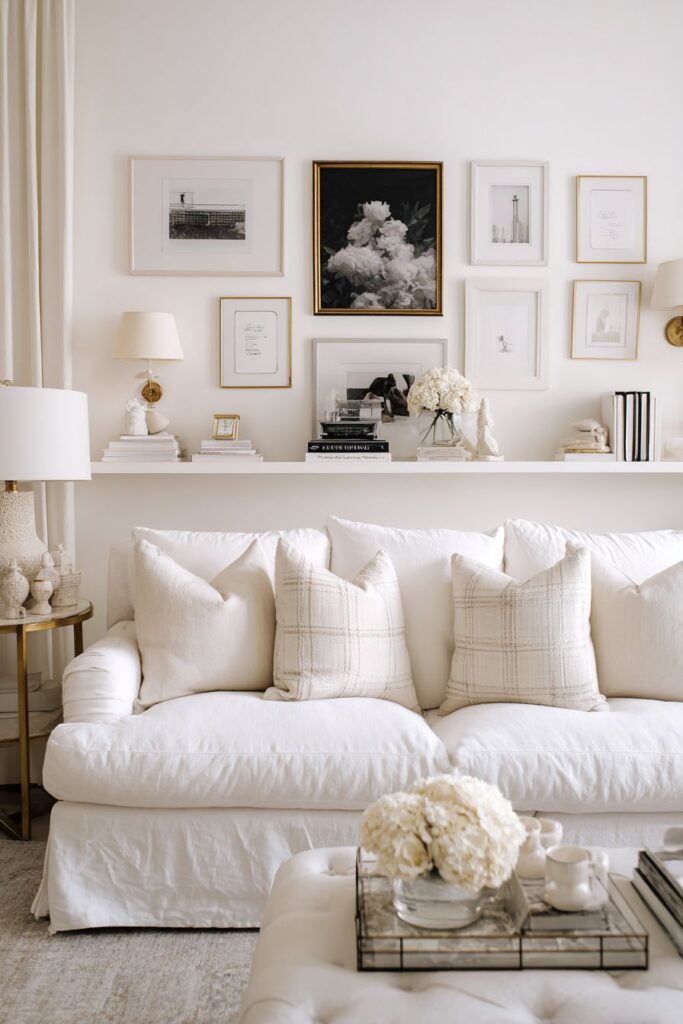
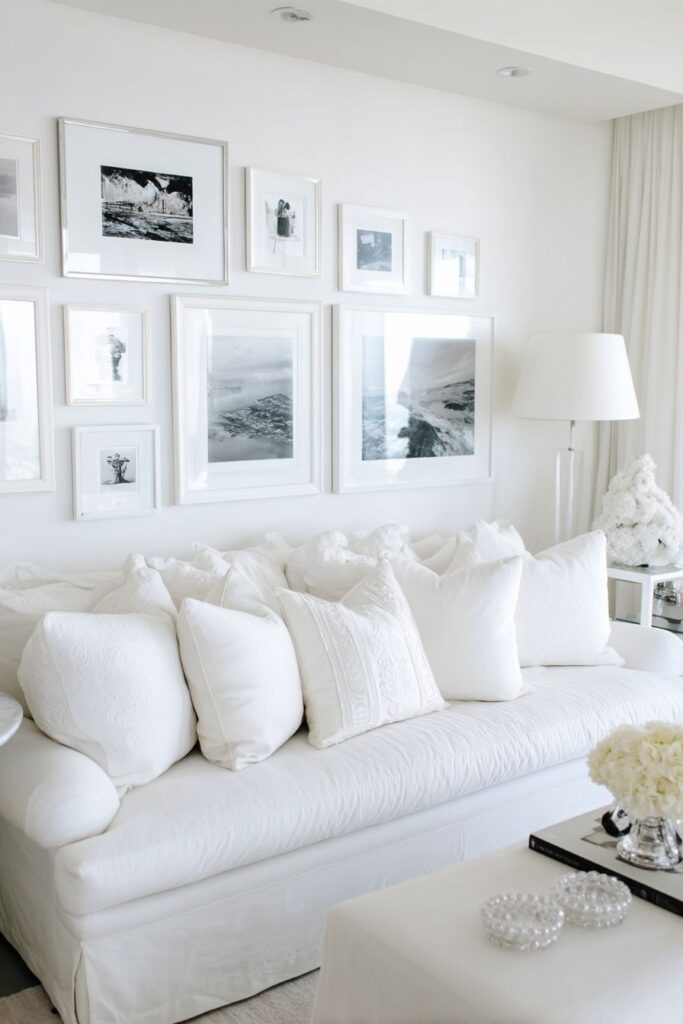
Art lovers will appreciate this white living room’s sophisticated approach to displaying collections while maintaining the serene monochromatic palette. A gallery wall arrangement featuring multiple white and cream-colored frames in various sizes creates visual drama against the pure white wall, proving that color isn’t necessary for compelling art displays. Black and white photography and neutral artwork provide the visual interest, their subjects and compositions becoming the focus rather than competing with colorful frames or matting.
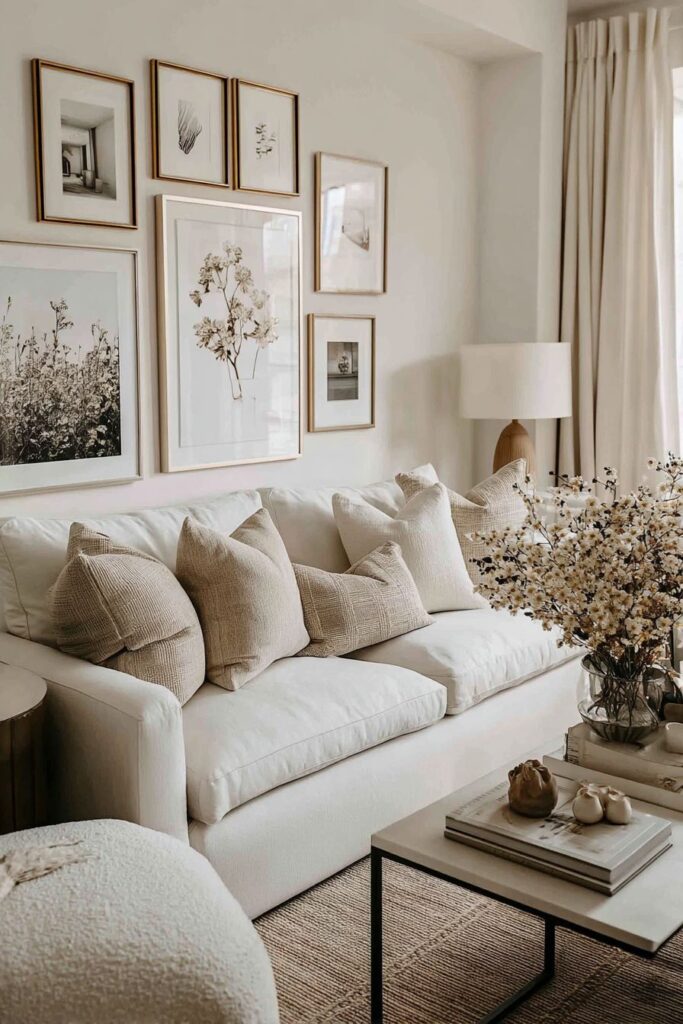
The varied frame sizes create a dynamic, organic composition that feels intentional yet relaxed. Unlike rigid grid arrangements, this salon-style hanging incorporates rectangles, squares, and different frame widths to establish rhythm and movement. A white picture ledge shelf below the gallery wall provides additional display space for small decorative objects, allowing for easy rotation of items without the commitment of hammering new holes. This flexible approach means the display can evolve with your tastes and acquisitions.
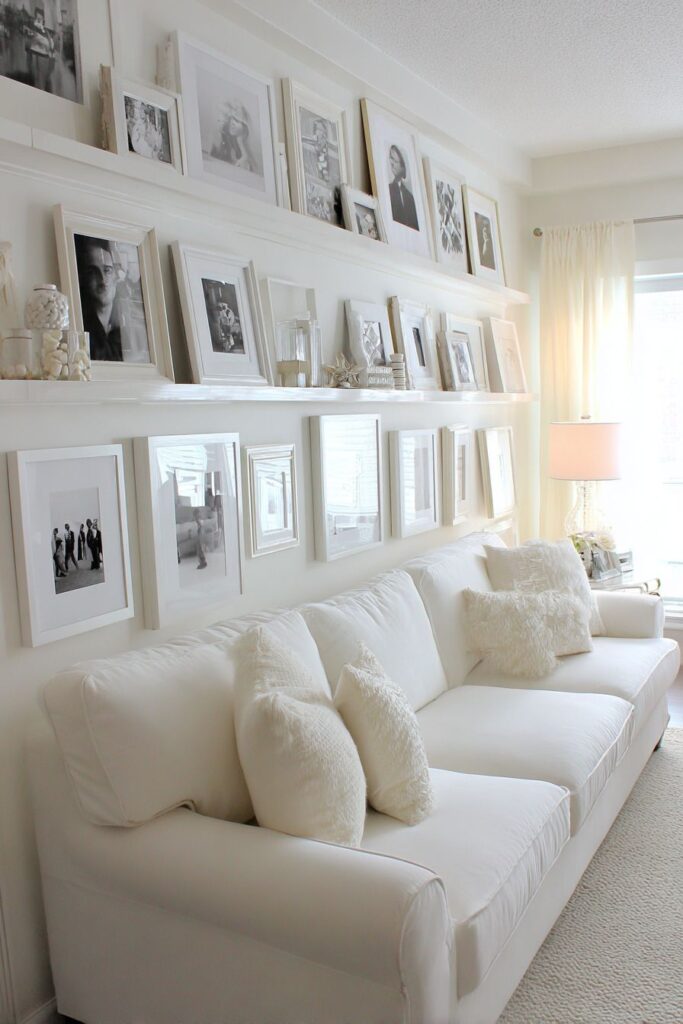
Even lighting throughout the space ensures each piece in the gallery wall receives equal attention, preventing shadows that could obscure artwork or create hot spots that dominate the composition. The subtle variations in white and cream frame finishes add depth to the arrangement—some frames are pure bright white, others lean toward ivory or even pale grey, creating a tonal story that rewards close inspection.
Key Design Tips:
- Use white and cream frames exclusively in white living rooms to keep focus on the artwork itself rather than colorful matting or frames
- Mix frame sizes and orientations for visual interest, but maintain consistent frame profiles or styles for cohesion
- Include black and white photography, line drawings, or neutral abstract art that complements the white palette
- Install picture ledge shelves below gallery walls for flexible, damage-free display options
- Map out gallery wall arrangements on the floor before hanging to perfect spacing and composition
10. Transitional Elegance and Timeless Style
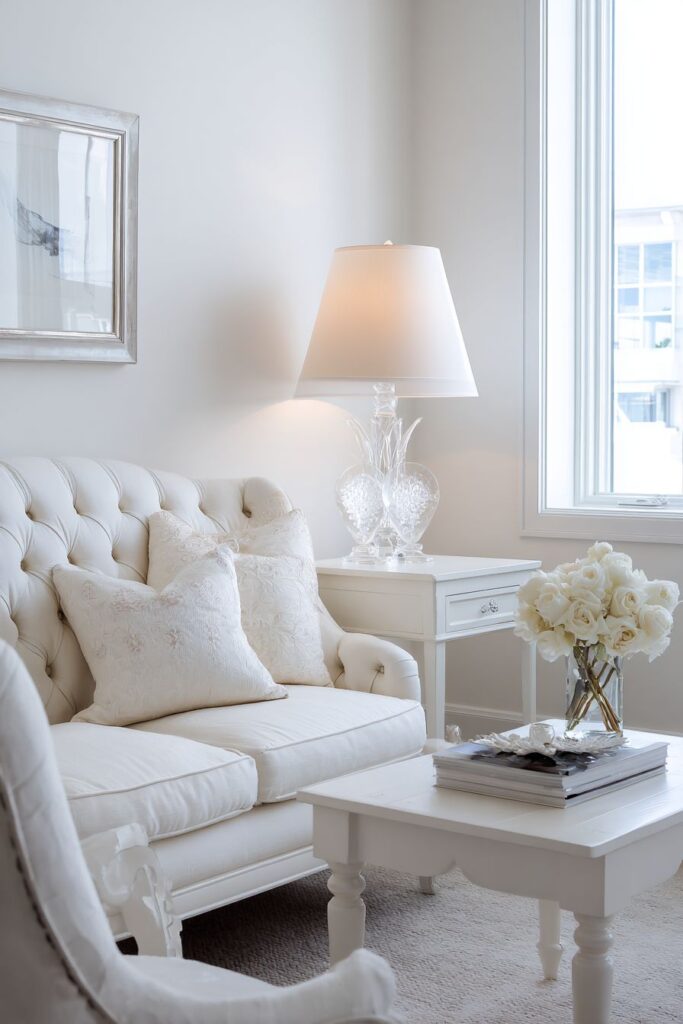
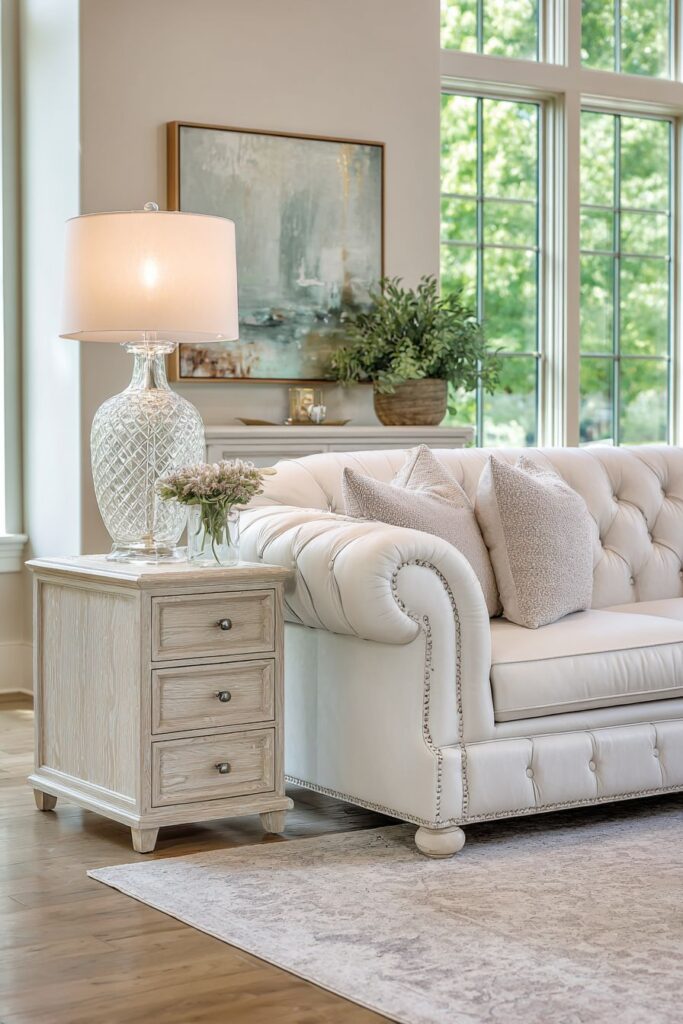
Transitional style bridges traditional and contemporary aesthetics, and this white living room demonstrates how that balance creates spaces with enduring appeal. A white tufted sofa with button detailing and elegant curved arms references classical upholstery traditions while its clean overall silhouette keeps it feeling current rather than dated. This furniture choice appeals to those who appreciate traditional quality and craftsmanship but want their home to feel fresh and relevant to today’s lifestyles.
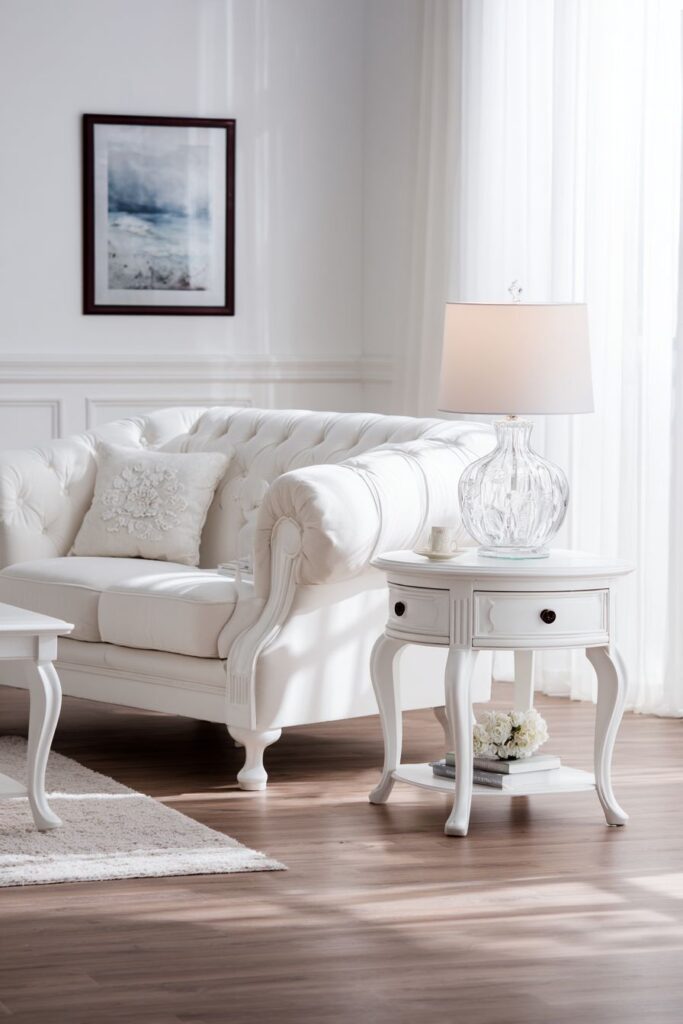
White painted wood side tables with drawer storage flank the seating, providing practical storage while their traditional construction and simple hardware maintain the room’s elegant aesthetic. These pieces demonstrate that functionality and beauty need not be mutually exclusive—the drawers hide remote controls, coasters, and other living room necessities while the tables’ white finish integrates seamlessly with the overall palette. A cream-colored area rug with subtle pattern anchors the furniture arrangement, its neutral design adding visual interest without overwhelming the serene white scheme.
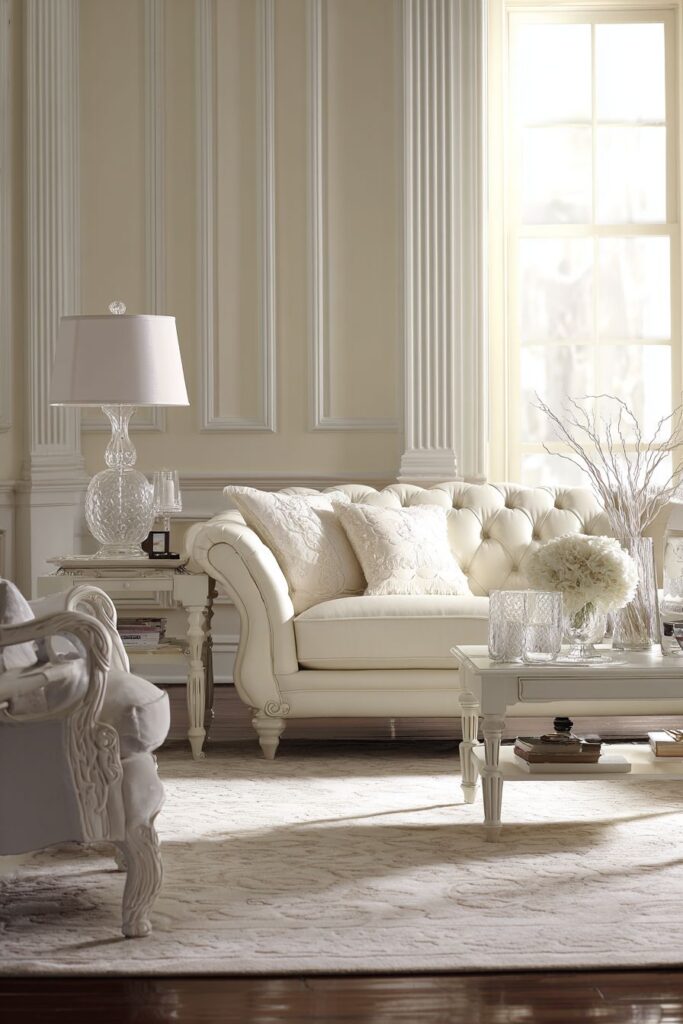
A crystal table lamp with white shade adds understated elegance, its traditional materials and form elevated by thoughtful proportion and refined details. The lamp demonstrates the transitional approach to accessories—recognizably classic pieces rendered with restraint and edited detail that prevents them from feeling overly ornate. Soft natural window light creates gentle shadows that emphasize the sofa’s sophisticated tufting and the room’s layered textures, revealing how white surfaces respond beautifully to changing natural light throughout the day.
Key Design Tips:
- Choose upholstered pieces with traditional details like tufting or curved arms executed with clean lines for true transitional style in white living rooms
- Select storage furniture that hides clutter while maintaining aesthetic appeal
- Add subtle pattern through area rugs rather than bold colors to maintain serenity
- Use crystal, brass, or other traditional materials in simplified, contemporary forms
- Create symmetrical furniture arrangements that feel balanced without seeming rigid
11. Light-Maximizing Luminous Space
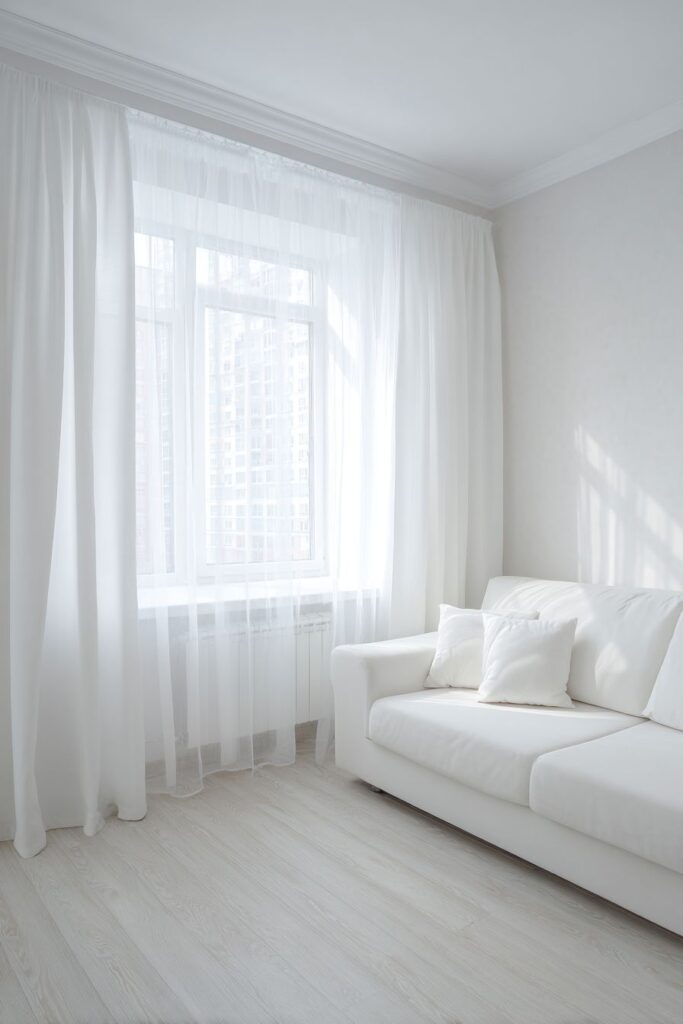
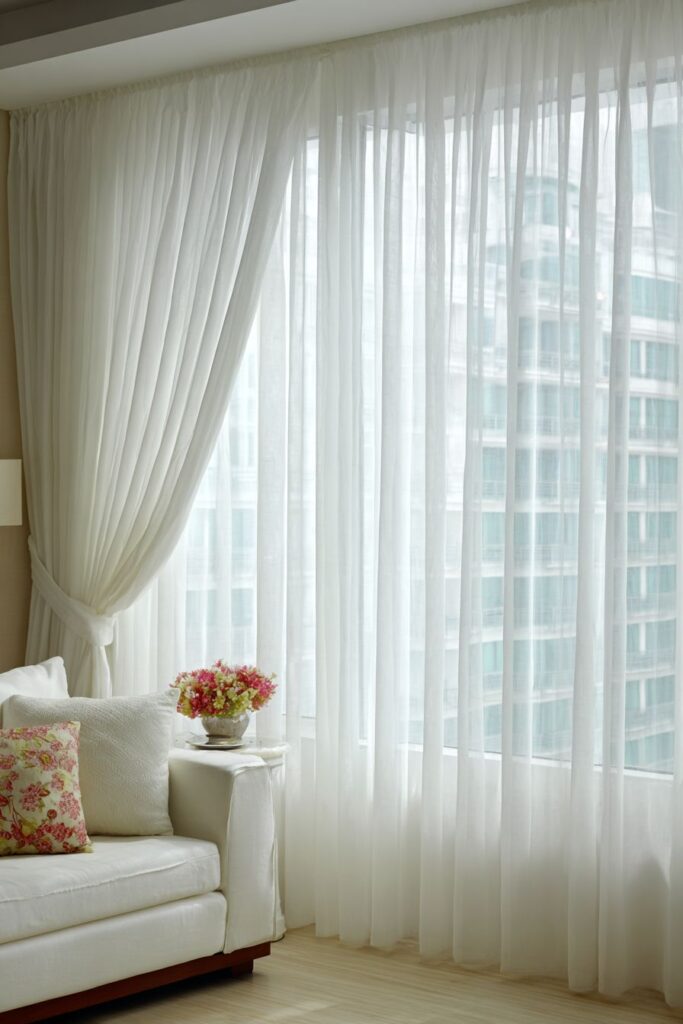
Some white living rooms prioritize light above all else, and this space demonstrates how to create a luminous environment that feels like living inside sunshine. Floor-to-ceiling white curtains in lightweight linen with natural drape and movement frame expansive windows, their length emphasizing the room’s vertical space while their sheer quality ensures maximum light transmission. Unlike heavy draperies that block light even when open, these curtains filter and diffuse sunlight, creating soft, flattering illumination that changes throughout the day.
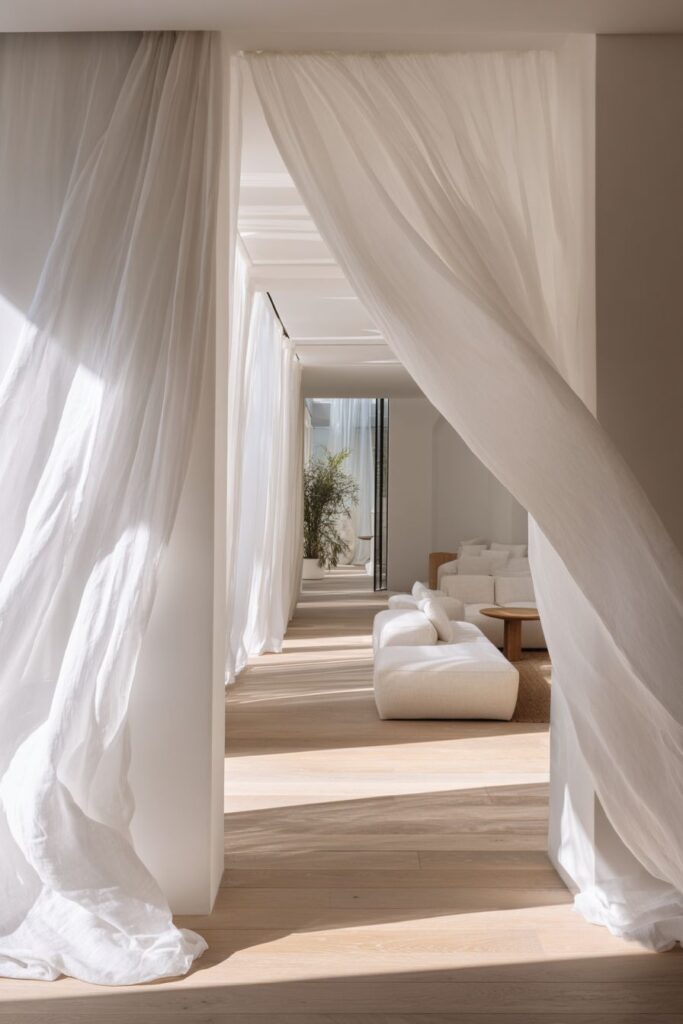
White walls act as giant reflectors, bouncing abundant daylight throughout the space and into corners that might otherwise remain dim. This reflective quality is one of white’s greatest practical benefits—it amplifies available light, reducing the need for artificial illumination during daylight hours and creating a connection to the outdoor environment’s natural rhythms. A simple white sofa and light wood flooring complete the airy aesthetic without introducing visual weight or darkness that would compromise the luminous quality.
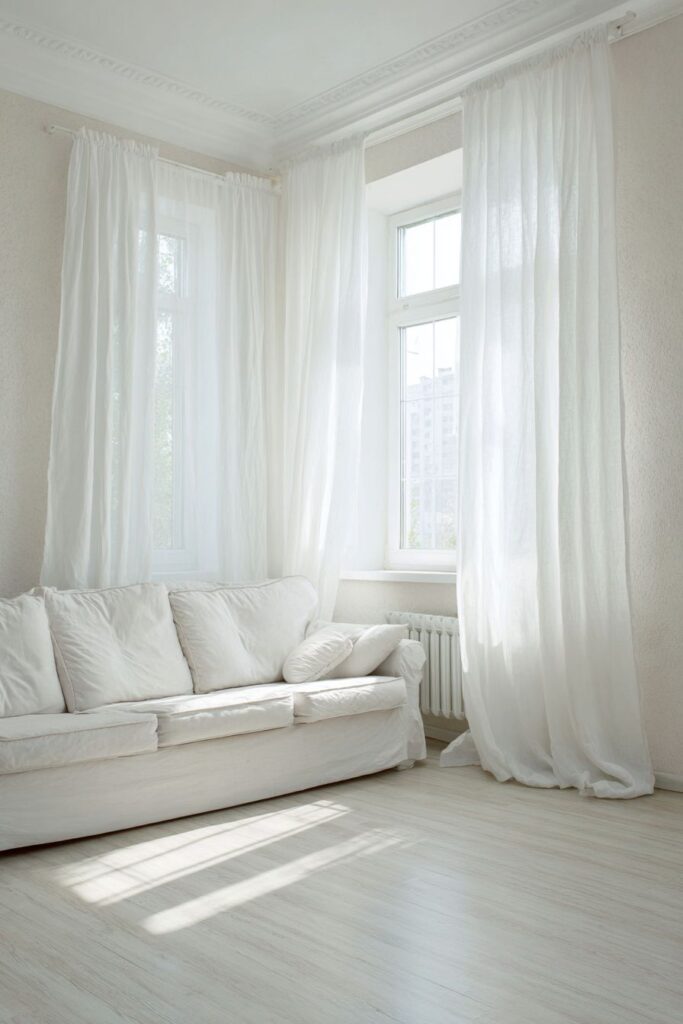
The layered white elements—curtains, walls, sofa, even the ceiling—work together to create a spatial experience that feels almost weightless. This white living room seems to glow from within, its surfaces catching and reflecting light in endless variations. The effect is energizing yet peaceful, creating a space that feels both expansive and cocoon-like in its embrace of brightness.
Key Design Tips:
- Choose lightweight, sheer curtain fabrics that filter rather than block natural light in white living rooms
- Install curtain rods near the ceiling and hang curtains to the floor to maximize the sense of height
- Paint walls, trim, and ceiling the same or similar white shades to create seamless light reflection
- Minimize dark or heavy furniture that would absorb rather than reflect precious daylight
- Consider window placement and sun exposure when arranging furniture to take advantage of changing light throughout the day
12. Intimate Corner Retreat
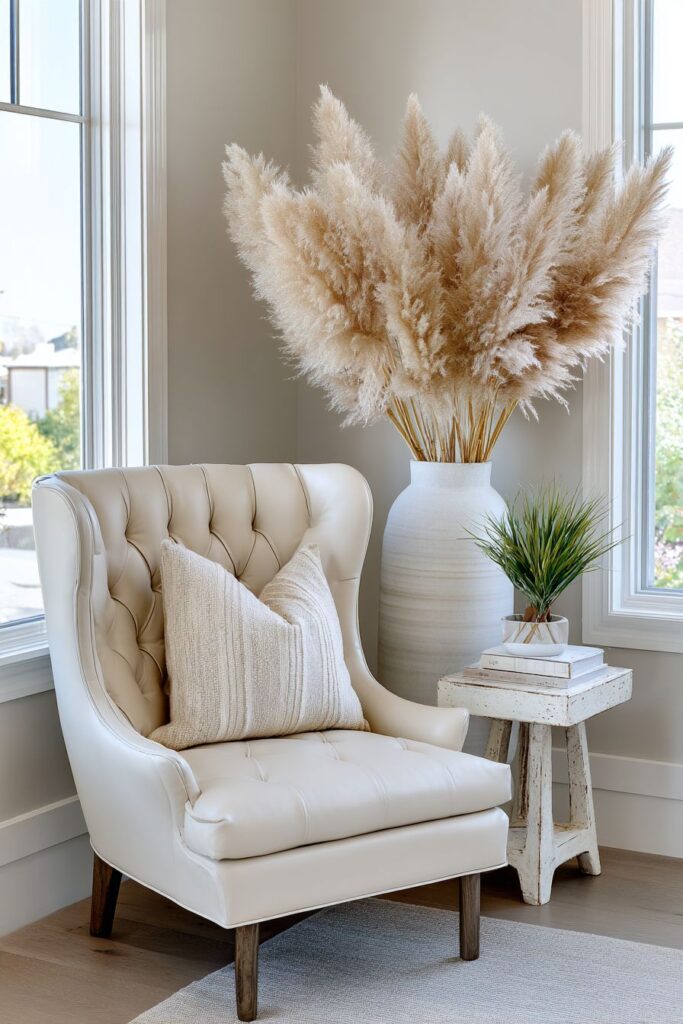
Not every white living room seating area needs to be large and sprawling—sometimes an intimate corner arrangement creates the most appealing and functional space. This design features a white leather accent chair with subtle grain texture and natural creasing that develops character over time, positioned beside a white painted vintage side table with authentic wear marks that tell stories of previous owners and uses. The pairing creates a personal retreat within the larger room, perfect for morning coffee, evening reading, or quiet conversation.
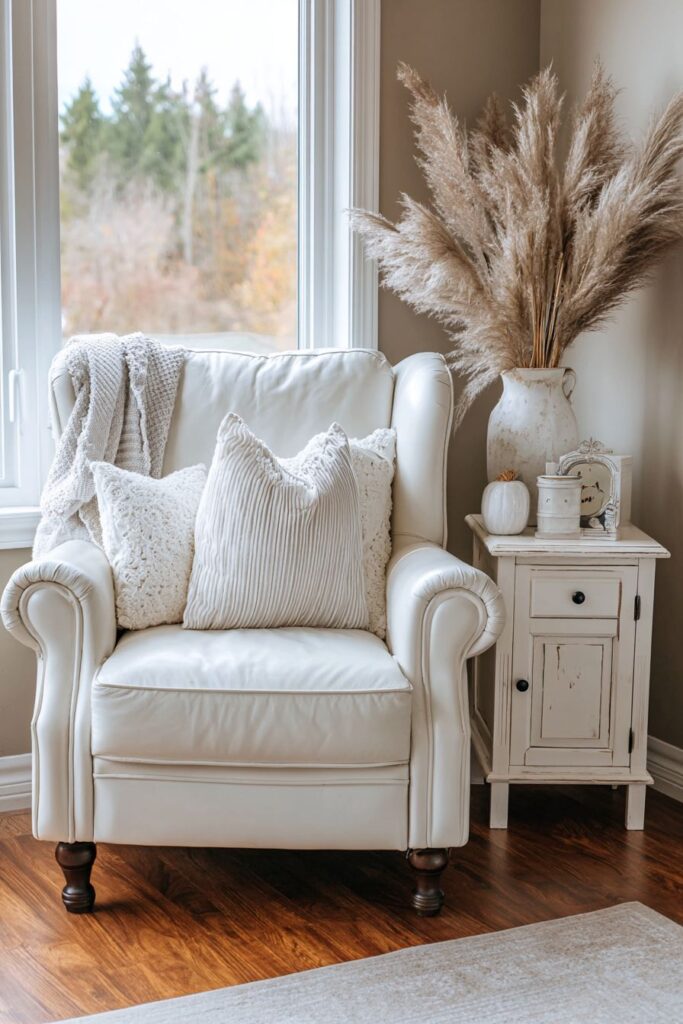
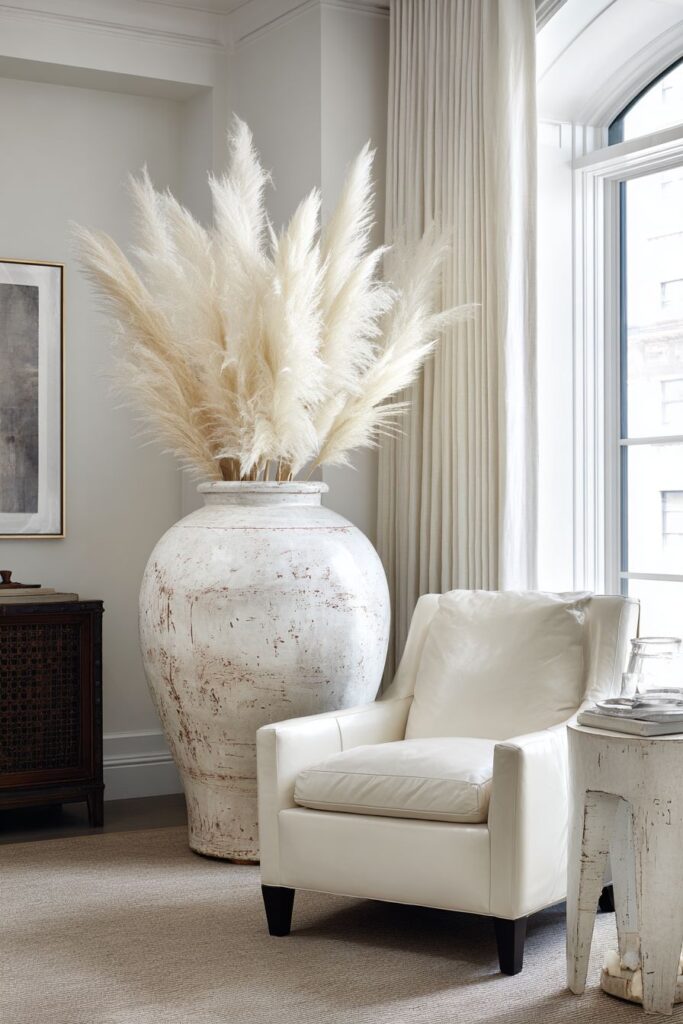
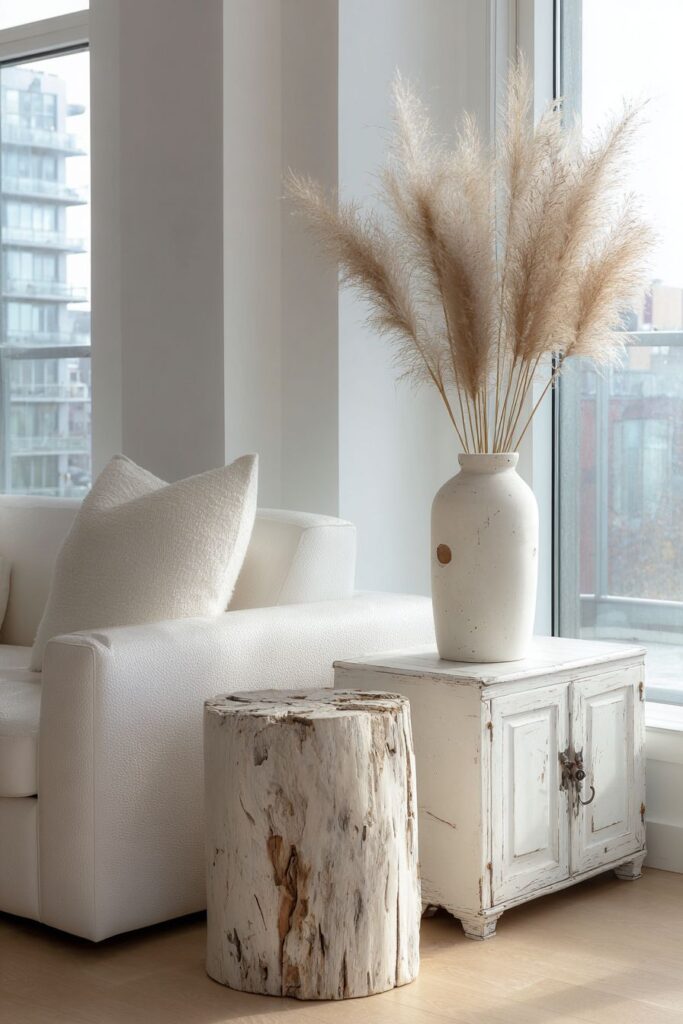
A tall white ceramic floor vase with dried pampas grass adds organic texture and vertical interest to this white living room corner, its neutral dried botanicals maintaining the soft color palette while introducing natural form and movement. Pampas grass has become a design favorite for good reason—its feathery plumes add dramatic height and volume without the maintenance requirements of fresh flowers or living plants, while its soft, neutral tones complement white interiors perfectly.
Natural light from a nearby window creates soft highlights on the leather chair’s surface, emphasizing the material’s natural grain and the way it creases with use. This lighting reveals leather’s living quality—unlike synthetic materials that maintain static perfection, genuine leather develops a patina and character that actually improves with age. This corner demonstrates that white living rooms can include personal, intimate spaces alongside larger seating arrangements, creating variety in scale and function.
Key Design Tips:
- Create multiple seating areas in larger white living rooms to accommodate different activities and group sizes
- Choose leather furniture that will develop character over time rather than looking worn
- Use tall floor plants or dried botanicals to add height and draw the eye upward in corner arrangements
- Position corner seating near natural light sources for reading and to highlight material qualities
- Select vintage or distressed side tables that bring history and authenticity to new white spaces
13. Contemporary Clean Lines
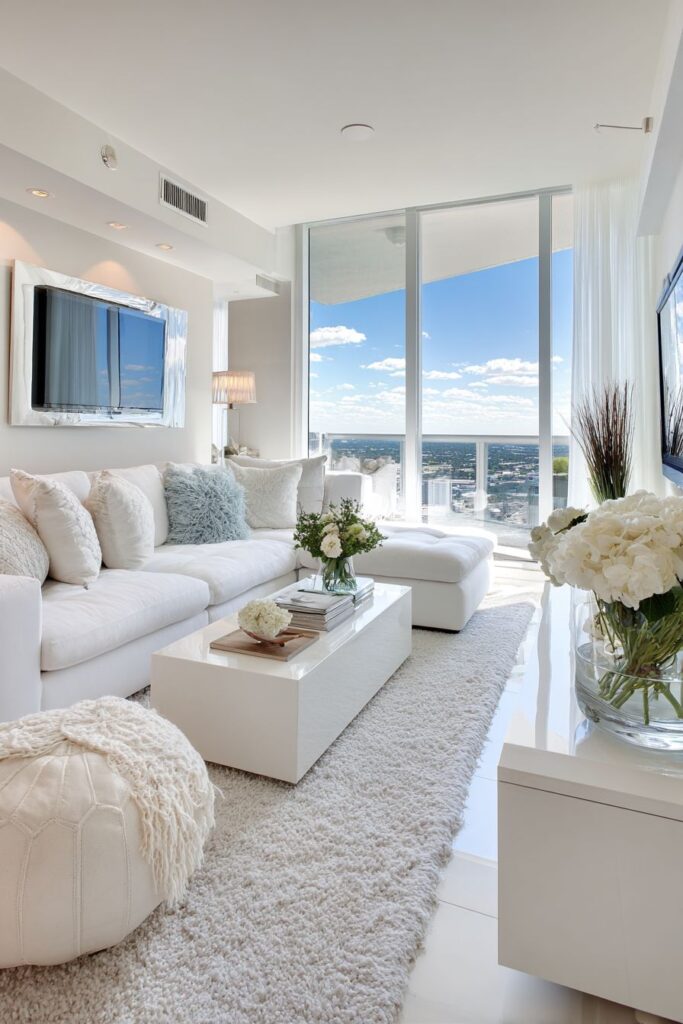
Contemporary design celebrates the present moment, and this white living room embraces current aesthetics with confidence and clarity. A modular white fabric sectional with clean geometric lines and removable covers provides flexible seating that can be reconfigured as needs change—a practical feature that doesn’t compromise visual appeal. The modular approach reflects contemporary values of adaptability and multi-functionality, recognizing that modern living spaces must serve many purposes.
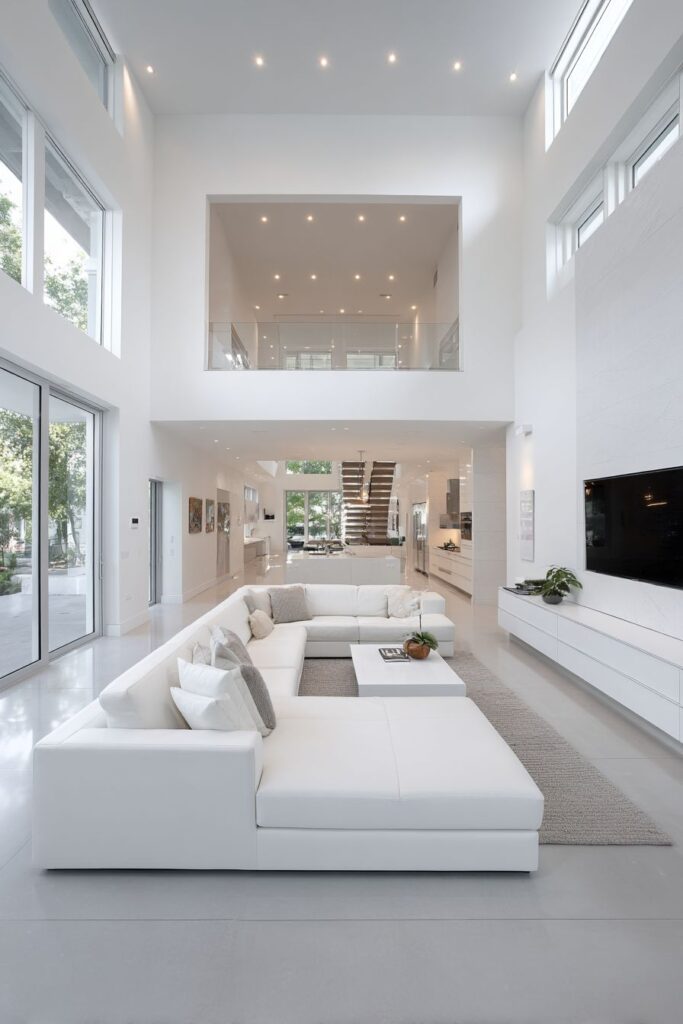
A white lacquered media console with handleless drawers provides sleek storage, its smooth, reflective surface adding a touch of glamour to the contemporary white living room. The absence of visible hardware maintains the clean lines that contemporary design demands, while the lacquer finish catches light beautifully, adding visual interest through reflection rather than ornamentation. Light grey concrete flooring offers subtle contrast that grounds the space without introducing strong color, its industrial edge perfect for contemporary sensibilities.
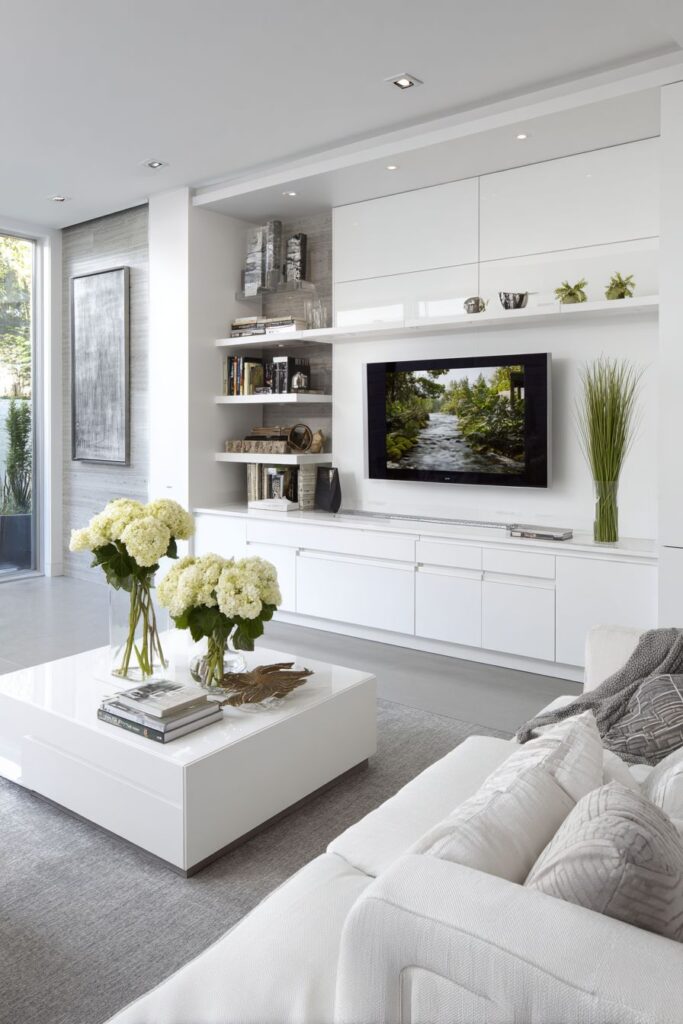
Recessed ceiling lighting combined with natural window light creates balanced illumination throughout the day and evening. The recessed fixtures disappear into the ceiling, providing necessary light without cluttering the visual field with hanging fixtures or visible lamps. This integrated approach to lighting exemplifies contemporary design’s preference for built-in solutions that minimize visual clutter while maximizing functionality.
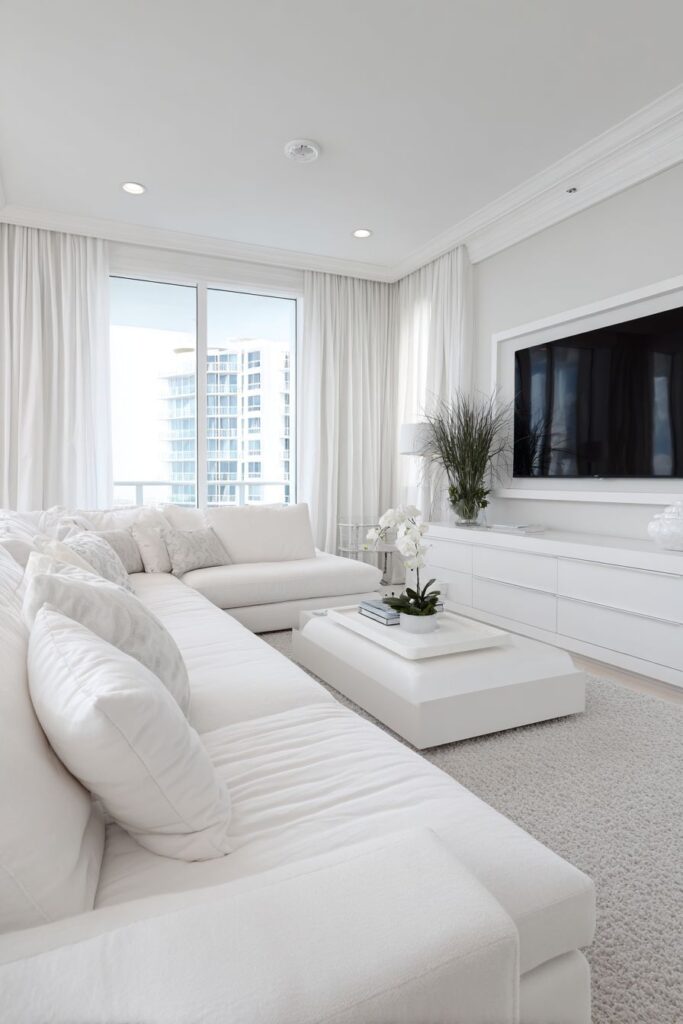
Key Design Tips:
- Choose modular furniture for white living rooms that need to adapt to different entertaining scenarios or configurations
- Select media consoles and storage pieces with clean, handleless designs for true contemporary aesthetic
- Consider concrete, polished plaster, or other industrial materials for flooring to add subtle edge
- Use recessed lighting to provide necessary illumination without introducing visual clutter
- Ensure all removable covers are washable—white contemporary furniture should be practical, not just beautiful
14. Open Concept Architectural Drama
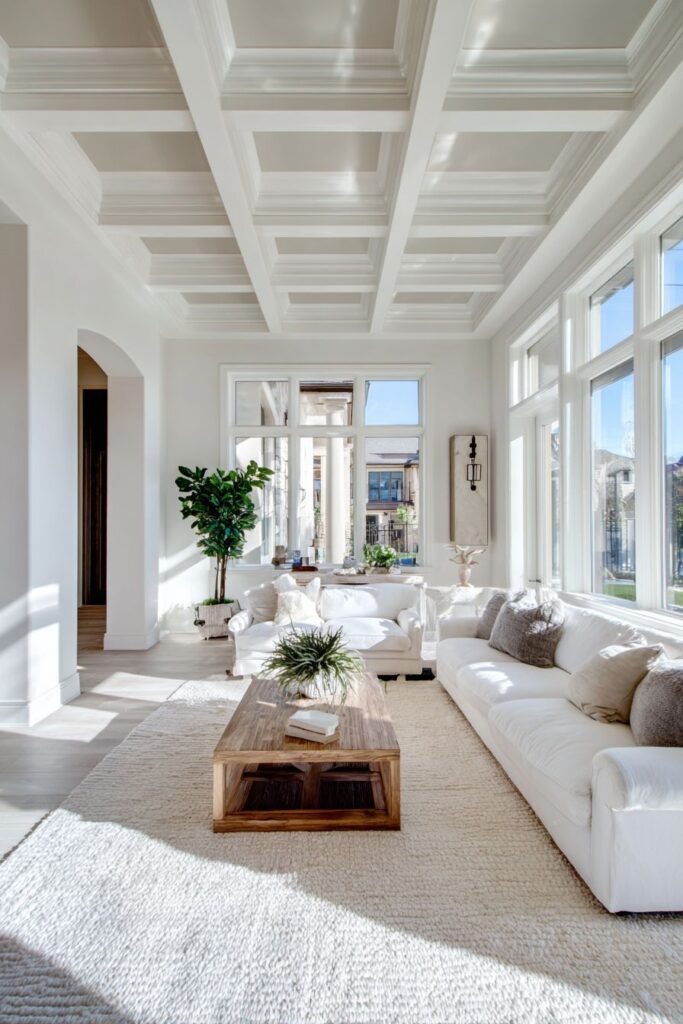
Open concept living has revolutionized residential design, and this white living room demonstrates how to create definition and drama in flowing spaces. A white painted coffered ceiling with architectural detail and shadow depth transforms the ceiling from afterthought to focal point, its geometric pattern adding structure and formality that defines the living area without requiring walls. The coffered ceiling’s dimensional quality creates constantly changing shadow patterns as natural light moves across the space throughout the day.
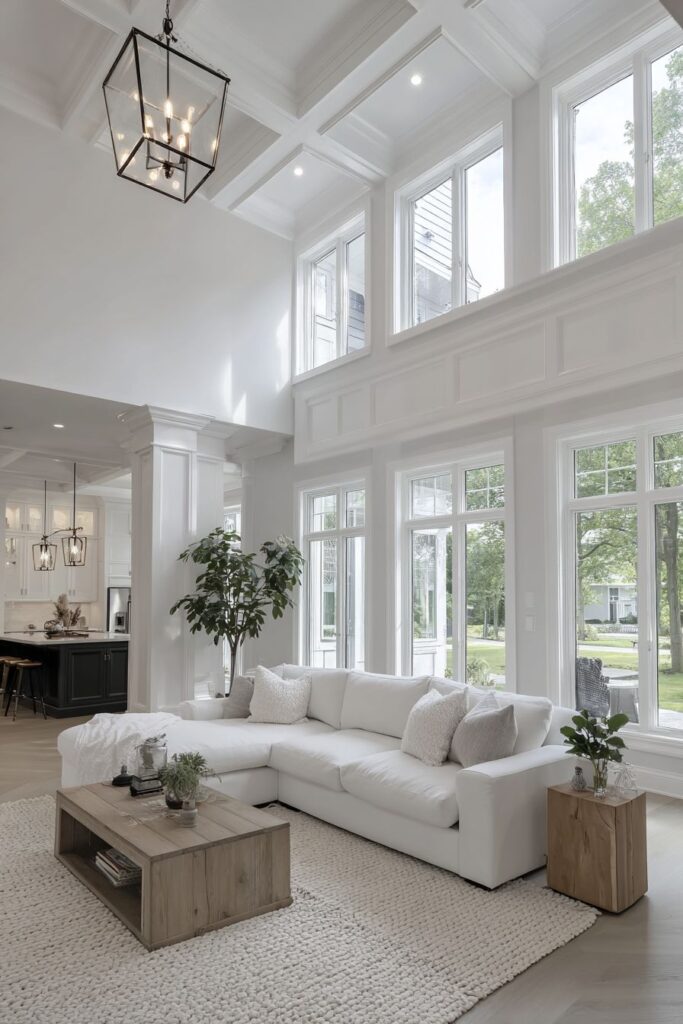
A large white L-shaped sofa defines the seating area on a cream textured area rug, creating a room within a room through furniture placement rather than architectural barriers. This approach maintains the open, flowing quality that makes open concept layouts appealing while providing psychological boundaries that help different areas feel distinct and purposeful. The sofa’s scale matches the room’s generous proportions, ensuring it feels substantial rather than lost in the space.
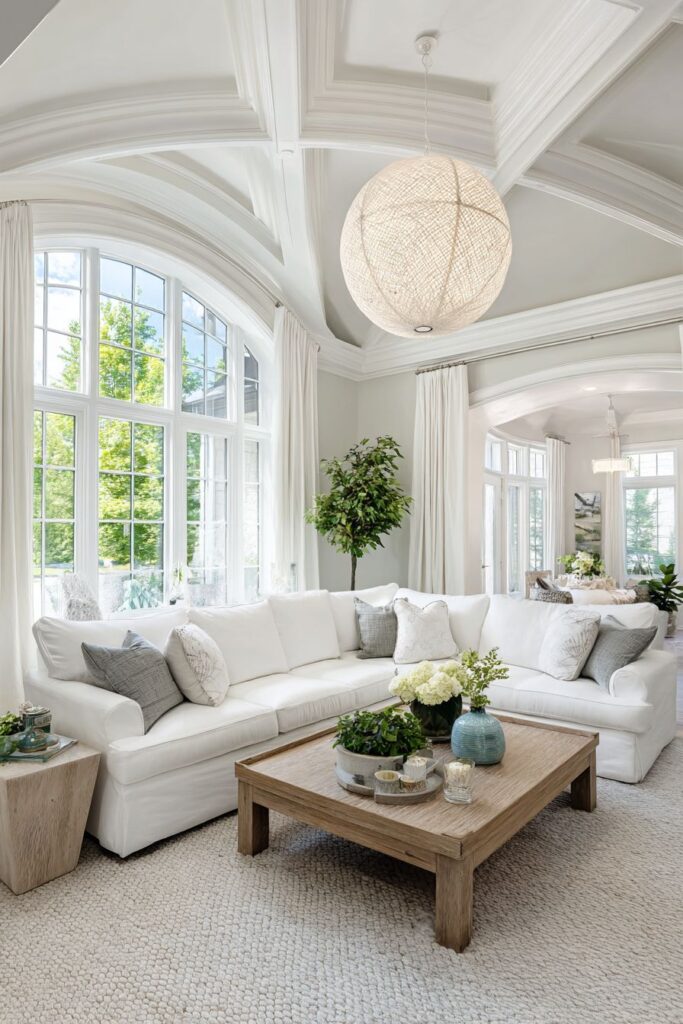
Natural oak accent table and subtle greenery provide essential organic elements that warm this white living room and prevent it from feeling too formal or institutional. The oak’s wood grain and honey tones create visual warmth, while strategically placed plants bring life and improve air quality. Natural light streaming from multiple windows showcases the spacious flowing design, revealing how white surfaces amplify available light and create a bright, energetic atmosphere perfect for modern family living.
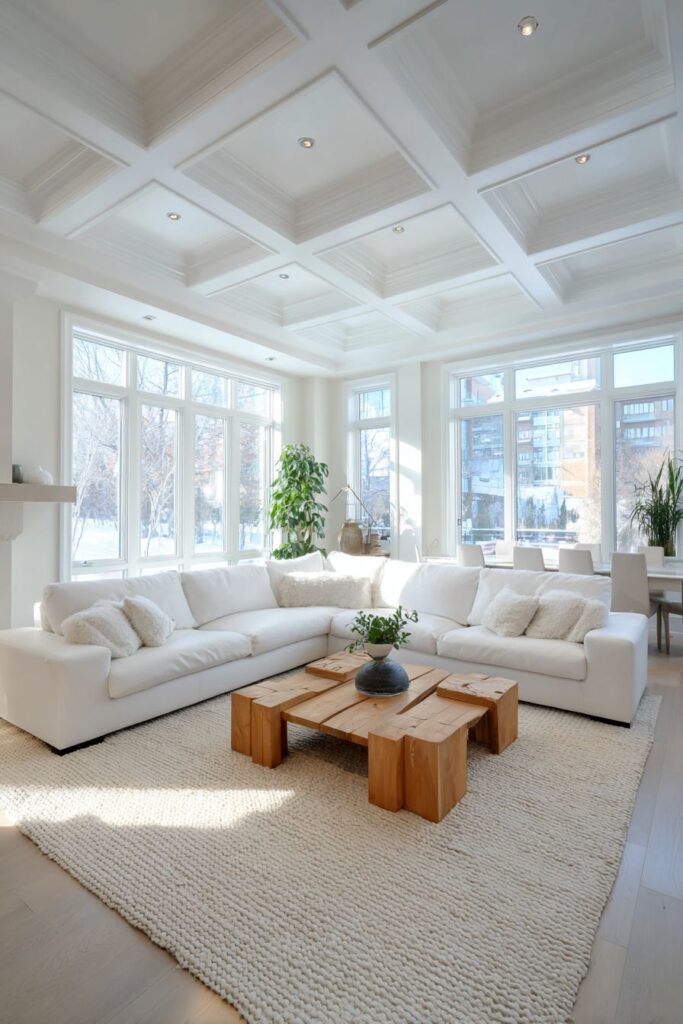
Key Design Tips:
- Install coffered ceilings or other architectural ceiling treatments to add interest and define zones in open concept white living rooms
- Use large-scale furniture to anchor open spaces rather than allowing pieces to float ineffectively
- Define living areas with area rugs that accommodate all seating pieces’ front legs
- Maintain consistent white or cream tones throughout open concept spaces to enhance visual flow
- Position multiple seating pieces to create natural traffic patterns that preserve conversation areas
15. Custom Storage Solutions
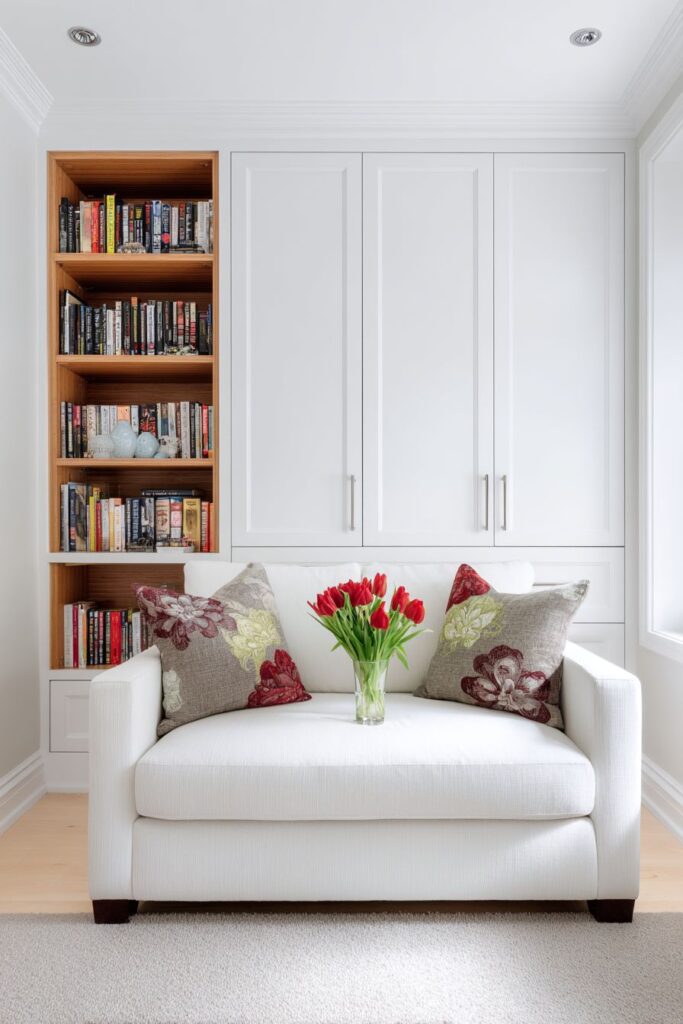
Storage challenges plague many living rooms, but this white living room solves those issues with style through a wall of custom built-in cabinetry. The combination of closed cabinets and open shelving displays organized books and decor while hiding less attractive necessities behind doors. Soft-close white cabinet doors with simple hardware maintain clean lines and operate silently—a small detail that significantly impacts daily experience. The hardware’s simplicity ensures it doesn’t interrupt the clean white surfaces or draw unwanted attention.
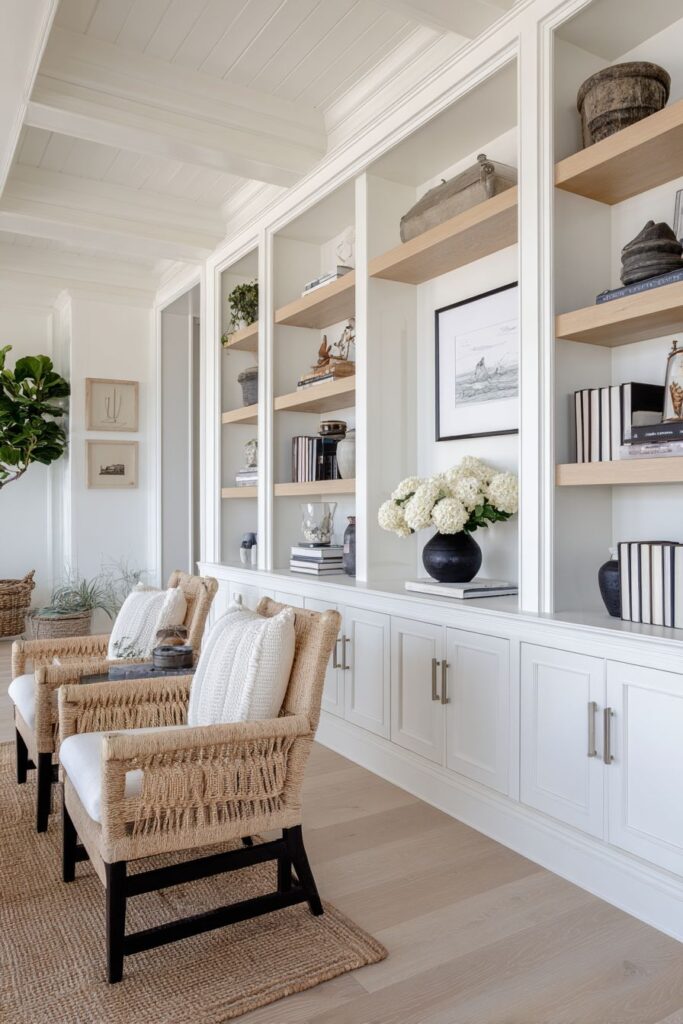
Natural wood shelving inserts add warmth to the predominantly white storage wall, creating visual breaks that prevent monotony while introducing organic material that feels grounded and permanent. These wood elements demonstrate smart design thinking—they provide just enough contrast to create interest without disrupting the cohesive white aesthetic. The combination of white painted cabinets with natural wood shelving offers the best of both worlds.
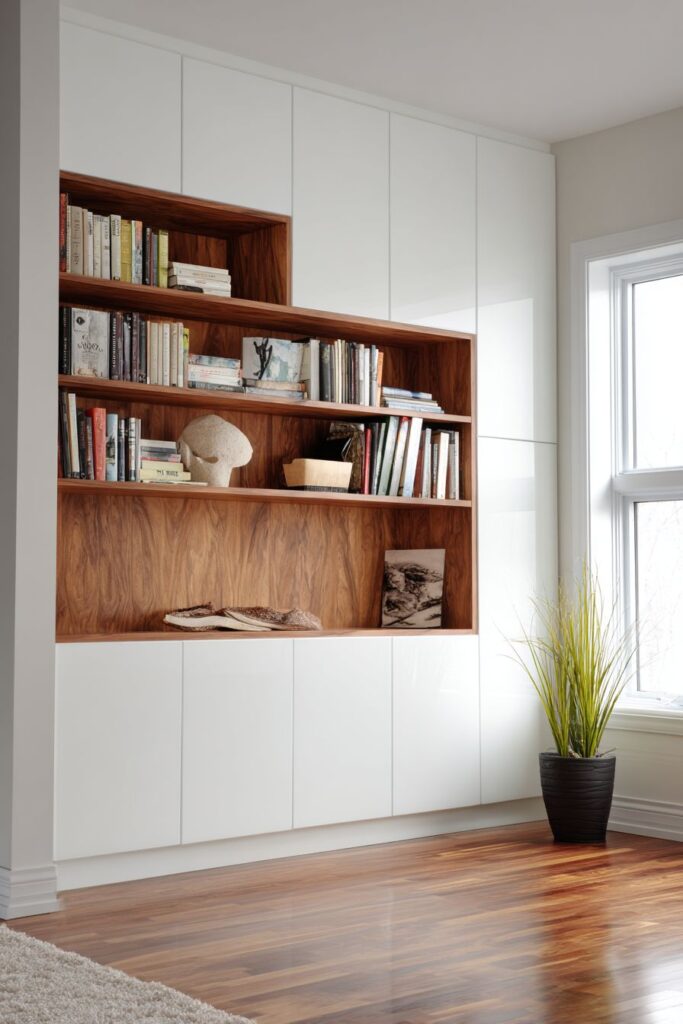
This white living room storage solution proves that organization and beauty can coexist gracefully. Natural lighting highlights the practical elegance of the custom white millwork, revealing crisp lines and quality construction that will serve the home for decades. The investment in custom cabinetry pays dividends daily through increased functionality and the pleasure of living with beautiful, purpose-built features.
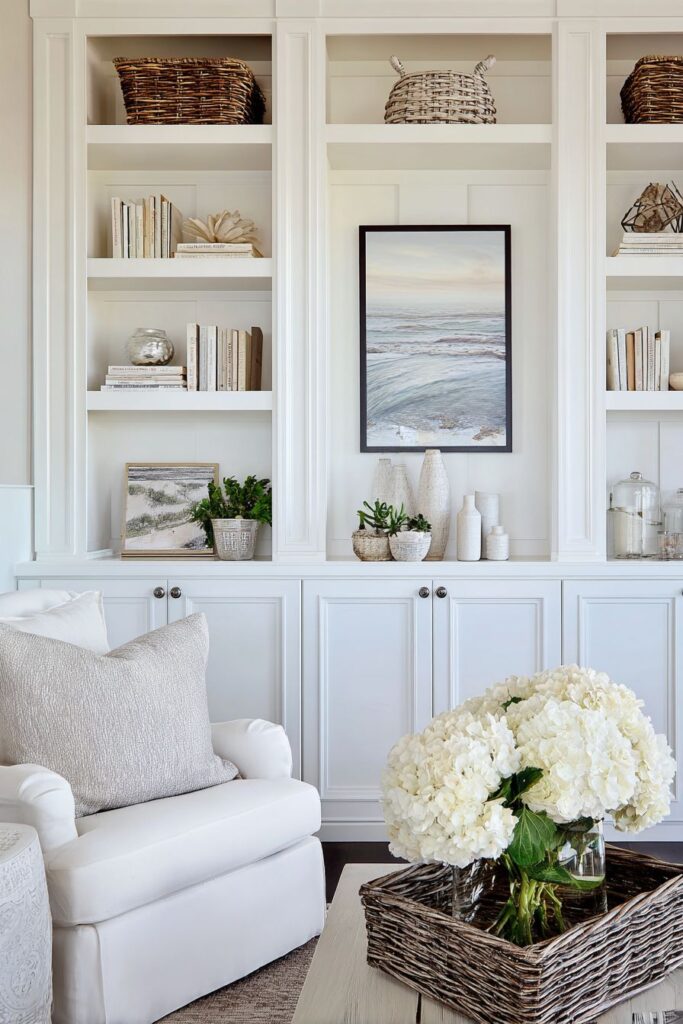
Key Design Tips:
- Invest in custom built-in storage for white living rooms to maximize space utilization and create polished, intentional design
- Combine closed and open storage to display beautiful items while hiding clutter
- Specify soft-close hinges and drawer slides for quality operation that justifies custom cabinet investment
- Introduce wood shelving or interiors to break up expanses of white and add warmth
- Design storage height to ceiling when possible to maximize capacity and create impressive architectural impact
16. French Country Romance
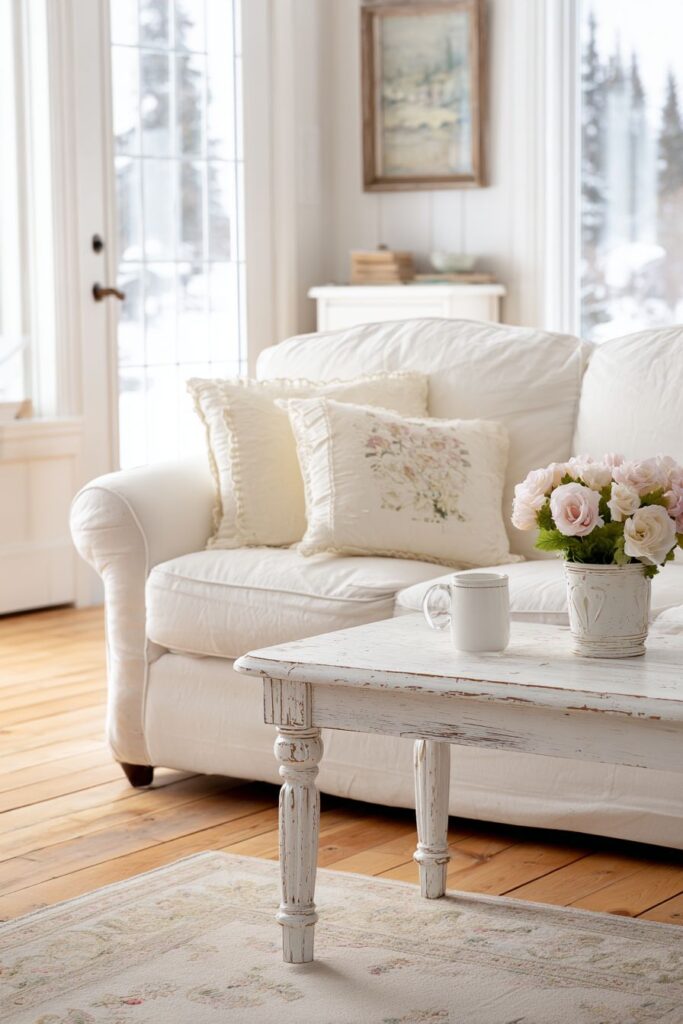
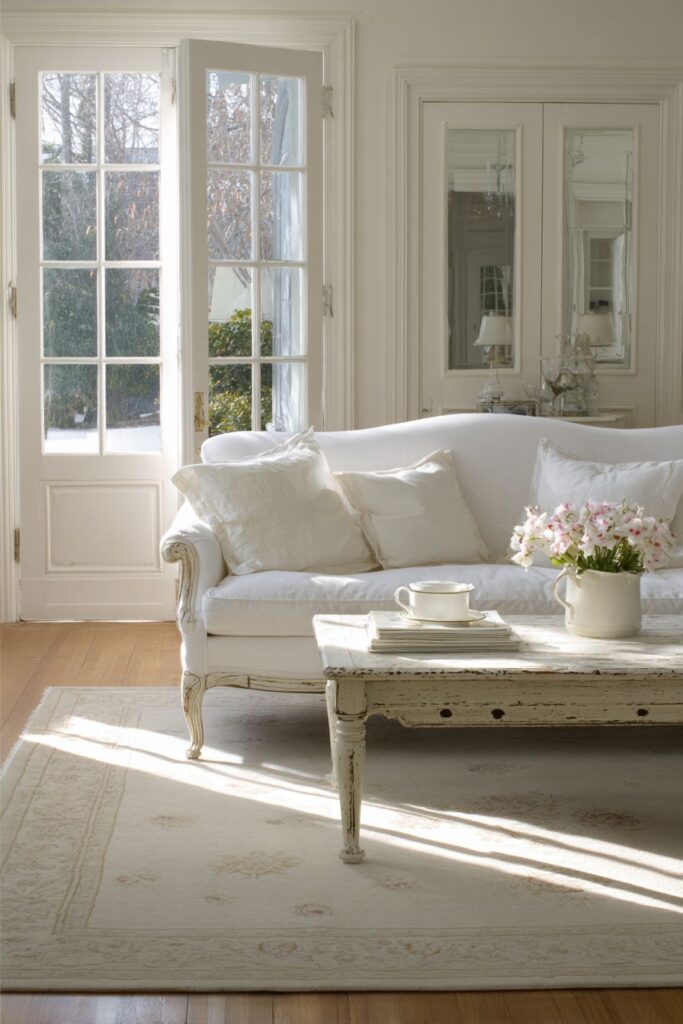
French country style brings European elegance with a relaxed, welcoming spirit, and this white living room captures that balance beautifully. A white linen camelback sofa with traditional silhouette and exposed wood legs in weathered finish combines refined form with comfortable function, its curved lines softening the room while maintaining sophisticated proportions. The linen upholstery ages beautifully, developing character and softness that synthetic fabrics simply cannot replicate.
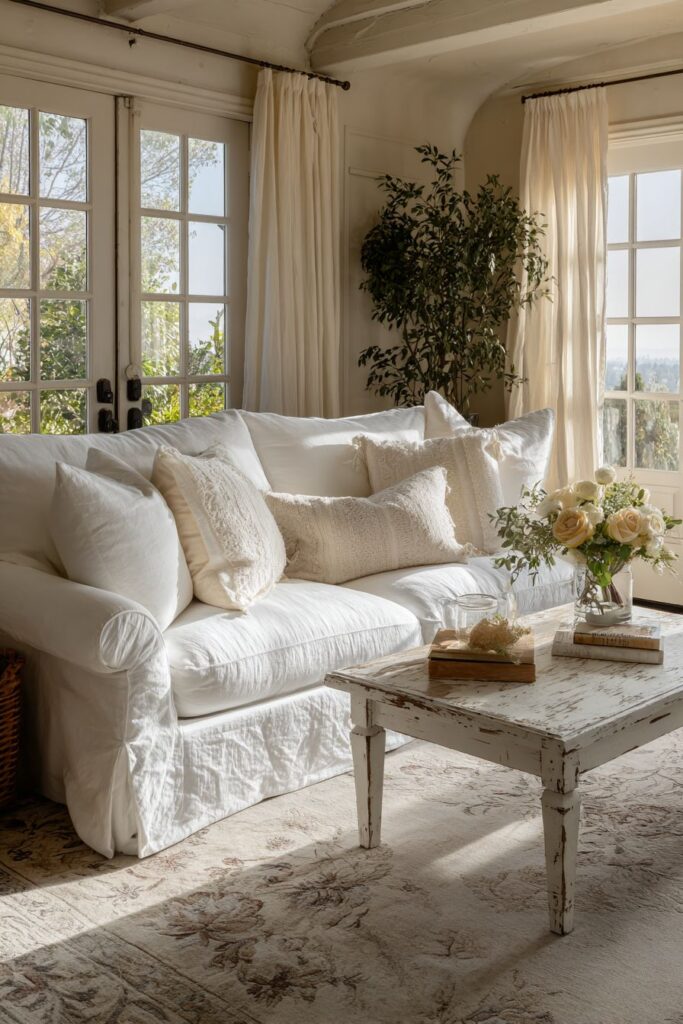
A distressed white painted coffee table shows authentic vintage character through worn edges and paint that’s rubbed away to reveal wood beneath. This isn’t artificial distressing applied yesterday, but genuine wear that accumulates over years of use—the kind of patina that gives furniture soul and makes each piece unique. An ivory area rug with subtle floral pattern adds soft detail that references French country’s romantic sensibilities without overwhelming the serene white palette.
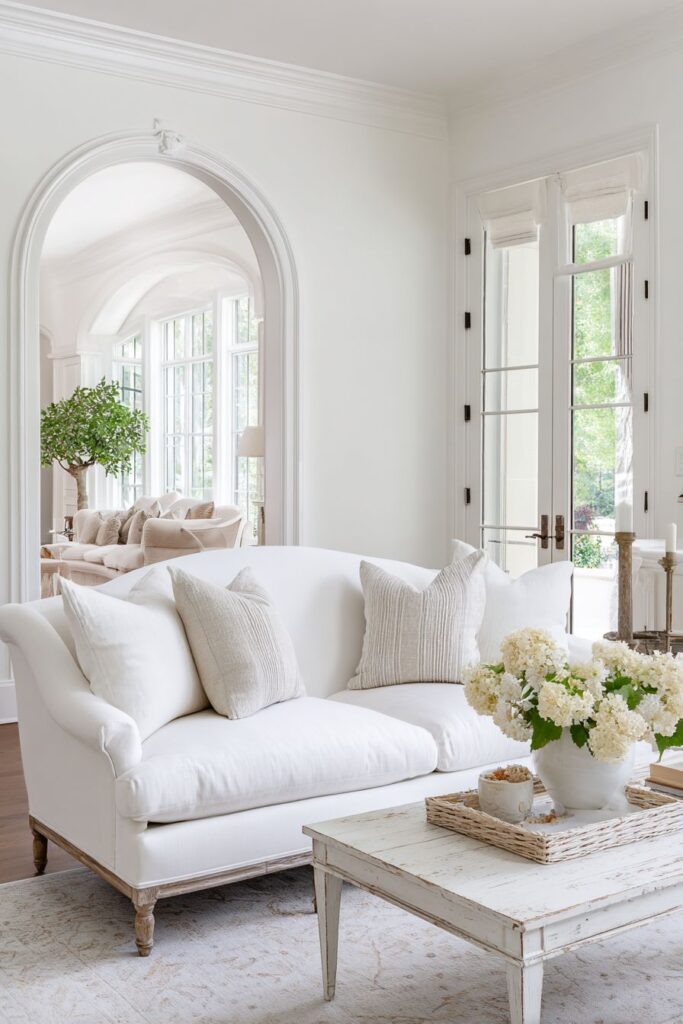
Soft natural light through French doors creates romantic ambiance, the doors themselves referencing the style’s geographical origins while providing architectural beauty and indoor-outdoor connection. The light quality in this white living room feels almost magical—diffused and gentle, it flatters every surface and creates an atmosphere of timeless elegance that transcends passing trends.
Key Design Tips:
- Choose furniture with curves and traditional silhouettes for authentic French country white living rooms
- Seek genuinely vintage or well-distressed pieces rather than artificially aged new furniture
- Incorporate subtle patterns in area rugs or upholstery that reference botanical or traditional French motifs
- Install French doors when possible to add architectural character and enhance natural light
- Select weathered wood finishes rather than pristine painted pieces to achieve lived-in French country elegance
17. Symmetrical Sophistication
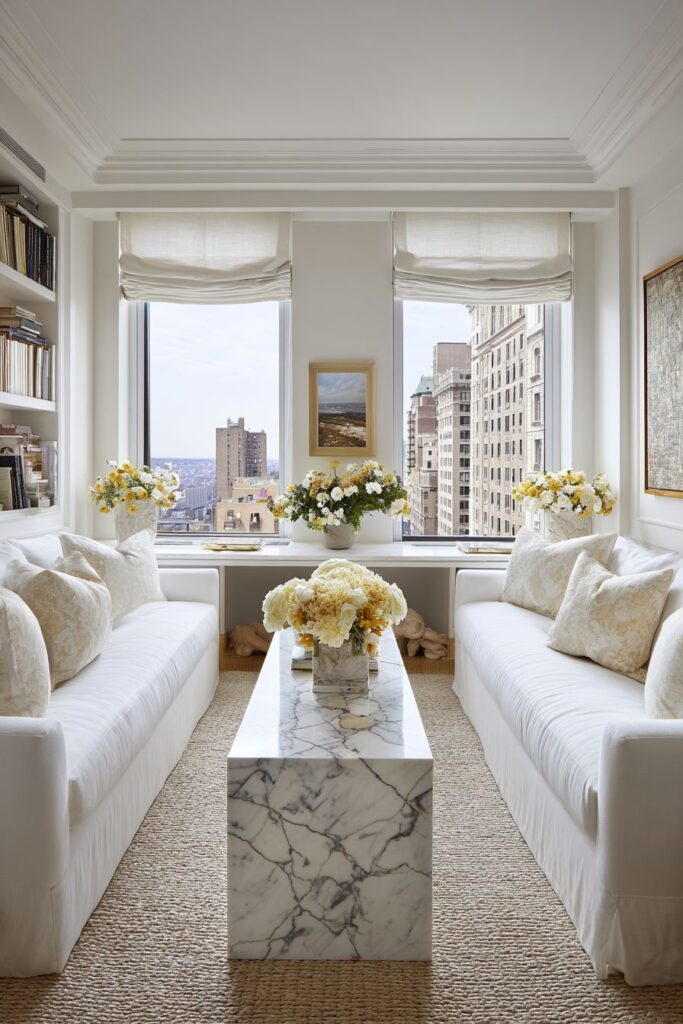
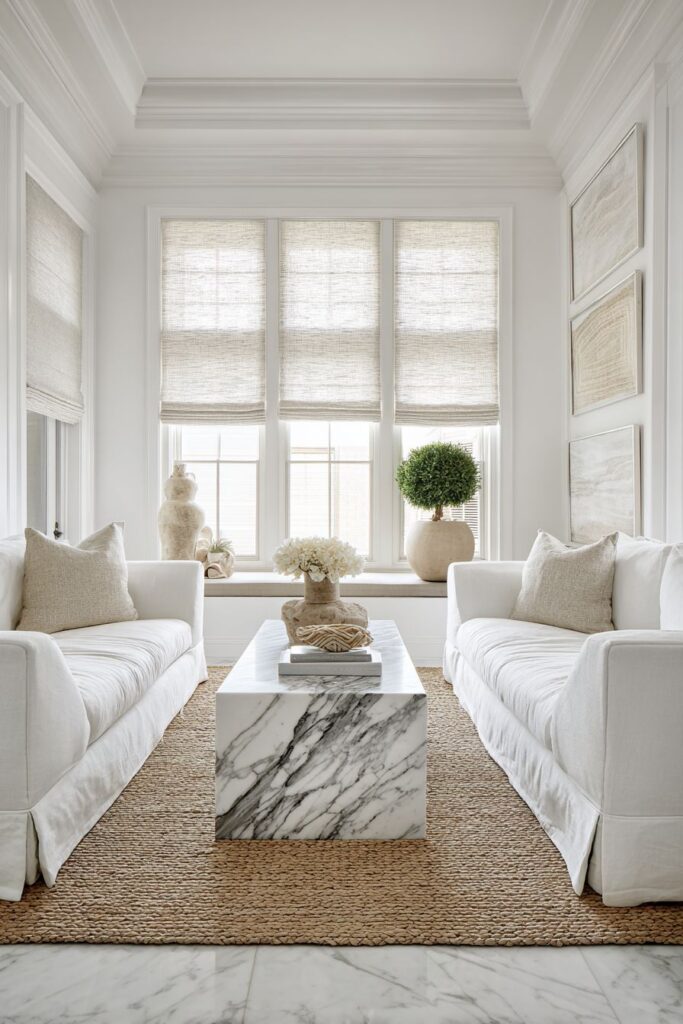
Formal symmetry creates instant sophistication, and this white living room’s conversation area demonstrates the power of balanced arrangement. Two white upholstered sofas face each other across a narrow white marble coffee table with distinctive grey veining, creating perfect mirror-image seating that encourages face-to-face interaction. This arrangement works beautifully for entertaining, allowing guests to see and converse easily while the symmetry provides aesthetic pleasure and psychological comfort.
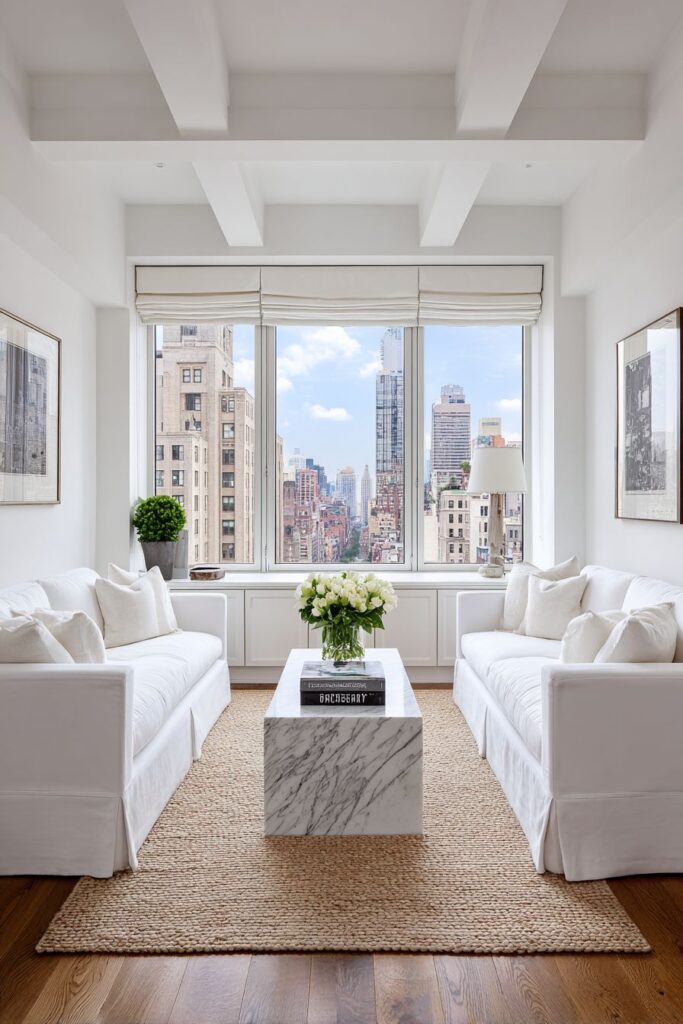
White walls and ceiling create a gallery-like backdrop that lets the furniture and arrangement shine without competition from colorful surfaces or busy patterns. A natural fiber area rug in cream provides grounding texture beneath the seating, its woven pattern adding subtle visual interest while the neutral tone maintains the monochromatic sophistication. The rug’s organic texture contrasts beautifully with the smooth marble table and refined upholstery, creating material variety that prevents monotony.
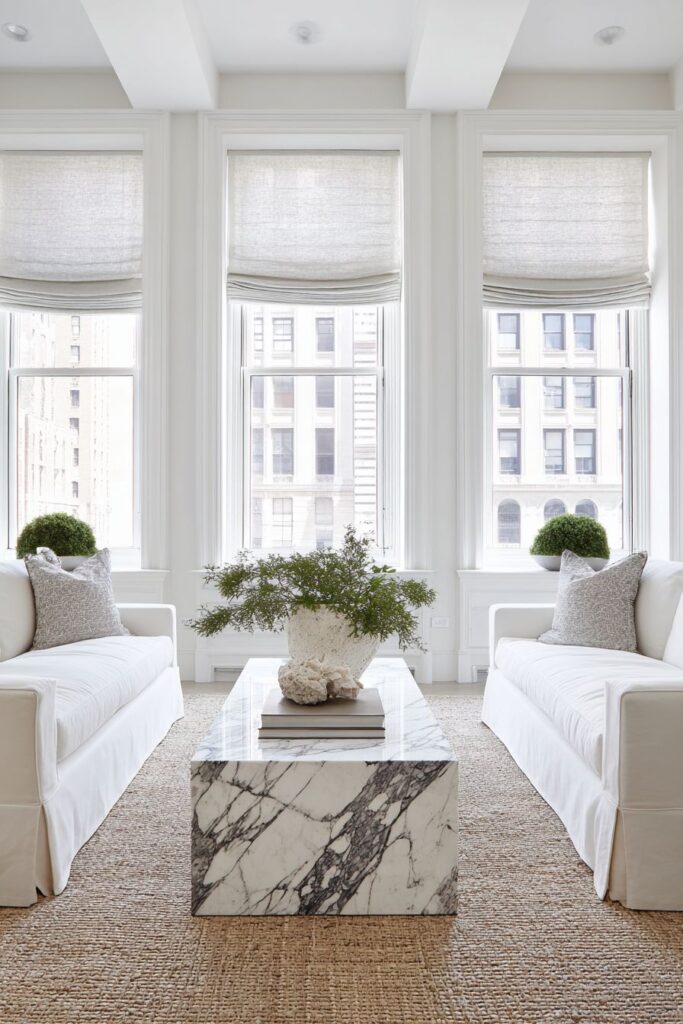
Large windows with white Roman shades filter natural light, creating even illumination that prevents harsh shadows or glare. The Roman shades’ clean lines and operational convenience make them ideal for this sophisticated white living room—they can be raised completely to maximize light or lowered to provide privacy and light control without the visual weight of drapery panels.
Key Design Tips:
- Create symmetrical furniture arrangements in white living rooms to achieve instant sophistication and formal balance
- Position matching sofas facing each other for optimal conversation and entertaining functionality
- Choose marble coffee tables with natural veining to add pattern without introducing color
- Use Roman shades for clean, contemporary window treatments that provide excellent light control
- Maintain gallery-like simplicity in symmetrical rooms—let the arrangement itself create visual interest
18. Small Space Smart Solutions
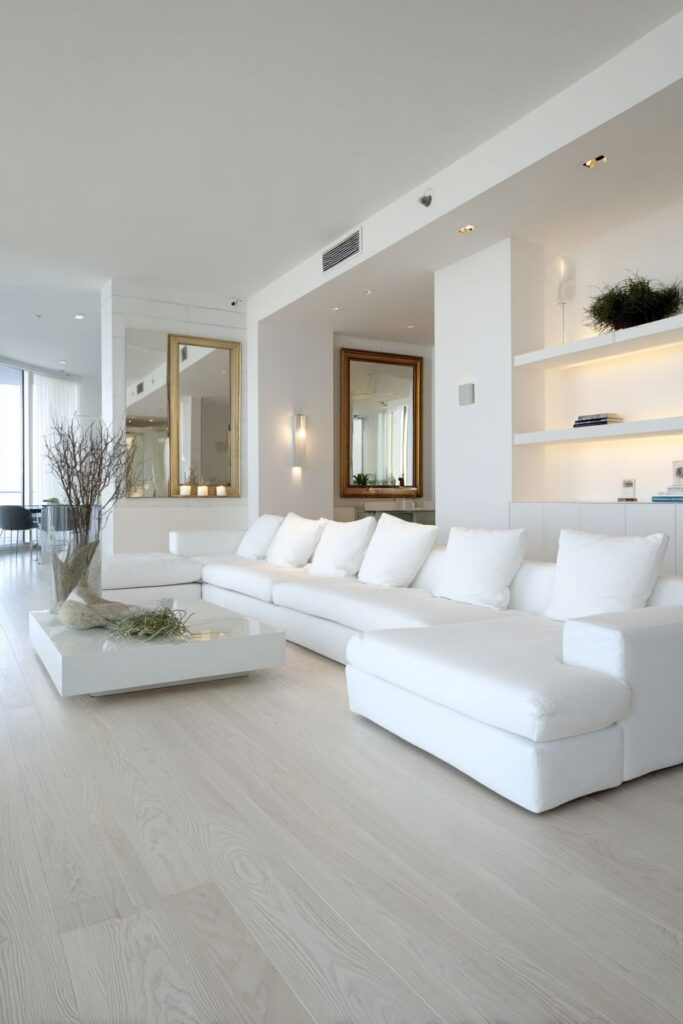
Small white living rooms require strategic thinking, and this design demonstrates how to maximize both function and beauty in compact quarters. A white sleeper sofa with hidden storage compartments and clean contemporary lines serves triple duty—comfortable daily seating, overnight guest accommodation, and storage for pillows, throws, or seasonal items. This multi-functionality is essential in small spaces where every piece must justify its footprint.
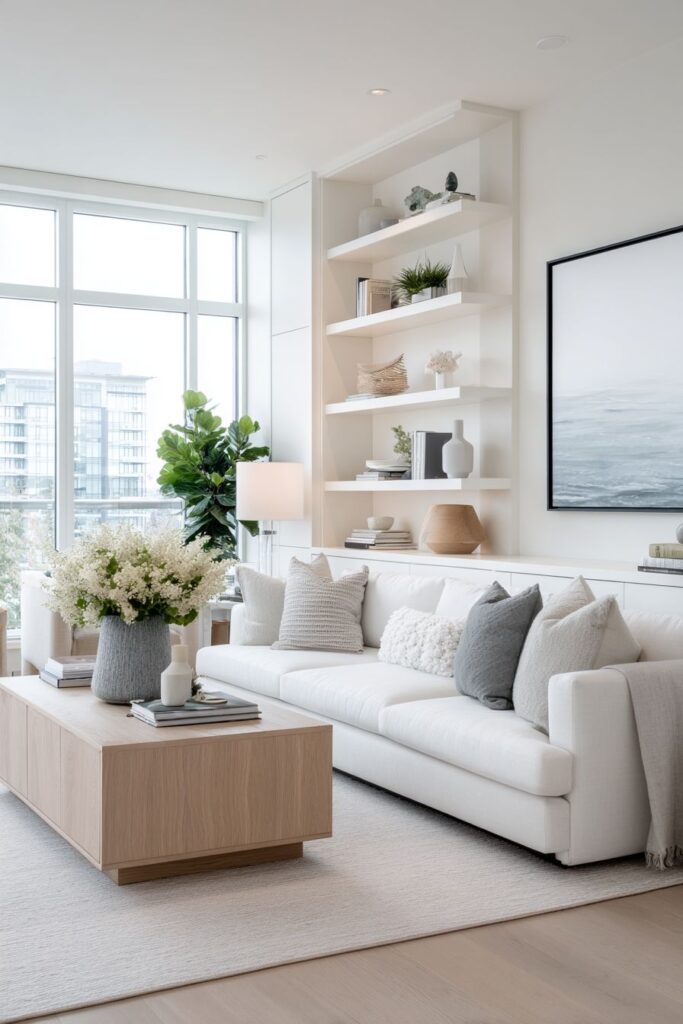
White floating shelves mounted on the wall provide display and storage space without the visual and physical bulk of freestanding bookcases or cabinets. Floating shelves seem to defy gravity, creating storage that feels light and airy rather than heavy or imposing. Light wood flooring maintains an open feeling, its pale tone extending the white palette downward while the wood grain adds warmth and visual interest.
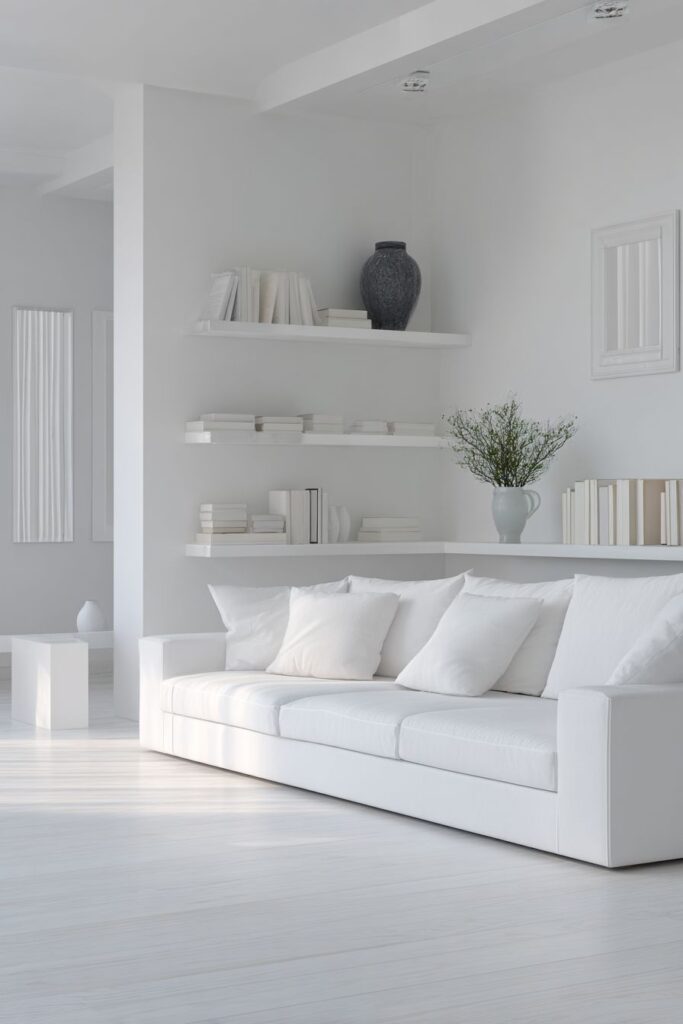
Strategic use of mirrors in white frames amplifies natural light and creates the illusion of expanded space—one of the oldest tricks in the small space playbook but no less effective for being time-tested. The mirrors reflect windows, effectively doubling the perceived natural light while creating depth that makes the compact white living room feel larger and more open than its actual square footage suggests.
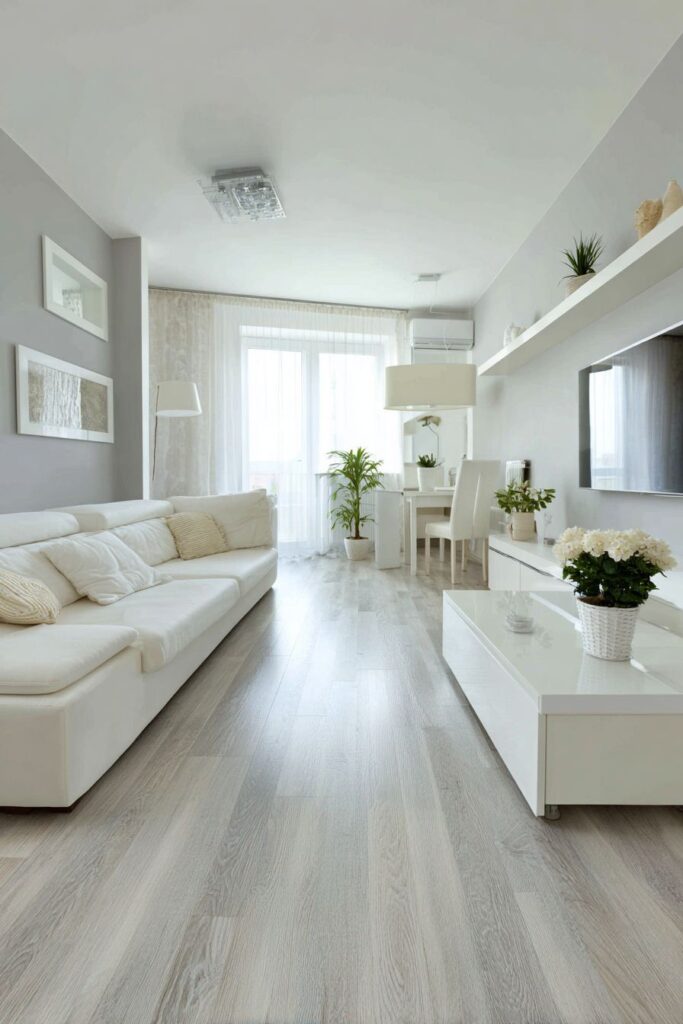
Key Design Tips:
- Choose multi-functional furniture like sleeper sofas with storage for small white living rooms
- Use floating shelves instead of bulky bookcases to maintain visual lightness and open floor space
- Install mirrors strategically to reflect windows and amplify natural light
- Keep flooring light to extend the sense of space rather than creating visual breaks with dark floors
- Resist the temptation to fill every corner—negative space actually makes small rooms feel larger
19. Bohemian Layered Texture
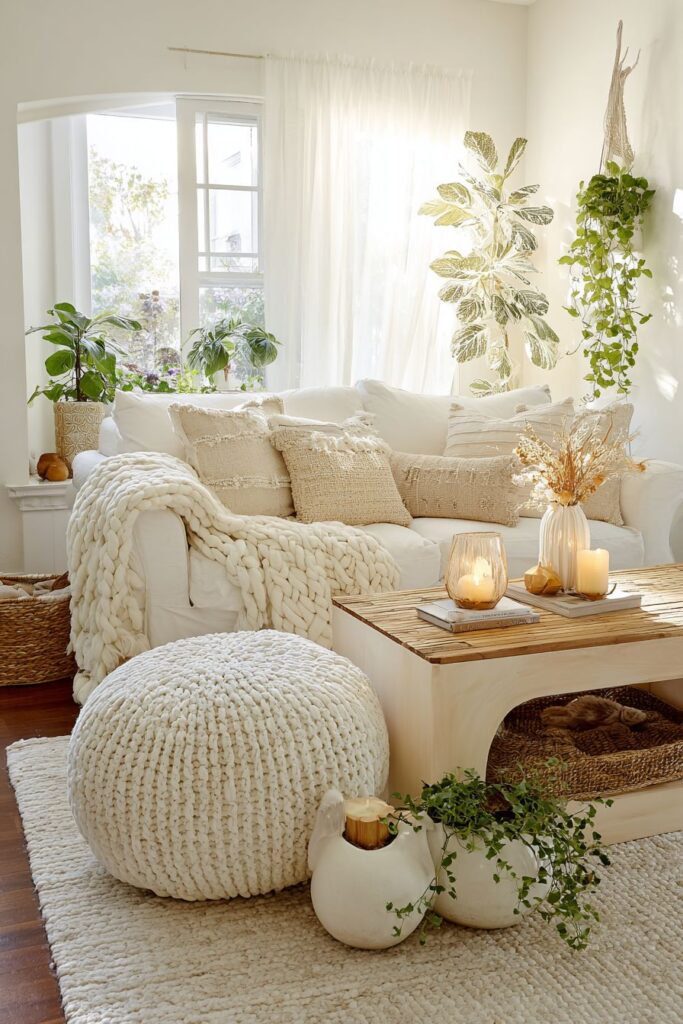
Bohemian style celebrates eclecticism and personal expression, and this white living room demonstrates how boho sensibilities can coexist with a predominantly white palette. A white cotton sofa serves as the foundation, but it’s the layering that creates the bohemian magic—cream macramé throw pillows and a chunky knit white blanket add texture variations that make the simple sofa visually complex and tactilely inviting. Each textile tells its own story through its weave, its irregularities, its handcrafted qualities.
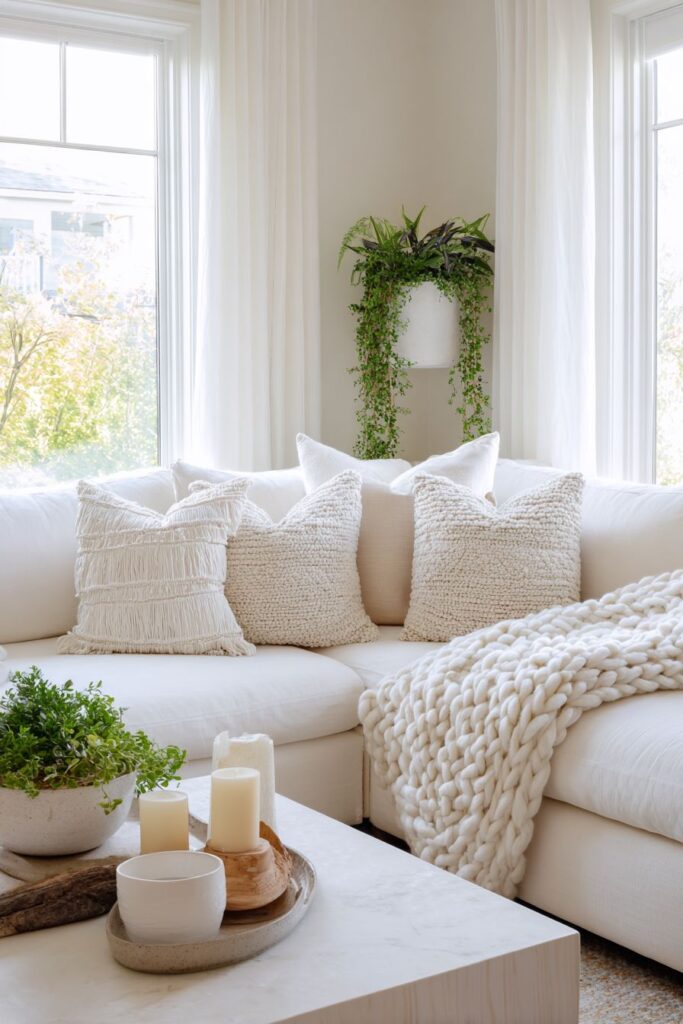
A low white painted wooden coffee table displays candles and organic decor items, creating a collected-over-time aesthetic rather than a matched-set formality. Multiple white ceramic planters with trailing greenery add life and visual movement as plants spill and cascade, softening hard edges and bringing nature indoors. The varied planter sizes and the organic growth patterns of different plants create the artful asymmetry that bohemian style embraces.
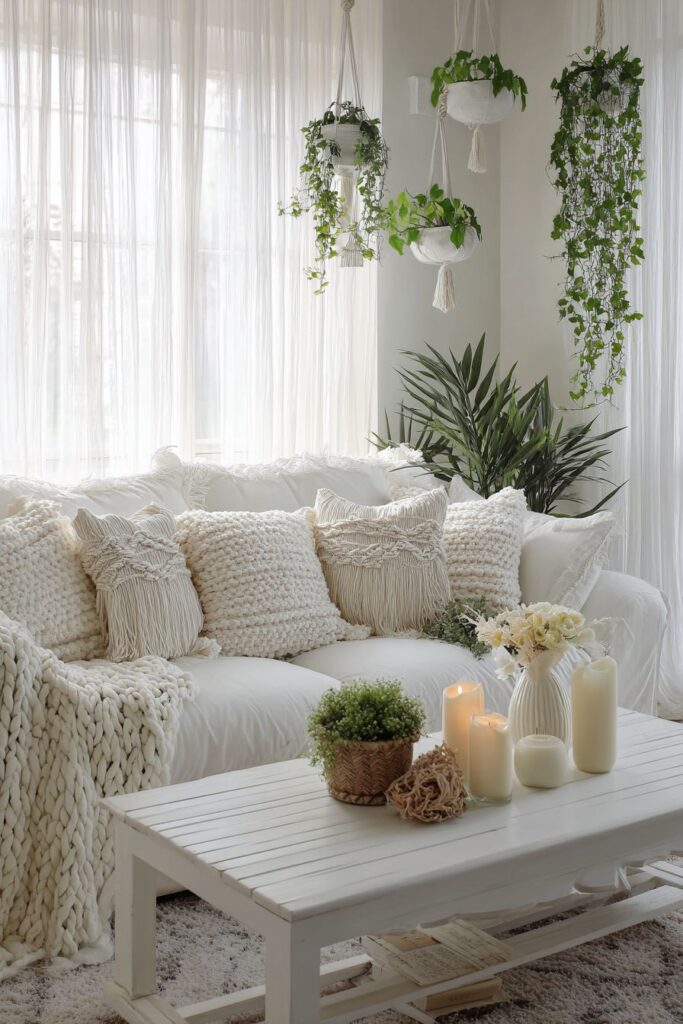
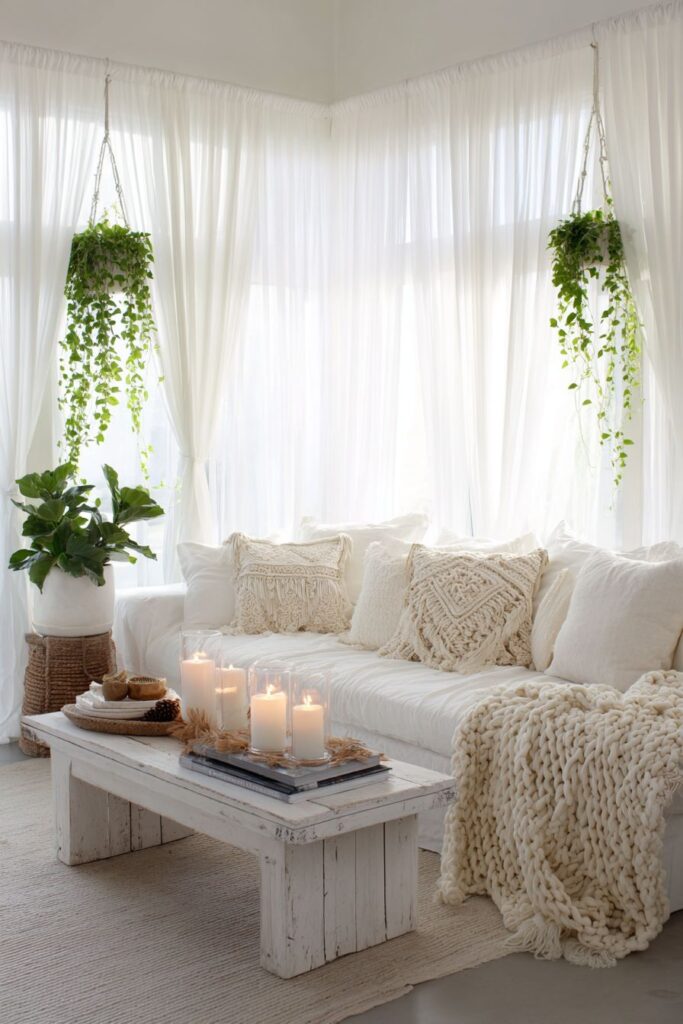
Soft natural lighting through gauzy white curtains creates a dreamy atmosphere, the diffused quality perfect for the bohemian aesthetic’s romantic sensibilities. This white living room feels like a peaceful retreat where creativity flourishes and personal expression matters more than design rules. The abundance of white creates cohesion despite the eclectic layering, proving that bohemian doesn’t require bold colors to feel warm and collected.
Key Design Tips:
- Layer multiple textures in similar white and cream tones to create bohemian richness without color chaos
- Incorporate handcrafted textiles like macramé and chunky knits for authentic boho character in white living rooms
- Use multiple plants in varied containers to create lush, layered greenery
- Choose low, casual furniture forms rather than formal traditional pieces
- Display collected objects and candles to create personal, intimate styling that reflects individual taste
20. Vaulted Ceiling Grandeur
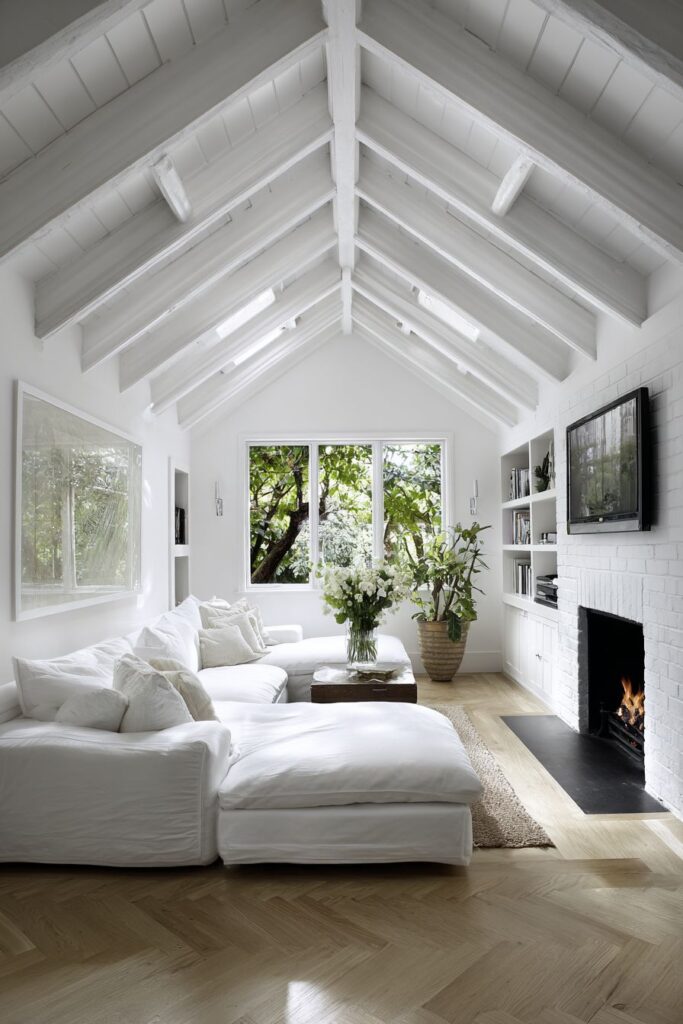
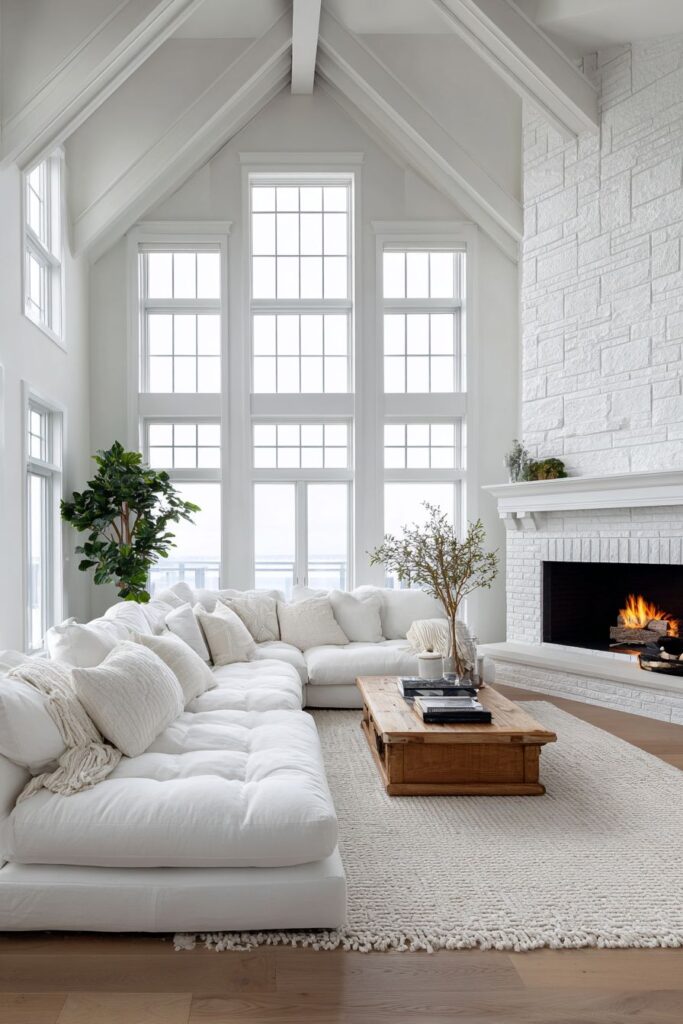
Architectural drama reaches its peak in this white living room with vaulted ceiling featuring white painted exposed wooden beams that create stunning visual interest and emphasize the space’s impressive vertical dimension. The beams draw the eye upward in a dramatic sweep, transforming what could be empty overhead space into a sculptural focal point. Their white paint maintains the cohesive monochromatic palette while their three-dimensional presence adds depth and shadow play that changes throughout the day as natural light shifts.
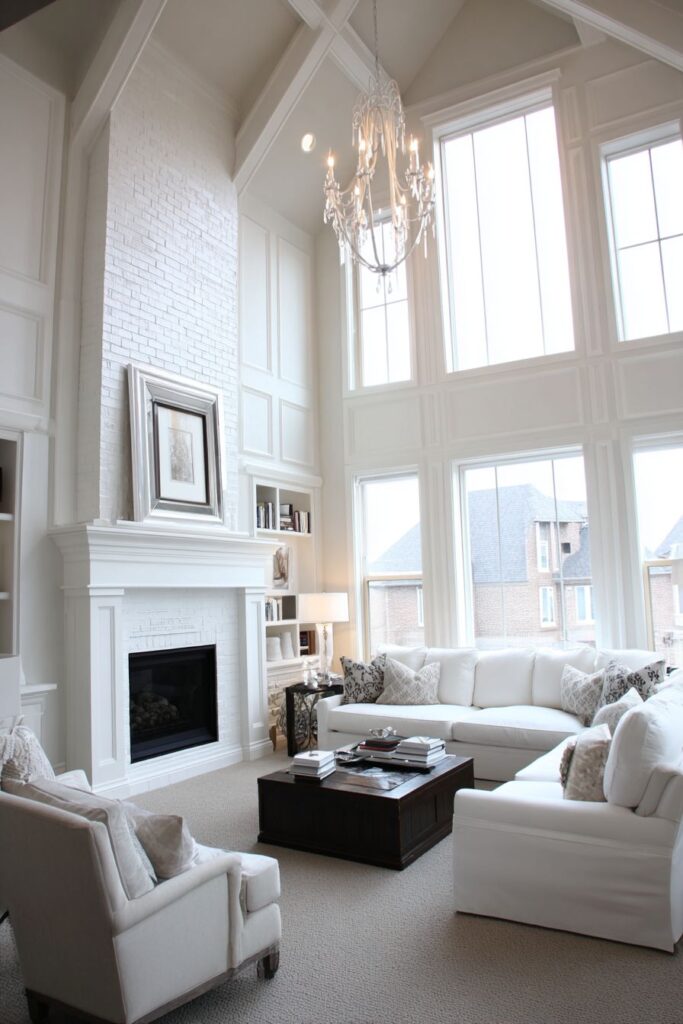
A large white sectional sofa is arranged to take advantage of the vertical space, its generous proportions appropriate for the room’s grand scale. In rooms with high ceilings, furniture must be substantial enough to hold its own—pieces that work beautifully in standard eight-foot ceiling rooms can appear lost and insignificant in double-height spaces. The sectional’s size creates proper visual weight while providing ample seating for family and guests.
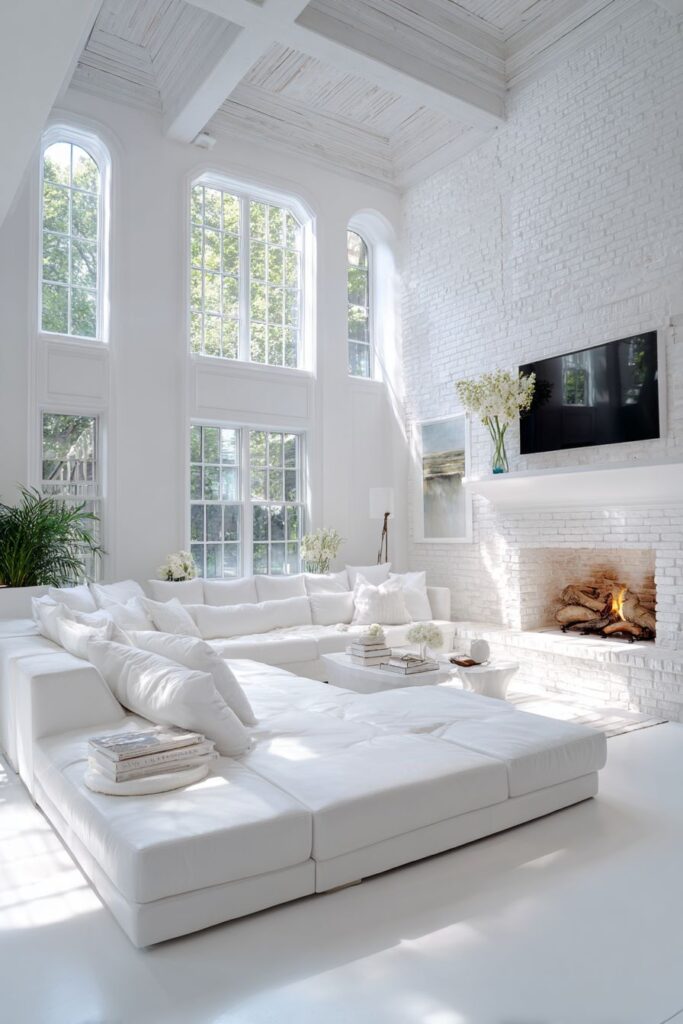
A white brick fireplace wall adds textured dimension to this already dramatic white living room, its dimensional surface creating visual interest at eye level while the vaulted ceiling provides drama above. Oversized windows with white trim flood the double-height space with natural light, creating a bright, airy atmosphere despite the room’s impressive size. The interplay of white surfaces, natural shadows, and architectural details creates a living space that feels both grand and welcoming, formal yet comfortable.
Key Design Tips:
- Paint exposed beams white in vaulted ceiling rooms to maintain cohesive design while preserving their architectural drama
- Choose large-scale furniture for rooms with high or vaulted ceilings to maintain proper proportion
- Add textured wall surfaces like brick or stone to provide visual interest at eye level in tall rooms
- Install oversized windows when possible to balance vertical space with abundant natural light
- Consider the view from upper levels or balconies when arranging furniture in double-height white living rooms
Why These White Living Room Designs Work
These twenty white living room designs represent the best approaches to creating beautiful, functional spaces using white as the primary palette. Each design succeeds because it understands fundamental principles that make white living rooms work: the importance of texture in creating visual interest without color, the necessity of varied white tones to prevent flatness, the role of natural materials in adding warmth, and the critical relationship between white surfaces and natural light.
White living rooms excel at making spaces feel larger and more open than they actually are. This optical expansion happens because white reflects approximately 80% of light, compared to darker colors that absorb light. This reflectivity means white living rooms remain bright longer into the evening, require less artificial lighting during the day, and create a sense of airiness that darker palettes simply cannot match. For homes with limited natural light or smaller footprints, white becomes not just aesthetic choice but practical solution.
The versatility demonstrated across these designs proves white works with virtually any style preference. From the casual comfort of coastal design to the formal elegance of French country, from minimalist Scandinavian to maximalist bohemian, white serves as the perfect foundation. This adaptability makes white living rooms an excellent choice for those who enjoy evolving their decor over time—the neutral backdrop accommodates changing accent colors, artwork, and accessories without requiring complete redesign.
Texture emerges as the hero in successful white living room design. Without the visual variety that color provides, texture becomes essential for creating depth and interest. Natural linen’s irregular weave, wool’s soft pile, marble’s smooth coolness, wood’s organic grain, leather’s developing patina, knit fabrics’ dimensional patterns—each texture contributes unique visual and tactile qualities. The most successful white living rooms feature multiple texture types, creating layered interest that rewards both distant viewing and close examination.
Material choice significantly impacts how white living rooms feel. Natural materials like cotton, linen, wool, wood, marble, and leather bring warmth and authenticity that synthetic alternatives cannot replicate. These natural materials age beautifully, developing character and patina that actually improves their appearance over time. They also connect inhabitants to the natural world, satisfying deep human needs for organic elements in living spaces.
The relationship between white living rooms and natural light cannot be overstated. White surfaces transform natural light, bouncing it throughout spaces and creating constantly changing atmospheres as the sun moves across the sky. Morning light in white living rooms feels crisp and energizing, midday light appears bright and active, afternoon rays create warmth and gold tones, and evening light becomes soft and romantic. This responsive quality means white living rooms offer different experiences throughout the day, never feeling static or boring.
Functionality remains paramount despite the focus on aesthetics. The best white living room designs incorporate smart storage solutions, multi-functional furniture, washable slipcovers, durable materials, and practical layouts. White should never be chosen at the expense of livability—families with children and pets can absolutely maintain beautiful white living rooms by selecting appropriate materials, investing in quality construction, and designing for real life rather than magazine perfection.
These white living room designs also succeed because they understand scale and proportion. Furniture sizing matches room dimensions, accessories don’t overwhelm spaces, and negative space receives as much consideration as filled areas. In small white living rooms, furniture floats away from walls to create circulation space. In large white living rooms with vaulted ceilings, substantial furniture and architectural elements prevent the space from feeling empty or echo-prone.
The strategic use of contrast prevents white living rooms from becoming monotonous. Natural wood tones, whether in flooring, furniture legs, or accent tables, provide essential warmth and visual anchoring. Grey veining in marble surfaces adds subtle pattern. Greenery from plants introduces life and organic form. Black and white photography or artwork creates tonal variety without adding color. Even varied white tones—pure white, ivory, cream, bone, antique white—create contrast when thoughtfully combined.
Light layering enhances white living rooms’ functionality and atmosphere. Natural light provides primary illumination, but successful designs incorporate multiple artificial light sources: recessed ceiling lights for ambient illumination, table and floor lamps for task lighting and intimacy, integrated LED strips for accent lighting, and decorative fixtures for visual interest. This layered approach ensures white living rooms remain beautiful and functional from dawn through late evening.
The psychological benefits of white living rooms deserve recognition. White promotes feelings of cleanliness, freshness, peace, and mental clarity. In our overstimulated world filled with visual noise and constant input, white living rooms offer respite—spaces where the eyes can rest and the mind can decompress. This calming quality makes white particularly appealing for primary living spaces where families gather to relax and recharge.
Maintenance concerns often arise regarding white living rooms, but modern materials and smart design choices make white surprisingly practical. Washable slipcovers, treated fabrics, sealed surfaces, and wipeable finishes mean today’s white living rooms can withstand daily use. The key lies in selecting appropriate materials for your lifestyle rather than avoiding white altogether. Families with young children might choose performance fabrics and leather, while empty-nesters can indulge in more delicate linens and silks.
These twenty designs demonstrate that white living rooms need not be minimalist or sparse. Bohemian designs layer textures and accessories abundantly, French country incorporates curves and vintage pieces generously, and maximized storage solutions prove white accommodates collections and belongings beautifully. The common thread isn’t minimalism but intentionality—every piece serves a purpose and contributes to the overall aesthetic.
The investment value of quality white living room design should not be overlooked. Well-executed white interiors have timeless appeal that transcends trends, protecting your investment in furniture and finishes. While bold color choices may date quickly, white’s neutrality ensures your living room remains current year after year. Quality natural materials age beautifully, becoming more valuable and attractive over time rather than looking worn or dated.
Customization possibilities in white living rooms are virtually endless. The neutral backdrop accommodates seasonal decoration, allowing you to transform the space’s mood with simple accessory changes. Colorful pillows and throws can introduce pattern and hue for spring and summer, while richer textures create coziness for fall and winter. Holiday decorating becomes easier against white’s blank canvas. This flexibility means your white living room can evolve with your changing tastes without requiring major renovations.
Environmental considerations favor white living rooms as well. Maximizing natural light reduces electricity consumption for artificial lighting. White’s light-reflective properties can reduce cooling costs by not absorbing heat from sunlight. Choosing natural, sustainably sourced materials aligns with environmental values. Quality pieces meant to last decades rather than follow fast-furniture trends reduces waste and consumption. A thoughtfully designed white living room can be both beautiful and environmentally responsible.
The social aspects of white living room design matter too. These spaces photograph beautifully, making them ideal for those who enjoy sharing their homes on social media or hosting gatherings. White’s visual appeal translates excellently to photography, requiring less editing and correction than darker or busier spaces. For those who entertain frequently, white living rooms provide sophisticated backdrops that make guests feel welcomed into elegant, carefully considered environments.
Conclusion
Creating a beautiful white living room requires understanding that white is not simply the absence of color but a rich, complex palette in its own right. The twenty designs explored in this article demonstrate the remarkable versatility and beauty achievable within predominantly white schemes. From the textured luxury of layered linens to the architectural drama of vaulted ceilings with exposed beams, from the casual comfort of coastal slipcovered sofas to the formal elegance of symmetrical furniture arrangements, white proves itself endlessly adaptable to different styles, needs, and preferences.
The key principles that unite these successful designs—texture variety, tonal diversity within the white spectrum, incorporation of natural materials, strategic use of contrast, and thoughtful manipulation of natural light—provide a roadmap for creating your own white living room sanctuary. Whether you’re working with a compact urban apartment or a spacious suburban home, whether your style leans minimalist or maximalist, traditional or contemporary, white offers the perfect foundation for expressing your unique design vision.
Remember that the best white living rooms are those designed for living, not just looking. Prioritize comfort alongside aesthetics, functionality alongside beauty, and durability alongside style. Choose materials and finishes appropriate for your household’s needs. Don’t fear white because of maintenance concerns—modern materials and smart design choices make white practical for real life, including homes with children and pets.
As you embark on creating or refreshing your white living room, start with inspiration but trust your instincts. Consider which textures draw you, which furniture styles feel comfortable, which natural materials resonate with your values. Experiment with paint samples to find the perfect white for your light conditions—what appears bright white in the store may read cream in your home, or vice versa. Build your design gradually, living with pieces before committing to the next addition, ensuring each element enhances your daily experience.
The beauty of white living room design lies not just in its visual appeal but in its ability to create spaces that enhance wellbeing, facilitate connection, and provide peaceful refuge from the world’s chaos. In white’s gentle embrace, we find room to breathe, space to think, and freedom to be ourselves. Whether you incorporate all twenty design ideas or draw inspiration from just one, may your white living room become a cherished sanctuary that brings daily joy and lasting beauty to your home.
"As an Amazon Associate, I earn from qualifying purchases."
