
In a world obsessed with perfection and pristine aesthetics, the Japanese philosophy of wabi-sabi offers a refreshing alternative that celebrates the beauty of imperfection, impermanence, and incompleteness. When applied to interior design, particularly in living room spaces, wabi-sabi creates environments that feel authentically lived-in, deeply peaceful, and profoundly connected to the natural world. This ancient aesthetic philosophy teaches us to find extraordinary beauty in the ordinary, to appreciate the patina of age, and to embrace the subtle imperfections that make each space uniquely meaningful.
The wabi-sabi living room is not merely a design trend but a way of living that prioritizes mindfulness, simplicity, and acceptance of life’s transient nature. These spaces feature weathered wood with visible grain patterns, handcrafted ceramics with slight irregularities, natural textiles that show gentle wear, and organic forms that celebrate rather than hide their imperfections. The color palette draws from earth tones and muted neutrals, creating environments that feel grounded, serene, and timelessly elegant.
Throughout this comprehensive guide, we’ll explore twenty distinct approaches to creating wabi-sabi living rooms, each offering unique insights into how this philosophy can transform your home into a sanctuary of authentic beauty. From meditation corners that invite contemplation to reading nooks that celebrate the worn beauty of well-loved books, these designs demonstrate how embracing imperfection can lead to spaces of profound peace and genuine comfort.
1. Natural Oatmeal Linen Sanctuary
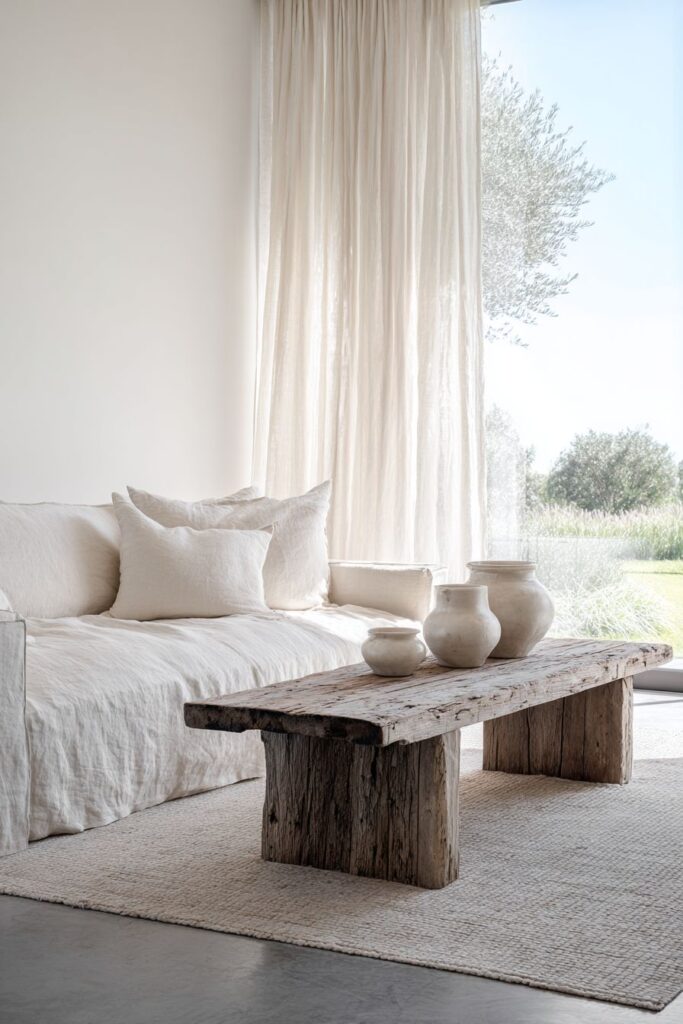
The foundation of this wabi-sabi living room rests upon a low-profile linen sofa in natural oatmeal, where subtle fabric imperfections and gentle wrinkles tell the story of daily life and comfort. The sofa’s relaxed silhouette embodies the wabi-sabi principle of finding beauty in the unstructured and organic, while its neutral tone creates a calming backdrop that allows other natural elements to shine. The linen’s inherent tendency to wrinkle is not seen as a flaw but as evidence of authentic living and natural behavior of materials.
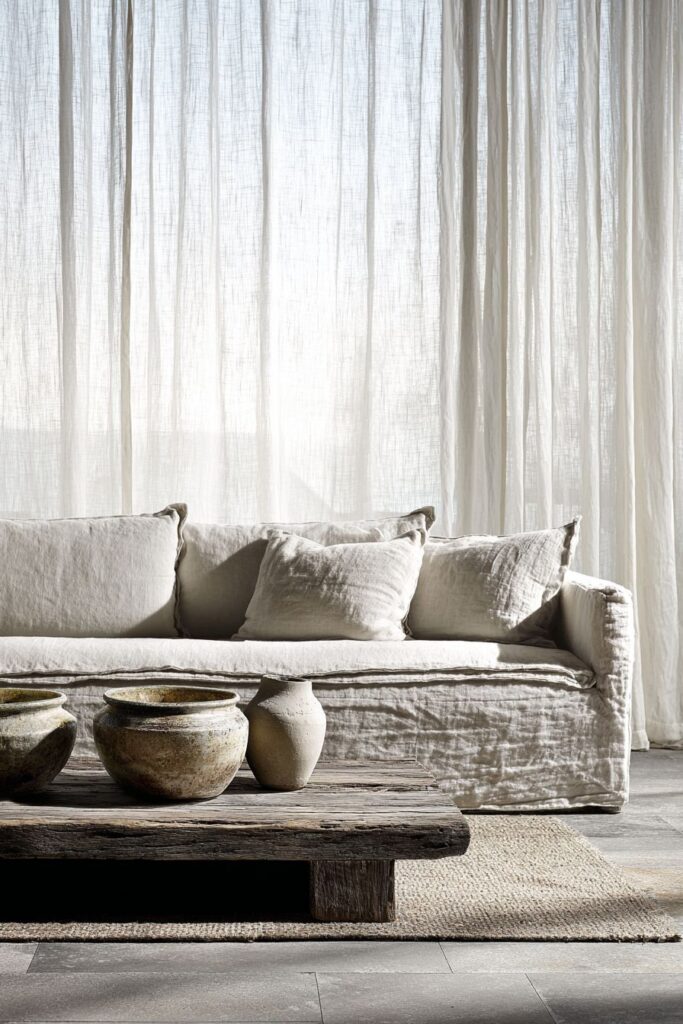
At the room’s heart sits a reclaimed wood coffee table, its surface bearing the beautiful scars of time through visible knots and weathered patina. Each mark and imperfection speaks to the wood’s history, creating a piece that serves as both functional furniture and living artwork. The table’s organic character is enhanced by ceramic vessels with flowing, imperfect shapes that seem to have emerged naturally from the earth rather than being precisely manufactured.
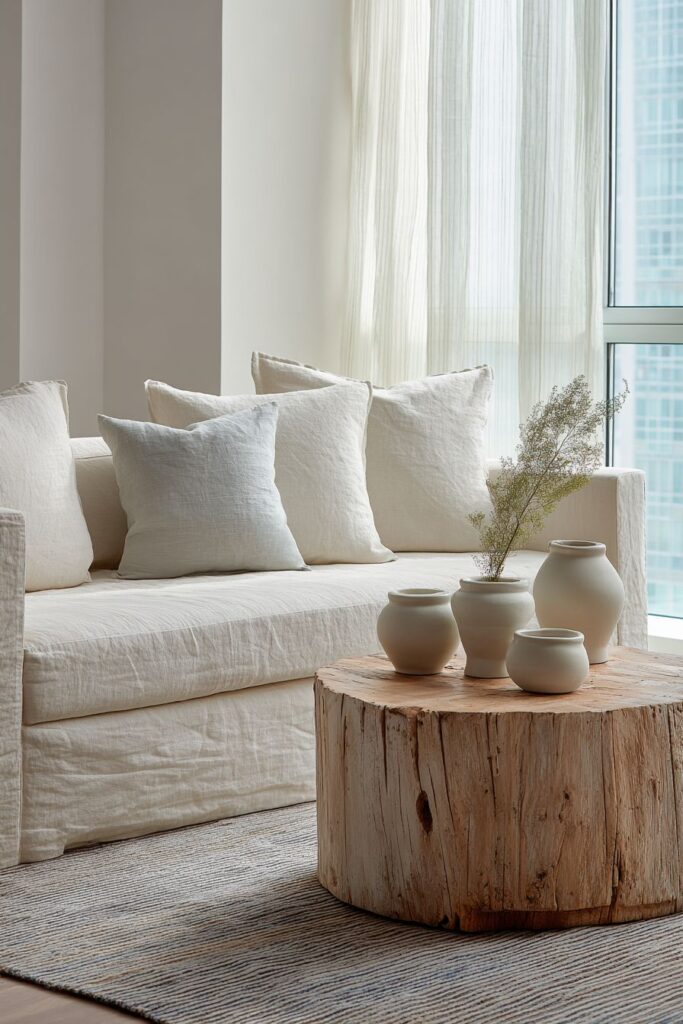
Beneath this arrangement, a tatami-style area rug adds layers of natural texture while maintaining the room’s commitment to organic materials. The rug’s woven patterns and natural fiber variations create subtle visual interest without overwhelming the space’s serene atmosphere. Soft natural light filtering through sheer curtains creates an ever-changing play of gentle shadows, transforming the room throughout the day and celebrating the transient beauty that wabi-sabi treasures.
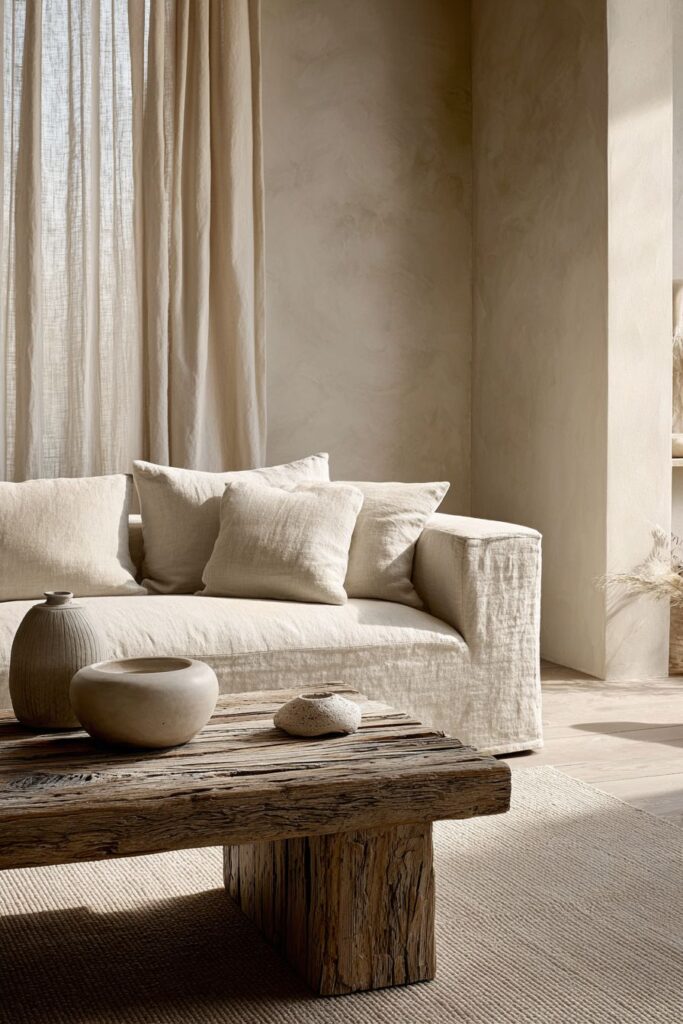
The photography technique used to capture this space emphasizes the beauty of imperfection through balanced exposure that highlights the natural material textures. Wide-angle shots reveal how each element works harmoniously despite—or perhaps because of—their individual imperfections, creating a cohesive environment that feels both intentional and effortlessly natural.
Key Design Tips:
- Choose furniture with visible imperfections rather than hiding natural wear patterns and material characteristics
- Layer natural textures through rugs, throws, and cushions made from organic fibers like linen, cotton, and hemp
- Embrace soft, natural lighting by using sheer curtains or blinds that filter rather than block sunlight
- Select ceramics with organic shapes that show the maker’s hand rather than machine precision
- Allow fabrics to drape naturally without excessive styling or artificial arrangement
2. Handcrafted Pottery Gallery
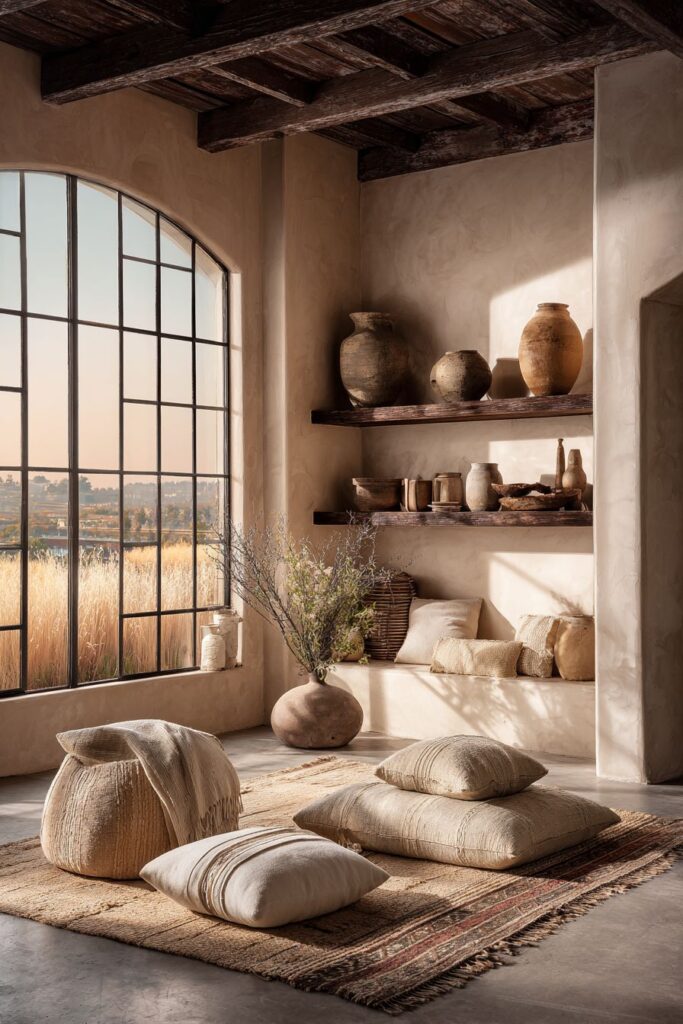
This wabi-sabi living room transforms the display of everyday objects into an art form through a carefully curated collection of handcrafted pottery arranged on floating shelves. The shelves themselves, crafted from naturally aged cedar, showcase visible grain patterns and natural color variations that serve as the perfect backdrop for ceramic vessels. Each piece of pottery bears the subtle irregularities that mark it as handmade, from slight asymmetries to glaze variations that occurred during the firing process.
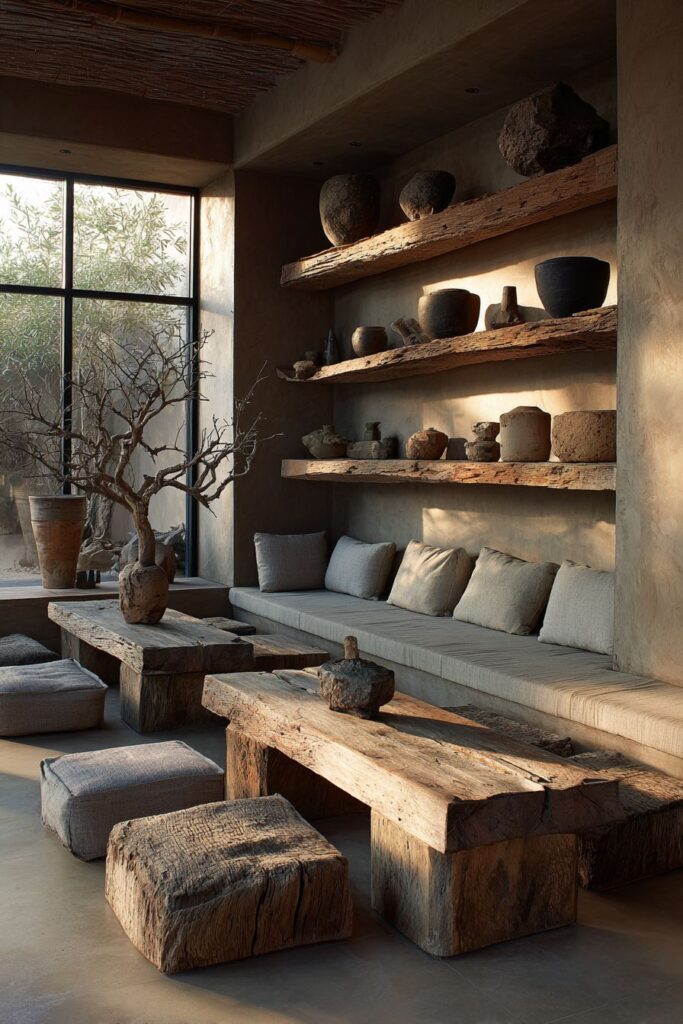
The room’s seating arrangement abandons traditional furniture in favor of neutral linen cushions scattered across the floor, creating an informal and adaptable space that encourages relaxed gathering and conversation. This floor seating concept reflects the wabi-sabi appreciation for simplicity and connection to the earth, while the natural linen’s tendency to wrinkle and show use adds to the room’s authentic, lived-in character.
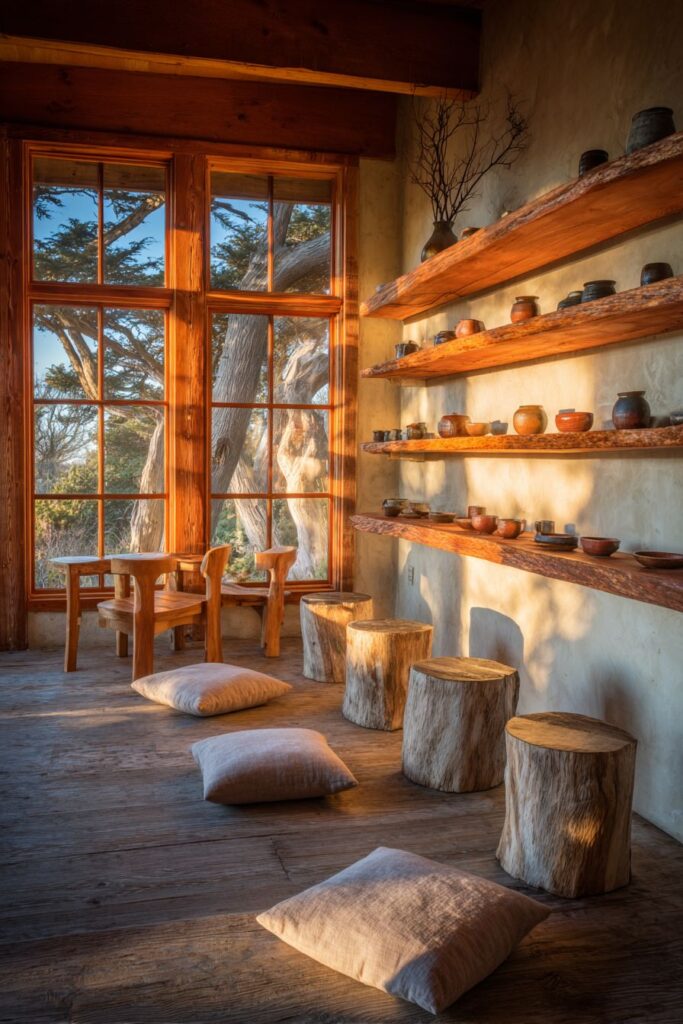
A single branch arrangement in a rough ceramic vase serves as the room’s focal point, demonstrating how wabi-sabi finds profound beauty in simple, natural forms. The branch’s organic curves and the vase’s imperfect surface create a harmonious relationship that celebrates both the temporary nature of seasonal beauty and the enduring appeal of handcrafted objects.
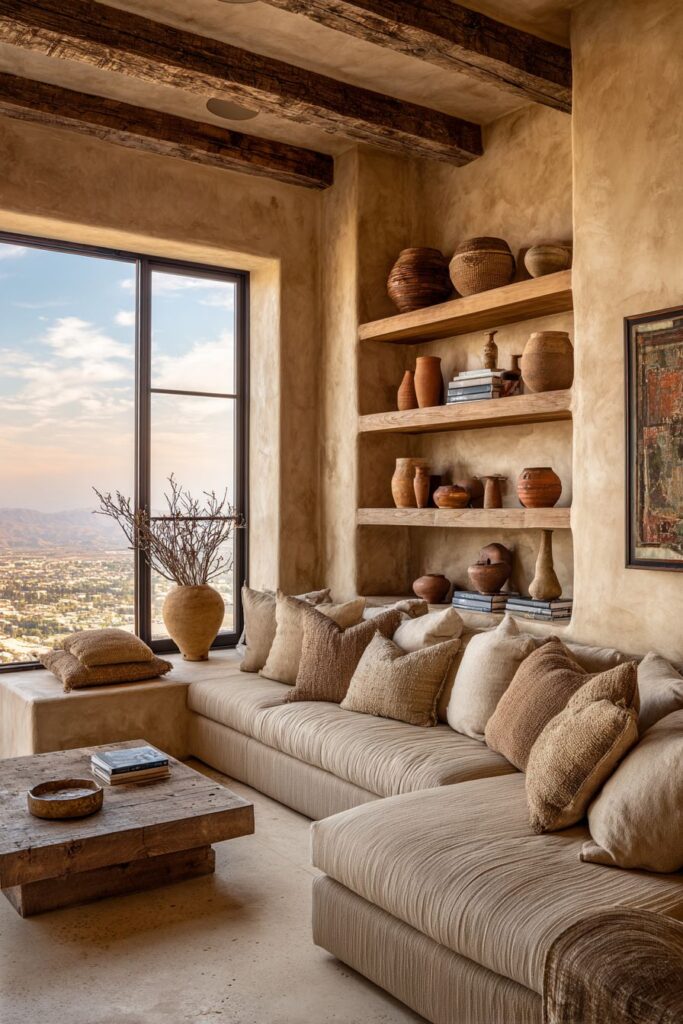
Warm golden hour light streaming through large windows bathes the entire space in a honey-colored glow that emphasizes the earthy textures and natural materials. Professional photography techniques capture this magical lighting while highlighting the authentic imperfections that make each element unique, from the wood grain in the shelves to the subtle variations in ceramic glazes.
Key Design Tips:
- Display pottery collections on natural wood shelves that complement rather than compete with the ceramic pieces
- Use floor cushions for flexible seating that can be rearranged based on needs and occasions
- Create seasonal focal points with single branch or flower arrangements in handmade vessels
- Position furniture to capture golden hour light for the most flattering natural illumination
- Mix pottery pieces of varying sizes and finishes to create visual interest through imperfection
3. Vintage Wood Character Collection
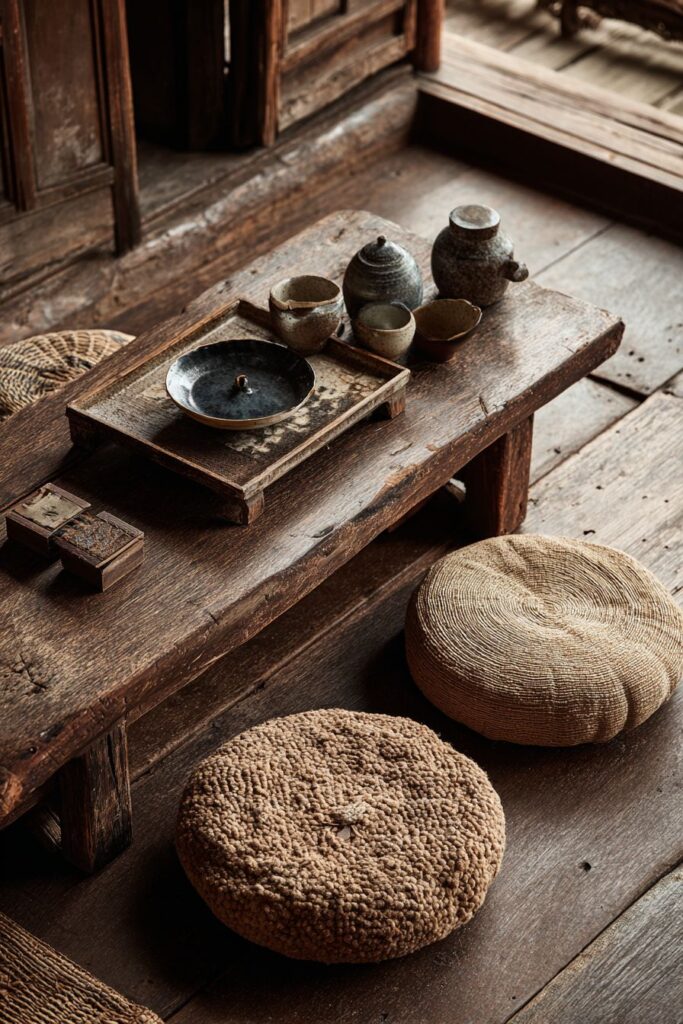
Mismatched vintage wooden furniture forms the cornerstone of this wabi-sabi living room, where each piece tells its own story through natural wear patterns and distinctive character marks. Rather than seeking uniformity, this approach celebrates the unique patina and history that comes with age, creating a space that feels collected over time rather than purchased all at once. The varied wood tones and finishes create depth and interest while maintaining an organic harmony that speaks to the wabi-sabi appreciation for natural aging.
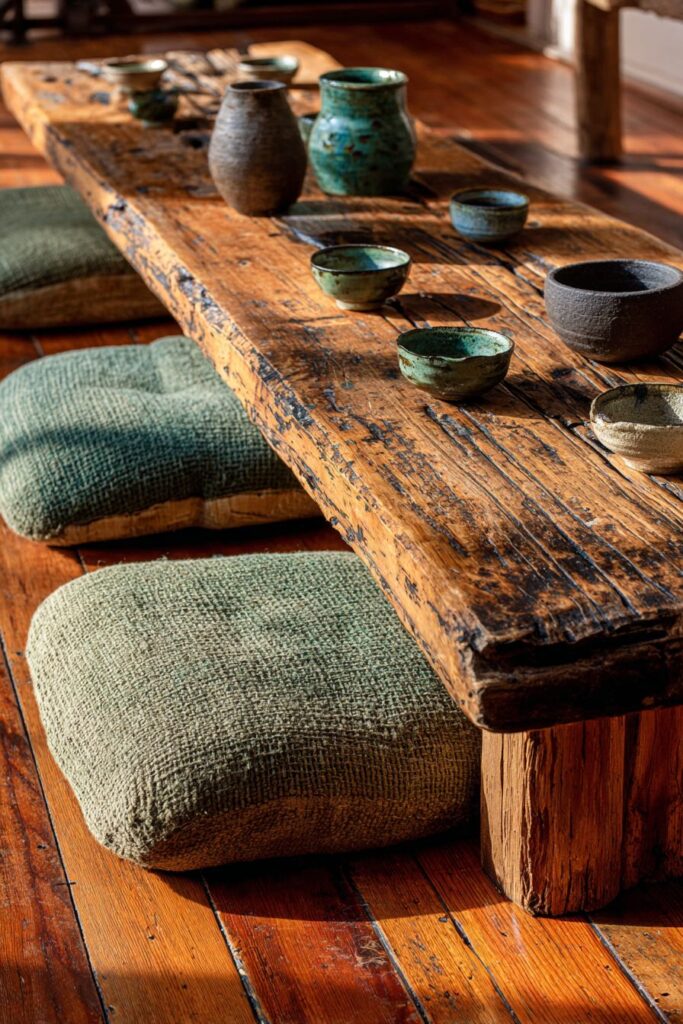
The low Japanese-style table sits gracefully on aged hardwood floors that bear subtle scuffs and patina from years of daily life. These floor imperfections, rather than being seen as flaws, add character and authenticity to the space, creating a foundation that supports the room’s overall philosophy of finding beauty in the well-used and genuinely lived-in.
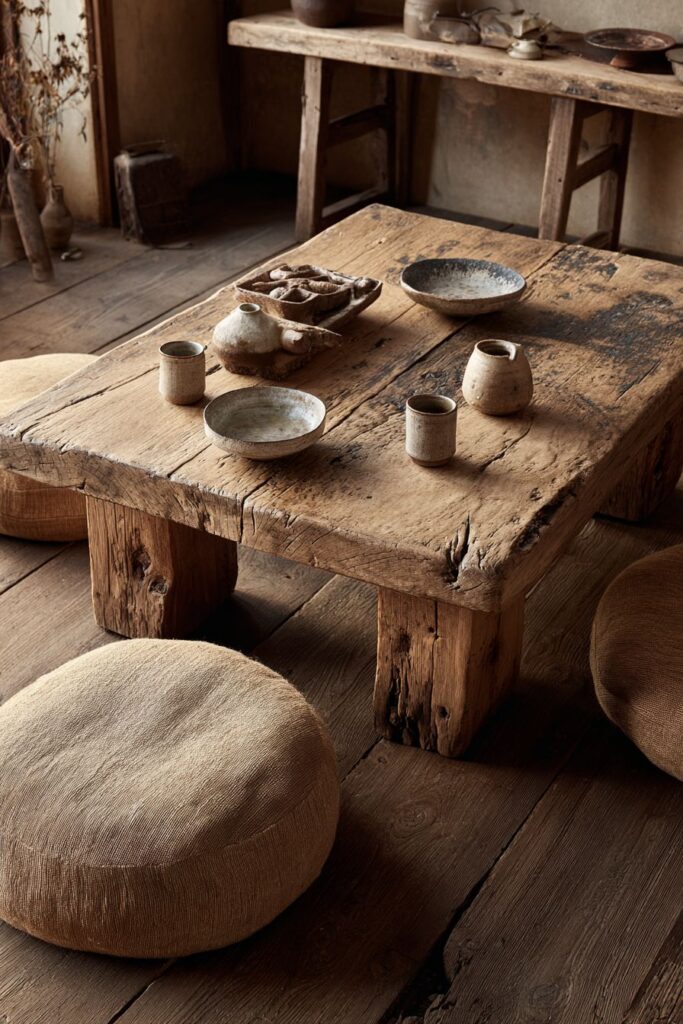
Hand-thrown ceramic bowls and cups scattered throughout the space suggest the rhythms of daily use and the pleasure found in simple rituals like tea drinking or casual dining. Each ceramic piece shows slight variations in shape and glaze that mark it as handmade, while their casual placement reinforces the room’s commitment to authentic, unposed living.
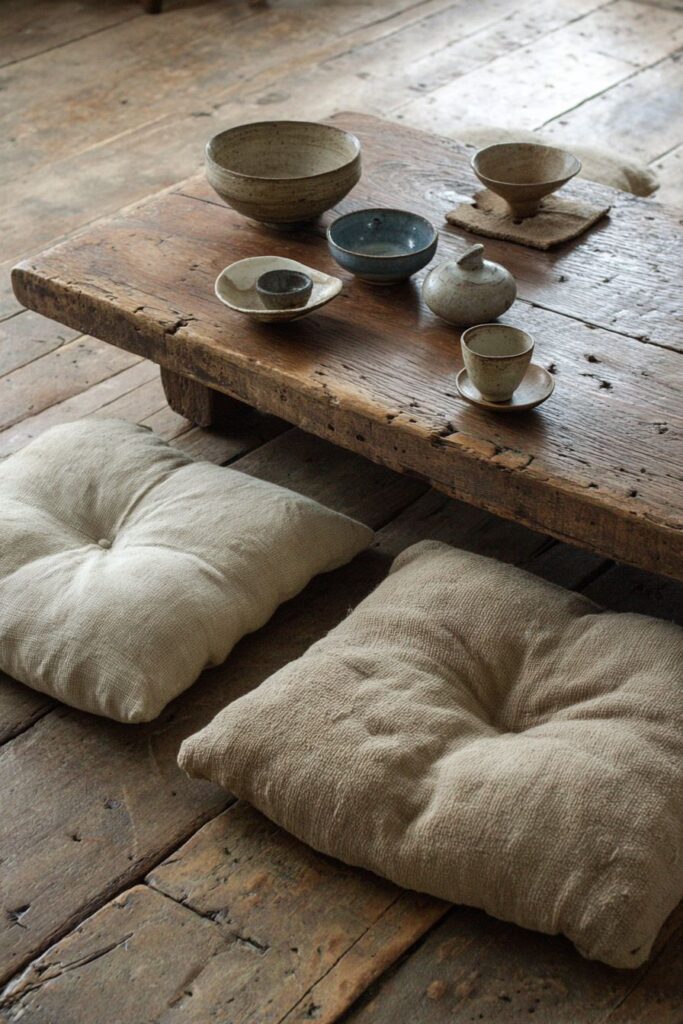
Natural jute floor cushions provide comfortable seating while adding another layer of organic texture to the space. The jute’s natural color variations and slightly rough texture complement the room’s earthy palette while offering practical comfort for extended sitting and relaxation.
Key Design Tips:
- Embrace furniture pieces with different wood tones and finishes for organic variety
- Allow floor imperfections to remain visible as part of the room’s authentic character
- Display handmade ceramics casually throughout the space for daily use and appreciation
- Choose natural fiber cushions and textiles that show gentle wear and aging
- Mix seating heights and styles to create an informal, approachable atmosphere
4. Contemplative Reading Nook
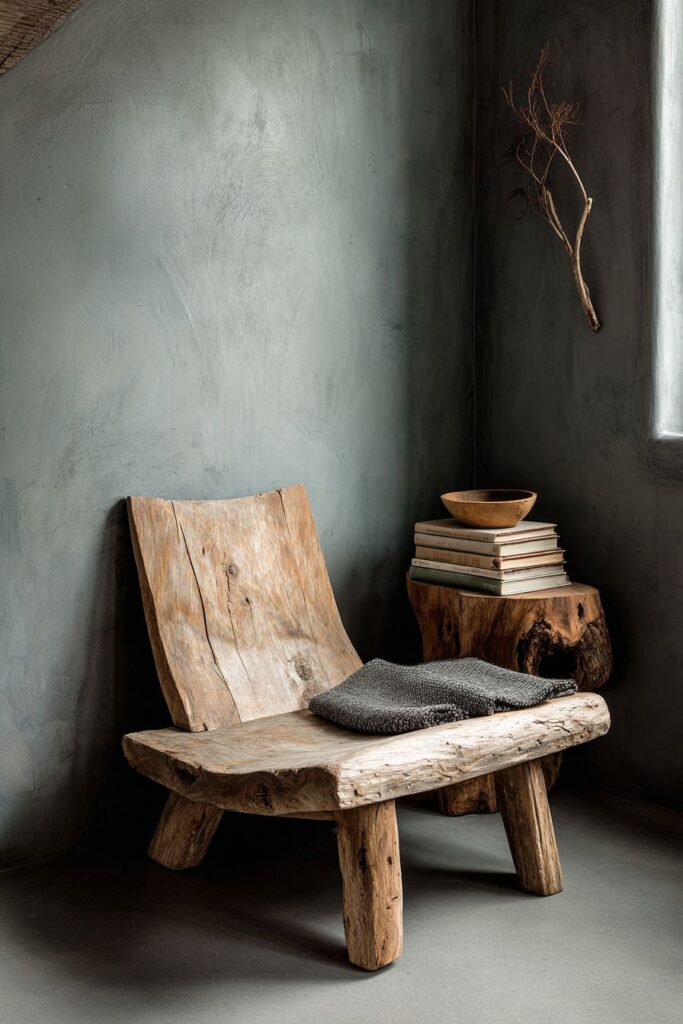
A simple wooden chair with beautiful natural wood grain and gentle weathering creates the perfect contemplative reading corner in this wabi-sabi living room. The chair’s organic imperfections, from small scratches to subtle color variations in the wood, tell the story of countless quiet moments and literary journeys. Its position beside a window maximizes natural light while creating an intimate connection between the indoor sanctuary and the natural world beyond.
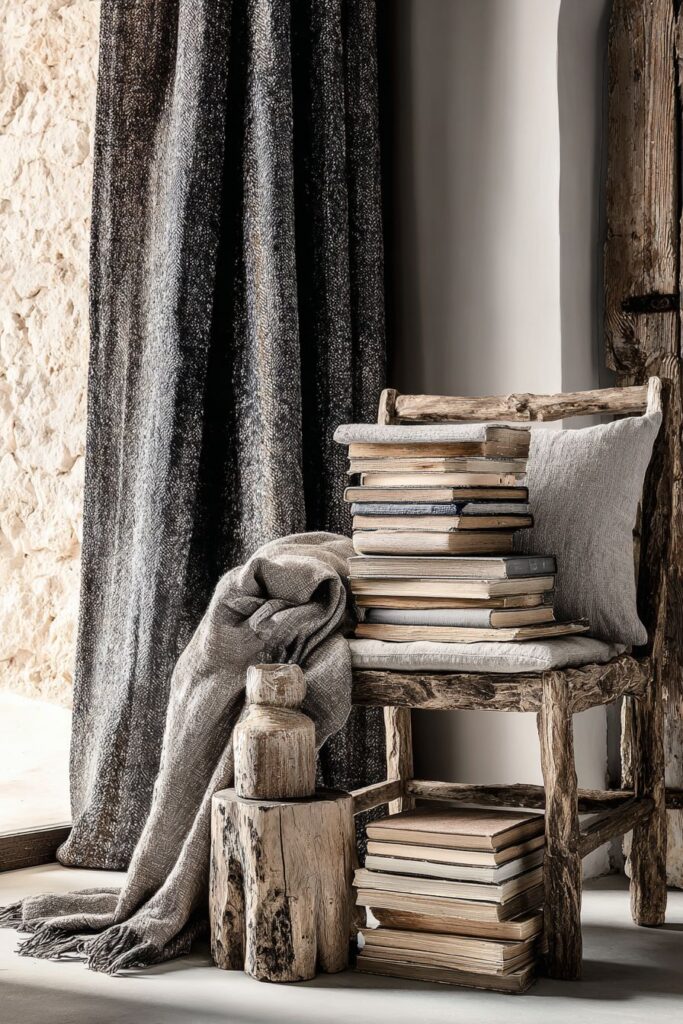
A stack of well-worn books rests on a small side table crafted from live-edge wood, where the natural edge of the timber remains visible and celebrated. The books themselves show the beautiful patina of age and use—slightly faded spines, gentle corner wear, and the soft texture that comes from being lovingly handled over time. This collection speaks to the wabi-sabi appreciation for objects that improve with age and use.
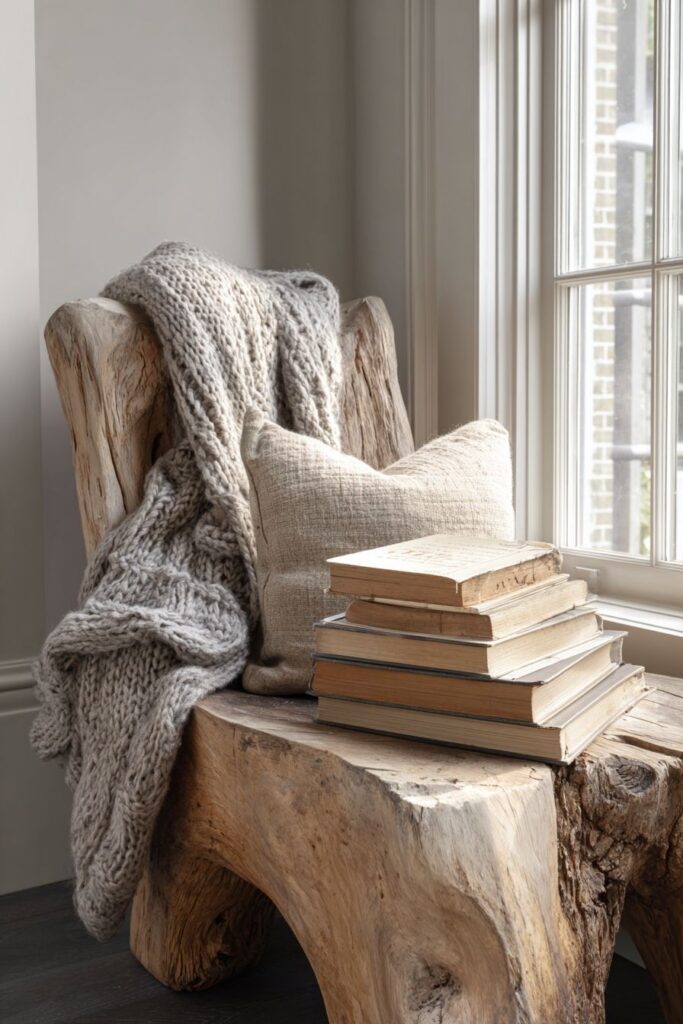
A handwoven wool throw in muted gray is draped casually over the chair, its natural texture and gentle draping adding warmth and comfort to the reading space. The throw’s organic weave and subtle color variations demonstrate the beauty of handmade textiles, while its casual placement reinforces the room’s commitment to authentic, unstudied comfort.
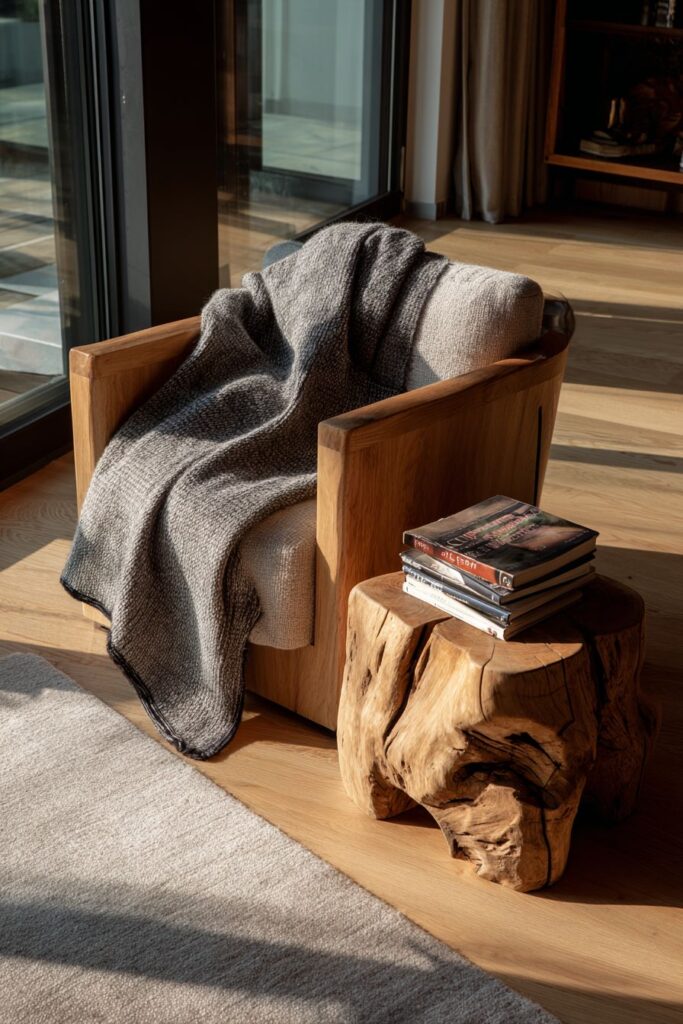
Soft morning light filtering through the window highlights the texture variations in wood, wool, and paper, creating a constantly changing interplay of light and shadow that enhances the meditative quality of the space. Detail-focused photography captures this intimate atmosphere while emphasizing the natural imperfections that make the nook feel genuinely lived-in and loved.
Key Design Tips:
- Position reading furniture near windows to maximize natural light throughout the day
- Display books with visible wear and aging as part of the room’s authentic character
- Choose handwoven textiles that show natural texture variations and organic patterns
- Select furniture with live-edge details that celebrate the natural form of materials
- Create intimate spaces that encourage quiet contemplation and mindful activities
5. Stone Fireplace Sanctuary
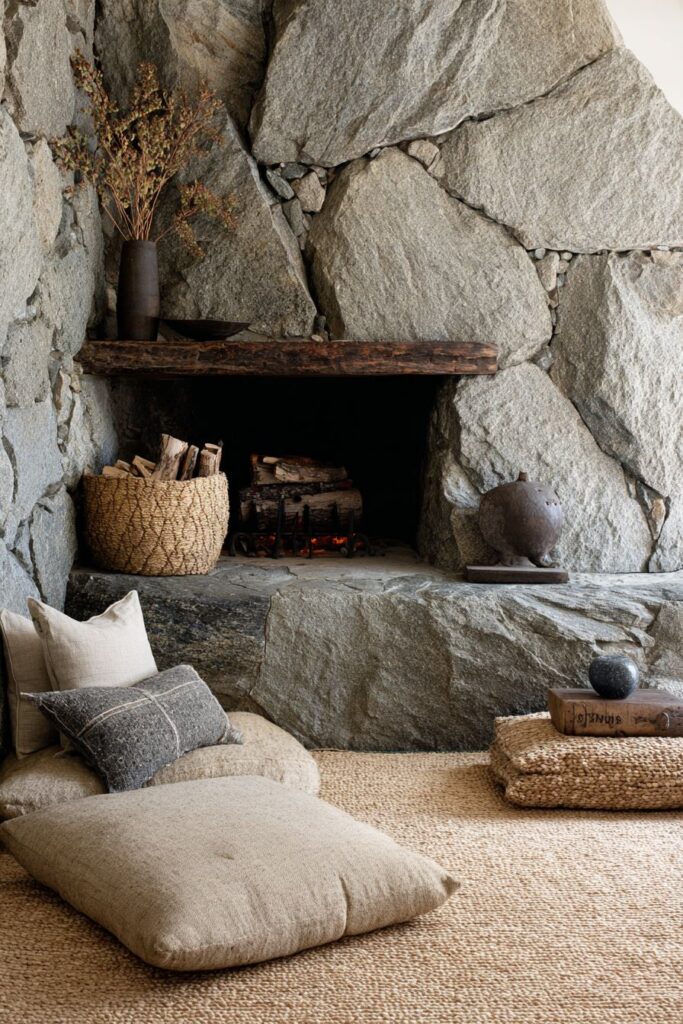
A stone fireplace with irregular natural edges and subtle color variations serves as the commanding focal point of this wabi-sabi living room. The rock face displays the beautiful imperfections that only nature can create—variations in texture, color shifts from mineral deposits, and organic shapes that resist geometric precision. This natural irregularity becomes a source of beauty rather than a flaw to be corrected, embodying the core principles of wabi-sabi aesthetics.
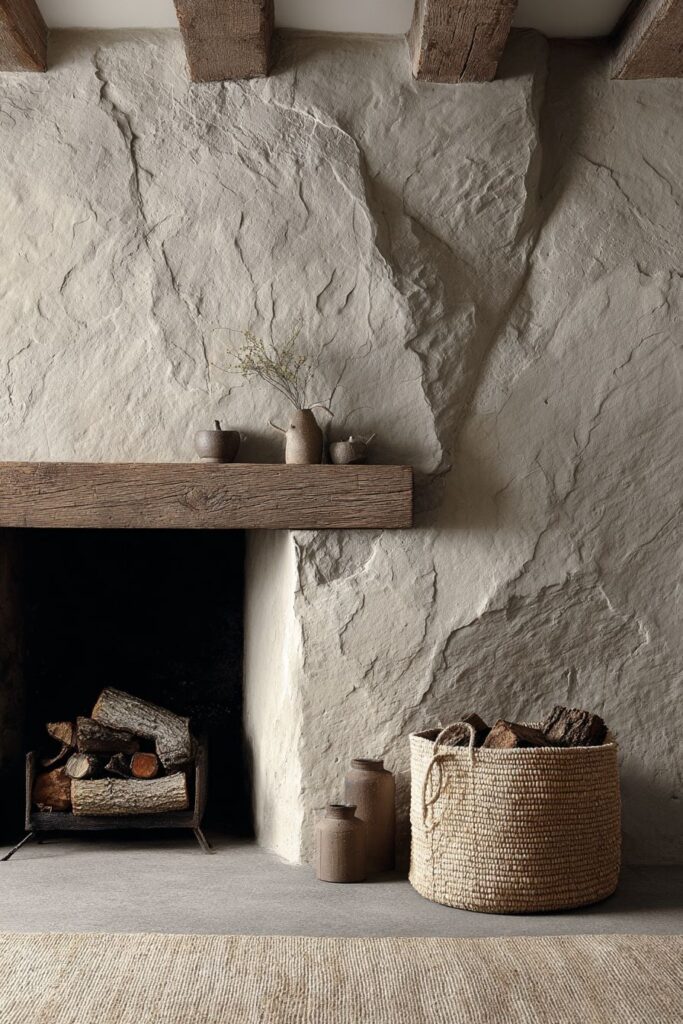
The simple wooden mantel above the fireplace provides a stage for carefully chosen objects with organic forms—perhaps a piece of driftwood, a hand-thrown ceramic bowl, or a collection of smooth river stones. These objects are selected not for their perfection but for their ability to tell stories of natural processes and the passage of time. The mantel itself shows subtle signs of use and aging, from slight color variations to the gentle patina that develops on well-loved wood.
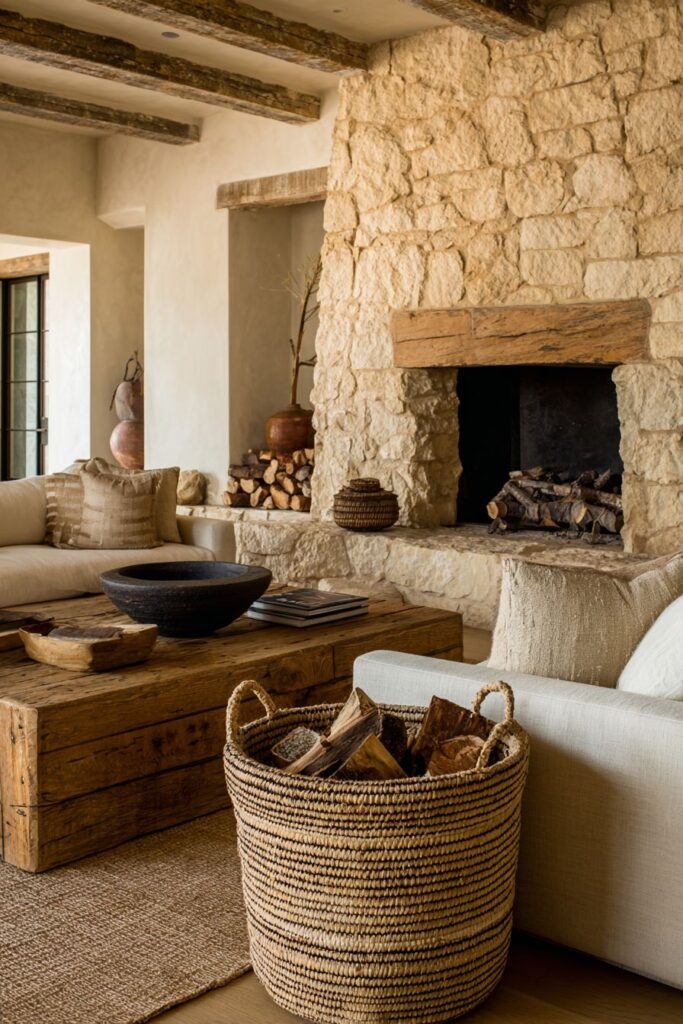
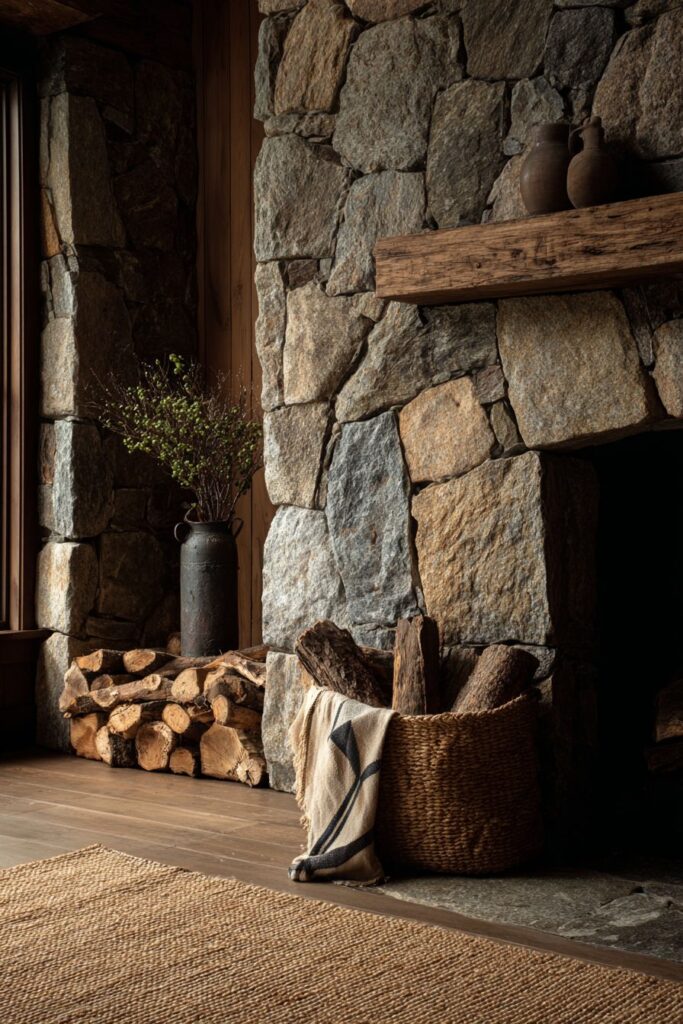
A neutral hemp rope basket positioned beside the fireplace holds firewood, where the natural bark textures and organic shapes of the logs become part of the room’s aesthetic rather than being hidden away. The basket’s woven texture and natural color variations add another layer of organic beauty to the space while serving a practical function.
Low seating arrangements on natural fiber rugs create intimate gathering spaces around the fire, where the warmth and dancing light enhance the room’s connection to natural elements. The rugs themselves show the beautiful imperfections of handwoven textiles—slight variations in weave, natural color shifts, and the gentle wear patterns that develop through use.
Key Design Tips:
- Celebrate stone’s natural irregularities rather than seeking perfectly uniform surfaces
- Display objects with organic forms that reflect natural processes and aging
- Use natural fiber baskets for storage that becomes part of the room’s aesthetic
- Create low seating arrangements that encourage intimate gathering around the fire
- Choose handwoven rugs that show natural variations and gentle wear patterns
6. Japanese Floor Seating Harmony
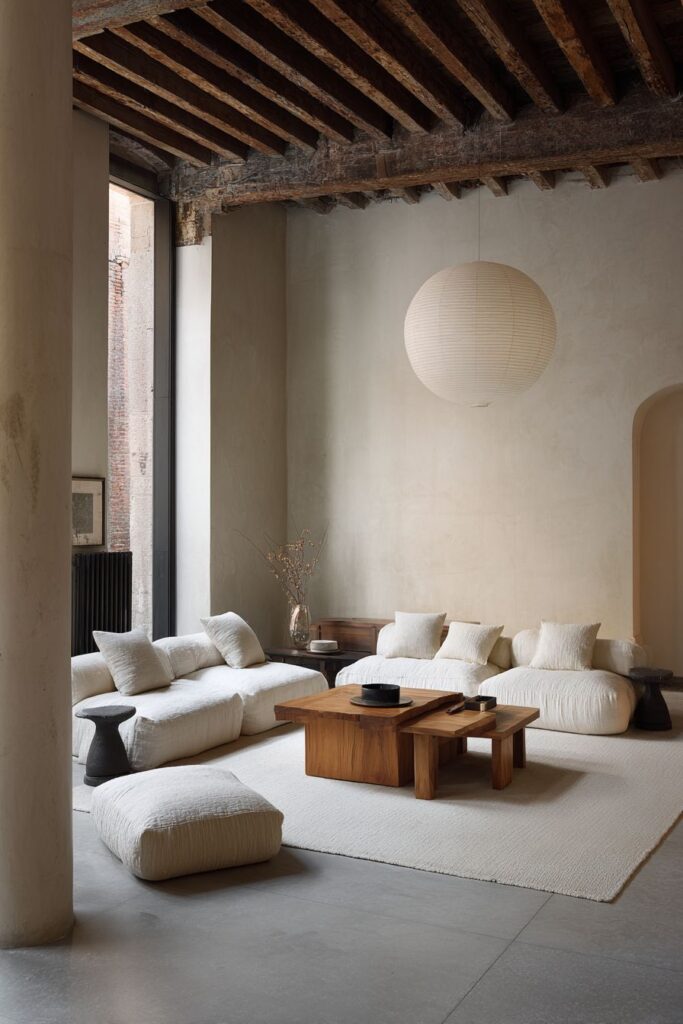
Floor seating using zabuton cushions crafted from natural linen and cotton fabrics transforms this wabi-sabi living room into a space of meditative simplicity. The cushions show gentle wear patterns that speak to their regular use and the comfort they provide, while their natural fabric textures and subtle color variations create visual interest without overwhelming the space’s serene atmosphere. This traditional Japanese seating arrangement encourages a closer connection to the earth and promotes mindful posture and presence.
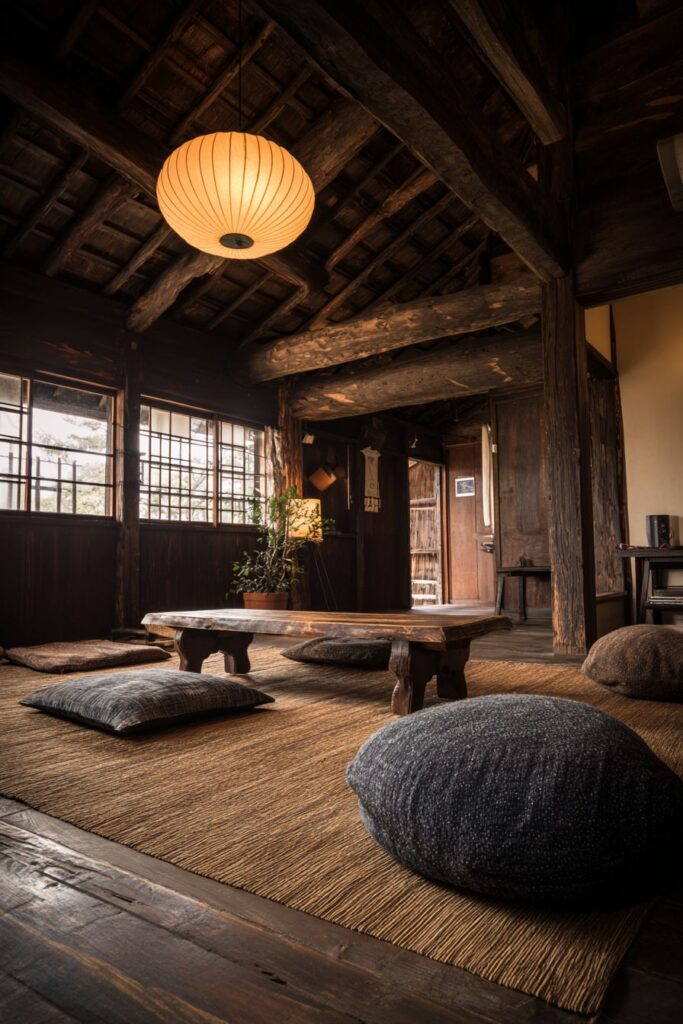
The low chabudai table, crafted from solid wood with visible joinery and natural imperfections, serves as both functional surface and artistic statement. The wood’s grain patterns tell the story of the tree’s growth, while the visible joinery celebrates the craftsperson’s skill and the beauty of traditional construction methods. Small scratches and gentle wear marks on the table’s surface add to its authentic character and suggest the countless meals and conversations it has hosted.
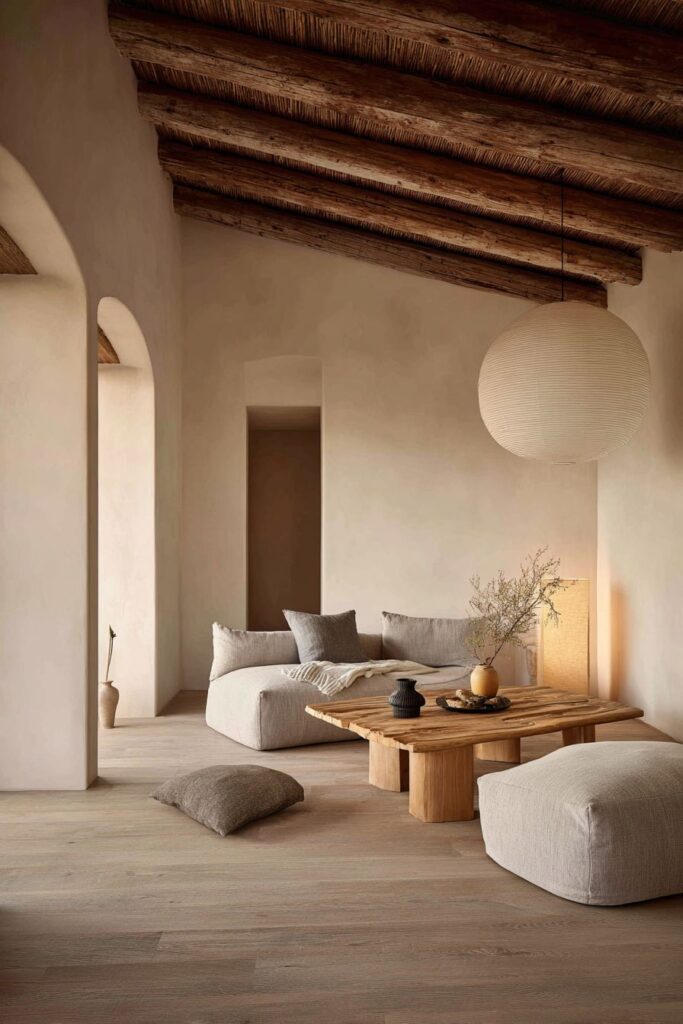
A paper lantern provides soft, diffused lighting that creates a warm and intimate atmosphere throughout the evening hours. The lantern’s handmade quality is evident in slight irregularities in the paper and frame, while its gentle glow enhances the natural textures throughout the room without creating harsh shadows or artificial brightness.
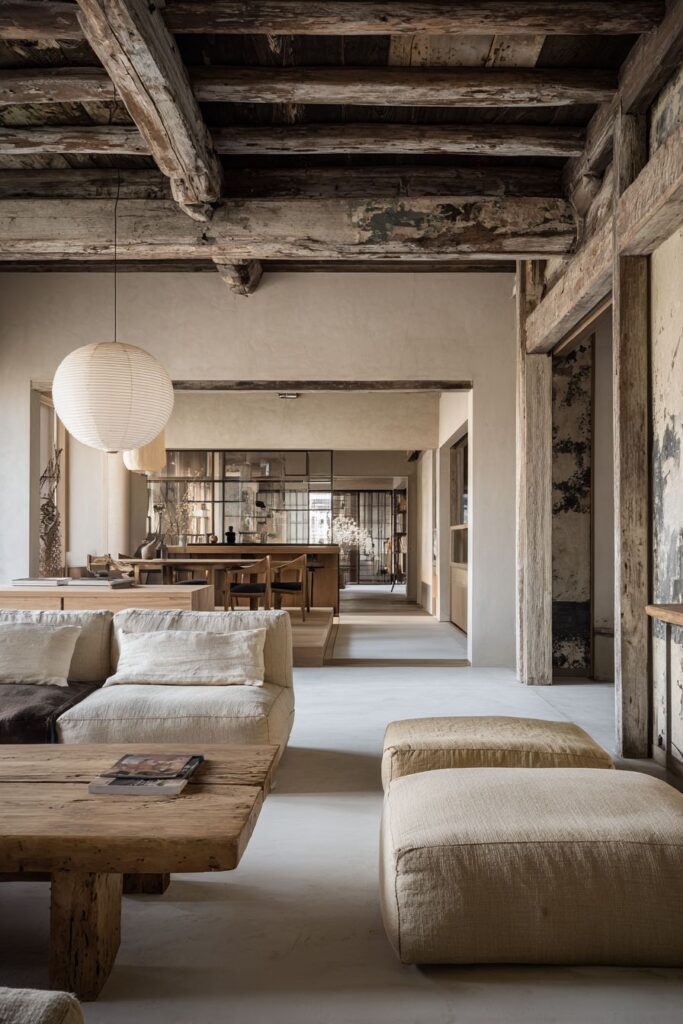
Exposed wooden beams overhead show natural aging and the beautiful patina that develops over time. These structural elements become decorative features in their own right, their weathered surfaces and natural color variations adding vertical interest to the space while maintaining the room’s commitment to celebrating rather than hiding the effects of time and use.
Key Design Tips:
- Use traditional floor seating to create intimate and flexible gathering spaces
- Choose tables with visible joinery that celebrates traditional craftsmanship
- Install soft lighting that enhances natural textures without creating harsh contrasts
- Expose structural elements that show beautiful aging and natural character
- Select natural fabric cushions that develop attractive wear patterns over time
7. Weathered Console Elegance
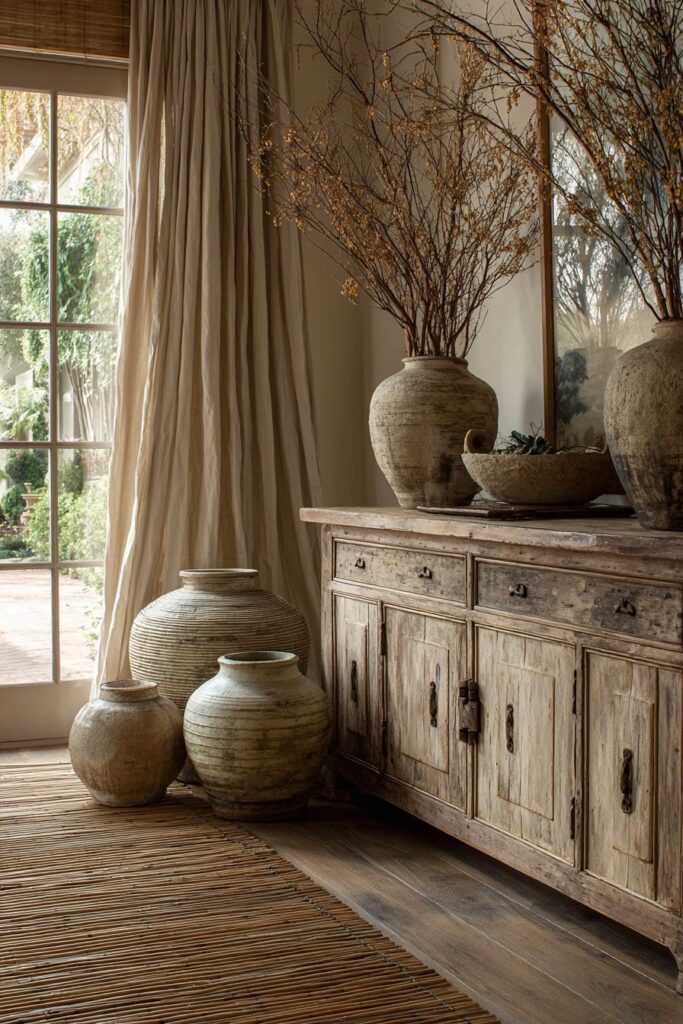
A naturally weathered wooden console table with brass hardware showing gentle tarnish creates a sophisticated foundation for this wabi-sabi living room vignette. The console’s weathered surface tells a story of time and use through subtle color variations, gentle scratches, and the soft patina that develops on well-loved wood. The brass hardware, rather than being polished to a bright shine, shows the beautiful green and gold tarnish that develops naturally over time, adding to the piece’s authentic character.
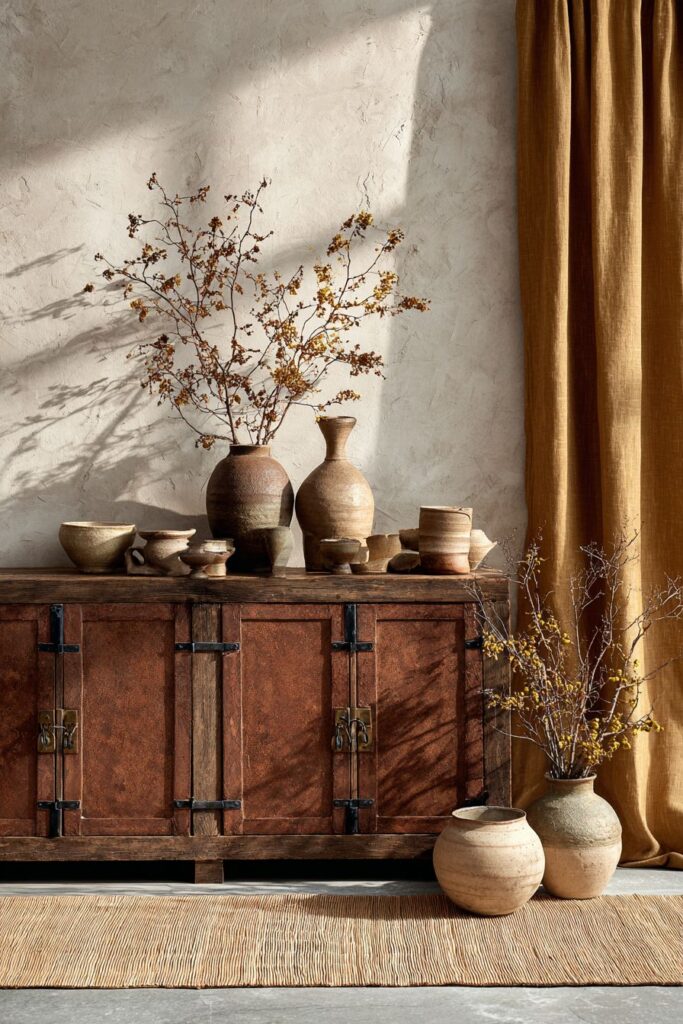
Hand-thrown pottery vessels in rich earth tones are arranged on the console, each displaying dried botanicals and branches that celebrate the beauty of natural aging and seasonal change. The pottery’s organic shapes and subtle glaze variations reflect the maker’s hand, while the dried materials inside showcase how natural elements can remain beautiful even as they transition from living to preserved states.
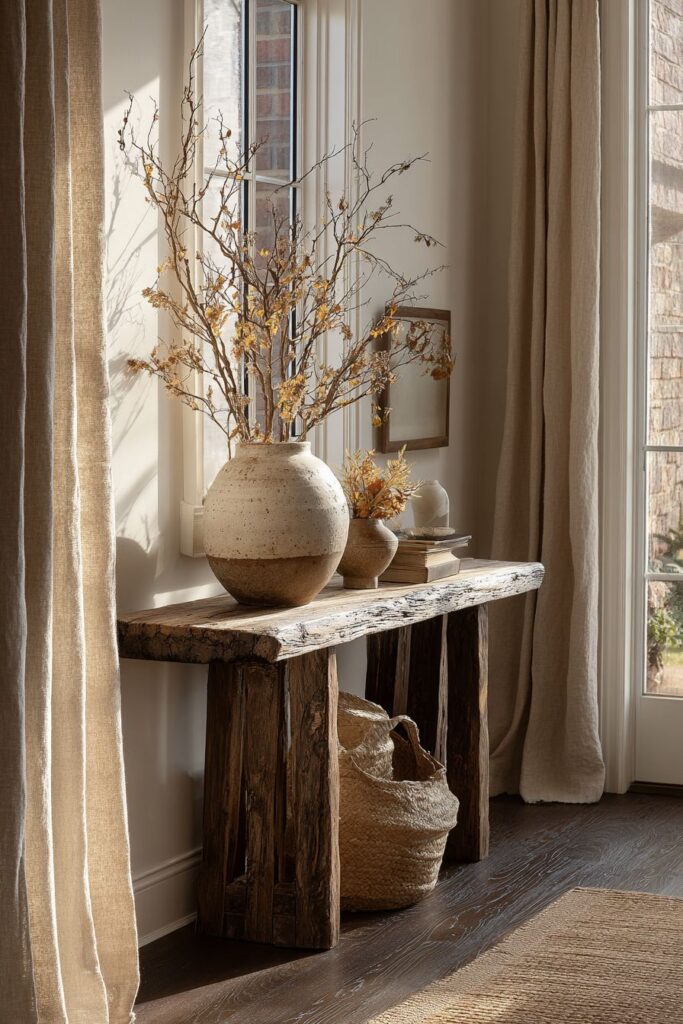
Linen curtains in warm beige hang loosely with natural draping, their organic folds and subtle wrinkles creating soft visual texture while filtering natural light. The linen’s natural tendency to wrinkle and move with air currents becomes part of the room’s living, breathing character rather than a maintenance concern to be managed.
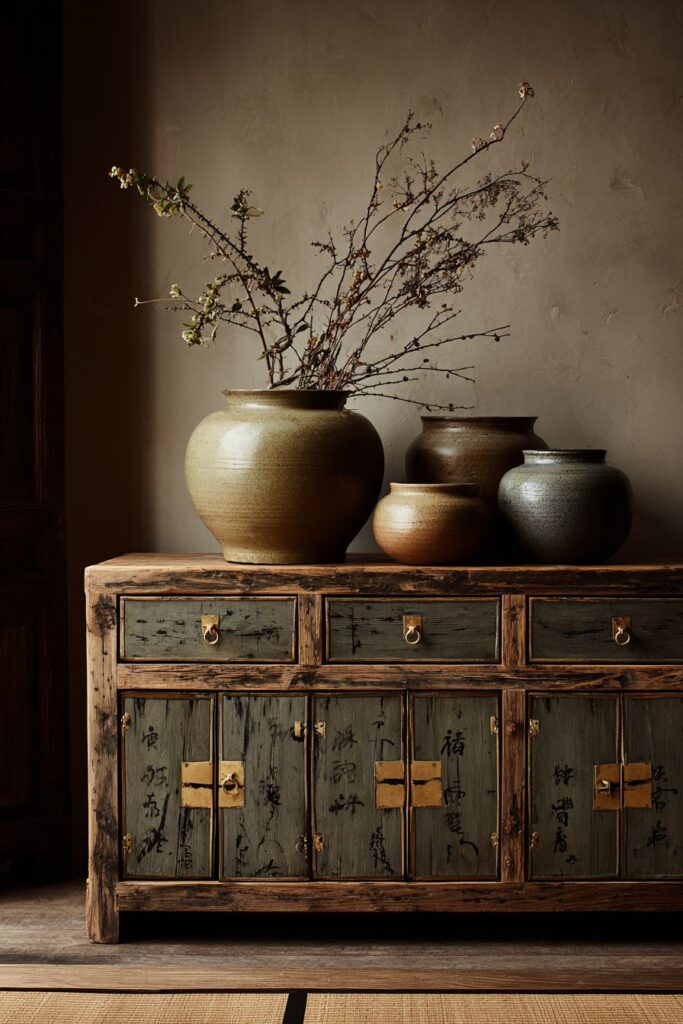
A bamboo floor mat adds textural interest beneath the console while maintaining the room’s commitment to natural materials and organic textures. The bamboo’s natural color variations and woven texture create subtle visual interest while providing a foundation that complements rather than competes with the other natural elements in the space.
Key Design Tips:
- Allow brass hardware to develop natural tarnish rather than keeping it artificially bright
- Display pottery with earth-toned glazes that complement natural wood finishes
- Use dried botanicals to celebrate the beauty of natural aging and seasonal change
- Choose linen curtains that hang naturally without excessive tailoring or structure
- Add bamboo textures through mats or accessories for organic visual interest
8. Meditative Corner Sanctuary
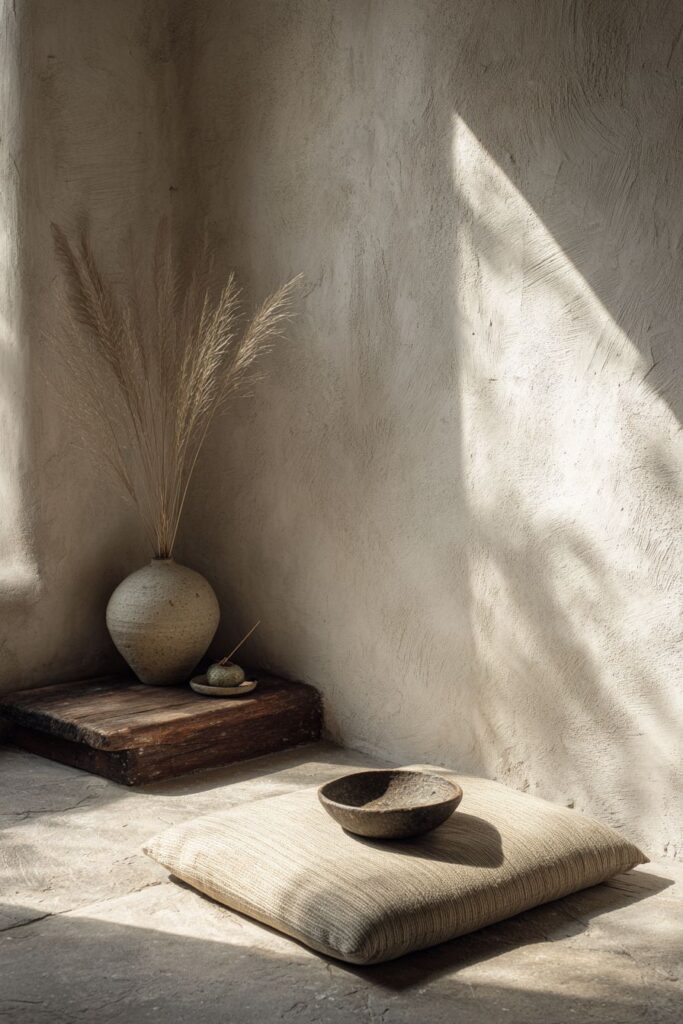
A meditation space featuring a simple zafu cushion on natural tatami matting creates a dedicated area for contemplation within this wabi-sabi living room. The zafu cushion’s organic shape and natural filling conform to the body’s contours while showing gentle impressions from regular use, making it both functional and aesthetically pleasing. The tatami matting beneath provides a natural foundation that connects the meditation practice to traditional Japanese aesthetics and the earth’s grounding energy.
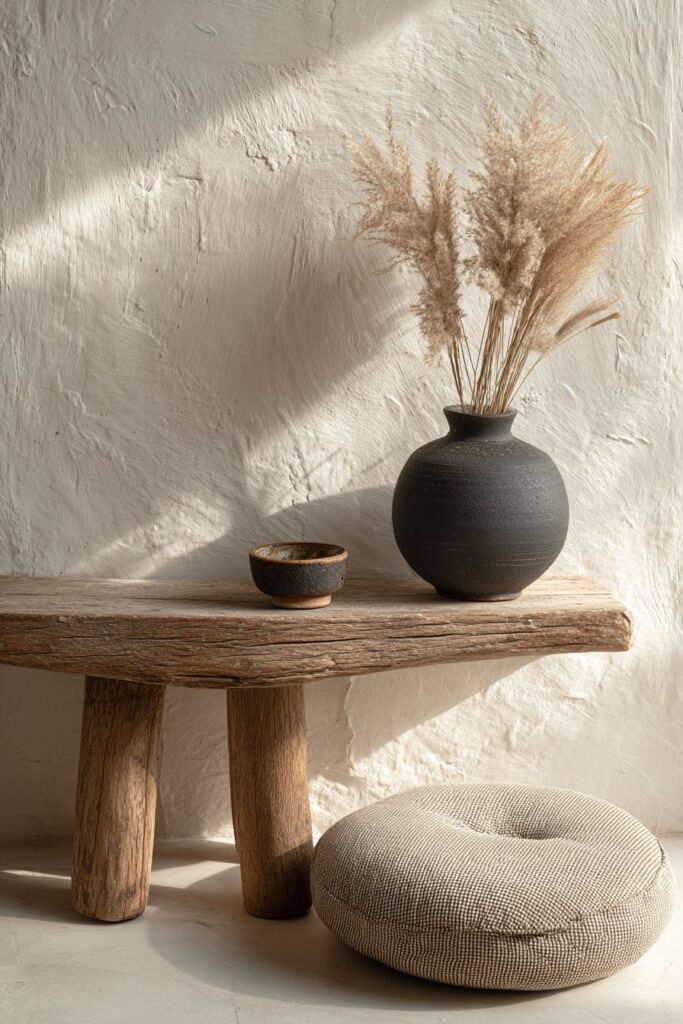
A small wooden altar table holds essential meditation objects—a single ceramic bowl for offerings and an incense holder showing natural patina from regular use. These objects are chosen not for their perfection but for their ability to support mindful practice while displaying the beautiful imperfections that come with handmade craftsmanship and regular use. The wooden table’s simple construction and natural finish allow its grain patterns and subtle color variations to become part of the meditative focus.
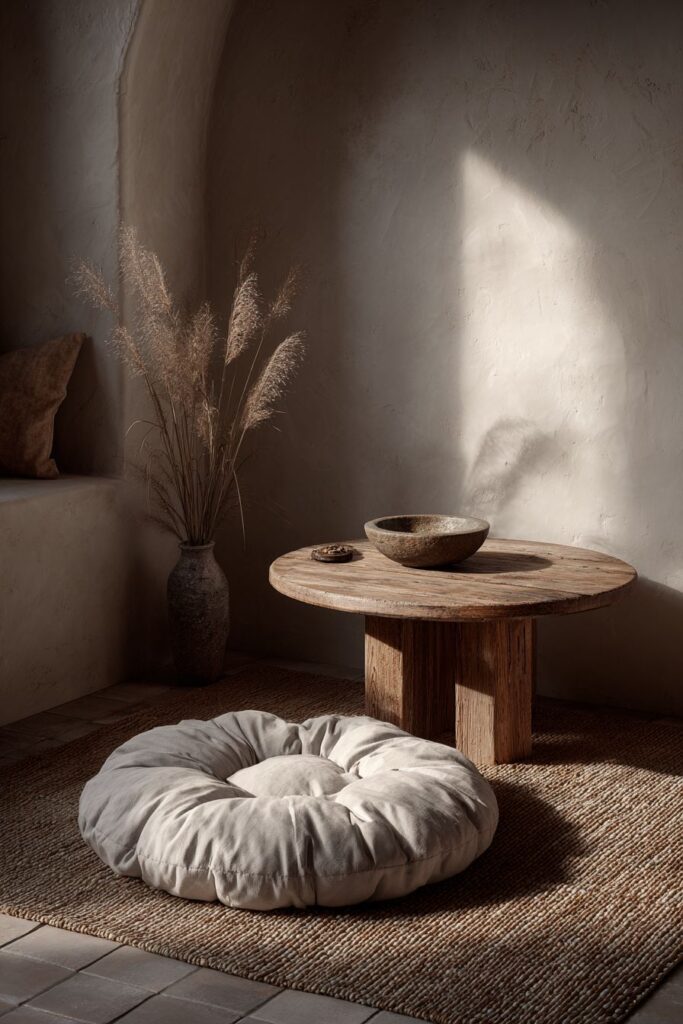
Soft natural light creates gentle shadows on textured plaster walls, where the organic irregularities in the plaster surface become a source of visual interest and contemplative focus. The play of light and shadow changes throughout the day, creating a living meditation on the transient nature of natural phenomena and the beauty found in constant change.
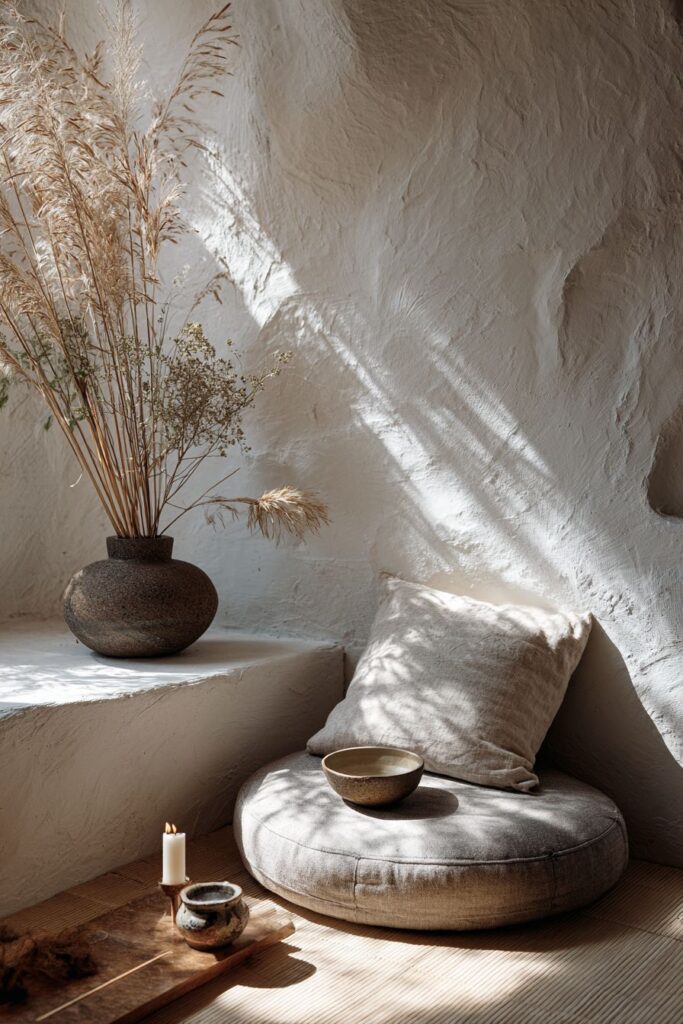
Dried grasses in a handmade vase add organic beauty to the meditation corner while symbolizing the natural cycles of growth, flowering, and graceful aging. The grasses’ natural color variations and delicate textures create visual interest while maintaining the space’s commitment to celebrating rather than hiding the effects of time and natural processes.
Key Design Tips:
- Create dedicated meditation spaces with natural materials that support contemplative practice
- Use handmade objects that show gentle wear from regular spiritual use
- Allow natural light to create changing patterns that enhance meditative focus
- Display dried natural materials that celebrate the beauty of natural cycles
- Choose textured wall surfaces that provide visual interest without distraction
9. Window Seat Comfort
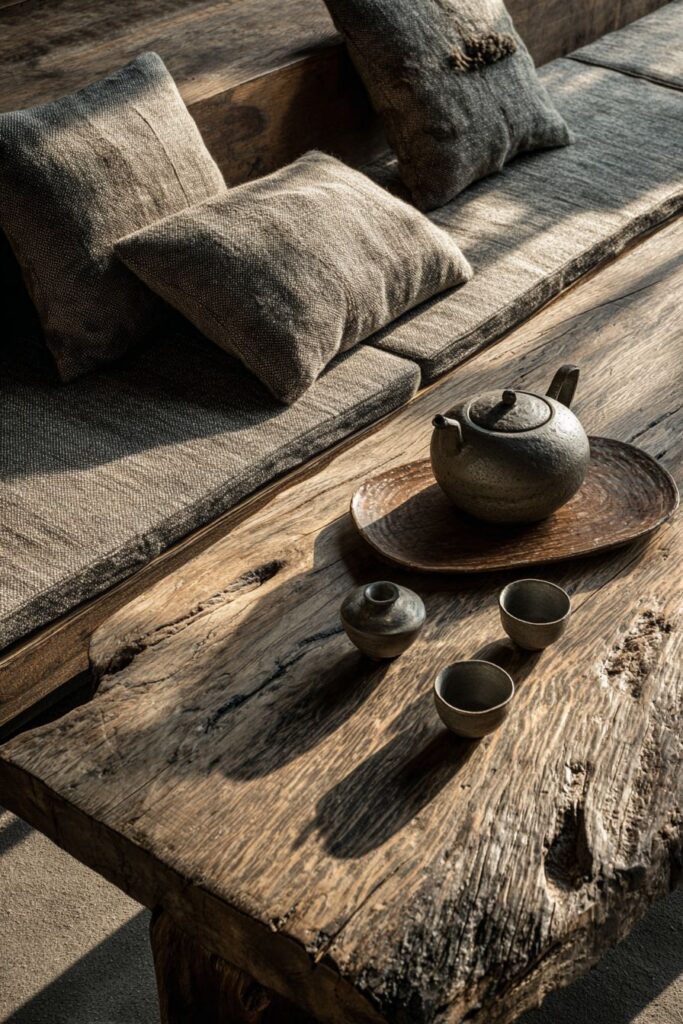
Built-in window seating featuring hand-sewn linen cushions in muted earth tones creates an inviting retreat within this wabi-sabi living room. The cushions display visible stitching details that celebrate the maker’s craft while showing gentle wear patterns that speak to their regular use and the comfort they provide. The hand-sewn quality adds warmth and authenticity to the space, demonstrating how traditional skills can create objects of lasting beauty and function.
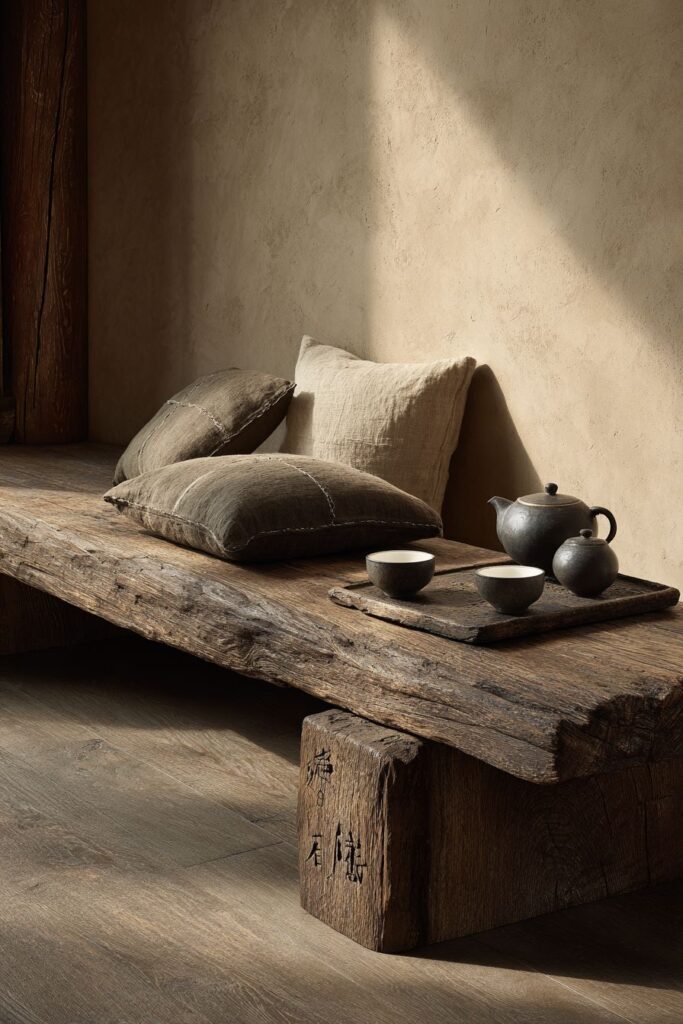
The reclaimed wood bench beneath shows natural character marks and gentle wear that tell the story of its previous life and current function. Scratches, dents, and color variations become design features rather than flaws, creating a surface that invites touch and close examination. The wood’s patina deepens over time, adding to the bench’s beauty and creating a surface that improves with age and use.
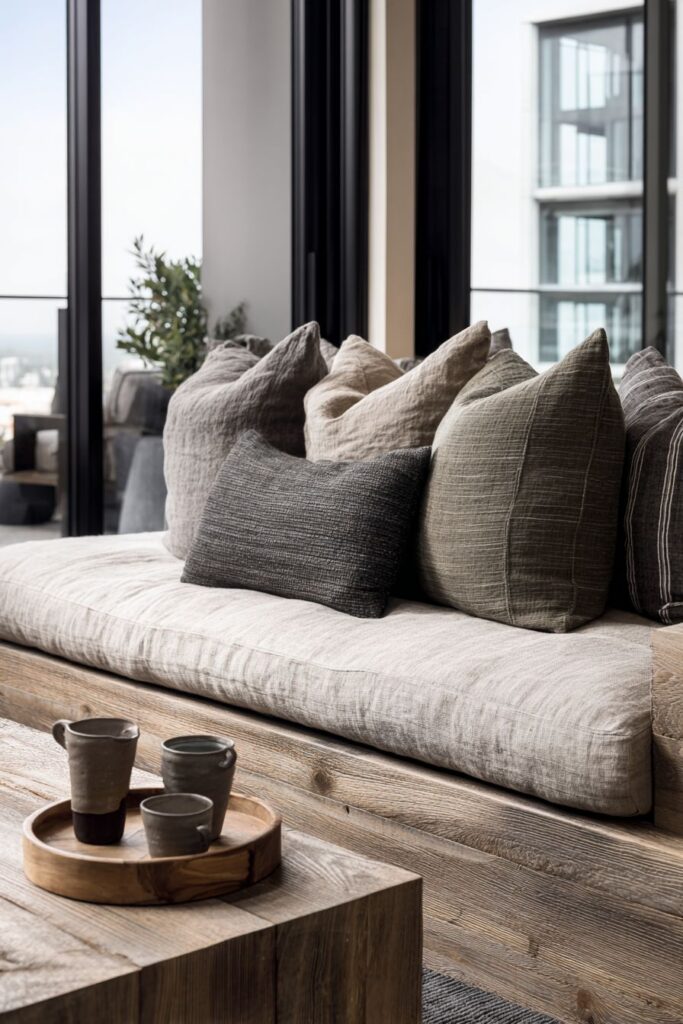
A simple ceramic tea service suggests daily ritual use and the pleasure found in mindful practices like afternoon tea or morning coffee. The ceramic pieces show the subtle irregularities of handmade craftsmanship—slight variations in shape, color, and glaze that make each piece unique while maintaining harmony within the set. Their casual placement on the window seat reinforces the space’s commitment to authentic, everyday beauty.
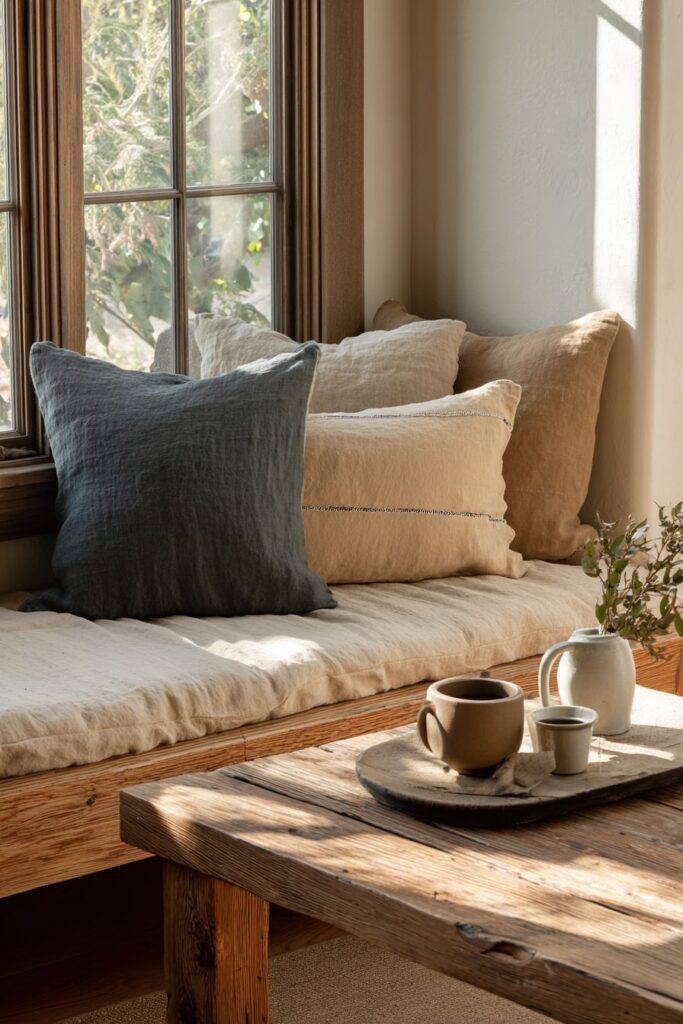
Natural light streaming through the window creates soft shadows on organic cotton pillows, where the fabric’s natural texture and gentle draping add layers of comfort and visual interest. The pillows’ organic cotton shows the beautiful characteristics of natural fibers—subtle color variations, natural texture, and the gentle softening that comes with washing and use.
Key Design Tips:
- Create window seating with cushions that show beautiful handmade construction details
- Use reclaimed wood that displays natural character marks and authentic aging
- Display ceramic tea services that suggest daily ritual use and mindful practices
- Choose organic cotton textiles that soften and improve with washing and use
- Position seating to maximize natural light throughout the day for reading and relaxation
10. Curated Natural Gallery
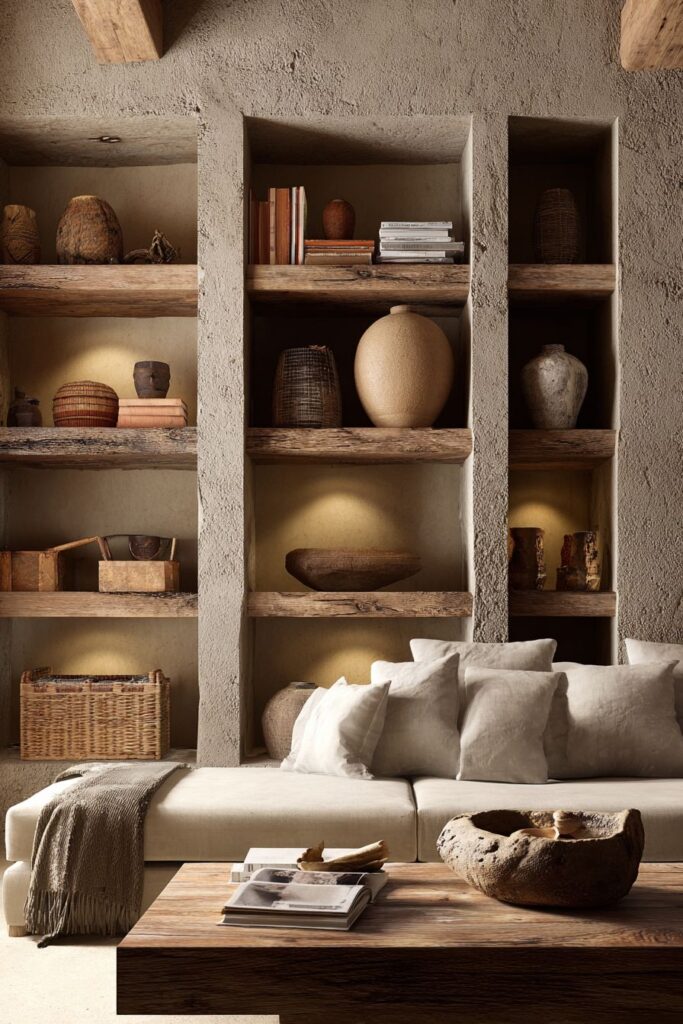
A gallery wall of handmade ceramics and natural objects mounted on roughly textured clay plaster walls creates a sophisticated display that celebrates imperfection as beauty. The wall’s textured surface, with its organic irregularities and subtle color variations, provides the perfect backdrop for displaying objects that share similar qualities of handmade authenticity and natural character. The plaster’s rough texture catches and reflects light in interesting ways, creating depth and visual interest that changes throughout the day.
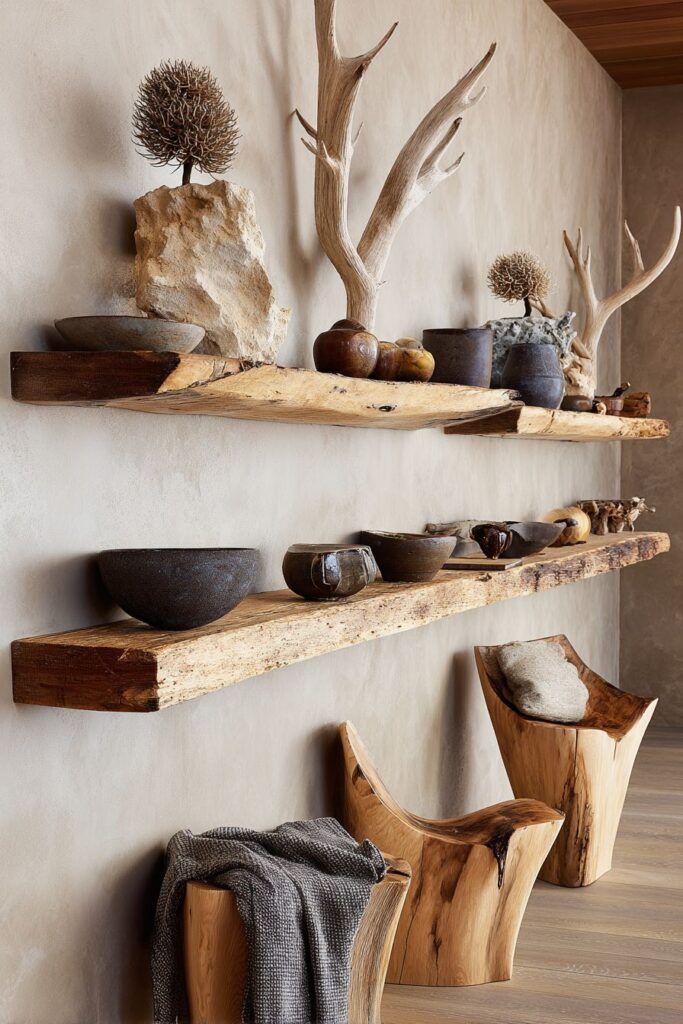
Simple wooden display ledges show natural wood grain and subtle variations that complement rather than compete with the displayed objects. Each ledge’s unique grain pattern and natural color create individual characteristics while maintaining harmony within the overall display. The wood’s natural imperfections—small knots, color shifts, and grain irregularities—become design features that add to the wall’s organic beauty.
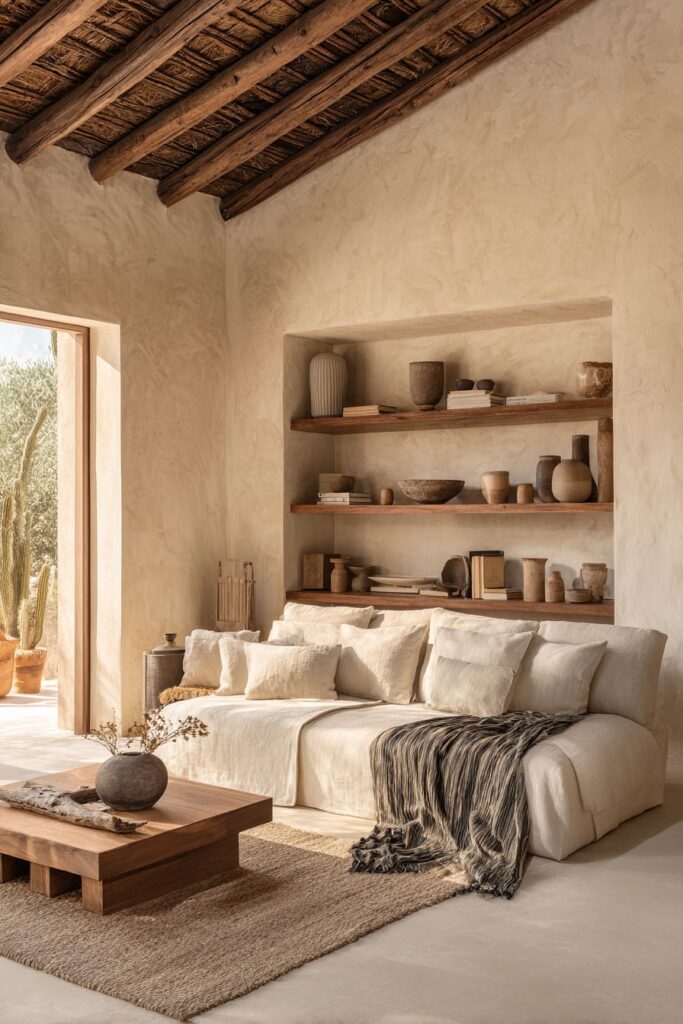
Neutral linen seating positioned below the gallery wall features organic cotton throws draped naturally, creating a comfortable viewing area that encourages contemplation of the displayed objects. The seating’s casual arrangement and natural textile draping reinforce the room’s commitment to authentic, unstudied comfort while providing a practical space for enjoying the gallery.
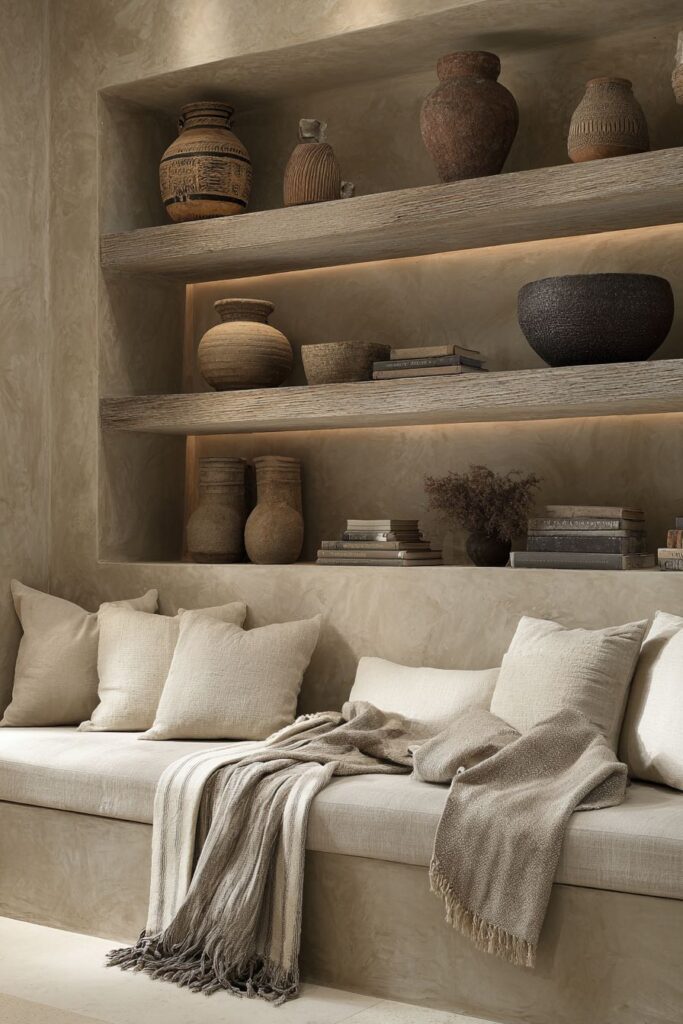
Soft indirect lighting highlights the imperfect beauty of both the displayed objects and the wall’s textured surface, creating dramatic shadows and gentle highlights that emphasize the organic qualities of the materials. The lighting design celebrates rather than hides the surface irregularities, making the wall’s texture an integral part of the room’s aesthetic appeal.
Key Design Tips:
- Use textured plaster walls that show organic irregularities as display surfaces
- Create wooden display ledges that celebrate natural grain patterns and variations
- Arrange seating to create comfortable viewing areas for displayed collections
- Use indirect lighting that emphasizes rather than hides surface textures and imperfections
- Display handmade objects that share similar qualities of authentic craftsmanship
11. Mindful Workspace Design
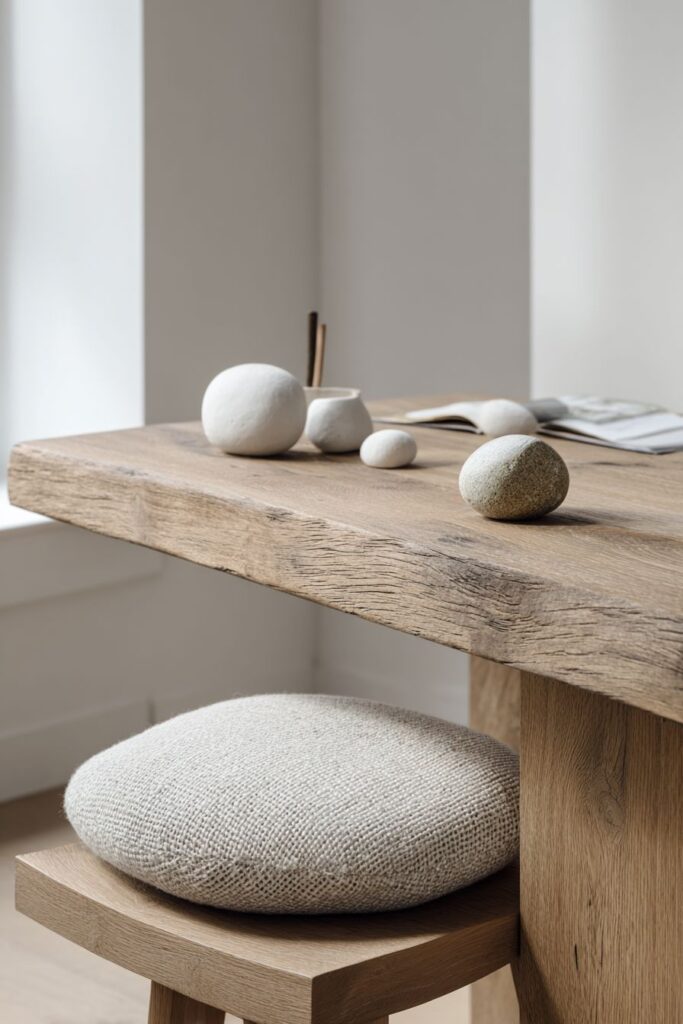
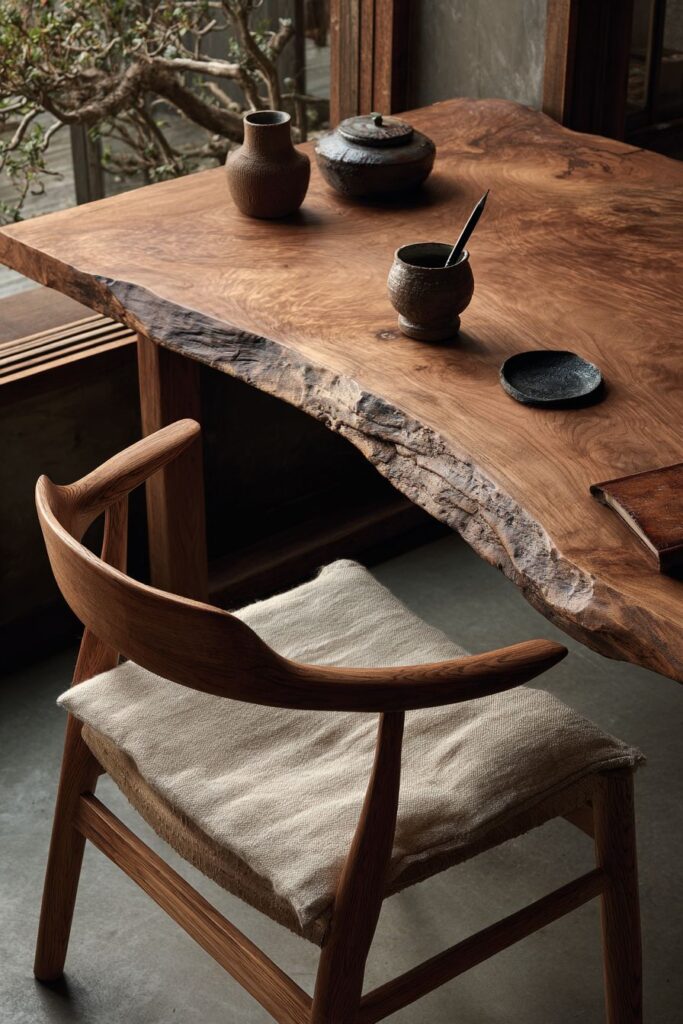
A simple wooden desk showing natural edge details and hand-rubbed finish creates a mindful workspace that celebrates the beauty of handcrafted furniture within this wabi-sabi living room. The desk’s live edge preserves the natural form of the tree, while the hand-rubbed finish enhances the wood’s natural grain and color while allowing the material’s authentic character to shine through. Small scratches and gentle wear marks from daily use add to the desk’s patina and create a surface that tells the story of productive work and creative endeavors.
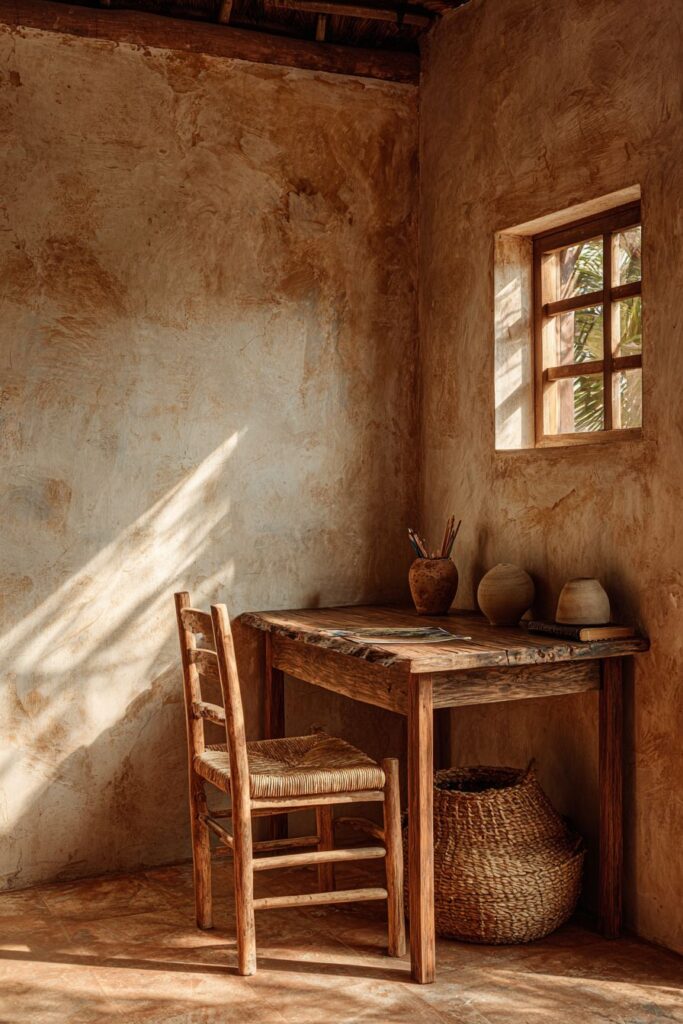
Handmade ceramic pen holders and organic-shaped paperweights add functional beauty to the workspace while demonstrating how everyday objects can become art when crafted with care and intention. The ceramic pieces show subtle irregularities in shape and glaze that mark them as handmade, while their organic forms echo the natural shapes found throughout the wabi-sabi aesthetic. Their practical function as desk accessories makes them part of daily rituals while adding visual interest to the workspace.
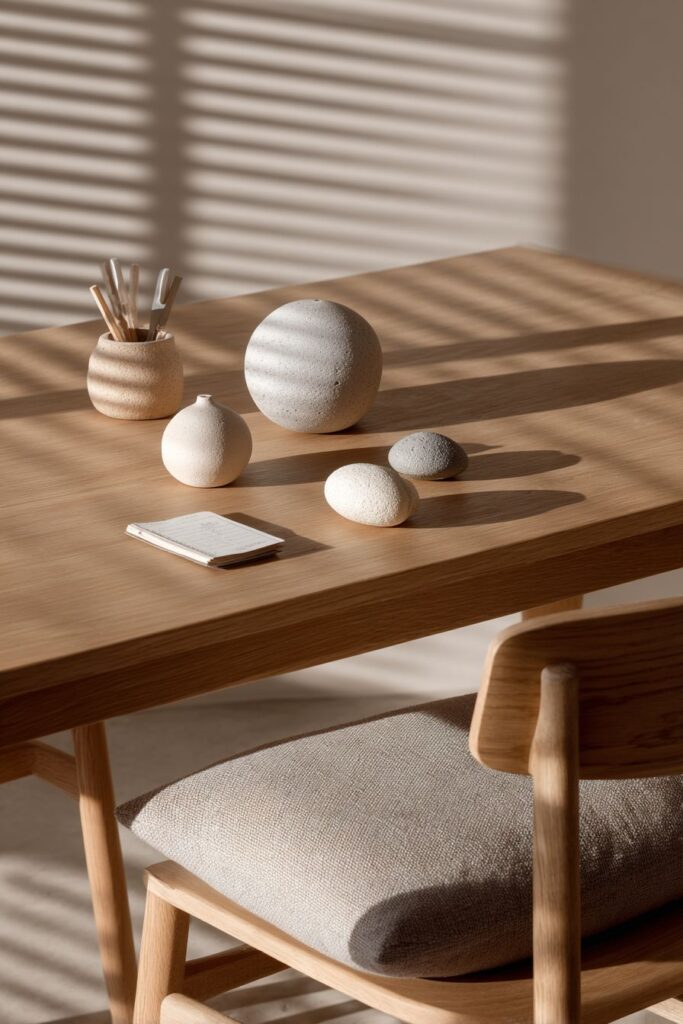
A natural fiber chair cushion in undyed linen shows gentle use patterns that speak to its regular function and the comfort it provides during long work sessions. The linen’s natural color and texture create a neutral foundation that complements the wood tones while its tendency to show gentle impressions and wear patterns adds to the workspace’s authentic character.
Window light creates soft shadows across the textured work surface, where the interplay of natural illumination and organic materials creates an inspiring environment for creative work. The changing quality of natural light throughout the day provides visual interest while supporting the workspace’s connection to natural rhythms and seasonal change.
Key Design Tips:
- Choose desks with live-edge details that celebrate the natural form of wood
- Use handmade ceramic accessories that combine function with organic beauty
- Select natural fiber cushions that develop attractive wear patterns through use
- Position workspace furniture to maximize natural light for inspiring work conditions
- Allow furniture surfaces to show gentle use marks that add to their authentic character
12. Sliding Door Serenity
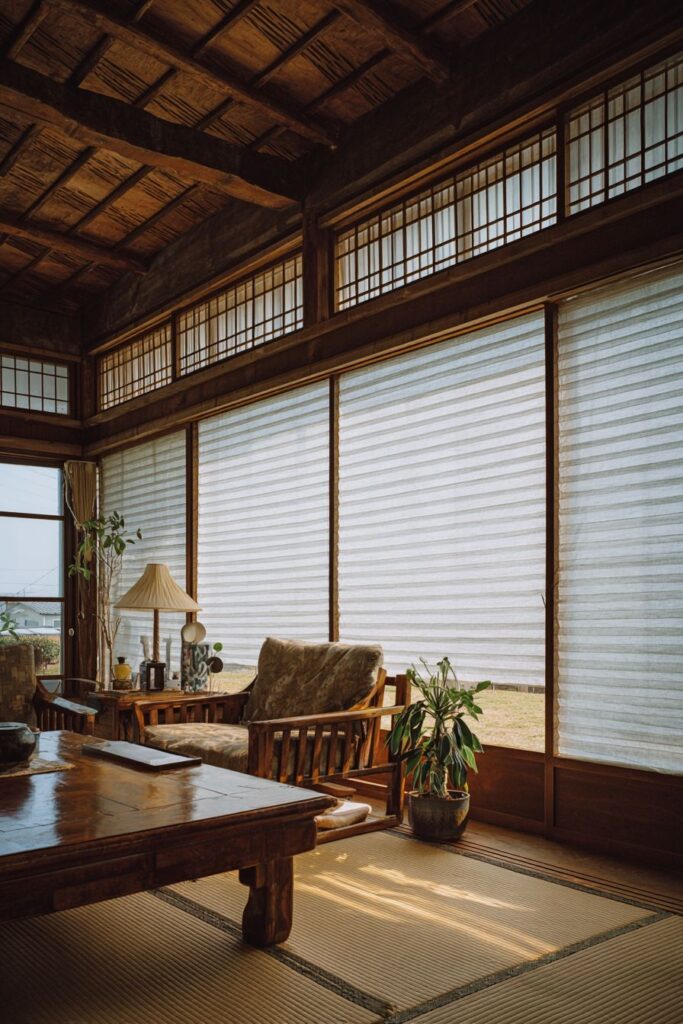
Japanese-inspired sliding doors with natural wood frames and handmade paper panels create flexible space division while maintaining this wabi-sabi living room’s commitment to organic materials and handcrafted beauty. The paper panels show subtle irregularities that mark them as handmade—slight variations in thickness, natural fiber inclusions, and organic texture that creates visual interest while filtering light. These imperfections become design features that add authenticity and warmth to the architectural elements.
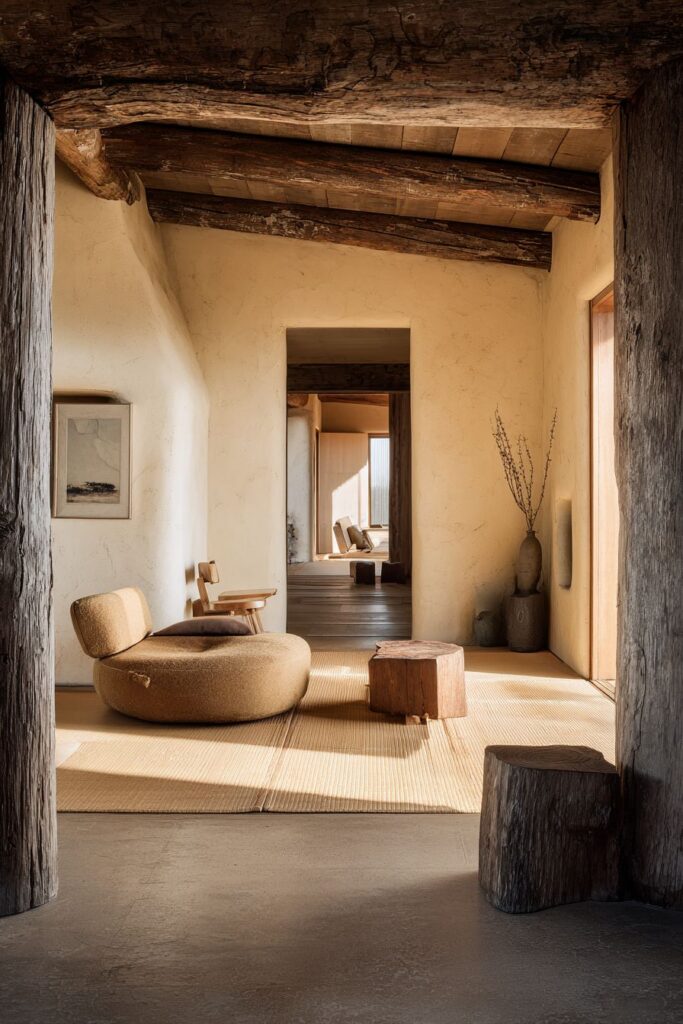
Tatami floor mats with natural binding create defined seating areas that can be easily reconfigured based on needs and occasions. The tatami’s woven texture and natural color variations provide visual interest while maintaining the room’s commitment to organic materials and traditional craftsmanship. The natural binding shows gentle wear from daily use, adding to the mats’ authentic character while demonstrating their functional durability.
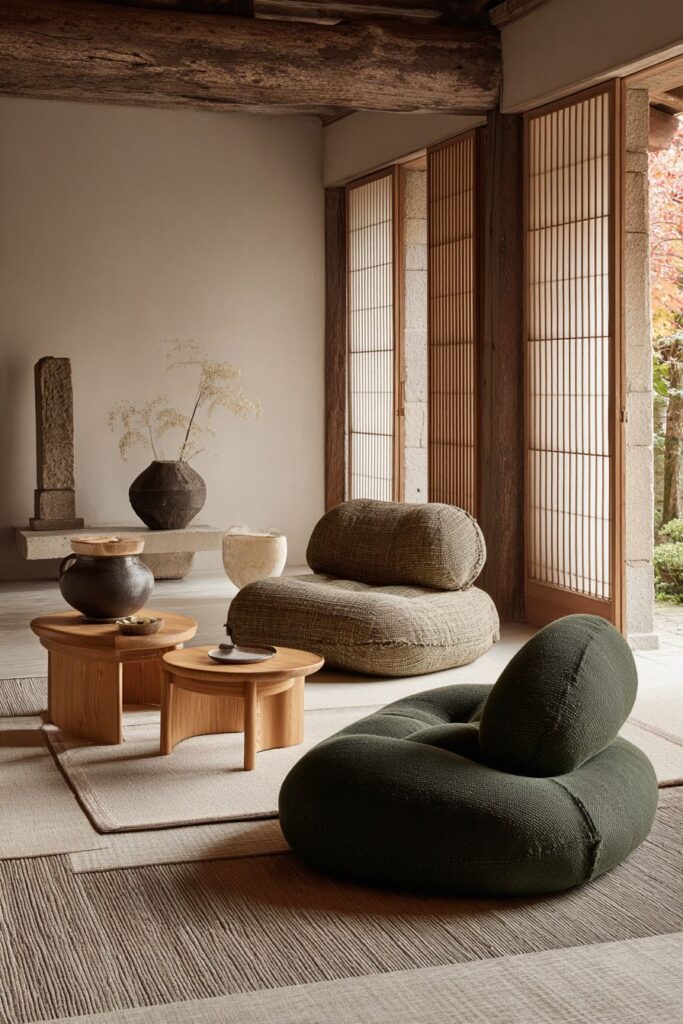
Simple wooden furniture with visible joinery and organic shapes complements the room’s architectural elements while maintaining the space’s commitment to handcrafted authenticity. The furniture pieces show the beauty of traditional construction methods through visible joinery techniques that become decorative elements rather than details to be hidden. Natural wood variations and gentle aging create surfaces that invite touch and close examination.
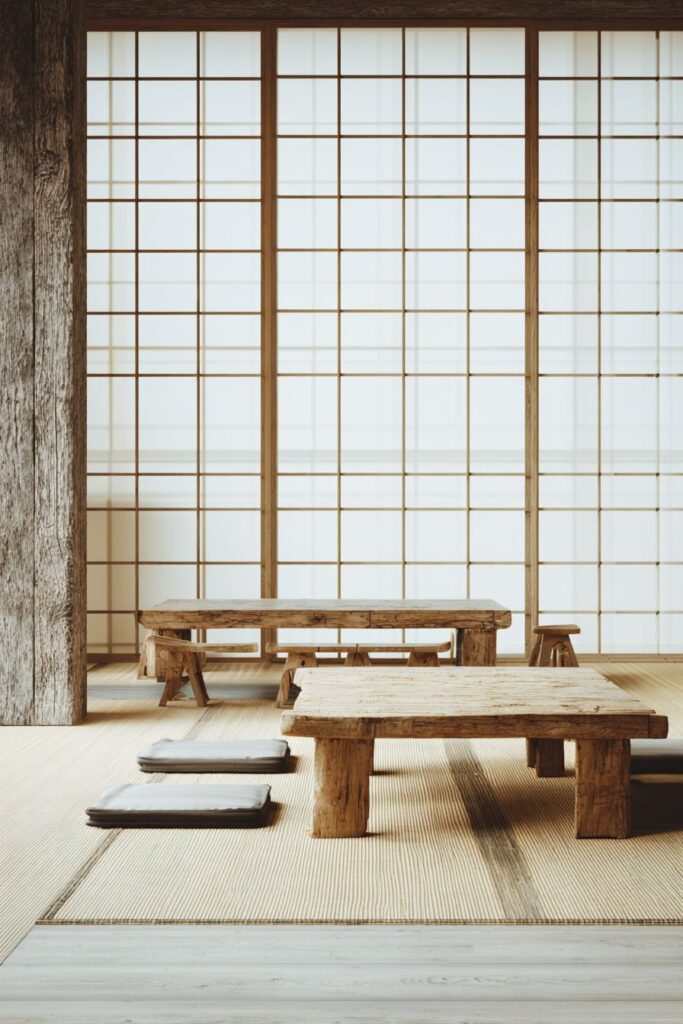
Gentle natural lighting filters through the translucent panels, creating soft, diffused illumination that changes throughout the day and celebrates the transient beauty that wabi-sabi treasures. The filtered light creates subtle shadows and highlights that emphasize the organic textures throughout the room while maintaining a serene, contemplative atmosphere perfect for quiet activities and mindful living.
Key Design Tips:
- Use sliding doors with handmade paper panels that show organic texture variations
- Create flexible seating areas with tatami mats that can be easily reconfigured
- Choose furniture with visible joinery that celebrates traditional construction methods
- Allow natural light to filter through translucent panels for soft, changing illumination
- Embrace architectural elements that show handmade irregularities as design features
13. Living Plant Corner

A dedicated plant corner featuring ceramics in various earth tones creates a celebration of natural growth and the acceptance of imperfection within this wabi-sabi living room. The ceramic planters display subtle variations in color and texture that reflect their handmade origins, while the plants themselves show natural growth patterns including some yellowing leaves that demonstrate the beauty of natural cycles rather than artificial perfection. This honest display of plant life celebrates the temporary nature of beauty and the constant change inherent in living systems.
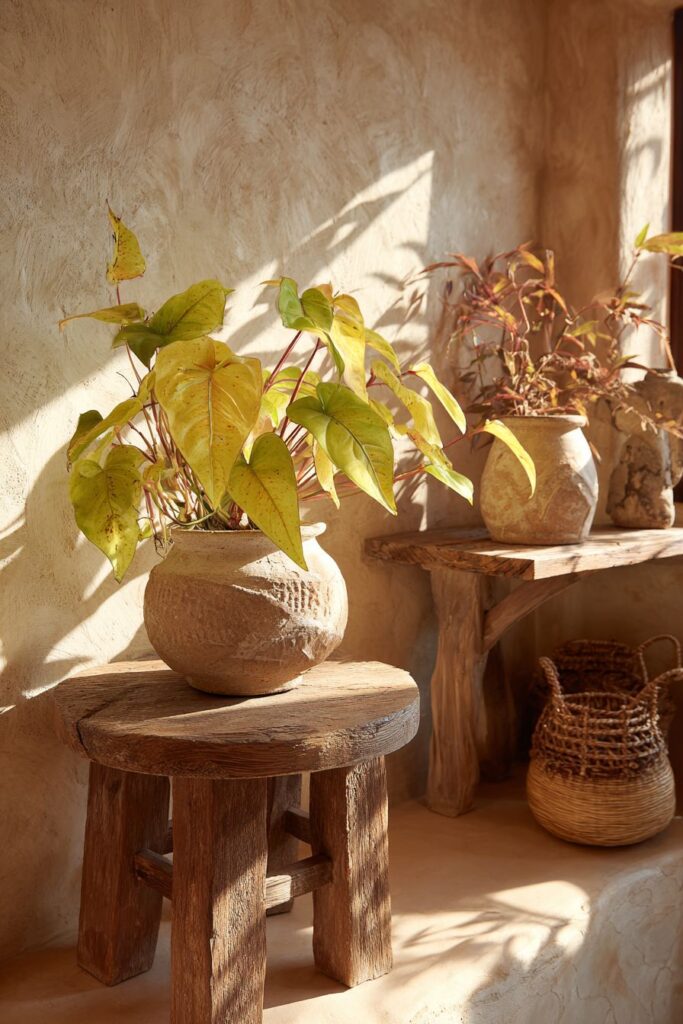
Rough wooden plant stands show weather marks and natural aging that tell the story of their exposure to moisture and daily use in plant care. The wood’s weathered surface, with its color variations and gentle wear patterns, becomes more beautiful over time rather than deteriorating, demonstrating how natural materials can improve with age and use when properly cared for and appreciated.
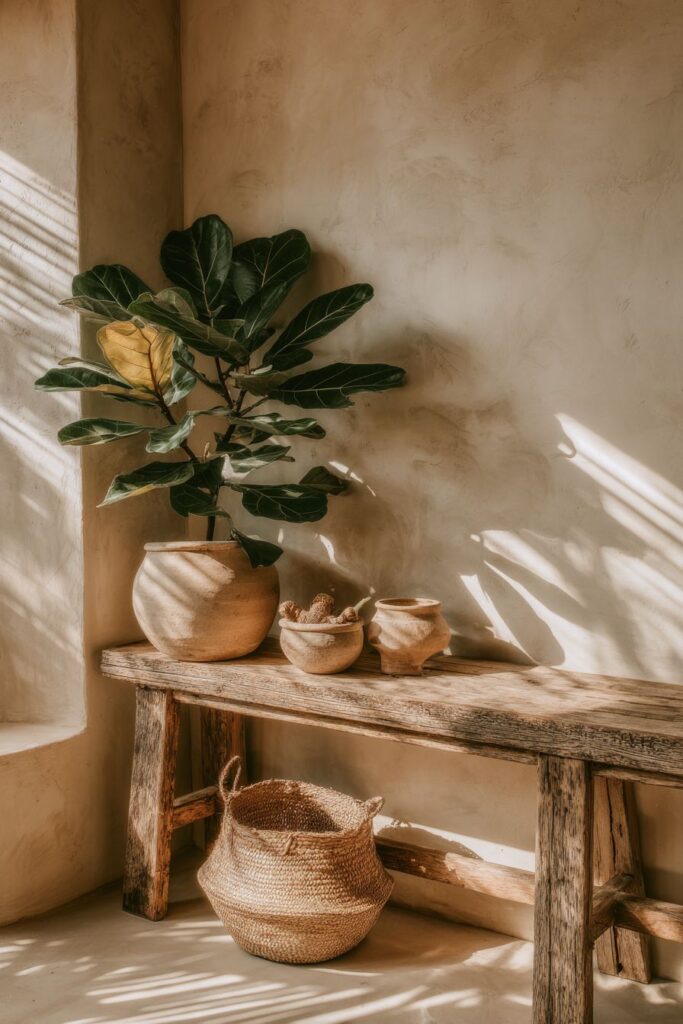
A natural fiber basket holds potting materials with organic textures visible—soil, dried moss, small stones, and other natural elements that support plant care while adding to the corner’s authentic, working garden aesthetic. The basket’s woven texture and natural color variations complement the earthy tones throughout the space while providing practical storage that becomes part of the room’s decorative scheme.
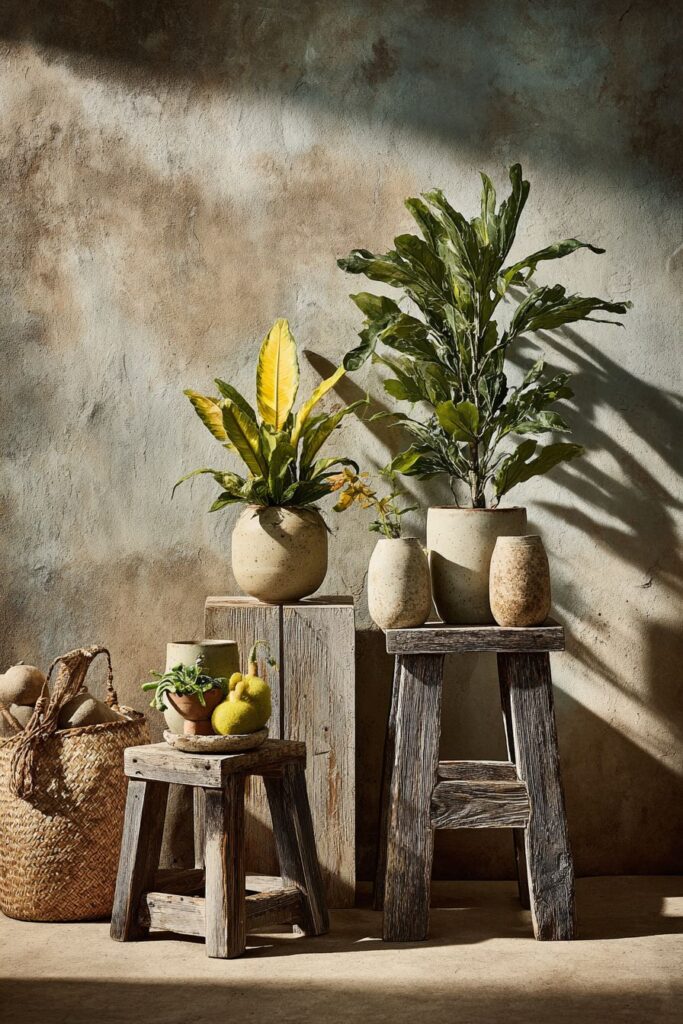
Soft natural light creates realistic plant shadows that change throughout the day, emphasizing the living nature of this corner and its connection to natural rhythms and seasonal change. The interplay of light and shadow on leaves, ceramic surfaces, and weathered wood creates a constantly changing display that celebrates the transient beauty that lies at the heart of wabi-sabi philosophy.
Key Design Tips:
- Display plants that show natural growth patterns including some aging leaves
- Use ceramic planters with earth-toned glazes that complement natural plant colors
- Choose wooden plant stands that show beautiful weathering from moisture exposure
- Store gardening materials in natural fiber baskets that become part of the aesthetic
- Position plants to create changing shadow patterns that celebrate natural light cycles
14. Low Dining Intimacy

A low dining area featuring a solid wood table with natural knots and grain patterns creates an intimate gathering space that celebrates the beauty of shared meals within this wabi-sabi living room. The table’s surface tells the story of the tree’s growth through visible grain patterns, knots, and natural color variations that make each section unique while maintaining overall harmony. Gentle scratches and wear marks from daily use add to the table’s patina and create a surface that invites both practical use and aesthetic appreciation.
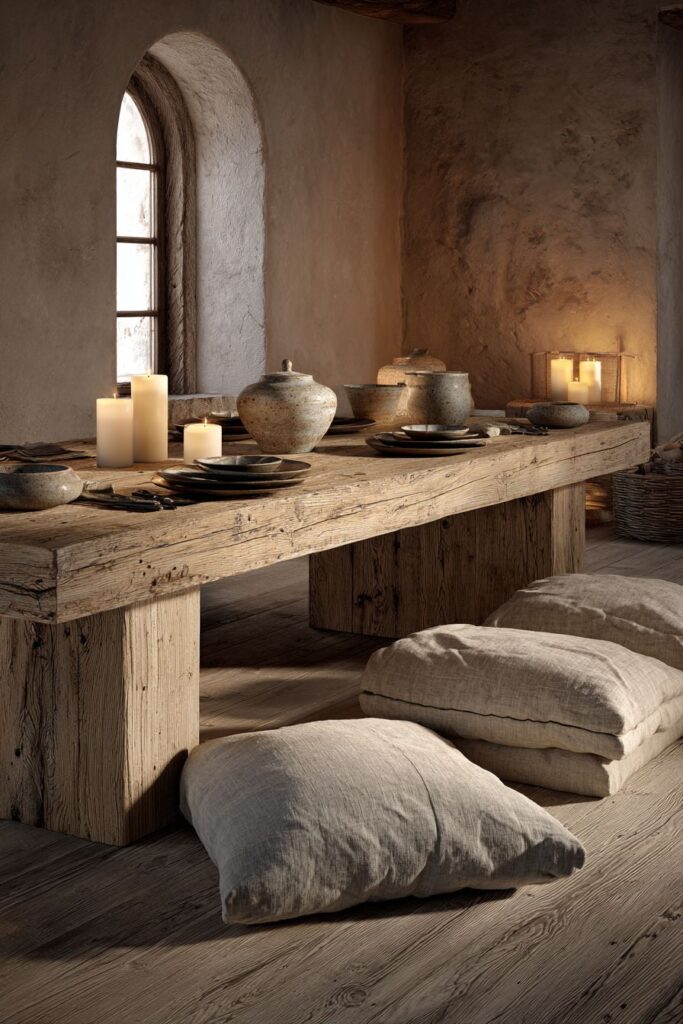
Handmade ceramic dinnerware with slight irregularities and earth-toned glazes transforms everyday dining into a celebration of handcrafted beauty. Each piece in the collection shows subtle variations in shape, size, and glaze that mark it as individually made while maintaining harmony within the set. The earth-toned glazes complement the natural wood table while creating visual interest through their organic color variations and natural texture.
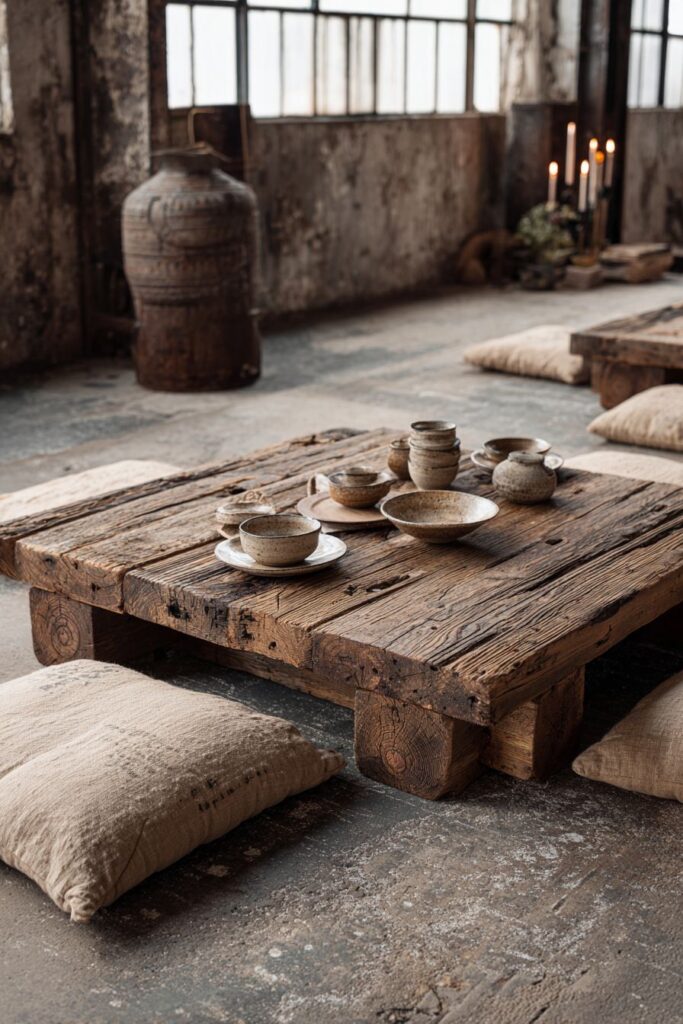
Floor cushions in natural linen with gentle wear marks provide comfortable seating that encourages relaxed, intimate dining experiences. The cushions’ natural linen shows the beautiful characteristics of organic fibers—gentle wrinkles, subtle color variations, and the soft wear patterns that develop through regular use. Their casual placement around the table creates a flexible seating arrangement that can accommodate different group sizes and dining styles.
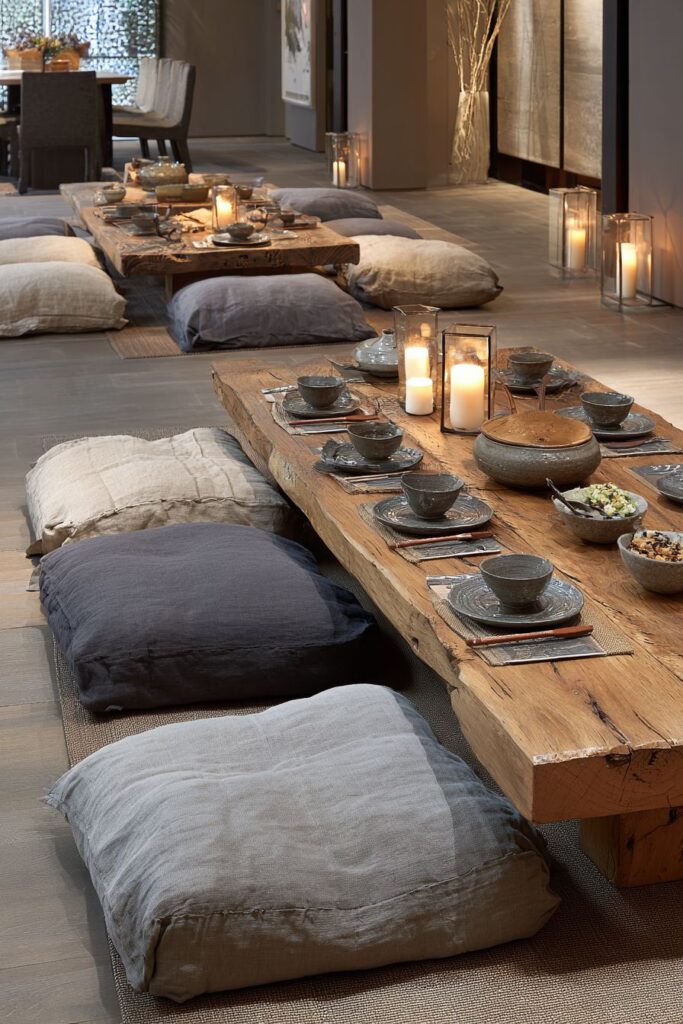
Warm candlelight supplements natural window light, creating a golden glow that enhances the room’s earth tones while casting gentle shadows that emphasize the organic textures throughout the dining area. The combination of natural and candlelit illumination creates an atmosphere that encourages slow, mindful dining and meaningful conversation while highlighting the beauty of handmade objects and natural materials.
Key Design Tips:
- Choose dining tables that display natural wood characteristics like knots and grain patterns
- Use handmade ceramics that show slight irregularities and earth-toned glazes
- Create flexible floor seating with natural linen cushions that develop attractive wear
- Combine candlelight with natural light for warm, intimate dining atmosphere
- Allow table surfaces to show gentle use marks that add to their authentic character
15. Living Library Sanctuary

Open wooden shelving made from reclaimed timber creates a living library that celebrates the beauty of well-used books and the wisdom that comes with age within this wabi-sabi living room. The shelving itself shows natural character marks—old nail holes, gentle scratches, and color variations that tell the story of the wood’s previous life while providing perfect support for a collection of beloved books. The reclaimed timber’s weathered beauty becomes part of the library’s aesthetic appeal.
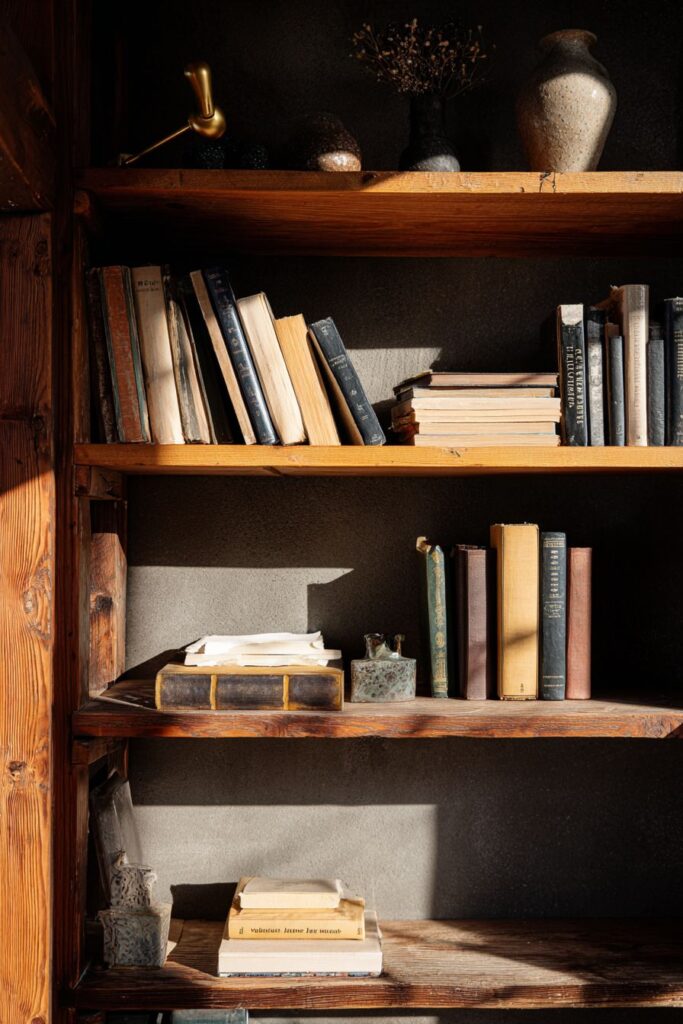
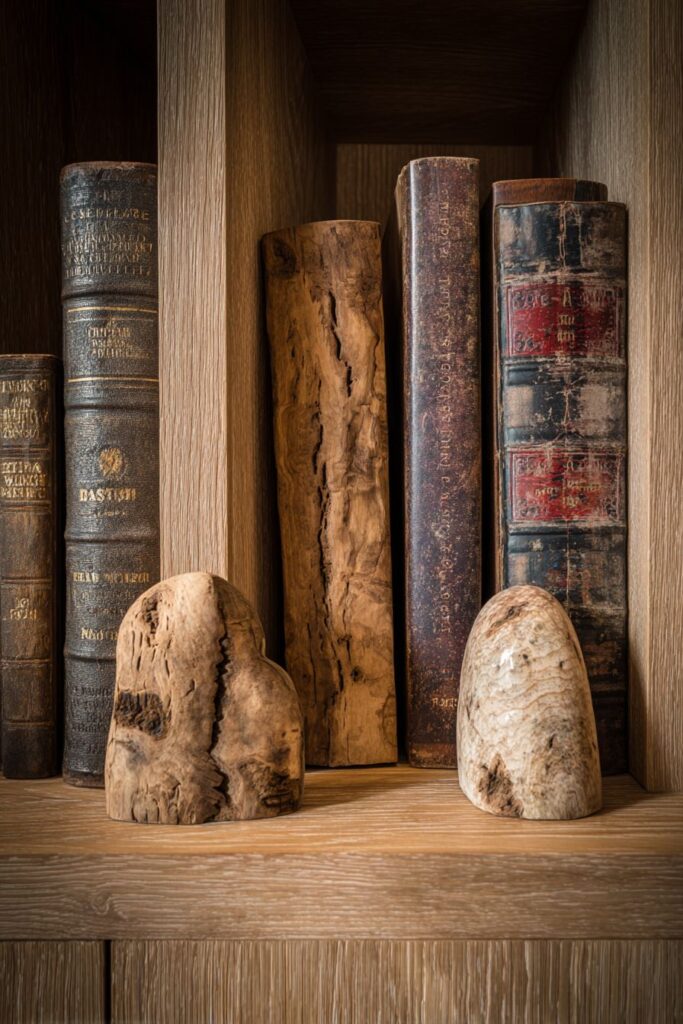
Books are arranged casually throughout the shelves, their spines showing visible wear and gentle fading that speaks to countless hours of reading and rereading. Rather than hiding these signs of use, the arrangement celebrates them as evidence of the books’ value and the pleasure they have provided over time. Different sizes, colors, and conditions create visual interest while maintaining the organic, collected-over-time feeling that wabi-sabi treasures.

Ceramic bookends with organic shapes and natural color variations provide both function and beauty while demonstrating how everyday objects can become art when crafted with care and attention. The bookends’ handmade quality is evident in their subtle irregularities and unique characteristics, while their organic forms complement the natural wood shelving and create visual anchors for the book arrangements.
Simple reading light with brass fixtures showing gentle patina provides focused illumination for evening reading while adding to the library’s authentic, well-used character. The brass’s natural tarnish and gentle wear marks create a warm, golden tone that complements the wood and ceramic elements while providing practical lighting that enhances rather than overwhelms the space’s natural beauty.
Key Design Tips:
- Use reclaimed timber shelving that shows beautiful character marks and natural aging
- Arrange books to celebrate rather than hide signs of use and gentle wear
- Choose ceramic bookends with organic shapes that complement natural wood textures
- Install brass lighting fixtures that develop attractive patina over time
- Create reading spaces that highlight the texture of aged paper and weathered wood
16. Restful Sleeping Alcove
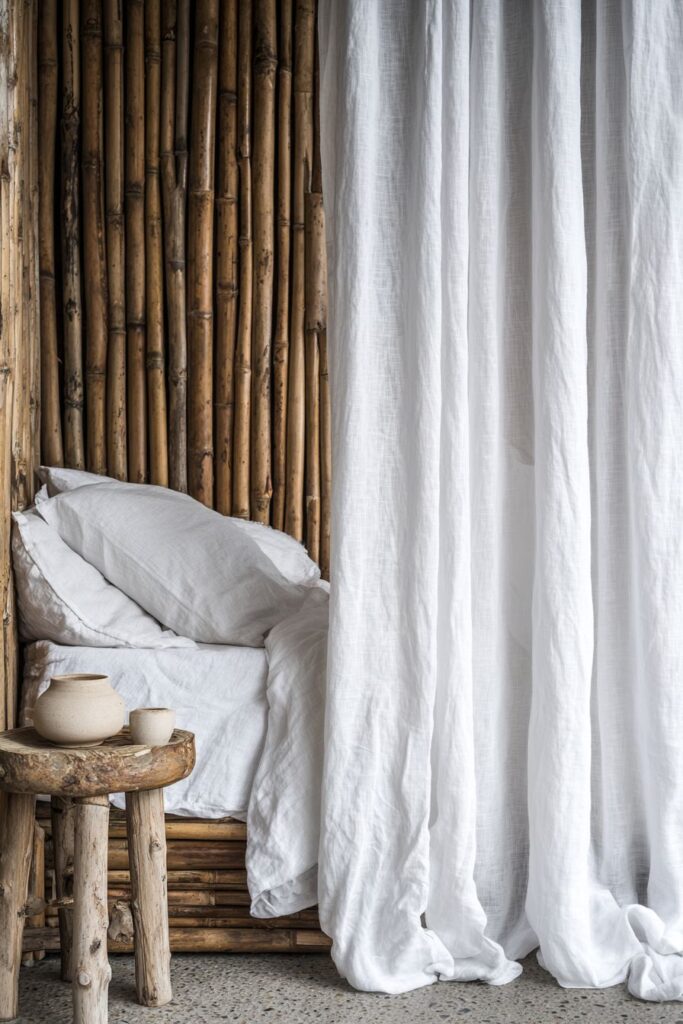
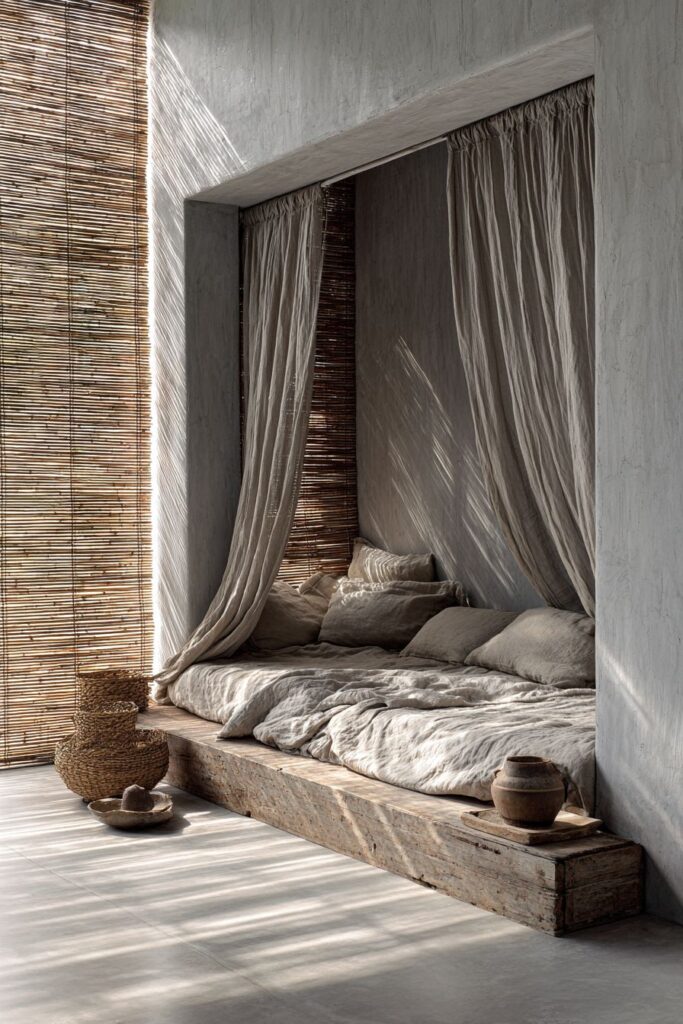
A sleeping alcove featuring natural linen bedding with gentle wrinkles and organic draping creates a restful retreat that embodies the wabi-sabi principle of finding beauty in natural, unstudied comfort. The linen bedding shows the characteristics that make natural fibers beautiful—subtle color variations, natural texture, and the gentle wrinkles that develop through use and washing. Rather than pursuing crisp, hotel-like perfection, this bedding celebrates the soft, lived-in comfort that comes with natural materials and organic draping.
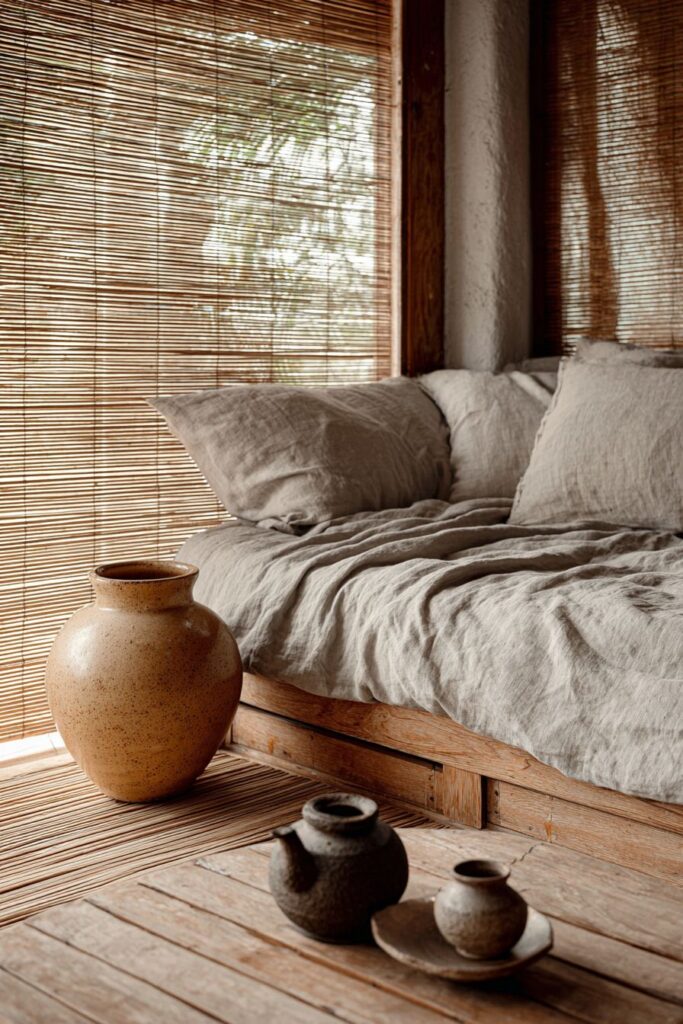
The wooden platform bed displays visible joinery and natural wood variations that celebrate traditional construction methods while creating a foundation that connects the sleeping space to the earth. The platform’s low profile and simple construction emphasize functionality while allowing the wood’s natural grain patterns and color variations to become decorative elements. Gentle wear marks and natural aging add to the platform’s beauty over time.
A simple ceramic side table holds handmade objects that support the alcove’s restful atmosphere while demonstrating how everyday items can become art when chosen with care and intention. The ceramic’s organic shape and natural glaze variations complement the wood tones while providing practical surface space for bedside necessities that become part of the room’s aesthetic appeal.
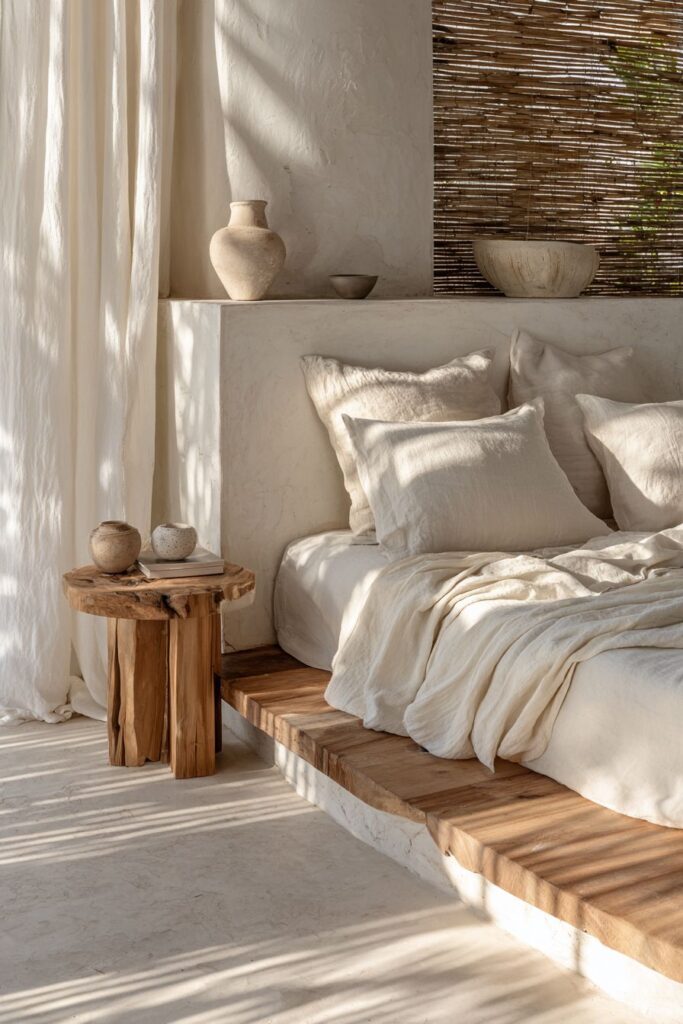
Soft natural light filters through bamboo blinds, creating gentle shadows that change throughout the day while maintaining privacy and controlling brightness. The bamboo’s natural texture and organic color variations add another layer of natural material to the sleeping space while the filtered light creates a constantly changing interplay of illumination and shadow that celebrates the transient beauty central to wabi-sabi philosophy.
Key Design Tips:
- Choose natural linen bedding that develops beautiful wrinkles and soft texture through use
- Use platform beds with visible joinery that celebrates traditional construction methods
- Select ceramic side tables with organic shapes that complement natural wood tones
- Install bamboo blinds that filter natural light while adding organic texture
- Create sleeping spaces that prioritize natural comfort over artificial perfection
17. Textile Artisan Corner
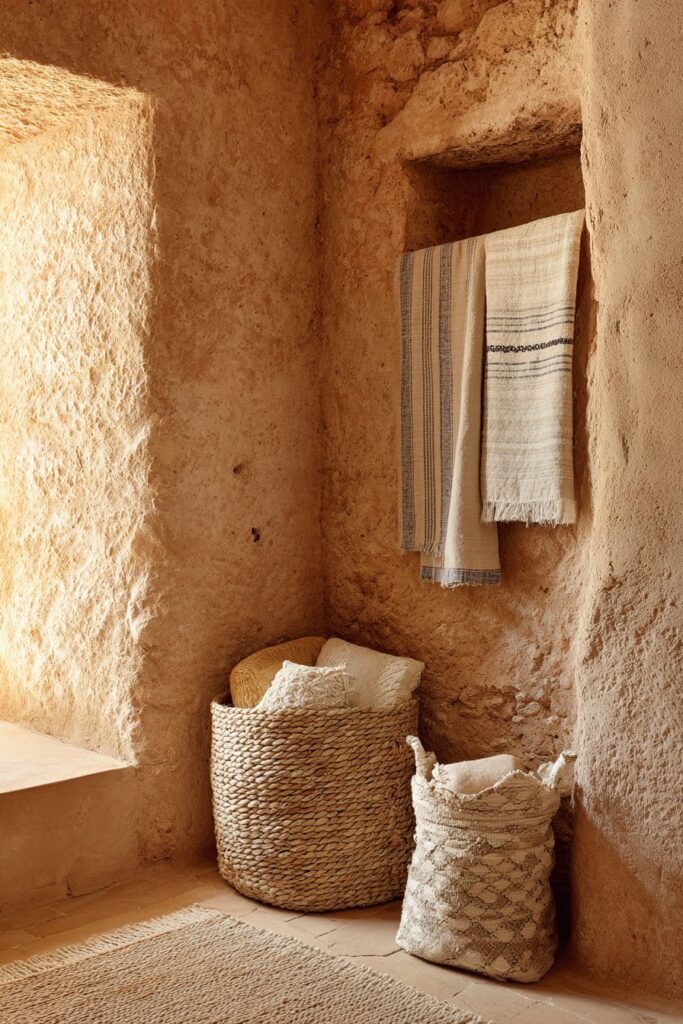
A dedicated textile corner featuring naturally dyed fabrics in earth tones creates a celebration of traditional dyeing techniques and the organic beauty that results from working with natural materials. The fabrics display subtle color variations and organic patterns that can only be achieved through hand-dyeing processes, where slight irregularities and natural color shifts become design features rather than flaws to be corrected. These variations tell the story of the dyeing process while creating visual interest through their organic unpredictability.
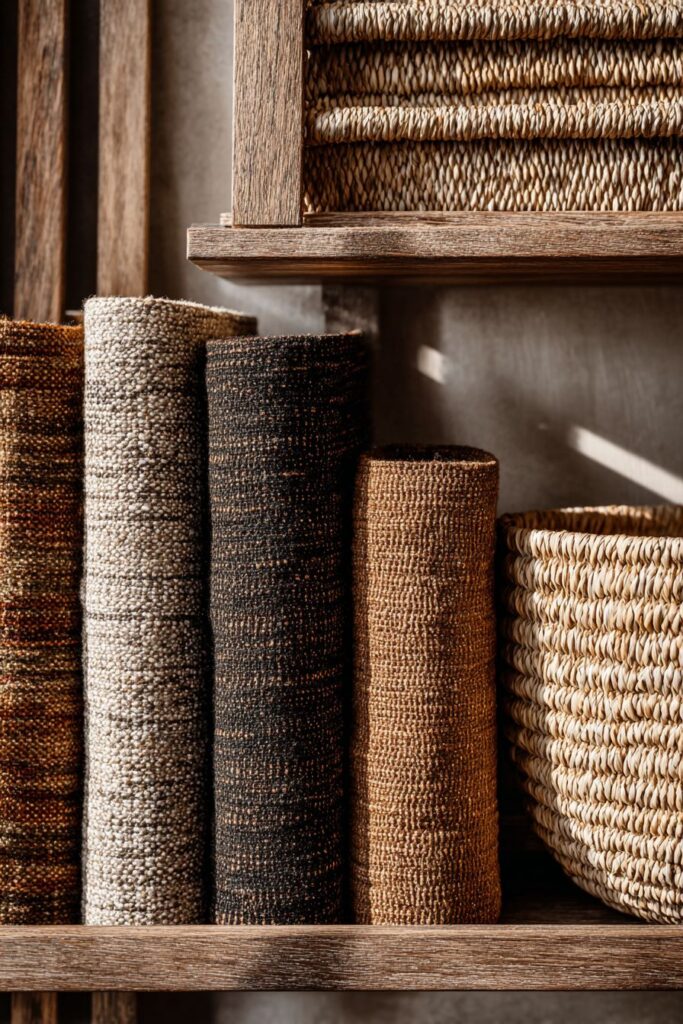
A wooden drying rack shows natural aging and smooth wear patterns from years of supporting wet fabrics and textile projects. The rack’s weathered surface and gentle wear marks create a patina that improves over time, while its functional design celebrates the practical beauty of traditional textile tools. The wood’s natural color variations and grain patterns complement the earth-toned fabrics while providing structural support that becomes part of the corner’s aesthetic appeal.
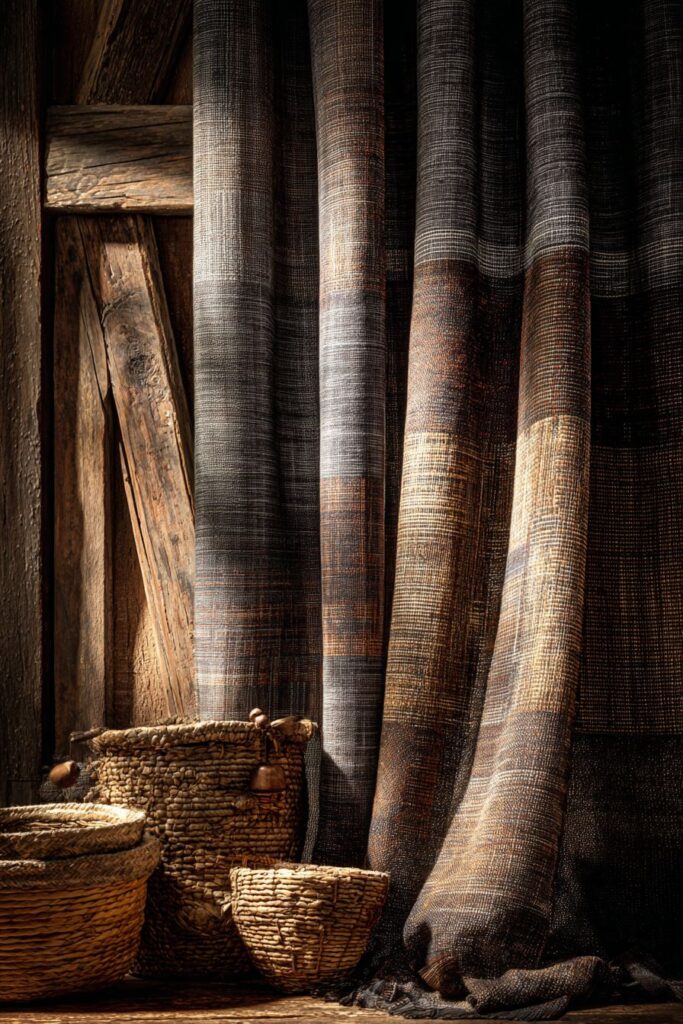
Handwoven baskets hold natural fiber materials with visible texture details—raw wool, cotton bolls, hemp fibers, and other organic materials that showcase the source of beautiful textiles. The baskets themselves display the characteristics of handmade craftsmanship through slight irregularities in weave and natural color variations that make each basket unique while maintaining harmony within the collection.
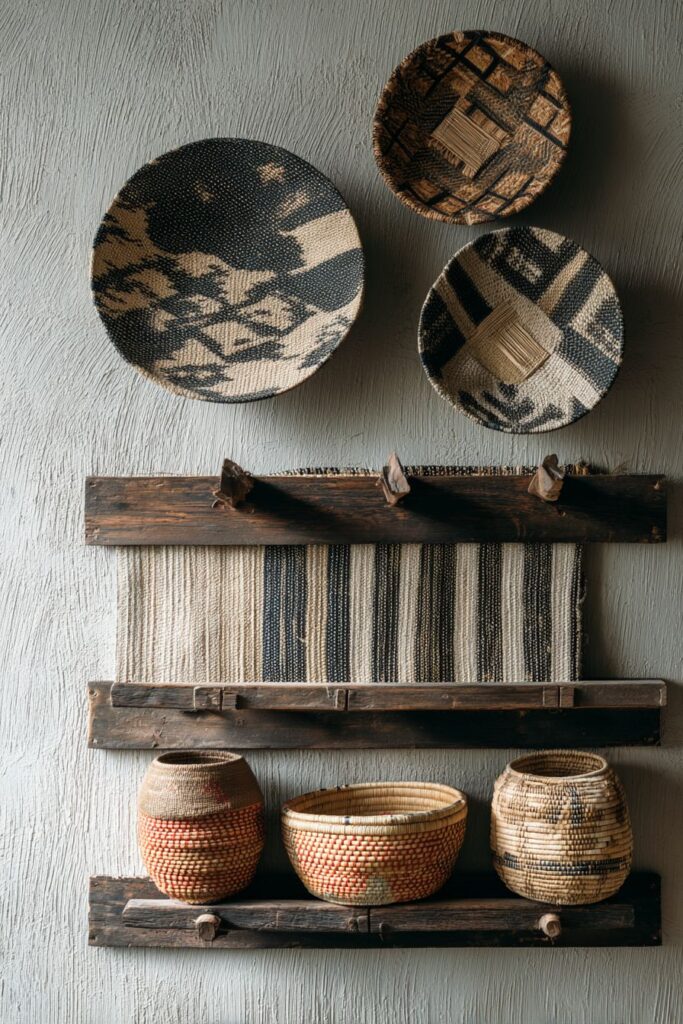
Soft indirect lighting emphasizes the organic beauty of natural materials while creating gentle shadows that highlight the textures and color variations in both the fabrics and the fiber materials. The lighting design celebrates rather than hides the subtle imperfections and natural characteristics that make handmade textiles beautiful, creating an environment that honors traditional craftsmanship and natural material beauty.
Key Design Tips:
- Display naturally dyed fabrics that show organic color variations and subtle patterns
- Use wooden drying racks that develop beautiful patina through functional use
- Store fiber materials in handwoven baskets that show natural texture variations
- Create lighting that emphasizes rather than hides organic textile characteristics
- Celebrate traditional dyeing and weaving techniques through thoughtful display
18. Tea Ceremony Mindfulness
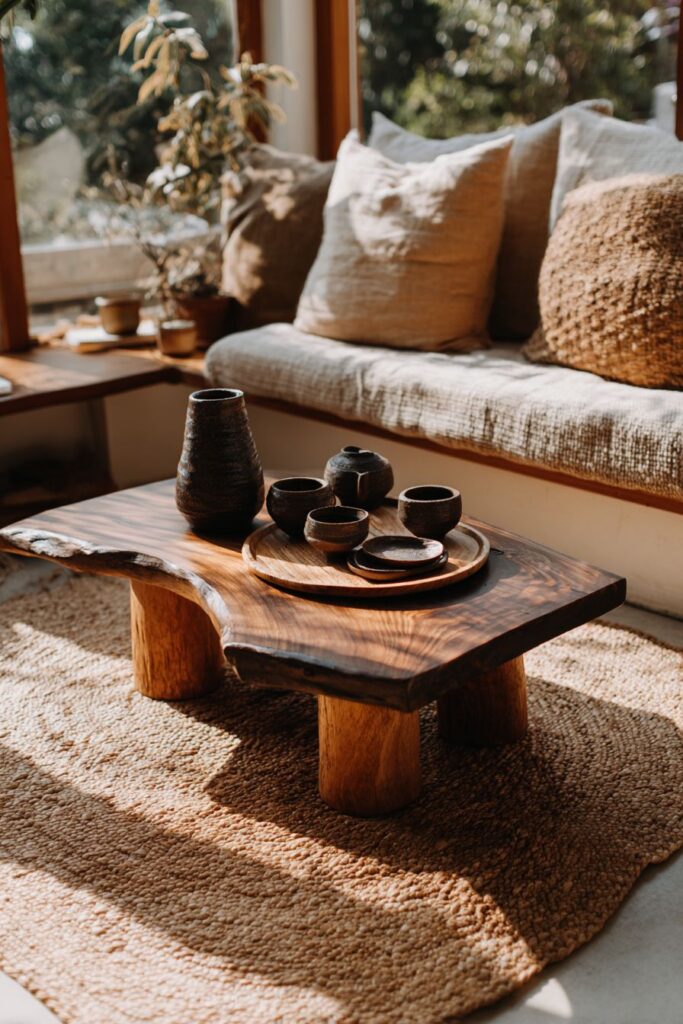
A dedicated tea ceremony area featuring a low wooden table with natural edge details creates a space for mindful ritual within this wabi-sabi living room. The table’s surface shows hand-finished characteristics that celebrate traditional woodworking techniques while preserving the natural beauty of the wood grain and organic edge. Gentle wear marks from daily tea ceremonies add to the table’s patina while creating a surface that invites both practical use and contemplative appreciation.
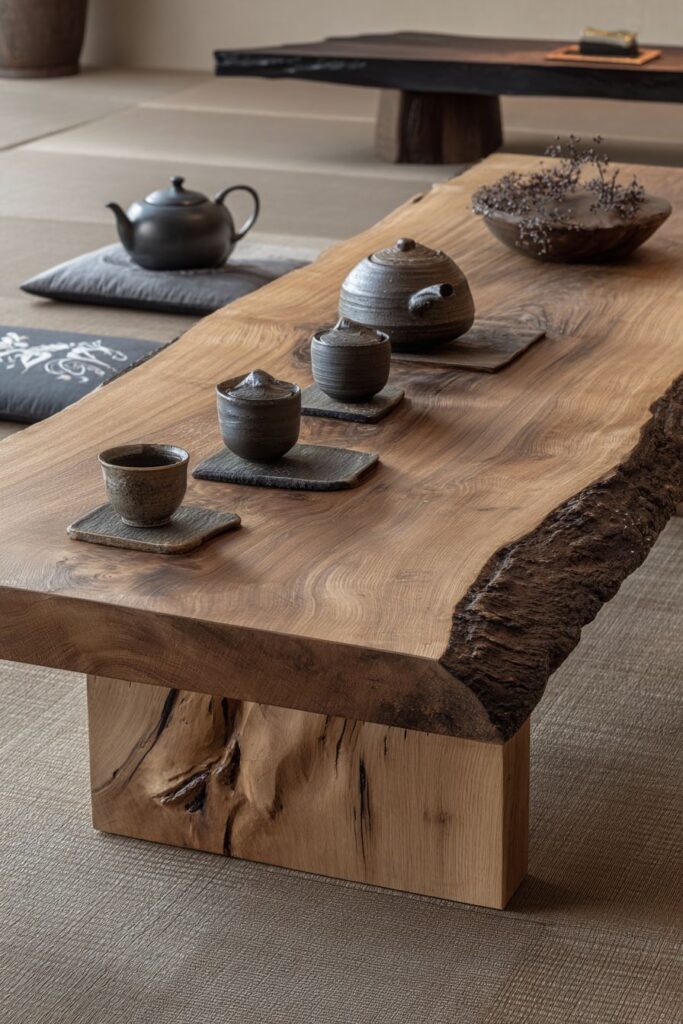
A traditional ceramic tea set displays visible maker marks and natural glazing variations that tell the story of its handcrafted creation while providing functional beauty for tea ceremony rituals. Each piece in the set shows subtle differences in shape, size, and glaze that mark it as individually made while maintaining harmony within the collection. The natural glazing variations and organic shapes create visual interest while supporting mindful tea preparation and consumption.
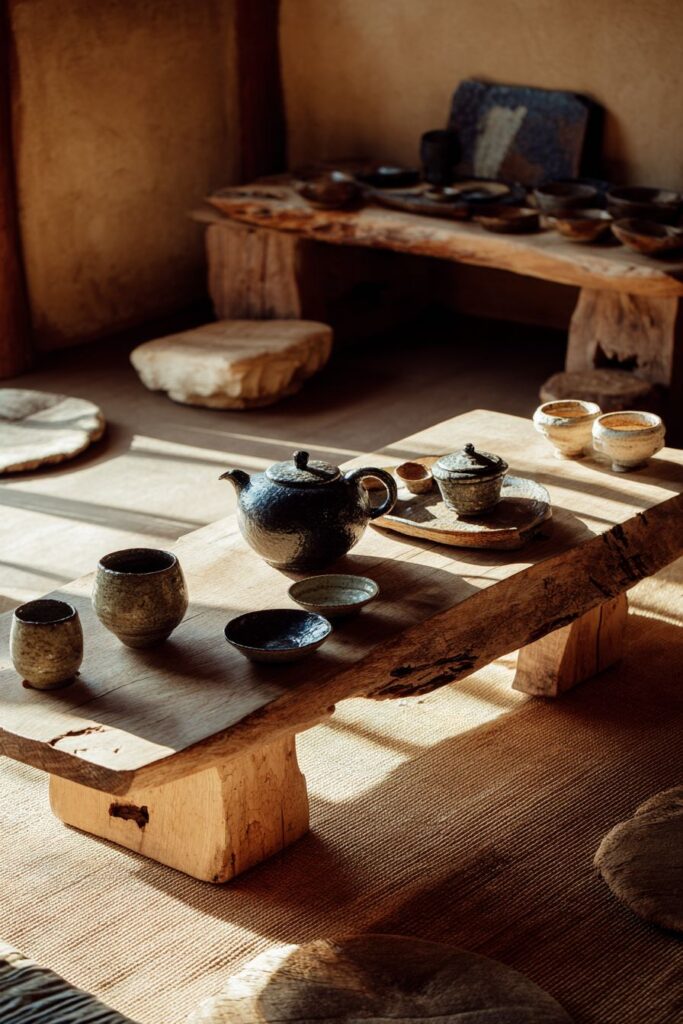
Hemp sitting mats with natural fiber textures provide comfortable ground seating that connects tea ceremony participants to the earth while demonstrating the beauty of organic materials. The hemp’s natural color variations and slightly rough texture complement the wood and ceramic elements while providing practical comfort that improves with use and aging.
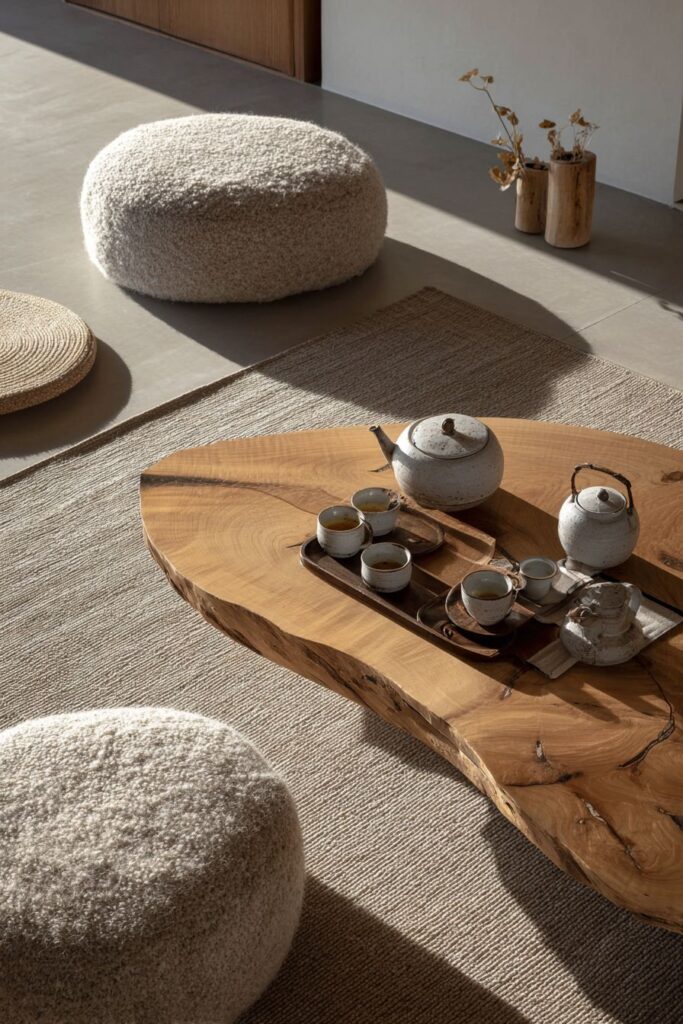
Gentle natural light creates soft shadows on the serving pieces, emphasizing their handmade qualities while providing ideal illumination for tea ceremony activities. The changing quality of natural light throughout the day creates different moods for tea ceremonies while highlighting the organic textures and natural materials that make this ritual space special.
Key Design Tips:
- Create tea ceremony spaces with low tables that show natural wood characteristics
- Use ceramic tea sets that display visible maker marks and glazing variations
- Provide ground seating with natural fiber mats that connect users to the earth
- Position tea ceremony areas to capture gentle natural light throughout the day
- Celebrate handmade objects that show individual characteristics within harmonious sets
19. Welcoming Entrance Beauty
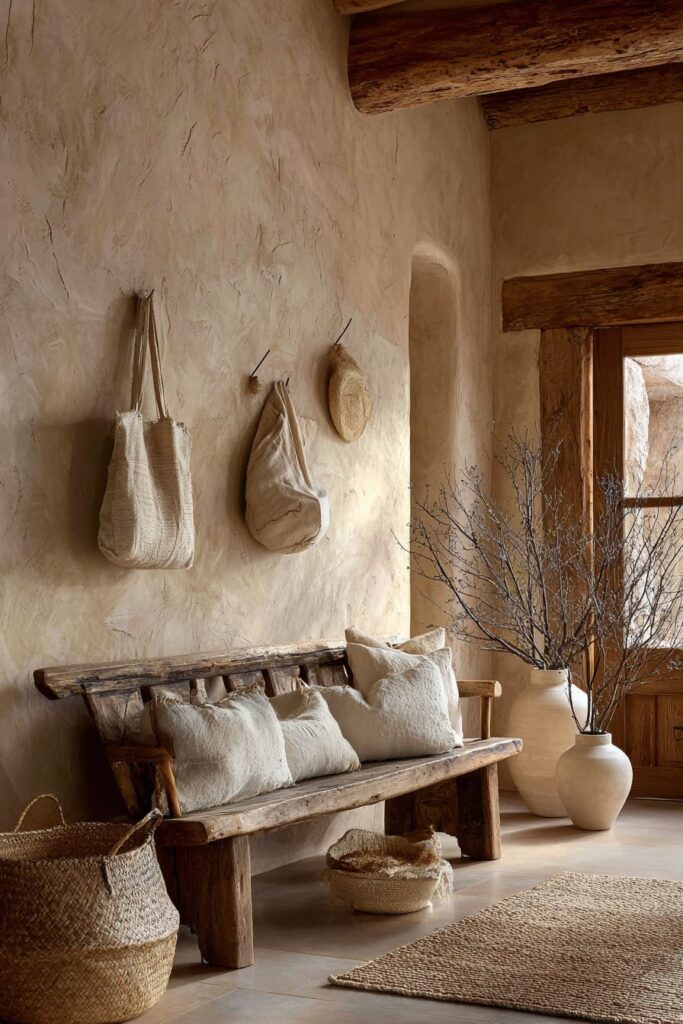
The entrance area features a wooden bench with natural wear patterns that tell the story of daily comings and goings, creating a welcoming transition space that embodies wabi-sabi principles from the moment visitors enter the room. The bench’s surface shows gentle scratches, color variations, and the smooth patina that develops from regular use, making it more beautiful over time rather than showing signs of deterioration. These wear patterns become design features that speak to the home’s lived-in character and authentic hospitality.
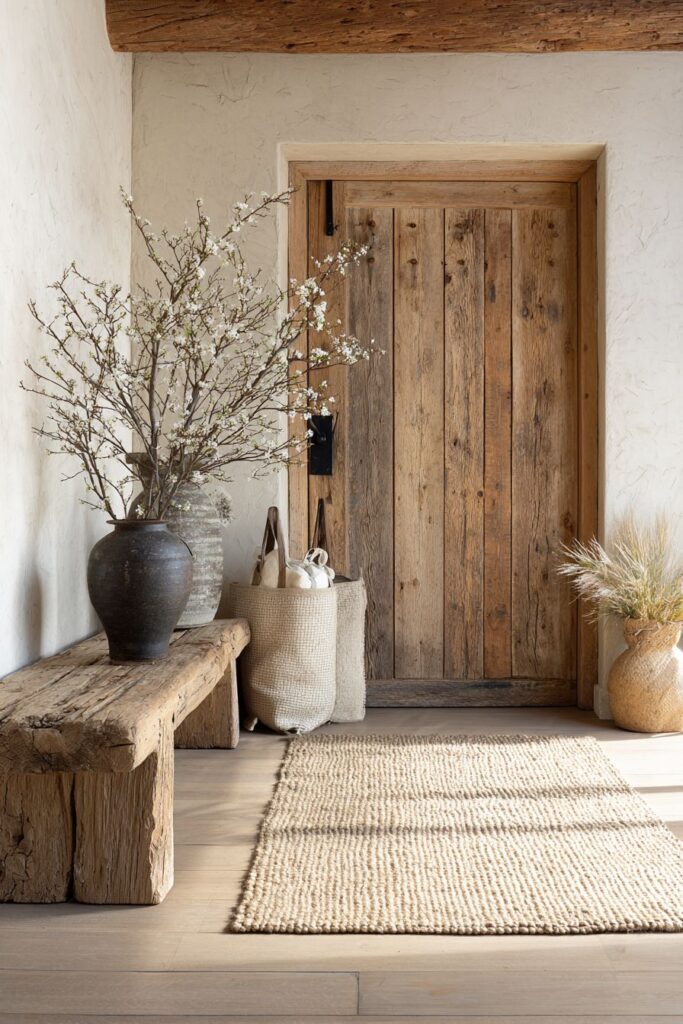
Ceramic vessels holding seasonal branches create ever-changing displays that celebrate natural cycles and the transient beauty that wabi-sabi treasures. The vessels’ organic shapes and natural glaze variations complement the seasonal displays while providing stable foundations for branch arrangements that change throughout the year. The branches themselves show natural aging, seasonal color changes, and organic forms that cannot be replicated artificially.
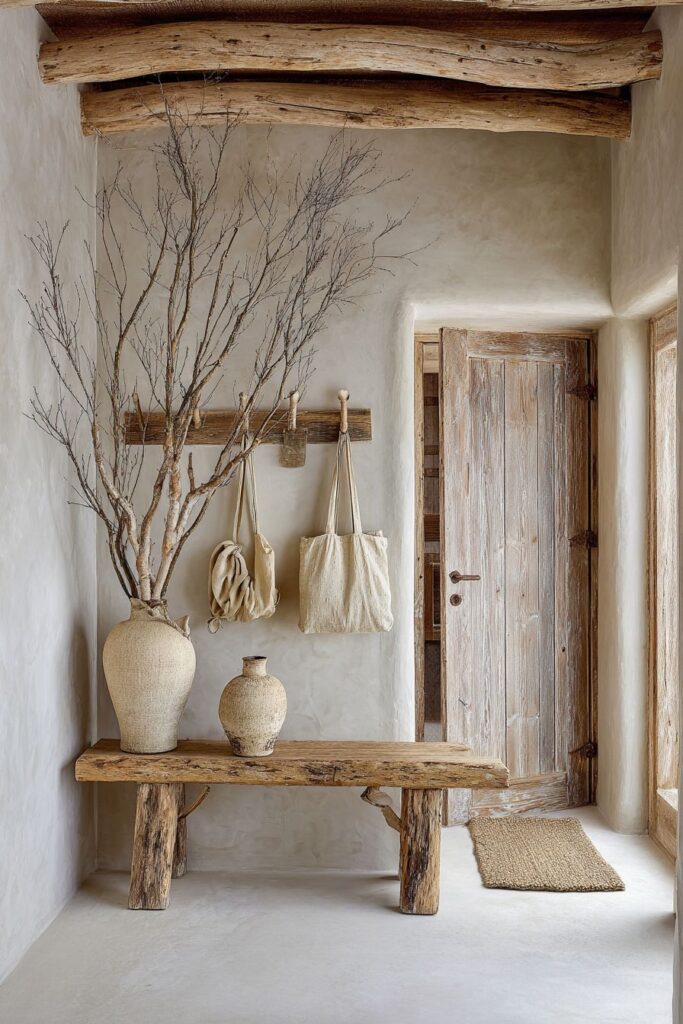
A natural fiber door mat shows gentle aging and organic texture details that welcome visitors while demonstrating how functional objects can become beautiful through thoughtful selection and natural aging. The mat’s fibers show natural color variations and the gentle wear patterns that develop through use, creating a surface that becomes more attractive over time while serving its practical function.
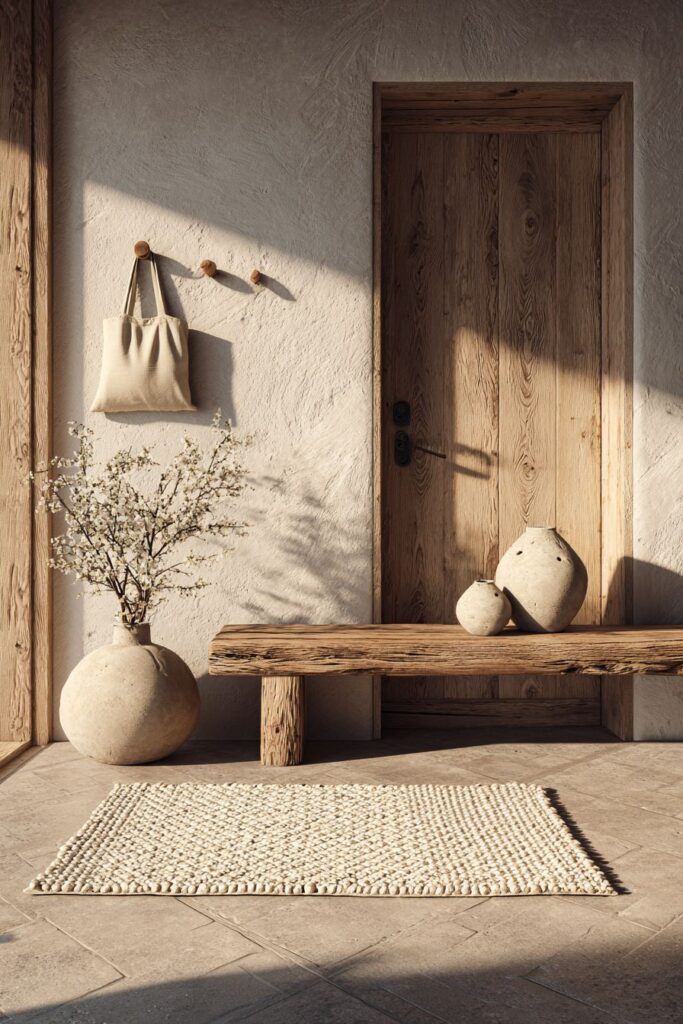
Simple wooden hooks display linen bags with hand-stitched details, combining practical storage with textile art that celebrates traditional needlework techniques. The bags show the characteristics of handmade construction through visible stitching, natural linen texture, and the gentle wear patterns that develop through regular use. Their casual display on wooden hooks creates functional storage that becomes part of the entrance’s aesthetic appeal.
Key Design Tips:
- Choose entrance furniture that develops beautiful wear patterns through daily use
- Create seasonal displays with natural branches that celebrate changing natural cycles
- Use natural fiber mats that show attractive aging and organic texture development
- Display handmade textile items that combine practical function with traditional craftsmanship
- Design entrance areas that welcome visitors with authentic, lived-in beauty
20. Contemplative Window Corner
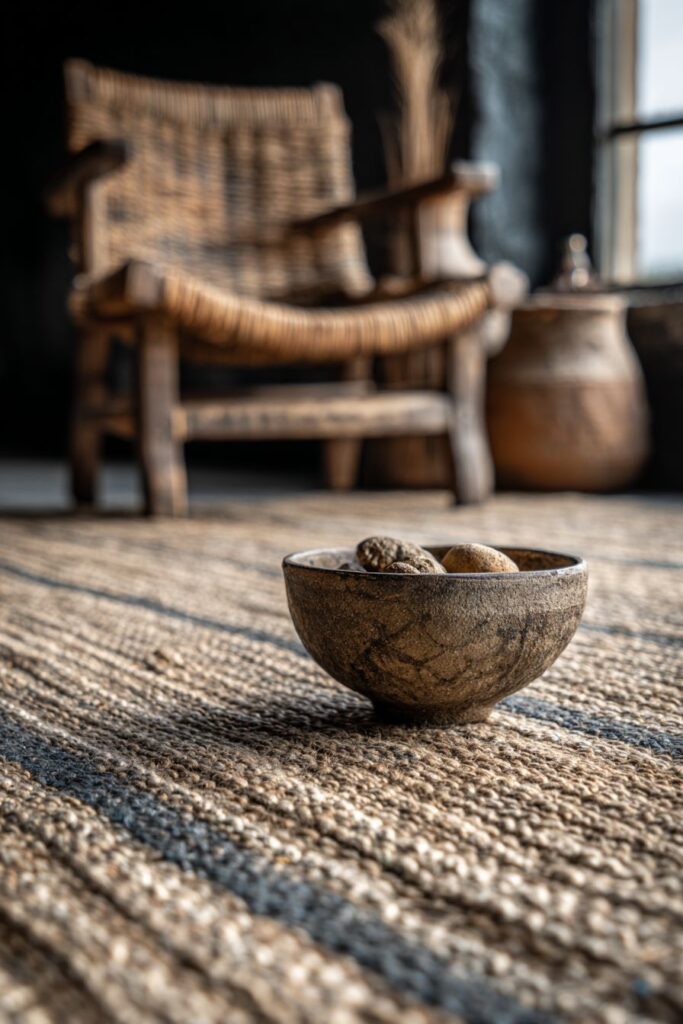
The final design creates a contemplation space featuring a single antique wooden chair that displays beautiful aging and patina beside a strategically placed window. The chair’s weathered surface tells countless stories through gentle wear marks, color variations, and the smooth patina that develops only through years of loving use. Each scratch and faded area becomes part of the chair’s character, creating a piece of furniture that grows more beautiful with age rather than deteriorating.
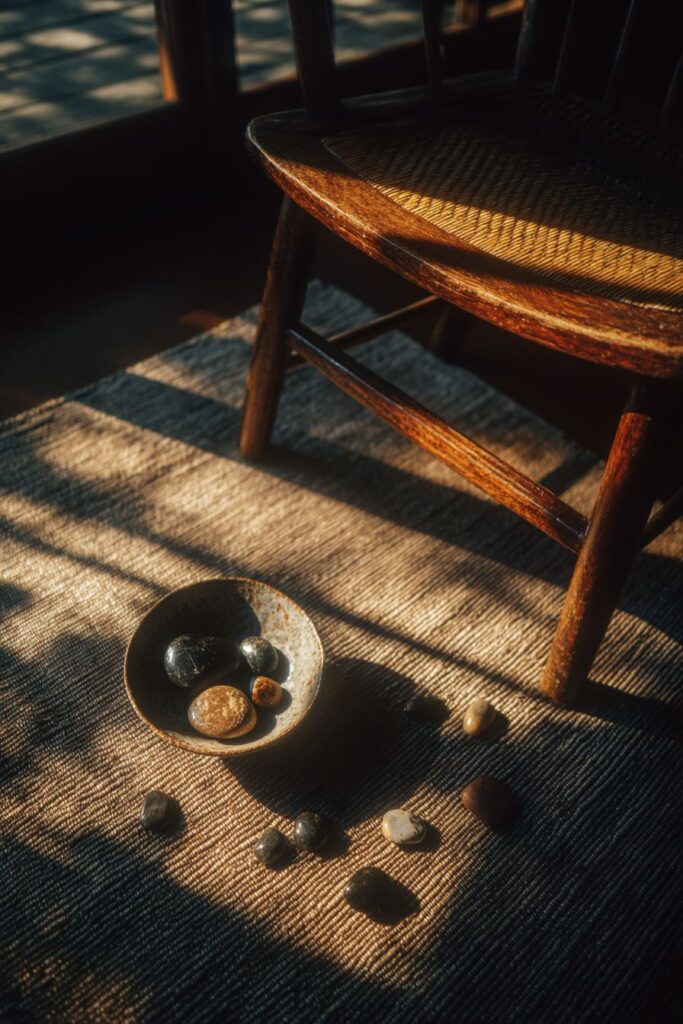
A simple ceramic bowl holds stones or natural objects with organic shapes and color variations, creating a small meditation collection that invites contemplation and connection with natural forms. The bowl’s handmade qualities are evident in its subtle irregularities and organic glaze variations, while the collected stones show the beautiful diversity that exists within natural materials—different colors, textures, and shapes that work together harmoniously despite their differences.
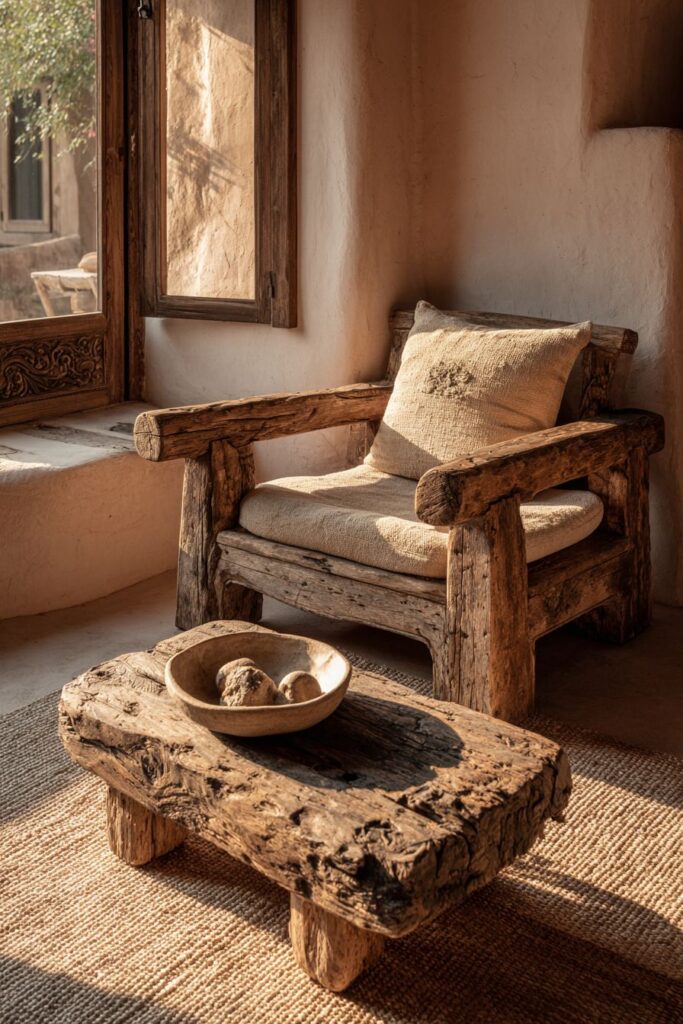
A handwoven floor covering in natural fibers adds textural warmth beneath the contemplation area while demonstrating how traditional crafts can create objects of lasting beauty and function. The covering’s organic weave and natural color variations create visual interest while providing comfort for extended sitting or meditation practices.
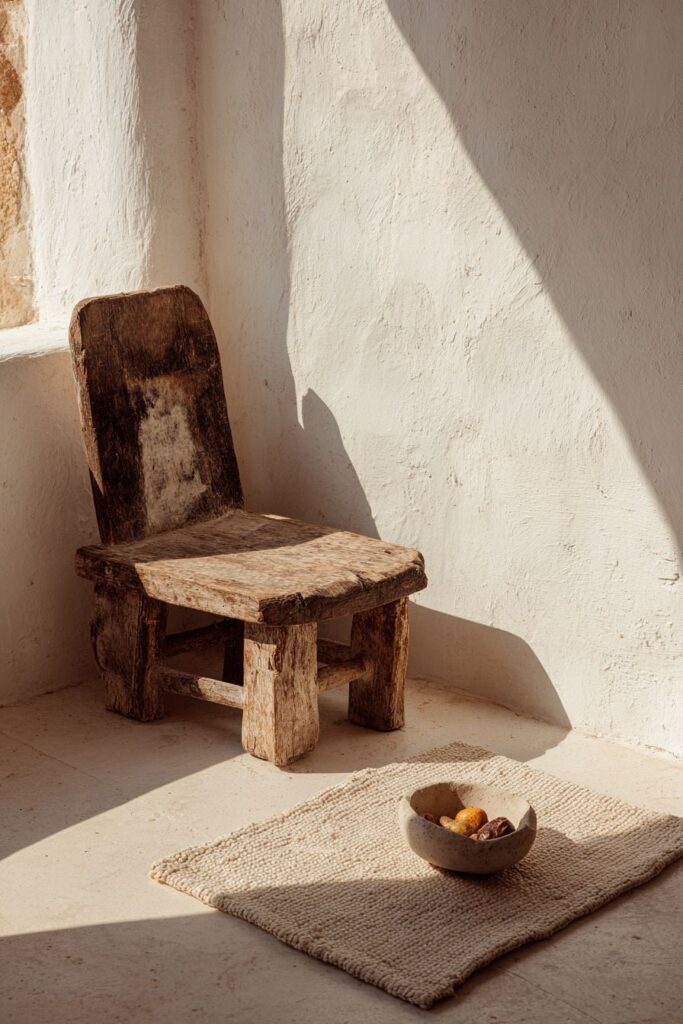
Golden hour light creates gentle shadows across weathered surfaces, transforming the contemplation corner throughout the day while highlighting the beauty of aged materials and natural forms. This changing light quality celebrates the transient nature of beauty while creating ideal conditions for quiet reflection and mindful observation of how natural light interacts with organic materials and weathered surfaces.
Key Design Tips:
- Position contemplation furniture near windows to capture changing natural light
- Display collections of natural objects that show organic shape and color variations
- Use handwoven floor coverings that add textural warmth and traditional craft beauty
- Create spaces that celebrate the profound beauty found in simplicity and natural aging
- Allow weathered furniture surfaces to tell their stories through visible wear and patina
Why These Wabi Sabi Living Room Designs Represent the Best in Authentic Interior Design
These twenty wabi-sabi living room designs represent the pinnacle of authentic interior design because they fundamentally reject the modern obsession with perfection in favor of celebrating the inherent beauty found in natural aging, handcrafted imperfection, and organic authenticity. Each design demonstrates how embracing rather than hiding the effects of time and use creates spaces that feel genuinely lived-in, deeply peaceful, and profoundly connected to both natural rhythms and human experience.
The strength of wabi-sabi interior design lies in its ability to create homes that improve with age rather than deteriorating over time. Unlike contemporary design trends that prioritize pristine surfaces and machine-perfect finishes, these spaces become more beautiful as they develop patina, show gentle wear, and accumulate the subtle imperfections that come with daily living. This philosophy creates sustainable design solutions that remain relevant and beautiful for decades rather than requiring constant updates to maintain their appeal.
Natural materials form the foundation of every successful wabi-sabi living room, from reclaimed wood showing beautiful grain patterns and natural character marks to handmade ceramics displaying organic shapes and glaze variations that can only be achieved through traditional crafting techniques. These materials connect interior spaces to the natural world while supporting local artisans and traditional crafts that might otherwise disappear in our increasingly industrialized world.
The color palettes in these designs draw exclusively from earth tones and muted neutrals that create environments feeling both timeless and deeply grounding. These organic color schemes provide visual rest in our overstimulated world while creating backdrops that allow natural textures, handcrafted objects, and seasonal displays to take center stage without competing for attention.
Lighting design in wabi-sabi interiors prioritizes natural illumination that changes throughout the day, creating spaces that remain connected to natural rhythms and seasonal cycles rather than relying on artificial brightness that divorces interior spaces from the outside world. This approach to lighting celebrates the transient beauty that lies at the heart of wabi-sabi philosophy while providing ideal conditions for contemplation, reading, and other mindful activities.
The furniture selections in these designs prioritize pieces showing visible construction methods, natural material characteristics, and the gentle wear patterns that develop through regular use. Rather than hiding joinery, covering natural edges, or disguising material imperfections, wabi-sabi furniture celebrates these characteristics as evidence of authentic craftsmanship and honest material use.
Textile choices throughout these spaces emphasize natural fibers that soften, develop character, and become more comfortable through washing and use rather than synthetic materials that resist change and maintain artificial perfection. Linen wrinkles beautifully, cotton develops soft texture through use, and wool shows gentle wear patterns that add to its character rather than detracting from its beauty.
The arrangement principles governing these spaces reject formal symmetry and artificial styling in favor of organic placement that suggests natural accumulation over time rather than professional staging. Objects are displayed in ways that suggest daily use and genuine appreciation rather than museum-like preservation, creating environments that invite touch, interaction, and authentic living.
Storage solutions integrate seamlessly into the aesthetic through natural fiber baskets, wooden containers showing beautiful aging, and ceramic vessels that serve dual functions as both practical storage and decorative objects. This approach eliminates the need to hide necessary household items while creating opportunities to display functional beauty throughout the living space.
Plant integration in wabi-sabi living rooms celebrates natural growth patterns including seasonal change, leaf aging, and organic forms that resist artificial shaping or forced perfection. Plants are displayed in handmade ceramic containers that complement their natural beauty while allowing both plants and containers to show the effects of time and care.
The sustainability inherent in wabi-sabi design principles creates environmentally responsible interiors that reduce waste, support traditional crafts, and prioritize natural materials over synthetic alternatives. This approach creates homes that tread lightly on the earth while supporting artisan communities and preserving traditional making techniques.
Psychological benefits of wabi-sabi living rooms include reduced stress, increased mindfulness, and deeper appreciation for life’s simple pleasures through environments that encourage slow living, contemplative activities, and acceptance of natural change. These spaces support mental health by creating refuges from contemporary culture’s demands for constant improvement and artificial perfection.
The adaptability of wabi-sabi design principles allows these approaches to work within various architectural styles, budget levels, and personal preferences while maintaining their essential character and philosophical foundation. Whether applied to small apartment corners or large family living spaces, these principles create environments that feel authentic and personally meaningful.
Cultural authenticity in these designs respects the Japanese origins of wabi-sabi philosophy while demonstrating how these principles can be applied to contemporary Western living without appropriation or superficial imitation. The focus remains on embracing universal human experiences of aging, imperfection, and natural beauty rather than copying specific cultural objects or arrangements.
Seasonal integration allows these living rooms to change naturally throughout the year through branch displays, textile rotation, and lighting adjustments that keep spaces feeling fresh and connected to natural cycles without requiring expensive updates or major redesigns. This seasonal responsiveness creates homes that remain engaging and beautiful year-round while supporting mental health through connection to natural rhythms.
Conclusion
The wabi-sabi living room represents more than an interior design style—it embodies a philosophy of living that finds extraordinary beauty in ordinary imperfection, celebrates the passage of time rather than resisting it, and creates homes that become more beautiful through use rather than deteriorating with age. These twenty distinct approaches demonstrate how embracing natural materials, handcrafted objects, and organic imperfection creates spaces of profound peace, authentic beauty, and genuine comfort that support both mental wellbeing and environmental sustainability.
As you consider incorporating wabi-sabi principles into your own living space, remember that the goal is not to perfectly replicate any specific look but to embrace the underlying philosophy of finding beauty in imperfection, appreciating the patina of age, and creating environments that celebrate rather than hide the effects of authentic living. Start with natural materials, handmade objects, and earth-toned colors, then allow your space to develop its own character through daily use and the gentle accumulation of meaningful objects that tell your personal story.
The beauty of wabi-sabi design lies in its accessibility—it requires no expensive materials or professional expertise, only a willingness to see beauty in the weathered, the worn, and the wonderfully imperfect. By embracing these principles, you create not just a beautifully designed living room but a daily practice of mindfulness, acceptance, and appreciation for life’s simple, transient pleasures.
"As an Amazon Associate, I earn from qualifying purchases."
