
Step into the world of Victorian dining rooms, where opulence meets functionality in a symphony of rich materials, intricate craftsmanship, and sophisticated design. The Victorian era, spanning from 1837 to 1901, brought forth an interior design philosophy that celebrated abundance, ornate details, and the finest materials available. These dining spaces served as the heart of formal entertaining, where families gathered for elaborate meals and guests were welcomed into homes that showcased wealth, taste, and cultural refinement.
Victorian dining rooms represent more than just spaces for eating; they embody a lifestyle that valued ceremony, tradition, and the art of hospitality. Every element, from the carved mahogany furniture to the elaborate crystal chandeliers, was carefully chosen to create an atmosphere of grandeur and sophistication. The interplay of rich colors, luxurious fabrics, and ornate decorative elements creates spaces that feel both imposing and inviting, formal yet comfortable enough for intimate family gatherings.
Throughout this comprehensive guide, we’ll explore twenty distinct Victorian dining room concepts, each showcasing different aspects of this magnificent design era. From the dramatic impact of carved walnut sideboards to the delicate beauty of stained glass windows, these spaces demonstrate how Victorian design principles can create dining rooms that are both historically authentic and timelessly elegant. Whether you’re looking to create a full Victorian transformation or simply incorporate elements of this classic style, these examples will provide inspiration and practical guidance for achieving Victorian grandeur in your own home.
1. Grand Mahogany Formal Dining Splendor
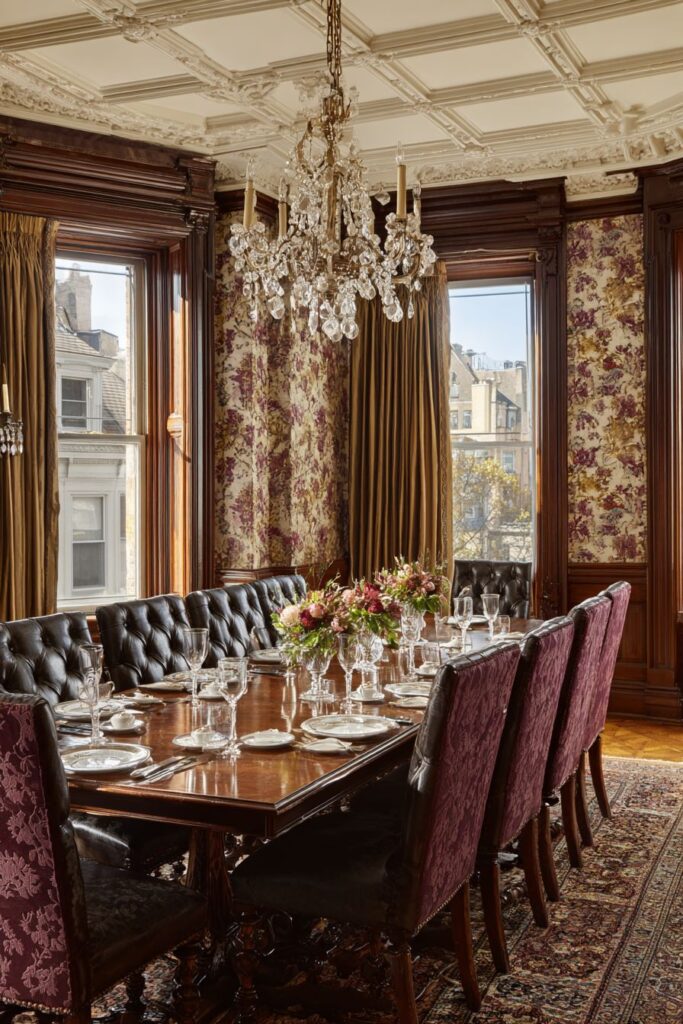
The epitome of Victorian dining elegance centers around a magnificent mahogany dining table with ornately carved legs that seem to tell stories of master craftsmen from centuries past. This commanding piece anchors the room with its impressive scale and rich, deep wood tones that have been carefully maintained to achieve that lustrous patina characteristic of fine Victorian furniture. Surrounding this masterpiece are high-back upholstered chairs draped in sumptuous burgundy velvet, each featuring meticulous button tufting that creates both visual interest and luxurious comfort for extended dinner parties.
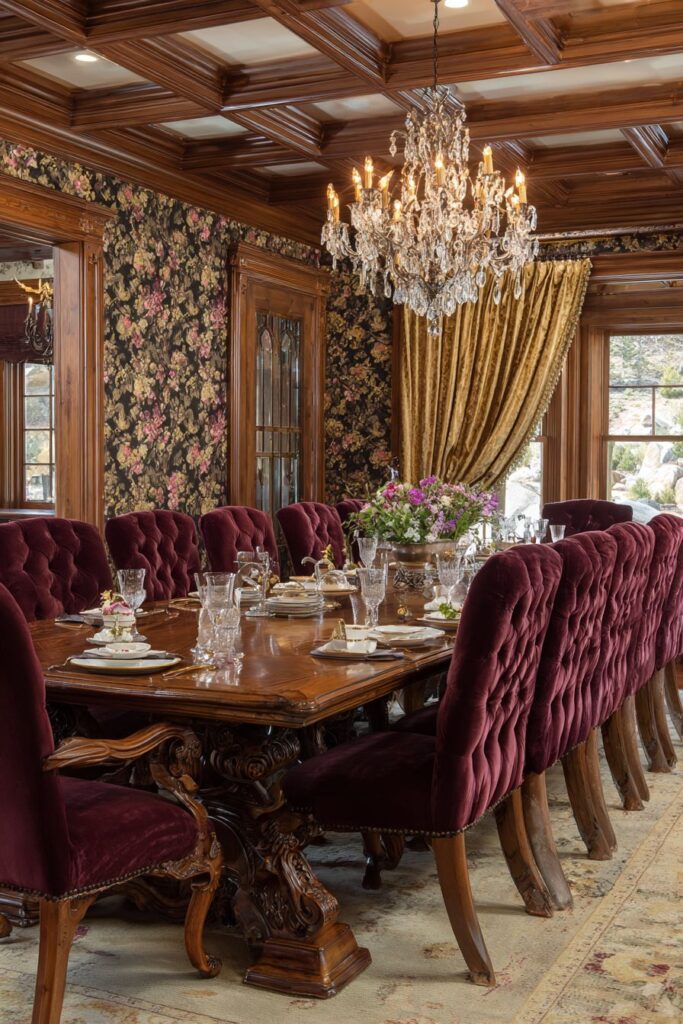
Above this grand tableau, an elaborate crystal chandelier commands attention, its multiple tiers of sparkling crystals catching and refracting light throughout the space. The chandelier serves not merely as illumination but as a centerpiece of Victorian opulence, casting warm, golden light that enhances the richness of the mahogany and brings out the deep jewel tones in the velvet upholstery. The formal table setting below showcases the Victorian attention to detail, with fine china displaying delicate patterns, sterling silver serving pieces that gleam under the chandelier’s glow, and crystal stemware arranged with mathematical precision.
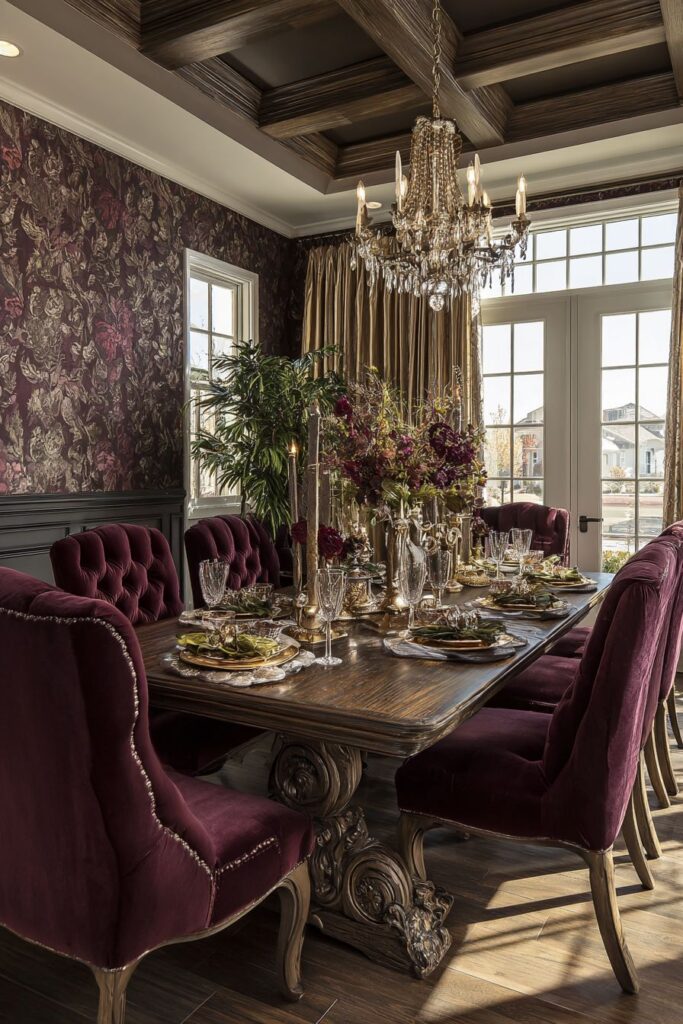
The architectural elements of this space further emphasize its grandeur, with dark wood wainscoting creating a sophisticated foundation for the floral damask wallpaper above. This wallpaper, rendered in deep jewel tones of emerald, sapphire, and ruby, provides a dramatic backdrop that speaks to the Victorian love of pattern and color. The coffered ceiling adds another layer of architectural interest, its geometric patterns creating visual depth while providing an appropriate frame for the spectacular chandelier.
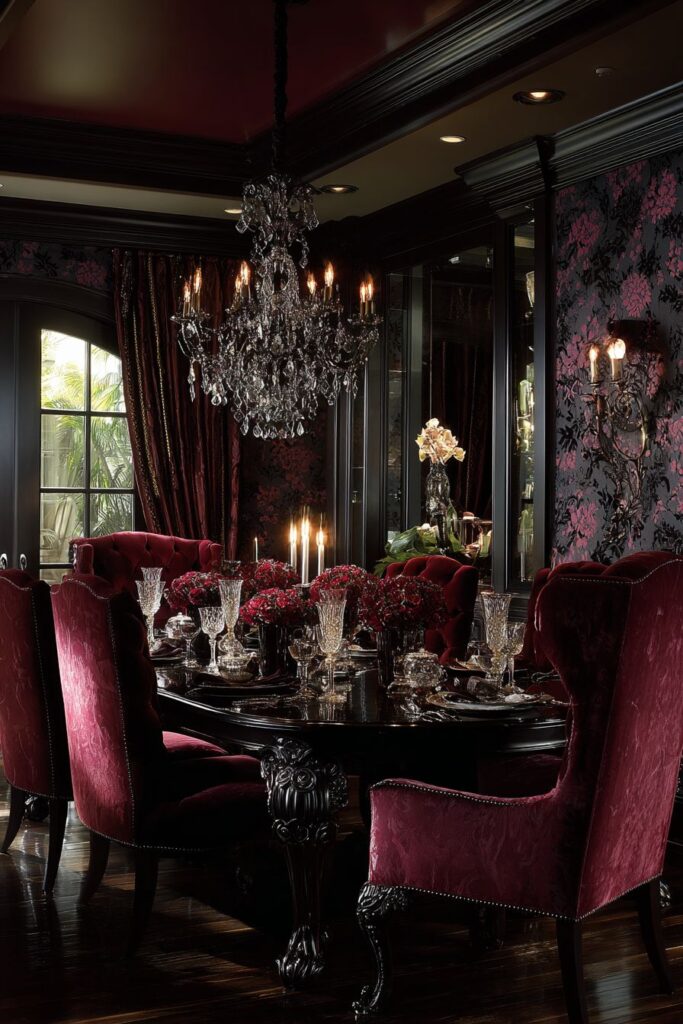
Natural light streams through tall windows dressed in heavy brocade curtains that puddle elegantly on the floor, demonstrating the Victorian preference for abundance in fabric and dramatic window treatments. These curtains, when drawn, create an intimate cocoon for evening dining, while opened during the day, they allow natural light to play across the polished surfaces and rich textures throughout the room.
Key Design Tips:
- Choose furniture with substantial proportions to match Victorian scale preferences
- Layer rich fabrics and textures to create visual and tactile interest
- Invest in quality lighting that serves both functional and decorative purposes
- Use deep, saturated colors to create the dramatic Victorian atmosphere
- Incorporate architectural details like wainscoting and coffered ceilings for authenticity
2. Ornate Walnut Sideboard Showcase
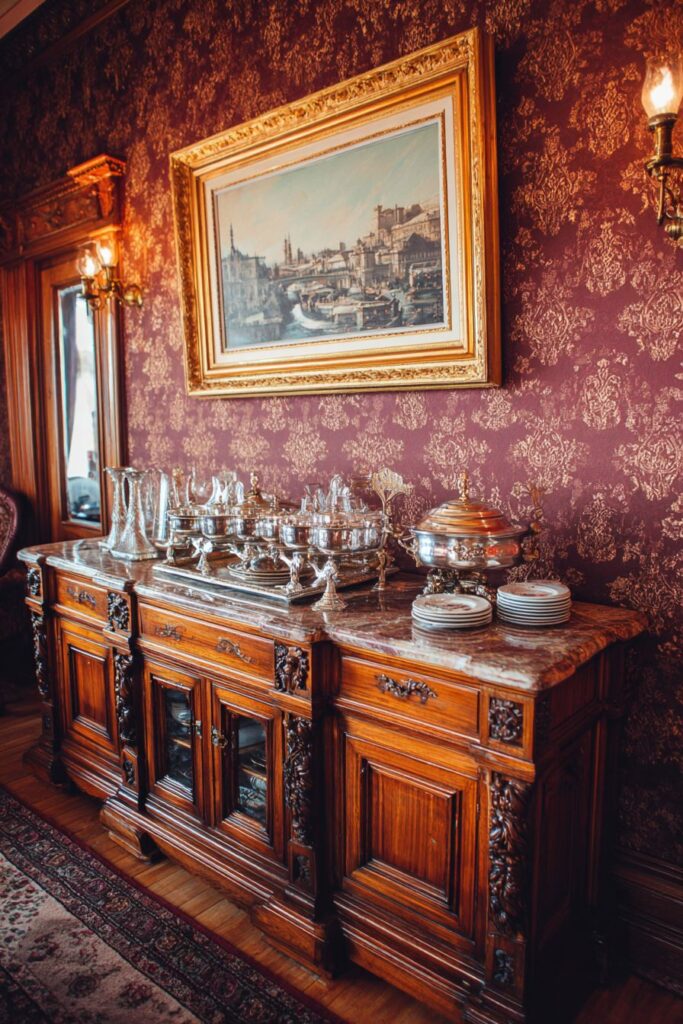
The carved walnut sideboard stands as a testament to Victorian craftsmanship, its elaborate surface decorated with acanthus leaf motifs that speak to the era’s love of natural forms rendered in wood. This impressive piece of furniture serves multiple functions in the Victorian dining room, providing both storage for precious china and serving pieces while also acting as a display stage for the family’s finest possessions. The marble top adds a touch of classical elegance while providing a practical surface for serving and display purposes.
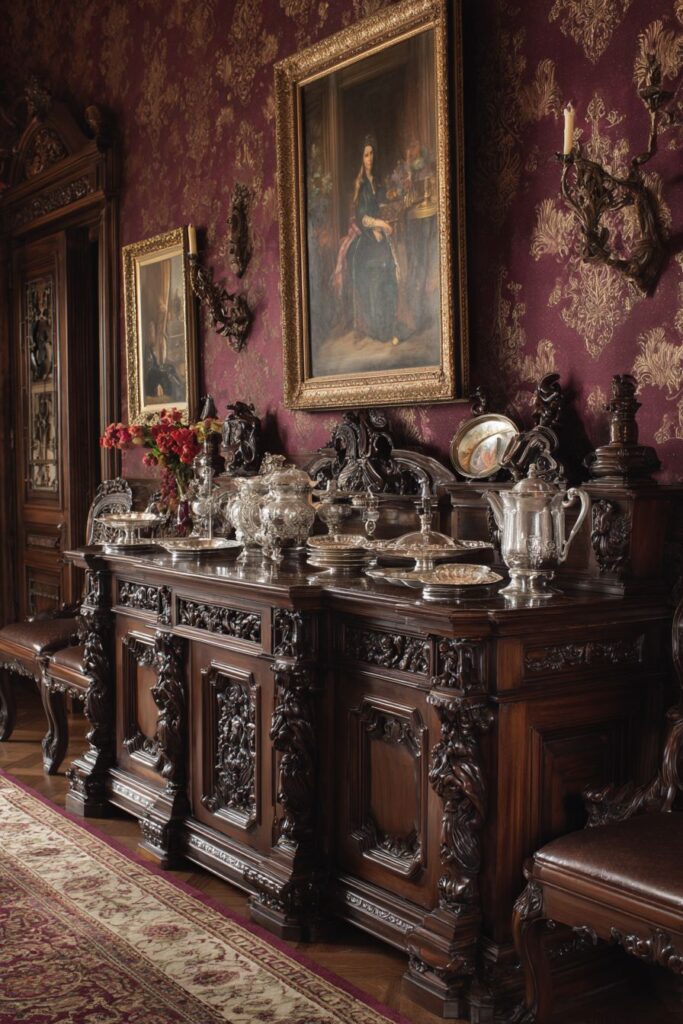
The sideboard’s collection of silver serving dishes catches the light beautifully, each piece carefully chosen for both function and beauty. Crystal decanters filled with various spirits and cordials create a sophisticated bar setup, their cut crystal surfaces refracting light in countless directions. These pieces represent more than mere functional items; they embody the Victorian belief that everyday objects should be beautiful as well as useful, elevating the simple act of serving dinner into a ceremonial presentation.
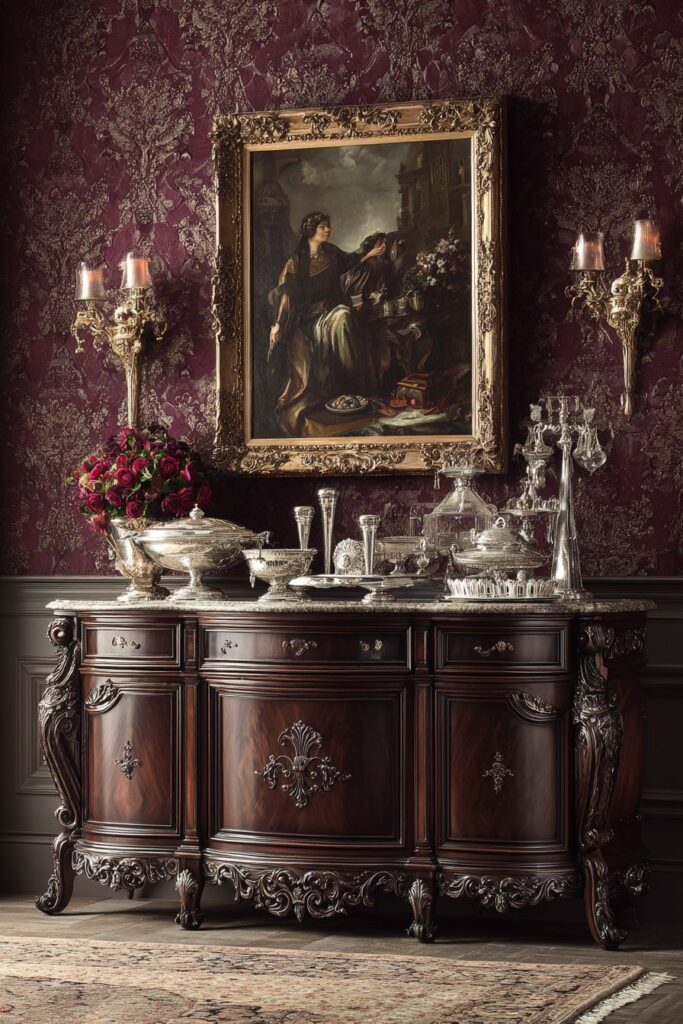
Above this magnificent display hangs a gilt-framed oil painting in the traditional style, its rich colors and classical subject matter perfectly complementing the opulent surroundings. The painting serves as both art and status symbol, demonstrating the family’s cultural sophistication and appreciation for fine art. The elaborate gold frame, with its intricate carved details, exemplifies the Victorian belief that frames should be as beautiful as the art they contain.
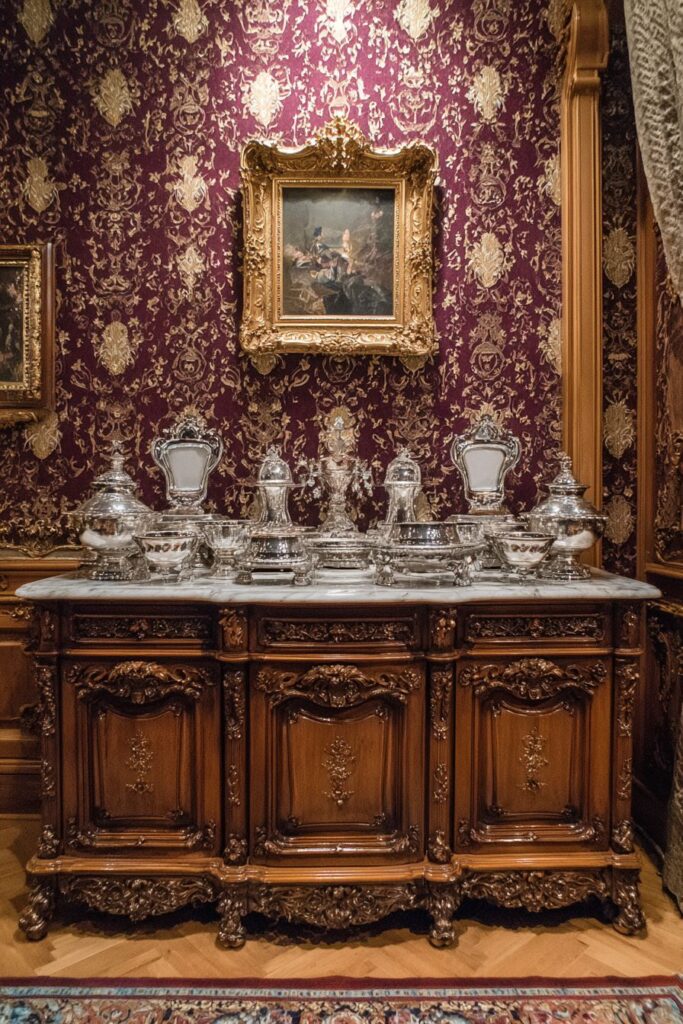
The rich burgundy and gold wallpaper creates a dramatic backdrop that enhances rather than competes with the sideboard’s elaborate details. This wallpaper choice demonstrates the Victorian skill at layering patterns and colors to create visual richness without overwhelming the space. The deep colors provide an elegant foundation that allows the carved wood details and gleaming metal surfaces to take center stage while contributing to the overall sense of luxurious abundance.
Key Design Tips:
- Select sideboards with elaborate carved details for authentic Victorian appeal
- Display collections of silver and crystal to add sparkle and sophistication
- Choose artwork in gilt frames to complement the ornate aesthetic
- Use rich, dark wallpapers to create dramatic backdrops
- Arrange display items in organized collections for maximum visual impact
3. Built-in China Cabinet Grandeur
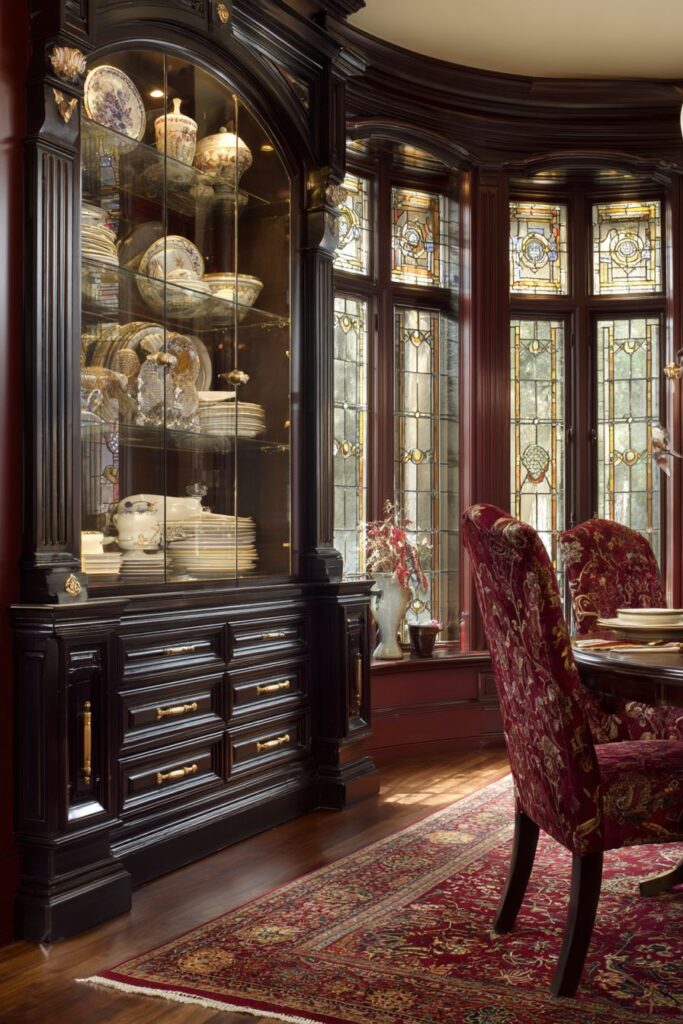
The impressive built-in china cabinet represents the Victorian commitment to both display and storage, its glass-front doors revealing an carefully curated collection of fine porcelain dinnerware arranged with museum-like precision. The interior lighting transforms this functional storage into a glowing showcase, highlighting the delicate patterns and colors of each piece while creating a warm, inviting ambiance throughout the dining room. The dark cherry wood construction provides a rich, warm foundation that complements the delicate beauty of the displayed china.
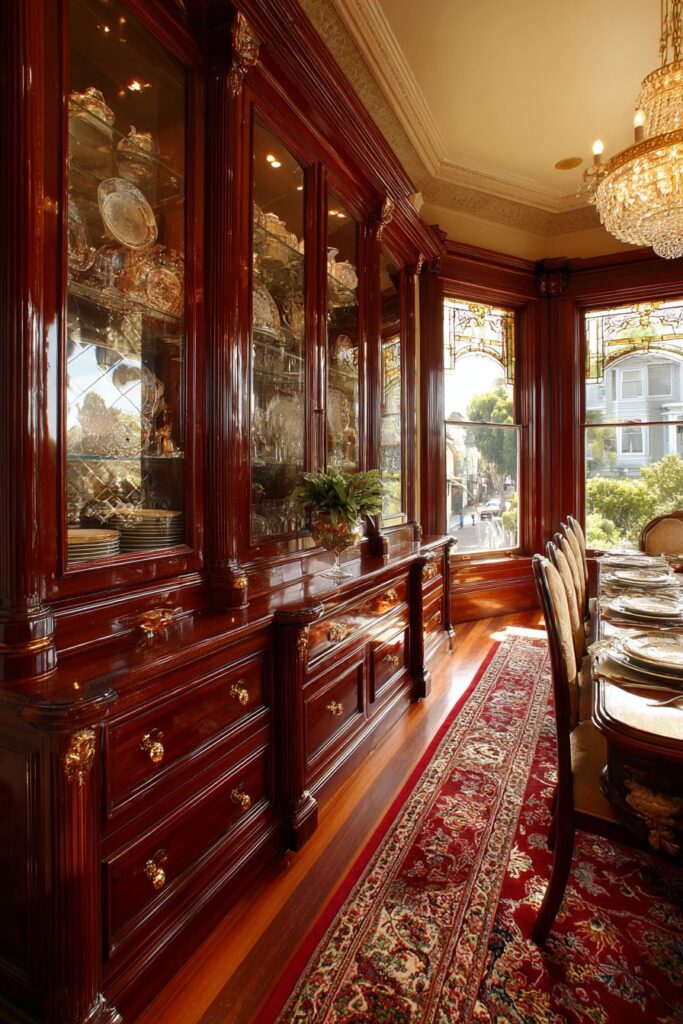
The cabinet’s ornate moldings and brass hardware demonstrate the Victorian attention to detail, with every element carefully chosen to contribute to the overall aesthetic impact. The brass hardware, polished to a warm golden glow, provides beautiful contrast against the dark wood while serving practical functions with style and elegance. These details transform a simple storage piece into a work of decorative art that serves as a focal point in the room.
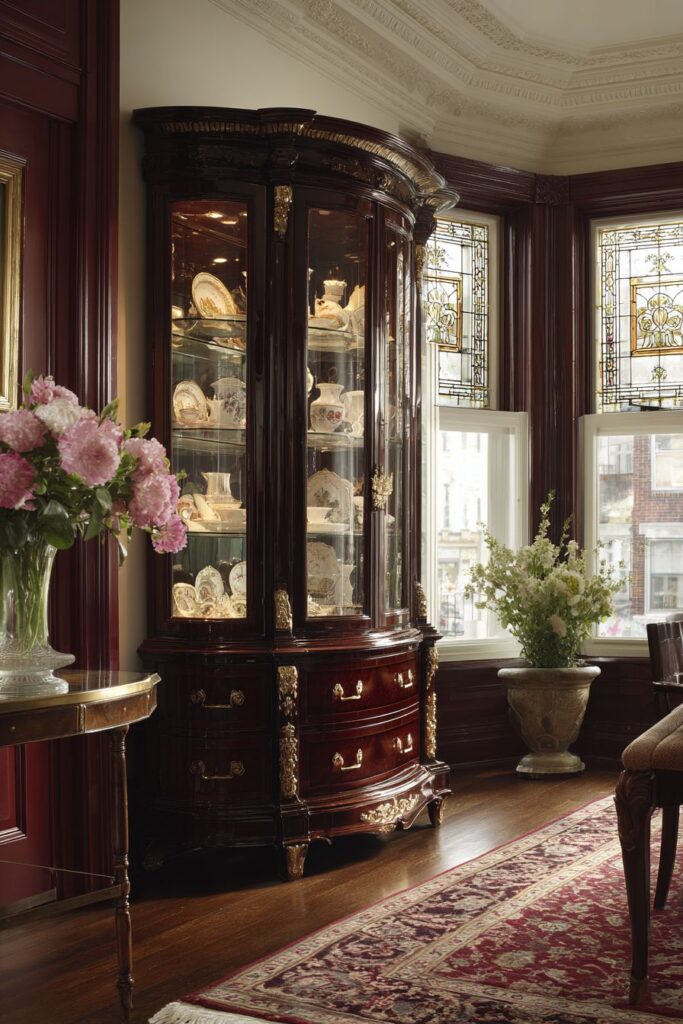
Persian rugs in deep reds and golds cover the polished hardwood floors, their intricate patterns adding another layer of visual richness to the space. These rugs serve multiple functions, protecting the valuable hardwood floors while adding warmth and color to the room’s foundation. The traditional patterns and rich colors complement the china display while providing a comfortable surface underfoot for extended dinner parties and family gatherings.
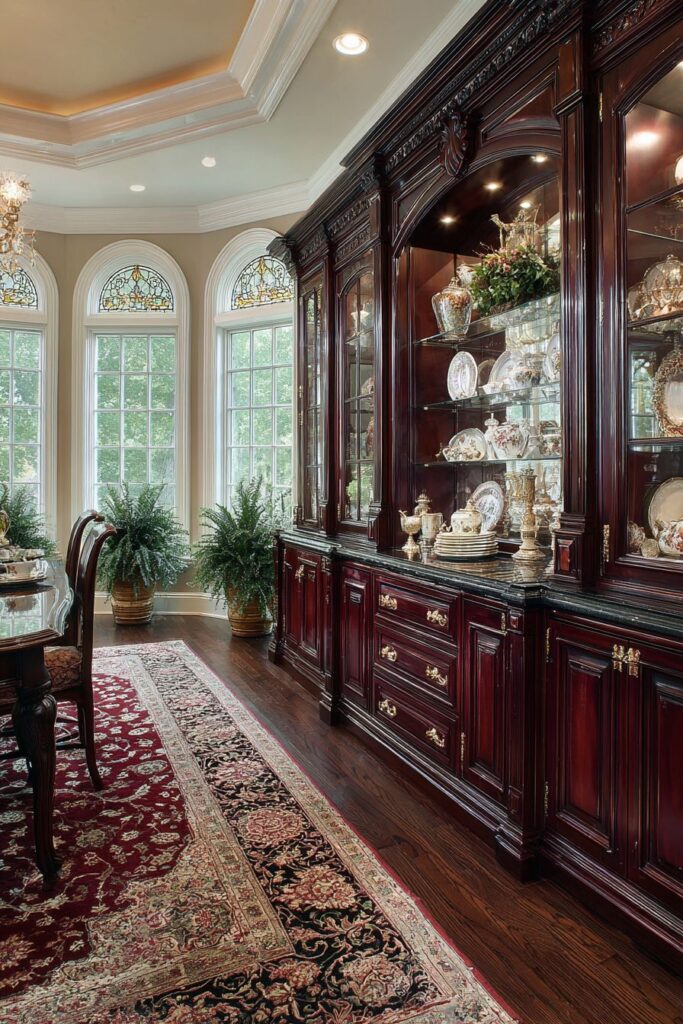
Natural lighting from bay windows with stained glass accents creates a constantly changing display of colored light throughout the day, with the glass panels casting rainbow patterns across the room’s surfaces. These windows demonstrate the Victorian love of colored glass and architectural ornamentation, turning the simple act of letting in natural light into an opportunity for artistic expression. The stained glass panels typically feature floral or geometric motifs that complement the room’s overall decorative scheme.
Key Design Tips:
- Install interior lighting in display cabinets to showcase collections effectively
- Choose brass hardware for authentic Victorian metalwork appeal
- Layer Persian or Oriental rugs for warmth and pattern
- Incorporate stained glass elements for colorful natural lighting effects
- Arrange china collections by color or pattern for maximum visual impact
4. Intimate Round Table Elegance
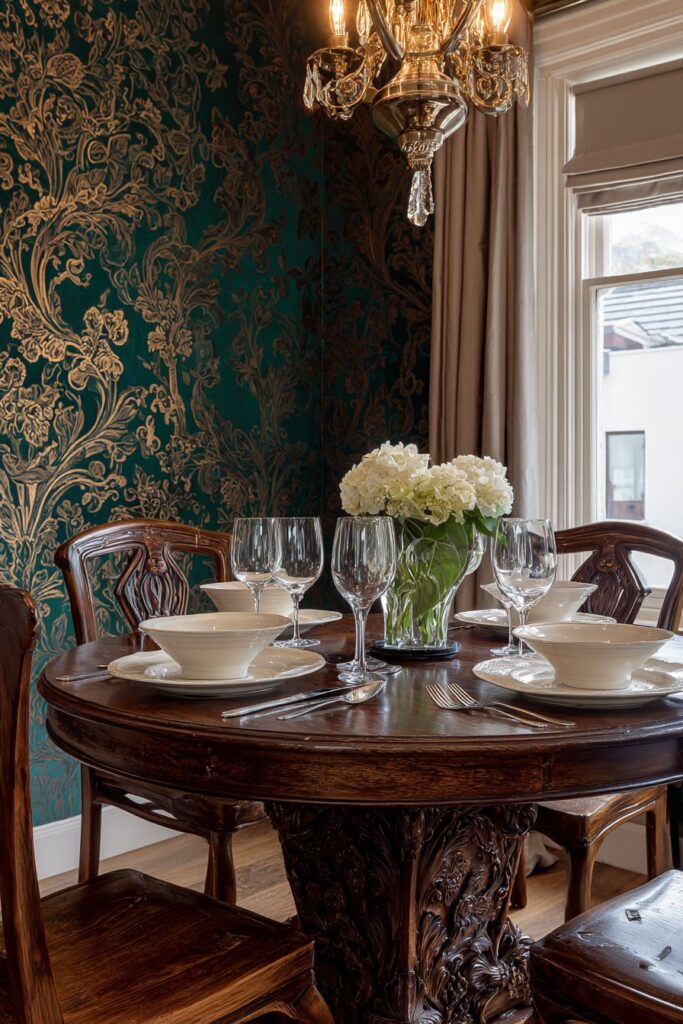
The round pedestal dining table in rich mahogany creates an intimate dining experience that encourages conversation and connection among diners. The intricate carved base serves as a work of sculptural art, its elaborate details demonstrating the Victorian appreciation for handcrafted elements that elevate furniture beyond mere function. This circular configuration promotes equality among diners while the mahogany’s rich grain patterns and lustrous finish provide a luxurious foundation for formal dining experiences.
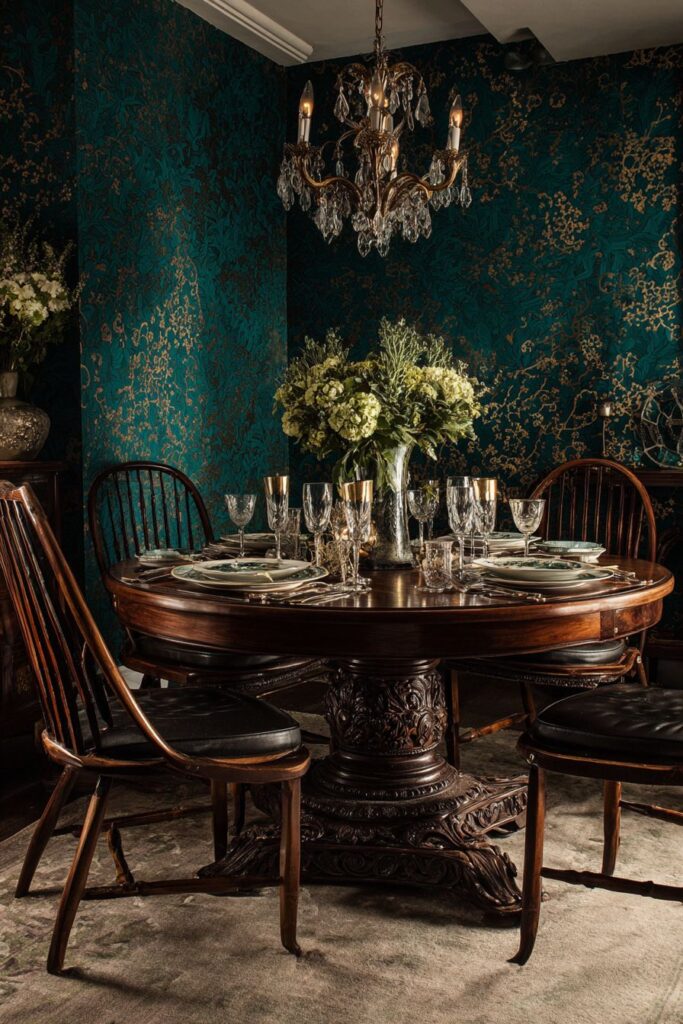
Spindle-back dining chairs with cane seats surround the table, their lighter visual weight balancing the substantial presence of the mahogany pedestal base. The cane seats provide comfort during extended meals while adding textural interest that complements the smooth wood surfaces throughout the room. These chairs represent the Victorian skill at combining different materials and textures to create cohesive yet visually interesting furniture arrangements.
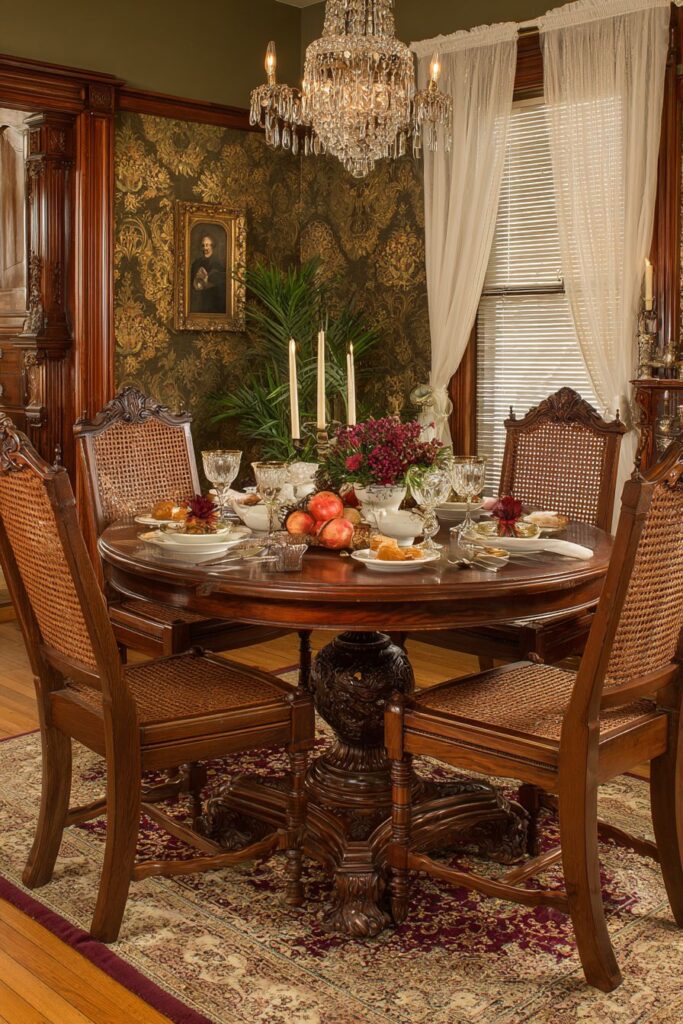
An ornate brass and crystal gasoline-style chandelier provides ambient lighting that recreates the warm, golden glow of Victorian-era gas lighting. This authentic lighting choice adds historical accuracy while creating the perfect atmosphere for intimate dinners and special occasions. The combination of brass and crystal materials reflects light throughout the room while the gasoline-style design adds period authenticity that electric fixtures cannot match.
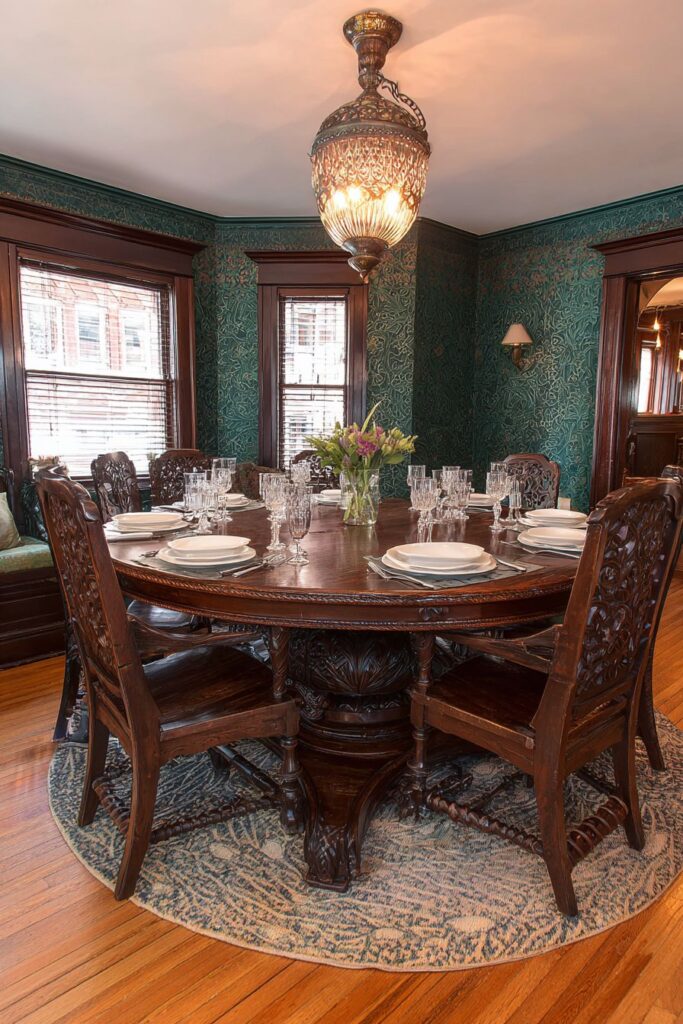
William Morris-inspired wallpaper in deep green and gold creates a sophisticated backdrop that embodies the Arts and Crafts influence on later Victorian design. This wallpaper choice represents the movement toward more stylized, artistic patterns that moved away from the earlier Victorian preference for realistic floral motifs. The deep colors provide a rich foundation that enhances the mahogany furniture while the sophisticated pattern adds visual interest without overwhelming the intimate scale of the round table setting.
Key Design Tips:
- Choose round tables for more intimate dining experiences
- Combine different materials like wood and cane for textural variety
- Use gas-style lighting for authentic Victorian ambiance
- Select Arts and Crafts wallpapers for sophisticated pattern choices
- Arrange furniture to promote conversation and connection
5. Marble-topped Serving Station Luxury
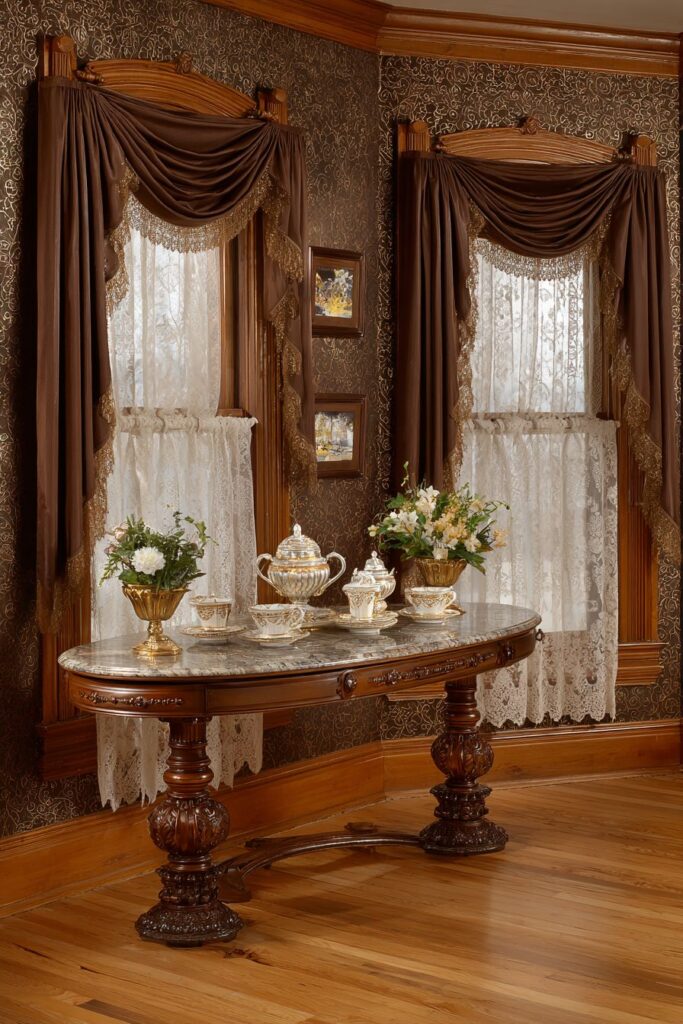
The marble-topped serving table with carved wooden legs creates an elegant staging area for the formal presentation of food and beverages. The cool, smooth marble surface provides an ideal foundation for displaying fine china tea services and fresh flowers in crystal vases, its pristine white surface creating beautiful contrast against the rich wood base. This combination of materials demonstrates the Victorian appreciation for luxury materials that serve both practical and aesthetic purposes.
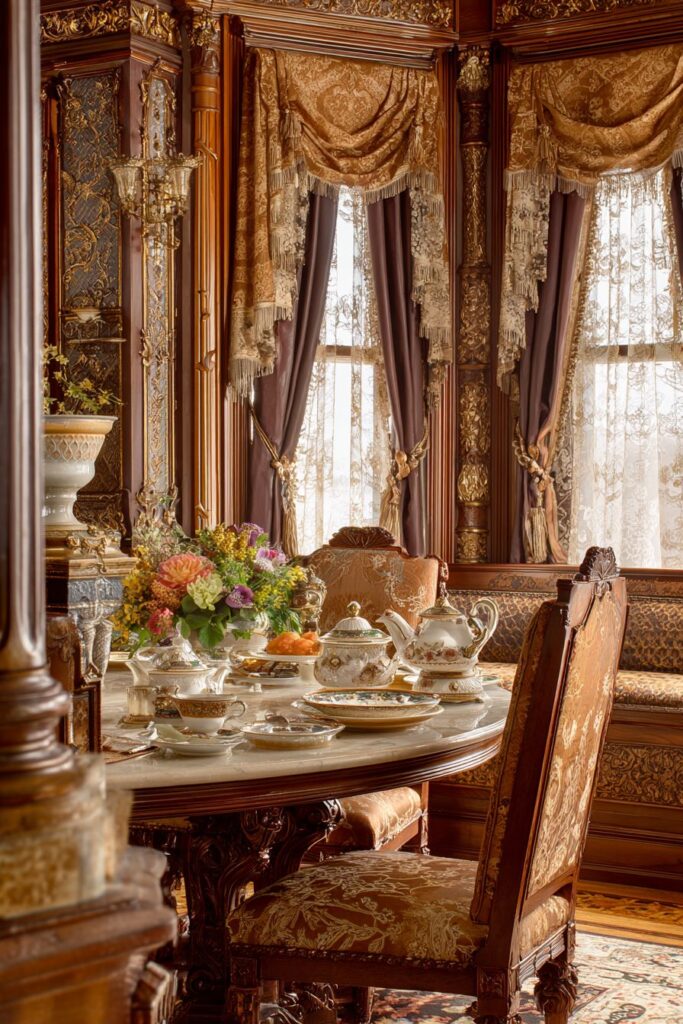
Rich tapestry drapery frames tall windows with intricate lace panels underneath, creating a layered window treatment that provides both privacy and beauty. The tapestry fabric, often featuring elaborate woven patterns in rich colors, adds weight and drama to the windows while the delicate lace panels beneath soften the overall effect and allow filtered natural light to enter the space. This layering technique represents the Victorian love of textile abundance and the belief that window treatments should be as decorative as they are functional.
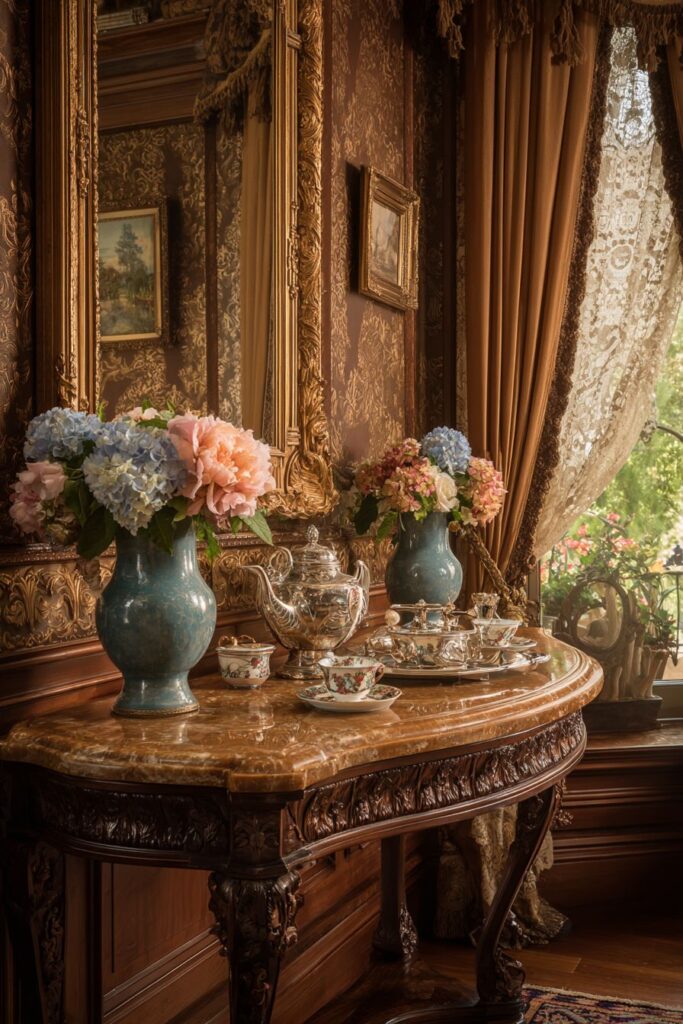
The walls feature embossed leather wallpaper in deep brown with gold accents, representing one of the most luxurious wall treatments available during the Victorian era. This expensive wallcovering adds texture and richness while providing a sophisticated backdrop that enhances rather than competes with the room’s furnishings. The embossed patterns create subtle shadows and highlights that change throughout the day as natural light moves across the walls.
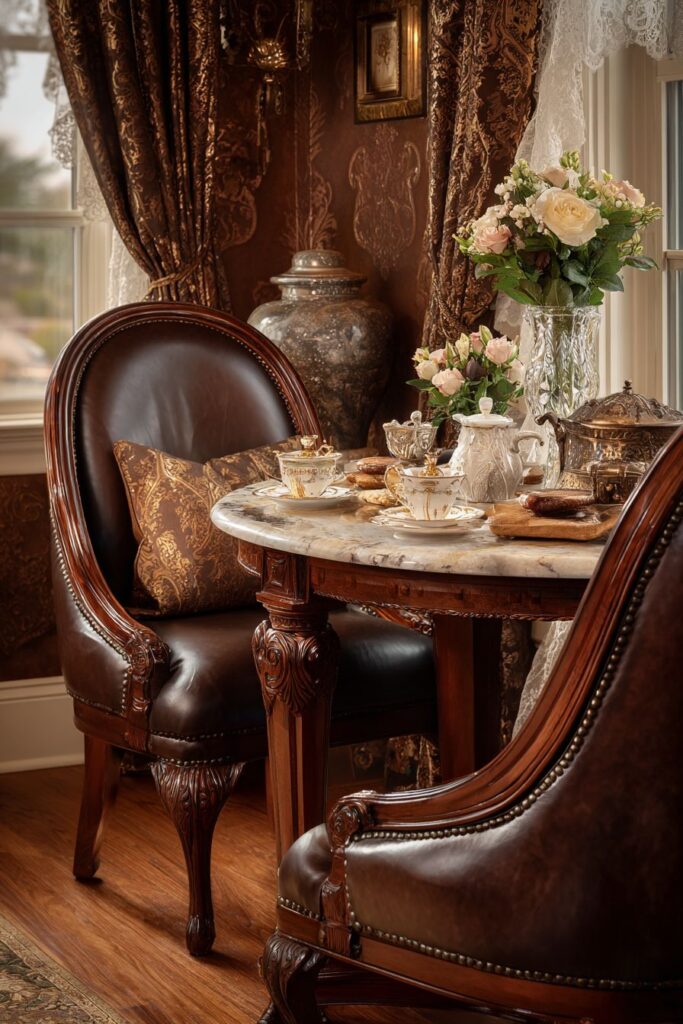
Fresh flowers in crystal vases add living beauty to the serving area while demonstrating the Victorian belief that nature should be brought indoors to enhance daily life. The crystal vases, with their cut patterns that catch and refract light, serve as decorative objects in their own right while providing elegant containers for seasonal floral arrangements. This attention to fresh flowers represents the Victorian understanding that beauty should be refreshed regularly to maintain its impact.
Key Design Tips:
- Use marble surfaces for elegance and practicality in serving areas
- Layer different window treatments for visual richness and light control
- Invest in embossed leather wallpaper for ultimate luxury
- Display fresh flowers regularly to add life and fragrance
- Choose crystal accessories that reflect and enhance available light
6. Gothic Revival Cabinet Majesty
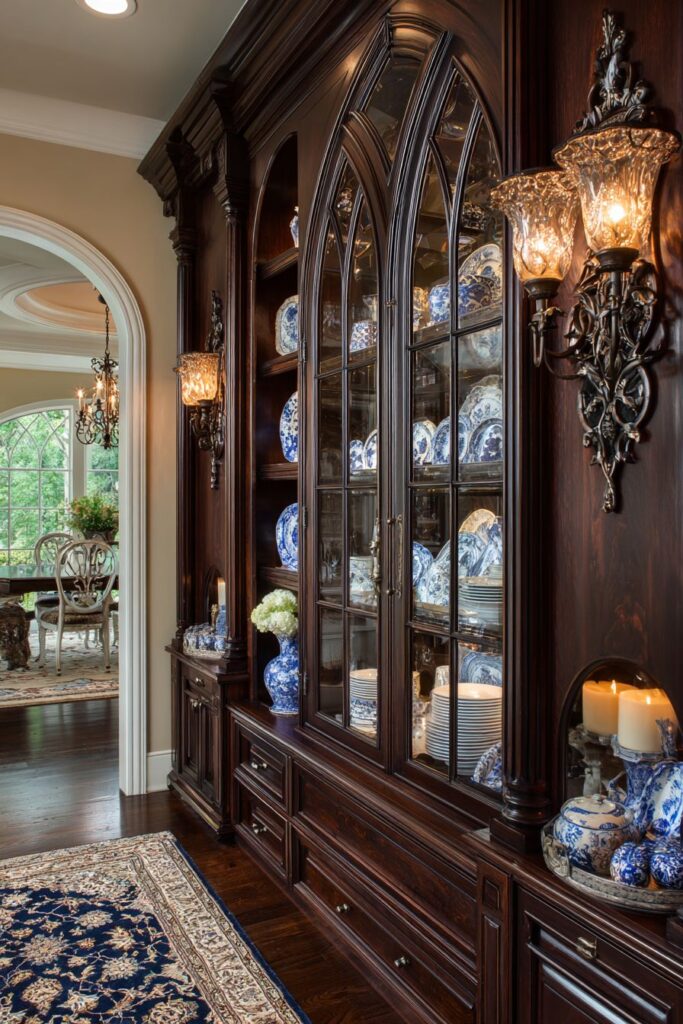
The imposing breakfront cabinet in dark walnut showcases the Gothic Revival influence on Victorian furniture design, its pointed arch glass doors and carved finials creating a sense of architectural grandeur reminiscent of medieval cathedrals. This massive piece serves as both storage and display for an extensive collection of blue and white transferware china, the cabinet’s dark wood providing dramatic contrast against the delicate blue patterns. The Gothic details transform this functional piece into a statement of both style and historical awareness.
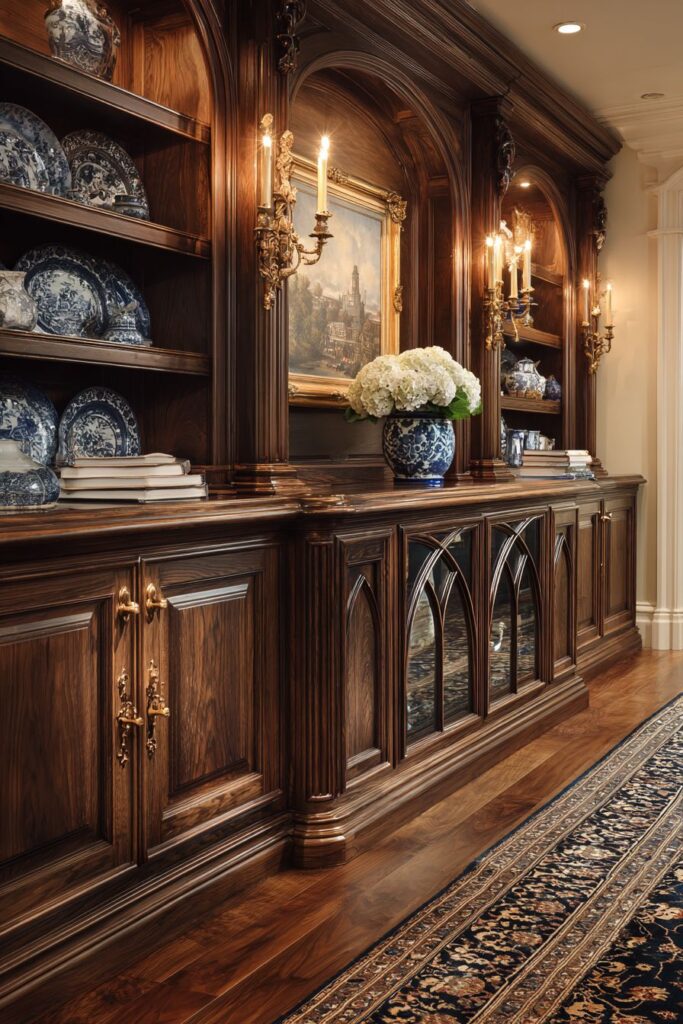
The extensive collection of blue and white transferware represents the Victorian fascination with collecting and displaying beautiful objects. Each piece tells a story, whether depicting pastoral scenes, historical events, or exotic locations, and together they create a cohesive display that speaks to the family’s taste and cultural sophistication. The blue and white color scheme provides unity among the various patterns while the transferware technique demonstrates the Victorian appreciation for technological innovation in ceramic production.
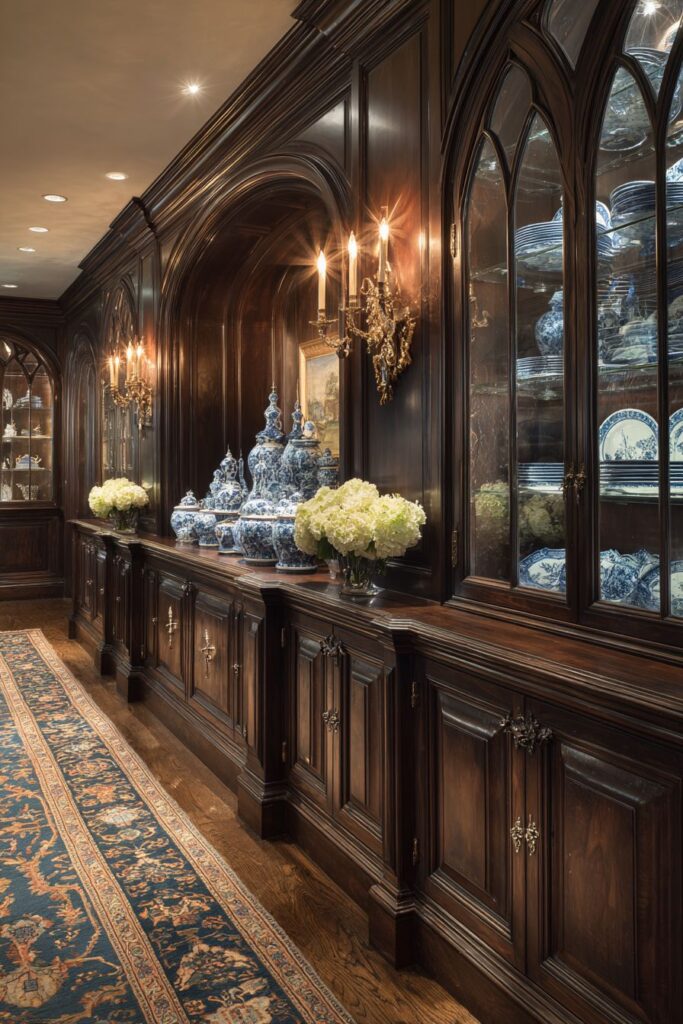
A Turkey carpet in traditional patterns covers the hardwood floor, its rich colors and intricate geometric designs providing a warm foundation for the room while complementing the cabinet’s Gothic details. These carpets, hand-woven with traditional techniques, represent the Victorian appreciation for fine craftsmanship and exotic influences. The patterns often feature stylized floral and geometric motifs that add visual interest to the floor while protecting the valuable hardwood beneath.
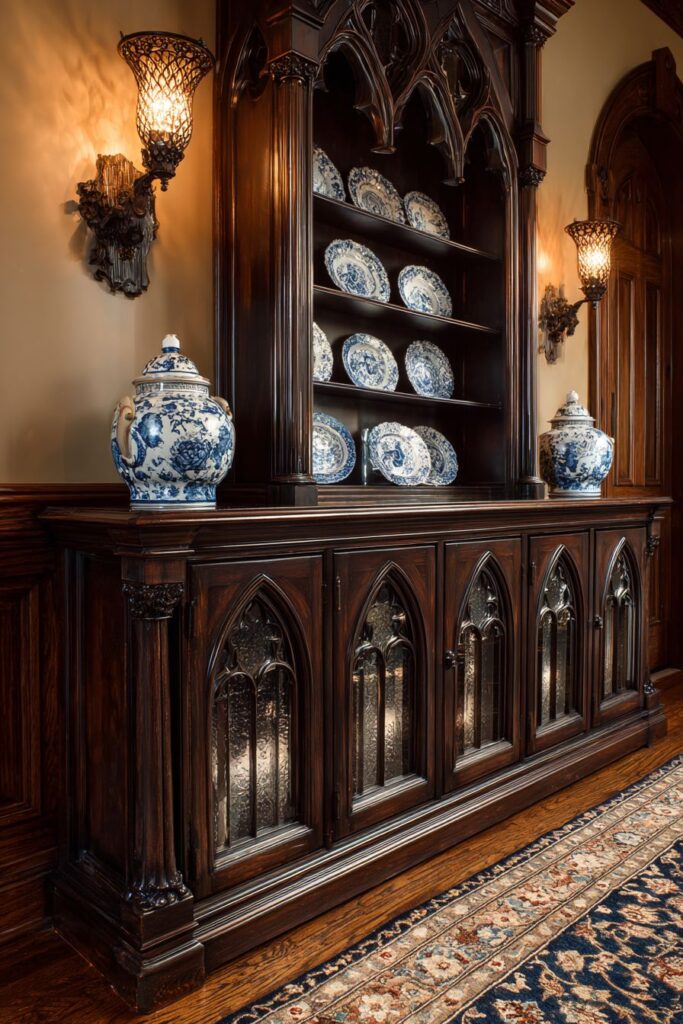
Gas-style wall sconces with etched glass shades provide warm illumination that enhances the Gothic Revival atmosphere while serving practical lighting needs. The etched glass shades diffuse the light beautifully while adding decorative elements that complement the cabinet’s architectural details. These sconces represent the Victorian preference for abundant lighting that could illuminate the room’s many decorative details while creating a warm, welcoming atmosphere for entertaining.
Key Design Tips:
- Choose furniture with Gothic Revival details for architectural interest
- Create cohesive collections using unified color schemes
- Layer traditional carpets for warmth and pattern
- Use gas-style lighting fixtures for historical authenticity
- Display collections in organized arrangements for maximum impact
7. Crystal Chandelier Magnificence
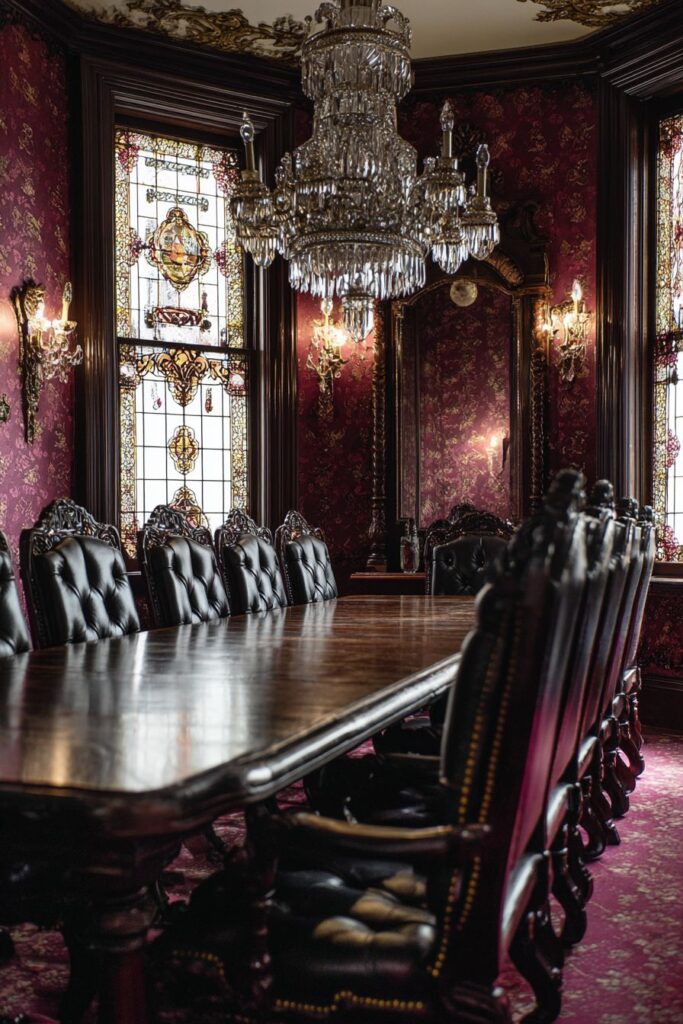
The long rectangular dining table with turned legs in dark oak provides a substantial foundation for formal dining while its traditional craftsmanship demonstrates the Victorian appreciation for solid, well-made furniture. The turned legs add decorative interest while the oak’s rich grain patterns contribute natural beauty that improves with age. This table configuration accommodates large dinner parties while its proportions maintain intimacy for family meals.
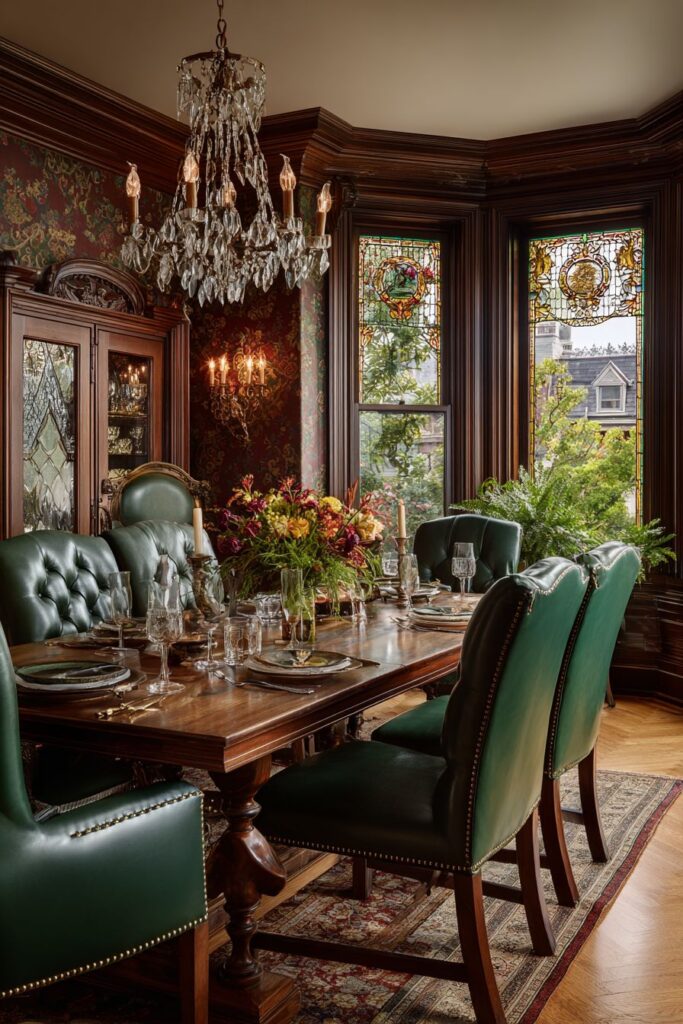
High-back chairs upholstered in forest green leather with brass nail head trim surround the table, their substantial construction providing both comfort and visual weight that balances the table’s impressive scale. The forest green leather adds rich color while developing beautiful patina over time, and the brass nail head trim provides decorative detail that catches light and adds sparkle to the seating arrangement. These chairs represent the Victorian belief that dining room furniture should be both beautiful and comfortable for extended use.
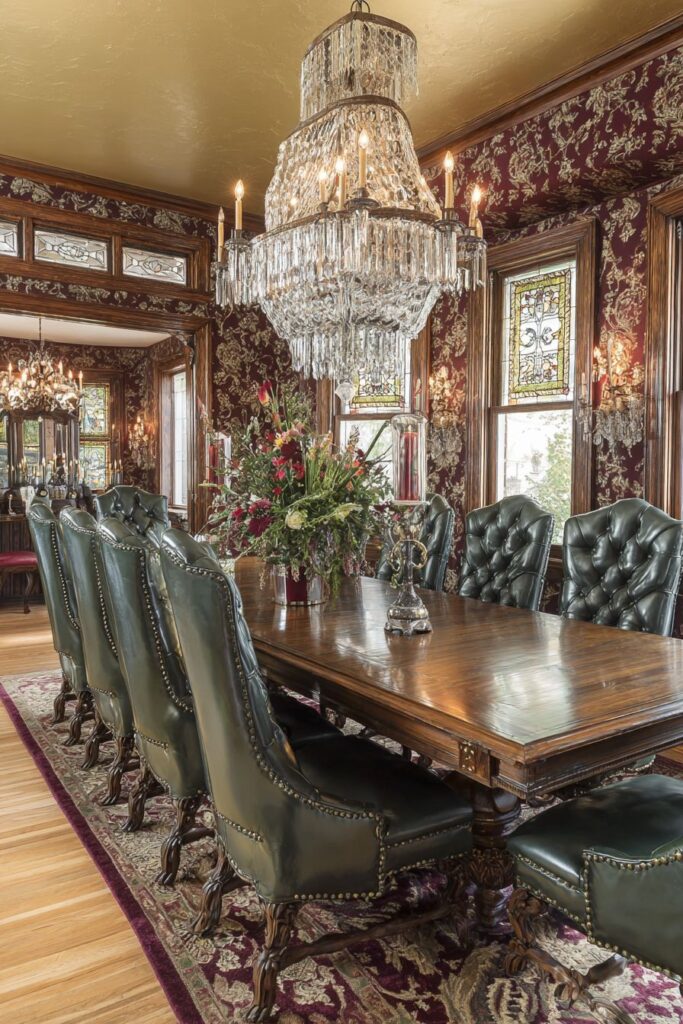
An elaborate tiered crystal chandelier dominates the ceiling while matching crystal wall sconces provide additional lighting throughout the room. This comprehensive lighting plan ensures that every corner of the room is beautifully illuminated while the crystal elements add sparkle and glamour to every surface. The tiered design creates visual interest and dramatic scale appropriate for the room’s grand proportions while the wall sconces provide task lighting for serving and cleanup activities.
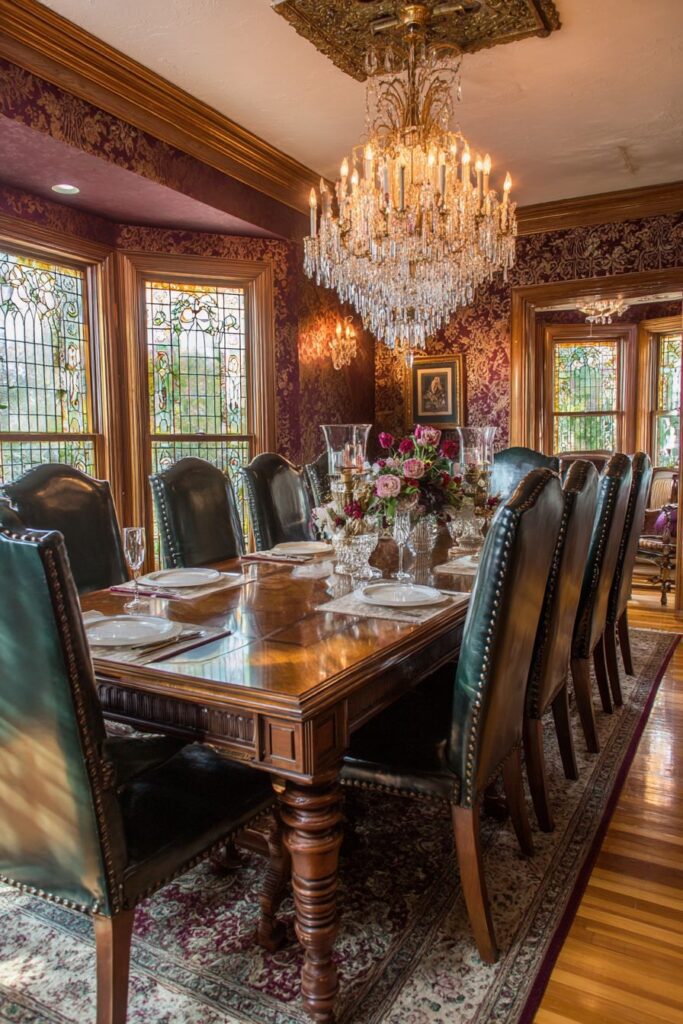
Flock wallpaper in burgundy and gold creates dramatic wall treatment that epitomizes Victorian luxury and opulence. This specialized wallpaper, with its velvet-like texture created by applying powdered wool or silk fibers to adhesive patterns, adds both visual and tactile richness to the walls. The burgundy and gold color combination provides a regal backdrop that enhances the crystal lighting while complementing the forest green upholstery and dark oak furniture.
Key Design Tips:
- Select tables with substantial proportions for Victorian scale
- Use leather upholstery with brass details for authentic appeal
- Create comprehensive lighting plans with multiple crystal fixtures
- Choose flock wallpapers for ultimate textural luxury
- Coordinate colors across furniture, lighting, and wall treatments
8. Rosewood Buffet Artistry
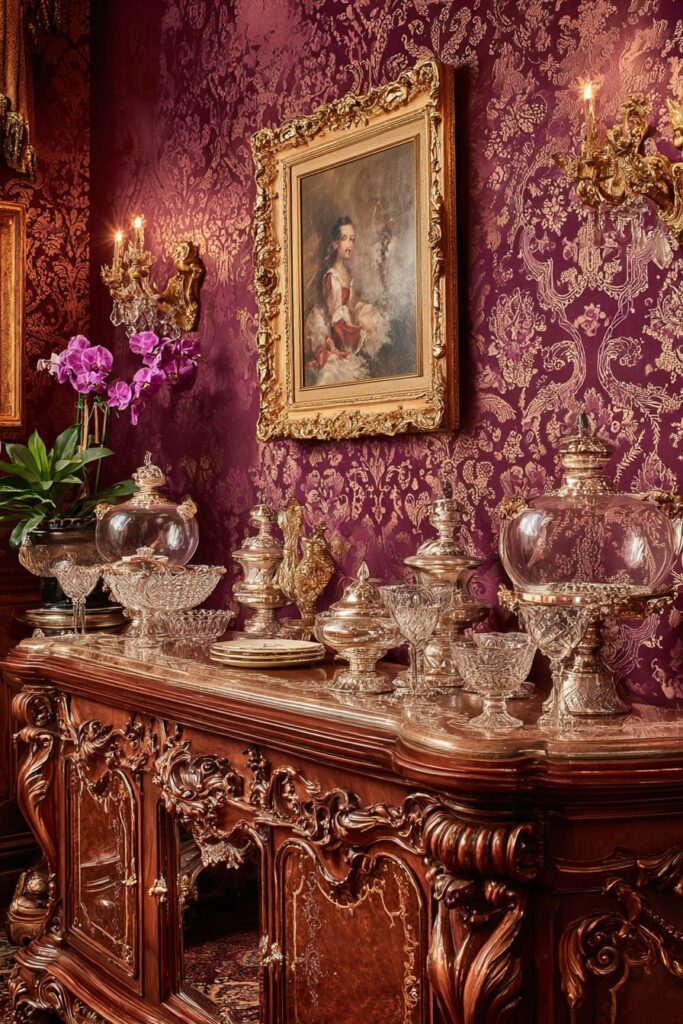
The ornate carved sideboard in rosewood with marble top and mirrored back creates a stunning focal point that combines multiple luxury materials in one spectacular piece. The rosewood’s distinctive grain patterns and rich color provide a sophisticated foundation while the marble top adds classical elegance and practical serving surface. The mirrored back doubles the visual impact of displayed items while reflecting light throughout the room, creating sparkle and movement that enliven the space.
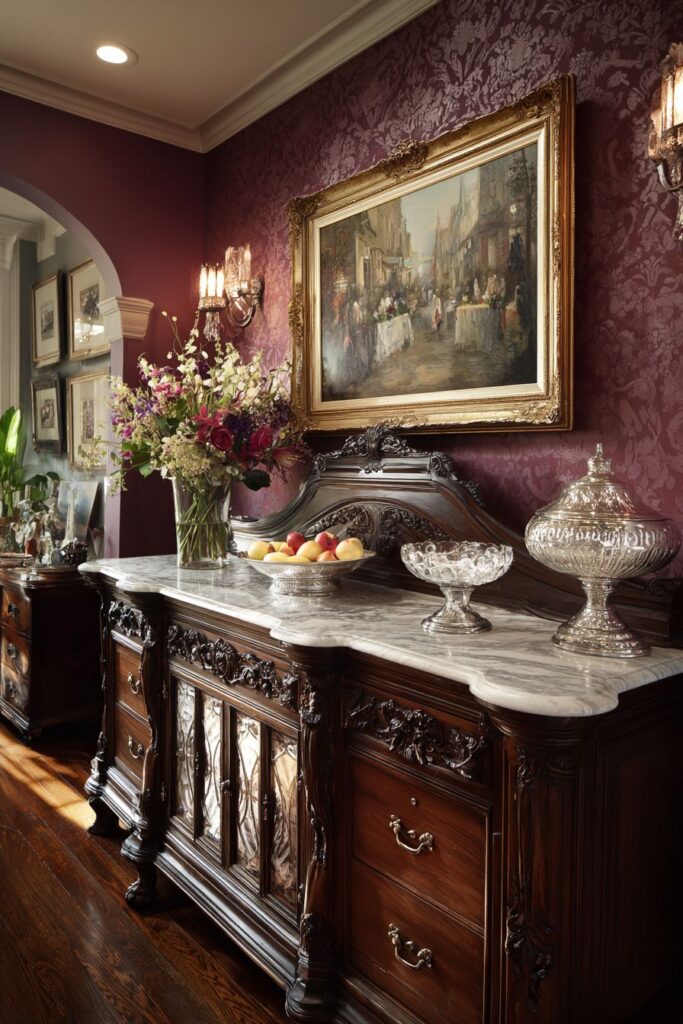
Silver serving pieces and cut crystal bowls are artfully arranged for display, their polished surfaces reflecting light from the mirrored back while demonstrating the family’s collection of fine serving pieces. Each item is carefully positioned to create visual balance while remaining accessible for use during formal dining occasions. The combination of silver and crystal creates a sophisticated display that speaks to Victorian values of hospitality and gracious entertaining.
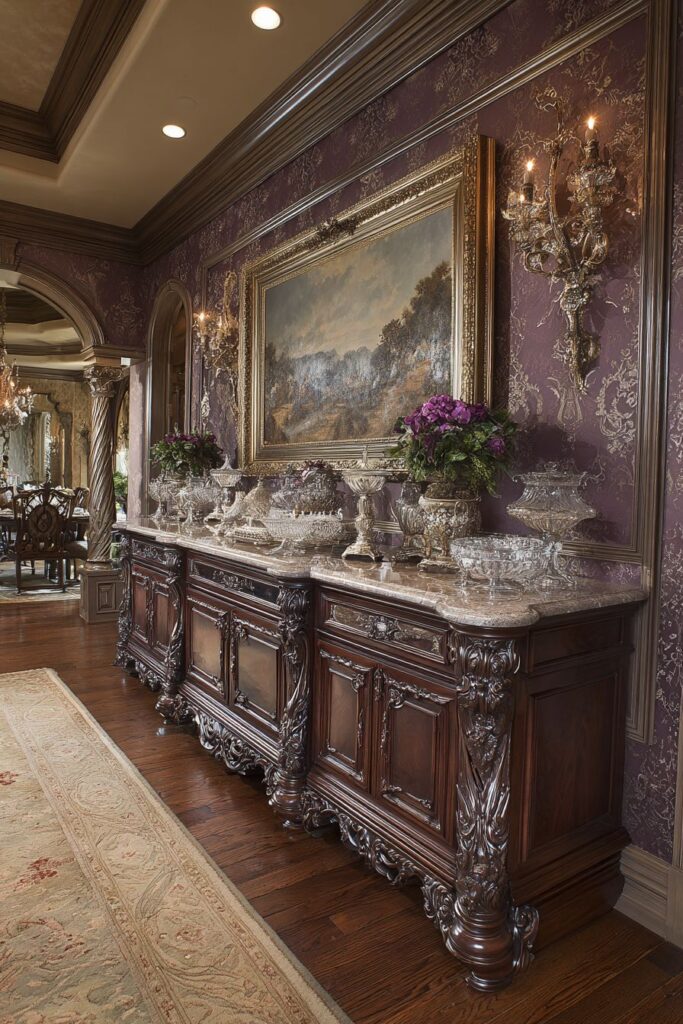
Above hangs a large oil painting in an elaborate gold leaf frame, its classical subject matter and ornate presentation perfectly complementing the sideboard’s opulent design. The painting serves as both art and status symbol while the gold leaf frame adds additional luxury and visual weight appropriate for the room’s grand scale. The positioning above the sideboard creates a formal vignette that anchors this section of the room while contributing to the overall Victorian aesthetic.
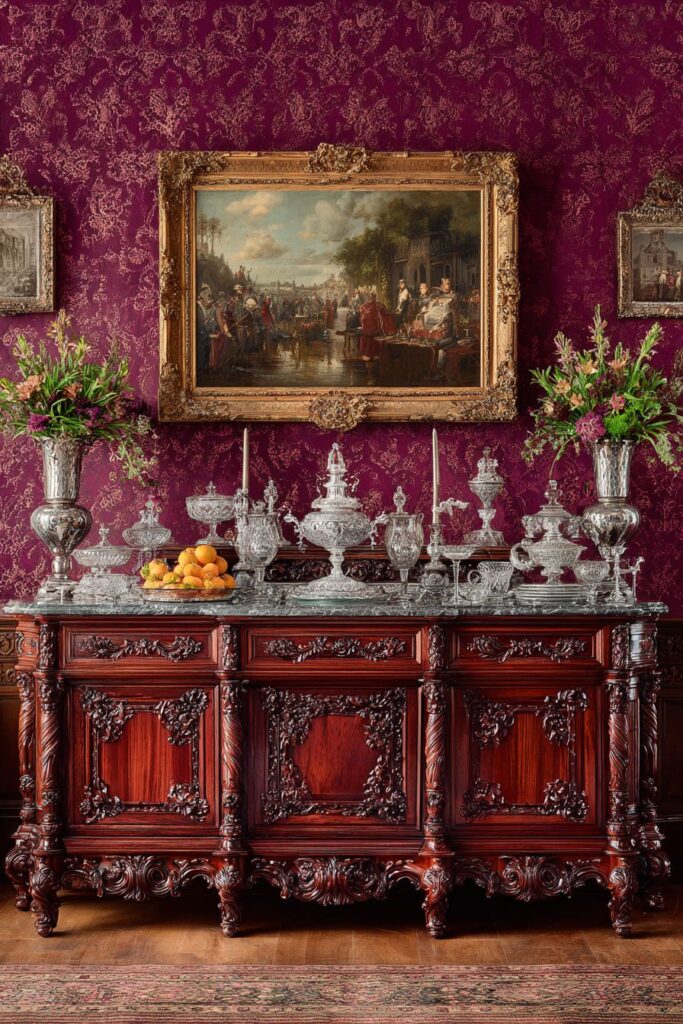
The surrounding walls feature silk damask wallpaper in deep plum with gold thread accents, representing the ultimate in Victorian wall treatments. This expensive wallcovering adds both color and texture while the silk fibers catch and reflect light in subtle ways throughout the day. The deep plum color provides a rich backdrop that enhances the rosewood furniture while the gold thread accents tie the wallpaper to the painting’s gilt frame, creating visual continuity throughout the space.
Key Design Tips:
- Combine multiple luxury materials for maximum visual impact
- Use mirrored backs to double the impact of displayed collections
- Position artwork strategically to create formal vignettes
- Choose silk wallpapers for the ultimate in Victorian luxury
- Arrange serving pieces for both display and practical access
9. Circular Table with Lazy Susan Innovation
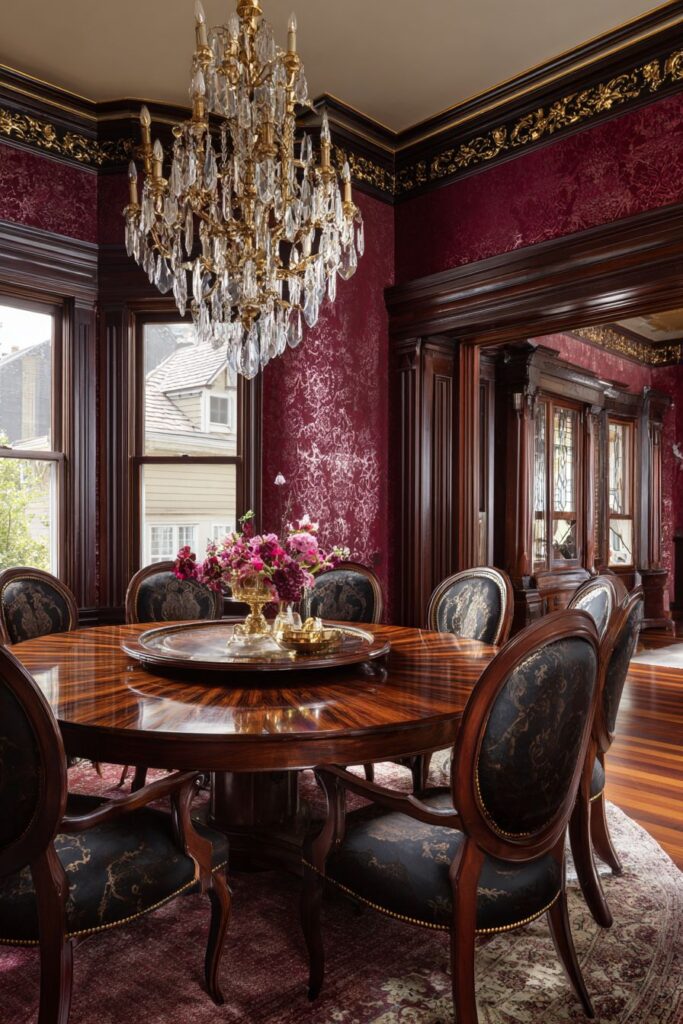
The circular dining table crafted from burled walnut with intricate marquetry inlay work represents the pinnacle of Victorian woodworking artistry. The burl wood’s distinctive swirling grain patterns create natural artwork while the marquetry inlays demonstrate the skill of master craftsmen who could create elaborate designs using different wood species. The lazy Susan center adds practical functionality for serving while its rotating mechanism represents Victorian interest in mechanical innovations that enhanced domestic convenience.
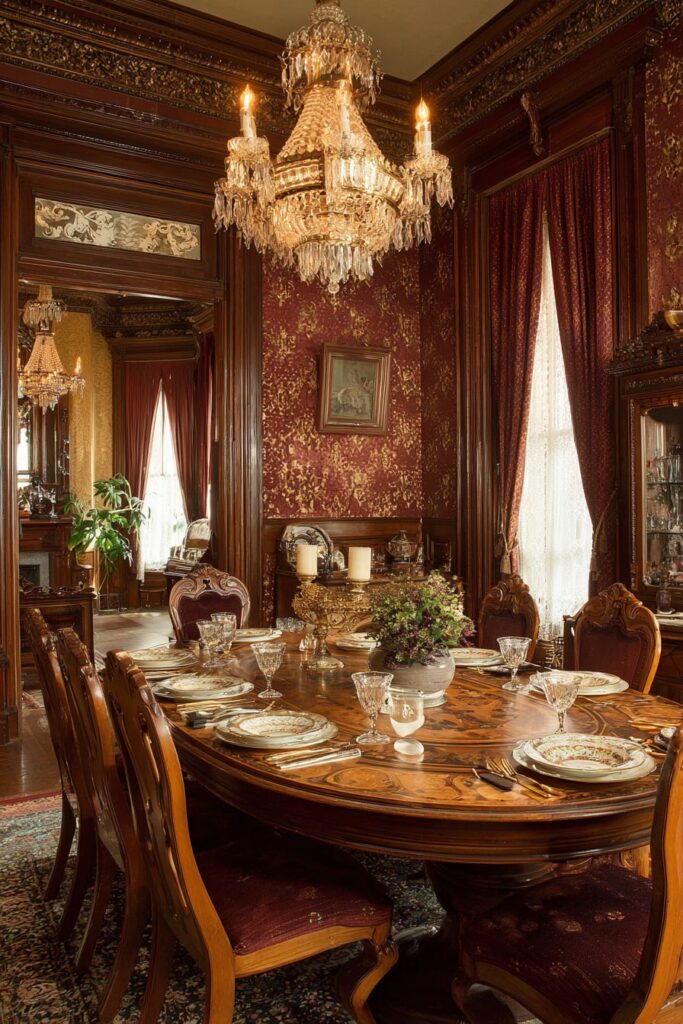
Balloon-back dining chairs with horsehair upholstery in jewel-toned silk surround the table, their curved backs providing both comfort and elegant silhouettes that complement the circular table’s flowing lines. The horsehair stuffing provides superior comfort and durability while the jewel-toned silk covers add rich color and luxurious texture. These chairs represent the Victorian skill at combining traditional materials with elegant design to create seating that serves both practical and aesthetic purposes.
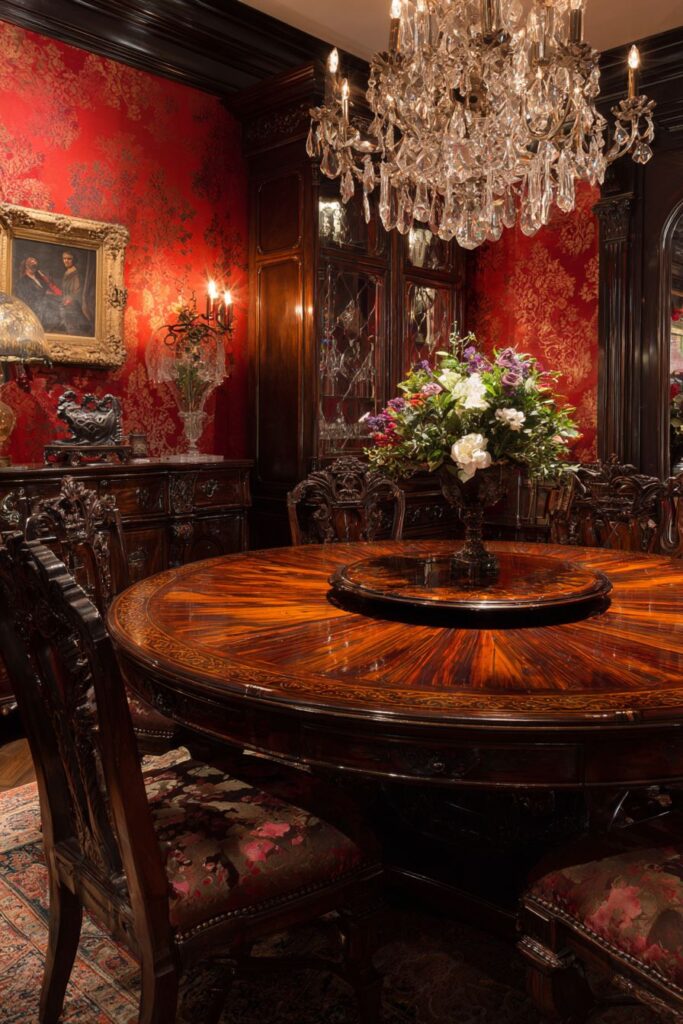
A multi-tiered crystal and brass chandelier hangs overhead, its elaborate construction creating multiple levels of light and sparkle that enhance the room’s grand scale. The combination of crystal and brass materials provides both sparkle and warmth while the multi-tiered design creates visual interest that draws the eye upward and emphasizes the room’s impressive ceiling height. This chandelier serves as both lighting and sculpture, demonstrating the Victorian belief that functional objects should also be beautiful.
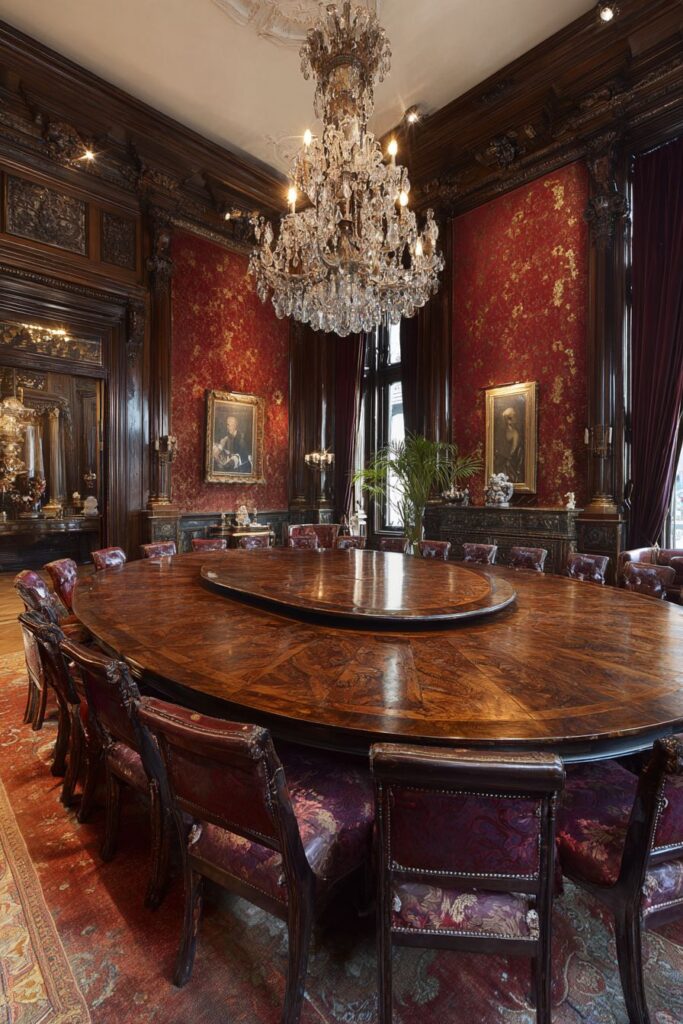
Anaglypta wallpaper painted in deep crimson with gold highlights covers the upper walls above dark wood wainscoting, creating a dramatic color scheme that exemplifies Victorian boldness in interior decoration. The Anaglypta wallpaper’s embossed patterns add texture and visual interest while the deep crimson color provides a rich backdrop for the walnut furniture. The gold highlights catch light from the crystal chandelier while the dark wood wainscoting provides visual grounding and protection for the lower walls.
Key Design Tips:
- Choose burl woods for their distinctive natural patterns
- Incorporate lazy Susans for practical serving convenience
- Use horsehair stuffing for superior comfort and authenticity
- Select multi-tiered chandeliers for dramatic lighting effects
- Paint Anaglypta wallpaper for custom color combinations
10. Stained Glass Window Artistry
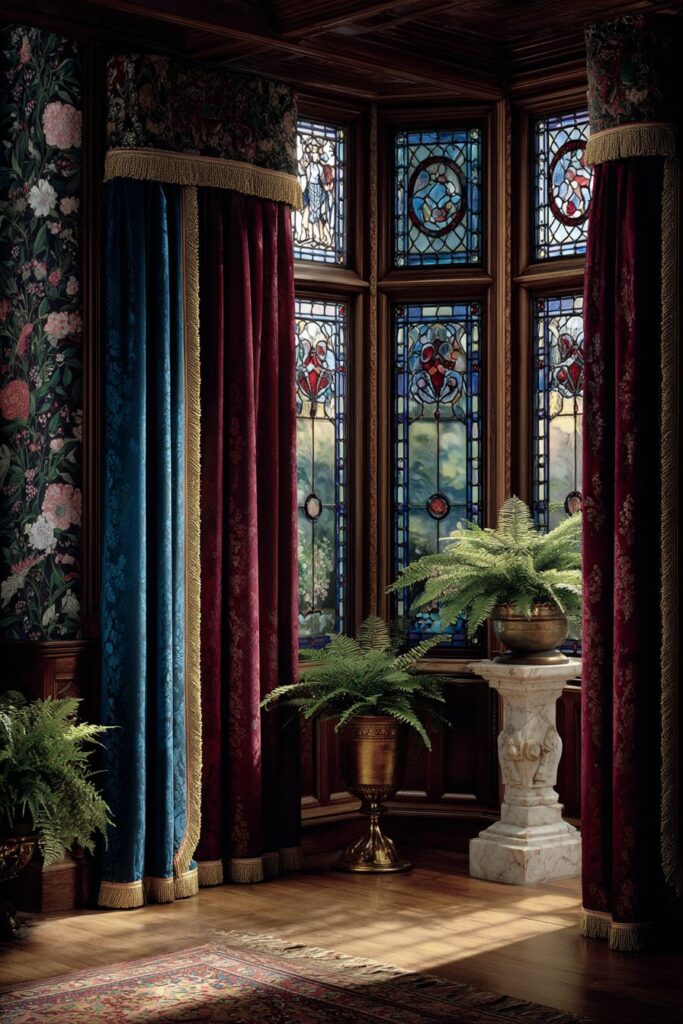
The bay window with elaborate stained glass transoms in rich blues and reds creates a spectacular light show throughout the day as natural sunlight filters through the colored glass panels. These windows represent the Victorian love of decorative glass and the belief that even functional elements like windows should contribute to the room’s artistic impact. The blues and reds provide rich color that changes throughout the day, creating dynamic lighting effects that continually transform the room’s atmosphere.
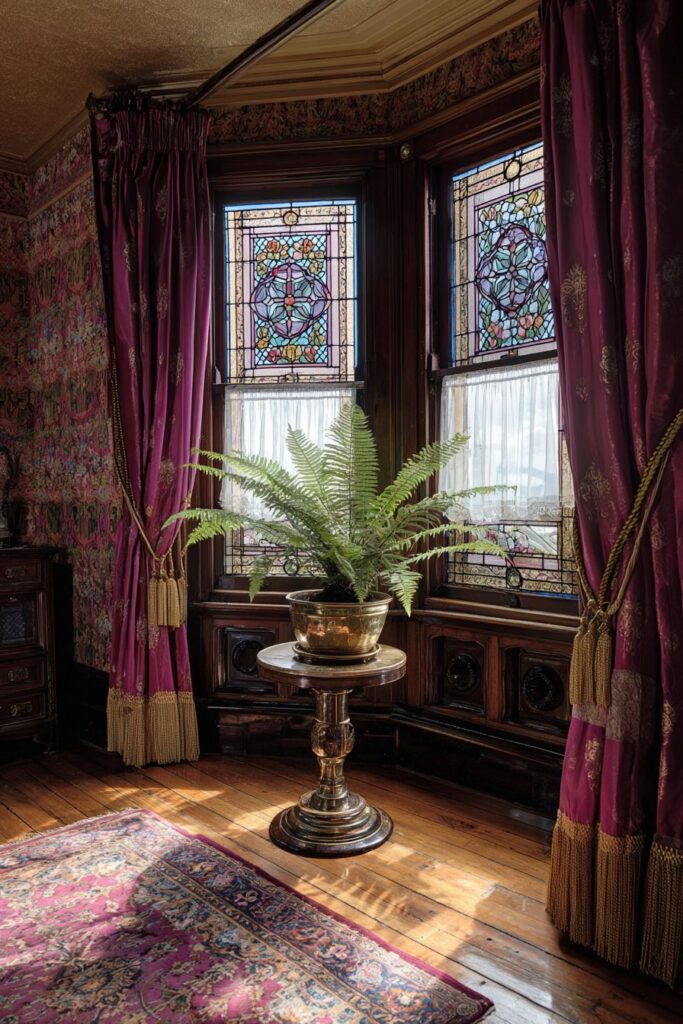
Heavy velvet curtains in deep burgundy with gold fringe and tassels frame the windows, their luxurious materials and elaborate trimmings demonstrating the Victorian preference for abundant textiles and decorative details. The velvet fabric provides rich texture and deep color while the gold fringe and tassels add movement and sparkle that complement the stained glass panels above. These curtains can be drawn for privacy and intimacy or opened to reveal the full beauty of the decorative glass.
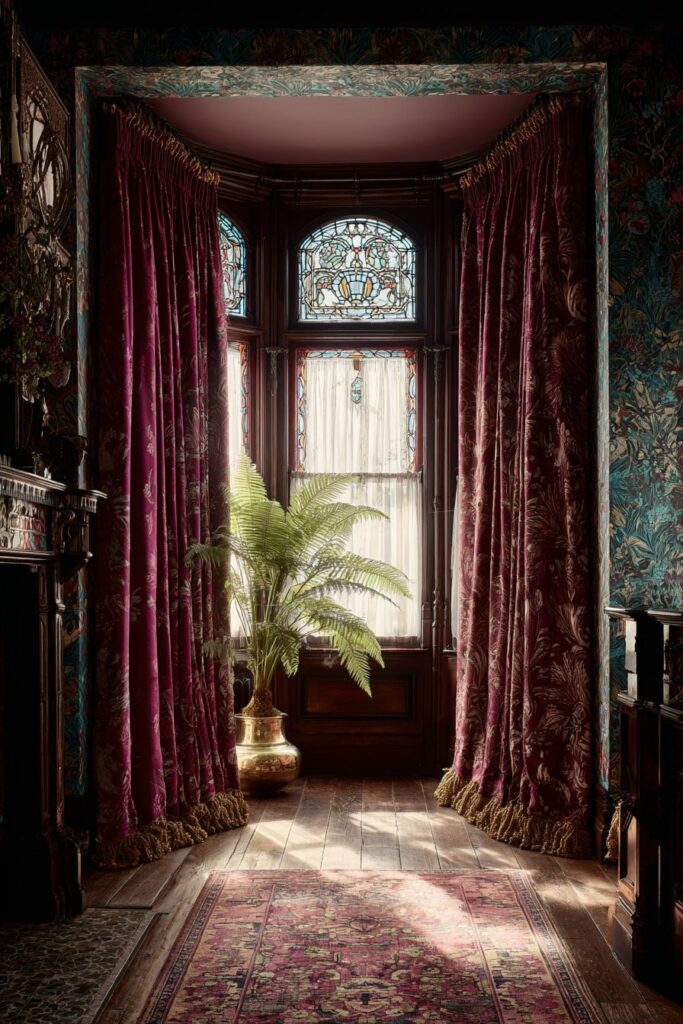
A marble-topped plant stand holds a large fern in an ornate brass planter, bringing natural elements indoors while demonstrating the Victorian fascination with exotic plants and elaborate containers. The marble top provides an elegant foundation while the brass planter adds metallic sparkle and ornate details that complement the room’s other decorative elements. The fern adds living green color that provides beautiful contrast against the rich burgundy and gold color scheme.
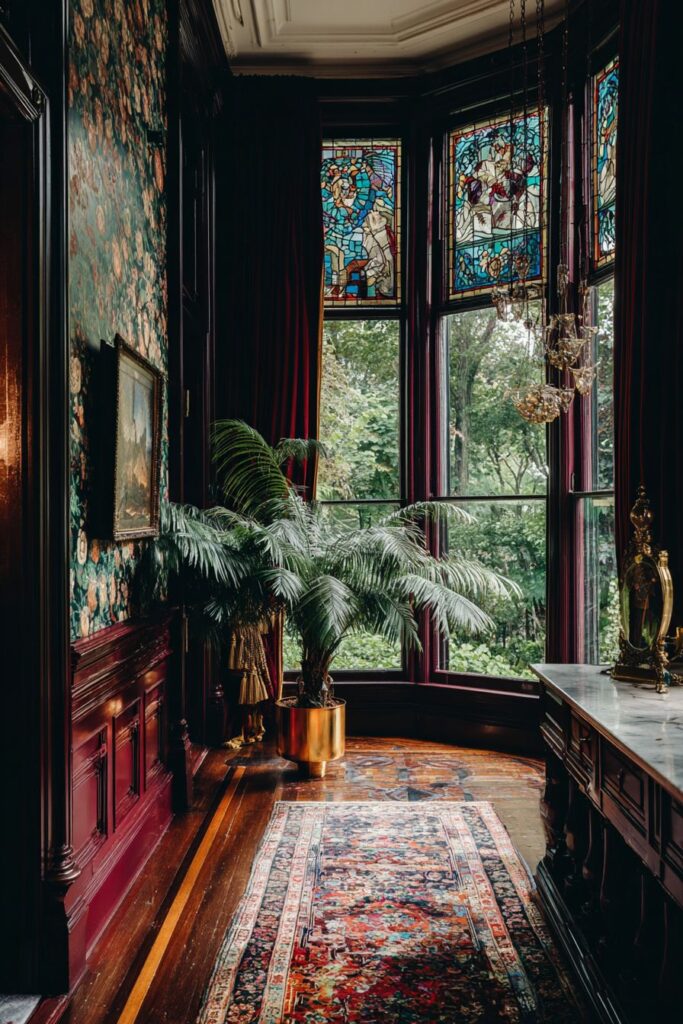
The walls display Morris & Co. wallpaper in the classic strawberry thief pattern, representing the Arts and Crafts movement’s influence on later Victorian design. This sophisticated pattern, with its stylized birds and fruit motifs, demonstrates the movement away from purely realistic patterns toward more artistic interpretations of natural forms. The Morris design adds visual interest while its muted colors provide a sophisticated backdrop that doesn’t compete with the dramatic stained glass windows.
Key Design Tips:
- Install stained glass transoms for colorful natural lighting
- Use heavy velvet curtains with elaborate trimmings for luxury
- Display plants in ornate containers for Victorian authenticity
- Choose Morris & Co. patterns for sophisticated wallpaper options
- Position plant stands near windows for optimal growing conditions
11. Extension Table Formal Grandeur
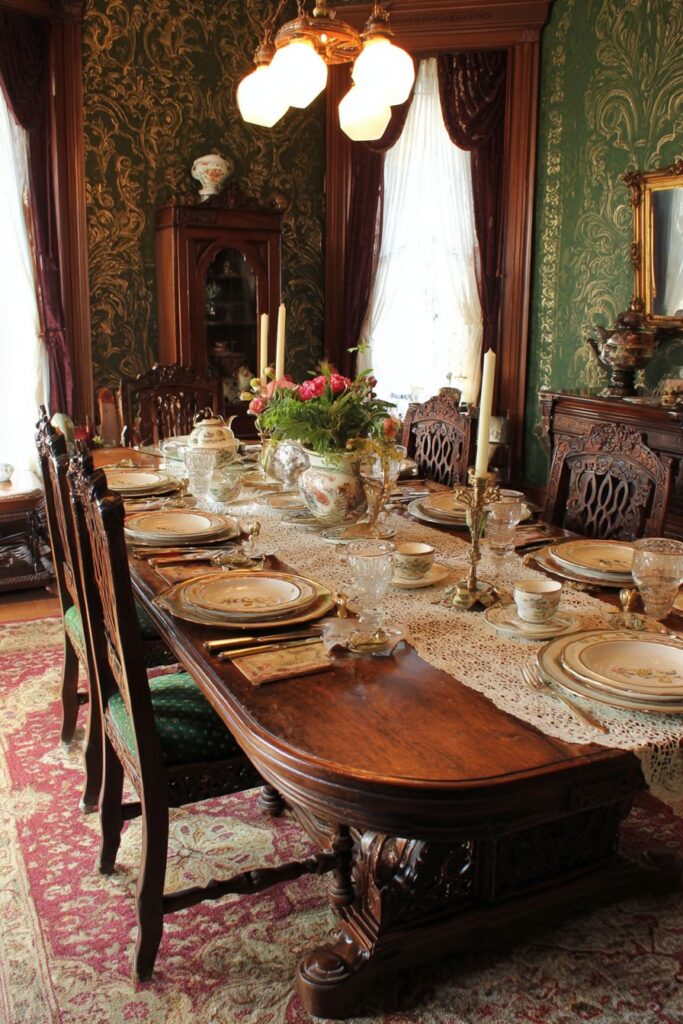
The extension dining table in carved mahogany with claw feet demonstrates Victorian ingenuity in creating furniture that could adapt to different entertaining needs while maintaining elegant proportions. The claw feet add dramatic sculptural interest while the extension mechanism allows the table to accommodate everything from intimate family dinners to large formal gatherings. The mahogany’s rich color and grain patterns provide a luxurious foundation for the most elaborate table settings.
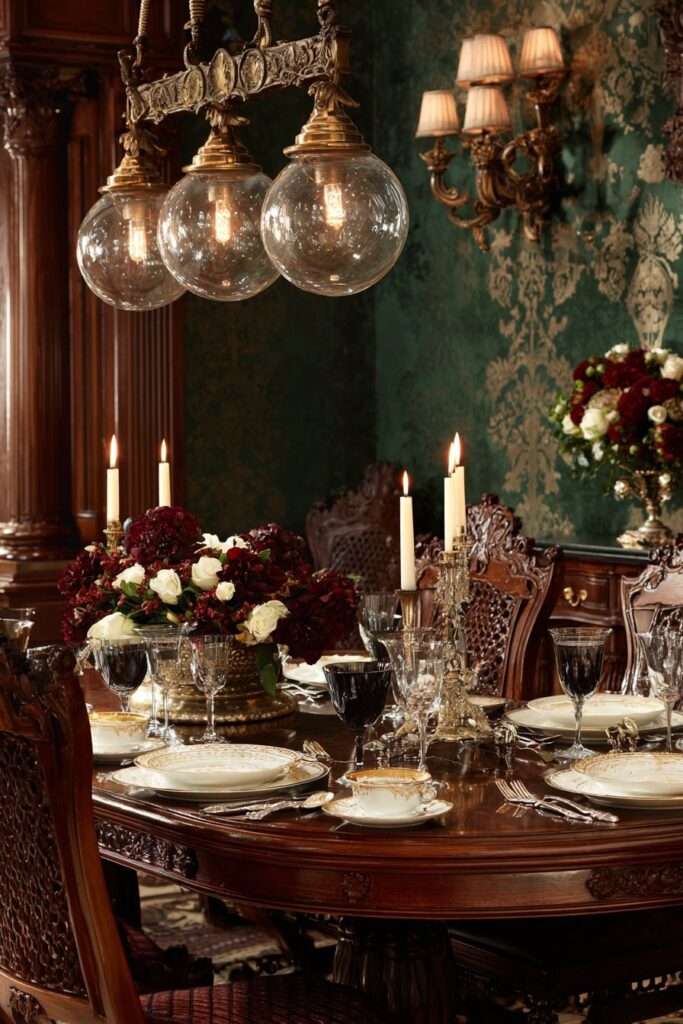
The formal place settings include multiple courses of fine bone china and sterling silver flatware, demonstrating the Victorian approach to dining as ceremony and art form. Each place setting represents careful attention to detail and proper etiquette, with specific pieces designated for each course of the elaborate meals that were standard in Victorian dining. The bone china’s delicate translucency and the sterling silver’s gleaming surfaces create a sophisticated table presentation that speaks to the family’s taste and social position.
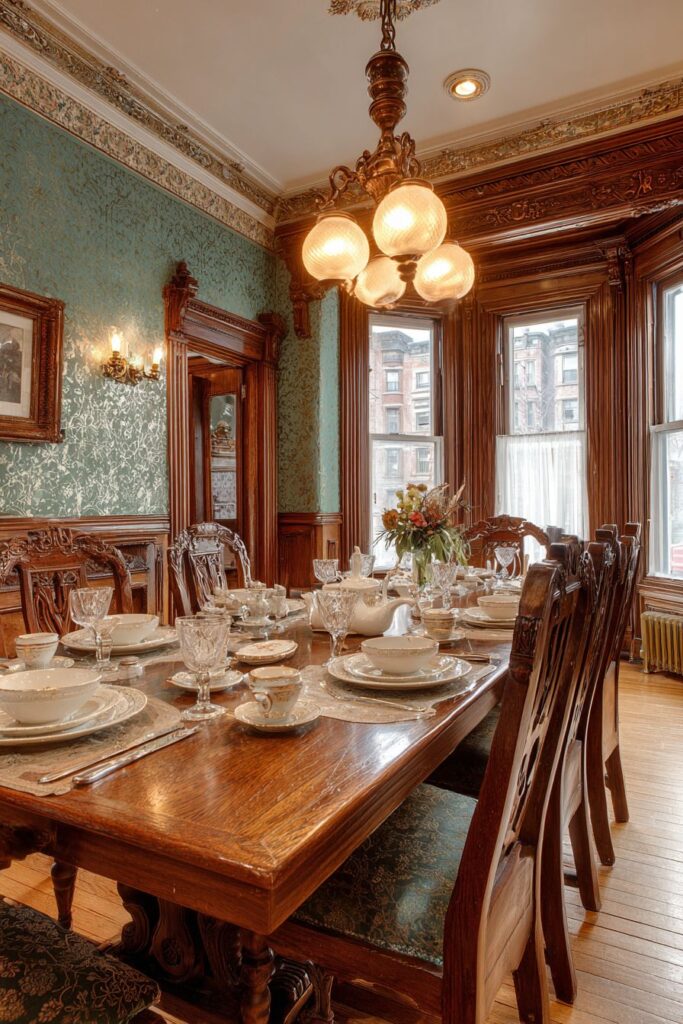
Eastlake-style chairs with geometric carved details and original horsehair upholstery surround the table, their distinctive design representing the Aesthetic Movement’s influence on Victorian furniture. These chairs feature angular carved details that contrast beautifully with the table’s flowing lines while the horsehair upholstery provides authentic comfort and durability. The geometric patterns demonstrate the Victorian interest in artistic furniture that served as both seating and decorative elements.
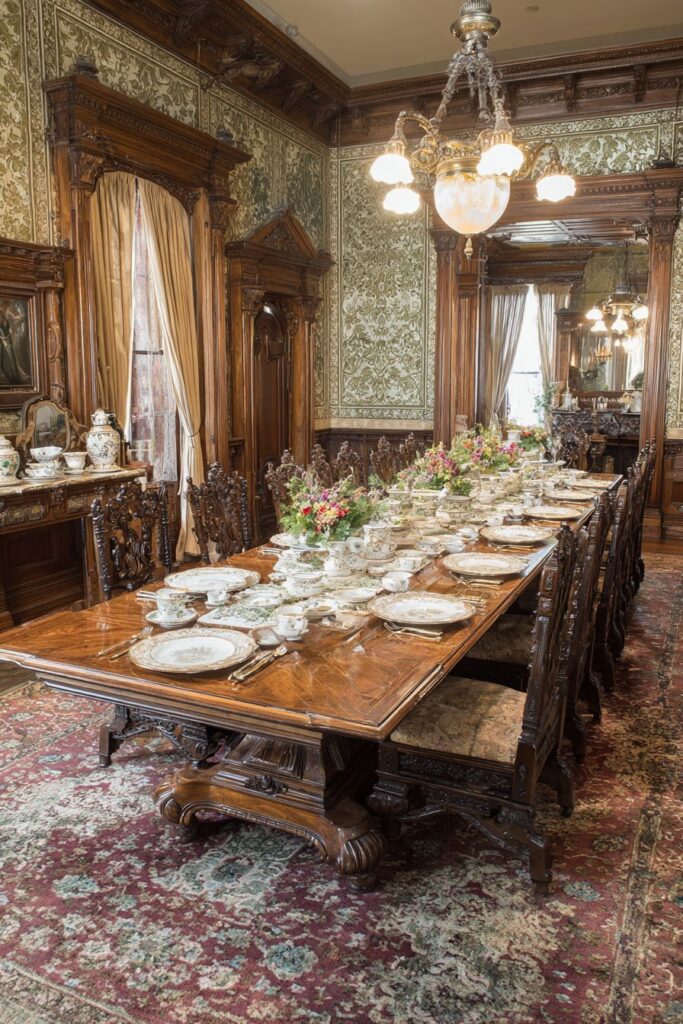
A gasoline chandelier with etched glass globes provides warm lighting that recreates the ambiance of Victorian-era gas illumination while the etched glass globes diffuse the light beautifully throughout the room. This authentic lighting choice adds historical accuracy while creating the perfect atmosphere for formal dining occasions. The warm, golden light enhances the mahogany furniture and sterling silver while creating intimate lighting for conversation and enjoyment of elaborate meals.
Key Design Tips:
- Choose extension tables for flexible entertaining options
- Layer multiple place setting elements for formal presentations
- Select Eastlake-style chairs for Aesthetic Movement authenticity
- Use gasoline-style lighting for historically accurate ambiance
- Maintain original upholstery materials when possible for authenticity
12. Carved Oak Huntboard Heritage
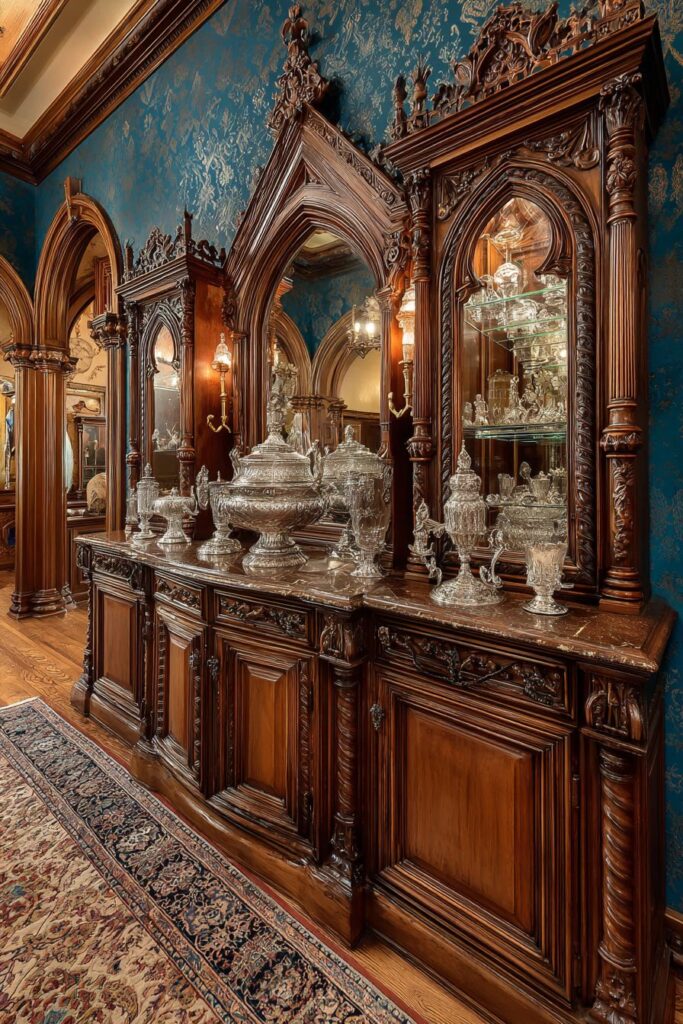
The massive carved oak huntboard with game motifs and brass hardware creates a dramatic focal point that celebrates the Victorian connection to country life and sporting traditions. The elaborate carvings depicting hunting scenes and game animals demonstrate the skill of Victorian woodcarvers while the brass hardware adds gleaming accents that complement the oak’s rich golden tones. This impressive piece serves both storage and display functions while making a strong statement about family interests and lifestyle.
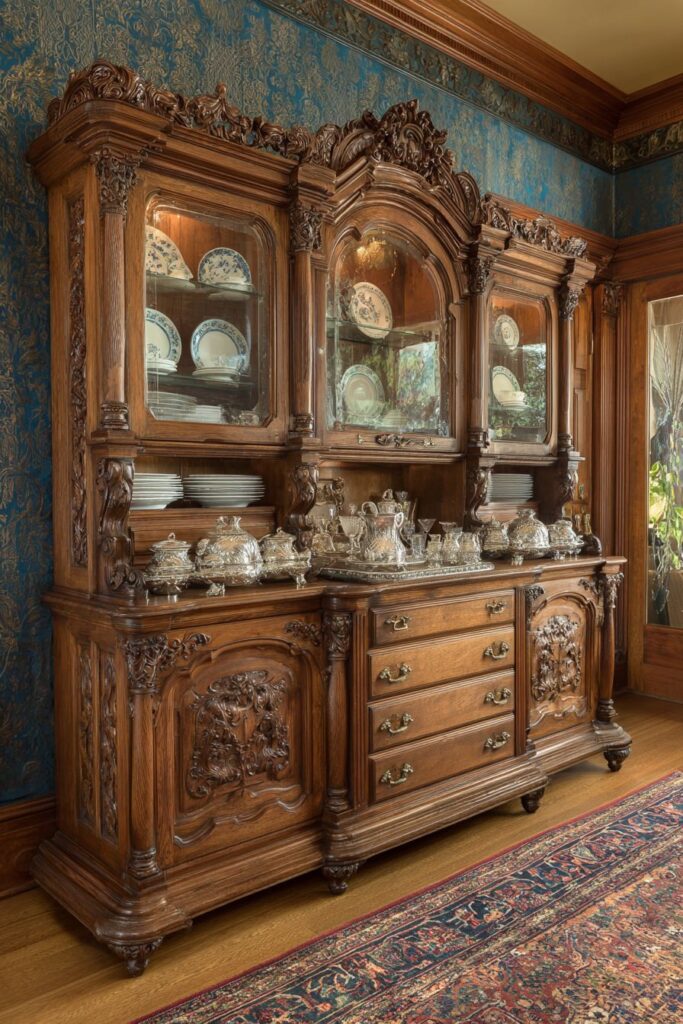
The huntboard is topped with silver serving pieces and crystal decanters for entertaining, their polished surfaces reflecting light while providing elegant serving options for formal gatherings. The silver pieces often feature engraved hunting motifs that complement the carved wood details while the crystal decanters add sparkle and sophistication to the display. These serving pieces represent the Victorian belief that entertaining equipment should be as beautiful as it is functional.
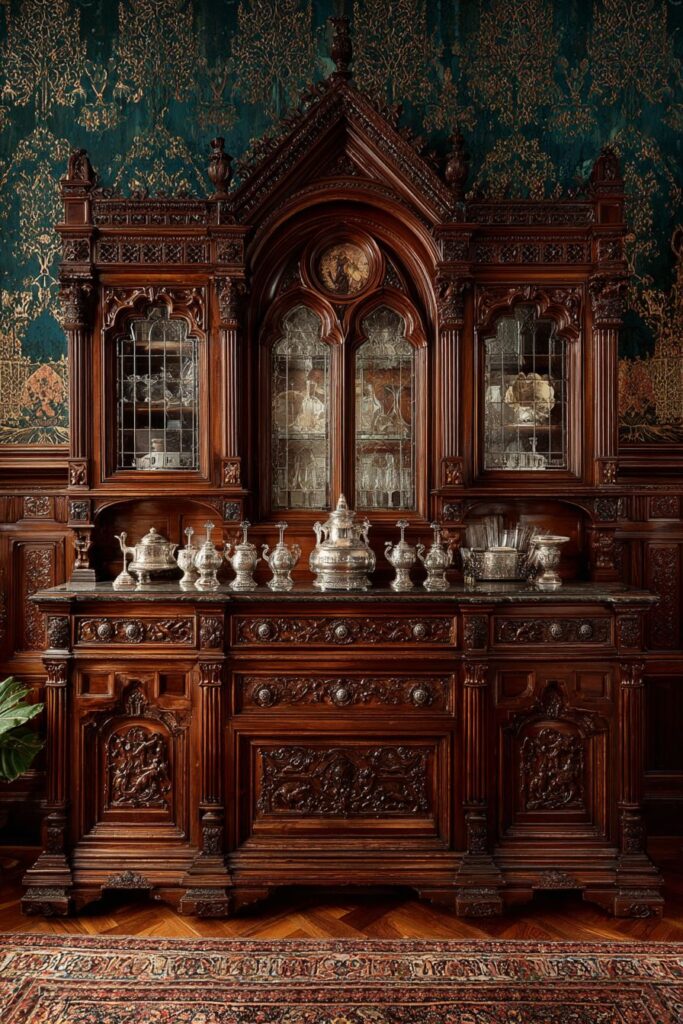
Leaded glass built-in cabinets flank the huntboard, displaying fine china collections while their leaded glass doors add architectural interest and period authenticity. The leaded glass panels create geometric patterns that complement the huntboard’s organic carved details while protecting the displayed china from dust and damage. These cabinets demonstrate the Victorian skill at creating built-in storage that serves practical needs while contributing to the room’s overall aesthetic impact.
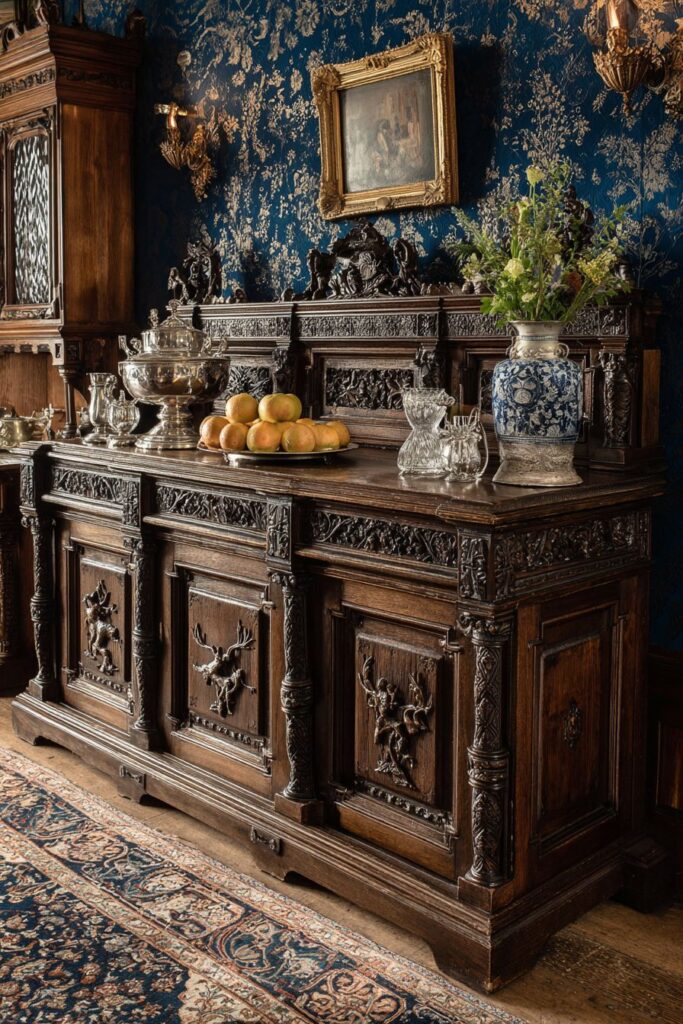
Gothic Revival wallpaper in deep blue with gold accents covers the walls, its dramatic color and pattern complementing the huntboard’s impressive scale while adding visual richness throughout the room. The Gothic patterns often feature architectural motifs that echo the leaded glass cabinet doors while the deep blue color provides a sophisticated backdrop for the oak furniture. The gold accents tie the wallpaper to the brass hardware while adding sparkle and luxury to the overall design scheme.
Key Design Tips:
- Choose furniture with carved motifs that reflect family interests
- Display silver serving pieces with complementary engraving
- Install leaded glass cabinets for authentic architectural details
- Use Gothic Revival wallpapers for dramatic backdrounds
- Coordinate metal finishes throughout the room for visual unity
13. Afternoon Tea Table Intimacy
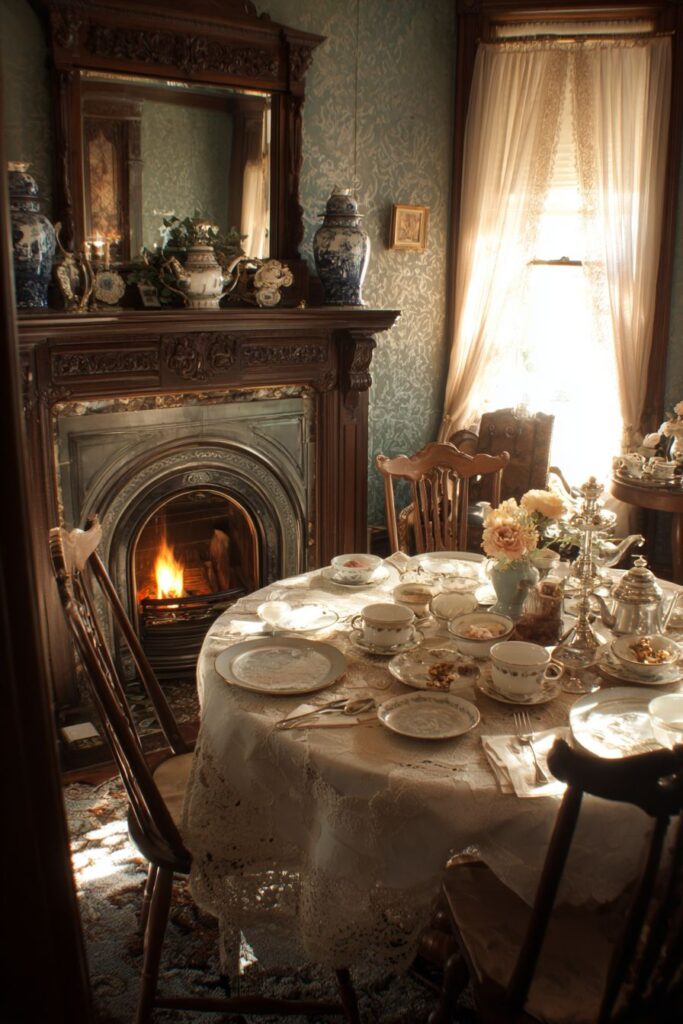
The parlor table set for afternoon tea with fine Haviland china, silver tea service, and delicate lace tablecloth creates an intimate setting that celebrates the Victorian tradition of afternoon entertaining. The Haviland china’s delicate patterns and translucent quality provide the perfect foundation for elegant tea service while the silver tea service adds formal elegance and gleaming surfaces that reflect light throughout the room. The lace tablecloth adds textural interest and feminine touches that soften the formal presentation.
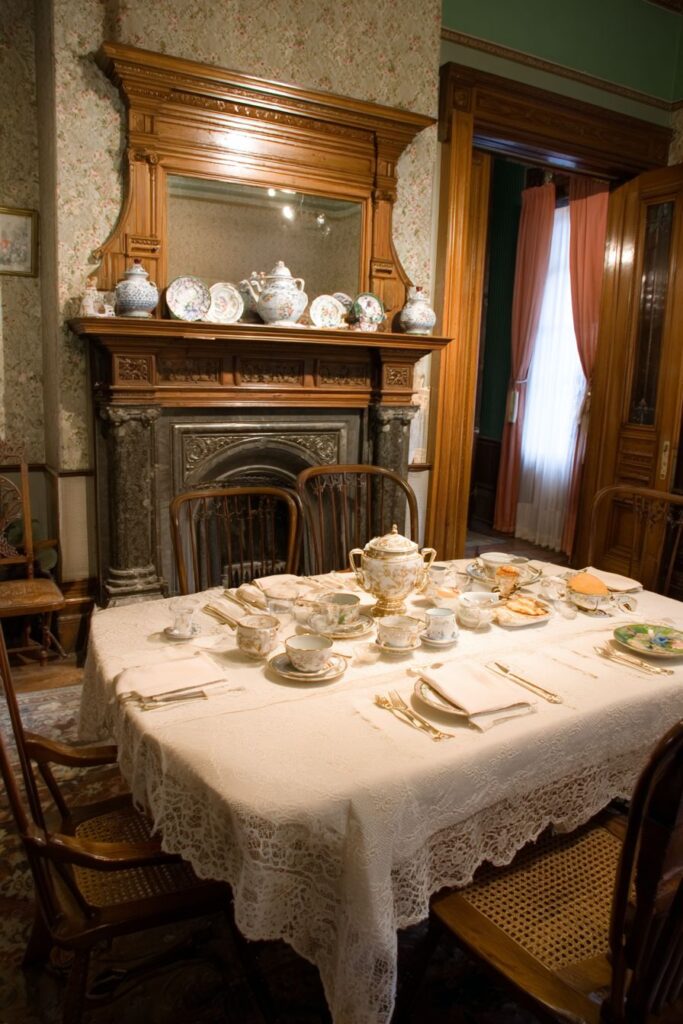
Windsor-style chairs with cane seats provide comfortable seating that complements the intimate scale of afternoon tea service while their traditional construction adds authentic period appeal. The cane seats provide comfortable support during extended conversation while their lighter visual weight doesn’t overwhelm the delicate tea table setting. These chairs represent the Victorian skill at selecting furniture appropriate for specific activities and social occasions.
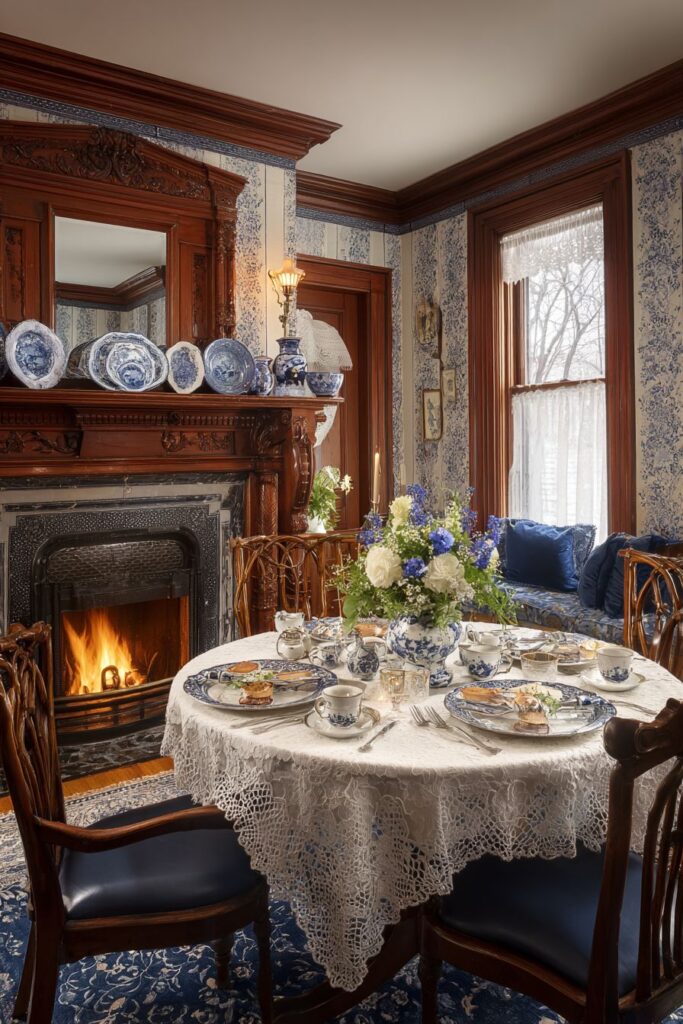
An ornate coal grate fireplace with carved wooden mantel serves as the focal point, topped with blue and white Chinese export porcelain that adds color and international flair to the room. The fireplace provides both warmth and ambiance while the carved mantel demonstrates Victorian woodworking skills and attention to decorative detail. The Chinese export porcelain represents the Victorian fascination with exotic objects and the global trade that brought beautiful items from around the world into Victorian homes.
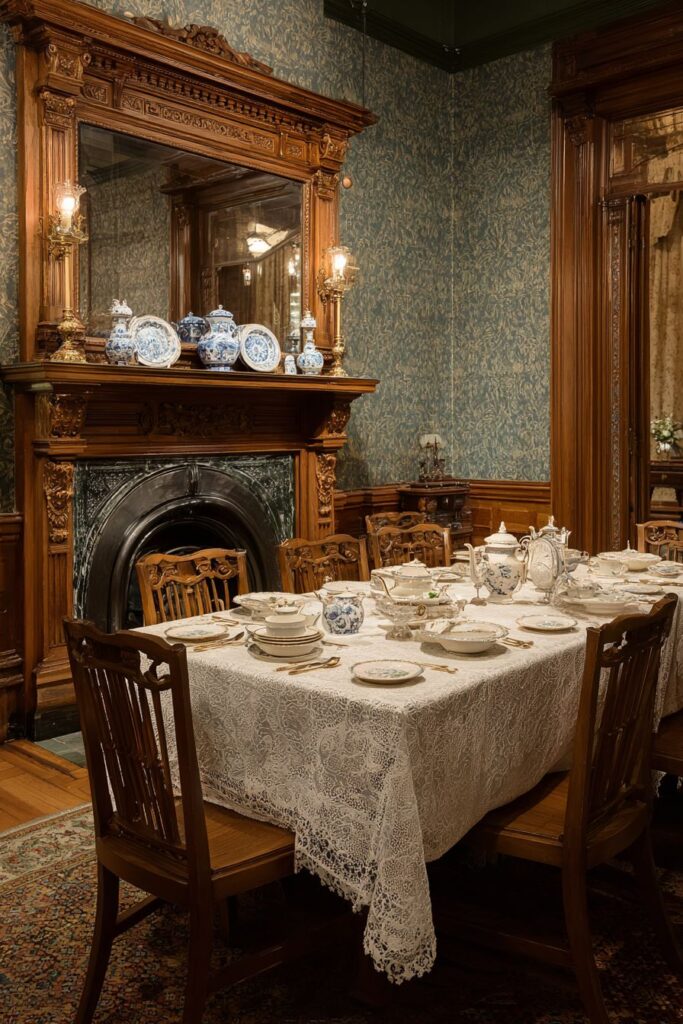
Bradbury & Bradbury wallpaper in authentic Victorian patterns creates period ambiance while its careful reproduction ensures historical accuracy and appropriate scale for the intimate tea setting. This wallpaper company specializes in recreating authentic Victorian patterns using traditional techniques and appropriate colors, ensuring that modern installations capture the true spirit of Victorian interior design. The patterns provide visual interest while maintaining the delicate scale appropriate for intimate entertaining spaces.
Key Design Tips:
- Use delicate china and silver for authentic tea service presentations
- Choose furniture appropriate for specific social activities
- Display international collections for Victorian cosmopolitan appeal
- Select historically accurate wallpaper reproductions for authenticity
- Create intimate seating arrangements for conversation and comfort
14. Piano Forte Multi-functional Space
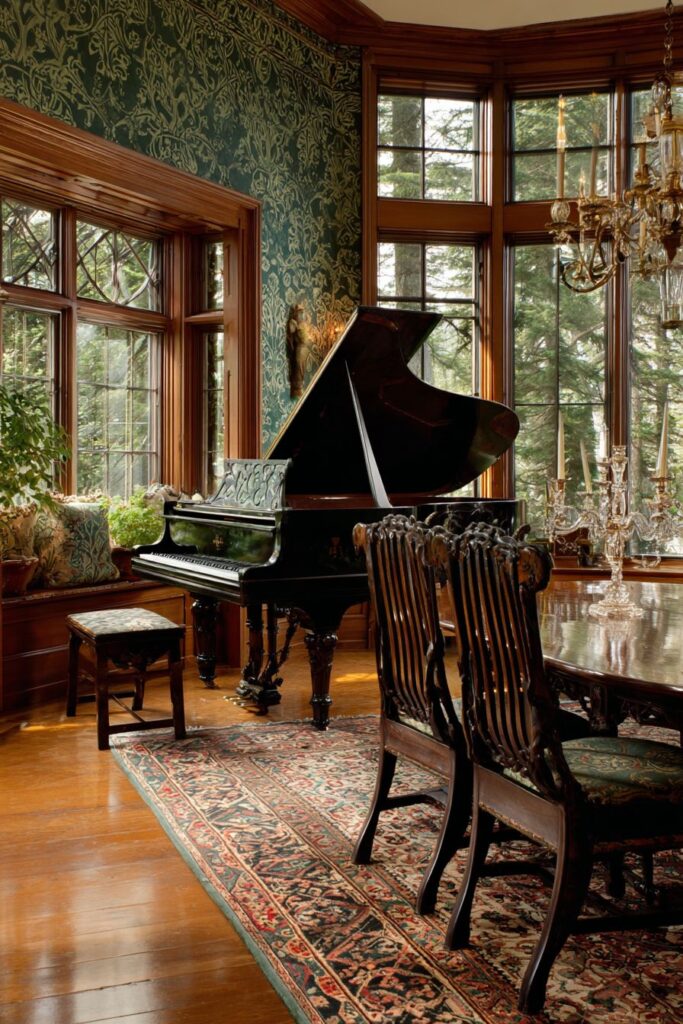
The grand piano forte positioned near tall windows for natural light creates a multi-functional Victorian living space that combines dining and musical entertainment in one elegant room. This placement demonstrates the Victorian understanding that rooms should serve multiple purposes while maintaining elegant proportions and decorative appeal. The piano serves as both musical instrument and impressive piece of furniture, its polished black surface reflecting light while its substantial scale balances the dining furniture throughout the room.
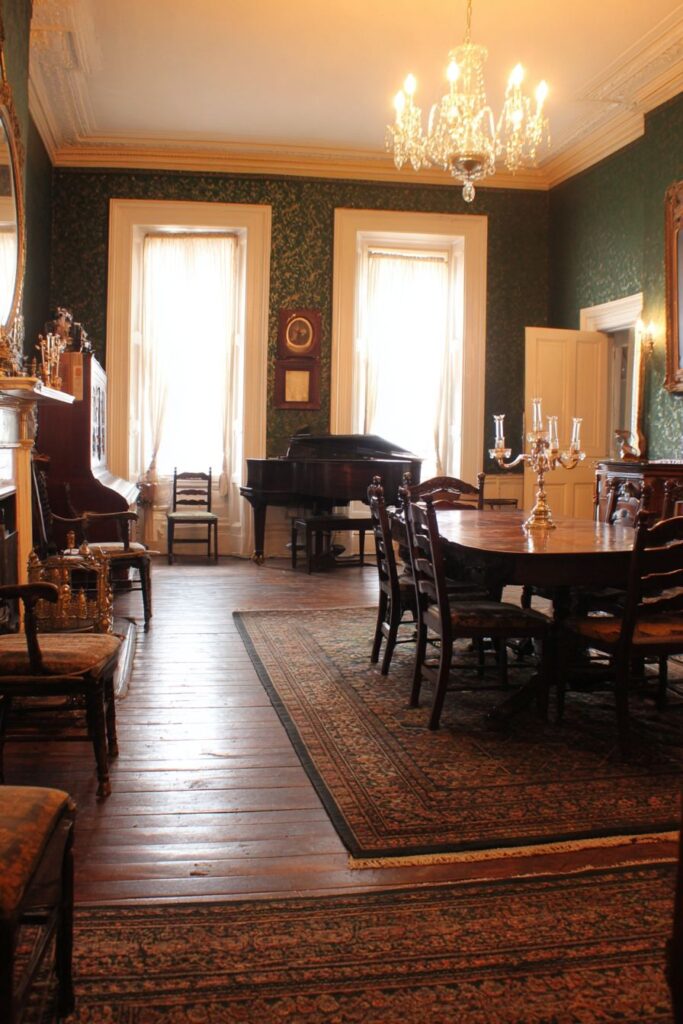
The gate-leg table and ladder-back chairs with rush seats provide flexible dining options that can be easily reconfigured for different activities and group sizes. The gate-leg design allows the table to expand for formal meals or contract for intimate gatherings while the ladder-back chairs with rush seats add traditional charm and comfortable seating. These pieces represent the Victorian appreciation for furniture that could adapt to different needs while maintaining consistent style and quality.
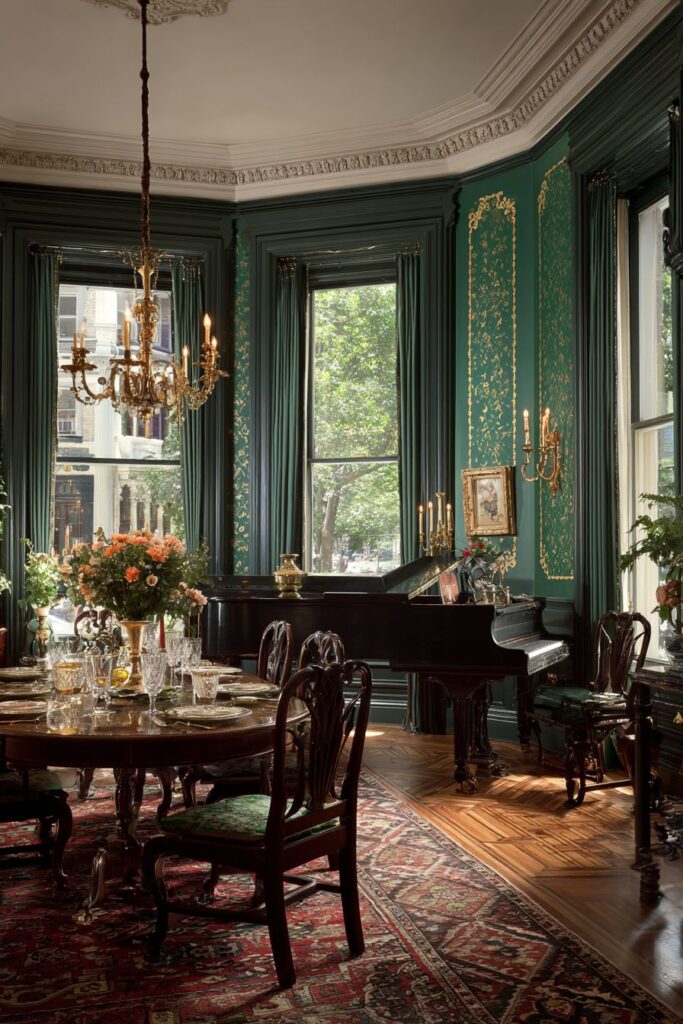
Rich Morris wallpaper in the acanthus pattern covers the walls in deep forest green, its sophisticated botanical motifs providing a cultured backdrop that complements both musical and dining activities. The acanthus pattern represents classical design influences while the deep forest green color creates a sophisticated atmosphere that enhances both daytime and evening activities. This wallpaper choice demonstrates the Victorian skill at selecting patterns that work for multiple functions while maintaining elegant style.
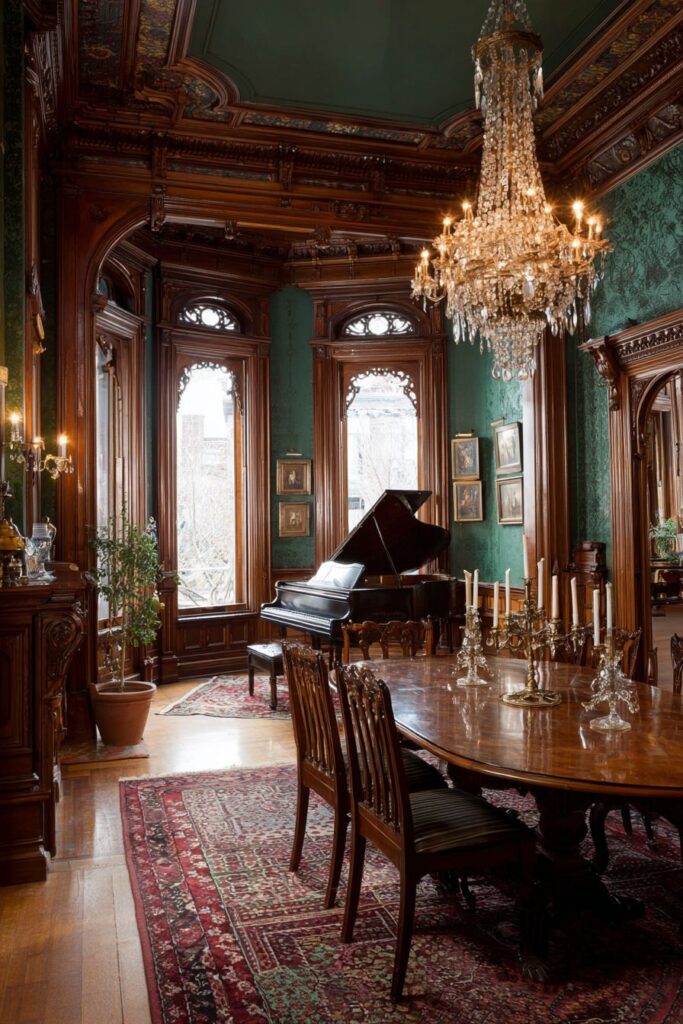
Crystal and brass candelabras provide evening illumination that creates romantic ambiance for both dining and musical performances while their elegant design adds decorative elements that enhance the room’s formal appeal. These lighting pieces can be positioned flexibly throughout the room to provide task lighting for music reading or intimate lighting for dinner parties. The combination of crystal and brass materials adds sparkle and warmth while the candle flames create flickering light that enhances the room’s intimate atmosphere.
Key Design Tips:
- Position pianos near windows for optimal natural lighting
- Choose flexible furniture that can serve multiple functions
- Use sophisticated wallpaper patterns that work for various activities
- Select portable lighting that can be positioned as needed
- Create multi-functional spaces that maintain consistent style
15. Aesthetic Movement Corner Display
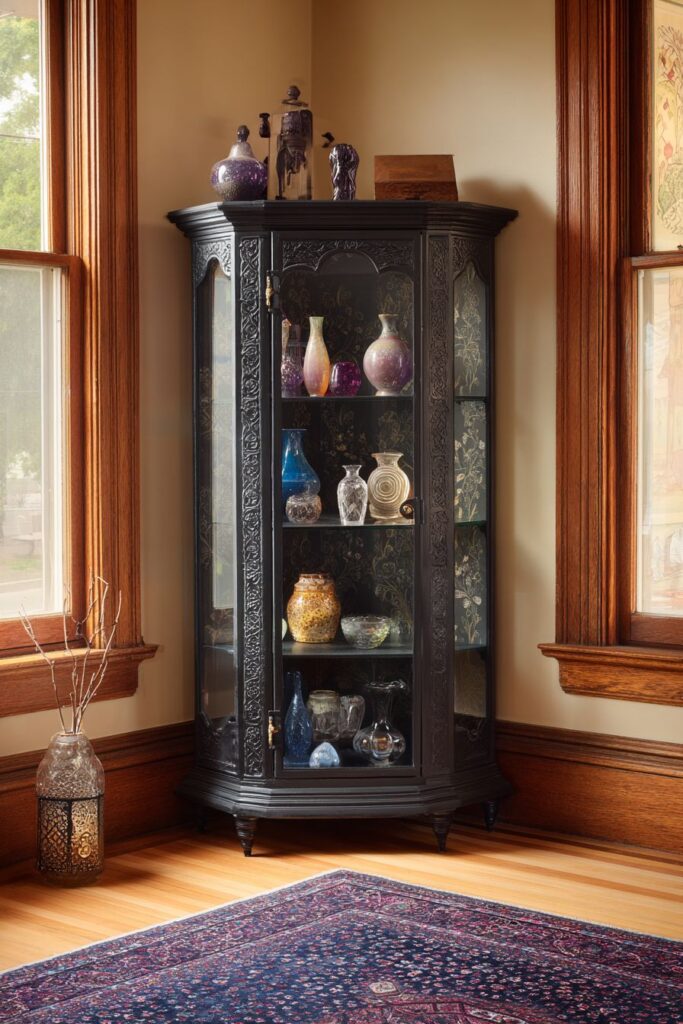
The ornate corner étagère in ebonized wood with gilt details displays a collection of art glass vases and decorative objects, representing the Victorian passion for collecting and displaying beautiful items from around the world. The ebonized wood finish provides a dramatic dark background that makes the colorful art glass pieces appear to glow while the gilt details add luxury touches that catch and reflect light. This étagère demonstrates the Victorian skill at creating display furniture that serves as art in its own right.
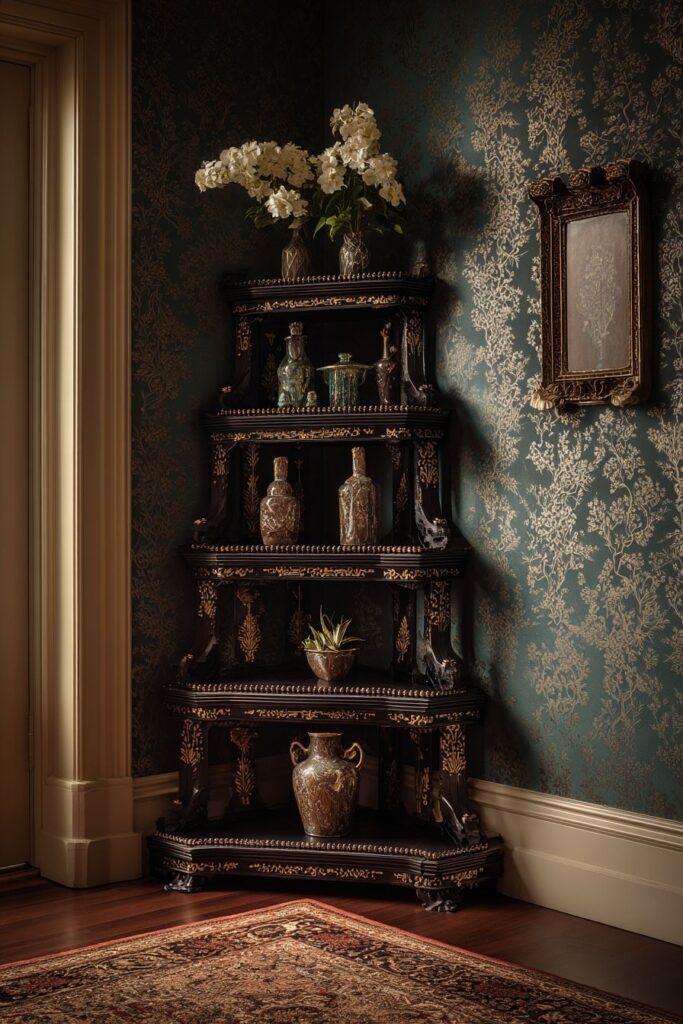
The collection showcases typical Victorian aesthetic movement influence with Japanese-inspired motifs that reflect the period’s fascination with Eastern art and design principles. These pieces often feature asymmetrical compositions, natural motifs, and subtle color palettes that contrast with the more elaborate Victorian decorative traditions. The Japanese influence represents the Victorian openness to international artistic influences and the willingness to incorporate new aesthetic ideas into traditional room settings.
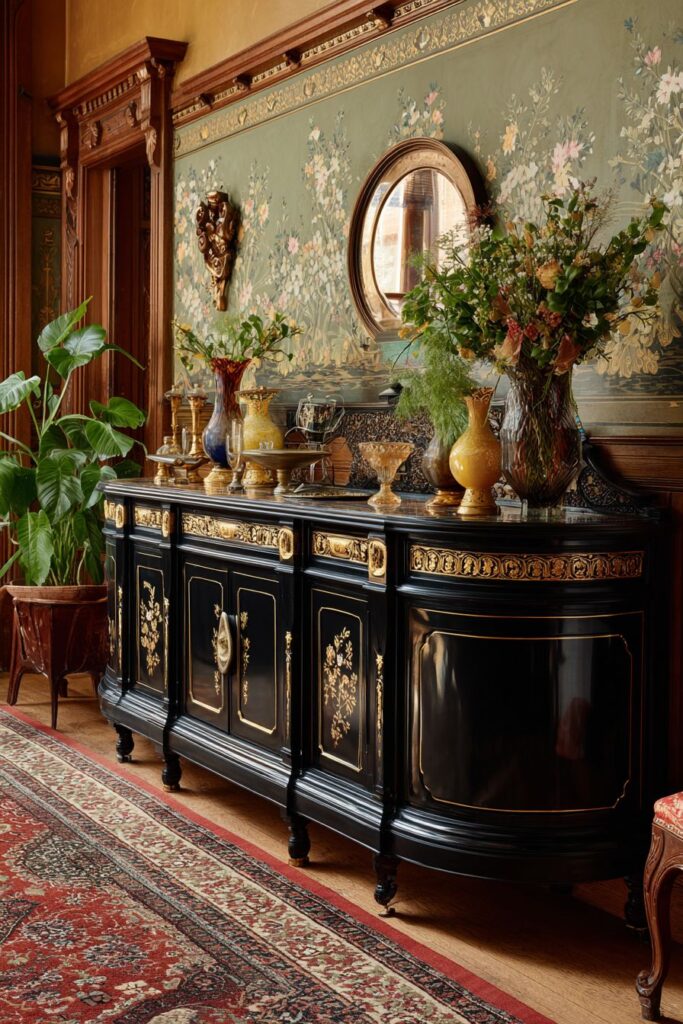
Aesthetic movement wallpaper by Walter Crane in muted colors provides backdrop that demonstrates the movement’s departure from bright Victorian colors toward more sophisticated, artistic color palettes. Crane’s designs feature stylized natural motifs and flowing lines that complement the Japanese-influenced objects while providing visual continuity throughout the room. This wallpaper choice represents the Victorian evolution toward more artistic and less purely decorative interior design approaches.
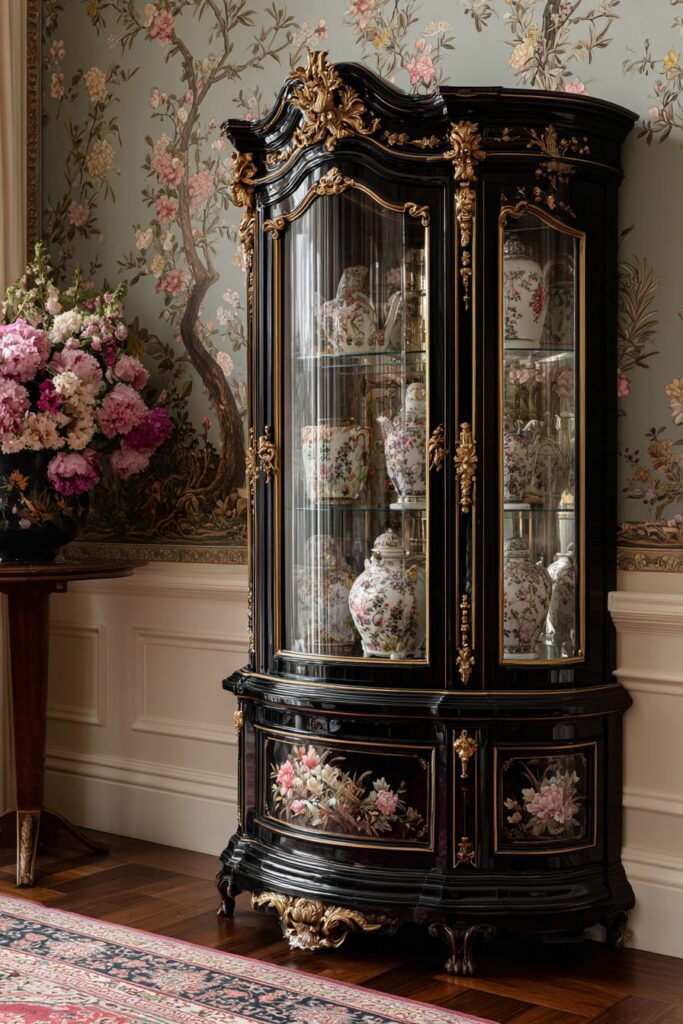
A Turkish prayer rug in silk adds luxury underfoot while its intricate patterns and rich colors complement the artistic objects displayed throughout the corner. The silk construction provides lustrous surface that catches light beautifully while the prayer rug’s traditional patterns add cultural richness and exotic appeal. This rug represents the Victorian appreciation for fine craftsmanship and international artistic traditions that added sophistication to domestic interiors.
Key Design Tips:
- Create corner displays using specialized étagère furniture
- Mix cultural influences for sophisticated collecting displays
- Choose muted color palettes for Aesthetic Movement authenticity
- Use silk rugs for ultimate luxury and light reflection
- Display art glass collections for color and light effects
16. Renaissance Revival Dining Suite
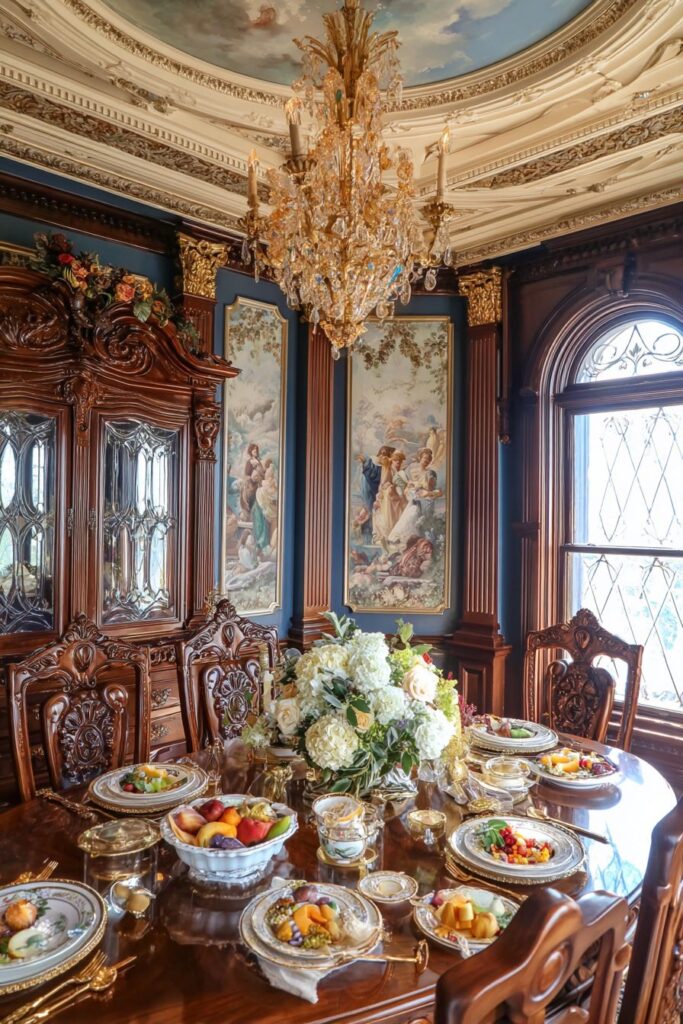
The massive carved dining suite in American black walnut including table, chairs, and matching server features Renaissance Revival styling with carved fruit and floral motifs that demonstrate the Victorian fascination with historical decorative styles. This complete suite approach ensures visual continuity throughout the dining room while the elaborate carving demonstrates the skill of American craftsmen who could rival their European counterparts. The black walnut’s rich color and distinctive grain patterns provide a luxurious foundation for the intricate carved details.
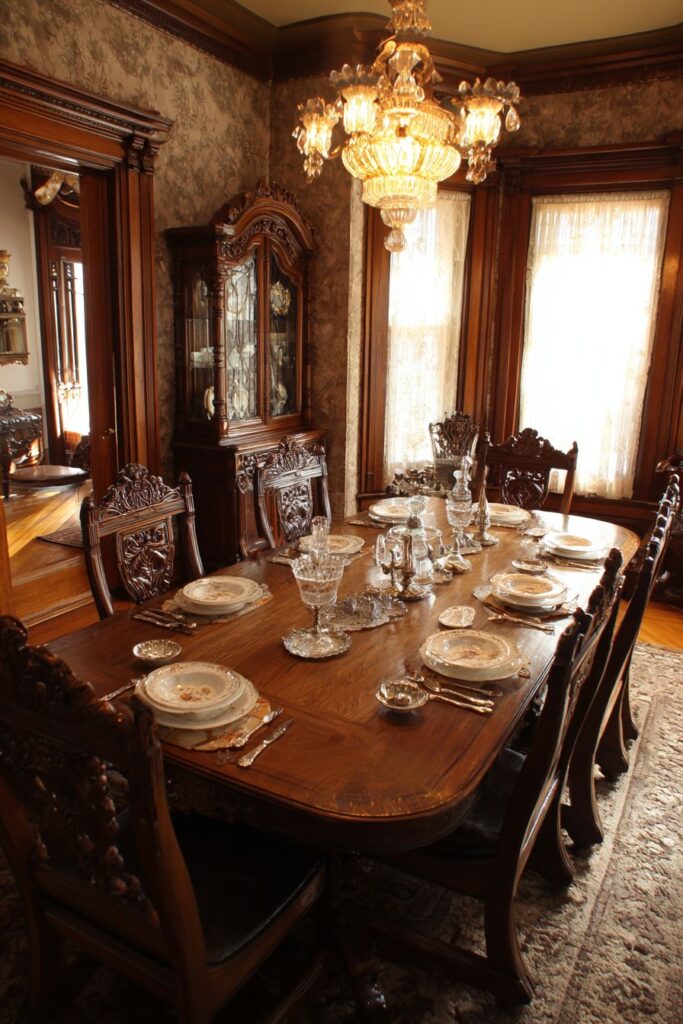
The table is set with Haviland Limoges china and coin silver flatware, representing the finest available tableware of the Victorian era. The Haviland china’s delicate patterns and superior quality make it perfect for the most formal dining occasions while the coin silver flatware adds gleaming elegance and substantial weight that speaks to its quality construction. These pieces demonstrate the Victorian belief that dining should be conducted with the finest possible appointments to honor both guests and family.
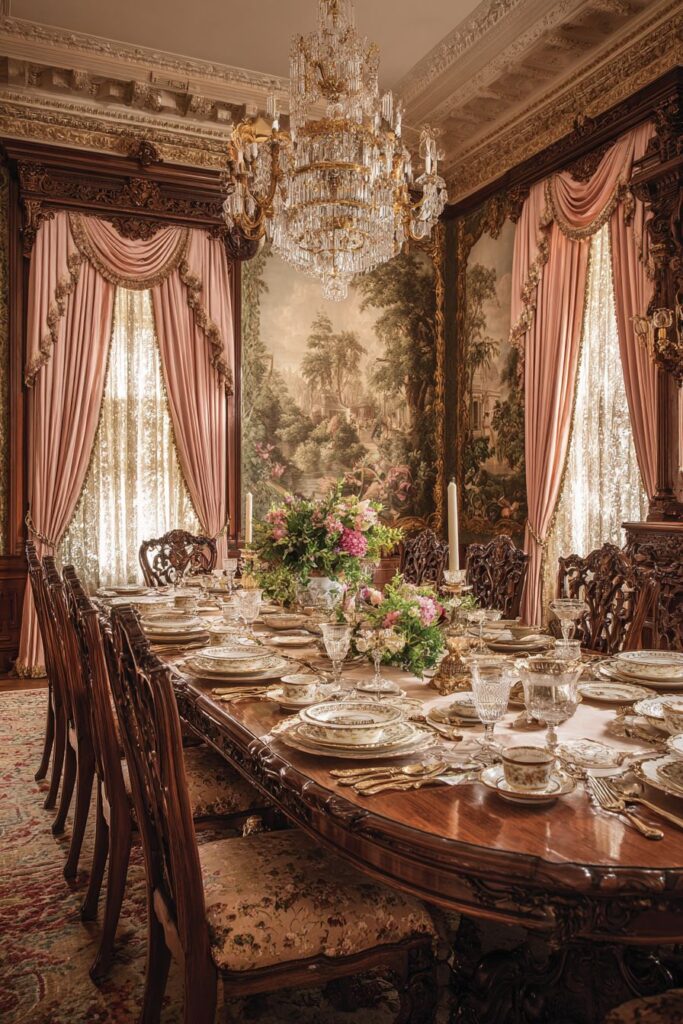
A gilt bronze and crystal chandelier hangs from the medallioned ceiling, its elaborate construction providing both illumination and artistic focal point that complements the suite’s Renaissance Revival styling. The gilt bronze finish adds warmth and richness while the crystal elements provide sparkle and light refraction that enhances the room’s grandeur. The medallioned ceiling adds architectural interest that frames the chandelier while demonstrating the Victorian attention to every decorative detail.
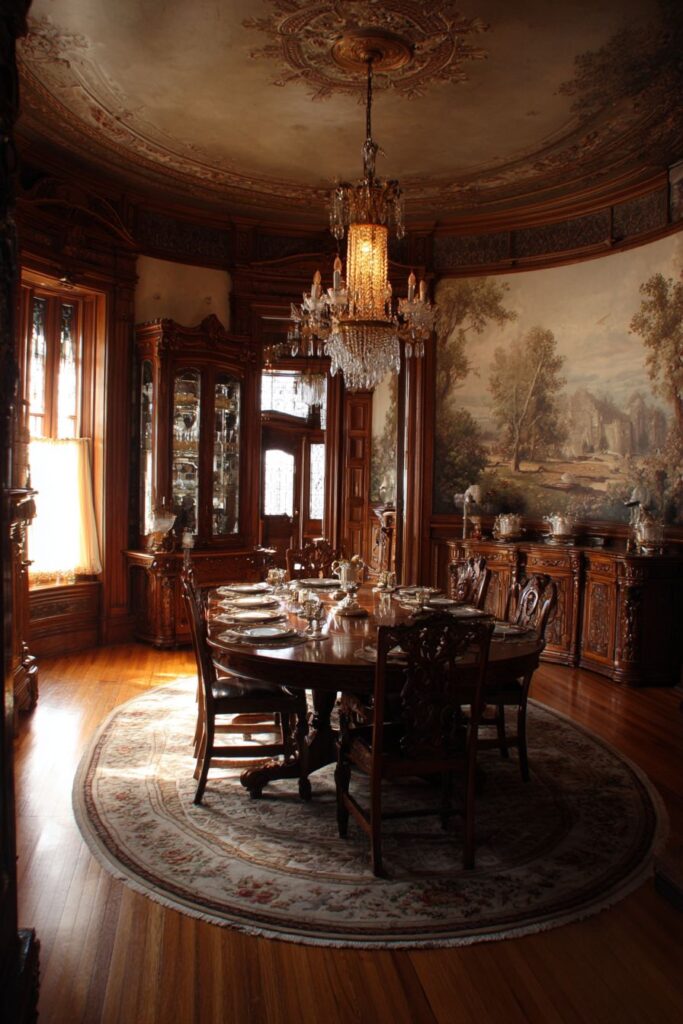
Zuber panoramic wallpaper depicts classical scenes that complement the Renaissance Revival furniture while adding artistic and educational elements to the dining experience. These hand-painted panoramic papers were extremely expensive and represented the ultimate in Victorian wall decoration, often depicting historical or mythological scenes that could spark conversation and demonstrate the family’s cultural sophistication. The classical scenes provide visual interest while maintaining the formal atmosphere appropriate for elaborate dining occasions.
Key Design Tips:
- Choose complete furniture suites for visual continuity
- Use the finest available china and flatware for formal presentations
- Select chandeliers that complement furniture styling periods
- Install panoramic wallpapers for ultimate Victorian luxury
- Coordinate all decorative elements to support a unified theme
17. Butler’s Pantry Functional Elegance
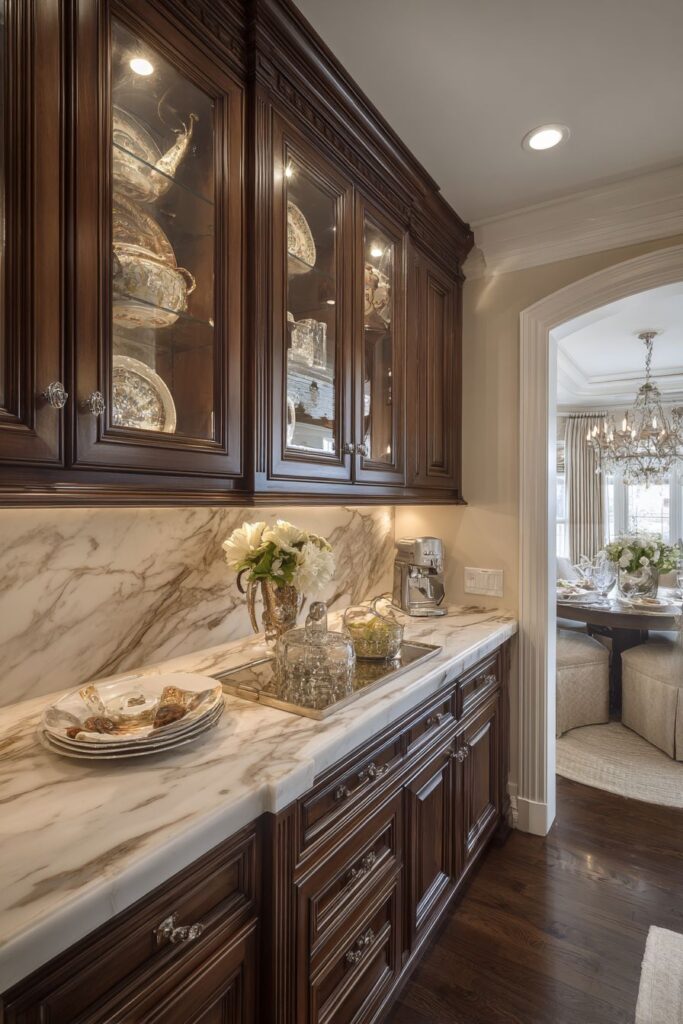
The butler’s pantry area with built-in glass-front cabinets displays extensive collections of transferware and majolica pottery while providing practical storage and preparation space for formal dining service. The glass-front cabinets protect the collections from dust while allowing the beautiful pieces to serve as room decoration, demonstrating the Victorian skill at combining function and beauty in domestic arrangements. The extensive collections represent the Victorian passion for accumulating beautiful objects that could enhance daily life while serving practical purposes.
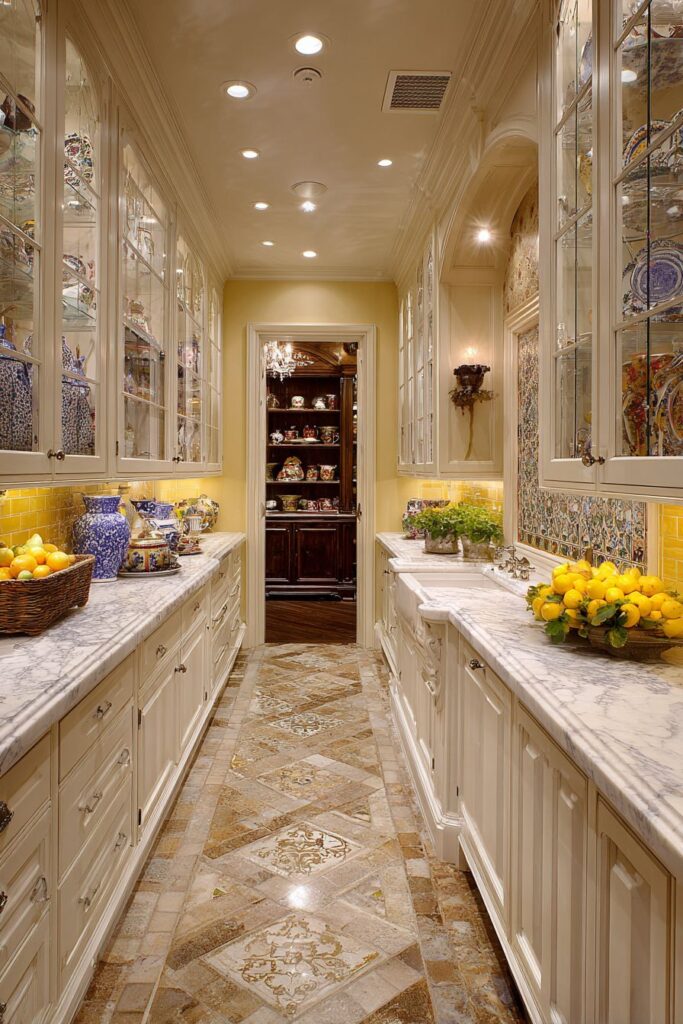
The cabinetry showcases period-appropriate hardware and leaded glass doors that add authentic architectural details while providing secure storage for valuable pieces. The leaded glass panels create geometric patterns that add visual interest while the brass hardware provides gleaming accents that catch and reflect light. These details transform functional storage into decorative elements that contribute to the room’s overall aesthetic impact while serving essential practical purposes.
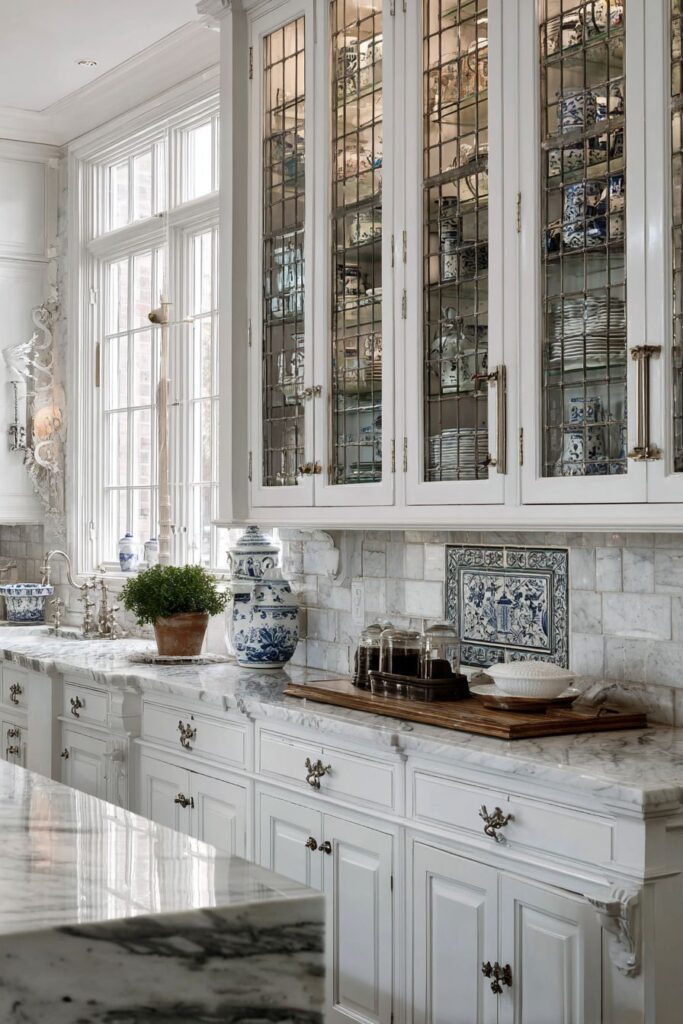
Below, marble-topped preparation surfaces provide workspace that combines luxury materials with practical functionality, demonstrating the Victorian belief that even service areas should be beautiful as well as functional. The marble surfaces provide ideal working conditions for food preparation while their elegant appearance maintains the room’s decorative standards. These surfaces can accommodate the elaborate food presentations required for Victorian formal dining while contributing to the overall sense of luxury throughout the space.
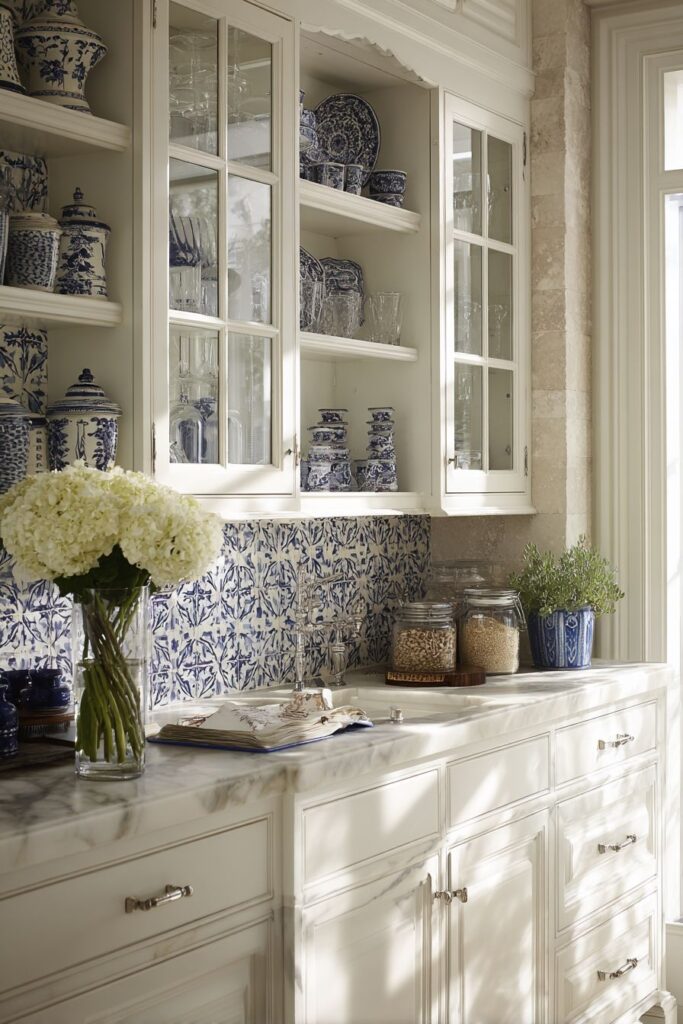
William De Morgan tiles in lustrous glazes create decorative backsplashes that add color and pattern while protecting the walls from cooking splashes and stains. These artistic tiles represent the Victorian appreciation for handcrafted decorative elements that could transform functional spaces into works of art. The lustrous glazes catch and reflect light while the patterns add visual interest that complements the displayed pottery collections.
Key Design Tips:
- Design storage that displays collections while protecting them
- Use period-appropriate hardware for authentic architectural appeal
- Combine luxury materials with practical functionality
- Install decorative tiles for both beauty and protection
- Create service areas that maintain the home’s decorative standards
18. Victorian Curiosity Display Corner
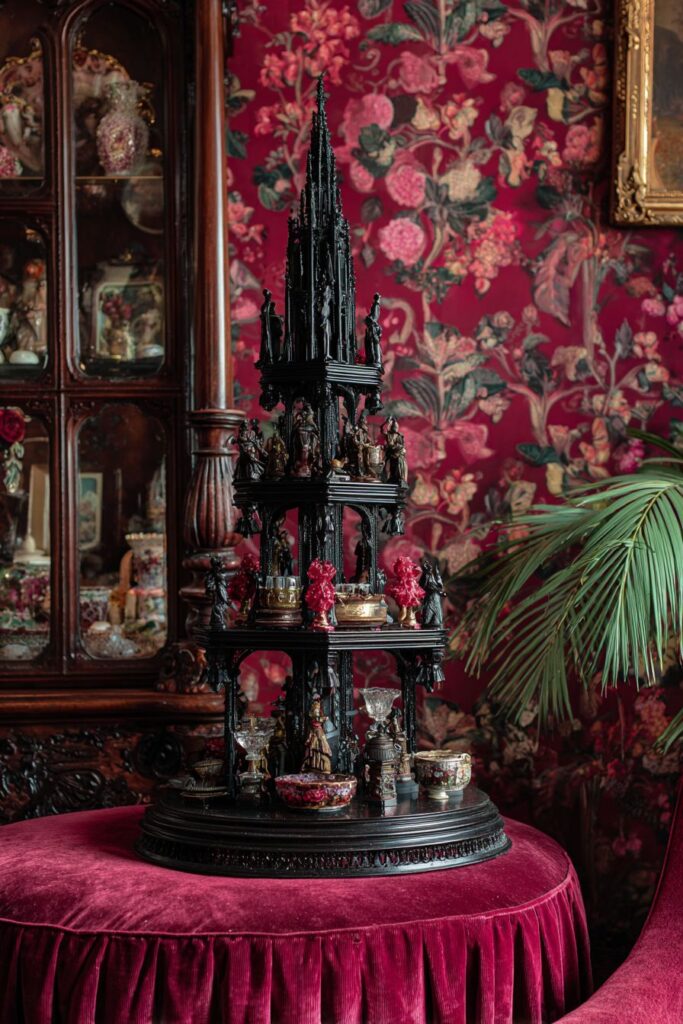
The whatnot shelf displaying collections of Staffordshire figurines, cut crystal, and curiosities represents the Victorian passion for collecting and displaying interesting objects from around the world. These tiered display stands allowed families to showcase their travels, interests, and cultural sophistication while adding decorative elements that could spark conversation among guests. The collections often included both valuable art objects and sentimental pieces that told the story of the family’s history and interests.
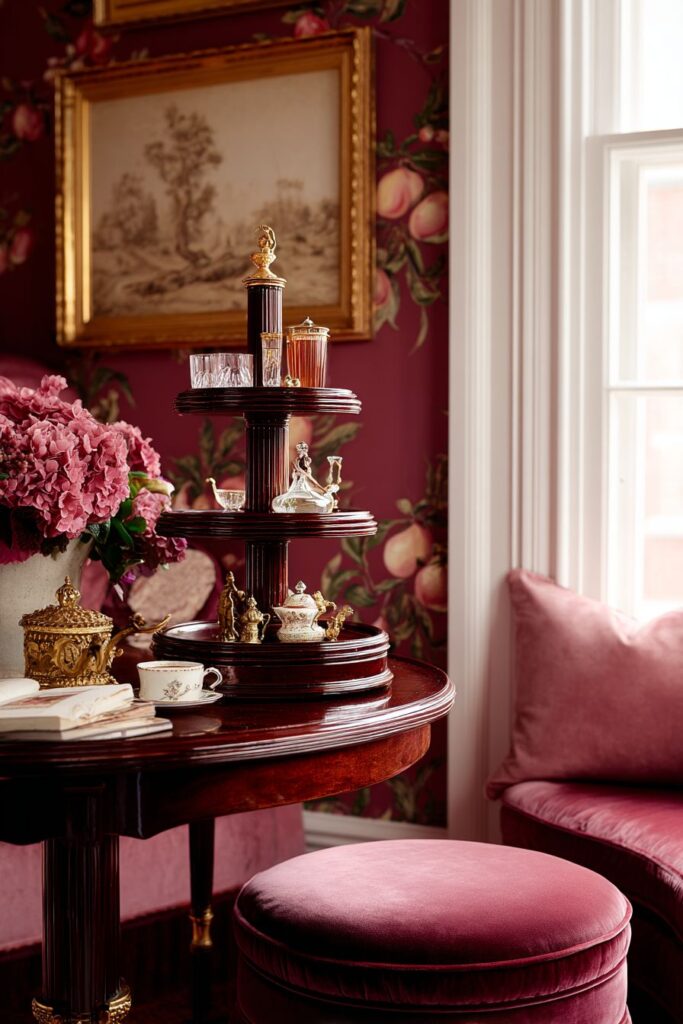
The tiered wooden stand showcases ebony and gilt details characteristic of the Aesthetic Movement, its sophisticated finish and proportions demonstrating the Victorian evolution toward more artistic furniture design. The ebony finish provides dramatic contrast against the colorful objects while the gilt details add luxury touches that catch and reflect light throughout the room. This stand represents the Victorian understanding that display furniture should be as beautiful as the objects it contains, serving as art in its own right while providing functional display space.
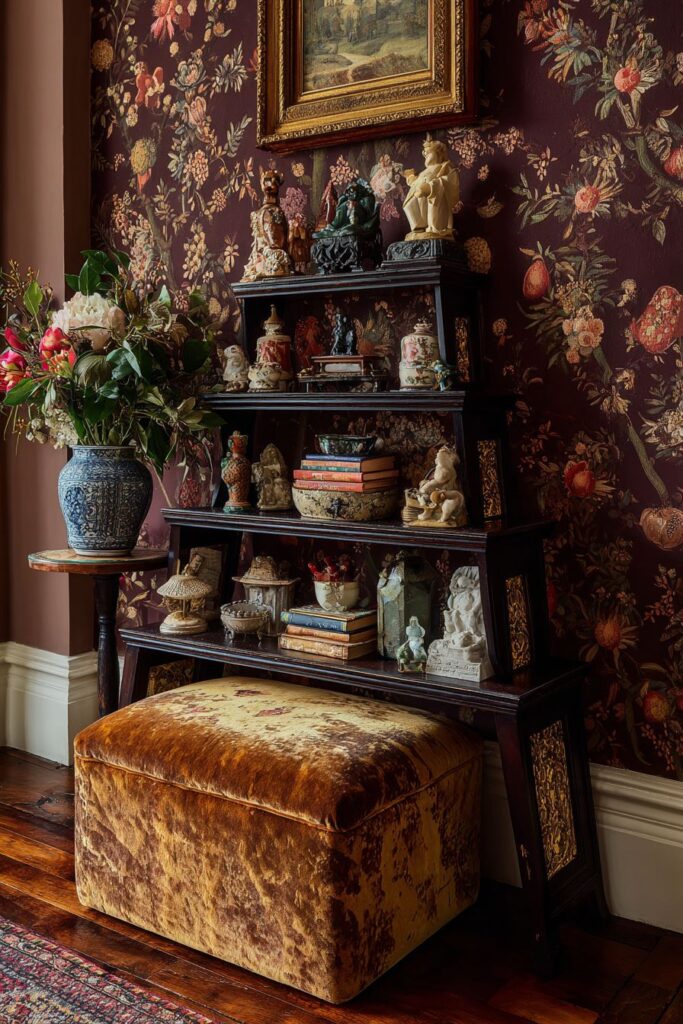
Behind, authentic William Morris wallpaper in the pomegranate pattern creates rich backdrop that demonstrates the Arts and Crafts movement’s influence on Victorian interior design. The pomegranate pattern, with its stylized fruit and flowing vines, represents Morris’s skill at creating sophisticated botanical designs that work as both decoration and art. The rich colors and intricate patterns provide visual depth while complementing the displayed objects without overwhelming their individual beauty.
A velvet-covered ottoman provides seating for conversation while adding another layer of luxurious texture to the display corner. The velvet covering, often in deep jewel tones, provides comfortable seating for examining the collections while its rich texture adds visual and tactile interest to the corner arrangement. This ottoman represents the Victorian understanding that every corner of a room should serve both practical and aesthetic purposes while contributing to the overall comfort of the space.
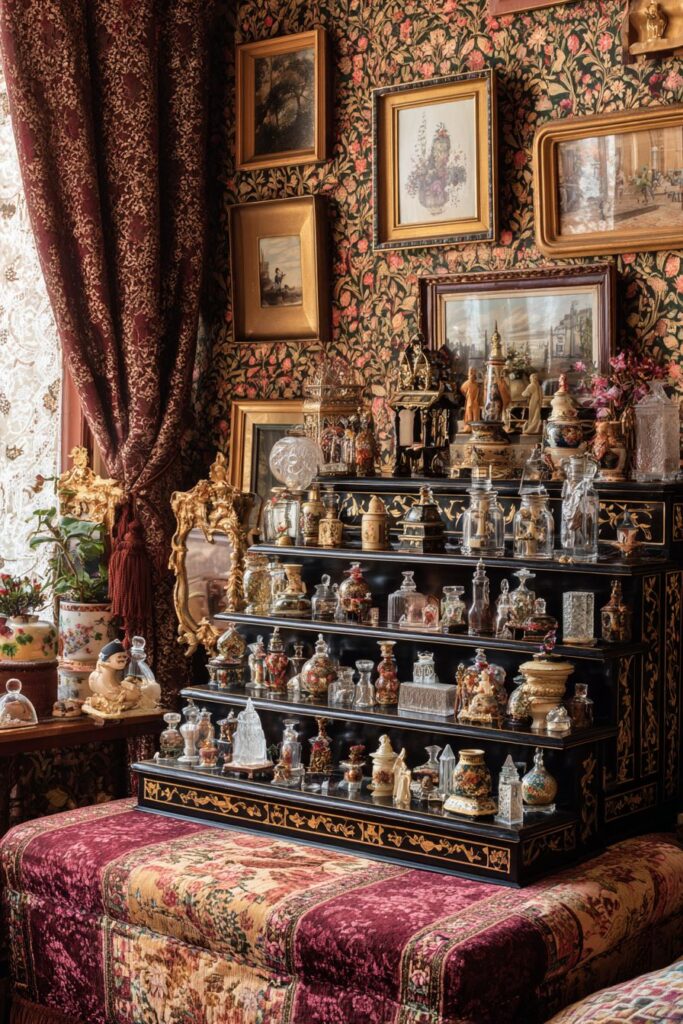
The careful arrangement of objects on the whatnot shelf demonstrates Victorian principles of display that balanced visual interest with accessibility, allowing pieces to be examined and discussed while maintaining attractive compositions. Each shelf level tells a different story, whether showcasing travel souvenirs, family heirlooms, or artistic purchases that reflect the family’s evolving tastes and interests over time.
Key Design Tips:
- Use tiered display stands for varied collection heights
- Choose ebony and gilt finishes for Aesthetic Movement authenticity
- Position seating near displays to encourage examination and conversation
- Layer wallpaper patterns that complement without overwhelming objects
- Arrange collections to tell stories and spark conversation
19. Victorian Christmas Celebration Setting
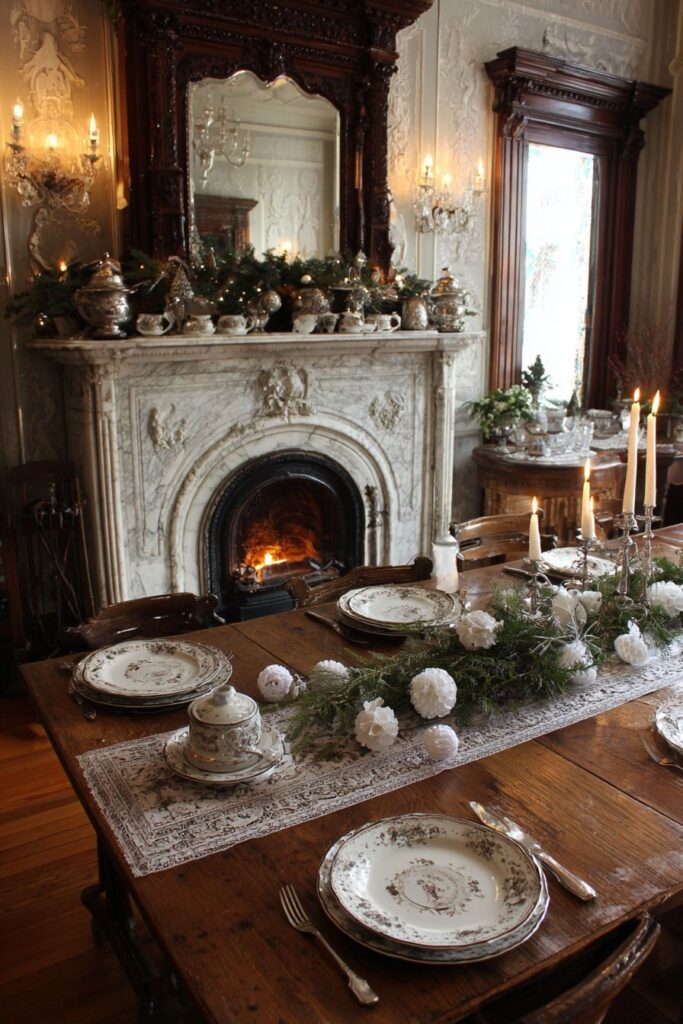
The formal dining table set for Christmas with period-appropriate decorations including paper ornaments, candles in sterling holders, and fresh greenery centerpieces creates a festive atmosphere that celebrates Victorian holiday traditions. The paper ornaments, often handmade with intricate cutting and folding techniques, represent the Victorian love of handcrafted decorations that added personal touches to holiday celebrations. The sterling silver candle holders provide elegant illumination while their gleaming surfaces reflect the candlelight throughout the room.
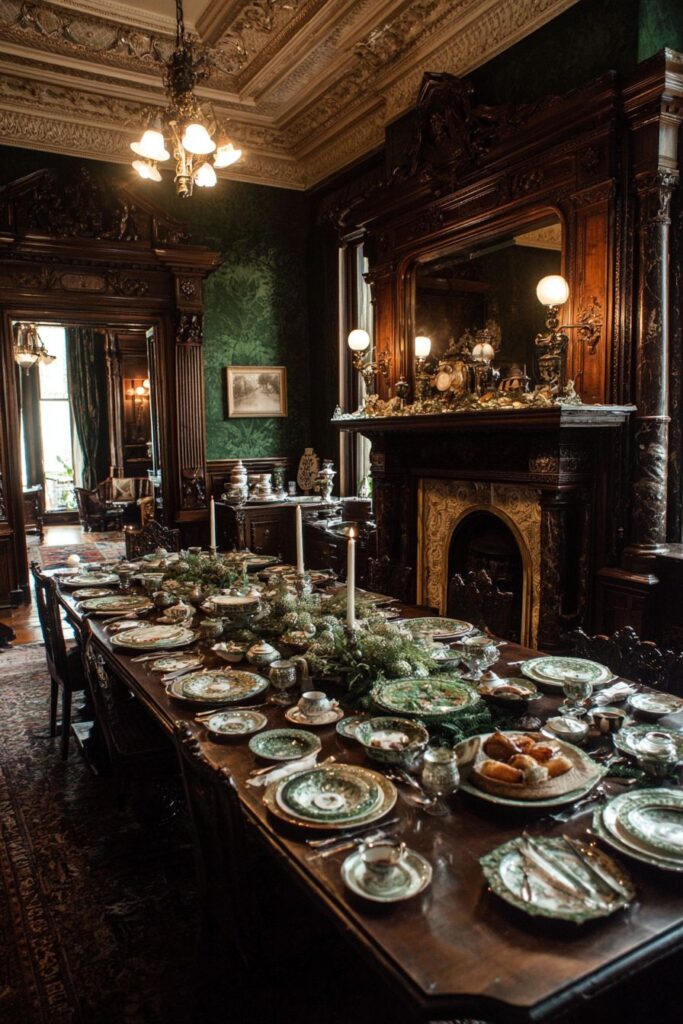
The table uses the family’s best Spode china and Sheffield plate serving pieces, demonstrating the Victorian practice of bringing out the finest possessions for special occasions and holiday celebrations. The Spode china’s traditional patterns often featured Christmas motifs or winter scenes that complemented the holiday decorations while the Sheffield plate serving pieces provided elegant presentation for elaborate holiday meals. These pieces represent the Victorian belief that holidays deserved the finest possible appointments and presentations.
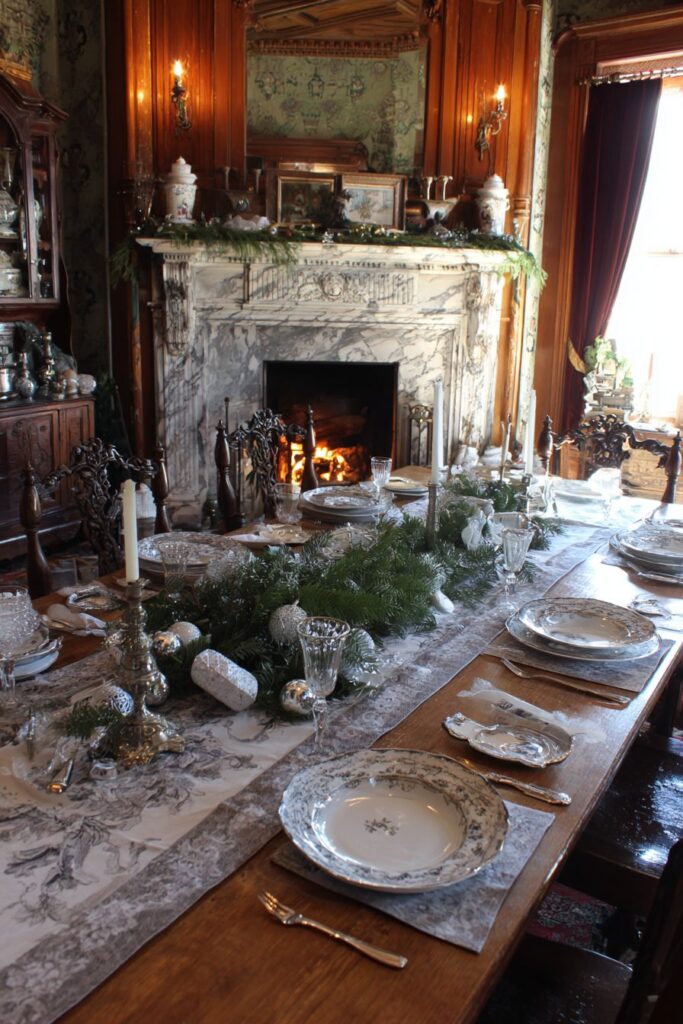
A Yule log burns in the carved marble fireplace while gasoline wall brackets provide warm illumination that creates cozy atmosphere perfect for Christmas celebrations. The fireplace serves as both practical heating and romantic focal point while the carved marble mantel provides display space for holiday decorations and family treasures. The gasoline lighting creates warm, golden illumination that enhances the holiday atmosphere while providing adequate light for evening celebrations and gift exchanges.
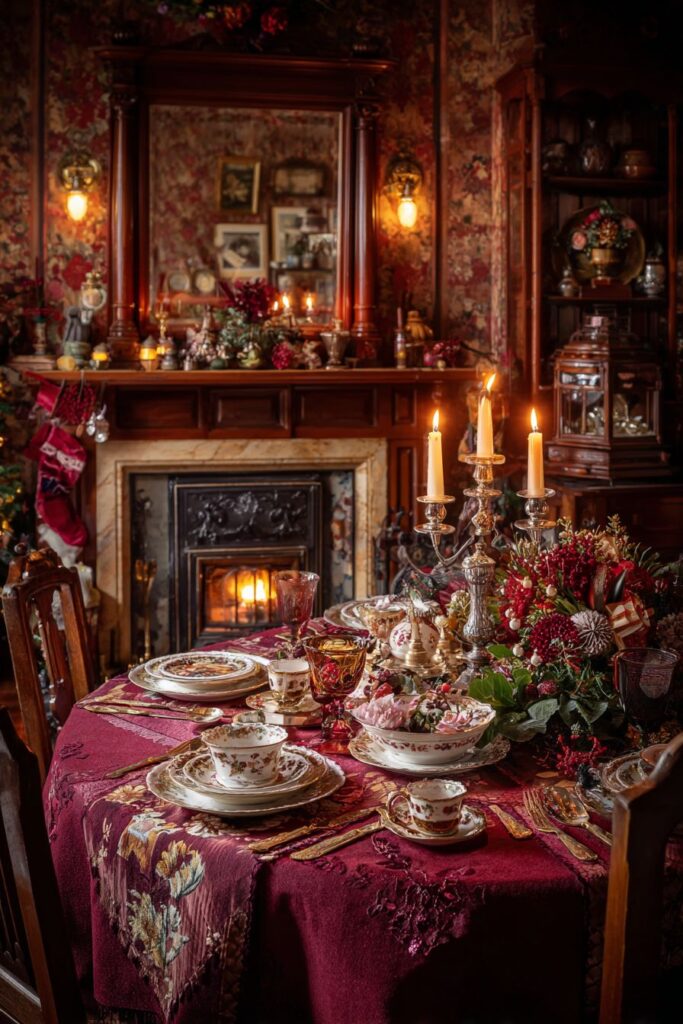
Traditional Victorian Christmas customs are evident throughout the carefully decorated space, including evergreen garlands, holly arrangements, and carefully placed candles that create magical holiday lighting. These decorations represent authentic Victorian approaches to Christmas celebration that emphasized natural materials, handcrafted ornaments, and abundant candles to create festive atmosphere. The careful placement of decorations demonstrates the Victorian attention to detail that made holiday celebrations special and memorable for families and guests.
Key Design Tips:
- Use handcrafted paper ornaments for authentic Victorian Christmas appeal
- Bring out finest china and serving pieces for holiday celebrations
- Create abundant candlelight for magical holiday atmosphere
- Incorporate natural materials like evergreens and holly
- Layer decorations carefully to create festive but elegant presentations
20. Complete Architectural Victorian Scheme
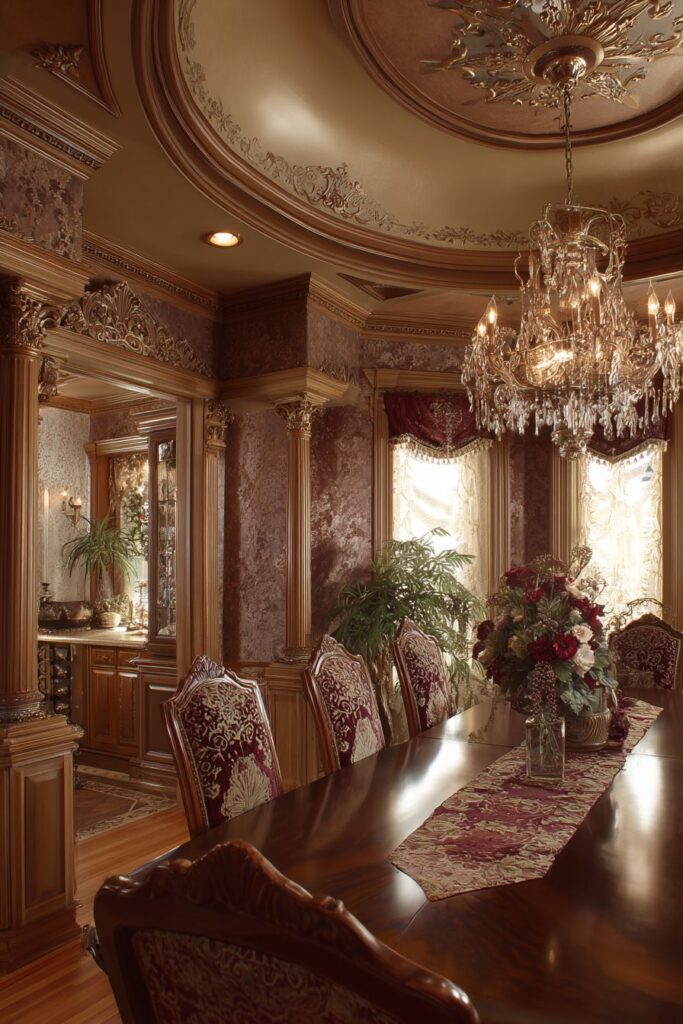
The complete architectural elements including coffered ceiling with decorative plasterwork, carved wooden column details, and built-in corner cupboards with leaded glass doors demonstrate the Victorian commitment to creating unified interior environments where every element contributes to the overall aesthetic impact. The coffered ceiling adds visual interest and architectural grandeur while the decorative plasterwork provides intricate details that catch and reflect light throughout the day. These elements transform the dining room from simple eating space into architectural artwork.
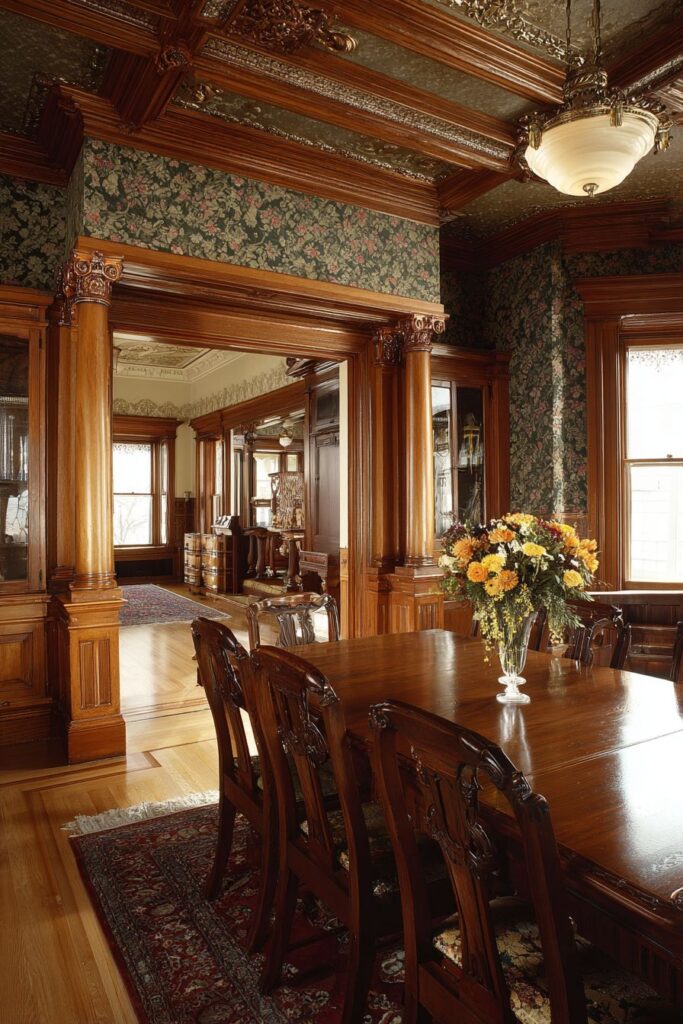
The carved wooden column details add structural interest while demonstrating the Victorian skill at incorporating decorative elements into functional architectural features. These columns often feature elaborate capitals with floral or geometric motifs that complement the room’s other decorative elements while providing visual anchors that help organize the space’s proportions. The columns represent the Victorian understanding that architectural elements should serve both structural and aesthetic purposes.
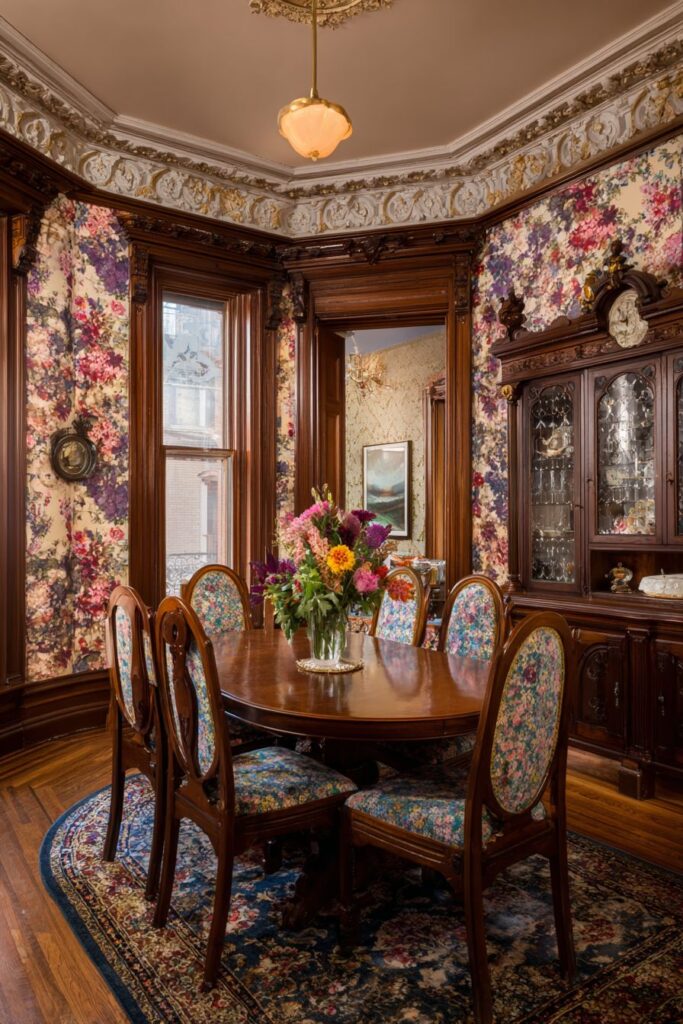
The room features a partners’ table in figured mahogany surrounded by balloon-back chairs with needlepoint upholstery, creating elegant seating arrangement that combines traditional furniture forms with luxurious materials and craftsmanship. The figured mahogany’s distinctive grain patterns create natural artwork while the balloon-back chairs provide comfortable seating with elegant silhouettes. The needlepoint upholstery adds handcrafted touches and colorful patterns that complement the room’s other decorative elements.
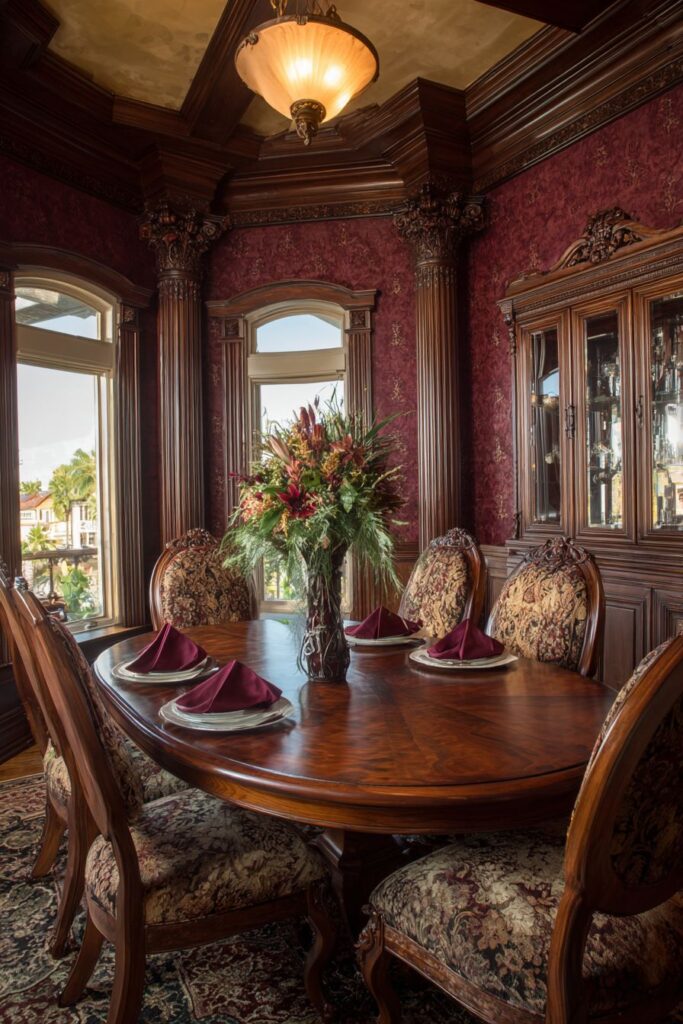
Bradbury wallpaper in authentic Victorian colorways complements the rich architectural woodwork while providing historically accurate wall treatments that enhance rather than compete with the room’s elaborate details. The careful color coordination ensures that every element works together to create unified aesthetic impact while the authentic patterns provide visual interest that maintains appropriate scale for the room’s impressive proportions. This unified approach represents the pinnacle of Victorian interior design achievement.
Key Design Tips:
- Plan architectural elements to work together as unified schemes
- Use carved details to transform functional elements into decorative features
- Choose furniture with distinctive wood grains for natural artwork
- Coordinate wallpaper colors with architectural woodwork
- Create unified color schemes that enhance all decorative elements
Why These Victorian Dining Room Designs Represent the Best of the Era
Victorian dining room design represents the pinnacle of 19th-century interior decoration, combining exceptional craftsmanship, luxurious materials, and sophisticated aesthetic principles that created spaces of unparalleled grandeur and functionality. These twenty design concepts showcase the essential elements that made Victorian dining rooms the standard for formal entertaining and family gathering spaces that influenced interior design for generations.
The mahogany and walnut furniture featured throughout these designs represents the Victorian commitment to quality materials and exceptional craftsmanship that created pieces capable of lasting for centuries while maintaining their beauty and functionality. Victorian furniture makers understood wood as both structural material and artistic medium, creating pieces that served practical purposes while functioning as sculptural elements that enhanced every room’s aesthetic impact. The elaborate carving, inlay work, and turning techniques demonstrated in these designs showcase skills that transformed simple dining furniture into works of art that anchored entire room compositions.
The crystal chandeliers and gas-style lighting featured in these designs represent Victorian innovations in home illumination that created atmospheric lighting capable of transforming dining experiences from simple meals into magical occasions. Victorian lighting designers understood the power of sparkle, reflection, and warm golden light to enhance both food presentation and social interaction, creating fixtures that served as jewelry for interior spaces while providing practical illumination for extended dinner parties and intimate family gatherings.
The wallpaper selections throughout these designs demonstrate Victorian mastery of pattern, color, and texture that created rich backgrounds capable of supporting elaborate furnishing arrangements while adding visual interest and luxury to every wall surface. From William Morris’s sophisticated botanical patterns to elaborate damask and flock wallpapers, these selections show how Victorian designers used wall treatments as integral design elements that contributed to overall room atmosphere while reflecting family taste and cultural sophistication.
The textile choices featured in these designs, including velvet upholstery, brocade curtains, and Persian rugs, demonstrate Victorian understanding of fabric as essential design element capable of adding warmth, color, and tactile richness that transformed formal dining spaces into welcoming environments for both family life and entertaining. Victorian textile selections balanced luxury with functionality, creating surfaces that could withstand regular use while maintaining elegant appearance and contributing to overall room comfort.
The architectural elements showcased throughout these designs, from coffered ceilings to carved mantels and built-in cabinetry, represent Victorian commitment to creating complete interior environments where every surface contributed to overall aesthetic impact. Victorian architects and designers understood that successful interior design required attention to structural elements as well as decorative details, creating unified spaces that functioned as total works of art while serving practical domestic needs.
These Victorian dining room designs continue to inspire contemporary interior designers because they demonstrate timeless principles of proportion, quality, and attention to detail that create spaces capable of enhancing daily life while providing impressive settings for special occasions. The Victorian understanding that dining rooms should celebrate both family life and formal entertaining created flexible spaces that could adapt to different needs while maintaining consistent elegance and sophistication that made every meal feel special.
Conclusion
Victorian dining rooms represent more than historical curiosities; they embody design principles that remain relevant for contemporary homeowners seeking to create spaces that balance formality with warmth, luxury with functionality, and tradition with personal expression. These twenty design concepts demonstrate how Victorian designers mastered the art of layering materials, colors, and textures to create rich, complex interiors that rewarded close examination while providing comfortable settings for daily life.
The enduring appeal of Victorian dining room design lies in its commitment to quality craftsmanship, attention to detail, and understanding that dining spaces should honor both food and the people who gather to share it. Whether you choose to recreate complete Victorian authenticity or incorporate selected elements into contemporary settings, these designs offer inspiration for creating dining rooms that transform ordinary meals into memorable occasions.
Modern homeowners can learn valuable lessons from Victorian design principles, including the importance of investing in quality furniture that will improve with age, the power of layered lighting to create atmosphere, and the impact of carefully chosen textiles and wallpapers to add warmth and personality to formal spaces. By understanding and adapting these timeless principles, contemporary dining rooms can achieve the Victorian goal of creating spaces that serve both practical needs and aesthetic aspirations, ensuring that every meal becomes an opportunity for beauty, comfort, and connection.
"As an Amazon Associate, I earn from qualifying purchases."
