
The dining room stands as the heart of the home, where families gather to share meals, celebrate special occasions, and create lasting memories. In the world of interior design, few color palettes evoke the same sense of warmth, comfort, and timeless elegance as terracotta. This earthy, clay-inspired hue brings an organic richness that transforms any dining space into an inviting sanctuary. Whether you’re drawn to rustic farmhouse charm or sleek contemporary sophistication, terracotta offers endless possibilities for creating a dining room that reflects your personal style while maintaining an atmosphere of welcoming warmth.
Terracotta dining rooms have gained tremendous popularity among interior designers and homeowners alike, and for good reason. This versatile color works beautifully across various design styles, from Mediterranean-inspired spaces to modern minimalist environments. The natural origins of terracotta – literally meaning “baked earth” – connect us to the fundamental elements of nature, making it an ideal choice for spaces where we nourish both body and soul. The color’s inherent warmth creates an atmosphere that encourages lingering conversations and comfortable gatherings, essential qualities for any successful dining room design.
This comprehensive guide explores twenty distinct terracotta dining room concepts, each offering unique approaches to incorporating this beloved earth tone into your space. From cozy intimate settings perfect for small apartments to grand formal dining rooms designed for entertaining, these designs demonstrate the remarkable versatility of terracotta as a foundational color choice. You’ll discover how different textures, materials, and complementary colors can enhance terracotta’s natural beauty while creating spaces that are both functional and visually stunning.
1. Warm Rustic Wooden Dining Room Haven
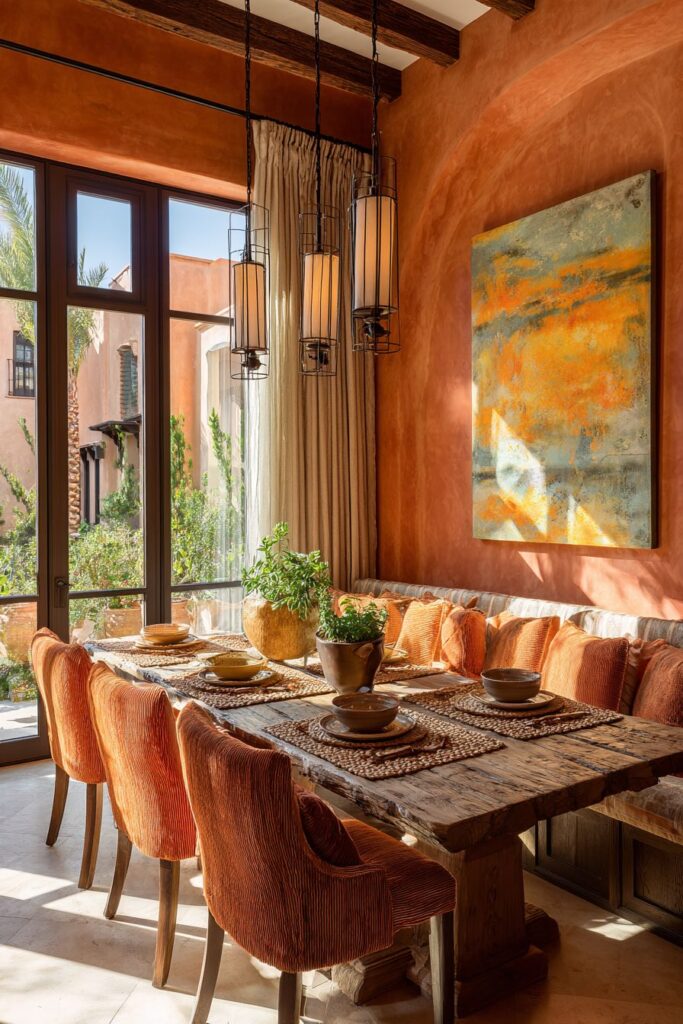
Step into a dining room where rustic charm meets sophisticated comfort through the masterful use of terracotta tones. The centerpiece of this design features a substantial wooden dining table, its natural grain beautifully complemented by upholstered chairs in rich burnt orange fabric. The terracotta accent wall behind a built-in wooden buffet creates remarkable depth, drawing the eye and establishing a focal point that anchors the entire space. This strategic use of color creates visual weight while maintaining the room’s cozy, approachable atmosphere.
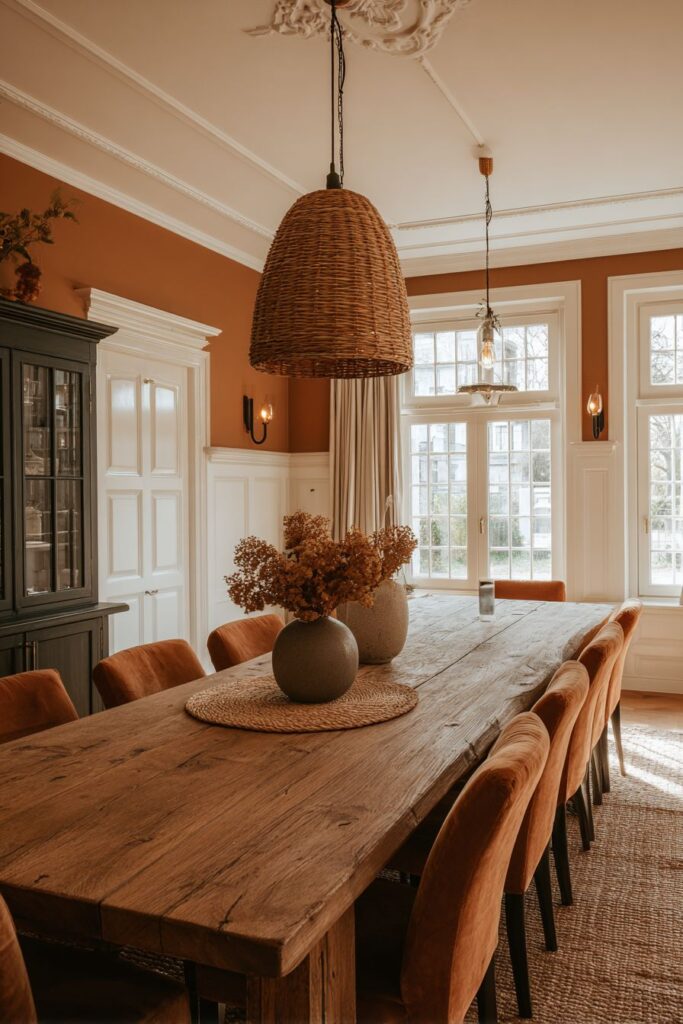
The interplay of natural materials reaches its peak in the carefully curated table setting, where natural woven placemats provide texture and earthiness beneath ceramic dinnerware in complementary earth tones. These elements work together to create layers of visual interest while maintaining the room’s cohesive color story. The golden hour light streaming through large windows transforms the space throughout the day, highlighting different aspects of the terracotta palette and creating an ever-changing ambiance that keeps the room feeling alive and dynamic.
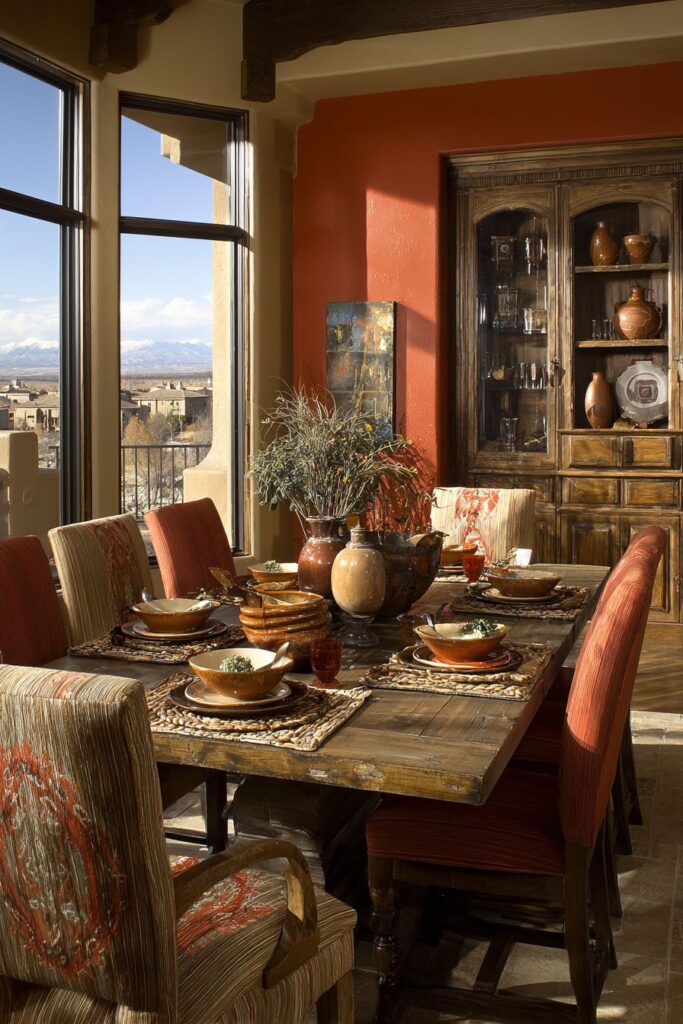
The professional attention to material textures elevates this rustic concept beyond simple country styling. The contrast between smooth ceramic surfaces, rough woven fibers, and polished wood creates a sophisticated interplay that engages the senses. The terracotta color palette serves as the unifying element, tying together diverse textures and materials into a harmonious whole that feels both refined and authentically rustic.
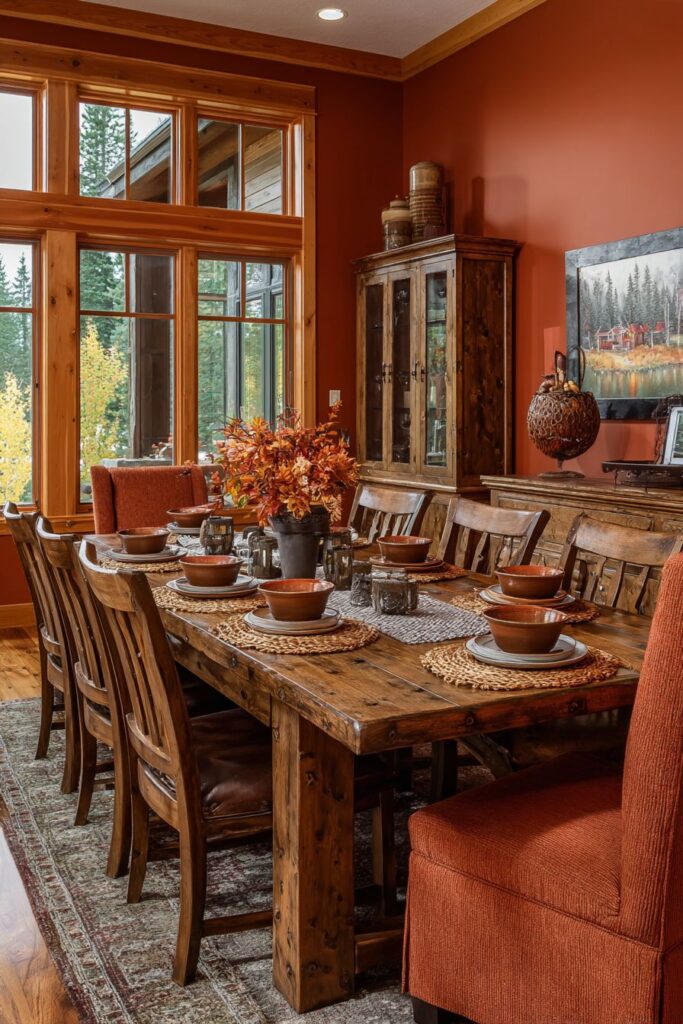
Key design tips for achieving this look include choosing a substantial wooden table that can serve as the room’s anchor point, incorporating various textures through accessories and textiles to add visual depth, using natural light as a design element by positioning the dining table near windows, selecting earth-toned ceramics and dinnerware that complement rather than match exactly, and creating a focal wall with terracotta paint to establish the room’s color foundation. Additionally, mixing different shades of terracotta and burnt orange prevents the color scheme from becoming monotonous while maintaining cohesion throughout the space.
2. Sleek Modern Terracotta Sophistication
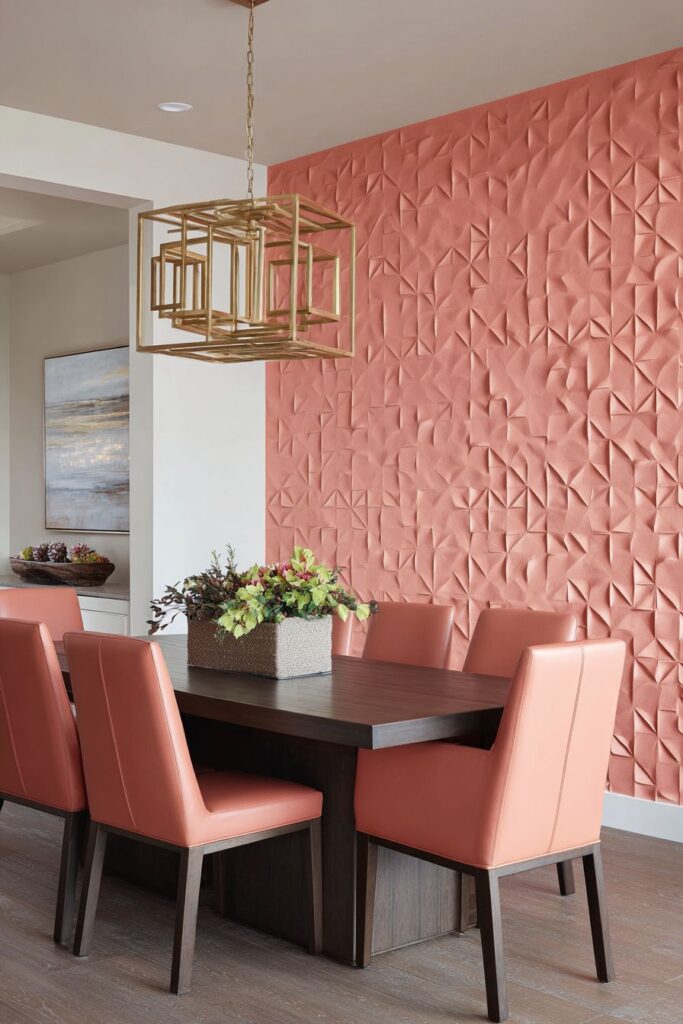
Contemporary design meets warm earth tones in this sophisticated modern terracotta dining room that challenges conventional notions about this traditional color. The sleek rectangular dining table in dark walnut wood provides a striking foundation, its clean lines and rich wood grain creating an elegant contrast against the contemporary dining chairs upholstered in luxurious terracotta leather. This pairing demonstrates how terracotta can be elevated to suit the most refined modern aesthetics while maintaining its inherent warmth and character.
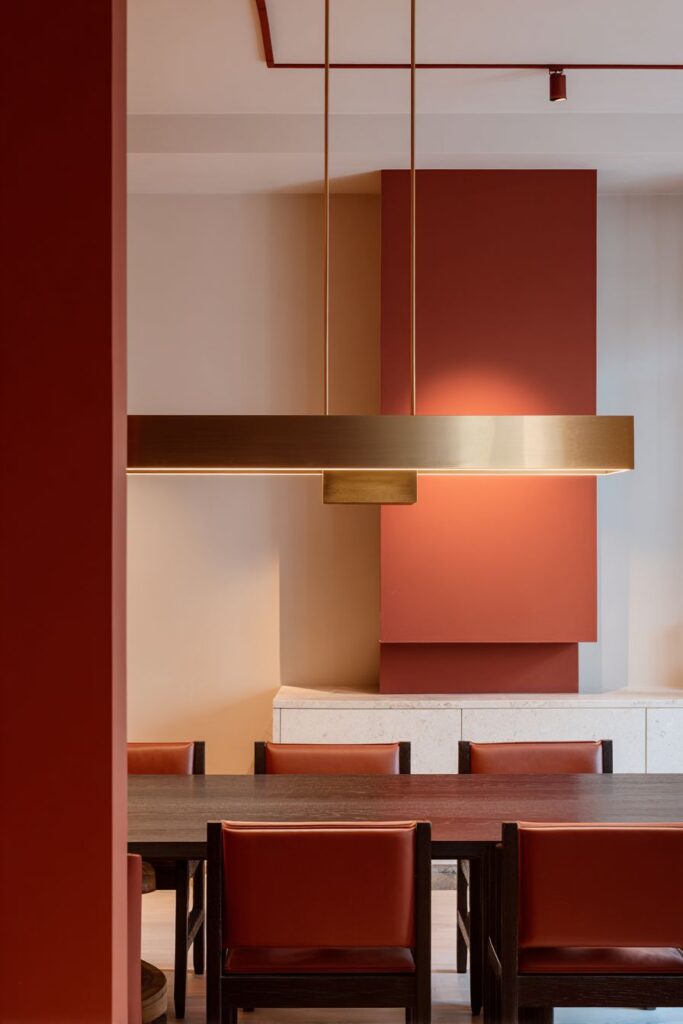
The strategic use of color in this space shows masterful restraint and intention. The matte terracotta statement wall creates drama and depth without overwhelming the space, while the remaining neutral cream walls provide breathing room and prevent the design from becoming too intense. This balanced approach allows the terracotta elements to shine without dominating the space, creating a sophisticated environment suitable for both casual family meals and formal entertaining.
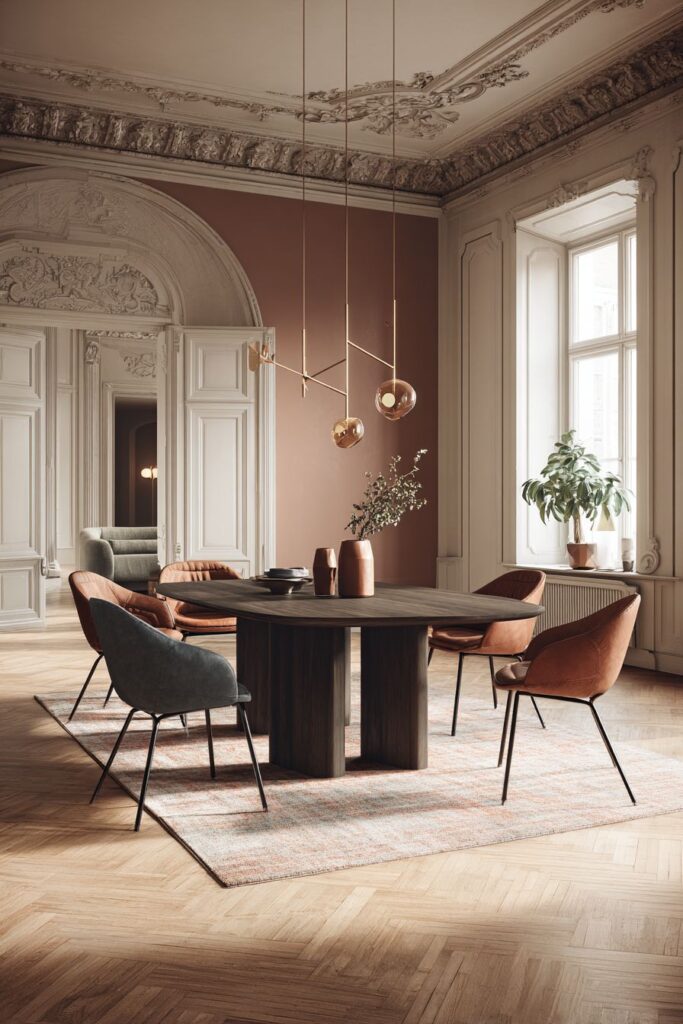
The geometric pendant light fixture in brushed brass adds a contemporary metallic accent that complements the warm terracotta tones while introducing a modern sculptural element. Professional interior photography techniques capture how soft natural lighting emphasizes the sophisticated color scheme, revealing how different lighting conditions can enhance or modify the appearance of terracotta throughout the day. The clean lines and uncluttered aesthetic demonstrate that terracotta can be successfully integrated into minimalist design philosophies.
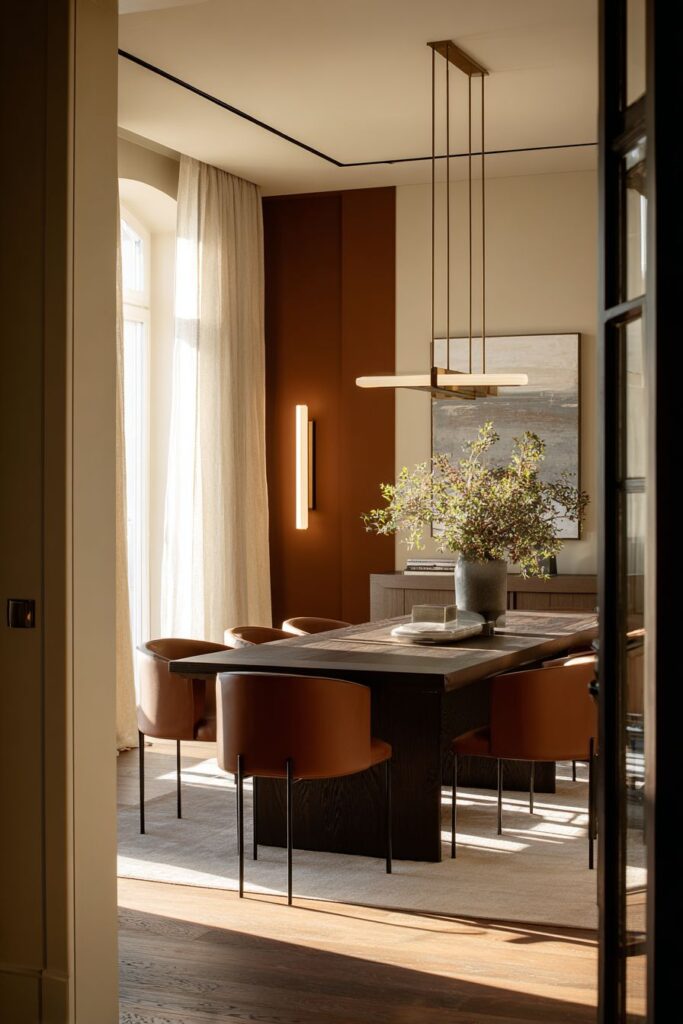
Essential design elements for creating this modern terracotta look include investing in high-quality furniture with clean, geometric lines that won’t compete with the color story, limiting the terracotta application to one statement wall to maintain visual balance, choosing neutral colors for the majority of wall surfaces to prevent overwhelming the space, incorporating metallic accents in brass or copper tones that naturally complement terracotta, and selecting contemporary light fixtures that serve as sculptural elements while providing functional illumination. The key to success lies in restraint and quality – fewer elements executed exceptionally well create more impact than numerous mediocre pieces.
3. Mediterranean Clay Pottery Paradise
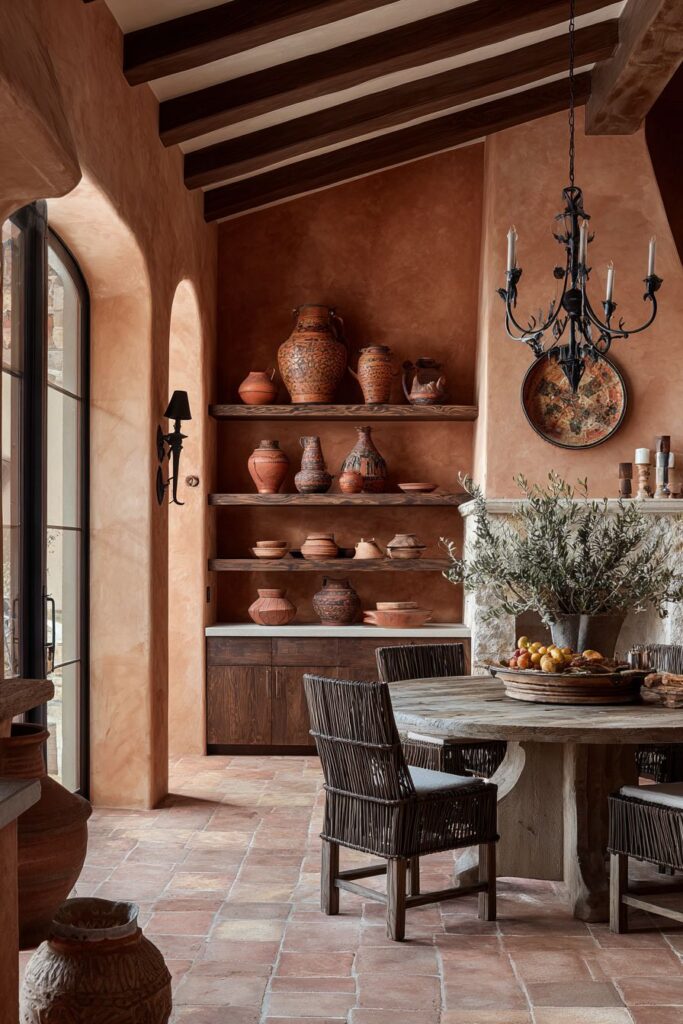
Transport yourself to the sun-soaked Mediterranean with this authentic terracotta dining room that celebrates the traditional pottery and craftsmanship of the region. Hand-painted terracotta pottery takes center stage, displayed on floating wooden shelves that showcase the artisanal beauty and natural variations inherent in handcrafted ceramics. The round pedestal dining table in weathered oak anchors the space with organic curves that echo the pottery’s forms, while rush-seat chairs add authentic texture and traditional Mediterranean character.
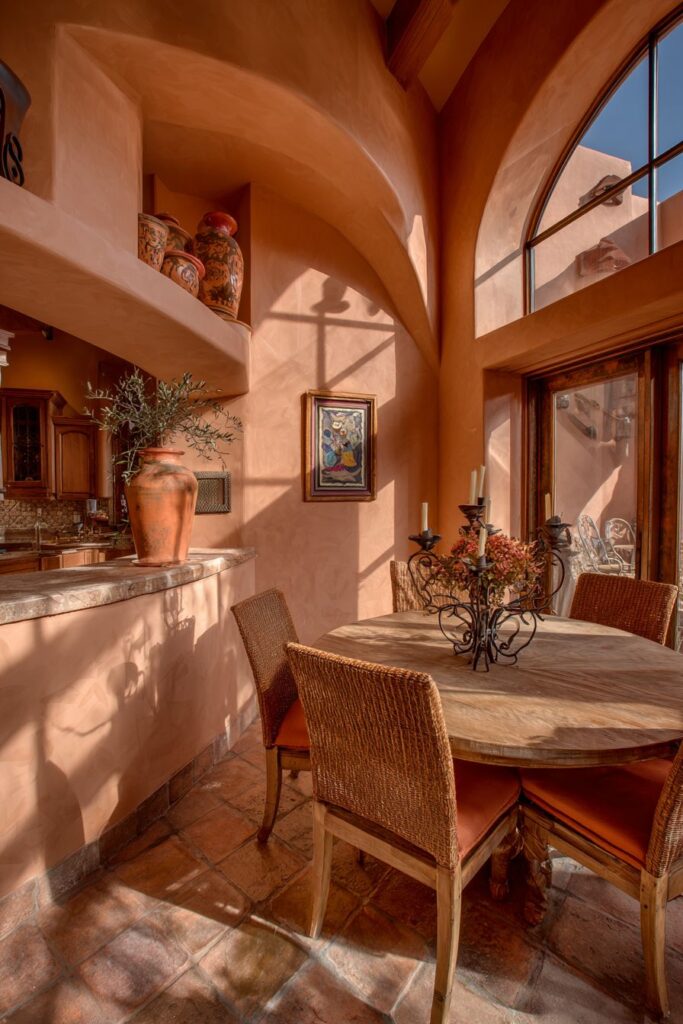
The foundation of this design lies in its commitment to natural materials and traditional craftsmanship. Terracotta tile flooring with natural variations provides both practical durability and visual interest, its subtle color differences creating an organic pattern that feels authentic rather than manufactured. The painted walls in warm clay tones envelop the space in Mediterranean warmth, while the wrought iron candelabra and olive branch centerpiece complete the rustic elegance that defines this timeless style.
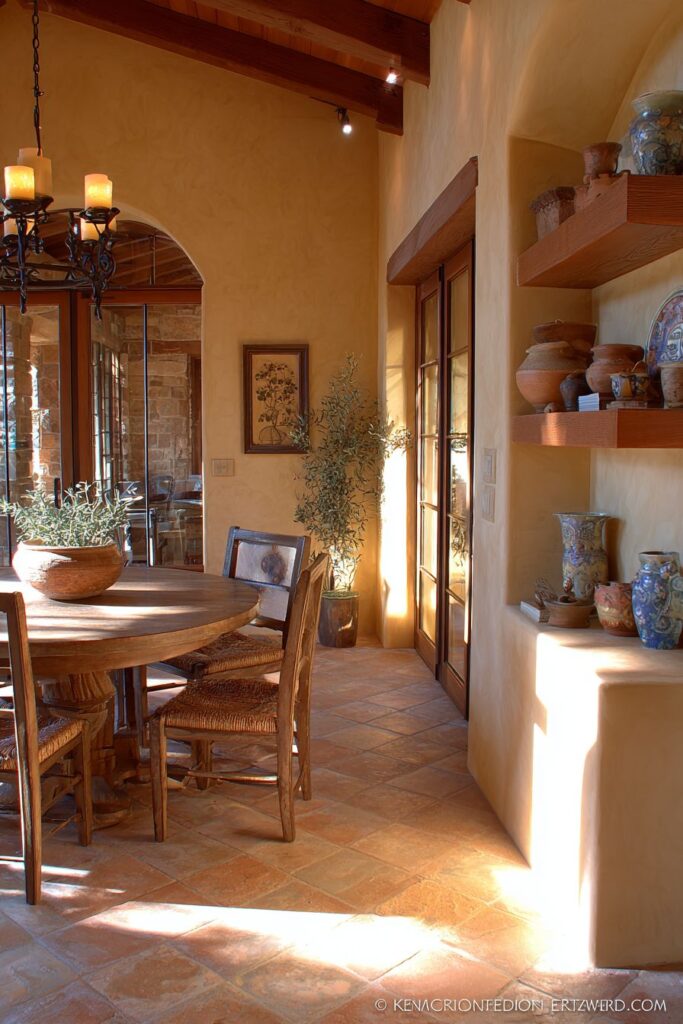
Wide-angle photography captures the cohesive terracotta palette while natural shadows highlight the authentic quality of materials and craftsmanship. The interplay of textures – smooth pottery, rough-hewn wood, woven rush seats, and matte painted walls – creates a rich sensory experience that engages multiple senses. This design approach emphasizes the importance of natural variations and imperfections that give handcrafted items their character and charm.
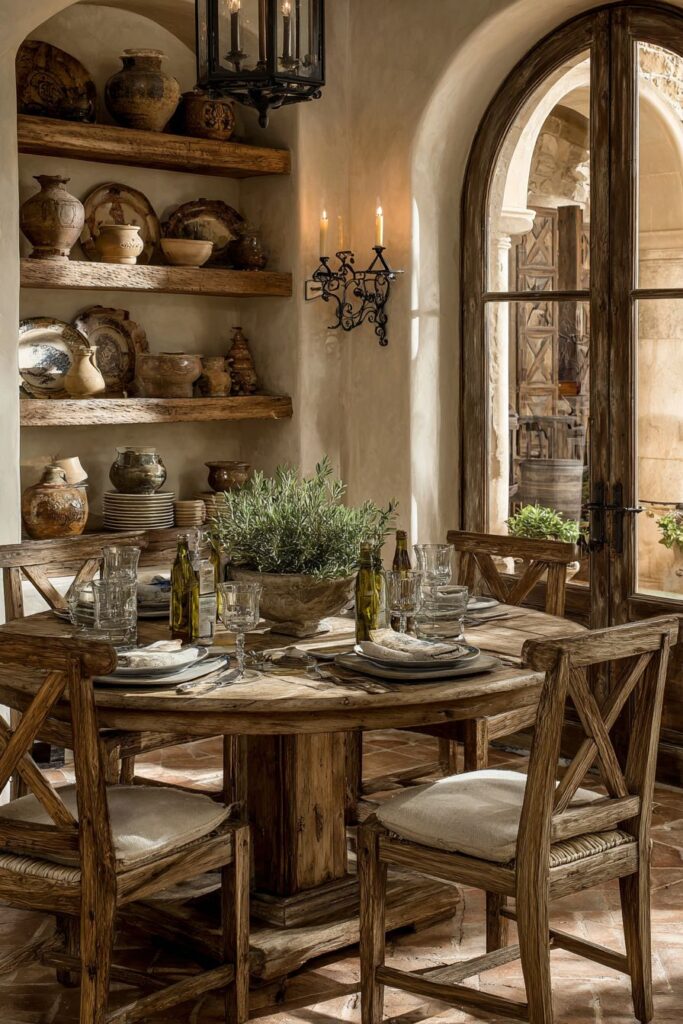
To achieve this Mediterranean-inspired look, focus on collecting authentic pottery pieces with natural variations rather than matching sets, incorporating natural materials like rush, hemp, and unfinished wood throughout the space, choosing warm, earthy paint colors that reflect the natural clay and stone of Mediterranean architecture, displaying pottery and ceramics as functional art rather than hiding them in cabinets, and embracing imperfection and natural variation as design assets rather than flaws. The goal is to create a space that feels collected over time rather than purchased all at once, reflecting the authentic evolution of Mediterranean homes through generations of use and appreciation.
4. Cozy Farmhouse Terracotta Comfort
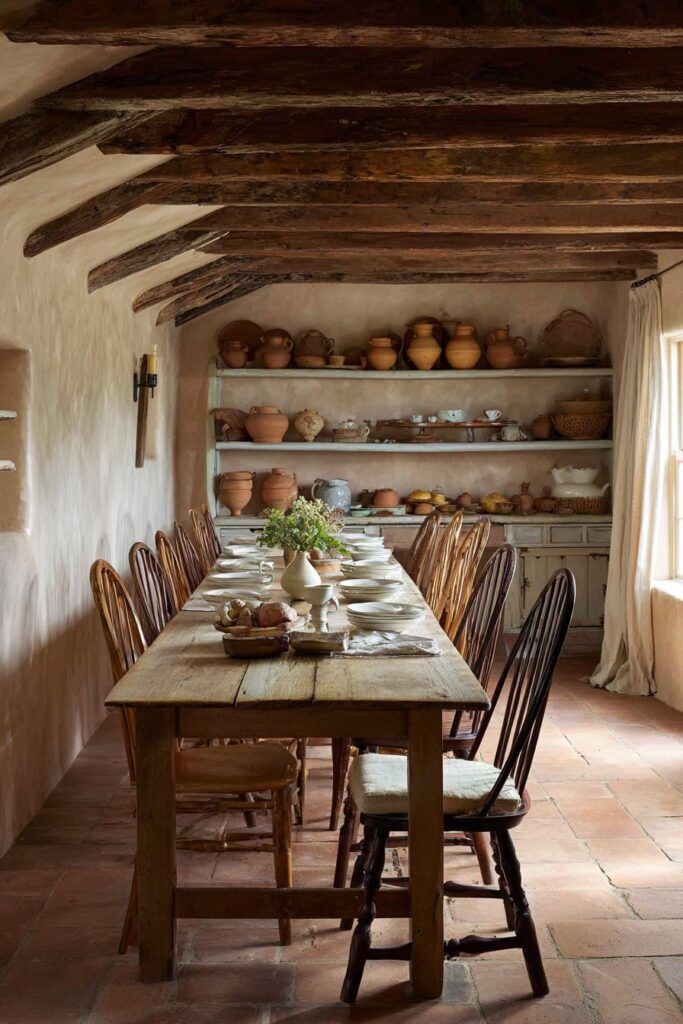
Embrace the lived-in comfort of farmhouse style with this cozy terracotta dining room that prioritizes warmth and authenticity over perfection. The extending farmhouse-style dining table serves as both functional furniture and design anchor, its generous proportions and rustic finish speaking to a heritage of family gatherings and shared meals. Mismatched vintage chairs painted in various terracotta and cream tones create an eclectic charm that suggests pieces collected over time rather than purchased as a matching set.
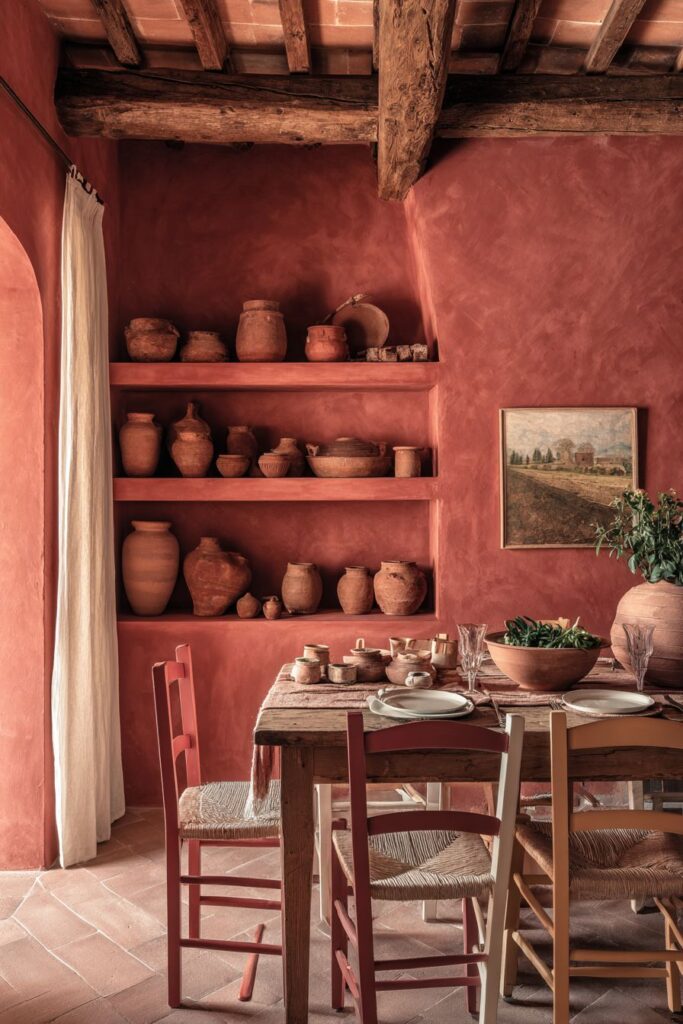
Open shelving throughout the space displays terracotta pottery and earthenware serving pieces, transforming functional storage into decorative display. This approach celebrates the beauty of everyday objects while keeping them easily accessible for regular use. The exposed wooden beams overhead add architectural interest and rustic authenticity, their natural wood tones complementing the warm terracotta wall paint that envelops the space in comforting color.
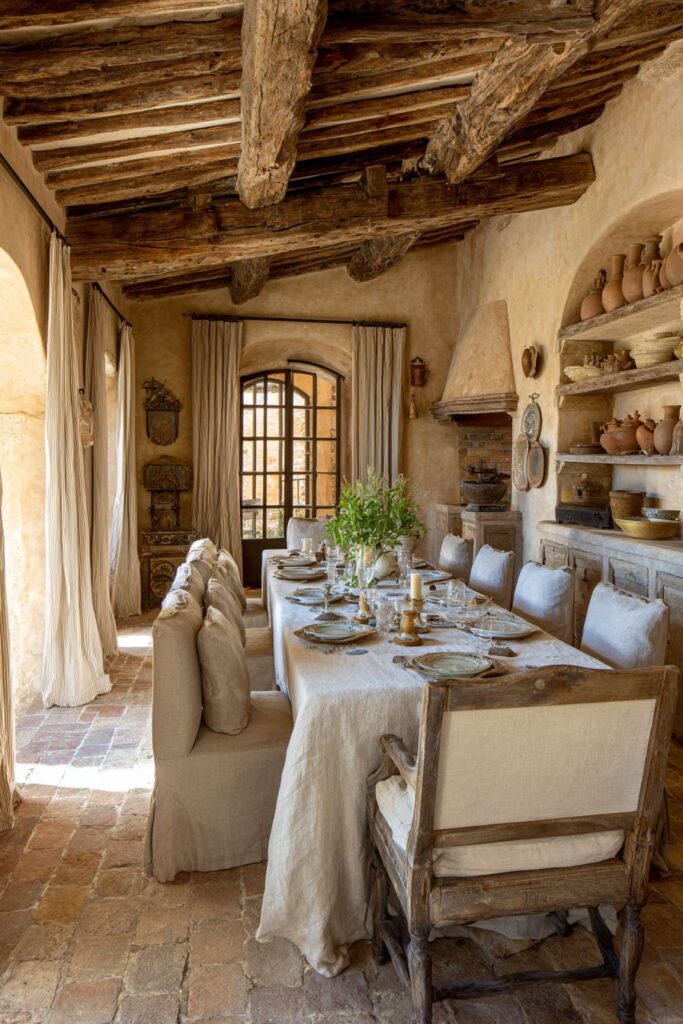
Natural linen curtains provide the perfect finishing touch, their soft texture and neutral color allowing natural light to filter beautifully while maintaining privacy. The lived-in comfort achieved through this design approach creates a space that immediately feels like home, where guests feel welcome and family members naturally gather. Professional photography captures the authentic terracotta color variations throughout the space, demonstrating how slight differences in tone and saturation create visual interest rather than discord.
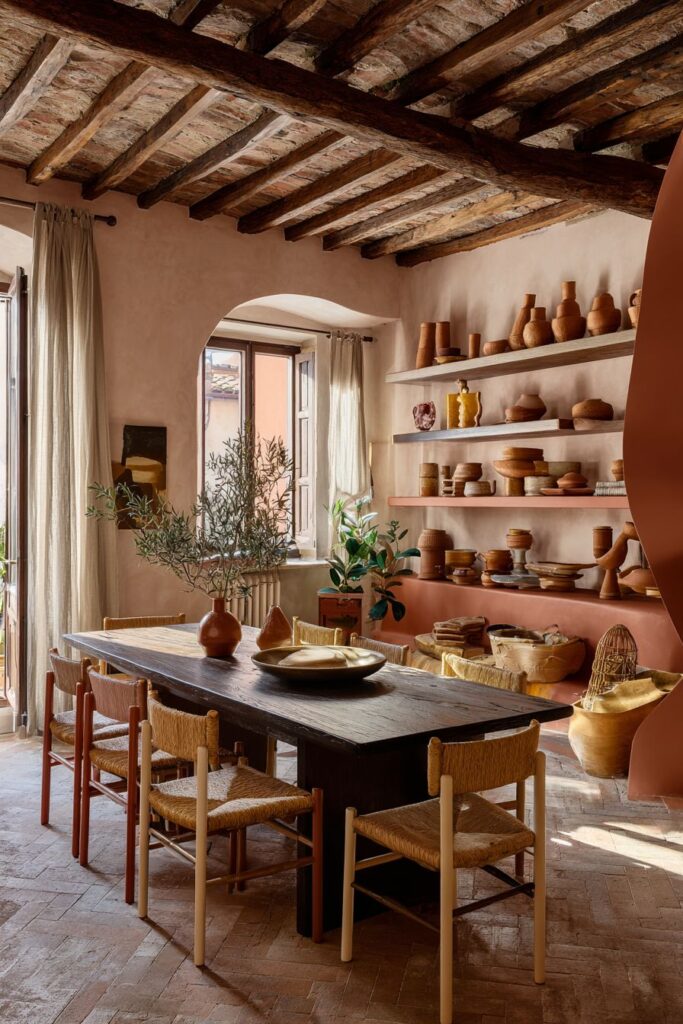
Creating this farmhouse terracotta aesthetic requires embracing imperfection and celebrating the beauty of well-used pieces, mixing different shades and finishes of terracotta for authentic variation, displaying functional pottery and serving pieces as decorative elements, incorporating natural textiles like linen and cotton in neutral tones, and adding architectural details like exposed beams or shiplap for authentic farmhouse character. The success of this design lies in its ability to look effortlessly collected rather than carefully coordinated, creating a space that feels genuinely lived-in and loved.
5. Elegant Glass and Ceramic Sophistication
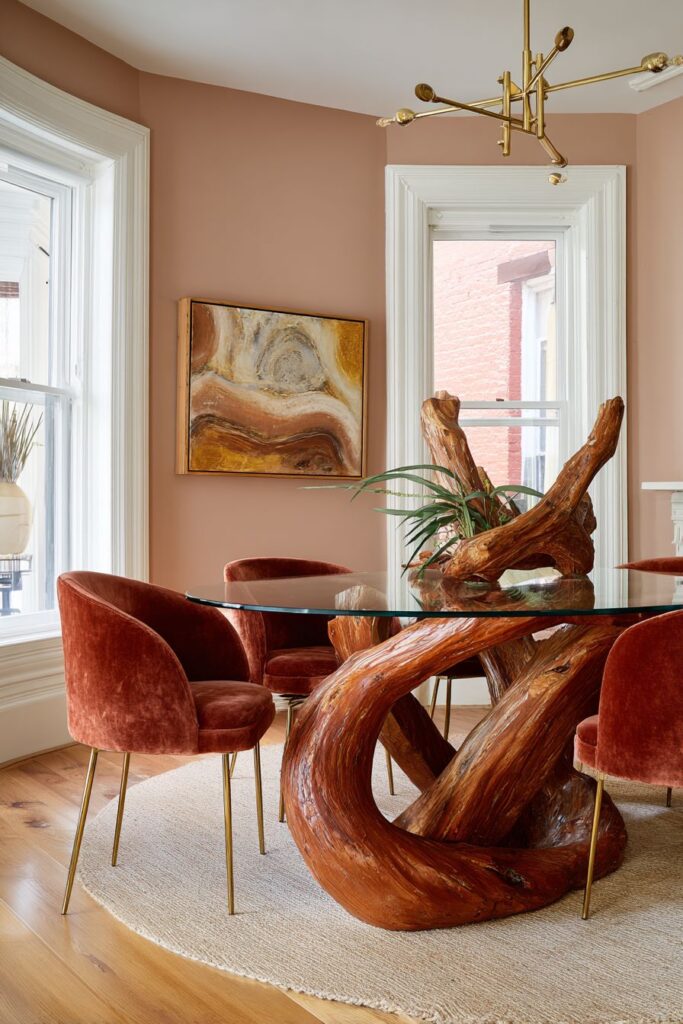
Sophistication reaches new heights in this elegant terracotta dining room where contemporary design meets luxurious materials. The glass-top dining table supported by a sculptural terracotta ceramic base creates a stunning focal point that demonstrates the artistic potential of this earthy material. This innovative furniture piece serves as functional art, its sweeping ceramic curves contrasting beautifully with the table’s transparent surface while maintaining visual lightness in the space.
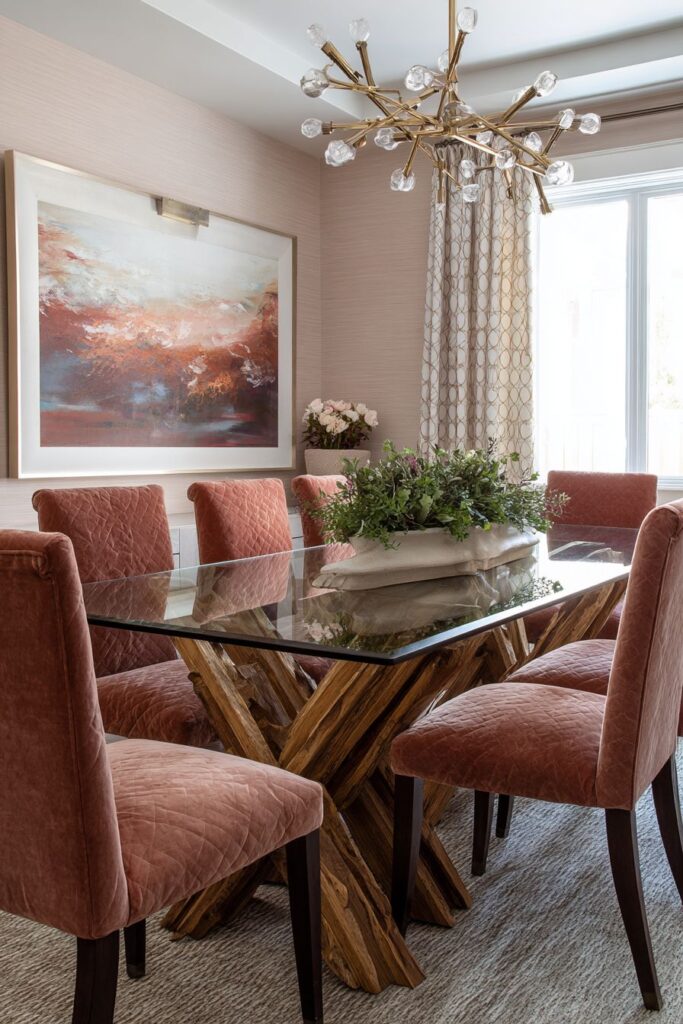
Rich terracotta velvet upholstery on the dining chairs introduces tactile luxury while reinforcing the color story throughout the room. The sumptuous fabric catches and reflects light, creating subtle variations in color depth that add visual interest and sophistication. A neutral jute rug grounds the seating area while providing textural contrast to the smooth surfaces above, its natural fibers echoing the organic origins of the terracotta color palette.
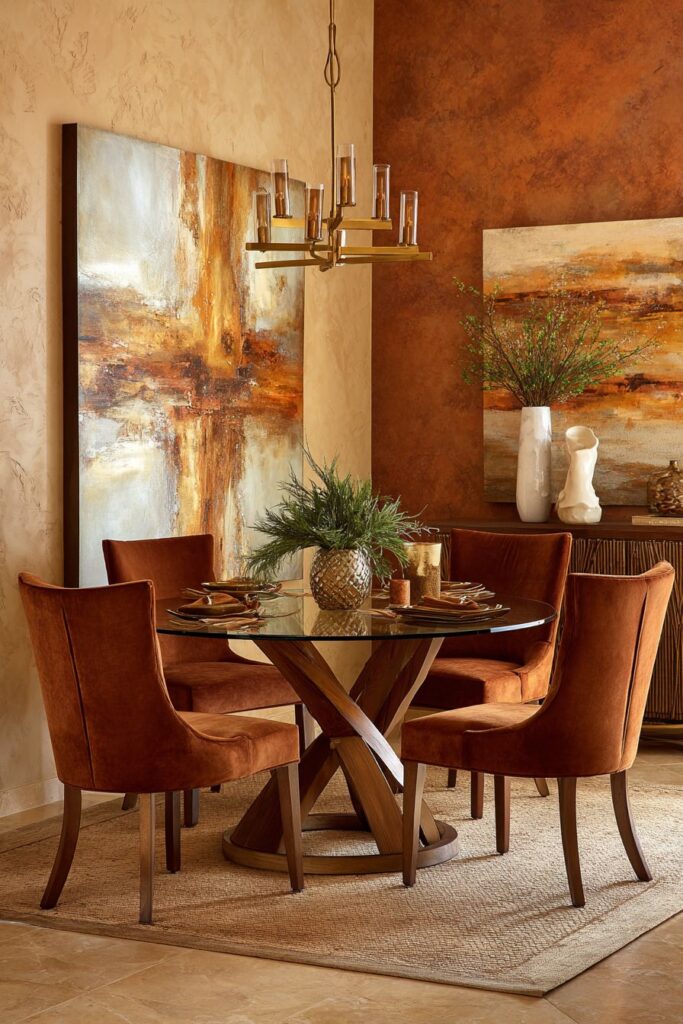
Contemporary artwork in earth tones decorates walls painted in a soft terracotta wash, creating a gallery-like atmosphere that elevates the dining experience. The modern brass chandelier provides ambient lighting while serving as a sculptural element that complements the warm metal tones naturally present in terracotta. Interior design photography focuses on the interplay between textures and the sophisticated use of terracotta as the primary color theme, capturing how different materials and finishes can showcase the same basic hue in various ways.
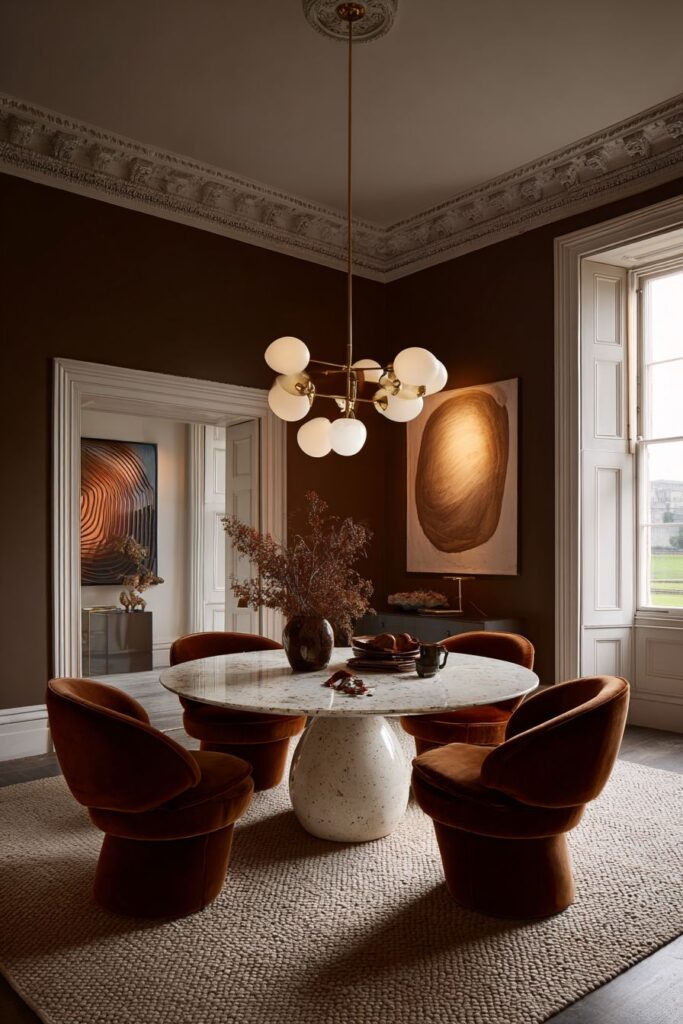
Achieving this elegant terracotta look requires investing in statement furniture pieces that showcase terracotta in unexpected ways, incorporating luxurious fabrics like velvet in terracotta tones for tactile richness, balancing warm colors with neutral elements to prevent overwhelming the space, choosing contemporary art that complements rather than competes with the color scheme, and selecting lighting fixtures that serve as both functional and decorative elements. The key to this design’s success lies in treating terracotta as a sophisticated color choice rather than a rustic one, elevating it through high-quality materials and refined execution.
6. Space-Maximizing Terracotta Efficiency
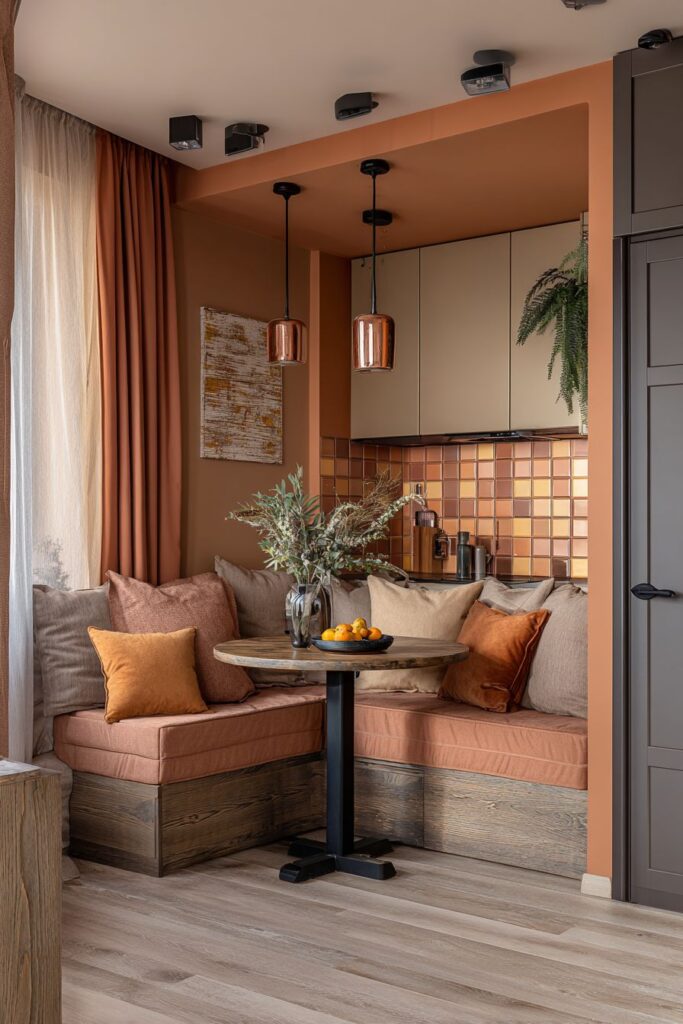
Small spaces require creative solutions, and this compact terracotta dining room demonstrates how thoughtful design can maximize both function and style within limited square footage. The built-in corner banquette featuring terracotta cushions and pillows creates additional seating while utilizing typically wasted corner space. This efficient approach allows for more seating capacity than traditional chairs while creating a cozy, intimate dining experience that encourages conversation and connection.
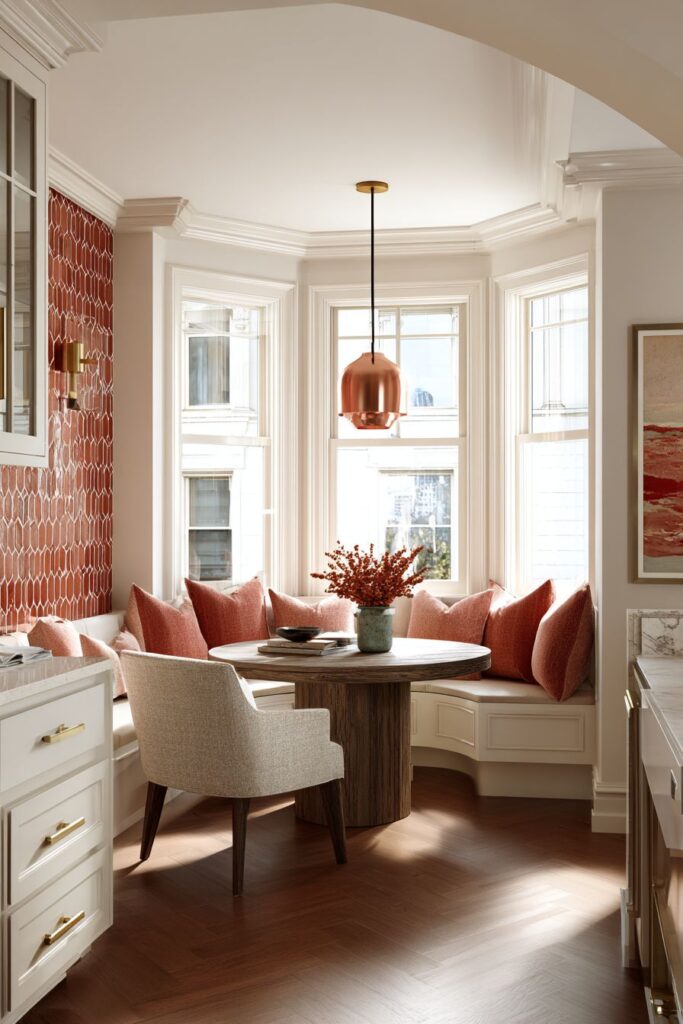
The compact round table in reclaimed wood provides maximum seating capacity within the smallest possible footprint, its circular shape promoting conversation while accommodating the corner banquette configuration. Terracotta subway tiles create a striking backsplash behind a narrow console table, adding visual interest and color without consuming valuable floor space. This vertical use of color draws the eye upward, creating the illusion of greater height within the compact room.
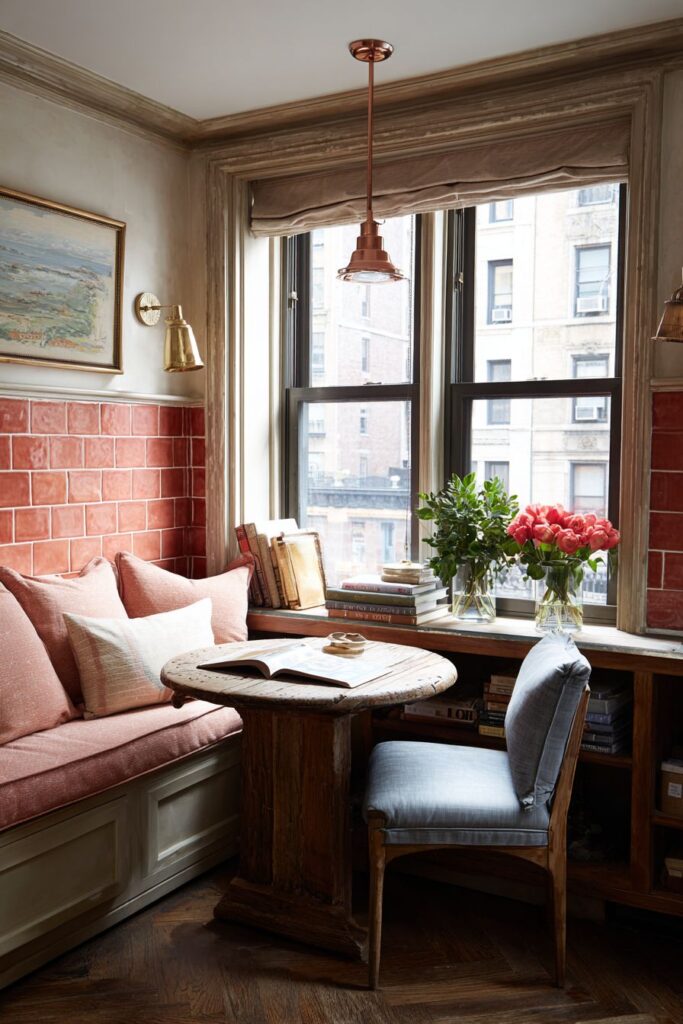
Pendant lighting in copper finish complements the warm color palette while providing necessary task lighting over the dining surface. The metal’s natural patina echoes the earthy qualities of terracotta while adding a sophisticated industrial touch. Wide-angle photography captures the efficient layout while soft natural lighting highlights the cozy atmosphere, proving that small spaces can be both functional and beautiful when designed with intention and creativity.
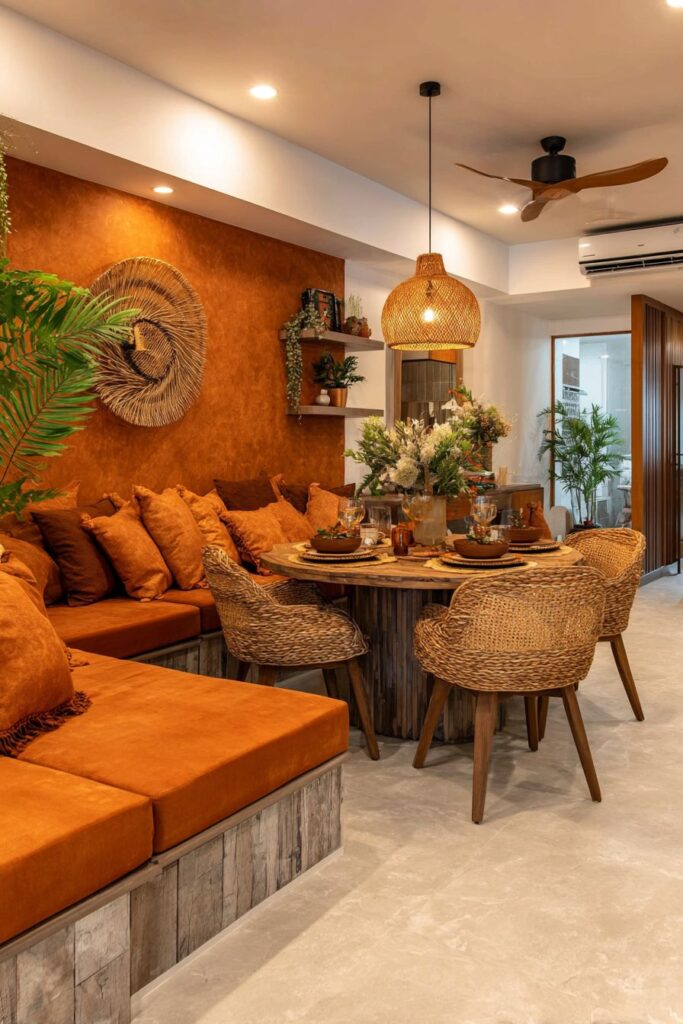
Small space terracotta design success depends on utilizing built-in seating to maximize efficiency without sacrificing comfort, choosing round tables to promote conversation and maximize seating in minimal space, incorporating terracotta through tiles and textiles rather than large painted surfaces, selecting multi-functional furniture pieces that serve multiple purposes, and using vertical elements to create visual height and interest. The goal is to create a space that feels intentionally intimate rather than cramped, where the terracotta color palette enhances the cozy atmosphere rather than overwhelming the limited square footage.
7. Mid-Century Modern Terracotta Fusion
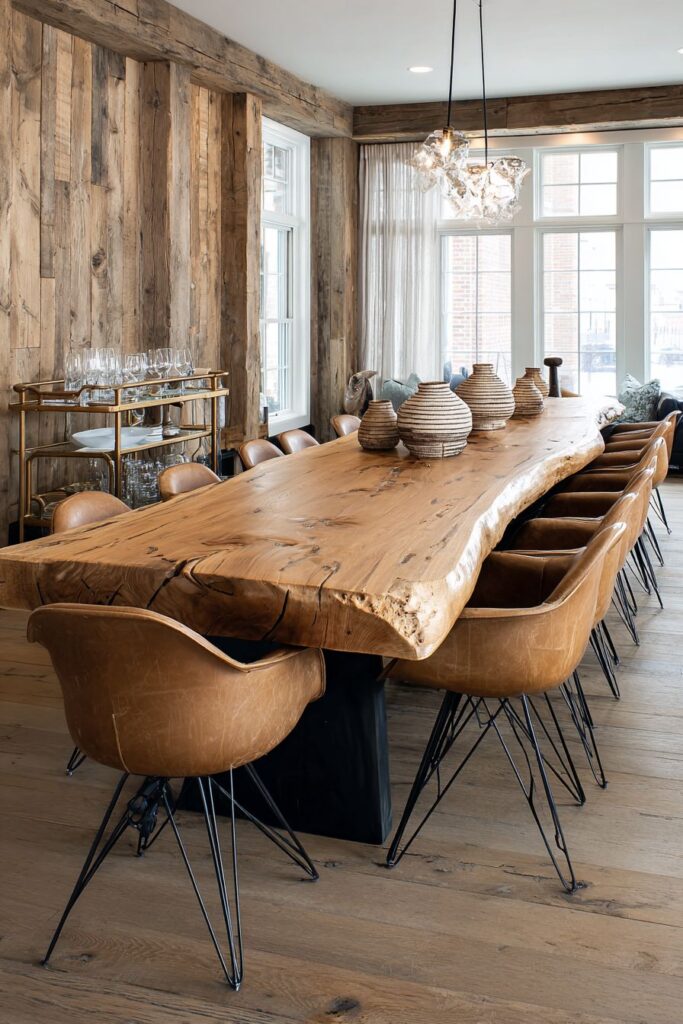
The marriage of rustic and modern elements creates compelling design tension in this terracotta dining room that successfully bridges different style periods. The live-edge wooden dining table with hairpin legs represents the perfect fusion of natural materials and mid-century modern design principles. Its organic edge celebrates the tree’s natural form while the sleek metal legs provide contemporary structure, creating a piece that feels both timeless and current.
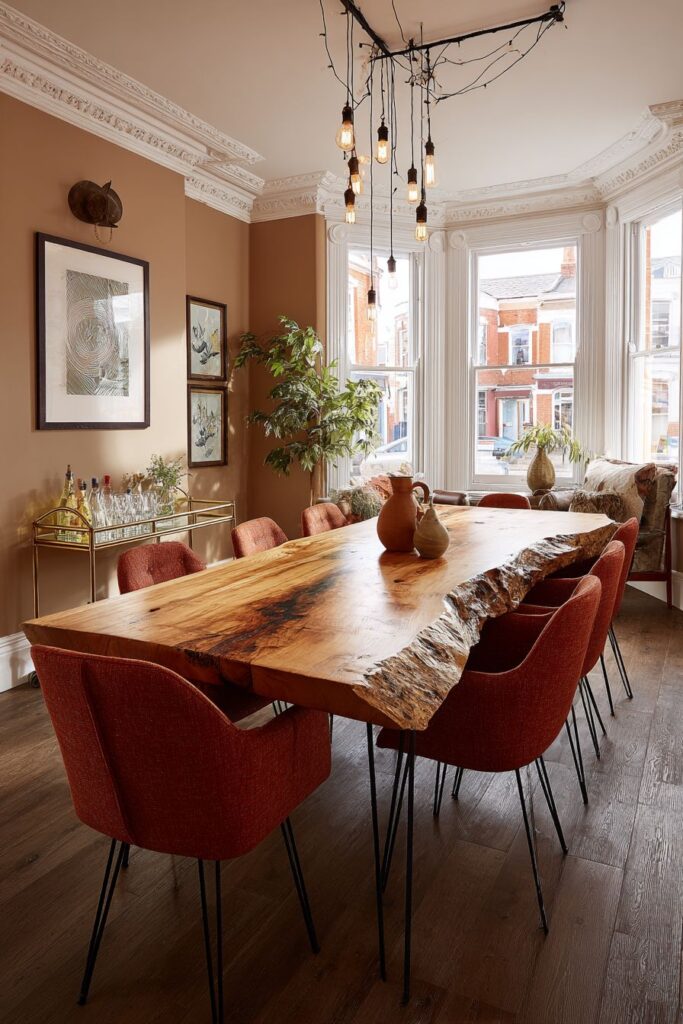
Mid-century modern chairs in terracotta fabric surround the table, their clean lines and geometric forms contrasting beautifully with the table’s organic edge. The shiplap walls painted in muted terracotta create texture and visual interest while maintaining the room’s warm atmosphere. This wall treatment adds architectural detail without overwhelming the space, providing a perfect backdrop for the carefully curated furnishings.
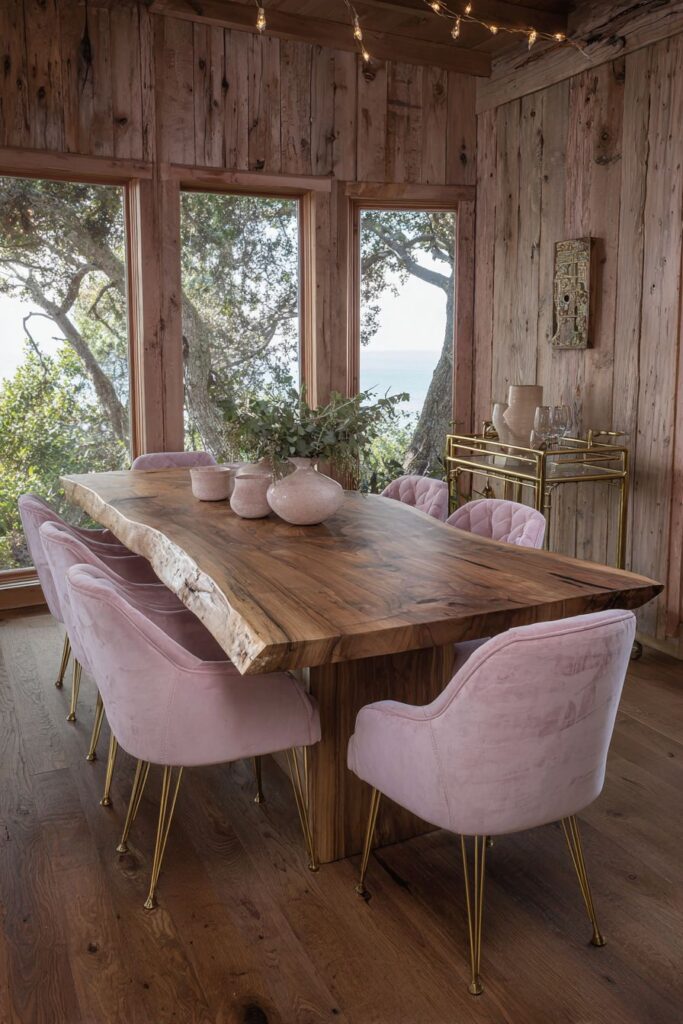
A vintage brass bar cart holds terracotta vessels and glassware, serving both functional and decorative purposes while reinforcing the room’s warm metallic accents. String lights add whimsical ambiance, their casual charm softening the more structured elements and creating a relaxed, inviting atmosphere. Large windows provide abundant natural light, essential for showcasing the nuanced terracotta color palette throughout different times of day.
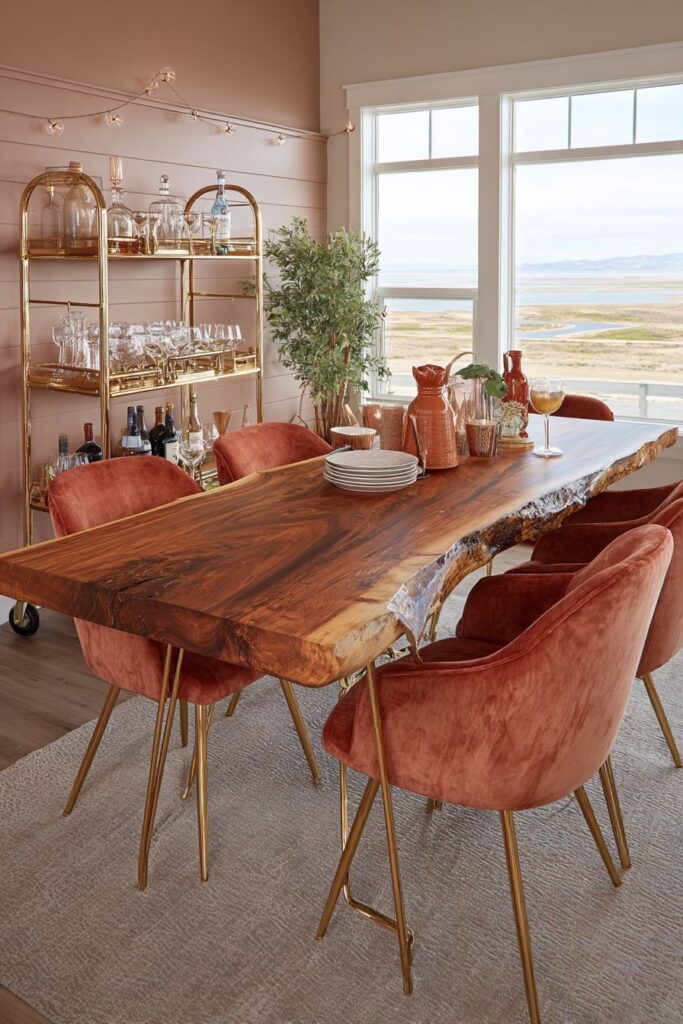
Creating this mid-century terracotta fusion requires balancing organic and geometric elements to create visual tension and interest, incorporating iconic mid-century furniture pieces in terracotta tones for authenticity, adding architectural details like shiplap for texture without overwhelming the space, mixing vintage and contemporary accessories for an collected-over-time appearance, and ensuring adequate natural light to showcase the terracotta palette properly. The success of this design lies in the careful balance between different style elements, unified by the consistent terracotta color theme.
8. Bohemian Floor Seating Sanctuary
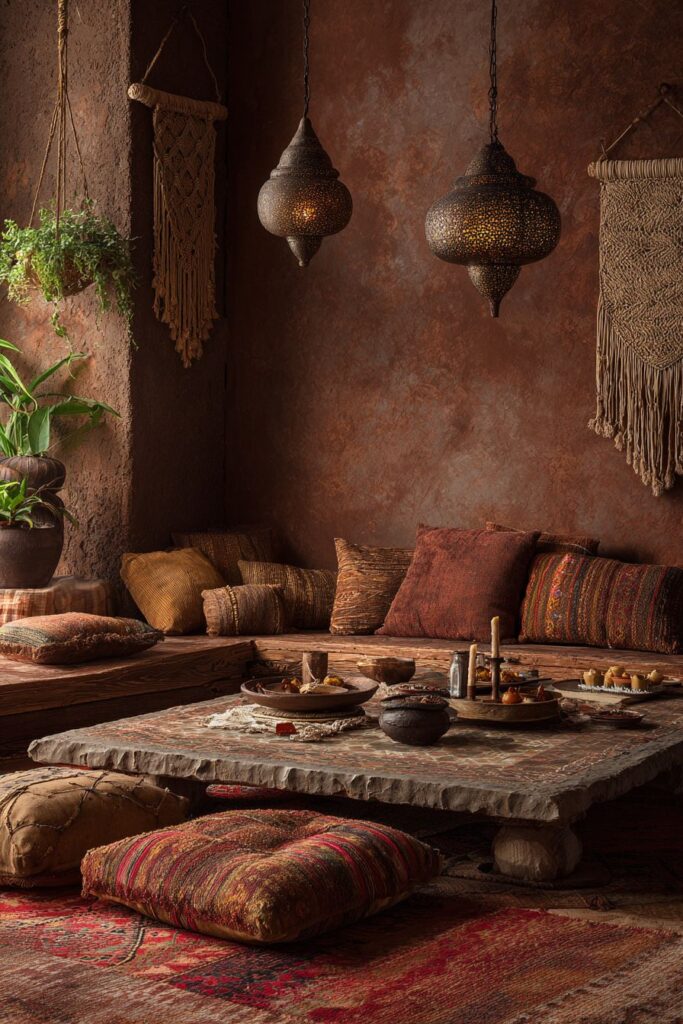
Experience dining from a global perspective in this bohemian terracotta dining room that embraces floor seating and international design influences. The low dining table surrounded by floor cushions and poufs in various terracotta and earth-tone fabrics creates an intimate, communal dining experience reminiscent of traditional eating customs from around the world. This unconventional seating arrangement encourages relaxation and creates a unique dining experience that breaks away from Western traditions.
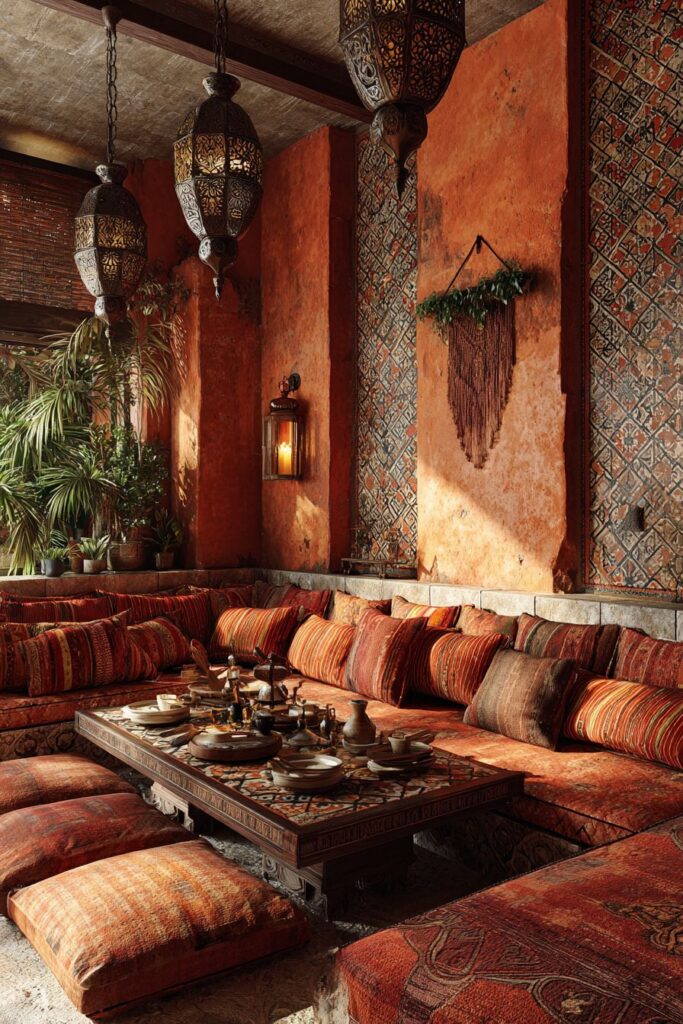
Macrame wall hangings and hanging plants add vertical interest and texture against terracotta-painted walls, creating layers of visual depth that are essential to successful bohemian design. The handcrafted quality of macrame work complements the artisanal nature of terracotta pottery and textiles, reinforcing the room’s commitment to handmade elements and global craftsmanship traditions.
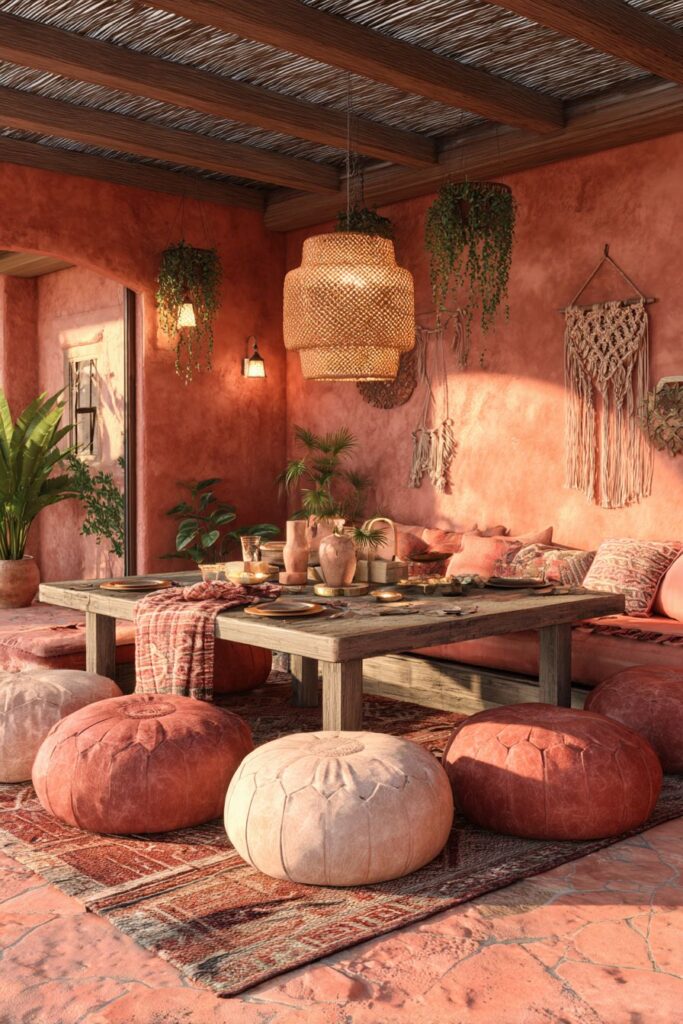
Moroccan-inspired tile patterns in terracotta hues cover a small accent area, introducing geometric patterns that add visual complexity without overwhelming the space. These tiles serve as functional art, their intricate patterns creating focal points that reward close examination. Warm pendant lighting creates intimate ambiance essential for the relaxed, communal atmosphere, while natural lighting emphasizes the rich terracotta palette throughout the day.
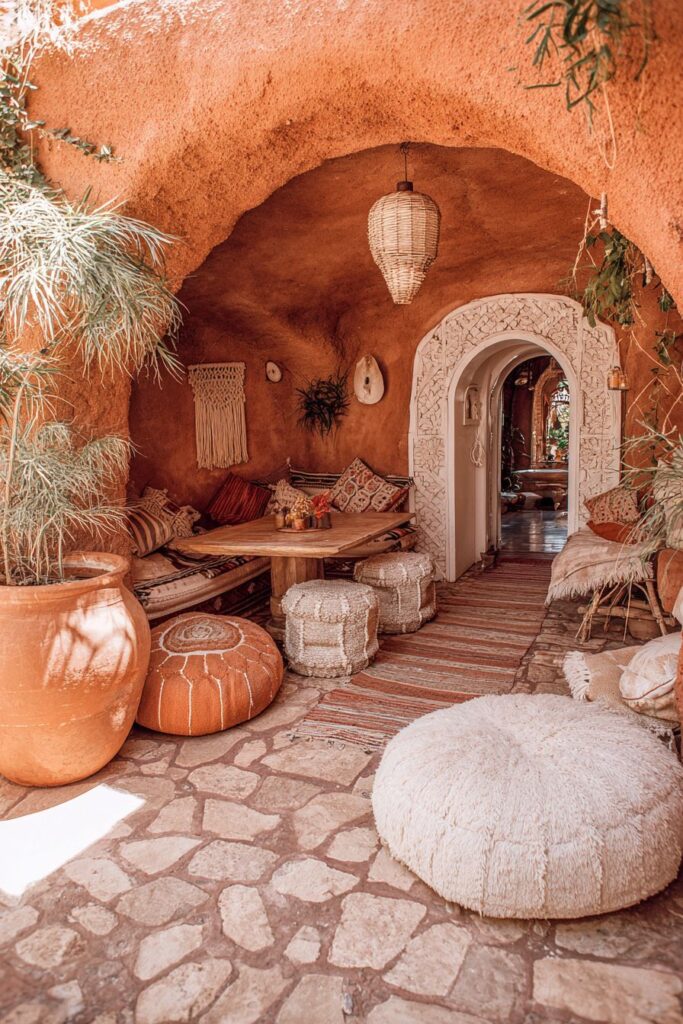
Achieving this bohemian terracotta look requires embracing floor seating as a legitimate dining option that creates unique experiences, incorporating handcrafted elements like macrame and woven textiles for authentic texture, mixing patterns and textures in similar color families for cohesive complexity, adding plants and natural elements to enhance the organic, earthy atmosphere, and choosing warm, intimate lighting that encourages relaxation and conversation. The goal is to create a space that feels like a global sanctuary where different cultures and design traditions come together harmoniously.
9. Contemporary Textured Plaster Elegance
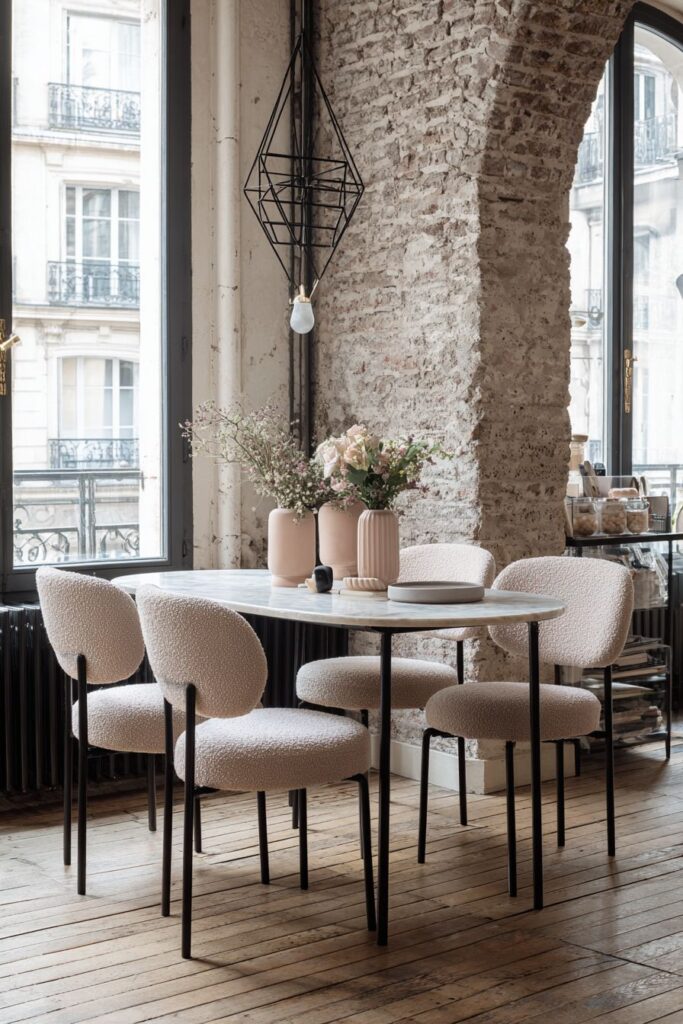
Contemporary design takes on new depth in this sophisticated terracotta dining room that showcases innovative wall treatments and luxurious materials. The marble-top dining table with sleek black metal legs provides a striking foundation, its cool stone surface creating beautiful contrast against the warm terracotta upholstery of the surrounding chairs. This interplay between warm and cool elements prevents the design from becoming monotonous while maintaining sophisticated elegance.
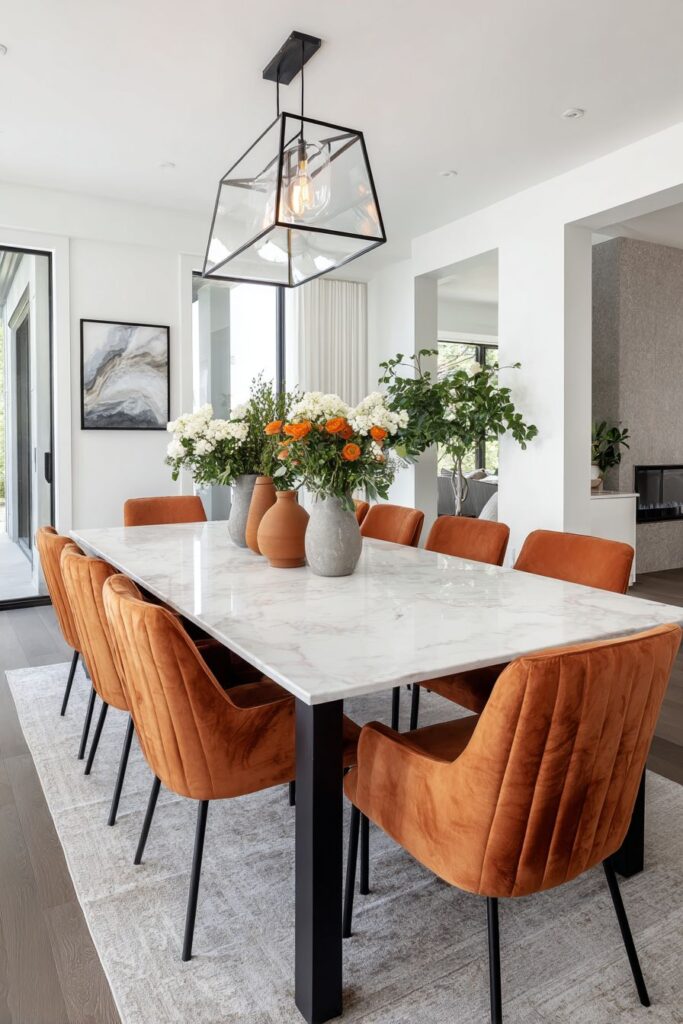
The textured terracotta plaster on the accent wall demonstrates how traditional materials can be reimagined for contemporary spaces. This technique adds tactile interest and visual depth while creating subtle variations in color and shadow that change throughout the day. The remaining white walls provide necessary visual breathing room, ensuring the terracotta elements remain impactful rather than overwhelming.
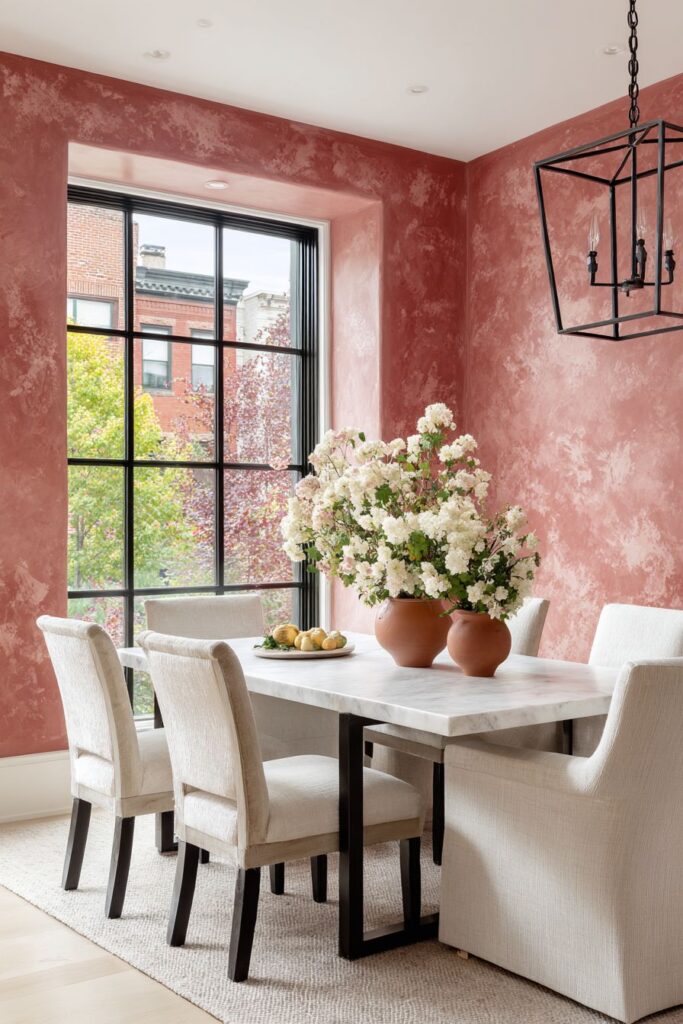
A statement light fixture in geometric black metal hangs above the dining table, its sculptural form serving as functional art that complements the contemporary aesthetic. Fresh flowers in terracotta ceramic vases add life and natural elements to the sophisticated space, softening the harder materials while reinforcing the color story. Professional photography captures the sophisticated modern interpretation of terracotta design, demonstrating how this traditional color can be elevated for contemporary luxury living.
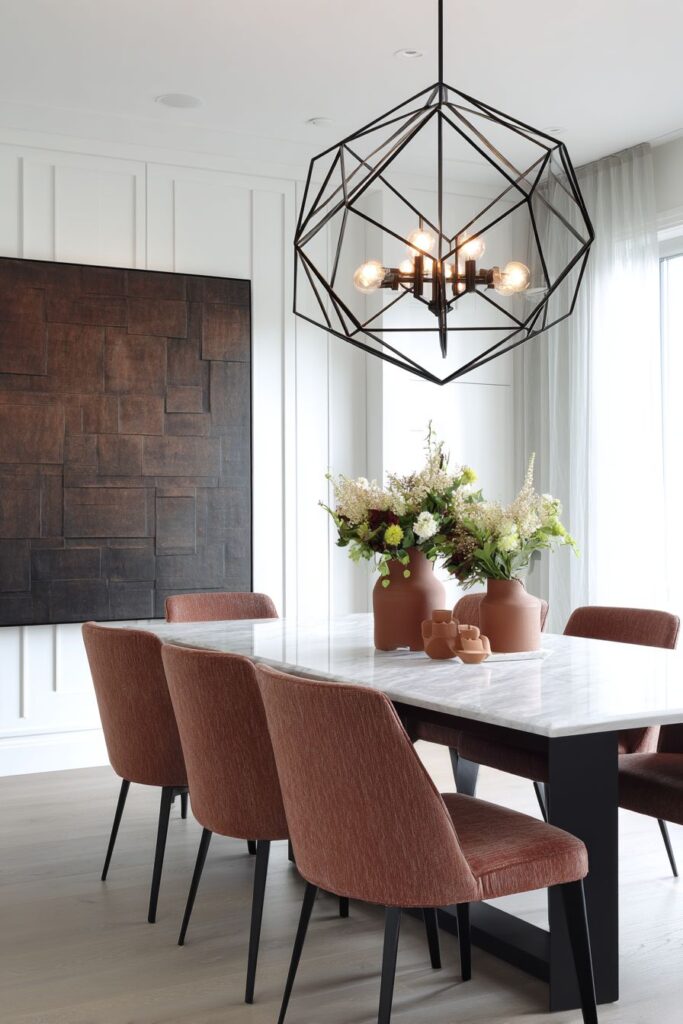
Contemporary terracotta success requires investing in high-quality materials that showcase sophisticated craftsmanship, incorporating textured wall treatments for tactile and visual interest, balancing warm terracotta elements with cool neutrals for sophisticated contrast, choosing sculptural lighting that serves as functional art, and adding fresh natural elements to soften harder contemporary materials. The key lies in execution quality and restraint – fewer elements of exceptional quality create more impact than numerous average pieces.
10. Traditional Formal Dining Grandeur
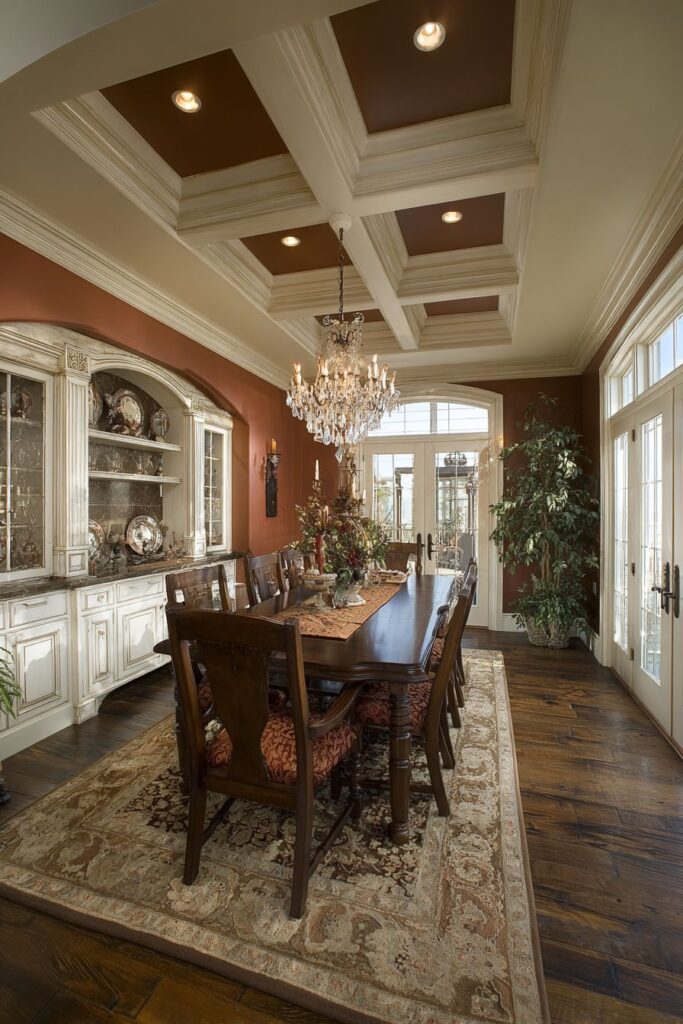
Timeless elegance defines this traditional terracotta dining room where formal furniture and classic design principles create an atmosphere of refined sophistication. The formal mahogany dining table serves as the room’s anchor, its rich wood grain and substantial presence speaking to generations of family gatherings and important occasions. Matching chairs feature terracotta silk upholstery that introduces color while maintaining the formal aesthetic essential to traditional design.
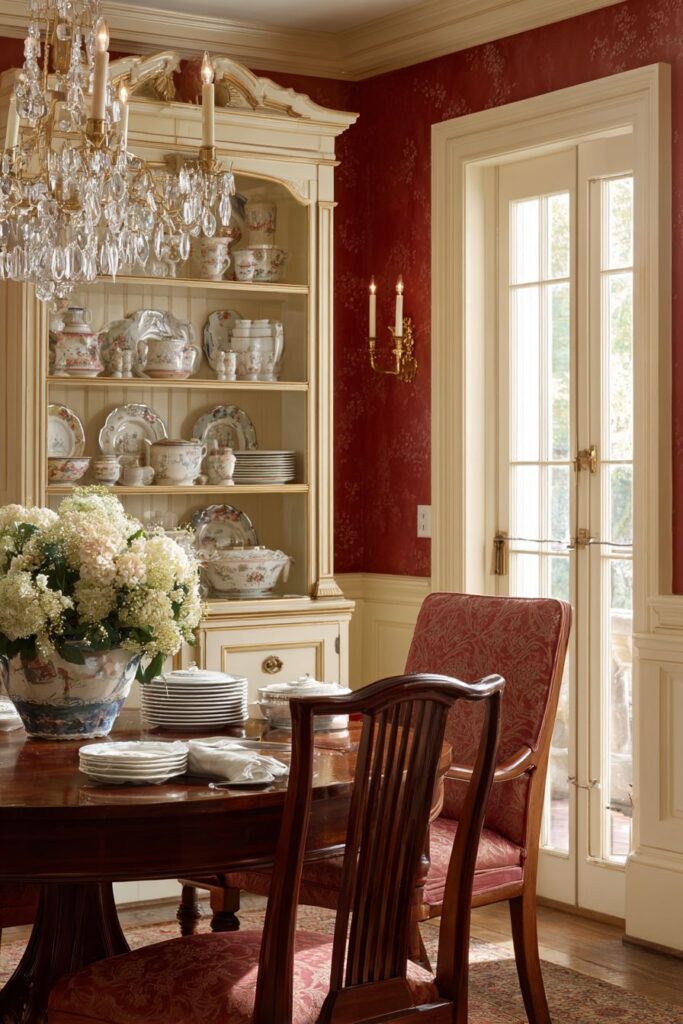
The built-in china cabinet displays terracotta ceramic dinnerware and serving pieces, transforming functional storage into decorative showcase. This approach celebrates the beauty of fine ceramics while keeping them accessible for special occasions. Wainscoting painted in cream provides architectural detail and visual foundation, while upper walls in rich terracotta create warmth and intimacy within the formal setting.
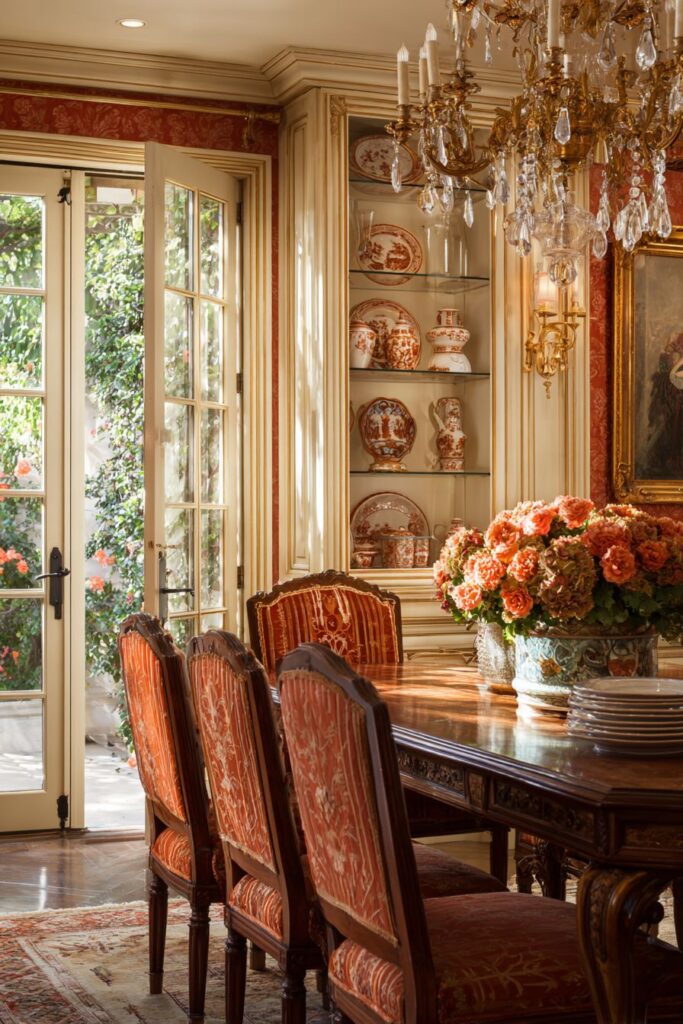
A crystal chandelier adds traditional elegance and sophisticated sparkle, its faceted surfaces catching and reflecting light throughout the room. Natural light from French doors creates warm ambiance while providing connection to outdoor spaces, essential for preventing formal rooms from feeling stuffy or disconnected. The classic refinement captured in professional photography demonstrates how terracotta can be successfully integrated into traditional formal design without compromising elegance or sophistication.
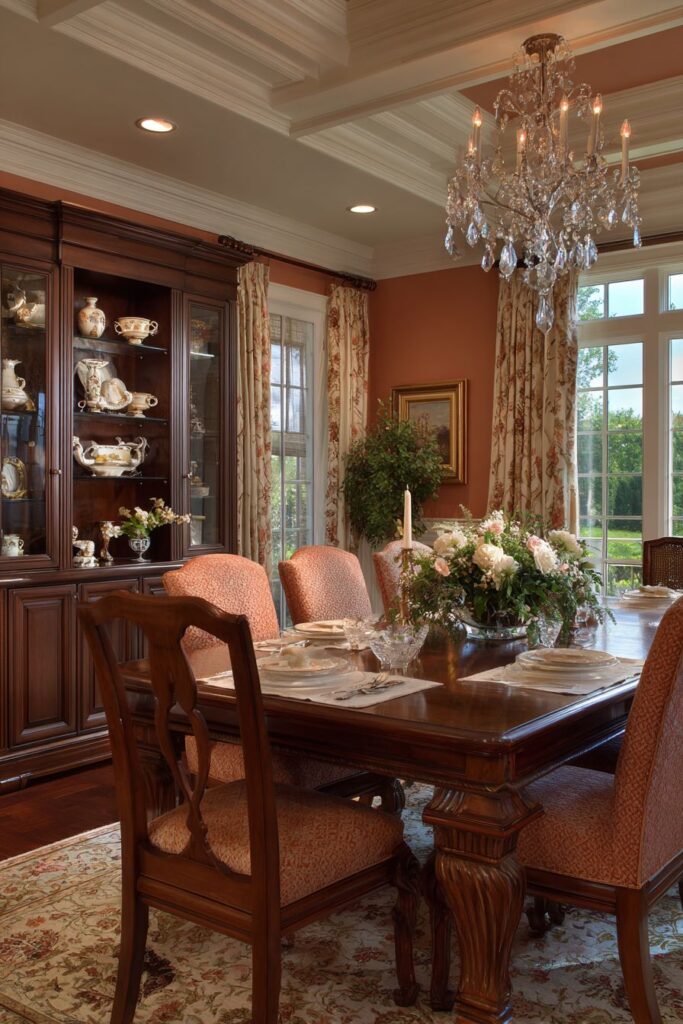
Traditional terracotta dining success requires investing in high-quality formal furniture that will serve for generations, incorporating architectural details like wainscoting for authentic traditional character, displaying fine ceramics and china as decorative elements rather than hiding them away, choosing elegant lighting fixtures that provide both ambiance and task lighting, and maintaining proportion and balance essential to successful traditional design. The goal is to create a space that honors traditional design principles while incorporating the warm, welcoming qualities of terracotta.
11. Industrial Raw Material Sophistication
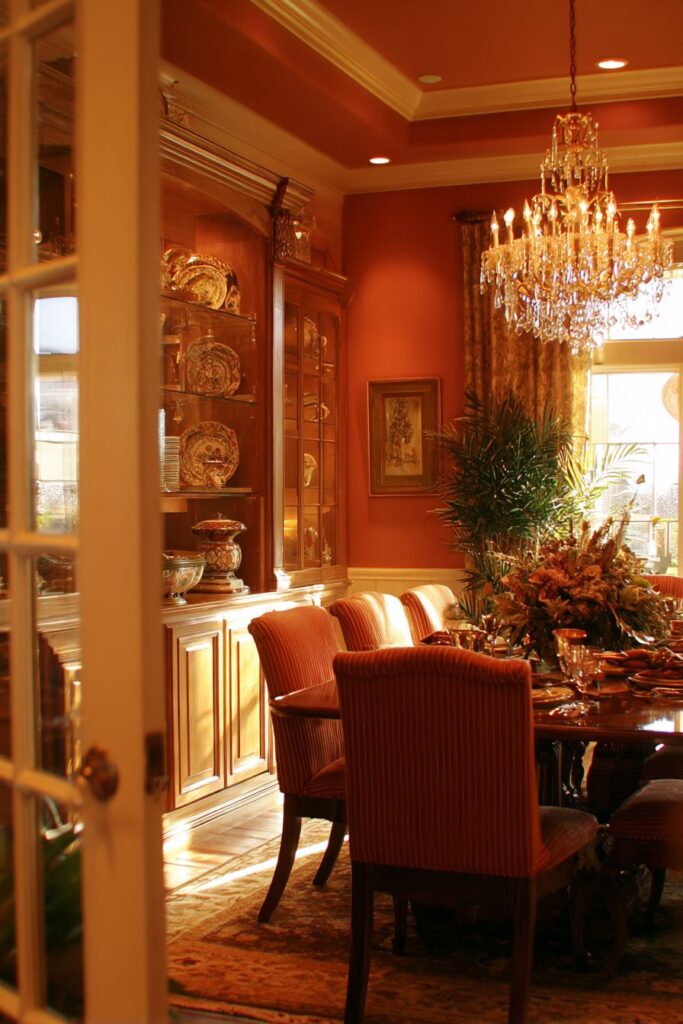
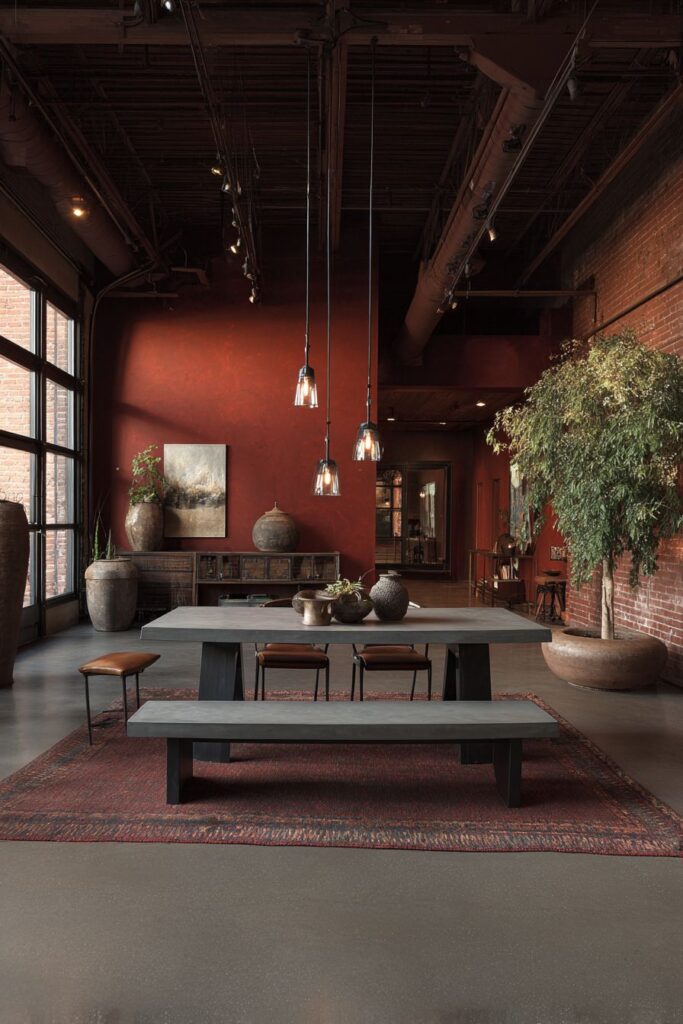
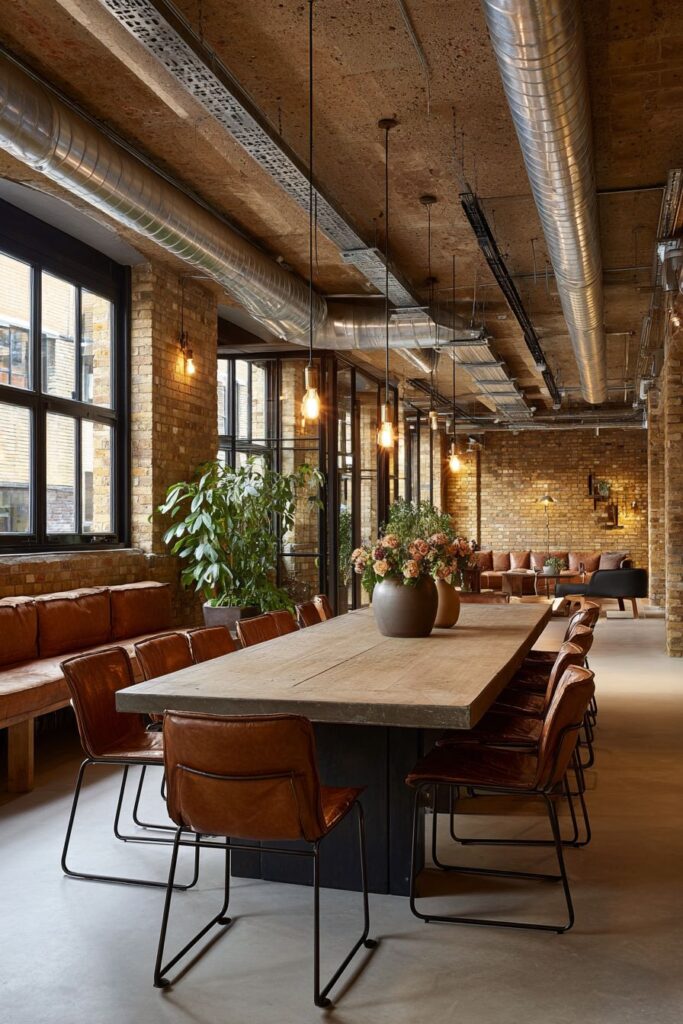
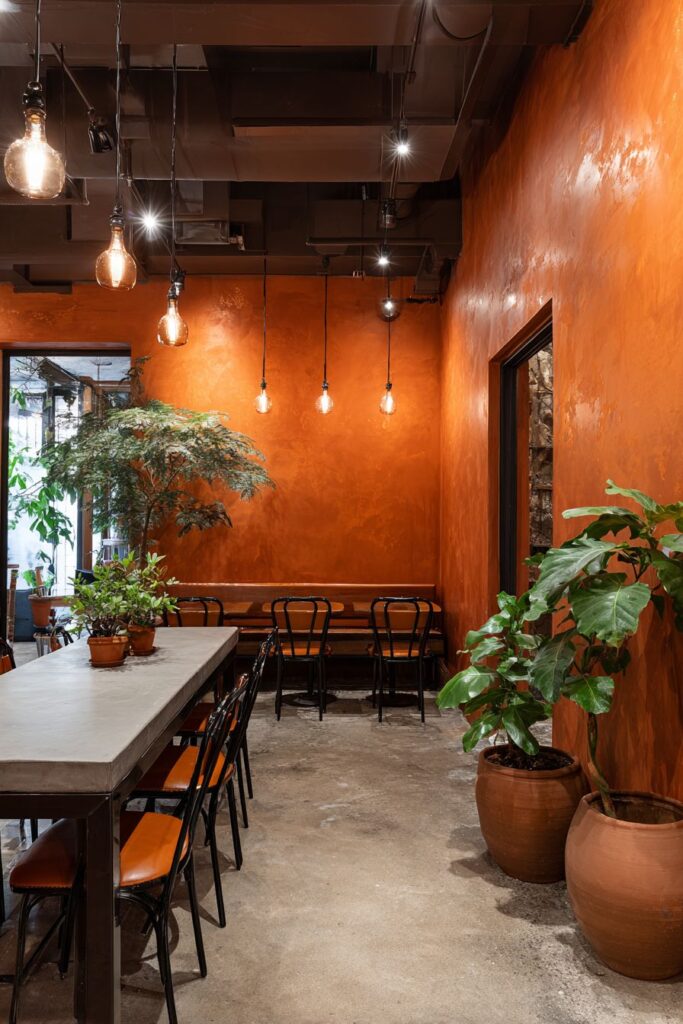
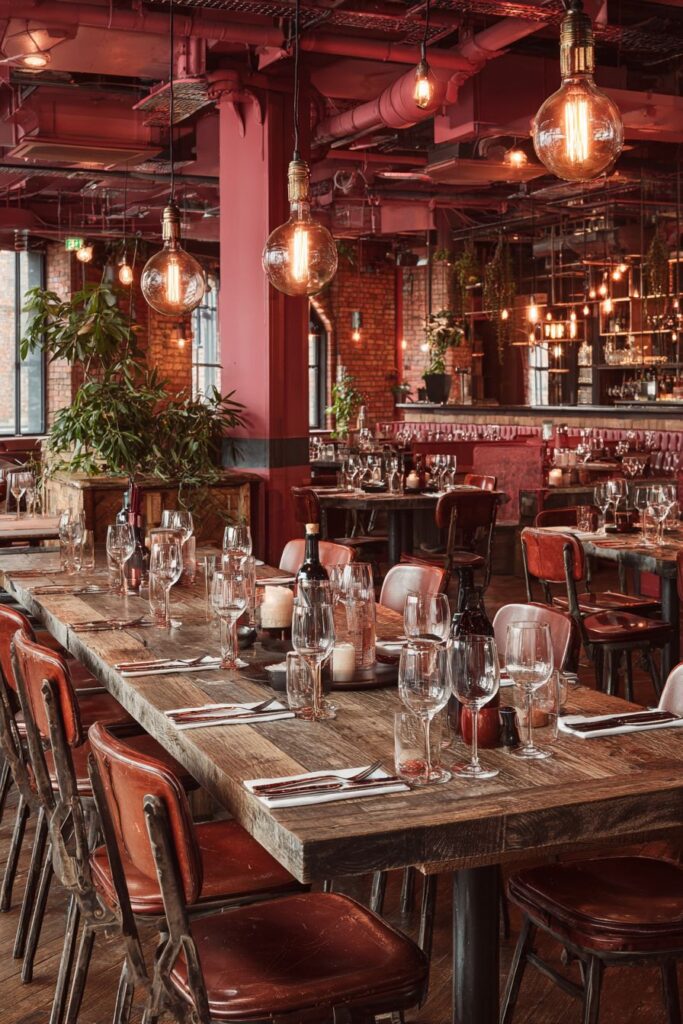
Industrial design meets warm earth tones in this unique terracotta dining room that demonstrates how seemingly opposing design philosophies can create compelling spaces. The concrete dining table with steel legs provides raw, industrial foundation while metal chairs with terracotta leather seats introduce warmth and comfort. This contrast between hard and soft, cold and warm, creates visual and tactile interest that engages the senses while challenging conventional design expectations.
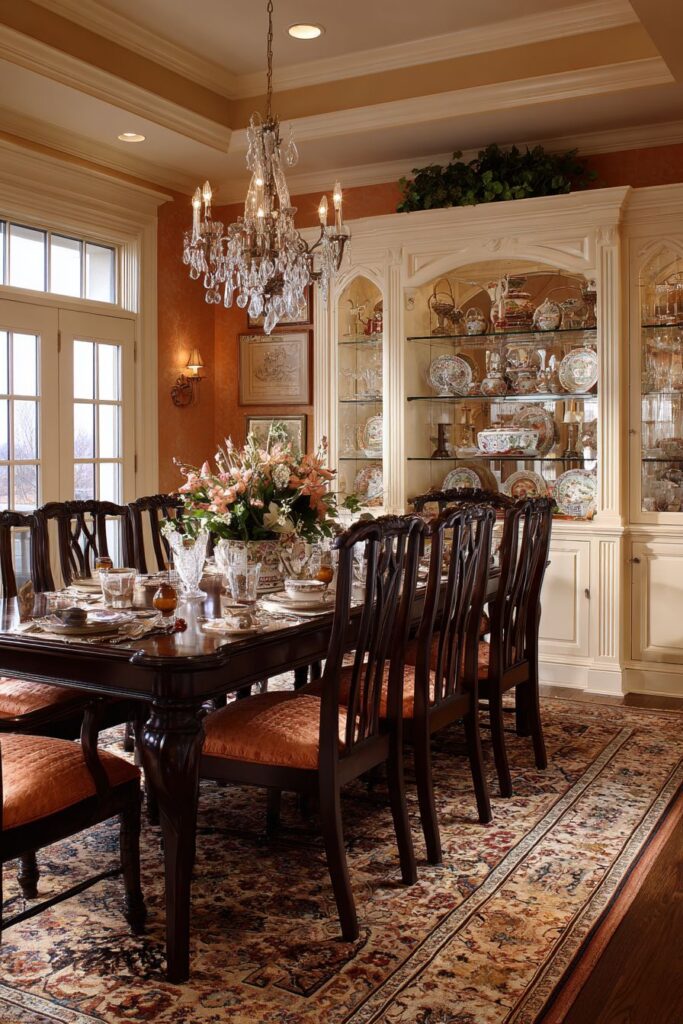
The exposed brick wall painted in terracotta wash adds warmth to the raw industrial space while maintaining the authentic character essential to this design style. This treatment softens the hard edges typical of industrial design without compromising its essential character. Industrial pendant lights with Edison bulbs hang from the ceiling, their exposed mechanics and warm light creating ambiance while reinforcing the industrial aesthetic.
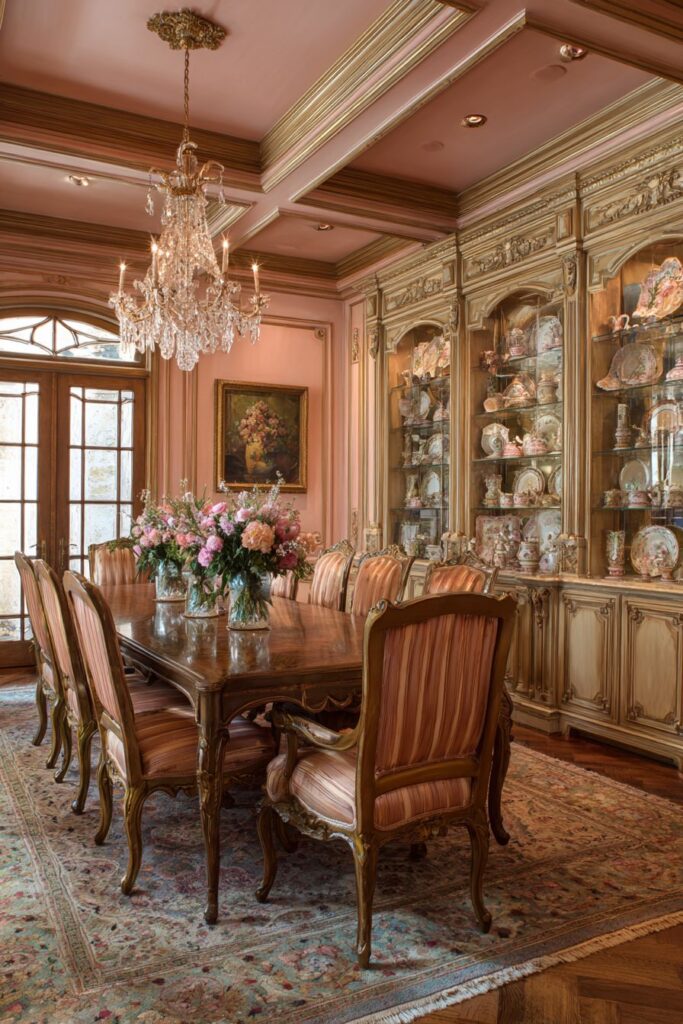
Terracotta pottery and plants throughout the space soften the hard edges while introducing organic elements that humanize the industrial setting. These natural touches prevent the space from feeling cold or unwelcoming, creating a balance between industrial rawness and human comfort. Wide-angle photography showcases the unique blend of industrial elements with warm terracotta accents, demonstrating how unexpected color choices can transform and personalize typically austere design styles.
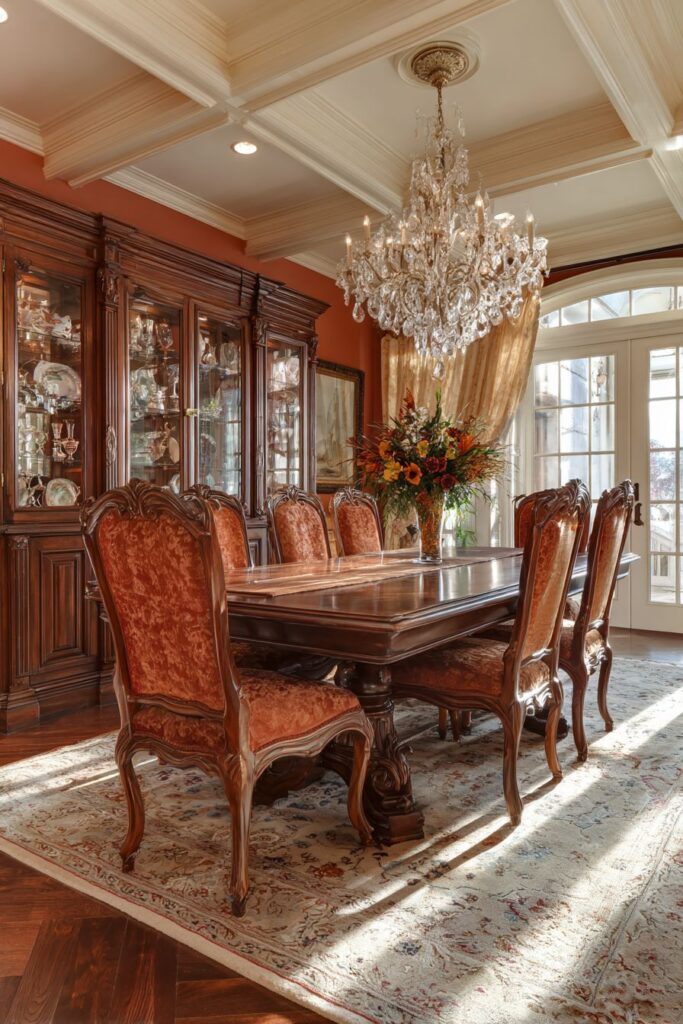
Industrial terracotta success requires balancing hard industrial materials with warm, soft terracotta elements for human comfort, maintaining authentic industrial character while introducing warmth through color and texture, incorporating plants and natural elements to soften hard edges and mechanical elements, choosing lighting that reinforces the industrial aesthetic while providing warm, comfortable illumination, and embracing the contrast between opposing design elements as a source of visual interest rather than conflict. The goal is to create a space that feels authentically industrial while remaining comfortable and inviting for dining and gathering.
12. Scandinavian Minimalist Warmth
Scandinavian design principles embrace terracotta warmth in this understated dining room that proves minimalism doesn’t require coldness or austerity. The light oak dining table provides clean Scandinavian foundation while white chairs accented with terracotta cushions introduce color without overwhelming the space’s essential simplicity. This restrained approach to color allows the terracotta elements to provide warmth while maintaining the clean, uncluttered aesthetic essential to Nordic design.
Walls feature a subtle terracotta color wash over white base, creating barely-there warmth that enhances the space without dominating it. This technique demonstrates how terracotta can be incorporated into minimalist design through restraint and subtlety rather than bold application. Simple ceramic dinnerware in terracotta tones creates an understated table setting that embodies Scandinavian values of functional beauty and everyday elegance.
A natural fiber rug grounds the seating area while abundant natural light creates the bright, airy feeling essential to Scandinavian interiors. The emphasis on natural materials and textures reinforces the connection to nature that underlies Nordic design philosophy. Interior design photography captures the minimalist aesthetic enhanced by warm terracotta touches, proving that this earthy color can complement rather than compete with clean, simple design principles.
Scandinavian terracotta design success requires maintaining clean, simple lines essential to Nordic aesthetic while introducing warmth through subtle terracotta accents, emphasizing natural materials and textures throughout the space, maximizing natural light to create bright, airy atmosphere, choosing functional items that also serve as beautiful decorative elements, and practicing restraint in color application to maintain minimalist integrity. The goal is to create a space that feels warm and welcoming while honoring Scandinavian values of simplicity, functionality, and connection to nature.
13. Multi-Functional Window Seat Integration
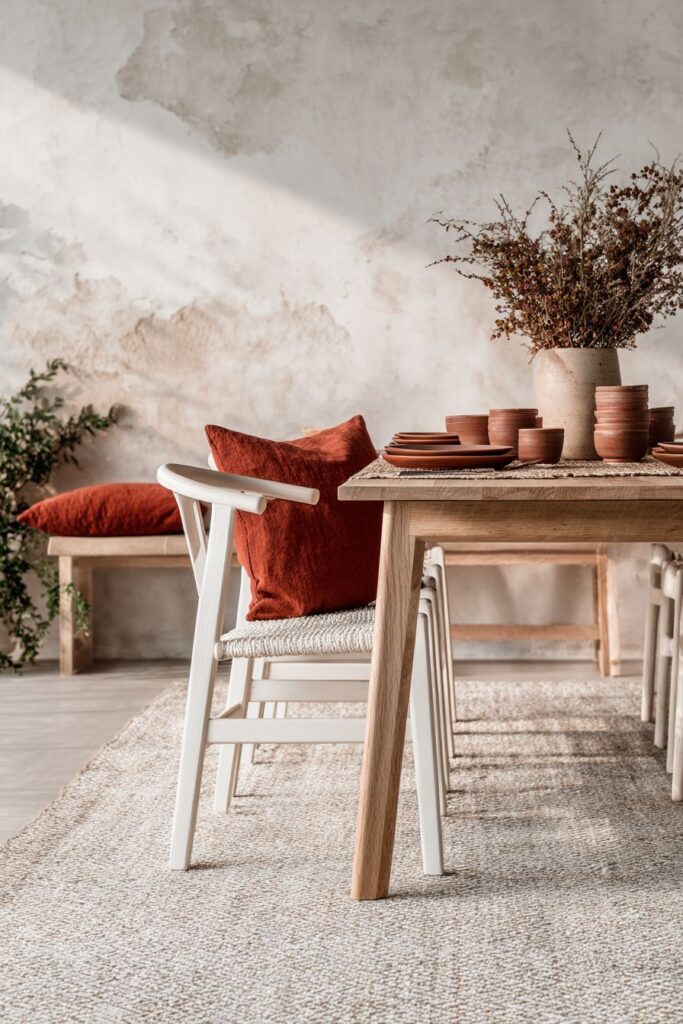
Smart space planning takes center stage in this terracotta dining room that maximizes functionality through thoughtful built-in elements. The window seat featuring terracotta cushions and pillows creates additional seating around an expandable dining table while taking advantage of natural light and views. This efficient approach provides flexible seating capacity that can accommodate both intimate family meals and larger gatherings when the table is extended.
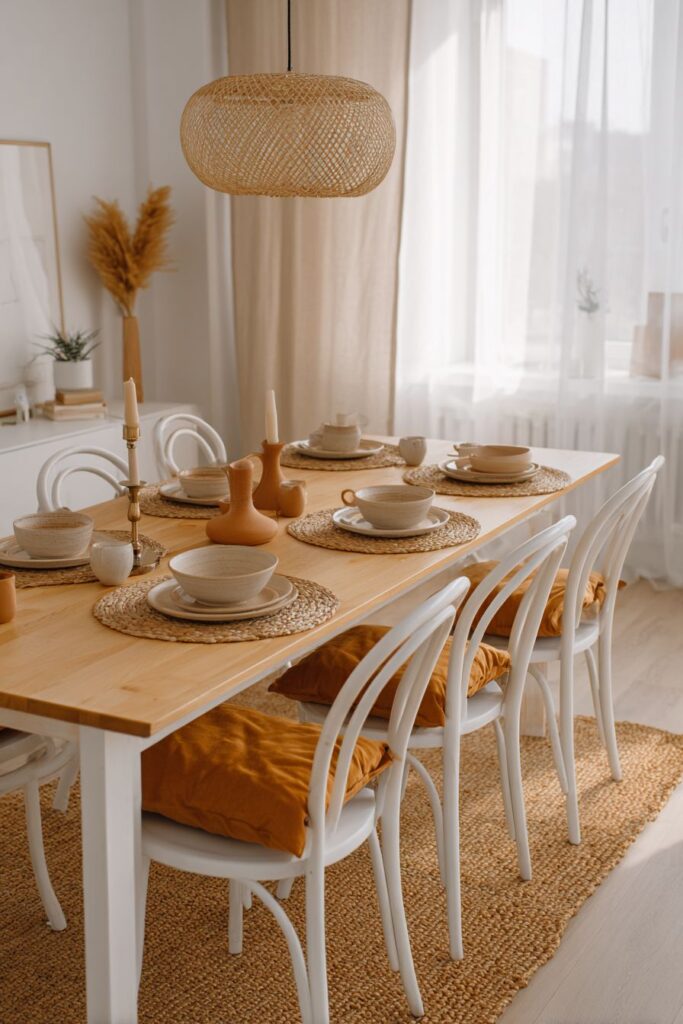
Terracotta roman shades filter natural light beautifully while providing privacy control and reinforcing the color story throughout the room. These window treatments demonstrate how functional elements can serve decorative purposes when chosen thoughtfully. Open shelving displays a collection of terracotta pottery and cookbooks, creating both storage and decorative display while keeping frequently used items easily accessible.
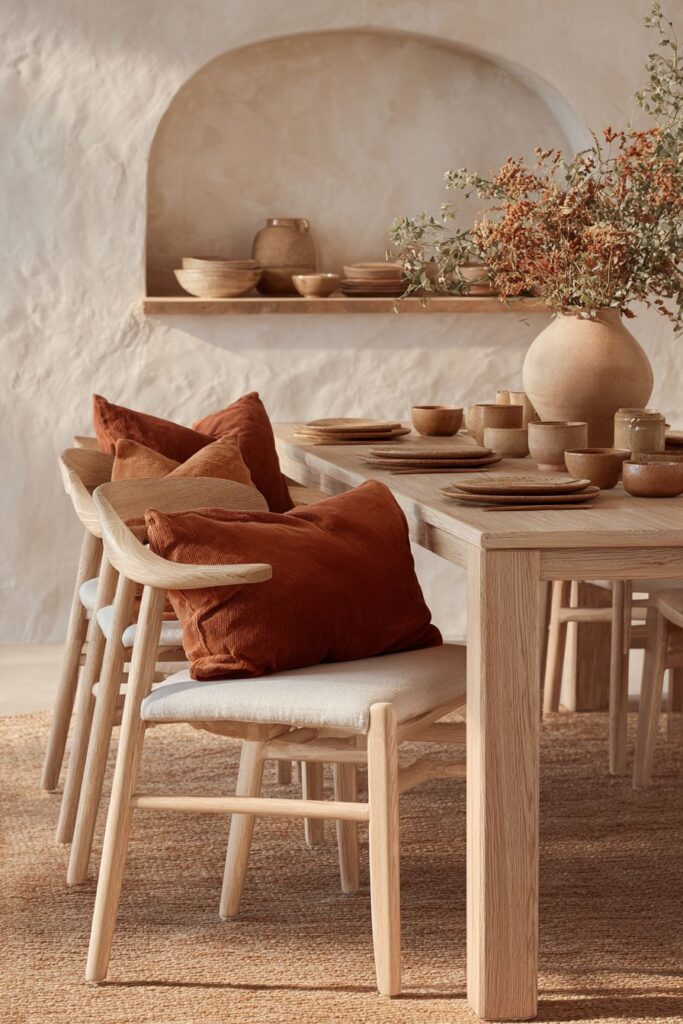
Pendant lighting in warm brass complements the earth-tone palette while providing necessary task lighting over the dining surface. The warm metal finish echoes the natural mineral content often found in terracotta clay, creating subtle connections between different elements throughout the space. Professional photography captures the functional design and cozy atmosphere while natural shadows highlight the practical integration of terracotta elements throughout the space.
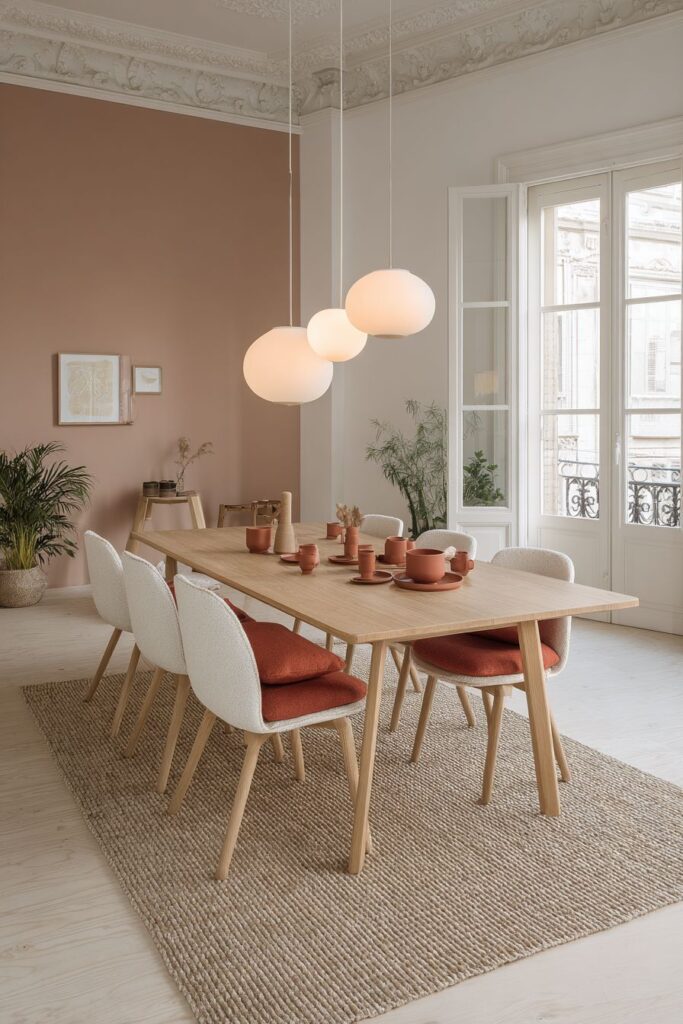
Functional terracotta design requires maximizing natural light through strategic window treatments that reinforce the color scheme, incorporating built-in seating to increase capacity without consuming additional floor space, displaying functional items as decorative elements to reduce clutter while adding visual interest, choosing expandable furniture that can adapt to different needs and occasions, and ensuring adequate task lighting for all activities while maintaining warm, comfortable ambiance. The success lies in creating a space that works efficiently for daily life while remaining beautiful and welcoming for special occasions.
14. Eclectic Vintage Modern Fusion
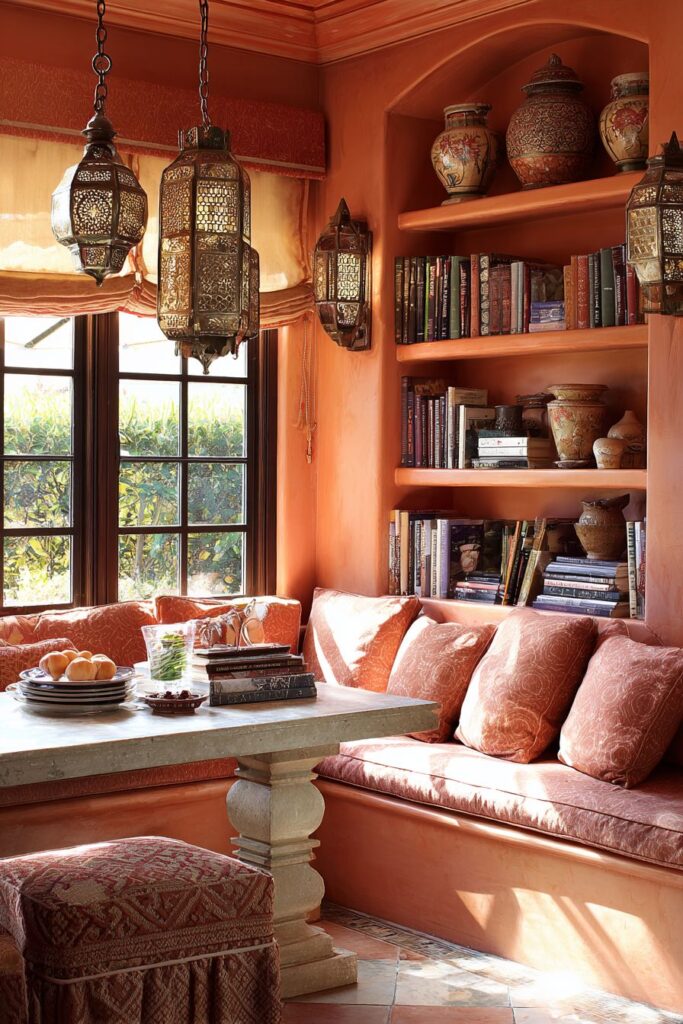
Curated eclecticism reaches its peak in this terracotta dining room that successfully mixes vintage and modern pieces into a cohesive, sophisticated whole. The mid-century dining table paired with contemporary chairs in terracotta fabric demonstrates how different design periods can complement rather than compete when unified by a consistent color story. This approach creates visual interest and personality while avoiding the sterile feeling that can result from too much matching.
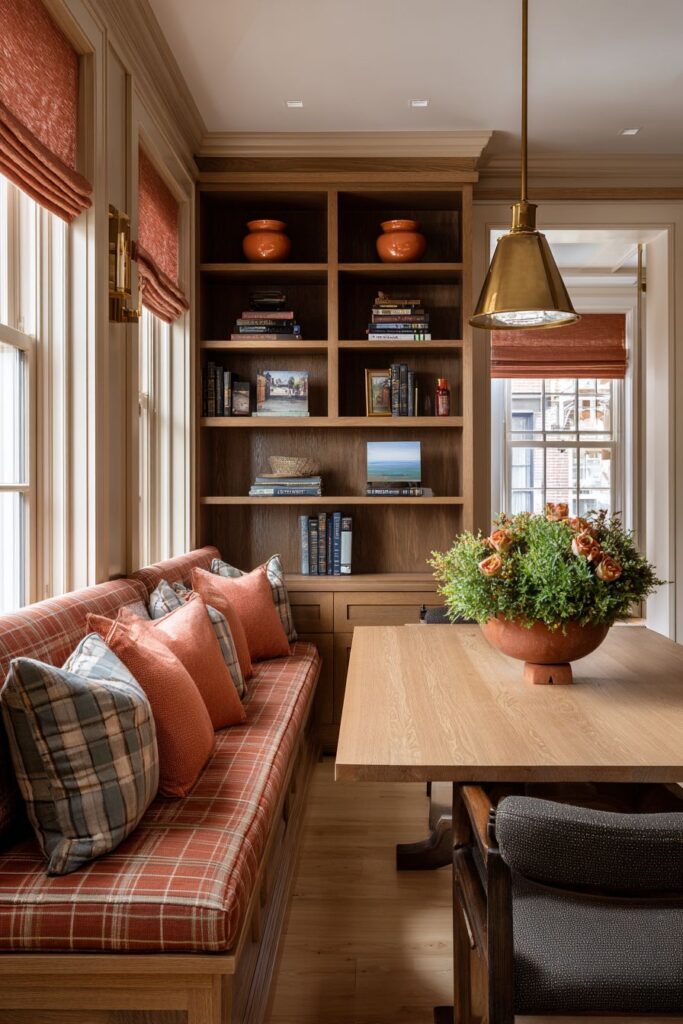
The gallery wall displays artwork in earth tones against a terracotta accent wall, creating a sophisticated backdrop that showcases the homeowner’s personal taste and collections. This arrangement transforms the dining room into a gallery-like space that elevates the everyday dining experience. The vintage brass bar cart contrasts beautifully with modern terracotta ceramic accessories, creating interesting visual tension that rewards closer examination.
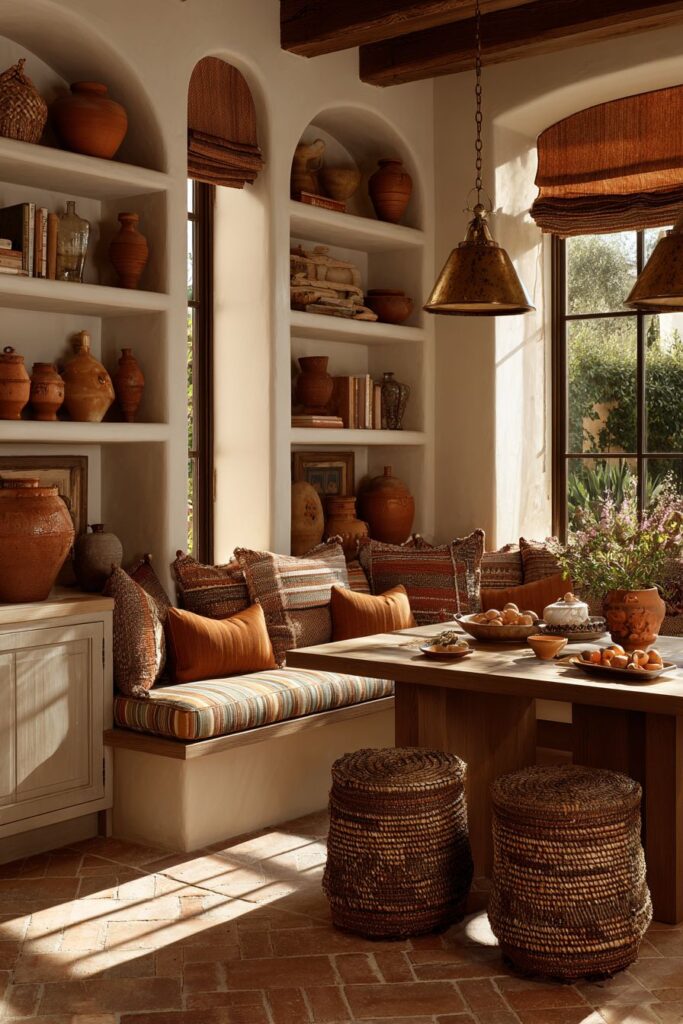
Natural light from skylights creates dramatic shadows and highlights throughout the day, adding an ever-changing element that keeps the space feeling dynamic and alive. Interior design photography captures the curated mix of styles unified by the consistent terracotta color theme, demonstrating how thoughtful curation can create spaces that feel collected over time rather than purchased all at once.
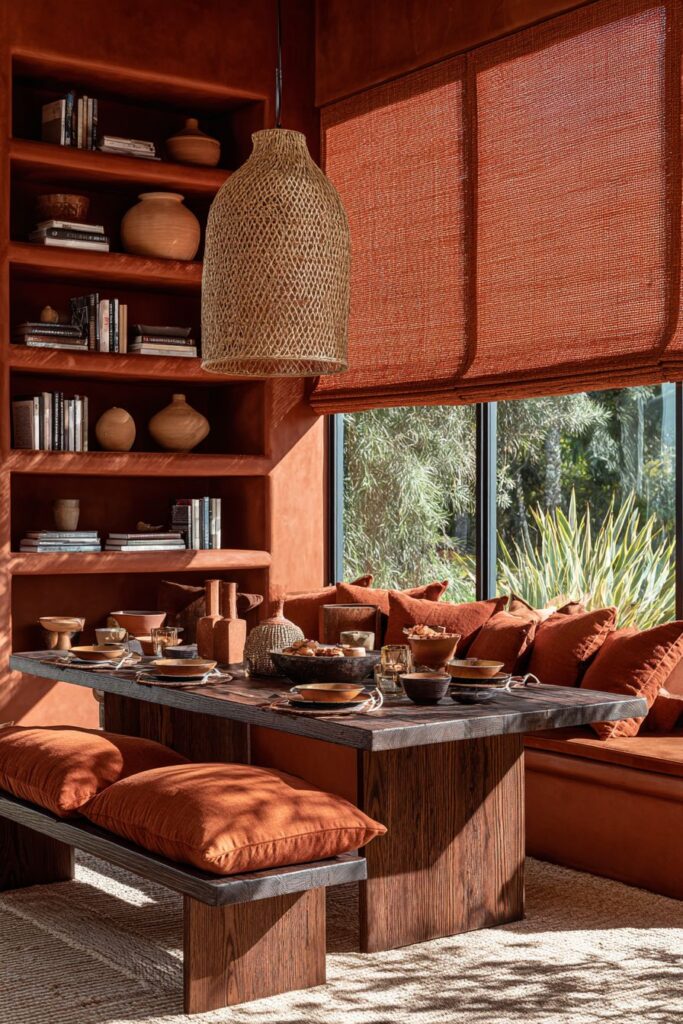
Eclectic terracotta success requires developing a consistent color story that can unify different style periods and design elements, mixing vintage and contemporary pieces thoughtfully rather than randomly, creating gallery walls that showcase personal collections and artwork, incorporating interesting contrasts in materials and finishes for visual complexity, and ensuring adequate natural light to showcase the various elements throughout different times of day. The goal is to create a space that reflects personal style and interests while maintaining cohesion through the terracotta color theme.
15. Formal Entertainment Elegance
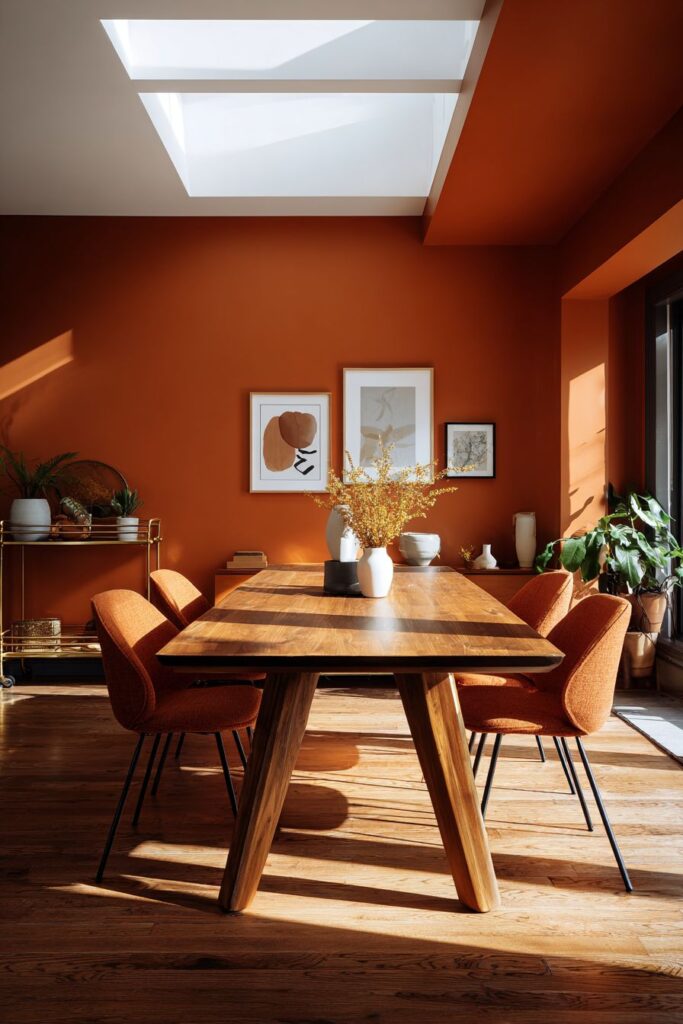
Sophisticated entertaining takes center stage in this formal terracotta dining room designed for special occasions and memorable gatherings. The extended dining table set for entertaining features terracotta charger plates and linen napkins that demonstrate how this earthy color can be elevated for formal occasions. The careful attention to table setting details creates an atmosphere of refined hospitality that honors both guests and the dining ritual itself.
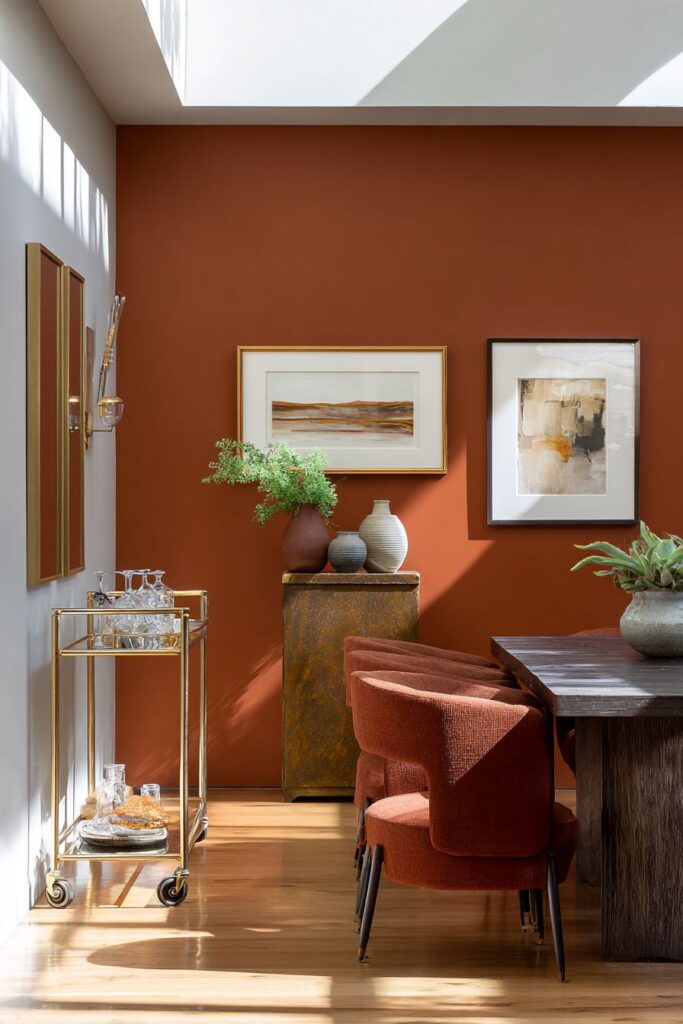
Rich terracotta velvet upholstery on the dining chairs provides luxurious comfort while reinforcing the color story throughout the room. The sumptuous fabric catches candlelight and natural light beautifully, creating depth and richness that changes throughout the evening. An ornate mirror reflects light against terracotta painted walls, creating the illusion of additional space while adding traditional elegance essential to formal dining rooms.
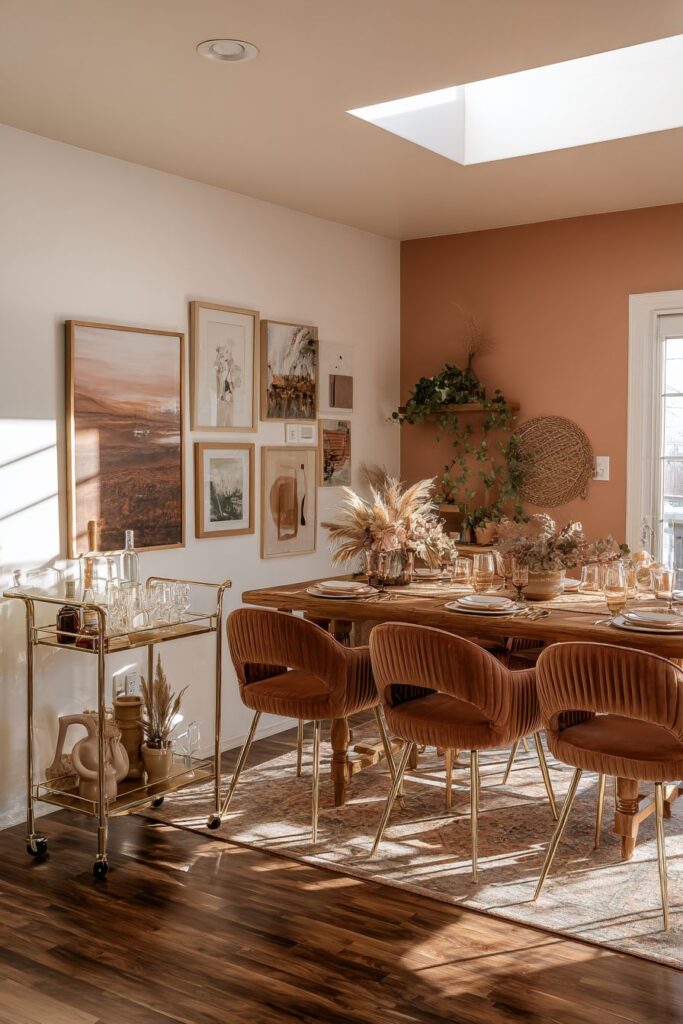
Fresh autumn centerpiece complements the warm color palette while adding natural elements that prevent the formal setting from feeling stuffy or artificial. The seasonal flowers and foliage connect the interior space to the natural world outside, essential for creating welcoming atmospheres. Professional photography captures the elegant table setting and formal arrangement with golden hour lighting that enhances the sophisticated terracotta atmosphere, proving this color works beautifully for upscale entertaining.
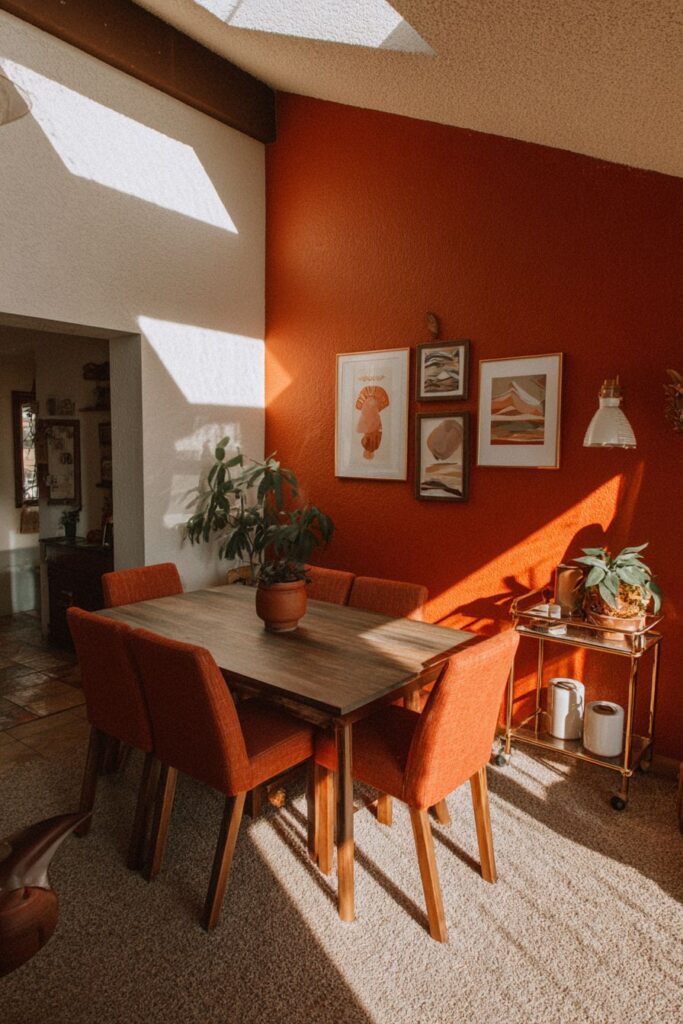
Formal terracotta dining requires investing in high-quality table linens and serving pieces that elevate the dining experience, incorporating luxurious fabrics like velvet for tactile richness and visual depth, using mirrors strategically to reflect light and create the illusion of additional space, creating seasonal centerpieces that connect the interior to the natural world, and mastering lighting control to create different moods for various occasions. The success lies in attention to detail and commitment to quality that makes every meal feel like a special occasion.
16. Open-Plan Kitchen Integration
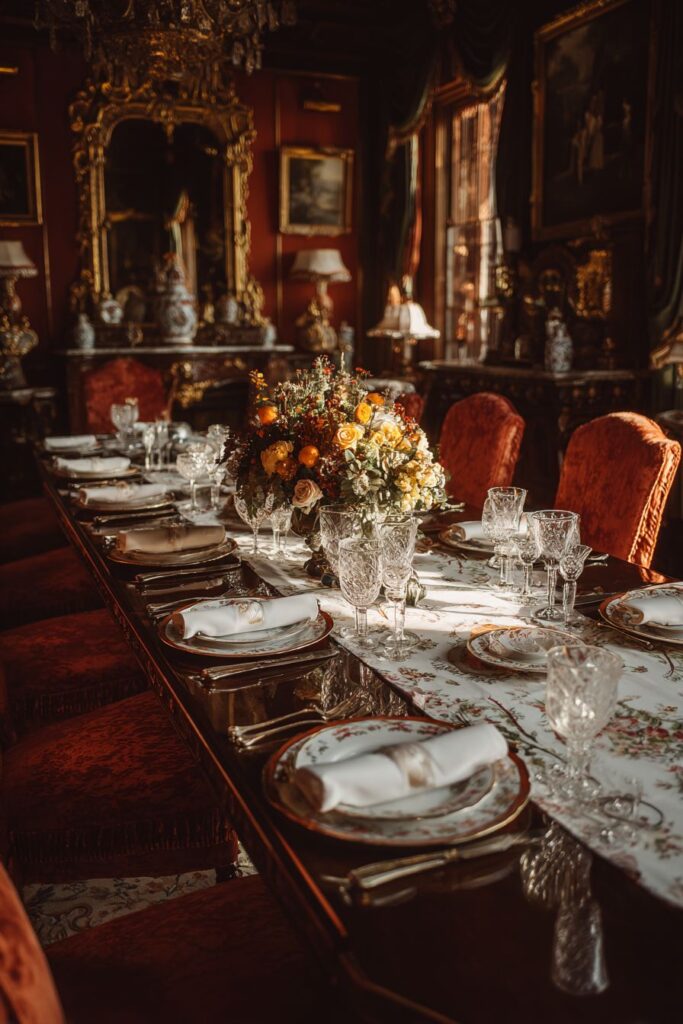
Contemporary living embraces open-plan design in this casual terracotta dining room that seamlessly integrates with kitchen space for modern family life. The counter-height dining table with swivel bar stools featuring terracotta upholstery creates casual seating that encourages interaction between cooking and dining activities. This approach reflects how modern families actually live, with cooking, dining, and socializing happening simultaneously rather than in separate dedicated spaces.
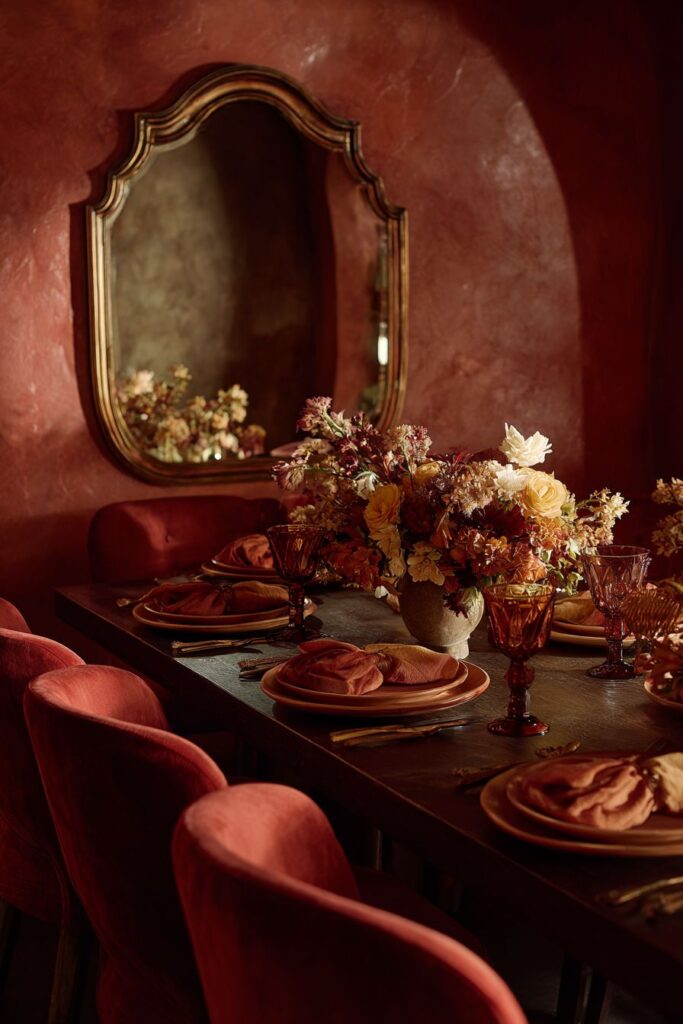
The kitchen island extends into the dining area, painted in matching terracotta tones that create visual continuity between the different functional zones. This color strategy helps define spaces within the open plan while maintaining flow and connection essential to successful multi-purpose areas. Open shelving displays everyday terracotta dinnerware and glassware, keeping frequently used items accessible while contributing to the overall design aesthetic.
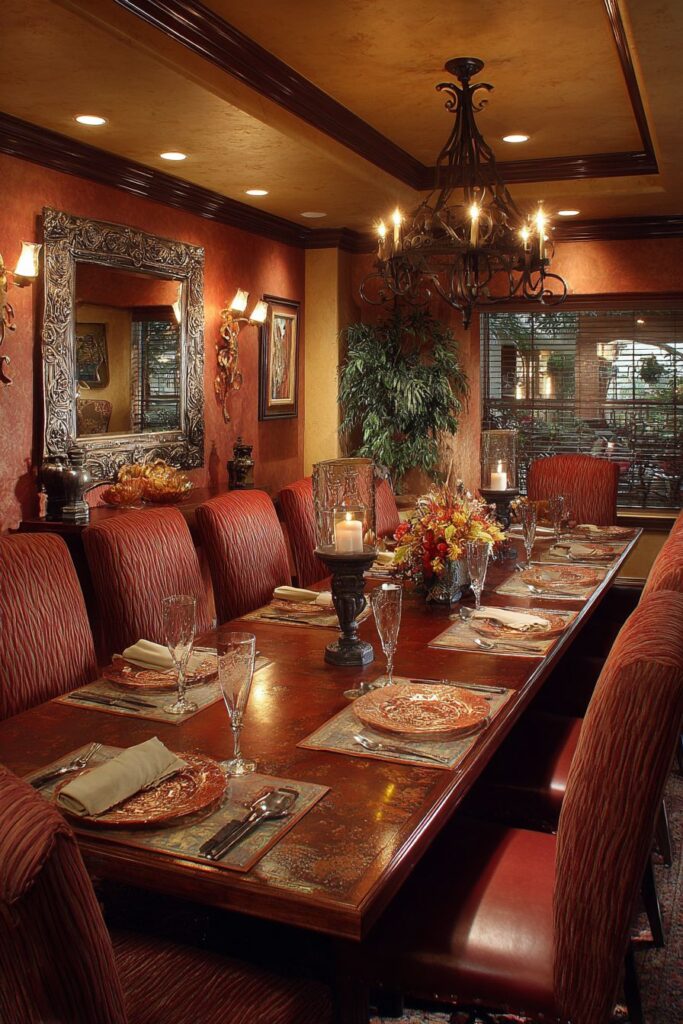
Pendant lights provide task lighting over the casual dining space while serving as decorative elements that help define the dining zone within the larger open area. Wide-angle photography shows the open-plan layout with natural lighting that highlights the seamless integration of terracotta throughout the kitchen-dining area, demonstrating how this warm color can unify different functional spaces while maintaining their individual identities.
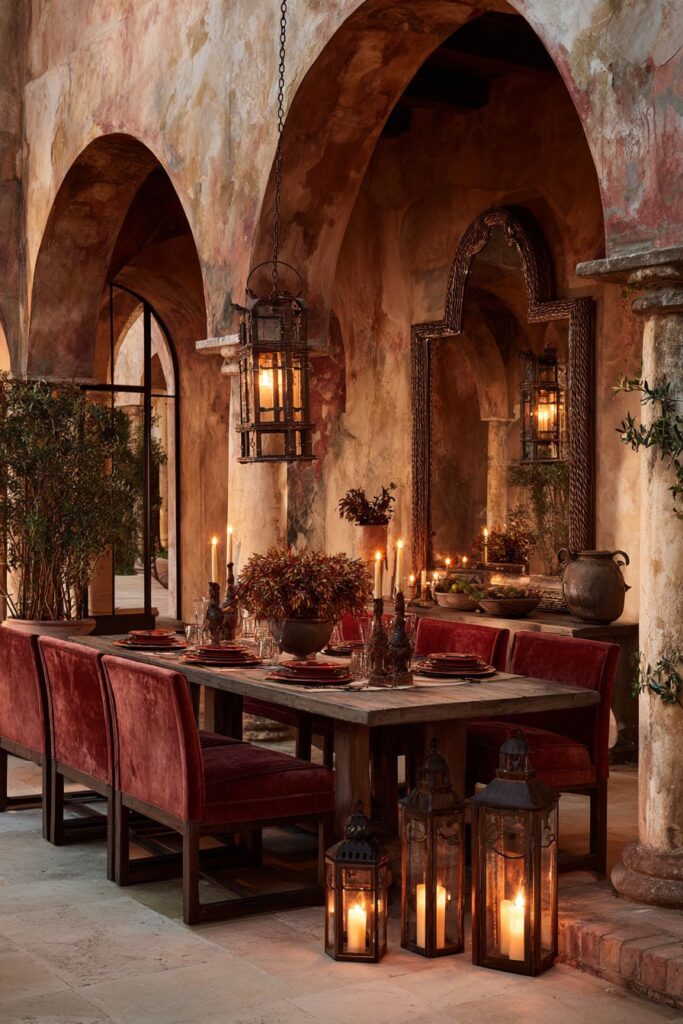
Open-plan terracotta success requires using consistent color schemes to unify different functional zones while maintaining their individual purposes, incorporating casual seating that encourages interaction and flexible use patterns, displaying everyday items as decorative elements to reduce visual clutter, providing adequate task lighting for all activities within the combined space, and maintaining clear circulation paths between different functional areas. The goal is to create a space that supports modern family life while maintaining beauty and coherence throughout the integrated areas.
17. Minimalist Zen Simplicity
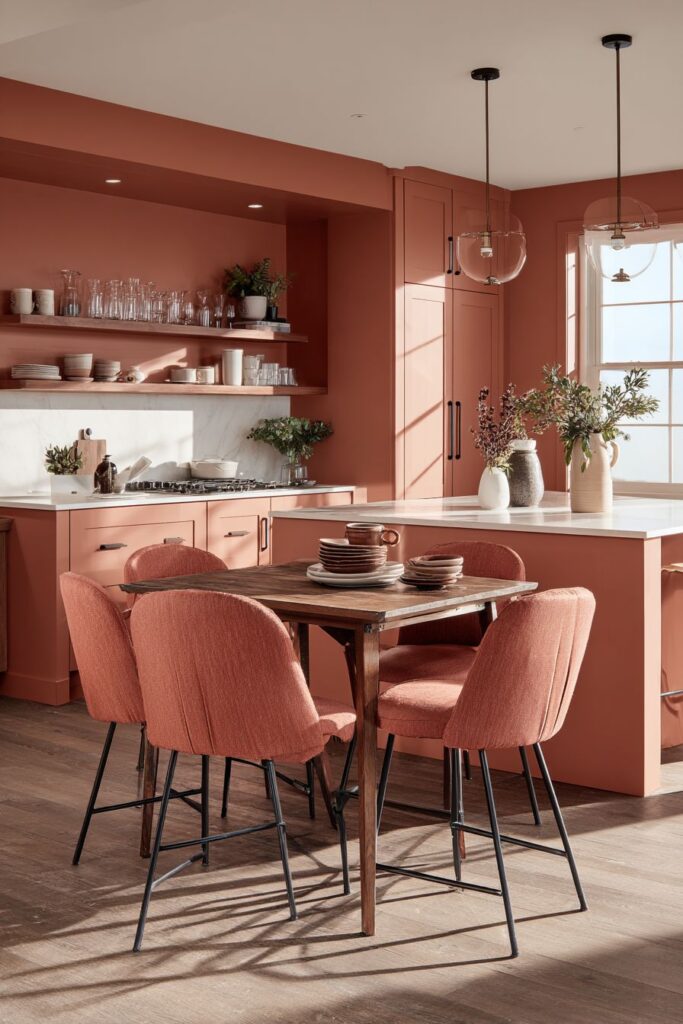
Serene simplicity defines this minimalist terracotta dining room where less truly becomes more through thoughtful restraint and purposeful design choices. The simple rectangular table in blonde wood with bench seating upholstered in terracotta linen creates clean lines and uncluttered surfaces that promote calm and contemplation. This approach to seating encourages closeness and conversation while maintaining the visual simplicity essential to minimalist design philosophy.
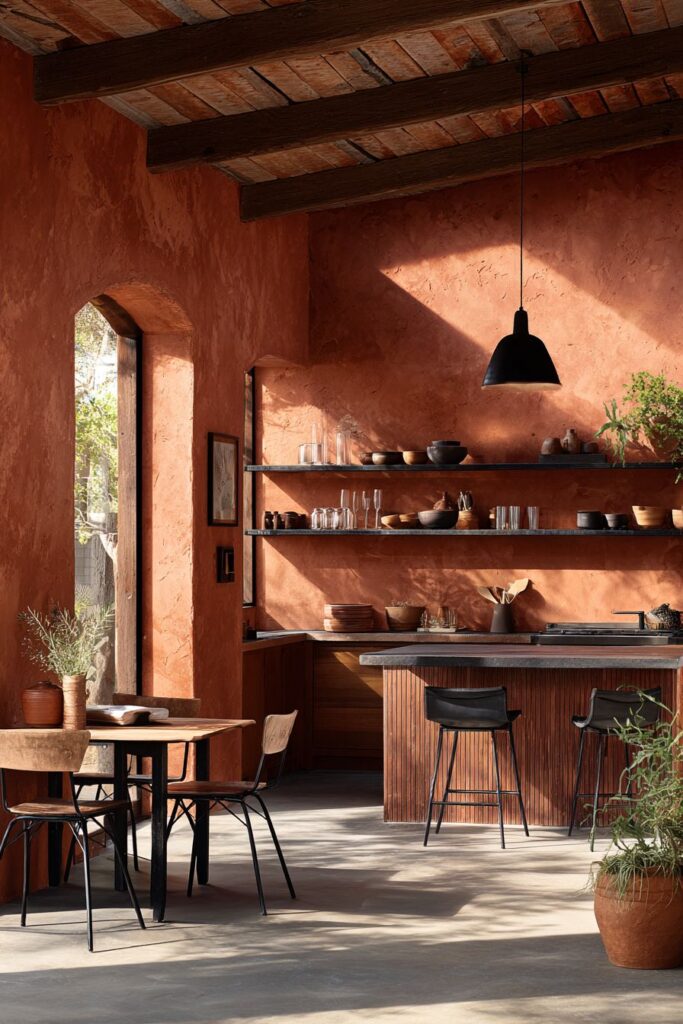
The single statement wall painted in deep terracotta provides focal point and warmth while the remaining white walls create breathing room and prevent overwhelming the space. This restrained color application demonstrates how powerful terracotta can be when used sparingly and intentionally. The ceramic pendant light in matching terracotta glaze hangs above the table, its simple form and warm color creating gentle illumination while reinforcing the room’s cohesive color story.
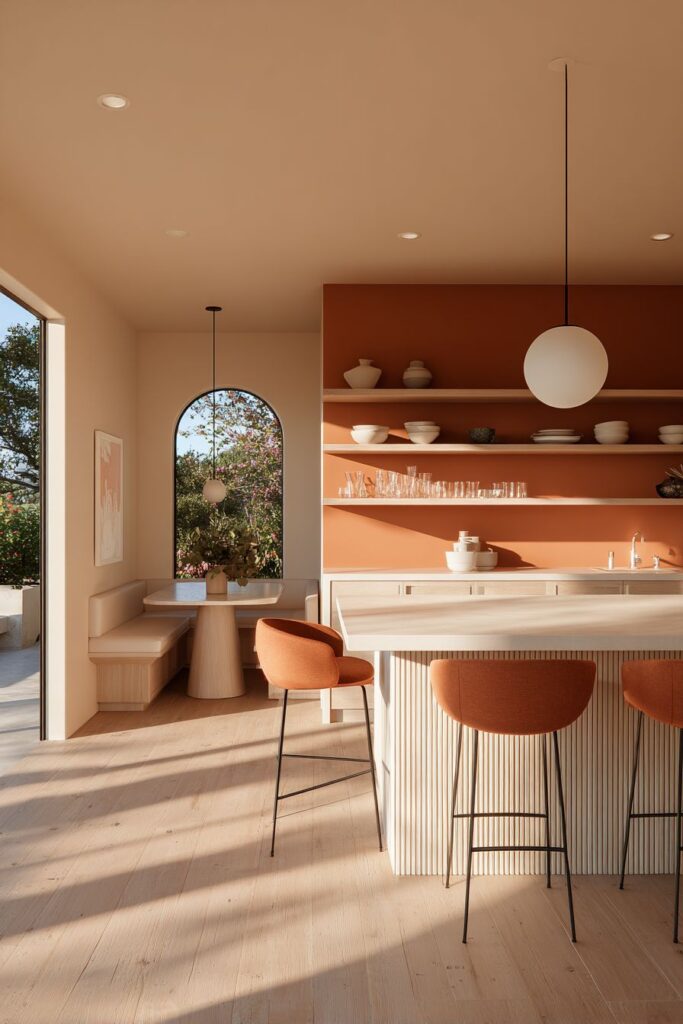
Sparse decoration includes one large terracotta vase with dried branches, proving that a single well-chosen accessory can provide more impact than multiple smaller items. Interior design photography emphasizes the serene simplicity and purposeful use of terracotta as the primary design element, capturing how restraint and quality can create spaces that feel peaceful and restorative rather than empty or stark.
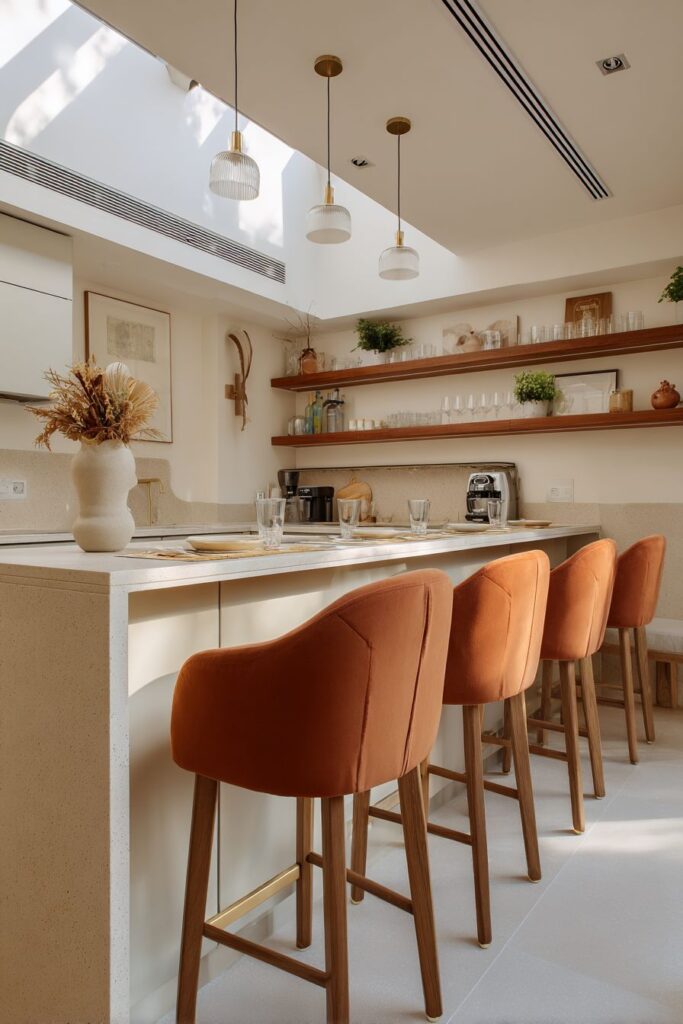
Minimalist terracotta design requires practicing extreme restraint in both color application and accessory selection, choosing quality over quantity in all design elements, maintaining clean lines and uncluttered surfaces essential to minimalist philosophy, incorporating natural elements sparingly but meaningfully, and ensuring each element serves both functional and aesthetic purposes. The success lies in creating a space that feels intentionally simple rather than accidentally bare, where every element has been carefully considered and purposefully included.
18. Transitional Style Balance
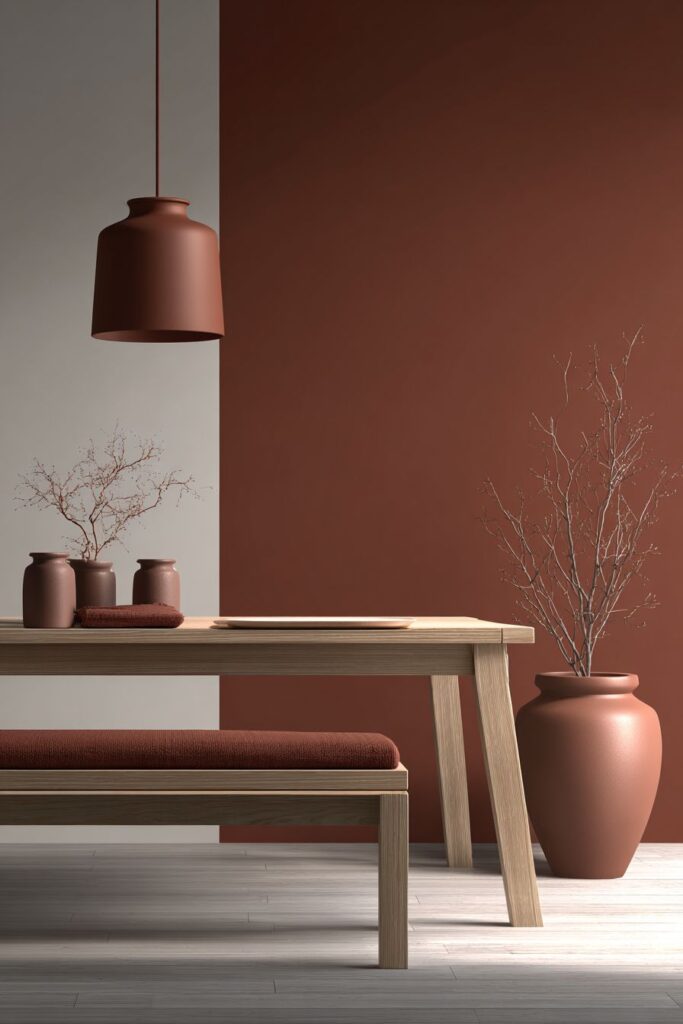
The best of both worlds comes together in this transitional terracotta dining room that successfully blends traditional and contemporary elements into a cohesive, sophisticated whole. The pedestal dining table provides classic foundation while the mix of upholstered and wood chairs featuring terracotta accents creates visual interest without sacrificing unity. This approach allows for personal expression while maintaining the balance essential to successful transitional design.
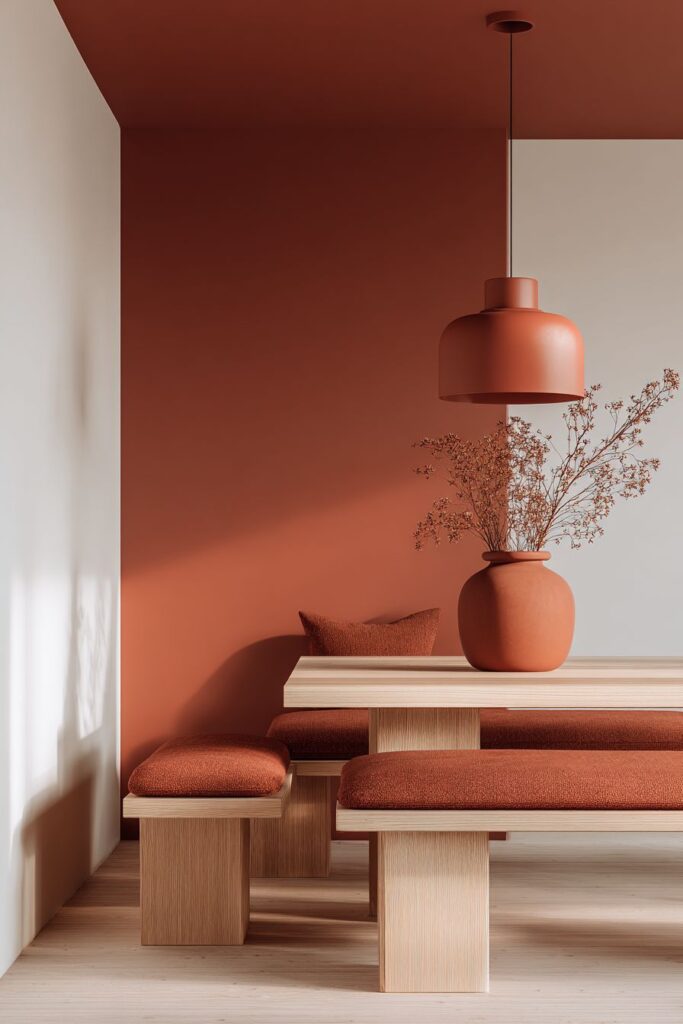
Wainscoting in cream topped with terracotta painted walls creates traditional architectural detail while the modern light fixture contrasts beautifully with these classic elements. This combination demonstrates how transitional design can honor the past while embracing contemporary innovation. Terracotta serving pieces and fresh flowers complete the styling, adding color and life while maintaining the sophisticated balance between different style elements.
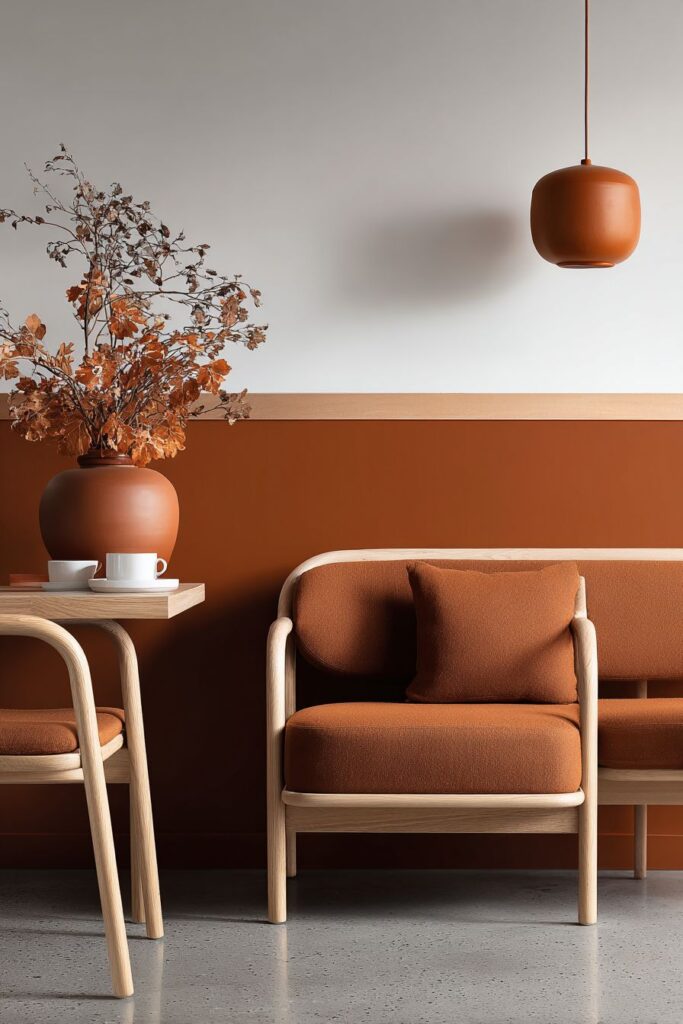
Professional photography captures the successful fusion of styles unified by the warm terracotta color palette, proving that this earthy hue can bridge different design periods and philosophies. The balanced lighting throughout the space ensures that both traditional and contemporary elements are showcased equally, creating harmony rather than competition between different design approaches.
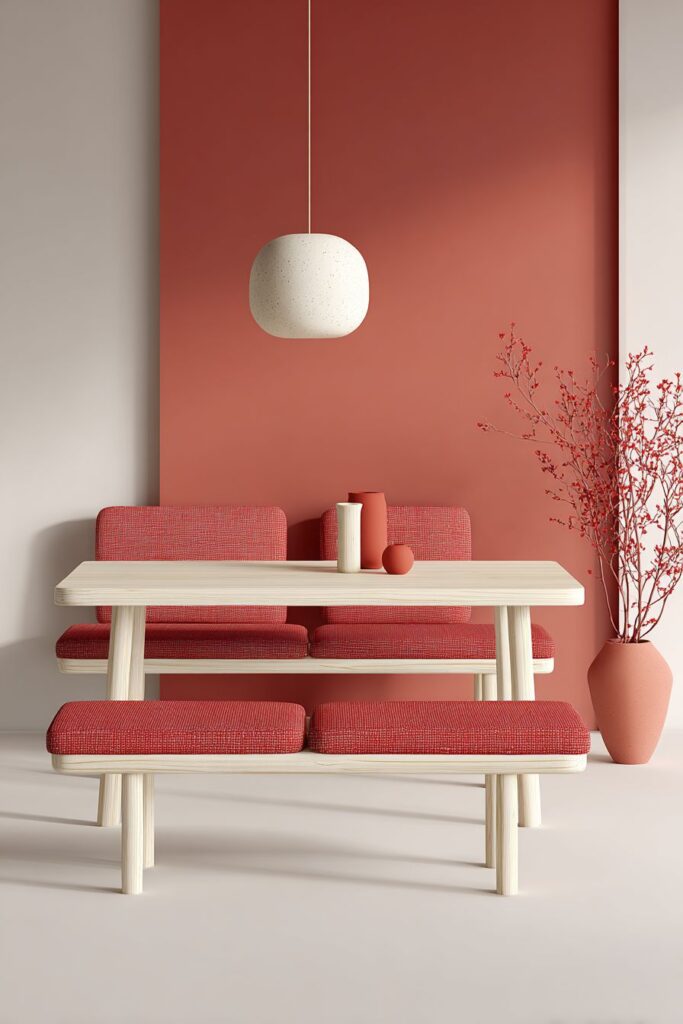
Transitional terracotta success requires balancing traditional architectural elements with contemporary furnishings and lighting, mixing different furniture styles while maintaining visual unity through consistent color application, incorporating both formal and casual elements to create versatile spaces, adding fresh flowers and natural elements to soften harder architectural features, and ensuring proper lighting to showcase all elements equally throughout different times of day. The goal is to create a space that feels both timeless and current, honoring design history while embracing contemporary living.
19. Compact Efficiency Maximization
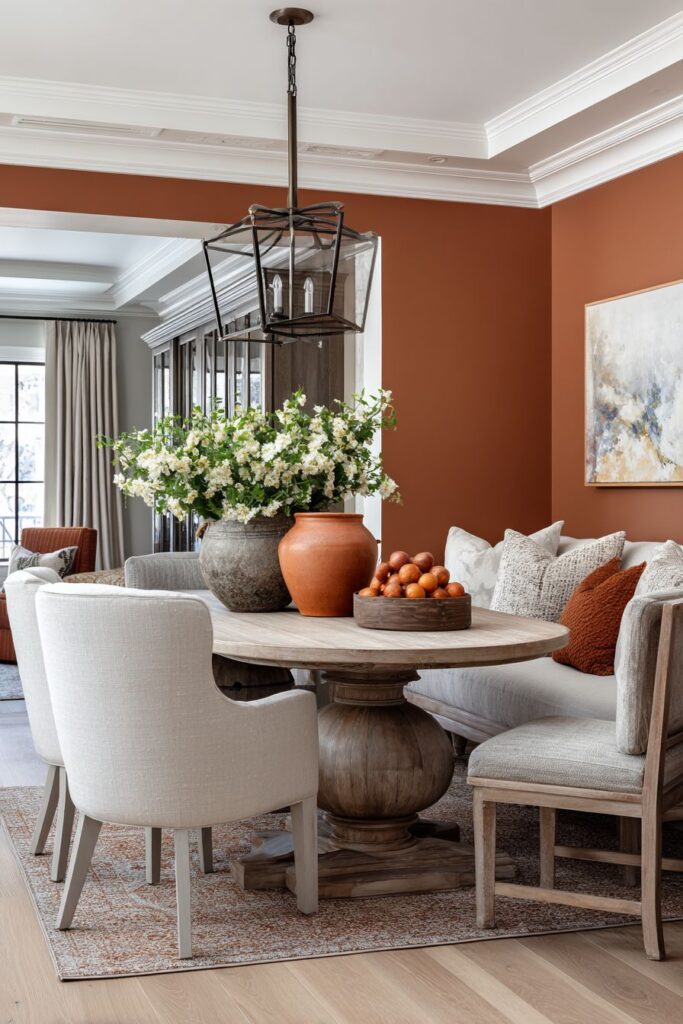
Smart design solutions maximize both function and beauty in this compact terracotta dining room that proves small spaces can be both efficient and elegant. The drop-leaf dining table maximizes space efficiency when closed while providing generous dining surface when extended, demonstrating how flexible furniture can adapt to different needs within limited square footage. Folding chairs with terracotta canvas seats provide comfortable seating that can be stored away when not needed, essential for maintaining clear circulation in small spaces.
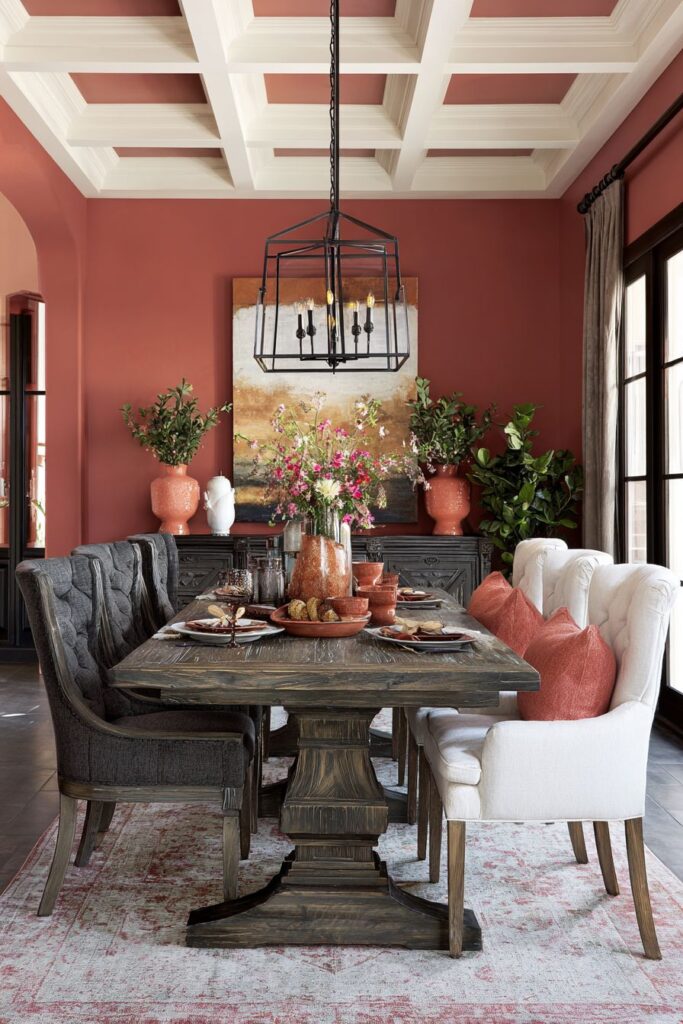
Built-in corner shelving displays a terracotta pottery collection while providing essential storage without consuming valuable floor space. This vertical approach to display and storage makes use of typically underutilized corner areas while adding visual interest and personality to the compact room. Walls feature terracotta paint with subtle texture technique that adds visual depth without overwhelming the limited square footage.
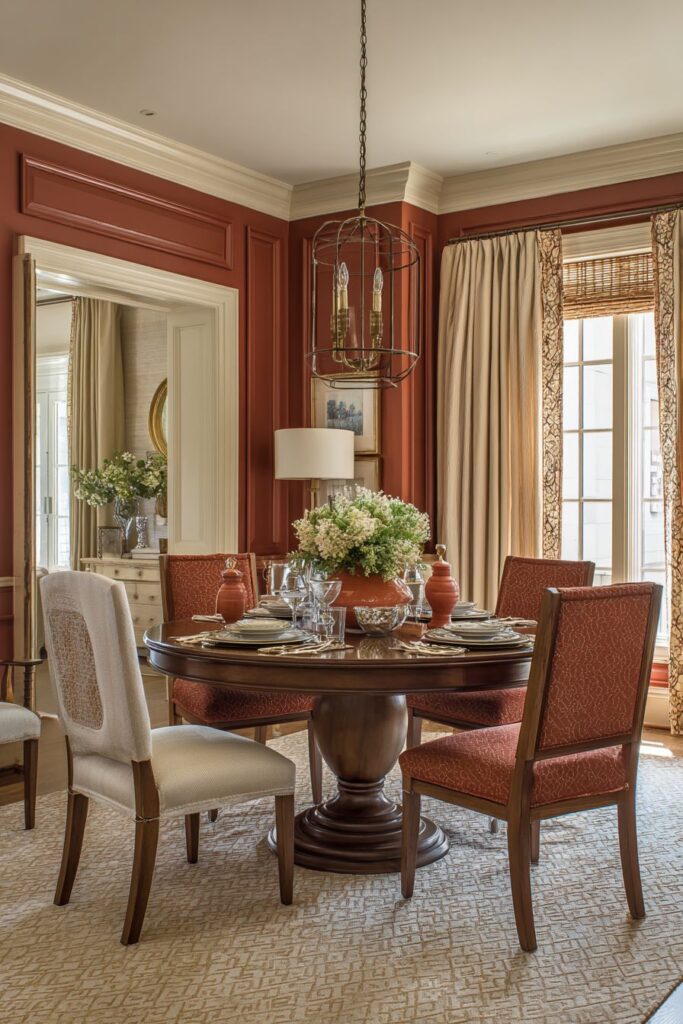
Natural light from a single window is maximized through light-colored flooring that reflects available light throughout the space. Interior design photography shows the smart space-saving solutions while maintaining the cohesive terracotta theme, proving that small spaces require creativity rather than compromise when it comes to beautiful design.
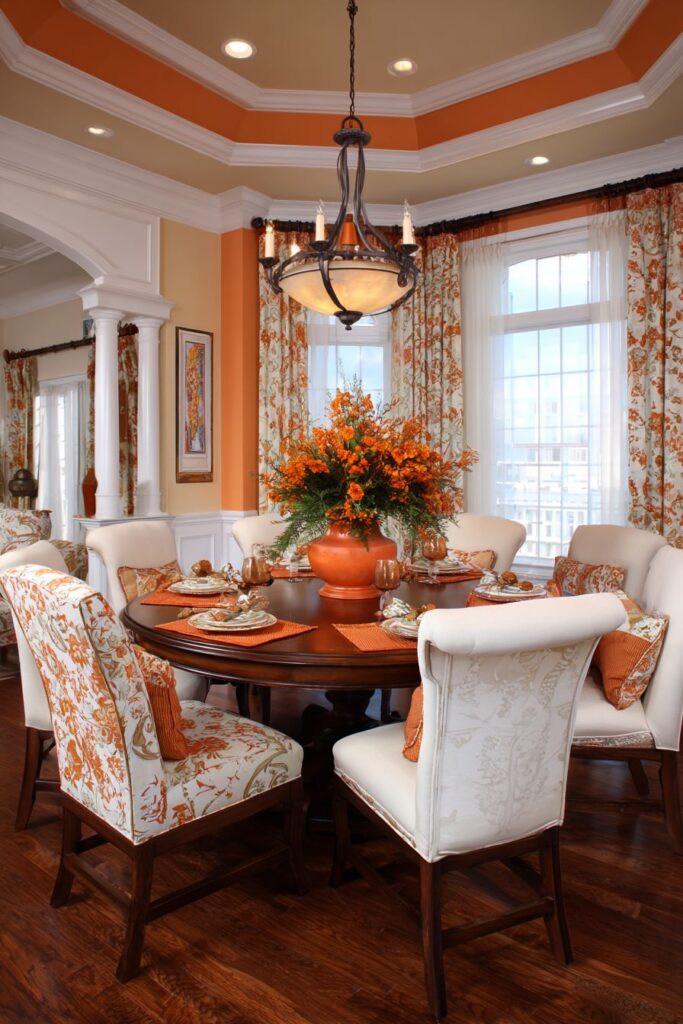
Compact terracotta design requires choosing flexible furniture that can adapt to different needs and space requirements, utilizing vertical space for storage and display rather than consuming valuable floor area, maximizing natural light through strategic color and material choices, incorporating built-in elements that provide function without consuming additional space, and maintaining consistent color themes to create visual continuity that makes small spaces feel larger. The success lies in creating a space that feels intentionally intimate rather than uncomfortably cramped.
20. Luxurious Custom Details
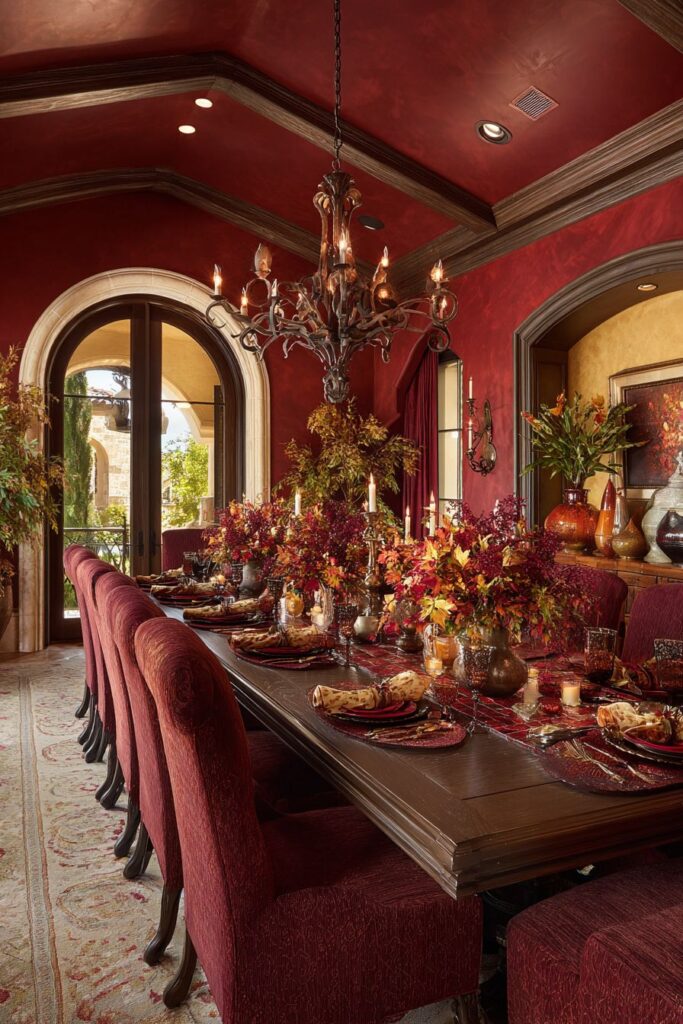
Ultimate sophistication reaches its pinnacle in this luxurious terracotta dining room featuring custom details and upscale finishes throughout. The custom dining table with terracotta ceramic inlay details creates a unique focal point that showcases artisanal craftsmanship while demonstrating the artistic potential of this earthy material. High-back upholstered chairs in rich terracotta fabric surround the table, their substantial presence and luxurious upholstery creating an atmosphere of refined elegance.
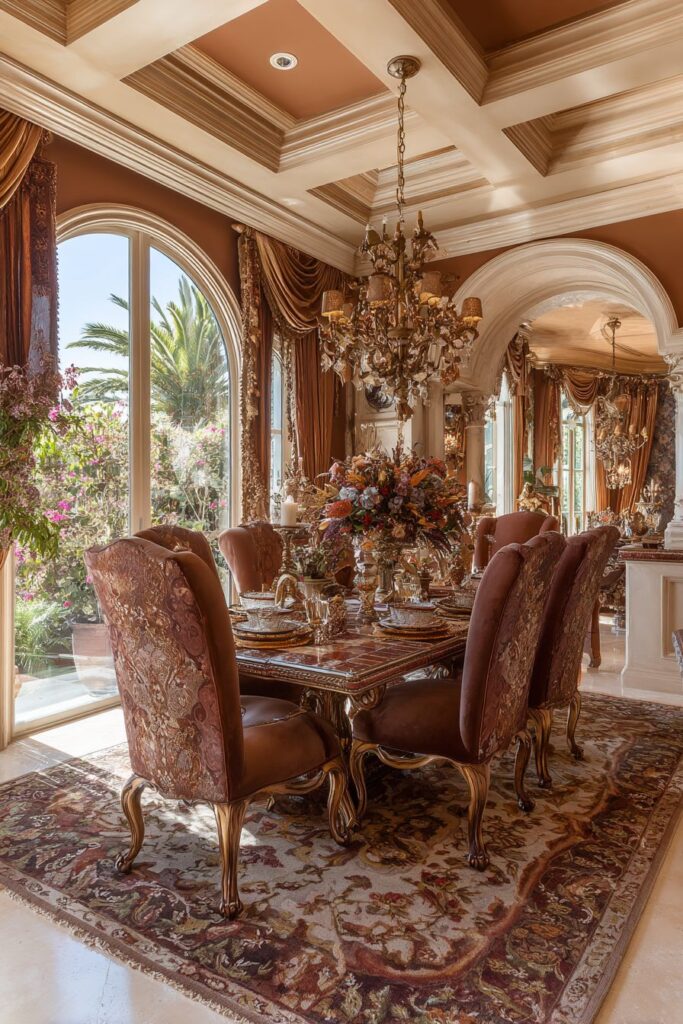
The coffered ceiling painted in complementary cream highlights the terracotta walls below while adding architectural grandeur essential to luxury design. This traditional ceiling treatment creates visual height and sophisticated detail that elevates the entire space. The designer chandelier in antiqued brass adds sophisticated illumination while serving as a sculptural centerpiece that commands attention and admiration.
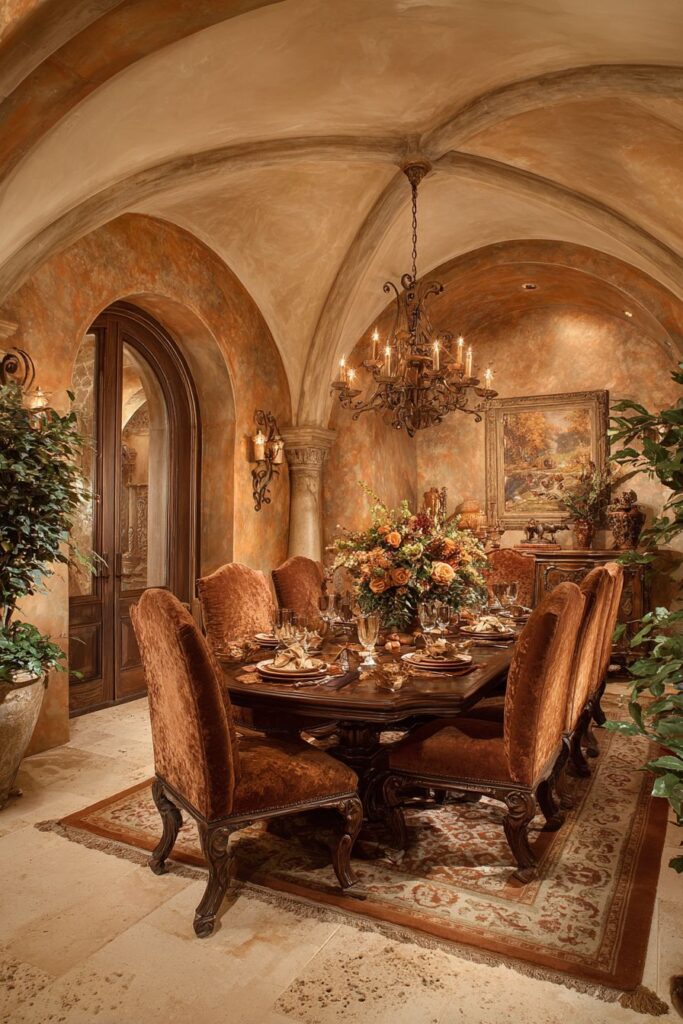
Fine terracotta ceramic accessories and fresh floral arrangements complete the elegant space, demonstrating how attention to detail and commitment to quality materials create truly luxurious environments. Professional photography showcases the upscale finishes and cohesive terracotta color scheme with dramatic lighting that emphasizes the refined atmosphere and exceptional craftsmanship throughout the space.
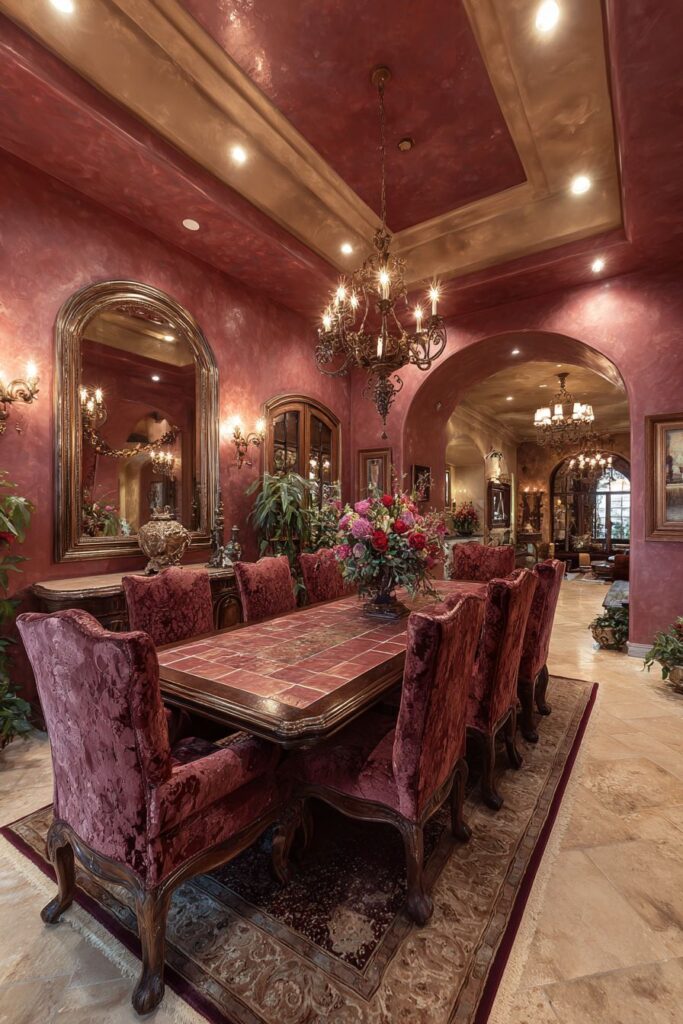
Luxury terracotta design requires investing in custom elements and artisanal details that showcase exceptional craftsmanship, incorporating architectural features like coffered ceilings for traditional grandeur, choosing high-quality fabrics and finishes that will maintain their beauty over time, selecting statement lighting that serves as functional sculpture, and paying attention to every detail from accessories to floral arrangements to create cohesive luxury. The success lies in commitment to quality and craftsmanship that creates spaces worthy of the finest hotels and restaurants while remaining comfortable for daily family life.
Why These Terracotta Dining Room Designs Are the Best
These twenty terracotta dining room concepts represent the pinnacle of contemporary interior design, showcasing the remarkable versatility and enduring appeal of this beloved earth tone. Each design demonstrates different approaches to incorporating terracotta into dining spaces, from subtle accent applications to bold statement walls, proving that this warm, welcoming color can adapt to virtually any design style or spatial constraint. The carefully curated selection spans multiple design philosophies, from minimalist Scandinavian aesthetics to maximalist bohemian approaches, illustrating how terracotta serves as a unifying element that can bridge different cultural and stylistic influences.
The success of these terracotta dining room designs lies in their commitment to authenticity and quality materials that honor the natural origins of this clay-based color. Whether featuring handcrafted pottery that celebrates traditional craftsmanship or contemporary textured plaster applications that reimagine terracotta for modern spaces, each design prioritizes genuine materials over synthetic imitations. This commitment to authenticity creates dining environments that engage multiple senses and develop character over time, essential qualities for spaces where families gather to create lasting memories.
The versatility demonstrated across these twenty designs addresses every possible dining scenario and spatial constraint modern homeowners face. From compact apartment solutions that maximize efficiency without sacrificing beauty to grand formal dining rooms designed for entertaining, terracotta proves its adaptability across different scales and functions. The color’s inherent warmth makes small spaces feel cozy rather than cramped while adding intimacy to larger rooms that might otherwise feel impersonal or intimidating.
These terracotta dining room concepts excel in their understanding of how color psychology impacts dining experiences. The warm, earthy tones naturally encourage relaxation and extended conversation, essential qualities for successful dining spaces. Unlike cooler color palettes that can feel formal or distant, terracotta creates an atmosphere that invites lingering over meals and fosters genuine connection between family members and guests. This psychological comfort translates into more enjoyable dining experiences and stronger social bonds formed around the table.
The integration of natural materials throughout these designs reflects current trends toward sustainable and environmentally conscious interior design. Terracotta’s connection to earth and clay resonates with homeowners seeking to reduce their environmental impact while creating beautiful living spaces. The featured designs incorporate reclaimed wood, natural fibers, handcrafted ceramics, and other sustainable materials that complement terracotta’s organic origins while reducing dependence on synthetic alternatives.
Professional lighting design in each concept demonstrates how terracotta responds beautifully to different illumination approaches throughout the day. Morning sunlight enhances the color’s golden undertones, while evening candlelight brings out deeper, richer qualities that create intimate dining atmospheres. The featured pendant lights, chandeliers, and natural lighting strategies show how thoughtful illumination can transform terracotta from cheerful daytime brightness to sophisticated evening elegance.
The storage and display solutions showcased across these designs address practical needs while celebrating the beauty of terracotta ceramics and serving pieces. Open shelving, built-in cabinetry, and strategic display areas transform functional pottery into decorative art, encouraging homeowners to invest in beautiful serving pieces that enhance both storage and aesthetics. This approach reduces clutter while adding personality and visual interest to dining spaces.
These terracotta dining room designs recognize the importance of flexibility in modern family life. Many feature expandable tables, moveable seating, and adaptable layouts that can accommodate both intimate family meals and larger entertaining scenarios. This practical approach ensures that beautiful design doesn’t compromise functionality, creating spaces that truly support contemporary living patterns.
The careful attention to proportion and scale throughout these designs demonstrates professional understanding of how different elements work together to create harmonious spaces. Whether featuring substantial farmhouse tables or delicate contemporary pieces, each design maintains proper relationships between furniture, architectural elements, and decorative accessories. This sophisticated understanding of spatial relationships prevents any single element from overwhelming the composition while ensuring every piece contributes to the overall design success.
Contemporary trends toward open-plan living are thoughtfully addressed in several designs that show how terracotta can unify different functional areas while maintaining their individual identities. The color serves as a connecting thread that ties kitchen, dining, and living areas together without creating monotonous uniformity. This approach supports modern family life while maintaining the distinct character essential to successful dining environments.
The international influences present throughout these designs reflect our increasingly connected world and growing appreciation for global design traditions. From Mediterranean pottery displays to Scandinavian minimalism, these terracotta applications demonstrate how this universal color can honor different cultural approaches to dining and hospitality. This global perspective enriches contemporary design while maintaining respect for traditional craftsmanship and cultural practices.
Conclusion
The twenty terracotta dining room designs presented in this comprehensive guide demonstrate the remarkable potential of this timeless color to transform ordinary dining spaces into extraordinary gathering places. From the rustic charm of farmhouse authenticity to the sleek sophistication of contemporary minimalism, terracotta proves its versatility while maintaining the warm, welcoming qualities that make dining rooms truly special. Each design offers unique insights into how this earthy hue can be incorporated into different styles, scales, and functional requirements, providing inspiration for homeowners at every level of design experience and budget constraint.
The success of these concepts lies not only in their aesthetic appeal but also in their understanding of how dining spaces function in contemporary family life. Whether creating intimate spaces for daily meals or grand rooms for special entertaining, these designs prioritize both beauty and practicality. The careful attention to lighting, storage, seating flexibility, and material quality ensures that these beautiful spaces will continue to serve families well for years to come while developing character and charm through daily use.
As you consider incorporating terracotta into your own dining space, remember that the most successful applications honor the color’s natural origins while adapting to your specific needs and style preferences. Whether you choose subtle accent applications or bold statement walls, the key lies in quality materials, thoughtful proportion, and attention to the details that make dining spaces truly special. Let these inspiring designs guide your creative process while encouraging you to experiment with this beloved color in ways that reflect your personal style and enhance your family’s dining experiences for generations to come.
"As an Amazon Associate, I earn from qualifying purchases."
