
As the world awakens from winter’s slumber and nature bursts forth with fresh blooms and vibrant energy, our homes deserve the same revival. Spring table settings offer the perfect opportunity to infuse your dining space with the season’s renewal, creating memorable experiences for family gatherings, intimate dinners, and celebratory brunches. The art of table setting goes far beyond simply placing plates and silverware—it’s about crafting an atmosphere that engages all the senses, tells a story, and makes every meal feel special.
Whether you’re drawn to the rustic charm of farmhouse aesthetics, the clean lines of modern minimalism, or the romantic allure of vintage-inspired arrangements, spring provides an endless palette of possibilities. From soft pastels that echo blooming gardens to crisp whites that celebrate the season’s fresh start, each approach to spring table design offers unique opportunities to express your personal style while embracing the joy and optimism that this transformative season brings. The following twenty designs showcase the incredible diversity of spring table settings, each offering distinctive elements that can inspire your own creative interpretations.
In this comprehensive guide, we’ll explore everything from casual outdoor dining setups to elegant formal arrangements, coastal-inspired themes to bohemian gatherings. Each design concept has been carefully crafted to demonstrate how thoughtful attention to color, texture, materials, and lighting can transform an ordinary meal into an extraordinary occasion. These aren’t just table settings—they’re invitations to slow down, gather with loved ones, and celebrate the beauty of the season through intentional design choices that reflect both timeless principles and contemporary trends.
1. Farmhouse Fresh with Pastel Pink Accents
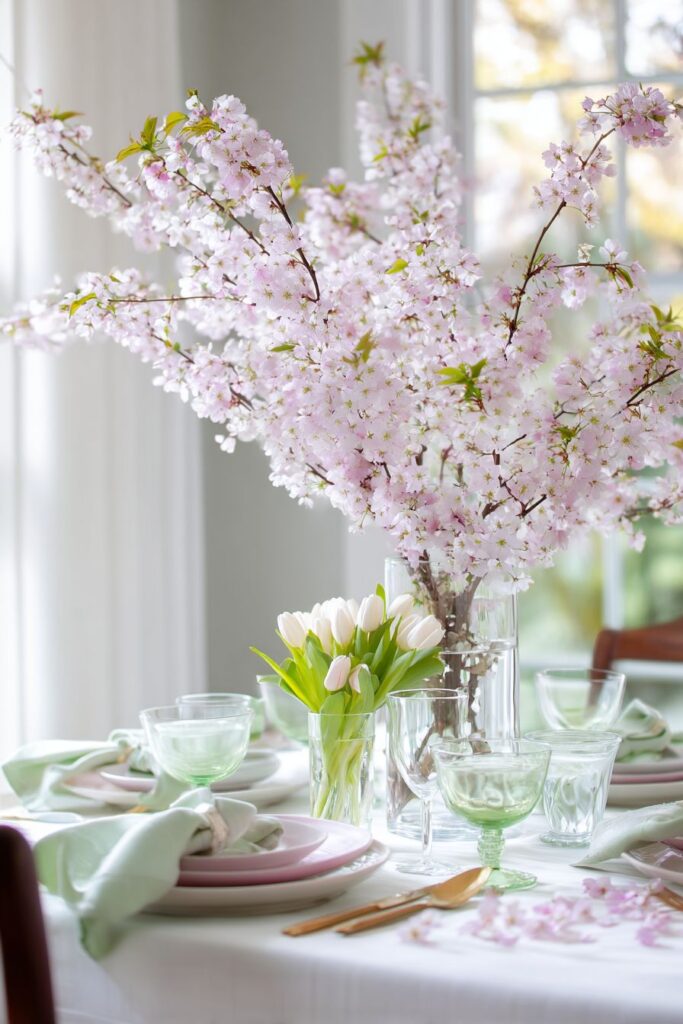
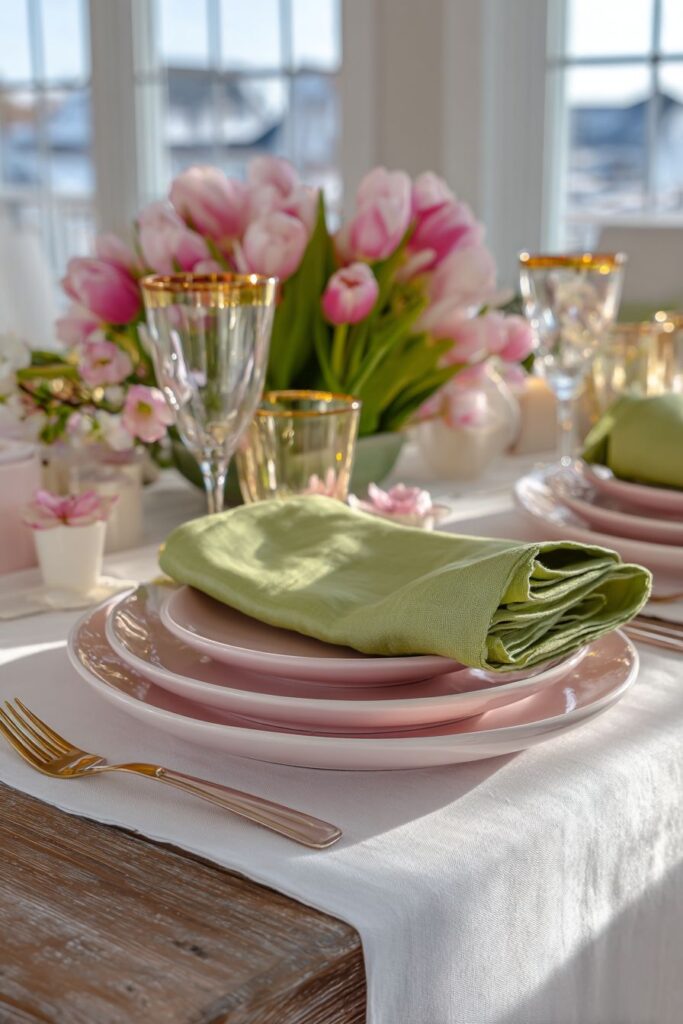
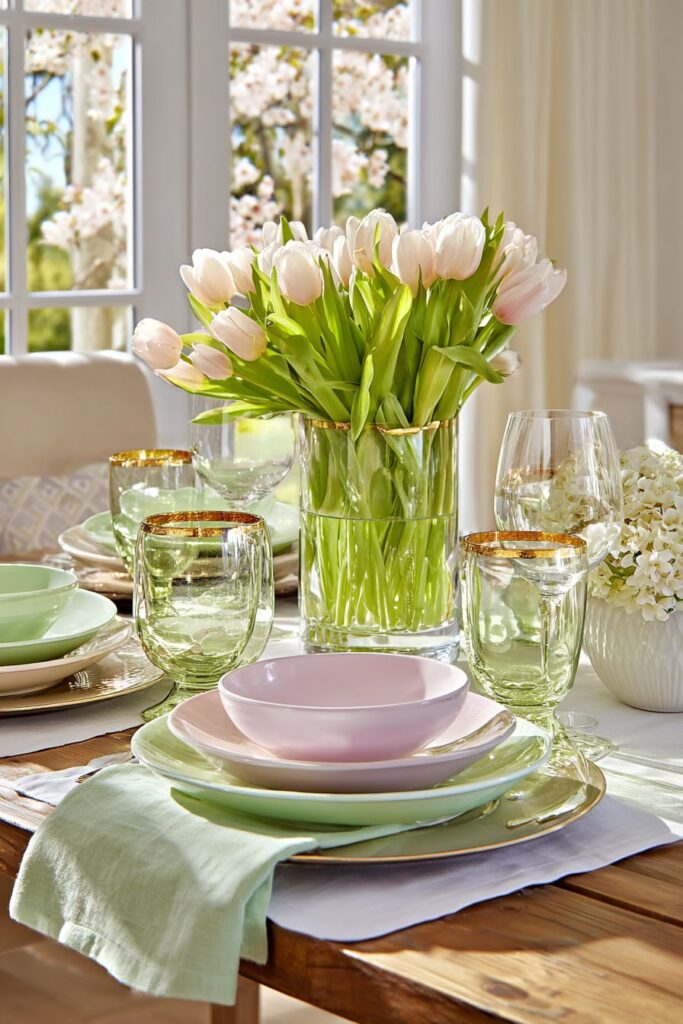
The quintessential spring farmhouse table setting begins with the foundation of crisp white linen, a timeless choice that provides the perfect canvas for seasonal color. Imagine a generously sized farmhouse dining table draped in pristine white fabric, its smooth surface catching and reflecting the gentle morning light that streams through nearby windows. Upon this neutral backdrop, pastel pink ceramic dinner plates create focal points of soft color, their delicate hue reminiscent of cherry blossoms and spring roses. The glazed ceramic surface adds a subtle sheen that elevates the rustic farmhouse aesthetic without sacrificing its approachable charm.
The centerpiece anchors the entire composition—a clear glass vase filled with fresh tulips, their stems visible through the transparent vessel, adding an element of natural beauty and organic form. Scattered cherry blossom petals around the base of the vase create a romantic touch, as if spring itself has gently blown into the room. These delicate petals add movement and whimsy to the arrangement, their soft pink tones harmonizing perfectly with the dinner plates while introducing an element of ephemeral beauty that reminds us to savor the fleeting moments of the season.
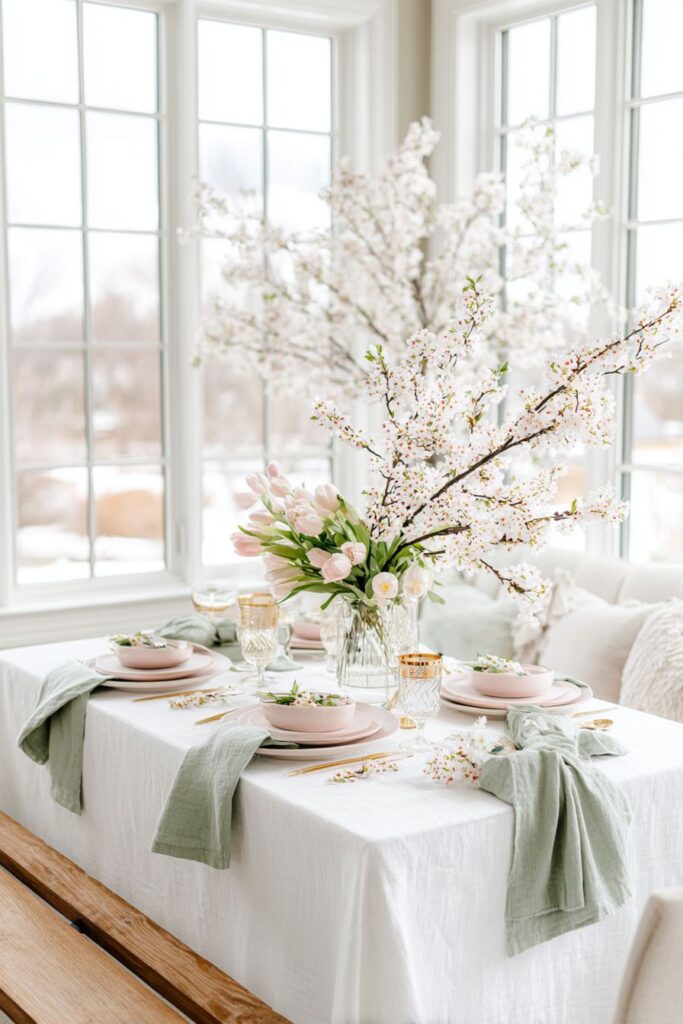
Soft sage green linen napkins folded beside each place setting introduce a secondary color that grounds the pink tones with earthy sophistication. The natural texture of linen adds tactile interest while maintaining the relaxed farmhouse vibe. Gold-rimmed glassware provides unexpected glamour, catching the morning light and creating tiny prisms that dance across the table surface. This juxtaposition of rustic and refined elements creates a balanced aesthetic that feels both casual and special—perfect for a spring brunch with close friends or a leisurely Sunday family breakfast.
Key Design Tips:
- Layer white linens as your foundation to create a fresh, clean starting point that allows seasonal colors to shine
- Choose pastel pink ceramics in matte or semi-gloss finishes for authentic farmhouse appeal
- Position your table near natural light sources to maximize the soft, diffused illumination that enhances spring colors
- Scatter fresh petals or small blooms around centerpieces for an organic, just-picked-from-the-garden feel
- Mix metallic accents like gold-rimmed glassware with rustic elements to add sophistication without losing warmth
2. Vintage Romance in Lavender and Cream
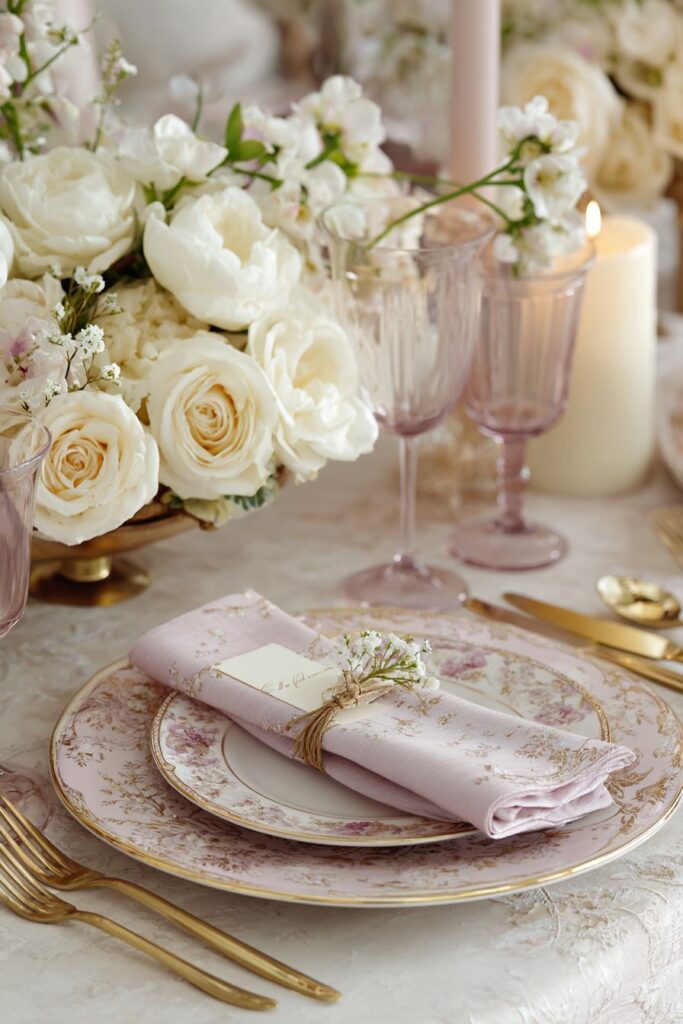
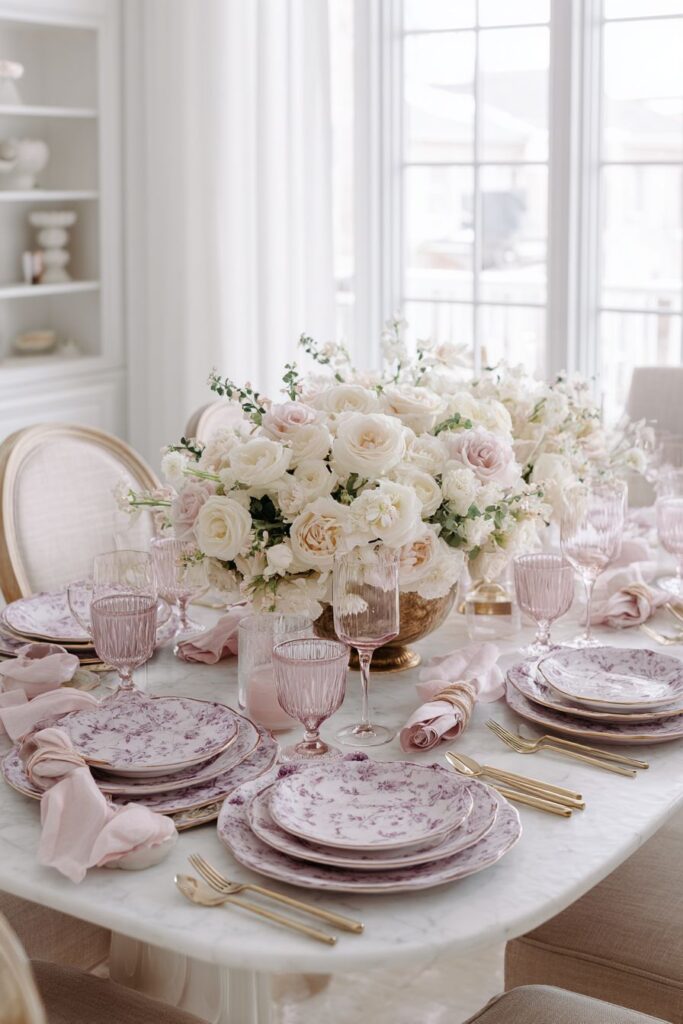
Step into a world of nostalgic elegance where vintage floral china takes center stage, each plate telling its own story through delicate patterns in soft lavender and cream. These treasured pieces, whether inherited heirlooms or carefully curated antique finds, bring depth and character to the spring table that new dinnerware simply cannot replicate. The slightly varied patterns across different plates create visual interest while maintaining cohesion through a consistent color palette, embodying the collected-over-time aesthetic that defines authentic vintage style.
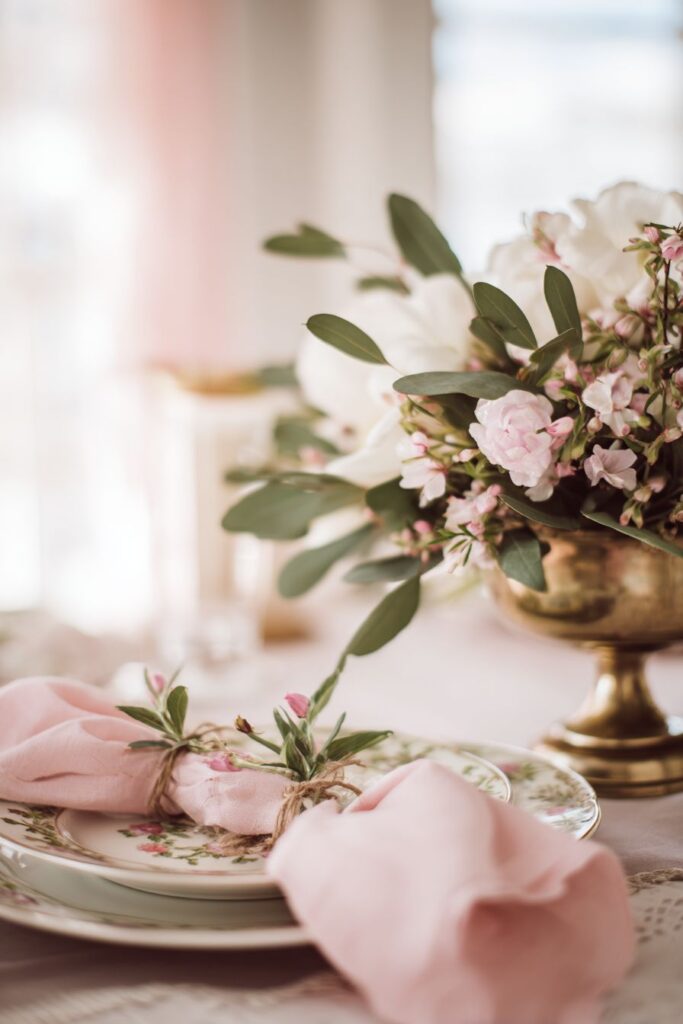
A low centerpiece arrangement demonstrates restraint and sophistication, allowing conversation to flow freely across the table while providing a stunning focal point. White peonies, those beloved harbingers of late spring, combine with silvery-green eucalyptus branches in a brass bowl that adds warmth and antique patina. The metal’s soft sheen complements the lavender tones in the china while introducing a grounding element that prevents the setting from becoming too ethereal. The low profile ensures guests maintain eye contact, creating an intimate atmosphere perfect for meaningful gatherings.
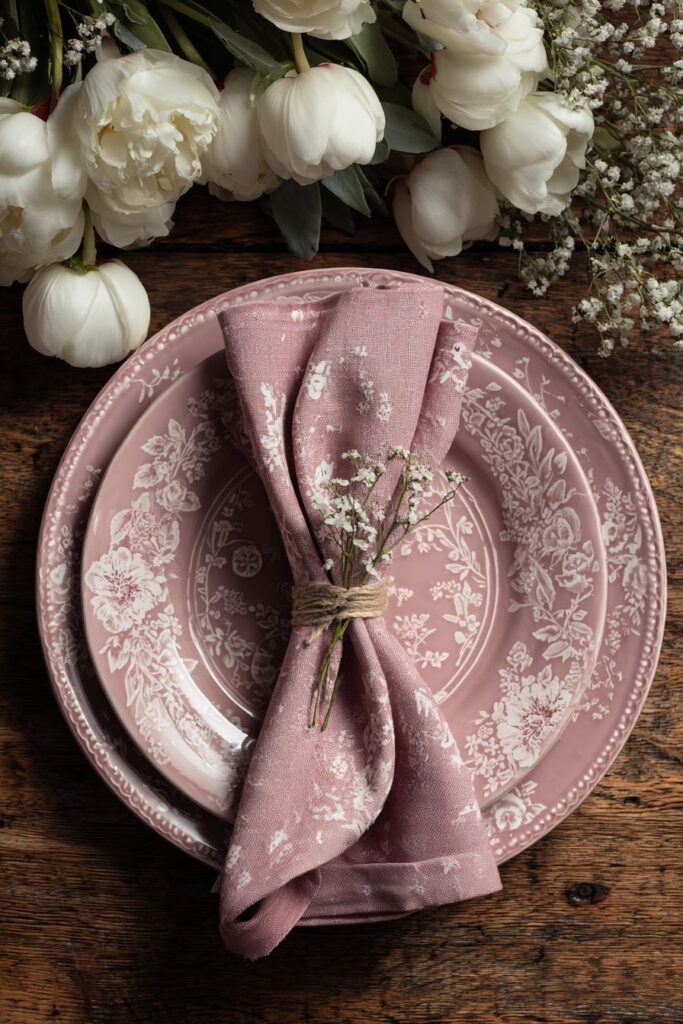
Blush pink cloth napkins with subtle texture add another layer of vintage charm, their soft weave catching light differently than smooth fabrics would, creating depth and visual intrigue. Natural twine tied around each napkin provides rustic contrast to the refined china, while small sprigs of baby’s breath tucked into these ties introduce fresh botanical elements at each individual place setting. This attention to detail at every seat makes each guest feel specially considered, transforming a simple meal into a memorable occasion. The balanced natural lighting emphasizes every material detail, from the fine lines in the china patterns to the delicate texture of the fabric and the gentle curve of each petal.
Key Design Tips:
- Source vintage china from antique shops or family collections, mixing patterns that share a common color story
- Keep centerpieces low (under 12 inches) to maintain intimate conversation flow
- Use brass or copper vessels for arrangements to add warmth that complements vintage aesthetics
- Tie natural elements like twine or ribbon around napkins for textural contrast
- Layer different textures—smooth china, woven fabric, rough twine—to create tactile richness
3. Casual Wildflower Charm
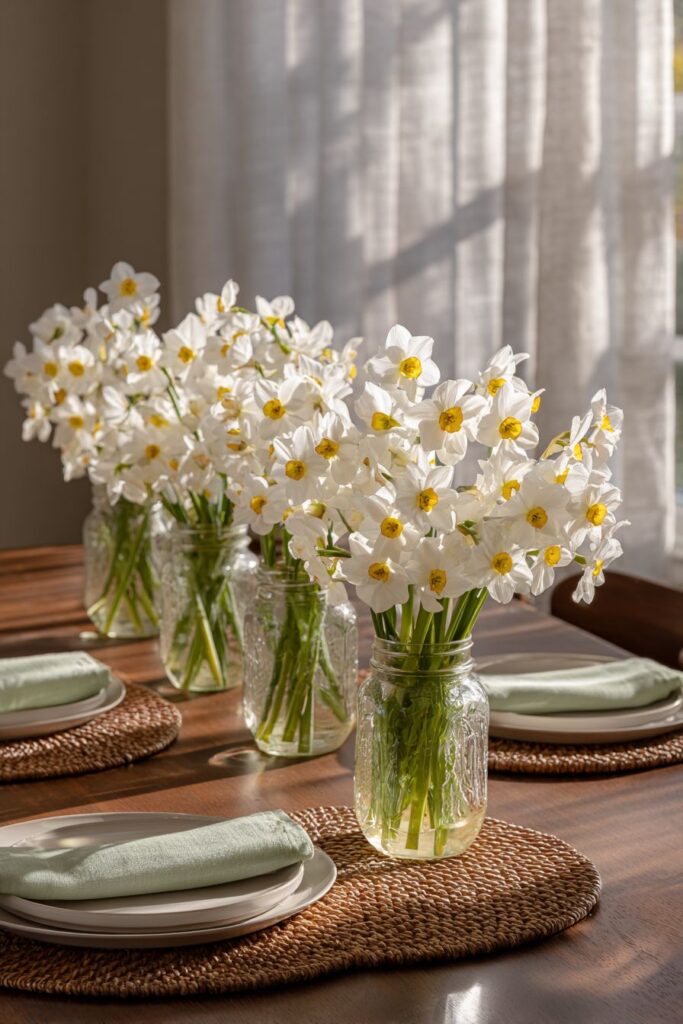
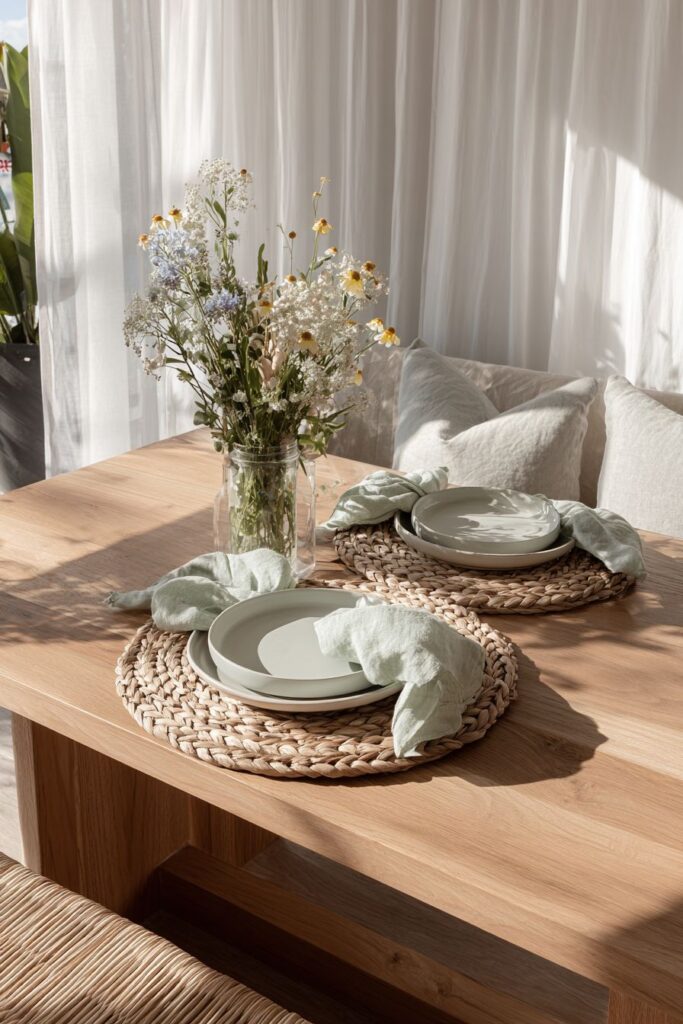
Embrace the unpretentious beauty of spring with a table setting that celebrates simplicity and natural elements. A natural wood dining table provides the perfect foundation, its grain patterns and warm tones adding organic character that no painted surface could match. Woven rattan placemats introduce additional natural texture while protecting the table surface and defining each place setting with circular boundaries that feel soft and approachable rather than rigid and formal. Simple white ceramic plates sit atop these woven foundations, their clean lines and neutral color allowing the natural materials and floral arrangements to become the stars of the composition.
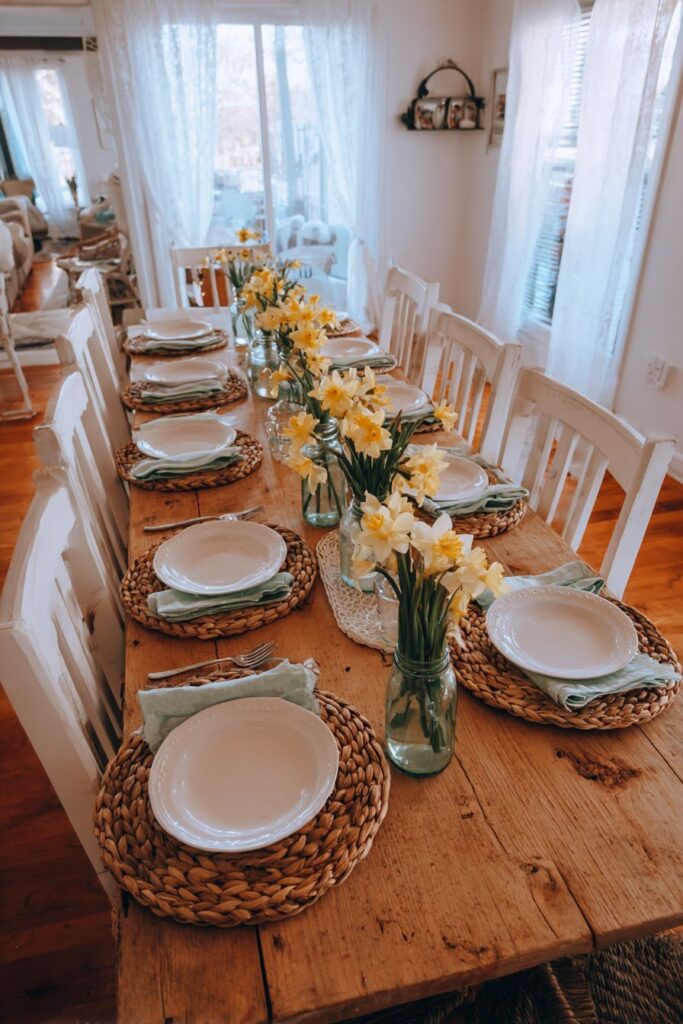
The centerpiece arrangement takes a refreshingly casual approach—mason jars filled with wildflowers and cheerful daffodils create an achievable, relatable aesthetic that invites imitation. These humble vessels, typically associated with preserving summer’s harvest, find new purpose as charming vases that perfectly capture the accessible spirit of spring entertaining. The mix of wildflowers introduces color variety and organic movement, while daffodils add their unmistakable sunny disposition and trumpet-shaped blooms that announce spring’s arrival with botanical fanfare. This combination feels gathered from a countryside walk rather than purchased from a florist, adding authenticity and personal touch.
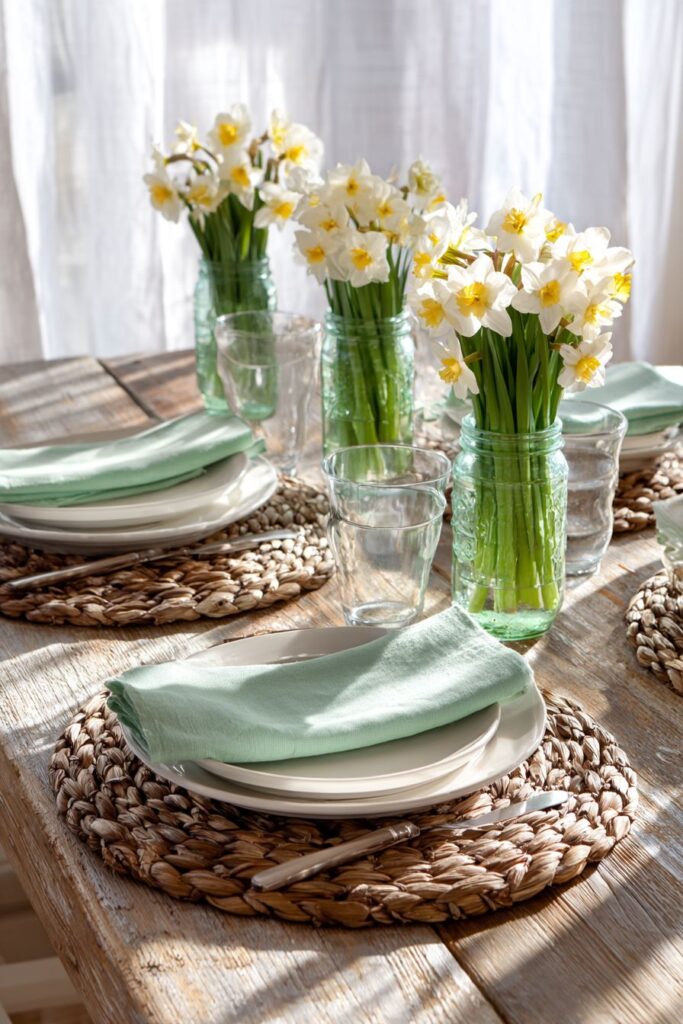
Mint green cotton napkins casually placed beside silver flatware reinforce the relaxed approach while introducing a fresh pop of spring color. The cotton material, more durable and washable than delicate linens, suggests frequent use and everyday enjoyment rather than special-occasion-only formality. Their casual placement—perhaps with a slight rumple or artistic drape—adds to the lived-in, welcoming feel. Soft afternoon sunlight filtering through sheer curtains creates the ideal lighting scenario, its diffused quality highlighting the fresh, relaxed spring ambiance without harsh shadows or overly bright spots. This is table setting for real life, where beauty meets practicality in perfect harmony.
Key Design Tips:
- Use natural wood surfaces without tablecloths to showcase organic grain patterns
- Incorporate woven elements like rattan or seagrass for instant texture and warmth
- Choose humble vessels like mason jars for arrangements that feel personal and achievable
- Mix wildflowers with traditional spring blooms for natural variety
- Allow napkins to sit casually rather than in precise folds for approachable elegance
4. Modern Minimalist with Spring Accents
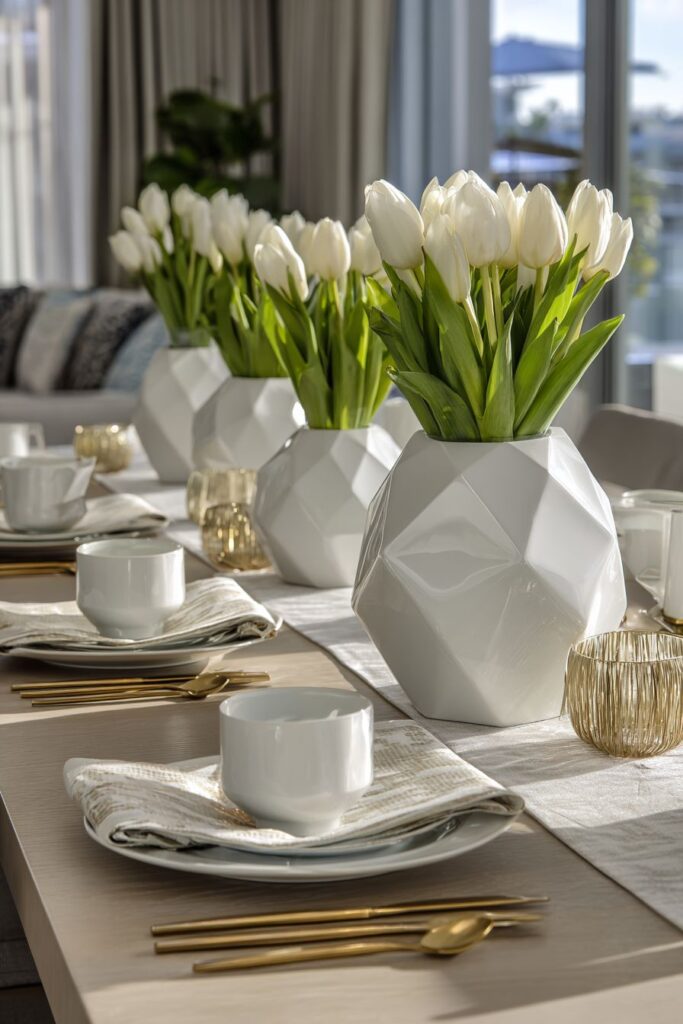
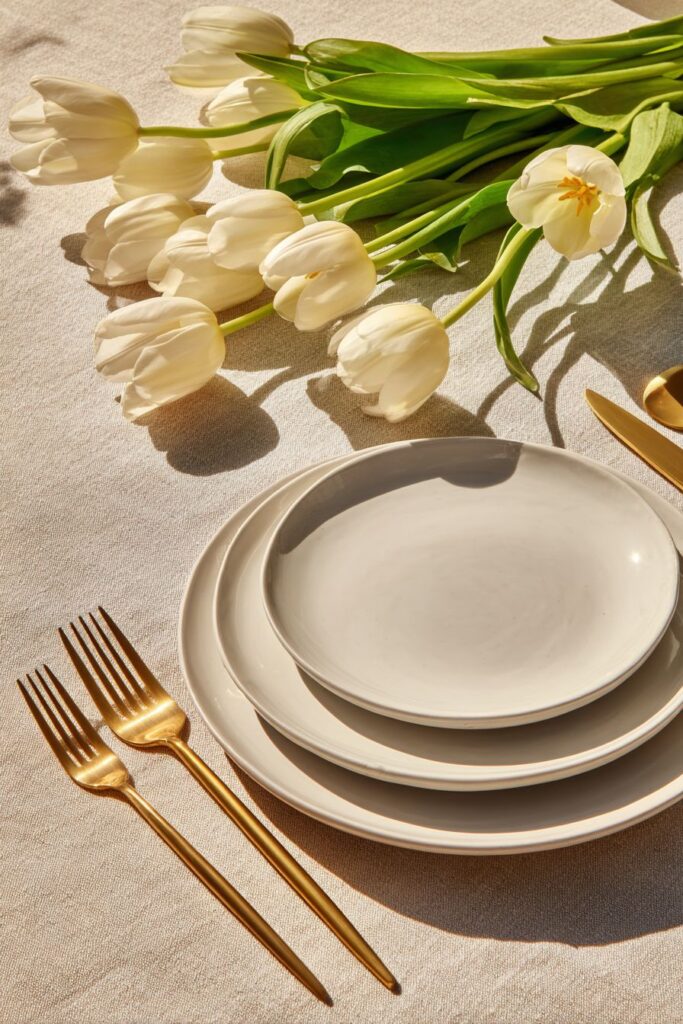
The modern minimalist approach to spring table settings proves that less truly can be more, with each carefully selected element earning its place through both function and form. A light oak table provides subtle warmth while maintaining the clean aesthetic essential to minimalist design, its pale tone creating a neutral foundation that doesn’t compete with the carefully curated items placed upon it. Minimalist white porcelain dinnerware, perhaps with interesting architectural shapes or subtle reactive glazes, demonstrates that simplicity need not mean boring—the quality of materials and thoughtful design speak volumes without ornamentation.
The contemporary centerpiece reimagines traditional floral arrangements through a modern lens—instead of one large bouquet, a sleek linear arrangement of white tulips in individual bud vases creates a runway of blooms down the table’s center. This repetition of simple elements creates visual rhythm and impact while maintaining the uncluttered aesthetic. Each tulip stem, visible through clear glass, becomes a study in natural form, its gentle curve and singular bloom commanding attention precisely because it stands alone. The linear arrangement guides the eye along the table length while maintaining low profile that doesn’t obstruct views or conversation.
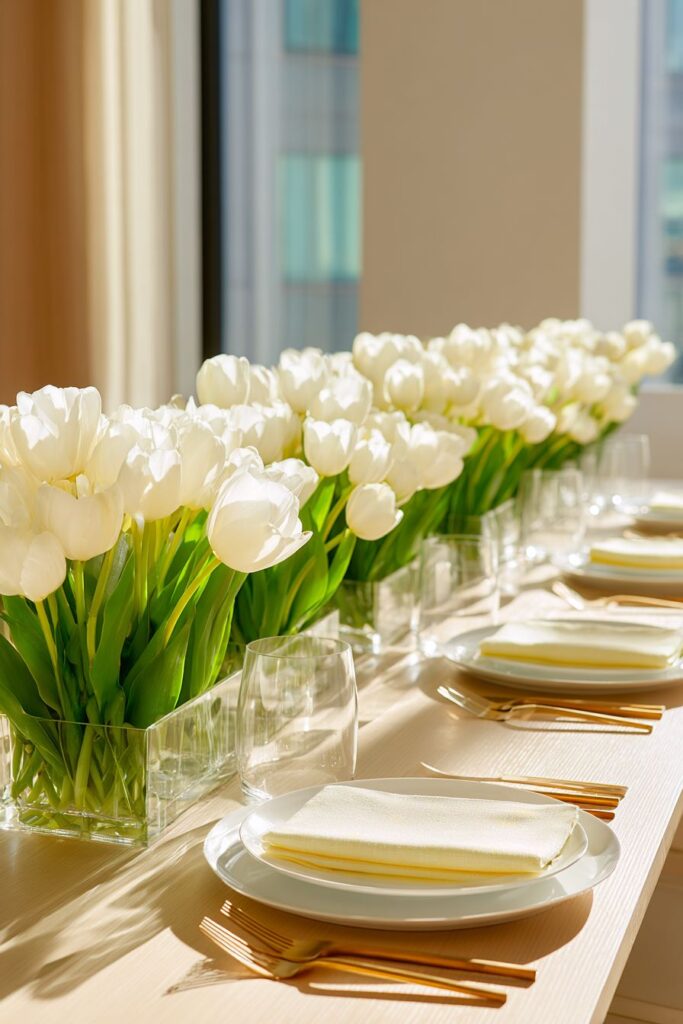
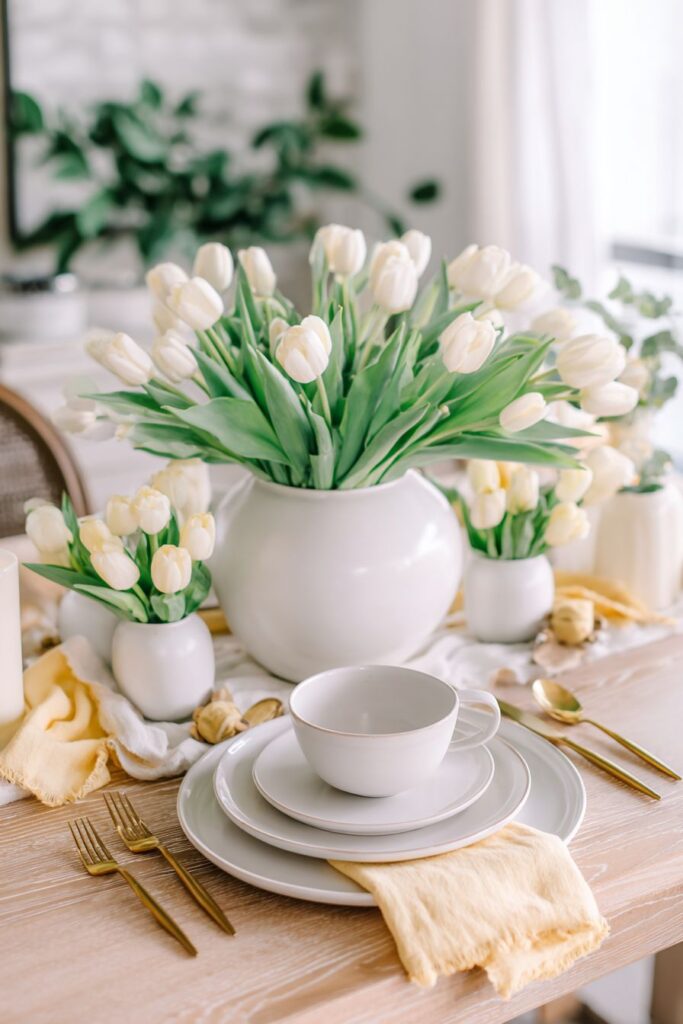
Pale yellow linen napkins introduce the season’s essential color in the most subtle way possible, their soft hue catching light like early morning sunshine. Clean geometric folds—perhaps a simple rectangle or precise triangle—demonstrate that even practical elements can become design features when executed with intention. Brushed gold cutlery adds warmth and a touch of luxury without the formality of high-polish silver, its matte finish aligning perfectly with contemporary sensibilities. The composition photographed with architectural precision shows how crisp natural lighting and attention to subtle spring color accents can create impact against a neutral backdrop, proving that minimalism and seasonal celebration can coexist beautifully.
Key Design Tips:
- Select furniture and dinnerware in neutral tones to create a calm foundation
- Use repetition of simple elements (like individual bud vases) for modern impact
- Choose one or two spring accent colors and use them sparingly for maximum effect
- Opt for geometric napkin folds that look intentional rather than fussy
- Embrace negative space as a design element rather than feeling compelled to fill every area
5. Outdoor Eclectic Garden Party
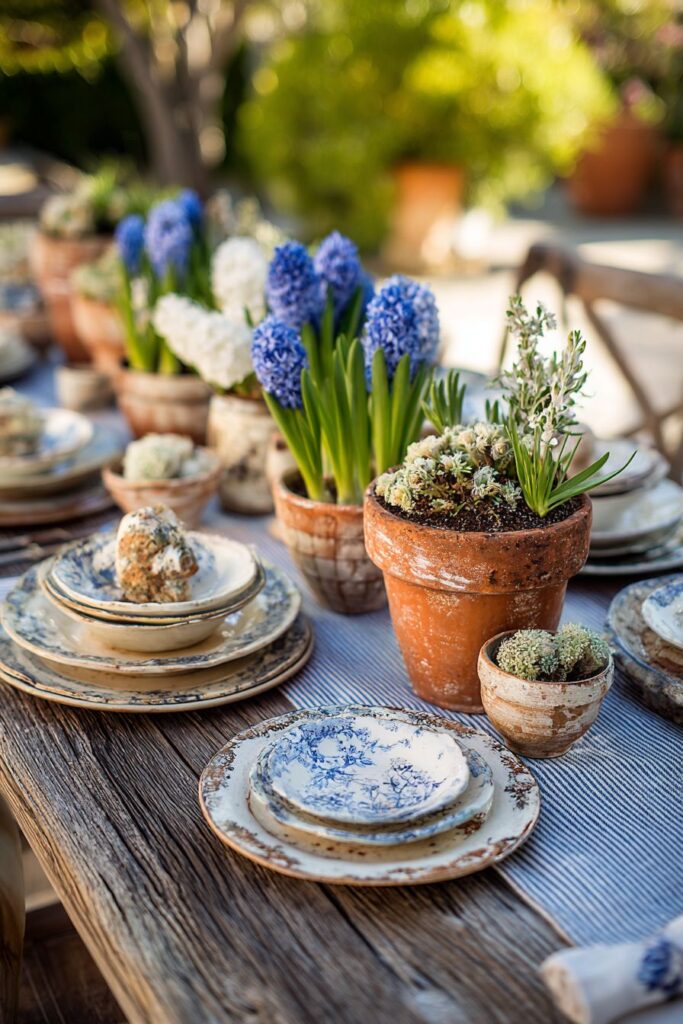
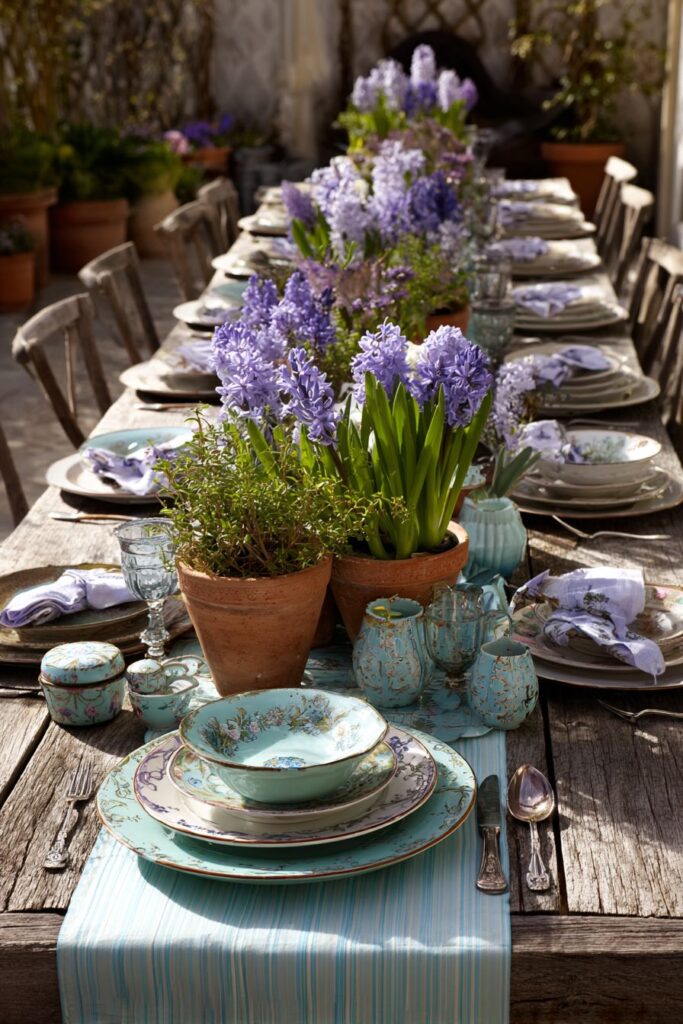
The magic of spring dining reaches its peak when moved outdoors, where nature itself becomes part of the décor. A weathered wooden table, bearing the marks of seasons past, provides character that no new furniture could replicate. Its aged surface tells stories of previous gatherings, rain showers, and sunny afternoons, creating an authentic backdrop for new memories. A soft blue and white striped table runner introduces nautical freshness while protecting portions of the table surface, its linear pattern creating visual direction and defining the central arrangement zone.
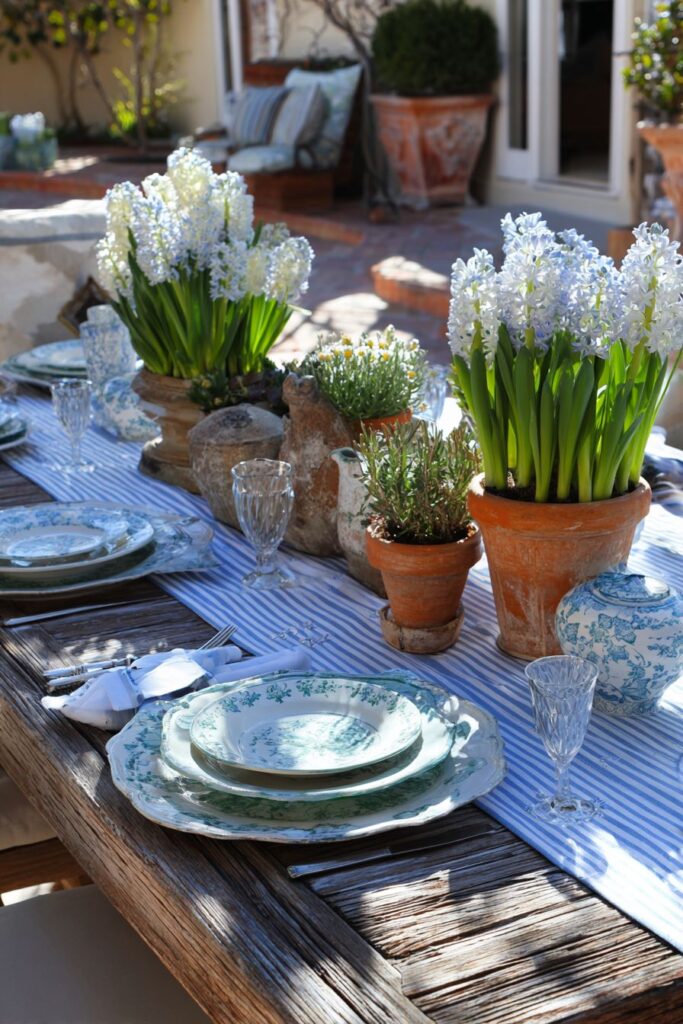
Mismatched vintage plates in coordinating pastel shades exemplify the collected-over-time aesthetic that makes eclectic design so personally meaningful. Perhaps a pale blue plate here, a soft peach one there, a mint green option across the table—each different, yet all working together through their shared pastel palette and vintage provenance. This approach celebrates individuality while maintaining cohesion, much like a gathering of diverse friends united by shared values. The slight variations in size, pattern, and exact hue create visual interest and conversation starters that identical place settings cannot provide.
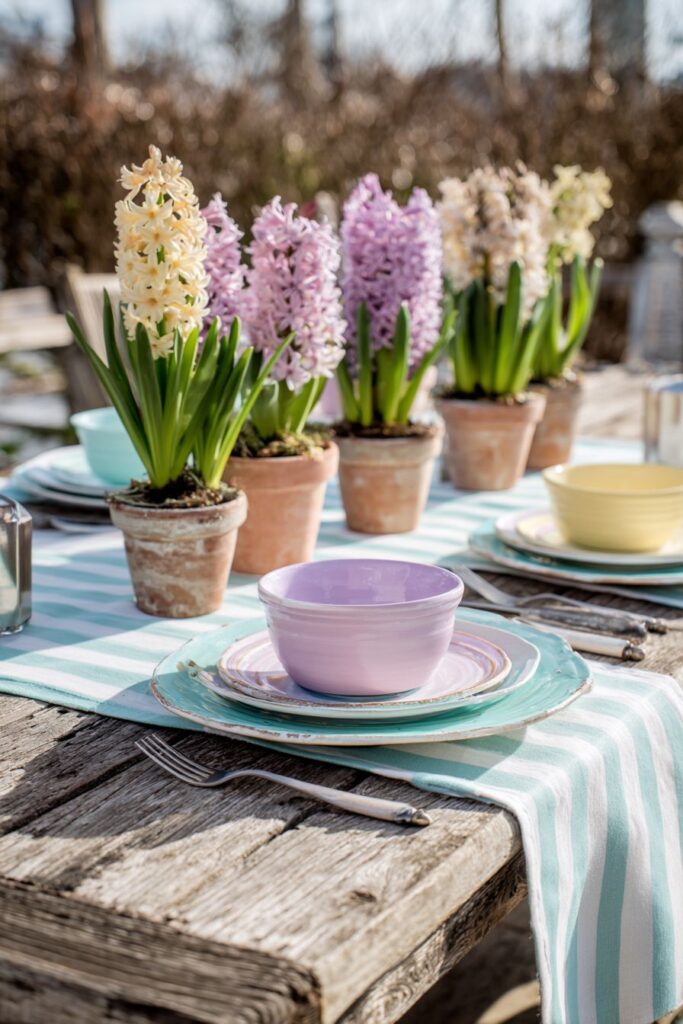
Terra cotta pots filled with blooming hyacinths and fresh herbs serve double duty as both fragrant centerpieces and practical elements. The hyacinths contribute their intoxicating spring scent and jewel-toned blooms, while herbs like rosemary, basil, and thyme add culinary connection and silvery-green foliage that complements the pastel plates. The terra cotta material, with its warm earthen tone and porous texture, reinforces the garden setting while providing proper drainage for living plants. Natural daylight creates authentic outdoor ambiance with realistic shadows that shift throughout the meal, adding dynamic quality to the setting. This charming imperfection and livable aesthetic invites guests to relax, knowing that wind-blown napkins and petals on plates are features, not flaws.
Key Design Tips:
- Embrace weathered furniture outdoors for authentic character and low-maintenance beauty
- Collect vintage plates over time, unifying them through color palette rather than matching patterns
- Use living plants in centerpieces for fragrance, visual interest, and sustainable decoration
- Choose durable materials like terra cotta that withstand outdoor conditions
- Allow natural elements like shifting sunlight and gentle breezes to become part of the experience
6. Romantic Candlelit Elegance
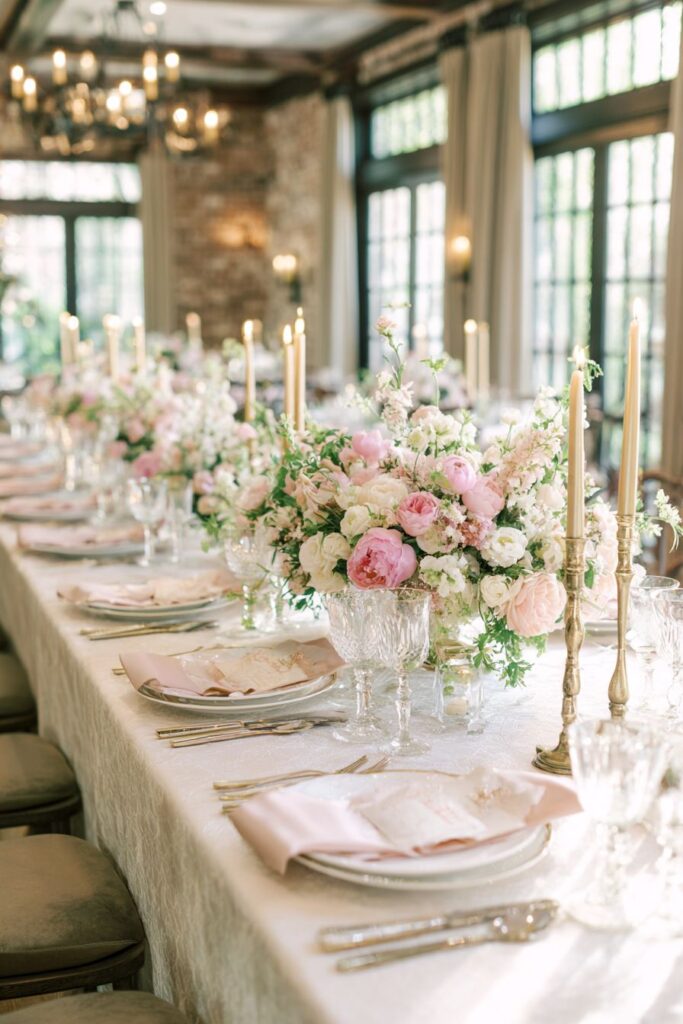
For occasions demanding refined romance, this spring table setting elevates sophistication to an art form. The foundation begins with ivory charger plates, their larger size creating elegant frames for the dinnerware that follows. Delicate blush pink accents and gold details catch and reflect both natural and candlelight, creating a luminous quality that seems to glow from within. The combination of these warm metallics and soft pastels creates a palette that feels both springlike and timeless, appropriate for everything from anniversary dinners to bridal showers.
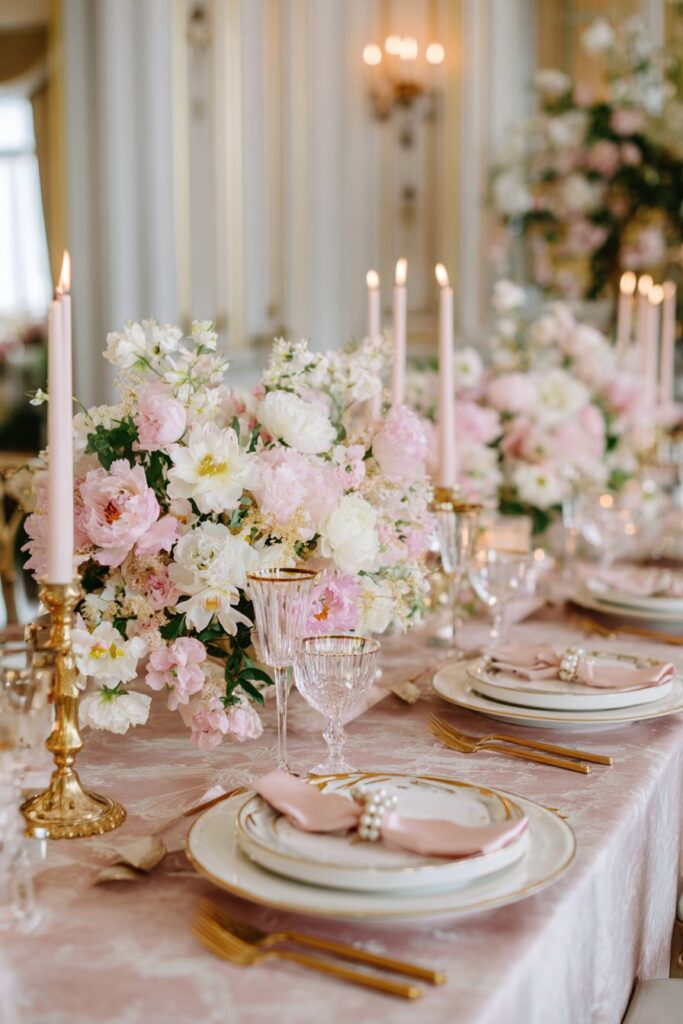
Tall tapered candles in brass candlesticks flank the central arrangement, their vertical elements adding drama and drawing the eye upward. The flickering candlelight will cast dancing shadows and create intimate pools of golden illumination as evening approaches, transforming the atmosphere from daytime fresh to nighttime enchanting. The brass candlesticks, with their warm patina and classical forms, bridge traditional and contemporary aesthetics while complementing the gold accents elsewhere in the setting. Between these candlesticks, a lush arrangement of pink peonies and white ranunculus creates a garden-gathered feeling despite its formal presentation, the full blooms and delicate petals embodying spring’s generous beauty.
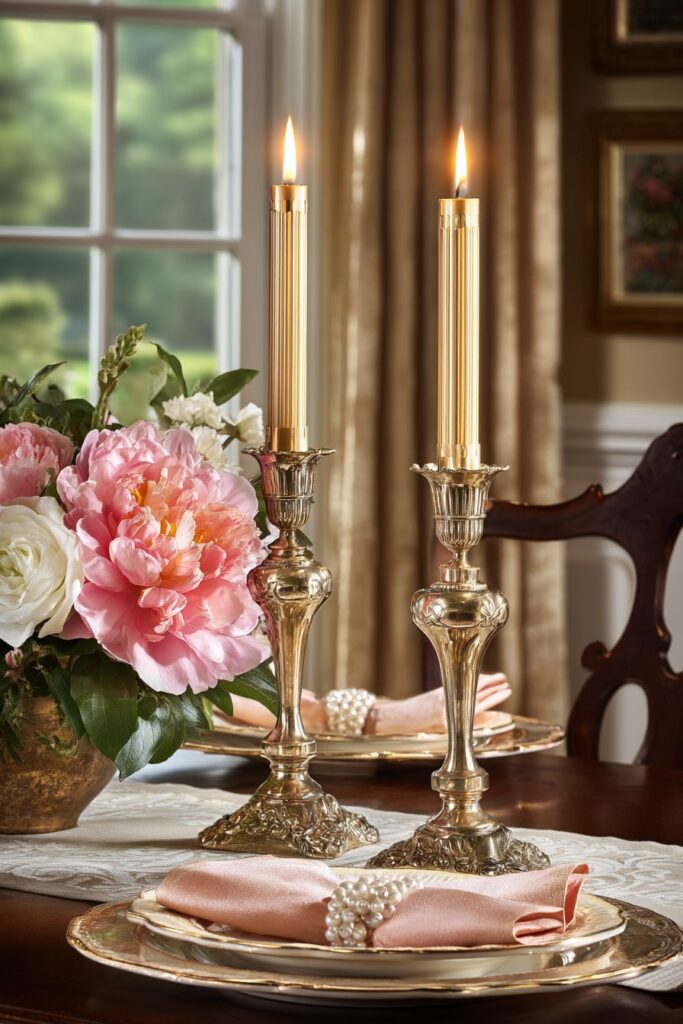
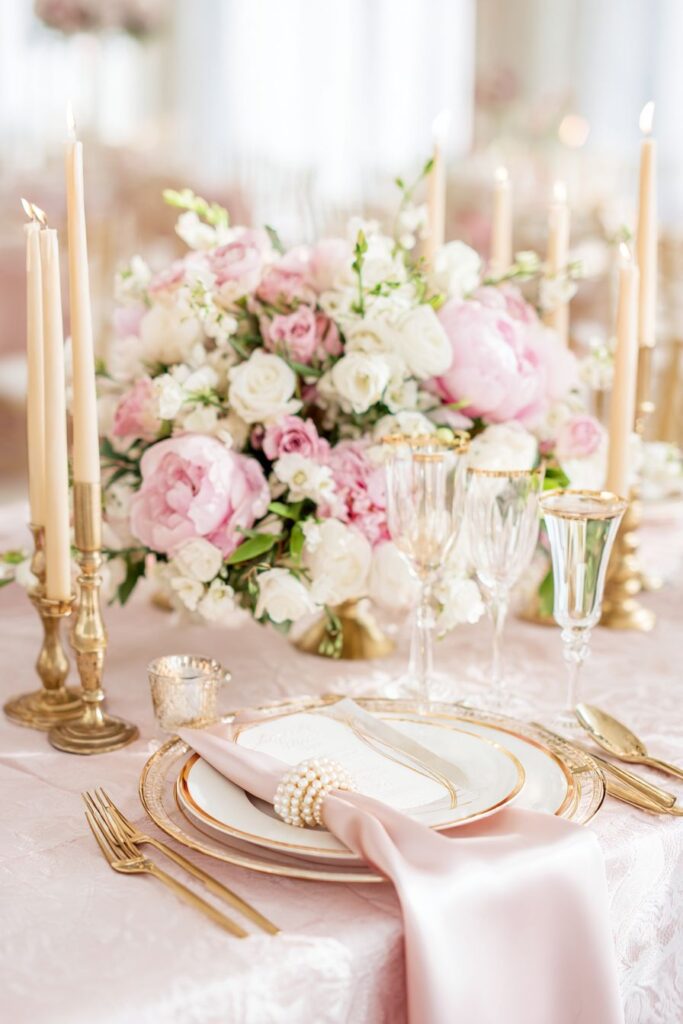
Champagne-colored silk napkins introduce luxurious texture and subtle shimmer, their smooth surface contrasting beautifully with the matte ceramics and natural flowers. Pearl napkin rings add jewelry-like detail at each place setting, catching light like morning dew on flower petals. These small touches of opulence elevate the entire arrangement without becoming ostentatious. Soft golden hour lighting creates warm highlights on the refined spring color palette, the low-angle sun bringing out the dimensional quality of every surface—from petal softness to silk sheen to metallic gleam. This professional composition shows how texture and reflective surfaces work together to create depth and visual intrigue.
Key Design Tips:
- Layer charger plates under dinner plates for formal elegance and added dimension
- Use tall candlesticks to add vertical interest and create romantic lighting
- Choose silk or satin napkins for special occasions where tactile luxury enhances the experience
- Incorporate pearl or crystal accents that catch light and add sparkle
- Plan settings to transition from natural daylight to candlelight for evolving ambiance
7. Rustic Farmhouse Garden Gathering
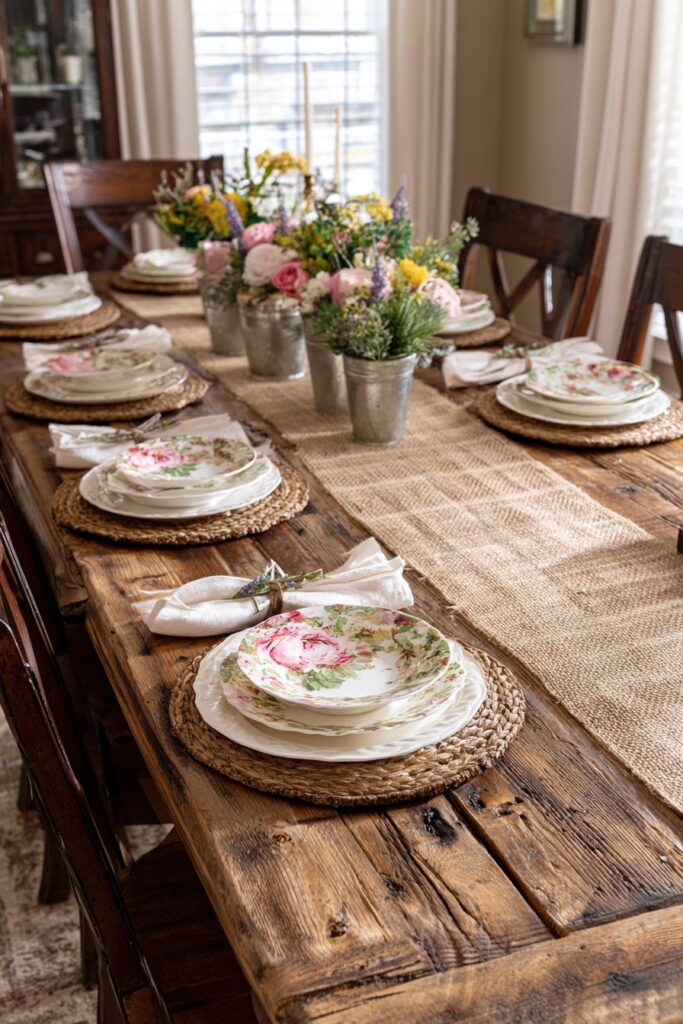
The rustic farmhouse aesthetic celebrates agricultural heritage and handcrafted simplicity, creating tables that feel gathered from the land and made by hand. A reclaimed wood farm table provides the essential foundation, its substantial presence and visible history offering grounding authenticity. The wood’s weathered surface, with nail holes, saw marks, and color variations, tells stories of its previous life—perhaps as barn siding or old fencing—now repurposed into a gathering place. A natural burlap table runner adds texture and defines the table center while maintaining the humble, organic aesthetic that makes farmhouse style so appealing.
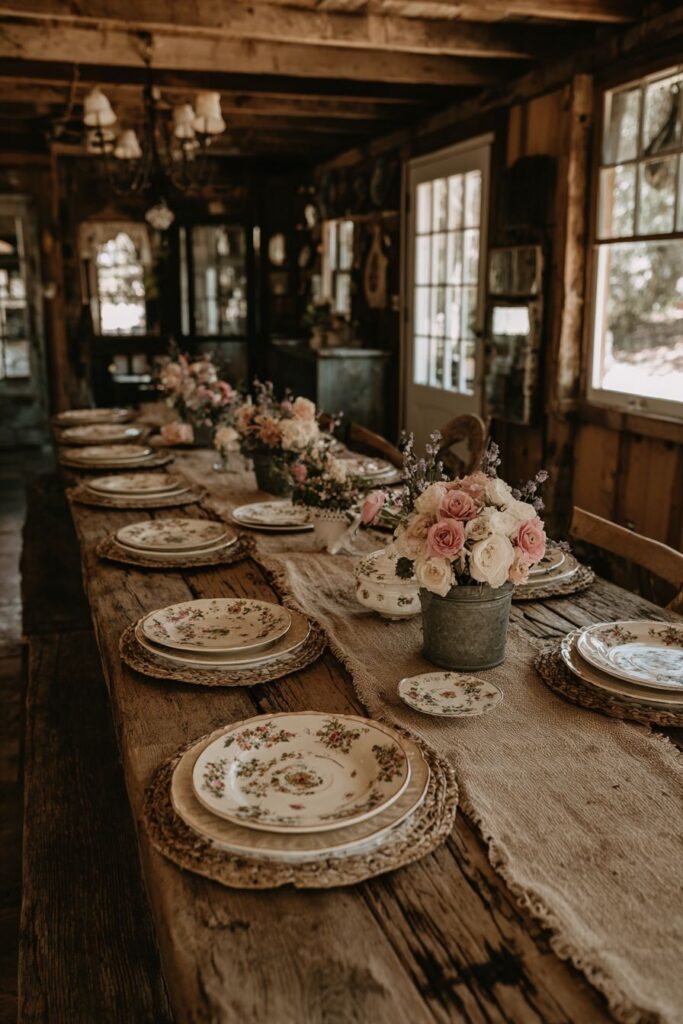
White ceramic plates serve as clean canvases, their simple forms and pristine surfaces providing visual rest amid the textural richness. Layered atop these, smaller floral salad plates in soft botanical prints introduce spring’s garden abundance through illustrated blooms and leaves. These decorative plates might feature delicate wildflowers, sprigs of herbs, or cottage garden favorites rendered in soft watercolor-style patterns that add interest without overwhelming. The layering creates dimensional place settings that feel more considered than single plates while maintaining the approachable farmhouse spirit.
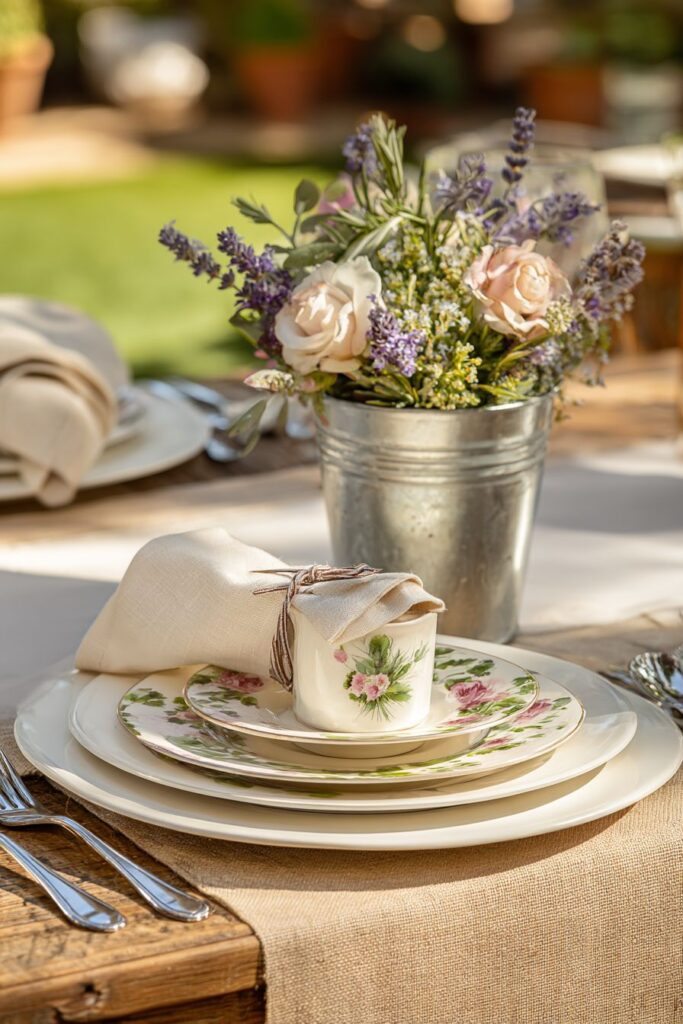
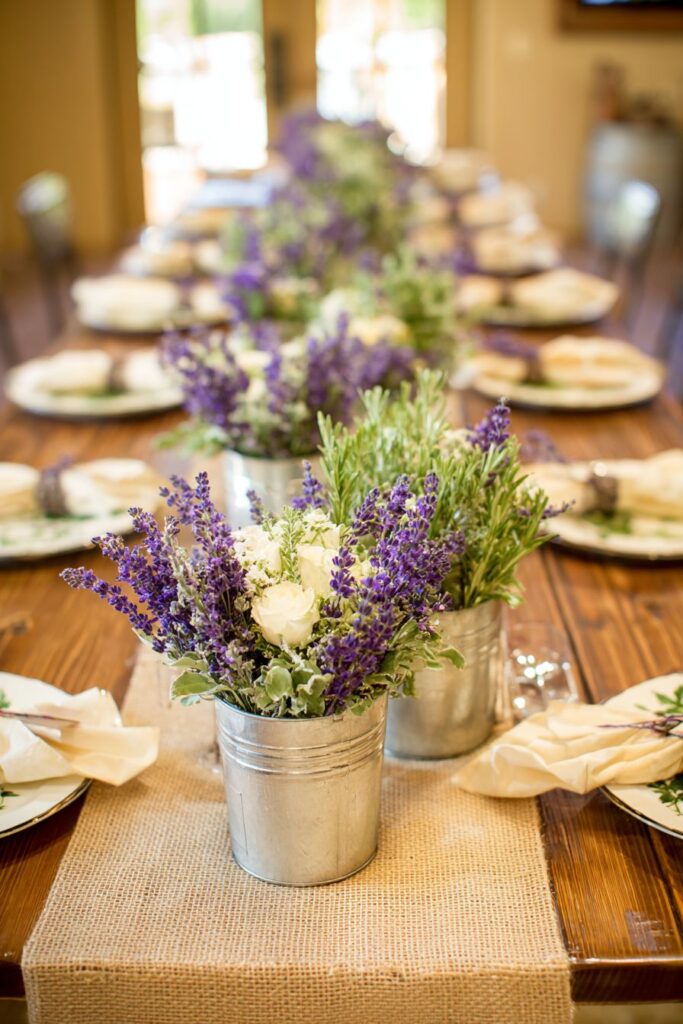
Galvanized metal buckets filled with fresh garden flowers and greenery create centerpieces that look freshly gathered from cutting gardens and hedgerows. The metal containers, typically associated with practical farm use, find new purpose as rustic vessels that perfectly complement the reclaimed wood table. Overflowing with seasonal blooms, trailing vines, and lush foliage, these arrangements celebrate abundance and natural growth. Cream-colored linen napkins with visible weave texture are tied with lavender sprigs, introducing both the herb’s beloved spring color and its subtle fragrance at each place setting. The wide-angle natural daylight photography captures the authentic farmhouse spring aesthetic in all its textural, lived-in glory.
Key Design Tips:
- Seek out reclaimed wood furniture for instant character and sustainability
- Use burlap or rough linen runners to add texture without formality
- Layer decorative plates with botanical patterns over simple white dinnerware
- Choose galvanized metal, enamelware, or wooden vessels for centerpiece containers
- Tie fresh herbs to napkins for fragrance, color, and connection to garden and kitchen
8. Cheerful Brunch in Yellow and White
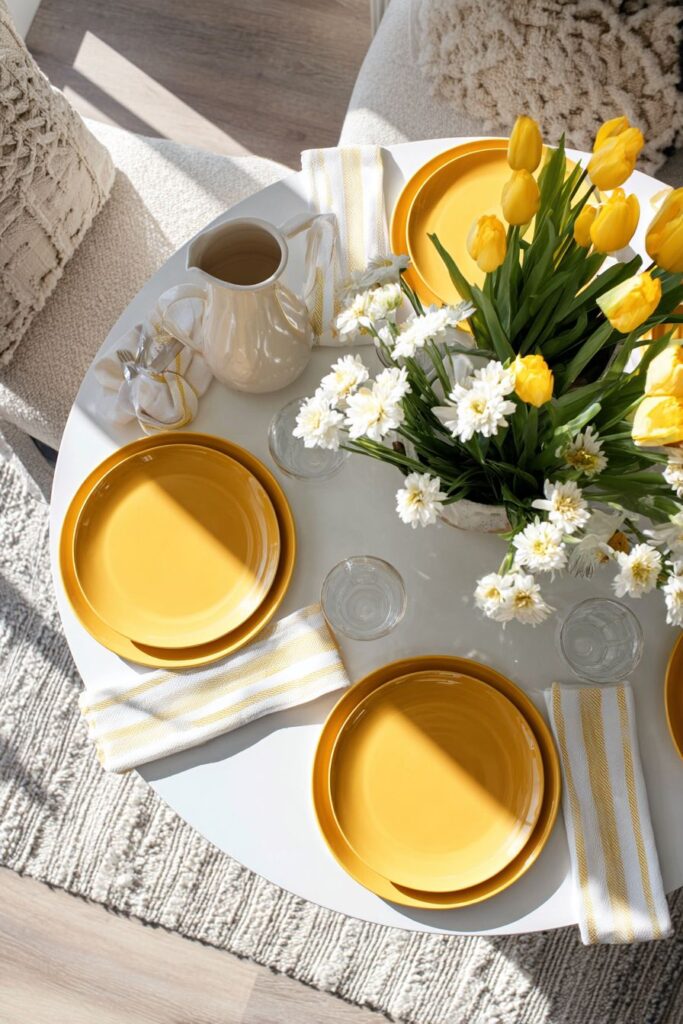
Morning gatherings deserve settings as bright and optimistic as spring sunshine, and this yellow and white color scheme delivers pure joy. A round pedestal table creates intimate dining dynamics where everyone can see and converse with ease, its circular form lacking the hierarchy of head and foot positions found in rectangular tables. The sunny yellow plates—perhaps in glossy ceramic or cheerful melamine—instantly lift spirits and create focal points of vibrant color that energize the entire setting. These bold choices work because they’re balanced with crisp white napkins folded into simple triangles, their geometric precision and neutral tone providing visual rest.
The centerpiece embraces the color scheme with a low arrangement of white daisies and yellow tulips in a ceramic pitcher, perhaps vintage or vintage-inspired. The pitcher form adds casual charm while providing ample water for cut flowers, and its likely white or cream color ties into the broader palette. Daisies contribute their simple, honest beauty—petals radiating from golden centers like tiny suns—while tulips add their signature elegance and cup-shaped blooms. The combination feels both cheerful and classic, appropriate for Easter brunches, Mother’s Day celebrations, or simply welcoming spring weekends.
Morning light creates the ideal illumination for this fresh, bright scheme, its clear quality enhancing the yellow tones and creating the clean shadows that make photographs pop. This natural brightness perfect for spring entertaining ensures guests feel alert and energized, ready for good conversation and leisurely meals. The overhead photography angle captures the complete circular table arrangement, showing how the yellow plates create points around the perimeter like hour markers on a sunny clock face, while the central arrangement grounds the composition in balanced, cheerful abundance.
Key Design Tips:
- Choose round tables for brunches and intimate gatherings to enhance conversation flow
- Use bold spring colors like sunny yellow on larger items like plates for cheerful impact
- Balance vibrant colors with crisp white elements to prevent overwhelming the eye
- Select morning-friendly flowers like daisies and tulips that look fresh in bright light
- Photograph or style from above to capture the full beauty of round table arrangements
9. Coastal Spring Breeze
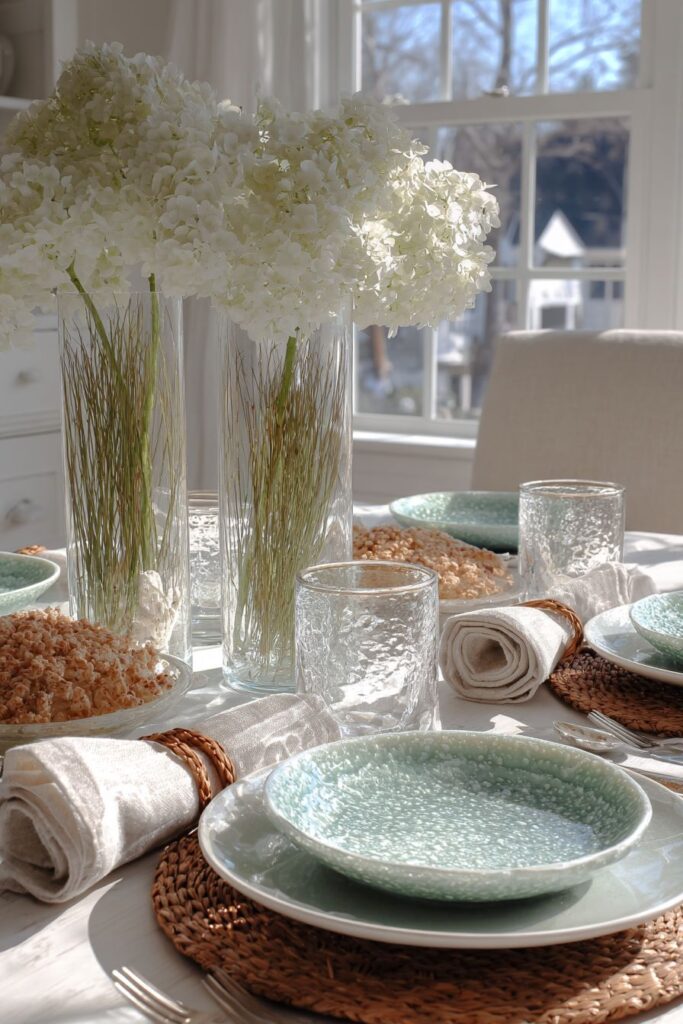
Bringing seaside serenity to the spring table requires a thoughtful palette of aquatic tones and natural materials that evoke ocean, sky, and sand. A whitewashed dining table provides the perfect foundation, its pale finish suggesting driftwood bleached by sun and salt air. The light surface reflects natural illumination while creating a bright, airy foundation reminiscent of beach houses and coastal cottages. Upon this base, sea glass-inspired plates in pale blue and seafoam green introduce color through nature’s own lens—the soft, frosted hues that result when ocean waves tumble broken glass into smooth, jewel-like treasures.
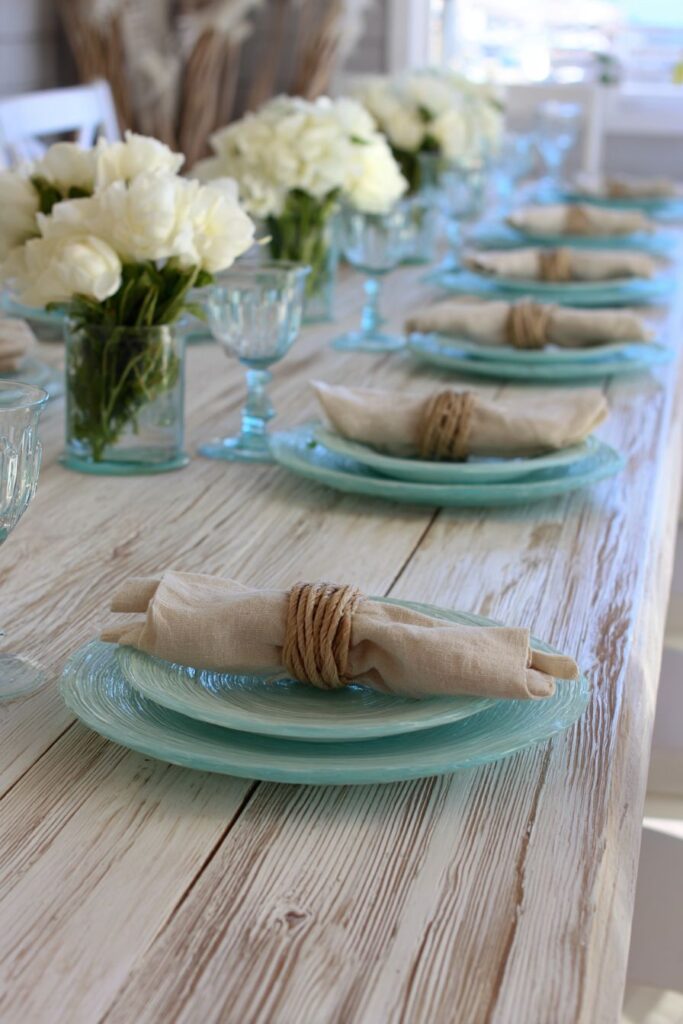
The textured surfaces of these plates add tactile interest, perhaps with subtle reactive glazes that create variations in color depth and visual movement across each piece. This variation mimics the way real sea glass shows slightly different tones depending on thickness and light angle, adding authenticity to the coastal theme. White hydrangeas mixed with beach grass in clear glass cylinders create centerpieces that bridge garden and shoreline, the full hydrangea blooms providing structure while the grass adds linear elements and gentle movement that suggests sea breezes stirring dune vegetation.
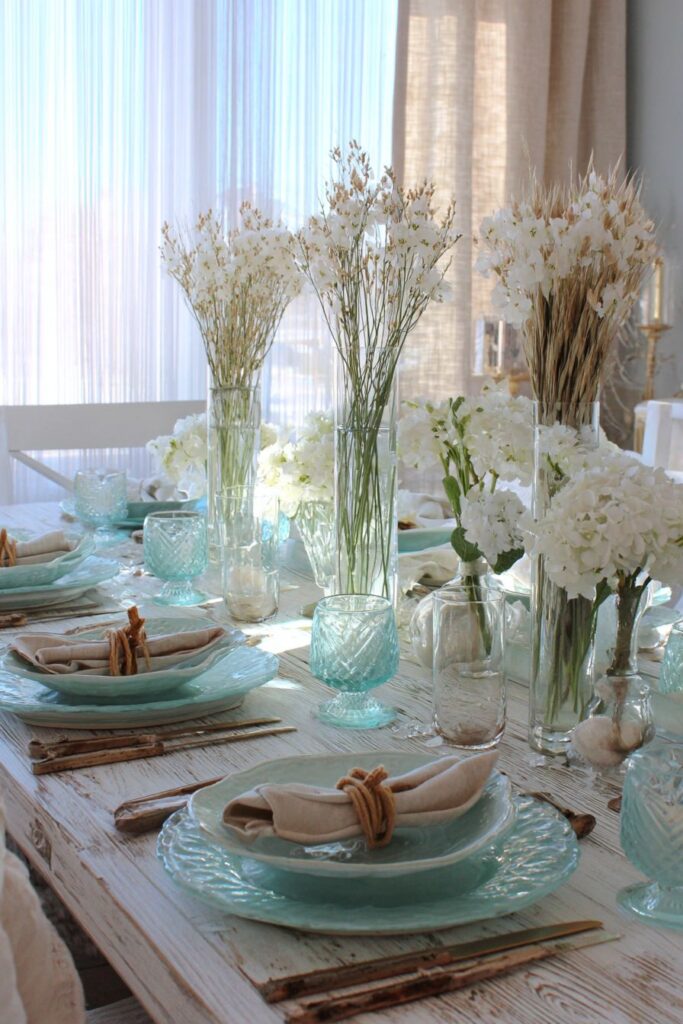
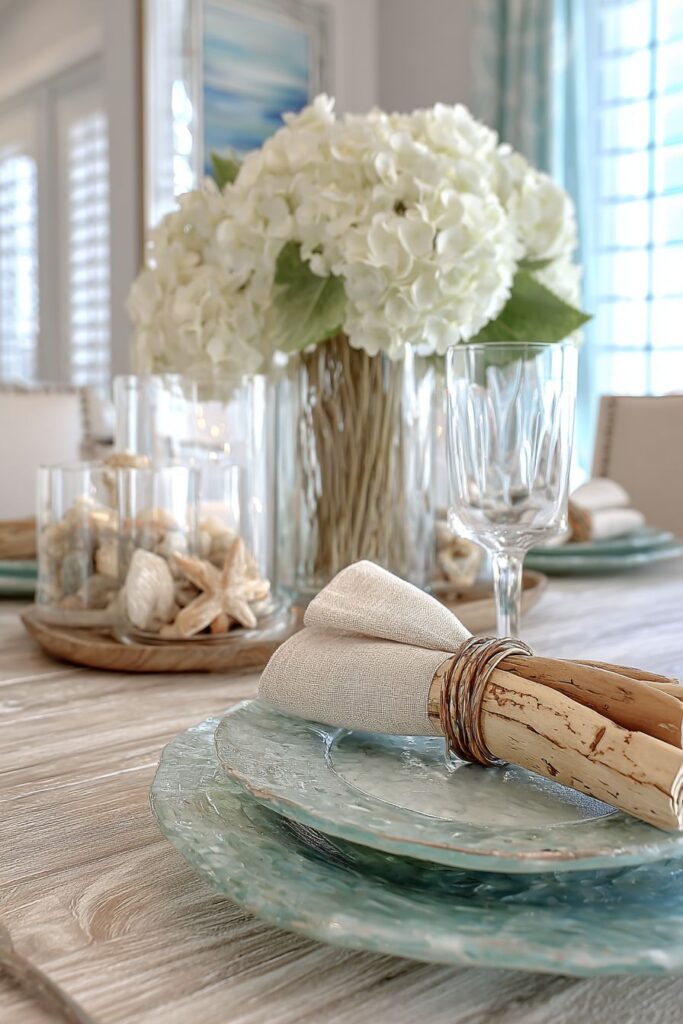
Natural linen napkins in sandy beige tones reinforce the beach aesthetic while adding warmth that prevents the cool blues and greens from feeling cold. Driftwood napkin rings—actual pieces of weathered wood shaped by tide and time—bring authentic coastal elements to each place setting, their smooth surfaces and organic forms creating sculptural interest. Bright natural lighting emphasizes the breezy spring coastal aesthetic, the clear illumination bouncing off pale surfaces and creating the luminous, light-filled atmosphere that defines successful coastal design. This professional approach captures an airy, light-filled atmosphere that makes every meal feel like a seaside escape.
Key Design Tips:
- Use whitewashed or pale wood furniture to create bright, reflective foundations
- Choose dinnerware in sea glass colors—soft aquas, seafoams, and pale blues
- Incorporate authentic coastal elements like driftwood, shells, or sea grass
- Mix white flowers with linear grasses or coastal plants for beachy centerpieces
- Maximize natural light to create the airy, sun-drenched feeling essential to coastal style
10. Garden Party Botanical Romance
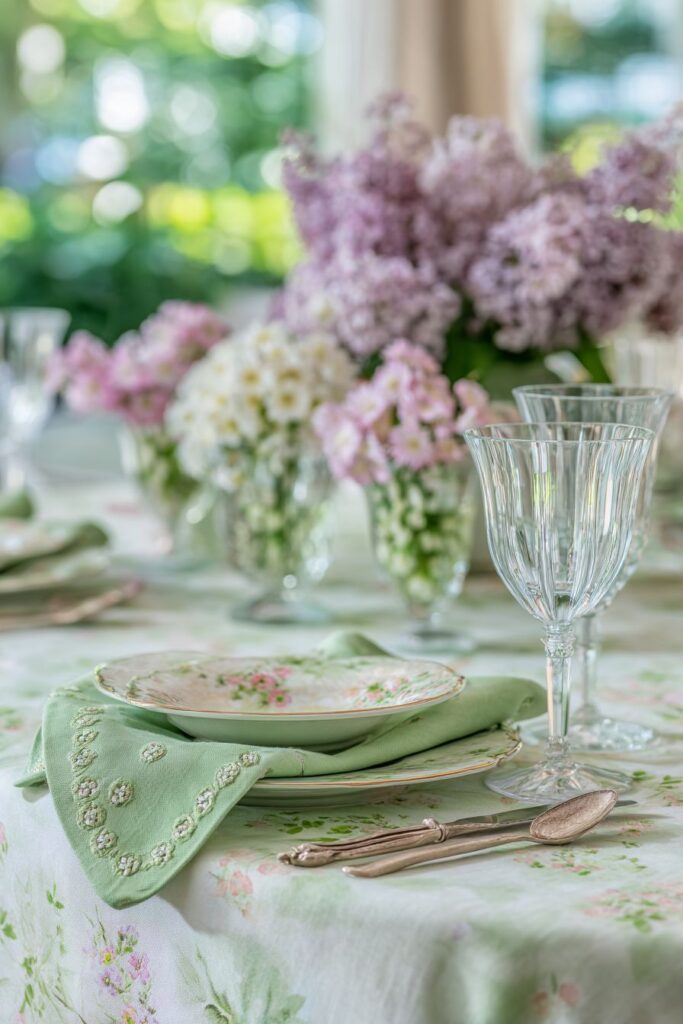
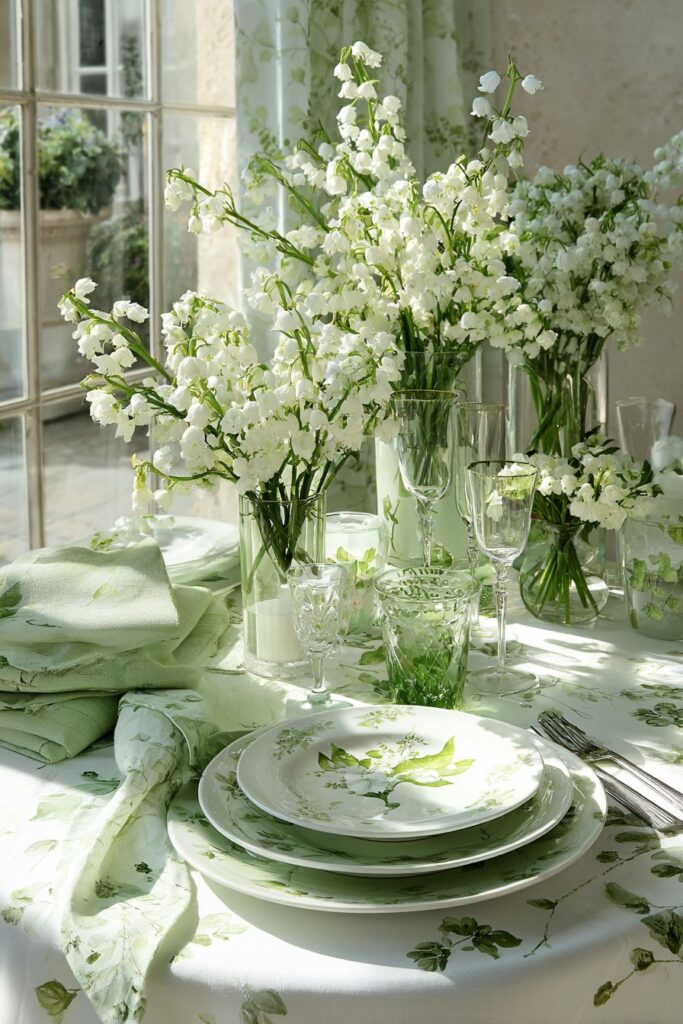
For those who dream of dining surrounded by spring blooms, this garden party theme brings the outdoors in with botanical abundance. A tablecloth featuring botanical prints in soft greens and whites sets the stage, its illustrated flowers and leaves creating an immersive garden atmosphere before any real plants arrive. These prints might showcase spring favorites—lilacs, lily of the valley, sweet peas—rendered in delicate watercolor or vintage botanical illustration style that feels both artistic and natural. The soft color palette ensures the pattern enhances rather than overwhelms the setting.
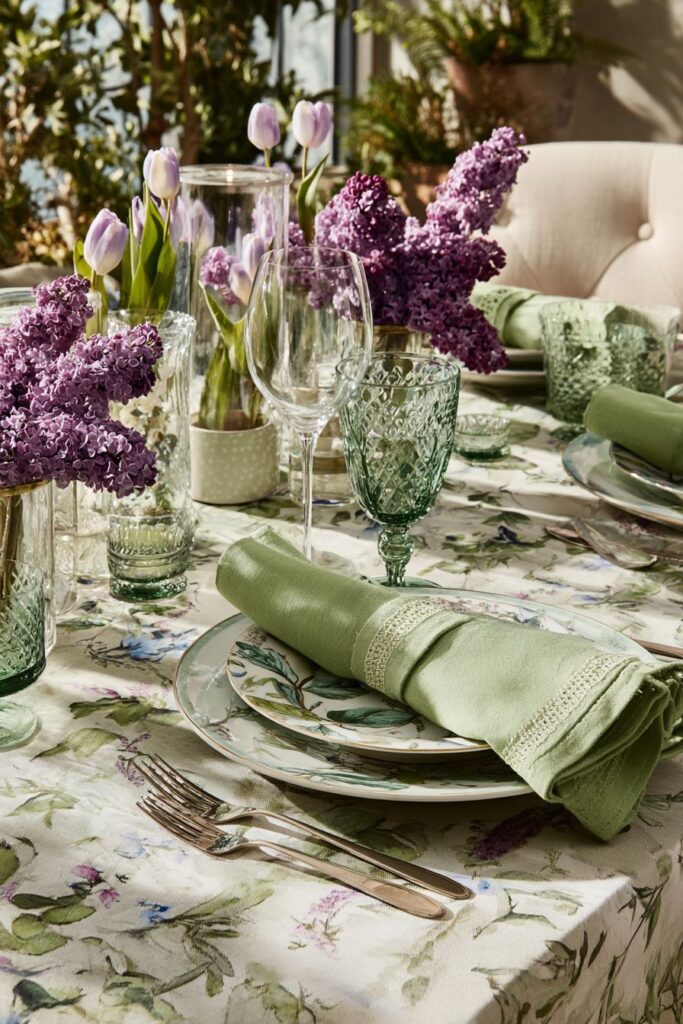
Vintage-style floral plates continue the botanical theme, featuring delicate spring flower illustrations that complement the tablecloth while adding dimensional interest. These might include scalloped edges, gold trim, or hand-painted details that elevate them beyond simple dinnerware to collectible status. Each plate becomes a canvas showcasing different blooms, creating variety and discovery as guests admire each other’s settings. The mixed glass vases of varying heights filled with seasonal blooms like fragrant lilacs, delicate lily of the valley, and sweetly scented sweet peas create a centerpiece that engages multiple senses—visual beauty, heavenly fragrance, and the soft texture of petals.
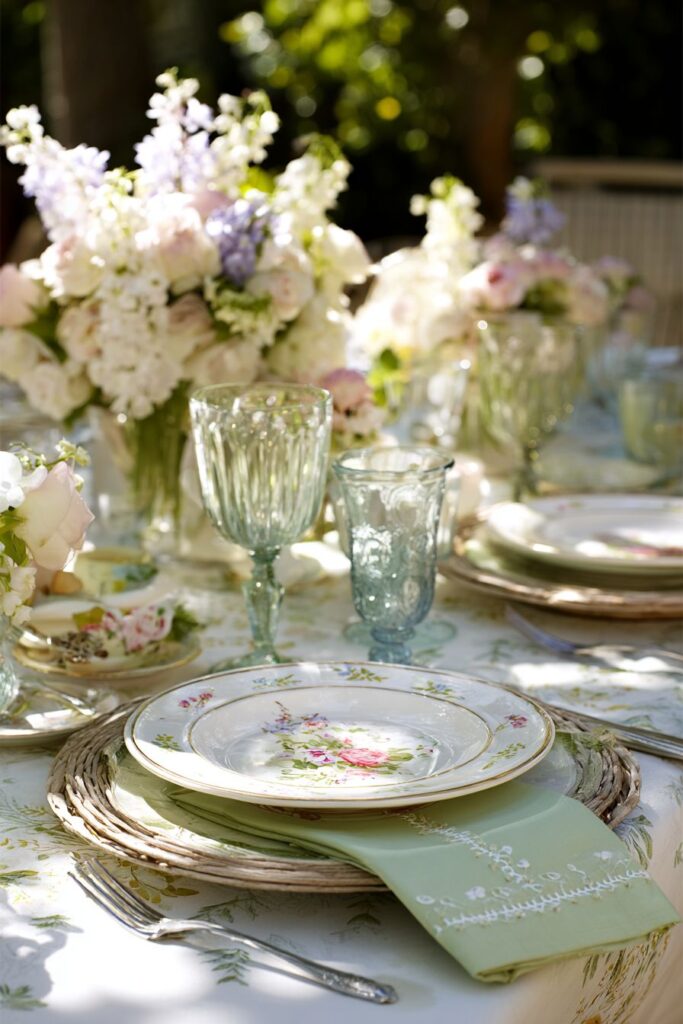
Soft mint green napkins with embroidered edges add handcrafted charm, their decorative borders perhaps featuring small flowers, vines, or scalloped patterns that echo the garden theme. The embroidery adds textural detail and suggests heirloom quality, as if these napkins have been treasured through generations of spring celebrations. Natural afternoon light filtered through an actual garden setting creates dappled shadows—sunlight playing through tree leaves and flower stems—that add dynamic, ever-changing beauty to the tablescape. This lifestyle photography approach shows an inviting spring table that feels achievable yet special, encouraging readers to create their own botanical celebrations.
Key Design Tips:
- Choose tablecloths or runners with botanical prints to create immersive garden atmosphere
- Layer vintage-style floral plates with illustrated spring blooms
- Use varying heights in centerpiece arrangements for visual interest and garden-like abundance
- Add embroidered or decorative-edge napkins for handcrafted charm
- Position tables near gardens or windows where natural light creates dappled, changing shadows
11. Contemporary Monochromatic Sophistication
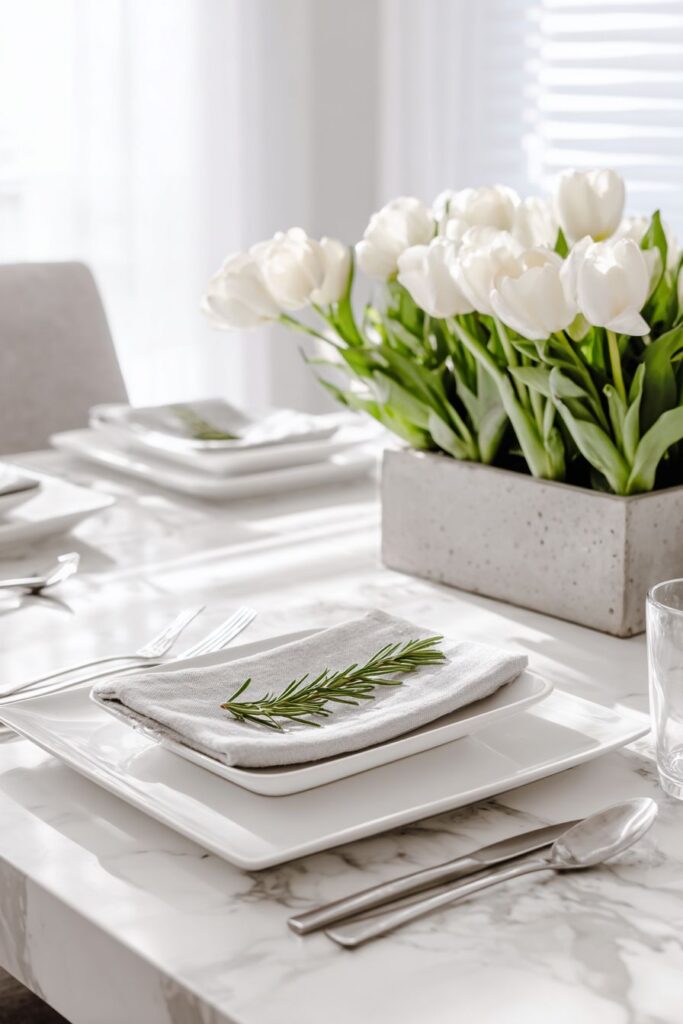
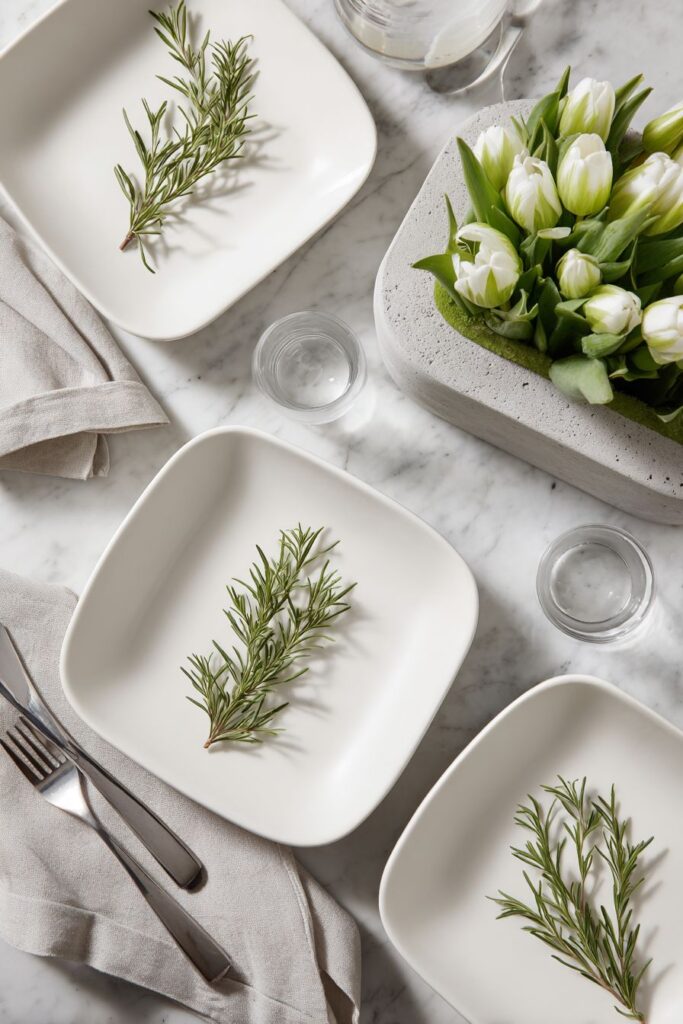
Modern sophistication reaches its zenith in this monochromatic approach where restraint becomes powerful statement. A marble dining table provides luxurious foundation, its natural veining creating subtle pattern and visual interest within the neutral palette. The cool, smooth surface reflects light beautifully while suggesting permanence and quality that elevates any meal to special occasion status. Pure white square plates with clean edges and minimal design embody contemporary aesthetics, their geometric precision creating order and calm that allows subtle details to shine.
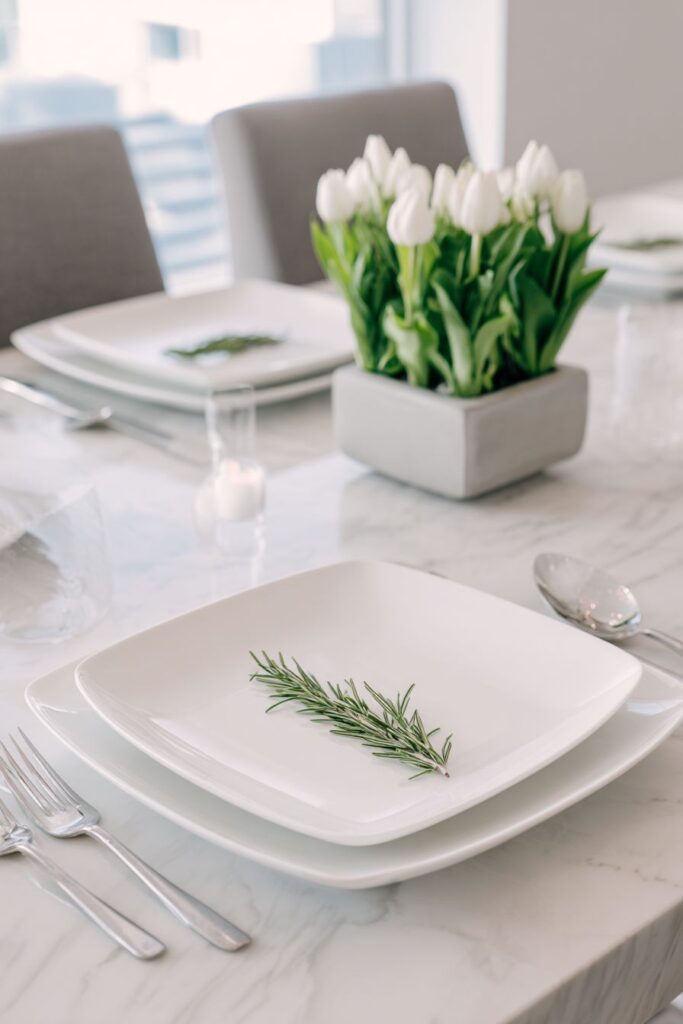
The natural garnish approach replaces traditional centerpieces with individual plate decorations—a single sprig of fresh rosemary on each plate introduces organic form, herbal fragrance, and soft green color that prevents the white-on-white scheme from becoming sterile. This placement makes each setting feel personally attended to while maintaining the minimalist philosophy. The monochromatic centerpiece features white tulips and green parrot tulips in a modern concrete planter, the industrial material adding textural contrast to the smooth marble and delicate blooms. The parrot tulips, with their fringed, almost feather-like petals and gentle green tones, add subtle color variation within the restrained palette.
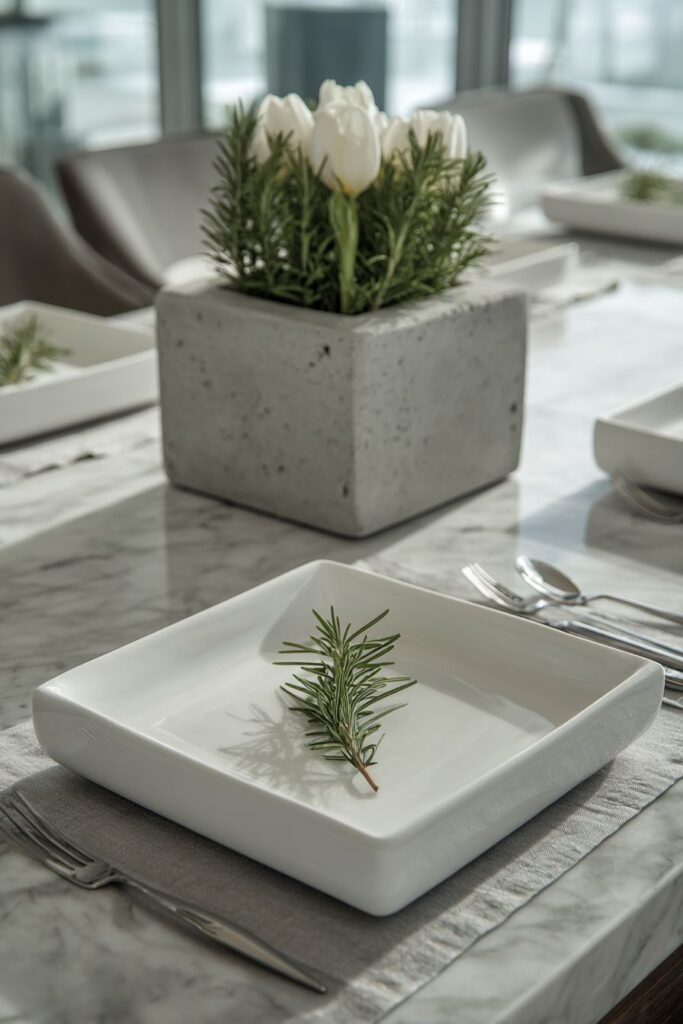
Pale grey linen napkins folded in architectural styles—perhaps a sharp diagonal or precise rectangle—demonstrate how functional items become design elements through intentional presentation. The grey tone adds depth to the monochromatic scheme without introducing competing colors. Sleek stainless steel flatware completes the contemporary aesthetic, its brushed finish and clean lines complementing the modern planter and geometric plates. Soft diffused natural lighting highlights the clean spring design, the even illumination emphasizing material textures—marble veining, concrete grain, linen weave, petal surfaces—that create visual interest within the limited color range. This architectural photography approach focuses on geometric composition and material honesty that defines contemporary style.
Key Design Tips:
- Use natural stone surfaces like marble for luxurious neutral foundations
- Embrace monochromatic palettes with subtle variations in tone and texture
- Place single herb sprigs or minimal garnishes on individual plates for organic touch
- Choose architectural, geometric napkin folds that look intentional
- Focus on material quality and texture when working with limited color palettes
12. Afternoon Tea Garden Charm
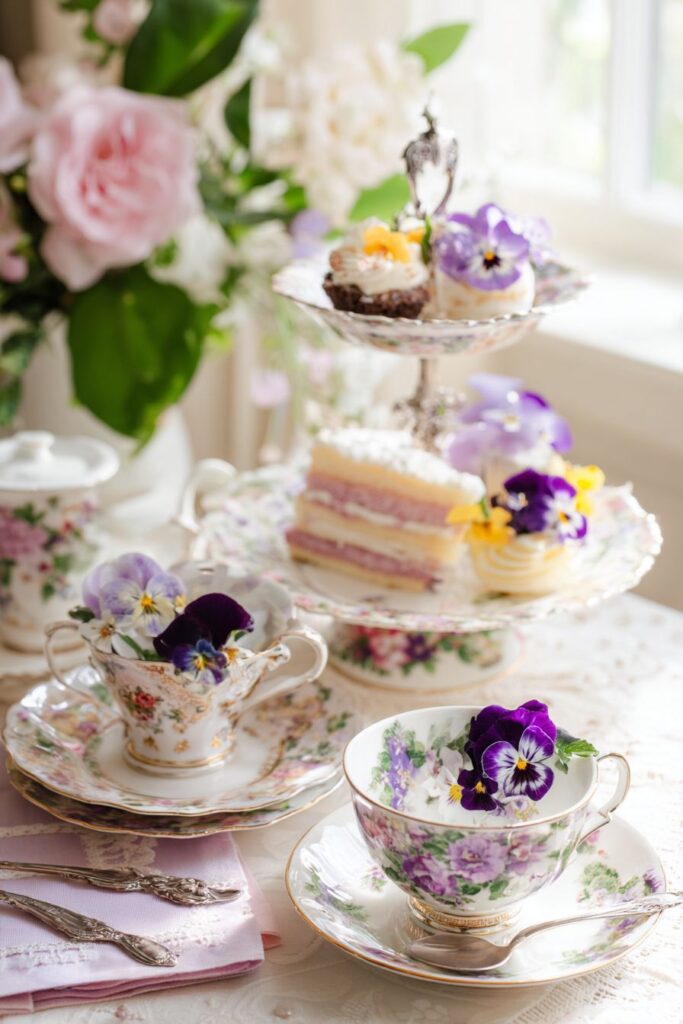
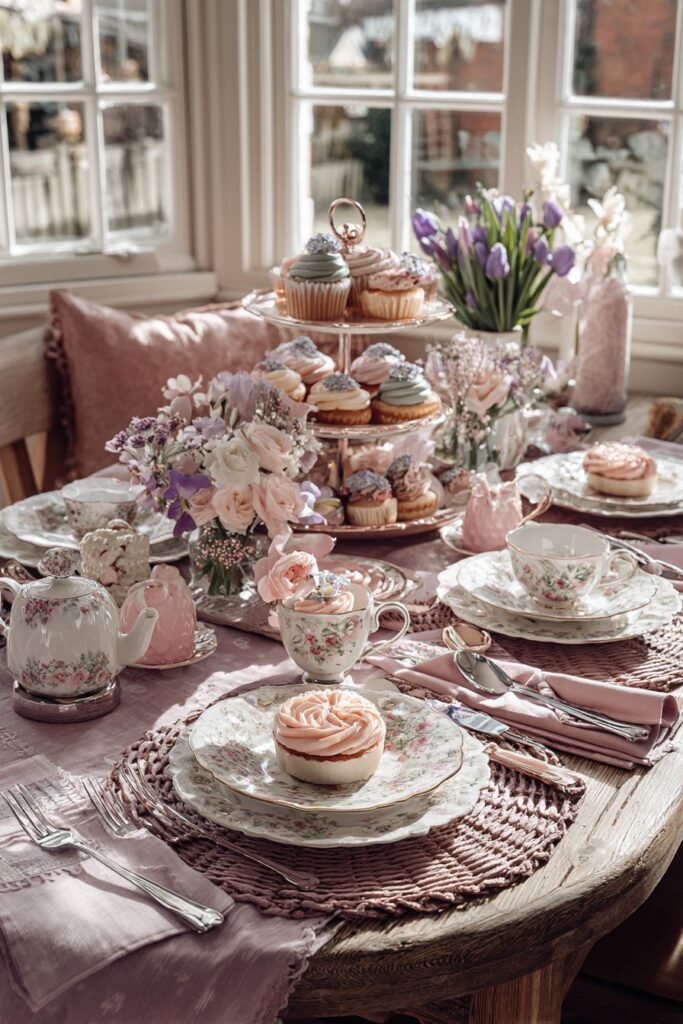
The English tradition of afternoon tea receives spring treatment in this charming, nostalgic setting. Delicate floral teacups and saucers in vintage patterns create the essential foundation, their fine porcelain and hand-painted details evoking earlier eras when tea time was sacred ritual. These pieces, collected from antique shops or inherited from grandmothers, might feature roses, violets, or forget-me-nots in soft palettes with gold accents. The variety in patterns adds interest while the shared vintage aesthetic and spring-flower theme creates cohesion that feels curated rather than mismatched.
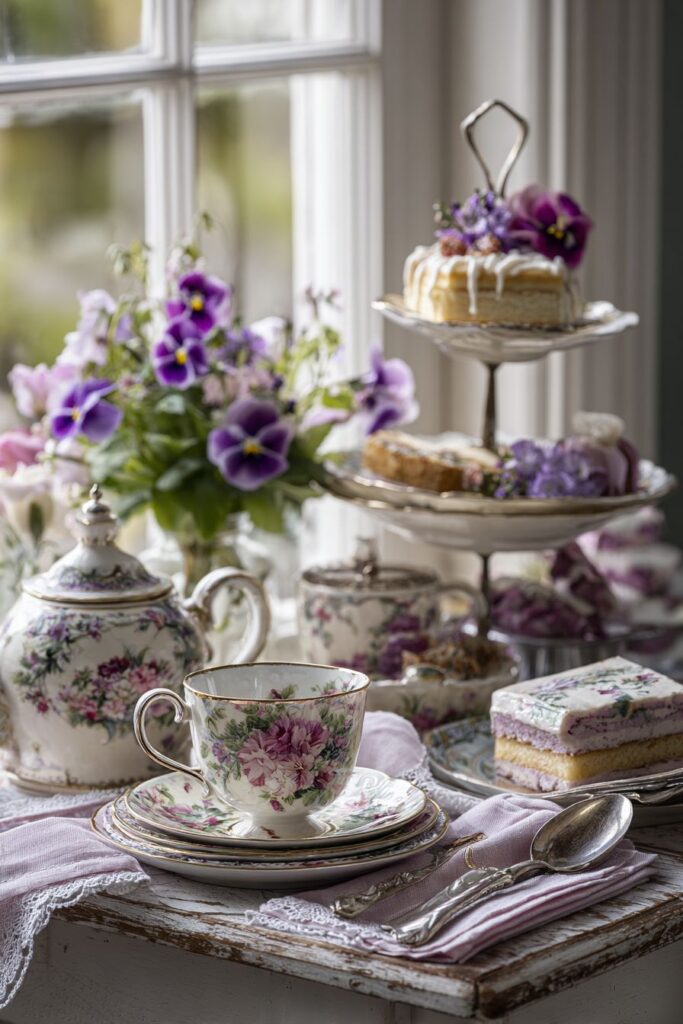
Tiered cake stands become architectural elements, displaying spring-themed treats—petit fours with pastel frosting, flower-shaped cookies, cucumber sandwiches cut into delicate shapes, scones with clotted cream and berry preserves. These stands create vertical interest and efficient space use while adding formal elegance that defines proper tea service. Small arrangements of violets and primrose scattered around the stands bring living beauty to the edible display, their diminutive blooms perfectly proportioned to the intimate scale of tea settings. These flowers, among spring’s earliest bloomers, add authenticity and seasonal connection.
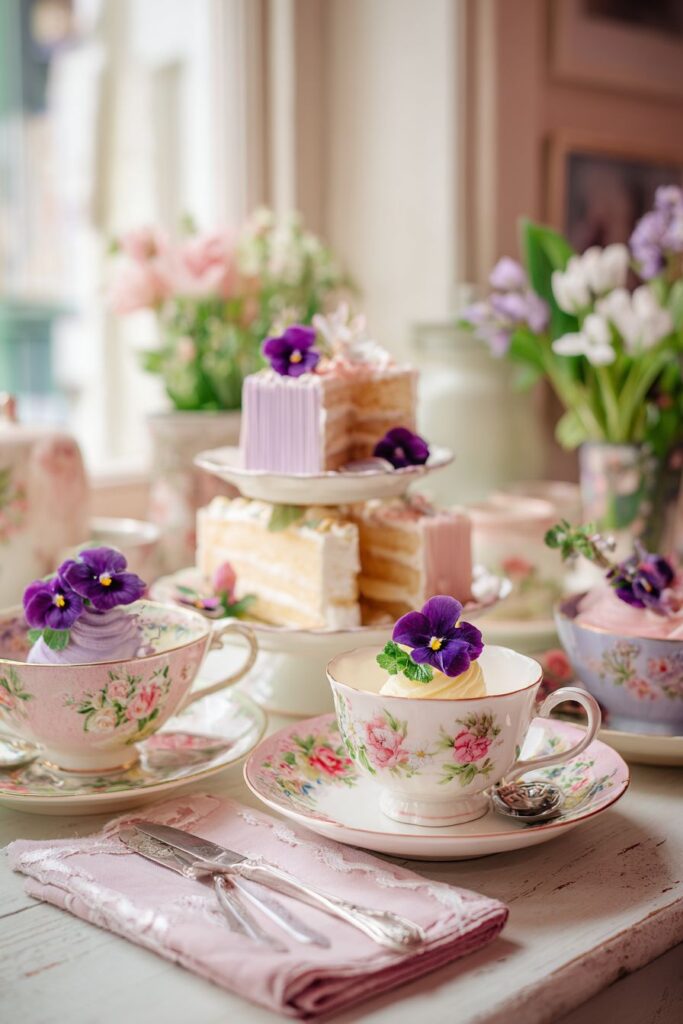
Soft pink and lavender napkins with scalloped edges enhance the feminine, vintage aesthetic, their decorative borders adding detail without fussiness. Antique silver teaspoons complete each setting, their aged patina and perhaps ornate handles adding historical weight and tactile pleasure to the tea-drinking experience. Gentle window light creates warm, nostalgic spring atmosphere, the soft illumination perfect for afternoon conversations and the quiet ritual of tea. Close-up interior photography captures intricate details—the fine lines in china patterns, the delicate petal structure of violets, the sheen on silver spoons—that make this charming vintage aesthetic so appealing to those seeking connection to simpler times and gracious traditions.
Key Design Tips:
- Collect vintage teacups and saucers with spring flower patterns for authentic charm
- Use tiered stands to display treats while creating vertical visual interest
- Include tiny arrangements of early spring flowers like violets or primrose
- Choose napkins with decorative edges like scallops or lace for period-appropriate detail
- Create intimate settings near windows where soft, diffused light enhances the nostalgic mood
13. Scandinavian Natural Simplicity
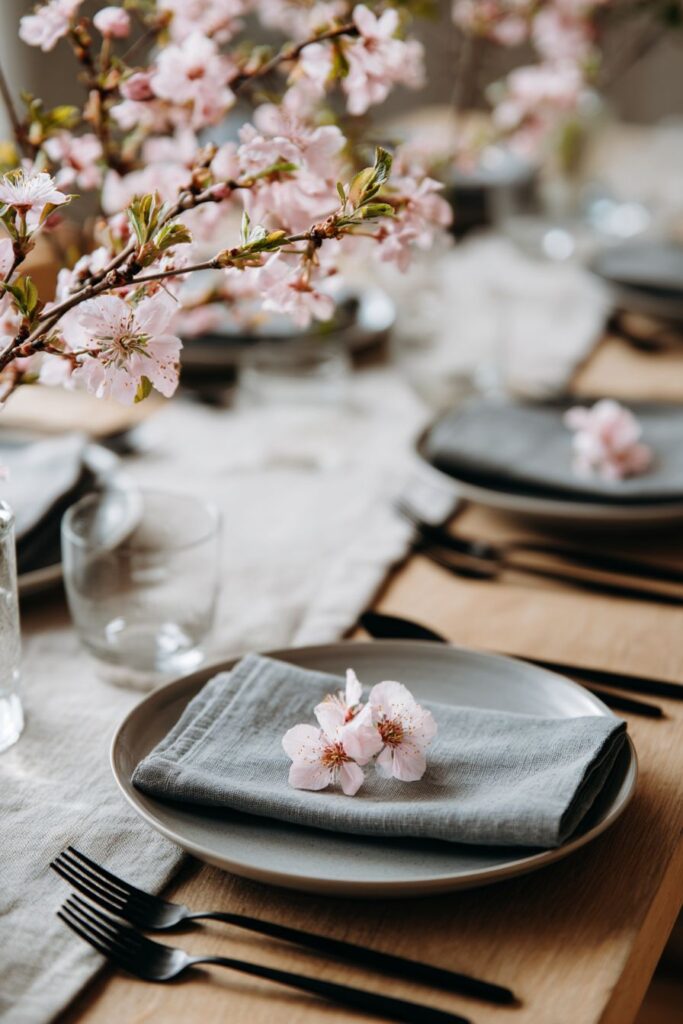
Nordic design principles applied to spring table settings create spaces of remarkable clarity and calm. A light wood table, perhaps birch or pale oak, provides the characteristically Scandinavian foundation—natural material treated honestly, with minimal finish that allows the wood’s beauty to speak. Its pale tone maximizes light reflection in northern climates while creating the bright, airy aesthetic that defines this design philosophy. Clean white plates with modern forms sit directly on the wood surface, no placemats or chargers to interrupt the clean lines and honest materials.
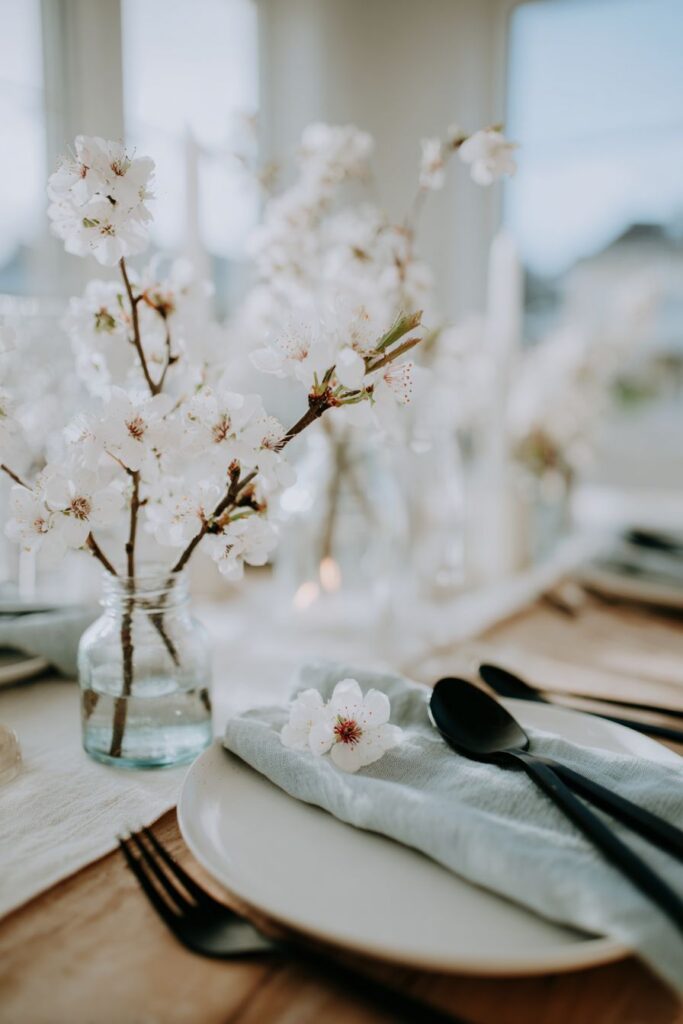
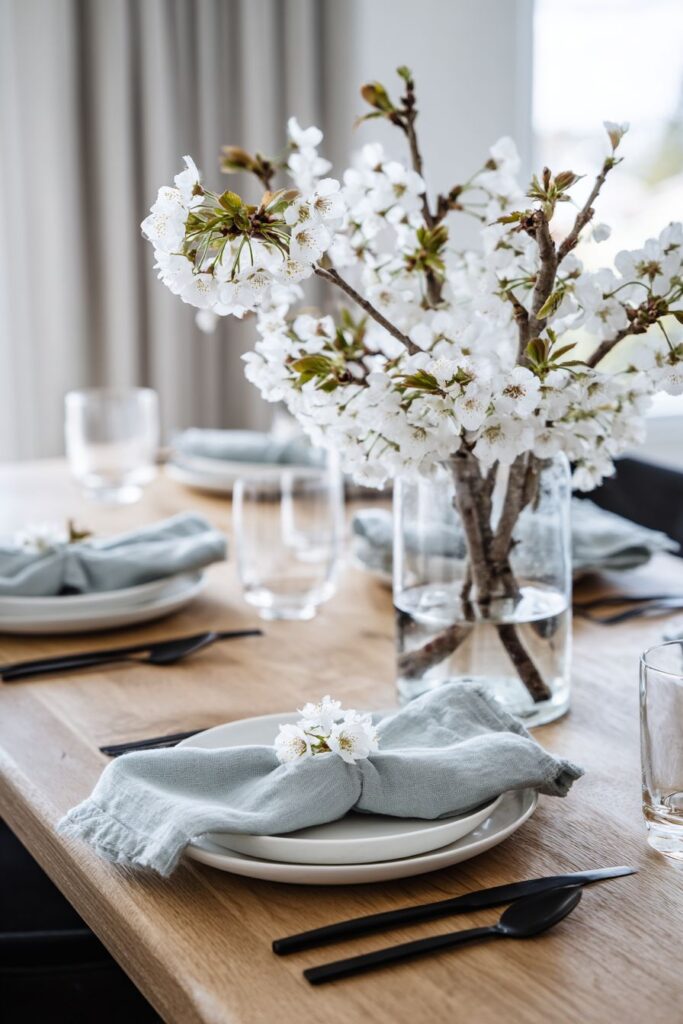
The floral treatment embraces radical simplicity—single stems of cherry blossoms laid across each setting transform individual branches into personal place decorations. This approach celebrates the beauty of singular elements, allowing guests to appreciate the delicate flowers, emerging buds, and branch structure without distraction. It’s an aesthetic that finds abundance in minimalism, profundity in simplicity. The minimal centerpiece continues this philosophy with birch branches bearing emerging spring leaves arranged in a simple glass vase, the transparent vessel revealing stems and water level while the branches provide organic sculpture and soft green color.
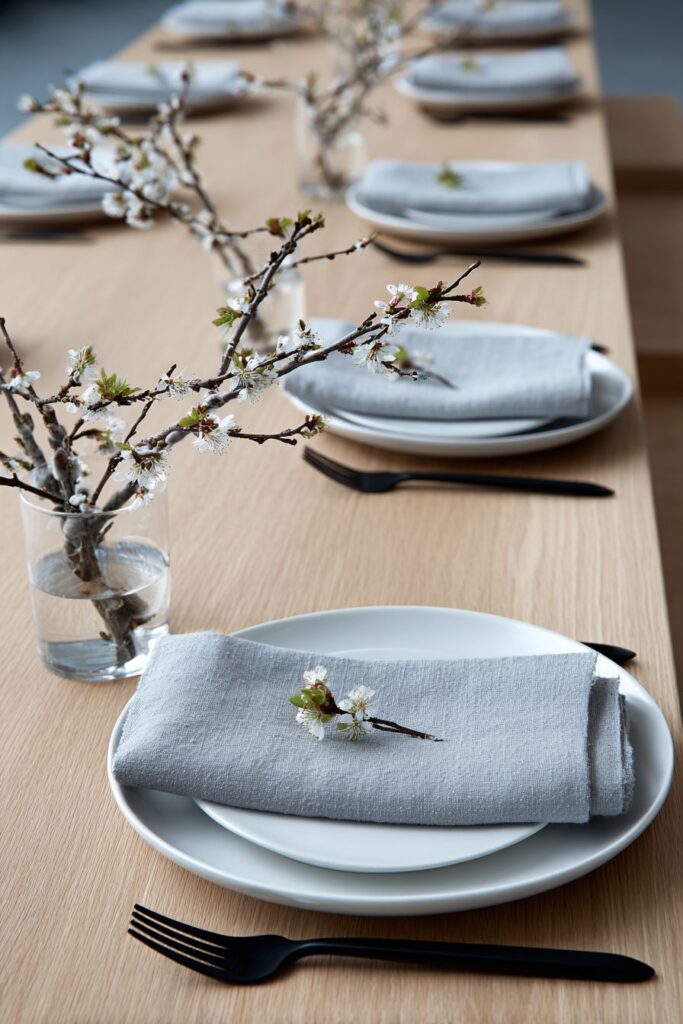
Soft grey-blue linen napkins add the subtle color characteristic of Nordic palettes—not absent of color but restrained in its application, favoring muted tones found in nature. The visible natural texture of the linen celebrates material honesty, showing weave and slight irregularities that prove human hands and natural fibers created it. Matte black cutlery provides striking contrast against the pale palette, its dark forms creating definition and visual anchor points that prevent the lightness from floating away entirely. Bright Nordic natural light—the clear, white illumination of northern latitudes—creates clarity and freshness that allows every element to be seen and appreciated. This uncluttered aesthetic embraces honest material representation and the beauty of empty space.
Key Design Tips:
- Choose light-colored wood furniture in natural finishes for bright, honest foundations
- Use single stems or minimal branches as individual place decorations
- Embrace negative space as essential element rather than void to fill
- Select muted, nature-inspired colors for any accent pieces
- Maximize natural light to create the clarity and brightness essential to Nordic design
14. French Country Lavender Romance
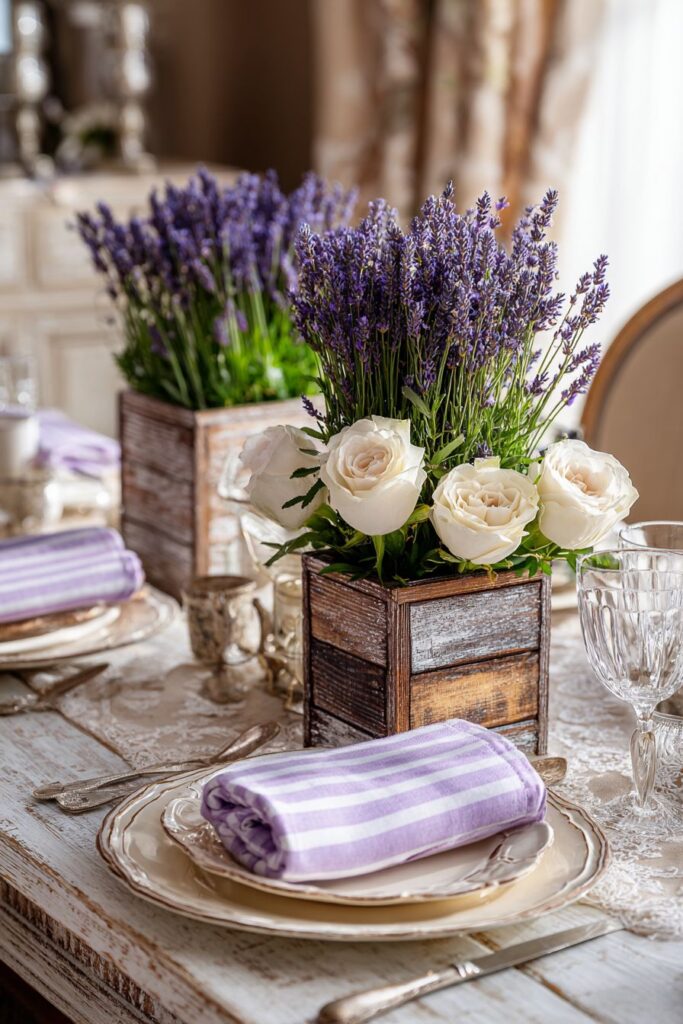
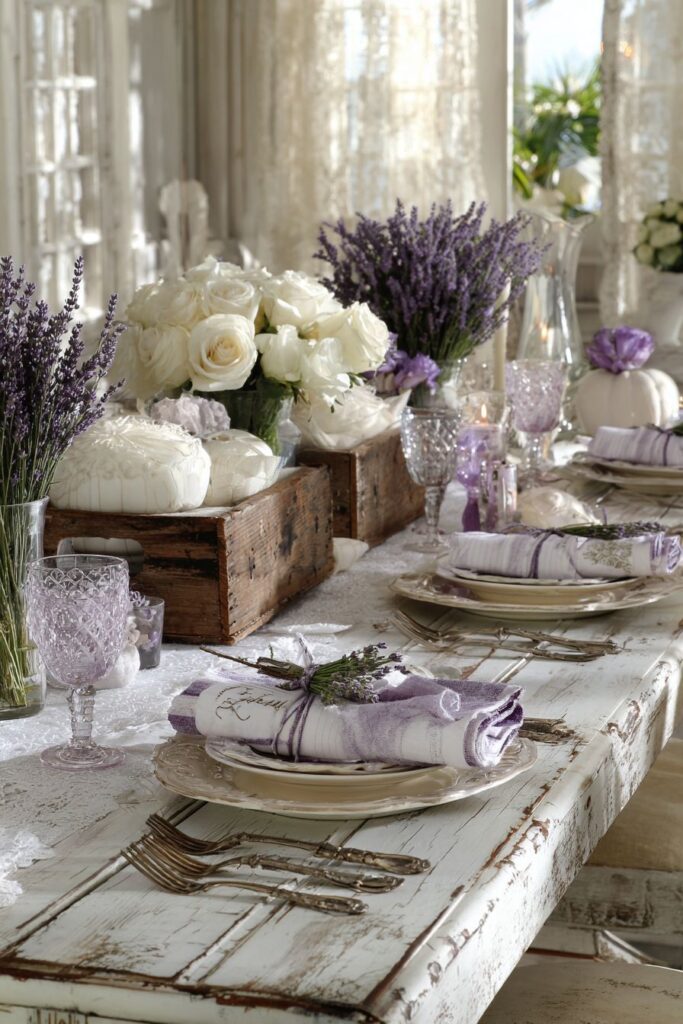
The French countryside in spring inspires this romantic setting where provincial charm meets timeless elegance. A distressed white dining table provides the foundation, its deliberately worn finish suggesting years of family meals in a country farmhouse. The white paint, perhaps with areas of intentional distress revealing wood beneath, creates the shabby-chic aesthetic that defines French country style—beautiful in its imperfection, romantic in its age. Cream-colored ironstone plates add their own history and heft, the thick, durable stoneware suggesting practical farmhouse origins elevated to collected status.
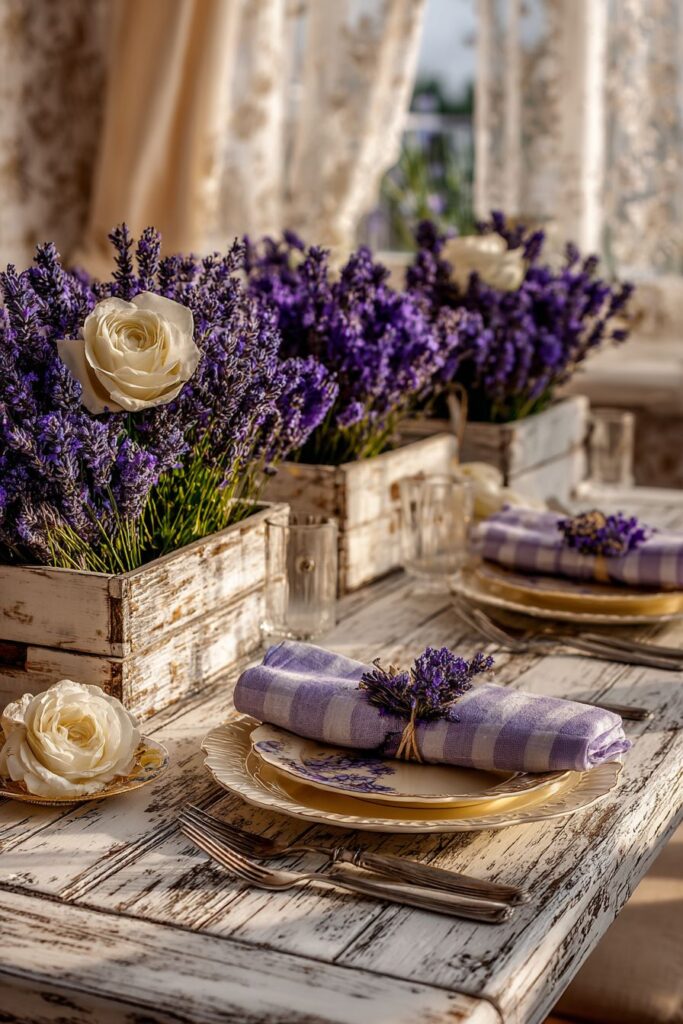
Lavender-striped cotton napkins introduce the signature color and pattern of French country textiles—perhaps mattress ticking or traditional Provençal fabric patterns that have dressed French tables for generations. The stripes add visual rhythm and casual sophistication while the lavender color connects to the region’s famous fields and the rustic wooden boxes filled with fresh lavender bundles that serve as centerpieces. These boxes, perhaps vintage crates or specifically crafted containers, overflow with just-cut lavender stems, their purple spikes and intoxicating fragrance filling the space with Provençal essence. White roses mixed among the lavender add soft romance and color contrast, their full blooms complementing the linear lavender stems.
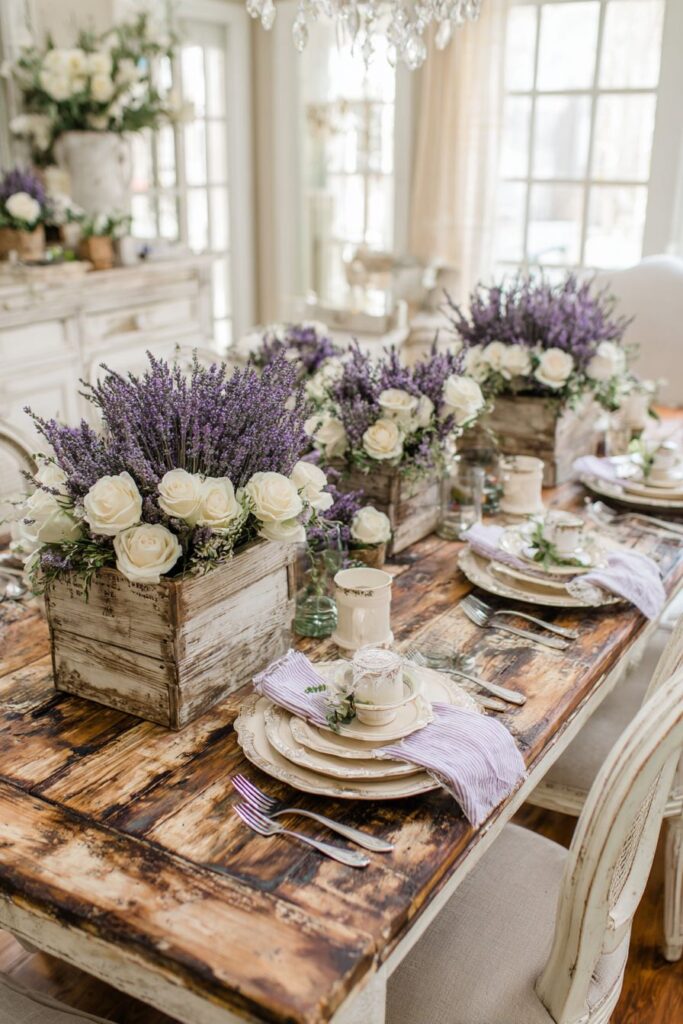
Vintage silverware with natural patina completes the authentic charm, each piece showing the gentle wear of use and time. This aged silver, whether inherited or collected, adds the layer of history essential to French country aesthetics—nothing should look too new or too perfect. Soft afternoon sunlight filtering through lace curtains creates the romantic spring ambiance that defines French country living, the diffused light and delicate shadows adding dreamlike quality to the scene. Professional photography captures the lived-in elegance and provincial character that makes this style perpetually appealing to those who value beauty found in age, use, and imperfection.
Key Design Tips:
- Use distressed white furniture for authentic French country foundation
- Incorporate lavender in both color and actual plants for Provençal connection
- Choose ironstone or other substantial vintage-style dinnerware
- Display silverware with natural patina rather than highly polished pieces
- Filter light through lace or sheer fabrics to create soft, romantic illumination
15. Family Gathering Farmhouse Abundance
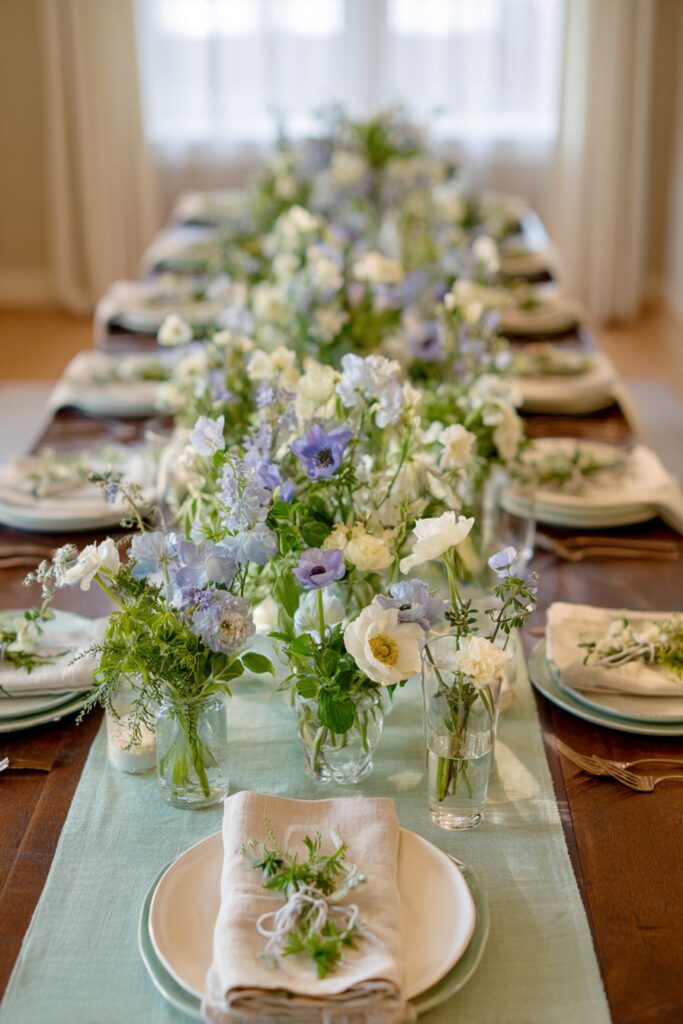
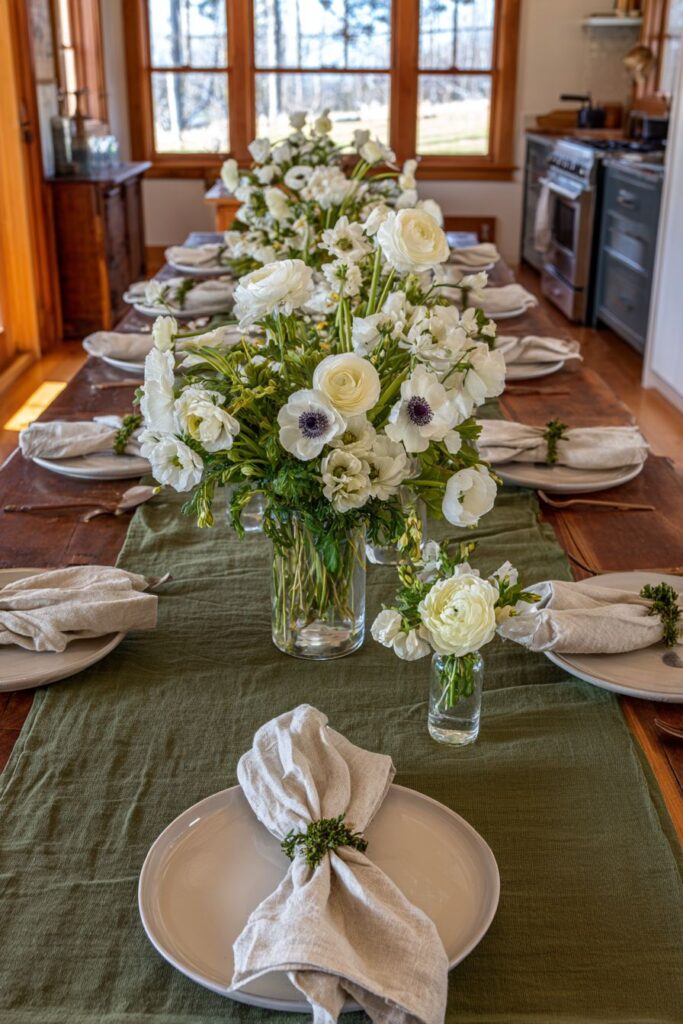
When the whole family gathers, the table setting must accommodate abundance while maintaining style—this long farmhouse approach achieves both. The extended farmhouse table stretches to welcome everyone, its generous proportions suggesting hospitality and the importance of bringing people together. A sage green table runner in natural linen provides color and texture down the table’s length, its earthy tone connecting to spring’s new growth while the substantial fabric suggests quality without pretension. Mix-and-match white and cream plates create casual elegance that’s both practical—replacing broken plates is easy—and aesthetically pleasing through tonal variation.
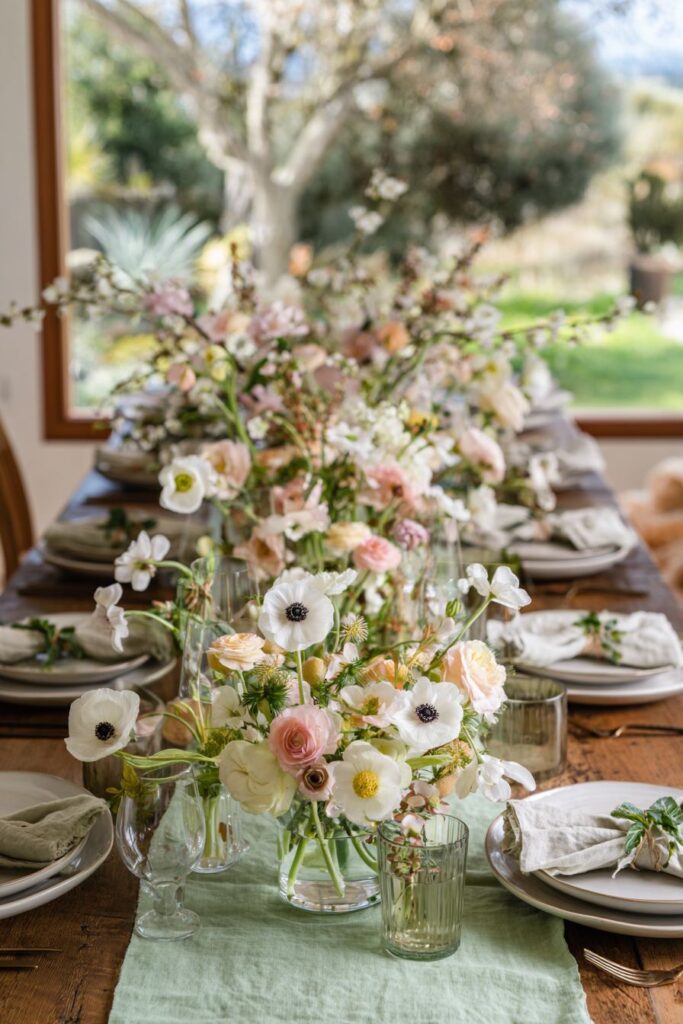
Fresh herb bundles tied to each napkin transform practical linens into personalized gifts, their fragrance and connection to kitchen and garden adding sensory richness. Imagine rosemary, thyme, sage, or mint gathered with twine—guests might take these home to use in cooking, extending the gathering’s memory into future meals. Multiple small vases of spring flowers scattered down the table length create continuous floral presence without blocking sightlines. This approach distributes visual interest while allowing the flowers to feel abundant and garden-gathered. Ranunculus contribute their papery, layered petals in soft colors, anemones add their distinctive dark centers and simple elegance, and flowering branches provide height and architectural structure.
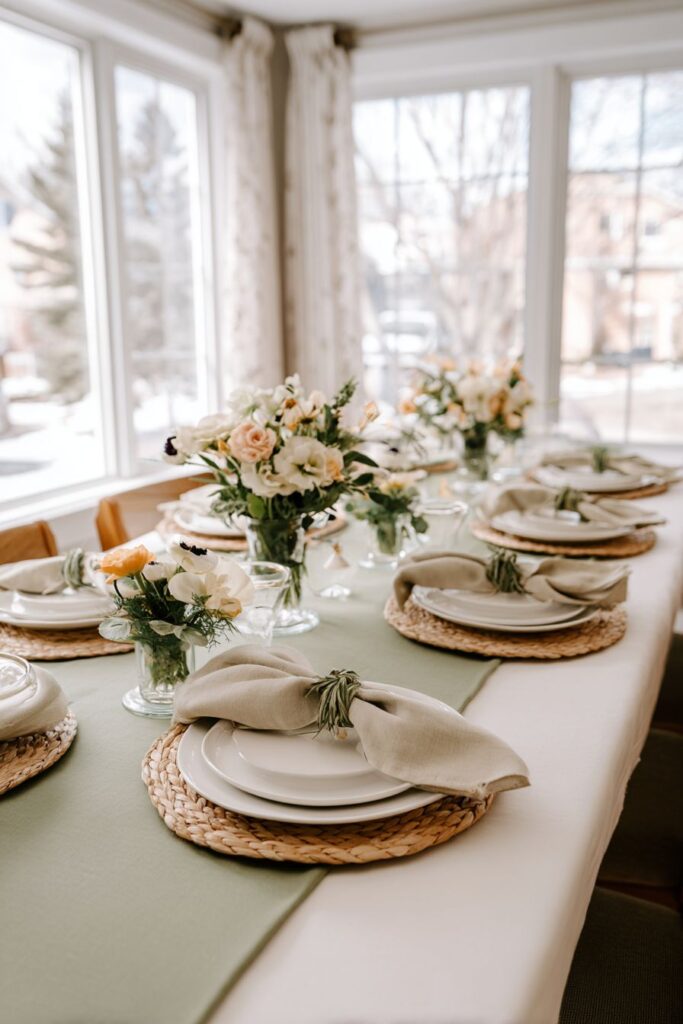
Natural linen napkins in varied neutral tones—perhaps cream, taupe, soft grey, ecru—add subtle variety while maintaining cohesion through material and general color family. Simple knots rather than formal folds keep the aesthetic approachable and suggest easy hospitality where perfection takes backseat to warmth. Natural daylight from multiple windows creates even, welcoming illumination that avoids harsh shadows or dark corners, ensuring everyone feels equally lit and included. This achievable spring entertaining setup demonstrates that feeding many needn’t mean sacrificing style—it simply requires scaling up while maintaining thoughtful details.
Key Design Tips:
- Use table runners to define space and add color on long tables
- Mix similar plates in varied neutral tones for casual elegance and practicality
- Tie fresh herbs to napkins for fragrance, decoration, and take-home gifts
- Distribute multiple small arrangements rather than one large centerpiece on long tables
- Choose simple knots over complex napkin folds when setting many places
16. Bohemian Artisan Spring
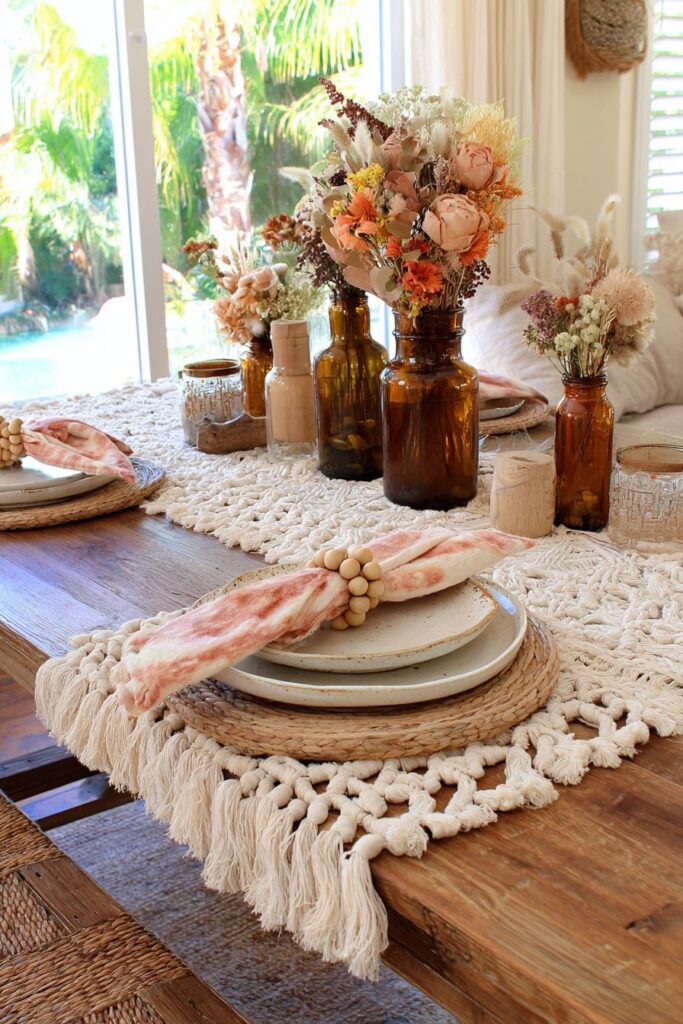
Free-spirited creativity defines this bohemian approach where handmade elements and natural materials create relaxed, artistic atmosphere. A low wooden table—perhaps reclaimed or crafted from natural-edge wood—sets the casual, grounded tone, its height inviting relaxed seating on floor cushions or low stools. A macramé table runner introduces handcrafted texture and the knotted patterns associated with bohemian style, its natural cotton fibers and neutral tone allowing other elements to shine while adding tactile richness that machine-made textiles cannot replicate.
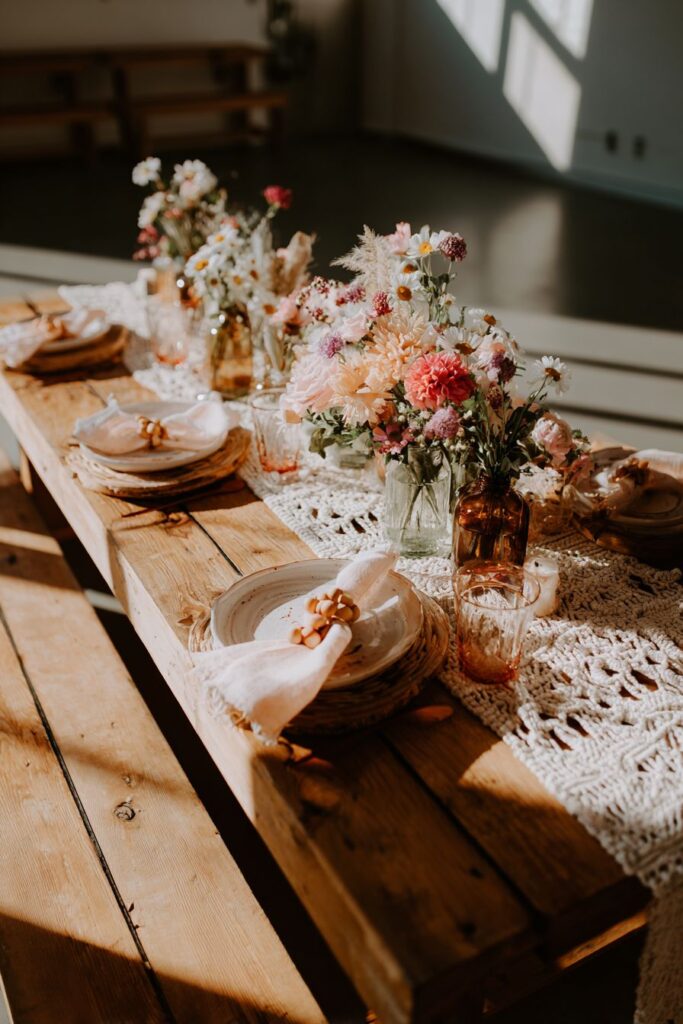
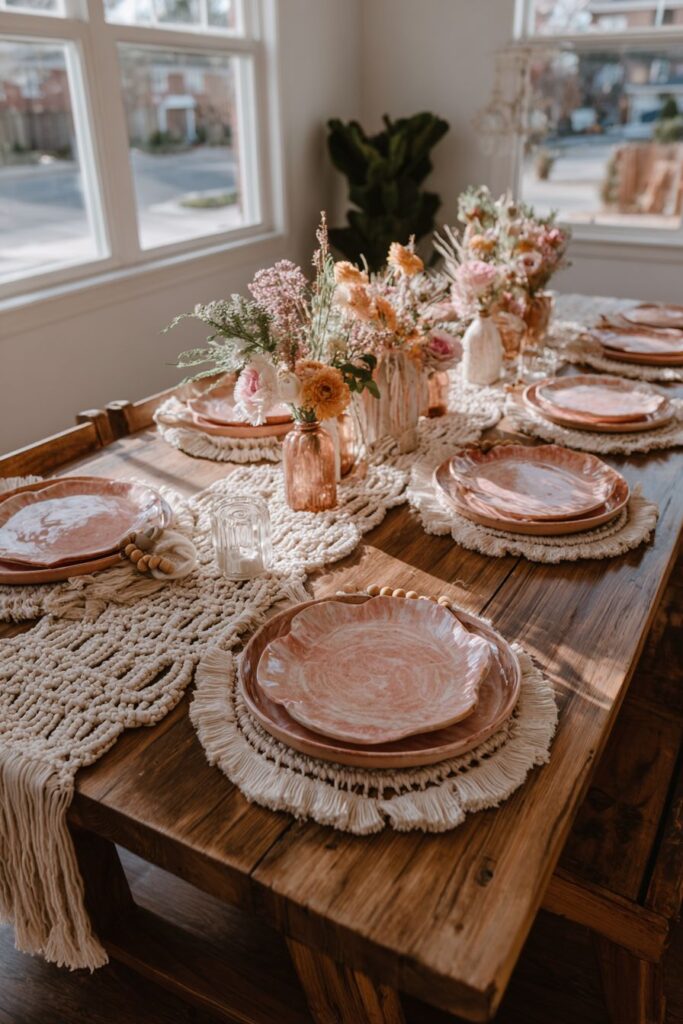
Handmade ceramic plates in organic shapes showcase artisan craftsmanship, each piece slightly different from the others with natural variations in form and glaze. Reactive glazes in soft spring pastels—perhaps where pink fades to cream or blue melts into white—create watercolor-like surfaces that feel artistic and unique. These plates celebrate the maker’s hand, the kiln’s mysteries, and the beauty of pieces that proudly show their handcrafted origins. The eclectic centerpiece embraces bohemian maximalism, mixing wildflowers with pampas grass and eucalyptus in a collection of vintage bottles and jars—perhaps old medicine bottles, recycled wine bottles, mason jars in various sizes—each containing different elements creating a collected, unstudied arrangement.
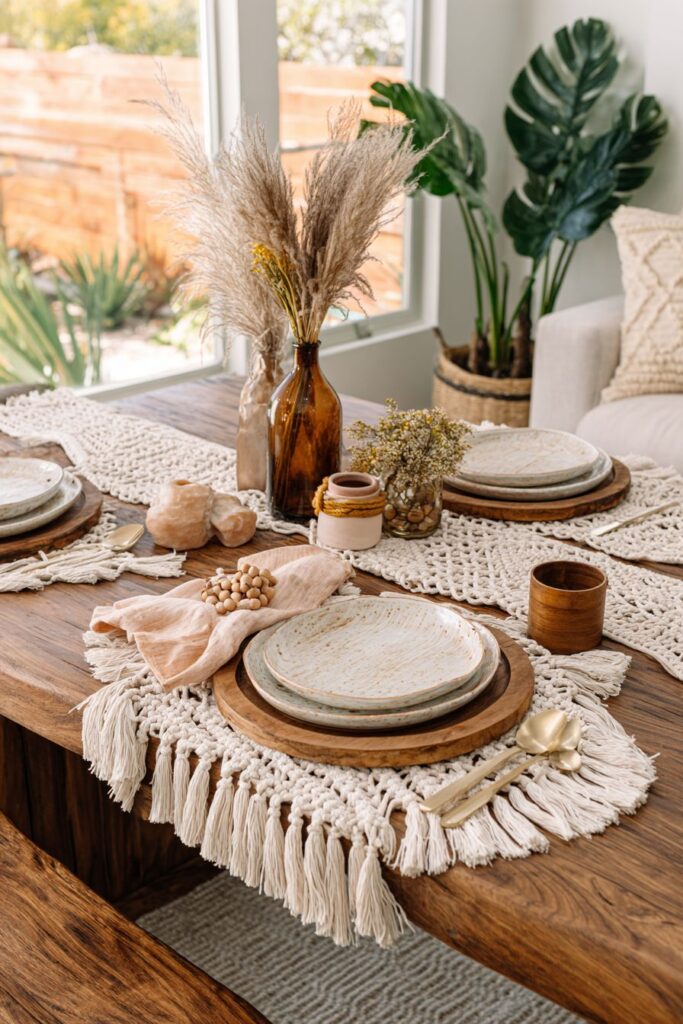
Tie-dye napkins in subtle peach and cream tones add another handcrafted element, their organic patterns created through traditional resist-dyeing techniques bringing art and process to functional textiles. Wooden bead napkin rings contribute natural material and perhaps global-inspired patterns, their handcrafted nature and earthy aesthetic perfect for bohemian style. Warm natural light creates soft shadows that highlight artisanal textures—the knotted macramé, glazed ceramic surfaces, tie-dye patterns, wood grain—that make this setting feel personal and creative. This relaxed aesthetic celebrates individual expression, handmade beauty, and the artful life.
Key Design Tips:
- Choose handmade ceramics with visible maker’s marks and natural variations
- Incorporate macramé or other textile arts as runners or wall hangings
- Mix many different vessels in centerpiece for collected, eclectic feel
- Use tie-dye or other hand-dyed textiles for artistic, personal touch
- Embrace low tables and casual seating for relaxed, bohemian entertaining
17. Easter Celebration Pastels
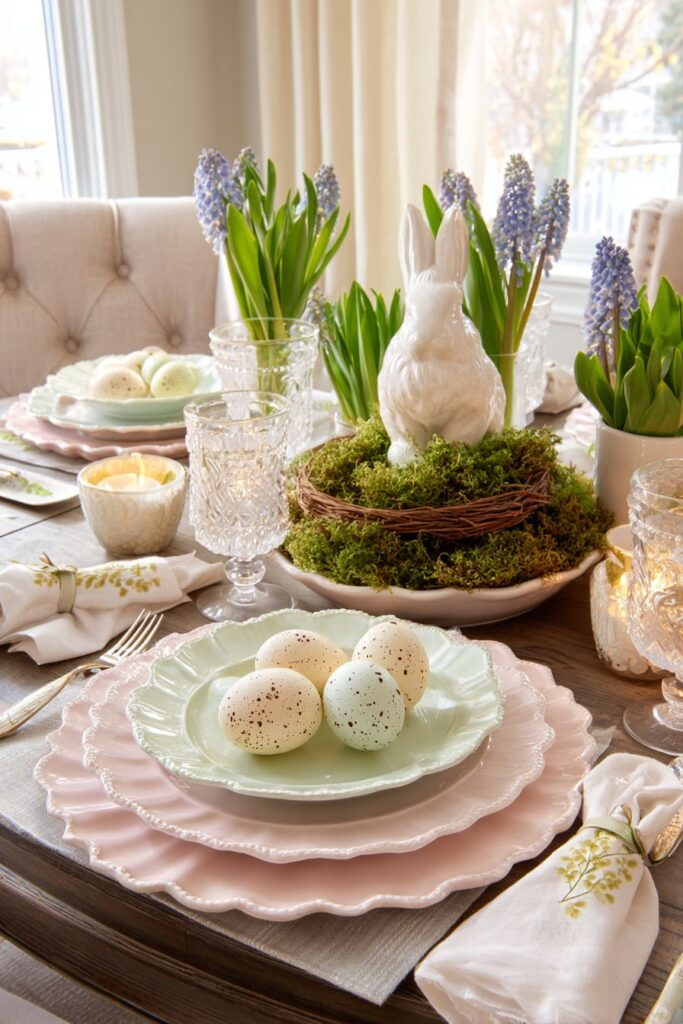
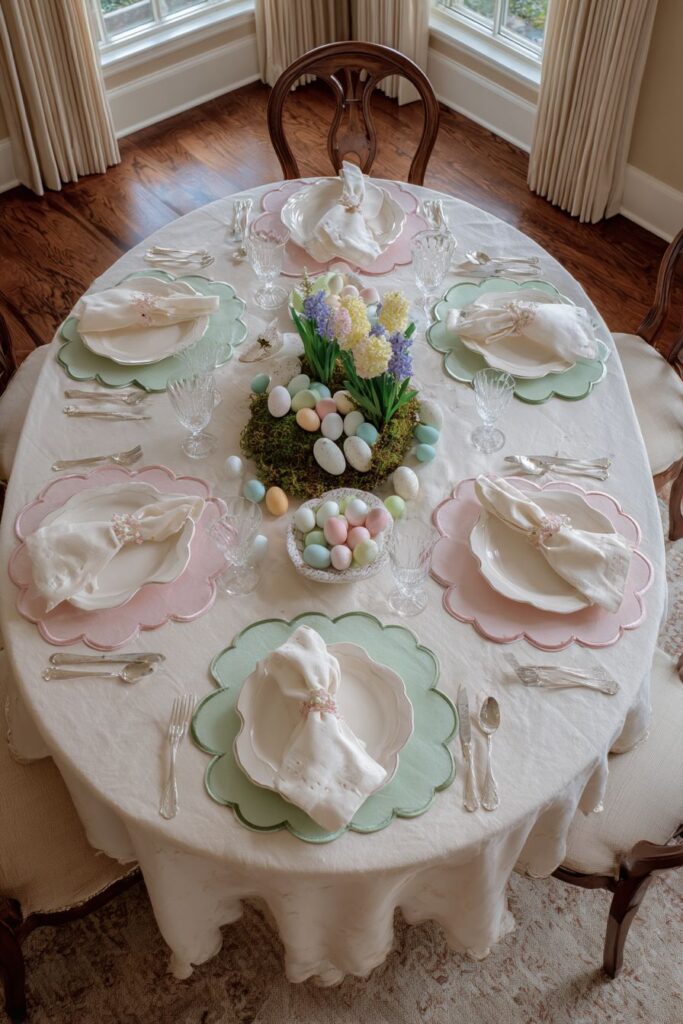
Easter brings opportunity for celebratory tables that embrace spring’s full pastel palette and seasonal symbols. A round dining table creates intimate gathering space where the holiday’s family-focused traditions can unfold with everyone equally positioned. Scalloped edge plates in pale pink and mint green alternated around the table create playful pattern and color rhythm, their decorative borders adding Easter-appropriate charm. The alternating colors ensure visual interest from every angle while the soft pastels maintain sophistication that prevents the setting from becoming too juvenile despite the festive theme.
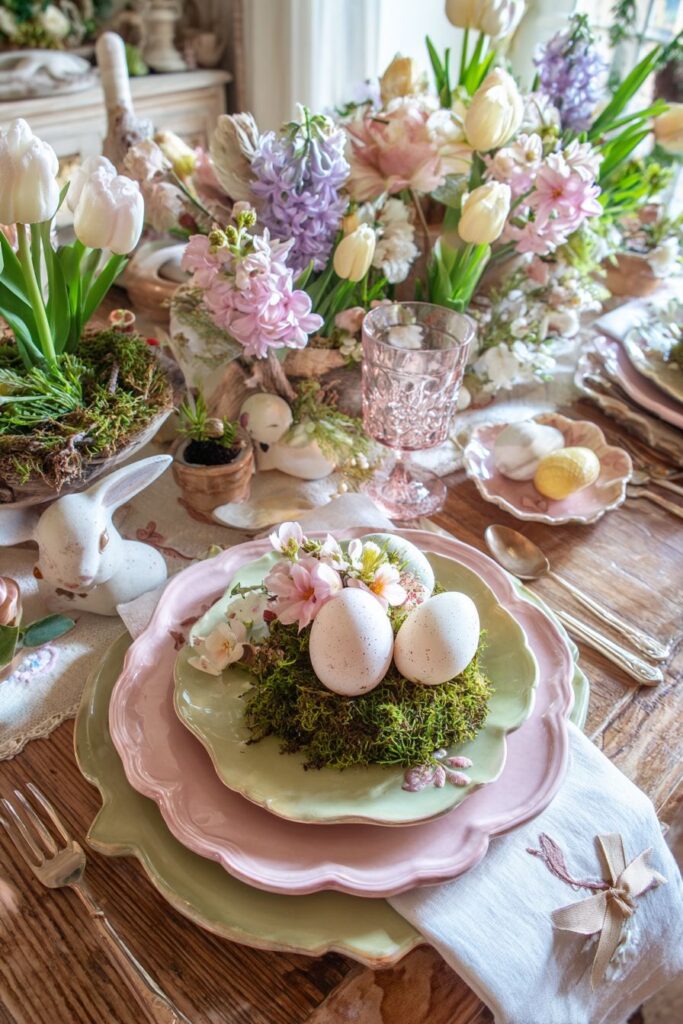
The nest-themed centerpiece directly references Easter symbolism while celebrating spring’s renewal and new life. Natural moss creates the foundation—perhaps fresh moss gathered from the garden or preserved moss in vibrant green—providing textural base and color that grounds the arrangement. Speckled eggs nestle in the moss, their natural patterns and varied sizes adding organic authenticity whether using real blown eggs, ceramic replicas, or decorative versions. Spring flowers like hyacinths with their intensely fragrant spikes and grape hyacinths (muscari) with their tiny clustered blooms in deep blue or white emerge from the nest, connecting Easter celebration to garden abundance.
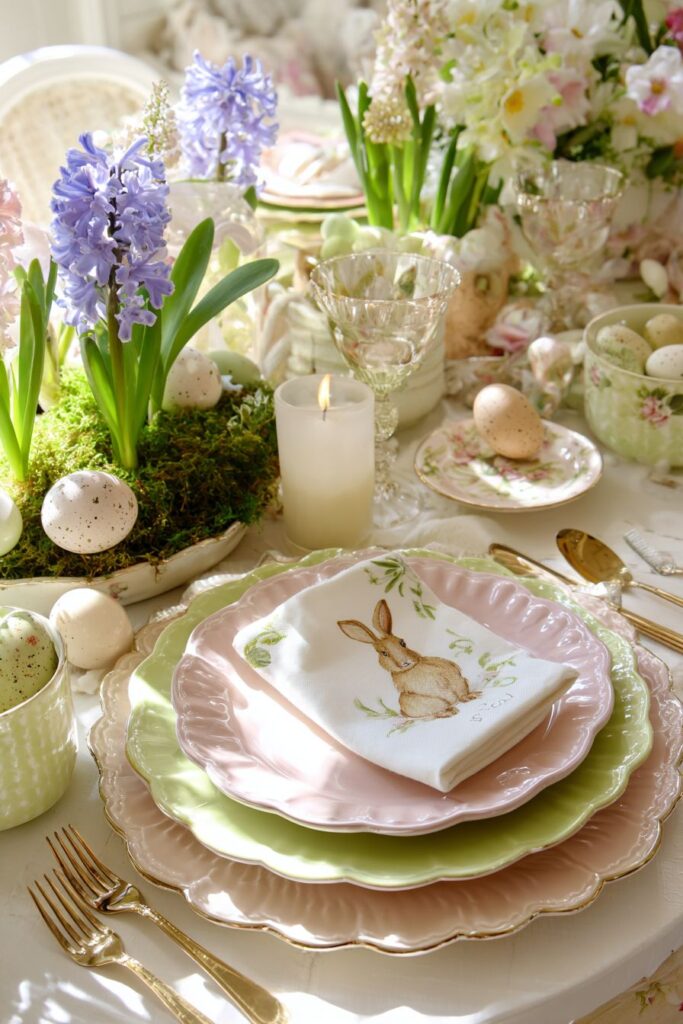
Embroidered bunny-motif napkins in white linen bring playful seasonal detail without sacrificing elegance, their subtle embroidery perhaps showing simple rabbit silhouettes or small decorative borders featuring spring symbols. Satin ribbon ties in soft pastels—maybe pale yellow, baby blue, or soft pink—add lustrous texture and create gift-like presentation for each place setting. Bright morning light creates cheerful spring atmosphere perfect for Easter brunch, the clear illumination enhancing pastel colors and creating the joyful ambiance appropriate for this celebration of renewal and hope. Overhead photography captures the festive yet elegant arrangement that makes holiday meals memorable.
Key Design Tips:
- Alternate pastel-colored plates around the table for playful pattern and color rhythm
- Create themed centerpieces that reference holiday symbols while maintaining sophistication
- Use embroidered napkins with seasonal motifs for subtle thematic detail
- Add ribbon ties in coordinating pastels for gift-like presentation
- Embrace bright, cheerful lighting appropriate to celebration and spring renewal
18. Alfresco Herb Garden Dining
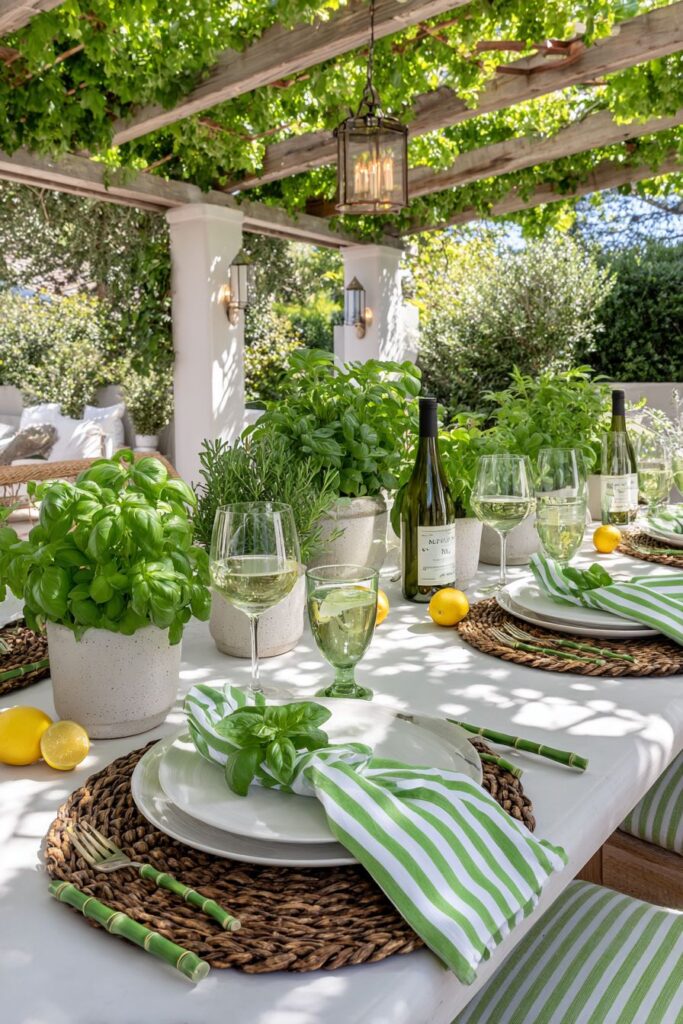
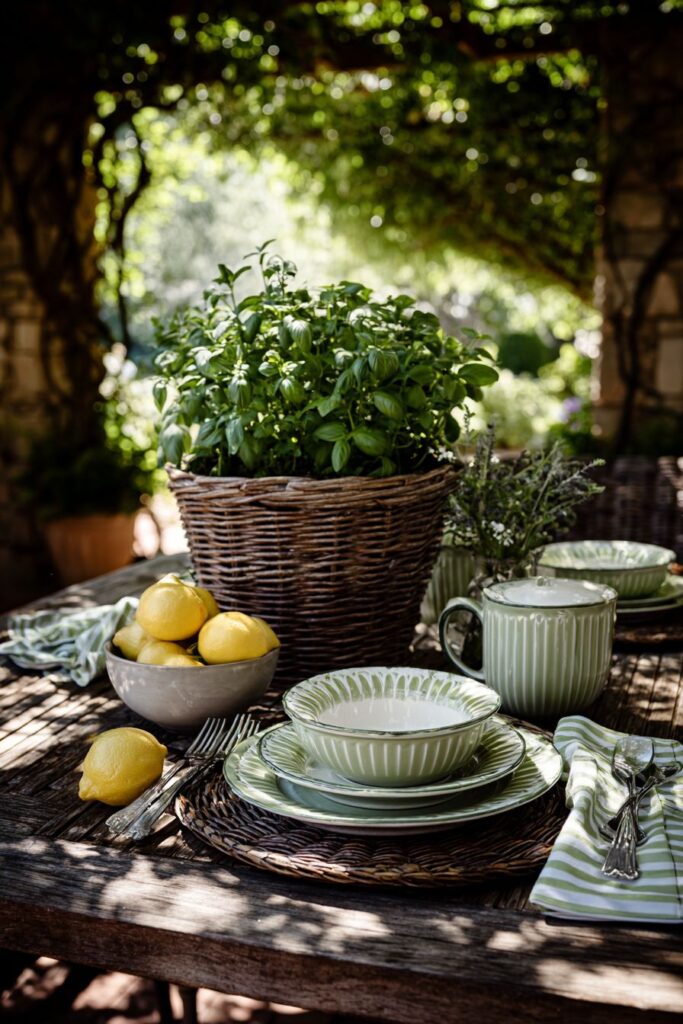
Outdoor spring dining reaches its most relaxed and flavorful expression in this herb garden-inspired setting. A patio table positioned in the garden or on a deck becomes the gathering place where fresh air and growing things enhance every meal. Woven wicker chargers add natural texture and define each place setting while protecting the table surface, their organic material and handcrafted appearance appropriate for outdoor entertaining. Simple white dinnerware provides clean foundation that doesn’t compete with the garden surroundings, allowing nature and fresh elements to be the stars.
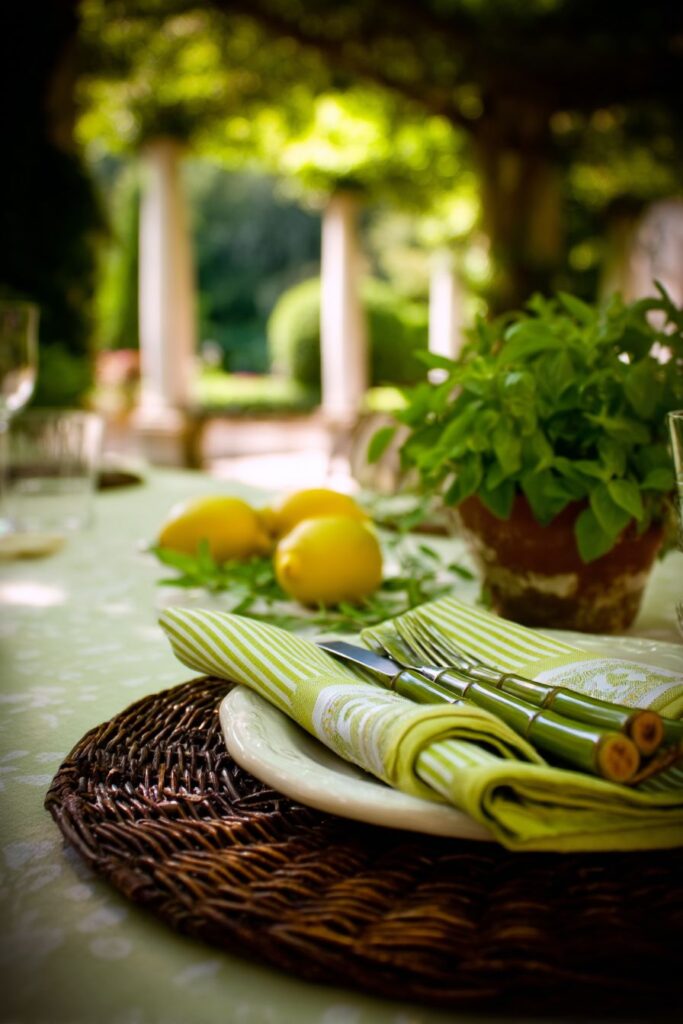
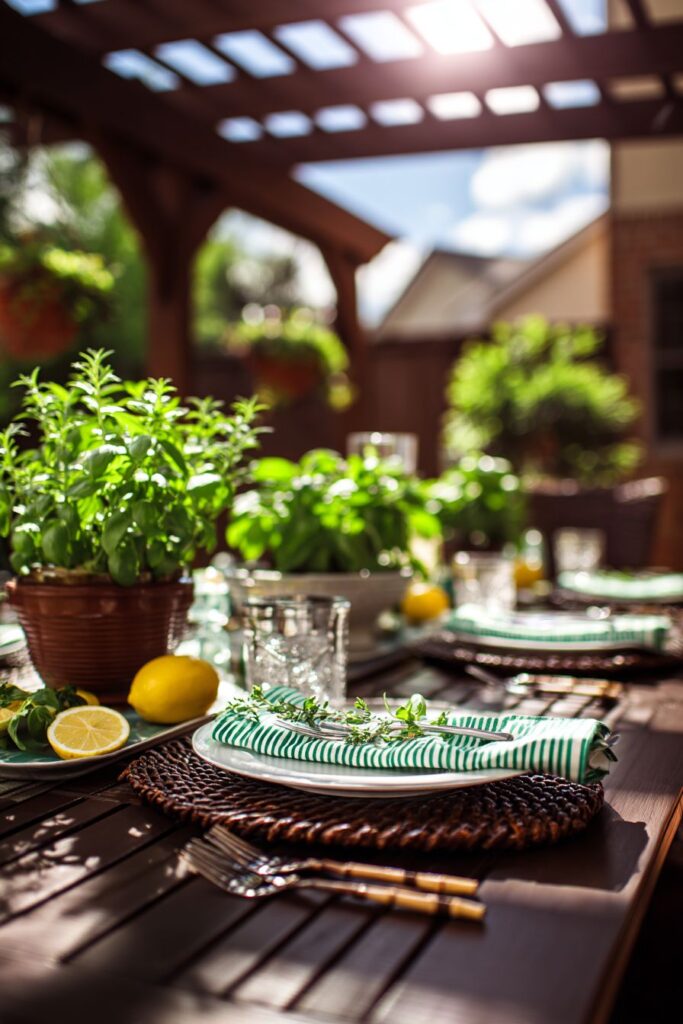
Potted herbs serve as living centerpieces, transforming functional plants into decoration that engages multiple senses. Basil with its lush green leaves and distinctive aroma, thyme showing tiny leaves and delicate structure, mint spreading its refreshing scent—these aren’t just decorative but provide fresh ingredients for the meal, perhaps for guests to pinch into drinks or salads. Scattered lemon slices add bright yellow color and citrus scent, their simple circles creating graphic elements while suggesting use in water, tea, or as flavor enhancers. This edible decoration approach connects table to kitchen and garden in immediate, tangible ways.
Striped cotton napkins in fresh green and white reinforce the garden theme while providing casual, washable practicality perfect for outdoor dining where spills and stains are more likely. Bamboo flatware completes the natural aesthetic, its sustainable material and warm tone complementing the wicker chargers and potted herbs. Natural outdoor lighting with dappled sunlight through an overhead pergola creates authentic garden ambiance—the shifting shadows and filtered light adding dynamic beauty that indoor settings cannot replicate. This casual, fresh outdoor dining experience celebrates spring’s invitation to move life outside where meals taste better and conversation flows more freely.
Key Design Tips:
- Use woven natural materials like wicker or rattan for outdoor table settings
- Incorporate living herbs as centerpieces that serve both decorative and culinary purposes
- Add edible elements like citrus slices for decoration that can enhance food and drinks
- Choose washable, durable textiles for outdoor dining where the unexpected is expected
- Position tables where natural architectural elements like pergolas create filtered light
19. Modern Farmhouse Subway Tile Charm
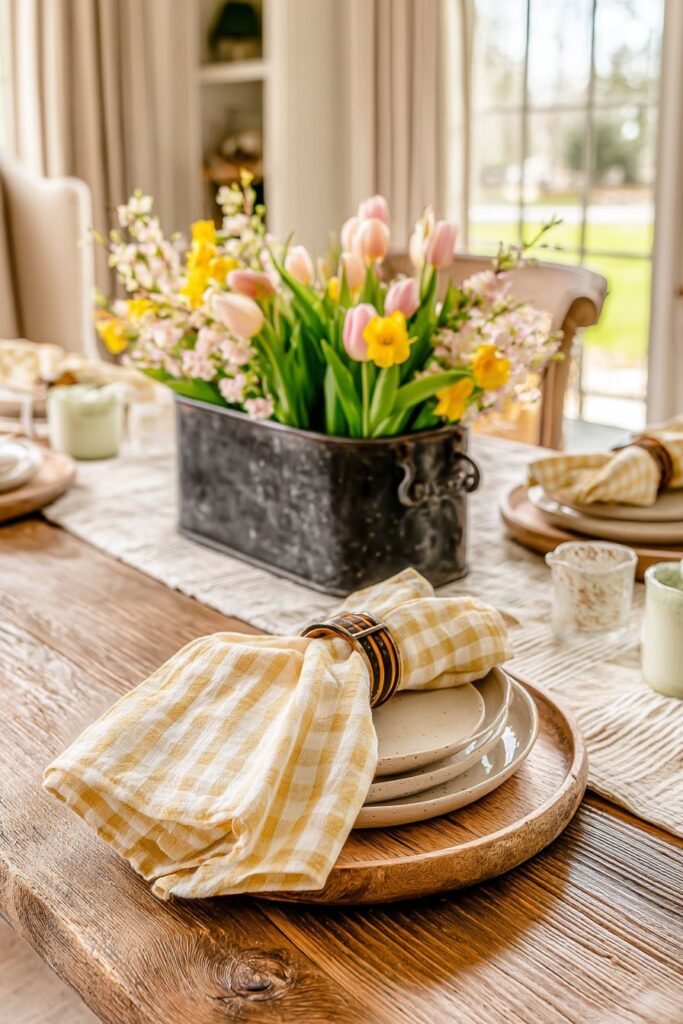
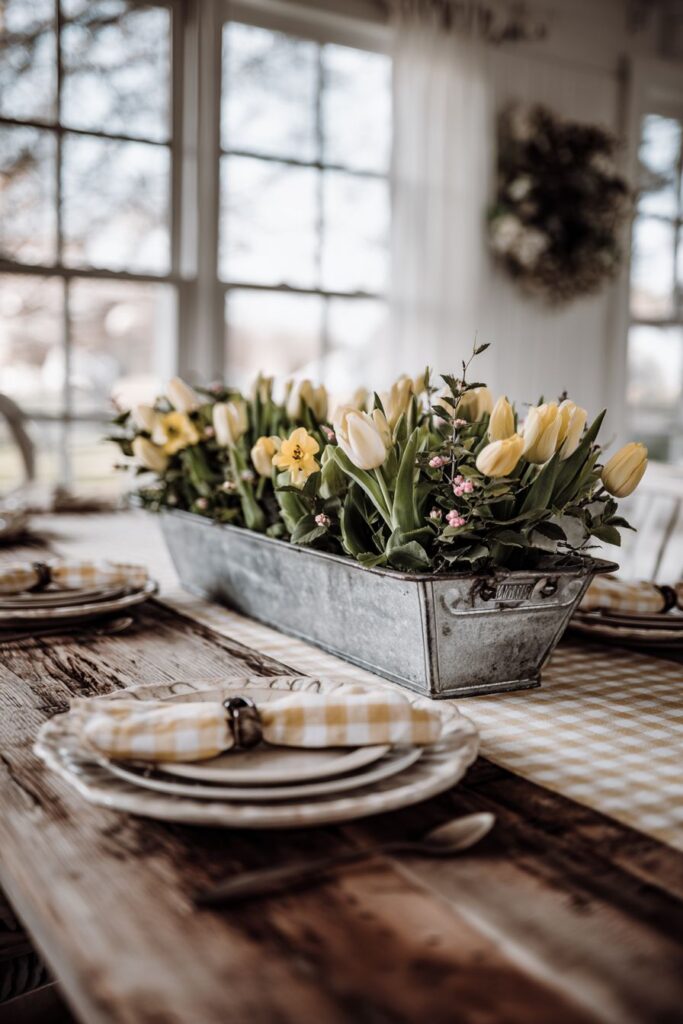
Contemporary farmhouse style finds perfect expression in this setting that balances modern elements with rustic warmth. White subway tile trivets used as chargers under stoneware plates create an unexpected twist—these kitchen-associated tiles, perhaps actual ceramic subway tiles or trivets printed with that pattern, bring architectural element to the table while providing heat protection. The modern farmhouse loves these kinds of crossover moments where utilitarian items become decorative. Stoneware plates in neutral tones contribute appropriate heft and texture, their slightly rough surfaces and earth-inspired colors maintaining casual elegance.
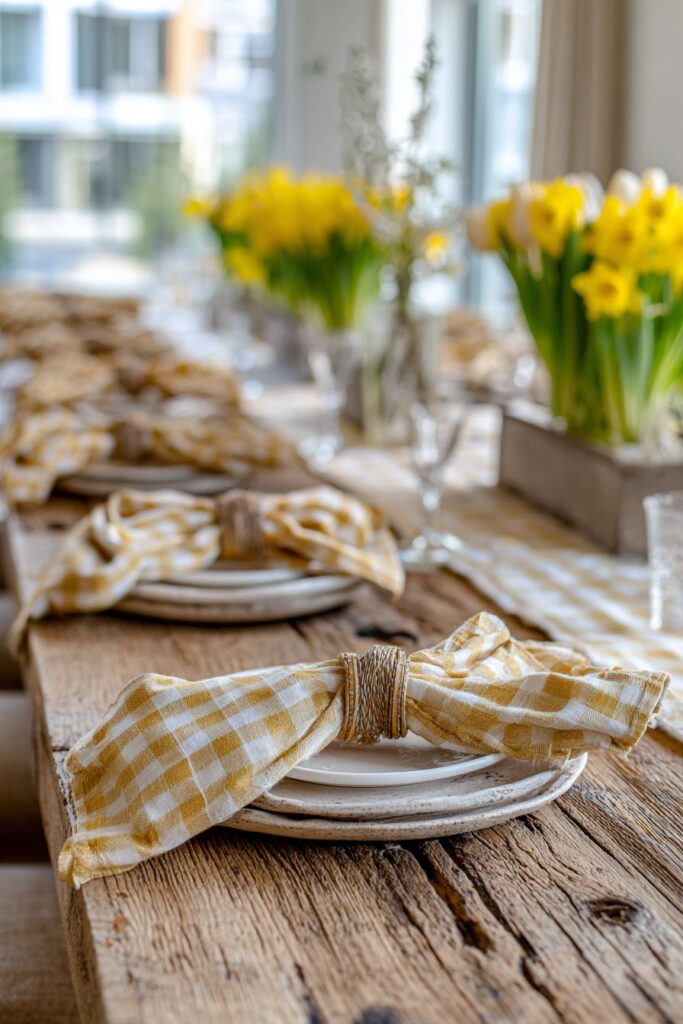
A galvanized metal trough centerpiece runs down the table center, its industrial-agricultural origins making it perfect for modern farmhouse style. Filled with tulips, daffodils, and flowering branches, this long, low container creates continuous floral presence without blocking conversation or views. The combination of structured tulips, cheerful daffodils, and organic flowering branches provides variety in form and texture while maintaining a cohesive spring palette. The metal container’s silver-grey tone works beautifully with both warm wood and cool white elements, serving as neutral bridge between different materials.
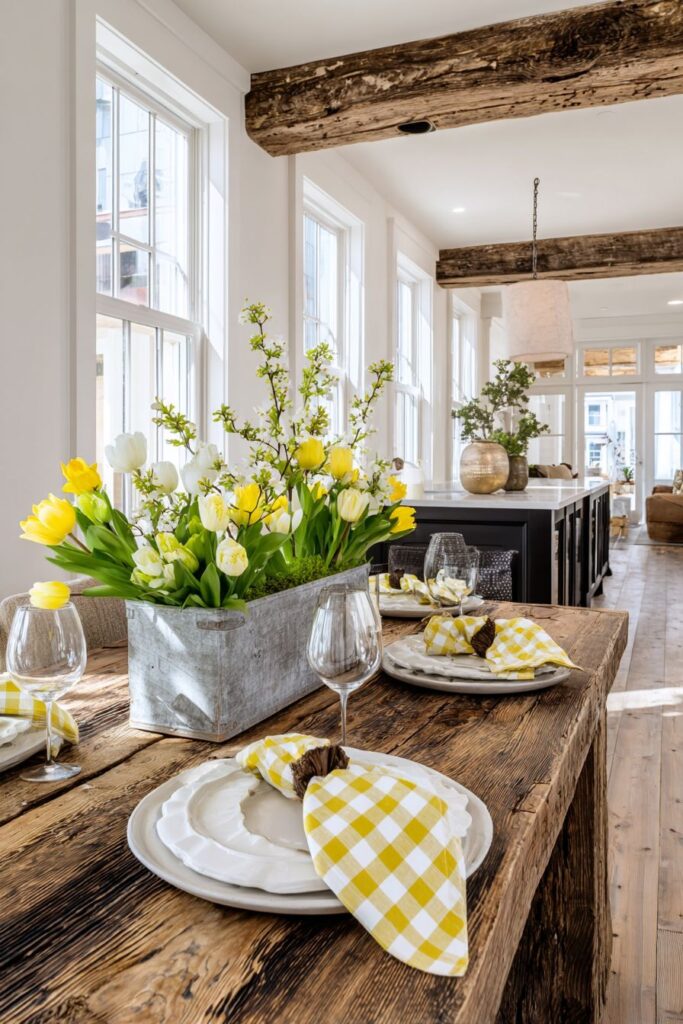
Checked gingham napkins in soft yellow and white add classic farmhouse pattern that feels fresh in unexpected color—not the traditional red or navy, but spring-appropriate yellow that brings sunshine to each place setting. Antique brass napkin rings provide just enough metallic warmth without excessive shine, their aged finish suggesting vintage provenance. The reclaimed wood table surface showing natural grain and gentle wear provides the essential foundation, its character and history visible in every knot and variation. Balanced natural lighting from farmhouse windows highlights the approachable spring elegance that makes this style so popular—it’s refined enough for special occasions yet comfortable enough for everyday living.
Key Design Tips:
- Repurpose architectural or kitchen elements like subway tiles as unexpected table accessories
- Use galvanized metal containers for centerpieces that bridge industrial and agricultural aesthetics
- Choose gingham patterns in non-traditional colors for fresh take on classic farmhouse
- Display reclaimed wood surfaces proudly, celebrating their age and character
- Balance rustic elements with modern clean lines for contemporary farmhouse appeal
20. Intimate Bistro Romance
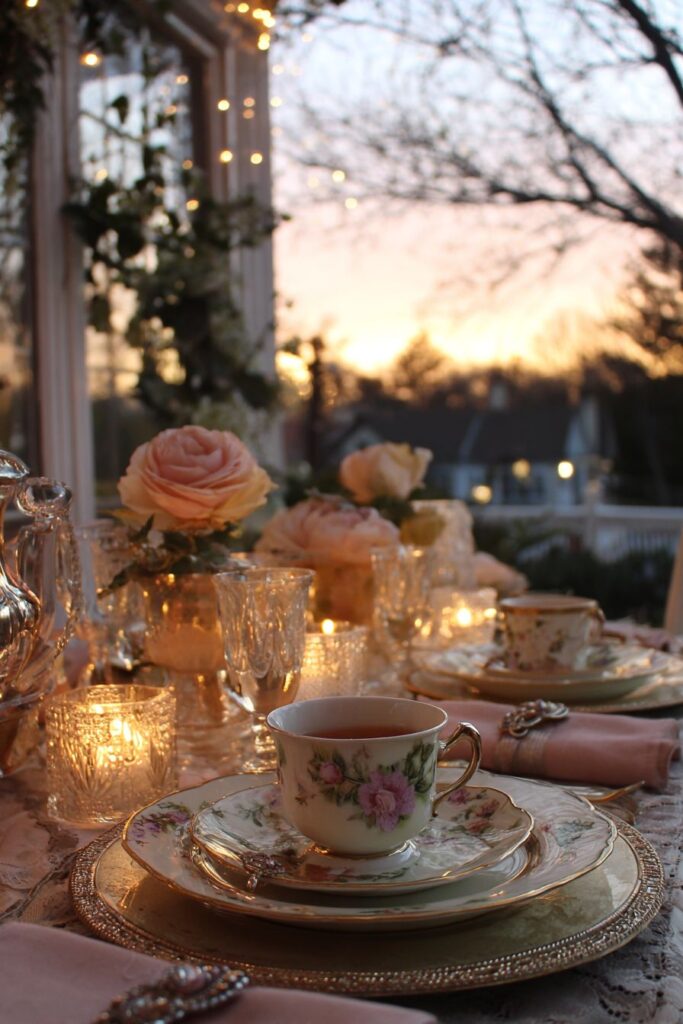
For the most special occasions, this intimate setting transforms a small bistro table into stage for romance and refined celebration. Fine china with gold rim details provides luxurious foundation, the precious metal catching candlelight and adding jewelry-like sparkle to each place setting. Hand-painted spring flower motifs on the china—perhaps delicate roses, forget-me-nots, or cherry blossoms rendered with artistic detail—add personalized beauty and seasonal connection. Each plate becomes miniature artwork, worthy of appreciation beyond its functional purpose.
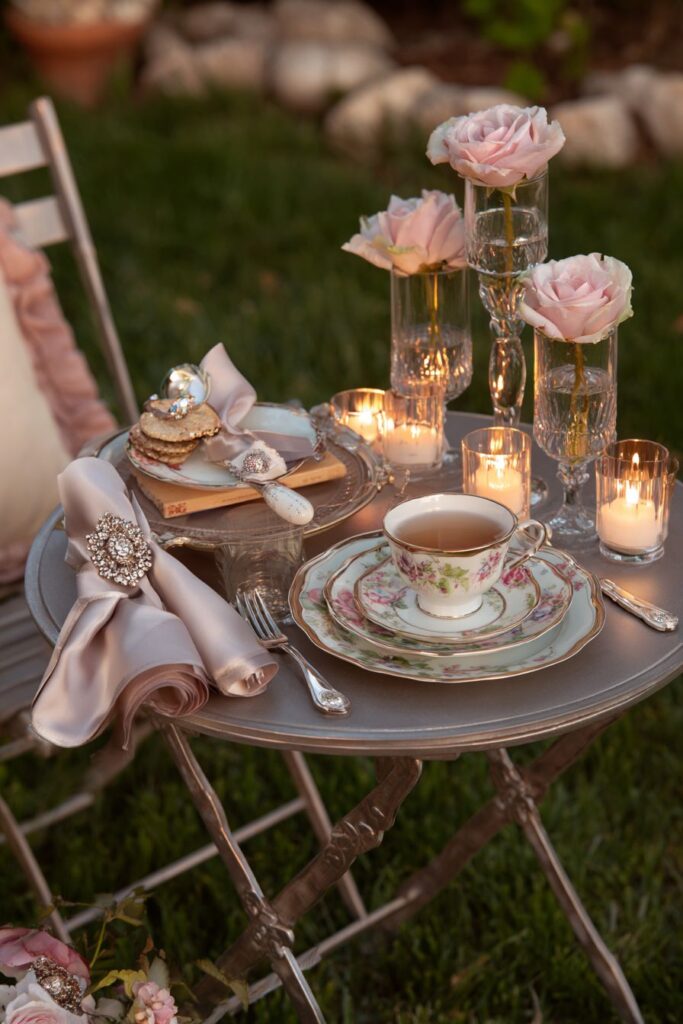
Crystal bud vases, each holding a single perfect garden rose in blush pink, flank glowing tea light candles in this minimalist centerpiece approach. The singular roses—perhaps ‘Queen of Sweden’ with its soft pink petals or ‘Compassion’ in peachy-pink tones—demonstrate that sometimes one perfect bloom speaks more eloquently than abundant arrangements. The crystal vases add formal elegance and light-refracting beauty, their facets creating prisms that dance in candlelight. Tea light candles provide intimate illumination without overwhelming a small table, their low flames creating pools of golden light that enhance rather than obscure.
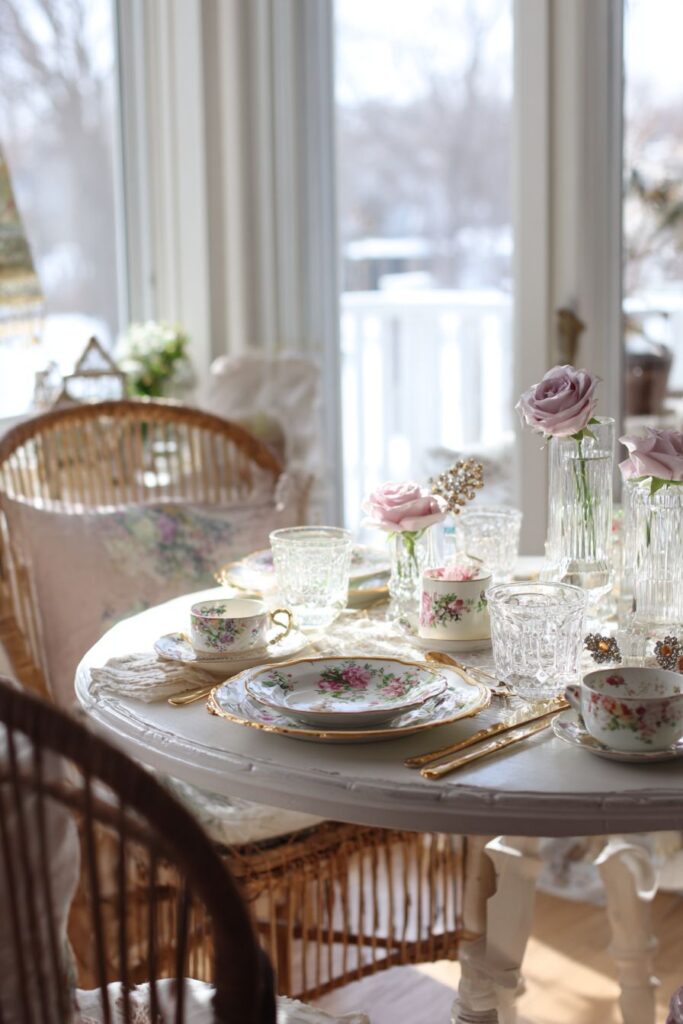
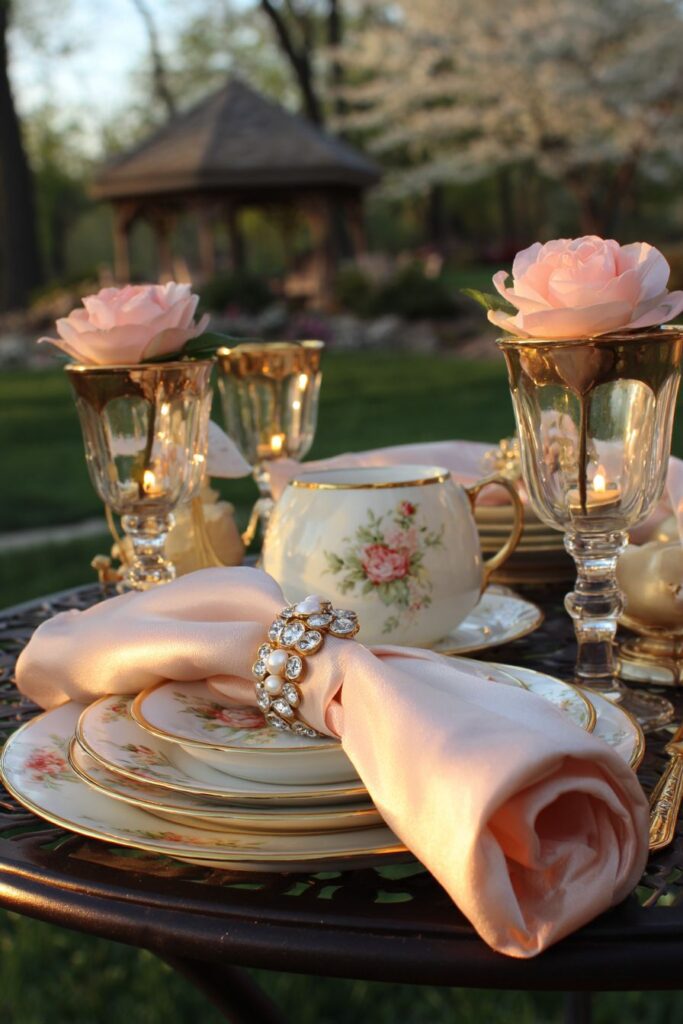
Silk napkins in champagne color introduce subtle luxury through material choice and soft metallic hue, their smooth texture and gentle sheen elevating the experience beyond cotton or linen. Vintage brooch napkin holders transform napkins into personal adornments—these might be actual antique jewelry pieces, perhaps inherited or collected, adding sparkle and personal history to each setting. Soft evening light transitioning to candlelight creates intimate spring ambiance that evolves throughout the meal, the natural daylight giving way to romantic glow as conversation deepens. Shallow depth of field photography highlights refined spring table details, creating soft blur that draws attention to the most important elements while suggesting the dreamy quality of perfect moments.
Key Design Tips:
- Choose fine china with gold details for occasions demanding ultimate elegance
- Use single perfect blooms in crystal vases for sophisticated minimalist impact
- Incorporate silk textiles for tactile luxury and subtle sheen
- Repurpose vintage jewelry as unique napkin holders with personal history
- Plan lighting to transition from natural to candlelight for evolving romantic atmosphere
Why These Spring Table Settings Represent the Best in Seasonal Design
These twenty spring table settings showcase the remarkable versatility and endless possibilities that this season offers for creating memorable dining experiences. From the casual wildflower charm perfect for weekend brunches to the refined elegance suitable for anniversary celebrations, each design demonstrates how thoughtful attention to materials, colors, textures, and lighting can transform ordinary meals into extraordinary occasions. The best spring table settings share several key characteristics that make them successful regardless of their specific style approach.
First and foremost, these exceptional designs embrace seasonal authenticity through carefully chosen elements that genuinely reflect spring’s character. Whether featuring fresh tulips and daffodils, soft pastel color palettes reminiscent of blooming gardens, or natural materials that echo the season’s renewal and growth, these settings avoid generic decoration in favor of elements that could only belong to spring. This seasonal specificity creates settings that feel timely and connected to the natural world’s rhythms rather than interchangeable across months.
The integration of natural elements stands as another hallmark of superior spring table design. The best settings incorporate living plants, fresh flowers, natural wood surfaces, organic textiles like linen and cotton, and materials drawn directly from nature such as terra cotta, stone, and metals with natural patinas. These elements create multi-sensory experiences where visual beauty combines with natural fragrances, varied textures, and the vital energy that only living things provide. Tables that celebrate spring’s abundance through fresh botanicals and honest materials consistently create more memorable and engaging dining environments.
Successful spring table settings also demonstrate sophisticated understanding of color theory and palette development. The featured designs show how spring’s characteristic pastels—soft pinks, gentle greens, pale yellows, lavender, and sky blues—can be combined with neutrals, whites, and natural wood tones to create harmonious compositions that feel fresh without becoming overwhelming. The best designs use color strategically, whether through bold statements like sunny yellow plates that energize a space or subtle accents like a single green parrot tulip in a white arrangement. This thoughtful color application creates visual interest while maintaining the light, airy quality essential to spring aesthetics.
Material diversity and textural richness separate exceptional table settings from ordinary ones. The featured designs layer multiple textures—smooth ceramics against rough wood, woven linens beside shiny metals, soft flower petals near structured glassware—creating tactile interest that engages multiple senses. This layering adds depth and sophistication, preventing settings from appearing flat or one-dimensional. The contrast between materials—the cool smoothness of marble versus the warm roughness of reclaimed wood, the delicate transparency of crystal against the solid opacity of stoneware—creates dynamic visual relationships that hold attention and reward closer inspection.
Lighting consideration proves crucial in creating the best spring table settings, with natural illumination playing the starring role in most successful designs. The featured settings demonstrate how morning light creates fresh, energizing atmospheres perfect for brunches, afternoon sun filtering through curtains adds romantic softness, and evening light transitioning to candlelight creates intimate ambiance for dinners. Understanding how light interacts with materials—how it reflects off metallic surfaces, diffuses through glass, creates shadows with three-dimensional objects, and enhances colors at different times of day—allows designers to create settings that look beautiful and photograph well throughout changing conditions.
The balance between sophistication and approachability defines many of the most successful spring table designs. Settings that achieve this balance invite participation rather than intimidation, suggesting that beautiful tables are achievable for real people with real lives. Whether through the use of mason jars as vases, mismatched vintage plates that don’t require perfect collections, or casual napkin treatments that prioritize comfort over formality, these designs demonstrate that elegance need not mean precious or unapproachable. This accessibility makes them more likely to be recreated and enjoyed rather than simply admired from afar.
Personalization and individual expression emerge as key factors in the best designs. Settings that incorporate handmade elements, collected pieces with personal history, or unique combinations that reflect the host’s personality create more meaningful experiences than those following formulaic templates. The bohemian artisan setting with handmade ceramics, the vintage tea party with inherited china, the herb garden table where the host’s cooking interests become decoration—these personalized approaches create authentic environments that tell stories and create connections between hosts and guests.
Scalability and adaptability mark the most practical and therefore most successful spring table designs. The best settings demonstrate flexibility—the farmhouse approach works equally well for two people or twenty, the coastal aesthetic translates from casual lunches to elegant dinners with minor adjustments, the minimalist style accommodates different meal types through simple modifications. This adaptability ensures the designs remain useful and relevant across different occasions, making them worthy of the effort required to create them.
Sustainability consciousness increasingly defines the best contemporary table design, with many featured settings prioritizing natural, renewable, or reclaimed materials over synthetic or disposable options. Reclaimed wood tables, living herb centerpieces that later serve culinary purposes, vintage pieces given new life, natural textiles that improve with age—these choices reflect growing awareness of environmental impact while adding authentic character that new, mass-produced items cannot match. This sustainable approach creates tables that not only look beautiful but align with values increasingly important to conscious consumers.
The integration of practical functionality within beautiful design separates truly excellent table settings from purely decorative ones. Settings that consider guest comfort—low centerpieces that allow conversation, durable outdoor materials that withstand elements, washable textiles that remove stress about spills—demonstrate thoughtfulness that enhances the entire dining experience. Beautiful tables that also function well create environments where guests can relax and enjoy rather than worry about disrupting the perfect arrangement, making meals more pleasurable and memorable for the right reasons.
Finally, the best spring table settings capture and convey genuine joy and celebration. Whether through cheerful yellow and white brunch schemes, romantic candlelit arrangements, or casual outdoor gatherings, these designs communicate that spring is cause for celebration—a time to gather with loved ones, enjoy fresh seasonal foods, and mark the earth’s renewal with our own renewal of connections and traditions. This emotional resonance, this ability to create feelings of happiness, hope, and togetherness, ultimately defines the most successful table designs regardless of their specific style or approach.
These twenty spring table settings represent the best in seasonal design because they demonstrate mastery of fundamental principles—color theory, material selection, spatial composition, lighting consideration—while leaving room for personal expression, practical functionality, and emotional impact. They show that creating beautiful spring tables requires neither unlimited budgets nor professional design training, but rather thoughtful attention to detail, genuine appreciation for seasonal beauty, and willingness to experiment with elements that bring joy. Whether drawn to rustic farmhouse charm, contemporary minimalism, romantic vintage style, or bohemian creativity, these designs offer inspiration and practical guidance for transforming ordinary dining into extraordinary spring celebrations that honor the season’s promise of renewal and growth.
Creating memorable spring table settings is an art form accessible to anyone willing to embrace the season’s natural beauty and apply basic design principles with personal flair. The twenty diverse approaches explored in this comprehensive guide demonstrate that successful table design isn’t about following rigid rules or achieving magazine-perfect replication, but rather about understanding how color, texture, material, and light work together to create atmospheres that enhance dining experiences and celebrate seasonal moments.
Conclusion
The key takeaways from these inspiring designs remind us that the best spring tables incorporate fresh seasonal elements like blooming flowers and pastel colors that genuinely reflect spring’s character. They layer diverse textures and materials to create visual and tactile interest that engages multiple senses. They consider lighting carefully, utilizing natural illumination that changes throughout the day to create evolving ambiance. They balance sophistication with approachability, creating beauty that invites participation rather than intimidation. And perhaps most importantly, they reflect personal style and values, whether through vintage collections, handmade elements, sustainable choices, or simply combinations that bring joy to the creator.
As you plan your own spring gatherings, remember that these designs serve as inspiration rather than prescription. Mix elements from different approaches to create hybrid styles uniquely your own. Start with items you already own and gradually add seasonal touches through inexpensive fresh flowers from local markets, foraged branches from your yard, or simple color additions through napkins or table runners. Don’t fear imperfection—the slightly asymmetrical wildflower arrangement, the mismatched vintage plates, the casual napkin treatment often create more warmth and character than rigidly perfect compositions.
Spring invites us to celebrate renewal, embrace fresh possibilities, and gather with those we love around tables that nourish both body and spirit. Whether you’re planning an intimate dinner for two, a festive Easter brunch for family, or a casual outdoor lunch with friends, let these design ideas guide you toward creating table settings that honor the season’s beauty while expressing your personal style. The most successful spring table is ultimately the one where guests feel welcomed, conversation flows freely, food tastes delicious, and everyone leaves with hearts as full as their stomachs—and that magic requires no special expertise, just thoughtfulness, creativity, and genuine hospitality.
"As an Amazon Associate, I earn from qualifying purchases."
