
As winter’s chill fades and nature awakens with vibrant blooms and gentle breezes, our homes call for a refreshing transformation that mirrors the season’s renewal. The living room, as the heart of our home where families gather and memories are made, deserves special attention during this transitional period. Spring interior design is more than just swapping out heavy blankets for lighter throws—it’s about creating an atmosphere that breathes new life into your daily living experience. From delicate floral patterns to fresh botanical elements, spring living room design embraces lightness, natural beauty, and a sense of optimism that energizes the entire household.
The art of spring decorating lies in understanding how to balance color, texture, and natural elements to create spaces that feel both refreshing and inviting. Whether you’re drawn to the soft romanticism of cottage-style florals, the clean simplicity of Scandinavian minimalism, or the warm authenticity of farmhouse charm, spring offers endless opportunities to reinvent your living space. This comprehensive guide explores twenty distinct approaches to spring living room design, each offering unique perspectives on how to welcome the season into your home with style and sophistication.
In the following sections, we’ll journey through diverse design concepts that capture the essence of spring—from airy linen fabrics and pastel color palettes to botanical accents and natural light optimization. Each design story presents practical inspiration for transforming your living room into a seasonal sanctuary that celebrates renewal, growth, and the simple beauty of springtime living. Whether you’re planning a complete room makeover or seeking simple refreshing touches, these ideas will guide you toward creating a space that truly embodies the spirit of spring.
1. Pastel Paradise with Cream Linen Elegance
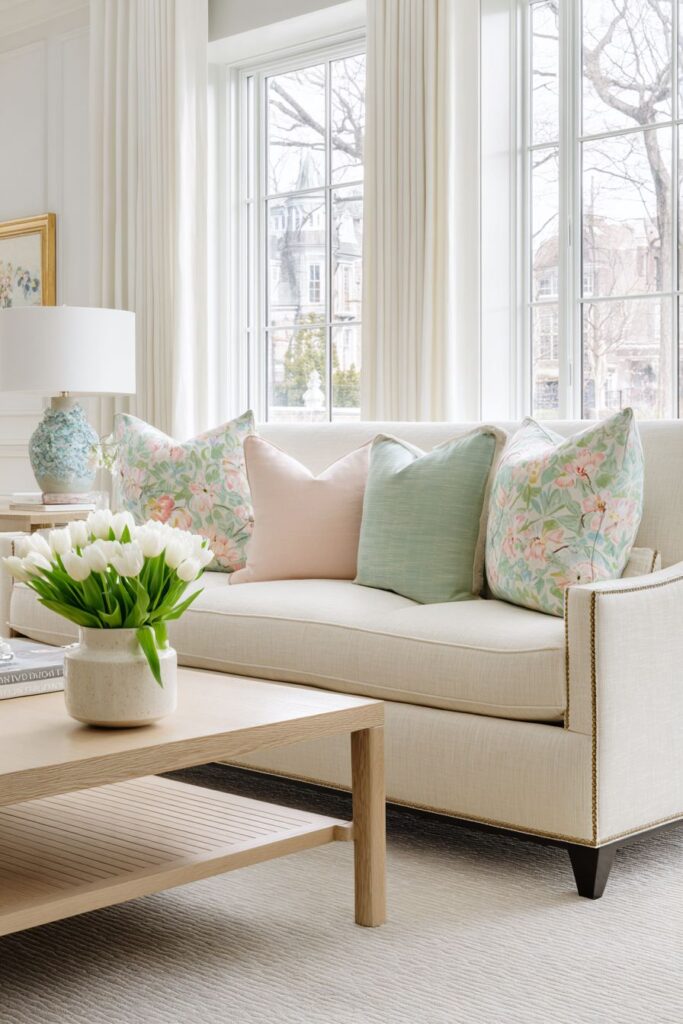
Imagine stepping into a living room where soft morning light dances across a luxurious cream linen sofa, creating an atmosphere of serene sophistication. This design celebrates the gentle beauty of spring through carefully curated pastel accents—sage green and blush pink throw pillows featuring subtle floral patterns that whisper rather than shout their seasonal message. The neutral foundation of the cream sofa allows these delicate hues to shine without overwhelming the senses, creating a balanced composition that feels both fresh and timeless.
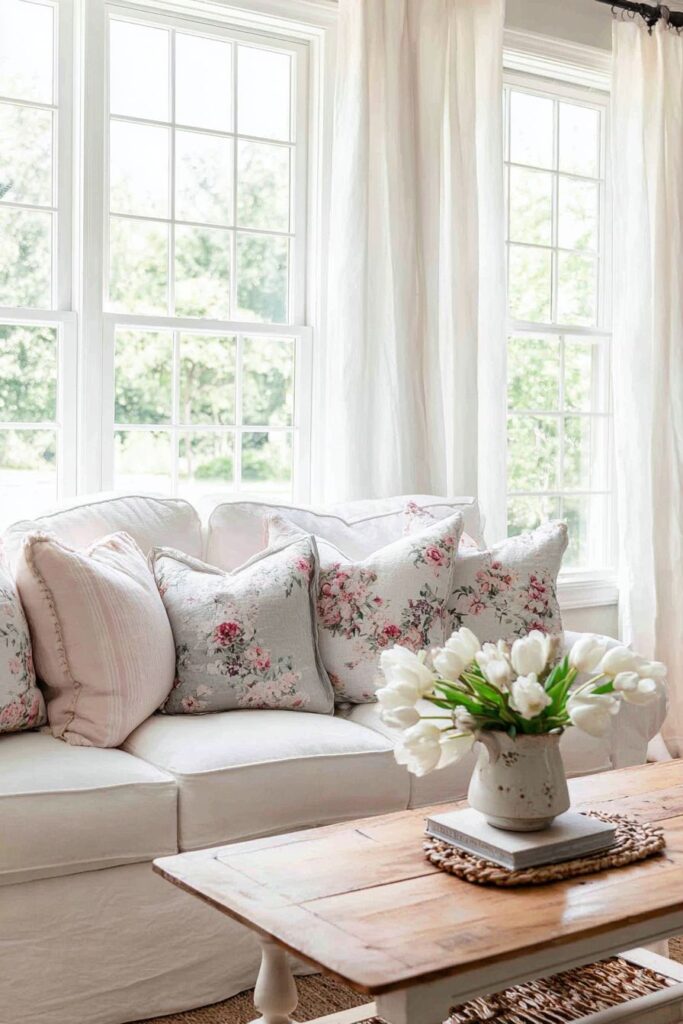
The centerpiece of this design narrative is a light oak coffee table, its warm honey tones providing the perfect platform for a ceramic vase filled with crisp white tulips. These spring harbingers bring life and movement to the space, their clean stems and pristine petals echoing the room’s commitment to understated elegance. The natural wood grain of the coffee table adds organic texture that grounds the ethereal quality of the fabrics, creating a dialogue between earthiness and airiness that defines sophisticated spring design.
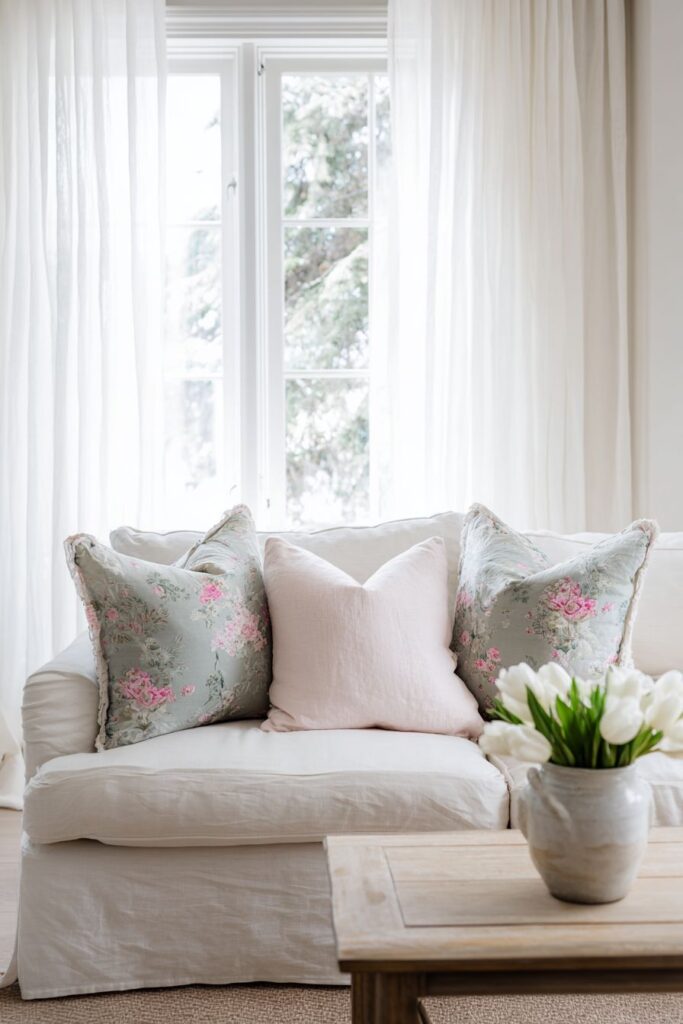
Window treatments play a crucial role in this light-filled sanctuary. Sheer white curtains billow gently at generously proportioned windows, filtering natural light into a soft, diffused glow that enhances the pastel palette throughout the day. This interplay of light and fabric creates an ever-changing ambiance, with the curtains themselves becoming living design elements that respond to the gentlest breeze. The result is a living room that feels connected to the outdoors while maintaining its own peaceful interior atmosphere.
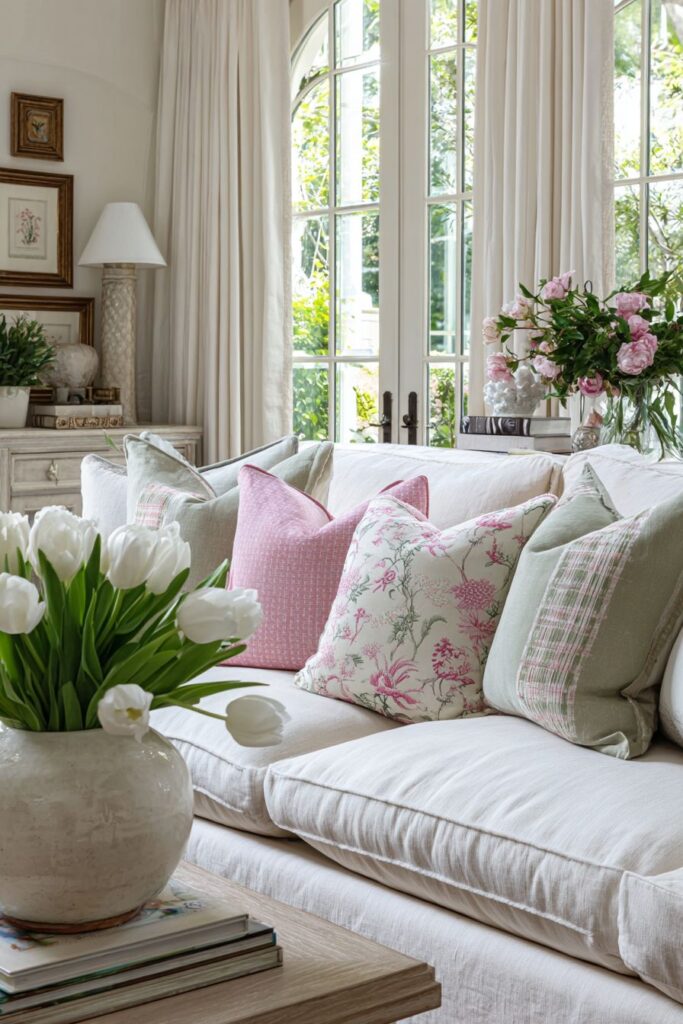
The true magic of this design lies in its attention to textile textures—the slight nub of linen upholstery, the smooth coolness of cotton curtains, and the subtle raised patterns on decorative pillows all contribute to a tactile experience that invites touch and comfort. Key design tips for achieving this look include choosing a neutral linen sofa as your foundation piece to provide versatility across seasons, layering pastel throw pillows in complementary spring shades for easy seasonal updates, investing in quality sheer curtains to maximize natural light while maintaining privacy, and selecting fresh white flowers weekly to keep the space feeling alive and connected to nature.
2. Botanical Wallpaper Wonder
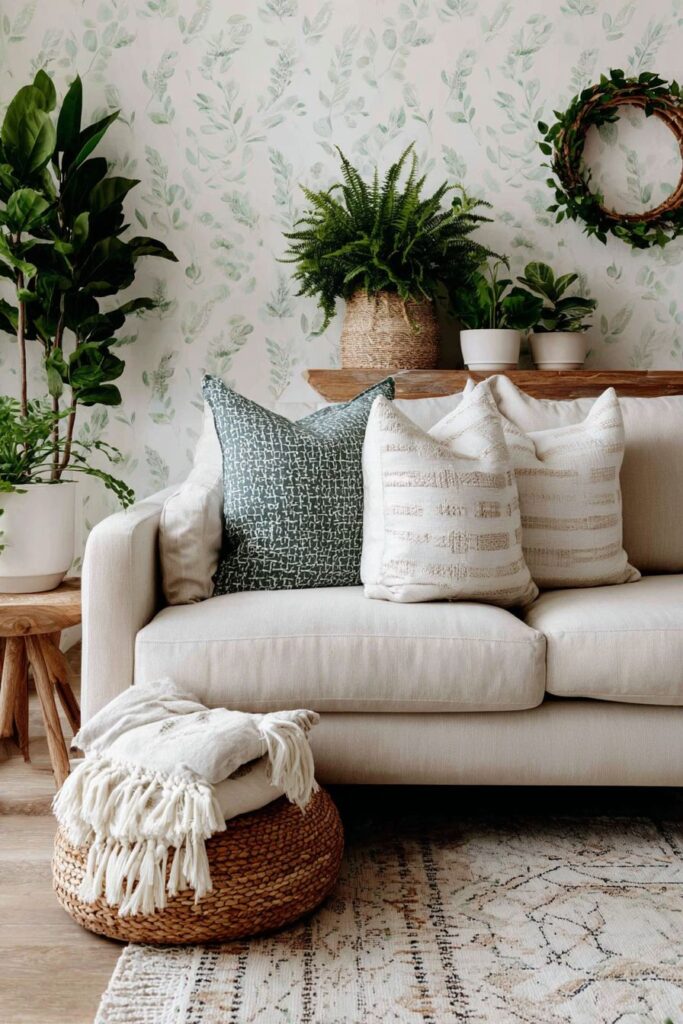
The power of a single accent wall transformed with botanical wallpaper cannot be underestimated in spring living room design. Picture delicate leaf patterns in soft green tones creating a nature-inspired focal point that immediately draws the eye and sets the seasonal tone for the entire space. This design approach demonstrates how one bold choice can refresh an entire room without requiring a complete overhaul, making it an ideal solution for renters or those seeking impactful change on a budget.
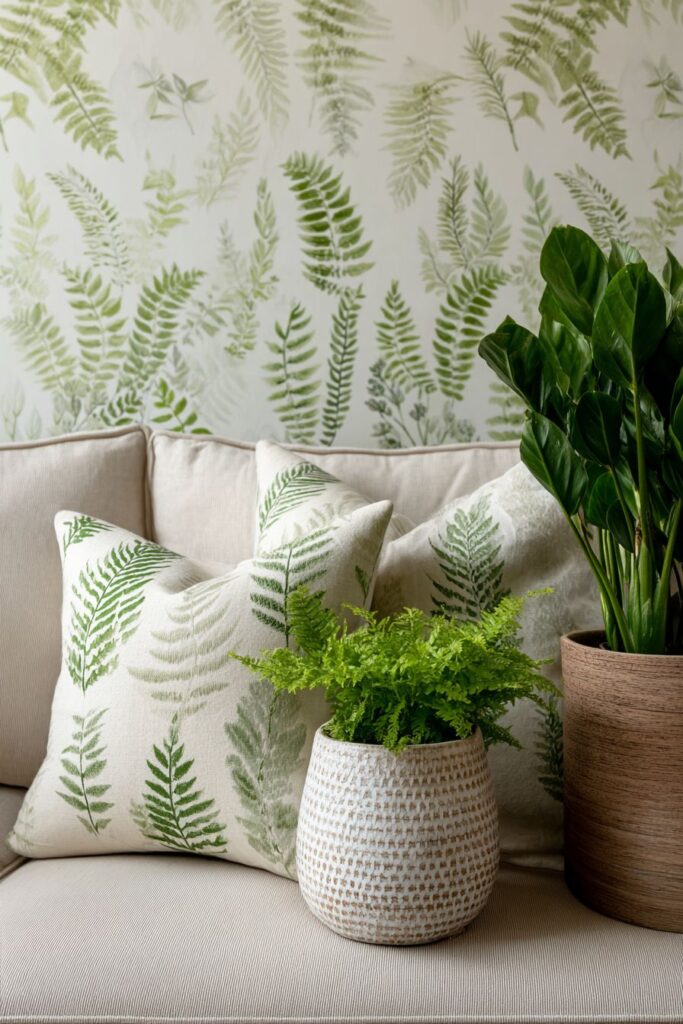
Against this verdant backdrop, a neutral beige sofa provides the perfect counterpoint, allowing the wallpaper to command attention while offering a restful place for the eye to land. The contrast between the organic patterns on the wall and the solid simplicity of the furniture creates visual interest without chaos, embodying the principle that effective design often relies on the tension between complexity and simplicity. The beige tone also serves as a bridge between the green accent wall and the other elements in the room, creating cohesion through careful color coordination.
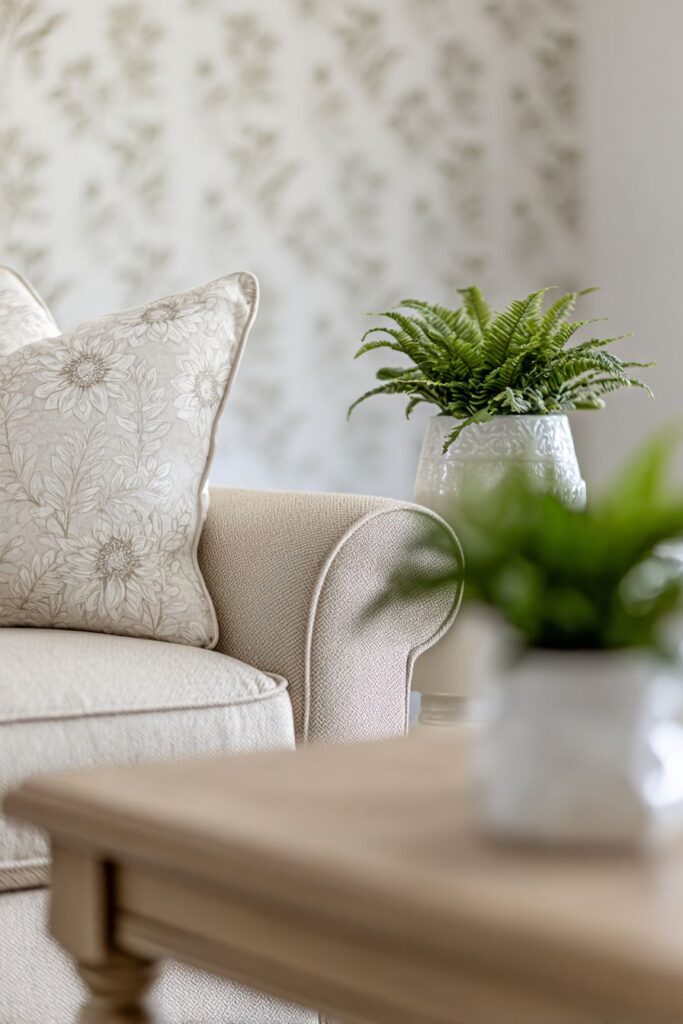
Living greenery amplifies the botanical theme, with potted ferns and peace lilies strategically placed throughout the space to blur the boundaries between the illustrated nature on the walls and actual living plants. This layering technique creates depth and authenticity, transforming the room into a verdant retreat that celebrates the abundance of spring growth. The ferns add feathery texture with their delicate fronds, while peace lilies contribute elegant white blooms that echo the room’s commitment to natural beauty.
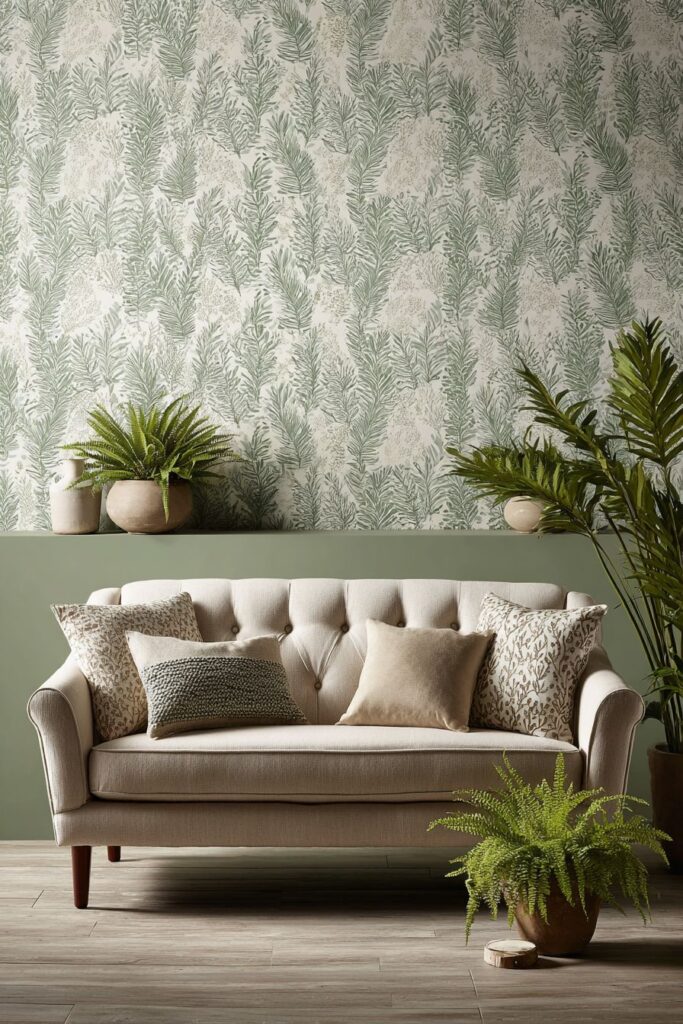
The integration of indoor plants with spring-themed wall treatments represents a holistic approach to seasonal design, where every element reinforces the connection to nature. Key design tips include selecting botanical wallpaper with a color palette that complements existing furniture, using it on a single accent wall to avoid overwhelming the space, choosing low-maintenance indoor plants like ferns and peace lilies for consistent greenery, and ensuring proper lighting for both plant health and showcasing the wallpaper’s intricate patterns.
3. Tranquil Reading Nook Retreat
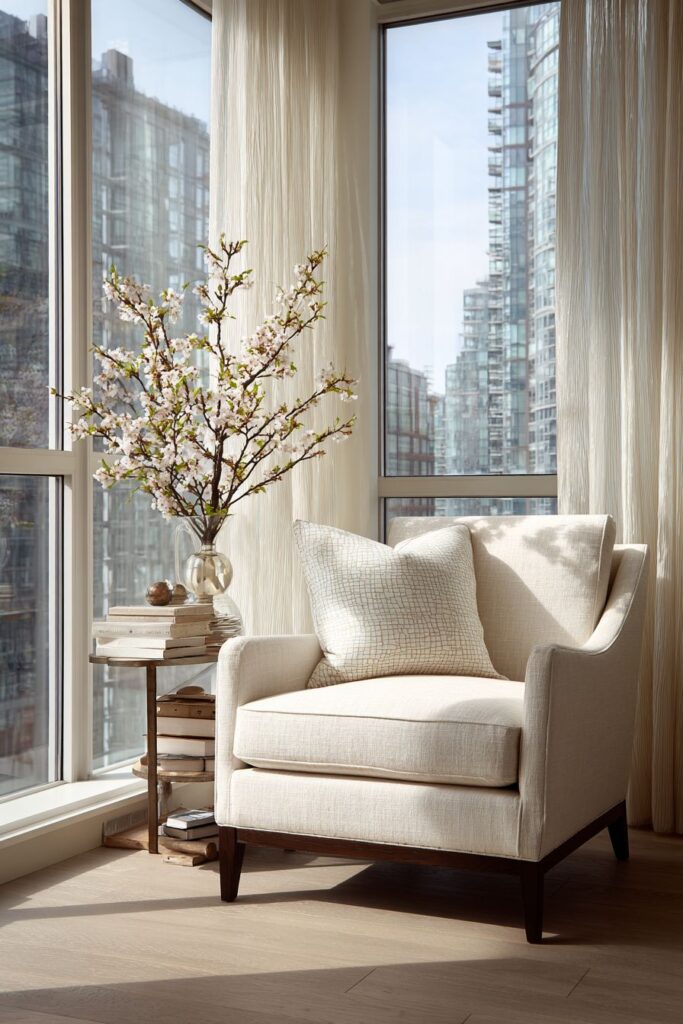
Every spring living room deserves a dedicated corner where time slows down and the simple pleasure of reading can be savored. This design features a cream upholstered armchair positioned strategically near tall windows, creating a personal sanctuary bathed in natural light. The chair’s neutral tone ensures it integrates seamlessly with various decor schemes while its plush upholstery promises hours of comfortable reading, making it both a functional piece and a design statement that speaks to the value of quiet moments.
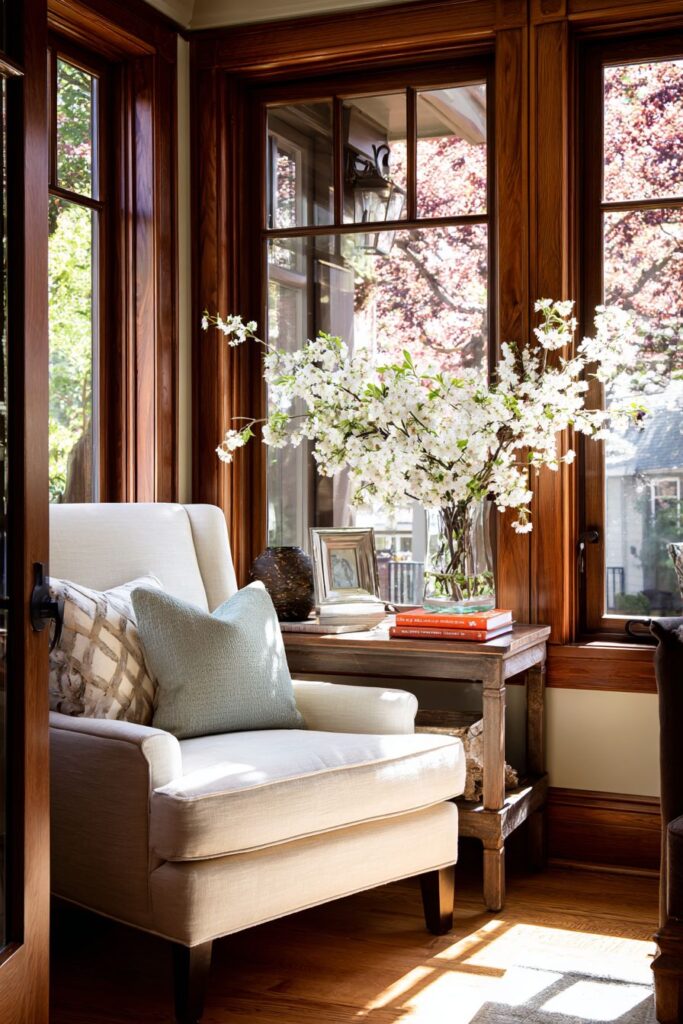
A thoughtfully chosen side table becomes more than mere furniture—it’s a stage for spring’s ephemeral beauty. Fresh cherry blossoms arranged in a delicate vase capture the fleeting magic of the season, their pink and white blooms creating a focal point that changes with the days, reminding us of nature’s constant evolution. Stacked beside the flowers, a collection of well-loved books adds intellectual warmth and personal character, suggesting a life rich with ideas and imagination.
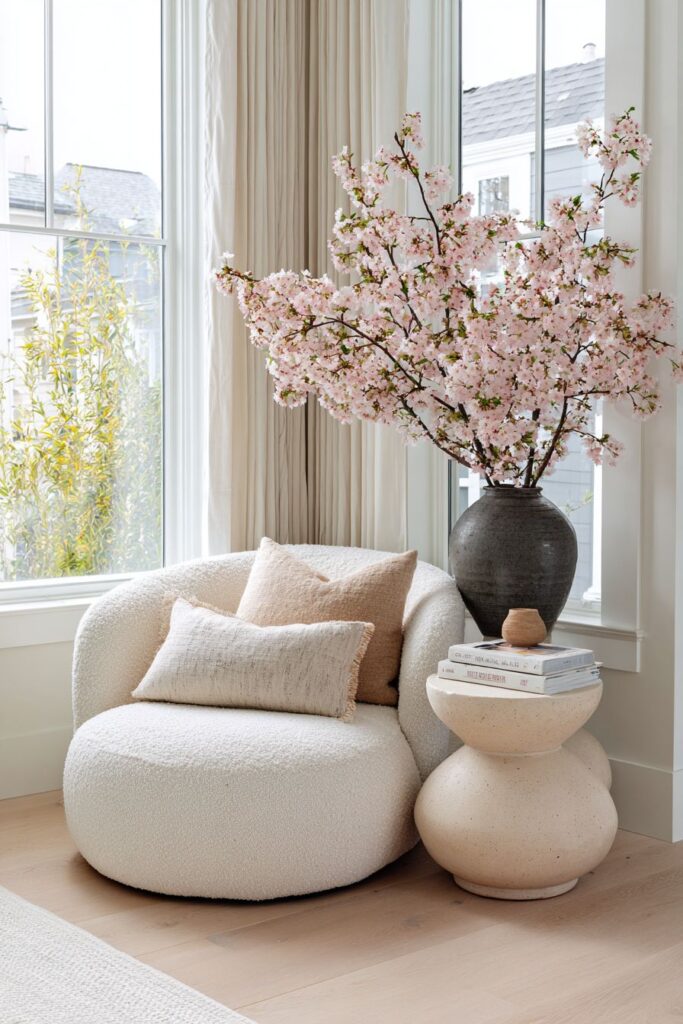
The interplay of light in this corner creates a dynamic environment throughout the day. Soft filtered sunlight streams through the windows, casting gentle shadows on light hardwood floors that add another layer of visual interest to the composition. These moving shadows become part of the design itself, creating an ever-changing pattern that keeps the space feeling alive and connected to the rhythm of the day. The natural wood flooring provides warmth underfoot while its grain pattern adds subtle texture that complements the linen armchair fabric.
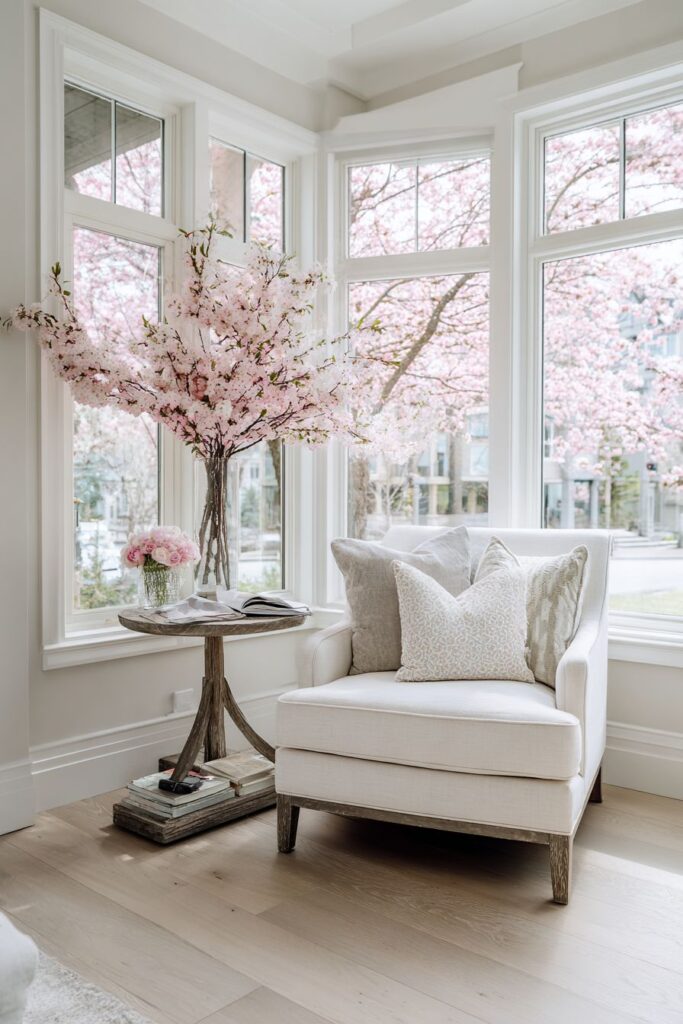
This reading nook exemplifies how mindful attention to detail—the choice of flowers, the quality of light, the comfort of seating—can transform a simple corner into a cherished retreat. Key design tips include positioning seating near windows to maximize natural reading light, choosing upholstered furniture in neutral tones for longevity and versatility, incorporating seasonal flowers that can be easily changed to maintain freshness, and selecting side tables with sufficient surface area for both decorative and functional items.
4. Modern Spring Color Celebration
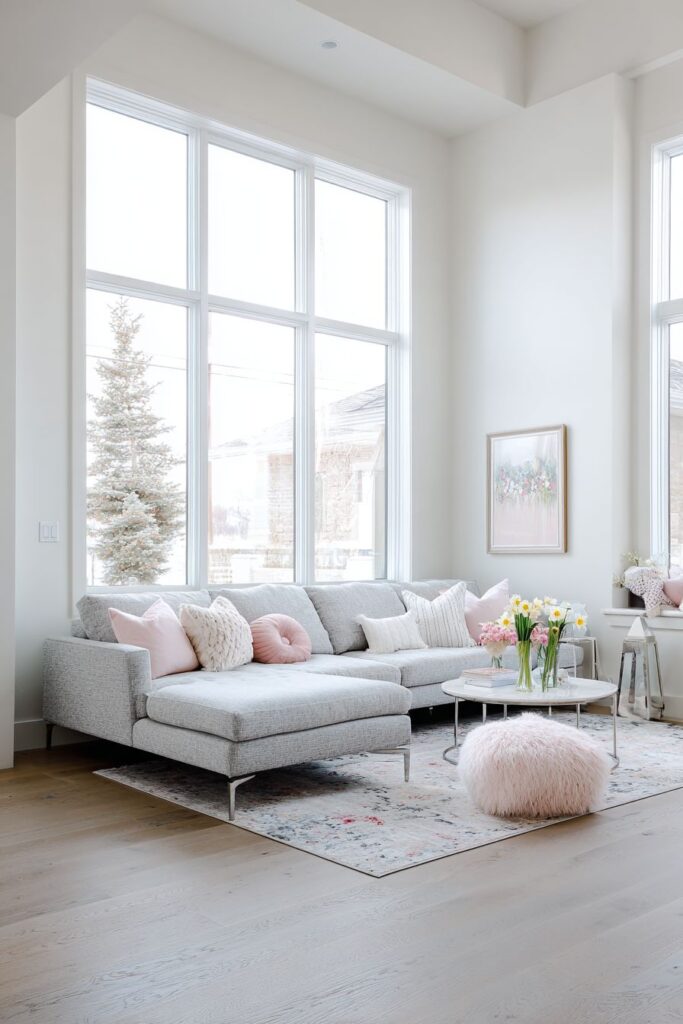
Contemporary design meets seasonal charm in this sophisticated living room that proves modern aesthetics and spring freshness are perfect partners. The color palette of blush pink, soft yellow, and cream creates a cheerful yet refined atmosphere that energizes without overwhelming, demonstrating how pastel hues can work beautifully in minimalist spaces. This carefully orchestrated scheme shows that spring design doesn’t require traditional florals—sometimes color alone can capture the season’s joyful spirit.
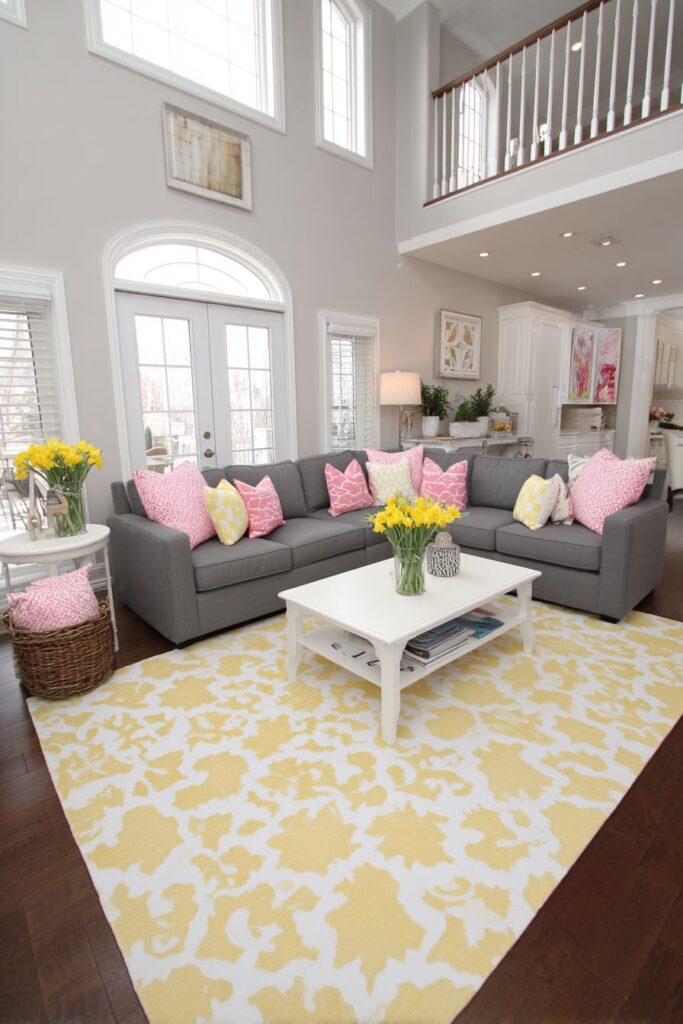
A contemporary sectional sofa in neutral grey anchors the space with clean lines and substantial presence, providing the perfect canvas for spring’s playful color story. The grey serves multiple purposes: it grounds the lighter colors, adds visual weight to balance the airy pastels, and offers a sophisticated backdrop that prevents the spring palette from appearing too sweet or juvenile. This foundation piece demonstrates the importance of investment furniture that can adapt to changing seasonal decorating schemes.
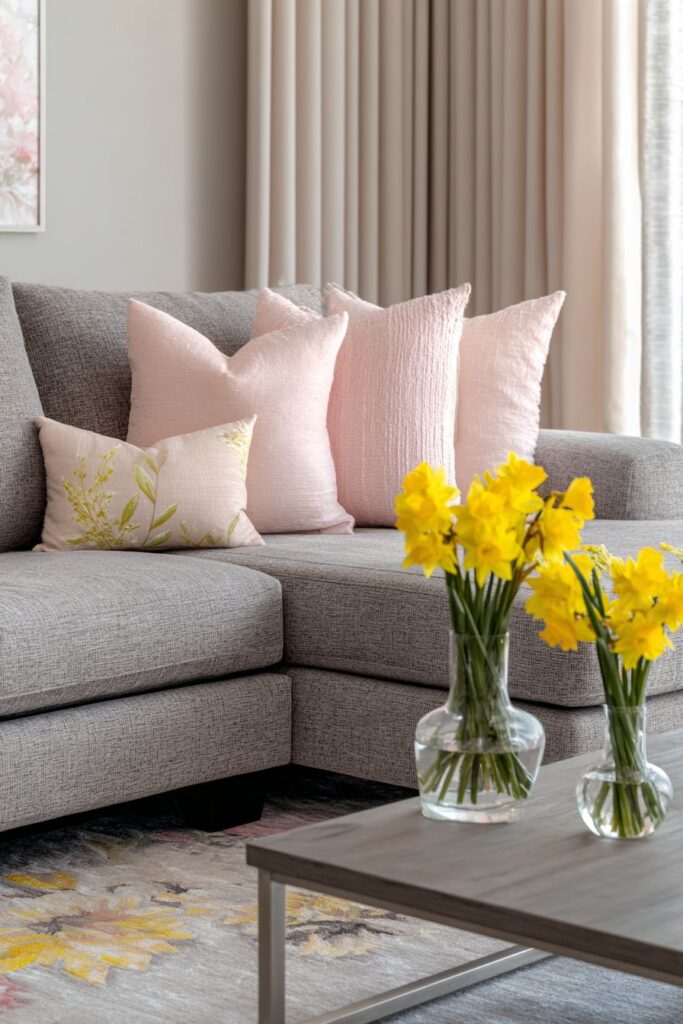
Spring-colored throw pillows and a floral area rug introduce seasonal elements with flexibility and impact. The pillows allow for easy color experimentation—mixing solid pastels with subtle patterns creates depth and visual interest while maintaining the room’s modern sensibility. The floral rug, likely featuring an abstract or stylized interpretation rather than literal blooms, adds pattern at the foundation of the room, defining the seating area while celebrating spring through design rather than decoration.
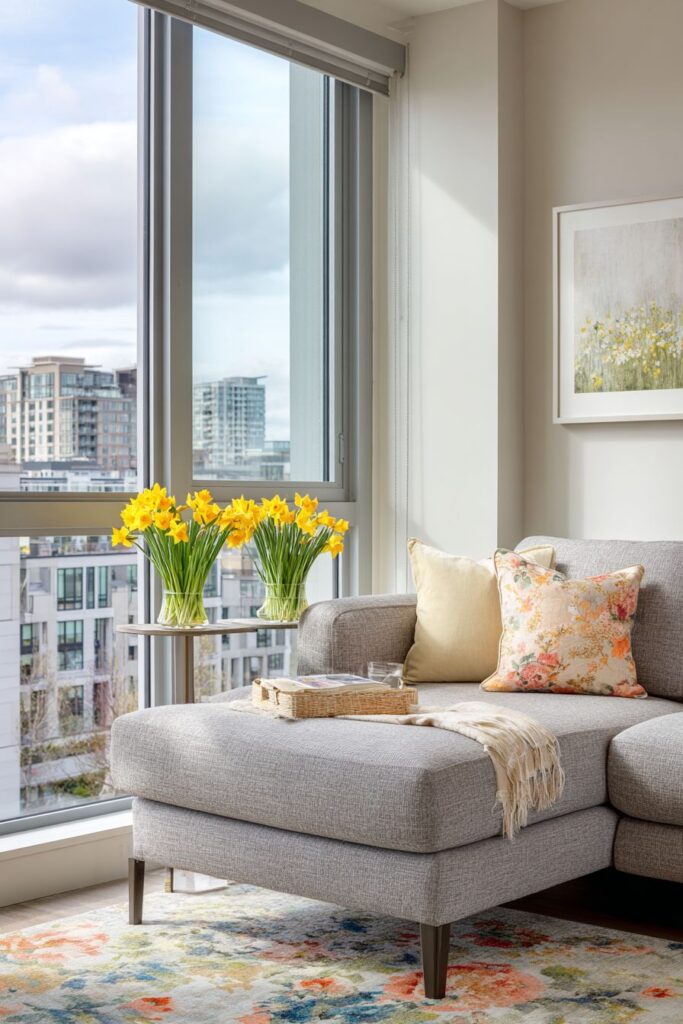
Fresh daffodils in glass vases catch and reflect natural light, their bright yellow heads nodding cheerfully throughout the space. These simple arrangements demonstrate how fresh flowers can serve as living sculptures, their organic forms and vibrant colors providing the perfect counterpoint to the room’s geometric furniture. Key design tips include starting with a neutral sectional to allow seasonal color changes, layering throw pillows in coordinating spring shades for affordable seasonal updates, choosing area rugs with abstract floral patterns for modern spaces, and displaying fresh flowers in clear glass to maintain contemporary clean lines.
5. Farmhouse Fresh with Rustic Charm
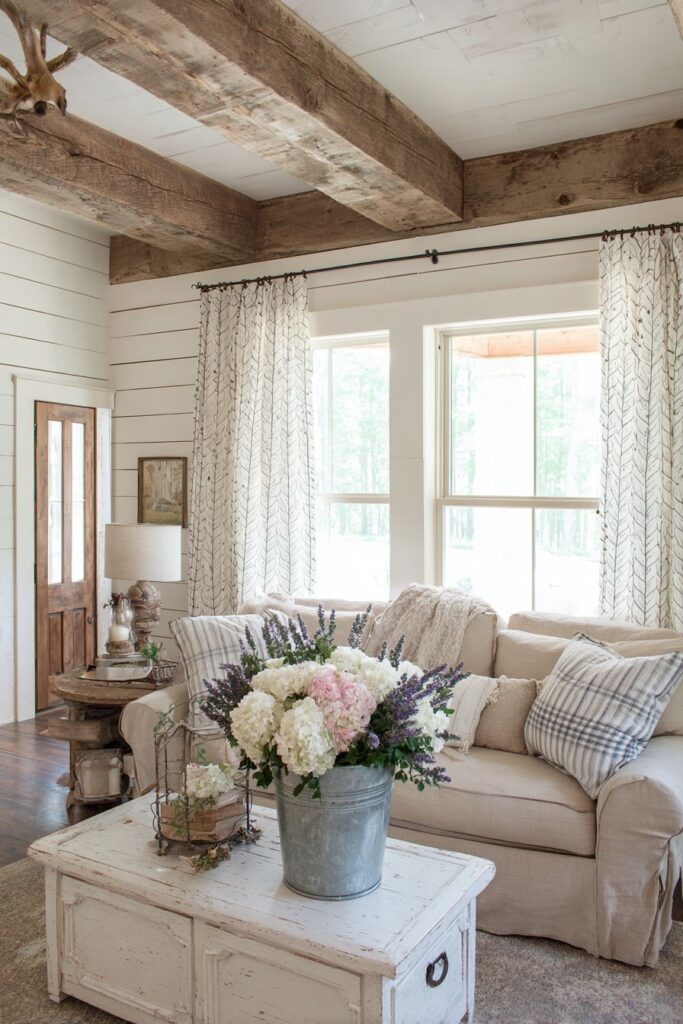
The farmhouse aesthetic finds its perfect expression in spring, where rustic elements meet seasonal renewal in a celebration of authentic, comfortable living. Whitewashed shiplap walls create a bright, textured backdrop that immediately establishes the room’s character, their horizontal lines adding architectural interest while the weathered white finish suggests history and handcrafted quality. Above, exposed wooden beams in their natural finish provide warmth and visual weight, creating the ceiling as a design element rather than an afterthought.
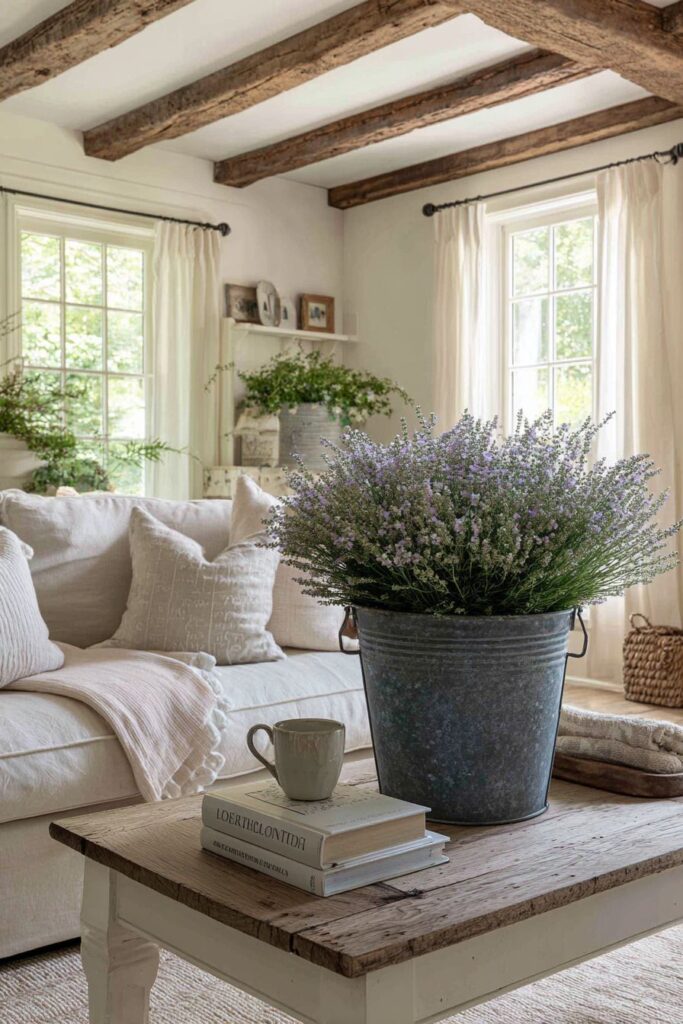
A comfortable slipcovered sofa in natural linen embodies the farmhouse philosophy of practical beauty—the slipcover can be removed for washing, making it family-friendly, while the linen fabric offers sophisticated texture and breathability perfect for spring. The natural color palette ensures the sofa integrates seamlessly with the room’s rustic elements while providing a neutral foundation for seasonal accents. This piece proves that farmhouse style doesn’t require distressed wood and vintage finds everywhere—sometimes the most impactful choice is something beautifully simple.
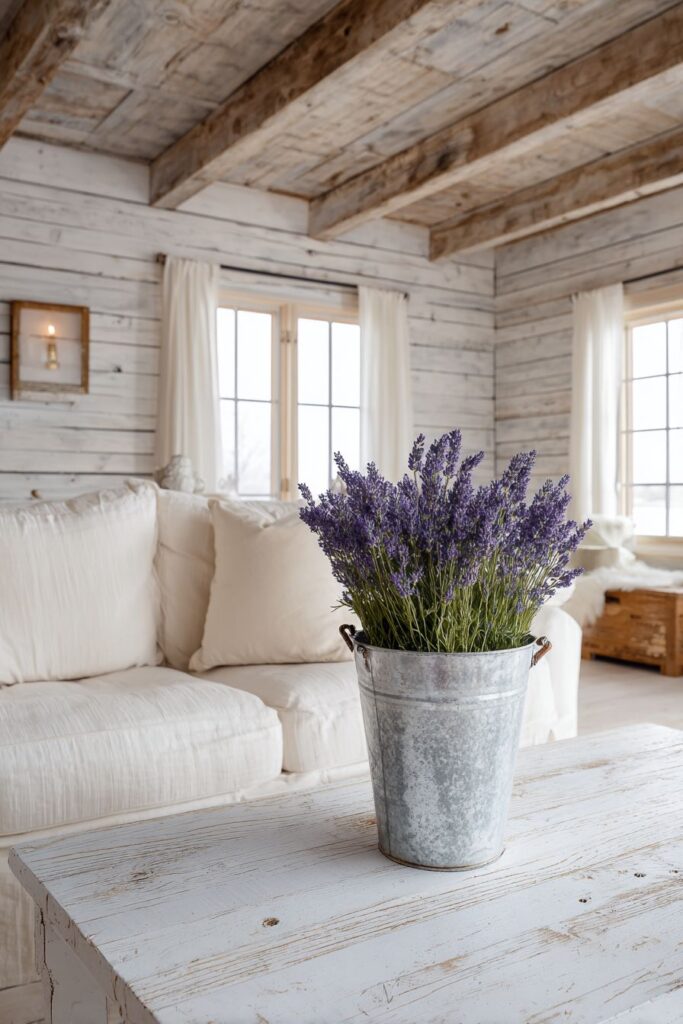
The distressed white coffee table displays spring’s bounty with rustic flair—a galvanized metal bucket filled with fresh lavender creates an unexpected yet charming centerpiece. This choice exemplifies farmhouse creativity, repurposing utilitarian objects as decorative vessels while celebrating spring’s aromatic herbs. The lavender’s purple blooms add a pop of color while its fragrance enhances the sensory experience of the room, proving that spring design engages all the senses, not just sight.
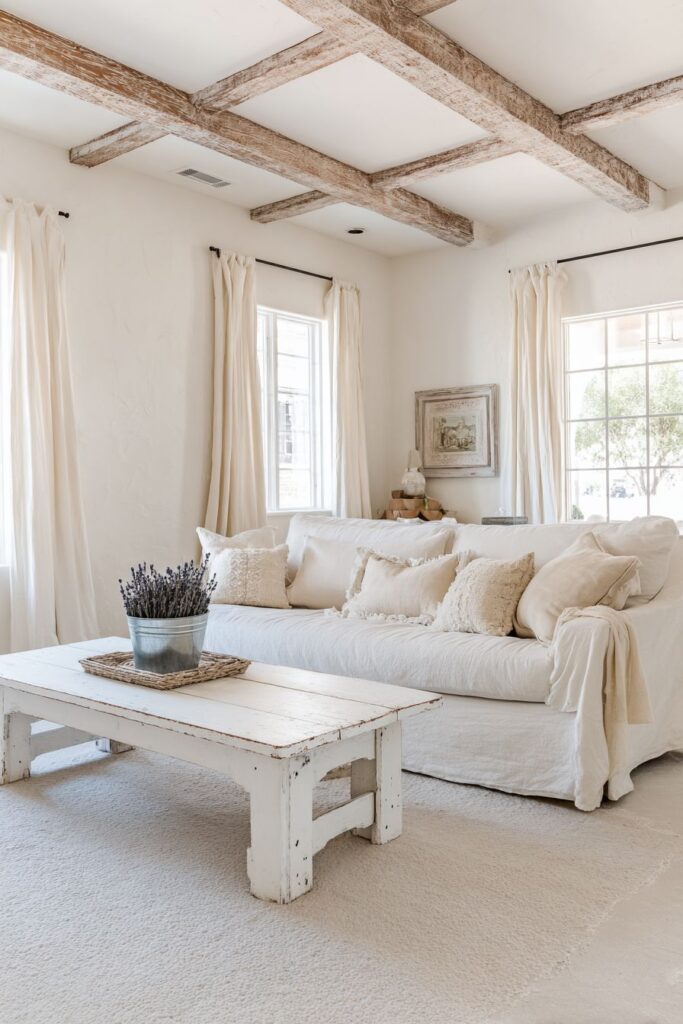
Soft afternoon light streaming through windows dressed with simple linen curtains completes this pastoral scene, the natural fabric allowing light to filter gently while maintaining privacy. The simplicity of the window treatments reflects farmhouse values of honest materials and straightforward design. Key design tips include installing shiplap walls for instant farmhouse character and texture, choosing slipcovered furniture for practical elegance that’s easy to maintain, repurposing vintage or utilitarian items like metal buckets as unique planters, and selecting fresh herbs like lavender for fragrance and visual appeal.
6. Mantel Magic with Spring Florals
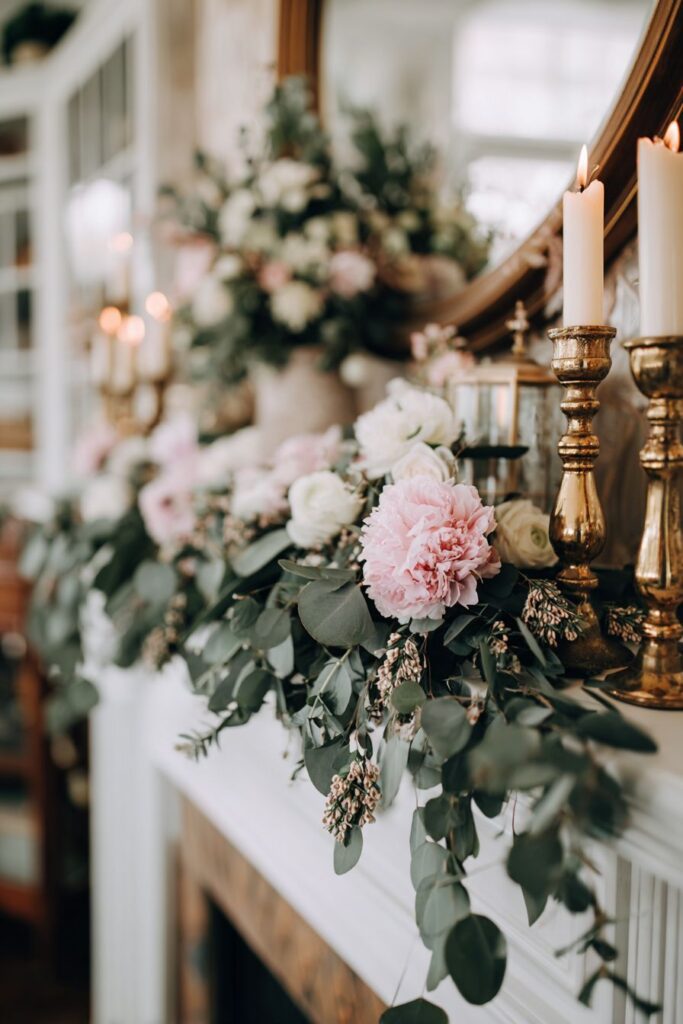
The fireplace mantel becomes a canvas for spring artistry in this elegant design that demonstrates the power of thoughtful vignette styling. Eucalyptus garland drapes naturally across the mantel, its silvery-green leaves providing a sophisticated foundation for more delicate blooms. The eucalyptus brings both visual interest and subtle fragrance, its muted tones allowing brighter flowers to shine while contributing its own organic beauty to the composition.
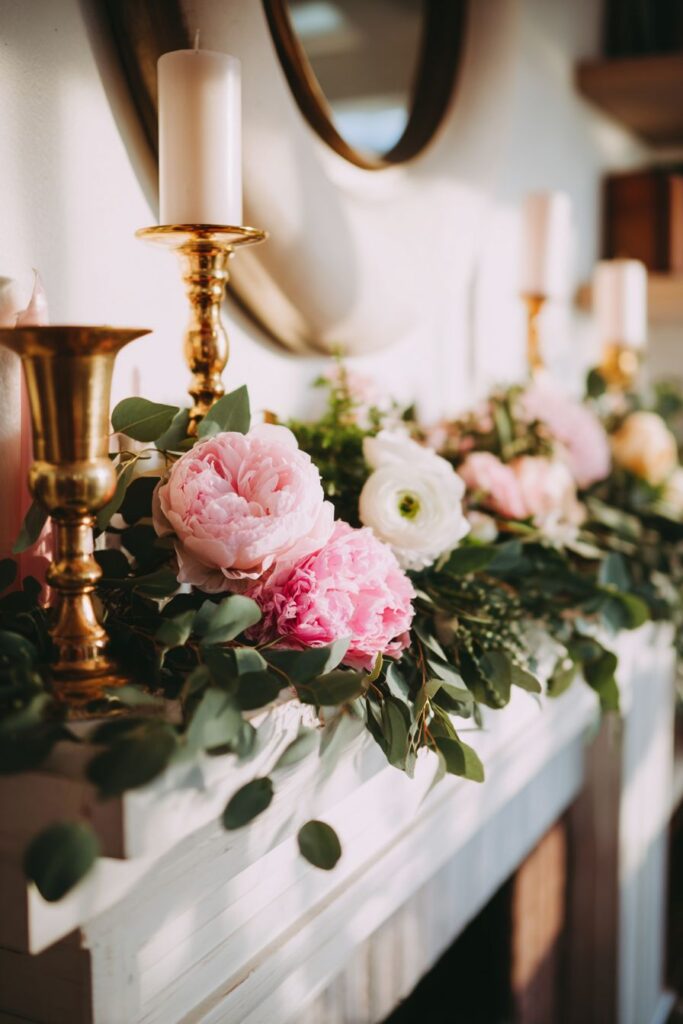
White ranunculus and soft pink peonies nestle among the eucalyptus, their lush, layered petals creating focal points of pure spring romance. The combination of white and pink flowers demonstrates classic color theory—the white provides brightness and freshness while the pink adds warmth and femininity without overwhelming the palette. These flowers, with their complex petal structures and varying textures, create depth and visual intrigue that invites closer inspection.
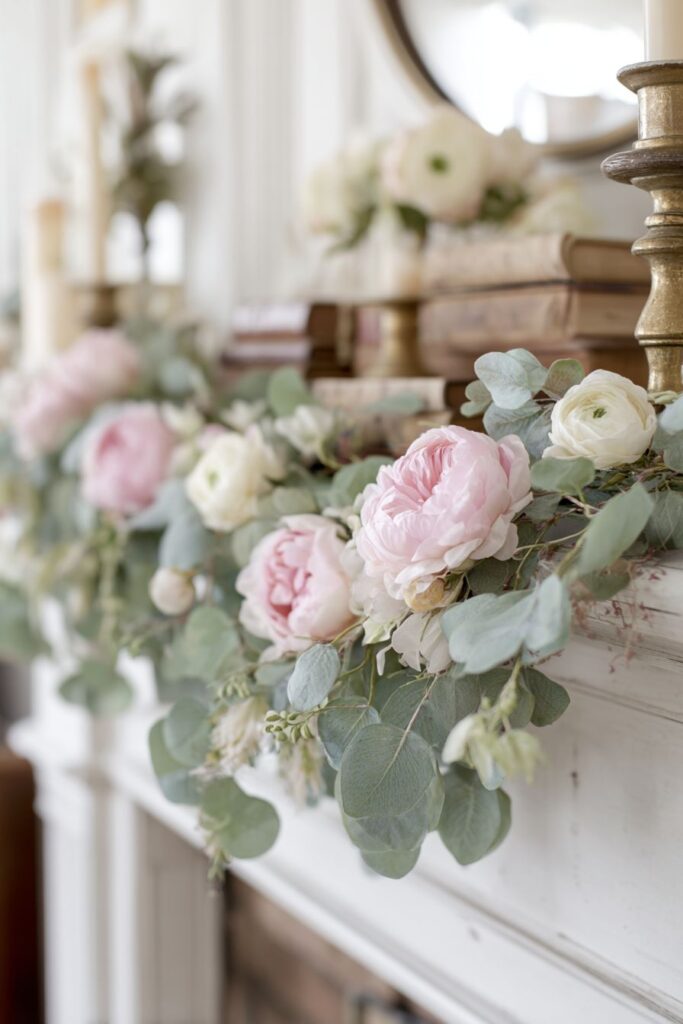
The fireplace surround in classic white painted wood provides the perfect clean backdrop for this organic display, its architectural details adding structure without competing with the natural elements. This demonstrates an important principle: sometimes the best support for organic, flowing design elements is a crisp, geometric backdrop that provides contrast and containment. Vintage brass candlesticks add metallic gleam and vertical interest, while a round mirror above reflects light and expands the visual space.
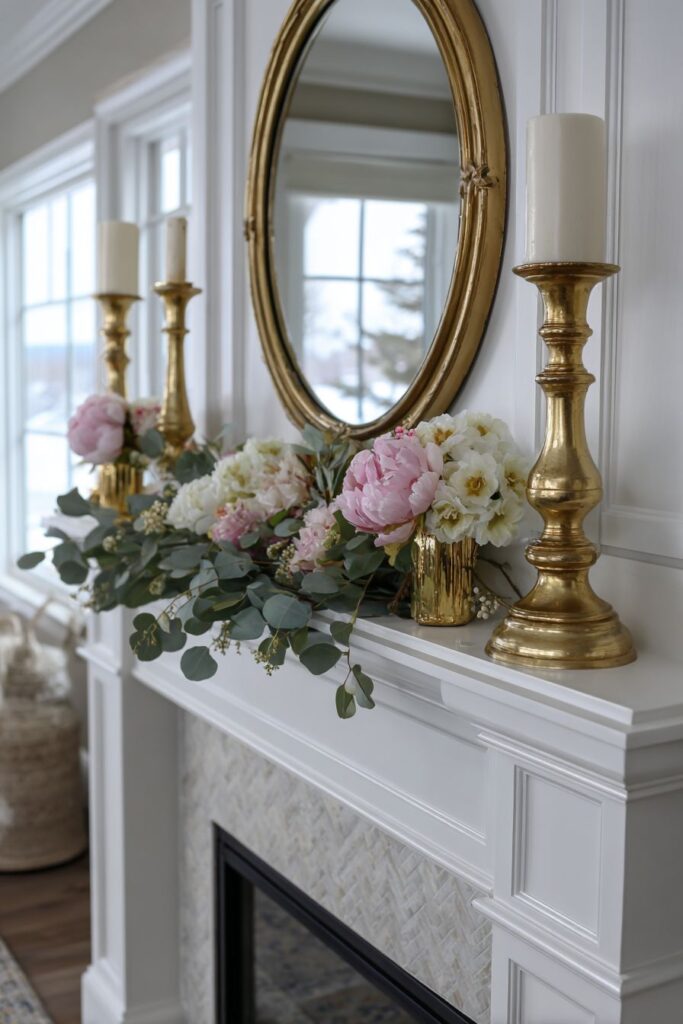
This seasonal vignette showcases how the mantel can become a rotating gallery that celebrates each season’s unique offerings. Key design tips include starting with greenery like eucalyptus as your base layer for texture and structure, adding focal flowers in complementary colors for visual interest, using the fireplace surround’s clean backdrop to highlight organic arrangements, and incorporating metallic accents through vintage candlesticks or mirrors for sophisticated shine.
7. Scandinavian Spring Serenity
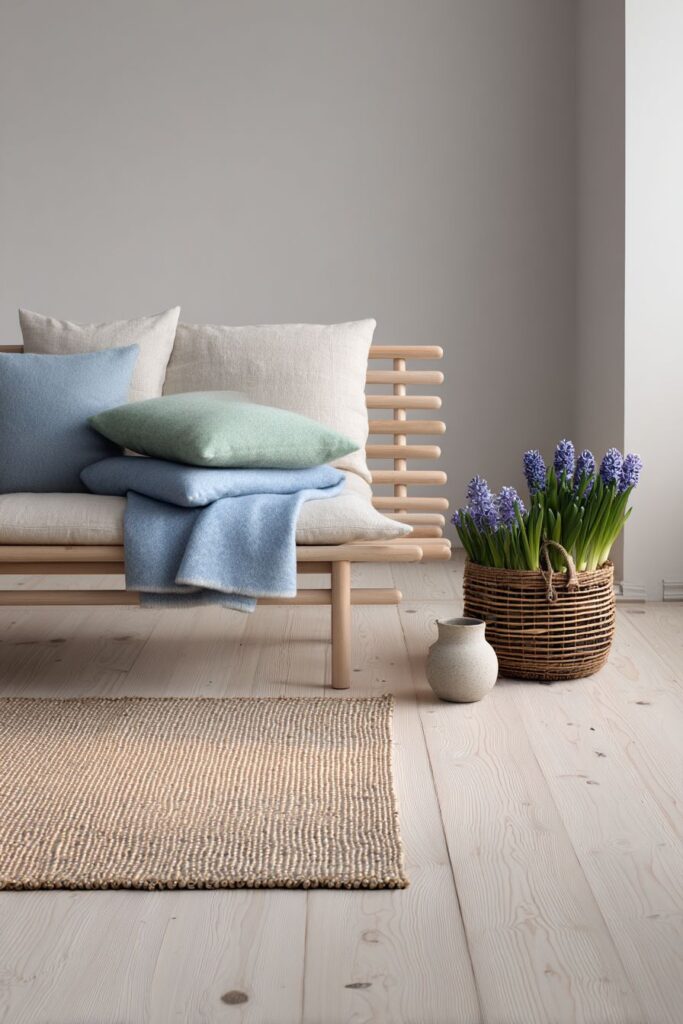
Scandinavian design principles find perfect expression in spring, where the Nordic love of light, simplicity, and natural materials aligns beautifully with seasonal renewal. Light grey walls create a soft, neutral envelope that maximizes the reflection of natural light while providing a calming backdrop for living. Paired with white oak flooring, these surfaces establish a foundation of understated elegance that allows other elements to shine without competition.
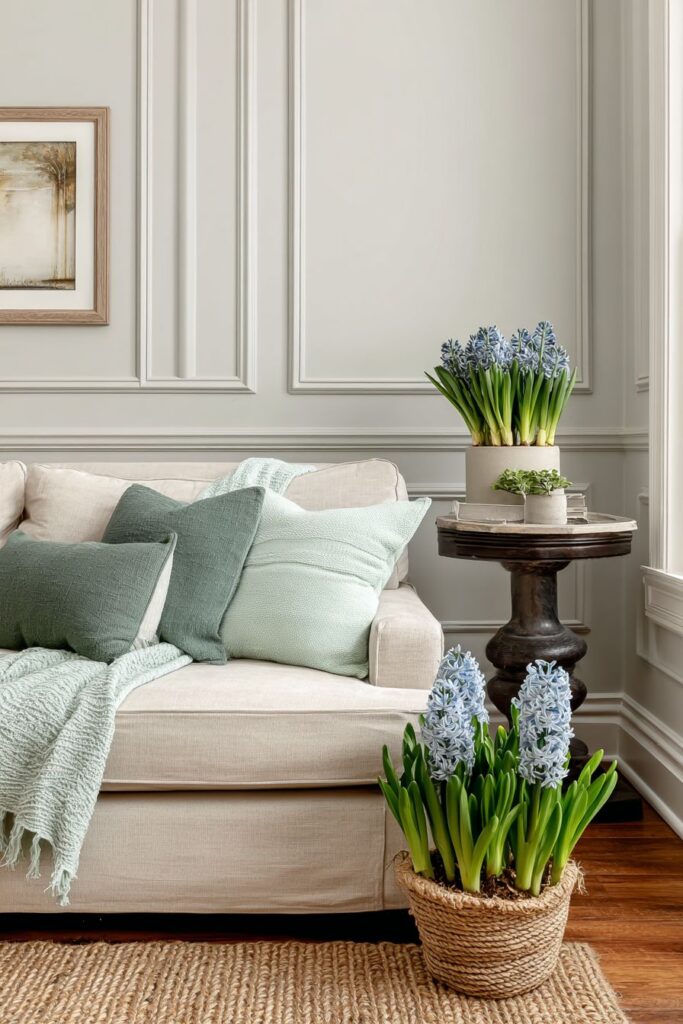
A low-profile sofa in oatmeal linen embodies Scandinavian restraint and quality—its simple silhouette focuses attention on material and comfort rather than ornate design, while the natural linen fabric brings organic texture that warms the minimalist palette. Pastel throw blankets in pale blue and mint green introduce spring color with characteristic Nordic subtlety, draped casually to suggest comfort and livability rather than staged perfection. These soft hues reference spring’s awakening without departing from the Scandinavian commitment to muted, nature-inspired tones.
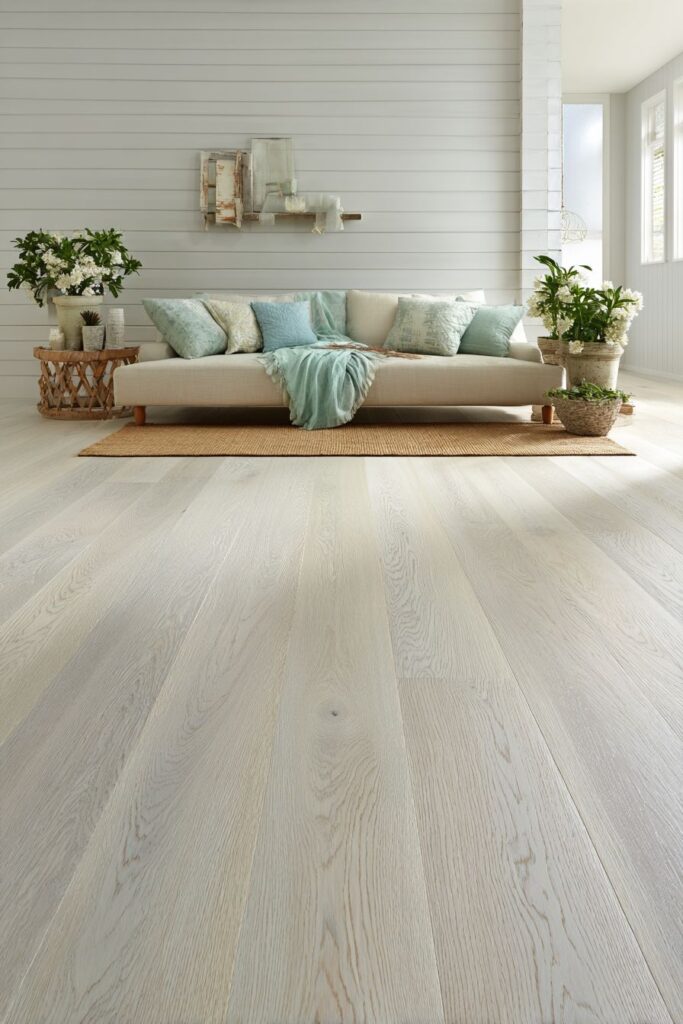
A woven jute rug adds essential natural texture underfoot, its raw, organic quality providing tactile interest and visual warmth to balance the room’s light colors. This choice demonstrates the Scandinavian principle of bringing nature indoors through materials—the jute connects the space to earth and craft while remaining neutral enough to support the overall serene aesthetic. Potted hyacinths bring spring color and fragrance, their vibrant blooms offering concentrated bursts of seasonal joy.
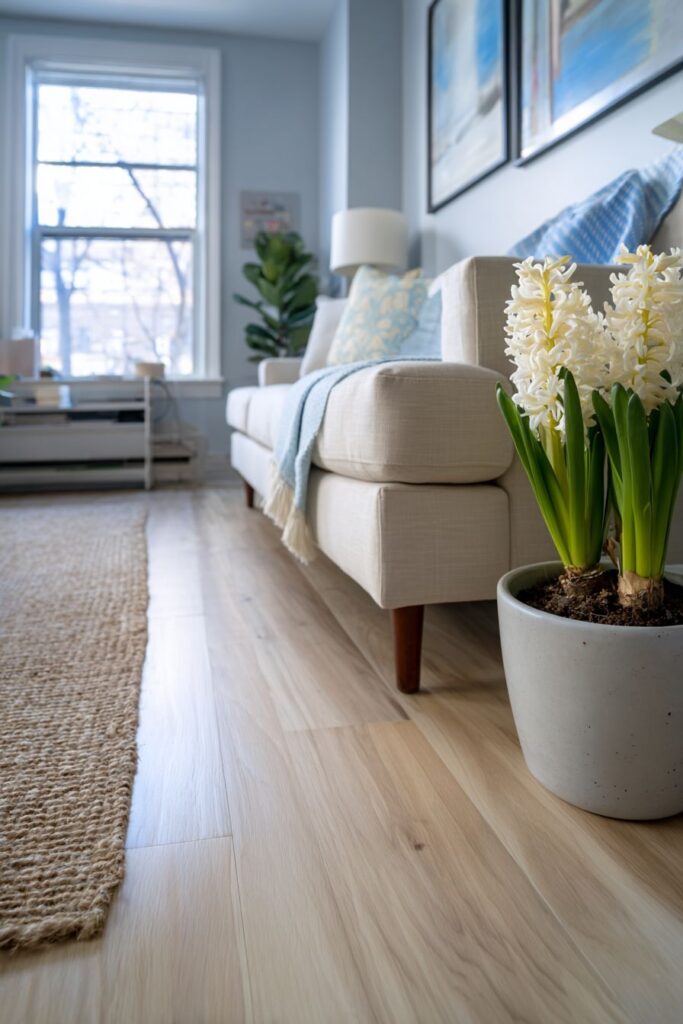
The minimalist aesthetic and spring-fresh atmosphere combine to create a space that feels both restful and revitalizing, embodying the Scandinavian concept of hygge adapted for warmer months. Key design tips include choosing light grey walls to maximize natural light reflection, investing in quality natural fiber furniture like oatmeal linen sofas, incorporating pastel textiles through easily changed throws and pillows, and adding natural texture through jute or sisal rugs for warmth and interest.
8. Coffee Table Artistry
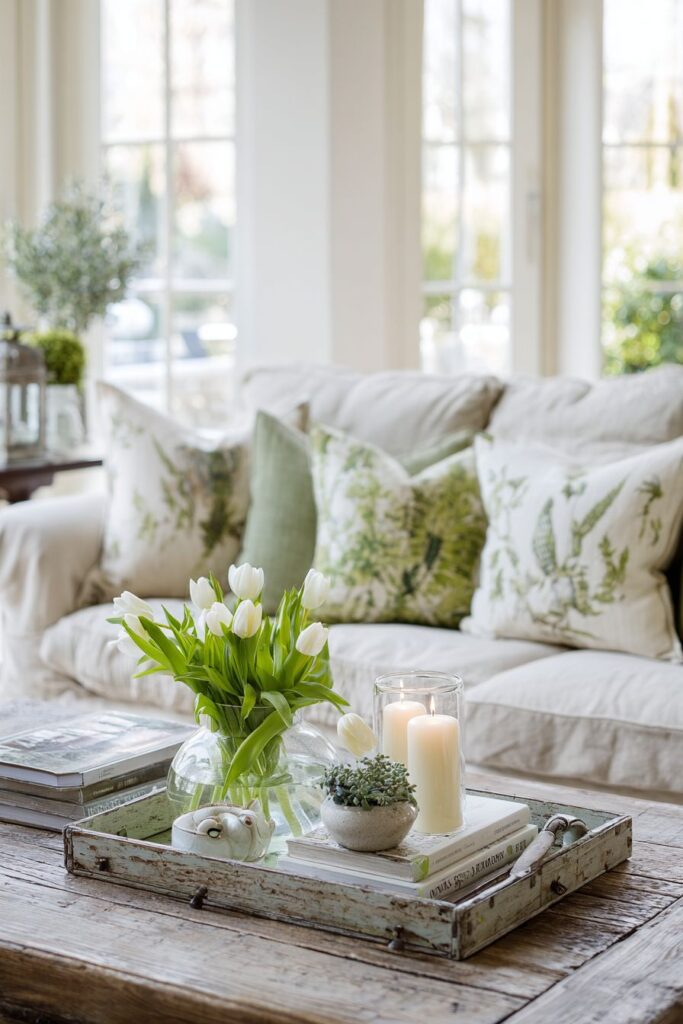
The coffee table becomes the star of this spring living room design, demonstrating how thoughtful styling of this central piece can transform the entire space’s atmosphere. A reclaimed wood surface provides character and warmth, its weathered patina telling stories of previous lives while offering the perfect rustic-elegant foundation for spring displays. The wood’s natural variations in tone and texture create visual interest that makes even simple arrangements feel more dynamic and authentic.
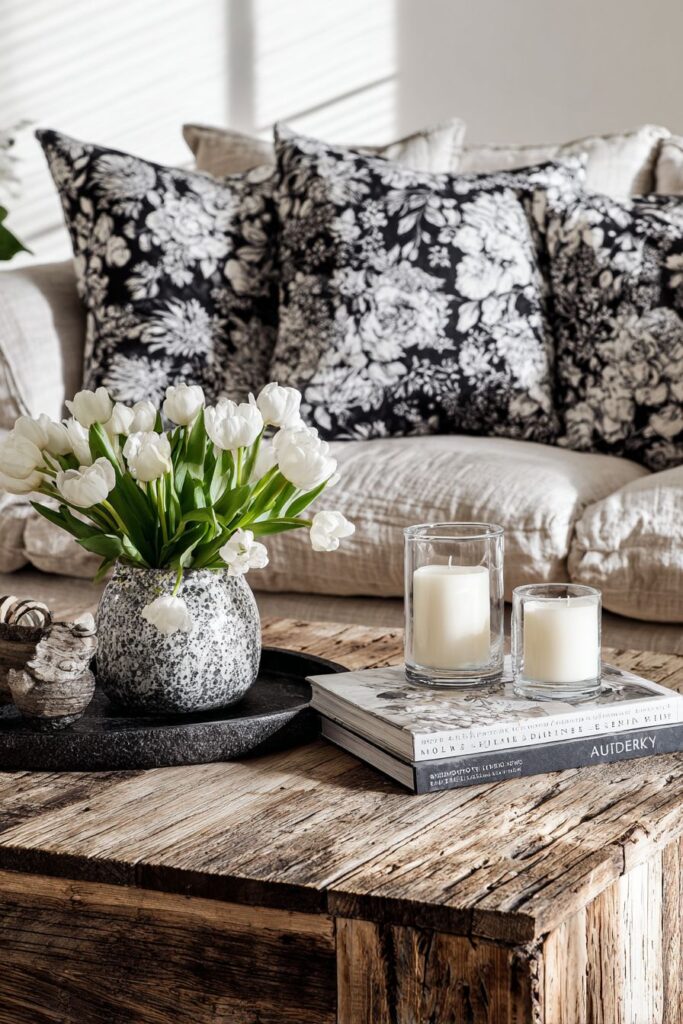
A ceramic tray serves as the organizing element, containing white pillar candles that add height variation and potential for ambient evening lighting. Fresh cut tulips in a simple glass vase bring living color and organic form, their stems visible through the clear glass adding another layer of natural beauty. Coffee table books about gardens complete the tableau, their covers featuring botanical photography or landscape design that reinforces the room’s connection to nature and the outdoors.
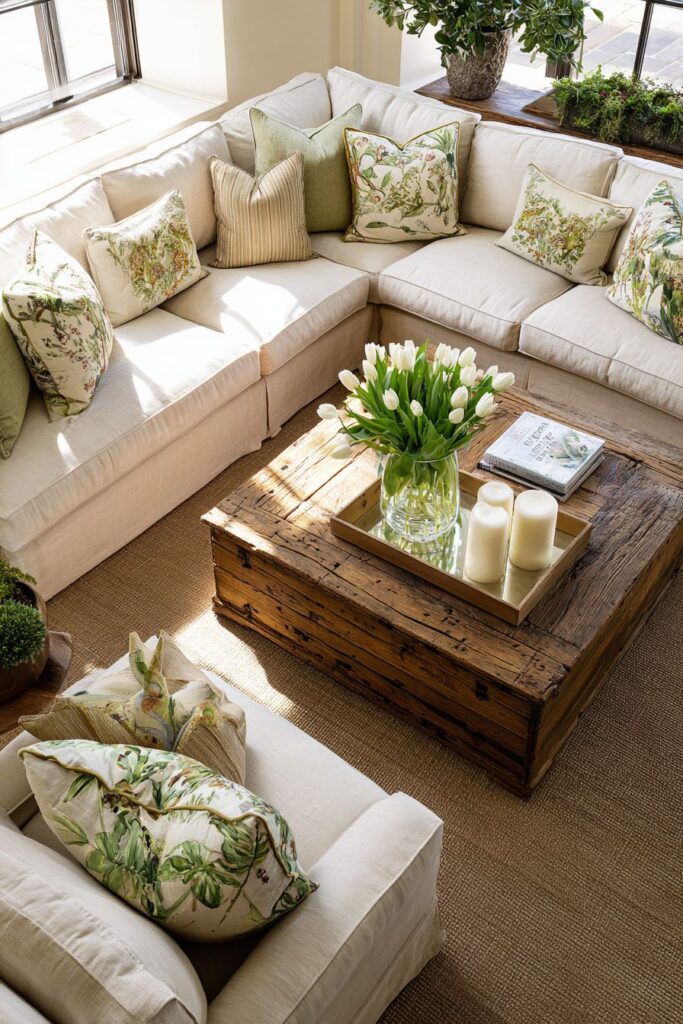
The surrounding seating includes a natural linen sofa dressed with botanical print cushions, creating a cohesive story where every element references nature and spring’s renewal. This demonstrates the importance of considering the coffee table not in isolation but as part of a larger composition—the styling choices should echo and enhance the room’s overall design narrative. The botanical cushions pick up on the garden book themes and fresh flowers, creating visual connections that make the space feel intentionally curated.
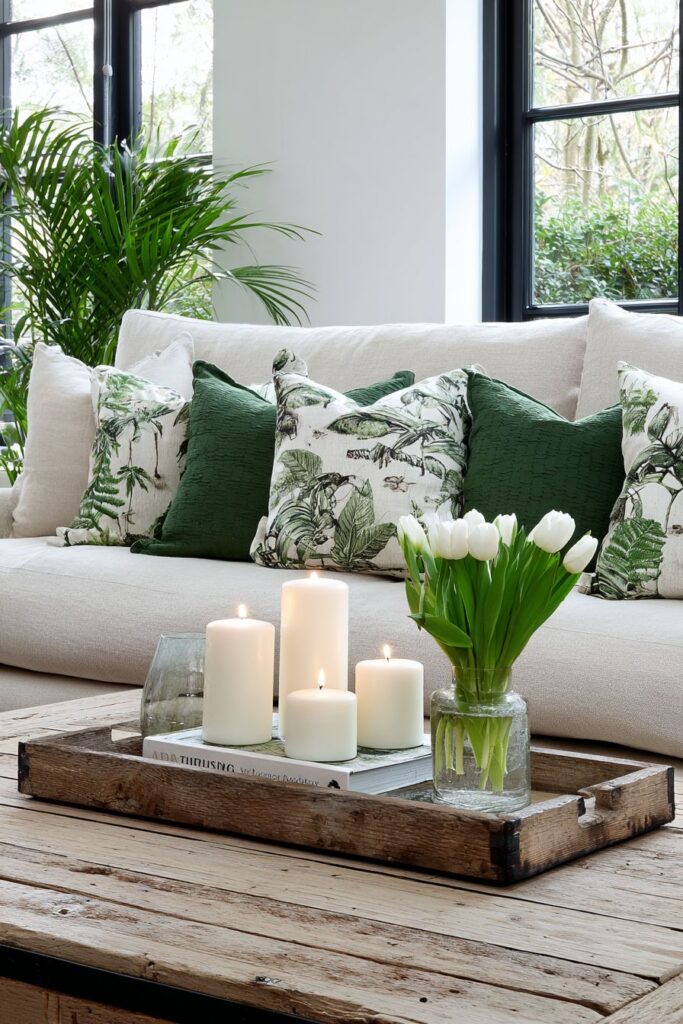
This overhead styling approach creates a living still life that can be appreciated from all angles, turning functional surface into art installation. Key design tips include using a decorative tray to corral smaller items and create visual organization, varying heights with candles, flowers, and stacked books for dynamic composition, choosing coffee table books that reinforce your design theme, and keeping arrangements low enough to allow conversation across the table.
9. Layered Window Elegance
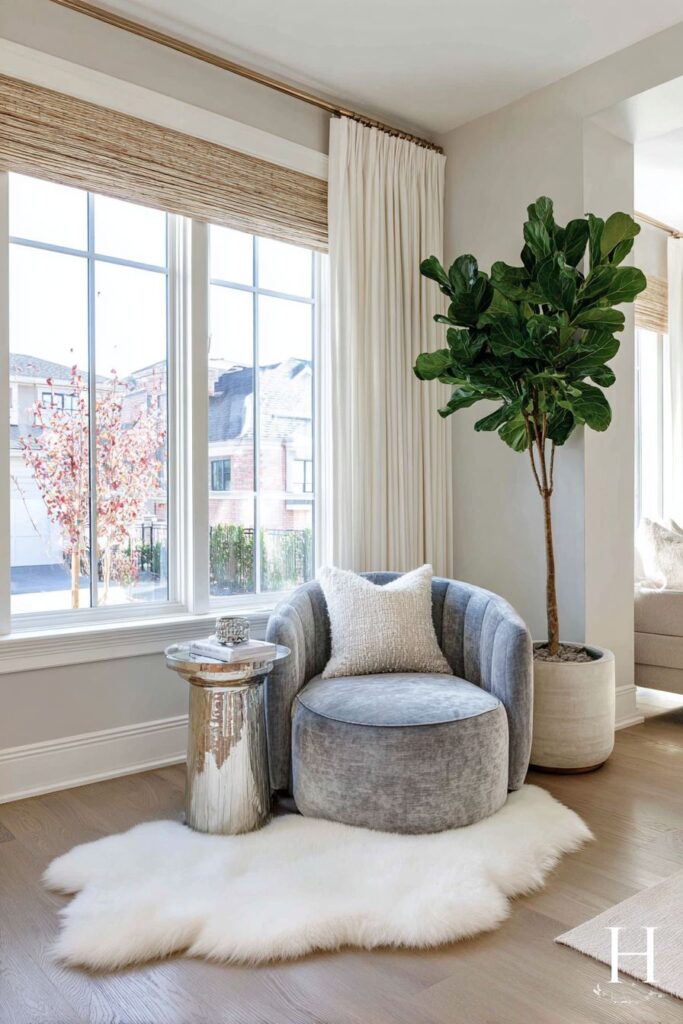
Window treatments take center stage in this spring design that demonstrates the transformative power of layered fabric approaches. Bamboo roman shades provide the first layer—their natural material adds organic texture while offering practical light control and privacy. The bamboo’s warm tones and horizontal lines create visual interest even when the shades are raised, making them attractive architectural elements rather than merely functional necessities.
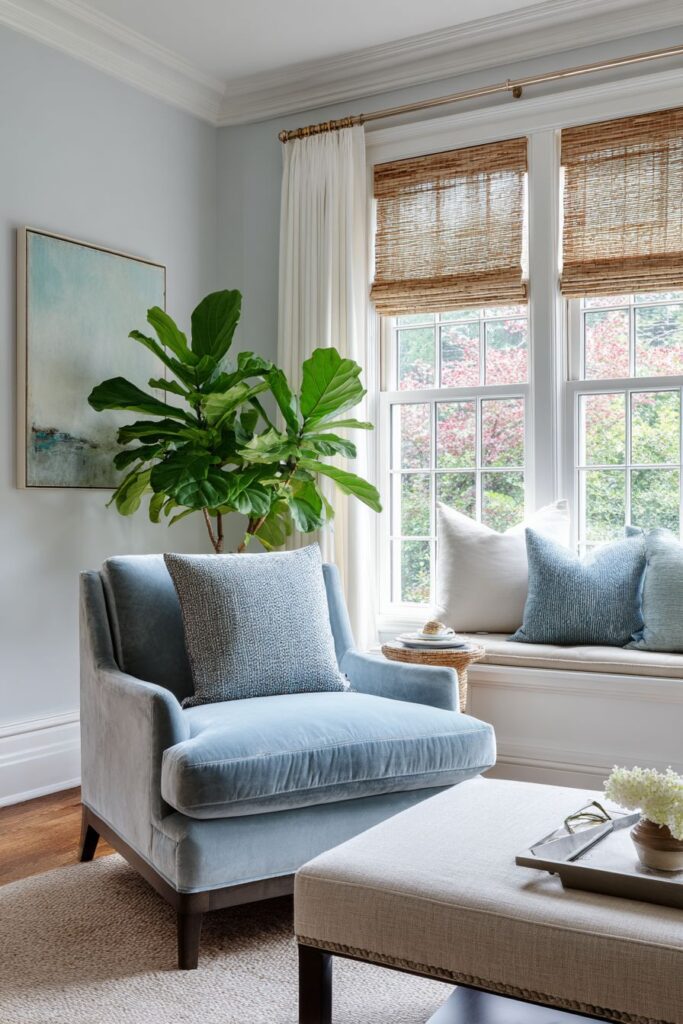
Flowing white linen curtains layer over the bamboo shades, their lightweight fabric puddling slightly on the floor in a gesture of relaxed elegance. This deliberate pooling creates soft folds that add luxury and visual weight to the window treatment, preventing the airy fabric from appearing insubstantial. As gentle breezes move through the room, these curtains become animated, their subtle movements adding life and connection to the outdoors.
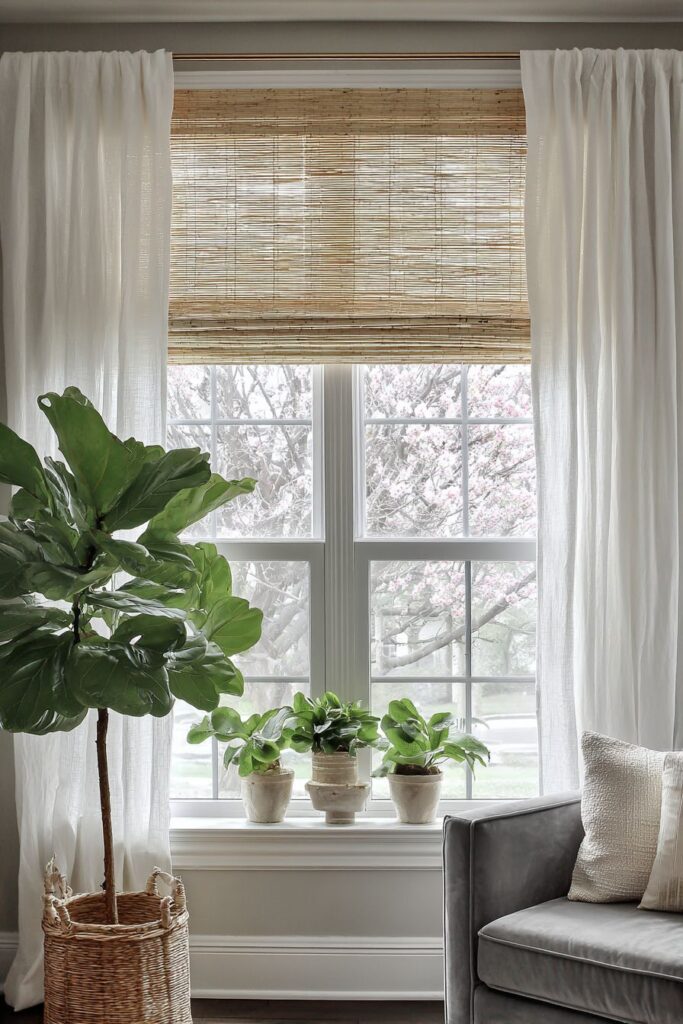
The window frames a view of blooming trees outside, turning the glass into a living artwork that changes with the season’s progression. Indoor fiddle leaf fig plants flanking the window sides create a intentional frame within the frame, their large sculptural leaves adding bold natural forms that contrast with the delicate outdoor blooms. This inside-outside dialogue demonstrates sophisticated space planning that considers views as essential design elements.
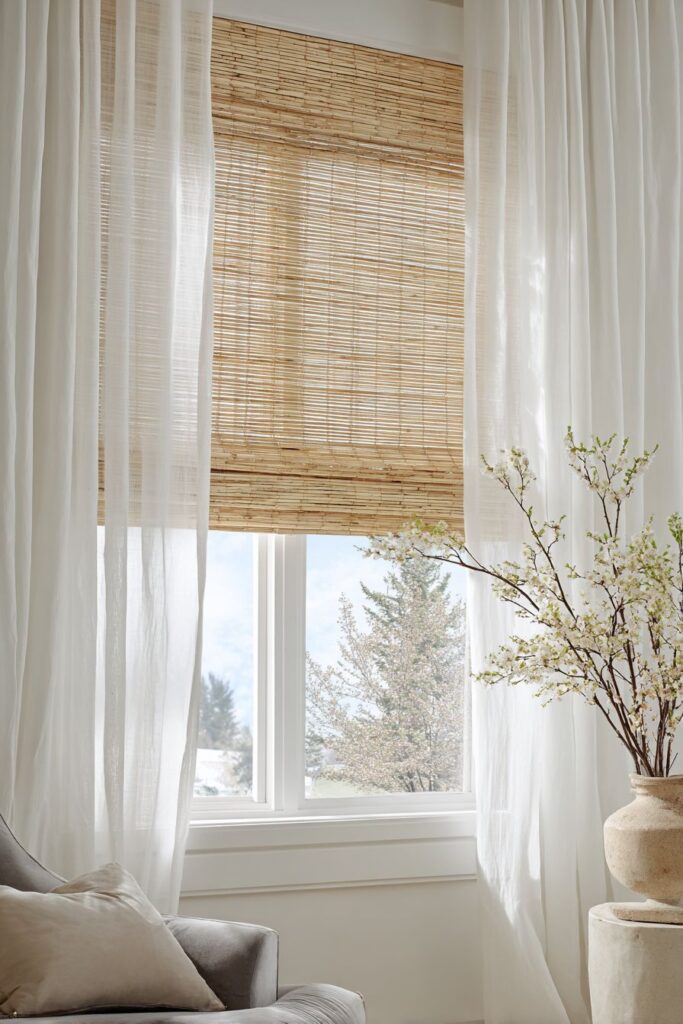
A nearby seating area in soft grey velvet invites contemplation of this carefully orchestrated scene, providing a comfortable vantage point to appreciate both the window treatments and the view beyond. Key design tips include layering natural bamboo shades with flowing fabric curtains for depth and function, allowing linen curtains to puddle slightly for added elegance and visual weight, positioning large-leafed plants near windows to frame outdoor views, and choosing window-adjacent seating in luxurious fabrics to create contemplation zones.
10. Transitional Spring Refresh
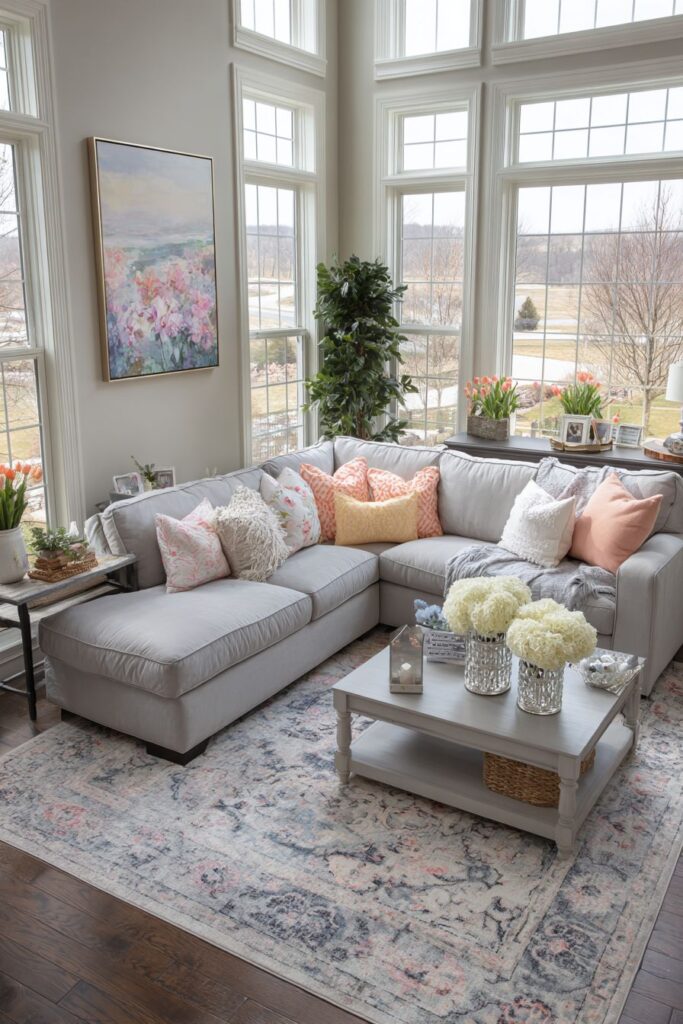
This design celebrates the art of the transitional style—that perfect balance between traditional comfort and contemporary clean lines—refreshed for spring through strategic color accents. A neutral color foundation provides the versatile backdrop, with a taupe sectional offering substantial seating that works across seasons and changing trends. This investment piece demonstrates wise design thinking: choose quality neutral foundations that allow for seasonal personality through more easily changed accessories.
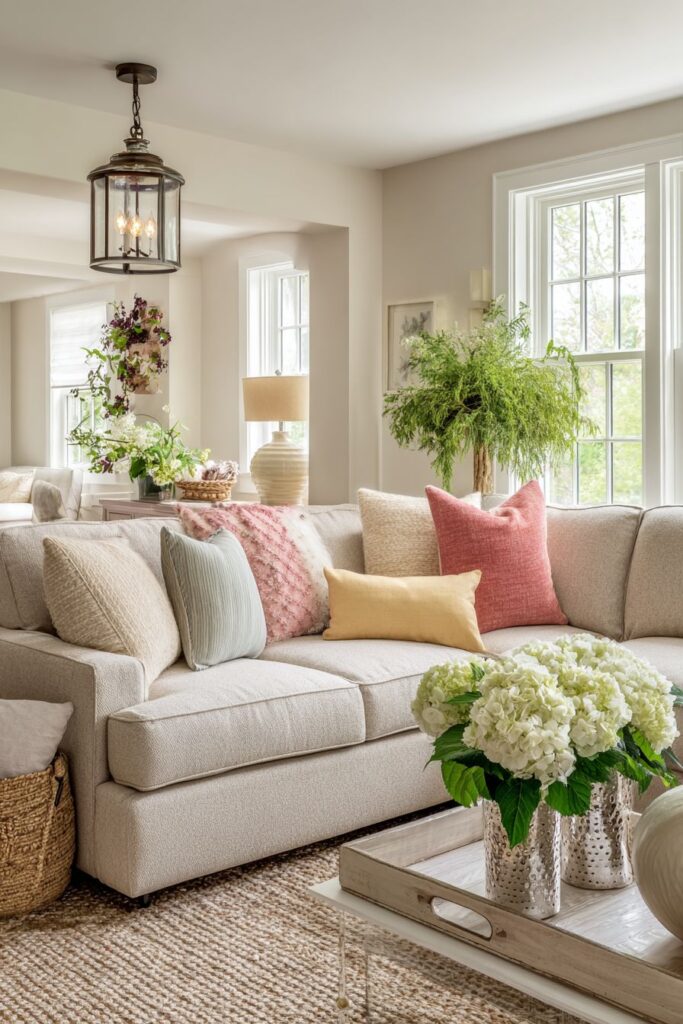
The magic happens through carefully selected pops of spring color—soft coral, butter yellow, and robin’s egg blue throw pillows create a cheerful color story that energizes without overwhelming. These hues reference spring’s palette of sunrise pastels and fresh blooms while maintaining sophistication through their muted, slightly greyed tones. The variety of colors adds visual interest and prevents the space from feeling too coordinated or matchy, instead creating a collected-over-time aesthetic.
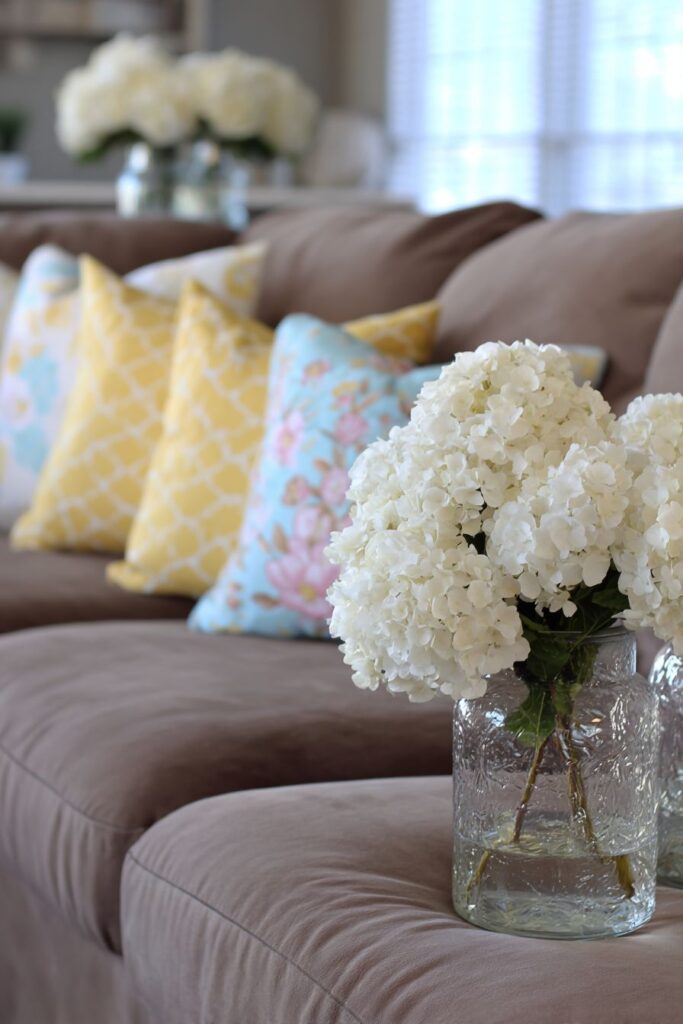
Fresh white hydrangeas in mercury glass vases dot the space, their cloud-like blooms providing organic softness that contrasts beautifully with the sectional’s geometric lines. The mercury glass adds a touch of glamour and reflects light, creating subtle sparkle that enhances the spring freshness. Multiple arrangements throughout the room create rhythm and repetition, a design principle that helps unify the space and guide the eye around the room.
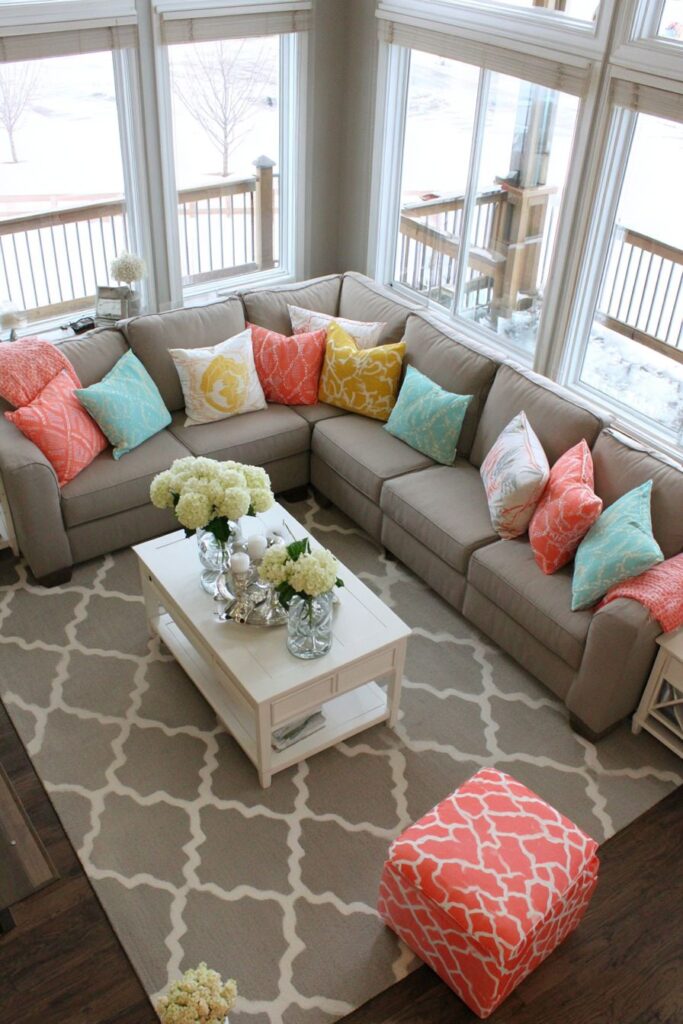
This approach demonstrates how spring accents can refresh a neutral base palette without requiring major changes, making it ideal for those who prefer subtle seasonal shifts. Key design tips include investing in quality neutral foundational furniture for long-term versatility, using throw pillows in spring pastels as affordable seasonal updates, selecting multiple smaller flower arrangements rather than one large one for better visual distribution, and choosing mercury glass or metallic vessels to add reflective surfaces and light.
11. Gallery Wall with Botanical Charm
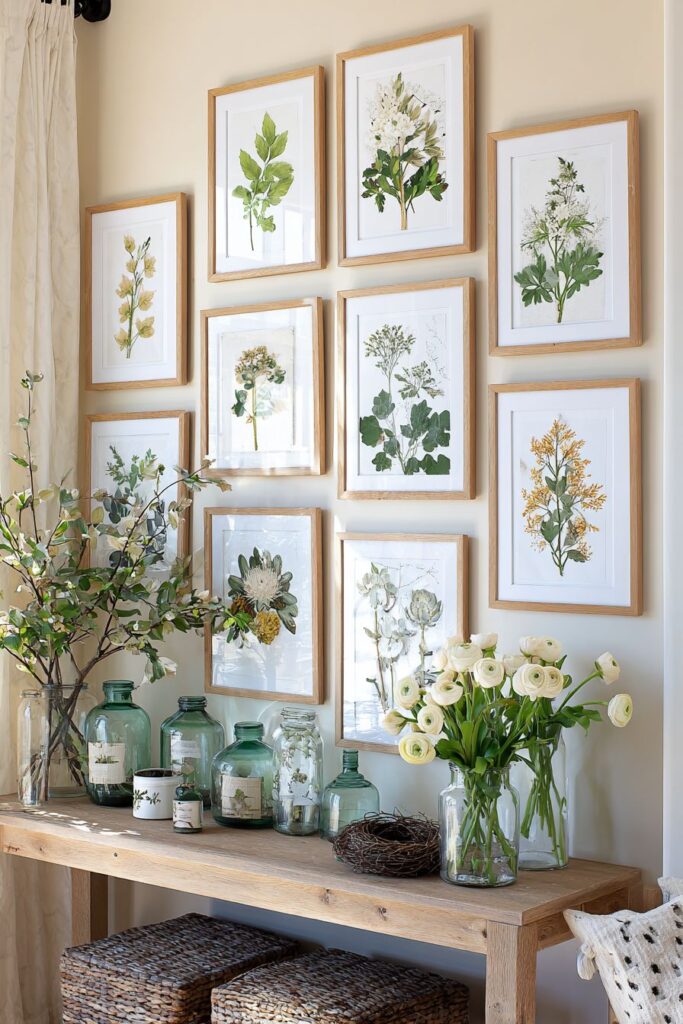
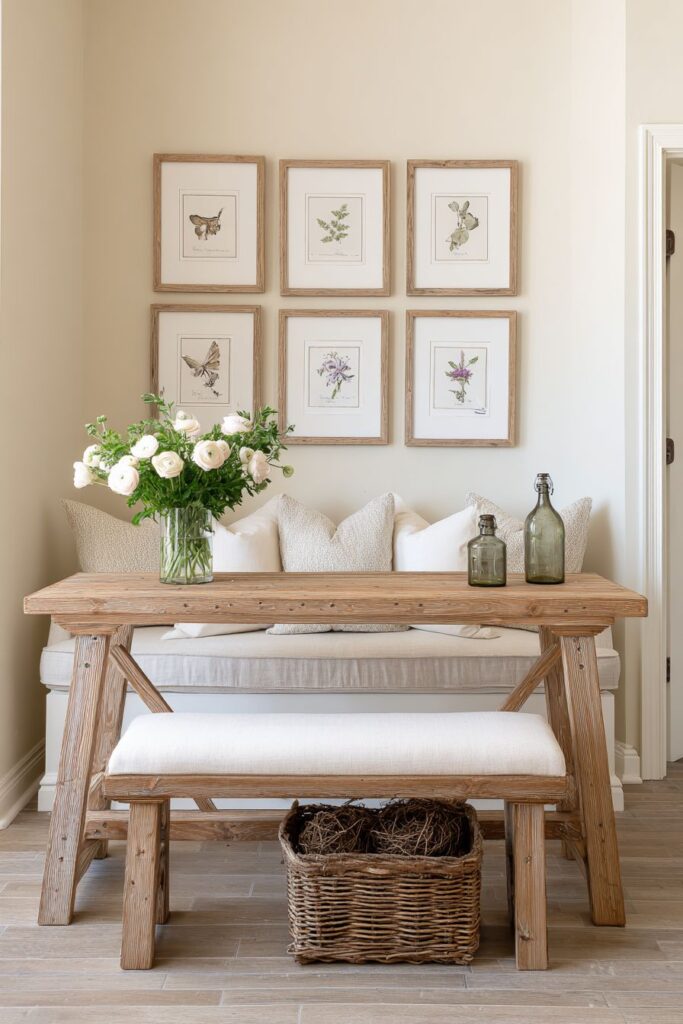
The gallery wall emerges as spring’s perfect art installation, featuring botanical prints and pressed flower art that celebrate nature’s delicate beauty. Simple white and natural wood frames create cohesive presentation that allows the botanical subjects to command attention—the frame simplicity ensures the focus remains on the intricate details of leaves, petals, and stems captured in each piece. This collection approach allows for mixing vintage botanical illustrations with contemporary nature photography, creating visual interest through varied artistic interpretations of similar subjects.
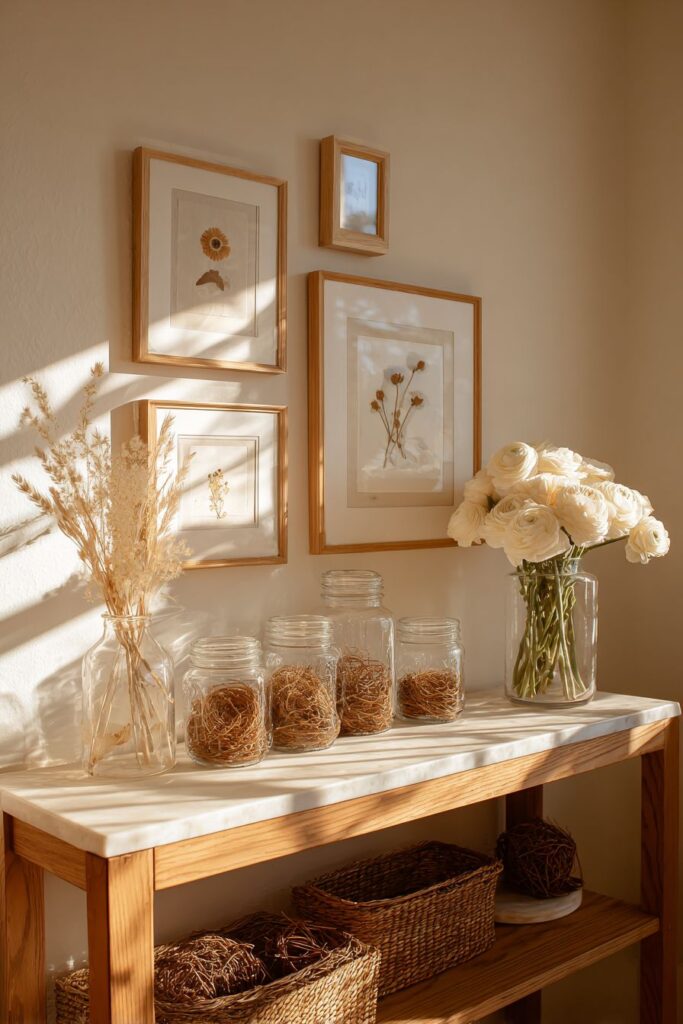
Below this curated wall display, a console table in light oak provides a three-dimensional extension of the botanical theme. Fresh ranunculus in soft pinks and creams offer living counterpoints to the framed specimens above, their ruffled petals adding textural richness. Decorative bird nests and vintage glass bottles contribute to the natural history aesthetic, suggesting a collector’s eye for organic treasures and curiosities from the natural world.
Soft natural light creates gentle shadows on the cream-colored wall, adding depth to the two-dimensional artwork and creating ever-changing patterns throughout the day. This interplay of light and shadow becomes part of the design itself, animating the static artwork with natural variations. The cream wall color was chosen specifically to enhance this effect—pure white might create harsh contrasts, while the warmer cream allows for softer, more nuanced shadow play.
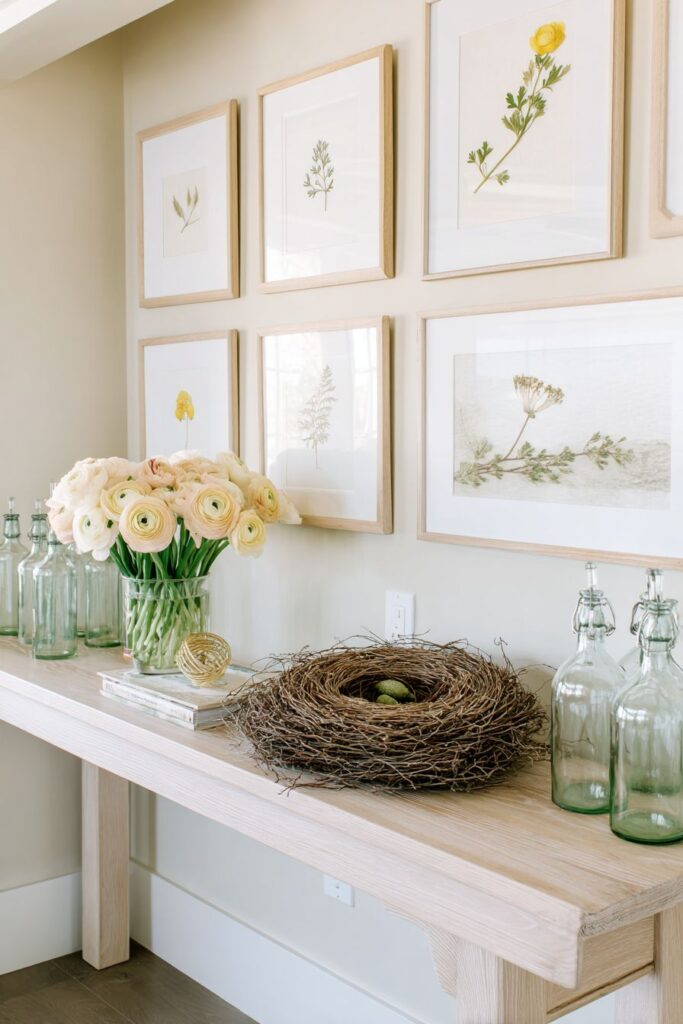
This layered approach to spring decor—combining wall art with dimensional objects—creates a vignette that engages viewers at multiple levels and invites closer inspection. Key design tips include mixing frame styles in similar tones for cohesive variety, combining framed botanical art with fresh flowers for depth, using console tables to create dimensional displays below wall art, and incorporating found natural objects like nests for authentic organic interest.
12. Cottage Romance with Floral Abundance
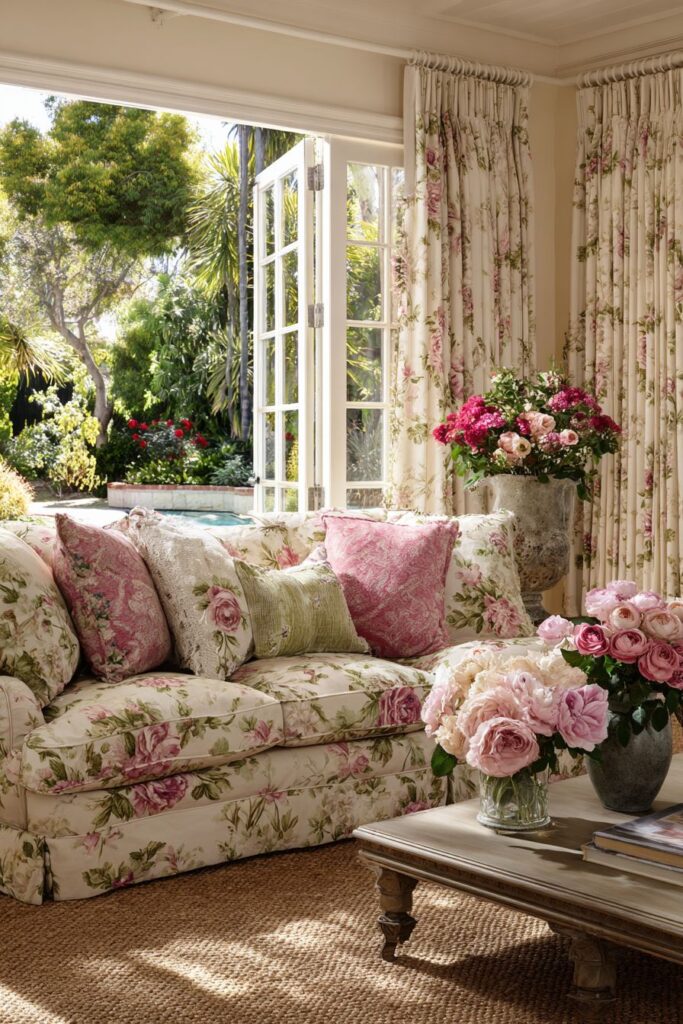
Cottage style finds its fullest expression in spring, where the abundance of floral patterns can flourish without restraint. An overstuffed sofa featuring cabbage rose patterns in pink and green serves as the room’s romantic anchor, its generous proportions and lush upholstery inviting relaxation while making an unapologetic style statement. This is design that celebrates comfort and prettiness in equal measure, rejecting minimalism in favor of layered, collected charm.
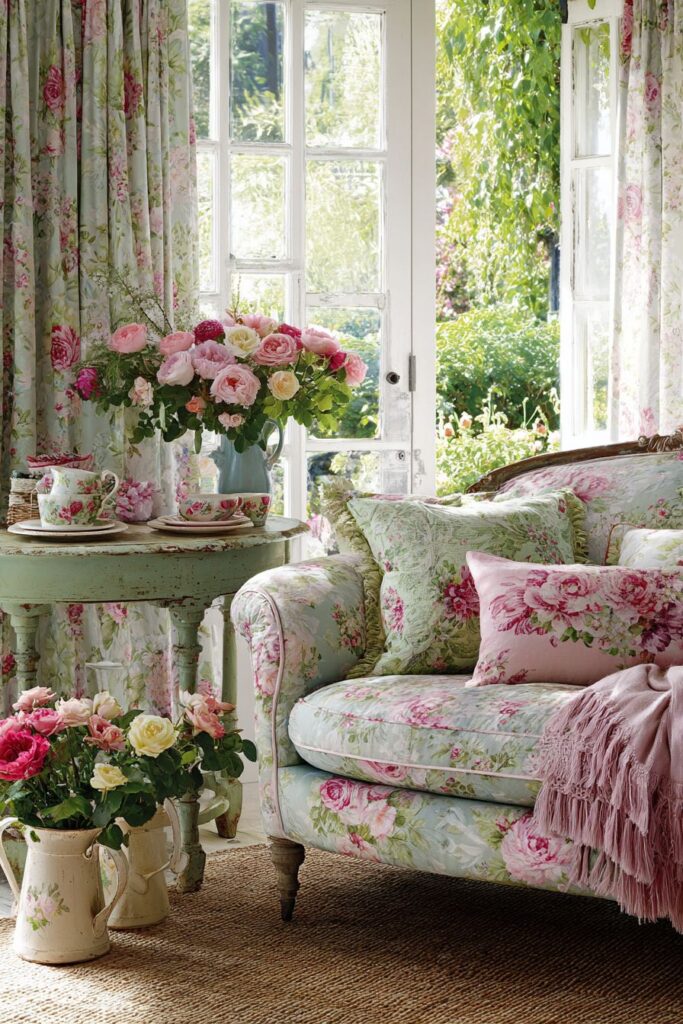
Coordinating floral curtains in a lighter scale pattern demonstrate the cottage principle of pattern mixing—using the same motif in different scales prevents visual chaos while creating depth and interest. The lighter curtain pattern allows more subtlety at the windows while maintaining thematic consistency with the bolder sofa fabric. Framing the windows with these florals creates a soft, romantic border that filters light through petals and leaves, casting delicate shadows into the room.
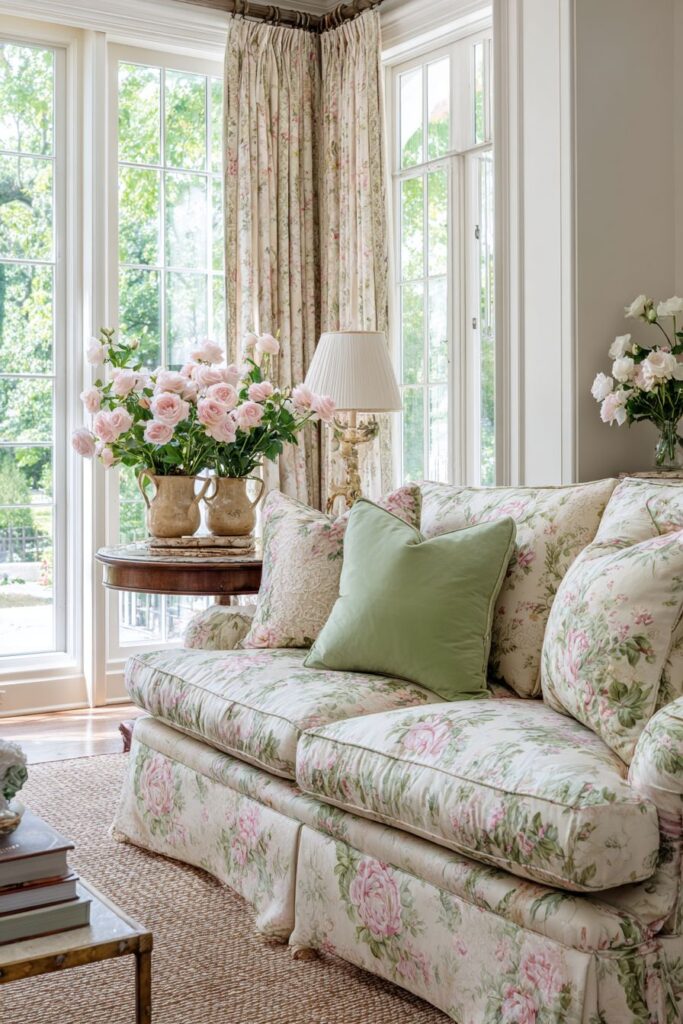
A sisal rug grounds the space with natural texture, its neutral tone providing essential visual rest amid the floral abundance. This demonstrates design wisdom—even cottage style requires balance, and the sisal offers organic texture without additional pattern. Fresh garden roses in mismatched vintage pitchers add authentic charm that new, matched containers couldn’t achieve, their varied shapes and patinas suggesting years of collecting and cherished use.
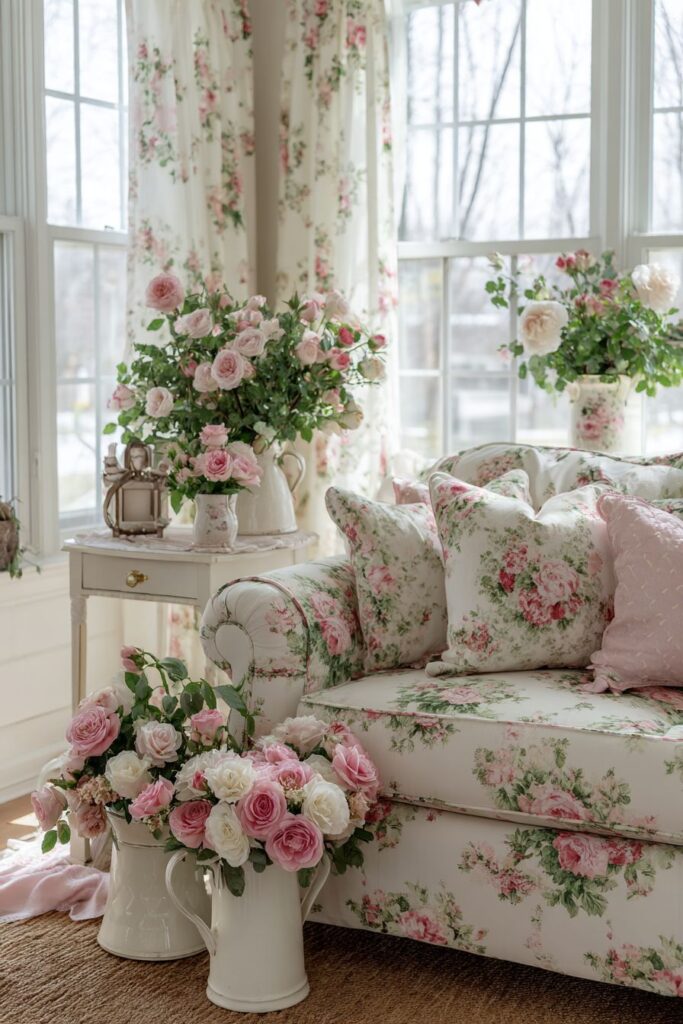
The layered floral patterns and cottage warmth create an enveloping atmosphere that feels like a garden room brought indoors. Key design tips include choosing floral upholstery in larger scales for statement pieces, coordinating curtains in lighter versions of the same pattern for cohesion, using natural fiber rugs to balance busy patterns with neutral texture, and displaying fresh flowers in vintage vessels for authentic cottage charm.
13. Contemporary Art-Inspired Elegance
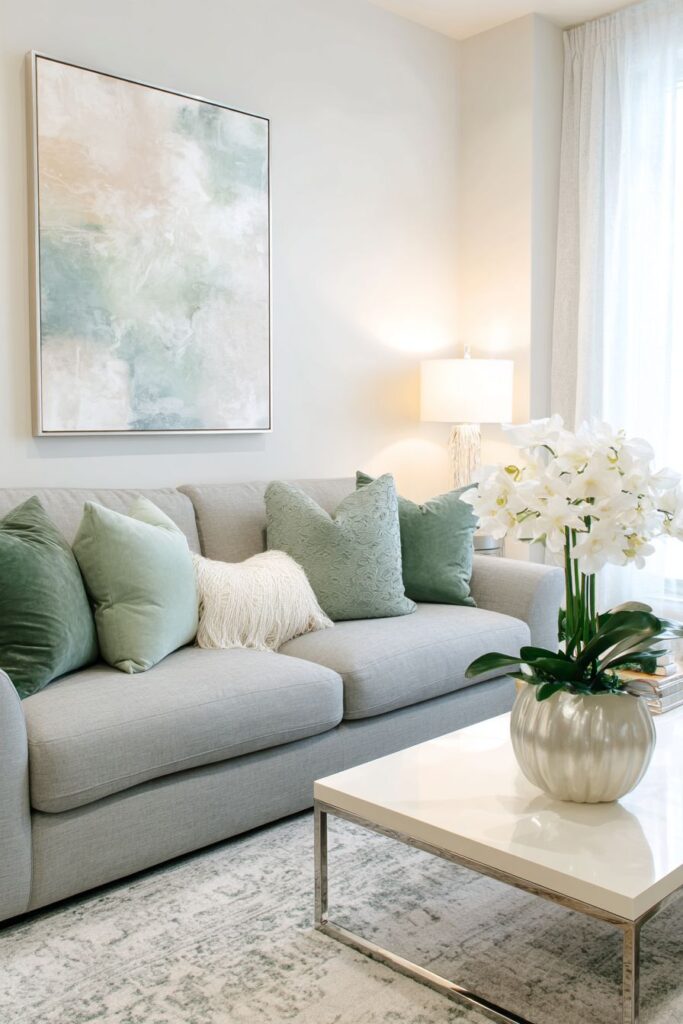
Modern spring design reaches sophisticated heights when anchored by statement artwork, as demonstrated in this living room where an abstract piece in soft spring colors commands attention above a low-profile grey sofa. The artwork features blush, sage, and cream in flowing, organic forms that suggest petals, leaves, or sky without literal representation—this abstraction allows for personal interpretation while clearly evoking spring’s gentle palette.
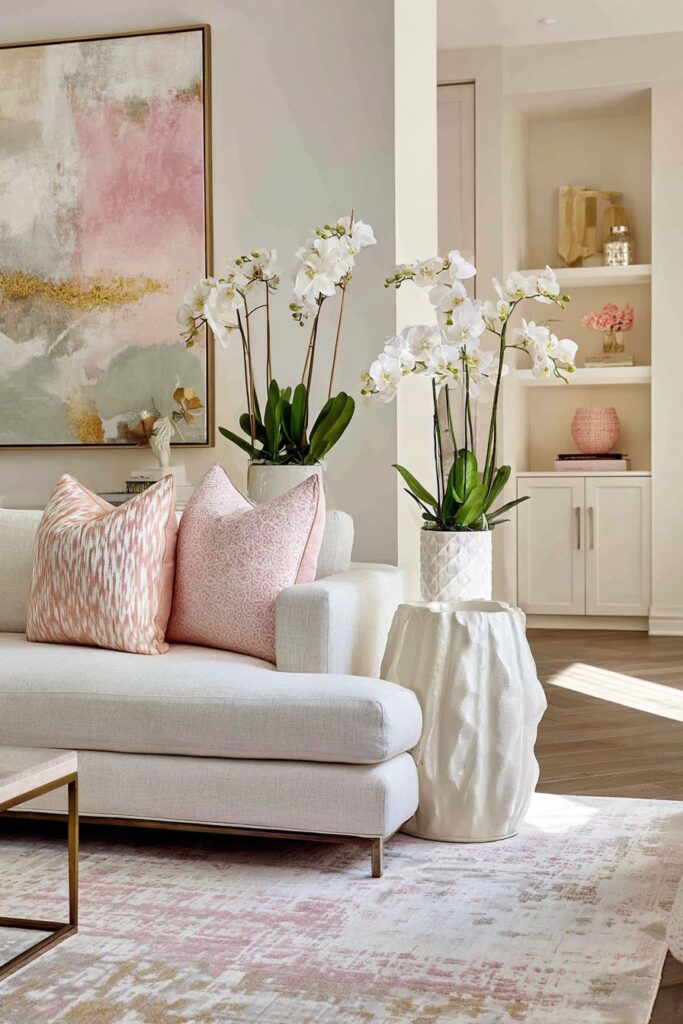
The color palette established in the artwork cascades through the room in throw pillows and a modern area rug, creating cohesion through repetition—a fundamental design principle that ties disparate elements into unified composition. This approach demonstrates color storytelling, where hues introduced in one element are echoed throughout the space to create visual harmony. The grey sofa provides neutral grounding that prevents the spring colors from overwhelming while its low profile maintains the contemporary aesthetic’s emphasis on clean, horizontal lines.
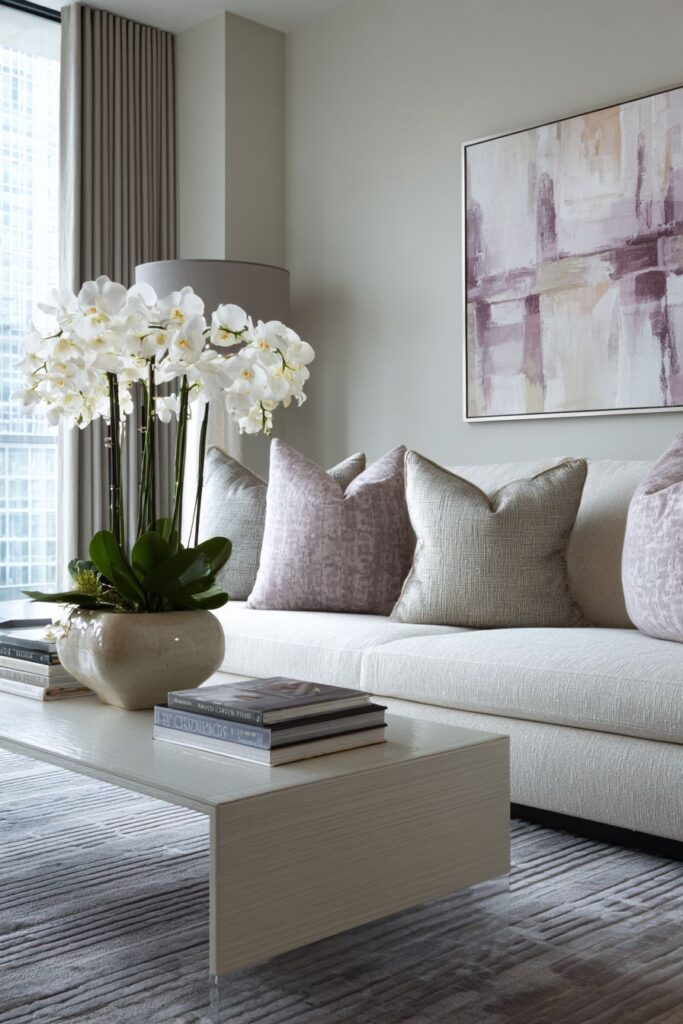
A sculptural vase holds fresh white orchids on the console table, their exotic elegance adding organic form while maintaining the sophisticated modern sensibility. Orchids bring spring freshness without the cottage associations of roses or tulips, their architectural blooms and lengthy flowering period making them ideal for contemporary spaces. The sculptural vase becomes art in itself, demonstrating how functional objects can serve dual purposes in well-designed rooms.
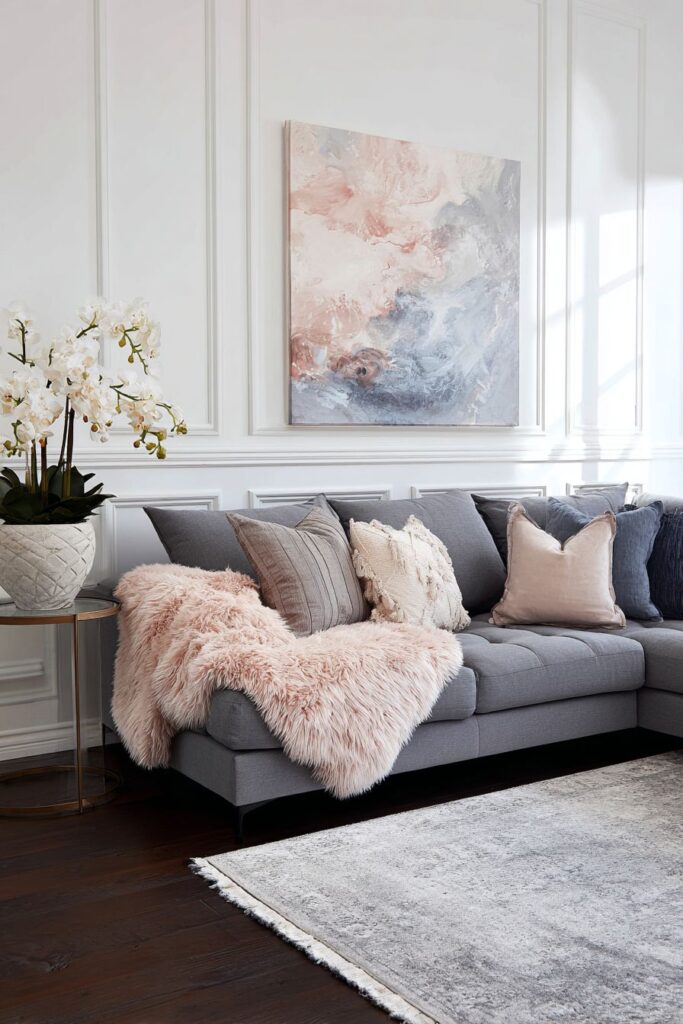
This sophisticated spring color story proves that seasonal design can be refined and gallery-worthy rather than traditionally pretty. Key design tips include selecting large-scale abstract art in spring colors as your room’s foundation, echoing artwork colors in textiles and accessories throughout the space, choosing low-profile furniture to maintain contemporary clean lines, and displaying exotic flowers like orchids for modern elegance.
14. Textile Transformation
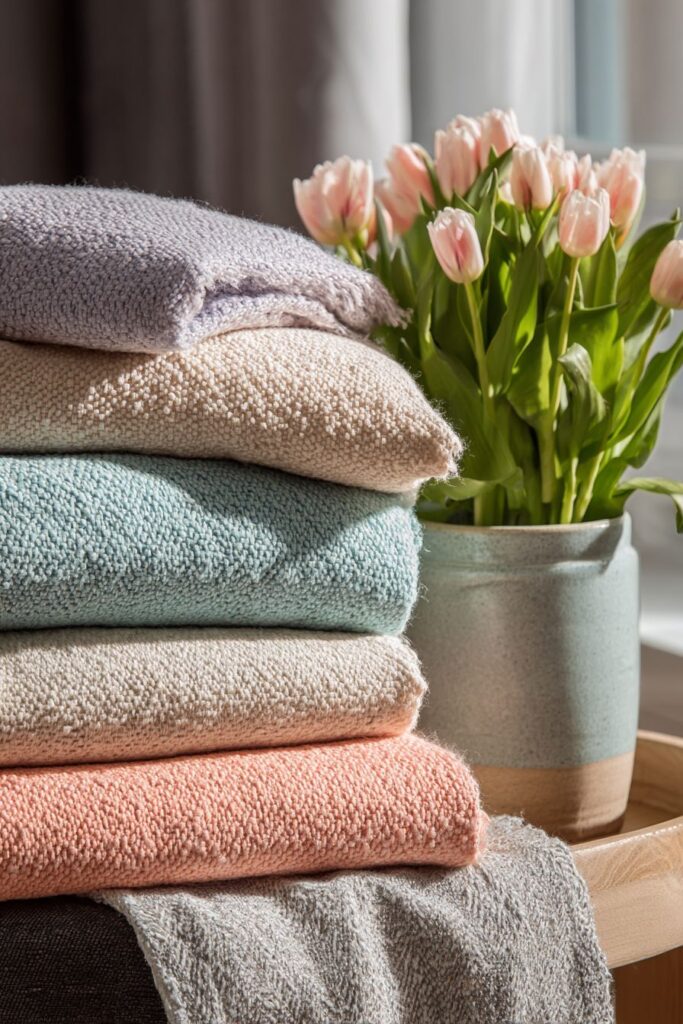
The quickest route to spring refreshment lies in textile updates, as beautifully demonstrated in this design focused on lightweight cotton and linen throws. Draped casually over existing neutral furniture, these throws in pastel hues of lavender, mint, and peach instantly transform the room’s mood without requiring furniture changes or major investment. This approach celebrates spring’s lighter touch—both literally in fabric weight and figuratively in decorating commitment.
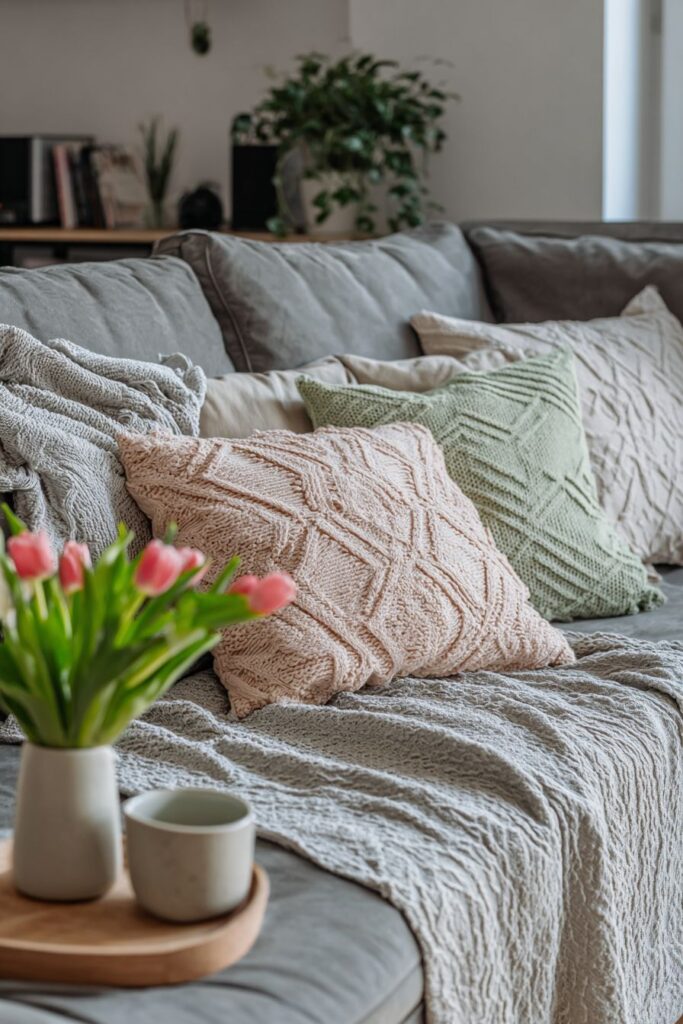
The existing neutral furniture provides the versatile backdrop that makes this seasonal rotation possible—beige sofas, taupe chairs, and cream ottomans become blank canvases that can support any seasonal palette. This demonstrates the wisdom of investing in quality neutral foundations that allow personality through easily changed accessories. The furniture’s simplicity ensures the spring textiles take center stage, their soft colors and natural fibers bringing warmth and seasonal charm.
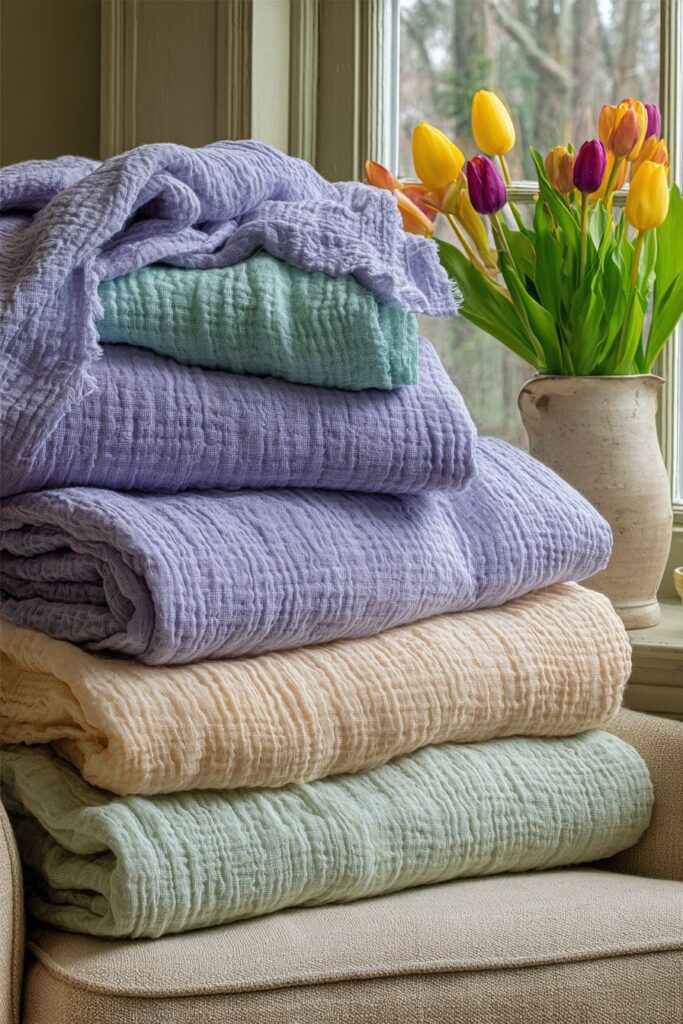
Fresh tulips in simple ceramic containers add natural beauty without competing with the textile story—the vessels’ understated forms ensure flowers enhance rather than dominate, maintaining focus on the fabric layers. The tulips’ upright stems and clean petal structure provide vertical interest while their colors subtly echo the pastel throws, creating quiet harmonies throughout the space.
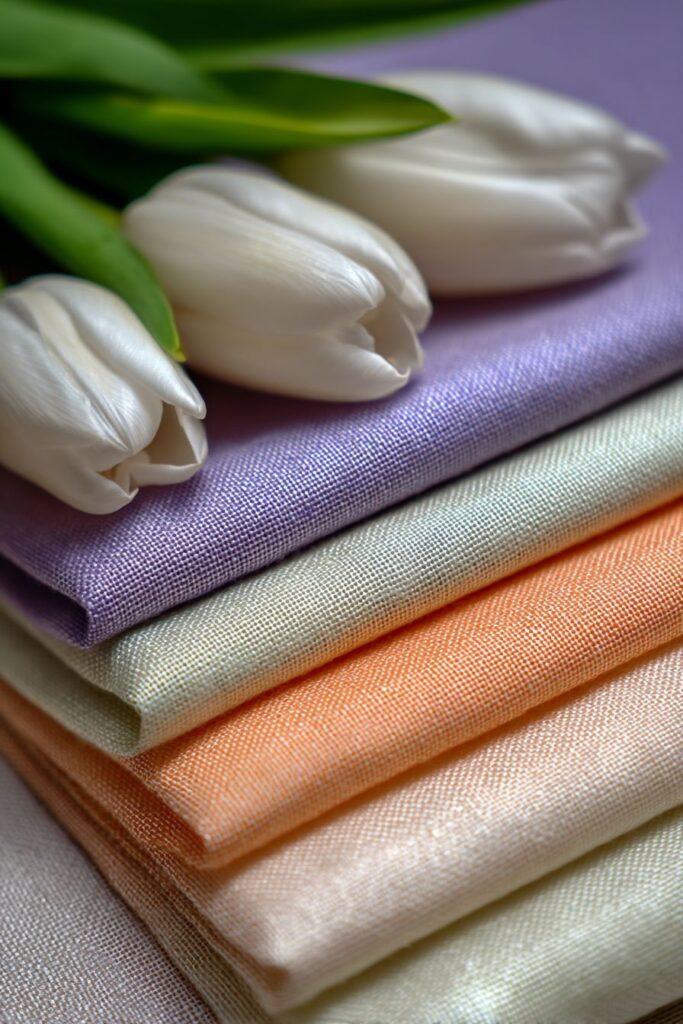
This design emphasizes the tactile quality of spring fabrics, inviting touch and interaction as soft weaves catch and filter natural window light. Key design tips include choosing lightweight throws in pastel hues for easy seasonal updates, draping textiles casually rather than perfectly for lived-in appeal, investing in neutral foundational furniture for year-round versatility, and selecting simple ceramic vessels that won’t compete with textile focus.
15. Indoor Garden Greenhouse Effect
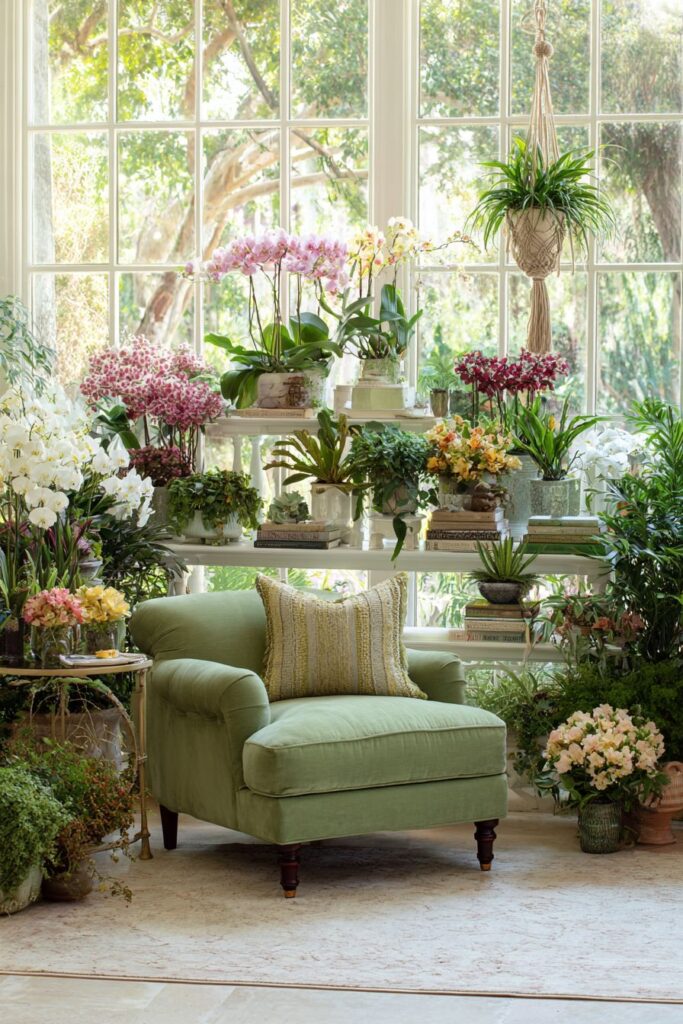
This living room transforms into a verdant sanctuary where flowering houseplants take center stage, creating an indoor garden that celebrates spring’s growth and vitality. Orchids, African violets, and jasmine arranged on tiered plant stands create vertical interest and allow multiple plants to thrive near bright windows without crowding. This thoughtful arrangement demonstrates that houseplant displays can be as carefully composed as any other design element, with attention to height, color, and form creating living sculpture.
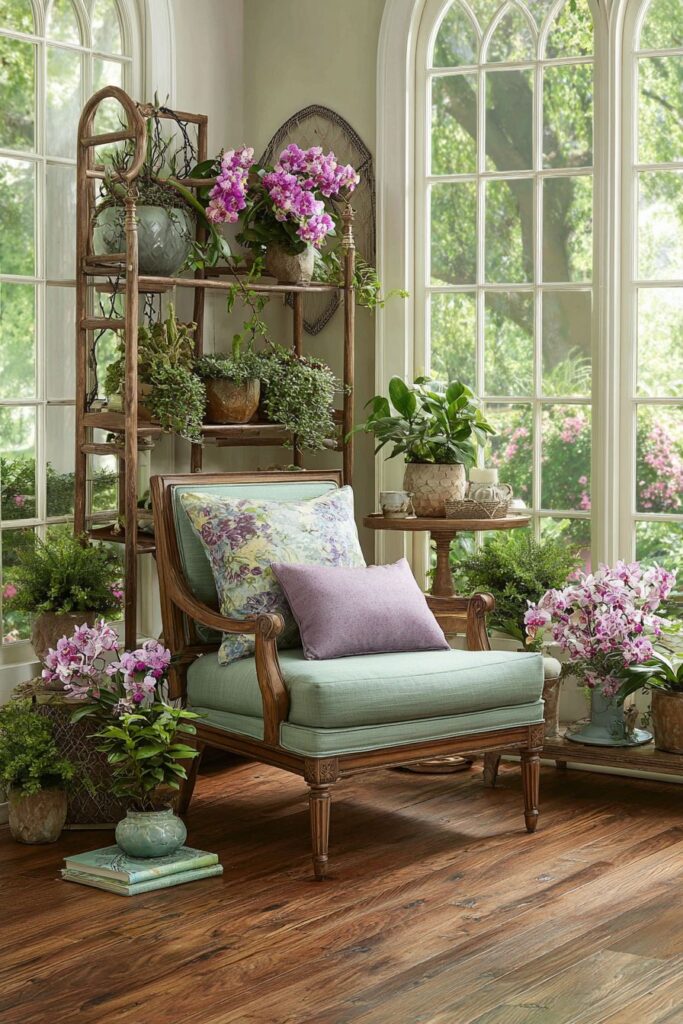
The variety of flowering plants ensures continuous bloom throughout spring and beyond—orchids offer long-lasting exotic flowers, African violets provide cheerful purple and pink blooms, and jasmine contributes fragrance that perfumes the entire room. This diversity creates a multi-sensory experience where visual beauty combines with aromatic pleasure, engaging inhabitants on multiple levels. Each plant species brings different leaf textures and growth patterns, adding to the visual richness.
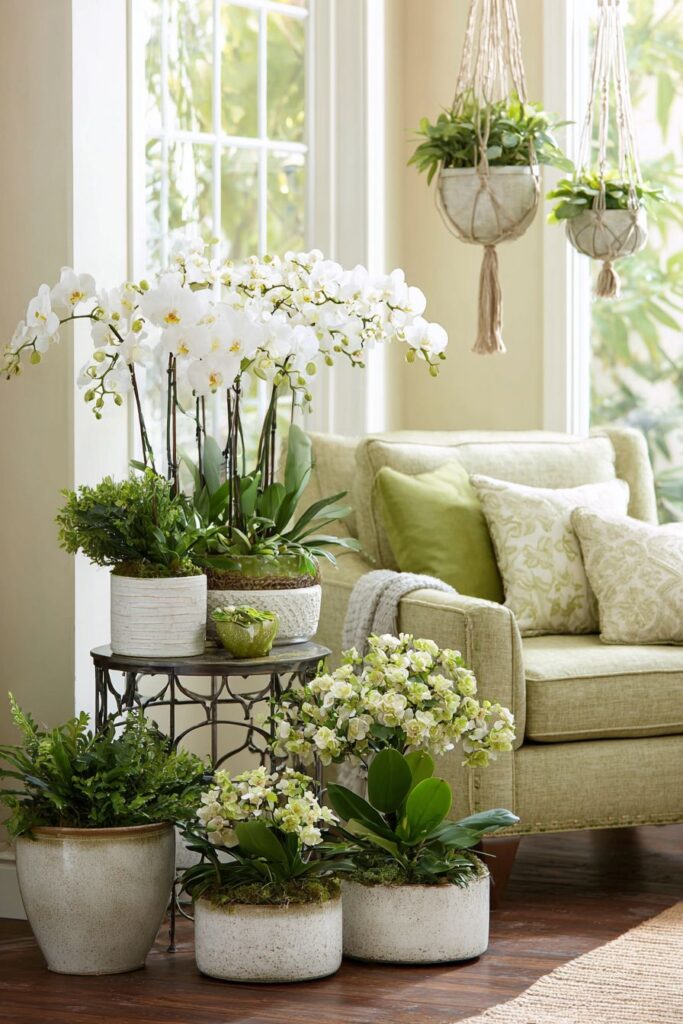
A comfortable reading chair in sage green linen complements the botanical theme without competing with the plants themselves—the color choice echoes foliage tones while the simple upholstery style keeps focus on the living elements. Macrame plant hangers add textural interest and bohemian charm while solving the practical problem of limited floor and surface space, allowing trailing plants to cascade gracefully from above.
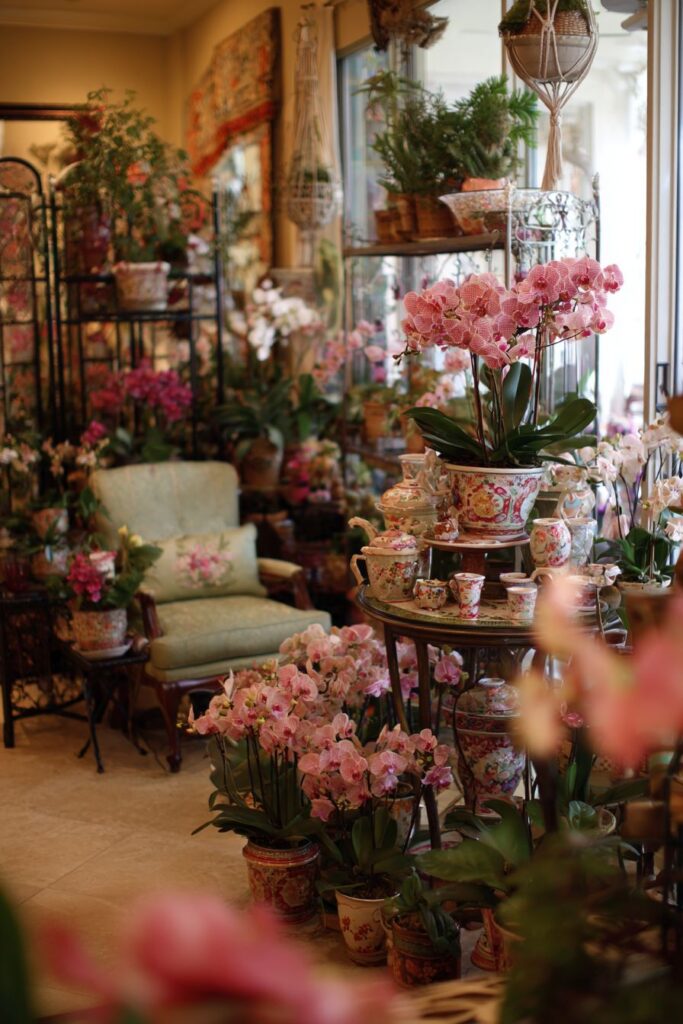
This lush greenhouse effect demonstrates how houseplants can be the primary design element rather than mere accessories. Key design tips include using tiered plant stands to maximize growing space near windows, selecting a variety of flowering plants for continuous seasonal bloom, choosing furniture in plant-complementary colors like sage green, and incorporating macrame hangers for vertical planting options.
16. Built-In Styling Brilliance
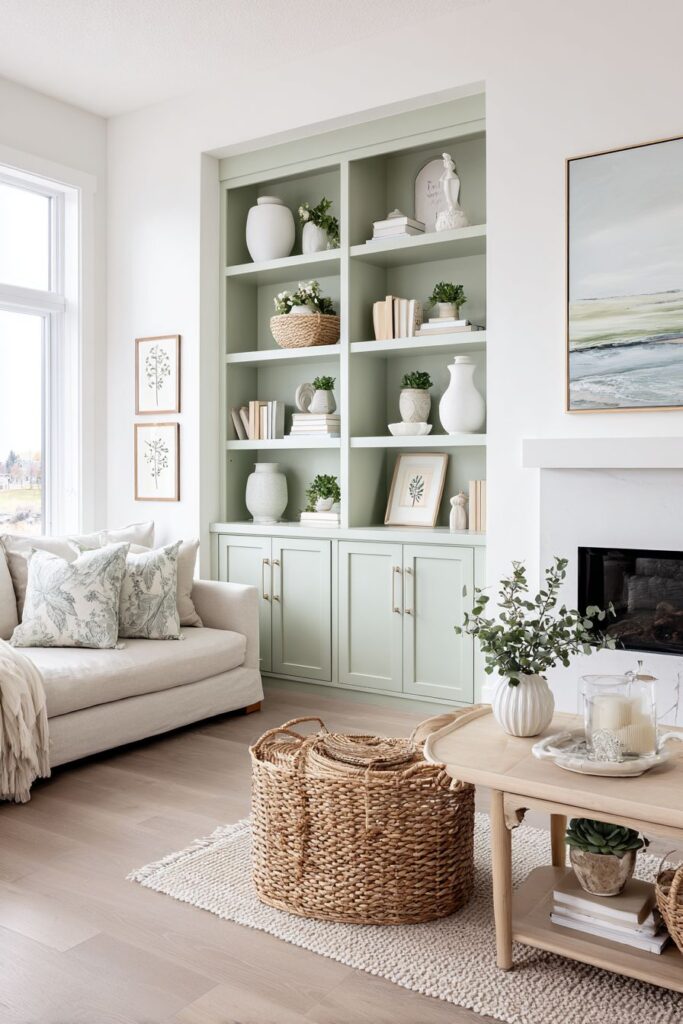
Built-in shelving becomes spring’s display gallery in this thoughtful design where every shelf tells part of the seasonal story. The shelving unit painted in fresh sage green provides colorful structure against white walls, the soft green creating visual interest while remaining neutral enough to support varied decorative objects. This color choice demonstrates how architectural elements can contribute to seasonal themes—the sage green immediately signals spring renewal while providing a beautiful backdrop for white ceramics and natural objects.
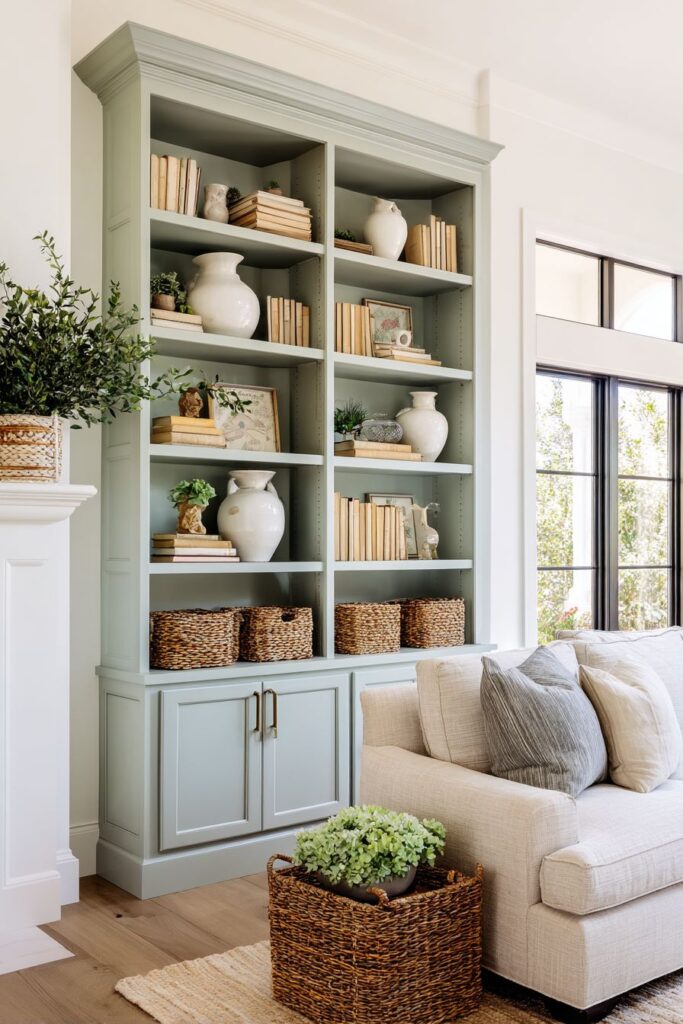
White ceramic vases in varying heights and shapes create rhythm along the shelves, their pure forms providing visual rest points amid more complex objects. Potted succulents add living greenery with minimal maintenance requirements, their sculptural forms and varied textures creating interest without demanding the care that flowering plants require. Vintage botanical books contribute intellectual depth and visual weight, their aged spines and varied heights adding collected-over-time authenticity.
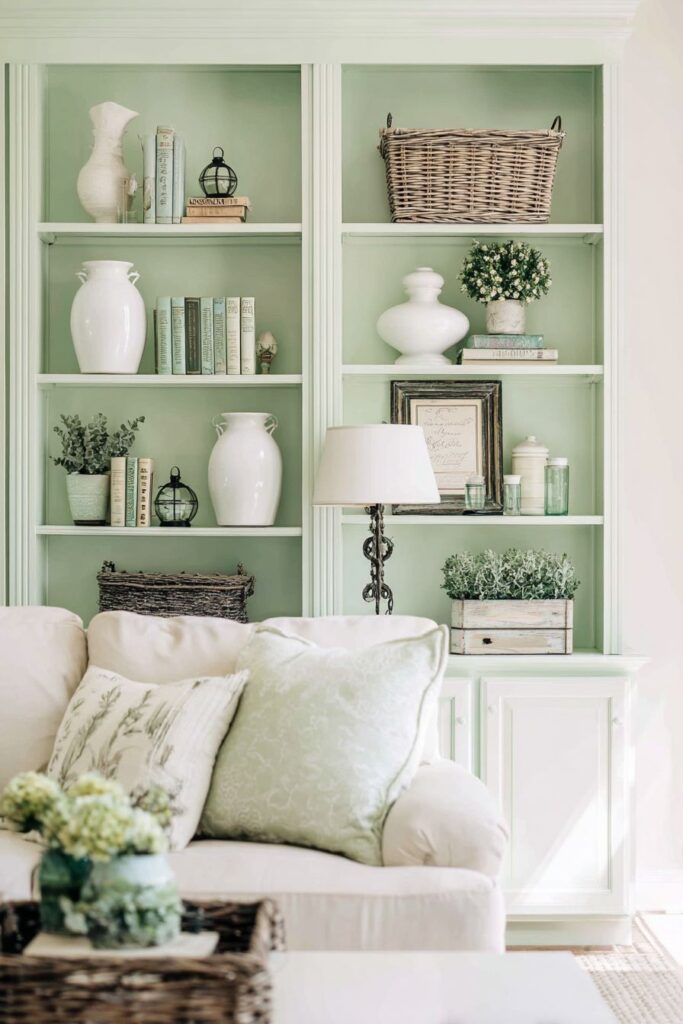
Woven baskets provide practical storage while contributing natural texture—they conceal less attractive necessities while their organic materials align perfectly with the spring natural theme. This demonstrates the cottage-meets-contemporary approach where beauty and function coexist seamlessly. The balance of decorative objects and negative space prevents the shelves from appearing cluttered, allowing each item room to breathe and be appreciated individually.
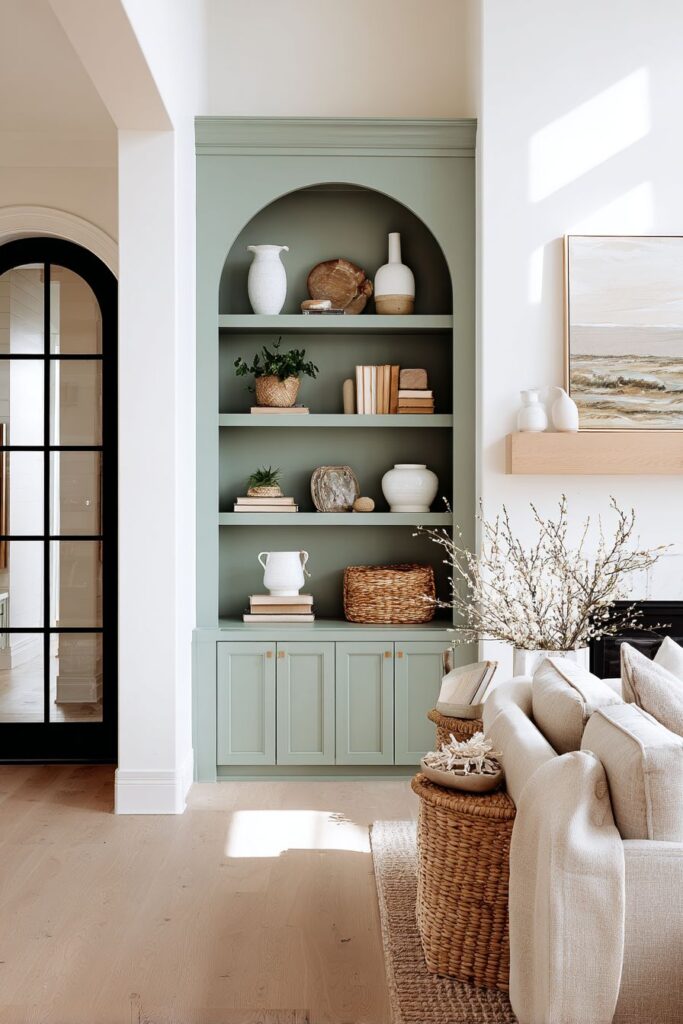
The nearby sofa in natural linen provides comfortable seating that doesn’t compete with the shelving display, its neutral tone and simple style supporting rather than distracting from the built-in focal point. Key design tips include painting built-ins in soft spring colors like sage green for seasonal impact, varying object heights and textures to create visual interest, incorporating both decorative and functional items for practical beauty, and leaving negative space to prevent cluttered appearance.
17. Statement Rug Foundation
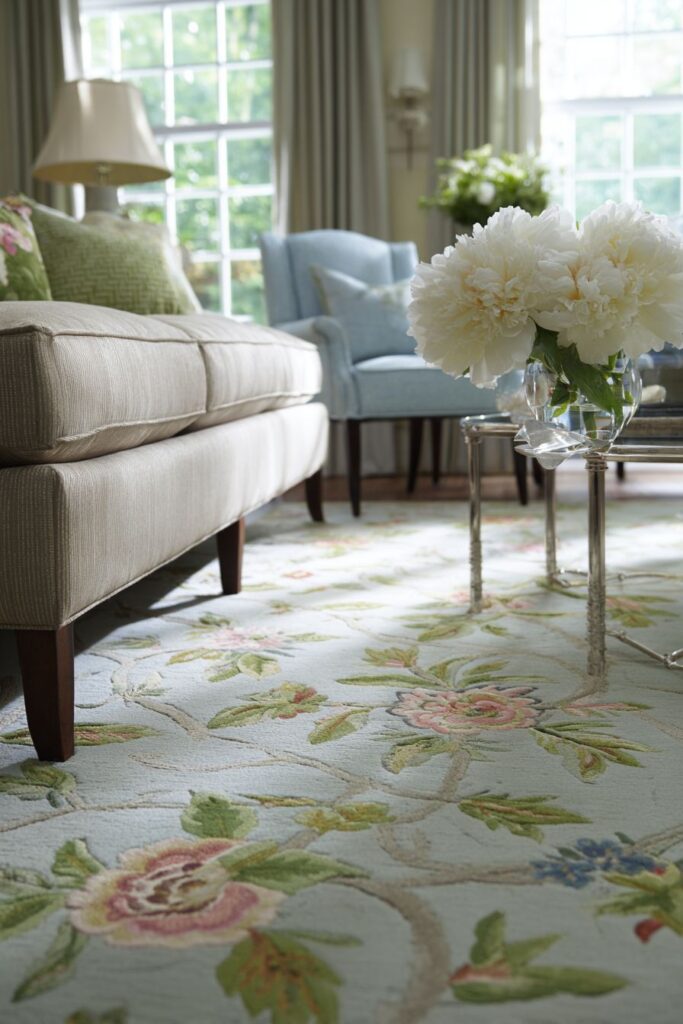
The area rug claims its rightful place as room hero in this design where a subtle floral pattern in muted spring colors creates the foundation for the entire space. Featuring dusty rose, soft green, and cream on a light grey background, the rug demonstrates how pattern can be impactful without overwhelming—the muted tones and delicate design create interest underfoot while remaining sophisticated enough for modern sensibilities. This proves that floral doesn’t necessarily mean traditional or overly romantic.
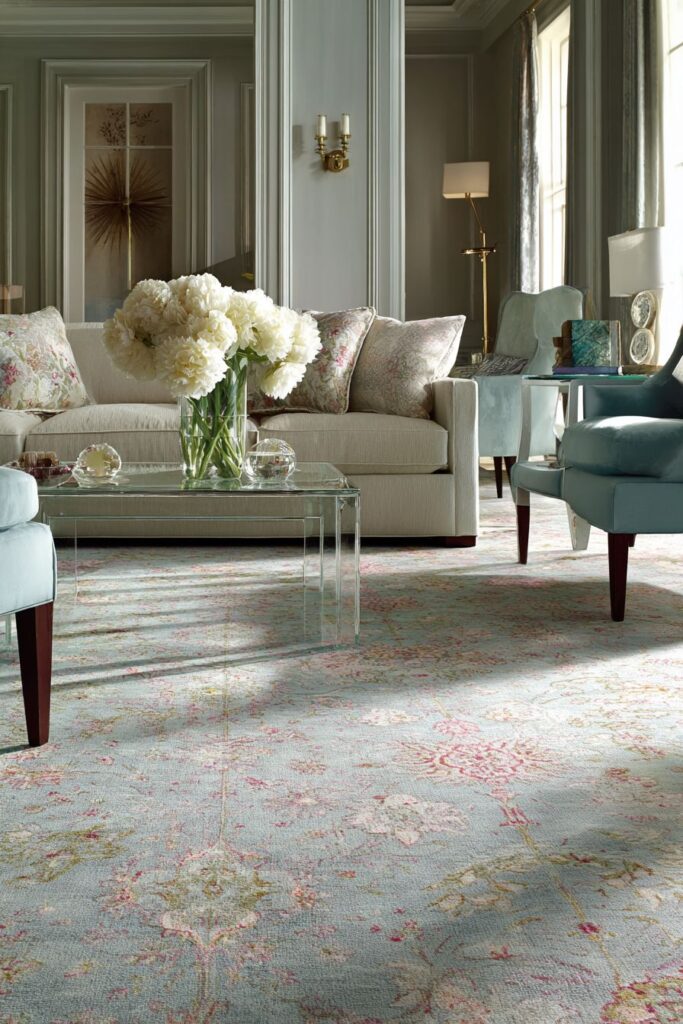
The rug anchors a carefully composed seating arrangement with a neutral sofa and pale blue accent chairs, demonstrating the design principle of letting one patterned piece ground the space while other elements remain solid. The pale blue chairs pick up on the cool tones in the rug’s background while adding their own soft color statement, creating layers of coordinated but not matching elements. This approach feels collected and intentional rather than overly coordinated.
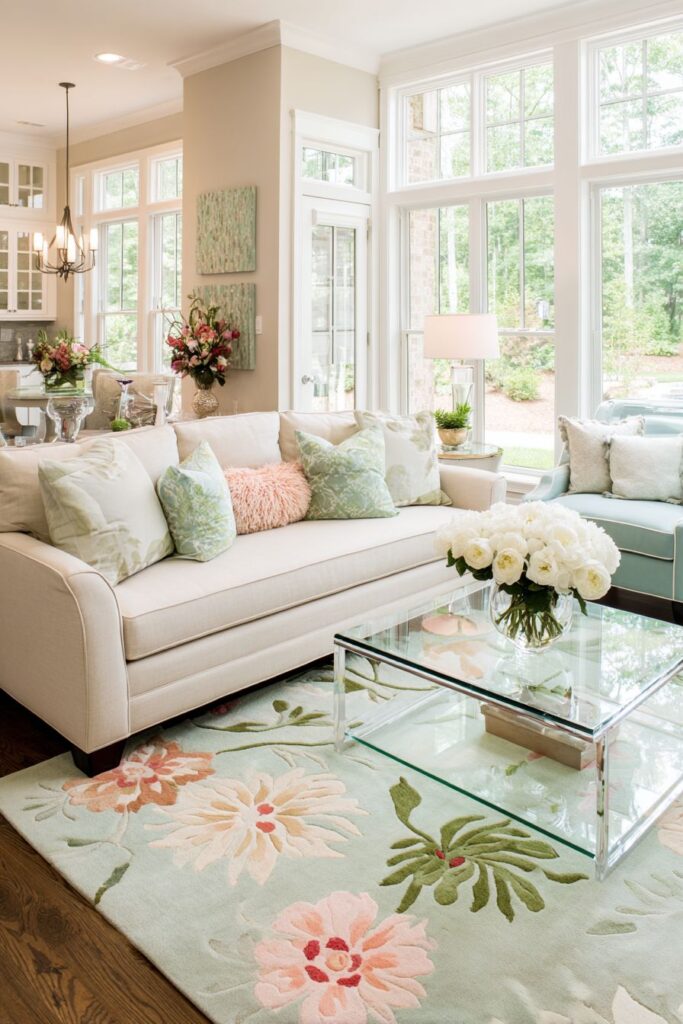
Fresh white peonies sit on a glass coffee table, their pure blooms providing a bridge between the rug’s delicate floral pattern and the room’s need for living natural elements. The glass table allows the beautiful rug to remain visible beneath, demonstrating thoughtful furniture selection that considers sightlines and visual flow. The peonies’ lush, romantic blooms add three-dimensional softness that complements the two-dimensional rug pattern below.
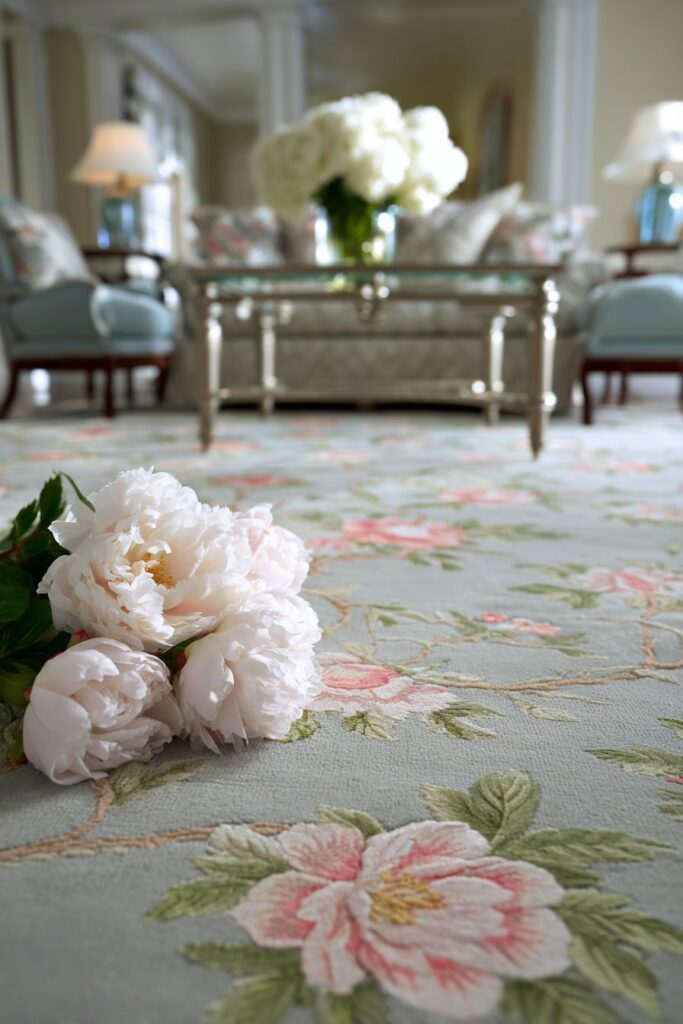
This design shows how a spring rug can define the conversation area while establishing the room’s entire color palette and mood. Key design tips include choosing area rugs with subtle floral patterns in muted tones for sophisticated impact, using the rug’s colors as your palette guide for other furnishings, selecting glass coffee tables to keep rug patterns visible, and adding fresh flowers that complement rather than compete with rug designs.
18. Side Table Vignette Perfection
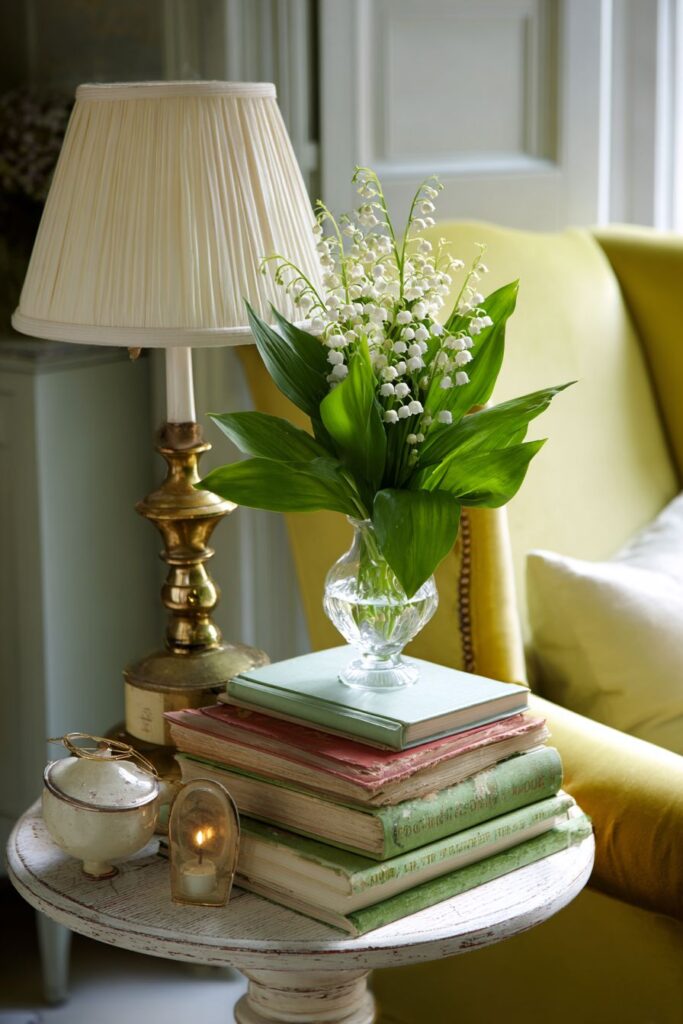
The art of small-scale styling reaches its apex in this carefully composed side table vignette that demonstrates how attention to detail creates magic in unexpected places. A turned wood table in whitewashed finish provides the foundation—its classic form rendered fresh through the lightened finish that suggests cottage elegance without fussiness. The table’s carved details add visual interest while the white-washed technique keeps it feeling light and spring-appropriate.
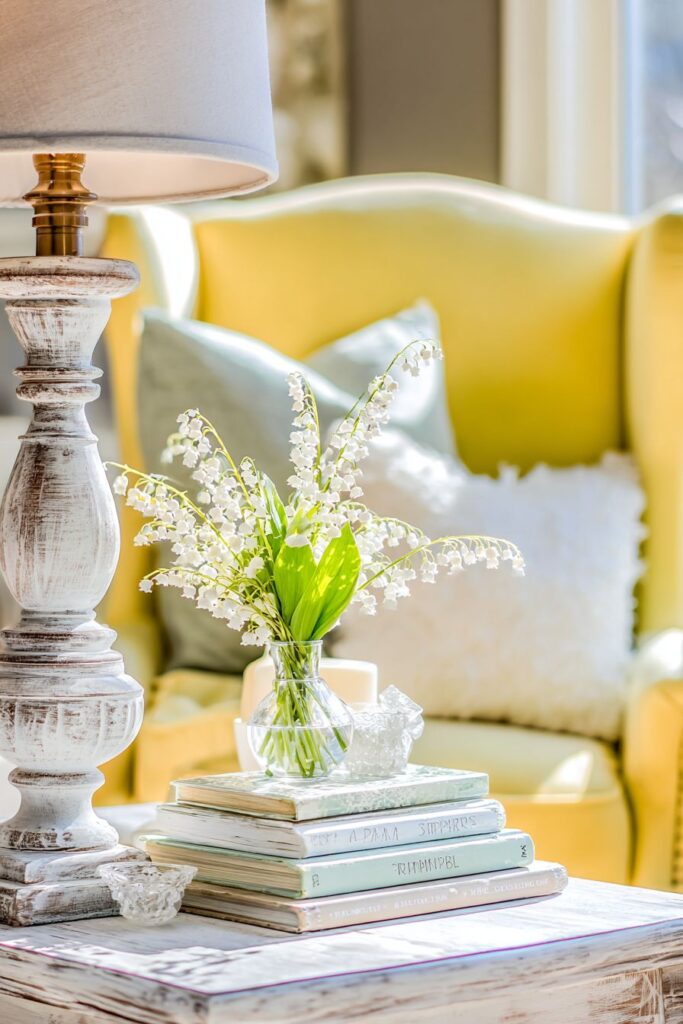
A brass lamp with linen shade combines metal warmth with natural fiber softness, its proportions perfectly scaled to the table size. The brass brings necessary metallic gleam that catches light and adds subtle luxury, while the linen shade filters illumination into soft, ambient glow. Fresh lily of the valley in a small crystal vase contributes delicate spring blooms—these tiny white bells on arching stems bring both beauty and fragrance in a compact arrangement perfect for small-scale display.
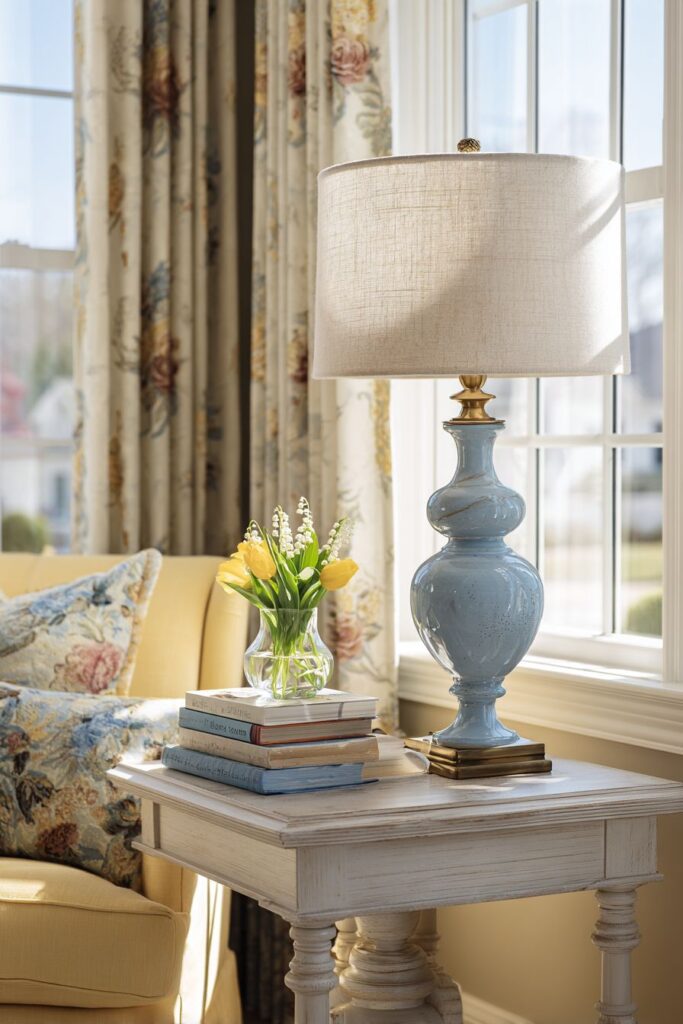
A collection of vintage books with pastel covers completes the tableau, their soft colors and aged patinas adding layers of interest and personality. These aren’t merely decorative objects but suggest a reading life and intellectual pursuits, adding narrative depth to the visual composition. The adjacent wingback chair in soft yellow velvet provides a cheerful spring accent while offering comfortable seating to enjoy both the lamp’s light and the books’ contents.
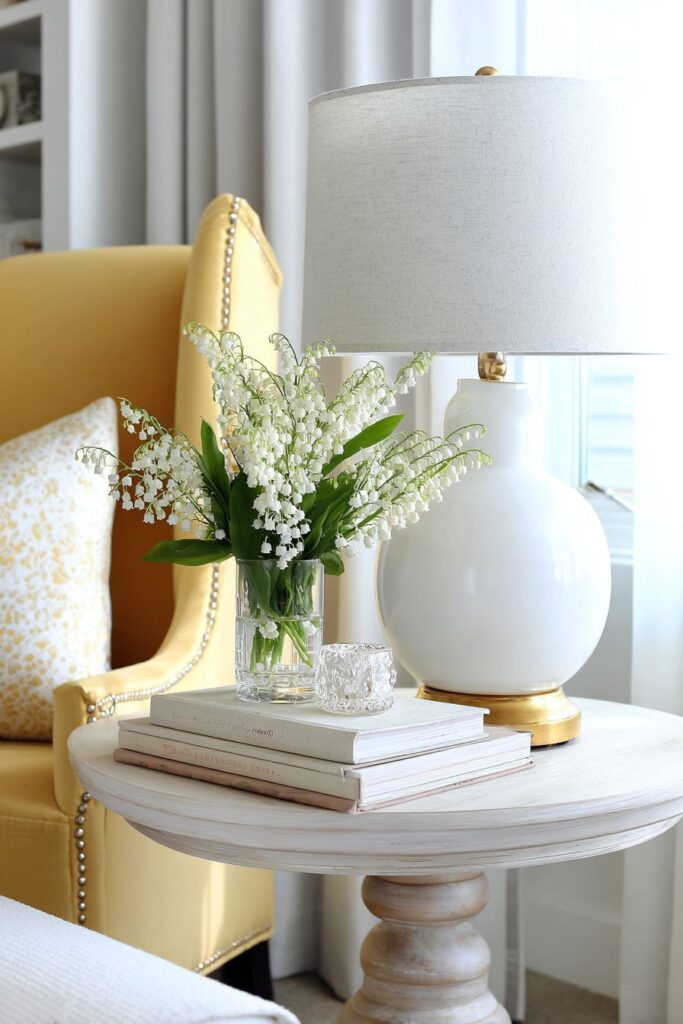
This layered spring styling demonstrates how even the smallest surfaces deserve thoughtful composition. Key design tips include selecting side tables with interesting details like turned wood or carved elements, combining different textures like brass, linen, crystal, and paper for depth, choosing delicate spring flowers appropriate to the small scale, and adding furniture in cheerful spring colors near vignettes to create cohesive scenes.
19. Indoor-Outdoor Flow Mastery
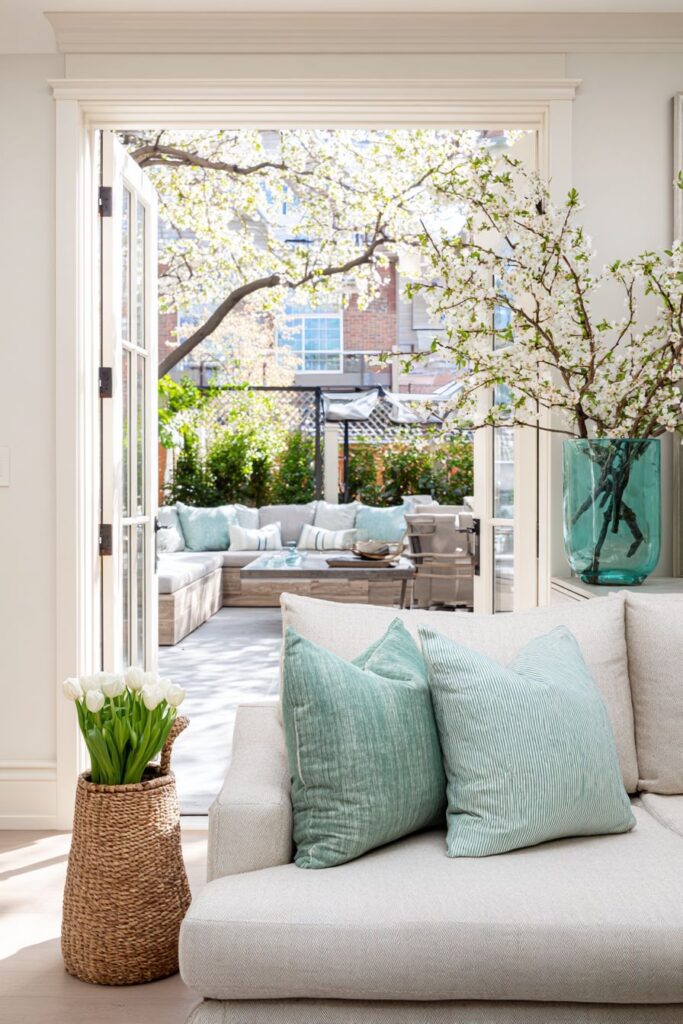
The boundaries between inside and outside blur beautifully in this open concept living room that celebrates spring’s invitation to connect with nature. French doors create the crucial link to an outdoor patio, their generous glass panels flooding the interior with natural light while providing clear views to the world beyond. This architectural feature transforms the living room into a transitional space that belongs equally to indoor comfort and outdoor freshness.
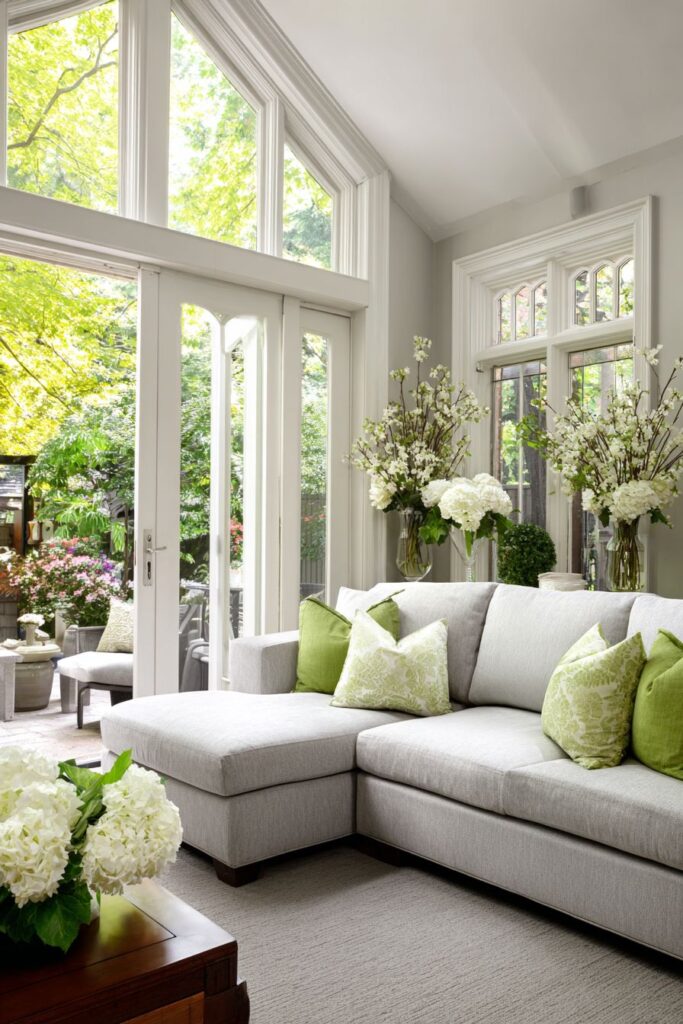
Interior features include a light grey sectional that provides ample seating without visual heaviness—its neutral tone allows the green views outside to become the color story, while its generous proportions ensure comfort for gatherings. Spring-green outdoor pillows on the indoor sectional blur the boundaries further, bringing exterior colors inside while suggesting a unified design philosophy that doesn’t differentiate between spaces. This demonstrates sophisticated space planning that considers the entire environment rather than individual rooms in isolation.
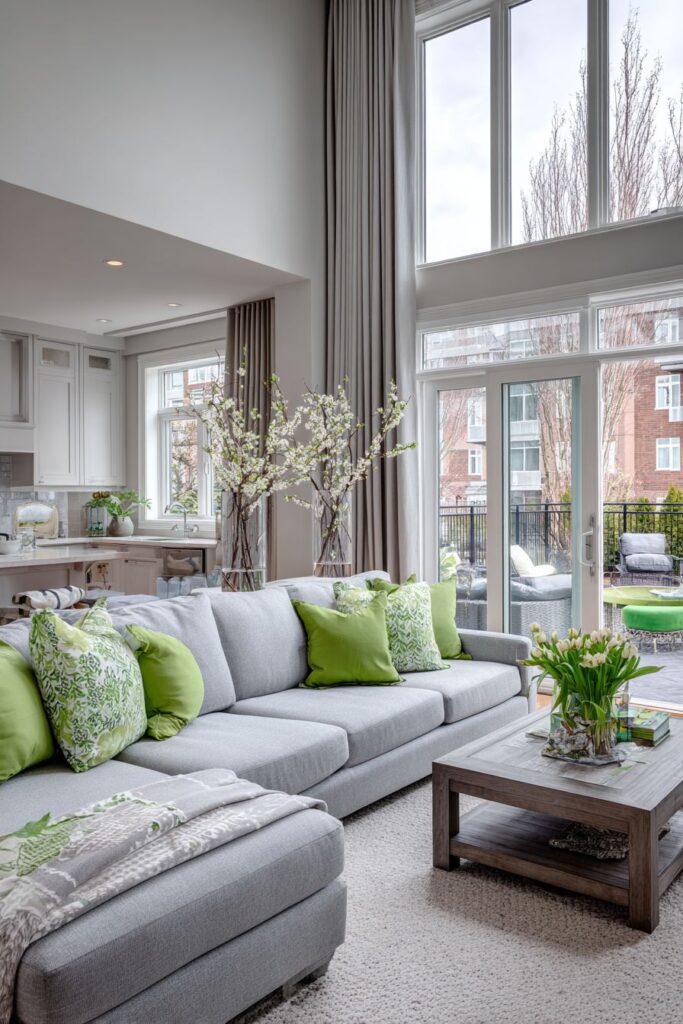
Flowering branches in tall floor vases bring spring’s awakening indoors in dramatic fashion—these substantial arrangements create vertical drama while their budding branches suggest the trees visible through the windows. The scale of these arrangements suits the open concept layout, providing impact that holds its own in a larger space. Natural light floods from multiple windows, creating an airy atmosphere where shadow and sunlight play across surfaces throughout the day.
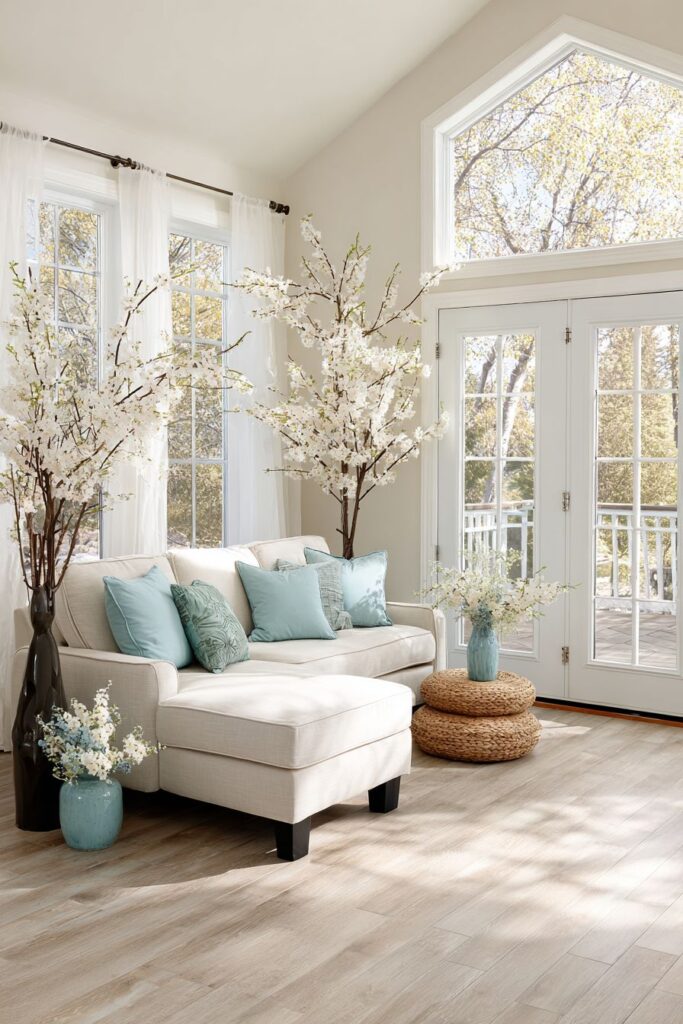
This seamless indoor-outdoor flow creates a spring atmosphere that celebrates connection to nature and the expanding of living space beyond walls. Key design tips include using French doors or large windows to maximize outdoor connections, choosing furniture colors that complement exterior views, bringing outdoor colors inside through accessories like pillows, and using flowering branches for dramatic seasonal impact in open spaces.
20. Pillow Perfection in Pattern Mixing
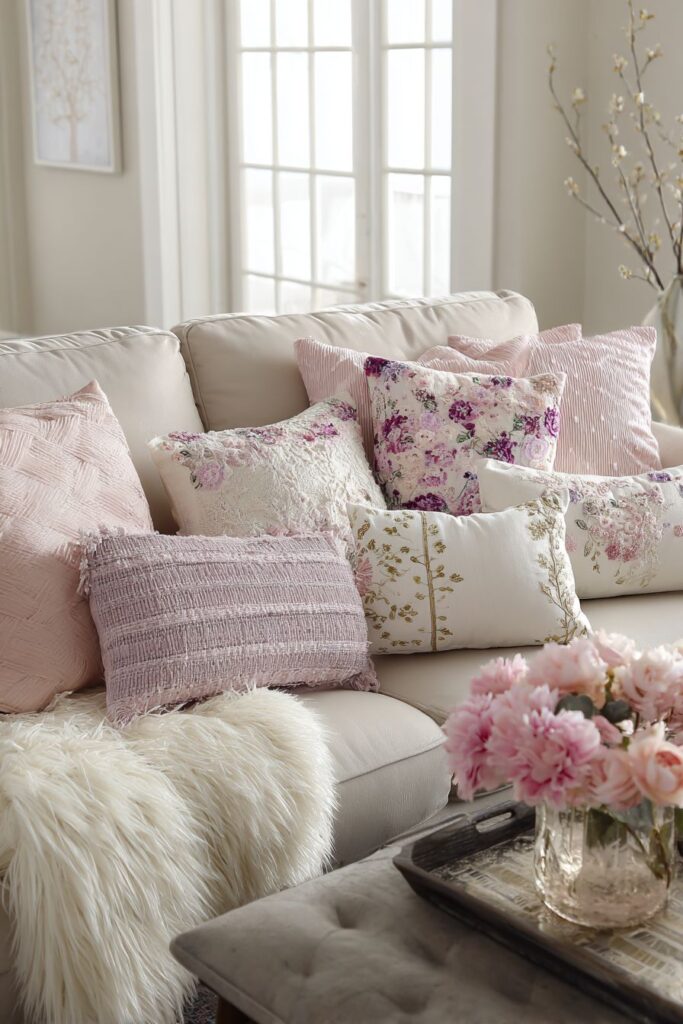
The final design celebrates the often-overlooked art of cushion and pillow arrangement, demonstrating how these small elements can transform a room’s personality. A mix of textures and spring patterns creates visual feast—striped linen offers clean lines, embroidered florals add handcrafted charm, and solid pastels in blush, mint, and cream provide color impact and visual rest. This combination demonstrates sophisticated pattern mixing where different designs unite through shared color palette.
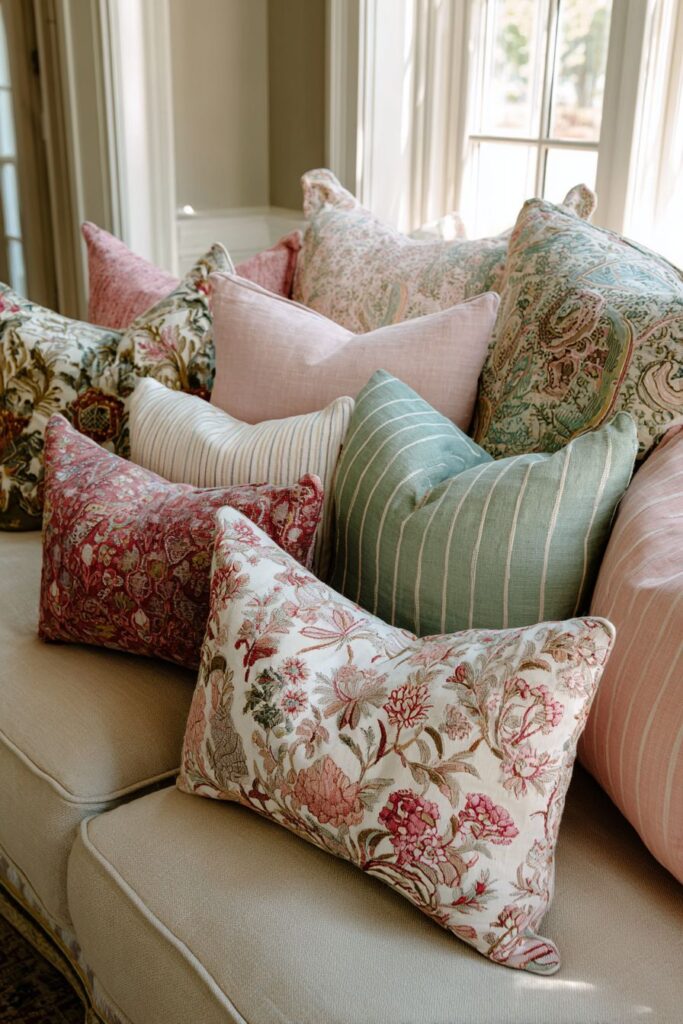
The pillows arranged on neutral sofa and chairs showcase practical layering techniques that anyone can master—larger pillows in back, smaller ones in front, with varied shapes creating dimensional interest. This isn’t random placement but considered composition where each pillow serves a purpose in the overall arrangement. The neutral furniture allows the pillows to truly shine, demonstrating again the value of simple foundational pieces.
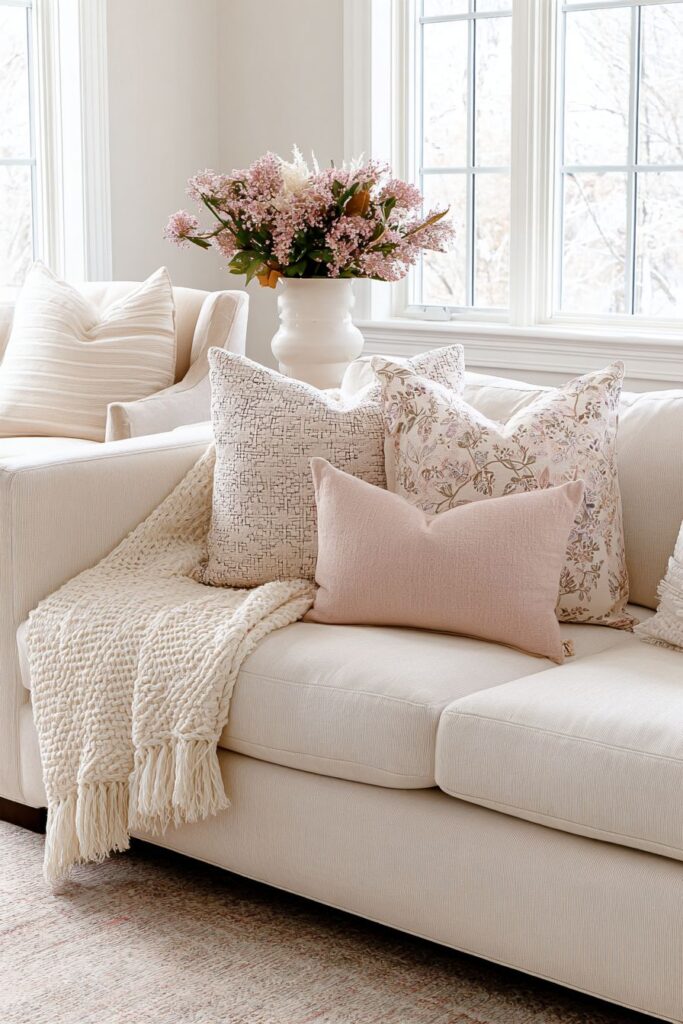
The tactile variety invites touch and interaction—smooth linen, raised embroidery, and soft solid fabrics each offer different textural experiences that make the seating more engaging and comfortable. This multi-sensory approach to design recognizes that living rooms are experienced through touch as much as sight. Natural window light highlights fabric details and subtle pattern mixing, creating depth through the interplay of light and shadow on varied textures.
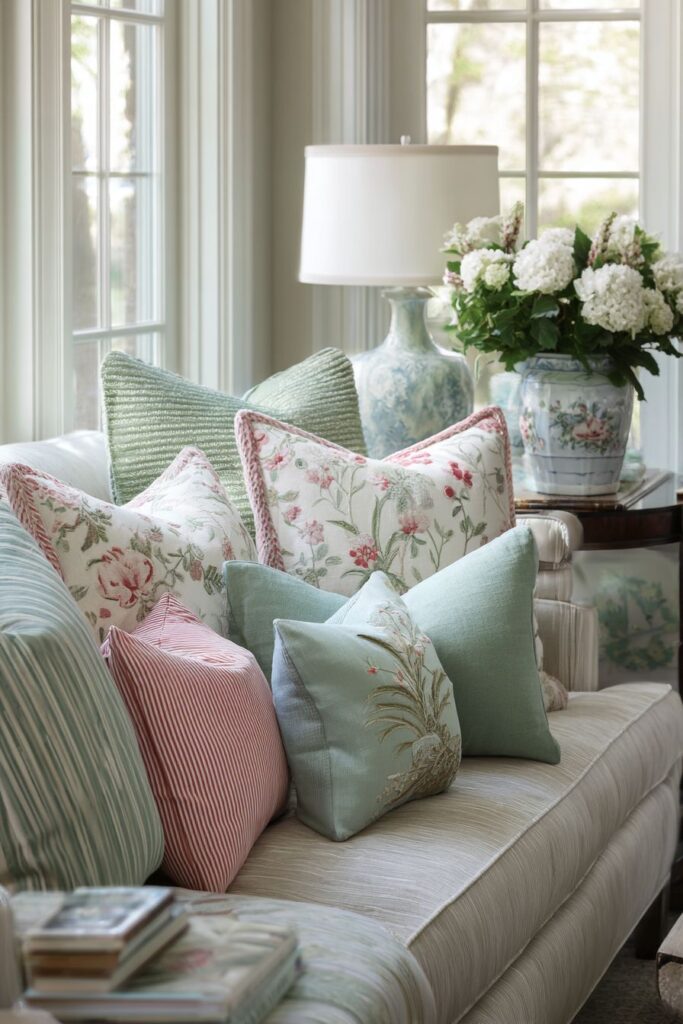
This emphasis on spring color palette through pillows offers the most flexible, affordable approach to seasonal decorating. Key design tips include mixing three different patterns or textures in coordinating colors for depth, using solid color pillows to provide visual rest between patterns, layering pillows from large in back to small in front for dimension, and selecting fabrics with varied textures to enhance tactile appeal.
Why These Spring Living Room Designs Are the Best
These twenty spring living room designs represent the pinnacle of seasonal decorating because they address the fundamental desire for renewal that spring awakens in all of us. From cottage romance to contemporary sophistication, from farmhouse authenticity to Scandinavian serenity, these diverse approaches ensure that every design personality can find inspiration for spring transformation. The beauty of these concepts lies in their accessibility—whether you’re working with a complete renovation budget or seeking simple refresh ideas, these designs offer scalable solutions that deliver impact regardless of investment level.
The spring living room ideas presented here excel because they understand the core principles of seasonal design: lightness, connection to nature, fresh color palettes, and the celebration of renewal and growth. Each design demonstrates how to balance these elements with practical living requirements, ensuring that beauty never compromises comfort or function. From the pastel paradise of cream linen elegance to the bold statement of botanical wallpaper, from the tranquil reading nook to the sophisticated art-inspired space, these concepts prove that spring design can be both visually stunning and deeply livable.
What sets these spring living room concepts apart is their attention to the multi-sensory nature of great design. They don’t merely focus on visual appeal but consider how spaces smell through fresh flowers and aromatic herbs, how they feel through varied textile textures, and how they sound as gentle breezes move curtains and rustle leaves. This holistic approach creates environments that engage inhabitants on every level, transforming houses into homes that nurture wellbeing and celebrate the season’s unique offerings. The designs incorporate spring decor, spring colors, fresh flowers, natural light, pastel palettes, botanical elements, and organic textures in ways that feel both timeless and perfectly of-the-moment.
These spring living room ideas also excel in their flexibility and adaptability. The textile transformation approach allows renters and those with limited budgets to achieve dramatic seasonal change, while the built-in styling and gallery wall concepts offer more permanent solutions for homeowners seeking lasting impact. The indoor-outdoor flow design addresses modern living’s desire for connection to nature, while the cottage romance and farmhouse fresh concepts satisfy those drawn to traditional comfort. This range ensures that spring living room design is accessible to all, regardless of space constraints, budget limitations, or style preferences, making these truly the best approaches to seasonal home transformation.
Conclusion
Spring living room design offers endless opportunities to refresh, renew, and reimagine your most important living space. Whether you’re drawn to the soft romance of pastel palettes and floral patterns, the clean sophistication of contemporary spaces, or the warm authenticity of farmhouse style, these twenty designs provide roadmaps for transformation that honor both the season and your personal aesthetic. The key to successful spring design lies in understanding that seasonal decorating isn’t about wholesale changes but rather thoughtful updates that celebrate renewal while respecting your home’s existing character.
As you consider implementing these spring living room ideas, remember that the most successful designs are those that resonate with your lifestyle and bring you joy. You might combine elements from several concepts—perhaps botanical wallpaper from one design with the textile layers from another, or cottage florals mixed with Scandinavian restraint. The beauty of these approaches is their flexibility and the permission they give to experiment, play, and discover what spring means in your personal design language.
Embrace spring’s invitation to lighten, brighten, and connect with nature through your living room design. Whether you choose fresh flowers, pastel throw pillows, natural fiber rugs, or complete furniture rearrangement, let these ideas inspire you to create a space that celebrates the season’s beauty while serving as a comfortable, functional sanctuary for daily living. Spring arrives every year with its promise of renewal—let your living room reflect that eternal optimism and natural beauty.
"As an Amazon Associate, I earn from qualifying purchases."
