
Spring is a season of renewal, light, and color — and your kitchen deserves to celebrate it fully. As the days grow longer and temperatures rise, refreshing your kitchen decor can transform the heart of your home. A seasonal design refresh doesn’t require a full renovation. Strategic styling choices can completely shift the energy of a space.
The kitchen is one of the most lived-in rooms in any home. It’s where mornings begin, meals are shared, and memories are made. Thoughtful decor choices in this space have an outsized emotional impact. When the aesthetic aligns with the season, the room feels more inviting and alive.
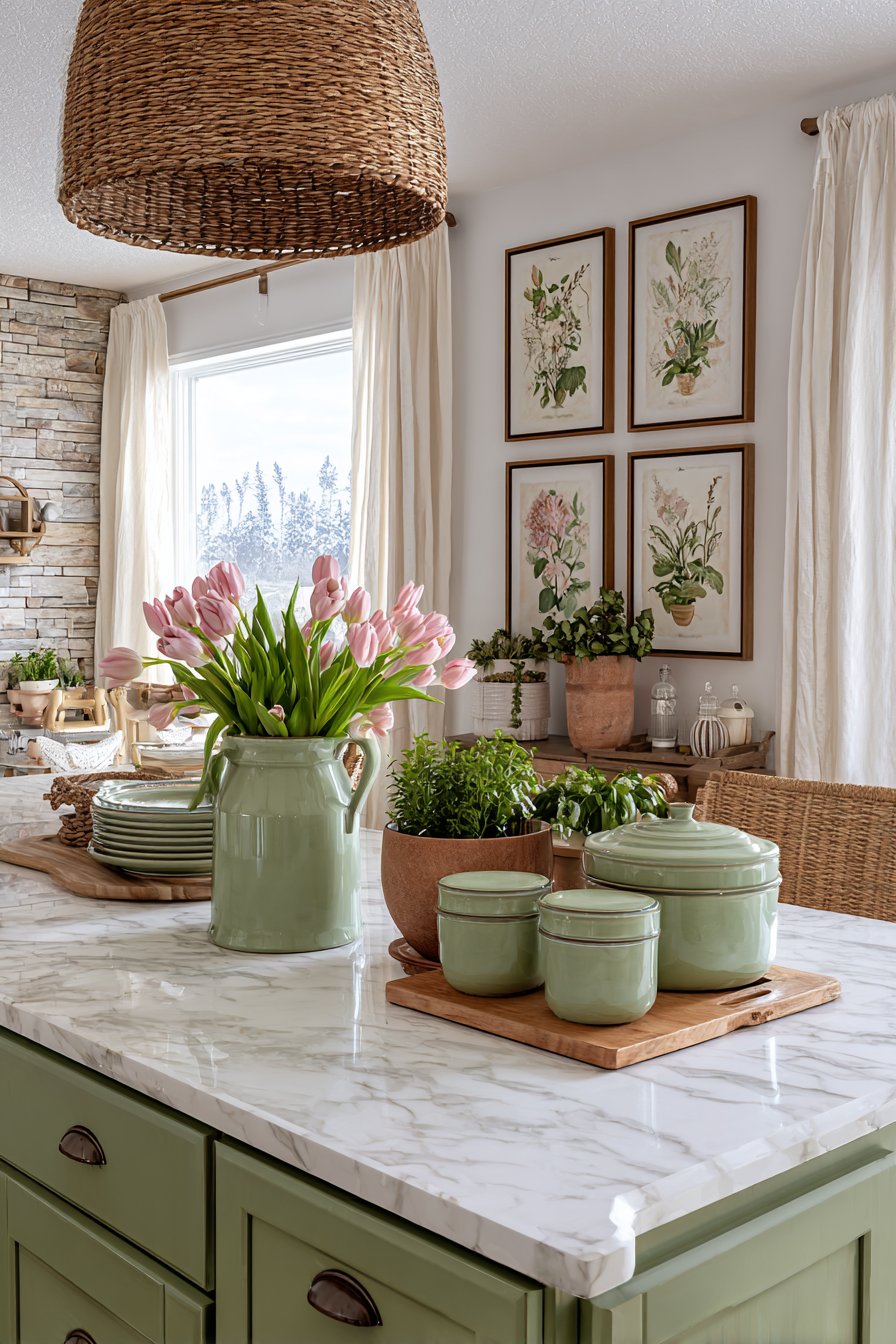
Spring kitchen design is about embracing lightness, natural elements, and fresh color palettes. Whether your kitchen is modern, farmhouse, or transitional in style, these ideas work across diverse design aesthetics. From textiles to plants to hardware, each layer builds a cohesive seasonal look that feels genuinely refreshing.
1. Refresh Your Color Palette with Soft Spring Tones
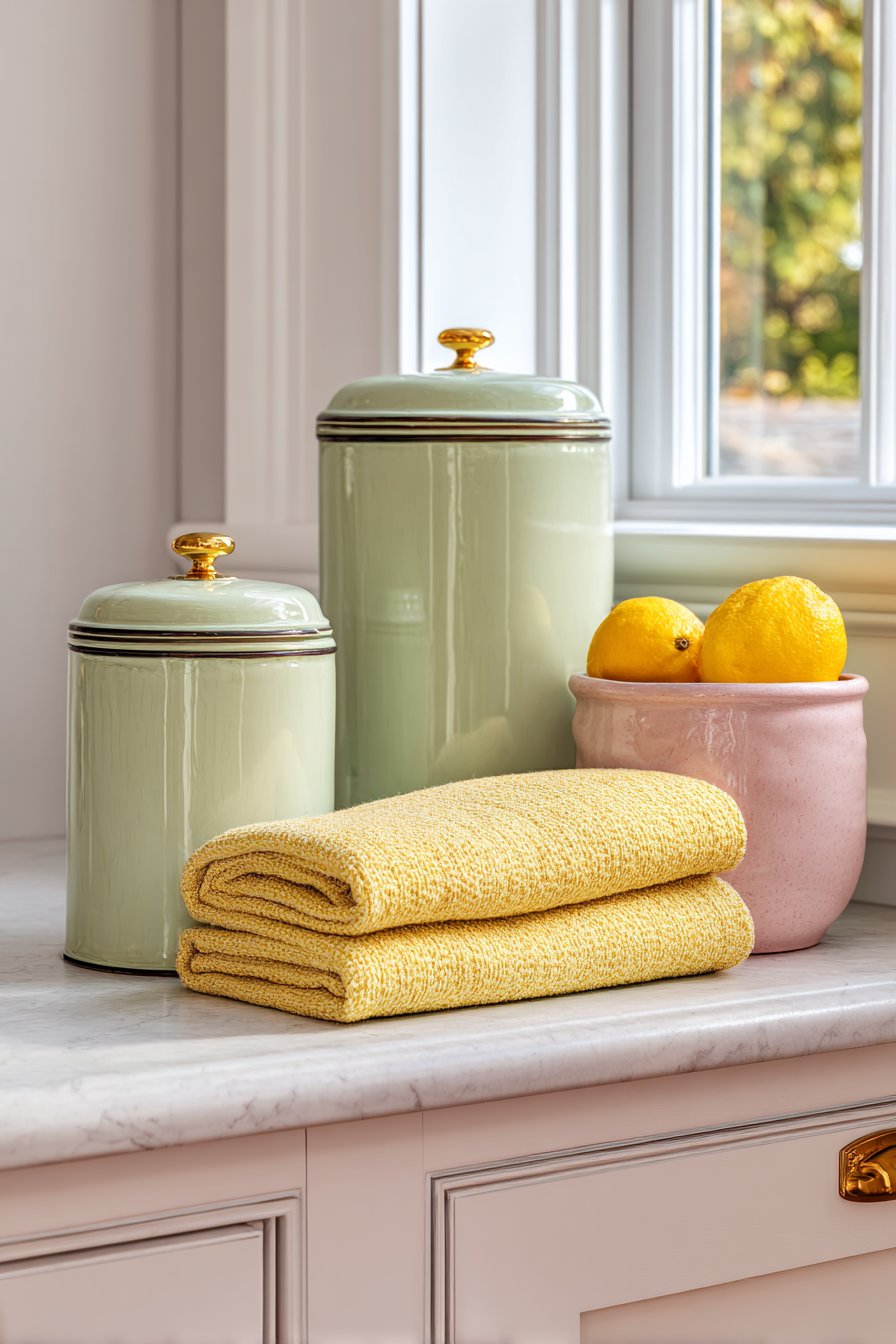
Color is the fastest way to signal a seasonal shift. Spring calls for hues that evoke blooming gardens and clear skies. Think soft sage green, warm blush, buttery yellow, and sky blue. These tones replace the deeper, heavier shades of winter with something lighter and more energizing.
You don’t need to repaint your walls to achieve this effect. Swap out accents like dish towels, canisters, and small appliances in updated seasonal colors. A set of sage green canisters or a blush ceramic fruit bowl can shift the whole mood of a neutral kitchen instantly and affordably.
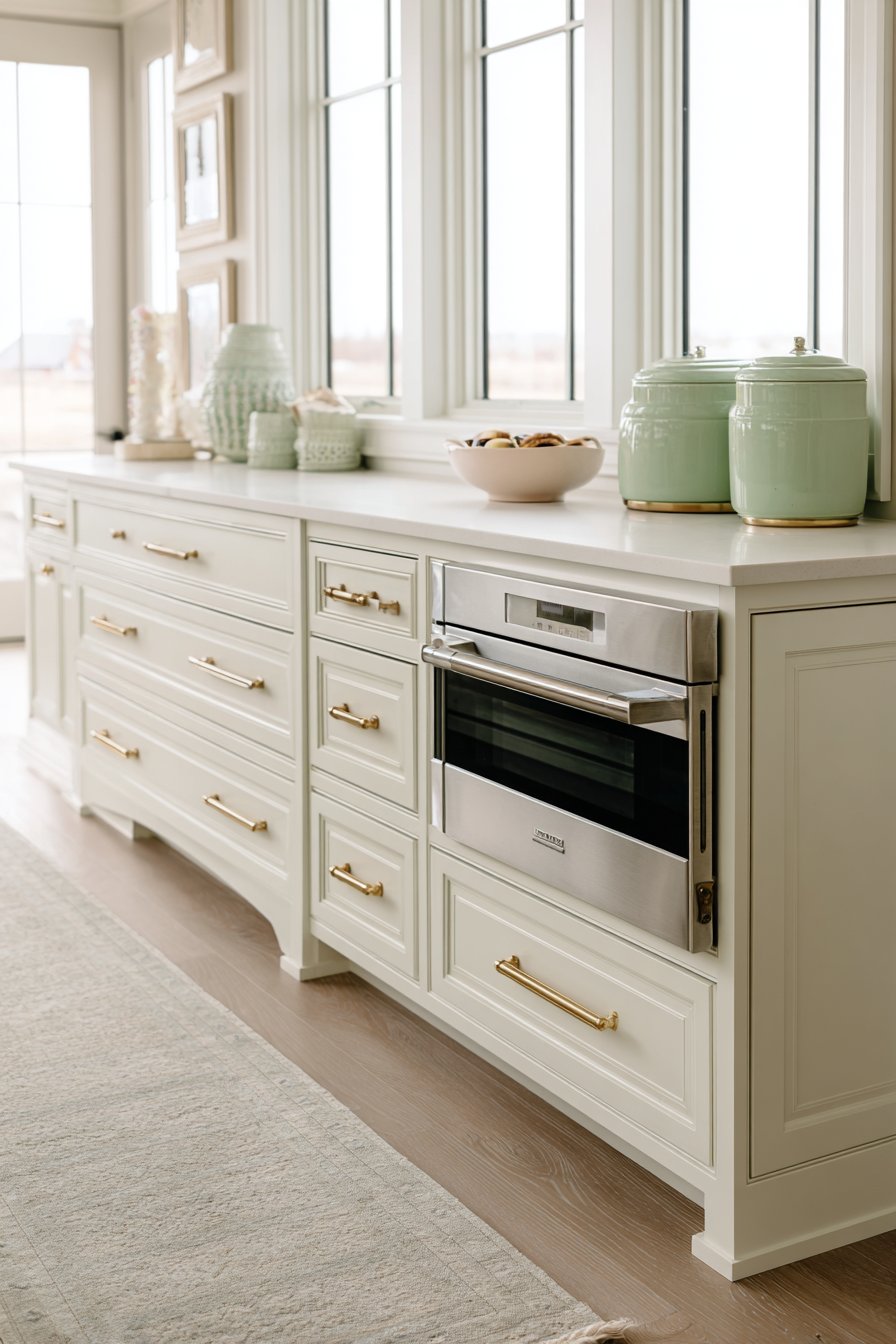
Color layering is key to a cohesive result. Use a dominant spring tone as your anchor — perhaps a sage runner on the counter — then echo it in two or three supporting accents. This repetition creates visual harmony without feeling overdone or themed.
- Swap winter-toned dish towels for ones in soft pastels or botanical prints
- Add a ceramic bowl or tray in sage green, blush, or warm ivory
- Look for small appliances (toasters, kettles) in seasonal colorways
- Use beeswax or soy candles in spring-inspired containers
- Repaint an accent wall or island in a soft, muted spring hue
- Layer colors in threes: one dominant, two supporting tones
2. Bring in Fresh Botanicals and Living Greenery
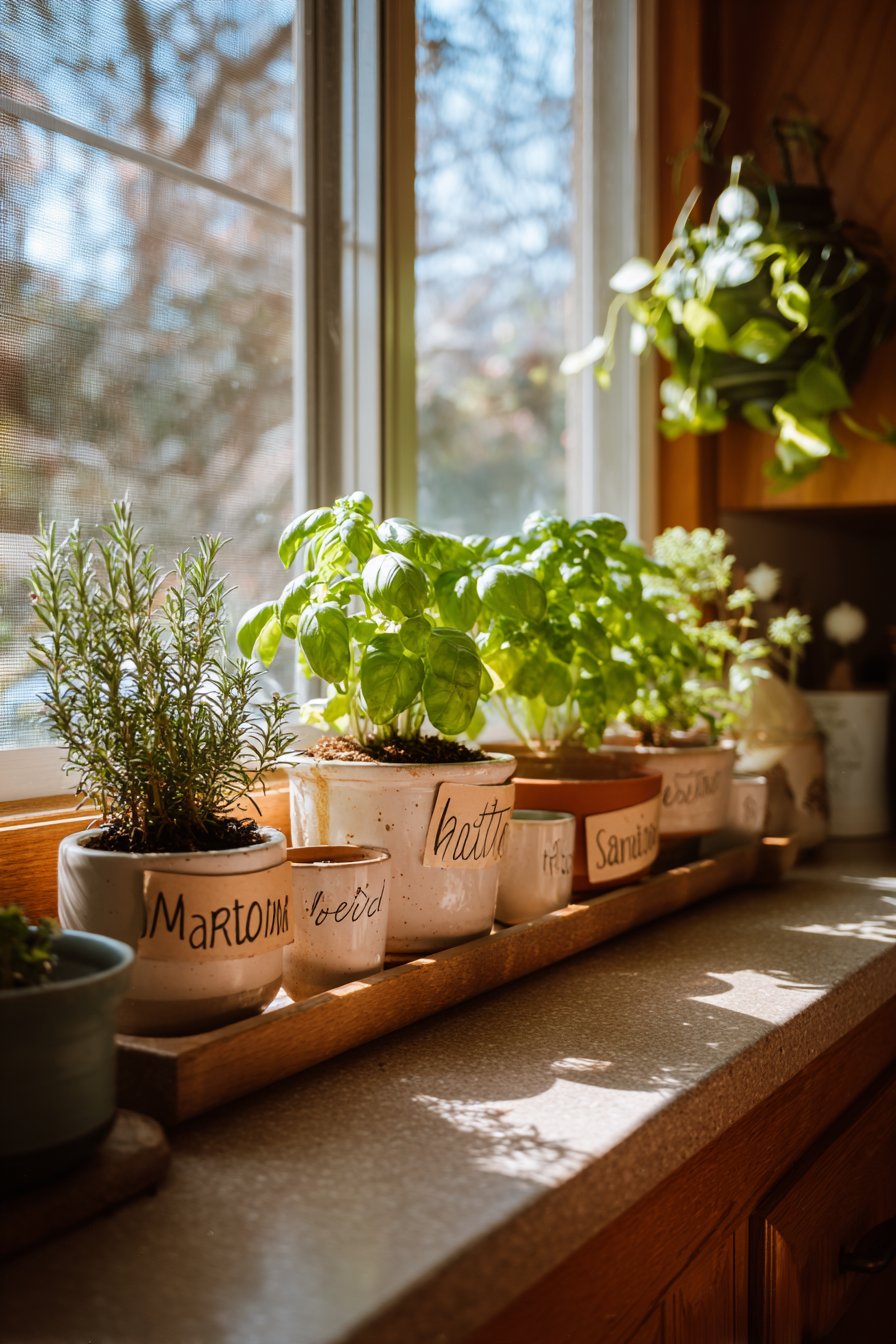
Nothing signals spring more powerfully than living plants. Fresh botanicals are a design element that also improves air quality and brings natural texture into the kitchen. Herbs like rosemary, basil, and mint are particularly fitting — they’re both decorative and functional additions to a culinary space.
Place a small cluster of herb pots along a sunny windowsill. Use matching terra cotta pots or simple white ceramic containers for a cohesive, styled look. Label them with hand-lettered tags to add a charming artisan touch that also makes them practical to use while cooking.
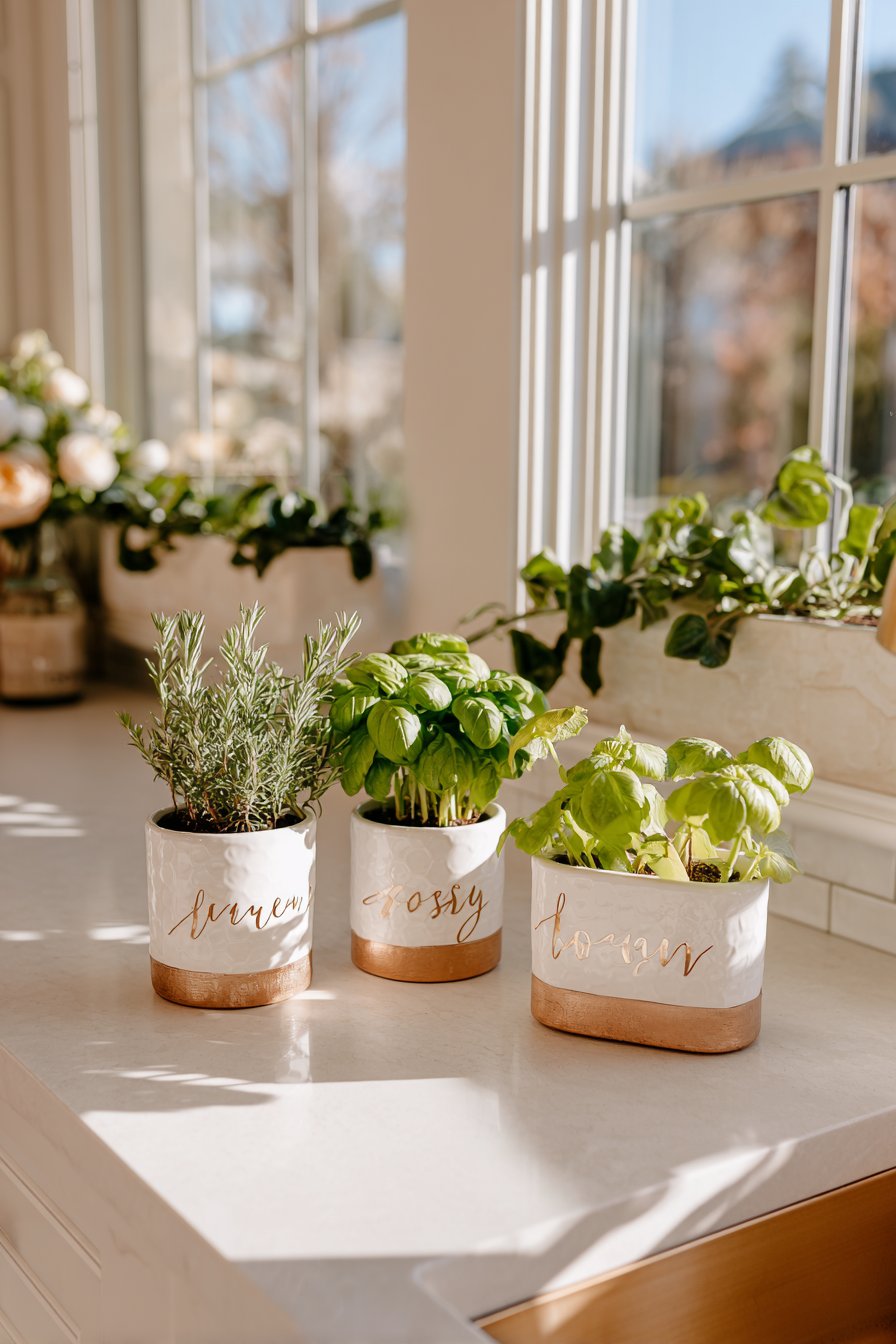
Beyond herbs, consider cut flowers in a simple vase on the counter or table. Seasonal blooms like tulips, peonies, ranunculus, and daffodils create an instant focal point. Change them weekly to keep the arrangement fresh and the kitchen feeling alive throughout the season.
- Group three to five herb pots on a windowsill for a mini indoor garden
- Use matching containers — terra cotta, ceramic, or concrete — for a cohesive display
- Place a single-stem flower in a bud vase near the sink for daily delight
- Try eucalyptus or dried botanicals for lower-maintenance greenery
- Hang a small wall planter with trailing ivy or pothos near a window
- Replace faux plants with real ones to add authentic life to the space
3. Update Your Kitchen Textiles for a Seasonal Feel
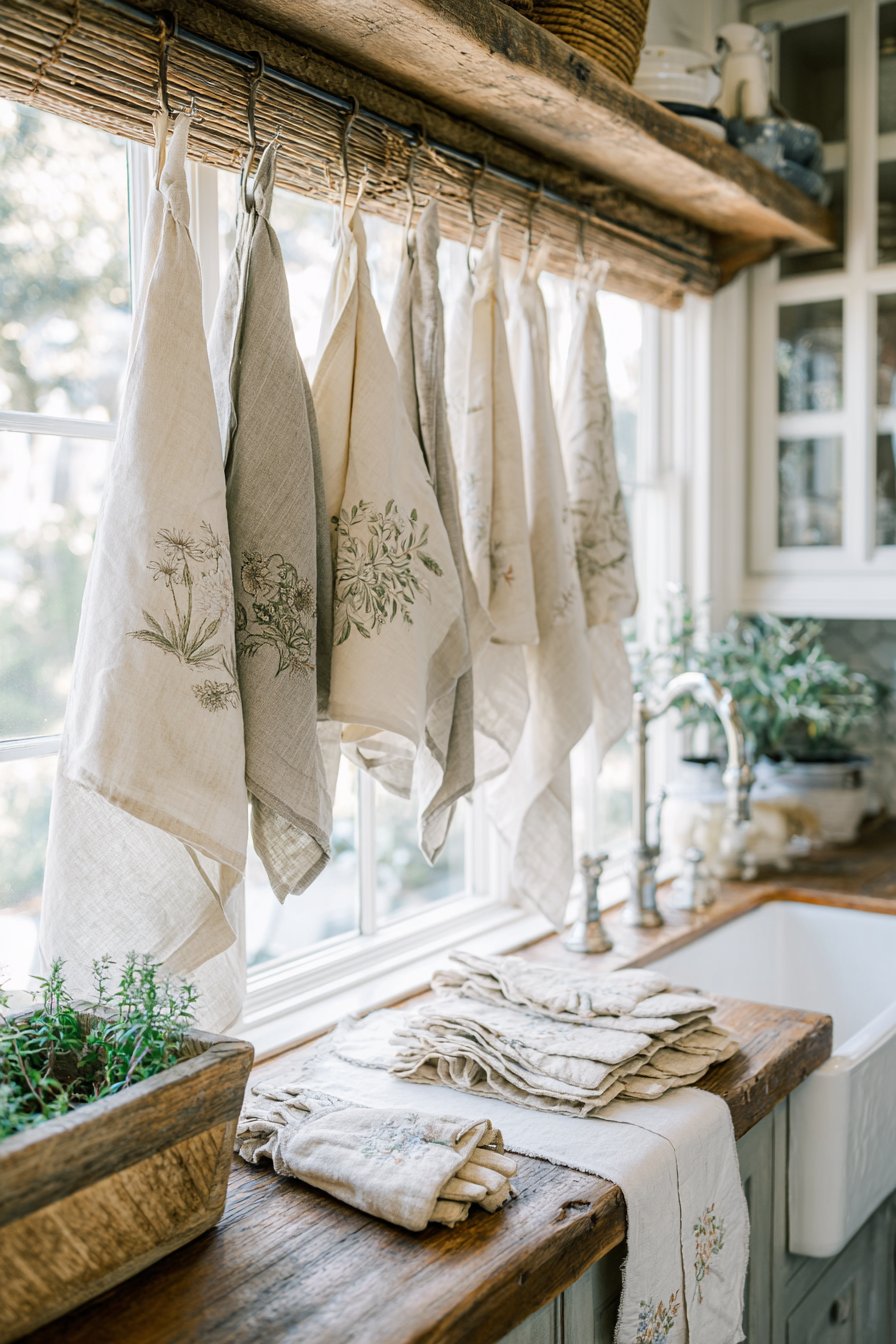
Textiles have a remarkable ability to transform a room’s atmosphere quickly and affordably. In the kitchen, focus on dish towels, oven mitts, table runners, and window treatments. Swapping these out for spring-specific versions is one of the highest-impact, lowest-effort changes you can make.
Look for fabrics in linen, cotton, and muslin with botanical prints, gingham patterns, or embroidered details. These natural materials feel light and breathe well, which suits the warmer spring air. They also photograph beautifully, making your kitchen feel curated and intentional.
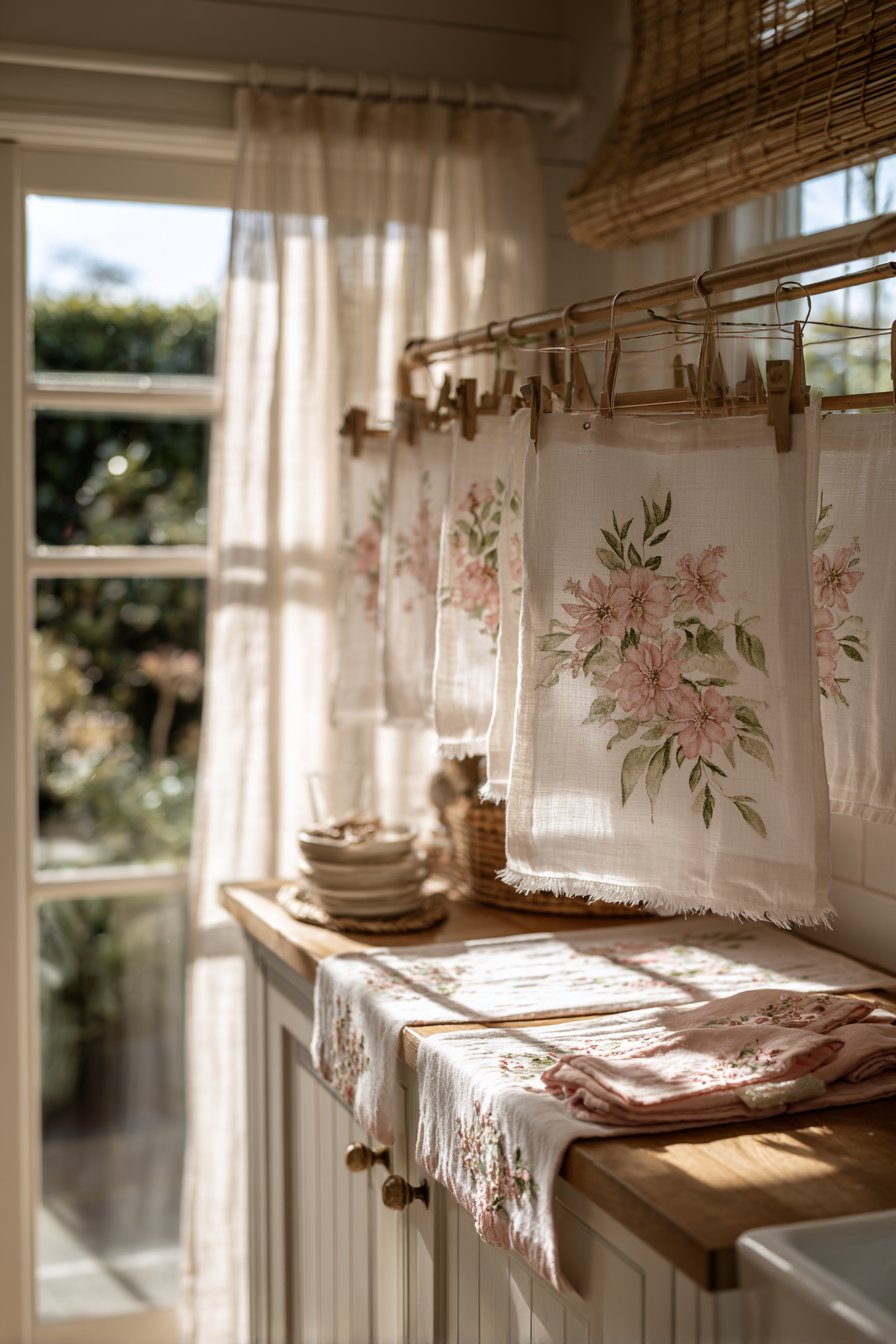
Don’t overlook window treatments. Replacing heavy winter drapes with sheer linen panels allows natural light to flood the space. Morning light filtered through light fabric creates a soft, luminous quality that instantly brightens the entire room and makes it feel more open.
- Replace heavy curtains with sheer or lightweight linen window panels
- Swap in dish towels featuring botanical, floral, or striped spring prints
- Add a linen or cotton table runner to the kitchen island or dining table
- Choose oven mitts and pot holders in coordinating spring colors
- Layer a small rug in a natural weave near the sink or prep area
- Look for textiles with handcrafted details like embroidery or block prints
4. Style Open Shelves with a Spring-Inspired Vignette
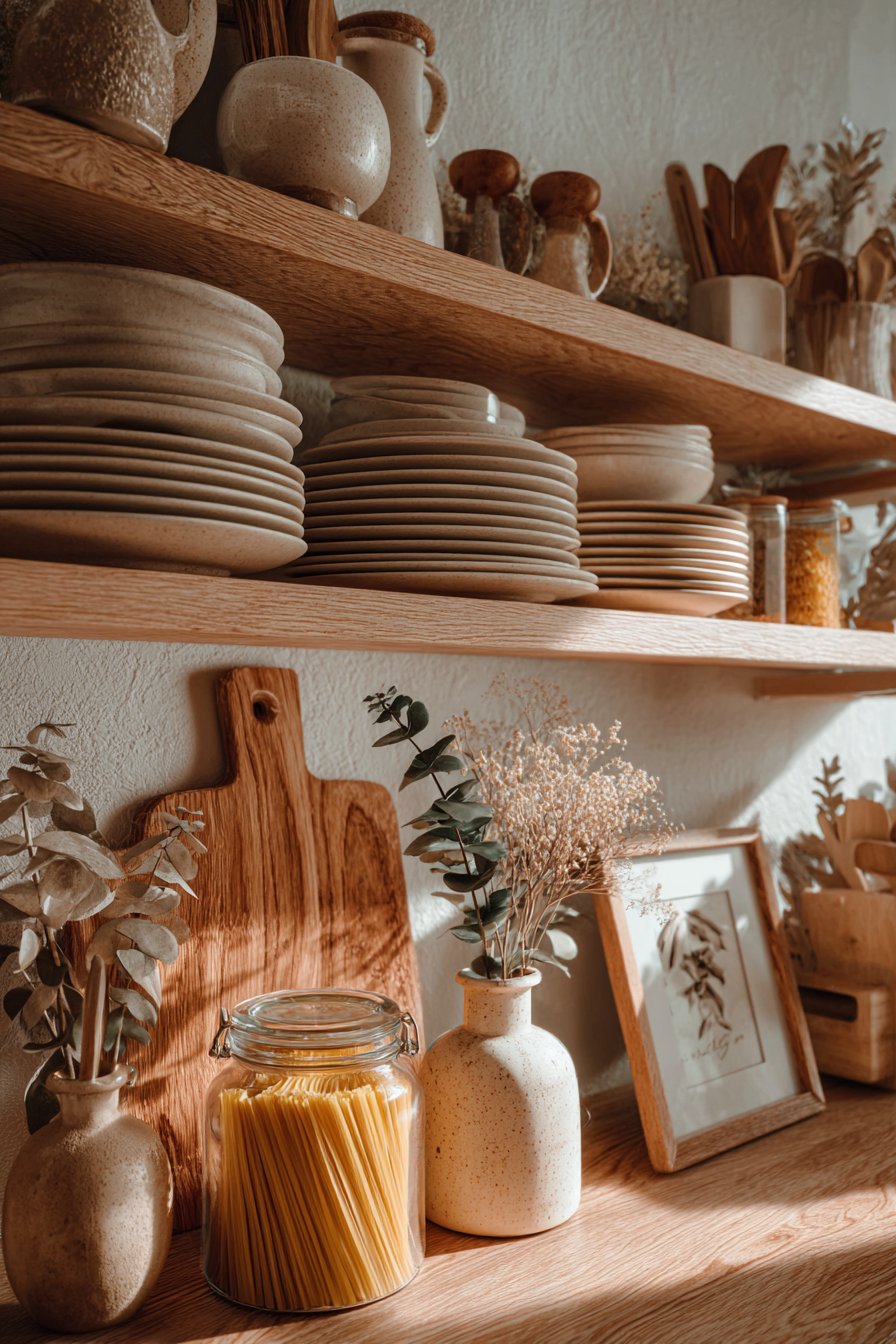
Open shelves are one of the most expressive surfaces in a kitchen. Shelf vignettes allow you to curate a seasonal display that tells a visual story. For spring, the goal is lightness — fewer items, more breathing room, and a palette anchored by natural tones and soft accents.
Start by editing your shelves. Remove anything that feels heavy, dark, or out of season. Then rebuild the display using a mix of textures and heights: a stack of light-colored plates, a wooden cutting board leaning against the wall, a small ceramic vase with a sprig of greenery, and a glass jar of dried pasta or grains.
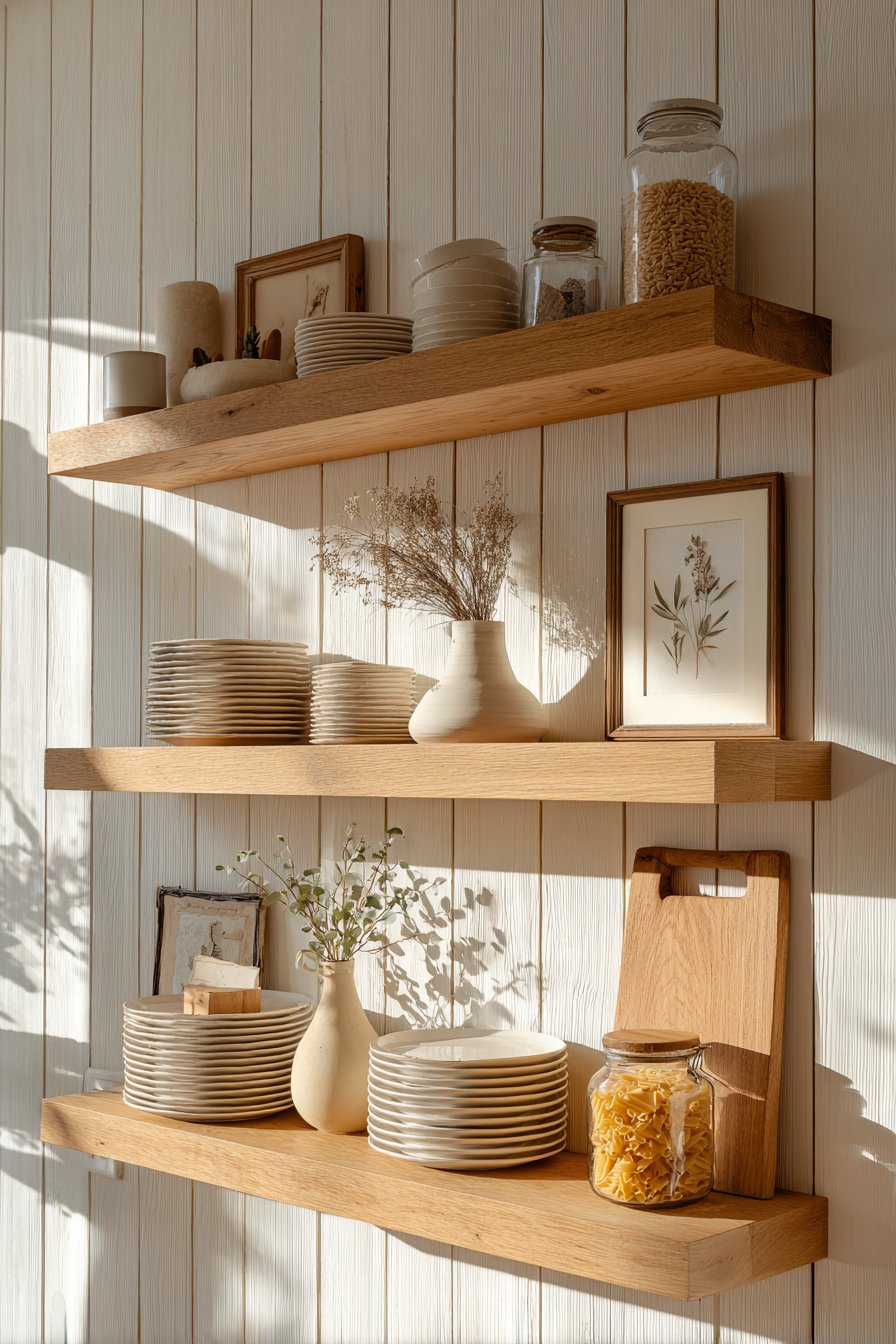
Odd-number groupings are a foundational design principle for shelf styling. Arrange items in groups of three or five. Vary heights within each group. Leave generous negative space between clusters. This approach feels intentional and breathable rather than cluttered or overstuffed.
- Edit shelves down to only what’s beautiful and useful for the season
- Group items in threes or fives with varied heights for visual interest
- Include one botanical element in each shelf vignette
- Use a consistent neutral base (white, cream, natural wood) to unify the display
- Add a small framed print or hand-lettered quote for a personal touch
- Leave at least 30% of shelf space empty for a light, airy aesthetic
5. Swap Out Hardware and Small Fixtures for a Fresh Look
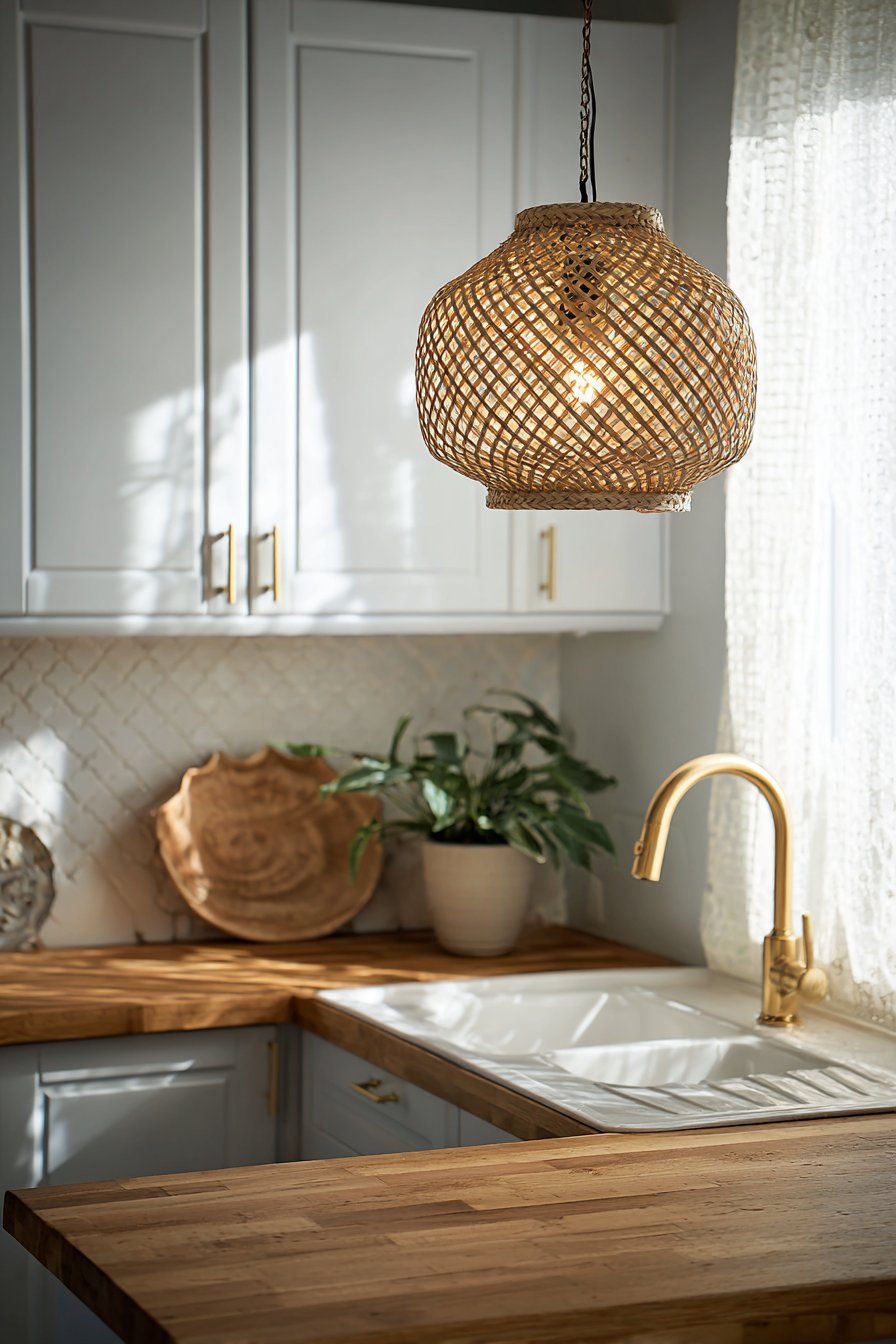
Cabinet hardware is a small detail with outsized impact. Swapping out knobs and pulls is a weekend project that can make a kitchen feel completely refreshed. For spring, look for hardware in brushed brass, matte gold, or ceramic finishes with simple, organic shapes.
Ceramic knobs in soft white, sage, or blush are particularly suited to a spring aesthetic. They add a handmade, artisan quality that feels warm and inviting. Many are budget-friendly options available online or at antique markets and estate sales.
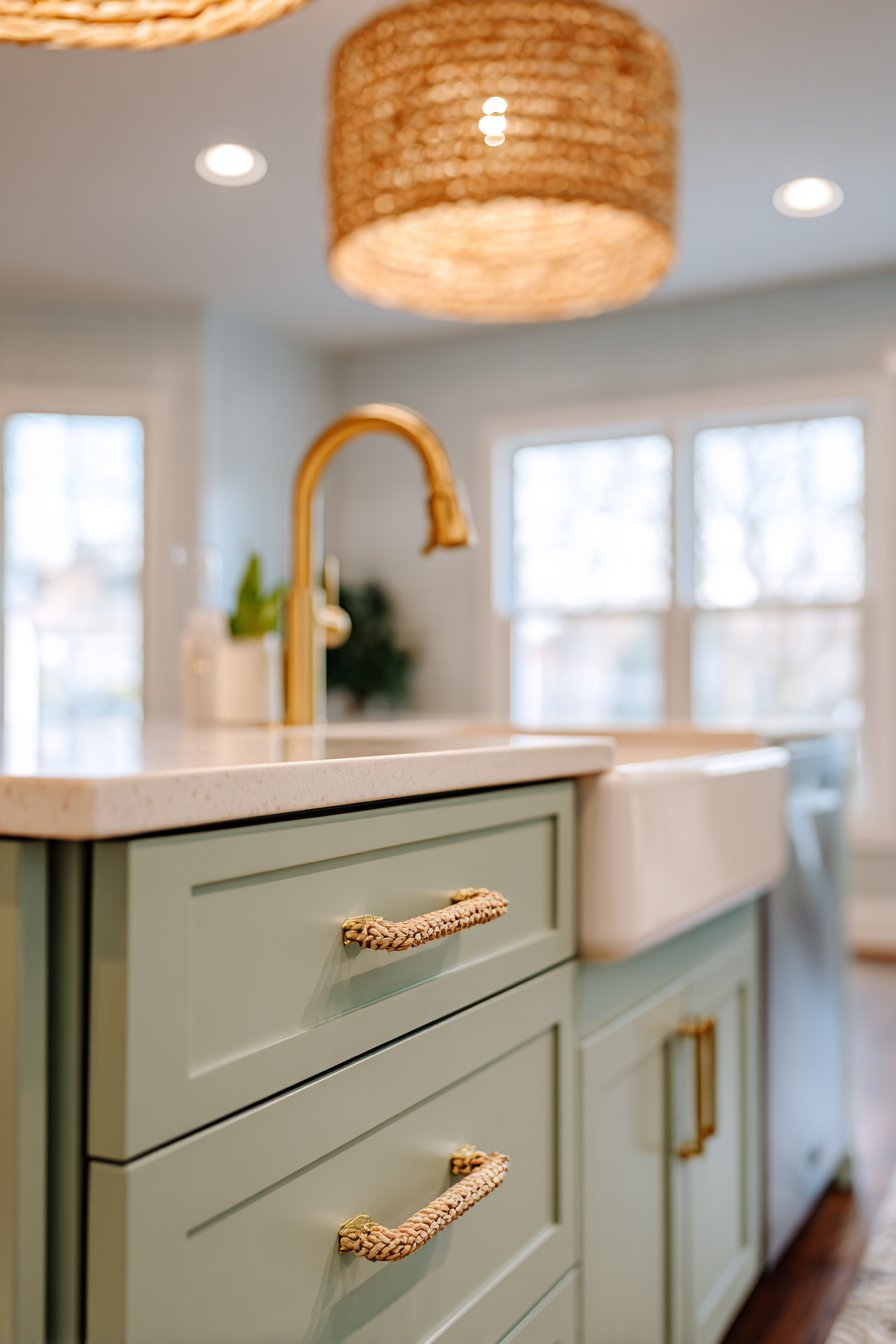
Beyond hardware, consider small fixture swaps like a new faucet in a warmer finish or a pendant light in a rattan or ceramic shade. These upgrades require slightly more investment but deliver significant design returns. A rattan pendant over the kitchen island instantly evokes natural, seasonal warmth.
- Replace metal knobs with ceramic ones in seasonal tones like sage or cream
- Try brushed brass or matte gold for a warm, fresh finish on pulls
- Add a rattan or woven pendant light over the island or table
- Swap a chrome faucet for a matte black or brushed gold version
- Replace a dated light fixture with a simple, organic-shaped pendant
- Consider clip-on shades for existing fixtures to update their look affordably
6. Curate a Seasonal Countertop Display
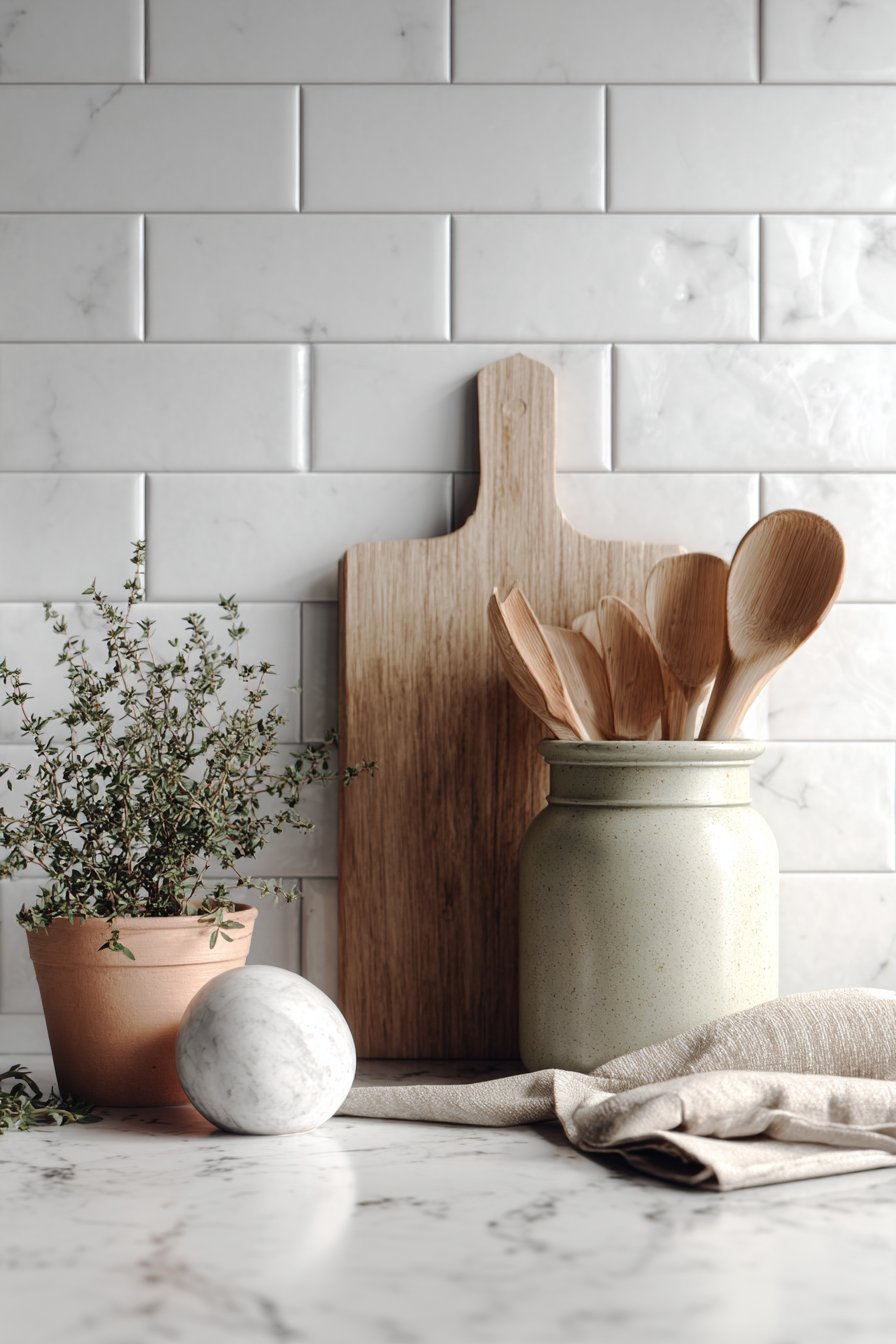
Countertops are prime real estate in kitchen design. They’re highly visible and frequently photographed. A well-styled countertop communicates a clear design intention and adds warmth to what can otherwise feel like a purely functional surface.
For spring, keep the countertop display minimal and purposeful. Choose three to five items that serve aesthetic and practical roles simultaneously. A wooden cutting board propped upright, a ceramic utensil holder in a seasonal color, a small potted herb, and a marble salt cellar together create a composed, inviting tableau.
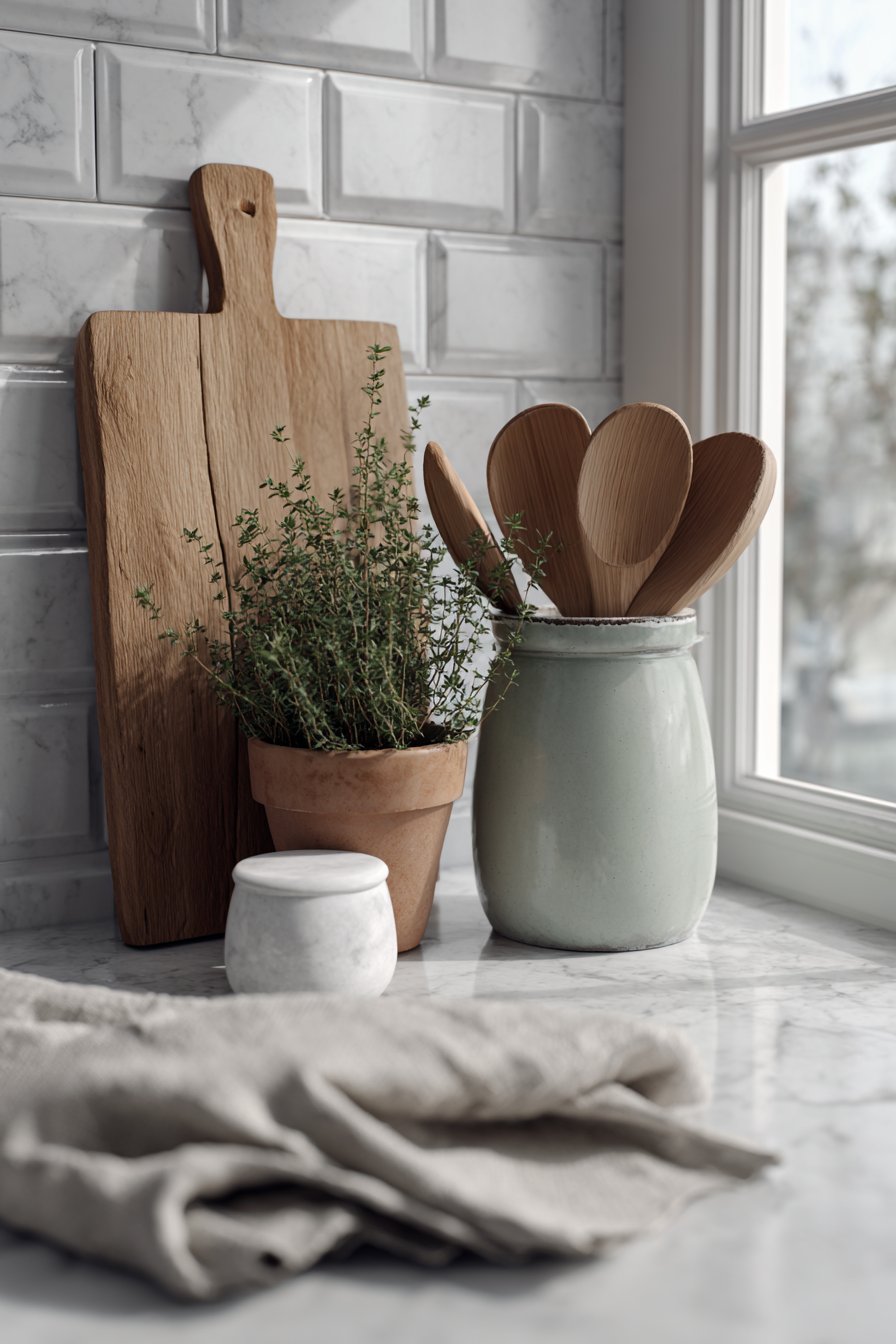
Resist the urge to overcrowd the counter. Every object should earn its place through either function or beauty — ideally both. Clear away small appliances you don’t use daily to free up visual space. The result is a counter that feels intentional rather than cluttered.
- Limit countertop displays to three to five purposeful, beautiful objects
- Lean a wooden cutting board against the backsplash as a display piece
- Add a small ceramic or earthenware utensil crock in a spring tone
- Keep appliances stored away unless used every single day
- Place a single potted herb near the prep area for function and beauty
- Use a tray to corral items and create a defined display zone
7. Layer Natural Materials for Warmth and Texture
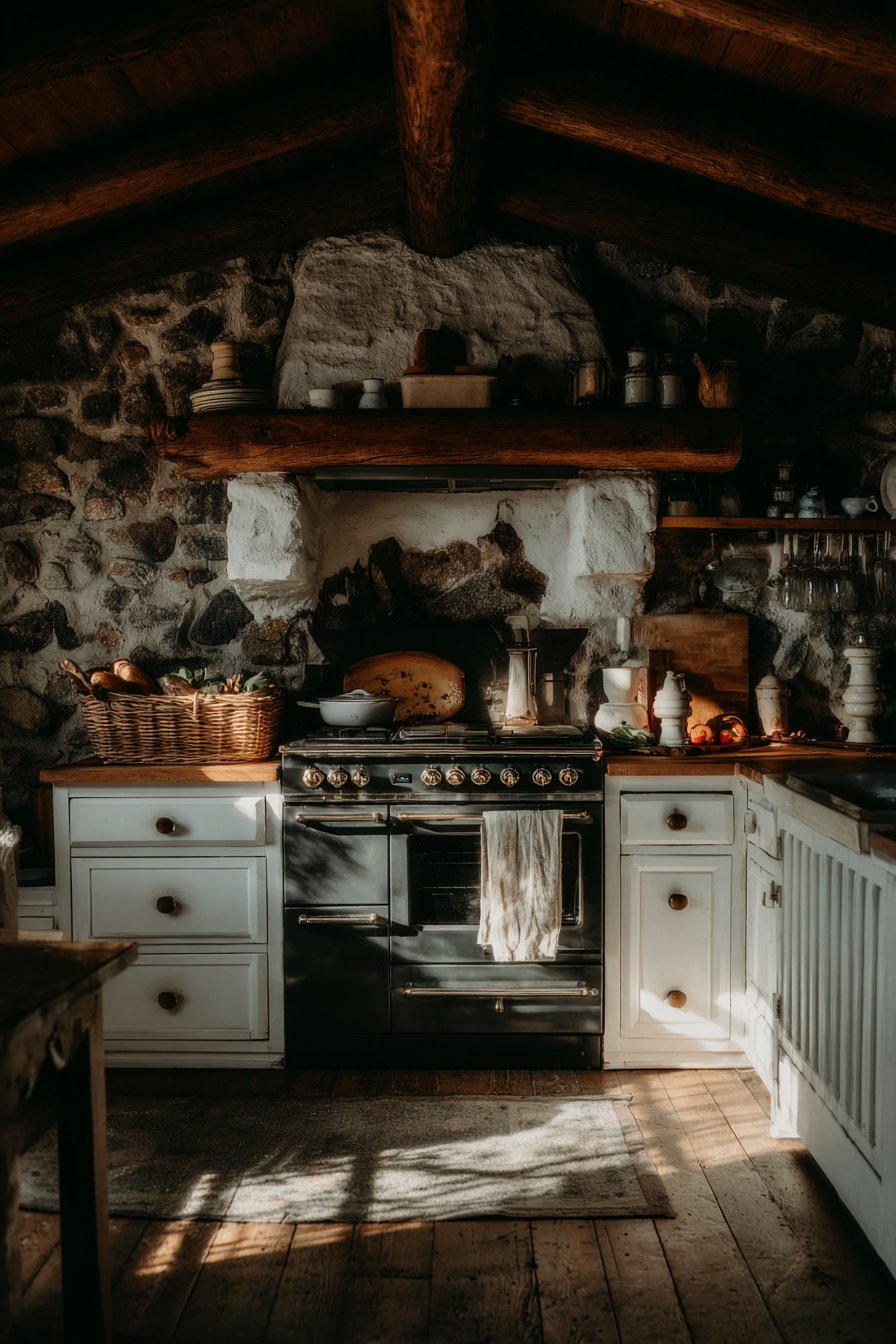
Spring design is deeply rooted in natural materials. Wood, stone, linen, rattan, and ceramic all contribute to a palette that feels grounded and organic. In the kitchen, these materials work together to create a space that feels warm without being heavy.
Introduce a wooden bread board or charcuterie board as a countertop display piece. Add a stone or marble trivet near the stove. Use a woven basket for storing produce. These small material additions accumulate into a layered, textured aesthetic that reads as both stylish and relaxed.
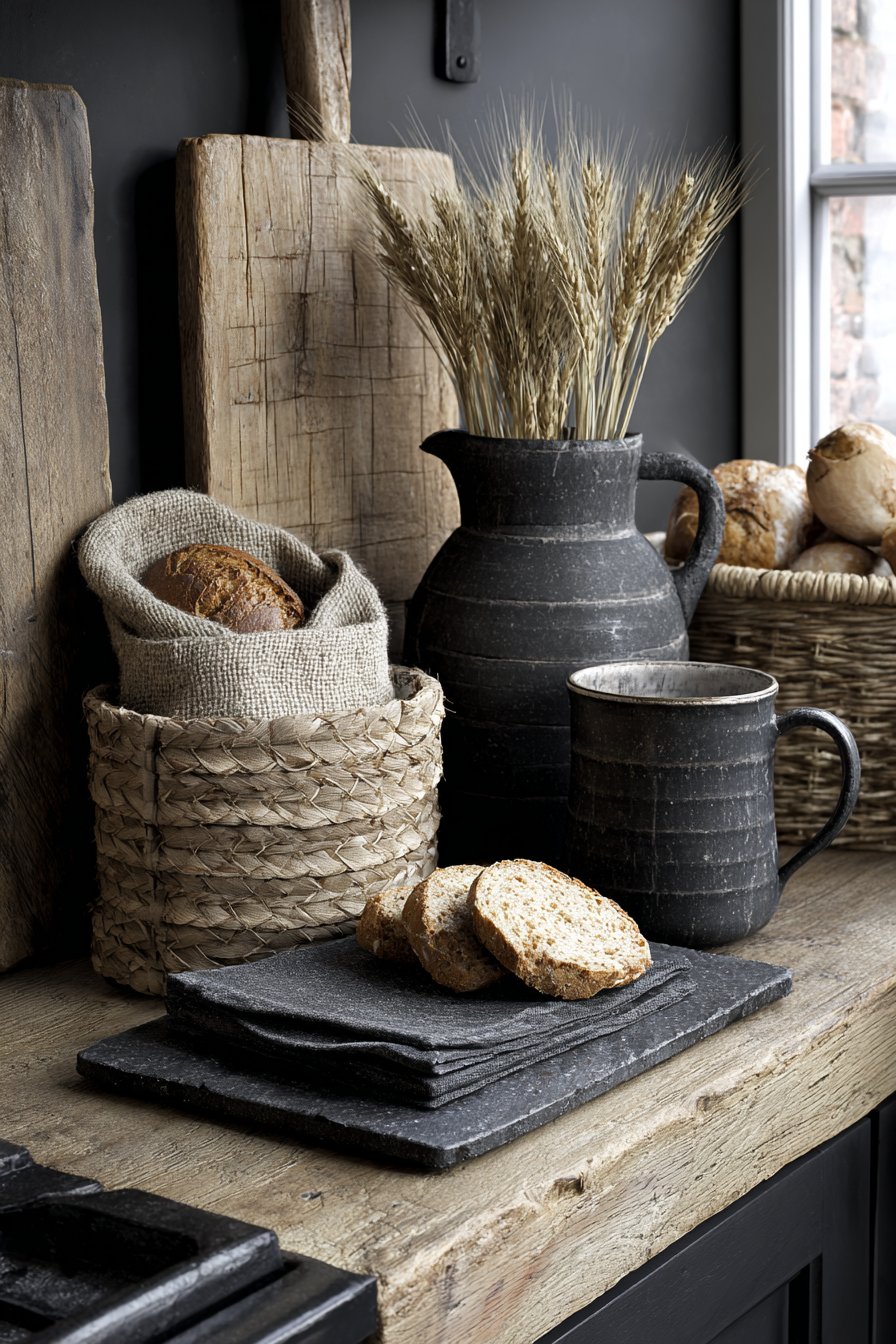
Material contrast is important for visual interest. Pair smooth ceramic with rough linen. Combine polished stone with raw wood grain. This interplay of textures keeps the eye moving and makes the space feel dynamic rather than flat. Spring decor should feel alive, and texture is what delivers that sensory quality.
- Add a wooden bread board or butcher block as a decorative display piece
- Use a woven rattan or seagrass basket for produce storage on the counter
- Introduce a stone, slate, or marble trivet near the cooktop
- Mix smooth ceramics with rough-textured linen or jute for contrast
- Use natural beeswax wraps or linen bread bags as functional decor
- Incorporate a hand-thrown ceramic mug or pitcher as a display vessel
8. Incorporate Spring-Themed Art and Prints
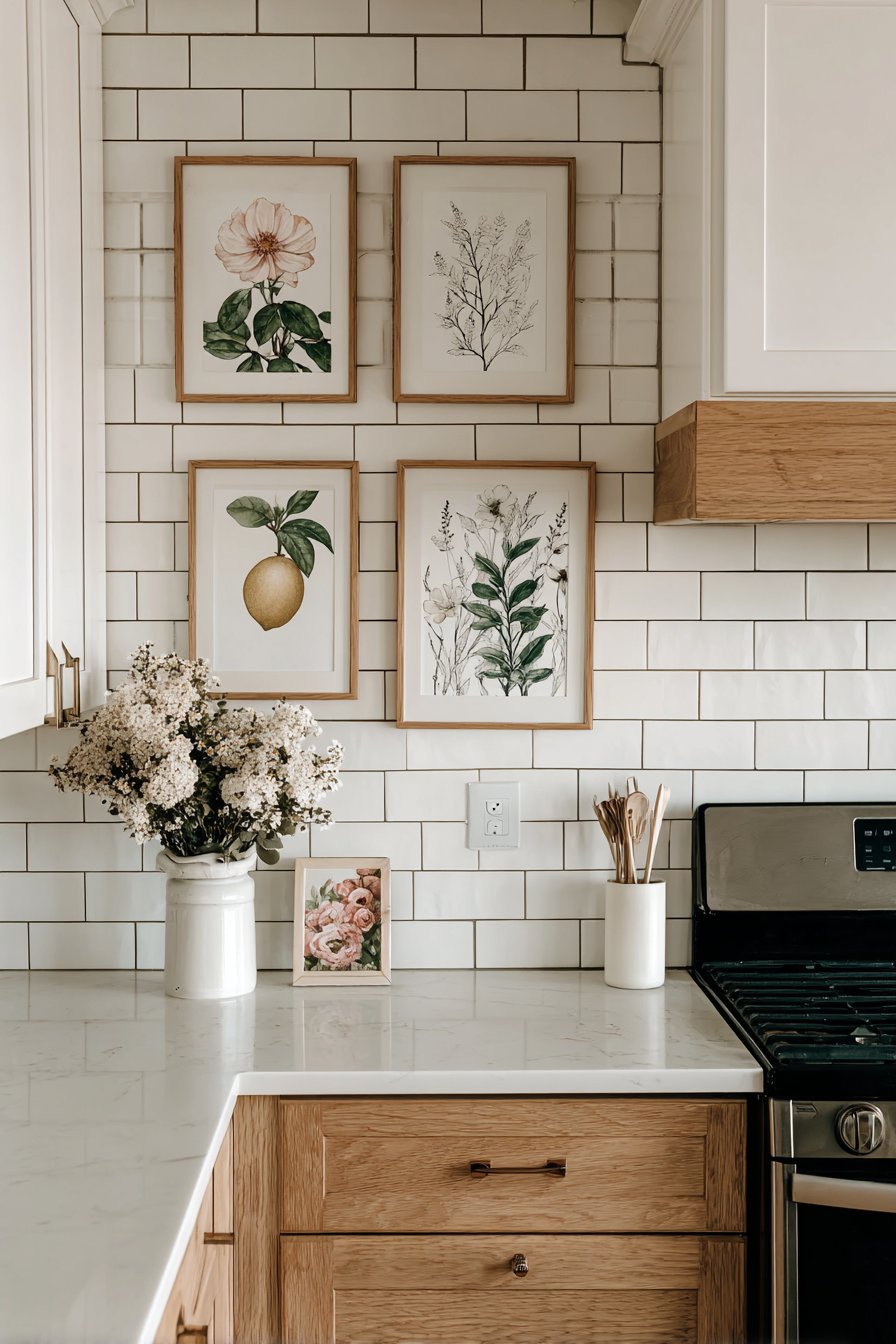
Wall art is often overlooked in kitchens, but it’s a powerful design lever. A botanical print, watercolor of spring produce, or a hand-lettered quote in a simple frame can completely change the feeling of a kitchen wall. Art makes the space feel considered and personal.
For spring, look for prints featuring florals, herbs, citrus, or garden scenes. Watercolor-style illustrations have a soft, organic quality that suits the season beautifully. Black-and-white botanical line drawings are another option — timeless, elegant, and surprisingly versatile.
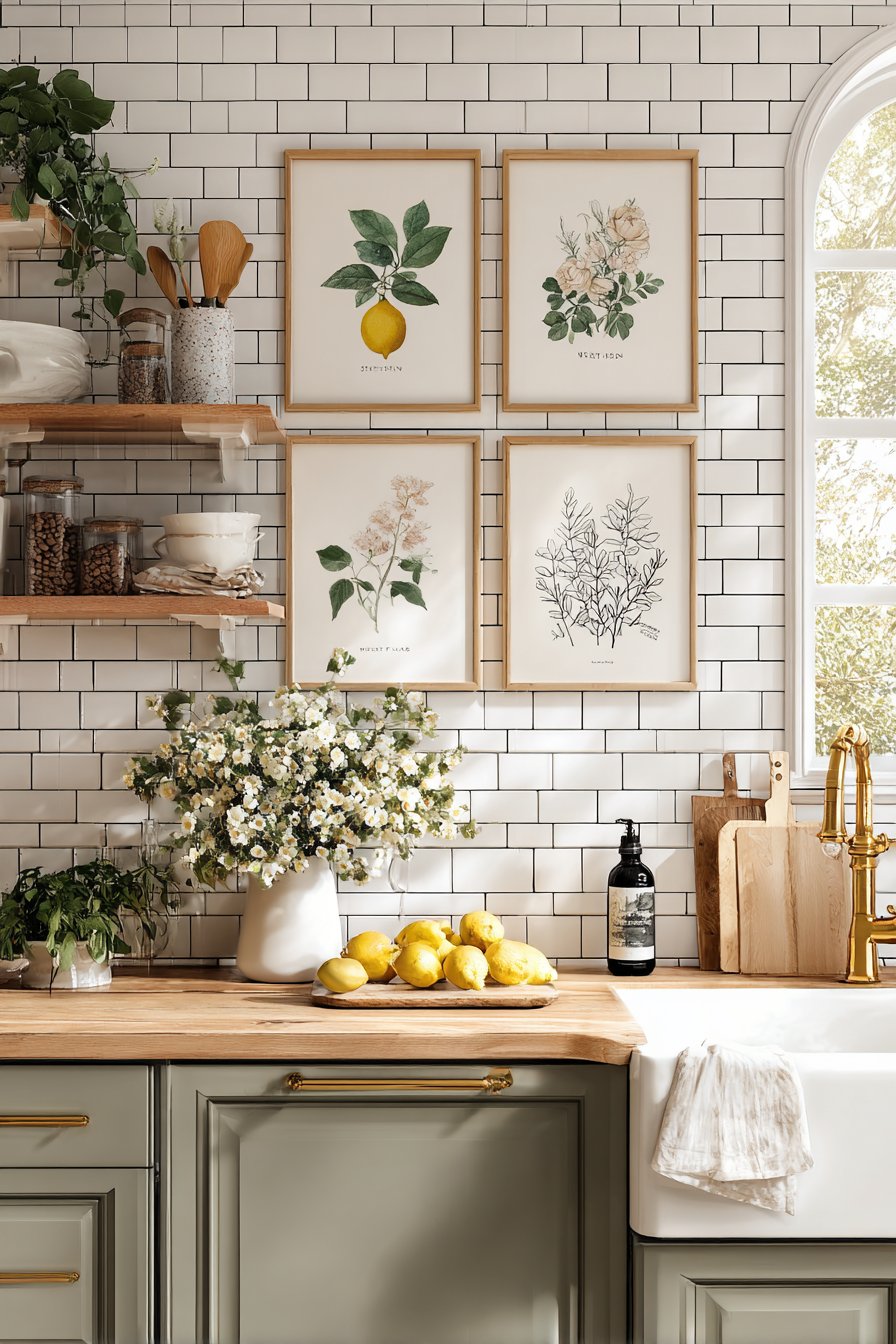
You don’t need to spend a lot on art. Printable digital artwork is widely available online at low cost. Print at a local copy shop, frame in an inexpensive frame, and you have custom wall art for under $20. Swap it out each season for a kitchen that always feels current and styled.
- Choose botanical, floral, or produce-themed prints for spring kitchens
- Use simple frames in natural wood, white, or black for a clean look
- Download affordable printable art in spring themes from online marketplaces
- Create a small gallery wall of three coordinating prints near the dining area
- Try a chalkboard or memo board with a seasonal quote or illustration
- Hang a single large botanical print as a statement piece above the sink
9. Optimize Natural Light to Brighten the Space
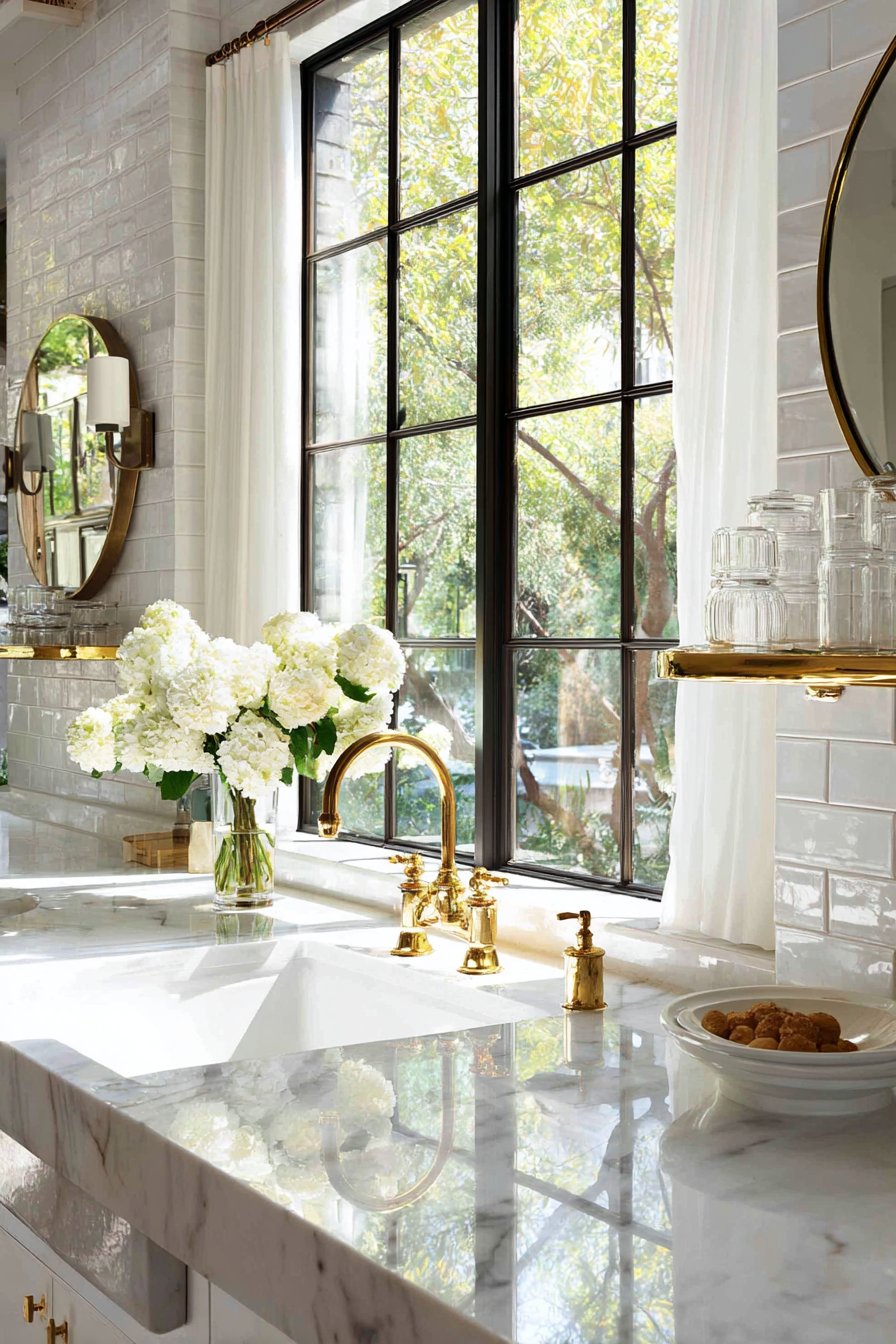
Natural light is the single most transformative element in spring kitchen design. As the season shifts, maximizing the light that enters your kitchen should be a top priority. Light makes colors appear truer, spaces feel larger, and moods lift noticeably.
Start by cleaning your windows thoroughly — inside and out. Winter grime reduces light transmission significantly. Then reassess your window treatments. Heavy drapes should give way to sheers, or be removed entirely if privacy allows. Even a small increase in natural light dramatically changes the room’s character.
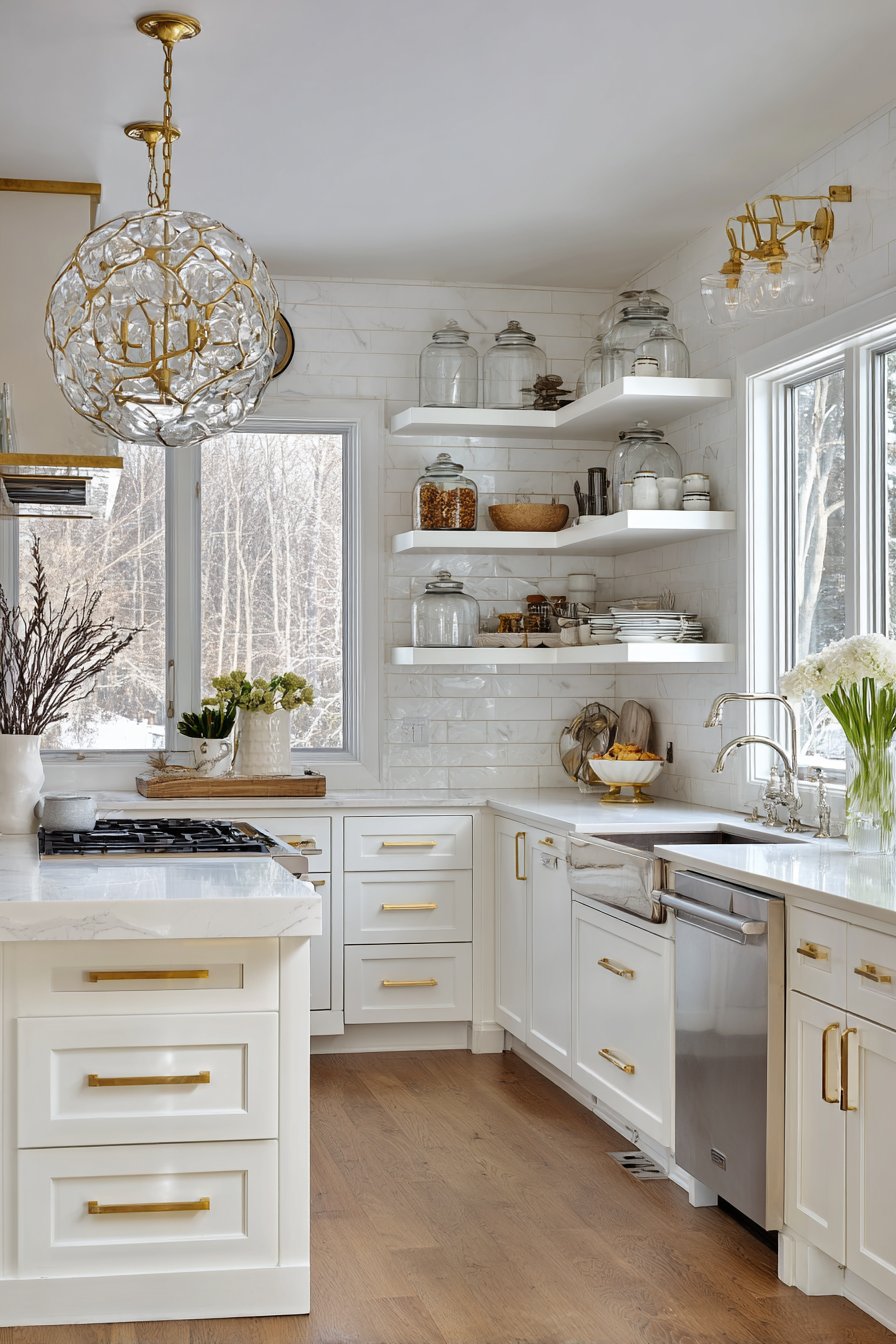
Add reflective surfaces strategically to amplify the light you have. A large mirror on a kitchen wall, glossy subway tile, polished hardware, and glass-fronted cabinet doors all bounce light around the room. The cumulative effect is a space that feels sunlit and expansive even on cloudy spring days.
- Clean windows inside and out before making any other design changes
- Replace heavy curtains with light linen sheers or remove them entirely
- Add a large mirror to a kitchen wall to reflect and amplify light
- Choose glossy or semi-gloss paint finishes for walls to reflect light
- Install under-cabinet lighting to brighten countertop work areas
- Use glass canisters and transparent containers to keep surfaces light and airy
10. Add Scent as an Invisible Design Layer
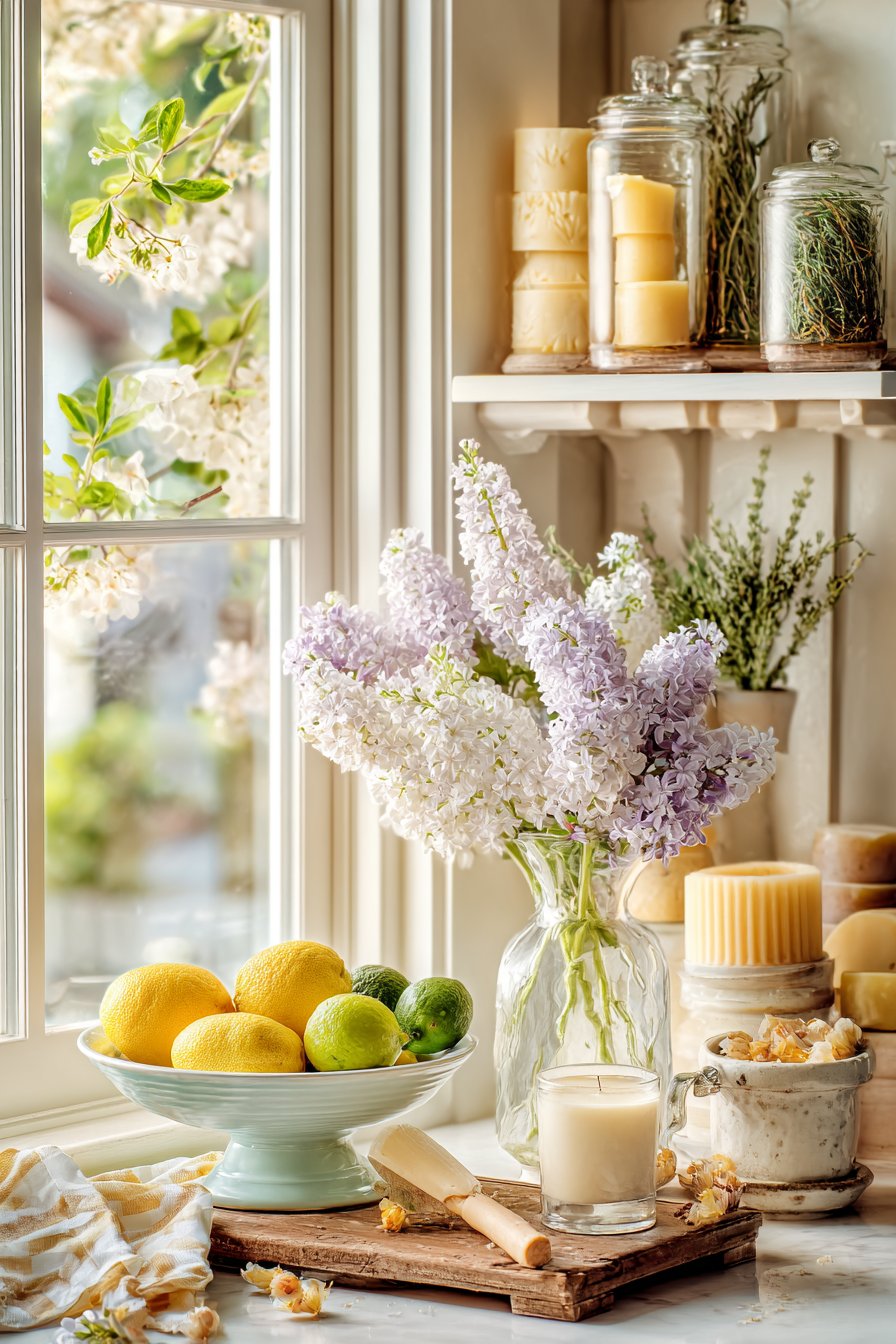
Great design engages all five senses, and scent is one of the most powerfully evocative. Spring has a distinct olfactory identity: fresh florals, green herbs, citrus, and clean air. Incorporating spring-inspired scents into your kitchen completes the seasonal experience in a way that purely visual changes cannot.
Soy or beeswax candles in scents like lemon verbena, fresh basil, white tea, or jasmine are excellent choices. Place them on the countertop or open shelf as part of a styled vignette. They pull double duty as beautiful objects and sensory atmosphere creators when lit.
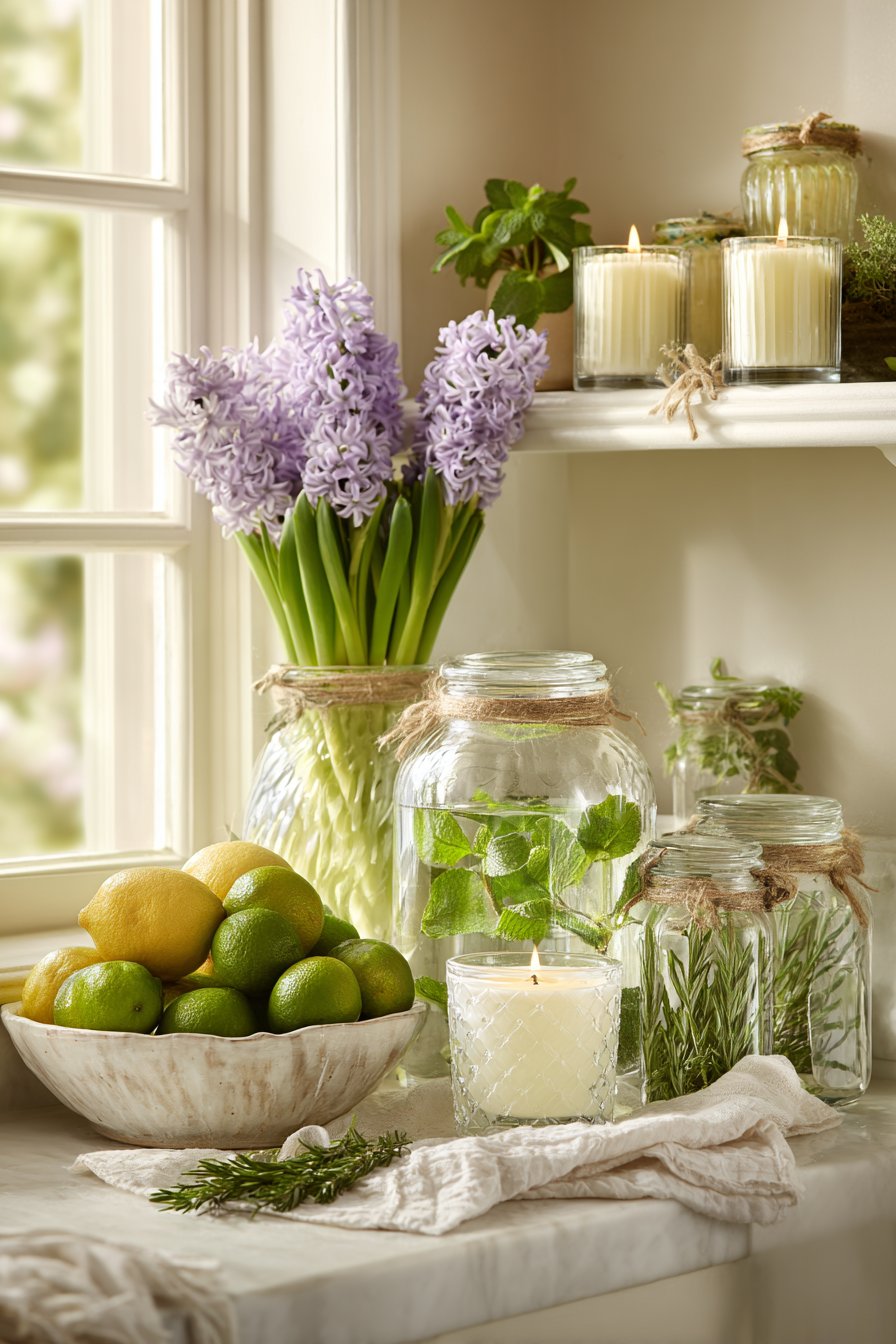
Natural scent sources are even better than candles. A bowl of fresh citrus fruit on the counter, a vase of fragrant blooms like hyacinth or sweet peas, or a pot of simmering herbs on the stove all release authentic botanical fragrance. These also double as stunning visual elements, making them ideal for spring kitchen styling.
- Place soy candles in spring scents like lemon, jasmine, or herb on open shelves
- Use a bowl of fresh lemons, limes, or oranges as both decor and scent
- Choose fragrant spring flowers like hyacinth, sweet peas, or lilac for vases
- Simmer a pot of water with citrus peel and herbs for instant fresh fragrance
- Avoid synthetic air fresheners — natural sources are healthier and more beautiful
- Store fresh herbs in open jars where their natural fragrance can drift through the kitchen
11. Rethink Storage to Support a Lighter Aesthetic
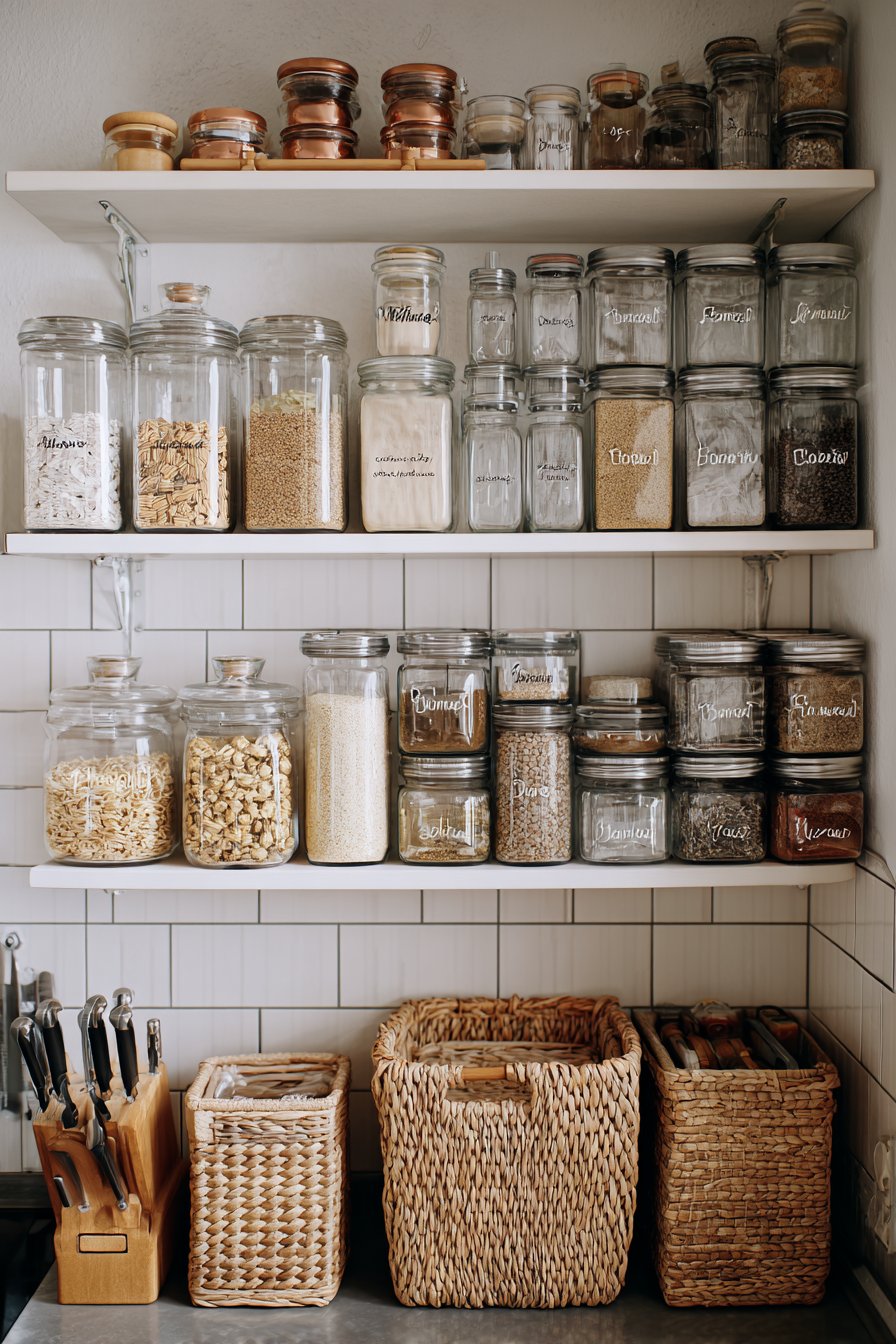
Clutter is the enemy of spring design. The season is defined by freshness and openness, and a kitchen crowded with mismatched storage containers or overflowing countertops undermines the entire aesthetic. A strategic storage refresh helps the space breathe.
Invest in matching storage containers in glass, ceramic, or natural materials. Decant dry goods like flour, sugar, coffee, and grains into uniform jars or canisters. The visual consistency instantly elevates even the most basic kitchen and reduces the sense of visual noise significantly.
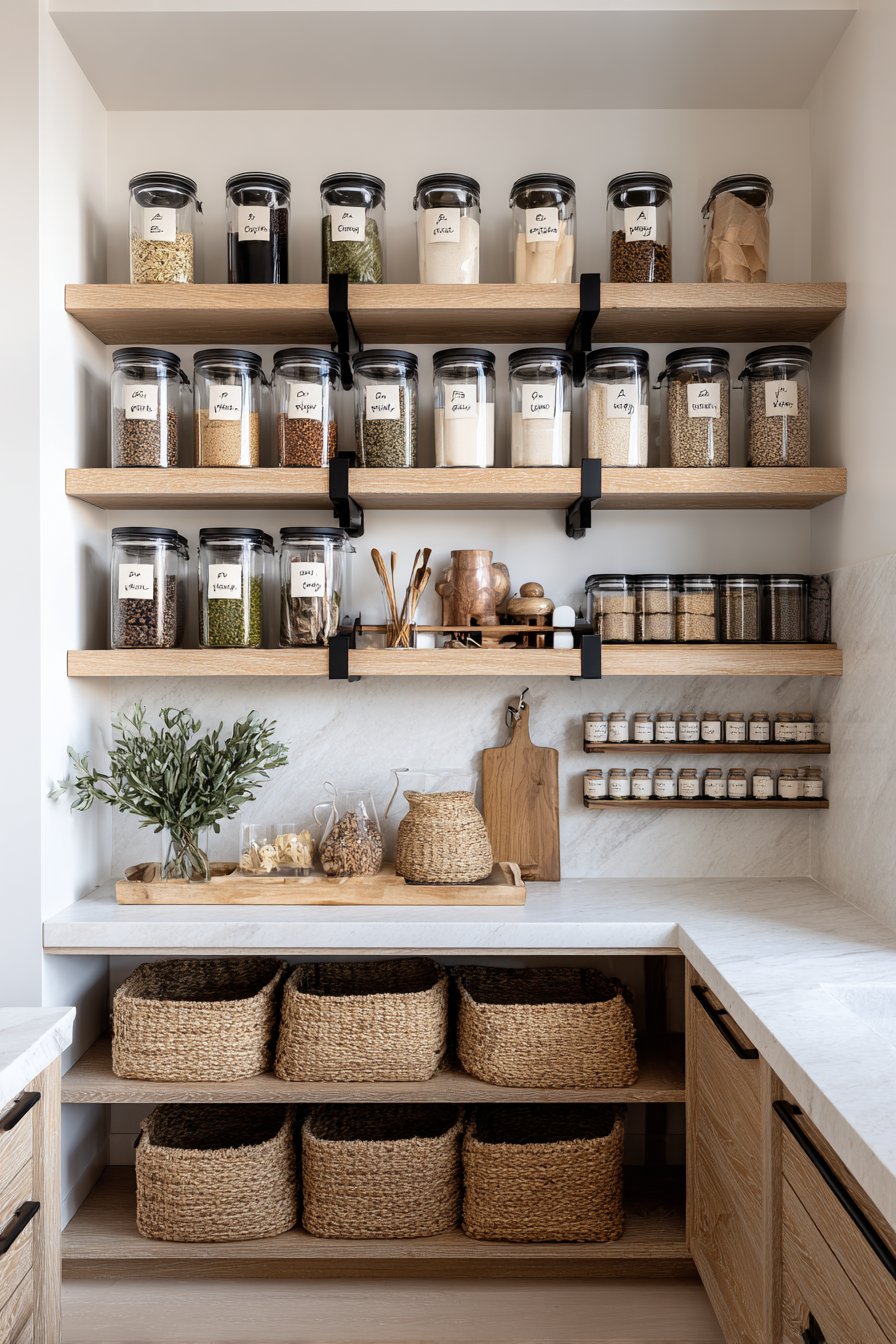
Use vertical space creatively. Magnetic knife strips, hanging pot racks, and wall-mounted spice shelves free up counter and cabinet space while adding design interest. In spring, a wall-mounted herb garden doubles as a storage solution and a living decor feature. Every storage solution should serve both form and function.
- Decant pantry staples into matching glass or ceramic containers
- Use a magnetic knife strip to free up counter space and add visual interest
- Install a wall-mounted spice rack or shelf for organized vertical storage
- Hang a pot rack from the ceiling or wall to clear cabinet space
- Use woven baskets inside cabinets to corral like items neatly
- Store out-of-season items in a pantry or garage to reduce kitchen clutter
12. Create a Welcoming Kitchen Table Setting
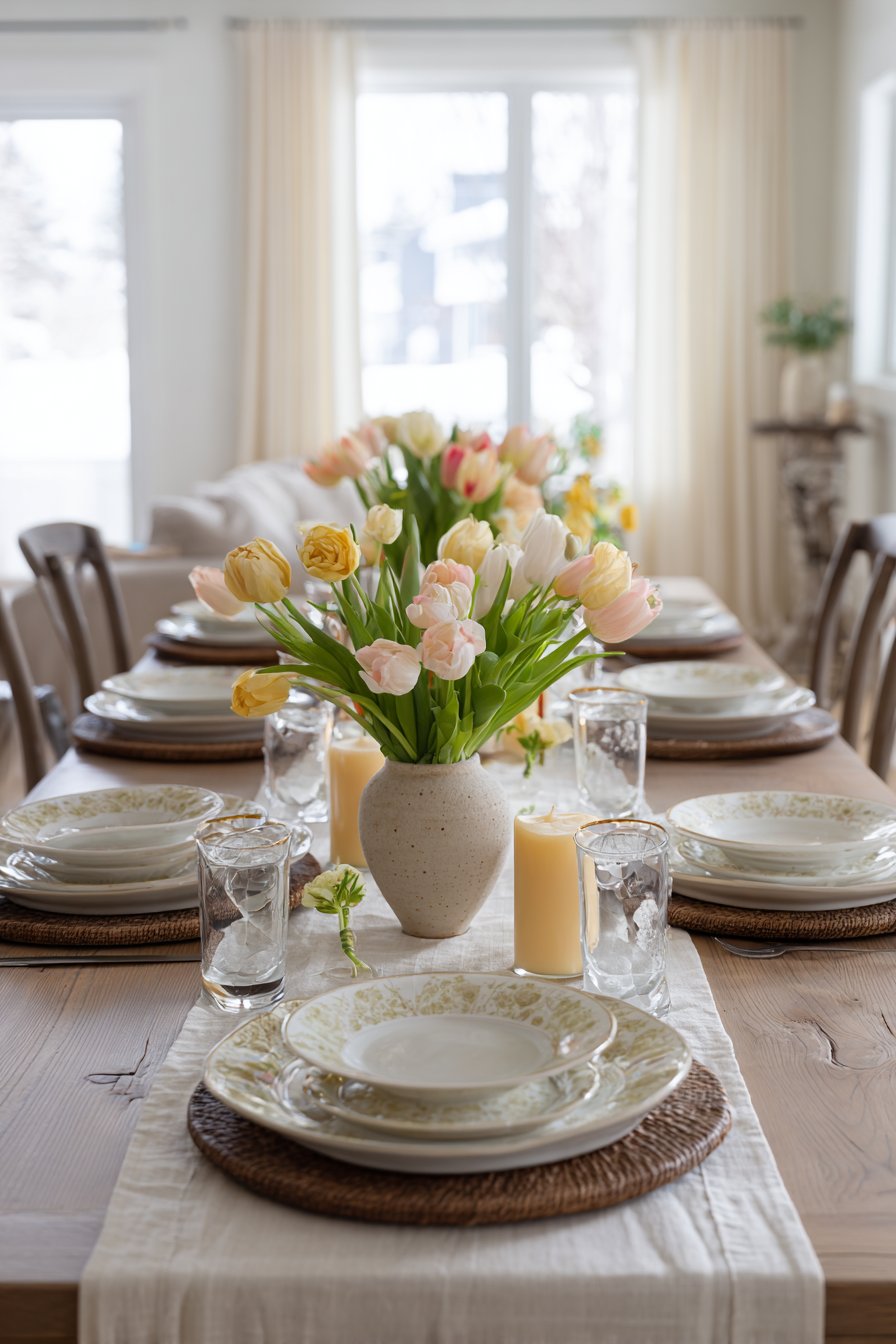
The kitchen table or island is a gathering point for family and guests. How it’s styled communicates warmth, care, and seasonal awareness. For spring, aim for a table setting that’s relaxed and beautiful — not formal, but thoughtfully composed.
A simple linen runner down the center of the table sets the foundation. Add a low centerpiece: a small vase of spring flowers, a cluster of candles in varying heights, or a wooden bowl of fresh fruit. Keep the scale low so the centerpiece doesn’t obstruct conversation or sightlines across the table.
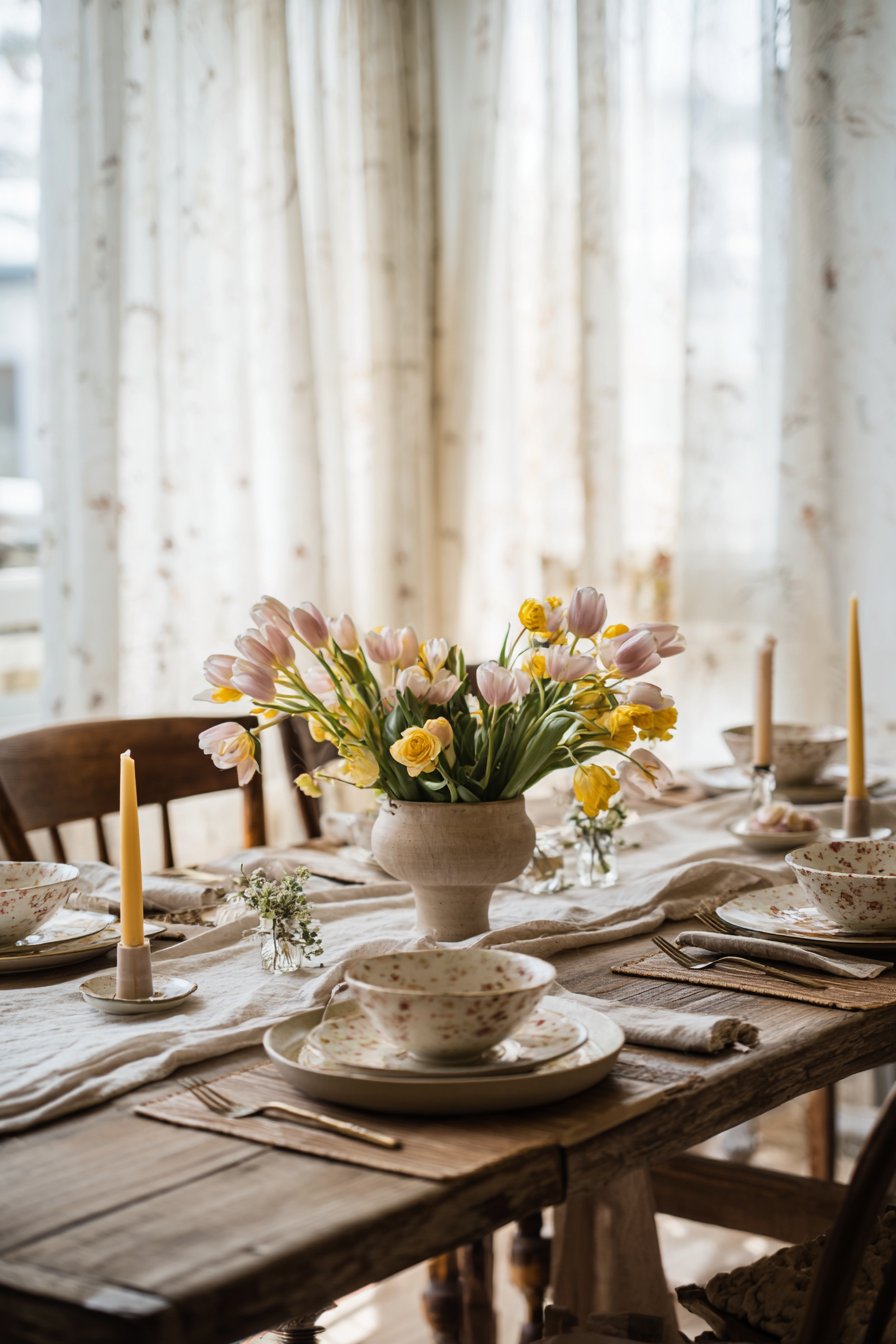
Casual place settings with mismatched but coordinating elements feel very spring-appropriate. Combine a white dinner plate with a patterned side plate, a linen napkin loosely folded, and simple glassware. The effect is relaxed, layered, and inviting — exactly the spirit of the season.
- Use a linen or cotton table runner as a base layer for the table
- Style a low centerpiece with seasonal flowers, candles, or fruit
- Mix coordinating but not perfectly matching tableware for a relaxed look
- Fold linen napkins loosely and tuck them under plates or into glasses
- Add a small bud vase at each place setting for a charming personal touch
- Use bamboo or wood placemats for natural texture and warmth
Conclusion
Designing a spring kitchen that feels genuinely fresh is about layering thoughtful details rather than making drastic changes. Color, texture, botanicals, light, and scent all work together to create a space that feels alive and seasonal. Each tip in this guide builds on the last, creating a cumulative effect that’s far greater than any single change alone.
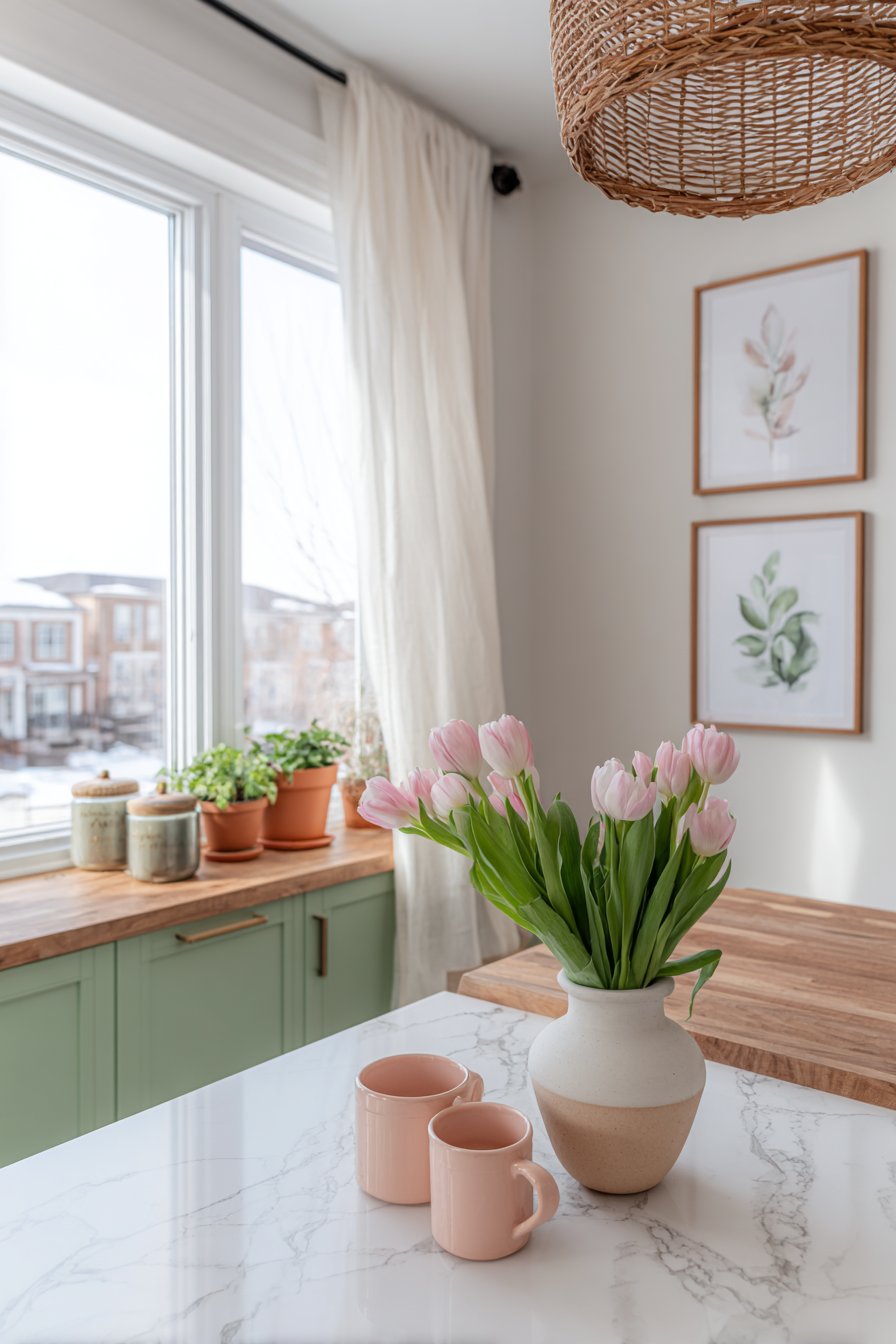
The best spring kitchen design is one that reflects who you are while embracing the energy of the season. Start with one or two changes that excite you most, and build from there at your own pace. Spring is the perfect invitation to reimagine your kitchen — take it, and enjoy every fresh, light-filled moment in the space you create.
"As an Amazon Associate, I earn from qualifying purchases."
