
A spacious living room is a blessing that many homeowners dream of, yet it presents unique design challenges that can leave even experienced decorators puzzled. The abundance of square footage, while offering endless possibilities, can easily result in a cold, unwelcoming atmosphere if not arranged thoughtfully. Unlike compact spaces where every inch demands careful consideration, large rooms require strategic planning to create intimate conversation zones without sacrificing the airy feel that makes them special.
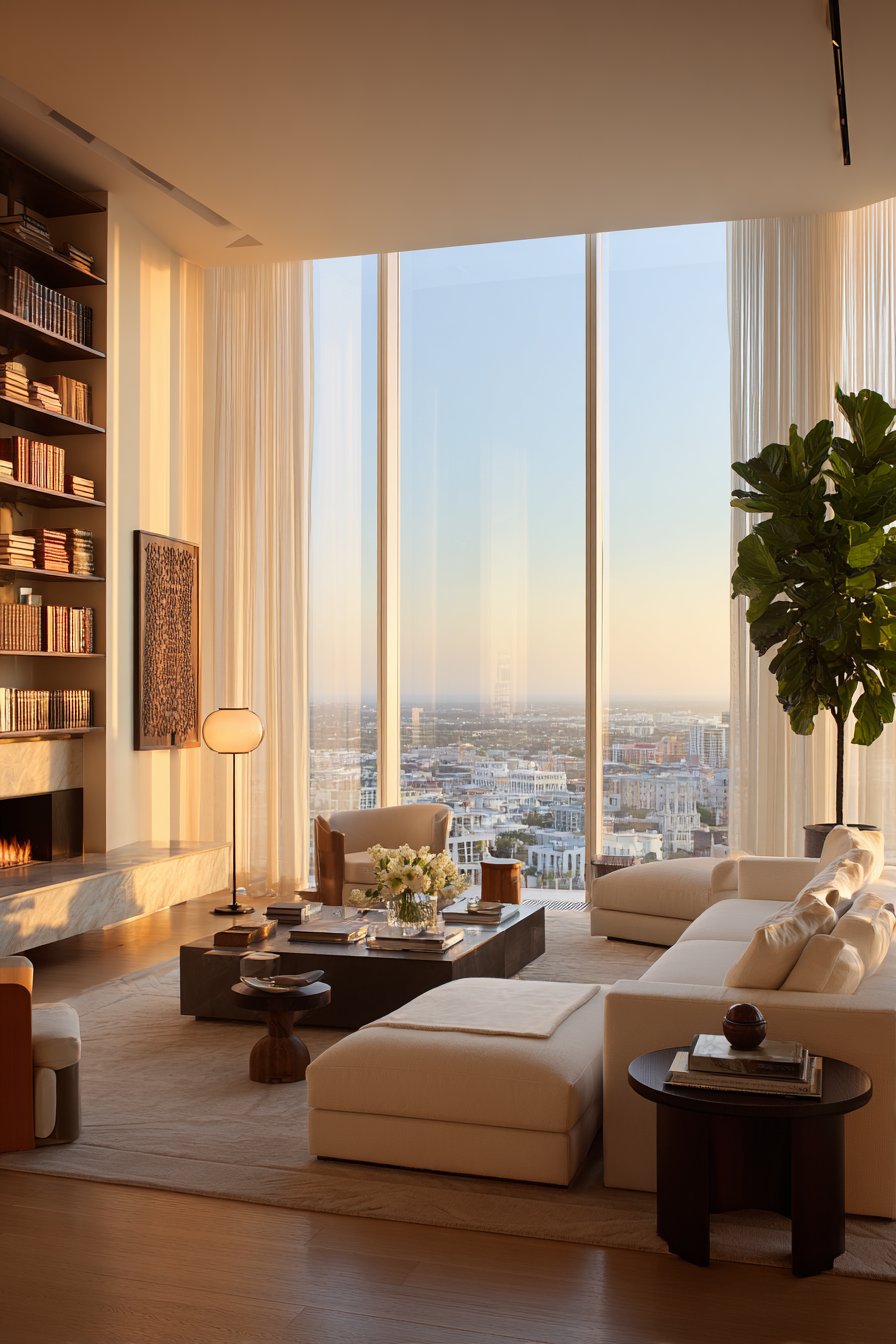
The key to mastering a generous living room lies in understanding how to balance openness with coziness. Proper furniture arrangement transforms an echoing cavern into a warm, functional sanctuary where family and friends naturally gather. This involves creating defined areas for different activities while maintaining visual flow throughout the space. The strategic use of rugs, lighting, and furniture clusters helps anchor distinct zones without erecting physical barriers that would diminish the room’s grand proportions.
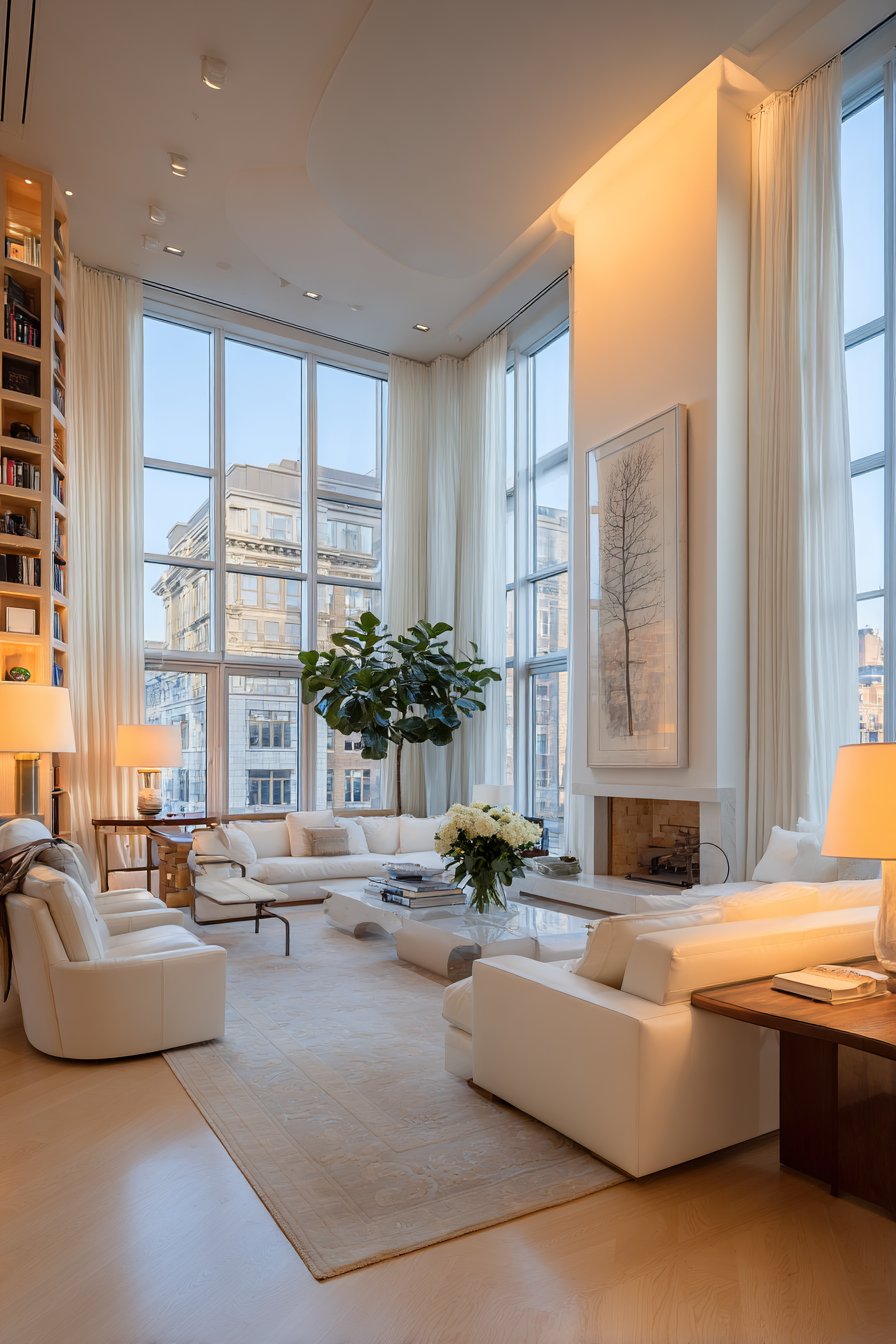
In this comprehensive guide, we’ll explore six proven methods to arrange your spacious living room effectively. Each approach addresses common challenges while celebrating the luxury of abundant space. Whether you’re working with modern minimalism or traditional elegance, these strategies will help you craft a cohesive environment that feels both expansive and inviting, proving that bigger truly can be better when designed with intention.
1. Create Conversation Zones with Strategic Furniture Placement
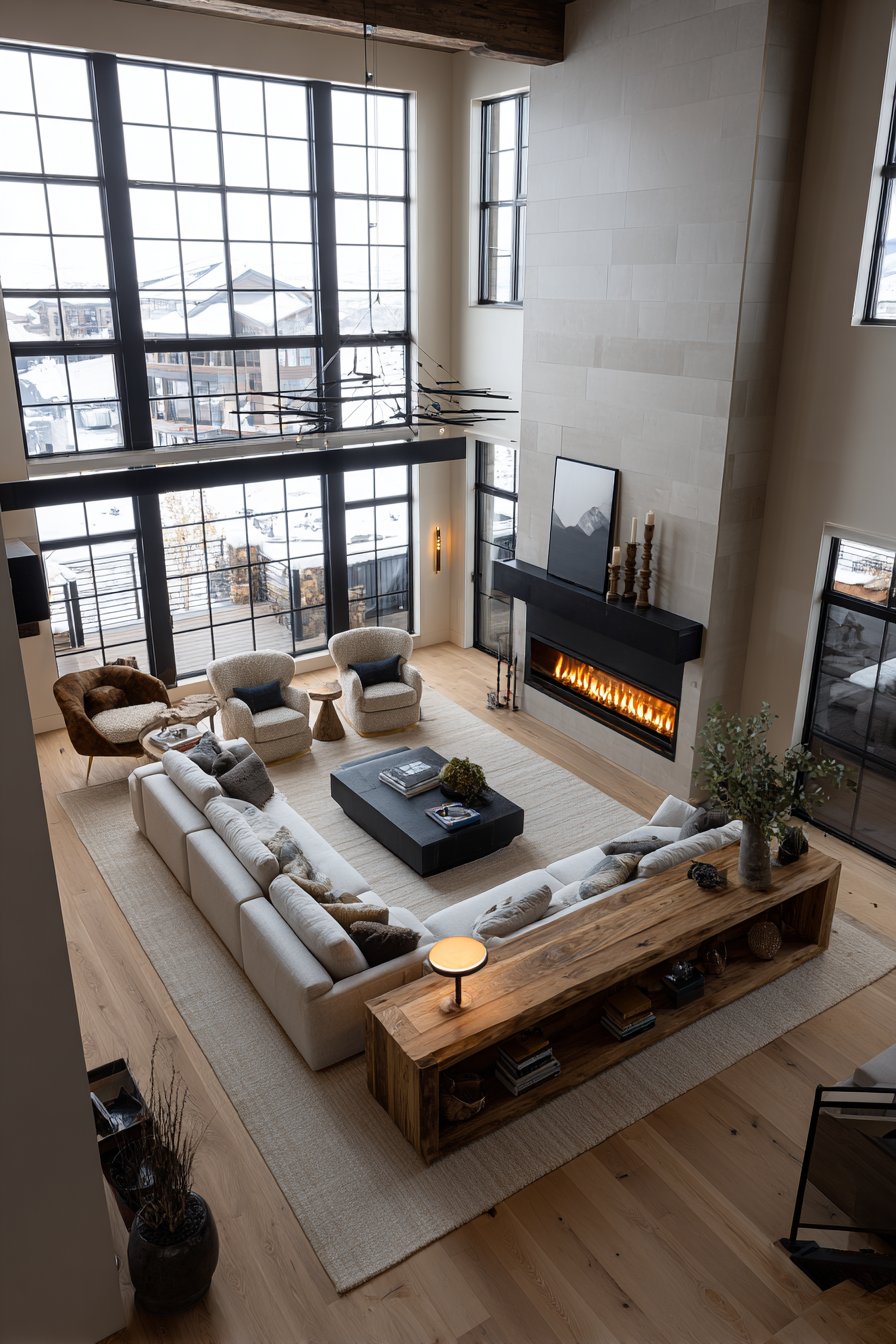
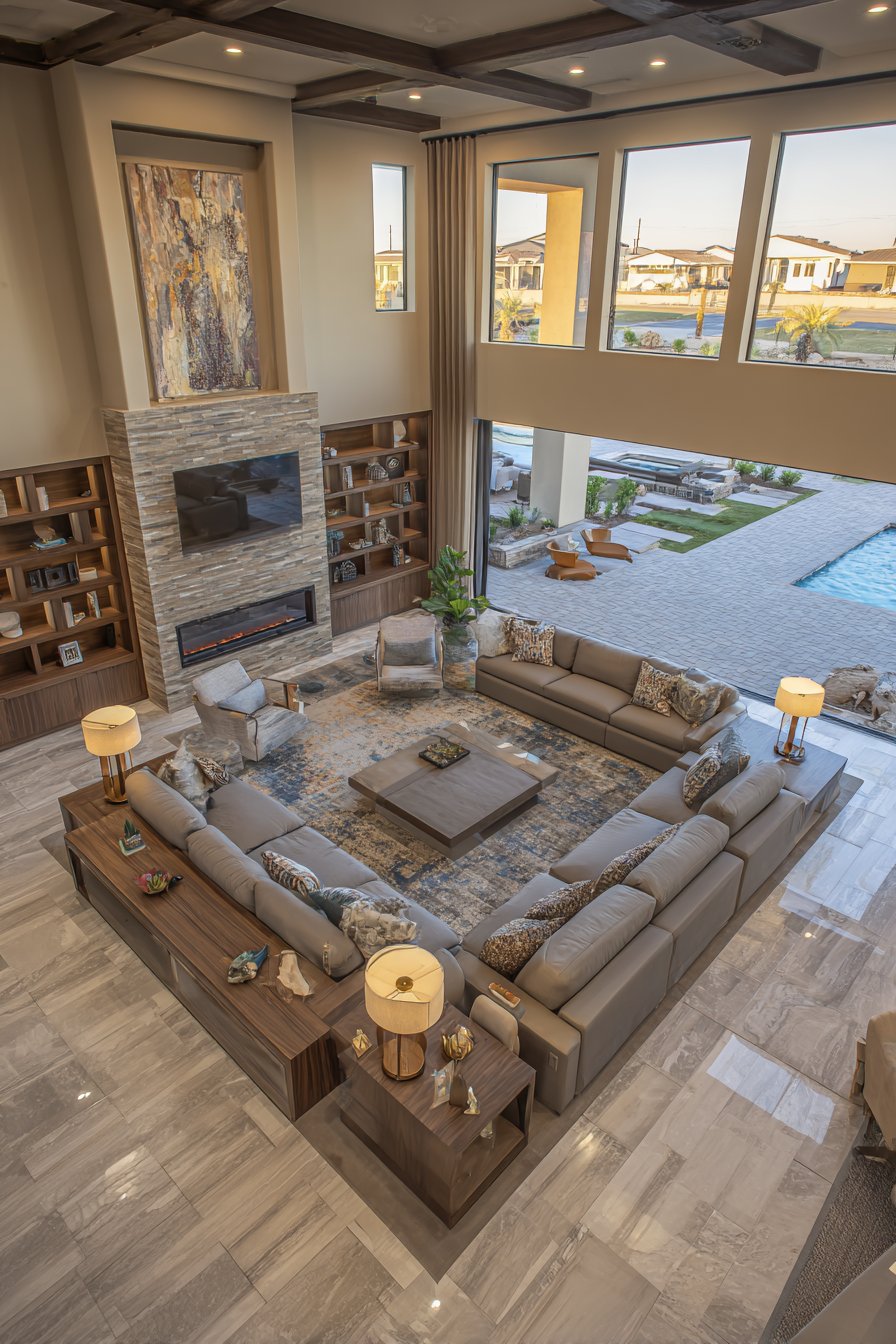
The foundation of any well-arranged spacious living room begins with establishing purposeful conversation areas that encourage interaction and connection. In large rooms, floating furniture away from walls creates intimate groupings that feel appropriately scaled rather than lost in vast emptiness. This counterintuitive approach breaks the instinct to push everything against the perimeter, which only emphasizes the room’s size while creating awkward dead space in the center.
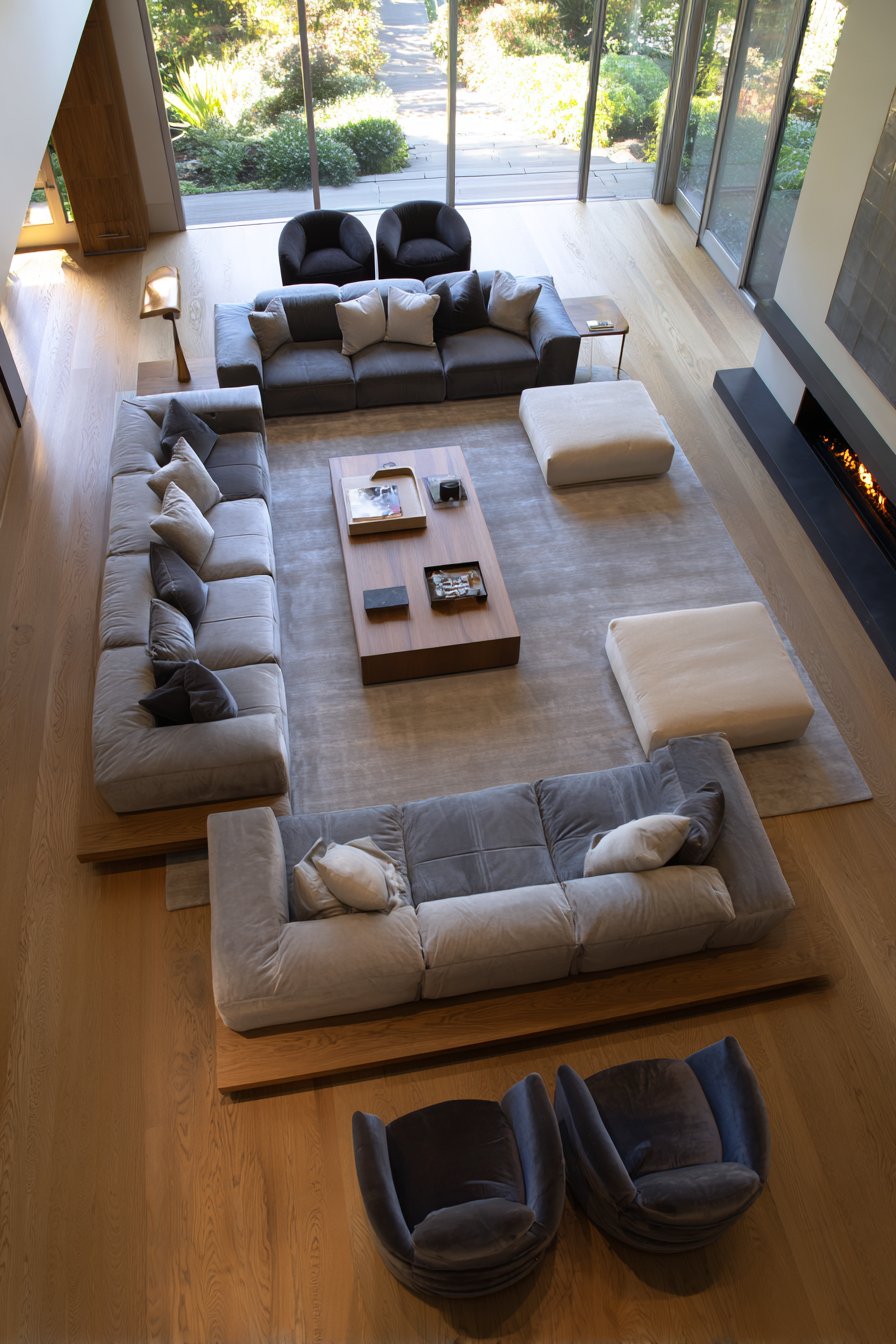
Position your primary seating arrangement around a central focal point such as a fireplace, entertainment center, or stunning window view. Arrange sofas and chairs in a U-shape or L-configuration, keeping seating pieces within 8-10 feet of each other to facilitate comfortable conversation.
This proximity ensures guests don’t need to shout across the room while maintaining enough breathing room to avoid a cramped feel. The visual weight of grouped furniture naturally draws the eye and creates psychological boundaries within the open floor plan.
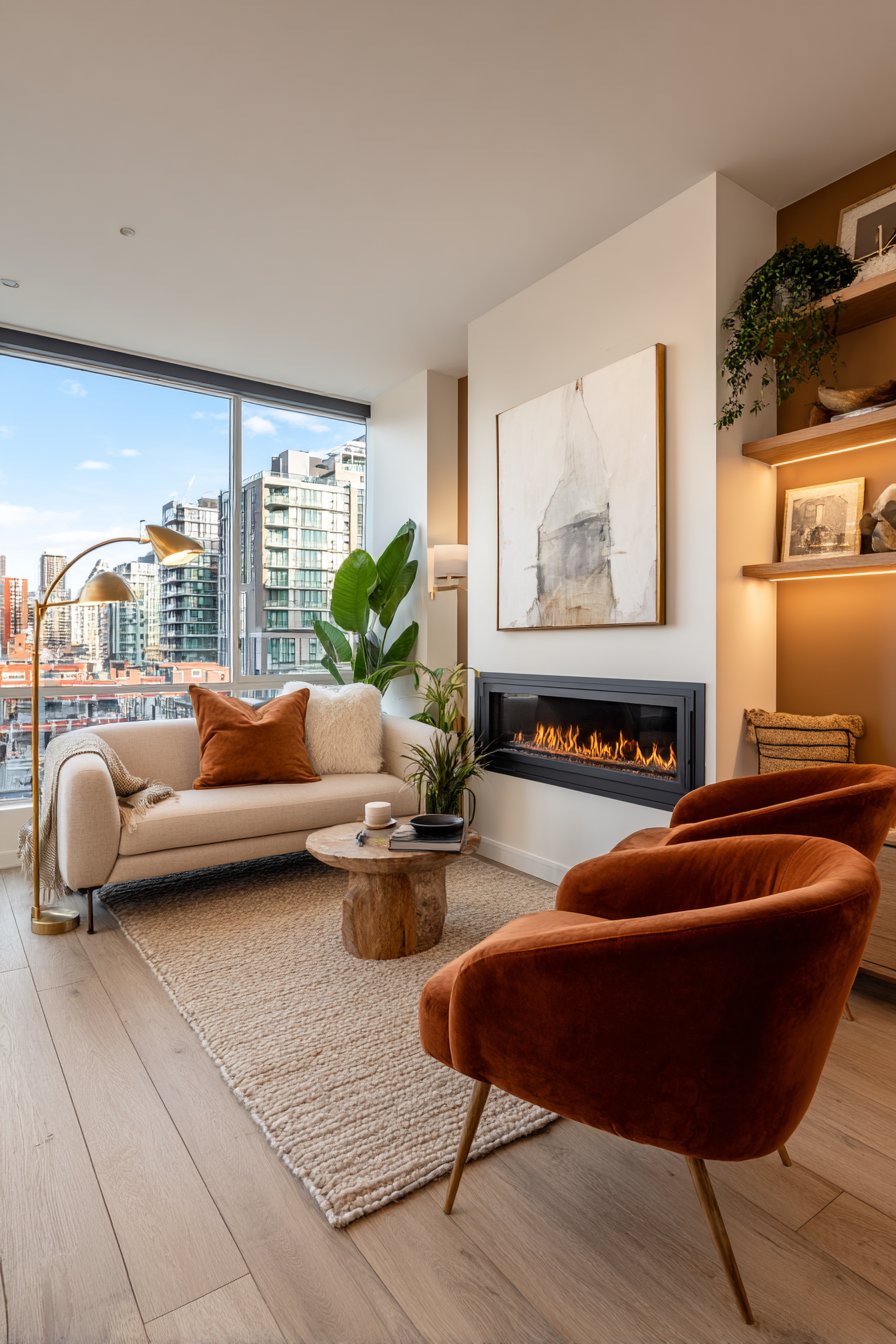
Consider adding a secondary seating cluster in another corner or area of the room to maximize functionality. This could be a cozy reading nook with a comfortable armchair, floor lamp, and small side table, or a game table with surrounding chairs. These supplementary zones give your spacious living room multiple purposes while preventing the “bowling alley effect” that plagues poorly arranged large spaces.
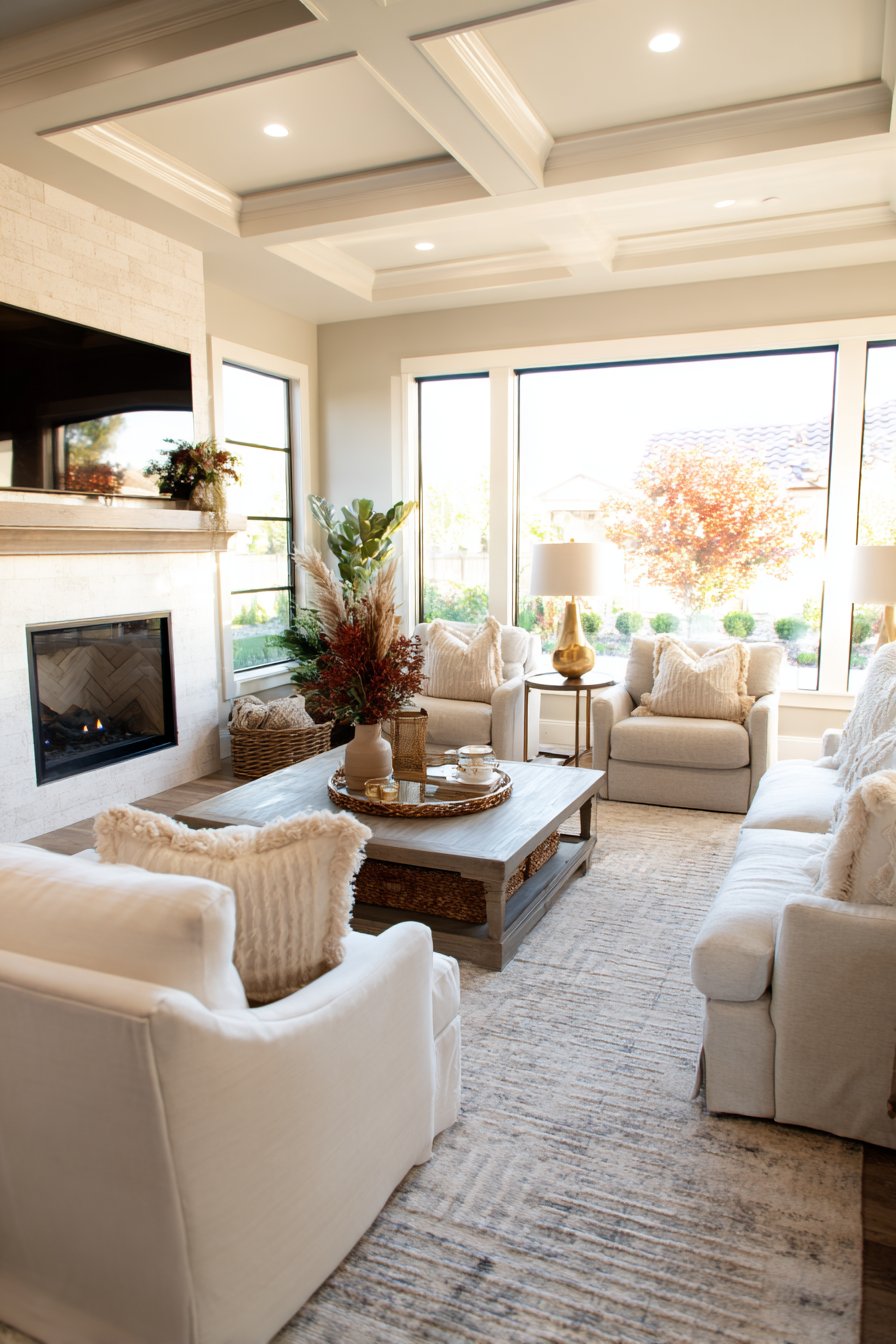
- Place the longest sofa perpendicular to the room’s longest wall to break up linear sight lines
- Maintain 18 inches of walking space around all furniture pieces for easy navigation
- Use area rugs to define and anchor each conversation zone visually
- Position coffee tables within easy reach of all seating (typically 14-18 inches away)
- Angle chairs slightly inward toward the grouping to create a more intimate feel
- Include a variety of seating heights and depths for visual interest and comfort
2. Anchor Spaces with Appropriately Scaled Area Rugs
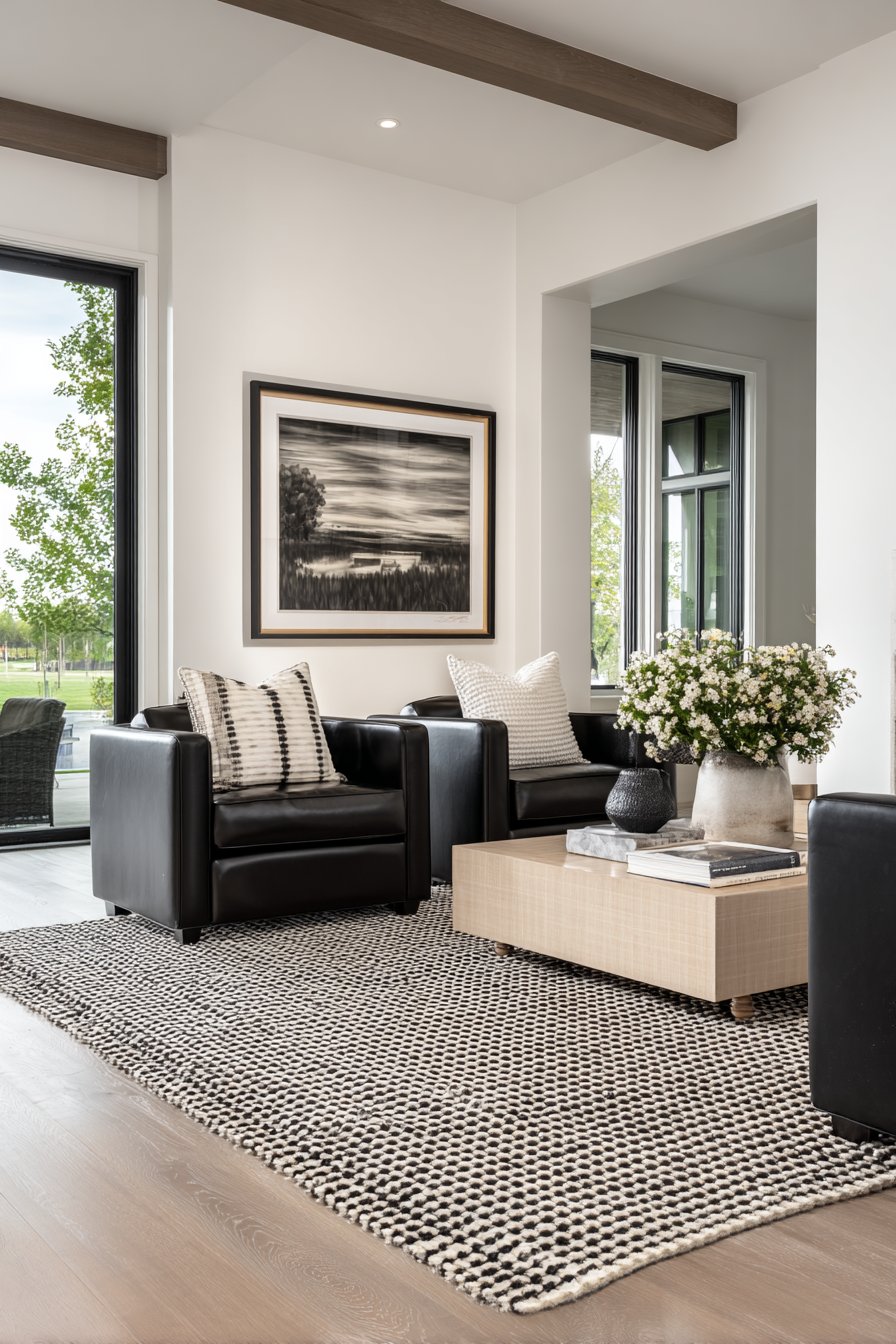
Area rugs serve as the foundation of spatial definition in large living rooms, providing visual boundaries that help organize furniture groupings and reduce the overwhelming effect of expansive flooring. The most common mistake in spacious rooms is selecting rugs that are too small, which creates a disconnected, floating appearance. An appropriately sized rug should be large enough to accommodate all front legs of your seating arrangement, or ideally, fit entirely under the furniture grouping.
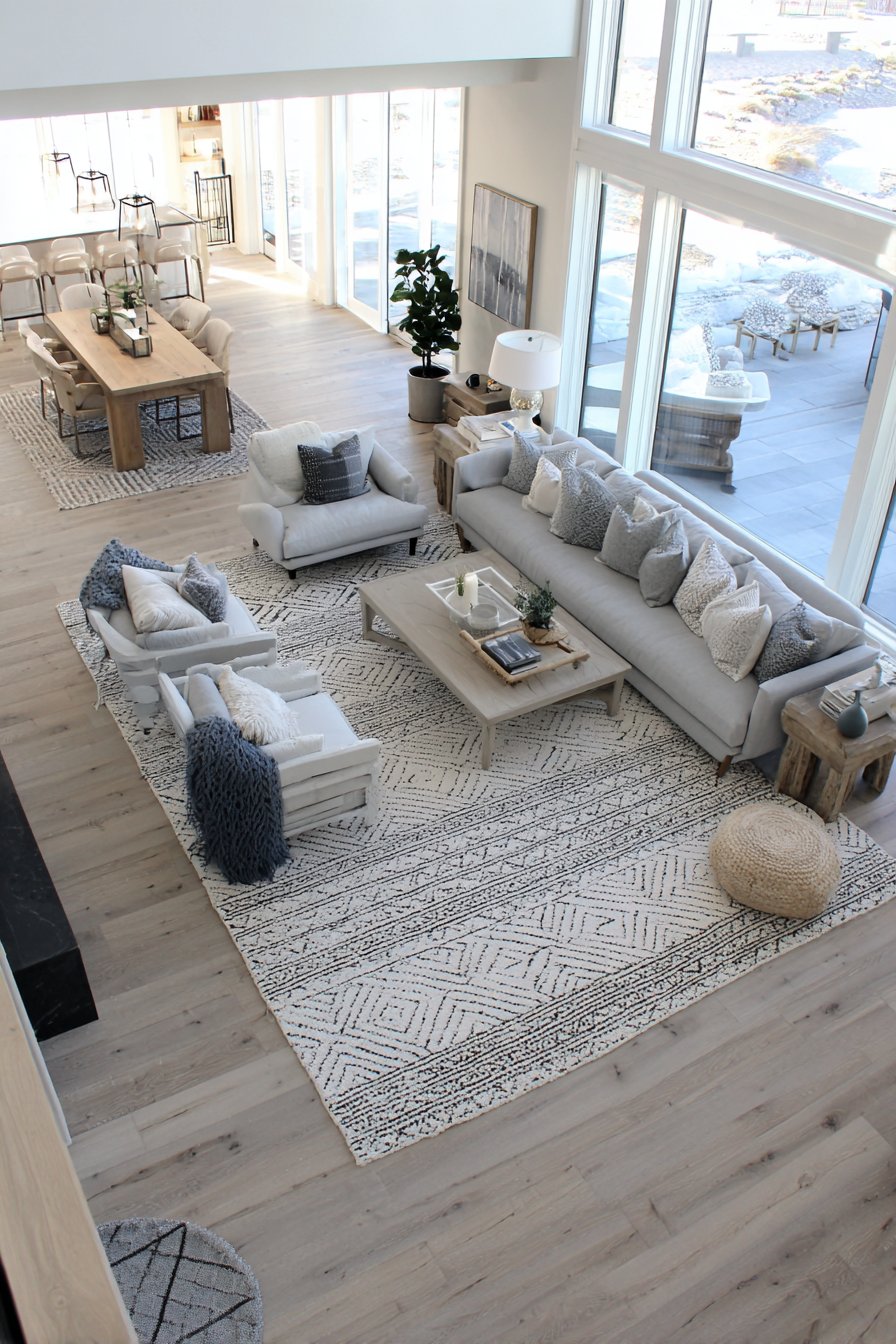
For primary conversation areas, choose rugs measuring at least 8×10 feet, though 9×12 or larger often works better in truly spacious rooms. The rug should extend 6-12 inches beyond the furniture on all sides, creating a cohesive island within your living room. This generous proportioning makes furniture pieces appear intentionally grouped rather than randomly scattered, while the texture and pattern of the rug adds warmth and visual interest to counteract cold, hard flooring surfaces.
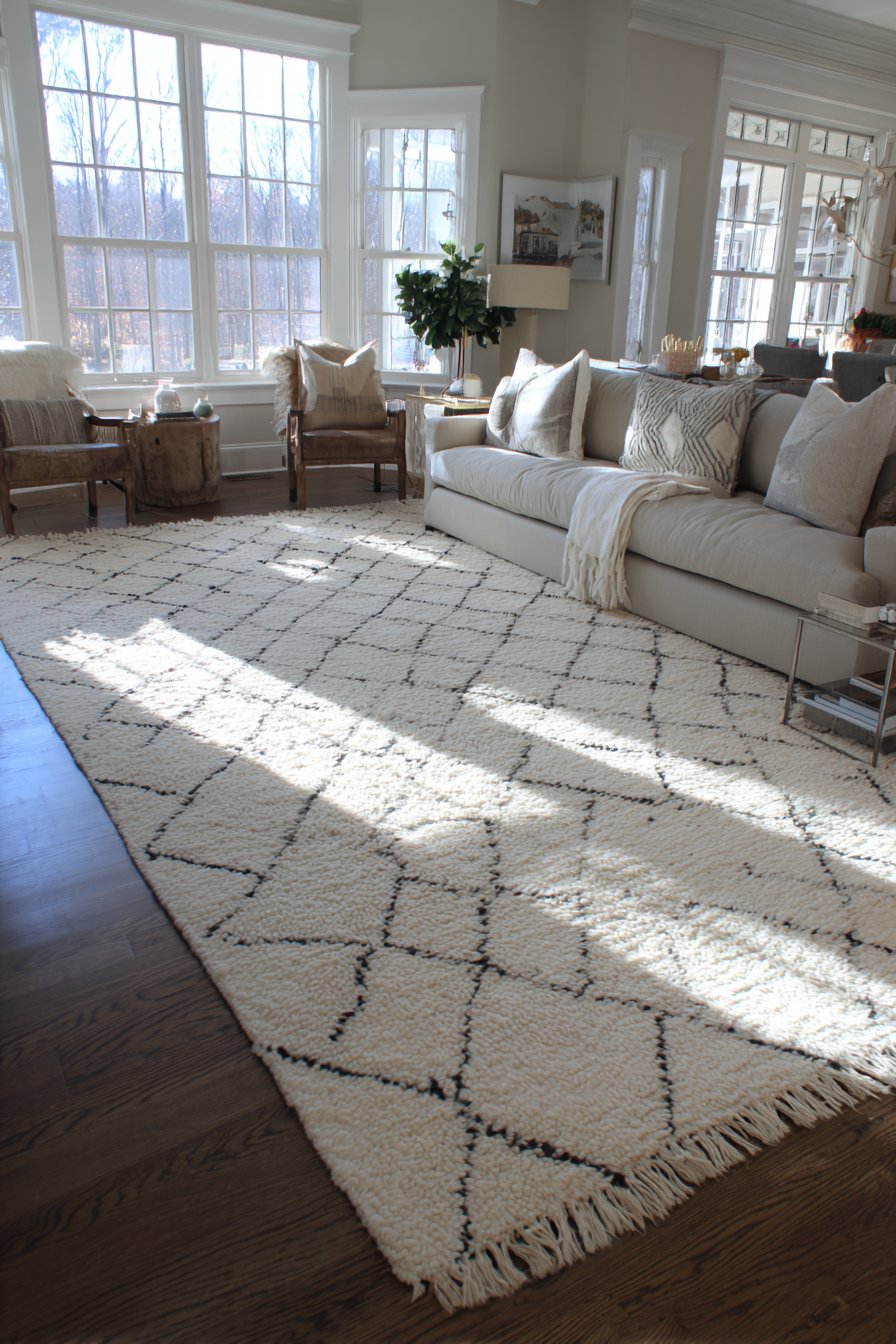
Layer multiple rugs throughout your spacious living room to define distinct functional zones without installing permanent dividers. A separate rug under a reading chair and ottoman or beneath a game table signals different activity areas while maintaining the open concept flow. Choose complementary colors and patterns that relate to your primary rug without matching exactly, creating visual cohesion while acknowledging each zone’s unique purpose.
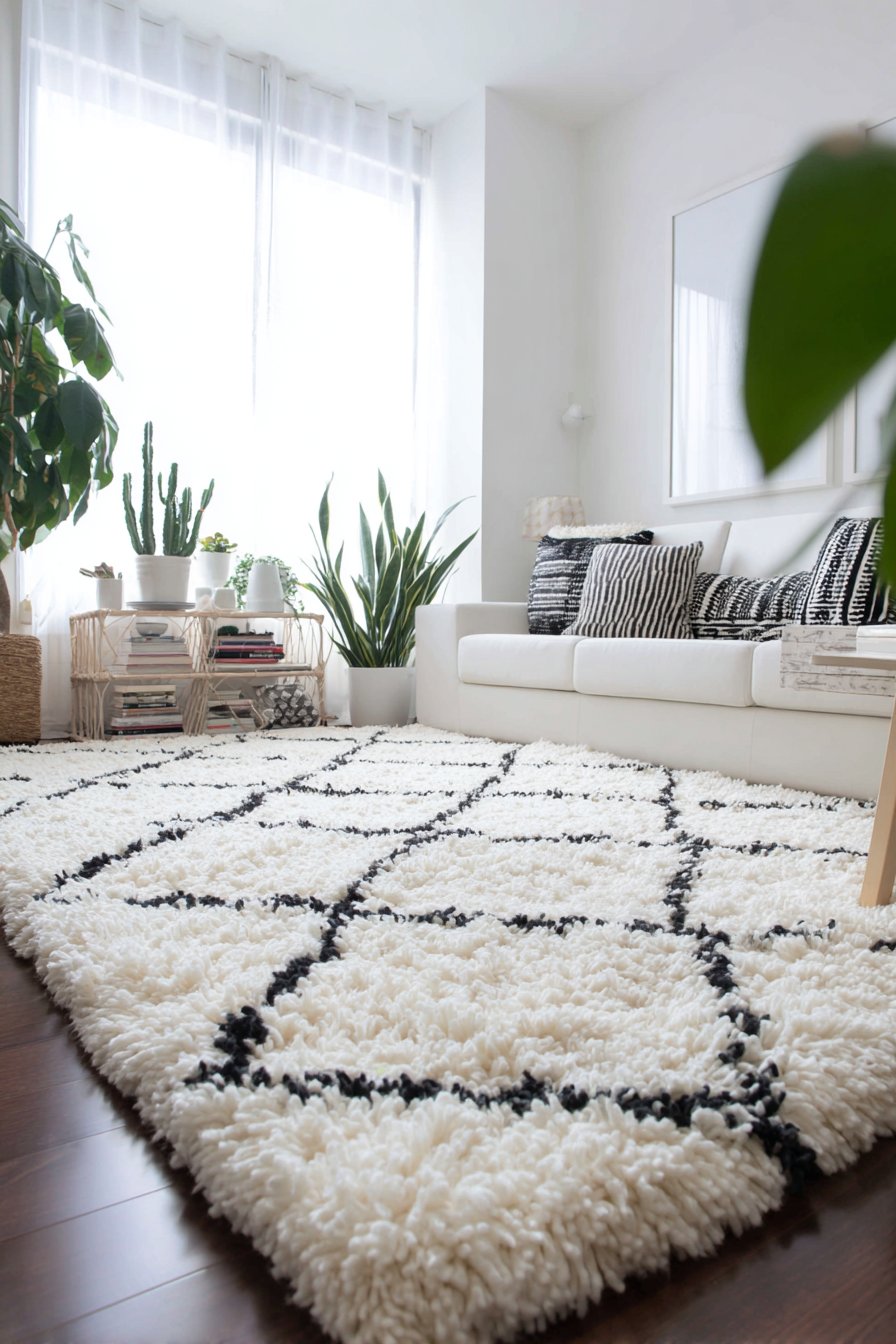
- Select rugs with some pattern or texture to add warmth and hide wear in high-traffic areas
- Ensure at least 18-24 inches of exposed flooring around the rug’s perimeter for a polished look
- Choose low-pile or flatweave rugs for easy furniture movement and vacuum cleaning
- Consider layering a smaller decorative rug over a larger neutral base for added dimension
- Use rug pads underneath to prevent slipping and extend the rug’s lifespan
- Match rug orientation to your furniture arrangement rather than room shape
3. Establish a Strong Focal Point to Direct Attention
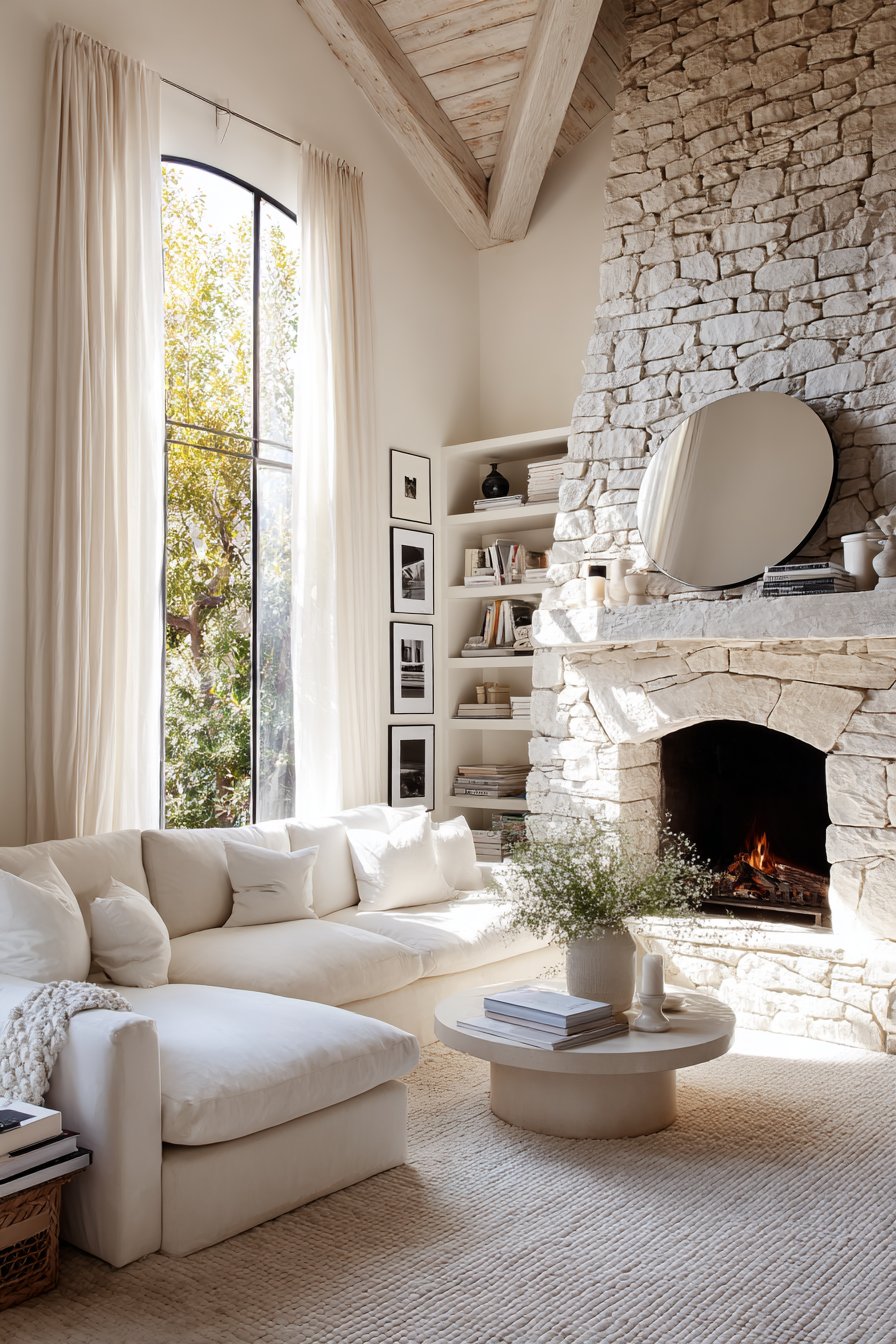
Every successful living room arrangement, regardless of size, requires a commanding focal point that anchors the space and provides a visual destination for the eye. In spacious rooms, this element becomes even more critical, as it prevents the gaze from wandering aimlessly across undefined expanses. Natural focal points include architectural features like fireplaces, built-in bookcases, or floor-to-ceiling windows, while created focal points might be large-scale artwork, entertainment centers, or accent walls.
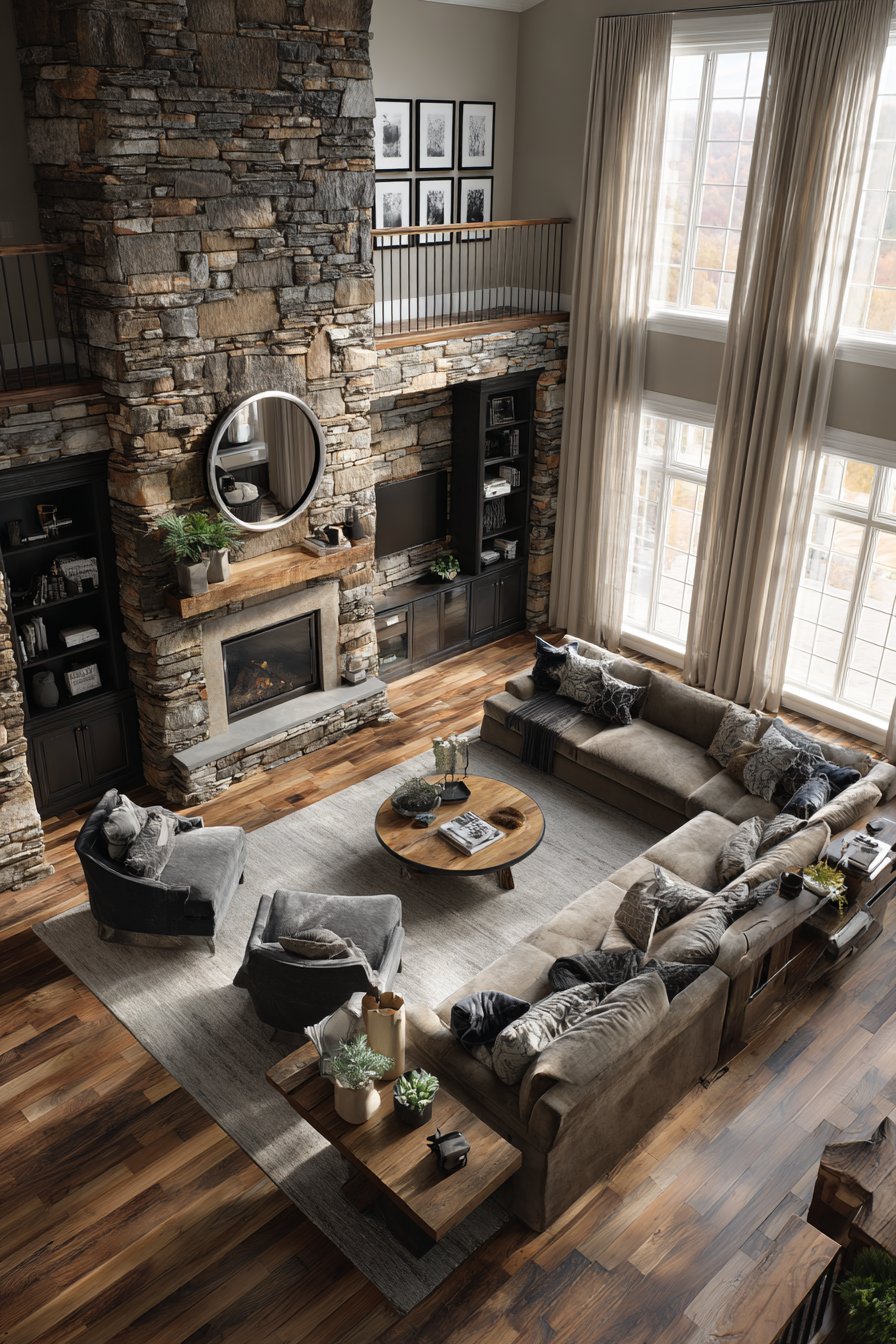
Orient your primary furniture arrangement to emphasize and complement the chosen focal point, ensuring all seating offers a comfortable view of this central element. If your room lacks an obvious architectural anchor, create one by installing a statement-making element that commands attention. This might be a gallery wall spanning 6-8 feet, a stunning media console with flanking bookcases, or an oversized mirror reflecting natural light and creating the illusion of even more space.
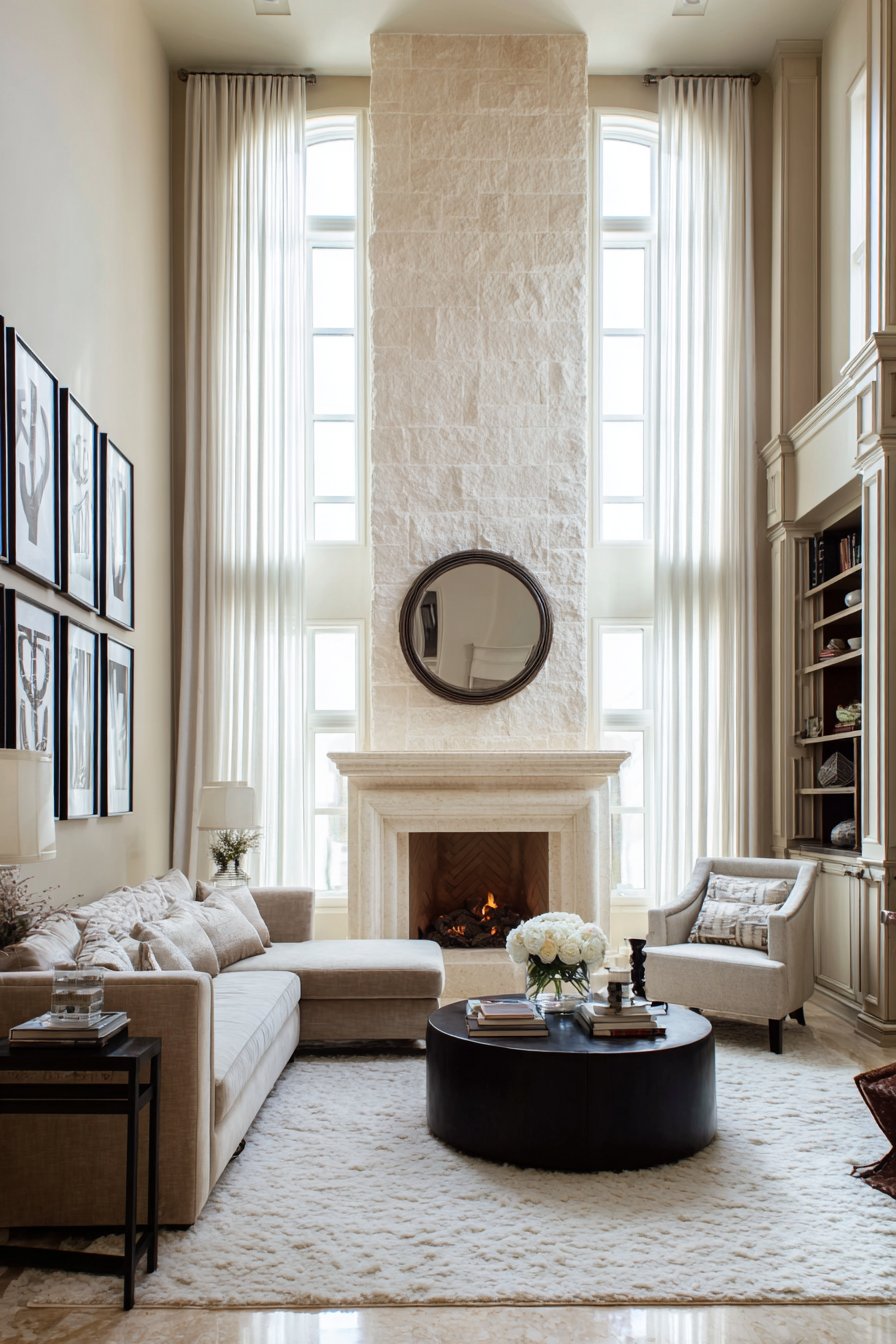
Balance your main focal point with secondary visual interest throughout the room to prevent monotony in such a large space. These supporting elements—decorative lighting fixtures, sculptural furniture pieces, or striking plant displays—should complement rather than compete with your primary anchor. The hierarchy of visual interest guides visitors’ eyes through the space in a deliberate, satisfying journey that makes the room feel curated and intentional.
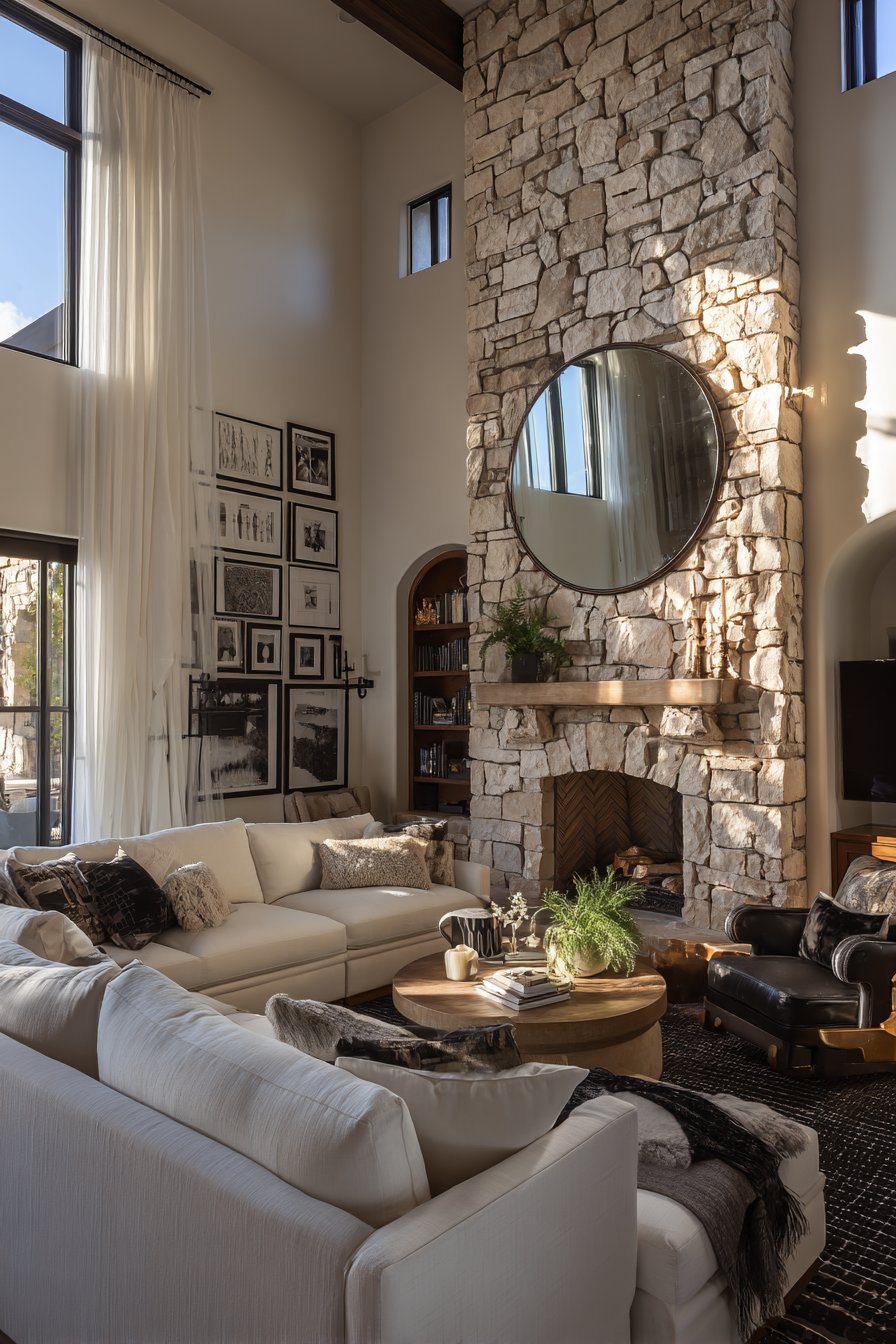
- Position the room’s largest furniture piece (usually the sofa) facing the focal point directly
- Keep the area immediately surrounding your focal point relatively uncluttered for maximum impact
- Use lighting to highlight your focal point during evening hours with accent or picture lights
- Ensure your focal point is visible from the room’s main entrance for immediate impact
- Scale your focal point to match the room’s proportions—bigger spaces need bolder statements
- Avoid competing focal points on adjacent walls that divide attention and create confusion
4. Utilize Vertical Space with Tall Furniture and Decor
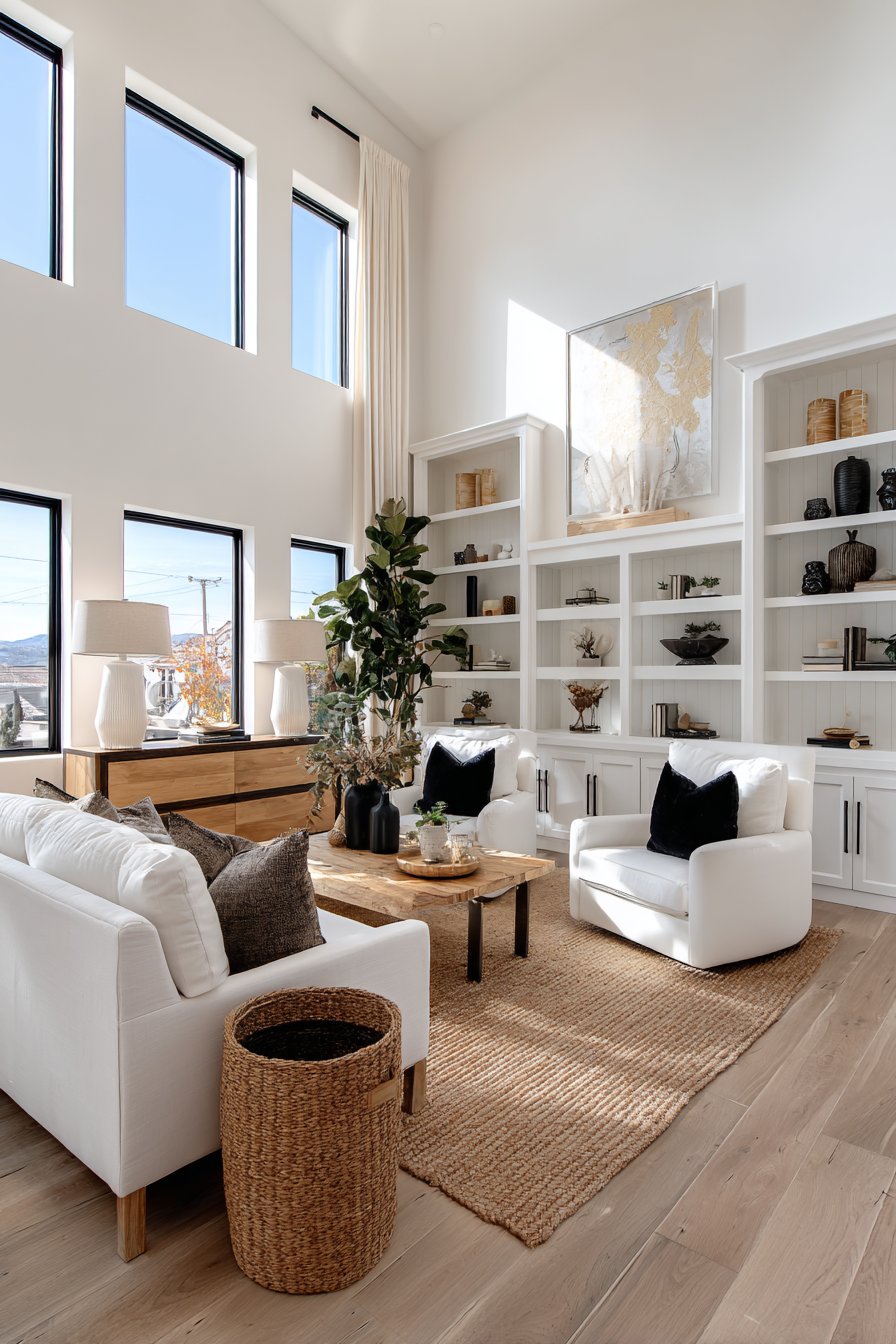
Spacious living rooms typically feature generous ceiling heights that demand thoughtful vertical design to prevent the room from feeling bottom-heavy and disproportionate. Incorporating tall furniture pieces and vertical décor elements draws the eye upward, celebrating the room’s architectural volume while creating better visual balance. Floor-to-ceiling bookcases, tall armoires, and high-backed chairs help fill the vertical plane without consuming precious floor space.
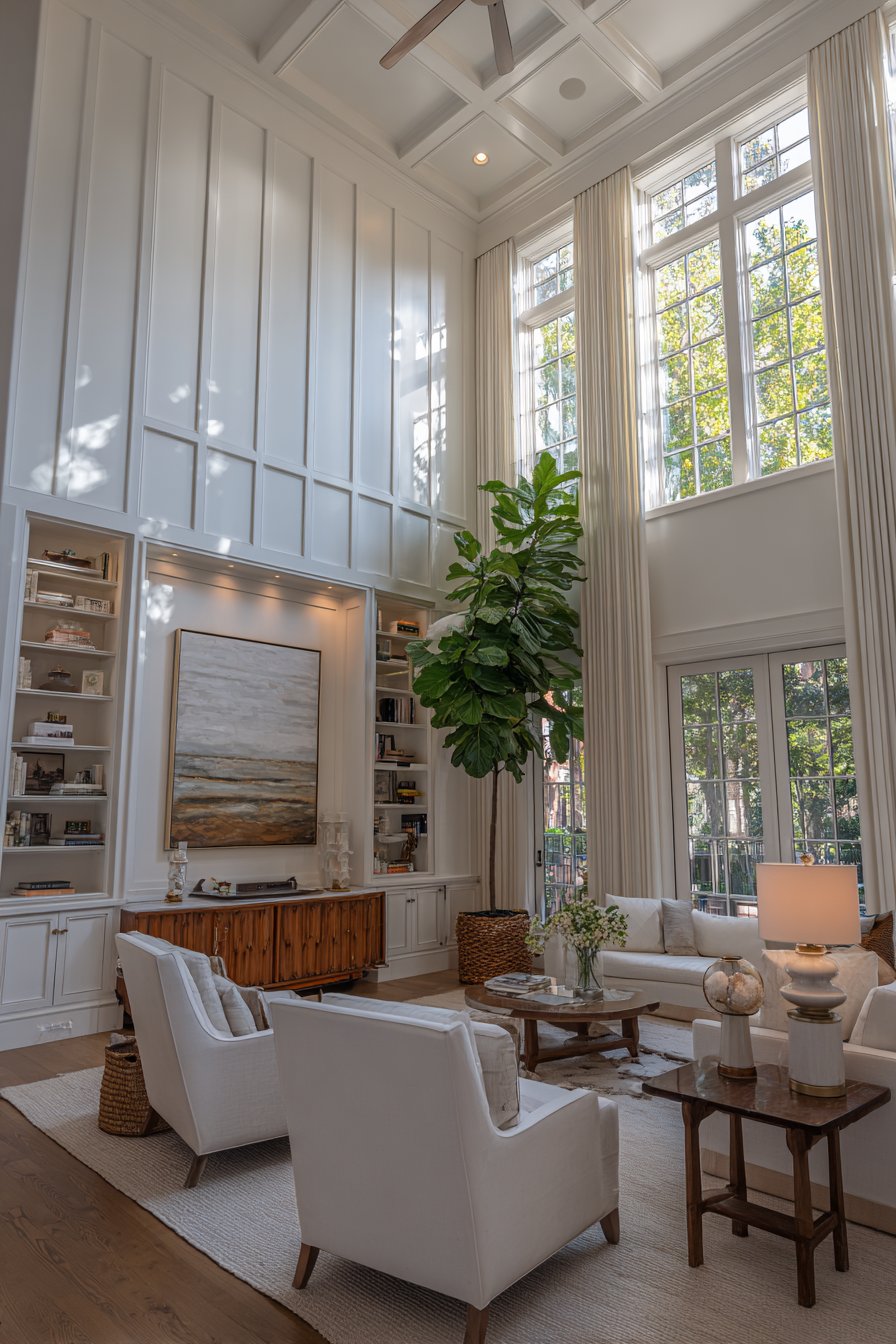
Tall houseplants, particularly varieties like fiddle leaf figs or birds of paradise that reach 6-8 feet, serve as living sculptures that soften hard architectural lines while adding organic warmth. Position these botanical statements in corners or flanking seating areas to create natural vertical accents that complement rather than obstruct furniture arrangements. The combination of height and organic form prevents large rooms from feeling sterile while improving indoor air quality.
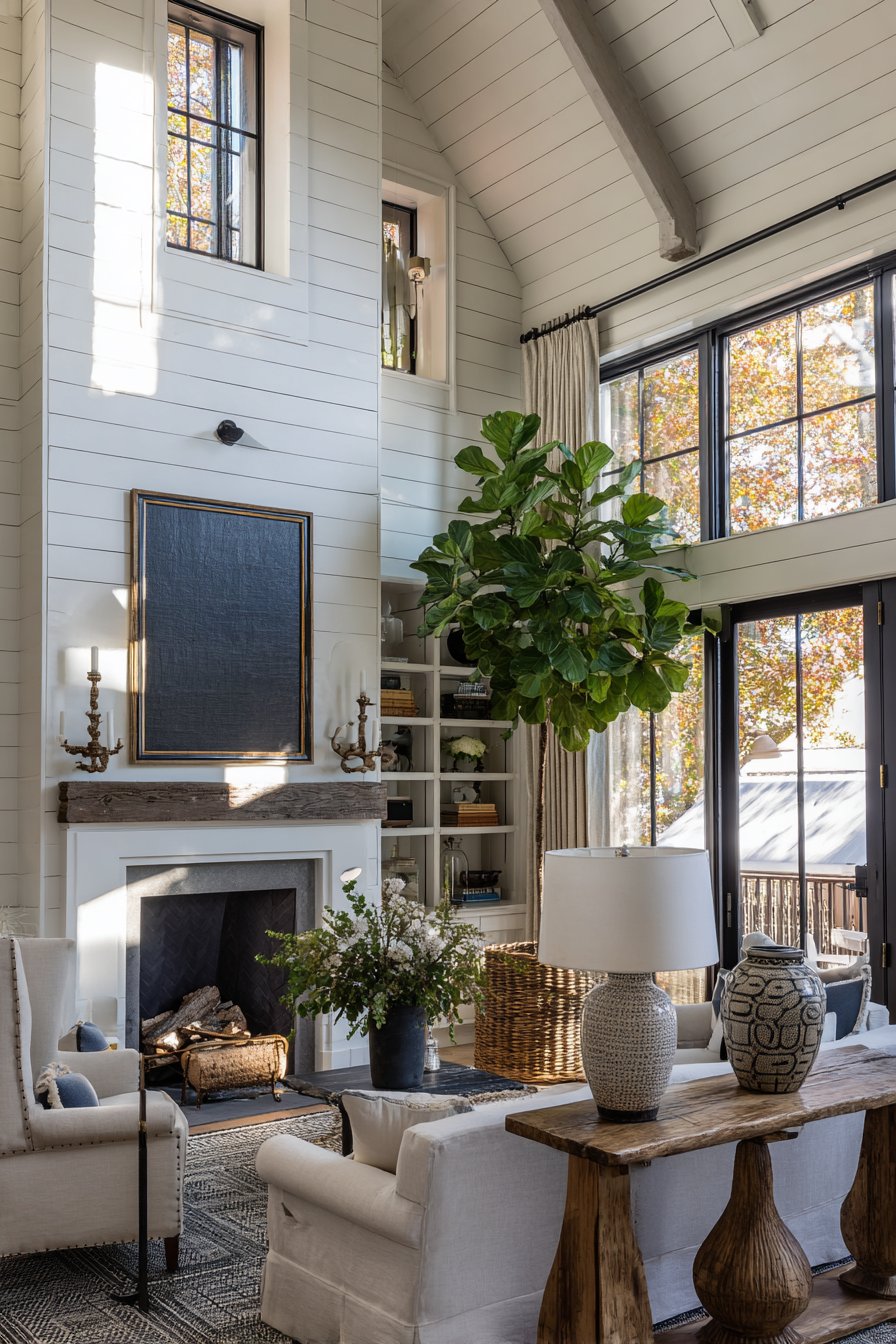
Hang artwork and mirrors at appropriate heights to maximize vertical impact in your spacious living room. Rather than the standard 57-inch center point used in galleries, consider hanging pieces slightly higher in rooms with tall ceilings—60-66 inches at center—to better suit the proportional scale. Create gallery walls that extend closer to the ceiling, or hang a single oversized piece that spans a significant portion of the wall’s height for dramatic effect.
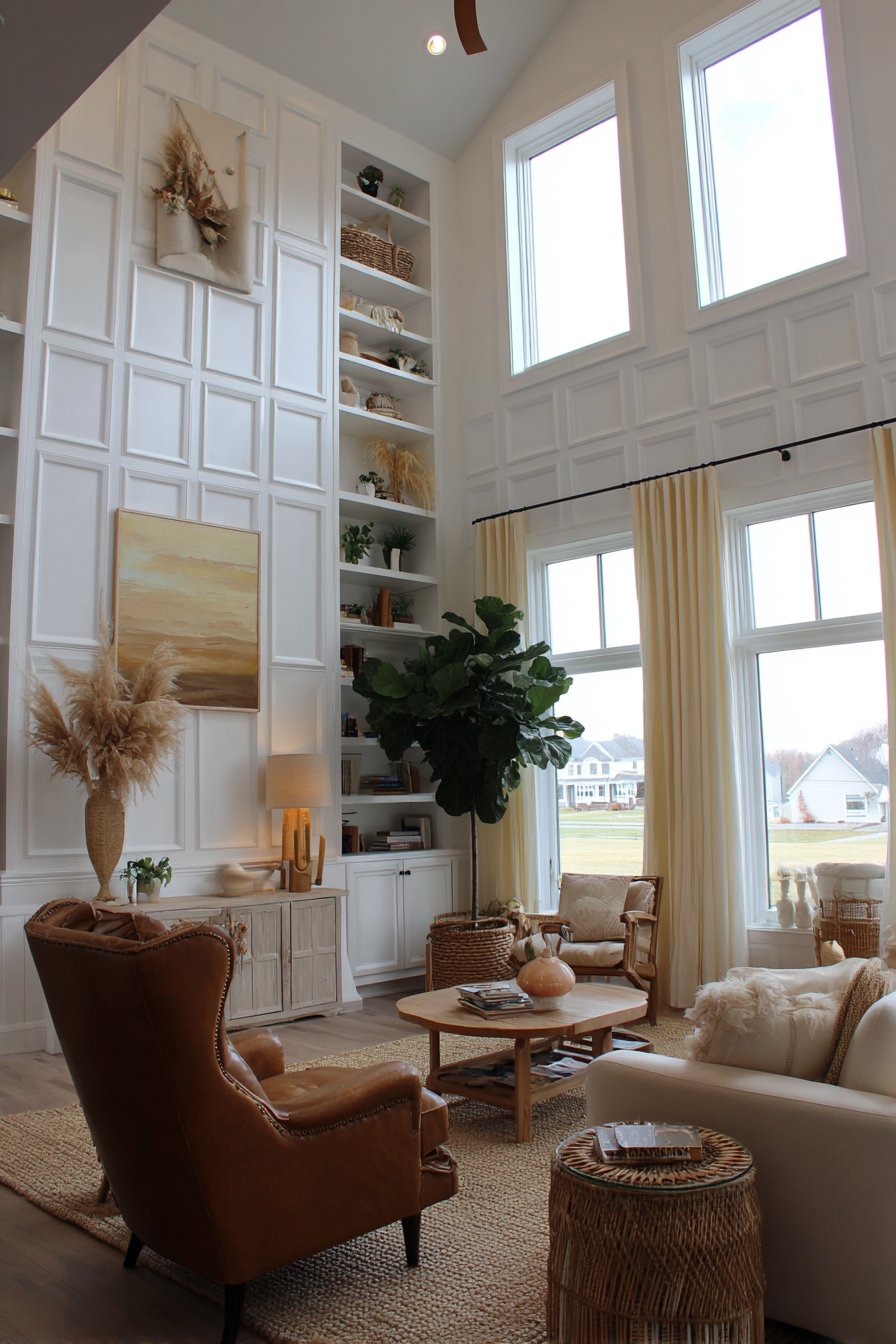
- Install floor-to-ceiling curtains to emphasize height, even if windows don’t extend that high
- Use tall table lamps (30-36 inches) rather than short ones to fill vertical space appropriately
- Incorporate architectural elements like columns or vertical paneling to add visual height
- Stack décor items on shelving units to create varied heights and visual rhythm
- Choose furniture with exposed legs rather than skirted pieces to maintain airiness while adding height
- Display tall vases or sculptural objects on console tables and side surfaces
5. Define Zones with Strategic Lighting Layers
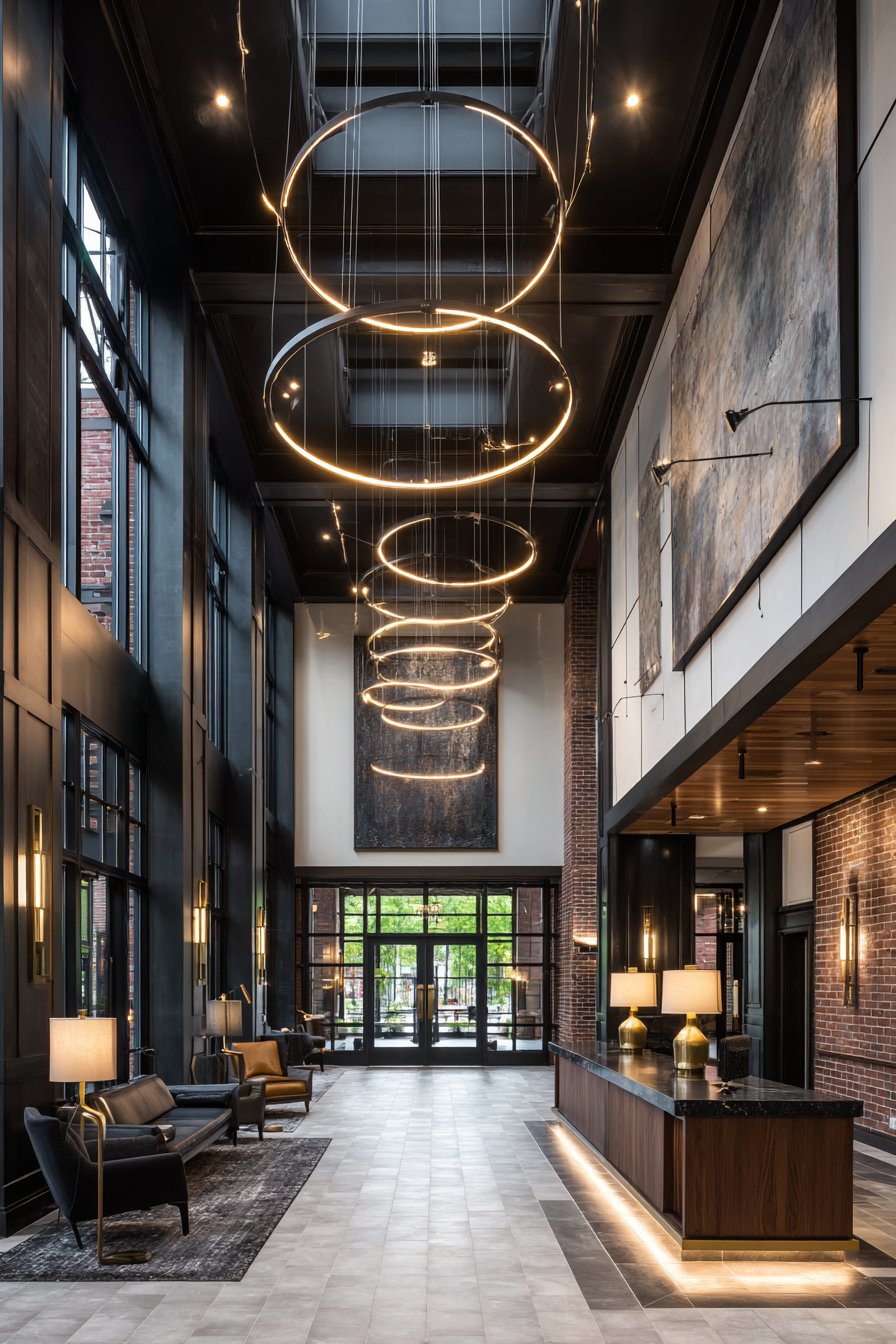
Lighting design becomes exponentially more important in spacious living rooms where a single overhead fixture creates harsh shadows and emphasizes the room’s cavernous qualities. Implementing multiple lighting layers—ambient, task, and accent—throughout the space creates intimate pools of illumination that define zones while providing functional flexibility for different activities and moods. This approach transforms one large room into several distinct areas without physical barriers.
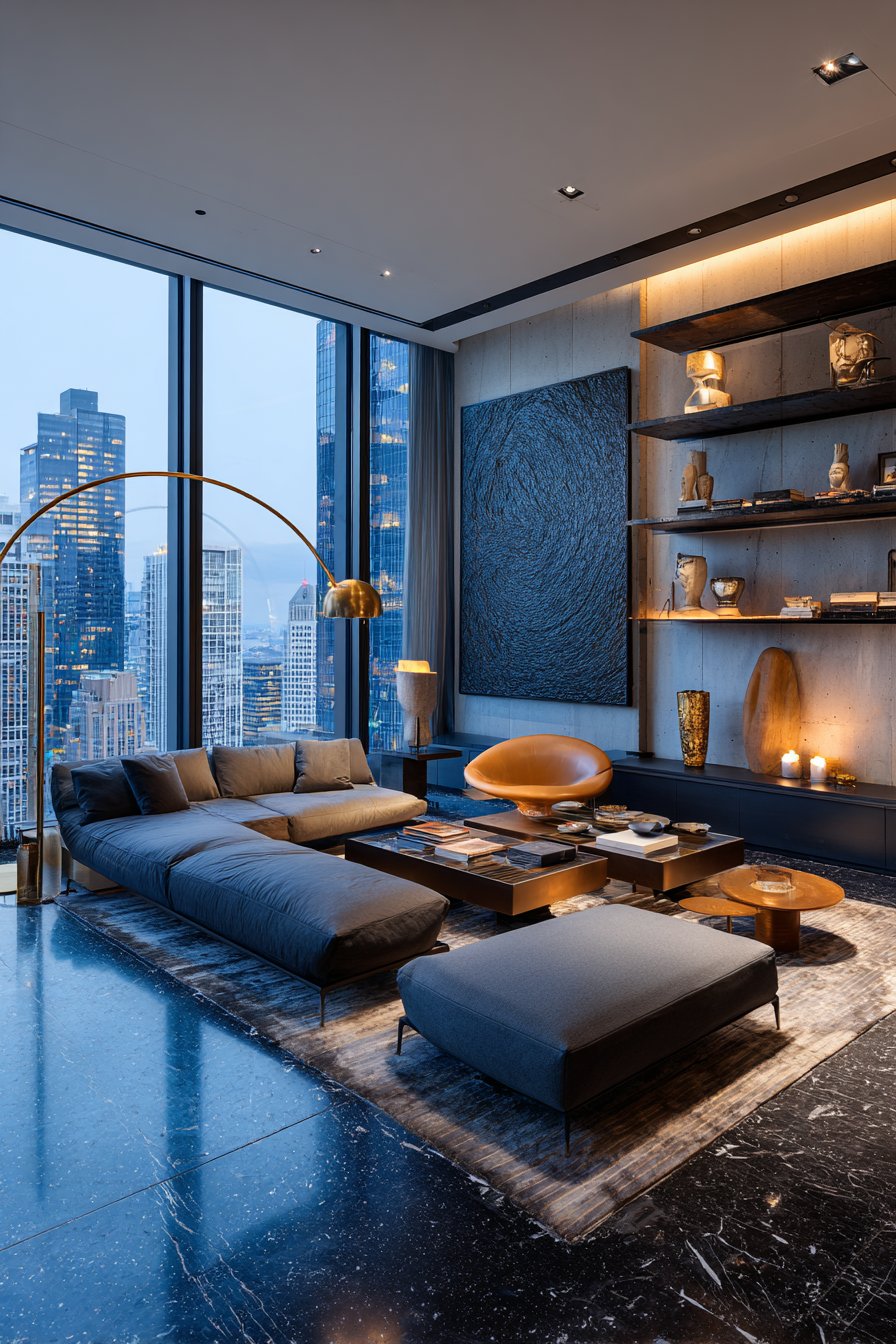
Begin with ambient lighting distributed throughout the room rather than relying on a single central chandelier. Consider installing multiple ceiling fixtures, recessed lighting on separate circuits, or a combination of both to provide adjustable overall illumination. Dimmer switches on all ambient sources offer crucial control, allowing you to soften the space for evening entertaining or brighten it for cleaning and daytime activities.
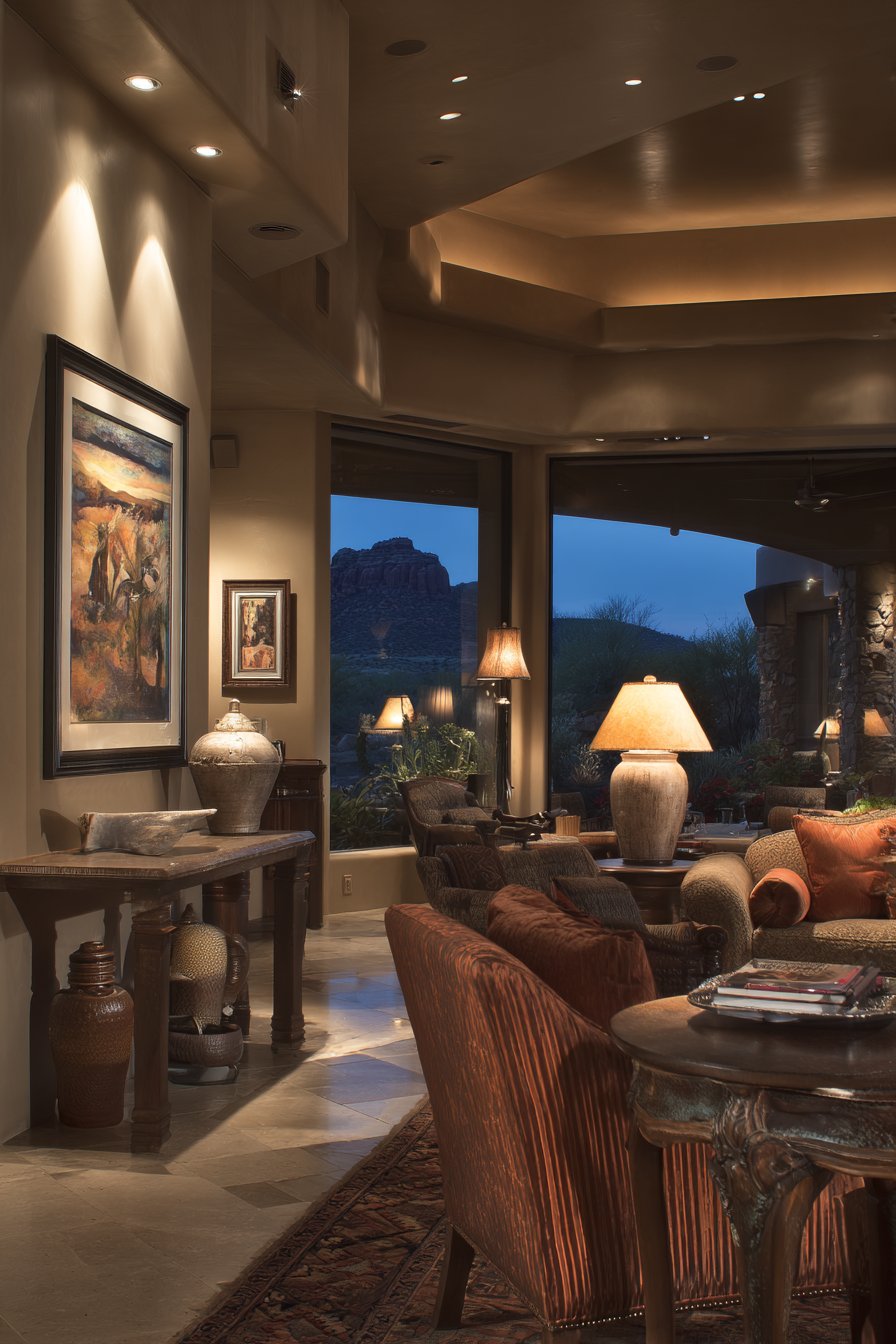
Layer in task and accent lighting to highlight specific areas and create visual interest throughout your spacious living room. Place floor lamps beside reading chairs, table lamps on side tables flanking sofas, and picture lights above artwork to create multiple focal points that draw the eye around the room. These varied light sources, when lit in combination rather than using overhead lighting alone, make large rooms feel warm and inviting while providing practical illumination exactly where needed.
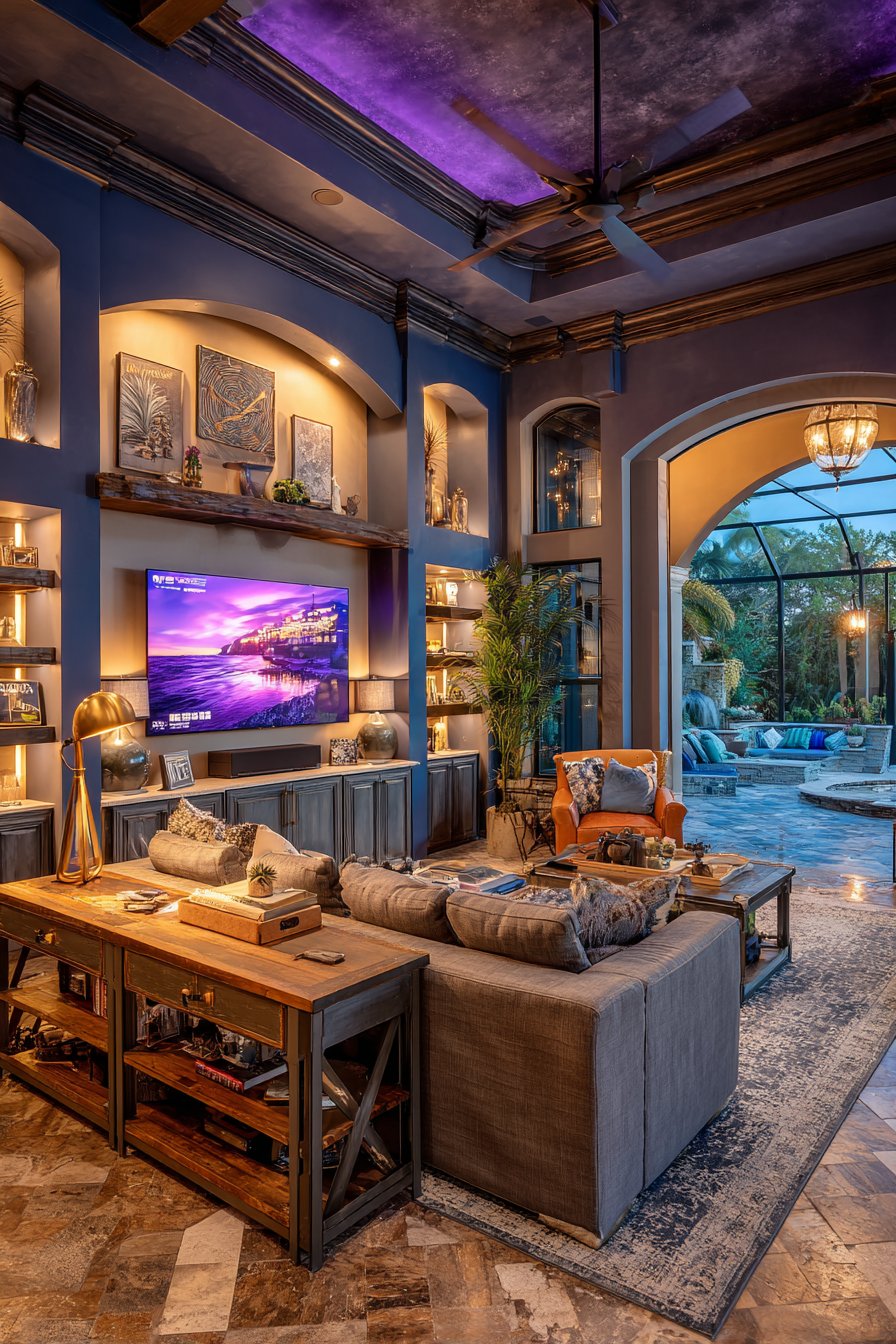
- Install three-way bulbs or dimmers on all lamps for maximum lighting flexibility
- Use warm white bulbs (2700-3000K) rather than cool white for a cozier atmosphere
- Position floor lamps in corners to wash walls with light and expand perceived space
- Include at least one light source in each functional zone or furniture grouping
- Consider LED strip lighting under floating shelves or behind the TV for ambient glow
- Place lamps at different heights throughout the room for balanced, layered illumination
6. Add Architectural Interest with Room Dividers and Screens
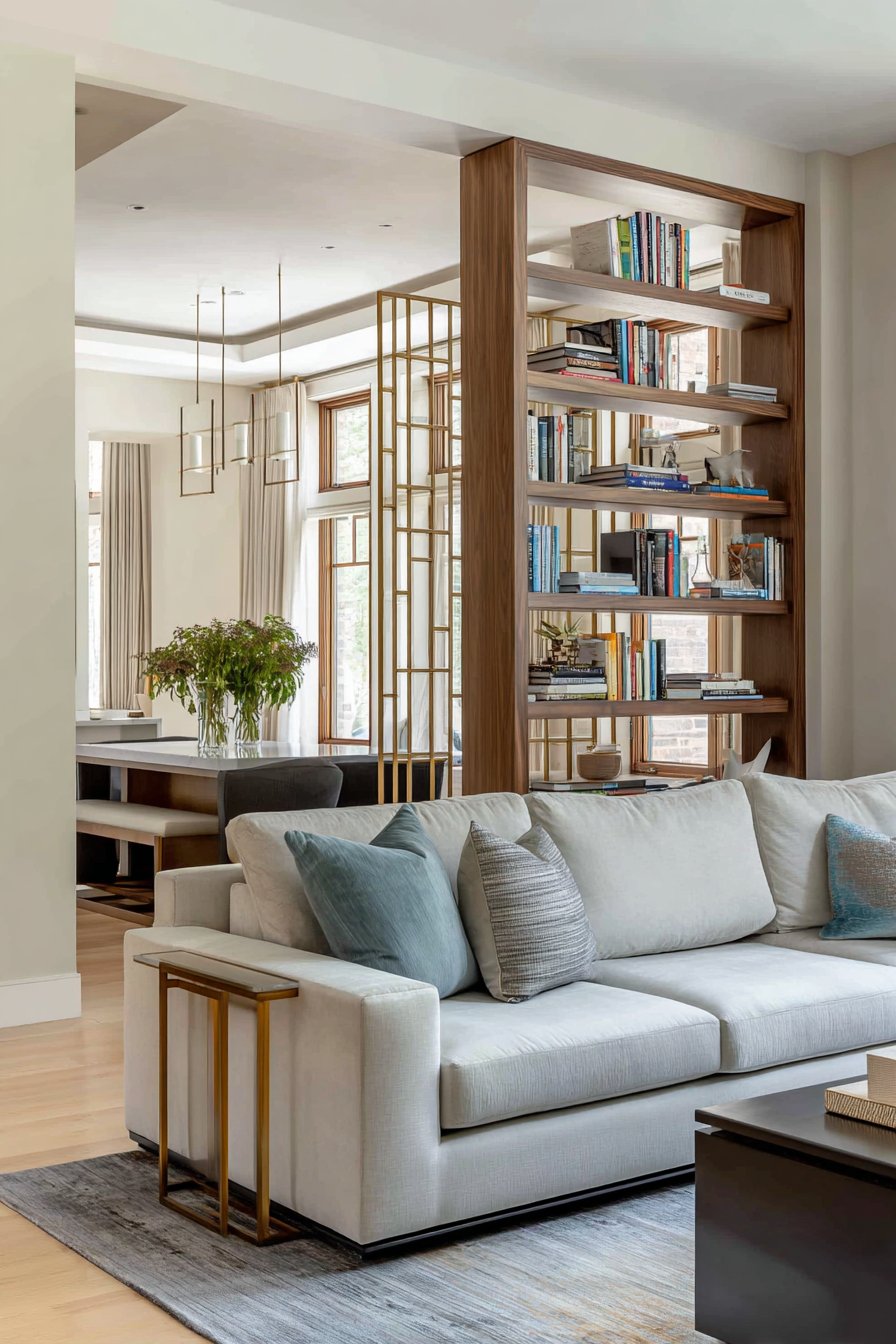
When a spacious living room feels overwhelmingly large or serves multiple functions, subtle room dividers provide definition without sacrificing the open concept’s inherent advantages. Unlike permanent walls that chop up square footage and block light flow, strategic dividers create psychological boundaries while maintaining visual and physical connectivity between zones. Open shelving units, decorative screens, and half-walls preserve sightlines while clearly demarcating different activity areas.
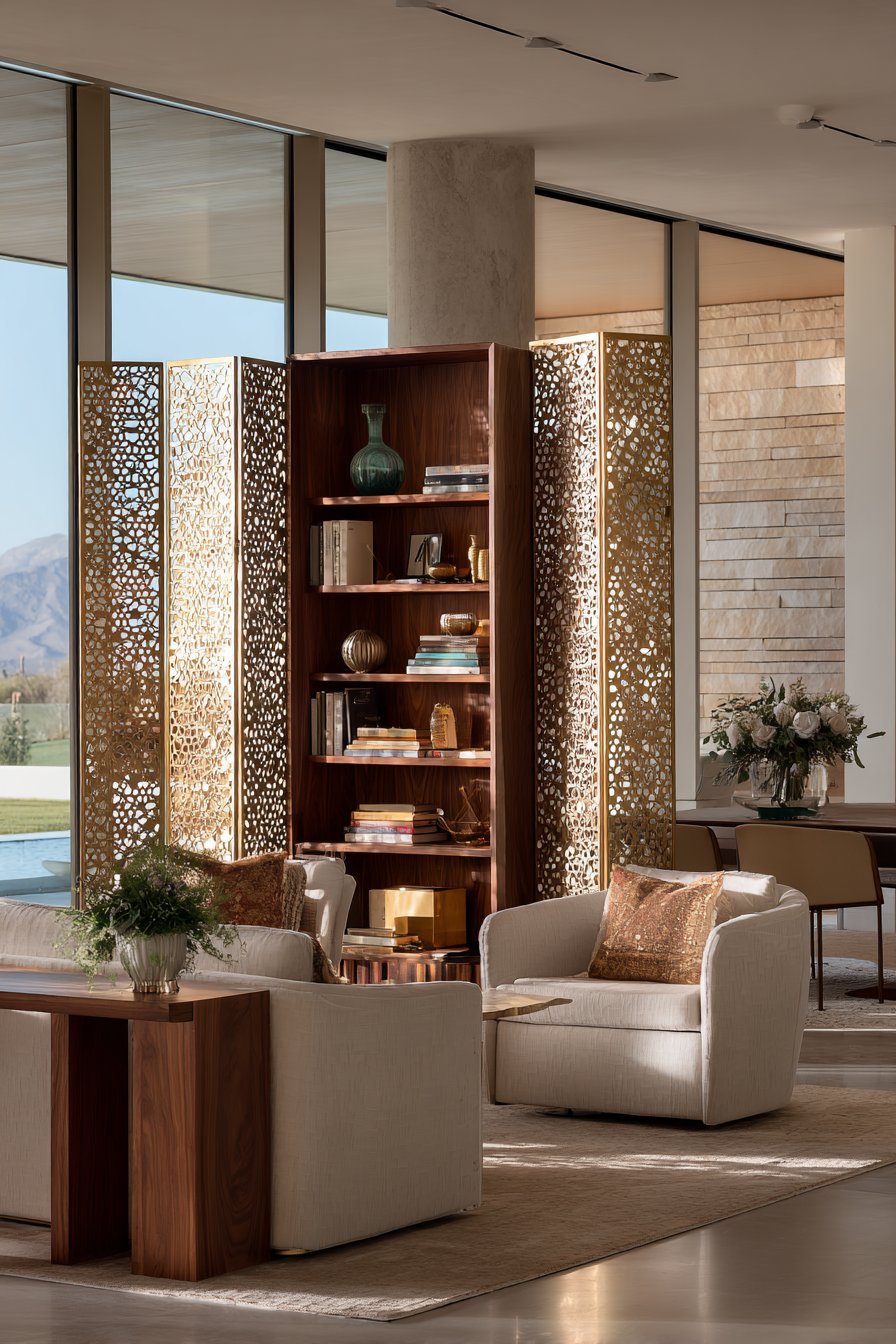
Freestanding bookcases positioned perpendicular to walls serve as functional dividers that separate spaces while providing valuable storage and display opportunities. Choose units that reach at least two-thirds of the ceiling height for meaningful impact, but opt for open-back designs that allow light and visual flow rather than solid-backed pieces that create barriers. Style these transitional elements with a curated mix of books, decorative objects, and storage baskets to make them purposeful focal points rather than afterthoughts.
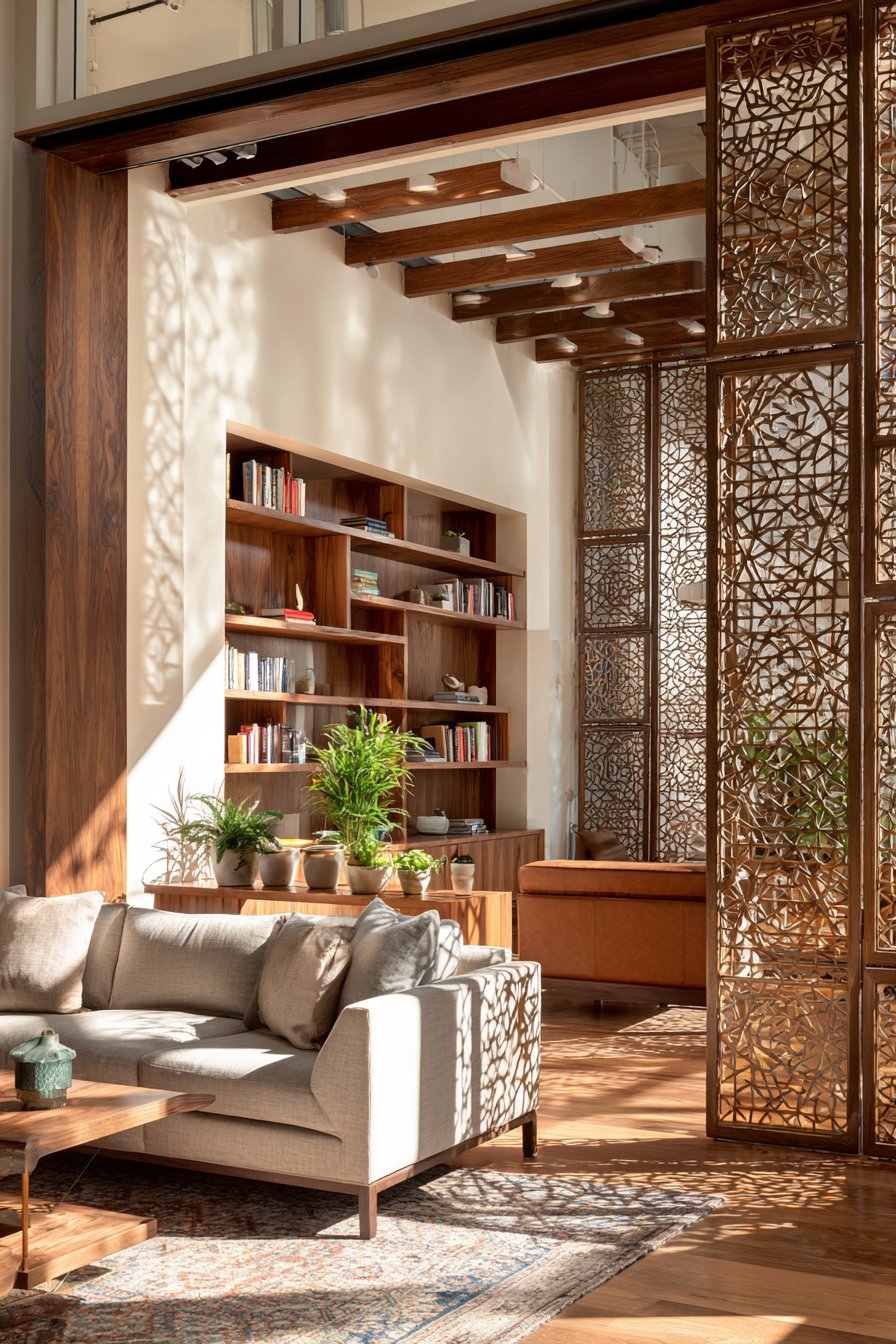
Decorative folding screens offer flexible spatial division that can be repositioned or removed entirely as needs change. These portable solutions work beautifully to separate a home office corner from the main living area or create a distinct dining zone within a great room layout. Choose screens with interesting textures, patterns, or materials that complement your overall design scheme while providing enough visual weight to clearly define spaces without overwhelming them.
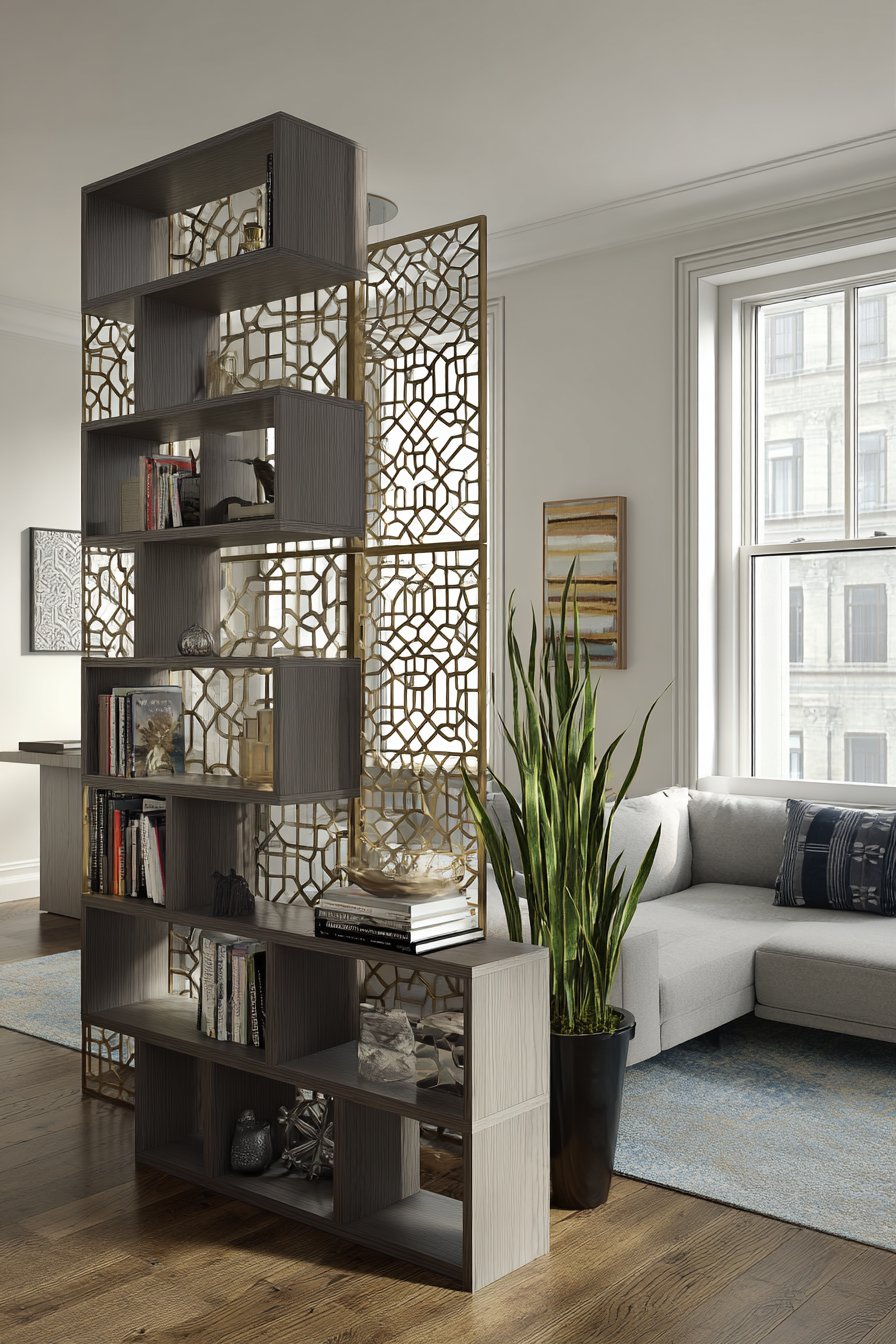
- Select dividers with transparency or negative space to maintain openness and light flow
- Position dividers to create pathways rather than obstacles, maintaining natural traffic flow
- Use console tables backed against sofas as low-profile dividers between seating and circulation areas
- Choose dividers that reach different heights to add visual variety and architectural interest
- Ensure dividers don’t block natural light sources or obstruct views to architectural features
- Consider plants or plant stands as natural, organic room dividers that add life and color
Conclusion
Arranging a spacious living room successfully requires thoughtful strategy that balances the luxury of abundant space with the human need for intimacy and definition. By implementing these six proven approaches—creating conversation zones, anchoring with appropriately scaled rugs, establishing strong focal points, utilizing vertical space, layering strategic lighting, and adding architectural interest—you transform overwhelming square footage into a beautifully composed environment that feels both grand and inviting.
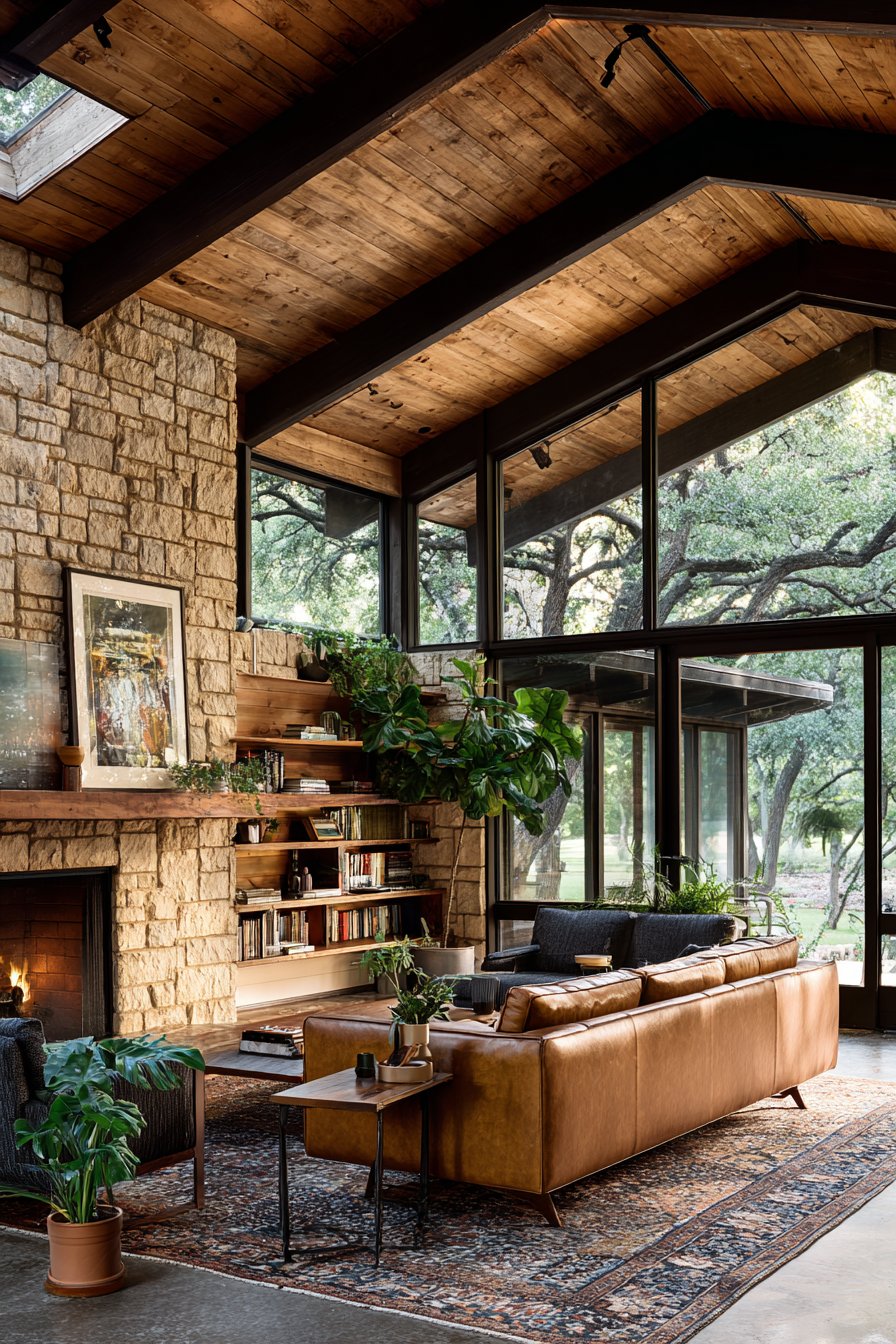
Remember that the goal isn’t to fill every inch of your spacious living room, but rather to create intentional groupings and defined areas that serve specific purposes while celebrating the openness that makes the room special. Experiment with these arrangements, adjusting furniture placement and accessories until you achieve the perfect balance for your lifestyle.
Your spacious living room should ultimately reflect your personal style while providing a welcoming sanctuary where memorable moments unfold naturally, proving that with thoughtful design, generous proportions become a canvas for everyday living at its finest.
"As an Amazon Associate, I earn from qualifying purchases."
