
In today’s world, where urban living often means making the most of compact spaces, creating a functional and stylish living room in a small area has become both an art and a necessity. The challenge of small space living room design lies not just in fitting furniture into tight quarters, but in creating an environment that feels spacious, comfortable, and reflects your personal style. A well-designed small living room can serve multiple purposes throughout the day—from morning coffee sanctuary to evening entertainment hub, from quiet reading nook to productive workspace.
The key to successful small space design lies in understanding that limitations can actually spark creativity and innovation. Every square inch must work harder, every piece of furniture should serve multiple purposes, and every design decision should contribute to the overall sense of openness and functionality. The beauty of small space living room design is that it forces us to be intentional with our choices, resulting in spaces that are not only efficient but also surprisingly sophisticated and personal.
Throughout this comprehensive guide, we’ll explore twenty distinct approaches to small space living room design, each offering unique solutions to common spatial challenges. From convertible furniture pieces that transform throughout the day to clever storage solutions that maintain clean lines, these design concepts demonstrate that size doesn’t have to limit style or comfort. Whether you’re dealing with a studio apartment, a compact condo, or simply want to maximize a smaller room in your home, these ideas will inspire you to see your space’s potential in entirely new ways.
1. Compact Sectional with Light-Reflecting Elements
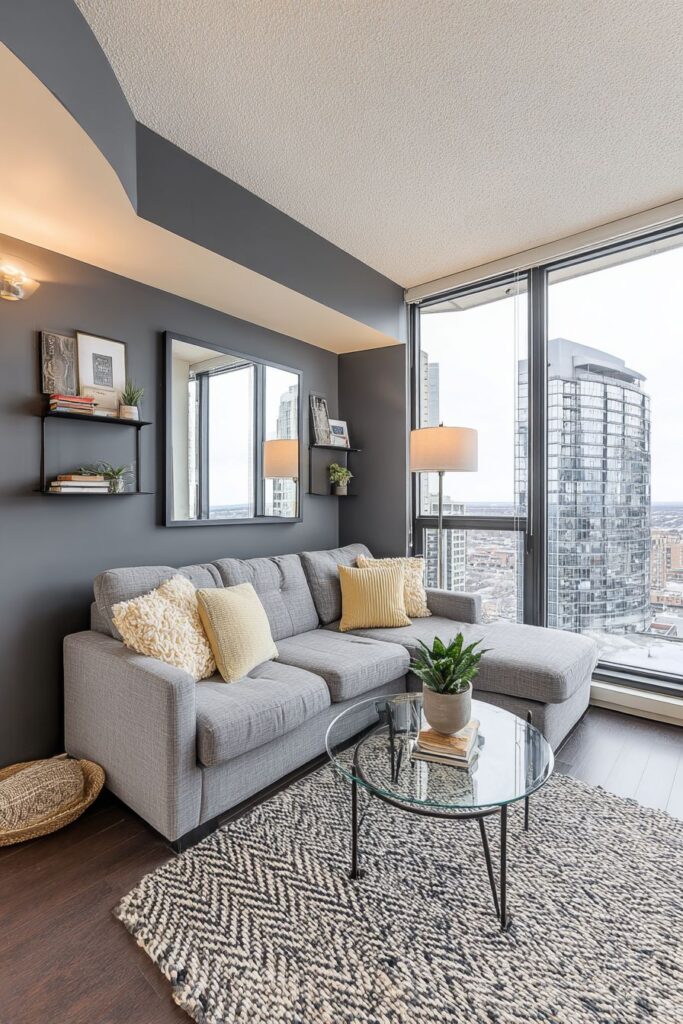
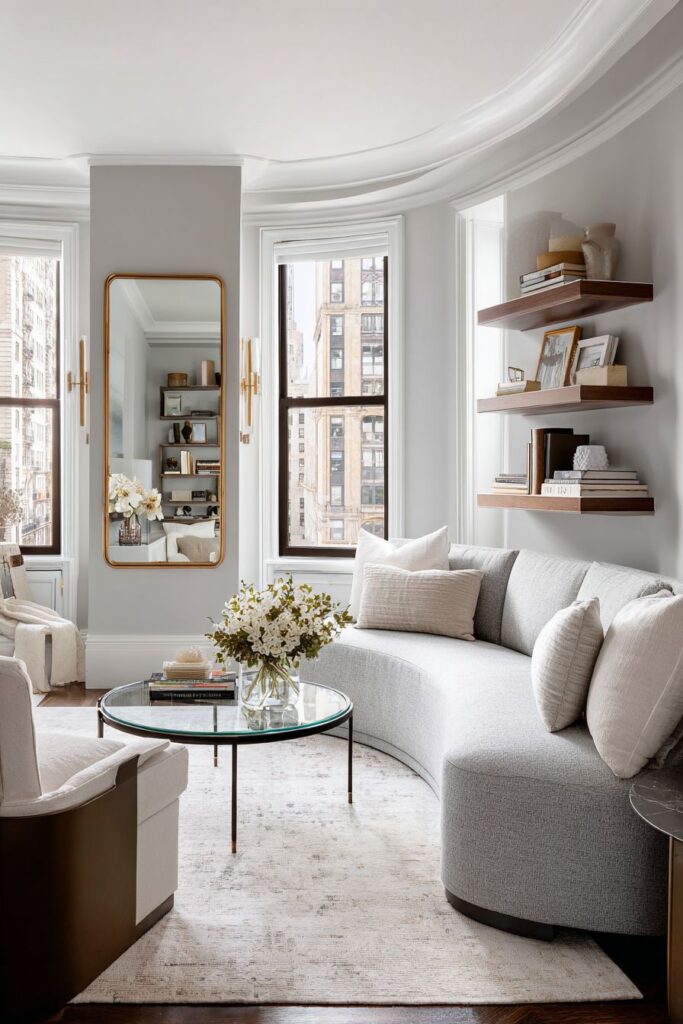
The foundation of this small space living room design centers around a thoughtfully positioned compact sectional sofa in light grey fabric, strategically placed against one wall to create maximum open floor space. This arrangement immediately establishes a sense of flow and prevents the room from feeling cramped or cluttered. The light grey fabric choice is intentional, as neutral tones help reflect light throughout the space while providing a versatile backdrop that can easily adapt to changing seasonal décor or personal style evolution.
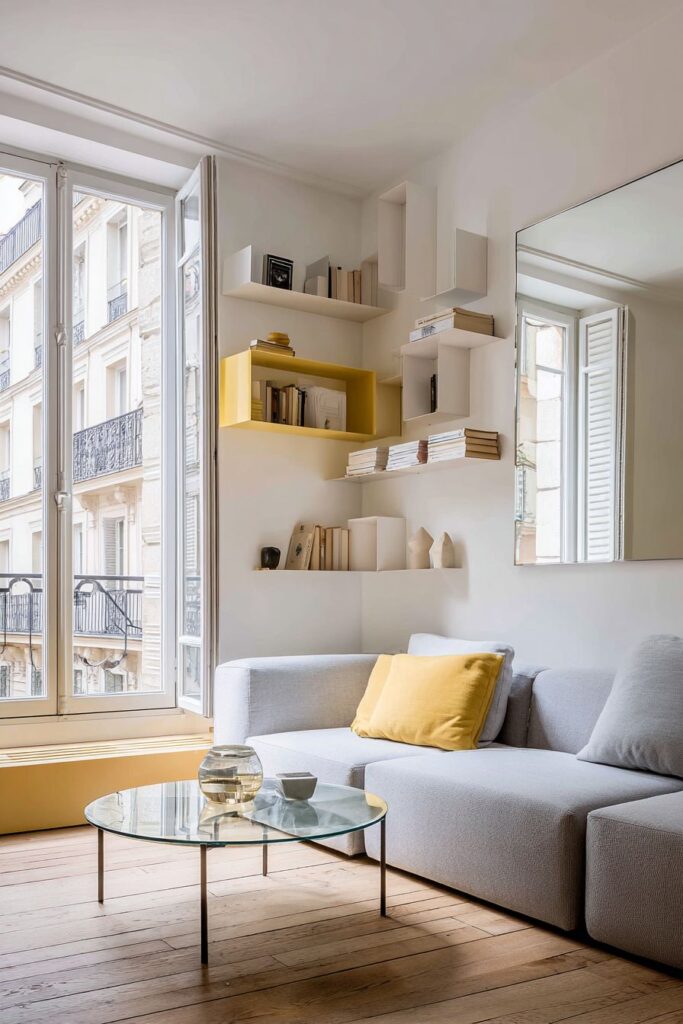
The centerpiece coffee table features a round glass top supported by slim metal legs, a design choice that serves both functional and visual purposes. The glass surface maintains transparency, allowing the eye to travel uninterrupted across the room, while the minimal metal framework takes up virtually no visual space. This creates the illusion that the table is floating, contributing to an overall sense of openness that’s crucial in small space design.
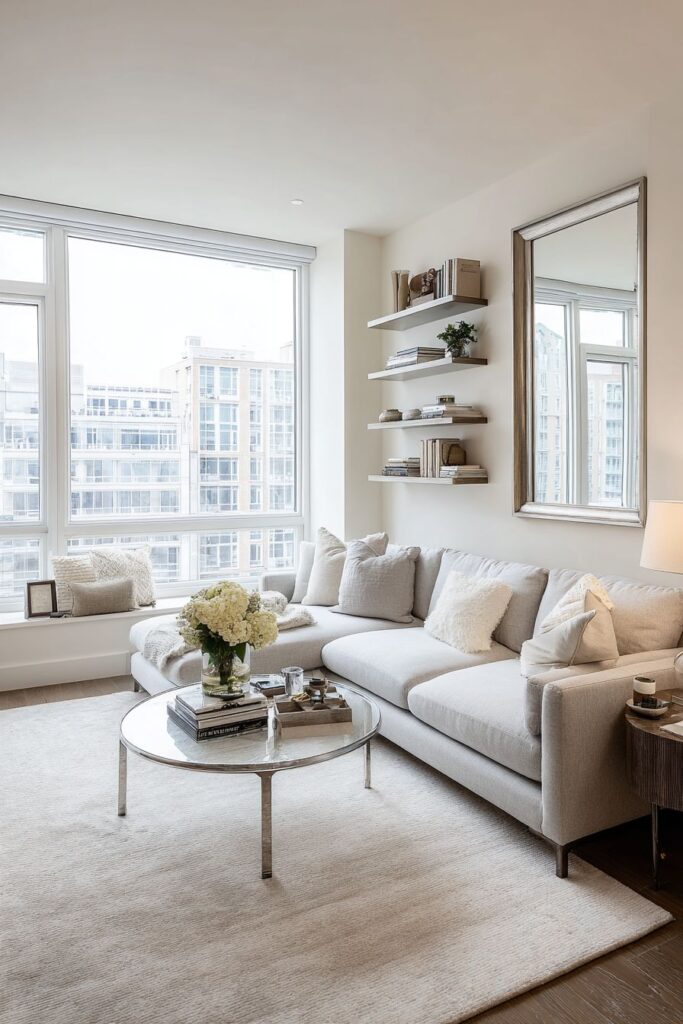
Wall-mounted floating shelves replace traditional bookcases, displaying books and decorative objects without consuming precious floor space. These shelves draw the eye upward, emphasizing the room’s vertical dimensions and creating storage opportunities that don’t interfere with traffic patterns. The strategic placement of a large mirror opposite the main window serves as perhaps the most powerful space-enhancing element, effectively doubling the perceived natural light while creating the compelling illusion of extended square footage.
Key Design Tips:
- Position sectional furniture against walls to maximize central floor space and improve traffic flow
- Choose glass furniture pieces to maintain visual transparency and prevent the space from feeling blocked
- Install floating shelves instead of floor-standing storage to emphasize vertical space
- Place mirrors strategically to reflect natural light and create the illusion of expanded space
- Select light-colored upholstery to reflect rather than absorb available light
2. Multi-Functional Convertible Living Solutions
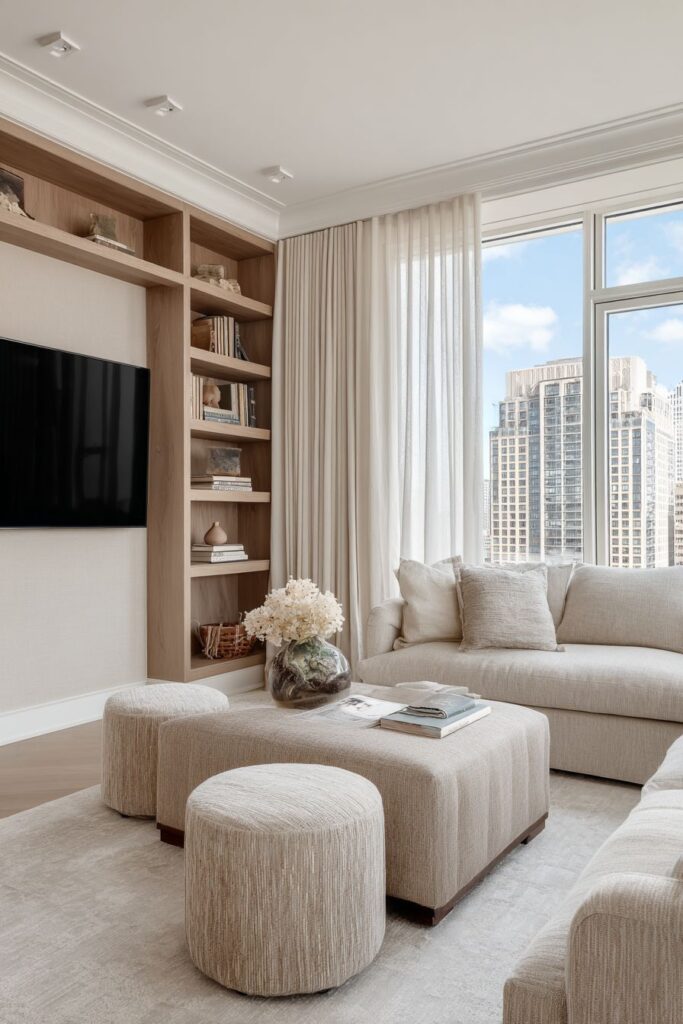
This design approach embraces the concept of furniture that works as hard as you do, featuring a convertible sofa bed in neutral linen that seamlessly transitions from daily seating to comfortable guest accommodation. The linen fabric choice provides both durability and a relaxed aesthetic that works well in small spaces, while the neutral tone ensures the piece won’t overwhelm the room visually. This dual-purpose approach is essential in small space living, where every piece must justify its footprint by serving multiple functions.
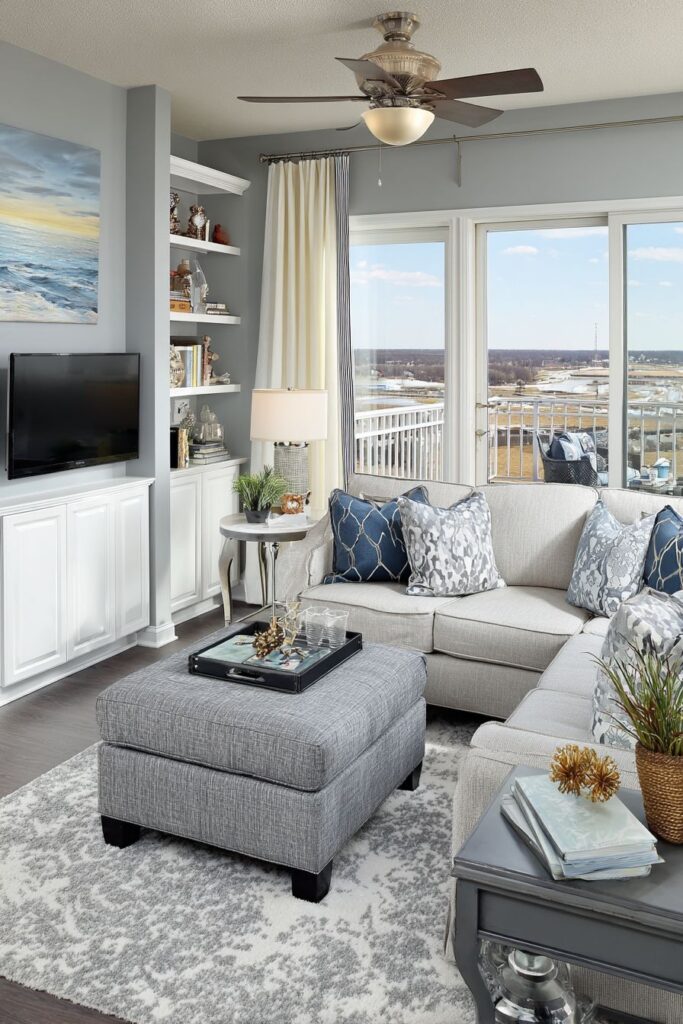
The multi-functional ottoman represents intelligent design thinking, serving simultaneously as a footrest, additional seating when needed, and hidden storage for blankets, books, or seasonal items. This piece can easily move throughout the space as needs change throughout the day, providing flexibility that’s crucial in compact living environments. When paired with the convertible sofa, it creates a complete seating system that can accommodate both daily use and overnight guests without requiring additional furniture.
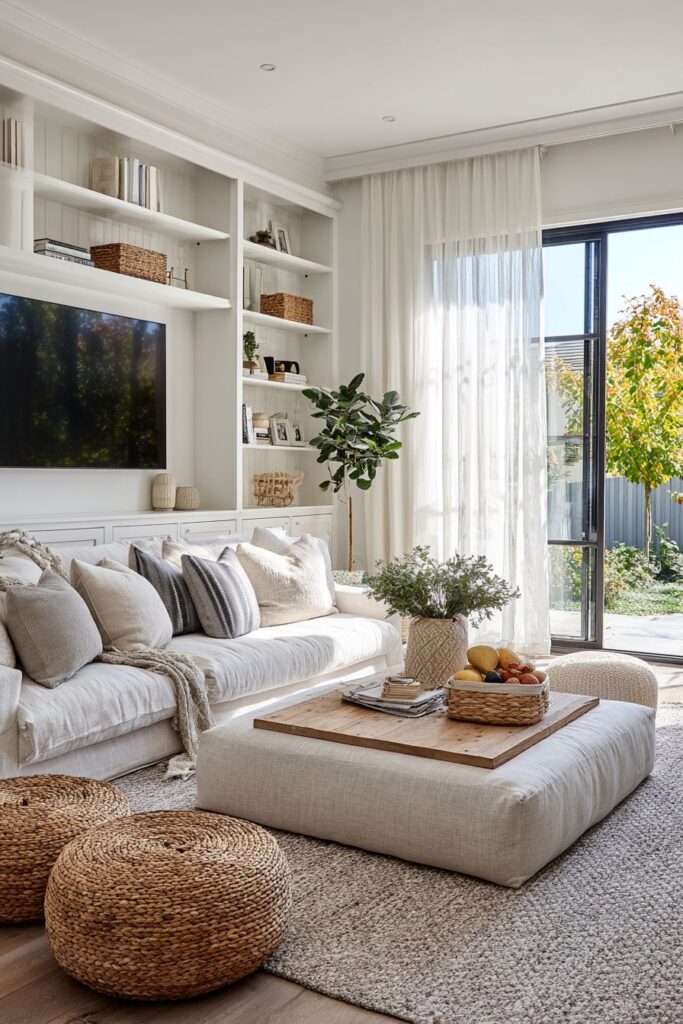
Wall-mounted television placement frees up valuable floor space while built-in shelving units frame the entertainment area, creating a custom look that maximizes storage without protruding into the room. This approach eliminates the need for a traditional entertainment center, which would consume significant floor space and potentially block natural light flow. Natural light streaming through sheer curtains provides gentle illumination while maintaining privacy, creating an atmosphere that feels both intimate and open.
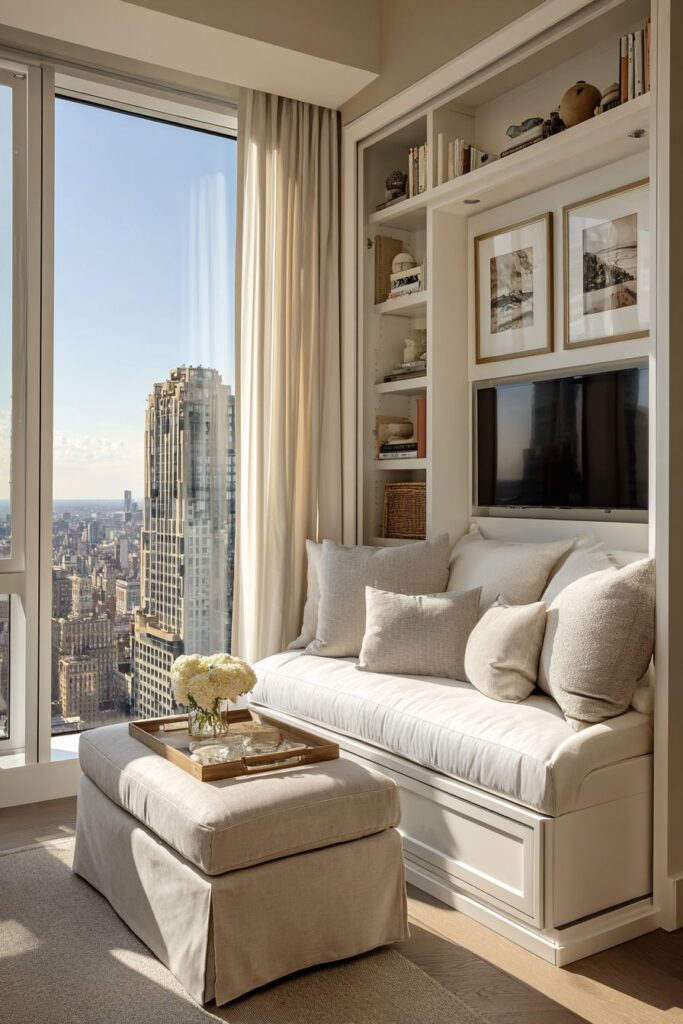
Key Design Tips:
- Invest in convertible furniture pieces that serve multiple functions throughout the day
- Choose ottomans with hidden storage to maximize space efficiency
- Mount televisions on walls to free up floor space and improve sight lines
- Install built-in shelving to create custom storage solutions that don’t protrude into the room
- Use sheer window treatments to maximize natural light while maintaining privacy
3. Angular Positioning for Zone Creation
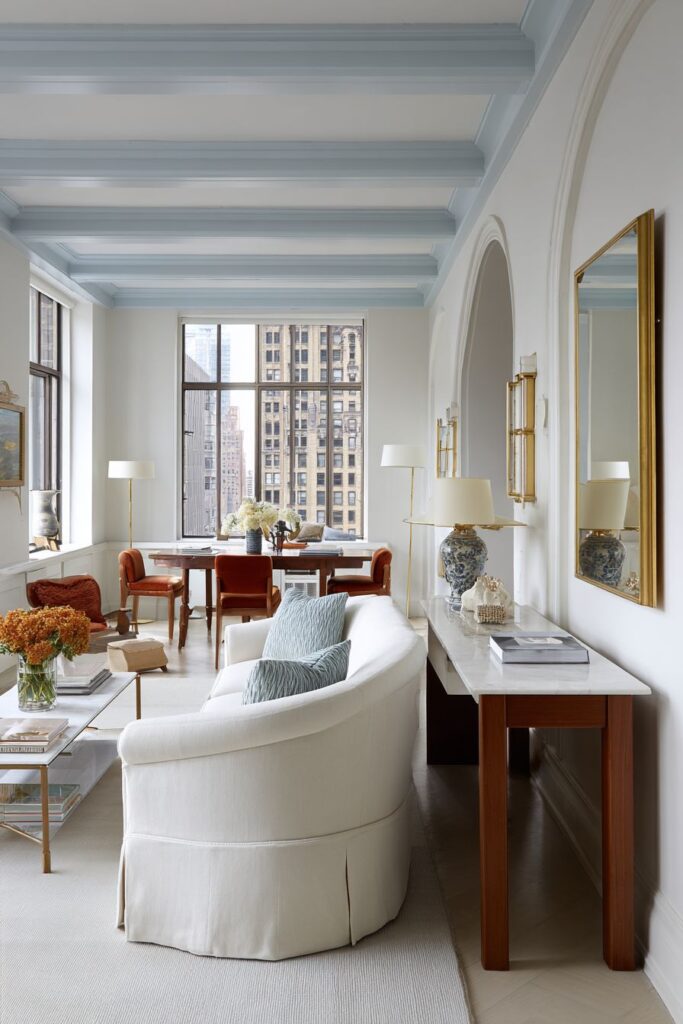
The strategic angling of a loveseat in this design creates distinct functional zones within a compact area, demonstrating how thoughtful furniture placement can make a small space feel more spacious and organized. By positioning the loveseat at an angle rather than parallel to the walls, the design creates natural divisions between different areas of the room while maintaining visual flow. This technique is particularly effective in studio apartments or open-plan spaces where traditional room divisions aren’t possible.
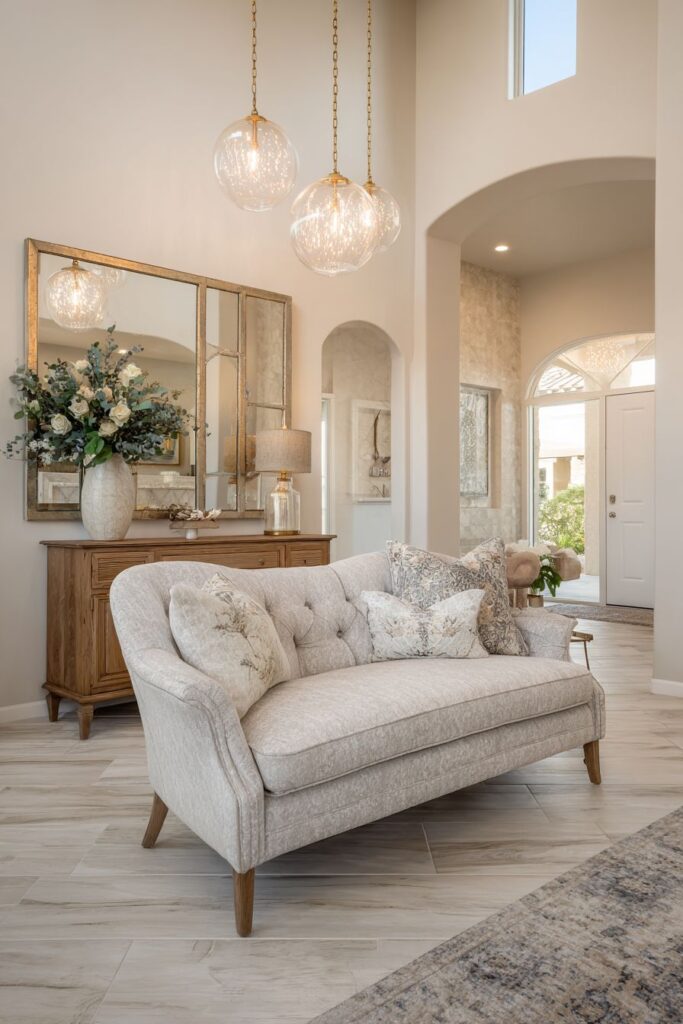
A narrow console table positioned behind the angled sofa provides essential surface space for lamps, books, or decorative objects without blocking natural pathways through the room. This placement is clever because it utilizes otherwise wasted space while providing functional benefits. The console’s narrow profile ensures it doesn’t impede movement while offering storage and display opportunities that would otherwise require additional furniture pieces.
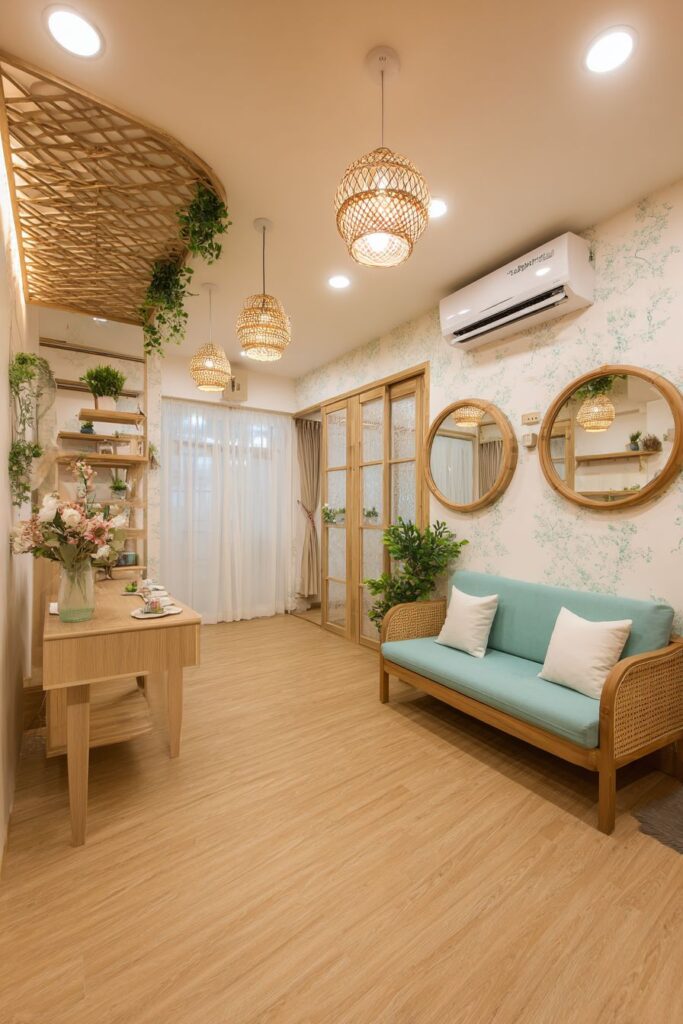
Hanging pendant lights eliminate the need for bulky table lamps or floor lamps, freeing up precious surface and floor space while providing focused ambient lighting. This overhead approach to lighting is particularly effective in small spaces because it draws the eye upward, emphasizing ceiling height and creating a sense of vertical spaciousness. Light-colored walls combined with strategically placed mirrors work together to amplify the sense of openness, bouncing light throughout the room and creating the illusion of extended dimensions.
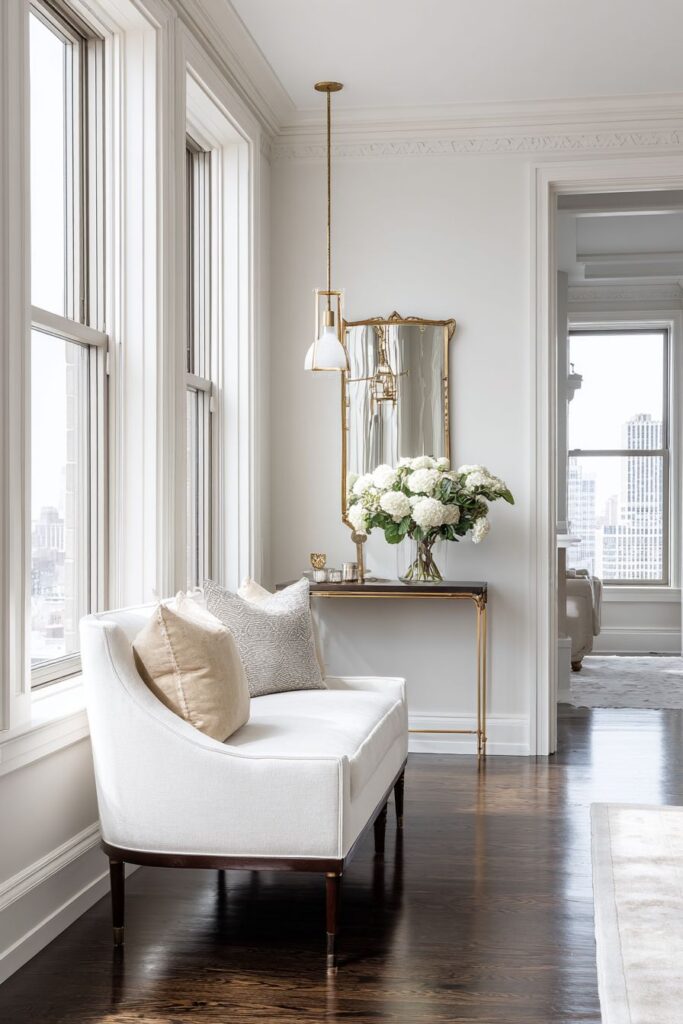
Key Design Tips:
- Angle furniture pieces to create distinct zones within small spaces
- Use narrow console tables behind seating to maximize surface area without blocking pathways
- Choose hanging pendant lights to free up floor and table space
- Position mirrors strategically to reflect light and create depth
- Maintain light wall colors to maximize light reflection and space perception
4. Modular Flexibility with Bold Color Accents
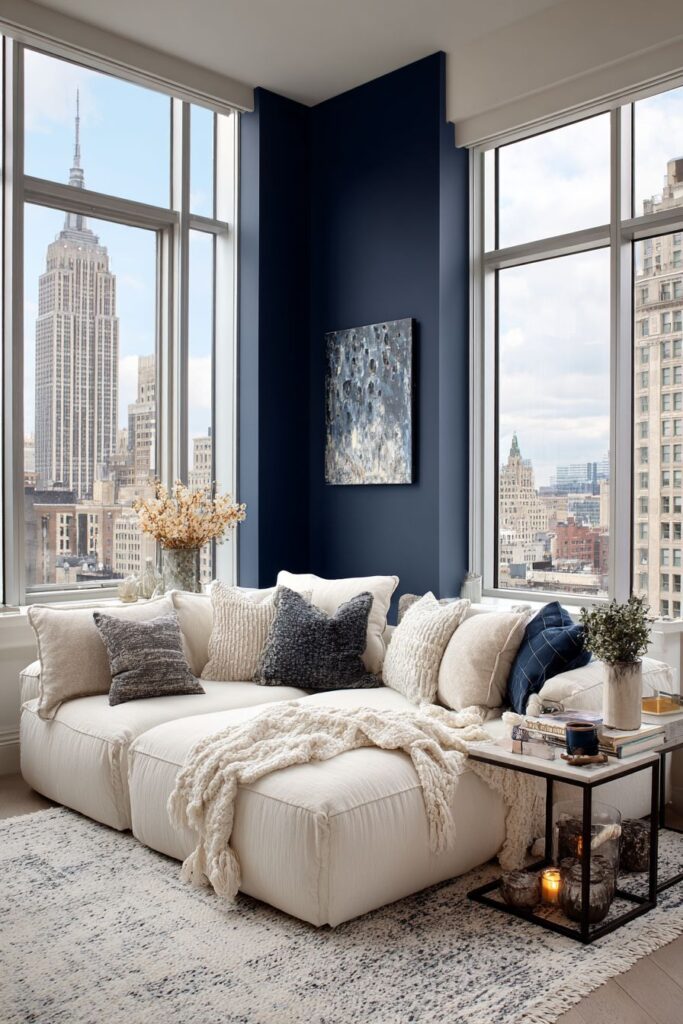
This design showcases the power of modular seating systems that can be reconfigured based on changing needs, whether for intimate conversations, larger gatherings, or solo relaxation. The modular approach is particularly valuable in small spaces because it allows homeowners to adapt their furniture arrangement for different occasions without requiring multiple sets of furniture. Each component can function independently or combine with others to create various seating configurations.
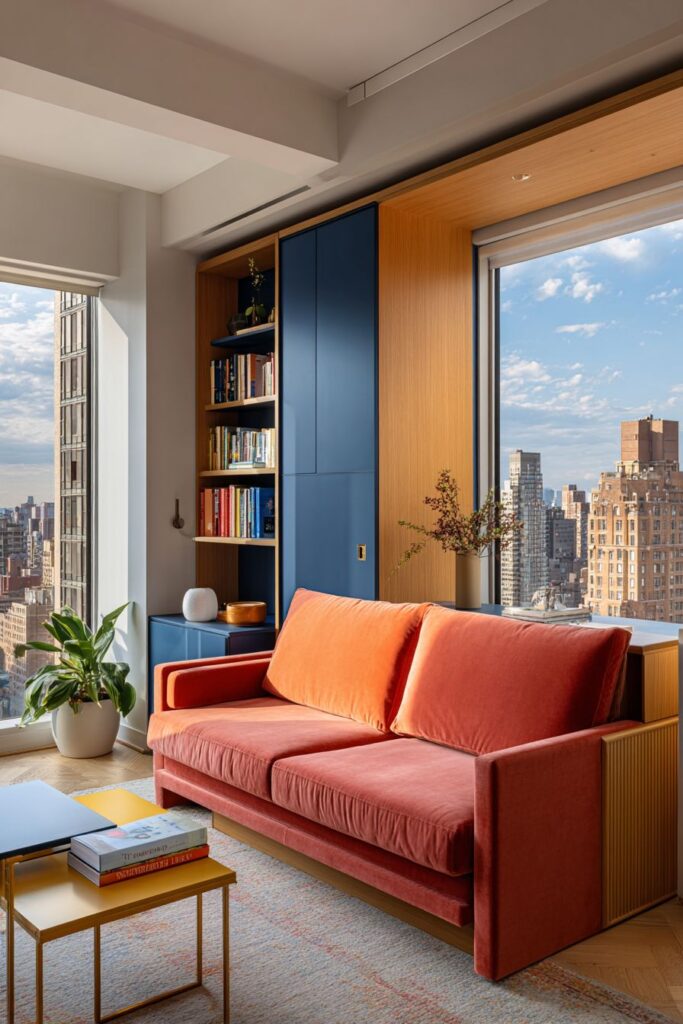
Nesting tables represent another brilliant space-saving solution, tucking neatly away when not in use while providing surface space exactly when and where it’s needed. These tables can be pulled out individually for drinks or snacks, or used together to create a larger surface for games or projects. When nested, they occupy the footprint of just one table, making them ideal for spaces where flexibility is paramount.
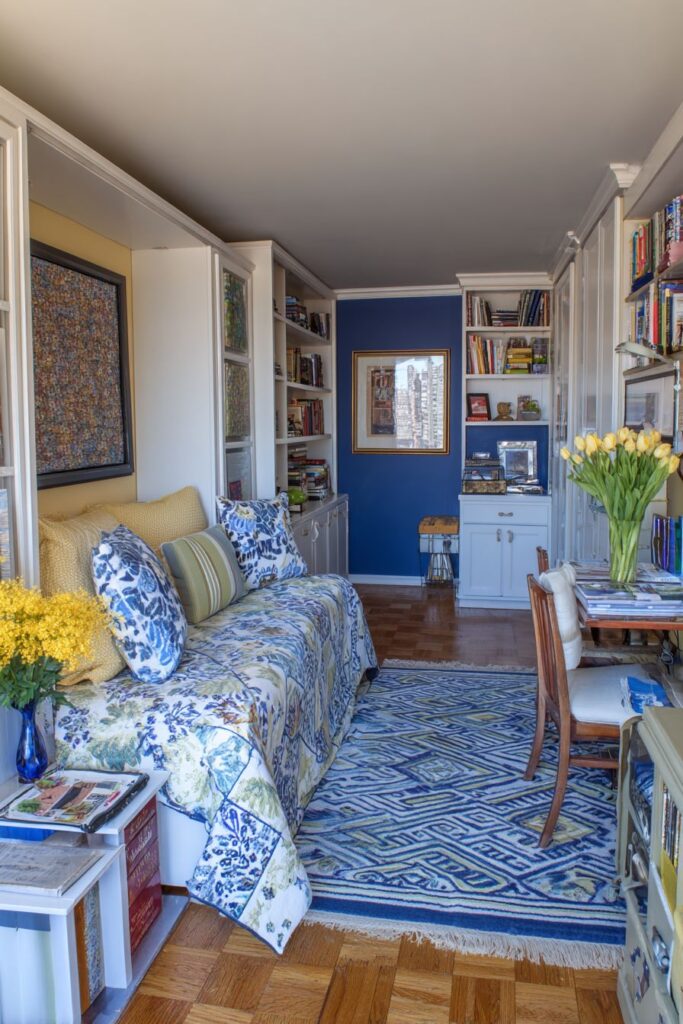
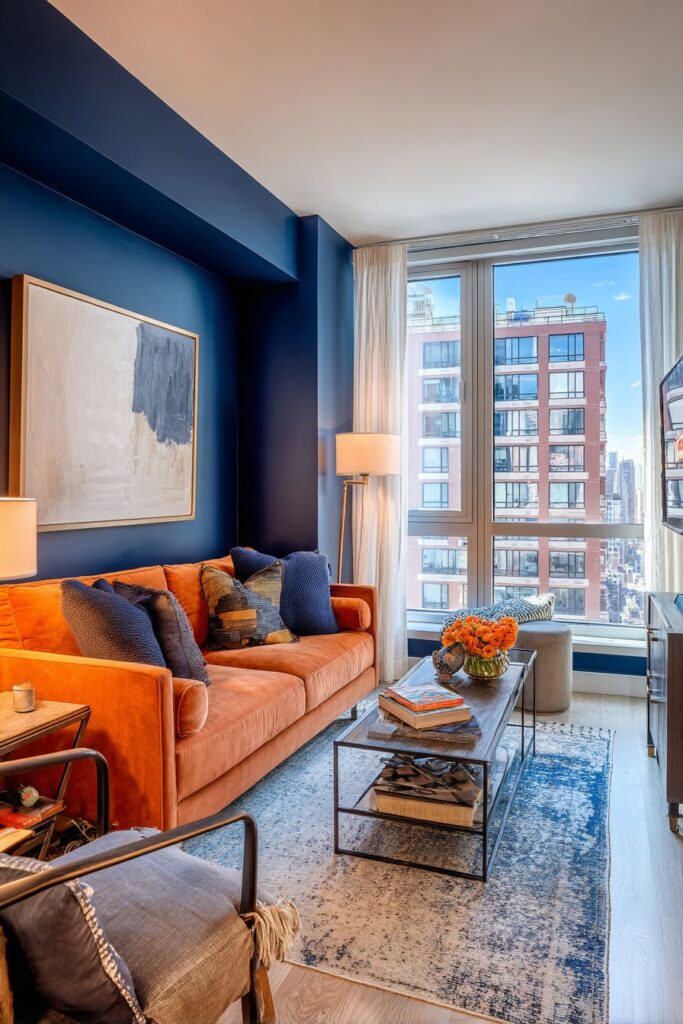
Wall-mounted cabinets provide essential storage without sacrificing floor space, maintaining the room’s open feel while hiding clutter and everyday items. The bold accent wall in deep blue demonstrates how color can be used strategically in small spaces to create visual depth and interest. Rather than making the room feel smaller, the deep color actually recedes visually, creating the perception of greater depth while the remaining light walls maintain brightness and airiness throughout the space.
Key Design Tips:
- Choose modular furniture systems that can be reconfigured for different needs
- Invest in nesting tables that tuck away when not in use
- Install wall-mounted storage to preserve floor space
- Use one bold accent wall to create depth while keeping other walls light
- Select pieces that can function independently or together for maximum flexibility
5. Minimalist Lines with Vertical Emphasis
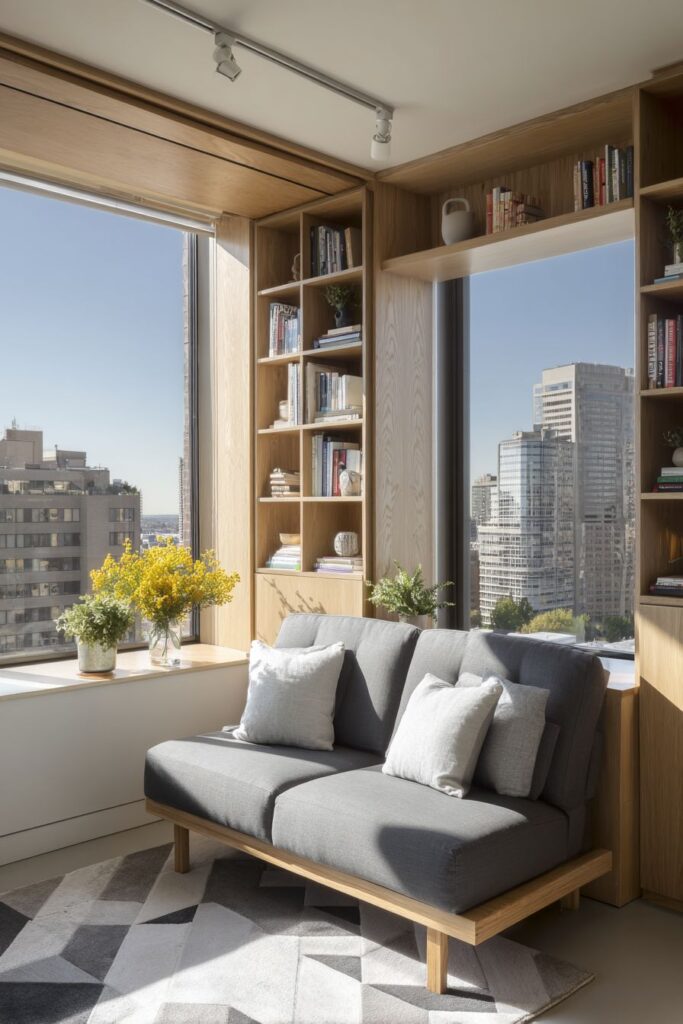
This design celebrates the beauty of clean, minimalist aesthetics while maximizing both function and visual impact in a compact space. The sleek two-seater sofa with exposed wooden legs and streamlined silhouette provides comfortable seating without visual bulk, while the exposed legs create a sense of lightness that allows light to flow underneath the furniture. This elevated approach prevents the room from feeling grounded or heavy, a common issue in small spaces filled with furniture that sits directly on the floor.
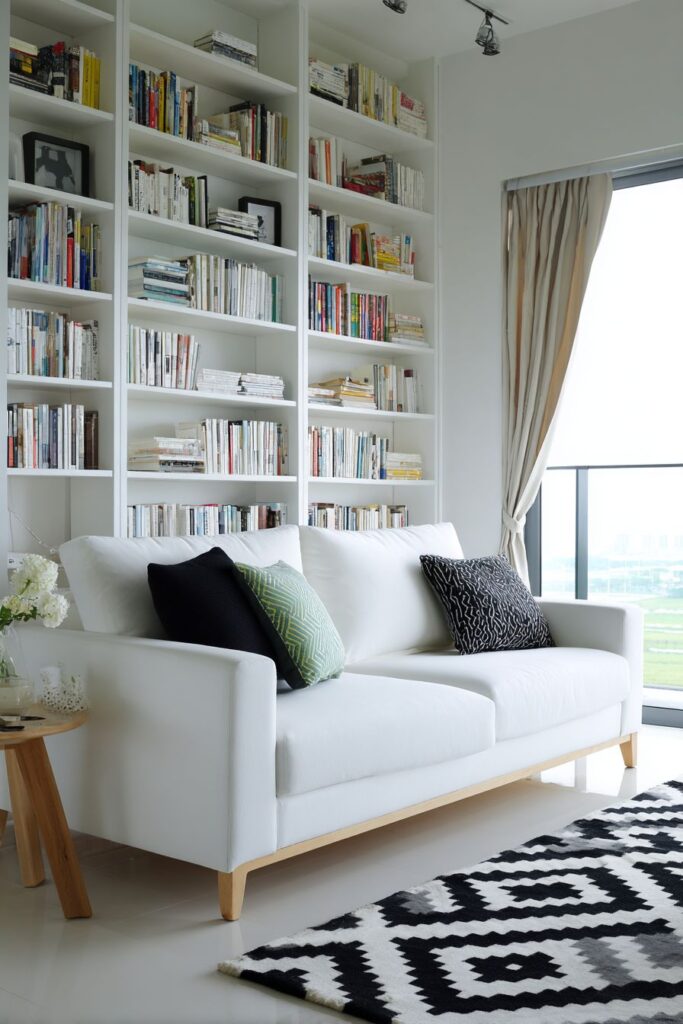
A geometric area rug serves multiple purposes in this design, defining the seating area while adding visual interest and comfort underfoot. The rug’s pattern draws the eye and creates a focal point without overwhelming the space, while its boundaries help establish the conversation area within the larger room context. The key is selecting a rug that’s appropriately sized—large enough to anchor the seating but not so large that it overwhelms the available floor space.
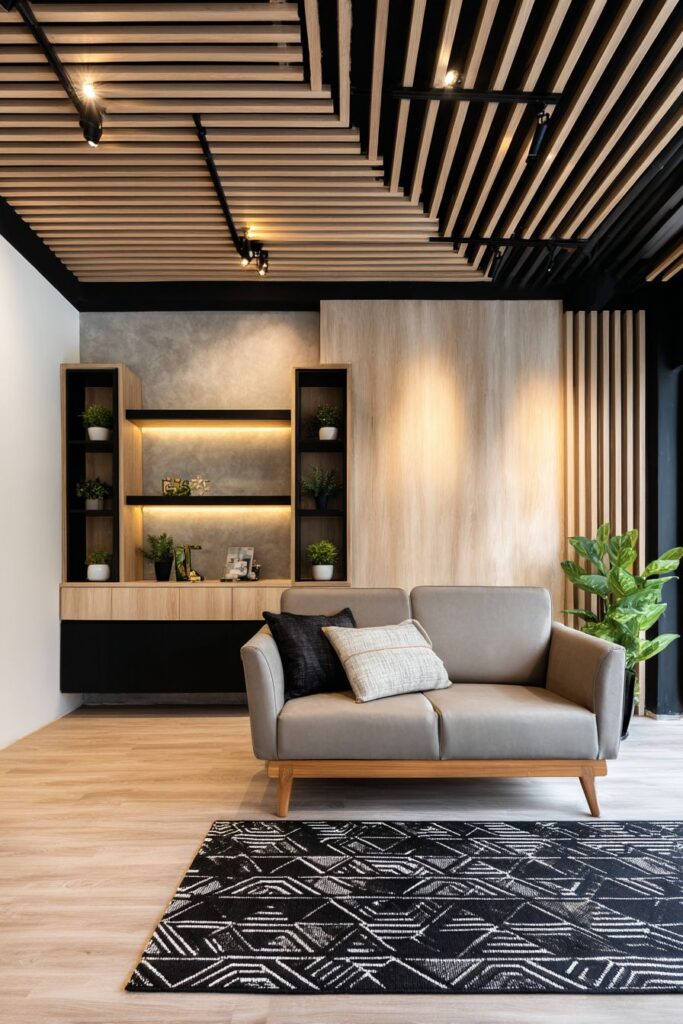
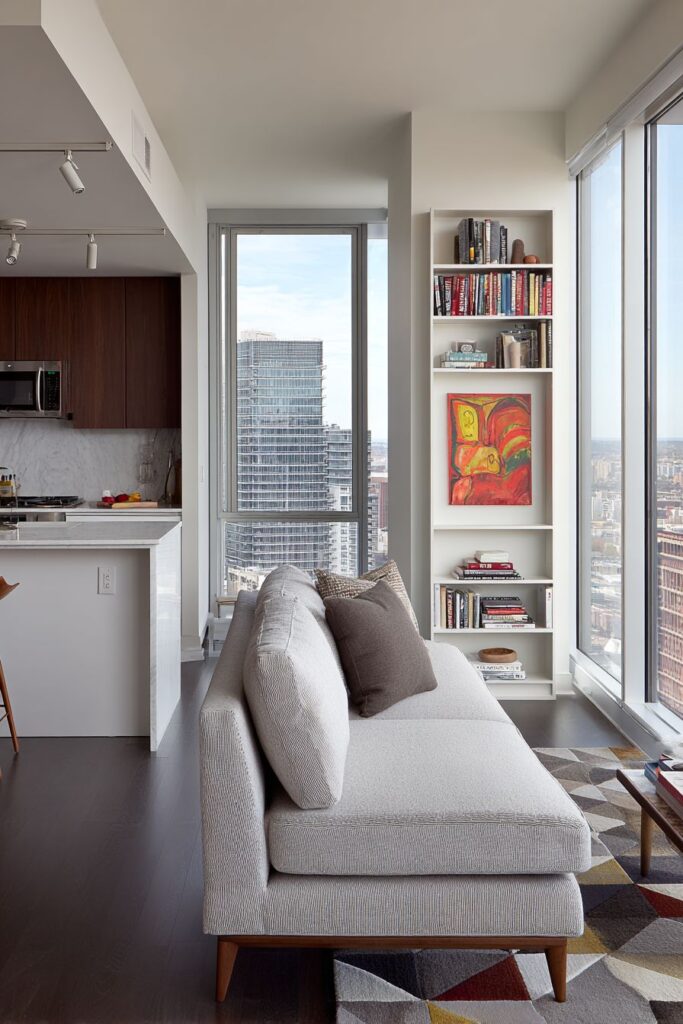
Tall, narrow bookcases exemplify the principle of thinking vertically in small spaces, drawing the eye upward and emphasizing ceiling height while providing substantial storage for books, decorative objects, and everyday items. These vertical elements create the illusion of greater height while efficiently using wall space that might otherwise remain unused. Track lighting along the ceiling provides even, adjustable illumination without cluttering surfaces or requiring floor space for lamps.
Key Design Tips:
- Choose furniture with exposed legs to create visual lightness and allow light flow
- Use geometric rugs to define spaces while adding visual interest
- Install tall, narrow storage to emphasize vertical space
- Select track lighting to provide flexible illumination without surface clutter
- Maintain clean lines throughout to prevent visual overwhelm
6. Corner Maximization with Functional Storage
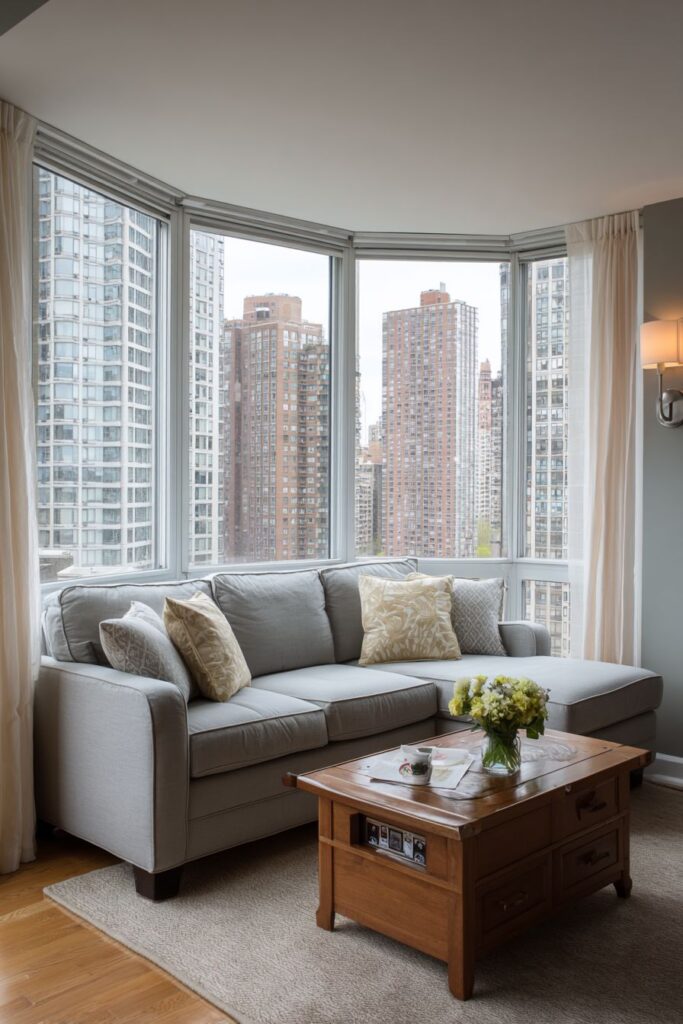
This design brilliantly demonstrates how corner spaces can be transformed from dead zones into highly functional areas through strategic furniture placement and thoughtful design choices. The corner sectional arrangement maximizes seating capacity within an L-shaped configuration, making efficient use of space that might otherwise accommodate only a single chair or remain unused. This positioning also creates a natural conversation area while leaving the center of the room open for movement and other activities.
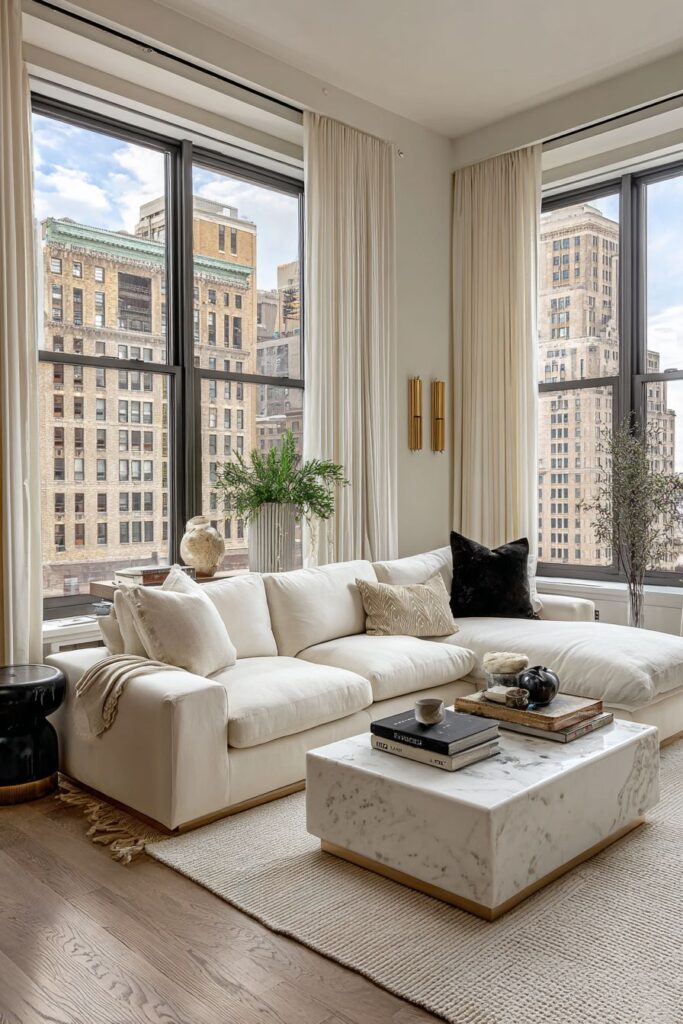
The lift-top coffee table represents innovative thinking in small space furniture design, providing hidden storage for blankets, games, books, or seasonal items while maintaining a sleek, unobtrusive profile during daily use. When the top is lifted, it can serve as a laptop desk or dining surface, adding yet another layer of functionality to this hardworking piece. This type of hidden storage is crucial in small spaces where traditional storage furniture would consume too much visual or physical space.
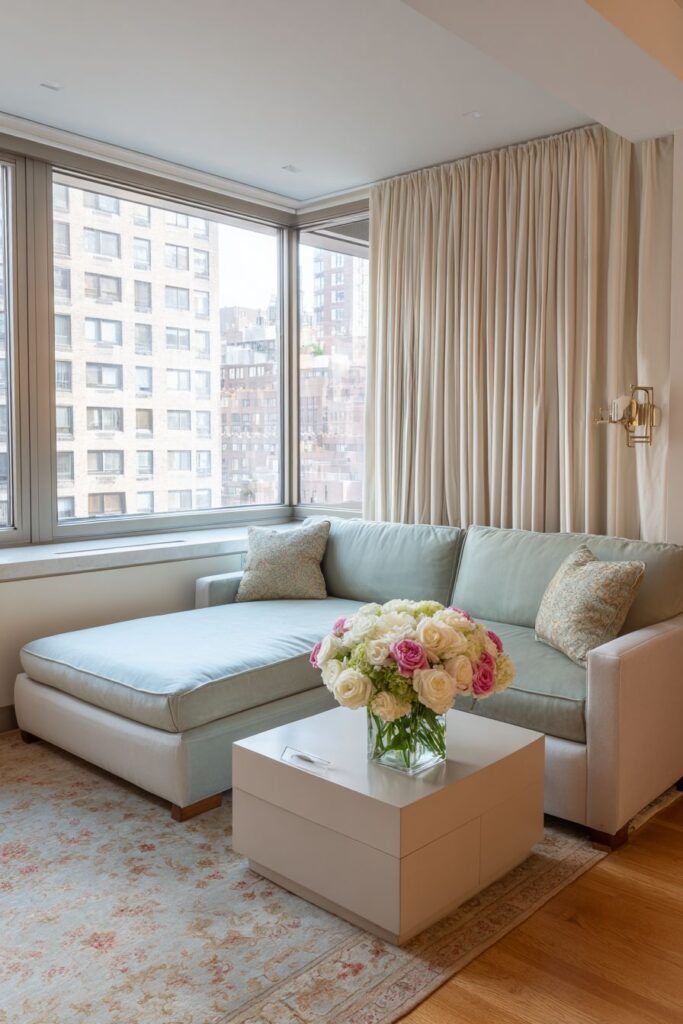
Floor-to-ceiling curtains in light fabric create one of the most effective illusions in small space design, making windows appear larger and ceilings higher than they actually are. This vertical emphasis draws the eye upward and creates the perception of greater volume within the room. Wall sconces provide focused lighting for reading or tasks while freeing up valuable table space that would otherwise be occupied by traditional table lamps.
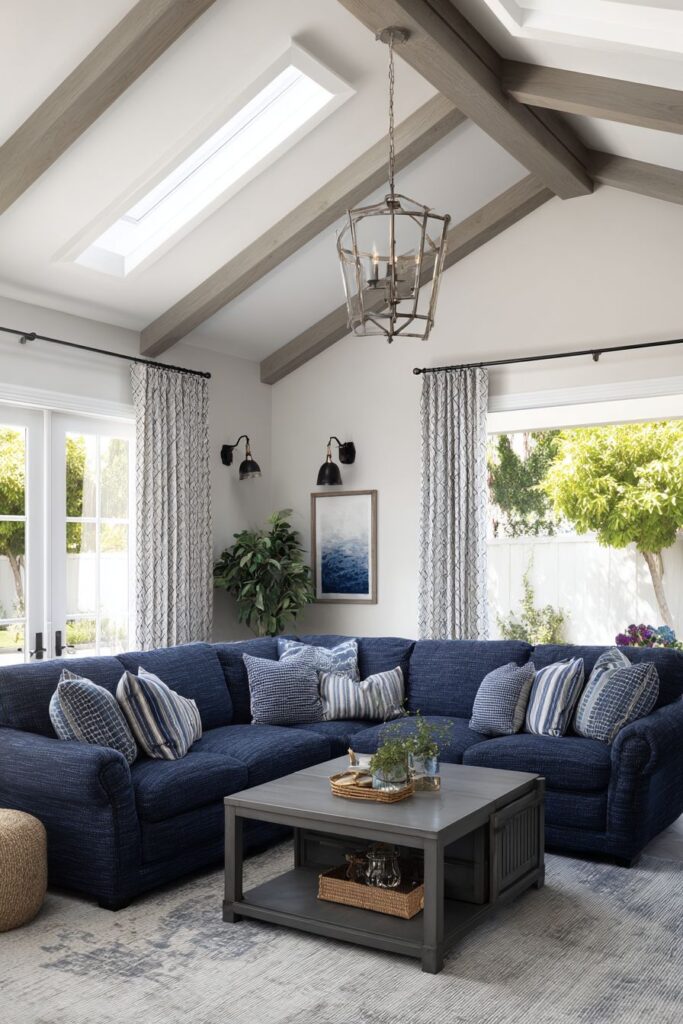
Key Design Tips:
- Utilize corner spaces with sectional seating to maximize capacity
- Choose coffee tables with hidden storage and lift-top functionality
- Install floor-to-ceiling curtains to create height illusions
- Use wall sconces to provide task lighting without occupying surface space
- Select light fabrics that don’t visually weigh down the space
7. Multi-Purpose Daybed Design
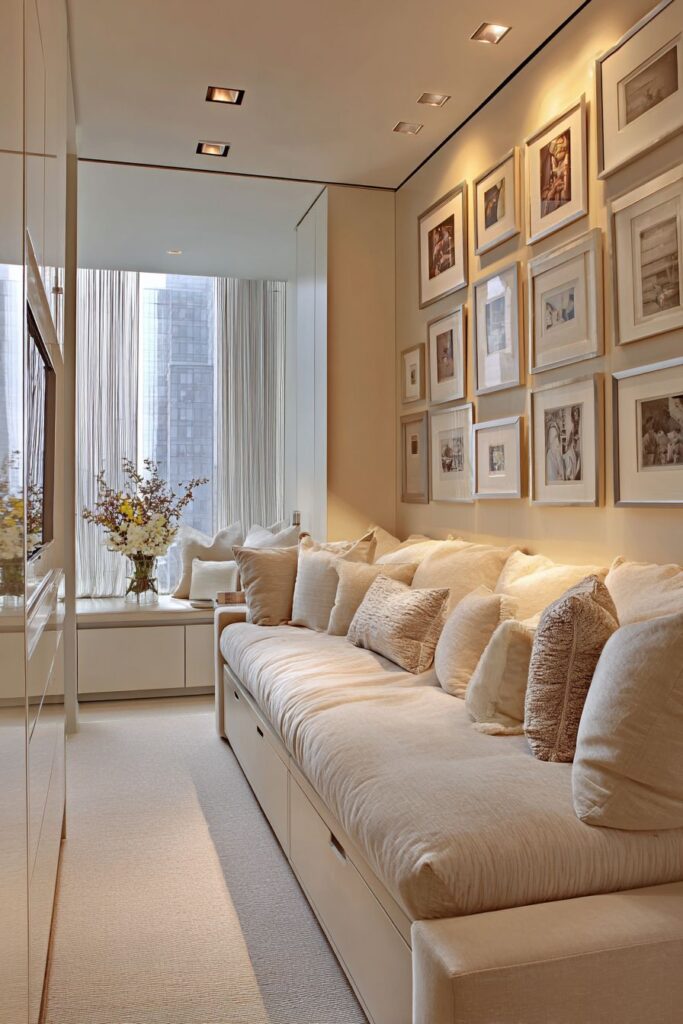
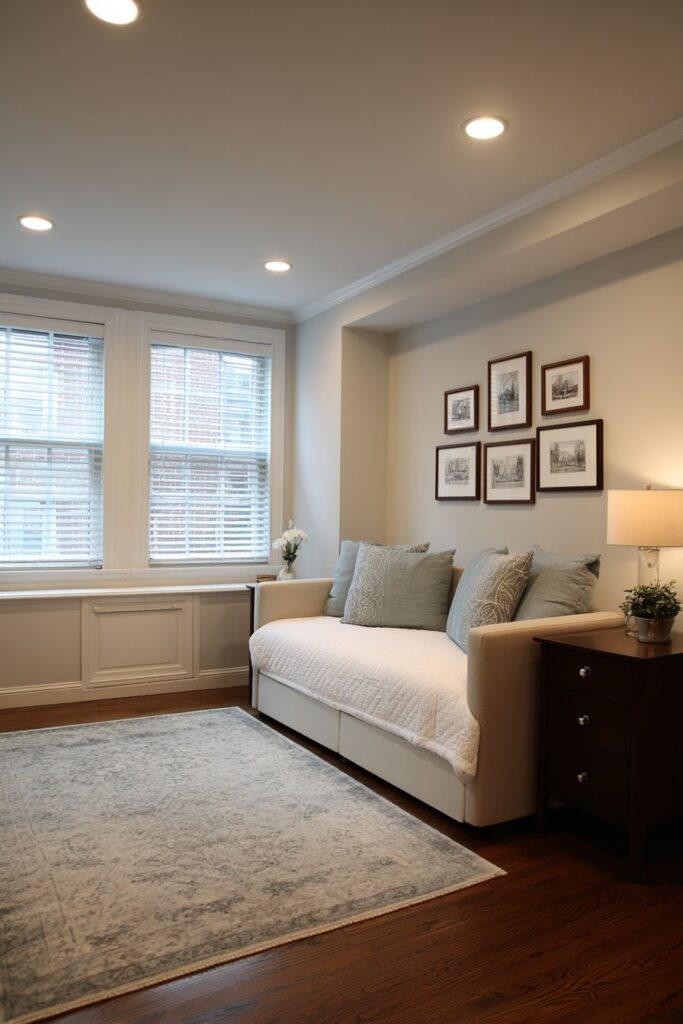
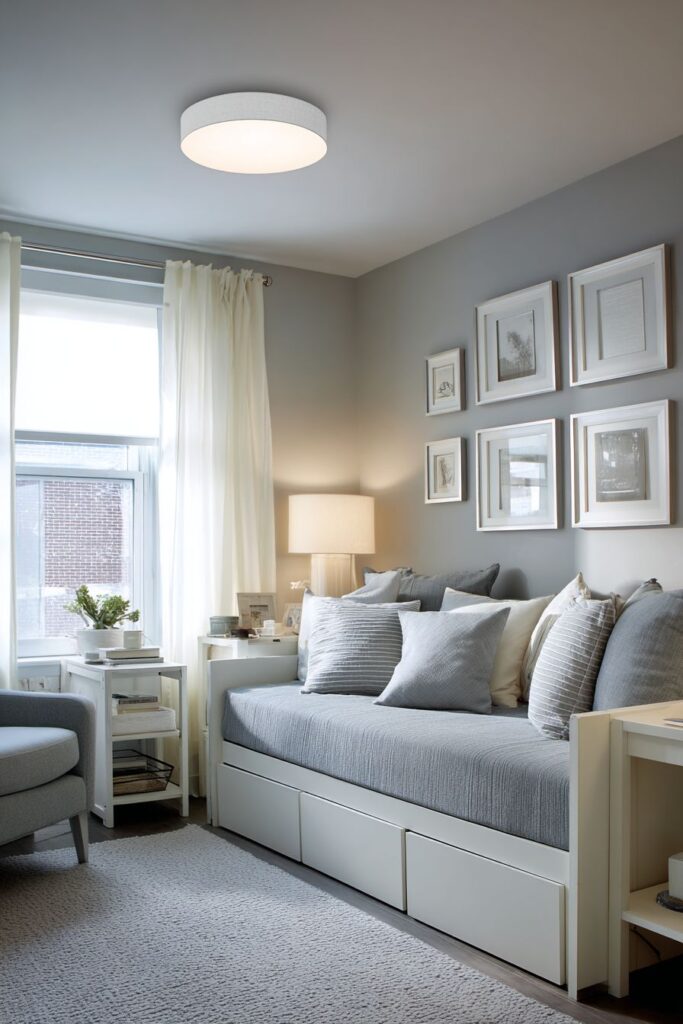
The daybed concept transforms traditional seating into a multi-functional powerhouse perfect for small space living, serving as comfortable daily seating, occasional sleeping space for guests, and storage solution all in one elegant piece. Built-in drawers underneath provide hidden storage for linens, seasonal clothing, or everyday items, eliminating the need for separate storage furniture. This approach is particularly valuable in studio apartments or spaces that must accommodate both living and sleeping functions.
Folding side tables represent the ultimate in flexible furniture design, providing surface space exactly when needed while disappearing completely when not in use. These tables can be stored flat against the wall, taking up minimal space while remaining easily accessible for drinks, books, or laptop work. This type of adaptable furniture allows small spaces to transform throughout the day based on changing needs and activities.
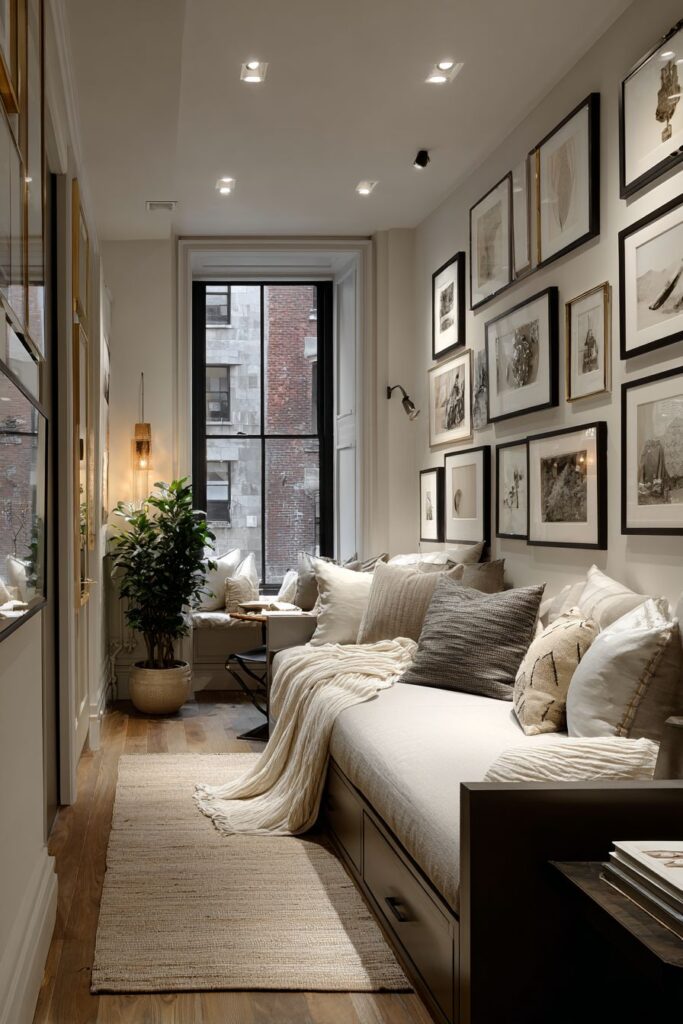
A carefully curated gallery wall of small framed artwork creates visual interest and personality without overwhelming the compact space. The key to successful gallery walls in small rooms is scale and proportion—multiple small pieces create more visual impact than one large piece while allowing for personal expression and flexibility. Each piece can be easily changed or rearranged as tastes evolve, providing an affordable way to refresh the space’s appearance.
Key Design Tips:
- Choose daybeds with built-in storage to maximize functionality
- Invest in folding furniture that can be stored flat when not needed
- Create gallery walls with multiple small pieces rather than large artwork
- Use recessed lighting to keep ceilings clean and uncluttered
- Select pieces that can transform throughout the day for different uses
8. Streamlined Reading Corner
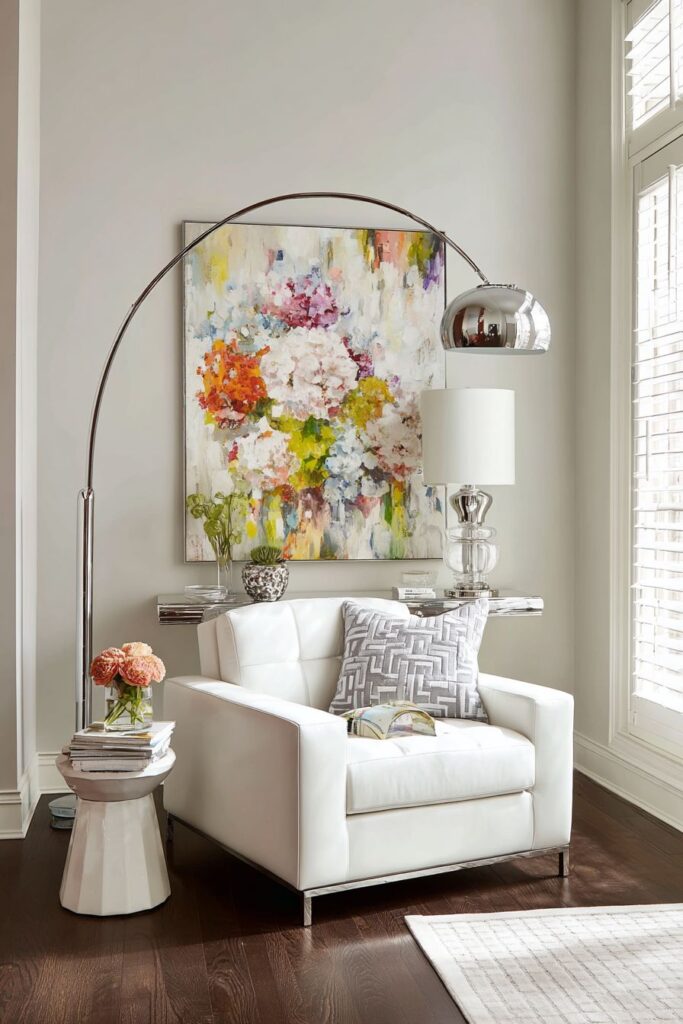
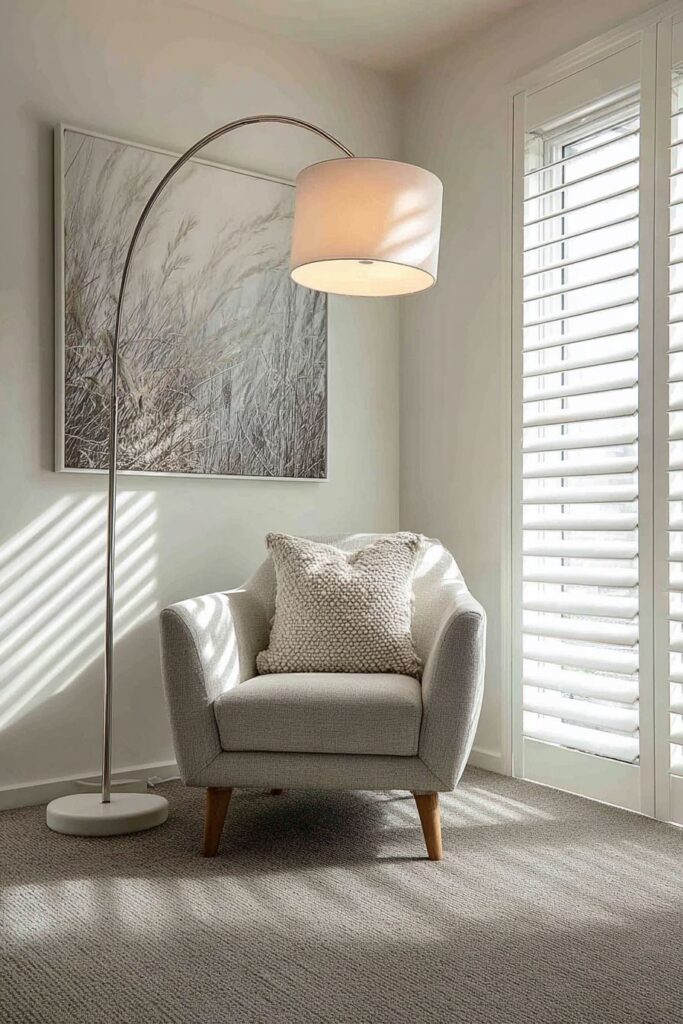
This design creates an intimate reading sanctuary within a small space through careful furniture selection and lighting design. The streamlined armchair provides comfortable seating without visual bulk, while its clean lines and proportionate scale ensure it enhances rather than overwhelms the space. The chair’s positioning takes advantage of natural light while creating a distinct zone for quiet activities like reading, meditation, or morning coffee.
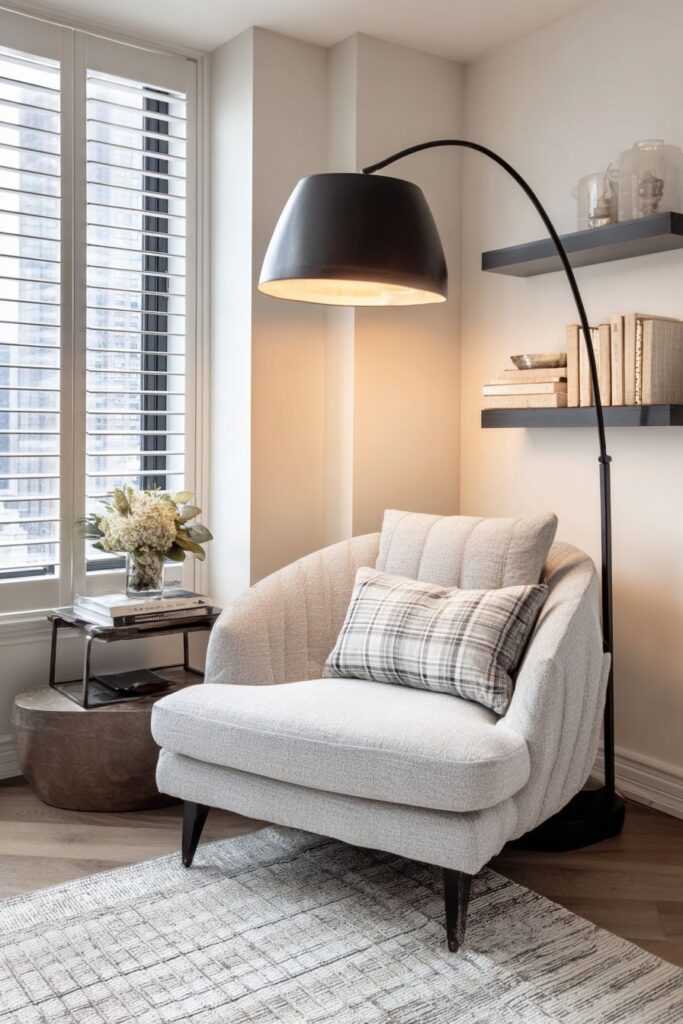
The curved floor lamp that arcs over the chair represents brilliant space-saving design, providing focused task lighting without requiring a side table or additional surface space. This type of lighting solution is particularly valuable in small spaces where every square foot counts, and traditional table lamps would consume precious real estate. The lamp’s sculptural quality also adds visual interest and serves as a decorative element in its own right.
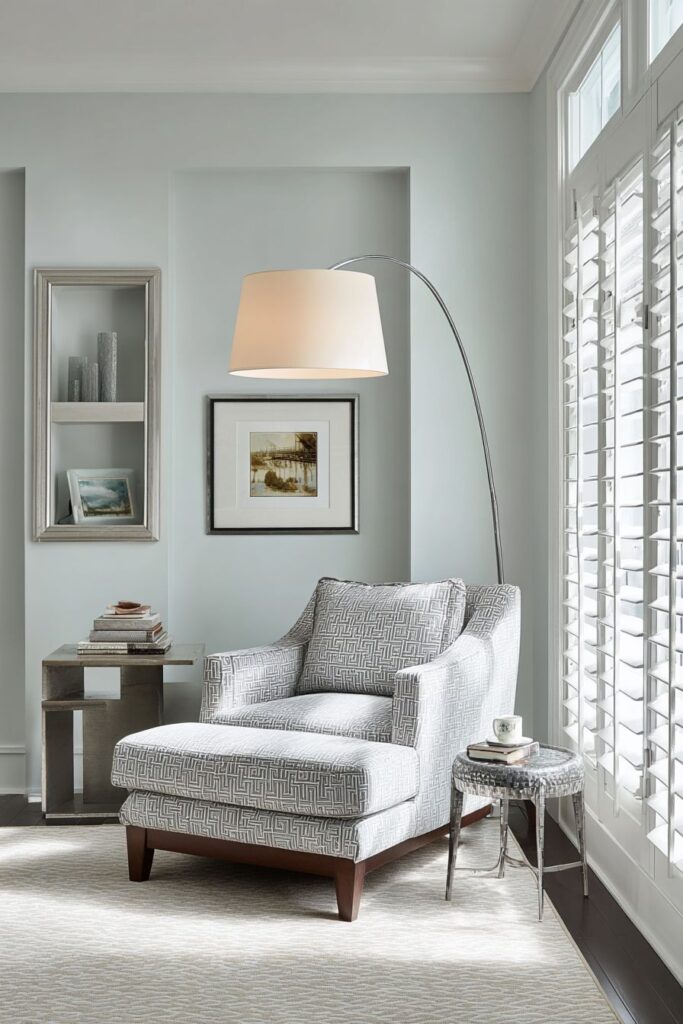
Wall-mounted floating surfaces serve as display areas for books, plants, or decorative objects without protruding into the room’s circulation space. These minimal shelving solutions maintain clean sight lines while providing storage and display opportunities. A large piece of artwork becomes the focal point, demonstrating how one substantial decorative element can provide more impact than multiple smaller pieces while keeping the overall design uncluttered.
Key Design Tips:
- Choose streamlined furniture that provides comfort without visual bulk
- Use curved floor lamps to provide task lighting without requiring surface space
- Install floating shelves that don’t protrude into circulation areas
- Select one large artwork piece for maximum impact with minimal clutter
- Position reading areas to take advantage of natural light sources
9. Sophisticated Compact Luxury
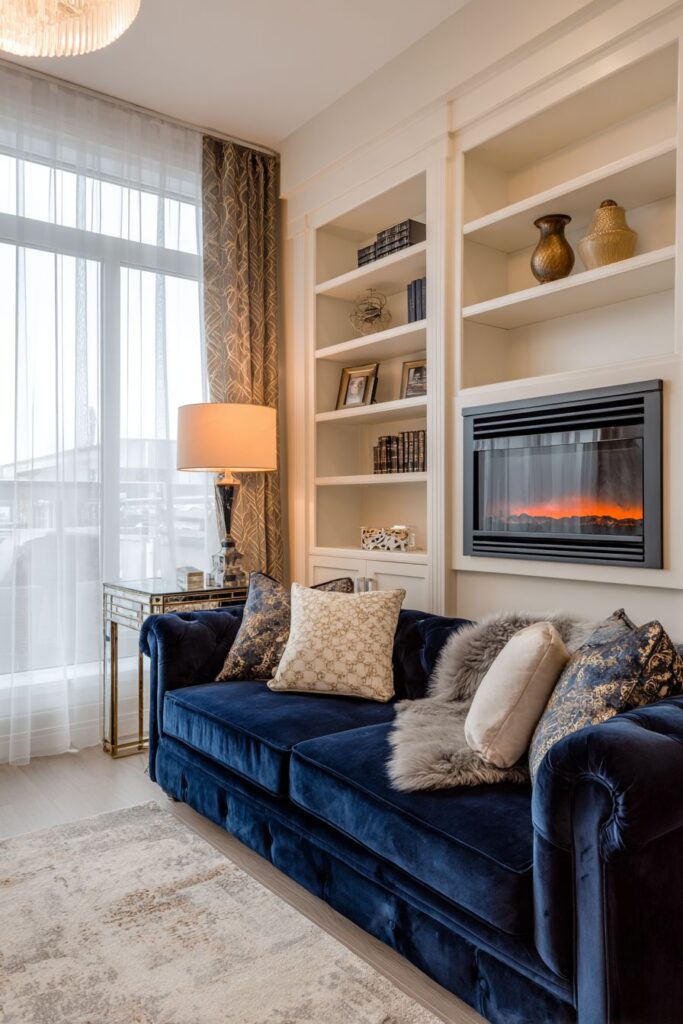
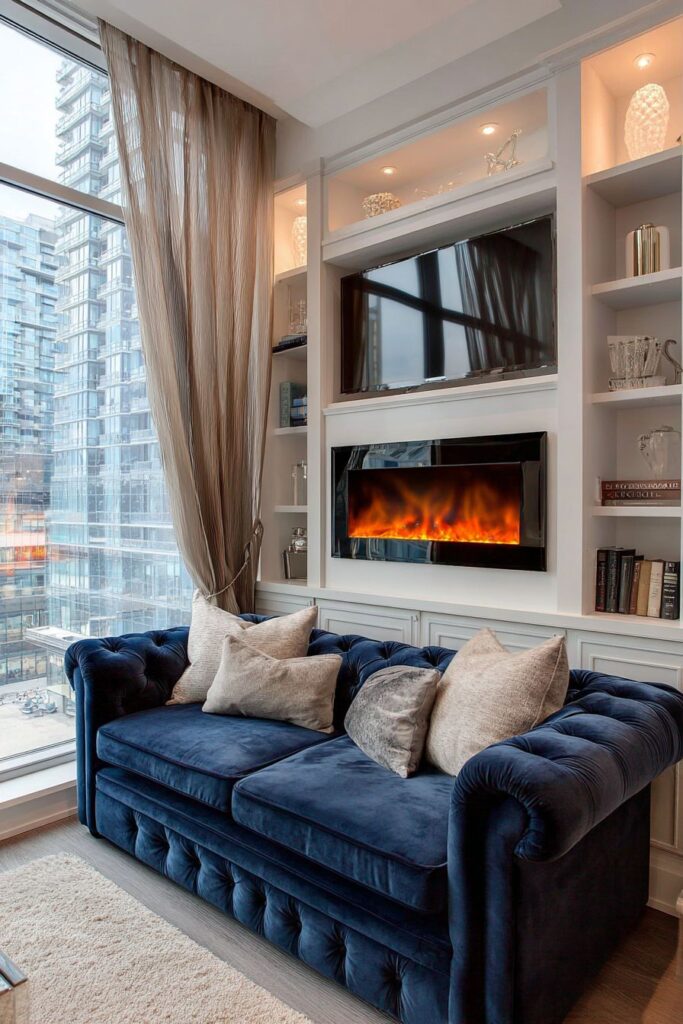
This design proves that small spaces can accommodate luxurious materials and sophisticated aesthetics without feeling cramped or pretentious. The compact Chesterfield sofa in rich navy velvet provides classic elegance while its smaller scale ensures it doesn’t overwhelm the available space. The deep navy color creates visual weight and richness that makes the room feel intentionally intimate rather than accidentally small, demonstrating how darker colors can work effectively in compact spaces when used thoughtfully.
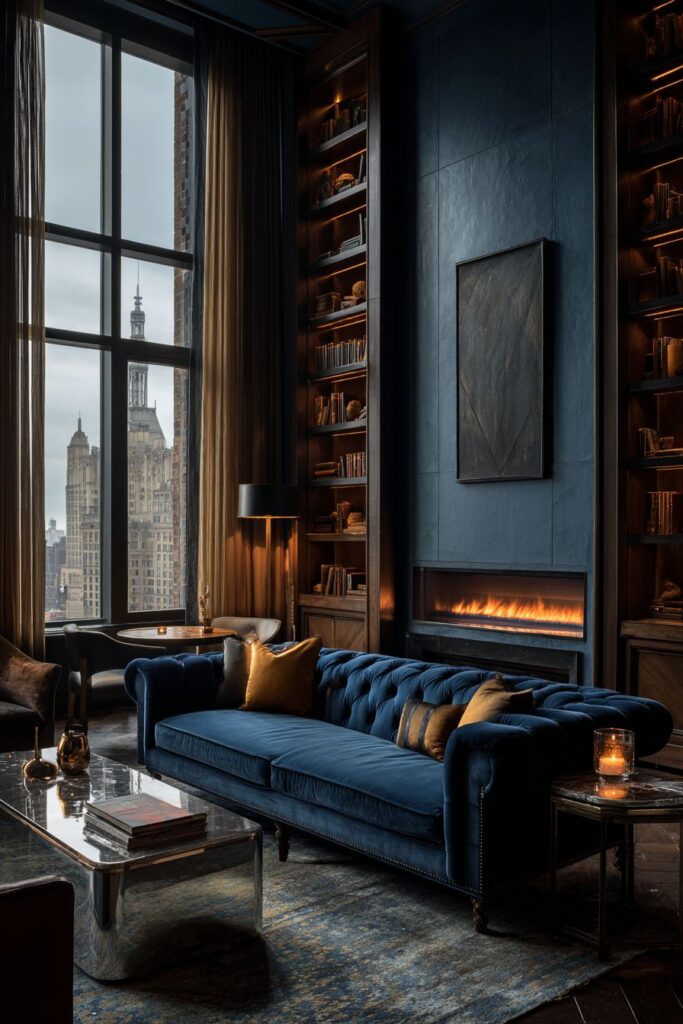
Wall-mounted electric fireplace serves as both a functional heat source and compelling focal point, creating ambiance without requiring floor space for traditional fireplace accessories or hearth areas. This modern approach to fireplace design is perfect for small spaces because it provides the psychological comfort and visual appeal of a fire without the spatial requirements of traditional installations. The fireplace’s positioning draws the eye and creates a natural gathering point for seating arrangements.
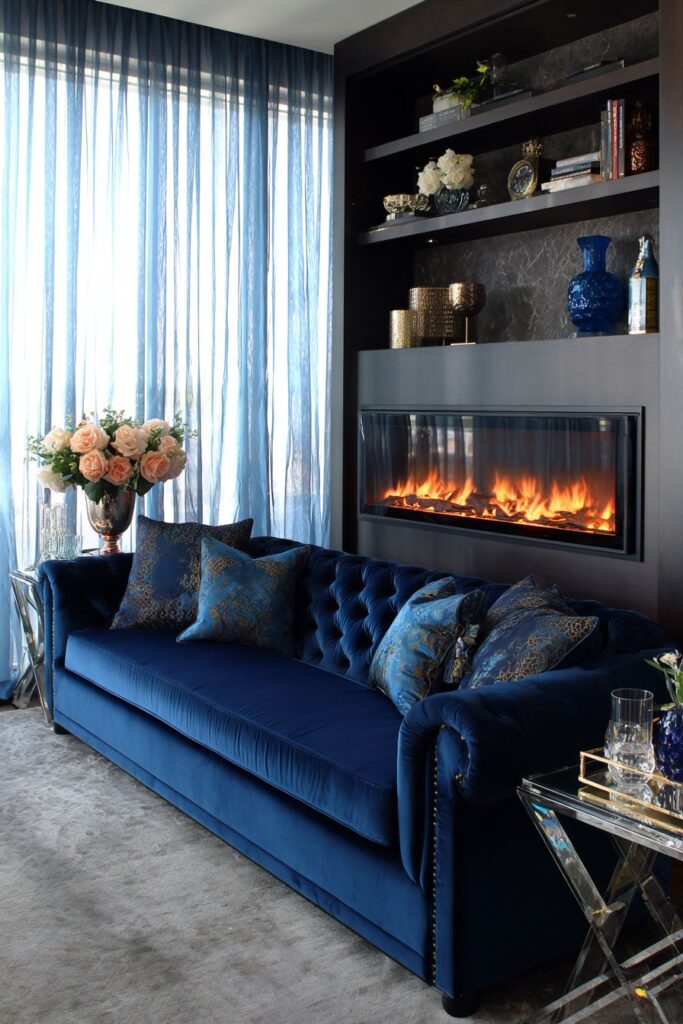
Mirrored side tables represent clever material selection, reflecting light throughout the space while providing necessary surface area without visual weight. These pieces create sparkle and interest while essentially disappearing visually, making them ideal for spaces where traditional wooden or metal tables might feel too heavy or substantial. Built-in alcove shelving on either side of the fireplace maximizes storage and display opportunities within the room’s existing architecture.
Key Design Tips:
- Use rich, sophisticated colors to create intentional intimacy rather than accidental cramping
- Install wall-mounted fireplaces for ambiance without floor space requirements
- Choose mirrored furniture to reflect light while providing function
- Utilize architectural features like alcoves for built-in storage solutions
- Layer lighting to create warm, inviting ambiance throughout the day
10. Transparent Furniture with Visual Tricks
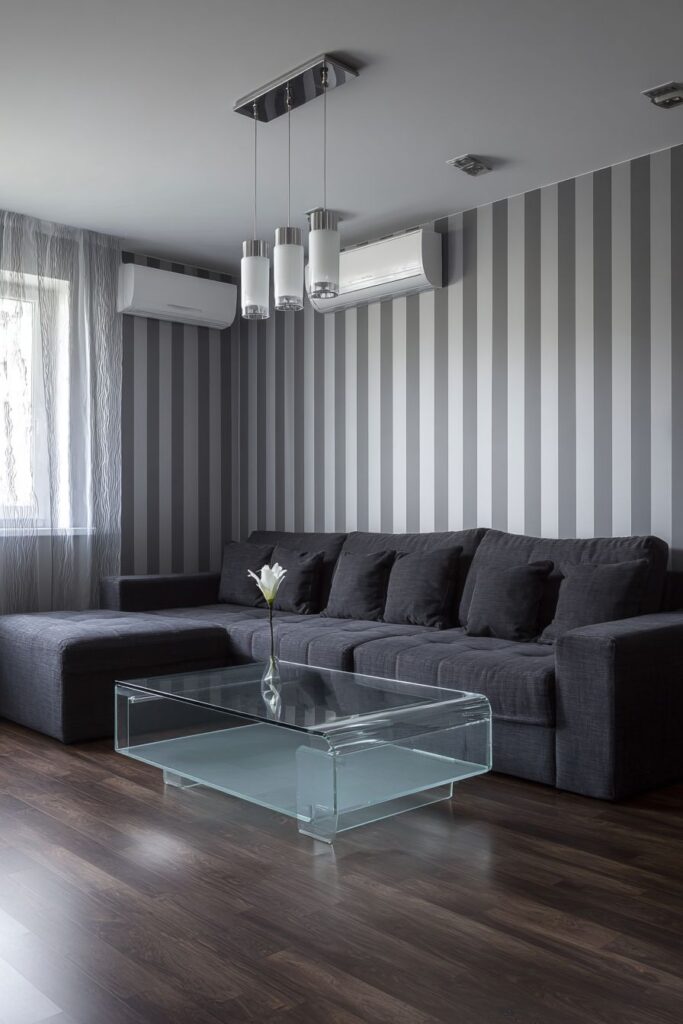
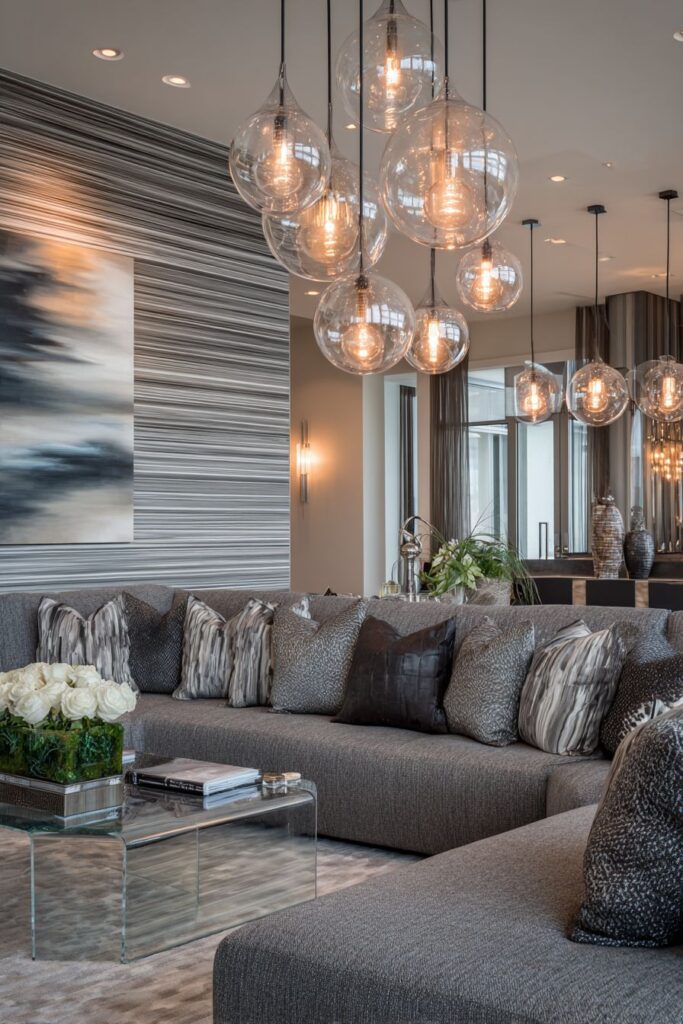
This design approach embraces transparency and visual lightness as key strategies for making small spaces feel larger and more open. The low-profile sectional in charcoal grey provides substantial seating without blocking sight lines across the room, demonstrating how furniture height can significantly impact spatial perception. The darker color grounds the space while the low profile maintains openness and allows natural light to flow freely throughout the room.
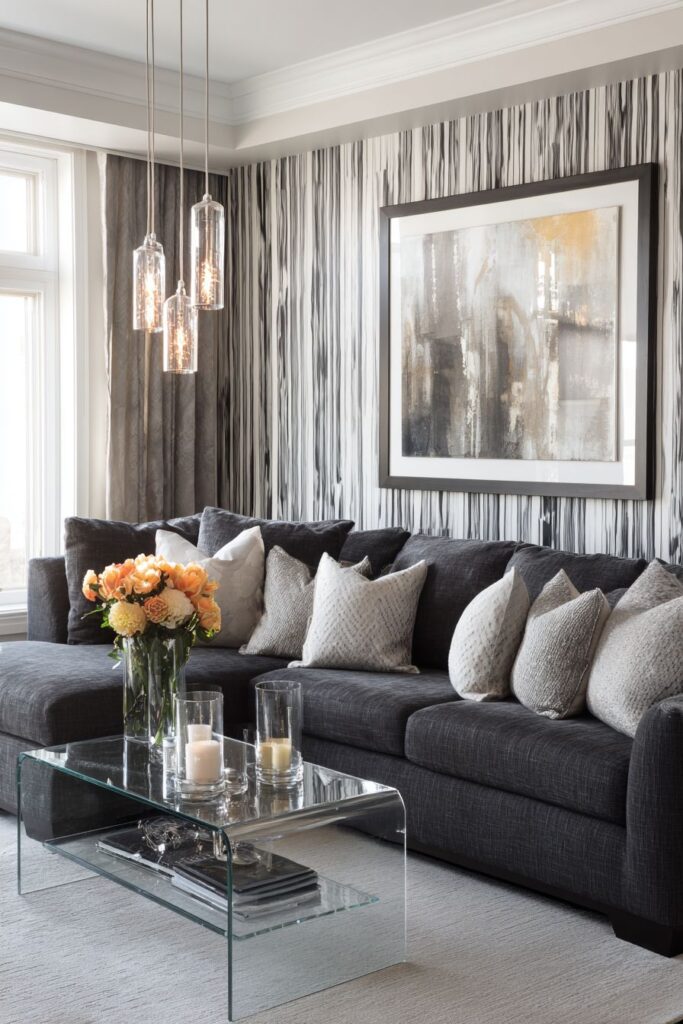
A glass waterfall coffee table exemplifies the power of transparent furniture in small space design, providing essential surface area while maintaining complete visual transparency. The waterfall edge creates sculptural interest while the glass material ensures the piece doesn’t compete with other elements for visual attention. This type of furniture allows small spaces to accommodate necessary pieces without feeling cluttered or overwhelmed.
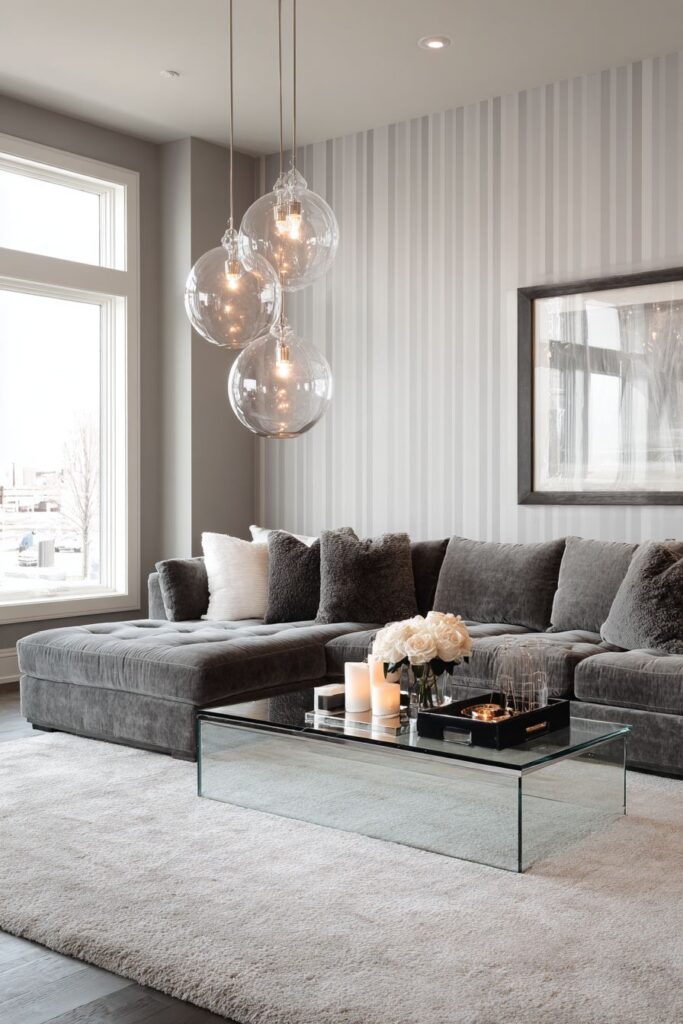
Vertical striped wallpaper on one accent wall creates a powerful optical illusion, making the ceiling appear higher than it actually is. This technique draws the eye upward and emphasizes the room’s vertical dimensions, counteracting the potentially cramped feeling that can occur in small spaces. The striped pattern should be subtle enough to enhance rather than overwhelm the space while providing visual interest and architectural detail.
Key Design Tips:
- Choose low-profile furniture to maintain sight lines and openness
- Use transparent materials like glass to provide function without visual weight
- Apply vertical patterns to accent walls to create height illusions
- Select pendant lighting to free up floor and surface space
- Maintain visual continuity through thoughtful color and material choices
11. Vintage-Inspired Corner Efficiency
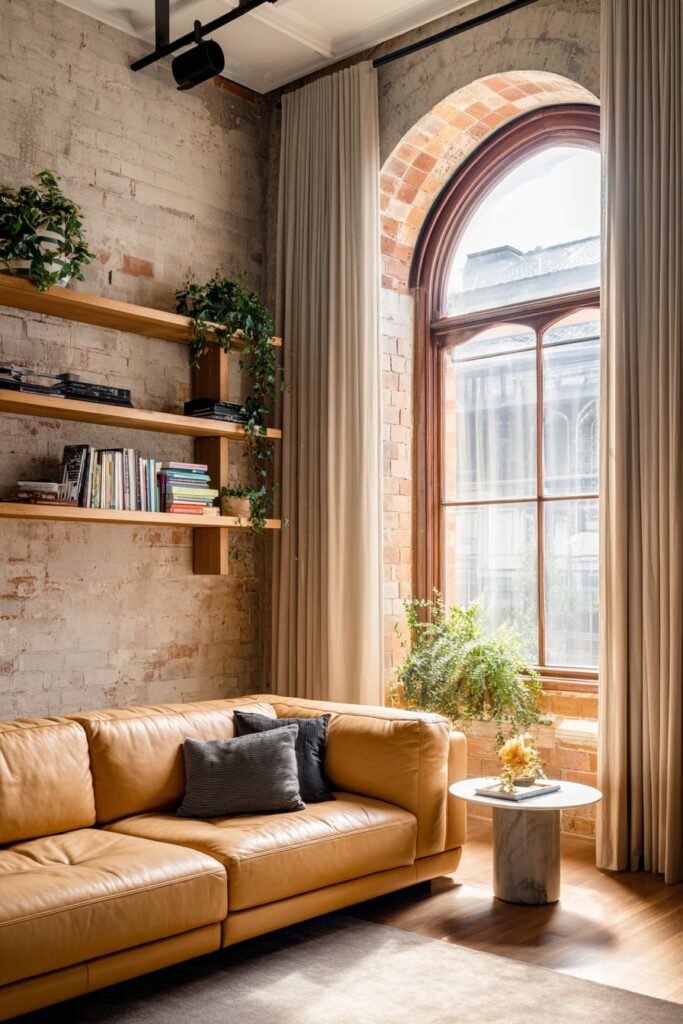
This design celebrates the charm of vintage aesthetics while maintaining the efficiency required for small space living. The vintage-inspired loveseat in rich camel leather provides both comfort and character, while its warm tones create an inviting atmosphere that makes the small space feel cozy rather than cramped. Leather furniture is particularly well-suited to small spaces because it ages beautifully and develops character over time, making it a worthwhile investment that improves with use.
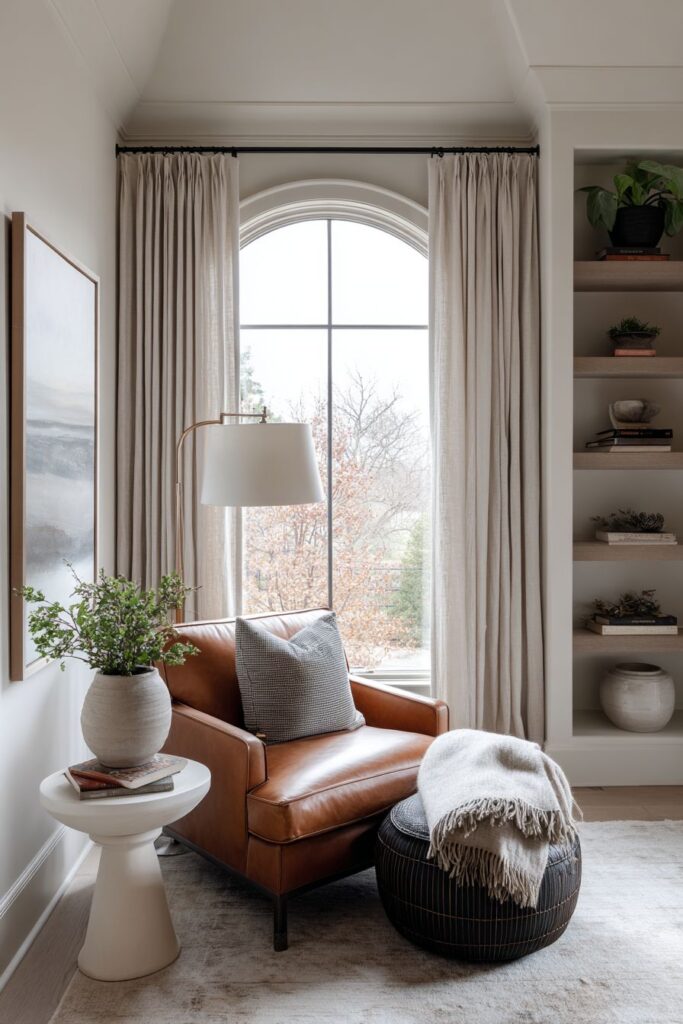
The round pedestal side table positioned in the corner demonstrates thoughtful space planning, fitting perfectly into the available space without sharp edges that would impede traffic flow or create hazardous corners. Round furniture is generally preferable in small spaces because it facilitates easier movement and creates a gentler, more organic flow throughout the room. The pedestal base also allows for easier cleaning and creates visual lightness compared to four-legged alternatives.
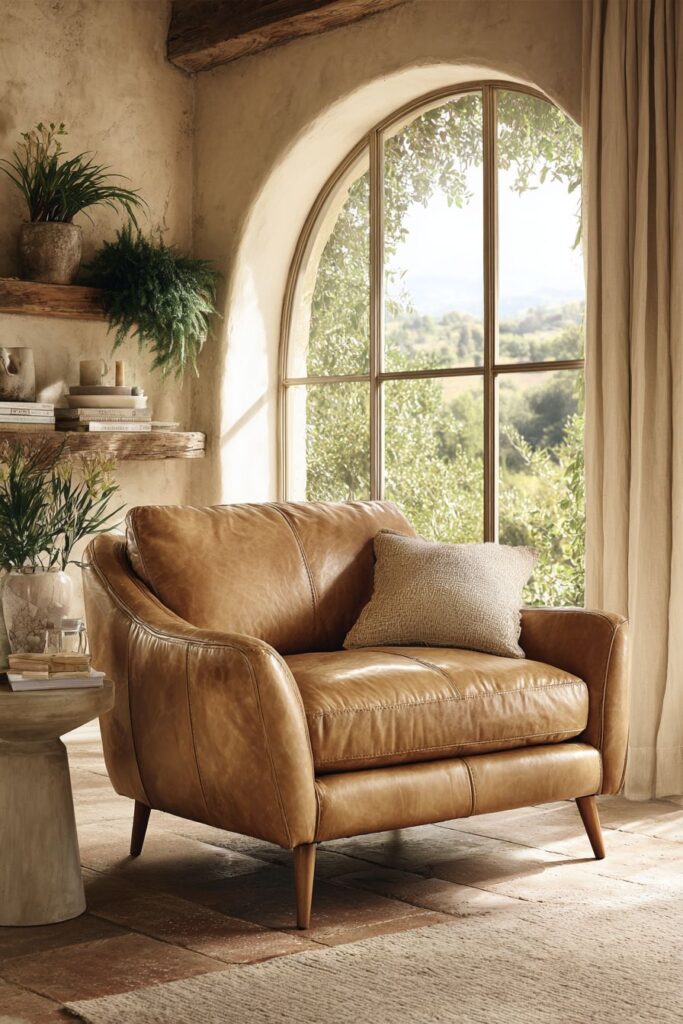
Floating corner shelves maximize vertical storage while maintaining clean lines and minimal visual impact. These shelves can display books, plants, and decorative objects while utilizing corner space that might otherwise remain unused. The floating design keeps the shelves from feeling heavy or imposing while providing essential storage in a space where traditional bookcases or cabinets might feel overwhelming.
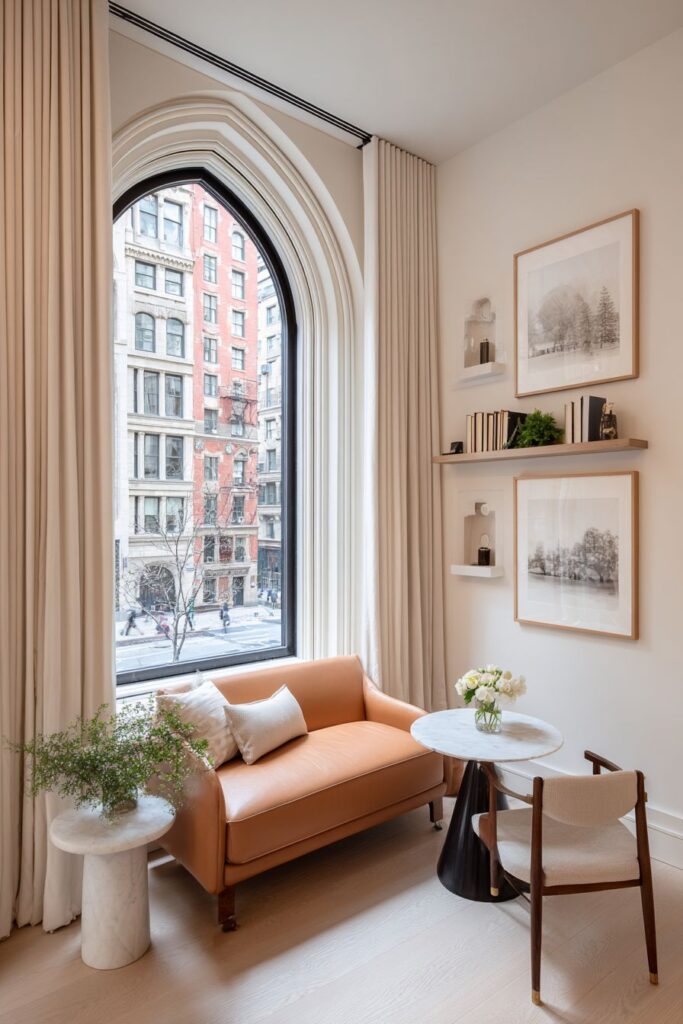
Key Design Tips:
- Choose vintage-inspired pieces that add character without overwhelming small spaces
- Use round furniture to facilitate better traffic flow and eliminate sharp corners
- Install floating corner shelves to maximize vertical storage in unused areas
- Position furniture near windows to take advantage of natural light
- Select warm materials like leather that improve with age and use
12. Modular Green Sophistication
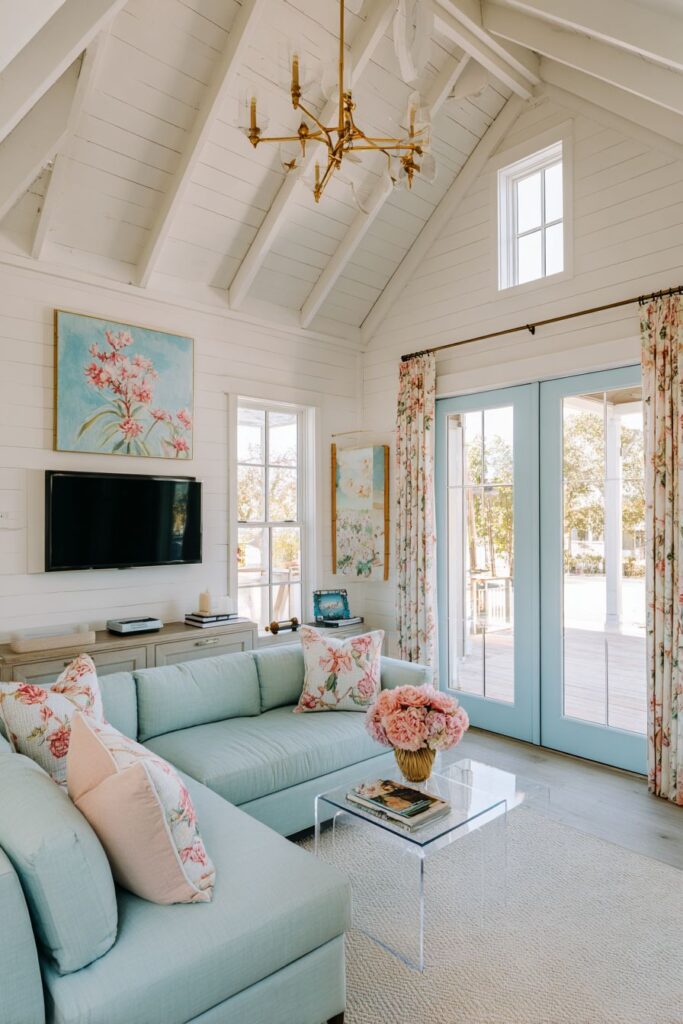
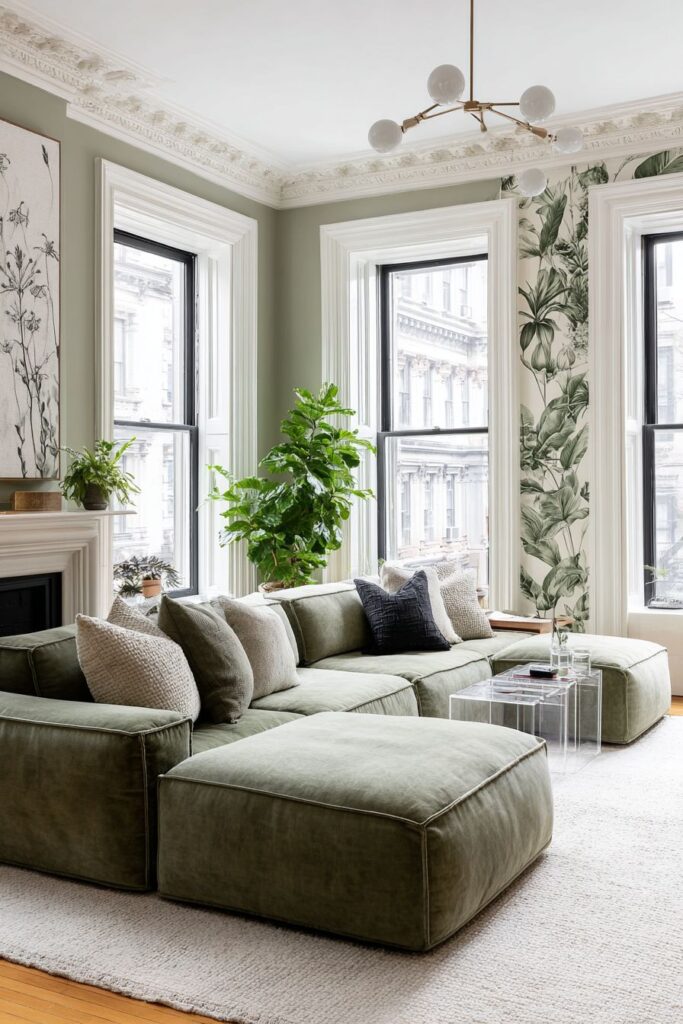
This design demonstrates how color can be used strategically in small spaces to create freshness and sophistication while maintaining functionality and flexibility. The modular sofa system in soft sage green provides a calming, nature-inspired backdrop that makes the space feel larger and more connected to the outdoors. The green tone is sophisticated enough for adult spaces while remaining cheerful and uplifting, proving that small spaces don’t have to rely on neutral colors to feel spacious.
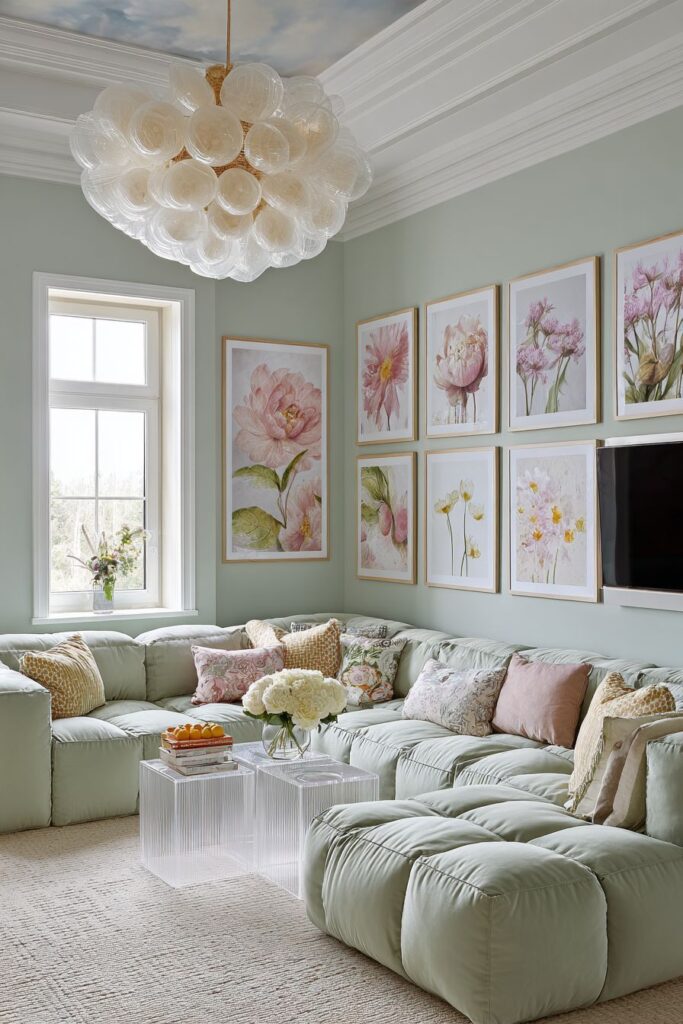
Stackable acrylic side tables provide ultimate flexibility without visual bulk, allowing homeowners to use as many or as few surfaces as needed for different occasions. When stacked, they occupy minimal floor space, but when separated, they can serve multiple seating areas or provide surfaces throughout the room. The acrylic material maintains transparency while the stackable feature ensures the space can adapt to changing needs.
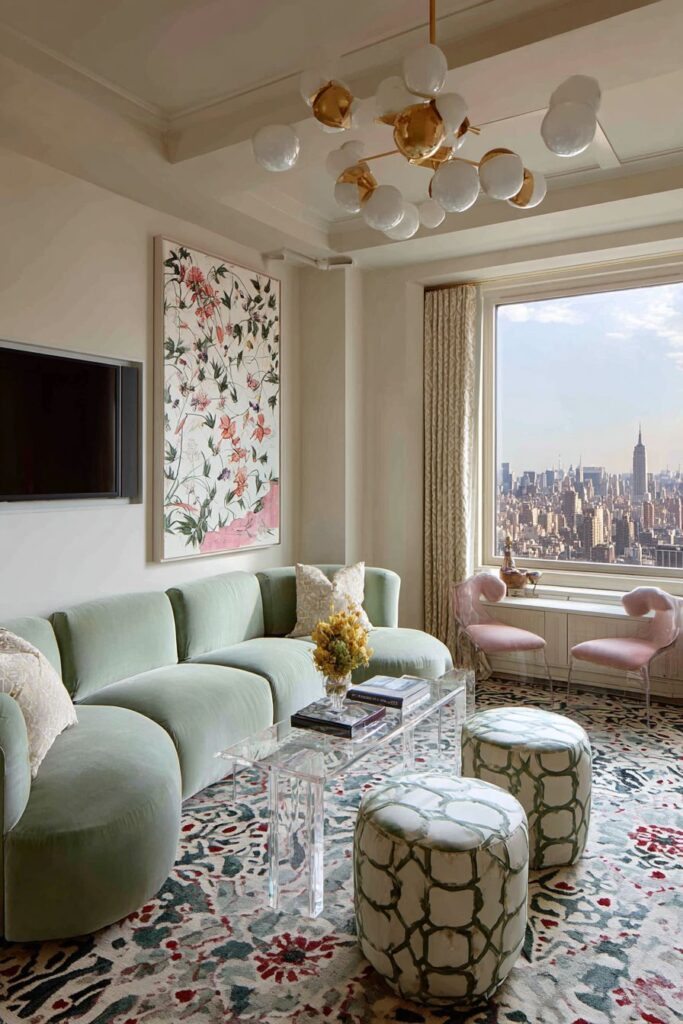
A statement light fixture draws attention upward, emphasizing ceiling height while providing both ambient and task lighting. This approach to lighting is particularly effective in small spaces because it serves multiple functions while creating a focal point that distracts from the room’s limited square footage. Wall-mounted television placement keeps media equipment minimal and prevents the entertainment area from dominating the space.
Key Design Tips:
- Use sophisticated colors like sage green to create calm, spacious feelings
- Choose stackable furniture for ultimate flexibility in small spaces
- Install statement lighting that draws attention upward to emphasize height
- Mount televisions to minimize media equipment footprint
- Select large-scale artwork to create impact without surface clutter
13. Integrated Platform Living
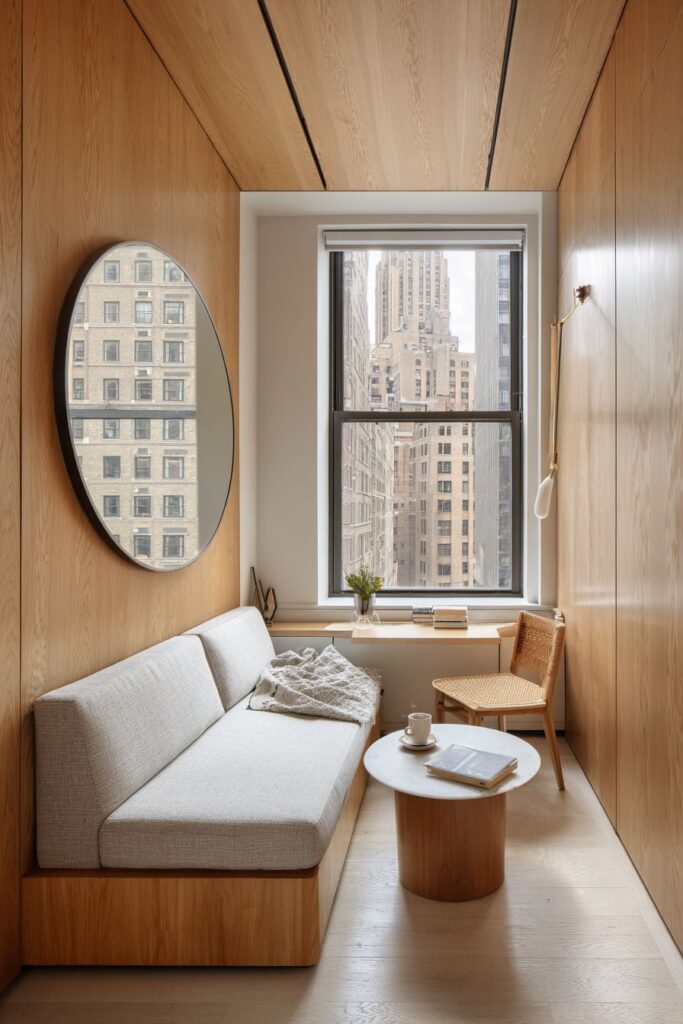
This design approach embraces built-in solutions and integrated furniture to create seamless functionality within compact spaces. The sleek platform sofa with built-in side tables eliminates the need for additional furniture pieces while providing both seating and surface space in one cohesive unit. This integrated approach is particularly valuable in very small spaces where every piece must be carefully considered and space-efficient.
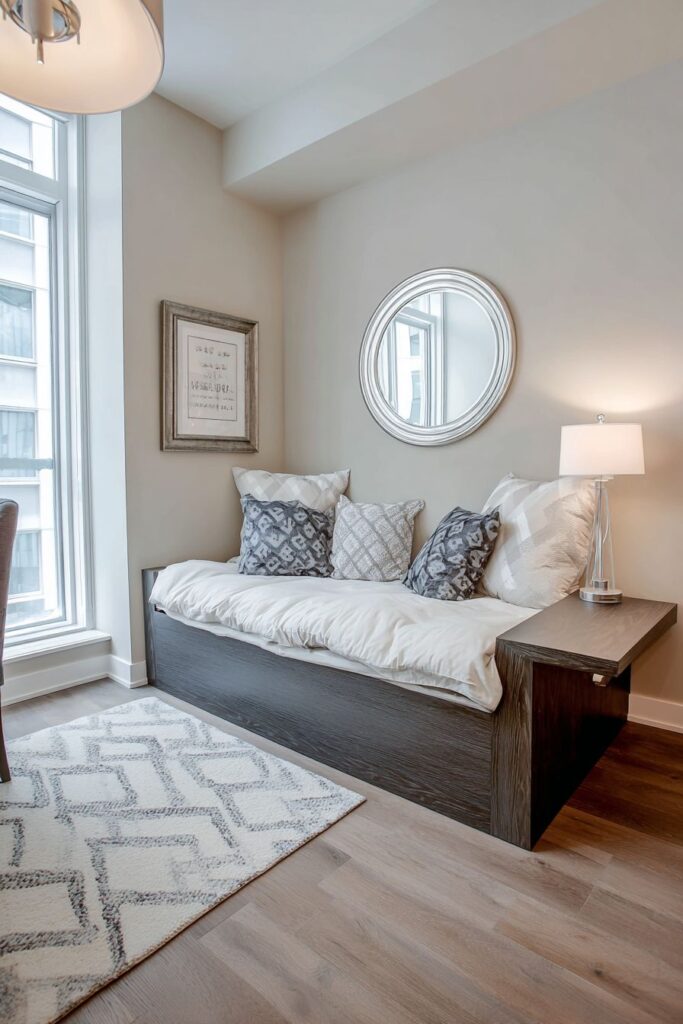
The round mirror positioned above the sofa serves multiple purposes, reflecting the opposite window to double the perceived natural light while creating the illusion of expanded space. Mirror placement is crucial in small space design, and positioning mirrors to reflect windows or light sources maximizes their space-enhancing benefits. The round shape softens the overall design while providing a focal point that draws the eye upward.
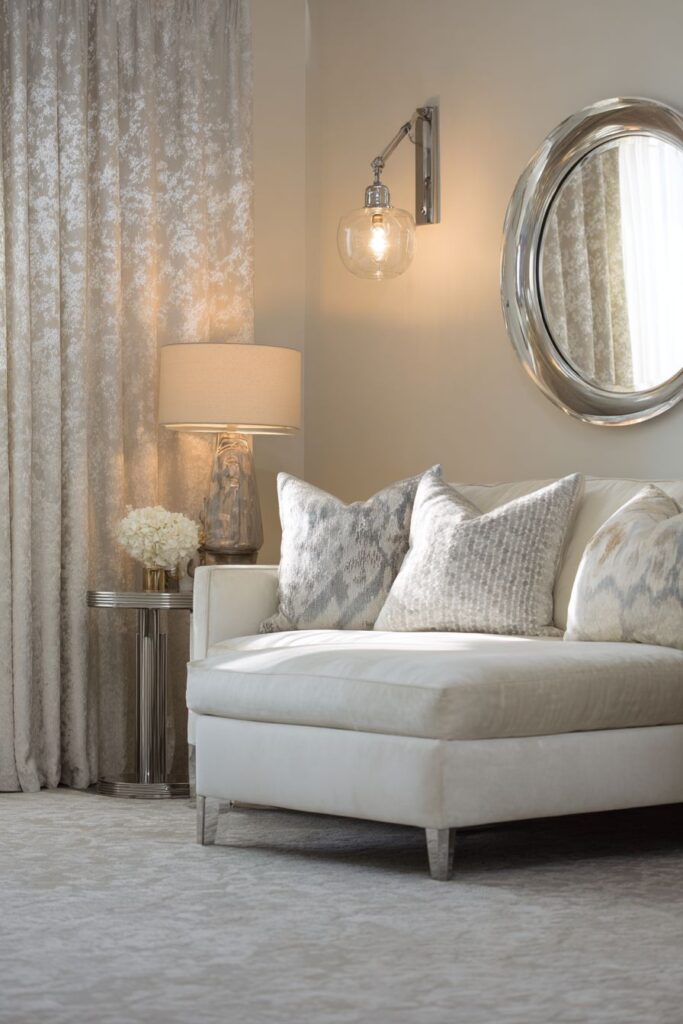
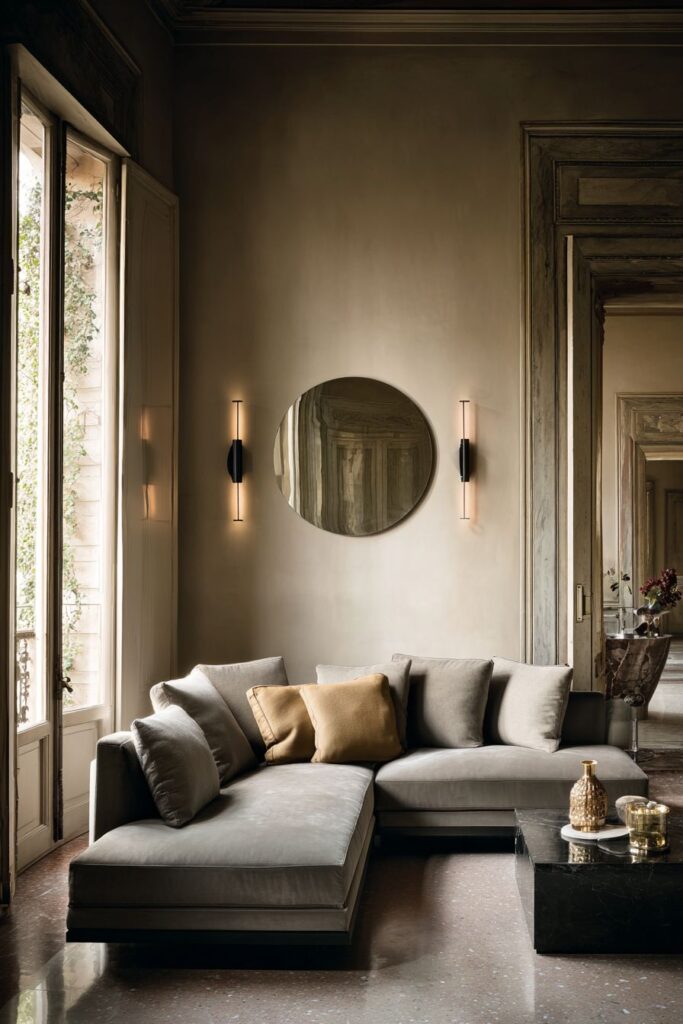
Wall-mounted task lighting provides reading illumination without occupying floor or surface space, demonstrating how lighting solutions can be both functional and space-saving. This type of targeted lighting allows different areas of the small room to serve various purposes throughout the day, from reading corner to conversation area to relaxation space. The neutral color palette throughout maintains visual continuity and prevents the space from feeling choppy or disjointed.
Key Design Tips:
- Choose furniture with built-in features to eliminate need for additional pieces
- Position mirrors to reflect windows and double perceived light and space
- Use wall-mounted task lighting to provide function without consuming space
- Maintain neutral color palettes for visual continuity in small areas
- Select integrated solutions that serve multiple functions seamlessly
14. Natural Light Reading Retreat
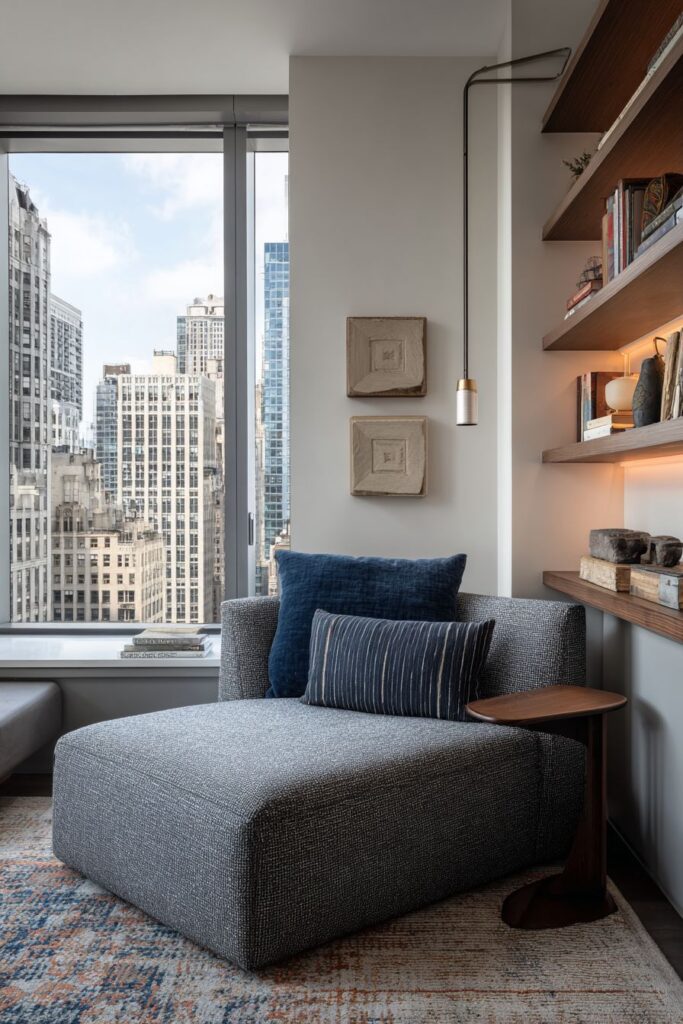
This design creates a dedicated reading and relaxation area within a small space by positioning a compact reclining chair to maximize natural light benefits while maintaining efficient space usage. The reclining feature provides comfort for extended reading sessions without requiring the footprint of a separate ottoman or footrest. This type of multifunctional seating is ideal for small spaces where comfort can’t be sacrificed but space efficiency remains paramount.
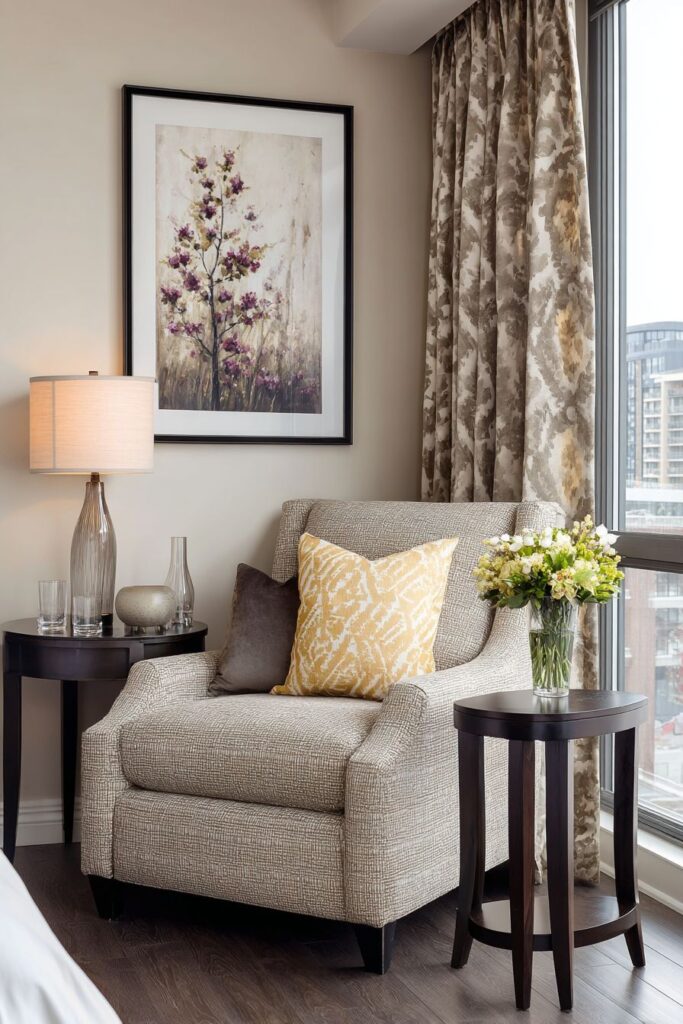
The C-shaped side table represents innovative furniture design for small spaces, sliding underneath the chair when not in use to maximize available floor space. When needed, it provides essential surface area for books, drinks, or electronic devices without requiring dedicated floor space. This type of adaptable furniture allows small spaces to transform based on immediate needs while maintaining clean, uncluttered appearances when functions aren’t required.
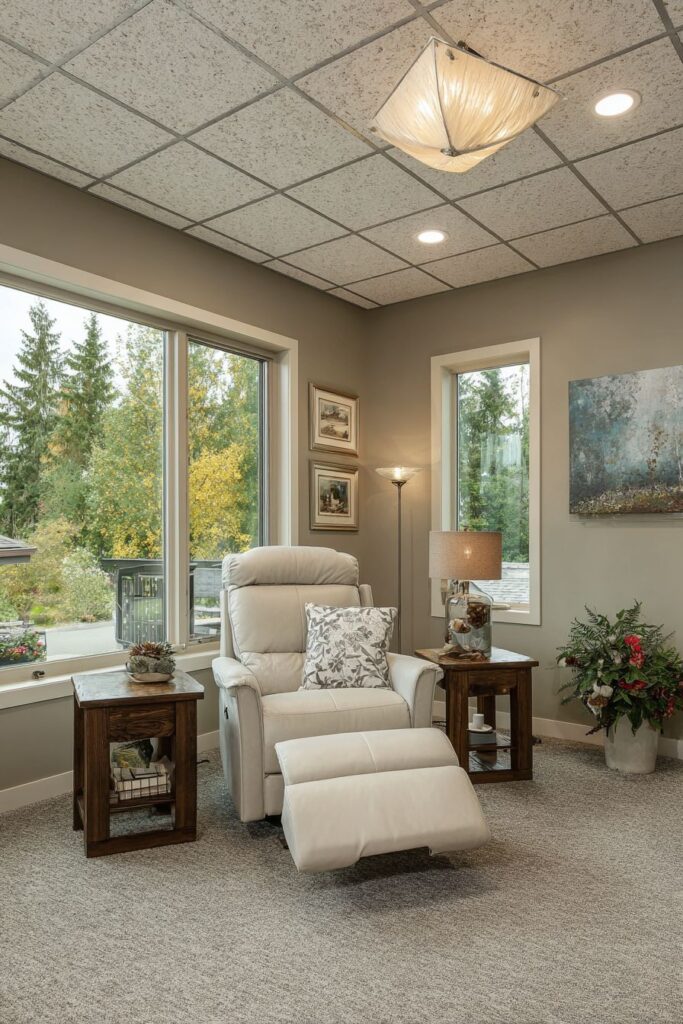
Built-in wall niches provide display and storage areas without protruding into the room’s circulation space, utilizing the wall’s depth to create functional features that don’t consume additional square footage. These architectural details can house books, decorative objects, or everyday items while maintaining the room’s clean lines and efficient layout. Layered lighting from multiple sources creates ambient warmth while ensuring adequate illumination for various activities.
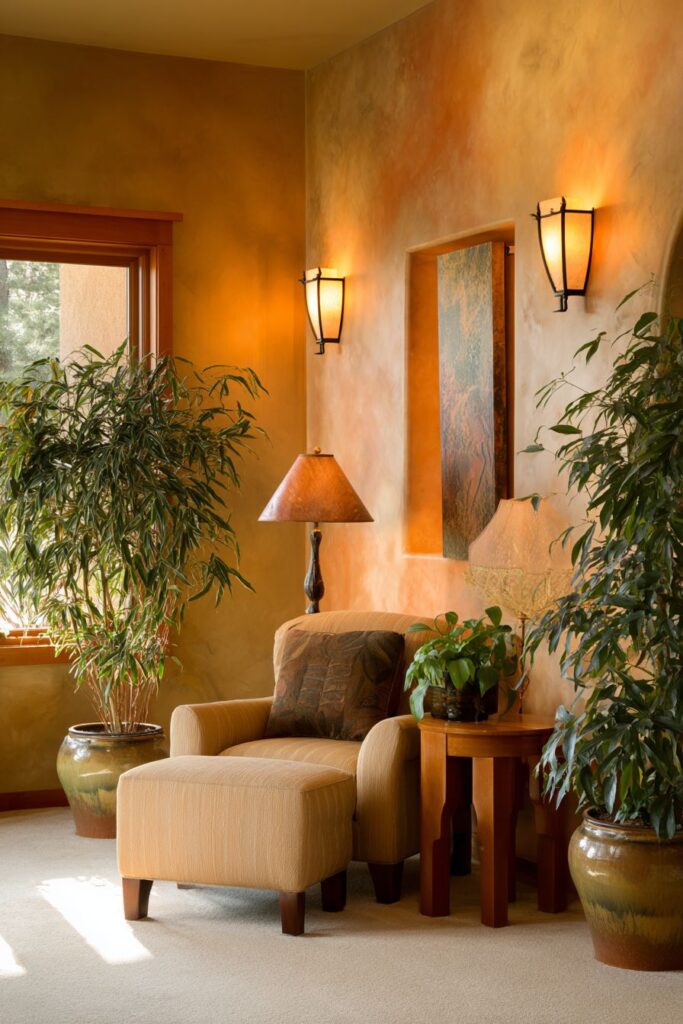
Key Design Tips:
- Position reading furniture to maximize natural light benefits
- Choose C-shaped tables that slide under seating when not needed
- Create built-in wall niches for storage without room protrusion
- Layer lighting sources to provide ambient warmth and task illumination
- Select reclining furniture that provides comfort without additional footprint
15. Transformable Wall-Mounted Solutions
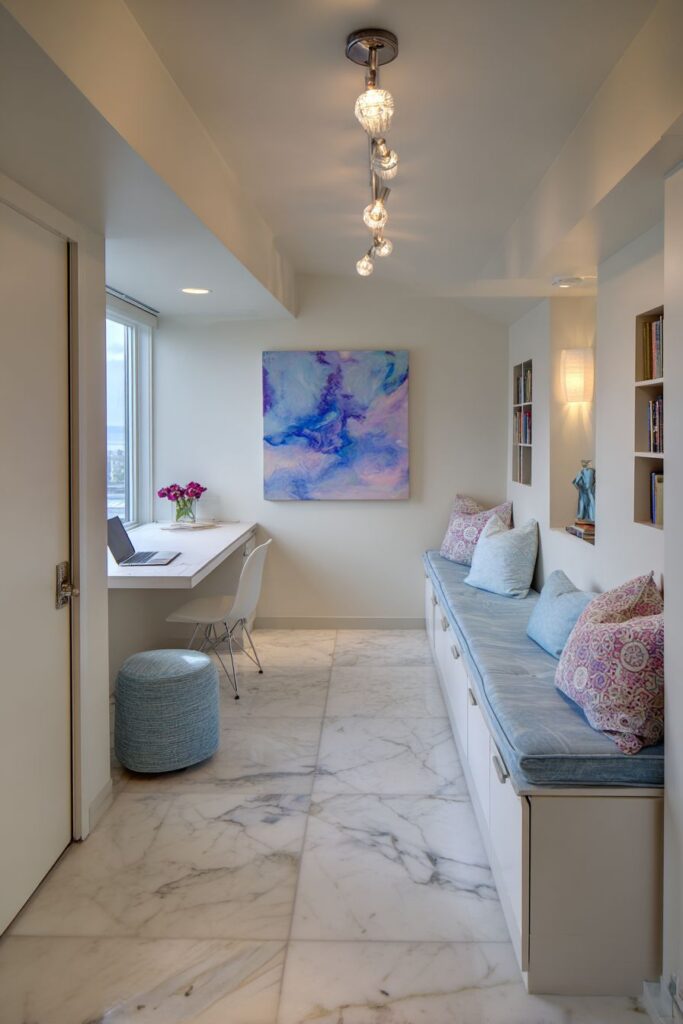
This design showcases the potential of transformable furniture and wall-mounted solutions to create incredible functionality within minimal square footage. Bench-style seating with hidden storage positioned along one wall provides comfortable seating for multiple people while concealing blankets, games, seasonal items, or everyday clutter. This approach maximizes seating capacity without consuming central floor space, leaving the room’s center open for movement and other activities.
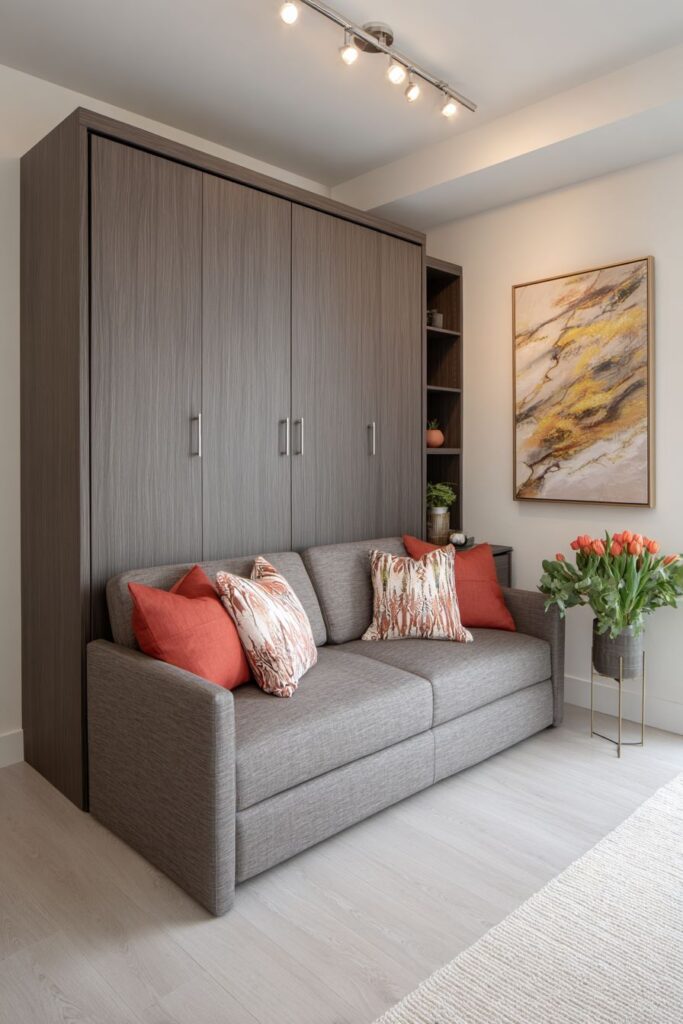
The fold-down wall-mounted desk represents the ultimate in space-saving furniture, serving as workspace during the day and dining surface in the evening while completely disappearing when not needed. This type of transformable furniture is essential in very small spaces or studio apartments where multiple functions must be accommodated within the same square footage. When folded up, the desk disappears completely, leaving no trace of its presence.
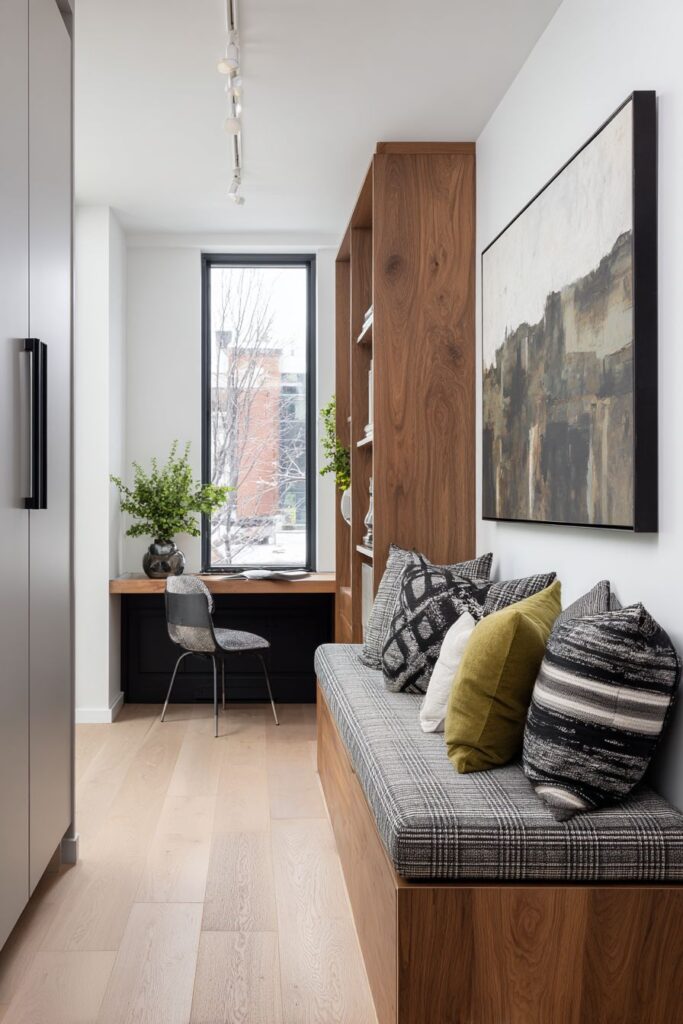
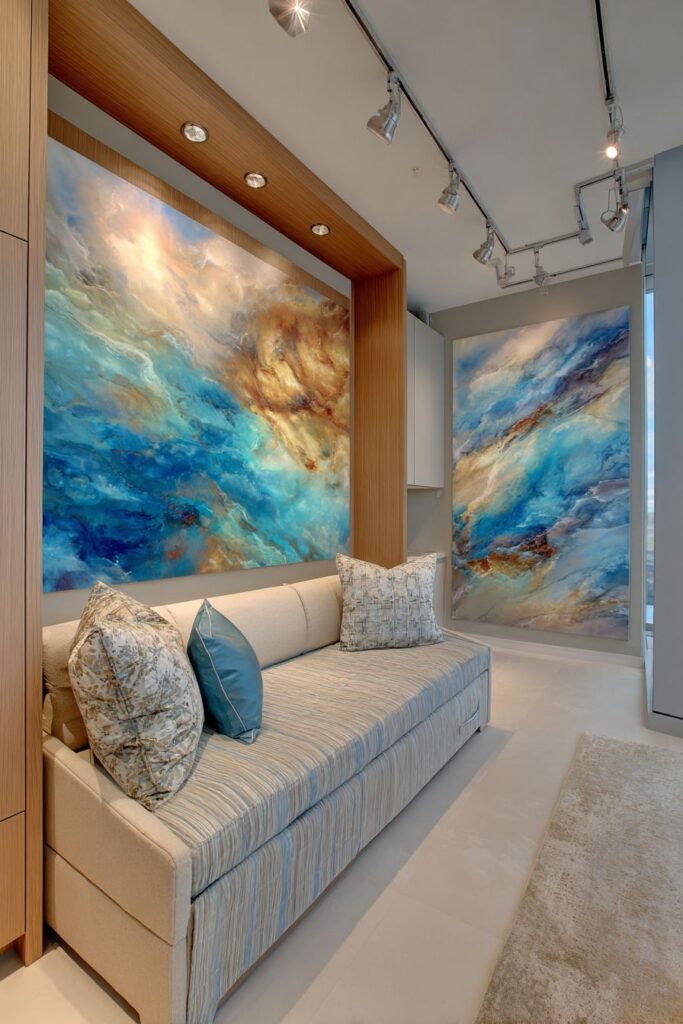
A large abstract painting creates a compelling focal point while light floors and walls keep the space feeling open and airy. The artwork’s scale provides visual impact that makes the room feel more substantial while the abstract nature ensures it won’t compete with the room’s functional elements. Track lighting provides flexible illumination options, allowing homeowners to adjust lighting based on the room’s current function and time of day.
Key Design Tips:
- Use bench seating along walls to maximize capacity without consuming central space
- Install fold-down furniture that completely disappears when not needed
- Choose large-scale artwork to create substantial visual impact
- Maintain light floors and walls to preserve openness
- Select track lighting for flexible illumination based on changing needs
16. Curved Lines and Vertical Storage
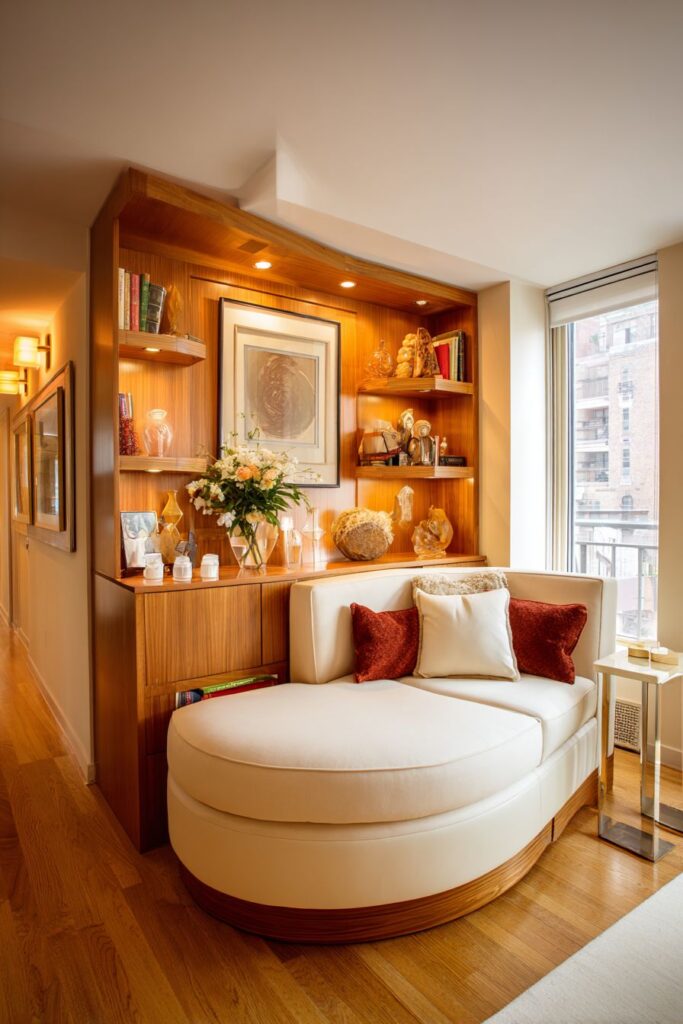
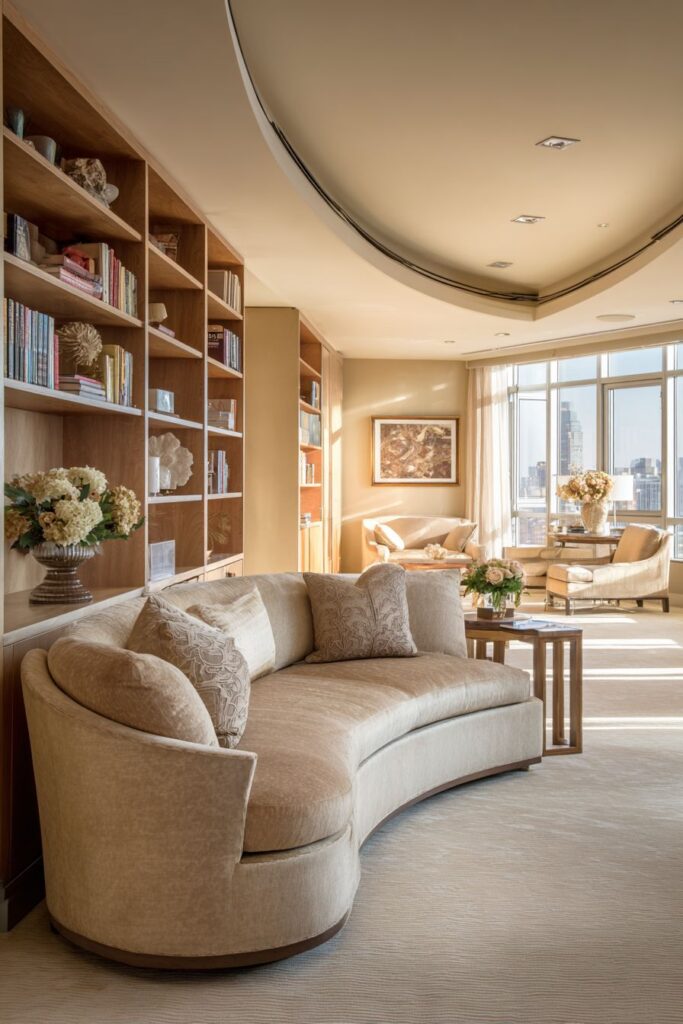
This design embraces the softness of curved furniture lines while maximizing vertical storage potential to create both comfort and efficiency in compact spaces. The curved loveseat creates intimate seating without sharp corners that would impede natural traffic flow, demonstrating how furniture shape can significantly impact spatial functionality. Curved furniture is particularly valuable in small spaces because it facilitates easier movement and creates a more organic, flowing feeling throughout the room.
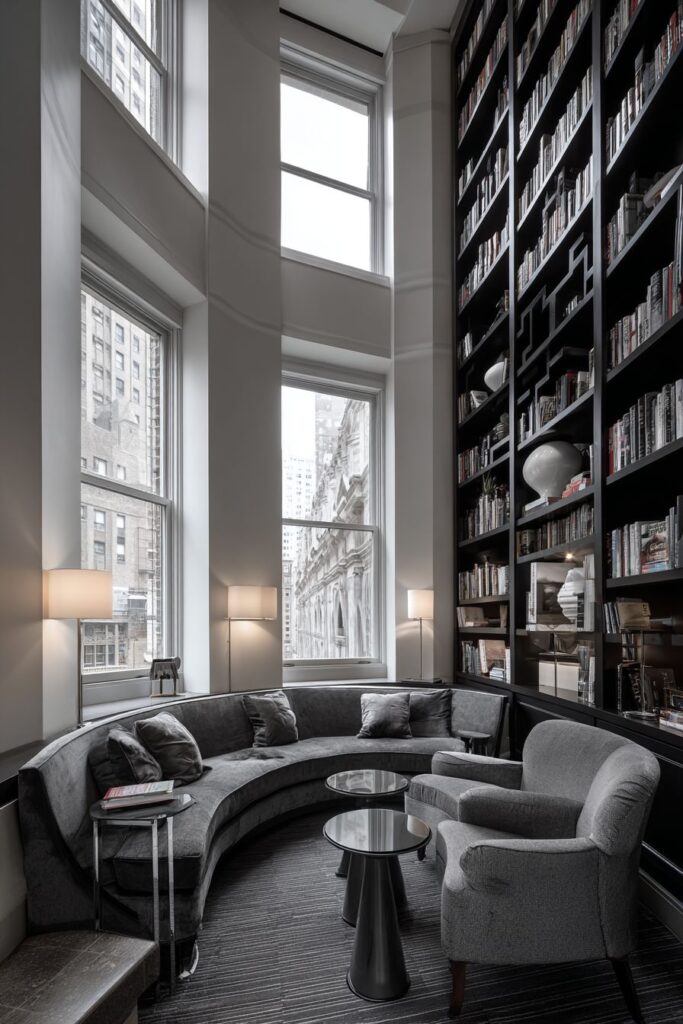
A trio of nested side tables provides flexible surface options that can be separated for individual use or grouped together for larger surface needs. This adaptability is crucial in small spaces where furniture must accommodate various activities and group sizes throughout the day. When nested, the tables occupy minimal floor space, but when separated, they can serve multiple areas or provide surfaces for entertaining larger groups.
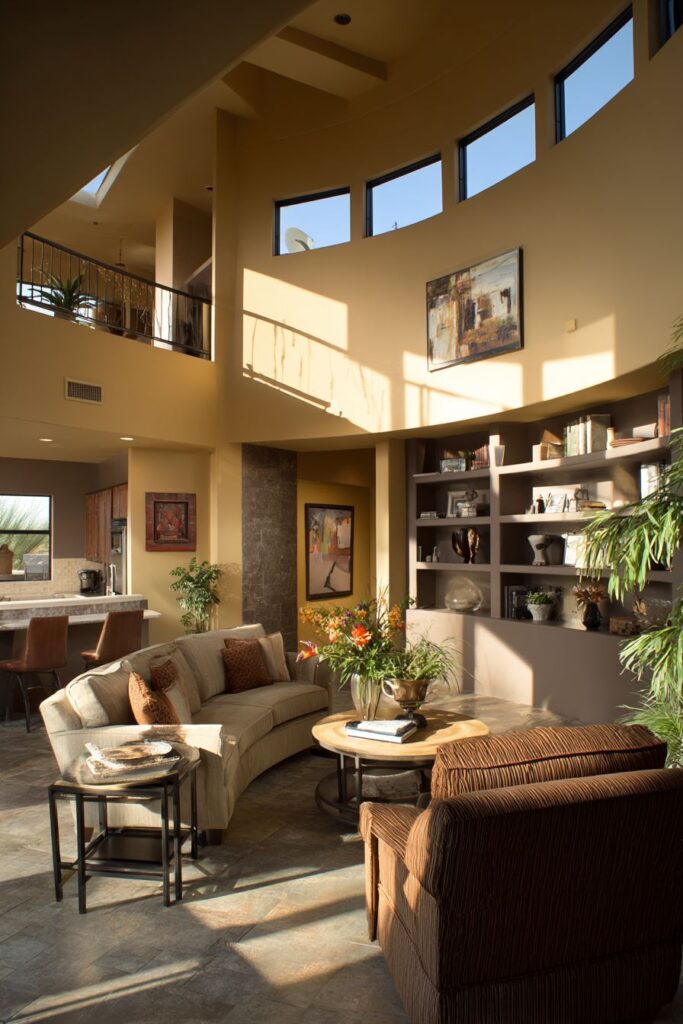
Floor-to-ceiling built-in shelving maximizes vertical storage while displaying decorative objects and books in an organized, intentional manner. This approach utilizes wall space that would otherwise remain unused while providing substantial storage capacity without consuming floor space. The built-in nature creates a custom appearance that makes the small space feel thoughtfully designed rather than merely furnished.
Key Design Tips:
- Choose curved furniture to facilitate better traffic flow and softer aesthetics
- Use nested tables for flexible surface options that adapt to changing needs
- Install floor-to-ceiling storage to maximize vertical space utilization
- Position furniture to take advantage of natural light from above
- Select pieces that create intimate seating without impeding movement
17. Corner Alcove Maximization
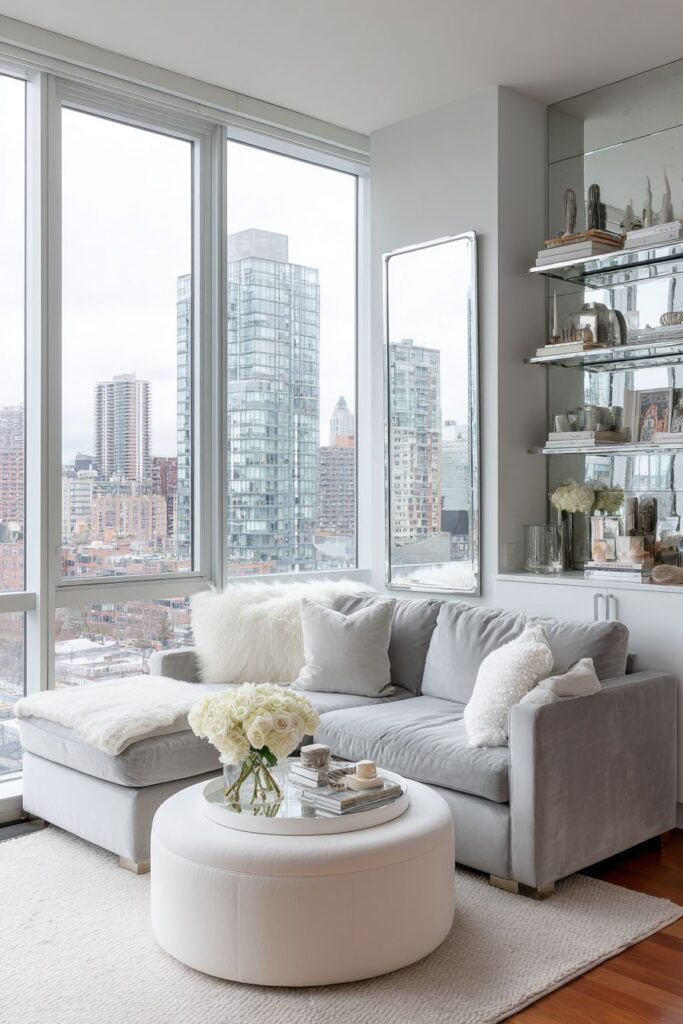
This design demonstrates how architectural features like corner alcoves can be transformed into highly functional areas through custom-fitted furniture and thoughtful space planning. The sleek sectional with chaise fits perfectly into the corner alcove, maximizing seating capacity while creating a cozy, defined area within the larger room. This approach turns what might be an awkward architectural feature into the room’s most compelling and functional space.
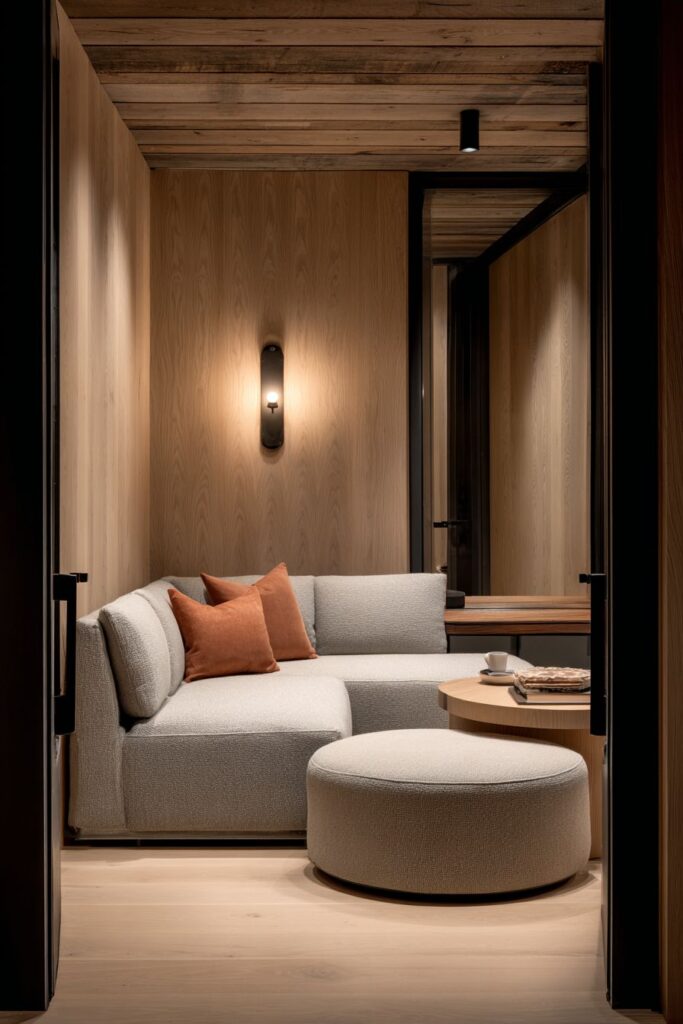
The round ottoman serves double duty as both coffee table and additional seating for guests, providing flexibility that’s essential in small spaces where furniture must adapt to changing needs. Round furniture pieces are particularly effective in small spaces because they facilitate better traffic flow and eliminate sharp corners that can make navigation difficult or dangerous. When not needed for seating, the ottoman can be tucked partially under other furniture to free up floor space.
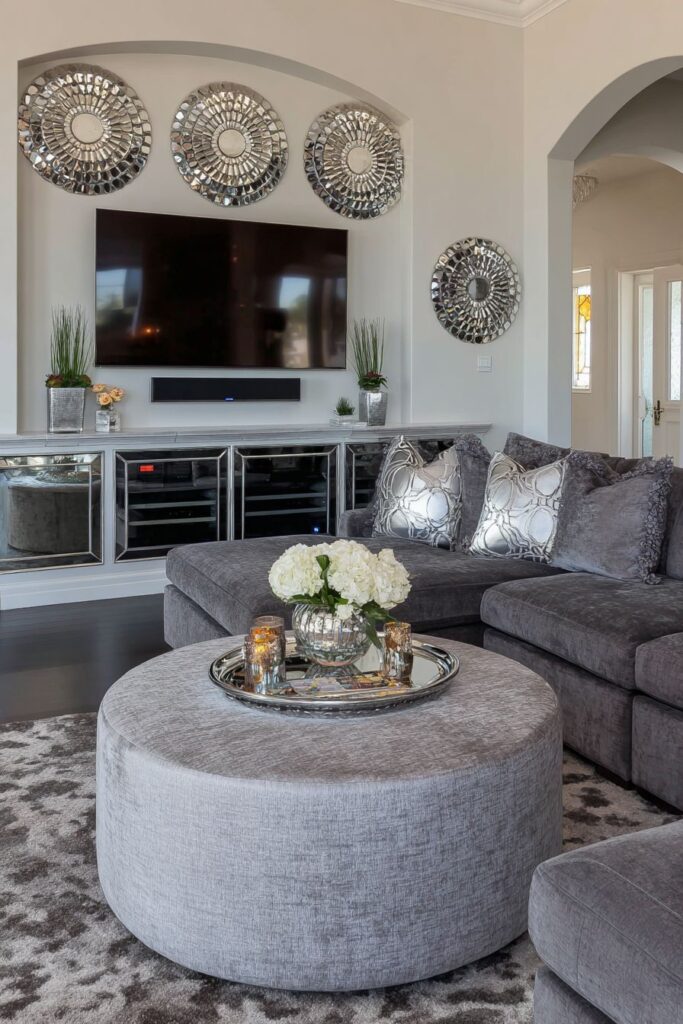
Wall-mounted media console keeps electronics organized without creating floor clutter, maintaining clean sight lines and preserving precious floor space for other uses. The mounted approach also allows for easier cleaning and creates visual lightness compared to traditional entertainment centers. Mirrored panels behind the console reflect light throughout the space while creating the illusion of greater depth and dimension.
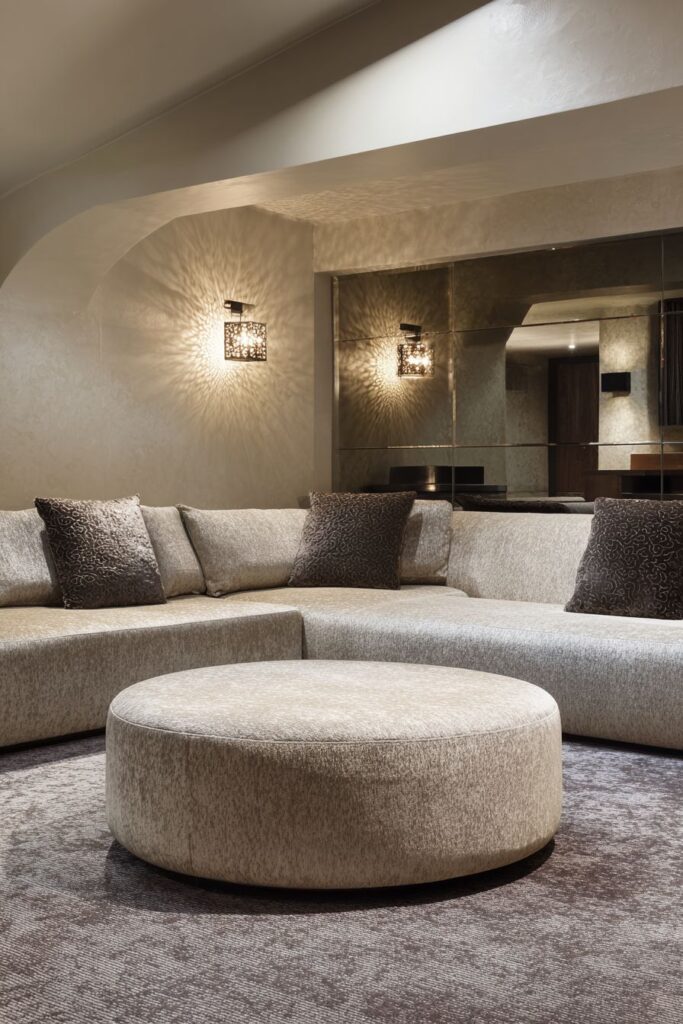
Key Design Tips:
- Utilize corner alcoves with custom-fitted furniture for maximum efficiency
- Choose round ottomans that serve multiple functions throughout the day
- Mount media equipment to preserve floor space and sight lines
- Use mirrored panels to reflect light and create depth illusions
- Select furniture that fits architectural features rather than fighting them
18. Vintage-Modern Fusion Storage
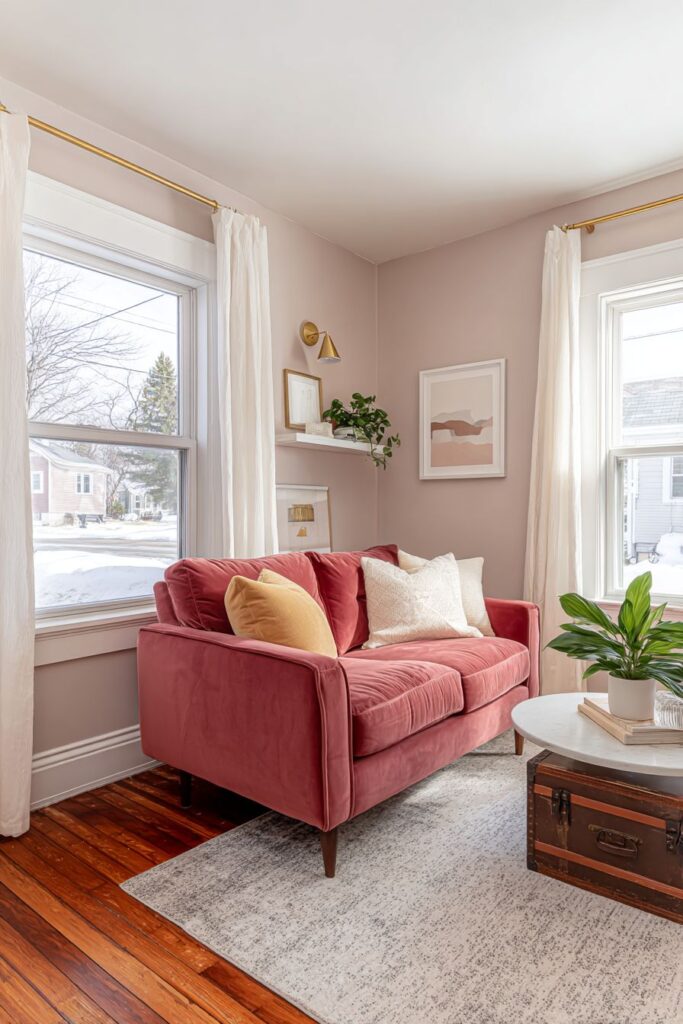
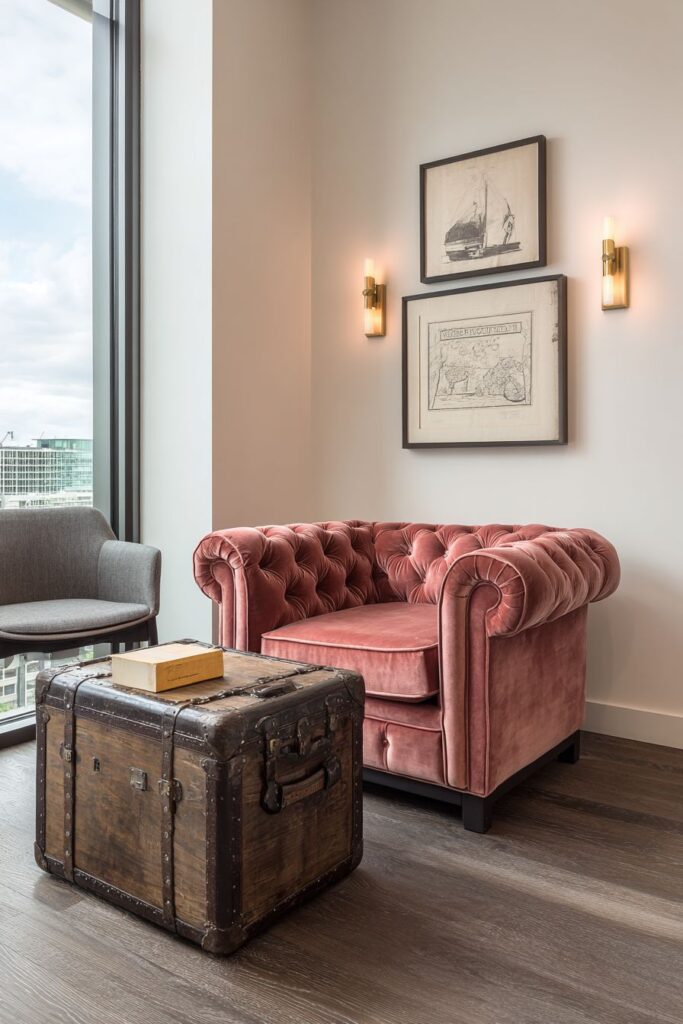
This design celebrates the successful marriage of vintage charm with modern functionality, proving that small spaces can accommodate personal style without sacrificing efficiency. The compact Chesterfield sofa in dusty rose velvet provides classic elegance while its smaller scale ensures it enhances rather than overwhelms the available space. The sophisticated color choice creates visual interest and warmth while remaining neutral enough to work with various decorative schemes.
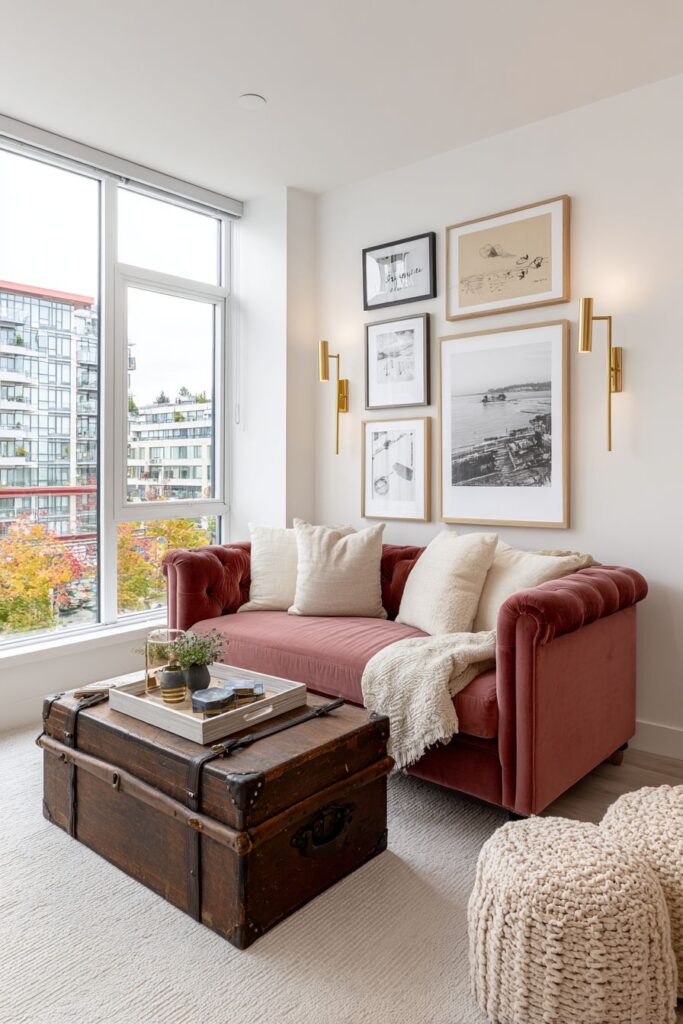
A vintage trunk serving as both coffee table and storage solution exemplifies the dual-purpose thinking that’s essential in small space design. Trunks provide substantial hidden storage for blankets, games, seasonal items, or everyday clutter while offering surface space for drinks, books, or decorative objects. The vintage appeal adds character and personality that makes the small space feel curated and intentional rather than merely functional.
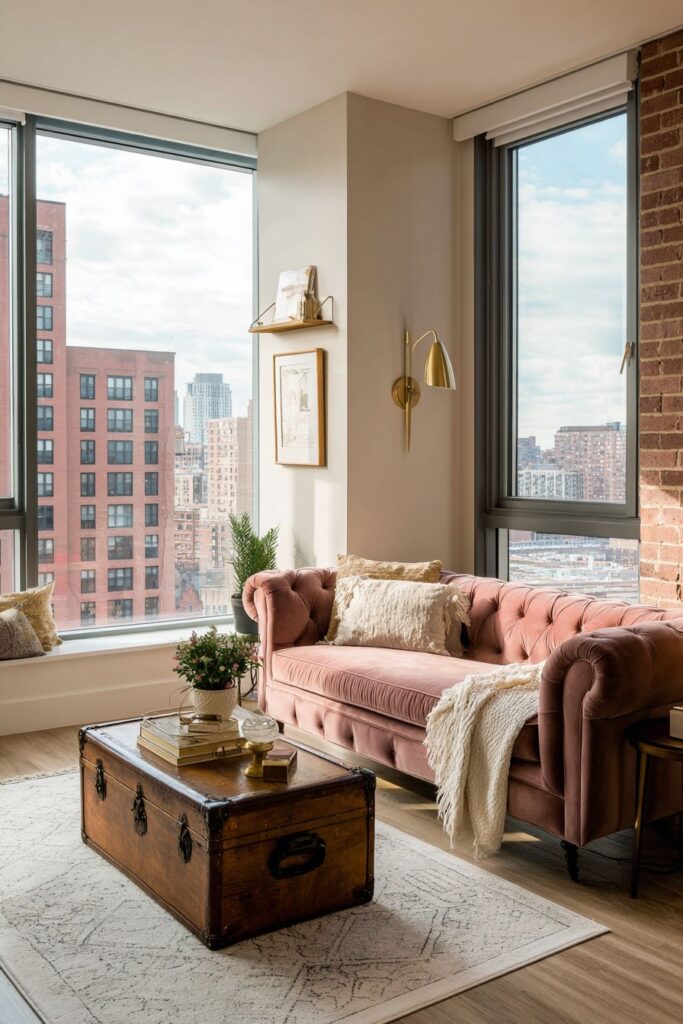
Floating picture ledges display artwork that can be easily changed without wall damage, providing flexibility that’s valuable in rental situations or for homeowners who like to refresh their décor regularly. These ledges accommodate various sizes of artwork and can be styled and restyled as tastes evolve. Brass wall sconces provide ambient lighting while freeing up surface space that would otherwise be occupied by table lamps.
Key Design Tips:
- Combine vintage charm with modern functionality for personal style
- Use trunks or vintage suitcases for storage that doubles as surface space
- Install picture ledges for flexible artwork display without wall damage
- Choose brass fixtures to add warmth and sophistication
- Select sophisticated colors that create interest without overwhelming small spaces
19. Proportional Design with Flexible Lighting
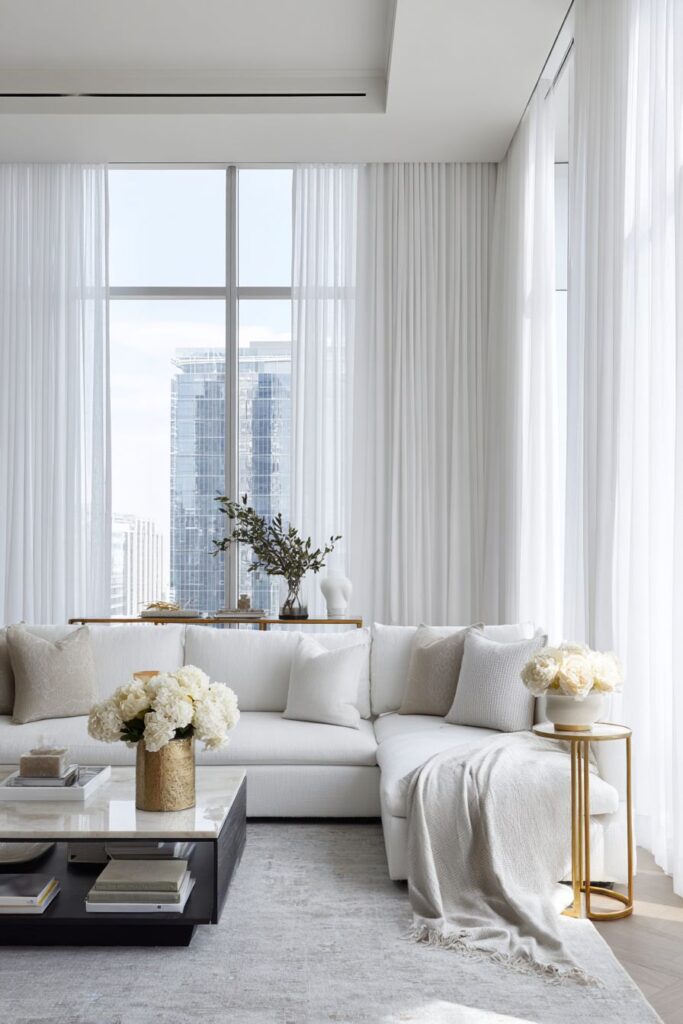
This design emphasizes the importance of proper proportions in small space furniture selection while incorporating flexible lighting solutions that adapt to changing needs throughout the day. The streamlined sectional with slim arms and legs maximizes seating capacity without creating visual bulk, demonstrating how furniture proportions can significantly impact spatial perception. The slim profile allows for comfortable seating while maintaining the open, airy feeling that’s crucial in compact spaces.
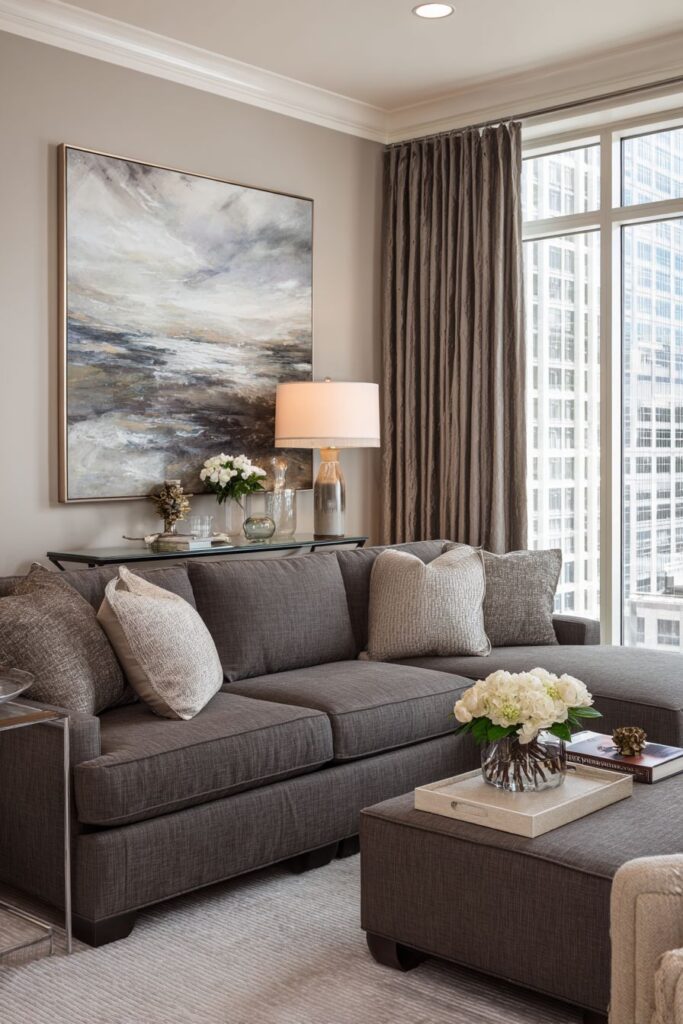
A glass-top console table positioned behind the sofa provides display space without blocking sight lines across the room, utilizing otherwise unused space while maintaining visual transparency. This placement is particularly clever because it creates surface area for books, plants, or decorative objects without requiring additional floor space or interfering with traffic patterns. The glass top ensures the piece doesn’t create visual barriers while providing essential functionality.
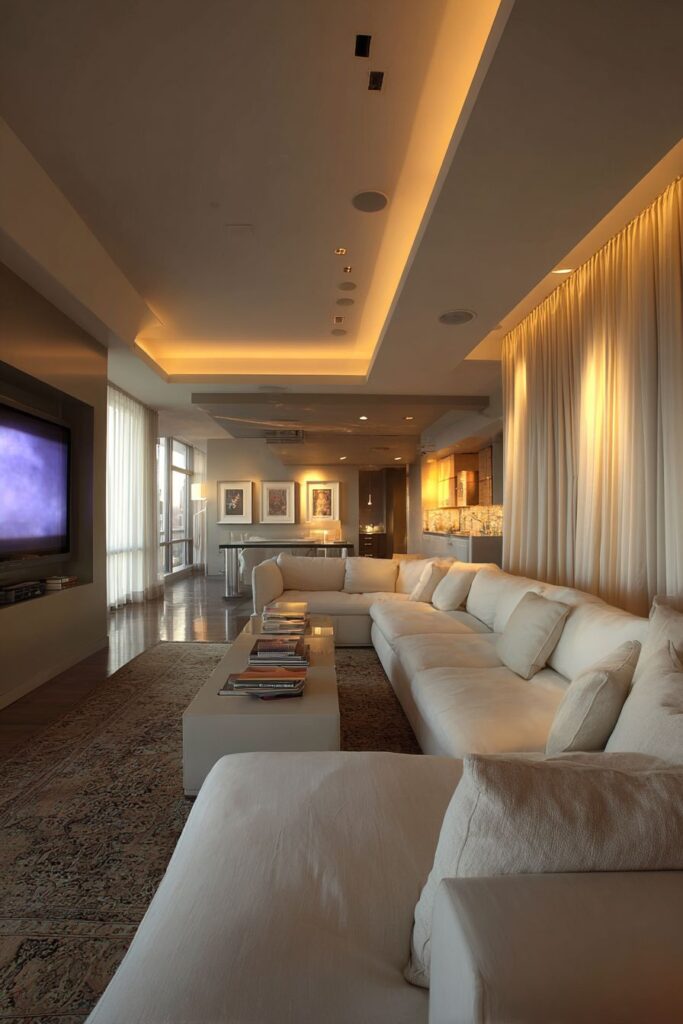
Ceiling-mounted curtain tracks allow floor-to-ceiling drapery that makes windows appear larger and more substantial than they actually are. This approach to window treatments is one of the most effective ways to create height illusions in small spaces while providing privacy and light control options. The ceiling mounting eliminates the visual break that traditional curtain rods create, making the windows appear to extend the full height of the room.
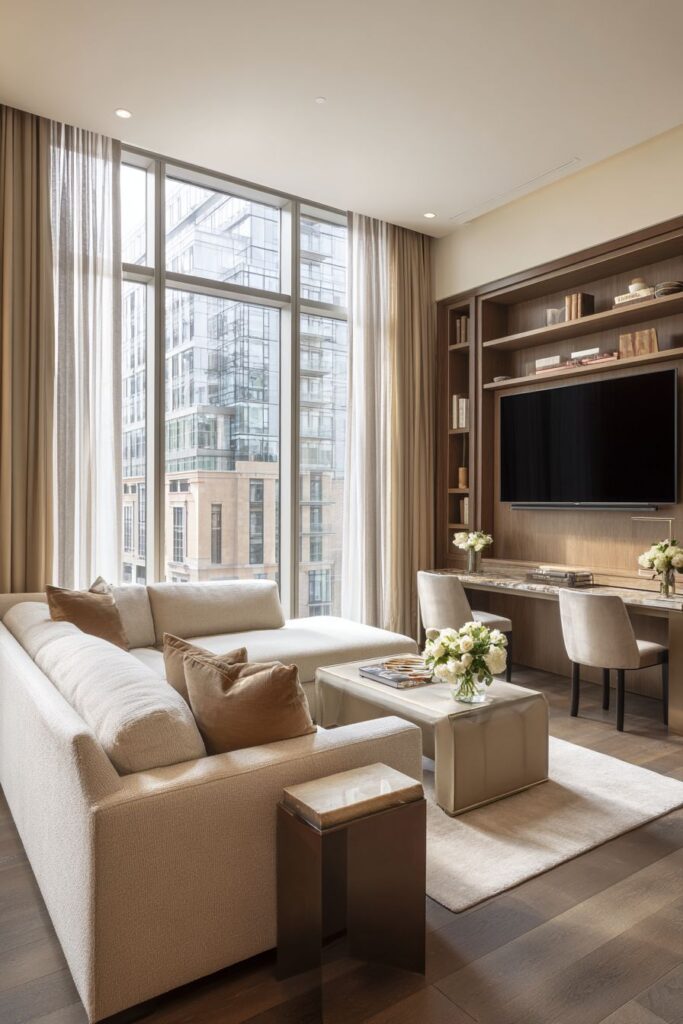
Key Design Tips:
- Choose furniture with slim profiles to maximize seating without visual bulk
- Use glass-top furniture to provide function while maintaining sight lines
- Install ceiling-mounted curtain tracks for height-enhancing window treatments
- Select recessed lighting with dimmers for flexible ambiance control
- Maintain proportional relationships between furniture and room size
20. Transformable Multi-Level Living
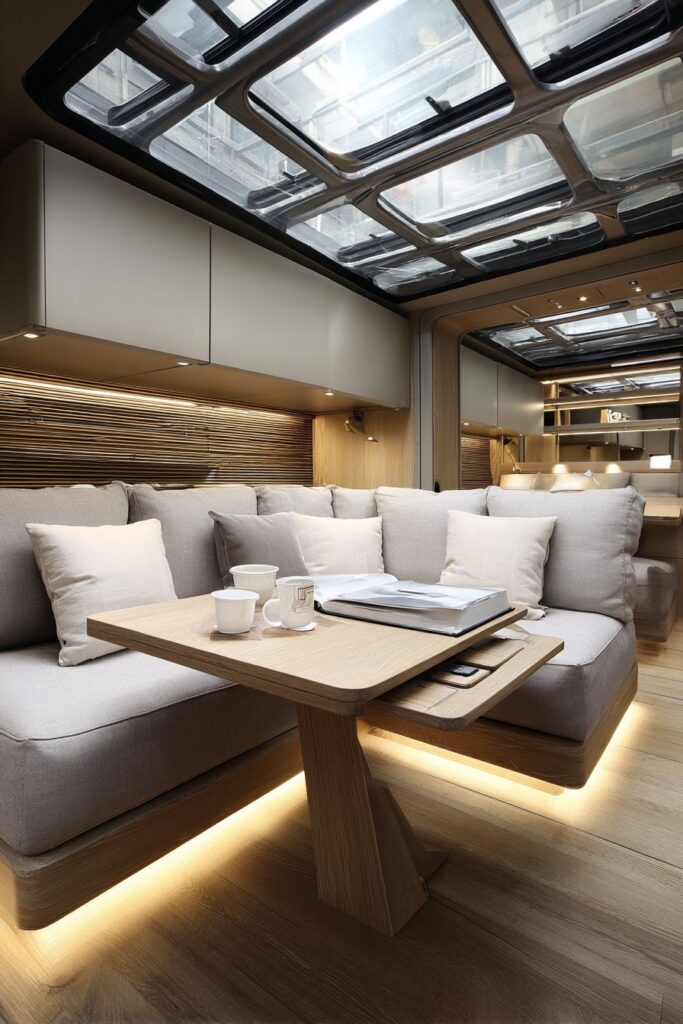
This final design concept embraces the ultimate in adaptable furniture solutions, featuring pieces that transform not just function but also configuration to meet changing daily needs. The convertible coffee table that raises to dining height represents innovative thinking about how furniture can adapt to modern living patterns, serving as a traditional coffee table during relaxation periods and transforming into a dining or work surface when needed. This type of transformable furniture is particularly valuable in studio apartments or small spaces that must accommodate multiple lifestyle functions.
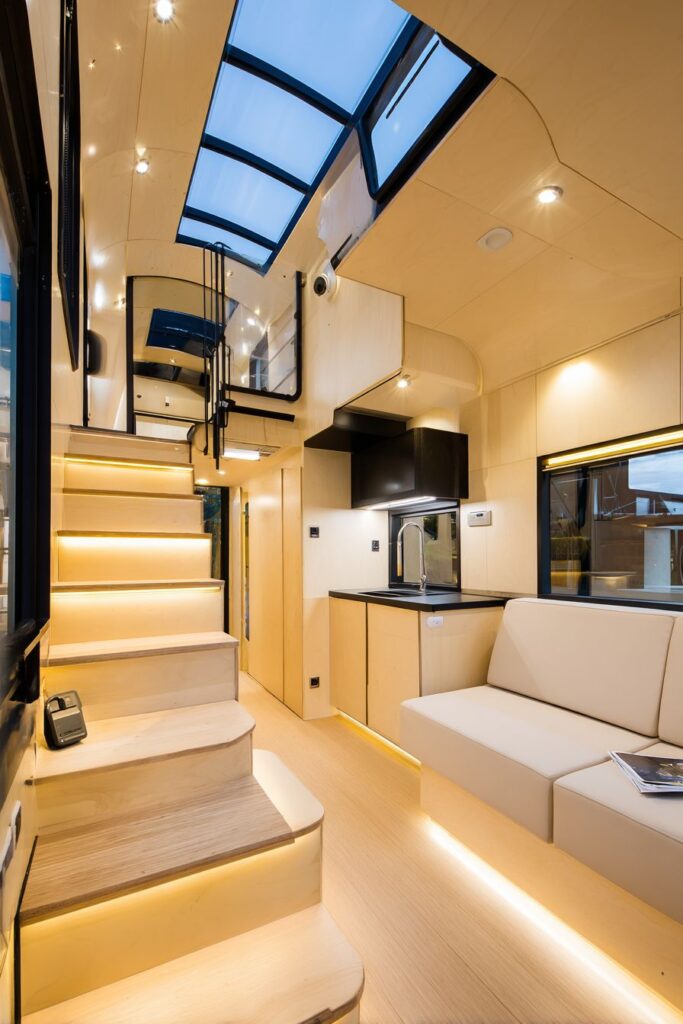
The compact loveseat with built-in USB charging ports addresses modern technology needs while eliminating cord clutter that can make small spaces feel chaotic and disorganized. Integrated charging solutions are becoming increasingly important as our daily lives become more dependent on electronic devices, and incorporating these features into furniture prevents the need for additional power strips or charging stations that would consume surface space.
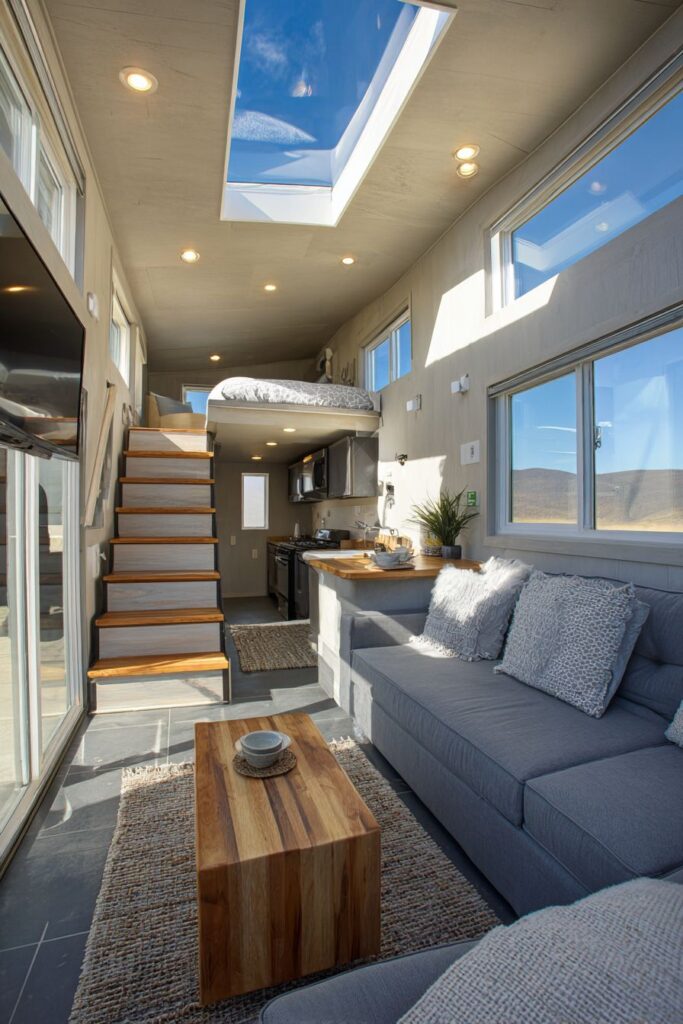
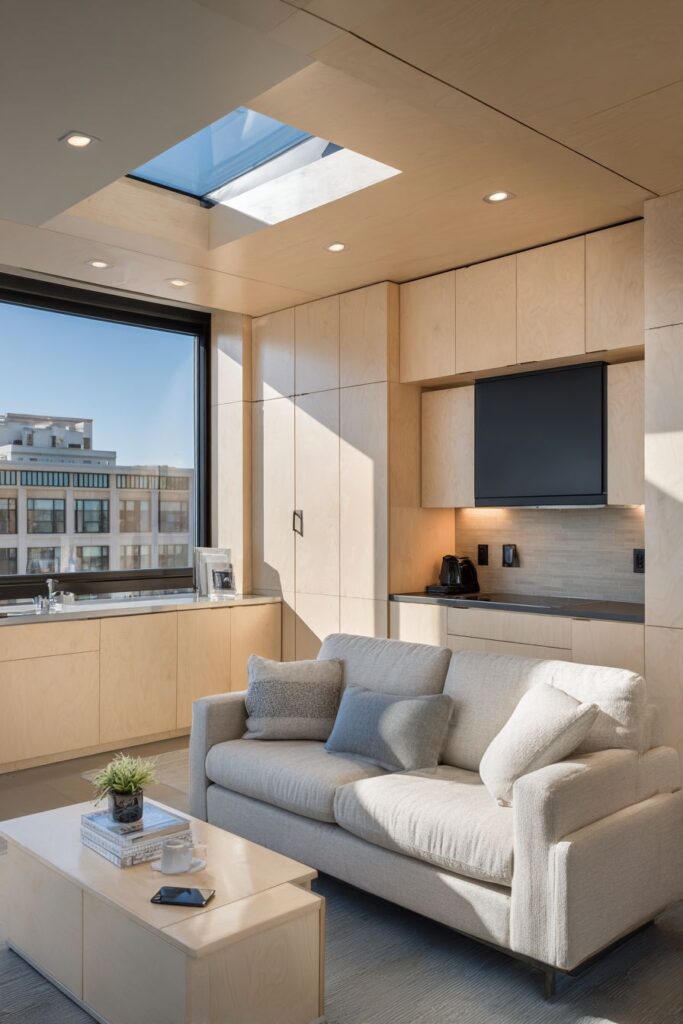
Wall-mounted floating cabinets provide closed storage for items that need to be hidden while maintaining an airy, uncluttered aesthetic. These storage solutions are essential in small spaces where visual cleanliness is as important as functional organization. The floating design keeps the storage from feeling heavy or imposing while providing substantial capacity for everyday items, seasonal belongings, or entertainment equipment.
Key Design Tips:
- Choose convertible furniture that transforms height and function as needed
- Select seating with integrated technology features to eliminate cord clutter
- Install floating storage to provide capacity without visual weight
- Position skylights or windows to maximize natural light throughout the day
- Embrace transformable solutions that adapt to modern living patterns
Why These Small Space Living Room Designs Work Best
These twenty small space living room design concepts represent the pinnacle of efficient, stylish living solutions because they address the fundamental challenges that compact spaces present while maintaining aesthetic appeal and personal comfort. Each design demonstrates core principles that are essential for successful small space living: multi-functionality, vertical emphasis, light maximization, and flexible arrangement possibilities.
The emphasis on multi-functional furniture throughout these designs reflects the reality of modern small space living, where every piece must justify its footprint by serving multiple purposes. Convertible sofas that become guest beds, ottomans with hidden storage, coffee tables that transform into dining surfaces, and seating with built-in charging stations all represent furniture pieces that work harder so homeowners can live more comfortably within limited square footage.
Vertical design elements appear consistently throughout these concepts because they represent one of the most effective strategies for making small spaces feel larger and more functional. Floor-to-ceiling storage, wall-mounted furniture, floating shelves, and ceiling-mounted lighting all draw the eye upward while utilizing space that might otherwise remain unused. This vertical emphasis creates the illusion of greater volume while providing essential storage and display opportunities.
Light maximization techniques woven throughout these designs recognize that natural and artificial lighting can dramatically impact how spacious a room feels. Mirror placement to reflect windows, glass furniture that maintains transparency, light color palettes that reflect rather than absorb illumination, and strategic lighting placement all work together to create bright, airy atmospheres that feel much larger than their actual dimensions.
The flexibility built into these designs acknowledges that small spaces must adapt to changing needs throughout the day and as lifestyles evolve. Modular seating systems, nested tables, fold-away furniture, and convertible pieces all provide homeowners with options to reconfigure their spaces based on immediate needs, whether for entertaining, working, relaxing, or sleeping.
These designs also demonstrate that small spaces don’t require sacrificing personal style or comfort. From sophisticated velvet upholstery to vintage-inspired pieces to modern minimalist aesthetics, each concept shows how design preferences can be accommodated within compact footprints through thoughtful selection and arrangement. The key lies in choosing pieces that reflect personal taste while maintaining the proportions and functionality required for efficient small space living.
The integration of technology needs throughout these designs reflects contemporary living requirements, with built-in charging stations, wall-mounted televisions, and cord management solutions that prevent small spaces from becoming cluttered with the electronic accessories that modern life requires. These integrated solutions maintain clean aesthetics while providing essential functionality.
Conclusion
Small space living room design represents one of the most exciting challenges in contemporary interior design, requiring creativity, innovation, and strategic thinking to create spaces that are both beautiful and highly functional. These twenty design concepts demonstrate that spatial limitations can actually inspire more thoughtful, intentional design decisions that result in spaces that are more carefully curated and personally meaningful than their larger counterparts.
The key to successful small space design lies in understanding that every element must contribute positively to both function and aesthetics. There’s no room for purely decorative pieces that don’t serve a purpose, no space for furniture that doesn’t fit proportionally, and no tolerance for clutter that doesn’t have designated storage solutions. This constraint forces designers and homeowners to make more intentional choices that ultimately result in more cohesive, purposeful spaces.
As urban living continues to emphasize smaller footprints and sustainable living practices, the principles demonstrated in these designs become increasingly relevant and valuable. The ability to create comfortable, stylish, and functional living spaces within compact areas represents not just a design skill but a life skill that will serve homeowners well as housing costs continue to rise and environmental consciousness grows.
These design concepts prove that small spaces can accommodate big dreams, sophisticated aesthetics, and comfortable living when approached with creativity, planning, and attention to detail. Whether you’re dealing with a tiny apartment, a small room in a larger home, or simply want to maximize efficiency in any space, these ideas provide inspiration and practical solutions that can transform how you think about and use your living environment.
"As an Amazon Associate, I earn from qualifying purchases."
