
In today’s world of urban living and rising property costs, small living rooms have become increasingly common, yet they present unique opportunities for creative interior design. The challenge of decorating a compact living space often intimidates homeowners, but with thoughtful planning and strategic design choices, even the most modest room can be transformed into a comfortable, functional, and aesthetically pleasing environment. The key lies not in fighting against the room’s dimensions, but in embracing them and making smart decisions about furniture selection, color schemes, storage solutions, and spatial arrangement.
A well-designed small living room can actually feel more intimate and inviting than a sprawling space, offering a cozy retreat from the outside world. The secret to success is understanding how to maximize every square foot without creating visual clutter or sacrificing style. From furniture that serves multiple purposes to clever storage solutions that keep belongings organized and out of sight, there are countless strategies to make a small living room both beautiful and livable. This article explores twenty distinct approaches to small living room design, each offering unique perspectives on how to tackle common challenges while creating spaces that reflect individual personalities and lifestyles.
Whether you’re drawn to minimalist aesthetics, prefer warm and cozy atmospheres, or seek multi-functional furniture solutions, the following design concepts demonstrate that limited square footage doesn’t mean limited possibilities. Each approach showcases different strategies for furniture arrangement, lighting, color selection, and spatial optimization, proving that small living rooms can be just as stylish and comfortable as their larger counterparts. Let these ideas inspire you to reimagine your compact space and create a living room that feels perfectly suited to your needs and aesthetic preferences.
1. Corner-Maximizing L-Shaped Sectional Design
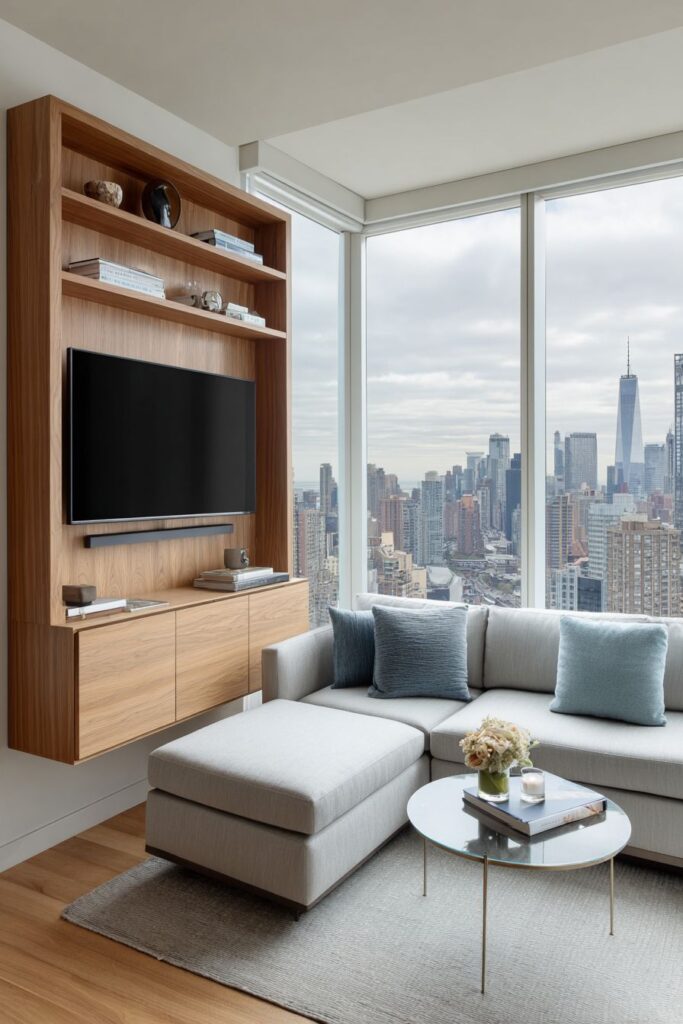
The strategic use of corner space transforms a small living room into an efficient and inviting area. This design features a compact L-shaped sectional sofa upholstered in soft grey linen, positioned snugly against the corner to maximize available floor space.
The neutral fabric choice creates a calming foundation while the sectional configuration provides ample seating without dominating the room. The sofa’s low-profile design maintains visual openness, preventing the piece from overwhelming the compact dimensions.
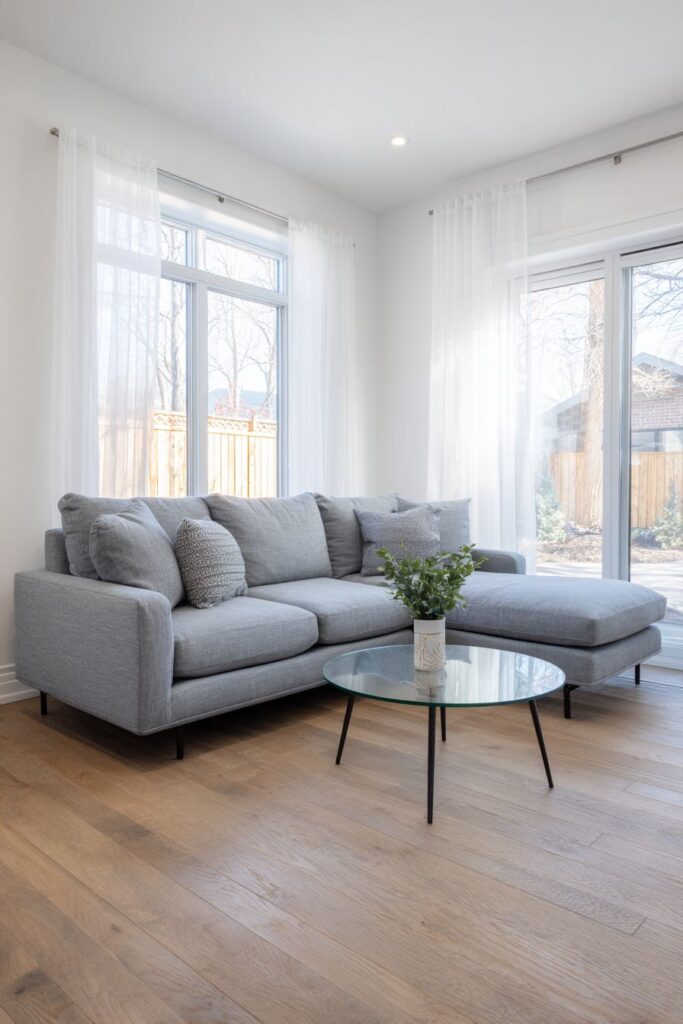
At the center of the seating area, a round glass coffee table with slim metal legs introduces functionality without creating visual heaviness. The transparent surface allows light to pass through, maintaining the airy quality essential in small spaces. The sleek metal framework adds a contemporary touch while the circular shape facilitates easy movement around the furniture.
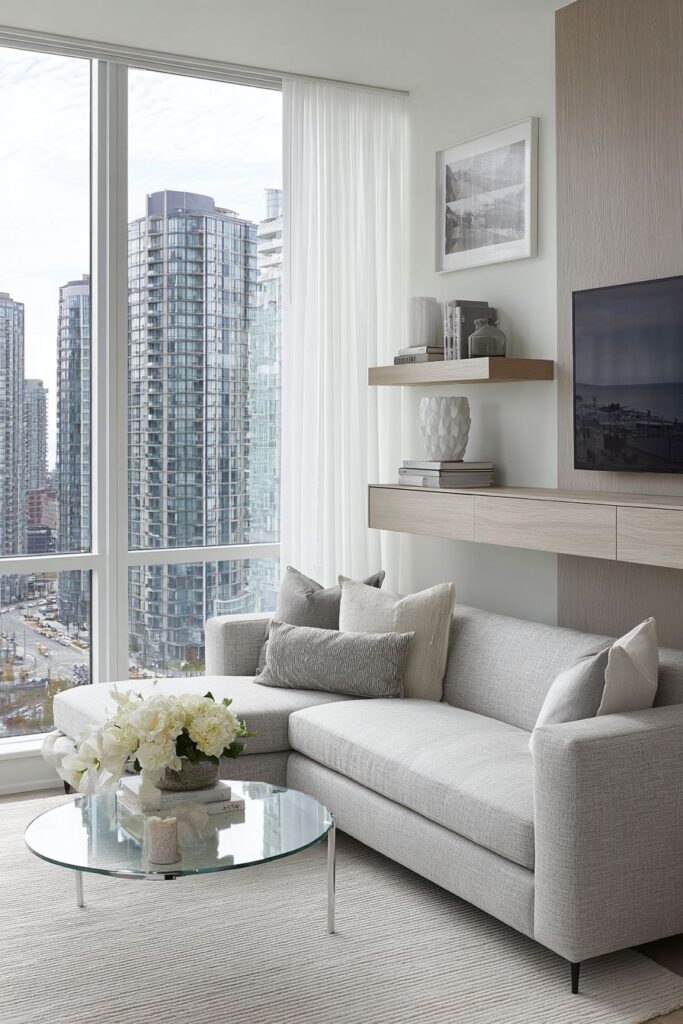
A wall-mounted floating TV console in white oak completes the setup, eliminating the need for bulky entertainment centers and keeping the floor clear. This elevated storage solution provides space for media components while its light wood finish contributes warmth without darkening the room.
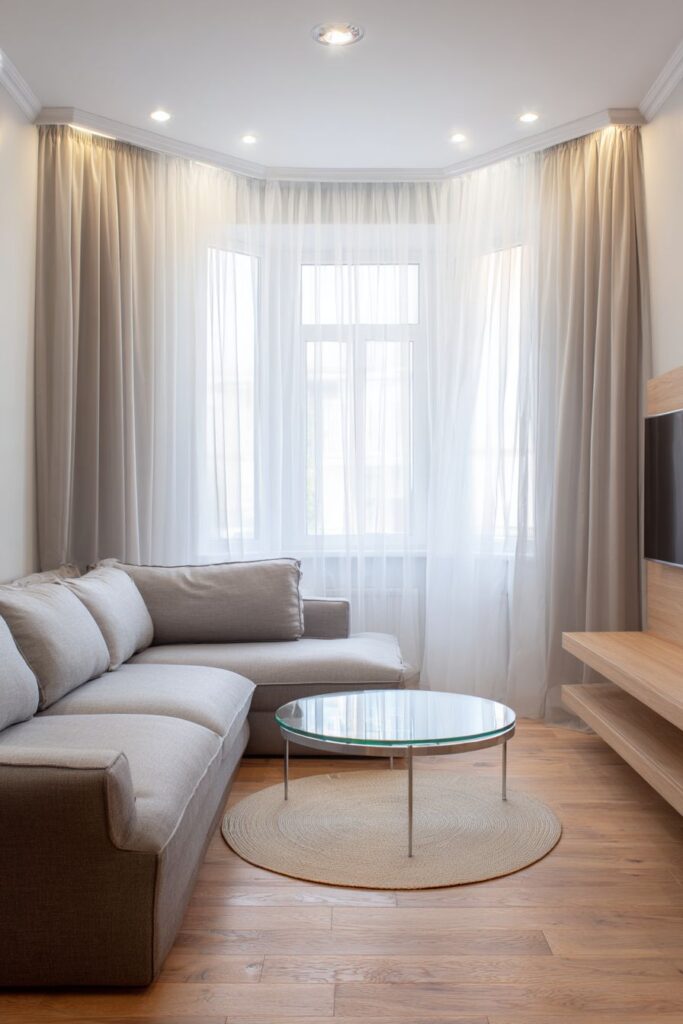
Sheer white curtains frame the window, allowing natural light to flood the space while maintaining privacy. These translucent window treatments diffuse harsh sunlight, creating a soft, welcoming glow throughout the day.
The overall effect is a room that feels spacious despite its compact footprint, with every furniture piece carefully selected to serve a purpose without sacrificing style. The neutral color palette of greys, whites, and light woods creates cohesion while the minimal approach to accessories prevents visual clutter.
Key Design Tips:
- Position sectional sofas in corners to maximize usable floor space in the center of the room
- Choose glass or acrylic coffee tables to maintain visual transparency and prevent the space from feeling crowded
- Install floating TV consoles instead of traditional entertainment centers to reduce visual bulk and create a streamlined appearance
- Use sheer curtains to maximize natural light while providing privacy and softening the overall aesthetic
- Select furniture with slim legs and elevated bases to create the illusion of more floor space
2. Vertical Storage with Floor-to-Ceiling Built-Ins
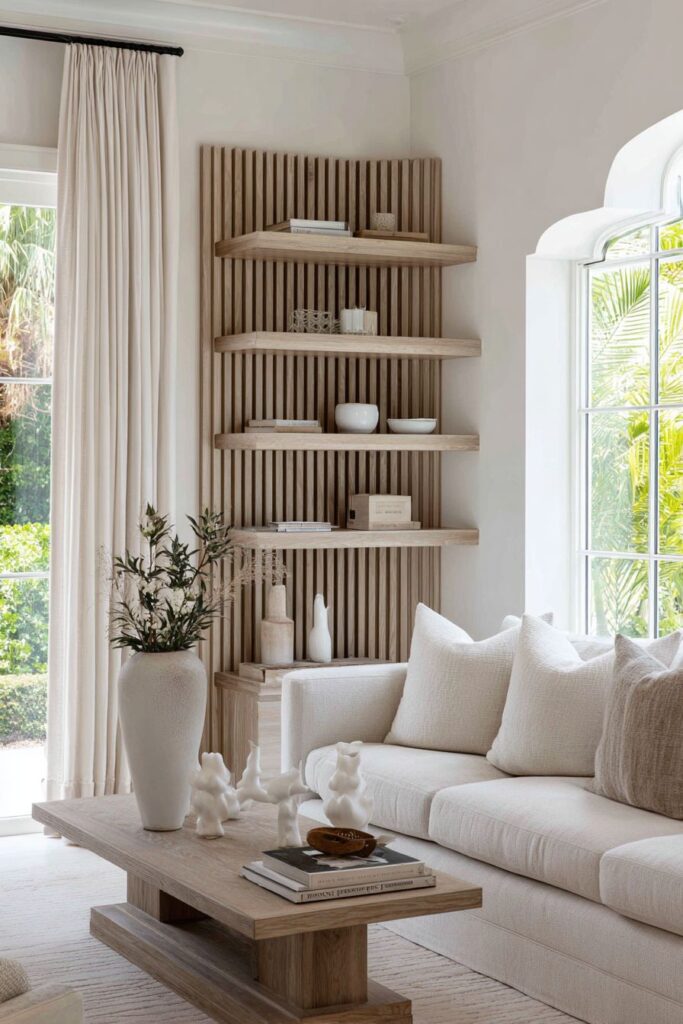
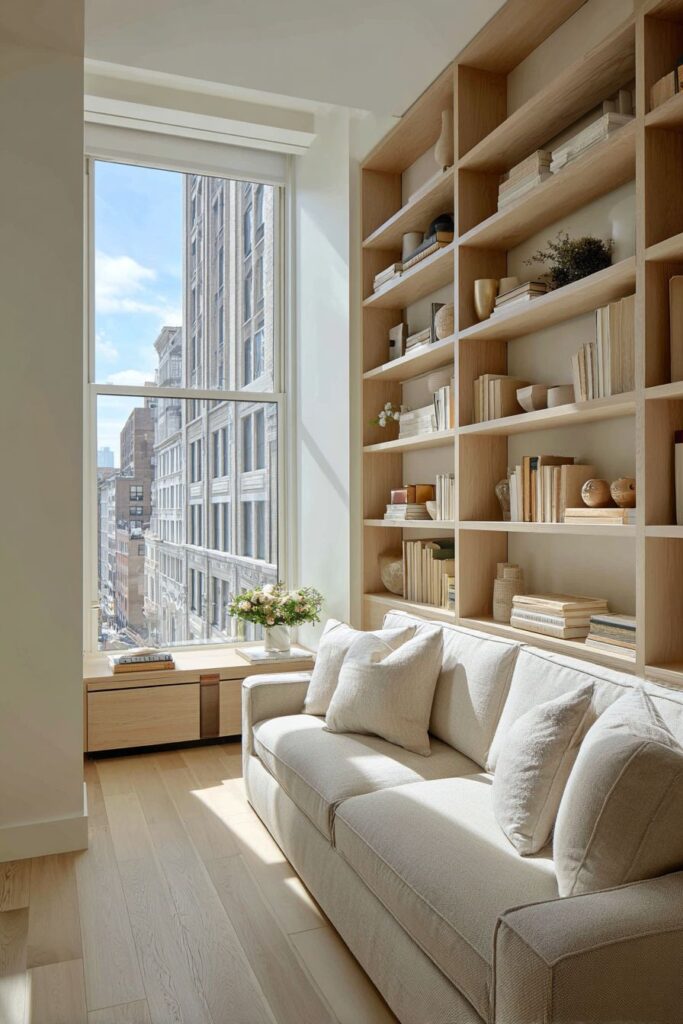
When floor space is limited, the solution lies in thinking vertically. This small living room design maximizes storage and display opportunities through floor-to-ceiling built-in shelving in a light wood finish.
The towering shelves draw the eye upward, creating the perception of higher ceilings while providing ample space for books, decorative objects, and personal treasures. The light wood tone keeps the installation from feeling oppressive, instead contributing warmth and natural beauty to the space.
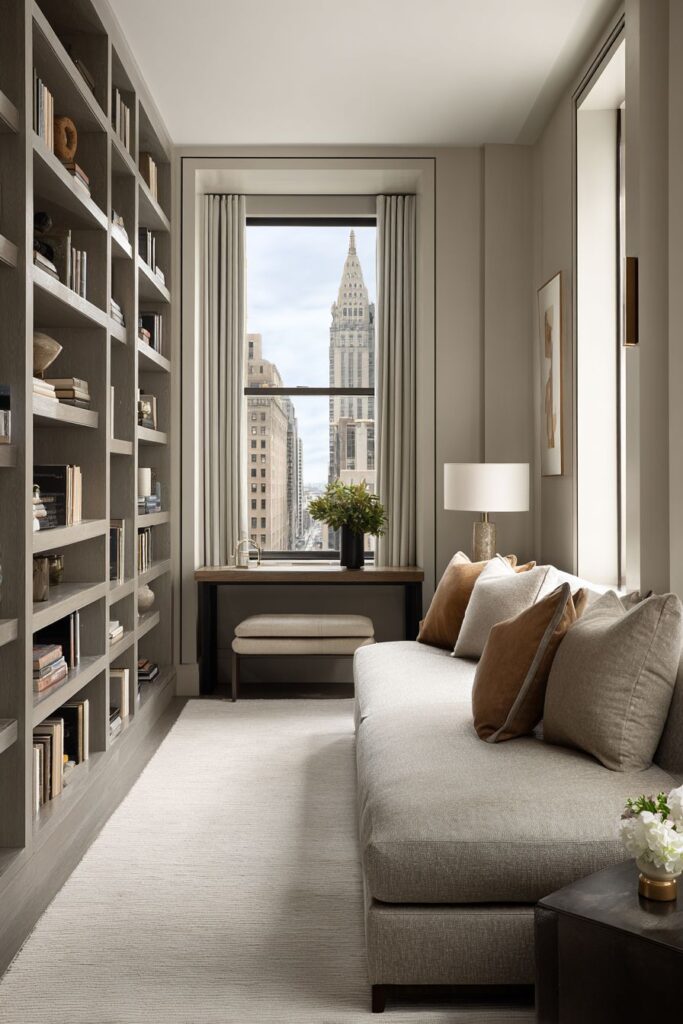
The shelving units are thoughtfully curated with books and minimal decorative objects, demonstrating restraint that prevents the vertical storage from appearing cluttered. This careful curation is essential in small spaces where visual chaos can quickly make a room feel even smaller.
Opposite the built-ins sits a low-profile loveseat in neutral beige fabric, positioned to leave ample walking space between furniture pieces. The loveseat’s modest scale ensures the room doesn’t feel cramped while still providing comfortable seating for two or three people.
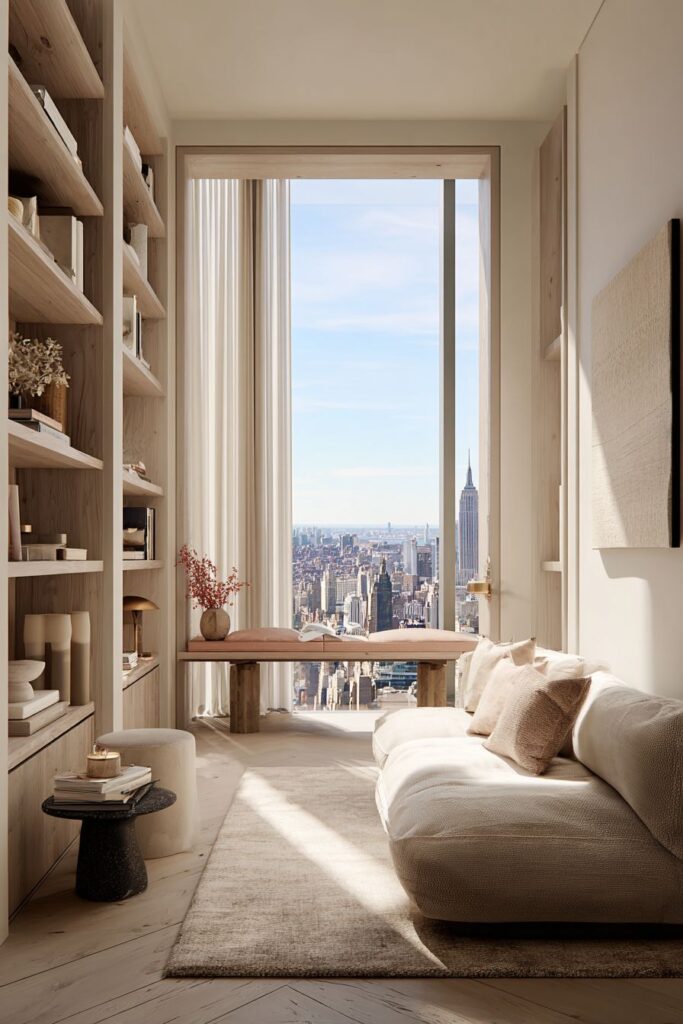
Behind the sofa, a narrow console table serves as an additional surface area for lamps, drinks, or decorative items without consuming valuable floor space. This layered approach to furniture arrangement creates depth and functionality while maintaining clear pathways through the room.
Natural daylight from a side window creates soft shadows that add dimension to the space, highlighting the texture of the wood shelving and the woven fabric of the loveseat. The interplay of light and shadow throughout the day brings the room to life, creating an ever-changing atmosphere.
Key Design Tips:
- Install floor-to-ceiling shelving to maximize vertical storage while drawing the eye upward
- Select light wood finishes for built-ins to keep the space feeling bright and open
- Practice restraint when styling shelves, leaving some areas empty to prevent visual clutter
- Position low-profile furniture opposite tall storage units to create balance in the room
- Add a console table behind the sofa to increase surface area without blocking pathways
3. Mirror Magic and Space-Saving Furniture
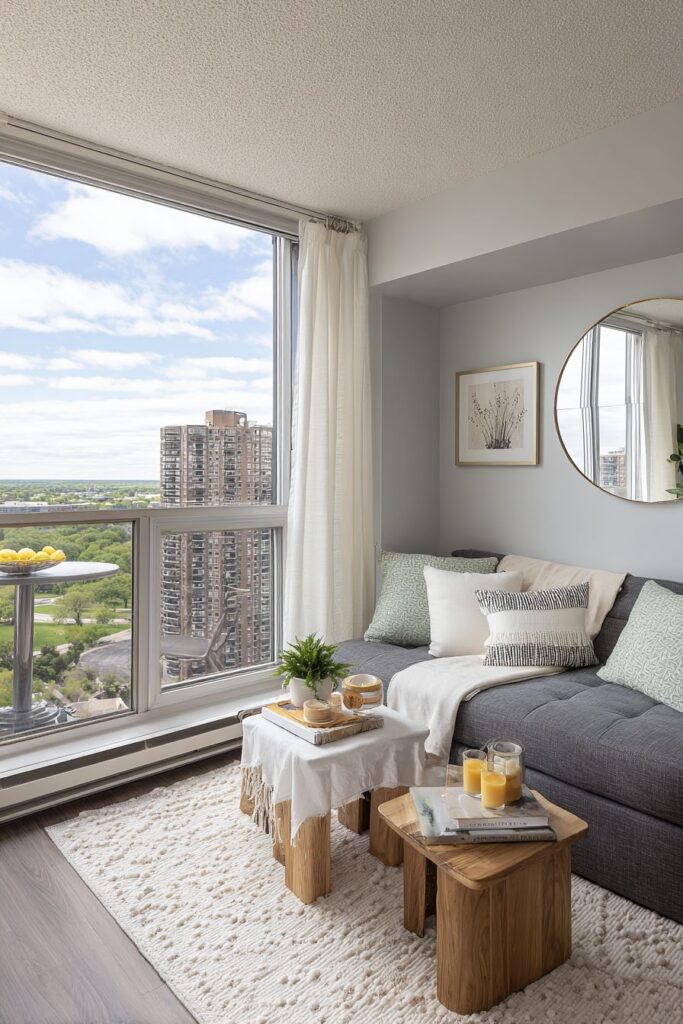
The illusion of expanded space can be achieved through strategic use of reflective surfaces and smart furniture choices. This small living room features a space-saving armless sofa in charcoal fabric, a bold choice that provides comfortable seating while its lack of arms reduces the overall footprint. The darker upholstery grounds the space and creates visual weight without actual bulk, offering a sophisticated contrast to the light grey walls that surround it.
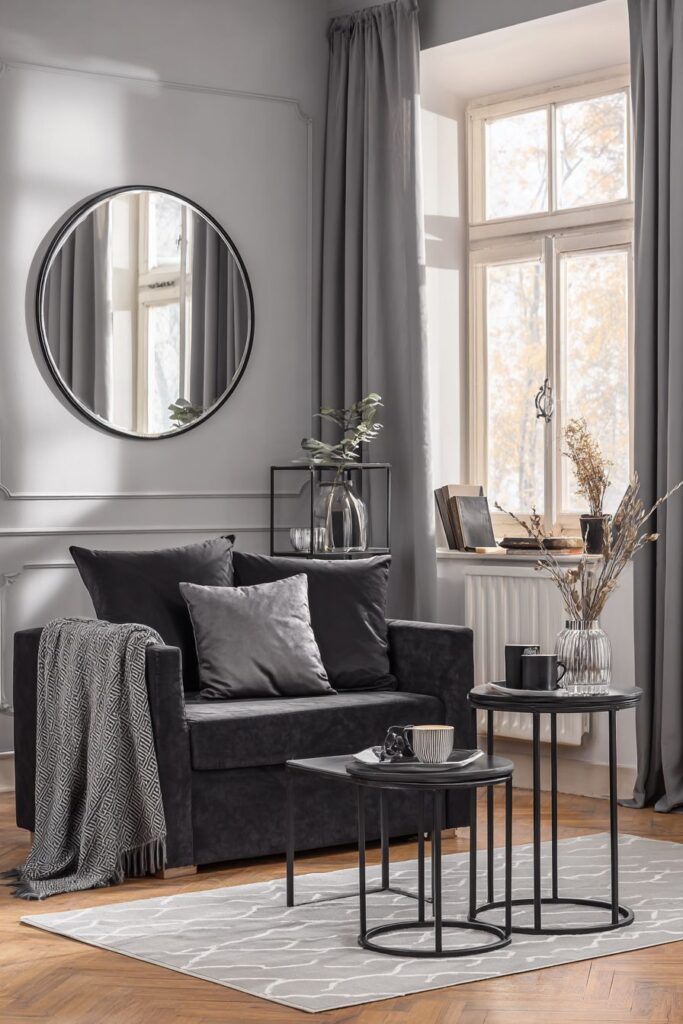
Nesting side tables positioned beside the sofa demonstrate brilliant space efficiency, tucking away when not needed and expanding when guests arrive or additional surface area is required. These versatile pieces eliminate the need for permanent bulky side tables that would consume precious square footage.
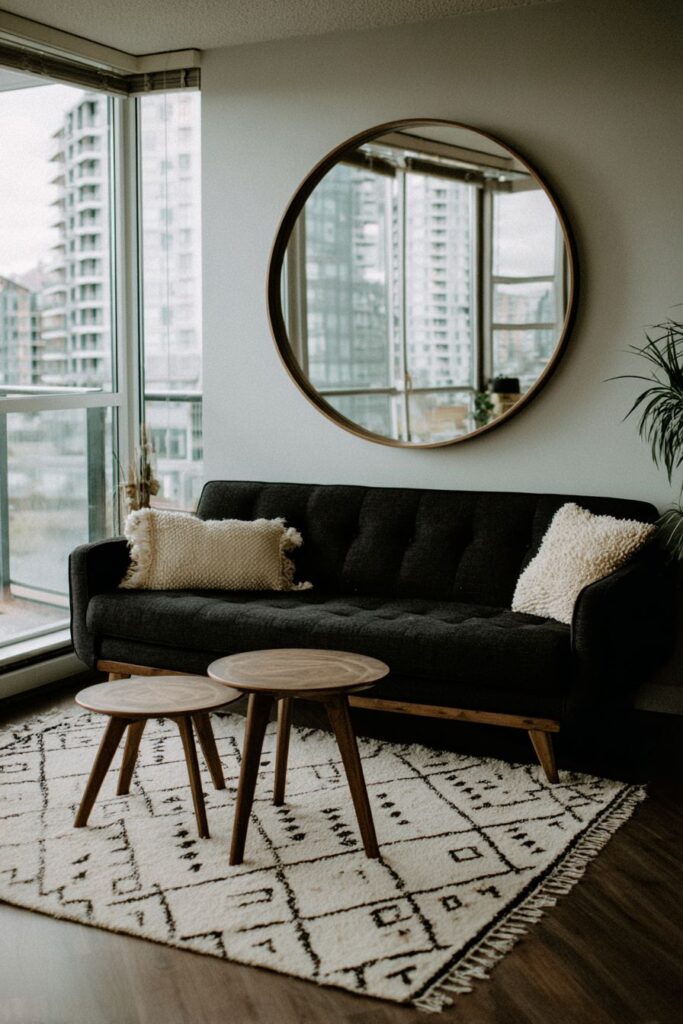
The real star of this design, however, is the large round mirror mounted on the wall, which creates the stunning illusion of expanded space by reflecting the room back on itself. The mirror also captures and bounces natural light throughout the space, effectively doubling the perceived brightness and making the room feel significantly larger than its actual dimensions.
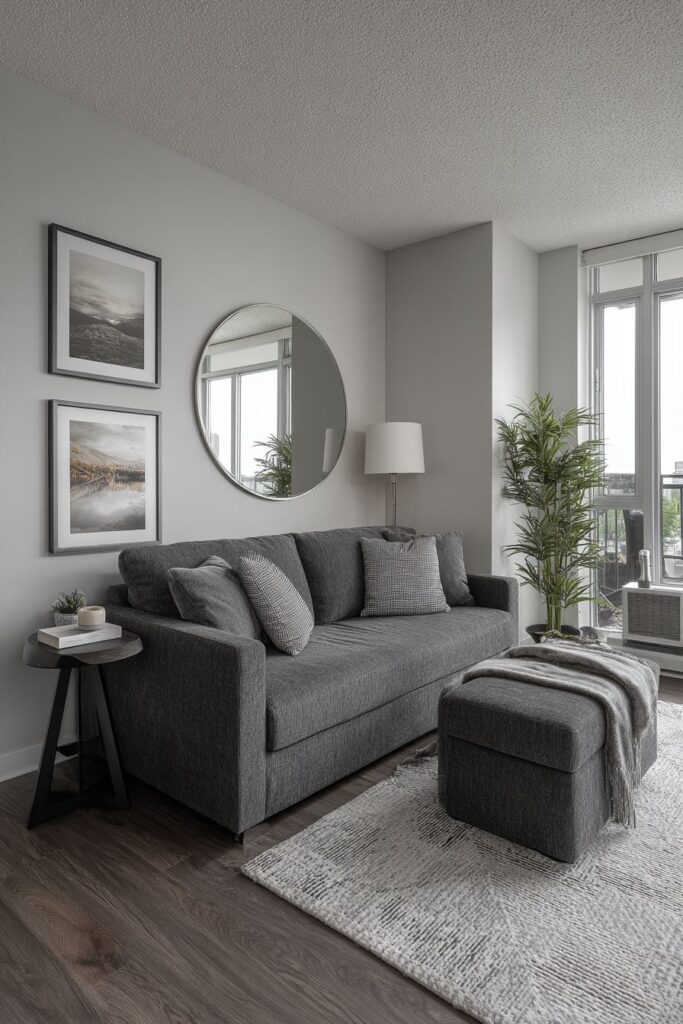
Light grey walls provide a neutral backdrop that enhances the sense of spaciousness while remaining warm enough to feel inviting. A simple area rug in a geometric pattern defines the seating area, grounding the furniture and adding visual interest through its pattern without overwhelming the space with bold colors.
The rug’s geometric design introduces a contemporary edge while its neutral color palette maintains the room’s cohesive appearance. Every element in this design works together to create the perception of more space, proving that strategic design choices can dramatically alter how a room feels.
Key Design Tips:
- Choose armless sofas to reduce furniture footprint while maintaining seating capacity
- Hang large mirrors opposite windows to reflect natural light and create the illusion of doubled space
- Invest in nesting tables that provide flexibility and can be stored when not in use
- Select area rugs with geometric patterns in neutral colors to add interest without visual overwhelm
- Paint walls in light grey tones to create spaciousness while maintaining warmth
4. Minimalist Multi-Functional Layout
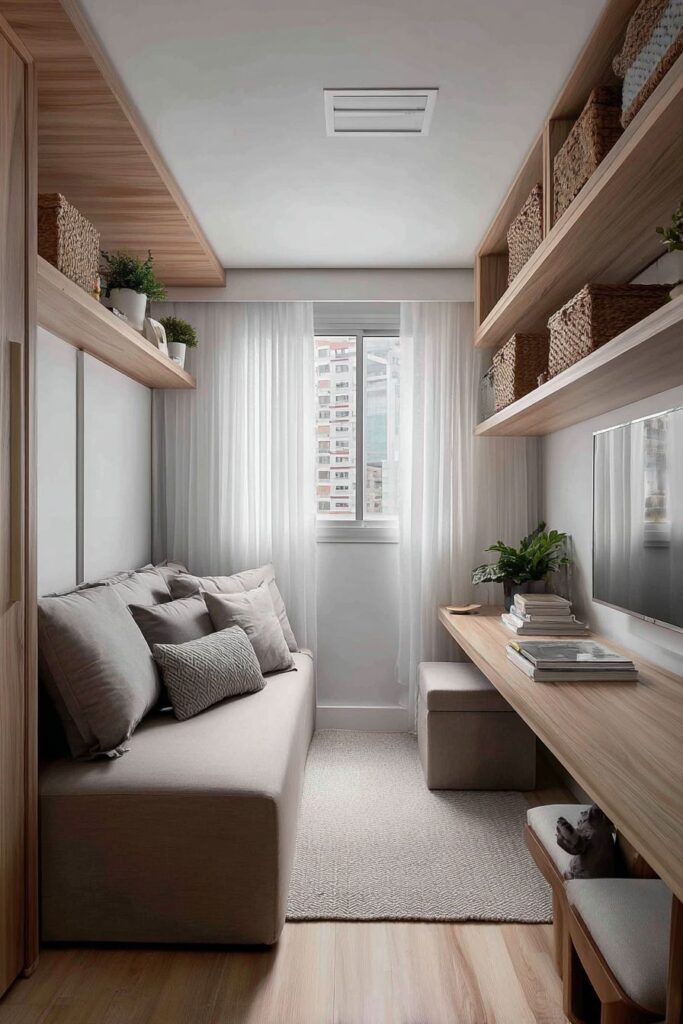
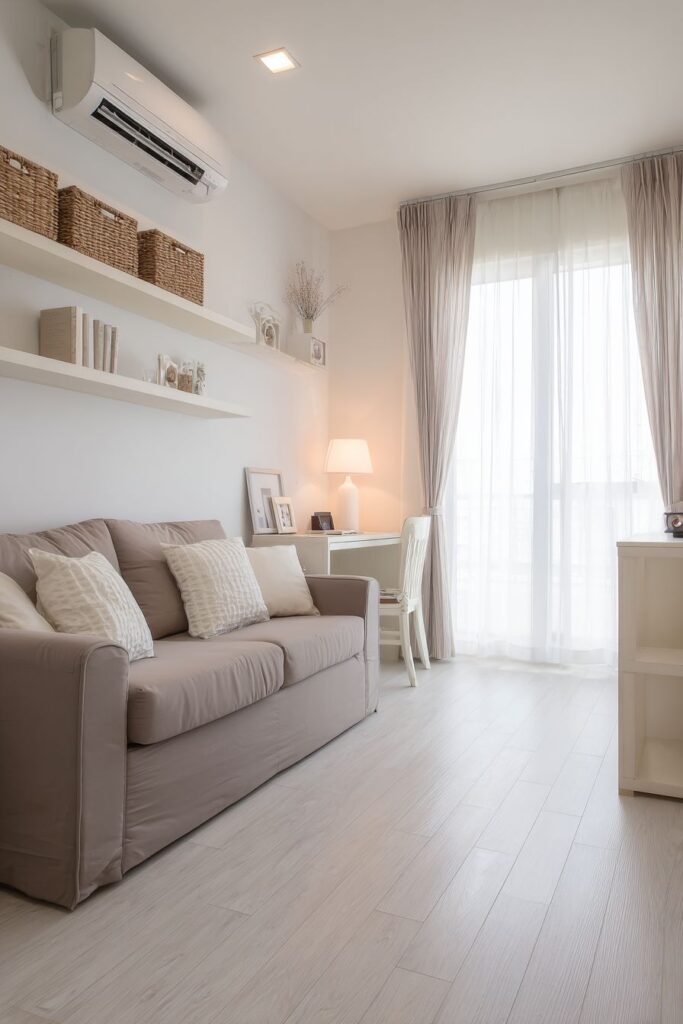
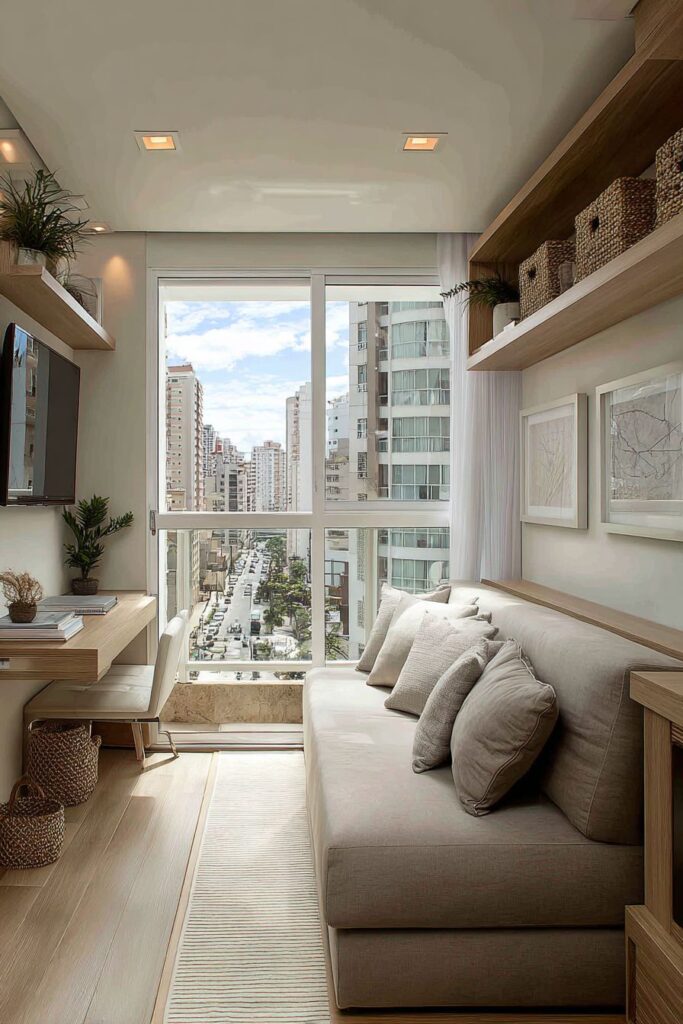
The minimalist approach to small living room design prioritizes functionality and simplicity, eliminating unnecessary elements to create a serene environment. This concept features a streamlined two-seater sofa in warm taupe positioned as the primary seating element, its compact size perfectly proportioned for the space. The warm neutral tone creates a welcoming atmosphere while the clean lines and minimal design prevent the sofa from visually dominating the room.
The innovative focal point of this design is a wall-mounted fold-down desk that doubles as an entertainment center, demonstrating how furniture can serve multiple purposes in small spaces. When closed, the desk creates a sleek wall panel that accommodates a mounted television; when opened, it provides a functional workspace for remote work, studying, or personal projects. This transformative element represents the pinnacle of space-efficient design, allowing the living room to adapt to different needs throughout the day without requiring separate zones for work and relaxation.
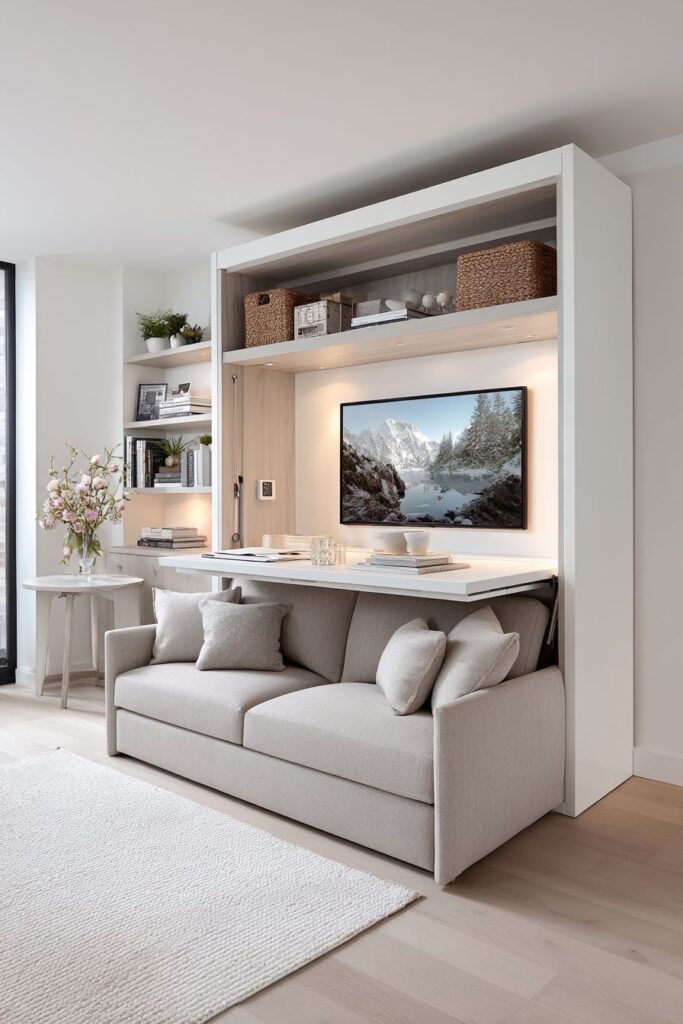
Open shelving above the fold-down desk holds essentials in matching storage baskets, maintaining the minimalist aesthetic while providing practical storage solutions. The coordinated baskets hide visual clutter while their uniform appearance contributes to the room’s calm, organized feel.
Pale wood flooring throughout the space reflects light beautifully, working in harmony with white walls to maximize brightness. The result is a room that feels airy, uncluttered, and surprisingly spacious despite efficient use of every square foot. This design proves that embracing minimalism doesn’t mean sacrificing comfort or functionality.
Key Design Tips:
- Choose streamlined furniture with clean lines to maintain a minimalist aesthetic in small spaces
- Install fold-down desks or Murphy beds to create multi-functional spaces that adapt throughout the day
- Use matching storage baskets on open shelving to hide clutter while maintaining visual cohesion
- Select warm taupe and neutral tones to create welcoming minimalist spaces that don’t feel cold
- Combine pale wood flooring with white walls to maximize light reflection and perceived spaciousness
5. Modular Flexibility with Distinct Zones
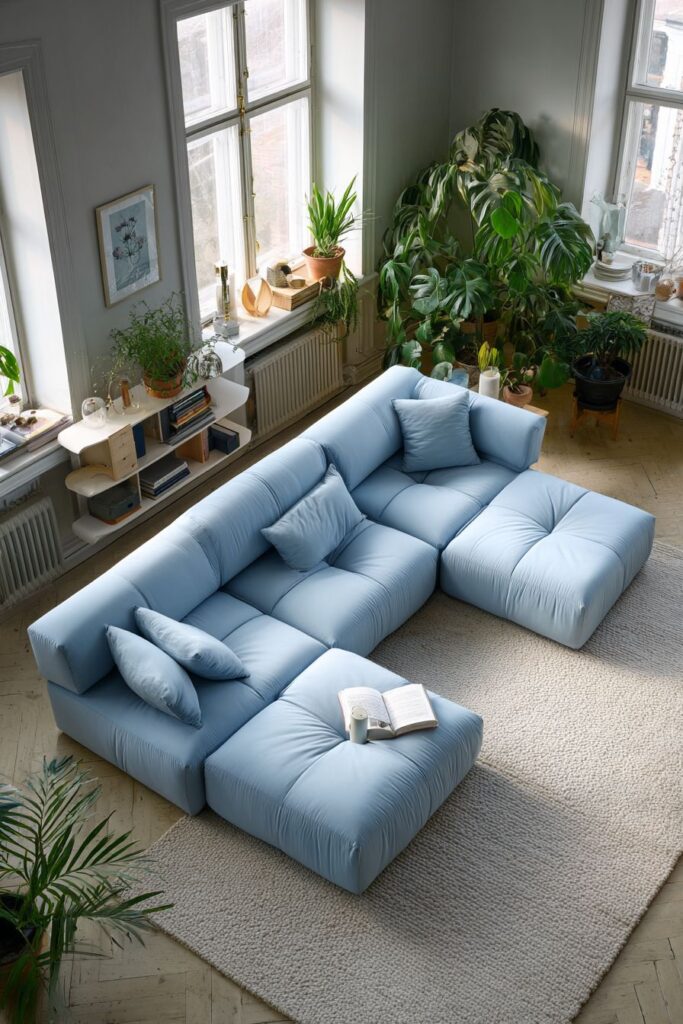
Modular furniture systems offer unparalleled flexibility in small living rooms, allowing homeowners to reconfigure their space as needs change. This design showcases a modular sofa system in dusty blue, a sophisticated color choice that adds personality while remaining versatile enough to work with various decor styles. The modular components can be separated and rearranged to accommodate different occasions, from intimate gatherings to larger social events, providing adaptability that fixed furniture cannot match.
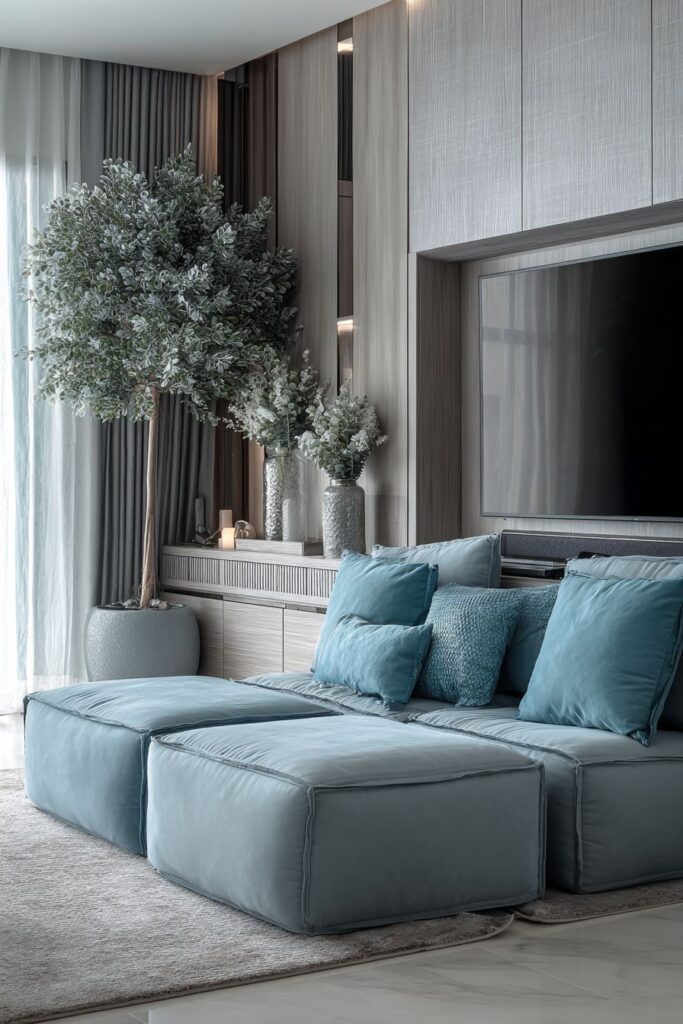
The dusty blue upholstery creates a calming focal point while the modular design allows the pieces to be positioned strategically to create distinct zones within the compact space. This zoning technique helps a small room feel more organized and intentional, with clear areas for relaxation, entertainment, and conversation.
A slim media console with integrated cable management keeps the area organized and free from the visual chaos of tangled wires, demonstrating attention to detail that elevates the overall design.
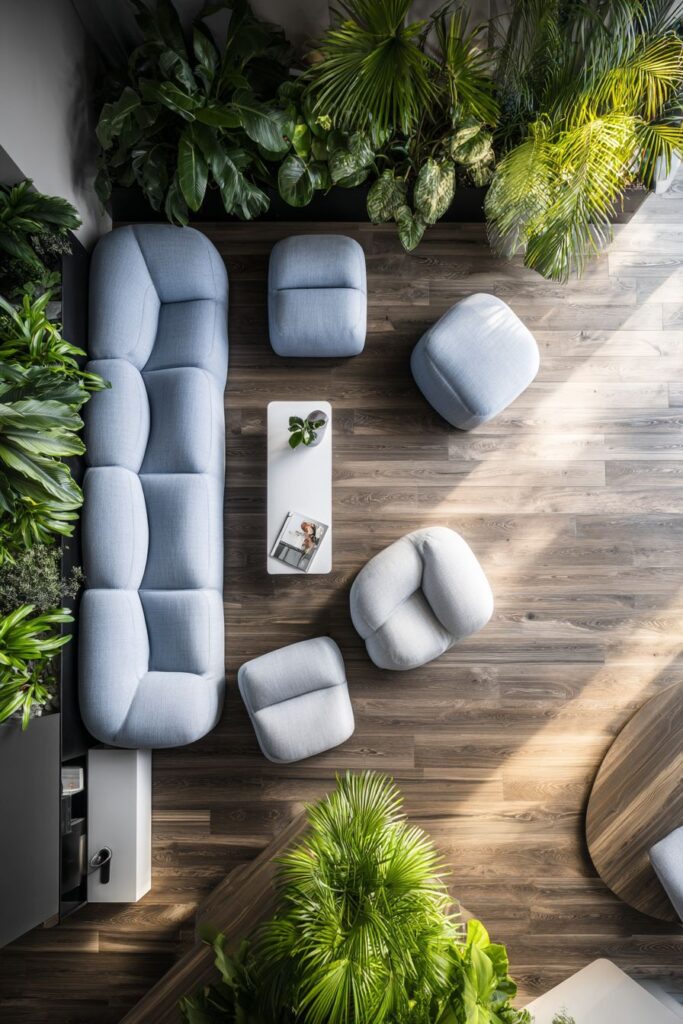
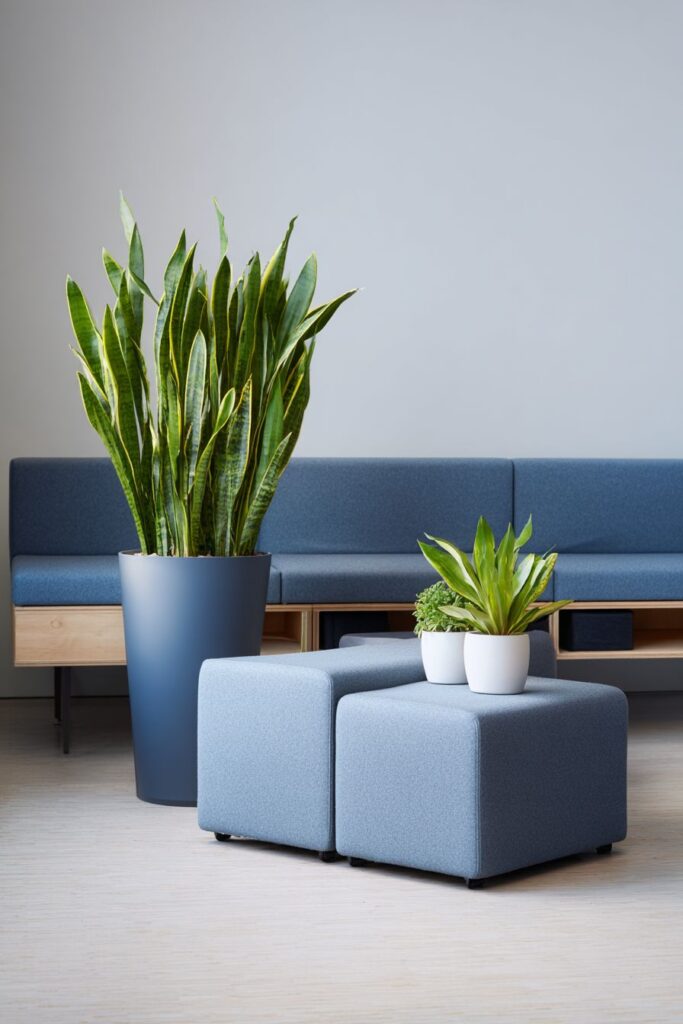
Large potted plants positioned throughout the room add life and natural beauty without overwhelming the space. The plants are carefully scaled to the room’s proportions, providing greenery and improved air quality while their vertical growth draws the eye upward.
The combination of natural elements with the sophisticated dusty blue upholstery creates a balanced environment that feels both contemporary and organic. Thoughtful furniture scaling ensures every piece contributes to a comfortable yet uncluttered environment where residents can truly relax.
Key Design Tips:
- Invest in modular sofa systems that can be reconfigured as your needs and occasions change
- Choose dusty blue or other muted colors for upholstery to add personality without overwhelming small spaces
- Select media consoles with integrated cable management to eliminate visual clutter from wires
- Incorporate large potted plants scaled appropriately to add life without consuming excessive floor space
- Create distinct zones within small rooms to make the space feel more organized and purposeful
6. Corner Seating with Wall-Mounted Lighting
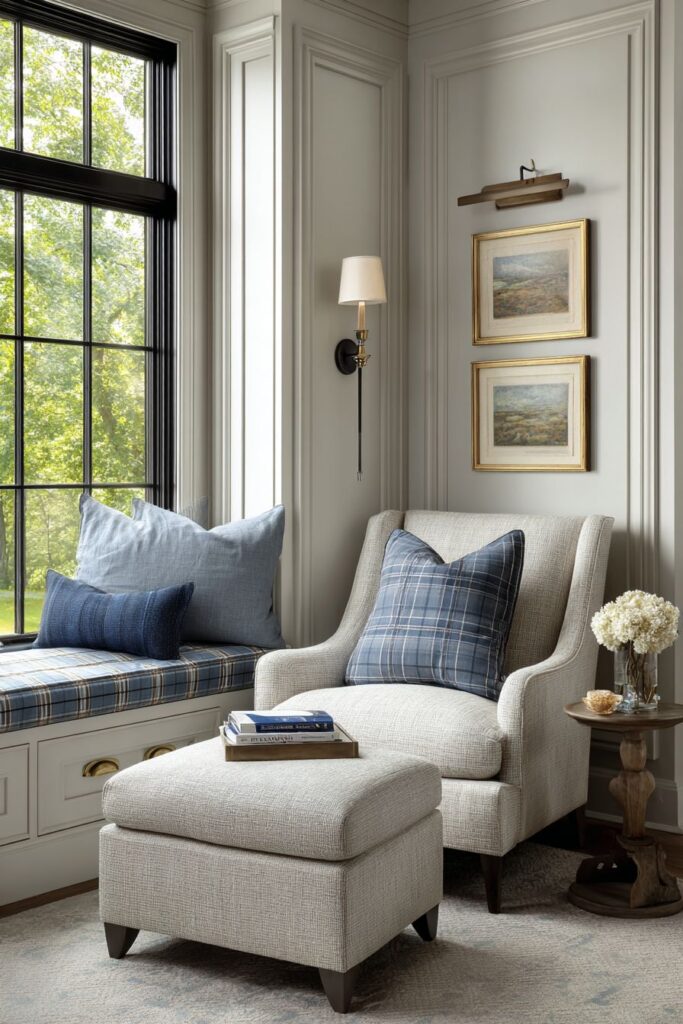
Creating an intimate conversation space in a small living room requires careful attention to scale and lighting solutions. This design features a corner seating arrangement with a compact loveseat in natural linen paired with a single accent chair, forming a cozy grouping perfect for conversation and relaxation. The natural linen upholstery brings texture and warmth while its light color keeps the seating from feeling heavy or overwhelming in the compact space.
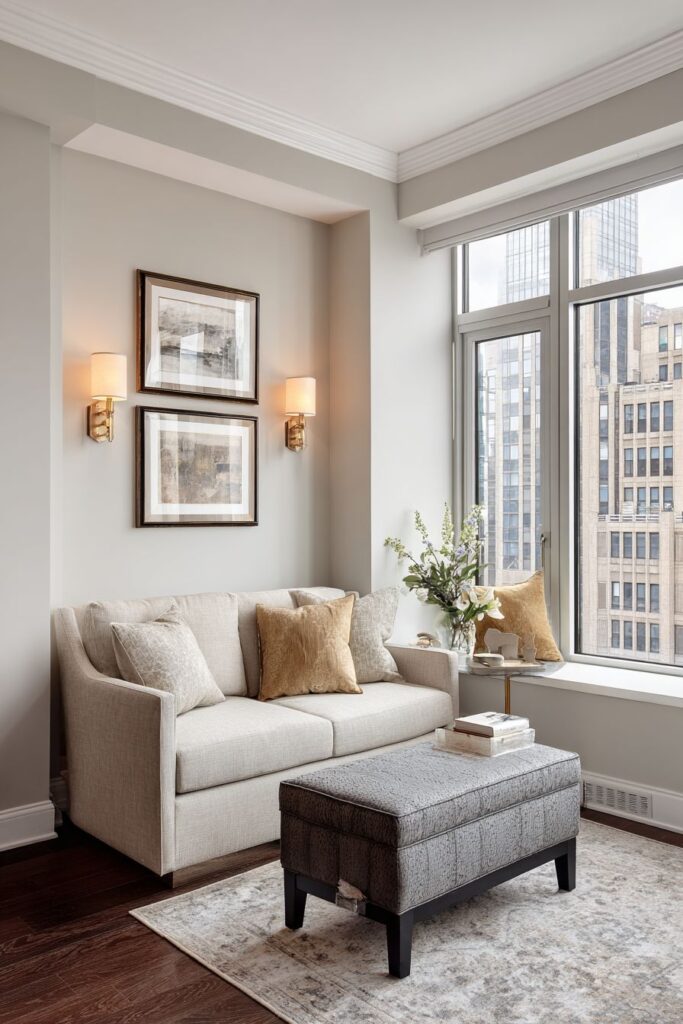
The brilliant lighting solution in this design comes from wall-mounted sconces that eliminate the need for floor lamps, preserving precious floor area that would otherwise be consumed by lamp bases and their required safety zone.
These wall-mounted fixtures provide focused task lighting while adding architectural interest to the walls. The sconces create ambient illumination that enhances the room’s atmosphere in the evening while their elevated position keeps surfaces and floors clear for movement and other uses.
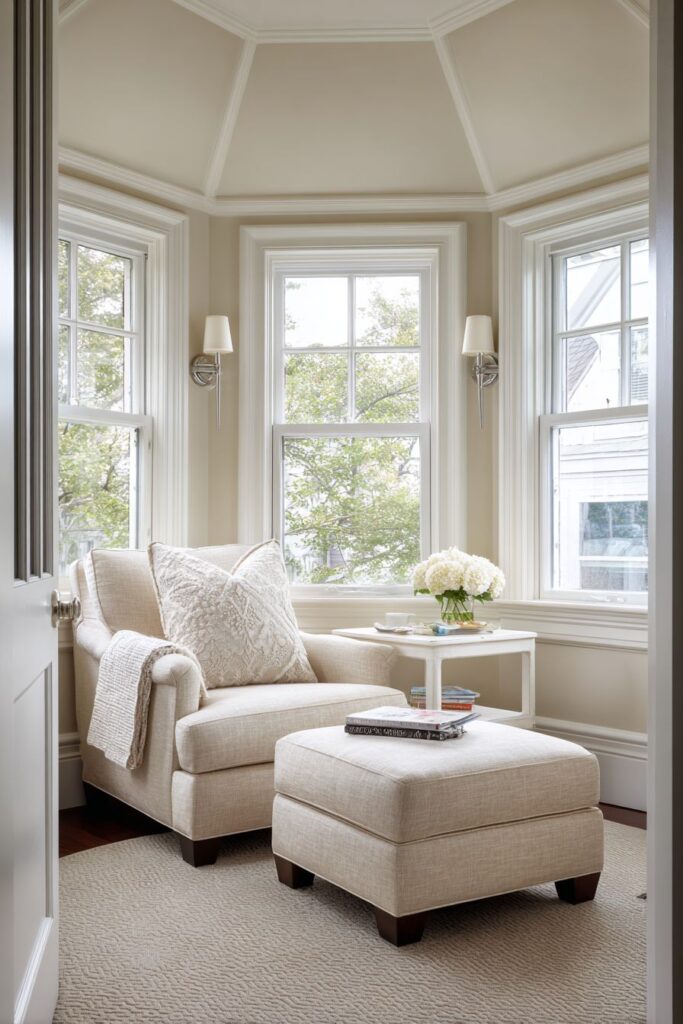
A small ottoman with hidden storage serves the dual purpose of coffee table and extra seating, demonstrating how multi-functional furniture maximizes utility in limited square footage. The hidden storage compartment provides a place to stow throw blankets, magazines, or other items that might otherwise create clutter.
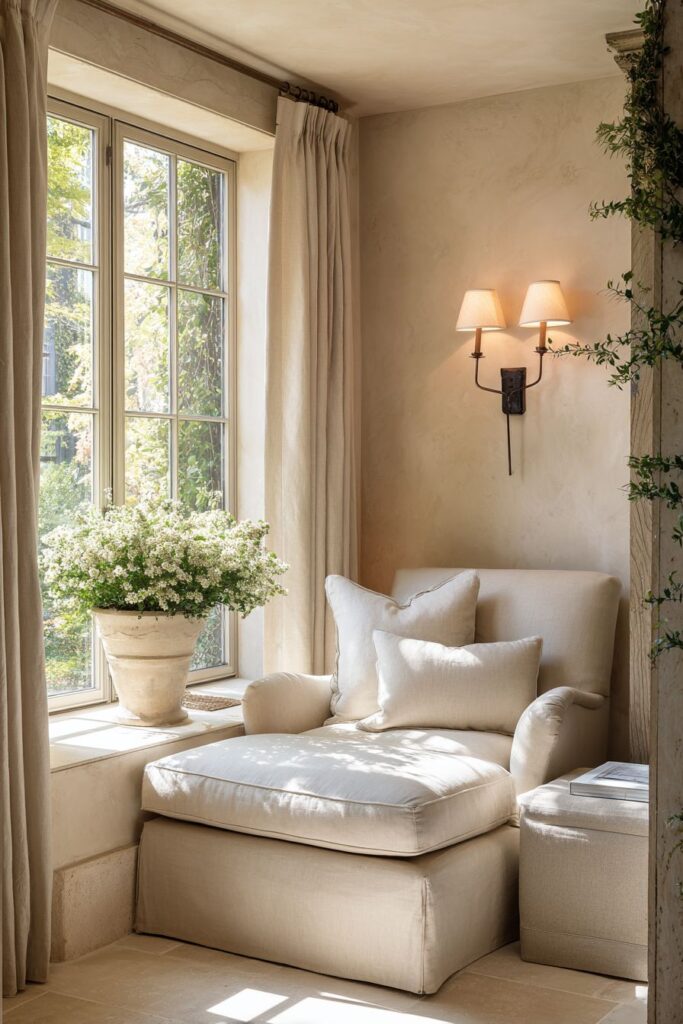
Natural lighting through minimal window treatments emphasizes the room’s openness during daylight hours, with simple sheer panels or no treatments at all allowing maximum light penetration. The balanced proportion of furniture pieces creates a harmonious arrangement where everything feels intentional and perfectly scaled.
Key Design Tips:
- Install wall-mounted sconces instead of floor lamps to preserve valuable floor space in small rooms
- Choose natural linen upholstery for its texture, warmth, and light-reflecting properties
- Select ottomans with hidden storage to serve multiple functions while keeping clutter concealed
- Create intimate conversation areas by pairing a loveseat with a single accent chair
- Use minimal window treatments or sheer panels to maximize natural light penetration
7. Daybed Dual-Purpose Design
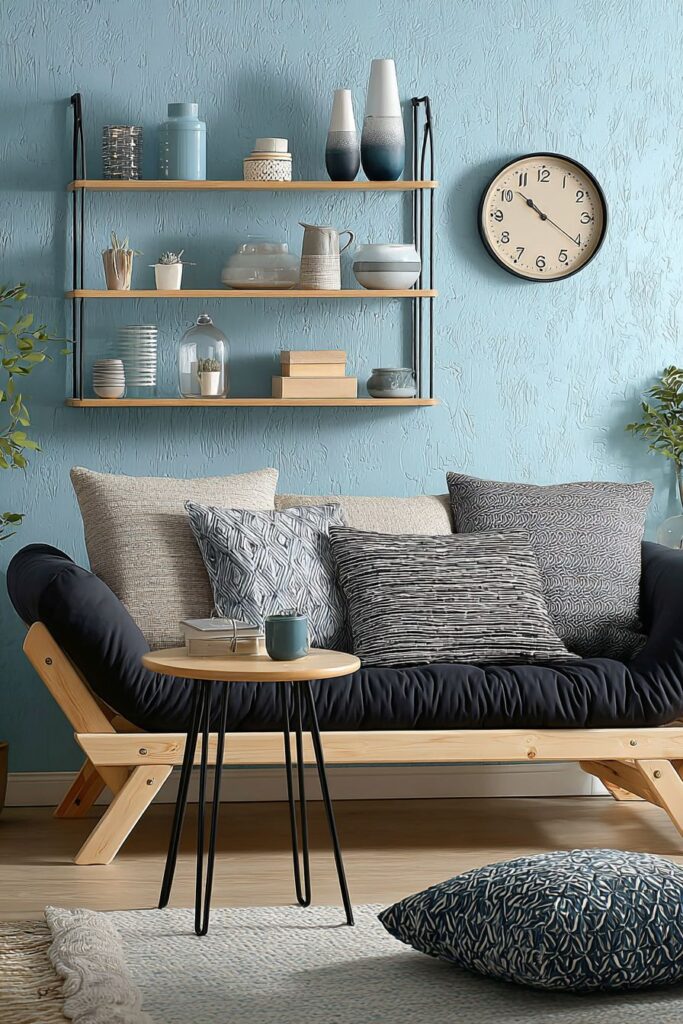
The daybed-style sofa represents one of the most practical solutions for small living rooms that occasionally need to accommodate overnight guests. This design features a daybed-style sofa positioned against the wall with coordinating throw pillows in earth tones, functioning seamlessly as both primary seating during the day and a comfortable sleeping surface when needed. The earth-tone pillows in shades of terracotta, warm brown, and sandy beige create a layered, inviting appearance while the neutral palette allows the piece to blend harmoniously with the rest of the room.
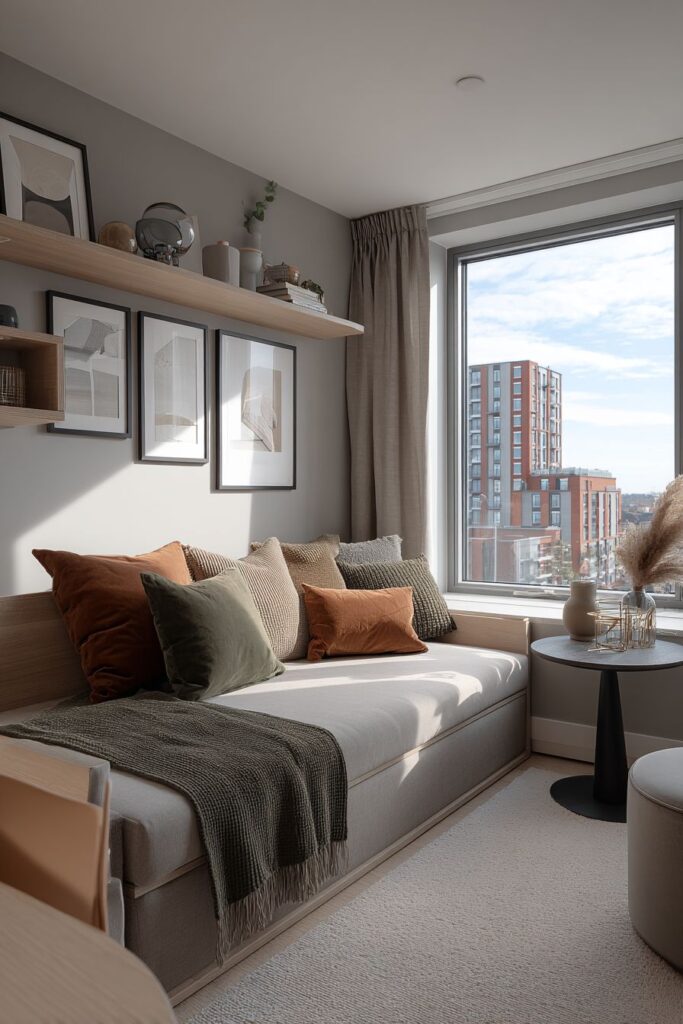
Floating shelves mounted above the daybed display curated decor items, making use of vertical space without consuming floor area. These shelves provide opportunities for personal expression through carefully selected objects, books, and small plants while their floating design maintains the room’s clean, modern aesthetic.
A compact round side table positioned beside the daybed provides essential surface area for lamps, beverages, or books without the bulk of traditional rectangular tables. The circular shape facilitates movement around the furniture while softening the room’s overall geometry.
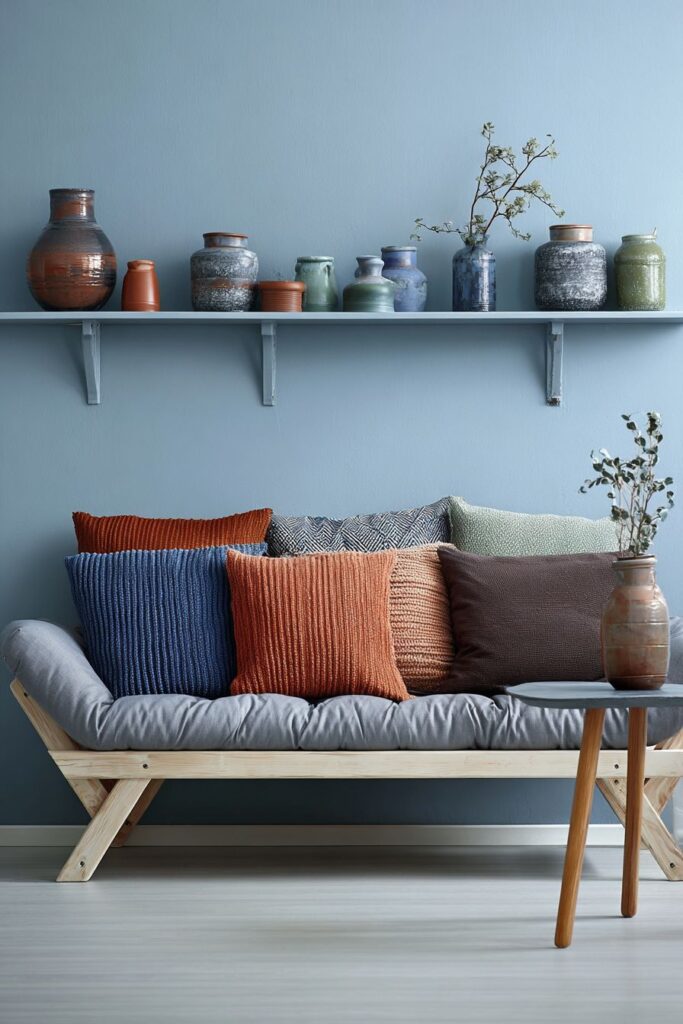
Light grey-blue walls create visual spaciousness by reflecting light while adding subtle color that prevents the room from feeling sterile. This cooled neutral shade works beautifully with the warm earth tones of the throw pillows, creating a balanced color palette that feels both calming and inviting.
The dual-purpose functionality of the daybed demonstrates efficient layout planning, allowing the room to serve multiple needs without requiring separate furniture pieces for each function. This approach is particularly valuable in studio apartments or small homes where every room must work harder.
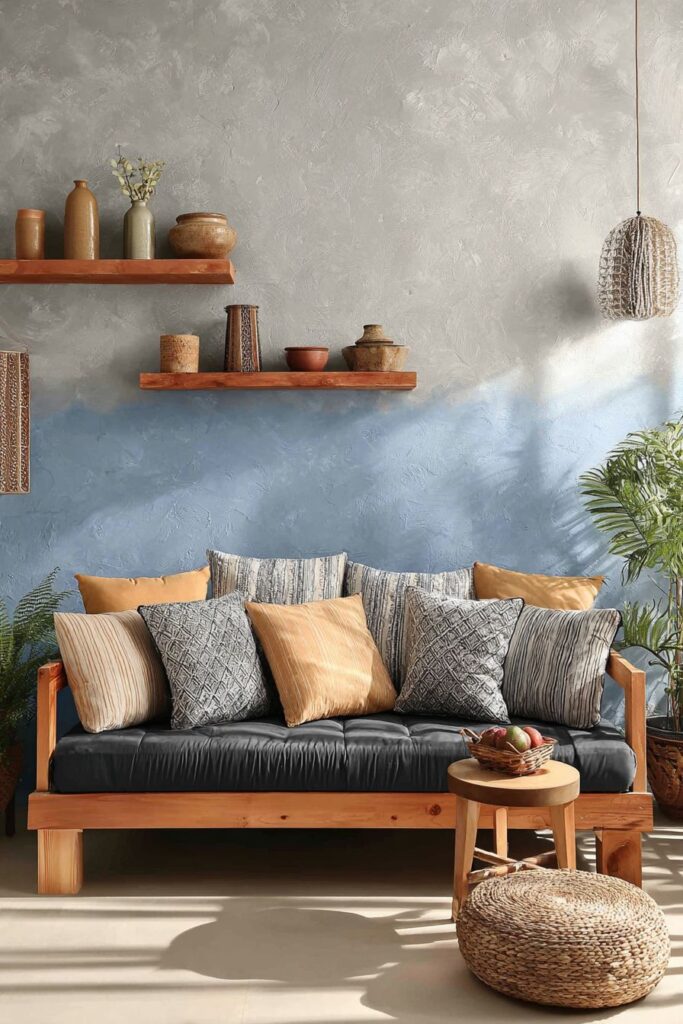
Key Design Tips:
- Choose daybed-style sofas to provide both seating and sleeping accommodations in one piece
- Layer throw pillows in earth tones to create inviting, comfortable seating with visual warmth
- Install floating shelves above seating to utilize vertical space for display and storage
- Select compact round side tables that provide function without consuming excessive floor space
- Paint walls in light grey-blue tones to create spaciousness while adding subtle color interest
8. Hidden Storage Integration
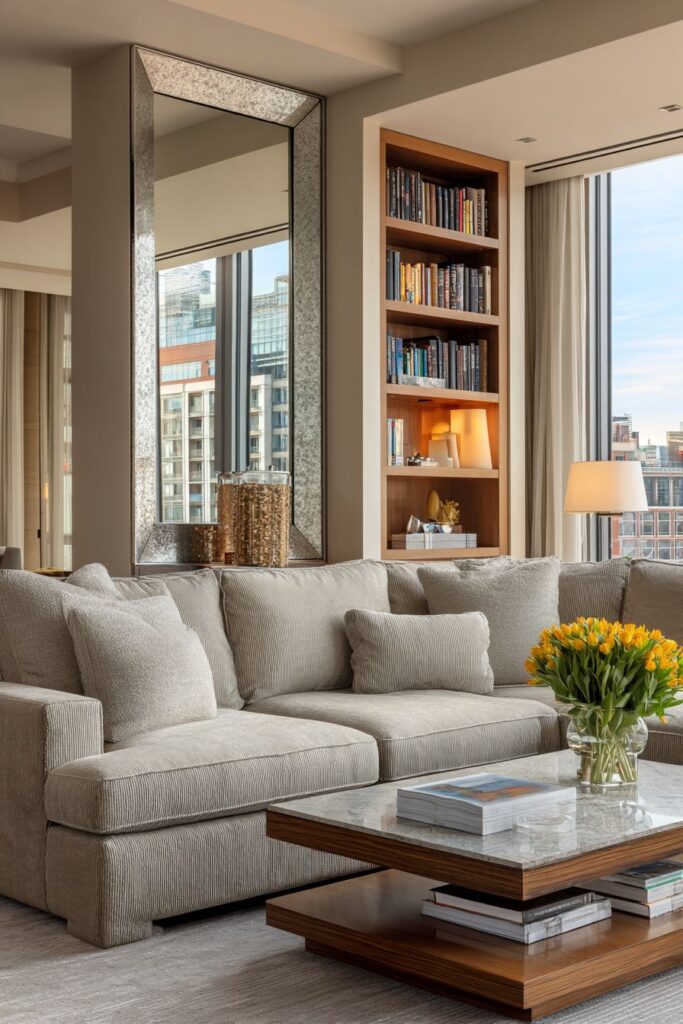
Storage challenges often plague small living rooms, but this design addresses the issue head-on with a sectional sofa featuring storage compartments underneath in camel-colored fabric. The warm camel tone adds richness and sophistication while the hidden storage provides a place for blankets, pillows, board games, or seasonal items that would otherwise require separate storage furniture. This integration of storage within primary seating demonstrates smart design thinking that maximizes functionality without sacrificing style.
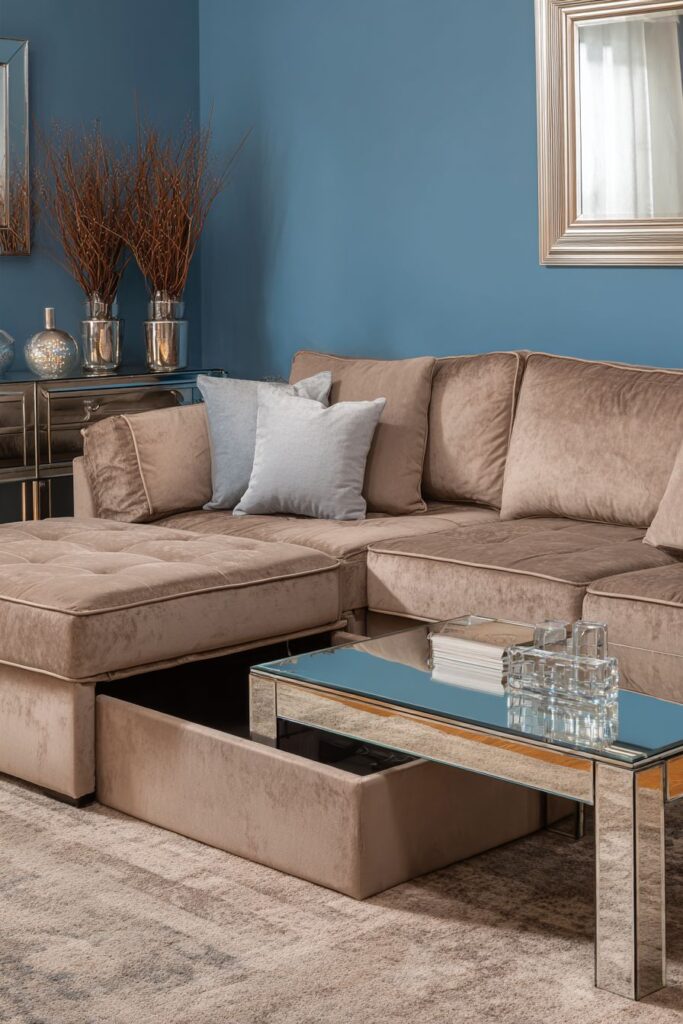
The sectional’s ample seating capacity makes it perfect for families or those who frequently entertain, while the under-sofa storage keeps the room organized and clutter-free. A narrow rectangular coffee table with a lower shelf adds additional function without bulk, providing both surface area and storage for magazines, remote controls, or decorative items. The coffee table’s rectangular shape complements the sectional’s geometry while its narrow profile ensures adequate space for movement around the furniture.
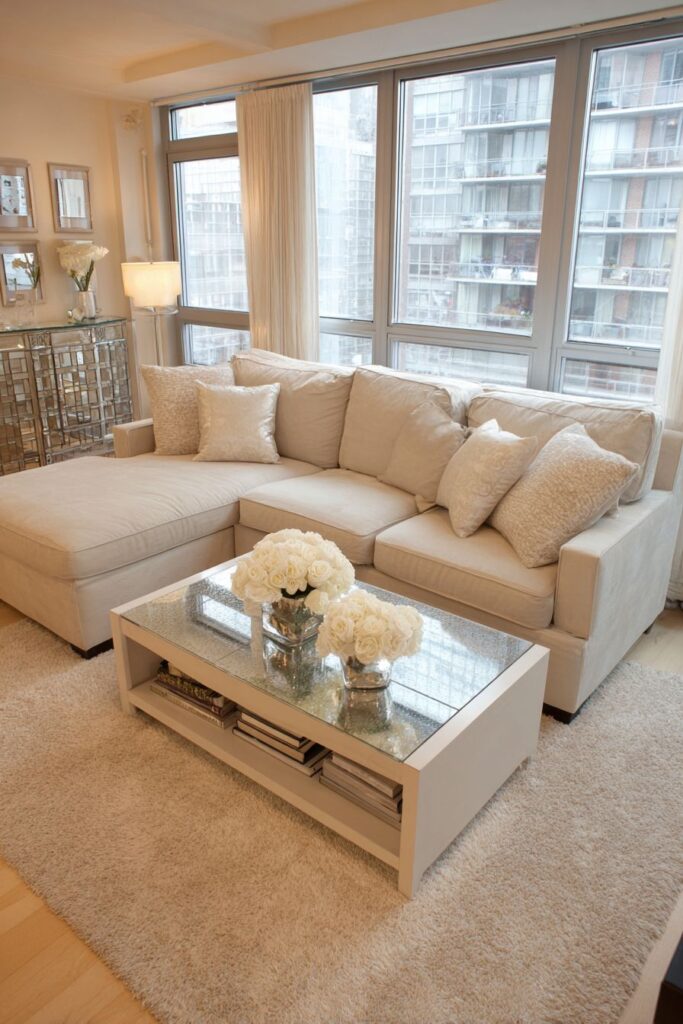
Mirrored accent pieces strategically placed throughout the space reflect light and create the illusion of expanded dimensions. These might include mirrored side tables, decorative mirror accessories, or metallic finishes that catch and bounce light throughout the room.
The reflective surfaces work with natural and artificial lighting to create a brighter, more expansive feeling environment. The integration of storage solutions within a cohesive, livable design proves that practical needs don’t require compromising on aesthetics or comfort.
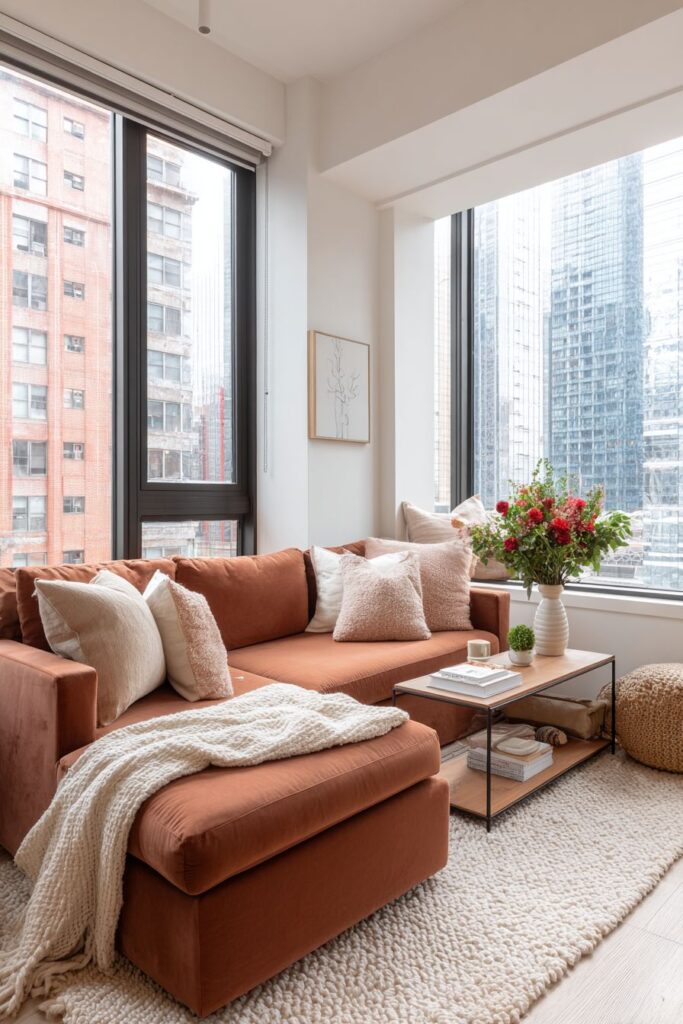
Key Design Tips:
- Select sectional sofas with built-in storage compartments to maximize hidden storage capacity
- Choose warm camel or tan upholstery colors to add richness without darkening small spaces
- Add coffee tables with lower shelves to increase storage without requiring additional furniture
- Incorporate mirrored accent pieces to reflect light and create the illusion of more space
- Ensure storage solutions blend seamlessly with your design aesthetic rather than looking purely utilitarian
9. Mid-Century Modern Color Pop
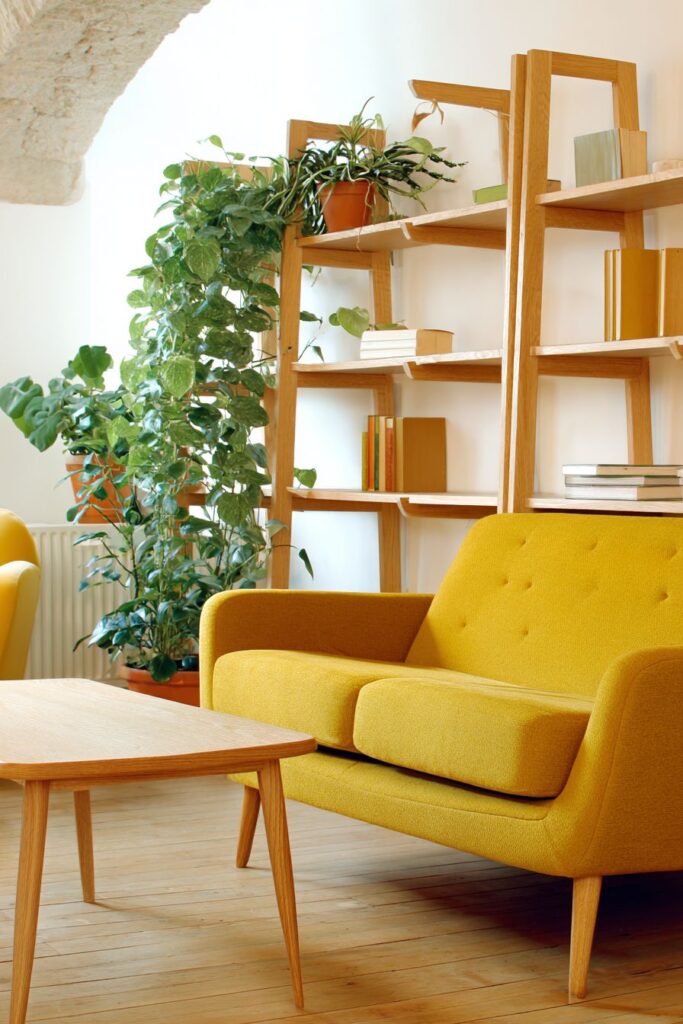
Bold color choices can actually work beautifully in small living rooms when executed thoughtfully. This design features a petite mid-century modern sofa in mustard yellow as the striking focal point, demonstrating how a confident color choice makes a small space feel intentional rather than cramped.
The mustard yellow upholstery adds warmth and personality while the sofa’s compact scale and characteristic mid-century tapered legs maintain visual lightness despite the bold hue.
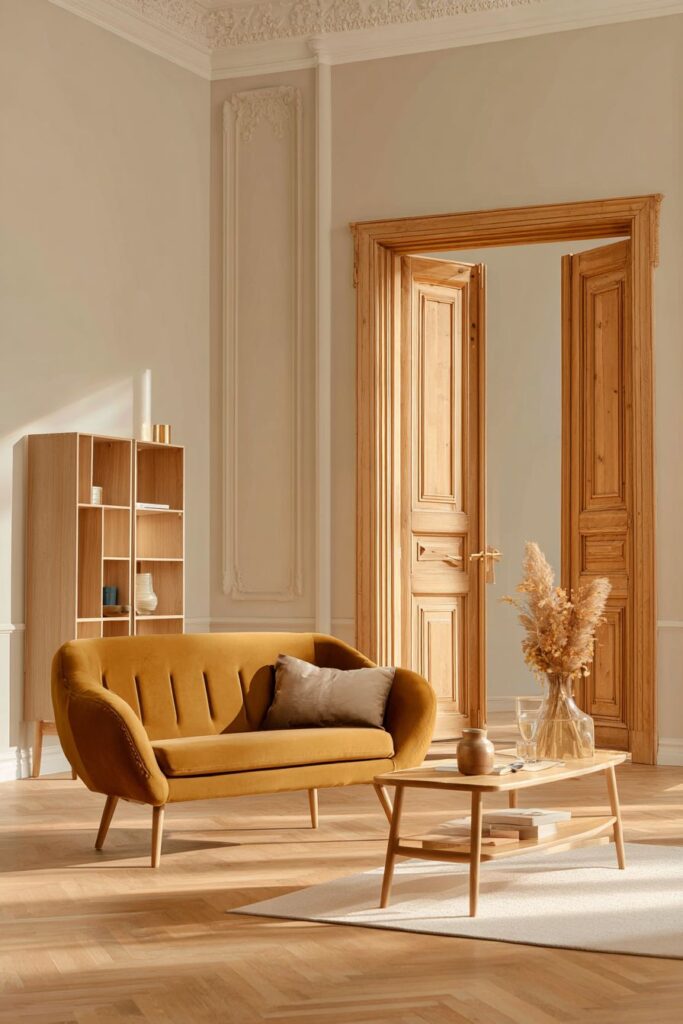
Paired with the sofa is a sleek wooden coffee table featuring the clean lines typical of mid-century design. The warm wood tone complements the mustard yellow beautifully, creating a cohesive palette that feels both retro and contemporary.
The coffee table’s simple silhouette and elevated design on tapered legs allows light to flow beneath, maintaining the airy quality essential in small spaces. An open-back shelving unit serves as a room divider without blocking light, creating separation between spaces in an open floor plan while maintaining visual connection and light flow.
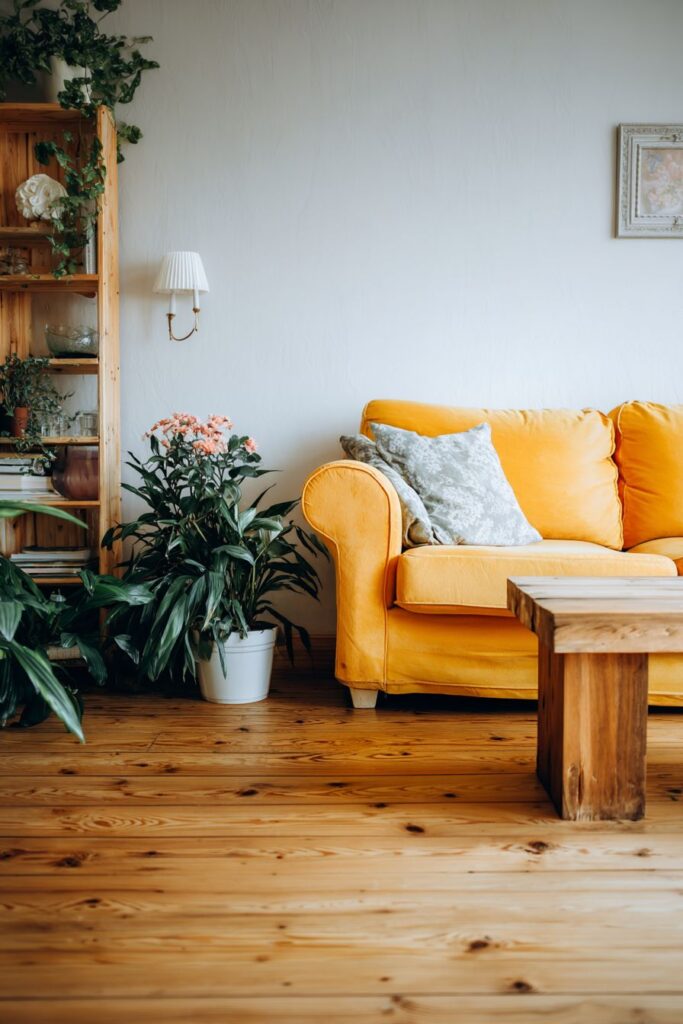
Warm wood floors throughout the space echo the coffee table’s material, creating continuity and warmth underfoot. Cream walls provide a neutral backdrop that allows the mustard yellow sofa to truly shine while keeping the overall environment bright and welcoming.
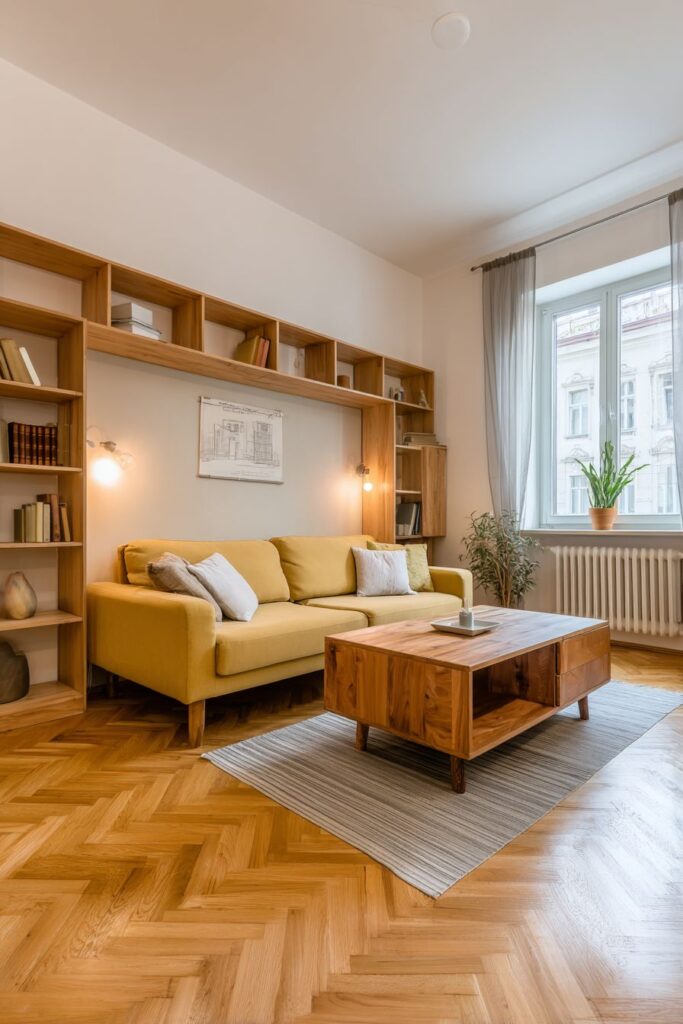
The purposeful color choice and careful furniture scaling make the small space feel intentional and design-forward rather than compromised by its compact dimensions. This approach proves that small living rooms can accommodate bold design statements when balanced with neutral surroundings and appropriately scaled furniture.
Key Design Tips:
- Choose one bold color statement piece like a mustard yellow sofa to create an intentional focal point
- Select mid-century modern furniture with tapered legs to maintain visual lightness in small spaces
- Use open-back shelving units as room dividers that maintain light flow in compact areas
- Pair bold furniture colors with neutral wall colors to prevent overwhelming the space
- Incorporate warm wood tones in flooring and furniture to create cohesive, inviting environments
10. Monochromatic Texture Play
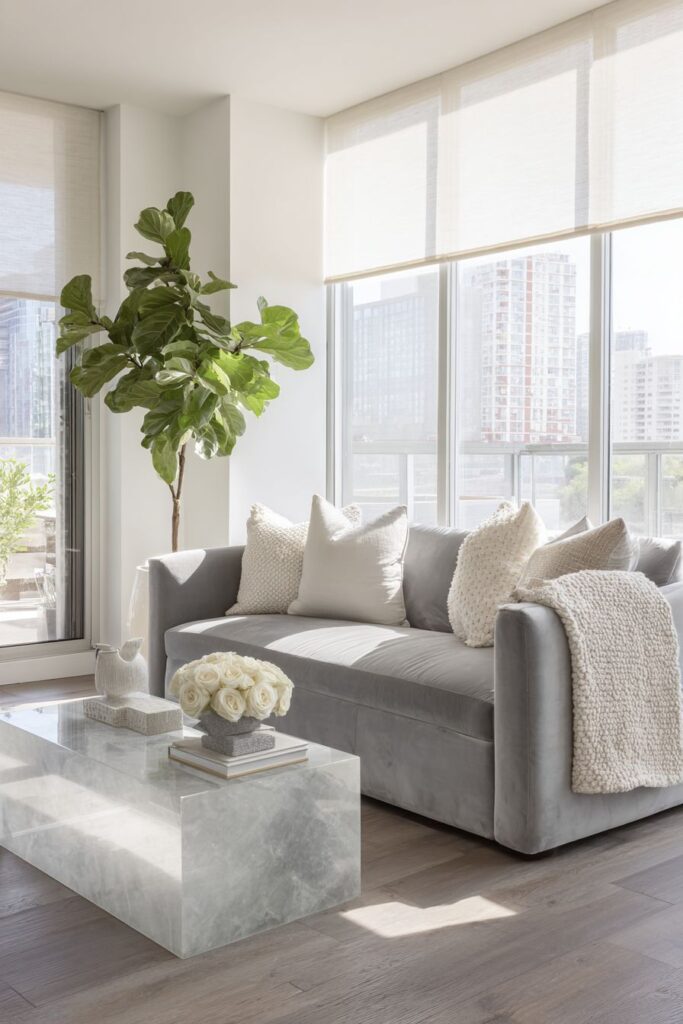
A monochromatic color scheme can create stunning sophistication in small living rooms when varied textures provide visual interest. This design showcases a small-scale sofa in soft grey velvet, a luxurious material that adds depth and tactile appeal to the neutral palette.
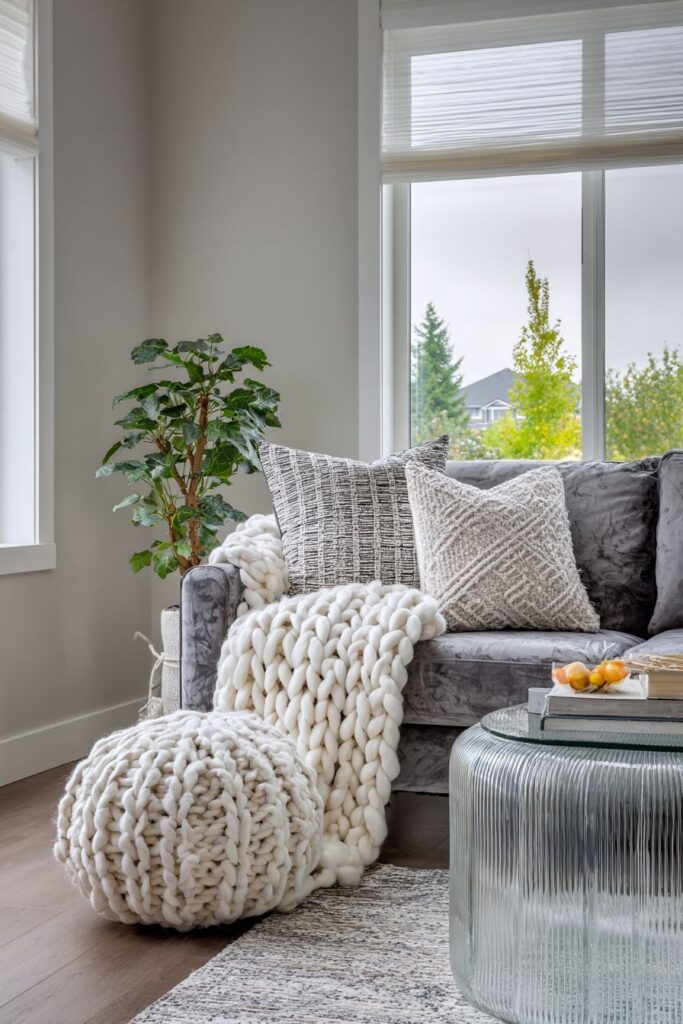
The velvet’s subtle sheen catches light beautifully, creating dimension and interest without requiring multiple colors. The sofa is complemented by textured throw pillows and a chunky knit blanket that introduce additional layers of texture while maintaining the cohesive grey scheme.
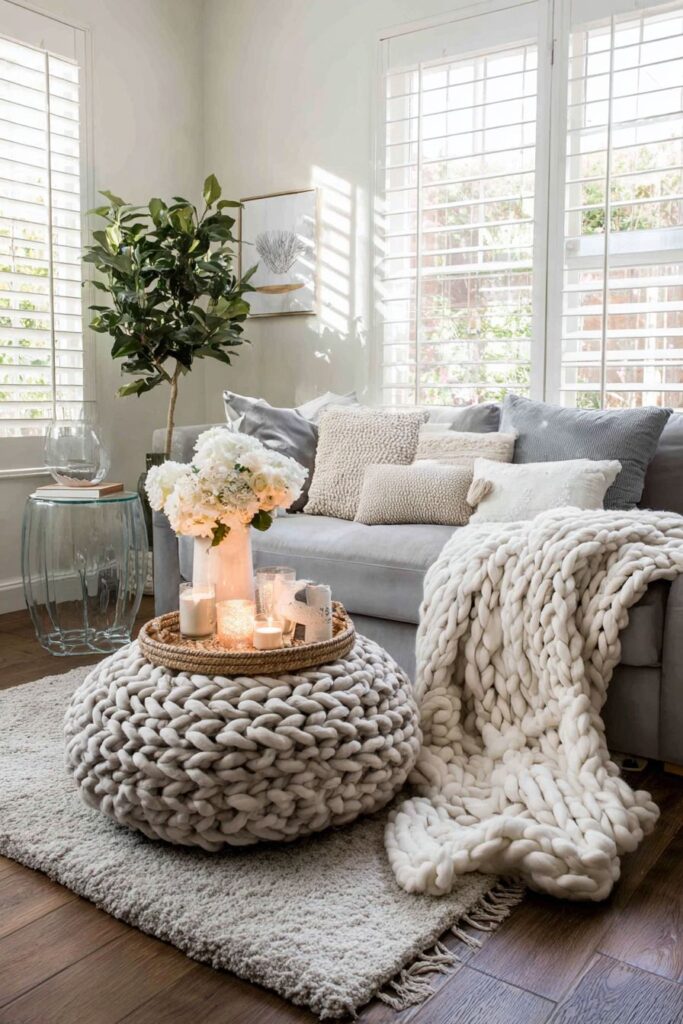
At the room’s center, a glass waterfall coffee table maintains visual transparency, allowing sight lines to flow through the space unimpeded. This transparent furniture choice is particularly effective in monochromatic designs where the eye might otherwise be drawn to breaks in color.
The waterfall edge design, where the glass curves seamlessly from top to ground, creates a sculptural element that serves as functional art. A tall corner plant draws the eye upward, adding life and a vertical element that emphasizes ceiling height while the green foliage provides the only color contrast in the room.
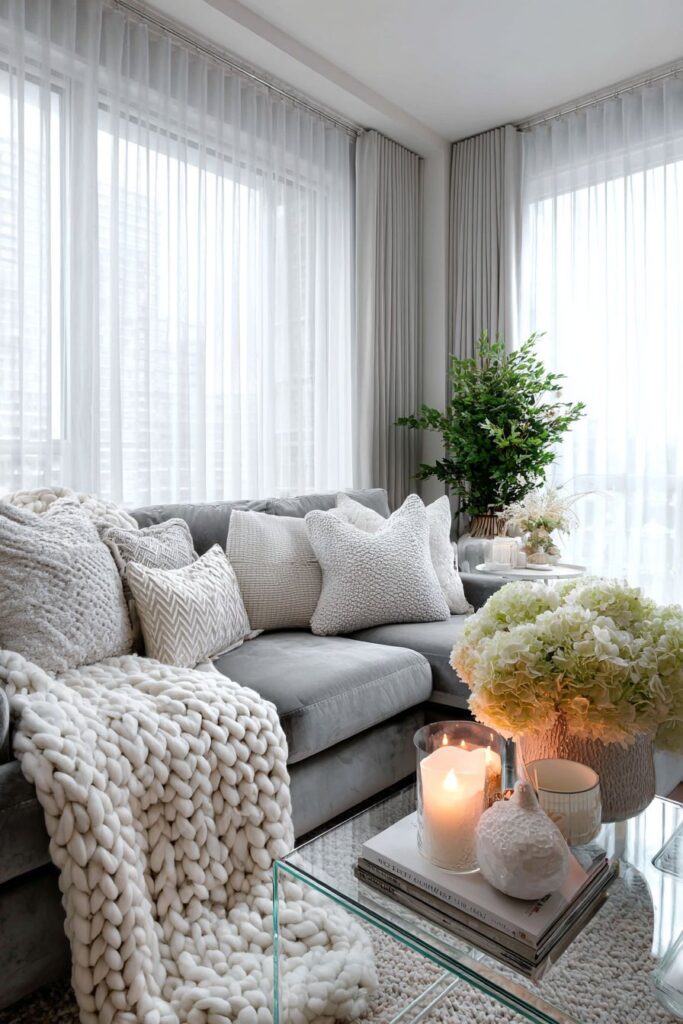
Natural light filtering through translucent roman shades creates gentle ambiance throughout the day, softening harsh sunlight while maintaining privacy. The roman shades add a layer of soft texture to the windows while their neutral tone continues the monochromatic theme.
The combination of neutral tones and transparent furniture expands the perceived space dramatically, proving that a limited color palette actually helps small rooms feel larger when executed with attention to texture and material variety.
Key Design Tips:
- Embrace monochromatic color schemes using varied textures to create visual interest without multiple colors
- Choose velvet upholstery to add luxury and light-catching dimension to neutral furniture
- Select glass waterfall coffee tables to maintain transparency while adding sculptural interest
- Position tall plants in corners to draw the eye upward and emphasize vertical space
- Install roman shades to filter natural light gently while maintaining privacy and adding soft texture
11. Built-In Window Seat Solution
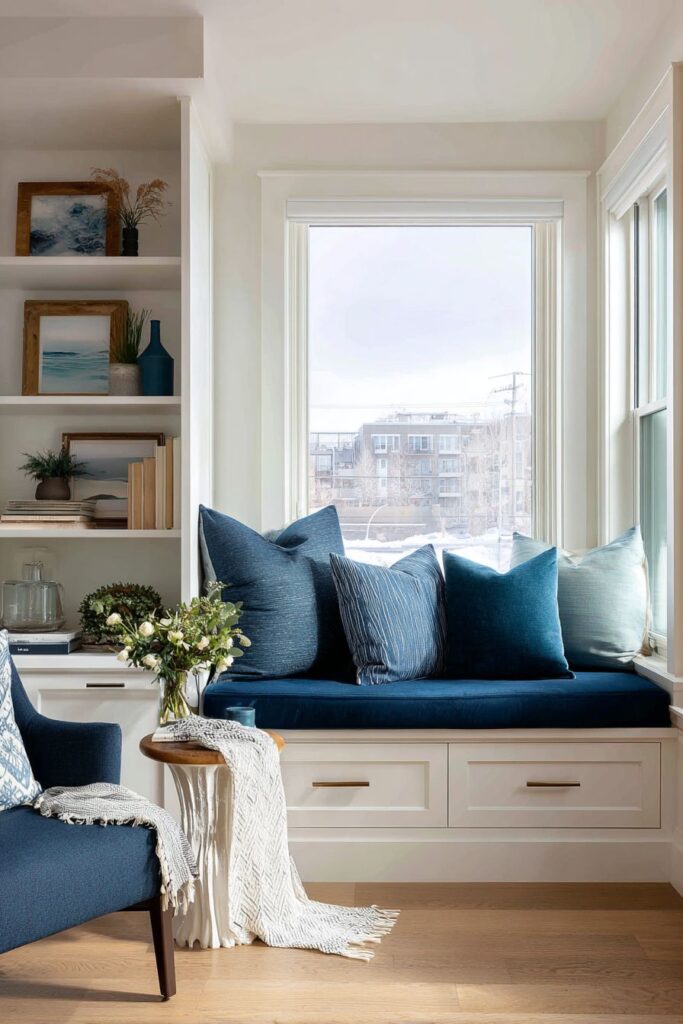
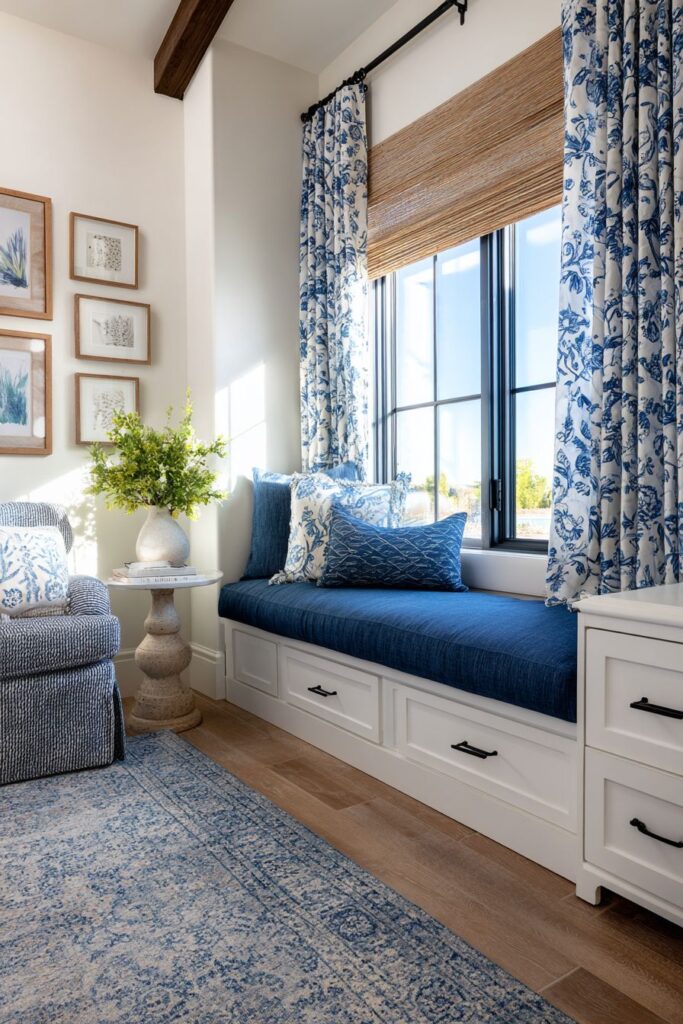
Custom built-in solutions offer unmatched efficiency in small living rooms by utilizing often-wasted space. This design features a built-in window seat with storage drawers beneath, upholstered in durable navy fabric with coordinating cushions.
The window seat transforms a typically underutilized area into valuable seating while the integrated storage provides a place for items that would otherwise require separate furniture. The navy fabric choice adds depth and visual interest while remaining neutral enough to work with various decor styles.
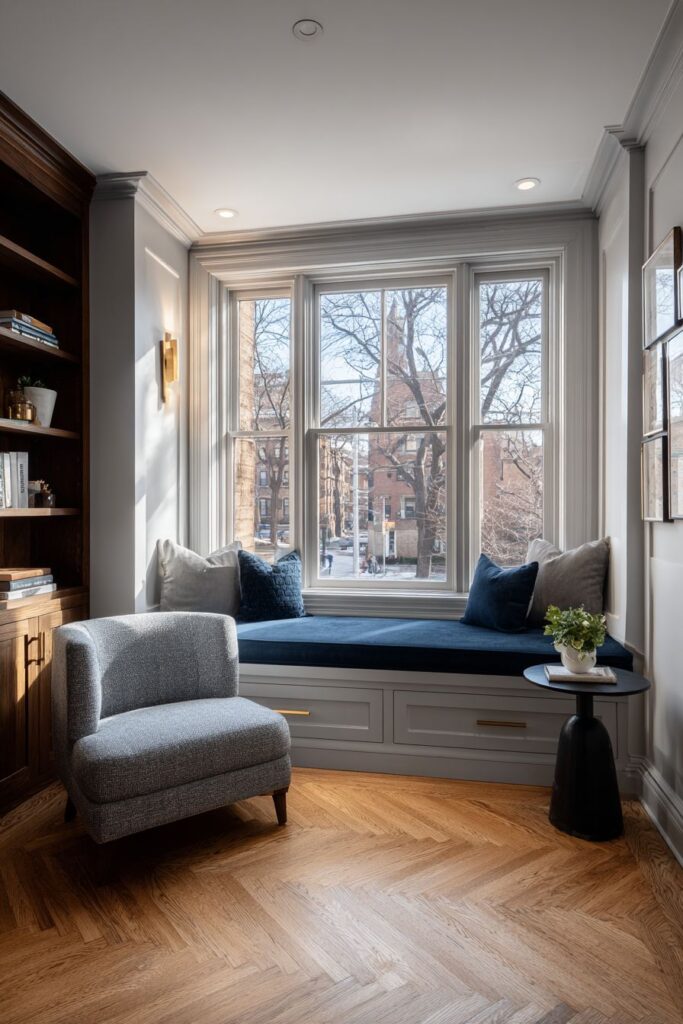
Opposite the window seat, a compact armchair provides additional seating without overwhelming the limited floor space. The armchair’s modest scale ensures the room maintains comfortable circulation space while still offering sufficient seating for small gatherings.
A small pedestal side table positioned between the seating elements provides essential surface area for drinks, books, or decorative items. The pedestal base occupies minimal floor space compared to traditional four-legged tables, maintaining the room’s open feel.
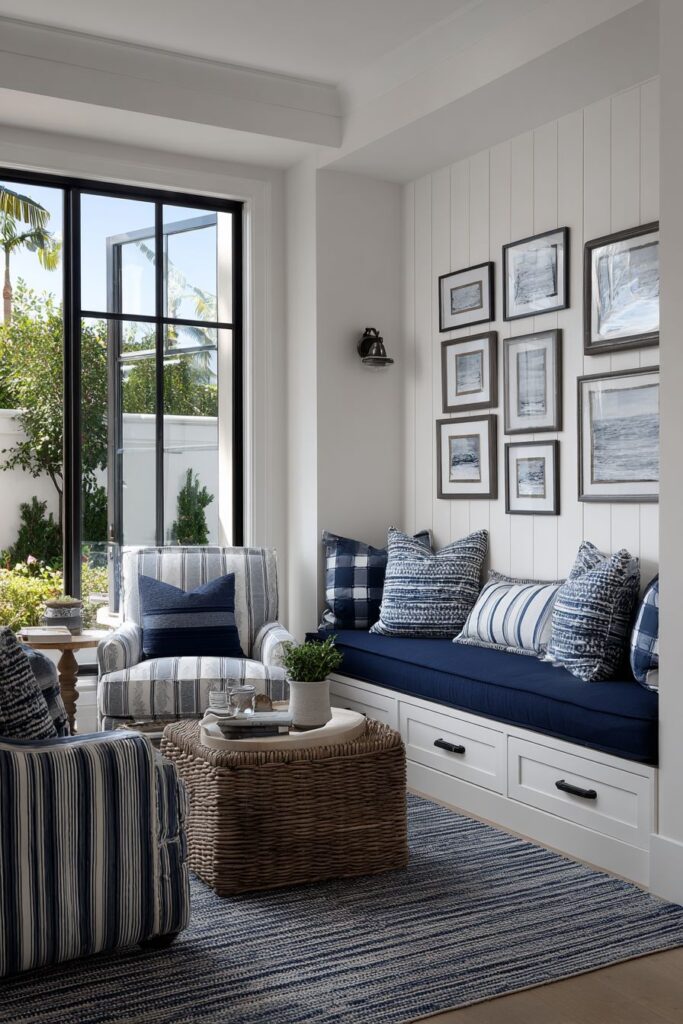
A gallery wall with varied frame sizes adds personality without consuming floor space, demonstrating how vertical surfaces can be utilized for personal expression in small rooms. The varied frame sizes create visual interest and rhythm on the wall while the curated collection of artwork or photographs reflects the homeowner’s personality and interests. The custom built-in solution, combined with vertical design elements, proves that small living rooms can be both highly functional and deeply personal when thoughtful planning guides the design process.
Key Design Tips:
- Install built-in window seats with storage drawers to maximize often-wasted space beneath windows
- Choose durable navy fabric for upholstery to add depth while remaining versatile and practical
- Select compact armchairs rather than full-size sofas when space is extremely limited
- Use pedestal side tables that occupy minimal floor space compared to traditional tables
- Create gallery walls with varied frame sizes to add personality without consuming floor space
12. Transformable Furniture Focus
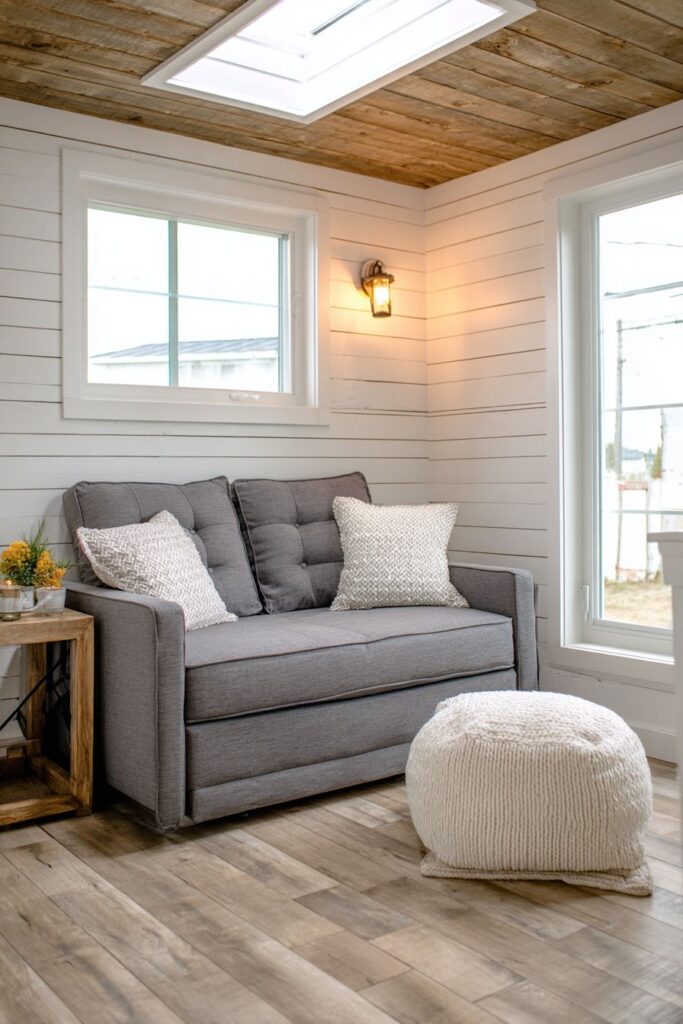
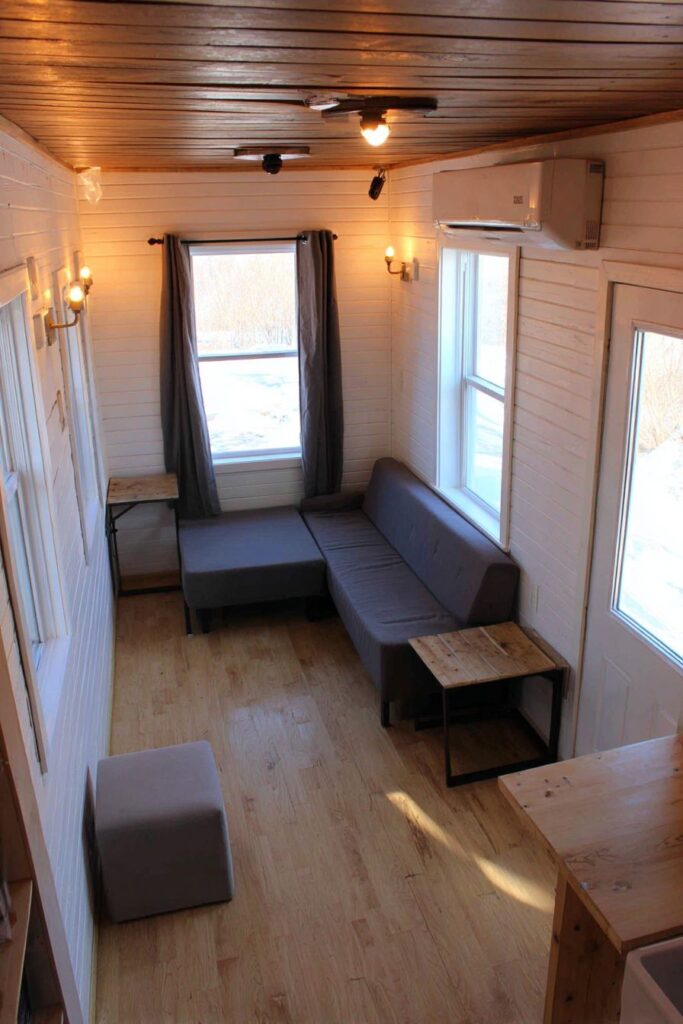
Transformable furniture represents the pinnacle of space efficiency for small living rooms. This design showcases a sofa bed in charcoal grey positioned against the longest wall, providing comfortable daytime seating that converts to sleeping accommodations when needed.
The charcoal grey upholstery offers sophistication and practicality, hiding wear while providing a neutral foundation that works with various color schemes. The sofa bed’s placement against the longest wall maximizes the room’s open floor space for circulation and other activities.
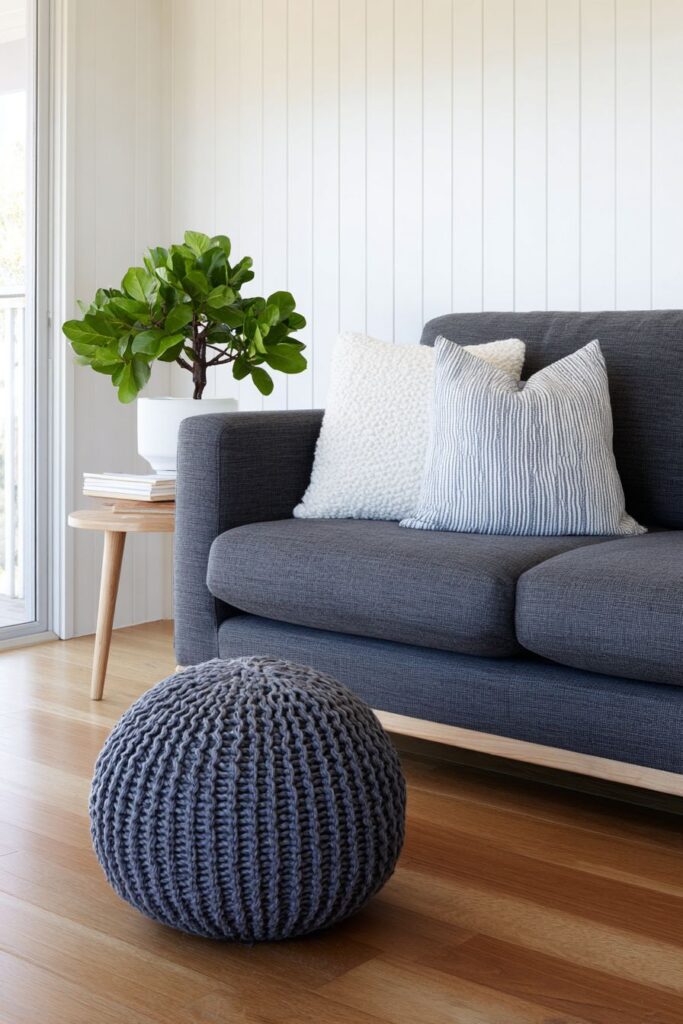
Flanking the sofa bed are slim wall-mounted side tables that provide surface area without consuming floor space. These mounted tables offer places for lamps, beverages, or decorative items while their wall-mounted installation keeps the floor clear and maintains the room’s open feeling.
A lightweight pouf serves as flexible seating that can be moved easily around the room or used as a footrest, demonstrating how portable furniture pieces add versatility to small spaces.
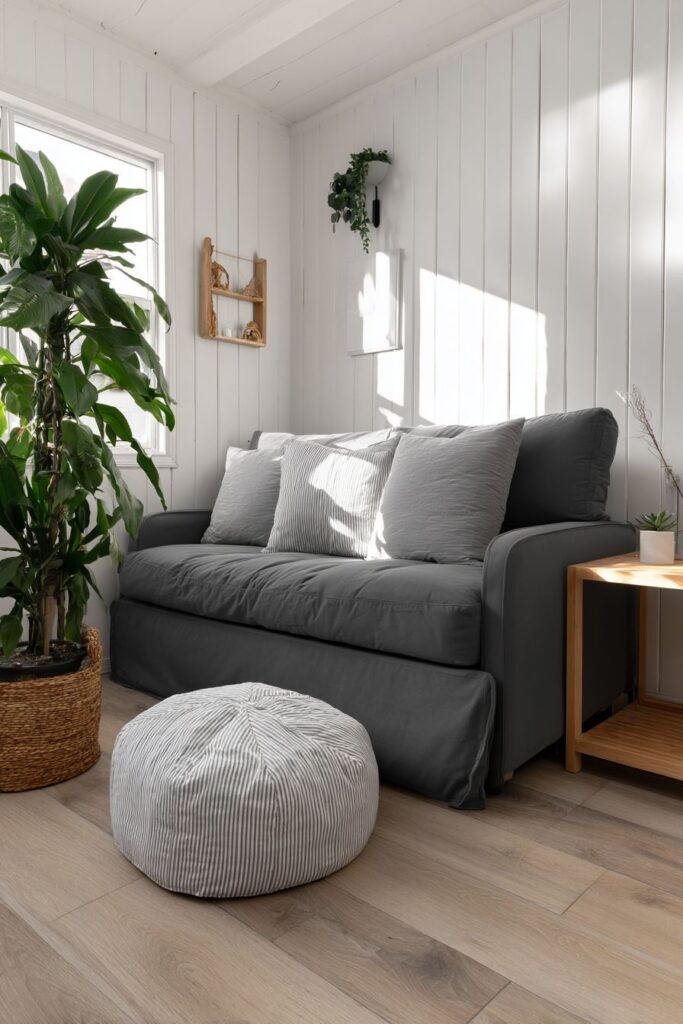
Pale oak flooring throughout the room reflects available light beautifully, working with white shiplap accent walls to create a bright, fresh environment. The shiplap adds texture and architectural interest while its white color maximizes light reflection. This combination of transformable furniture and light-maximizing finishes enhances the compact room’s functionality dramatically, allowing it to serve multiple purposes throughout the day and accommodate overnight guests without feeling cramped or compromised.
Key Design Tips:
- Choose sofa beds in neutral colors to provide both seating and sleeping without requiring separate pieces
- Install wall-mounted side tables to provide function while keeping floors clear
- Add lightweight poufs that can be moved easily for flexible seating or footrest options
- Select pale oak flooring to reflect light and create warmth without darkening the space
- Install white shiplap accent walls to add texture while maximizing brightness
13. Backless Sofa Innovation
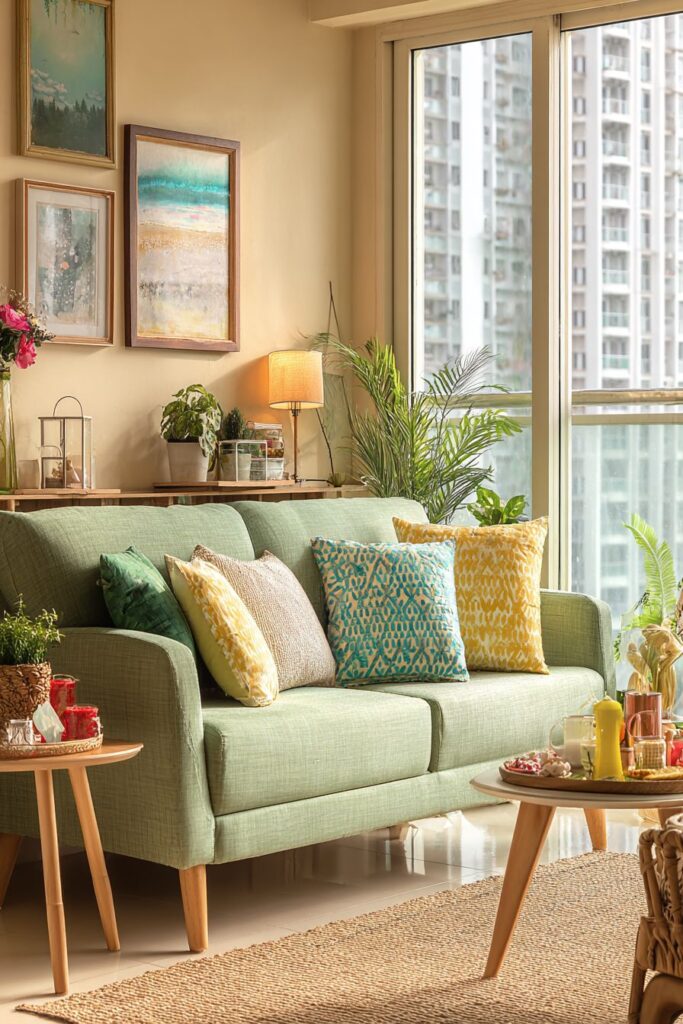
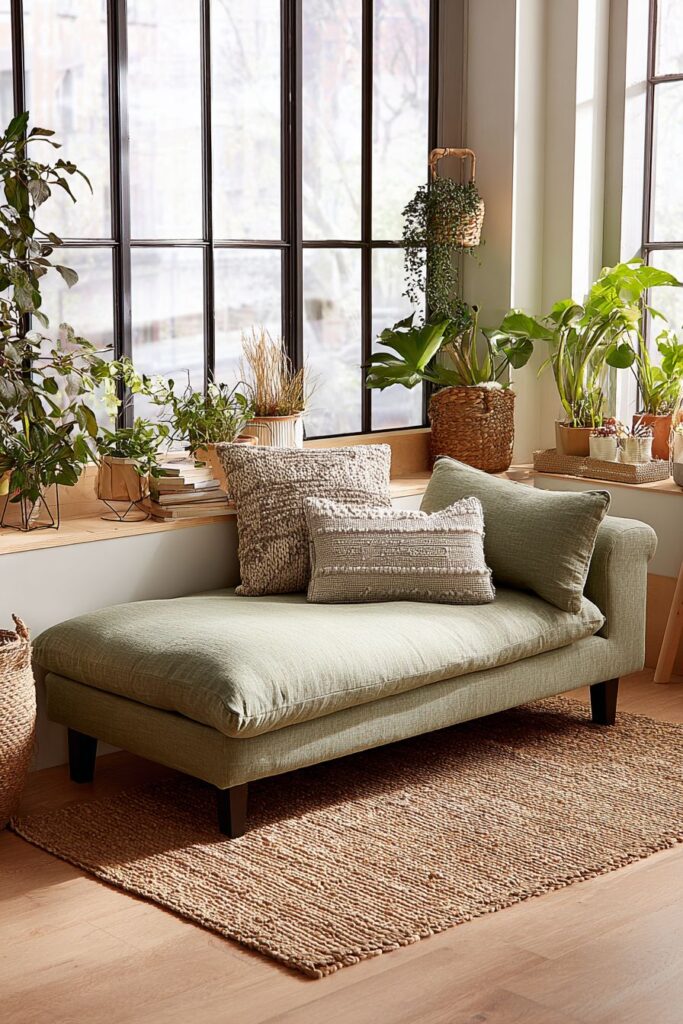
Breaking from traditional furniture conventions can yield surprising results in small living rooms. This innovative design features a backless sofa creating unusual visual openness, upholstered in soft sage green linen with coordinating throw pillows.
The backless design allows sight lines to flow through the room unobstructed, making the space feel significantly larger than it would with a traditional high-backed sofa. The sage green linen introduces subtle color while the natural fabric adds organic texture and warmth.
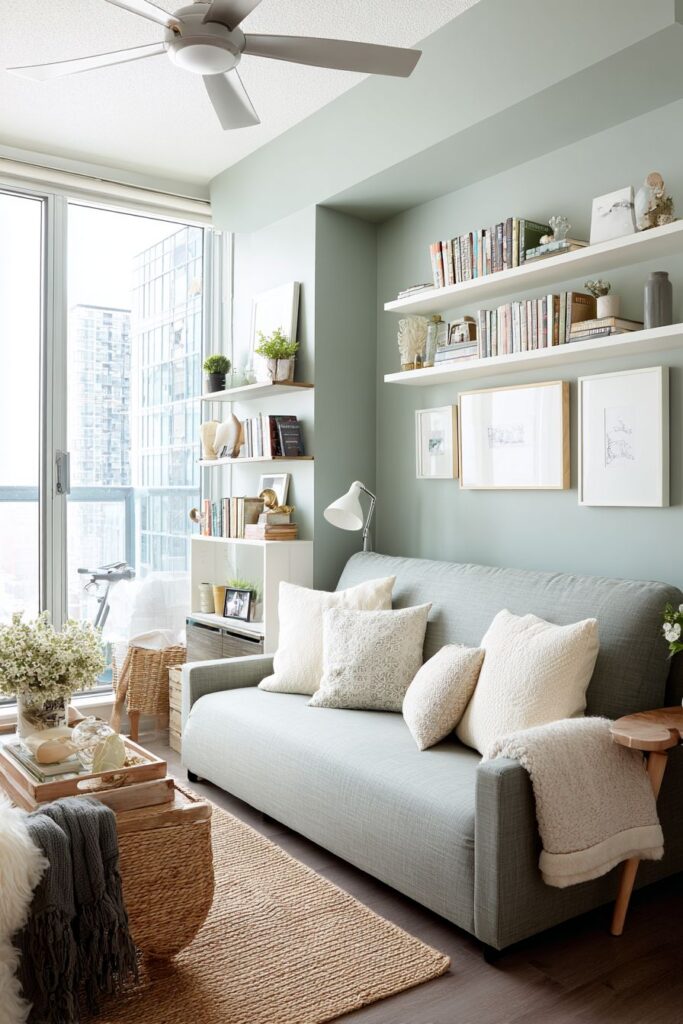
Behind the backless sofa, a narrow console table serves multiple purposes, holding task lighting and small plants while providing additional surface area for everyday items. This layered approach to furniture arrangement creates depth and functionality while the console table’s presence behind the sofa doesn’t feel obstructive due to the sofa’s backless design. Task lighting on the console ensures adequate illumination for reading or other activities while small plants bring life and natural elements into the space.
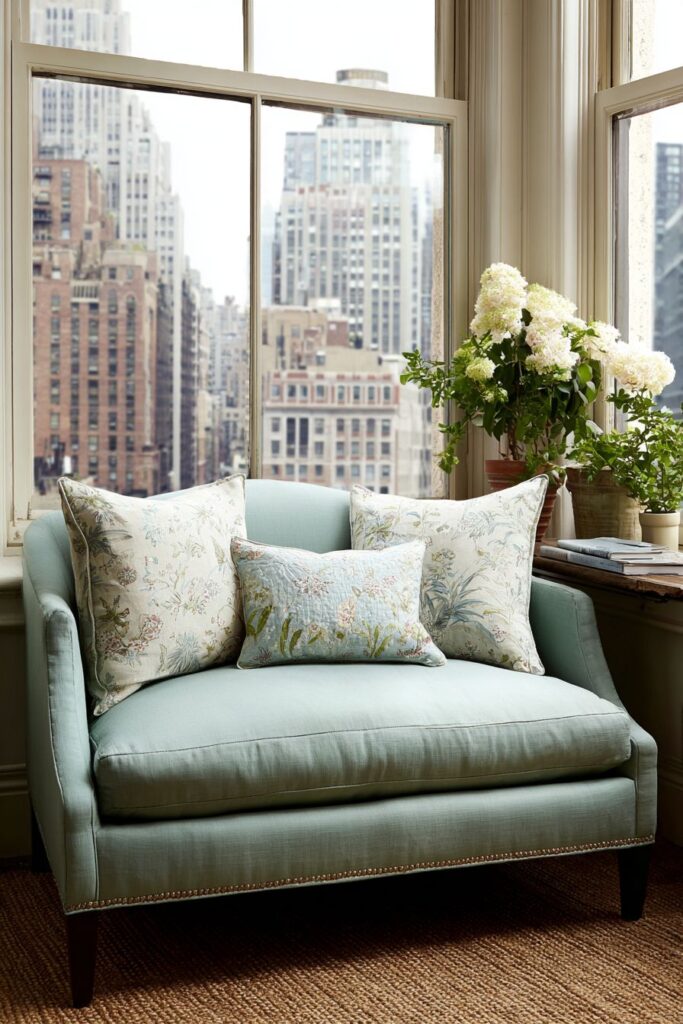
A woven jute rug defines the seating area while maintaining a light, natural feel that complements the sage green upholstery and linen texture. The jute’s organic fiber and neutral tone ground the seating arrangement without adding visual weight, allowing the room to maintain its airy atmosphere.
This design demonstrates how furniture selection fundamentally impacts spatial perception, with the backless sofa creating an entirely different feeling than traditional seating would in the same limited square footage.
Key Design Tips:
- Consider backless sofas to maintain visual openness and allow sight lines to flow through the room
- Choose sage green linen upholstery to add subtle color and organic texture
- Position narrow console tables behind sofas to layer functionality without blocking circulation
- Select woven jute rugs to define seating areas while maintaining a light, natural aesthetic
- Add task lighting on console tables to ensure adequate illumination for various activities
14. Warm Corner Luxury
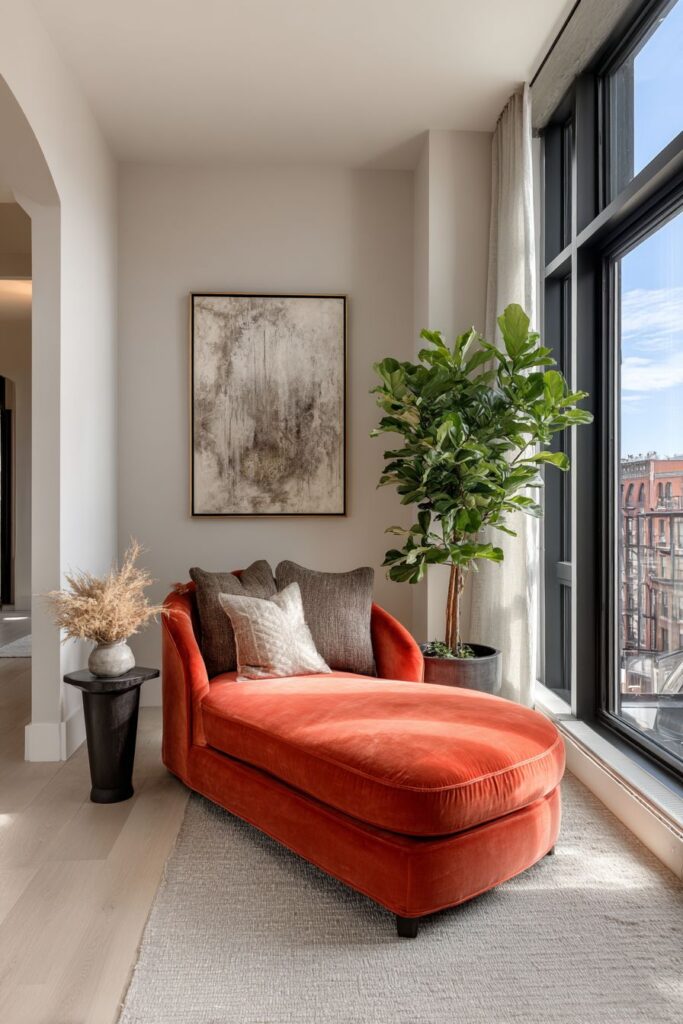
Strategic furniture placement can maximize natural light while creating cozy corners in small living rooms. This design features a clever corner arrangement with a small chaise lounge in terracotta velvet positioned to capture natural light from adjacent windows.
The terracotta velvet adds warmth and luxury, its rich hue creating a jewel-like focal point that draws the eye and invites relaxation. The chaise lounge’s compact footprint makes it perfect for small spaces while its elongated shape provides the comfort of putting your feet up.
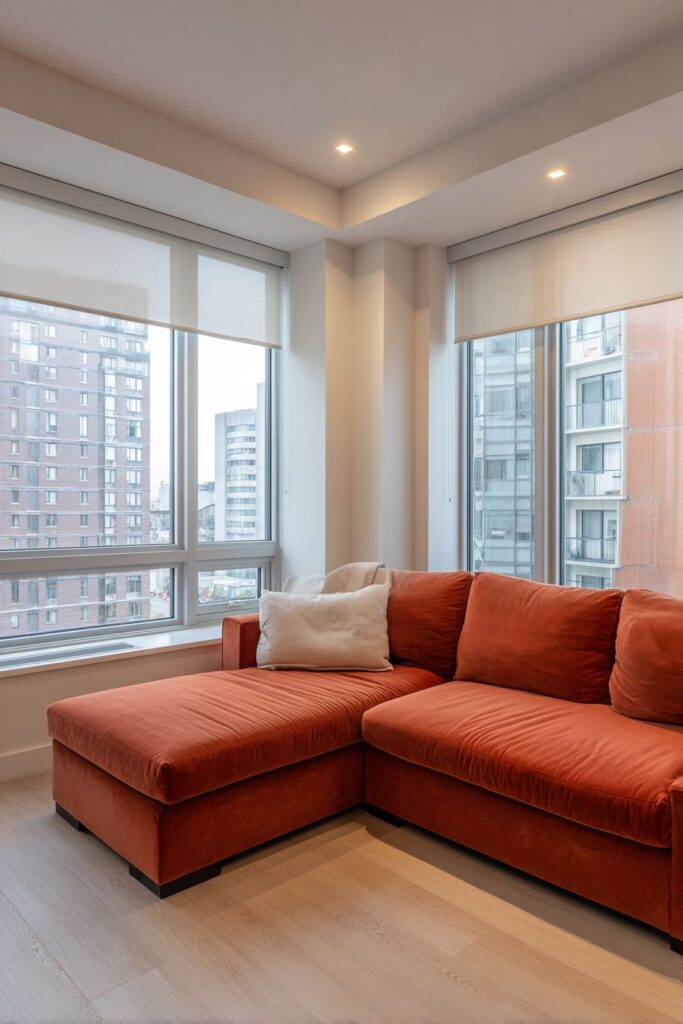
Spanning the opposite wall is a floating media cabinet in walnut finish that provides ample storage without protruding into the room. The walnut’s warm brown tones complement the terracotta velvet beautifully, creating a cohesive warm color palette.
The floating installation keeps the floor visible beneath the cabinet, maintaining the perception of space while providing necessary storage for media components, books, or decorative items.
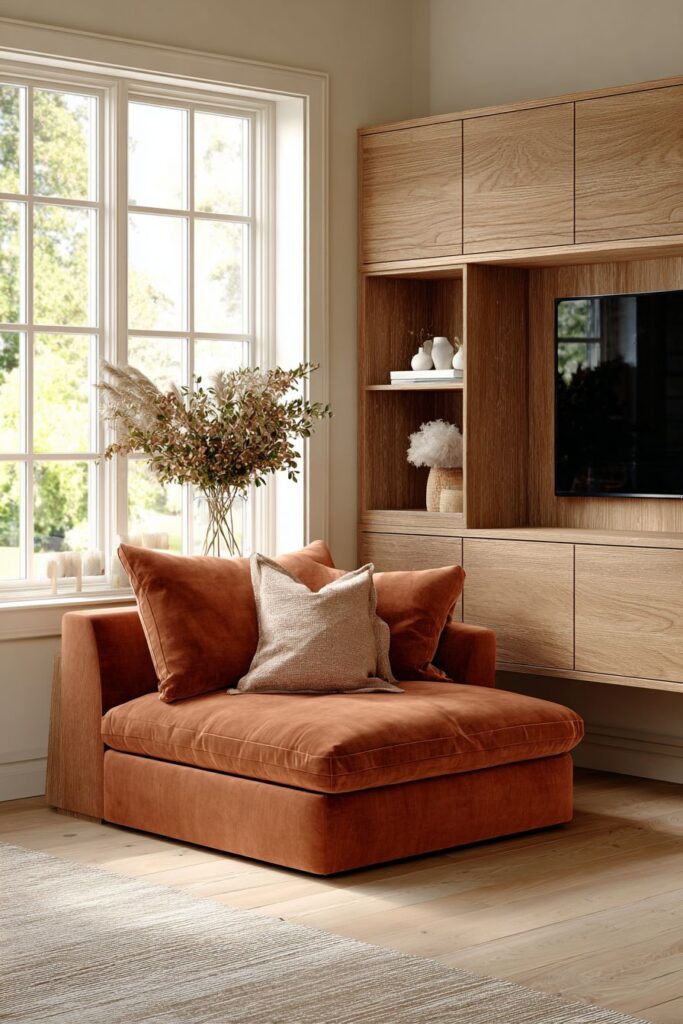
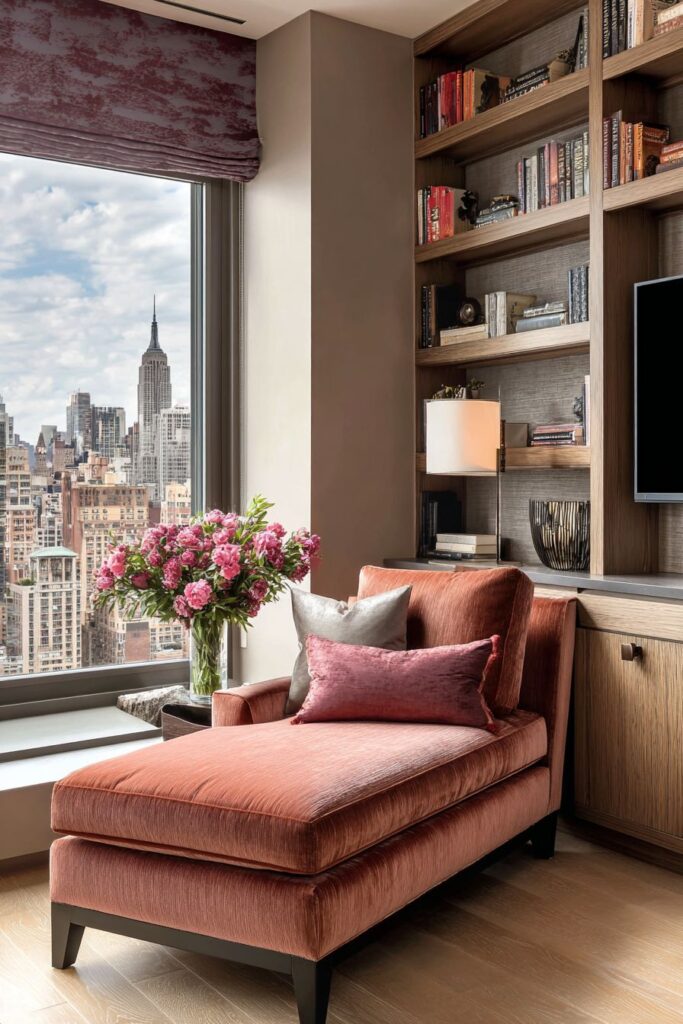
Minimal window treatments and light oak flooring enhance brightness throughout the room, allowing natural light to play across the terracotta velvet and walnut surfaces throughout the day. The strategic furniture placement and warm color accents create coziness without overwhelming the small space, proving that compact rooms can feel intimate and luxurious rather than cramped. The careful balance of warm colors, natural light, and smart furniture placement demonstrates how thoughtful design creates comfort in any size space.
Key Design Tips:
- Position chaise lounges near windows to maximize natural light and create reading nooks
- Choose terracotta velvet upholstery to add warmth and luxury as a focal point
- Install floating media cabinets in walnut to provide storage without visual bulk
- Use minimal window treatments to maximize natural light in small spaces with warm color schemes
- Select light oak flooring to enhance brightness while complementing warm furniture tones
15. Multi-Functional Innovation Hub
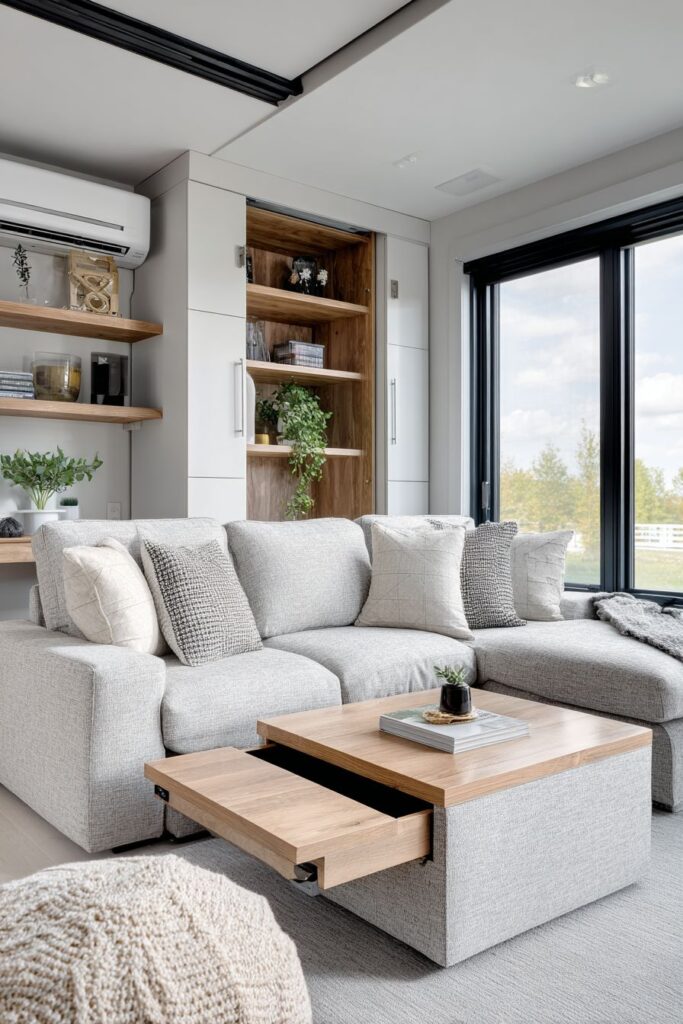
The most successful small living rooms incorporate multiple layers of functionality through innovative furniture choices. This design highlights a multi-functional approach with a compact sofa in textured grey fabric serving as the primary seating element.
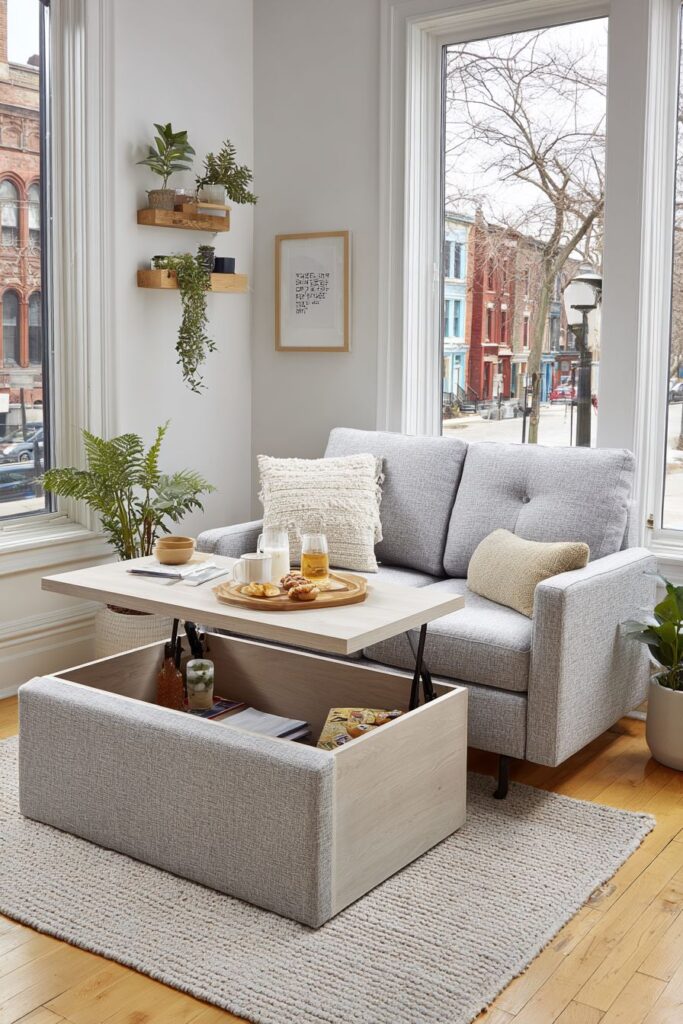
The textured fabric adds visual interest and durability while the compact scale ensures the sofa doesn’t dominate the limited space. At the room’s center sits a lift-top coffee table that reveals hidden storage when raised, providing space for laptops, tablets, or work materials when the living room needs to function as a home office.
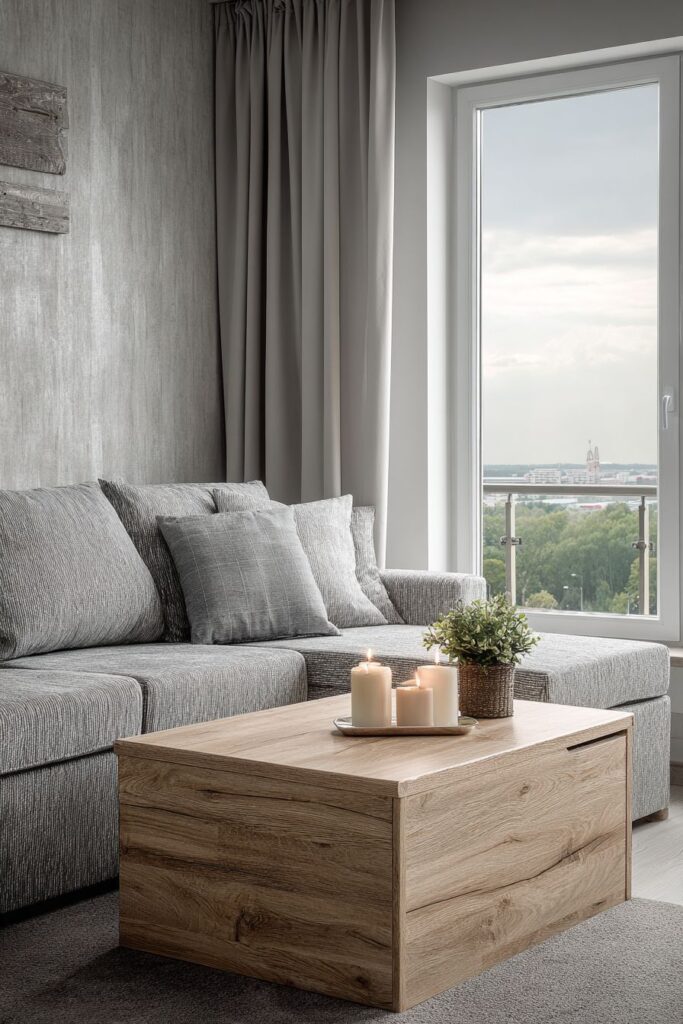
Wall-mounted folding chairs complete the flexible seating arrangement, folding flat against the wall when not needed and expanding to accommodate additional guests when entertaining.
This innovative solution eliminates the need for permanent extra seating that would consume valuable space most of the time. The chairs’ wall-mounted design turns them into functional art when folded, their frames creating interesting geometric patterns on the wall.
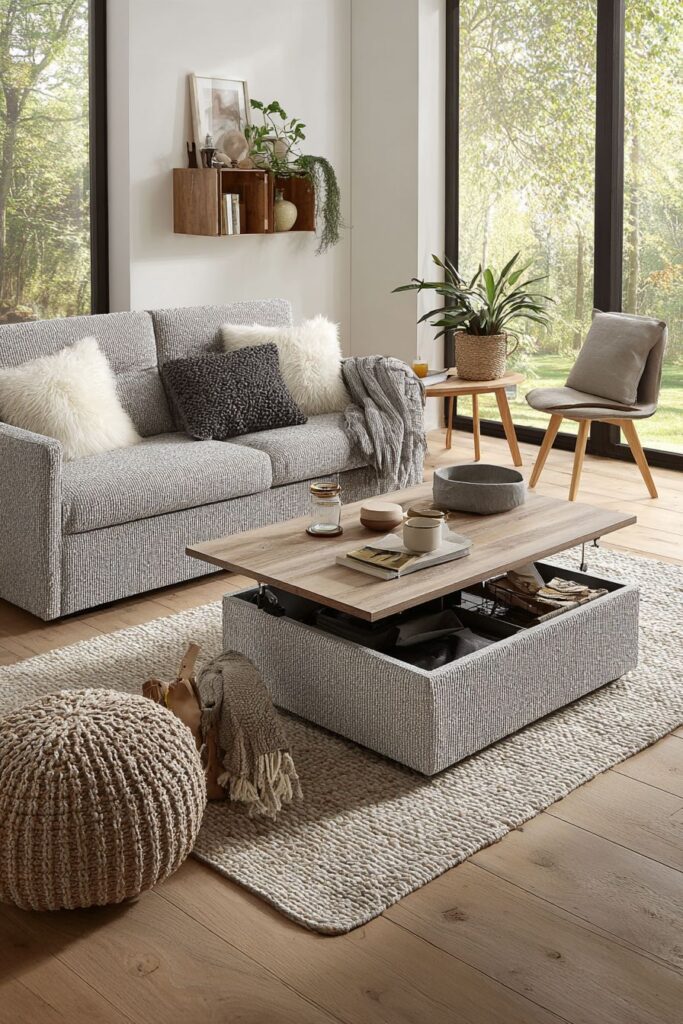
The neutral palette of whites, greys, and natural wood maintains cohesion throughout the space, allowing the functional elements to blend seamlessly rather than appearing as utilitarian additions. Natural lighting from a large window illuminates the practical solutions, highlighting how innovation and aesthetics can coexist beautifully.
The integration of flexible seating options and hidden storage proves that small living rooms can adapt to changing needs throughout the day without requiring furniture rearrangement or compromised style.
Key Design Tips:
- Choose lift-top coffee tables that reveal hidden storage and provide elevated work surfaces
- Install wall-mounted folding chairs that flatten when not needed to save floor space
- Maintain neutral color palettes to allow functional furniture to blend seamlessly
- Select textured grey fabric for sofas to add visual interest while remaining versatile
- Position furniture to maximize natural light from large windows while maintaining functionality
16. Open-Concept Zone Definition
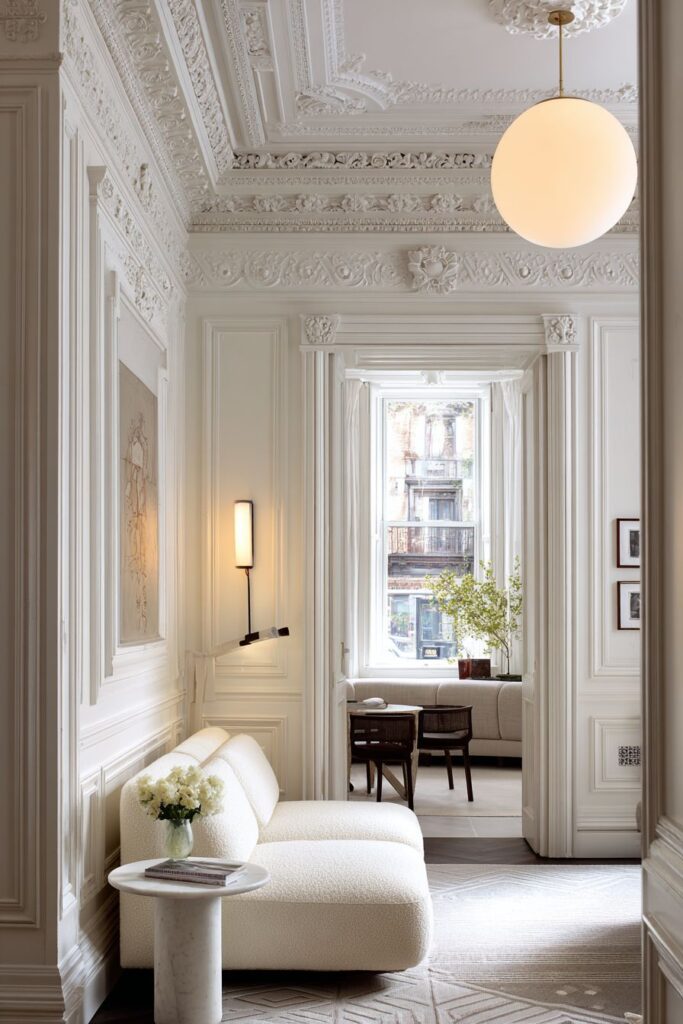
In open-concept small spaces, defining distinct living areas requires strategic furniture placement rather than walls. This design demonstrates an approach where a petite apartment-sized sofa in cream boucle is positioned away from walls to define the living area within a larger multi-use space.
The cream boucle fabric adds texture and luxury while the sofa’s placement creates an invisible boundary that separates the living zone from other areas. This pulled-away-from-walls approach actually makes small spaces feel more intentional and designed rather than cramped.
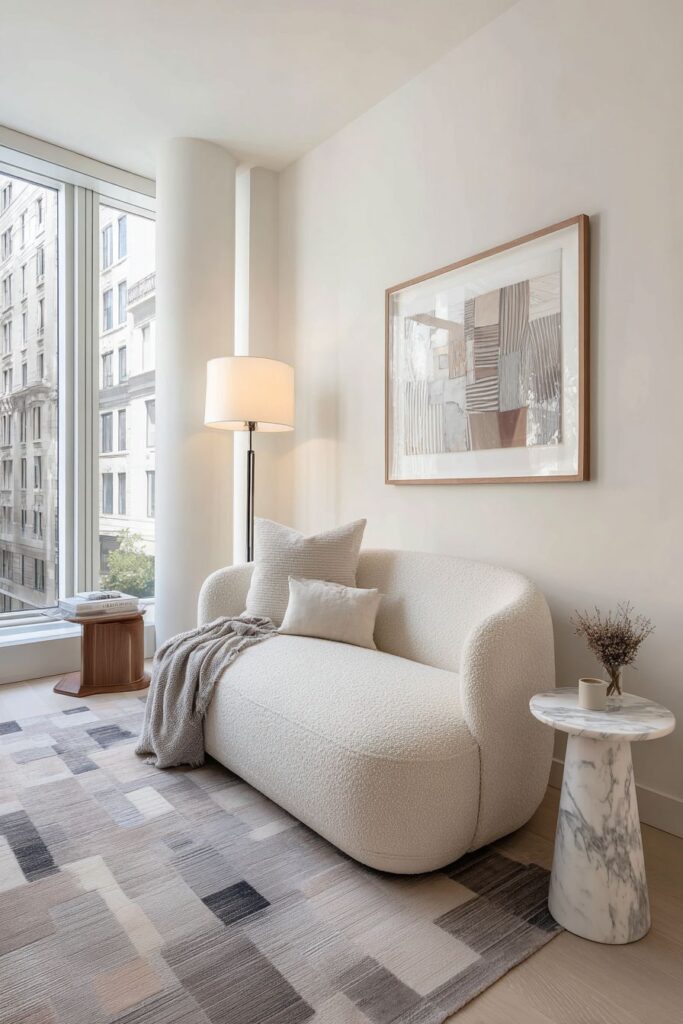
A round marble-top side table and minimalist floor lamp complete the defined zone, providing necessary function while maintaining the clean, edited aesthetic. The marble top introduces natural stone beauty and cool elegance that contrasts beautifully with the warm boucle texture. The minimalist floor lamp offers adjustable task lighting without visual clutter, its slim profile occupying minimal visual and physical space.
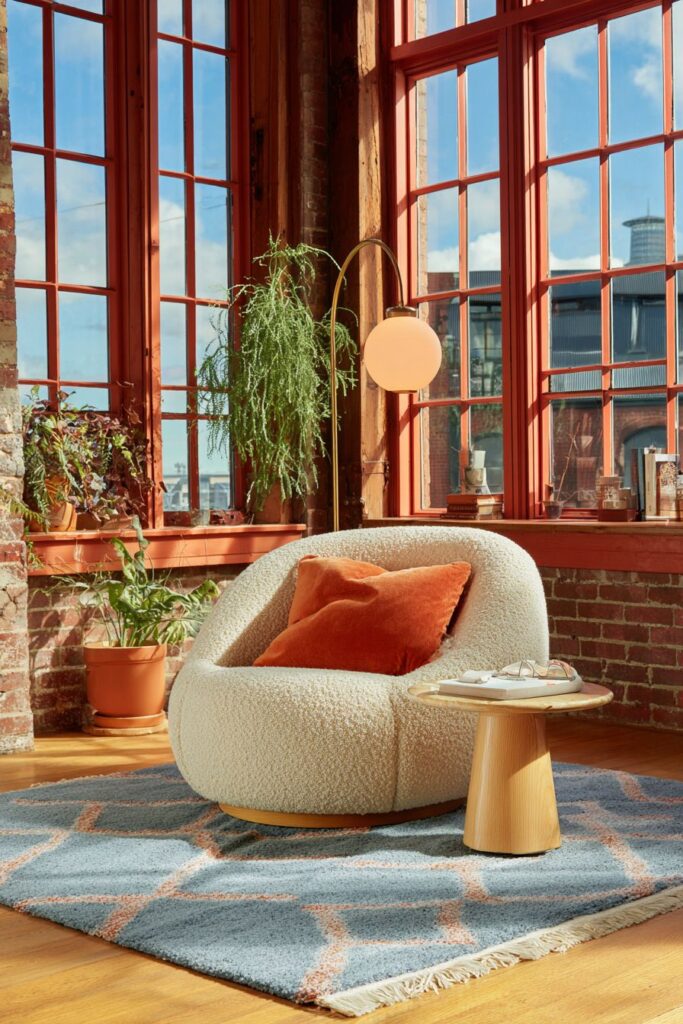
An area rug in a muted geometric pattern anchors the entire arrangement, clearly defining where the living area begins and ends. The geometric pattern adds contemporary interest while the muted color palette prevents the rug from competing with other design elements.
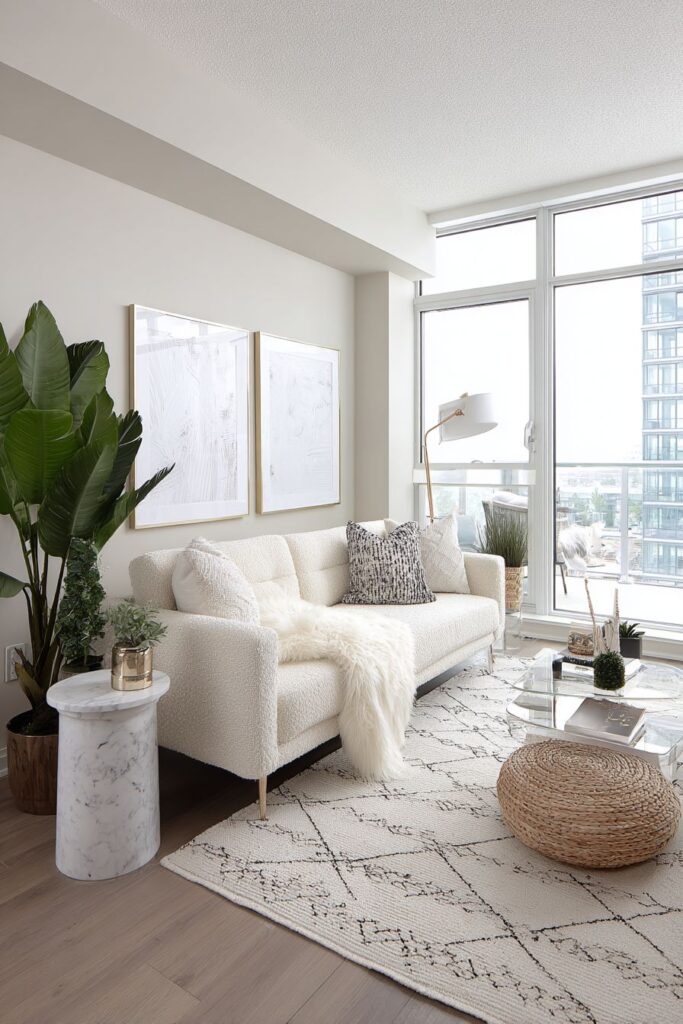
This thoughtful furniture placement demonstrates how small open-concept rooms benefit from clear zoning that creates distinct areas for different activities, making the space feel organized and purposeful rather than ambiguous.
Key Design Tips:
- Position sofas away from walls in open-concept spaces to clearly define living zones
- Choose cream boucle upholstery to add texture and luxury in small defined areas
- Select round marble-top side tables to introduce natural stone beauty with soft geometry
- Use minimalist floor lamps with slim profiles to provide lighting without visual clutter
- Anchor furniture arrangements with area rugs in muted geometric patterns to define zones clearly
17. Convertible Guest-Ready Design
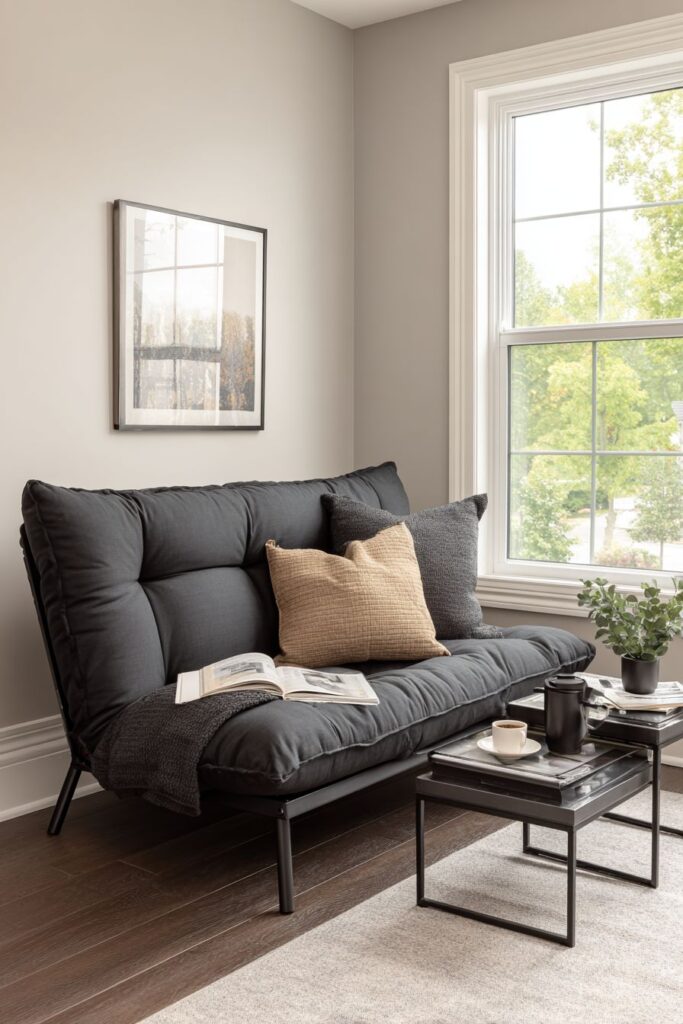
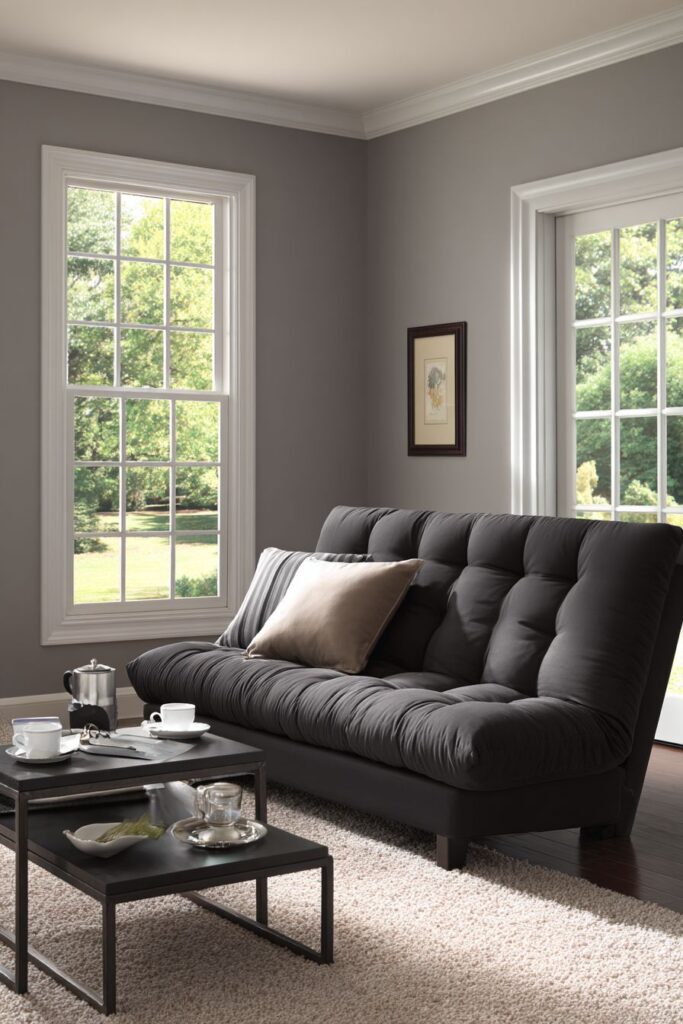
Preparing small living rooms to accommodate occasional overnight guests requires convertible furniture that maintains everyday comfort. This design features a sleek futon-style sofa in dark charcoal that converts easily for overnight visitors, demonstrating how guest-ready furniture doesn’t require sacrificing daily functionality. The dark charcoal upholstery provides sophisticated contrast against light grey walls while hiding everyday wear effectively.
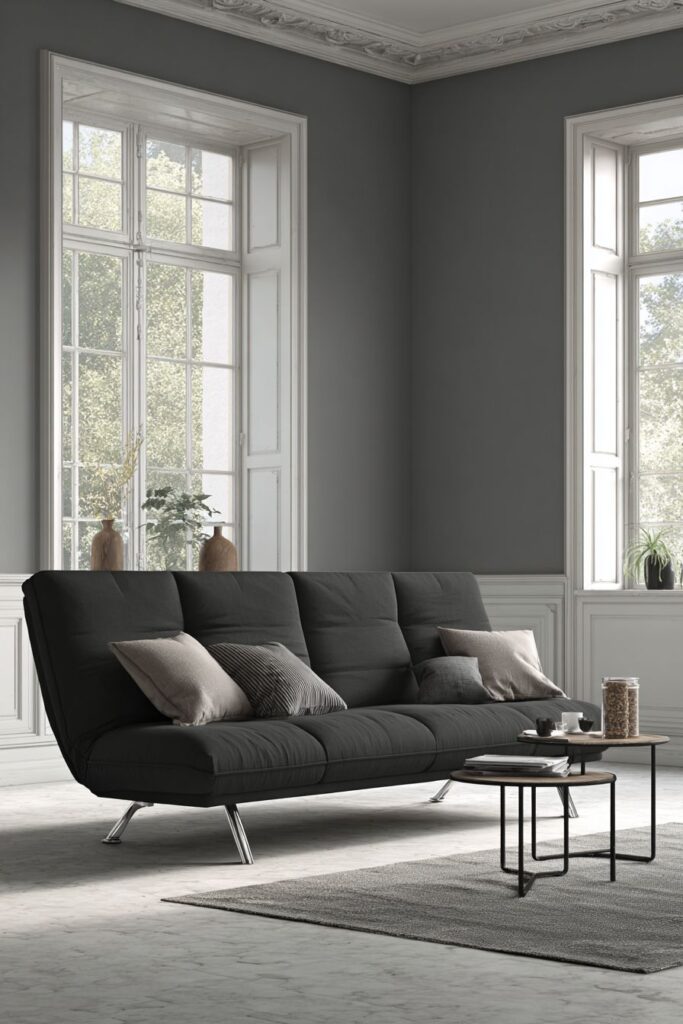
Paired with the convertible sofa is a compact nesting coffee table set that expands when entertaining, providing additional surface area for drinks, snacks, or games when guests arrive. When not needed, the tables nest together to occupy a minimal footprint, maintaining the room’s open feeling during everyday use. This expandable approach to furniture demonstrates how small living rooms can accommodate entertaining without permanent bulky furniture.
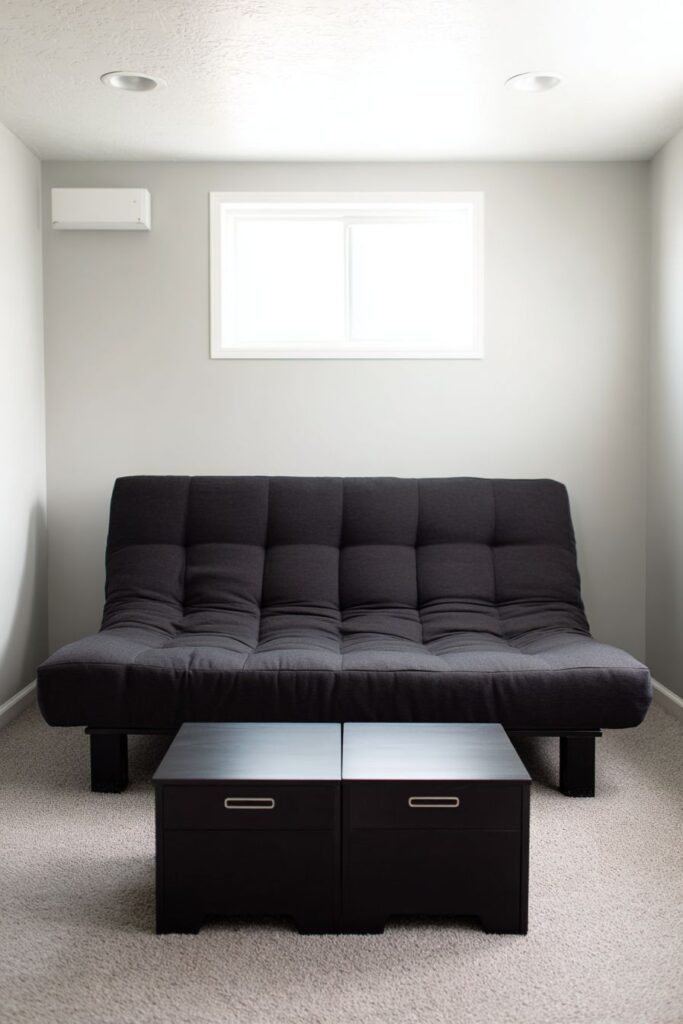
Light grey walls and minimal decor keep the space uncluttered and serene, allowing the functional furniture to serve its purpose without competing with excessive decoration. Recessed lighting and one large window provide illumination throughout the day and evening, with the recessed fixtures eliminating the need for space-consuming lamps. The convertible furniture solutions and clean aesthetic maximize versatility in limited space, proving that small living rooms can serve multiple purposes without feeling compromised or cluttered.
Key Design Tips:
- Choose futon-style sofas in dark charcoal that convert easily while providing everyday comfort
- Select nesting coffee table sets that expand for entertaining and contract for daily use
- Paint walls in light grey to provide neutral backgrounds that keep spaces feeling uncluttered
- Install recessed lighting to eliminate the need for space-consuming floor or table lamps
- Maintain minimal decor to allow convertible furniture to serve multiple functions without visual competition
18. Scandinavian Simplicity
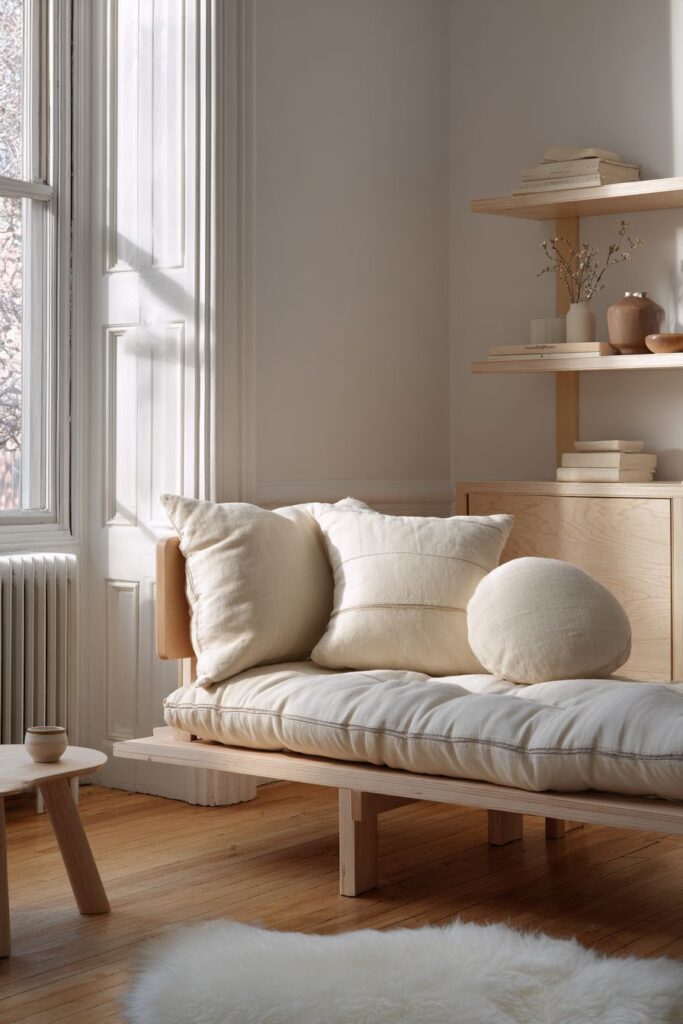
The Scandinavian design philosophy of simplicity, functionality, and natural materials translates beautifully to small living rooms. This design showcases a light wood frame loveseat upholstered in natural cotton, embodying the clean lines and organic materials characteristic of Scandinavian style.
The light wood frame introduces warmth while maintaining visual lightness, and the natural cotton upholstery provides comfort without heavy visual weight. The loveseat’s modest scale is perfectly proportioned for small spaces.
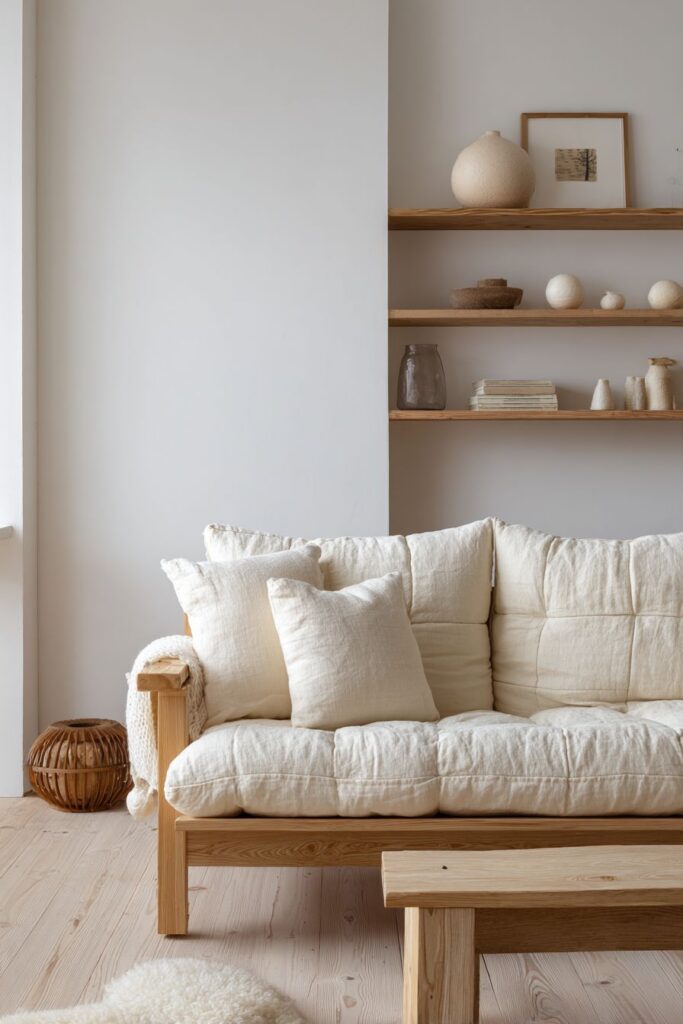
Complementing the loveseat is a simple wooden bench serving as a coffee table, demonstrating the Scandinavian preference for multi-functional pieces with honest construction. The bench can accommodate storage baskets beneath when needed or provide extra seating during gatherings.
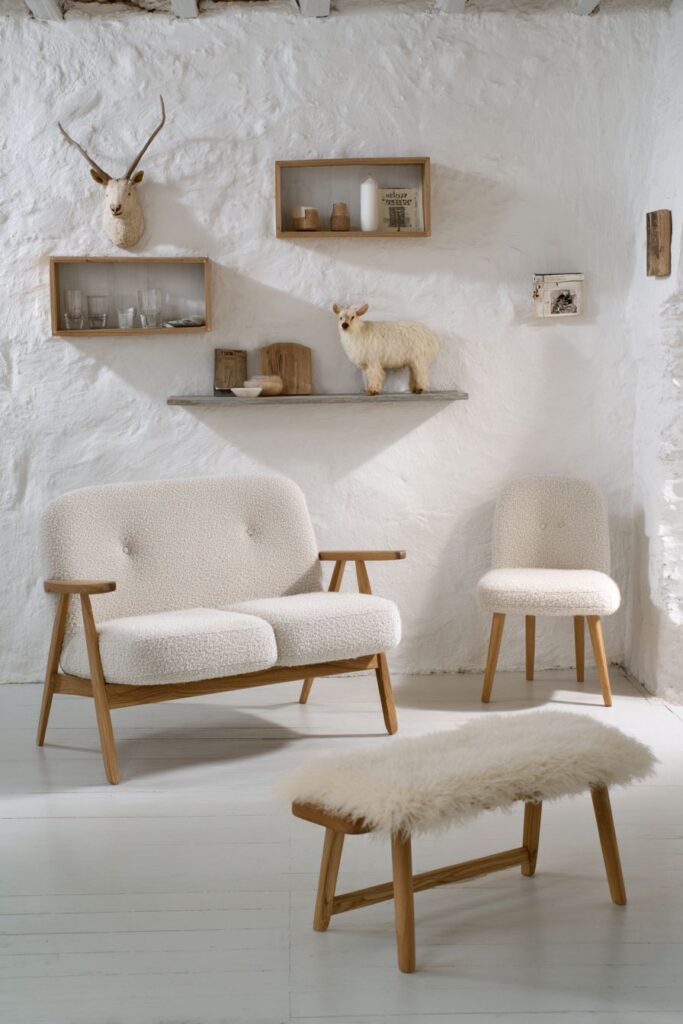
Floating shelves display minimal decor, following the Scandinavian principle of editing possessions to showcase only the most meaningful items. A sheepskin throw draped over the loveseat adds texture and warmth, its natural fiber reinforcing the connection to organic materials.
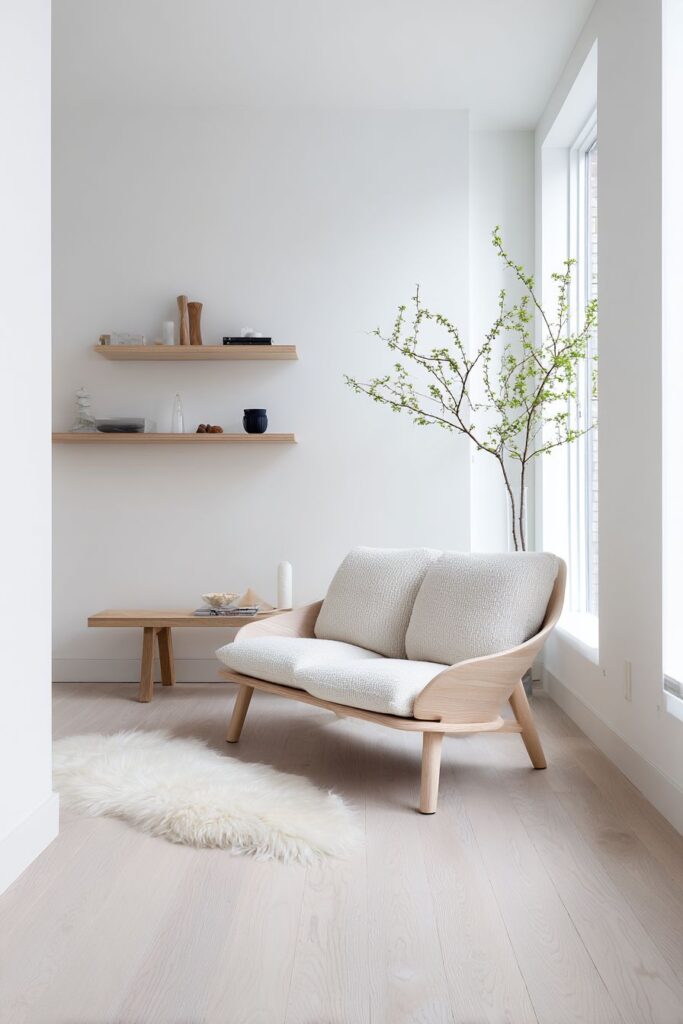
White walls and pale wood flooring create the bright, fresh environment essential to Scandinavian design. This light-on-light approach maximizes brightness while the natural wood tones prevent the space from feeling cold or sterile.
The simple, functional approach and natural materials make small spaces feel serene and calming rather than cluttered, proving that less can indeed be more when executed with attention to quality and craftsmanship.
Key Design Tips:
- Choose light wood frame furniture with natural cotton upholstery for authentic Scandinavian style
- Use simple wooden benches as coffee tables to provide multi-functional flexibility
- Install floating shelves and display minimal curated decor following editing principles
- Add sheepskin throws for texture and warmth while reinforcing natural material connections
- Combine white walls with pale wood flooring to create bright, serene environments
19. Symmetrical Seating Alternative
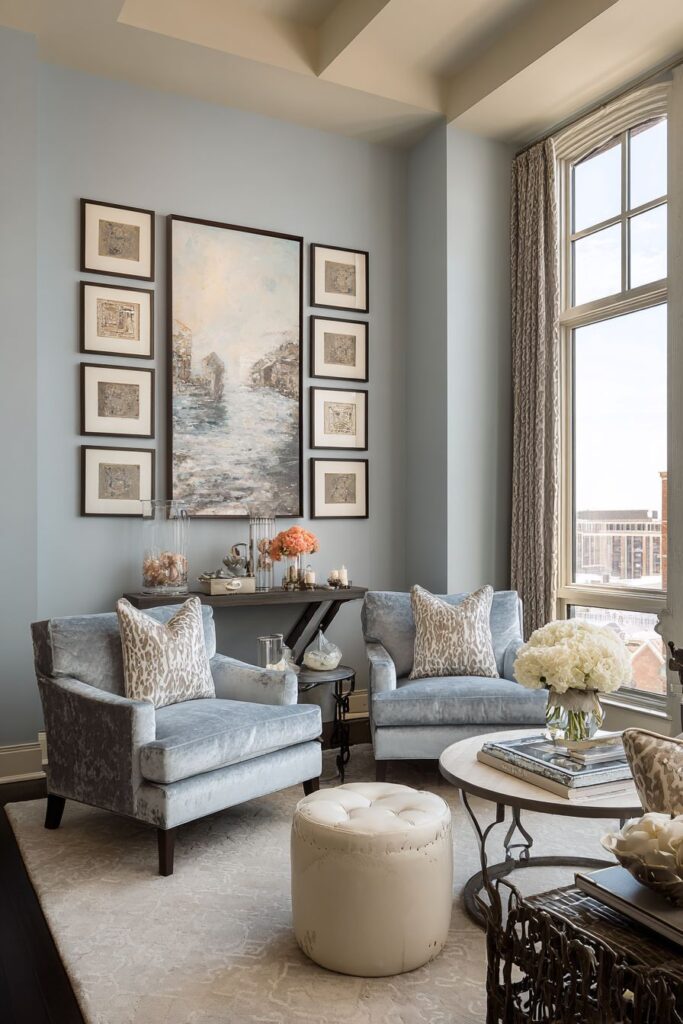
Moving beyond traditional sofa-centered layouts opens new possibilities for small living rooms. This design features a symmetrical arrangement with two matching accent chairs in soft blue-grey flanking a narrow sofa table against the wall. The accent chairs provide comfortable seating for two people while creating an elegant, balanced composition.
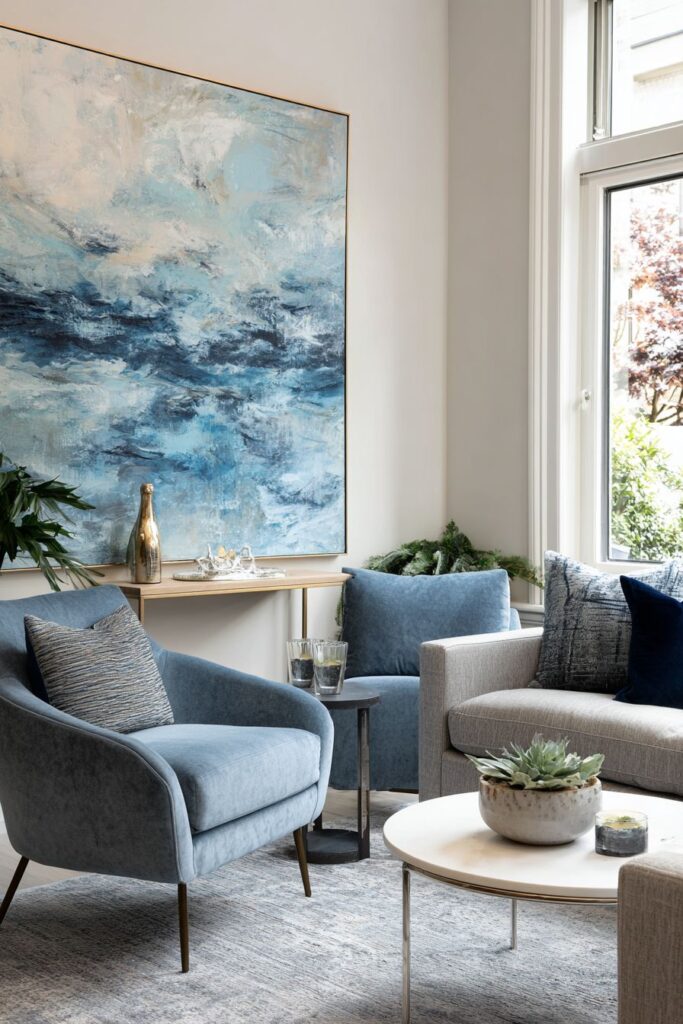
The soft blue-grey upholstery adds subtle color while remaining neutral enough to work with various decorative accents. The narrow sofa table between the chairs offers surface area for lamps, plants, or decorative objects without consuming the floor space a traditional sofa would require.
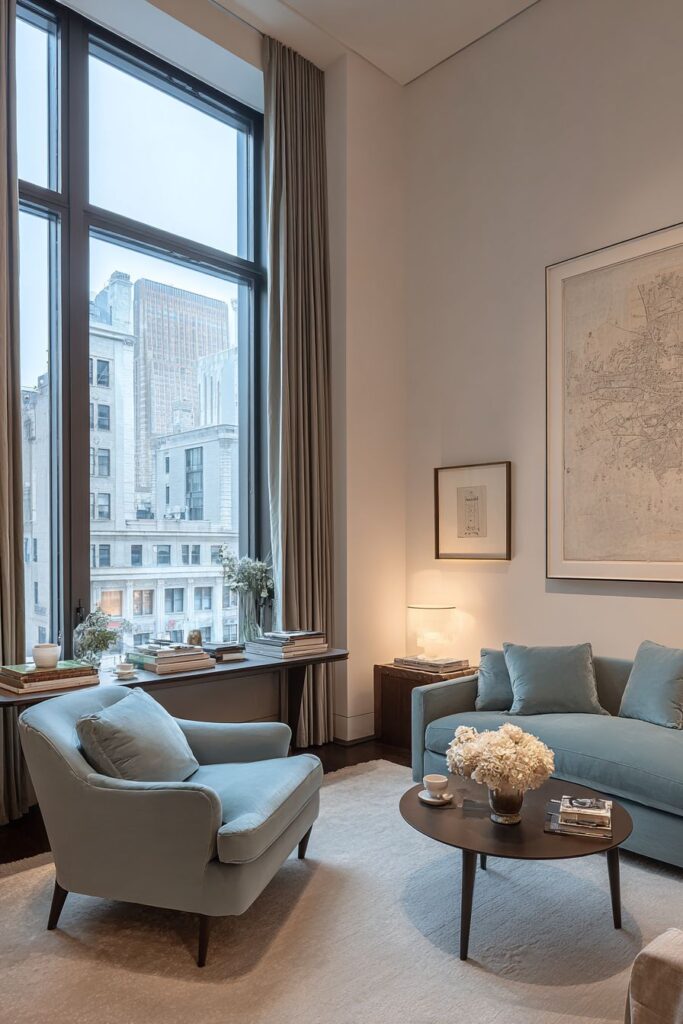
At the center of the room, a small round coffee table anchors the seating arrangement on a low-pile neutral rug. The round shape facilitates easy movement while providing essential function for beverages and books.
The low-pile rug defines the seating area without adding bulk, its neutral tone allowing the soft blue-grey chairs to serve as the color focus. Large artwork positioned above the sofa table draws the eye upward, emphasizing vertical space and adding a focal point that doesn’t consume floor area.
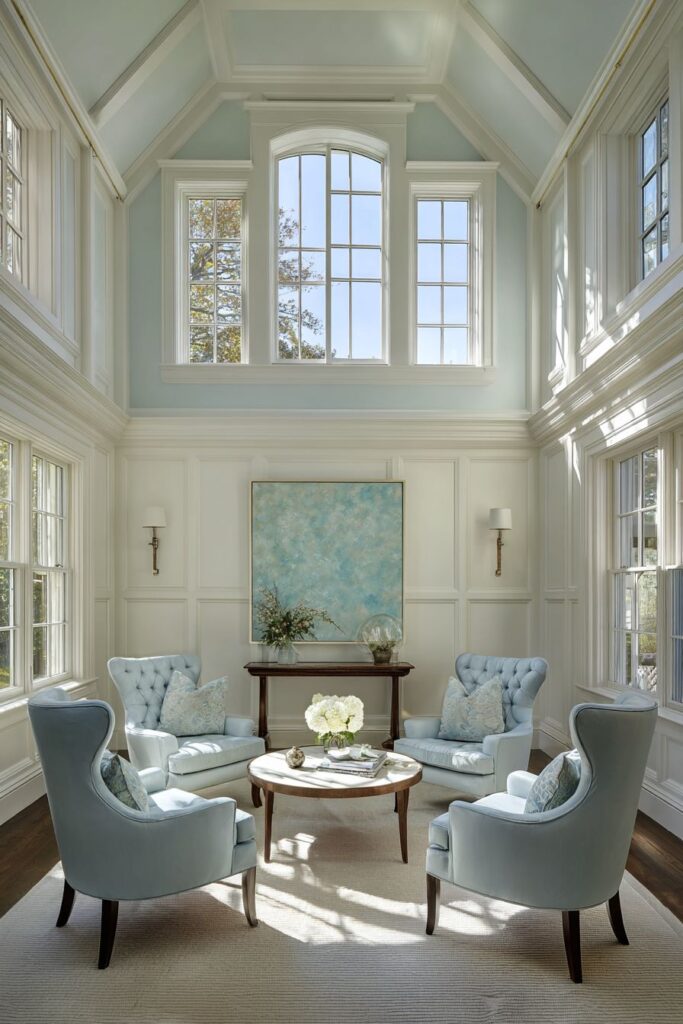
This alternative seating solution suits the room’s proportions beautifully, proving that traditional sofas aren’t always the best choice for small spaces. The symmetrical composition creates a formal, balanced feeling while the alternative approach ensures the furniture scale matches the room’s dimensions.
This design demonstrates that questioning conventional furniture arrangements often leads to more successful solutions in compact spaces, particularly when standard-sized sofas would overwhelm the available square footage.
Key Design Tips:
- Consider matching accent chairs instead of sofas when room proportions favor alternative seating
- Choose soft blue-grey upholstery to add subtle color while maintaining versatility
- Position narrow sofa tables between chairs to provide surface area without consuming floor space
- Select small round coffee tables to facilitate movement while providing essential function
- Hang large artwork above furniture to draw the eye upward and emphasize vertical space
20. Library-Inspired Cozy Retreat
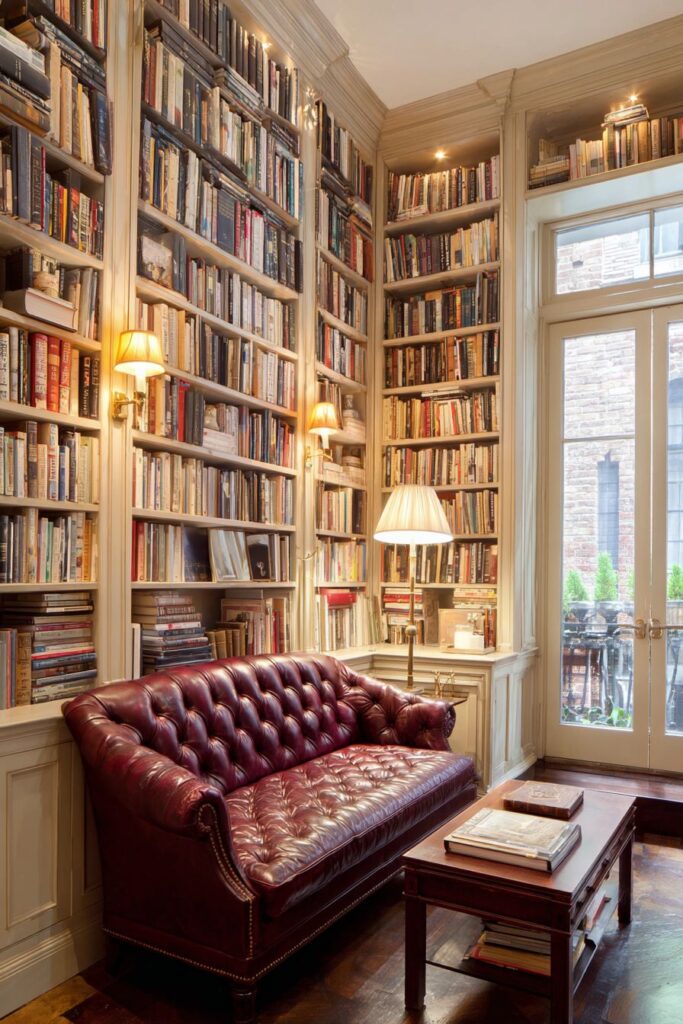
Sometimes the best approach to small living rooms is embracing their intimate dimensions rather than fighting to make them appear larger. This library-inspired design features a compact tufted loveseat in rich burgundy leather, creating a luxurious focal point that celebrates coziness.
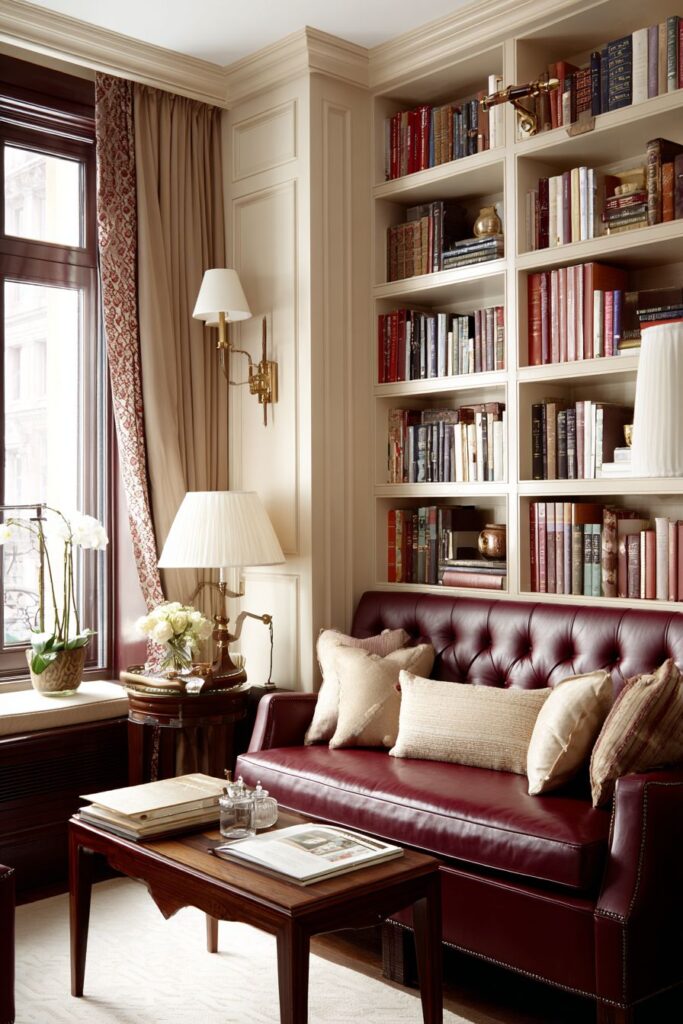
The burgundy leather adds depth, warmth, and sophistication while the tufted detailing introduces classic elegance. The loveseat’s compact scale fits perfectly within the intimate proportions, inviting occupants to settle in with a good book.
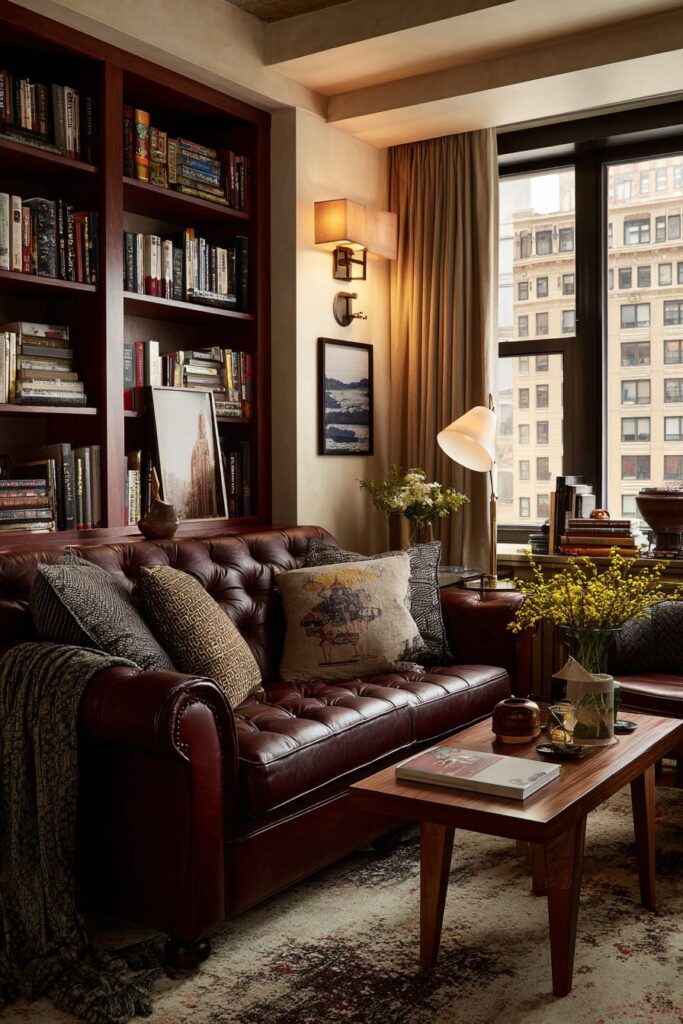
Surrounding the loveseat are built-in bookcases painted in warm off-white, creating a cocoon-like environment reminiscent of a personal library. The floor-to-ceiling bookcases maximize storage for book collections while the warm off-white paint keeps them from feeling dark or oppressive.
The custom built-ins transform the small room into a purposeful retreat dedicated to reading and relaxation, proving that embracing a room’s true nature often yields more satisfying results than trying to force it into another role.
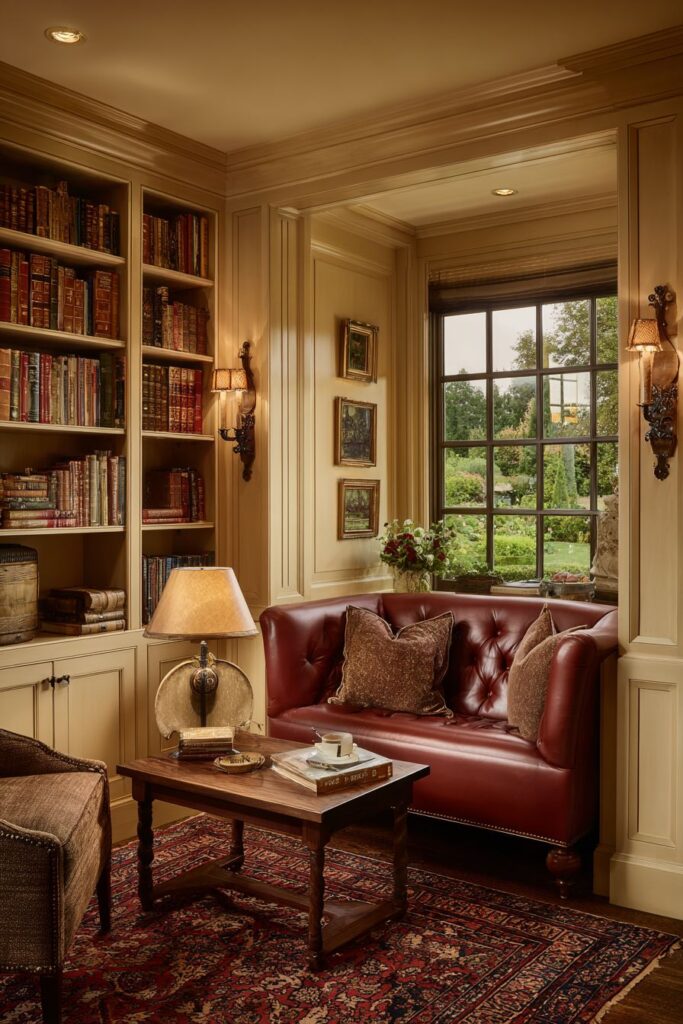
A small wooden coffee table with tapered legs provides surface area for beverages and books without overwhelming the intimate space. The tapered legs maintain visual lightness while the wood tone complements the burgundy leather beautifully. A dedicated reading lamp creates an intimate setting for evening reading, while warm ambient lighting from wall sconces supplements natural window light throughout the day.
This design proves that embracing coziness rather than fighting small dimensions creates an inviting, purposeful space that celebrates its compact nature as an asset rather than viewing it as a limitation.
Key Design Tips:
- Choose rich burgundy leather upholstery to create luxurious focal points in small cozy rooms
- Install built-in bookcases in warm off-white to maximize storage while maintaining brightness
- Select small wooden coffee tables with tapered legs to provide function without visual bulk
- Add dedicated reading lamps and wall sconces for layered lighting in intimate spaces
- Embrace coziness as an asset rather than fighting small dimensions to appear larger
Why These Small Living Room Designs Work Best
These twenty small living room decor ideas represent the most effective approaches to compact space design because they address the fundamental challenges small rooms present while offering diverse aesthetic options. The success of these designs lies in their understanding that small living rooms require different strategies than larger spaces, with each approach tackling specific pain points through thoughtful furniture selection, strategic color use, innovative storage solutions, and smart spatial planning.
The corner-maximizing sectional design works exceptionally well because it utilizes often-wasted corner space while keeping the center of the room open for circulation. This furniture arrangement strategy is one of the most space-efficient approaches for small living rooms, allowing maximum seating capacity without compromising movement or creating cramped feelings. The vertical storage solutions featured in several designs address the critical challenge of limited floor space by building upward, a principle that consistently proves effective in compact interiors. Floor-to-ceiling built-ins, floating shelves, and tall bookcases draw the eye upward while providing essential storage without consuming precious square footage.
The mirror and reflective surface strategies employed in multiple designs work because they literally double the perceived space through reflection while bouncing natural light throughout the room. This optical illusion technique is scientifically proven to make rooms feel larger, making it one of the most reliable tools in the small space designer’s arsenal. Large mirrors, glass furniture, and metallic accents all contribute to this light-multiplying effect that transforms cramped quarters into airy environments.
Multi-functional furniture solutions featured throughout these designs address the reality that small living rooms must often serve multiple purposes throughout the day. Sofa beds, lift-top coffee tables, fold-down desks, and storage-integrated seating allow one piece of furniture to do the work of two or three, eliminating the need for separate items that would overwhelm limited square footage. This functionality-first approach ensures small living rooms can accommodate working from home, entertaining guests, and relaxing without requiring furniture changes or compromised comfort.
The color strategies employed across these designs demonstrate sophisticated understanding of how hues affect spatial perception. Light neutral palettes in greys, whites, and soft taupes create spaciousness by reflecting light and creating visual continuity. Meanwhile, strategic color pops in mustard yellow, terracotta, or dusty blue prove that small rooms can accommodate personality and boldness when balanced with neutral surroundings. The monochromatic schemes show how limiting color but varying texture creates sophisticated depth without visual fragmentation that makes spaces feel smaller.
The lighting approaches featured in these designs recognize that proper illumination dramatically impacts how spacious rooms feel. Wall-mounted sconces, recessed lighting, and strategically placed mirrors maximize natural light while eliminating space-consuming floor lamps. The emphasis on sheer curtains and minimal window treatments in most designs ensures that precious natural light floods the space, creating the bright environments essential for small rooms to feel welcoming rather than cave-like.
The furniture scaling demonstrated throughout these concepts is perhaps the most critical element of their success. Every design features appropriately sized pieces that fit the room’s proportions rather than standard-sized furniture that overwhelms compact dimensions. Apartment-sized sofas, loveseats instead of full sofas, armless designs, and low-profile pieces all maintain comfortable functionality while respecting spatial limitations. This careful attention to scale prevents the cramped feeling that results when oversized furniture dominates small rooms.
The emphasis on organization and storage solutions throughout these designs addresses the reality that clutter makes small spaces feel impossibly cramped. Built-in storage, hidden compartments, integrated shelving, and storage ottomans ensure belongings have designated homes rather than creating visual chaos. The minimal decor approach featured in several designs demonstrates that editing possessions and displaying only curated items prevents overwhelming small spaces with excessive stuff.
The alternative seating arrangements featured in several designs challenge the assumption that every living room needs a sofa. Accent chair pairings, window seats, daybeds, and modular configurations prove that questioning conventional furniture layouts often yields solutions better suited to specific room dimensions and use patterns. This flexibility in thinking leads to more successful small living room designs than forcing traditional arrangements into spaces where they don’t fit.
The open-concept zoning strategies demonstrate how small rooms benefit from clear definition even within larger spaces. Furniture placement away from walls, area rugs, and strategic arrangements create distinct living zones that make compact areas feel purposeful and organized. This intentional approach to space planning transforms potentially awkward small rooms into well-designed environments where every square foot serves a specific function.
The Scandinavian-inspired simplicity and minimalist approaches featured in multiple designs prove that less is genuinely more in small living rooms. Reducing furniture quantity, eliminating unnecessary accessories, and focusing on quality over quantity creates serene environments where the space itself can breathe. This edited approach prevents the visual overwhelm that quickly makes small rooms feel chaotic and uncomfortable.
The transformable furniture solutions represent the cutting edge of small space design, with sofa beds, nesting tables, and fold-away pieces adapting throughout the day to serve changing needs. This flexibility ensures small living rooms can accommodate diverse activities without permanent furniture dedicated to occasional uses, maximizing the utility of every piece in the room.
These designs work best because they embrace small living rooms’ reality while demonstrating that limitations inspire creativity rather than compromise. Each approach offers practical solutions to genuine challenges while maintaining aesthetic appeal, proving that small living rooms can be just as beautiful, comfortable, and functional as larger spaces when designed with intelligence and attention to detail. The variety of styles represented ensures homeowners with different tastes can find approaches that resonate with their personal preferences while benefiting from space-maximizing strategies.
Conclusion
Small living room design presents unique challenges, but as these twenty diverse approaches demonstrate, compact spaces offer tremendous opportunities for creative problem-solving and innovative thinking. The key to success lies in understanding that small living rooms require different strategies than larger spaces, with emphasis on appropriate furniture scaling, multi-functional pieces, smart storage solutions, light-maximizing techniques, and strategic color use. Whether you’re drawn to the cozy library-inspired retreat, the Scandinavian simplicity, the bold mid-century modern statement, or the sleek minimalist approach, each design philosophy offers valuable lessons in making the most of limited square footage.
The most important takeaway from these designs is that small living rooms should be embraced rather than apologized for. Their intimate scale creates opportunities for cozy, inviting environments that larger rooms struggle to achieve. By selecting furniture that fits the space’s actual proportions, utilizing vertical storage to preserve floor area, incorporating mirrors and light colors to expand perceived dimensions, and choosing multi-functional pieces that serve multiple needs, even the most compact living room can become a comfortable, stylish haven.
Remember that successful small living room design is deeply personal, reflecting your lifestyle, aesthetic preferences, and practical needs. Don’t be afraid to experiment with different furniture arrangements, try bold color choices when balanced with neutral surroundings, or invest in custom built-ins that maximize every inch of available space. The twenty concepts explored in this article provide frameworks and inspiration, but the best design for your small living room will be one that truly serves your daily life while bringing you joy every time you enter the space. Start with one or two strategies that resonate most strongly with your situation, implement them thoughtfully, and watch as your small living room transforms into a space that feels perfectly suited to your needs—proof that great design has nothing to do with square footage and everything to do with smart choices and creative thinking.
"As an Amazon Associate, I earn from qualifying purchases."
