
Stepping into a rustic bedroom is like wrapping yourself in the warmth of natural materials and timeless design. In our fast-paced, technology-driven world, the appeal of rustic bedroom design has never been stronger. These spaces offer a sanctuary where authentic materials, honest craftsmanship, and organic textures come together to create environments that feel both grounding and rejuvenating. The beauty of rustic design lies in its ability to honor the natural world while providing modern comfort and functionality—a perfect marriage of old-world charm and contemporary living.
The rustic bedroom aesthetic encompasses a remarkable range of styles, from the weathered elegance of farmhouse chic to the robust character of mountain lodge retreats. Each interpretation celebrates the inherent beauty of natural materials—reclaimed wood with its story-telling grain patterns, stone with its earthen textures, and textiles woven from organic fibers. These elements work in harmony to create spaces that feel authentic, lived-in, and deeply personal. Whether you’re drawn to the minimalist simplicity of Scandinavian-inspired rustic design or the rich, layered textures of cabin-style bedrooms, the rustic approach offers endless possibilities for creating a bedroom that truly reflects your connection to nature and appreciation for craftsmanship.
In this comprehensive guide, we’ll explore twenty-five distinctive rustic bedroom designs, each offering unique insights into how natural materials, thoughtful details, and authentic finishes can transform your sleeping space into a tranquil retreat. From dramatic architectural features like exposed beams and stone fireplaces to intimate details like hand-stitched quilts and reclaimed furniture, these designs demonstrate the versatility and enduring appeal of rustic bedroom styling. You’ll discover practical design tips, material combinations, and styling strategies that you can adapt to your own space, regardless of size or budget.
1. Reclaimed Barn Wood Sanctuary
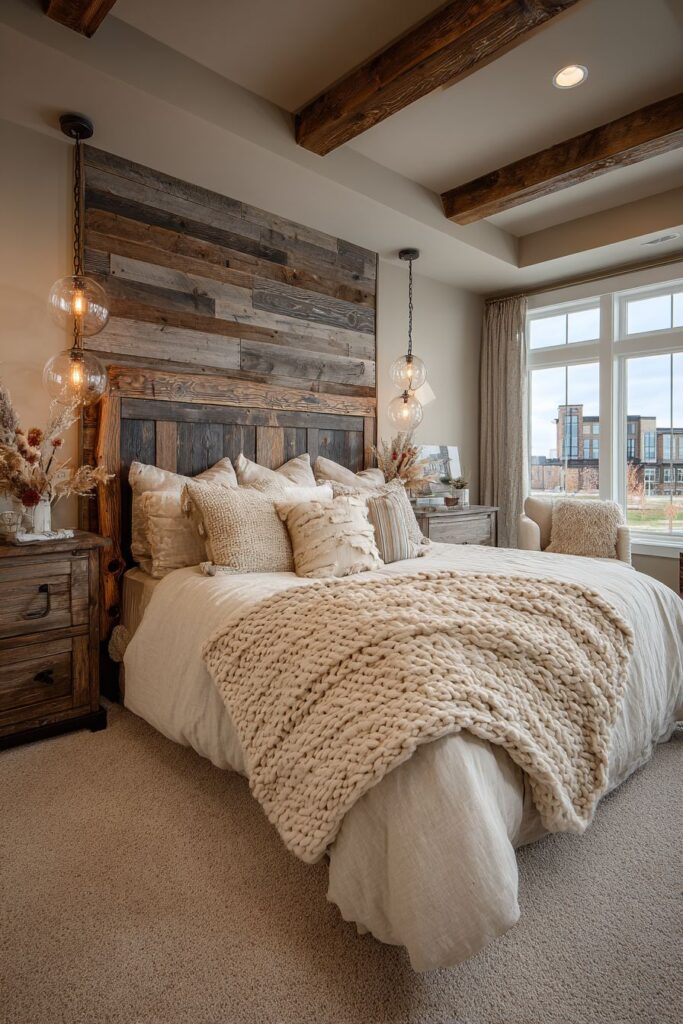
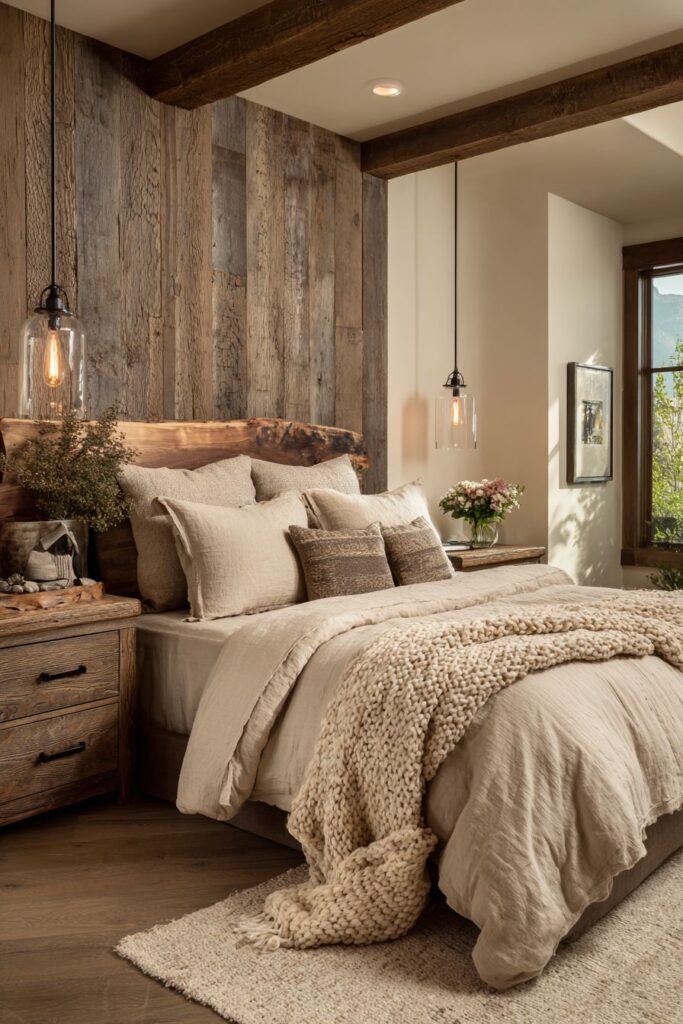
The commanding presence of a reclaimed barn wood accent wall immediately establishes the rustic credentials of this bedroom design. Behind a generous king-size bed, weathered planks tell stories through every knot, crack, and color variation, creating a focal point that’s both dramatic and warmly inviting. The live-edge wooden headboard adds another layer of organic authenticity, its natural contours celebrating the tree’s original form rather than forcing it into geometric conformity. This bedroom understands that true luxury lies not in pristine perfection but in the honest beauty of materials that bear the marks of time and use.
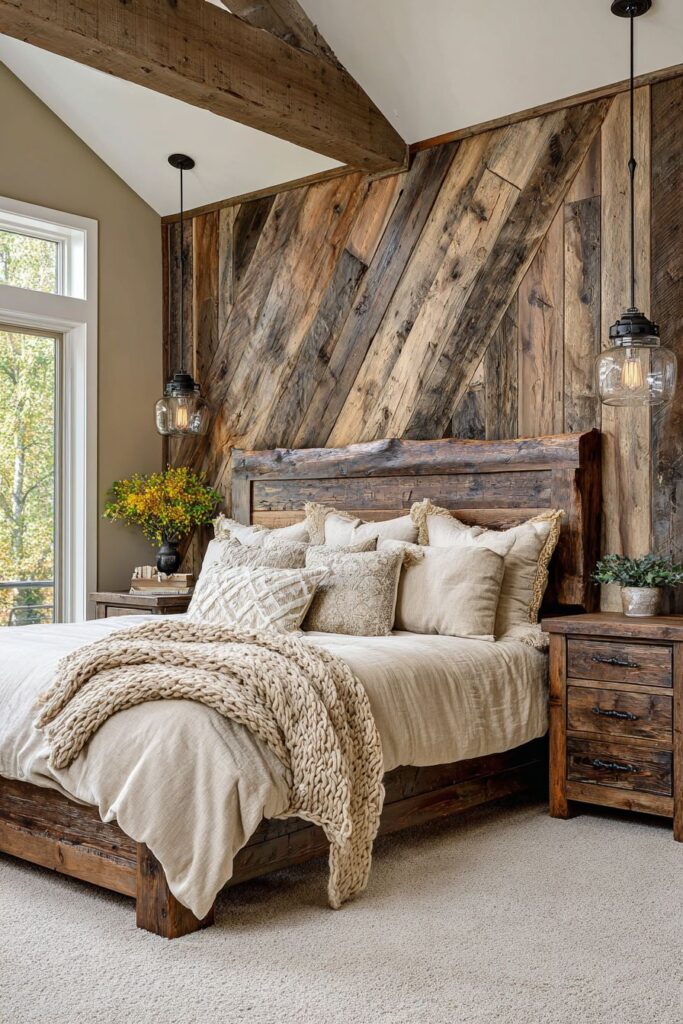
The layering of natural linens in cream and oatmeal tones creates a sophisticated neutral palette that allows the wood to take center stage. A chunky knit throw blanket introduces textural contrast while maintaining the natural fiber focus that defines rustic design. The bedding’s deliberate simplicity—no fussy patterns or synthetic sheens—reinforces the room’s commitment to authentic materials and understated elegance. This restraint in color and pattern allows the eye to fully appreciate the rich variations in wood grain and the subtle play of light across different surfaces.
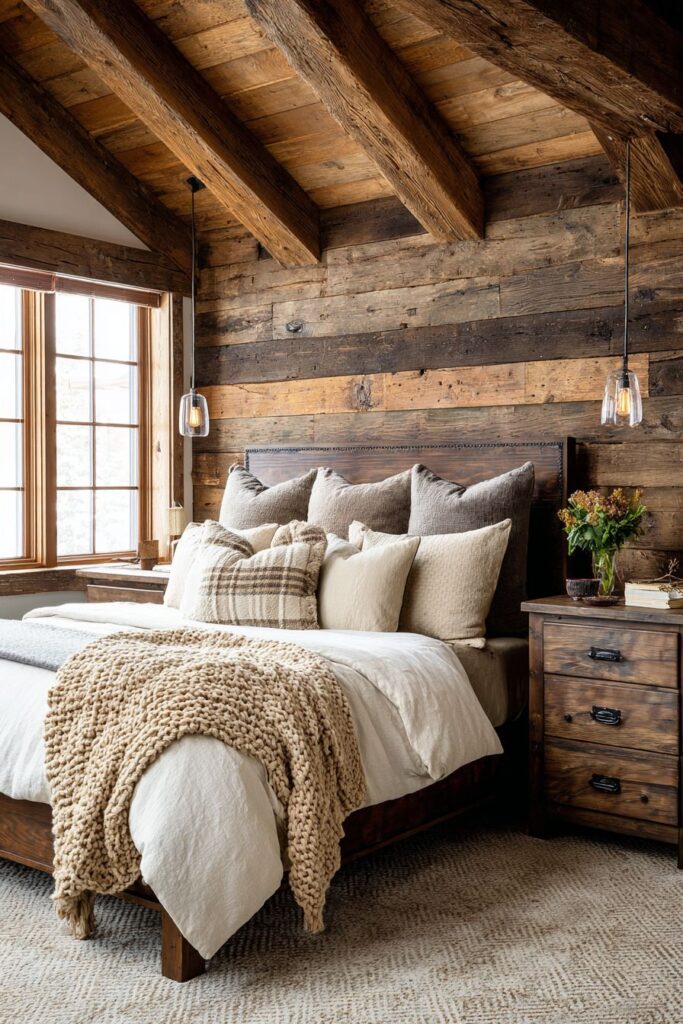
Weathered wood nightstands with wrought iron drawer pulls provide both functionality and visual interest at bedside. The marriage of wood and metal—a hallmark of rustic design—brings together the warmth of organic materials with the industrial strength of forged iron. Exposed ceiling beams overhead add architectural drama while creating visual rhythm that draws the eye upward. Edison bulb pendant lights suspended from these beams cast a warm, amber glow that enhances the room’s cozy atmosphere, particularly during evening hours when their vintage filaments create gentle pools of light.
The wide-angle perspective of this design reveals how natural light from nearby windows interacts with the various wood surfaces, highlighting grain patterns and creating subtle shadows that add depth and dimension. Morning sunlight brings out the honey tones in lighter woods while deepening the richness of darker areas, creating an ever-changing visual landscape throughout the day.
Key Design Tips:
- Select reclaimed barn wood with varied patina for authentic character
- Choose a live-edge headboard to celebrate natural wood forms
- Layer natural fiber textiles in neutral tones for sophisticated simplicity
- Install Edison bulb pendants for warm, vintage-inspired lighting
- Position the bed to maximize natural light exposure on wood surfaces
2. Wrought Iron Elegance
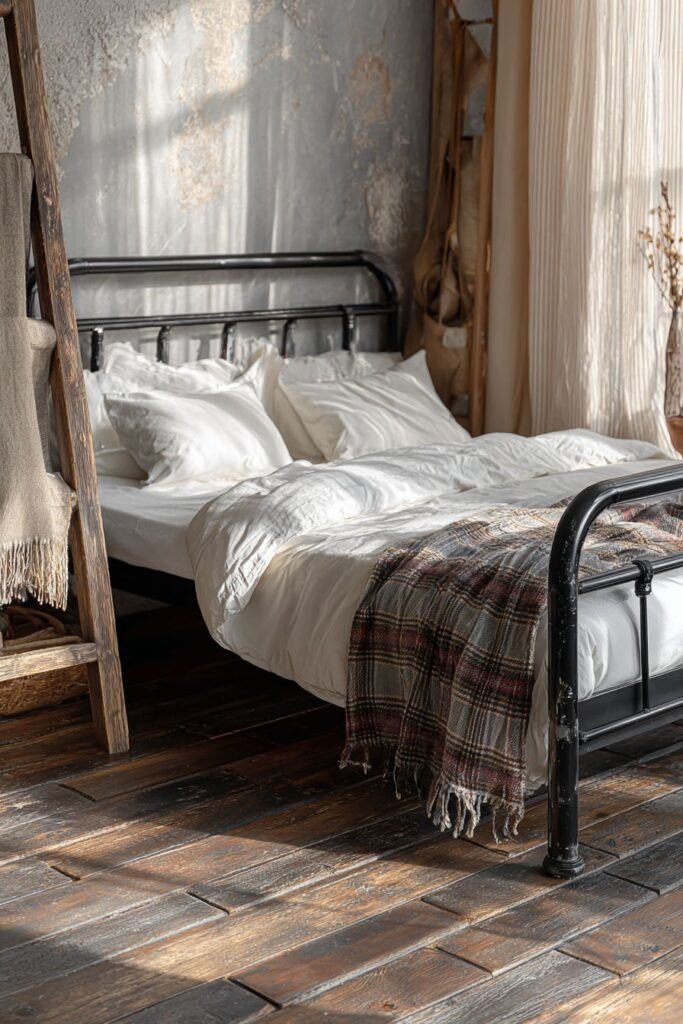
The stark beauty of a matte black wrought iron bed frame creates an unexpected anchor for this rustic bedroom design. While iron beds might evoke Victorian sensibilities, this interpretation strips away ornamental excess in favor of clean lines and honest construction. Dressed in crisp white cotton bedding and layered with plaid wool blankets in earth tones—rust, sage, and deep brown—the bed becomes a study in contrasts that feels both fresh and timeless. The plaid pattern introduces visual interest without overwhelming the space, its traditional geometry nodding to heritage textile design.
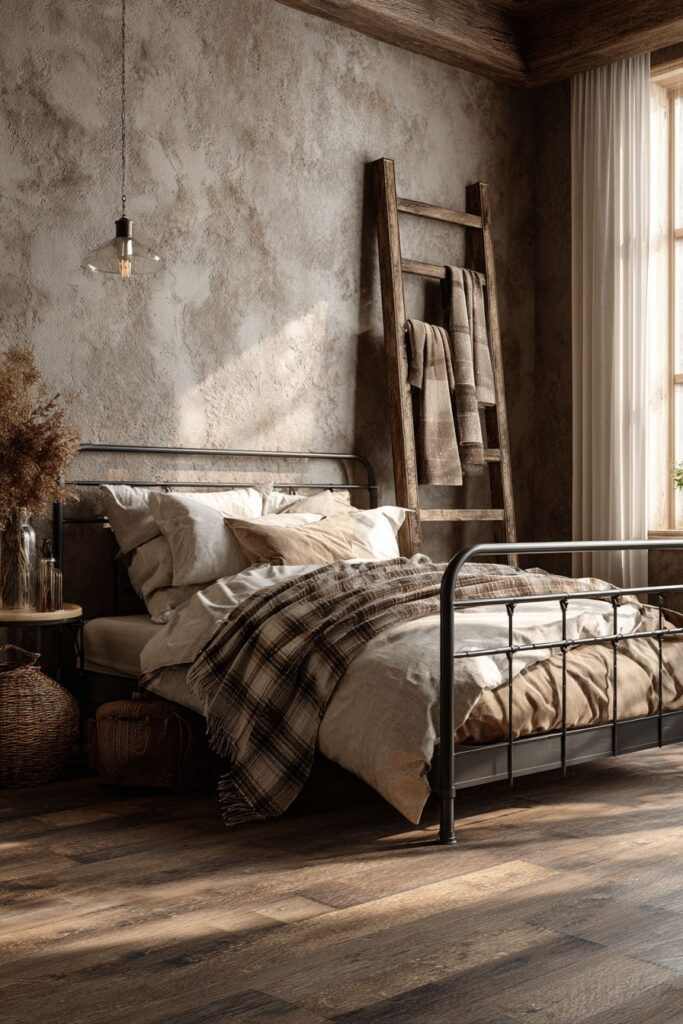
Distressed wooden flooring beneath the bed shows the kind of authentic wear that can’t be artificially replicated—natural color variations, subtle depressions where feet have tread, and the soft sheen that comes from years of use. These imperfections tell stories and add character that makes a space feel genuinely lived-in rather than staged. The floor’s weathered appearance creates a perfect foundation for the room’s rustic aesthetic, grounding the lighter elements above with its substantial presence.
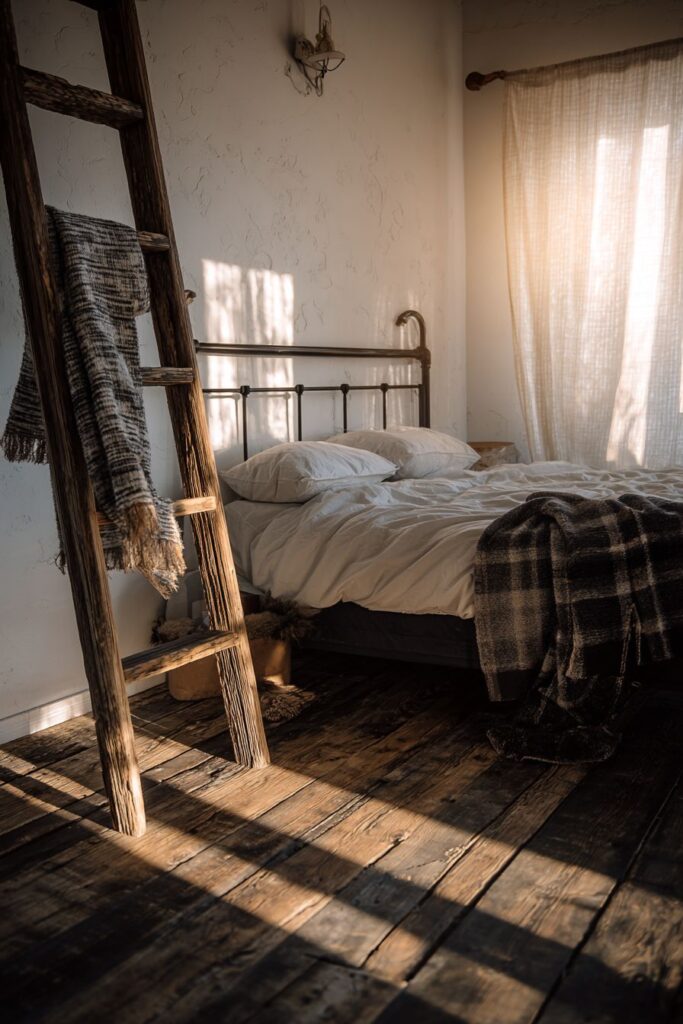
A vintage wooden ladder leaning casually against the wall serves both decorative and practical purposes, displaying throws and textiles in an artful arrangement. This repurposed element—perhaps once used in a barn or workshop—brings vertical interest to the room while providing accessible storage for extra blankets. The ladder’s weathered rungs and aged patina make it a sculptural element that enhances the room’s collected-over-time aesthetic.
Morning sunlight streaming through simple linen curtains creates a magical quality, casting soft shadows and illuminating dust motes that dance in the air. The unlined curtains filter rather than block light, maintaining the room’s connection to the natural world outside. This soft, diffused illumination enhances the authentic rustic materials without harsh glare, creating an atmosphere of peaceful morning awakening.
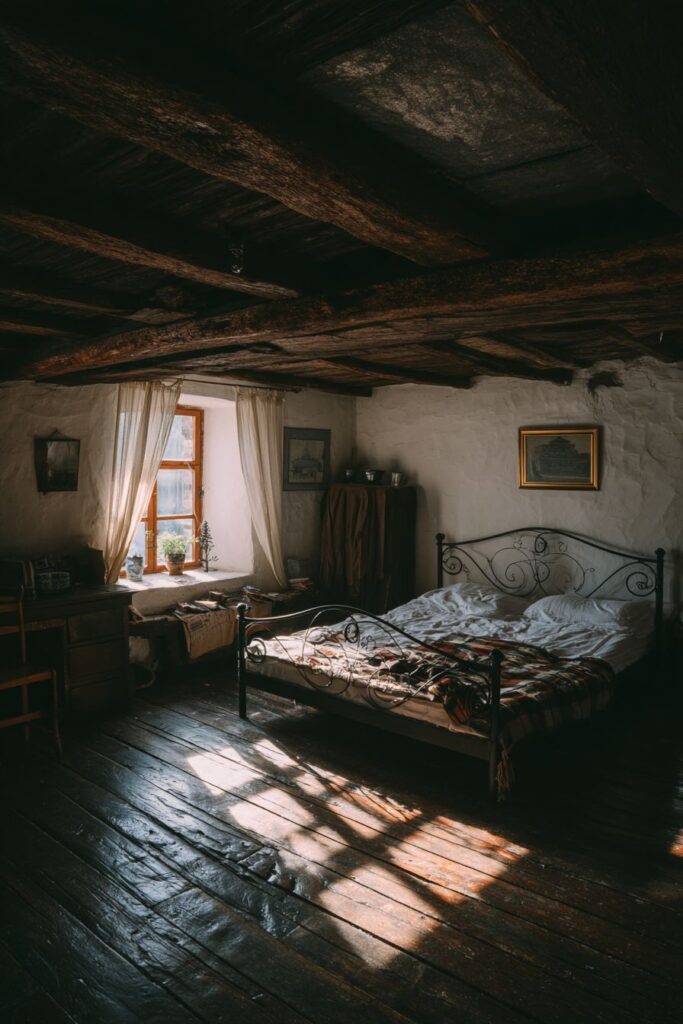
Key Design Tips:
- Choose matte black wrought iron for modern rustic appeal
- Layer white bedding with earth-tone plaid for visual warmth
- Embrace distressed flooring as an authentic rustic feature
- Repurpose vintage ladders for creative storage solutions
- Install simple linen curtains for soft, natural light filtration
3. Functional Rustic Storage
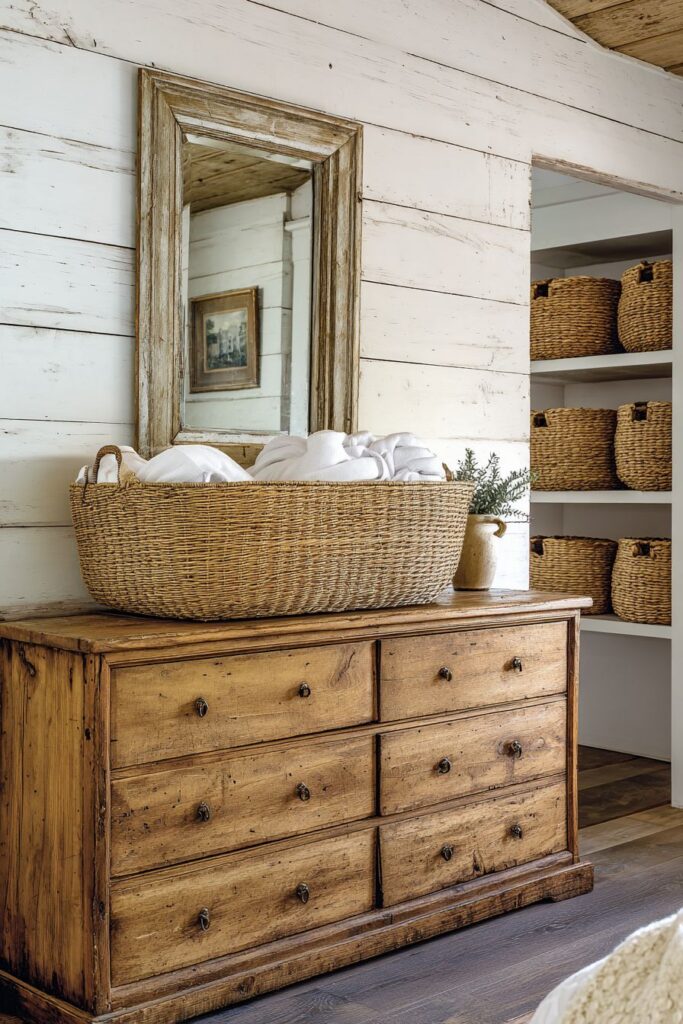
A repurposed wooden dresser becomes the hero of this rustic bedroom storage solution, its original hardware and natural patina finish speaking to decades of faithful service. The piece’s imperfections—worn edges, slight color variations, and the subtle dips in drawer fronts where hands have pulled them open countless times—transform what might be flaws in pristine furniture into badges of honor in rustic design. Against whitewashed shiplap walls, the dresser’s warm wood tones create a pleasing contrast while the visible wood grain in the wall treatment maintains the natural material focus.
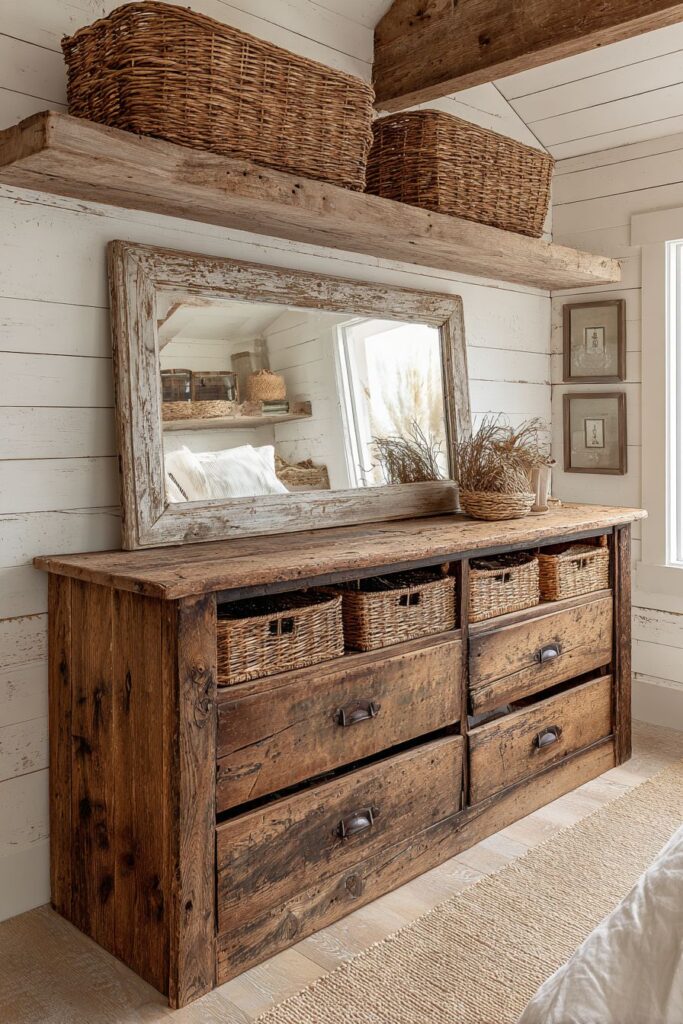
The whitewashing technique applied to the shiplap walls deserves special attention—it’s not a solid paint application but rather a thin wash that allows the wood grain to show through, creating depth and texture. This treatment brightens the space while preserving the organic quality of the wooden boards. The horizontal lines of the shiplap add subtle visual movement and can even make a room feel wider, a useful trick in smaller bedrooms.
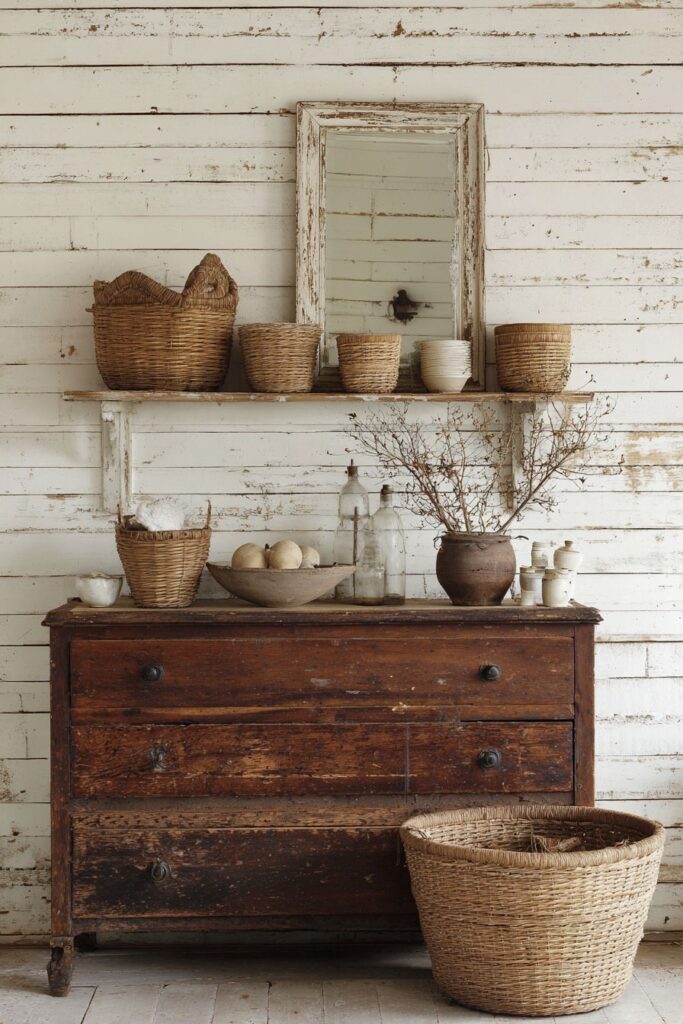
Woven baskets positioned on upper shelves provide additional storage that’s both practical and aesthetically aligned with the room’s natural material palette. These baskets—perhaps crafted from seagrass, water hyacinth, or willow—introduce another organic texture while keeping clutter contained and organized. The varied sizes and natural tones of the baskets create visual interest without disrupting the room’s cohesive design story.
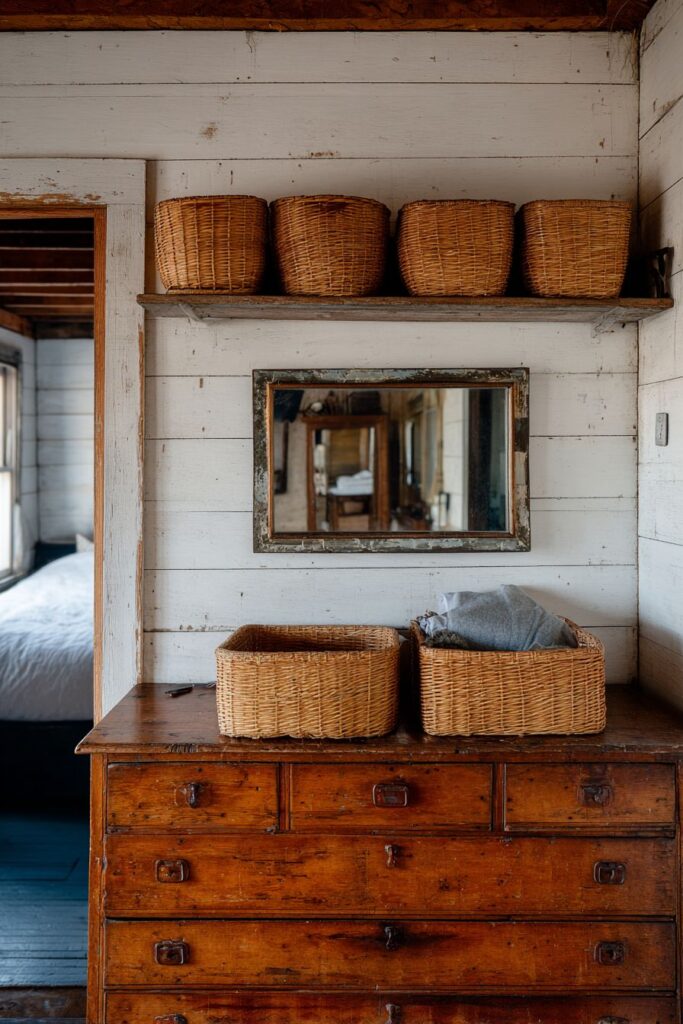
A vintage mirror with a weathered frame hangs above the dresser, its aged surface adding to the room’s collected character. The mirror’s reflective surface helps bounce light around the room while the distressed frame provides another example of how patina and age enhance rather than diminish rustic pieces. Natural daylight highlighting the dresser’s rustic finish and the practical organization demonstrates how functional furniture can be beautiful when chosen with attention to authentic materials and craftsmanship.
Key Design Tips:
- Seek out vintage furniture with original hardware intact
- Use whitewashing techniques to brighten walls while showing grain
- Incorporate woven baskets for natural, organized storage
- Hang vintage mirrors to reflect light and add character
- Embrace furniture patina as an essential design element
4. Window-Side Reading Retreat
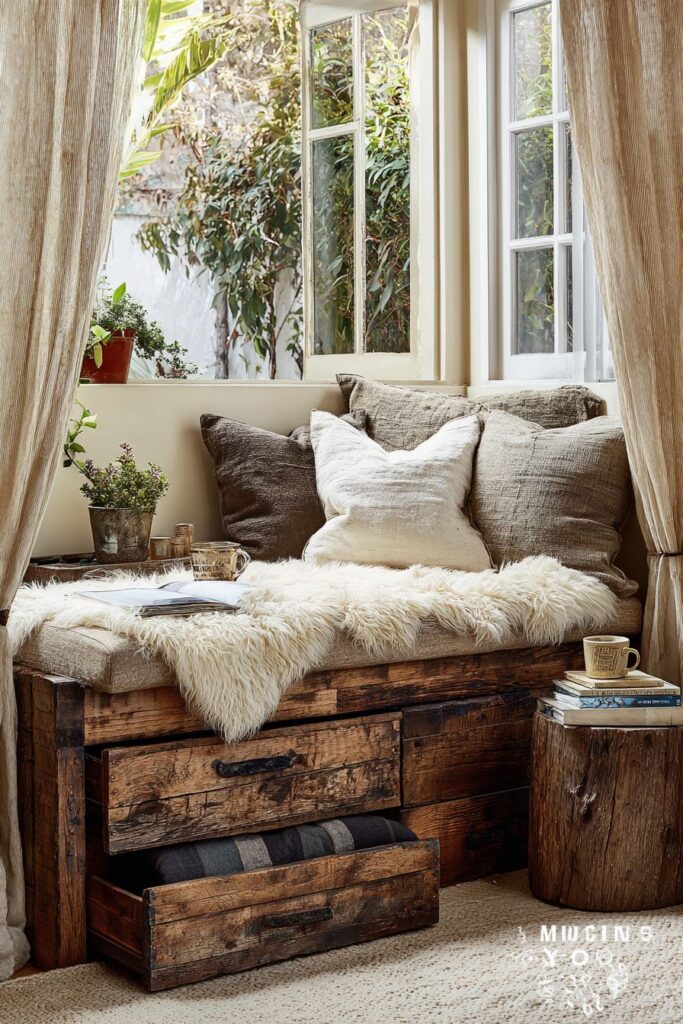
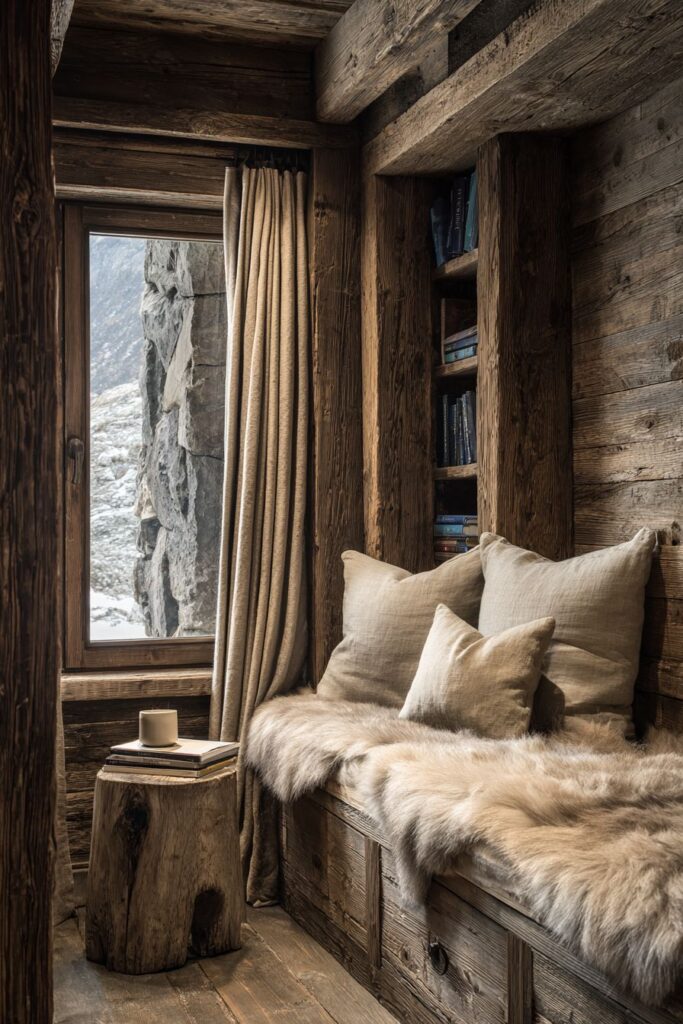
Positioned to capture natural light throughout the day, this rustic bedroom reading nook transforms a simple window area into a cherished retreat. The rough-hewn wooden built-in bench showcases the kind of honest carpentry where tool marks remain visible, reminding us that human hands shaped these boards. Storage drawers hidden beneath the bench seat demonstrate how rustic design prioritizes both beauty and functionality—every element earning its place through usefulness as well as aesthetic appeal.
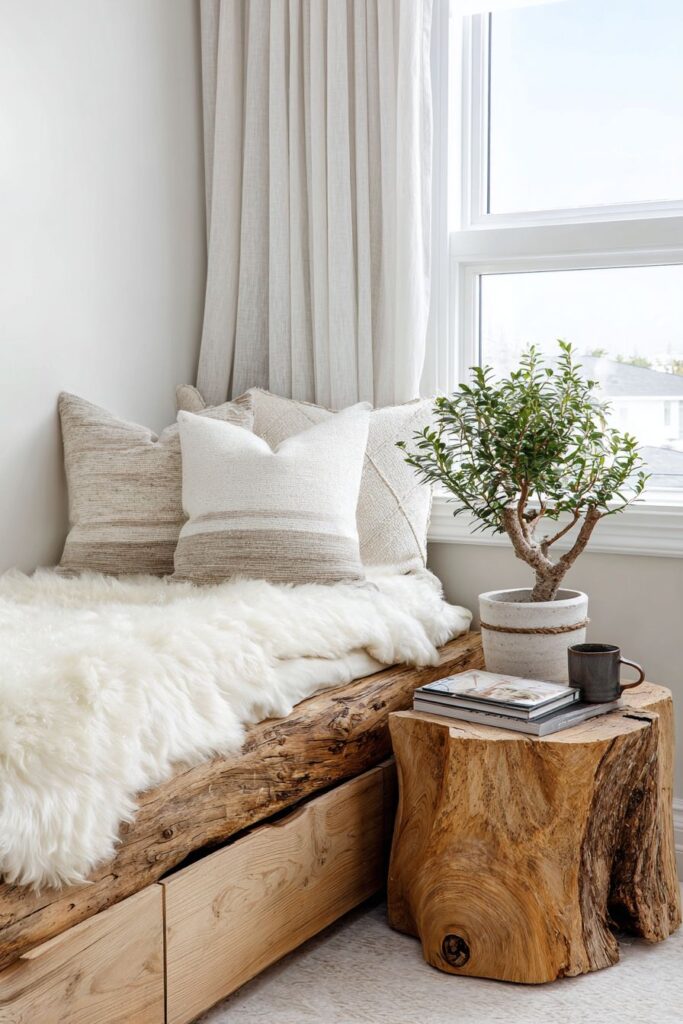
Natural sheepskin throws draped across the bench create an irresistibly cozy seating surface, their soft texture inviting hours of comfortable reading. Linen cushions in neutral tones—perhaps flax, ecru, or soft grey—provide back support while maintaining the natural fiber commitment that runs through every aspect of rustic design. The tactile quality of these materials—the slight roughness of linen, the plush give of sheepskin—engages our sense of touch in ways that synthetic fabrics simply cannot match.
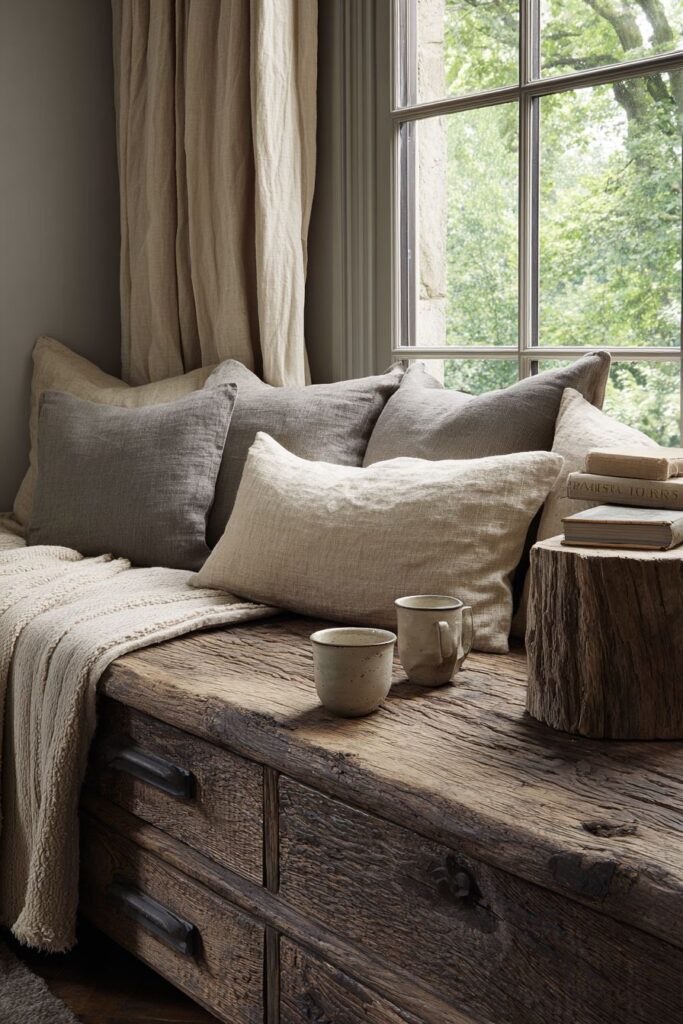
A small side table crafted from a tree stump brings raw natural beauty directly into the room. With its bark possibly still intact and growth rings visible on the surface, this table celebrates the tree’s original form. It’s perfectly sized to hold a stack of books, a steaming ceramic mug, and perhaps reading glasses, proving that even the most rustic elements can serve contemporary needs with grace and style.
Soft diffused natural lighting filters through simple cotton curtains, creating the ideal illumination for reading without glare or harsh shadows. The gentle quality of this light changes throughout the day—bright and energizing in morning hours, mellowing to golden warmth by afternoon, softly fading to twilight in evening. This ever-changing natural light show connects the indoor reading nook to the rhythms of the outdoor world, creating a contemplative space for both literature and daydreaming.
Key Design Tips:
- Build window benches with integrated storage for dual functionality
- Layer sheepskin and linen for irresistible tactile comfort
- Use tree stump tables to bring raw nature indoors
- Position reading areas to maximize natural light exposure
- Choose simple cotton curtains for gentle light diffusion
5. Cathedral Ceiling Grandeur
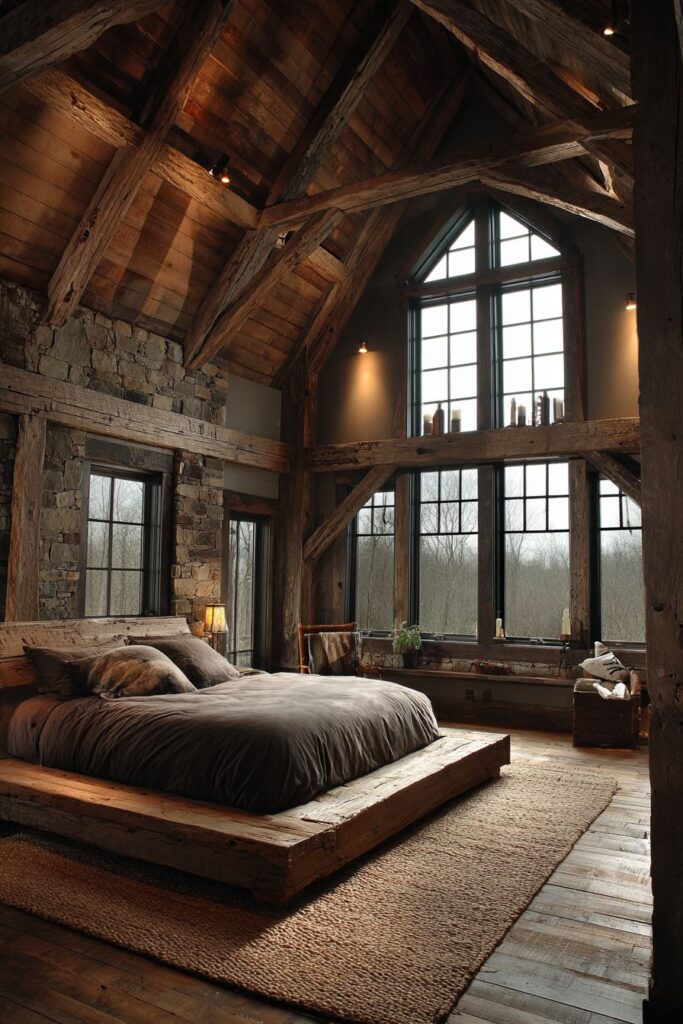
The soaring architecture of cathedral ceilings provides a dramatic canvas for rustic design at its most impressive scale. Massive exposed wood beams with natural knots and grain patterns create powerful visual lines that draw the eye upward, transforming the bedroom into a space that feels both intimate and grand. These structural elements—perhaps reclaimed from old barns or mills—carry the weight of history while showcasing the strength and beauty of solid timber construction. Each beam tells its own story through variations in color, the placement of knots, and the subtle warping that comes from decades of supporting weight.
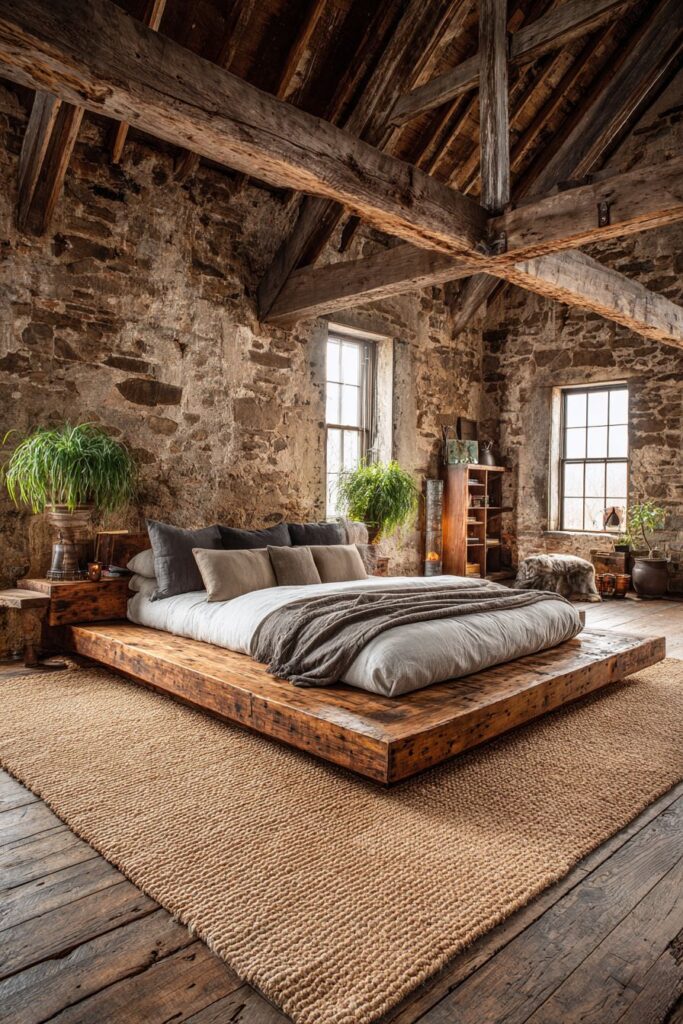
A platform bed constructed from rough-sawn lumber centers the space on a natural fiber jute rug, creating a grounded focal point that balances the room’s vertical emphasis. The rough-sawn texture of the bed frame—with saw marks still visible and edges less than perfectly smooth—celebrates the material’s journey from forest to bedroom. This honest approach to woodworking rejects the overly-refinished look in favor of surfaces that show their origins and construction methods.
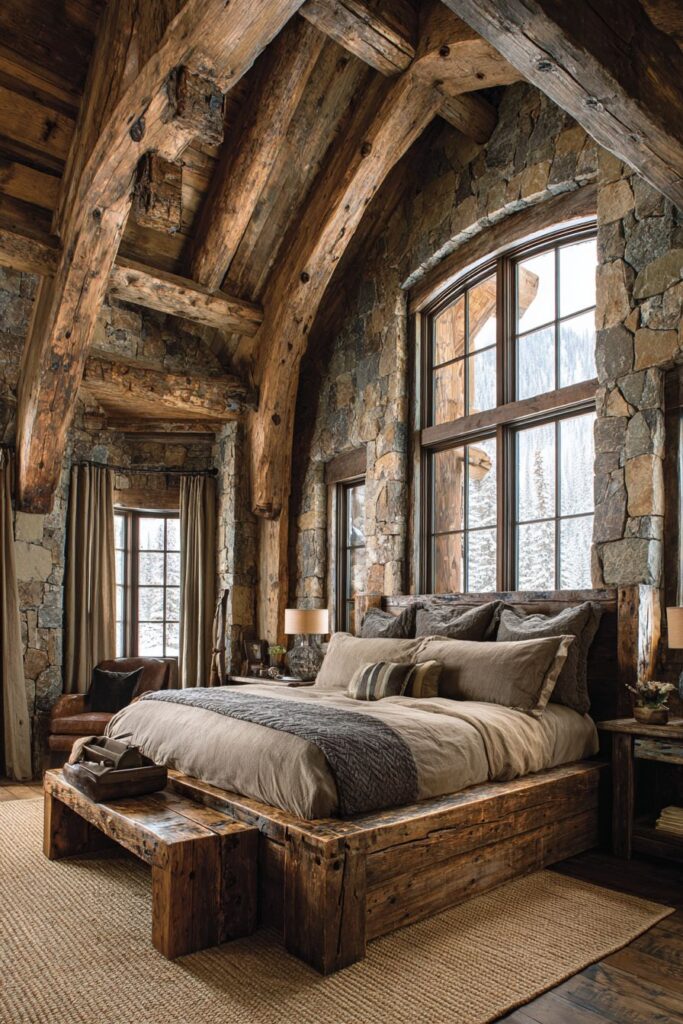
The stone accent wall behind the headboard introduces another elemental material, its varying earth tones ranging from warm ochres to cool greys, with natural texture that catches and reflects light differently throughout the day. The irregular surface of stacked stone creates shadows and highlights that add dimensional interest, while the material’s substantial presence provides visual and thermal mass that helps the room feel solid and permanent.
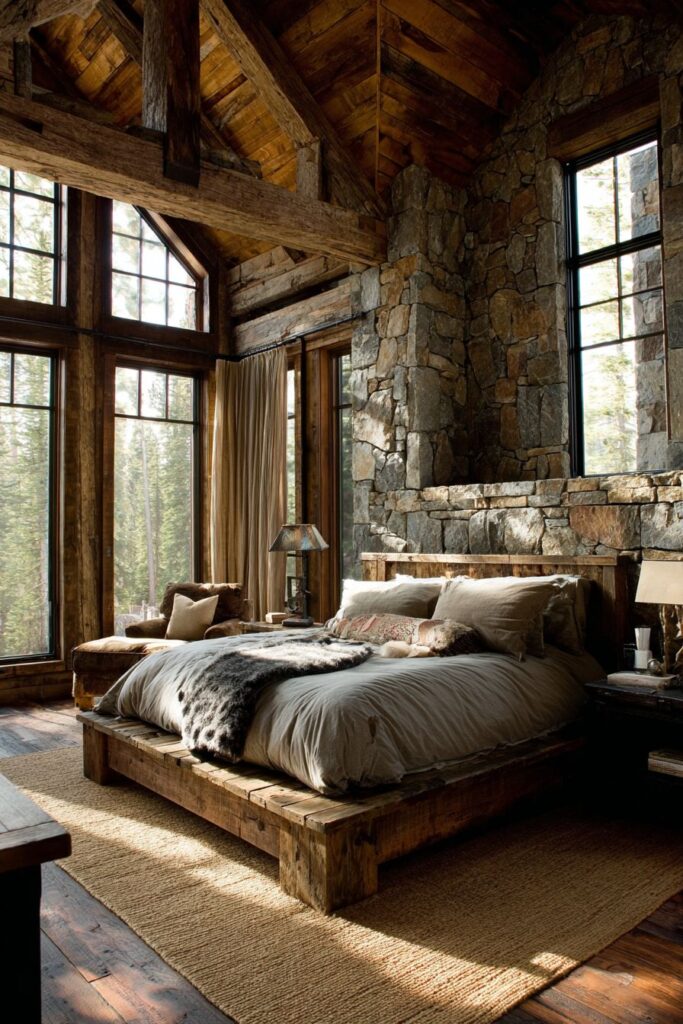
Large windows with minimal treatments allow abundant natural light to flood the space, essential for preventing such a dramatic room from feeling dark or cave-like. The interplay between massive beams, rough-sawn lumber, and natural stone creates a rustic bedroom that feels more like a mountain retreat than a conventional sleeping space—a room where you can truly disconnect from the outside world and reconnect with natural materials and elemental beauty.
Key Design Tips:
- Use massive beams to create dramatic vertical interest
- Choose rough-sawn lumber for authentic texture and character
- Install stone accent walls for elemental natural beauty
- Maximize window size to balance dramatic dark materials
- Ground the space with natural fiber rugs like jute or sisal
6. Timber Lodge Romance
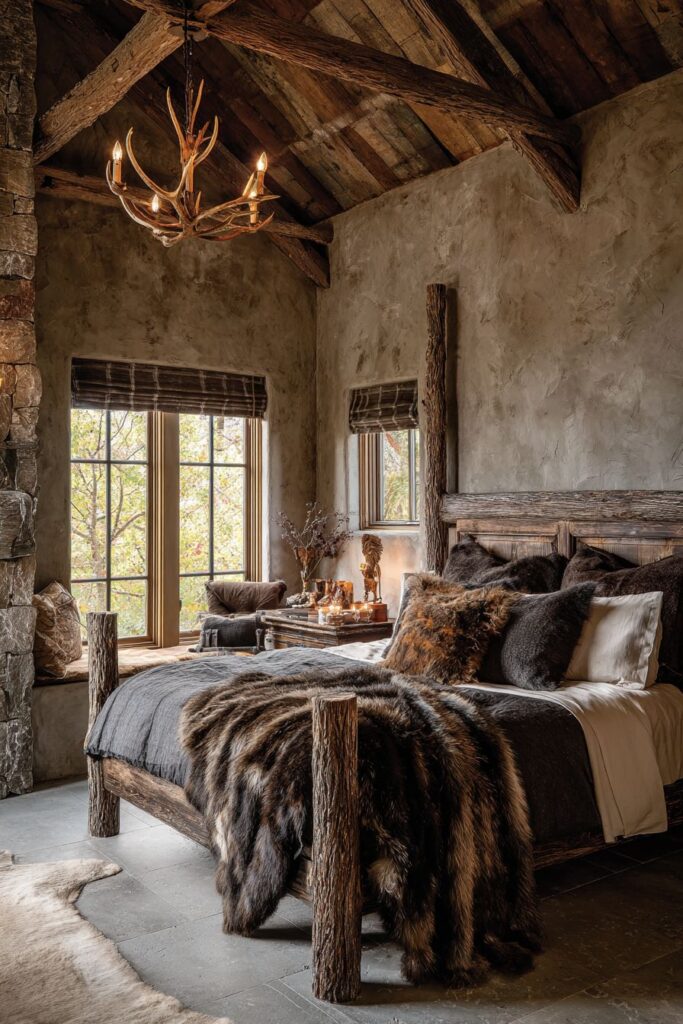
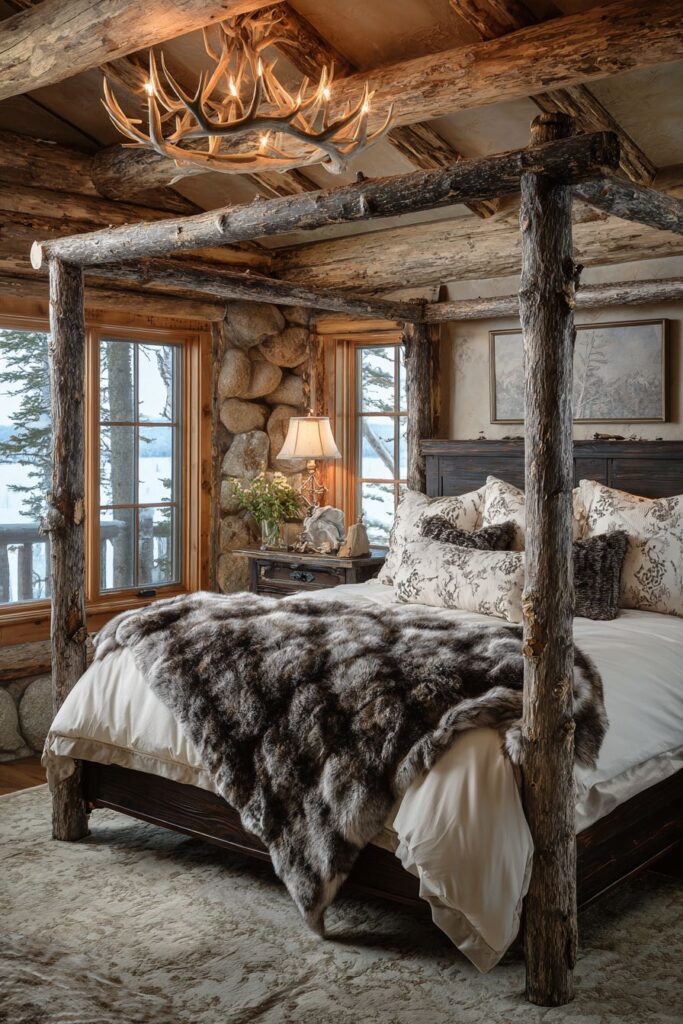
The raw timber four-poster bed frame with bark details intact at the joints represents rustic design at its most organic and unapologetic. These substantial logs—still showing their tree origins through preserved bark and natural taper—create a bed that feels like it grew from the forest floor. The craftsmanship lies not in hiding the wood’s natural state but in carefully selecting pieces that work together structurally while celebrating their organic origins. Each joint, each curve, each remaining piece of bark contributes to a bed frame that’s truly one-of-a-kind.
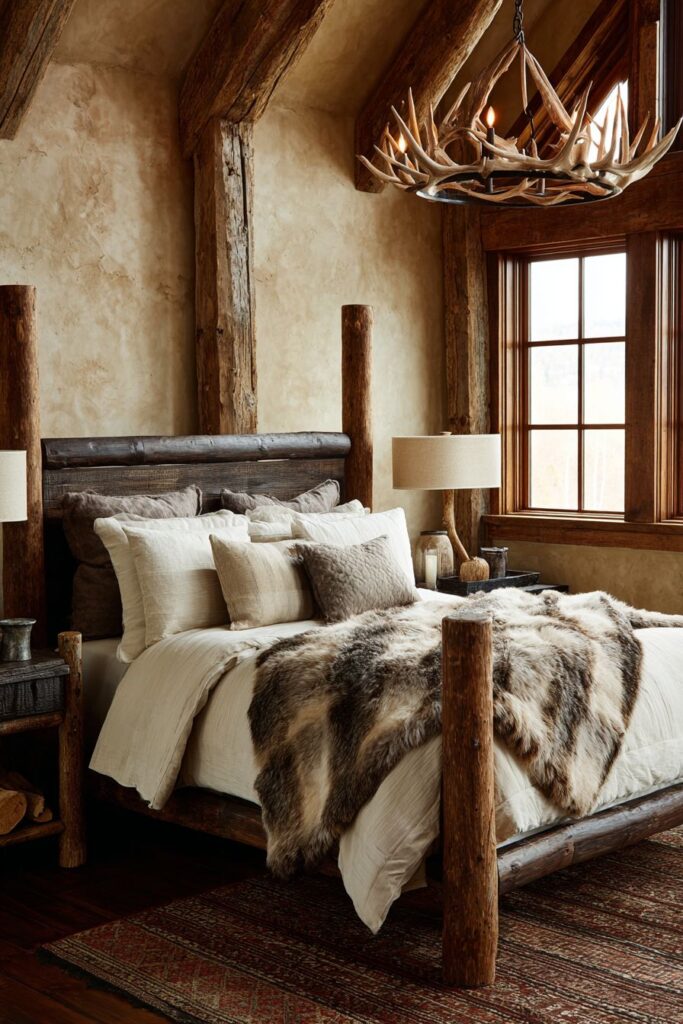
White cotton bedding creates a striking contrast against the dark wood tones, a classic combination that feels fresh and clean while allowing the bed’s architectural presence to dominate. Faux fur throws draped across the foot of the bed add luxurious textural interest and practical warmth, their soft pile inviting touch and creating visual richness. The juxtaposition of rough bark and soft fur, dark wood and bright linen, demonstrates rustic design’s comfort with contrasts and its ability to balance opposing elements harmoniously.
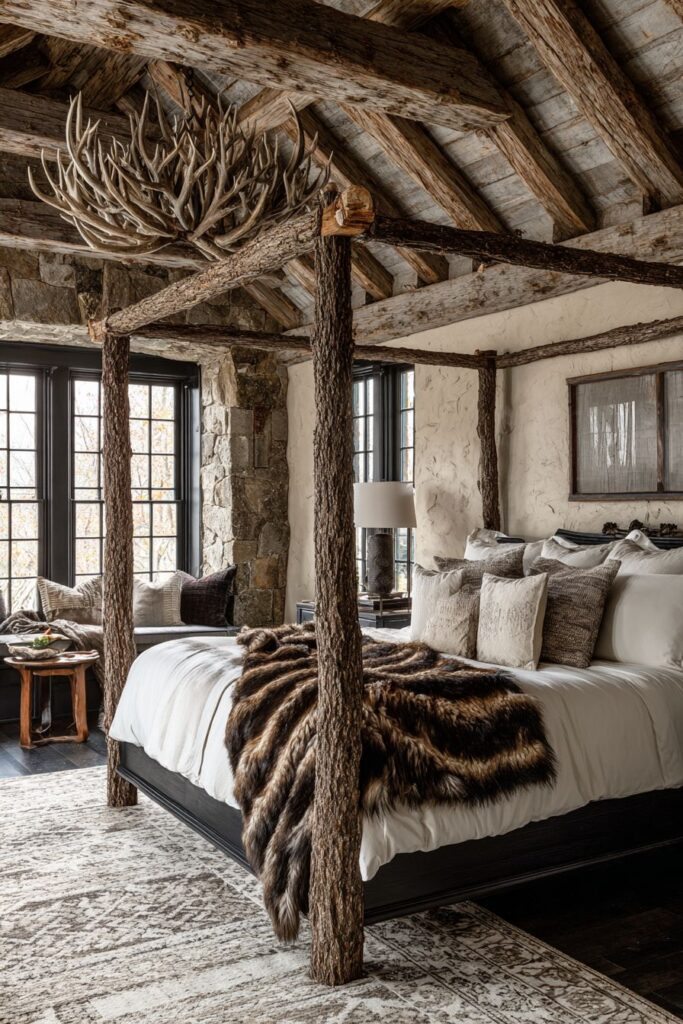
The antler chandelier suspended above represents found-object artistry at its finest. Whether crafted from naturally shed antlers or vintage pieces, this lighting fixture brings organic sculpture into the room while providing ambient illumination. The chandelier’s irregular branching form creates interesting shadow patterns on ceiling and walls, adding another layer of natural beauty to the space. Its presence reinforces the room’s connection to wild places and outdoor living.
Walls finished in natural plaster with visible trowel marks bring an Old World craftsman quality to the space. Unlike perfectly smooth drywall, this hand-applied finish shows the artisan’s technique—sweeping curves, subtle ridges, and variations in thickness that catch light differently throughout the day. Combined with golden hour lighting streaming through windows, these textured walls glow with warmth, highlighting the cabin-inspired aesthetic and creating an atmosphere that’s both rustic and refined.
Key Design Tips:
- Select timber logs with bark intact for authentic organic appeal
- Create contrast with white bedding against dark wood tones
- Add faux fur throws for luxurious texture and warmth
- Install antler chandeliers for unique natural lighting
- Choose hand-troweled plaster finishes for artisanal wall texture
7. Compact Rustic Efficiency
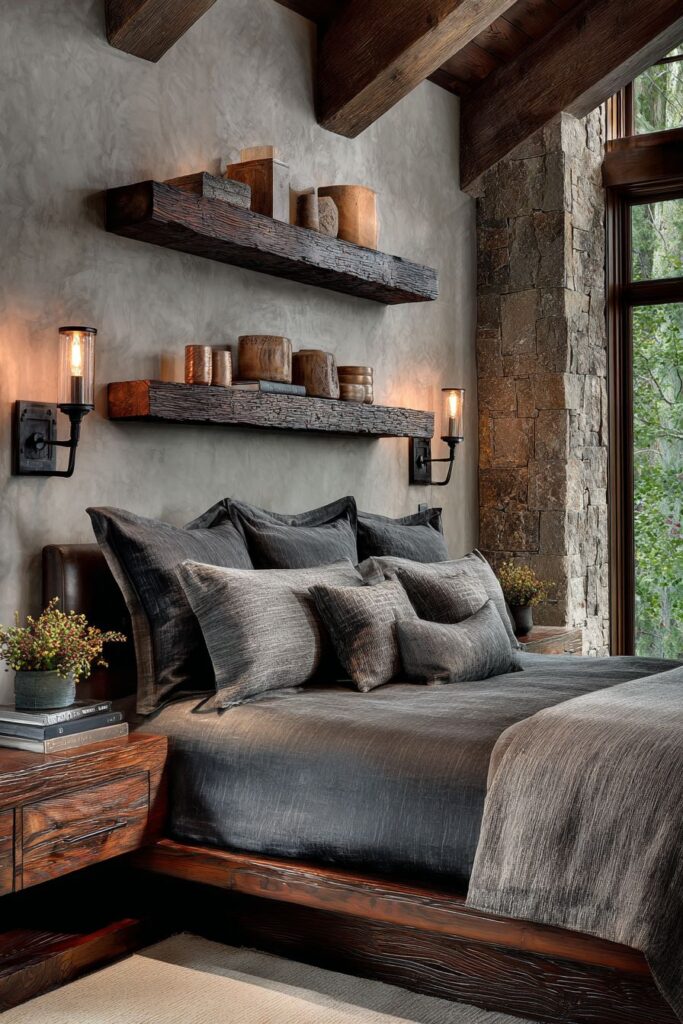
Maximizing every inch of available space, this compact rustic bedroom demonstrates that authentic design doesn’t require sprawling square footage. The custom-built platform bed featuring integrated storage drawers in reclaimed pine proves that rustic style and practical storage solutions can coexist beautifully. Each drawer pull, each board’s grain pattern, each subtle color variation contributes to a piece that looks collected and considered rather than merely purchased. The reclaimed pine’s history—perhaps from old factory floors or warehouse beams—adds depth of character that new lumber simply cannot provide.
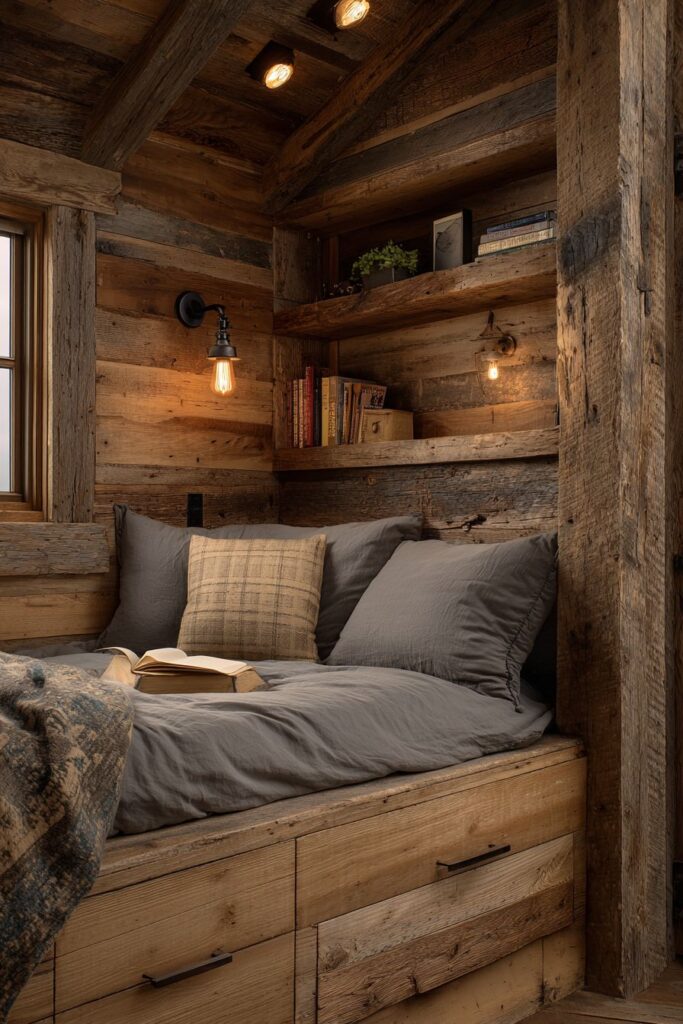
Floating shelves made from salvaged barn wood display minimal decor items with intention and restraint. In a smaller space, less truly becomes more—a few carefully chosen objects have far more impact than crowded surfaces. These shelves, with their weathered finish and natural edge details, provide both storage and visual interest while taking up minimal physical space. The wood’s patina and age marks become decorative elements in themselves, requiring little additional ornamentation.
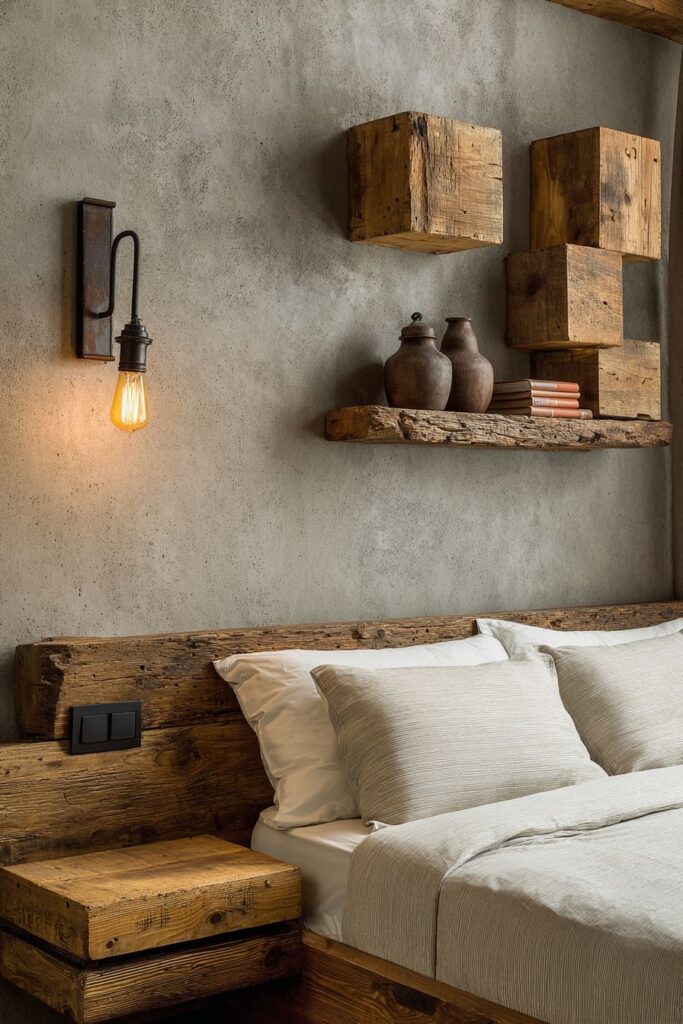
Walls finished in warm grey plaster create a sophisticated backdrop that complements rather than competes with the natural wood tones. This neutral color choice helps the compact room feel larger and brighter while providing enough contrast to make the wood pieces stand out. The warm undertones in the grey prevent the space from feeling cold or industrial, maintaining the rustic bedroom’s inherent coziness.
Industrial-style wall sconces with Edison bulbs provide task lighting exactly where needed without occupying precious nightstand space. These fixtures—perhaps crafted from aged brass, black iron, or brushed steel—add a subtle industrial edge that complements the rustic aesthetic while serving the practical needs of a functional bedroom. The warm glow of Edison bulbs creates ambient atmosphere while providing sufficient light for reading or other bedtime activities.
Key Design Tips:
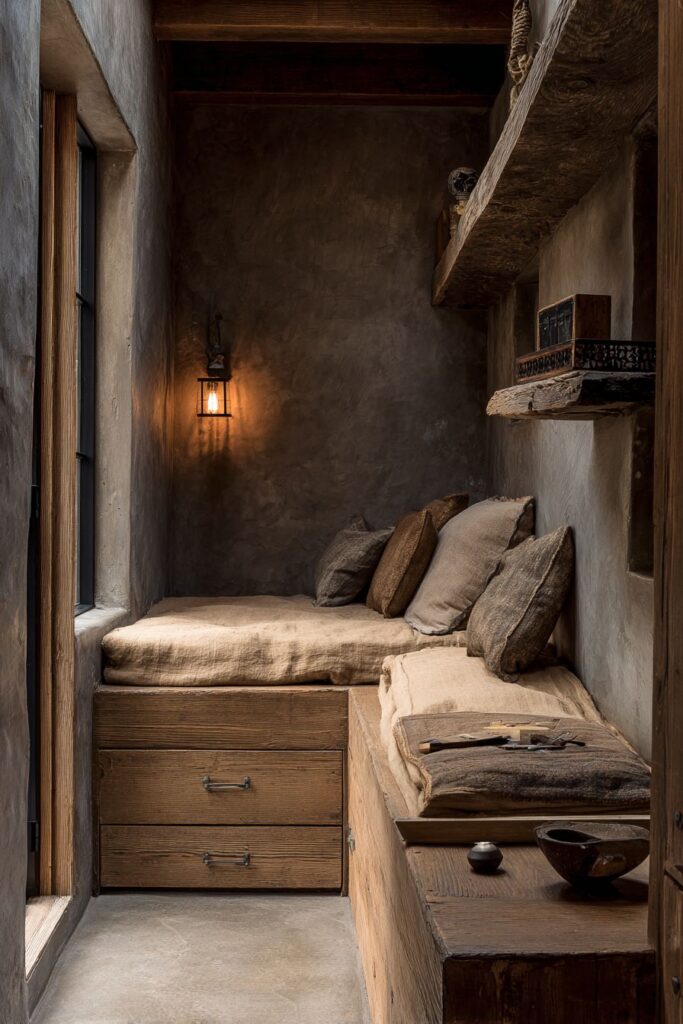
- Build platform beds with integrated storage for space efficiency
- Install floating shelves to maximize storage without bulk
- Use warm grey plaster to brighten small spaces
- Choose wall-mounted lighting to free up surface space
- Practice restraint in decor to avoid visual clutter
8. Productive Rustic Corner
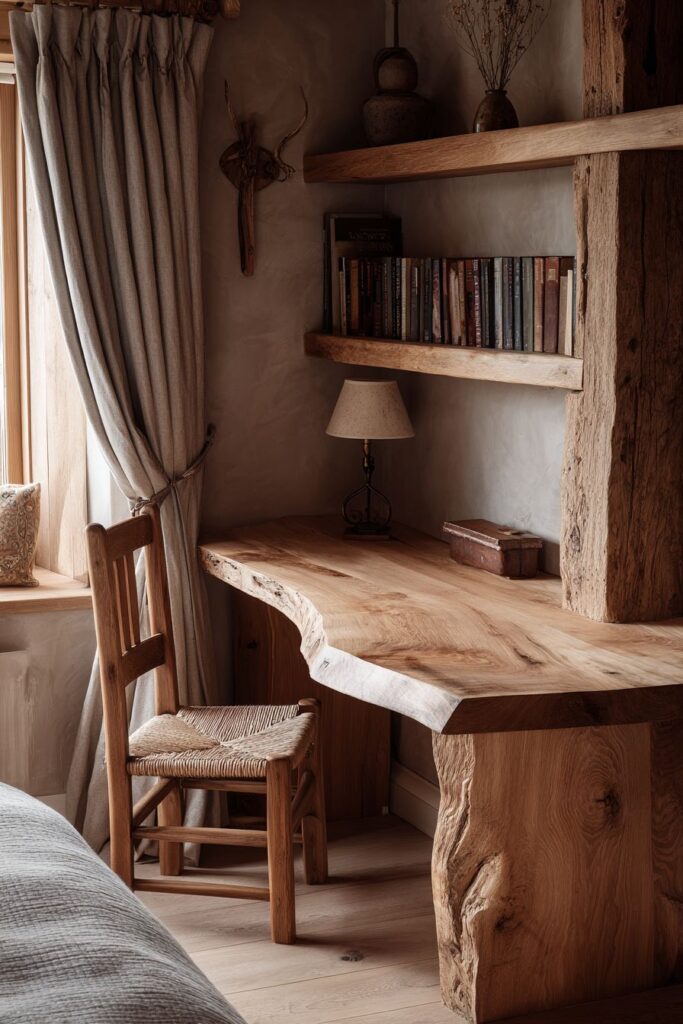
Carving out a dedicated workspace within the bedroom requires thoughtful integration of function and style. This rustic bedroom workspace corner features a solid oak desk with visible wood grain and natural edge detail—a substantial piece that makes remote work or personal projects feel grounded and purposeful. The natural edge, where bark once attached to sapwood, creates an organic contour that softens the desk’s geometric function while celebrating the tree’s original form.
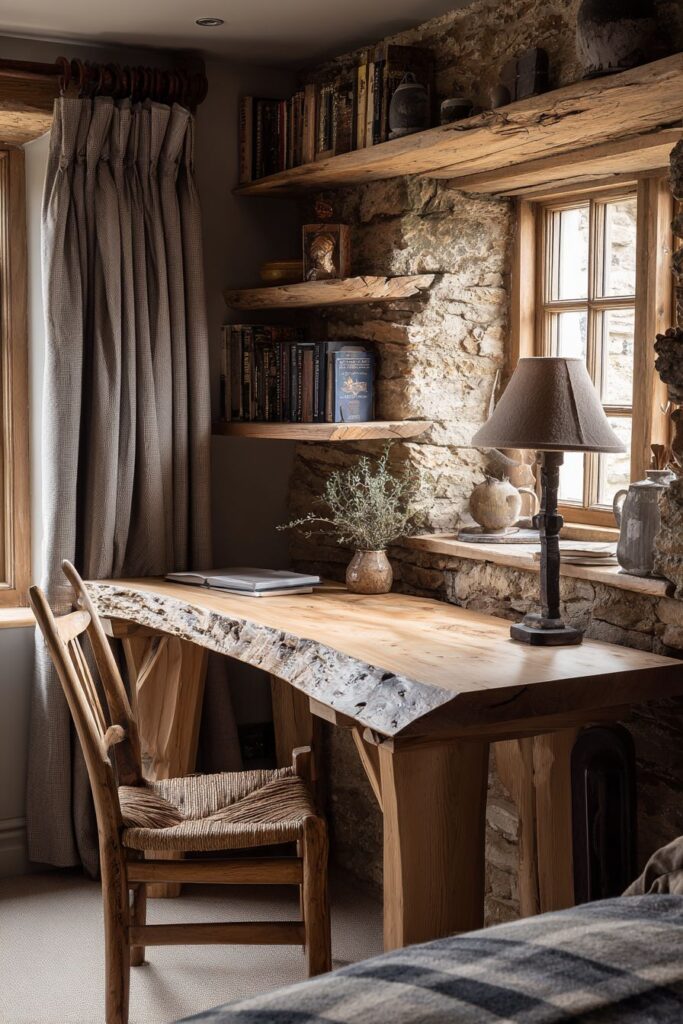
A vintage wooden chair with woven rush seat provides seating that’s both comfortable and historically resonant. The rush seat—hand-woven from natural plant fibers—offers surprising comfort and durability while introducing another organic texture to the space. The chair’s aged wood frame, possibly showing generations of use through worn armrests or slightly loosened joints, contributes to the room’s authentic character.
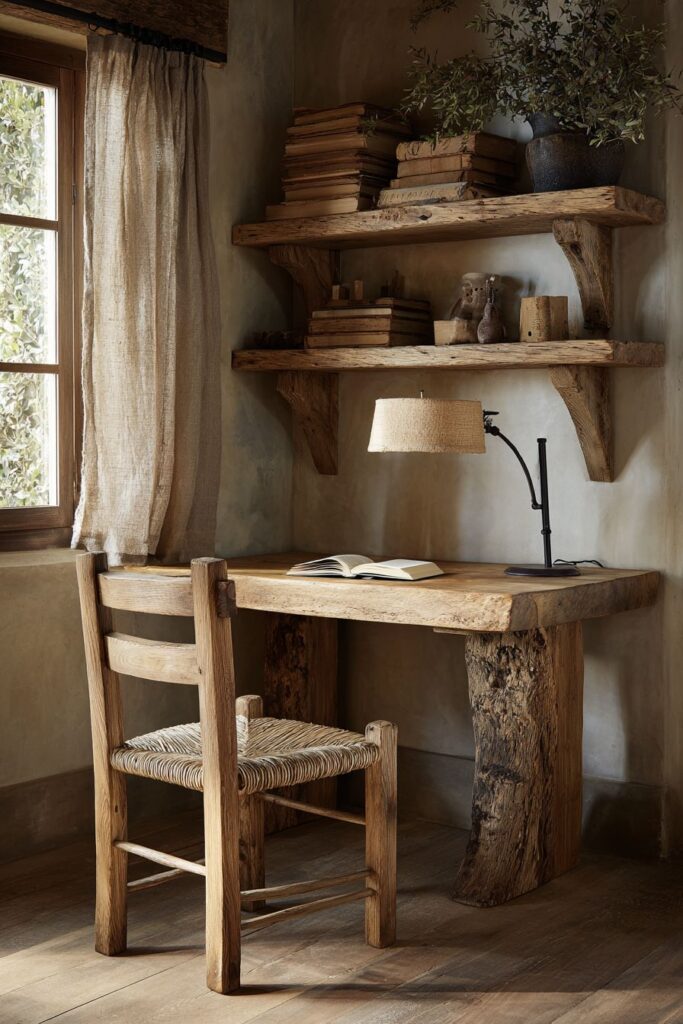
Open shelving constructed from reclaimed timber rises above the desk, holding books and natural decor elements in an accessible display. These shelves eschew the concealment of closed cabinets in favor of honest storage where items become part of the room’s visual story. Weathered wood brackets, perhaps crafted from salvaged hardware or hand-forged iron, support the shelves while adding structural interest to the wall.
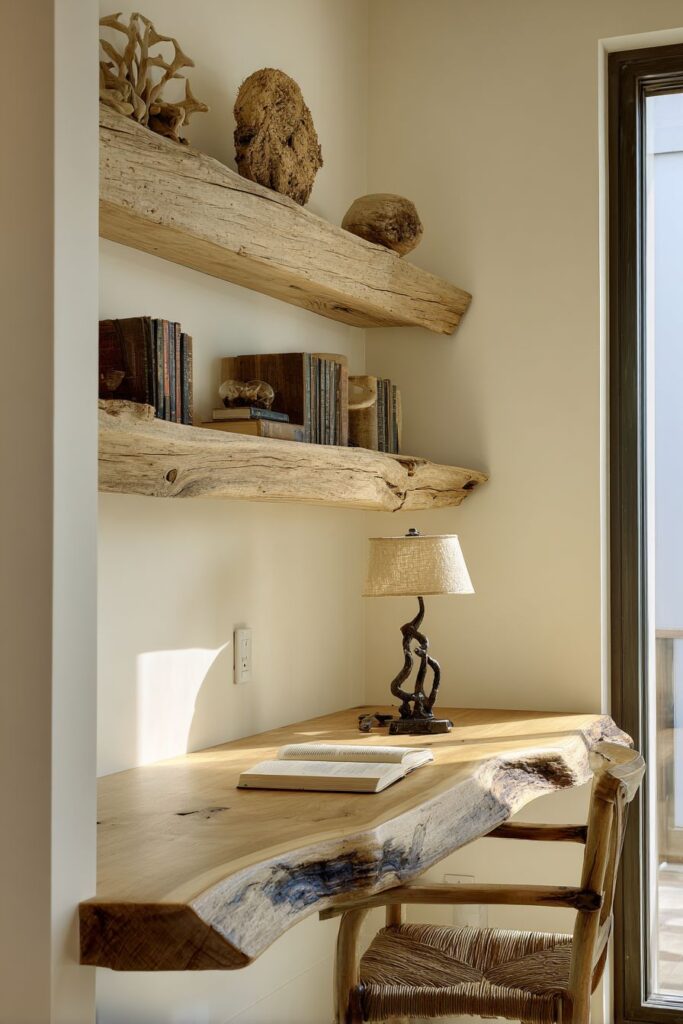
A wrought iron desk lamp with fabric shade provides focused lighting essential for productive work. The lamp’s design might incorporate vintage elements—perhaps an Edison bulb, a linen shade, or hand-forged metalwork—that align with the room’s rustic aesthetic while meeting modern lighting needs. Soft natural light from an adjacent window supplements task lighting during daylight hours, reducing eye strain and maintaining the room’s connection to natural rhythms and outdoor views.
Key Design Tips:
- Choose solid wood desks with natural edge details
- Select vintage chairs with woven natural fiber seats
- Install open shelving from reclaimed timber for display storage
- Use wrought iron task lighting with vintage styling
- Position workspace near windows for natural daylight
9. Soft Sage Serenity
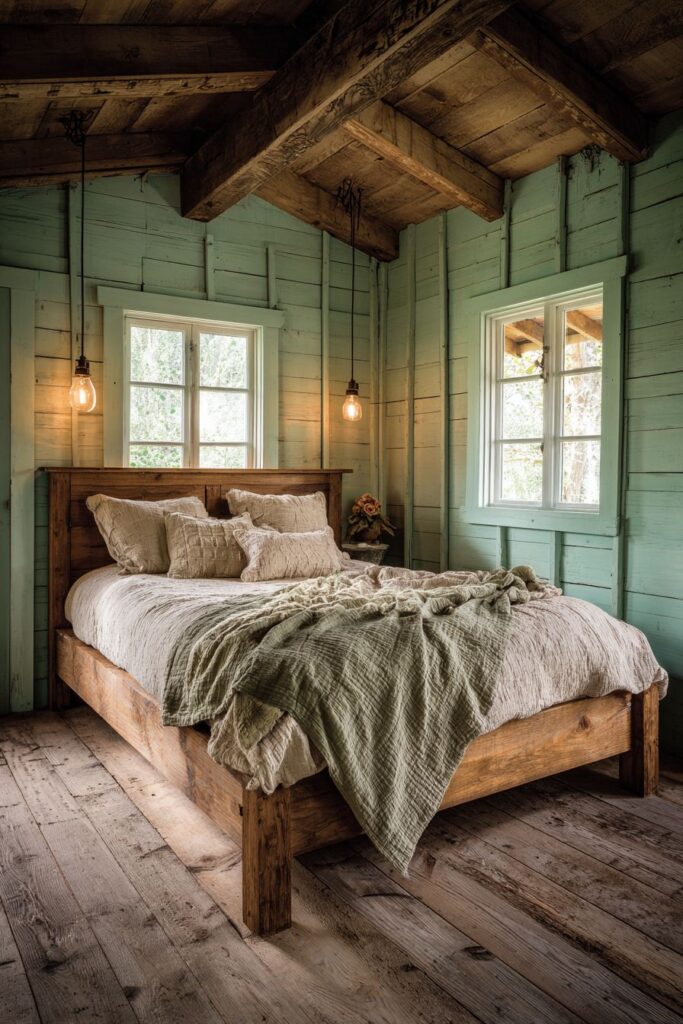
The unexpected choice of soft sage green paint over horizontal shiplap creates a bedroom that feels both rustic and refreshingly contemporary. This technique—allowing wood grain to show through painted finish—adds subtle texture and depth that solid painted walls cannot achieve. The sage green introduces a connection to natural landscapes—think lichen-covered trees or early spring foliage—while maintaining the neutral palette essential to restful bedroom design.
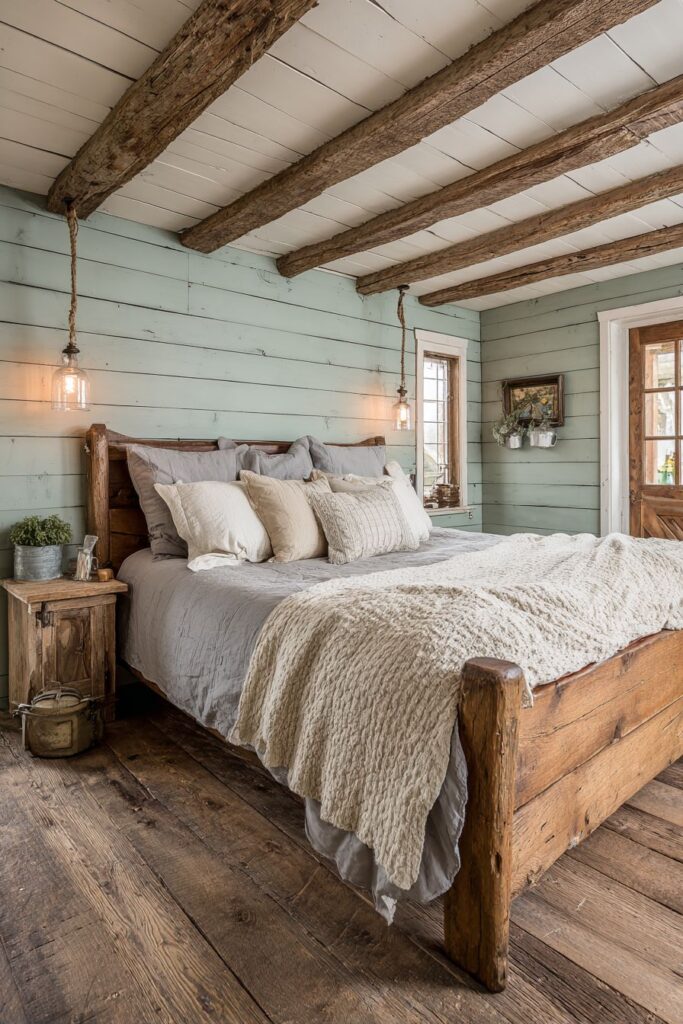
A simple wooden bed frame in natural finish provides understated structure for layers of organic cotton bedding and a vintage quilt. The bed’s simplicity allows the room’s other elements to shine while providing solid, well-crafted support. Organic cotton bedding—free from synthetic treatments and chemical finishes—aligns with the natural material philosophy while offering breathable comfort for better sleep. The vintage quilt, perhaps a family heirloom or flea market find, introduces pattern and color while carrying the weight of history and handcraft.
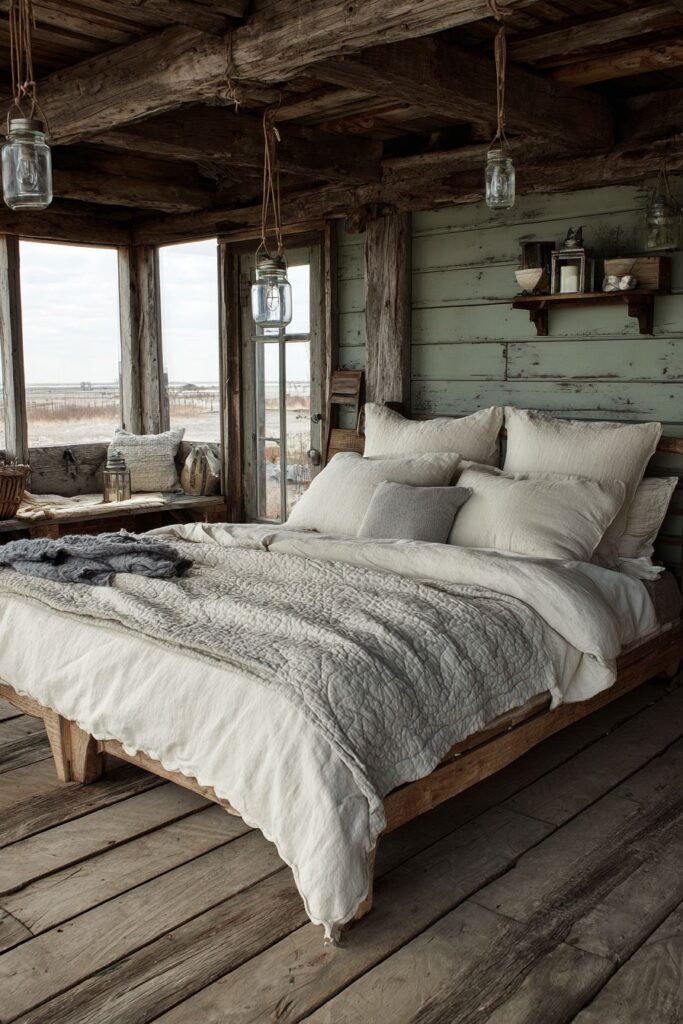
Weathered wood floors feature wide planks with natural color variations that create visual interest underfoot. These substantial boards—perhaps reclaimed from old buildings or responsibly harvested from sustainable forests—show the kind of character that develops over time: slight cupping, color shifts where sunlight has touched, and the soft patina that comes from years of foot traffic. The wide plank format, popular in historic homes, adds to the room’s authentic period feel.
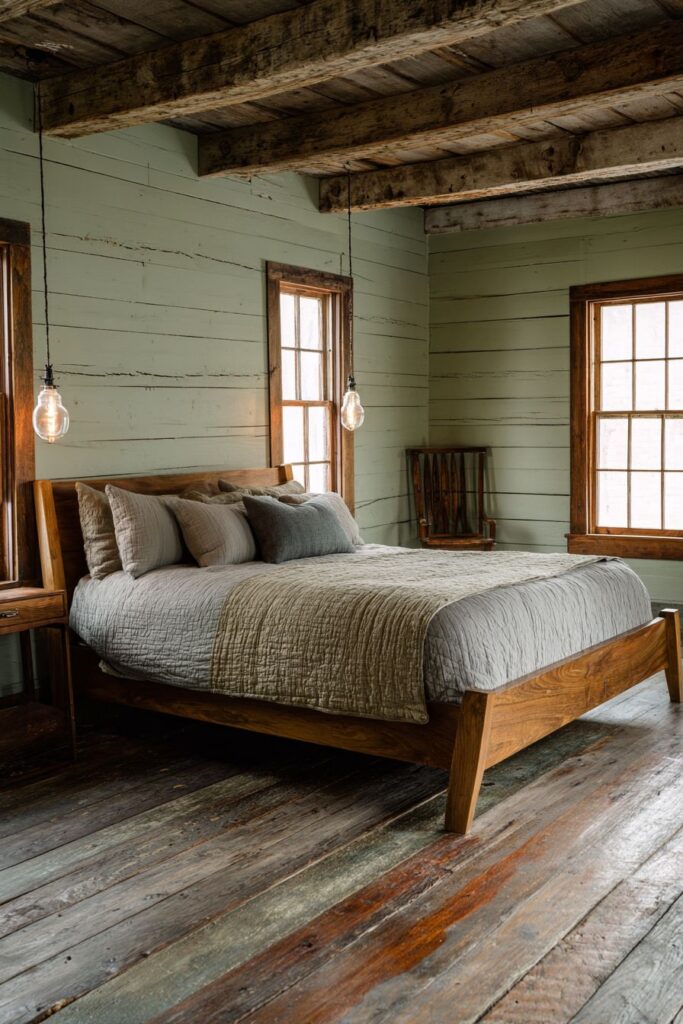
Mason jar pendant lights with Edison bulbs hang from rough-hewn beams, creating a charming farmhouse-rustic detail that’s both whimsical and functional. These repurposed jars—perhaps vintage canning jars with embossed lettering—become unexpected light fixtures that cast warm, diffused light throughout the room. The contrast between humble materials and thoughtful design demonstrates rustic style’s democratic approach to beauty—finding elegance in everyday objects and celebrating simple, honest materials.
Key Design Tips:
- Paint shiplap in soft colors while preserving grain texture
- Layer organic cotton bedding with vintage quilts
- Use wide-plank flooring for authentic period character
- Create pendant lights from mason jars for farmhouse charm
- Install rough-hewn beams for architectural interest
10. Salvaged Door Statement
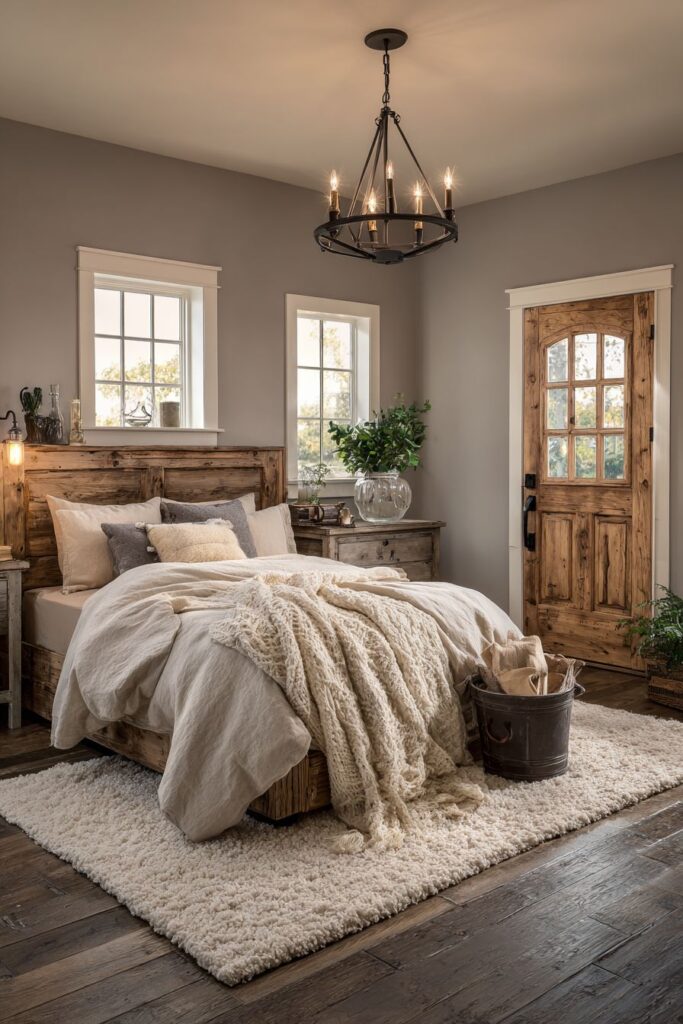
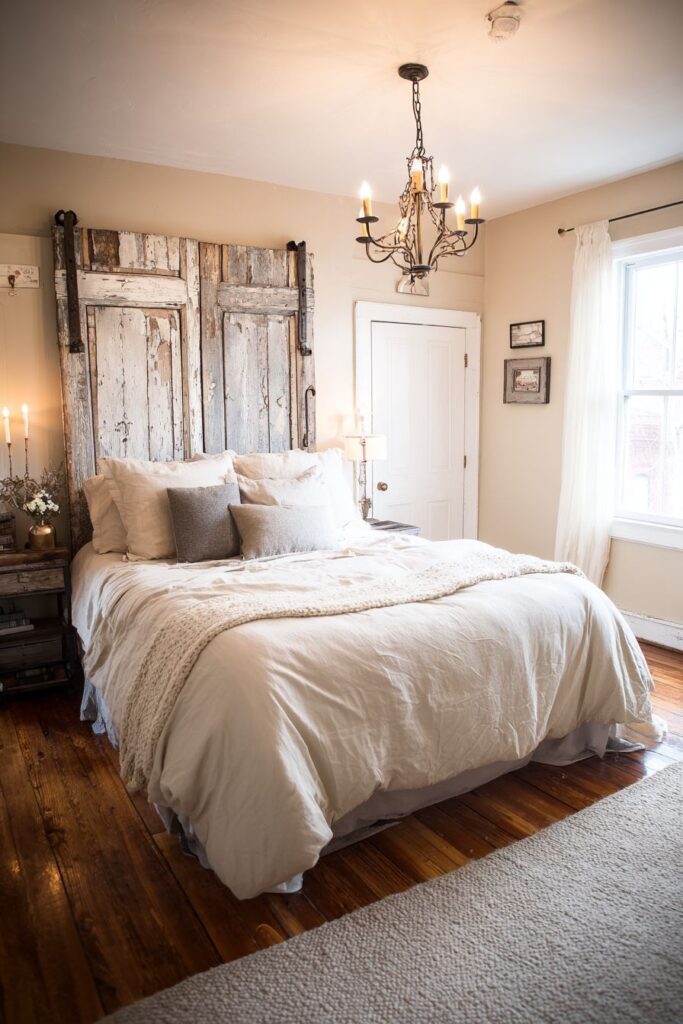
A salvaged wooden door repurposed as a headboard creates an instant focal point loaded with character and history. This architectural element—complete with original hardware and chippy paint finish showing layers of color from previous lives—transforms the bed into a piece of functional art. Every scratch, paint chip, and worn spot tells a story, inviting imagination about the door’s previous home and the hands that opened and closed it over decades. The door’s substantial presence anchors the bedroom while its vertical orientation draws the eye upward, creating visual height.
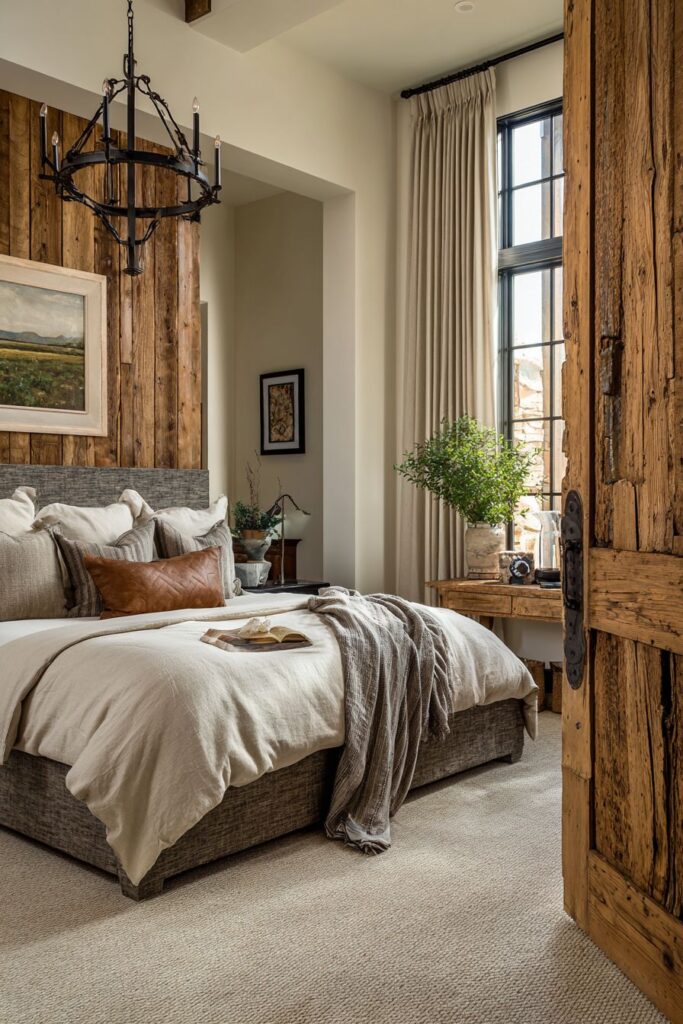
Neutral bedding in linen and cotton provides a sophisticated counterpoint to the headboard’s rustic drama. By keeping the bed coverings simple and monochromatic, the design ensures all attention flows to the architectural statement piece behind. The natural wrinkles and relaxed drape of linen bedding add subtle texture without competing for visual attention, creating a bed that looks inviting and lived-in rather than stiffly formal.
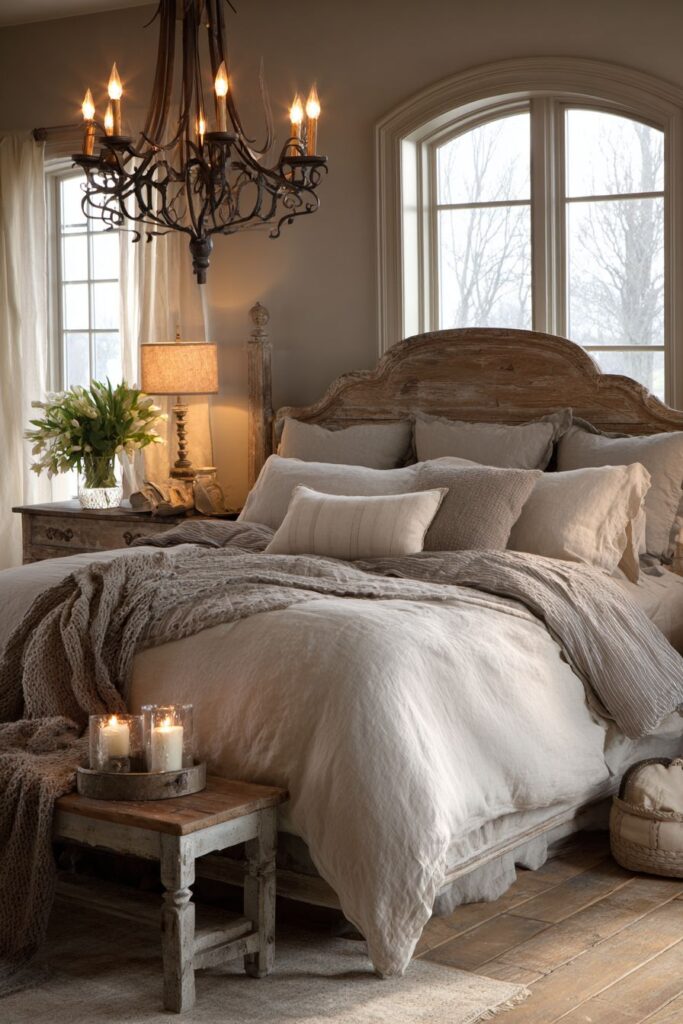
Mismatched vintage nightstands in weathered finishes flank the bed, embracing the collected-over-time aesthetic that makes rustic bedrooms feel personal and authentic. Perhaps one piece is painted while another shows natural wood, or one stands slightly taller than its partner—these intentional imperfections create visual interest and suggest a room furnished gradually with treasured finds rather than purchased as a matching set. Each nightstand contributes its own history and character to the room’s overall story.
A wrought iron chandelier with candle-style lights provides ambient illumination that feels both elegant and rustic. The chandelier’s dark metal contrasts beautifully with the room’s lighter elements while maintaining the authentic material focus through honest iron construction. Soft window light captures the eclectic rustic charm throughout the day, highlighting the door’s chippy paint finish and casting gentle shadows that emphasize the room’s textural richness.
Key Design Tips:
- Repurpose salvaged doors as dramatic headboard statements
- Keep bedding simple to showcase architectural elements
- Mix mismatched nightstands for collected character
- Choose wrought iron lighting for elegant rusticity
- Preserve original paint and hardware on vintage pieces
11. Textile-Focused Luxury
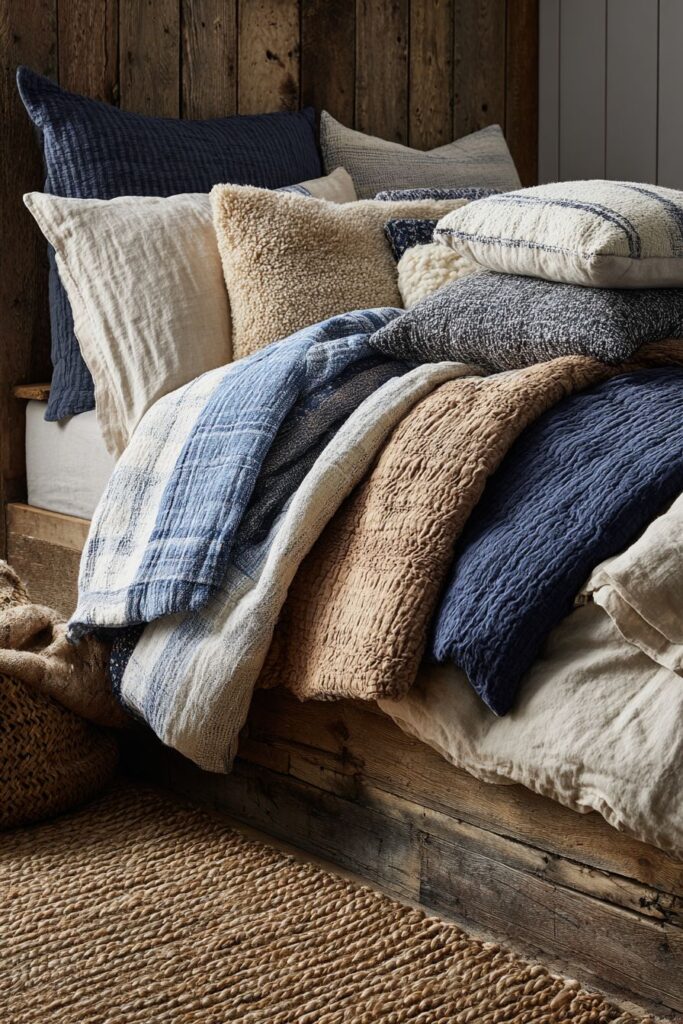
This bedroom demonstrates how natural textiles can create layers of luxury while maintaining rustic authenticity. The bed becomes a masterclass in textile layering—Belgian linen duvet forming the foundation, wool blanket with visible weave texture adding warmth and pattern, and cotton quilts with hand-stitched patterns contributing color and handcraft appreciation. Each layer serves both practical and aesthetic purposes, creating depth and inviting touch while showcasing the inherent beauty of natural fibers.
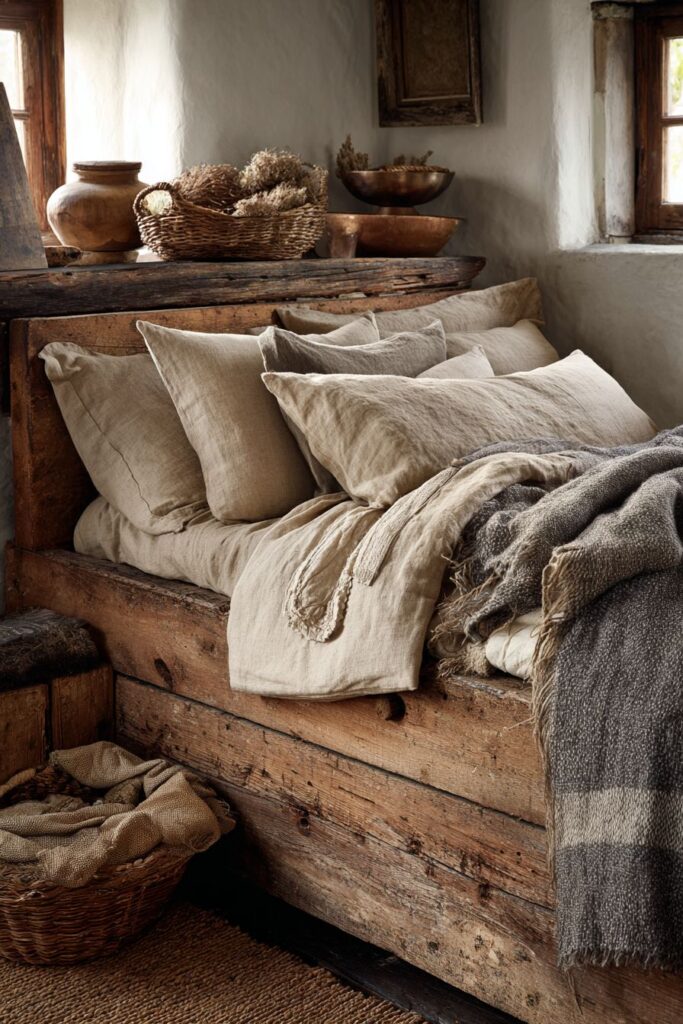
The wooden bed frame features a hand-planed surface where tool marks remain visible, celebrating the craftsman’s work rather than sanding it into oblivion. These subtle ridges and planes catch light differently throughout the day, creating ever-changing shadow patterns that add visual interest to what might otherwise be a simple frame. The frame’s honest construction and visible workmanship align perfectly with the authentic textile choices above.
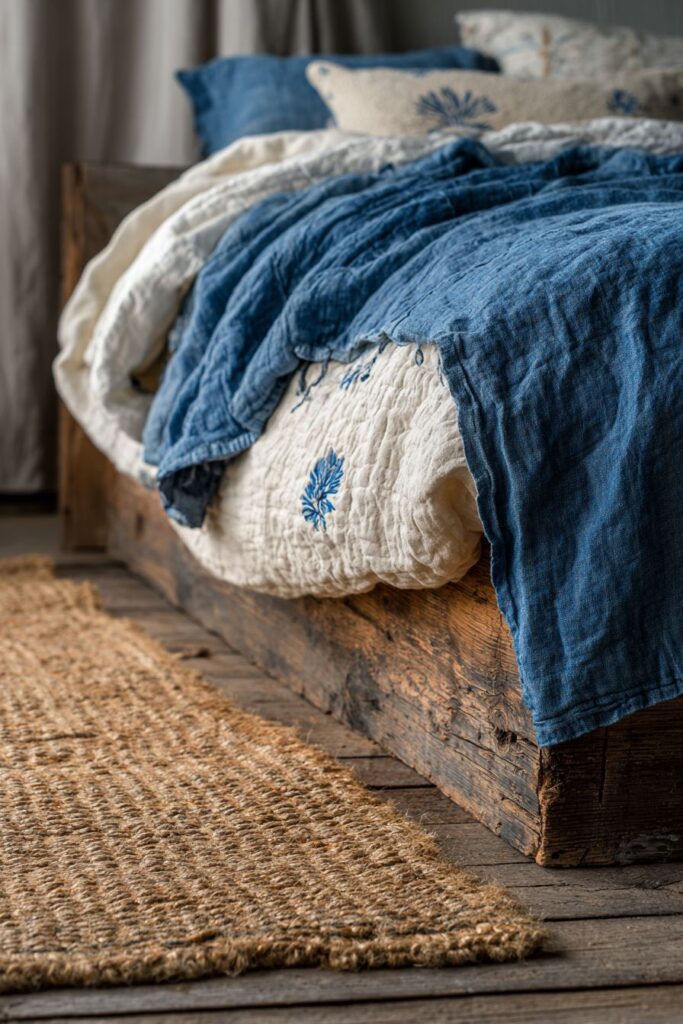
A braided jute rug anchors the space underfoot, its natural color and substantial texture grounding the bed’s softer elements. The rug’s braided construction—perhaps crafted by hand from twisted jute fibers—creates a pattern that’s both organic and geometric, adding visual interest while maintaining the room’s natural material focus. The jute’s slight roughness provides welcome textural contrast to the softer bedding above.
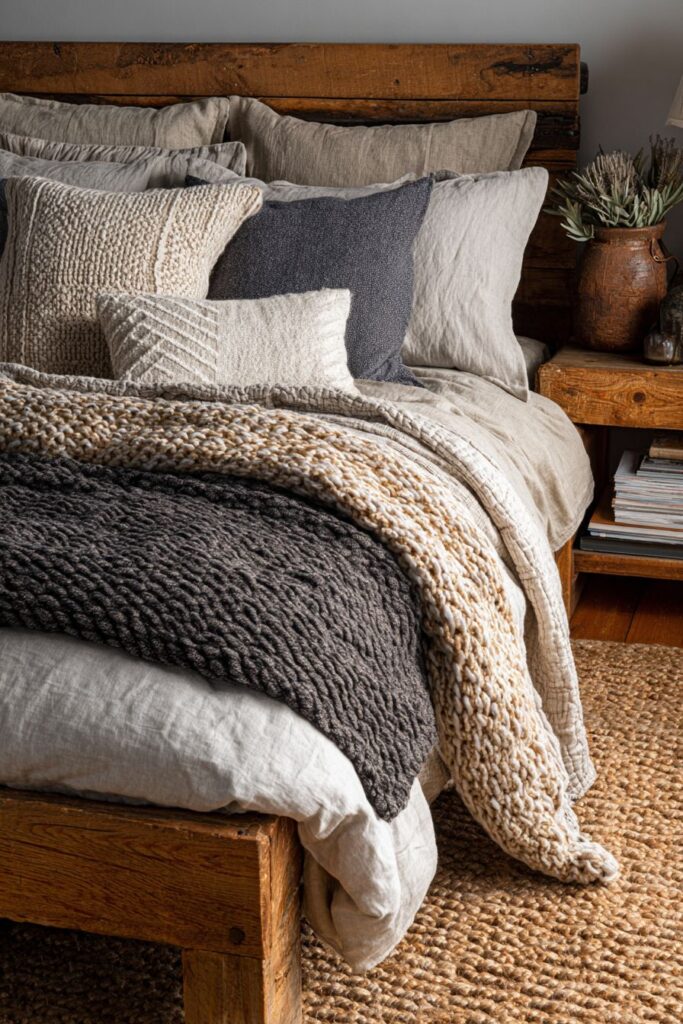
Close-up perspectives capture fabric textures and natural fiber details with remarkable clarity—the nubby texture of linen weave, the rhythmic pattern of wool threading, the careful stitches holding quilt pieces together. Soft diffused lighting emphasizes the tactile quality of these organic materials, creating a bedroom that appeals as much to our sense of touch as to our visual appreciation. This textile-focused approach creates a cocoon of natural comfort perfect for restorative sleep.
Key Design Tips:
- Layer multiple natural fiber textiles for depth and warmth
- Choose bed frames with visible hand-planing marks
- Use braided jute rugs for substantial natural texture
- Select Belgian linen for superior quality and drape
- Emphasize tactile qualities through lighting choices
12. Stone Hearth Haven
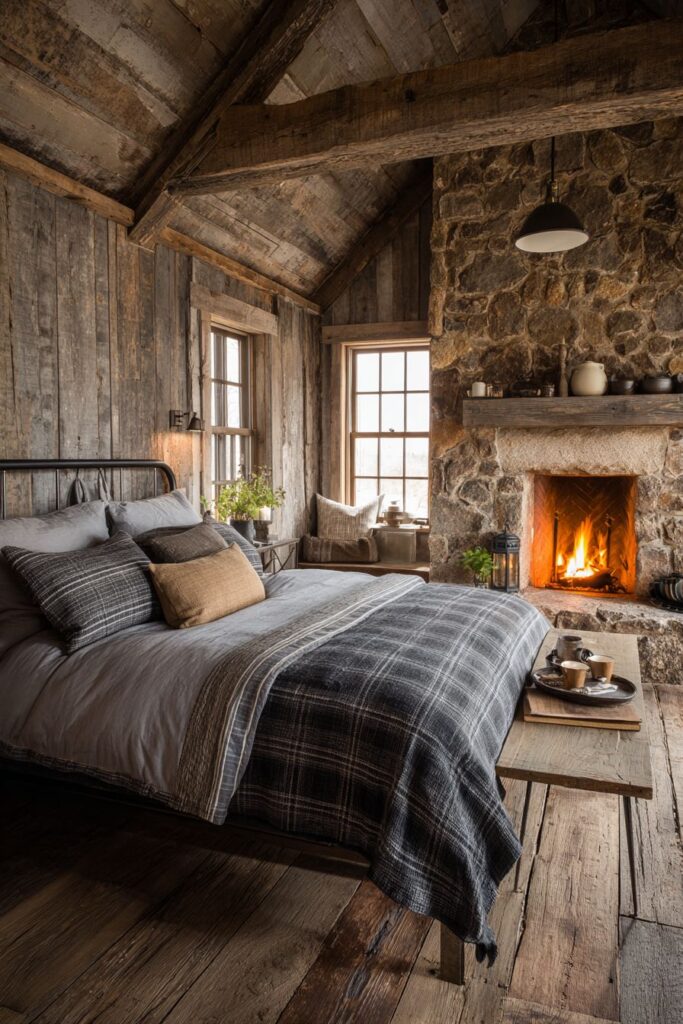
The stone fireplace becomes the commanding focal point of this rustic bedroom, its river rock construction displaying nature’s artistry in varying colors and textures. Each stone—smoothed by centuries of water flow—contributes its unique character to the whole: grey granite beside rust-colored sandstone, cream limestone touching dark basalt. The rough texture and natural color variations create a living wall that changes appearance with shifting light and shadow throughout the day.
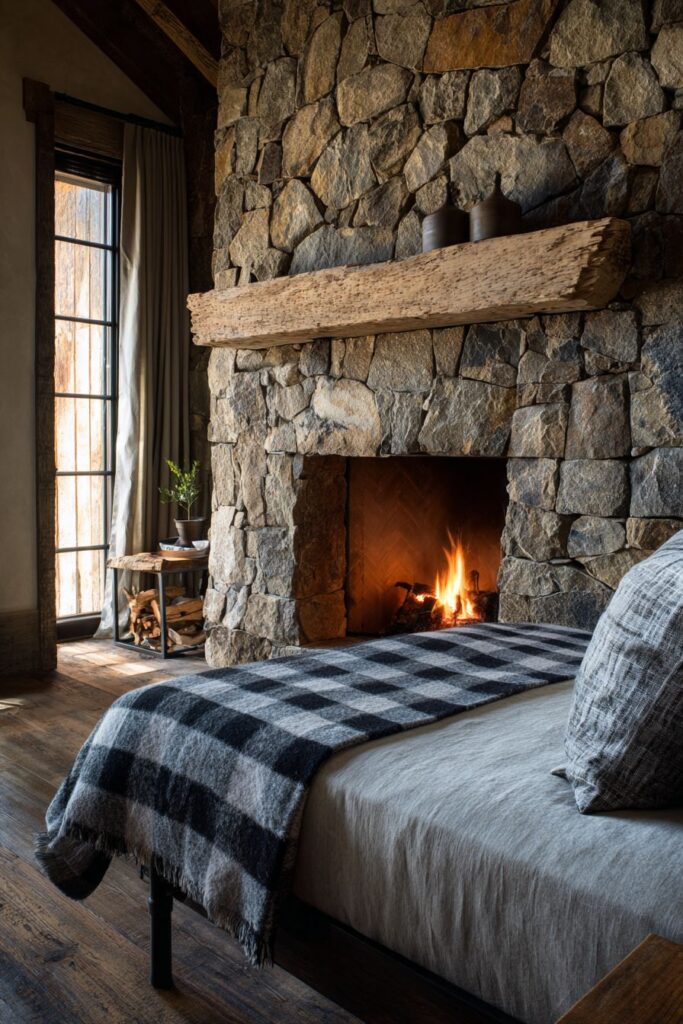
A wooden mantel crafted from reclaimed timber provides a horizontal element that grounds the fireplace’s vertical presence. This substantial beam—perhaps salvaged from an old barn or factory—displays simple ceramic pieces that complement rather than compete with the stone. The restraint in mantel decoration allows the fireplace’s natural beauty to dominate while providing a practical surface for displaying treasured objects.
The iron bed frame opposite the fireplace balances the stone’s visual weight with its own substantial presence. Dressed in plaid wool bedding that echoes traditional lodge aesthetics, the bed creates a cozy retreat perfectly positioned to enjoy the fireplace’s warmth and dancing flames. The combination of iron and wool—one cold and industrial, one warm and organic—demonstrates rustic design’s comfort with contrasts.
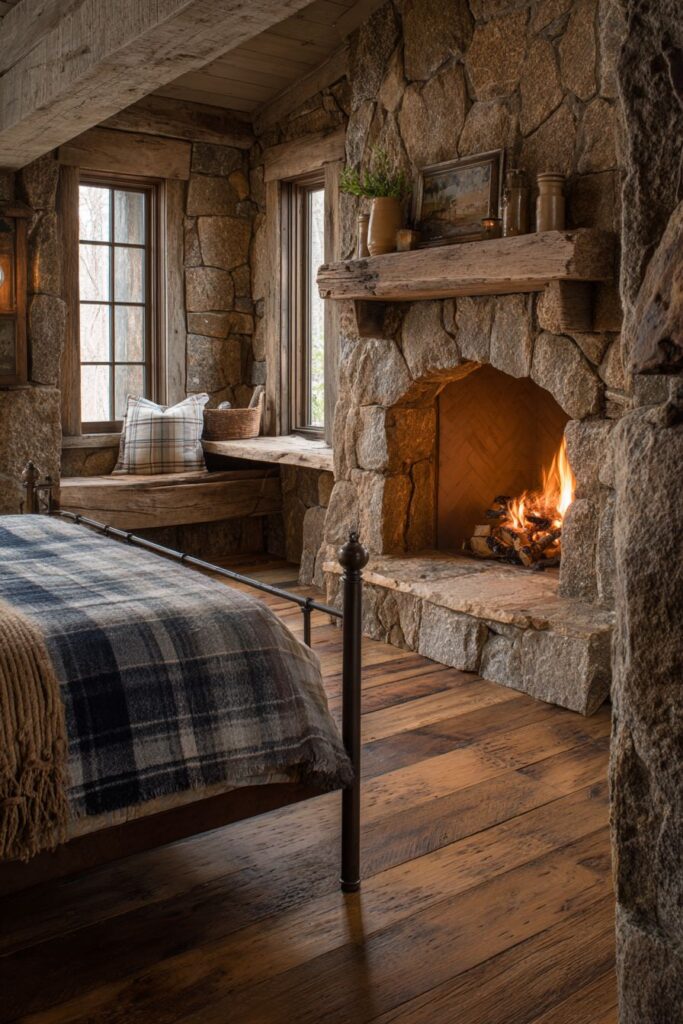
Wide-plank oak flooring shows authentic wear patterns from years of use, adding another layer of natural material and honest aging to the room. The oak’s warm honey tones complement both the stone fireplace and iron bed while providing a neutral foundation that allows these statement pieces to shine. Interior photography captures the cozy lodge atmosphere created by firelight glow mixing with natural window light, demonstrating how multiple light sources create depth and warmth in rustic bedroom spaces.
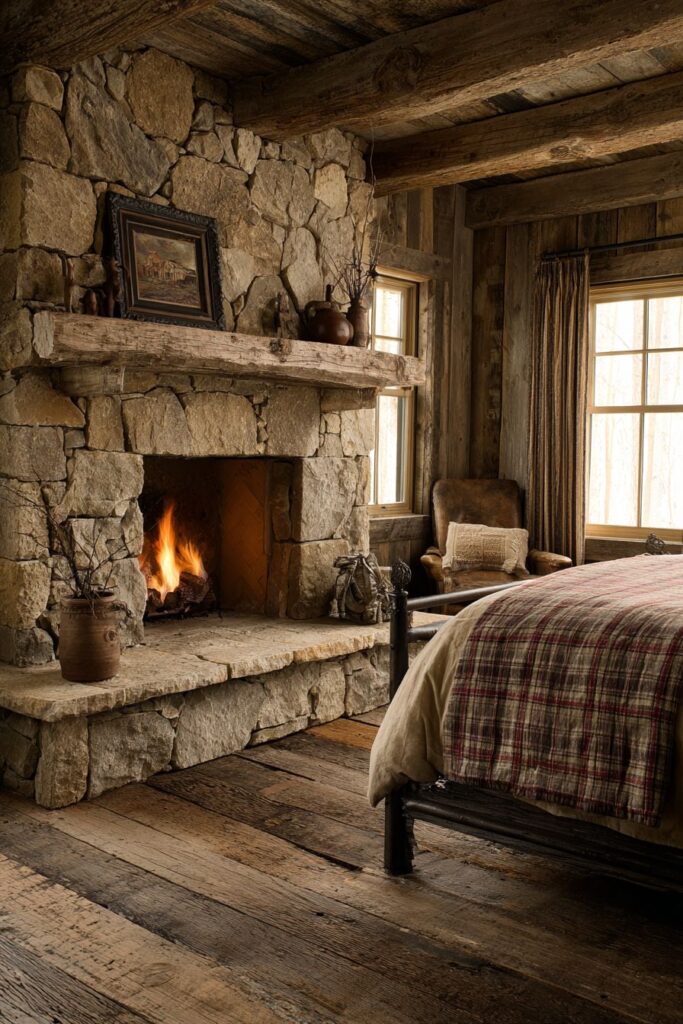
Key Design Tips:
- Install river rock fireplaces for natural focal points
- Use reclaimed timber for substantial mantels
- Position beds to enjoy fireplace views and warmth
- Choose wide-plank oak for authentic flooring character
- Layer multiple light sources for atmospheric depth
13. Open Closet Organization
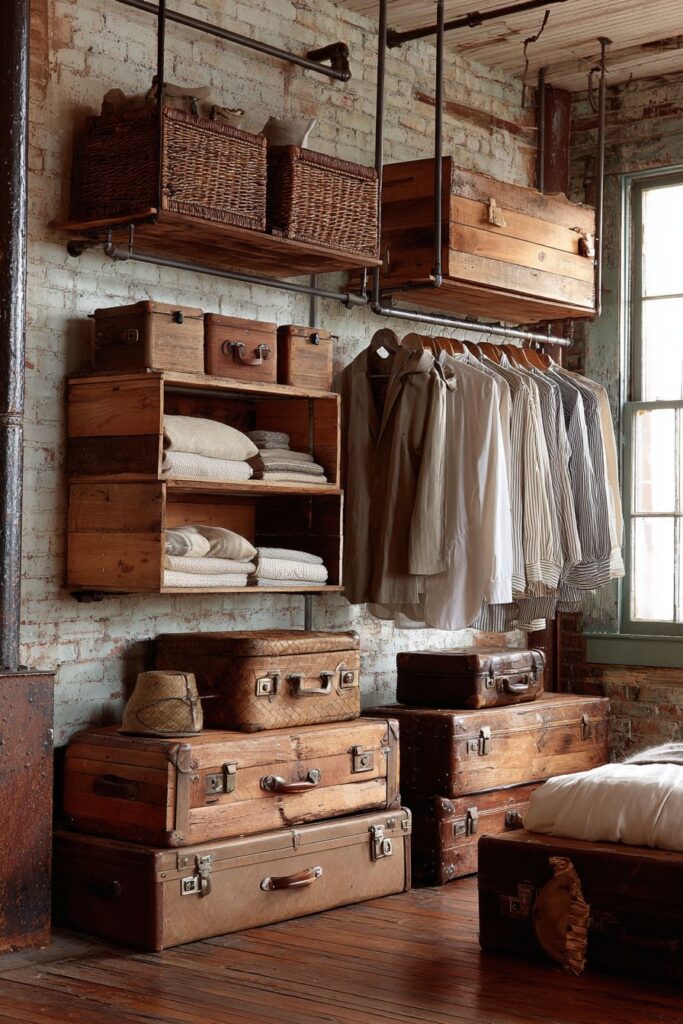
This rustic bedroom closet system rejects concealment in favor of honest, open storage using rough-cut cedar shelving with natural edge details. The cedar’s aromatic properties naturally repel moths and insects while its warm color and visible grain create beautiful display storage. The rough-cut texture—showing saw marks and natural variations—celebrates the wood’s journey from forest to functional furniture while maintaining the room’s commitment to authentic materials and visible craftsmanship.
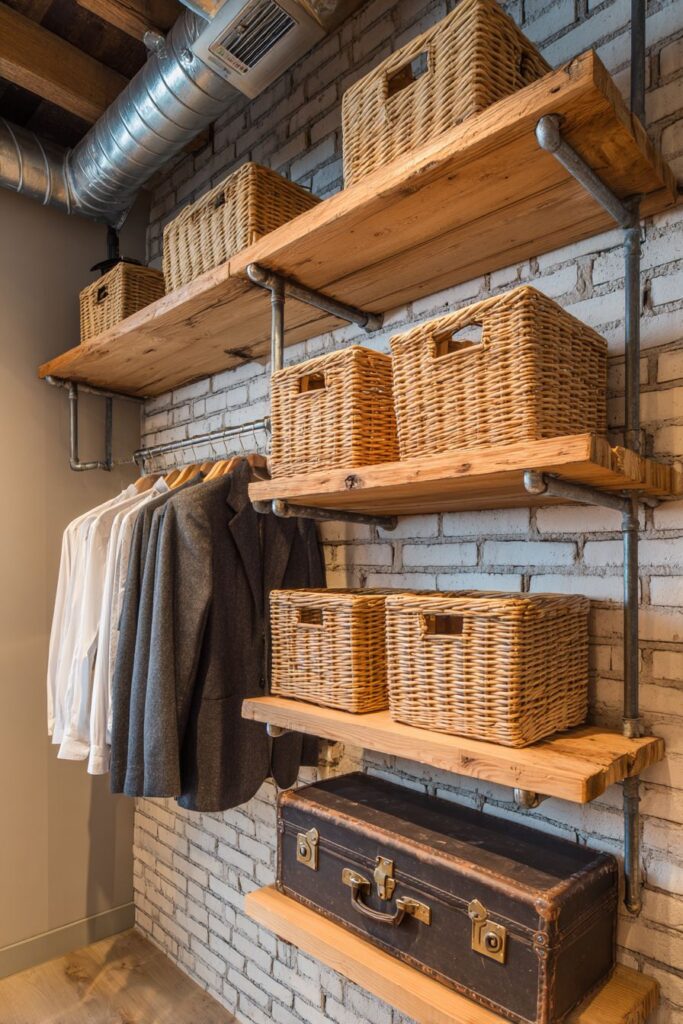
Woven baskets and vintage suitcases provide storage solutions that double as decorative elements. These containers—perhaps woven from willow, rattan, or seagrass—conceal items that need hiding while their natural materials and varied textures enhance the closet’s visual appeal. Vintage suitcases stacked at various heights add vertical interest and nostalgic charm while storing seasonal items or extra linens.
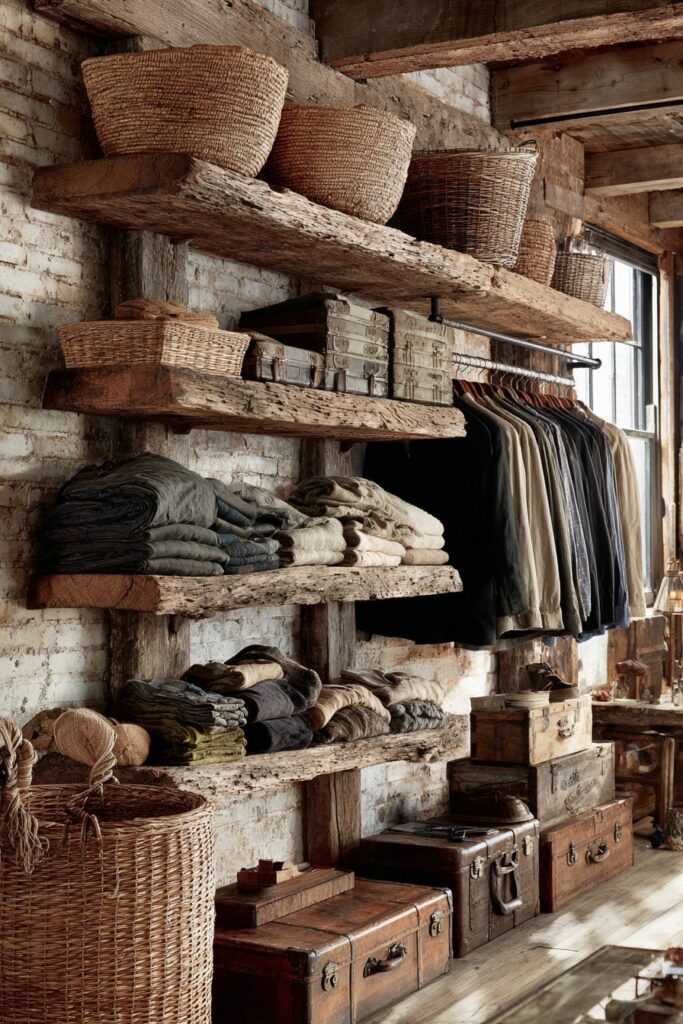
A hanging rod crafted from galvanized pipe brings industrial functionality to the rustic setting. This practical solution—perhaps mounted on iron floor flanges with exposed screws—demonstrates how utilitarian materials can contribute to a room’s aesthetic when chosen with intention. The pipe’s metallic sheen contrasts pleasingly with surrounding wood tones while providing sturdy support for hanging garments.
Whitewashed brick wall serves as backdrop, its texture and mortar lines visible through the translucent wash. This treatment brightens the closet area while preserving the brick’s inherent character and three-dimensional texture. Natural lighting highlights these honest materials and functional design elements, proving that storage areas deserve the same attention to beauty and craftsmanship as more prominent bedroom spaces.

Key Design Tips:
- Build open shelving from rough-cut cedar for aromatic storage
- Use woven baskets for concealed storage with natural style
- Install galvanized pipe for industrial-rustic hanging rods
- Whitewash brick walls to brighten while preserving texture
- Incorporate vintage suitcases for decorative storage solutions
14. Vanity Transformation
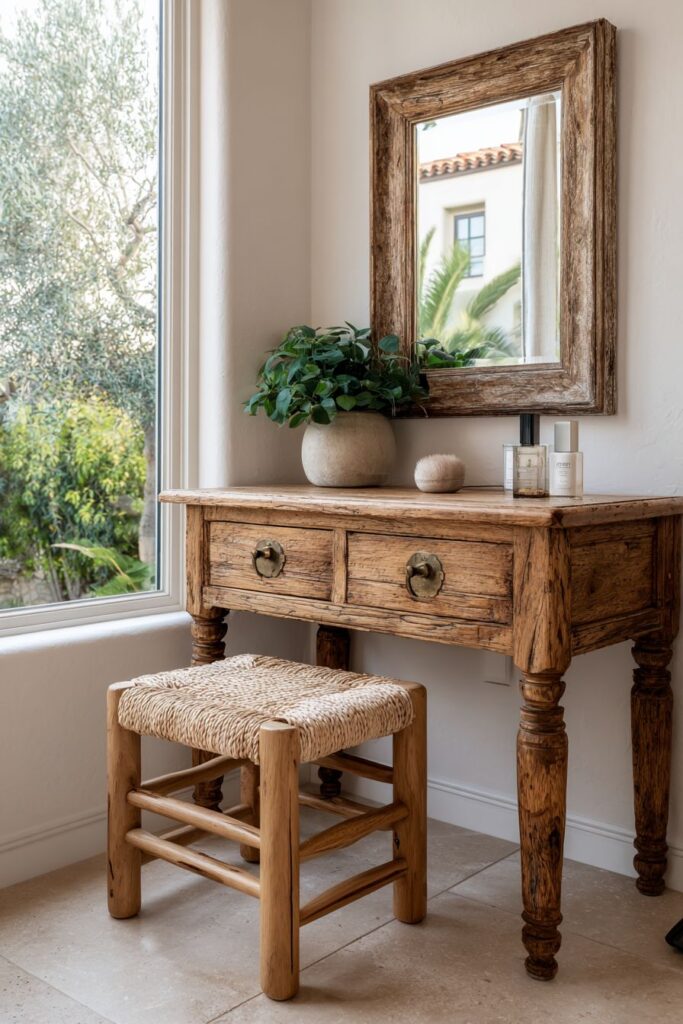
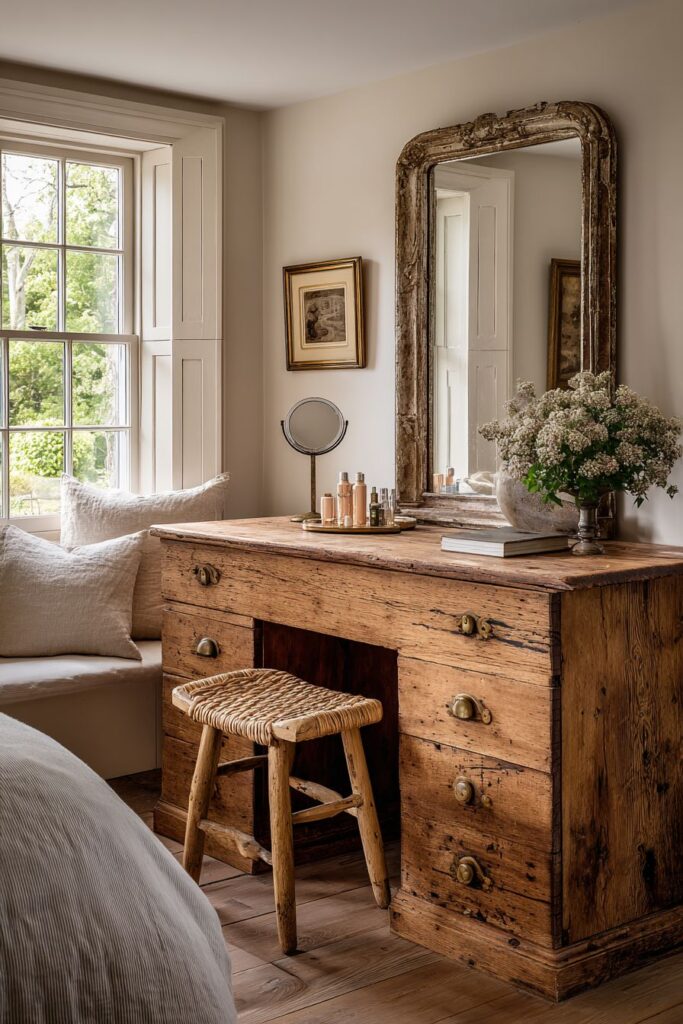
An antique wooden dresser transformed into a makeup station demonstrates rustic design’s talent for creative repurposing. The dresser’s original brass hardware—showing natural patina from decades of use—remains intact, its aged finish adding character that new hardware cannot replicate. The transformation requires minimal modification: perhaps removing top drawers for knee space or adding a cushioned stool, but otherwise honoring the piece’s original construction and historical integrity.
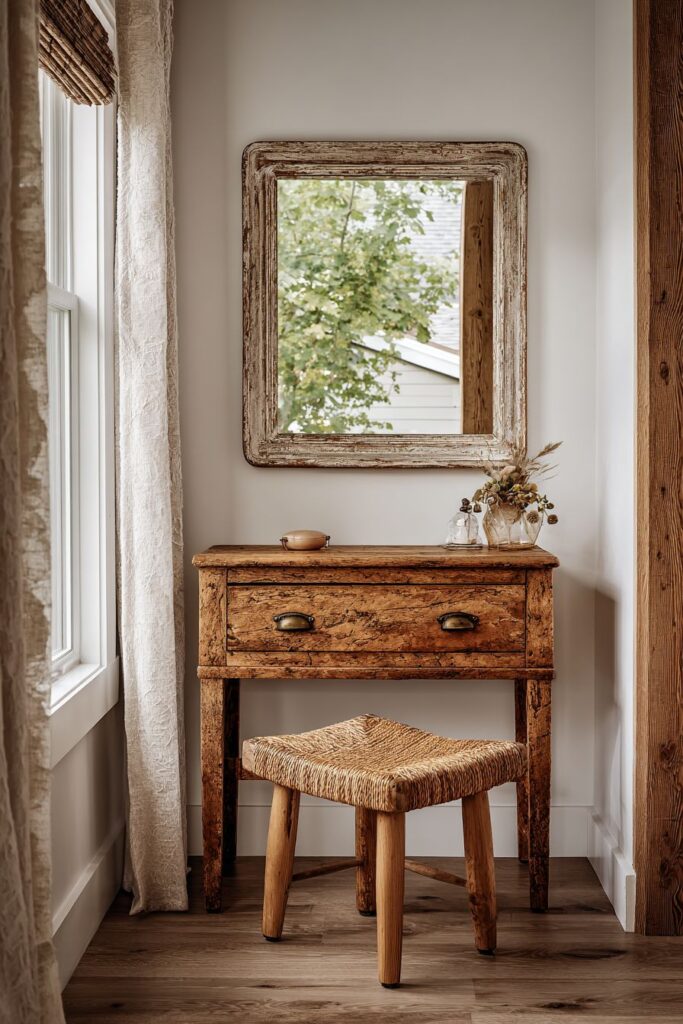
A vintage mirror with distressed frame hangs above, its weathered finish complementing the dresser’s aged patina. The mirror’s reflective surface might show slight imperfections—small spots where silvering has worn away—that contribute to its authentic vintage character. These “flaws” catch and reflect light in unexpected ways, adding depth and interest while serving the practical purpose of makeup application and grooming.
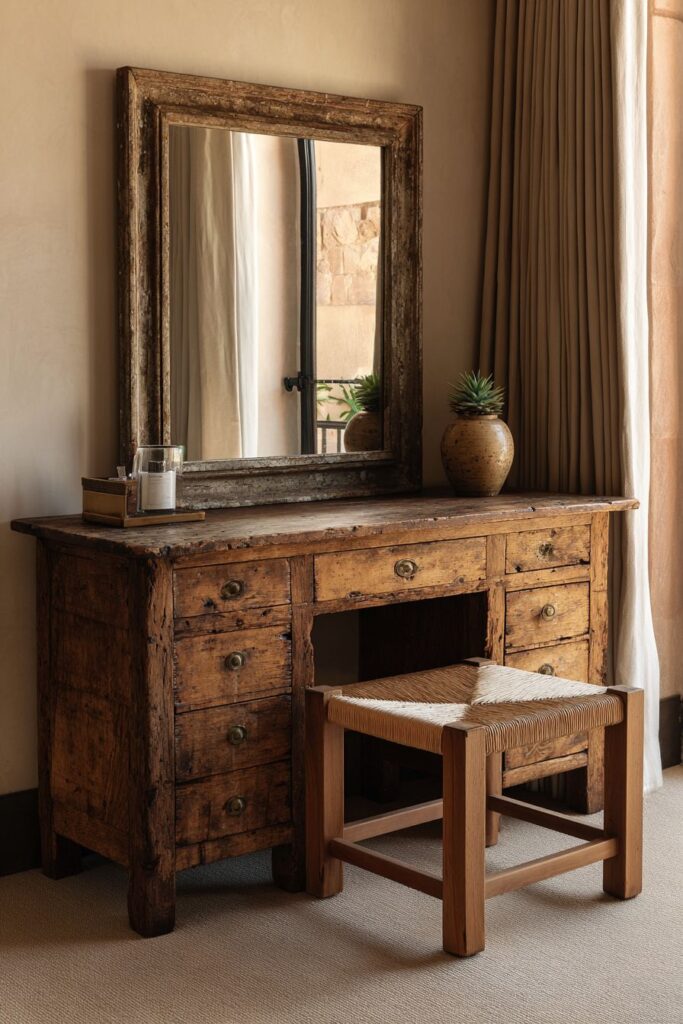
A simple wooden stool with woven seat provides comfortable seating at the vanity. The stool’s construction might showcase traditional joinery techniques—mortise and tenon joints, turned legs, or hand-woven seat—that demonstrate craftsmanship from an earlier era. The woven seat, perhaps crafted from paper rush, cane, or natural fiber cord, introduces another organic texture while providing surprisingly comfortable support.
Natural light from a nearby window illuminates the vanity area, essential for accurate makeup application and grooming tasks. This soft, diffused daylight reveals true colors and prevents the harsh shadows that artificial lighting can create. The photography focuses on charming repurposed furniture and authentic vintage elements, with balanced exposure capturing weathered finishes and demonstrating how practical functionality and rustic beauty coexist in well-designed bedroom spaces.
Key Design Tips:
- Repurpose antique dressers as unique vanity stations
- Preserve original hardware for authentic character
- Hang distressed vintage mirrors above vanities
- Use wooden stools with woven seats for natural seating
- Position vanities near windows for optimal natural lighting
15. Vaulted Ceiling Character
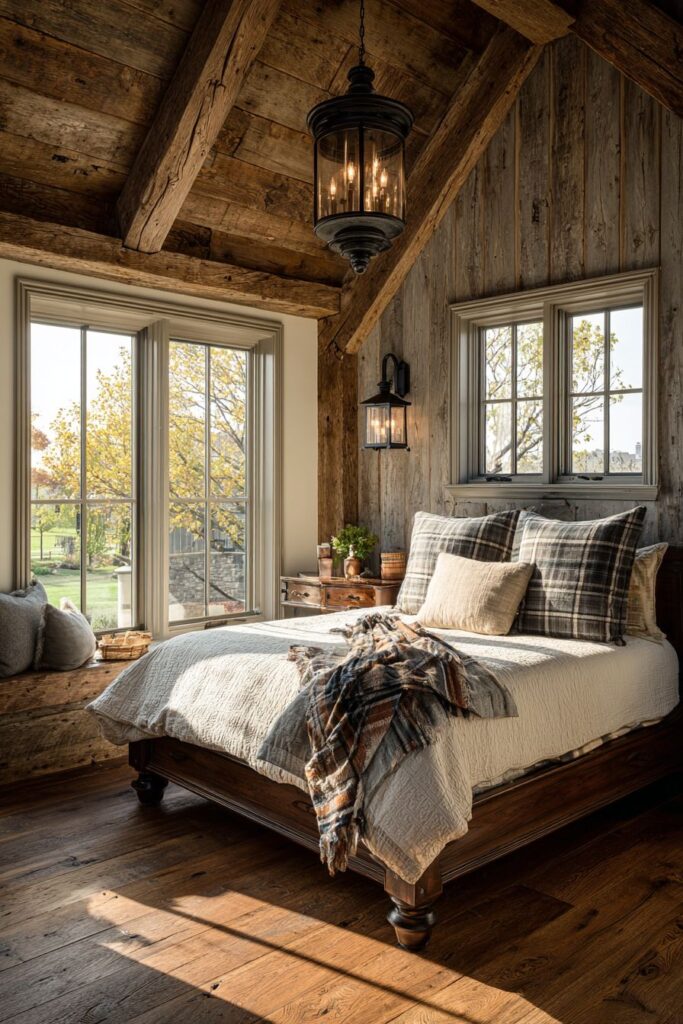
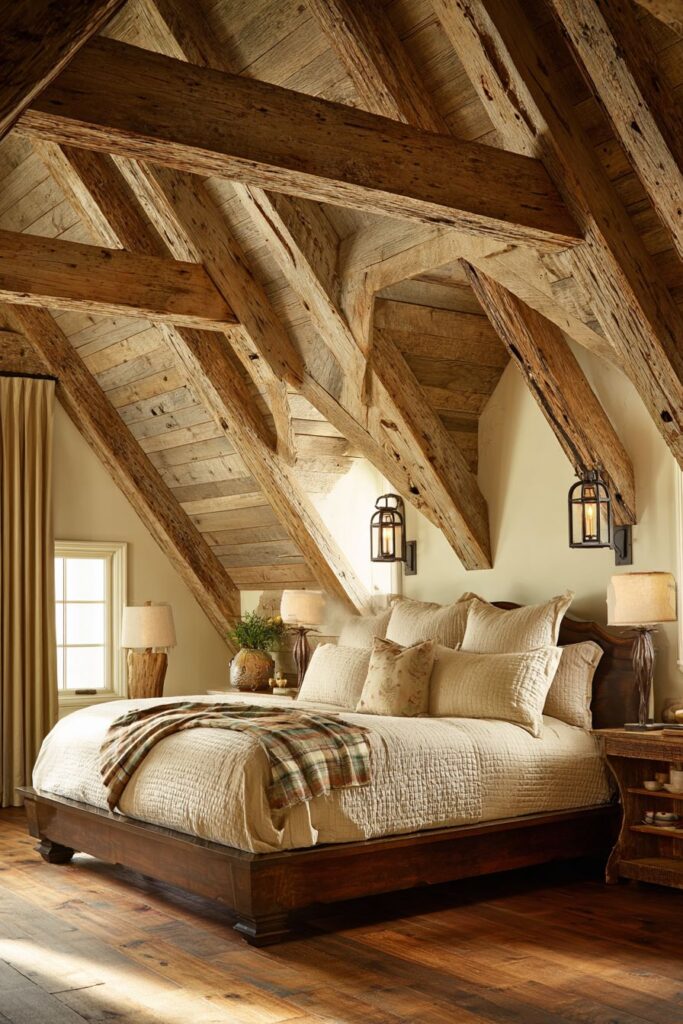
The architectural drama of vaulted ceilings provides an exceptional canvas for rustic bedroom design. Original wood beams with hand-hewn texture and visible adze marks create powerful visual lines that celebrate traditional timber framing techniques. These beams—showing the craftsman’s chopping marks and natural wood variations—tell stories of construction methods from earlier eras when all woodworking happened by hand. The adze marks create subtle texture that catches light differently throughout the day, adding dimensional interest overhead.
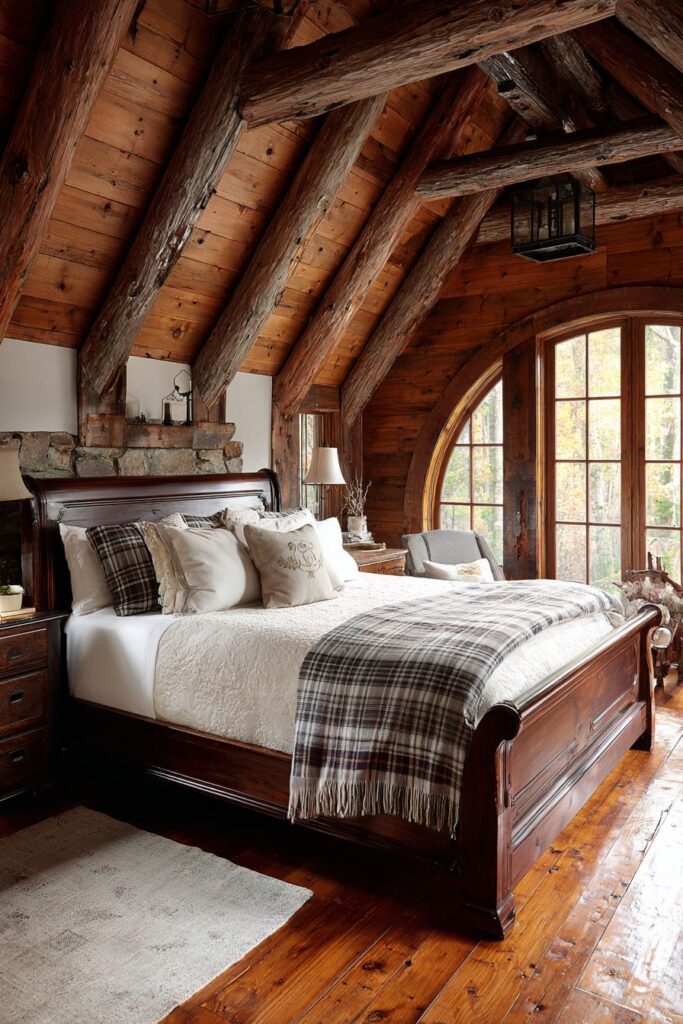
A sleigh bed in dark walnut finish centers the space, its curved headboard and footboard creating elegant counterpoints to the ceiling’s linear beams. Dressed in cream linen bedding with plaid throws, the bed provides a grounded focal point that balances the room’s vertical drama. The dark wood finish creates welcome contrast against lighter walls while maintaining warmth through the walnut’s natural reddish-brown undertones.
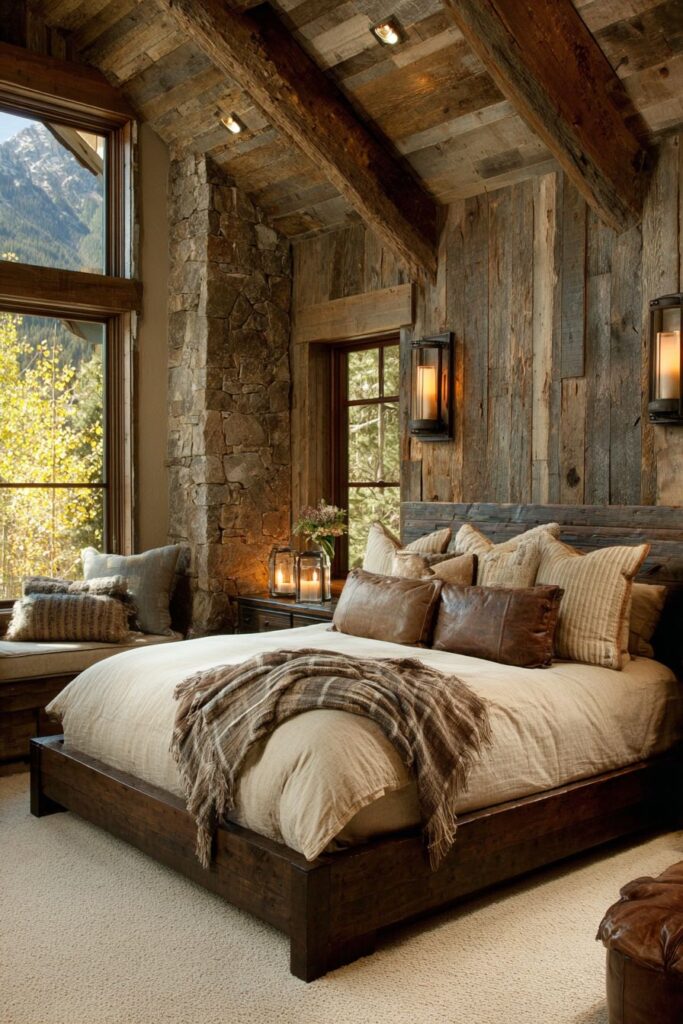
Walls featuring tongue-and-groove pine paneling showcase natural knots and grain patterns that add organic texture throughout the room. This vertical or horizontal paneling creates subtle shadow lines where boards meet, adding depth and dimension to wall surfaces. The pine’s warm honey color and visible knots contribute to the cabin-like atmosphere while providing excellent insulation and acoustic properties that make the bedroom quieter and more comfortable.
Antique lantern-style sconces provide soft lighting that enhances the room’s historical character. These fixtures—perhaps electrified vintage pieces or quality reproductions—cast gentle light through glass panels while their metal frameworks add decorative interest to the walls. Wide-angle photography captures the full architectural character and craftsmanship, with natural light streaming through dormer windows highlighting every authentic rustic detail from ceiling beams to wall paneling.
Key Design Tips:
- Showcase hand-hewn beams with visible tool marks
- Center sleigh beds under vaulted ceilings for drama
- Install tongue-and-groove paneling for warmth and texture
- Use antique lantern sconces for period-appropriate lighting
- Add dormer windows to brighten vaulted spaces
16. Masculine Retreat
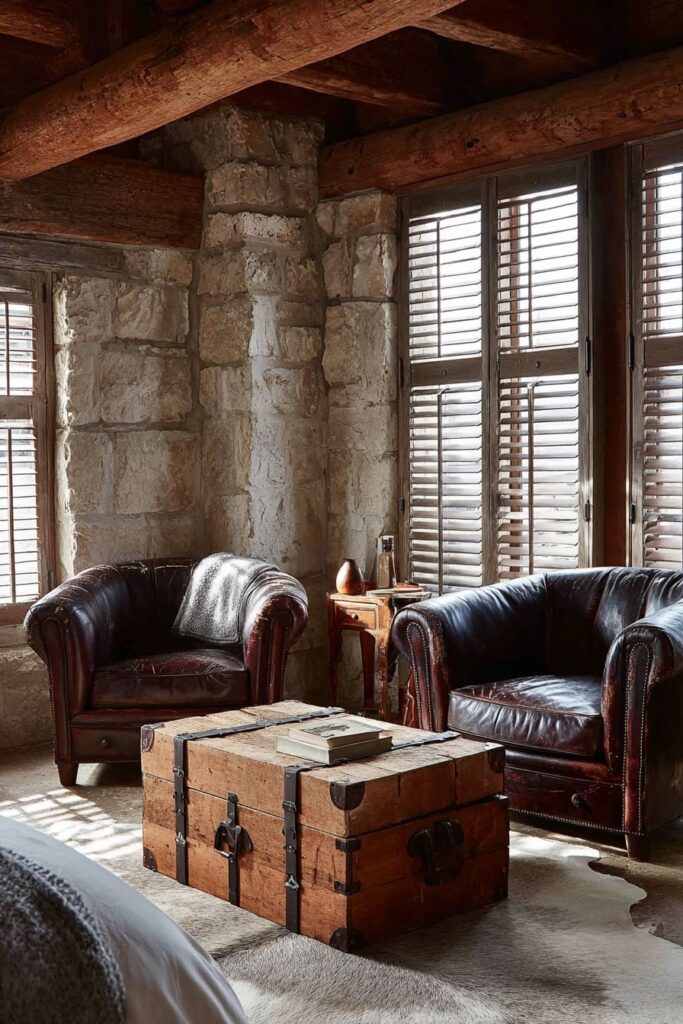
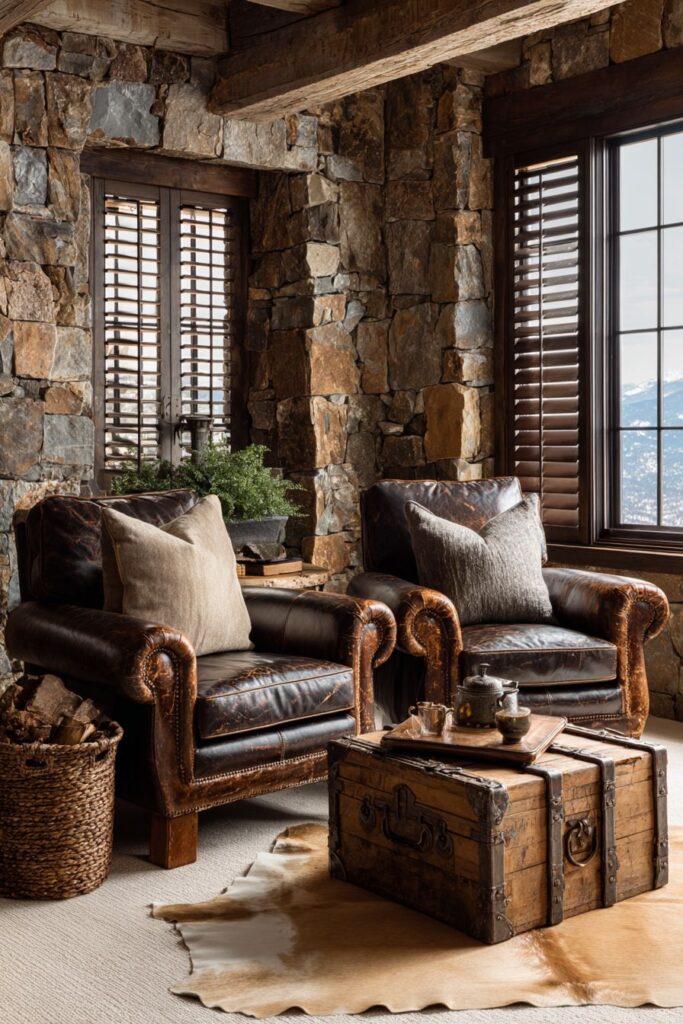
This rustic bedroom sitting area creates a distinctly masculine retreat within the sleeping space. Two leather club chairs showing natural patina and wear face a stone accent wall, their aged leather developing the kind of character that only time and use can create. The leather’s color deepens in areas of frequent contact while natural creasing patterns emerge, creating surfaces that are both beautiful and comfortable. These chairs invite lingering—for morning coffee, evening reading, or quiet contemplation.
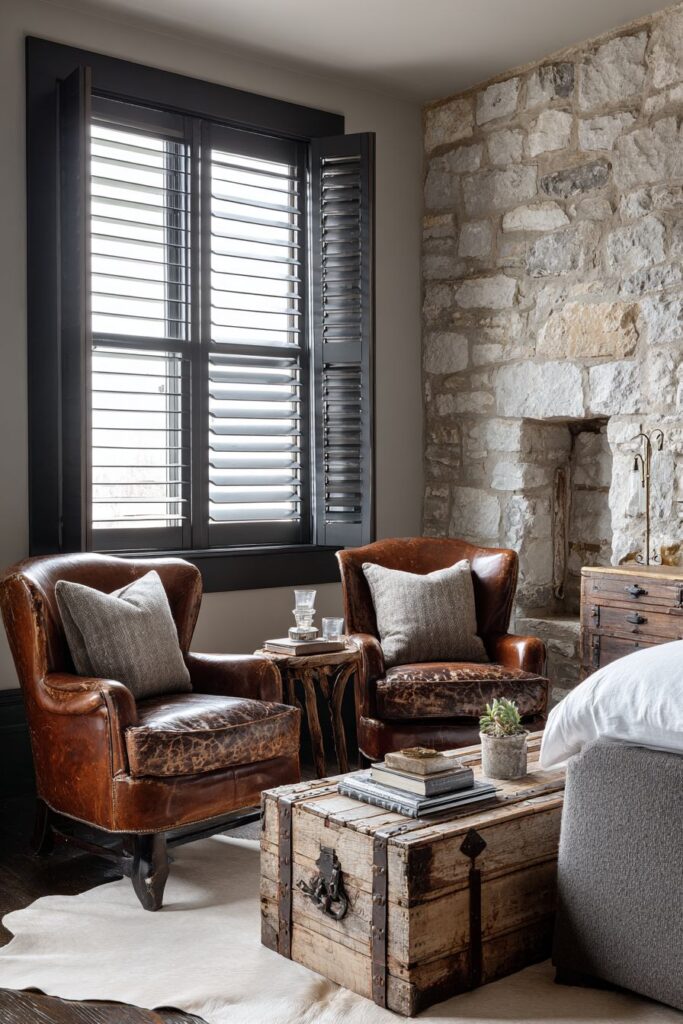
A coffee table crafted from reclaimed railroad ties sits between the chairs on a cowhide rug. These massive timbers—once supporting train tracks—bring industrial heritage and substantial presence to the seating area. The wood shows the weathering and wear from its previous life: bolt holes, surface cracks, and color variations that tell stories of years supporting heavy loads. The cowhide rug beneath adds another natural texture while defining the seating area within the larger bedroom space.
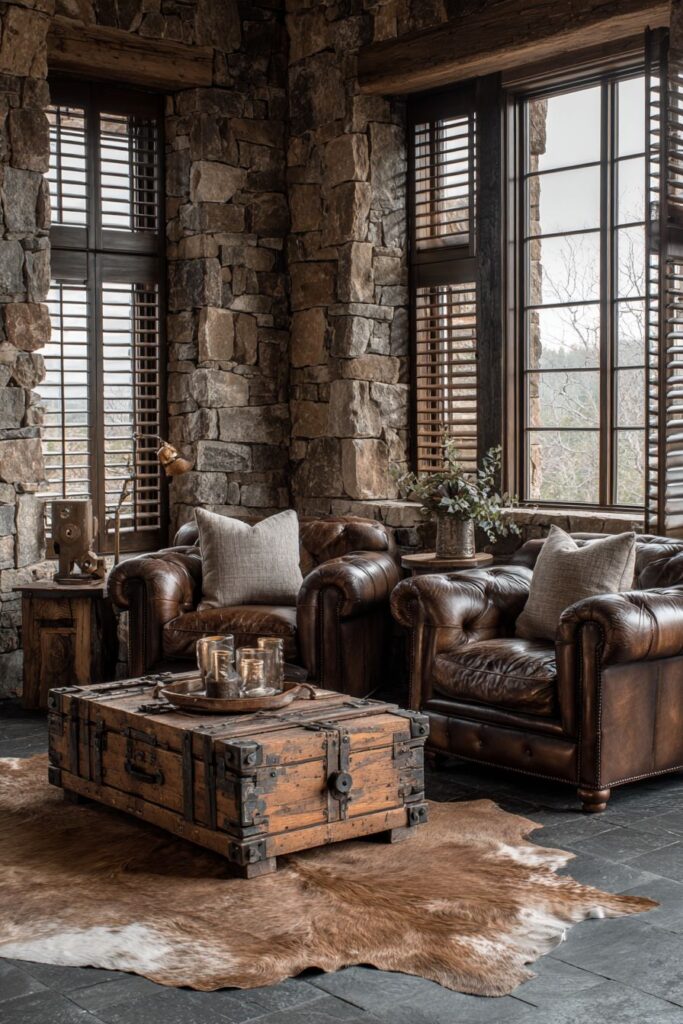
A wooden storage trunk serves double duty as side table, its aged wood and metal hardware adding to the collected, masculine aesthetic. This piece—perhaps a vintage military trunk or immigrant’s chest—provides hidden storage for extra blankets or off-season clothing while offering a surface for lamps, books, or drinks. The trunk’s hardware—leather straps, metal corners, iron locks—contributes industrial detail that complements the room’s robust materials.
Natural light filters through plantation shutters, which allow precise control over light levels while maintaining privacy. These adjustable louvers can direct light upward to highlight the stone wall’s texture or downward to reduce glare, creating different moods throughout the day. The photography captures the masculine rustic aesthetic with careful attention to leather texture and weathered wood finishes, demonstrating how these materials create an inviting retreat that feels both refined and authentically rustic.
Key Design Tips:
- Choose leather furniture with natural aging and patina
- Use reclaimed railroad ties for substantial tables
- Layer cowhide rugs for masculine natural texture
- Incorporate vintage trunks for storage and surface space
- Install plantation shutters for light control and privacy
17. Board-and-Batten Beauty
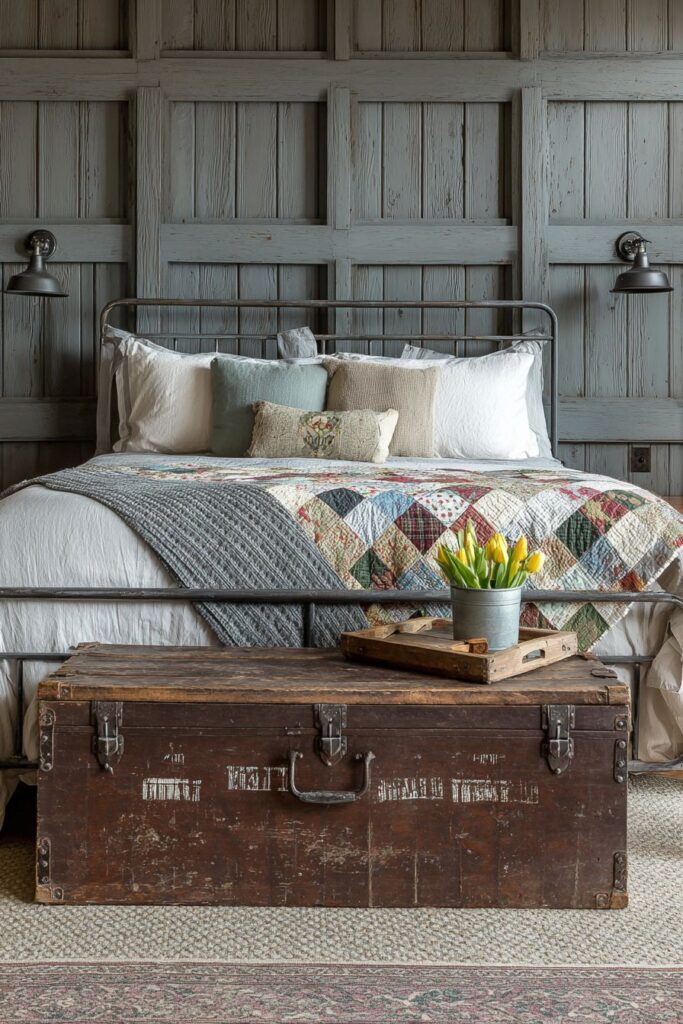
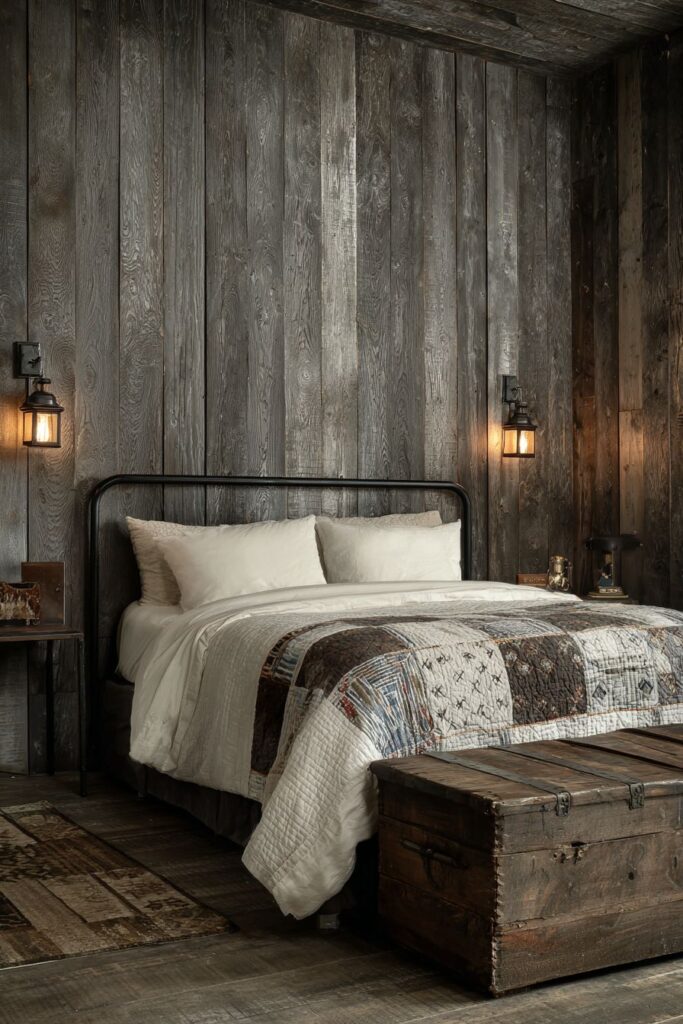
The classic board-and-batten wall treatment receives a rustic interpretation through weathered grey finish that preserves visible wood grain texture. This traditional technique—vertical boards with narrow battens covering the seams—creates subtle shadow lines and visual rhythm that add architectural interest to plain walls. The weathered grey finish brings contemporary sophistication while the preserved grain maintains connection to natural materials and honest construction.
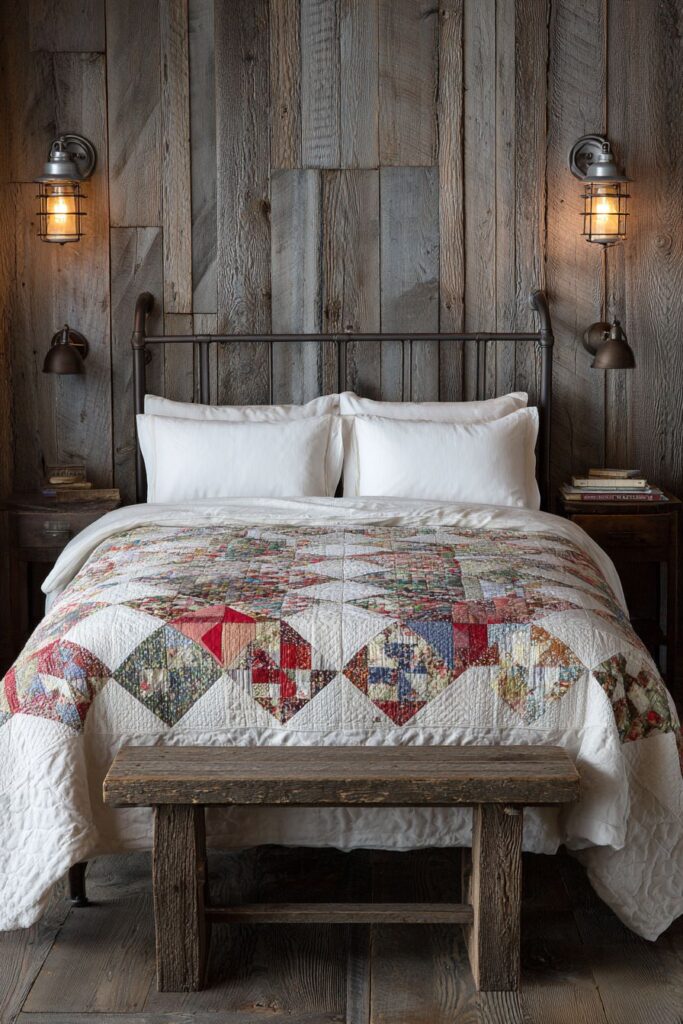
A simple iron bed frame provides understated structure, its matte black finish creating striking contrast against the grey walls. This minimalist frame—perhaps featuring subtle scrollwork or geometric details—allows the bedding and wall treatment to take center stage. Dressed with white cotton bedding and a vintage patchwork quilt, the bed becomes a study in contrasts: new and old, simple and complex, monochromatic and colorful.
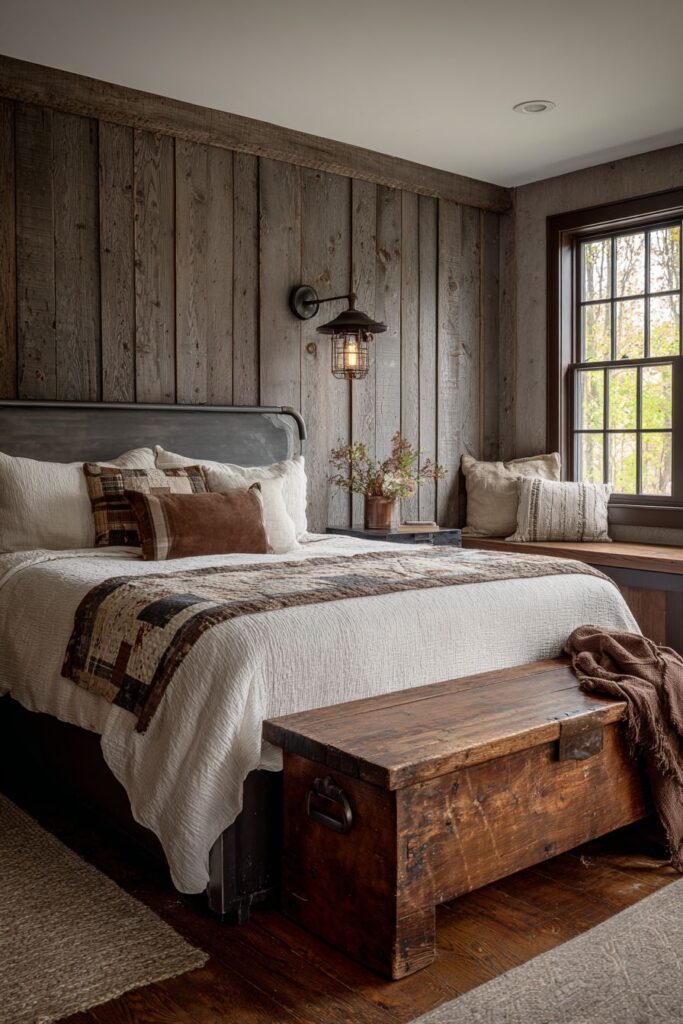
A distressed wooden bench at the foot of the bed provides both seating and storage, its weathered finish coordinating with the wall treatment while introducing another natural element. The bench might feature a lift-top for blanket storage or simply provide surface space for laying out tomorrow’s clothes or displaying decorative pillows. Its rustic finish and solid construction make it both practical and beautiful.
Galvanized metal wall sconces with Edison bulbs flank the bed, their industrial materials and vintage-style bulbs creating warm ambient lighting. The galvanized finish—showing the characteristic spangled pattern of zinc coating—introduces metallic texture that complements the iron bed frame while maintaining the room’s honest material focus. The warm glow from Edison filaments creates pools of light perfect for bedtime reading while contributing to the room’s farmhouse rustic style and authentic material choices.
Key Design Tips:
- Apply board-and-batten with weathered grey finish
- Use simple iron frames for understated bed structure
- Add distressed benches for multifunctional furniture
- Install galvanized sconces for industrial farmhouse lighting
- Preserve wood grain through translucent finishes
18. Nature-Connected Minimalism
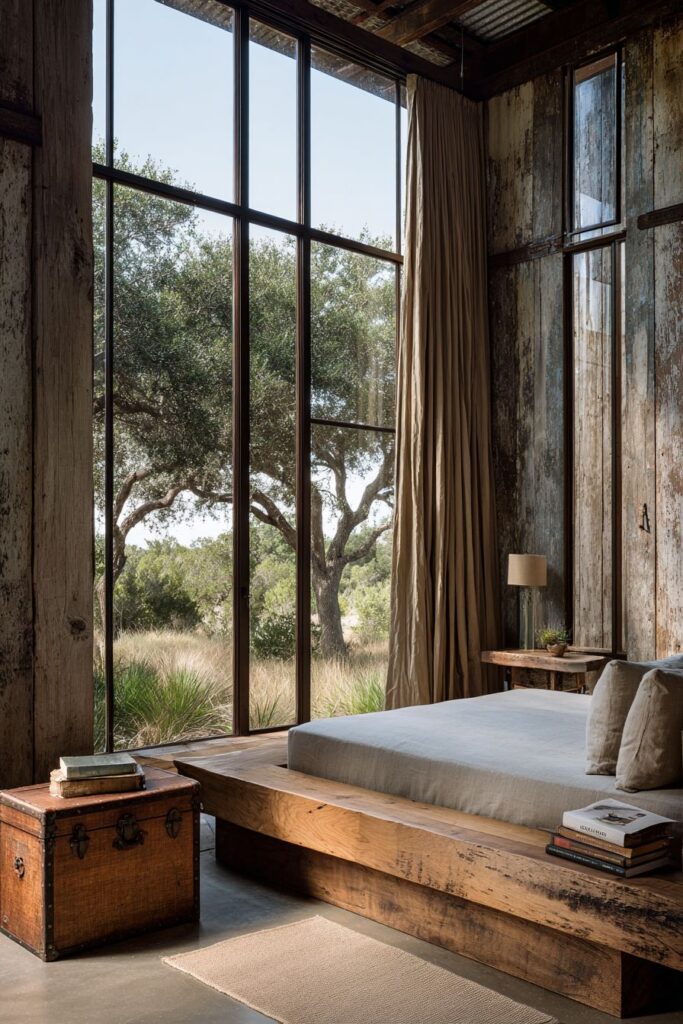
Floor-to-ceiling windows create an extraordinary connection between interior and exterior in this rustic bedroom design. These expansive windows invite natural views inside, blurring boundaries between bedroom and landscape. Simple burlap curtains provide light filtration when desired—their loose weave allowing soft light penetration while preserving privacy. The burlap’s natural fiber and organic color maintain the room’s material authenticity while serving practical window treatment needs.
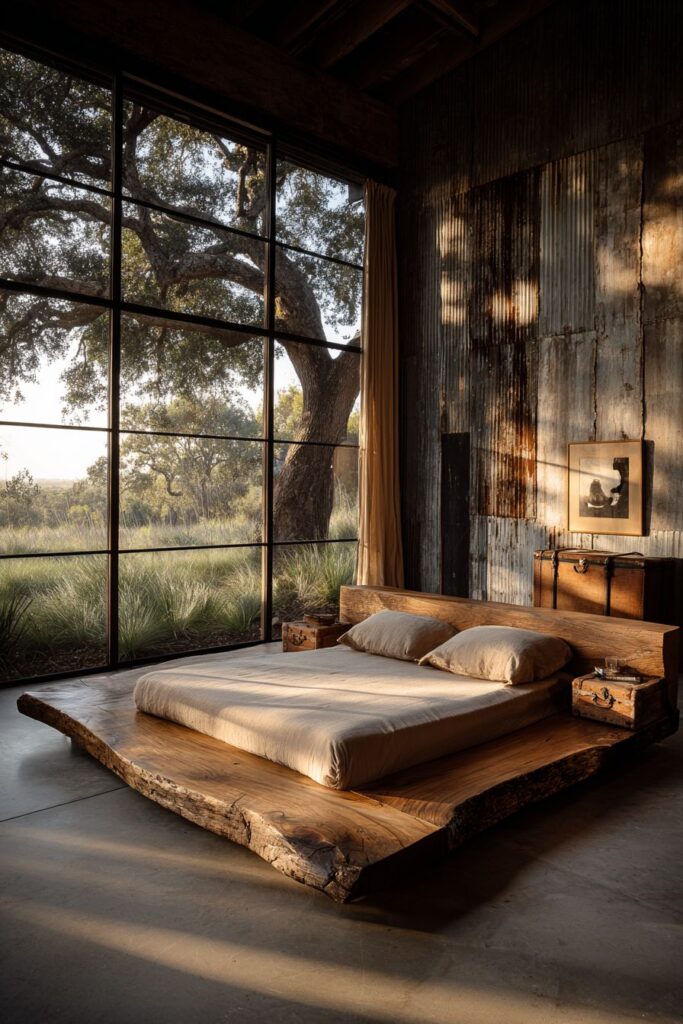
A low platform bed in natural oak features live-edge detail that celebrates the tree’s original form. This ground-hugging profile creates a zen-like quality while the live-edge—where bark once met wood—introduces organic curves that soften geometric room lines. The natural oak finish showcases the wood’s grain, color variations, and natural characteristics without stain or heavy finish obscuring its inherent beauty.
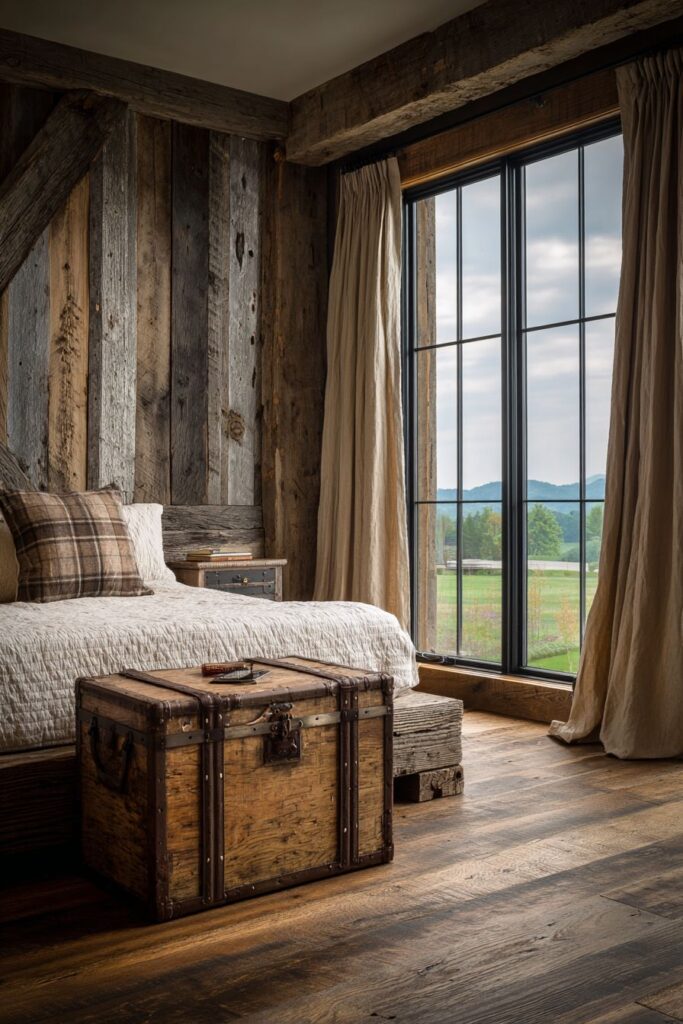
Walls of reclaimed barn siding show original nail holes and weathering that tell stories of previous lives. These vertical or horizontal boards display variations in color from sun exposure, shadows from long-removed objects, and the gentle patina that decades of weather create. Rather than flaws, these characteristics become decorative elements that add depth, texture, and historical resonance to the bedroom walls.
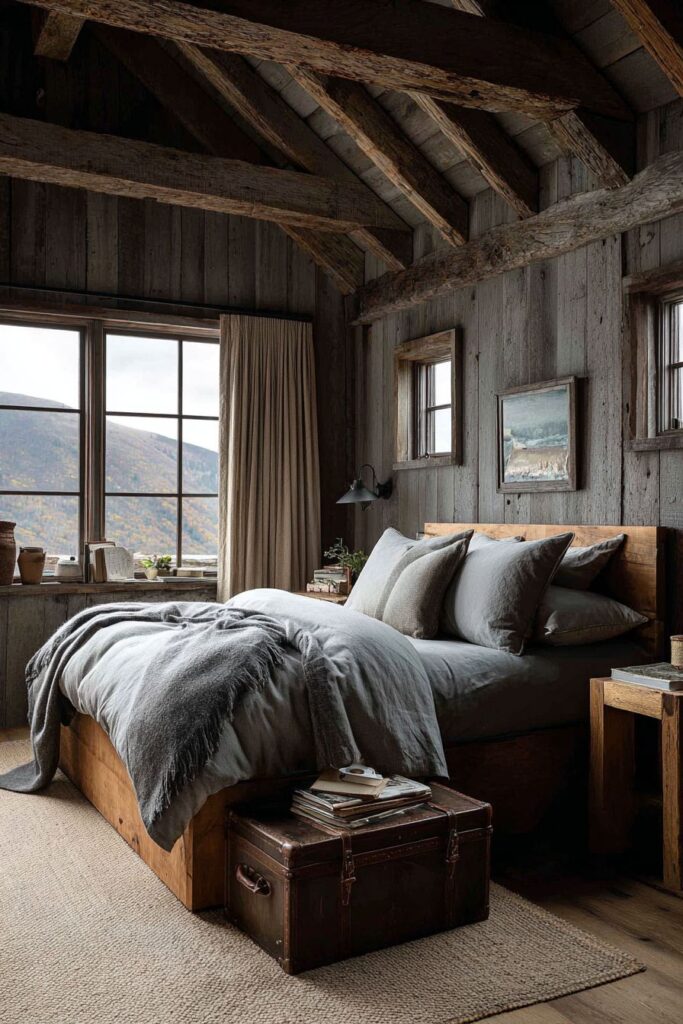
A vintage trunk serves as nightstand, its aged wood and metal fittings adding functional storage beside the low platform bed. This repurposed piece—perhaps once traveling cross-country or storing family treasures—brings history and character while providing practical surface and storage space. The photography captures abundant natural light highlighting organic wood textures and unpretentious rustic aesthetic, demonstrating how simple natural materials create sophisticated spaces when chosen and arranged with intention and restraint.
Key Design Tips:
- Maximize windows for nature connection and natural light
- Use burlap curtains for natural light filtration
- Choose low platform beds with live-edge details
- Install reclaimed barn siding for authentic wall character
- Repurpose vintage trunks as unique nightstands
19. Lodge-Inspired Illumination
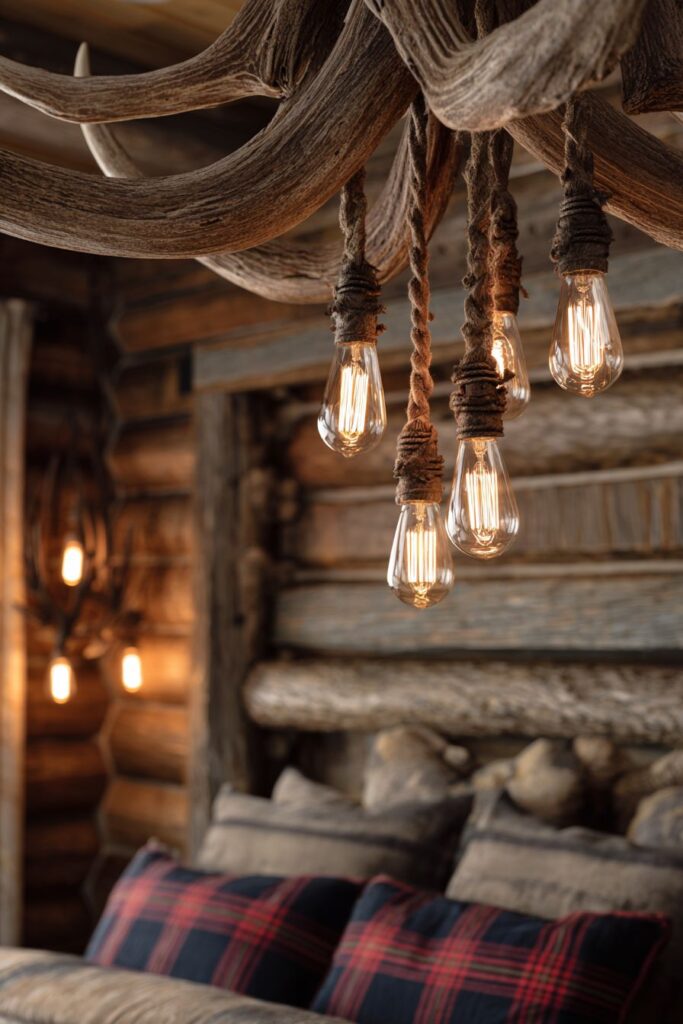
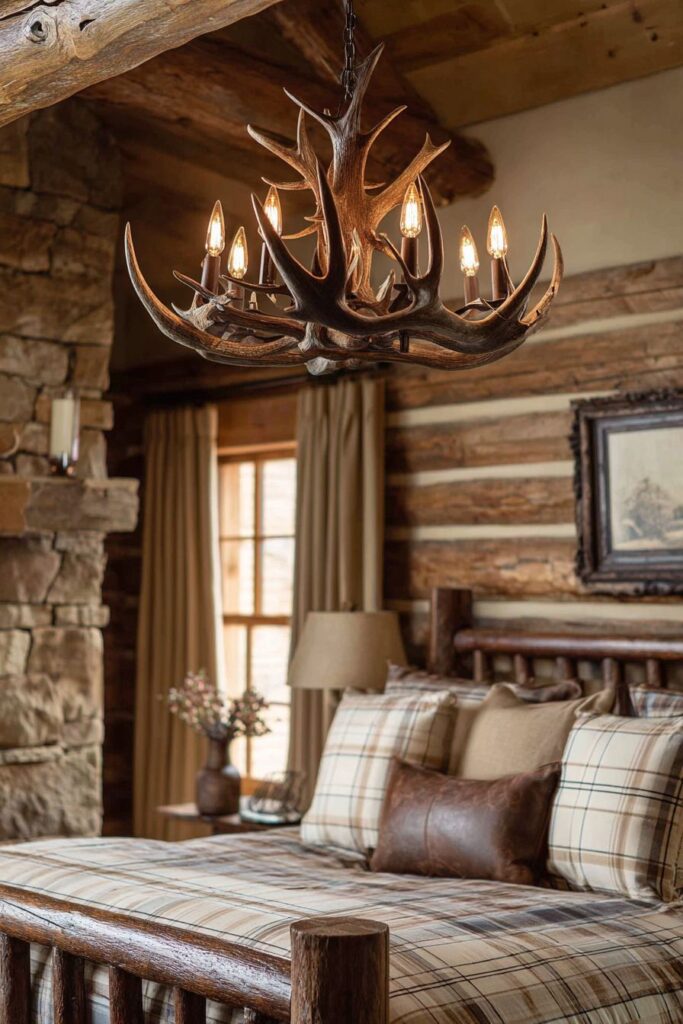
A custom chandelier crafted from antlers and wrought iron becomes this rustic bedroom’s sculptural centerpiece. This dramatic lighting fixture—perhaps featuring naturally shed antlers or vintage pieces—creates organic art overhead while providing warm ambient glow from Edison bulbs. The antlers’ irregular branching forms create fascinating shadow patterns on ceiling and walls, adding another layer of visual interest that changes as light moves through the room. The wrought iron framework supports the antlers while contributing traditional craftsmanship to this statement piece.
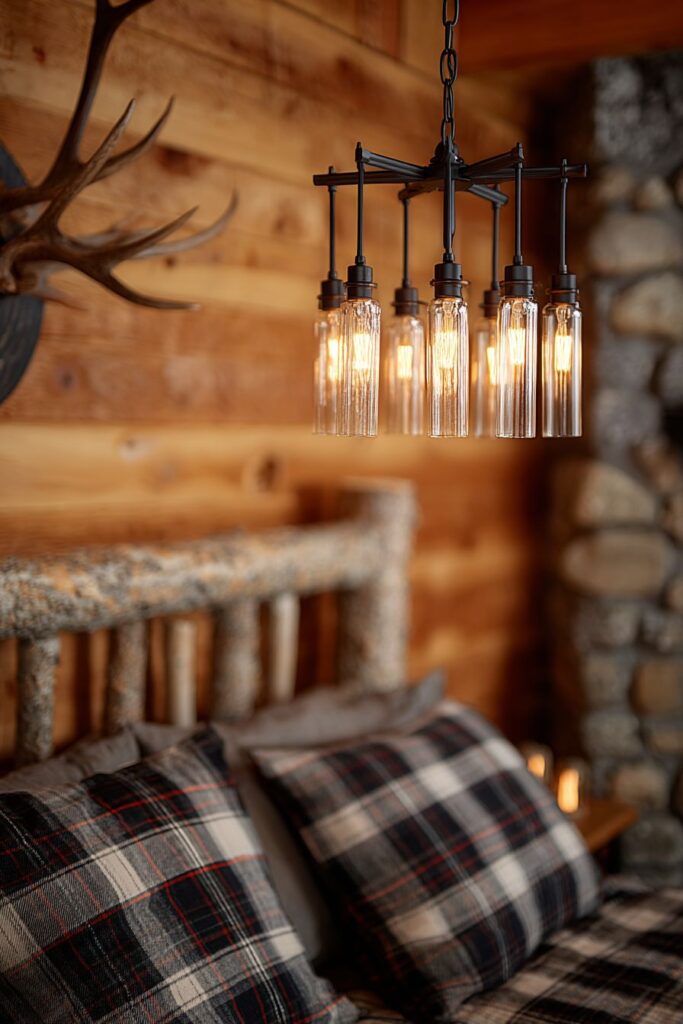
Below this dramatic lighting, a log bed frame with natural bark details maintains the cabin-inspired aesthetic. These substantial logs—perhaps showing burn marks from traditional debarking techniques or preserved bark sections at joints—create a bed that feels rooted in forest and wilderness. Dressed in plaid flannel bedding, the bed completes the lodge aesthetic with classic pattern and cozy texture perfect for mountain retreats.
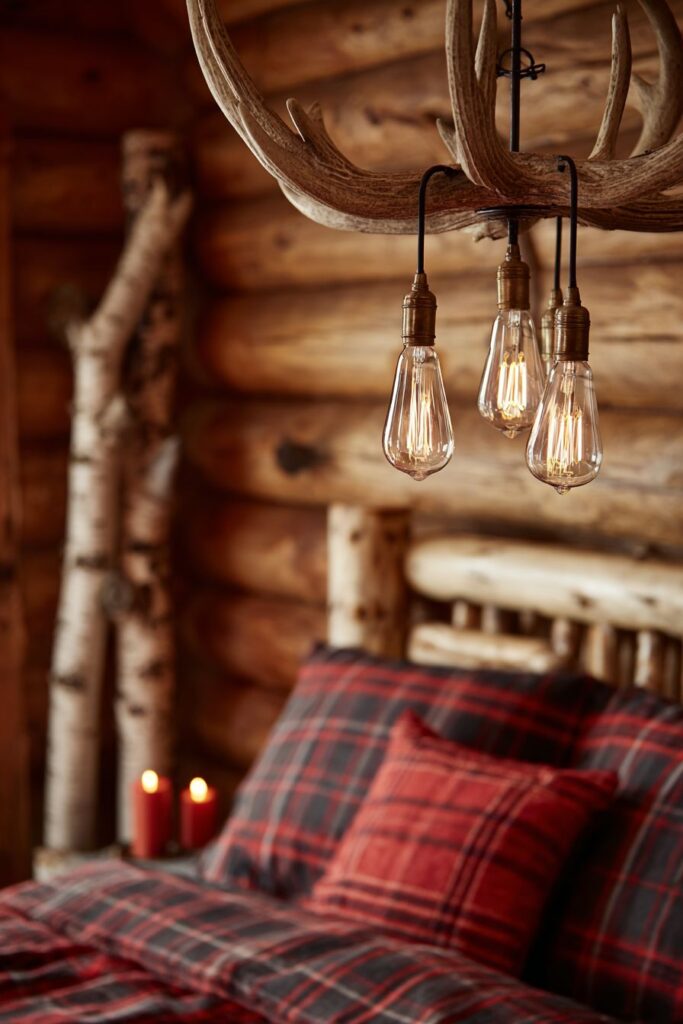
Knotty pine walls display natural wood character and warm honey tones that glow in lamplight. The knots—often considered defects in other contexts—become decorative features in rustic design, their darker spots and circular patterns adding visual interest across wall surfaces. The pine’s warm color creates an enveloping atmosphere that makes the bedroom feel like a protected haven from the outside world.
A stone hearth visible in the corner adds another elemental material and practical warmth source. The combination of stone, wood, iron, and organic lighting creates a multi-layered rustic bedroom that engages all senses—the visual drama of the antler chandelier, the tactile appeal of flannel and bark, the warmth of stone and pine. Detail-focused photography captures this cabin-inspired lighting and authentic lodge aesthetic with balanced exposure highlighting exceptional craftsmanship in every element.
Key Design Tips:
- Create custom chandeliers from antlers and wrought iron
- Use log beds with preserved bark for authentic cabin style
- Embrace knotty pine walls for warm character
- Add stone hearths for elemental warmth and beauty
- Choose plaid flannel bedding for classic lodge comfort
20. Industrial-Rustic Fusion
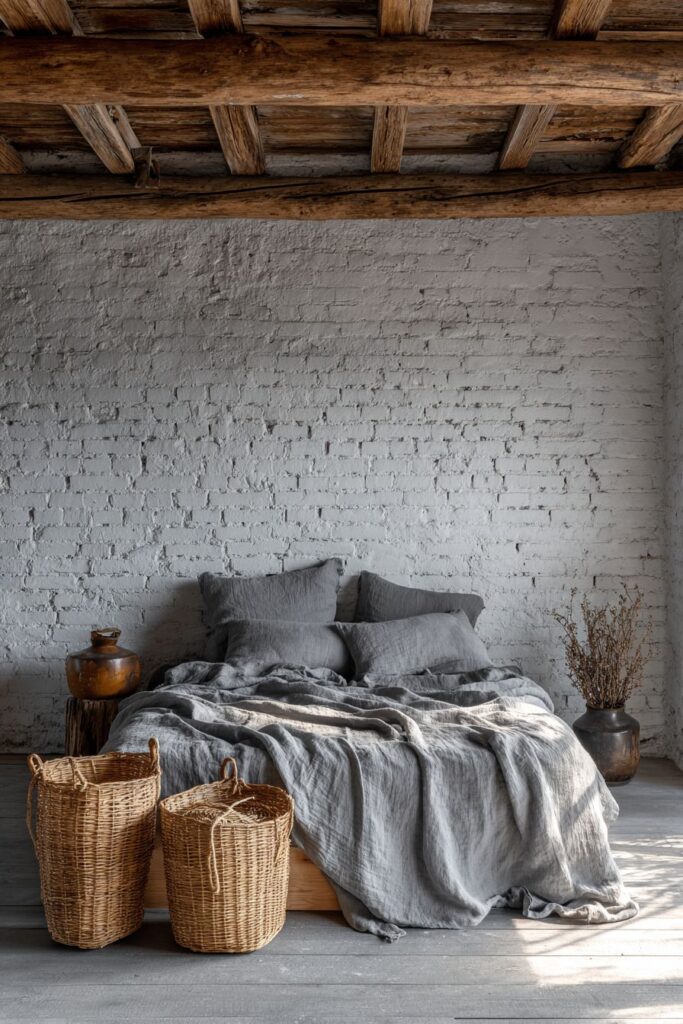
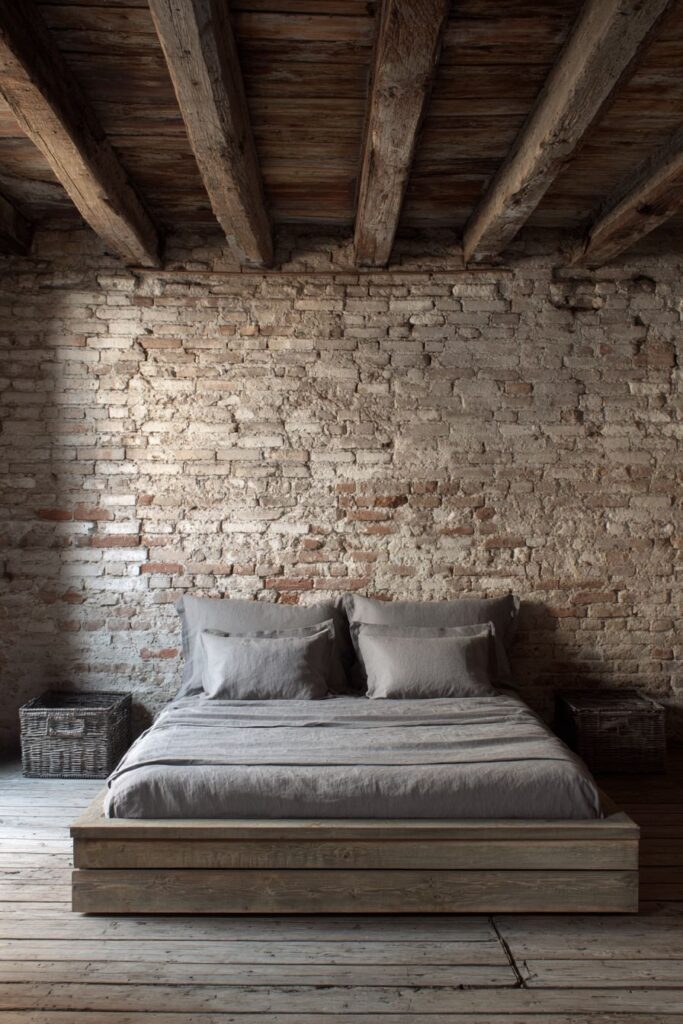
Whitewashed brick creates an unexpected accent wall that bridges industrial and rustic aesthetics. This treatment—thin white wash allowing brick texture and mortar lines to remain clearly visible—brings industrial materials into the rustic bedroom while brightening the space and creating visual interest. The brick’s three-dimensional surface catches and reflects light differently throughout the day, creating ever-changing shadow patterns that add depth behind the bed.
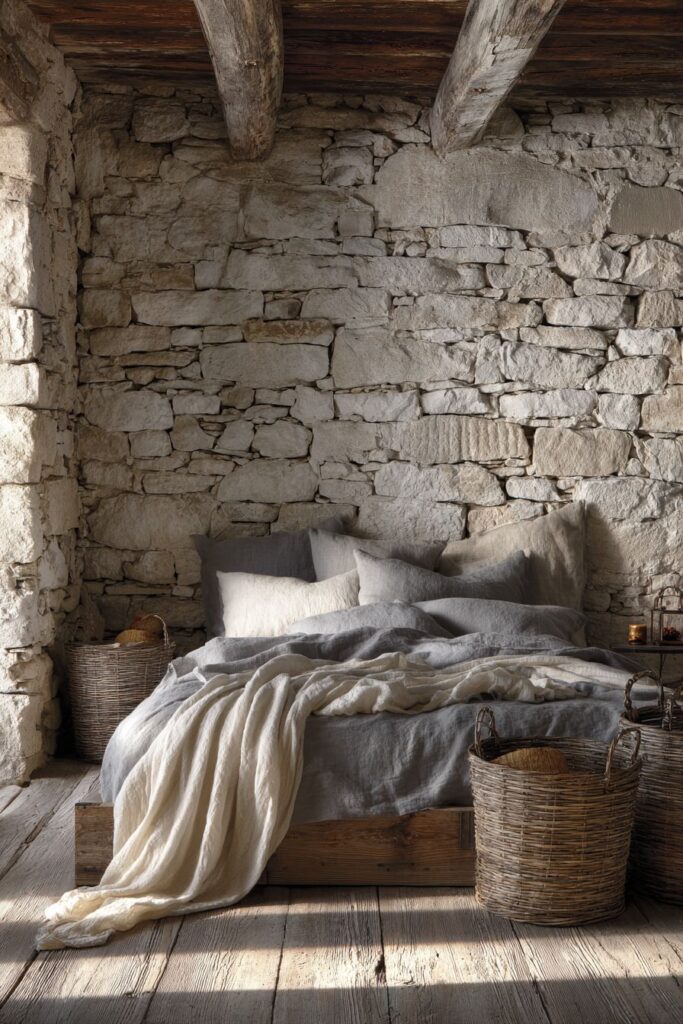
A simple wooden platform bed in driftwood grey finish provides neutral structure that allows the brick wall to dominate visually. This grey-washed finish on natural wood preserves grain patterns while introducing cool tones that complement the whitewashed brick. The platform’s low profile and minimal design keep the focus on materials and textures rather than ornate furniture details.
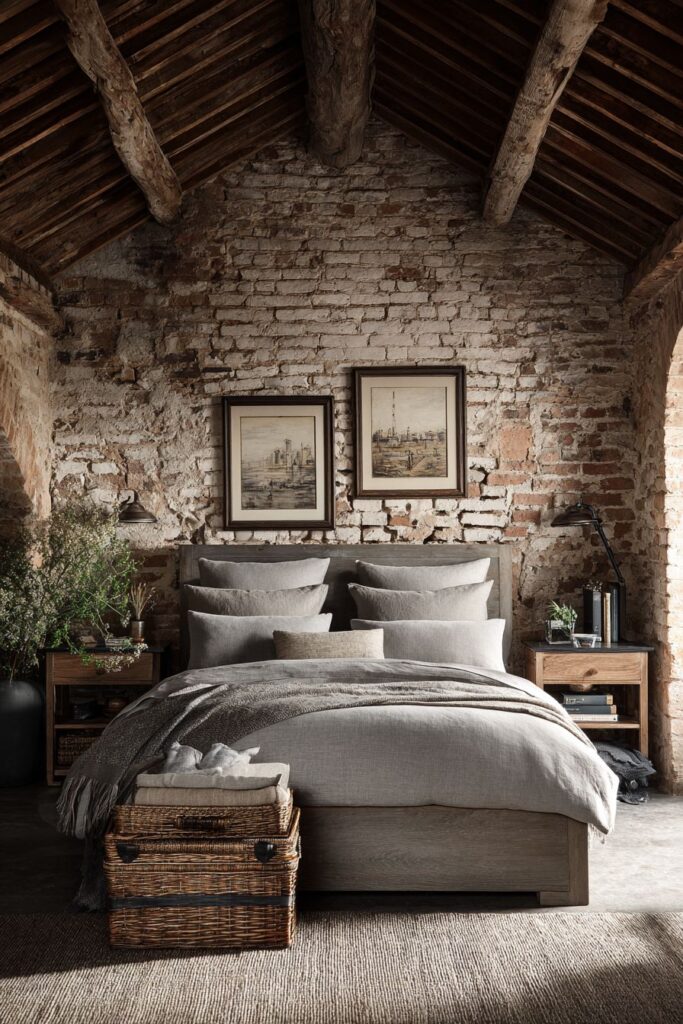
Weathered wooden ceiling beams add character overhead, their aged surfaces showing the kind of authentic wear that cannot be artificially replicated. These beams—perhaps salvaged from old structures or naturally weathered over decades—introduce horizontal lines that balance the brick wall’s vertical orientation while adding substantial architectural presence to the ceiling plane.
Vintage metal baskets provide bedside storage that maintains the industrial-rustic fusion. These galvanized or weathered steel containers—perhaps originally used for factory parts or farm produce—offer practical storage while their patinated surfaces and utilitarian forms contribute to the room’s aesthetic. The photography captures soft morning light illuminating this refined yet authentic rustic bedroom atmosphere where industrial elements and natural materials create sophisticated balance.
Key Design Tips:
- Whitewash brick walls to blend industrial and rustic styles
- Choose grey-washed wood finishes for cool-toned rustic appeal
- Add weathered ceiling beams for overhead character
- Use vintage metal baskets for industrial-style storage
- Balance rough industrial materials with refined simplicity
21. Built-In Bed Nook
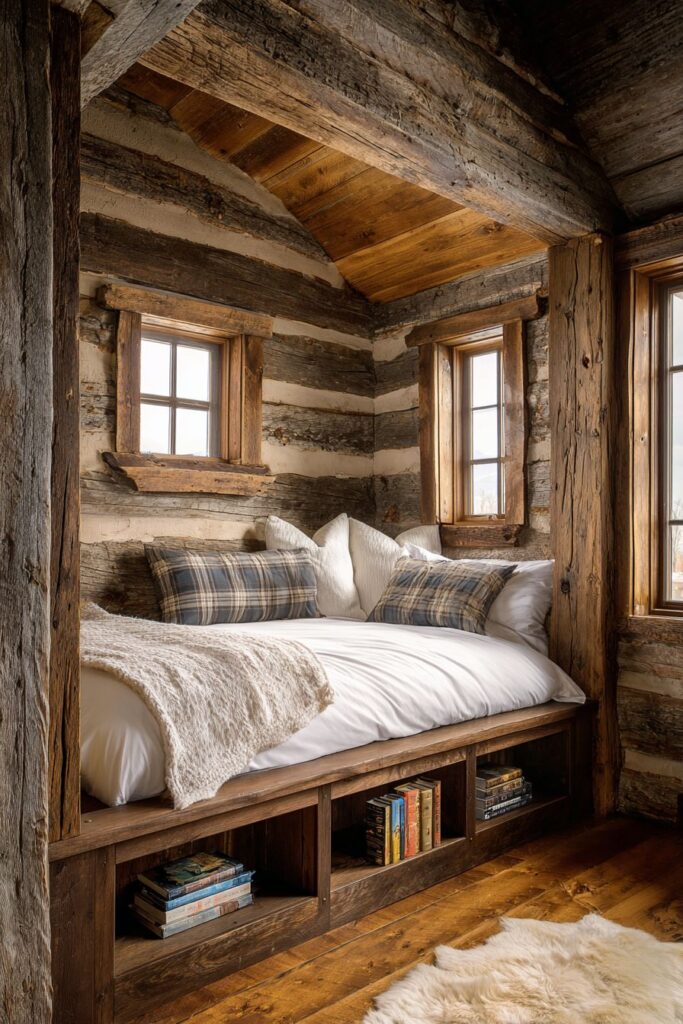
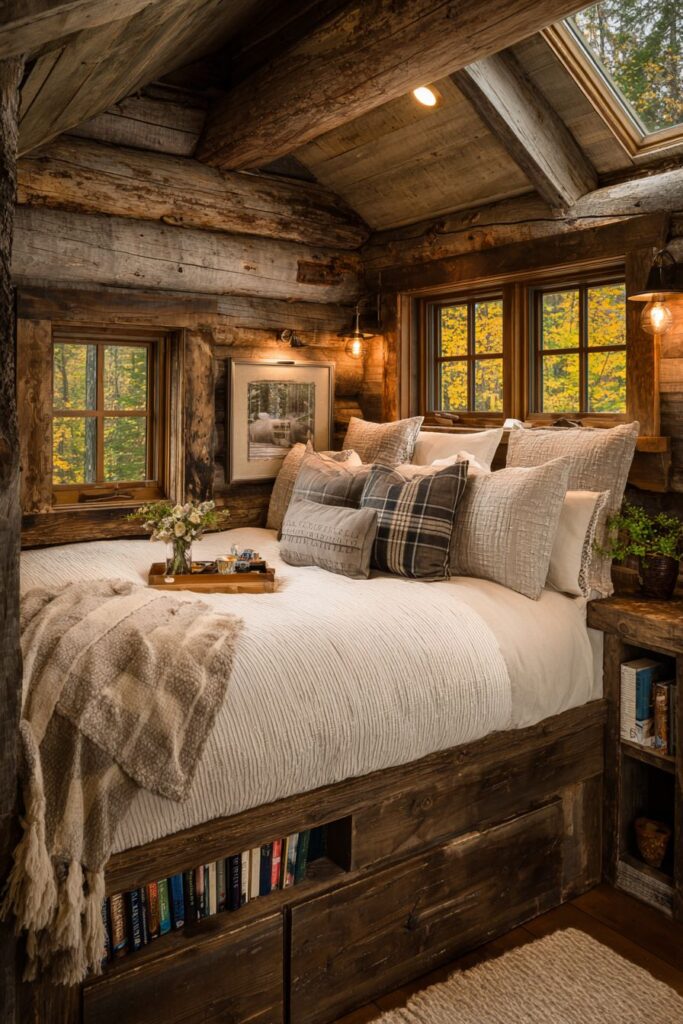
Custom-built bed nooks maximize space efficiency while creating cozy sleeping retreats. This rustic interpretation uses rough-sawn pine construction with integrated storage cubbies built directly into the nook’s structure. The rough-sawn texture—showing saw marks and natural surface variations—provides authentic rustic character while the built-in design eliminates the need for separate furniture pieces. Storage cubbies carved into the nook’s sides or base provide practical organization for books, devices, or personal items.
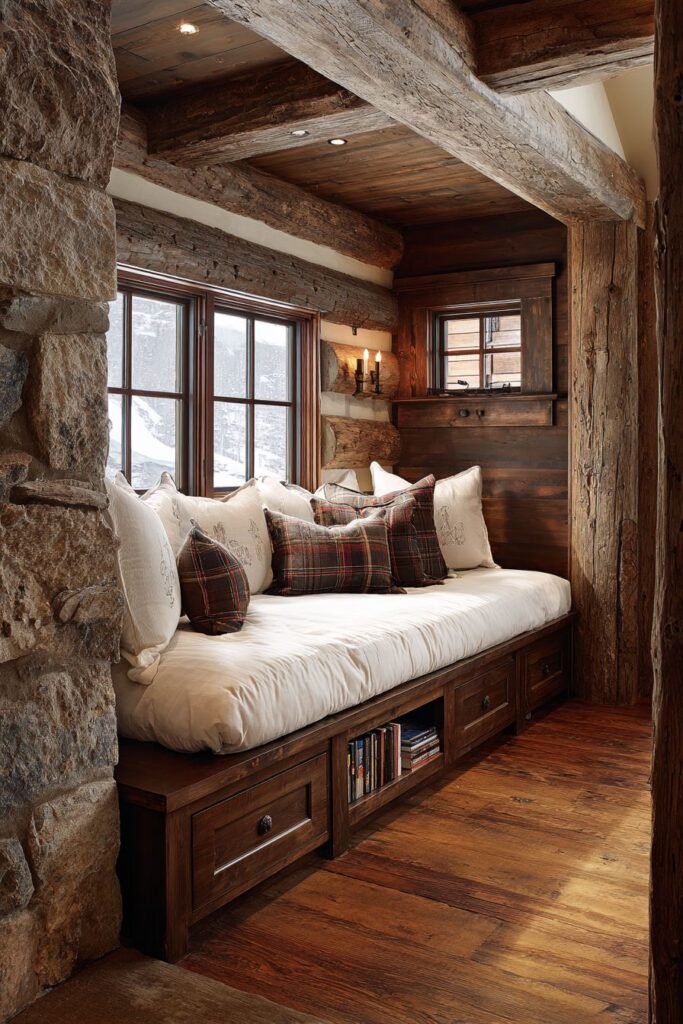
White cotton bedding creates clean contrast against the dark wood stain chosen for the pine construction. This high-contrast combination—bright white against deep brown or black stain—creates dramatic visual impact in the small nook space while maintaining the fresh, clean feeling essential to restful bedroom environments. The cotton’s natural fiber and breathable qualities align with the rustic commitment to organic materials.
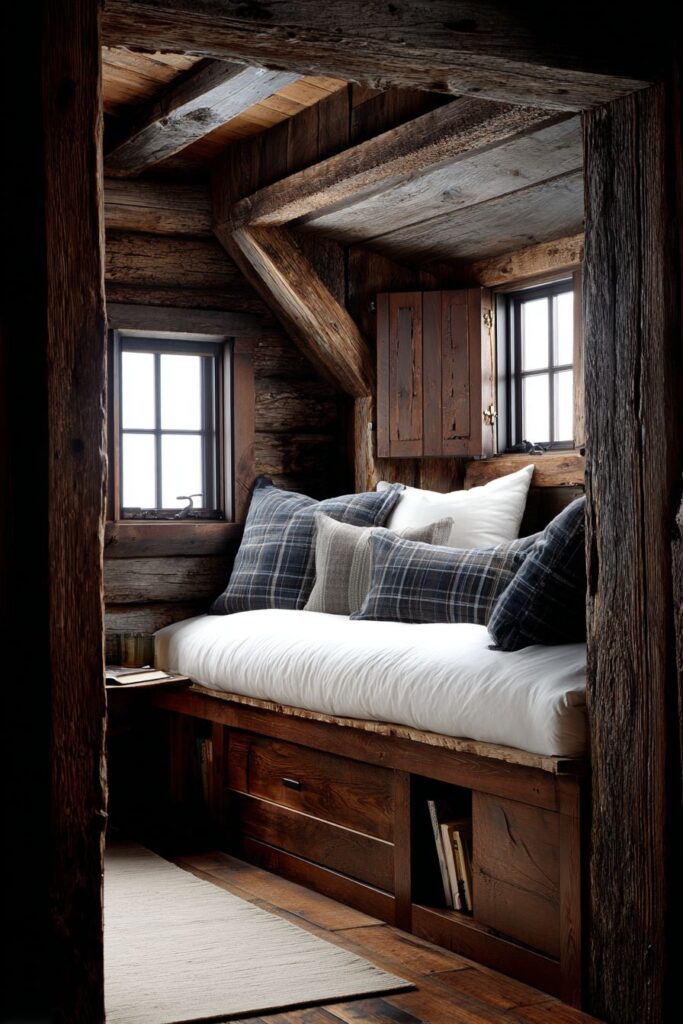
Exposed log walls showcase chinking and natural texture that reinforce the cabin aesthetic. The chinking—traditional mortar or modern synthetic compound filling gaps between logs—creates horizontal lines that add pattern and visual interest to walls. The logs’ natural variations in diameter, color, and surface texture contribute organic irregularity that makes the space feel handcrafted and unique.
Wool plaid pillows add color and traditional pattern that enhance the cozy cabin feeling. Small windows with wood shutters provide natural light and ventilation while maintaining privacy in the sleeping nook. The wide-angle photography captures how this efficient space utilization creates a cozy cabin aesthetic with careful attention to handcrafted woodwork details, proving that rustic design works beautifully in compact spaces when thoughtfully executed.
Key Design Tips:
- Build custom bed nooks with integrated storage
- Stain rough-sawn pine dark for dramatic contrast
- Expose log walls with visible chinking
- Add wool plaid textiles for cabin color and warmth
- Install shuttered windows for light control in nooks
22. Vintage Dressing Area
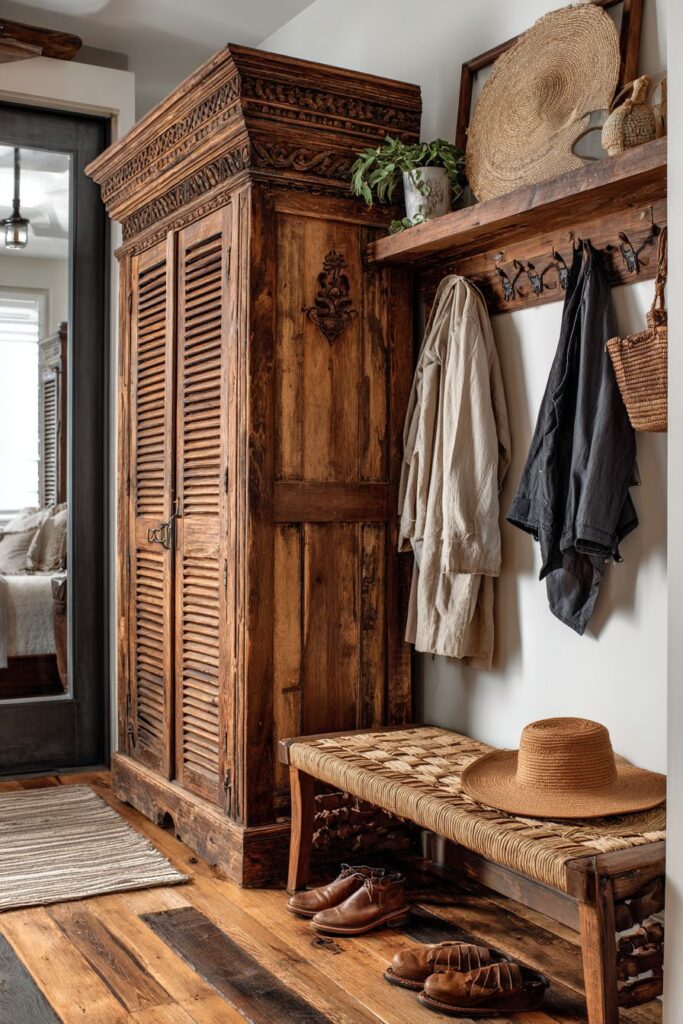
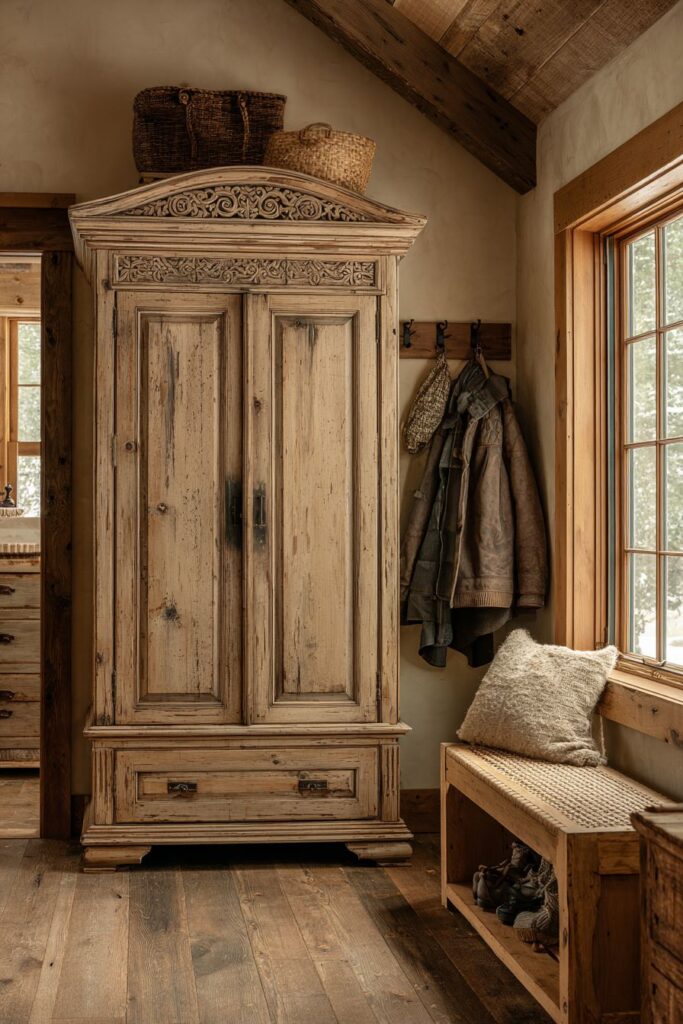
An antique armoire in original finish becomes the centerpiece of this rustic bedroom dressing area. The piece’s carved details—perhaps featuring traditional motifs like rosettes, scrollwork, or geometric patterns—show natural patina where hands have touched wood over generations. The original finish, though aged and possibly worn in places, preserves the furniture’s history and authenticity. Rather than refinishing to look new, this approach celebrates the piece’s journey through time.
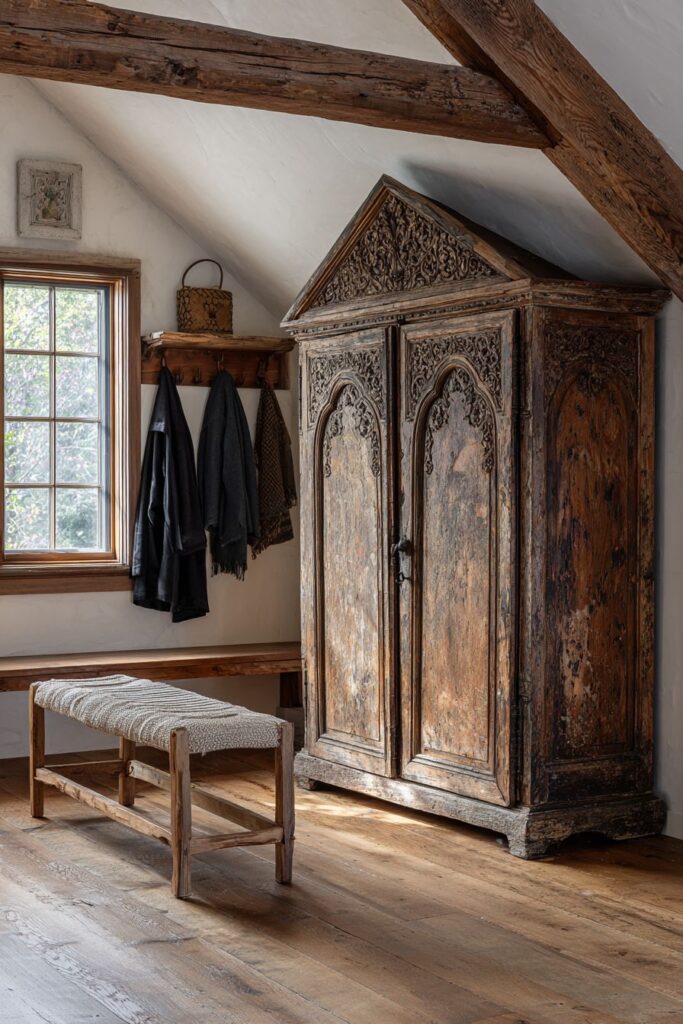
A vintage wooden bench with woven seat provides comfortable seating for dressing or putting on shoes. The bench’s construction might showcase traditional joinery visible at leg connections, while the woven seat—perhaps rush, cane, or splint—introduces organic texture and demonstrates traditional craft techniques. This piece serves both practical and aesthetic purposes, its aged wood complementing the armoire while providing necessary function.
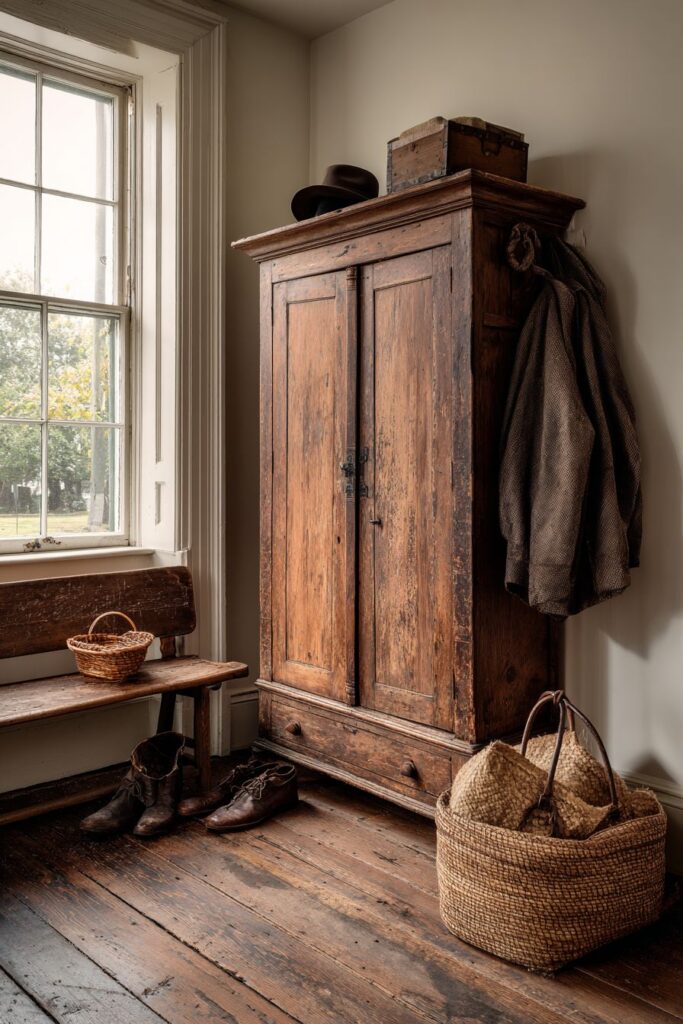
Wide-plank oak flooring grounds the dressing area with substantial natural material. The oak’s warm tones and visible grain create a neutral foundation that allows the vintage furniture pieces to command attention. The wide planks—possibly 6-8 inches across—reference historical flooring while providing the kind of solid, substantial surface that makes a room feel well-built and permanent.
Hooks crafted from iron and wood hold clothing and bags in an artful arrangement that’s both practical and decorative. These simple fixtures—perhaps hand-forged or vintage pieces—demonstrate how functional elements can contribute to a room’s aesthetic when chosen with attention to material and craft. Natural light from a transom window above bathes the area in soft illumination, with photography emphasizing authentic vintage pieces and practical storage solutions while showcasing weathered finishes that tell stories of decades of use.
Key Design Tips:
- Preserve original finishes on antique armoires
- Use vintage benches with woven seats for dressing areas
- Install wide-plank oak for substantial flooring
- Choose handcrafted hooks for functional wall art
- Add transom windows for natural overhead lighting
23. Ceiling Statement
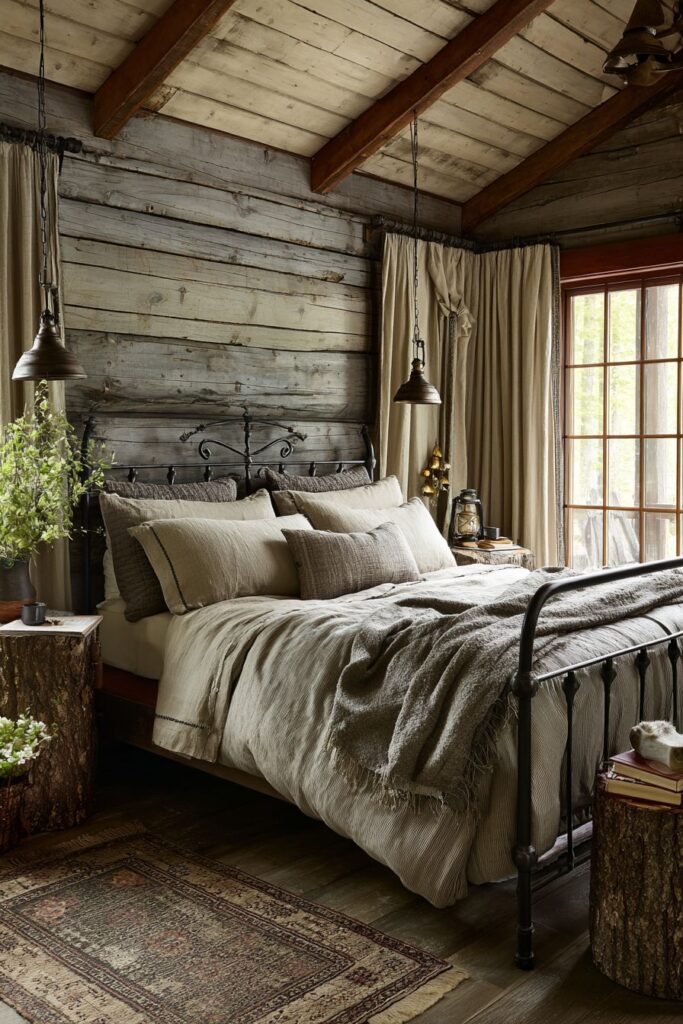
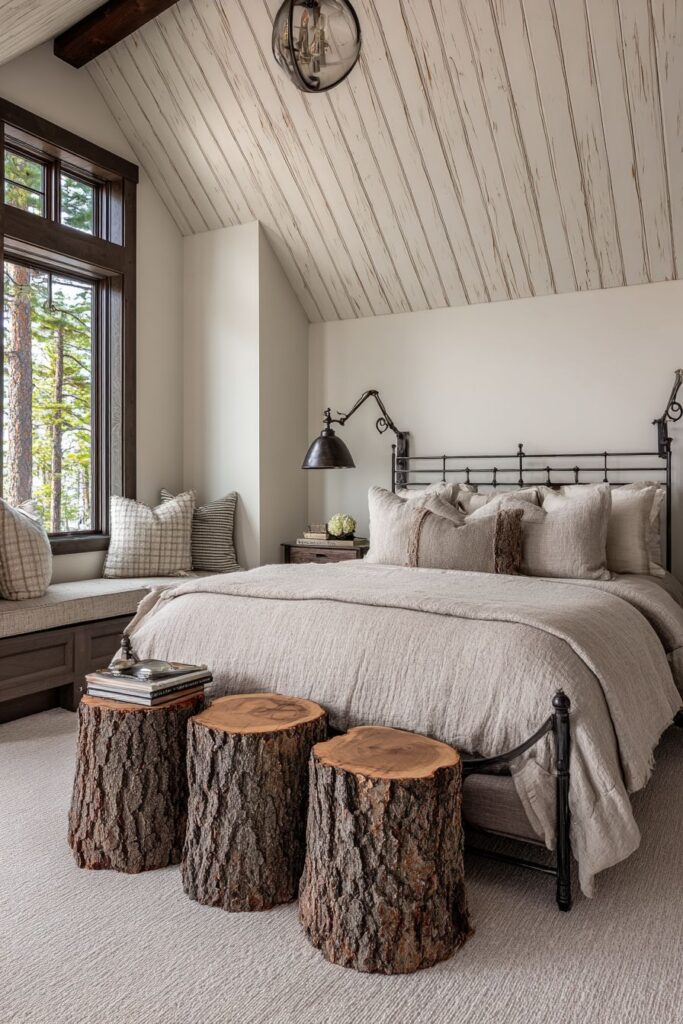
A shiplap ceiling painted in warm cream creates unexpected visual interest overhead while allowing wood texture to remain visible through the finish. This often-overlooked surface becomes a design feature when given thoughtful treatment. The horizontal lines of shiplap boards add subtle pattern while the warm cream color brightens the space without the starkness of pure white. The technique of allowing grain to show through painted finish adds depth and maintains connection to natural materials.
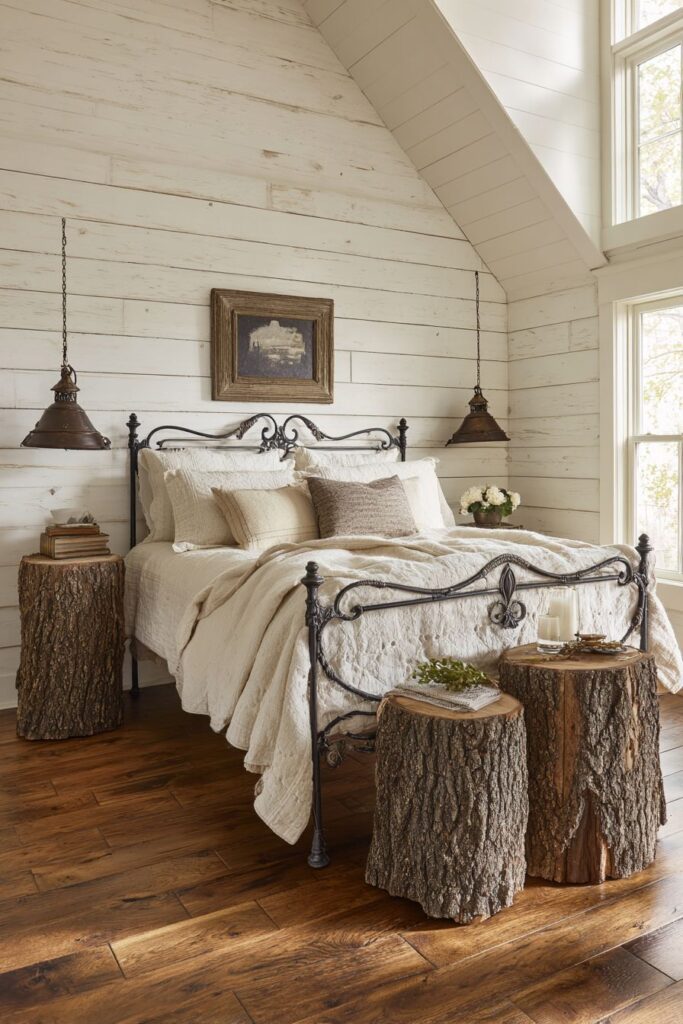
A simple iron bed with scrollwork details provides elegant structure without overwhelming the room. The bed’s decorative metalwork—perhaps concentrated in the headboard or featuring delicate curves at posts—adds refinement while maintaining the honest material quality of forged iron. Dressed in natural linen and wool bedding, the bed becomes a comfortable focal point that balances the ceiling’s visual interest.
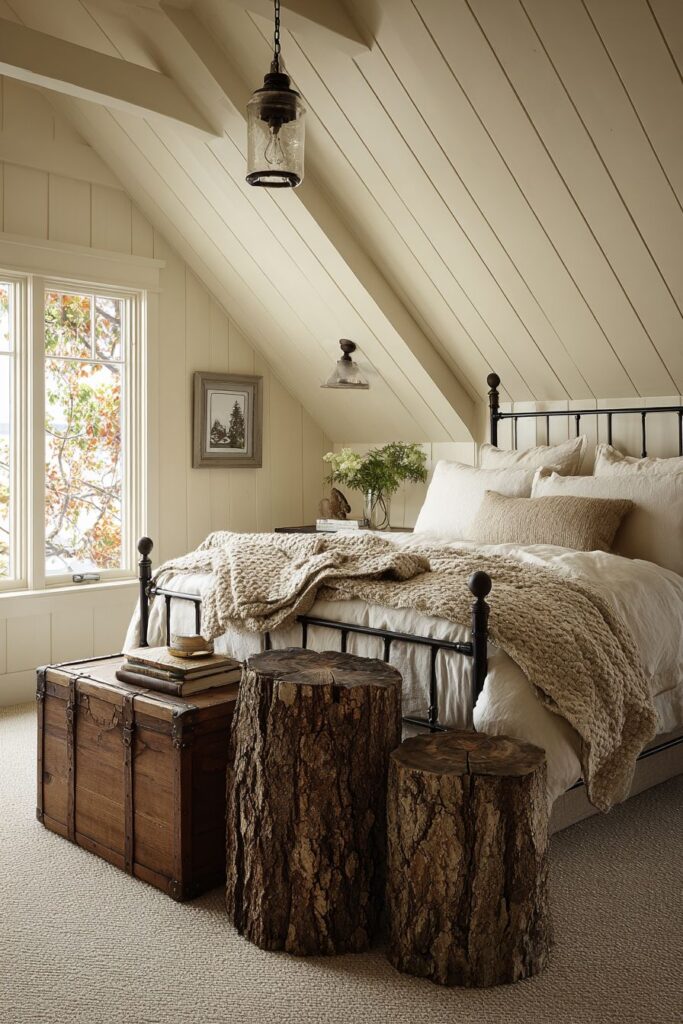
Nightstands crafted from tree stumps with bark intact bring raw organic elements bedside. These pieces celebrate the tree’s natural form—growth rings visible on top surfaces, bark texture around sides, natural taper following the trunk’s shape. Their irregular forms and organic character contrast beautifully with the bed’s geometric metalwork, demonstrating rustic design’s comfort with combining refined and rough elements.
Vintage pendants with aged brass finish provide lighting that coordinates with the ceiling treatment. These fixtures might feature glass shades, metal detailing, or exposed filament bulbs that create warm ambient glow. The aged brass—showing natural tarnish and patina—adds another layer of authenticity to the space. Professional photography captures how these refined and rough elements blend successfully with natural window light highlighting authentic rustic materials and varied textures throughout this thoughtfully designed bedroom.
Key Design Tips:
- Paint ceiling shiplap while preserving grain texture
- Choose iron beds with refined scrollwork details
- Use tree stump nightstands for organic bedside surfaces
- Install vintage brass pendants for warm ambient lighting
- Balance refined metalwork with rough natural elements
24. Textile Wall Art
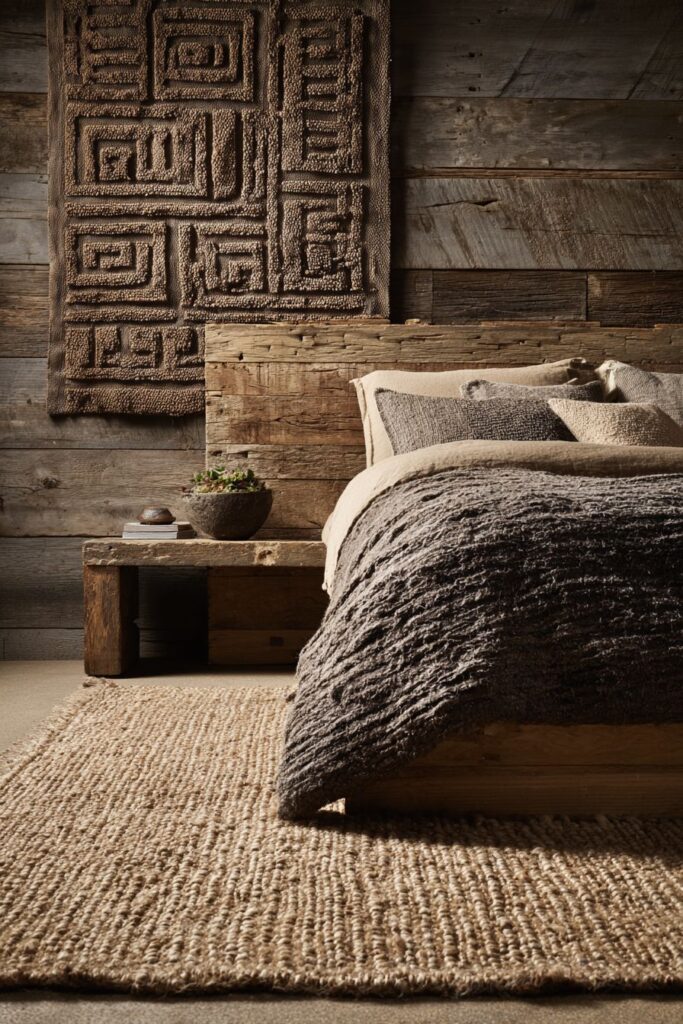
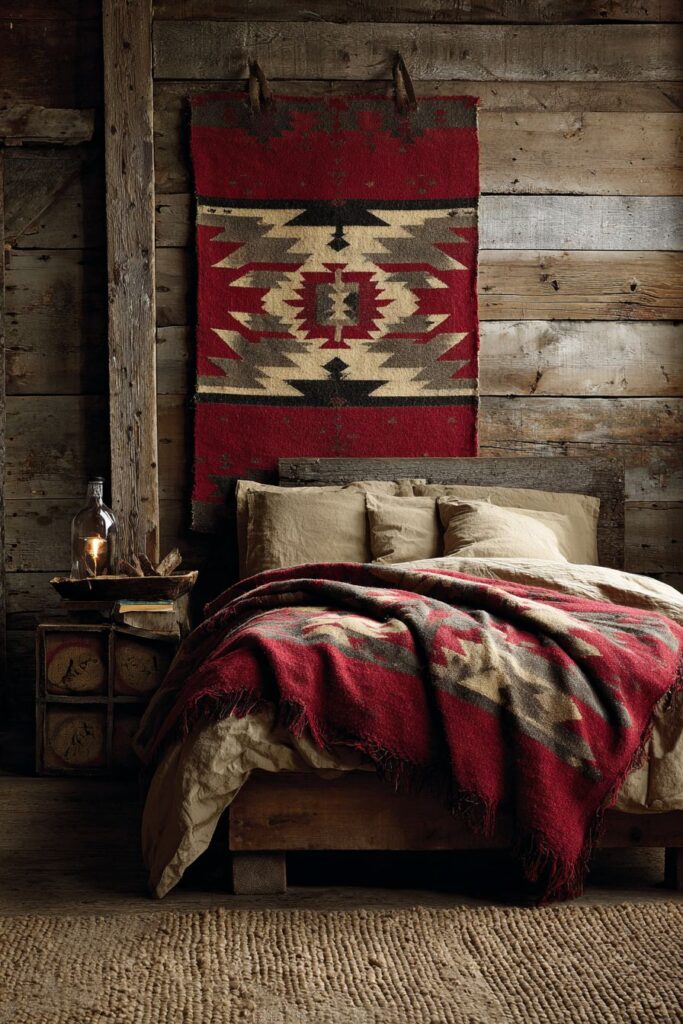
A vintage wool blanket mounted on a weathered wood frame serves as an alternative to traditional headboards. This textile wall hanging—perhaps featuring geometric patterns in traditional colors like rust, navy, and cream—introduces softness and color to the wall while celebrating handcraft and heritage textile design. The blanket’s weave texture and natural wool fibers add tactile interest while the mounting on weathered wood creates gallery-worthy presentation of this functional art piece.
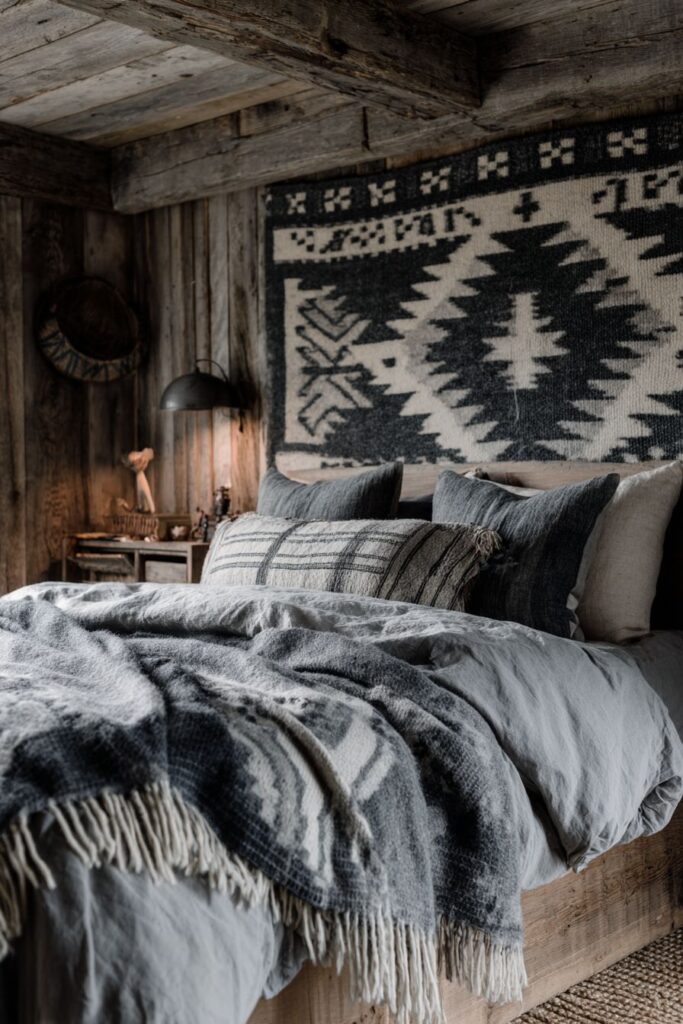
A platform bed in natural oak provides simple structure that doesn’t compete with the textile focal point. The oak’s natural finish showcases grain patterns and warm honey tones while the platform’s low profile maintains visual simplicity. Dressed in organic cotton bedding, the bed remains intentionally understated, allowing the wall hanging above to command attention as the room’s primary decorative element.
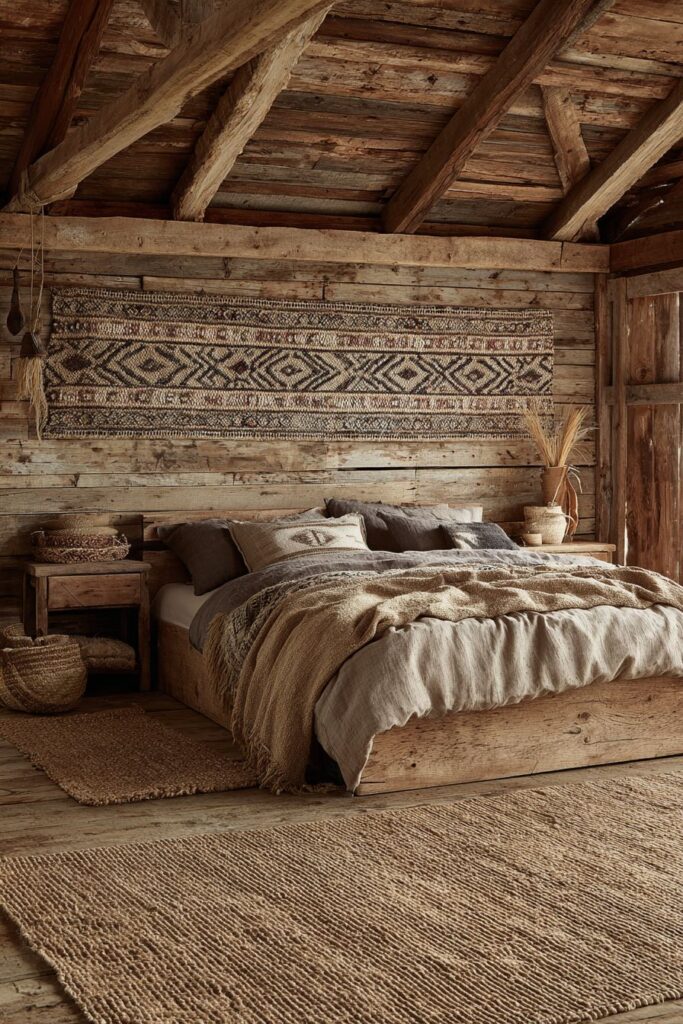
Walls of horizontal planking show knots and grain variations that add texture without pattern. This simple treatment—perhaps using pine, cedar, or hemlock boards—creates subtle visual interest through natural wood characteristics rather than added decoration. The horizontal orientation can make rooms feel wider while the natural variations in grain and knot placement ensure no two walls look exactly alike.
A woven jute rug grounds the space with substantial natural fiber texture underfoot. The rug’s chunky weave and natural color complement the organic cotton bedding while its durability makes it practical for bedroom use. Detail photography focuses on textile texture and natural fiber weave, with soft diffused lighting emphasizing the handcrafted organic quality that defines this rustic bedroom’s textile-forward approach to decoration.
Key Design Tips:
- Mount vintage blankets as textile wall art
- Frame textiles on weathered wood for rustic presentation
- Keep bed frames simple when featuring textile focal points
- Use horizontal planking for subtle wall texture
- Ground textile-focused rooms with woven jute rugs
25. Barn Door Elegance
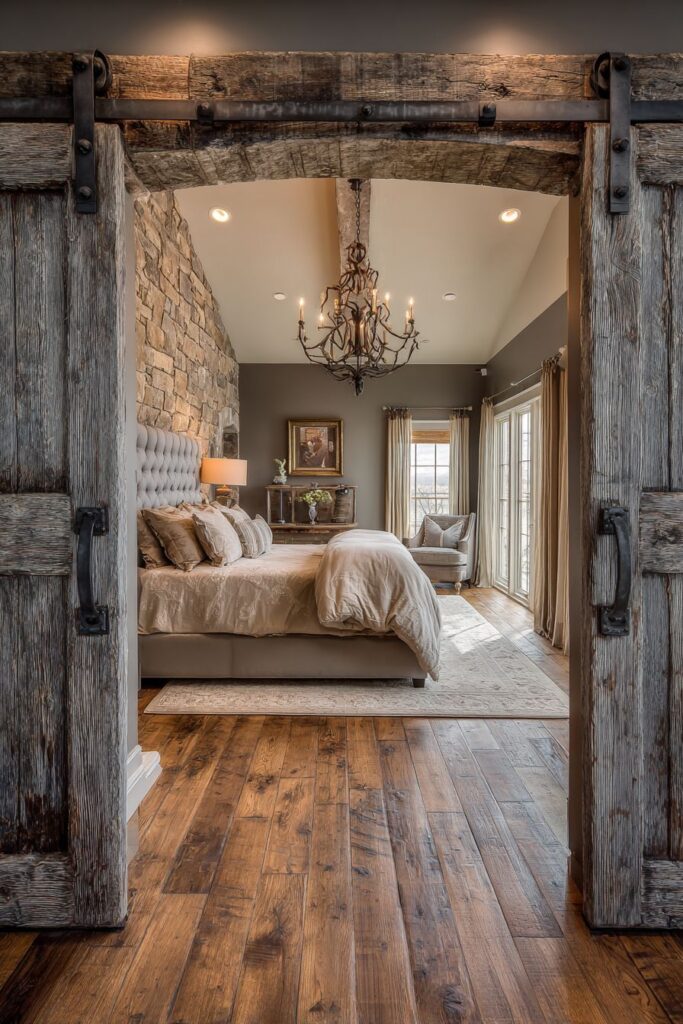
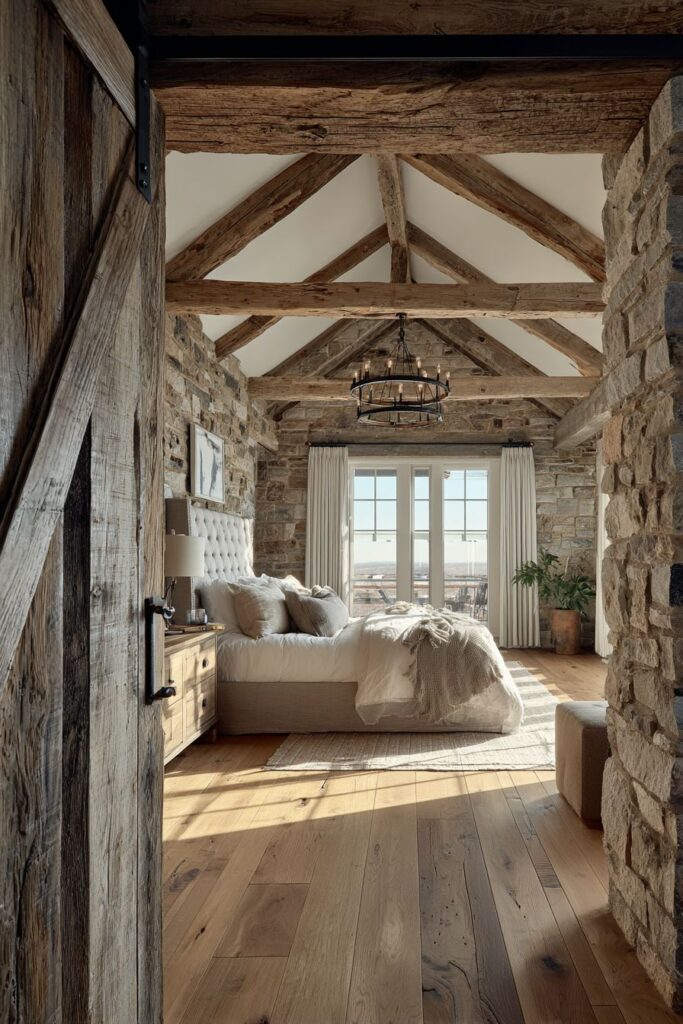
A sliding barn door room divider in reclaimed wood creates functional art that divides space while maintaining visual flow. The door’s original hardware—perhaps featuring vintage rollers, handles, and track system—remains intact and functional, its weathered grey finish and authentic wear patterns contributing to the bedroom’s character. This architectural element serves practical purposes—creating privacy for sleeping or dressing areas—while making a strong design statement that anchors the room’s rustic aesthetic.
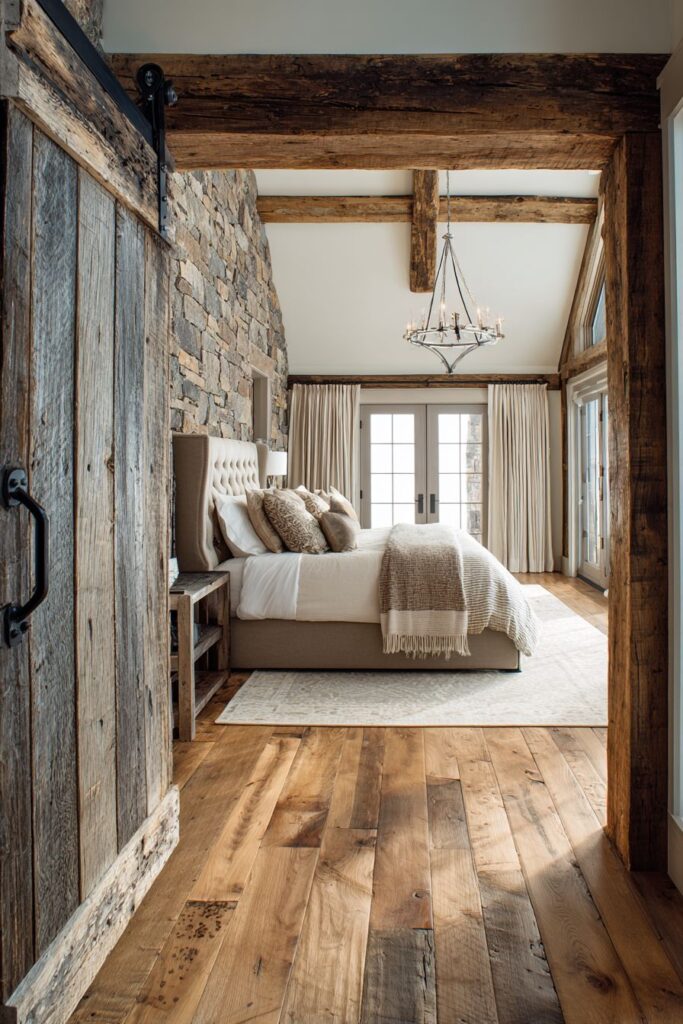
Beyond the barn door, a bed with tufted linen headboard and neutral bedding provides a more refined rustic element. The tufted headboard—featuring deep buttons creating regular surface indentations—introduces soft texture and subtle pattern while the natural linen material maintains the organic fiber commitment. Neutral bedding in shades of cream, oatmeal, or soft grey creates a serene sleeping environment that feels both luxurious and unpretentious.
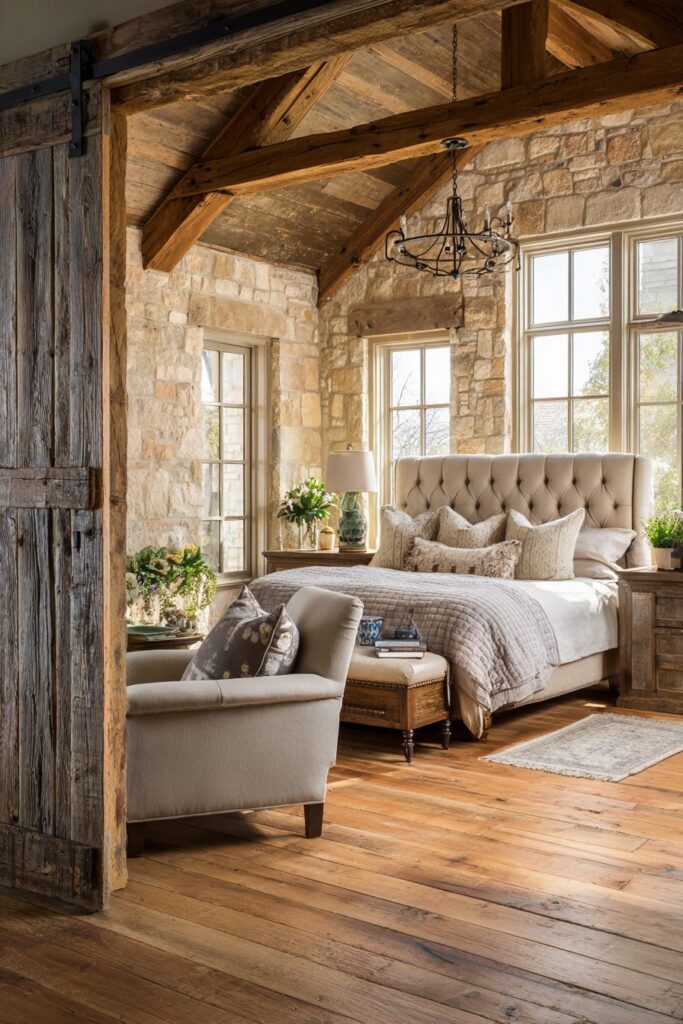
A stone accent wall behind the bed introduces another elemental material, its natural texture and color variations creating visual interest without pattern or artifice. The stone’s irregular surface—whether stacked ledgestone, river rock, or cut stone—catches light differently throughout the day, creating ever-changing shadow patterns that add depth and dimension to the wall plane.
Wide oak planks with natural finish cover floors, their substantial width and warm color grounding the space with solid natural material. A wrought iron chandelier provides ambient lighting, its dark metal contrasting with lighter walls and textiles while maintaining the room’s commitment to honest materials. Wide-angle photography captures the spatial flow and authentic rustic materials with natural daylight streaming through windows, highlighting this refined rustic bedroom aesthetic where quality craftsmanship and natural materials create sophisticated yet approachable design.
Key Design Tips:
- Install sliding barn doors with original hardware
- Choose tufted linen headboards for refined rusticity
- Incorporate stone accent walls for elemental texture
- Use wide oak planks for substantial natural flooring
- Add wrought iron chandeliers for ambient elegance
Why These Rustic Bedroom Designs Represent the Best in Natural Living
These twenty-five rustic bedroom designs showcase the finest examples of how natural materials, authentic craftsmanship, and thoughtful design principles create spaces that nurture both body and spirit. Each design demonstrates core rustic bedroom elements that have made this aesthetic enduringly popular among homeowners seeking refuge from modern life’s artificial environments.
The reclaimed wood bedroom designs featured throughout this collection highlight sustainability while celebrating material history. Barn wood accent walls, salvaged timber beams, and repurposed furniture pieces bring environmental responsibility together with visual character. These reclaimed materials reduce demand for new lumber while offering rich patinas, varied grain patterns, and authentic weathering that new wood cannot replicate. The best rustic bedrooms understand that true luxury lies in materials with stories to tell—wood that has supported barns through generations, flooring that has felt countless footsteps, furniture that has served multiple families.
Natural fiber textiles form another essential component of superior rustic bedroom design. From Belgian linen bedding to wool blankets, cotton quilts to jute rugs, these organic materials provide sensory pleasure while avoiding synthetic chemicals and artificial treatments. The best rustic bedrooms layer these natural textiles thoughtfully—combining varied textures like chunky knits with smooth linens, rough burlap with soft sheepskin. This textile layering creates visual depth and tactile richness while maintaining the honest material focus that defines authentic rustic style.
Architectural elements like exposed beams, stone fireplaces, and vaulted ceilings elevate rustic bedrooms from simple spaces to immersive experiences. These structural features—particularly when original to historic buildings or crafted using traditional techniques—add drama and character impossible to achieve through decoration alone. The best designs celebrate rather than conceal these architectural bones, making exposed beams, rough-hewn timbers, and natural stone integral to the room’s identity.
The rustic bedroom color palette consistently favors earth tones and natural hues—warm browns of aged wood, soft creams of natural linen, gentle greys of weathered finishes, and the varied tones found in natural stone. These colors create restful environments conducive to sleep while maintaining visual interest through subtle variations rather than bold contrasts. The best rustic bedrooms understand that sophisticated color schemes can emerge from nature’s palette when materials are chosen for their inherent beauty.
Vintage and antique furniture pieces contribute both functionality and historical depth to exceptional rustic bedrooms. Repurposed dressers, salvaged doors as headboards, vintage trunks as nightstands—these elements bring unique character while reducing consumption of new resources. The best designs preserve original hardware, authentic patinas, and even imperfections that tell each piece’s story. This collected-over-time aesthetic creates rooms that feel personally curated rather than commercially decorated.
Lighting strategies in top rustic bedrooms prioritize natural daylight while incorporating warm artificial sources for evening hours. Large windows, minimal treatments, and strategic placement maximize connection to outdoor light and views. Edison bulb fixtures, wrought iron chandeliers, and vintage lanterns provide ambient lighting that complements rather than competes with daylight. The best designs understand that lighting affects not just visibility but mood, using warm tones and layered sources to create atmosphere.
Storage solutions in exceptional rustic bedrooms balance practicality with aesthetic appeal. Open shelving from reclaimed timber, woven baskets, vintage suitcases, built-in drawers, and repurposed armoires provide organization while contributing to the room’s visual story. The best designs reject the concealment-at-all-costs approach in favor of storage that’s both functional and beautiful, where items become part of the room’s curated aesthetic.
The connection to nature represents perhaps the most crucial element in superior rustic bedroom design. Whether through abundant windows bringing outdoor views inside, natural materials that honor their origins, or organic forms like live-edge wood and raw stone, these bedrooms maintain tangible links to the natural world. In our increasingly digital existence, this connection to authentic materials and natural beauty provides essential grounding. The best rustic bedrooms create sanctuaries where inhabitants can disconnect from artificial stimulation and reconnect with the elemental comfort of wood, stone, fiber, and natural light.
These designs also demonstrate remarkable versatility—rustic aesthetics work equally well in compact urban apartments and sprawling country estates, in historic buildings and new construction, in minimalist schemes and richly layered interiors. The best examples prove that rustic style isn’t about specific furniture pieces or rigid rules but about honoring natural materials, celebrating craftsmanship, and creating spaces that feel authentic and unpretentious.
Quality craftsmanship unites all exceptional rustic bedrooms. Whether showcasing hand-hewn beams with visible adze marks, hand-planed bed frames with tool marks intact, or hand-woven textiles displaying individual variation, these spaces celebrate the human hand’s role in creating beautiful functional objects. In an age of mass production, this attention to craft and detail represents true luxury—pieces made with skill, care, and attention to material properties.
The rustic bedroom aesthetic ultimately succeeds because it addresses fundamental human needs: connection to nature, appreciation for authentic materials, desire for spaces with character and history, and longing for environments that feel both beautiful and real. These twenty-five designs represent the finest expressions of these principles, offering inspiration for creating bedrooms that nurture, restore, and inspire through honest beauty and natural comfort.
Conclusion
Creating a rustic bedroom that truly resonates requires more than simply purchasing distressed furniture or adding faux wood paneling. As these twenty-five designs demonstrate, authentic rustic style emerges from thoughtful material choices, respect for craftsmanship, and commitment to natural beauty in all its imperfect glory. Whether you’re drawn to the refined simplicity of Scandinavian-inspired rustic design, the robust character of mountain lodge aesthetics, or the collected charm of farmhouse style, the principles remain constant: honor natural materials, celebrate authentic patina and age, layer organic textures thoughtfully, and create spaces that feel connected to the natural world.
Begin your rustic bedroom transformation by identifying which elements resonate most strongly with your personal style and practical needs. Perhaps you’ll start with a statement piece—a reclaimed wood headboard, a vintage armoire, or a stone accent wall—and build your design around it. Or you might begin more subtly, introducing natural fiber textiles, exchanging synthetic bedding for organic cotton and linen, or replacing artificial lighting with warm Edison bulb fixtures. Remember that authentic rustic style develops over time through considered choices rather than instant room makeovers.
Don’t fear imperfection or age—these are rustic design’s greatest assets. That weathered dresser with worn drawer pulls tells stories. Those exposed beams with visible tool marks celebrate human craftsmanship. The natural variations in your wood flooring or stone fireplace create visual interest impossible to achieve through manufactured uniformity. Embrace these characteristics as features rather than flaws, and your bedroom will develop the genuine character that makes rustic spaces so appealing.
Most importantly, create a bedroom that serves your needs while nurturing your spirit. The best rustic bedrooms aren’t museum displays of perfect styling—they’re lived-in spaces that provide comfort, promote rest, and offer refuge from the outside world. Layer your bed with textiles that invite touch, position furniture to maximize natural light and views, incorporate storage solutions that keep your space organized yet beautiful, and surround yourself with materials that connect you to the natural world. Your rustic bedroom should be a personal sanctuary where you can truly rest, restore, and reconnect with what matters most.
"As an Amazon Associate, I earn from qualifying purchases."
