
Round tables possess an inherent charm that makes them uniquely versatile in interior design. Their circular shape promotes conversation and creates an intimate atmosphere that rectangular tables simply cannot match. Whether you’re styling a dining room centerpiece, a cozy breakfast nook, or an elegant foyer accent table, understanding the principles of round table decor transforms these surfaces into stunning focal points.
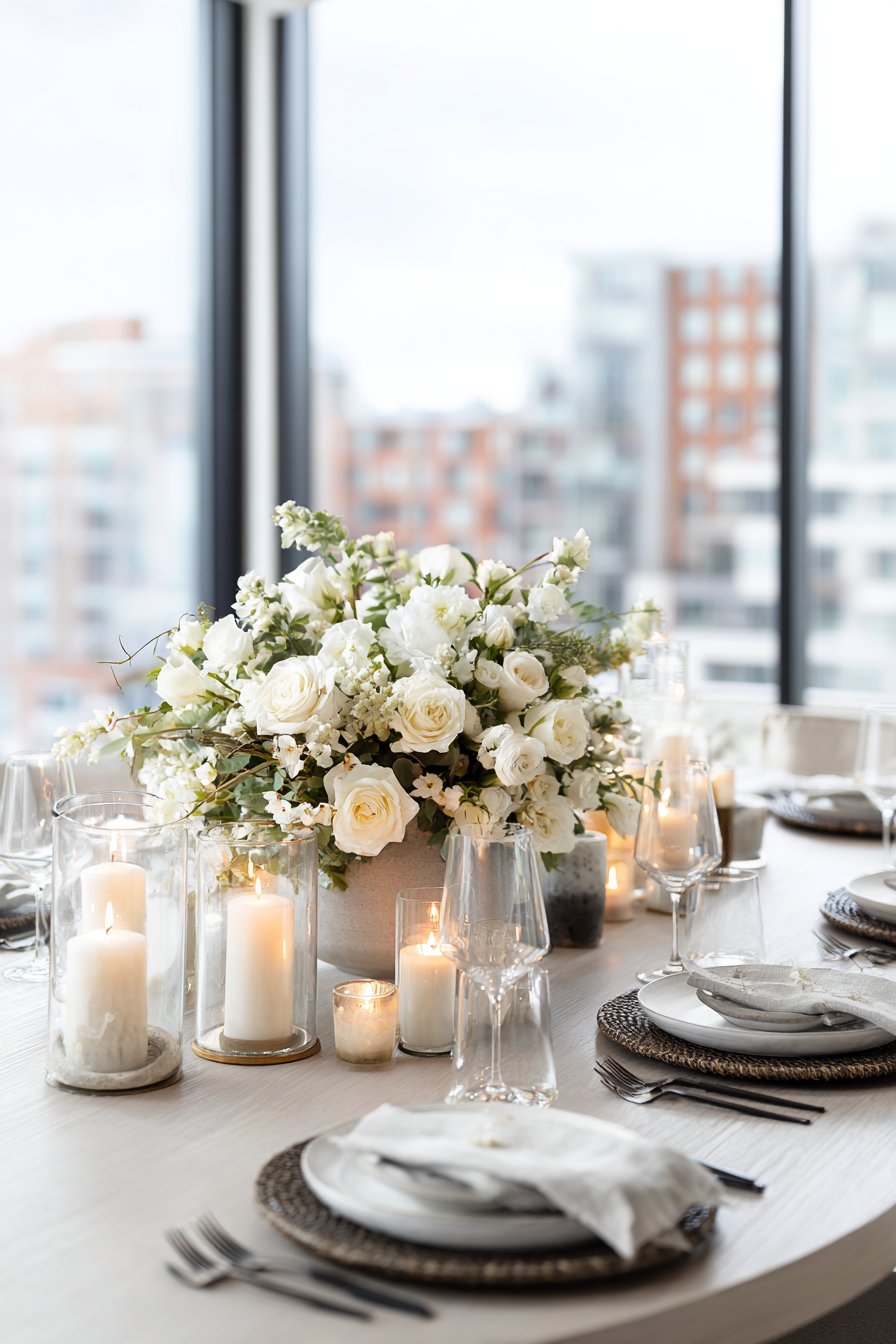
The beauty of round tables lies in their democratic seating arrangement where every guest enjoys equal status and comfortable sightlines. This geometric advantage extends to decorating possibilities, where symmetry and asymmetry both work beautifully depending on your design goals. From minimalist modern aesthetics to elaborate traditional displays, round tables accommodate virtually every style preference while maintaining their graceful proportions.
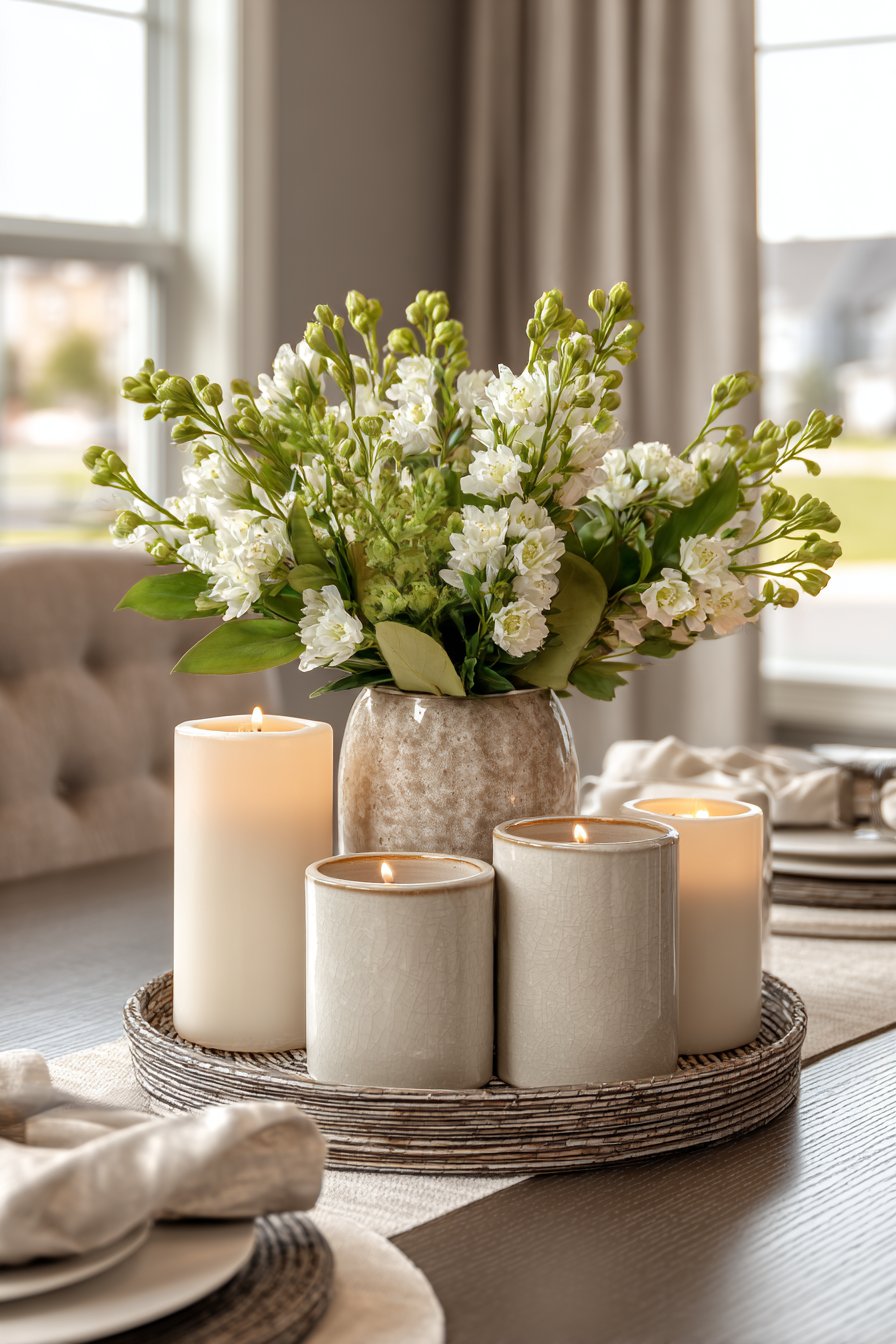
This comprehensive guide explores the most effective decorating strategies for round tables across various settings and purposes. You’ll discover how to balance visual weight, create harmonious centerpieces, and maximize functionality without sacrificing style. These proven techniques help you transform ordinary round tables into extraordinary design elements that enhance your entire space.
1. Centerpiece Sizing and Proportion
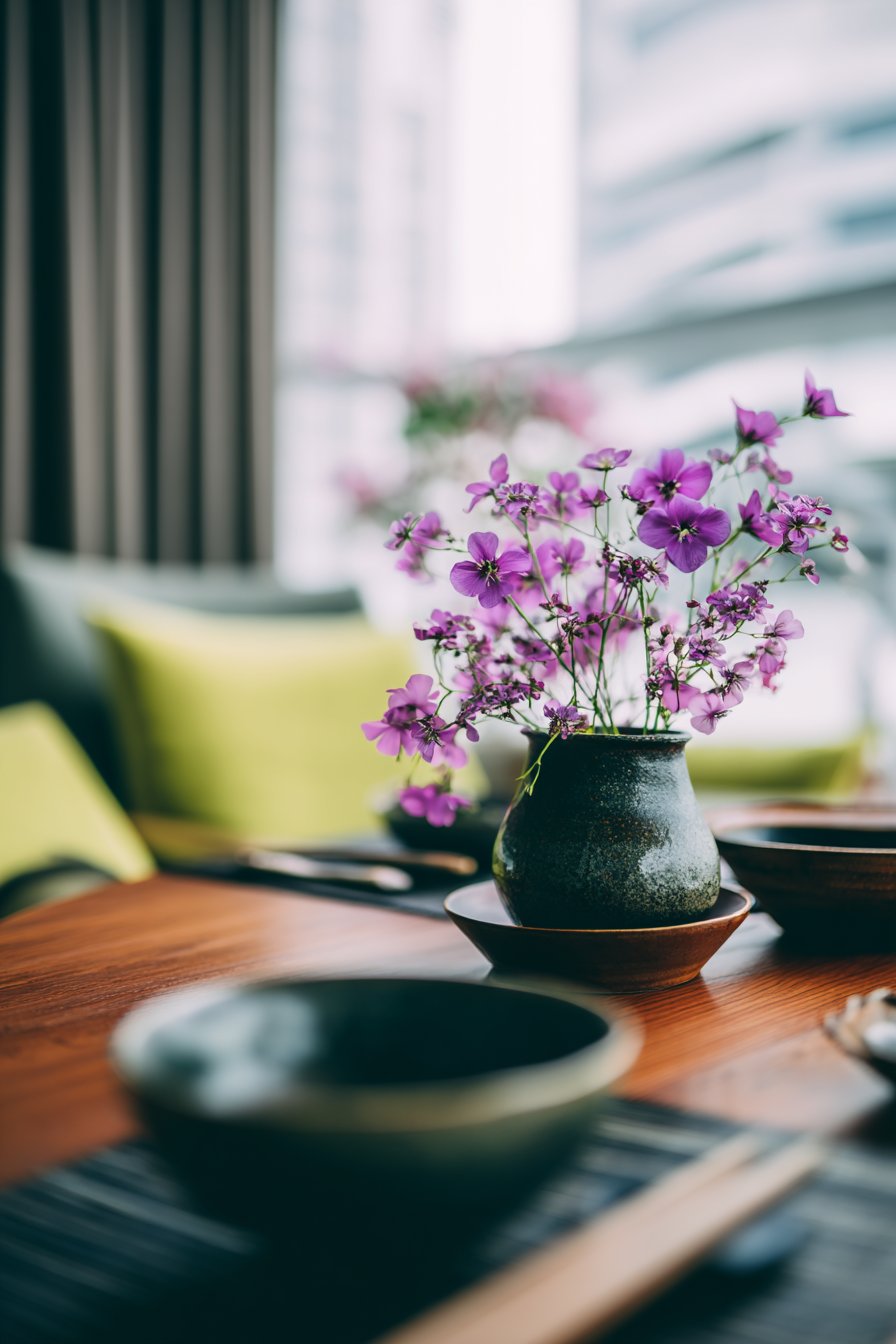
The foundation of successful round table decor begins with understanding scale relationships between your table diameter and centerpiece dimensions. Professional designers follow the one-third rule, which states that centerpieces should occupy roughly one-third of the table’s diameter. This proportion creates visual harmony while leaving adequate space for place settings, serving dishes, or decorative accents around the arrangement.
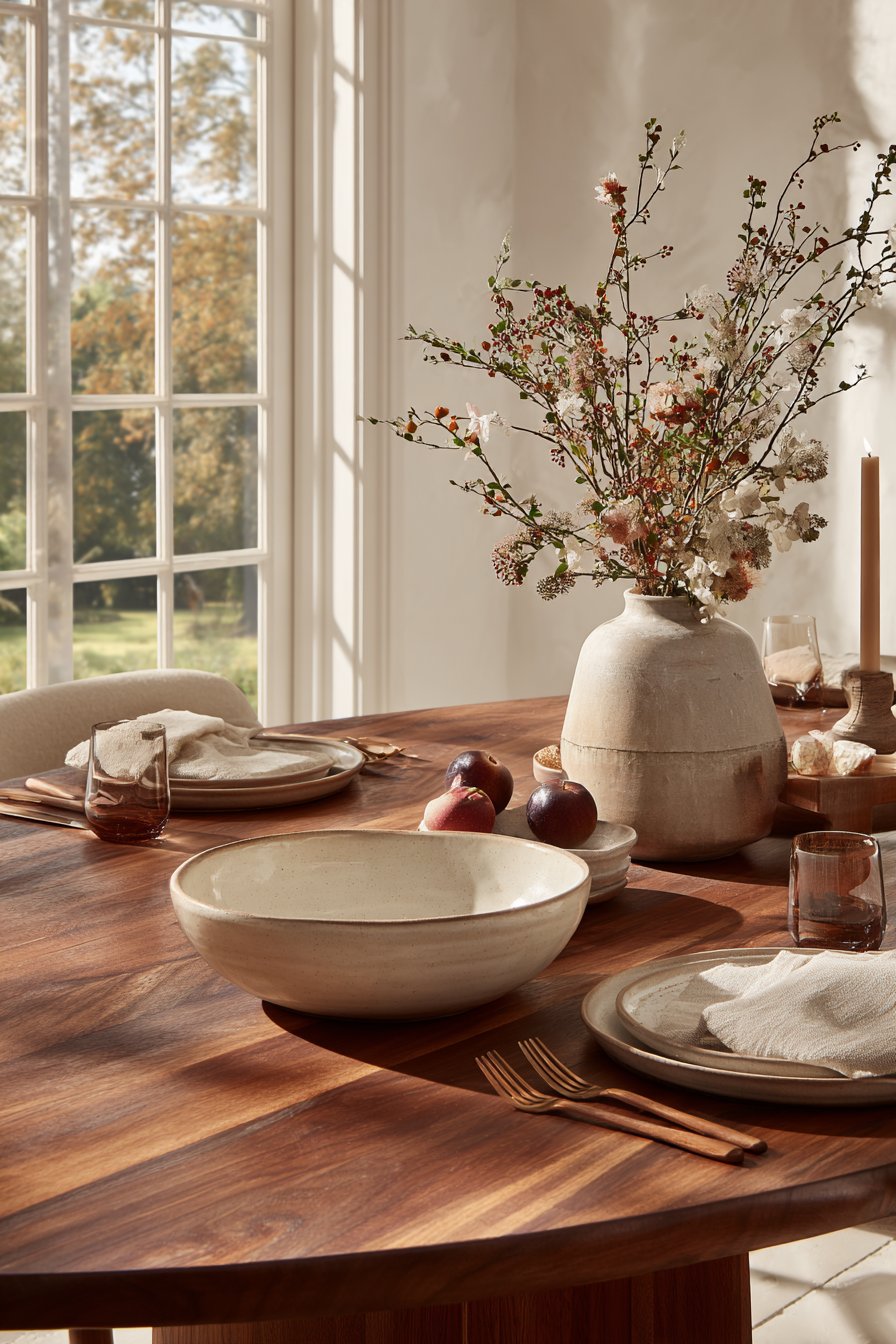
Measuring your table accurately determines centerpiece boundaries and prevents common decorating mistakes. For a 48-inch round dining table, your centerpiece should measure approximately 16 inches in diameter. This calculation provides comfortable clearance for dining while maintaining the centerpiece as a clear focal point. Adjusting this ratio slightly for coffee tables or accent tables creates different effects based on the table’s primary function.
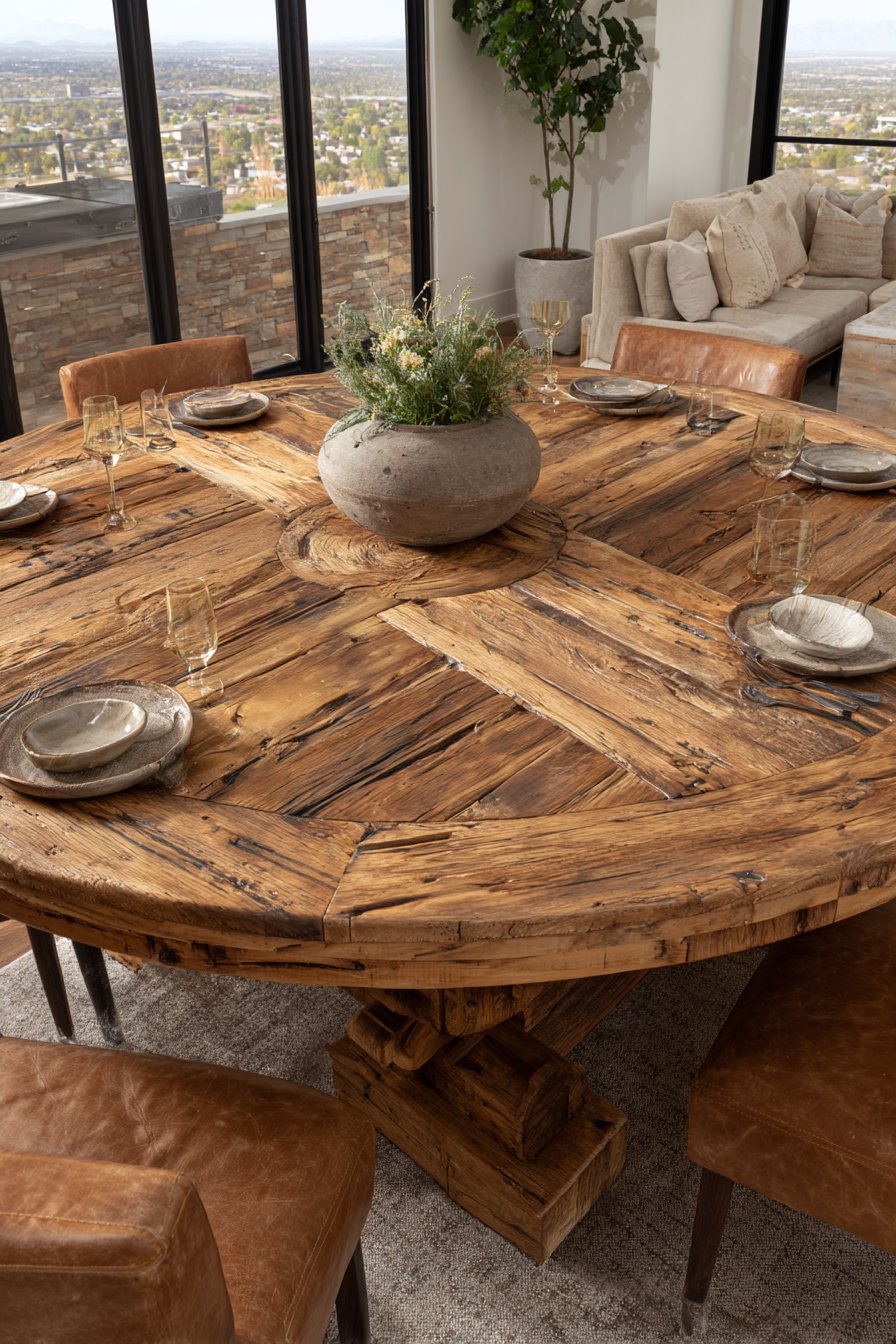
Height considerations prove equally important as width when selecting centerpieces. Arrangements should remain below eye level during conversations, typically under 12 inches for dining tables. Taller arrangements work beautifully on foyer tables or console tables where people view them while standing. Consider sightlines carefully to ensure your beautiful centerpiece enhances rather than obstructs social interaction.
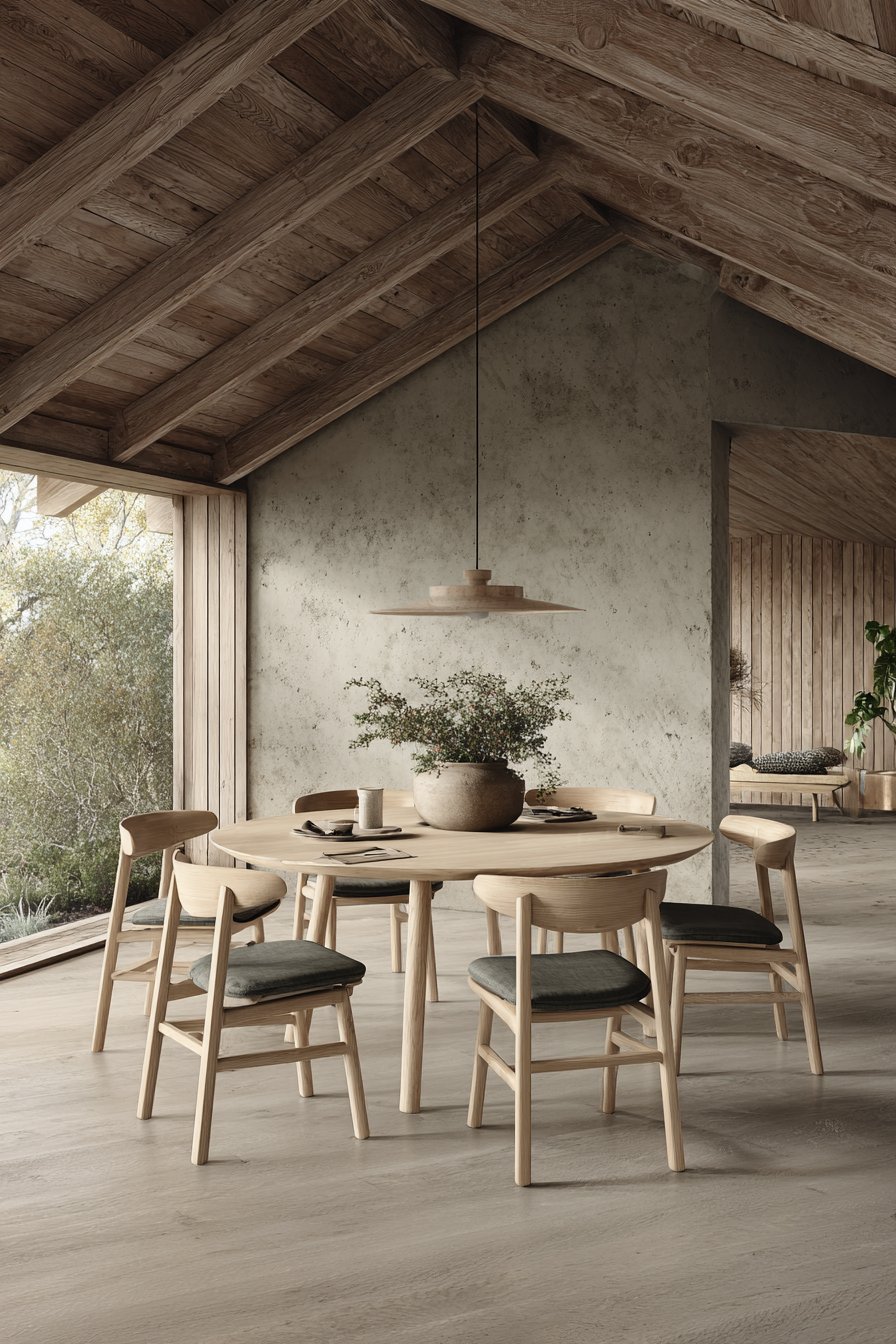
- Measure your table diameter before shopping for centerpieces or containers
- Calculate one-third of the diameter for ideal centerpiece width
- Keep dining table centerpieces under 12 inches tall for conversation comfort
- Use taller arrangements (15-24 inches) on accent tables in entryways
- Test proportions with temporary items before committing to purchases
- Consider seasonal rotations to maintain fresh visual interest throughout the year
2. Layered Textures and Materials
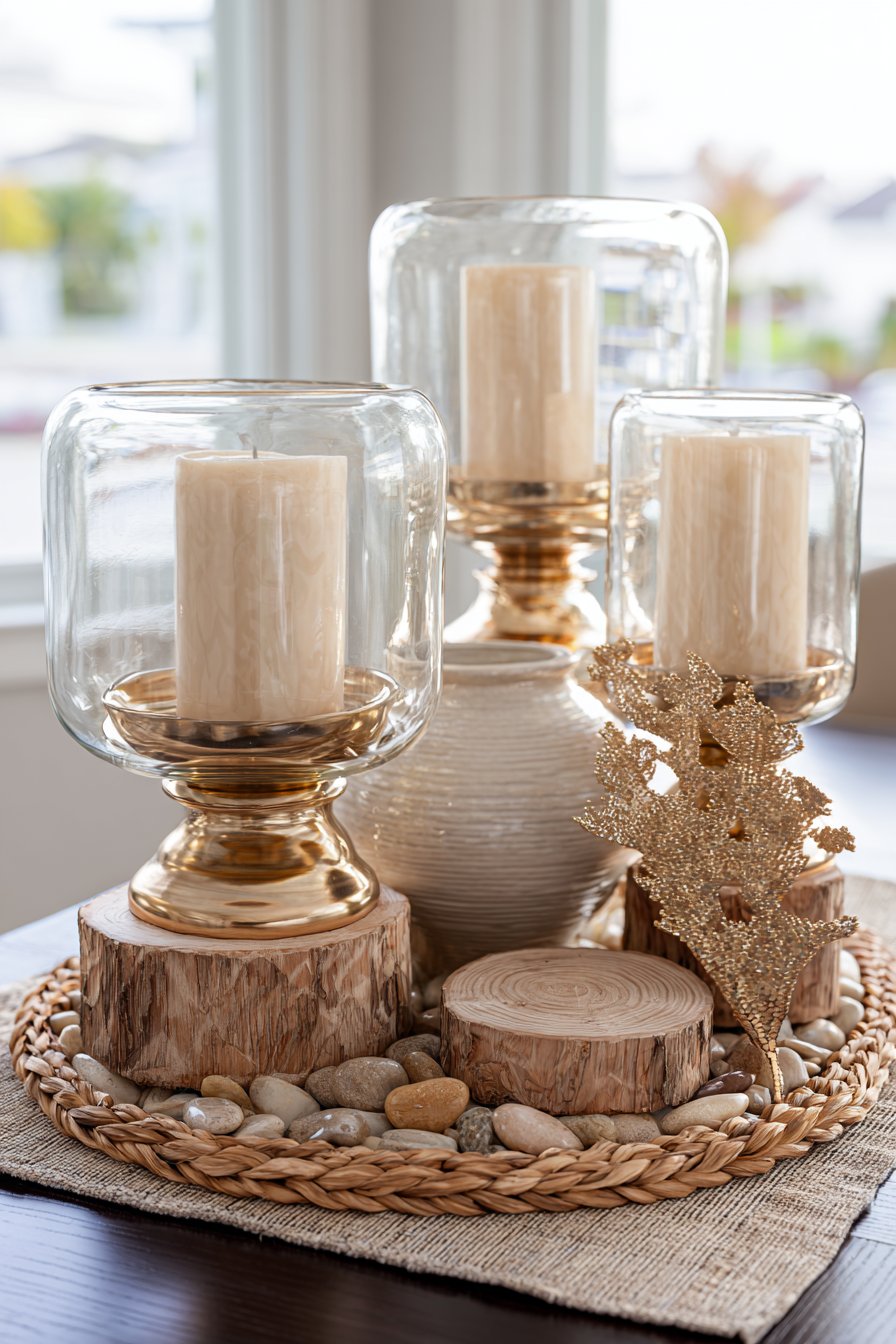
Creating depth through strategic material combinations elevates round table displays from ordinary to extraordinary. Mixing smooth glass with rough natural fibers, polished metals with matte ceramics, or glossy finishes with weathered wood produces visual interest that engages multiple senses. These textural contrasts work particularly well on round tables where viewers appreciate the arrangement from all angles.
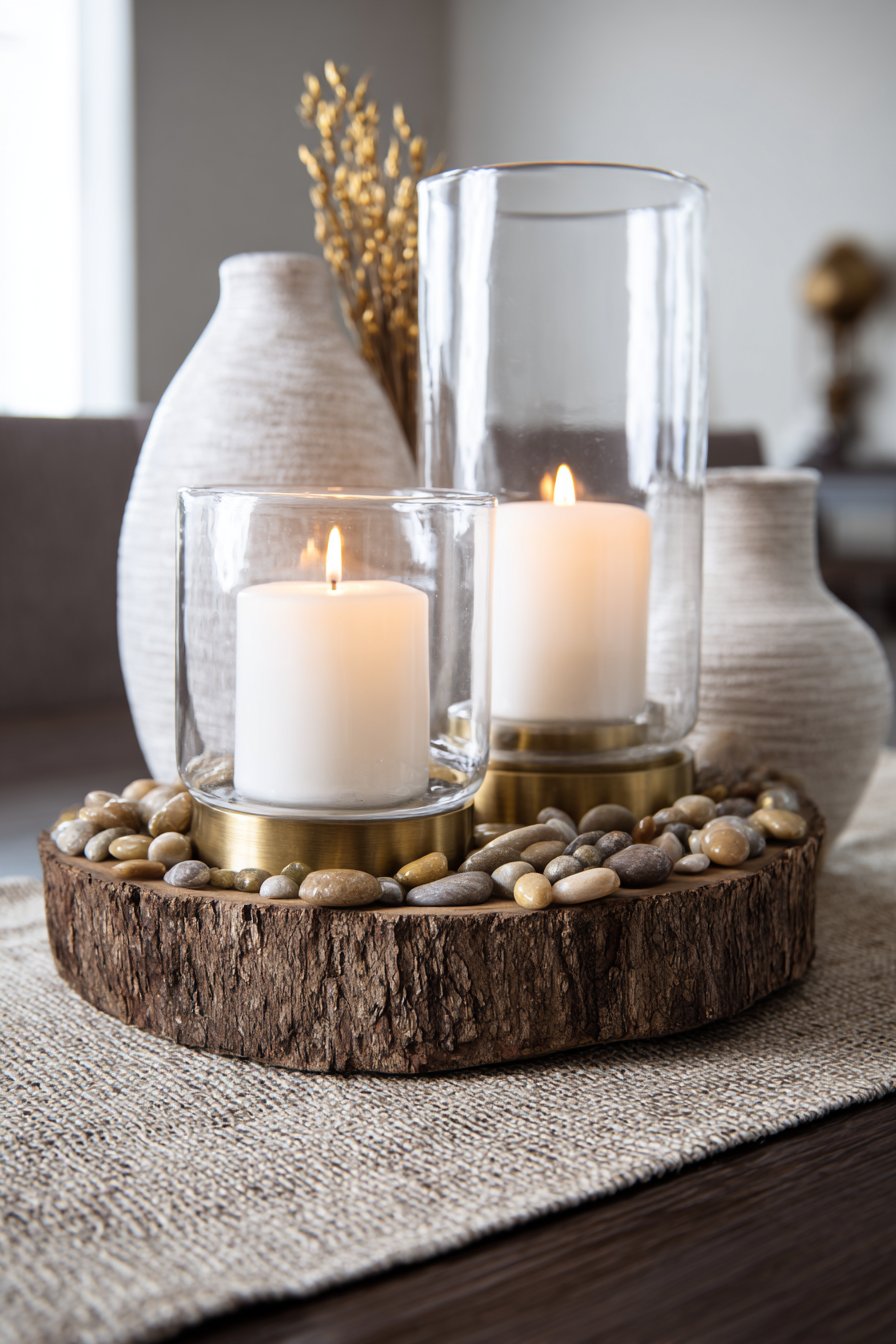
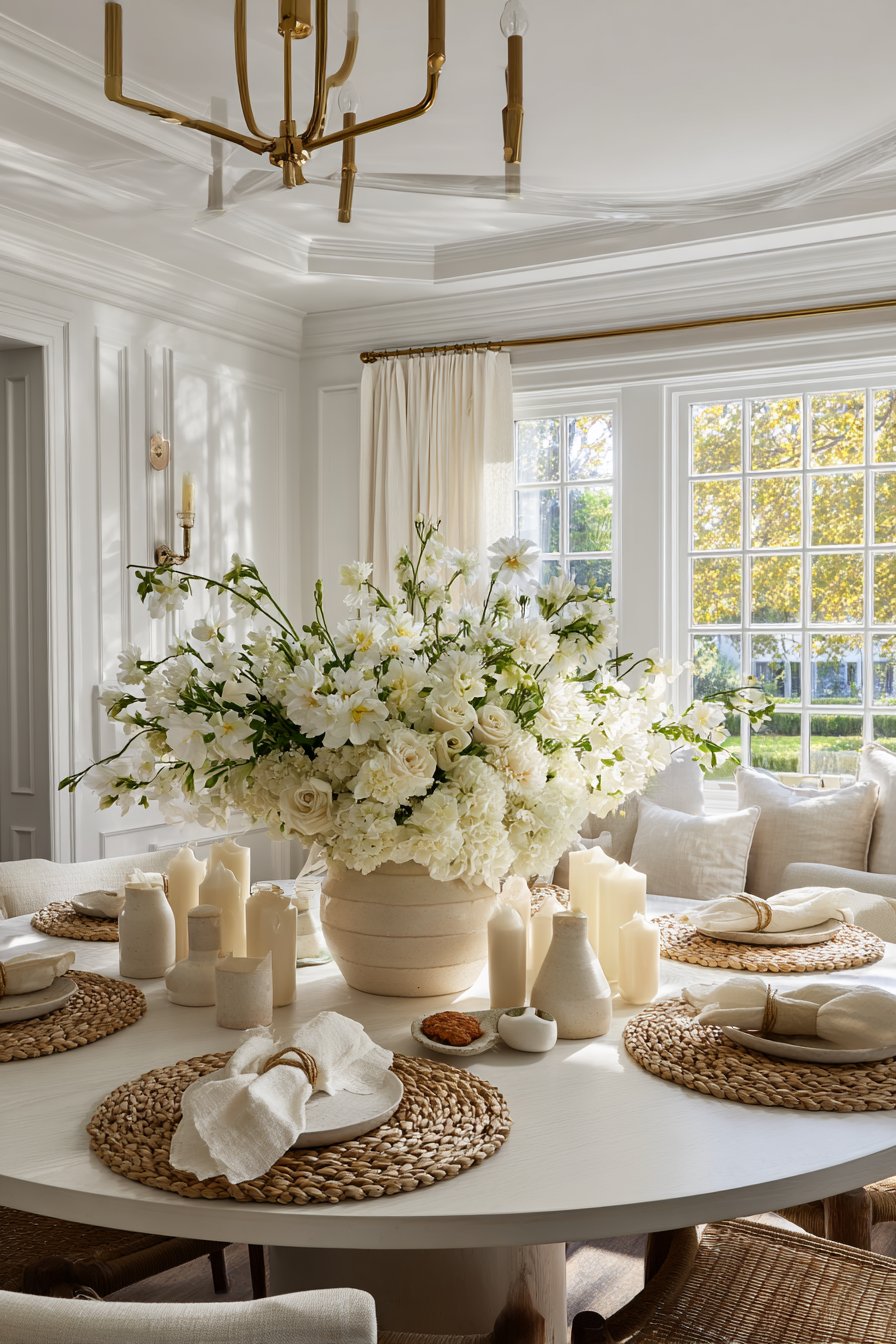
The circular format encourages 360-degree design thinking where every viewing angle receives equal consideration. Start with a foundational texture like a woven placemat, linen runner, or textured charger plate that establishes your base layer. Build upward with complementary textures that create hierarchy without competition. Natural elements like river rocks, dried botanicals, or wooden candlesticks introduce organic warmth that softens more refined materials.
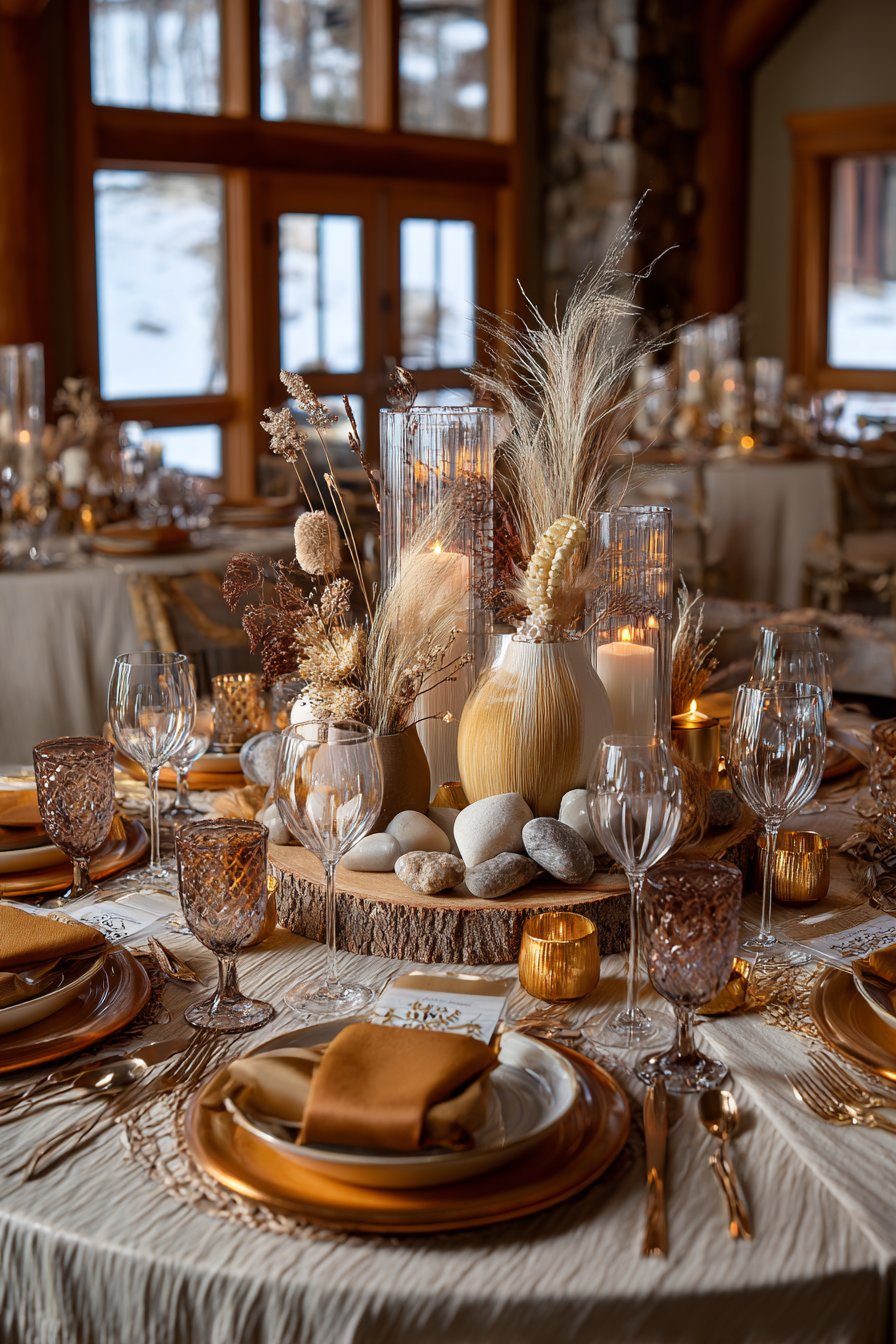
Balancing textures requires restraint despite the temptation to incorporate every beautiful material available. Limiting your palette to three distinct texture families prevents visual chaos while providing sufficient variety. Choose one dominant texture as your anchor, add a contrasting secondary texture for interest, and include a subtle accent texture that ties elements together cohesively.
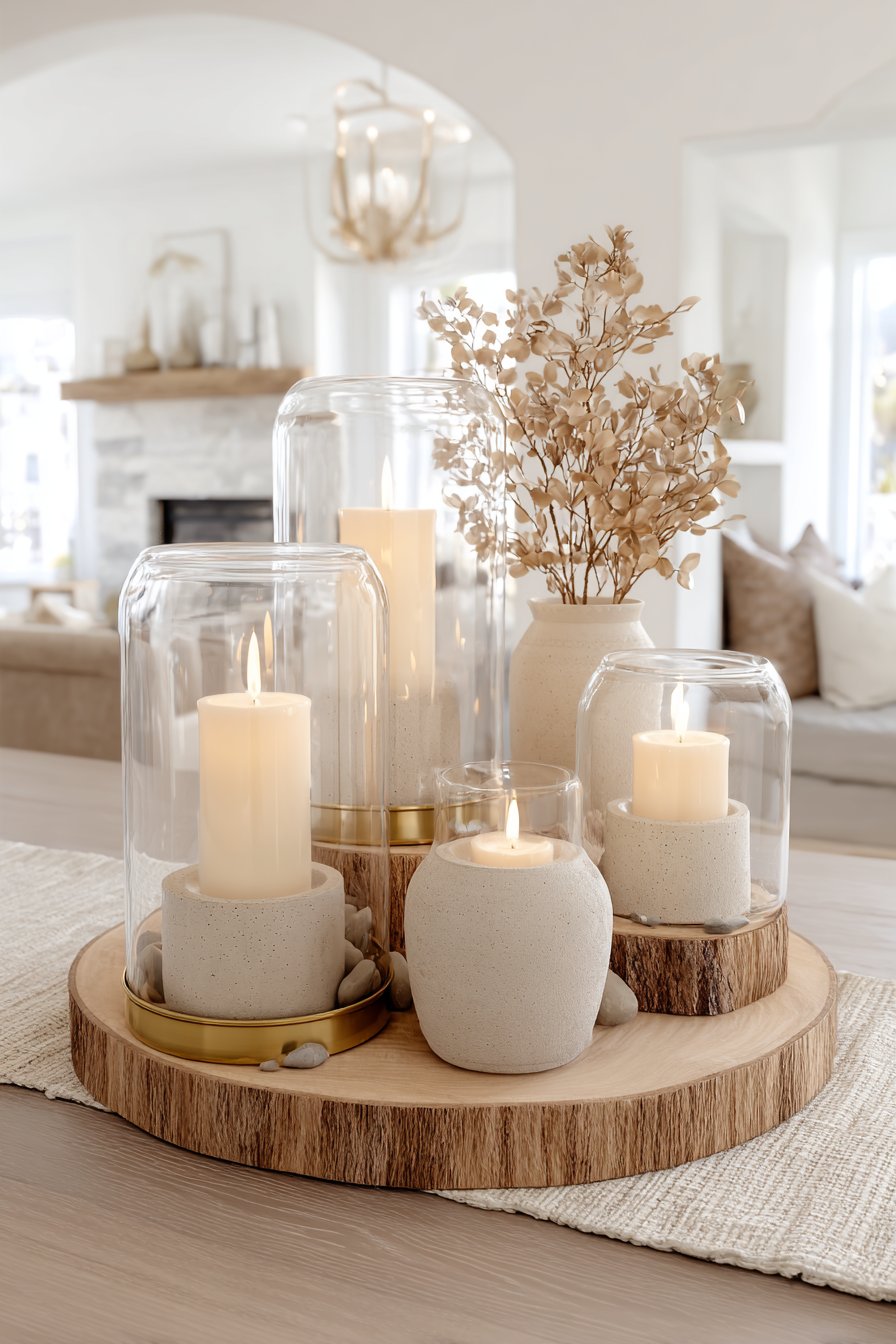
- Pair smooth ceramic vessels with textured rope or jute wrapping
- Combine metallic candle holders with soft fabric table runners
- Layer glass hurricanes over rough wooden slices or stone bases
- Mix contemporary acrylics with traditional woven baskets for eclectic appeal
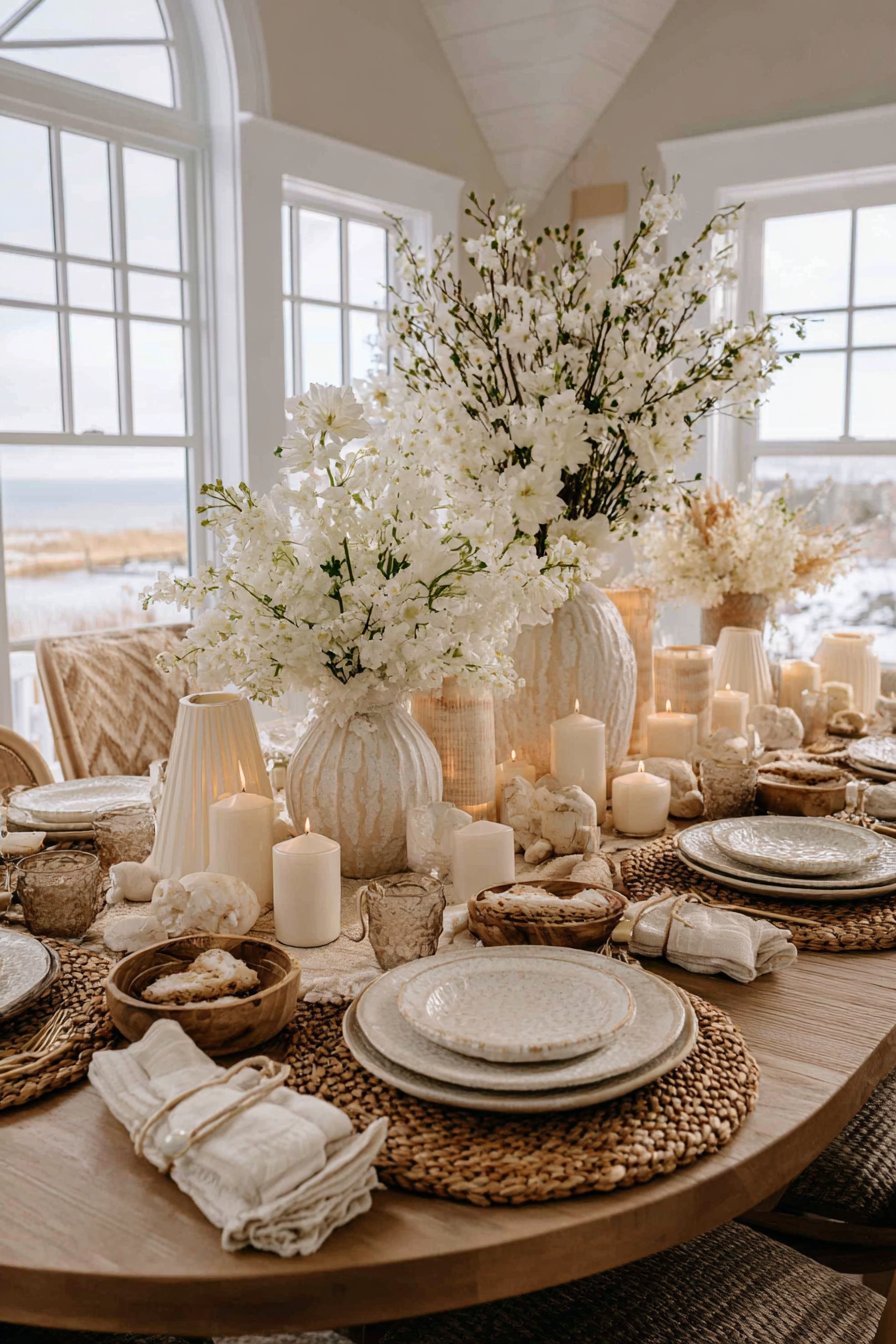
- Incorporate natural elements like coral, shells, or driftwood for coastal themes
- Rotate textural elements seasonally to reflect changing design moods
3. Color Theory and Visual Balance
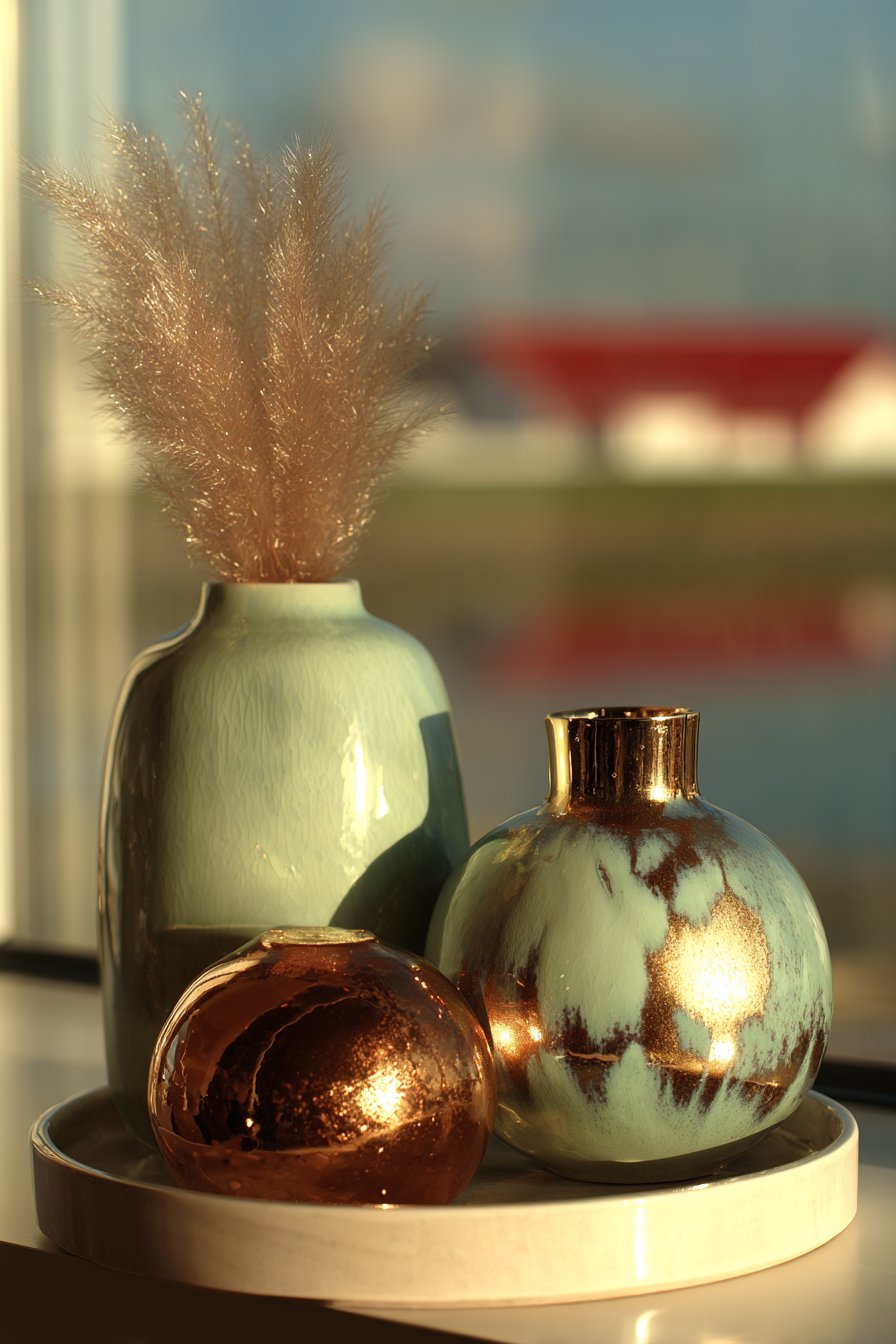
Understanding color relationships transforms round table arrangements from random collections into cohesive design statements. The circular shape naturally draws the eye inward toward the center, making color choices particularly impactful. Monochromatic schemes create sophisticated, calming displays, while complementary colors generate energetic, dynamic arrangements that command attention.
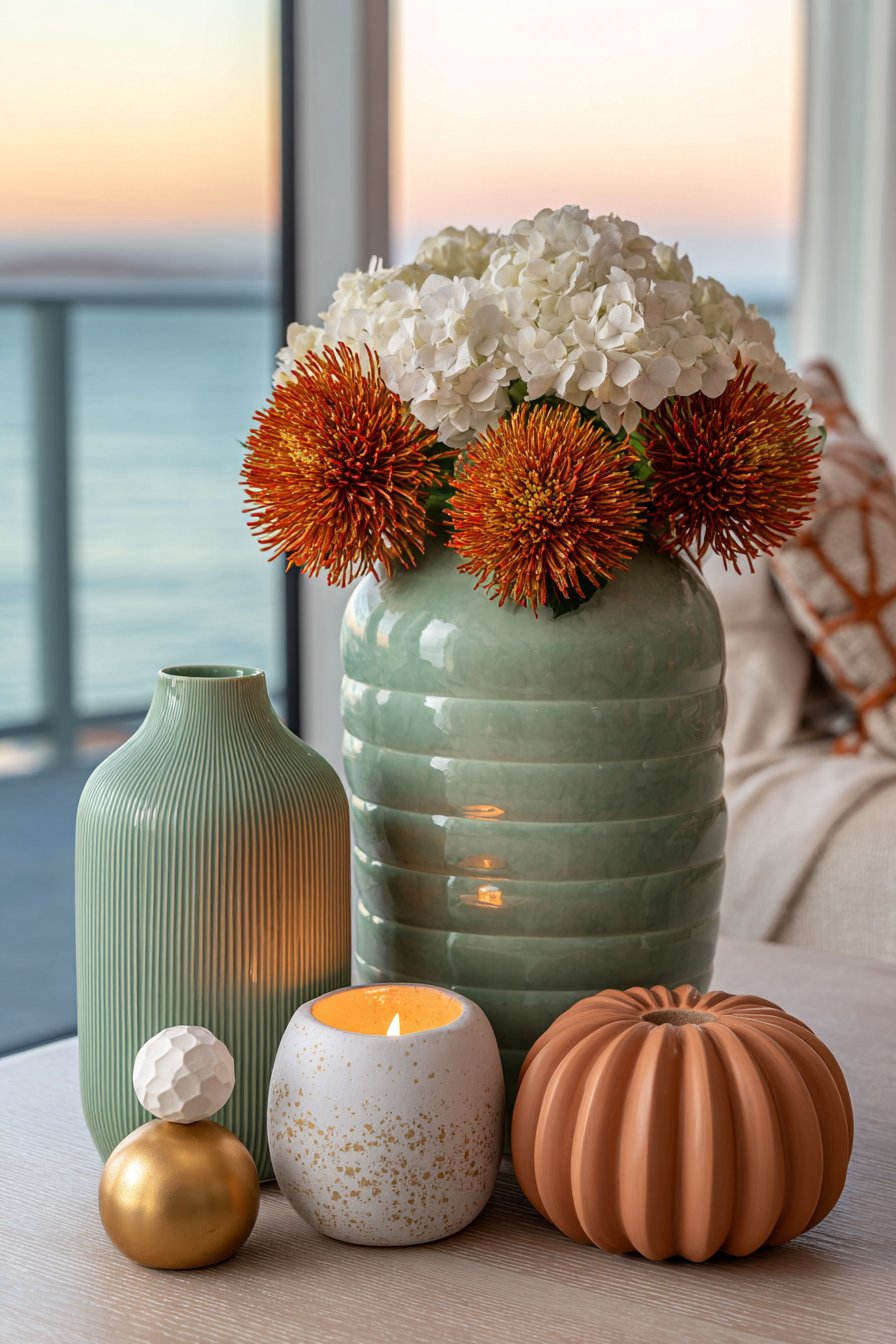
Analogous color schemes work exceptionally well on round tables, using three to five colors positioned next to each other on the color wheel. This approach produces harmonious arrangements with subtle variation that prevents monotony. For example, combining blues, blue-greens, and greens creates a serene coastal aesthetic, while oranges, reds, and yellows evoke warm, inviting autumn themes.
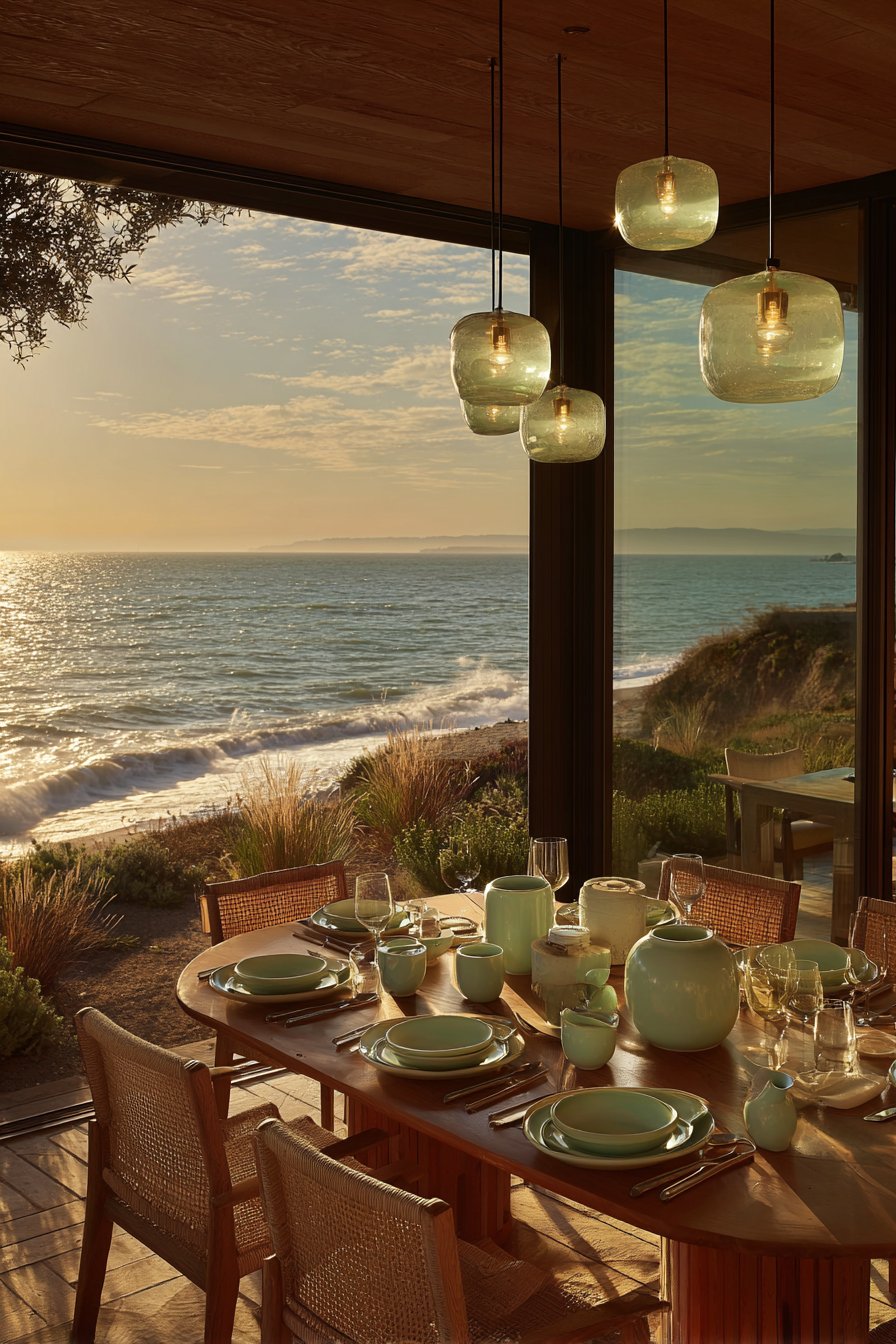
The 60-30-10 rule provides a professional framework for distributing colors effectively across your round table display. Use your dominant color for 60 percent of the arrangement, a secondary color for 30 percent, and an accent color for the remaining 10 percent. This proportion creates visual hierarchy while maintaining balance, ensuring no single element overwhelms the composition.
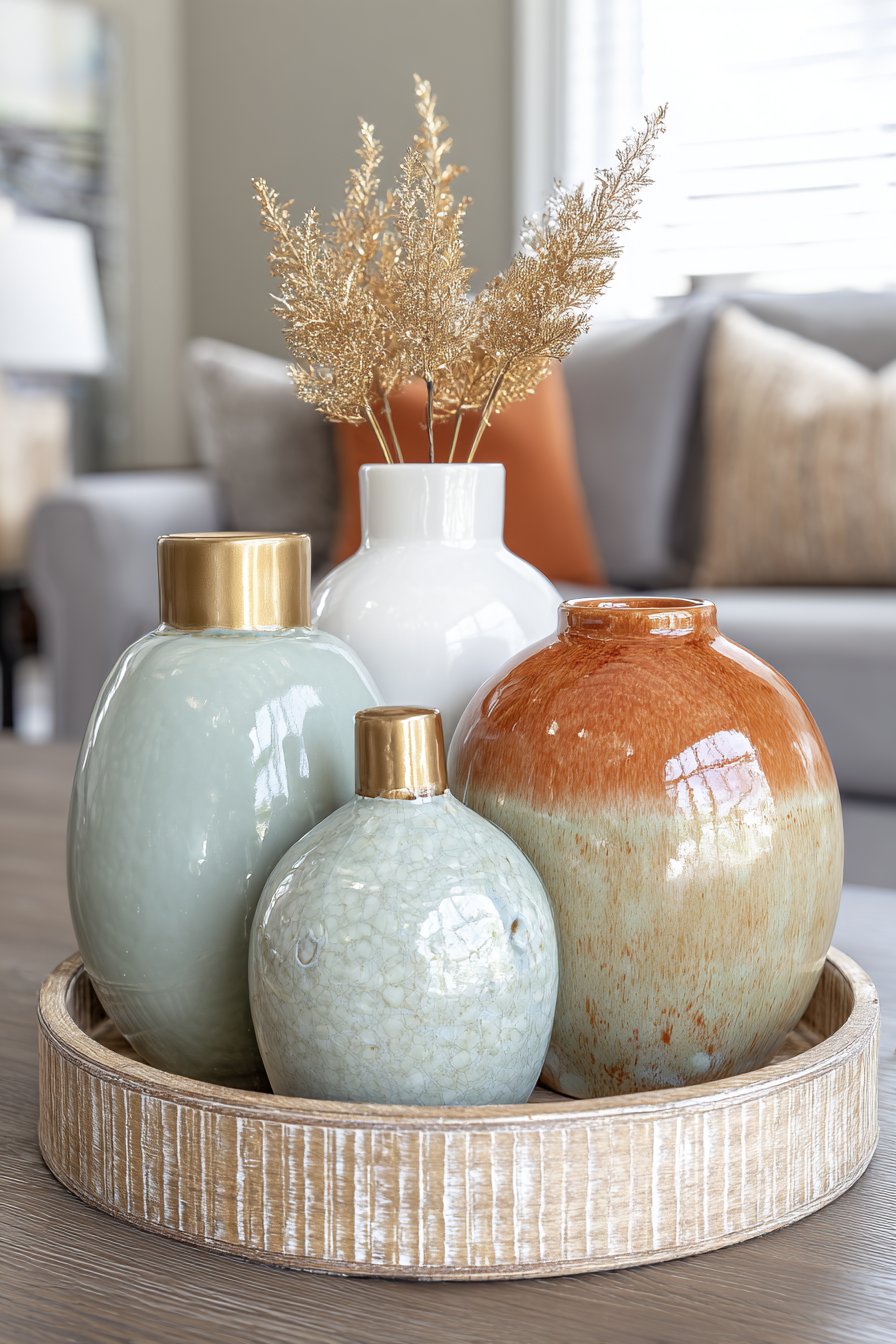
- Choose a dominant color that complements your room’s existing palette
- Add a secondary color in smaller proportions for depth and interest
- Include metallic accents like gold, silver, or copper as neutral enhancers
- Consider seasonal color shifts to keep your table decor feeling current
- Use white or cream as a buffer between bold colors for sophisticated balance
- Test color combinations with fabric swatches or paint chips before committing
4. Functional Centerpiece Solutions
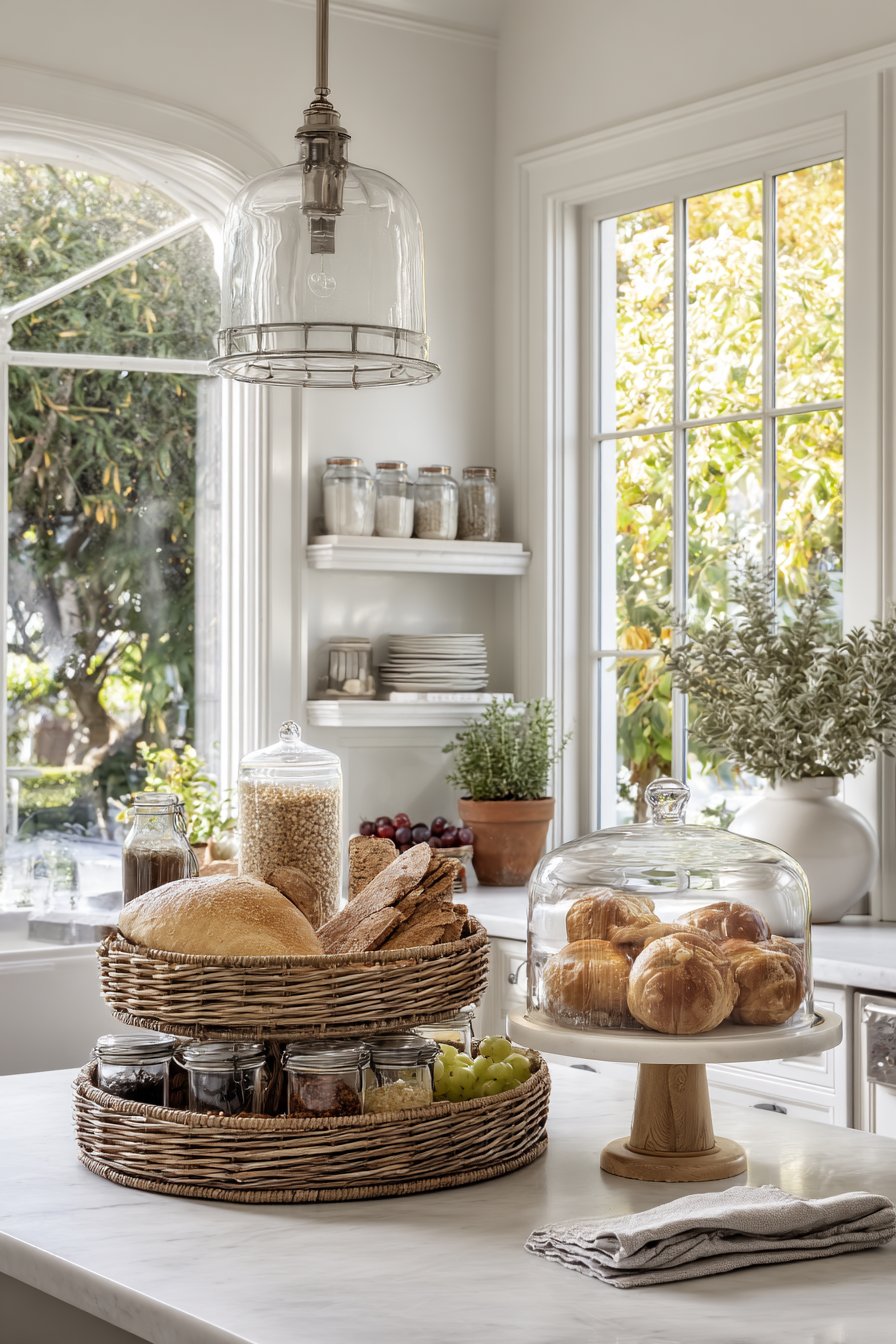
Modern round table decor embraces dual-purpose design where beauty meets practicality without compromise. Functional centerpieces transform everyday items into decorative elements that serve your lifestyle while enhancing aesthetic appeal. Tiered serving stands become sculptural displays when filled with seasonal fruits, artisanal breads, or decorative spheres between meals.
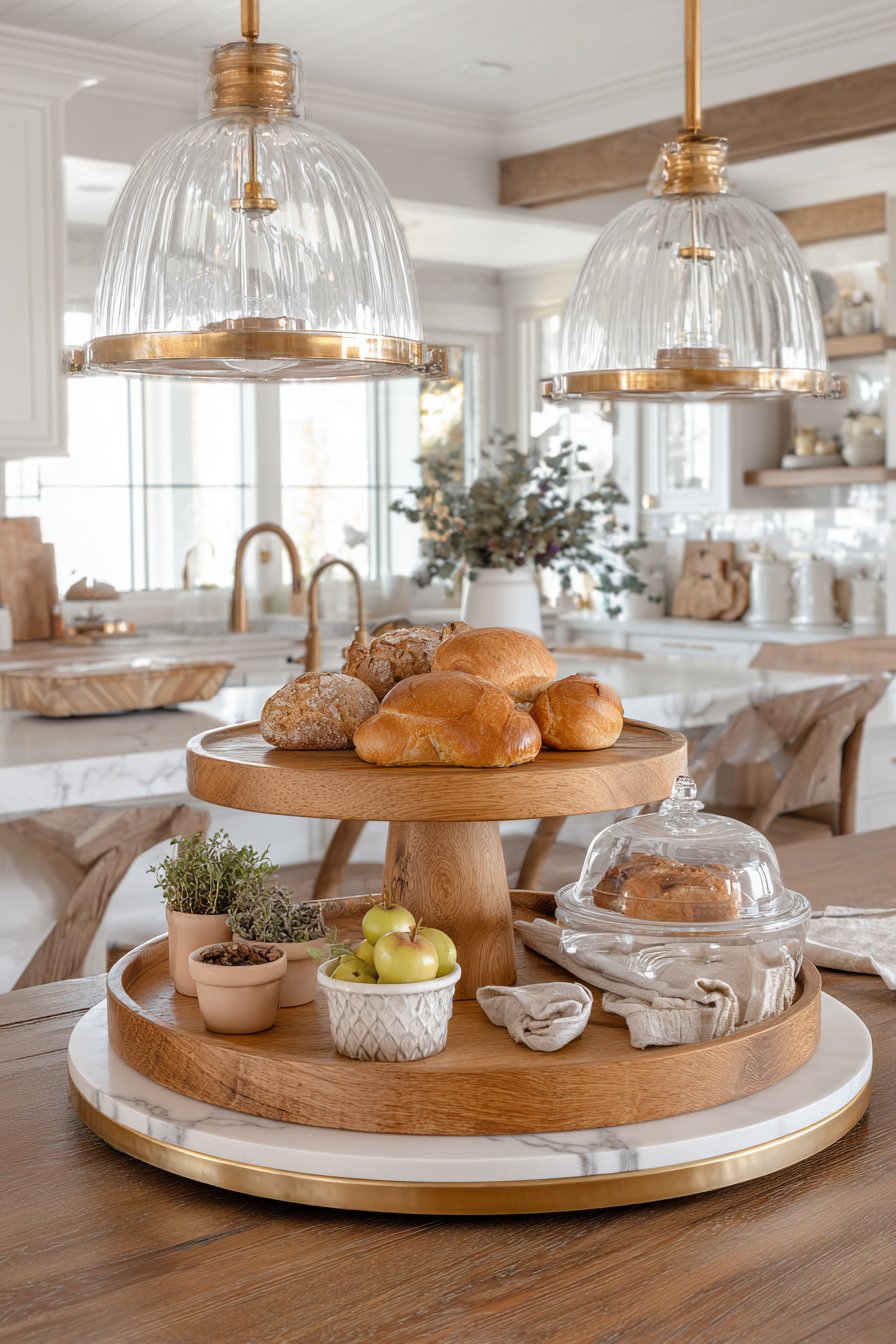
Rotating lazy Susans disguise themselves as stylish centerpieces while providing convenient access to condiments, napkins, or frequently used items. Choose wooden lazy Susans with decorative borders, marble versions for elegant contemporary spaces, or wicker styles for casual farmhouse aesthetics. Arrange items thoughtfully on top, creating a curated display that remains fully functional during daily use.
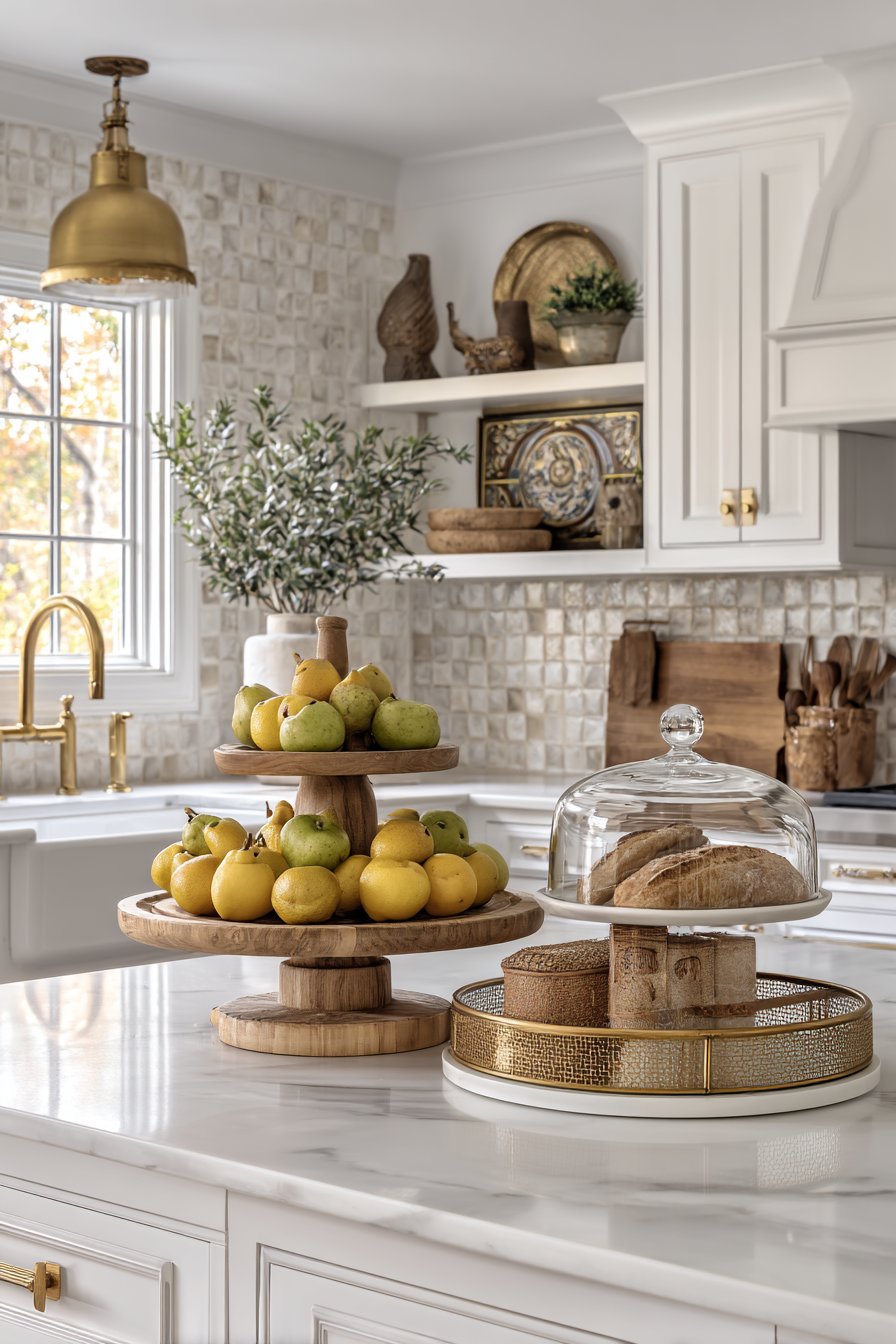
Storage becomes invisible when integrated into decorative centerpiece designs. Vintage cake stands hide remote controls or coasters underneath decorative domes. Decorative boxes stack beautifully as sculptural elements while concealing table linens, candles, or small items you want within reach. This approach proves particularly valuable in small spaces where every surface must work harder.
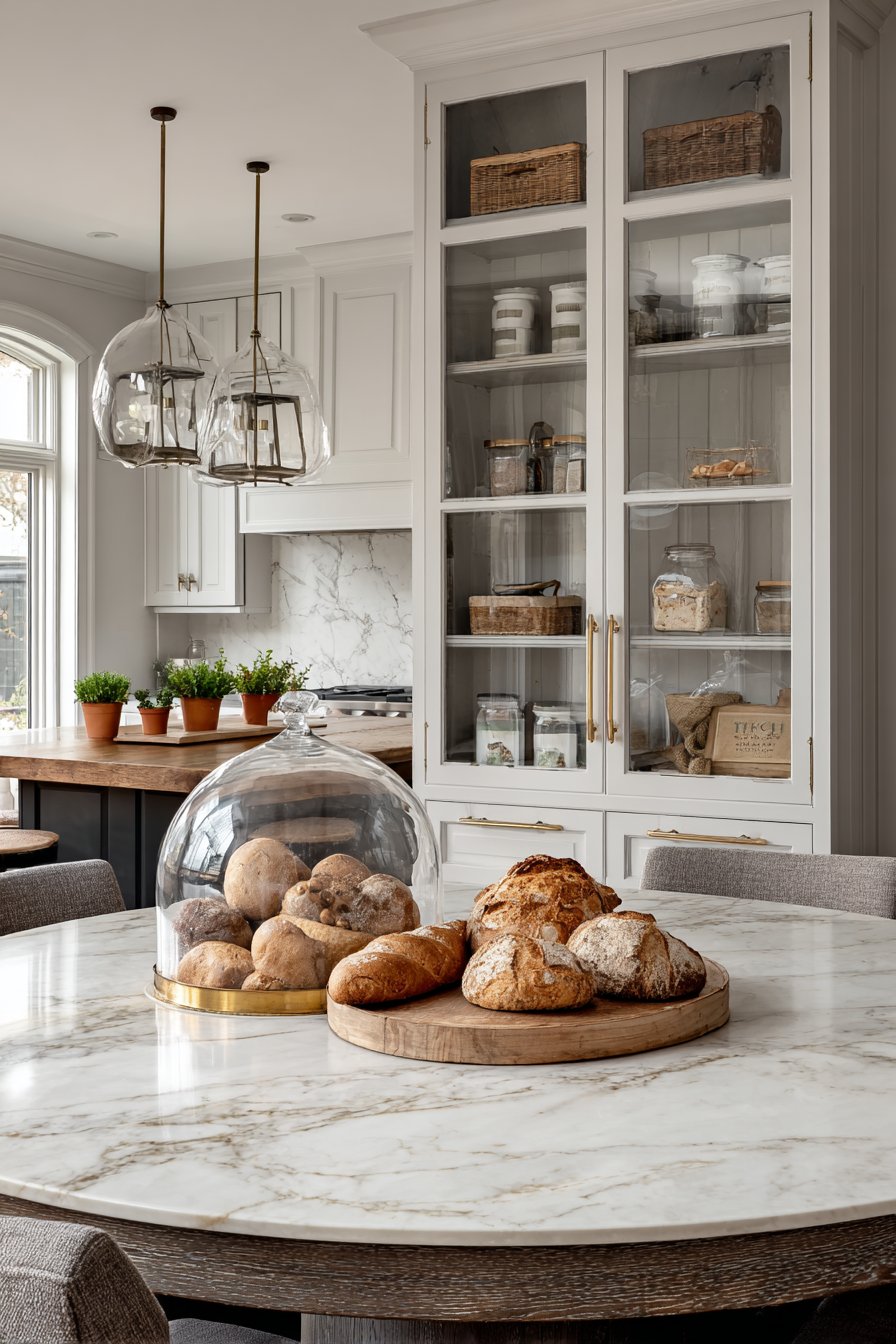
- Use decorative trays to corral items while maintaining visual order
- Select cake stands or tiered servers that complement your style aesthetic
- Incorporate decorative boxes that match your color scheme for hidden storage
- Choose low-profile lazy Susans that enhance rather than dominate the table
- Arrange fresh herbs in small pots for beauty and culinary convenience
- Consider removable centerpieces that adapt to different occasions and needs
5. Symmetrical Versus Asymmetrical Arrangements
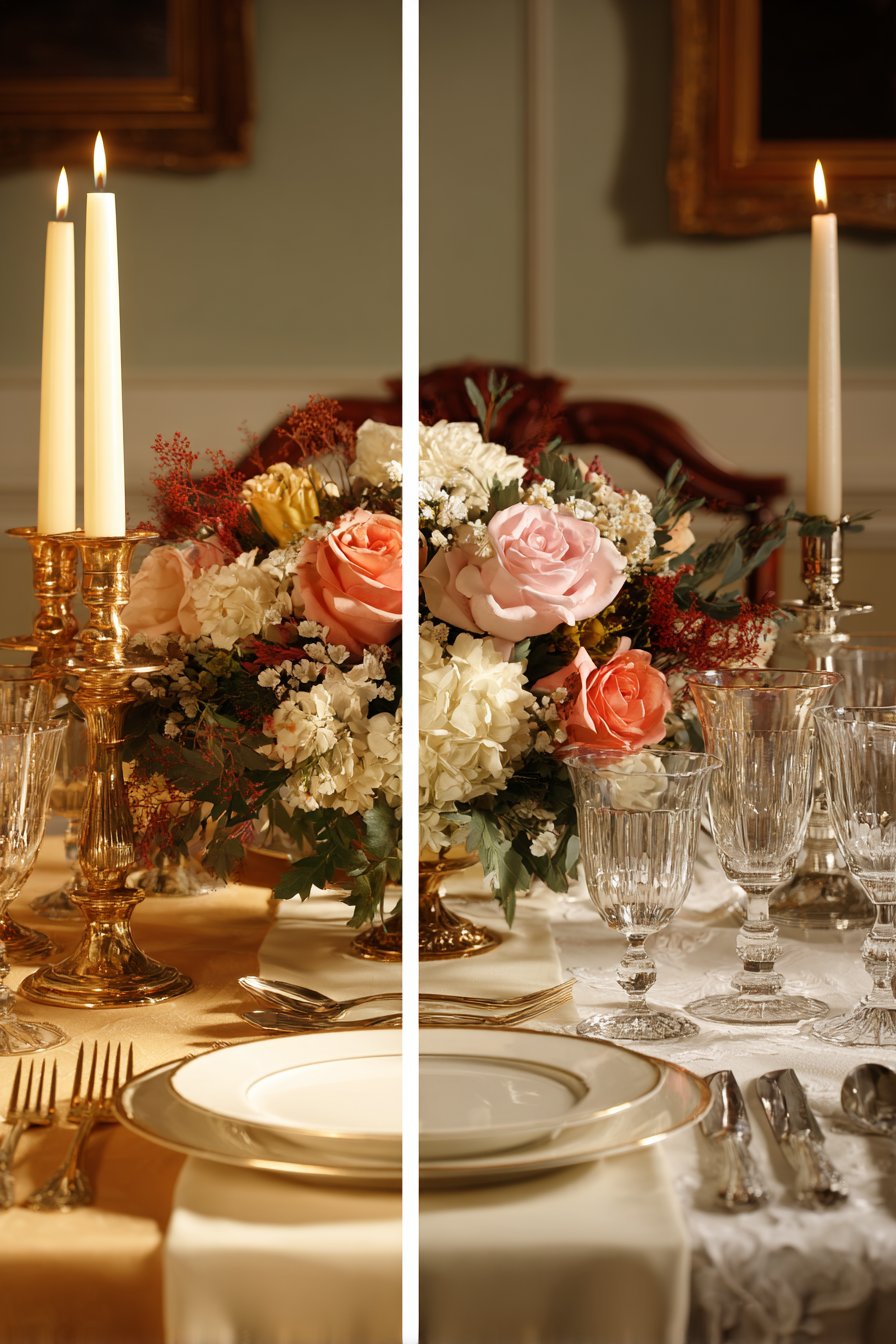
The eternal design debate between symmetry and asymmetry finds perfect expression on round tables where both approaches create stunning results. Symmetrical arrangements appeal to our inherent sense of order and balance, positioning identical or similar elements at regular intervals around the table’s center. This classical approach suits traditional interiors, formal dining rooms, and spaces seeking calm, organized energy.
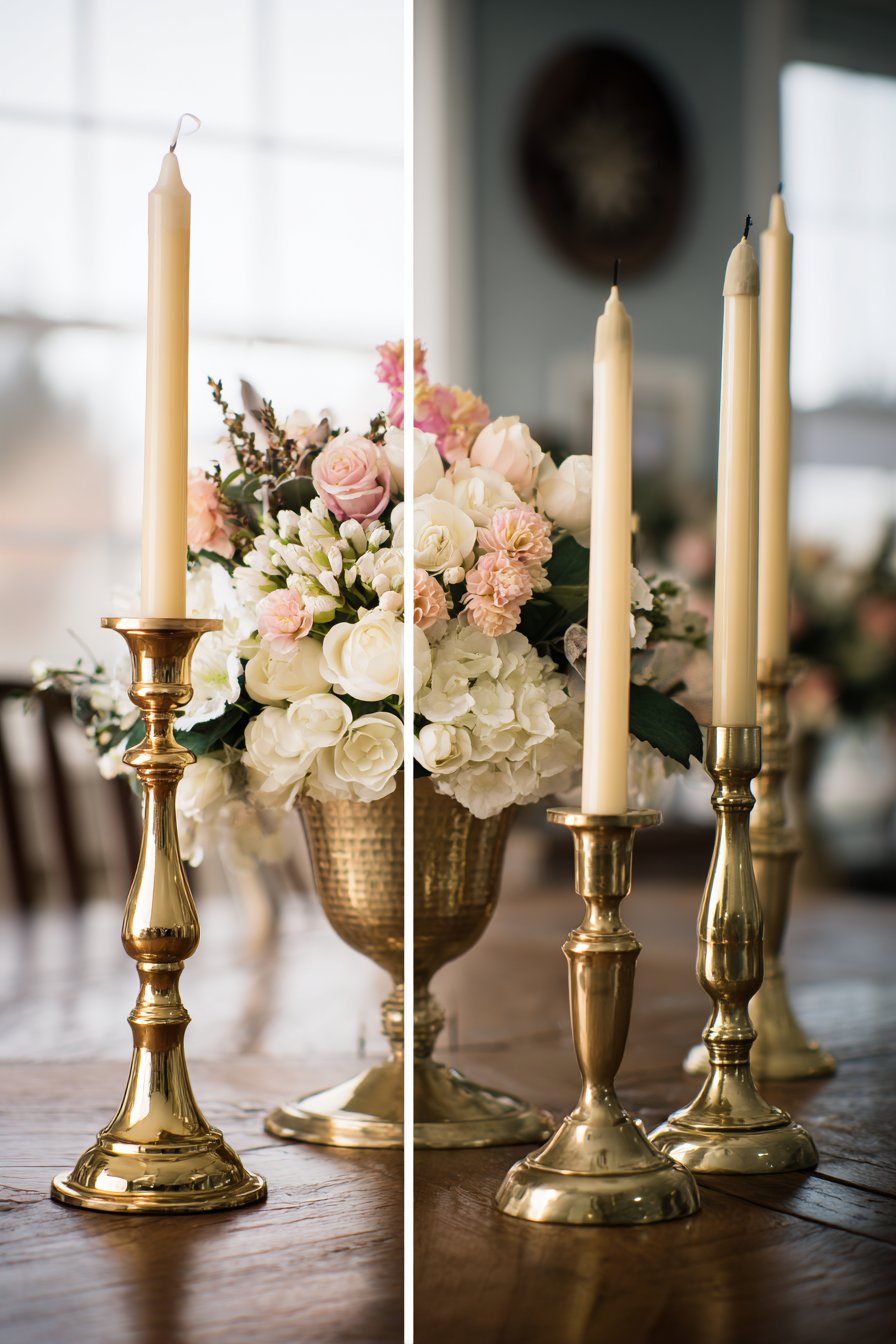
Asymmetrical designs inject contemporary flair and visual movement into round table displays, creating dynamic compositions that draw the eye around the arrangement. This approach clusters elements of varying heights, sizes, and visual weights in intentional imbalance that feels purposeful rather than haphazard. Asymmetry works beautifully in modern, eclectic, or bohemian spaces where perfect balance feels too rigid.
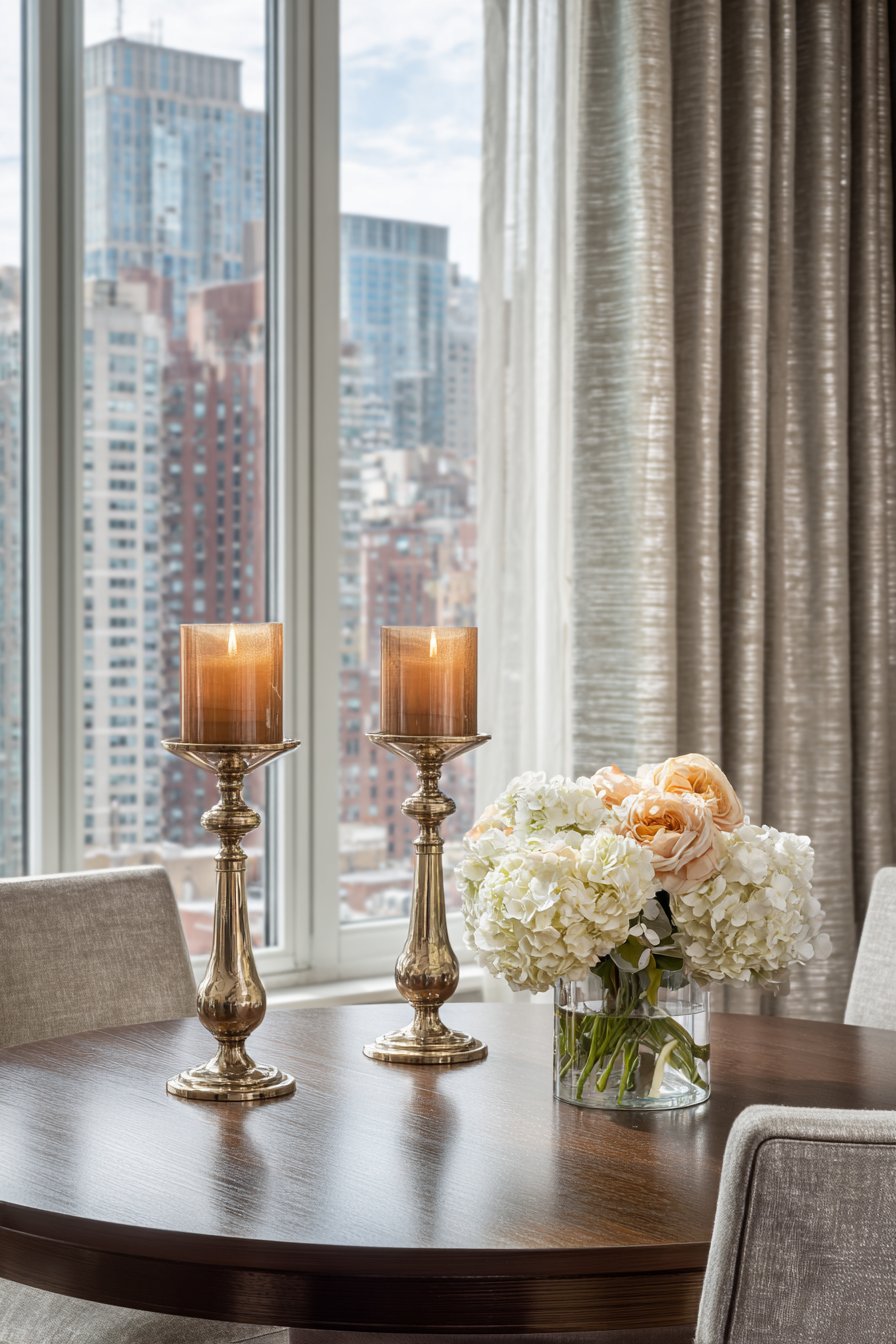
The beauty of round tables lies in their flexibility to accommodate both philosophies depending on your mood, occasion, or seasonal preferences. Formal dinner parties might call for symmetrical candle arrangements with matching florals, while casual weekend gatherings benefit from loosely grouped asymmetrical displays. Understanding both techniques empowers you to shift your table’s personality effortlessly.
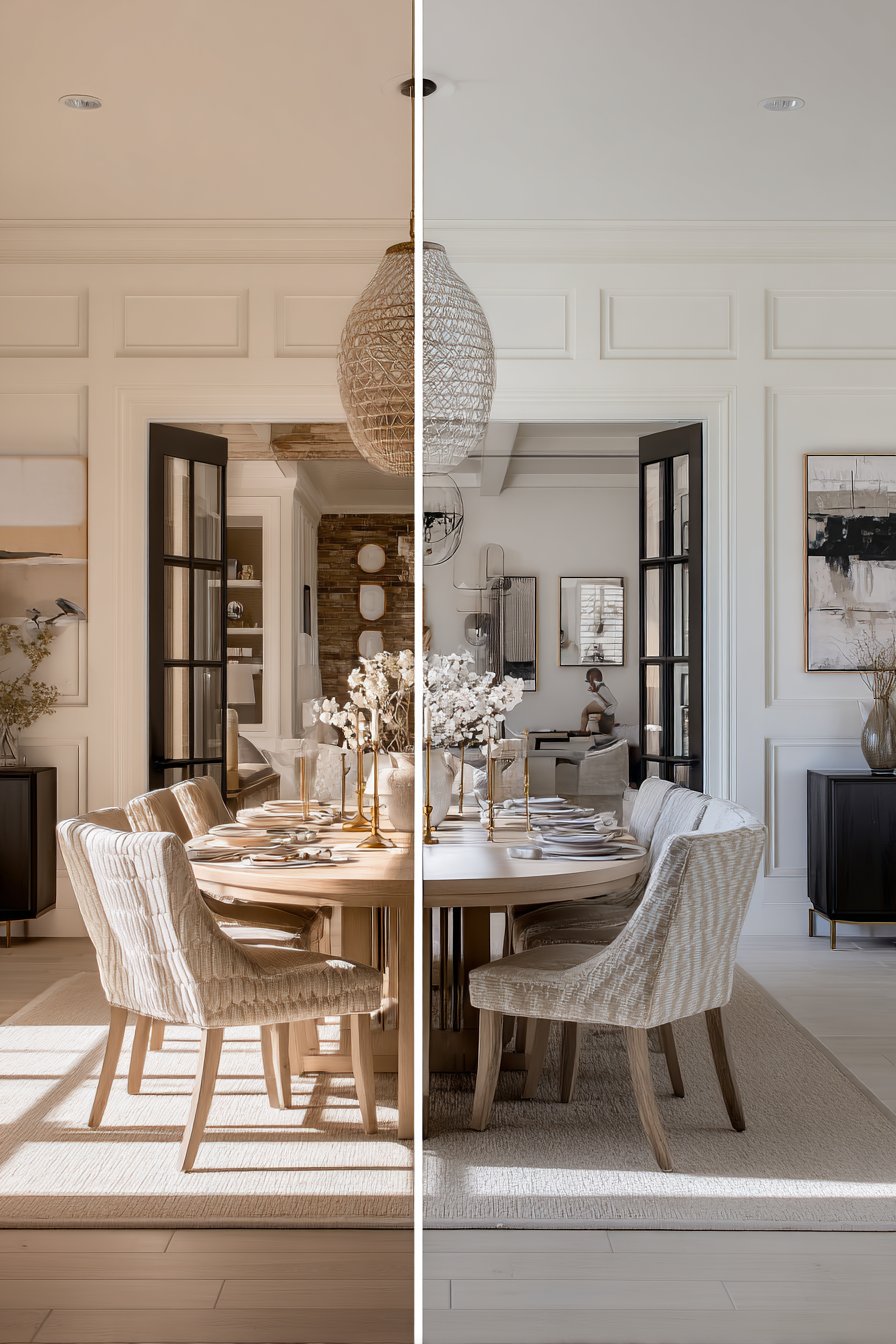
- Create symmetrical displays with pairs of candlesticks flanking a central element
- Experiment with asymmetrical groupings using odd numbers of items (3, 5, or 7)
- Use the rule of thirds to position asymmetrical elements for pleasing composition
- Balance visual weight rather than physical size in asymmetrical arrangements
- Try symmetry for formal occasions and asymmetry for relaxed gatherings
- Photograph your arrangements from multiple angles to assess effectiveness
6. Seasonal and Occasion-Based Styling
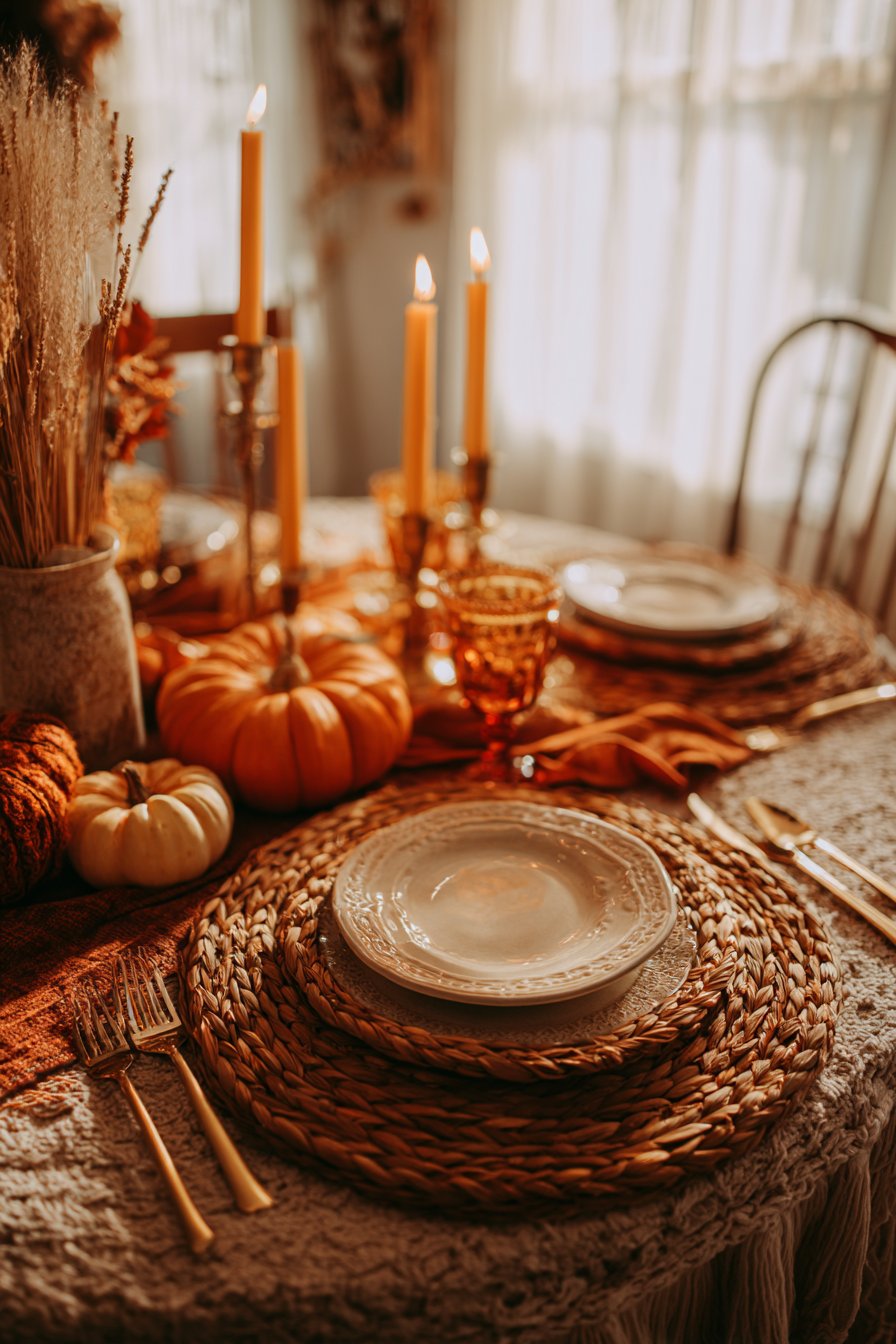
Adaptable decorating strategies keep round tables feeling fresh and relevant throughout the year without requiring complete redesigns. Establishing a foundation of neutral, timeless elements provides a canvas for seasonal accents that transform the table’s mood with minimal effort. Invest in quality basics like natural fiber placemats, classic candlesticks, or elegant serving pieces that transcend trends.
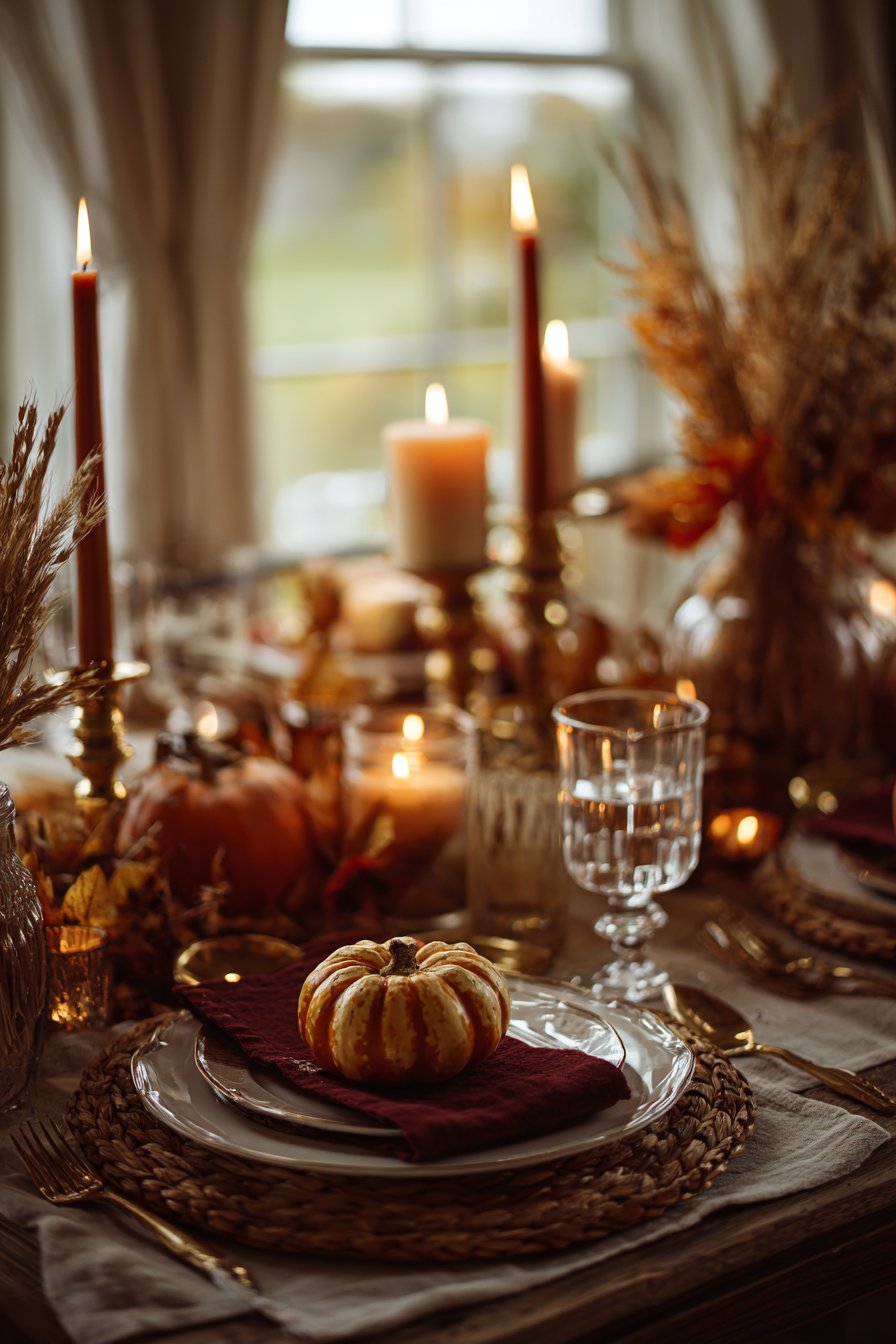
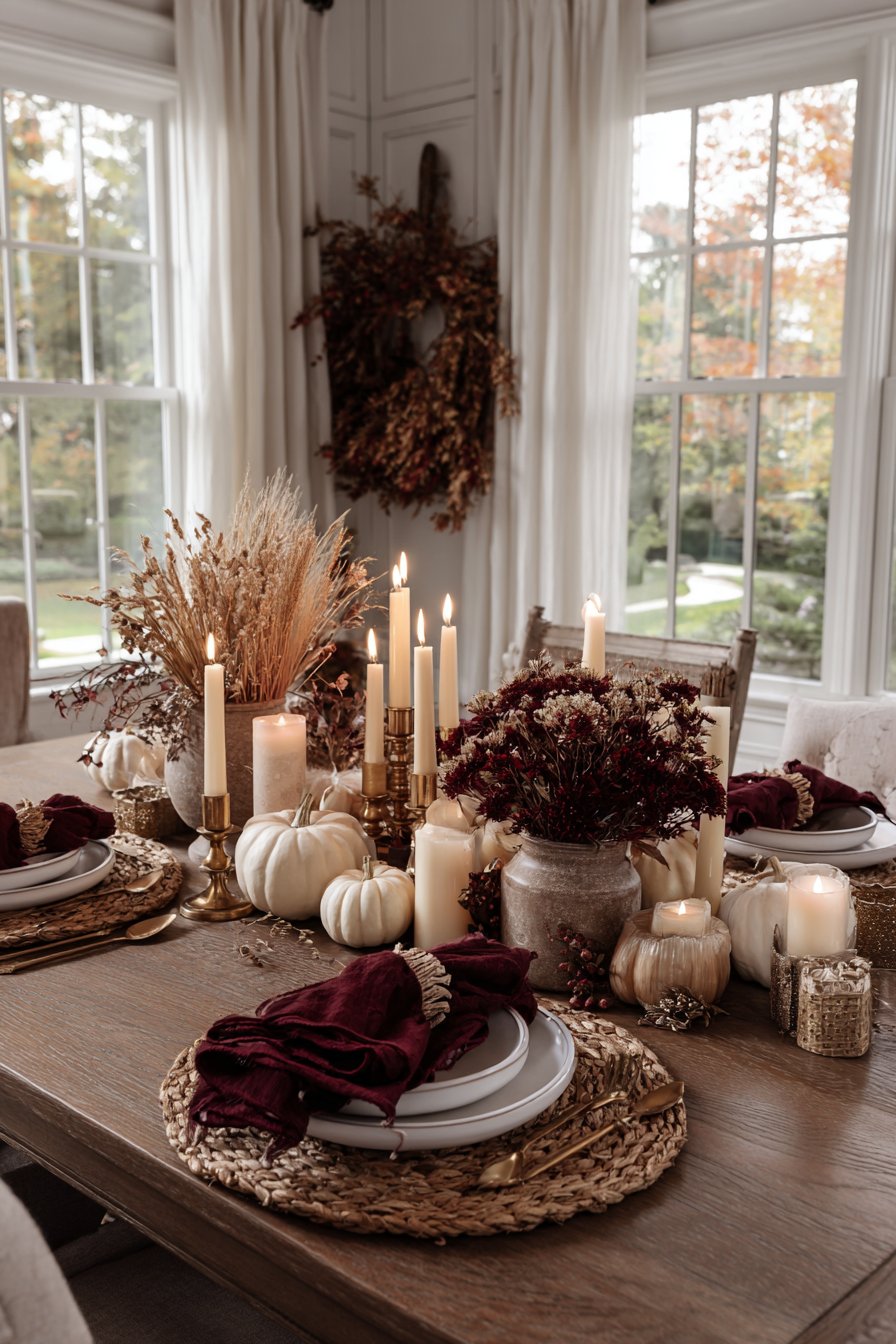
Seasonal rotations breathe new life into familiar spaces while celebrating nature’s changing rhythms. Spring arrangements might feature fresh tulips in pastel ceramics with scattered eggs or nests. Summer calls for bright citrus fruits in glass bowls with crisp blue and white linens. Autumn embraces rich burgundies and golds with gourds, wheat bundles, and harvest elements, while winter sparkles with evergreen branches, mercury glass, and warm metallics.
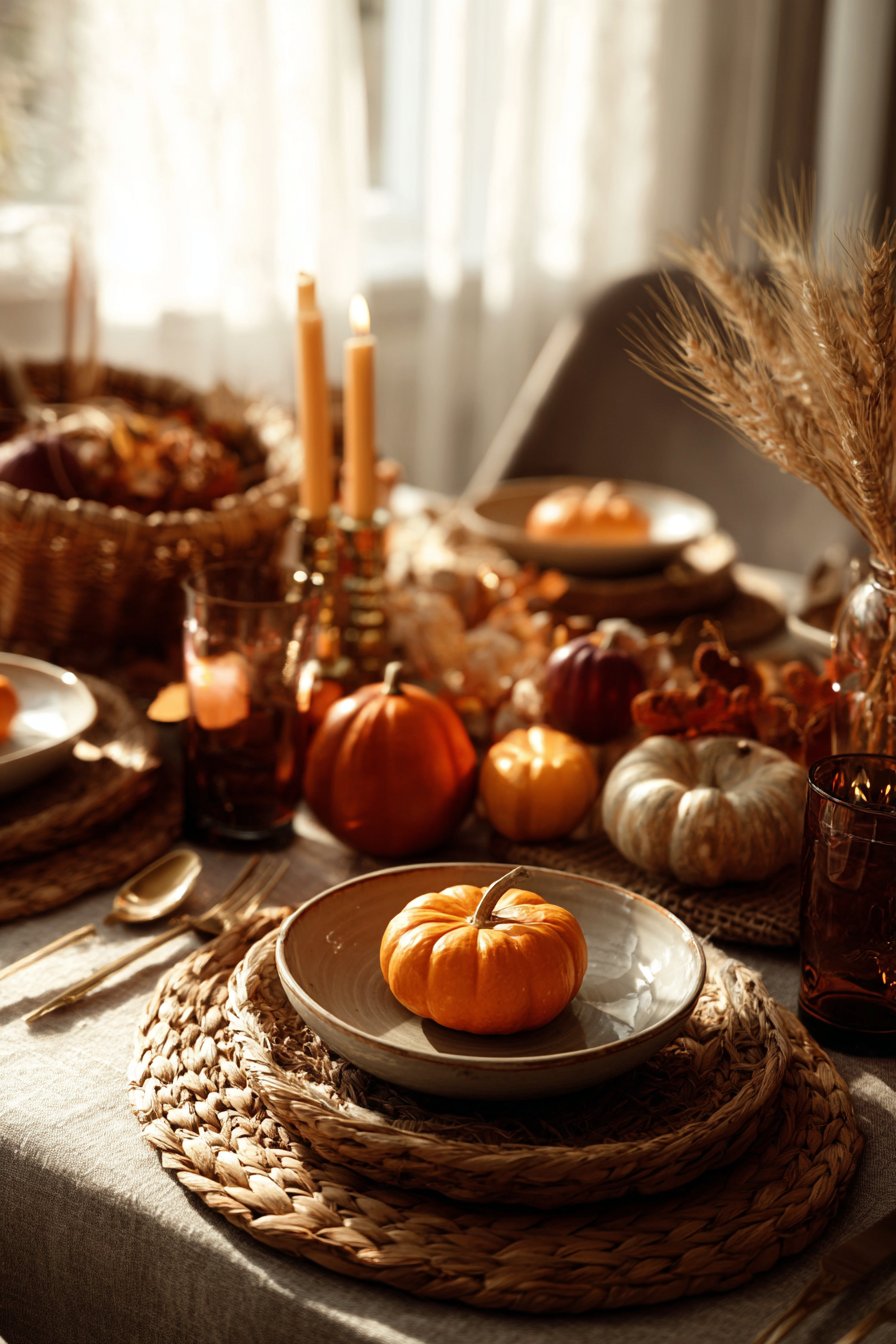
Occasion-based styling transforms your round table into celebration-ready displays without overwhelming your storage or budget. Birthdays, holidays, dinner parties, and special gatherings each benefit from thoughtful decorating that honors the event while maintaining your personal style. Create a small collection of versatile decorative elements that layer into your neutral foundation for infinite combinations.
- Maintain a neutral base of quality items you love year-round
- Swap out 30-40 percent of elements seasonally for fresh impact
- Store seasonal decor in labeled containers for easy rotation
- Incorporate natural found objects like branches, pinecones, or stones
- Use holiday-specific colors sparingly as accents rather than dominant themes
- Create mini-collections for frequent occasions to streamline styling
7. Lighting and Candle Integration
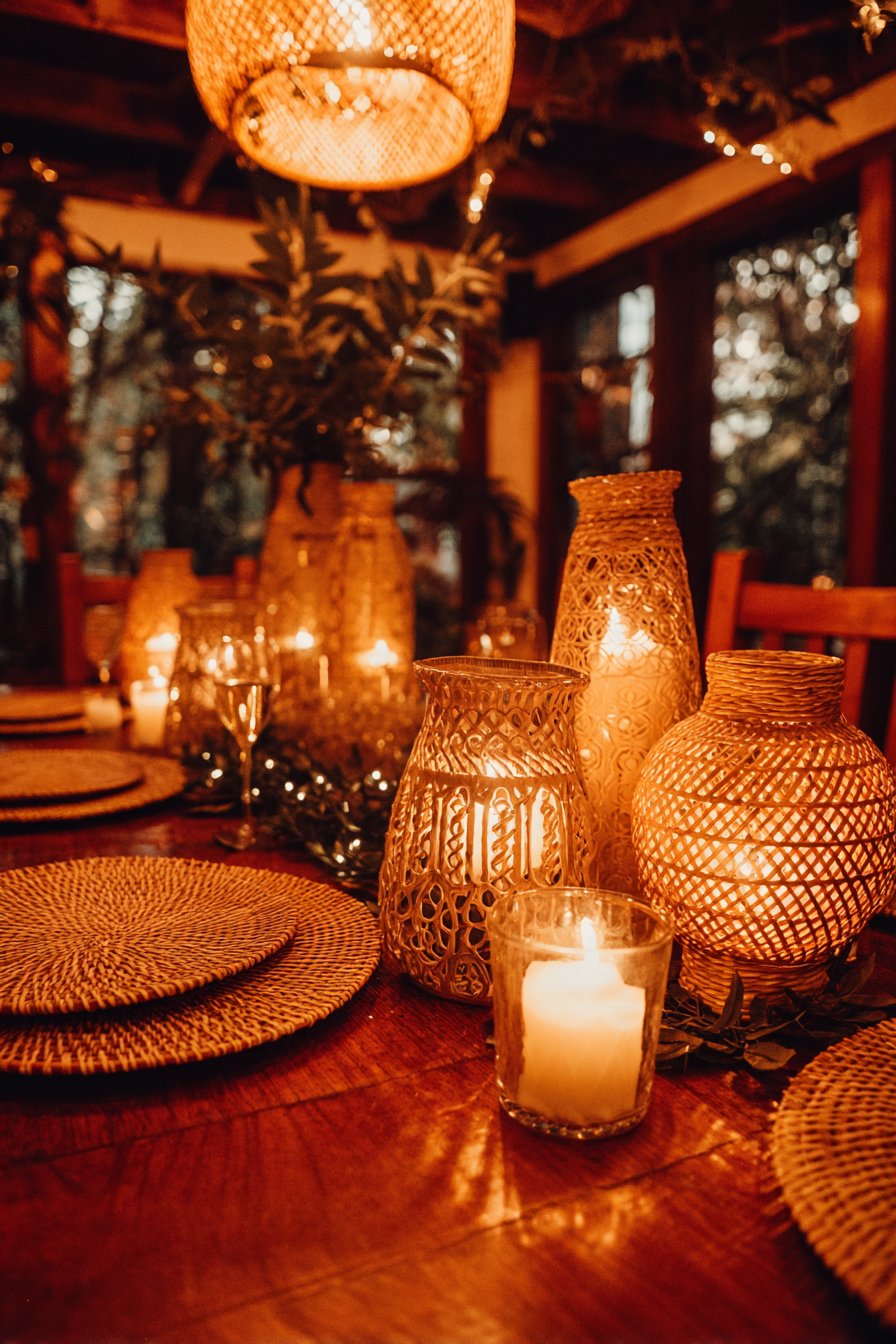
Strategic illumination elevates round table decor from daytime decoration to enchanting evening ambiance. The circular shape creates ideal conditions for lighting design, with candles or lamps casting warm, flattering light equally around the perimeter. Multiple light sources at varying heights produce depth and dimension that single overhead fixtures cannot achieve alone.
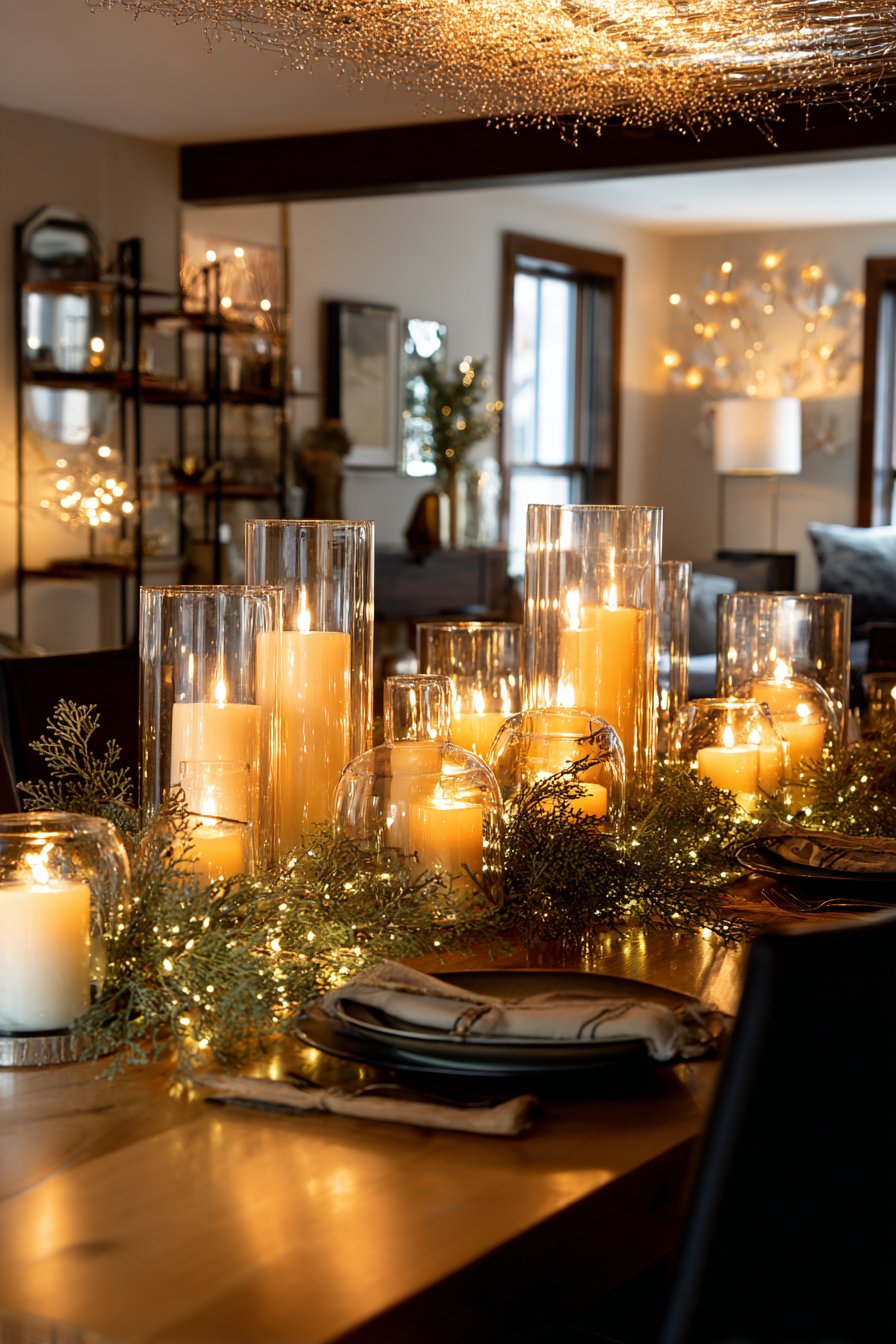
Candles remain the quintessential round table lighting solution, offering flexibility, warmth, and romantic atmosphere. Group pillar candles of different heights on a decorative tray or mirror base to amplify their glow. Hurricane glasses protect flames while creating elegant enclosures that suit formal and casual settings equally well. Battery-operated flameless candles provide the ambiance without fire concerns, perfect for homes with children or pets.
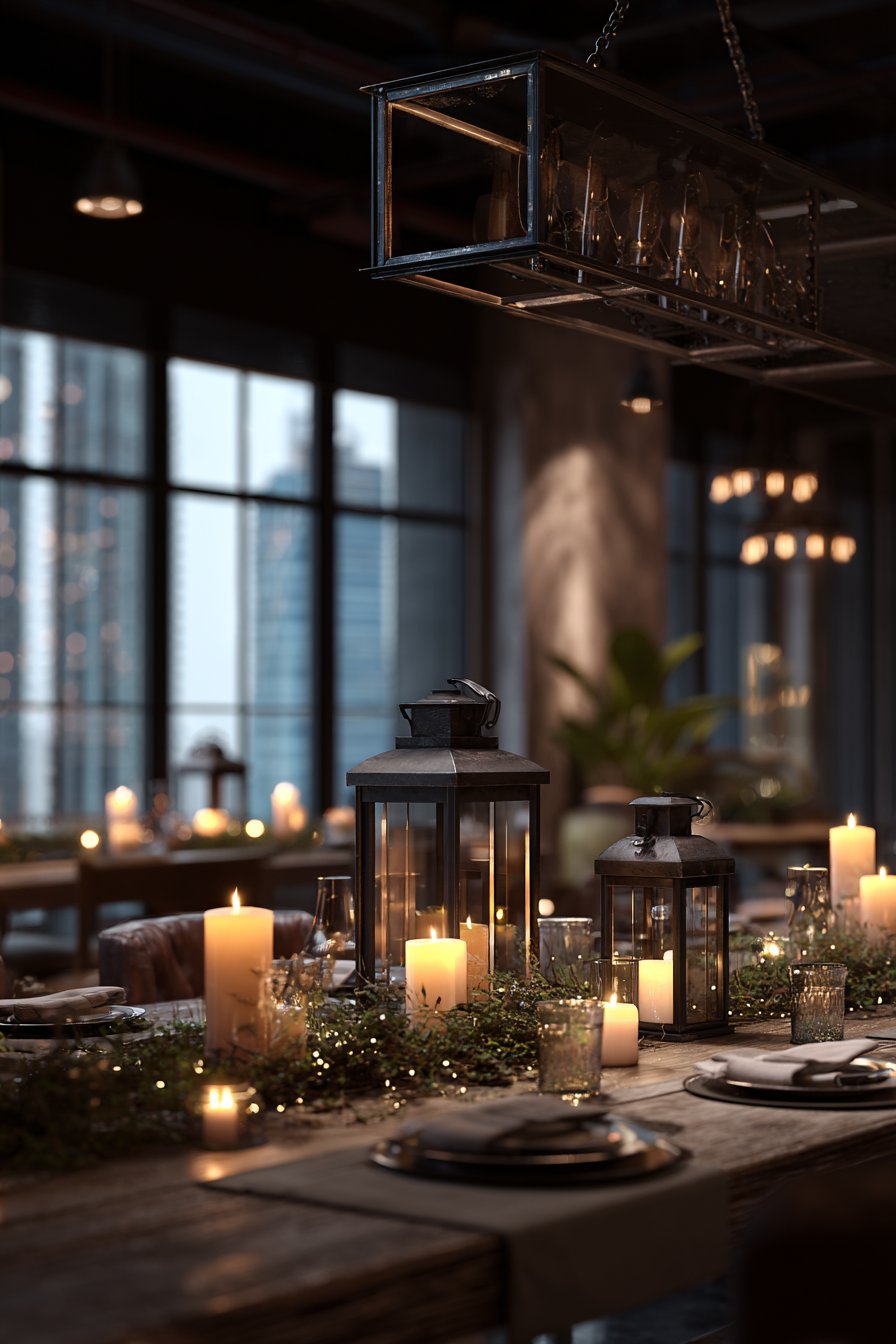
Layering light sources creates professional-quality illumination that adapts to various moods and functions. Combine ambient overhead lighting with task lighting for dining functionality, then add accent lighting through candles or small lamps for atmosphere. Dimmer switches on overhead fixtures provide ultimate control, allowing you to adjust brightness levels throughout the day and for different occasions.
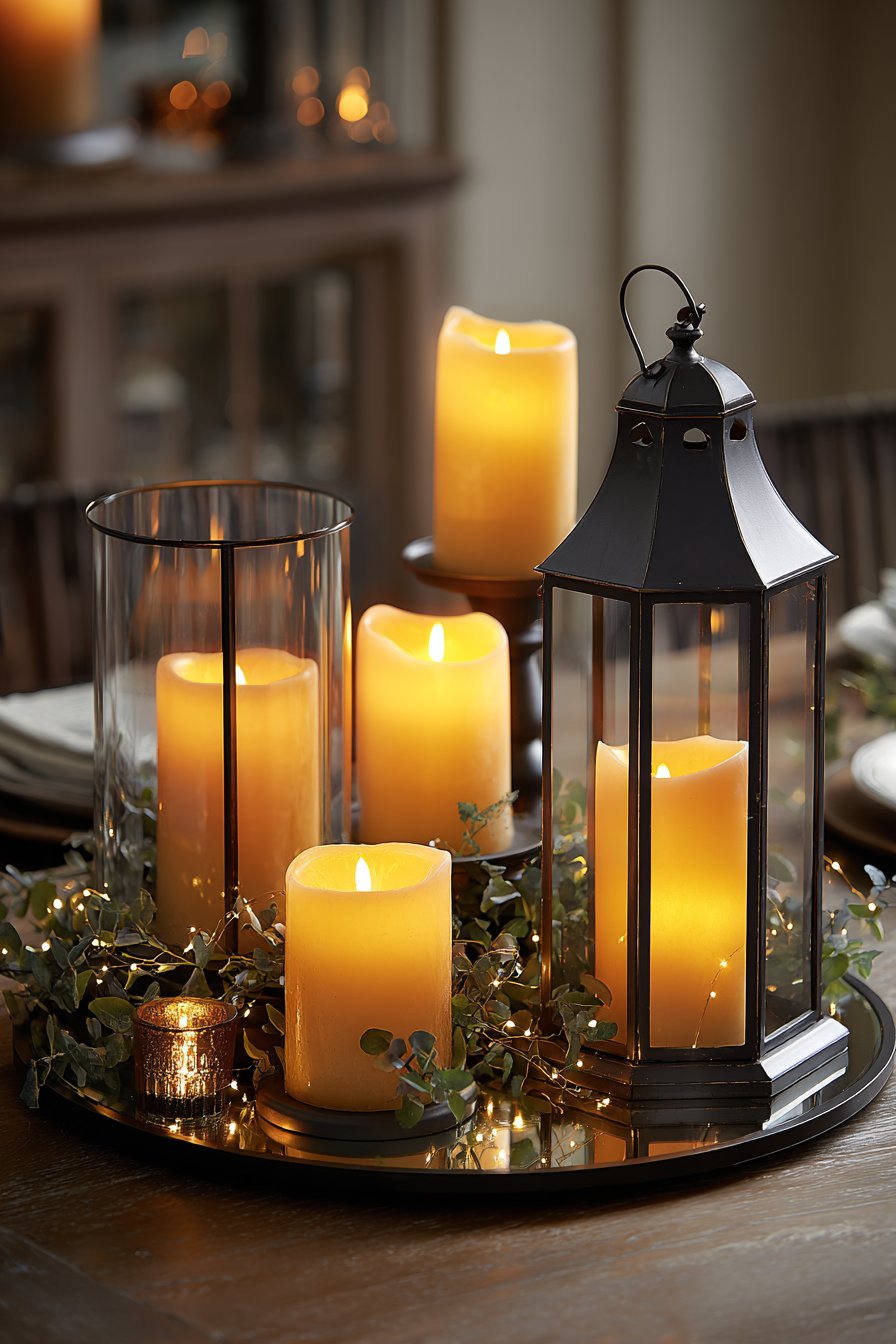
- Use odd numbers of candles (3, 5, or 7) for visually pleasing arrangements
- Choose unscented candles for dining to avoid competing with food aromas
- Incorporate votive candles in varied holders for textural interest
- Place mirror tiles under candles to double their reflective light
- Consider LED string lights woven through centerpieces for magical sparkle
- Maintain appropriate candle height (under eye level) for conversation comfort
8. Natural and Organic Elements

Bringing nature indoors through round table decor creates timeless appeal that transcends fleeting trends. Organic elements introduce inherent beauty, textural variety, and subtle color palettes that harmonize effortlessly with most interior styles. Fresh flowers remain the classic choice, but expanding your botanical repertoire to include branches, succulents, dried grasses, or preserved foliage provides year-round options with varying maintenance requirements.
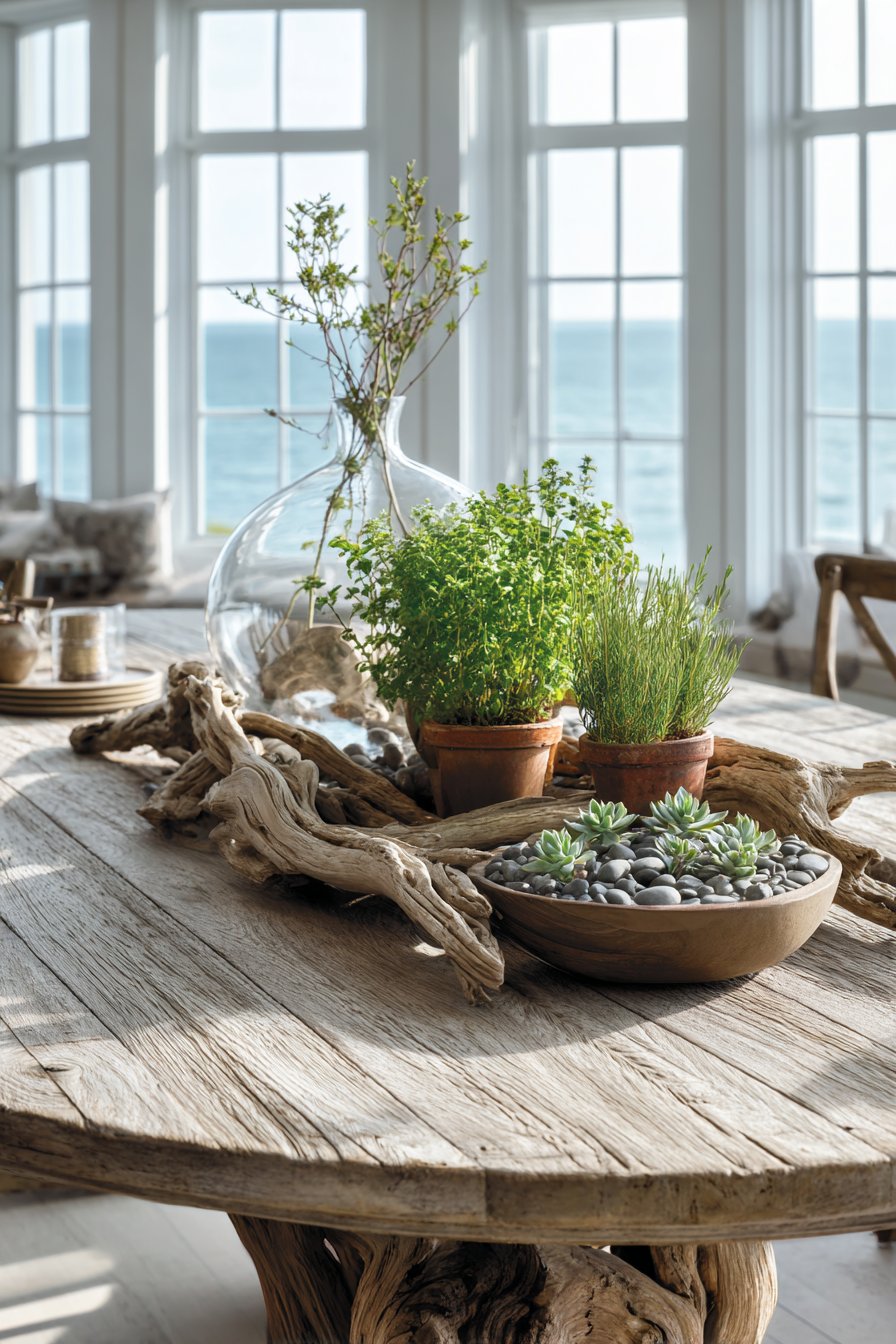
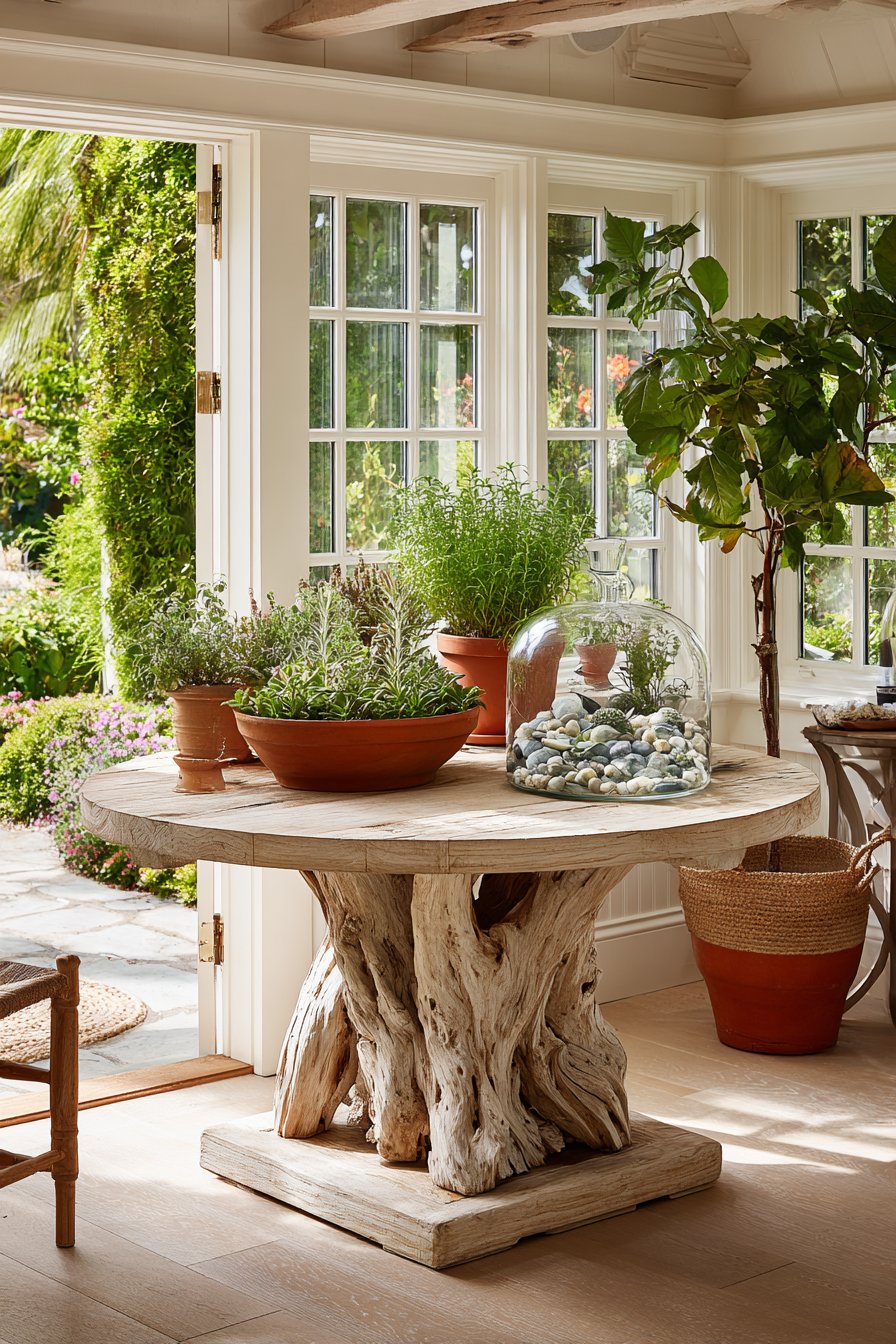
Living centerpieces offer dynamic beauty that evolves over time, creating ever-changing focal points that reward daily attention. Small potted herbs like rosemary, thyme, or basil provide culinary function alongside decorative appeal. Succulent gardens in low bowls or trays require minimal watering while offering sculptural forms and interesting textures. Orchids deliver exotic elegance for weeks with proper care, and their architectural blooms suit contemporary spaces beautifully.
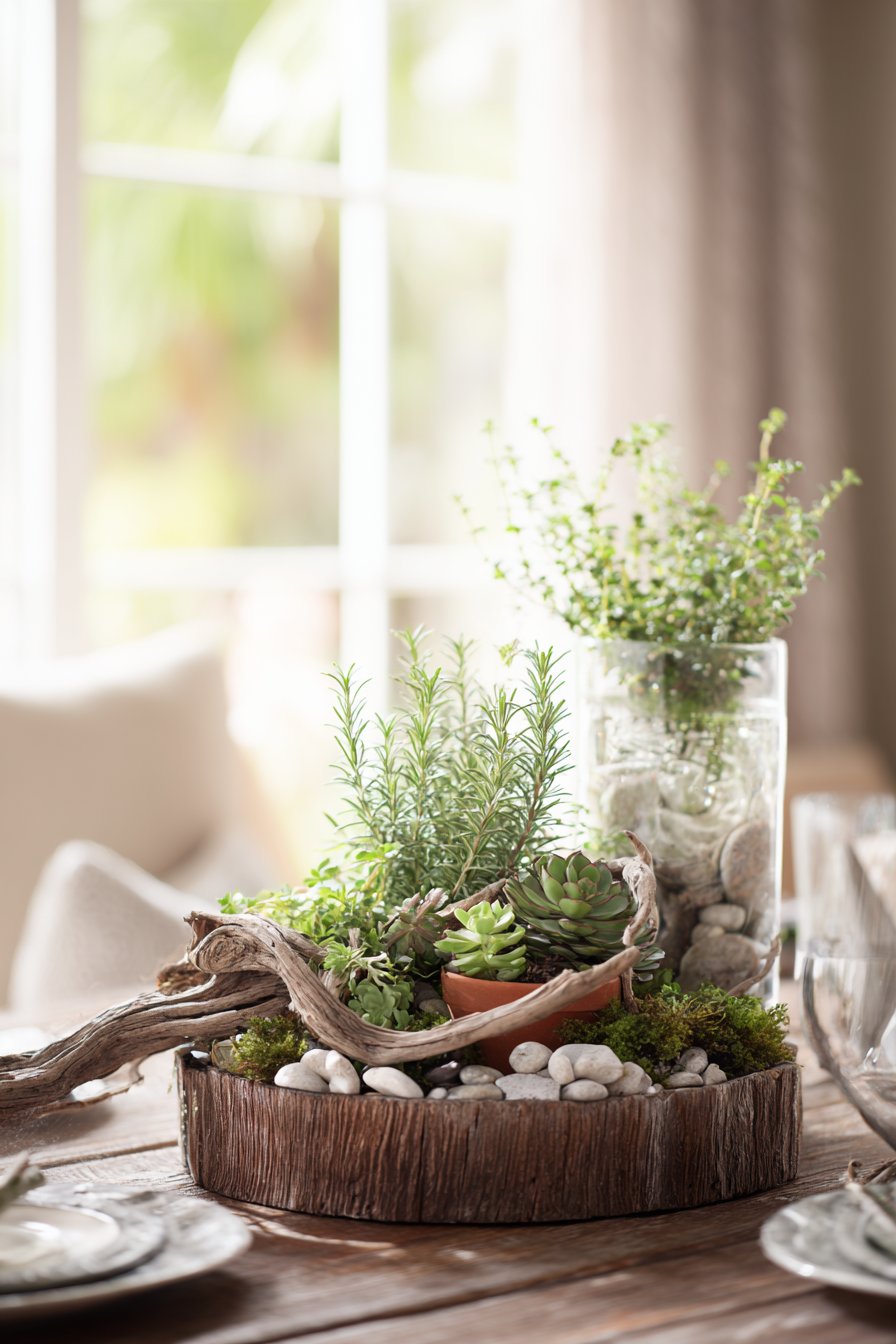
Natural materials extend beyond botanicals to include found objects that celebrate organic forms. Driftwood pieces create dramatic sculptural bases for other elements. River rocks or polished stones add weight and texture in decorative bowls. Seashells, coral fragments, or sand in glass vessels evoke coastal serenity. These elements cost nothing when collected personally, adding meaningful connections to specific places and memories.
- Change water in fresh flower arrangements every two days for longevity
- Group small potted plants in odd numbers for natural, organic clusters
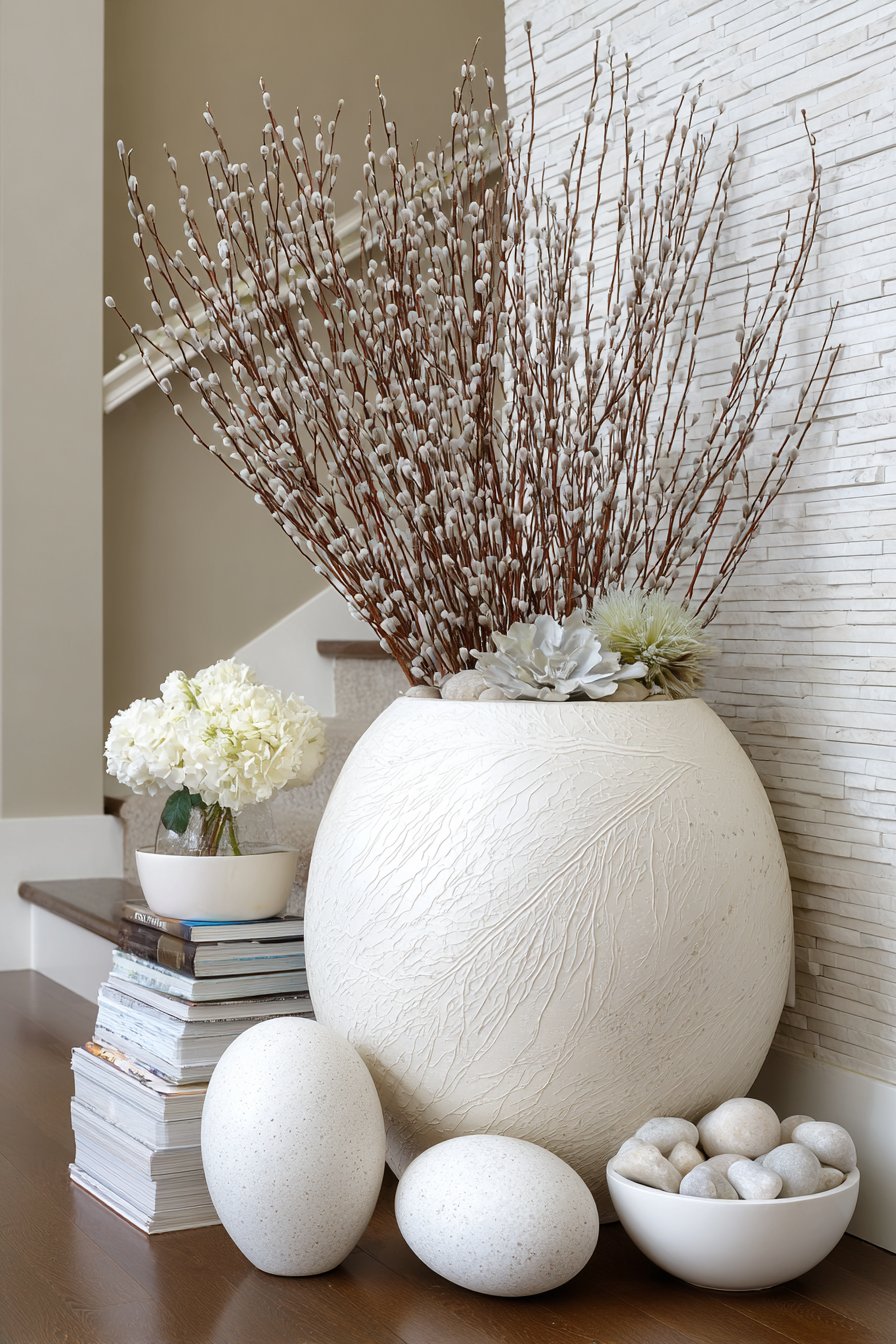
- Incorporate branches or pussy willows in tall vases for vertical drama
- Use moss as a living base layer under candles or other elements
- Display seasonal fruits and vegetables as edible, temporary decor
- Preserve favorite flowers by drying or pressing them for extended enjoyment
9. Scale Variation and Vertical Interest
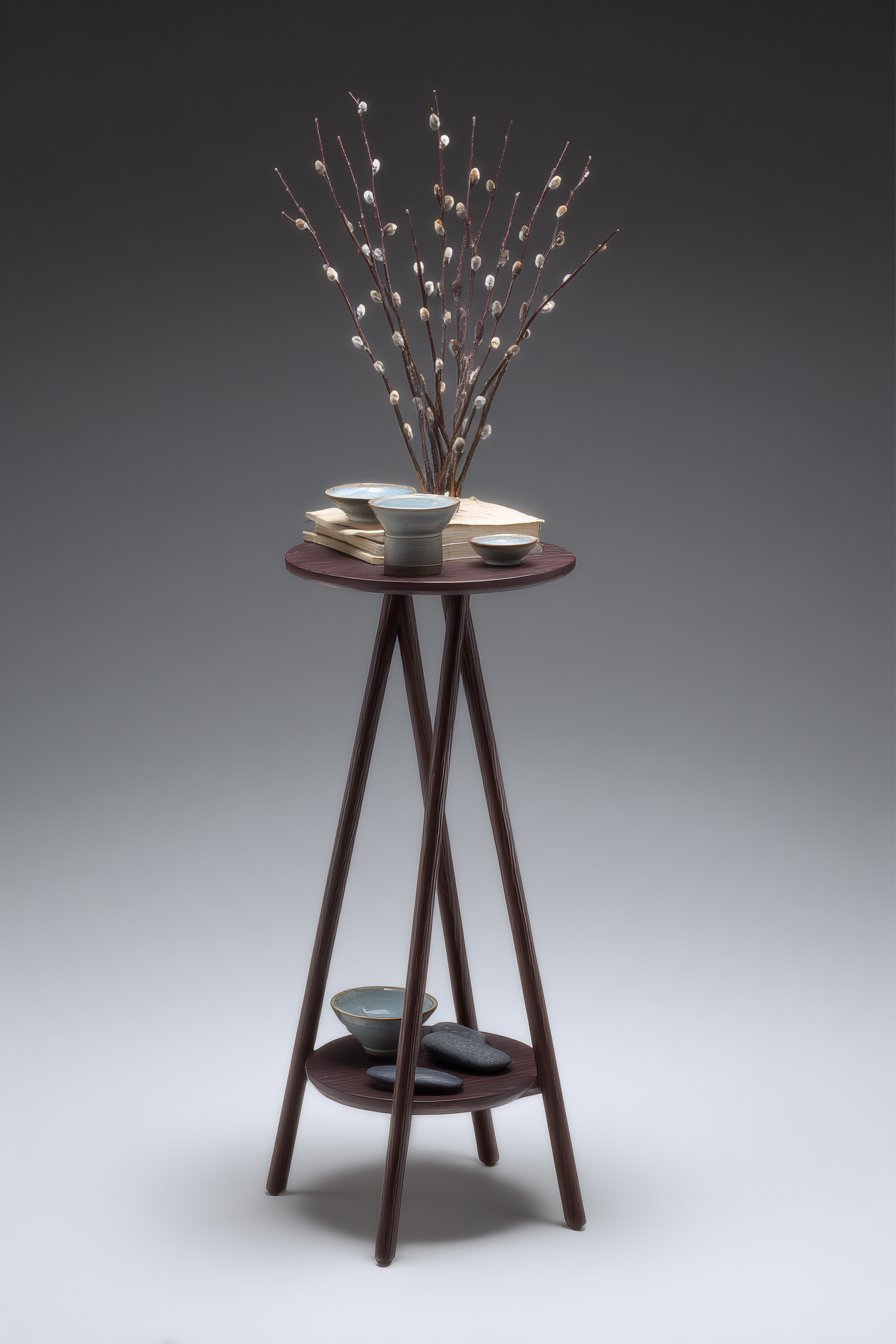
Creating visual hierarchy through varied heights prevents round table arrangements from appearing flat and one-dimensional. The eye naturally seeks variation and movement, which height differences provide while maintaining the circular flow around the table. Combining tall, medium, and low elements creates dynamic compositions that remain interesting from every viewing angle.
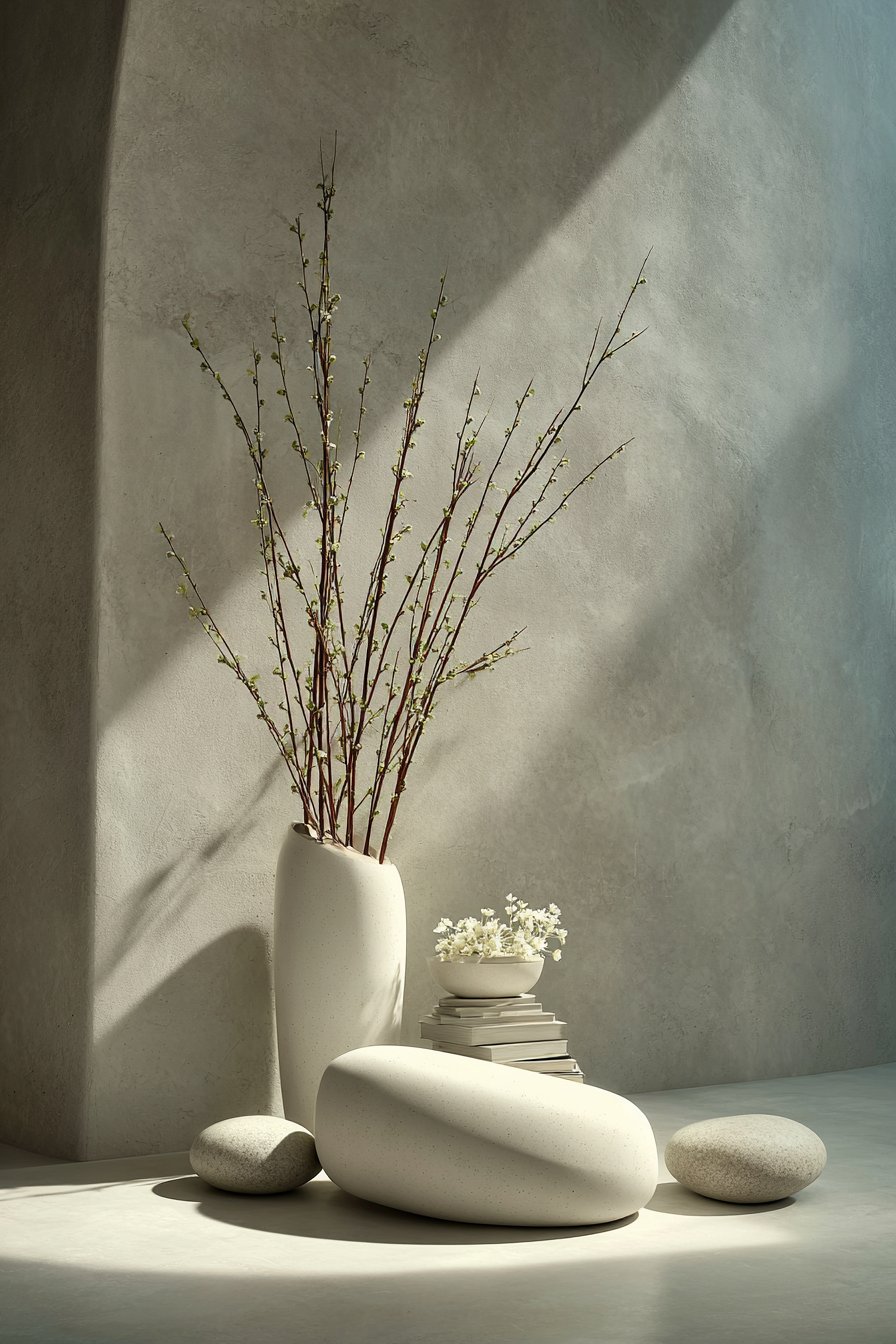
The triangle principle guides effective height variation, suggesting that successful arrangements feature three distinct height levels forming an invisible triangular shape. This could mean pairing tall candlesticks with medium-height floral arrangements and low decorative objects or bowls. The triangle need not be symmetrical; in fact, slightly asymmetrical triangles often feel more natural and contemporary.
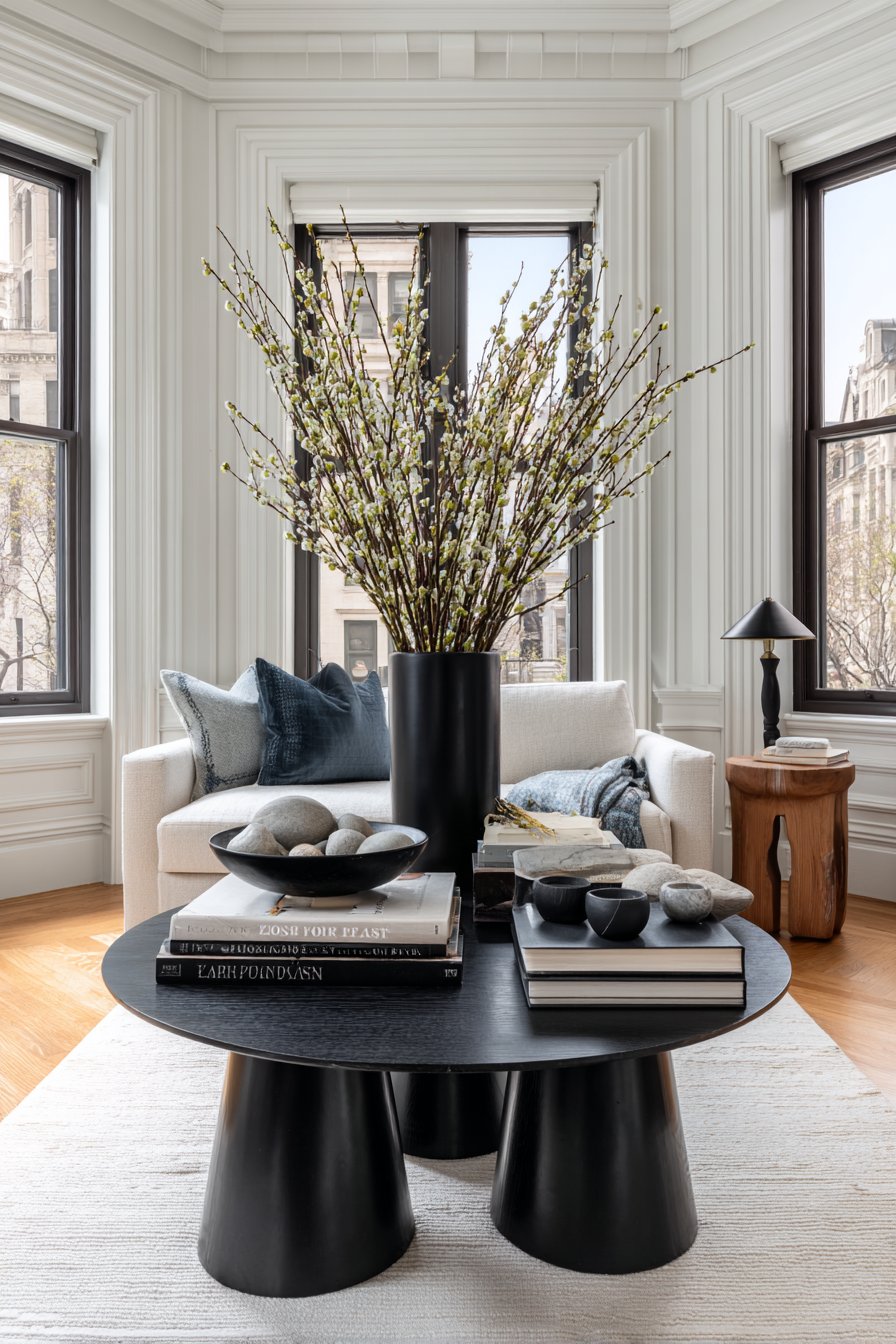
Vertical interest extends beyond simple height variation to include elements that draw the eye upward through repetition or graduated scaling. Clustered items of similar type but different sizes create this effect beautifully—think graduated candles, nesting bowls, or stacked books. Tall stems in low vessels provide elegant vertical lines without blocking sightlines, perfect for dining tables where conversation remains paramount.
- Use riser elements like cake stands or pedestals to elevate certain pieces
- Combine tall taper candles with shorter votives and pillar candles
- Include at least one element taller than 12 inches on non-dining tables
- Create height with vertical branches, tall grasses, or dramatic stems
- Stack decorative boxes or books to add architectural height variation
- Ensure the tallest elements don’t obstruct views during conversation
Conclusion
Mastering round table decor transforms these versatile surfaces into stunning focal points that enhance your entire interior design scheme. The principles explored here—from proportion and scale to color theory and seasonal adaptation—provide a professional framework for creating arrangements that reflect your personal style while serving your practical needs. Remember that successful decorating balances aesthetic beauty with functional reality, ensuring your round tables work as hard as they look beautiful.
Experiment confidently with these proven strategies, adapting them to your unique space, budget, and lifestyle requirements. Start with foundational elements you genuinely love, then layer in seasonal accents and experimental touches that keep your decor feeling fresh and personally meaningful. The most successful round table displays evolve organically over time, reflecting your changing tastes while maintaining core design principles that ensure lasting appeal.
Your round tables deserve thoughtful attention that celebrates their unique geometry while showcasing your creativity and design sensibility. Whether you’re styling a grand dining table, an intimate breakfast nook, or an elegant foyer accent piece, these techniques empower you to create professional-quality displays that enhance daily living and special occasions alike. Embrace the circular canvas your round tables provide, and enjoy the endless decorating possibilities they offer.
"As an Amazon Associate, I earn from qualifying purchases."
