
In today’s fast-paced world, the kitchen has evolved far beyond a mere cooking space to become the heart of the home—a place where functionality meets beauty, and where families gather to create lasting memories. The art of thoughtful interior design lies in creating spaces that not only serve practical purposes but also inspire and nurture the soul. Among the many design philosophies that have emerged, organic modern style stands out as a harmonious blend of contemporary sophistication and natural warmth, offering homeowners the perfect balance between sleek functionality and earthy comfort.
The organic modern kitchen represents a design revolution that celebrates the inherent beauty of natural materials while embracing the clean lines and efficiency of contemporary design. This approach to kitchen design recognizes that our connection to nature is fundamental to our well-being, incorporating elements like live-edge wood, natural stone, and organic textures into streamlined, functional layouts. The result is a space that feels both cutting-edge and timeless, sophisticated yet approachable.
This comprehensive exploration will take you through twenty distinct organic modern kitchen concepts, each showcasing unique ways to integrate natural elements with contemporary design principles. From waterfall-edge islands that showcase the beauty of natural stone to curved architectural elements that echo nature’s flowing forms, these designs demonstrate how organic modern kitchens can cater to diverse lifestyles while maintaining their core philosophy of harmonious material integration and functional beauty.
1. The Waterfall Island Sanctuary
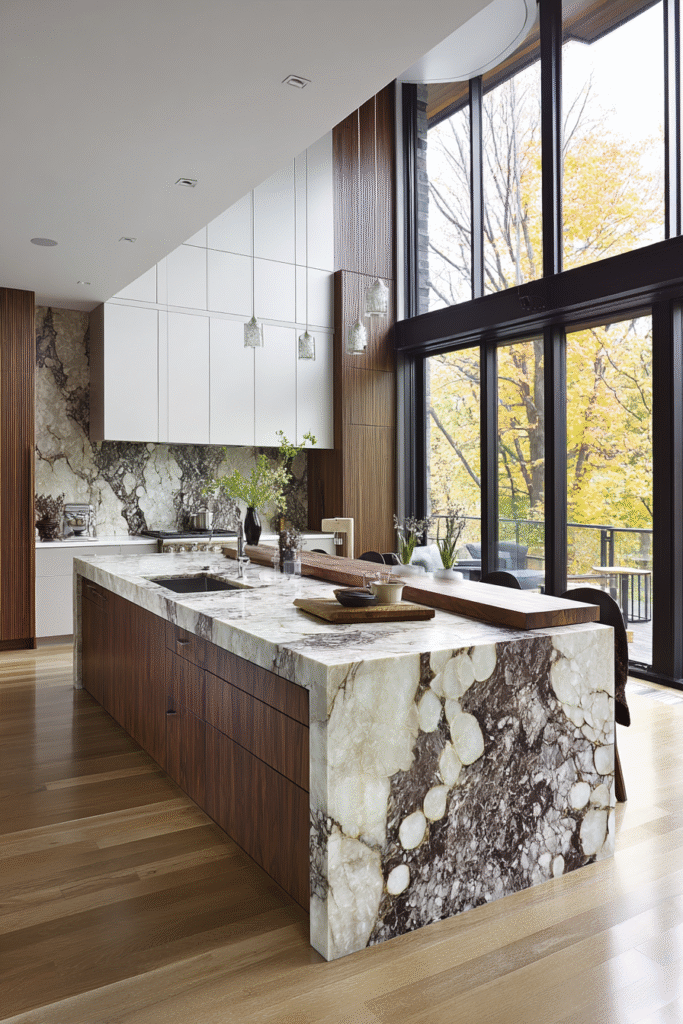
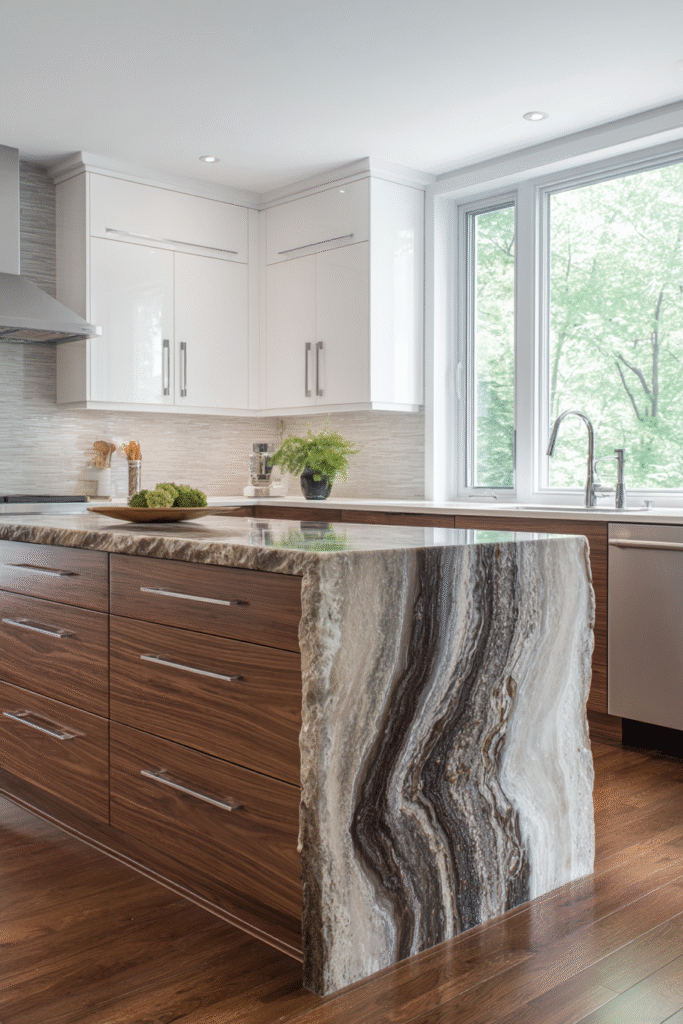
Imagine stepping into a kitchen where the centerpiece commands attention through its sheer architectural presence—a magnificent waterfall-edge island crafted from natural stone that cascades seamlessly from countertop to floor. This organic modern masterpiece features integrated wooden cutting board details that speak to both functionality and aesthetic appeal, creating a workspace that honors the ritual of food preparation. The surrounding cabinetry presents a sophisticated dialogue between materials, with warm walnut wood grain lower cabinets providing earthiness and visual weight, while sleek handleless white upper cabinets maintain the space’s contemporary edge and visual lightness.
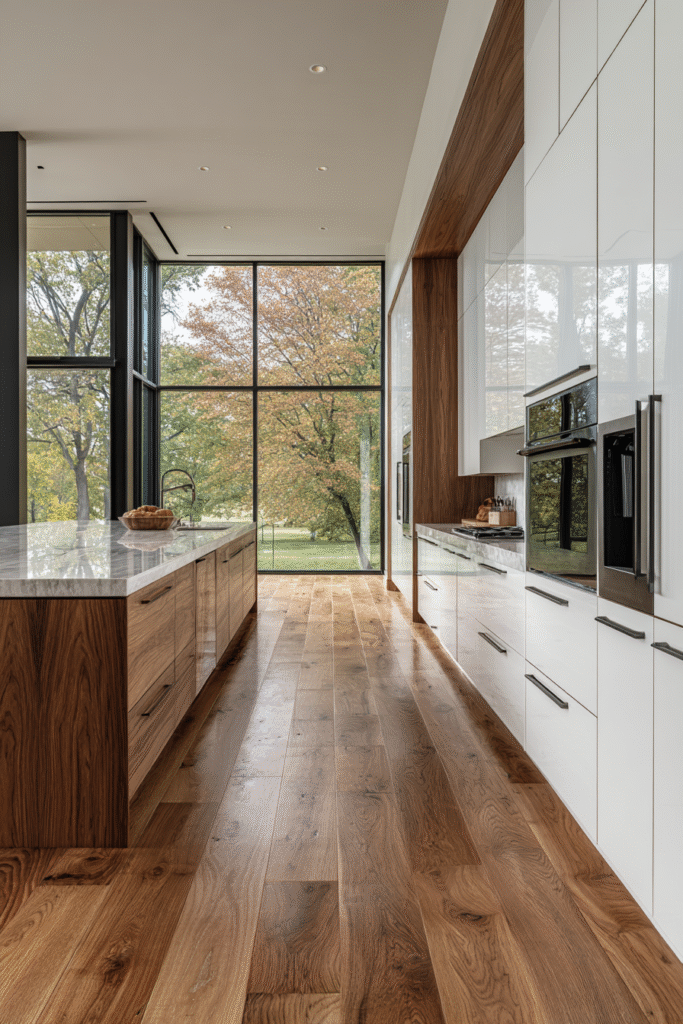
Natural light becomes a crucial design element as it streams through expansive floor-to-ceiling windows, creating an ever-changing light show that highlights the organic textures and celebrates the clean architectural lines. The stone’s natural veining becomes artwork under this natural illumination, while the wood grain patterns seem to come alive with depth and character. This interplay between natural materials and light creates a dynamic environment that changes throughout the day, offering new discoveries and moments of beauty with each passing hour.
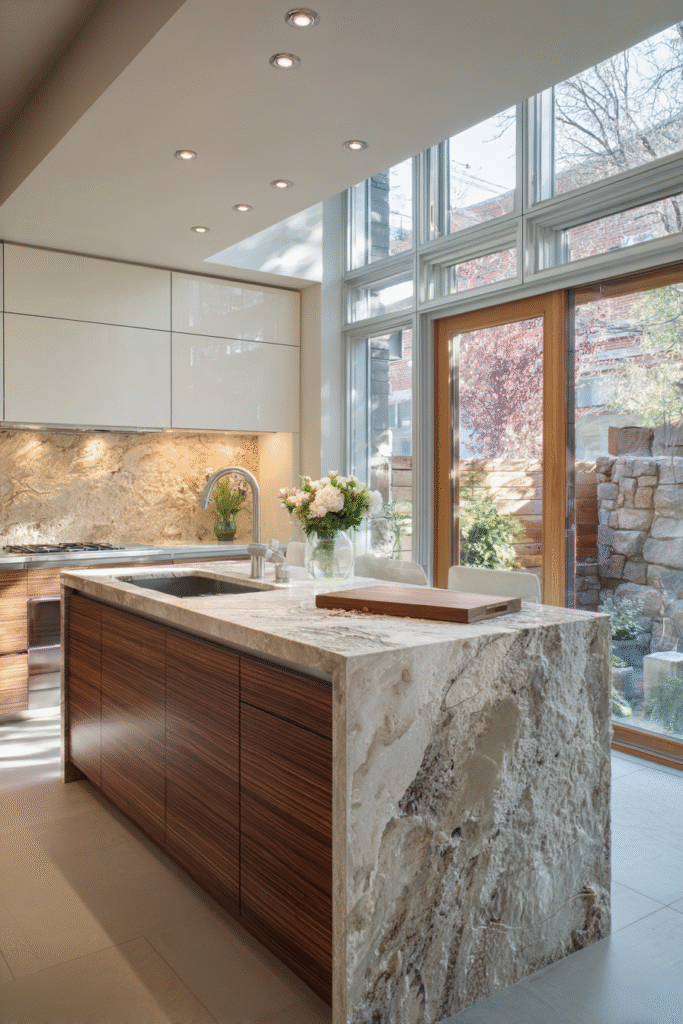
The seamless blend of natural materials and contemporary functionality represents the essence of organic modern design. The waterfall edge not only provides visual drama but also serves practical purposes, protecting the island’s base from daily wear while creating additional storage opportunities. The integrated cutting board details demonstrate how organic modern design considers both beauty and function, ensuring that every element serves multiple purposes while maintaining aesthetic coherence.
Key Design Tips:
- Choose stone with dramatic veining patterns for maximum visual impact on waterfall edges
- Integrate wooden elements like cutting boards to add warmth and functionality
- Position islands to maximize natural light exposure for highlighting material textures
- Select handleless cabinetry hardware to maintain clean, uninterrupted lines
- Use contrasting materials (light/dark, smooth/textured) to create visual interest while maintaining harmony
2. The Living Kitchen Gallery
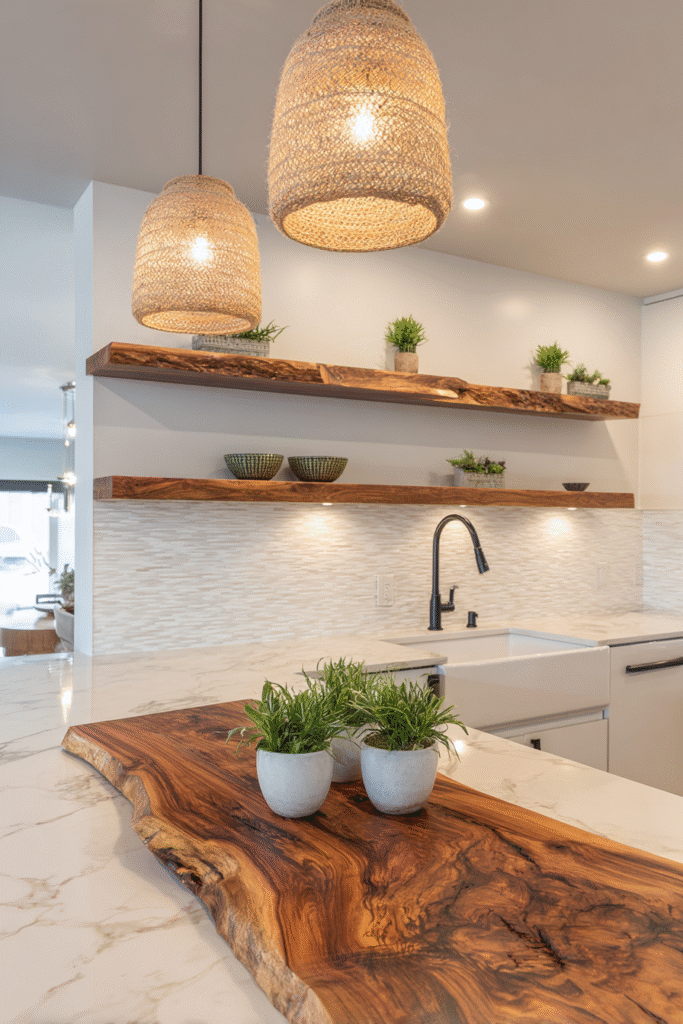
Picture a kitchen that functions as both culinary workspace and living art gallery, where live-edge wooden floating shelves serve as exhibition spaces for an ever-changing collection of handmade ceramic bowls and thriving potted herbs. The textured limestone backsplash provides a sophisticated backdrop that celebrates imperfection and natural variation, each tile telling its own geological story through subtle color shifts and organic patterns. This design philosophy embraces the Japanese concept of wabi-sabi, finding beauty in the authentic and imperfect.
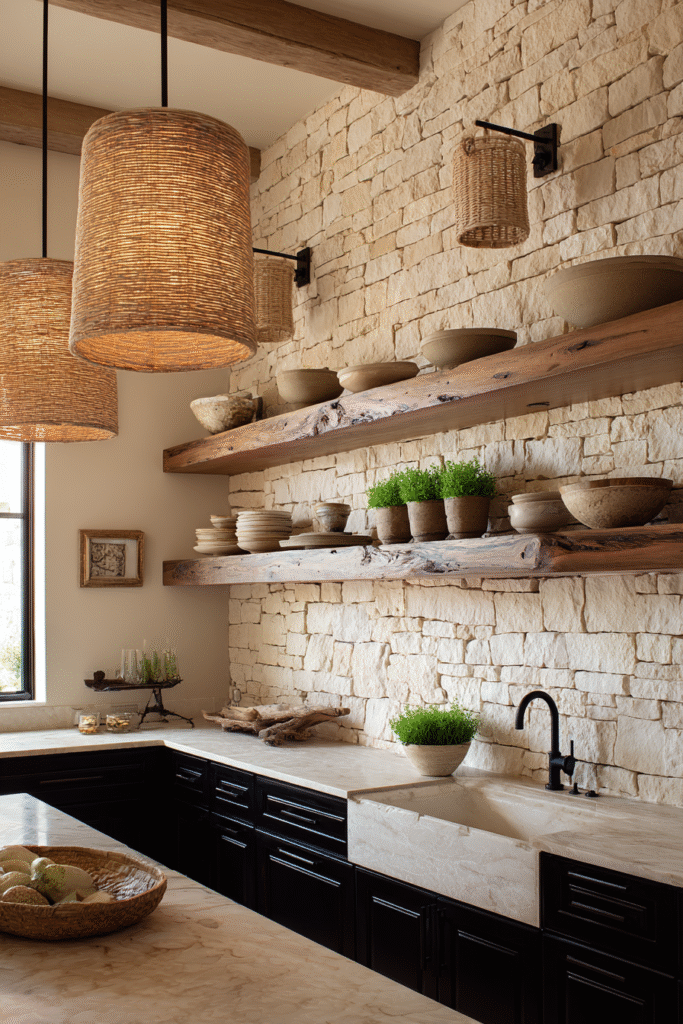
The integration of matte black fixtures creates striking contrast points throughout the space, with each element carefully considered for both aesthetic impact and functional performance. A farmhouse-style apron sink, carved from the same honed marble as the countertops, represents the marriage of traditional craftsmanship with contemporary sensibilities. The sink’s generous proportions accommodate everything from delicate herb washing to substantial meal preparation, while its seamless integration into the marble surface maintains the organic modern aesthetic of unified materials.
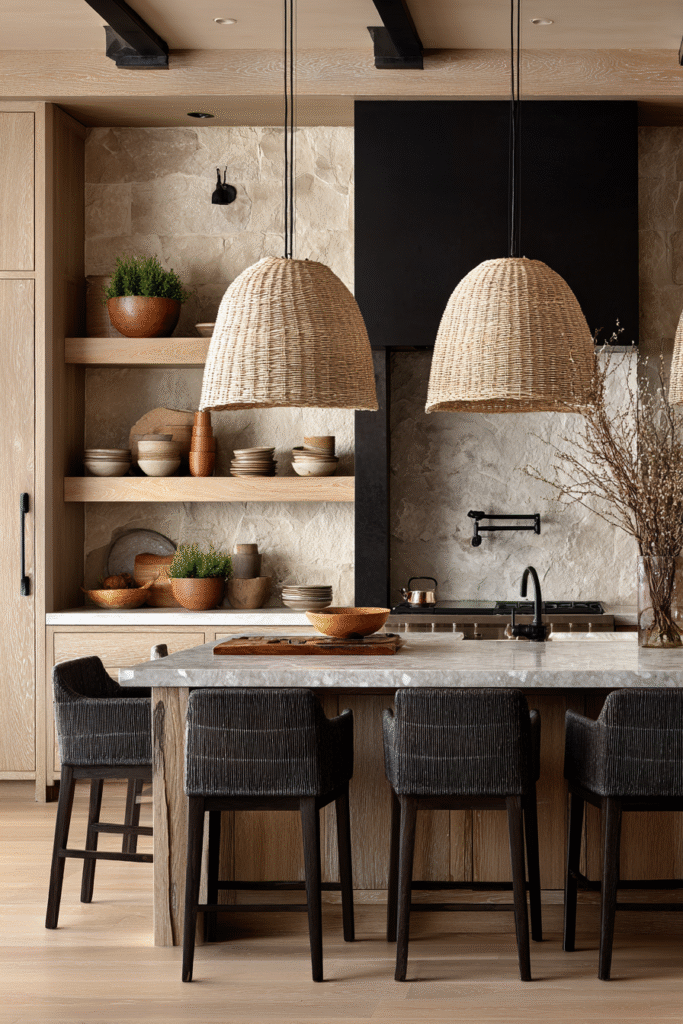
Overhead, pendant lights crowned with natural fiber shades cast warm, diffused light that transforms the breakfast bar into an intimate gathering space. These lighting fixtures represent the organic modern principle of celebrating natural materials in unexpected applications, with each shade’s unique weaving pattern creating distinctive shadow plays across the work surfaces. The result is a kitchen that feels more like a carefully curated living space than a purely functional work zone.
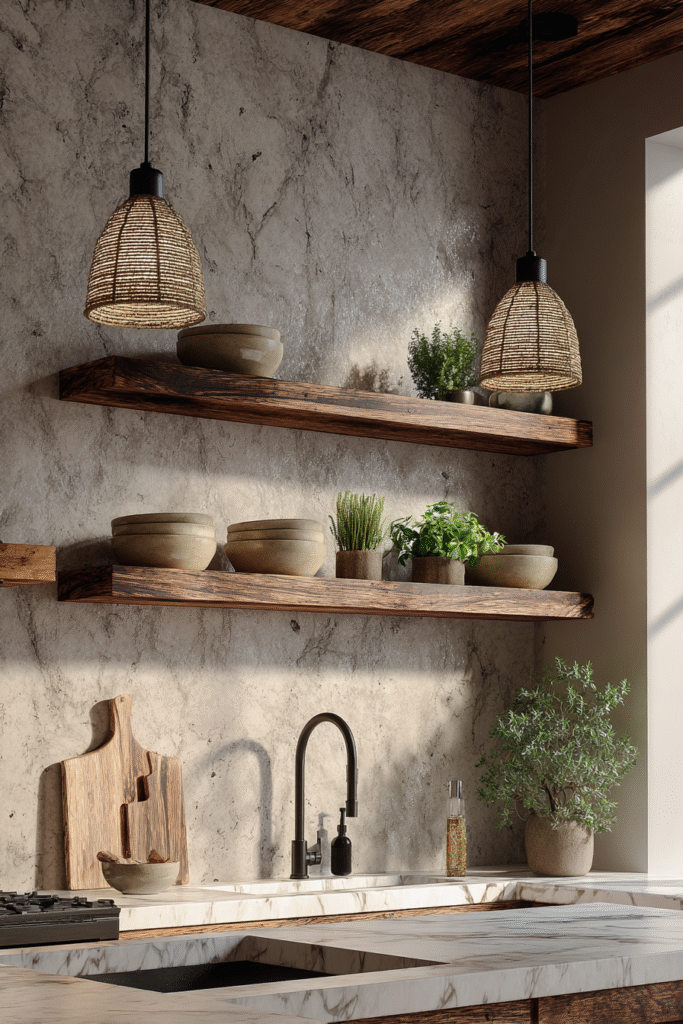
Key Design Tips:
- Display pottery and plants on floating shelves to add life and personality to the space
- Choose limestone or other natural stone backsplashes for authentic texture variation
- Integrate sinks seamlessly into countertops for a unified, sculptural appearance
- Use matte black fixtures as accent points to create visual anchors throughout the design
- Select natural fiber light shades to soften artificial lighting and add organic texture
3. The Curved Conversation Hub
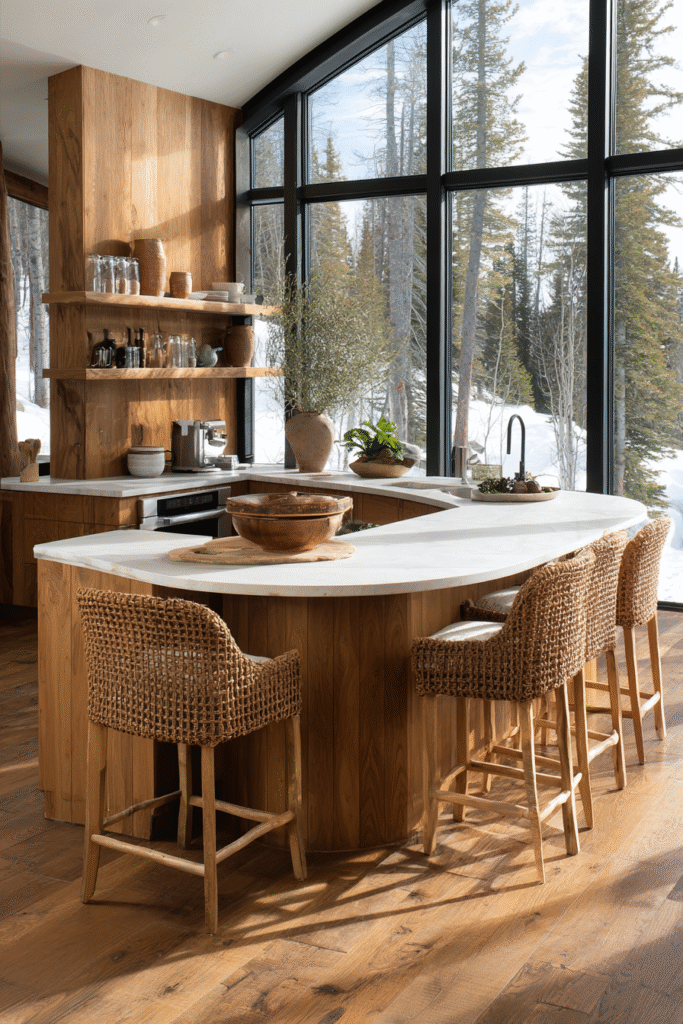
Enter a kitchen where geometry softens into poetry through the introduction of curved elements that echo nature’s preference for flowing, organic forms. The curved kitchen island, featuring a natural oak base that showcases the wood’s beautiful grain patterns, supports a pristine white quartz countertop that provides both durability and visual lightness. Surrounding this central gathering point, woven bar stools with natural cushions invite lingering conversations and casual meals, their organic materials and comfortable proportions encouraging the social interactions that make kitchens the heart of the home.
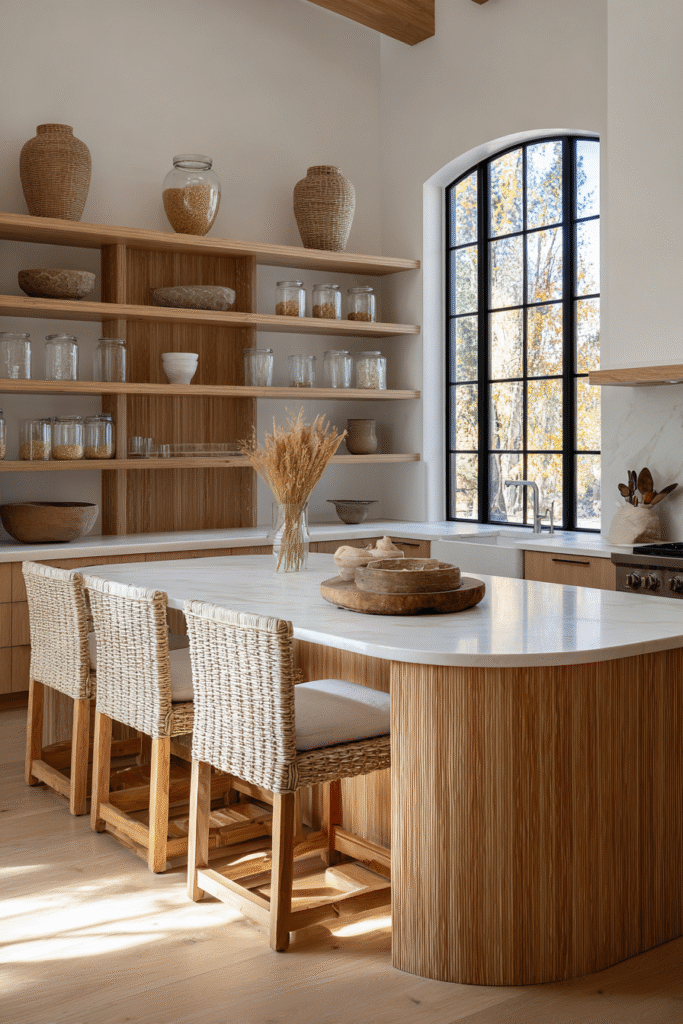
Open shelving throughout the space displays a carefully curated collection of handmade pottery and glass containers filled with colorful grains, legumes, and spices. This approach to storage transforms everyday necessities into decorative elements, celebrating the beauty of food ingredients while maintaining easy accessibility for daily cooking. The transparency of glass containers allows the natural colors and textures of stored foods to contribute to the overall design palette, creating a dynamic display that changes with seasonal ingredient selections.
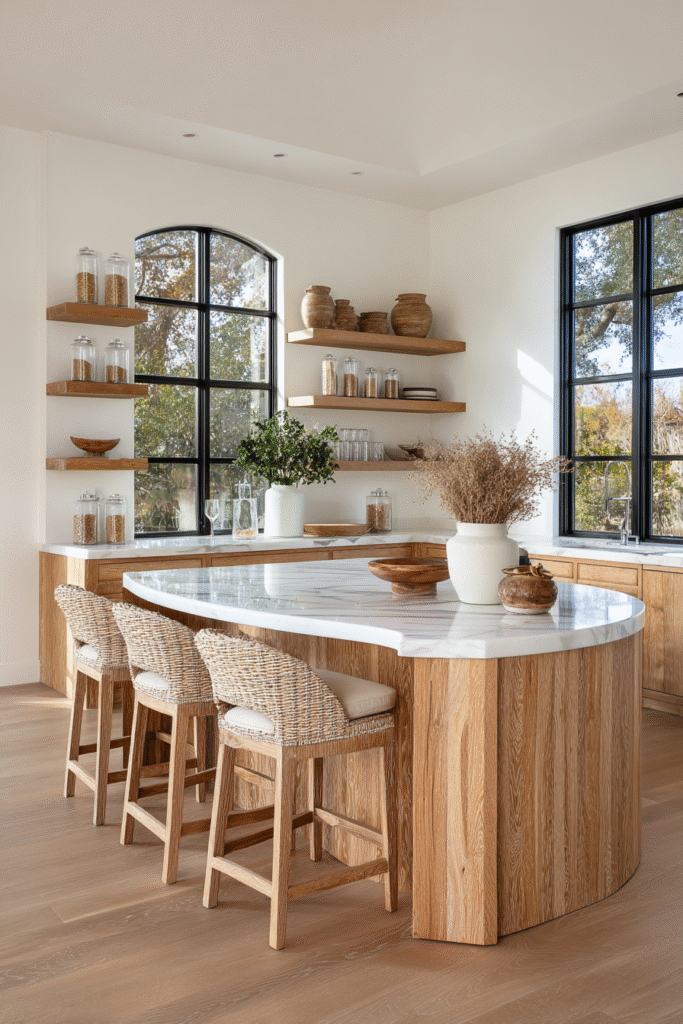
Large windows framed in minimal black metal allow abundant natural light to flood the space, highlighting every wood grain detail and casting ever-changing shadows that add movement and life to the static elements. The interplay between natural light and organic materials creates a space that feels alive and connected to the natural world beyond its walls, fulfilling one of organic modern design’s core principles of maintaining connection with nature.

Key Design Tips:
- Incorporate curved elements in islands and seating areas to soften harsh geometric lines
- Use open shelving to display both functional items and decorative pieces
- Choose woven or natural fiber bar stools for comfort and organic texture
- Install minimal window frames to maximize natural light penetration
- Create visual interest through the display of colorful ingredients in glass containers
4. The Artisan’s Workshop
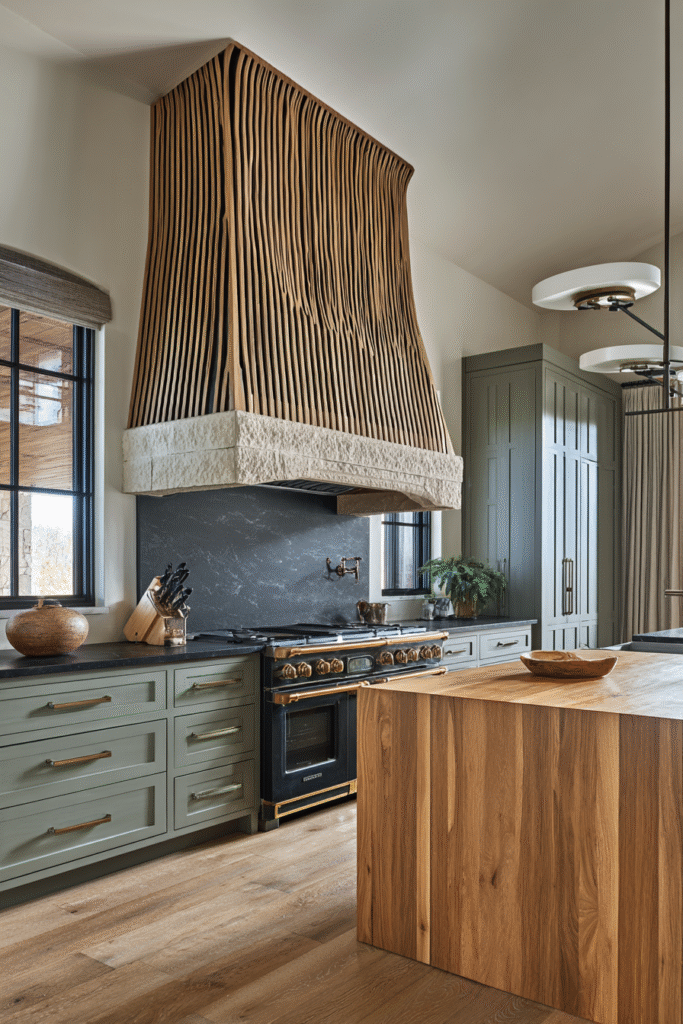
Visualize a kitchen that pays homage to traditional craftsmanship while embracing contemporary functionality, anchored by a statement range hood crafted from natural stone that serves as both functional necessity and sculptural focal point. This impressive feature, positioned above a professional gas range with warm brass accents, demonstrates how organic modern design can elevate utilitarian elements into artistic statements. The stone’s natural variations and hand-hewn appearance speak to artisanal traditions while housing state-of-the-art ventilation technology.
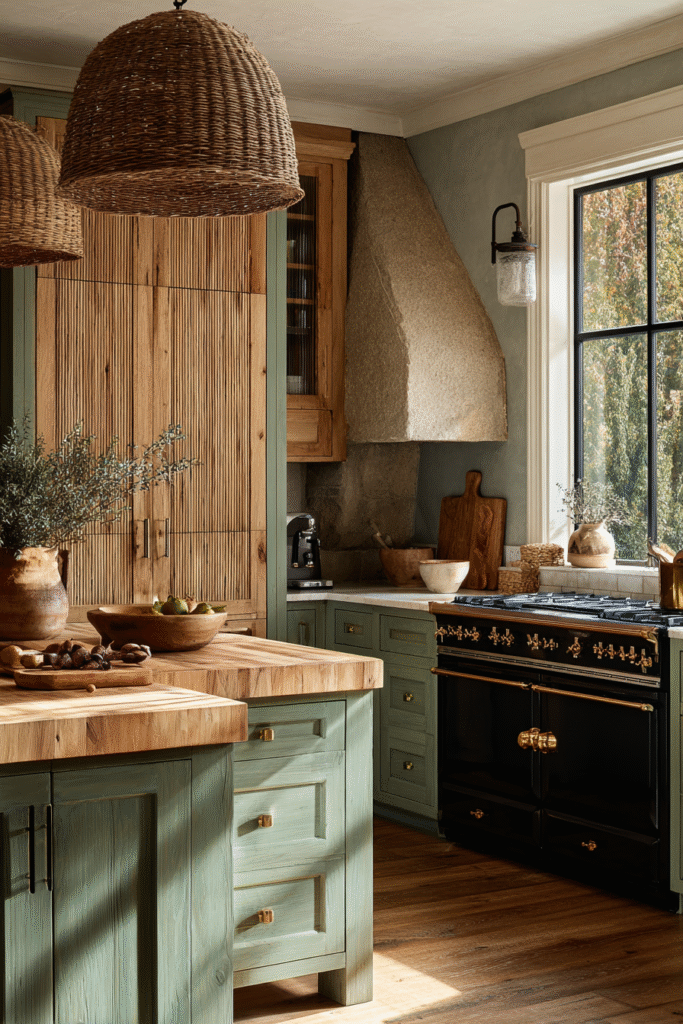
The surrounding cabinetry showcases the beauty of vertical wood slats in warm oak finish, creating rhythm and texture that adds visual interest without overwhelming the space. These slats provide subtle shadow lines that change throughout the day as natural light shifts, creating a dynamic surface treatment that rewards close observation. Complementing this woodwork, sage green lower cabinets introduce a sophisticated color element that bridges the natural wood tones with the stone range hood, creating a cohesive color palette inspired by nature.

At the heart of this culinary workspace stands a large butcher block island that serves multiple roles—prep surface, casual dining area, and social gathering point. The thick wood surface bears the honest marks of daily use, developing character over time in the organic modern tradition of embracing materials that age beautifully. This island represents the kitchen’s dual nature as both hardworking utility space and warm gathering place for family and friends.

Key Design Tips:
- Create dramatic focal points with natural stone range hoods or architectural features
- Use vertical wood slat treatments to add texture and visual rhythm to cabinet faces
- Introduce muted natural colors like sage green to complement wood and stone elements
- Choose butcher block surfaces that develop character and patina with use
- Balance professional cooking equipment with warm, natural materials for approachable luxury
5. The Organized Oasis
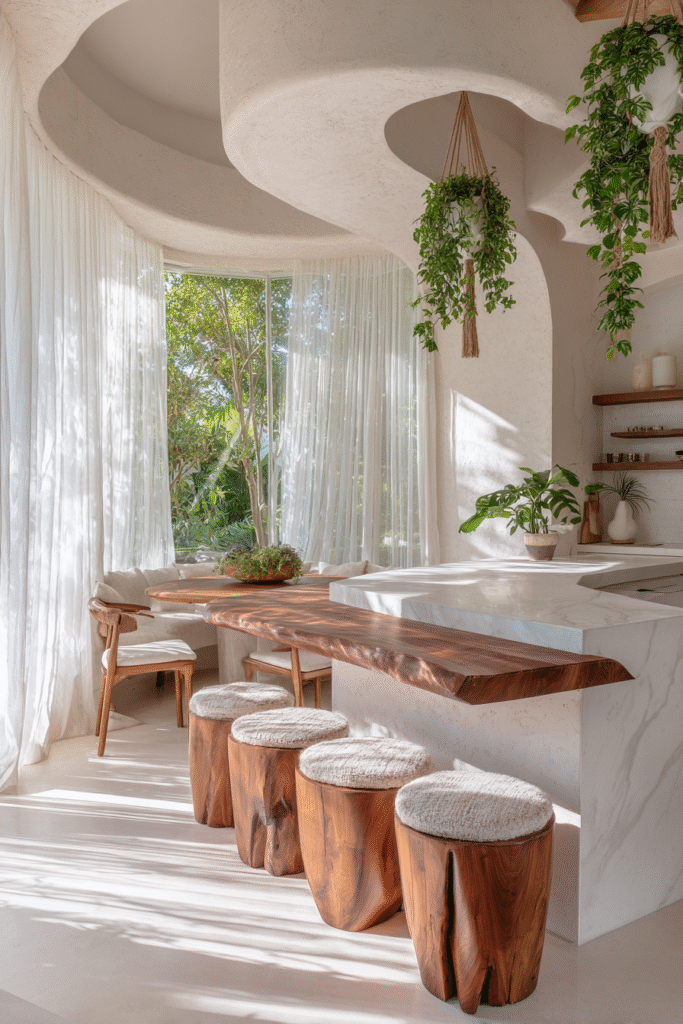
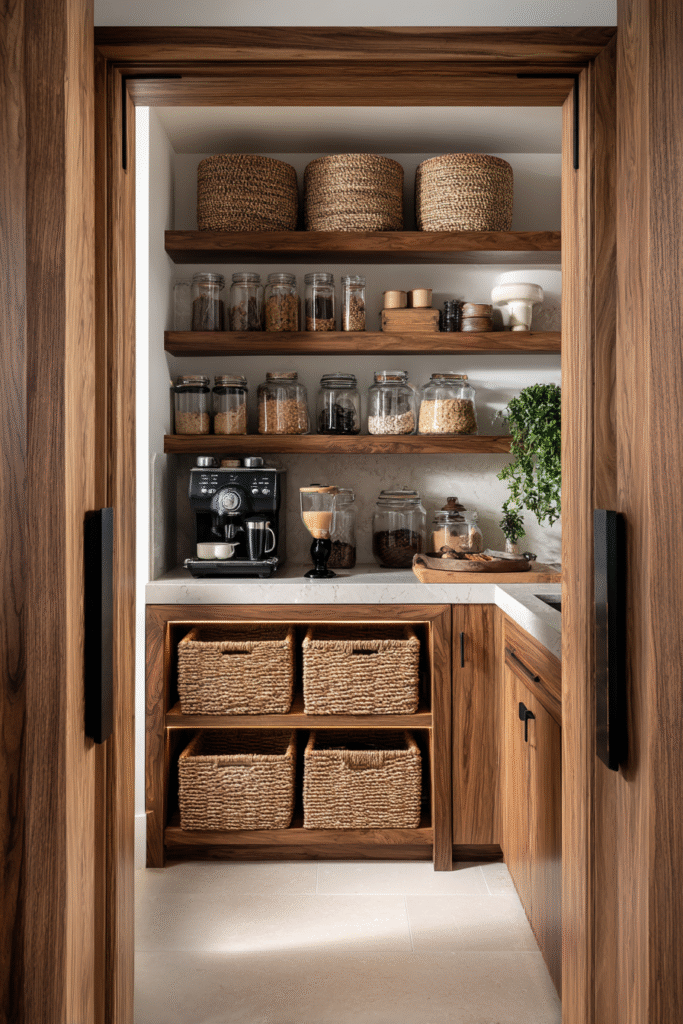
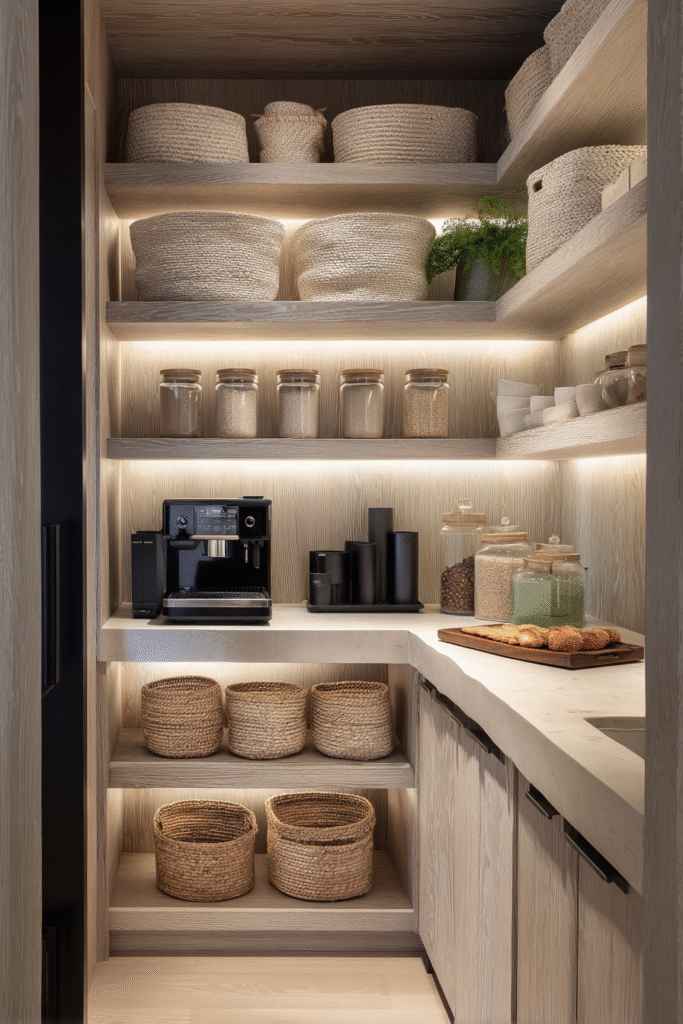
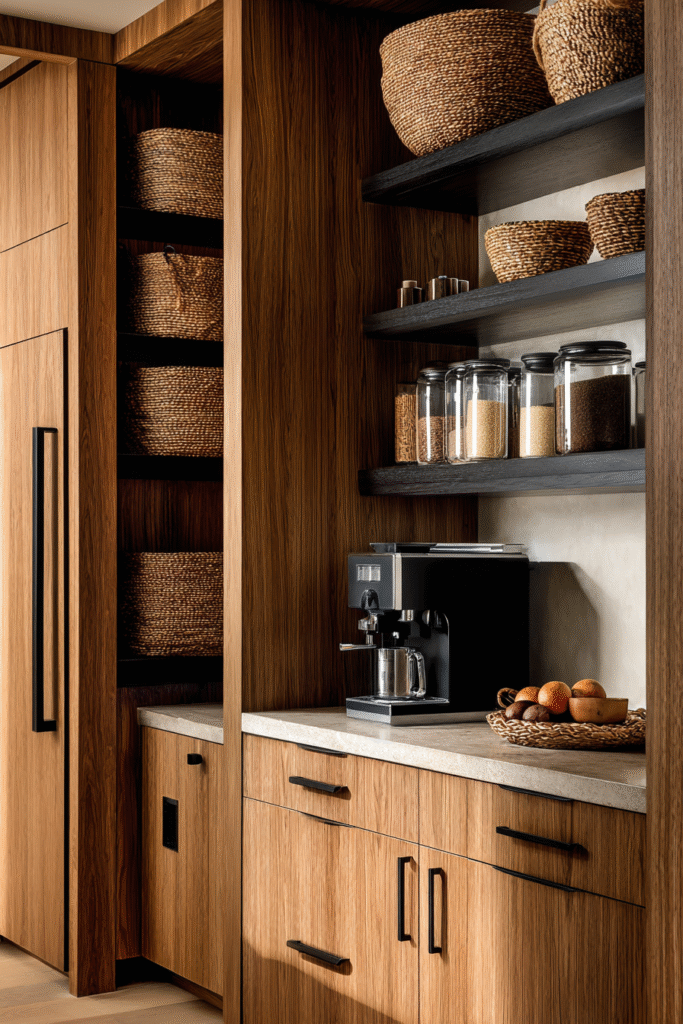
Step into a kitchen where storage transcends mere functionality to become an integral part of the design aesthetic, featuring floor-to-ceiling pantry storage with natural wood veneer and integrated LED lighting that transforms organization into art. The warm wood grain patterns create visual continuity throughout the space while the subtle lighting highlights the careful arrangement of pantry items, making daily ingredient selection a more pleasant and efficient experience. This approach to storage demonstrates how organic modern design can make even utilitarian spaces beautiful and inspiring.
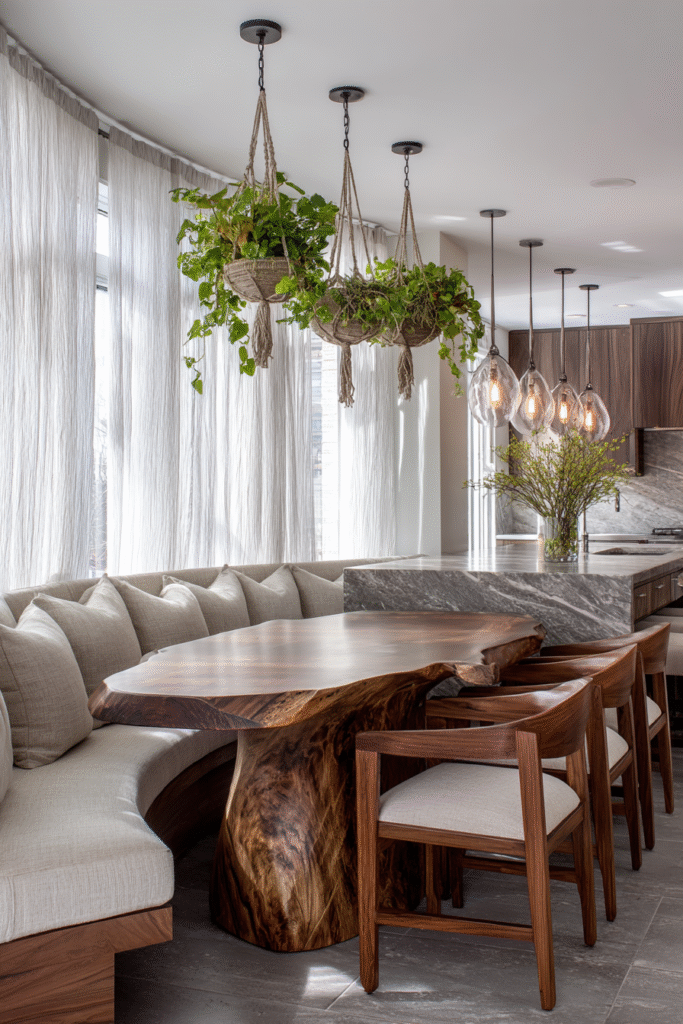
Open shelving throughout the pantry area displays an artful arrangement of woven baskets and glass jars, creating an organized yet organic composition that celebrates both function and form. The baskets, crafted from natural fibers, add textural interest while concealing items that might otherwise create visual clutter. Glass jars reveal the natural beauty of stored ingredients—colorful spices, grains, and dried goods become decorative elements that contribute to the overall design palette while remaining easily accessible for cooking.
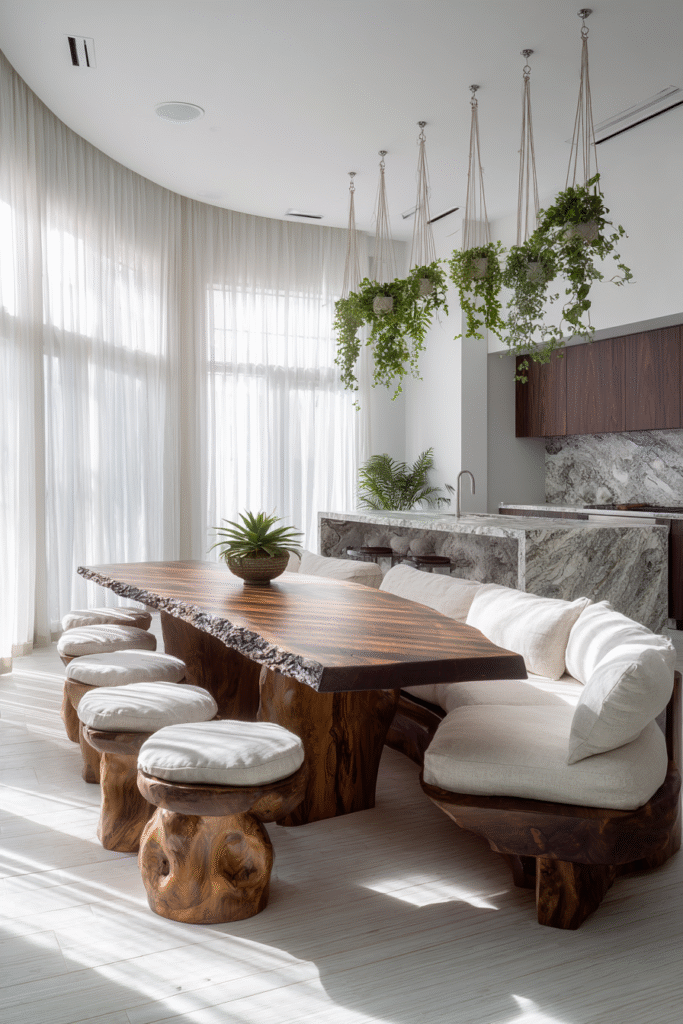
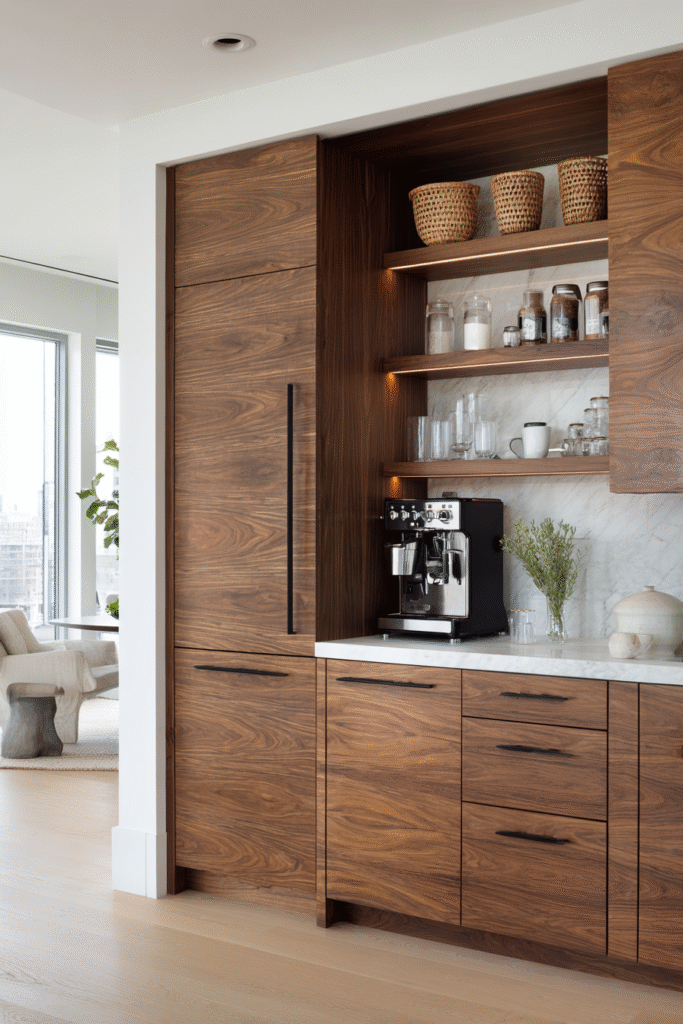
Adjacent to the main pantry, a dedicated coffee station features a built-in espresso machine seamlessly integrated into the cabinetry design, with floating walnut shelves providing display and storage for coffee-related accessories. This specialized zone demonstrates how organic modern kitchens can accommodate specific lifestyle needs while maintaining design coherence throughout the space. The floating shelves, with their live-edge details, echo the organic elements found elsewhere in the kitchen while providing practical storage for daily coffee rituals.
Key Design Tips:
- Install integrated LED lighting in storage areas to improve functionality and visual appeal
- Use a combination of woven baskets and glass jars for organized pantry storage
- Create dedicated stations for specific activities like coffee preparation or baking
- Choose floating shelves with natural edge details to maintain organic design consistency
- Display ingredients and supplies as decorative elements rather than hiding everything away
6. The Flowing Family Space
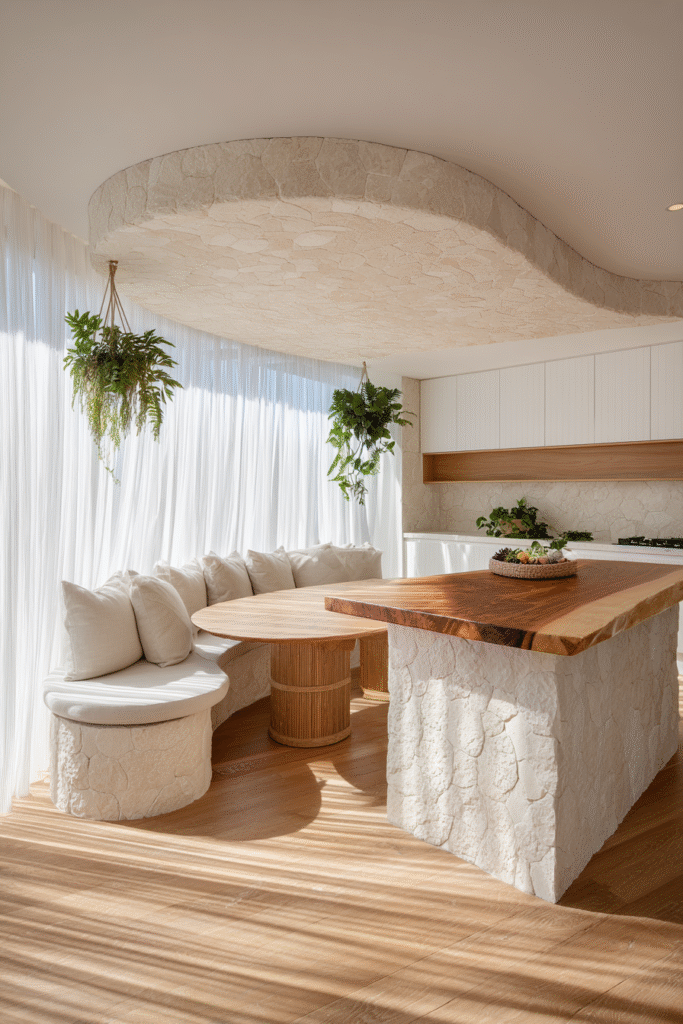
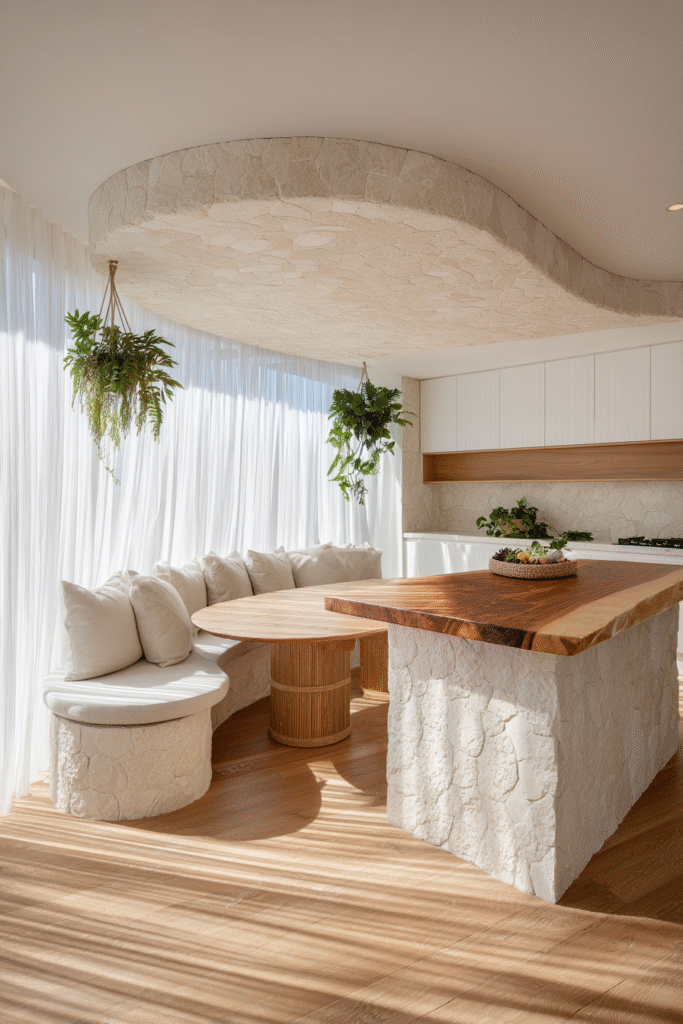
Discover a kitchen design that literally embraces its occupants through a curved breakfast nook with built-in bench seating upholstered in natural linen fabric, creating an intimate dining experience that encourages lingering conversations and unhurried meals. This organic modern approach to seating demonstrates how furniture can be integrated into architecture to create spaces that feel custom-designed for family life. The natural linen upholstery adds softness and warmth while remaining practical for daily use, aging gracefully with the natural wear patterns that organic modern design celebrates.
The adjacent kitchen island presents a stunning marriage of materials with its live-edge wood countertop paired with waterfall stone sides, creating a piece that serves as both functional workspace and sculptural element. The live-edge detail celebrates the tree’s original form, bringing a piece of the forest into the contemporary kitchen environment. This connection to nature is further enhanced by hanging plants in macrame holders positioned above the dining area, adding vertical greenery that softens the space and improves air quality while contributing to the organic aesthetic.
Throughout this flowing space, natural light filters through sheer curtains, creating soft, diffused illumination that enhances the organic materials without creating harsh shadows or glare. This gentle lighting approach supports the kitchen’s role as a nurturing family space, providing adequate illumination for tasks while maintaining a warm, welcoming atmosphere that encourages gathering and connection.
Key Design Tips:
- Create built-in seating with natural fabric upholstery for comfort and organic texture
- Combine different natural materials like wood and stone for visual interest
- Add hanging plants to introduce vertical greenery and improve air quality
- Use sheer window treatments to soften natural light while maintaining transparency
- Design curved elements to encourage social interaction and create flow between spaces
7. The Architectural Poetry
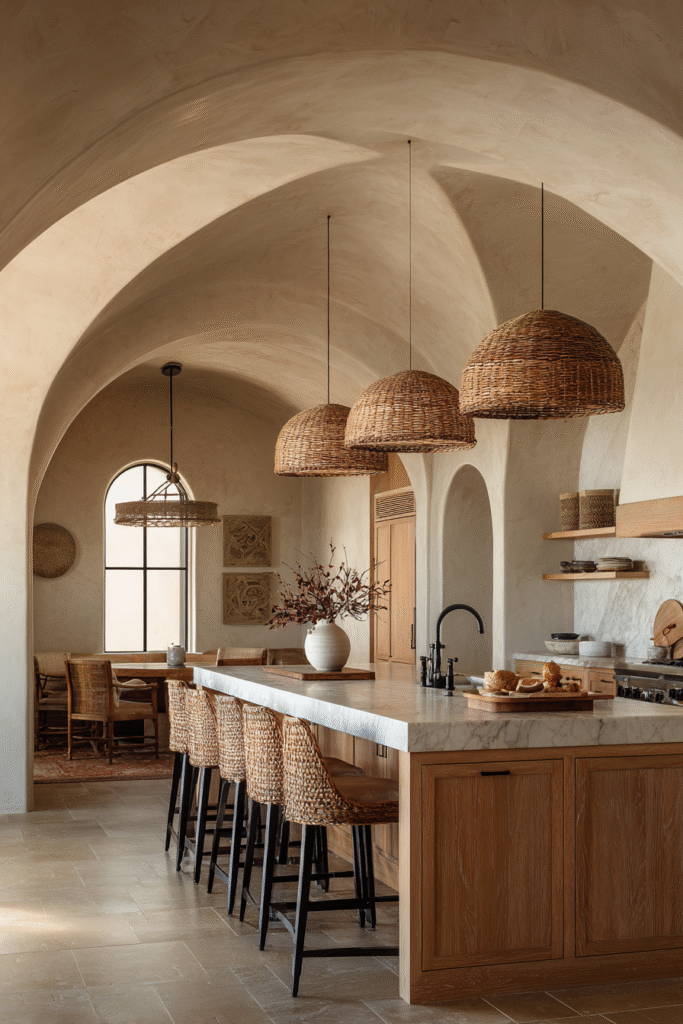
Enter a kitchen where architecture itself becomes art through a dramatic curved archway that creates a seamless transition to the dining area, its natural plaster walls featuring subtle texture variations that catch and play with light throughout the day. This architectural element demonstrates how organic modern design can use structural features to create visual poetry, with the arch’s flowing form echoing the curves found in nature while serving the practical purpose of defining separate yet connected spaces.
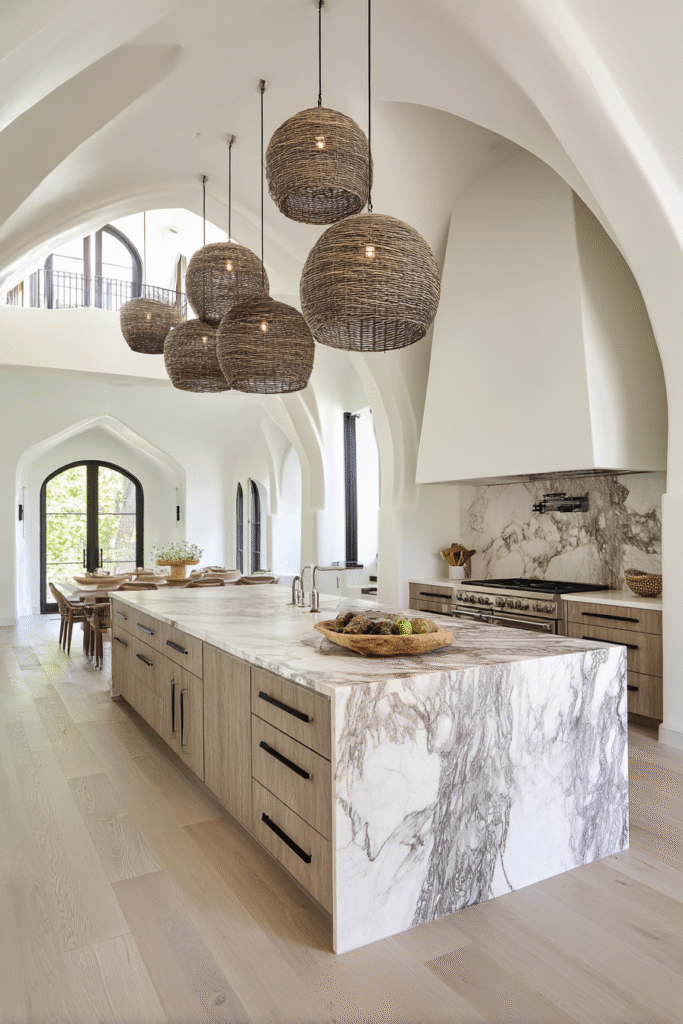
The kitchen island represents a masterful combination of materials, with its white oak base cabinetry showcasing the wood’s natural grain patterns beneath a thick marble countertop that displays nature’s artistry through dramatic veining. The marble’s patterns tell a geological story spanning millions of years, bringing deep time into the contemporary kitchen environment. The thickness of the countertop adds substantial visual weight that anchors the island while providing generous workspace for meal preparation and casual dining.
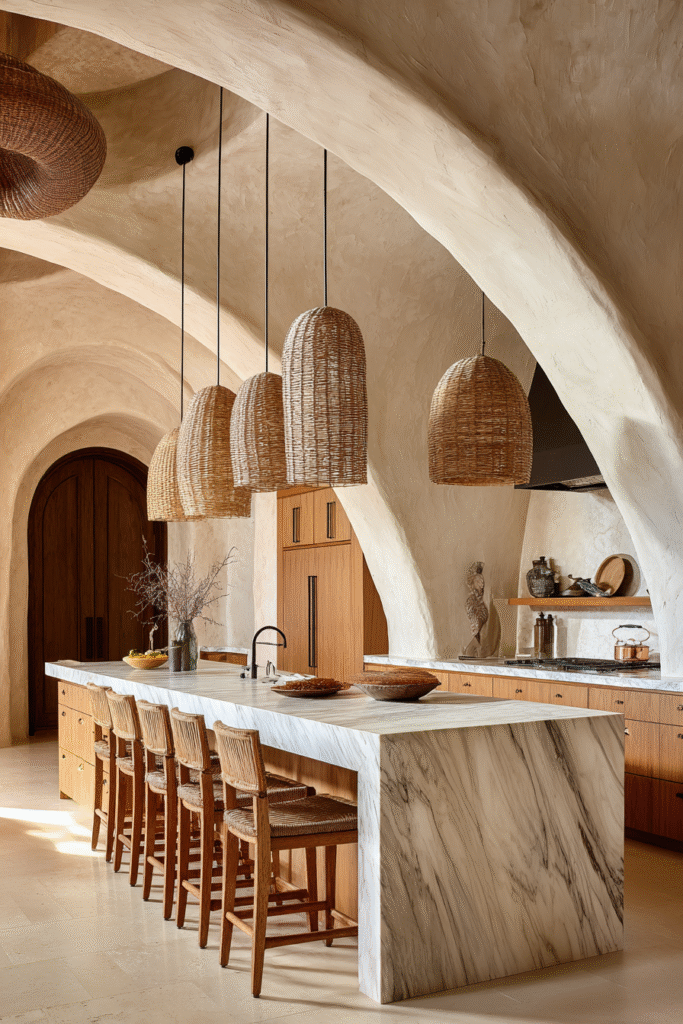
Suspended above the workspace, woven pendant lights hang at varying heights, creating visual rhythm while providing task lighting for different work zones. These organic-shaped fixtures cast intricate shadow patterns that change throughout the day, adding movement and visual interest to the space. The varying heights prevent the lighting from becoming monotonous while ensuring that each work area receives appropriate illumination for its specific function.

Key Design Tips:
- Use curved architectural elements to create flow and visual poetry in the space
- Apply textured plaster walls to add subtle organic variation and light play
- Choose thick natural stone countertops for substantial visual weight and durability
- Hang pendant lights at varying heights to create rhythm and functional lighting zones
- Select fixtures with organic shapes that cast interesting shadow patterns
8. The Garden Kitchen Integration
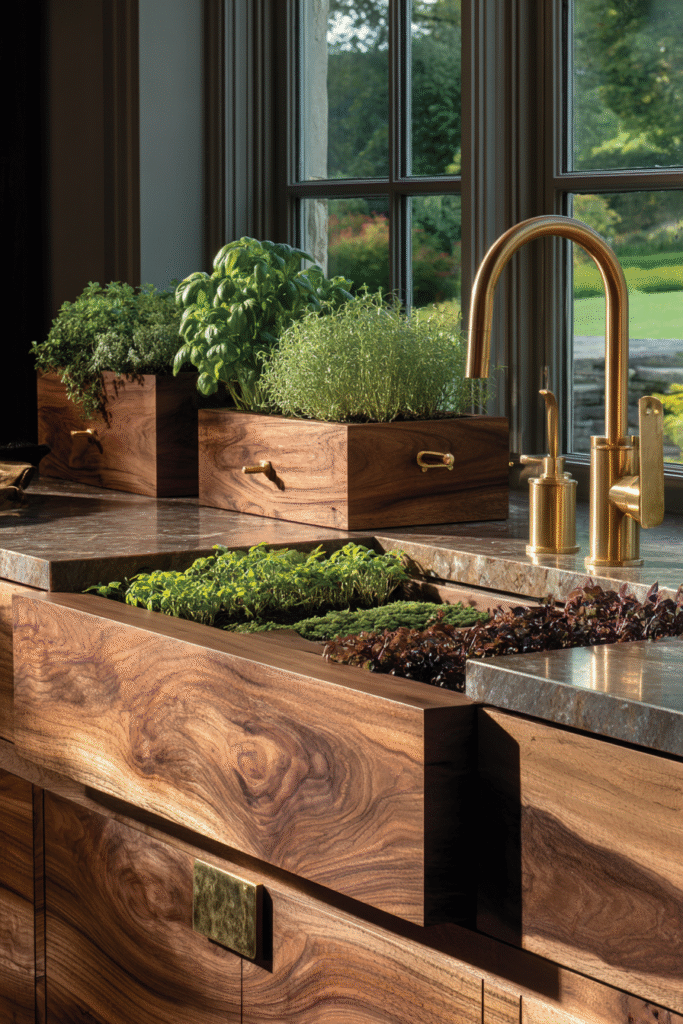
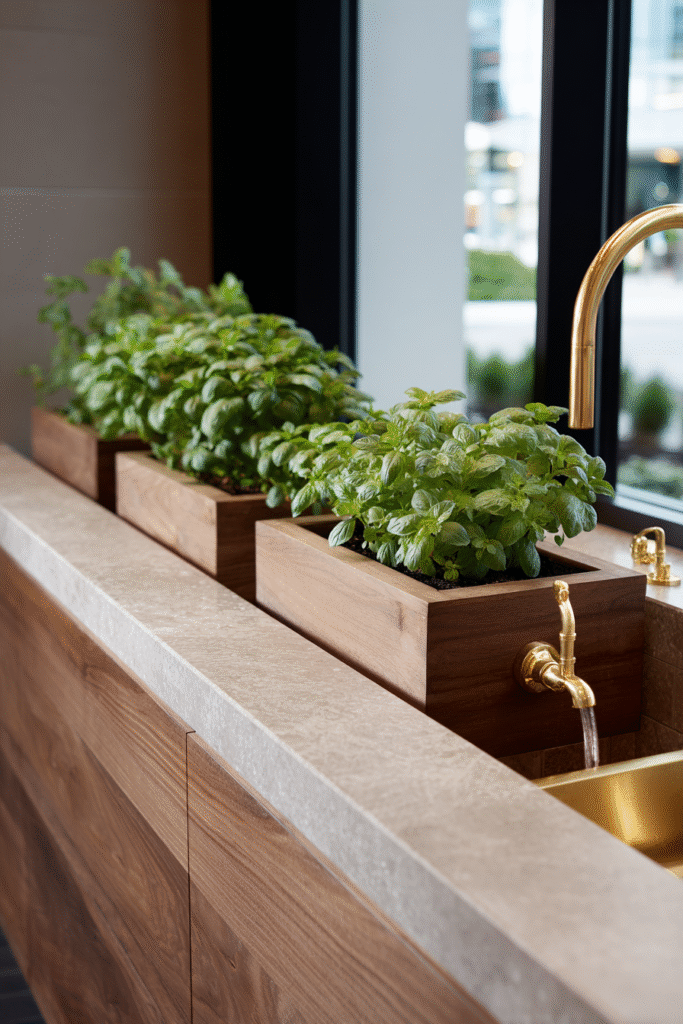
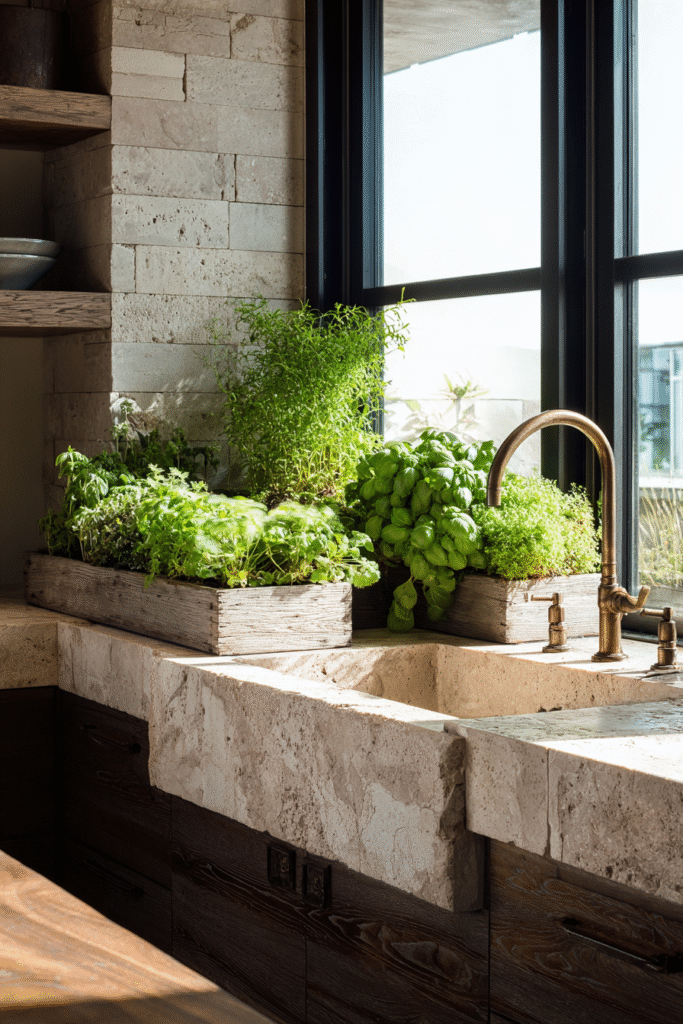
Imagine a kitchen that brings the garden indoors through a built-in herb garden integrated into the window sill area, featuring natural wood planters and brass watering fixtures that make tending plants a beautiful daily ritual rather than a chore. This direct integration of growing elements represents organic modern design at its most literal, creating a space where cooking ingredients grow alongside the cooking space. The natural wood planters complement the kitchen’s overall material palette while providing proper drainage and root space for healthy plant growth.
The surrounding cabinetry showcases book-matched walnut wood grain, where sequential wood slices create mirror-image patterns that display the wood’s natural beauty while demonstrating skilled craftsmanship. This attention to grain matching elevates the cabinetry from mere storage to decorative art, with each door and drawer front contributing to a larger visual composition. The soft-close mechanisms ensure that the daily use of these beautiful cabinets maintains their pristine appearance while providing the smooth, quiet operation expected in contemporary design.
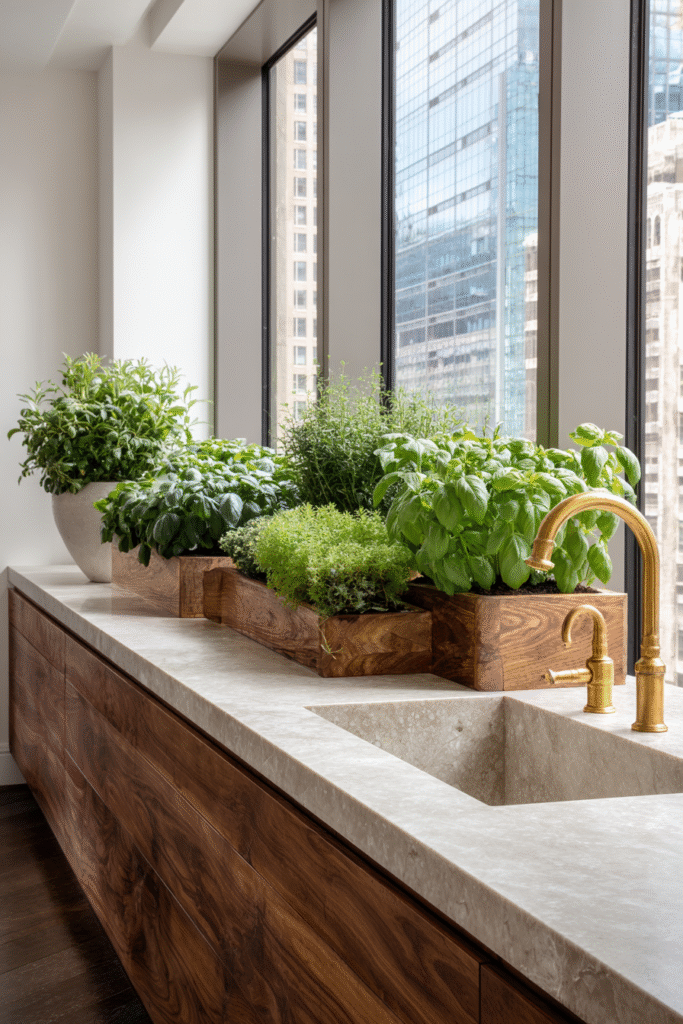
A dedicated prep sink with an aged brass faucet sits within the natural stone countertop, positioned strategically near the herb garden for easy plant care and ingredient preparation. The aged brass finish adds warmth and character while developing a natural patina over time, embodying the organic modern principle of materials that improve with age and use. This specialized workspace demonstrates how organic modern kitchens can accommodate gardening activities alongside traditional cooking tasks.
Key Design Tips:
- Integrate growing areas directly into kitchen design for fresh ingredient access
- Use book-matched wood grain patterns to create visual continuity and interest
- Choose aged brass fixtures that develop character and patina over time
- Position prep sinks near growing areas for convenient plant care and ingredient prep
- Install proper drainage systems in built-in planters to protect surrounding materials
9. The Textural Tapestry
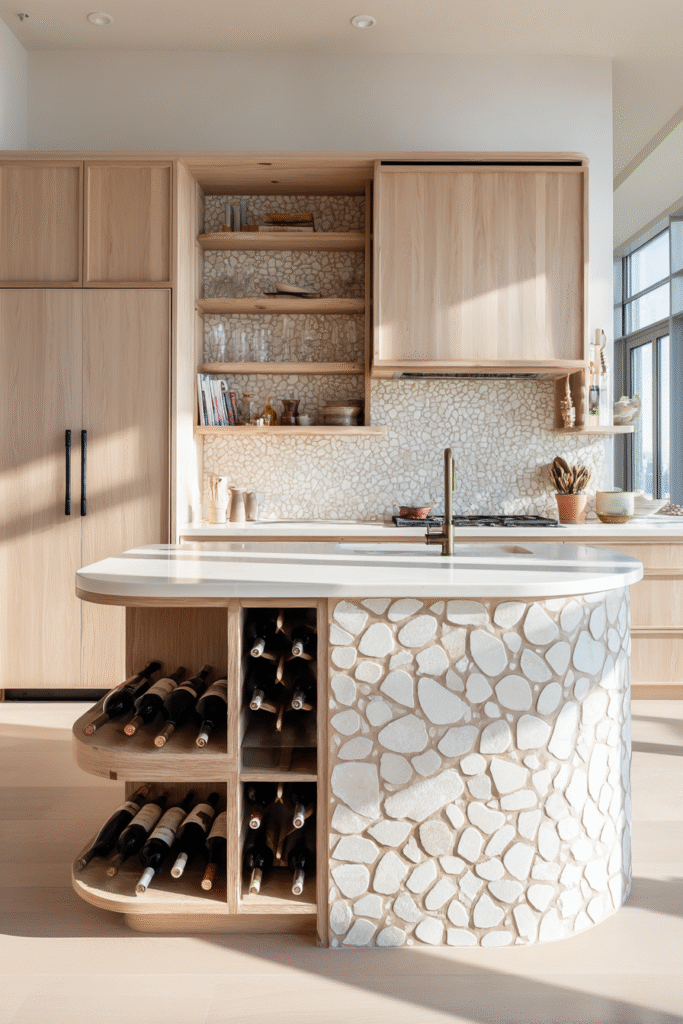
Step into a kitchen where the backsplash becomes a work of art through natural travertine tiles arranged in varying sizes to create an organic mosaic pattern that celebrates imperfection and natural variation. Each tile contributes its unique texture and color variation to create a composition that rewards close examination while providing a sophisticated backdrop for daily kitchen activities. This approach to backsplash design demonstrates how organic modern style can transform functional elements into decorative focal points that enhance rather than compete with the overall design.
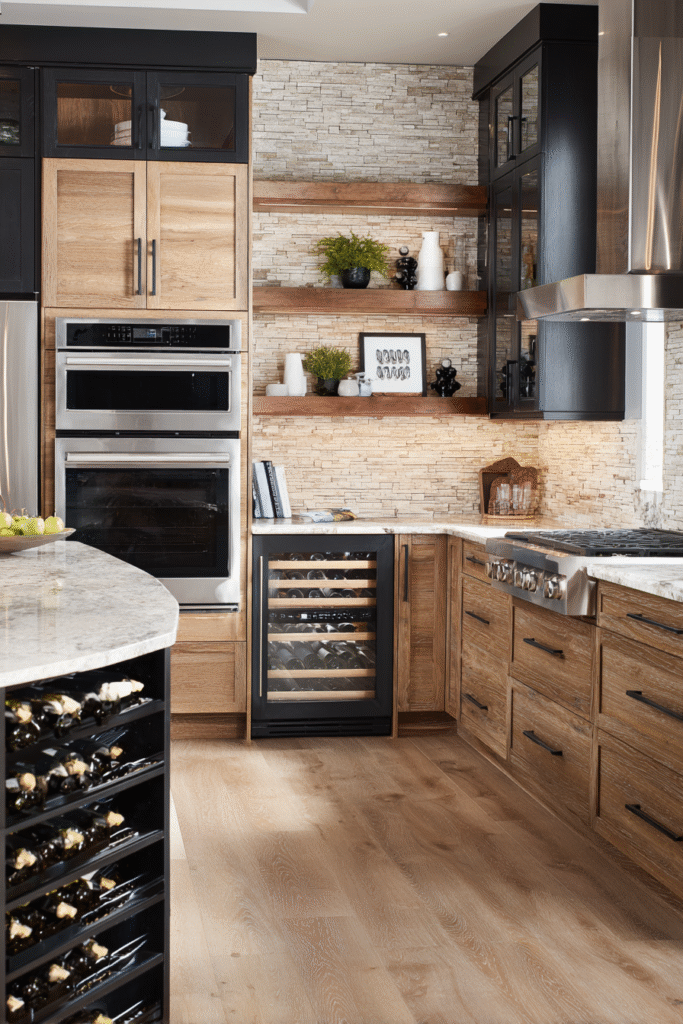
The kitchen island features a curved end that softens the typical rectangular form, housing integrated wine storage and natural wood display shelving that serves both practical and aesthetic purposes. The curved element creates a more social, approachable feeling while the wine storage acknowledges the kitchen’s role in entertaining and celebration. The natural wood shelving provides opportunities to display favorite serving pieces, cookbooks, or decorative objects that reflect the homeowner’s personality and interests.
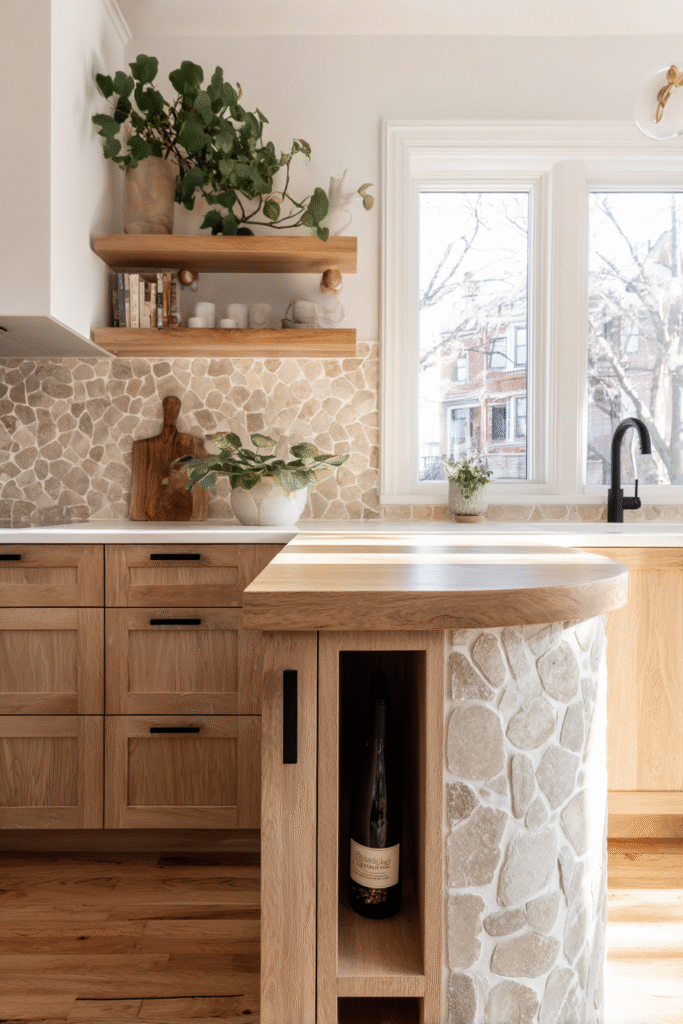
Throughout the space, matte black hardware creates striking contrast points against the warm wood cabinet faces, with each handle and pull carefully selected for both ergonomic comfort and visual impact. This hardware choice demonstrates how organic modern design can incorporate contemporary elements without sacrificing the overall warmth of natural materials. The matte finish prevents fingerprints and maintains its appearance over time, practical considerations that support the style’s emphasis on materials that age gracefully.
Key Design Tips:
- Create organic mosaic patterns with natural stone tiles in varying sizes
- Incorporate curved elements in islands to soften geometric forms and encourage social interaction
- Use matte black hardware as accent points against warm wood cabinetry
- Integrate wine storage and display areas into island designs for entertaining functionality
- Choose natural materials that showcase authentic color and texture variations
10. The Cathedral Kitchen
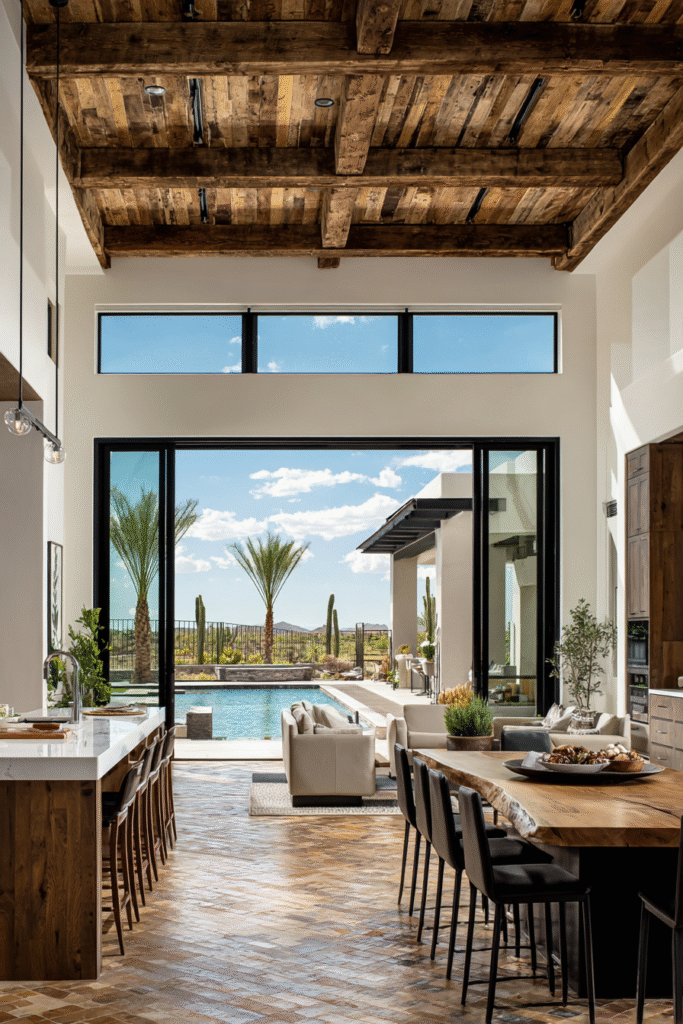
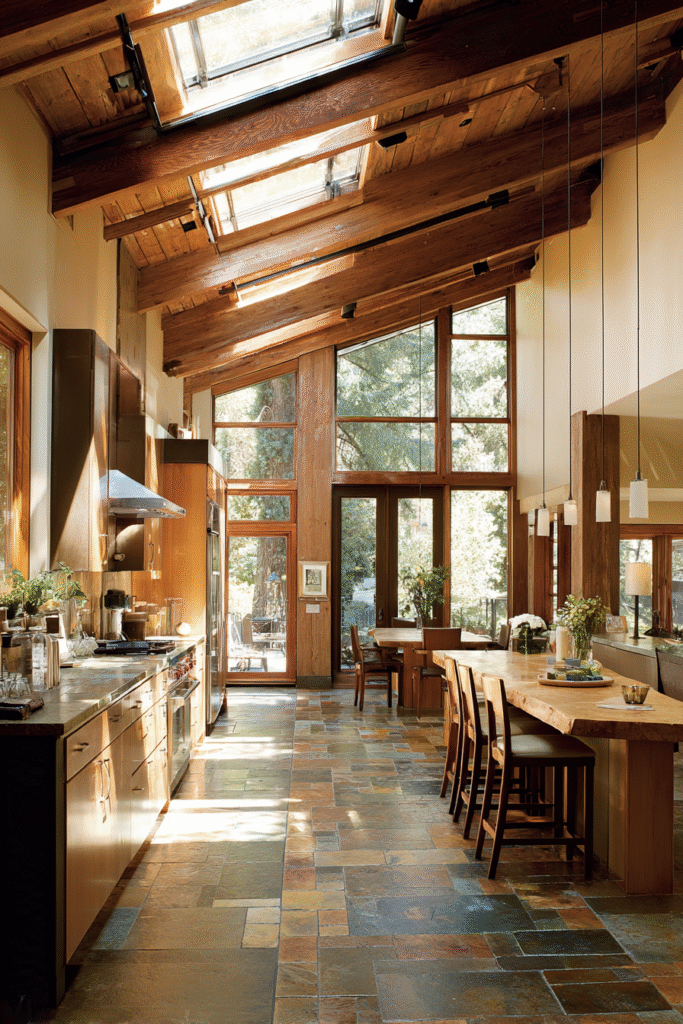
Envision a kitchen that soars to dramatic heights with a double-height ceiling featuring exposed natural wood beams and clerestory windows that flood the space with daylight from above, creating an almost spiritual connection between the cooking space and the sky. This vertical expansion transforms the kitchen from a typical horizontal workspace into a volume that celebrates light and air, with the natural wood beams adding warmth and human scale to the soaring space. The clerestory windows provide consistent natural light throughout the day while maintaining privacy and creating interesting shadow patterns as the sun moves across the sky.
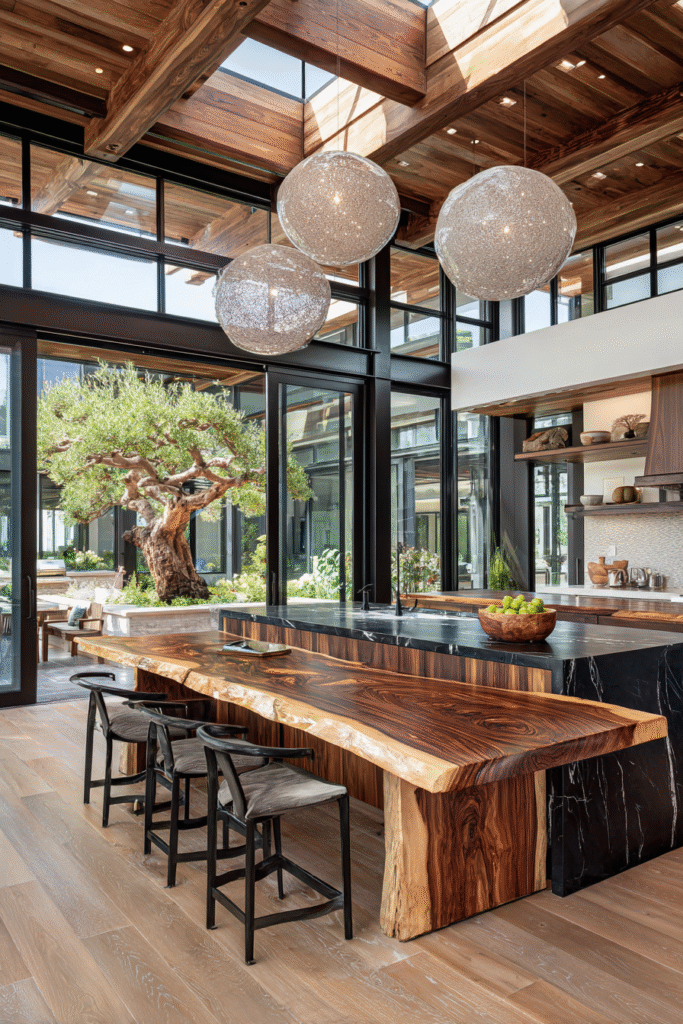
The kitchen island serves as the anchor for this dramatic space, featuring a built-in dining table extension with live-edge detailing that brings the organic beauty of the tree’s original form into the architectural composition. This extended island creates a natural gathering point that takes advantage of the dramatic ceiling height while maintaining intimate scale for dining and conversation. The live-edge detail provides textural interest and celebrates the tree’s growth patterns, creating a connection to nature that grounds the soaring space.
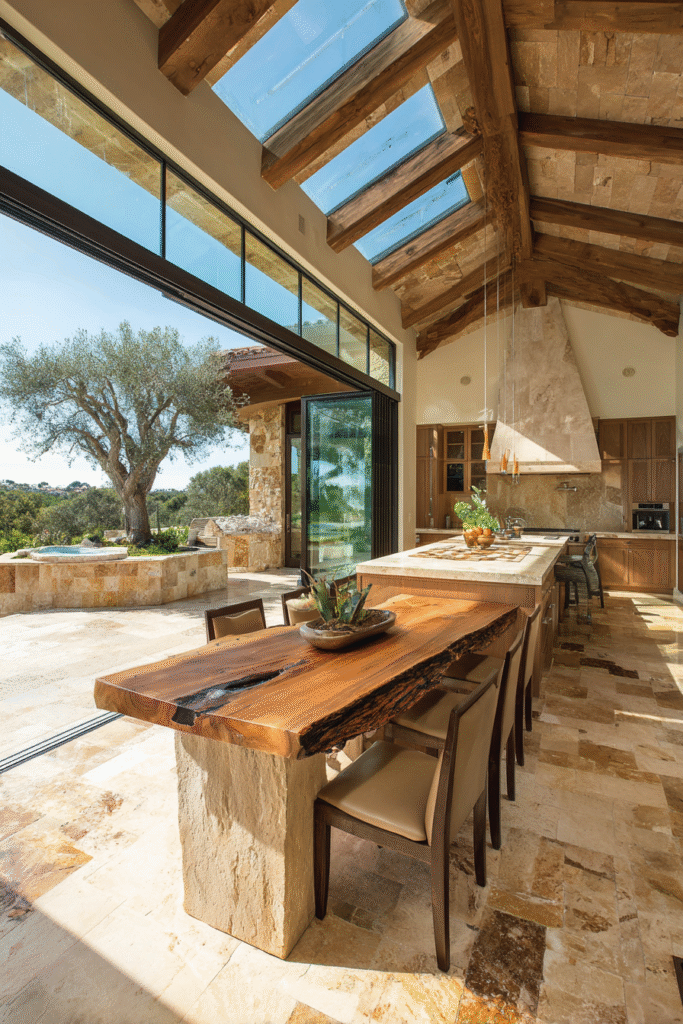
Handcrafted ceramic tile floors in earth tones complement the natural material palette while providing durability and easy maintenance for high-traffic kitchen use. The ceramic tiles, with their subtle color variations and handmade irregularities, add warmth underfoot while supporting the organic modern aesthetic of celebrating authentic materials and craftsmanship. Large glass doors create seamless indoor-outdoor connection, extending the kitchen’s reach into exterior living spaces and further emphasizing the design’s connection to the natural world.
Key Design Tips:
- Use exposed wood beams to add warmth and human scale to high ceiling spaces
- Install clerestory windows for consistent natural lighting without privacy concerns
- Extend islands into dining table configurations for space efficiency and social interaction
- Choose handcrafted tiles with natural color variations for authentic character
- Create seamless indoor-outdoor connections with large glass door systems
11. The Invisible Technology
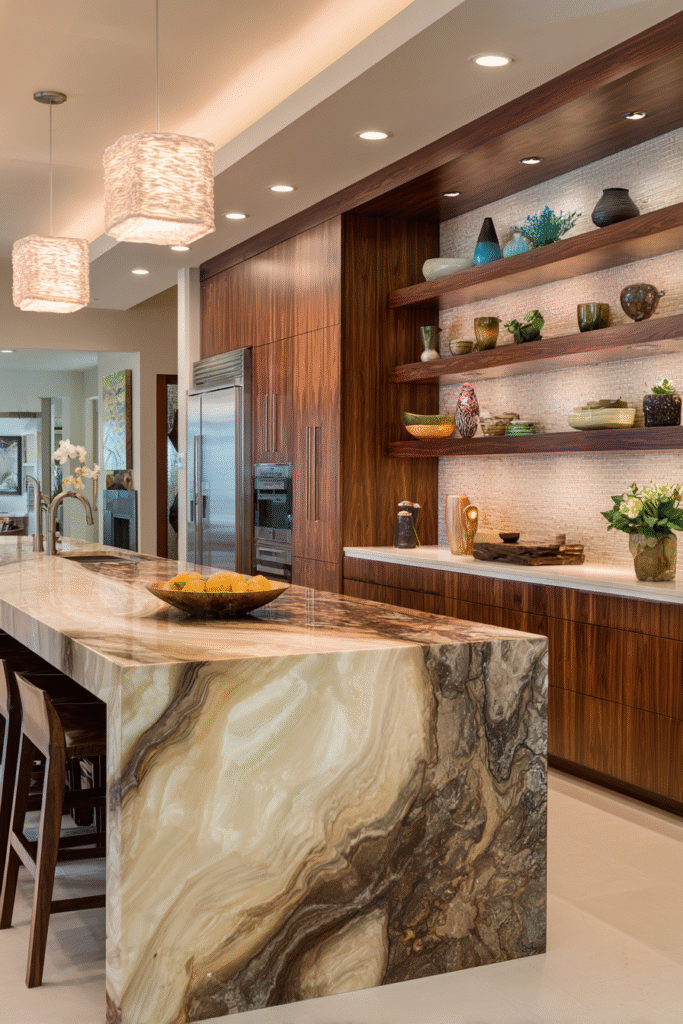
Discover a kitchen where technology seamlessly disappears behind custom wood panel fronts that match the surrounding cabinetry, creating a unified aesthetic that prioritizes natural materials over appliance branding. This approach to appliance integration demonstrates how organic modern design can embrace contemporary conveniences while maintaining visual coherence and material authenticity. The custom panels, crafted to match the cabinet wood species and finish, ensure that refrigerators, dishwashers, and other appliances become invisible elements that serve function without compromising form.
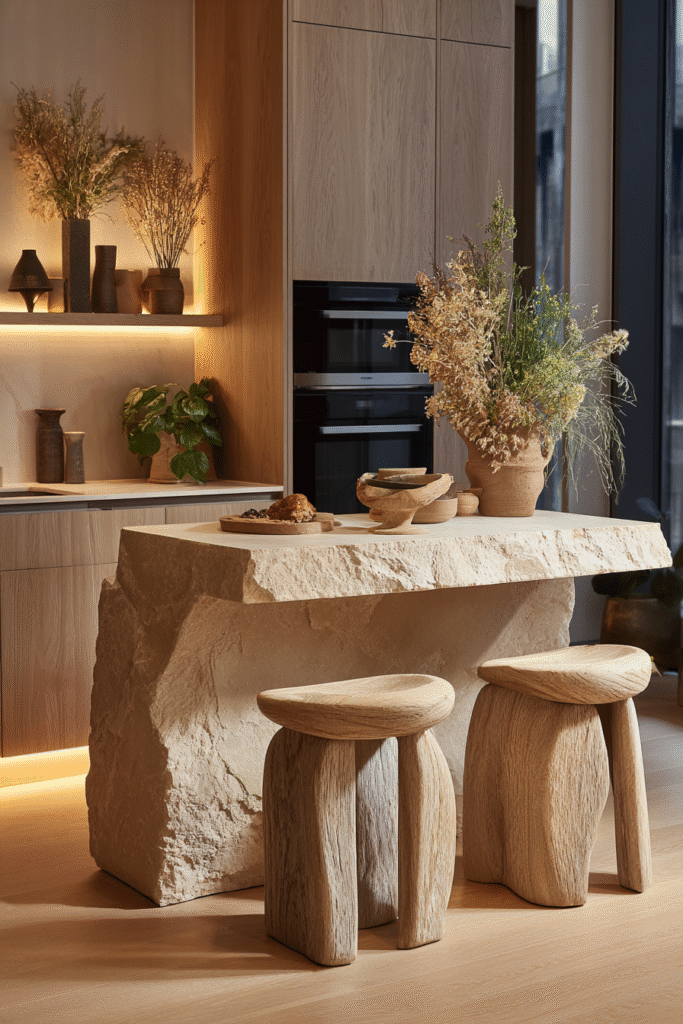
The large format natural stone island provides generous prep space while accommodating informal seating with organic-shaped bar stools that echo the curves and natural forms found throughout the design. The stone’s substantial presence anchors the space while its natural patterns and variations provide visual interest that changes with viewing angle and lighting conditions. The organic-shaped stools, crafted from natural materials, offer comfortable seating that invites lingering while contributing to the overall design narrative of celebrating natural forms.
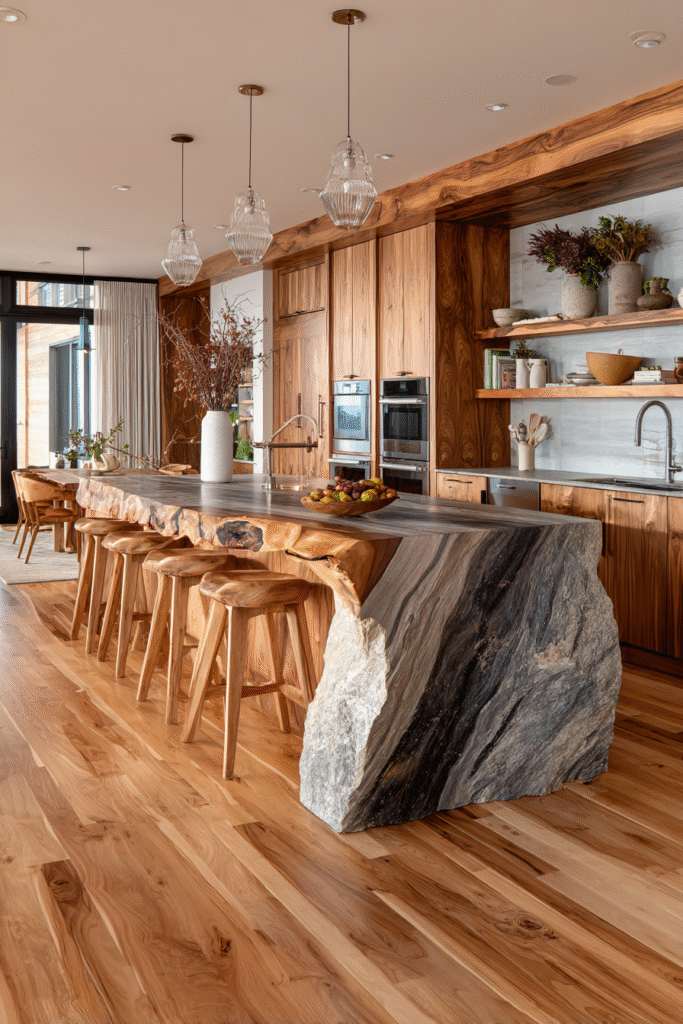
Floating shelves throughout the space display handmade ceramics and preserved botanical specimens, creating a gallery-like atmosphere that celebrates craftsmanship and natural beauty. These display areas transform everyday kitchen storage into opportunities for artistic expression while maintaining easy access to frequently used items. The preserved botanicals add natural elements that maintain their beauty over time, supporting the organic modern principle of bringing nature indoors while acknowledging the realities of interior environments.

Key Design Tips:
- Hide appliances behind custom wood panels that match surrounding cabinetry
- Use large format natural stone for islands to create substantial visual anchors
- Choose organic-shaped seating that echoes natural forms and provides comfort
- Display handmade ceramics and natural specimens as decorative elements
- Integrate floating shelves for both storage and gallery-style display opportunities
12. The Living Wall Kitchen
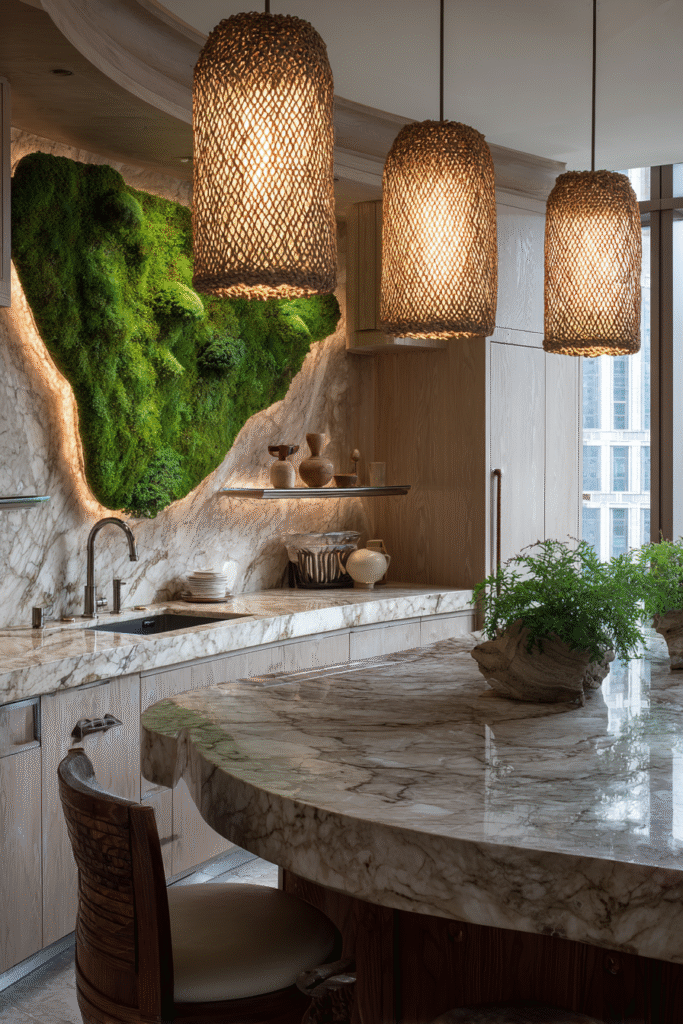
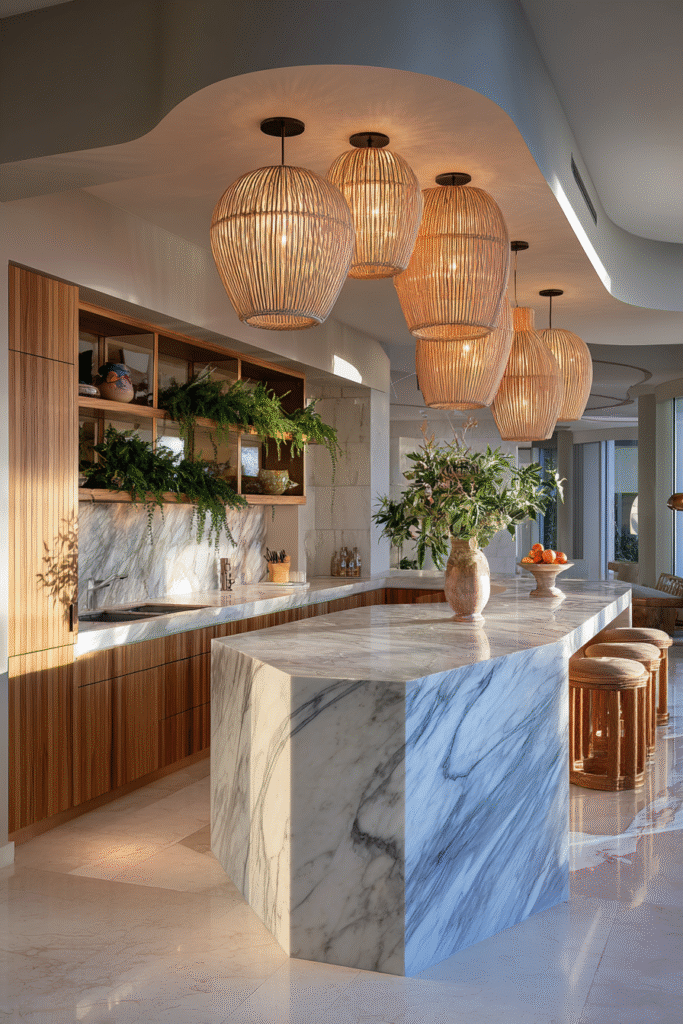
Enter a kitchen where nature takes center stage through a curved kitchen peninsula with waterfall countertop edges in book-matched marble that creates stunning visual continuity and flow. The curved form softens the kitchen’s geometry while the waterfall edges add dramatic vertical elements that showcase the marble’s natural beauty from multiple angles. The book-matching technique reveals the stone’s patterns in perfect mirror symmetry, creating a sense of balance and harmony that exemplifies organic modern design principles.
The adjacent wall features a living moss installation within a custom wooden frame system, bringing actual living plants into the kitchen environment in an unexpected and artistic way. This green wall provides natural air purification while creating a stunning visual focal point that changes subtly over time as the moss responds to light and moisture conditions. The wooden frame system, crafted to complement the kitchen’s other wood elements, provides structural support while maintaining design coherence throughout the space.
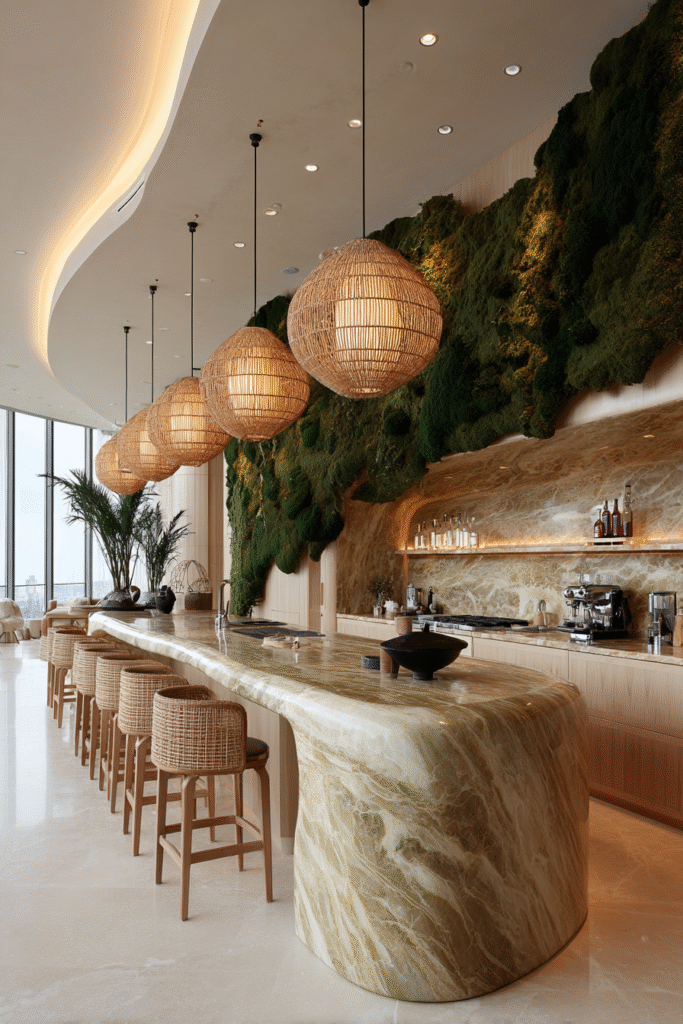
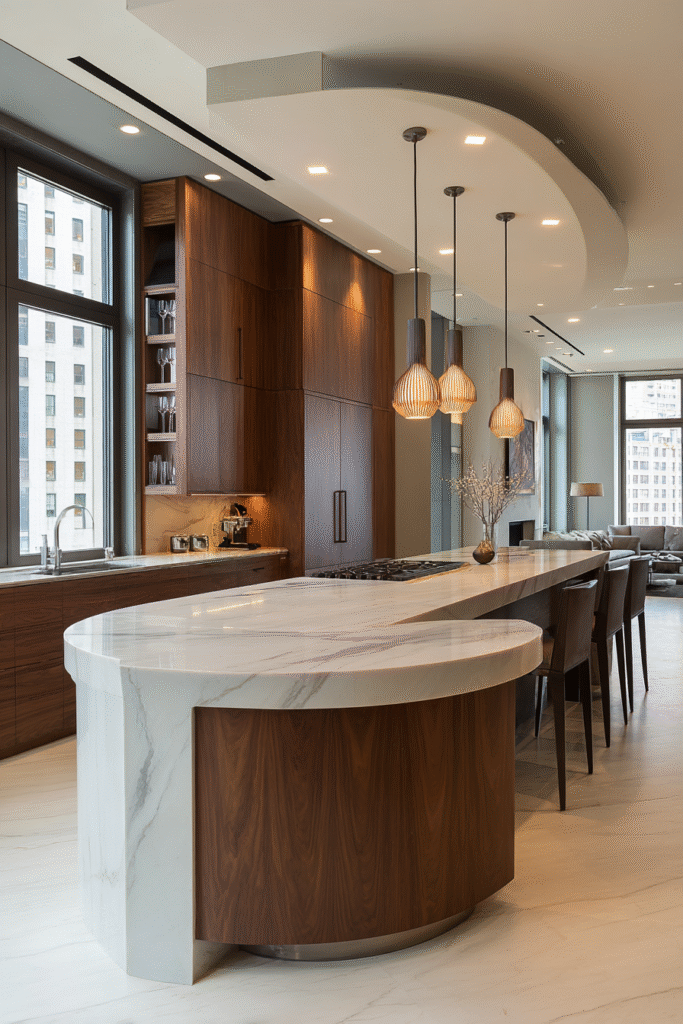
Natural fiber pendant lights suspended over the workspace cast warm, organic shadows that add movement and visual interest to the static elements below. These fixtures, crafted from materials like rattan, jute, or woven grasses, filter light in beautiful patterns while adding textural diversity to the space. The organic shadows they create change throughout the day, adding a dynamic element that keeps the space feeling alive and connected to natural rhythms.
Key Design Tips:
- Use book-matched marble for stunning visual symmetry and natural pattern display
- Incorporate living plant walls for air purification and dynamic natural elements
- Create custom framing systems that integrate with overall cabinet and trim work
- Choose natural fiber light fixtures that cast interesting organic shadow patterns
- Design curved peninsulas to create flow and soften geometric kitchen layouts
13. The Pantry Paradise
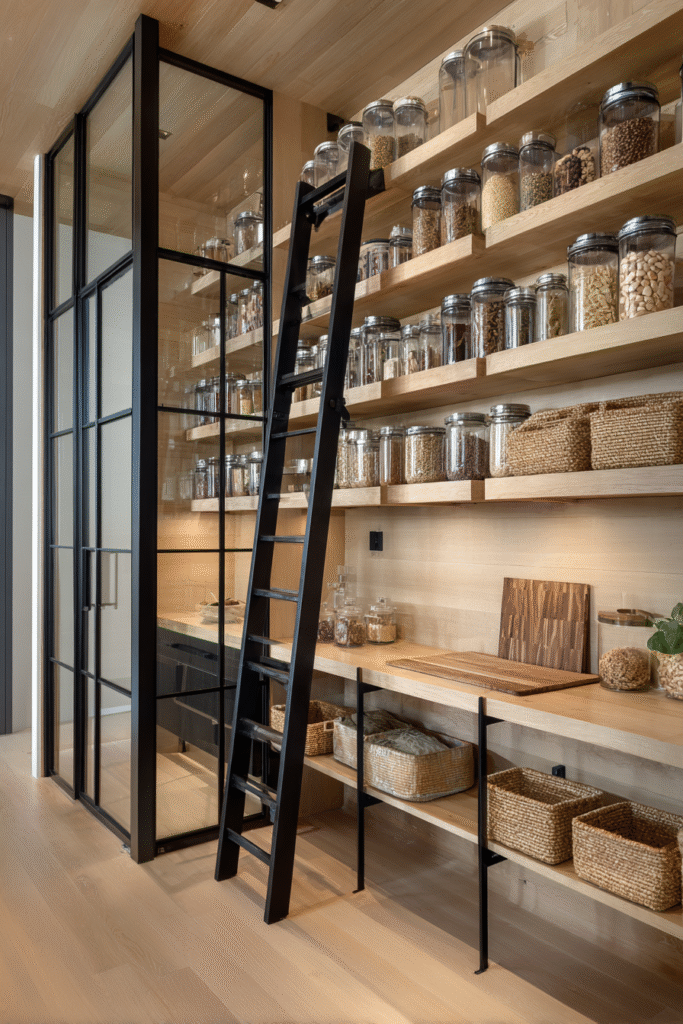
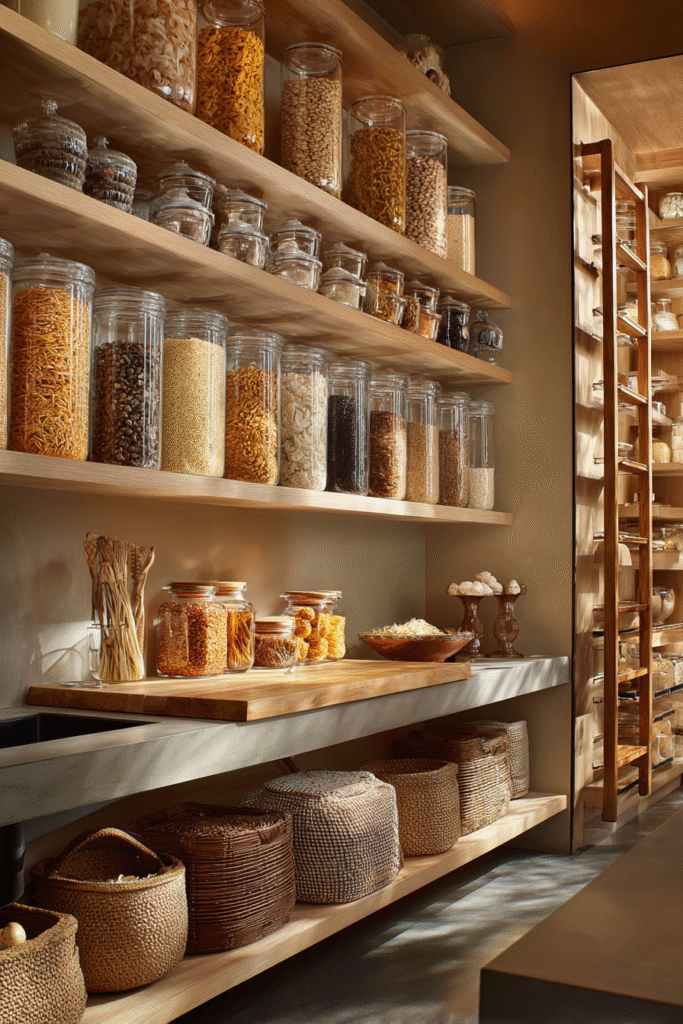
Step into a culinary storage dream featuring a walk-in pantry with floor-to-ceiling natural wood shelving and an integrated ladder system that makes accessing upper storage both practical and visually appealing. This approach to pantry design transforms storage from a hidden necessity into a beautiful, functional space that celebrates organization and natural materials. The wood shelving, crafted from sustainable species and finished to highlight natural grain patterns, creates warmth and visual interest while providing extensive storage capacity for dry goods, small appliances, and kitchen essentials.
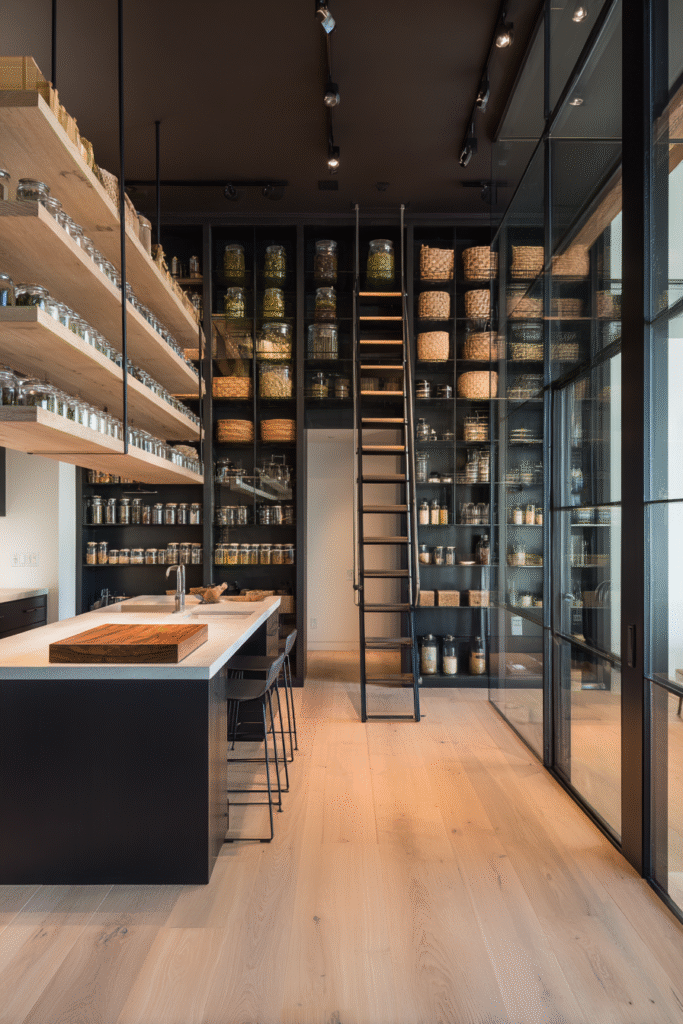
Glass containers throughout the pantry create an organized display of ingredients that becomes decorative art, with colorful spices, grains, and dried goods contributing to the visual palette while remaining easily accessible for cooking. The transparency of glass storage allows for quick inventory checks while creating beautiful compositions of color and texture. Woven baskets provide concealed storage for items that benefit from darkness or don’t contribute to the visual display, maintaining the organic aesthetic while ensuring practical functionality.
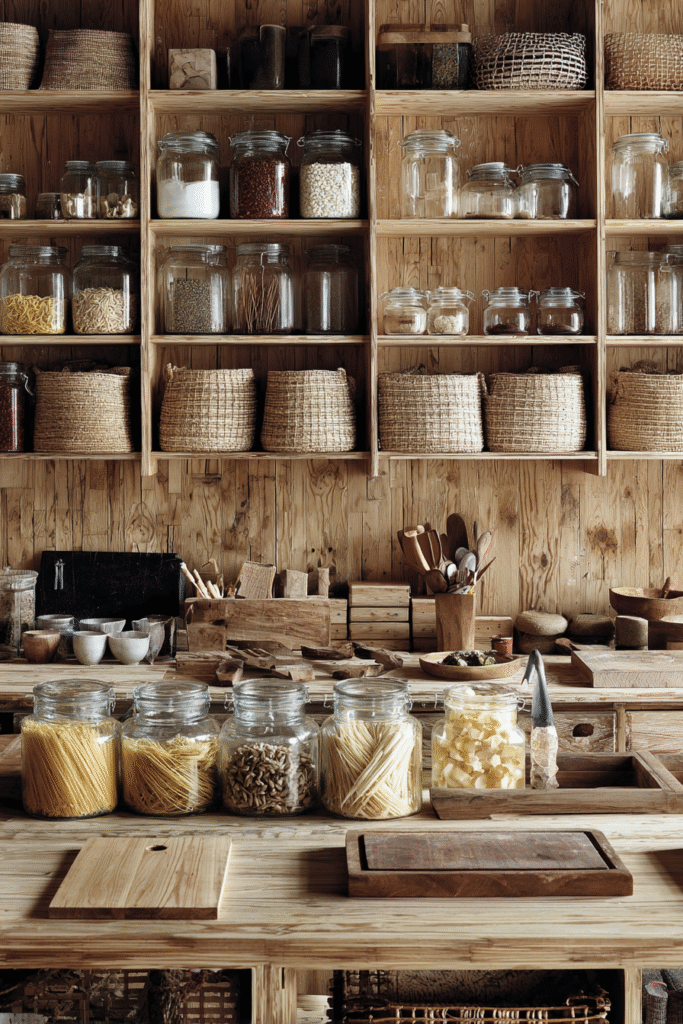
A small prep counter with butcher block surface provides additional workspace within the pantry, allowing for ingredient preparation, small appliance use, or package sorting away from the main kitchen workflow. This dedicated prep space demonstrates how organic modern design can create specialized work zones that increase overall kitchen efficiency while maintaining aesthetic coherence. The butcher block surface develops character over time, embodying the style’s celebration of materials that improve with age and use.
Key Design Tips:
- Install floor-to-ceiling shelving with integrated ladder systems for maximum storage efficiency
- Use glass containers to display colorful ingredients as decorative elements
- Include woven baskets for concealed storage of less attractive items
- Add prep counters within pantries for increased workspace and functionality
- Choose wood finishes that highlight natural grain patterns and develop character over time
14. The Sky-Lit Sanctuary
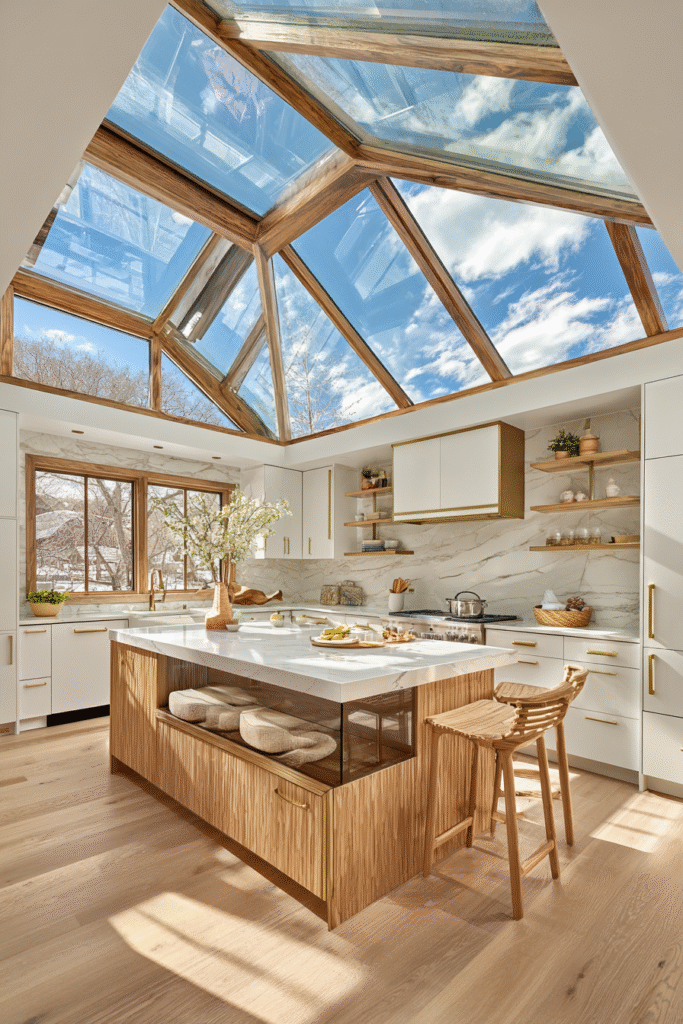
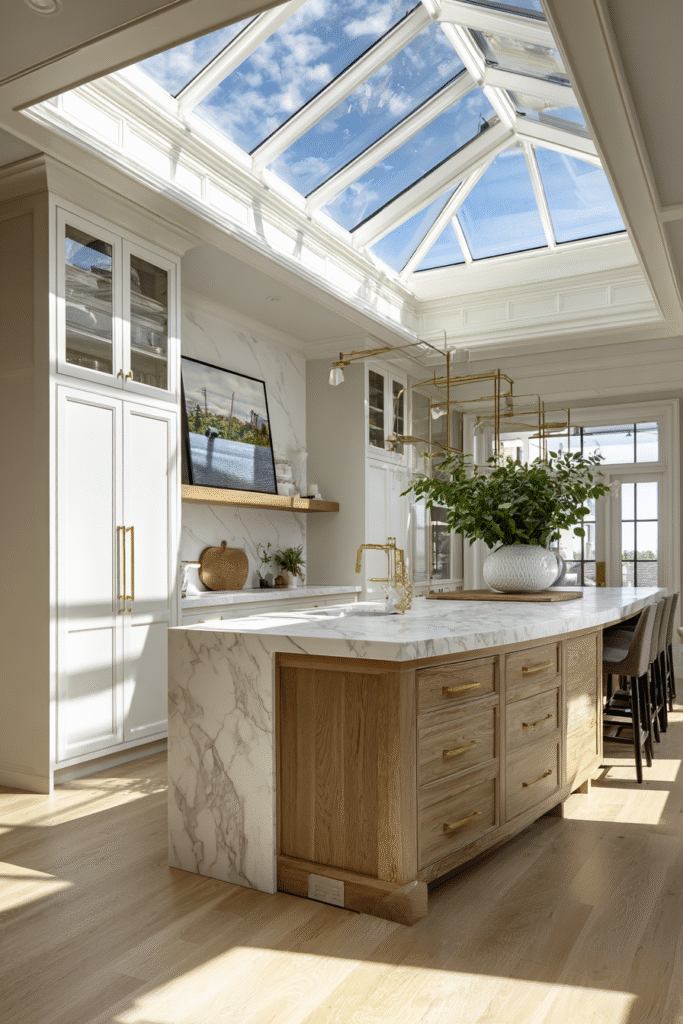
Imagine cooking beneath a cathedral of natural light streaming through a large skylight positioned above the central island, creating dramatic illumination that changes throughout the day and connects the kitchen to the movement of sun and clouds above. This direct connection to the sky transforms meal preparation into a more contemplative, almost spiritual experience while providing excellent task lighting for detailed cooking work. The skylight’s changing light conditions create a dynamic environment that never feels static or monotonous.
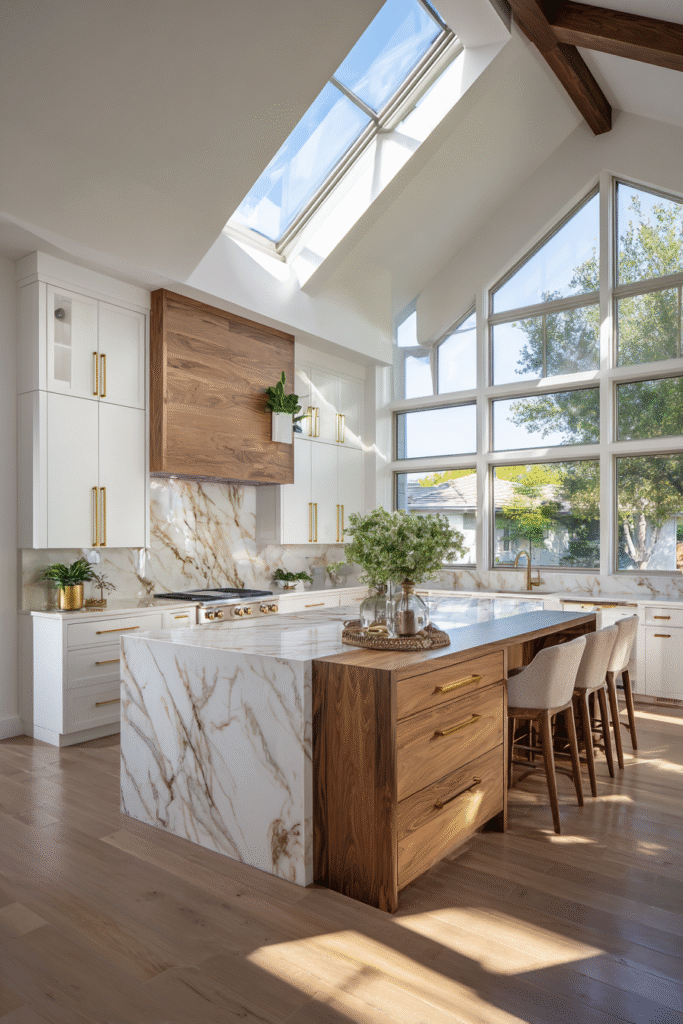
The island itself serves as both practical workspace and social hub, featuring a raised eating bar with natural edge wood seating that maintains connection to the tree’s original form. Hidden storage compartments throughout the island base maximize organization while maintaining clean lines and uncluttered surfaces. The natural edge wood seating provides comfortable, informal dining while contributing to the organic aesthetic through its celebration of the wood’s natural growth patterns.
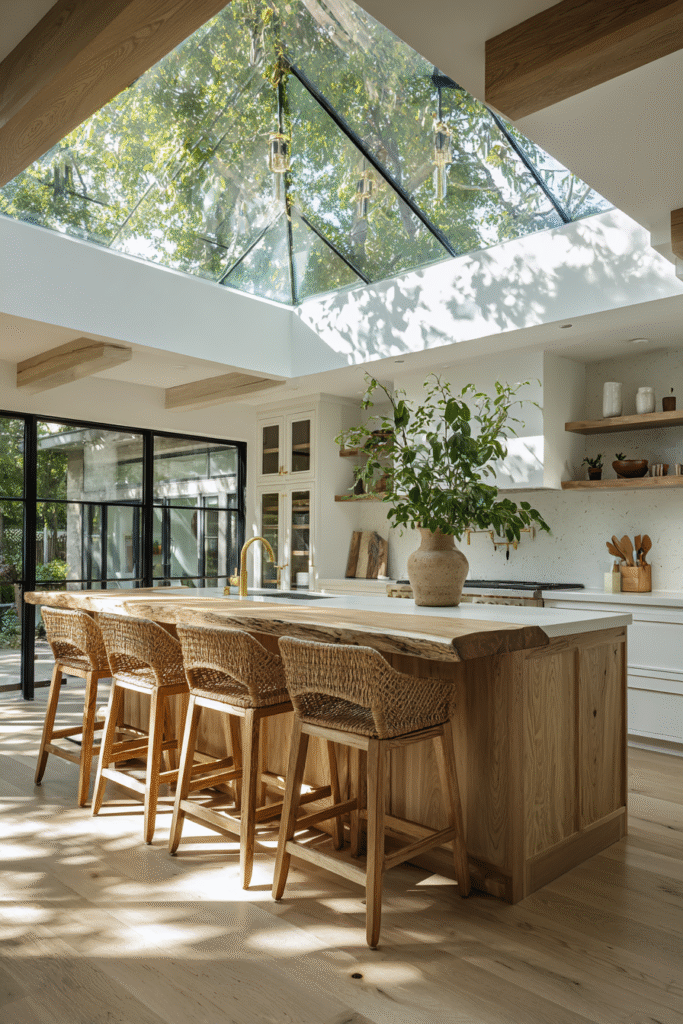
Surrounding cabinetry combines matte white upper cabinets that reflect and amplify the skylight’s illumination with natural oak lower cabinets that ground the space with earthy warmth. Brass hardware accents add warmth and sophistication while developing a natural patina over time. This combination of materials and finishes creates visual balance while ensuring that the space feels bright and airy without becoming cold or sterile.
Key Design Tips:
- Position skylights above central work areas for optimal natural lighting
- Include raised eating bars with natural edge wood for informal dining
- Design hidden storage compartments to maintain clean, uncluttered surfaces
- Balance white upper cabinets with warm wood lower cabinets for visual harmony
- Choose brass hardware that develops character and patina over time
15. The Sustainable Showcase
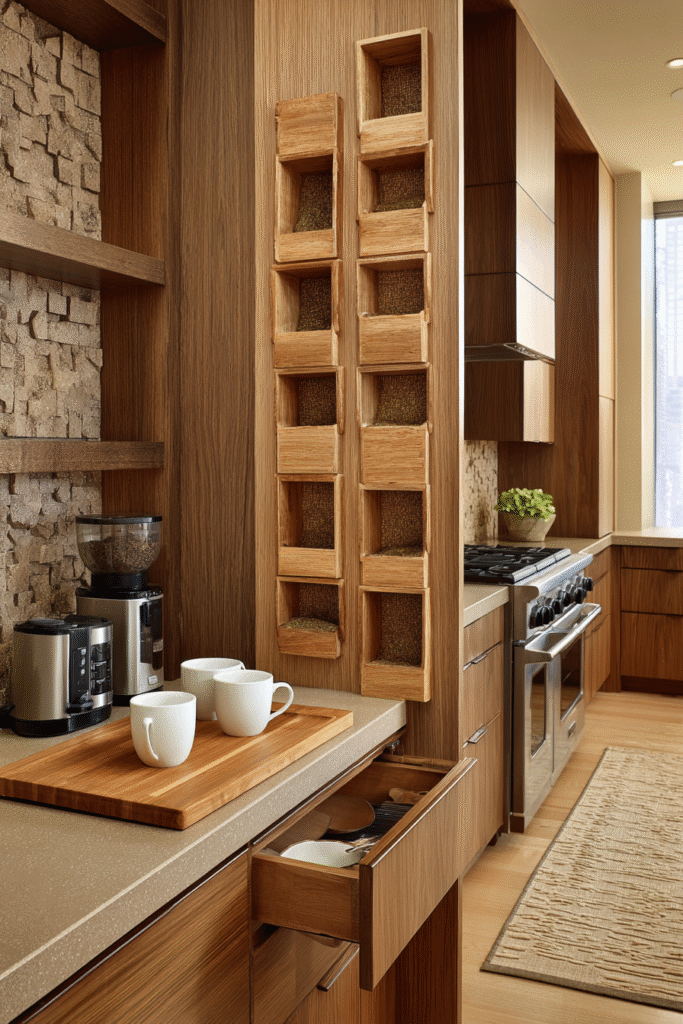
Enter a kitchen that puts sustainability at the forefront without compromising on style, featuring a custom range area with natural stone surround and integrated spice storage within reclaimed wood niches. This approach demonstrates how organic modern design can incorporate environmental responsibility into beautiful, functional spaces. The reclaimed wood niches add character through their weathered patinas and unique grain patterns while providing convenient storage for frequently used cooking spices and seasonings.
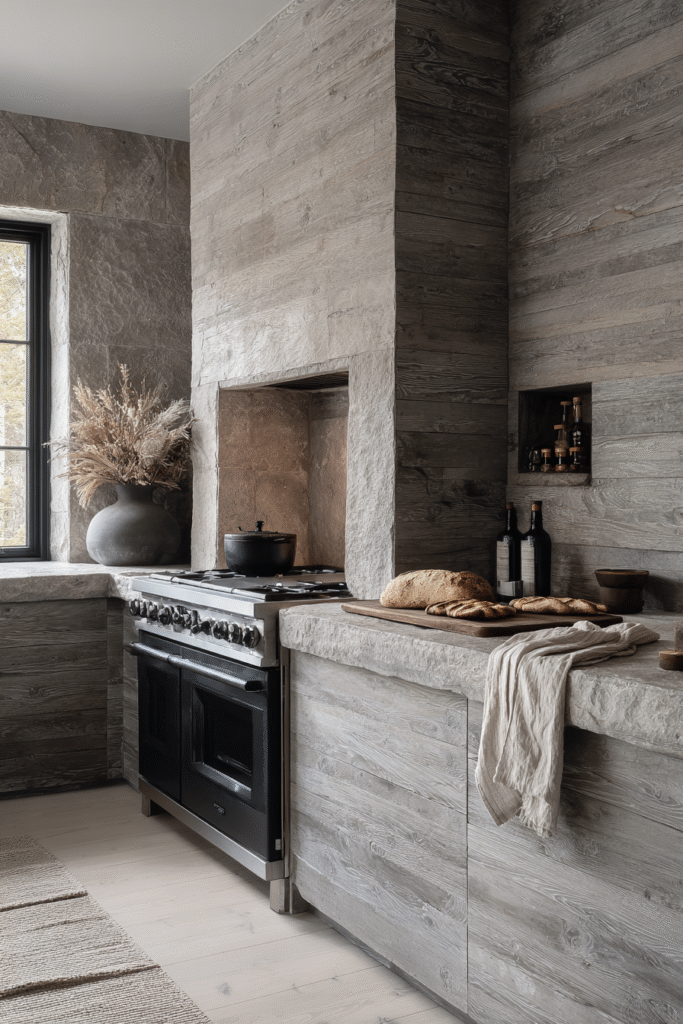
The adjacent prep area showcases innovative sustainable features including a built-in cutting board station that slides seamlessly into the countertop and an integrated compost collection system that makes food waste management both convenient and hygienic. These thoughtful details demonstrate how organic modern design can support sustainable living practices while maintaining aesthetic appeal. The cutting board station, crafted from sustainable hardwood, provides dedicated prep space while protecting the main countertop surface.
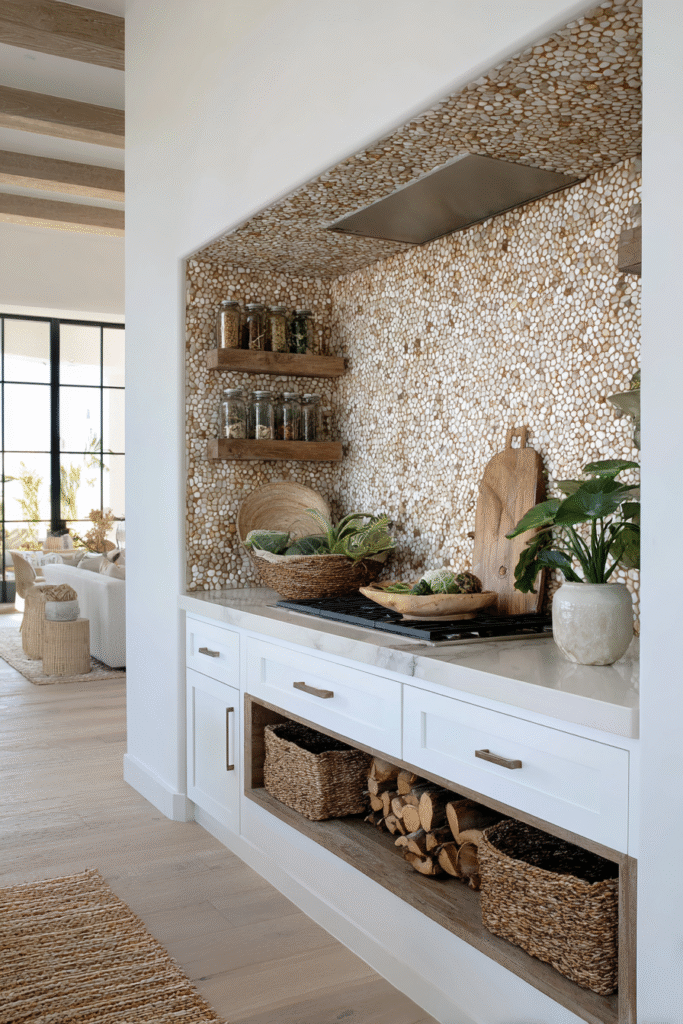
A handwoven textile runner defines the main workspace while adding organic texture and visual warmth to the hard surfaces throughout the kitchen. This textile element introduces craft traditions and adds softness that balances the stone and wood materials. The runner’s natural fibers and earth-tone colors complement the overall palette while providing a comfortable surface for extended standing during meal preparation.
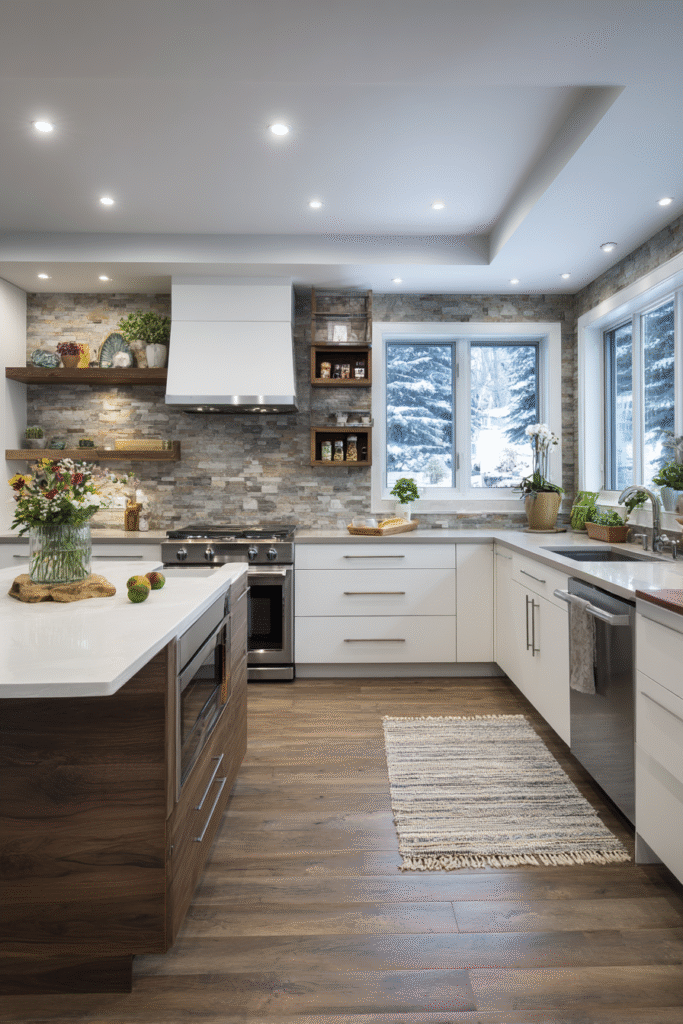
Key Design Tips:
- Integrate spice storage into reclaimed wood niches for character and convenience
- Include built-in cutting board stations that protect countertops while providing dedicated prep space
- Install integrated compost collection systems for sustainable food waste management
- Use handwoven textiles to add warmth and craft traditions to hard surface areas
- Choose reclaimed materials that add environmental responsibility and unique character
16. The Garden-to-Table Hub
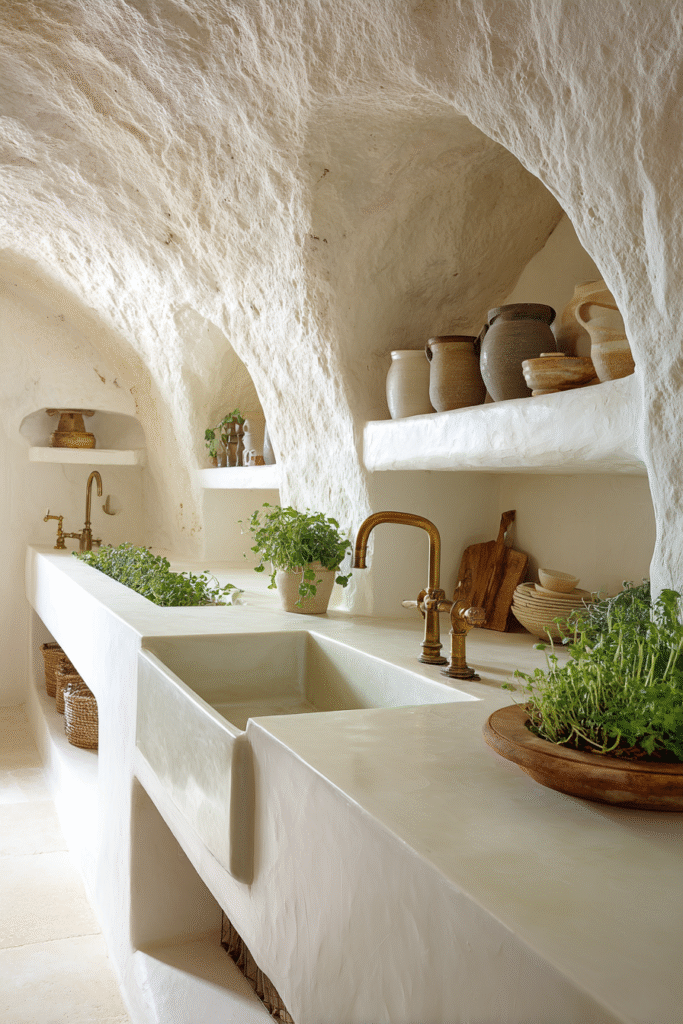
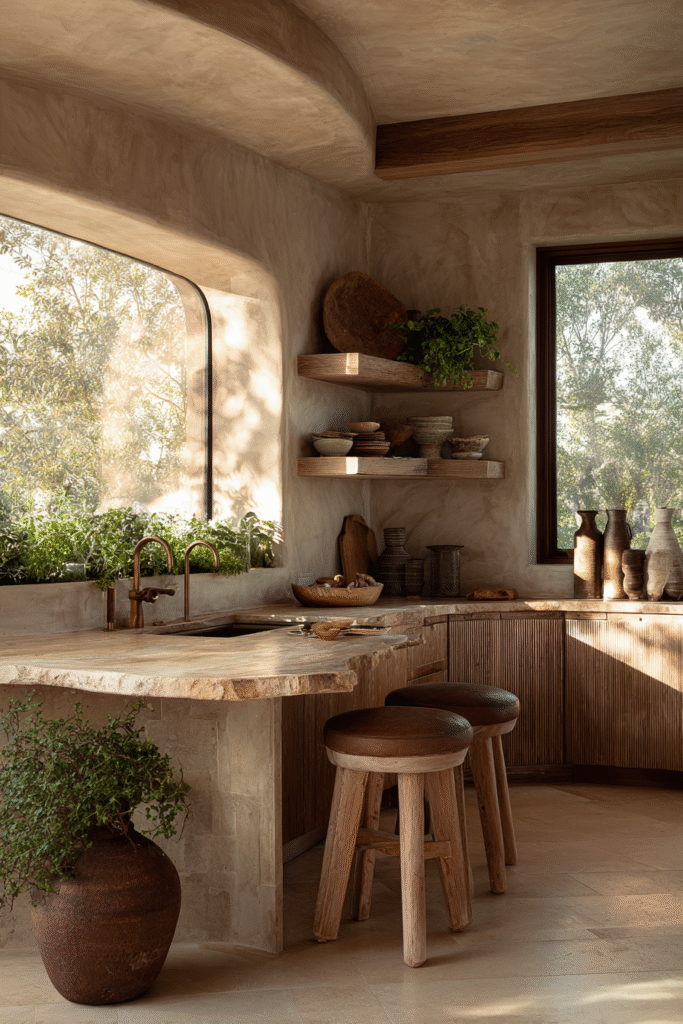
Visualize a kitchen designed around the concept of fresh, homegrown ingredients, featuring a curved breakfast bar extension with integrated planters for fresh herbs and small vegetables that can be harvested daily for cooking. This direct integration of food production into the kitchen environment represents the ultimate expression of farm-to-table living, allowing cooks to harvest ingredients moments before use for maximum flavor and nutritional value. The curved breakfast bar creates a social dining area that celebrates the connection between growing and eating.

The main workspace centers around a large prep sink with a bridge faucet in aged brass finish, set within natural quartzite countertops that provide durability and natural beauty. The quartzite’s patterns and colors echo the natural world while providing a hard-working surface that maintains its beauty through daily use. The bridge faucet design adds classical elegance while providing excellent functionality for both food preparation and plant care activities.
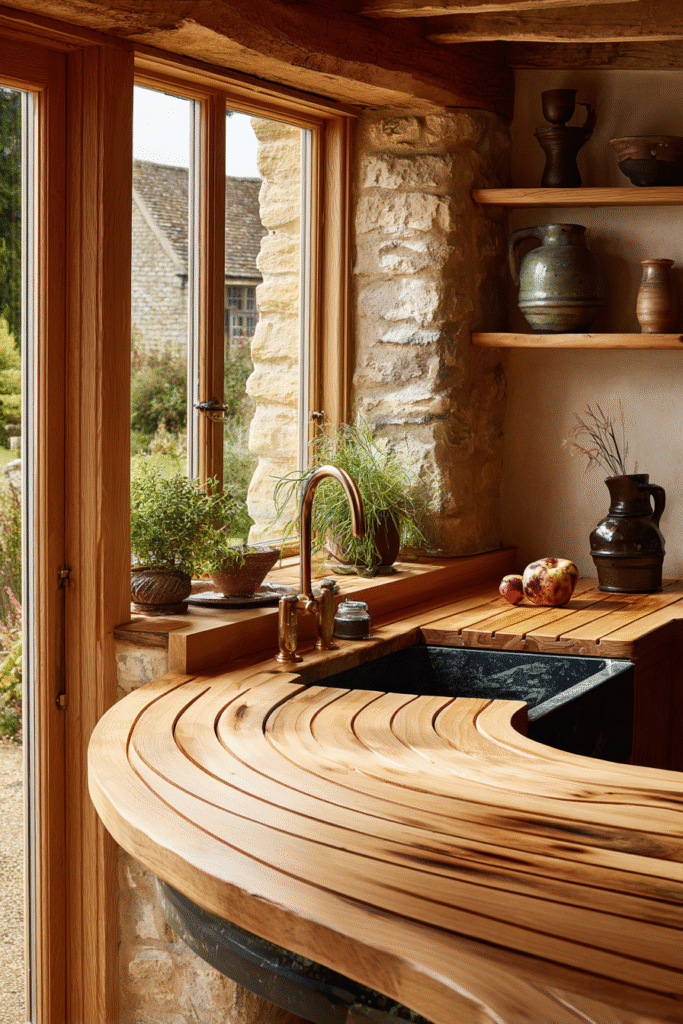
Open shelving throughout the space displays pottery and glassware against a backdrop of natural plaster walls, creating a gallery-like atmosphere that celebrates handmade objects and natural materials. The plaster walls add subtle texture and organic variation that changes with lighting conditions throughout the day. This display approach transforms everyday kitchen items into decorative elements while maintaining easy access for daily use.
Key Design Tips:
- Integrate planters directly into breakfast bars for fresh ingredient access
- Choose bridge faucets in aged brass for classical elegance and functionality
- Use quartzite countertops for durability combined with natural beauty
- Display pottery and glassware on open shelves as decorative elements
- Apply natural plaster walls for subtle texture and organic light play
17. The Indoor-Outdoor Kitchen
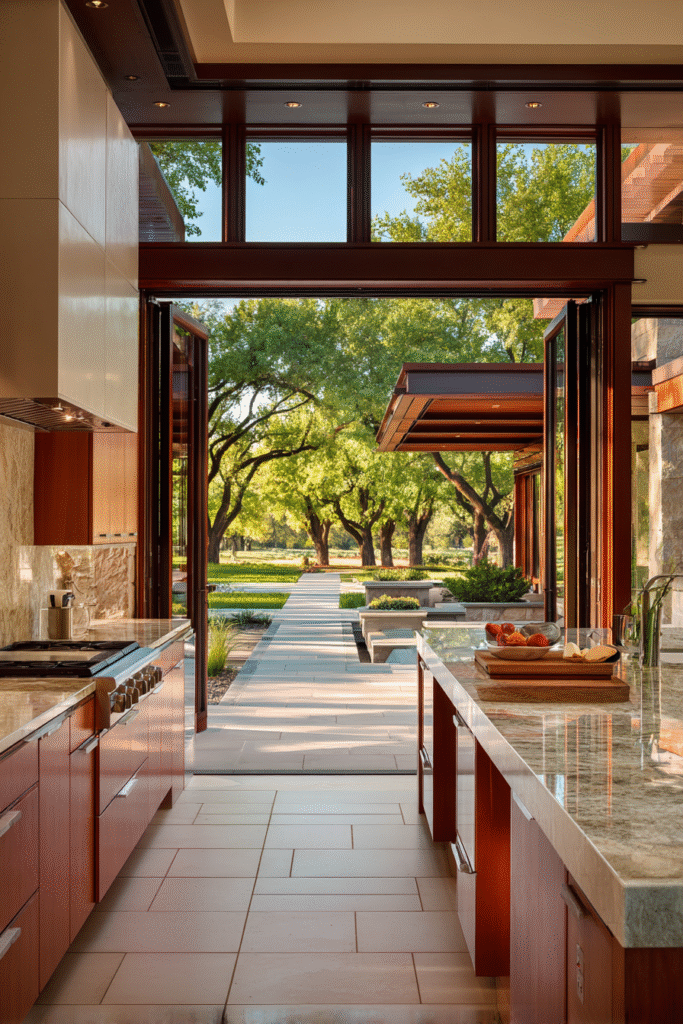
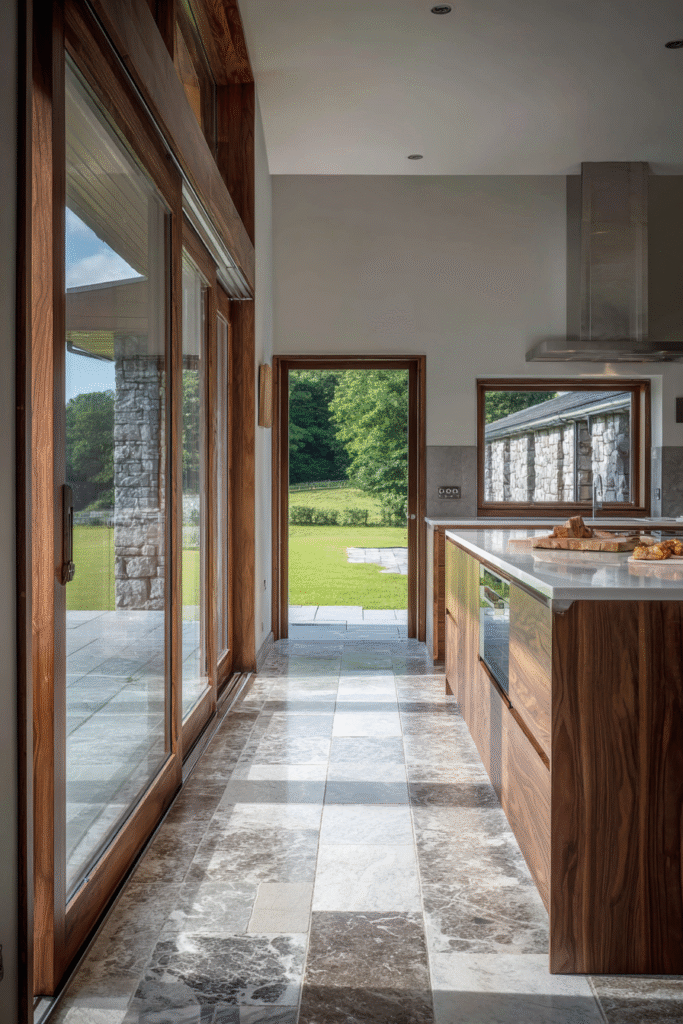
Experience the ultimate in seamless living through floor-to-ceiling sliding glass doors that open completely to create continuous flow between interior and exterior cooking spaces. This design approach erases the traditional boundaries between indoor and outdoor living, allowing the kitchen to expand into garden spaces during favorable weather while maintaining full functionality as an enclosed space when needed. The large glass panels flood the interior with natural light while providing unobstructed views of outdoor landscapes that become living artwork visible from the kitchen workspace.
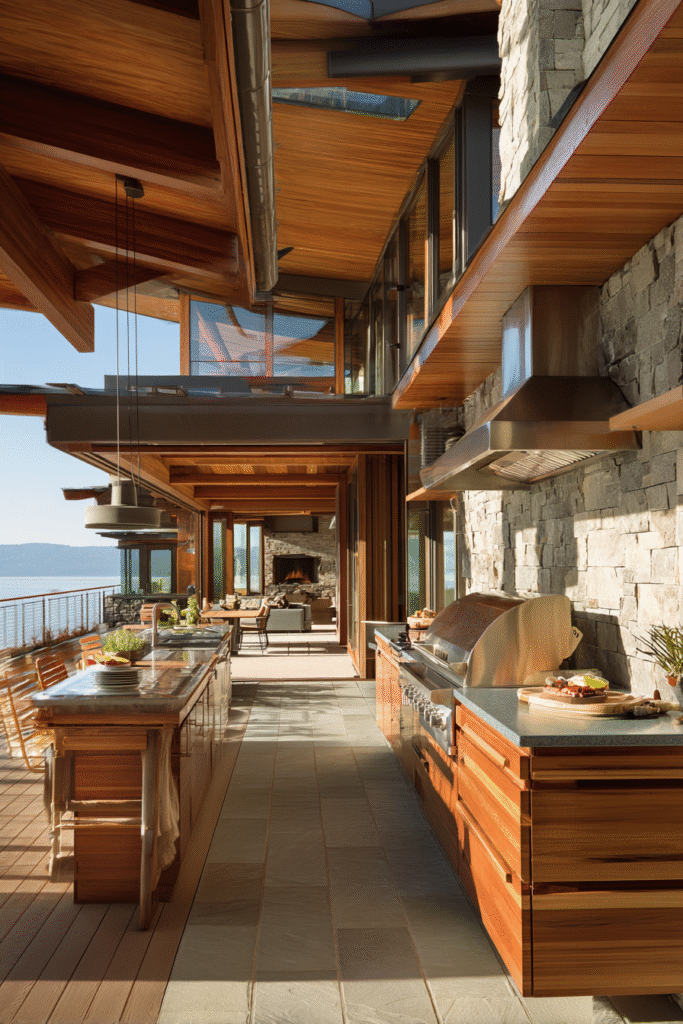
The interior features a substantial island with built-in wood storage specifically designed for cutting boards and serving platters, acknowledging the kitchen’s role in outdoor entertaining and casual dining. These specialized storage solutions keep frequently used items organized and easily accessible while maintaining the clean lines essential to organic modern design. The natural wood storage areas add warmth and texture while providing practical solutions for items that might otherwise create clutter on countertops.
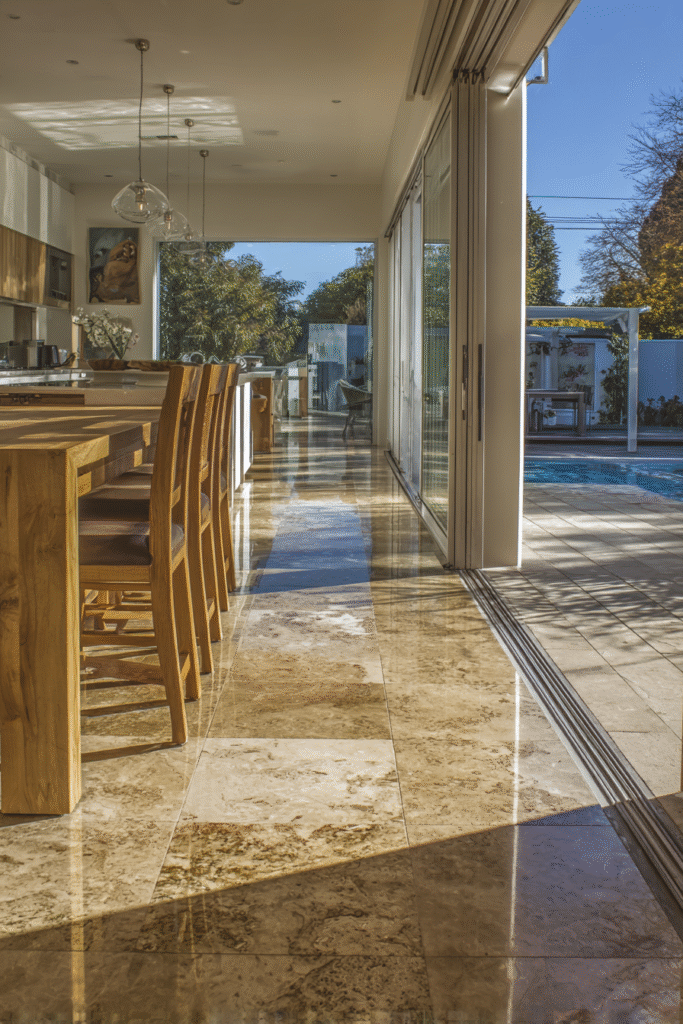
Natural stone flooring creates visual and material continuity between interior and exterior spaces, reinforcing the seamless connection between indoor and outdoor living areas. The stone’s durability makes it suitable for both environments while its natural patterns and colors complement surrounding landscape elements. This continuous flooring approach eliminates visual barriers and creates a unified living experience that celebrates the connection between home and nature.
Key Design Tips:
- Install floor-to-ceiling sliding doors for maximum indoor-outdoor connection
- Include specialized storage for cutting boards and serving pieces used in outdoor entertaining
- Use continuous stone flooring to create seamless transitions between interior and exterior spaces
- Position islands to serve both indoor cooking and outdoor entertaining functions
- Choose durable natural materials that perform well in both indoor and outdoor conditions
18. The Sculptural Statement
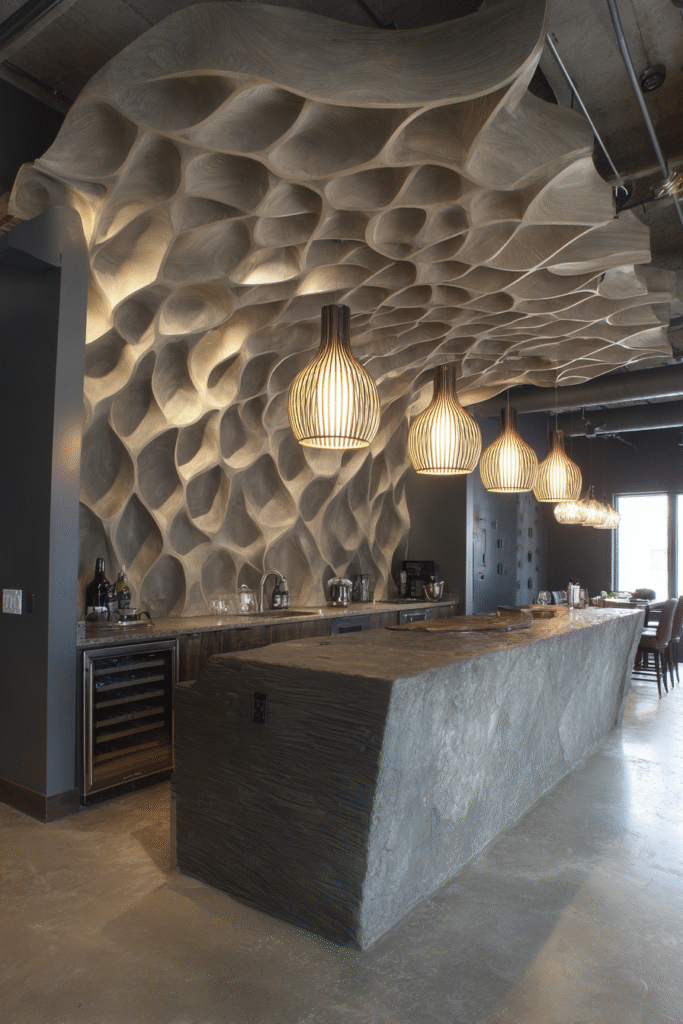
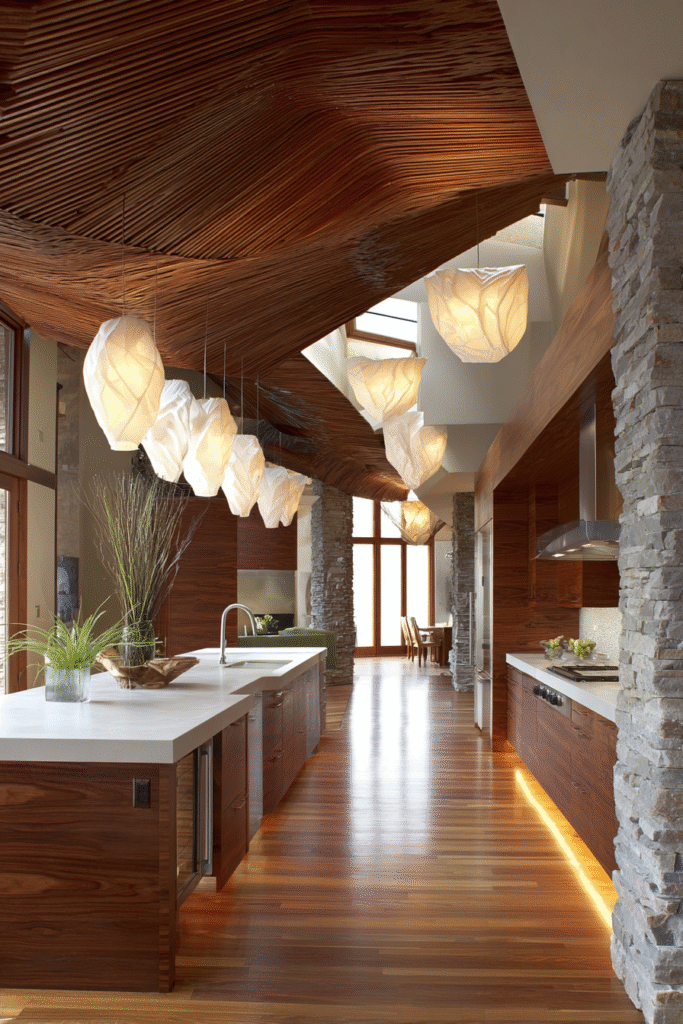
Discover a kitchen where the ceiling becomes the star through a natural wood slat installation that creates rhythm, texture, and visual interest while continuing down one accent wall to create architectural continuity throughout the space. This dramatic ceiling treatment transforms a typically overlooked surface into a major design element that adds warmth and natural beauty overhead. The wood slats create shadow lines that change throughout the day, adding movement and visual dynamics to the static architectural elements.
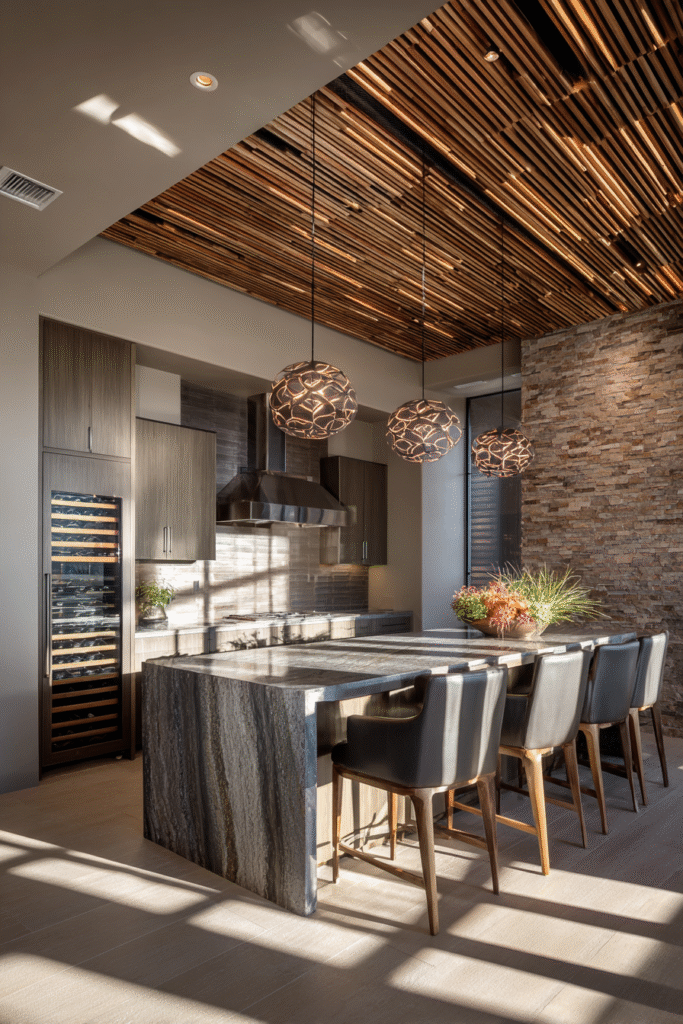
The kitchen island serves as both functional workspace and entertainment center, featuring a built-in wine cooler and display area surrounded by natural stone that creates a sophisticated beverage service station. This integration of wine storage acknowledges the kitchen’s role in entertaining while maintaining the organic modern aesthetic through natural material choices. The stone surround adds substantial visual weight while providing a durable surface that can handle the moisture and temperature changes associated with wine storage.
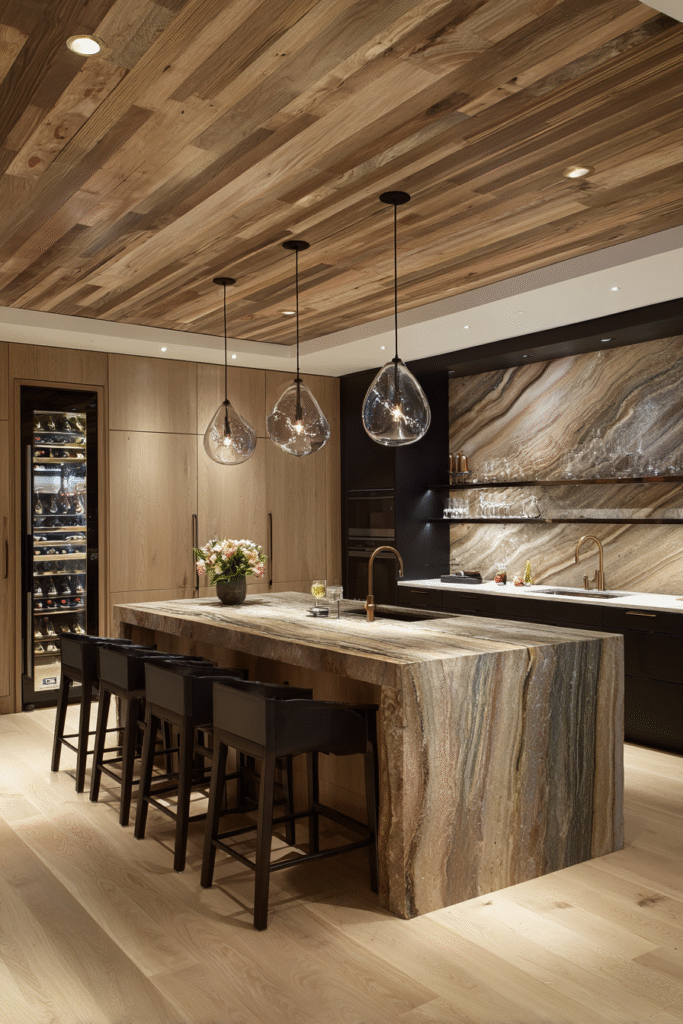
Pendant lights with organic shapes cast fascinating shadows on the textured ceiling surfaces, creating an ever-changing light show that adds drama and visual interest throughout the day. These sculptural light fixtures serve as artistic elements while providing essential task lighting for cooking and food preparation activities. The interplay between the organic light fixtures and the linear ceiling treatment creates visual tension that keeps the space engaging and dynamic.
Key Design Tips:
- Use wood slat ceiling treatments to add warmth and visual interest overhead
- Continue ceiling treatments down accent walls for architectural continuity
- Integrate wine storage with natural stone surrounds for sophisticated beverage service
- Choose pendant lights with organic shapes that cast interesting shadows
- Create visual tension through the interplay of linear and organic design elements
19. The Dedicated Coffee Culture
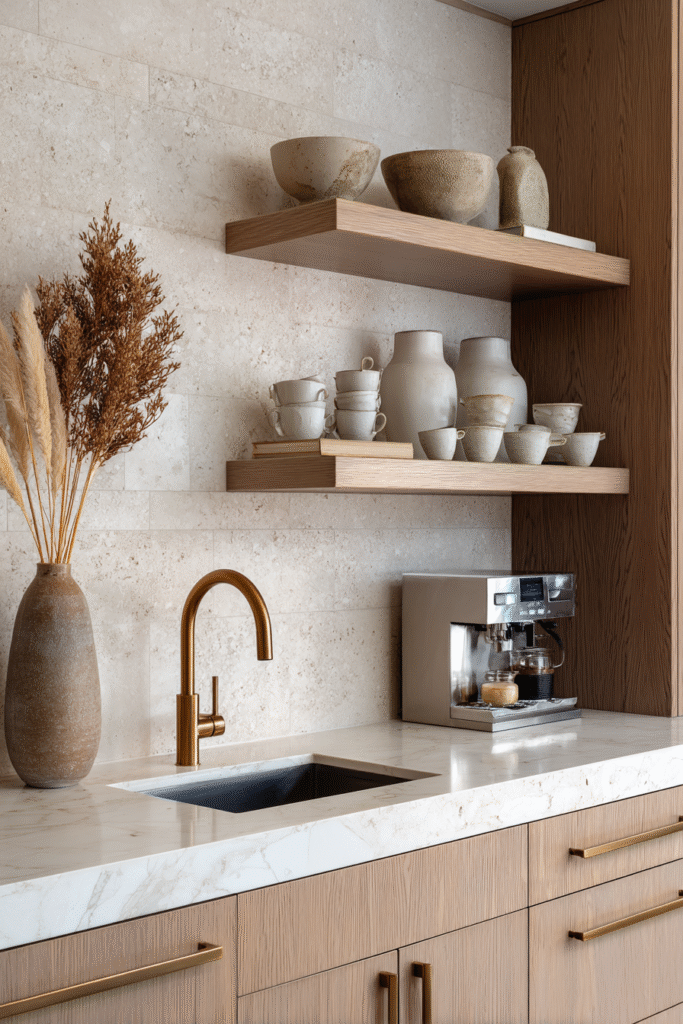
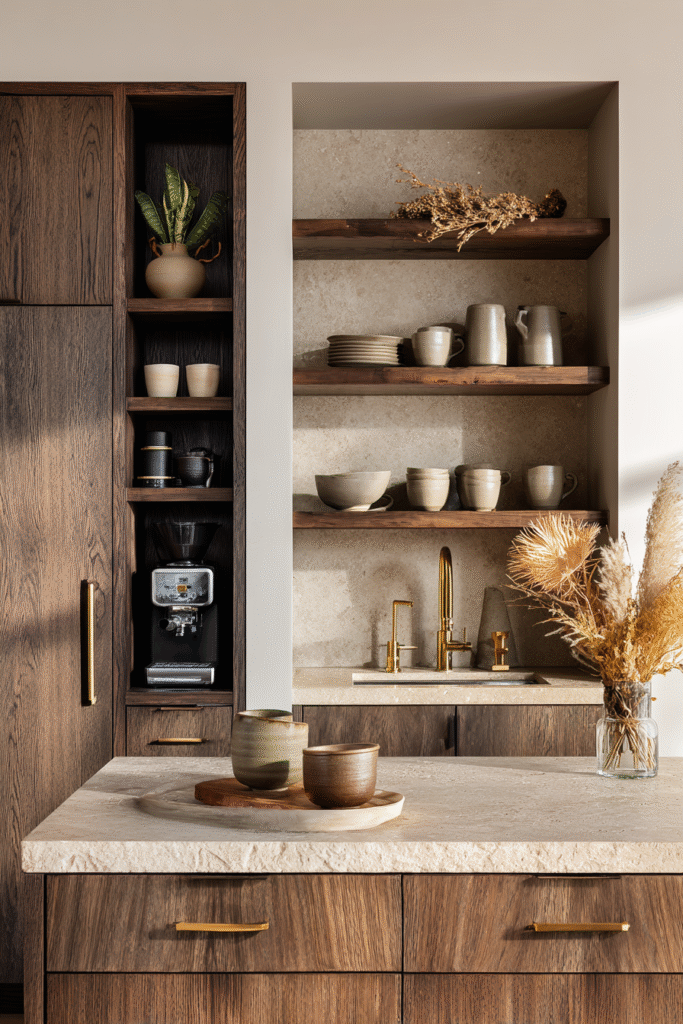
Step into a specialized coffee and tea station that elevates daily beverage rituals into moments of luxury and mindfulness, featuring built-in brewing equipment seamlessly integrated within natural wood cabinetry. This dedicated space demonstrates how organic modern design can accommodate specific lifestyle needs while maintaining aesthetic coherence with the larger kitchen design. The natural wood cabinetry provides warmth and texture while concealing sophisticated brewing equipment that delivers café-quality beverages at home.
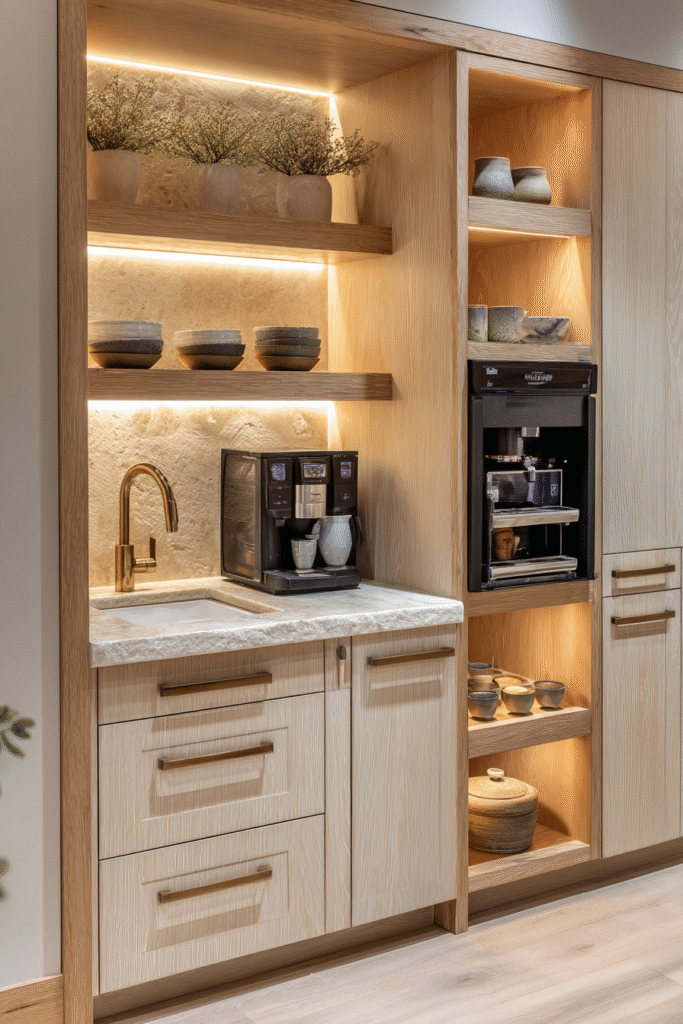
Open shelving above the coffee station creates a gallery for mug display, transforming everyday drinking vessels into decorative elements that reflect personal style and collecting interests. The varying shapes, sizes, and colors of displayed mugs add visual interest while remaining easily accessible for daily use. This approach to storage celebrates the objects we use regularly rather than hiding them away in closed cabinets.
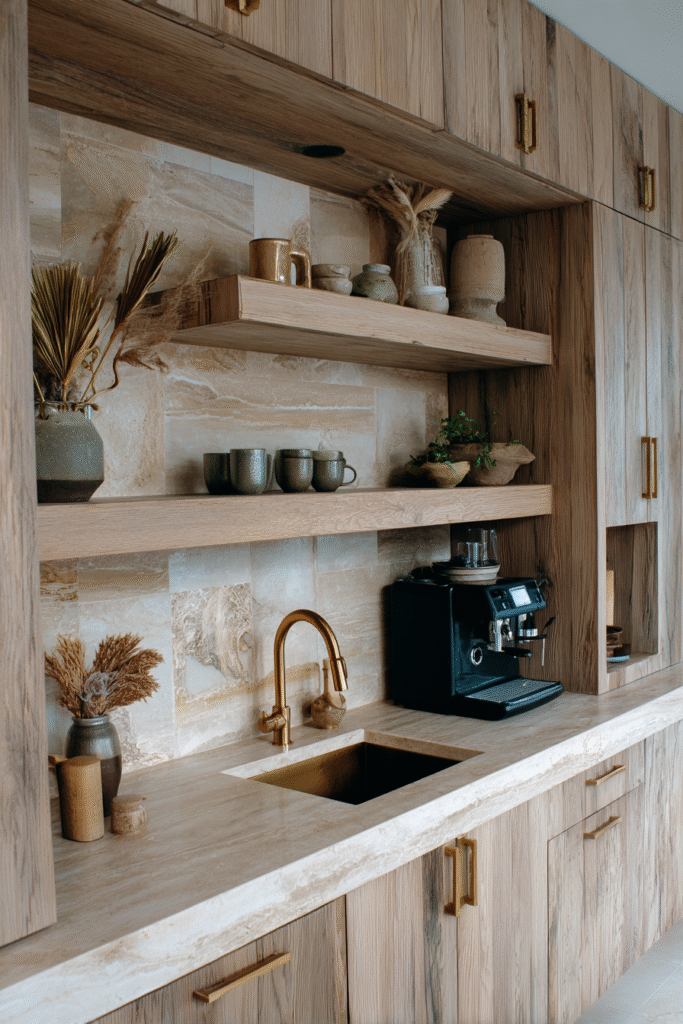
Adjacent to the brewing station, a small sink with brass fixtures and natural stone countertop provides dedicated space for beverage preparation and cleanup without interfering with main kitchen workflows. Floating shelves display ceramic containers filled with coffee beans, teas, and dried botanicals that add natural beauty while keeping ingredients fresh and accessible. The brass fixtures develop patina over time, adding character that improves with age and use.
Key Design Tips:
- Create dedicated beverage stations with integrated brewing equipment
- Use open shelving to display mugs and drinking vessels as decorative elements
- Include specialized sinks for beverage preparation and cleanup
- Display coffee beans and teas in ceramic containers as natural decorative elements
- Choose brass fixtures that develop character through daily use and aging
20. The Social Heart
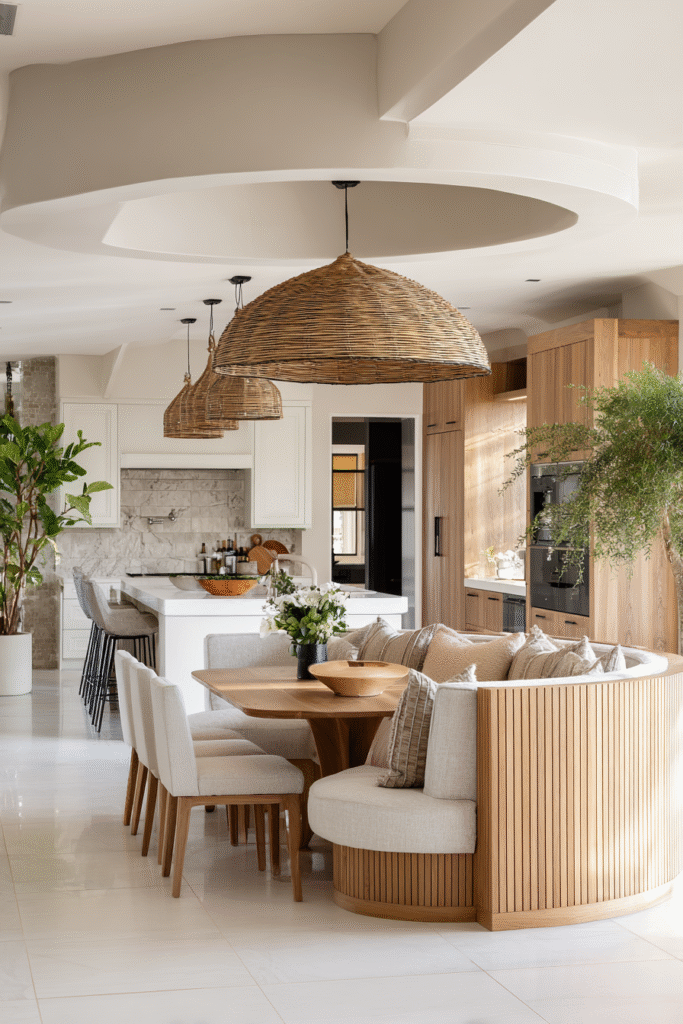
Envision the ultimate family gathering space centered around a large island with an integrated seating nook upholstered in natural linen fabric and curved wooden backing that creates an intimate conversation area within the larger kitchen environment. This seating integration transforms the kitchen island from a simple work surface into a social hub where family members and guests naturally gravitate for conversation, homework, and casual meals. The natural linen upholstery adds softness and warmth while remaining practical for daily family use.
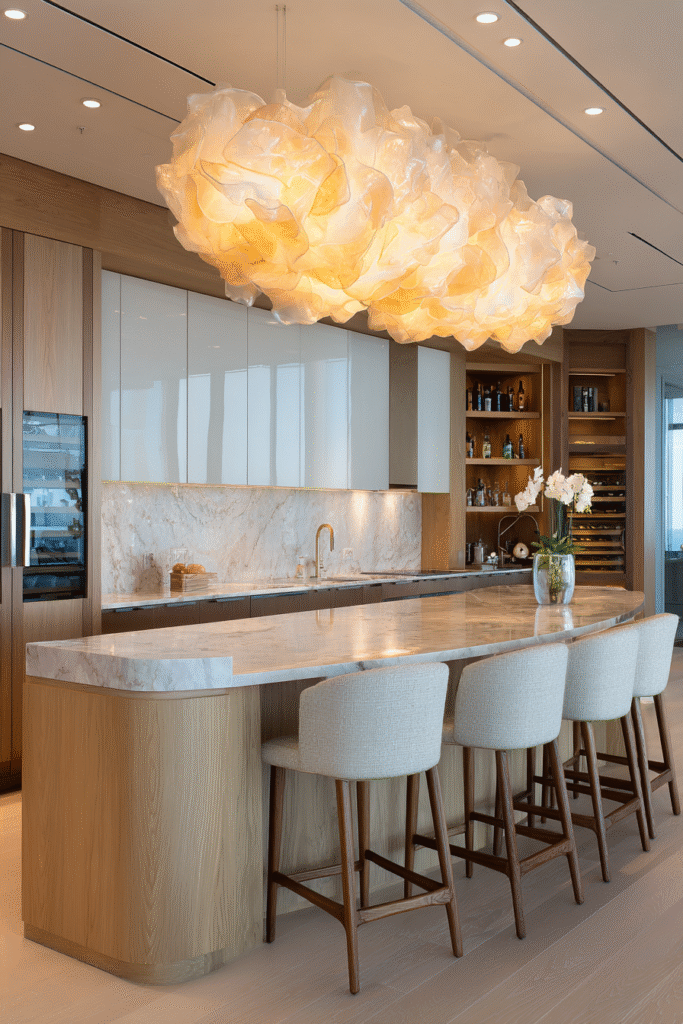
The surrounding kitchen features handleless cabinetry in a sophisticated two-tone finish, with upper cabinets in soft white that maximize light reflection and lower cabinets in warm oak that ground the space with natural warmth. This color combination creates visual balance while allowing the integrated seating area to serve as the space’s focal point. The handleless design maintains clean lines while requiring thoughtful detailing to ensure smooth operation and comfortable use.
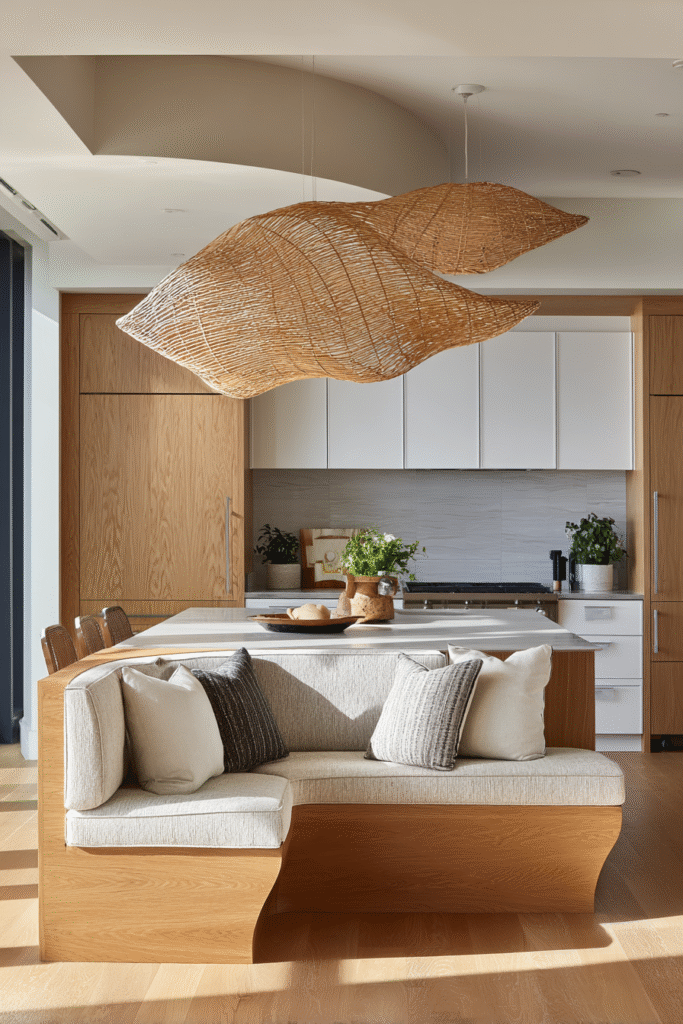
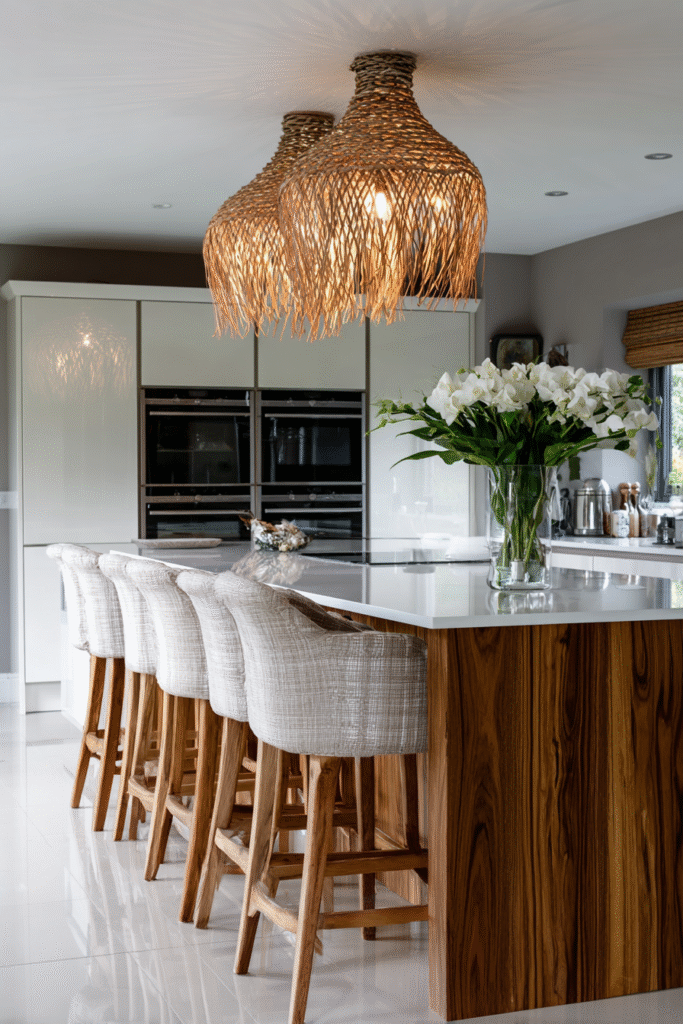
Above the seating area, a statement light fixture crafted from natural materials serves as both functional lighting and sculptural art piece, defining the social zone while complementing the organic modern aesthetic throughout the space. The fixture’s natural materials and organic forms create visual harmony while providing appropriate illumination for dining and conversation activities.
Key Design Tips:
- Integrate seating directly into kitchen islands to create natural gathering spaces
- Use two-tone cabinetry with light uppers and warm wood lowers for visual balance
- Choose handleless cabinet designs for clean lines and contemporary appeal
- Install statement lighting over seating areas to define social zones
- Upholster integrated seating with natural fabrics for comfort and organic texture
Why These Organic Modern Kitchen Designs Represent the Best of Contemporary Living
Each of these twenty organic modern kitchen designs represents a unique approach to balancing natural beauty with contemporary functionality, demonstrating why this design philosophy has become increasingly popular among homeowners seeking spaces that nurture both body and soul. The organic modern kitchen aesthetic addresses our fundamental need for connection to nature while accommodating the practical demands of modern life, creating spaces that serve as both efficient workspaces and nurturing gathering places for family and friends.
The emphasis on natural materials like live-edge wood, natural stone, and handcrafted elements reflects a growing desire for authenticity in our increasingly digital world. These materials age beautifully, developing character and patina over time rather than simply wearing out, which aligns with sustainable living principles and creates homes that become more beautiful with age. The integration of plants, natural light, and organic forms supports our biophilic needs while creating environments that promote wellbeing and stress reduction.
From a functional perspective, these organic modern kitchen designs excel in creating efficient workflows while maintaining visual appeal. The emphasis on clean lines, integrated storage, and seamless material transitions ensures that these kitchens perform beautifully for daily cooking tasks while remaining stunning enough to serve as the centerpiece of home entertaining. The careful attention to lighting design, both natural and artificial, ensures that these spaces remain functional and beautiful throughout all hours of daily use.
The incorporation of specialized zones for different activities—from coffee preparation to herb gardening to wine storage—demonstrates how organic modern design can accommodate diverse lifestyle needs while maintaining design coherence. These kitchens recognize that the modern kitchen serves multiple roles beyond basic food preparation, functioning as home office, homework station, entertainment center, and social hub for family life.
Most importantly, these designs create emotional connections that make houses feel like homes. The warmth of natural wood, the drama of natural stone, the life force of integrated plants Most importantly, these designs create emotional connections that make houses feel like homes. The warmth of natural wood, the drama of natural stone, the life force of integrated plants, and the play of natural light combine to create spaces that engage all the senses and nourish the soul. Unlike stark minimalist designs that can feel cold or overly ornate traditional styles that may seem dated, organic modern kitchens achieve a timeless quality that feels both current and enduring.
The sustainability aspects inherent in organic modern design also resonate with contemporary values and concerns about environmental responsibility. By choosing materials that are renewable, locally sourced, or reclaimed, these kitchens reduce environmental impact while creating unique character that cannot be replicated through mass-produced elements. The emphasis on quality craftsmanship and durable materials means these kitchens are built to last for generations rather than requiring frequent updates to remain current.
From a design evolution perspective, organic modern kitchens represent the maturation of open-plan living concepts, creating spaces that successfully integrate with adjacent living areas while maintaining their distinct identity and function. The careful attention to sight lines, material flow, and lighting transitions ensures that these kitchens enhance rather than compete with surrounding spaces, creating homes with seamless flow and consistent aesthetic vision.
The technology integration found in these designs demonstrates how organic modern principles can embrace contemporary conveniences without sacrificing visual appeal or material authenticity. Hidden appliances, integrated charging stations, and sophisticated lighting controls disappear behind natural material facades, proving that advanced functionality need not compromise design integrity or aesthetic coherence.
These organic modern kitchen concepts also excel in their adaptability to different architectural styles and regional influences. Whether integrated into contemporary new construction, historic home renovations, or transitional designs, the fundamental principles of natural materials, clean lines, and functional beauty translate successfully across diverse contexts while maintaining their essential character and appeal.
The investment value of organic modern kitchens cannot be overlooked, as their timeless aesthetic and quality materials typically appreciate rather than depreciate over time. Unlike trend-driven designs that may feel dated within a few years, these kitchens maintain their appeal and functionality for decades, making them wise investments for homeowners considering long-term value and satisfaction.
Perhaps most significantly, these designs recognize and celebrate the kitchen’s role as the emotional and functional heart of the contemporary home. By creating spaces that are simultaneously beautiful and practical, inspiring and comfortable, sophisticated and approachable, organic modern kitchens fulfill our deepest needs for spaces that support both daily life and special celebrations.
Conclusion
The twenty organic modern kitchen designs explored in this comprehensive guide demonstrate the remarkable versatility and enduring appeal of a design philosophy that honors both natural beauty and contemporary functionality. From waterfall-edge islands that showcase stone’s geological artistry to integrated herb gardens that bring the farm directly to the table, these designs prove that kitchens can be simultaneously practical workspaces and inspiring sanctuaries that nurture both body and soul.
The organic modern approach offers homeowners the opportunity to create spaces that reflect their values while supporting their lifestyle needs. Whether drawn to the sustainability aspects of reclaimed materials, the wellness benefits of biophilic design elements, or simply the timeless beauty of natural materials combined with clean contemporary lines, these kitchen concepts provide pathways to creating homes that truly enhance daily life.
As you consider incorporating organic modern elements into your own kitchen design, remember that the most successful implementations often begin with small changes rather than complete overhauls. Adding natural materials through countertops or backsplashes, introducing plants or herbs to unused windowsill space, or updating lighting with fixtures that celebrate organic forms can begin the transformation toward a more connected, beautiful, and functional kitchen environment.
The future of kitchen design clearly lies in approaches that honor our connection to nature while embracing the conveniences and efficiencies of contemporary life. Organic modern design provides the perfect framework for creating kitchens that will remain beautiful, functional, and relevant for generations to come, making them worthy investments in both your daily quality of life and your home’s long-term value and appeal.
"As an Amazon Associate, I earn from qualifying purchases."
