
The living room is the heart of any home. It’s where families gather, guests are entertained, and daily life unfolds. Keeping this space tidy and visually calm is a challenge most homeowners face. One of the biggest decisions you’ll make in living room design is how you store your belongings — and whether open shelving or closed cabinets best serves your lifestyle.
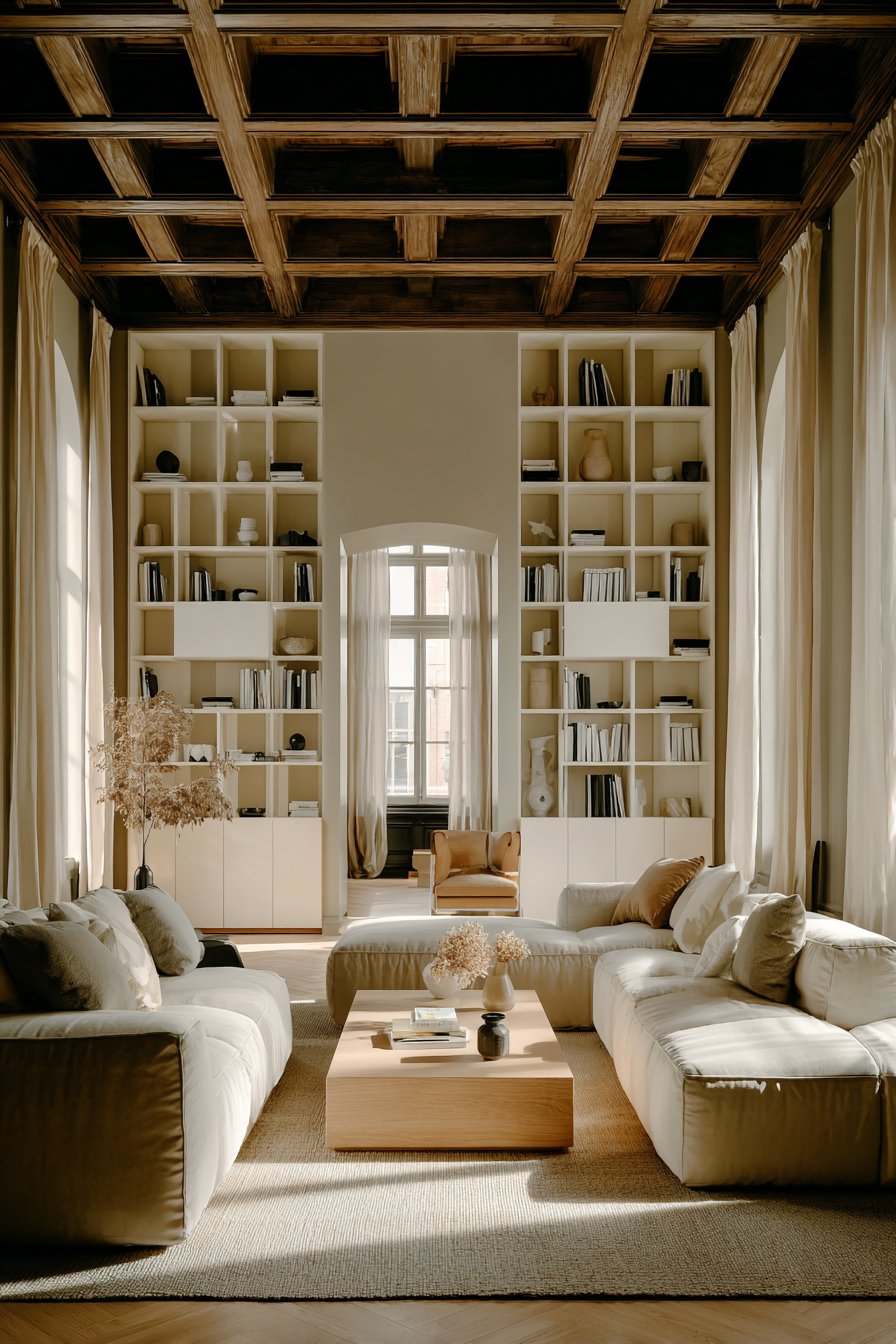
Both storage solutions have passionate advocates. Interior designers regularly debate the merits of each approach. The right choice depends on your habits, aesthetic preferences, and how much effort you’re willing to invest in maintaining visual order. This article dives deep into every angle of the open shelves vs cabinets debate to help you make the smartest decision for your living room.
From dust management and display styling to cost, flexibility, and long-term tidiness, we’ll cover it all. Whether you’re renovating a modern apartment or refreshing a traditional family home, these insights will guide your storage strategy with clarity and confidence.
1. Understanding the Core Difference in Storage Philosophy
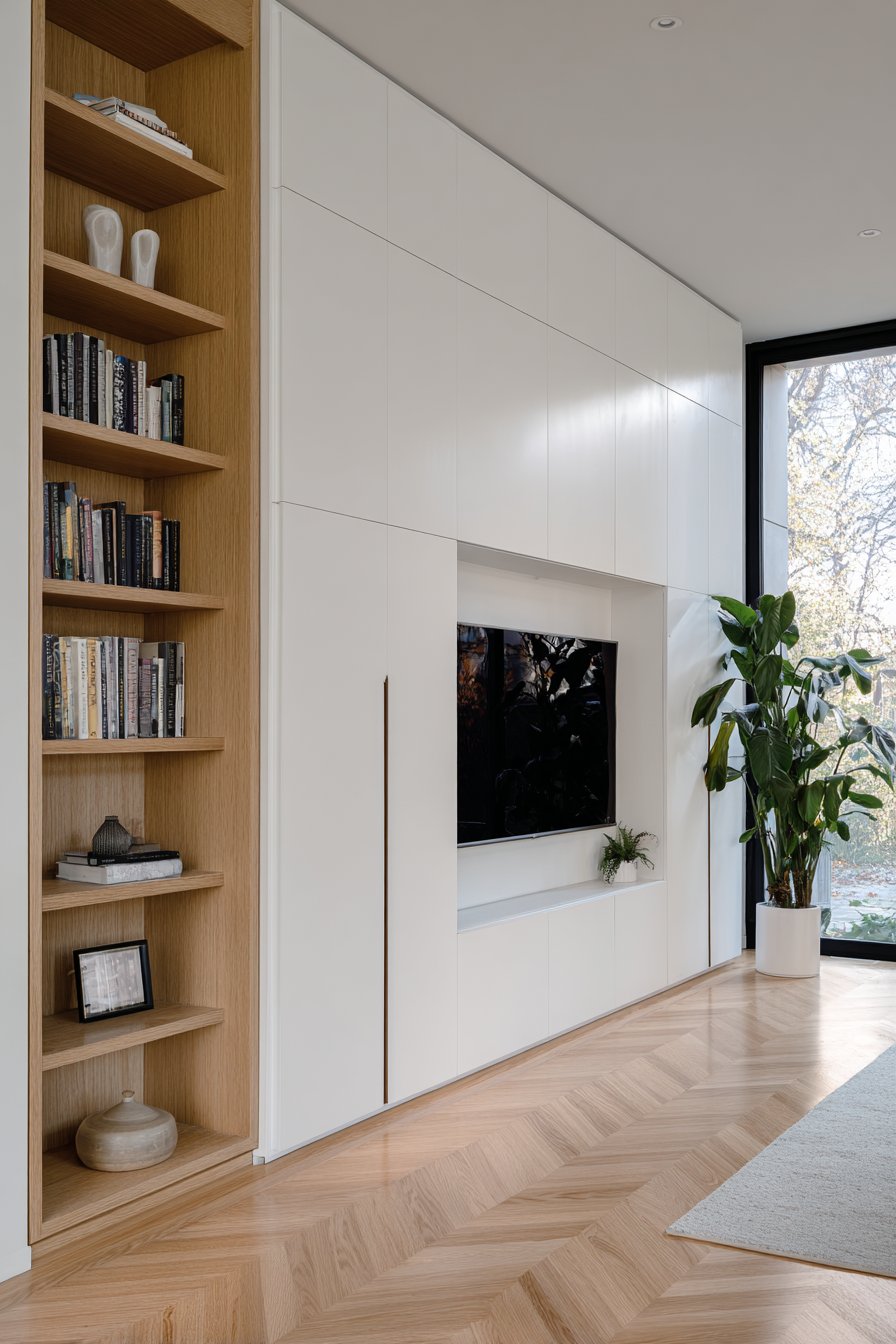
Open shelves and cabinets represent two very different philosophies of organization. Open shelving puts everything on display. What you own becomes part of your décor. Cabinets, on the other hand, hide clutter behind closed doors. They offer a clean, seamless look regardless of what’s stored inside.
This fundamental difference shapes how each option affects your living room’s tidiness. With open shelving, the room can look curated and beautiful — or chaotic and overwhelming — depending on how disciplined you are. Cabinets provide a reliable buffer between your stored items and your living space’s visual field.
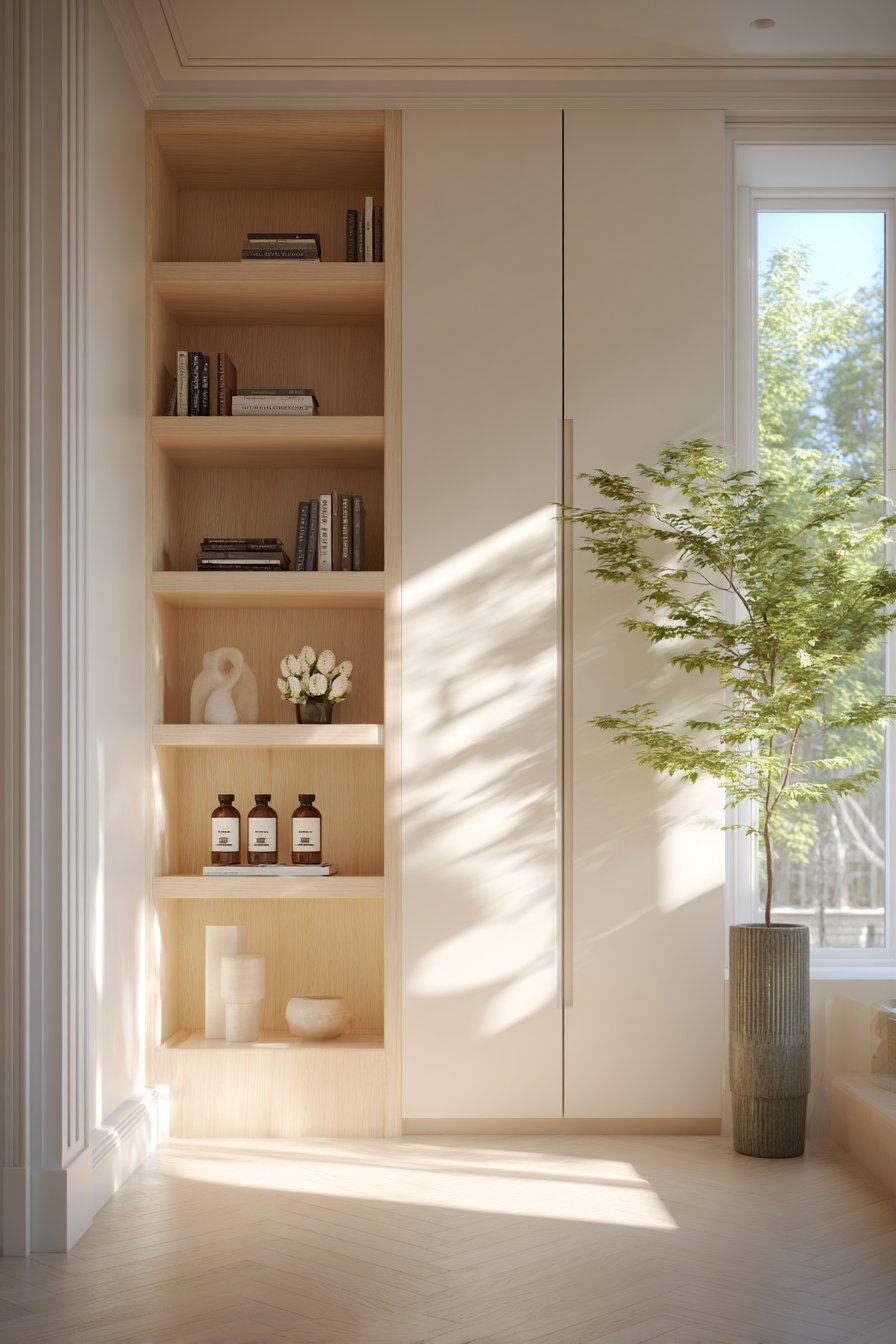
Understanding your own habits is the first step to choosing. If you naturally keep things organized and enjoy decorating, open shelves may suit you. If life gets busy and clutter accumulates quickly, cabinets are almost always the tidier long-term solution.
- Assess your daily tidiness habits honestly before choosing
- Consider how often guests visit and your need for quick cleanup
- Think about whether you enjoy curating and displaying objects
- Factor in the number of people sharing the space
- Ask yourself how much visual complexity you find comfortable
- Consider whether children or pets add unpredictability to your space
2. How Open Shelves Affect Visual Tidiness
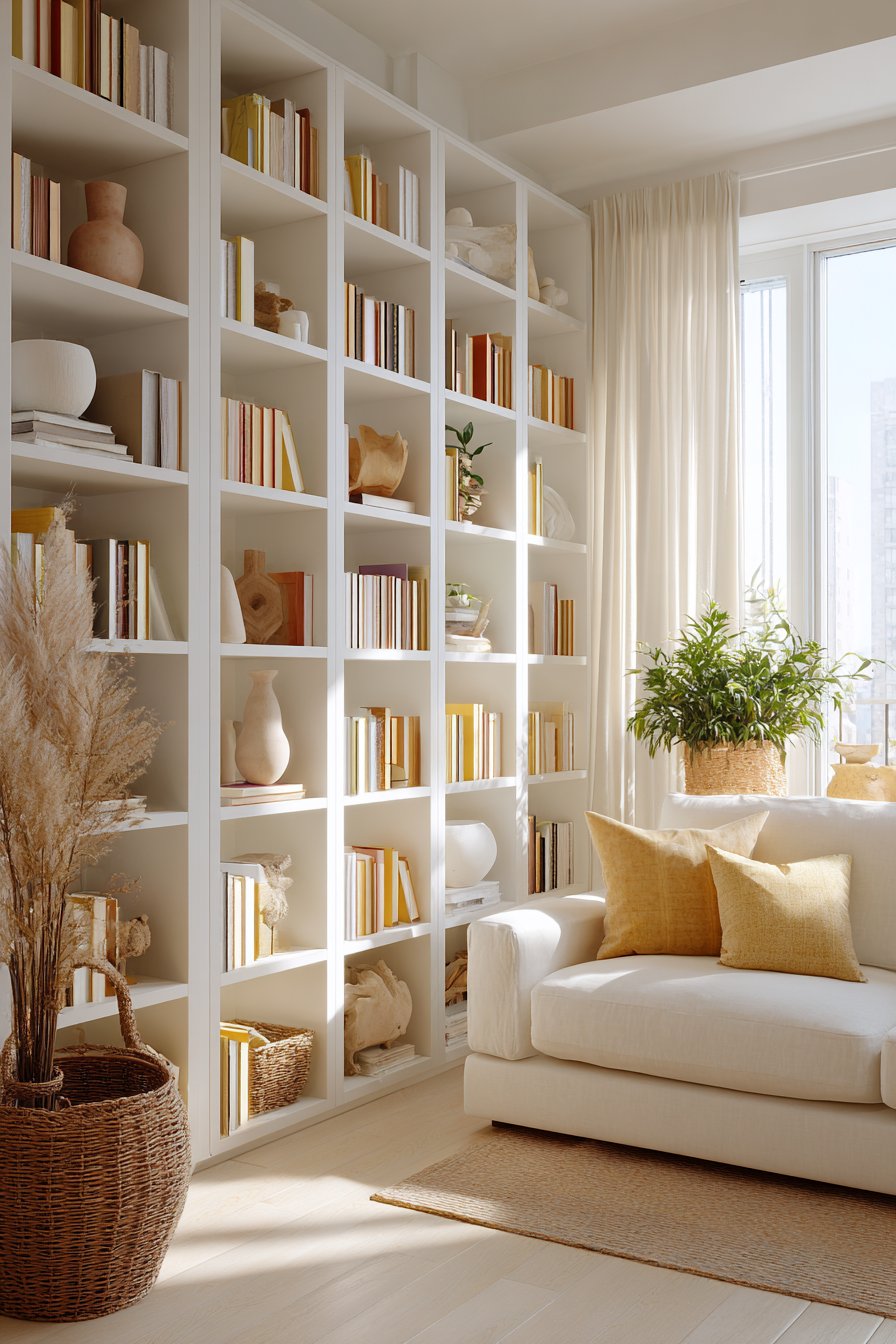
Open shelves can look stunning in living rooms when styled correctly. The curated bookshelf aesthetic seen in design magazines requires careful editing, consistent color palettes, and intentional object placement. Done well, it adds personality and warmth to any space.
However, visual clutter accumulates fast on open shelves. A remote control left in the wrong spot, a stack of unread magazines, or a mismatched decorative item can unravel an otherwise beautiful arrangement instantly. Unlike cabinets, there’s no hiding mistakes. Every item is permanently on display and part of the room’s visual composition.
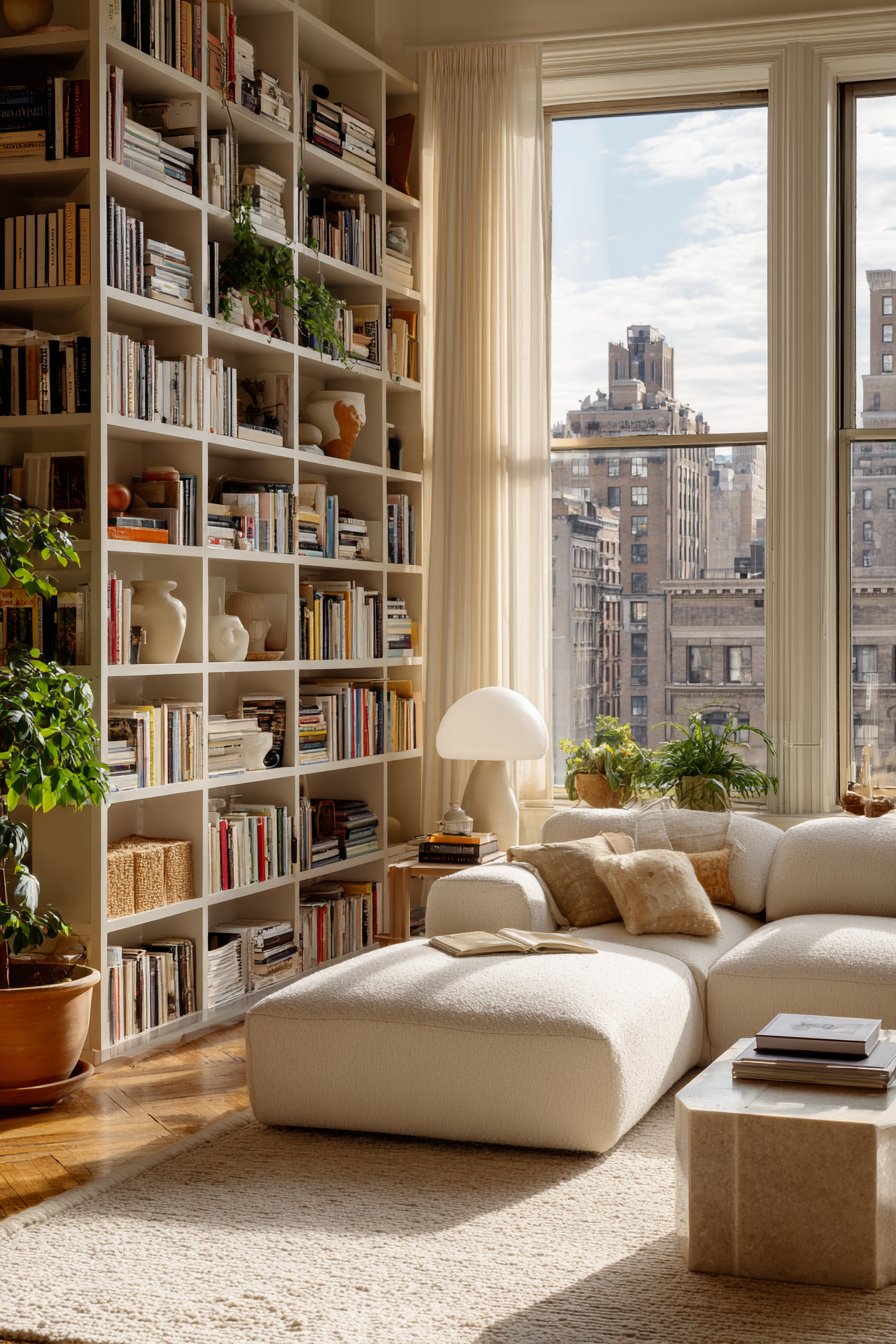
Research in environmental psychology suggests that visual complexity increases stress. Living rooms with heavily loaded open shelves can feel mentally exhausting over time, even if the items are technically organized. For busy households, this visual noise becomes a constant low-level source of tension.
- Use a consistent color palette across displayed objects to create cohesion
- Limit shelves to one-third decorative items and two-thirds functional pieces
- Edit ruthlessly — remove anything that doesn’t contribute to the overall look
- Group items in odd numbers for a more natural, pleasing arrangement
- Add small baskets or boxes on open shelves to contain smaller items
- Commit to weekly restyling sessions to maintain the curated look
3. How Closed Cabinets Maintain Long-Term Order
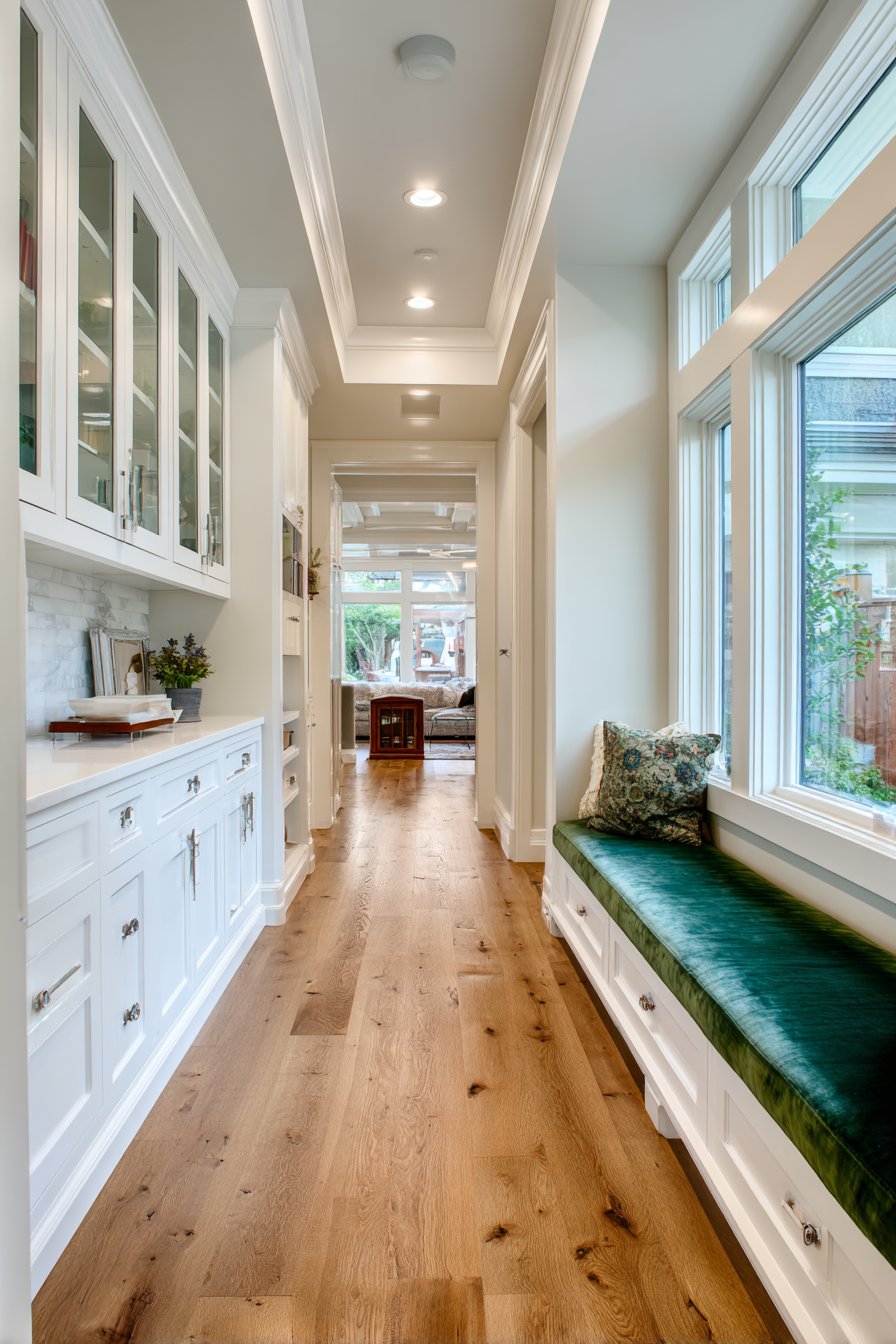
Cabinets are the gold standard for effortless tidiness. Behind closed doors, imperfection is invisible. You can toss items in quickly during a pre-guest cleanup and the room still looks polished. This makes cabinets incredibly practical for family living rooms or anyone with a demanding schedule.
Built-in cabinetry in particular offers a streamlined, architectural look that elevates the entire room. Floor-to-ceiling cabinet units make walls feel purposeful and clean. They also provide significantly more storage capacity than open shelves of equivalent size, since depth can be maximized without any visual penalty.
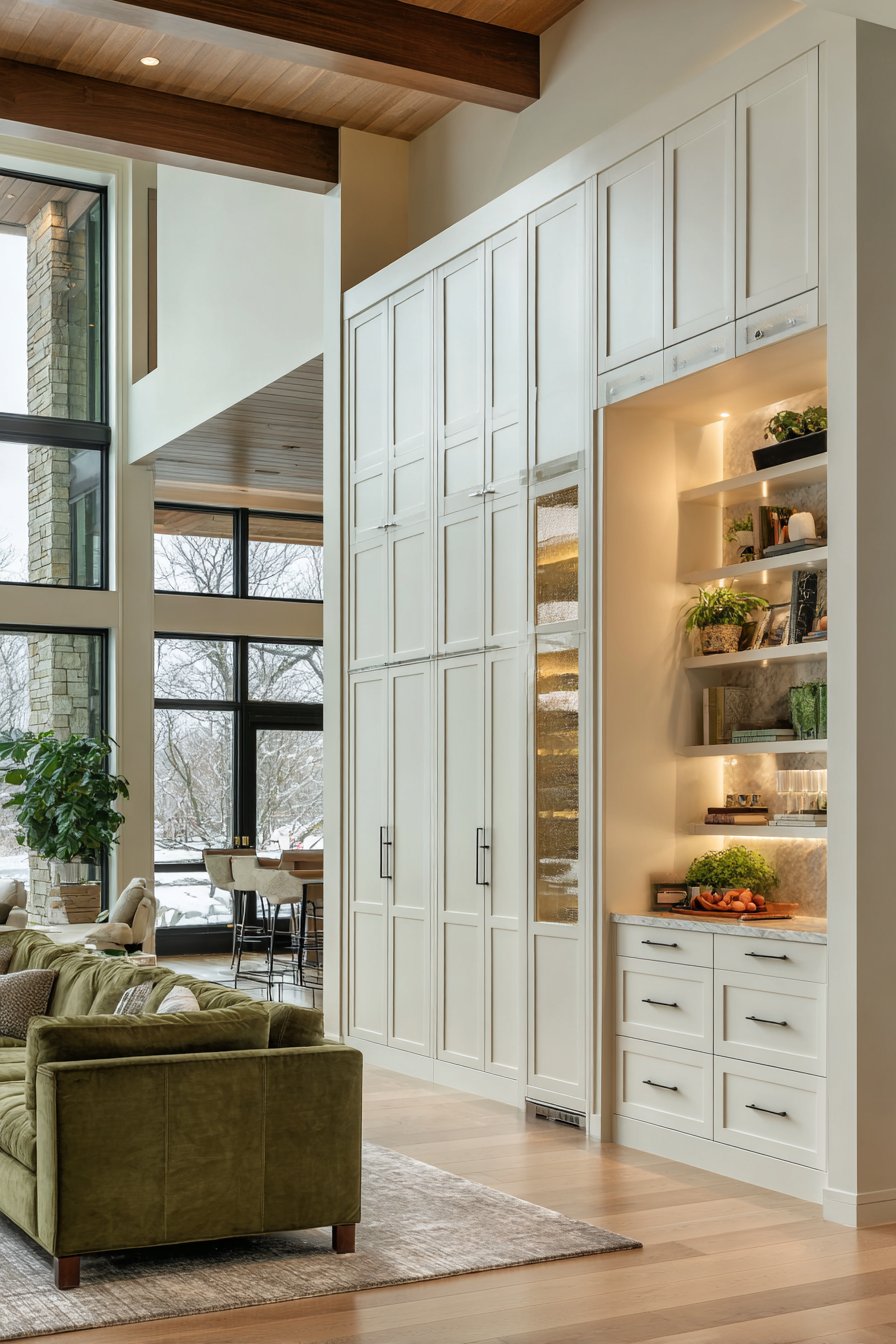
The downside is that cabinets can feel heavy or closed-off if not designed thoughtfully. Rooms with too much solid cabinetry can lack personality and feel more like storage facilities than living spaces. The key is balancing enclosed storage with breathing room, texture, and light.
- Choose shaker-style or flat-panel doors for a timeless, clean aesthetic
- Install soft-close hinges to keep the room quiet and cabinets fully shut
- Use interior organizers and dividers to maximize cabinet efficiency
- Mix solid cabinet doors with frosted glass panels for visual variety
- Paint cabinets in the same color as walls for a seamless, built-in effect
- Include pull-out drawers inside lower cabinets for better accessibility
4. The Dust Factor: A Practical Tidiness Consideration
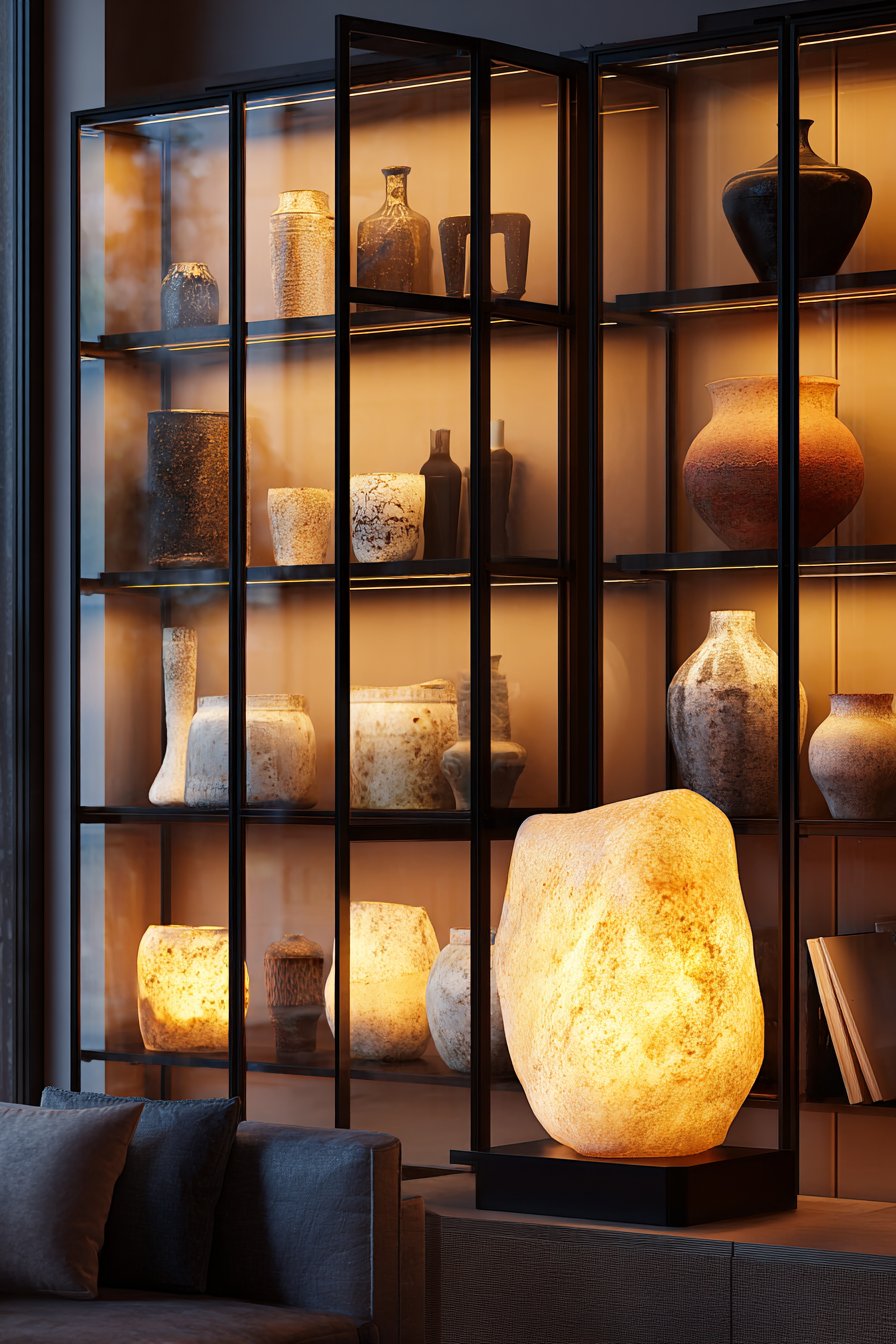
One often-overlooked aspect of the open shelves vs cabinets debate is dust accumulation. Open shelves collect dust on every surface, every object, and between every item. In a living room — where people spend hours daily — dust builds up quickly and noticeably.
Cabinets dramatically reduce dusting frequency and effort. Only exterior surfaces need regular cleaning. The items stored inside remain protected. For people with allergies or respiratory sensitivities, this is a significant health and lifestyle advantage that directly affects how fresh and tidy the room feels day-to-day.
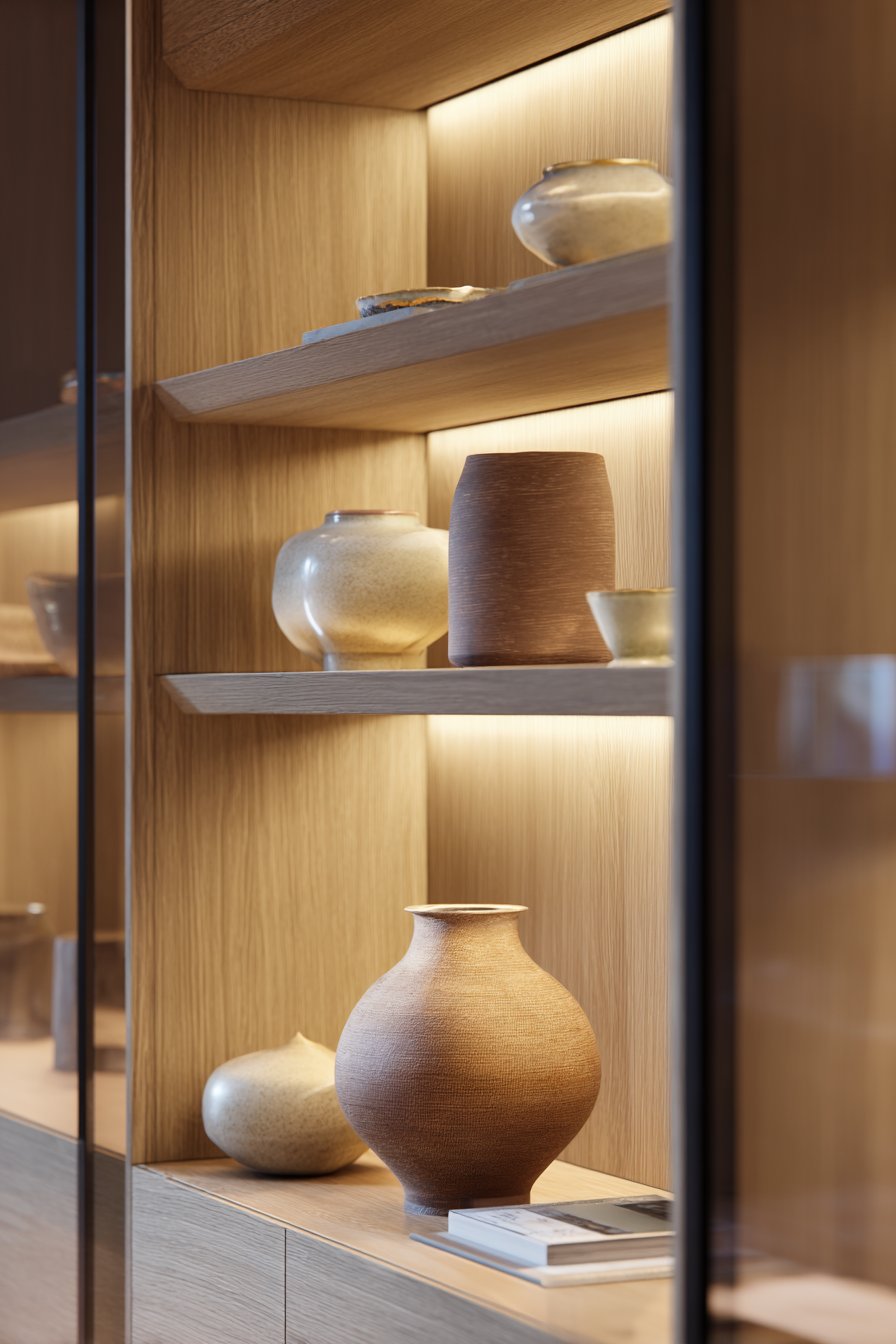
If you love open shelving but hate dusting, consider glass-enclosed shelving units as a middle ground. These display items beautifully while keeping dust out. They combine the visual appeal of open shelving with the protective practicality of cabinets.
- Dust open shelves at least weekly in high-traffic living rooms
- Use a microfiber cloth to trap dust rather than dispersing it
- Place fewer, larger objects on shelves to reduce dusting complexity
- Consider glass-front cabinet doors to display items while blocking dust
- Apply a light anti-static spray to shelves to slow dust accumulation
- Opt for cabinets in homes with pets that shed heavily
5. Living Room Size and How It Influences Your Choice
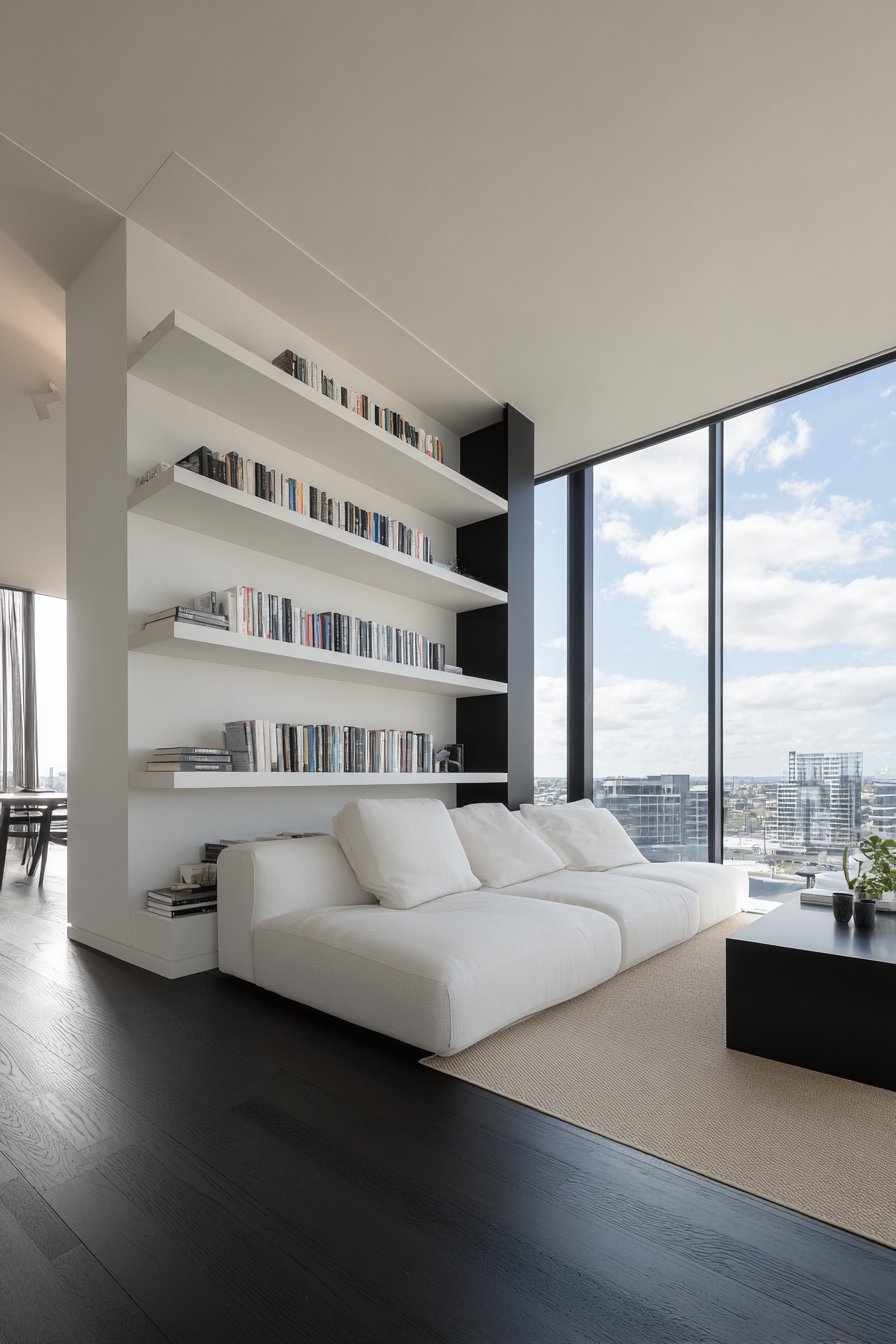
Room size plays a major role in which storage solution wins the tidiness battle. In smaller living rooms, open shelves can make the space feel larger and more airy. Solid cabinet banks can make compact rooms feel boxed in and darker. The visual lightness of open shelving preserves the sense of space.
In larger living rooms, cabinets become more effective and impactful. They provide the storage volume needed to keep a generous space organized without visible overflow. Large open shelving walls in big rooms can feel overwhelming unless styled with extreme precision and restraint.
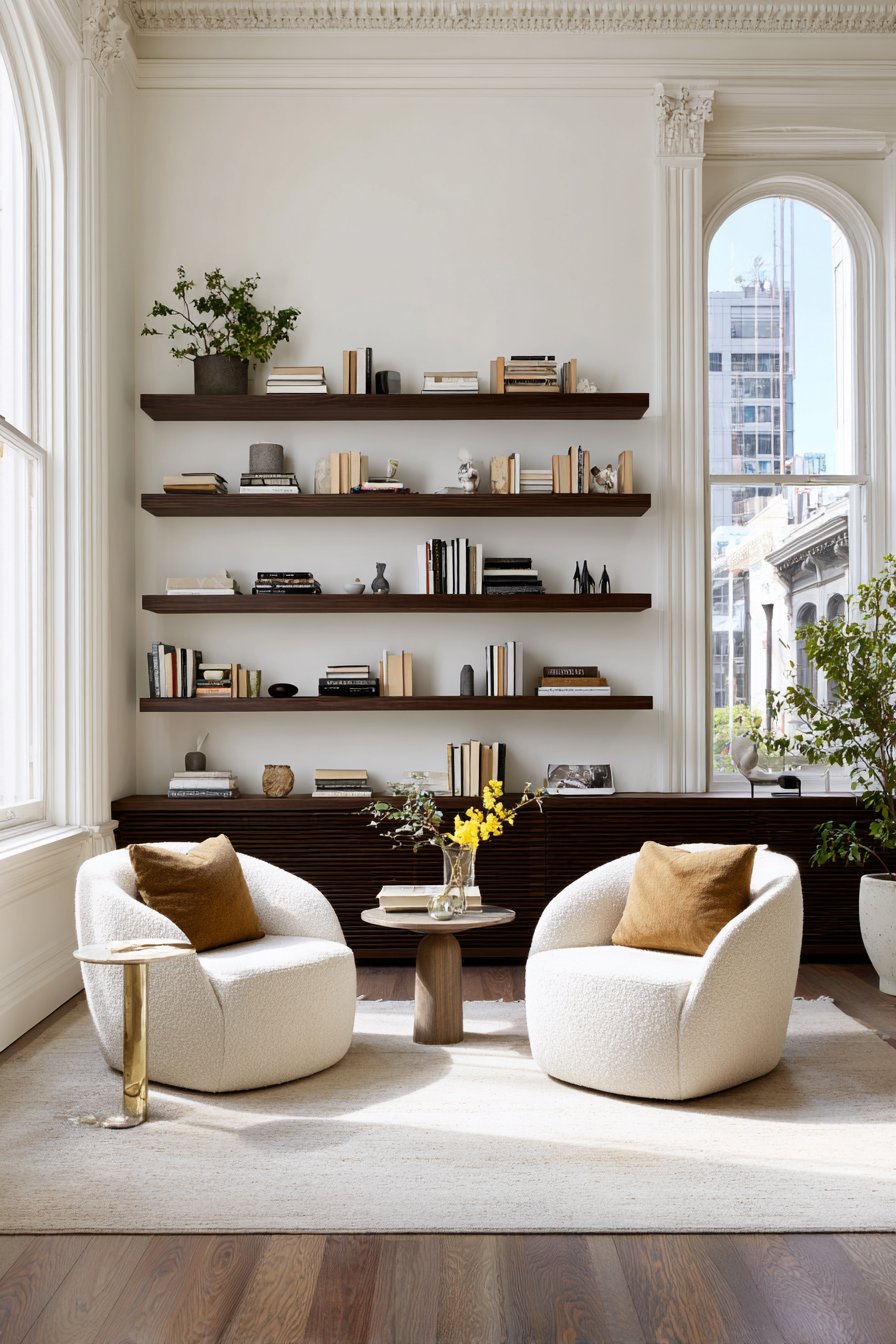
The ceiling height also matters significantly. High ceilings and open shelving create a dramatic, library-like atmosphere that feels intentional. Low ceilings paired with tall open shelves can feel oppressive. Matching your storage solution to the room’s proportions is a core principle of spatial design.
- Use open shelves in rooms under 150 square feet to maintain airiness
- In large living rooms, invest in floor-to-ceiling cabinetry for impact
- Float shelves on walls rather than using bulky shelf units in small spaces
- In rooms with 8-foot ceilings or lower, keep storage furniture low-profile
- Use mirrors alongside open shelves to amplify light and depth perception
- Combine both storage types in medium-sized rooms for balance
6. Personality and Lifestyle Compatibility
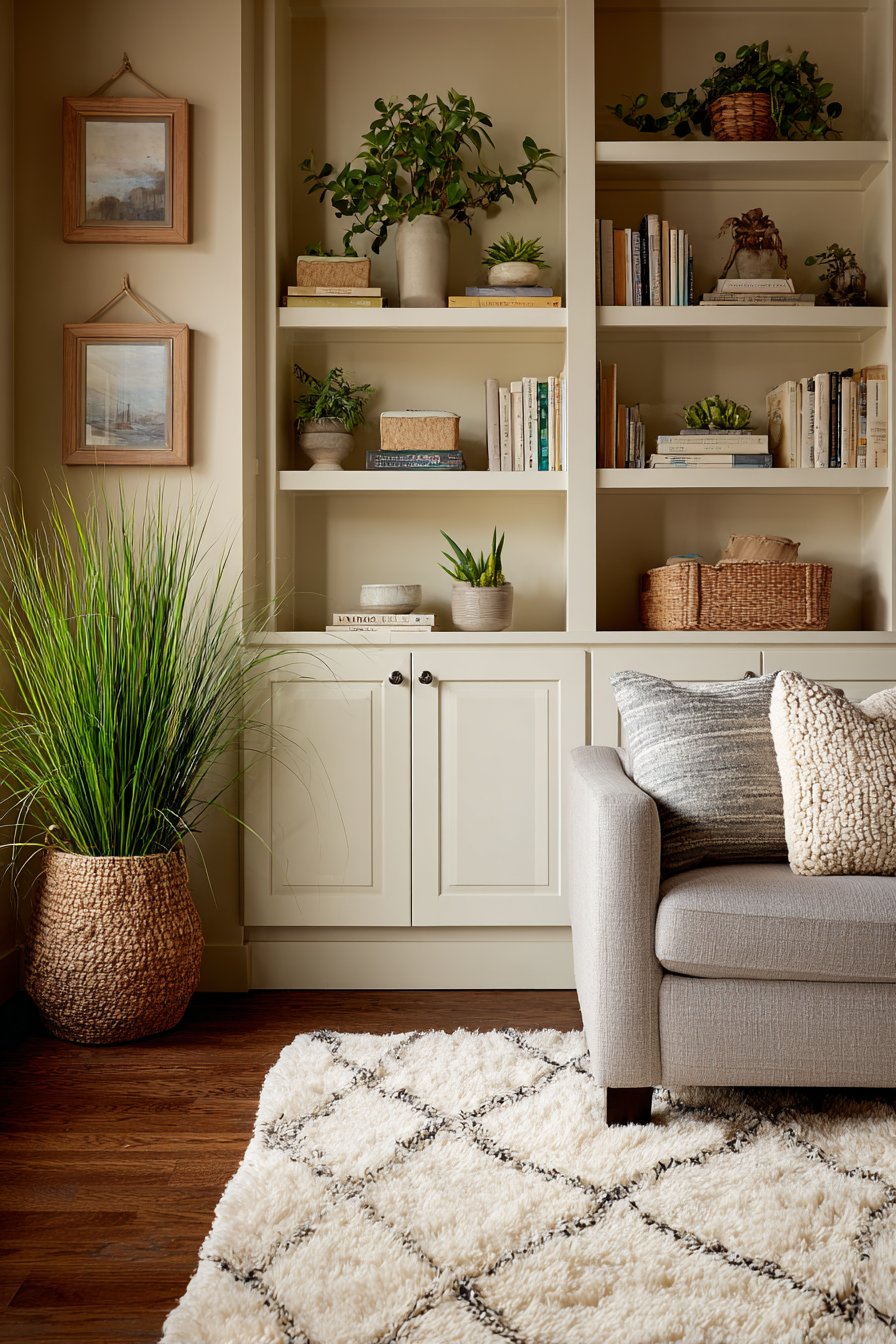
Your personality type is one of the strongest predictors of which storage solution will keep your living room tidier. Type-A personalities who love organizing, styling, and maintaining order tend to thrive with open shelves. The visible accountability of open storage actually motivates them to keep things neat.
More relaxed or spontaneous personalities benefit enormously from cabinets. The ability to close a door on imperfection reduces stress and keeps the room looking tidy with minimal effort. For households with children, cabinets are nearly always the more realistic choice for sustained tidiness.
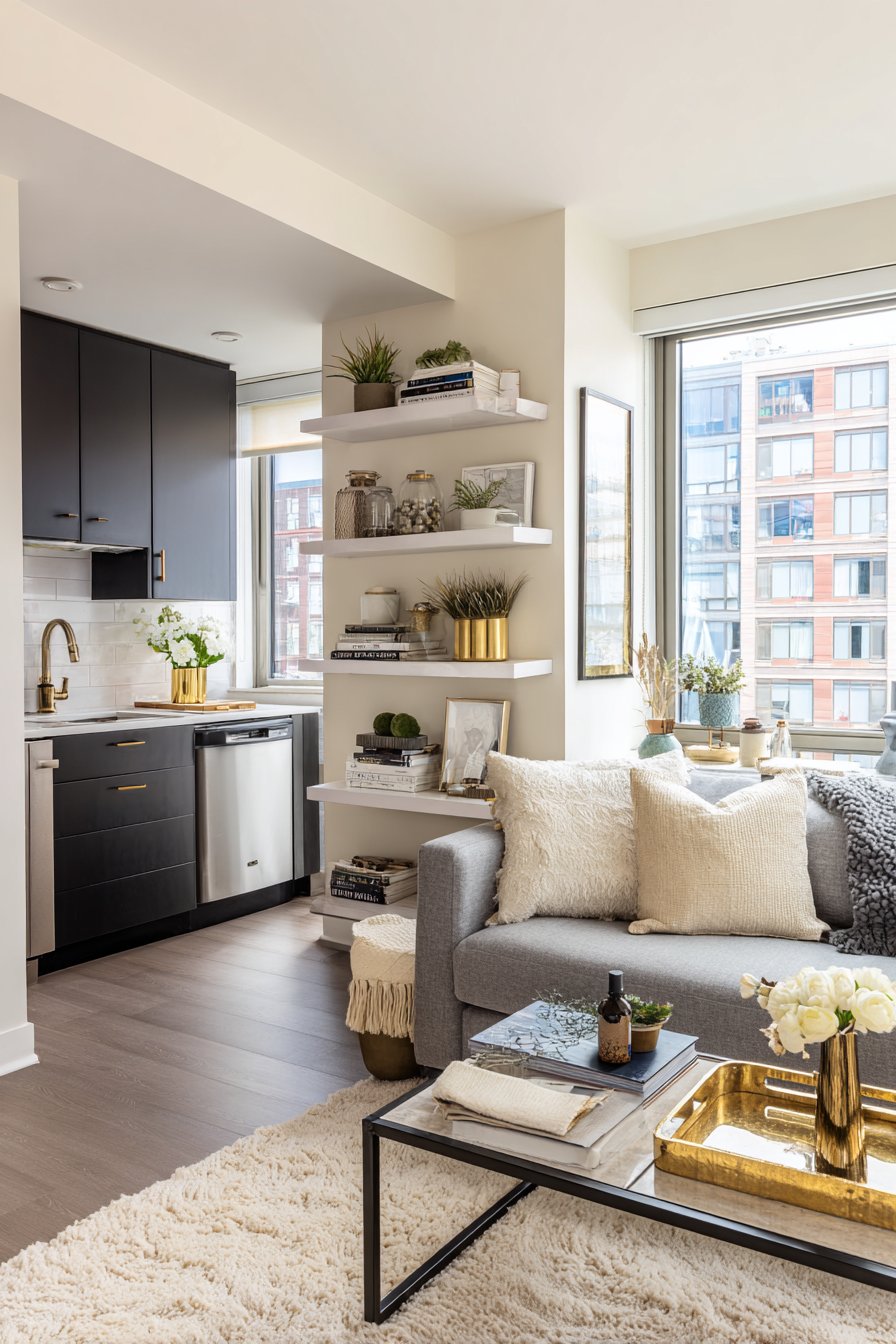
Consider also your entertaining style. If you host frequently and care deeply about how your space appears to guests, cabinets offer a reliable, low-maintenance solution. If you host creatively minded friends who appreciate an eclectic, curated aesthetic, styled open shelves can become a conversation-starting feature.
- Honest self-assessment of your organization habits is non-negotiable
- Involve all household members in the decision — everyone’s habits count
- Choose cabinets if you value quick, effortless cleanup
- Choose open shelves if you enjoy regular styling and decorating
- Consider a trial period — add temporary shelving before committing
- Revisit your storage strategy as your lifestyle evolves over time
7. Styling Flexibility and Design Expression
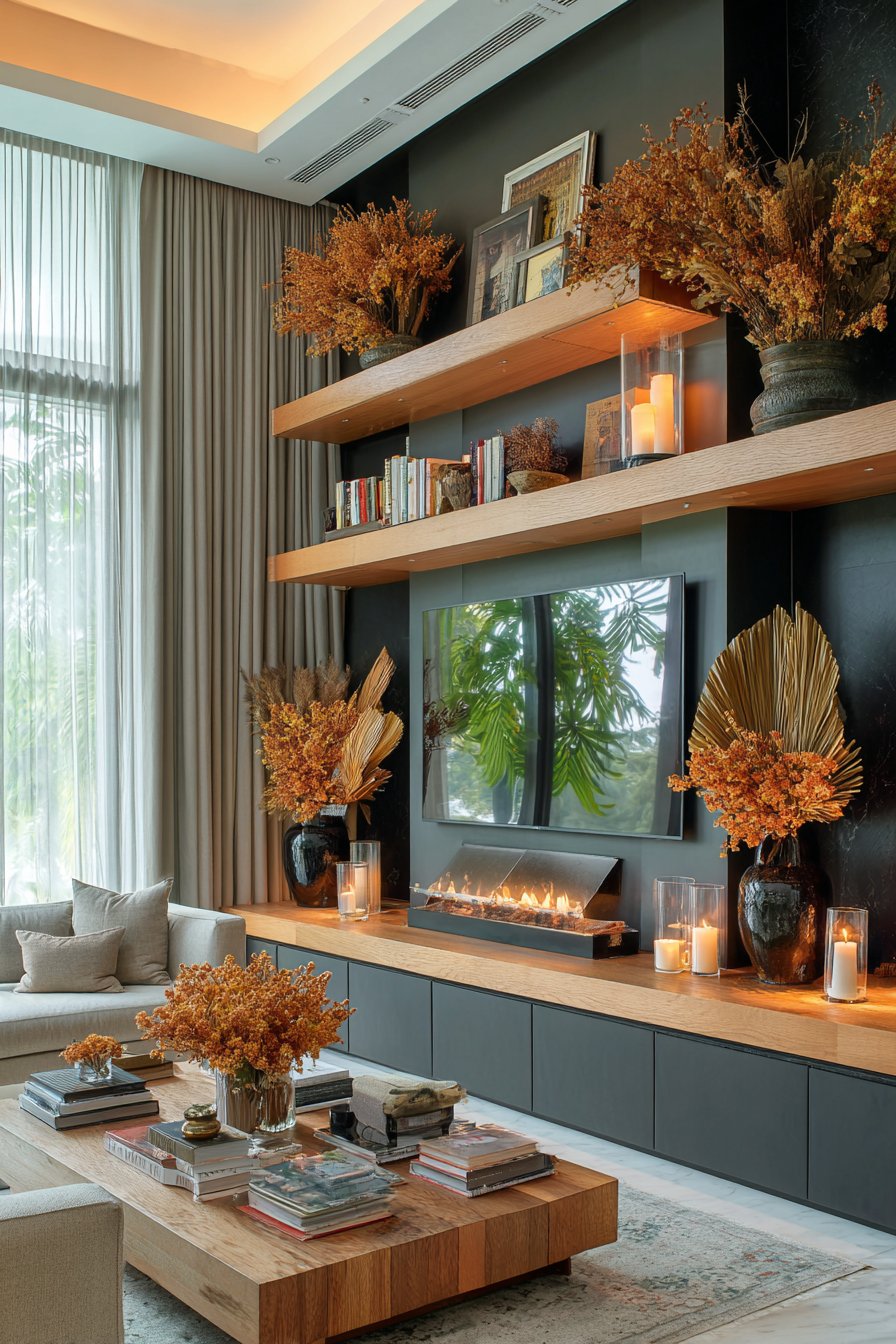
Open shelves offer unmatched styling freedom. They act as a living gallery wall, letting you update your room’s personality with seasons, moods, or evolving tastes. Swapping out books, plants, art objects, and décor is easy and impactful. This adaptability is a major draw for design-forward homeowners.
Cabinets provide a more static design backdrop. Once installed, the exterior look changes only if you repaint or change hardware. However, this consistency can be a strength — cabinets provide visual anchoring while other elements in the room change around them. They let sofas, rugs, and artwork take center stage.
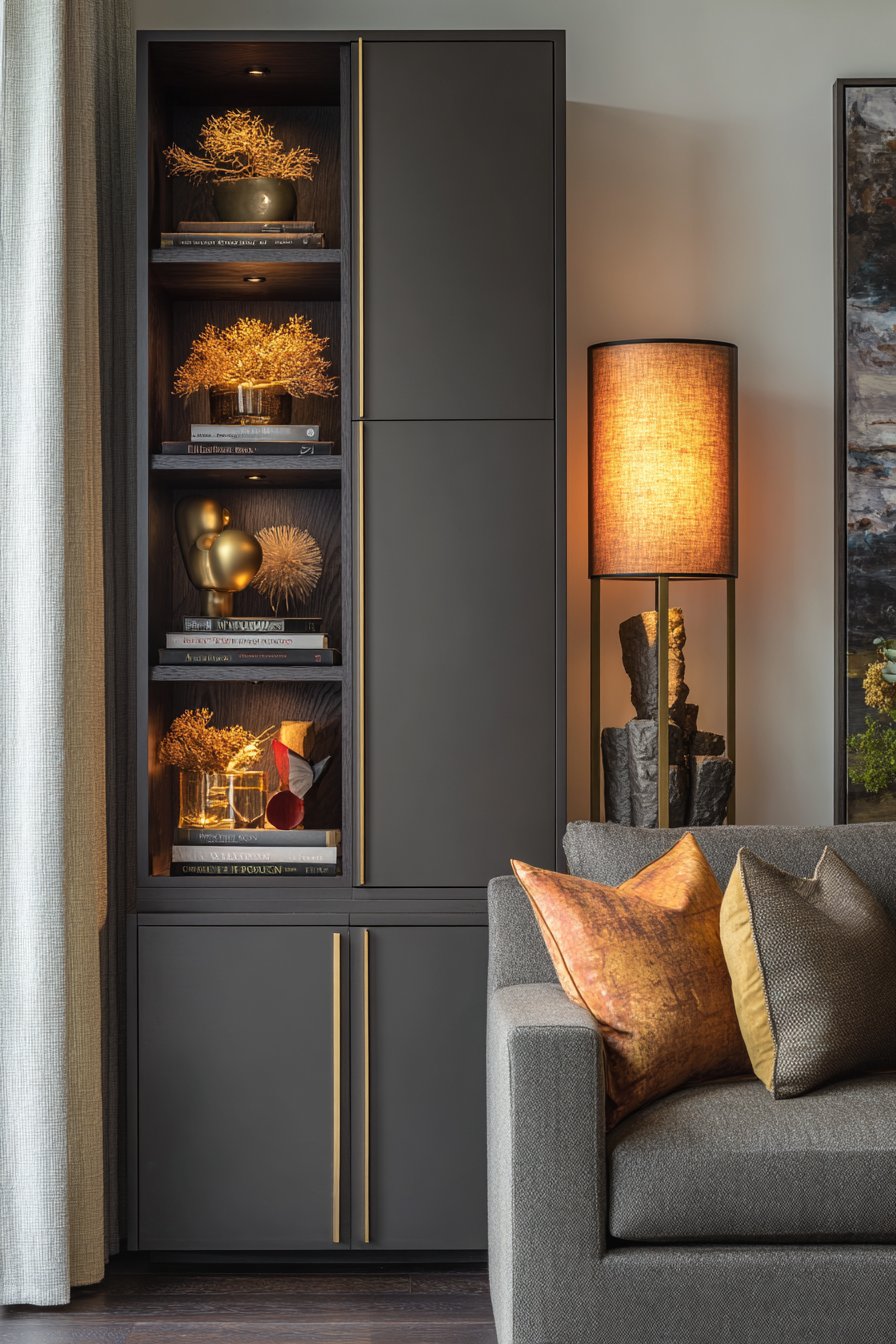
A sophisticated approach is layering both solutions. Use lower cabinets for hidden storage and upper open shelves for display. This combination is functional, visually balanced, and gives you the best of both worlds. Many of today’s most beautifully designed living rooms use exactly this hybrid storage strategy.
- Update open shelf displays seasonally to keep the room feeling fresh
- Use cabinet hardware as a design detail — swap knobs for updated style
- Paint the inside of cabinets in a bold accent color for a surprise element
- Style open shelves using the rule of thirds for balanced composition
- Use consistent basket or box materials on open shelves for a cohesive look
- Treat lower cabinet surfaces as display space for larger sculptural objects
8. Cost Comparison and Budget Considerations
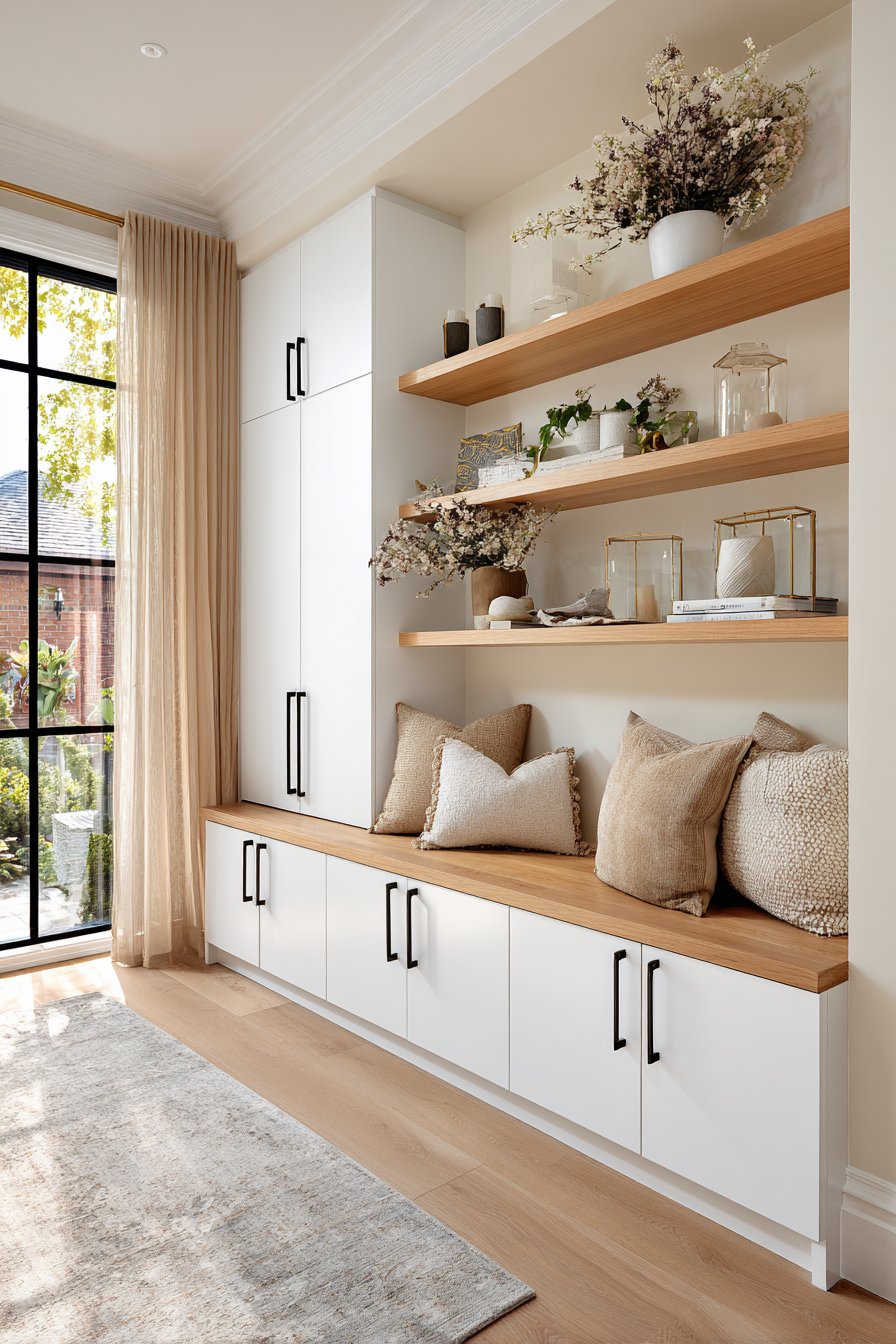
Budget is a practical reality in any home improvement decision. Open shelving is generally more affordable upfront. Floating shelves, bracket systems, and modular open units cost significantly less than custom or semi-custom cabinetry. This makes open shelving attractive for renters or those on a tight budget.
However, the long-term cost calculation is more complex. If open shelves lead to a visually cluttered room, you may spend money on decorative objects, bins, and styling accessories trying to achieve tidiness. Cabinets, despite higher upfront costs, often deliver superior return on investment in both tidiness and home resale value.
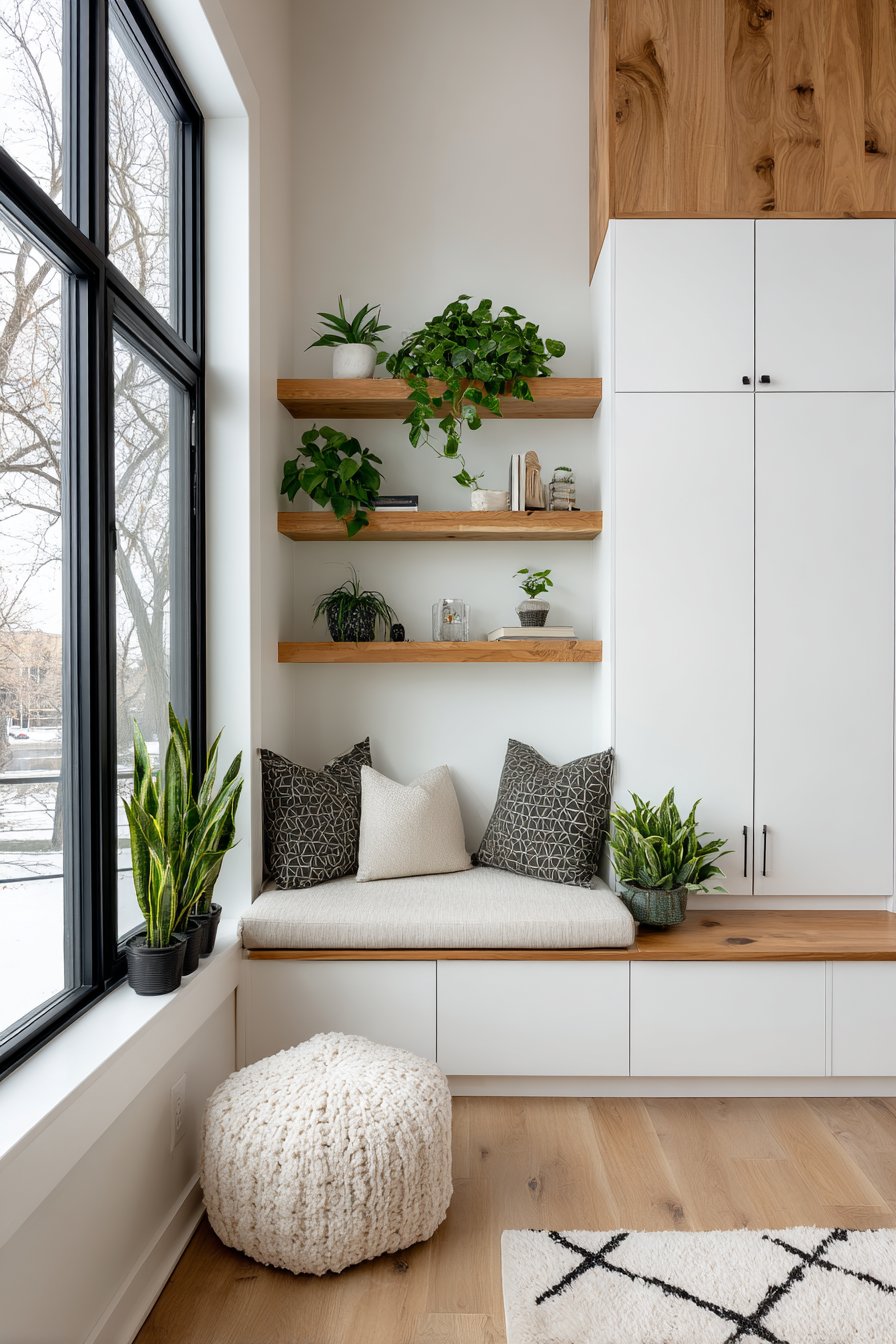
Custom built-in cabinetry is the most expensive option but adds the most value. Mid-range cabinet solutions from quality furniture retailers offer a strong middle ground. IKEA’s modular cabinet systems, for instance, are a popular and cost-effective way to achieve a built-in look without a custom price tag.
- Set a clear storage budget before comparing options
- Factor in installation costs — open shelves are easier to DIY
- Quality cabinets increase resale value more than open shelving typically does
- Explore modular systems for flexible, budget-friendly cabinet solutions
- Consider painting existing cabinets rather than replacing for cost savings
- Invest in quality hardware — it dramatically elevates the look of any cabinet
9. Organization Systems Within Each Storage Type
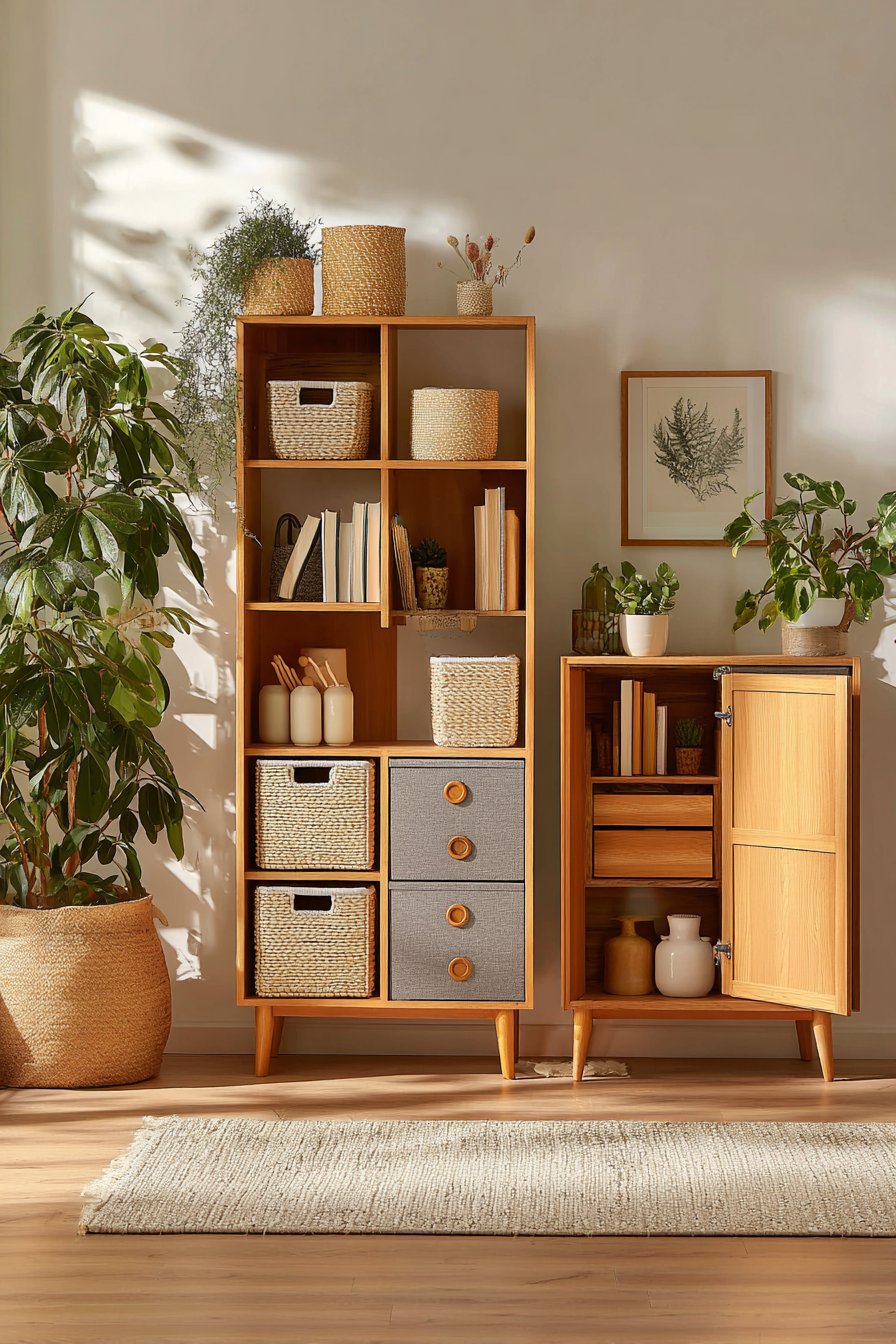
The internal organization of your storage dramatically affects how tidy your living room feels and functions. Open shelf organization relies entirely on visible systems. Matching baskets, labeled containers, and thoughtful groupings are essential. Without these, open shelves become a visual dumping ground.
Cabinets allow for more forgiving organization. You can use a variety of container types and organizational tools without worrying about aesthetic consistency. The closed door creates a neutral exterior regardless of the organizational system inside. This makes cabinets far more adaptable to changing storage needs.
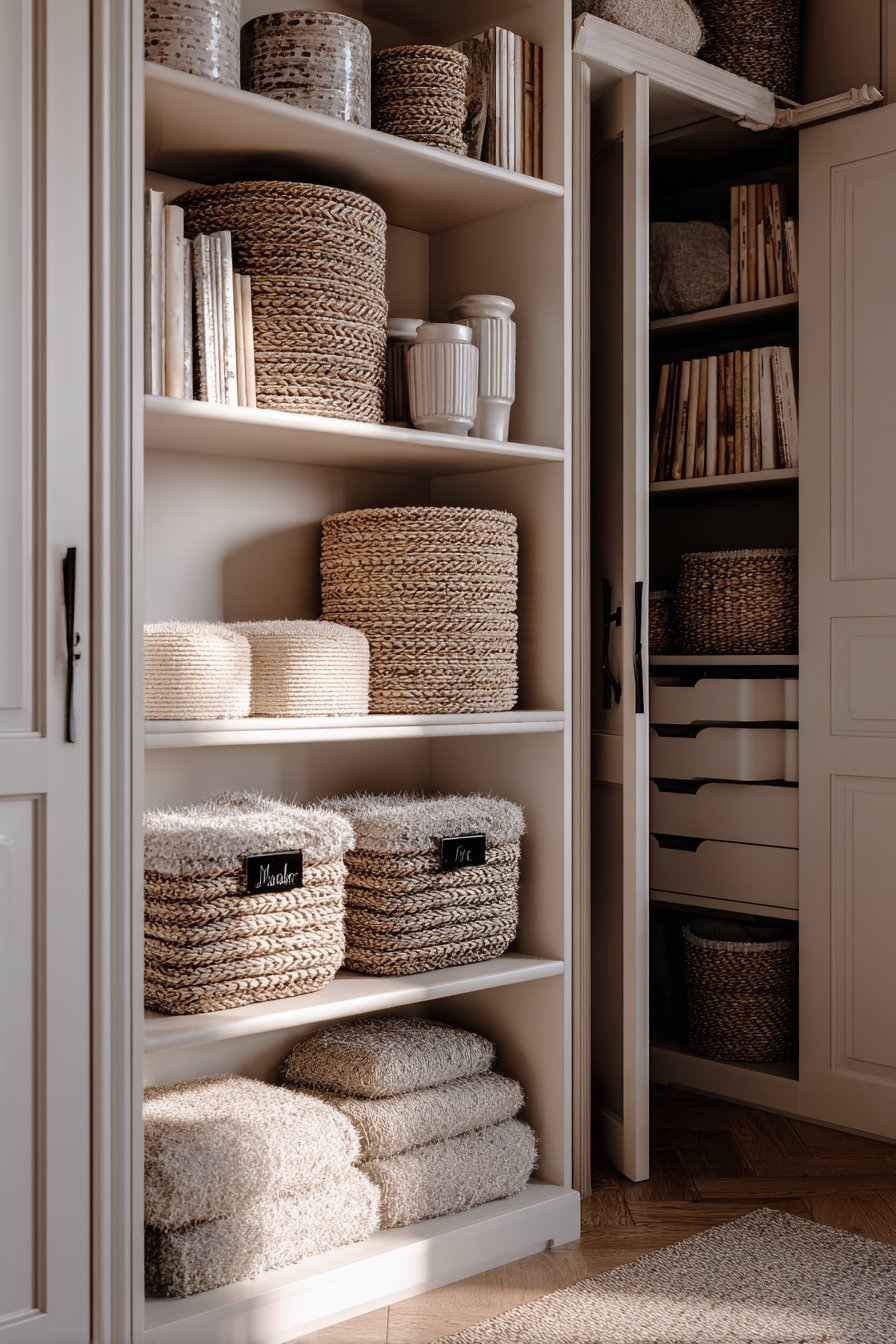
For maximum tidiness, adopt the zone-based organization principle in both cases. Assign specific shelves or cabinet sections to specific categories — media, books, games, everyday essentials. When every item has a home, both open shelves and cabinets maintain their tidiness with far less ongoing effort.
- Label containers on open shelves with minimal, elegant signage
- Use drawer dividers inside cabinets to prevent jumble accumulation
- Apply the one in, one out rule to prevent storage overflow in both systems
- Store frequently used items at eye level for easy access and quick return
- Group items by frequency of use — daily items front, occasional items back
- Reassess your organization system every six months as needs evolve
10. The Role of Doors: Glass, Solid, and Open Combinations
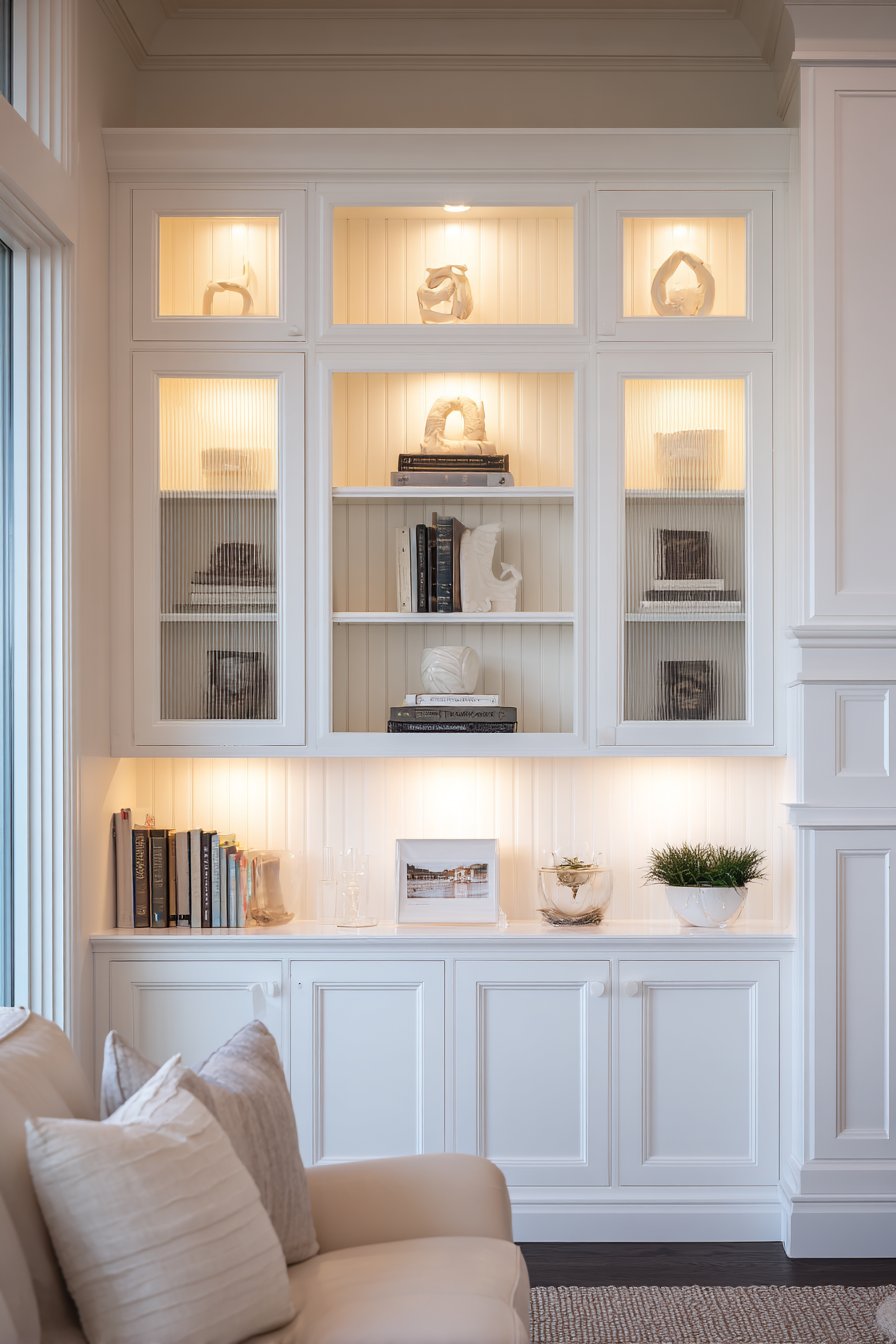
The type of cabinet door you choose creates a spectrum between fully open and fully closed storage. Solid doors offer maximum concealment and the tidiest appearance. Glass-front doors display contents while protecting them from dust. Open-front cabinets blend the worlds of shelving and cabinetry into a hybrid form.
Glass cabinet doors work beautifully when contents are deliberately curated. Displaying a collection of books with matching spines, fine ceramics, or carefully arranged barware behind glass creates a sophisticated, intentional look. Unlike fully open shelves, glass doors signal that the display is purposeful and protected.
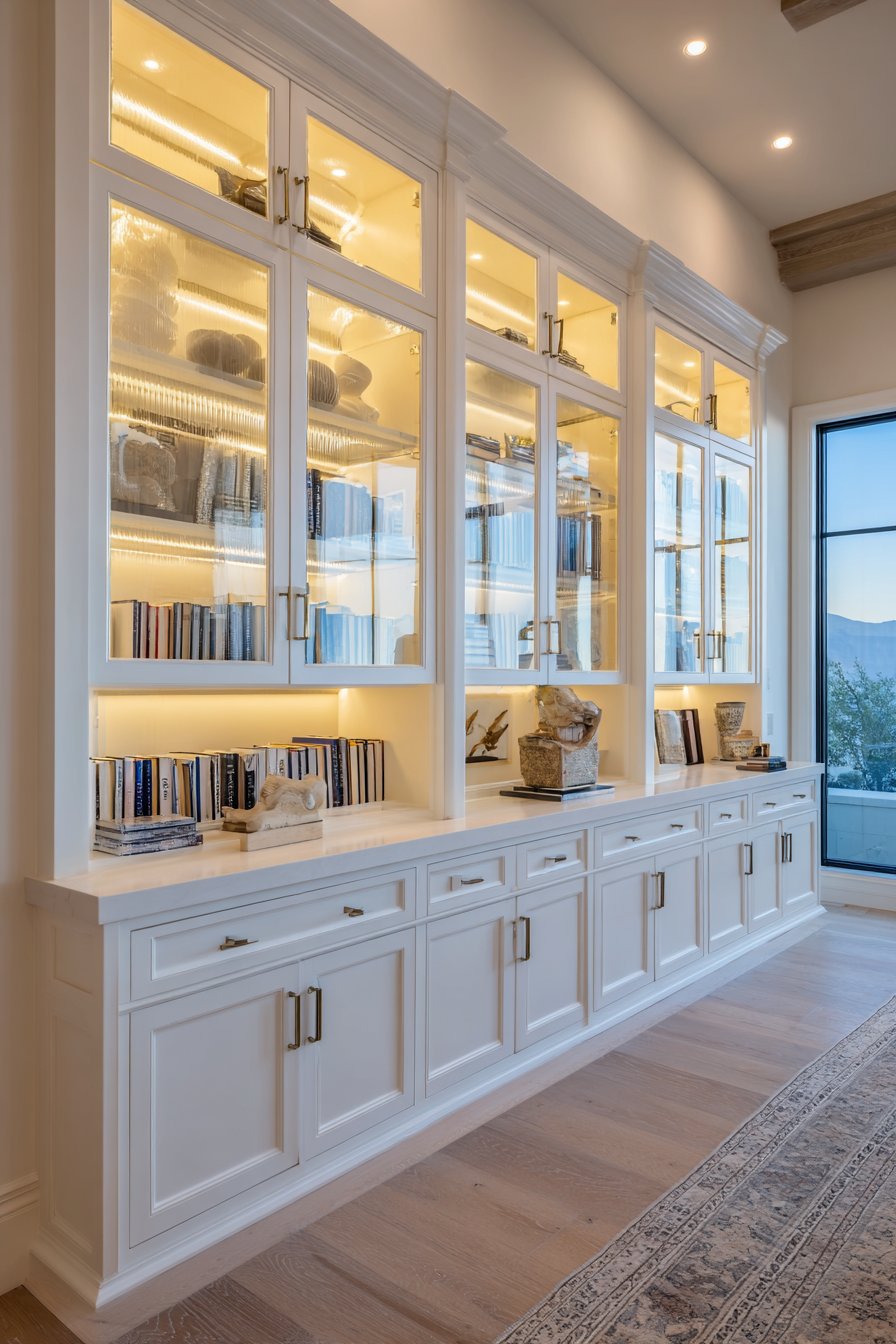
Many contemporary living room designs use mixed door strategies. Lower cabinets feature solid doors for practical storage. Upper sections use glass or open fronts for display. This layered approach maximizes both tidiness and personality, creating storage walls that are as functional as they are beautiful.
- Choose tempered glass doors for durability and safety
- Use interior cabinet lighting to showcase glass-front displays beautifully
- Avoid glass doors for cabinets storing everyday clutter like remotes and cables
- Combine solid lower and glass upper doors for functional elegance
- Use reeded or fluted glass for privacy with visual interest
- Consider open lower shelves only if you commit to daily styling
11. Children, Pets, and the Reality of Shared Living Spaces
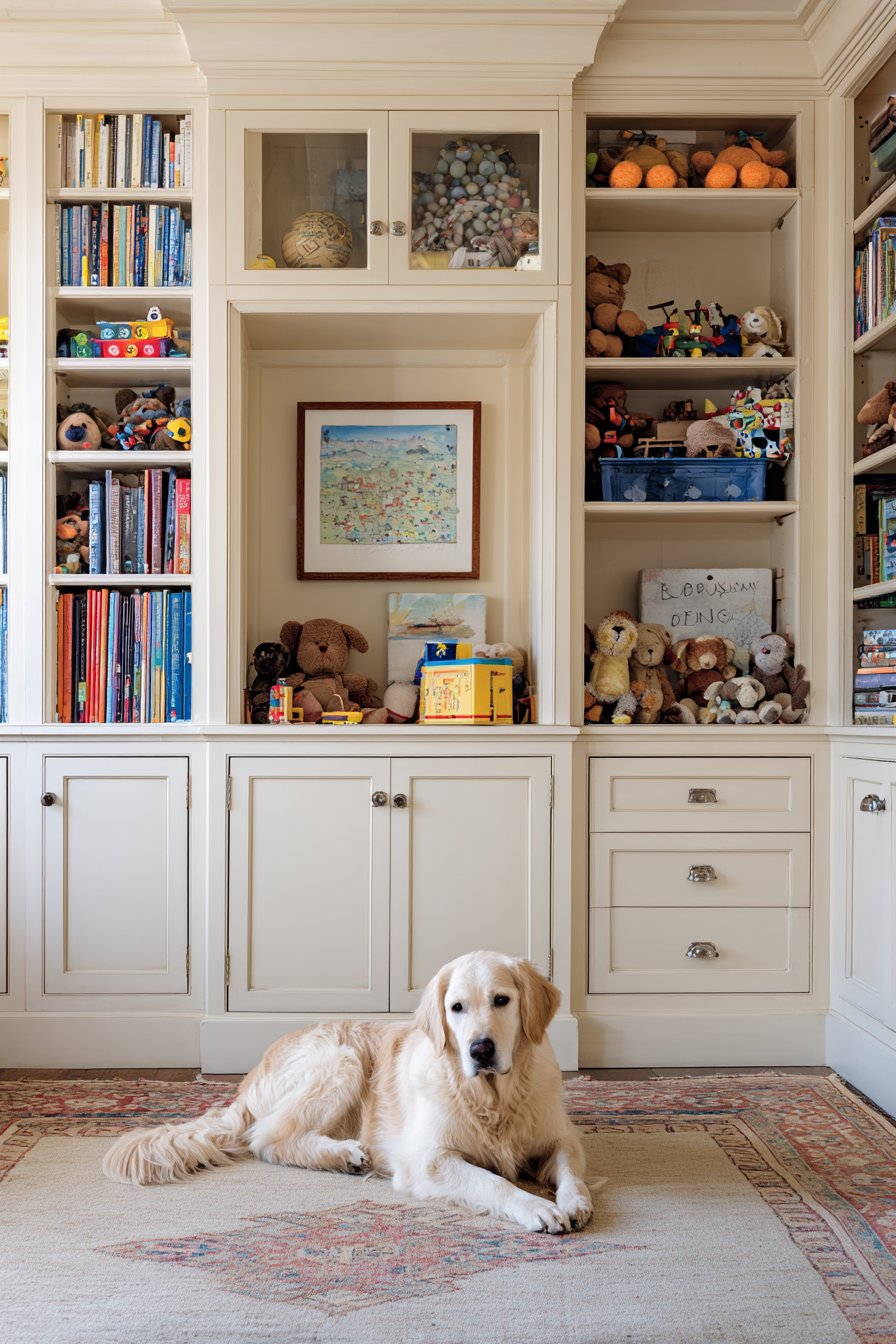
Families with young children or pets face unique storage challenges. Open shelves become hazards in homes with toddlers — both for the child’s safety and for the integrity of displayed items. Books pulled off shelves, decorative objects knocked over, and accessible cables create constant disorder.
Cabinets with child-safe locks solve these problems elegantly. Items stay protected, and the room remains tidy even during the chaos of family life. Lower cabinets dedicated to children’s items — easily accessible with labeled fronts — can also teach young children where things belong, building good habits early.
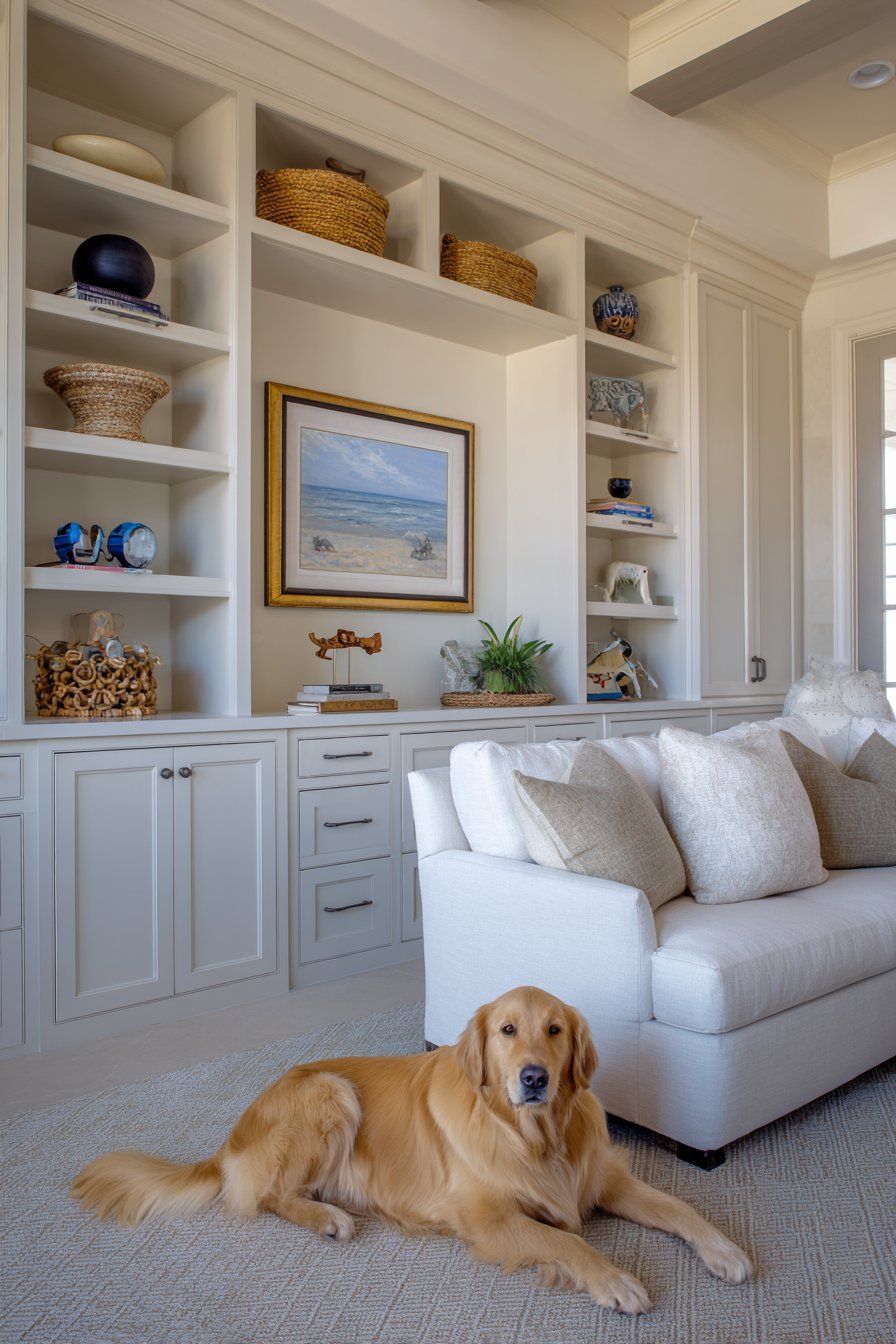
Pet-friendly storage design also favors cabinets. Cat-proof shelving and dog-accessible open shelves rarely stay tidy for long. Cabinets keep pet supplies, toys, and accessories organized and out of sight, maintaining the living room’s overall aesthetic even in the busiest, most active households.
- Install soft-close cabinet locks for child safety without sacrificing style
- Create a dedicated lower cabinet for children’s toys to encourage self-tidying
- Keep fragile objects on high open shelves out of children’s reach
- Store pet accessories in closed cabinets to maintain a clean living room look
- Choose scratch-resistant cabinet finishes in pet-heavy households
- Opt for rounded cabinet corners to reduce injury risk in active family spaces
12. The Verdict: Which Actually Keeps Living Rooms Tidier?
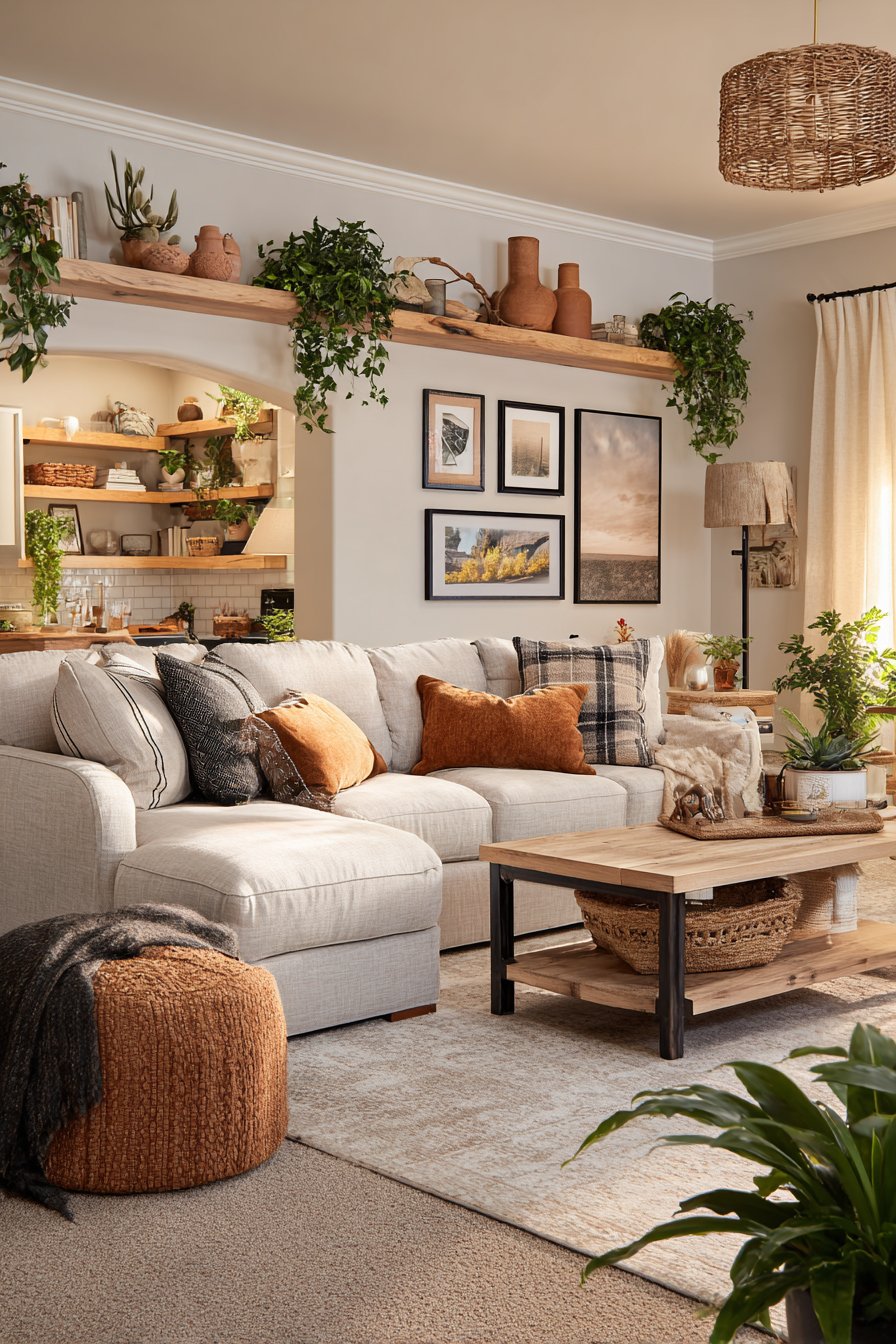
After examining every dimension of this debate, the evidence points clearly in one direction. For the majority of households and lifestyles, cabinets keep living rooms tidier more consistently and with less ongoing effort. They remove visual clutter, protect stored items, and require minimal maintenance to maintain a polished appearance.
That said, open shelves can be equally tidy in the right circumstances. Design-conscious homeowners who invest time in curation and styling can achieve living rooms that feel both organized and beautifully expressive. The key word is investment — open shelves demand regular attention to stay tidy and visually harmonious.
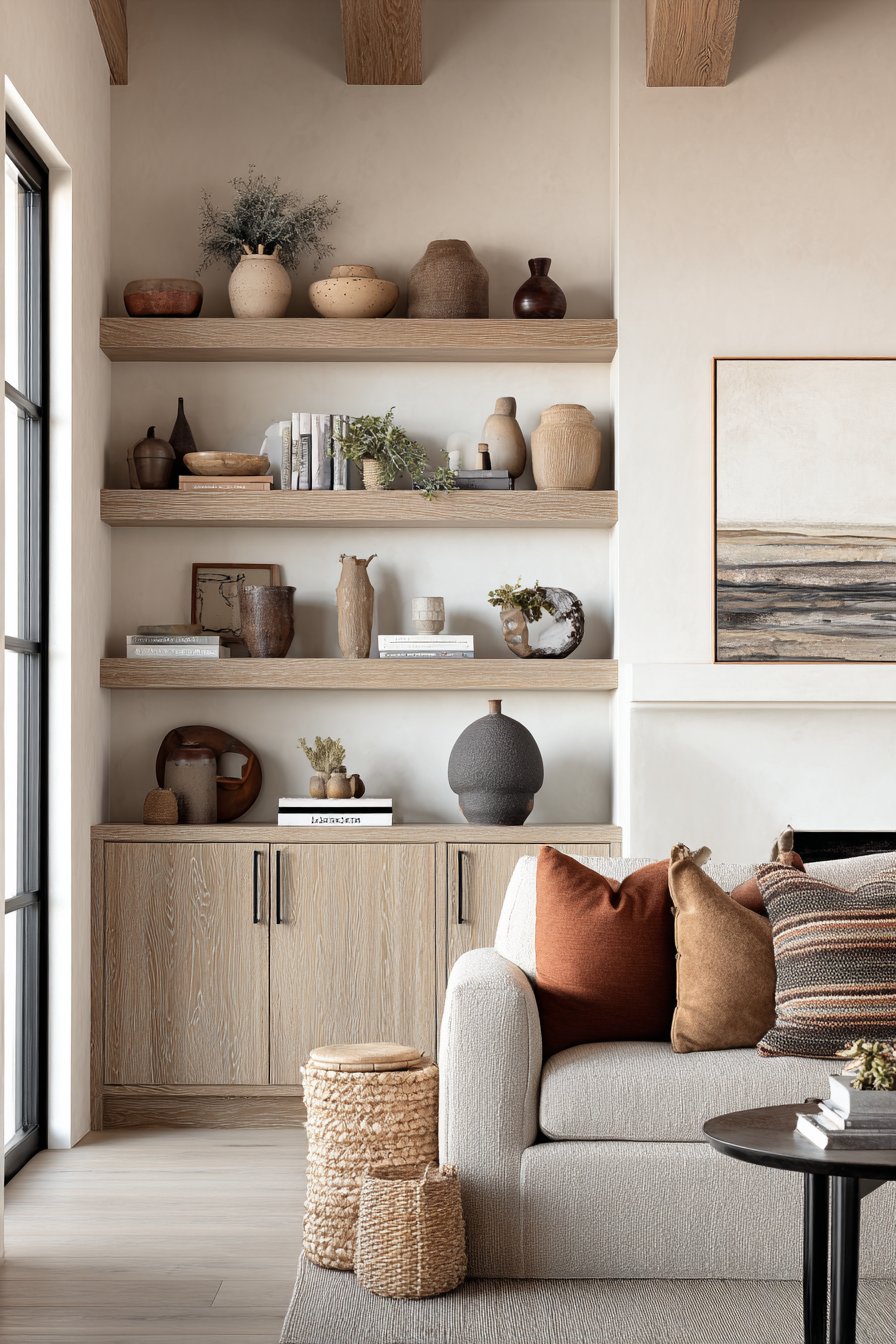
The smartest approach for most living rooms is a thoughtful combination of both. Use cabinets as your primary storage workhorse. Reserve open shelves for intentional display of objects you’re proud to showcase. This hybrid strategy gives you functional tidiness and personal expression — the ultimate goal of any well-designed living room.
- Choose cabinets as your primary storage for reliable, effortless tidiness
- Reserve open shelves for curated displays of meaningful or beautiful objects
- Invest in quality cabinet construction for long-term durability and value
- Style open shelves with discipline — edit ruthlessly and update seasonally
- Let your lifestyle and household needs guide the final balance
- Revisit the balance every few years as your living situation evolves
Conclusion
The open shelves vs cabinets debate doesn’t have a single universal answer. It has a right answer for you — based on your lifestyle, habits, household, and design vision. Cabinets deliver superior tidiness for most people, most of the time. Open shelves reward those willing to invest in ongoing curation and styling. The ideal living room often features both, working together in balanced harmony.
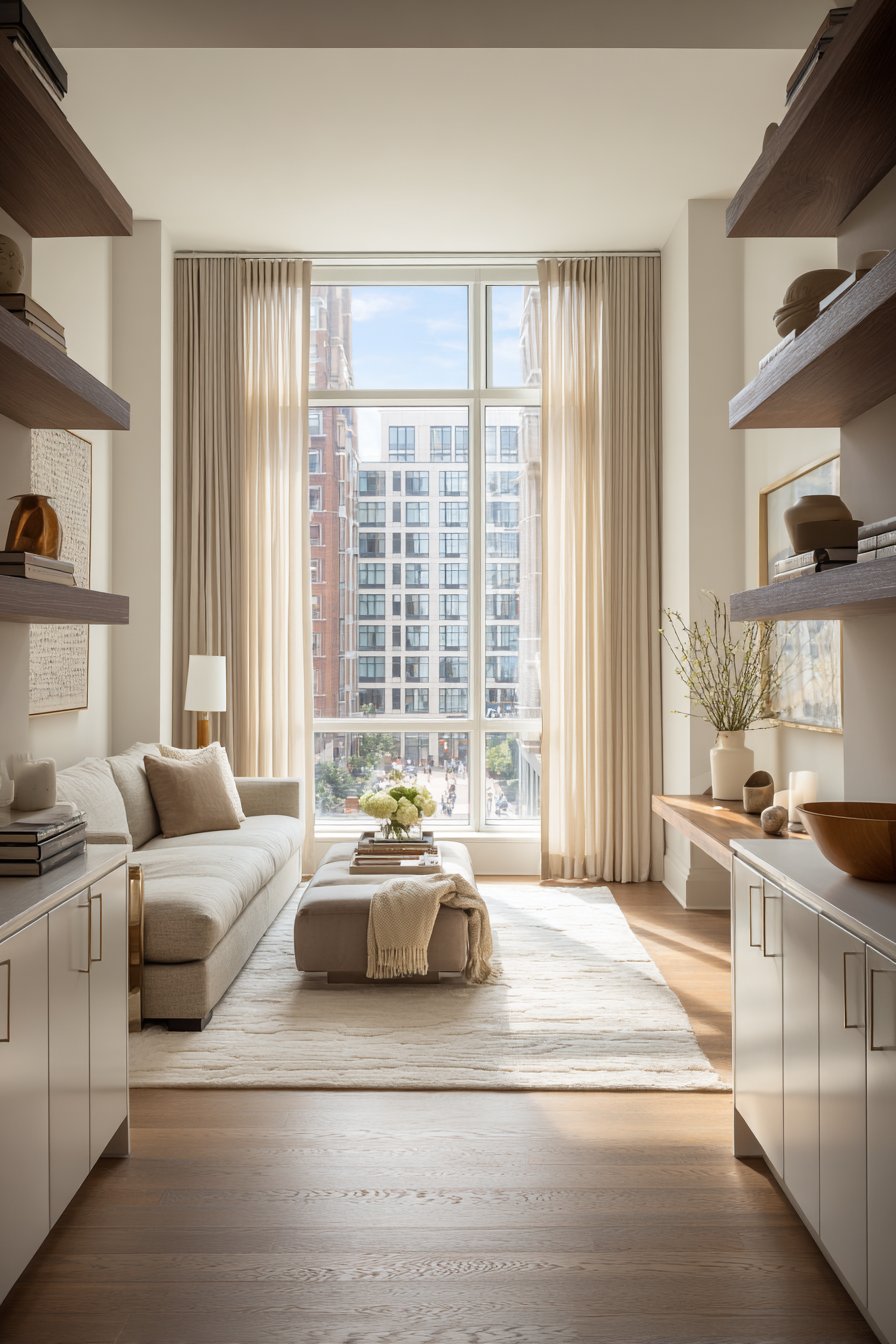
Whatever you choose, approach it with intention. Thoughtful storage design transforms a living room from a space where clutter accumulates into one where life unfolds beautifully. Your living room deserves storage that works as hard as you do — and looks as good as you want it to. Start with honesty about your habits, invest in quality solutions, and enjoy the lasting reward of a space that truly feels like home.
"As an Amazon Associate, I earn from qualifying purchases."
