
Open kitchens have revolutionized modern home design by creating seamless flow between cooking and living spaces. This layout fosters connection and conversation, making homes feel more spacious and inviting. However, the absence of walls means every dish, appliance, and cooking activity remains visible to guests and family members. The challenge lies in maintaining visual harmony while preserving the functional benefits of an open layout.
The beauty of open kitchens extends beyond aesthetics—they enhance natural light distribution and create opportunities for multitasking and interaction. Yet this openness demands intentional organization and thoughtful design choices. Without proper systems in place, these spaces quickly become focal points of clutter rather than showcases of elegant living. Understanding how to balance accessibility with tidiness transforms an open kitchen from a source of stress into a design asset that elevates your entire home.
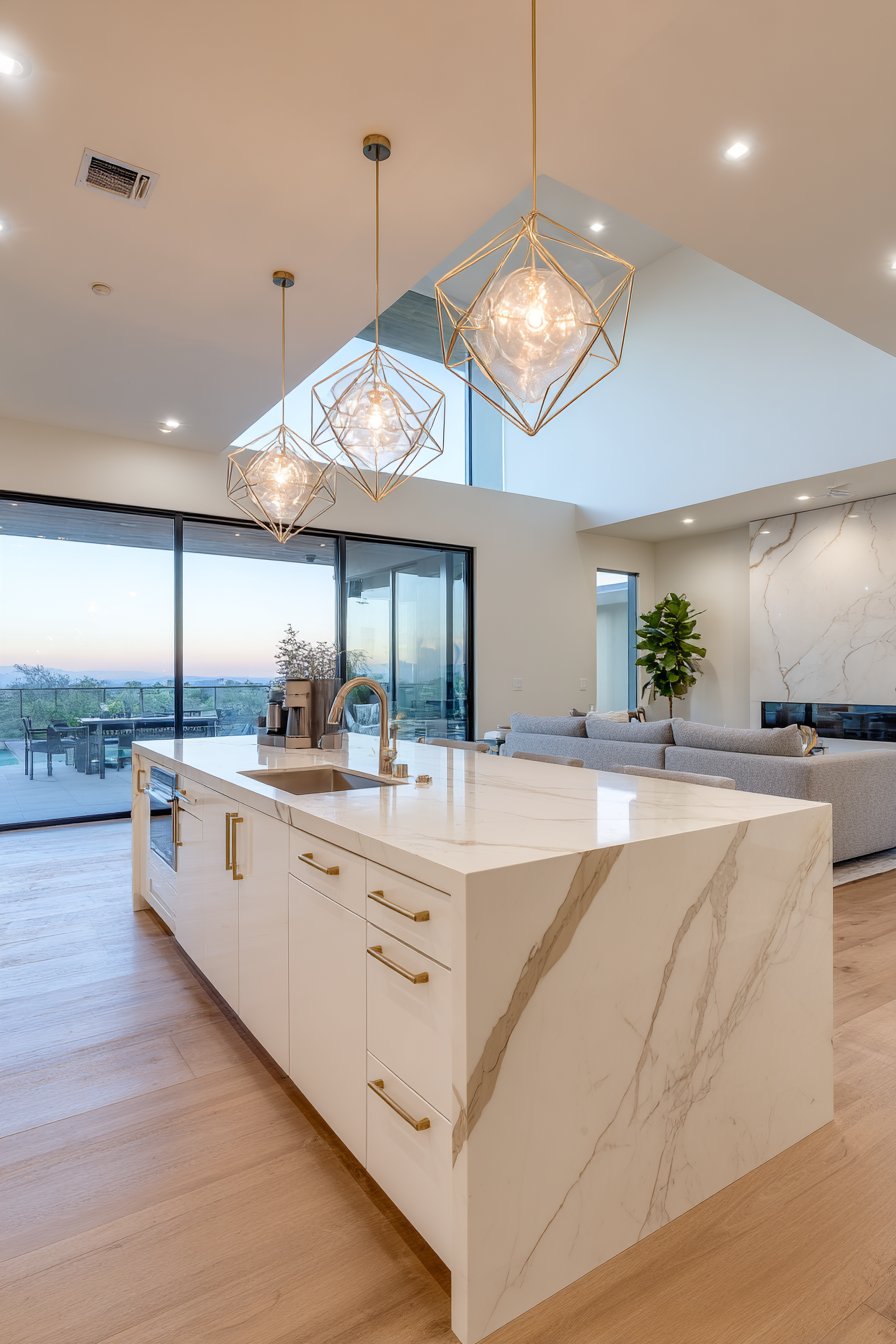
This comprehensive guide presents nine proven strategies for maintaining pristine open kitchens without sacrificing functionality. From smart storage solutions to daily maintenance routines, these tips address both immediate visual concerns and long-term organizational challenges. Whether you’re designing a new open kitchen or refining an existing space, these approaches will help you create an environment that remains consistently welcoming regardless of cooking intensity or daily demands.
1. Implement Closed Storage Solutions
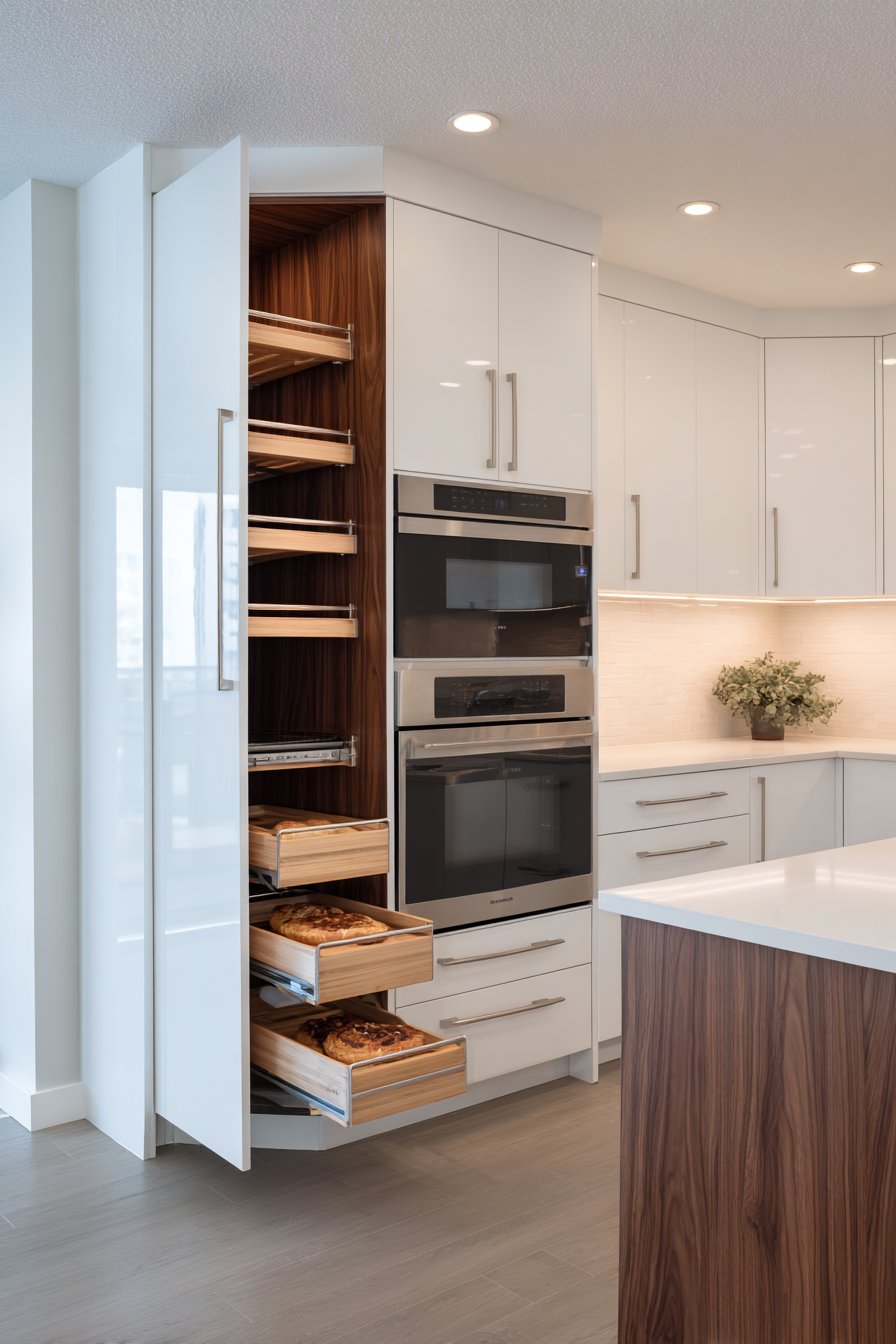
Open shelving may look charming in design magazines, but closed cabinetry provides the essential foundation for maintaining visual order in open kitchens. Solid cabinet doors hide everyday clutter, mismatched containers, and kitchen essentials that don’t contribute to aesthetic appeal. This approach allows you to store items within easy reach while keeping sightlines clean from adjacent living areas. The psychological benefit of hidden storage cannot be overstated—when clutter disappears behind doors, the entire space feels calmer and more controlled.
Strategic cabinet placement maximizes both storage capacity and visual appeal throughout your kitchen layout. Upper cabinets that extend to the ceiling eliminate dust-collecting gaps while providing additional storage for seasonal items and rarely used appliances. Consider installing cabinets with soft-close mechanisms to reduce noise in the shared living space. The investment in quality hardware pays dividends through years of quiet, smooth operation that maintains the peaceful atmosphere open floor plans promise.
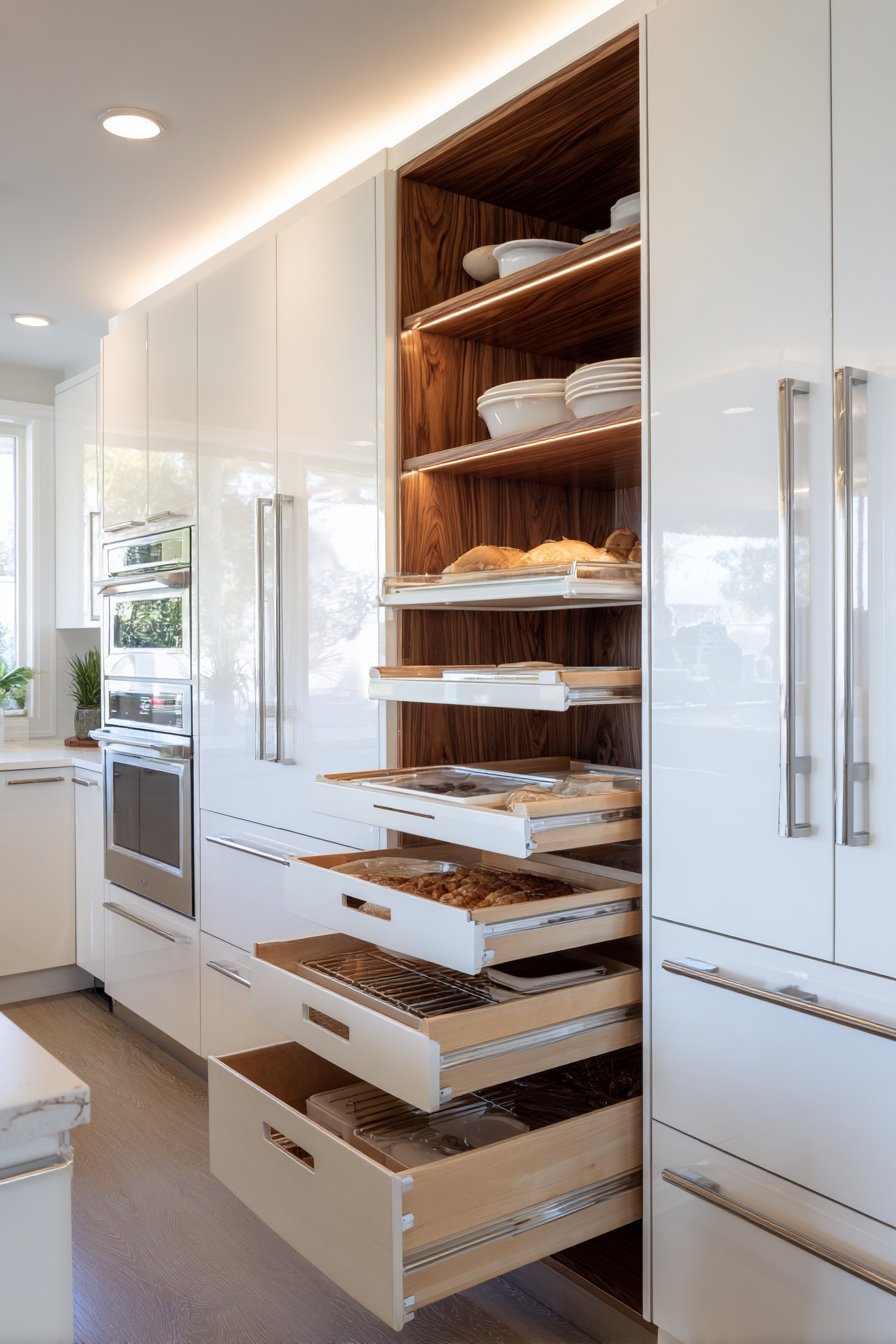
Modern cabinet systems offer innovative interior organization that amplifies storage efficiency beyond traditional shelving. Pull-out drawers, corner carousel units, and vertical dividers create designated spaces for every kitchen item. These organizational features prevent the jumbled chaos that occurs when items lack specific homes. When everything has a place, maintaining order becomes effortless rather than exhausting, transforming kitchen management from constant work into simple maintenance.
- Install floor-to-ceiling cabinets to maximize vertical storage capacity
- Choose solid doors over glass-front cabinets for primary storage areas
- Add pull-out shelving systems for better access to deep cabinet contents
- Organize cabinet interiors with dividers and drawer inserts
- Select cabinet finishes that complement your overall design scheme
- Maintain consistent cabinet door styles throughout for visual cohesion
2. Designate a Landing Zone for Daily Items
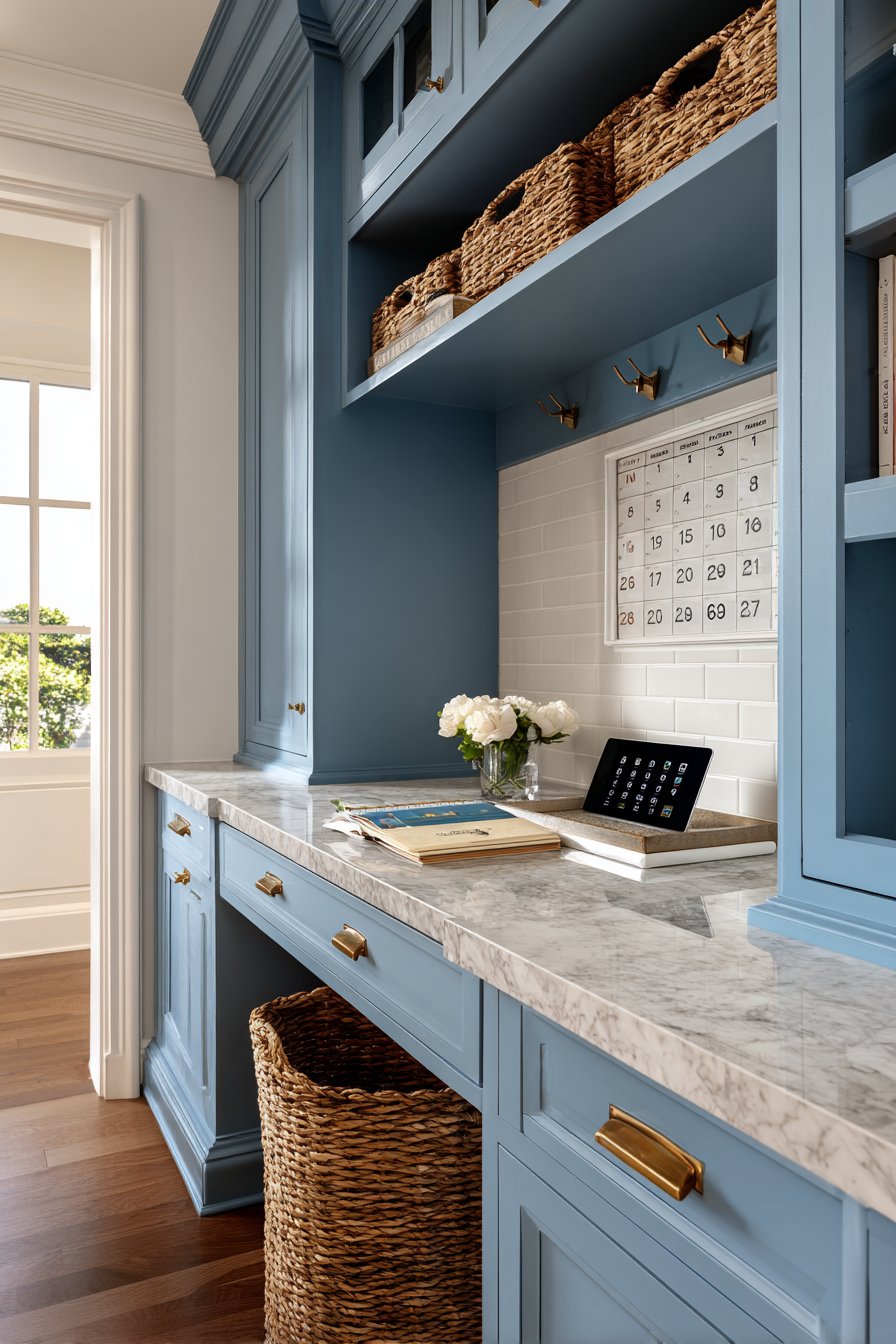
Creating a specific drop zone for keys, mail, phones, and daily essentials prevents these items from migrating onto kitchen counters. This dedicated area—whether a drawer, basket, or small console—provides immediate organization the moment family members enter the home. The landing zone intercepts clutter before it spreads across your open kitchen’s visible surfaces. Position this zone near the primary entrance to encourage consistent use by all household members.
The landing zone concept extends beyond simple storage to create behavioral patterns that maintain kitchen cleanliness. When family members develop the habit of depositing items in designated spots, countertops remain clear for their intended purpose. This system proves especially valuable in open kitchens where counter clutter immediately impacts the entire living area’s appearance. The psychological relief of entering an organized space reinforces the habit, creating a positive feedback loop that sustains tidiness.
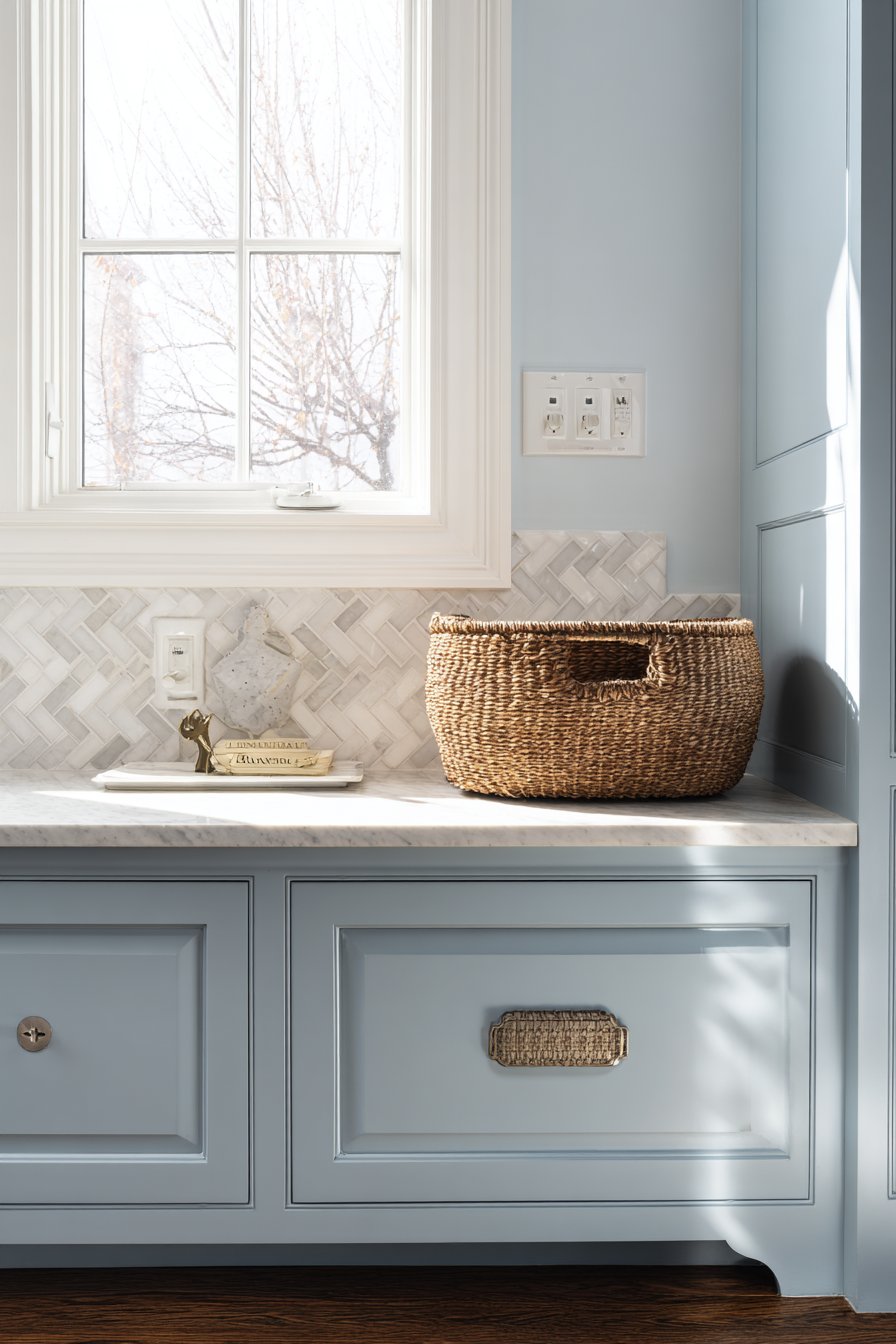
Thoughtful landing zone design balances functionality with aesthetics to serve multiple household needs simultaneously. Incorporate charging stations for devices, small trays for jewelry or watches, and compartments for sorting mail. Consider adding a small bulletin board or digital display for family schedules and reminders. These features transform the landing zone from simple storage into a command center that supports household organization while keeping open kitchen surfaces pristine.
- Position landing zones within five feet of primary home entrances
- Use decorative trays or baskets that complement kitchen design
- Include charging capabilities for phones and tablets
- Add small hooks for keys and everyday accessories
- Establish family rules about what belongs in the landing zone
- Empty and reorganize the zone weekly to prevent overflow
3. Embrace Minimalist Countertop Philosophy
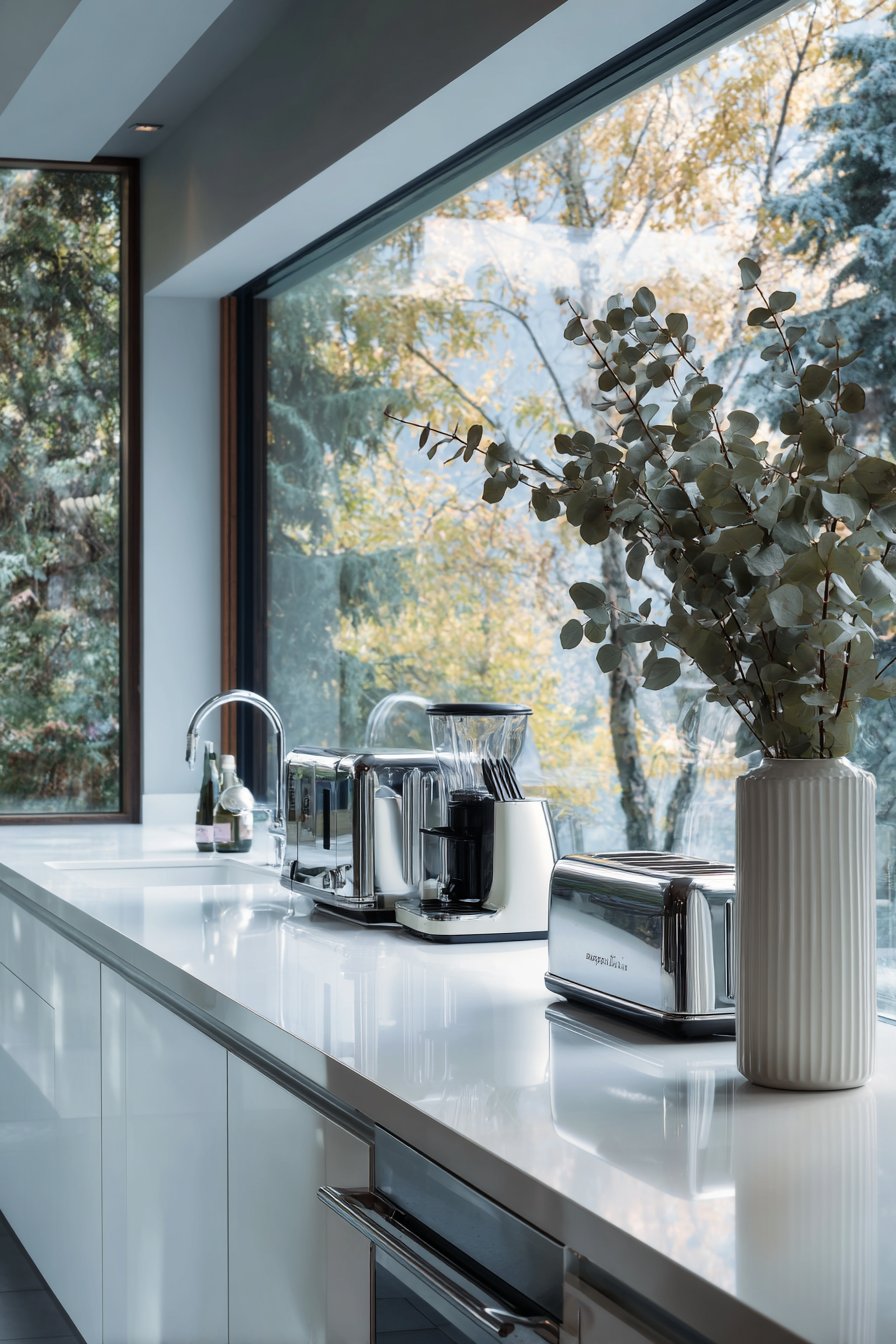
The less-is-more approach to countertop styling dramatically impacts how organized your open kitchen appears. Limiting visible items to absolute essentials—perhaps a coffee maker, knife block, and one decorative element—creates visual breathing room that makes spaces feel larger and more sophisticated. This restraint requires discipline but delivers immediate aesthetic rewards. Every additional item on display dilutes the impact of intentional design choices and contributes to perceived clutter.
Minimalist countertops don’t mean sacrificing convenience or accessibility for frequently used kitchen tools. The key lies in strategic selection of which items earn permanent counter residence. Evaluate each potential display item through a dual lens: how often you use it and whether it contributes to your kitchen’s visual appeal. Items that fail both criteria belong in cabinets regardless of convenience. This ruthless curation distinguishes professionally designed spaces from cluttered kitchens masquerading as lived-in.
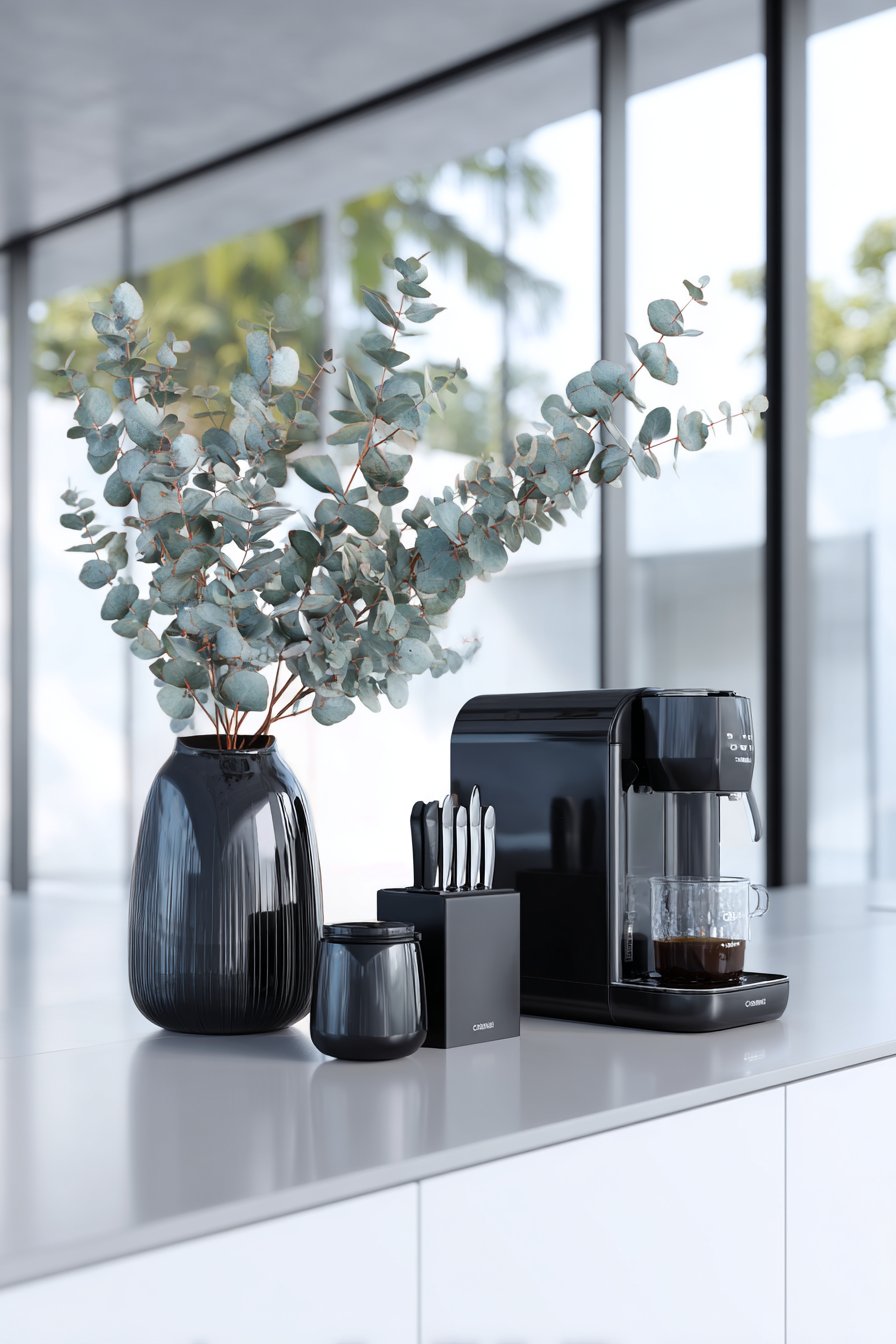
Creating designated storage for small appliances maintains minimalist countertops without compromising kitchen functionality. Install appliance garages with retractable doors that hide toasters, blenders, and food processors while keeping them accessible. Consider dedicated lower cabinets with electrical outlets for heavy appliances that slide out during use. These solutions provide best-of-both-worlds functionality—the streamlined appearance of minimal countertops with the practical access that makes cooking efficient and enjoyable.
- Limit countertop items to three or fewer permanent residents
- Store seasonal appliances in cabinets until needed
- Use matching canisters if dry goods must remain visible
- Keep a single cutting board displayed rather than collections
- Choose one statement piece rather than multiple decorative items
- Establish a nightly routine to clear counters completely
4. Install a Kitchen Island with Hidden Storage
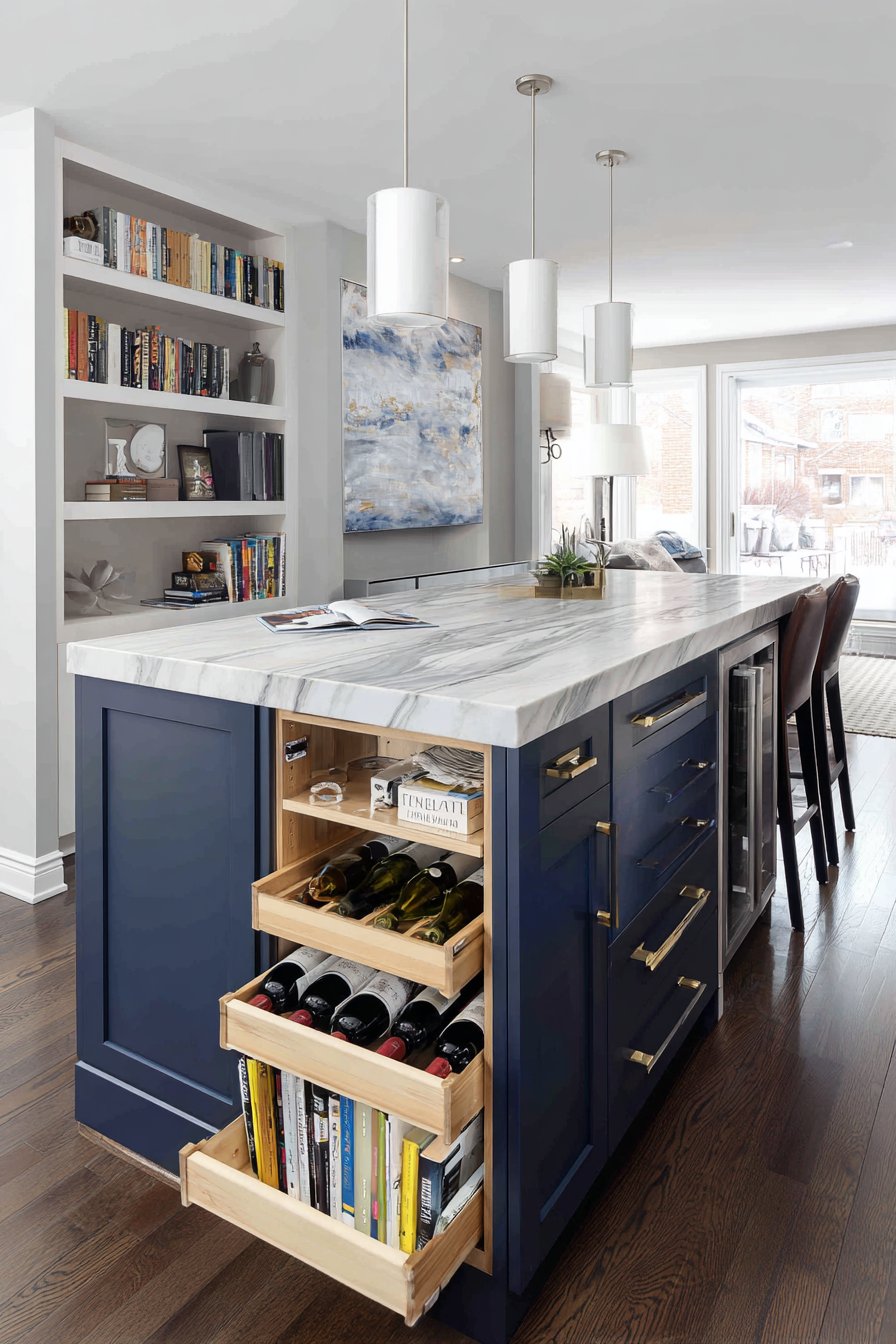
Kitchen islands provide dual functionality that proves invaluable in open layouts—they define space boundaries while offering substantial concealed storage. Designing islands with cabinets, drawers, and pull-out features creates hidden capacity that keeps frequently used items accessible but invisible. This central storage location reduces trips to perimeter cabinets and maintains clear sightlines across the open floor plan. The island becomes both a working surface and an organizational powerhouse.
Strategic island design incorporates specialized storage solutions tailored to your cooking patterns and household needs. Deep drawers accommodate pots, pans, and mixing bowls that would otherwise clutter cabinets. Shallow drawers organize utensils, measuring tools, and small gadgets. Consider including wine storage, cookbook shelves, or small appliance compartments. These customized features ensure the island addresses your specific organizational challenges rather than providing generic storage.
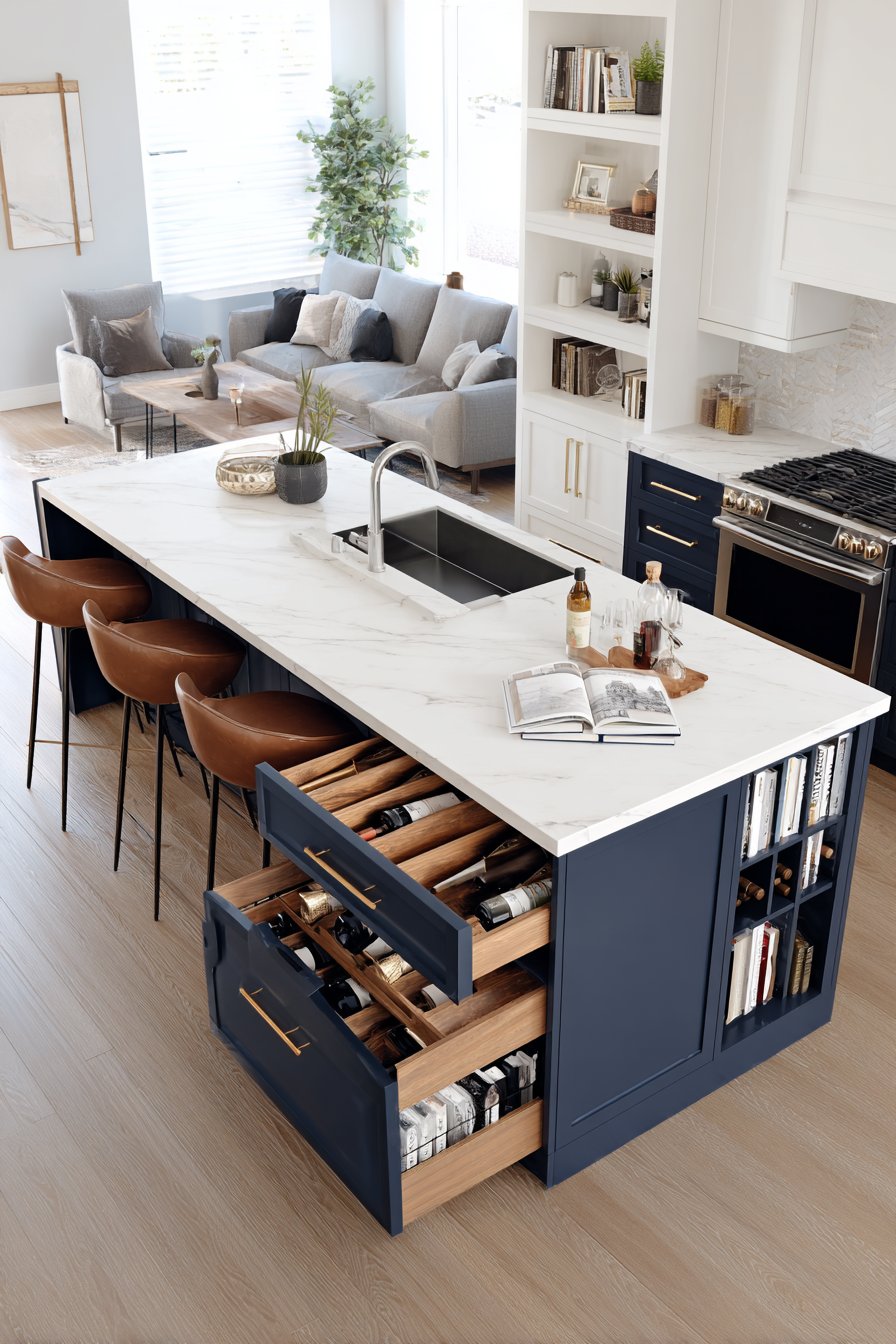
The island’s position in open kitchens makes its appearance particularly important for maintaining overall aesthetic harmony. Choose island finishes that either match perimeter cabinetry for cohesion or contrast intentionally for visual interest. Keep the island’s countertop as clear as the perimeter counters, using it primarily as workspace rather than storage. Add seating on one side to define the transition between kitchen and living areas while maintaining functional flexibility for both cooking and entertaining.
- Design islands with storage on all accessible sides
- Include electrical outlets for small appliance use
- Add drawer organizers to maximize interior space efficiency
- Consider two-tier islands with raised sections for hiding clutter
- Install open shelving only on the living area side if desired
- Choose waterfall countertop edges for a polished, finished appearance
5. Establish a Daily Cleaning Routine
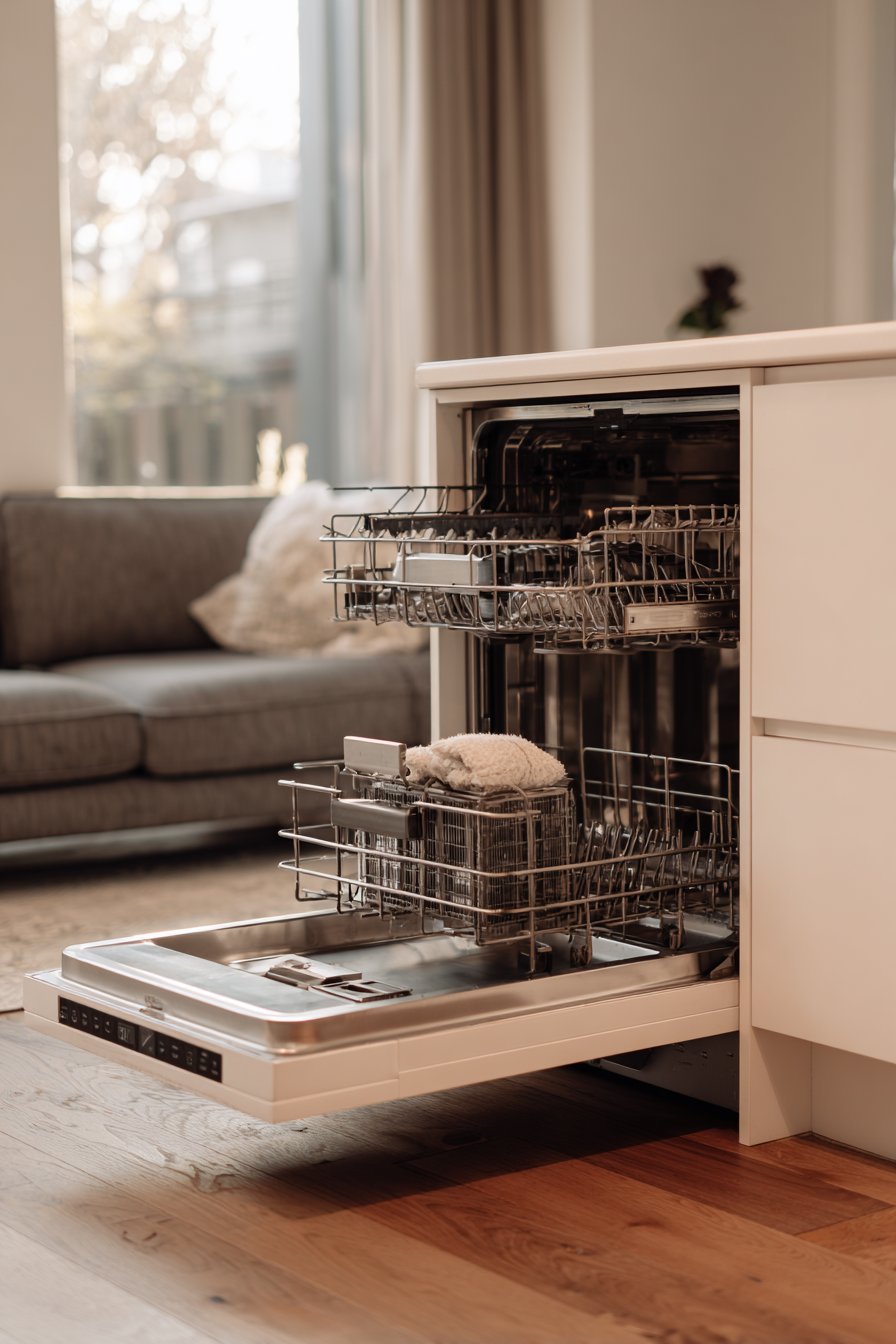
Consistent maintenance habits prevent the accumulation of clutter and mess that makes open kitchens appear chaotic. A five-minute evening reset—clearing counters, loading the dishwasher, and wiping surfaces—maintains baseline cleanliness that protects against overwhelming disorder. This small daily investment eliminates the need for marathon cleaning sessions. The routine becomes automatic over time, requiring minimal mental energy while delivering maximum visual impact.
Morning and evening bookends create natural rhythm for kitchen maintenance in open floor plans. Morning routines might include putting away clean dishes and spot-cleaning the sink. Evening routines tackle cooking aftermath before relaxing in adjacent living spaces. These strategic timing choices ensure the kitchen never remains messy during primary living hours. The discipline of consistent routines transforms kitchen maintenance from reactive crisis management to proactive upkeep.
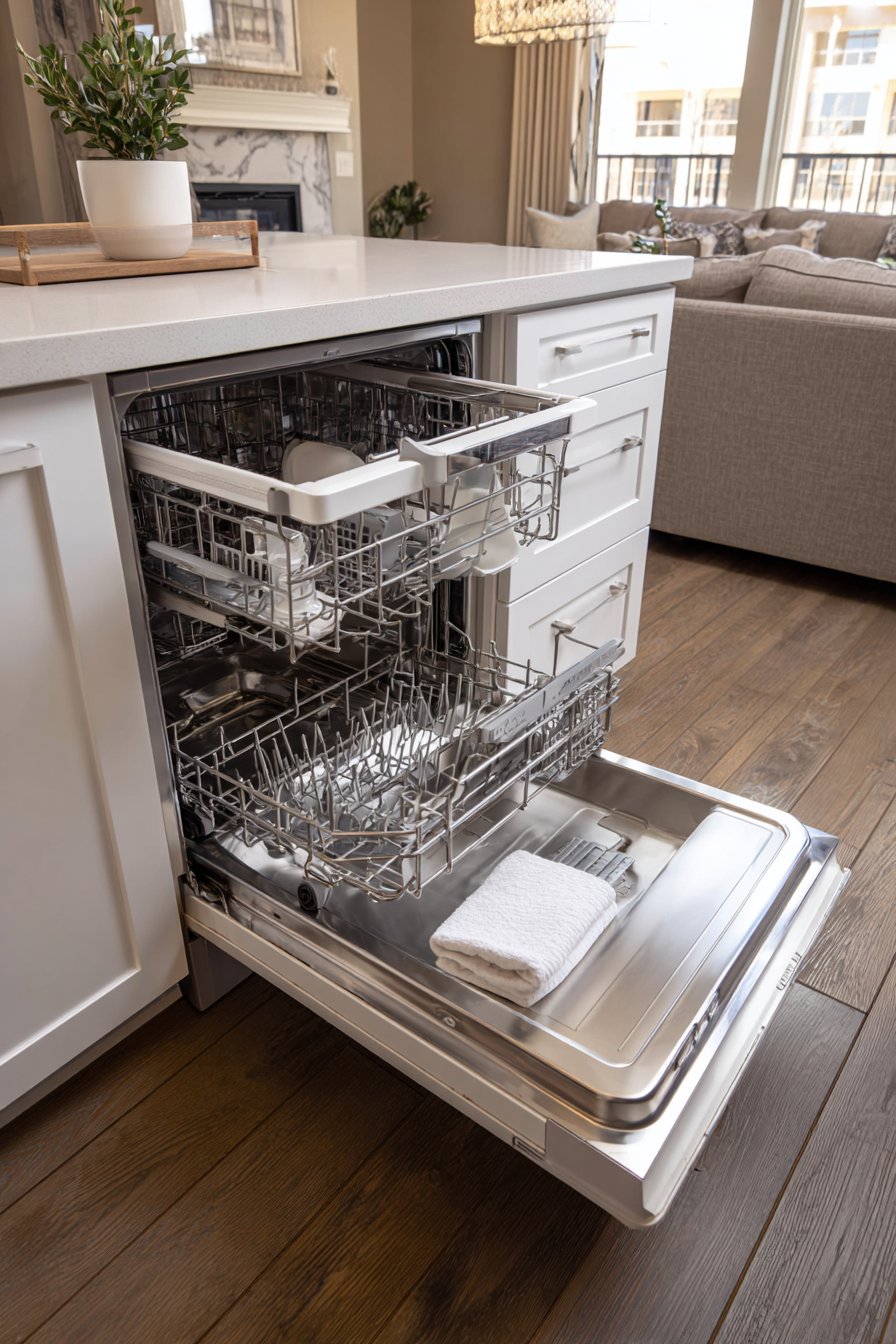
Involving all household members in shared maintenance responsibility distributes the workload and builds collective investment in kitchen cleanliness. Assign age-appropriate tasks to children, teaching organizational skills while lightening the burden on primary cooks. Create a simple checklist visible to all family members outlining daily and weekly tasks. This systematic approach removes ambiguity about expectations and creates accountability that sustains long-term tidiness without creating resentment or conflict.
- Clear all countertops completely each evening before bed
- Load dishwasher immediately after each meal rather than accumulating dishes
- Wipe down surfaces and appliances after cooking sessions
- Take out trash and recycling before bins overflow
- Put away ingredients and tools during cooking processes
- Sweep or vacuum kitchen floors daily in high-traffic areas
6. Use Matching Containers and Cohesive Organization
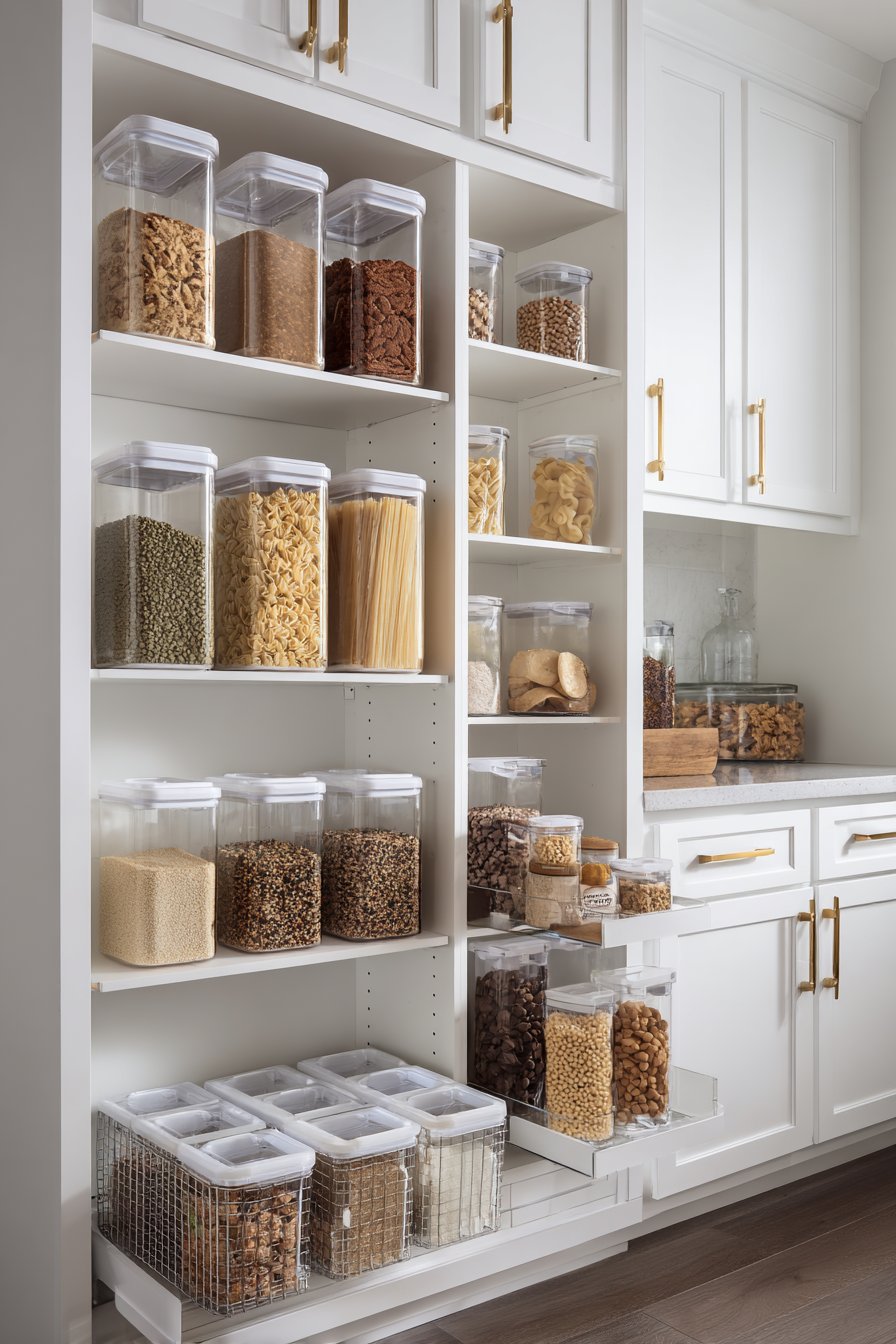
Visual consistency through matching storage containers creates immediate organization and sophistication in open kitchens. Transferring dry goods, snacks, and pantry items into uniform containers eliminates the chaotic appearance of mismatched packaging. This approach proves particularly important when cabinets lack doors or when items must remain on countertops. The streamlined aesthetic of coordinated containers signals intentionality and care regardless of what they contain.
Selecting the right organizational systems requires balancing aesthetic appeal with practical functionality. Clear containers allow quick identification of contents and stock levels, reducing food waste and shopping inefficiency. Choose containers with airtight seals to maintain freshness and prevent pest issues. Consider labeling systems that remain legible while complementing your kitchen’s design style. These thoughtful details elevate organization from basic necessity to design feature that enhances rather than detracts from your kitchen’s appearance.
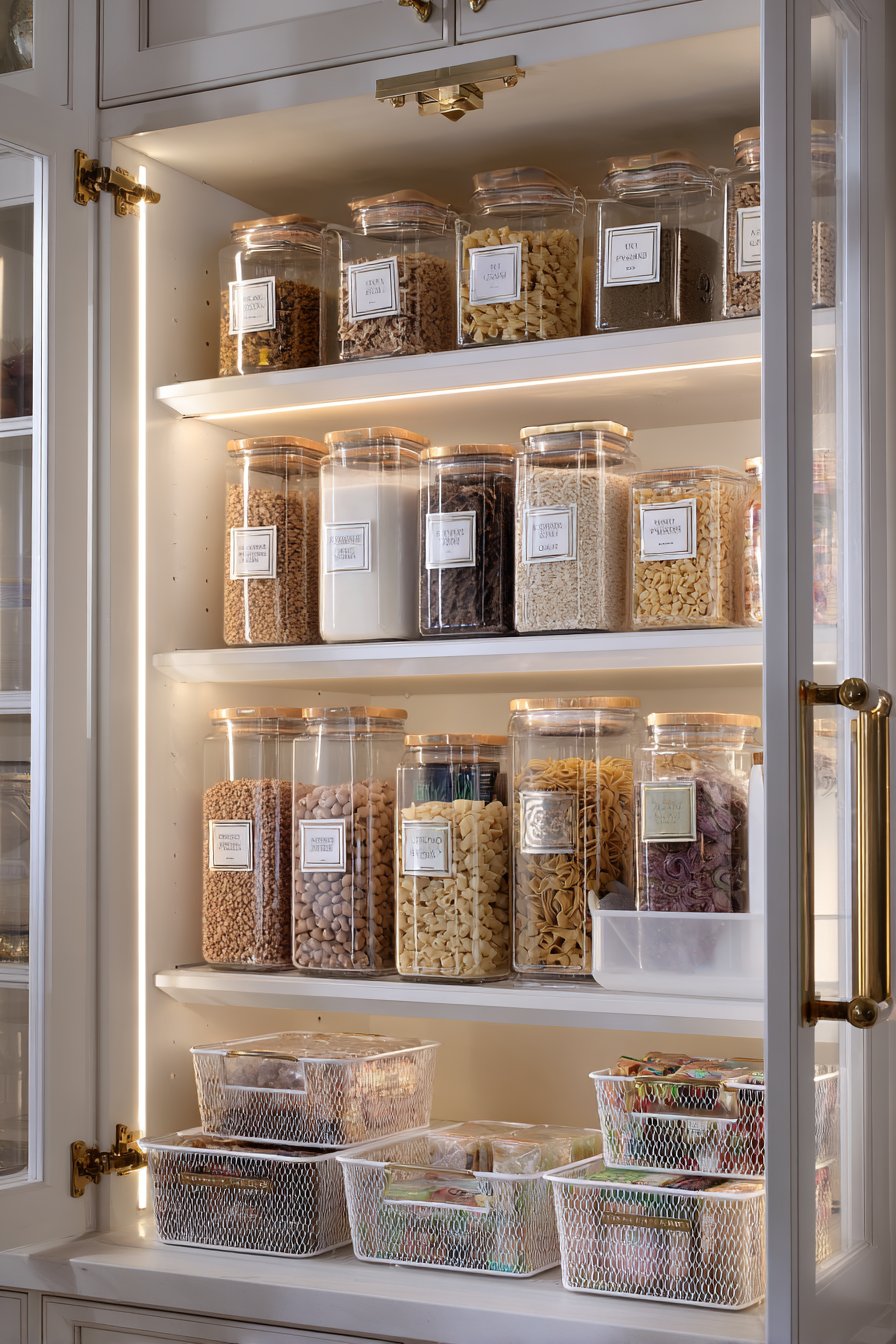
Extending the matching container principle beyond pantry goods creates comprehensive visual harmony throughout your open kitchen. Use consistent bins for cleaning supplies under sinks, matching canisters for coffee and tea stations, and uniform drawer organizers for utensils. This systematic approach to organization creates a cohesive aesthetic that feels professionally designed. The initial investment in quality containers pays ongoing dividends through reduced visual clutter and improved functionality.
- Invest in high-quality, matching containers for pantry staples
- Label containers clearly with contents and expiration dates
- Choose square or rectangular containers to maximize shelf space
- Select transparent containers for quick visual inventory
- Use pull-out bins in cabinets for easy access to stored items
- Replace containers when they become stained or damaged
7. Conceal Small Appliances in Strategic Locations
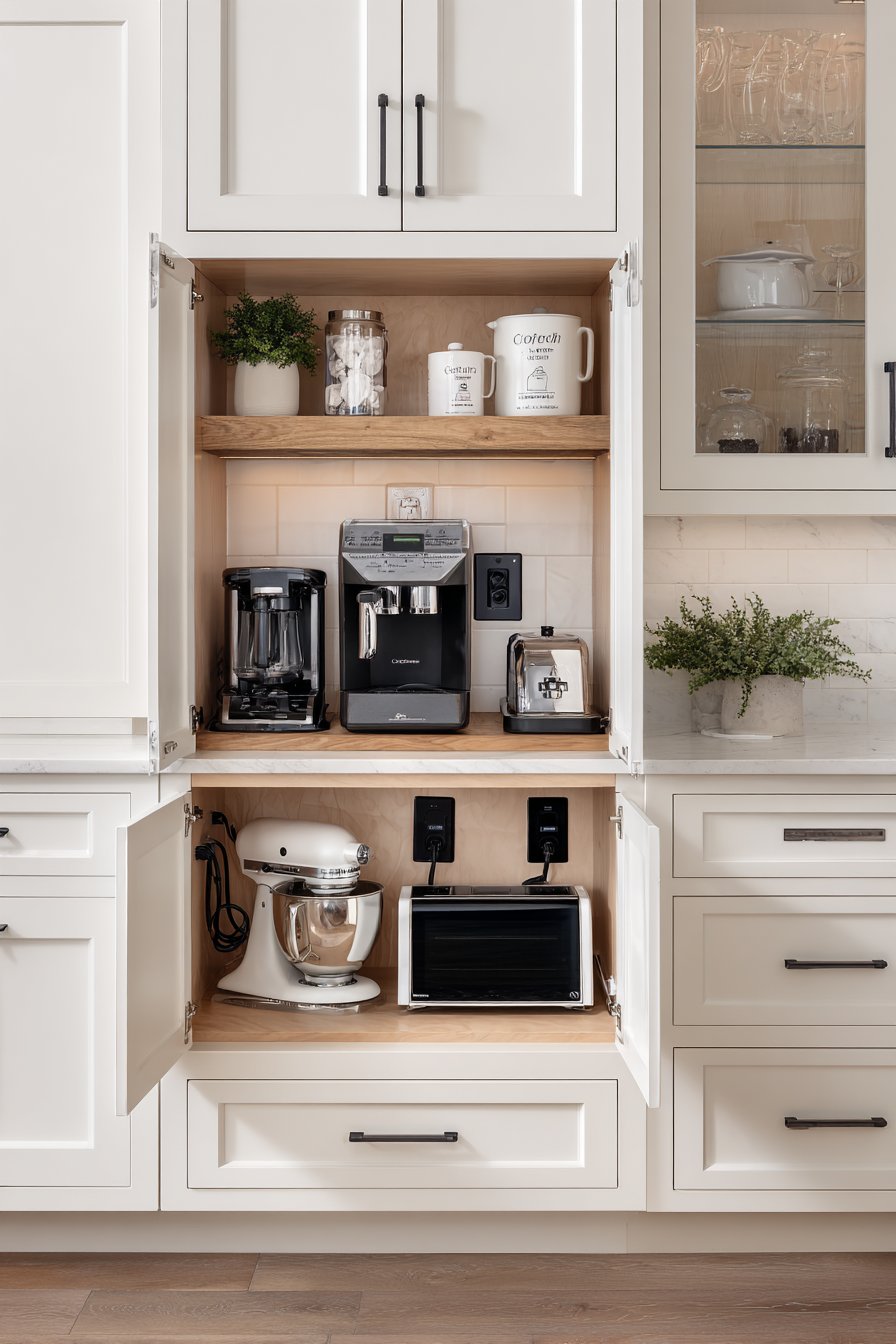
Small appliances represent one of the primary clutter culprits in open kitchens despite their essential functionality. Creating designated storage spaces with built-in electrical outlets keeps these items accessible without compromising visual cleanliness. Appliance garages with retractable tambour doors provide the ideal solution—items remain plugged in and ready for use while disappearing behind closed doors. This approach eliminates the daily hassle of retrieving and returning appliances to distant cabinets.
The placement of appliance storage significantly impacts kitchen workflow and organizational success. Position frequently used items like coffee makers and toasters in easily accessible locations near related supplies. Store occasional-use appliances in less convenient spots, perhaps in pantries or basement storage. This tiered accessibility ensures prime real estate remains available for daily essentials while preventing rarely used items from occupying valuable counter space.
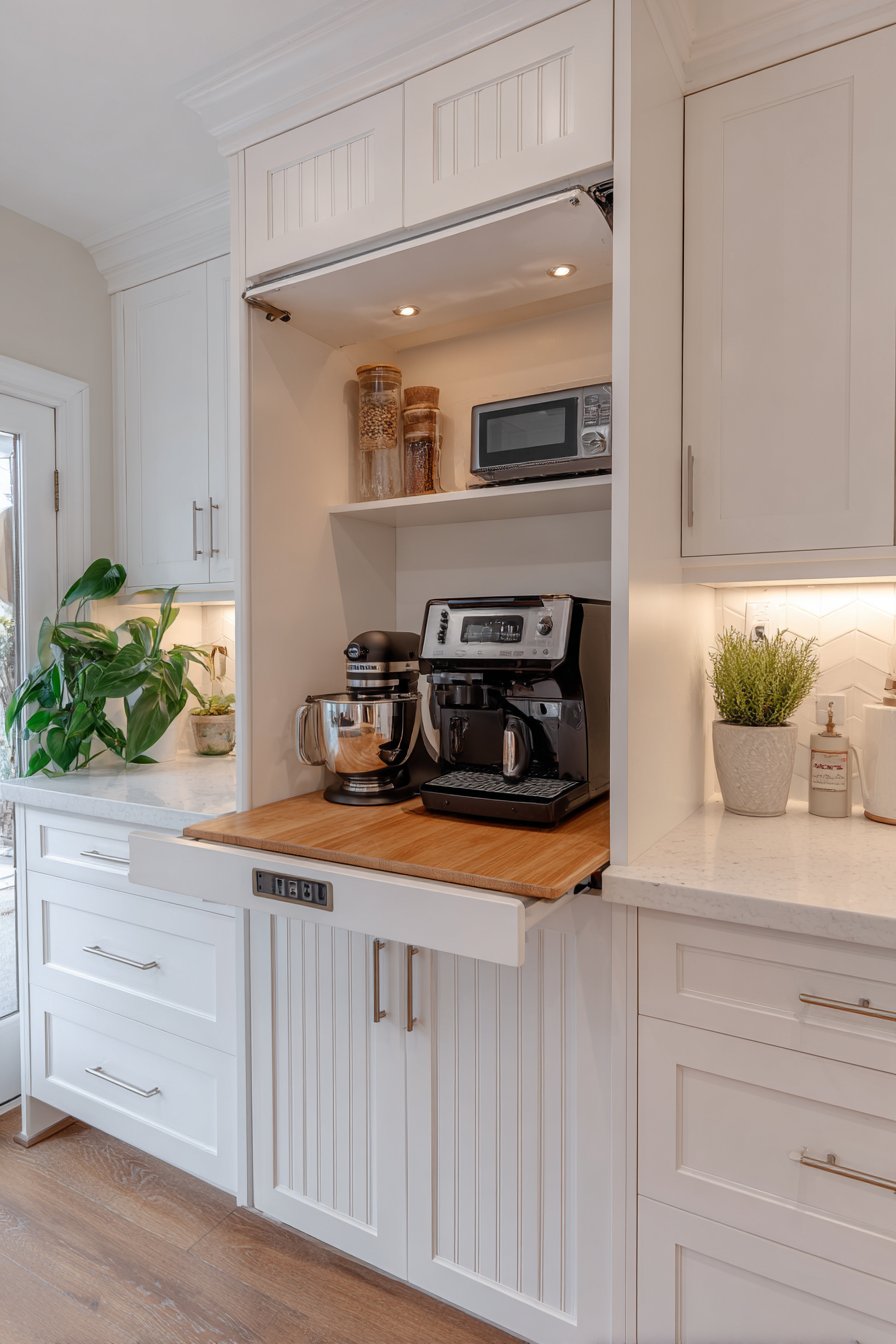
Modern kitchen design increasingly incorporates hidden appliance zones that maintain sleek aesthetics without sacrificing convenience. Consider installing lift mechanisms that raise stand mixers from base cabinets to counter height during use. Add slide-out shelves for heavy appliances that eliminate lifting and carrying. These innovative solutions bridge the gap between minimalist design preferences and practical cooking needs, creating kitchens that function beautifully rather than forcing compromises between appearance and utility.
- Install appliance garages in corner spaces or between cabinets
- Add electrical outlets inside cabinets for permanent appliance storage
- Use lift systems for heavy appliances like stand mixers
- Store appliances near related ingredients and tools
- Keep only daily-use appliances within immediate reach
- Consider drawer-style microwaves to free counter space
8. Implement Smart Trash and Recycling Systems
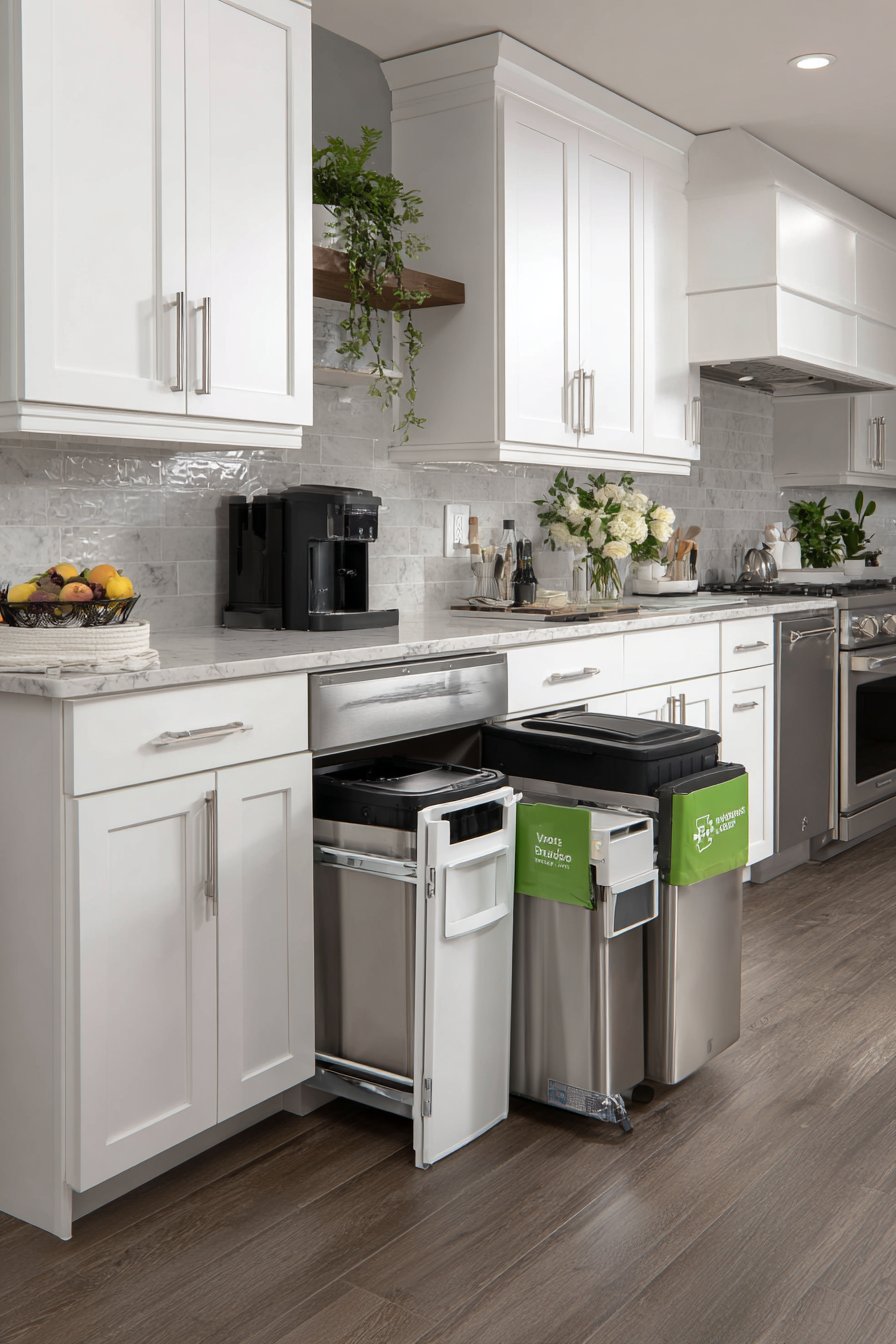
Visible trash and recycling bins create immediate clutter that undermines even the most carefully organized open kitchens. Installing pull-out waste systems within cabinetry removes this eyesore while maintaining convenient access. Hidden bins preserve aesthetic cleanliness and often provide better capacity than freestanding options. Position these systems near primary food preparation areas to encourage immediate disposal of packaging and waste during cooking processes.
Modern waste management systems offer sophisticated solutions that address multiple organizational challenges simultaneously. Consider dual-compartment bins that separate trash from recycling in a single pull-out unit. Add composting containers for households committed to environmental sustainability. These integrated systems eliminate the need for multiple visible bins scattered across the kitchen while making responsible waste sorting more convenient. The result is cleaner floors, reduced odors, and improved kitchen aesthetics.
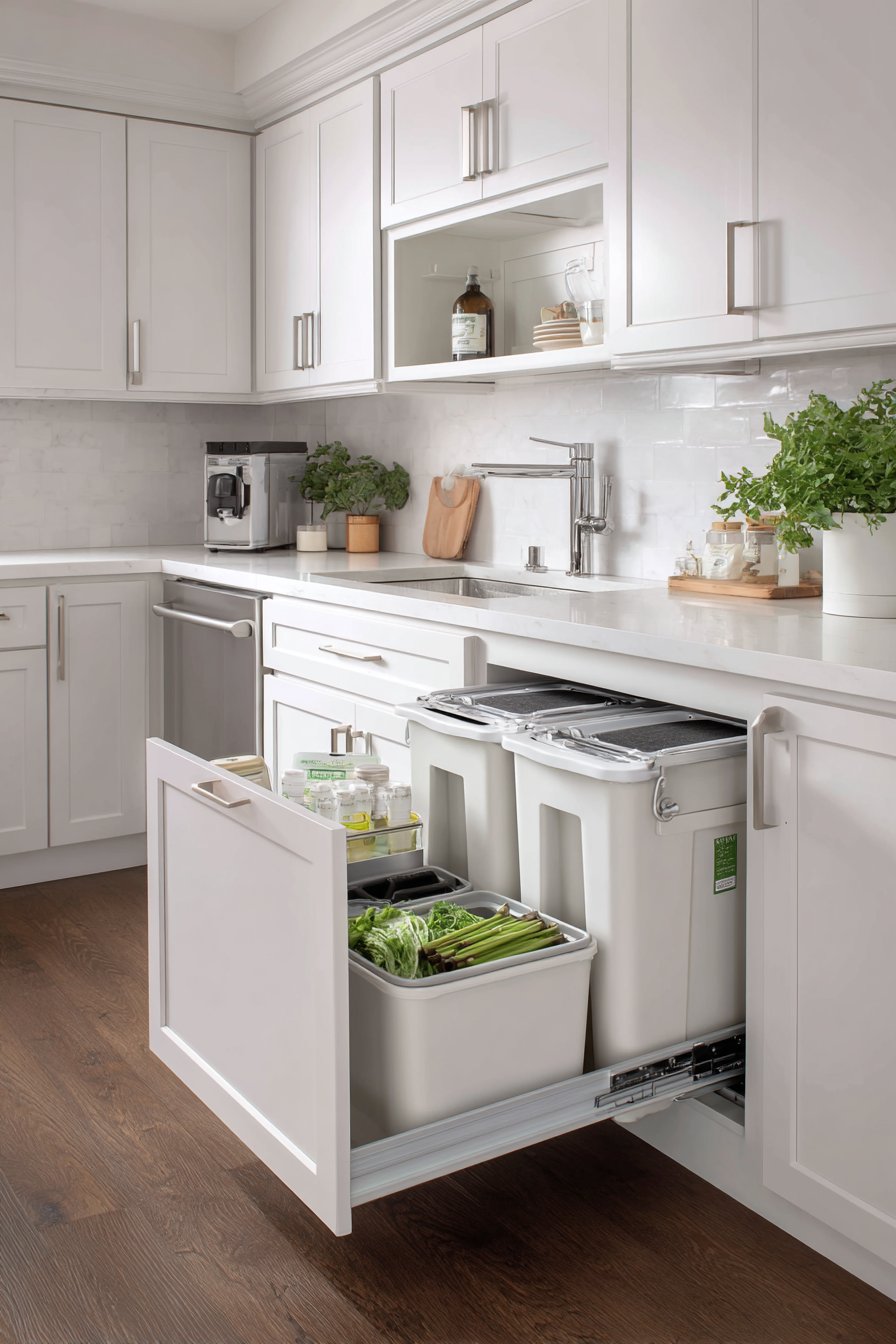
The size and placement of waste systems directly impacts kitchen maintenance success. Undersized bins require frequent emptying that becomes burdensome, leading to overflow and mess. Oversized bins waste valuable cabinet space and may go too long between emptying. Choose capacity appropriate to household size and cooking frequency. Install bins close enough to food prep areas to encourage use but not so close that cabinet doors interfere with primary work zones.
- Install pull-out bins within 5 feet of primary prep areas
- Choose bins with removable inserts for easy cleaning
- Add odor-absorbing filters or charcoal packets to enclosed systems
- Size bins appropriately for household waste generation
- Establish regular emptying schedules before overflow occurs
- Consider separate small bins for compost if space allows
9. Create Visual Boundaries with Strategic Styling
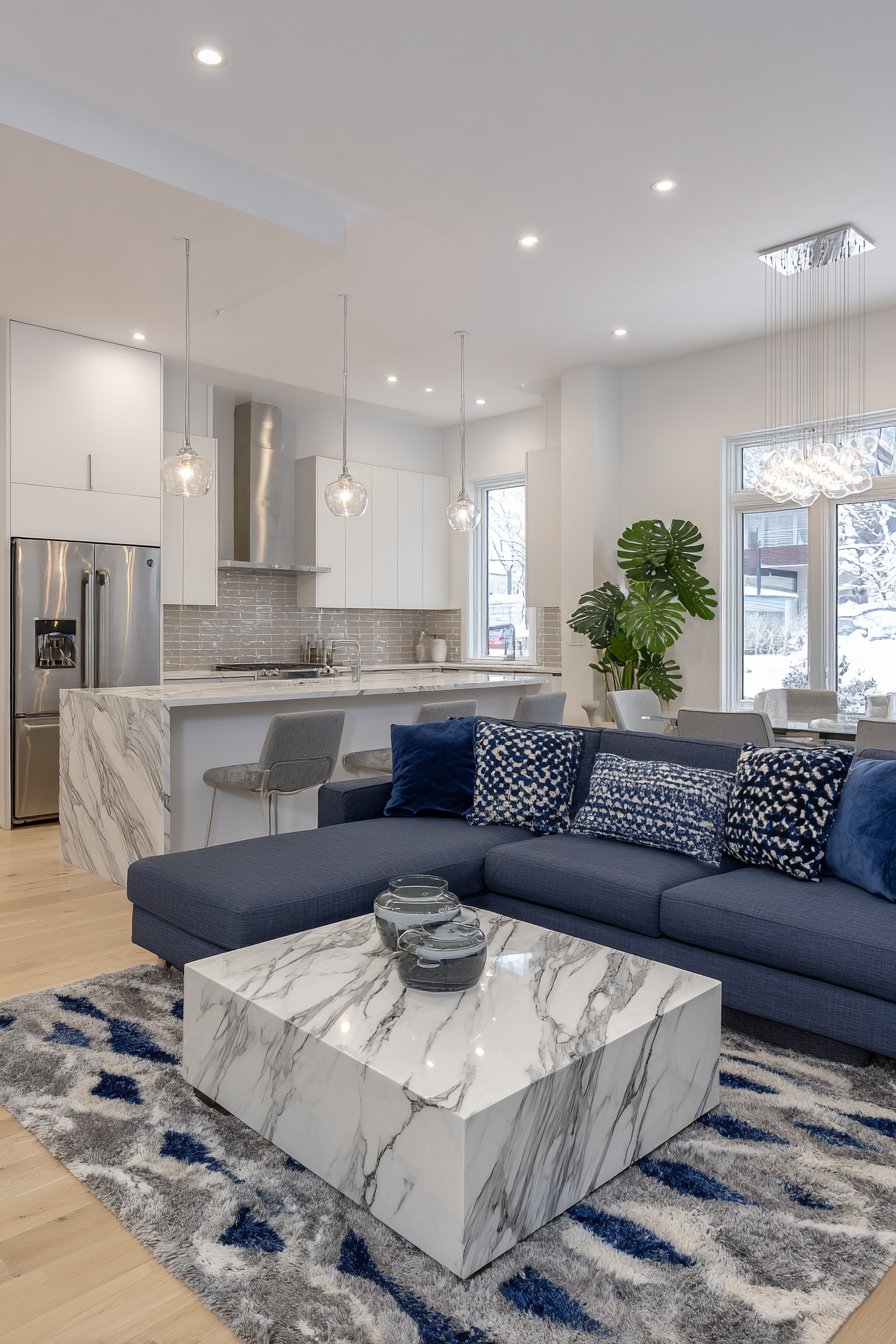
Open floor plans benefit from subtle spatial definition that guides the eye and creates psychological separation between kitchen and living areas. Area rugs positioned at transition points signal where kitchen space ends and living space begins. This visual boundary helps contain perceived kitchen clutter within defined limits. Choose rugs in durable, easy-to-clean materials that withstand kitchen traffic while complementing overall design aesthetics. The rug becomes both functional and decorative, softening hard kitchen flooring while establishing clear zones.
Lighting design provides another powerful tool for creating spatial distinction in open layouts. Pendant lights over islands or dining tables define specific activity zones while providing task illumination. Different lighting temperatures and styles subtly separate kitchen work areas from living relaxation spaces. This layered approach to lighting creates depth and interest while helping the brain categorize different areas despite the absence of walls. The result is a space that feels organized and purposeful rather than vaguely undefined.
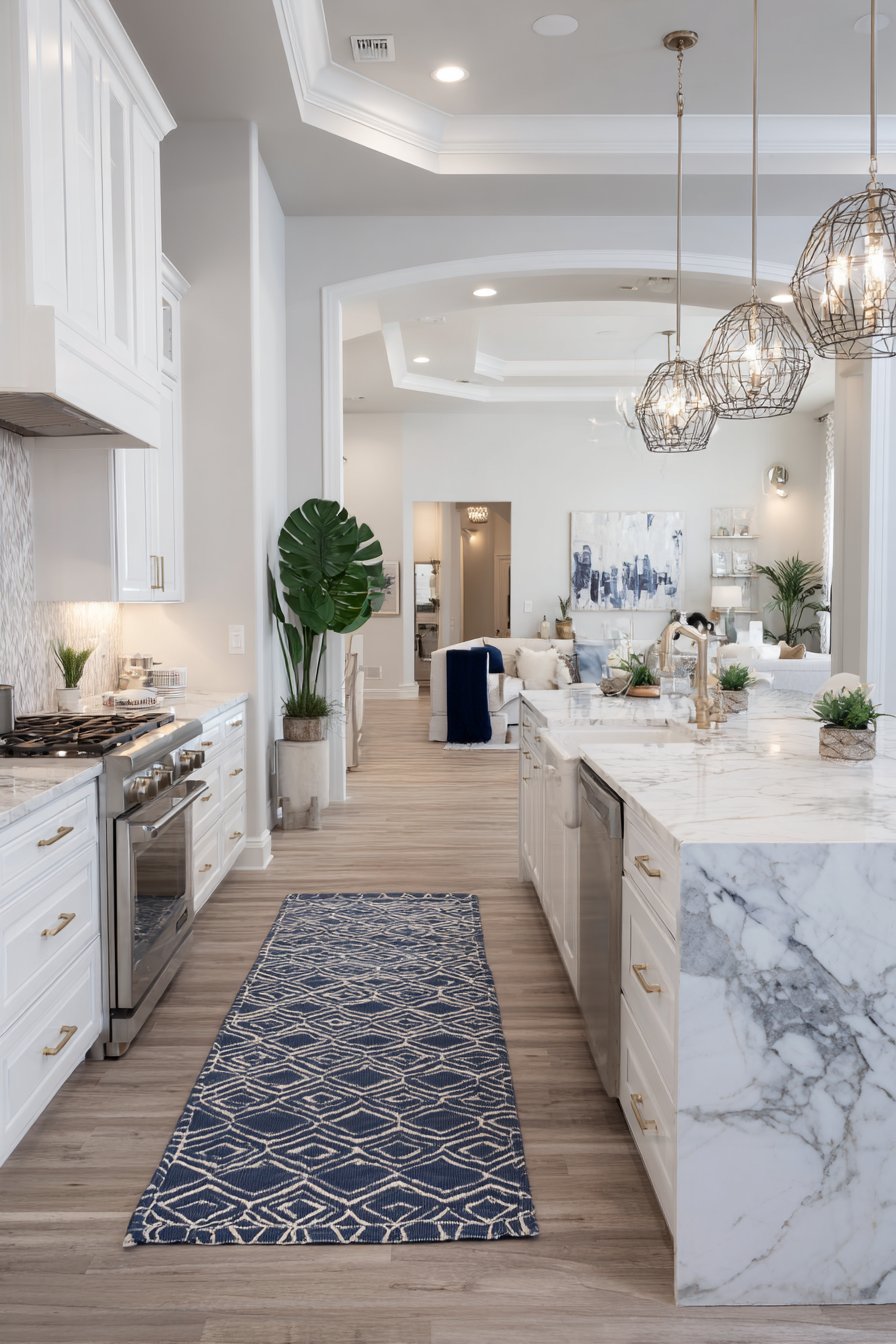
Consistent design elements maintain visual cohesion across open floor plans while allowing each zone to retain distinct character. Repeat accent colors, material choices, or design motifs throughout kitchen and living areas. This intentional continuity prevents the jarring transitions that occur when zones feel disconnected or randomly decorated. The sophisticated balance between unity and distinction creates homes that feel professionally designed—spaces where the open kitchen enhances rather than detracts from overall aesthetic quality.
- Use area rugs to define kitchen boundaries within open floors
- Install pendant lighting over islands to create focal points
- Choose coordinating but distinct design elements for different zones
- Add vertical elements like tall plants to suggest spatial division
- Maintain consistent flooring throughout while using rugs for definition
- Style visible surfaces with intention rather than random placement
Conclusion
Maintaining an organized open kitchen requires intentional systems rather than constant cleaning efforts. These nine strategies work together to create environments where tidiness becomes the natural state rather than an exhausting aspiration. From smart storage solutions and minimalist countertop approaches to daily routines and visual boundaries, each element contributes to sustainable organization that enhances daily living. The key lies in addressing both physical storage needs and behavioral patterns that either support or undermine kitchen cleanliness.
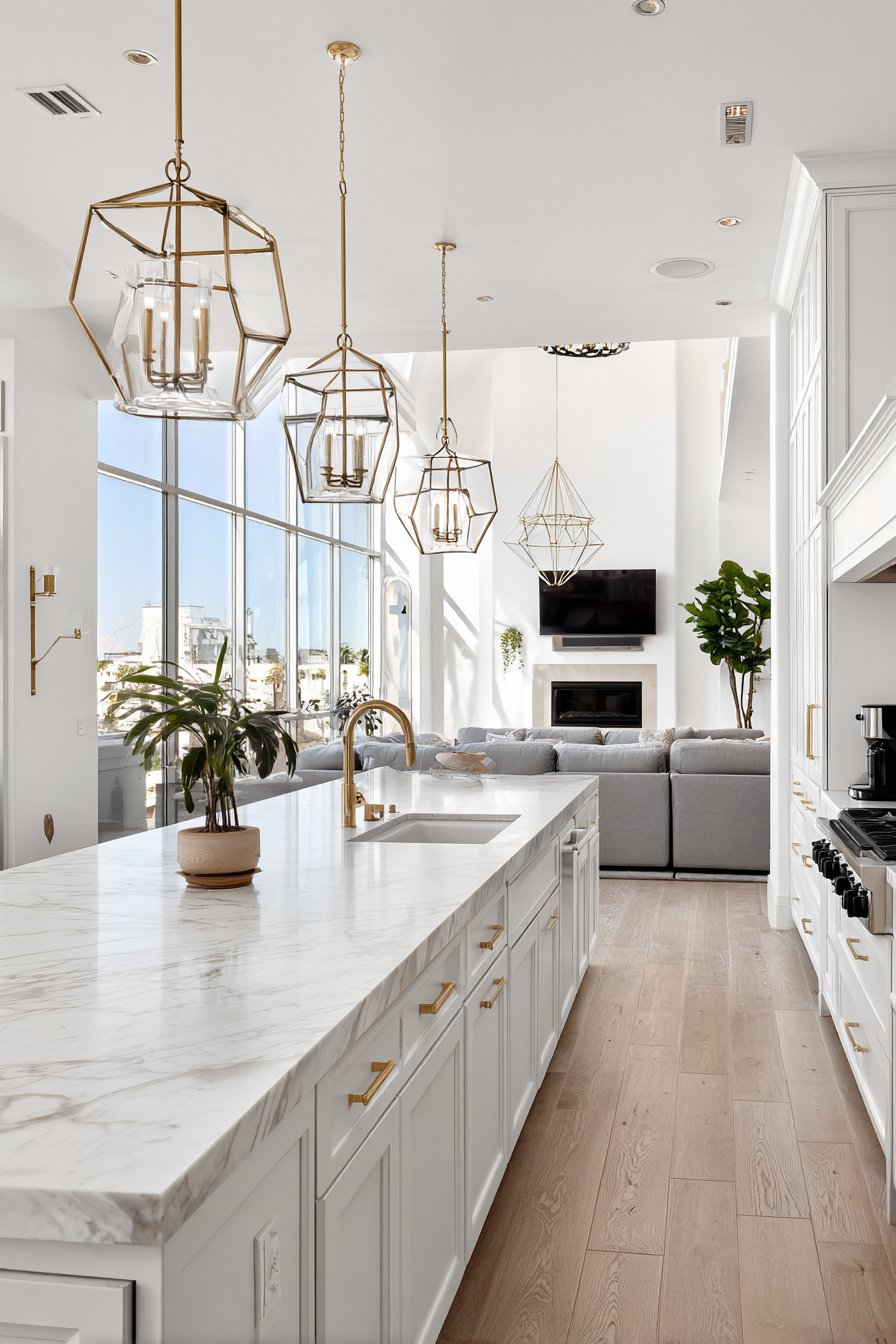
The rewards of implementing these strategies extend beyond mere aesthetics to fundamentally improve quality of life in open-plan homes. Organized kitchens reduce stress, improve cooking efficiency, and create welcoming environments for both family and guests. By investing in proper systems and establishing consistent habits, you transform your open kitchen from a source of anxiety into a showcase of thoughtful design that elevates your entire home. Start with one or two strategies that address your most pressing challenges, then gradually incorporate additional approaches as habits solidify and organizational momentum builds.
"As an Amazon Associate, I earn from qualifying purchases."
