
The dining room serves as the heart of the home, a gathering place where families share meals, friends celebrate milestones, and conversations flow freely. Creating a space that feels both welcoming and sophisticated requires thoughtful consideration of design elements that stand the test of time. Neutral dining room decor has emerged as a perennial favorite among homeowners and designers alike, offering a versatile canvas that adapts to changing trends while maintaining its inherent elegance. The beauty of neutral palettes lies in their ability to create calming, cohesive environments that allow the quality of materials, textures, and architectural details to take center stage.
In today’s fast-paced world, the dining room represents more than just a functional space—it embodies our desire for connection, comfort, and aesthetic harmony. Neutral tones ranging from warm creams and soft grays to earthy beiges and natural woods provide the perfect foundation for creating dining spaces that feel both timeless and contemporary. These subdued color schemes allow for flexibility in styling, making it easy to refresh your space with seasonal accents or evolving personal tastes without requiring a complete redesign. Whether you’re drawn to rustic farmhouse charm, sleek modern minimalism, or coastal-inspired serenity, neutral dining room decor offers endless possibilities for expression.
This comprehensive guide explores twenty distinct approaches to neutral dining room design, each showcasing unique combinations of materials, textures, and stylistic elements. From reclaimed wood tables that tell stories of their past lives to sophisticated contemporary spaces with clean lines and refined finishes, these designs demonstrate how neutral palettes can accommodate diverse personalities and lifestyles. You’ll discover practical insights on selecting furniture, incorporating natural materials, layering textures, optimizing lighting, and creating cohesive color schemes that transform ordinary dining spaces into extraordinary gathering places. Each design concept offers actionable inspiration for creating a dining room that reflects your personal style while maintaining the calming, elegant qualities that make neutral decor so enduringly popular.
1. Reclaimed Wood Dining Table with Natural Weathered Finish
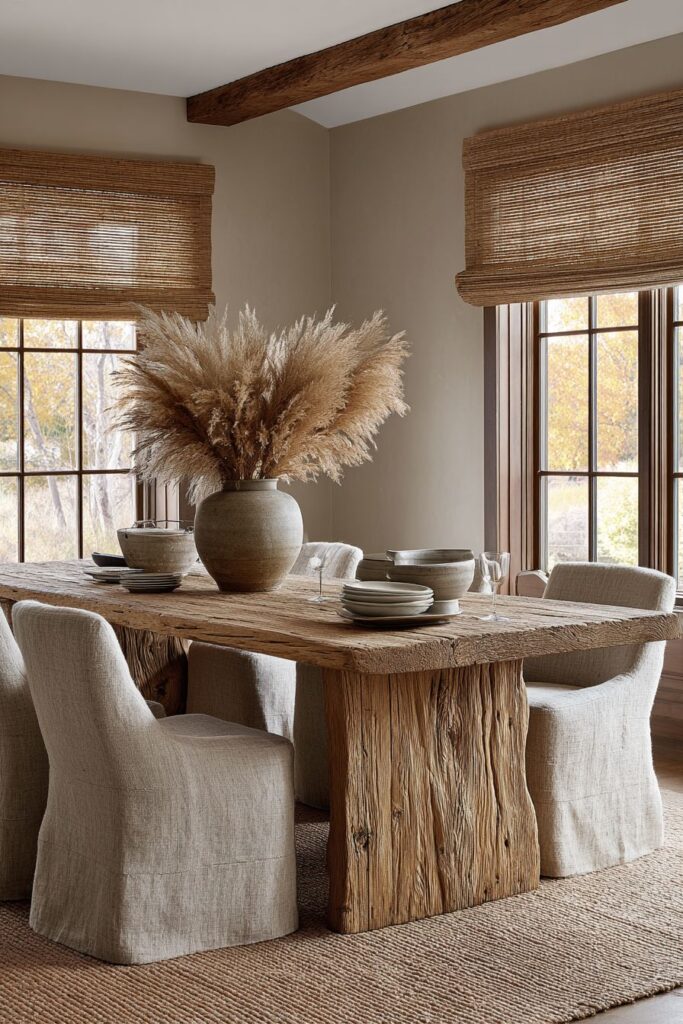
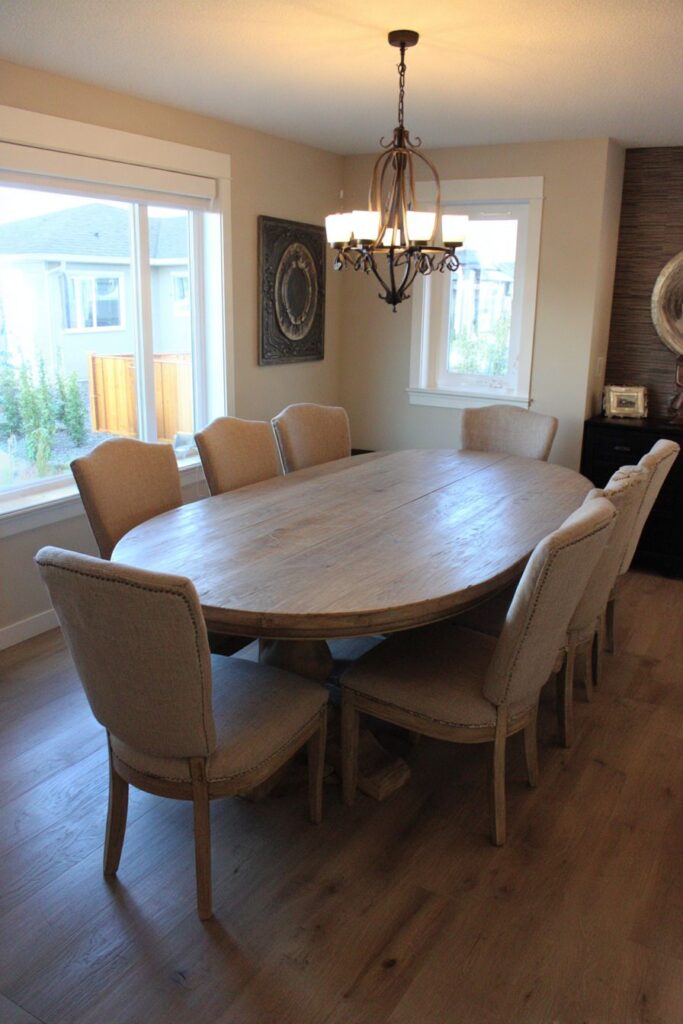
The foundation of this neutral dining room design centers on a magnificent reclaimed wood dining table that serves as both a functional piece and a conversation starter. The weathered finish tells stories of decades past, with each mark, groove, and color variation adding character and authenticity to the space.
Surrounding this statement piece are upholstered linen dining chairs in soft beige tones that provide comfortable seating while complementing the table’s organic beauty. The tactile contrast between the rough-hewn wood and smooth fabric upholstery creates visual interest while maintaining the cohesive neutral palette that defines this design approach.

A woven jute area rug anchors the entire dining arrangement, providing textural depth and defining the eating zone within the larger room. The natural fibers of the rug echo the organic qualities of the reclaimed wood, creating a harmonious connection between floor and furniture. Walls painted in warm greige—that perfect marriage of gray and beige—create a calming backdrop that allows the furniture and accessories to shine without competing for attention. This particular shade adapts beautifully to changing light conditions throughout the day, appearing slightly warmer in morning sun and more sophisticated in evening hours.
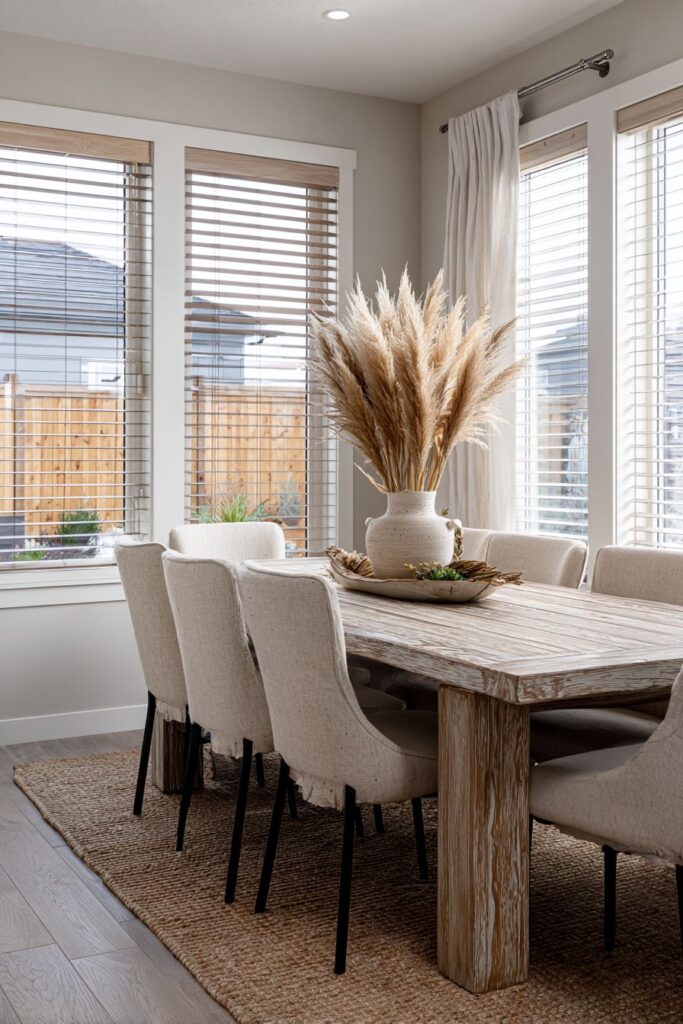
The centerpiece embraces simplicity with dried pampas grass arranged in a ceramic vase, bringing an architectural element to the table without overwhelming the space. Large windows fitted with natural wood blinds allow soft diffused daylight to illuminate the room, highlighting the natural textures and material variations throughout the space.
The adjustable blinds provide control over light intensity while maintaining the room’s connection to the outdoors. This design proves that neutral doesn’t mean boring—the interplay of textures, from smooth ceramics to rough jute to weathered wood, creates a rich visual tapestry that engages the senses.
Key Design Tips:
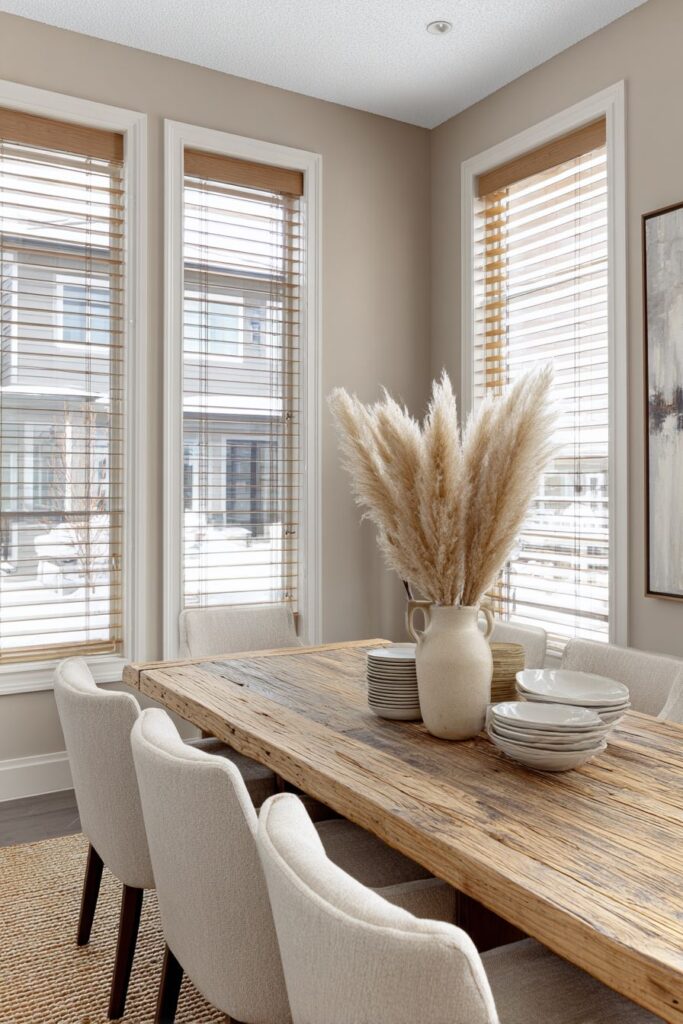
- Select reclaimed wood furniture pieces that show authentic weathering and patina for instant character
- Layer multiple neutral tones from the same color family to create depth without introducing jarring contrasts
- Invest in natural fiber area rugs like jute or sisal that add texture while remaining neutral in appearance
- Choose window treatments in natural materials that filter light while complementing your overall aesthetic
- Keep centerpieces simple and organic, using dried grasses or branches that won’t overwhelm the table
- Upholster dining chairs in durable linen fabrics that develop beautiful character with age and use
2. Light Oak Table with Mixed Rattan and Linen Seating

This serene neutral dining room showcases the beauty of mixed materials through a light oak dining table paired with diverse seating options. The honey-toned oak brings warmth to the space while its visible grain patterns add natural artistry that machine-made furniture simply cannot replicate.
The genius of this design lies in the unexpected combination of woven rattan chairs and a natural linen upholstered bench, creating visual interest through varied textures while maintaining perfect color harmony. This mixing of seating styles adds personality and prevents the space from feeling too matchy or staged, reflecting how real families actually live and entertain.
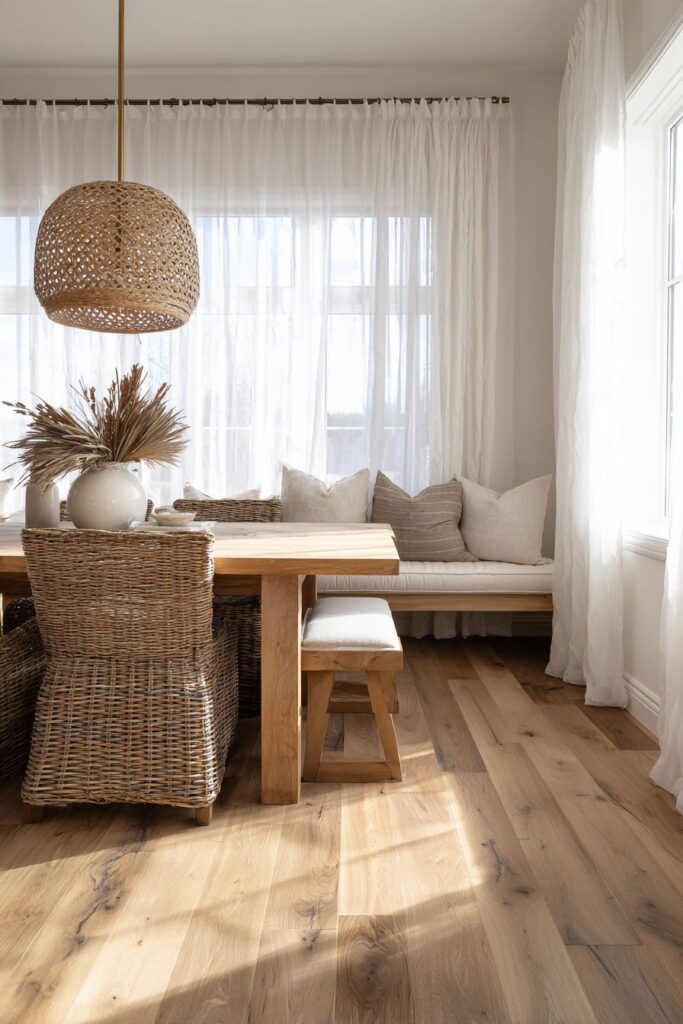
Soft cream-toned walls provide the perfect neutral backdrop, allowing the honey-toned hardwood flooring to emerge as a key design element rather than merely a functional surface. The visible grain patterns in the flooring create movement and interest underfoot, while their warm tone establishes a welcoming foundation for the entire room.
A simple pendant light fixture in brushed brass hangs above the table, providing both task lighting for meals and ambient illumination for gatherings. The warm metallic finish complements the honey tones in the wood without introducing a jarring color element.
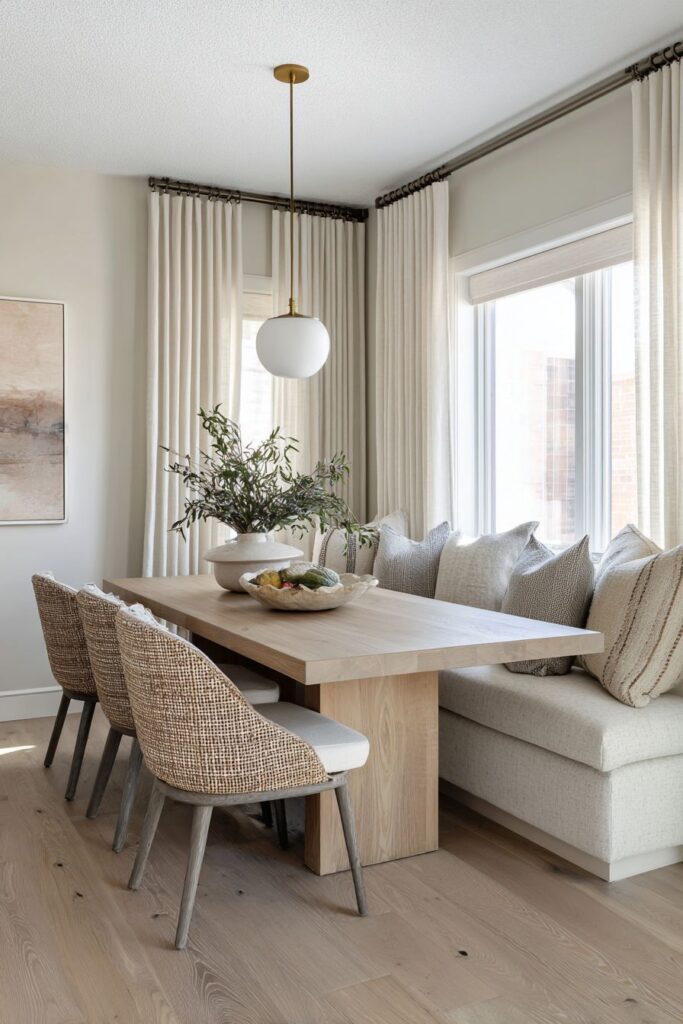
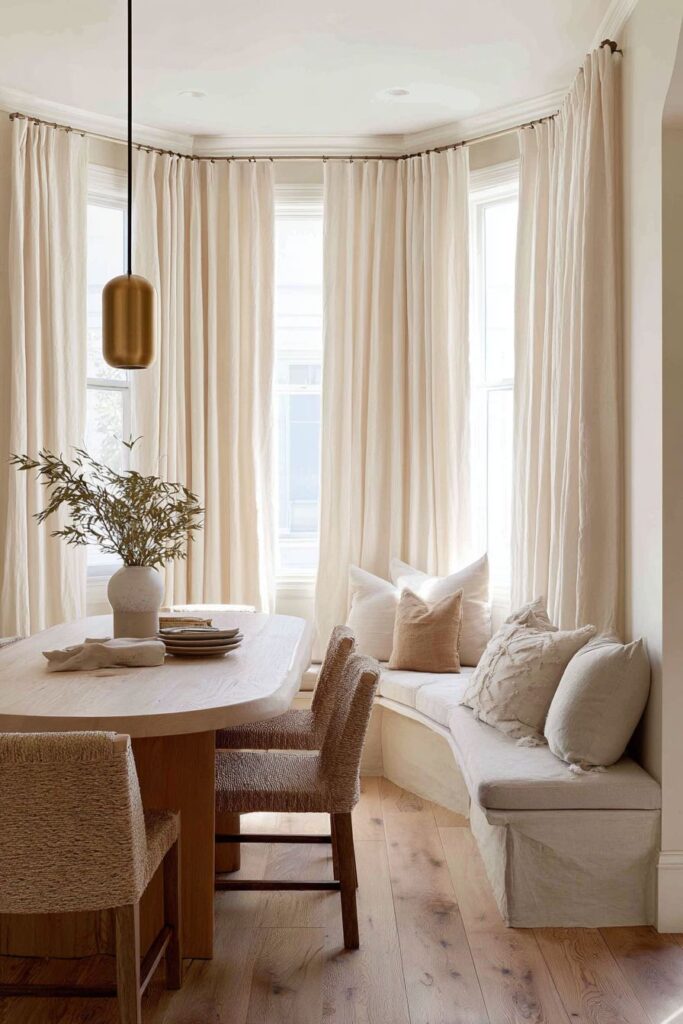
Sheer ivory curtains transform ordinary windows into sources of magical filtered light, creating gentle shadows that dance across the space throughout the day. These lightweight fabrics provide privacy when needed while maintaining the room’s connection to natural light—a crucial element in any successful neutral design.
The layered neutral tones throughout this space demonstrate sophisticated color management, with each element falling within a narrow but deliberately chosen spectrum of warm neutrals. The result is a dining room that feels cohesive and intentional while remaining relaxed and livable.
Key Design Tips:
- Mix seating styles within the same color family for visual interest without sacrificing cohesion
- Choose light-toned wood finishes that brighten spaces and create an airy, open feeling
- Install pendant lighting at the proper height—typically 30-36 inches above the table surface
- Use sheer curtains in neutral tones to maximize natural light while maintaining privacy
- Select brass or warm metallic fixtures that complement honey-toned woods beautifully
- Allow hardwood flooring grain patterns to serve as subtle design elements rather than covering them completely
3. Coastal-Inspired Whitewashed Wood Design
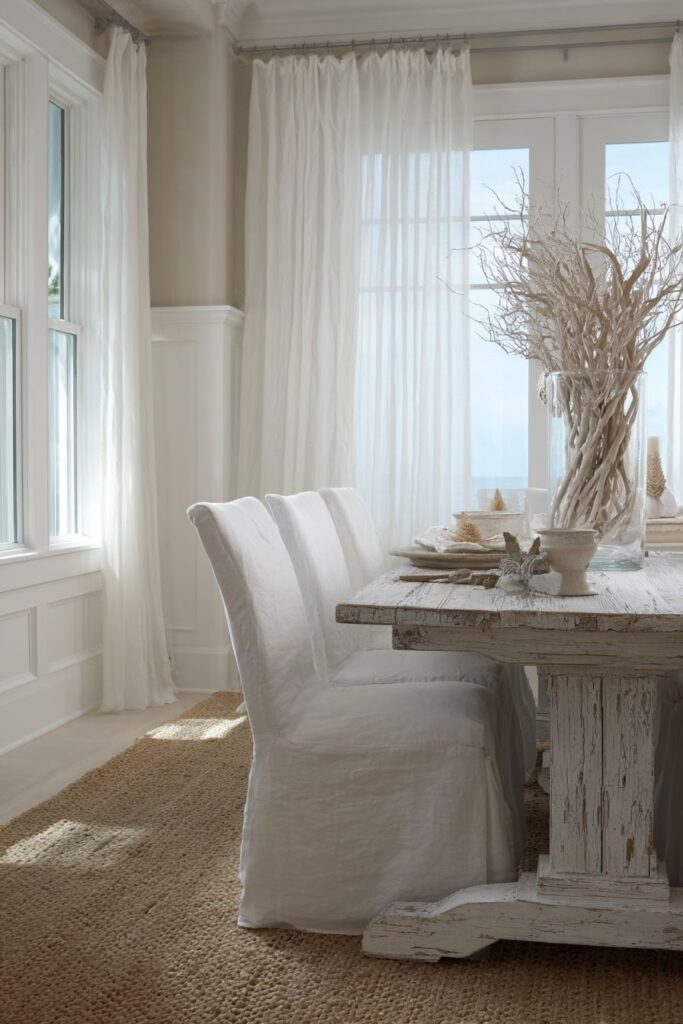
Transport yourself to a seaside retreat with this coastal-inspired neutral dining room that captures the essence of beachside living without resorting to obvious nautical clichés. The whitewashed wood dining table with its deliberately distressed finish serves as the room’s focal point, evoking weathered driftwood and sun-bleached boardwalks.
Paired with slipcovered dining chairs in natural cotton fabric, the arrangement feels relaxed and effortlessly elegant—perfect for both casual family dinners and more formal entertaining. The slipcovers offer practical benefits too, being easily removable for cleaning while allowing you to change the look seasonally if desired.
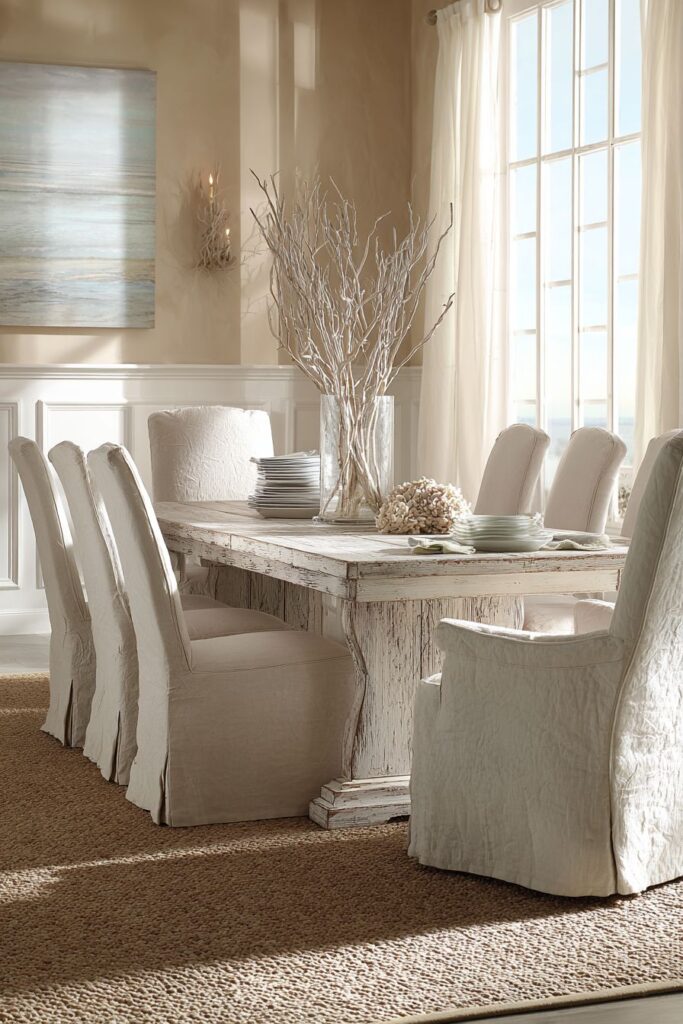
Sandy beige walls create warmth that prevents the lighter elements from feeling stark or cold, while white wainscoting adds architectural interest and traditional charm. This combination of wall treatments creates visual layers that add sophistication without requiring expensive artwork or accessories.
A sisal rug with subtle texture grounds the furniture arrangement while maintaining the natural, organic feel that defines coastal design. The tight weave of sisal provides durability for high-traffic dining areas while its neutral tone allows other elements to shine.
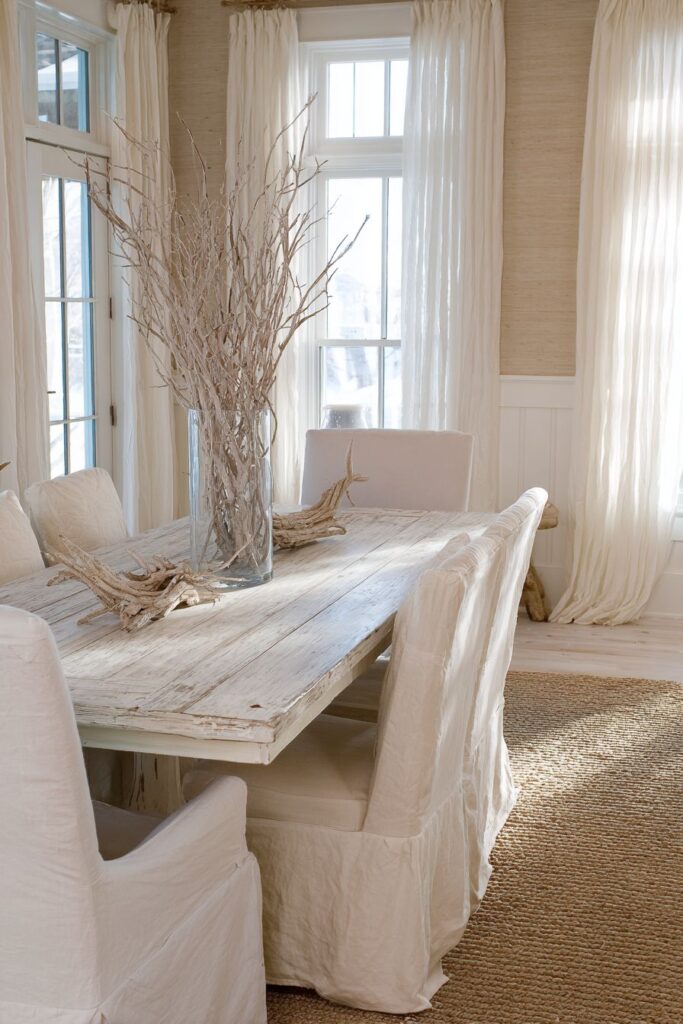
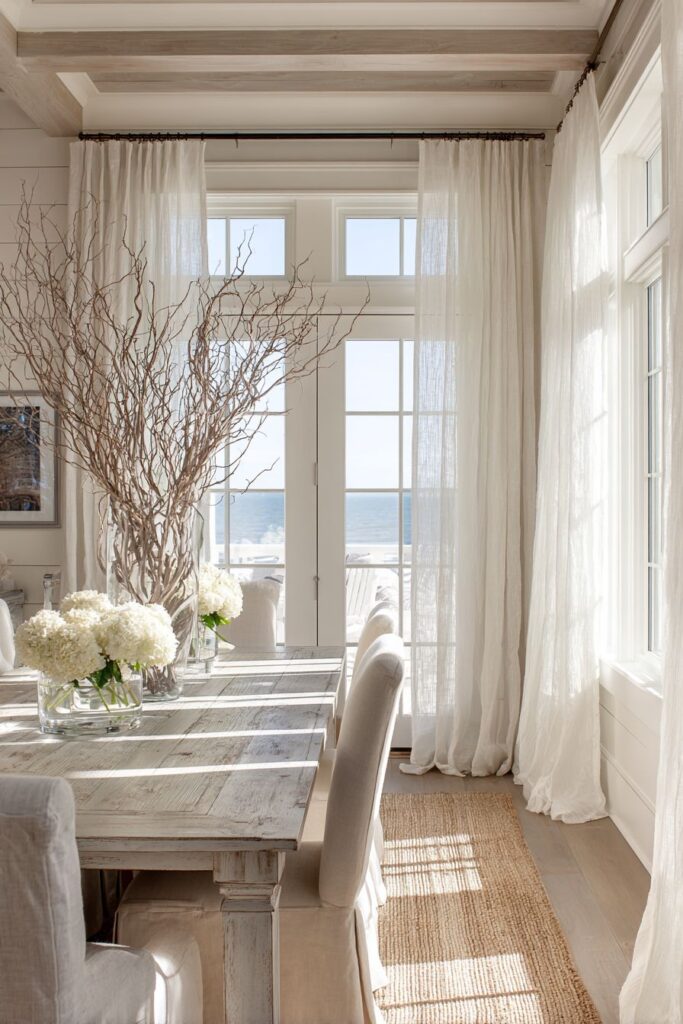
Natural driftwood branches arranged in a clear glass vase serve as an organic centerpiece that brings the outside in without introducing additional colors to the carefully curated palette. The sculptural quality of driftwood provides visual interest from every angle, making it an ideal dining table focal point.
Soft morning light streams through gauzy white curtains, creating an ethereal quality that changes throughout the day. This design demonstrates how coastal style can be interpreted through materials and textures rather than literal beach motifs, resulting in a sophisticated space with staying power.
Key Design Tips:
- Embrace whitewashed or pickled wood finishes that lighten heavy furniture pieces
- Use slipcovered furniture for practical elegance that’s easy to clean and refresh
- Install wainscoting to add architectural character to plain walls without major renovation
- Incorporate sisal or seagrass rugs that withstand dining room traffic while adding natural texture
- Source organic centerpieces like driftwood, coral, or shells that subtly reference coastal environments subtly
- Layer white and cream tones with sandy beige to prevent cold, sterile feelings in predominantly light spaces
4. Modern Farmhouse with Shiplap Accent Wall
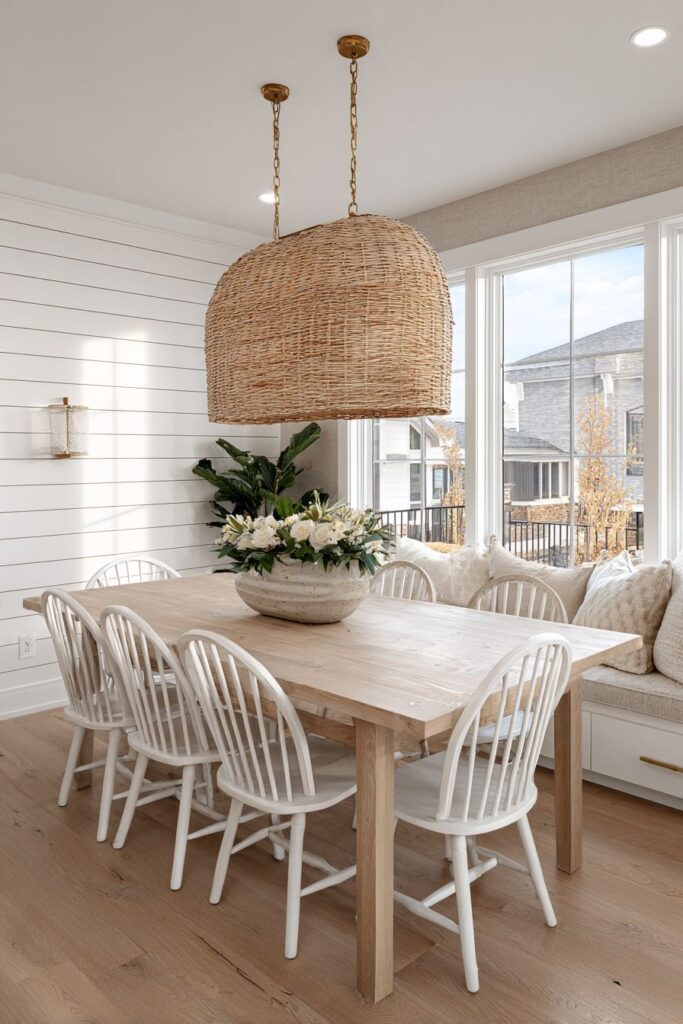
The modern farmhouse aesthetic has captured hearts worldwide, and this neutral dining room exemplifies why this style resonates so deeply. A solid maple dining table in natural finish anchors the space with substantial presence and honest craftsmanship.
The wood’s natural grain and warm tone create an inviting surface that will develop a beautiful patina with years of family use. Surrounding this table are Windsor-style chairs painted in soft off-white, their spindle backs and traditional silhouettes providing visual lightness despite their solid construction. The combination of natural wood table and painted chairs creates the perfect balance between rustic and refined.
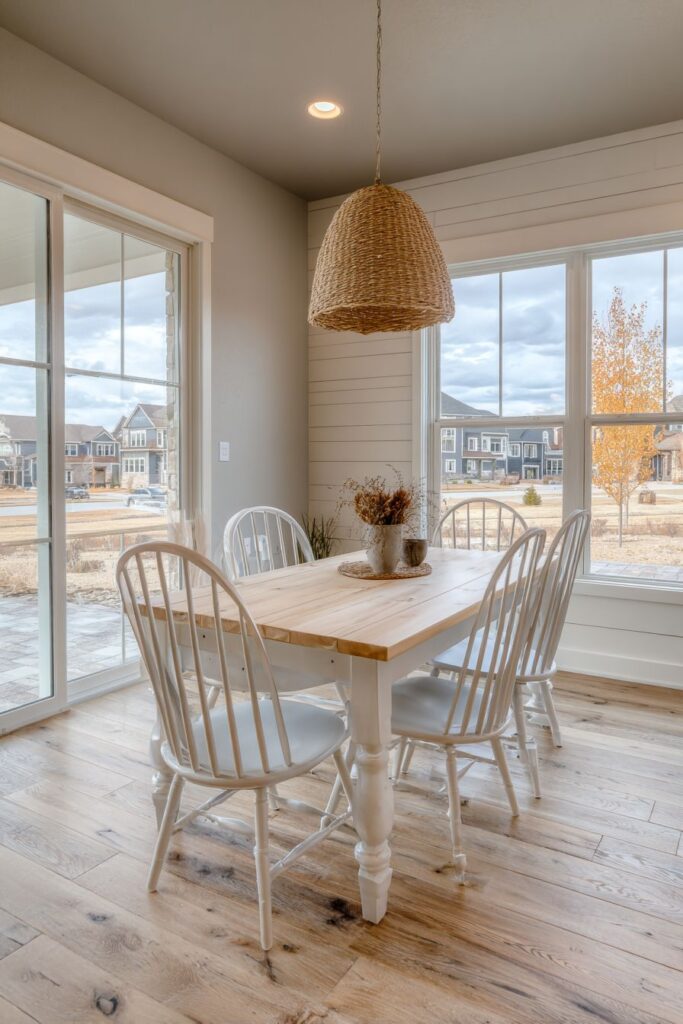
The shiplap accent wall in warm white provides textural interest while maintaining the room’s bright, airy feeling. This horizontal planking adds architectural character that enhances the farmhouse aesthetic without overwhelming the space. The remaining walls feature a gentle taupe tone that grounds the room and prevents the abundant white from feeling too stark or clinical.
A woven pendant light in natural fiber hangs centered over the table, its organic material and handcrafted quality reinforcing the farmhouse theme while providing essential task lighting for meals and gatherings.
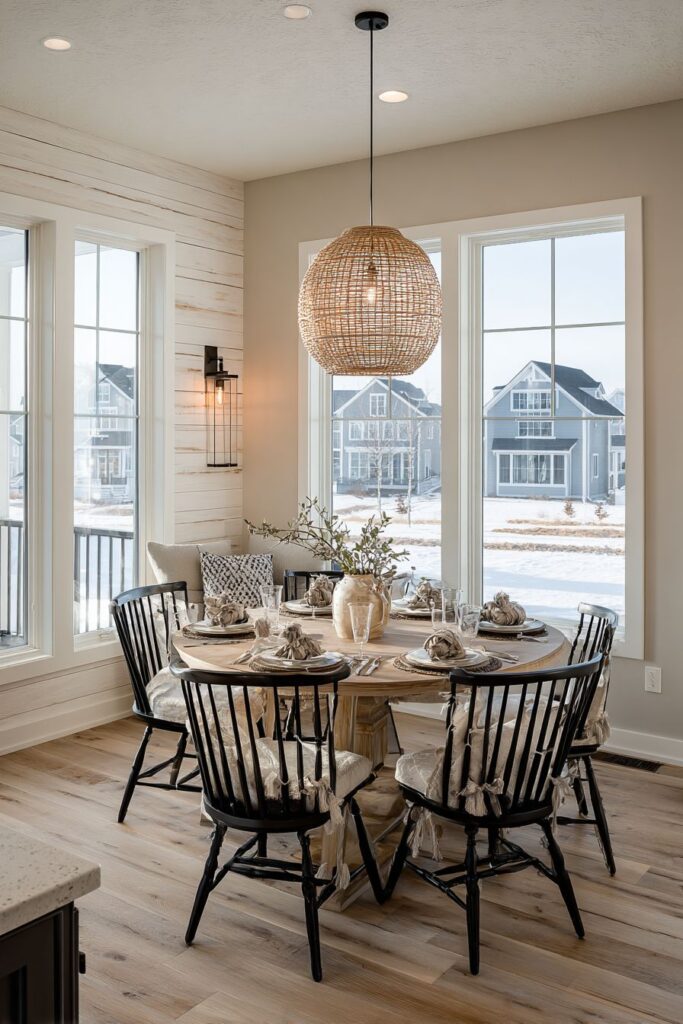
Wide plank flooring in light oak adds warmth underfoot while its generous board width speaks to traditional farmhouse construction methods. The natural variations in the wood’s color and grain create a lived-in quality that improves with age rather than showing wear.
This design successfully bridges traditional farmhouse elements with contemporary clean-lined aesthetics, creating a space that feels both nostalgic and current. The careful balancing of white, cream, taupe, and natural wood tones demonstrates sophisticated color management that appears effortless but requires thoughtful planning.

Key Design Tips:
- Install shiplap on a single accent wall to add texture without overwhelming the space
- Paint traditional chair styles in soft neutrals to lighten their visual weight
- Choose wide plank flooring that references historic farmhouse construction
- Hang woven or natural fiber pendant lights that reinforce the organic aesthetic
- Balance painted furniture with natural wood pieces for visual variety within a neutral palette
- Select solid wood dining tables that will develop character and patina over decades of use
5. Minimalist Blonde Wood and Oatmeal Linen
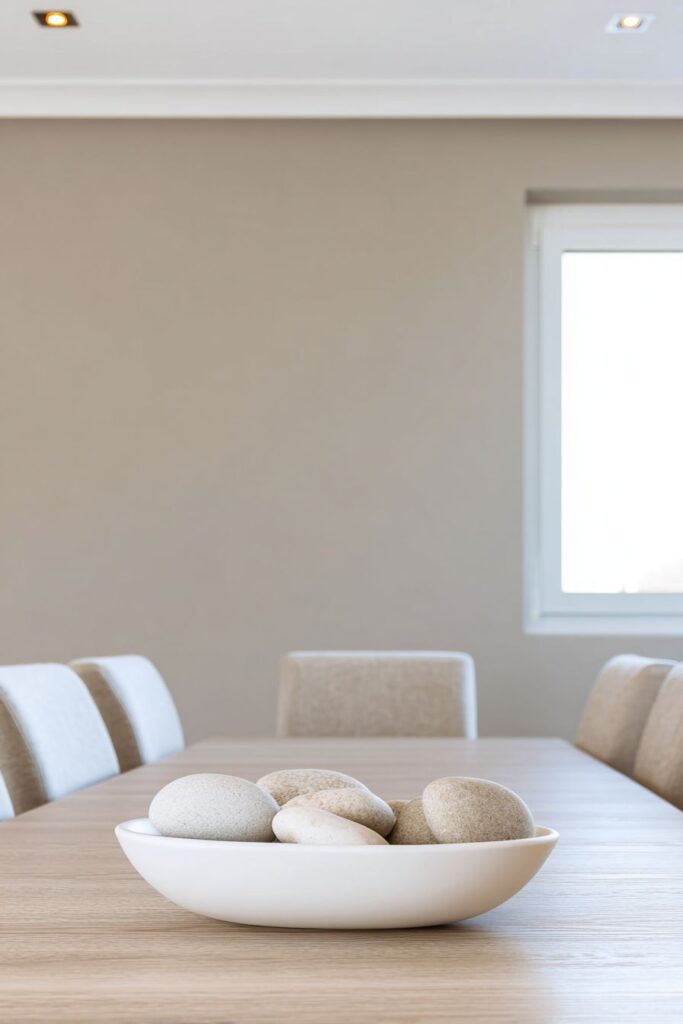
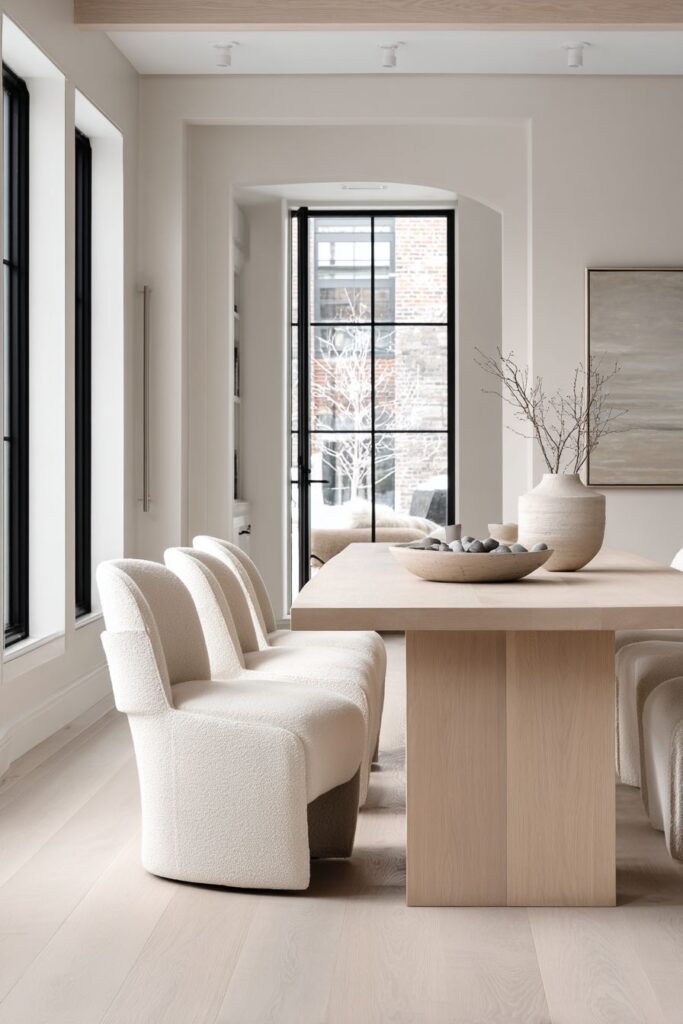
For those who find beauty in restraint, this minimalist neutral dining room offers a masterclass in refined simplicity. A sleek blonde wood dining table with clean lines and minimal ornamentation serves as the room’s centerpiece, its light color and streamlined design creating a sense of spaciousness and calm.
The table’s beauty lies in its craftsmanship and proportion rather than decorative details, allowing the natural wood grain to provide subtle visual interest. Simple upholstered chairs in oatmeal linen surround the table, their neutral fabric and uncomplicated forms supporting the minimalist aesthetic while providing comfortable seating.
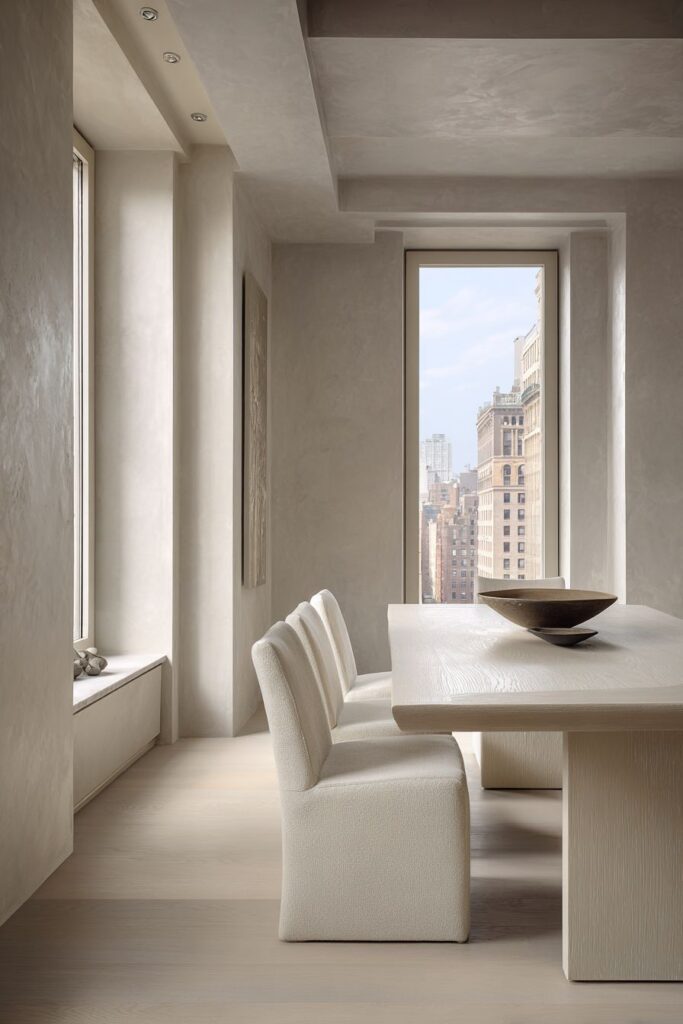
Walls painted in pale greige create a serene backdrop for the uncluttered space, their subtle tone receding to allow furniture and natural light to take precedence. In minimalist design, every element must earn its place, and this neutral wall color performs multiple functions—providing visual calm, reflecting light, and serving as a versatile background that will complement changing table settings and seasonal decorations. A low-profile ceramic bowl filled with smooth river stones serves as an understated centerpiece, its organic forms and neutral tones providing visual interest without disrupting the room’s zen-like tranquility.
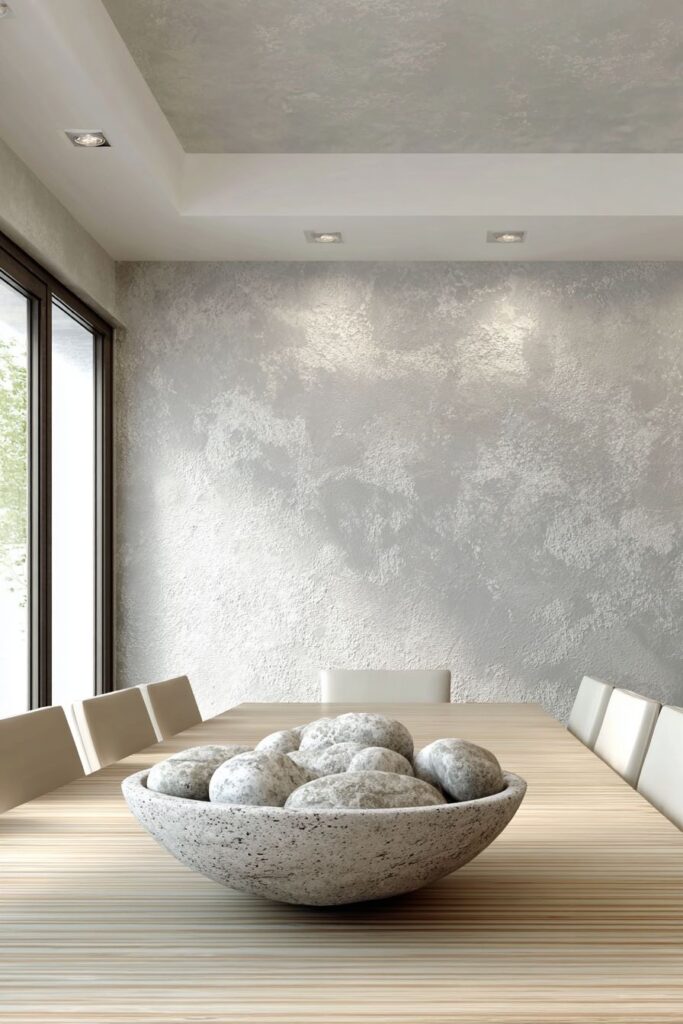
Recessed lighting provides even, shadow-free illumination throughout the space, eliminating the visual clutter of hanging fixtures while ensuring adequate light for dining. A single large window offers abundant natural light, connecting the interior space to the outdoors and providing ever-changing natural illumination throughout the day.
This design proves that neutral dining rooms need not be busy or heavily decorated to feel complete—sometimes the absence of excess creates the most powerful statement. The subtle texture variations within the monochromatic neutral palette provide just enough visual interest to engage the eye without overwhelming the senses.
Key Design Tips:
- Choose furniture with clean lines and minimal ornamentation for authentic minimalist style
- Use recessed lighting to illuminate spaces evenly without visual clutter
- Select blonde or light-toned woods that brighten rooms and create airy feelings
- Keep centerpieces simple and sculptural, using natural objects with organic forms
- Paint walls in pale neutral tones that recede rather than demand attention
- Upholster dining chairs in natural linen fabrics that add subtle texture without pattern or color
6. Transitional Grey and Taupe Sophistication
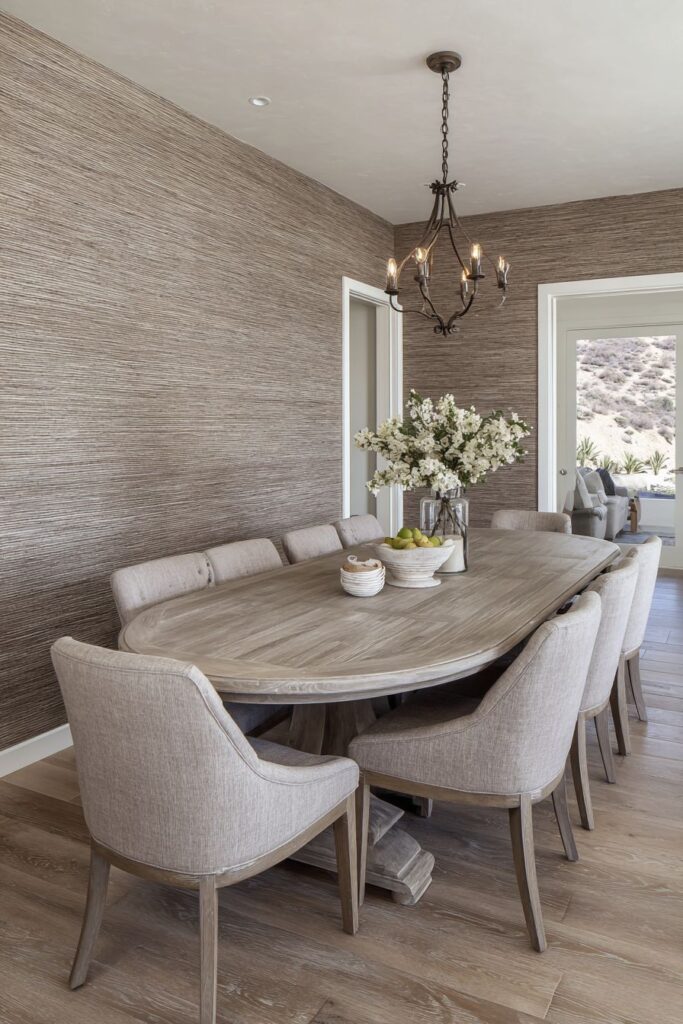
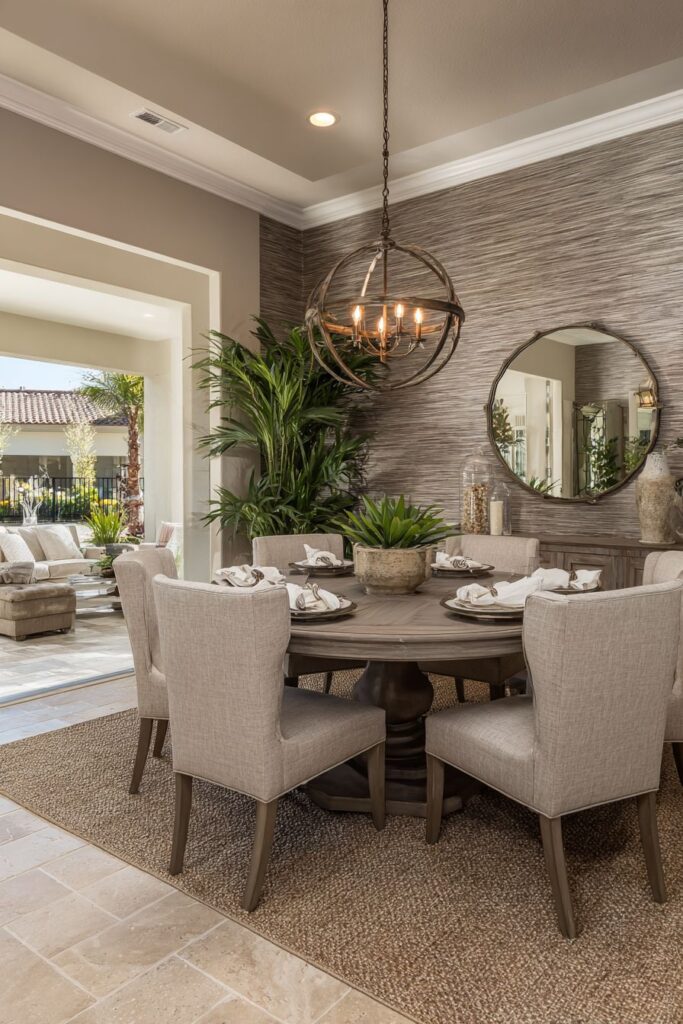
This transitional neutral dining room strikes the perfect balance between traditional elegance and contemporary sensibility, creating a sophisticated space that appeals to diverse tastes. An oval pedestal dining table in weathered grey finish commands attention with its graceful silhouette and unique patina.
The weathered finish adds character and visual interest while the oval shape promotes conversation and makes circulation around the table easier than rectangular alternatives. Linen-upholstered parsons chairs in warm taupe provide comfortable seating, their simple, tailored silhouettes bridging traditional and modern design languages effortlessly.

Walls painted in soft mushroom tone complement the natural travertine flooring beautifully, creating a cohesive neutral foundation with subtle color variations that add depth and interest. The travertine’s natural pitting and veining provide organic texture underfoot, while its neutral beige coloring grounds the cooler grey tones in the furniture.
A simple iron chandelier in aged bronze finish provides ambient lighting, its understated elegance adding visual weight overhead without overwhelming the space. The aged bronze finish introduces warmth that prevents the grey and taupe palette from feeling cold or institutional.
Textured grasscloth wallpaper on one accent wall adds dimensional interest and tactile richness without introducing pattern or color. The natural fibers visible in grasscloth create subtle variations that catch light beautifully, transforming a flat wall into a dynamic surface that changes throughout the day.
This sophisticated layering of neutral tones and natural materials demonstrates advanced design thinking, where each element contributes to the overall aesthetic while maintaining its individual character. The result is a dining room that feels collected and curated rather than coordinated from a single furniture showroom.
Key Design Tips:
- Choose oval or round dining tables to improve traffic flow and encourage conversation
- Layer warm and cool neutral tones for depth and visual sophistication
- Install textured wallpaper on a single accent wall for dimensional interest
- Select parsons-style chairs for their versatile, transitional aesthetic
- Use natural stone flooring like travertine for an organic texture and neutral color
- Hang chandeliers in aged or weathered metal finishes that add warmth to grey-toned spaces
7. Scandinavian-Inspired Light and Airy Design
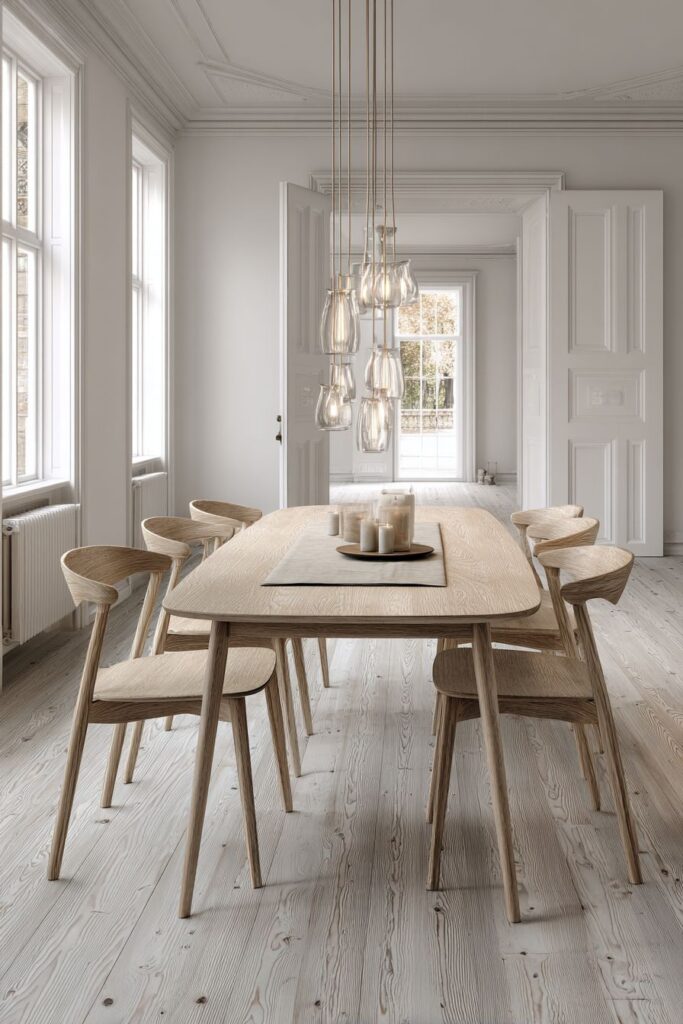
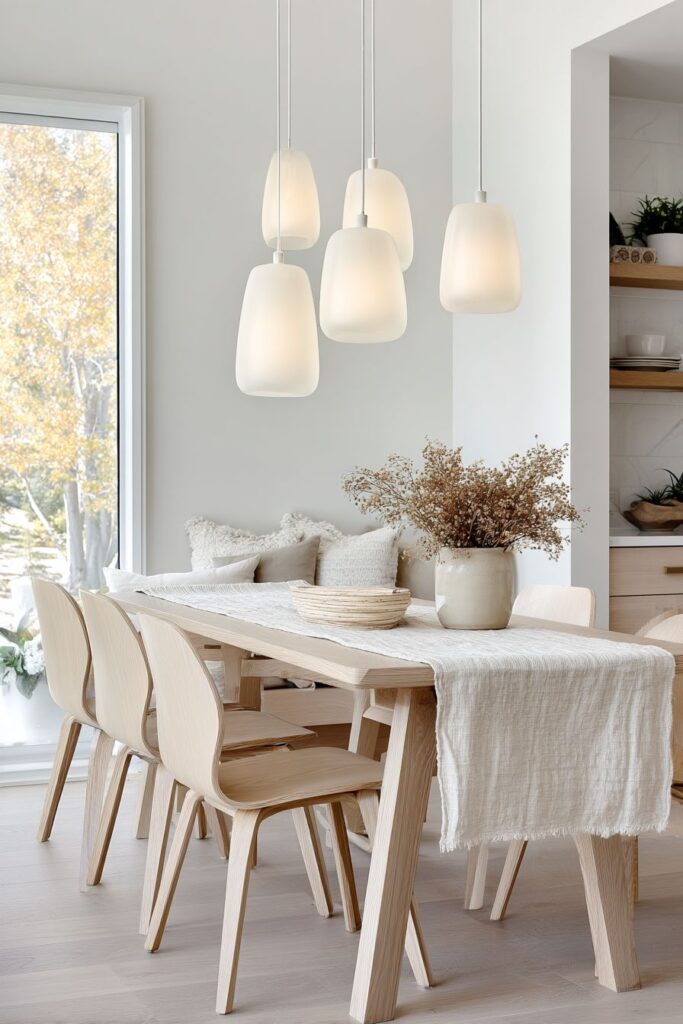
Channeling the effortless elegance of Nordic design, this Scandinavian-inspired neutral dining room celebrates simplicity, functionality, and connection to natural light. A light ash wood dining table featuring tapered legs exemplifies the clean-lined, organic forms characteristic of Scandinavian furniture design.
The pale wood tone brightens the space while maintaining warmth, and the tapered legs create visual lightness despite the table’s substantial size. Molded plywood chairs in natural birch finish surround the table, their sculptural forms and honest materials representing the best of mid-century Scandinavian design innovation.
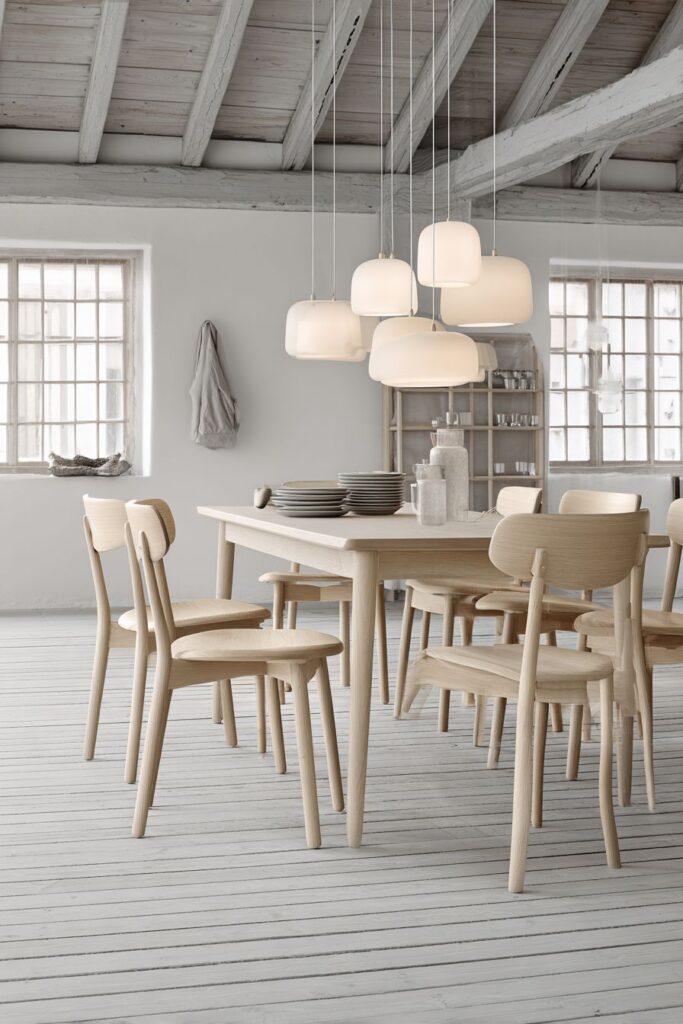
Crisp white walls maximize natural light reflection, a crucial strategy in Nordic countries where winter daylight is precious and fleeting. This bright backdrop creates a sense of spaciousness and calm while allowing the natural wood tones to stand out beautifully. Pale grey painted floorboards add subtle color variation without diminishing the room’s overall brightness, their muted tone grounding the space while maintaining the airy aesthetic. A cluster of simple pendant lights with frosted glass shades hangs at varying heights above the table, creating visual interest while providing layered illumination for different needs and moods.
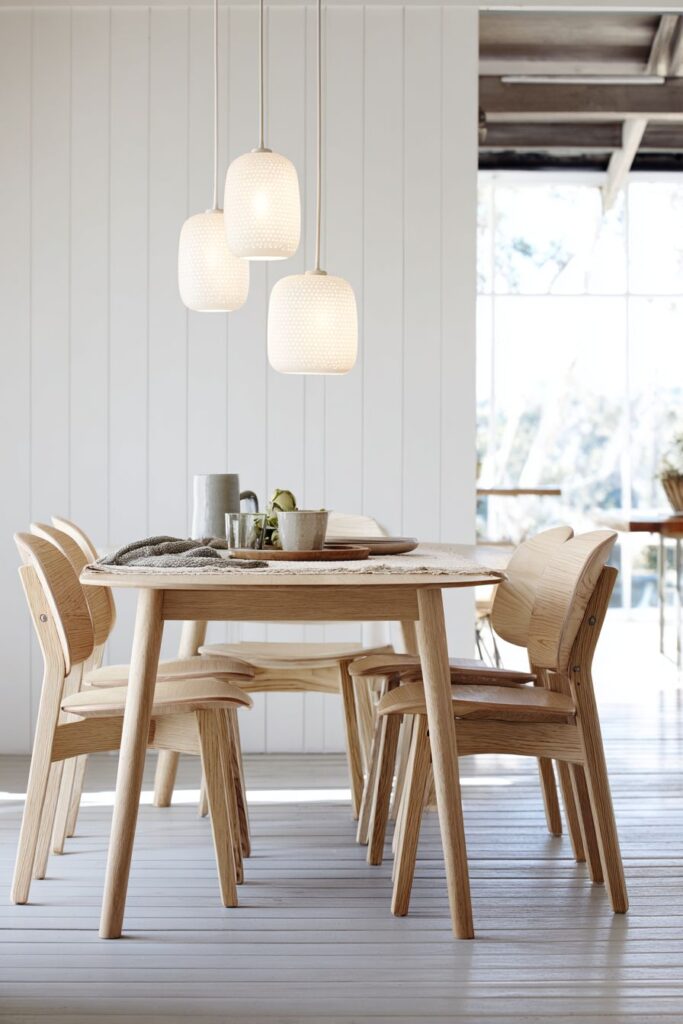
A linen table runner in soft sand tone adds textural interest and warmth to the pale wood table surface without covering its beautiful grain. This restrained approach to table decoration reflects the Scandinavian principle of lagom—not too much, not too little, but just right. The space feels flooded with soft, natural lighting characteristic of Nordic design, where windows remain unobstructed and reflective surfaces multiply available light. This design demonstrates how neutral palettes can create bright, uplifting spaces that combat seasonal darkness while remaining calm and uncluttered.
Key Design Tips:
- Choose pale wood furniture in ash, birch, or beech for an authentic Scandinavian style
- Paint walls in crisp white to maximize light reflection in dining spaces
- Install clustered pendant lights at varying heights for visual interest and flexible lighting
- Use molded plywood chairs that combine sculptural beauty with ergonomic comfort
- Keep window treatments minimal or absent to maximize natural light
- Add warmth through natural textiles like linen runners in sand or grey tones
8. Rustic Walnut Live-Edge Authenticity
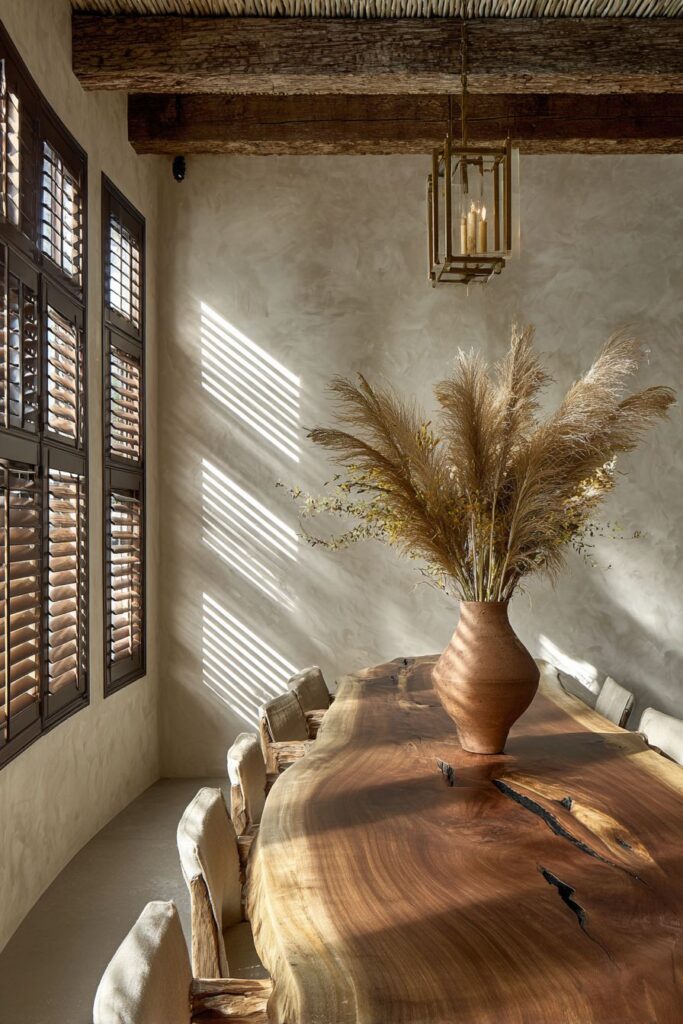
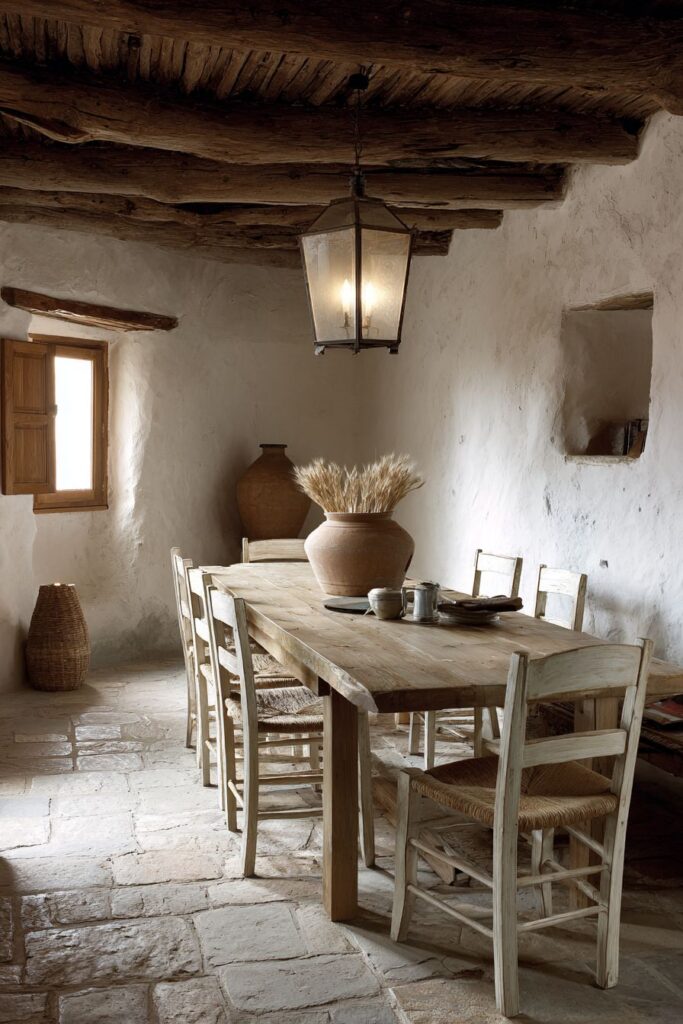
This rustic neutral dining room celebrates the raw beauty of natural wood through a stunning live-edge walnut dining table that serves as functional art. The visible wood grain, natural edge contours, and authentic imperfections like knots and checking create a one-of-a-kind piece that connects diners directly to the tree from which it came.
Each meal at this table offers a tactile connection to nature that manufactured furniture simply cannot provide. Ladder-back chairs in distressed cream paint finish surround this natural masterpiece, their traditional forms and deliberately worn surfaces complementing the table’s rustic character while lightening the overall visual weight.
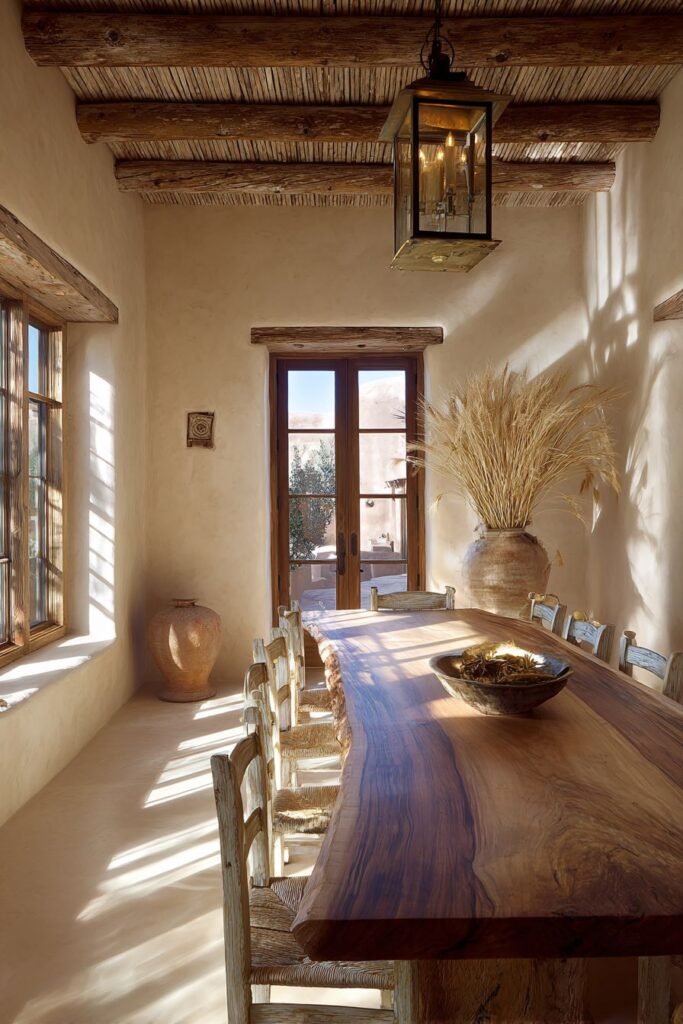
Walls in warm linen white create contrast with the dramatic dark ceiling beams that add architectural interest and rustic character overhead. These exposed beams draw the eye upward, making the ceiling feel higher while grounding the space in traditional farmhouse or cottage design language.
A terracotta vessel filled with dried wheat stalks provides an organic centerpiece that echoes the harvest and agricultural themes inherent in rustic design. The earthy orange-brown of terracotta introduces subtle warmth while remaining firmly within the neutral palette, and dried wheat adds vertical interest and natural texture.
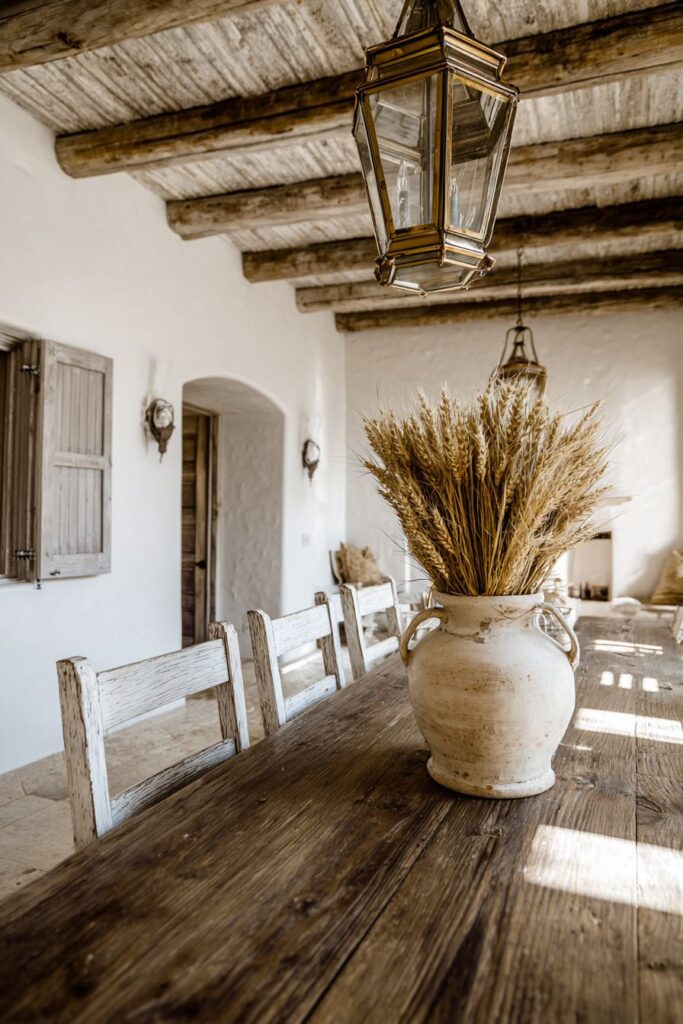
An antique brass lantern-style chandelier adds warm ambient glow, its vintage styling and warm metallic finish complementing the room’s rustic aesthetic perfectly. Natural light filters through wooden shutters, creating dappled shadows that change throughout the day and add dynamic visual interest to the space.
These moving patterns of light and shadow enliven the neutral surfaces, preventing the room from feeling static or staged. This design showcases authentic rustic character and warm neutral tones while emphasizing natural materials with genuine wear patterns and organic imperfections that make the space feel collected over time rather than decorated in a single shopping trip.
Key Design Tips:
- Invest in live-edge wood tables that showcase natural edges and authentic character
- Paint traditional chair styles in distressed finishes for rustic charm
- Install or expose ceiling beams to add architectural character and traditional appeal
- Use terracotta vessels and organic centerpieces that reference agricultural heritage
- Choose lantern-style lighting in brass or bronze finishes for rustic warmth
- Install wooden shutters that filter light beautifully while adding textural interest
9. Contemporary Cerused Oak Elegance
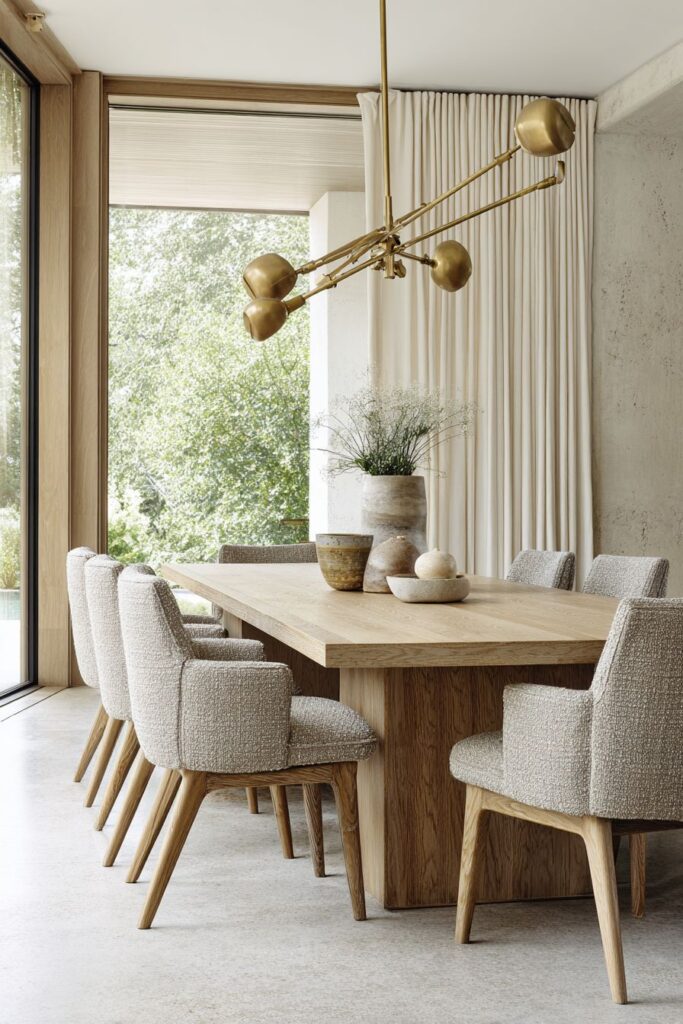
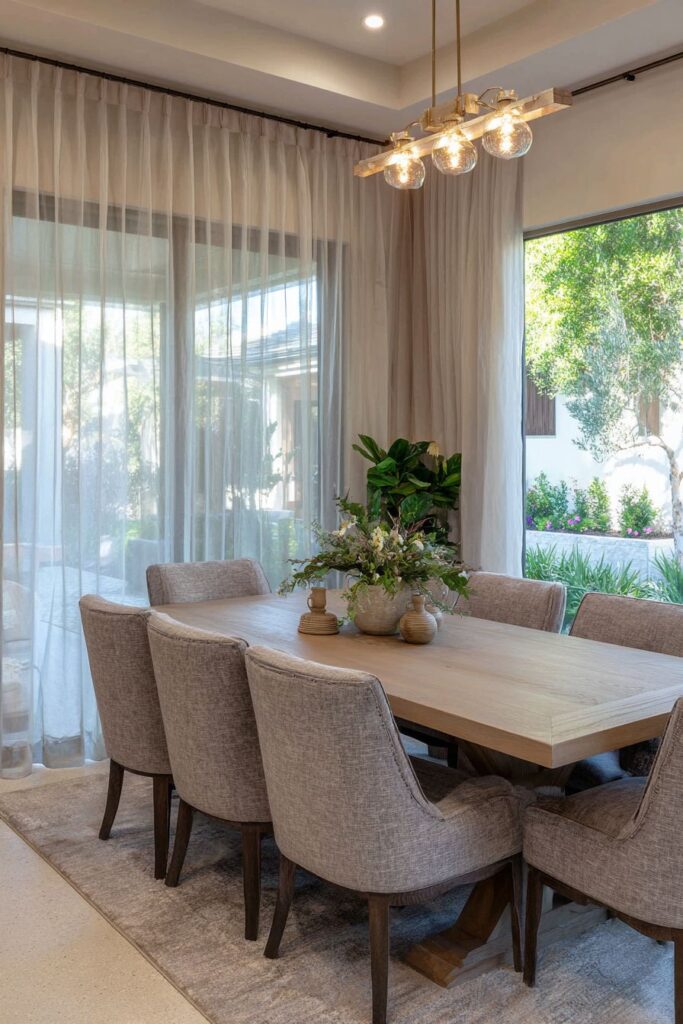
This contemporary neutral dining room demonstrates how modern design can feel warm and inviting rather than cold and austere. A rectangular dining table in pale cerused oak finish serves as the centerpiece, its wire-brushed surface highlighting the wood’s natural grain while the pale finish keeps the space bright and contemporary.
The cerusing technique, which fills wood grain with white or pale pigment, creates beautiful textural interest that becomes more apparent as light moves across the surface throughout the day. Upholstered dining chairs with subtle texture in dove grey fabric provide comfortable seating, their refined tailoring and neutral tone supporting the contemporary aesthetic.

Walls in soft putty tone complement the polished concrete flooring in light grey, creating a sophisticated neutral foundation with subtle industrial undertones. The concrete flooring, with its natural variations and slight irregularities, provides textural interest underfoot while maintaining the clean-lined contemporary aesthetic.
Its polished surface reflects light subtly, contributing to the room’s overall brightness. A sculptural chandelier in brushed nickel with fabric shades provides sophisticated lighting that serves as both functional illumination and artistic statement. The mixed materials of metal and fabric create visual interest while the brushed nickel finish adds contemporary elegance without excessive shine.
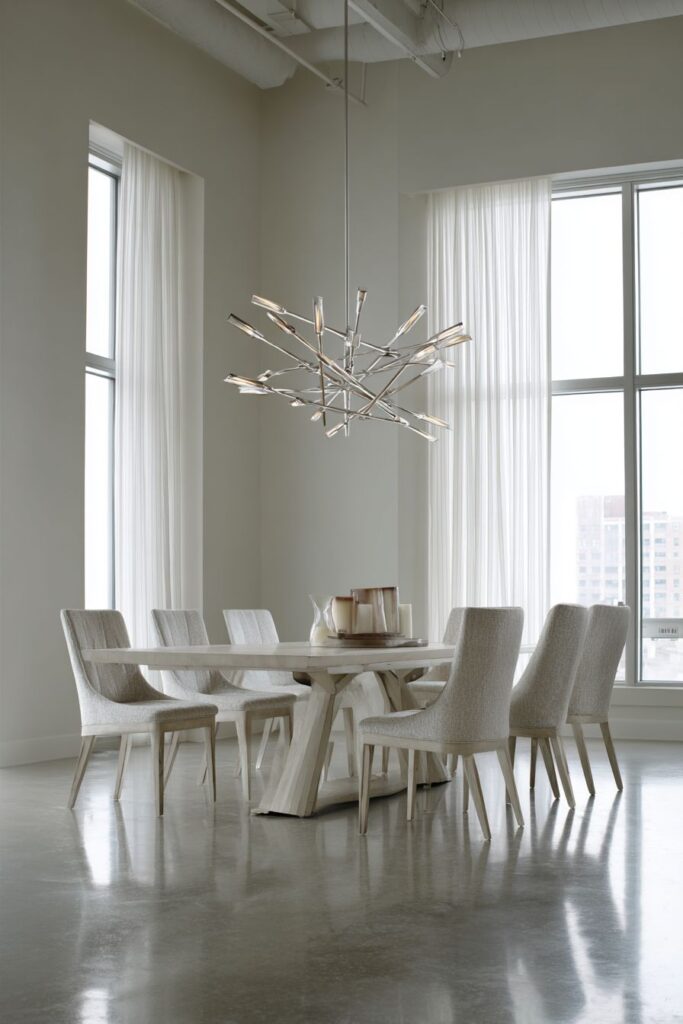
Floor-to-ceiling sheer curtains in ivory diffuse abundant natural light, softening the room’s more industrial elements and creating a sense of height and grandeur. These full-length panels frame the windows beautifully while maintaining the room’s connection to outdoor views and natural illumination. This refined neutral palette and modern material choices create an elegant yet approachable dining space that feels current without being trendy. The layering of textures—from brushed wood to soft fabric to smooth concrete—provides visual richness within the restrained color scheme, proving that contemporary neutral design can engage all the senses.
Key Design Tips:
- Choose cerused or wire-brushed wood finishes that highlight natural grain beautifully
- Use polished concrete flooring for contemporary style with textural interest
- Install floor-to-ceiling curtains to create the illusion of height and frame windows dramatically
- Select sculptural light fixtures that serve as functional art pieces
- Upholster dining chairs in textured fabrics that add subtle interest without pattern
- Layer warm and cool grey tones with putty and cream for sophisticated depth
10. French Country Distressed Elegance
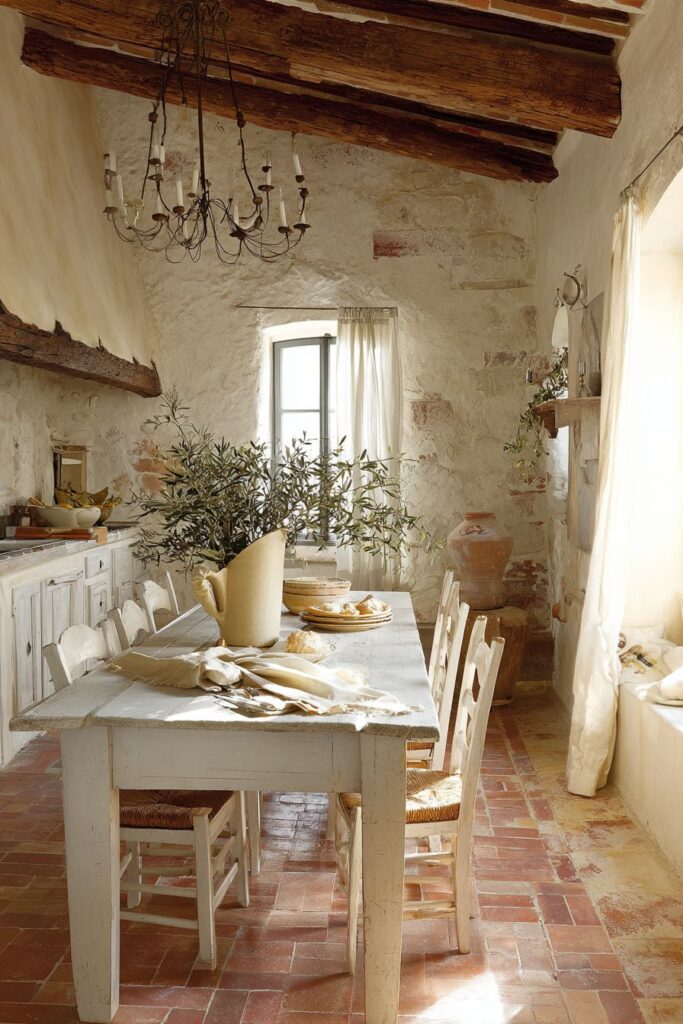
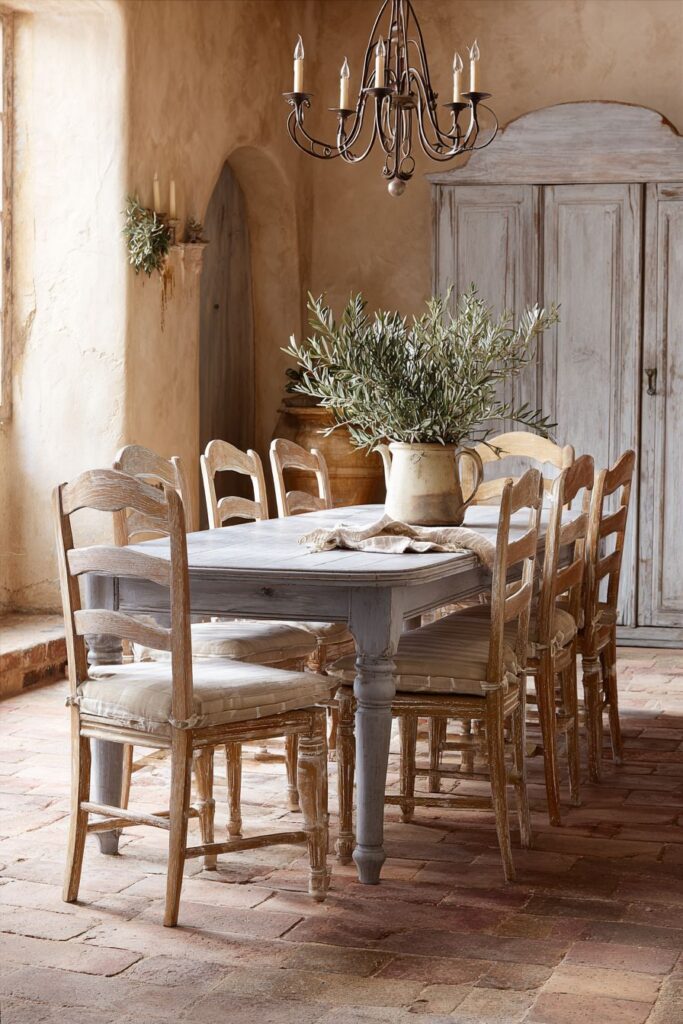
This French country neutral dining room captures the relaxed sophistication of European provincial living with timeless appeal. A distressed painted dining table in soft grey-white finish shows the gentle wear of decades of use, its deliberately aged surface telling stories of countless family meals.
The subtle variations in the paint finish—where underlying wood shows through at edges and corners—create authentic character that cannot be replicated by factory distressing. Rush-seat ladder-back chairs in natural wood tone surround the table, their traditional construction and natural materials embodying the honest craftsmanship valued in French country design.
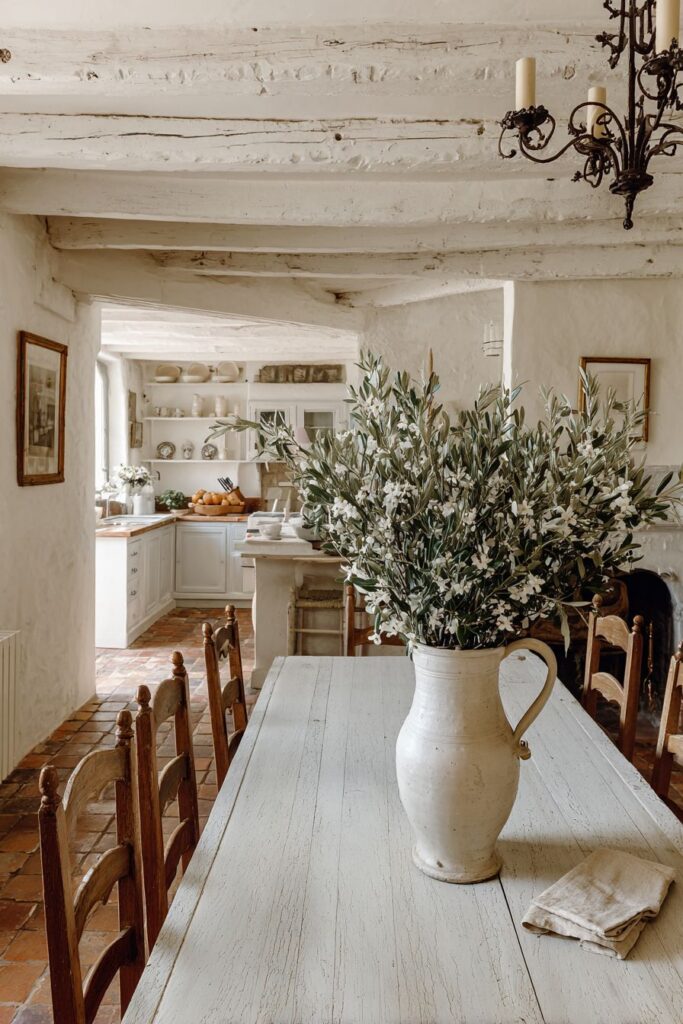
Plaster walls in warm cream show subtle texture variations that add depth and interest to otherwise plain surfaces. These textural irregularities catch light beautifully, creating a living surface that changes throughout the day. Terracotta tile flooring adds earthy warmth underfoot, its natural color variations and slightly irregular edges reinforcing the handmade, authentic quality of the space.
The terracotta’s orange-brown tones ground the lighter furniture and walls while maintaining the room’s overall neutral palette. A simple iron chandelier with candle-style lights hangs above, its understated design and dark metal finish providing visual weight without excessive ornamentation.
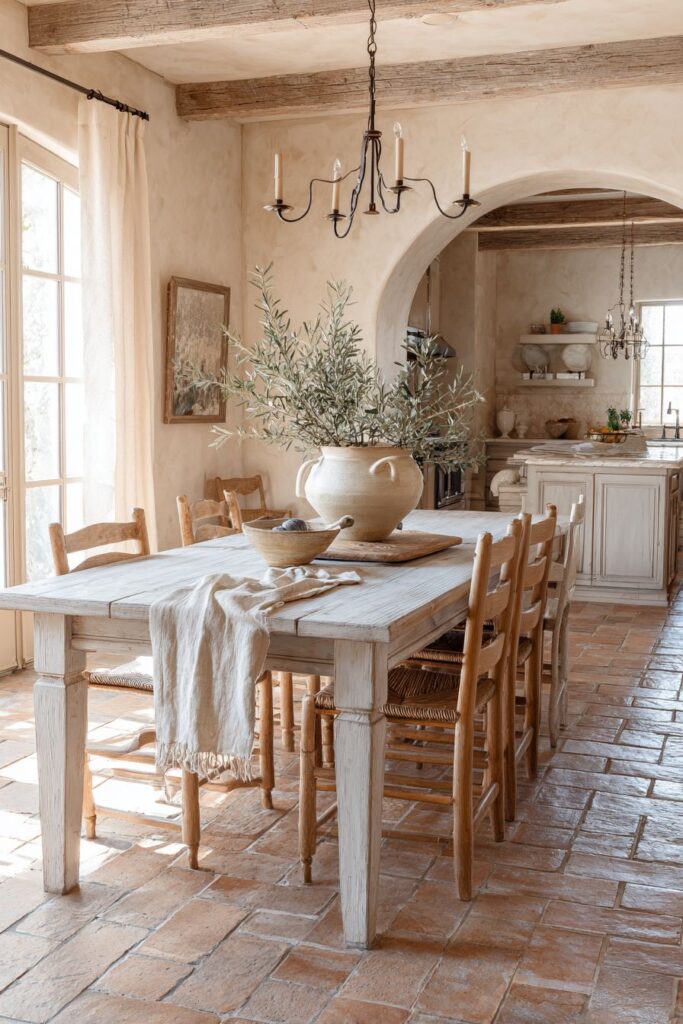
Linen napkins in natural flax color rest casually on the table beside a ceramic pitcher filled with fresh olive branches, creating a casual yet considered tablescape. The silvery-green of olive branches introduces the only hint of color while maintaining the natural, organic aesthetic.
This combination of elements creates casual European elegance with soft diffused lighting that emphasizes authentic materials and gentle patina. The space feels collected over generations rather than decorated in a single moment, embodying the French country principle of lived-in beauty.
Key Design Tips:
- Choose distressed painted furniture with authentic-looking wear patterns at edges and corners
- Install terracotta tile flooring for earthy warmth and traditional European character
- Use rush-seat chairs that combine comfort with traditional craftsmanship
- Apply textured plaster finishes to walls for subtle dimensional interest
- Hang simple iron chandeliers with candle-style lights for authentic French country lighting
- Decorate with fresh olive branches and natural linen textiles in flax tones
11. Built-In Banquette Storage Solution
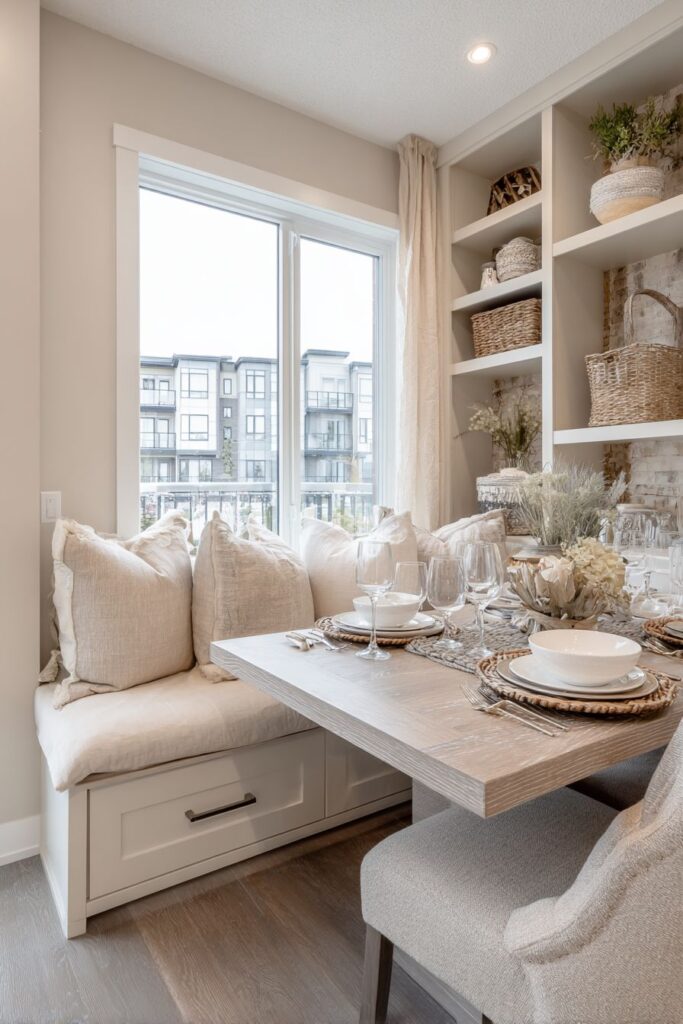
This neutral dining room demonstrates how smart space planning and built-in storage can enhance both functionality and aesthetics. A built-in banquette with cushions in natural canvas fabric provides comfortable seating along one wall while concealing pull-out drawers underneath in whitewashed oak finish.
These hidden storage compartments offer valuable space for table linens, seasonal dishware, and dining accessories, keeping the room uncluttered while maximizing every square foot. The dining table in matching whitewashed oak extends from the banquette area, creating a cohesive built-in feeling that makes the space feel intentionally designed rather than furnished with disparate pieces.
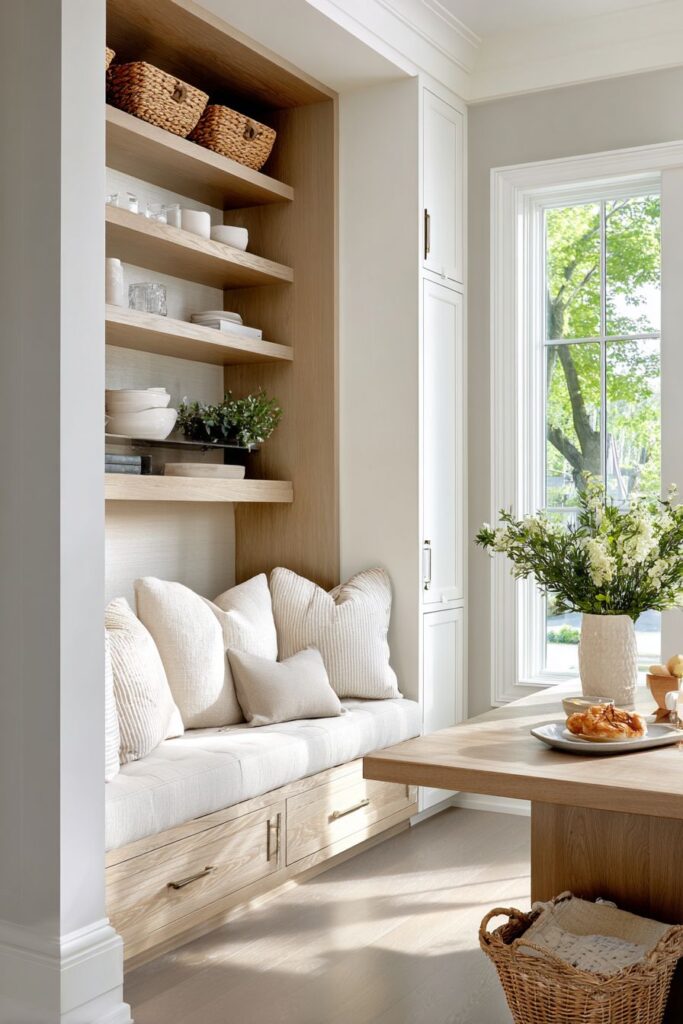
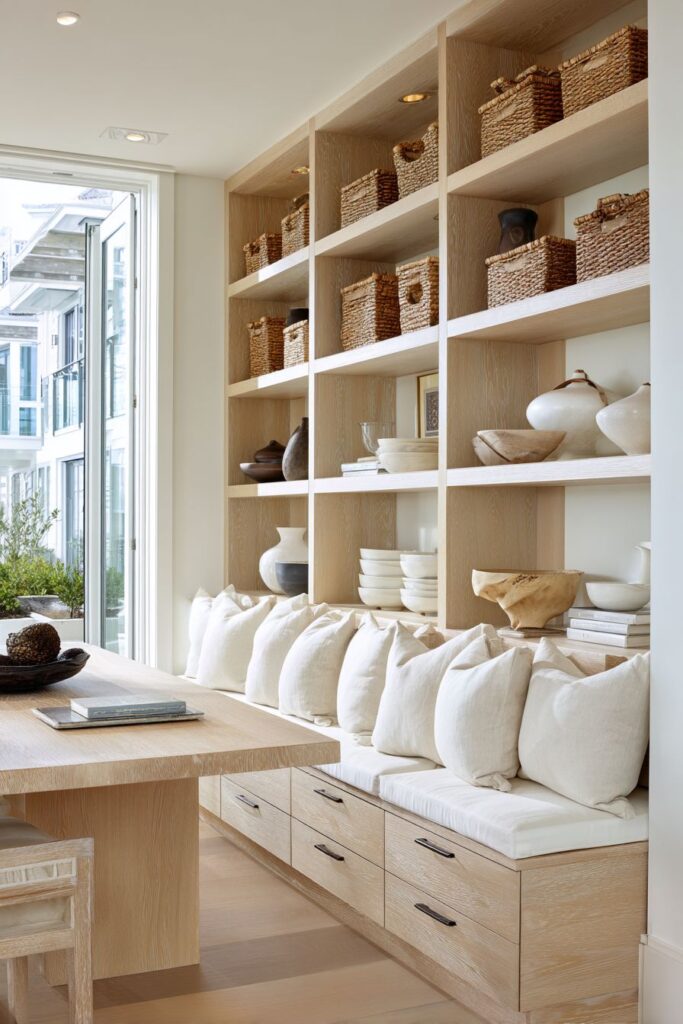
Open shelving in the same whitewashed oak finish displays cream-colored dinnerware and woven baskets, adding both practical storage and decorative interest. The open shelves create visual breathing room while keeping everyday items accessible, and the cream dishware and natural baskets maintain the room’s cohesive neutral palette. Walls in soft greige provide a calm backdrop that allows the built-in elements to stand out without competing for attention. Natural light from adjacent windows illuminates the functional design, highlighting the beautiful grain of the whitewashed oak and creating a bright, welcoming atmosphere.
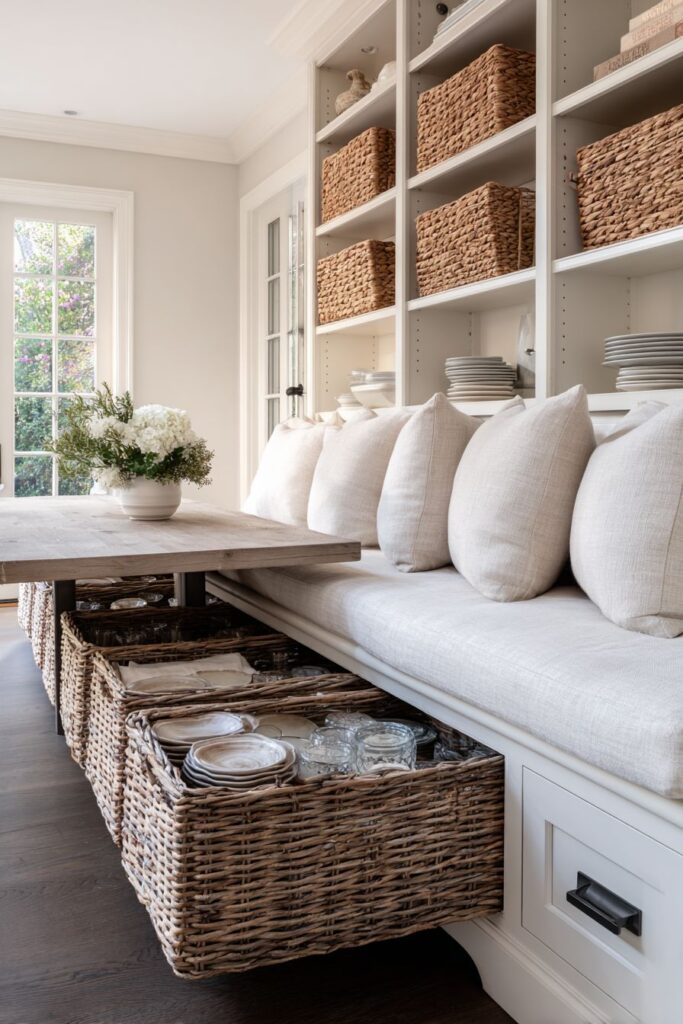
This design proves that practical storage solutions need not sacrifice aesthetic appeal—when executed in beautiful materials and thoughtful proportions, built-ins become architectural features that enhance a room’s character. The cohesive neutral material palette throughout creates a custom, high-end appearance while the functional elements address real-world storage needs.
This approach is particularly valuable in smaller homes or open-plan spaces where dedicated storage rooms may not exist, demonstrating how neutral design can be both beautiful and highly practical.
Key Design Tips:
- Install built-in banquettes with hidden storage drawers to maximize space efficiency
- Choose matching wood finishes for tables, banquettes, and shelving for cohesive appearance
- Use canvas or cotton cushion covers in neutral tones that are durable and easy to clean
- Display coordinated dishware and baskets on open shelving for practical storage with visual appeal
- Position built-in seating near windows to maximize natural light and views
- Select whitewashed or pale wood finishes that brighten spaces and create airy feelings
12. Round Bleached Oak with Linen Textures
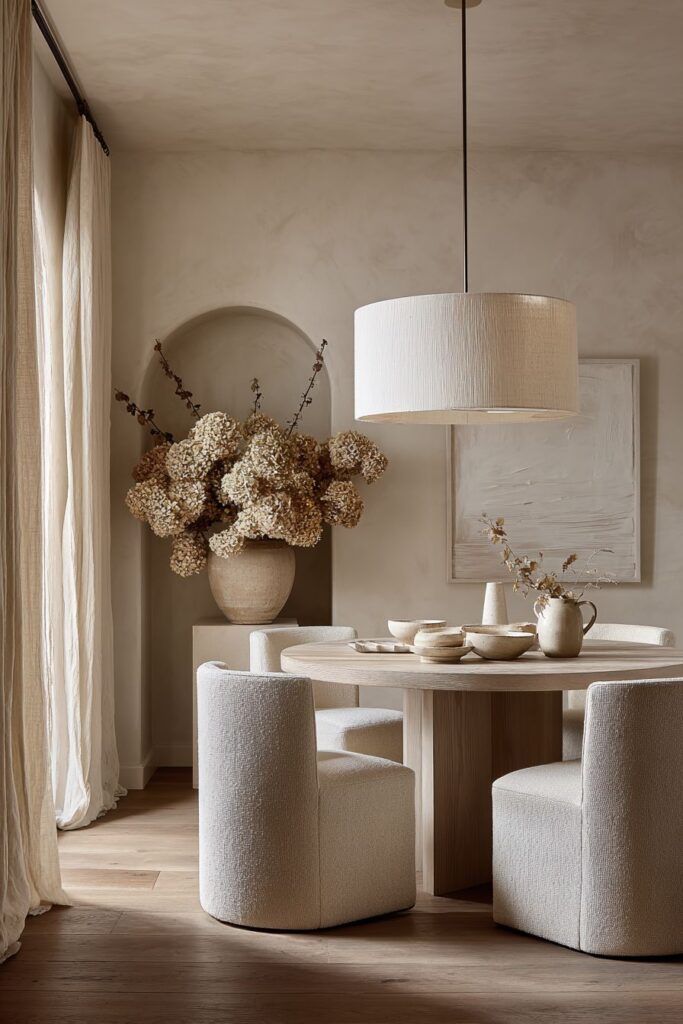
This neutral dining room celebrates the beauty of circular forms and natural textural variations through carefully selected furniture and materials. A round pedestal dining table in bleached oak creates an intimate gathering space that encourages conversation and connection. The bleached finish lightens the oak to pale honey tones while maintaining visible grain patterns that provide organic visual interest.
The pedestal base maximizes legroom and allows chairs to be positioned flexibly around the entire circumference. Curved-back dining chairs upholstered in natural linen with visible weave texture surround the table, their gentle curves echoing the table’s circular form while the linen’s texture adds tactile richness.
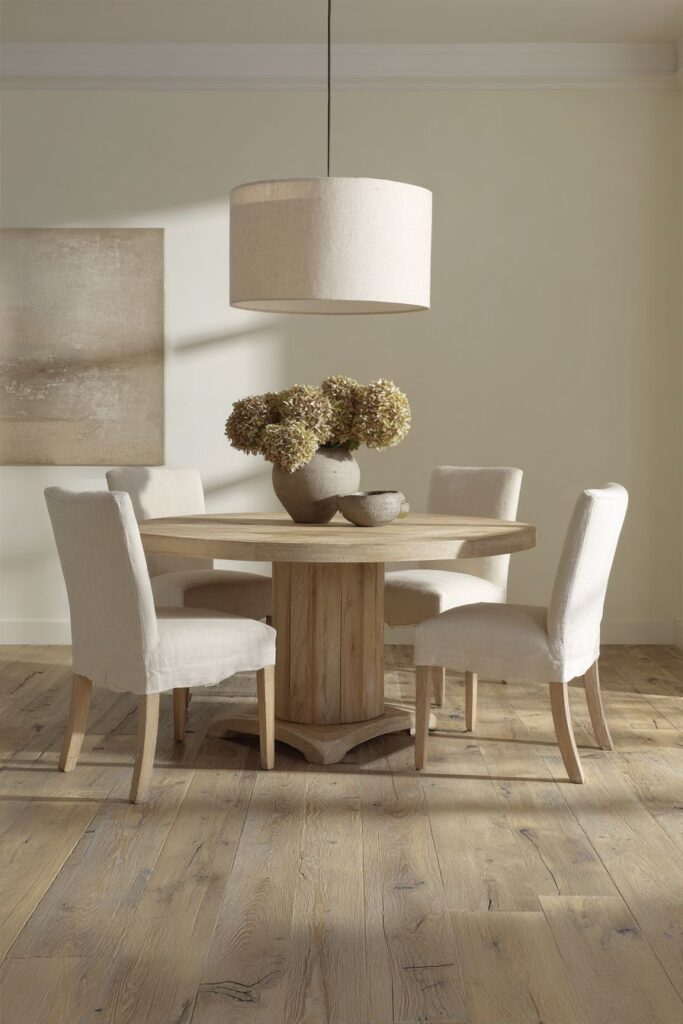
Walls in warm ivory complement wide-plank flooring in honey-toned white oak, creating layers of warm neutral tones that prevent the space from feeling cold despite its pale palette. The wide planks show natural knots and grain patterns that celebrate the wood’s organic origins, their varied patterns creating subtle visual interest underfoot.
A simple drum pendant in textured linen fabric provides soft overhead lighting, its cylindrical form and natural material reinforcing the room’s organic aesthetic. The pendant’s size and scale are carefully proportioned to the round table below, creating visual harmony between ceiling and floor.
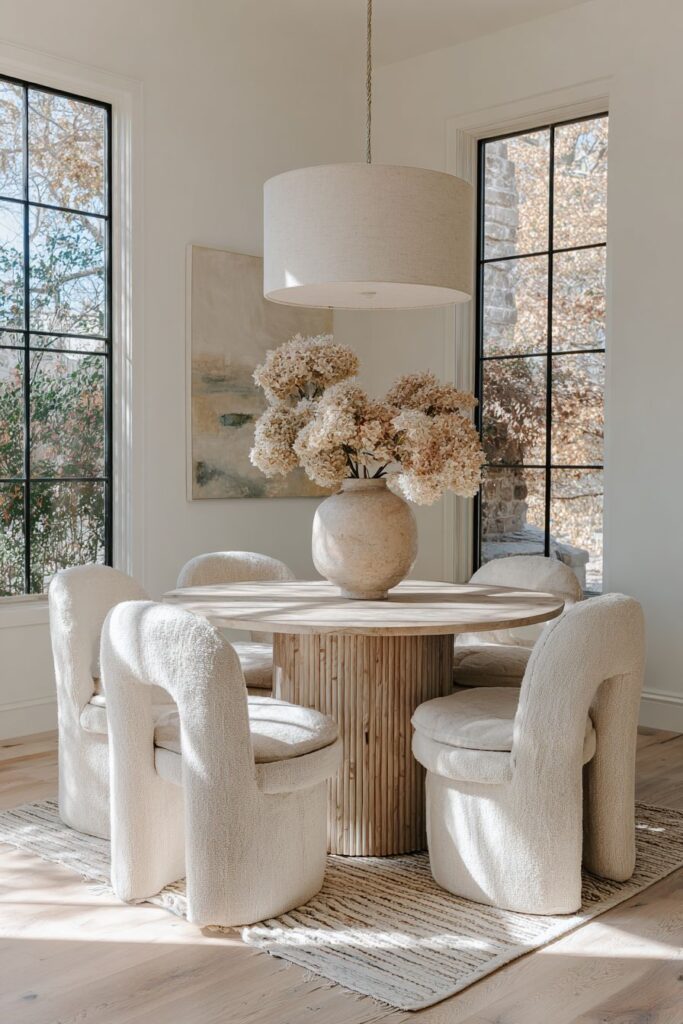
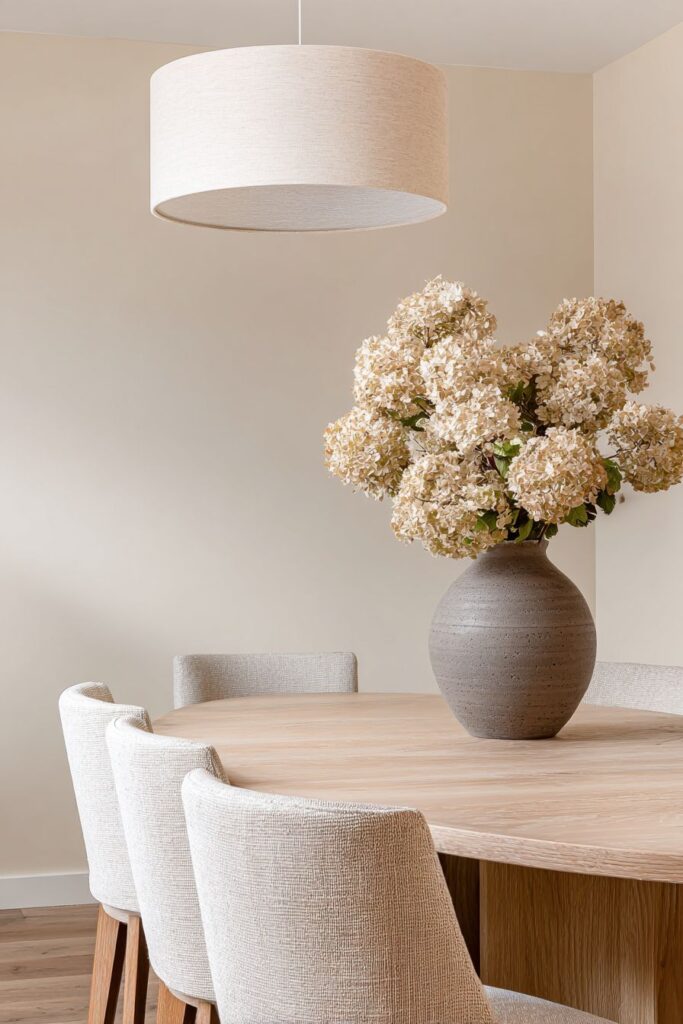
Dried hydrangeas in a stone vase create an understated centerpiece that brings natural beauty to the table without introducing bright colors or competing with the food during meals. The muted tones of dried hydrangeas—ranging from dusty mauve to soft brown—remain firmly within the neutral palette while adding organic shapes and subtle texture.
This design demonstrates how layered neutral textures and organic materials can create a rich, engaging space that feels anything but bland. The visible weave of linen, grain patterns in wood, and textured pendant shade provide visual variety within a harmonious color scheme.
Key Design Tips:
- Choose round dining tables for intimate gatherings and improved conversation flow
- Select bleached wood finishes that lighten spaces while maintaining natural grain visibility
- Upholster chairs in linen fabrics with visible weave for textural interest
- Install drum pendant lights scaled appropriately to table size below
- Use wide-plank flooring that celebrates natural wood variations and imperfections
- Create centerpieces with dried flowers in muted tones that complement rather than compete
13. Industrial Touches with Reclaimed Pine
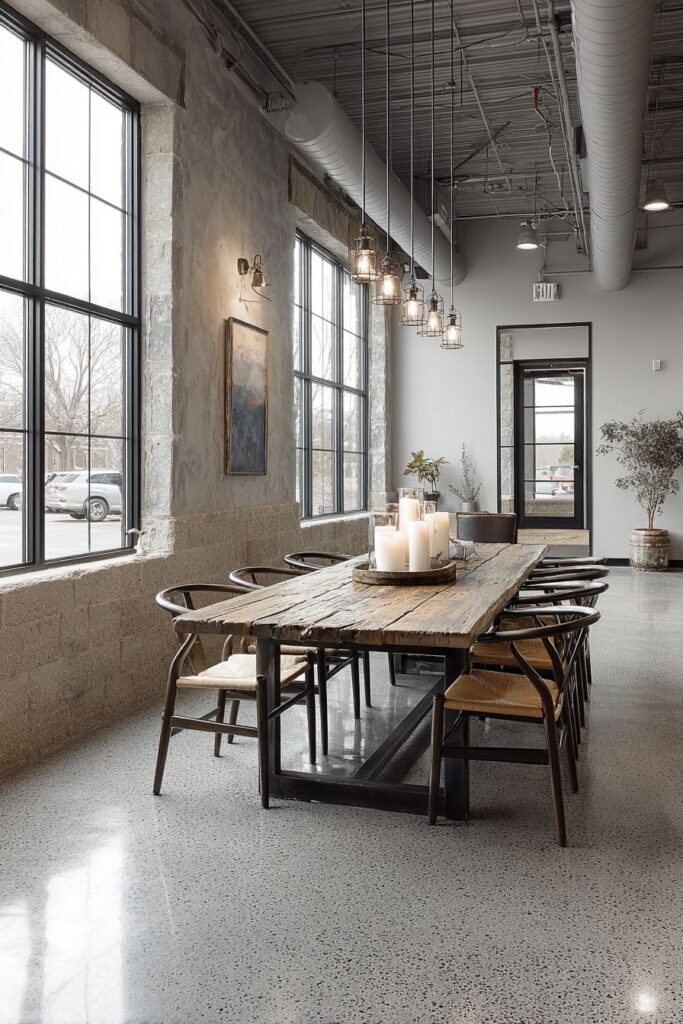
This neutral dining room successfully incorporates industrial elements while maintaining warmth through natural materials and thoughtful design. A reclaimed pine dining table with metal frame in aged pewter finish combines rustic wood character with industrial metal construction, creating a piece with substantial visual impact.
The reclaimed pine top shows authentic weathering, nail holes, and color variations that tell the story of the wood’s previous life, while the metal frame provides sturdy support with honest, exposed construction. Metal dining chairs with natural wood seats continue the mixed-material theme, their simple forms and utilitarian construction embodying industrial design principles.
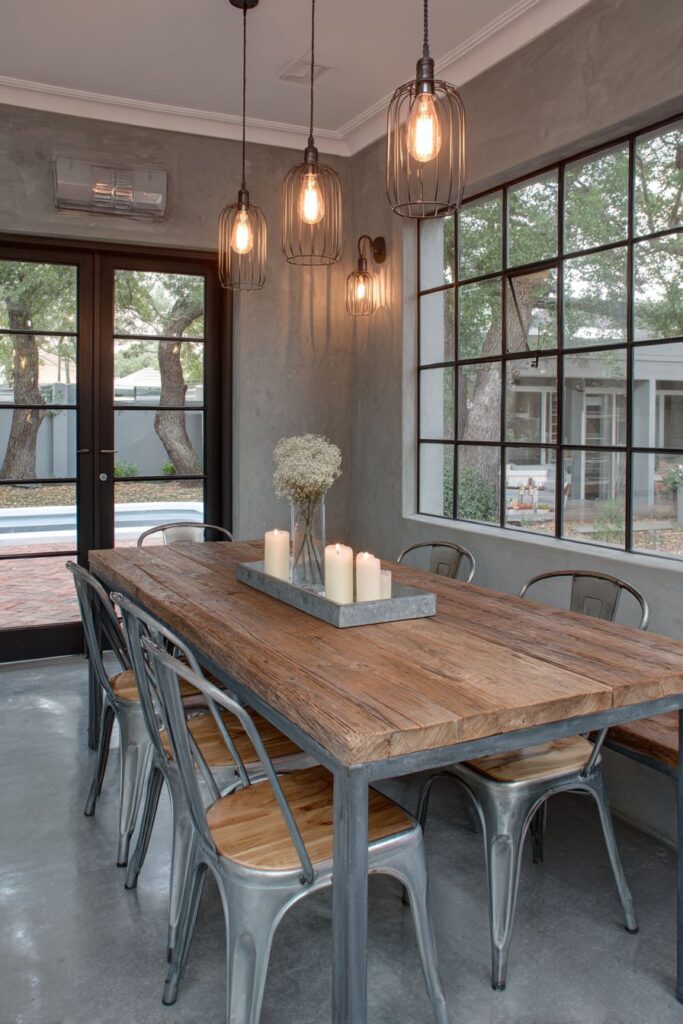
Walls in soft concrete grey complement the polished cement flooring, creating a contemporary neutral backdrop that references industrial architecture without feeling cold or unwelcoming. The polished concrete floor, with its slight sheen and natural variations, provides durable beauty that improves with age.
Edison bulb pendant lights with simple metal cages hang above the table, their exposed filaments and minimal fixtures celebrating the beauty of industrial lighting design. The warm glow of Edison bulbs softens the room’s harder materials, creating ambient light that feels nostalgic despite the contemporary setting.
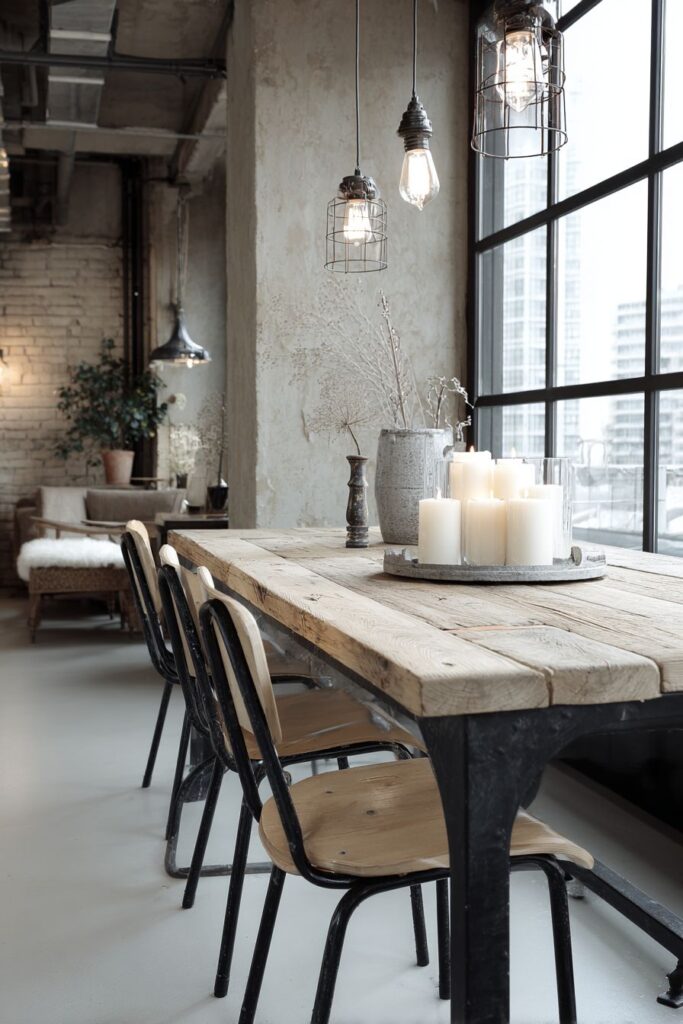
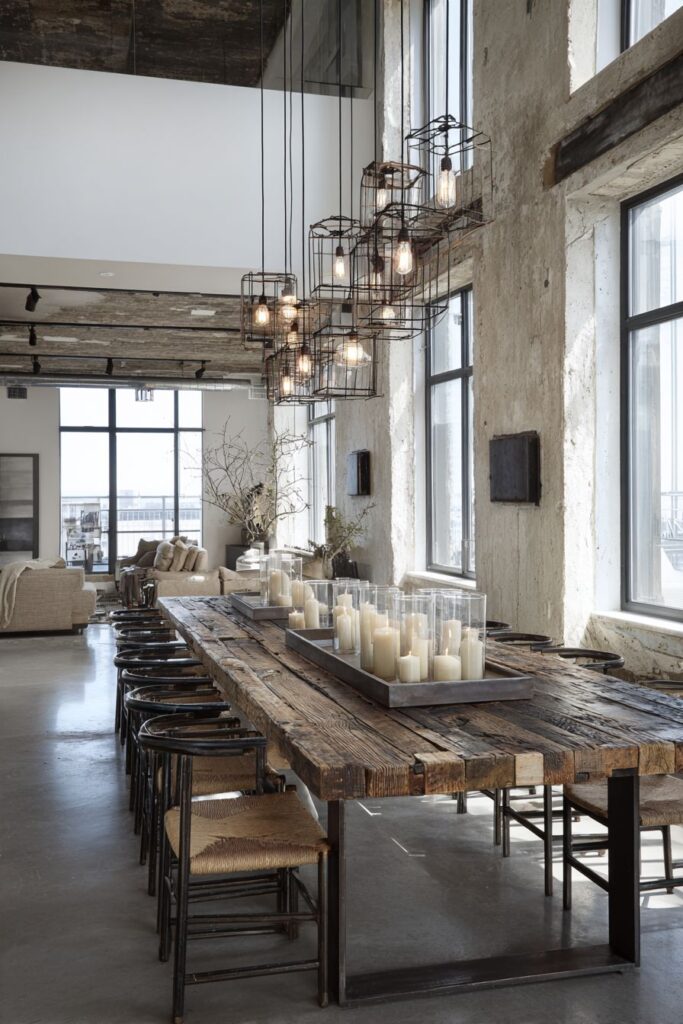
A galvanized metal tray holds pillar candles as a centerpiece, introducing additional industrial texture while providing warm candlelight for evening meals. Large industrial-style windows flood the space with natural light, their generous proportions and simple black frames creating dramatic architectural features.
This design captures raw authentic materials and utilitarian aesthetic within a cohesive neutral color scheme, proving that industrial style can feel warm and livable rather than cold and warehouse-like. The combination of reclaimed wood, aged metals, and concrete creates a sophisticated neutral palette with substantial character.
Key Design Tips:
- Combine reclaimed wood with metal frames for mixed-material industrial appeal
- Choose Edison bulb fixtures with simple metal cages for authentic industrial lighting
- Use polished concrete flooring for durability and contemporary industrial style
- Paint walls in concrete grey tones that reference industrial architecture
- Incorporate galvanized metal accessories and containers for textural variety
- Install large windows with black metal frames for dramatic architectural impact
14. Traditional Oak with Velvet Upholstery
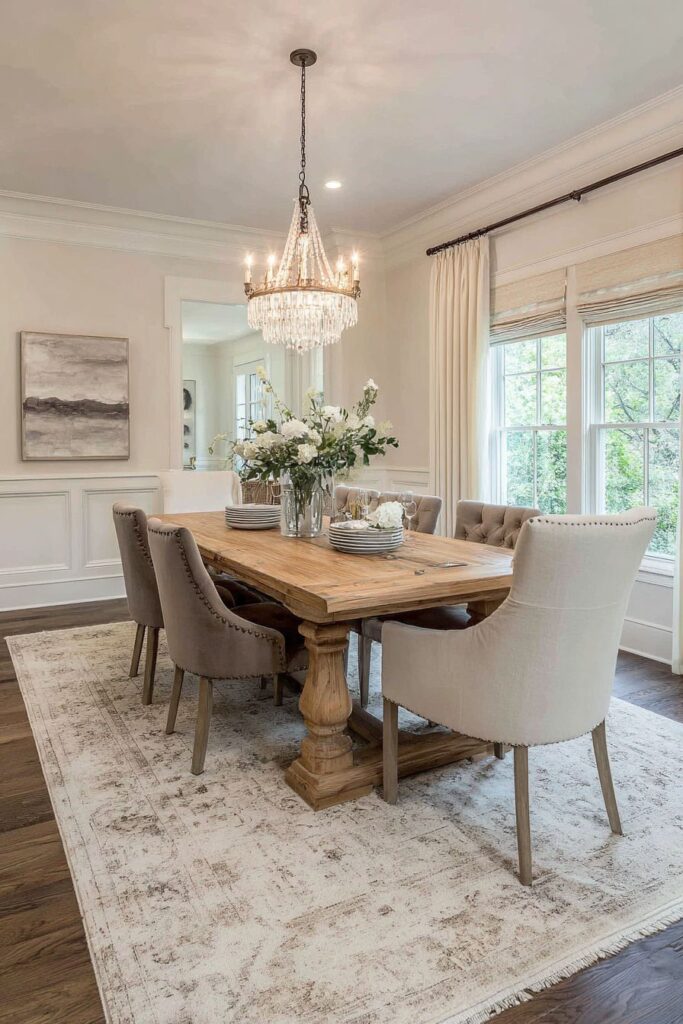
This traditional neutral dining room demonstrates how classic design principles create timeless elegance that never goes out of style. An extendable dining table in medium oak finish with turned legs showcases traditional craftsmanship and provides flexibility for entertaining different-sized groups.
The medium oak tone offers warm richness while the turned legs add decorative detail that elevates the piece beyond simple utility. Upholstered dining chairs in taupe velvet with nailhead trim provide luxurious seating, their soft pile and traditional detailing adding sophistication and comfort. The nailhead trim creates a finished edge that frames the upholstery beautifully.
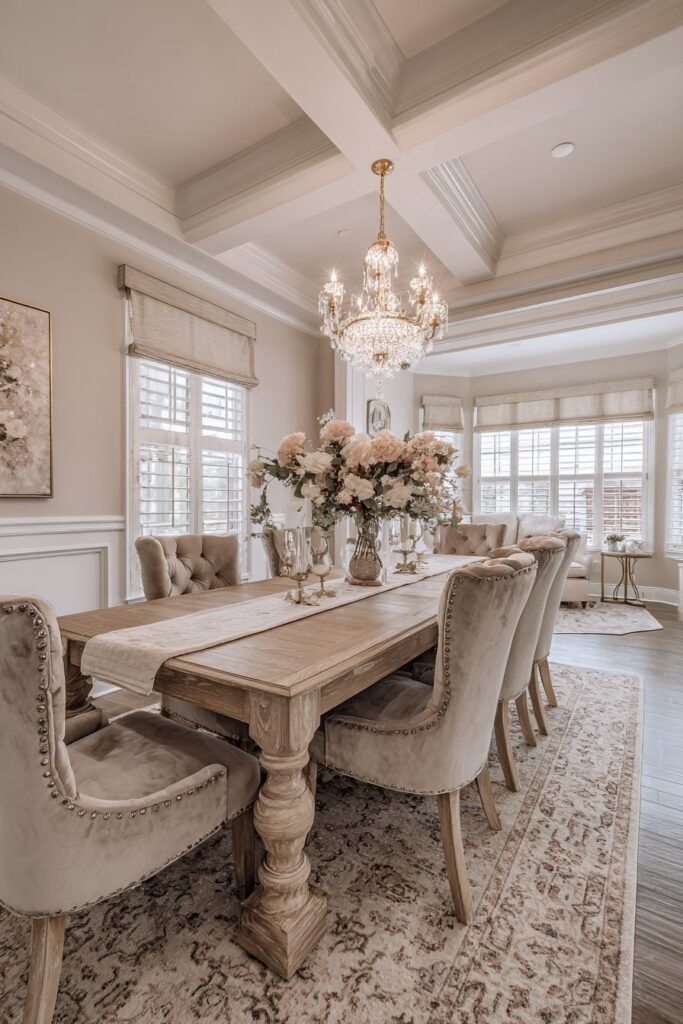
Walls painted in soft biscuit tone feature classic crown molding and wainscoting in off-white, architectural details that add depth, dimension, and traditional character without requiring artwork or accessories. The wainscoting creates a natural visual division that makes walls more interesting while protecting them from dining chair impacts.
A crystal chandelier with fabric drum shades provides elegant lighting, its sparkle adding glamour while the shades soften the light for flattering ambient illumination. The chandelier serves as a focal point that draws the eye upward while anchoring the dining table below.
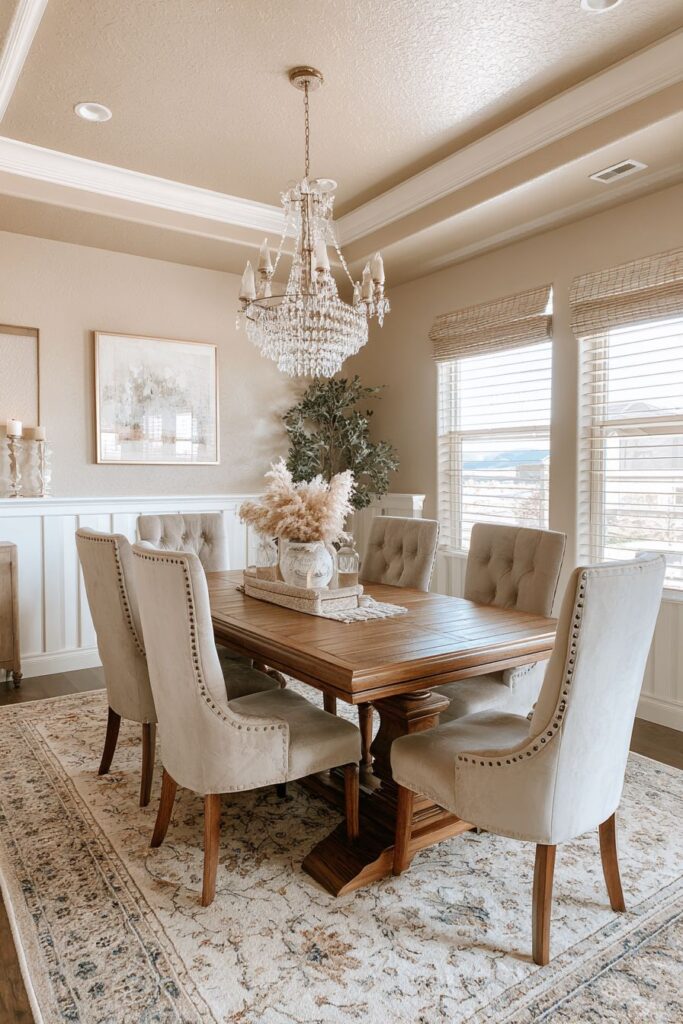
A Persian-style area rug in muted beige and cream tones grounds the furniture arrangement while adding pattern and traditional elegance underfoot. The rug’s subtle design adds visual interest without overwhelming the space, its neutral colors allowing the furniture to remain the focus.
Natural light filters through Roman shades in natural linen fabric, their soft folds and neutral tone maintaining privacy while preserving the room’s connection to natural light. This design highlights timeless elegance and refined neutral palette through quality materials and traditional detailing that will remain beautiful for decades.
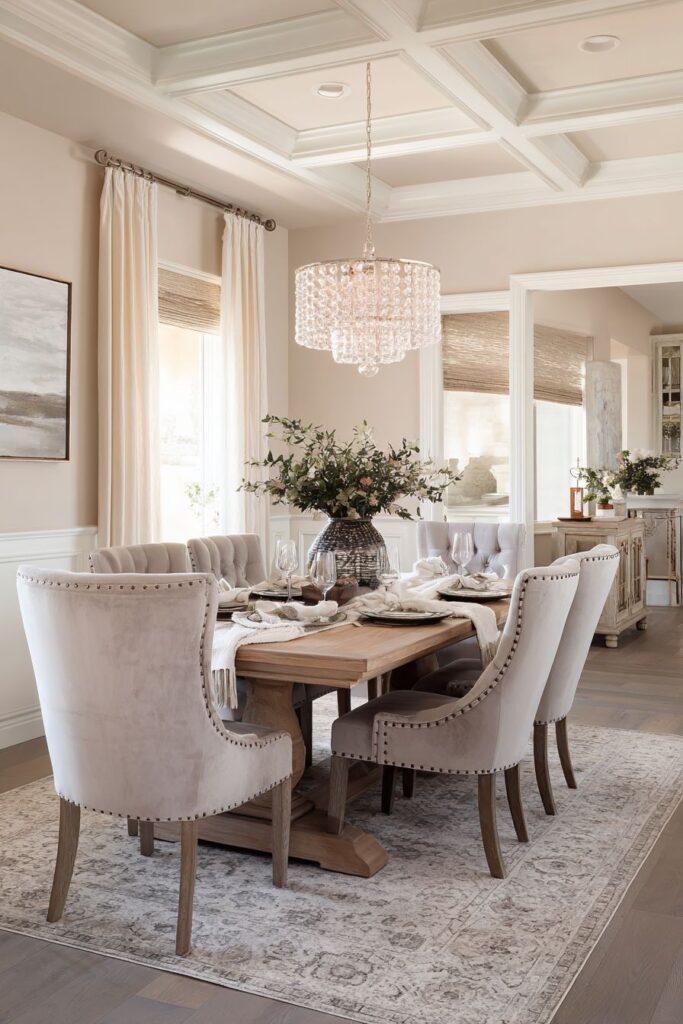
Key Design Tips:
- Choose extendable dining tables that adapt to different entertaining needs
- Upholster dining chairs in velvet fabrics with nailhead trim for traditional luxury
- Install crown molding and wainscoting for architectural character and traditional detail
- Hang crystal chandeliers with fabric shades for elegant, flattering light
- Use Persian-style rugs in neutral colorways for subtle pattern and traditional appeal
- Install Roman shades in natural linen for soft light filtration and privacy
15. Trestle Table with Slipcovered Bench
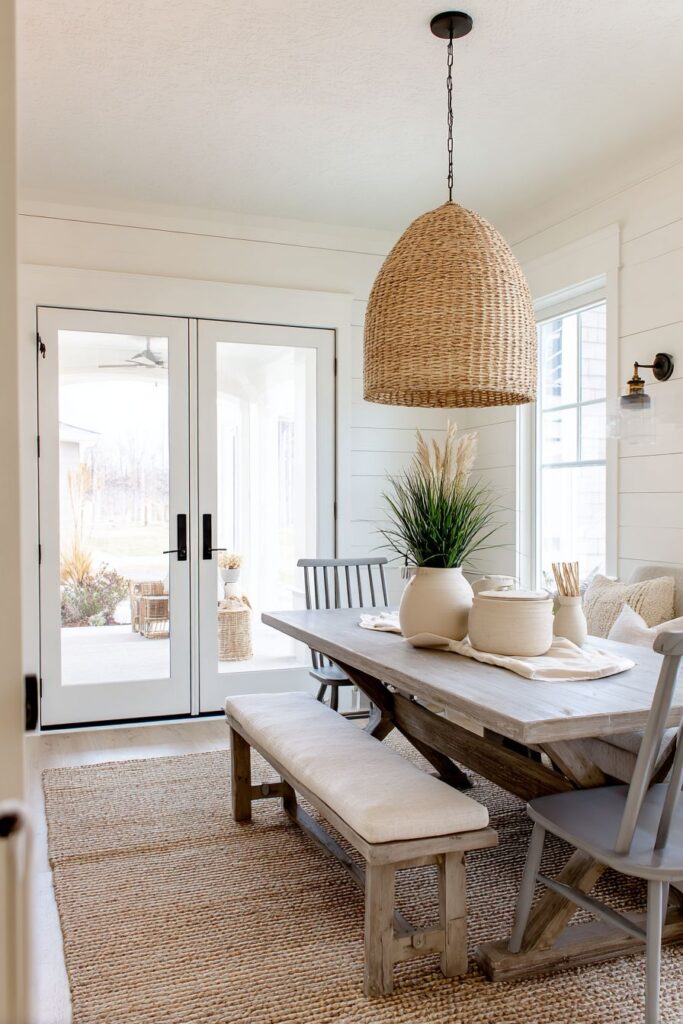
This neutral dining room embraces casual comfort through relaxed styling and flexible seating arrangements. A trestle-style dining table in grey-washed pine features the sturdy construction and simple beauty characteristic of this traditional table form. The grey wash lightens the pine while allowing wood grain to remain visible, creating a finish that feels both contemporary and timeless.
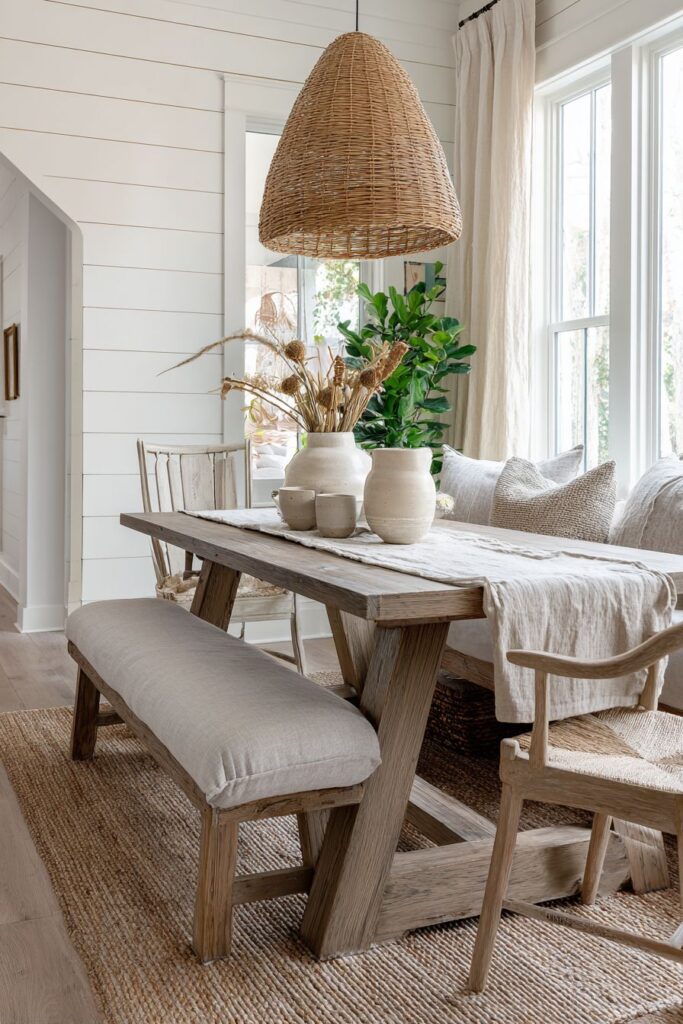
Mixed seating including a linen-slipcovered bench on one side and simple wooden chairs in complementary grey tone creates visual interest and accommodates different seating preferences. The bench provides flexible seating for children or adults while the slipcover offers easy cleaning and seasonal refresh possibilities.
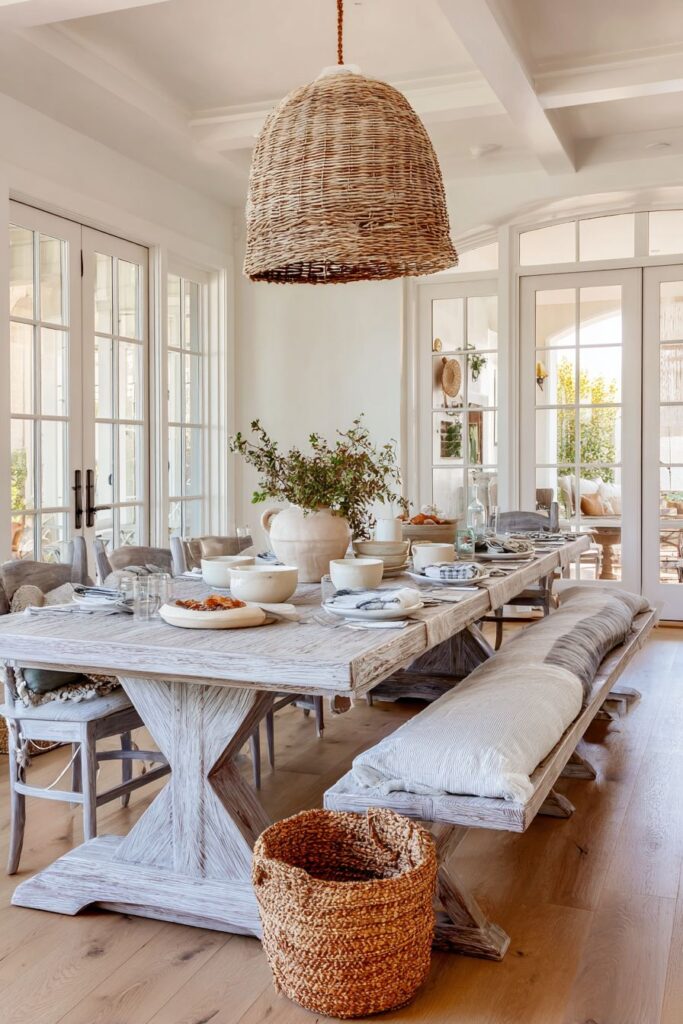
Shiplap walls painted in warm white create texture while maintaining brightness, their horizontal lines adding visual interest without pattern or color. The warm undertone prevents the white from feeling stark or cold, creating an inviting backdrop for gatherings. A woven seagrass pendant light adds organic texture overhead, its natural material and handcrafted quality reinforcing the casual, comfortable aesthetic. The pendant’s neutral tone and simple form provide necessary task lighting without drawing excessive attention.
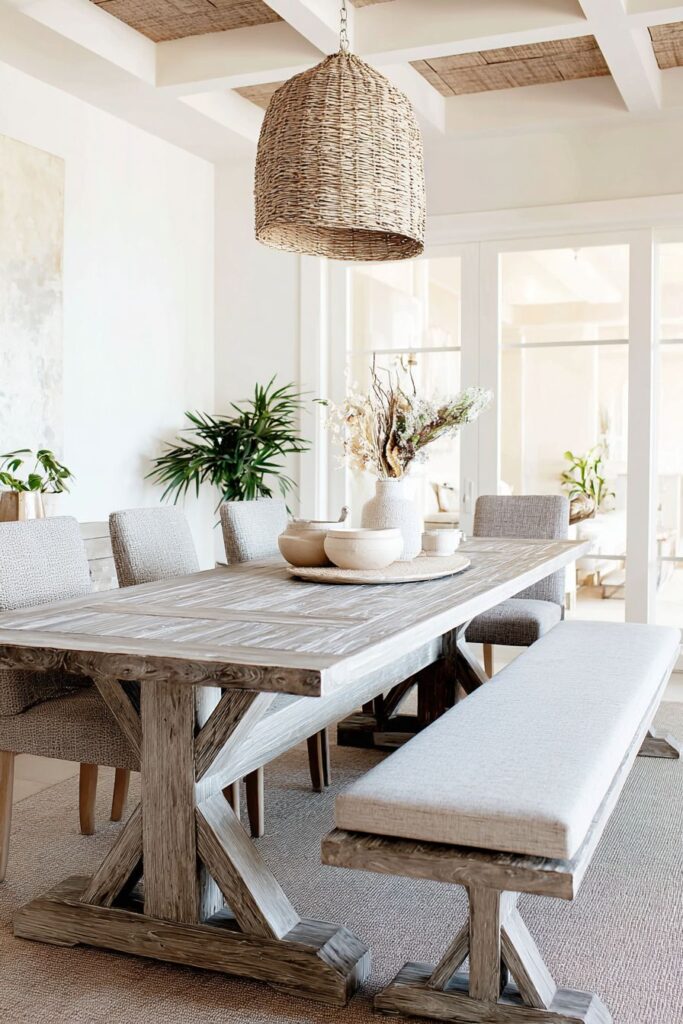
Simple ceramic serving pieces in cream and sand tones accent the table, their handmade quality and neutral colors contributing to the room’s casual elegance. Soft natural light from nearby French doors creates an inviting atmosphere, connecting the dining space to outdoor areas and flooding the room with changeable natural illumination. This design captures casual comfortable aesthetic and harmonious neutral tones, creating a dining space that feels welcoming for everyday family meals while remaining pulled-together enough for casual entertaining. The combination of slipcovered furniture, painted shiplap, and natural materials creates effortless style.
Key Design Tips:
- Choose trestle-style tables for sturdy traditional construction and visual simplicity
- Mix benches and chairs for flexible seating that accommodates different needs
- Use slipcovers on benches and chairs for easy cleaning and seasonal updates
- Install shiplap walls in warm white for textural interest without heaviness
- Hang woven seagrass pendant lights for organic texture and natural material
- Position dining areas near French doors to maximize natural light and outdoor connection
16. Mid-Century Modern Walnut and Cream
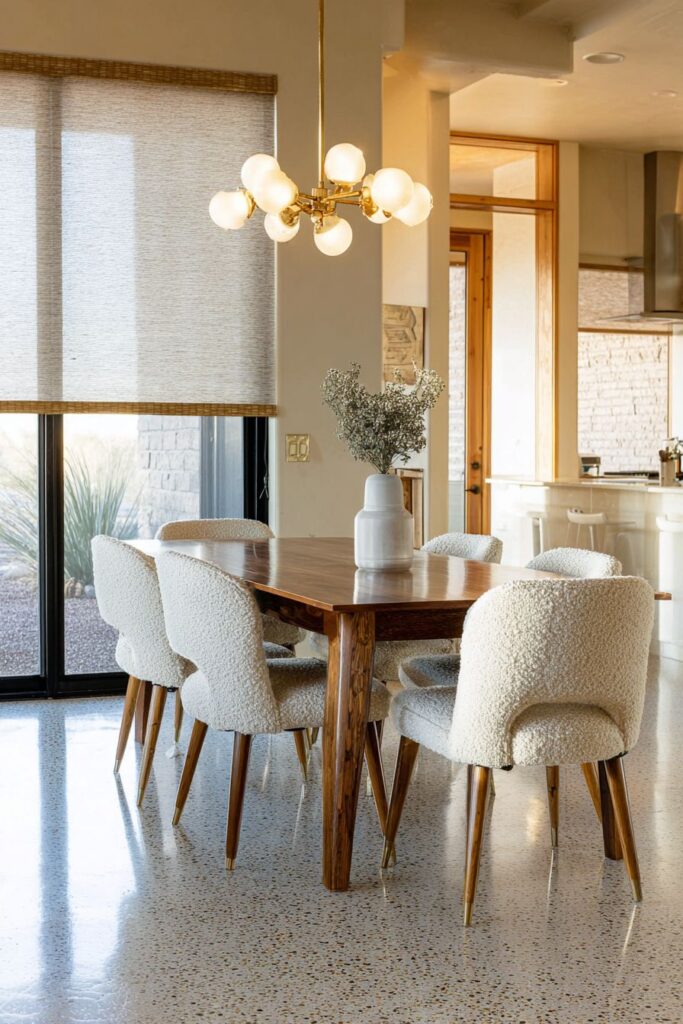
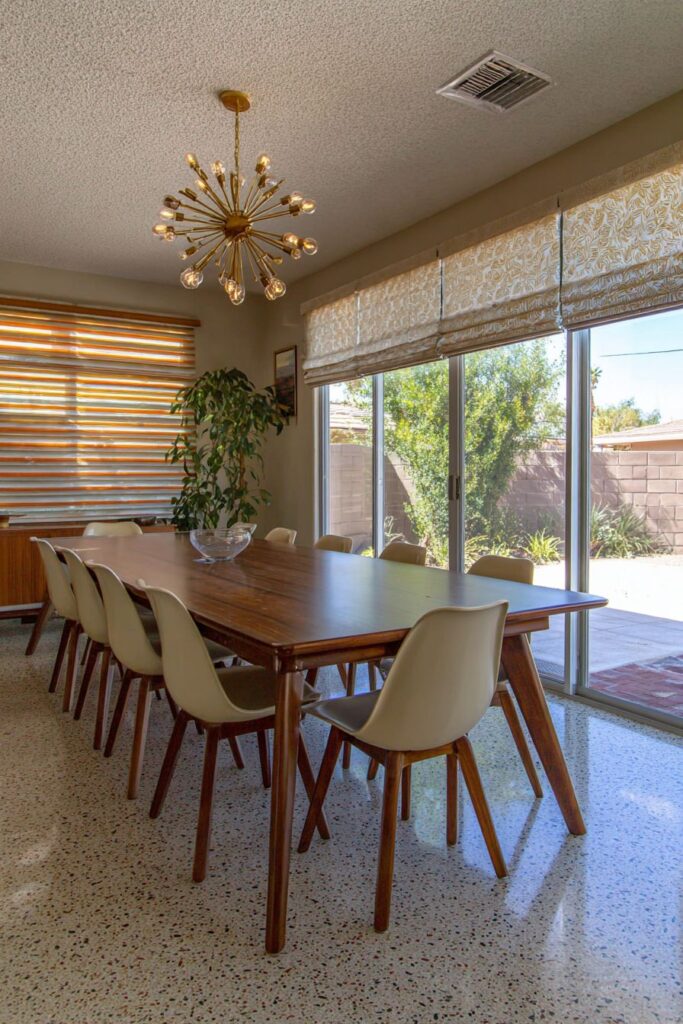
This neutral dining room channels the iconic style of mid-century modern design through carefully selected furniture and authentic period materials. A walnut dining table with tapered legs exemplifies the clean lines and organic materials favored during the mid-century period.
The rich walnut tone provides depth and sophistication while the tapered legs create visual lightness characteristic of this design era. Molded fiberglass chairs in soft cream color surround the table, their sculptural forms and innovative material representing the design experimentation and optimism of the 1950s and 60s. These chairs provide surprising comfort despite their minimal appearance.
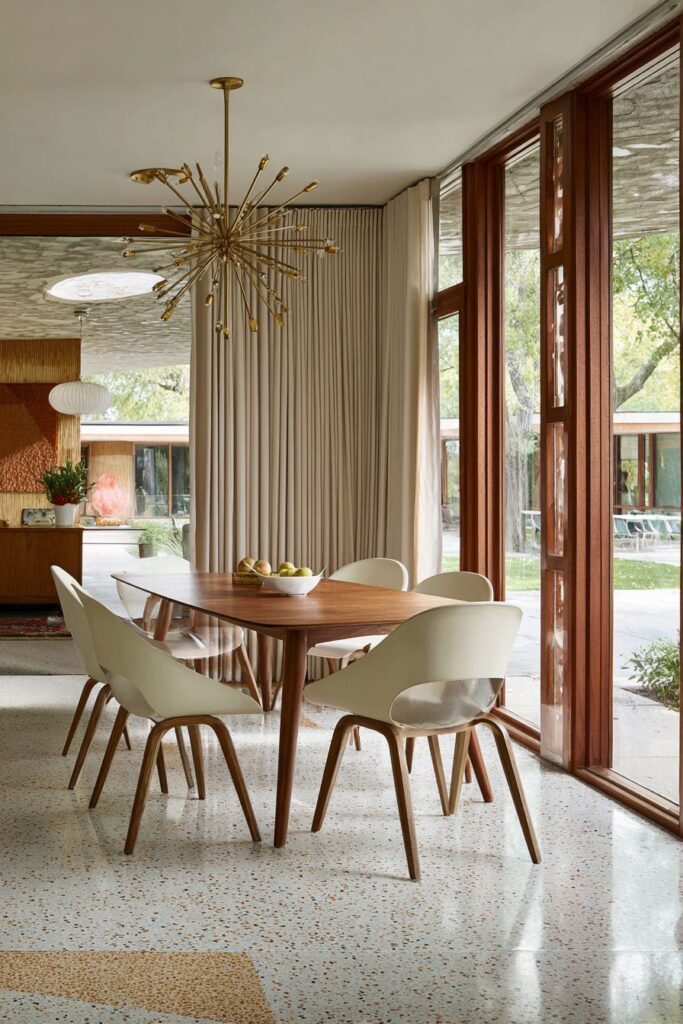
Walls in warm beige provide a retro-appropriate backdrop that allows furniture to stand out, their neutral tone creating a versatile canvas that won’t compete with the room’s iconic design elements. Terrazzo flooring in neutral tones with subtle flecks adds period character underfoot, its speckled surface and slight sheen referencing the commercial and residential design of the mid-century era. A sputnik-style chandelier in brushed brass provides statement lighting, its radiating arms and space-age design capturing the era’s fascination with science and technology. The brass finish adds warm metallic glow that complements the walnut table beautifully.
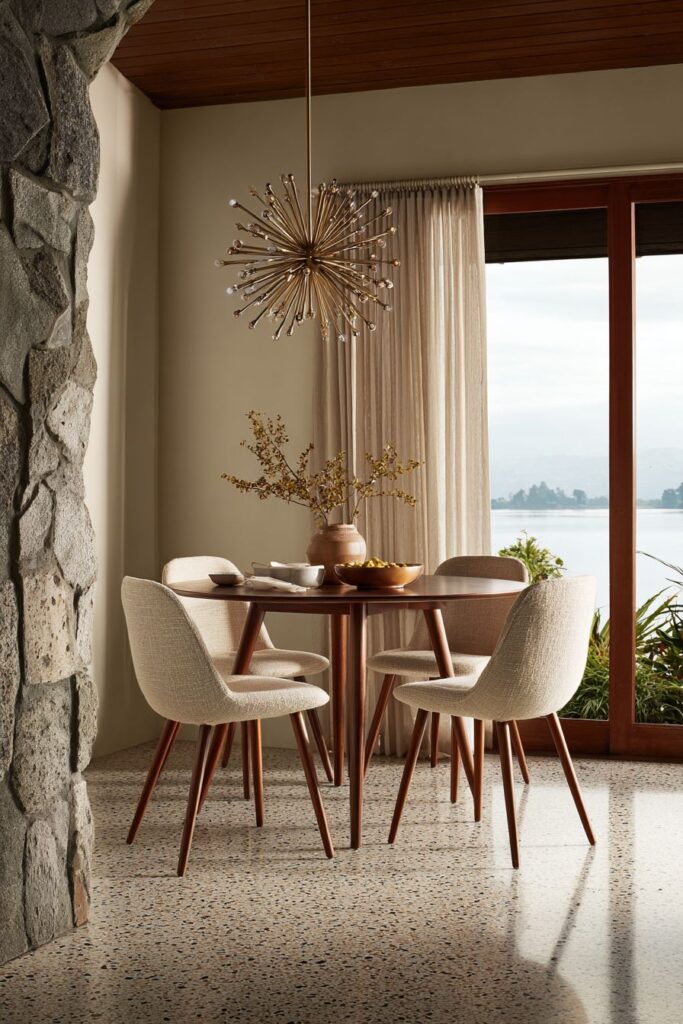
Natural light streams through floor-to-ceiling windows with simple roller shades in natural fabric, their clean lines and minimal hardware supporting the mid-century aesthetic. The generous windows flood the space with natural light while connecting the interior to outdoor views—a key principle of mid-century design that sought to blur boundaries between inside and outside.
This design showcases iconic design elements within a sophisticated neutral color palette with attention to authentic mid-century materials and forms. The combination of walnut, cream, beige, and brass creates a warm, inviting neutral scheme that feels both nostalgic and remarkably current.
Key Design Tips:
- Select walnut furniture with tapered legs for authentic mid-century modern style
- Choose molded fiberglass or plastic chairs in neutral colors for iconic period seating
- Install terrazzo flooring or tiles that reference mid-century commercial design
- Hang sputnik-style chandeliers in brass finishes for statement lighting
- Use floor-to-ceiling windows with minimal treatments to maximize natural light
- Paint walls in warm beige tones appropriate to the 1950s-60s color palette
17. Texture-Emphasized Cerused Oak Design
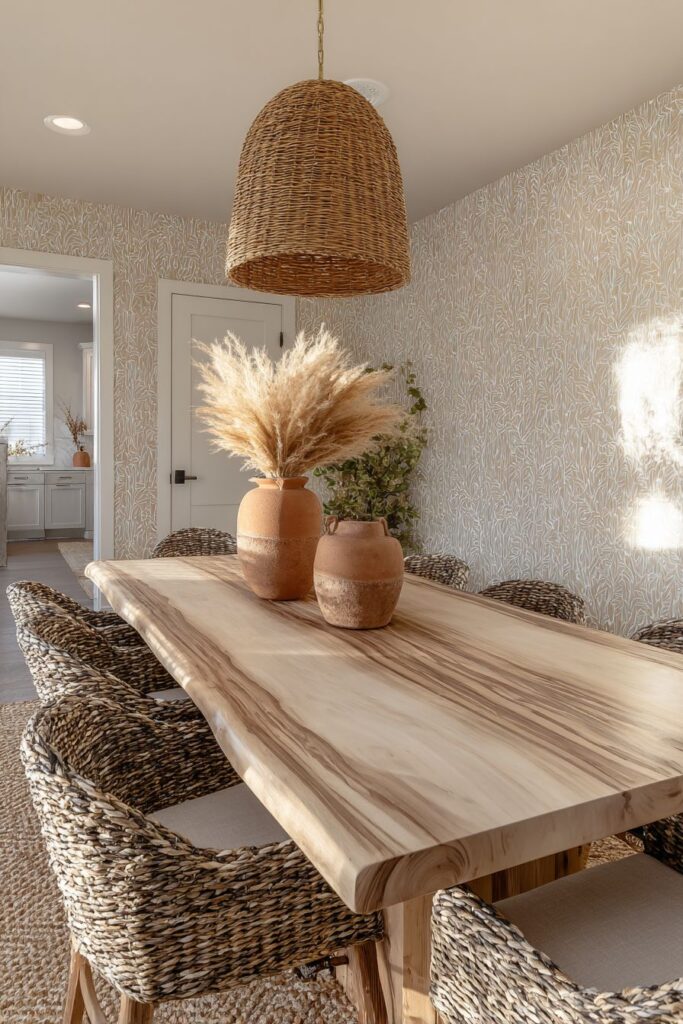
This neutral dining room elevates texture to the primary design element, creating visual richness through material variety rather than color or pattern. A cerused oak dining table featuring prominent grain patterns serves as the textural anchor, its wire-brushed surface and white-filled grain creating dramatic linear patterns that draw the eye across the table’s surface.
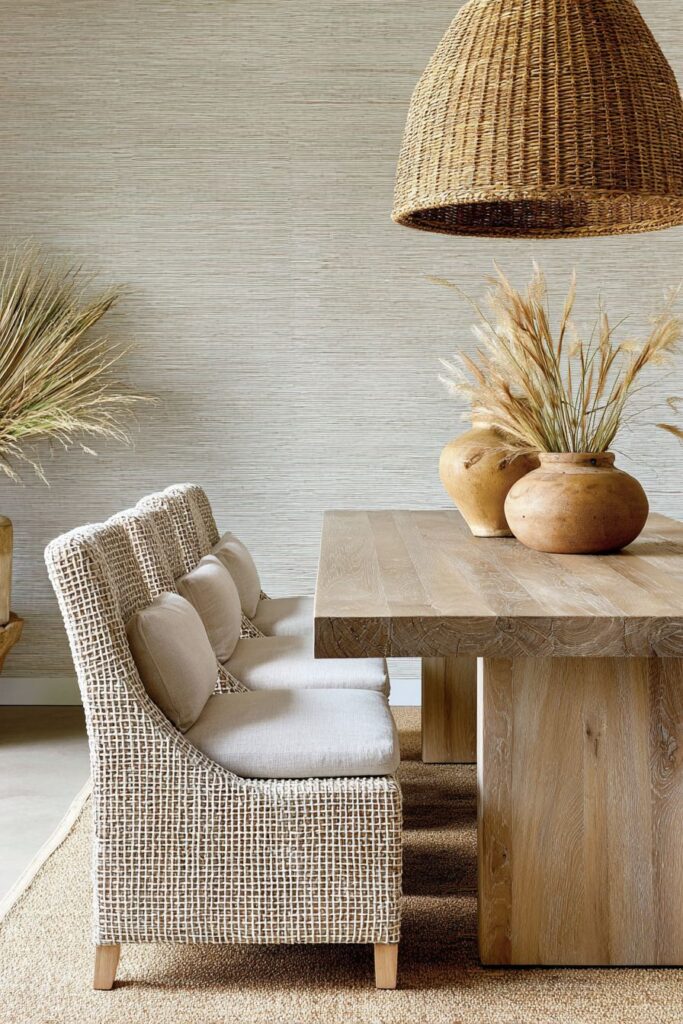
The cerusing technique transforms ordinary oak into a work of art where every grain line becomes a design feature. Dining chairs with woven rope backs and natural linen seat cushions continue the textural theme, combining the rough texture of twisted rope with the soft smoothness of linen for engaging contrast.
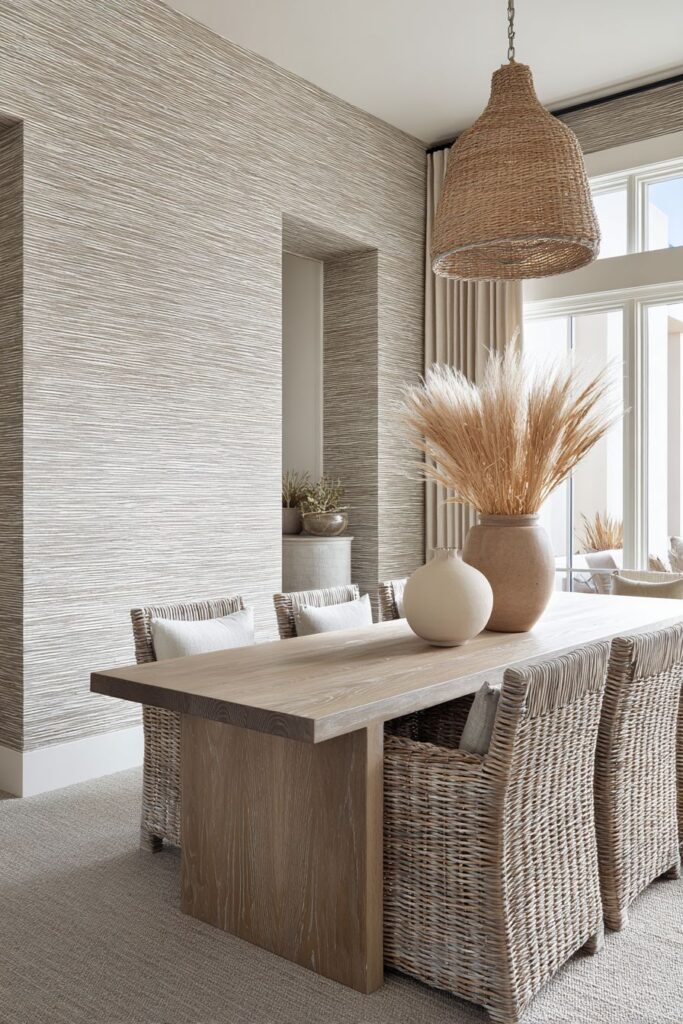
Grasscloth wallpaper in sand tone adds dimensional texture to walls, its natural fibers creating vertical patterns that catch light throughout the day. Unlike flat paint, grasscloth creates a living surface that changes appearance as viewing angles and light conditions shift. Sisal carpeting provides natural fiber texture underfoot, its tight weave offering durability while its neutral color allows other elements to shine. The subtle variations inherent in natural sisal add organic interest without introducing pattern or color. A pendant light with woven rattan shade hangs above, its handcrafted quality and natural material contributing to the room’s emphasis on authentic textures.
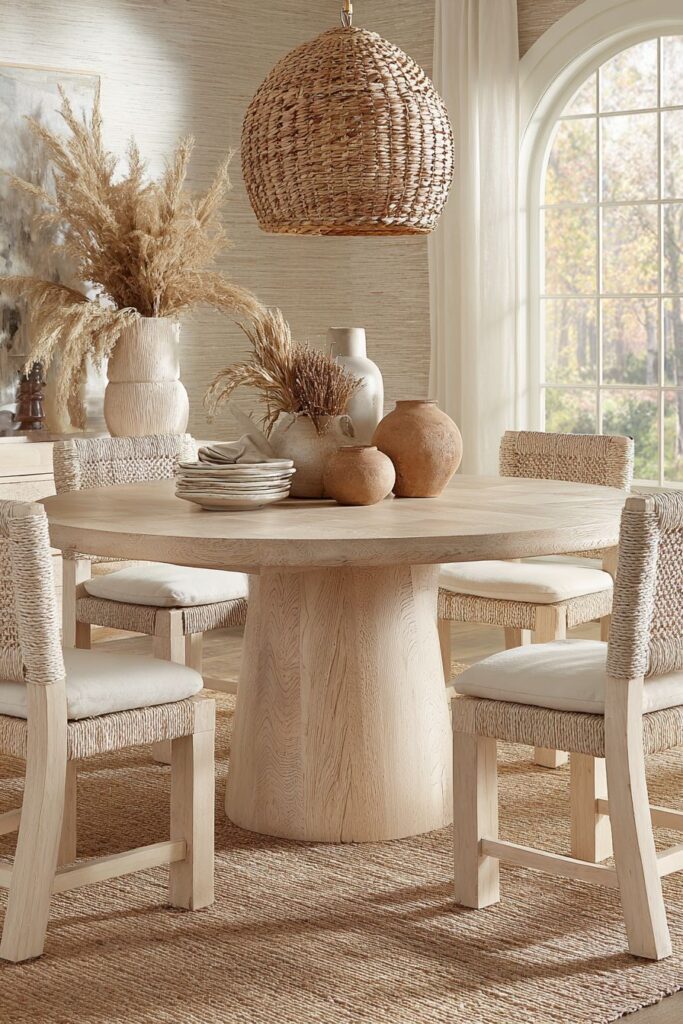
Terra cotta pots filled with dried grasses serve as centerpiece elements, introducing the earthy texture of unglazed clay and the delicate texture of dried botanical material. Soft diffused natural light highlights the varied textures throughout, creating shadows and highlights that emphasize the room’s tactile richness.
This professional design focuses on material details, capturing the tactile richness within the monochromatic neutral scheme. The space proves that neutral rooms need not rely on color or pattern to create visual interest—when textures are thoughtfully layered, they provide endless fascination.
Key Design Tips:
- Choose cerused or wire-brushed wood finishes that dramatically highlight grain patterns
- Select dining chairs with woven elements like rope, rattan, or cane for textural interest
- Install grasscloth wallpaper that adds dimensional texture without pattern or strong color
- Use sisal or other natural fiber carpeting for durable, textured flooring
- Hang pendant lights with woven shades that cast interesting shadow patterns
- Create centerpieces with unglazed terra cotta and dried grasses for organic texture
18. Space-Saving Drop-Leaf Design
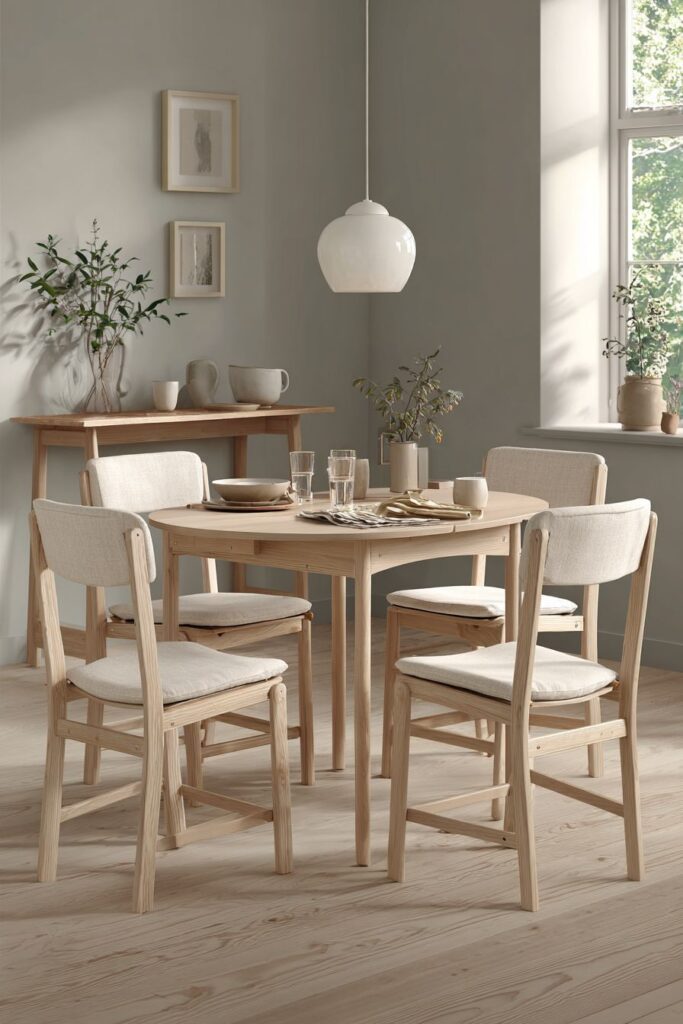
This neutral dining room addresses the unique challenges of small-space living through intelligent furniture selection and efficient layout planning. A drop-leaf dining table in natural ash wood extends when needed for entertaining but folds down to a compact console during daily use, providing maximum flexibility in limited square footage.
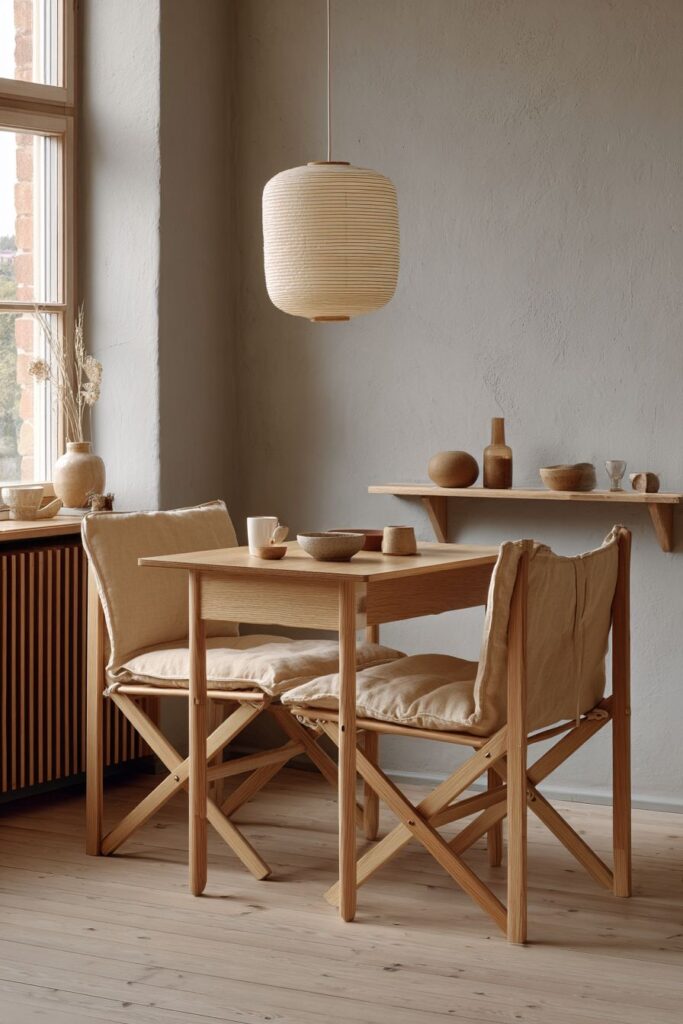
The light ash wood keeps the space feeling open and airy even when the table is fully extended. Folding chairs in wheat-colored linen store flat against walls or in closets when not needed, their neutral color and simple design ensuring they complement the space even when visible.
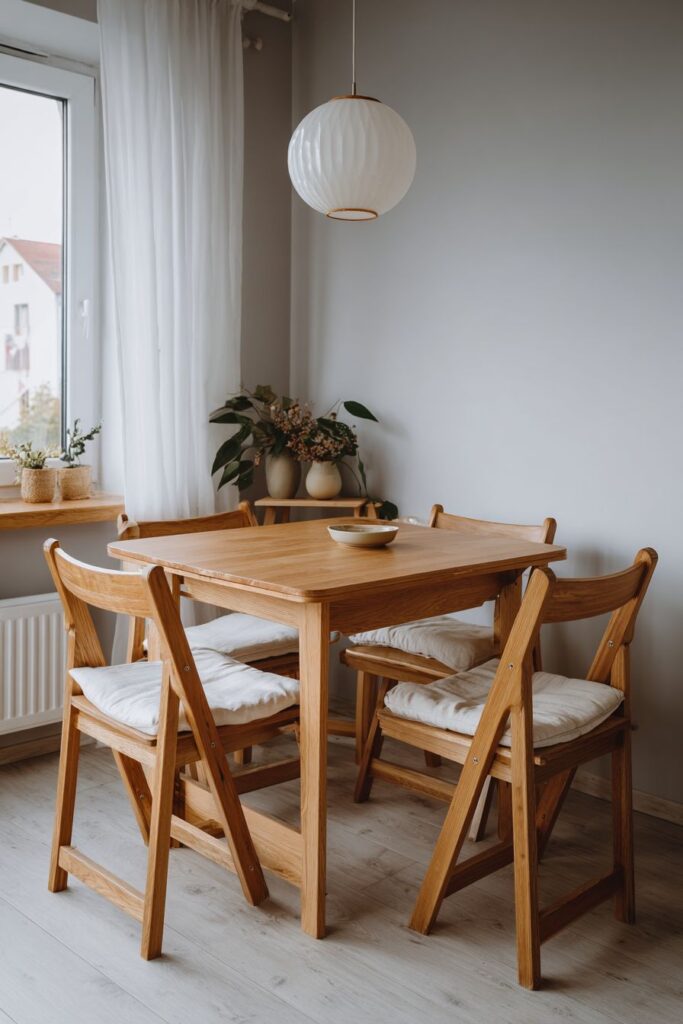
Walls in pale grey-beige maximize perceived space through light reflection, a crucial strategy in smaller rooms where dark colors would make the space feel cramped. The pale neutral tone creates a backdrop that visually recedes, making walls seem farther away than they actually are.
Light maple flooring adds warmth without heaviness, its honey tones brightening the room while providing durable beauty underfoot. A single pendant light with alabaster glass shade provides focused lighting over the compact table, its translucent shade creating soft, diffused illumination that flatters diners and food alike.
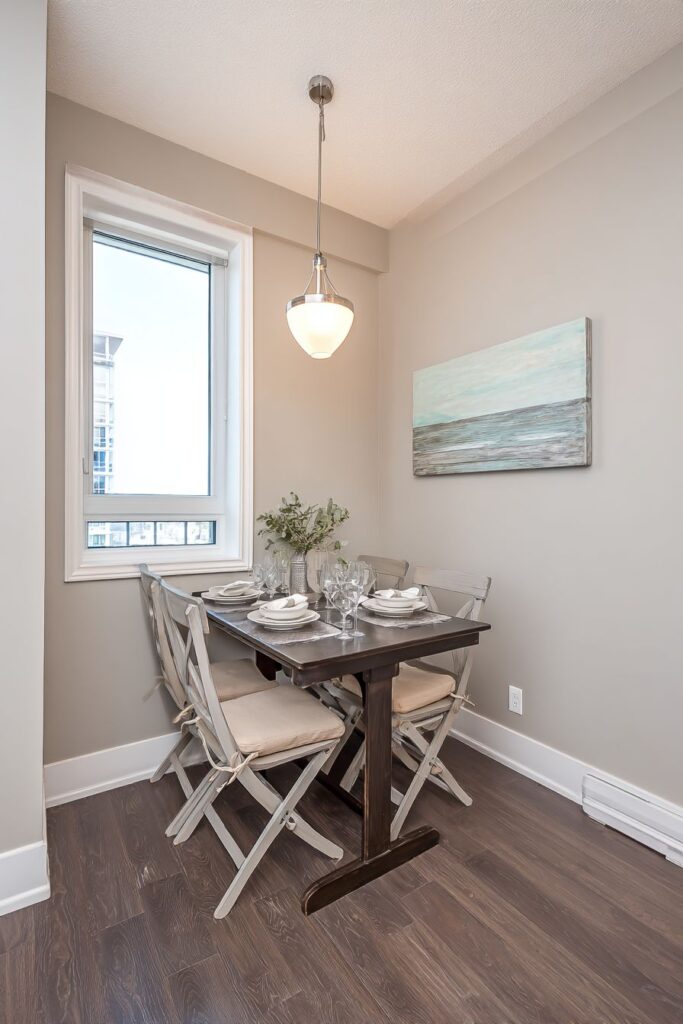
A narrow console against the wall holds minimal decor in neutral tones, providing functional surface space without cluttering the room or impeding traffic flow. Natural light from one window brightens the efficient layout, proving that even single-window spaces can feel light and welcoming with proper color selection and furniture placement.
This design demonstrates practical space-saving solutions within a cohesive neutral aesthetic suitable for apartment living, showing that small dining spaces need not sacrifice style for function. The carefully chosen neutral palette makes the room feel larger while the multifunctional furniture ensures the space works for both daily life and entertaining.
Key Design Tips:
- Choose drop-leaf or extendable tables that adapt to different space needs
- Select folding chairs that store flat when not in use to maximize floor space
- Paint walls in pale neutral tones that reflect light and maximize perceived space
- Use light-toned wood flooring that brightens small rooms without visual weight
- Install single pendant lights that provide focused illumination without taking up space
- Keep consoles and surfaces minimally decorated to prevent visual clutter in tight quarters
19. Bohemian Layered Natural Materials
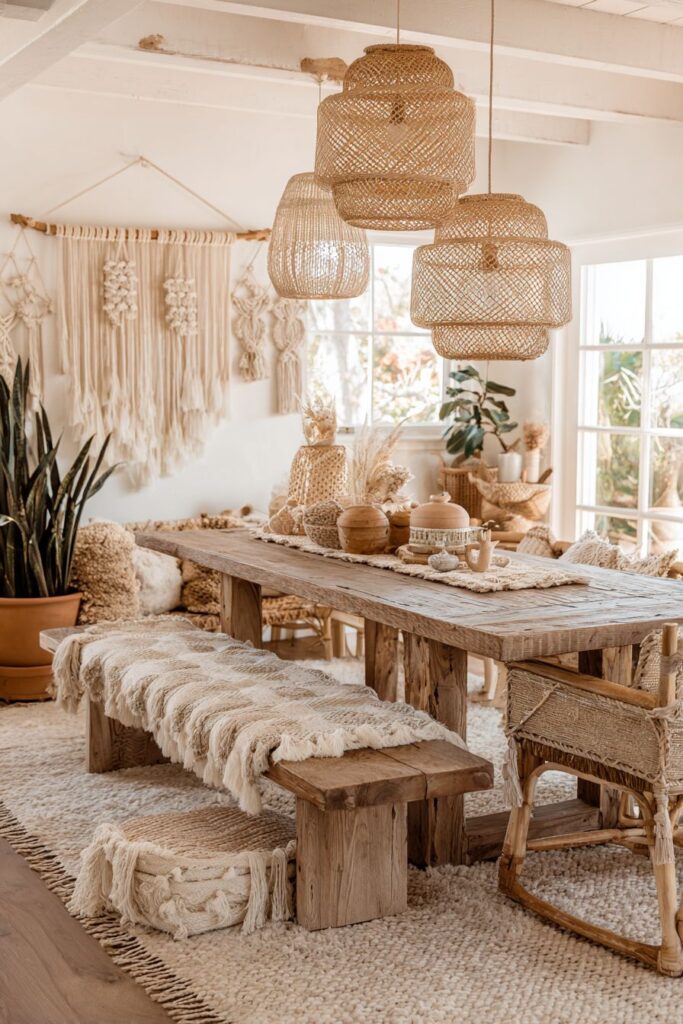
This neutral dining room embraces bohemian style through eclectic mixing of natural materials and relaxed, collected aesthetic. A vintage wood dining table with natural patina shows the beautiful aging that only time can create, its surface bearing the marks of decades of use that add character rather than diminish beauty.
Mismatched seating including rattan chairs and upholstered benches in natural textiles creates the effortlessly collected look characteristic of bohemian design. The variety in seating styles suggests pieces gathered over time from different sources, creating personality and visual interest that matched sets cannot achieve.
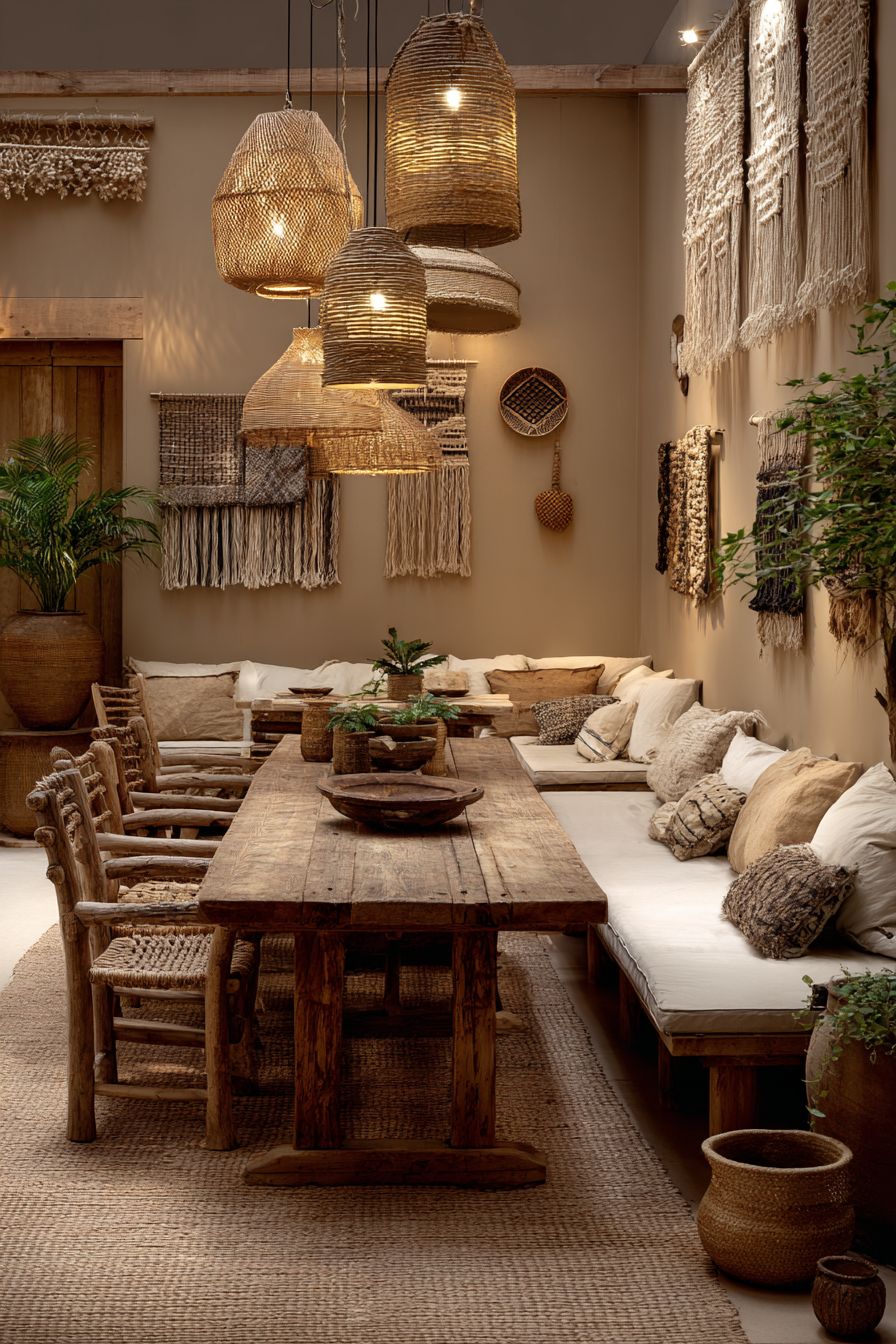
Walls in warm sand tone provide an earthy backdrop for woven wall hangings and macramé in cream and beige fibers, adding texture and handcrafted artistry to vertical surfaces. These fiber arts pieces introduce pattern through weaving techniques rather than printed designs, maintaining the natural, organic aesthetic while adding visual complexity.
Layered natural fiber rugs including jute and wool create texture underfoot, their overlapping edges and mixed materials demonstrating the bohemian principle of abundance and layering. The combination of rough jute and soft wool provides varied tactile experiences while remaining neutral in color.
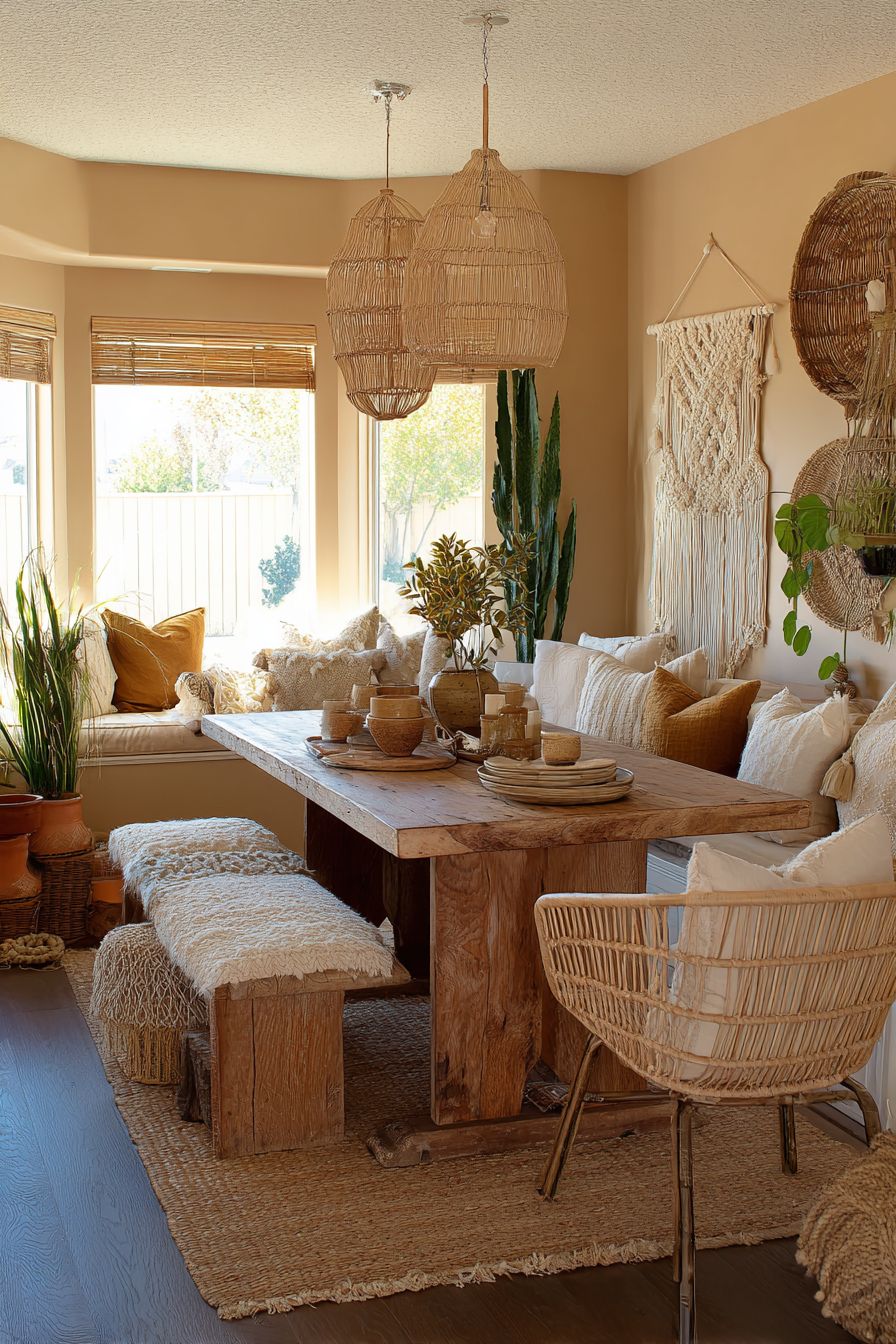
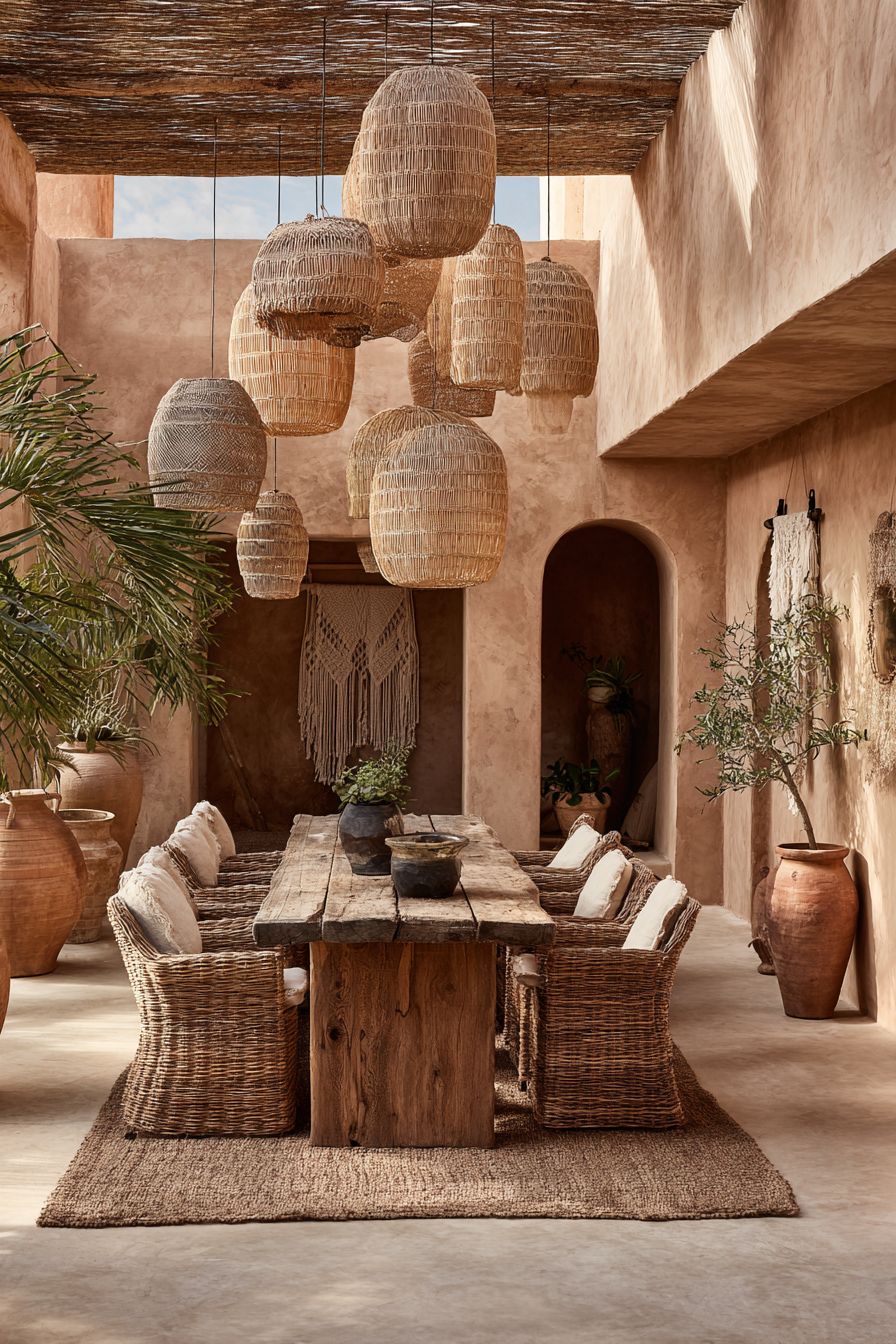
A cluster of woven pendant lights in varying natural materials hangs above the table at different heights, creating visual interest through asymmetry while providing adjustable ambient lighting. Plants in terracotta pots add organic life and the only hints of green in the otherwise neutral palette, their living presence bringing energy and air-purifying benefits to the dining space.
Soft natural light creates relaxed ambiance, filtering through windows left deliberately unadorned to maintain connection with the outdoors. This design captures eclectic yet harmonious collection of natural materials and earthy neutral tones, creating a dining space that feels personal, artistic, and welcoming.
Key Design Tips:
- Mix vintage and new furniture pieces for collected, bohemian character
- Combine different seating styles in complementary neutral tones for eclectic appeal
- Layer multiple natural fiber rugs for textural richness and bohemian abundance
- Hang woven wall hangings and macramé that add texture without pattern
- Cluster pendant lights at varying heights for asymmetrical visual interest
- Add plants in terracotta pots for organic life and subtle color
20. Sustainable Materials and Eco-Conscious Design
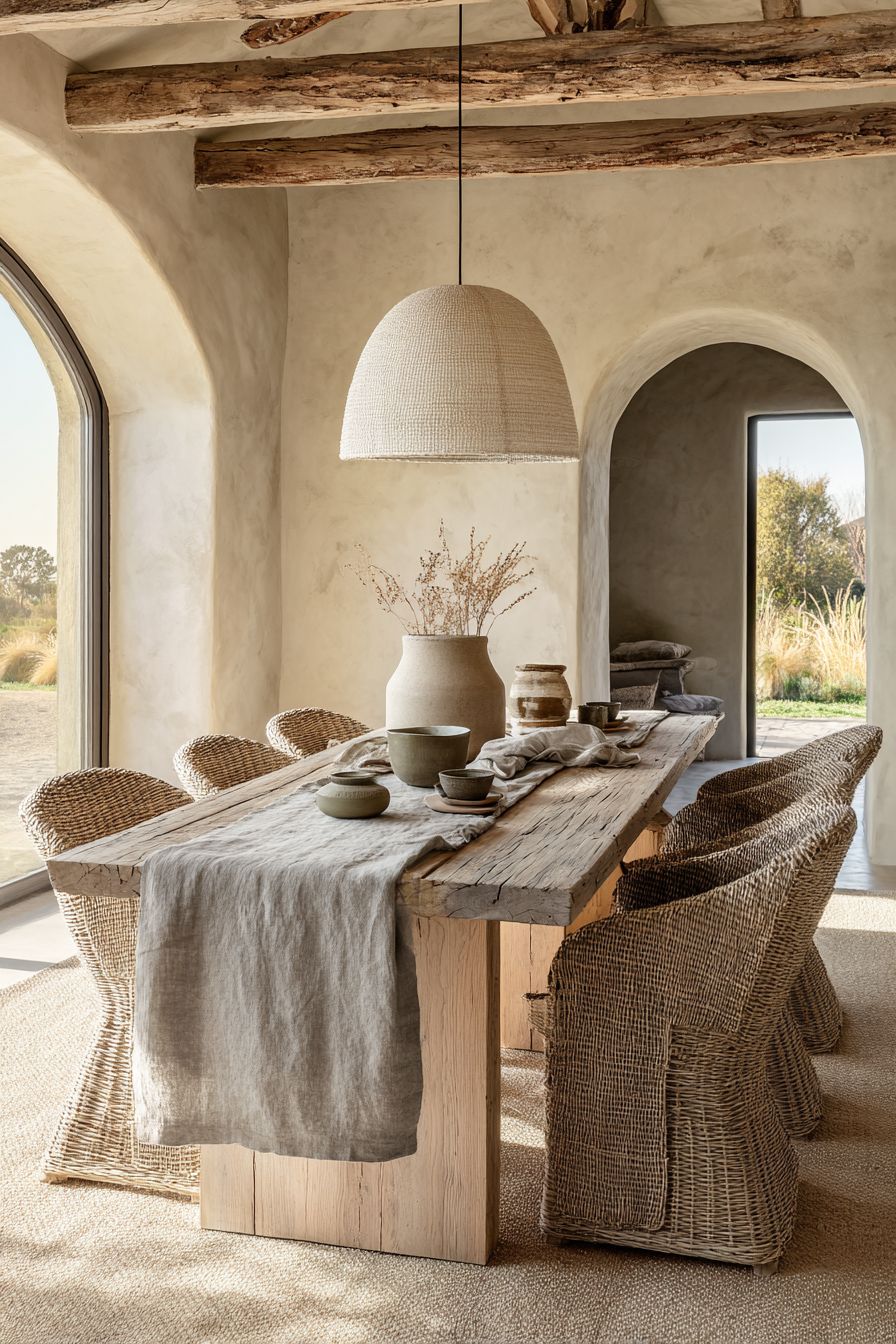
This neutral dining room demonstrates that environmental responsibility and beautiful design are not mutually exclusive but rather complementary goals. A dining table crafted from reclaimed barn wood shows authentic weathering and nail holes that tell the story of the wood’s previous life, giving new purpose to materials that might otherwise end up in landfills.
Each mark and imperfection adds character while reducing the environmental impact of harvesting new timber. Dining chairs made from FSC-certified oak with natural oil finish ensure that new wood comes from responsibly managed forests where trees are replanted and ecosystems protected. The natural oil finish enhances the wood’s beauty without toxic chemicals.
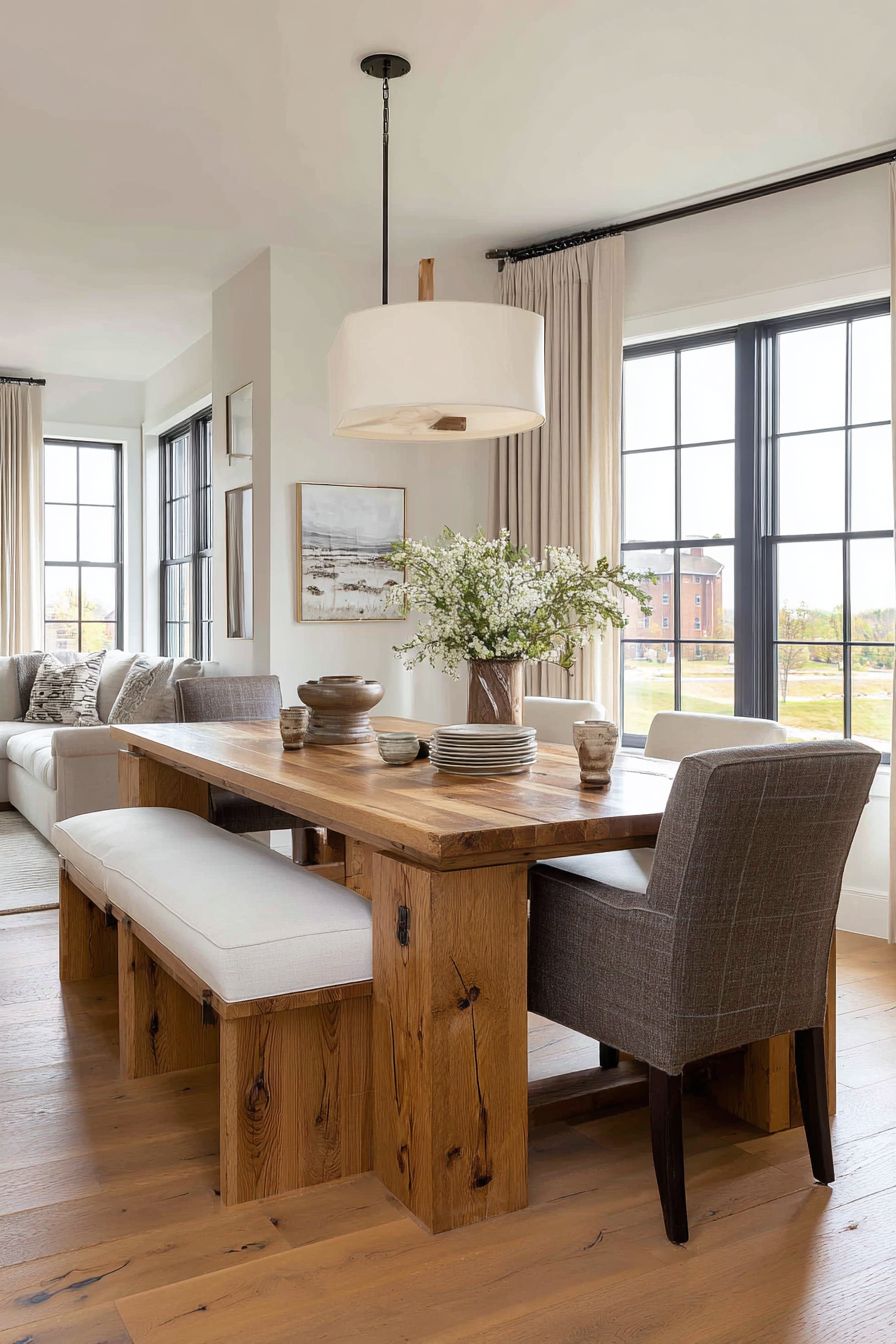
Walls finished with clay plaster in soft putty color show subtle texture variations while providing excellent indoor air quality benefits. Unlike conventional paints that can off-gas volatile organic compounds for years, clay plaster is completely natural and actually helps regulate indoor humidity.
Cork flooring in natural tone provides warmth and sustainability, its renewable nature (cork bark regenerates after harvest), natural resilience, and thermal properties making it an ideal eco-conscious flooring choice. The honey-colored cork adds warmth underfoot while its slight cushioning makes standing and walking more comfortable than harder surfaces.
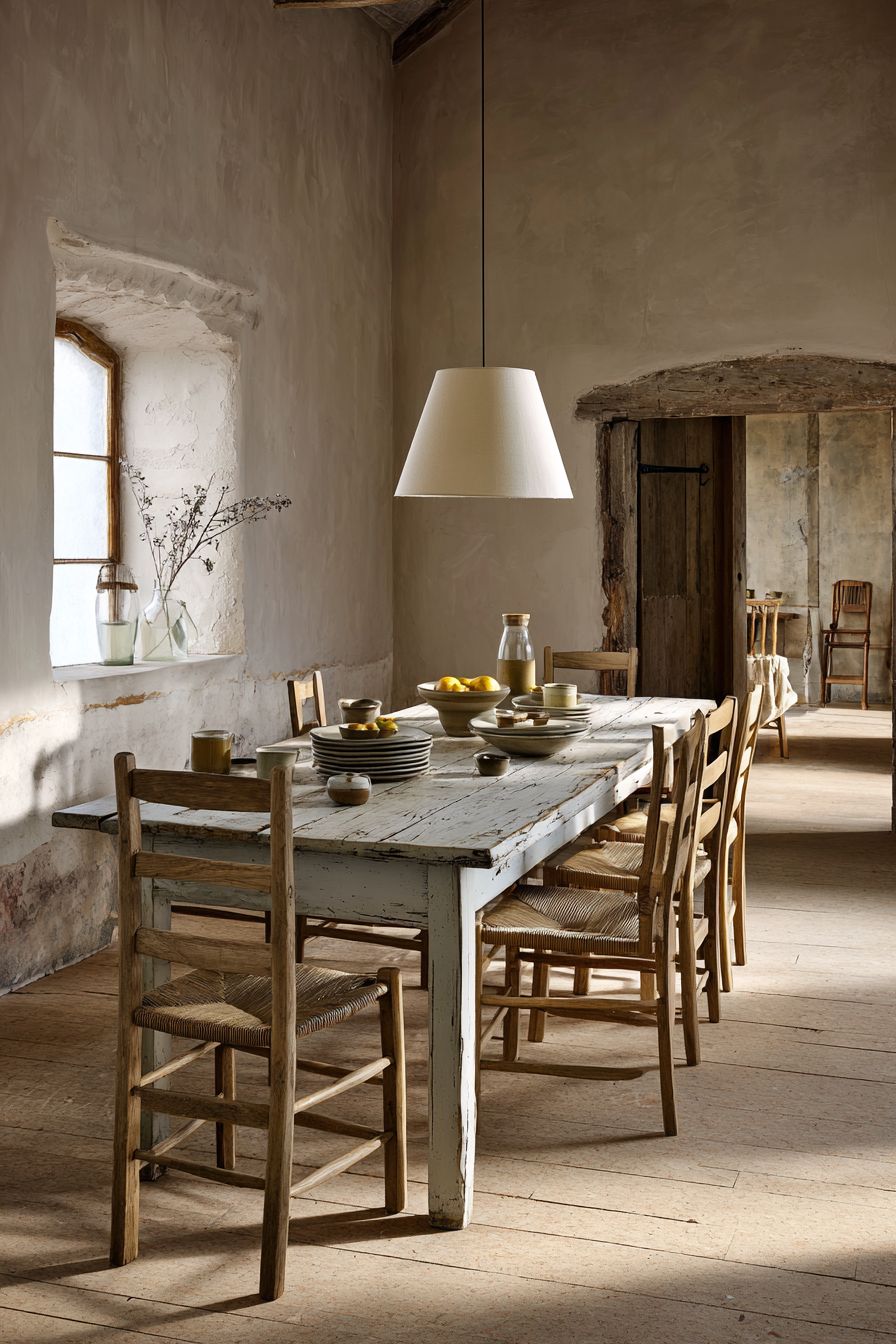
A pendant light with organic cotton shade hangs above the table, avoiding the synthetic materials common in most lighting fixtures. Handmade ceramic tableware in earth tones decorates the table, supporting artisan craftspeople while avoiding mass-produced imports with high carbon footprints. Natural daylight emphasizes the eco-conscious material choices, flooding the space with free, renewable illumination that reduces electricity consumption. This design showcases authentic sustainable aesthetic and warm neutral palette in a livable family dining space, proving that environmental consciousness enhances rather than limits design possibilities. The warm, natural materials create a welcoming atmosphere while supporting planetary health.
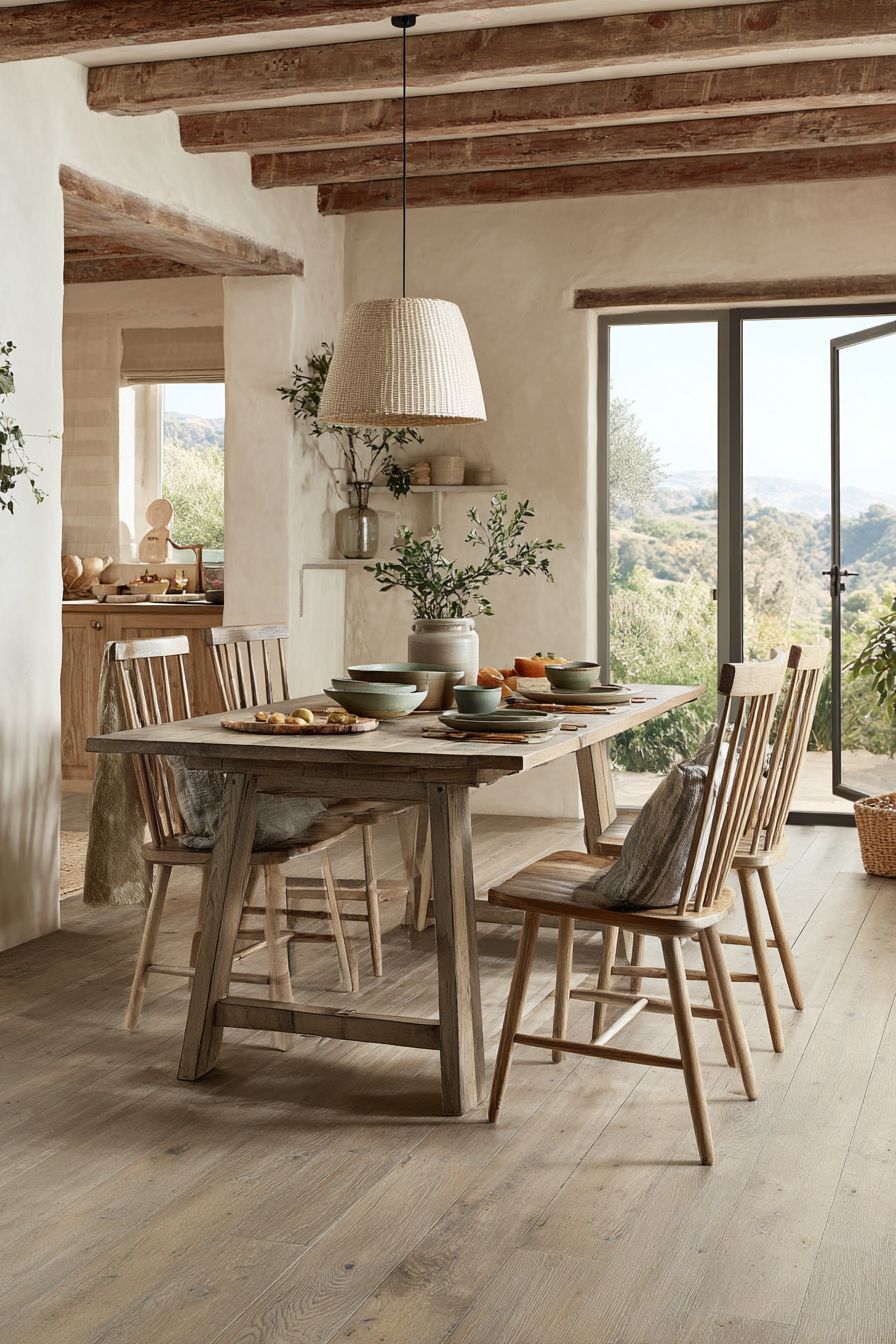
Key Design Tips:
- Choose reclaimed wood furniture that gives new life to salvaged materials
- Select FSC-certified wood products from responsibly managed forests
- Use clay plaster wall finishes for natural beauty and air quality benefits
- Install cork flooring for renewable, comfortable, and warm underfoot surfaces
- Choose lighting with organic cotton or natural fiber shades
- Display handmade ceramics and artisan-crafted items that support traditional crafts
Why These Neutral Dining Room Designs Represent the Best Approaches
Neutral dining room decor has earned its place as a perennial favorite in interior design for compelling practical and aesthetic reasons. These twenty design concepts represent the best approaches because they demonstrate the remarkable versatility of neutral palettes while showcasing how different styles—from rustic farmhouse to sleek contemporary, from coastal casual to traditional elegance—can all be successfully executed within neutral color schemes. The neutral dining room aesthetic transcends temporary trends, creating spaces with lasting beauty that adapt to evolving tastes, seasonal decorations, and changing life circumstances without requiring expensive renovations.
The beauty of neutral dining room design lies in its ability to create calm, cohesive environments where the quality of materials takes precedence over flashy colors or busy patterns. Natural wood grains, linen textures, jute weaves, stone variations, and plaster finishes become the stars of these spaces, their organic beauty and authentic character creating visual interest that manufactured patterns cannot replicate. Neutral palettes allow diners to focus on what truly matters in dining rooms—the food, the company, and the conversations—rather than being distracted by competing visual elements. This background quality makes neutral dining rooms ideal for both everyday family meals and special occasion entertaining.
From a practical standpoint, neutral dining room decor offers unmatched flexibility and longevity. These timeless color schemes accommodate changing seasonal decorations without clashing—autumn gourds, winter evergreens, spring flowers, and summer fruits all complement neutral backgrounds beautifully. As personal tastes evolve or design trends shift, neutral rooms require only minor accessory updates rather than complete overhauls. The dining room table settings, artwork, and small decorative elements can be changed to refresh the space without repainting walls or replacing major furniture pieces. This adaptability makes neutral dining rooms economical over time, as the foundational elements remain relevant for decades.
The neutral dining room designs featured here also demonstrate sophisticated color management through careful layering of warm and cool tones, light and dark values, and varied textures within restricted color palettes. Creating successful neutral spaces requires more skill than working with bold colors—designers must rely on subtle variations, material quality, and thoughtful proportions rather than dramatic color contrasts to create visual interest. These designs show how beige, grey, taupe, cream, white, and natural wood tones can be combined in infinite variations, each creating distinct moods and styles while maintaining the calming, cohesive quality that defines neutral design.
Natural materials play starring roles in successful neutral dining room design, providing organic beauty, textural richness, and environmental benefits. Reclaimed wood tables tell stories through their weathered surfaces and honest imperfections, creating one-of-a-kind pieces with character that new furniture lacks. Stone flooring in travertine, terrazzo, or polished concrete offers durability and natural variation that improves with age. Natural fiber rugs in jute, sisal, seagrass, and wool provide textured foundations that ground furniture arrangements while remaining neutral in appearance. Linen upholstery ages beautifully, developing a soft patina that adds to its appeal rather than showing wear. These authentic materials create dining spaces with substance and staying power.
Lighting strategies in neutral dining rooms deserve special attention, as proper illumination transforms these spaces from flat and dull to dynamic and inviting. Natural light through large windows, French doors, or skylights provides ever-changing illumination that highlights textural variations and creates subtle shadows throughout the day. Layered artificial lighting—combining ambient chandeliers or pendants, task lighting for meal preparation and dining, and accent lighting for artwork or architectural features—ensures functionality while creating atmosphere. The warm glow of brass fixtures, the soft diffusion through linen drum shades, or the nostalgic ambiance of Edison bulbs all enhance neutral palettes by adding warmth and visual interest through light quality rather than color.
The versatility of neutral dining room design extends across architectural styles, home sizes, and budget ranges represented in these concepts. Whether working with historic farmhouses featuring original beams and wide-plank floors, contemporary open-plan spaces with concrete and steel, small urban apartments requiring space-saving solutions, or traditional homes with crown molding and wainscoting, neutral palettes adapt successfully to diverse architectural contexts. These designs show that neutral doesn’t mean expensive—beautiful dining rooms can be created through thoughtful thrift store finds, DIY projects, and strategic investments in key pieces, or through high-end custom furniture and luxury materials, all while maintaining cohesive neutral aesthetics.
Neutral dining room decor particularly excels in creating welcoming, inclusive spaces where all guests feel comfortable. Unlike highly personalized or boldly decorated rooms that reflect specific tastes, neutral dining rooms provide backgrounds that allow people and occasions to take center stage. The inherent calmness of neutral palettes reduces visual stress and creates environments conducive to relaxation, conversation, and connection—precisely what dining rooms should facilitate. These spaces feel collected rather than decorated, lived-in rather than staged, and welcoming rather than precious, qualities that encourage family and friends to gather, linger, and return.
The twenty designs featured demonstrate how neutral dining rooms can incorporate various style influences—Scandinavian simplicity, French country elegance, coastal casualness, industrial edge, bohemian eclecticism, mid-century modernism, traditional formality, contemporary minimalism, and rustic farmhouse charm—all while maintaining neutral color schemes. This style versatility proves that neutral doesn’t mean boring or generic, but rather provides a sophisticated foundation that accommodates diverse aesthetic preferences. By focusing on materials, textures, proportions, and quality rather than bold colors or busy patterns, these neutral dining rooms achieve timeless beauty with contemporary relevance.
Sustainable and eco-conscious design principles integrate naturally with neutral dining room aesthetics, as both emphasize authentic materials, quality construction, and longevity over trends. Reclaimed wood furniture, FSC-certified lumber, natural fiber textiles, clay plaster finishes, cork flooring, and handmade ceramics all align with neutral palettes while supporting environmental responsibility. The neutral dining room’s inherent timelessness reduces consumption by creating spaces that remain beautiful and relevant for decades rather than requiring frequent updates to chase trends. This sustainability represents both environmental and economic value, making neutral dining rooms wise investments for conscious homeowners.
The practical benefits of neutral dining room decor extend to maintenance and cleaning considerations as well. Light neutral colors show dust and dirt less obviously than very dark surfaces, while not showing stains as readily as pure white. Natural materials like sealed wood, stone, and natural fiber rugs develop beautiful patinas with age rather than simply showing wear. Slipcovers in neutral linen or cotton can be removed and laundered when needed, while neutral paint colors make touch-ups virtually invisible. These practical advantages make neutral dining rooms particularly suitable for family homes where spills and daily use are inevitable rather than exceptional occurrences.
Photography and documentation of meals, gatherings, and special occasions benefit from neutral dining room backgrounds that don’t compete with food presentations or people in photographs. Food bloggers, home cooks sharing recipes, and families documenting celebrations all appreciate how neutral backgrounds allow the true subjects to shine without color clashes or distracting patterns. This photo-friendly quality has become increasingly relevant in our visually-oriented digital culture where sharing beautiful home moments on social media platforms has become commonplace. Neutral dining rooms provide the perfect backdrop for creating stunning visual content.
The psychological effects of neutral color schemes in dining spaces contribute significantly to their popularity and effectiveness. Warm neutrals like beige, cream, and taupe create feelings of comfort, security, and welcome, while cooler greys and whites evoke cleanliness, freshness, and modernity. Unlike stimulating bold colors that can energize but potentially overwhelm, neutral tones provide calming environments that reduce stress and promote relaxation—ideal qualities for spaces dedicated to nourishment and connection. The absence of color competition allows diners to focus on food flavors and textures without visual distraction, potentially enhancing the dining experience itself.
These neutral dining room designs also demonstrate excellent scale and proportion principles essential to successful interior design. Furniture pieces are appropriately sized for their spaces—tables neither overwhelm small rooms nor get lost in large ones, chairs provide comfortable seating without visual heaviness, and lighting fixtures create focal points without dominating. The neutral palette allows these proportional relationships to read clearly without color distraction, creating harmonious spaces where everything feels balanced and right-sized. This attention to scale and proportion contributes to the comfortable, livable quality that makes these dining rooms successful beyond their aesthetic appeal.
Finally, neutral dining room decor represents democratic, accessible design that welcomes people regardless of their design knowledge or confidence. Unlike highly stylized rooms requiring deep understanding of specific aesthetic movements or cultural references, neutral dining rooms feel approachable and livable to diverse audiences. They provide starting points for design novices who can build confidence by working within forgiving neutral palettes before potentially branching into more adventurous color schemes. For experienced designers and design enthusiasts, neutral palettes offer sophisticated challenges in creating visual interest through subtle means, demonstrating advanced skills in material selection, texture layering, and tonal variation. This universal accessibility makes neutral dining room design both timeless and democratic.
Conclusion
Neutral dining room decor offers a timeless approach to creating beautiful, functional spaces that adapt to changing needs, tastes, and life stages while maintaining their essential elegance and appeal. The twenty design concepts explored in this comprehensive guide demonstrate the remarkable versatility of neutral palettes, showing how beige, grey, taupe, cream, white, and natural wood tones can be combined in infinite variations to create distinct styles ranging from rustic farmhouse to sleek contemporary, from coastal casual to traditional formal. Each approach emphasizes the quality of materials over bold colors, allowing natural textures, authentic finishes, and thoughtful proportions to create visual interest that engages the eye without overwhelming the senses.
The enduring popularity of neutral dining room design stems from both practical and aesthetic advantages that make these spaces wise investments for homeowners. Neutral palettes create calm, cohesive environments that reduce visual stress while providing versatile backgrounds for seasonal decorations, changing table settings, and evolving personal tastes. These timeless color schemes accommodate diverse furniture styles and architectural contexts, making them suitable for historic farmhouses, contemporary lofts, traditional homes, and modern apartments alike. The emphasis on natural materials—reclaimed wood, natural stone, organic textiles, and handcrafted elements—ensures these spaces develop beautiful patinas with age rather than simply showing wear, improving over time rather than deteriorating.
As you consider implementing these ideas in your own home, remember that successful neutral dining room design relies on thoughtful layering of textures, careful attention to lighting, and willingness to invest in quality materials that will provide beauty and function for decades. Start with foundational elements like flooring and wall color, then select a dining table that reflects your style and meets your practical needs. Build from there with comfortable seating, appropriate lighting, and carefully chosen accessories that add personality without cluttering the space. Don’t be afraid to mix warm and cool neutral tones, combine different natural materials, or incorporate vintage and new pieces for collected character. The beauty of neutral design lies in its forgiving nature—subtle adjustments and minor additions can significantly impact the space without requiring complete overhauls.
Whether you’re drawn to the rustic authenticity of reclaimed wood tables, the sleek sophistication of contemporary cerused oak, the casual comfort of slipcovered seating, or the timeless elegance of traditional furnishings, neutral dining room decor provides the foundation for creating spaces that welcome family and friends while reflecting your personal style. Experiment with these concepts, adapt them to your specific circumstances, and trust your instincts as you create a dining room that serves as a beautiful, functional gathering place for years to come. The neutral palette provides the canvas—your life, meals, and memories will add the color and character that transform a well-designed room into a beloved home.
"As an Amazon Associate, I earn from qualifying purchases."
