
A narrow living room can feel like a design puzzle with no clear solution. Many homeowners struggle to balance style and functionality in long, tight spaces. Yet with the right approach, a narrow room can become one of the most intimate and elegant spaces in your home. The key lies in understanding how furniture placement affects both movement and visual perception.
Thoughtful interior design transforms constraints into creative opportunities. A narrow living room doesn’t mean sacrificing comfort or aesthetics. Strategic arrangement can make even the tightest space feel open, inviting, and purposeful. This guide covers six proven methods to arrange furniture in a narrow living room while keeping traffic flow effortless and natural.
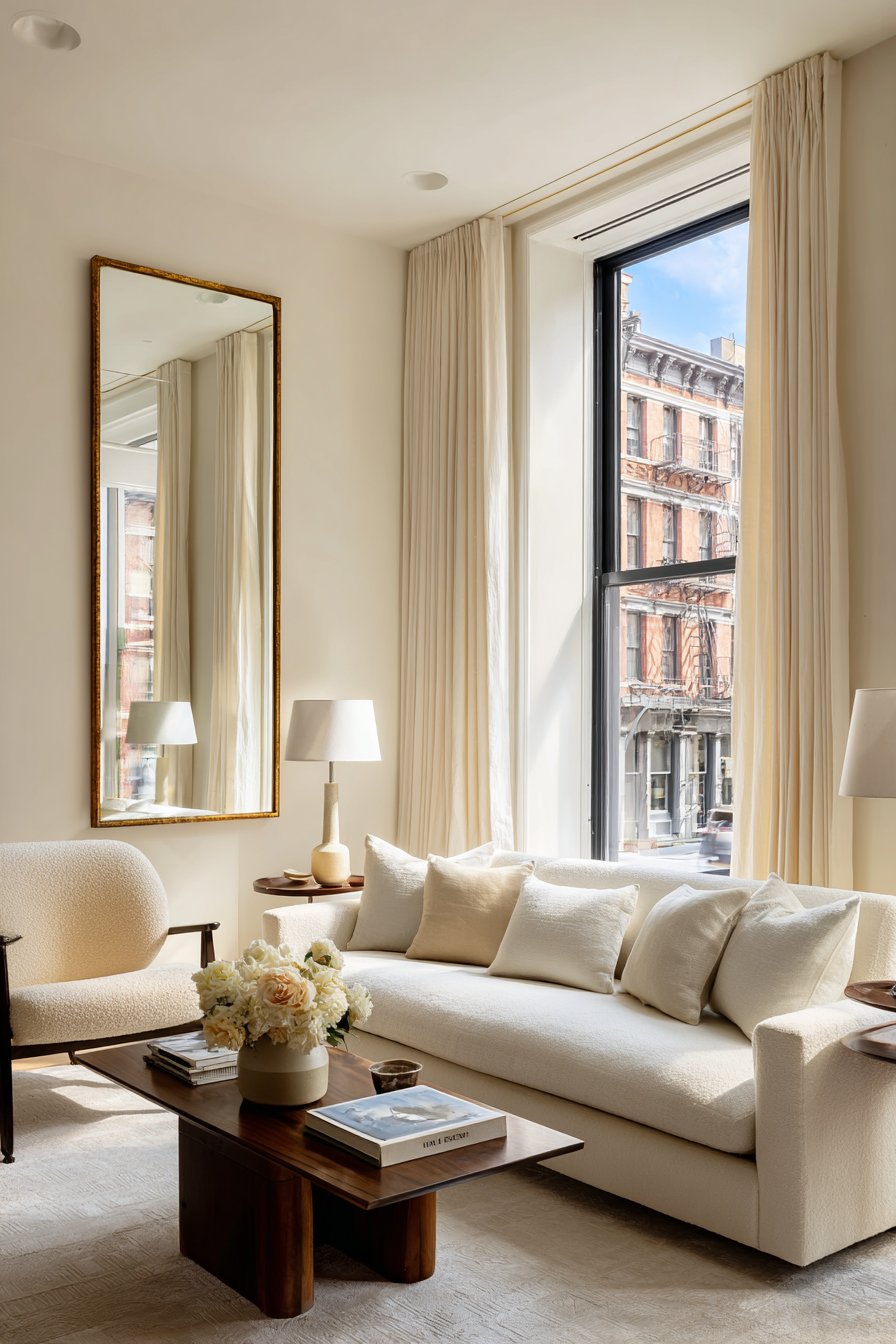
1. Embrace the Linear Layout
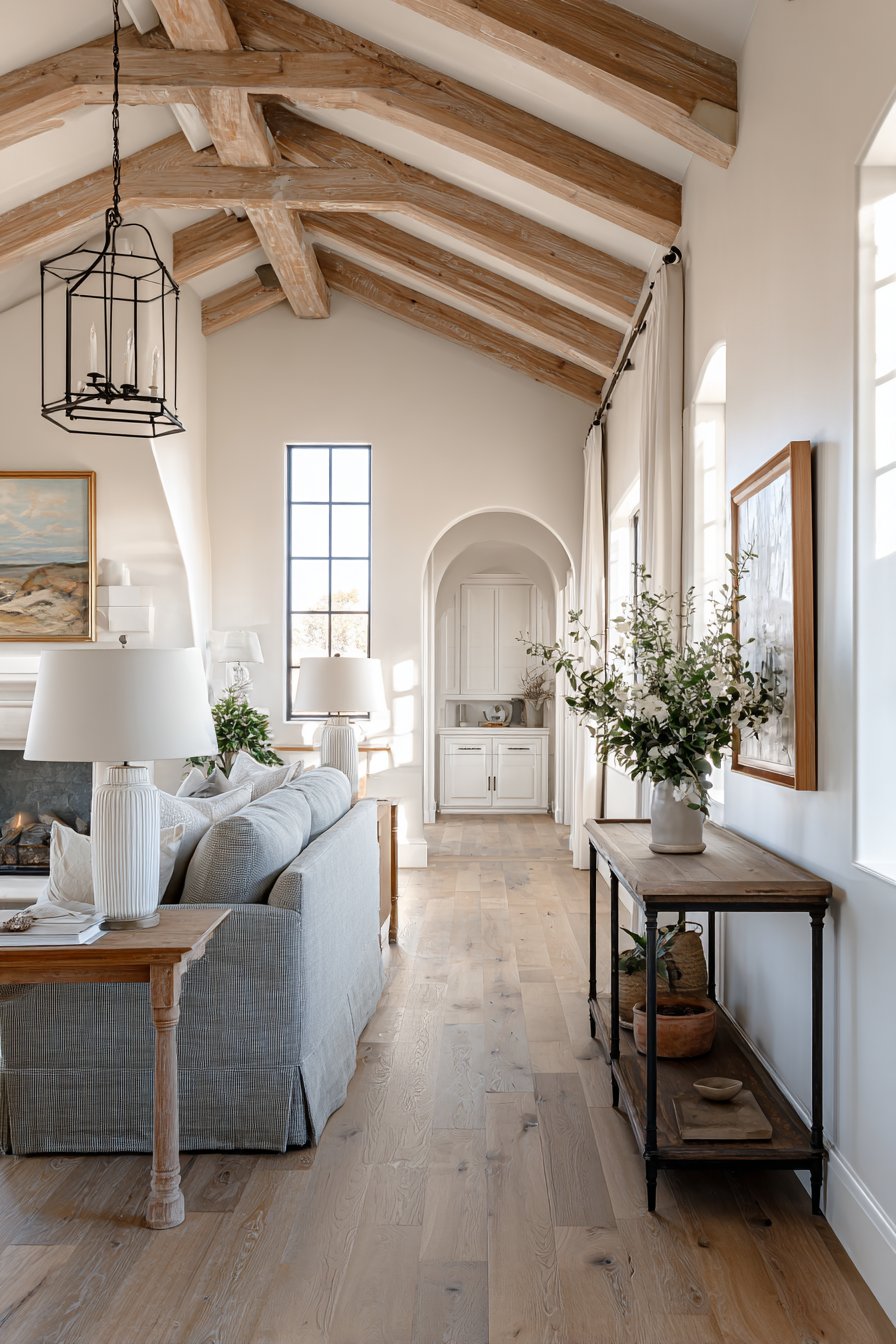
The most effective strategy for narrow rooms is working with the room’s shape. A linear furniture arrangement aligns key pieces along the longest walls. This approach instantly frees up the central pathway. It also draws the eye forward, making the room feel longer and more intentional.
Place your sofa flush against one long wall. Position a slim console table or media unit on the opposite wall. Avoid pushing furniture too far out into the center. Keeping pieces close to the walls preserves walking space of at least 30–36 inches — the minimum for comfortable movement.
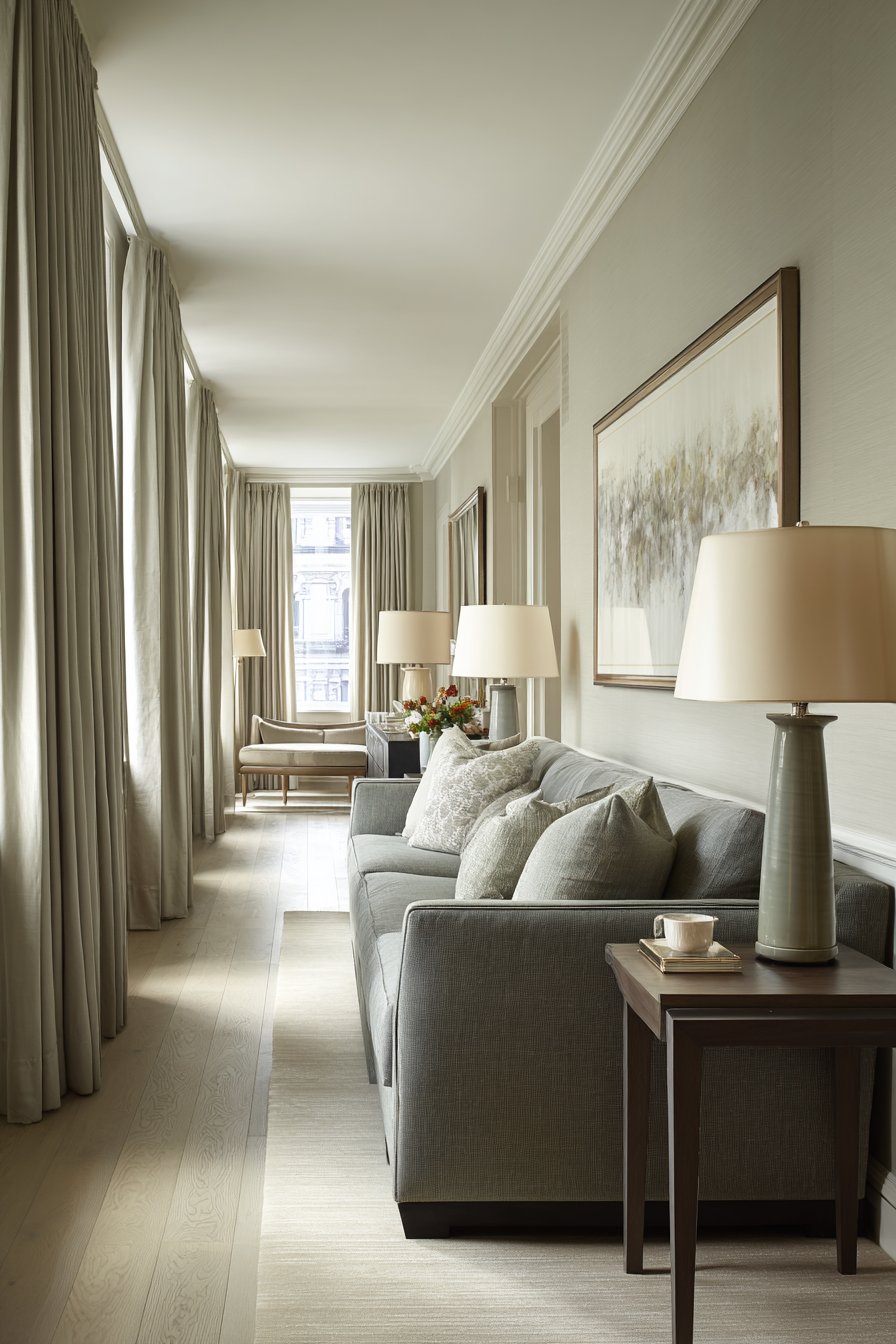
This layout also creates a natural visual rhythm down the length of the room. Use matching lamps, symmetrical artwork, or consistent color tones to reinforce this rhythm. The result is a space that feels cohesive and deliberately designed.
- Keep the sofa against the longest wall to open the central path
- Maintain 30–36 inches of clearance for easy foot traffic
- Use a slim sofa profile — no deeper than 34 inches
- Choose a media unit or console under 18 inches deep
- Avoid placing furniture at angles, which eats valuable floor space
- Use matching end tables to reinforce visual symmetry
2. Choose Furniture with Slim Profiles and Raised Legs
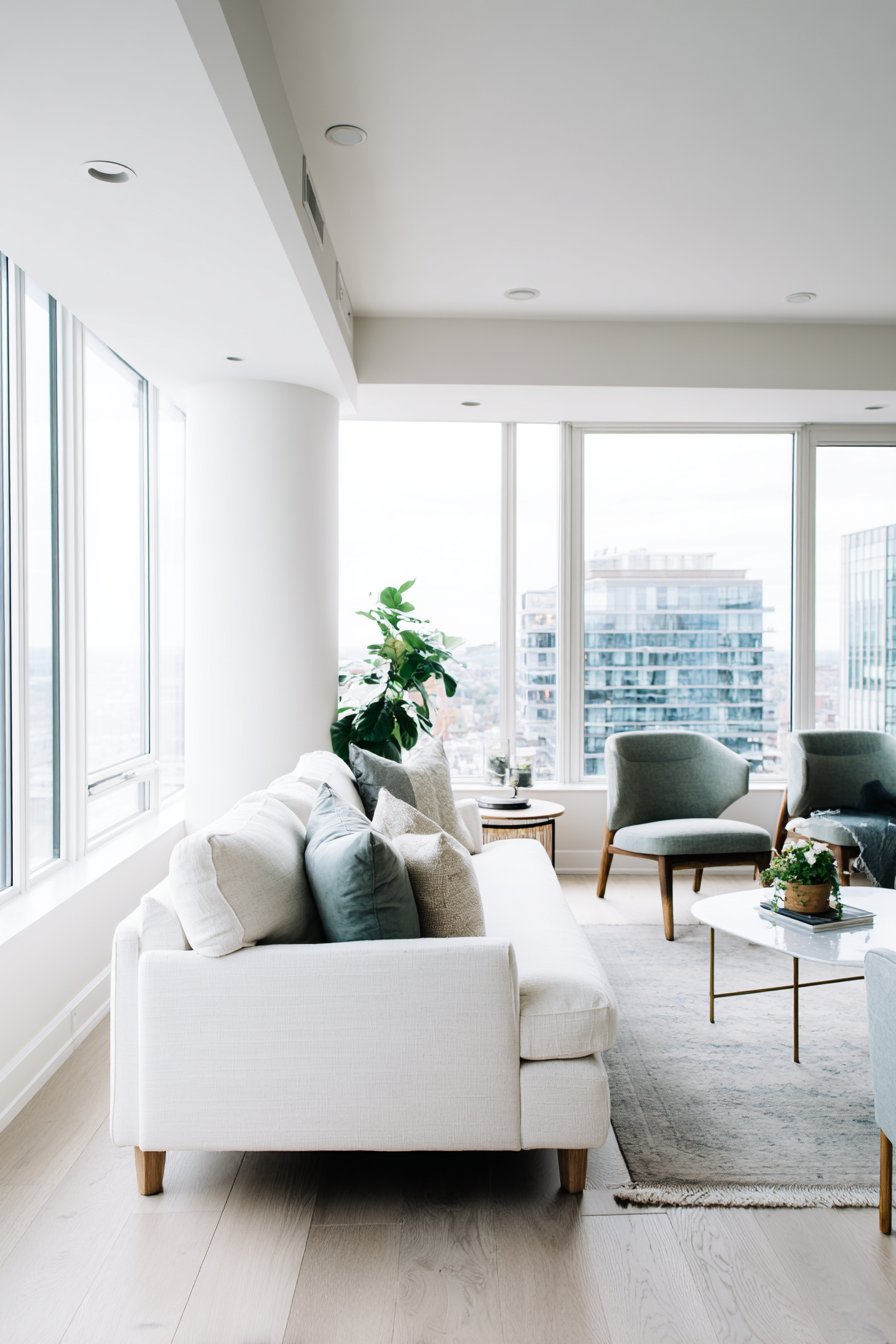
Bulky furniture is the enemy of narrow rooms. Low-profile and leggy furniture creates visual breathing room by allowing light to pass underneath pieces. This makes the floor feel larger and the room feel more open. It’s a simple trick with a dramatic impact.
Sofas and chairs with exposed wooden or metal legs sit lighter in a space visually. Avoid overstuffed sectionals or pieces that sit directly on the floor. A Scandinavian or mid-century modern aesthetic naturally lends itself to this style, offering clean lines and elevated frames.
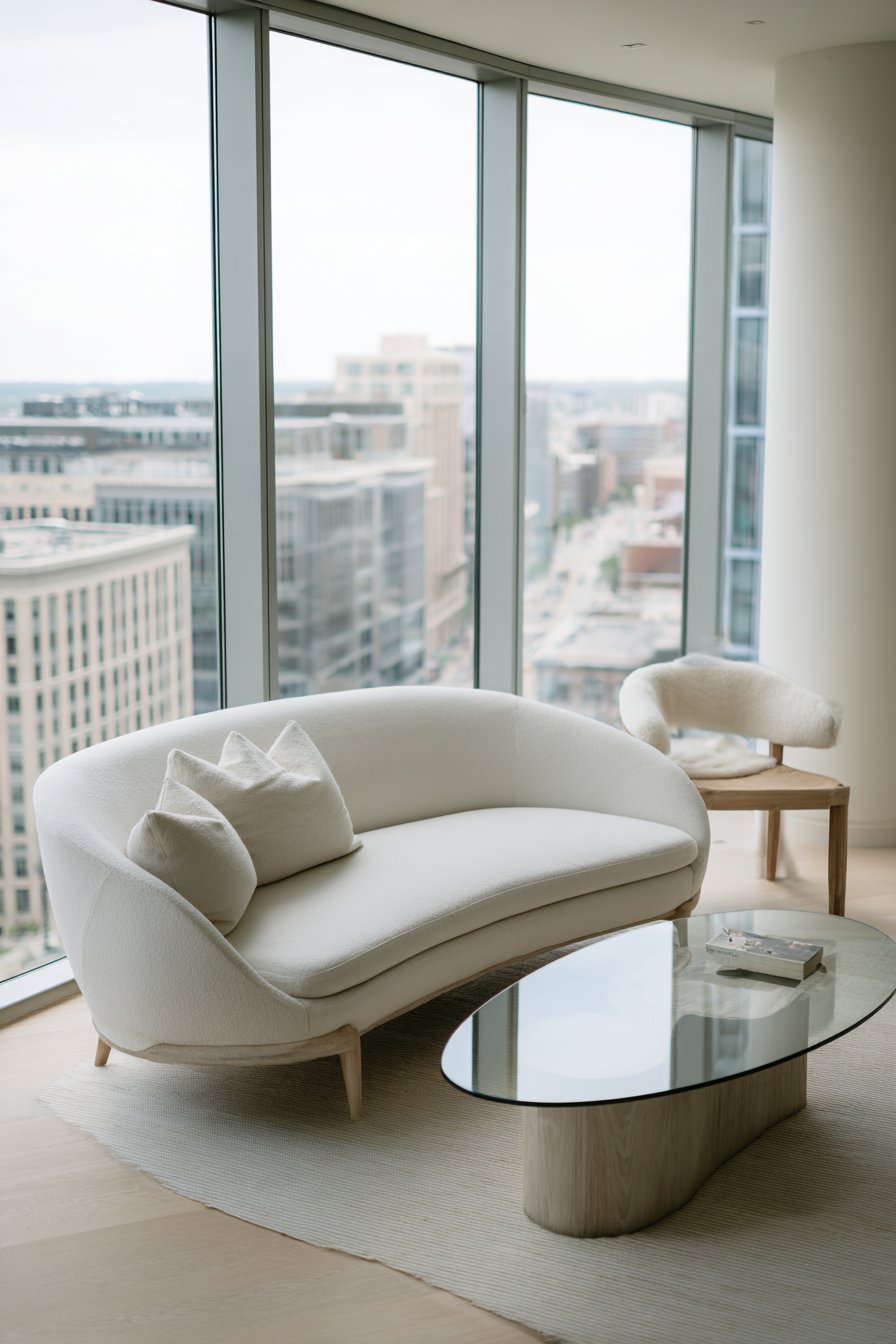
Coffee tables should be narrow and low — ideally under 48 inches long and 18 inches tall. Consider oval or rectangular shapes over square ones. These elongated silhouettes complement the room’s proportions rather than fighting them.
- Select sofas with legs at least 6 inches high for visual lightness
- Avoid sectionals — opt for a two or three-seat sofa instead
- Choose a glass or acrylic coffee table to reduce visual mass
- Pick chairs with open arms or armless silhouettes
- Avoid ottomans larger than 24 x 24 inches in very tight spaces
- Look for nesting tables as a flexible, space-saving alternative
3. Use Vertical Space to Draw the Eye Upward
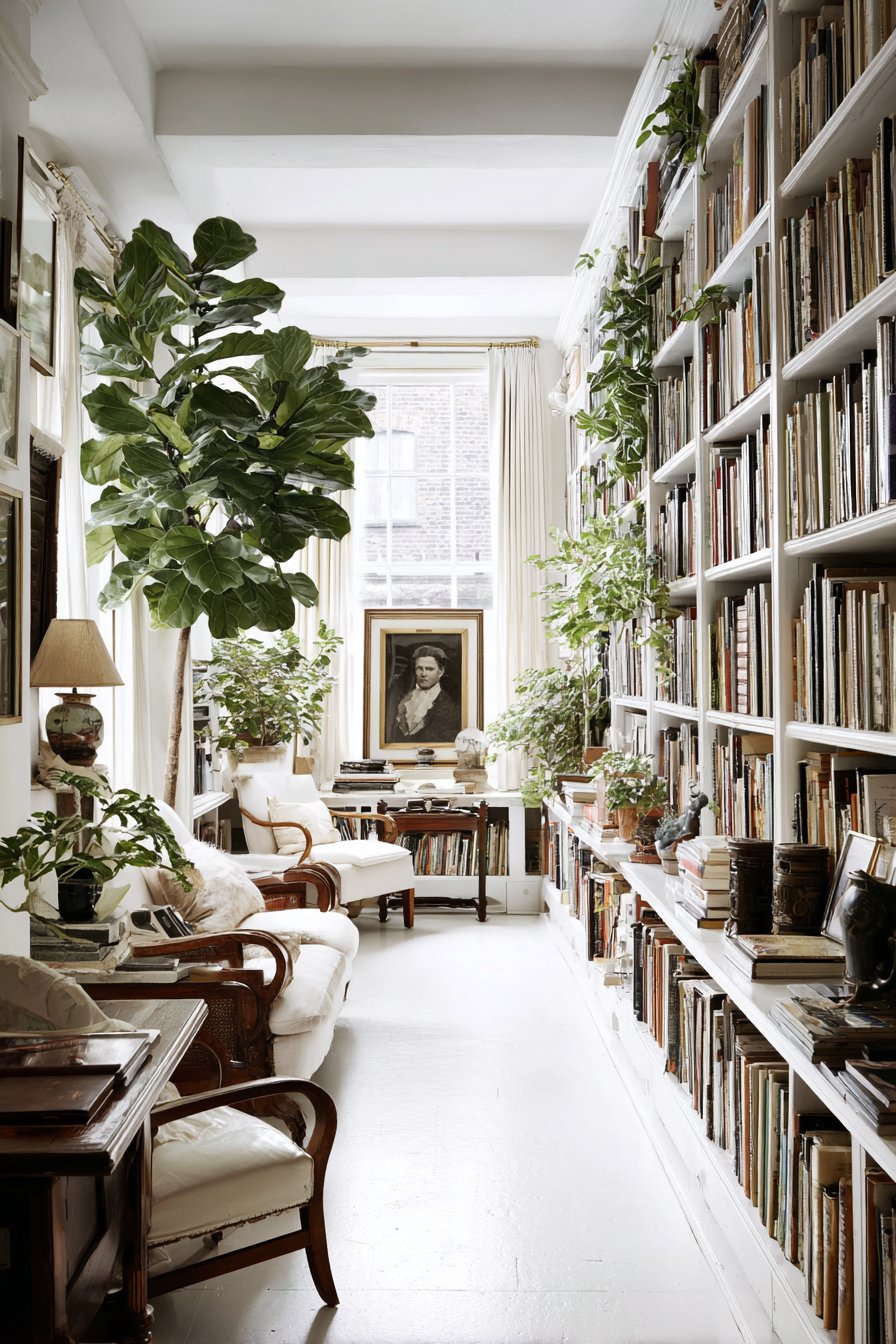
In a narrow room, vertical design elements shift attention away from the limited width. Tall bookshelves, floor-to-ceiling drapes, and vertical artwork all elongate the perceived height of the space. This psychological trick is one of the most powerful tools in interior design.
Install floor-to-ceiling shelving on one short end wall to create a dramatic focal point. This adds storage without consuming precious floor space. Style shelves with books, plants, and objects in varying heights to create an organic, curated look.
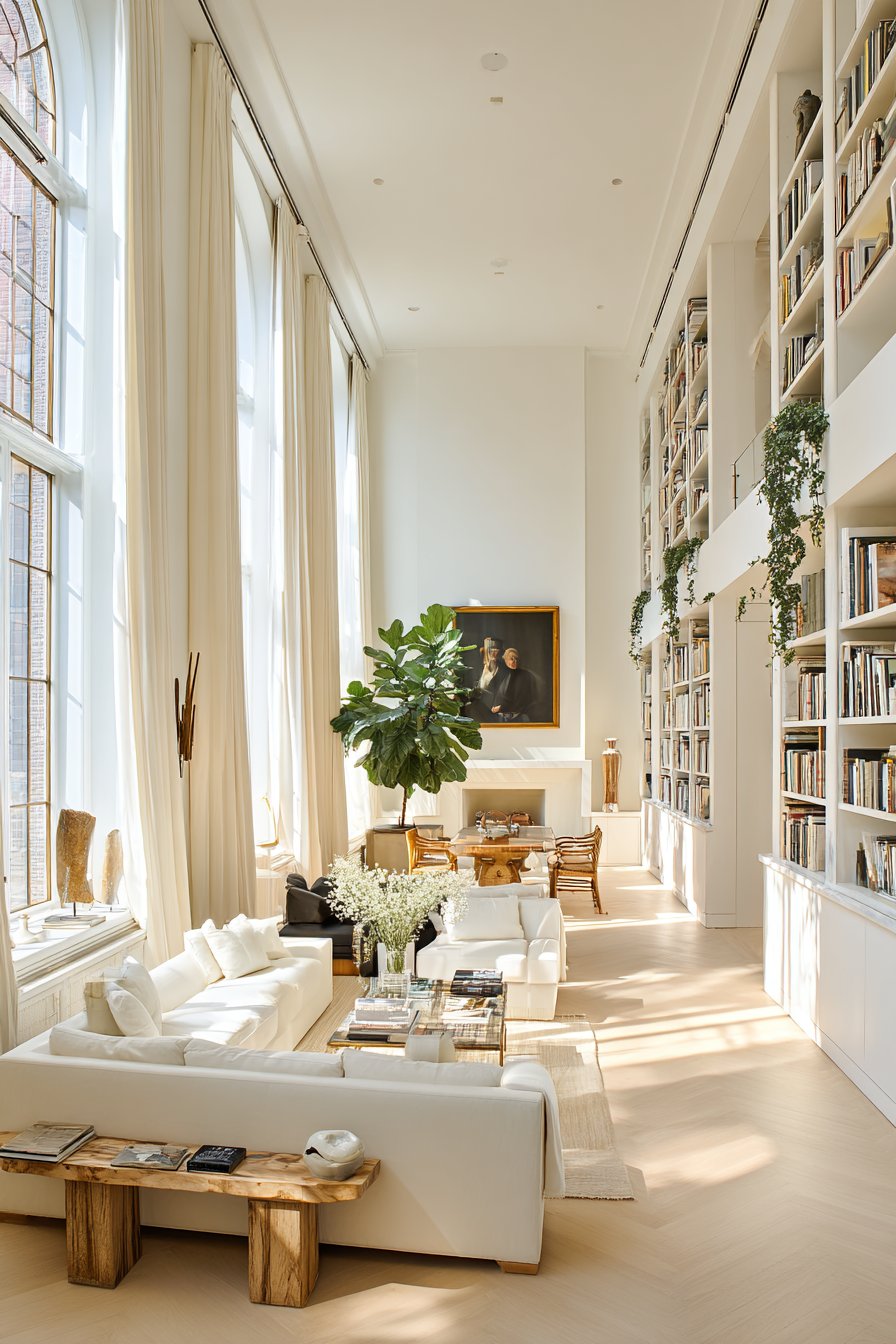
Hang curtains close to the ceiling rather than at the window frame. Use sheer or linen drapes that fall to the floor. This elongates the window visually and floods the room with light. Light is essential in narrow rooms — it softens walls and expands perceived space.
- Mount curtain rods 4–6 inches below the ceiling for maximum height illusion
- Choose curtains in light, neutral tones to avoid visual weight
- Install tall bookshelves — 72 inches or taller — on end walls
- Use vertical striped rugs or wallpaper to reinforce upward movement
- Hang artwork in a vertical portrait orientation rather than landscape
- Add tall indoor plants like fiddle-leaf figs or snake plants for organic height
4. Define Zones Without Walls or Dividers
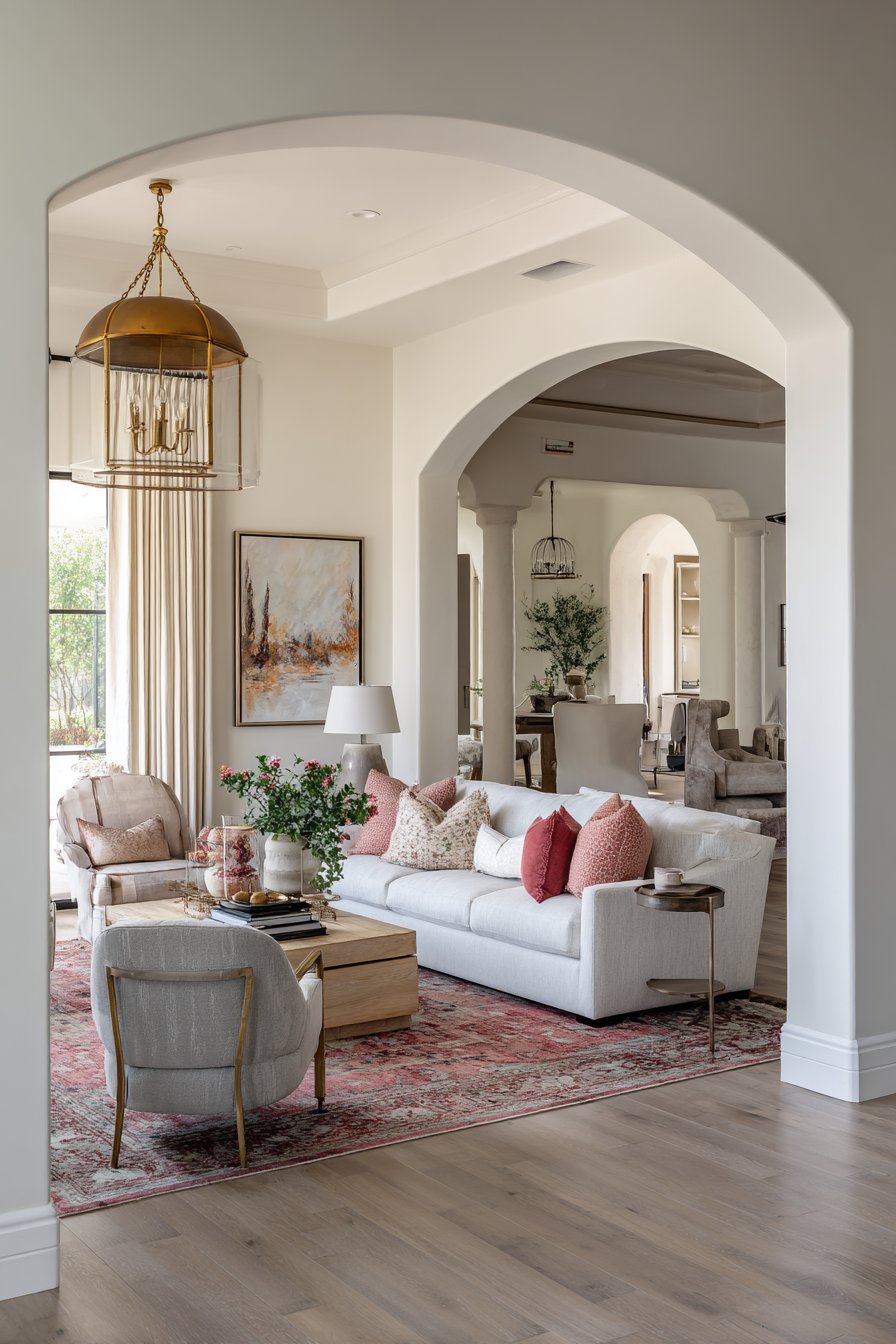
Even in a narrow room, you can create distinct functional zones. The trick is using furniture placement, rugs, and lighting — not physical dividers. Dividers block flow and shrink the space further. Zone definition through subtle cues maintains openness while adding purposeful structure.
Use an area rug to anchor the seating zone. Choose a rug that fits under the front legs of your sofa and chairs. This grounds the conversation area without enclosing it. Keep the rug proportional to the furniture grouping — typically 8 x 10 feet works well in most narrow rooms.
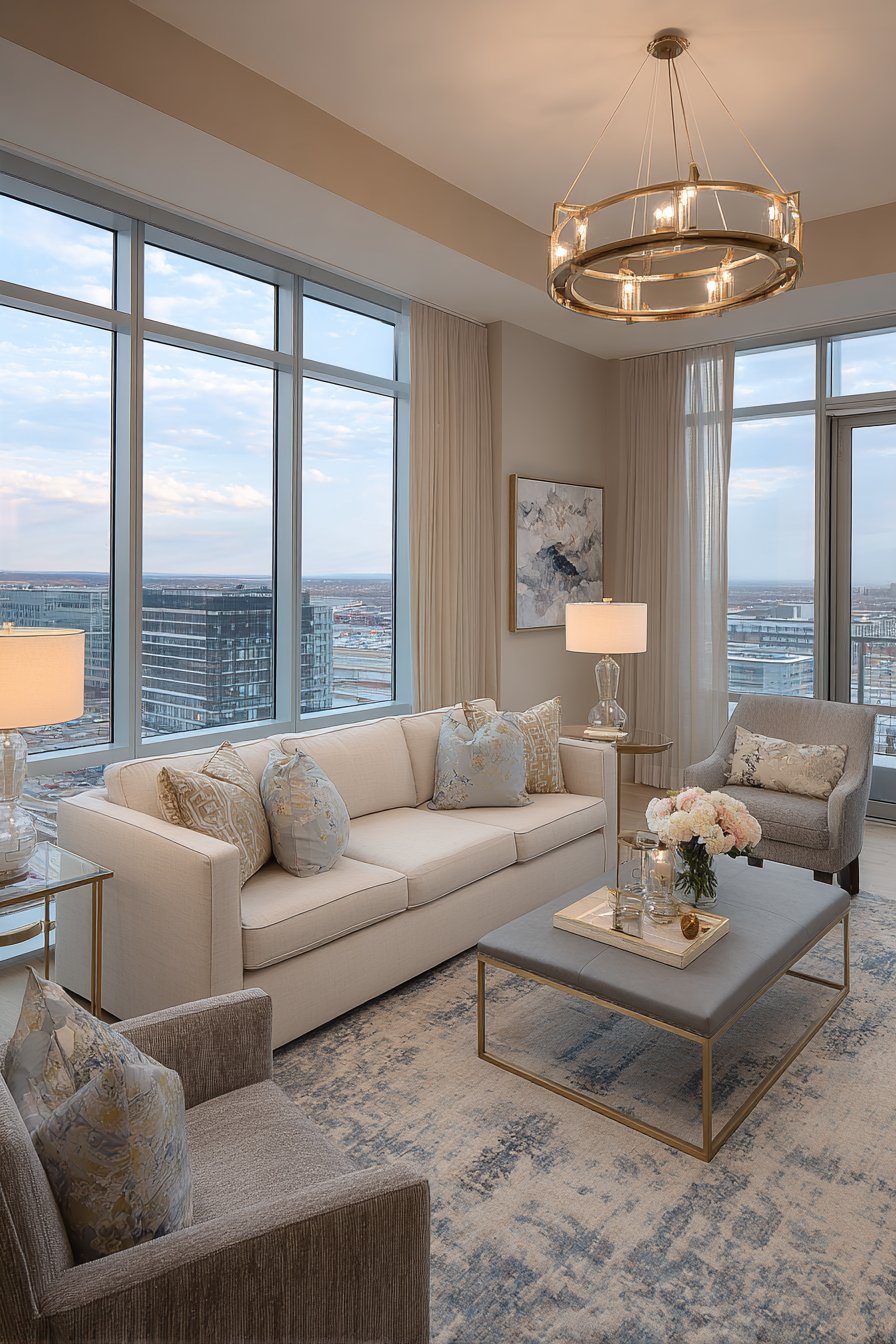
Lighting also defines zones beautifully. A pendant light or floor lamp positioned above or beside a reading chair creates an intimate corner. This pulls the eye to that specific area without adding furniture or bulk. Layered lighting is the secret weapon of professional designers.
- Use an 8 x 10 foot rug to define the primary seating area
- Avoid rugs that are too small — they fragment the space visually
- Position a floor lamp behind a reading chair to create a cozy zone
- Use a small side table and lamp to suggest a secondary activity area
- Avoid tall room dividers or bookshelves placed perpendicular to walls
- Let negative space between zones serve as the natural visual boundary
5. Opt for Multi-Functional and Foldable Furniture
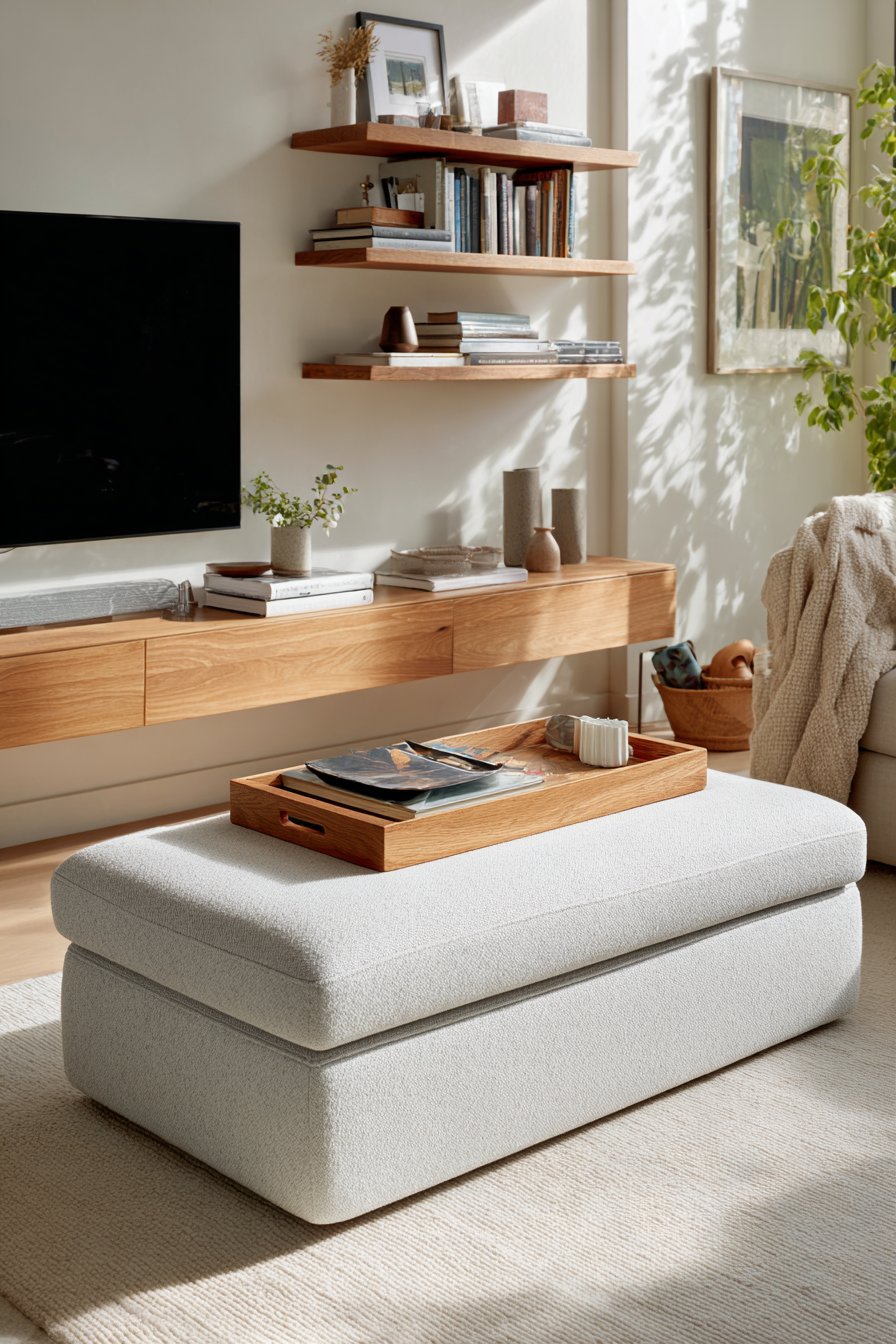
In narrow living rooms, every piece must earn its place. Multi-functional furniture solves two problems at once — it reduces clutter and increases utility. Storage ottomans, drop-leaf tables, and wall-mounted desks are all excellent choices for tight spaces.
A storage ottoman replaces a coffee table while hiding blankets, remotes, and magazines. Choose a rectangular shape to complement the room’s proportions. Add a tray on top to create a stable surface for drinks and décor. This single swap saves significant floor space and reduces visual clutter.
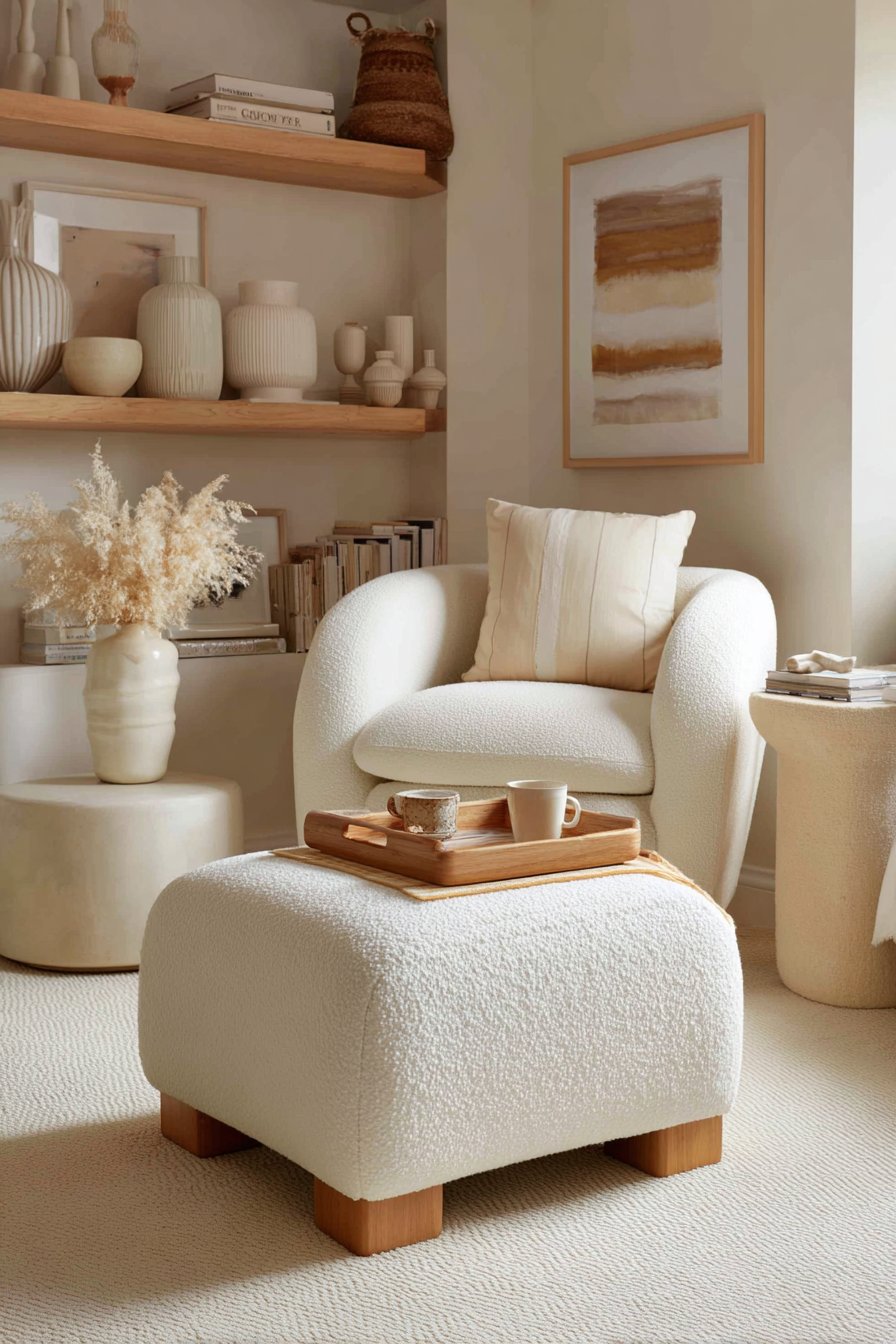
Wall-mounted shelves replace bulky sideboards and TV stands. A floating media shelf keeps the floor clear beneath the TV, making the room feel larger. Foldable chairs tucked in a closet can appear when guests arrive and disappear when not needed. Flexible furnishing is the hallmark of smart narrow-room design.
- Replace a coffee table with a rectangular storage ottoman
- Add a wooden tray on the ottoman to create a functional surface
- Install floating wall shelves instead of freestanding shelving units
- Use a wall-mounted TV bracket to eliminate the need for a large media console
- Consider a fold-down desk for dual-purpose work and living areas
- Store extra seating as foldable chairs in nearby closets
6. Master Color and Mirror Strategies to Expand the Space
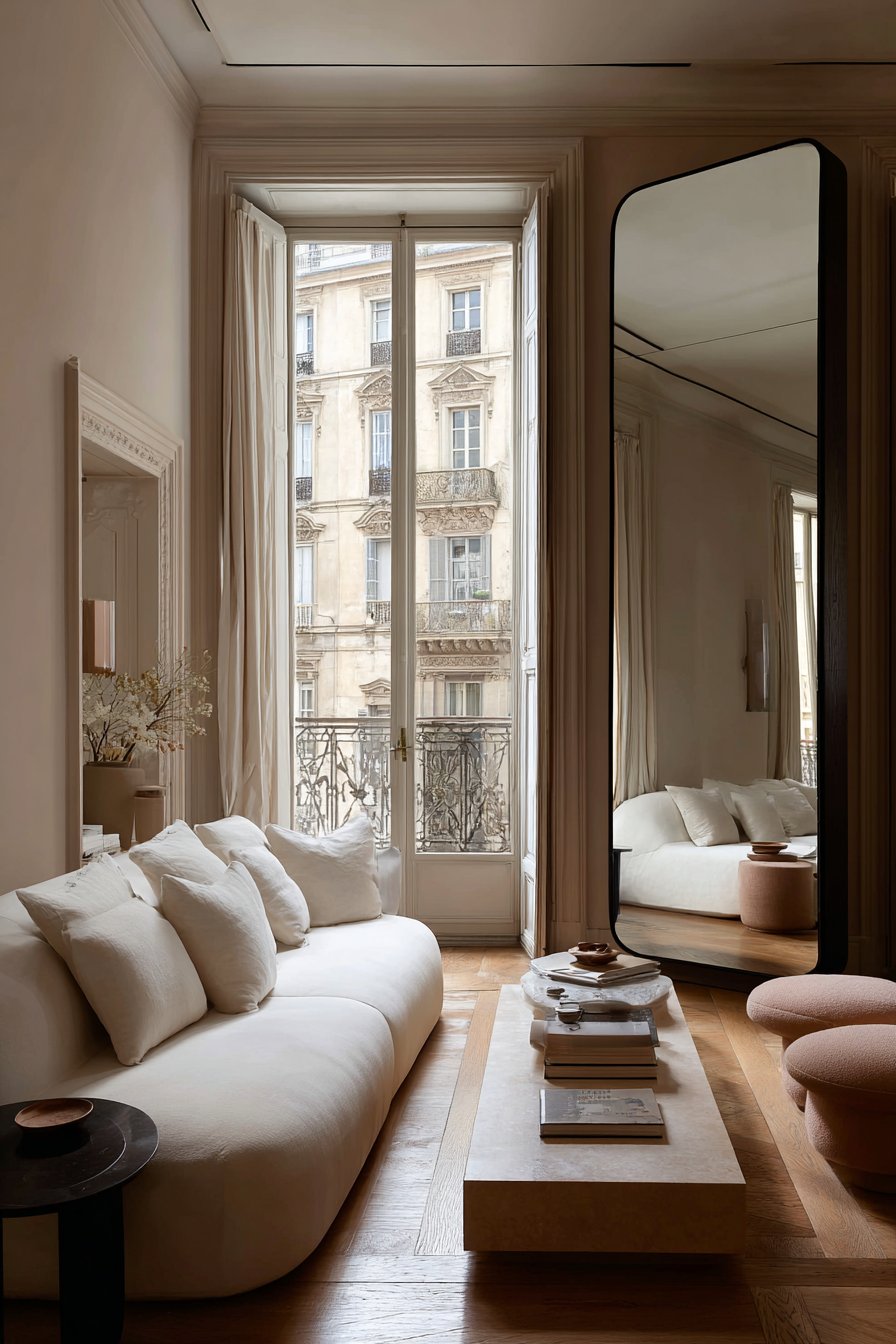
Color has profound power over how we perceive space. In narrow rooms, the right palette can visually widen walls and push them apart. Light, cool neutrals — whites, soft grays, warm creams — reflect light and open up tight spaces. Dark colors, while dramatic, absorb light and close rooms in.
Paint the two short end walls a slightly deeper tone than the long walls. This technique — called accent wall contrast — draws the eye to the ends of the room, making it feel wider. It redirects the gaze away from the narrow dimension entirely.
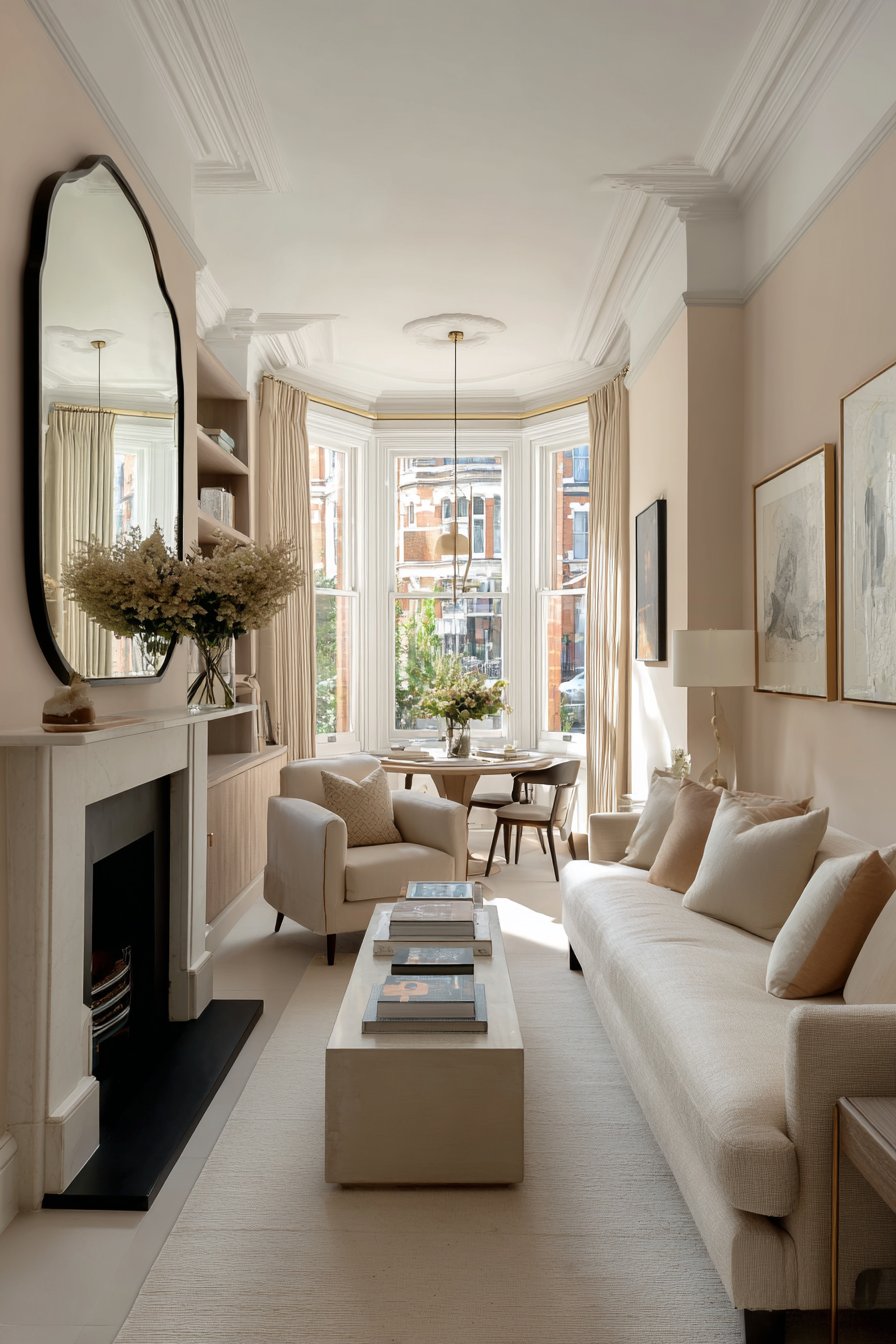
Mirrors are the oldest and most effective space-expanding tool in design. A large mirror on one long wall doubles the perceived width of the room. Position it to reflect natural light from a nearby window. A mirror measuring 40 x 60 inches or larger makes a transformative impact on narrow spaces.
- Paint long walls in light warm whites or soft greiges for maximum reflection
- Apply a slightly deeper tone to short end walls to suggest width
- Hang a large mirror — at least 40 x 60 inches — on a long wall
- Position mirrors to reflect windows or light sources for doubled effect
- Avoid dark or heavily patterned wallpaper on long walls
- Use glossy or satin paint finishes to enhance light reflection
Conclusion
Arranging furniture in a narrow living room is about working with the space, not against it. From embracing linear layouts to using mirrors strategically, every decision shapes how the room feels and functions. The goal is always to maintain clear, effortless flow while creating a space that feels intentional and beautiful.
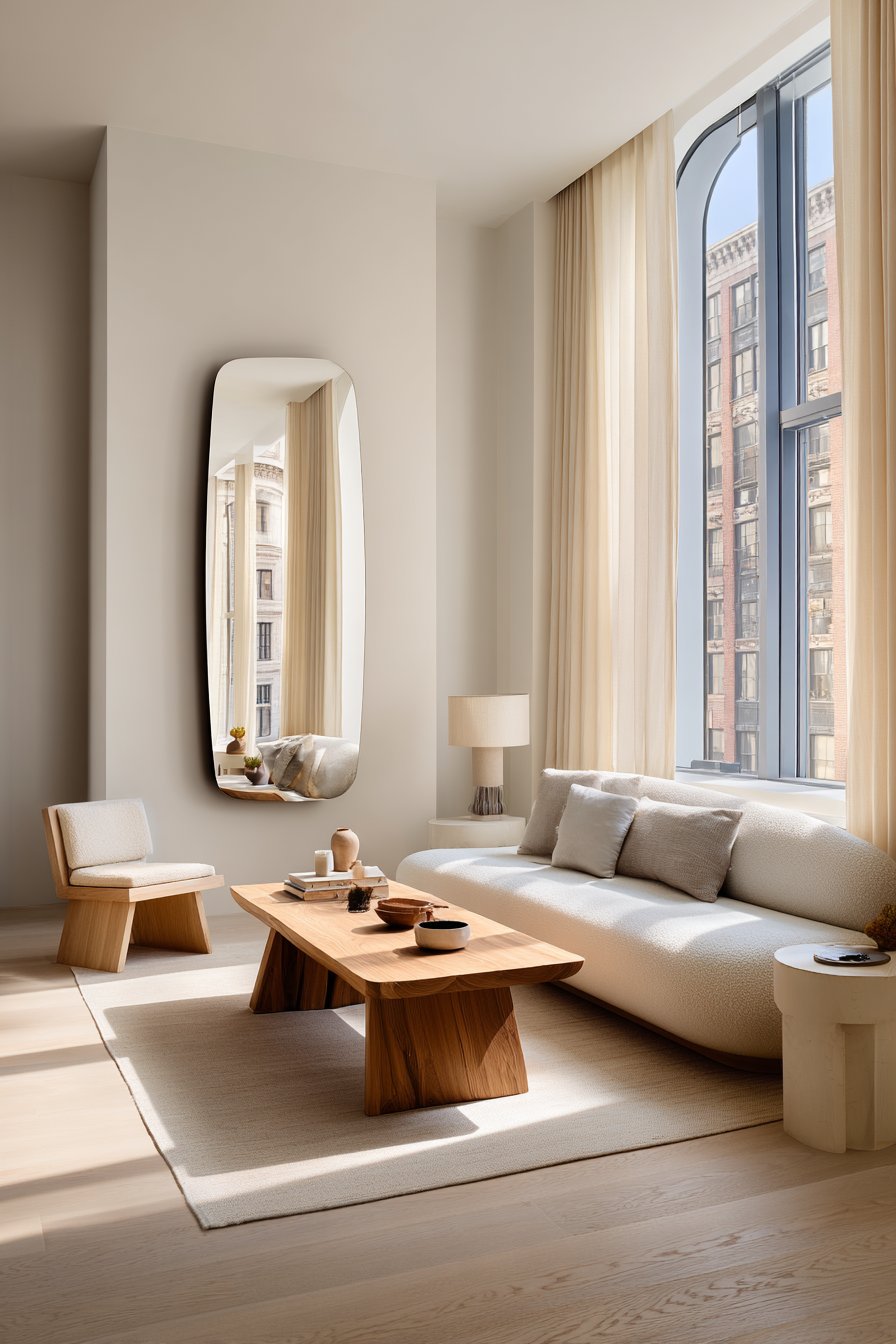
Start with one or two changes — perhaps a new rug placement or swapping out bulky furniture for slimmer profiles. Small adjustments create compounding improvements over time. A narrow living room, thoughtfully arranged, can become the most charming and sophisticated space in your entire home.
"As an Amazon Associate, I earn from qualifying purchases."
