
The modern vintage aesthetic represents one of the most compelling and enduring trends in contemporary interior design, masterfully bridging the gap between nostalgic charm and sleek sophistication. This design philosophy celebrates the marriage of eras, where cherished heirlooms and carefully curated antique pieces coexist harmoniously with clean-lined contemporary furnishings. By blending the warmth and character of vintage elements with the functionality and minimalism of modern design, homeowners can create living spaces that feel both timeless and refreshingly current, offering a unique reflection of personal taste and storytelling.
The beauty of modern vintage living rooms lies in their versatility and accessibility. Unlike strictly period-specific design schemes that can feel museum-like or overly themed, the modern vintage approach welcomes experimentation and personal expression. Whether you’re drawn to mid-century modern classics, industrial salvage finds, ornate Victorian pieces, or rustic farmhouse charm, there’s room for every treasure in this eclectic design philosophy. The key is achieving balance—knowing when to let a vintage piece shine as a focal point and when to ground it with contemporary simplicity.
In this comprehensive guide, we’ll explore twenty distinctive modern vintage living room concepts that showcase the endless possibilities within this design genre. From cognac leather sofas paired with industrial brick walls to repurposed steamer trunks serving as coffee tables, each space demonstrates how thoughtful curation and intentional placement can transform disparate elements into cohesive, inviting environments. You’ll discover practical tips for mixing materials, balancing proportions, incorporating lighting, and creating visual interest through texture and color—all essential skills for mastering the modern vintage aesthetic in your own home.
1. Mid-Century Leather Meets Industrial Chic
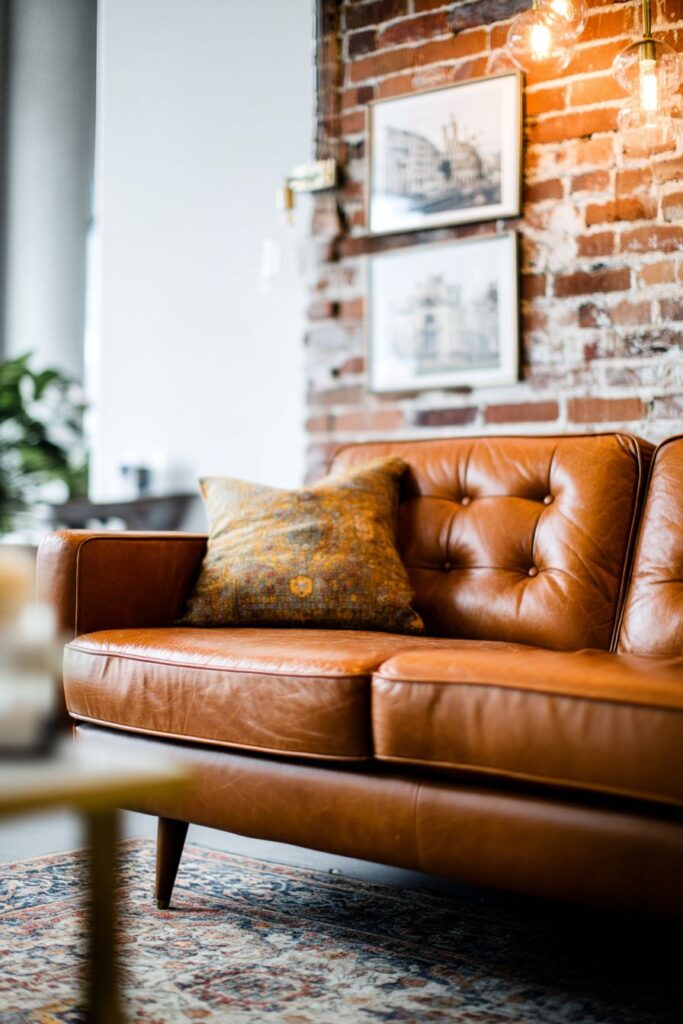
The foundation of this stunning living room rests on a magnificent mid-century modern sofa upholstered in rich cognac leather, featuring classic button tufting and elegantly tapered wooden legs that epitomize 1950s design sensibility. The leather’s natural patina tells a story of age and character, its warm amber tones catching light beautifully throughout the day. Paired with this vintage anchor piece is a contemporary glass-topped coffee table elevated by gleaming brass accents, creating a transparent focal point that doesn’t visually weigh down the space while adding a touch of modern glamour.
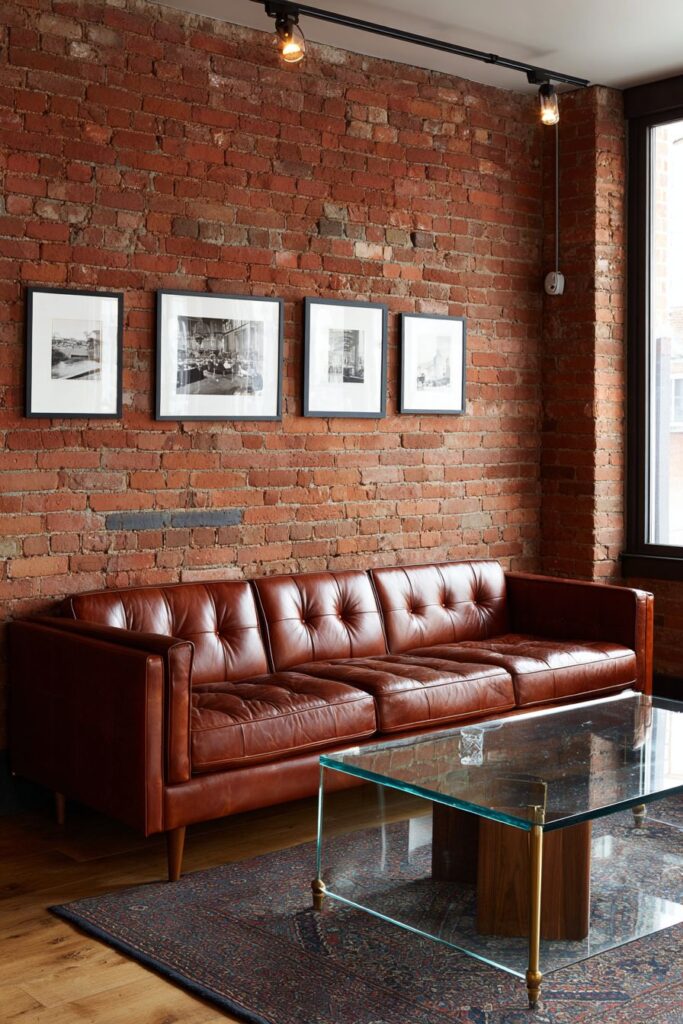
The room’s most dramatic architectural feature is the exposed brick accent wall, which introduces raw industrial texture and earthy red-brown hues that complement the cognac leather perfectly. This textural backdrop provides depth and visual interest without competing with the furnishings. Modern track lighting installed along the ceiling illuminates carefully selected framed vintage photography, creating a gallery-like atmosphere that celebrates both the art and the illumination method. The lighting fixtures themselves become sculptural elements, their sleek metal tracks and adjustable heads representing contemporary functionality.
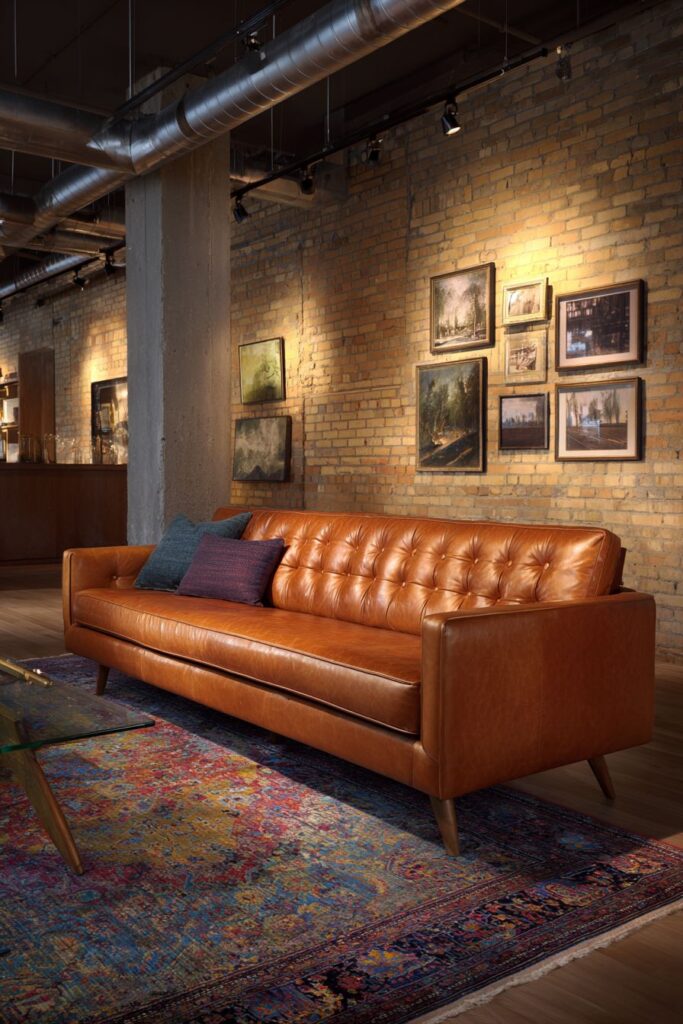
Anchoring the entire seating arrangement is a vintage Persian rug with faded jewel tones—deep sapphires, muted rubies, and weathered emeralds—that have softened beautifully over decades of use. The rug’s traditional patterns ground the modern elements while its worn appearance prevents the space from feeling too precious or untouchable. Natural lighting floods the room through unseen windows, highlighting the leather’s rich grain, the rug’s intricate weaving, and the brick’s varied textures, creating a layered visual experience that changes with the sun’s movement.
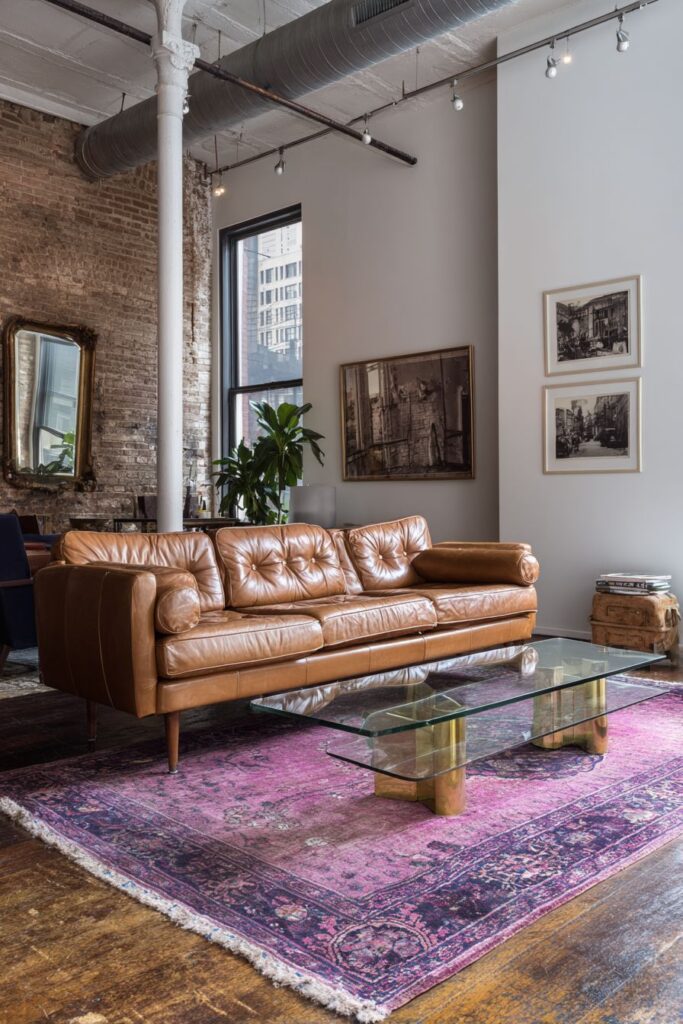
Key Design Tips:
- Invest in quality vintage leather furniture that will develop character over time rather than deteriorate.
- Use glass and acrylic furniture pieces to maintain visual openness when mixing heavy vintage elements.
- Expose one architectural feature like brick or beams to add authentic texture without overwhelming the space.
- Layer lighting types including ambient track lighting, task lamps, and natural light for flexibility throughout the day.
- Choose vintage rugs with faded colors that blend multiple eras rather than vibrant patterns that dominate.
2. Walnut Credenza and Contemporary Comfort
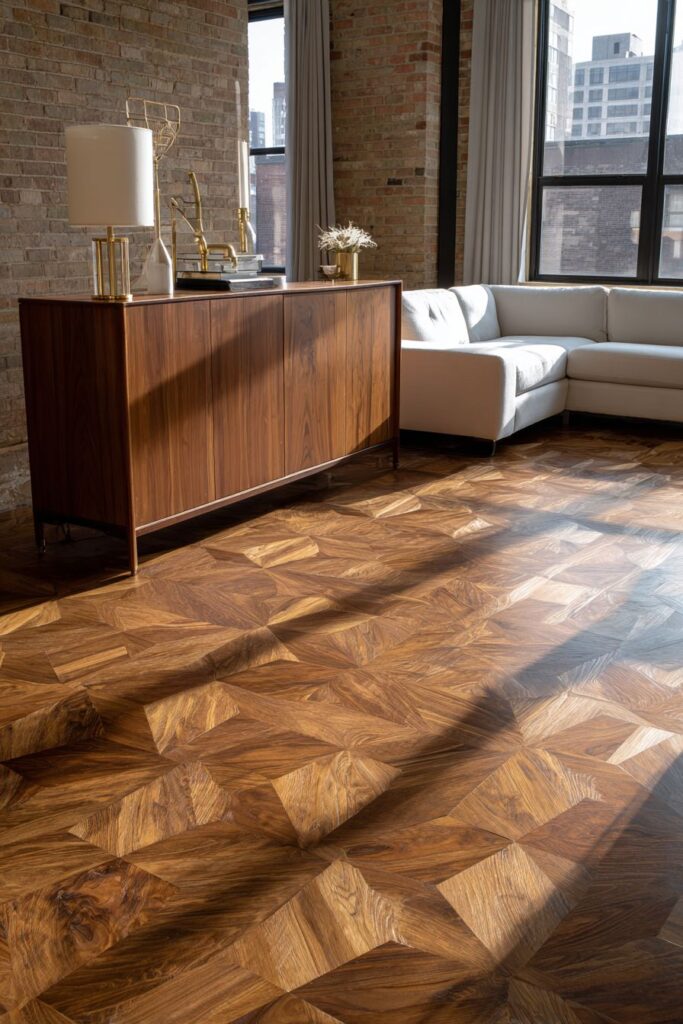
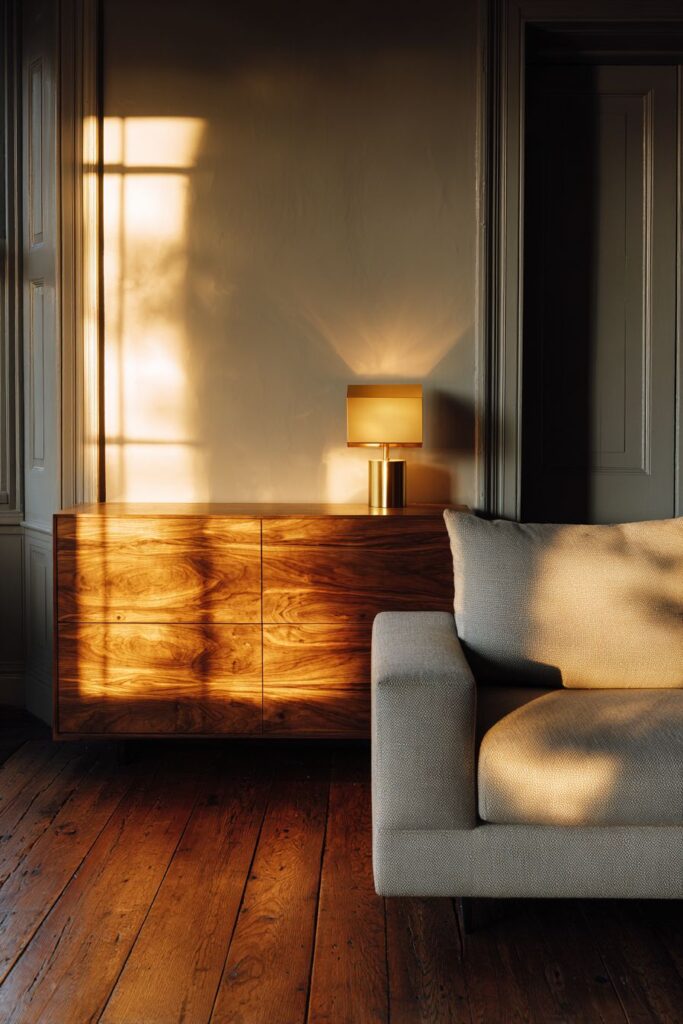
A beautifully restored 1960s credenza in warm walnut wood commands attention as the media console in this sophisticated living room, its horizontal lines and organic wood grain exemplifying the craftsmanship of mid-century furniture makers. The credenza’s rich brown tones and smooth finish contrast beautifully with the modern minimalist decor arranged on its surface—a sleek ceramic vase, a single sculptural object, and a vintage brass lamp with a contemporary shade. This careful curation prevents visual clutter while allowing each piece to shine individually.
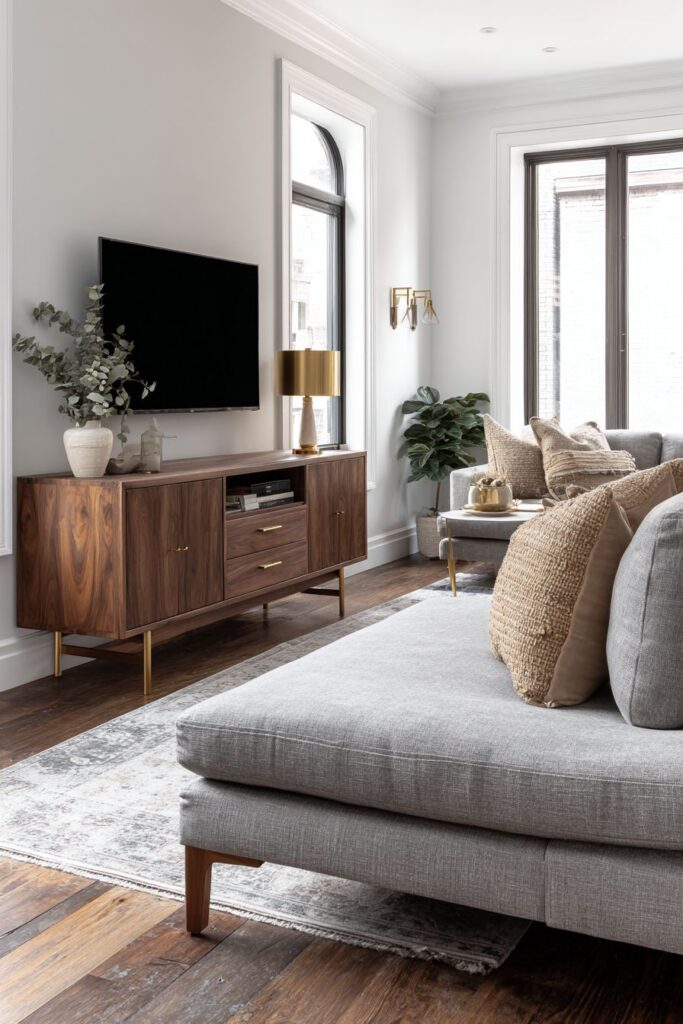
Facing the credenza is a sleek contemporary sectional upholstered in neutral linen, its low profile and clean lines providing the perfect counterpoint to the vintage wood piece. The sectional’s generous proportions create an inviting conversation space, while its neutral fabric allows the walnut credenza to remain the room’s focal point. The linen’s natural texture adds subtle visual interest without competing for attention, and its light color brightens the space while making the room feel larger and more open.
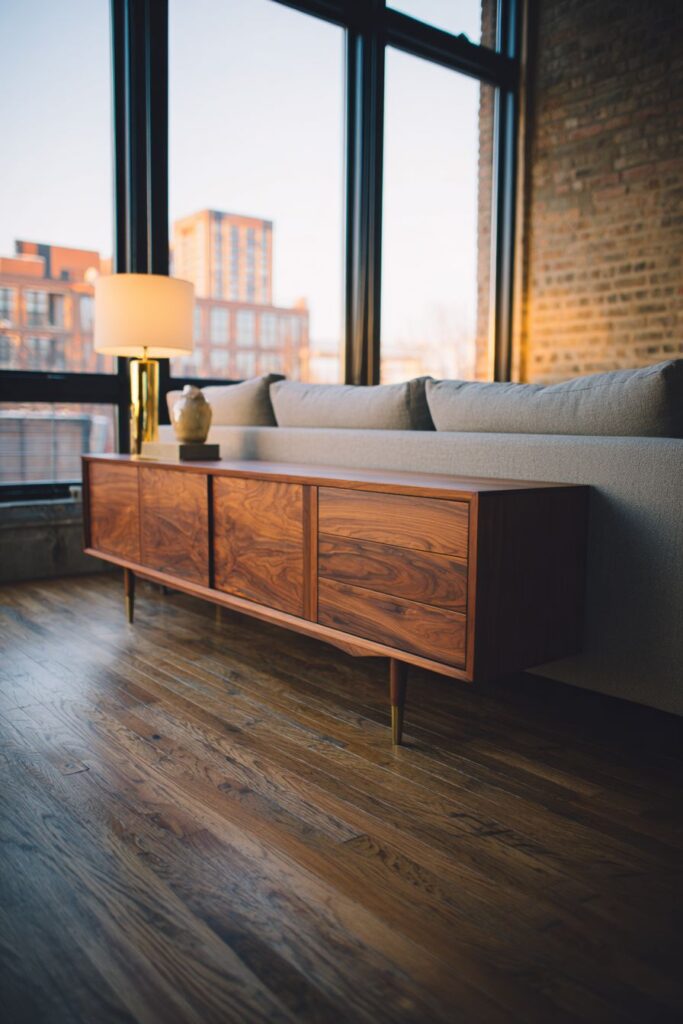
The original hardwood floors display natural wear patterns that tell decades of stories—slight fading near windows, gentle wear in high-traffic areas, and the honest patina of age. These imperfections become design assets in the modern vintage aesthetic, adding authenticity and warmth that new materials simply cannot replicate. Golden hour light streams through windows, casting warm amber glows across the walnut wood and creating dramatic shadows that emphasize the credenza’s architectural lines and hardware details.
Key Design Tips:
- Restore vintage wood furniture professionally to preserve its integrity while making it functional for modern electronics.
- Balance one substantial vintage piece with contemporary furnishings in neutral colors to prevent visual competition.
- Embrace original flooring imperfections as character marks rather than flaws to be hidden.
- Position vintage wood pieces perpendicular to windows to showcase grain patterns in changing natural light.
- Select contemporary upholstery in natural fibers like linen or cotton that complement rather than clash with vintage wood tones.
3. Geometric Revival in a Fresh White Space
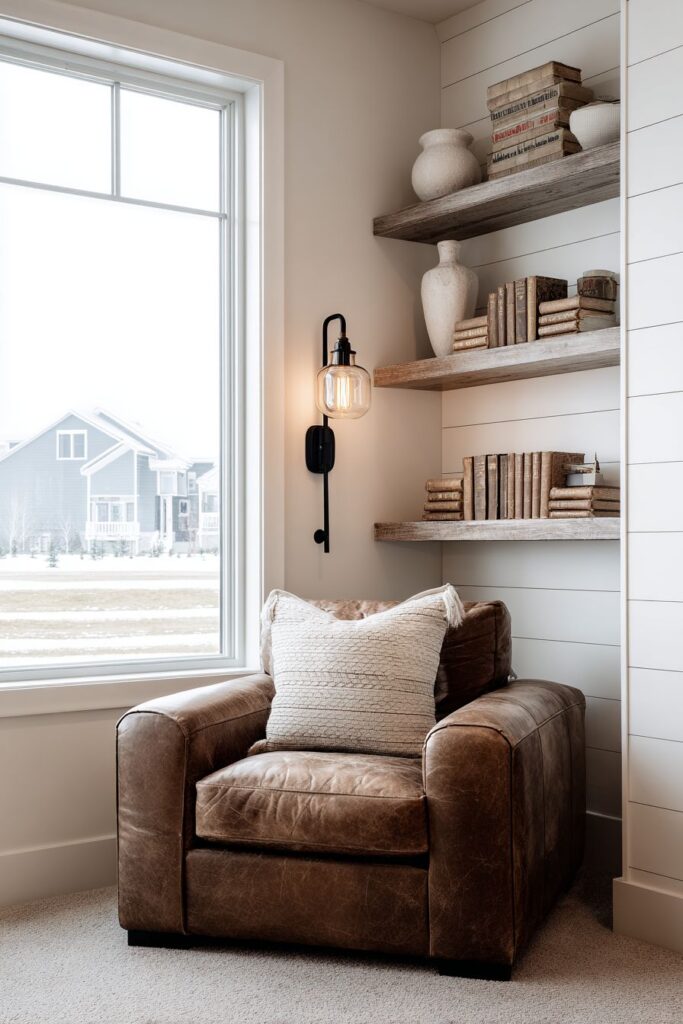
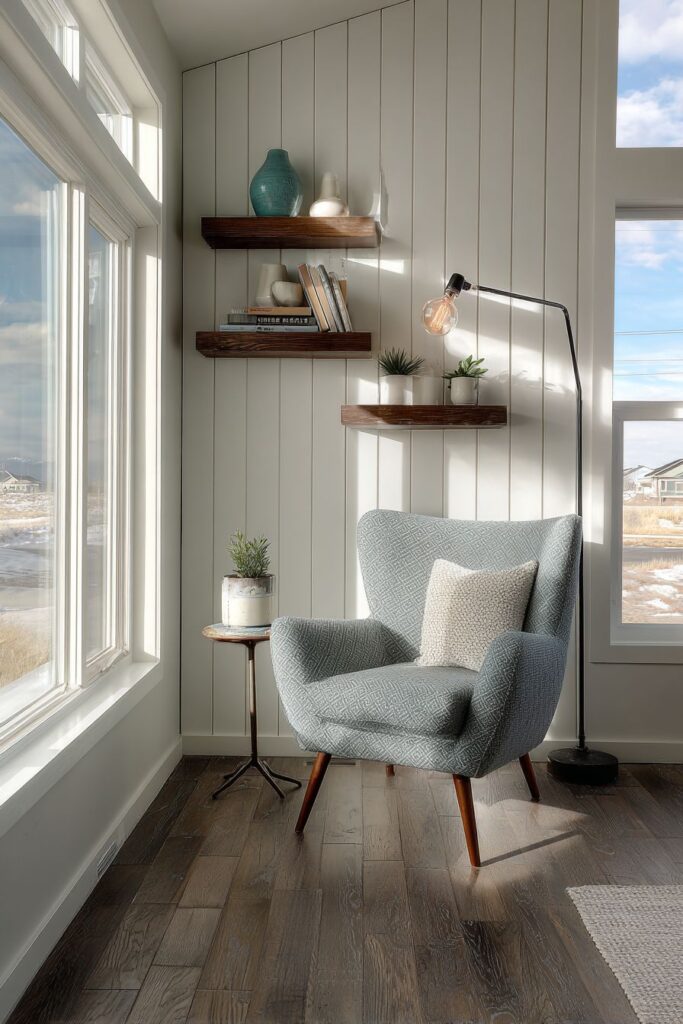
This living room celebrates the art of reupholstery, centered around a refurbished vintage armchair that has been given new life with modern geometric fabric in bold triangles and hexagons. The chair’s classic silhouette—curved arms, turned legs, substantial presence—speaks to its mid-century origins, while the contemporary fabric pattern brings it firmly into the present day. Positioned beside a sleek contemporary floor lamp featuring an exposed Edison bulb, the chair becomes a perfect reading spot that bridges past and present.
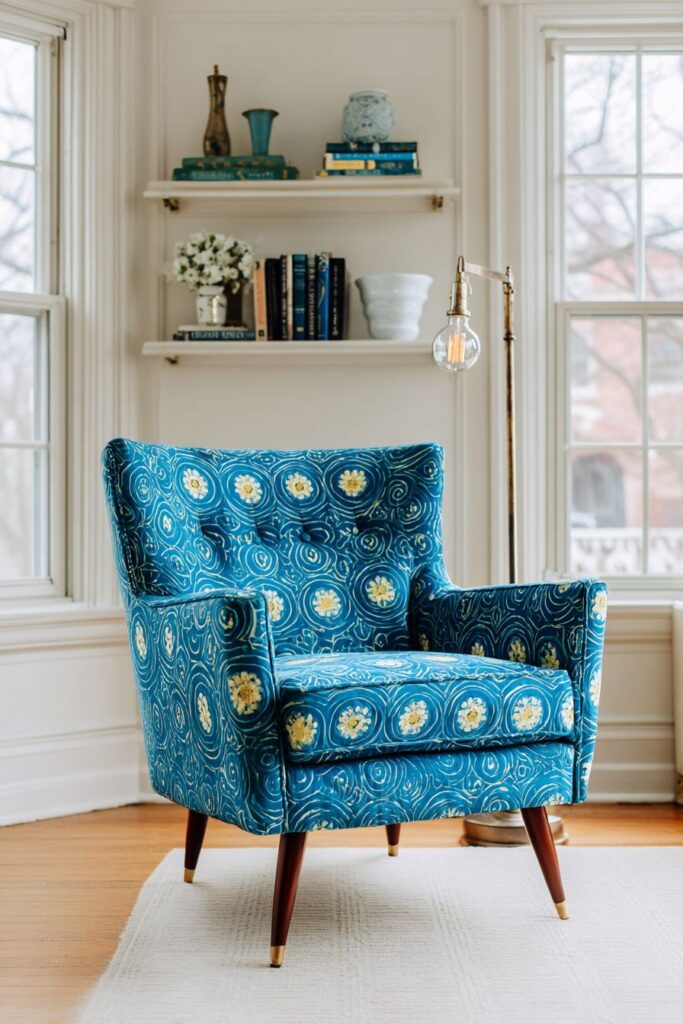
Floating shelves mounted along one wall create a curated display space that showcases the homeowner’s collections with intention and artistry. Antique leather-bound books with gilt lettering stand spine-out, their aged covers in rich burgundies and forest greens contrasting beautifully with modern ceramic pieces in matte white and soft gray. This careful mixing of old and new on the shelves mirrors the room’s overall aesthetic philosophy, demonstrating how vintage and contemporary objects can enhance rather than diminish each other.
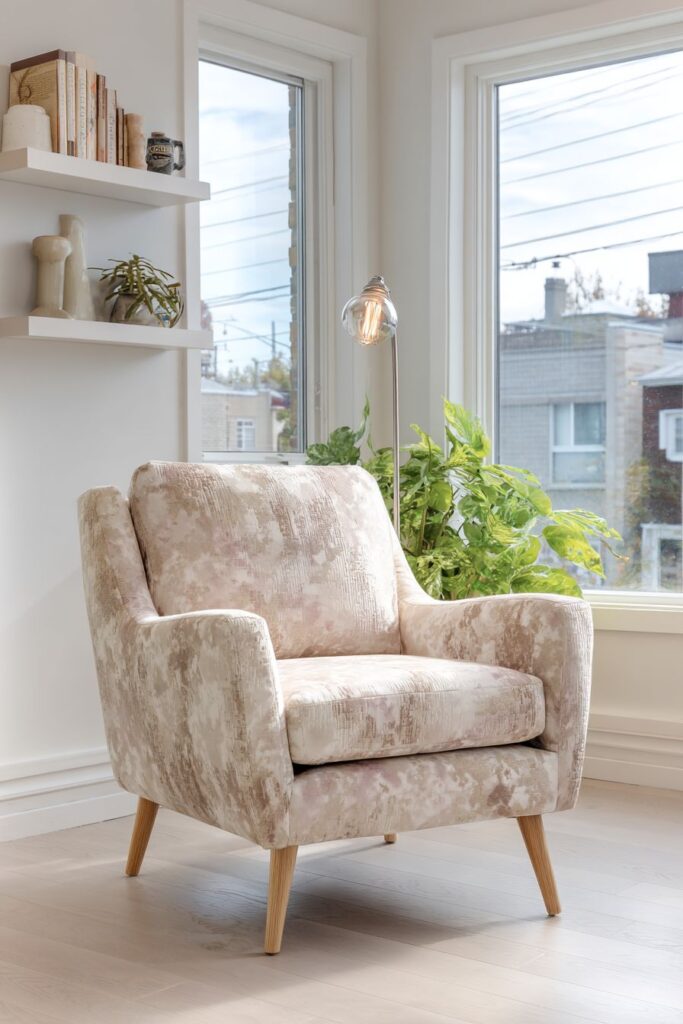
The shiplap walls painted in soft white create a fresh, almost Scandinavian backdrop that allows the eclectic furnishings to pop without visual competition. The horizontal lines of the shiplap add subtle texture and architectural interest without overwhelming the space, while the white paint reflects natural daylight from large windows, creating an airy, expansive feeling. Soft shadows cast by the window light highlight the texture details in the geometric fabric, the grain of the vintage chair’s wooden legs, and the variations in the ceramic glazes.
Key Design Tips
- Reupholster vintage furniture frames in contemporary fabrics to extend their life while updating their aesthetic.
- Use floating shelves instead of bulky bookcases to display collections without consuming floor space.
- Paint shiplap or textured walls in white or light neutrals to add dimension without color distraction.
- Position statement chairs near windows with complementary task lighting for functional reading areas.
- Mix book spines and decorative objects on shelves, arranging by color or size for visual cohesion.
4. Sophisticated Contrast with Marble and Modernity
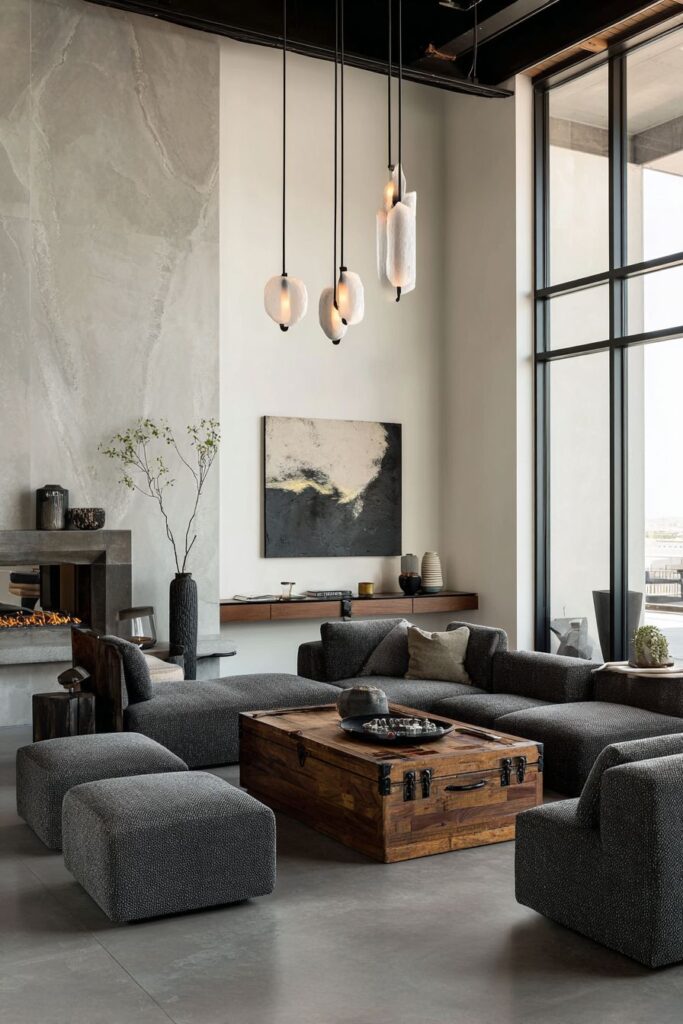
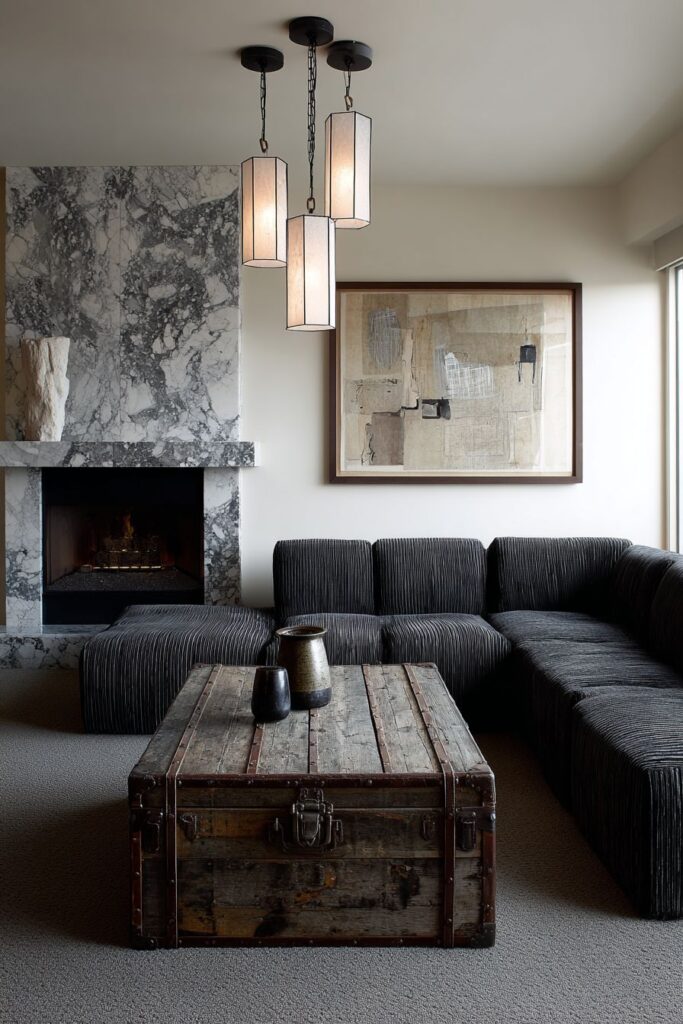
A contemporary modular sofa in sophisticated charcoal grey establishes the seating area in this refined living room, its plush cushions and adjustable configuration offering both comfort and versatility. The deep grey upholstery provides a neutral foundation that allows other elements to shine, while its modern profile—low arms, clean lines, generous proportions—represents current design sensibilities. This substantial piece faces an unexpected coffee table: a vintage wooden trunk with visible brass hardware, leather straps, and an aged patina that speaks of distant travels and stored treasures.
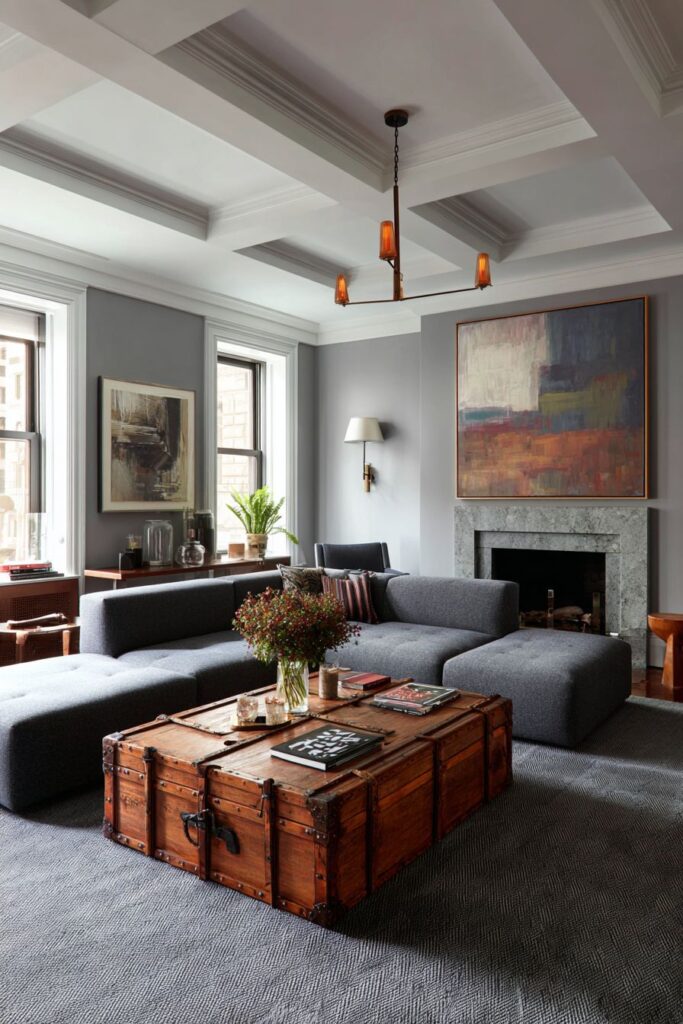
The trunk’s transformation from storage piece to functional surface exemplifies the creativity at the heart of modern vintage design. Its worn leather corners, tarnished metal studs, and faded travel labels tell compelling stories, while its flat top surface provides practical space for books, drinks, and decorative objects. The juxtaposition of this rustic, travel-worn piece against the pristine modular sofa creates visual tension that energizes the entire space, proving that contrasting elements can coexist beautifully when united by thoughtful design.
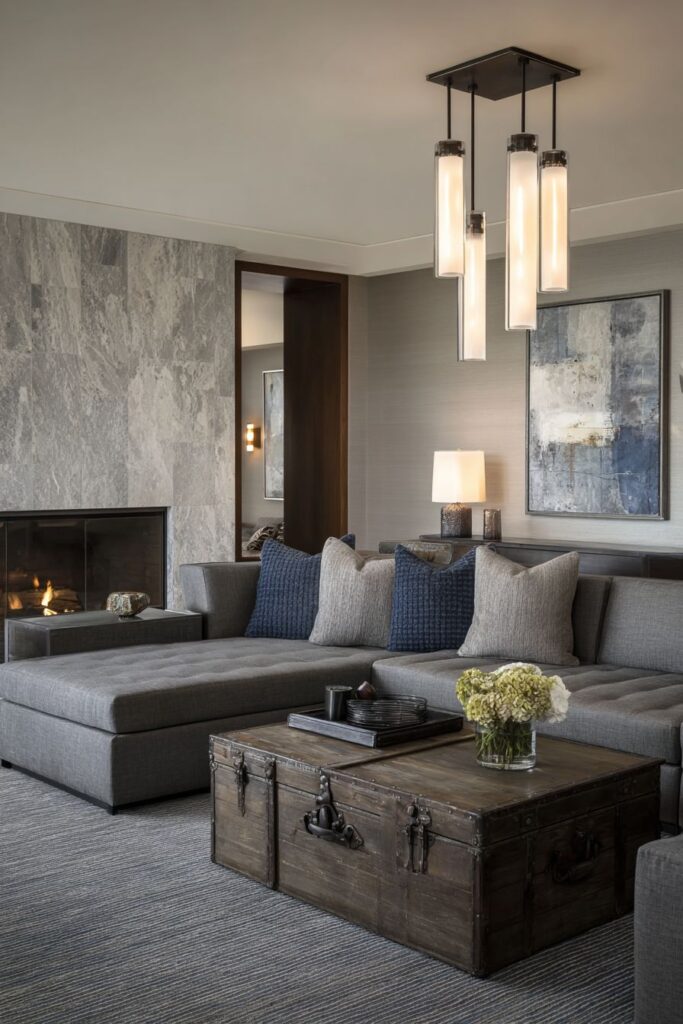
Above a vintage marble fireplace mantel hangs modern abstract art in muted tones—soft grays, warm taupes, hints of sage green—that bridges the contemporary and vintage elements while adding vertical visual interest. The marble mantel itself, with its veined patterns and solid presence, represents classical architecture and craftsmanship, while the abstract art firmly plants the room in contemporary aesthetics. Modern pendant fixtures create intimate pools of light throughout the room, their sculptural forms and focused illumination adding drama and functionality.
Key Design Tips:
- Repurpose vintage trunks and suitcases as coffee tables for character-rich focal points.
- Use charcoal and deep grey as neutral alternatives to beige when creating sophisticated modern spaces.
- Hang abstract art above traditional architectural features to create temporal dialogue.
- Install pendant lights at varying heights to create layered illumination and visual interest.
- Preserve original marble and stone elements as permanent anchors in evolving design schemes.
5. Velvet Luxury Meets Transparent Minimalism
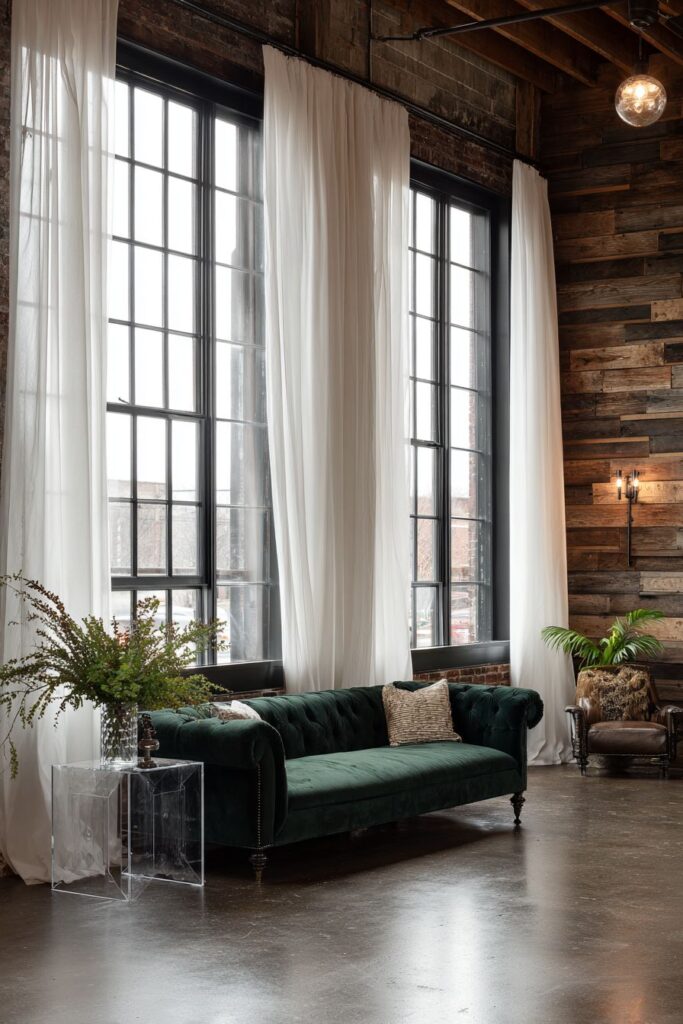
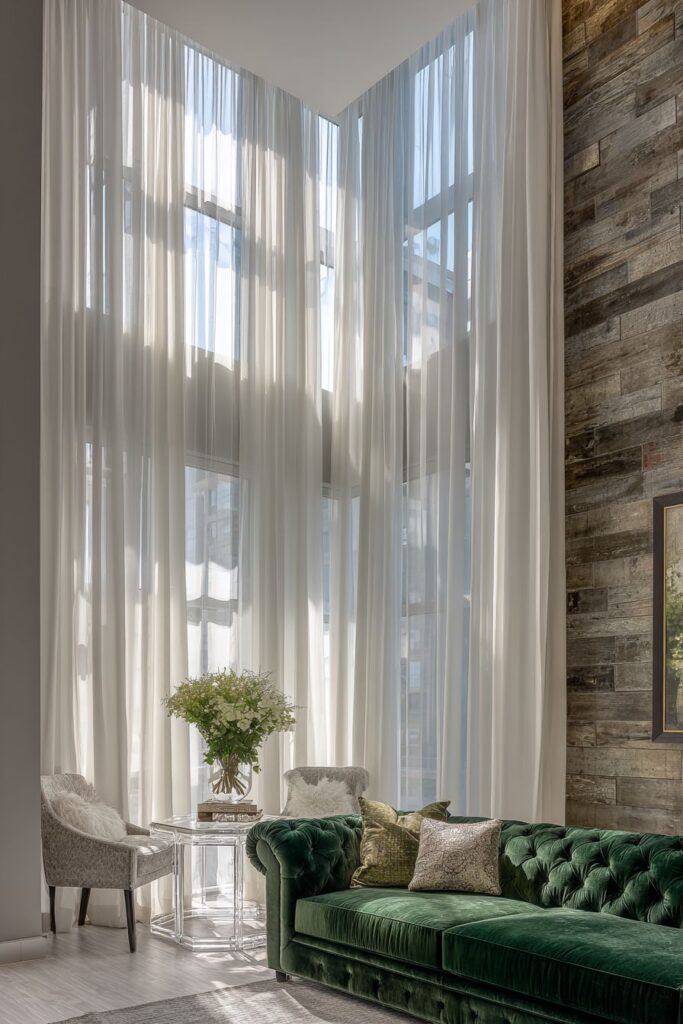
Floor-to-ceiling windows dressed in sheer white curtains transform this living room into a light-filled sanctuary, where diffused natural illumination softens every surface and creates an ethereal atmosphere throughout the day. The sheer curtains filter harsh sunlight while maintaining privacy, their gentle movement in air currents adding subtle animation to the static room elements. This abundant natural light becomes a design element itself, highlighting textures, revealing colors’ true depths, and creating ever-changing shadow patterns across surfaces.
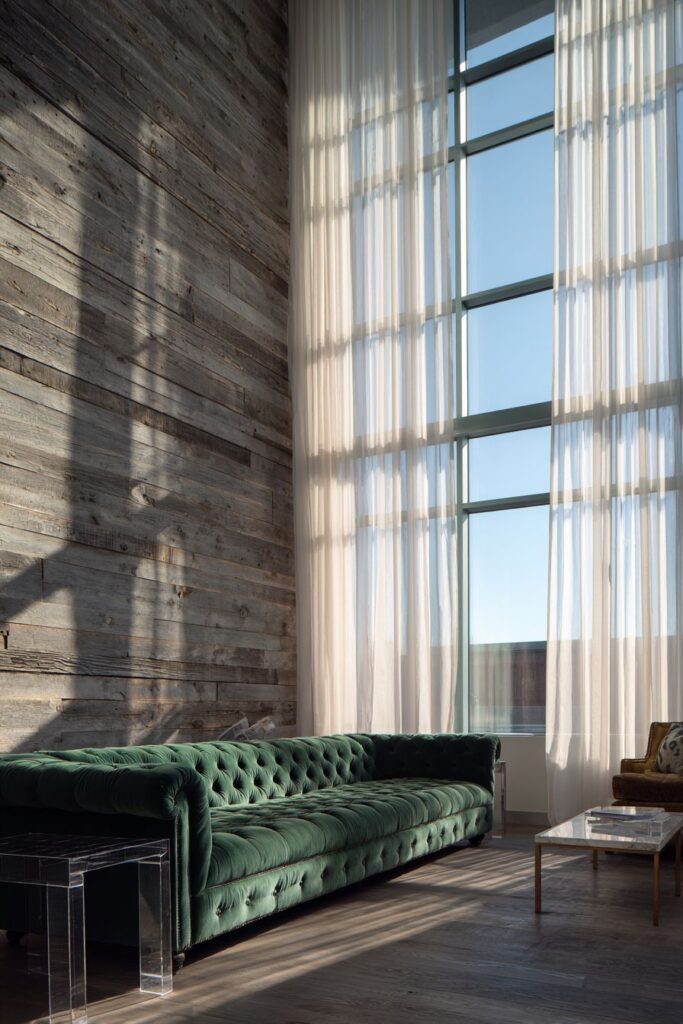
The room’s centerpiece is a vintage tufted Chesterfield sofa in sumptuous forest green velvet, its deep button tufting, rolled arms, and substantial presence epitomizing Victorian-era craftsmanship and luxury. The velvet’s pile catches light differently from every angle, creating a dynamic surface that appears to change color as you move through the space—from deep emerald in shadow to bright jade in direct sunlight. This opulent vintage piece finds its perfect complement in a modern acrylic side table, whose transparent construction seems to disappear while still providing functional surface space.
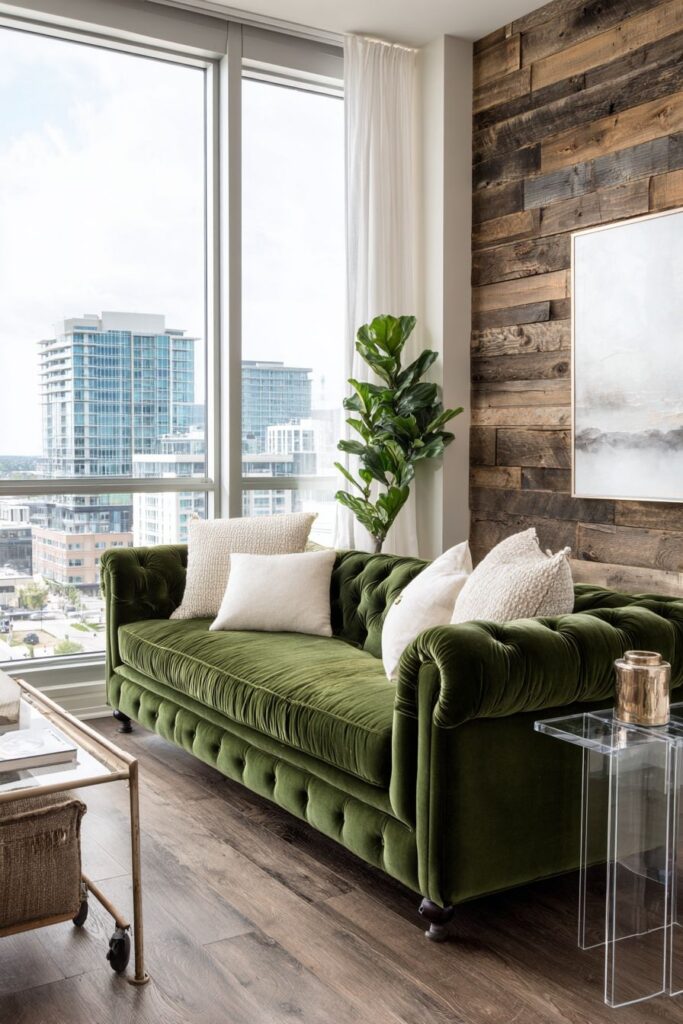
A reclaimed wood accent wall with varied tones and textures provides warmth and organic beauty, its weathered boards showing natural grain patterns, nail holes, and color variations from pale honey to deep walnut. This vertical wood installation adds architectural interest and natural warmth without the permanence of brick or stone. The interplay between the ornate velvet upholstery’s traditional detailing and the sleek contemporary transparency of the acrylic table demonstrates how extreme contrasts in material and style can create compelling visual harmony when thoughtfully balanced.
Key Design Tips:
- Use floor-to-ceiling sheer curtains to maximize natural light while maintaining privacy and softness.
- Invest in statement vintage upholstered pieces in rich colors like emerald, sapphire, or burgundy.
- Incorporate transparent acrylic or glass furniture to add function without visual weight.
- Install reclaimed wood accent walls to introduce organic texture and warmth without overwhelming color.
- Position velvet furniture perpendicular to windows to showcase its light-reflective properties throughout the day.
6. Functional Organization with Mixed-Era Storage
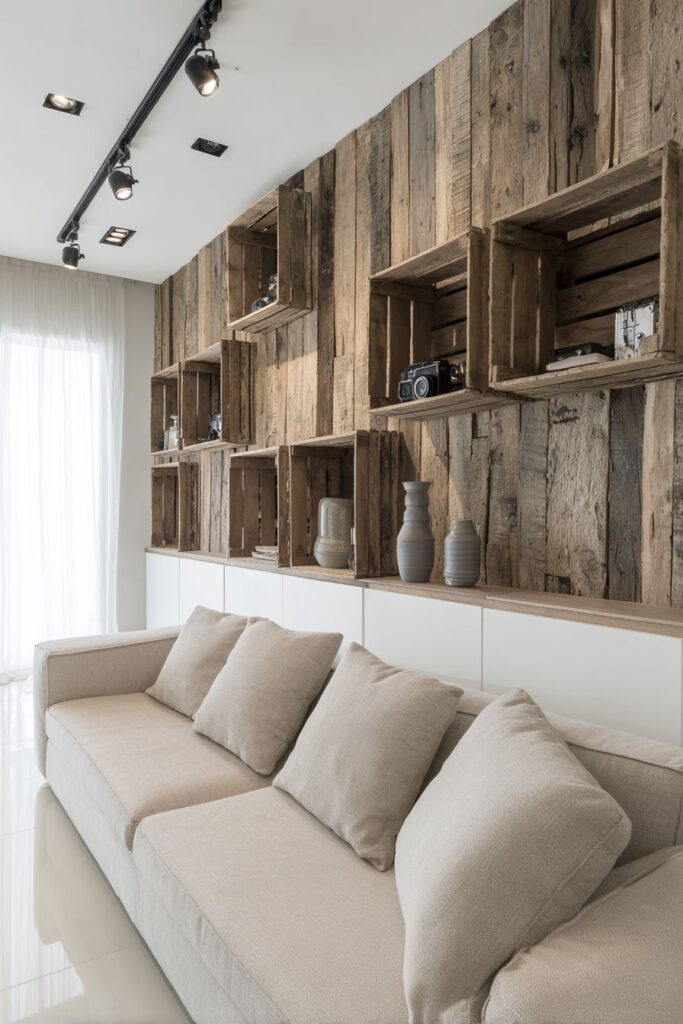
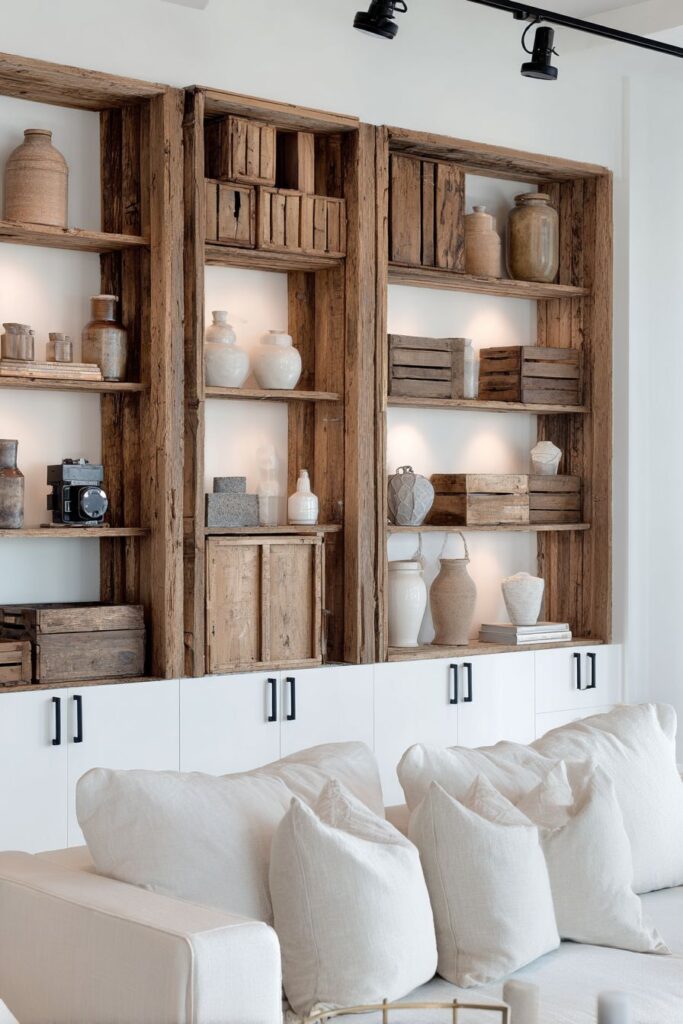
This living room solves the eternal challenge of storage with a wall of built-in shelving that combines vintage wooden crates with modern white lacquered cabinets, creating a mixed-era aesthetic that is both functional and visually compelling. The wooden crates, with their stamped markings, rough textures, and natural wood tones, occupy open shelf spaces, while the pristine white cabinets provide concealed storage for less photogenic necessities. This combination allows for both display and discretion, accommodating the realities of modern living within an artfully designed environment.
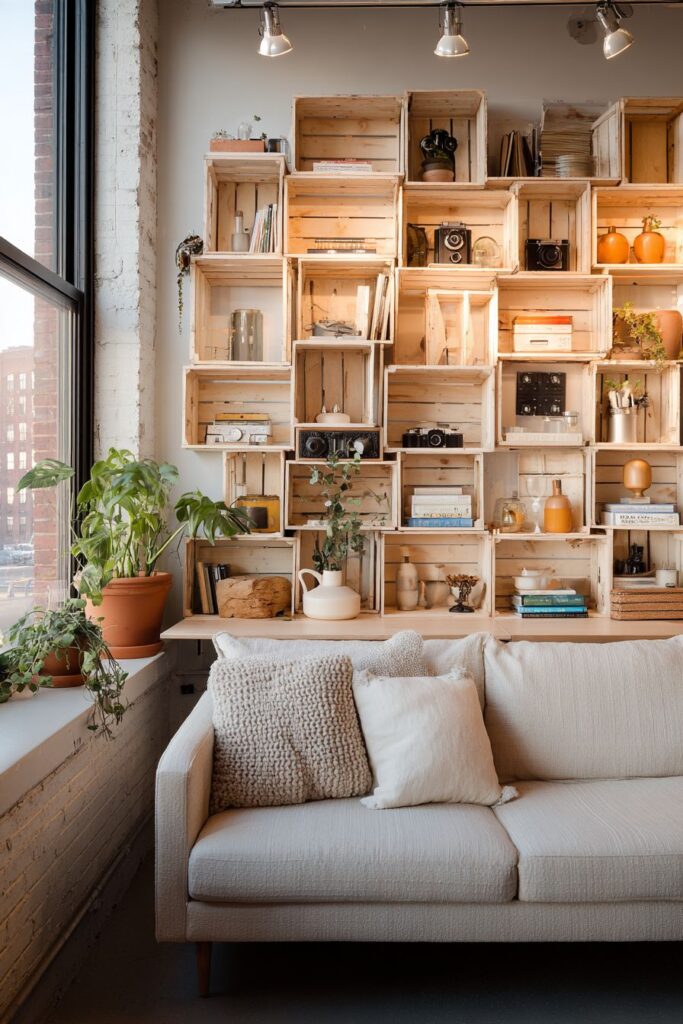
Contemporary track lighting installed along the shelving system illuminates the displayed collections—vintage cameras with leather cases and brass fittings, modern pottery in matte glazes and organic shapes, and books arranged by color or size. The focused lighting transforms the shelving wall into a curated gallery, with each object receiving appropriate illumination that highlights its unique qualities. The track system’s flexibility allows for adjustment as collections evolve, making it a practical solution for changing displays.
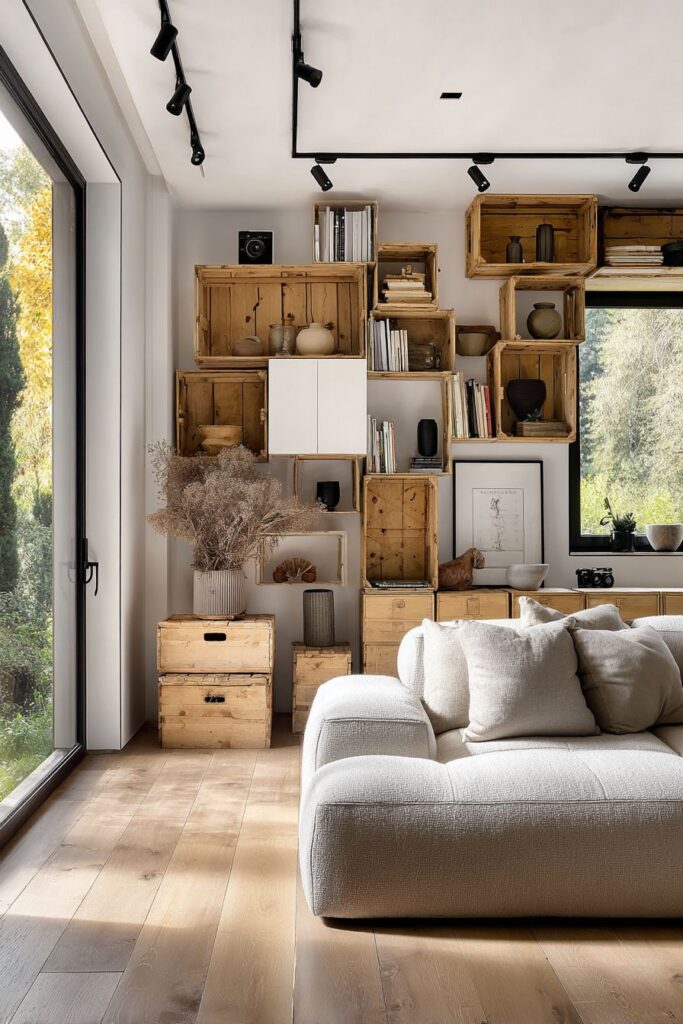
A modern low-profile sofa in oatmeal linen faces the storage wall, its understated design and neutral color allowing the shelving system to command attention. The sofa’s clean lines and low back prevent visual blocking, maintaining sightlines across the room and preventing the space from feeling divided. Natural window light emphasizes the contrast between the rough, weathered textures of the vintage wooden crates and the smooth, reflective surfaces of the modern white lacquer, creating a dynamic interplay of finishes that adds depth and interest to the functional storage solution.
Key Design Tips:
- Combine open shelving with closed cabinet storage to balance display with discretion.
- Use vintage crates or boxes as modular storage within modern shelving systems.
- Install track lighting above shelving to create gallery-quality illumination for displayed collections.
- Choose low-profile furniture when facing storage walls to maintain visual flow and prevent blocking.
- Edit displayed collections regularly, rotating objects seasonally to keep the visual interest fresh and prevent clutter.
7. Conversational Arrangement with Global Textiles
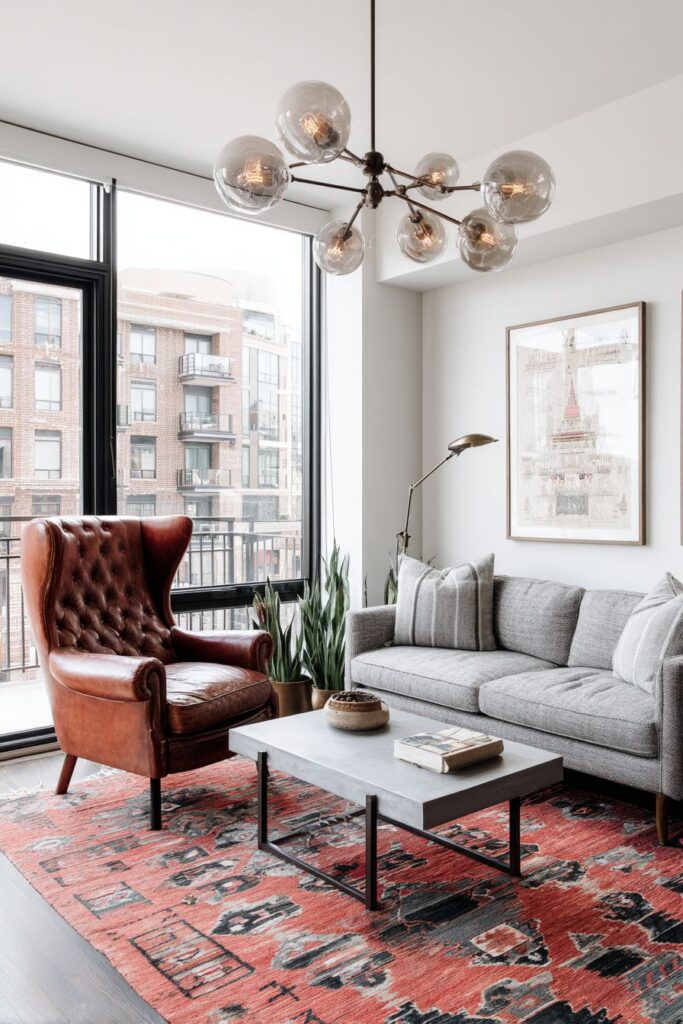
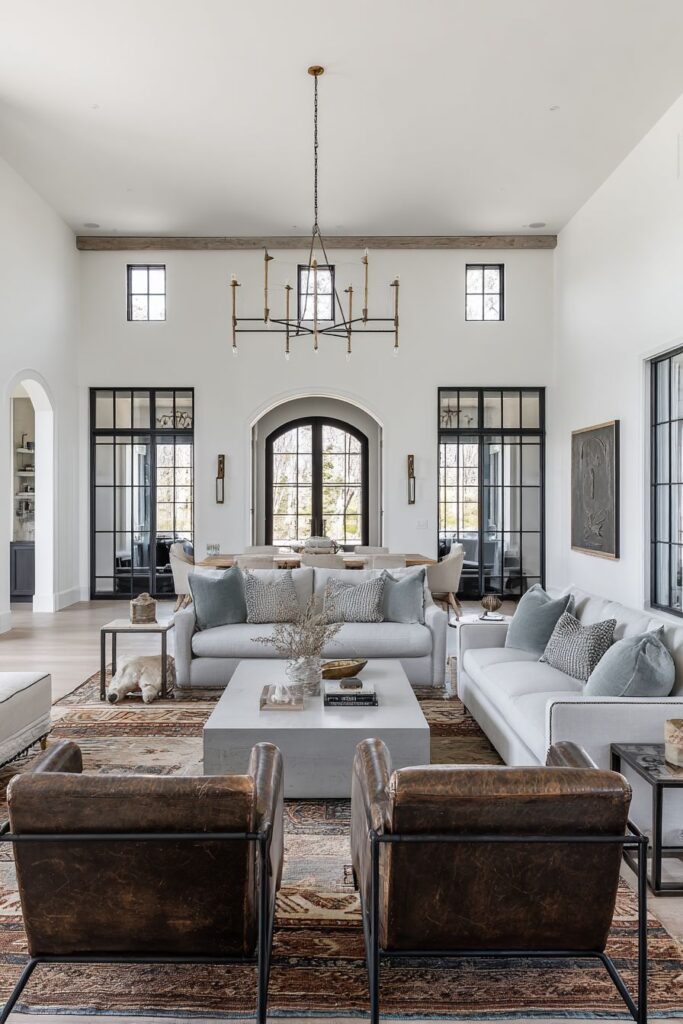
This intimate living room creates a face-to-face conversational setting with a vintage leather wingback chair and modern minimalist loveseat in pale grey fabric positioned across from each other, fostering connection and dialogue. The wingback chair, with its high sides, worn leather upholstery, and solid presence, offers enveloping comfort and old-world elegance. Its cognac-brown leather shows authentic wear—creases at the seat, slight fading on the arms, and a beautiful patina that only develops through years of use.
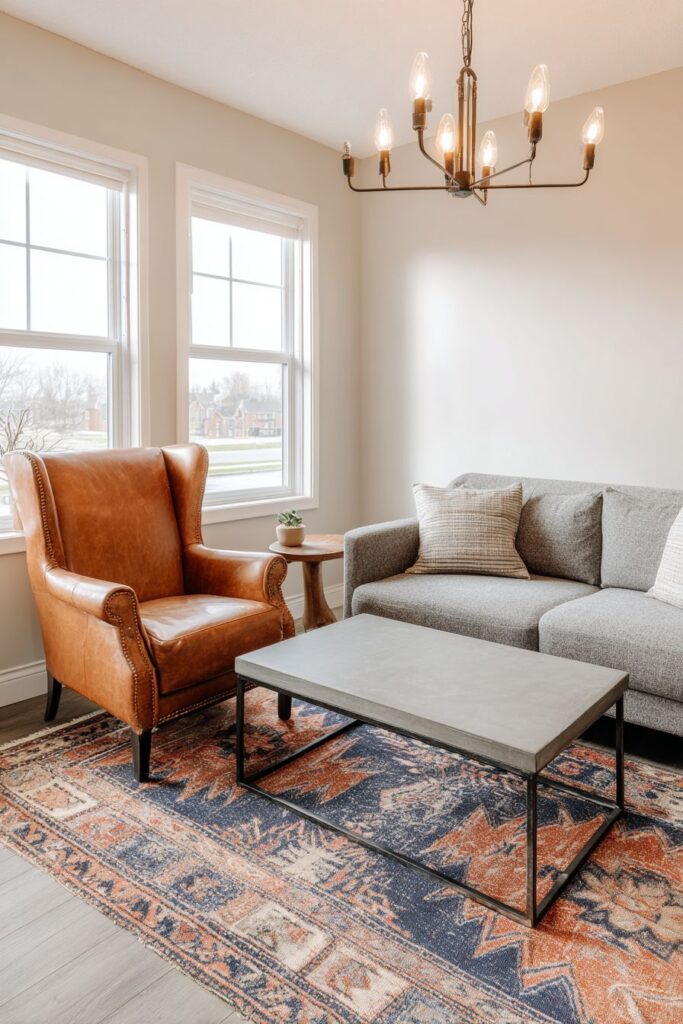
The modern loveseat provides a stark contrast with its streamlined silhouette, low profile, and pale grey upholstery that appears almost cloud-like in its simplicity. The minimal design—straight arms, exposed wooden legs, simple cushions—represents contemporary Scandinavian-influenced aesthetics, proving that restraint can be as powerful as ornamentation. Between these contrasting seating pieces sits a contemporary concrete coffee table, its raw industrial material and geometric form adding unexpected edge to the traditional conversational arrangement.
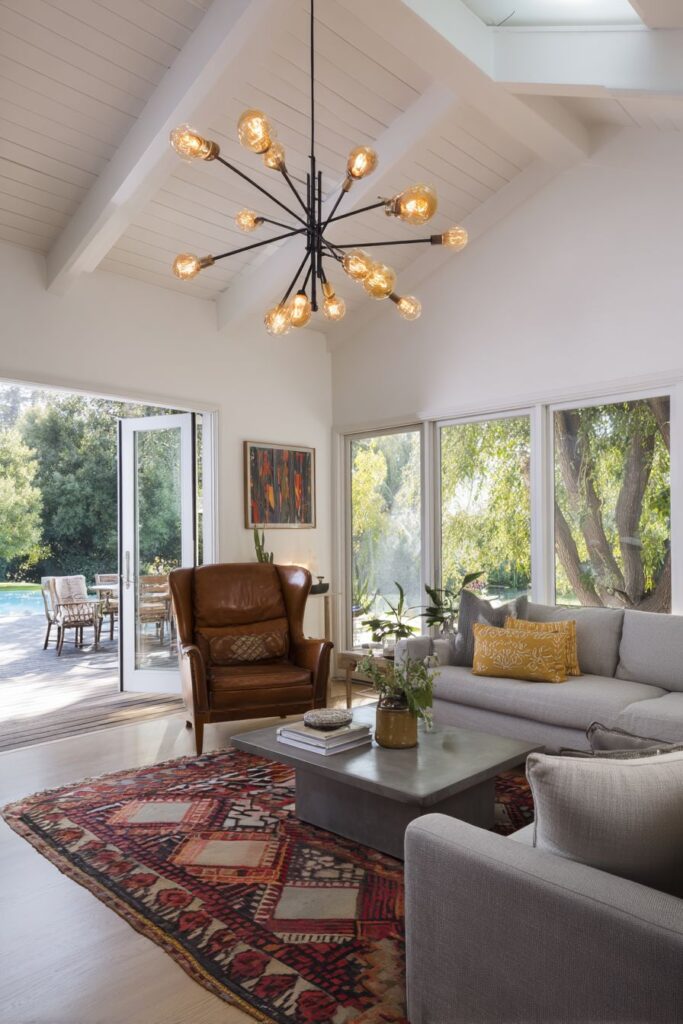
A vintage Turkish kilim rug with geometric patterns in rust and indigo tones grounds the entire seating area, its flat-woven texture and traditional motifs adding global influence and artisanal quality. The rug’s angular patterns create visual movement, while its earthy color palette ties together the brown leather, grey fabric, and grey concrete. An Edison bulb chandelier suspended above provides warm ambient lighting, its exposed filaments and industrial-style cord adding vintage character while the fixture’s clean geometric frame keeps it contemporary.
Key Design Tips:
- Arrange seating face-to-face rather than all facing a television to encourage conversation and connection.
- Mix leather and fabric upholstery to add textural variety and visual interest.
- Use concrete furniture pieces to add industrial edge without overwhelming spaces with metal.
- Layer global textiles like kilims and dhurries to introduce pattern without busy traditional florals.
- Choose Edison bulb fixtures for vintage warmth with the energy efficiency of modern LED technology.
8. Gallery Wall Drama Above Minimal Furnishings
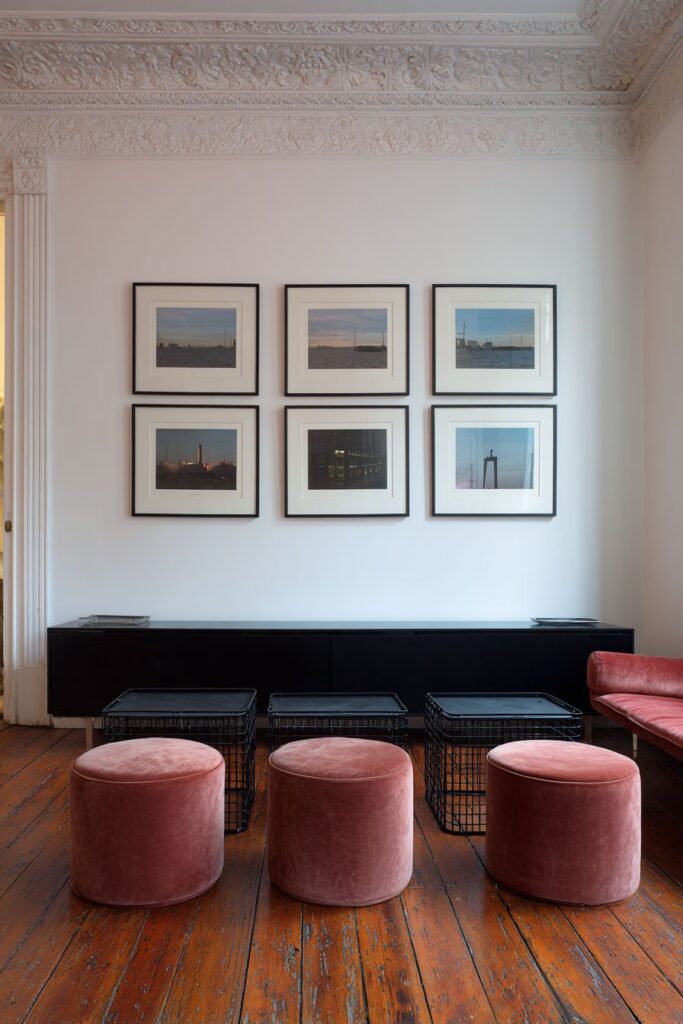
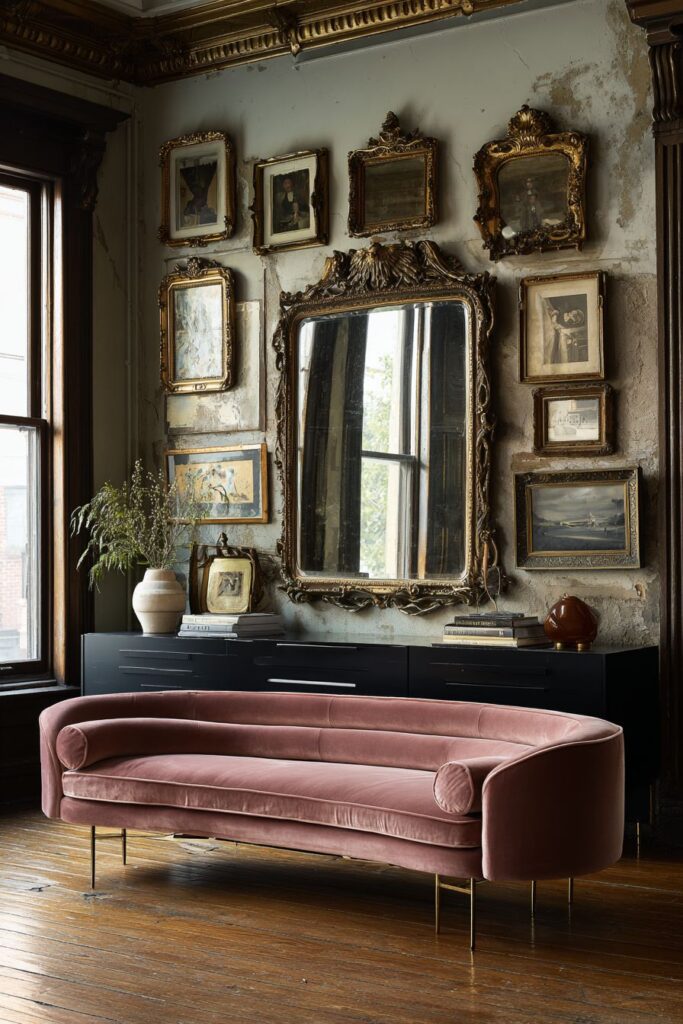
A dramatic gallery wall dominates this living room, mixing vintage gilt-framed mirrors with modern black-framed photography in a carefully composed arrangement that feels collected over time rather than purchased as a set. The ornate gold frames, with their carved details and aged gilding, catch and reflect light throughout the day, adding sparkle and movement to the wall composition. The modern photography—black and white architectural studies, abstract nature close-ups, urban landscapes—provides contemporary visual interest while the simple black frames create cohesive structure.
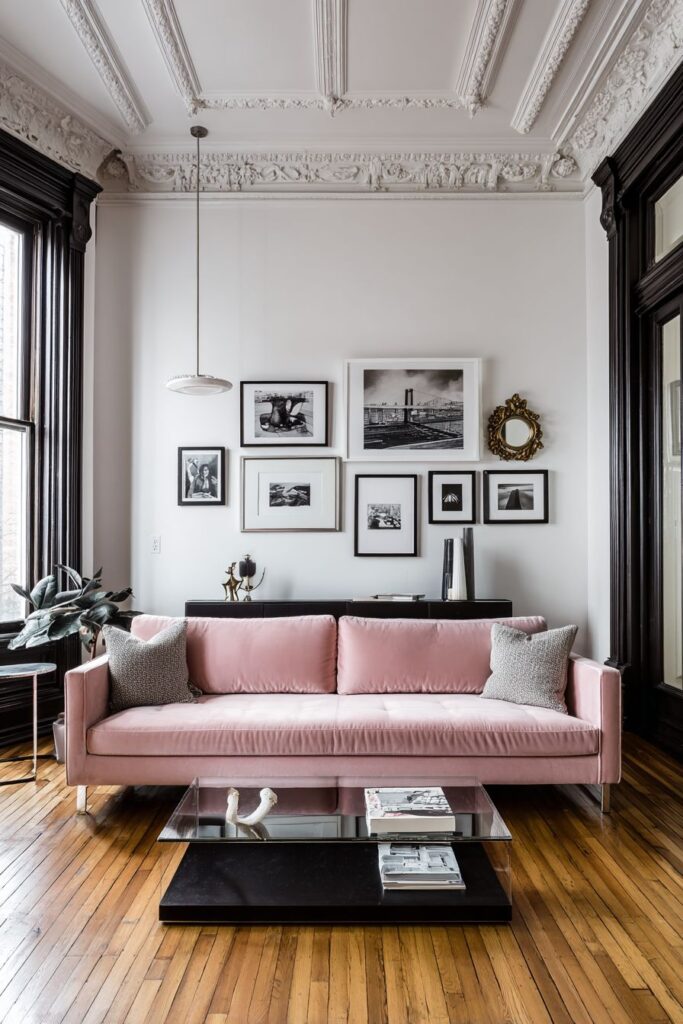
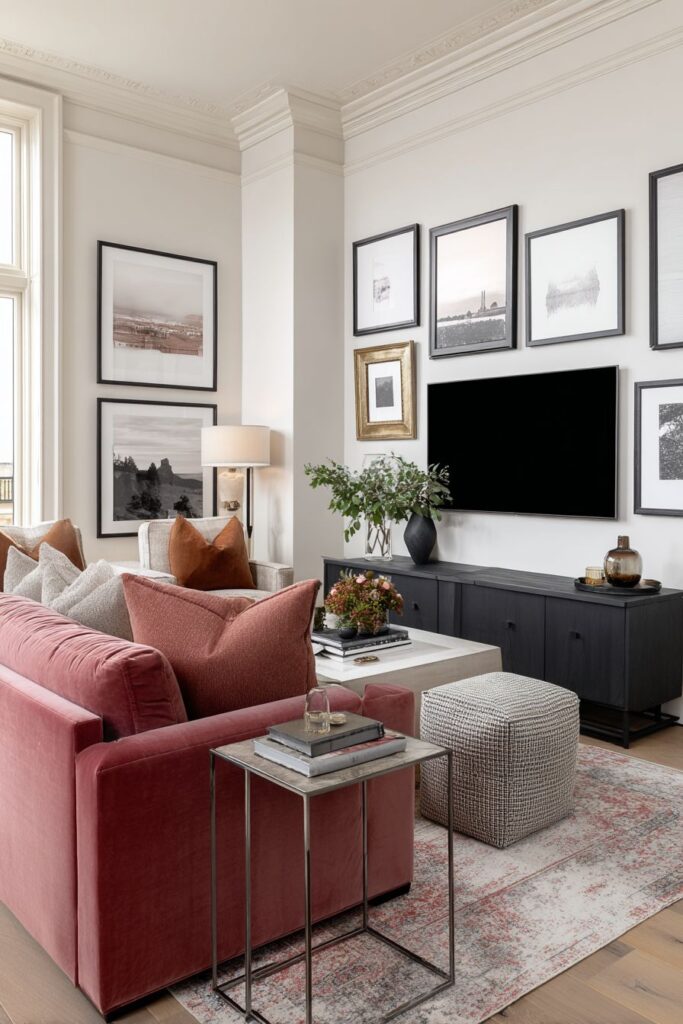
Below this dramatic wall display sits a contemporary low-profile media console in matte black, its sleek horizontal lines and handleless drawers representing minimalist design philosophy. The console’s dark finish grounds the gallery wall while providing practical storage for electronics and media. Its low height ensures the artwork remains the focal point, while its substantial length provides visual weight that balances the busy wall composition above.
A vintage velvet settee in dusty rose provides seating, its curved back, turned legs, and luxurious upholstery fabric speaking to Victorian sensibilities. Modern chrome accent tables flank the settee, their reflective surfaces and geometric forms adding contemporary sparkle without competing with the vintage upholstery. Original crown molding and hardwood floors show authentic age—slight gaps between boards, gentle wear patterns, and the honest patina of decades of life—adding architectural character that unifies the disparate design elements.
Key Design Tips:
- Create gallery walls by mixing frame styles and eras rather than matching sets for authentic collected appearance.
- Use low-profile media consoles to anchor wall displays without competing for visual attention.
- Flank vintage upholstered pieces with modern metal or glass tables for material contrast.
- Preserve original architectural details like crown molding and hardwood floors as permanent design anchors.
- Choose one bold color like dusty rose or emerald for vintage upholstery to create focal points in neutral spaces.
9. Bouclé Comfort Meets Carved Wood Craftsmanship
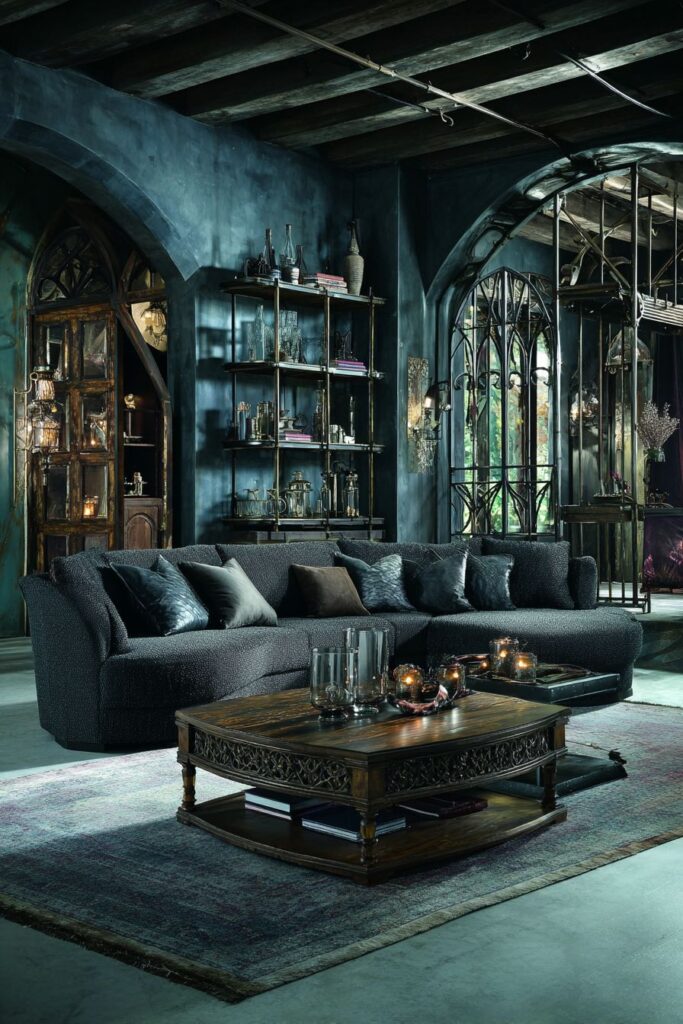
A generous modern sectional upholstered in bouclé fabric dominates this living room’s seating area, its nubby texture and cloud-like appearance offering ultimate comfort and contemporary style. Bouclé’s looped yarn creates a surface that is both visually interesting and incredibly tactile, inviting touch and promising cozy relaxation. The sectional’s neutral cream color reflects light beautifully, making the room feel bright and spacious while providing a calm backdrop for more decorative elements.
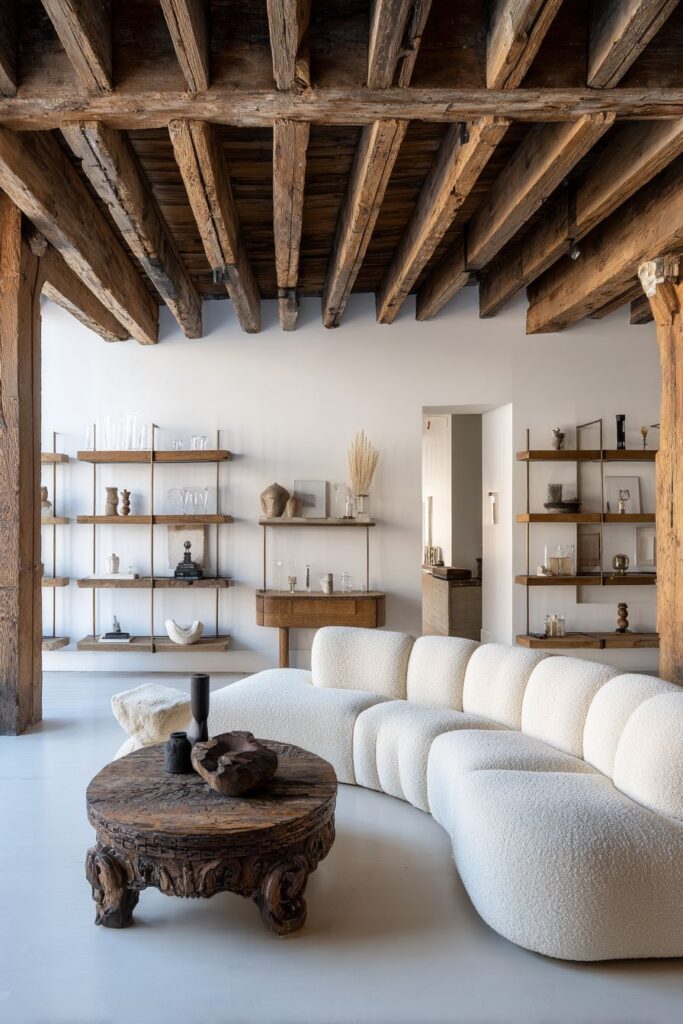
This modern comfort pairs with a vintage wooden coffee table featuring intricate carved details and natural distressing that showcase the skill of traditional furniture makers. The table’s turned legs, carved apron, and hand-worked details represent hours of artisan labor, while its naturally distressed surface—worn edges, faded finish, slight scratches—tells stories of decades of use. The rich brown wood tones contrast beautifully with the cream bouclé, creating visual warmth and grounding the soft upholstery with solid, substantial presence.
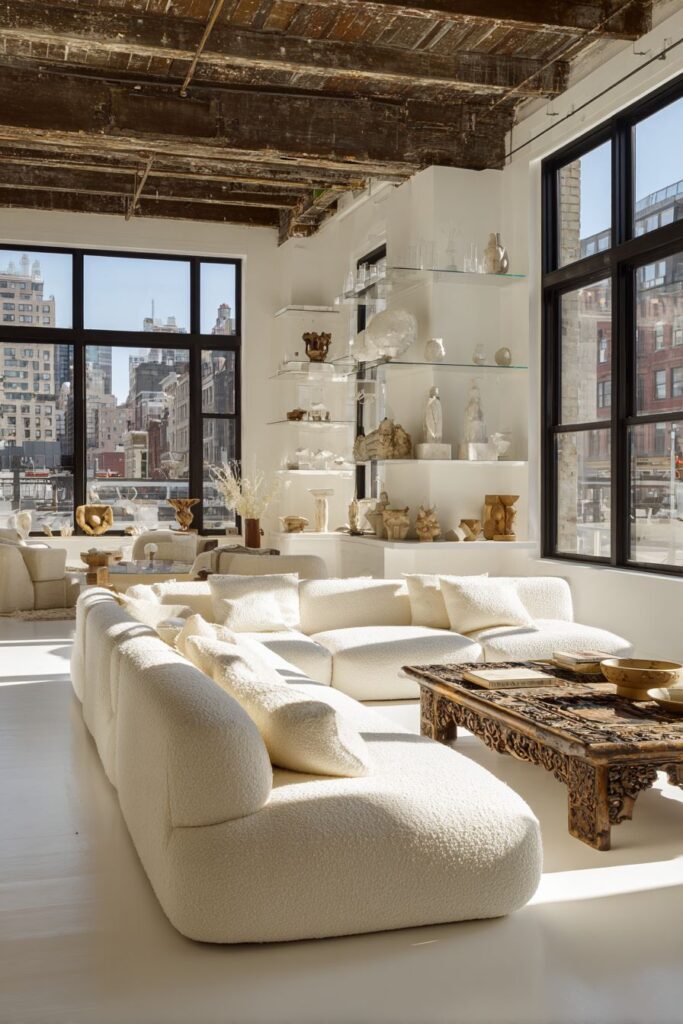
Industrial-style metal shelving units line one wall, their open framework and matte black finish providing display space for vintage glassware—colored bottles, etched decanters, depression glass bowls—alongside modern sculptural objects in ceramic and metal. Exposed ceiling beams add architectural character overhead, their rough-hewn wood and substantial scale emphasizing the room’s height while adding rustic texture. Natural afternoon light streaming through windows highlights the plush textile texture of the bouclé and brings out the detailed carved patterns in the vintage wood table.
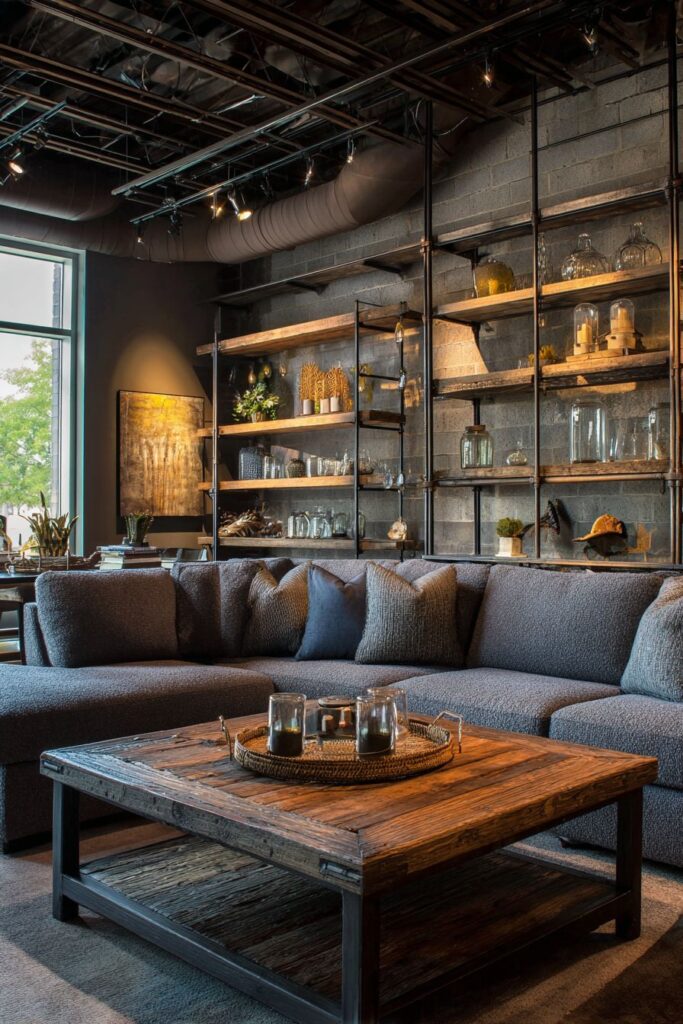
Key Design Tips:
- Choose bouclé upholstery for contemporary pieces to add texture without pattern or color commitment.
- Pair carved wooden furniture with simple modern pieces to showcase the craftsmanship without overwhelming.
- Use industrial metal shelving for display without the visual weight of wooden bookcases.
- Expose ceiling beams when possible to add architectural interest and emphasize room height.
- Display vintage glassware where natural light can shine through to showcase colors and textures.
10. Intimate Reading Corner with Leather and Light
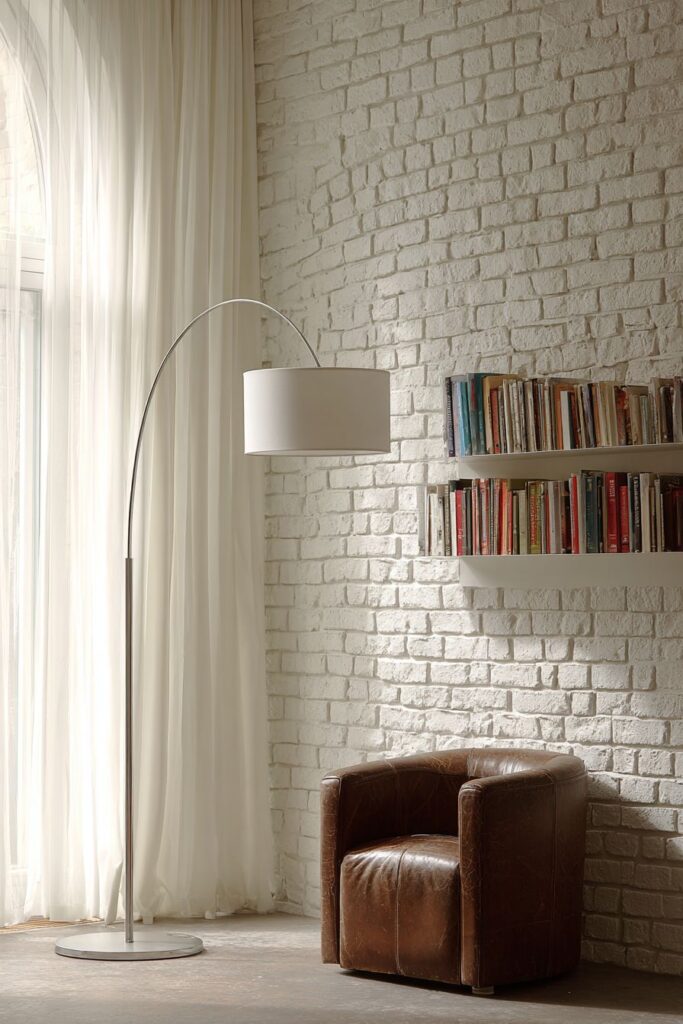
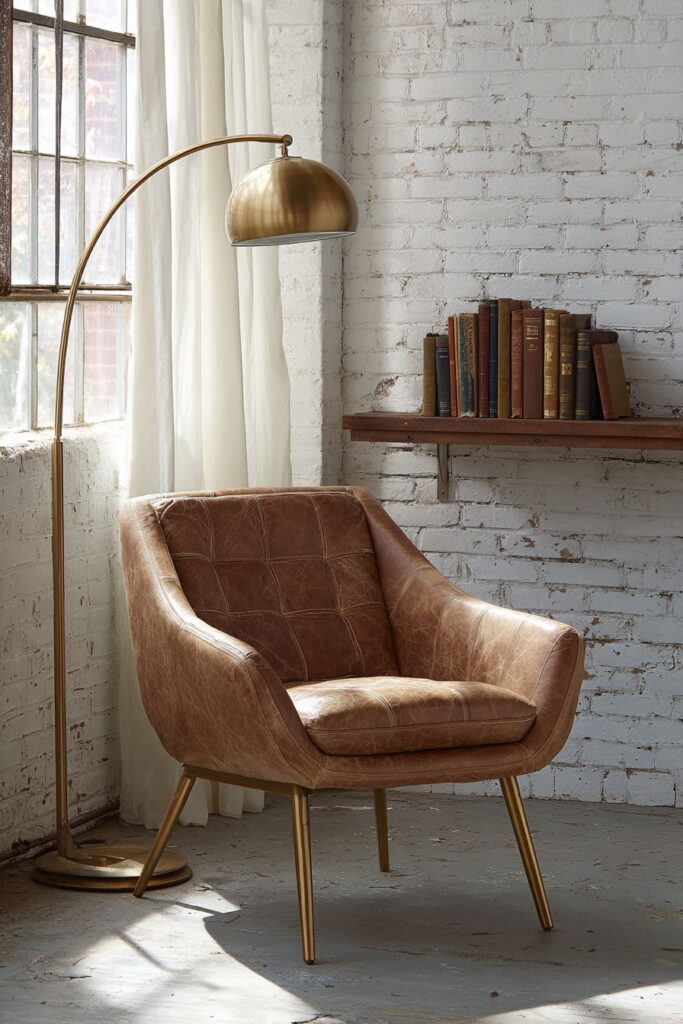
Positioned near tall windows to capture maximum natural light, this reading nook centers on a vintage leather club chair whose rich patina and worn comfort invite hours of literary escape. The chair’s deep seat, supportive back, and enveloping arms create a perfect reading posture, while the leather’s aged appearance—darkened creases, soft spots from years of use, slight cracking that adds character—makes it feel welcoming rather than precious. This is furniture meant to be used and loved, not merely admired.
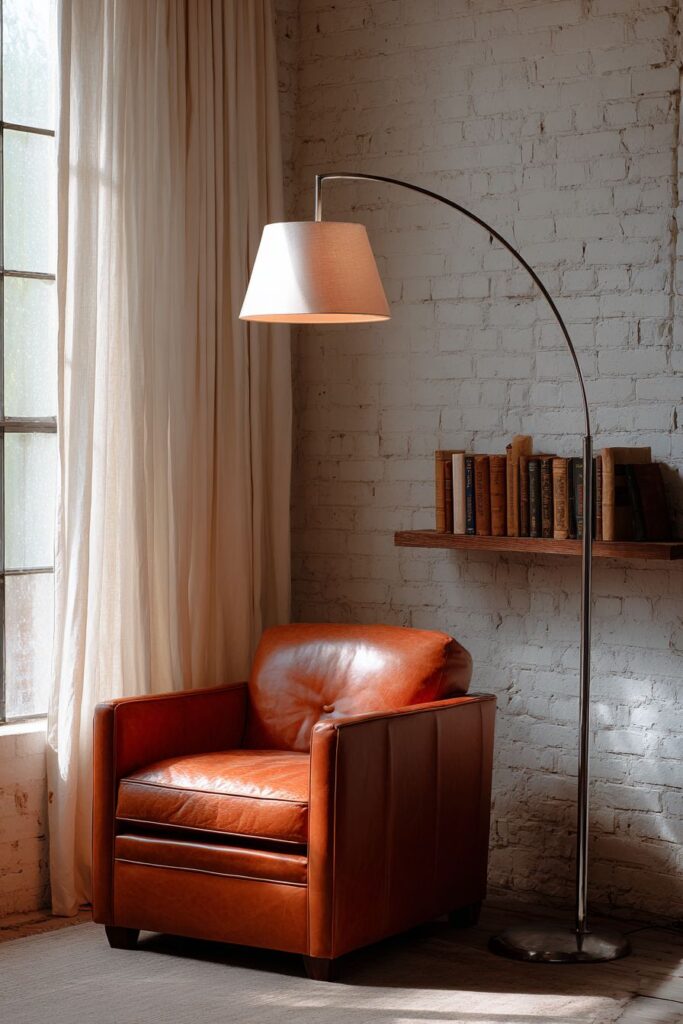
A sleek modern arc floor lamp curves gracefully beside the chair, its polished metal stem and adjustable head providing focused reading light exactly where needed. The lamp’s contemporary design—clean lines, industrial materials, functional form—contrasts beautifully with the traditional club chair while serving the practical purpose every reading space requires. The arc design allows the base to sit behind the chair while the light extends overhead, eliminating the need for side tables and maximizing the cozy, enclosed feeling of the reading nook.
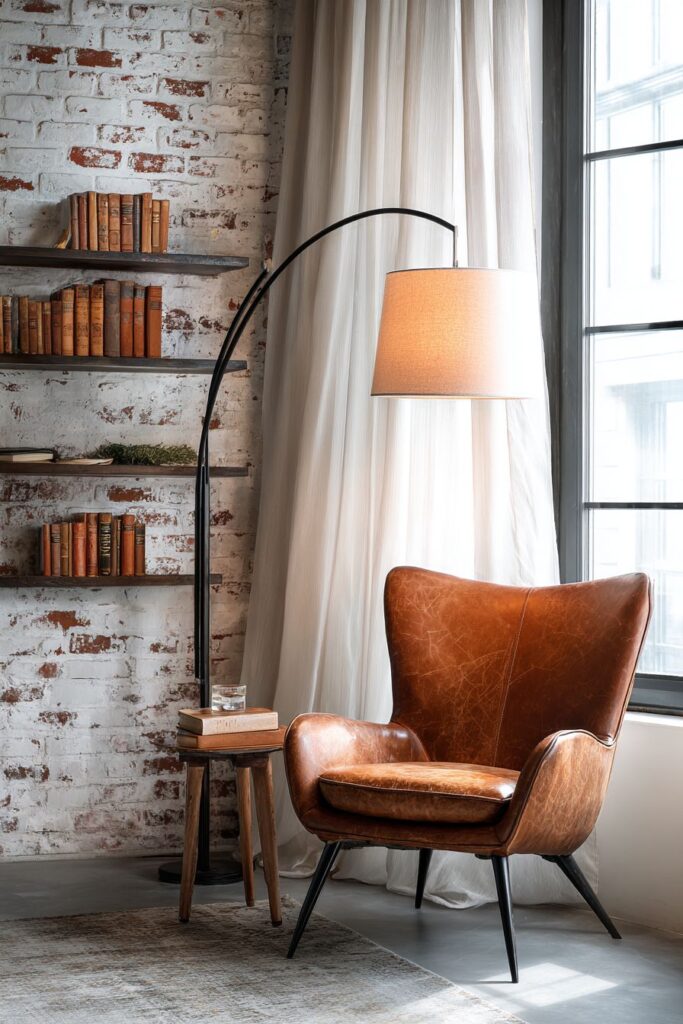
A contemporary floating shelf mounted at arm’s reach holds vintage hardcover books with worn spines, their faded colors and gold lettering creating a personal library display. The books’ varied heights, colors, and conditions tell of long ownership and repeated reading, adding personality and intellectual character to the space. A whitewashed brick wall provides textured backdrop, its rough surface and subtle color variations adding depth without distraction. Sheer curtains filter natural light streaming through the windows, creating soft highlights on the aged leather and casting gentle shadows that emphasize the intimate, comfortable nature of this functional reading space.
Key Design Tips:
- Position reading chairs perpendicular to windows to benefit from natural light without glare.
- Use arc floor lamps to provide overhead lighting without requiring adjacent table space.
- Install floating shelves within arm’s reach of seating for easy book access without bulky furniture.
- Whitewash brick walls to add texture while maintaining light, bright atmosphere.
- Filter window light with sheer curtains to prevent leather furniture from fading while maintaining brightness.
11. Industrial Architecture with Contemporary Furnishings
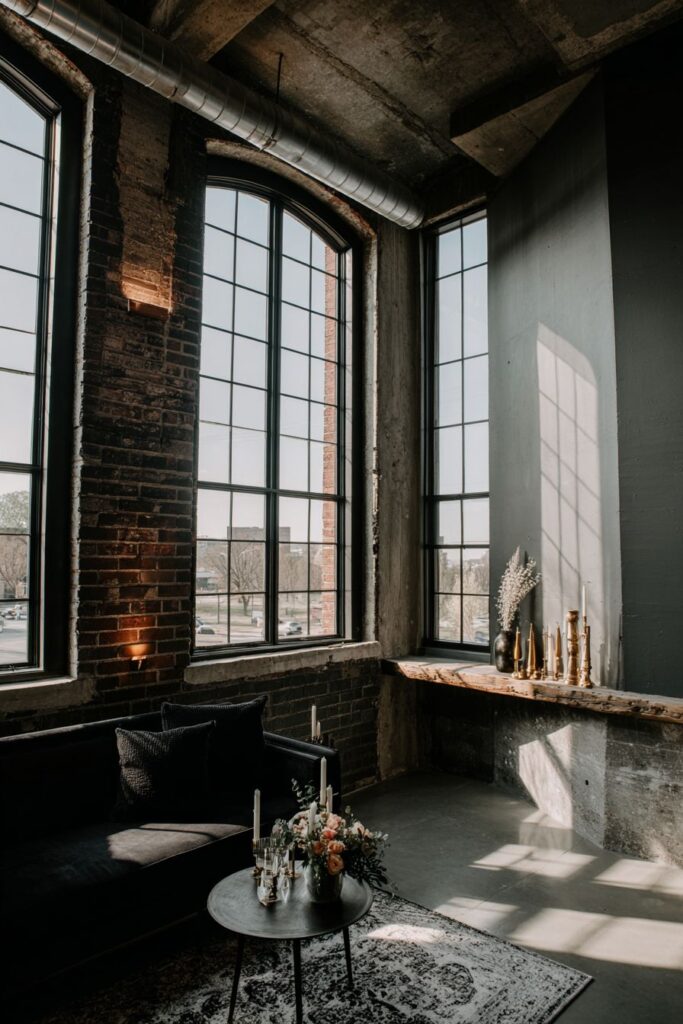
Dramatic vintage industrial factory windows with original metal frames define this living room’s character, their substantial scale and gridded panes creating architectural drama while flooding the space with natural light. The windows’ aged metal shows honest wear—slight rust patina, chipped paint, weathered surfaces—that speaks to industrial heritage and authentic history. These architectural elements become the room’s defining feature, requiring minimal additional decoration while providing extraordinary visual impact.
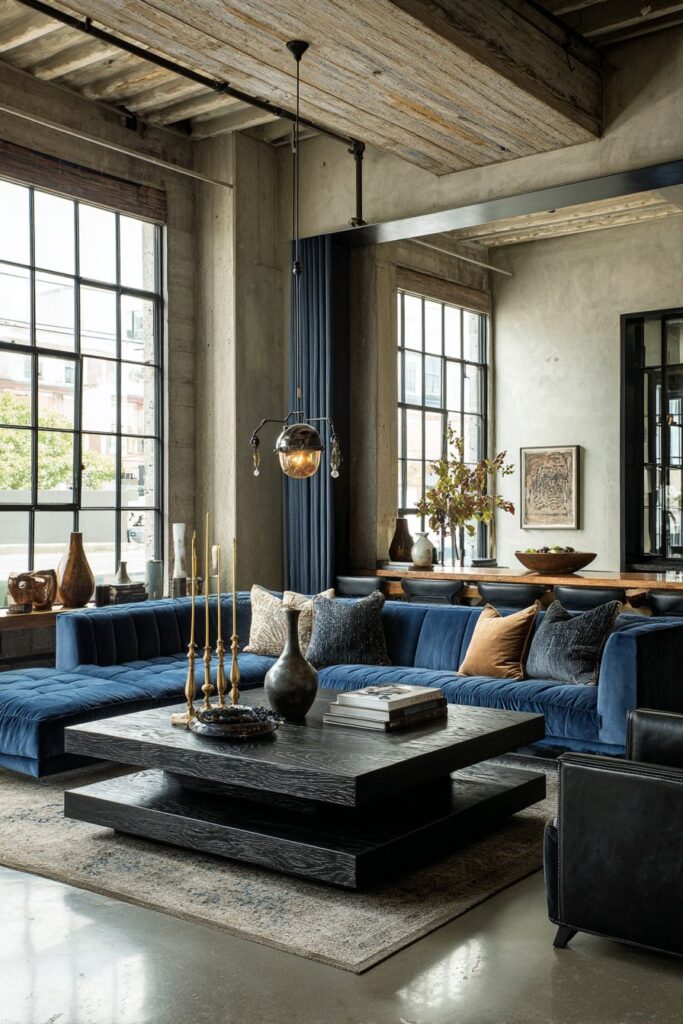
A modern platform sofa in navy blue velvet positions directly beneath these impressive windows, its low profile and rich color creating a contemporary counterpoint to the industrial architecture. The velvet’s deep blue hue appears almost black in shadow but reveals its true color in direct sunlight, creating dynamic visual interest throughout the day. The platform base eliminates visible legs, giving the sofa a floating appearance that feels thoroughly modern and emphasizes its horizontal lines.
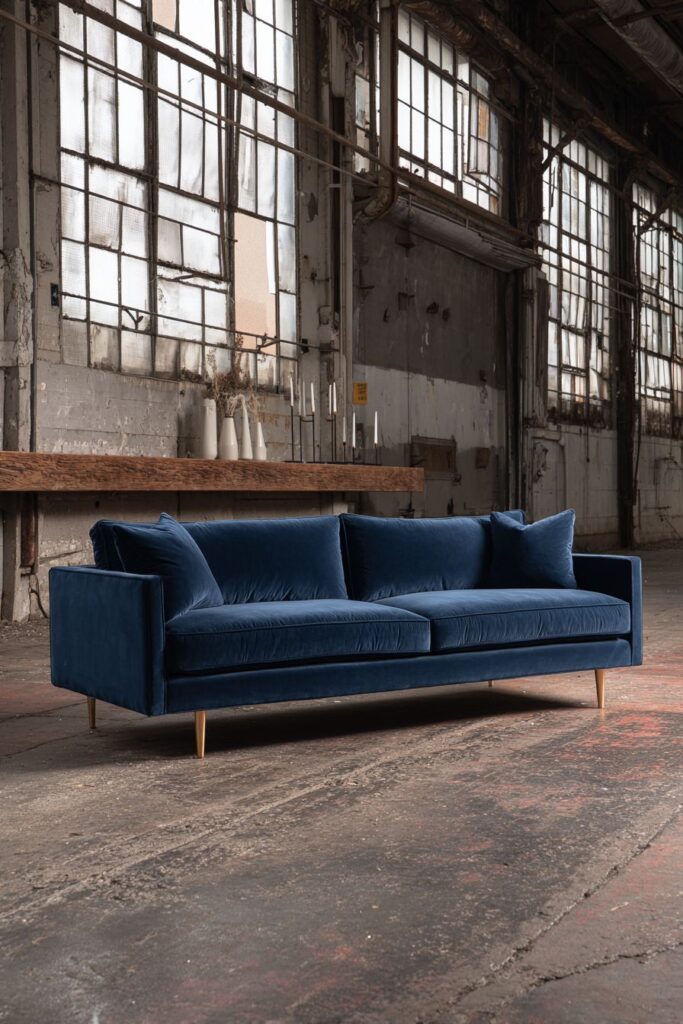
A reclaimed wood beam serves as a floating mantel, displaying a carefully curated selection of modern minimalist vases in white ceramic and matte black alongside vintage brass candlesticks with elaborate turned details. This mantel arrangement demonstrates the modern vintage principle perfectly—each era represented equally, neither dominating, creating harmony through thoughtful selection and placement. Polished concrete floors with slight variations in tone and subtle aggregate textures anchor the space, their industrial material appropriate to the factory windows while their smooth finish adding contemporary refinement.
Key Design Tips:
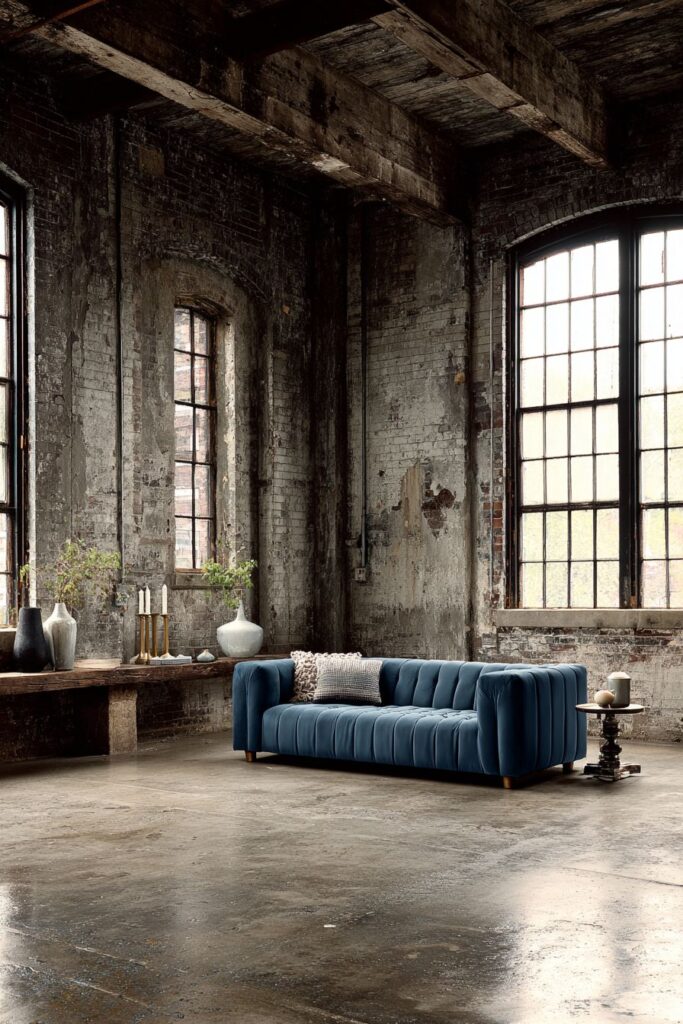
- Preserve original industrial windows even if not perfectly functional for irreplaceable architectural character.
- Position low-profile furniture beneath high windows to maintain sightlines and emphasize ceiling height.
- Use reclaimed wood beams as floating mantels or shelves to add warmth to industrial spaces.
- Polish concrete floors for industrial material with refined contemporary finish.
- Limit mantel displays to carefully chosen objects rather than filling every surface with decoration.
12. Practical Media Integration with Vintage Accessories
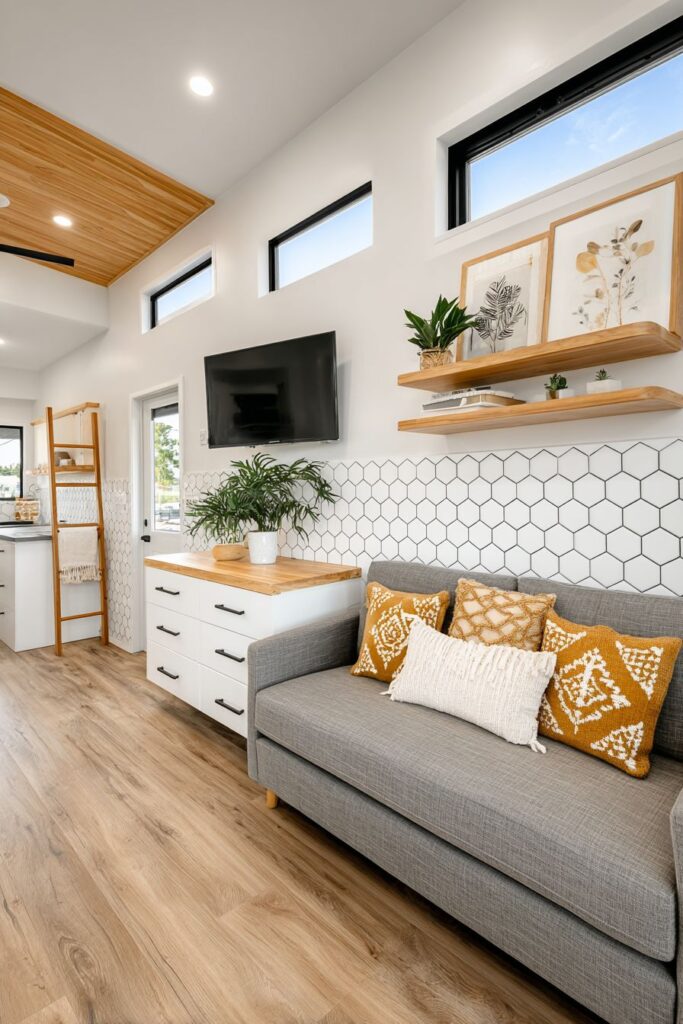
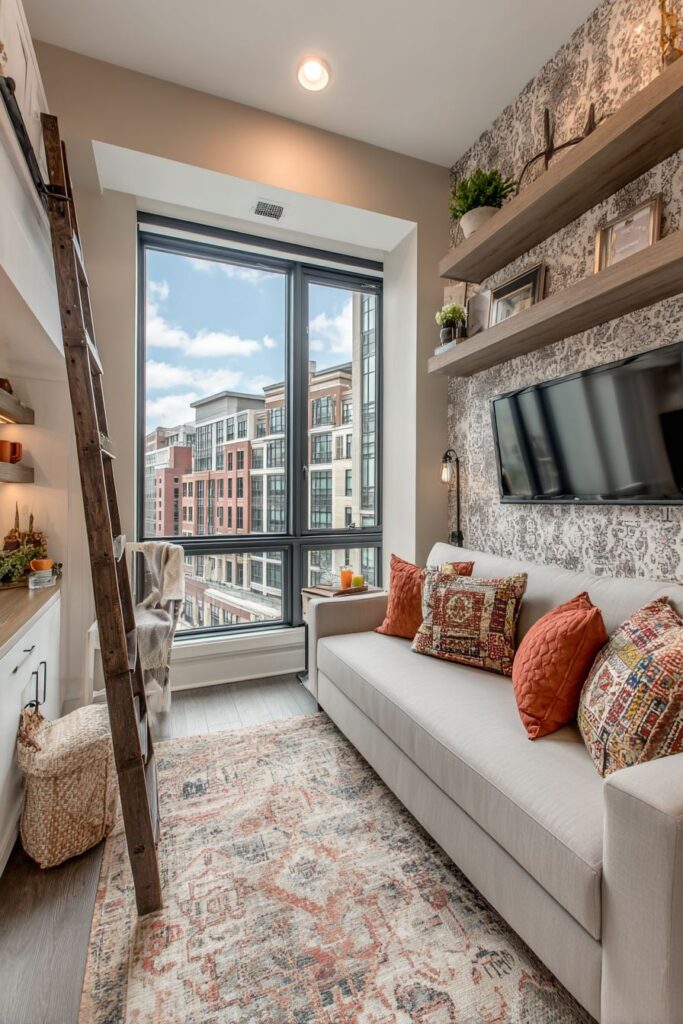
This living room entertainment area solves the challenge of integrating modern technology into vintage-inspired design with thoughtful planning and clever repurposing. A vintage wooden ladder, stripped of paint and showing natural wood grain and honest wear, leans against the wall as a blanket display system. The ladder’s rungs hold folded throws in various textures and neutral tones, turning storage into decoration while keeping cozy accessories within easy reach. This practical repurposing demonstrates how vintage utilitarian objects can serve new functions while retaining their authentic character.
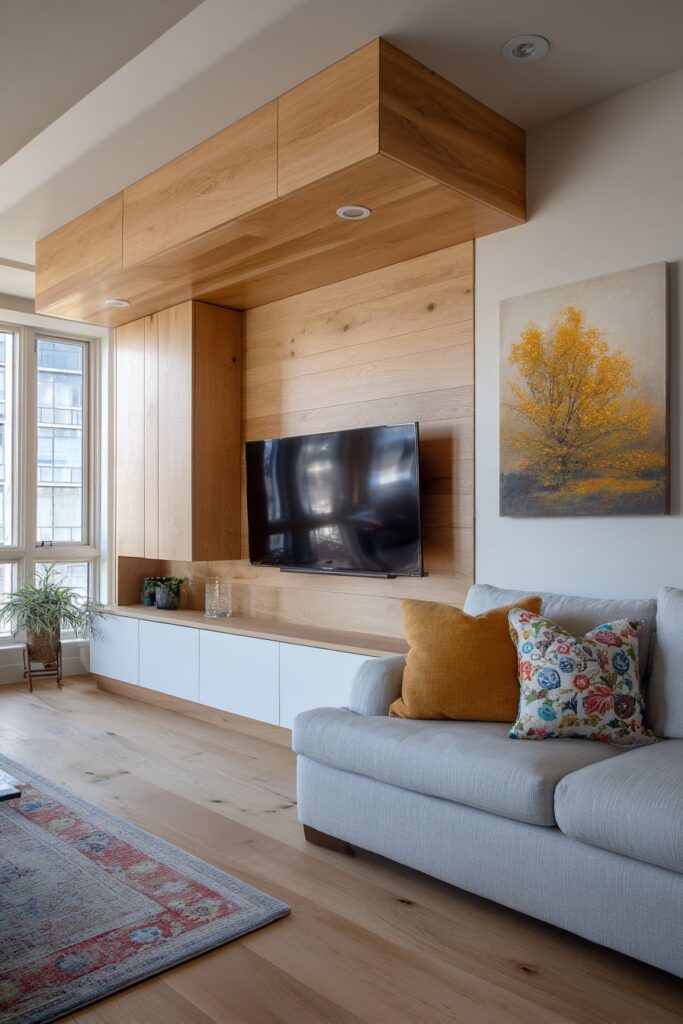
A wall-mounted modern flat-screen television and floating console in white oak provide contemporary media functionality without visual bulk. The floating console’s light wood tone and handleless drawers create clean, minimal aesthetics that allow the vintage ladder and other decorative elements to shine. By mounting both television and console directly to the wall, floor space remains open and the room feels larger and less cluttered—a crucial consideration when balancing vintage collections with modern electronics.
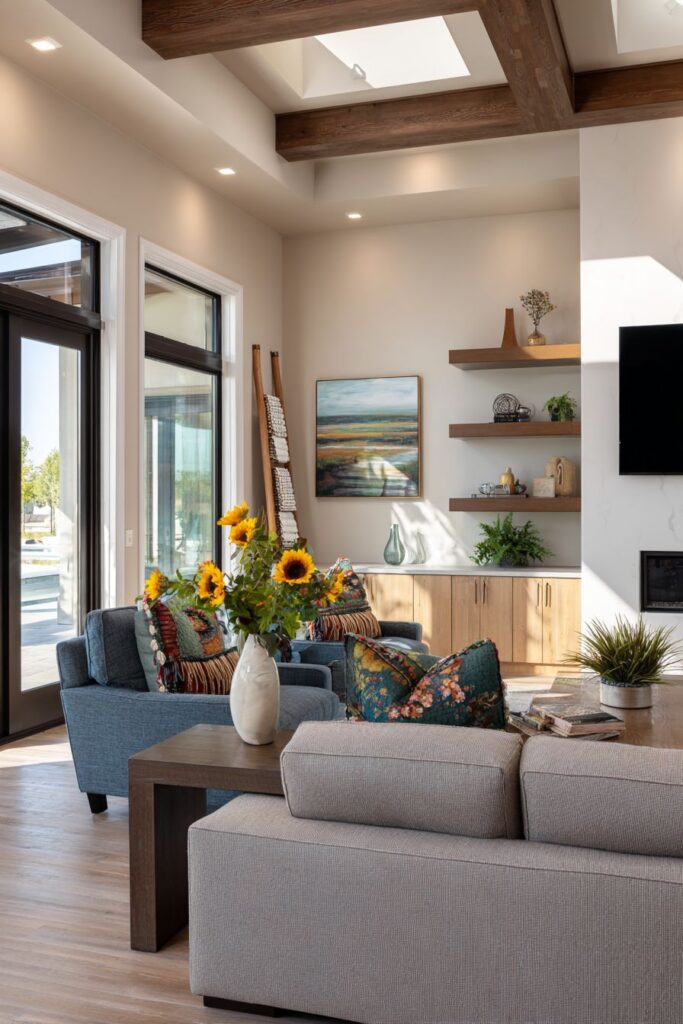
A contemporary sofa in warm grey linen faces the media wall, providing comfortable viewing while maintaining the neutral color palette. Vintage needlepoint pillows add unexpected pops of color and pattern—faded roses, geometric designs, pastoral scenes worked in aged threads—that inject personality and handcrafted warmth into the contemporary seating. Recessed lighting provides even, ambient illumination throughout the space, eliminating shadows on the television screen while offering subtle, unobtrusive light that doesn’t compete with the room’s design elements.
Key Design Tips:
- Repurpose vintage ladders as blanket storage that doubles as decorative display.
- Float media consoles to maximize floor space and create contemporary clean lines.
- Balance modern technology with vintage accessories like needlepoint pillows or antique books.
- Use recessed lighting in media rooms to eliminate screen glare while providing ambient illumination.
- Choose white oak or light wood finishes for modern pieces to warm spaces without heaviness.
13. Eclectic Seating with Earth-Toned Harmony
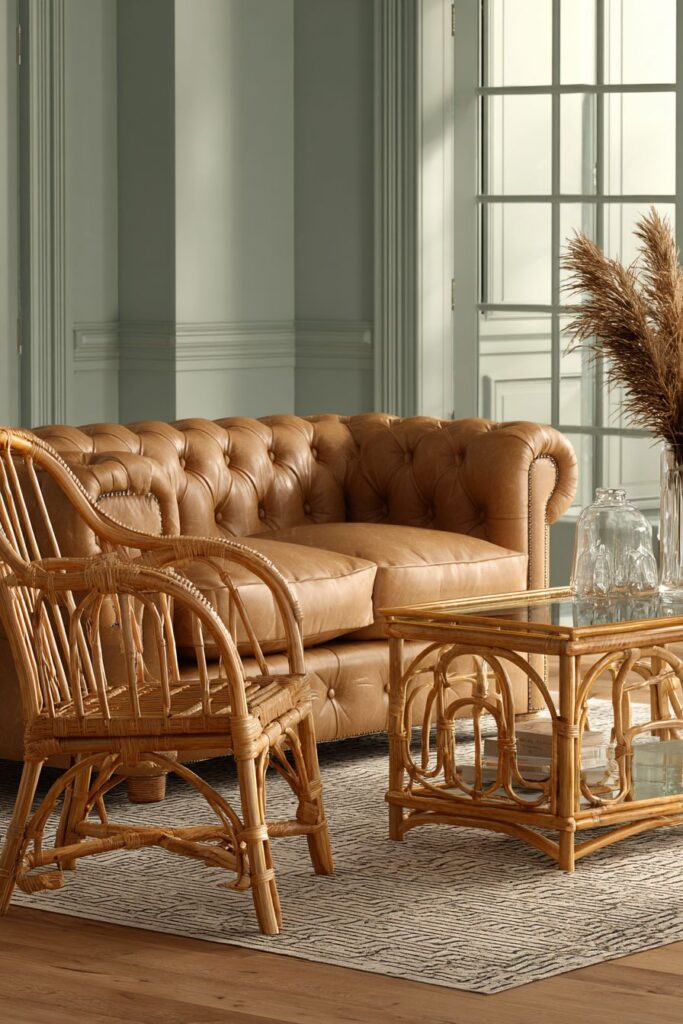
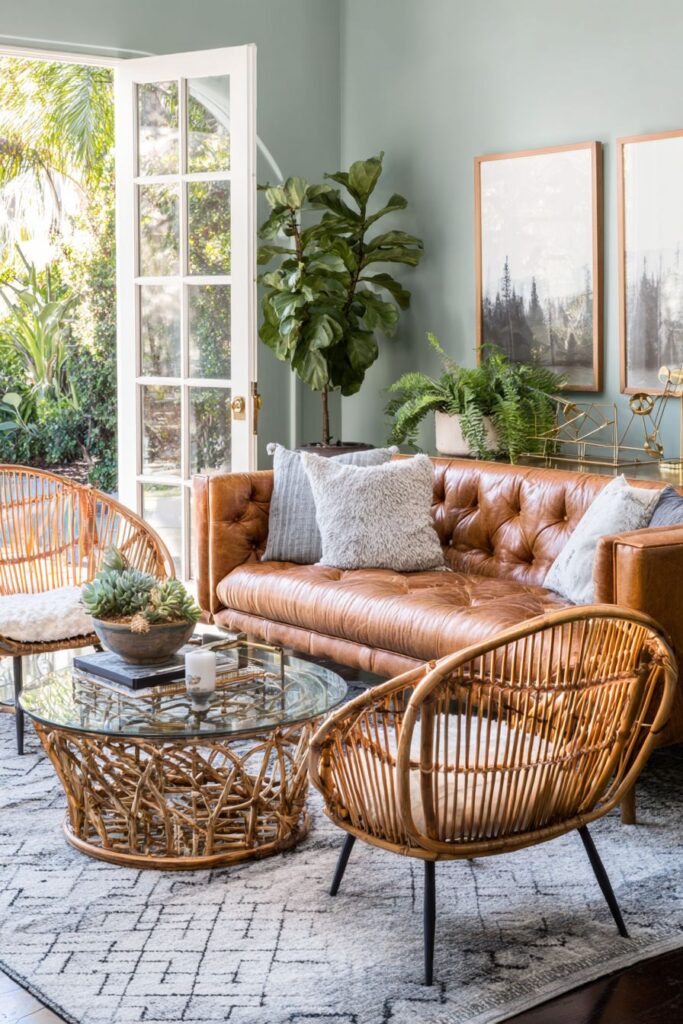
A modern tufted sofa in camel-colored leather establishes the main seating area, its button-tufted back and rolled arms nodding to traditional Chesterfield styling while its streamlined proportions keep it contemporary. The camel leather—a warm tan with honey undertones—provides rich color without darkness, and its natural material will develop beautiful patina over years of use. This substantial piece offers generous seating and becomes an investment in both comfort and style.
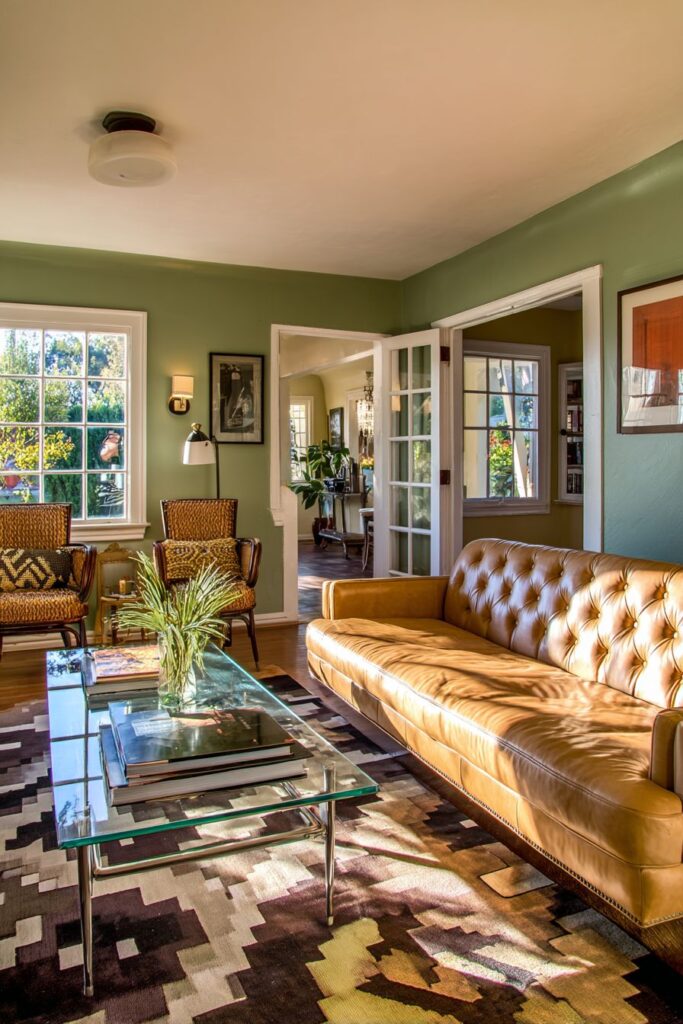
Paired with this leather sofa are vintage rattan peacock chairs, their dramatic fan backs and intricate woven patterns creating sculptural presence and bohemian flair. These iconic 1970s chairs, with their natural material and handcrafted construction, add organic texture and visual interest that contrasts beautifully with the leather’s smooth surface. The peacock chairs’ openwork design keeps them from feeling heavy despite their dramatic scale, and their natural rattan color harmonizes with the camel leather’s warm tones.
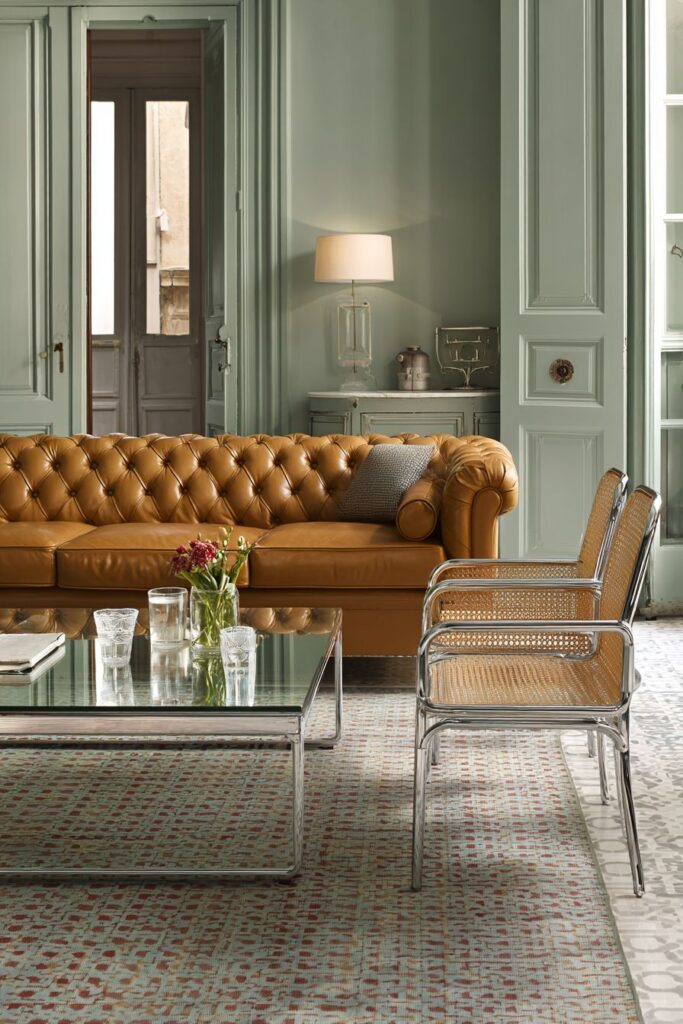
A contemporary geometric rug in muted earth tones—taupe, sand, warm grey, soft rust—grounds the seating arrangement, its modern pattern adding visual interest without competing with the furniture’s strong forms. The rug sits beneath a vintage glass-and-chrome coffee table whose transparent top and gleaming metal base add sparkle and lightness to the substantial seating pieces. Walls painted in soft sage green complement both eras, their gentle color providing a calming backdrop that allows the varied furniture styles to coexist peacefully. Natural light from French doors creates depth through subtle shadows and highlights, emphasizing each piece’s unique texture and form.
Key Design Tips:
- Mix leather upholstery with natural rattan for textural contrast and material diversity
- Choose peacock chairs or other statement vintage seating as accent pieces rather than primary seating.
- Use geometric rugs in earth tones to add contemporary pattern without overwhelming traditional furniture.
- Paint walls in soft, nature-inspired colors like sage, moss, or mushroom for versatile neutral backdrops.
- Position transparent furniture pieces between substantial upholstered items to maintain visual flow.
14. Functional Workspace within Living Space
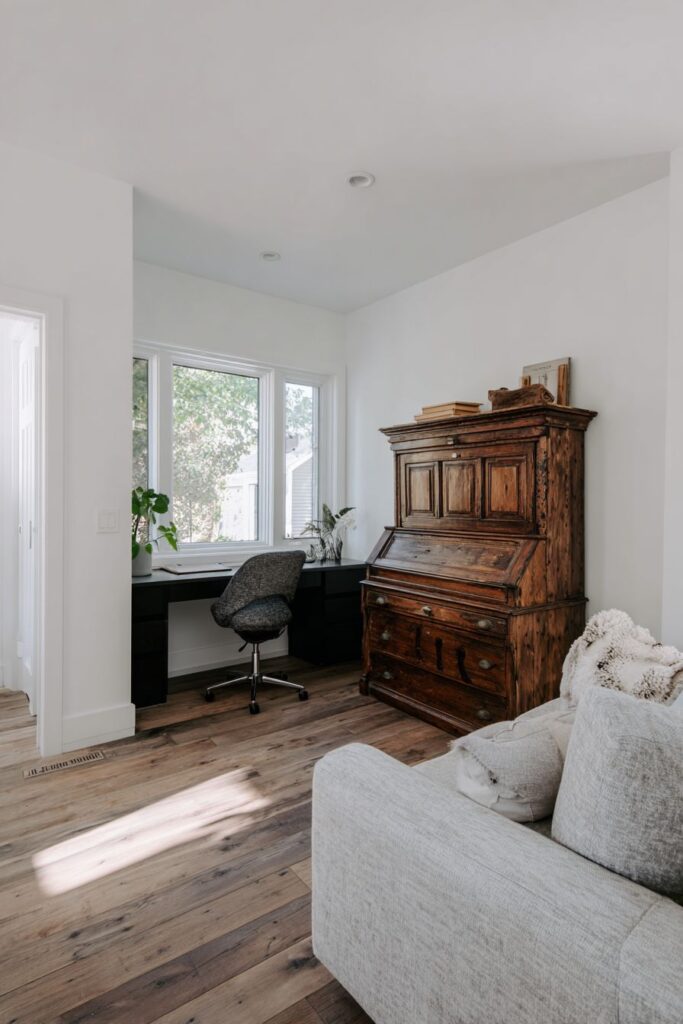
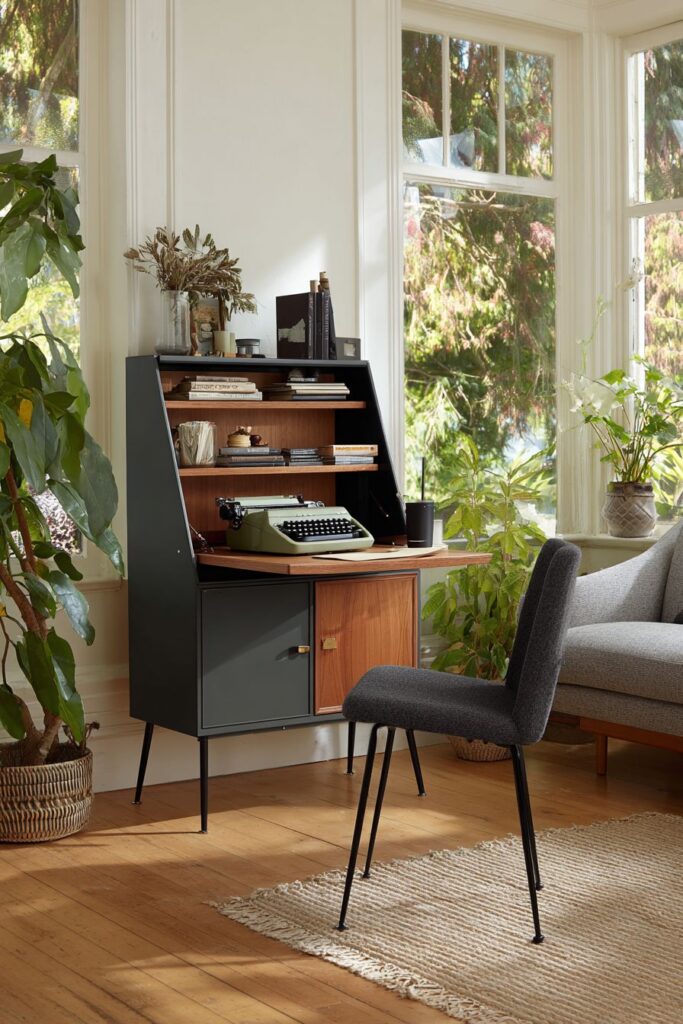
A vintage secretary desk refinished in deep charcoal serves as this living room’s unexpected focal point, its traditional form updated with contemporary color for dramatic impact. The secretary desk’s drop-front writing surface, interior compartments, and lower cabinet storage represent historic furniture design when every piece served multiple functions. The deep charcoal finish—almost black but with subtle brown undertones—modernizes the traditional form while highlighting the wood grain and architectural details. This piece stands boldly against white walls, creating strong visual contrast and establishing itself as the room’s centerpiece.
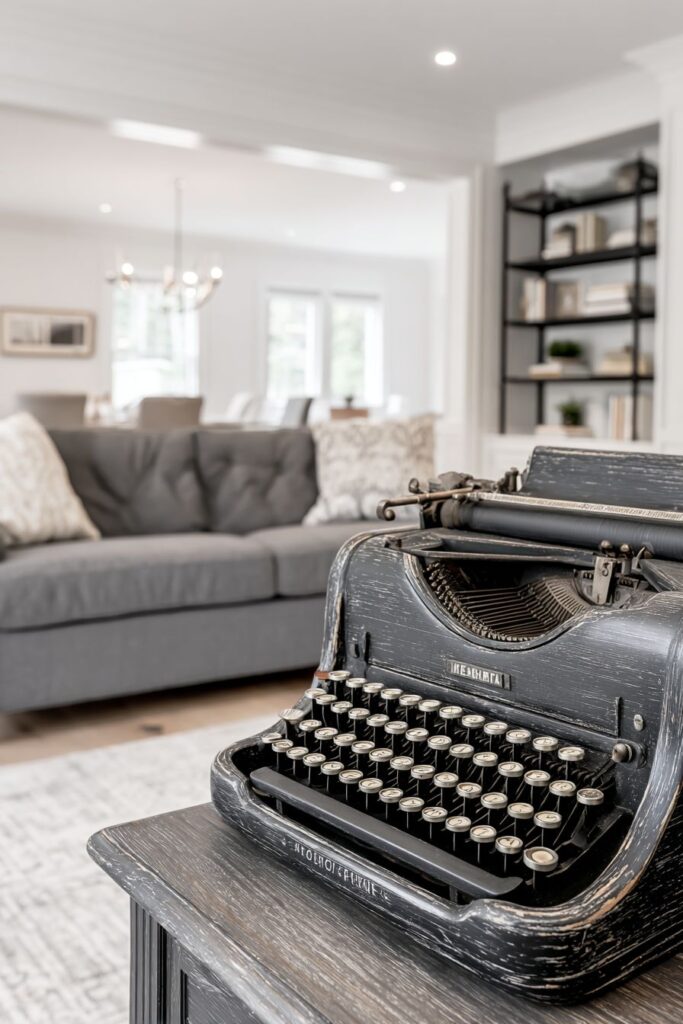
Contemporary open shelving in matte black metal flanks the secretary desk, providing additional display and storage that complements rather than competes with the vintage piece. The shelving units display an intriguing collection of vintage typewriters—with their mechanical keys, aged metal bodies, and brand decals—alongside modern office supplies in matching containers and neutral tones. This mixing of vintage technology and contemporary necessities demonstrates how working spaces can maintain both functionality and aesthetic interest.
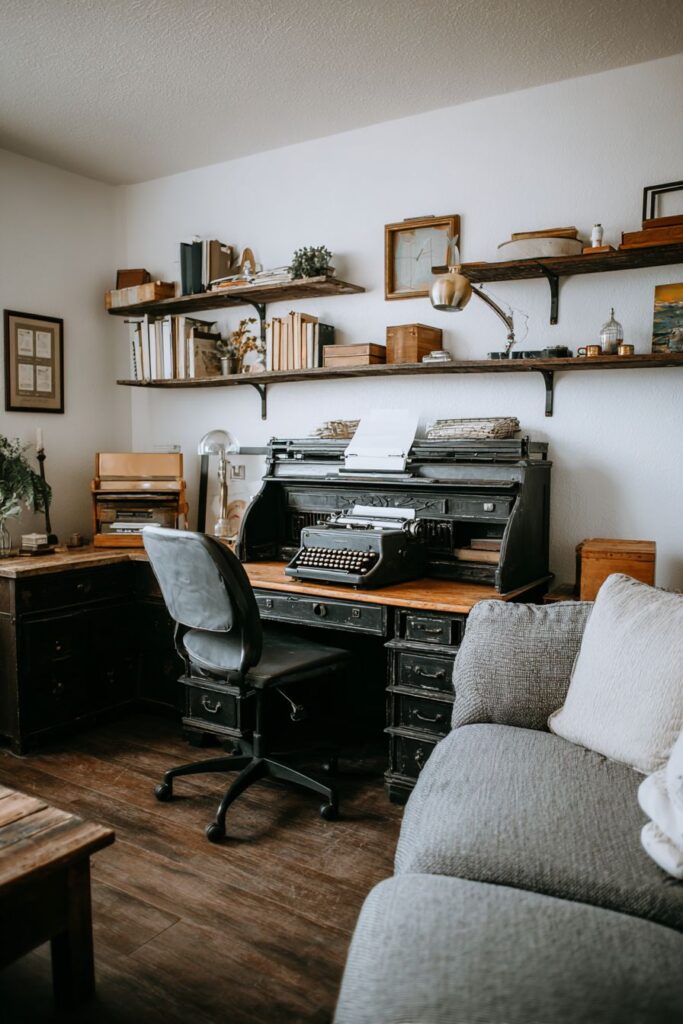
A modern ergonomic desk chair provides practical seating at the secretary desk, its adjustable height and supportive design meeting the needs of contemporary work-from-home life. The chair’s sleek design in brushed metal and black upholstery coordinates with the desk’s charcoal finish without attempting to match periods or styles. A modern loveseat in heathered grey provides additional seating away from the work area, offering a place to relax or take calls without the desk’s association with productivity. Natural daylight highlights the restored wood grain on the vintage secretary desk and illuminates the subtle wear patterns that add character rather than detract from beauty.
Key Design Tips:
- Refinish vintage desks in deep, contemporary colors to update traditional forms for modern spaces.
- Combine vintage furniture with modern ergonomic seating to balance aesthetics with comfort.
- Use open metal shelving to add storage without visual weight in multipurpose rooms.
- Display vintage technology like typewriters or cameras as sculptural objects with historical interest.
- Separate work and relaxation areas within living rooms to maintain psychological boundaries in multipurpose spaces.
15. Fireplace Focus with Flexible Surfaces
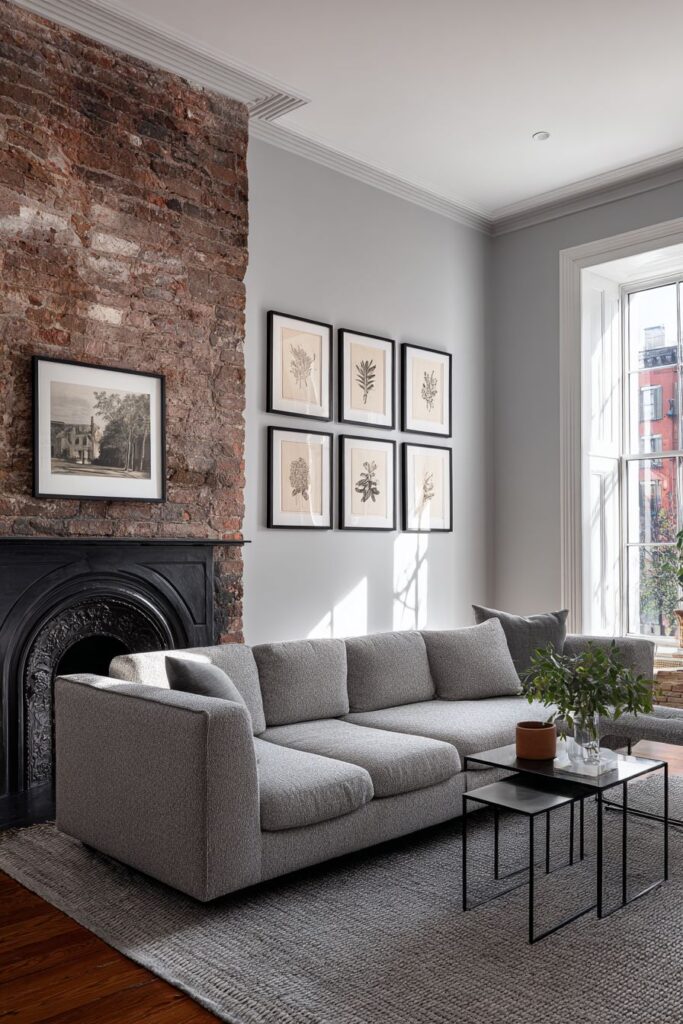
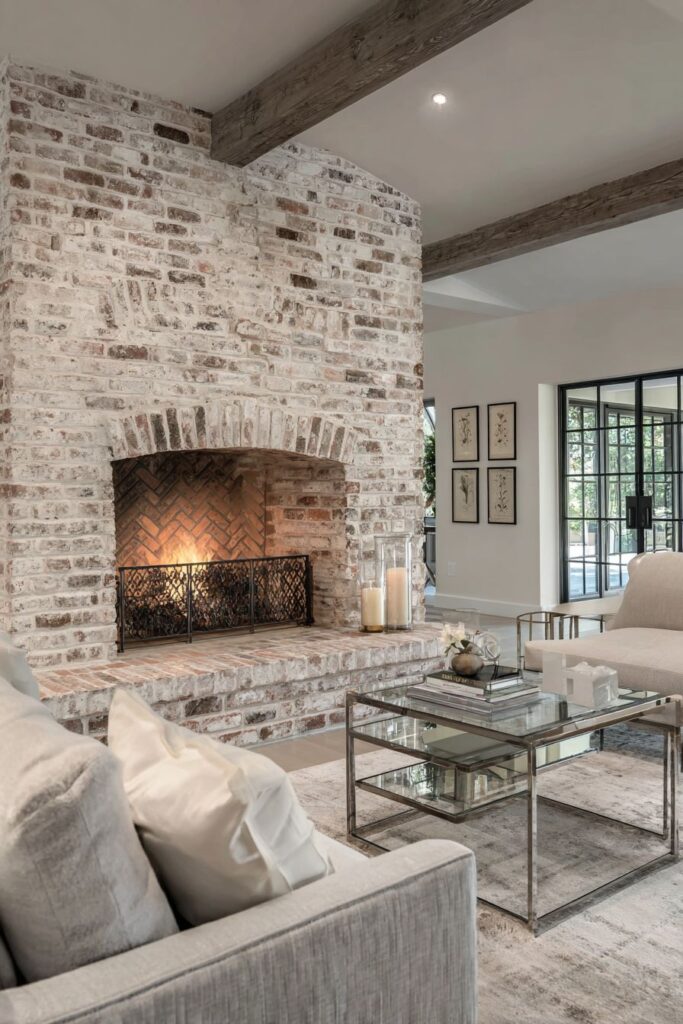
This living room centers on a vintage brick fireplace with its original tile surround and ornate iron grate, an architectural feature rich with character and historical authenticity. The brick’s varied colors—from pale salmon to deep rust—create natural visual interest, while the decorative tile surround adds pattern and craftsmanship details that modern fireplaces typically lack. The ornate iron grate, with its scrollwork and traditional form, represents the artistry of period metalwork. This permanent architectural feature anchors the entire room’s design, providing a focal point that connects past and present.
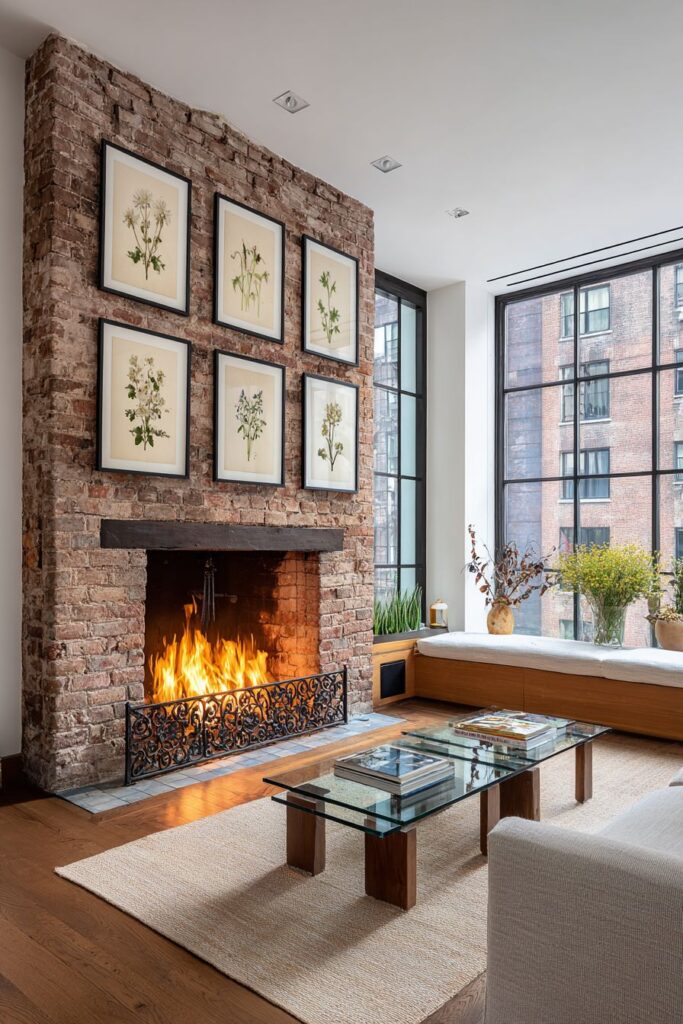
A contemporary low-slung sofa in textured grey fabric faces the fireplace, positioned to enjoy the warmth and ambiance of fires while maintaining the clean aesthetic of modern design. The sofa’s low profile emphasizes the room’s horizontal lines, while its textured upholstery—perhaps a subtle herringbone weave or nubby linen blend—adds visual interest without pattern or color distraction. Modern glass-topped nesting tables provide flexible surface space, their ability to separate or group together offering versatility for entertaining or everyday use.
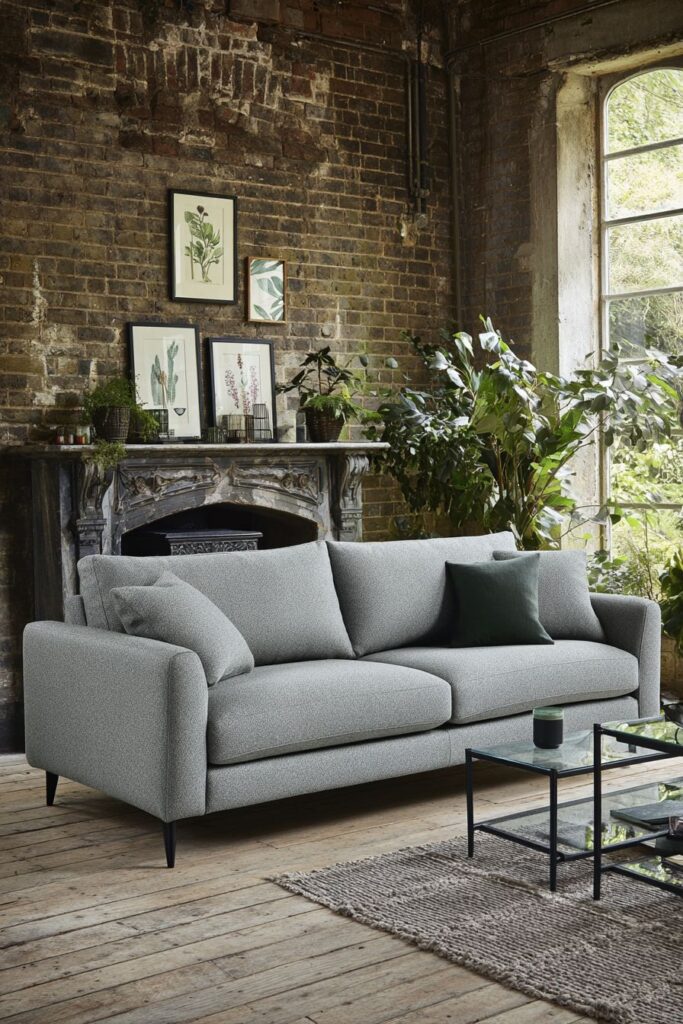
Vintage botanical prints in simple modern black frames create a gallery wall on an adjacent surface, their scientific illustrations and aged paper providing vintage content within contemporary presentation. The botanical subjects—pressed ferns, detailed flowers, specimen leaves—offer nature-inspired art that feels timeless rather than trendy. Soft natural light from adjacent windows illuminates the space with gentle, indirect illumination that emphasizes the contrast between the rough masonry texture of the vintage fireplace and the smooth, refined surfaces of modern upholstery and glass tables.
Key Design Tips:
- Preserve original fireplace details including brick, tile, and metal elements as irreplaceable architectural character.
- Position primary seating to face fireplaces to create cozy gathering spots.
- Use nesting tables for surface flexibility in smaller spaces or frequent entertaining.
- Frame vintage prints in simple modern frames to update presentation without losing content’s historical appeal.
- Embrace material contrasts between rough architectural elements and smooth contemporary furnishings.
16. French Elegance with Modern Restraint
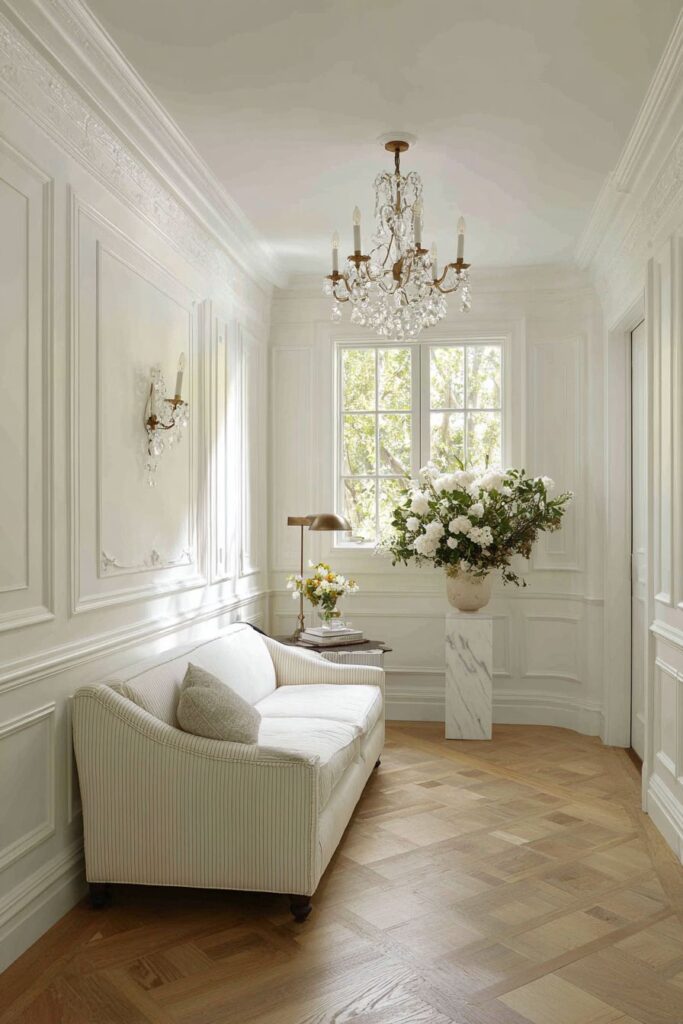
A vintage French bergère chair reupholstered in contemporary striped linen becomes this living room’s most charming element, demonstrating how classic furniture forms can accept modern fabrics while retaining their essential character. The bergère’s signature exposed wood frame—typically carved walnut or oak with graceful curves—shows refinishing that highlights grain while the new striped upholstery in navy and cream brings fresh, graphic appeal. This reupholstery gives the chair new relevance while respecting its origins and craftsmanship.
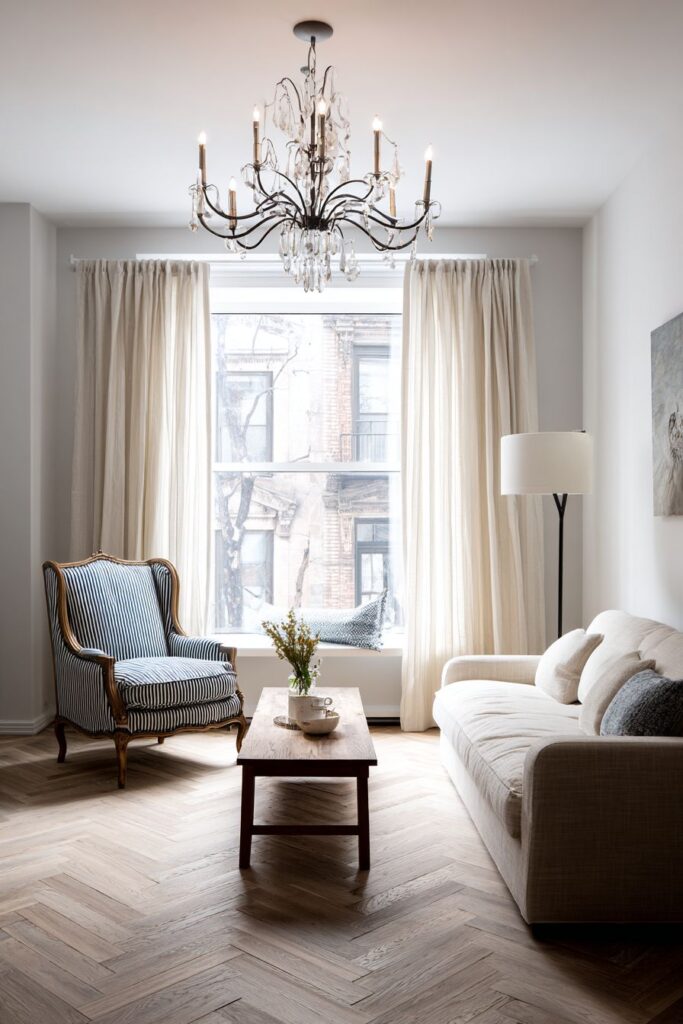
The bergère sits beside a sleek modern floor lamp with a substantial marble base, its weight providing stability while its white marble adds luxury and contemporary appeal. The lamp’s simple metal stem and drum shade keep focus on the marble base and prevent competition with the bergère’s ornate frame. Together, these pieces create a perfect vignette for reading or conversation, blending French provincial charm with modern minimalist sensibility.
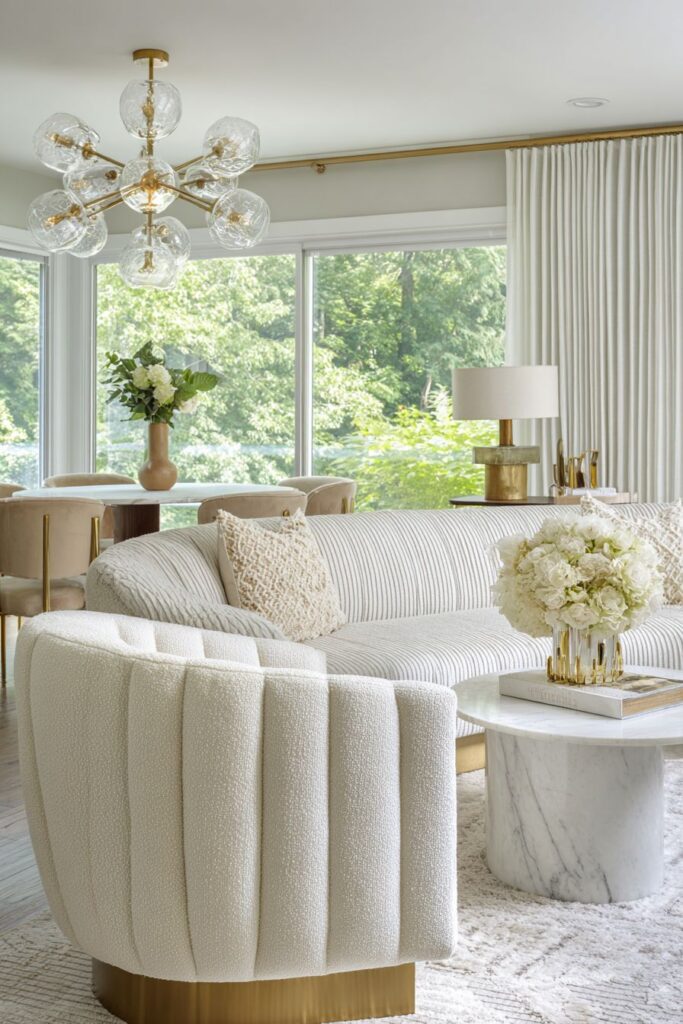
A minimalist modern sofa in ivory bouclé anchors the main seating area, its neutral color and textured fabric offering contemporary comfort without stylistic conflict. The bouclé’s nubby surface catches light beautifully, creating subtle visual interest without pattern. Herringbone hardwood floors with natural patina add warmth and pattern underfoot, their diagonal installation creating visual movement and their aged finish bringing authenticity. A vintage crystal chandelier updated with modern LED bulbs provides ambient lighting, its prismatic pendants casting rainbow refractions while energy-efficient technology ensures practicality.
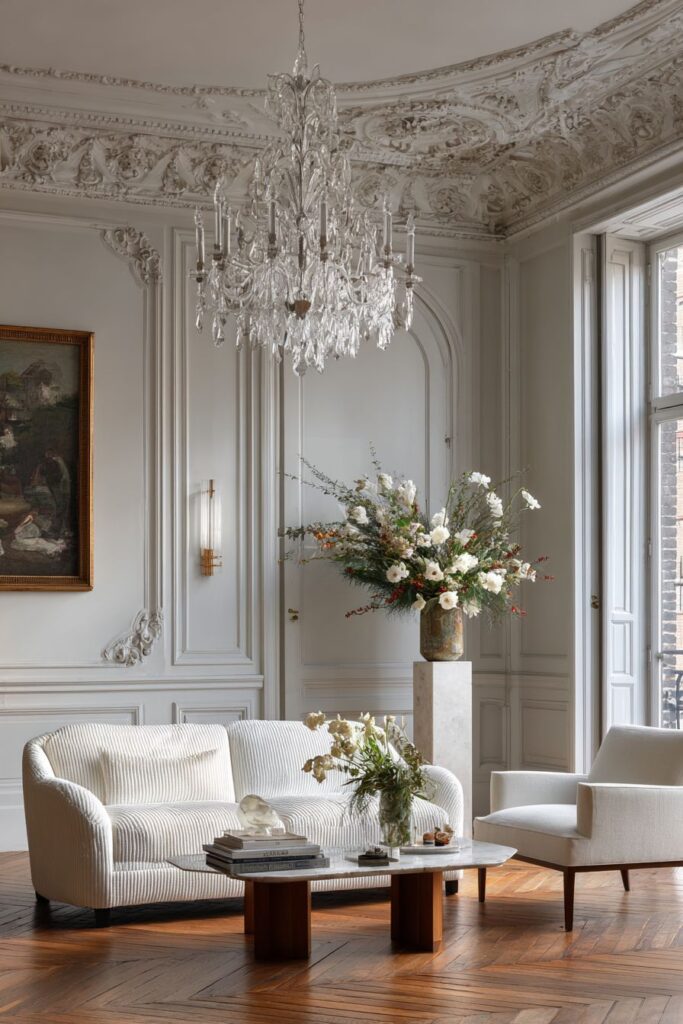
Key Design Tips:
- Reupholster ornate vintage furniture frames in modern striped or geometric fabrics for updated appeal.
- Use marble-based lamps to add contemporary luxury without excessive ornamentation.
- Choose ivory or cream bouclé upholstery for texture without color commitment.
- Preserve herringbone or patterned wood floors as they add interest without requiring rugs.
- Update vintage chandeliers with LED bulbs for energy efficiency while maintaining aesthetic appeal.
17. Jewel-Toned Drama with Travel-Inspired Tables
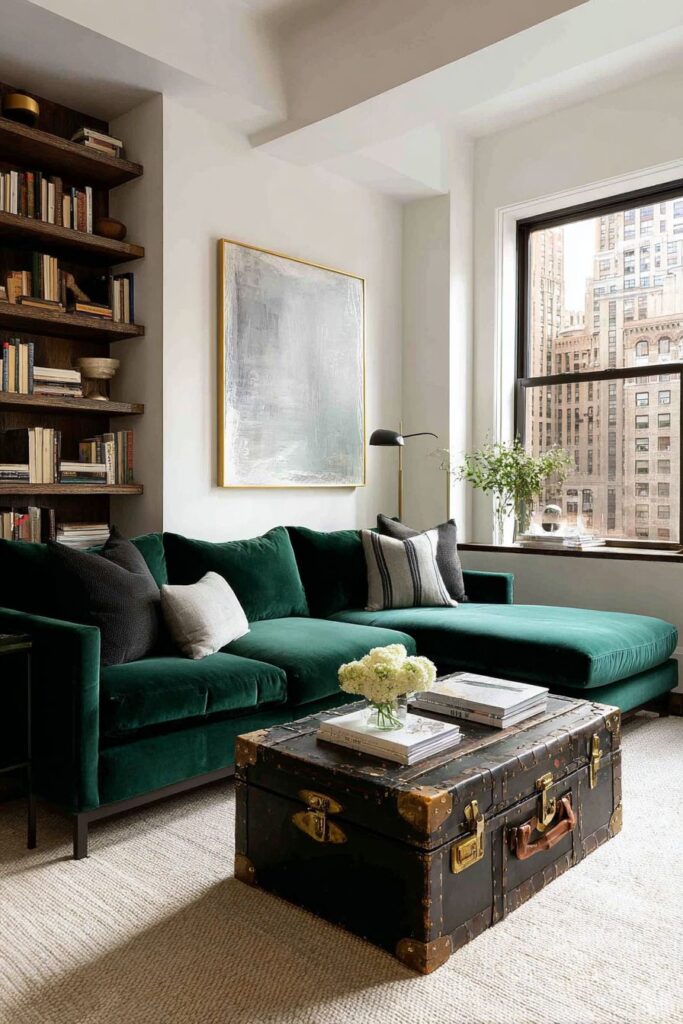
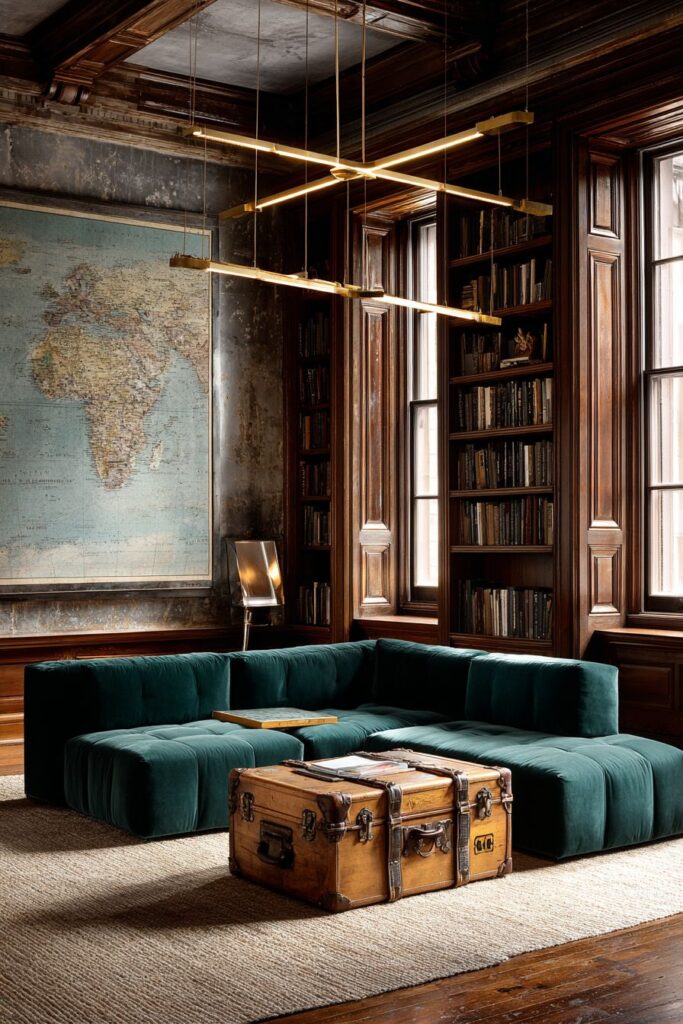
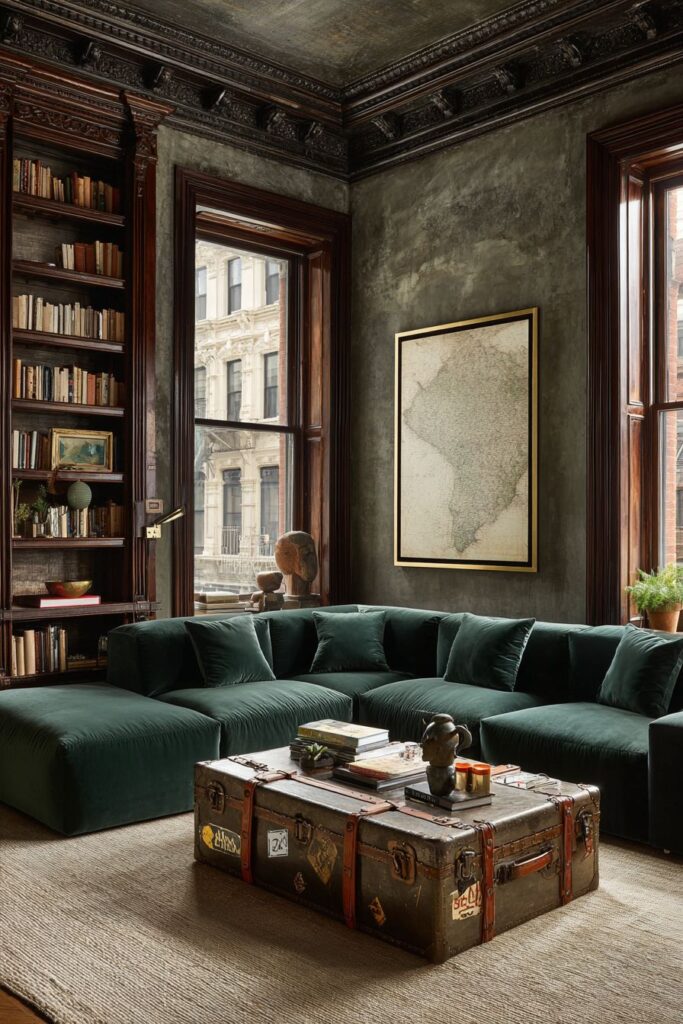
A contemporary modular sectional in deep emerald green velvet makes a bold color statement, its rich jewel tone creating luxury and drama while remaining surprisingly versatile for styling. The sectional’s generous proportions invite relaxation, while its modular design allows configuration changes for different room layouts or entertaining needs. The velvet upholstery’s light-reflective quality means the color appears to shift throughout the day—from deep forest in shadow to bright jade in sunlight—providing dynamic visual interest.
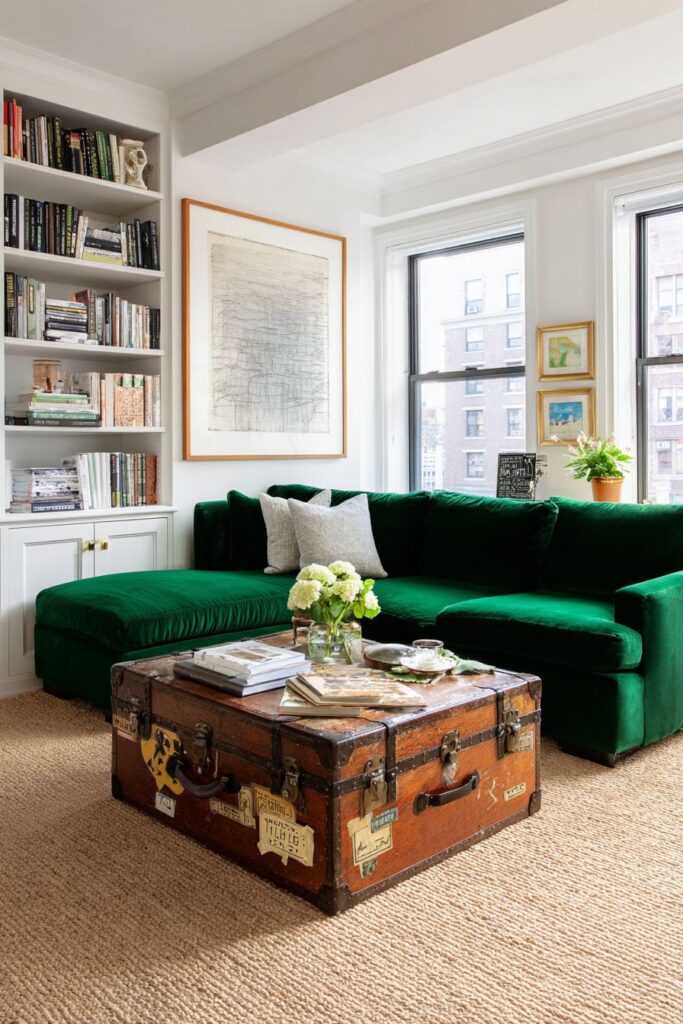
This contemporary seating pairs with an authentic vintage steamer trunk coffee table showing travel stickers, worn leather straps, and aged hardware that hint at exotic journeys and distant destinations. The trunk’s flat top provides practical surface area while compartments inside offer hidden storage. Every scratch, sticker, and worn corner tells part of a story, making this functional piece also a conversation starter. The trunk’s brown leather and brass hardware complement the emerald velvet beautifully, creating a warm, luxurious color palette.
Modern abstract art in a brass frame hangs above vintage built-in bookshelves with original wood detailing—carved moldings, adjustable shelves, and the patina of decades. The abstract painting’s colors—emerald, gold, cream—echo the room’s palette while its contemporary style prevents the space from feeling too traditional. A neutral jute area rug grounds the seating area, its natural texture and sandy color providing an organic foundation that doesn’t compete with the dramatic furniture colors. Natural window light creates dimensional depth, emphasizing the velvet’s luxurious pile and highlighting the trunk’s authentic wear patterns.
Key Design Tips:
- Use jewel-tone velvet upholstery for drama without requiring pattern or accessory clutter.
- Repurpose steamer trunks as coffee tables for storage and conversation-starting character.
- Hang abstract art above traditional built-in shelving to bridge temporal aesthetics.
- Choose jute or sisal rugs to ground colorful furniture without adding additional color competition.
- Preserve built-in shelving and original architectural millwork as valuable permanent features.
18. Mushroom Tones with Ornamental Accents
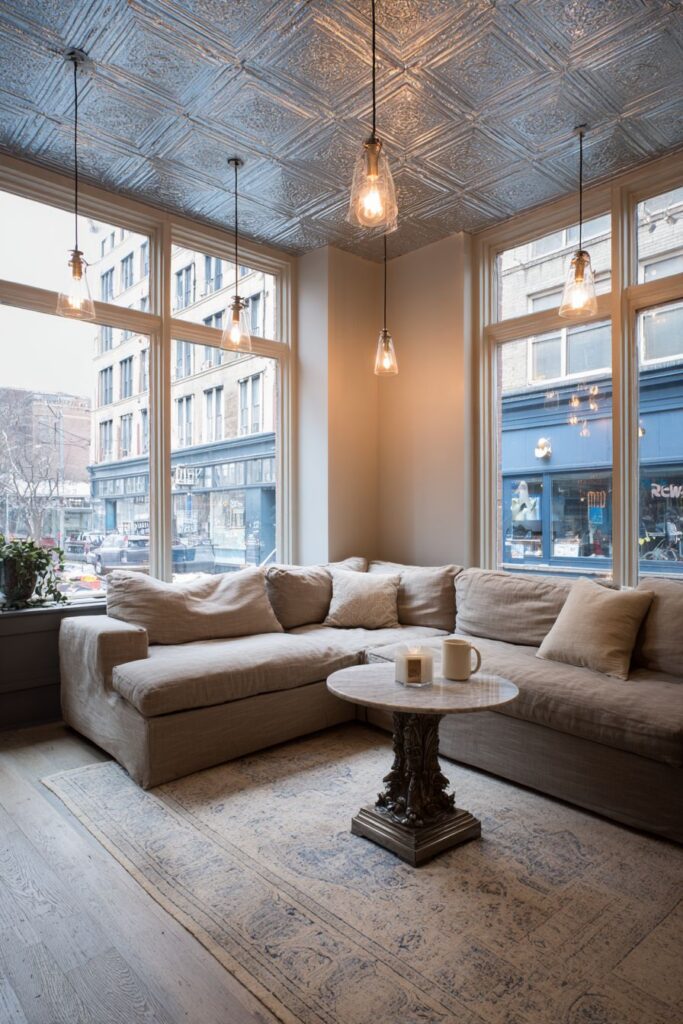
A modern L-shaped sofa in mushroom-colored linen creates substantial, comfortable seating while maintaining neutral sophistication. The mushroom tone—a warm grey-brown hybrid—provides versatility for styling while adding more warmth than pure grey. The linen upholstery’s natural texture and slight variations in weave create subtle visual interest without pattern, and the fabric’s casual elegance suits both everyday relaxation and entertaining. The L-shape configuration defines the seating area while maximizing seating capacity within the room’s footprint.
Surrounded by this contemporary seating is a vintage marble-topped side table with an ornate carved wooden base featuring acanthus leaves, scrollwork, and turned details that showcase traditional furniture-making artistry. The marble top’s cool white surface with grey veining contrasts beautifully with the warm mushroom linen, while its substantial weight and stone material add luxury. The carved wood base, likely in walnut or mahogany, displays craftsmanship that modern production rarely matches, making this vintage piece truly irreplaceable.
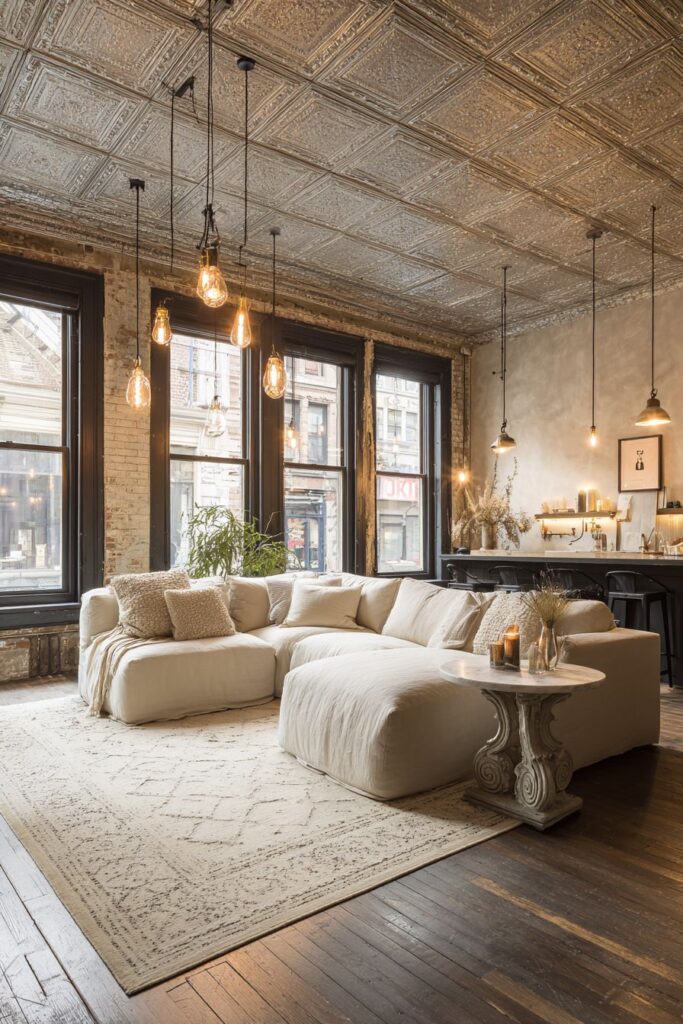
Contemporary pendant lights with exposed Edison bulbs hang from original tin ceiling tiles, creating an intriguing juxtaposition of industrial modern lighting against ornate vintage architectural details. The tin ceiling tiles display embossed patterns—perhaps geometric rosettes or repeating medallions—that add overhead visual interest often overlooked in room design. The Edison bulb pendants, with their visible glowing filaments and simple cord suspension, provide warm ambient lighting while celebrating the beauty of exposed bulbs as decorative elements.
A vintage dhurrie rug with faded geometric patterns adds softness underfoot, its flat-woven construction and muted colors—perhaps faded indigos, rusts, and creams—providing pattern without visual weight. The dhurrie’s thin profile works well in spaces where furniture sits close to the floor, and its traditional patterns introduce global influence and handcrafted authenticity. Wide-angle photography captures the full room composition, showing how contemporary simplicity and vintage ornamental details create balance through thoughtful material choices and restrained color palettes under warm natural lighting conditions.
Key Design Tips:
- Choose mushroom or greige tones for contemporary upholstery to bridge cool and warm palettes.
- Pair ornately carved vintage tables with simple modern upholstery for complementary contrast.
- Preserve tin ceiling tiles or other original architectural overhead details as rare character elements.
- Use dhurrie or flat-woven rugs under low-profile furniture for pattern without bulk.
- Install Edison bulb pendants at varying heights to create ambient lighting with vintage-industrial appeal.
19. Industrial Repurposing with Jewel-Toned Accents
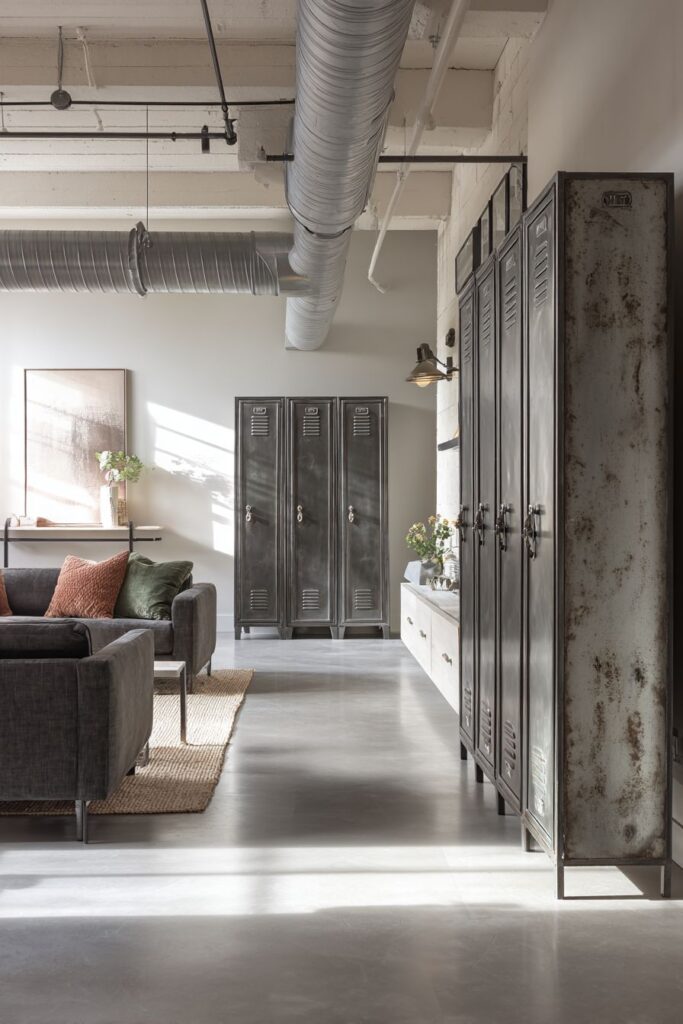
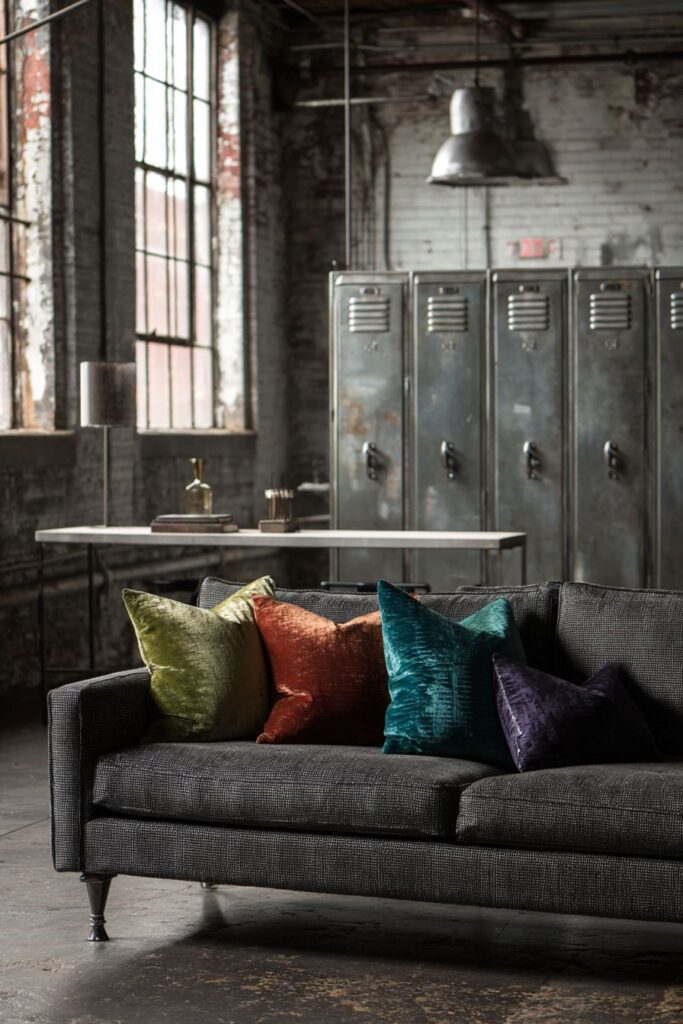
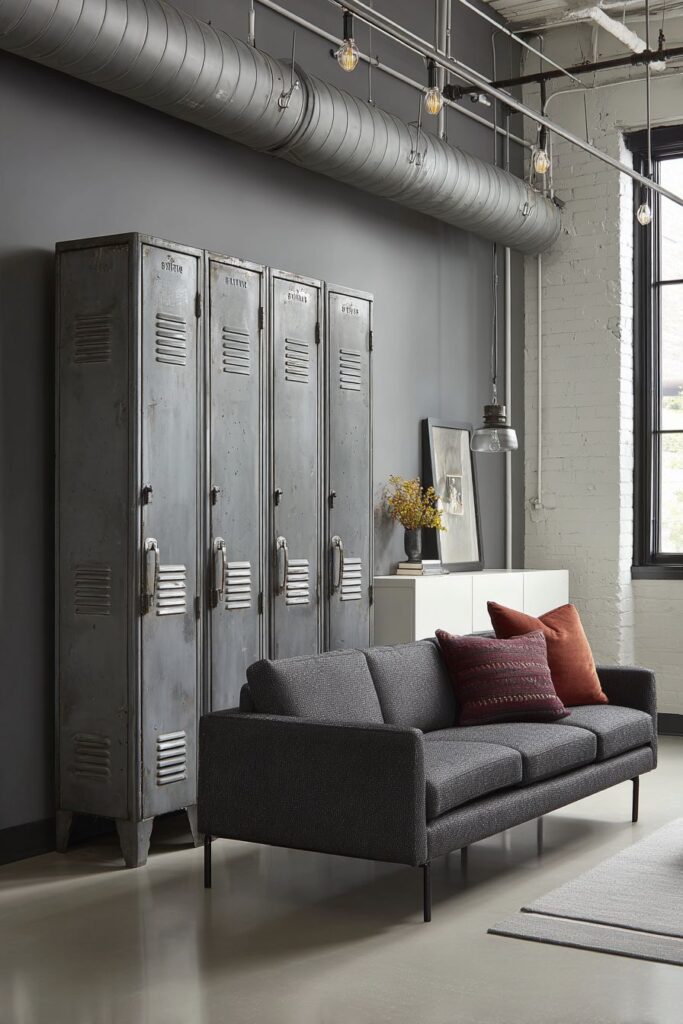
Vintage industrial metal lockers repurposed as storage cabinets bring authentic industrial character to this living room, their original paint showing age-related patina, rust spots, and the honest wear of decades in factory or school settings. The lockers’ ventilated doors, metal tag holders, and heavy-duty construction represent utilitarian design never meant for residential use, making their presence in a living room both unexpected and compelling. These functional pieces provide substantial closed storage while serving as sculptural focal points that celebrate industrial heritage.
Beside these rugged storage pieces sits a sleek modern console table in white lacquer, its glossy surface and pristine finish creating dramatic contrast with the aged metal lockers. The console’s handleless drawers, floating appearance, and bright white finish represent contemporary minimalist design philosophy, where every element serves purpose without unnecessary decoration. This juxtaposition—weathered industrial metal beside pristine modern lacquer—demonstrates the modern vintage aesthetic’s embrace of extreme contrasts unified by thoughtful placement and proportional balance.
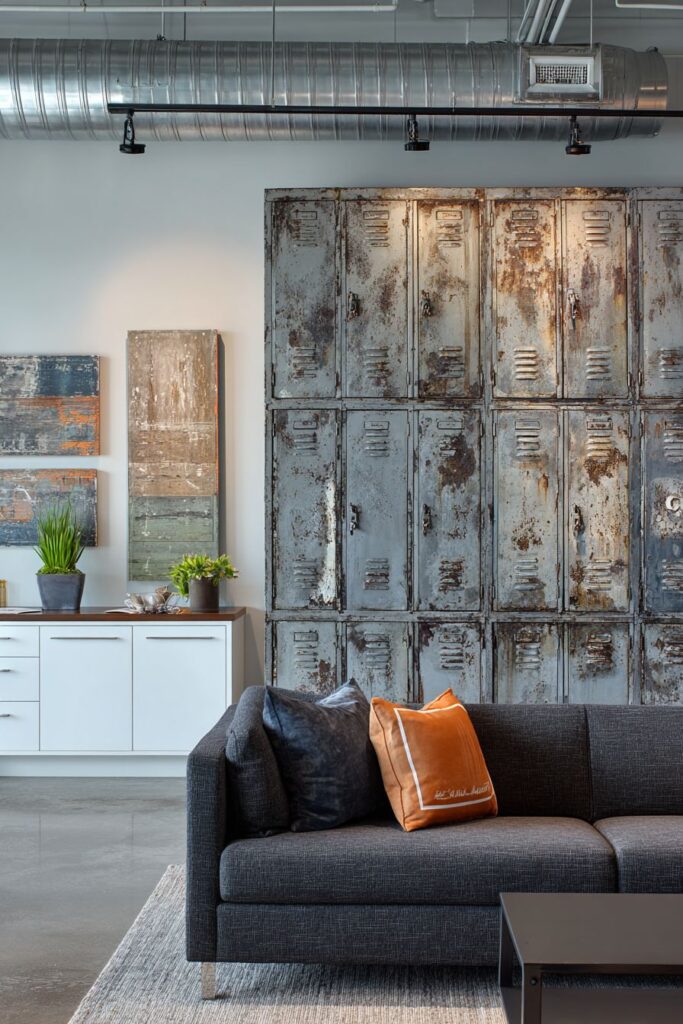
A contemporary sofa in textured charcoal fabric provides main seating, its neutral color allowing the distinctive storage pieces to command attention. Vintage velvet pillows in jewel tones—sapphire blue, ruby red, emerald green—add saturated color pops and luxurious texture that soften the industrial aesthetic while introducing traditional opulence. Exposed ductwork and modern track lighting preserve the industrial atmosphere, celebrating rather than concealing the building’s structural systems. The authentic patina and aged paint on vintage metal surfaces contrast beautifully against pristine modern finishes, all emphasized by soft natural light that reveals material textures and surface variations.
Key Design Tips:
- Repurpose industrial lockers, file cabinets, or metal storage for authentic character and practical function.
- Pair aged metal pieces with glossy lacquered furniture for maximum material contrast.
- Add jewel-toned velvet pillows to industrial spaces to introduce warmth and luxury.
- Expose ductwork and structural elements in industrial-style rooms rather than concealing them.
- Preserve original paint and patina on vintage metal furniture as authentic wear adds value and character.
20. Curved Comfort with Hand-Painted Heritage
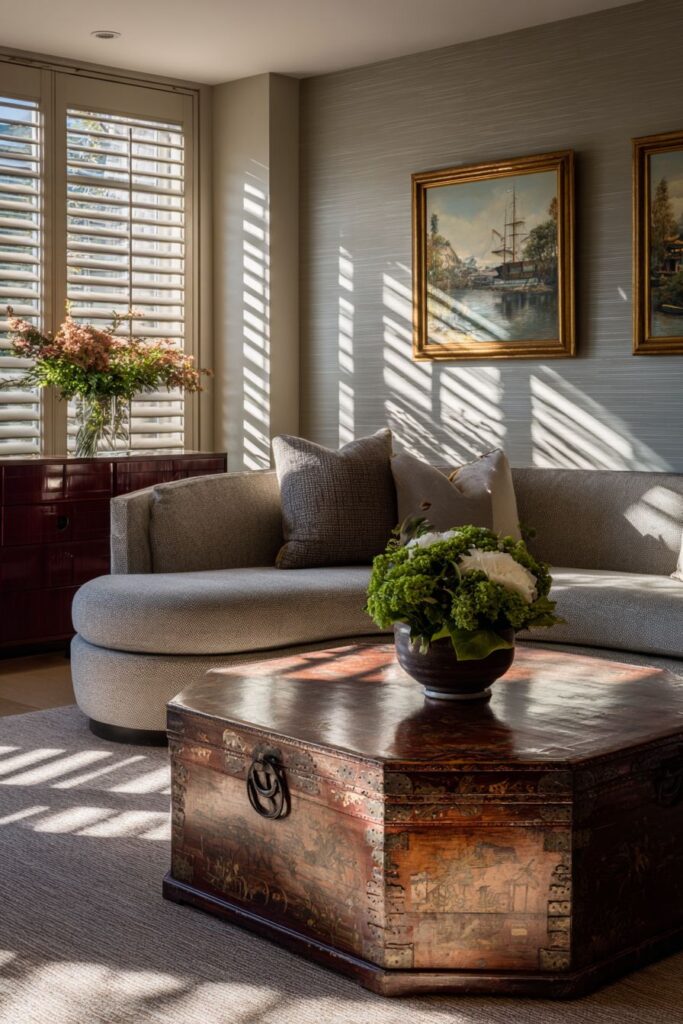
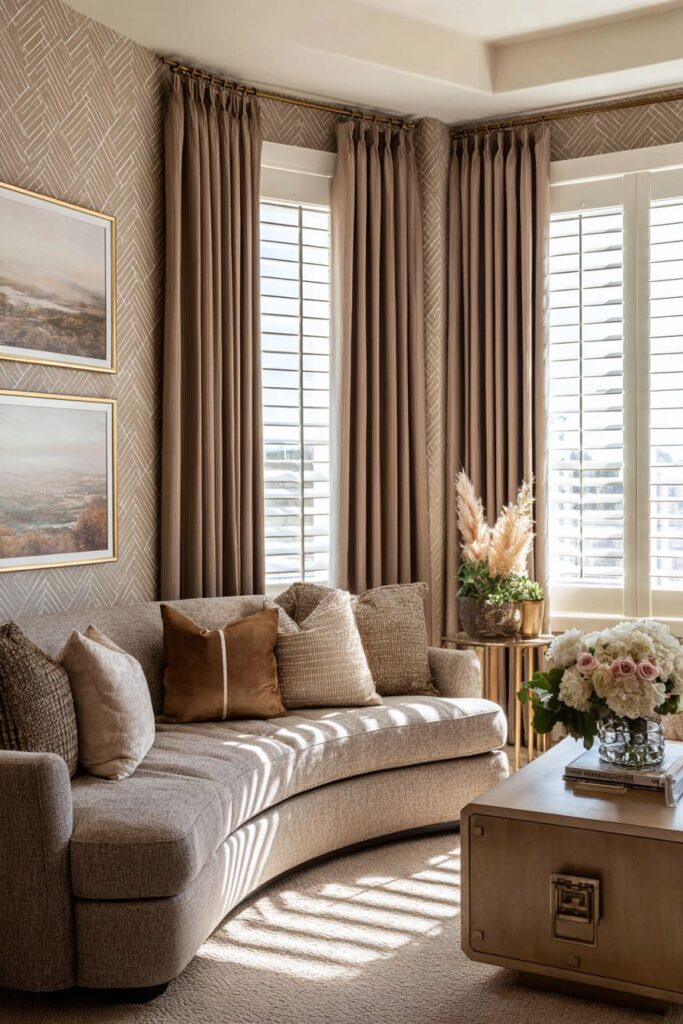
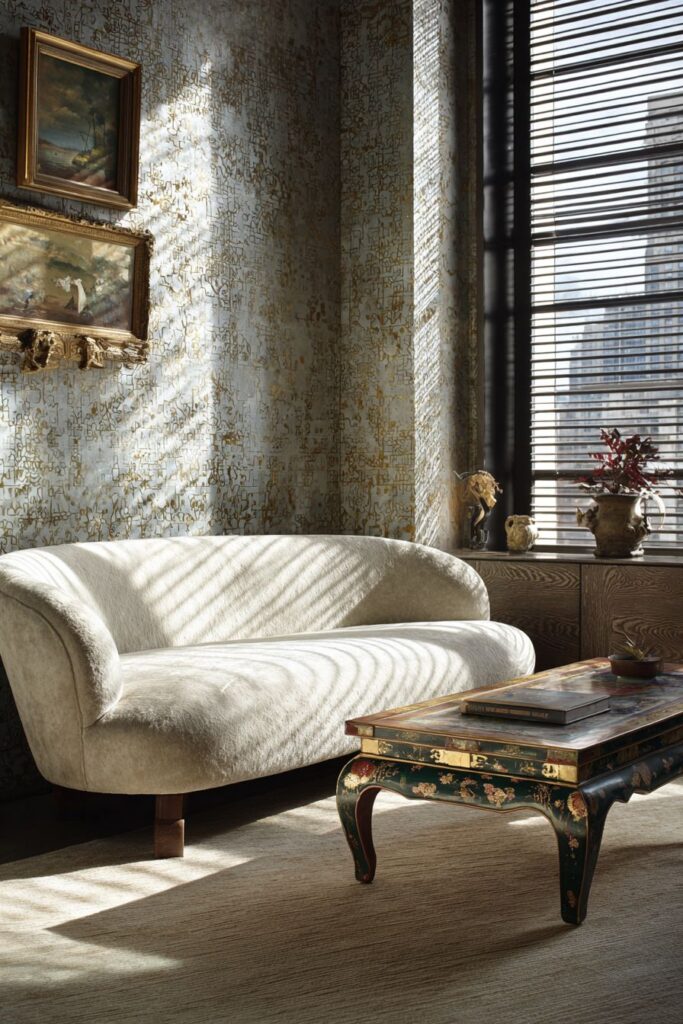
A modern curved sofa in biscuit-colored performance fabric brings soft, sculptural form to this living room, its gentle arc creating organic movement that contrasts beautifully with traditional straight-lined vintage pieces. The curved profile offers better conversation flow than linear sofas, as seated guests naturally face toward each other. The biscuit color—a warm, creamy tan—provides neutral versatility while adding more warmth than stark white or grey. Performance fabric ensures practical durability without sacrificing the luxurious appearance of natural materials.
This contemporary seating pairs with a vintage Chinese coffee table featuring hand-painted details and original hardware that showcase traditional Asian craftsmanship and artistry. The table’s painted scenes—perhaps birds among flowering branches, mountainous landscapes, or traditional symbols—display meticulous brushwork and faded colors that indicate authentic age. Original brass hardware, including corner brackets and decorative pulls, show the beautiful green patina that develops on brass over decades. This distinctive table brings global influence and artistic heritage to the modern space.
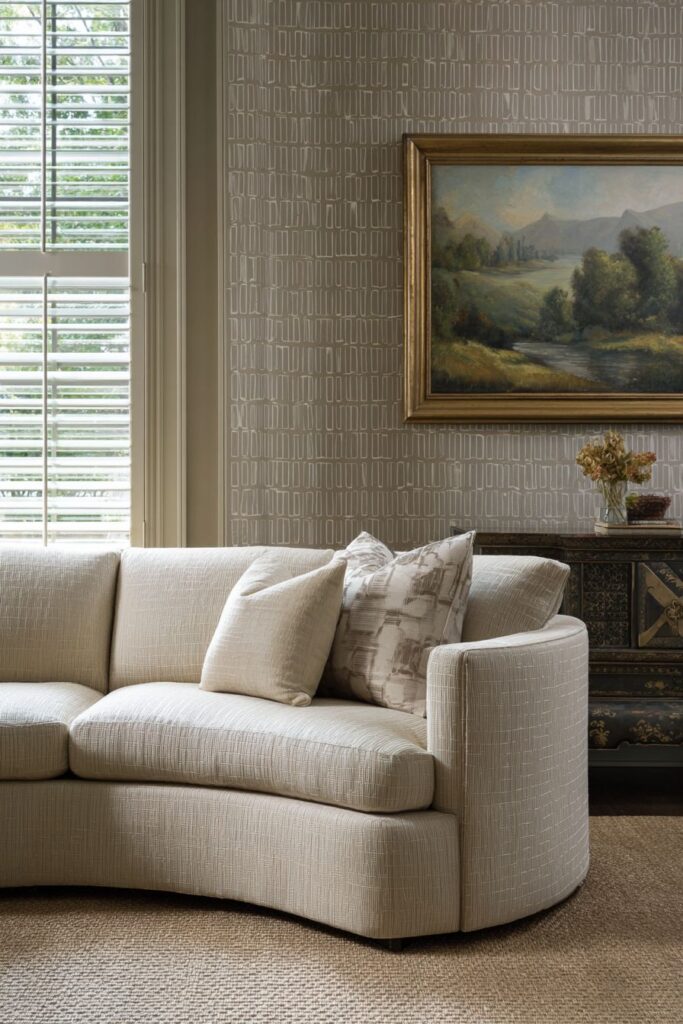
Contemporary geometric wallpaper in subtle metallic tones provides backdrop for vintage gilt-framed landscape paintings, creating layered pattern and historical depth on the walls. The wallpaper’s modern pattern—perhaps hexagons or abstract shapes—adds contemporary graphic appeal, while its metallic elements catch light and add subtle glamour. The gilt-framed landscapes, with their romantic pastoral scenes and ornate frames, represent traditional art collection while the geometric wallpaper firmly anchors the room in current design.
A natural jute rug anchors the space, its organic texture and neutral color providing a grounding element that doesn’t compete with the patterned wallpaper or painted furniture. Natural afternoon light streaming through plantation shutters creates striped shadow patterns across surfaces, adding depth and emphasizing the sophisticated layering of patterns, textures, and the harmonious blend of modern comfort with vintage character.
Key Design Tips:
- Choose curved sofas for organic form that softens angular room layouts and improves conversation flow.
- Source hand-painted vintage furniture from Asian antique dealers for unique artistic heritage pieces.
- Layer geometric wallpaper with traditional framed art for contemporary-vintage pattern mixing.
- Use jute or natural fiber rugs to ground patterned rooms without adding color or additional pattern.
- Install plantation shutters to control light while creating interesting shadow patterns throughout the day.
Why These Modern Vintage Living Room Designs Represent the Best in Contemporary Home Decor
The twenty living room designs presented in this comprehensive guide exemplify why the modern vintage aesthetic has become one of the most enduring and beloved interior design trends in contemporary home decor. These spaces successfully demonstrate that modern vintage living rooms offer timeless appeal precisely because they refuse to be bound by a single era or rigid stylistic rules. By thoughtfully combining mid-century modern furniture with contemporary pieces, vintage architectural elements with modern materials, and traditional craftsmanship with current technology, these designs create living spaces that feel both deeply personal and universally appealing.
Each design showcases essential modern vintage interior design principles that make these spaces functional, beautiful, and enduring. The successful integration of vintage furniture pieces like mid-century credenzas, tufted Chesterfield sofas, French bergère chairs, and repurposed steamer trunks with contemporary elements such as modular sectionals, glass coffee tables, and minimalist lighting demonstrates how mixing eras creates visual interest and narrative depth that single-style rooms cannot achieve. These living room ideas prove that vintage living room design doesn’t mean sacrificing modern comfort or contemporary aesthetics—instead, it means enhancing both through thoughtful juxtaposition and careful curation.
The material palette in these modern vintage living spaces showcases the importance of textural diversity in successful interior design. Rich cognac leather develops beautiful patina over time, while contemporary performance fabrics offer durability without aesthetic compromise. Reclaimed wood brings organic warmth and sustainability, while sleek glass and acrylic maintain visual openness. Sumptuous velvets in jewel tones add luxury and color, while neutral linens and bouclés provide versatile foundations. Industrial metals introduce edge and authenticity, while polished brass and chrome add glamorous sparkle. This material diversity creates living rooms with visual richness and tactile appeal that single-material spaces simply cannot match.
Color strategy in these vintage modern living rooms demonstrates sophisticated restraint that allows both vintage and contemporary pieces to shine. Neutral foundations in mushroom, oatmeal, charcoal, and warm grey provide versatile backdrops that accommodate changing styles and collections over time. Strategic color pops through jewel-toned velvet upholstery, vintage rugs with faded patterns, or carefully selected accessories add personality without overwhelming. Soft wall colors like sage green and dusty rose introduce subtle hues without competing with furnishings. This balanced color approach makes modern vintage living room design accessible and adaptable, whether you’re working with existing vintage pieces or building your collection gradually.
The lighting layering demonstrated across these living room designs reveals another crucial element of successful modern vintage spaces. Natural light through floor-to-ceiling windows, French doors, and industrial factory windows provides ever-changing ambient illumination that highlights textures and reveals true colors. Contemporary track lighting, recessed fixtures, and minimalist pendants offer focused task and accent lighting with modern efficiency. Vintage chandeliers updated with LED bulbs, Edison bulb fixtures, and antique brass lamps add warmth and character. This multi-layered lighting approach ensures these living rooms function beautifully at any time of day while creating atmosphere and drama that single-source lighting cannot achieve.
Architectural preservation and enhancement in these designs showcase the value of honoring a home’s original character while introducing contemporary updates. Exposed brick walls bring industrial texture and earthy color, while original hardwood floors with natural wear patterns add authentic patina. Vintage fireplaces with tile surrounds and ornate grates serve as irreplaceable focal points, while tin ceiling tiles and crown molding add overhead interest. Built-in bookshelves with original millwork provide functional storage with historical character. These preserved architectural elements ground modern vintage living rooms in authenticity and connect contemporary life with building history.
The functional solutions presented in these living room concepts address real modern living challenges while maintaining aesthetic integrity. Media integration through floating consoles and wall-mounted televisions accommodates contemporary technology without visual bulk. Modular and sectional seating provides flexibility for different activities and guest numbers. Repurposed vintage trunks, ladders, and lockers offer creative storage that doubles as decorative focal points. Built-in shelving combining vintage crates with modern cabinets balances display with concealed storage. These practical considerations make modern vintage living rooms not just beautiful to look at but genuinely comfortable and functional for daily life.
The art and accessory curation demonstrated across these spaces reveals the importance of thoughtful editing and personal expression in modern vintage design. Gallery walls mixing vintage gilt mirrors with modern photography create collected appeal, while botanical prints in contemporary frames update traditional artwork. Vintage cameras, typewriters, and glassware displayed on modern shelving become sculptural objects with historical interest. Needlepoint pillows, vintage books, and handwoven textiles add handcrafted warmth and personal narrative. This curated approach to decoration creates living rooms with personality and story that cookie-cutter contemporary spaces lack.
The global influence present in many of these designs adds cultural richness and artisanal appreciation to modern vintage living rooms. Turkish kilim rugs, Chinese hand-painted furniture, French bergère chairs, and Persian carpets introduce traditional craftsmanship from diverse cultures. These global vintage elements prevent modern vintage design from feeling specifically American or European, instead creating cosmopolitan spaces that celebrate international design heritage. This cultural diversity makes the modern vintage aesthetic particularly relevant for contemporary multicultural households and globally minded homeowners.
Sustainability considerations inherent in vintage furniture acquisition make modern vintage living room design an environmentally conscious choice beyond its aesthetic appeal. Restoring and reupholstering vintage furniture extends the life of well-made pieces while preventing quality furniture from entering landfills. Repurposing industrial elements and architectural salvage gives new function to materials that might otherwise be discarded. Choosing vintage pieces over new production reduces manufacturing demand and the environmental impact of new furniture creation. This sustainable aspect of modern vintage design aligns perfectly with contemporary environmental awareness and conscious consumption values.
The investment value of quality vintage furniture makes modern vintage living rooms financially wise beyond their immediate aesthetic appeal. Well-made vintage pieces in solid wood, quality leather, and traditional construction often outlast contemporary furniture made with particleboard, synthetic materials, and mass-production techniques. Iconic mid-century pieces, antique upholstered furniture, and quality vintage accessories often appreciate in value rather than depreciate. This investment quality means modern vintage living rooms can actually increase in value over time as collections mature and vintage pieces become more desirable.
The emotional resonance of modern vintage living spaces creates homes with soul and personality that purely contemporary minimalist rooms often lack. Vintage furniture pieces carry histories and stories that mass-produced items cannot replicate. The imperfections in aged leather, worn wood, and faded textiles remind us that objects gain character through use and time. Family heirlooms and flea market finds create personal connections and memories associated with acquisition and ownership. This emotional depth makes modern vintage living rooms feel like true homes rather than showroom displays.
The adaptability of modern vintage design principles makes this aesthetic accessible regardless of budget, space size, or existing furniture inventory. You can begin with a single vintage piece—perhaps a inherited chair or flea market table—and build around it with contemporary basics. Small apartments benefit from the mix of transparent modern pieces with substantial vintage anchors. Large homes can dedicate entire walls to vintage storage or collections while balancing with streamlined modern seating. This flexibility makes modern vintage living room design achievable for renters and homeowners, minimalists and collectors, budget-conscious shoppers and antique investors alike.
Conclusion:
The journey through these twenty distinctive modern vintage living room designs reveals a design philosophy that celebrates both innovation and tradition, offering endless possibilities for creating spaces that truly reflect individual personalities and lifestyles. The modern vintage aesthetic succeeds precisely because it rejects rigid rules in favor of thoughtful curation, embracing the beautiful tension between contemporary minimalism and vintage character. Whether you’re drawn to mid-century modern leather sofas paired with industrial brick, ornate French furniture mixed with sleek contemporary pieces, or repurposed industrial elements balanced with luxurious textiles, the modern vintage approach welcomes your personal vision.
As you embark on creating or refining your own modern vintage living room, remember that successful design in this genre requires patience and intention. Rather than purchasing complete room sets or following prescribed formulas, build your space gradually through thoughtful acquisition of pieces that genuinely speak to you. Visit antique markets, estate sales, and vintage dealers to discover unique furniture with history and character. Balance these vintage treasures with carefully selected contemporary pieces in neutral colors and clean lines that provide breathing room and prevent visual overwhelm. Trust your instincts about proportion, scale, and material mixing, understanding that unexpected combinations often create the most compelling results.
Focus on quality over quantity in both your vintage and contemporary selections, choosing well-made pieces that will serve you for years rather than trendy items that quickly date. Invest in professional restoration or reupholstery for vintage furniture pieces with good bones but tired finishes, understanding that these investments preserve quality craftsmanship while customizing pieces to your exact aesthetic preferences. Embrace the imperfections and wear patterns that make vintage pieces authentic, recognizing that scratches, fading, and patina add character rather than diminish value. Most importantly, create a living room that serves your actual lifestyle—comfortable for daily relaxation, functional for your activities, and beautiful in ways that bring you genuine joy rather than merely following design trends.
The modern vintage living room aesthetic offers a sustainable, personal, and endlessly adaptable approach to home design that honors the past while embracing the present. By thoughtfully combining eras, materials, and styles, you can create a living space that feels collected over time rather than purchased all at once—a room with soul, story, and authentic character that truly feels like home.
"As an Amazon Associate, I earn from qualifying purchases."
