
The modern kitchen has evolved far beyond its traditional role as a mere cooking space, transforming into the dynamic heart of contemporary homes where functionality meets sophisticated design. Today’s kitchens serve as multi-purpose environments that seamlessly blend culinary functionality with social gathering spaces, work areas, and entertainment zones. The art of modern kitchen design lies in creating spaces that are not only visually stunning but also incredibly efficient, incorporating cutting-edge technology, sustainable materials, and innovative storage solutions that cater to diverse lifestyles and cooking habits.
Modern kitchen interiors represent a harmonious balance between form and function, where every element serves a purpose while contributing to the overall aesthetic appeal. From sleek minimalist designs that emphasize clean lines and uncluttered surfaces to bold statement pieces that showcase dramatic materials and innovative layouts, contemporary kitchens offer endless possibilities for personalization. The following collection showcases twenty distinctive modern kitchen concepts, each designed to inspire and demonstrate how thoughtful planning, quality materials, and creative problem-solving can transform any culinary space into a stunning centerpiece of modern living.
1. Sleek White Quartz Waterfall Island Design
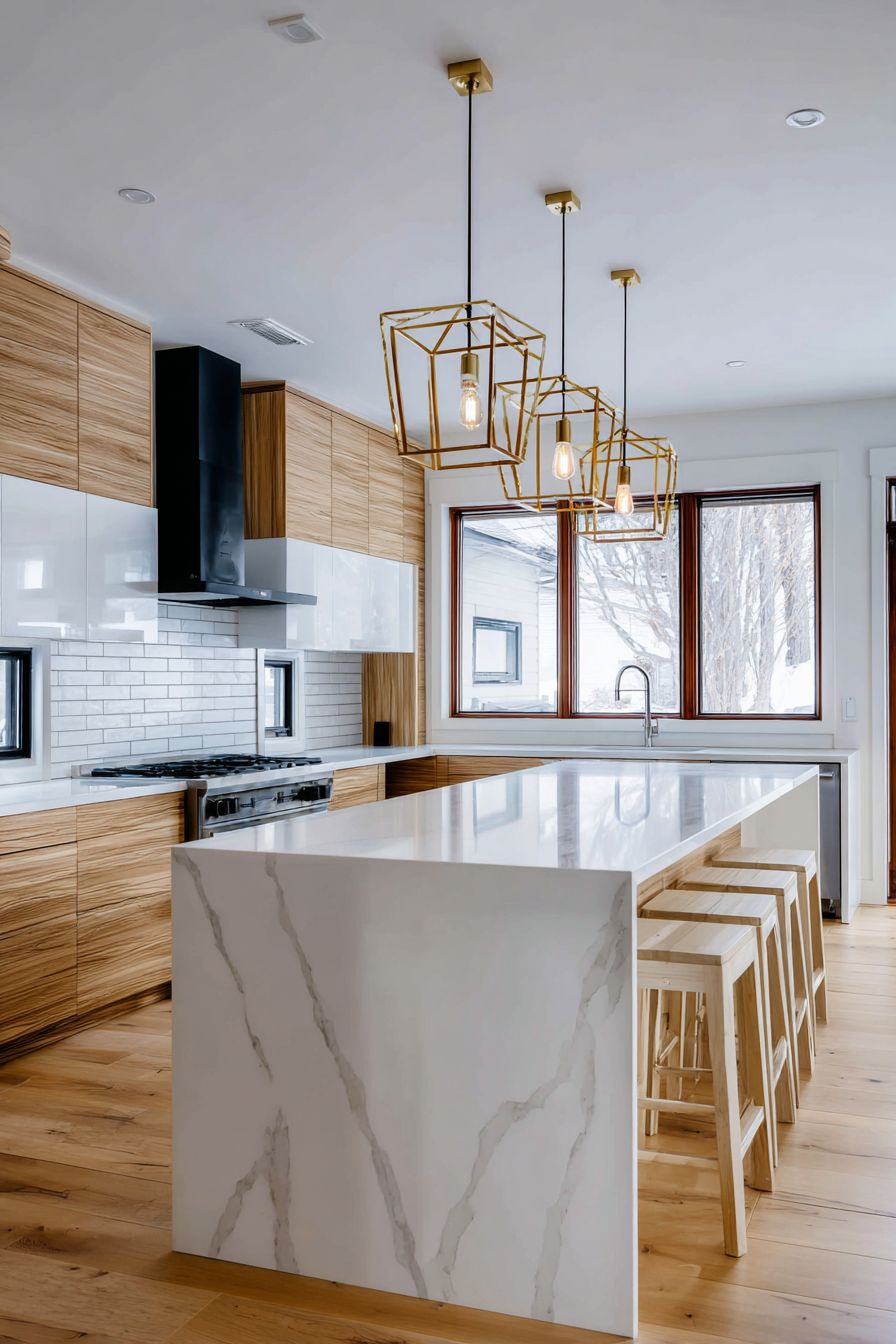
The epitome of contemporary kitchen elegance begins with a stunning white quartz waterfall island that serves as both a functional workspace and a breathtaking focal point. This design concept embraces the beauty of continuous surfaces, where the countertop material flows seamlessly down the sides of the island, creating an uninterrupted visual line that embodies modern sophistication. The integrated breakfast bar seating transforms the island into a social hub where family members can gather for quick meals or casual conversations while the cook prepares dinner.
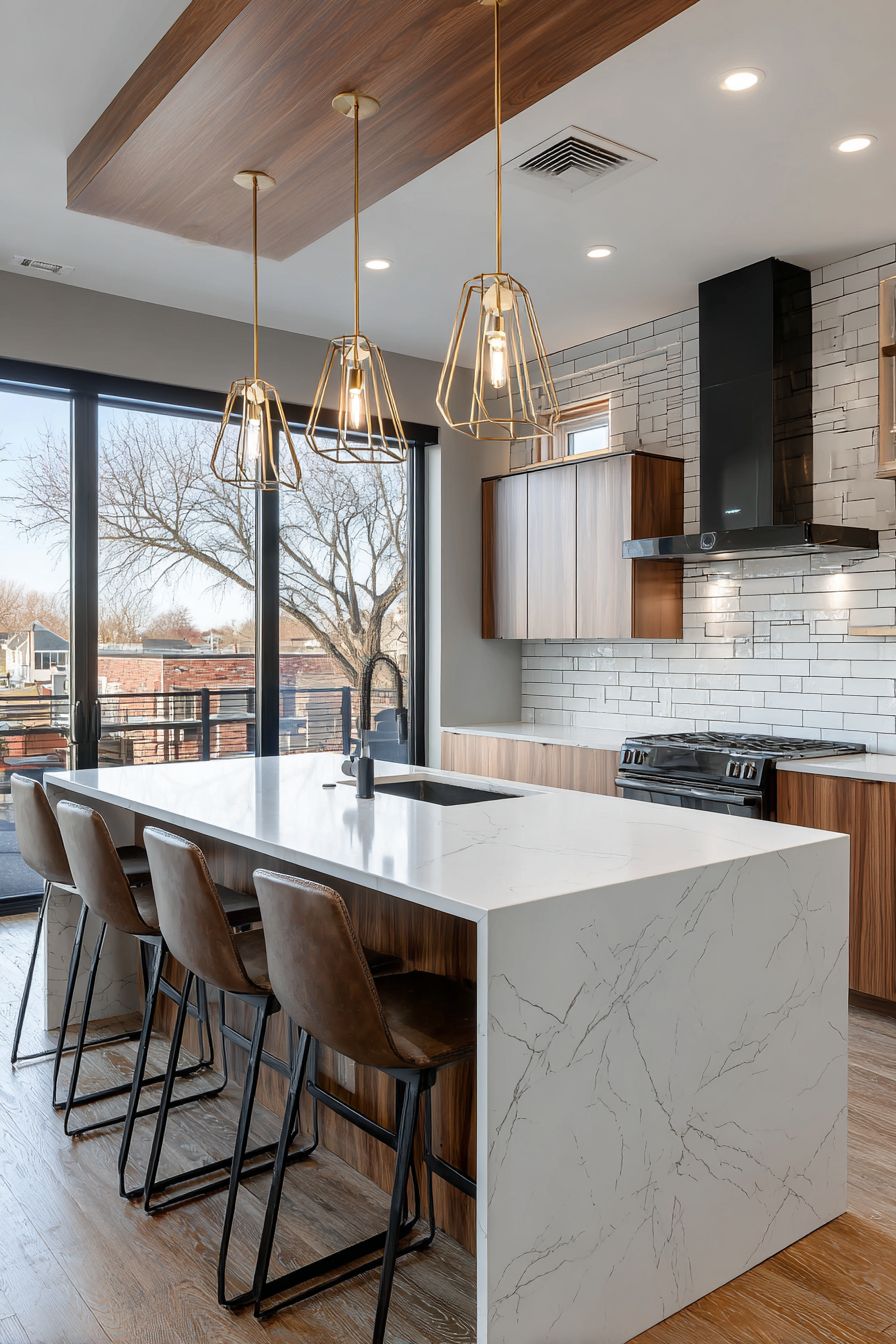
Handleless cabinetry in warm wood grain provides a striking contrast against the pristine white surfaces, demonstrating how natural materials can soften the sometimes stark appearance of ultra-modern designs. The wood grain brings warmth and organic texture to the space, creating visual interest while maintaining the clean, uncluttered aesthetic that defines contemporary style. This thoughtful material pairing showcases the modern design principle of balancing cool and warm elements to create spaces that feel both sophisticated and inviting.
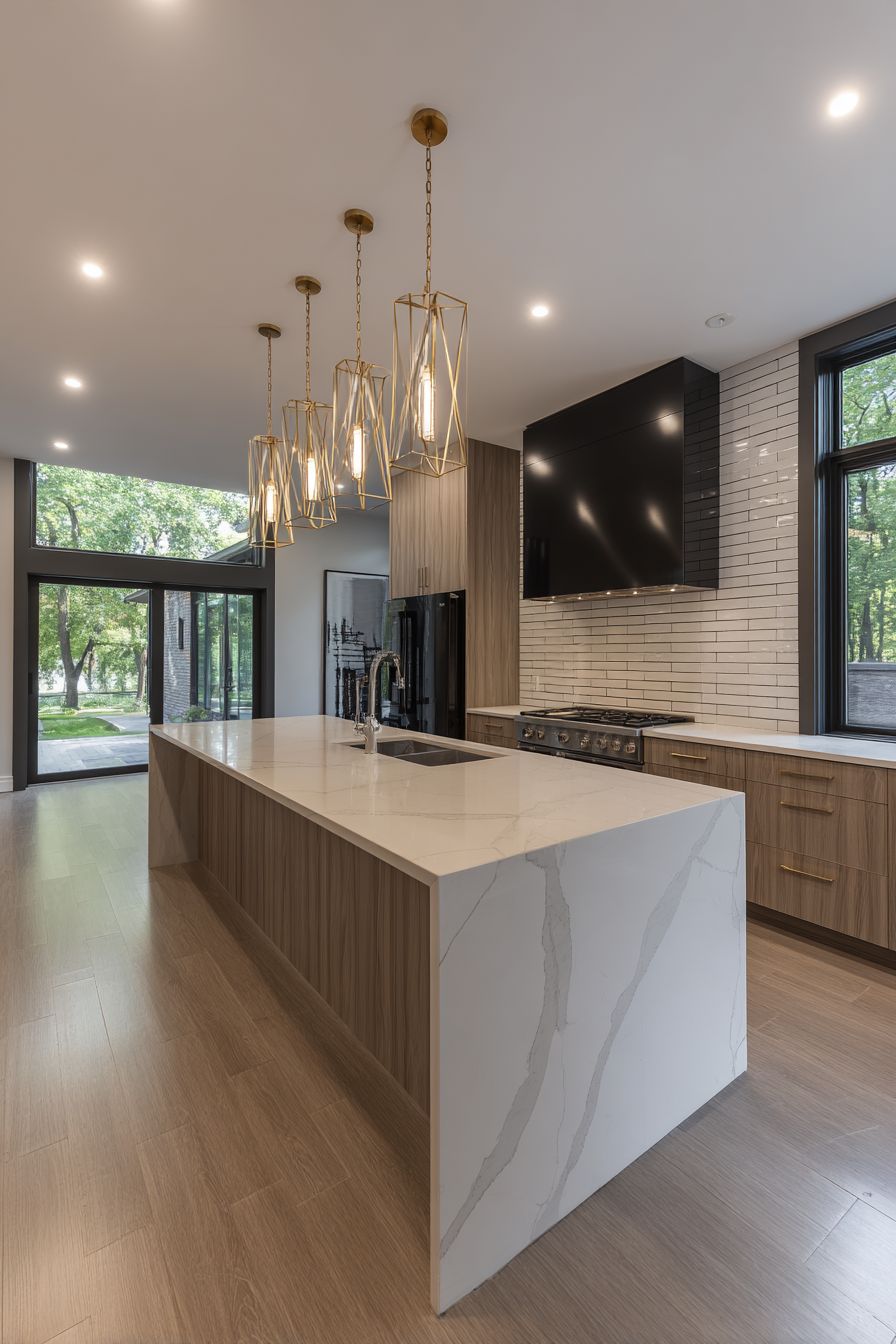
The integration of matte black appliances, including a built-in induction cooktop and minimalist range hood, adds dramatic contrast while emphasizing the kitchen’s commitment to cutting-edge functionality. The subway tile backsplash extends to the ceiling, creating vertical emphasis that makes the space feel larger and more open, while geometric brass pendant lights provide focused task lighting that enhances both function and style. Wide windows flood the space with natural daylight, highlighting the sophisticated material palette and demonstrating how natural light serves as the ultimate design element in modern kitchens.
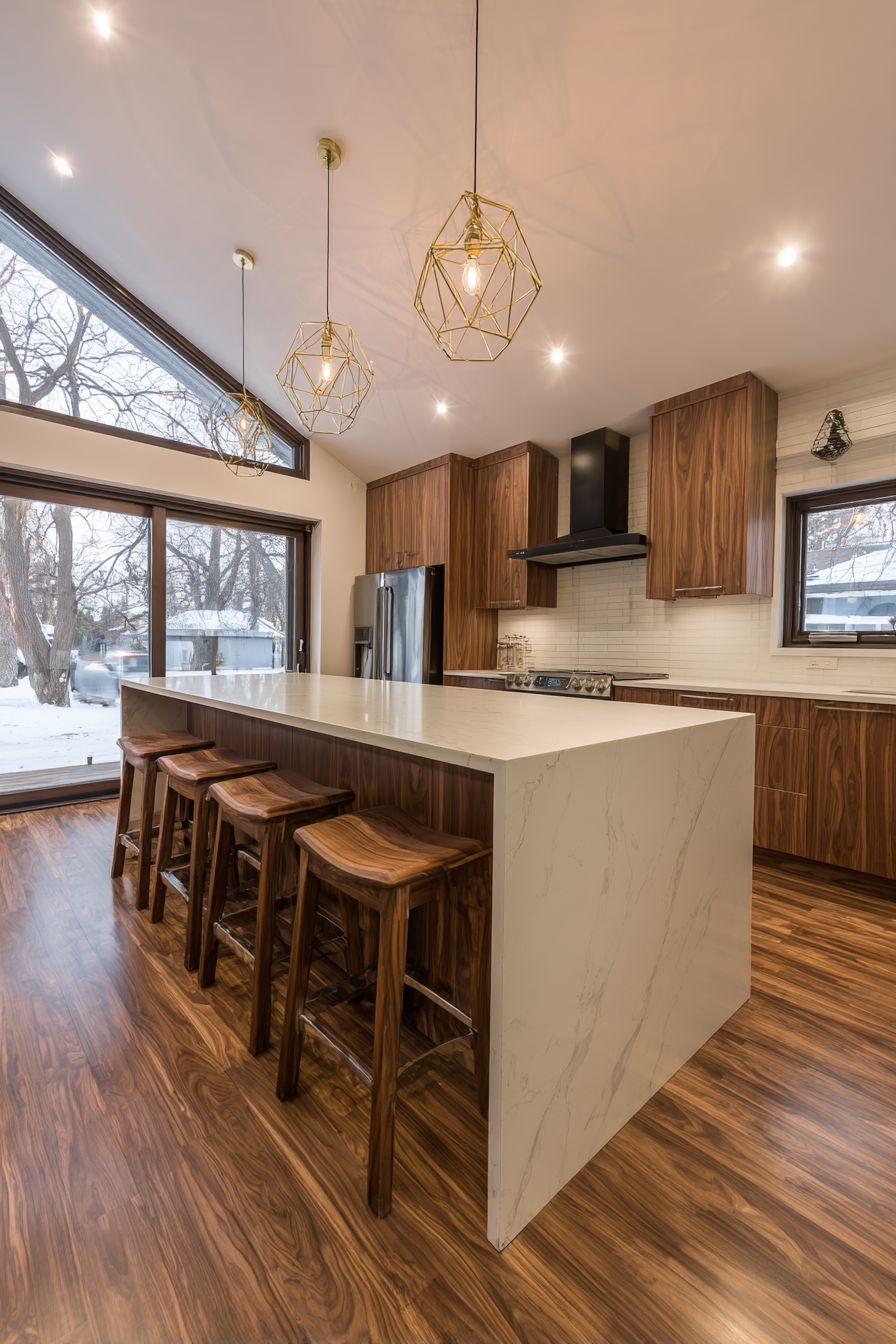
Key design tips for achieving this look include choosing a waterfall island design to create a striking focal point, combining warm wood with cool whites for visual balance, selecting handleless cabinets to maintain clean lines, investing in quality brass fixtures for timeless appeal, and maximizing natural light through strategic window placement.
2. Floor-to-Ceiling Pantry Storage Excellence
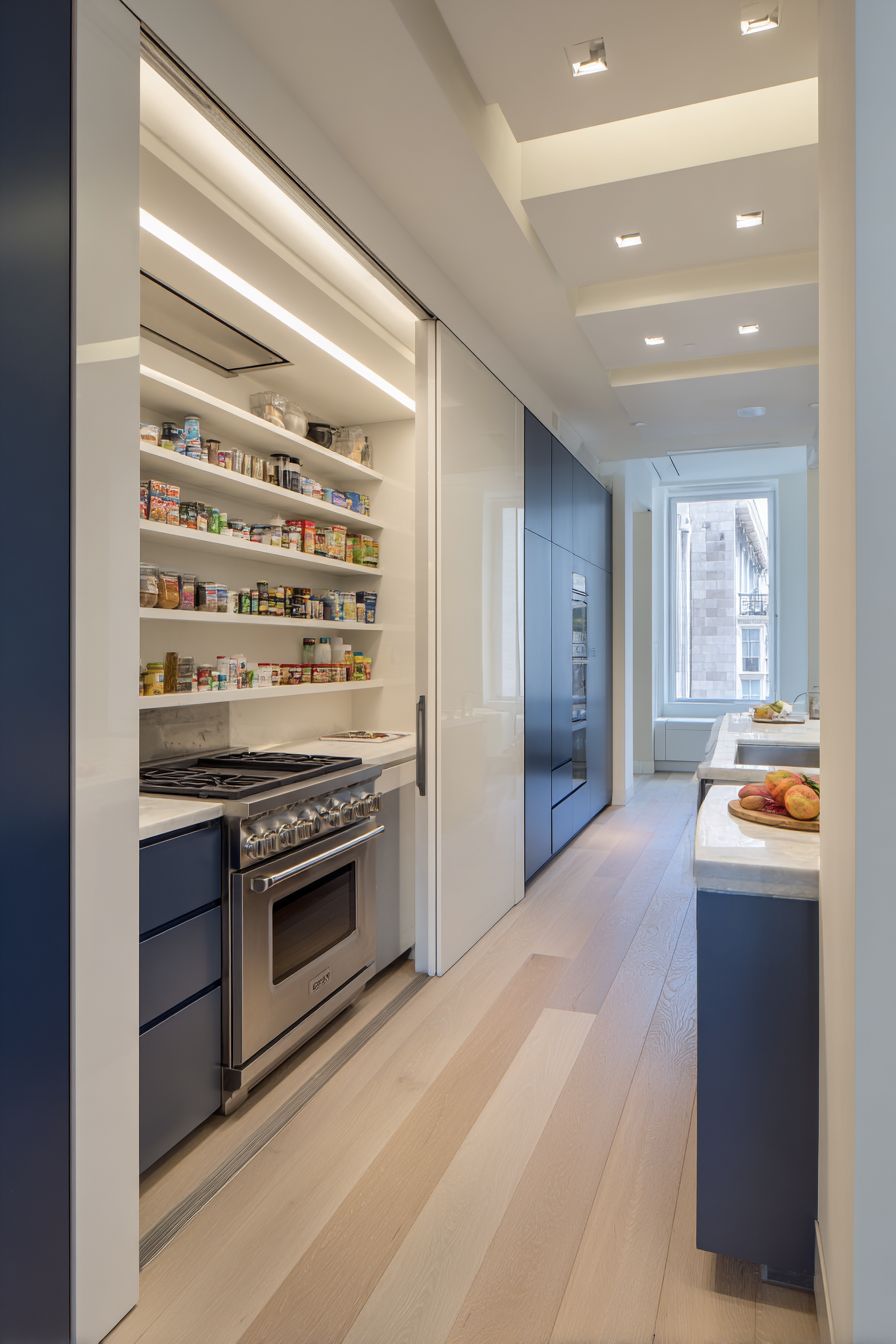
Modern kitchen efficiency reaches new heights with floor-to-ceiling pantry storage that transforms organization from a chore into an art form. This design concept maximizes every inch of vertical space while incorporating hidden push-to-open mechanisms that maintain the sleek, handleless aesthetic that defines contemporary style. Internal LED lighting illuminates the pantry contents, making it easy to locate items while creating a sophisticated display that rivals high-end retail environments.
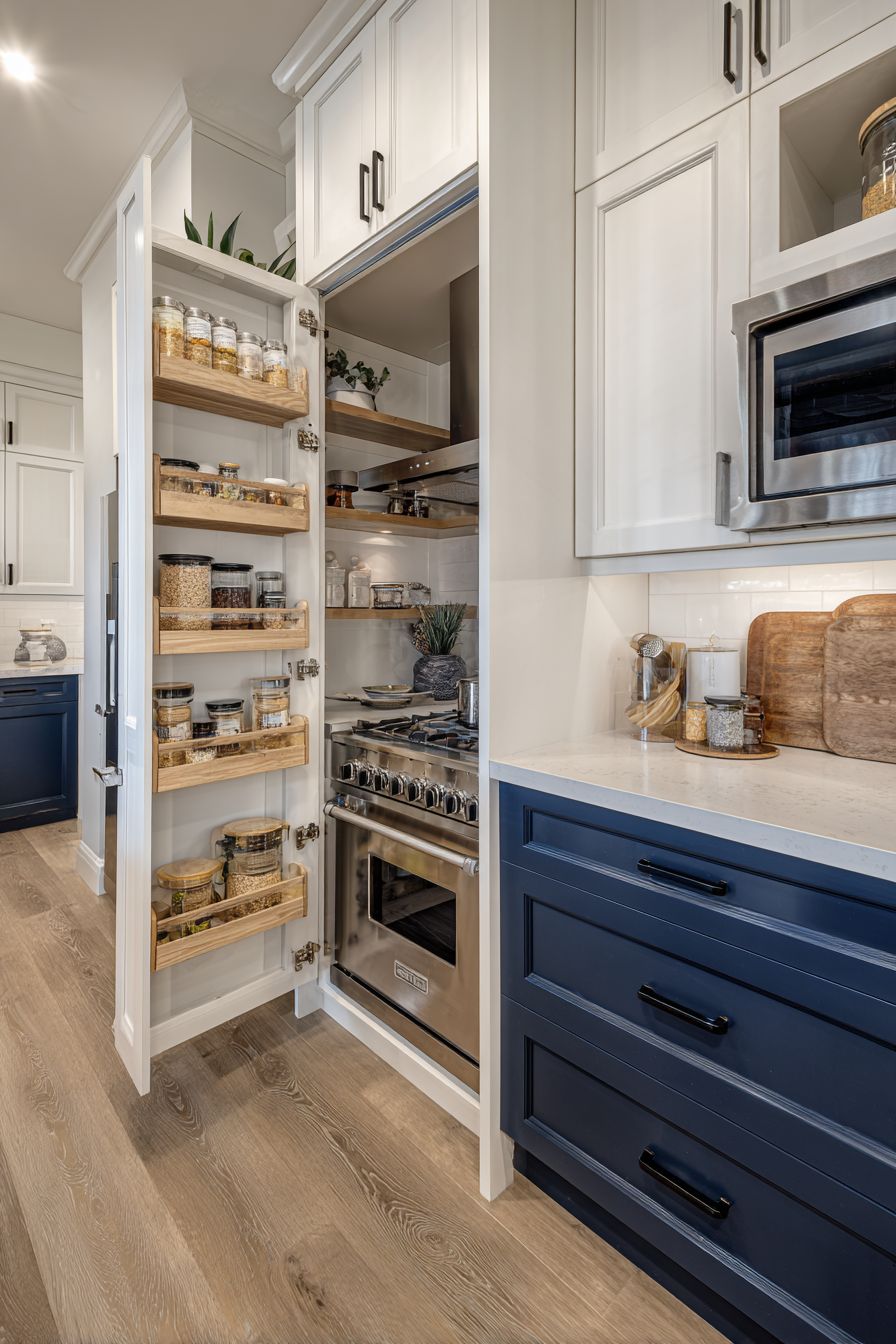
The adjacent cooking zone features a professional-grade gas range that serves as the culinary centerpiece, complemented by a stainless steel backsplash that provides both practical protection and industrial elegance. Integrated spice storage keeps frequently used seasonings within arm’s reach of the cooking surface, demonstrating the modern kitchen’s emphasis on workflow optimization. Light oak flooring provides warmth and natural beauty while being durable enough to withstand the demands of busy kitchen life.
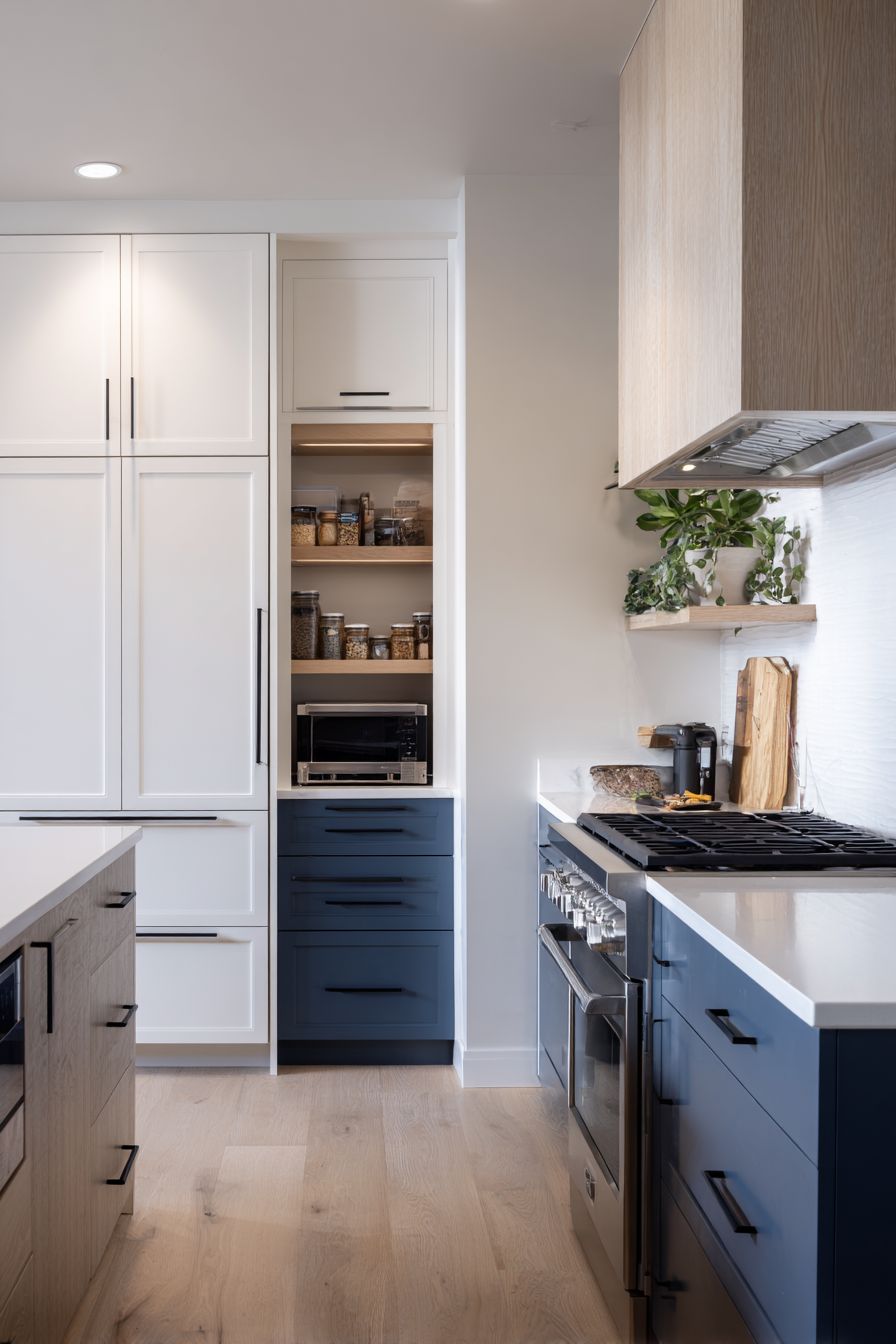
Two-tone cabinetry creates visual depth and prevents the kitchen from feeling monotonous, with white upper cabinets maintaining an open, airy feeling while navy blue lower sections ground the space and hide everyday wear. This color strategy demonstrates how modern design can incorporate bold choices while maintaining overall sophistication. The combination of practical organization systems with beautiful finishes shows that functionality and aesthetics can coexist harmoniously in contemporary kitchen design.
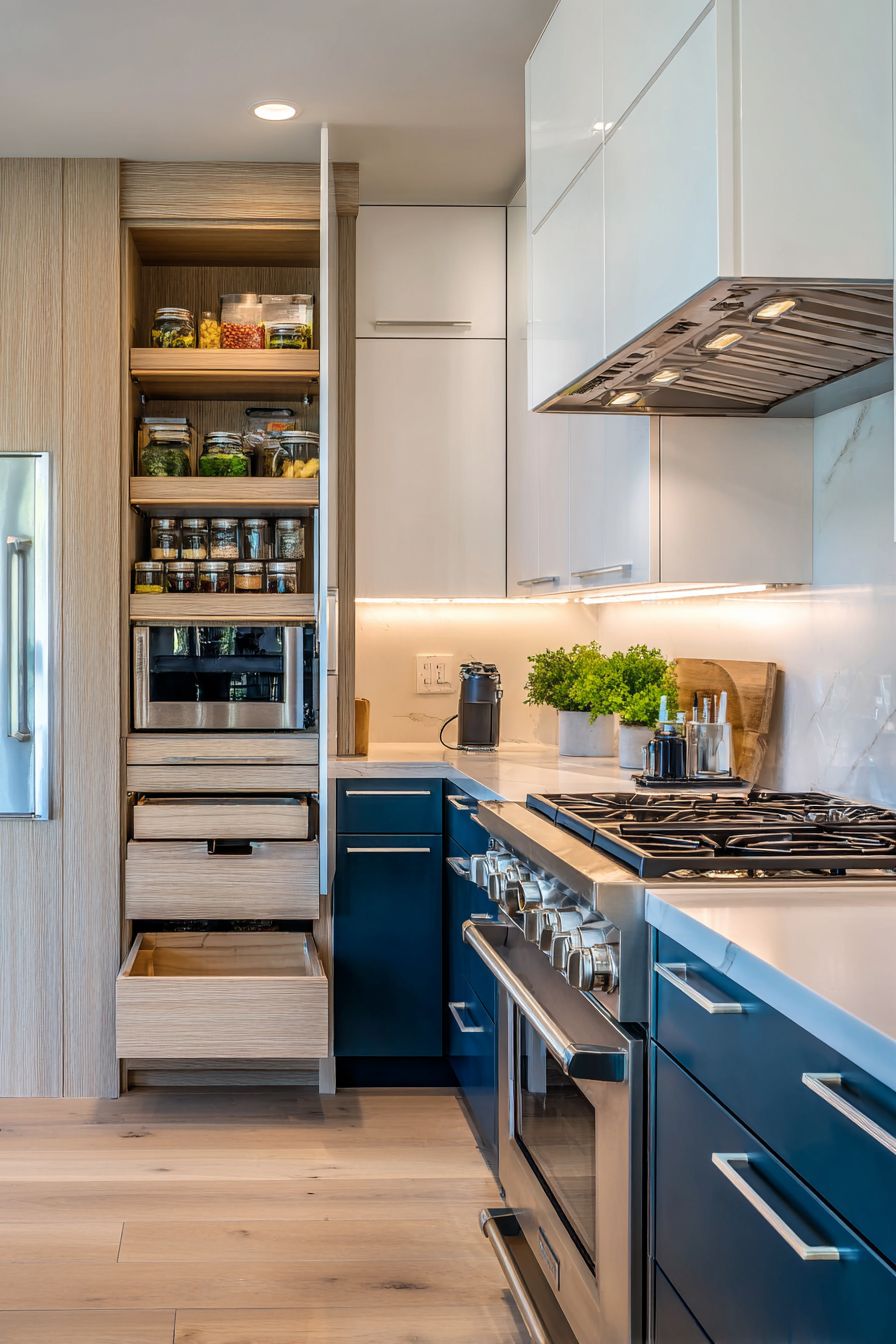
Key design tips for this organizational masterpiece include installing floor-to-ceiling storage to maximize space utilization, incorporating internal LED lighting for both function and drama, choosing push-to-open hardware for seamless aesthetics, using two-tone cabinetry to add visual interest, and positioning spice storage near cooking areas for optimal workflow.
3. Compact Urban Living Solutions
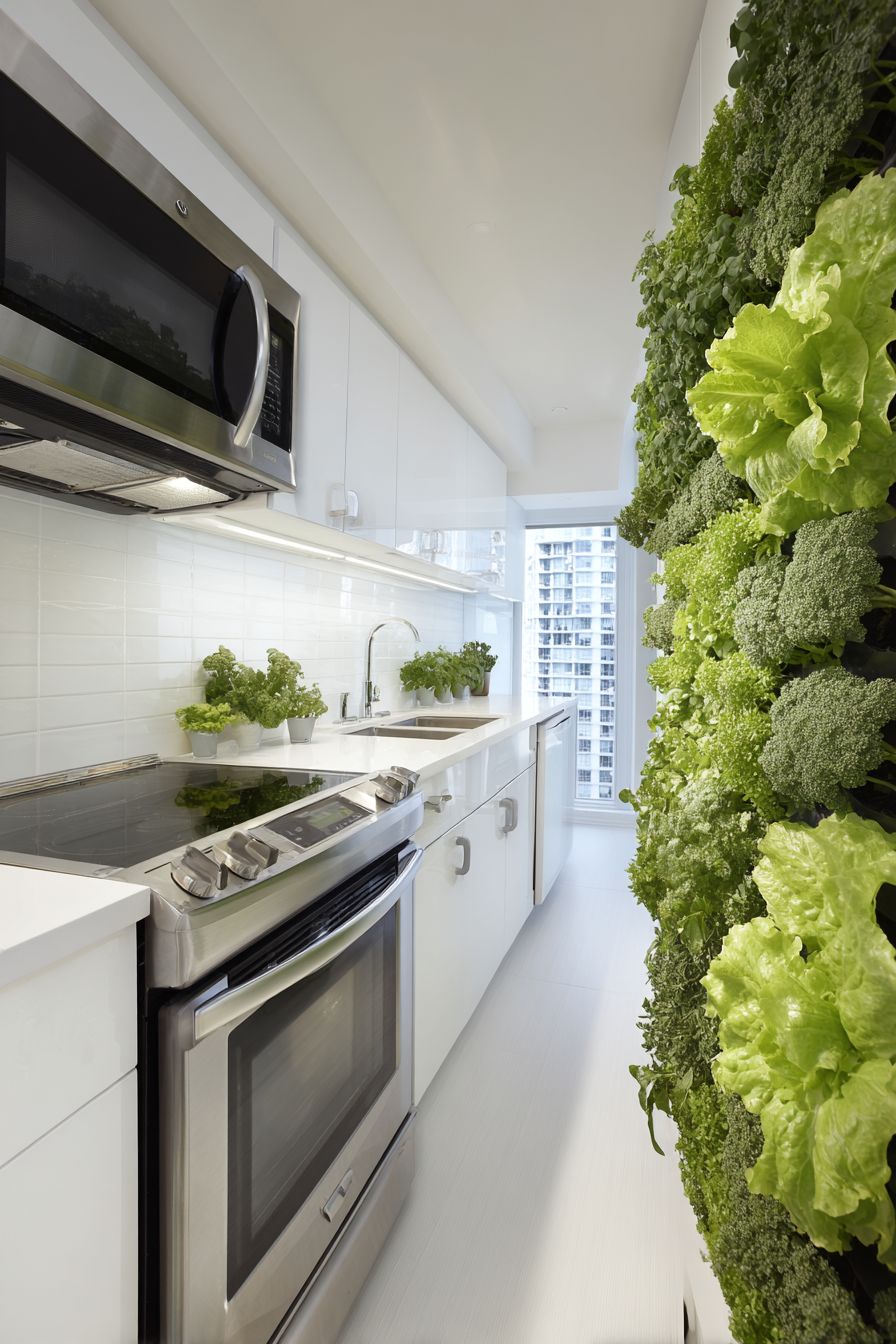
Urban living demands creative solutions, and this compact modern kitchen proves that size limitations can inspire innovative design rather than compromise functionality. The fold-down dining table represents ingenious space-saving design, providing a proper dining surface when needed while disappearing completely when extra floor space is required. The vertical herb garden wall brings fresh ingredients within reach while adding living beauty to the compact space, demonstrating how modern kitchens can incorporate nature even in the smallest urban environments.
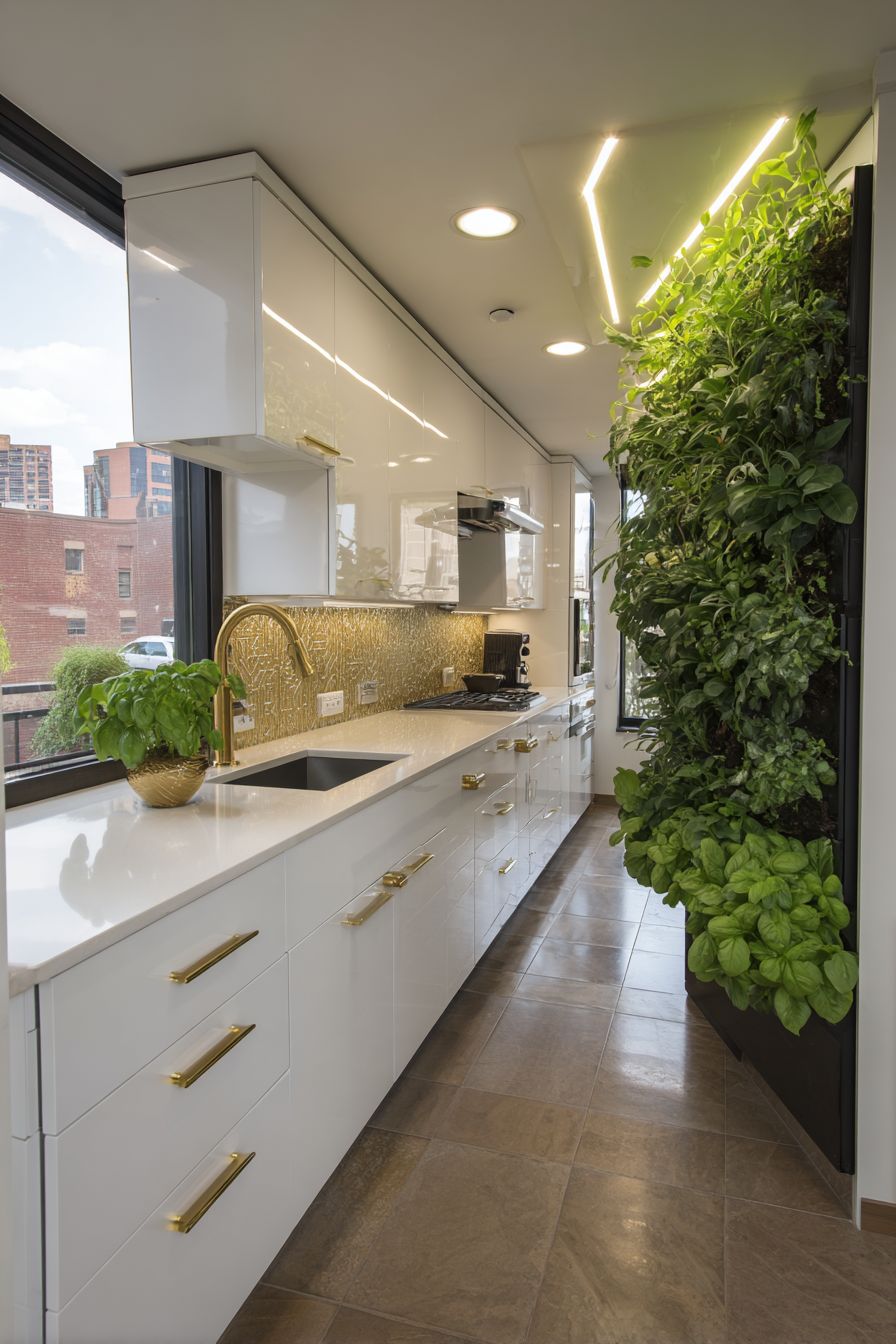
The galley layout maximizes efficiency through careful planning, with continuous quartz countertops providing ample workspace despite the narrow footprint. Under-cabinet LED strip lighting eliminates shadows and makes the space feel larger while providing excellent task illumination for food preparation. This lighting strategy is crucial in compact spaces where every design decision must serve multiple purposes.
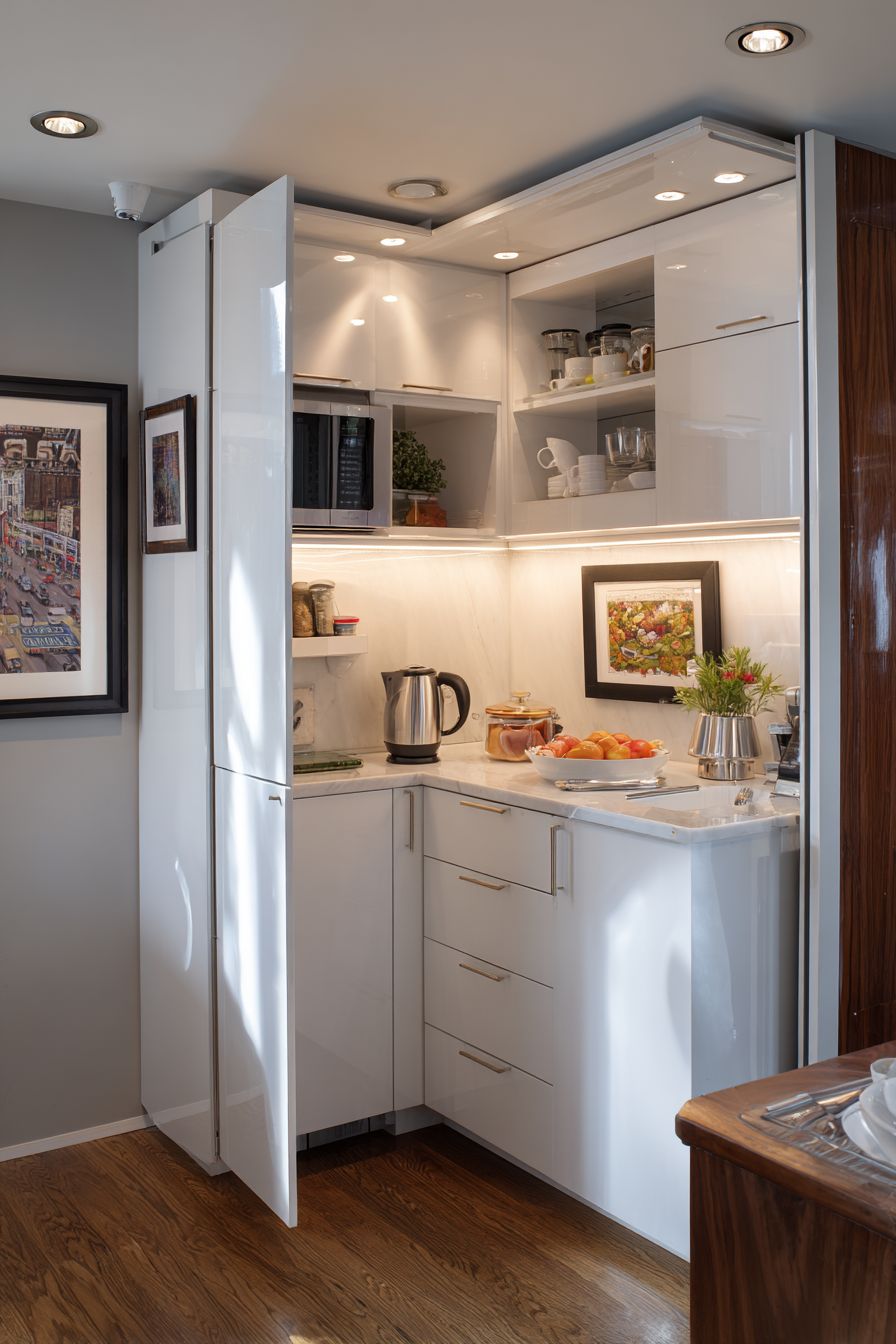
Glossy white cabinetry reflects available light throughout the space, making it feel more open and airy than its actual dimensions might suggest. Brushed gold hardware adds warmth and sophistication while maintaining the modern aesthetic. The key to this design’s success lies in its commitment to multi-functional elements and its refusal to compromise on style despite space constraints, proving that modern kitchen design can thrive in any setting.
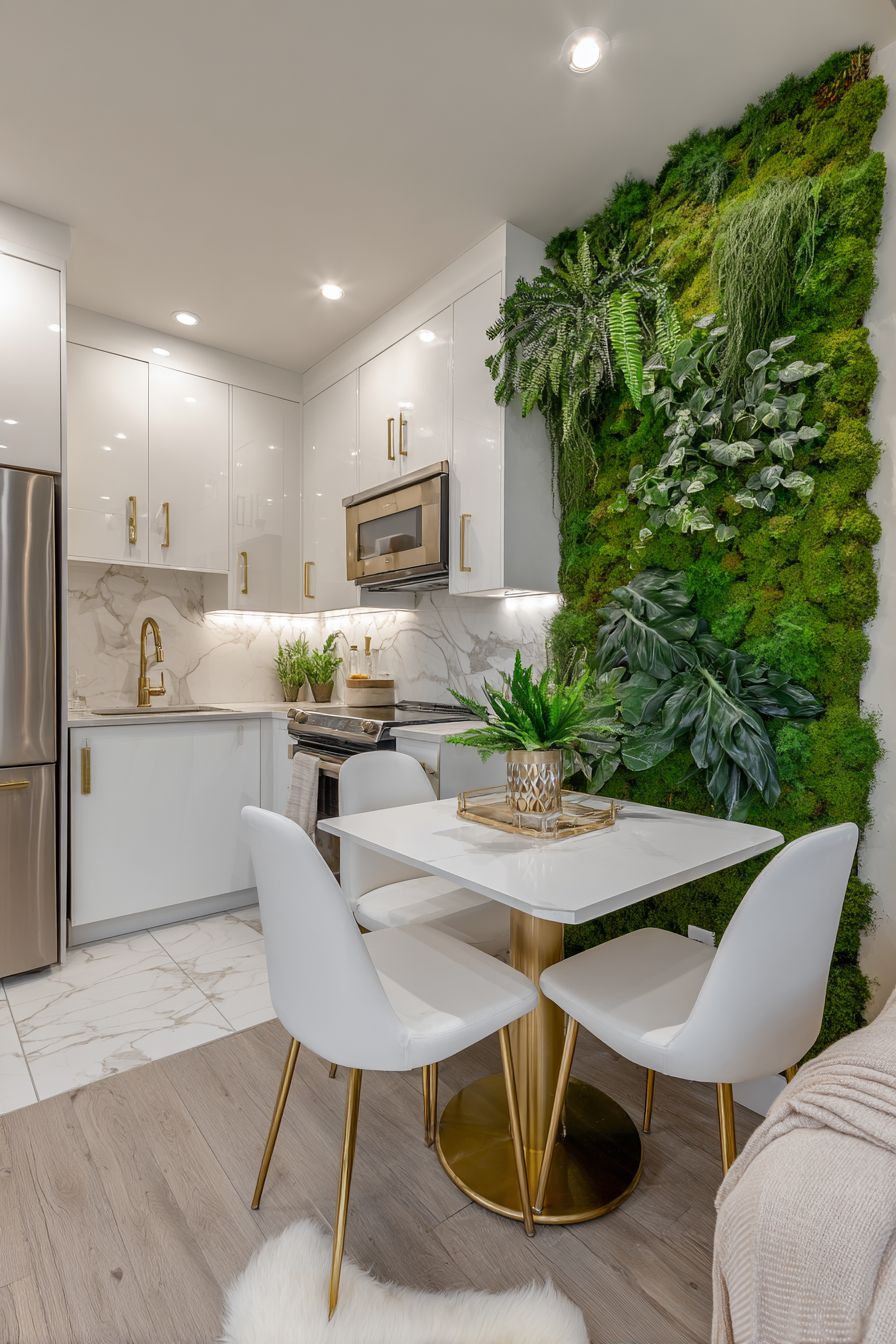
Key design tips for compact modern kitchens include choosing glossy finishes to reflect light and create spaciousness, incorporating fold-down or pull-out elements for flexibility, using vertical space for gardens or storage, selecting continuous countertops to create flow, and installing comprehensive lighting to eliminate dark corners.
4. Dramatic Black Accent Wall Impact
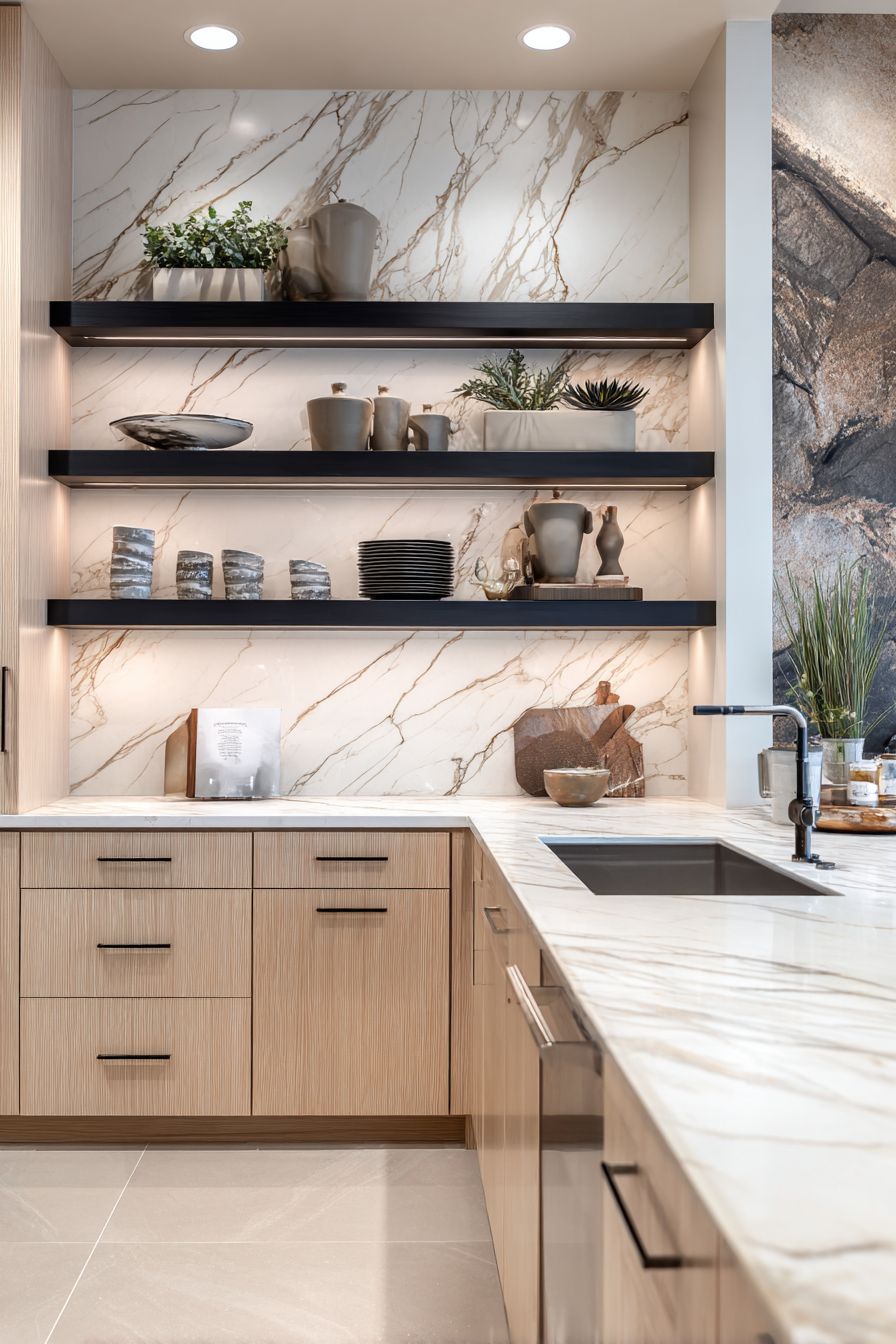
Bold design choices define this modern kitchen interior, where a dramatic black accent wall creates stunning visual impact while serving as a sophisticated backdrop for open shelving displays. The black wall demonstrates how dark colors can be successfully incorporated into modern kitchens when balanced with lighter elements and proper lighting. Curated dishware and plants on the open shelving create artistic vignettes that personalize the space while maintaining the clean, organized aesthetic that characterizes contemporary design.
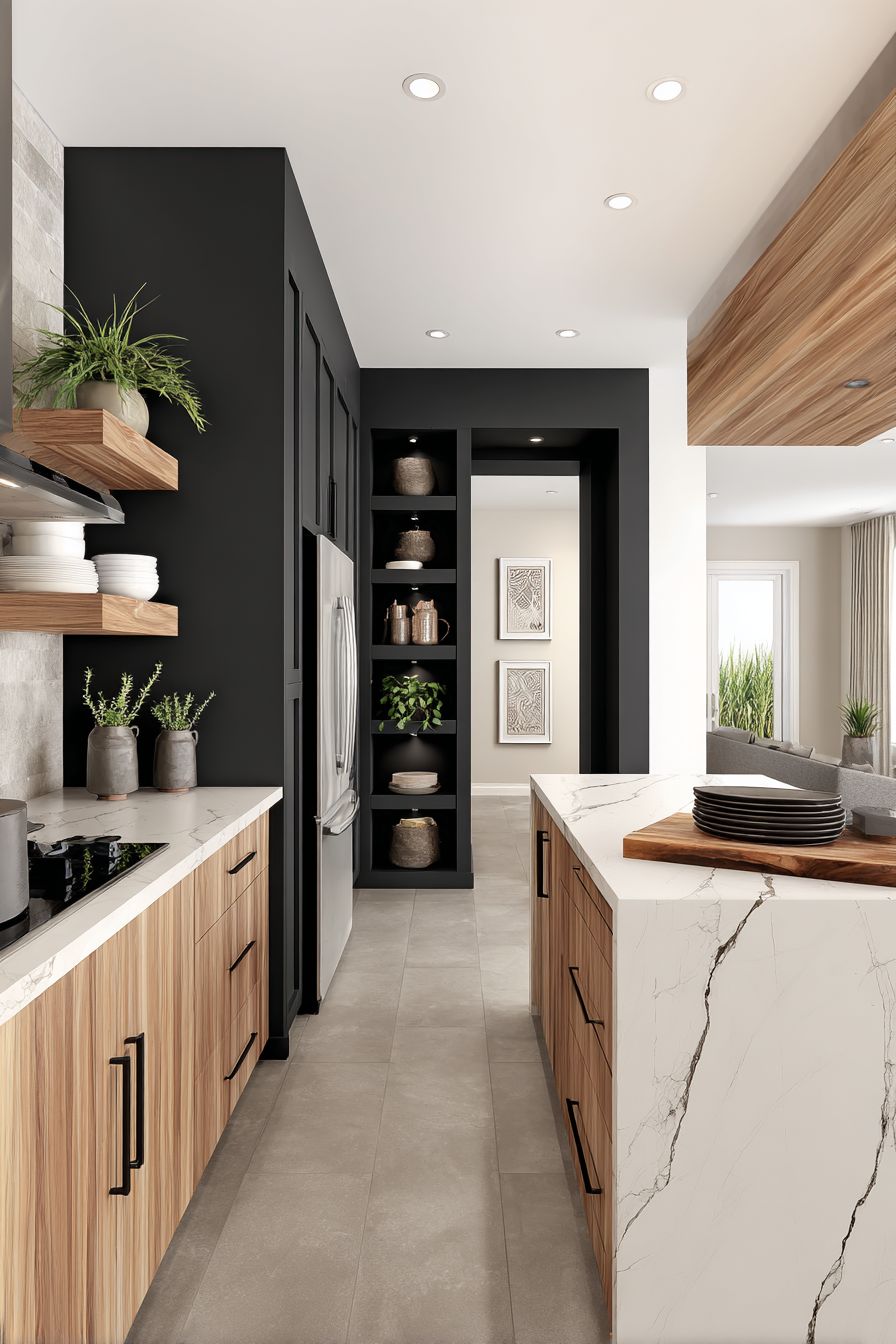
Light maple cabinetry provides the perfect counterbalance to the dark accent wall, creating a dynamic interplay between light and shadow that adds depth and visual interest. White marble countertops with subtle grey veining introduce luxury and elegance while providing practical work surfaces that resist stains and heat. The natural stone’s organic patterns soften the otherwise geometric nature of modern design, creating a more livable and welcoming environment.
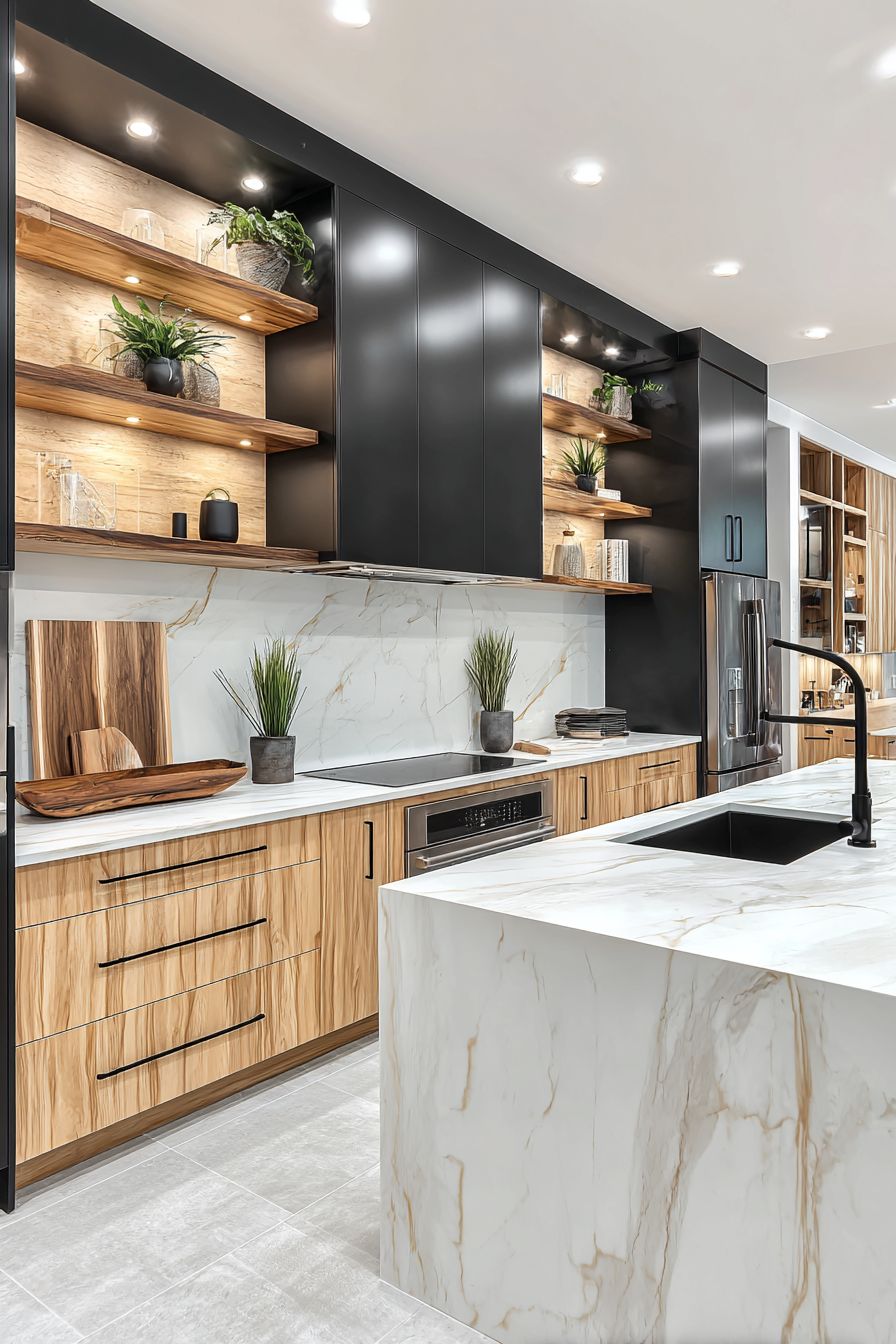
Large format porcelain tiles in warm grey ground the space while providing durability and easy maintenance. Recessed lighting creates subtle highlights that emphasize the varied textures throughout the kitchen, from the smooth marble surfaces to the natural wood grain and matte black paint. This lighting strategy demonstrates how proper illumination can enhance material choices and create atmosphere in modern kitchens.
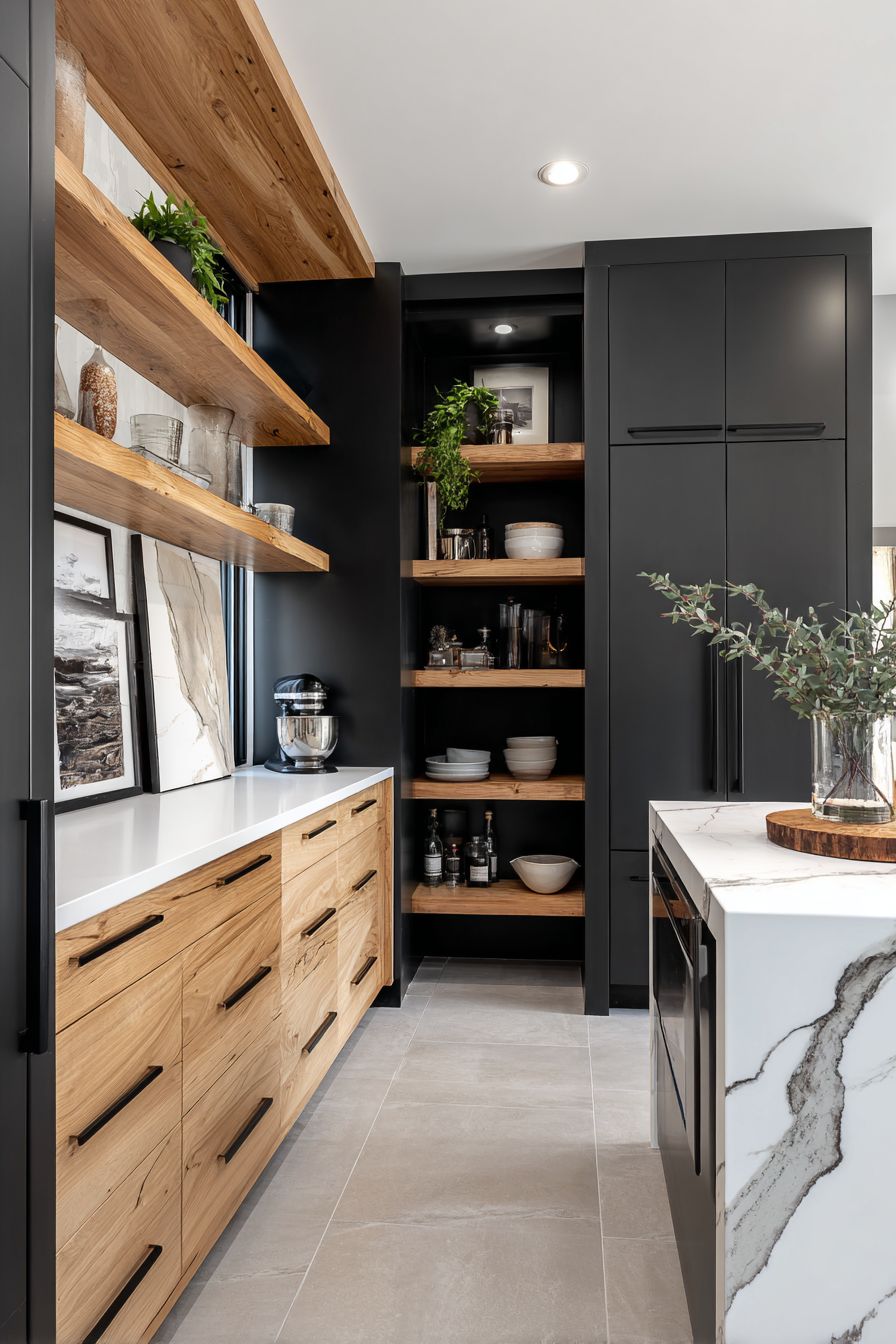
Key design tips for incorporating dramatic elements include using dark colors as accent features rather than overwhelming the space, balancing dark elements with light materials and colors, incorporating natural stone for luxury and organic texture, selecting large format tiles for seamless flooring, and using recessed lighting to highlight textures and materials.
5. Industrial-Modern Ceiling Statement
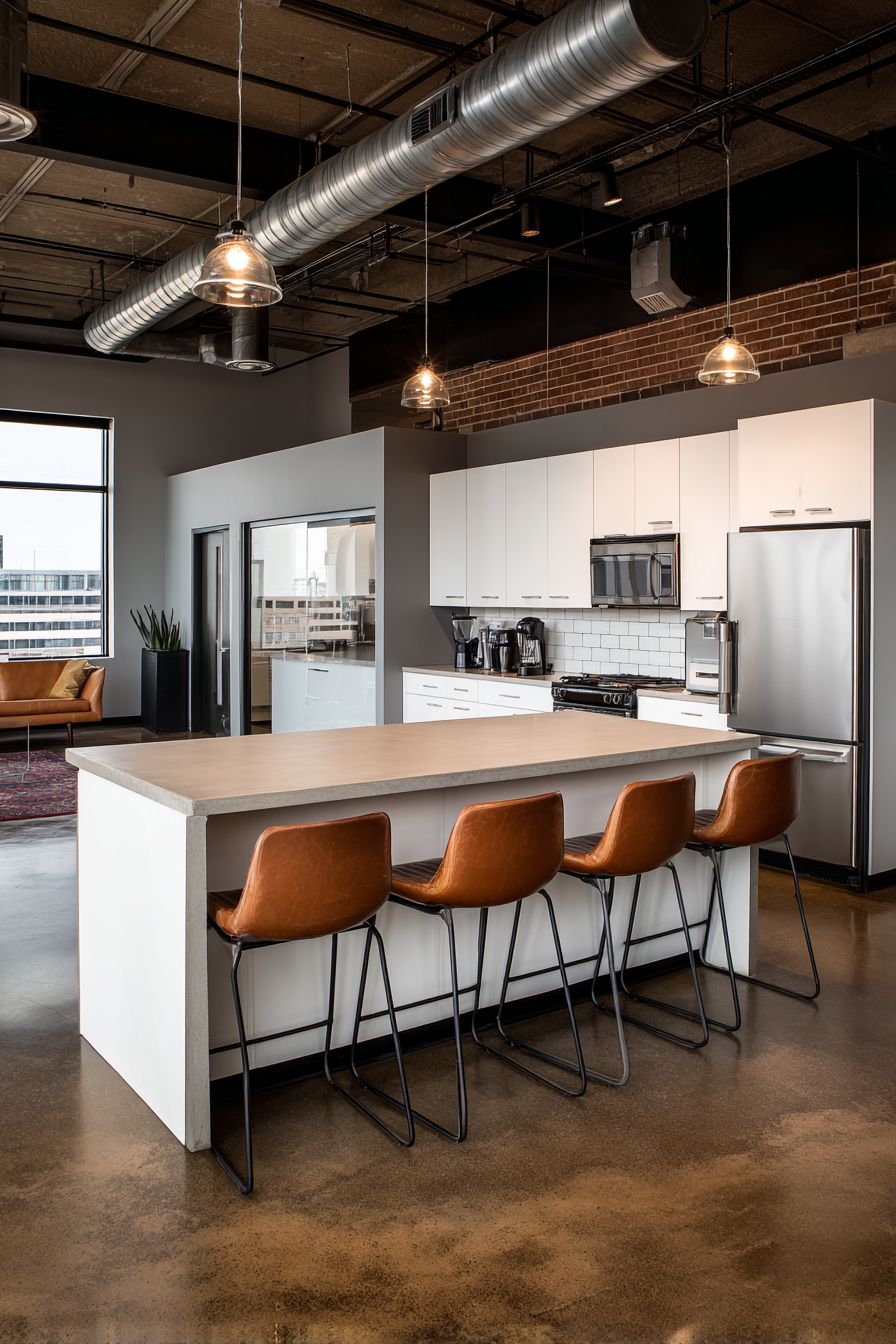
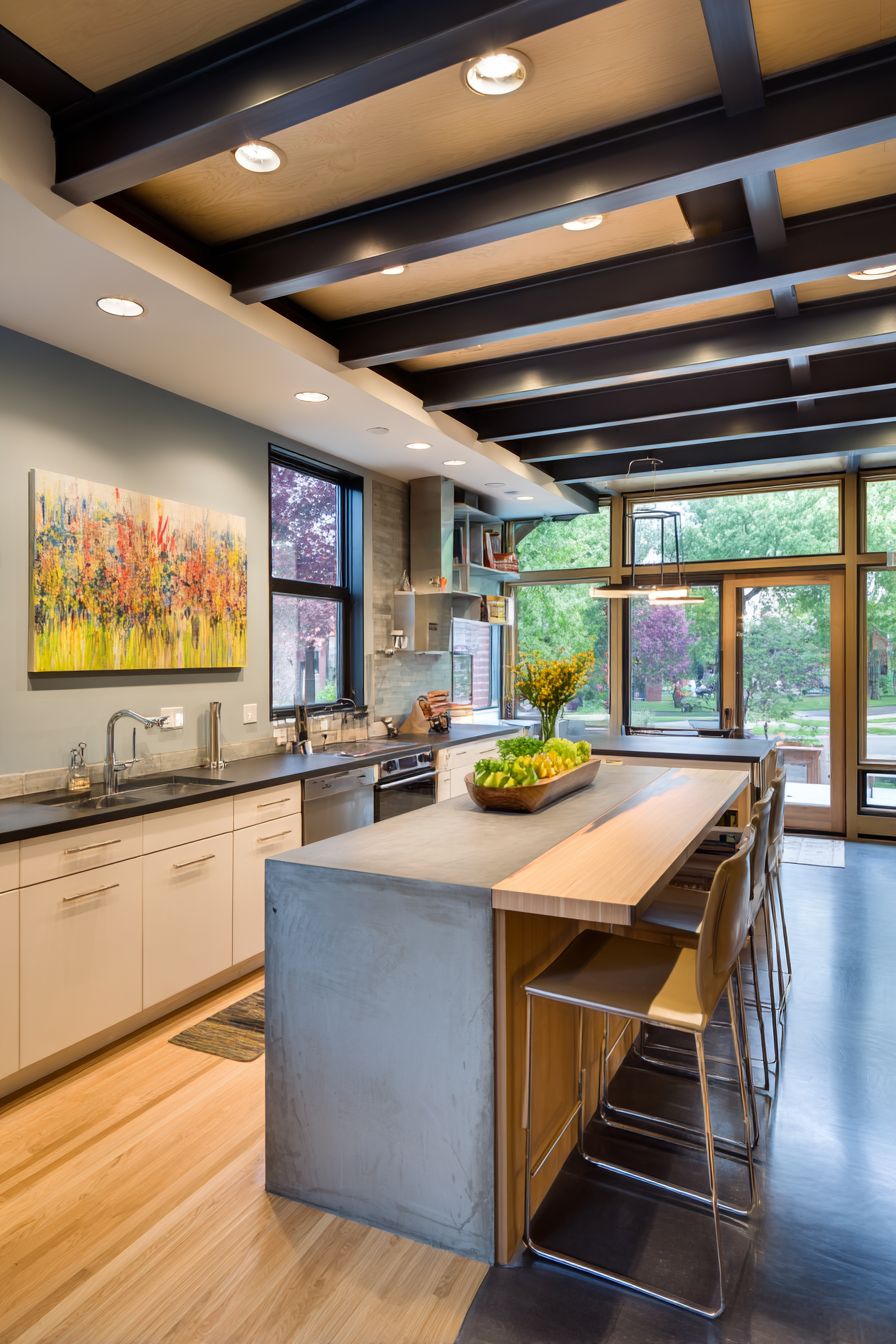
Architectural drama takes center stage in this modern kitchen where exposed steel beams painted matte black create a striking ceiling statement that bridges industrial and contemporary design aesthetics. The bold overhead element demonstrates how structural features can be transformed into design assets rather than hidden flaws. The matte black finish provides sophisticated industrial appeal while coordinating with other dark accents throughout the space.
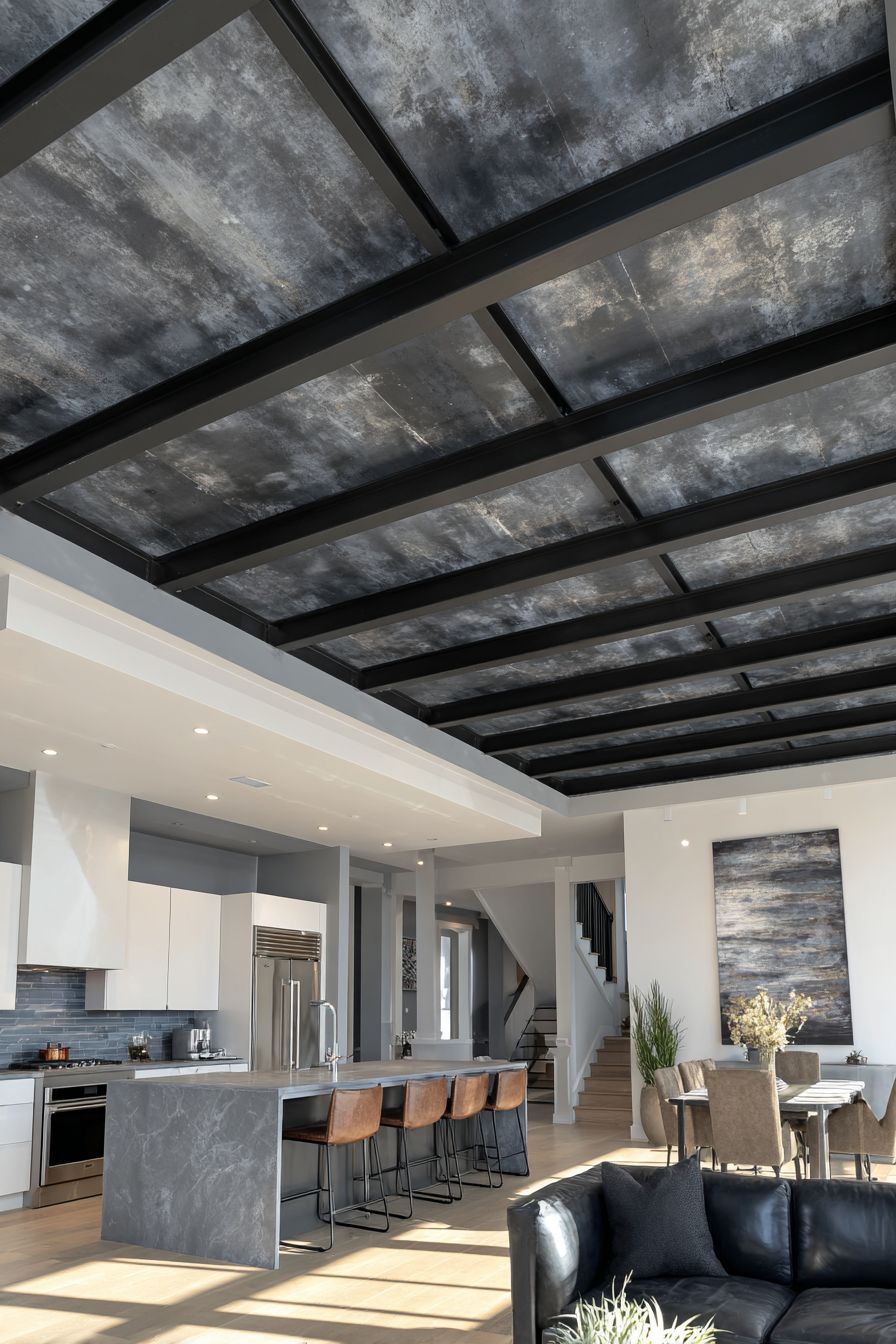
The concrete countertop kitchen island serves as both a practical workspace and a casual dining destination, with leather bar stools providing comfortable seating that complements the industrial materials. Concrete surfaces in modern kitchens offer unique character, with their subtle variations and natural patina creating visual interest that can’t be replicated with manufactured materials. The material’s durability and heat resistance make it both beautiful and practical for kitchen applications.
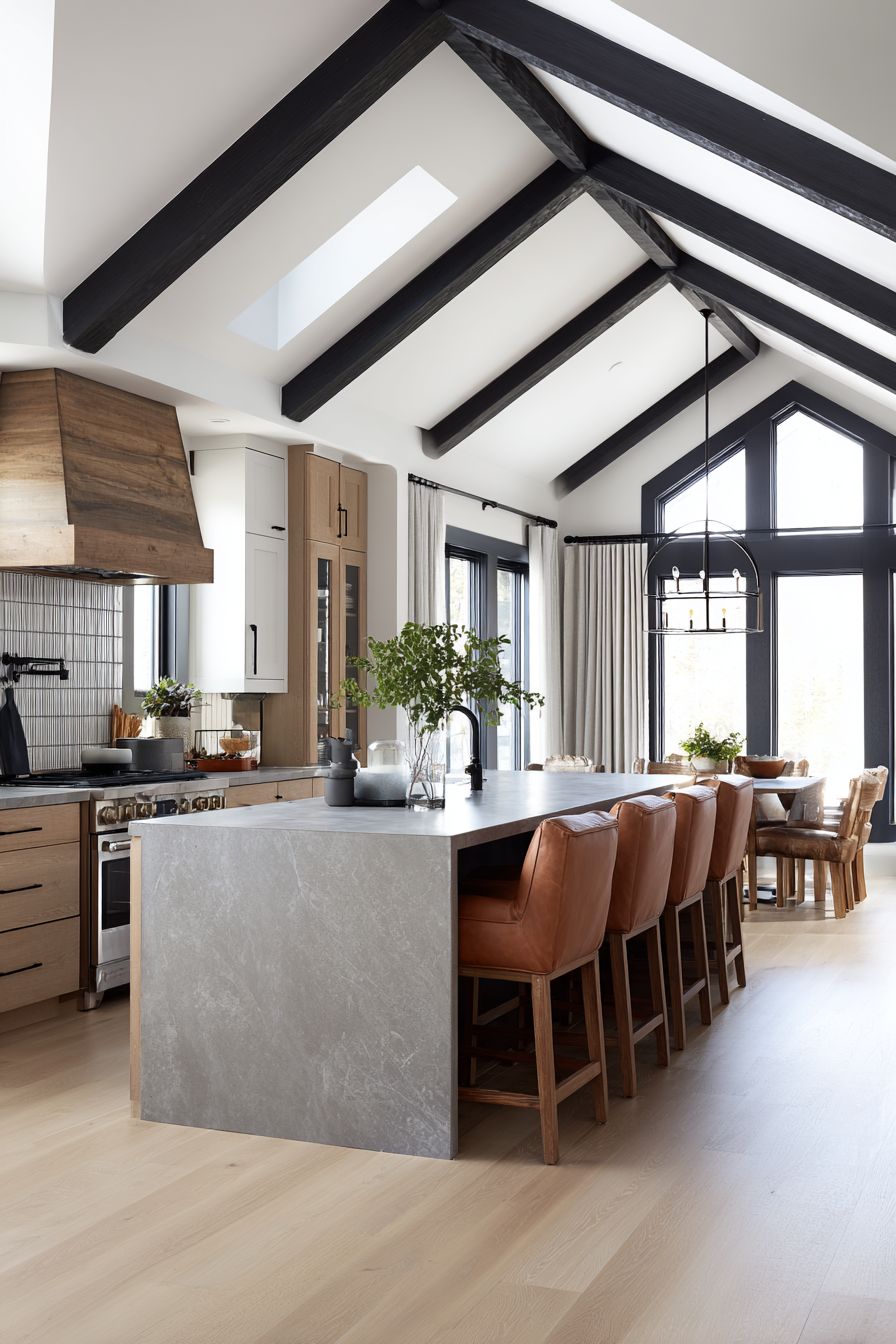
White flat-panel cabinetry maintains clean, uncluttered lines while providing essential storage without competing with the dramatic architectural features above. Stainless steel appliances reinforce the contemporary industrial aesthetic while offering professional-grade performance for serious cooking. The combination of raw materials like concrete and steel with refined elements like sleek cabinetry creates a sophisticated balance that defines successful modern design.
Key design tips for achieving industrial-modern style include exposing and highlighting architectural elements like beams, incorporating concrete surfaces for authentic industrial appeal, choosing matte black finishes for sophisticated edge, balancing raw materials with refined elements, and selecting comfortable seating that complements industrial materials.
6. Curved Island Luxury Statement
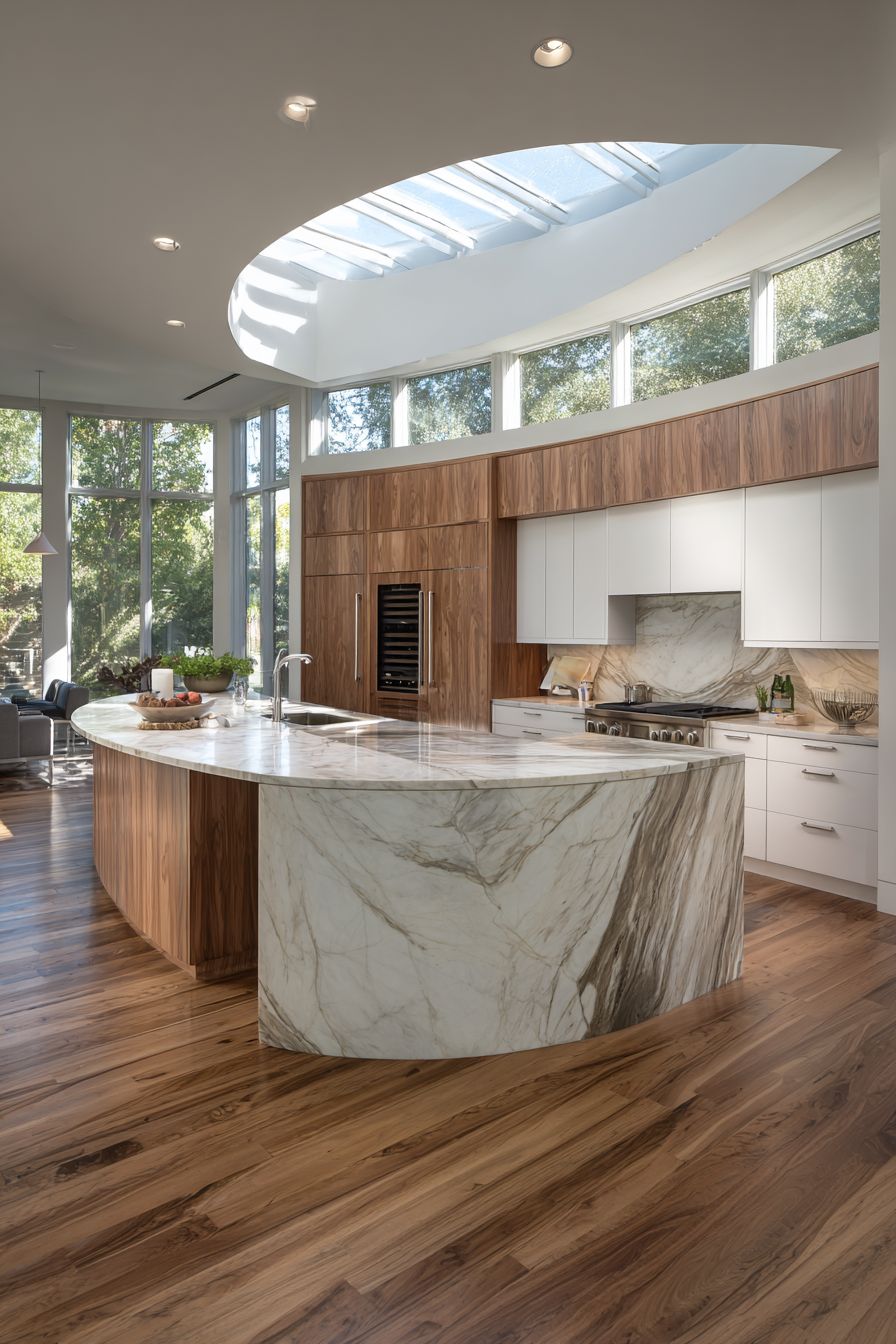
Sophisticated elegance reaches new heights with a curved kitchen island featuring book-matched marble with dramatic veining as the stunning centerpiece. The curved form breaks away from the typical rectangular island layout, creating a more dynamic and visually interesting focal point that invites interaction from multiple angles. Book-matched marble, where adjacent slabs are opened like a book to create mirror-image patterns, represents the pinnacle of natural stone craftsmanship and creates breathtaking visual impact.
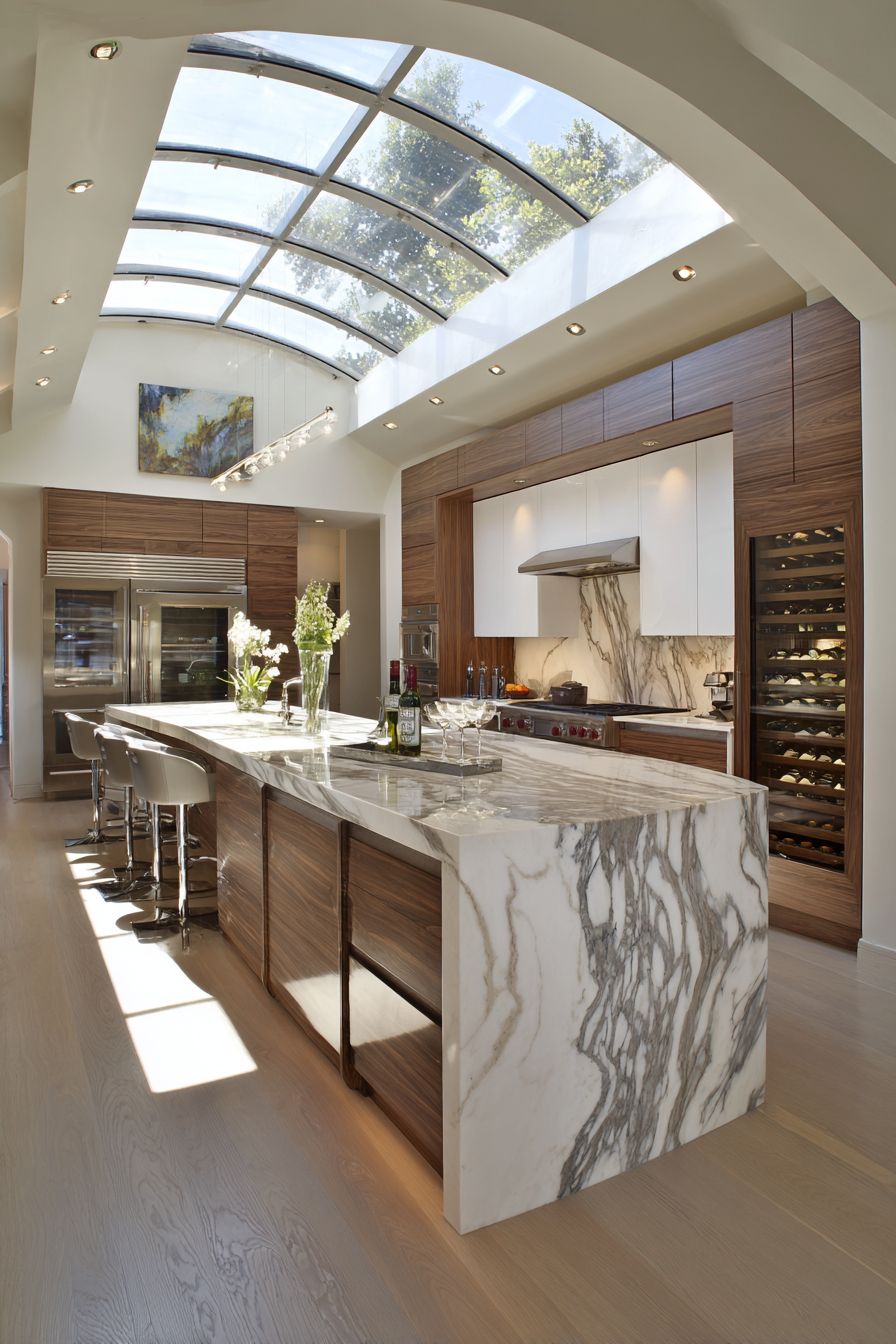
Natural walnut wood grain combined with white lacquer finishes demonstrates the modern kitchen’s embrace of mixed materials and textures. The warm wood tones provide organic beauty and tactile appeal, while the glossy white surfaces maintain the clean, contemporary aesthetic. This combination prevents the kitchen from feeling cold or sterile while maintaining its sophisticated modern character.
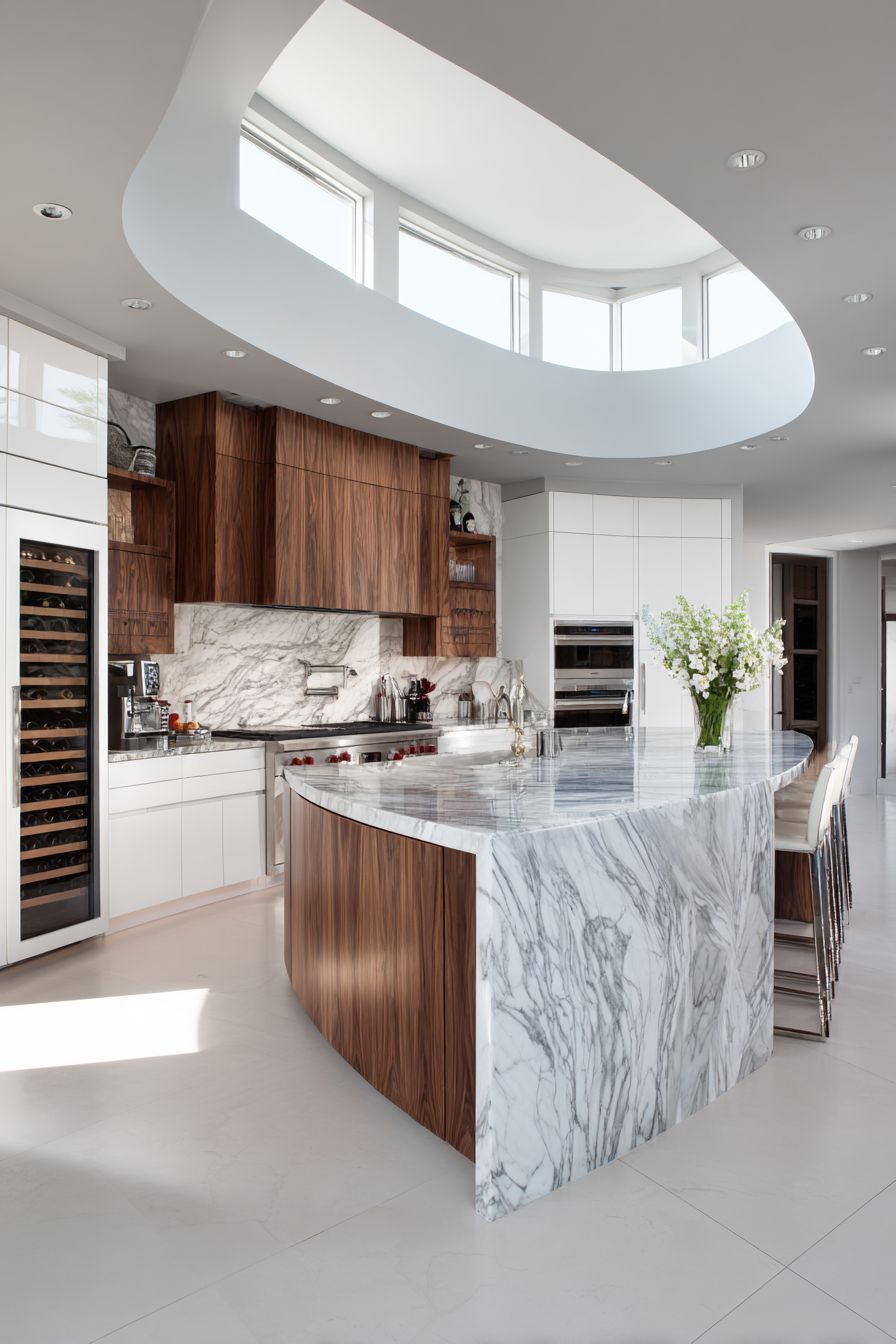
Integrated appliances, including a wine refrigerator and steam oven, showcase how modern kitchens can incorporate specialized equipment while maintaining seamless design lines. A linear skylight above provides natural illumination that changes throughout the day, creating dynamic lighting conditions that highlight the beautiful materials and add drama to the space. The skylight also connects the interior to the natural world above, bringing a sense of openness to the kitchen environment.
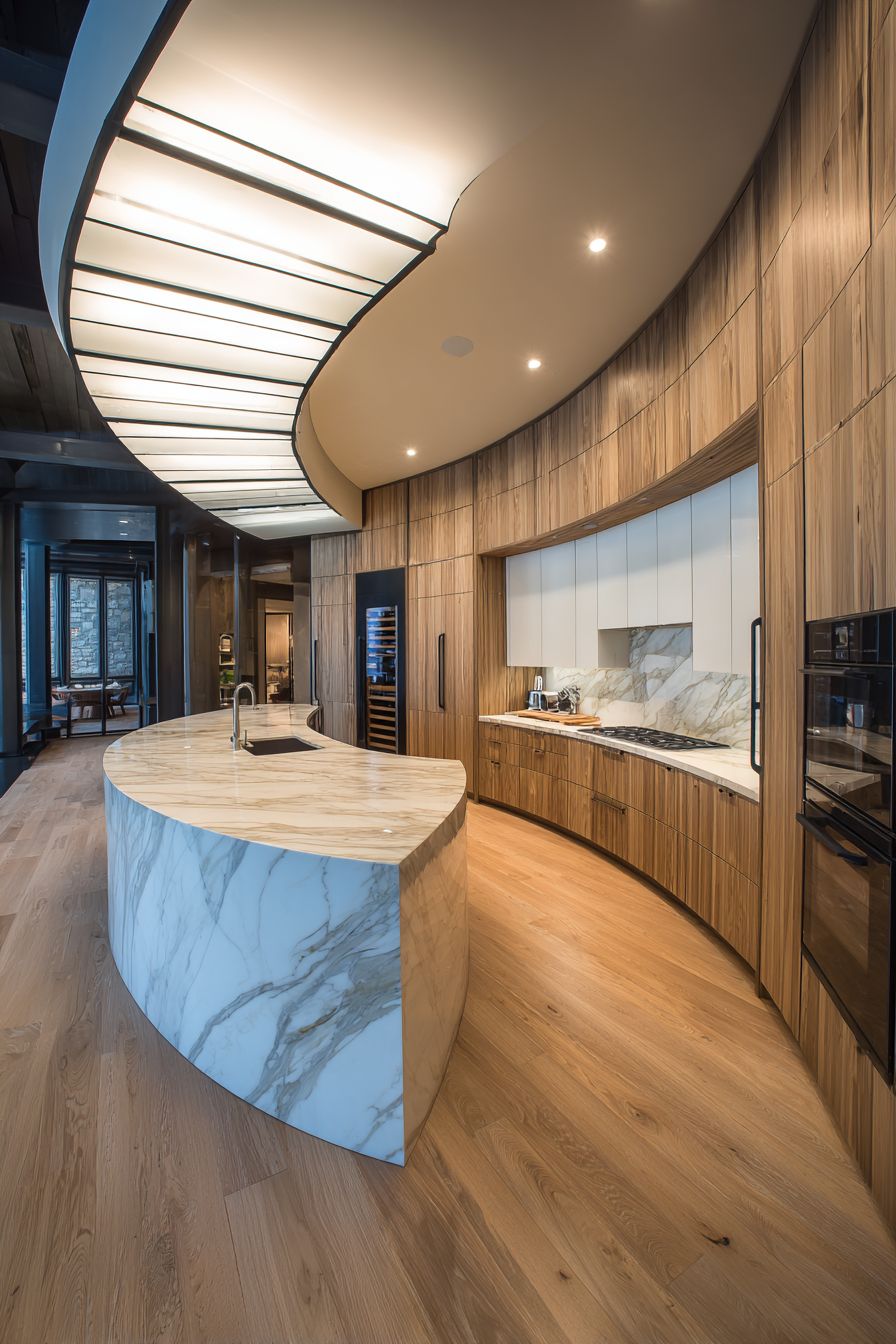
Key design tips for luxury modern kitchens include selecting book-matched stone for dramatic impact, incorporating curved elements to soften geometric lines, combining warm wood with cool lacquer for balance, integrating specialized appliances seamlessly, and using skylights for dynamic natural lighting.
7. Sustainable Modern Design Philosophy
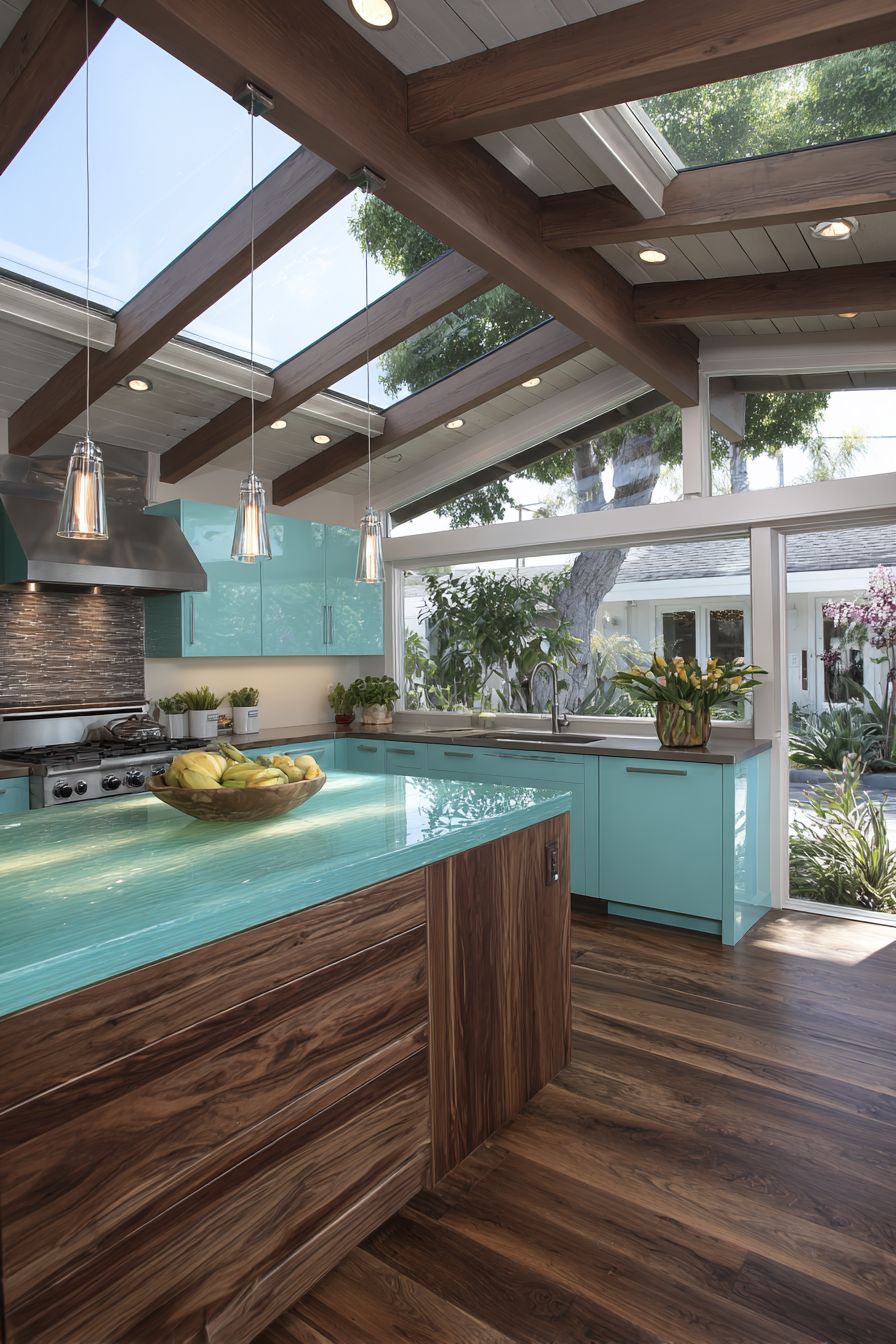
Environmental consciousness meets contemporary style in this modern kitchen that prioritizes sustainable materials and energy-efficient systems without compromising aesthetic appeal. Reclaimed wood accents bring history and character to the space while reducing environmental impact through material reuse. The weathered patina and unique grain patterns of reclaimed wood create visual interest that cannot be replicated with new materials.
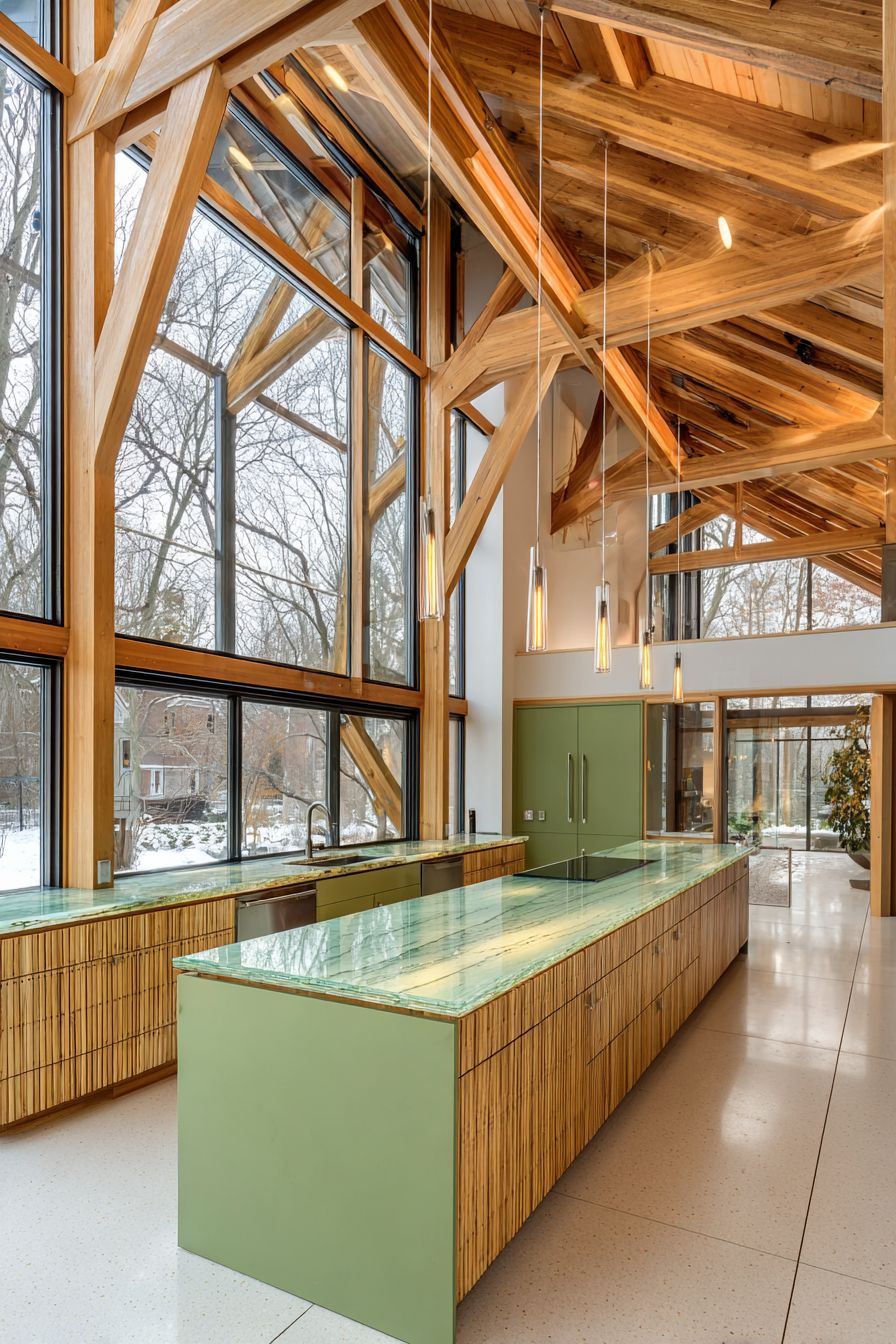
Energy-efficient LED lighting throughout the kitchen provides excellent illumination while reducing energy consumption and heat generation. The lighting system can be programmed for different tasks and times of day, demonstrating how smart technology can enhance both efficiency and functionality. The kitchen island incorporates recycled glass countertops in seafoam green, creating a unique surface that catches and reflects light beautifully while diverting waste materials from landfills.
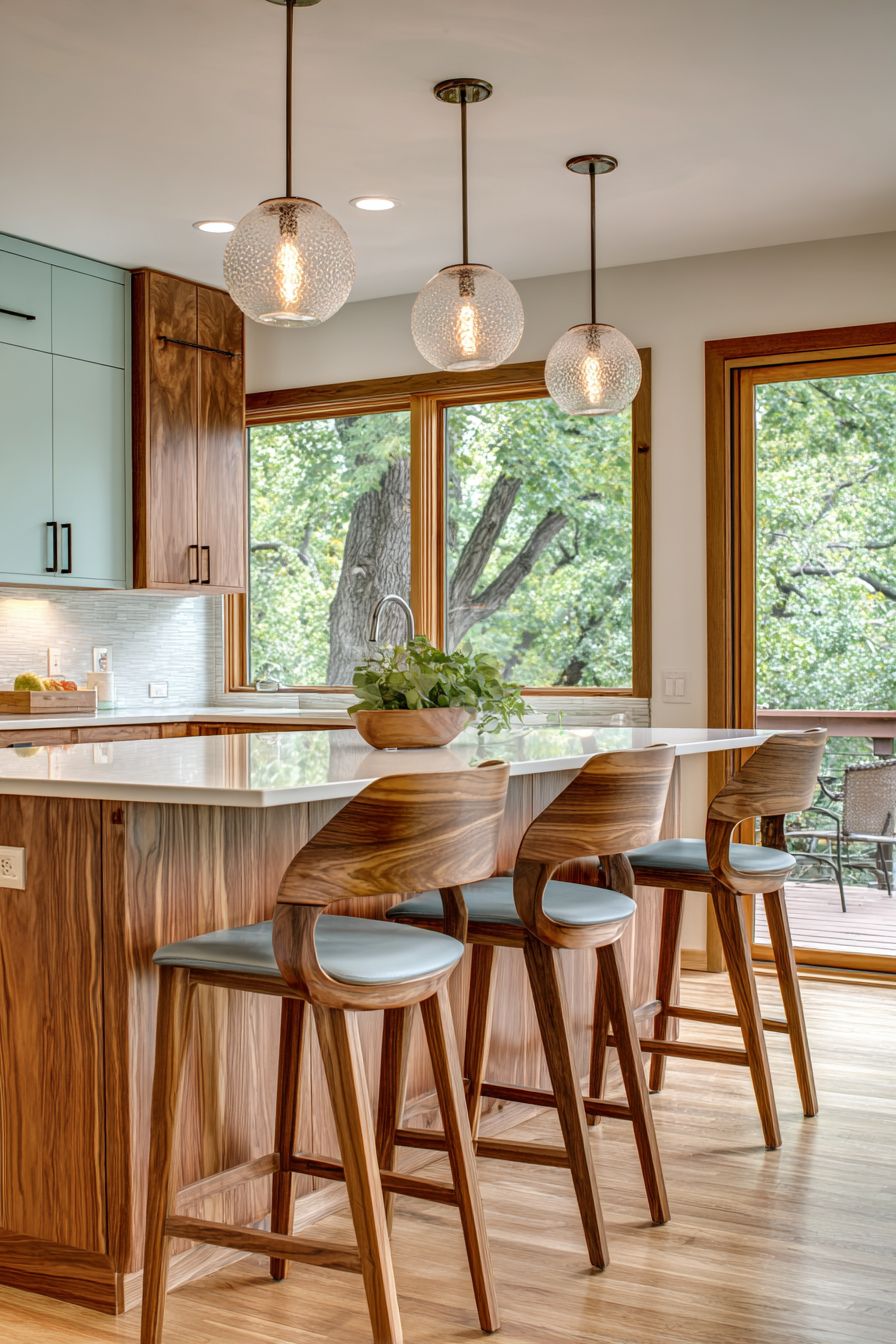
Bamboo cabinetry provides eco-friendly storage solutions while offering the durability and workability needed for kitchen applications. Bamboo’s rapid growth cycle and natural antibacterial properties make it an ideal sustainable material choice. Large windows with minimal framing maximize natural light and garden views, reducing the need for artificial lighting during daylight hours while connecting the kitchen to the natural environment.
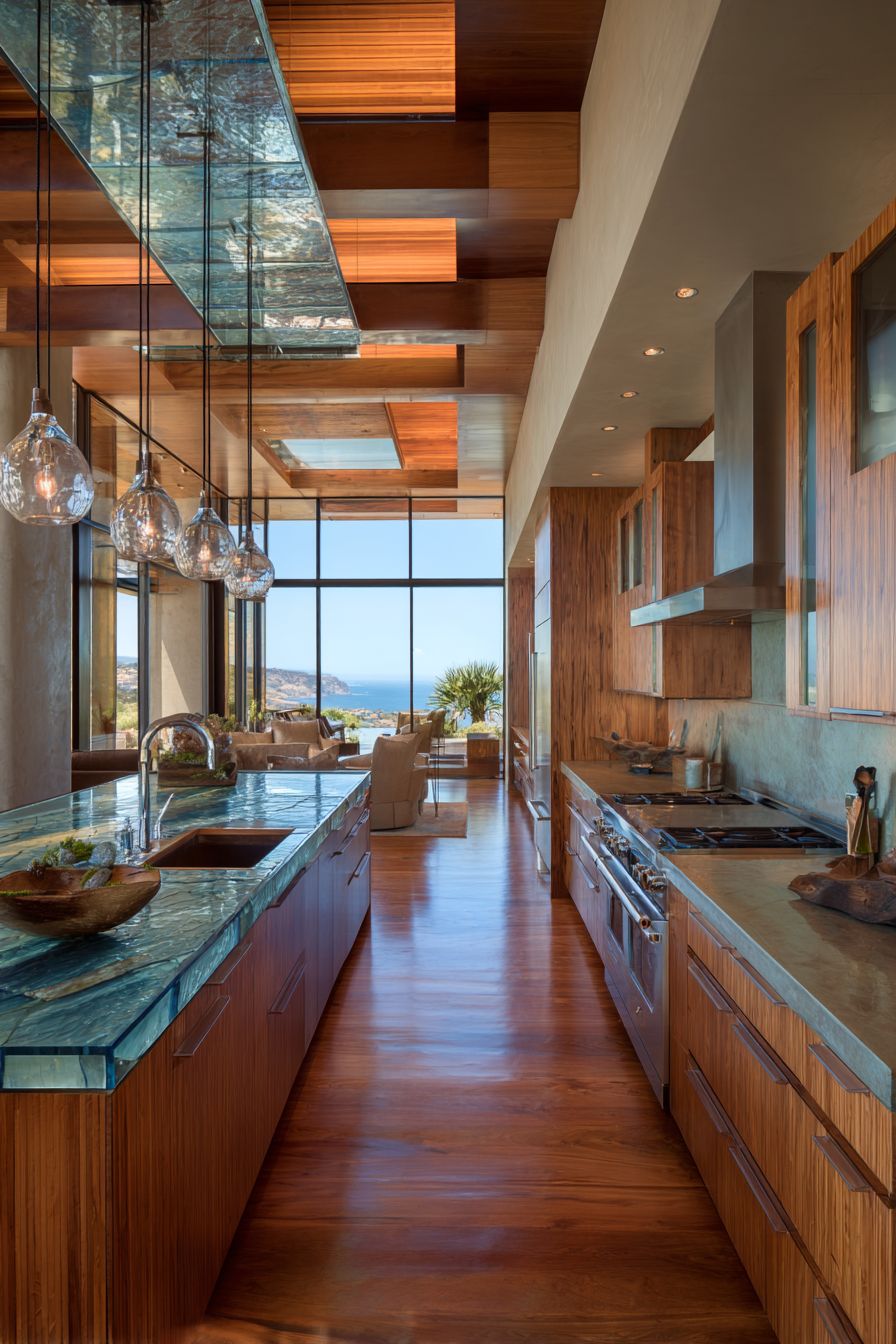
Key design tips for sustainable modern kitchens include choosing reclaimed materials for character and environmental benefit, installing LED lighting systems for efficiency, selecting rapidly renewable materials like bamboo, incorporating recycled content surfaces, and maximizing natural light to reduce energy consumption.
8. Bold Geometric Pattern Focus
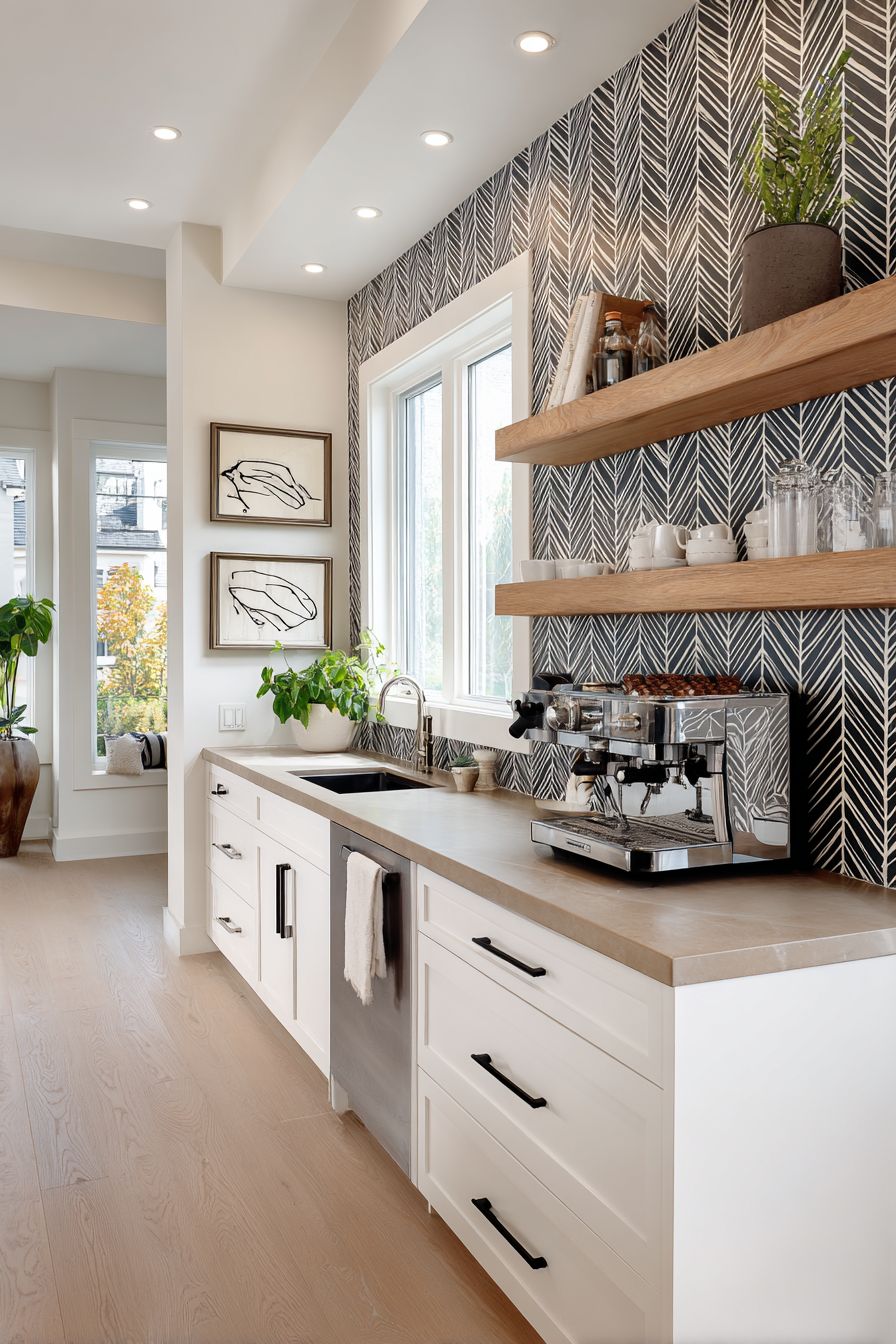
Pattern takes center stage in this modern kitchen where a bold geometric tile backsplash in charcoal and white creates striking visual impact that extends from counter to ceiling. The dramatic pattern demonstrates how graphic elements can serve as artwork in contemporary kitchens, eliminating the need for additional decorative items while creating a sophisticated focal point. The full-height installation makes the space feel larger while creating a cohesive design statement.
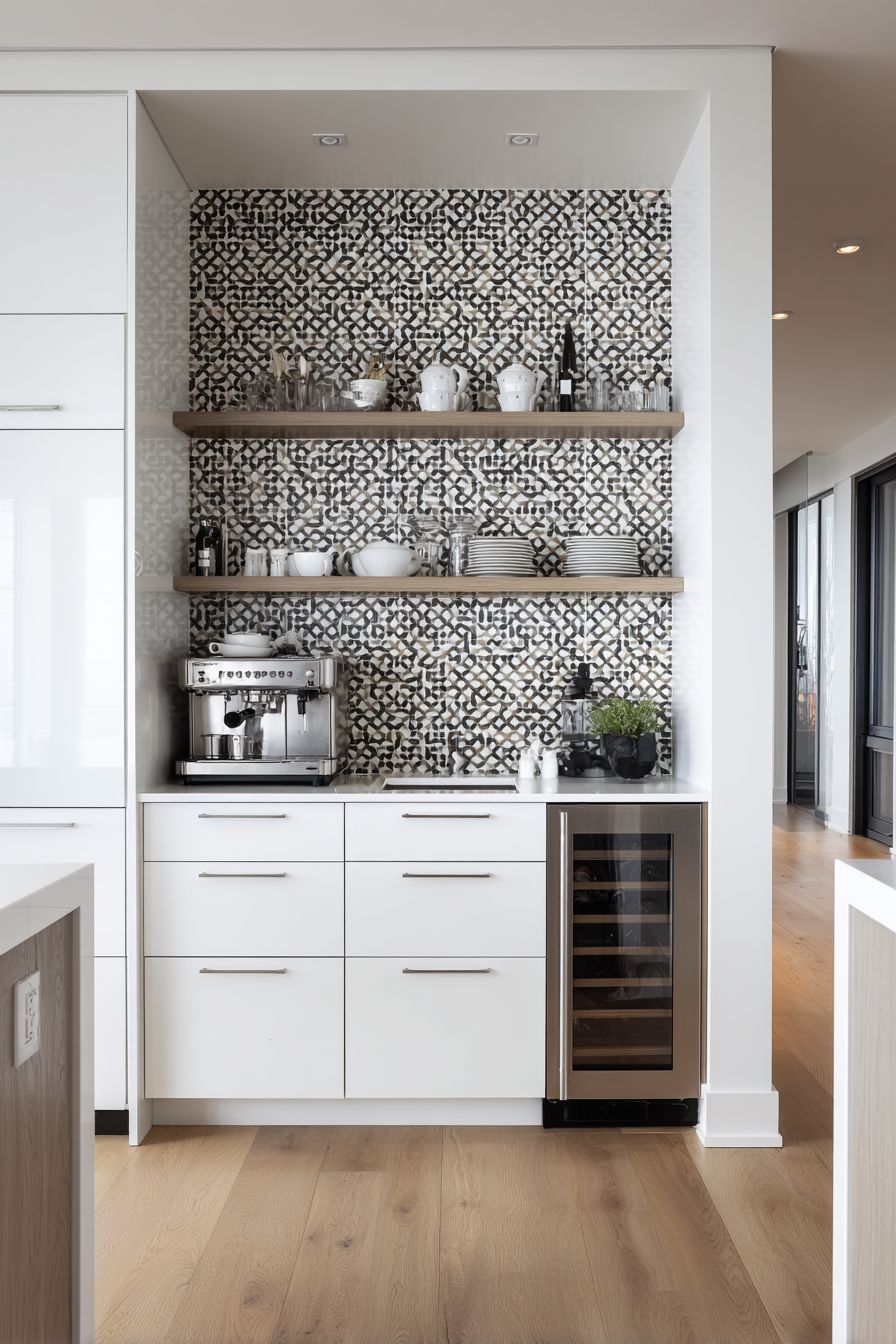
Minimalist white cabinetry provides a clean backdrop that allows the geometric pattern to shine without visual competition. Integrated handle pulls maintain the sleek lines that define modern design while providing functional access to storage. This handleless approach emphasizes the cabinetry’s geometric forms and maintains the uncluttered aesthetic that allows the patterned backsplash to remain the star of the design.
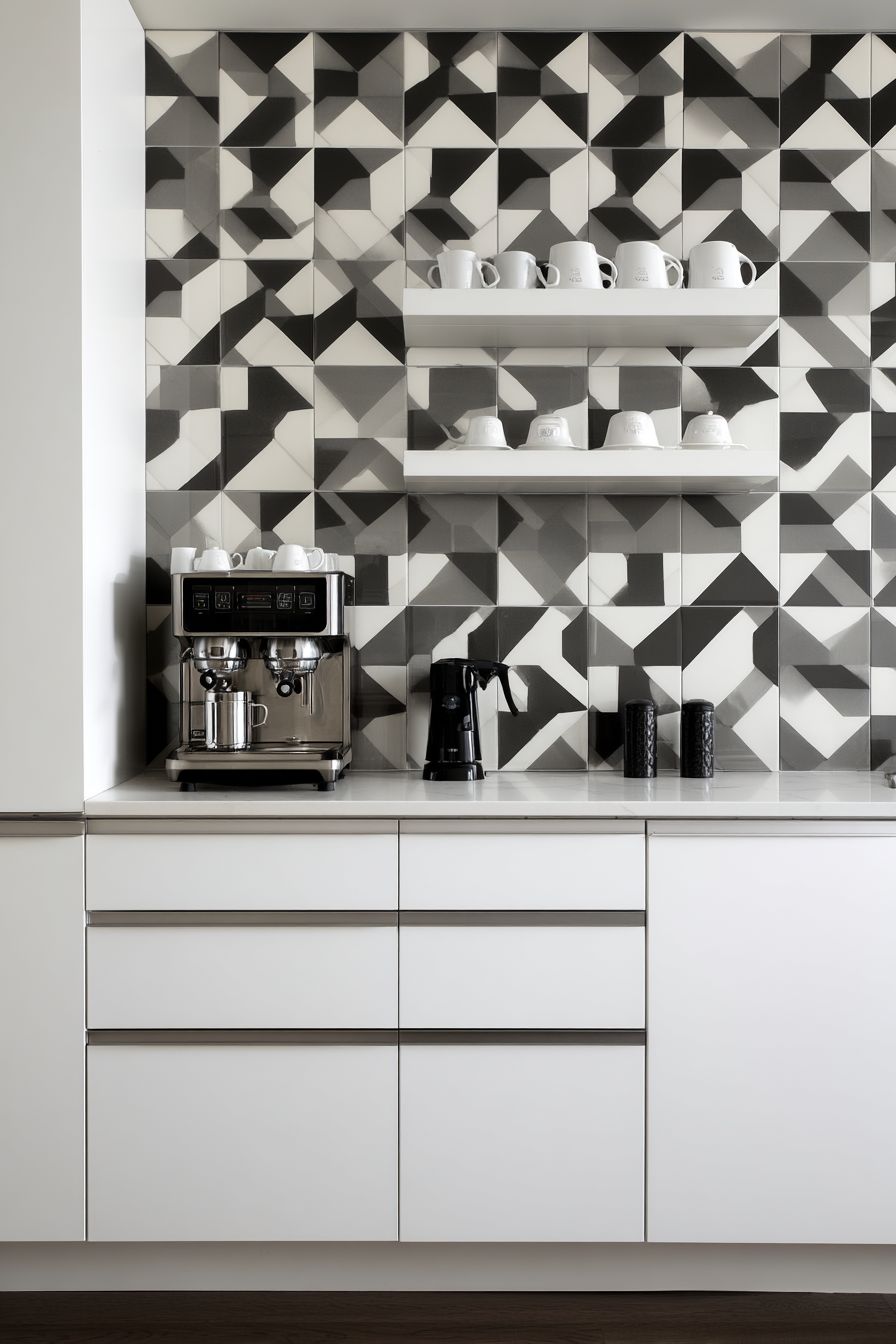
A built-in coffee station with dedicated counter space recognizes the importance of specialty beverage preparation in modern homes. The professional espresso machine and specialized cup storage transform daily coffee routines into café-quality experiences. This dedicated zone demonstrates how modern kitchens can accommodate specific lifestyle needs while maintaining overall design coherence through material and color consistency.
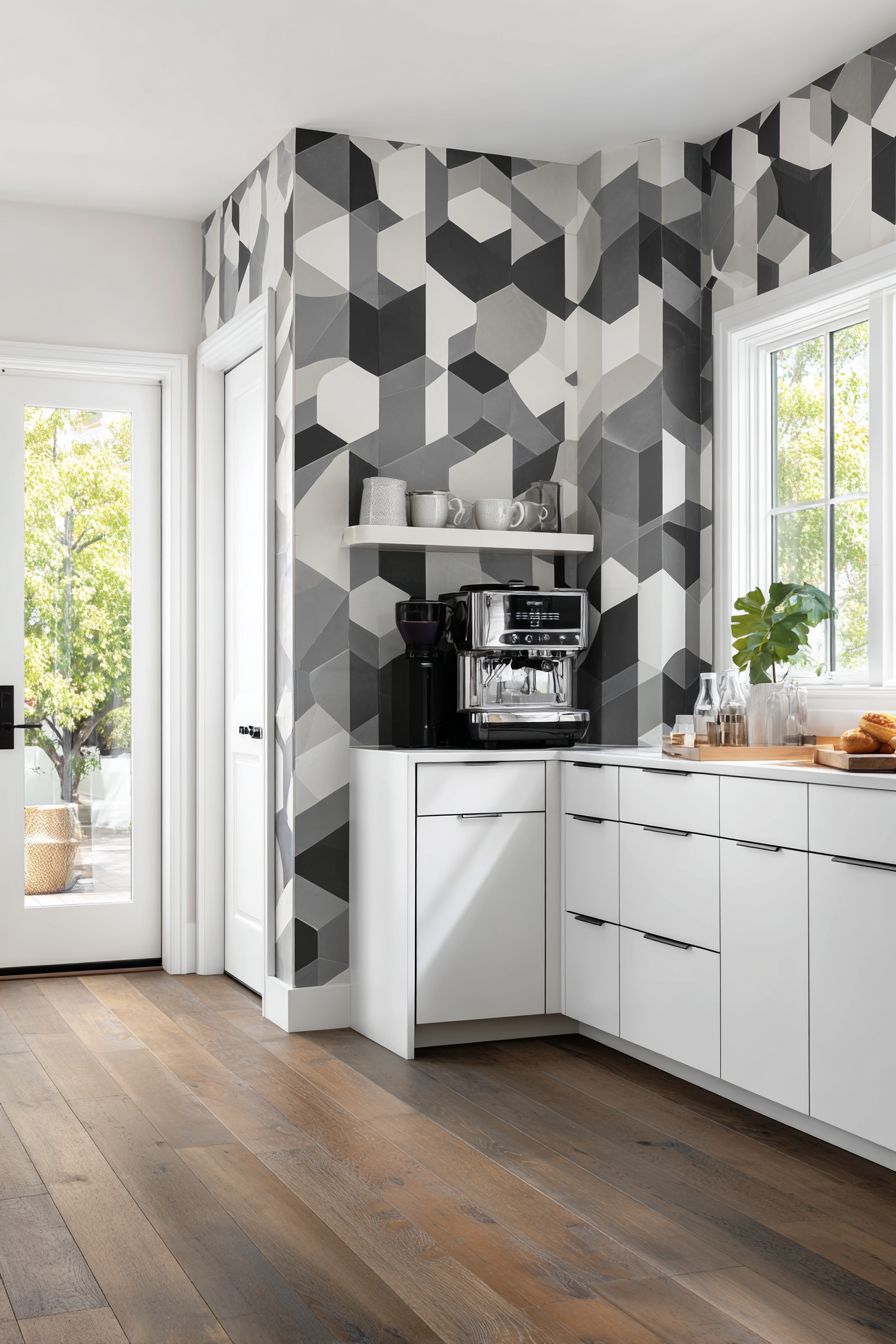
Key design tips for incorporating bold patterns include using geometric tiles as statement elements, extending patterns to full height for maximum impact, keeping surrounding elements minimal to avoid visual competition, creating dedicated zones for specific activities like coffee preparation, and maintaining color consistency throughout the space.
9. Butler’s Pantry Connection Design
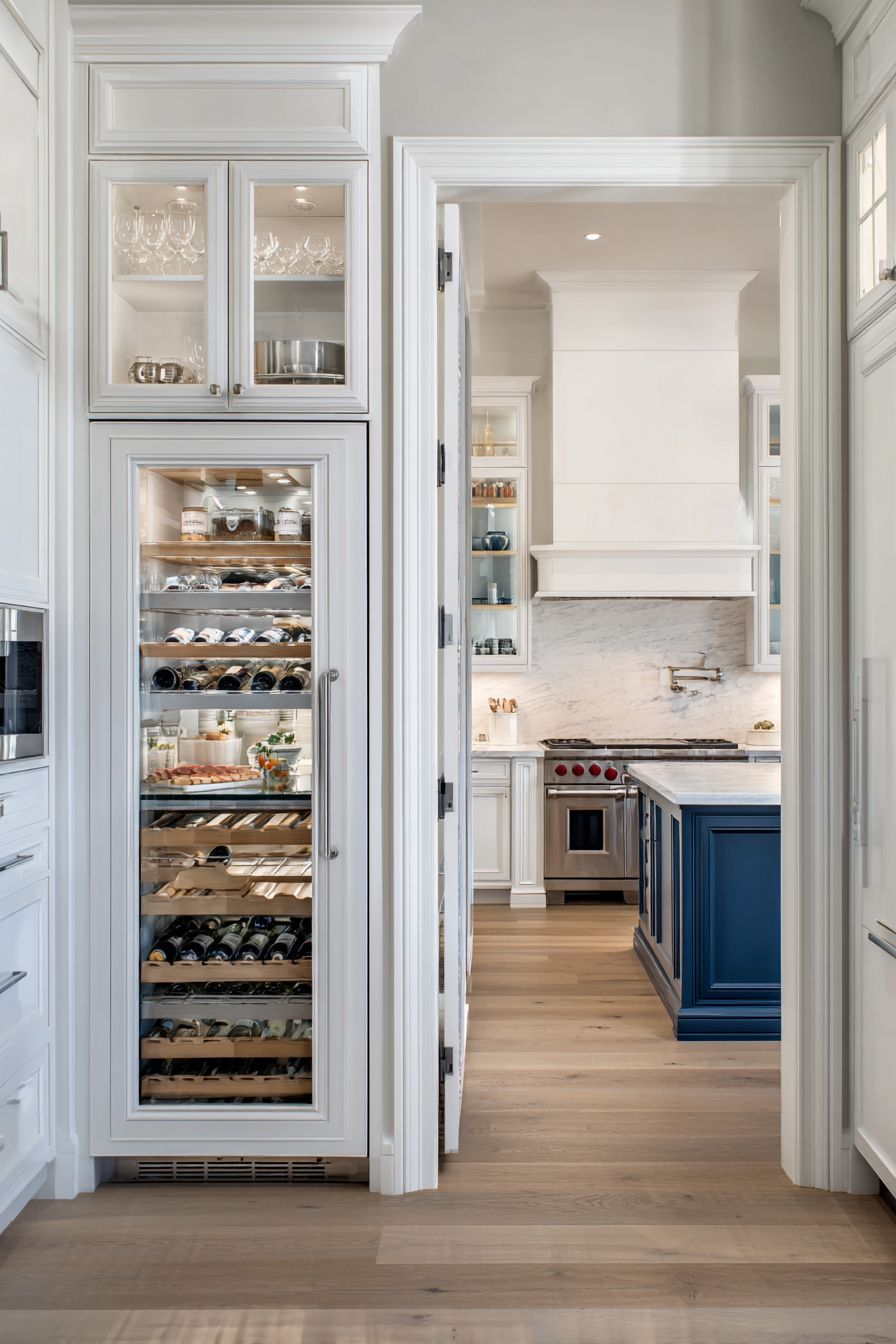
Sophisticated storage reaches new levels with a butler’s pantry connection that extends the kitchen’s functionality while maintaining its clean aesthetic. Glass-front upper cabinets with internal LED lighting create beautiful displays for glassware and special dishes, transforming everyday storage into decorative elements. The transparent doors maintain visual openness while protecting items from dust and kitchen grease.
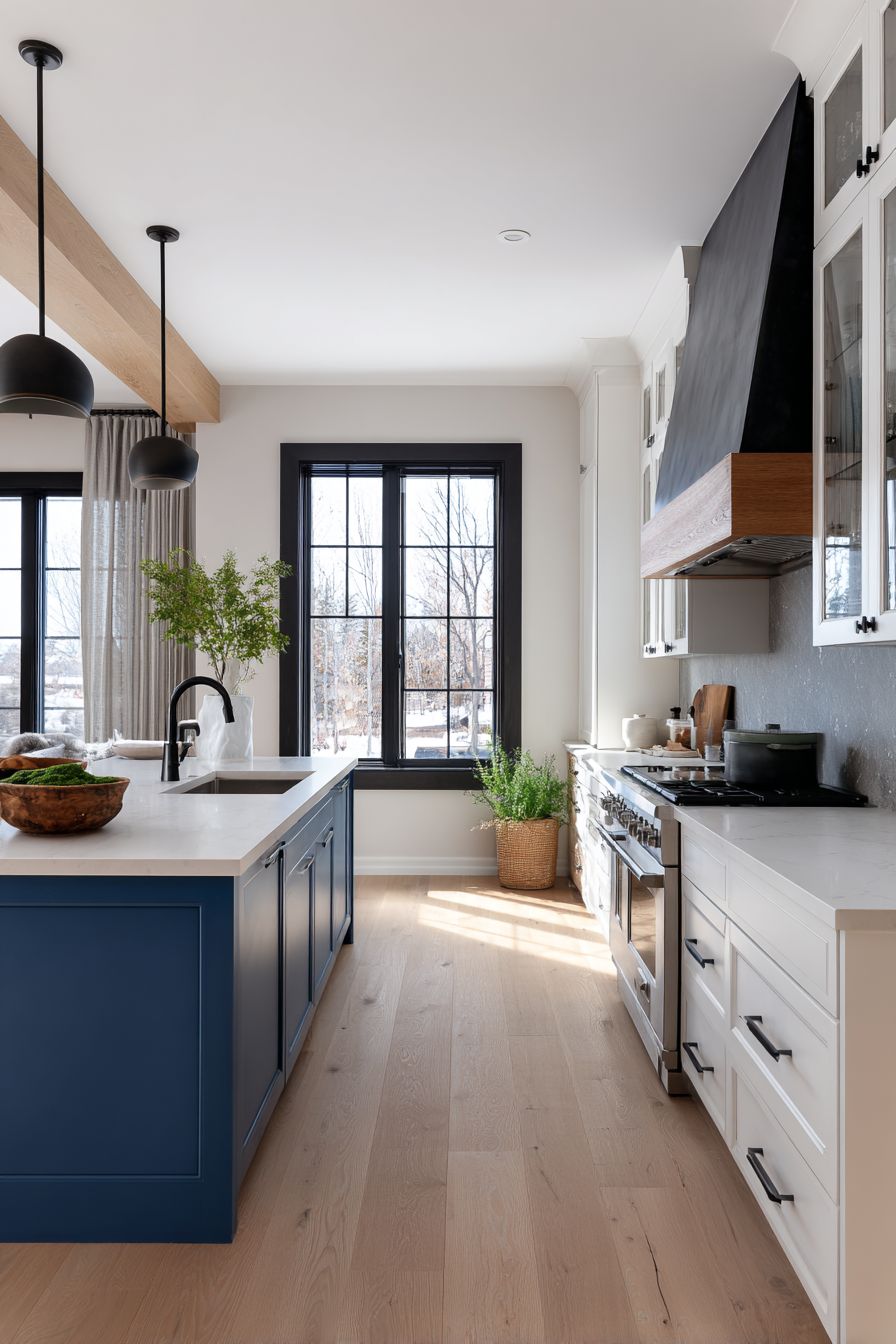
The main cooking zone features a 48-inch professional range that provides serious cooking power for culinary enthusiasts, complemented by a custom hood and convenient pot filler. This professional-grade equipment demonstrates the modern kitchen’s commitment to performance while maintaining design integrity through custom integration. Two-tone cabinetry with white perimeter cabinets and a navy blue island creates visual depth and prevents the large space from feeling monotonous.
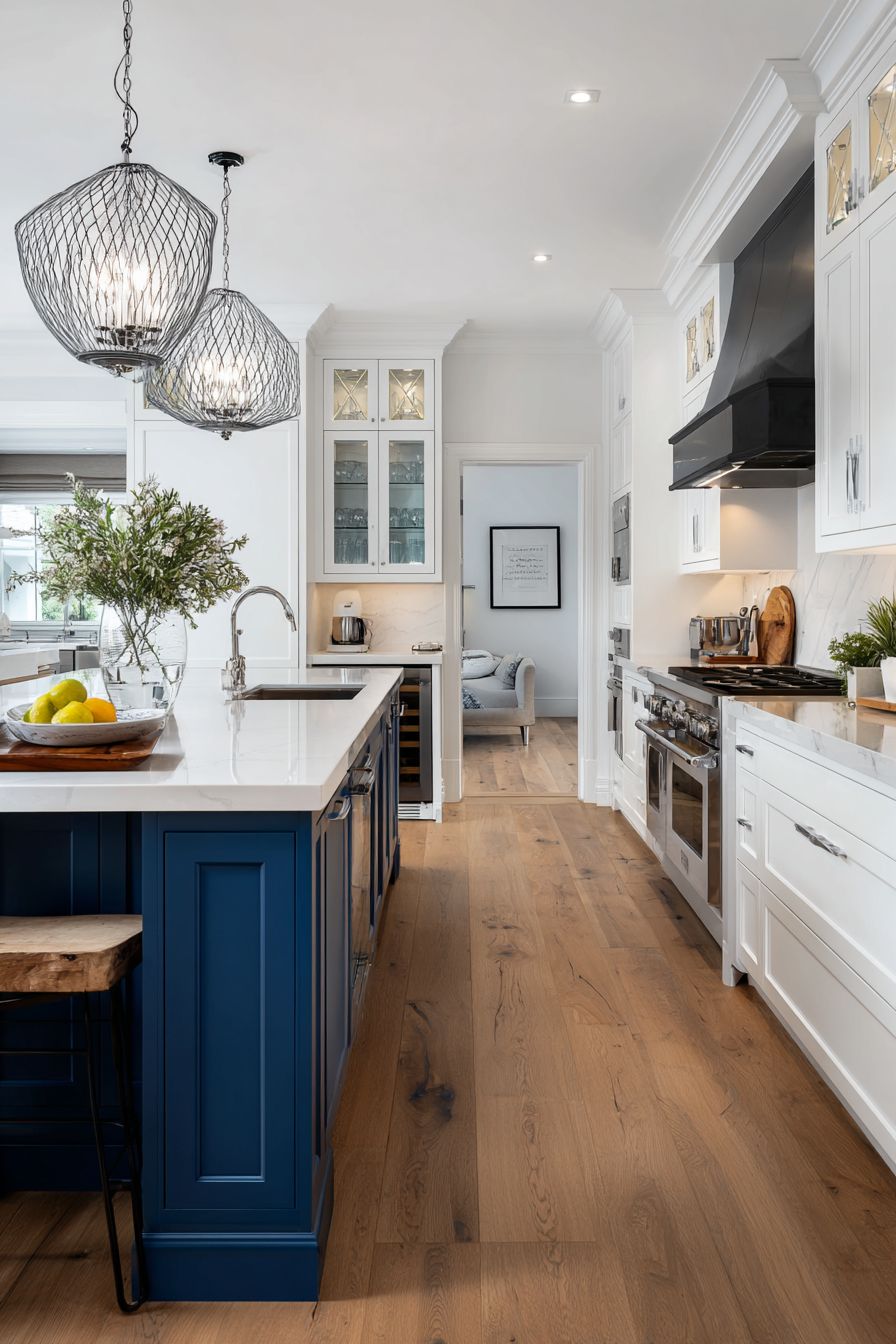
The butler’s pantry connection allows for hidden preparation and cleanup areas, keeping the main kitchen space pristine for entertaining while providing behind-the-scenes functionality. This separation of public and private kitchen functions reflects modern entertaining needs while maintaining the sophisticated appearance that defines contemporary design.
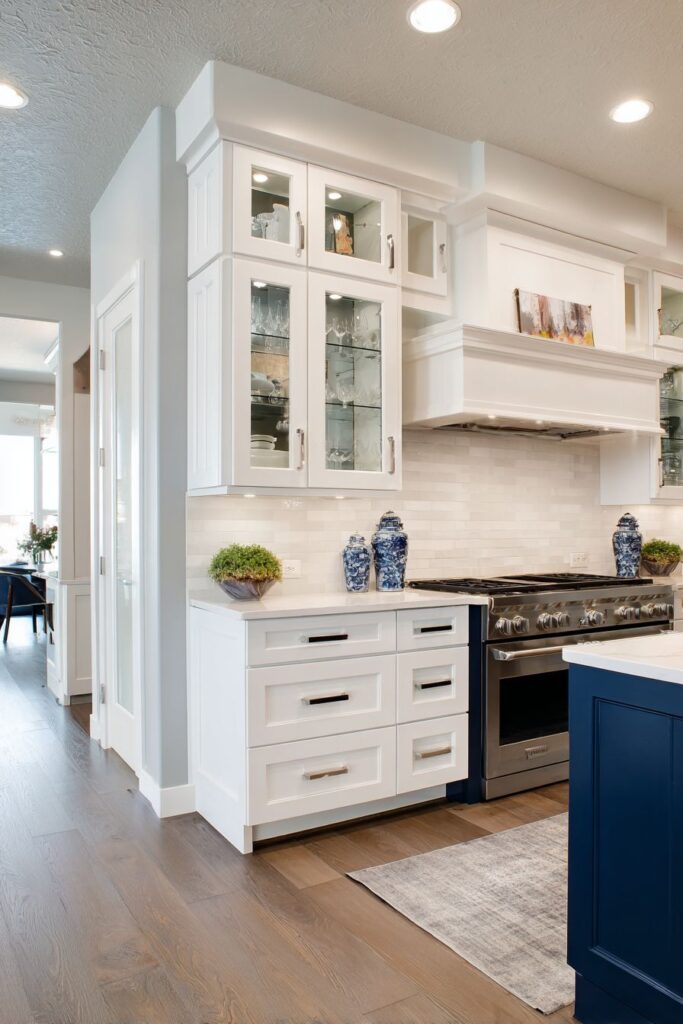
Key design tips for butler’s pantry integration include using glass-front cabinets to create attractive storage displays, installing internal LED lighting for both function and beauty, incorporating professional-grade appliances for serious cooking, creating visual interest with two-tone cabinetry, and designing hidden work areas for seamless entertaining.
10. Indoor-Outdoor Living Connection
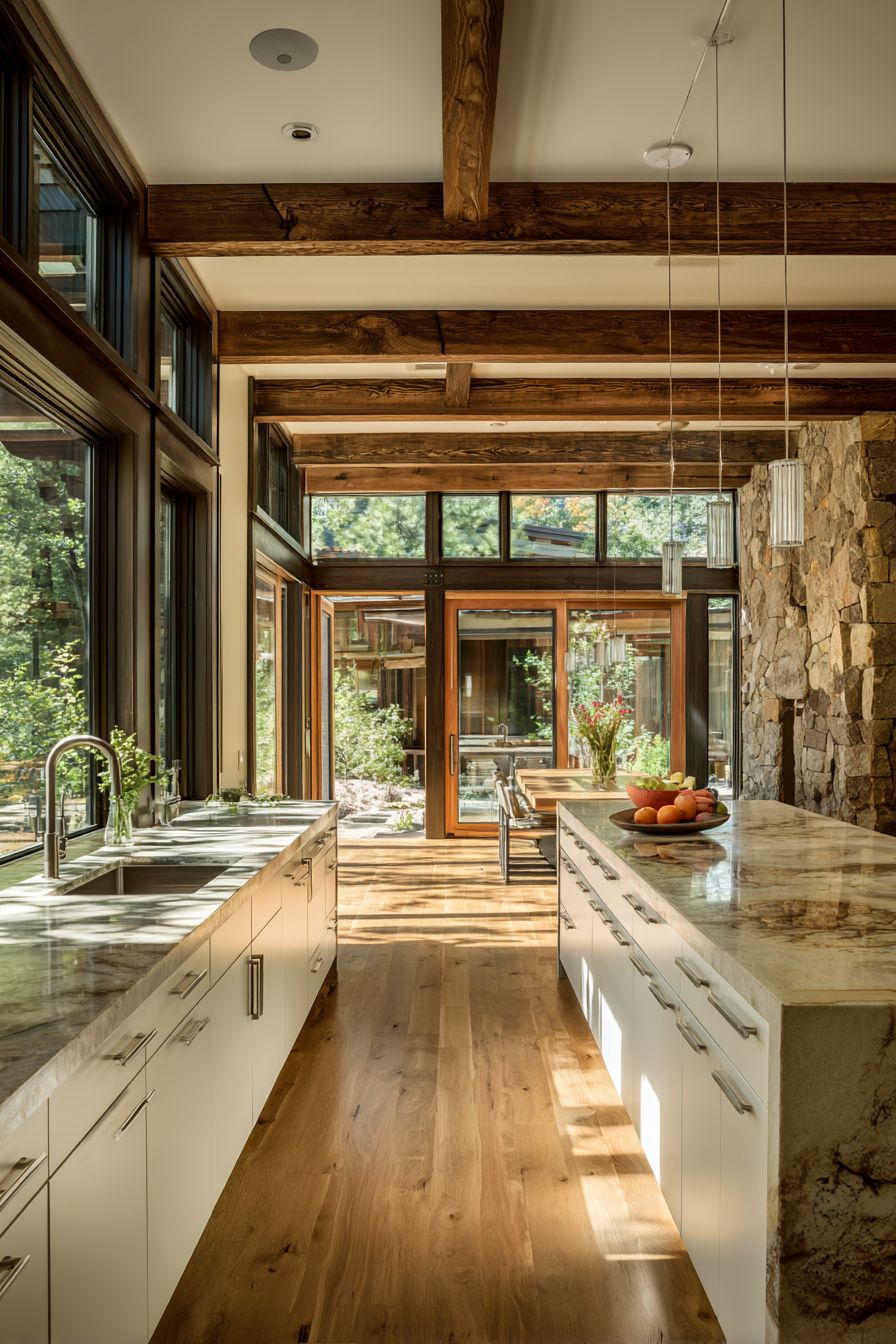
The boundary between interior and exterior living dissolves in this modern kitchen where floor-to-ceiling windows create seamless connections to the natural world beyond. The kitchen island aligns with the outdoor view, creating a continuous sight line that makes the kitchen feel like an extension of the garden or patio area. An integrated sink with sleek linear faucet provides practical functionality while maintaining the clean lines that define contemporary design.
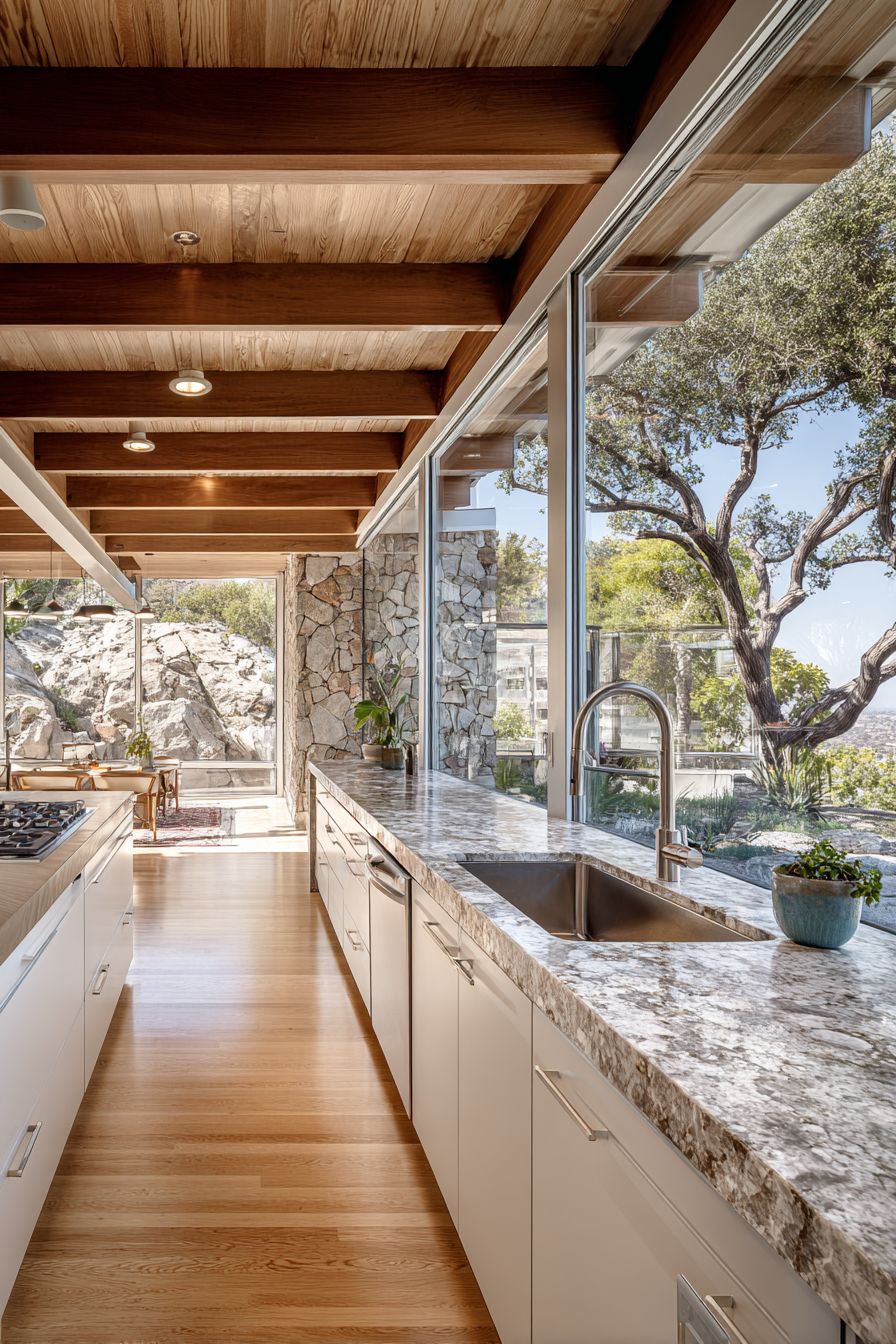
Natural stone countertops complement the outdoor connection by bringing organic materials and earthy colors into the interior space. The stone’s natural variations and textures create visual interest while providing durable work surfaces that can withstand daily kitchen activities. Wood ceiling beams add warmth and natural beauty while providing structural interest that prevents the large windows from overwhelming the space.
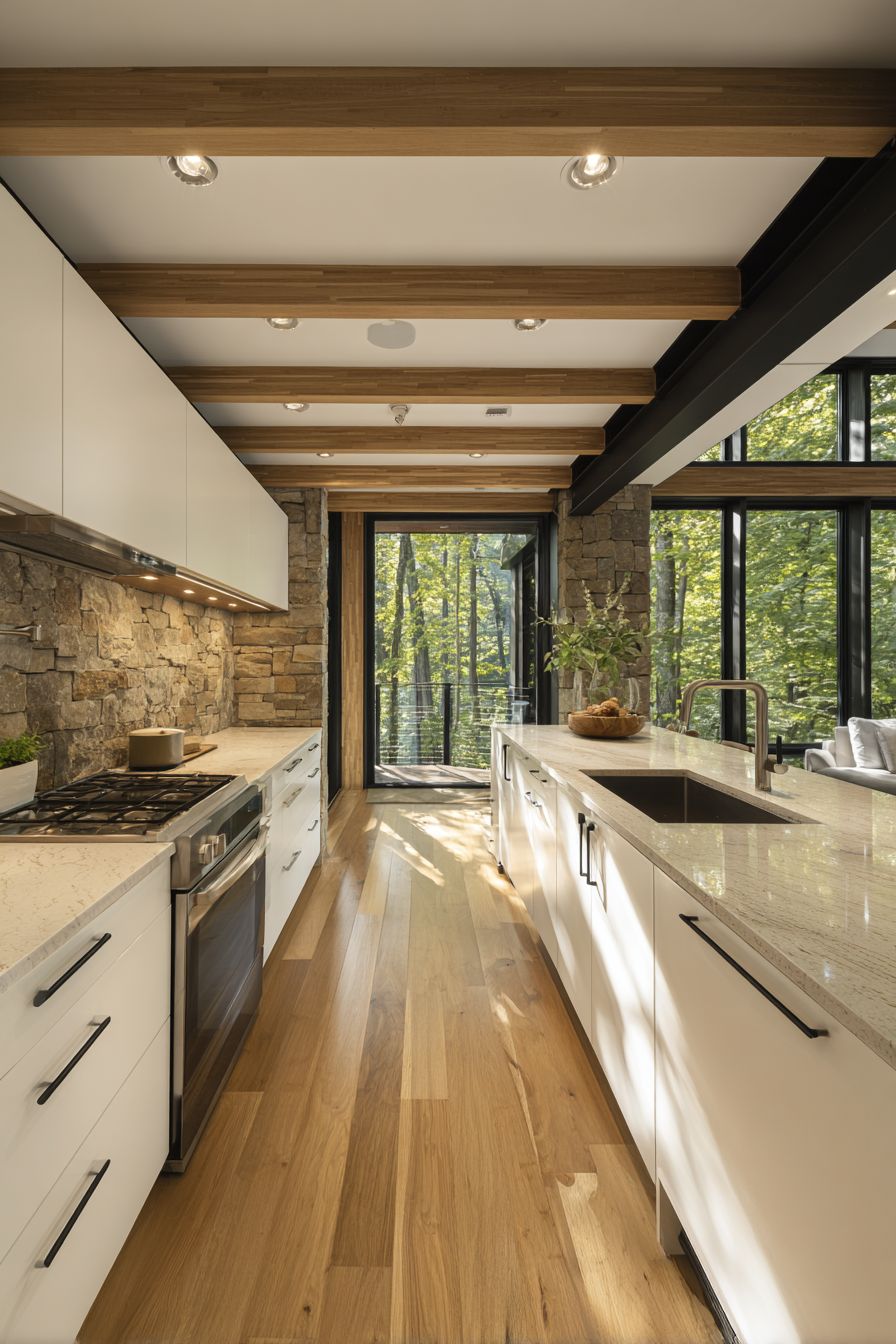
The minimal white cabinetry maintains a clean, unobtrusive presence that allows the outdoor views to remain the primary focus. This restraint in material selection demonstrates sophisticated design discipline, understanding when to let natural elements take precedence over manufactured ones. The result is a kitchen that feels connected to its environment rather than isolated from it.
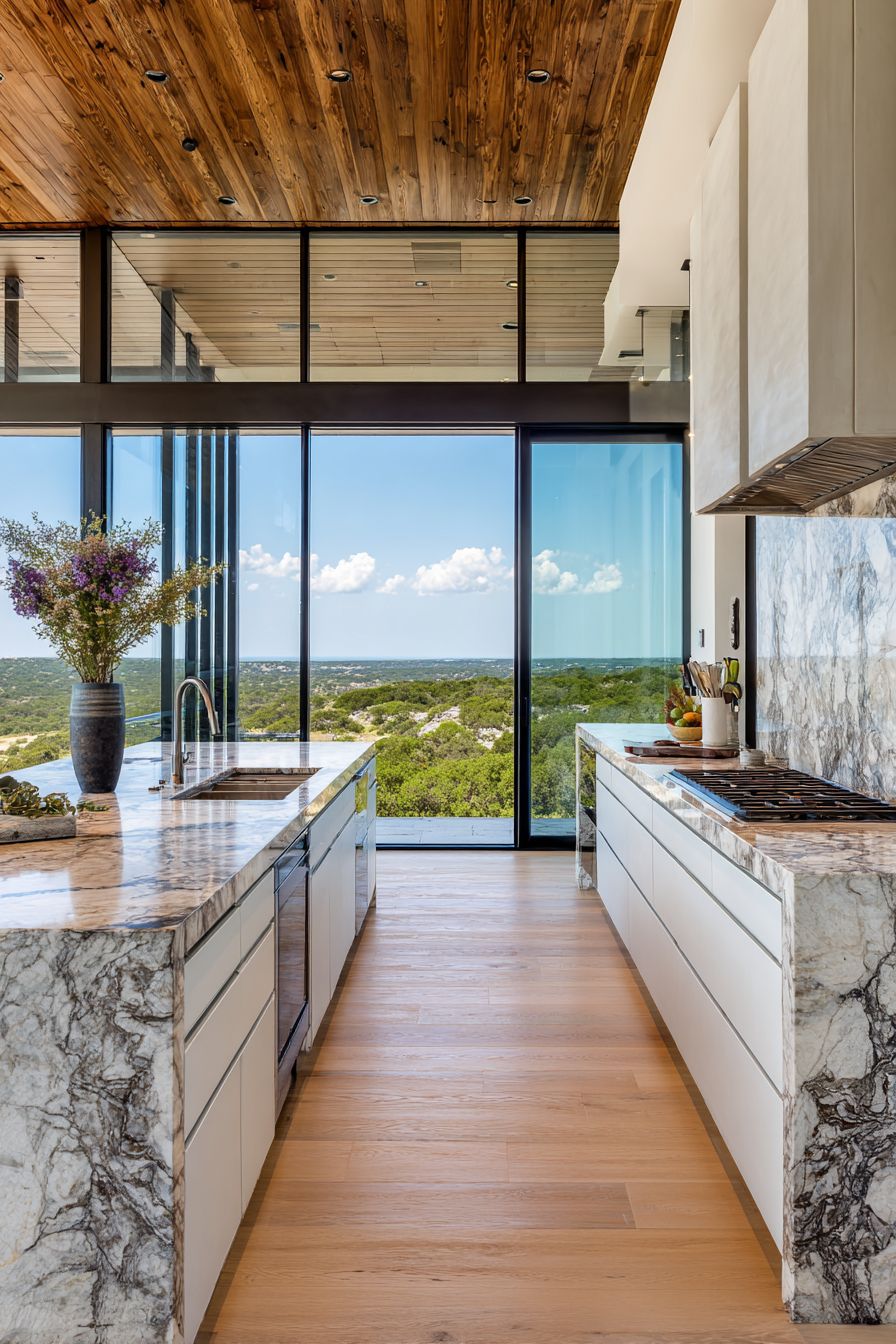
Key design tips for indoor-outdoor connection include maximizing window size to blur boundaries, aligning islands with outdoor views for continuous sight lines, incorporating natural stone to echo outdoor materials, adding wood elements for warmth and natural beauty, and keeping interior finishes minimal to emphasize outdoor connections.
11. Dedicated Baking Station Excellence
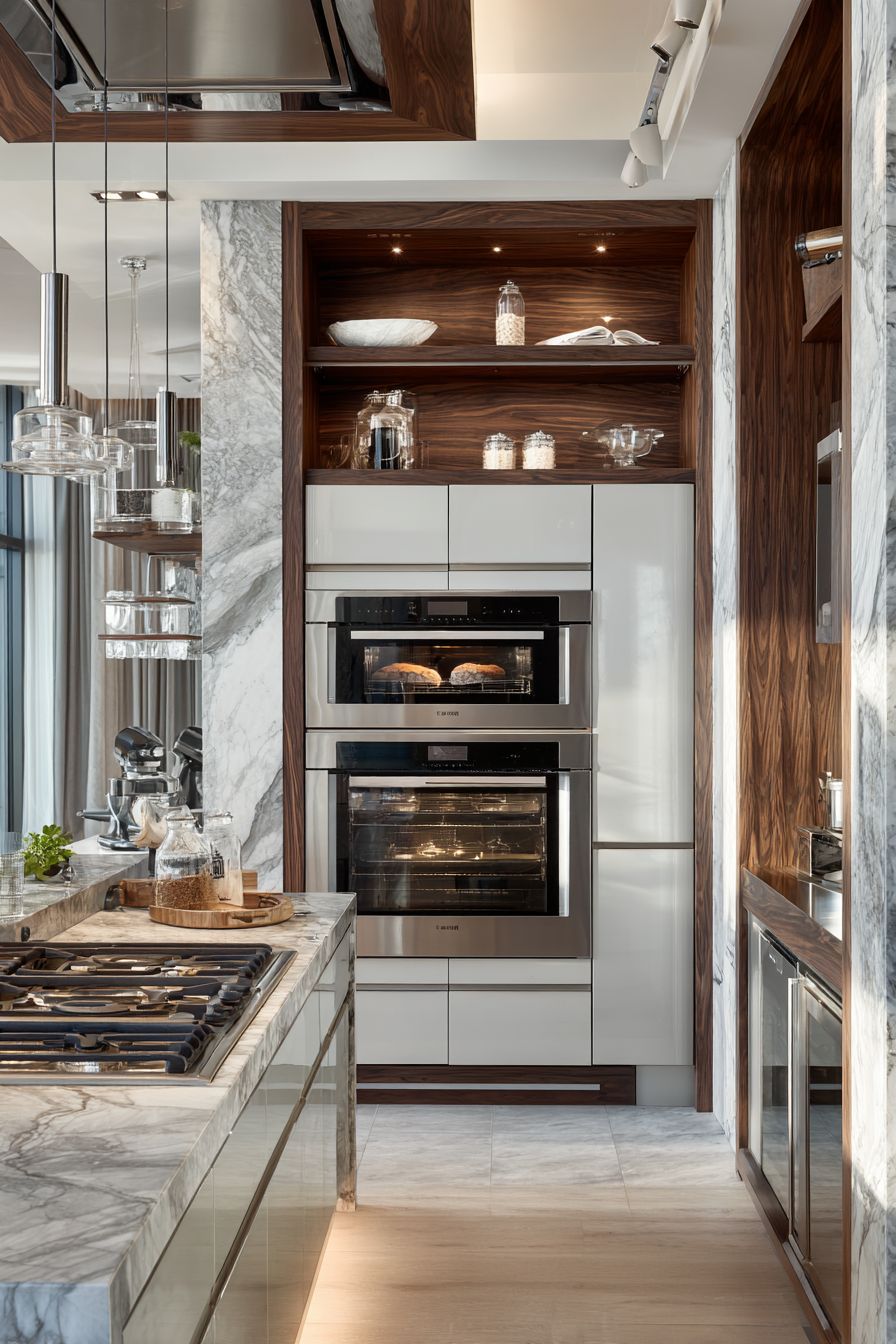
Specialized functionality takes center stage with a dedicated baking station that recognizes pastry preparation’s unique requirements while maintaining the kitchen’s modern aesthetic. Marble countertops provide the ideal surface for working with dough and pastry, as the stone’s cool temperature helps maintain proper dough consistency. The smooth, non-porous surface also makes cleanup easier after flour-intensive baking sessions.
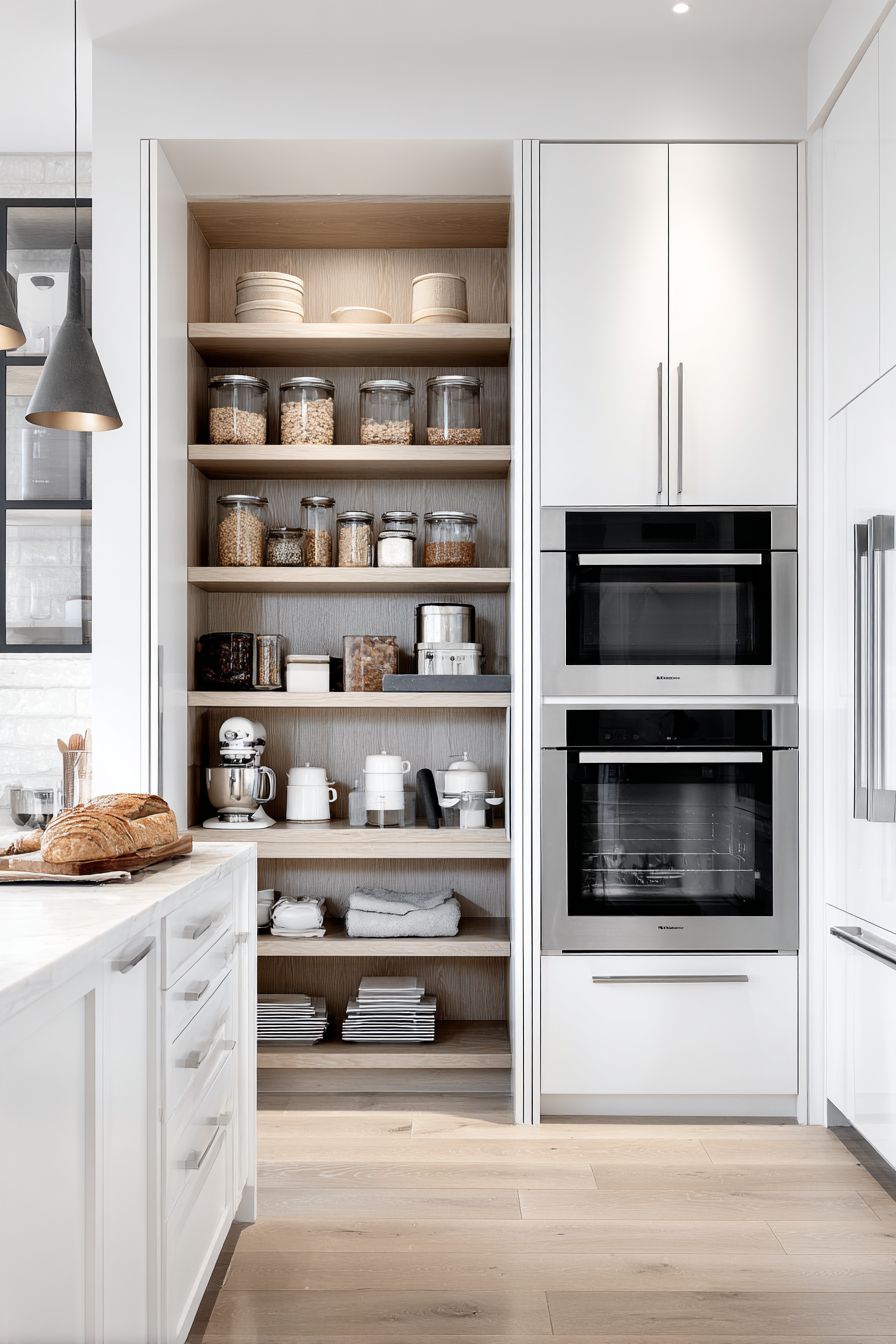
Specialized storage for baking equipment demonstrates thoughtful planning that goes beyond generic kitchen storage solutions. Custom drawers and cabinets sized for specific tools, mixing bowls, and specialty ingredients show how modern kitchens can be tailored to individual cooking styles and preferences. A built-in double oven and warming drawer provide professional-level baking capabilities while maintaining the kitchen’s sleek appearance through integrated design.
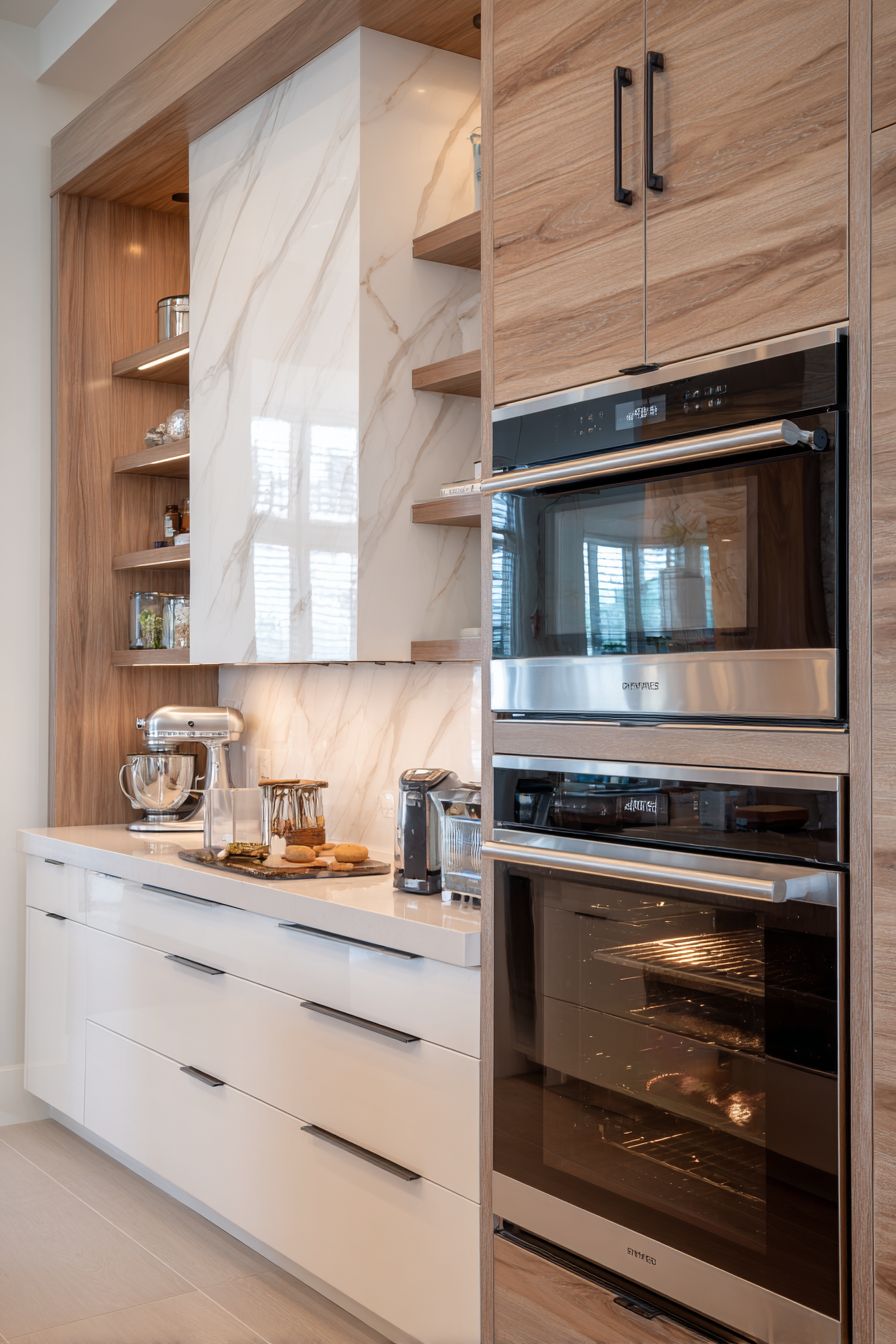
Focused task lighting ensures proper illumination for detailed baking work, while natural wood accents warm the primarily white color palette and create a connection to traditional baking environments. This balance between modern efficiency and traditional craft demonstrates how contemporary design can honor culinary traditions while improving functionality.
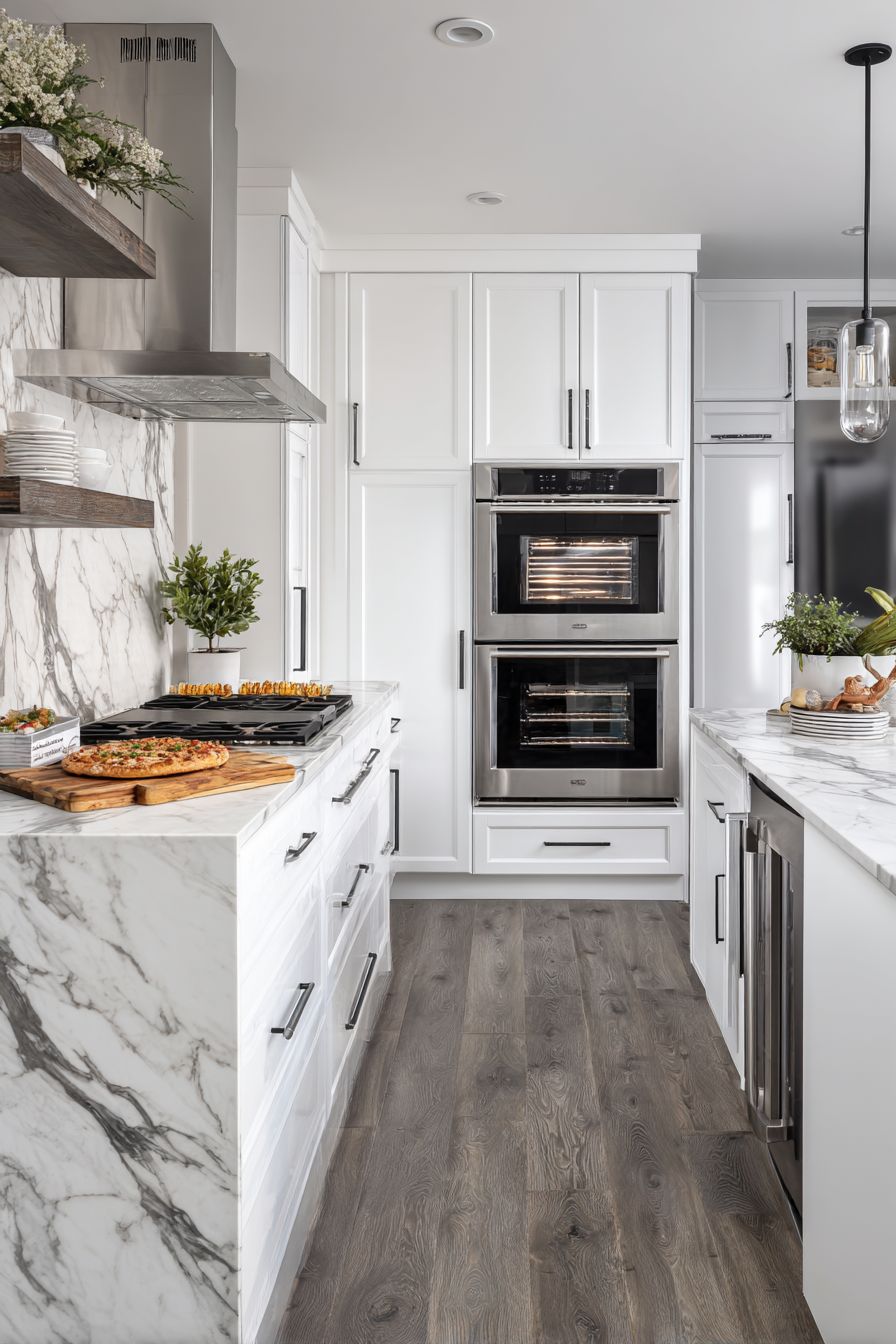
Key design tips for baking stations include choosing marble surfaces for optimal dough working conditions, designing specialized storage for baking tools and ingredients, incorporating double ovens for serious baking capabilities, providing focused task lighting for detailed work, and adding wood accents to create warmth in primarily white spaces.
12. Smart Home Technology Integration
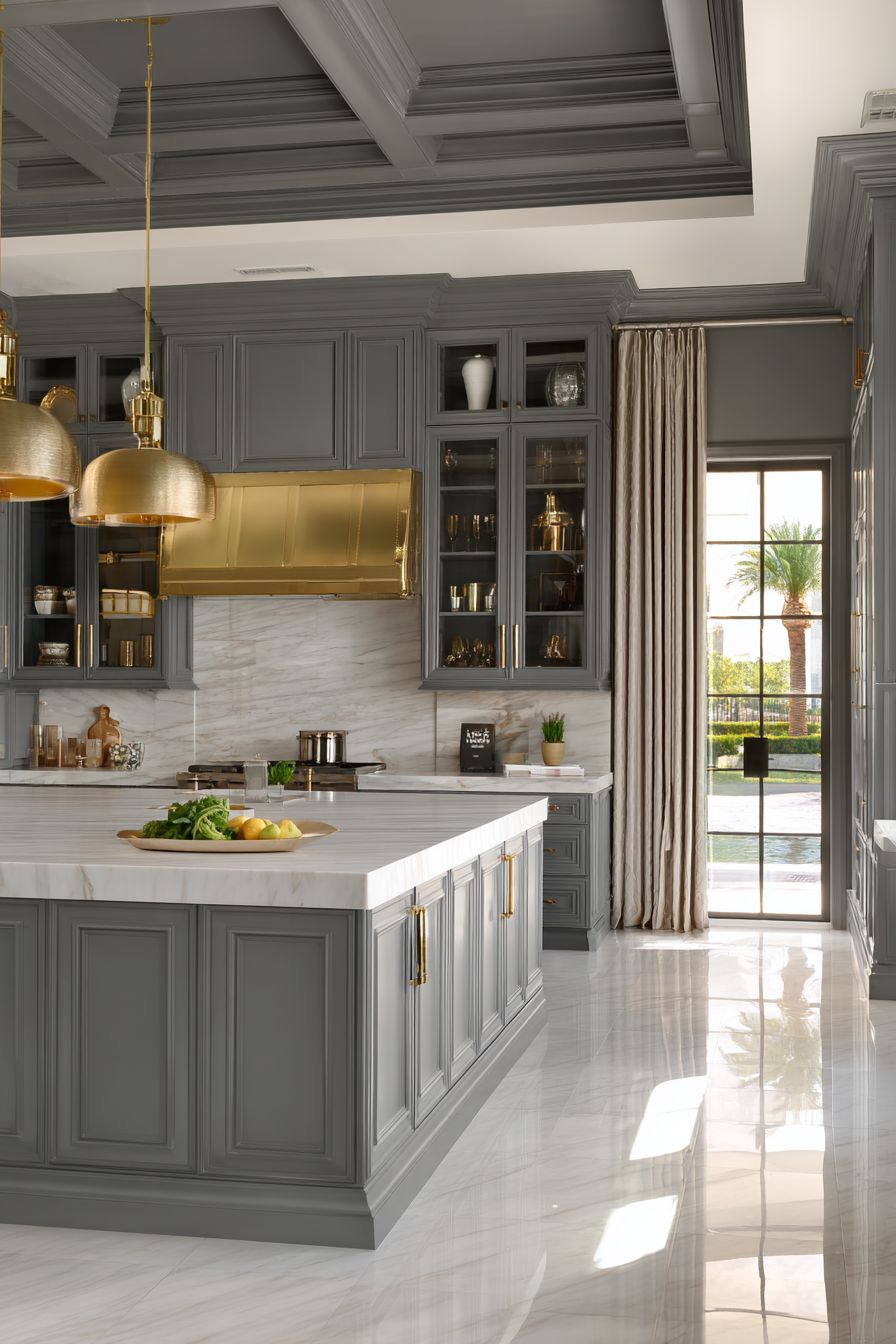
The future of kitchen design arrives with comprehensive smart home integration that seamlessly incorporates technology while maintaining the clean aesthetic that defines modern style. Touchscreen control panels provide intuitive access to lighting, climate control, and appliance management, while hidden charging stations built into the island keep devices powered without cluttering countertop surfaces. This integration demonstrates how technology can enhance daily life without dominating the visual environment.
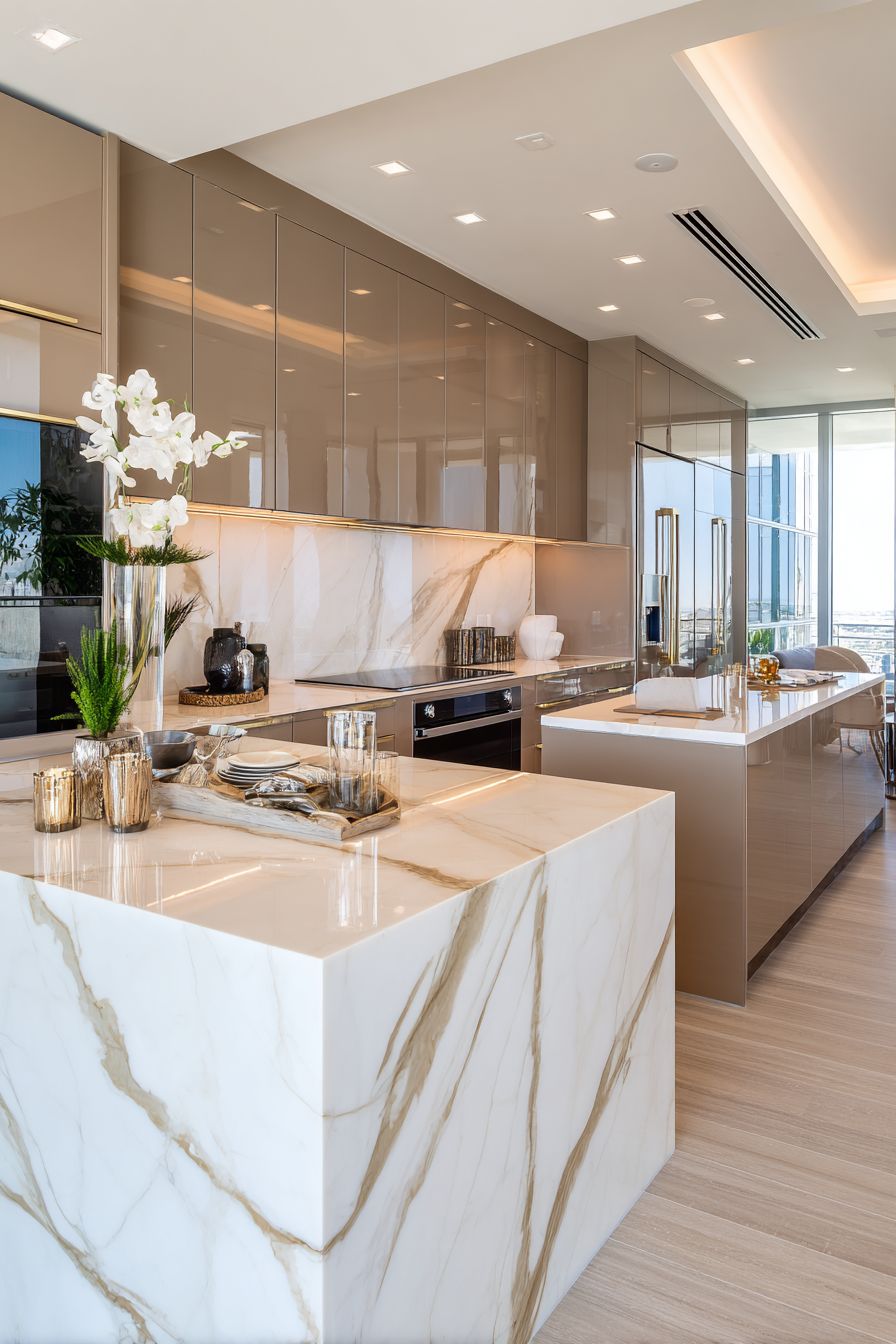
Induction cooking surfaces with invisible controls maintain clean lines while providing precise temperature control and energy efficiency. The smooth glass surfaces integrate seamlessly with surrounding countertops, creating uninterrupted work areas that are both beautiful and practical. Automated cabinet lighting that responds to motion sensors provides convenient illumination while showcasing the kitchen’s commitment to smart functionality.
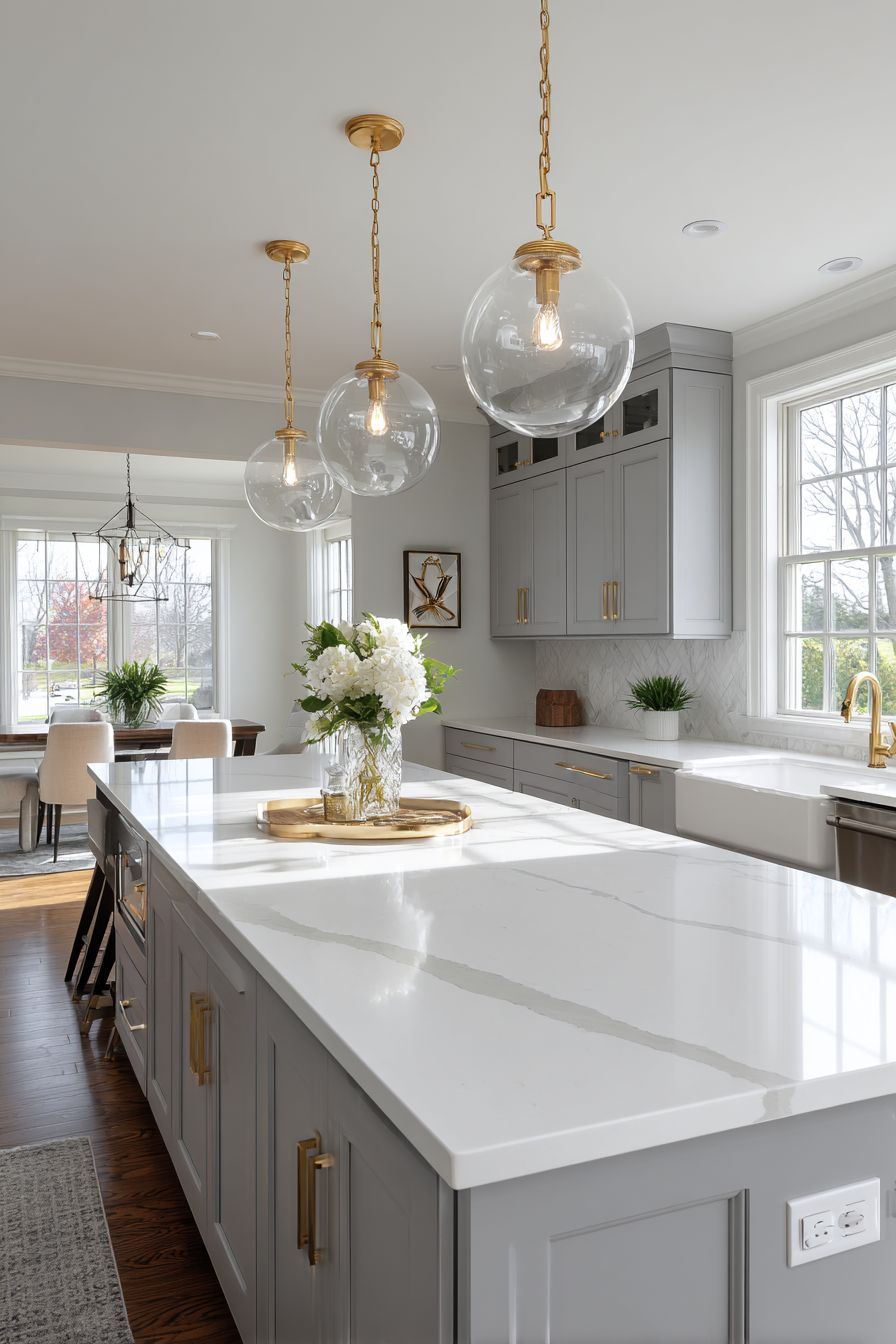
Warm grey cabinetry with brass hardware accents creates a sophisticated color palette that feels both contemporary and timeless. White quartz surfaces provide contrast while maintaining the light, open feeling that makes kitchens feel welcoming. The combination of high-tech functionality with warm, natural materials demonstrates how modern kitchens can embrace innovation while remaining human-centered spaces.
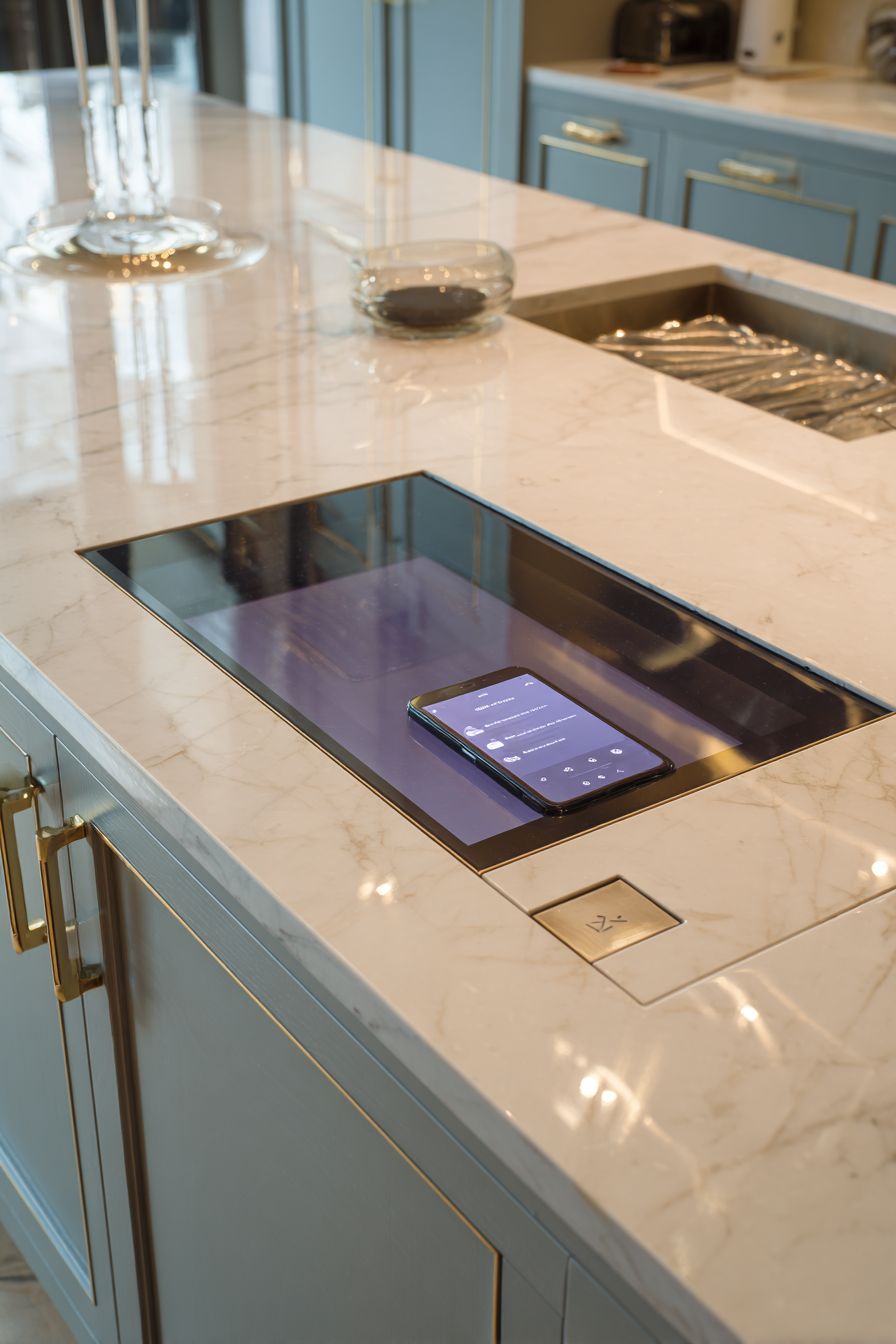
Key design tips for smart kitchen integration include incorporating touchscreen controls for centralized management, installing hidden charging stations to maintain clean surfaces, choosing induction cooking for sleek integration and efficiency, using motion-sensor lighting for convenience, and balancing high-tech features with warm, natural materials.
13. Breakfast Nook Integration Design
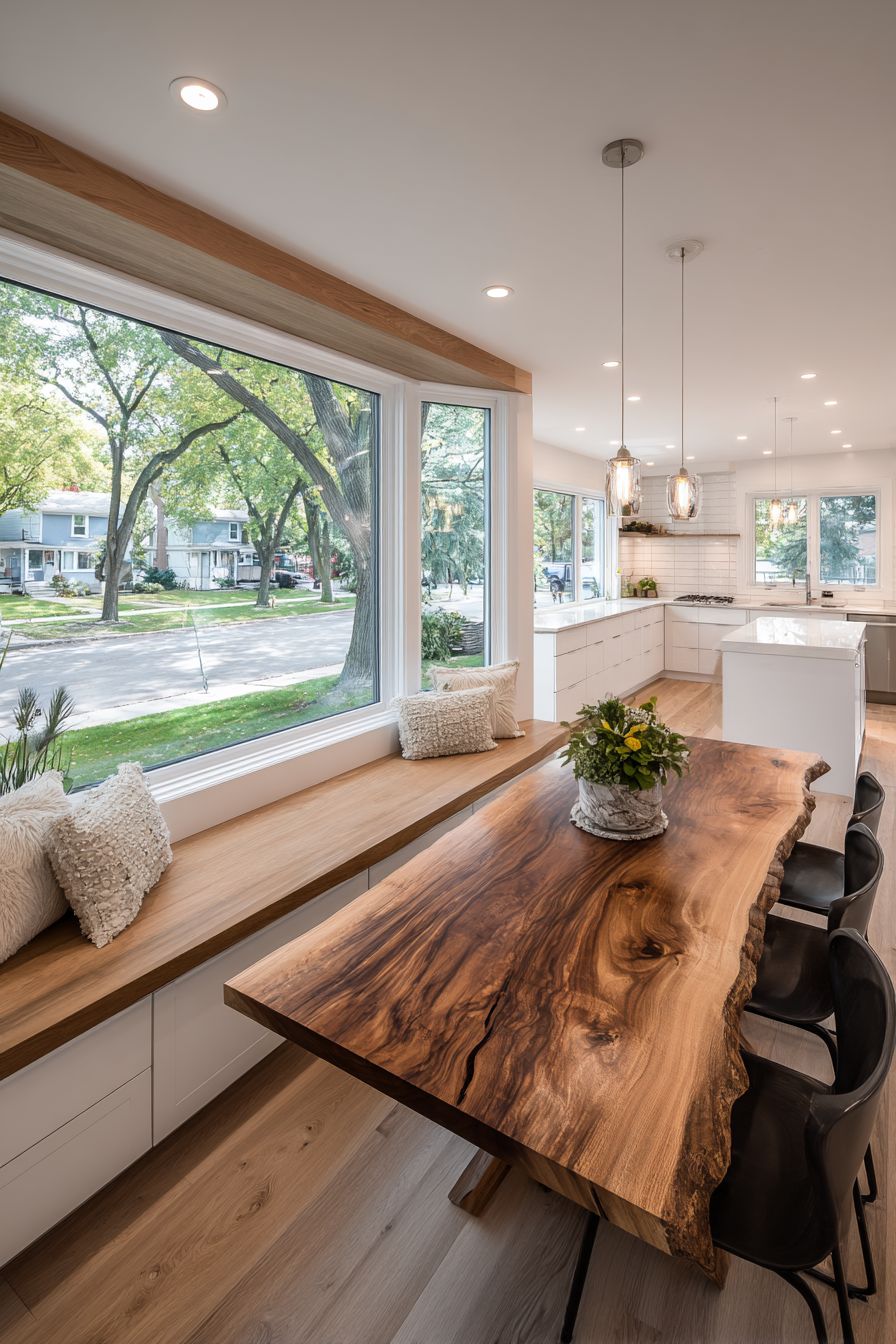
Casual dining becomes an integral part of the kitchen experience with a thoughtfully designed breakfast nook that features built-in bench seating with hidden storage. The banquette-style seating maximizes space efficiency while providing comfortable dining for daily meals and casual gatherings. Hidden storage beneath the seats provides practical solutions for items like table linens, serving pieces, or children’s art supplies.
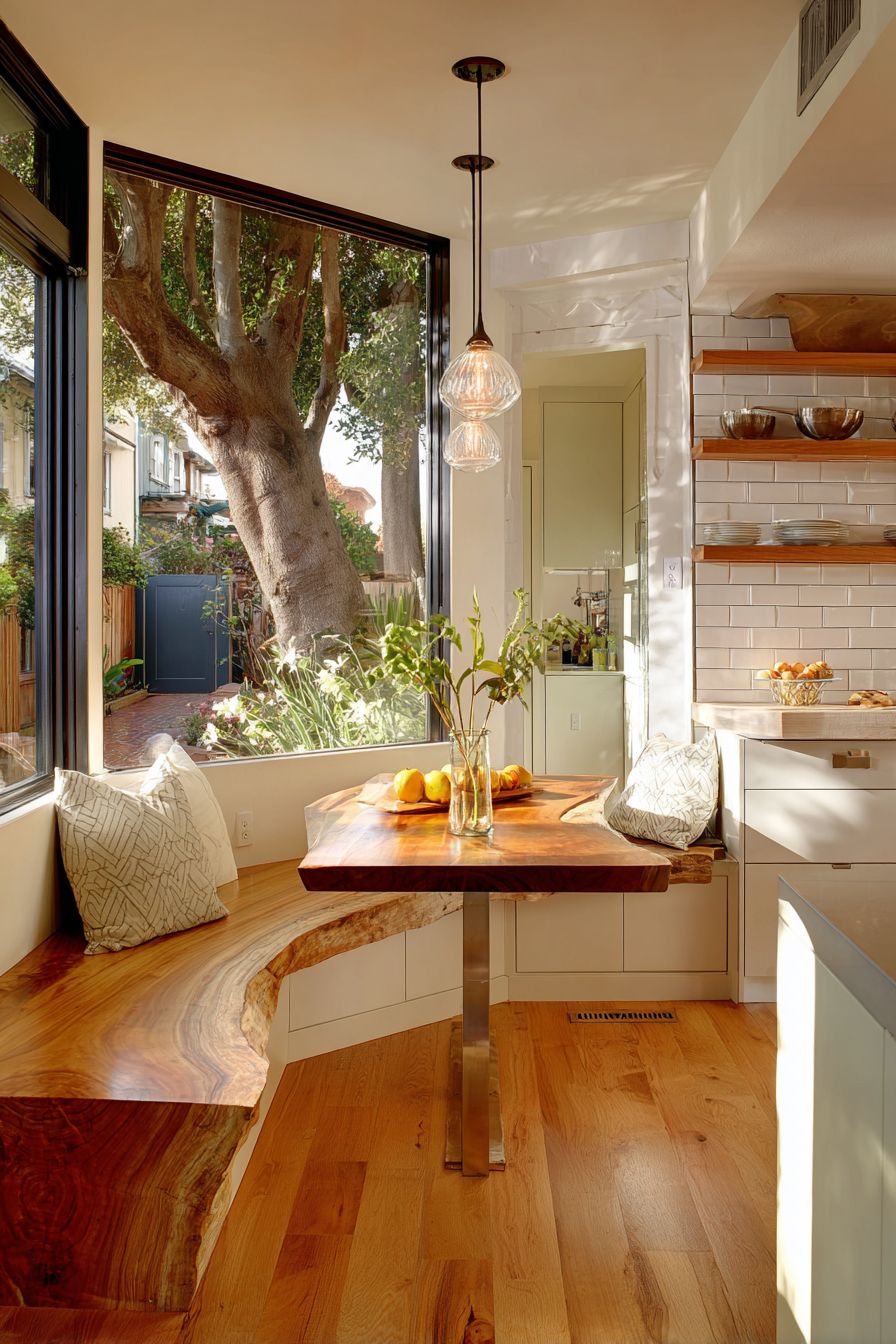
A live-edge wood table brings natural beauty and organic form to the dining area, creating a focal point that celebrates the material’s inherent character. The natural edge provides textural interest and connects the interior to the natural world, while the wood’s warmth balances the clean lines of modern cabinetry. Large corner windows flood the space with morning light, creating an inviting environment for starting the day.
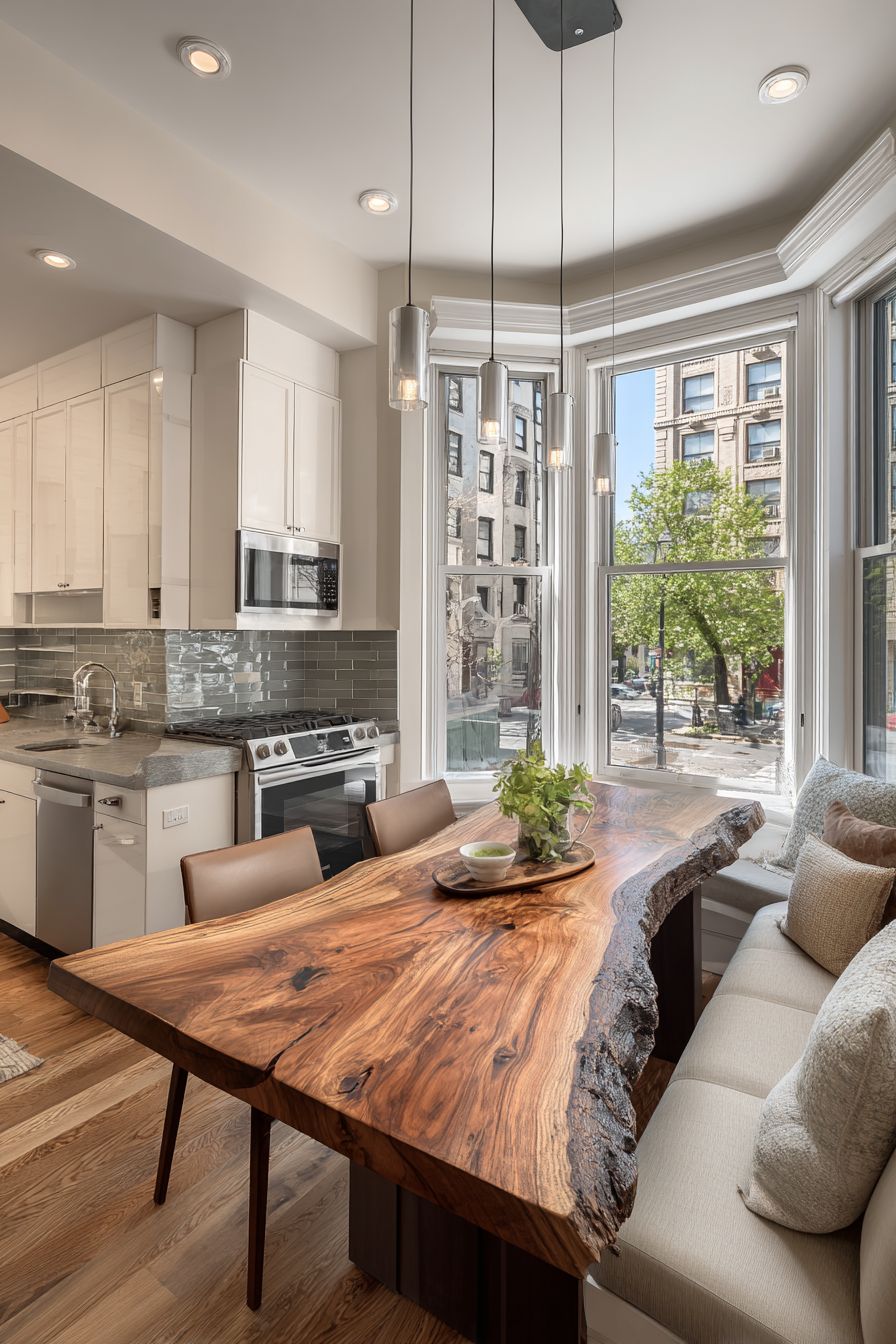
Clean white cabinetry and subway tile backsplash with dark grout maintain the modern aesthetic while providing timeless appeal that won’t feel dated as trends change. Pendant lights over the dining area provide focused illumination while contributing to the space’s architectural interest. Natural wood floors unify the kitchen and dining areas while providing warmth and durability.
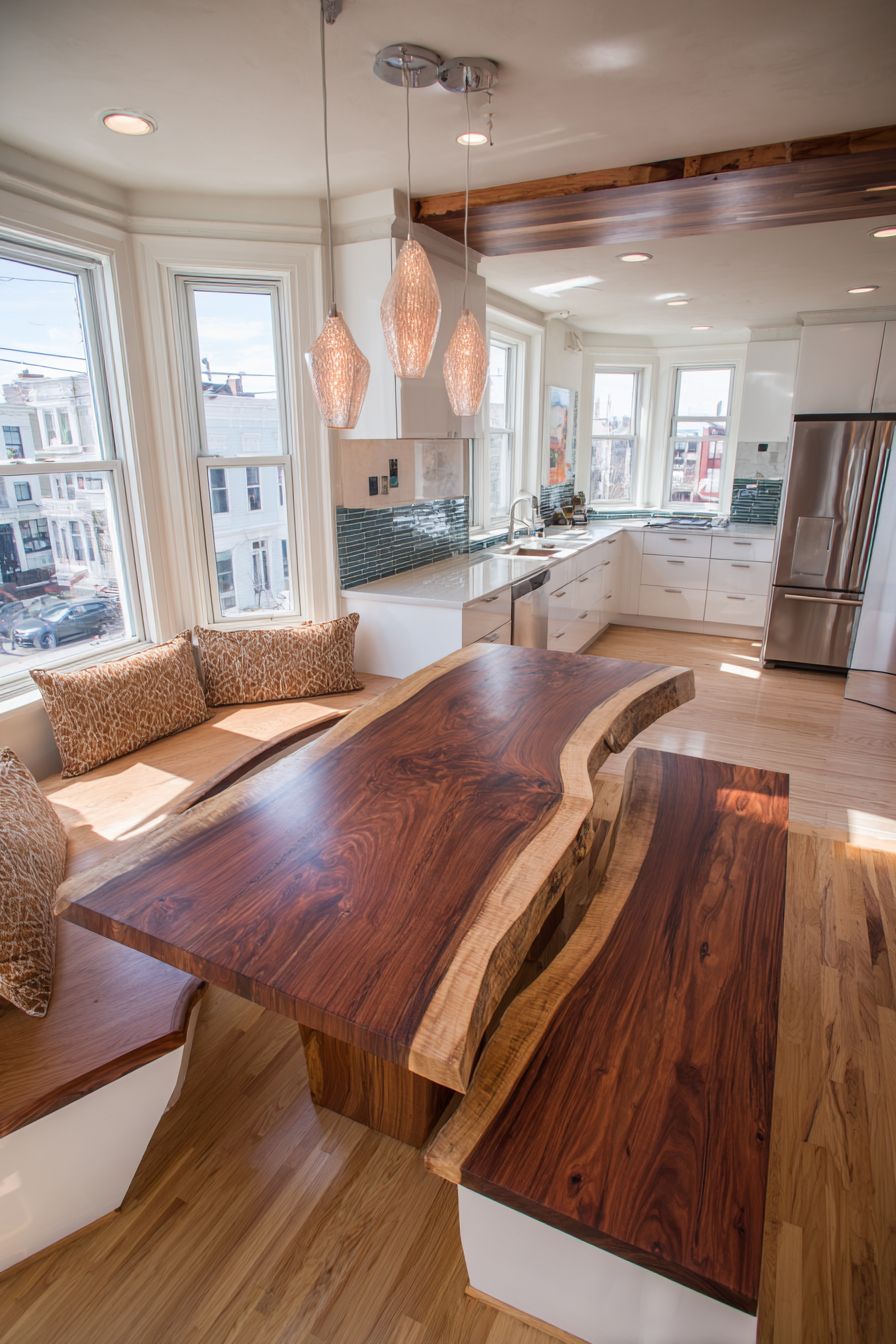
Key design tips for breakfast nook integration include using built-in seating to maximize space efficiency, incorporating hidden storage for dining essentials, selecting live-edge tables for natural beauty, positioning seating near windows for morning light, and maintaining material consistency between kitchen and dining areas.
14. Scullery Kitchen Concealment
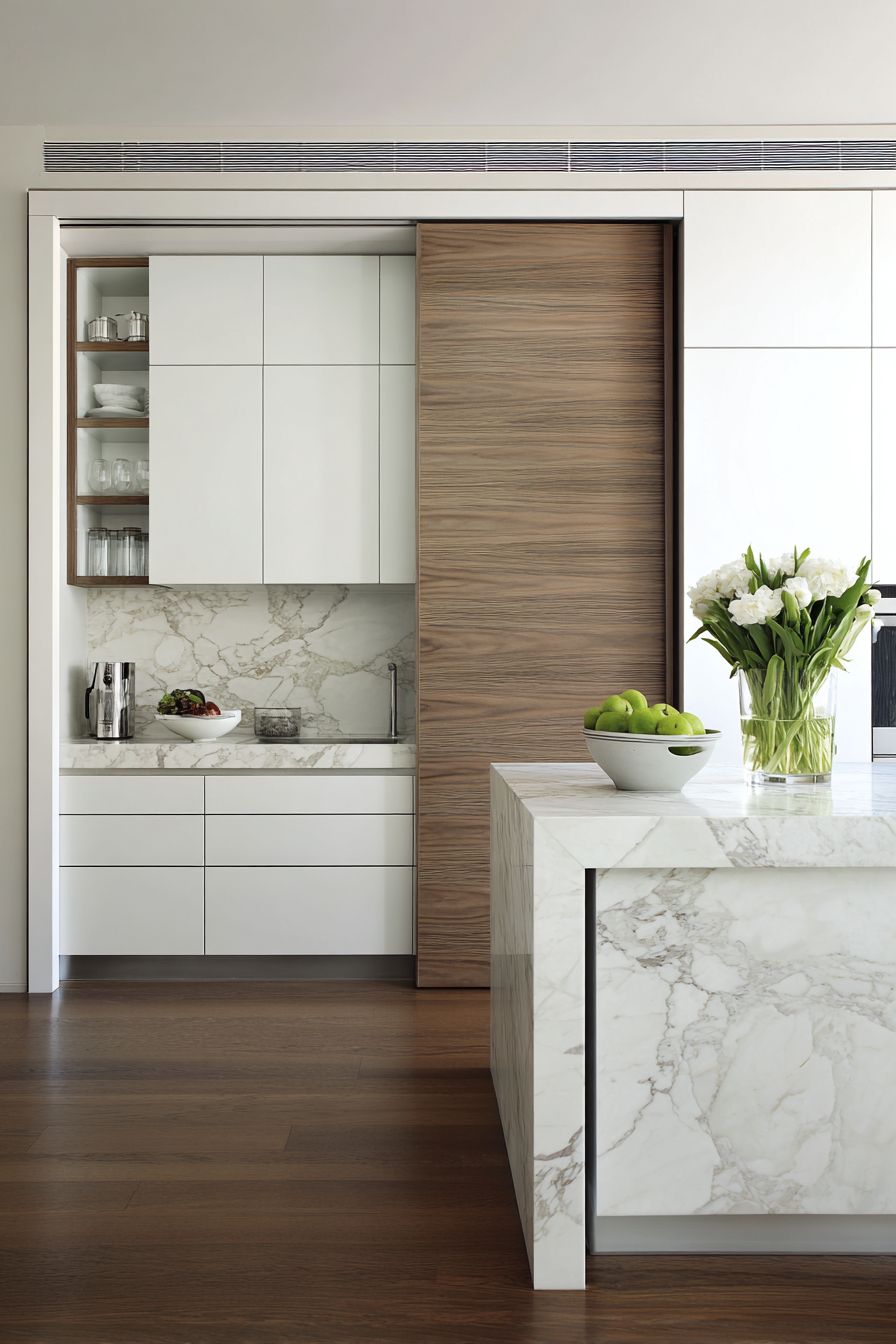
The art of concealment reaches sophisticated heights with a scullery kitchen design that hides appliances and service areas behind elegant sliding panels. This approach maintains the main kitchen’s pristine appearance while providing behind-the-scenes functionality for serious cooking and cleanup. The main kitchen displays only essential elements, creating a serene environment that feels more like a showroom than a working kitchen.
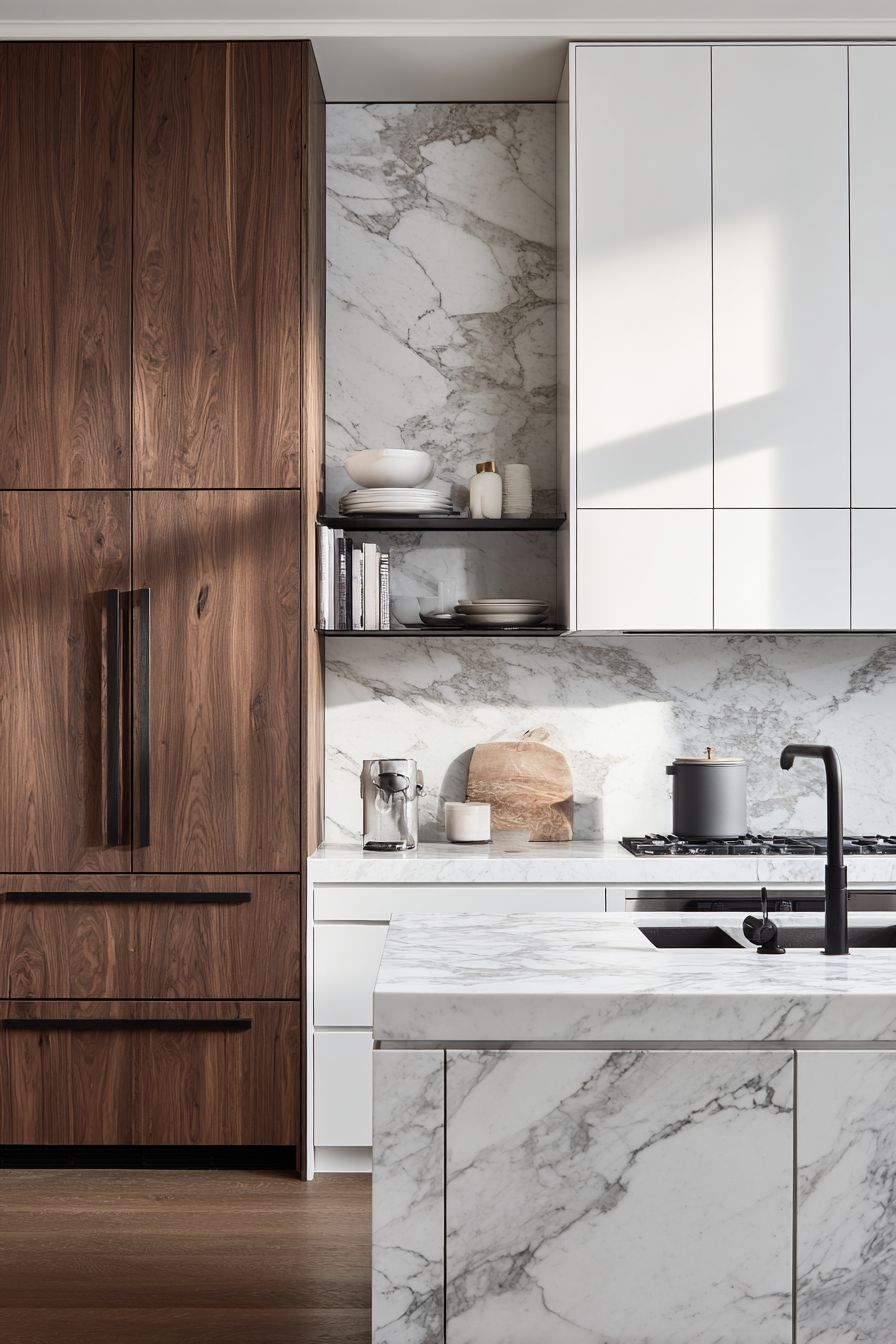
Handle-free cabinetry and a minimalist island with integrated prep sink maintain the clean aesthetic while providing necessary functionality. The push-to-open mechanisms ensure smooth operation while maintaining the seamless appearance that defines contemporary design. Natural stone surfaces and warm wood grain provide textural interest against the predominantly white palette, preventing the space from feeling cold or sterile.
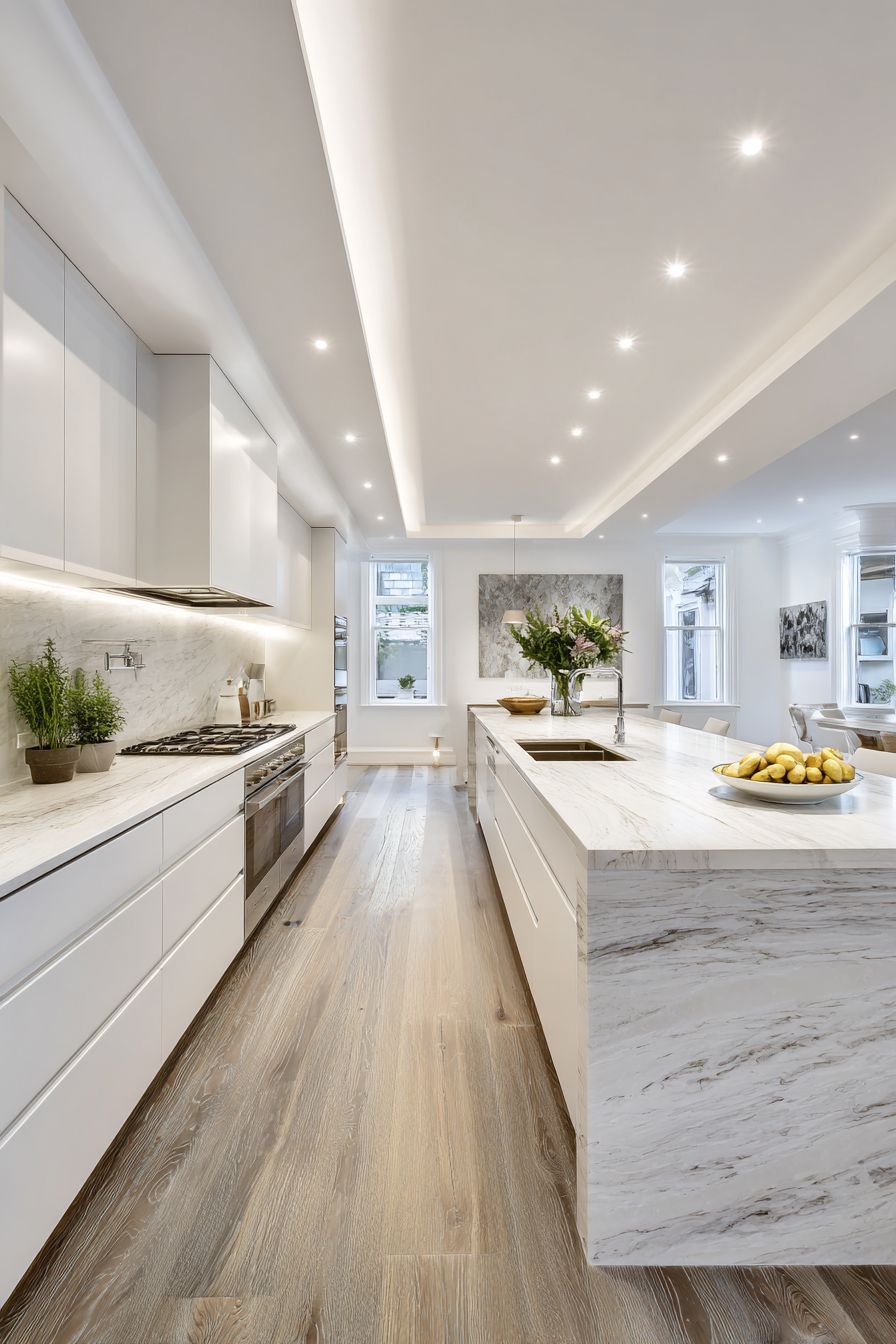
The hidden service areas allow for messy preparation tasks, appliance storage, and cleanup activities without disrupting the main kitchen’s sophisticated appearance. This separation of public and private kitchen functions reflects modern lifestyle needs while maintaining the beautiful environments that make homes feel special.
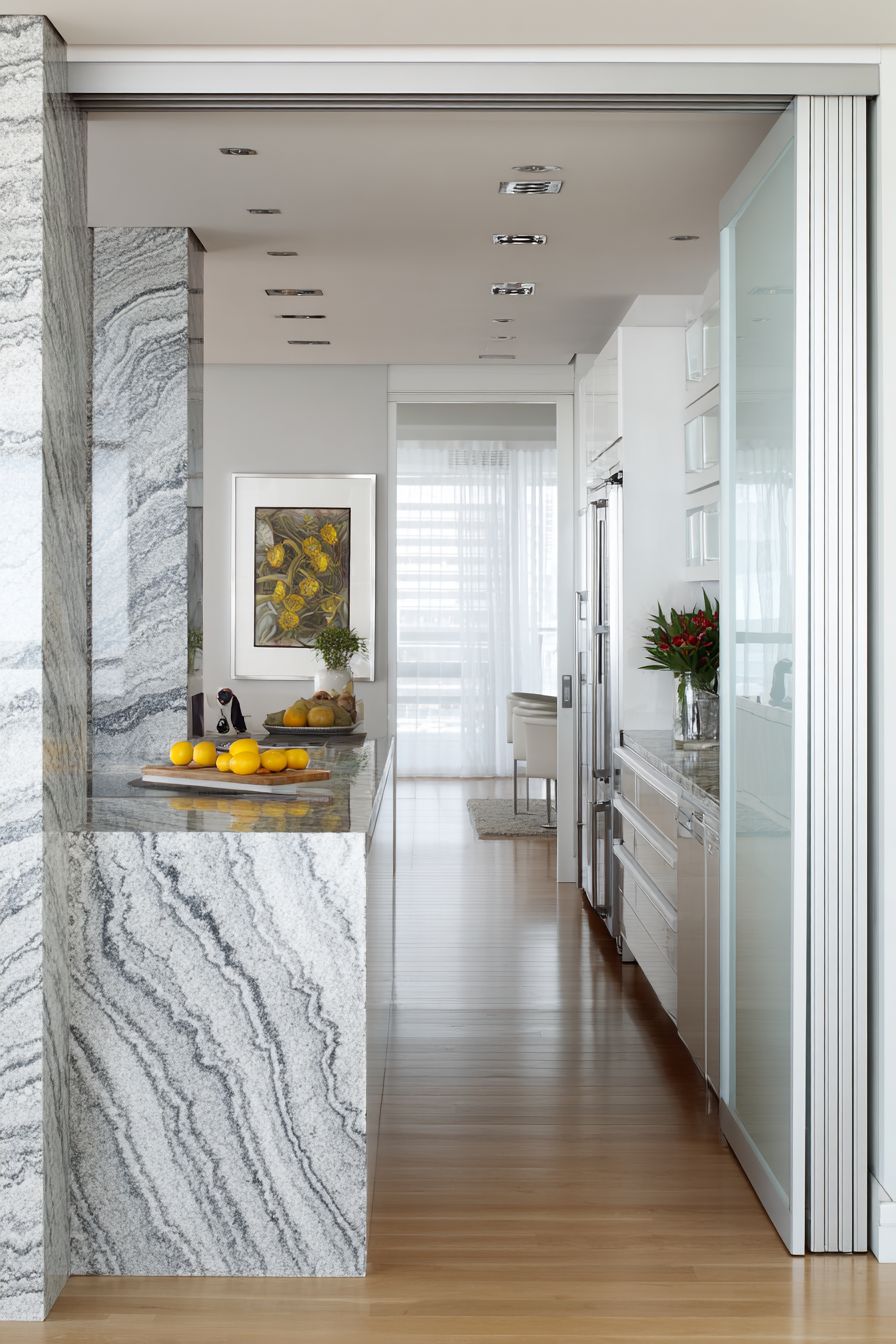
Key design tips for scullery integration include using sliding panels to conceal work areas, maintaining minimal displays in public kitchen spaces, incorporating push-to-open mechanisms for seamless operation, balancing white surfaces with natural materials for warmth, and creating dedicated prep areas for messy tasks.
15. Interactive Cooking Island Design
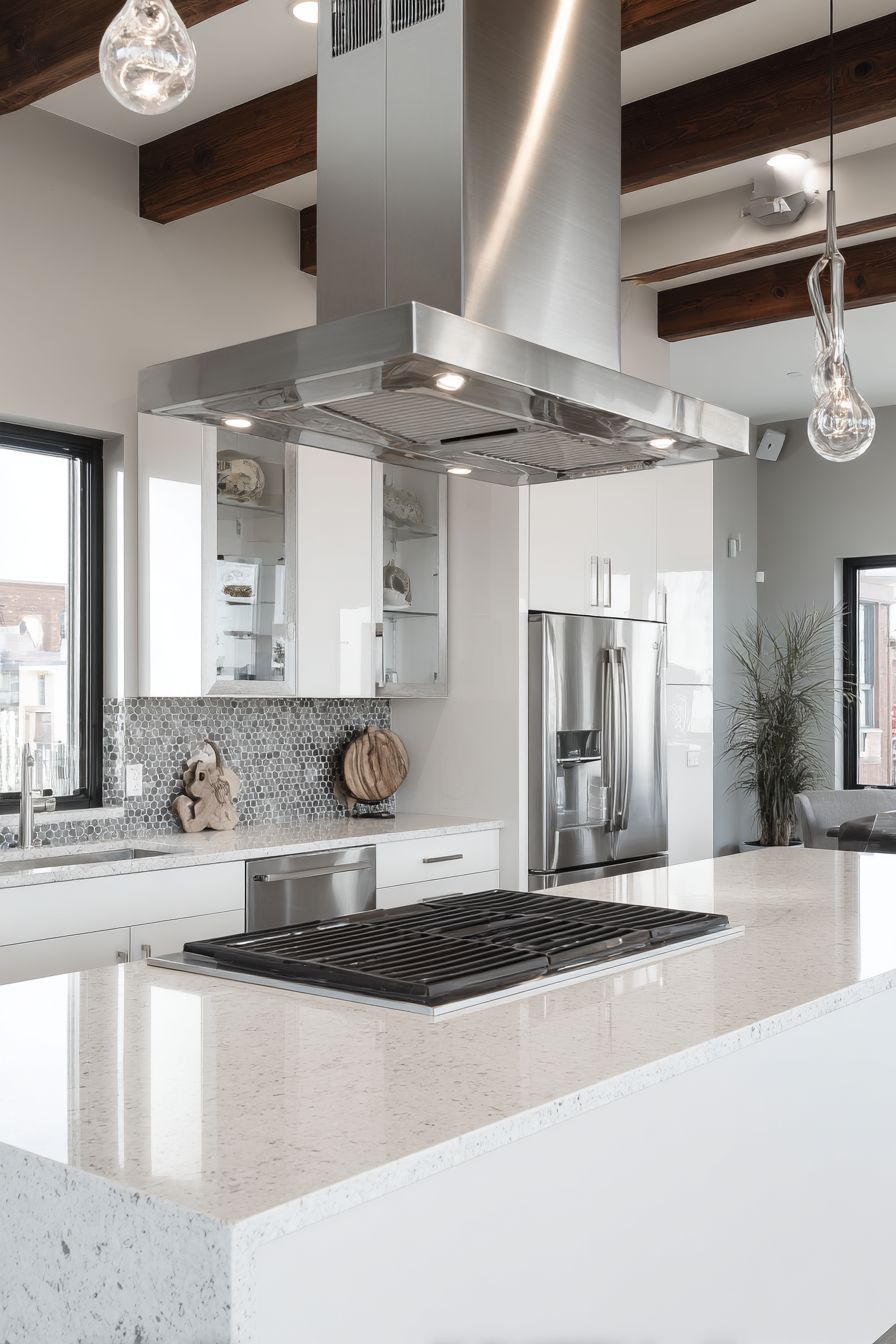
Culinary entertainment takes center stage with a cooking island featuring a built-in teppanyaki grill and integrated ventilation system. This interactive cooking surface transforms meal preparation into social events, allowing the cook to engage with family and guests while creating memorable dining experiences. The specialized cooking equipment demonstrates how modern kitchens can accommodate diverse culinary interests and cooking styles.
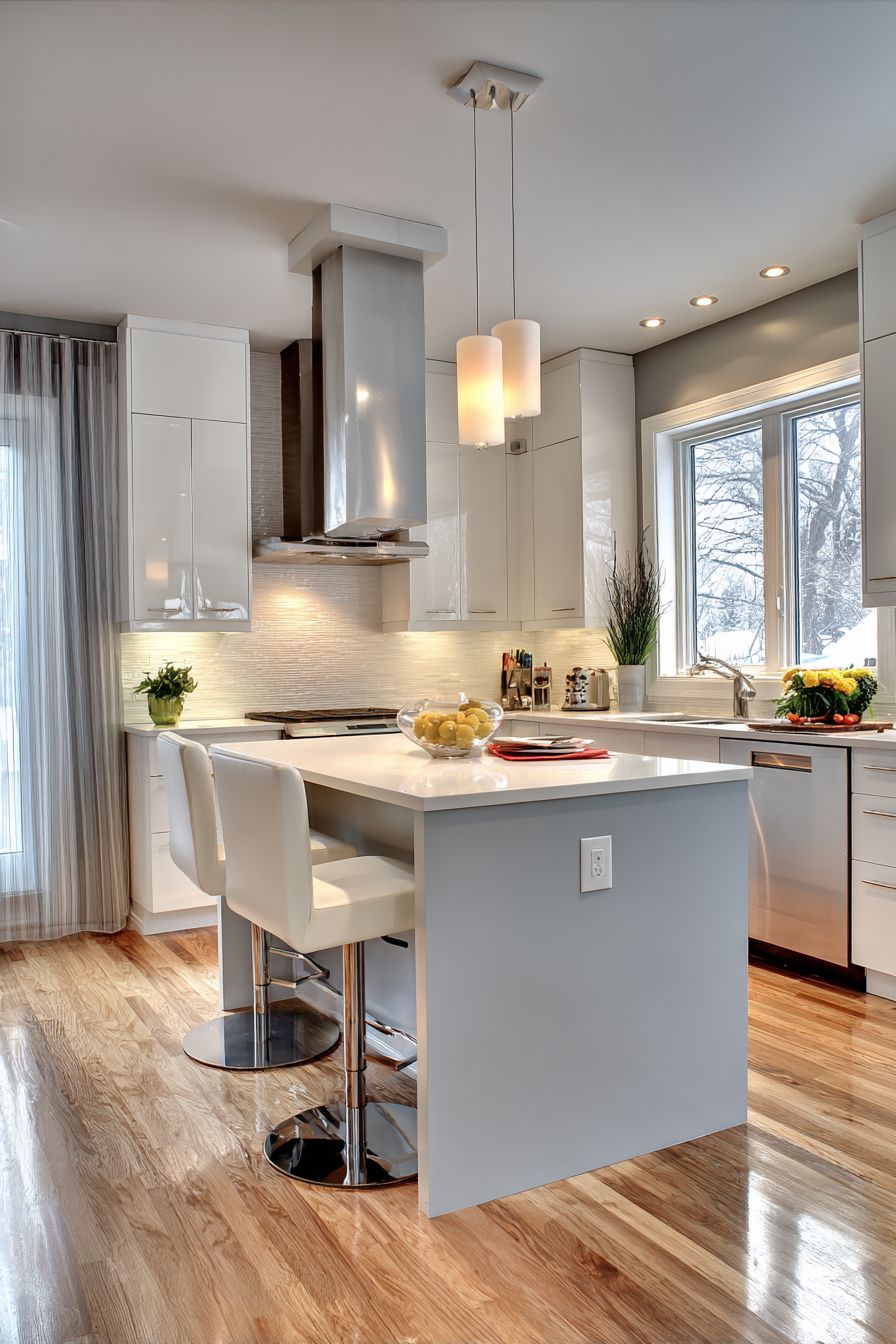
Specialized storage for cooking utensils and serving pieces keeps everything needed for teppanyaki cooking within easy reach while maintaining clean, organized appearances. The surrounding cabinetry integrates these storage needs seamlessly into the overall design, preventing the kitchen from looking cluttered despite accommodating specialized equipment. Stainless steel accents complement the professional cooking equipment while maintaining the sophisticated aesthetic.
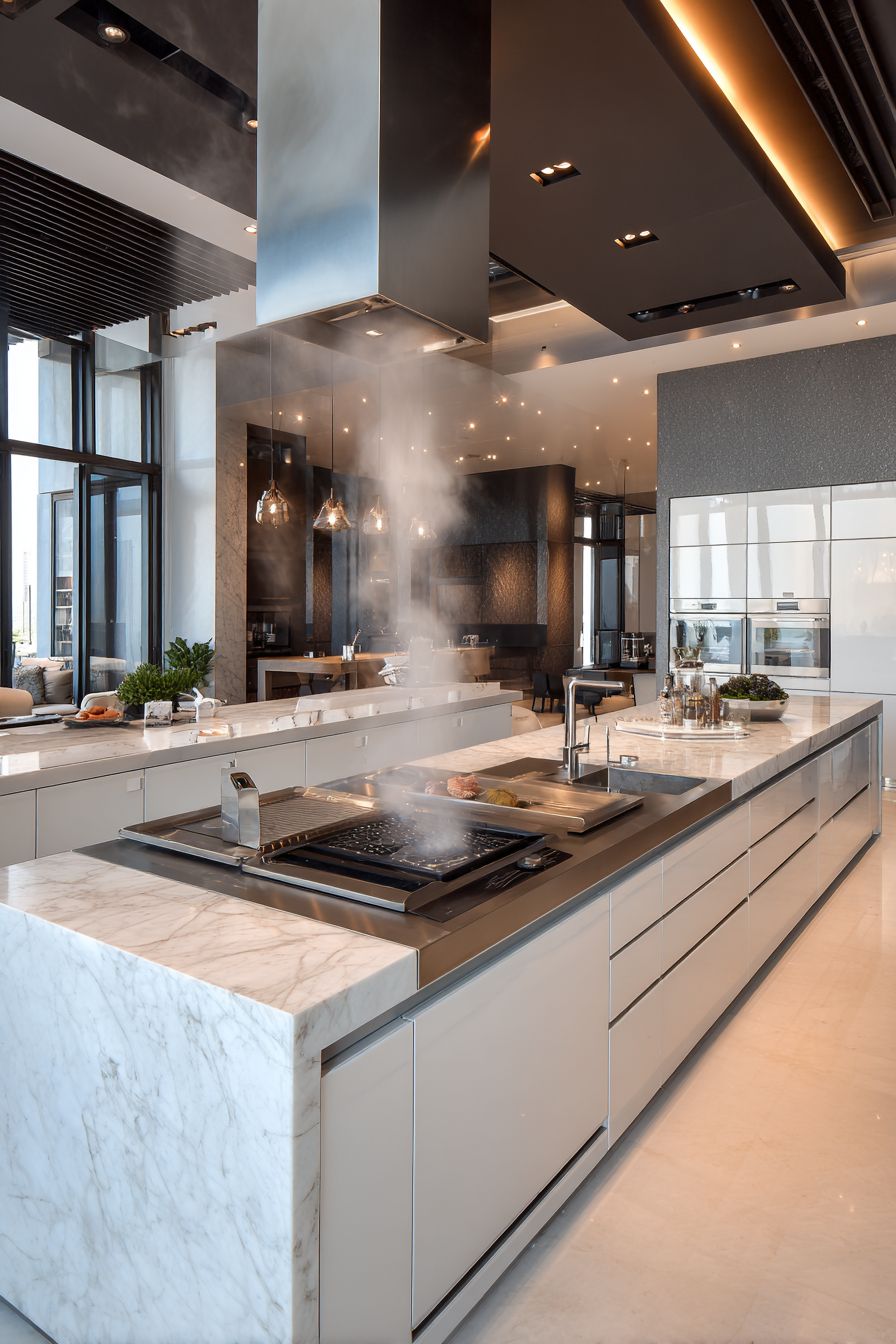
Pendant lighting provides focused task illumination directly over the cooking surface, ensuring proper visibility for safe cooking while creating dramatic atmosphere for dinner parties. The white and grey color scheme provides a neutral backdrop that allows the interactive cooking to become the main attraction while maintaining the sophisticated style that defines contemporary design.
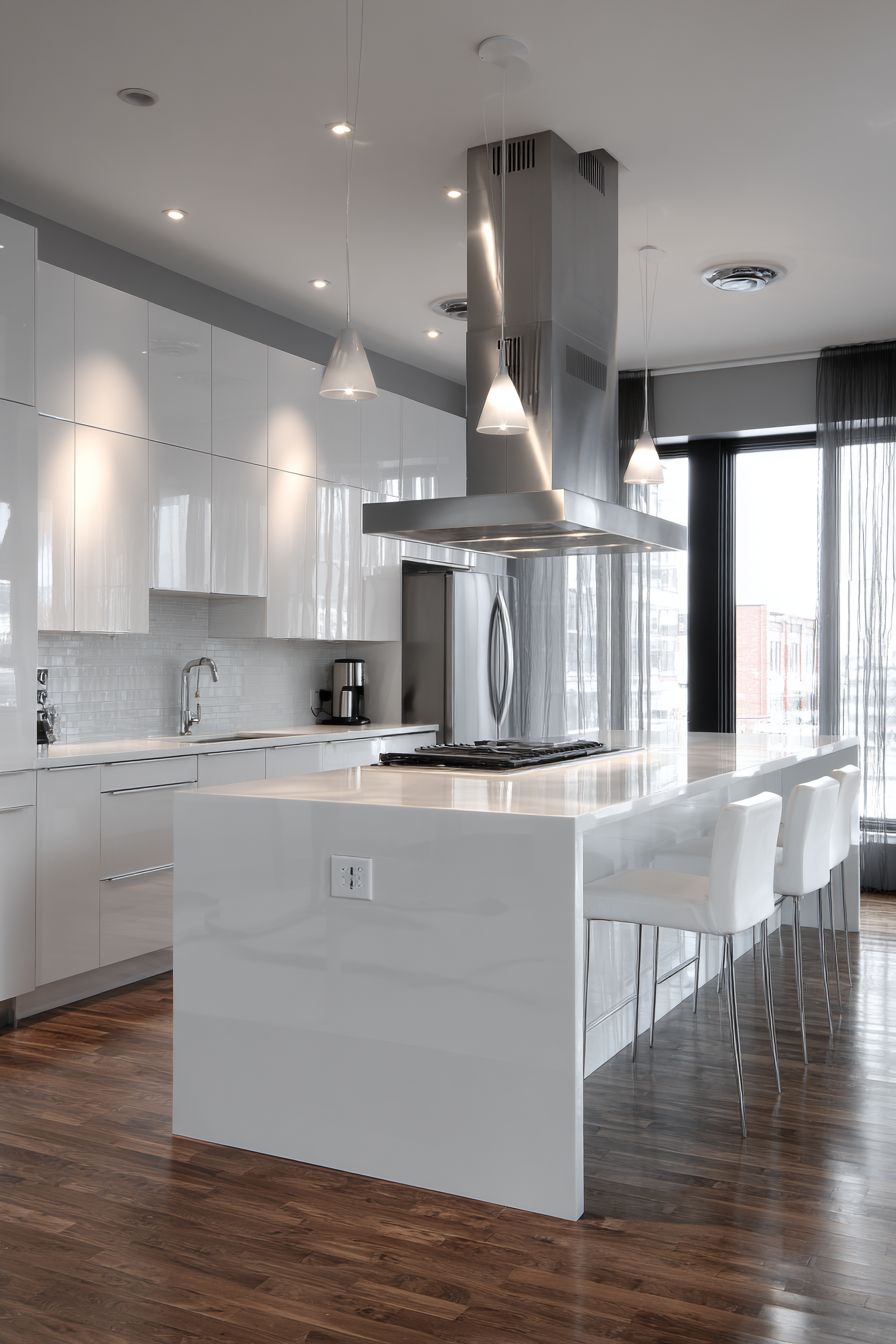
Key design tips for interactive cooking islands include incorporating specialized cooking surfaces for entertainment, providing dedicated storage for cooking tools and serving pieces, installing focused task lighting over cooking areas, using professional-grade materials for durability, and maintaining neutral color schemes to emphasize the cooking experience.
16. Double-Height Storage Innovation
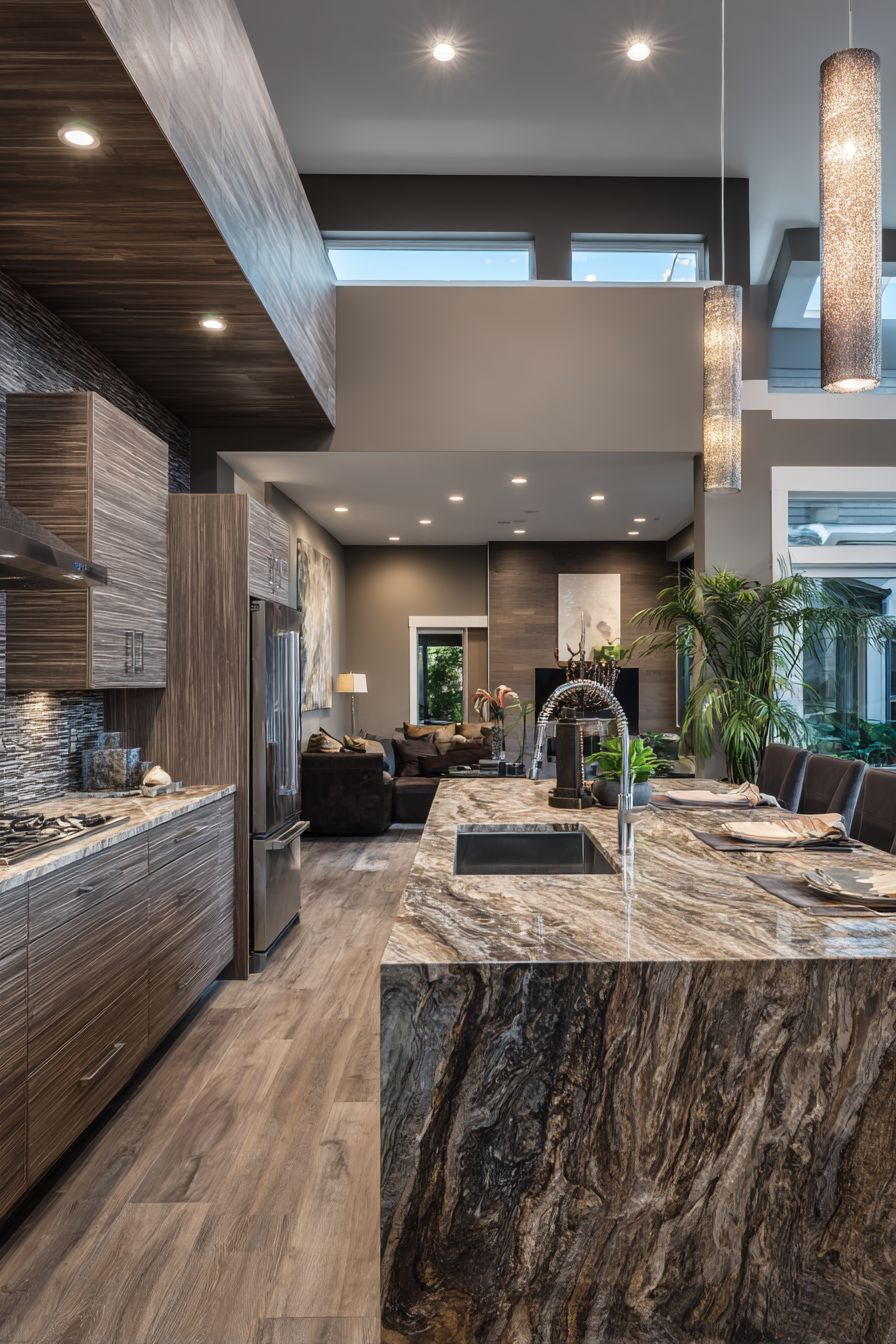
Vertical storage reaches new heights with a double-height kitchen that incorporates upper cabinets accessible via a rolling library ladder system. This innovative approach maximizes storage capacity while creating dramatic architectural interest that transforms the kitchen into a stunning focal point. The library ladder system adds both functionality and visual appeal, reminiscent of traditional libraries while maintaining thoroughly modern aesthetics.
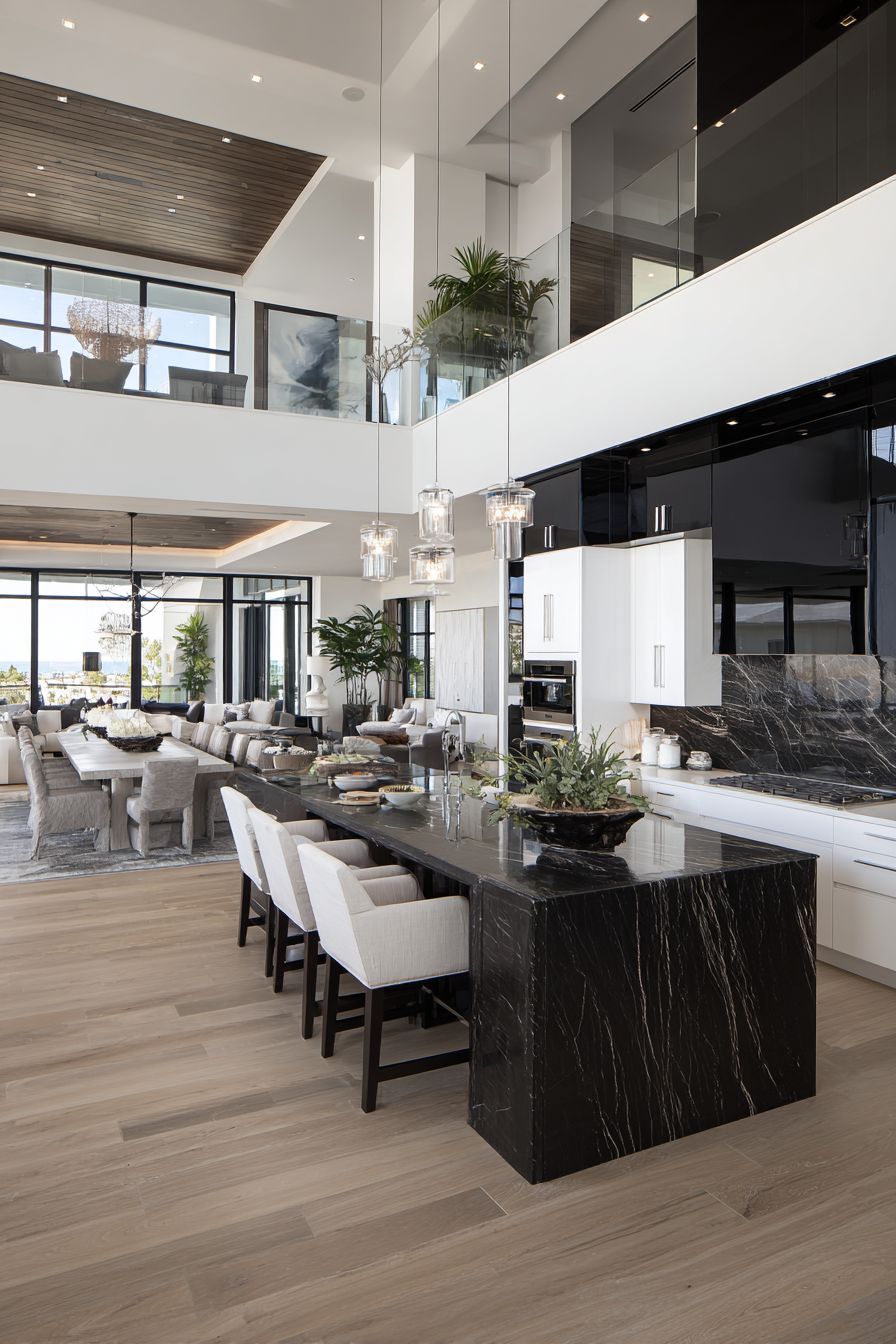
The dramatic vertical storage demonstrates how high ceilings can be utilized effectively rather than simply left as empty space. Every inch of wall height becomes valuable storage real estate while maintaining the clean modern aesthetic through consistent cabinet design and finish. A large format island provides ample prep space and casual seating while grounding the soaring space with substantial horizontal elements.
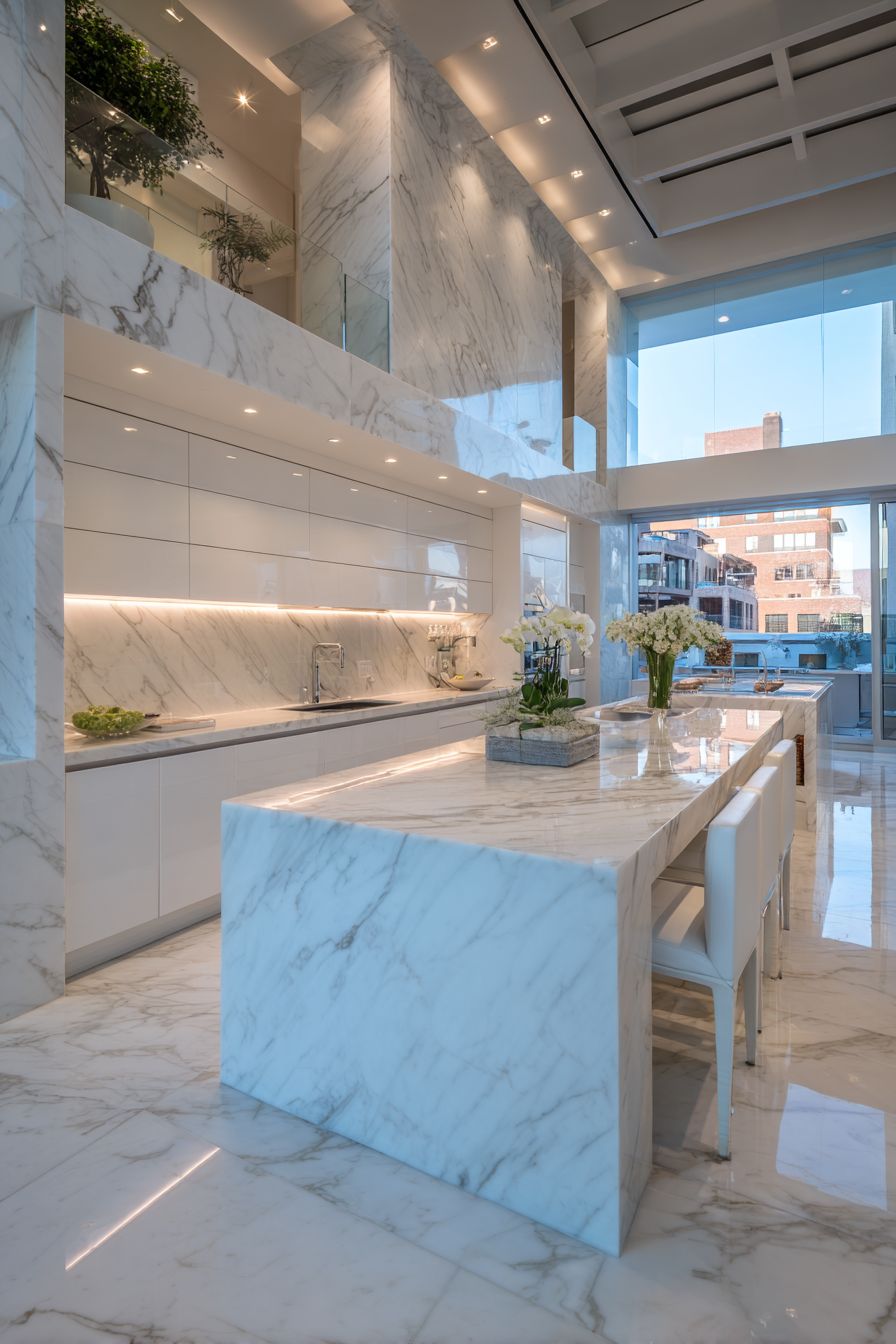
Clerestory windows introduce natural light from above while maintaining privacy and wall space for storage below. This lighting strategy creates dramatic illumination changes throughout the day while highlighting the impressive scale of the vertical storage system. The combination of innovative storage solutions with sophisticated modern design elements creates a kitchen that is both highly functional and visually spectacular.
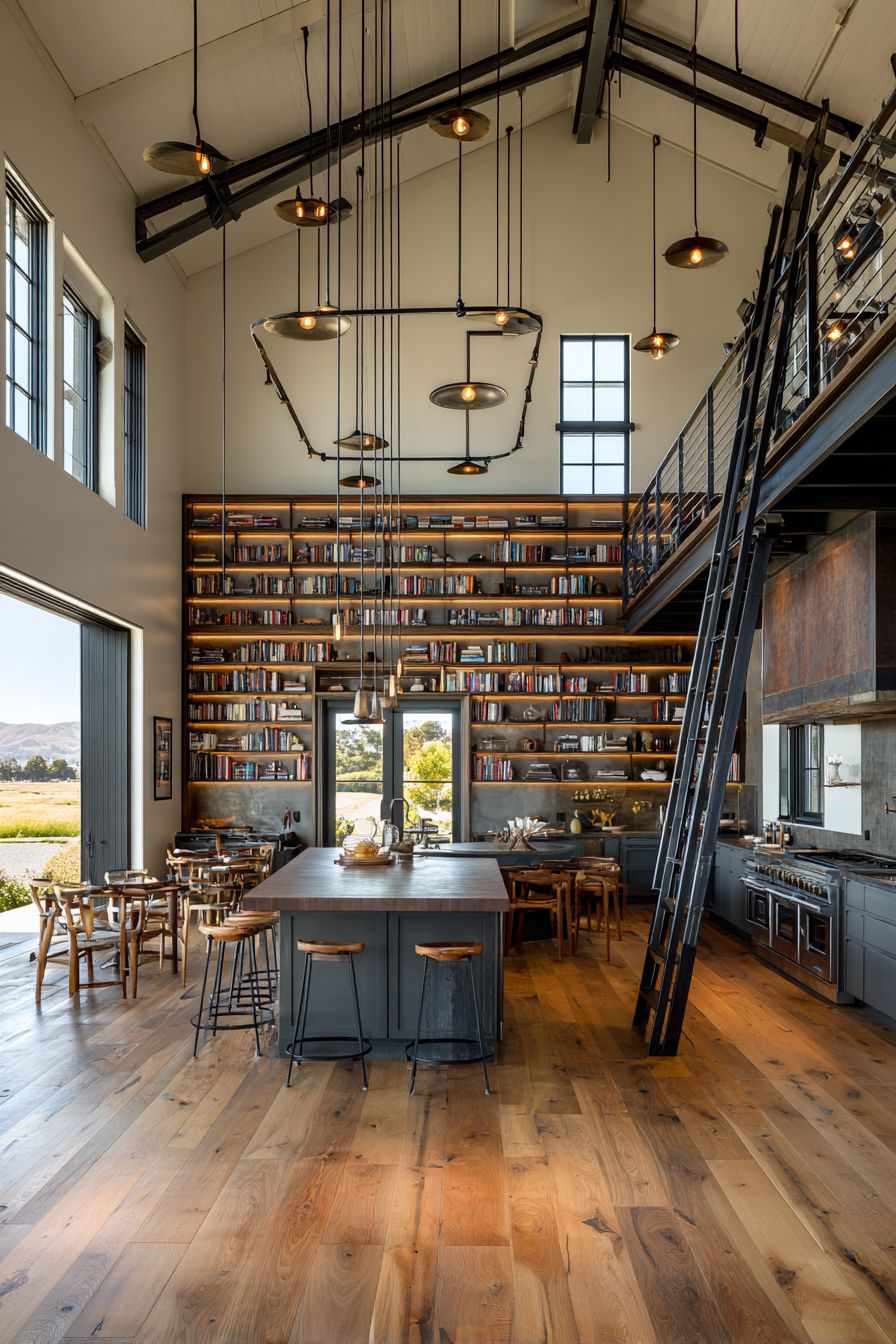
Key design tips for double-height kitchens include installing rolling ladder systems for upper cabinet access, maximizing vertical storage potential in high-ceiling spaces, using large islands to ground soaring spaces, incorporating clerestory windows for natural light, and maintaining consistent cabinet design for visual cohesion.
17. Wine Storage and Bar Integration
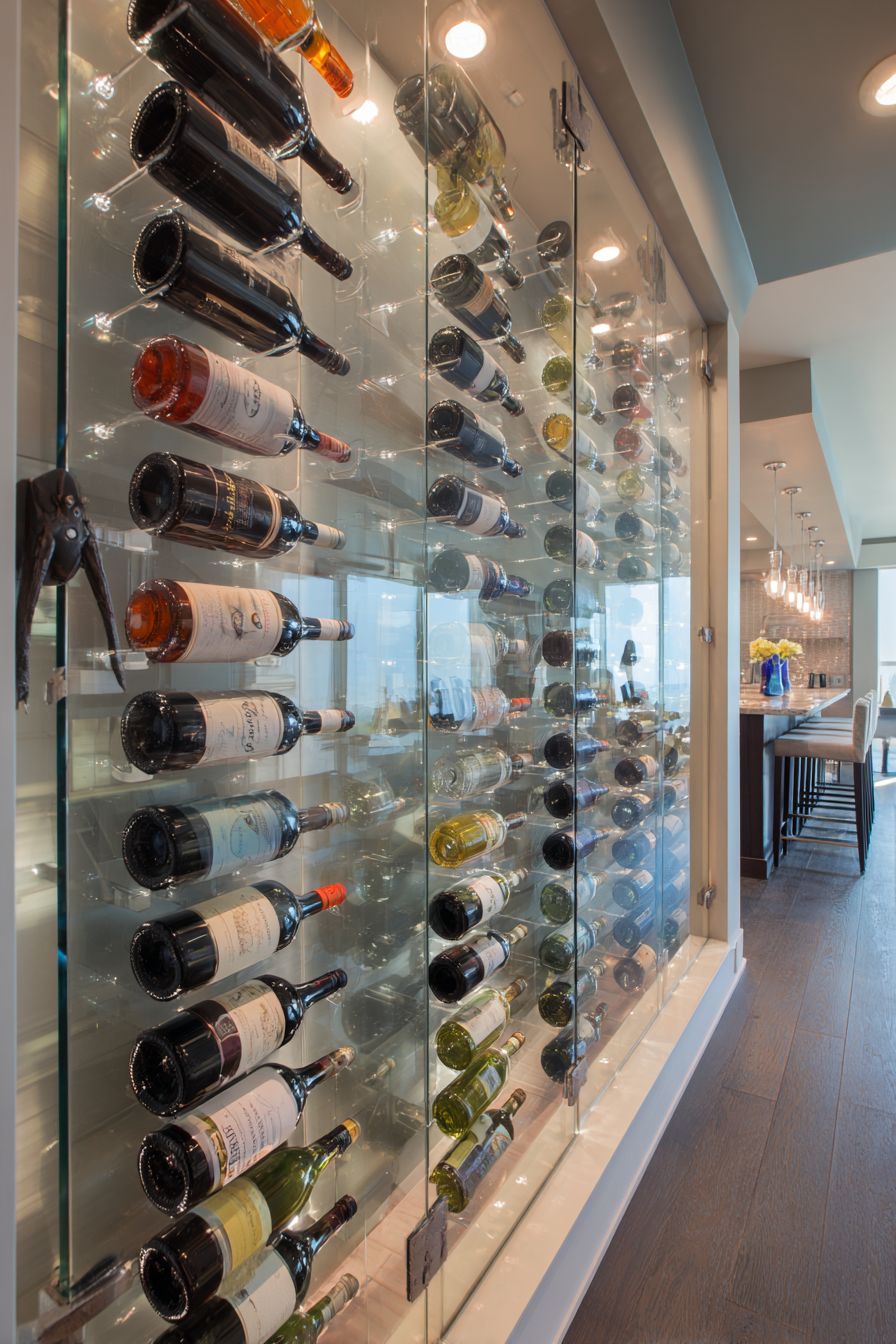
Entertainment becomes the focus with a sophisticated wine storage wall featuring climate-controlled display units and integrated LED accent lighting. The wine storage transforms everyday kitchen storage into an elegant display that celebrates the homeowner’s collection while maintaining optimal storage conditions. LED accent lighting highlights the bottles while creating dramatic ambiance for evening entertaining.
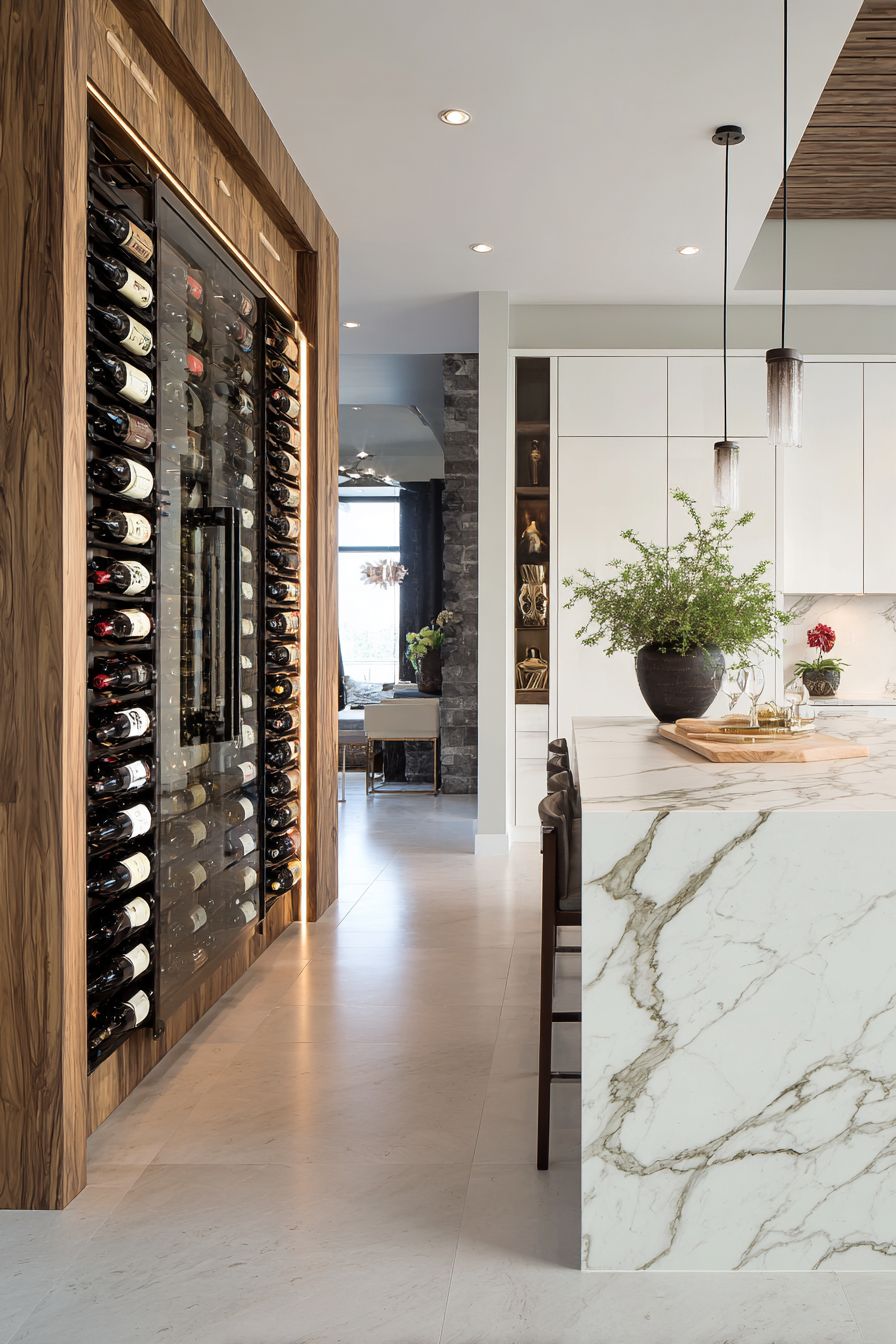
The adjacent bar area includes professional-grade equipment like a built-in ice maker and specialized glass storage while maintaining the kitchen’s contemporary design language. This integration demonstrates how modern kitchens can accommodate serious entertaining needs without compromising overall aesthetic coherence. Dark bronze fixtures complement the sophisticated color palette while providing elegant functionality.
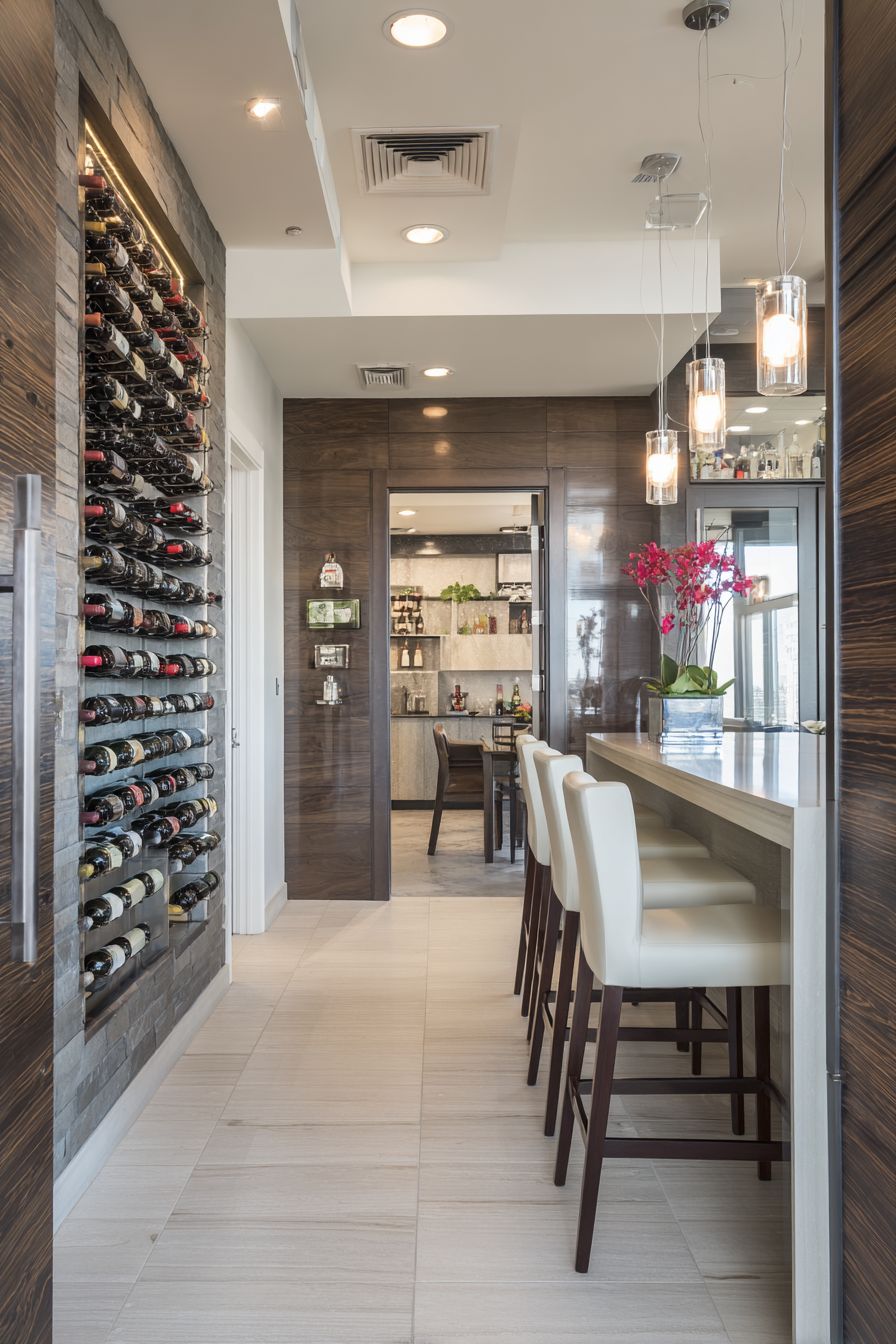
White and natural wood materials create a refined palette that serves as a sophisticated backdrop for the wine display and entertaining activities. Large format tiles create seamless surfaces that are both beautiful and practical for high-traffic entertaining areas. The combination of functional storage with display elements creates a kitchen that is equally suited to daily life and special occasions.
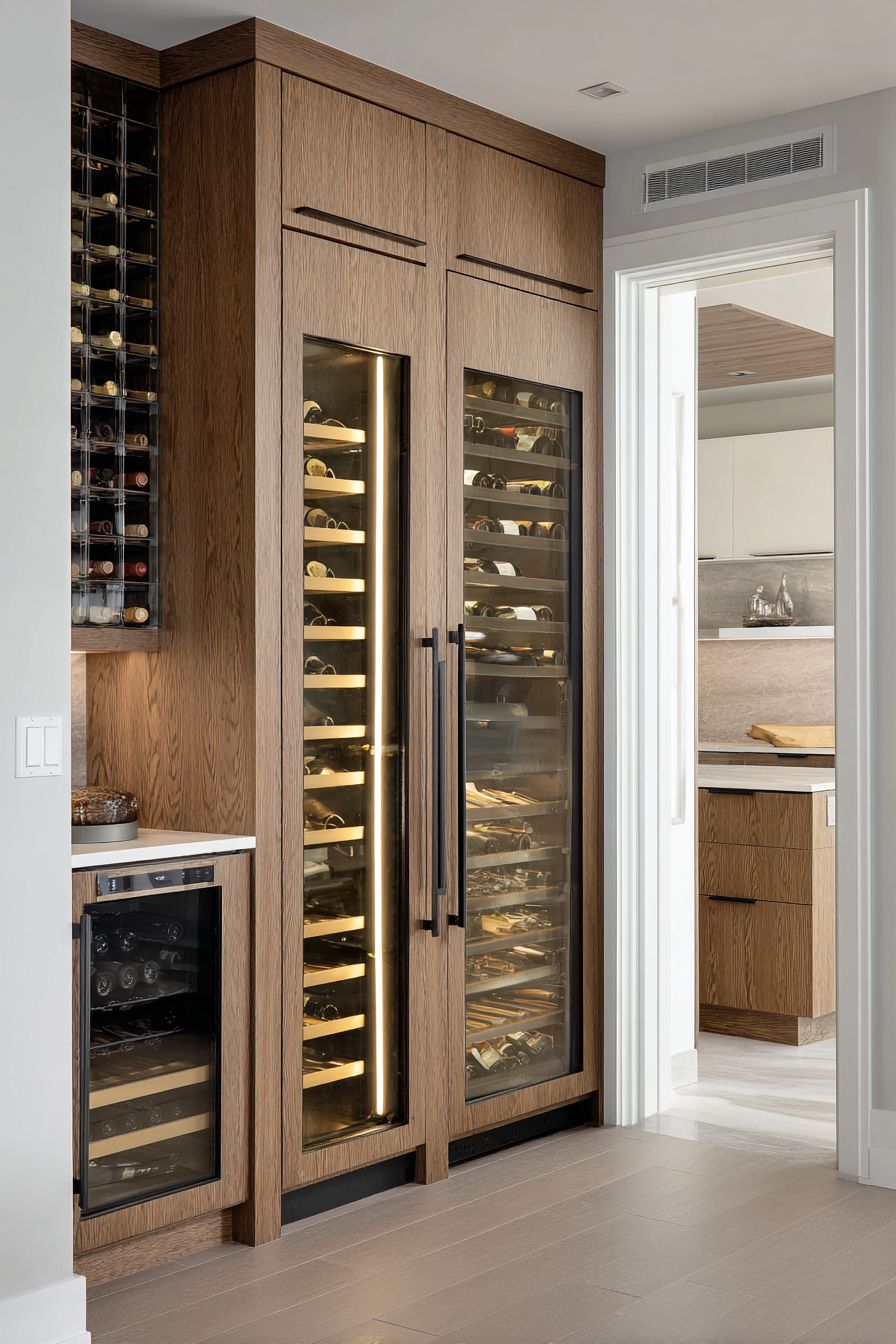
Key design tips for wine storage integration include installing climate-controlled storage to protect wine investments, using LED accent lighting to highlight collections, incorporating professional bar equipment for entertaining, selecting sophisticated fixtures in dark bronze for elegance, and maintaining seamless surfaces for easy cleanup.
18. Multi-Generational Design Accessibility
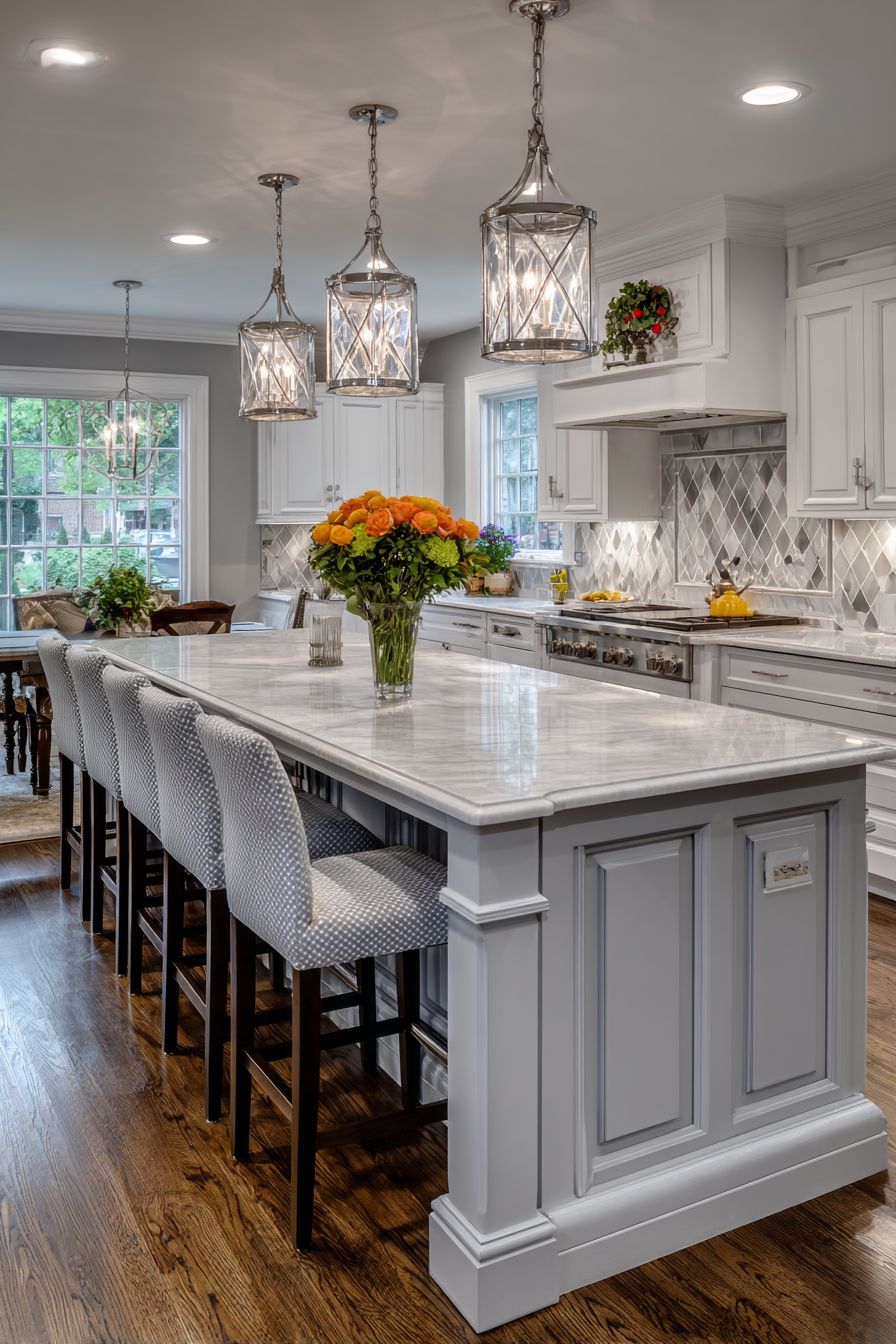
Universal design principles create a modern kitchen that accommodates multi-generational living with thoughtful features that enhance accessibility without compromising style. Varying counter heights provide comfortable work surfaces for users of different heights and abilities, while the island features both standard and raised prep areas to accommodate various needs. This inclusive approach demonstrates how modern design can serve diverse user requirements.
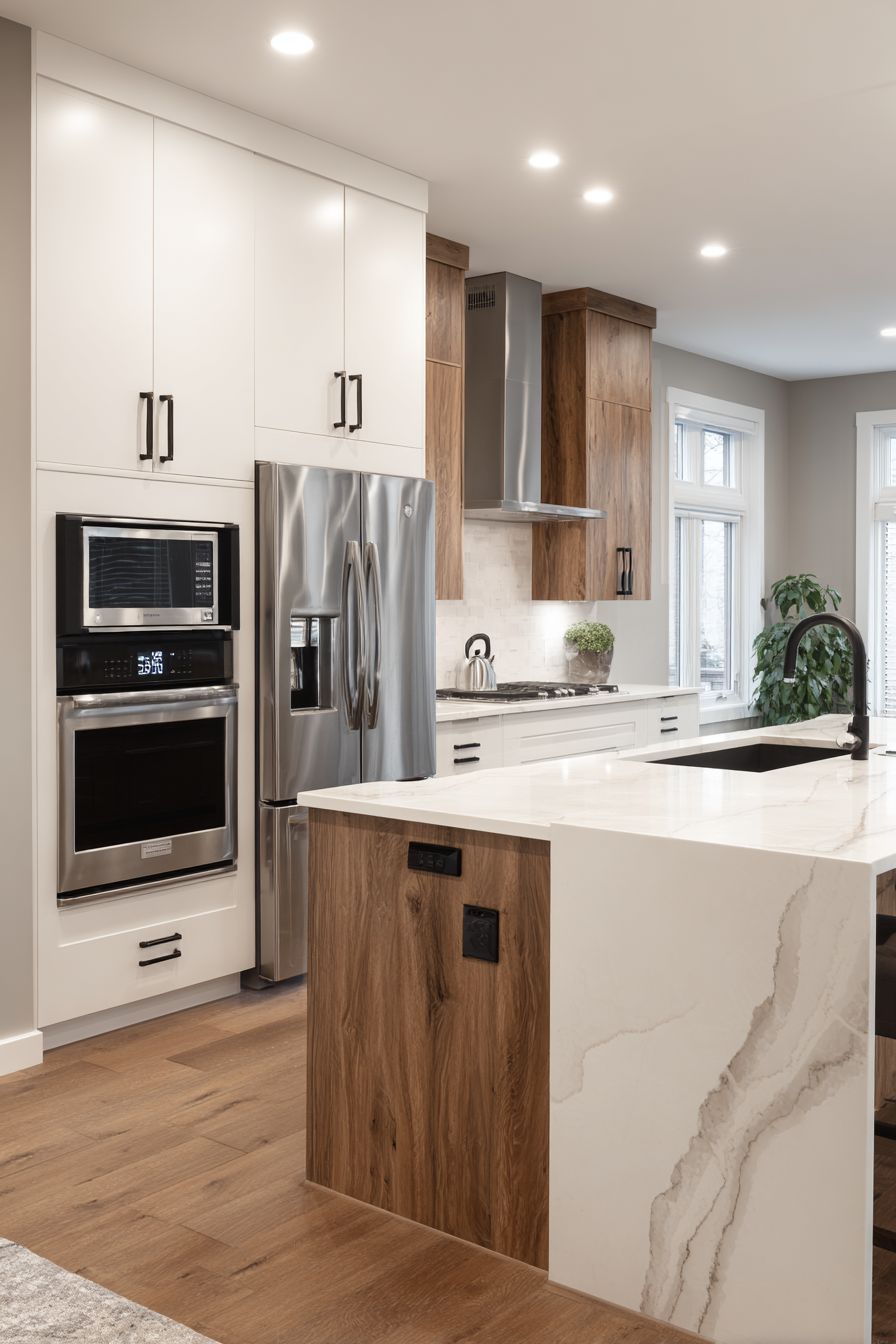
Pull-out drawers and lazy susans maximize accessibility by bringing items within easy reach while maintaining organized storage systems. These features are particularly valuable for users with mobility limitations while providing convenience benefits for all family members. The thoughtful organization systems demonstrate how modern kitchens can be both beautiful and highly functional for diverse user needs.
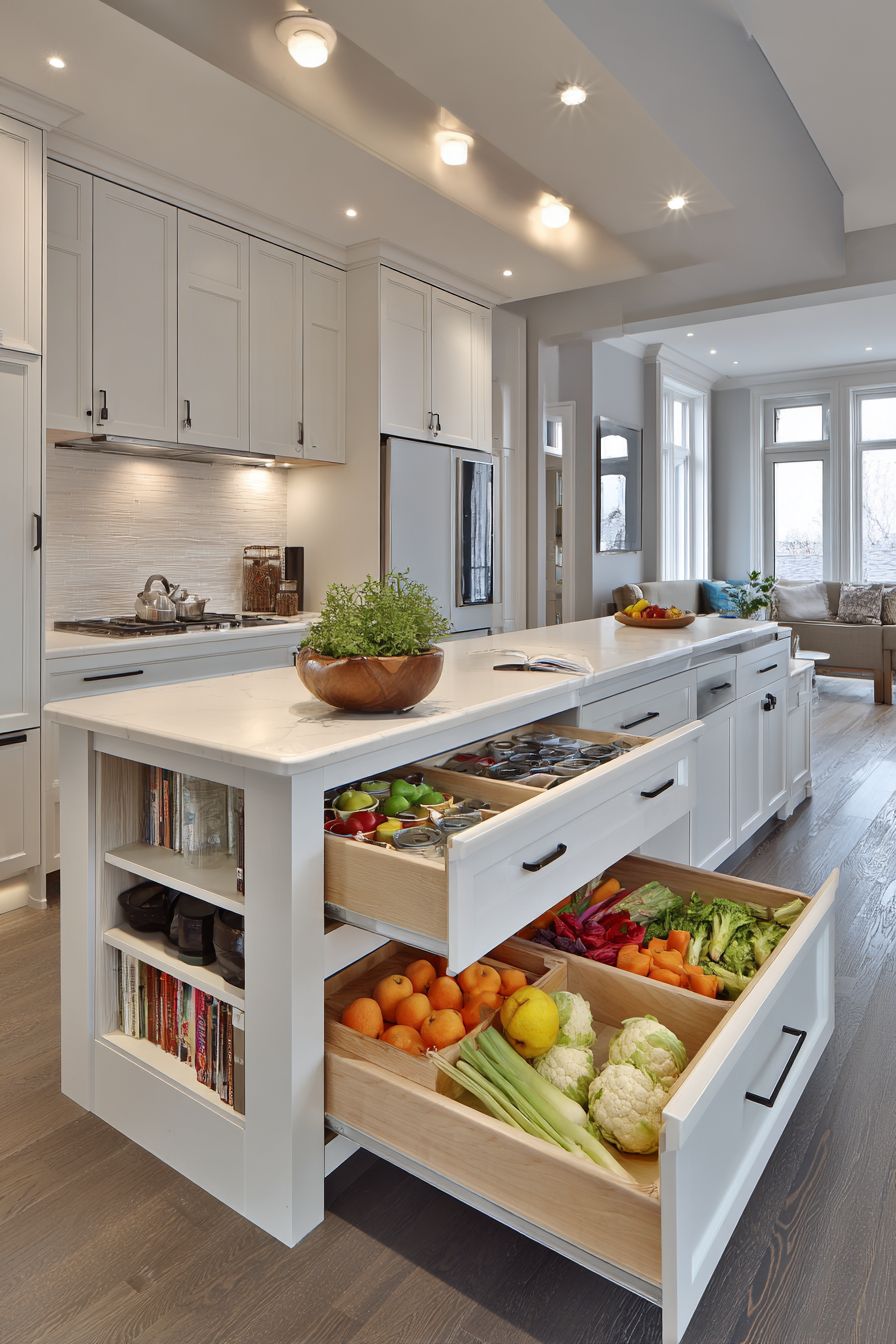
Clean white cabinetry with contrasting hardware maintains modern aesthetics while practical features enhance daily functionality for all users. The design proves that accessibility features don’t require sacrificing style or contemporary appeal. Instead, thoughtful planning creates kitchens that are more functional and welcoming for everyone who uses them.
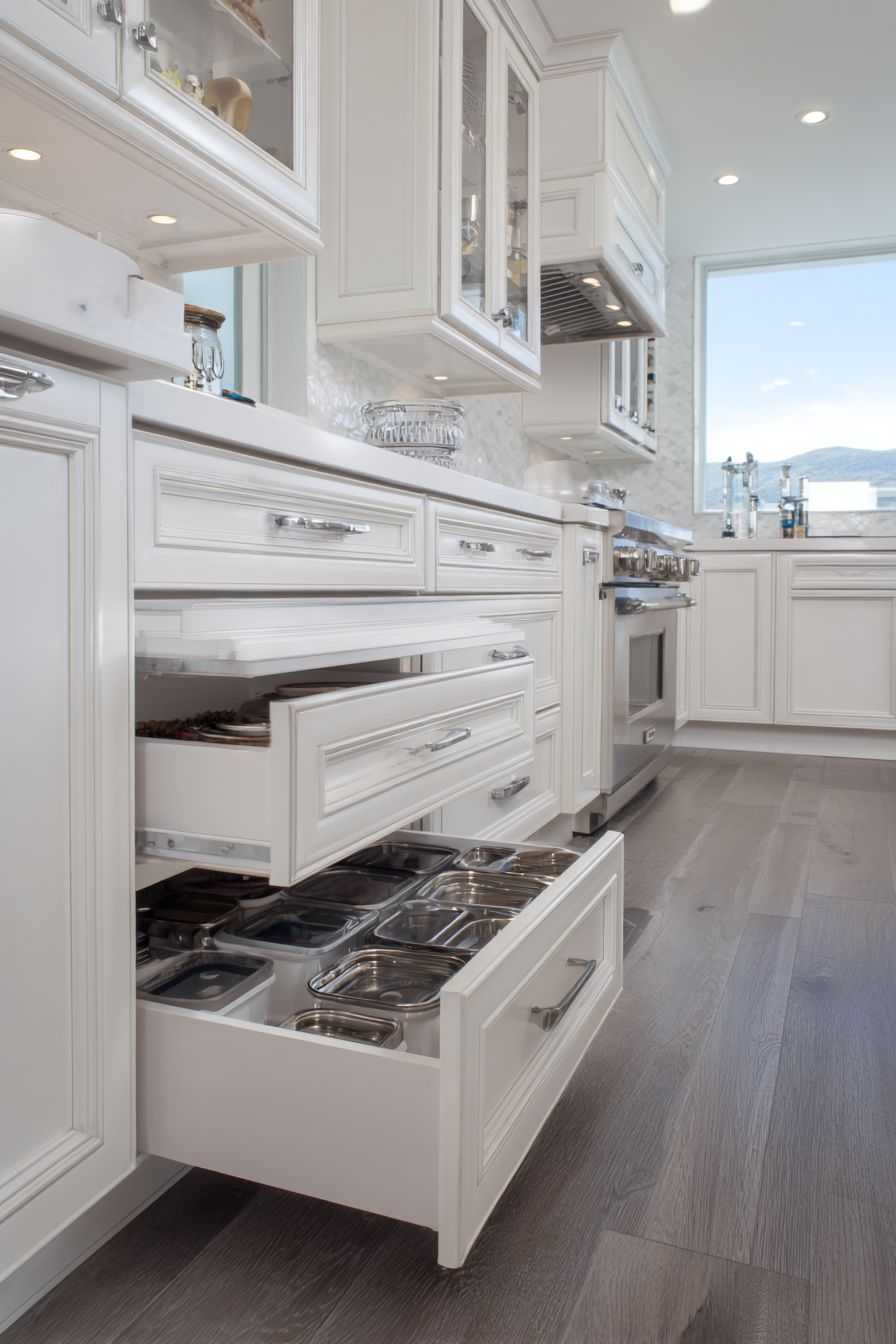
Key design tips for multi-generational kitchens include incorporating varying counter heights for different users, installing pull-out drawers for easy access, using lazy susans to maximize corner accessibility, maintaining clean modern aesthetics while adding practical features, and designing organization systems that serve diverse needs.
19. Greenhouse Window Herb Garden
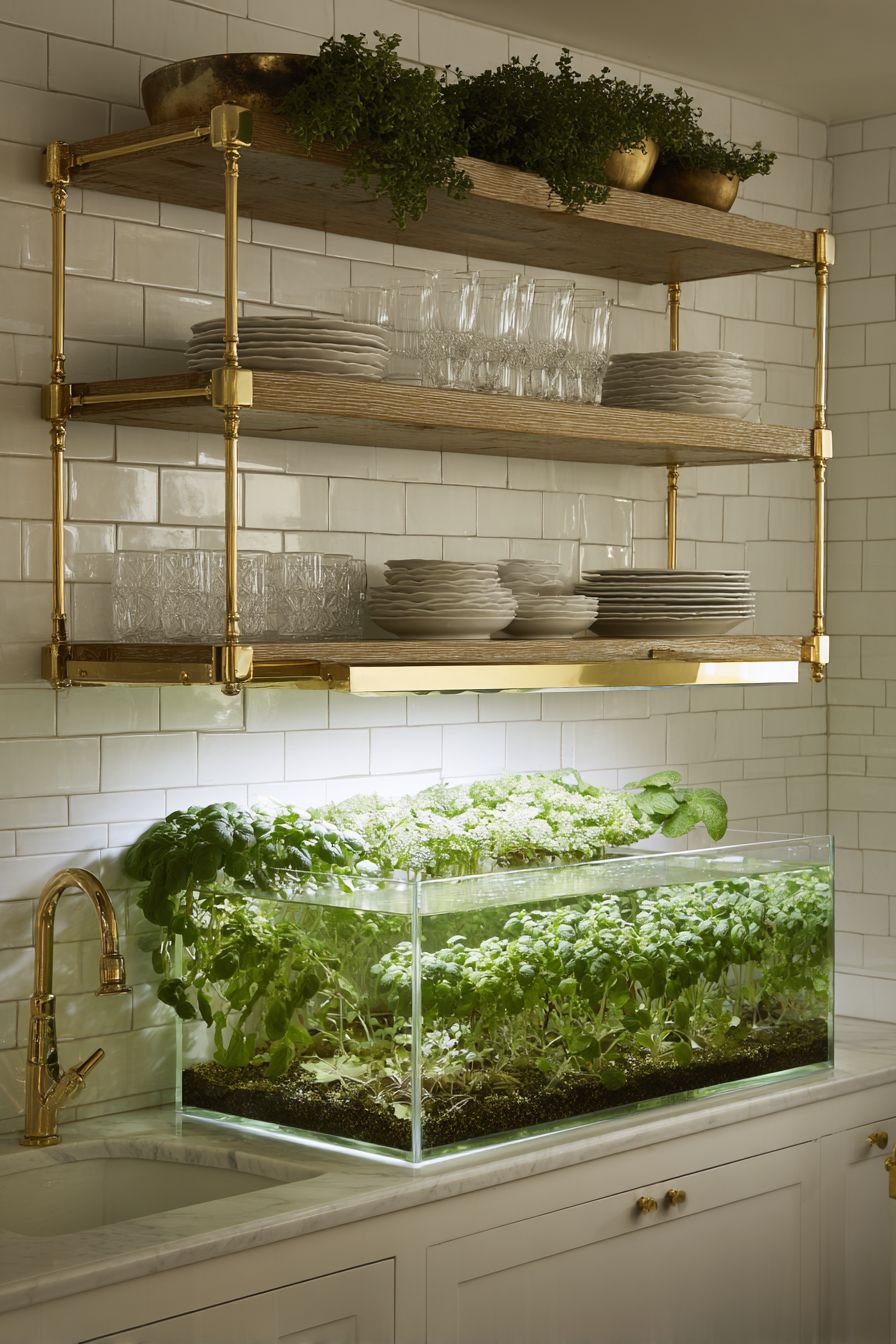
Fresh ingredients become part of the kitchen’s living design with a greenhouse window herb garden integrated above the main prep sink. This innovative feature combines functionality with natural beauty, providing fresh herbs for cooking while creating a living focal point that changes with the seasons. The herb garden demonstrates how modern kitchens can incorporate sustainable practices while enhancing daily cooking experiences.
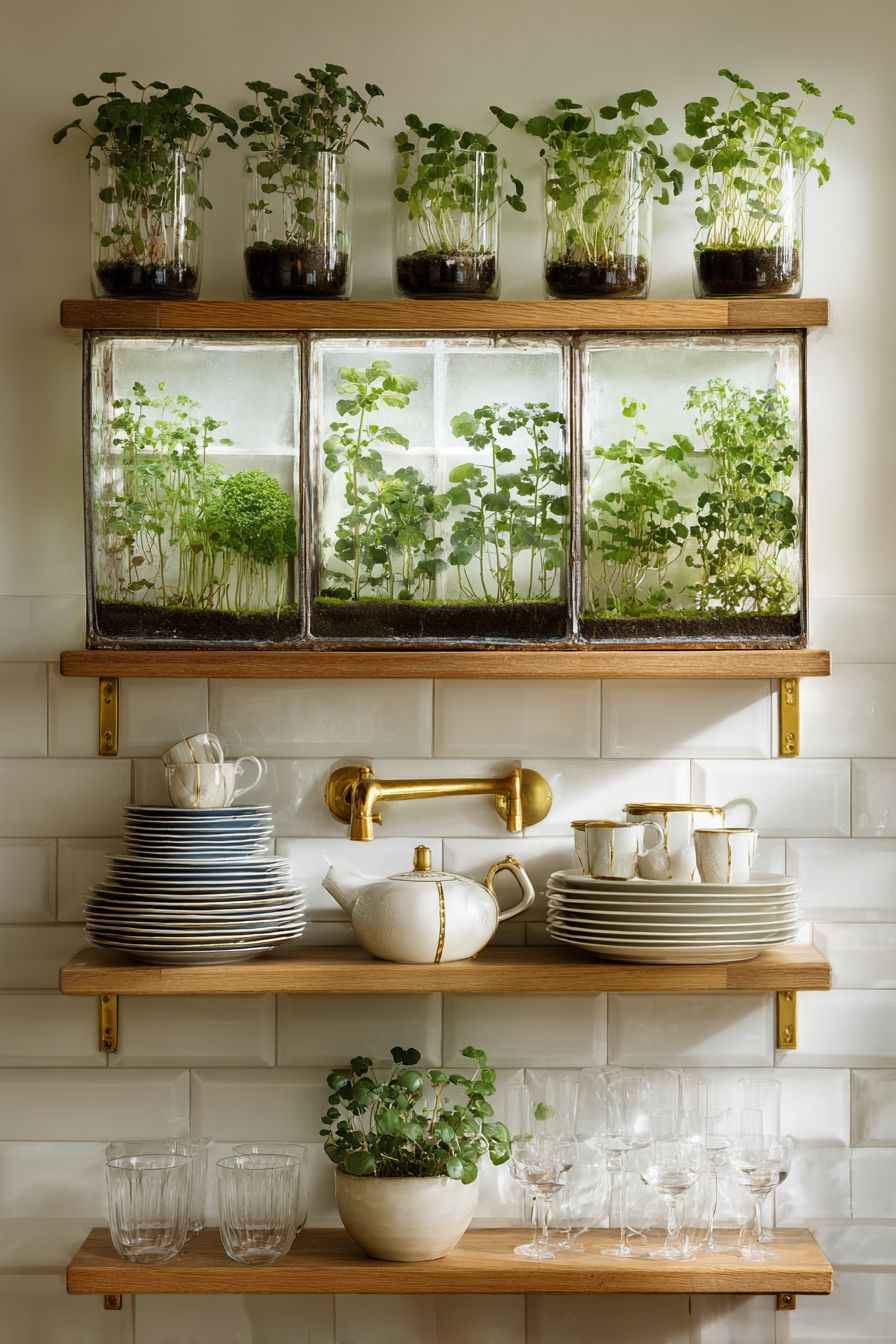
White subway tile backsplash provides a clean backdrop that highlights the living garden while maintaining the classic appeal that makes subway tile a timeless choice. Natural wood open shelving displays everyday dishes and glassware, creating functional storage that also serves as decorative display. The combination of living elements with natural materials creates a kitchen that feels connected to nature.
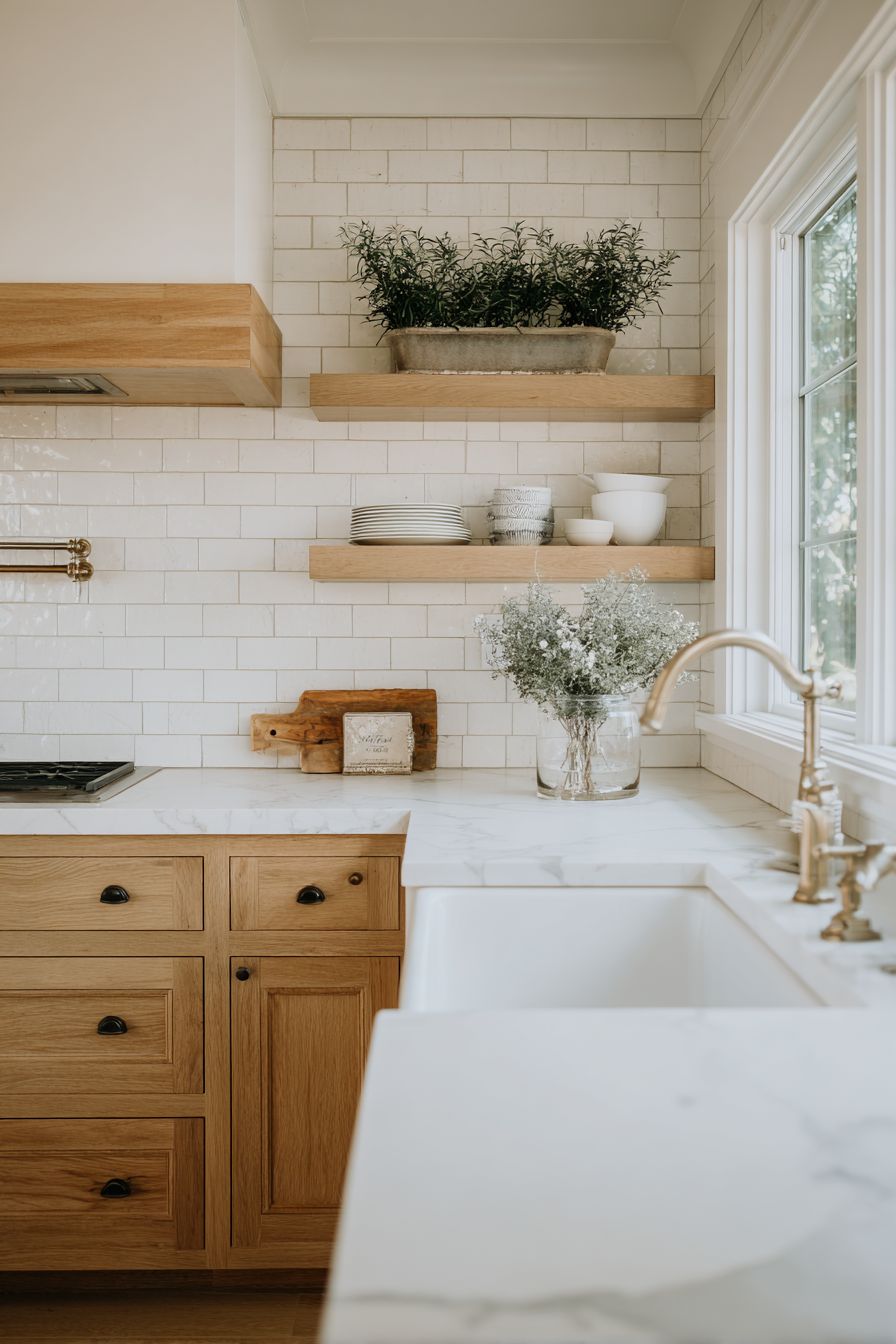
Brass fixtures and hardware add warmth to the primarily white and wood palette while providing durable functionality that improves with age. The warm metal tones complement both the natural wood elements and the living herbs, creating a cohesive design that celebrates natural materials and sustainable living practices.
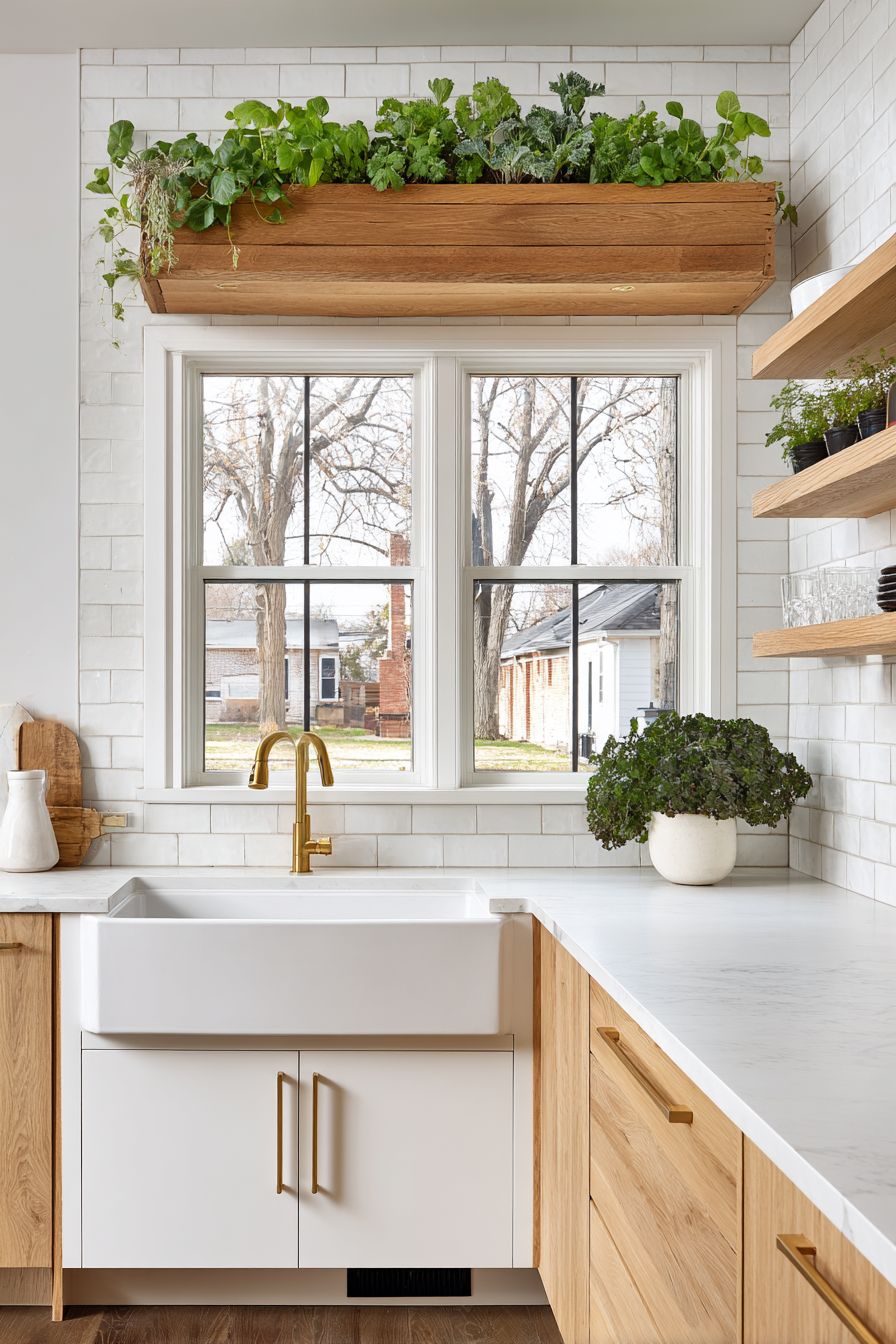
Key design tips for herb garden integration include positioning growing areas near prep zones for convenient access, using greenhouse windows to provide optimal growing conditions, maintaining clean backgrounds to highlight living elements, incorporating natural wood for warmth and organic appeal, and selecting brass fixtures for timeless elegance.
20. Moveable Island Flexibility
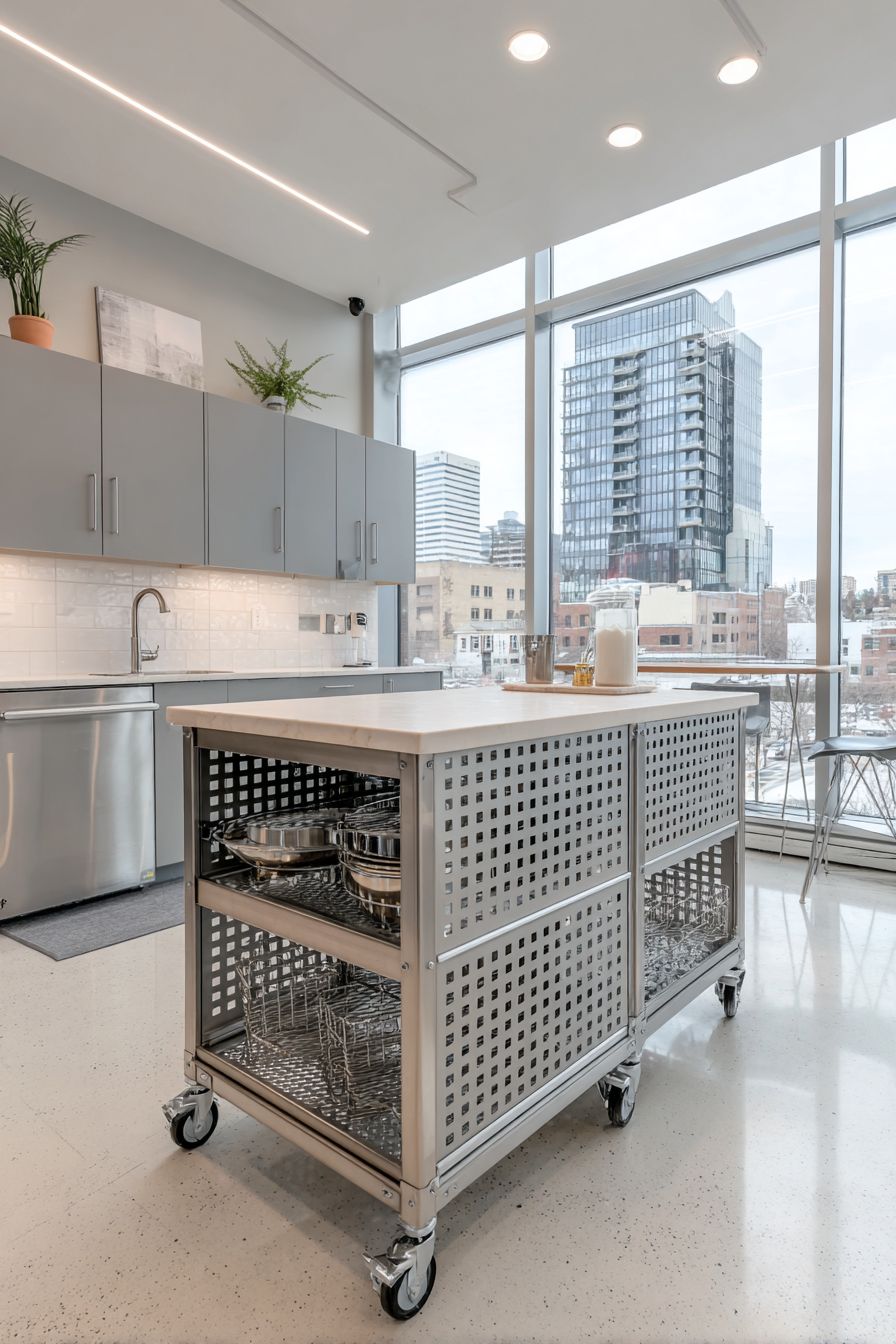
Adaptability defines this modern kitchen featuring a moveable island on industrial casters that can reconfigure for different uses including food prep, serving, and casual dining. The flexible design recognizes that modern kitchens must accommodate various activities throughout the day and provides solutions that can adapt to changing needs. Fold-down extensions and integrated storage for kitchen tools maximize the island’s functionality while maintaining clean lines when features aren’t in use.
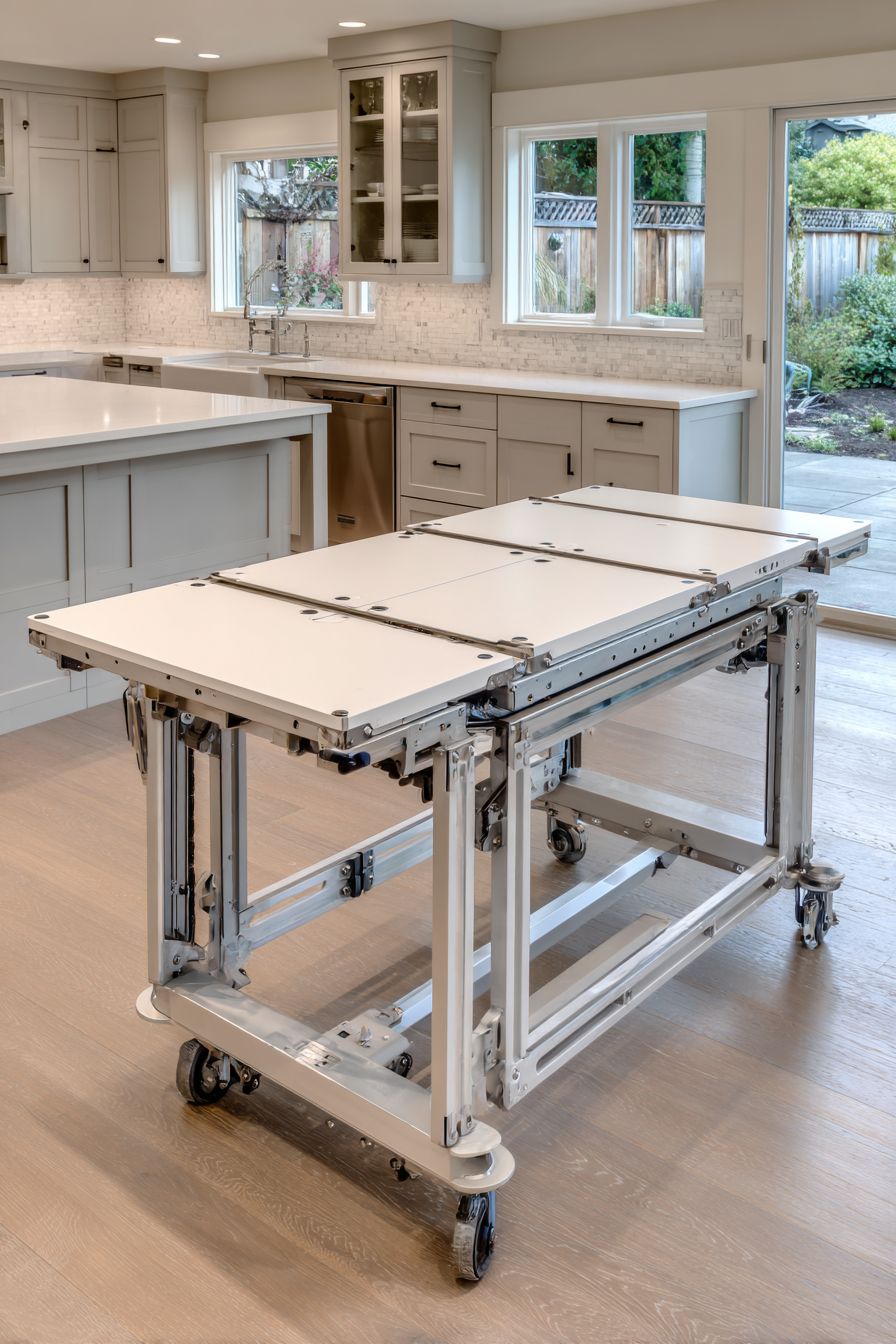
The industrial casters provide smooth mobility while adding visual interest that complements the contemporary aesthetic. The wheels are substantial enough to move the loaded island easily while being refined enough to contribute positively to the overall design. This balance between industrial functionality and sophisticated style demonstrates successful modern design integration.
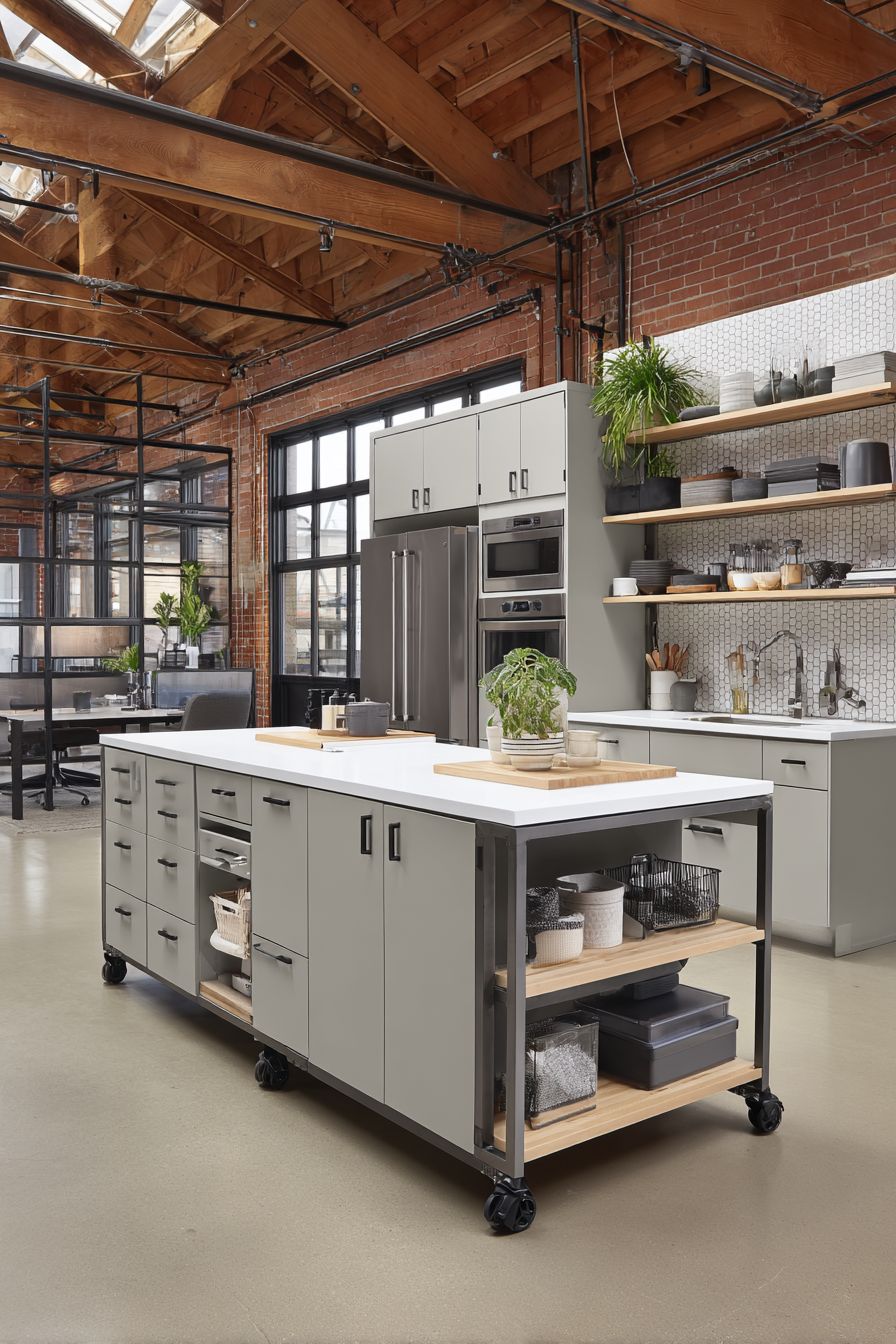
Surrounding cabinetry maintains clean modern lines in soft grey with white quartz countertops and stainless steel appliances, creating a neutral environment that allows the flexible island to be the star. The restrained color palette ensures the kitchen remains cohesive regardless of the island’s position or configuration, while the moveable element adds dynamic interest to the static surrounding elements.
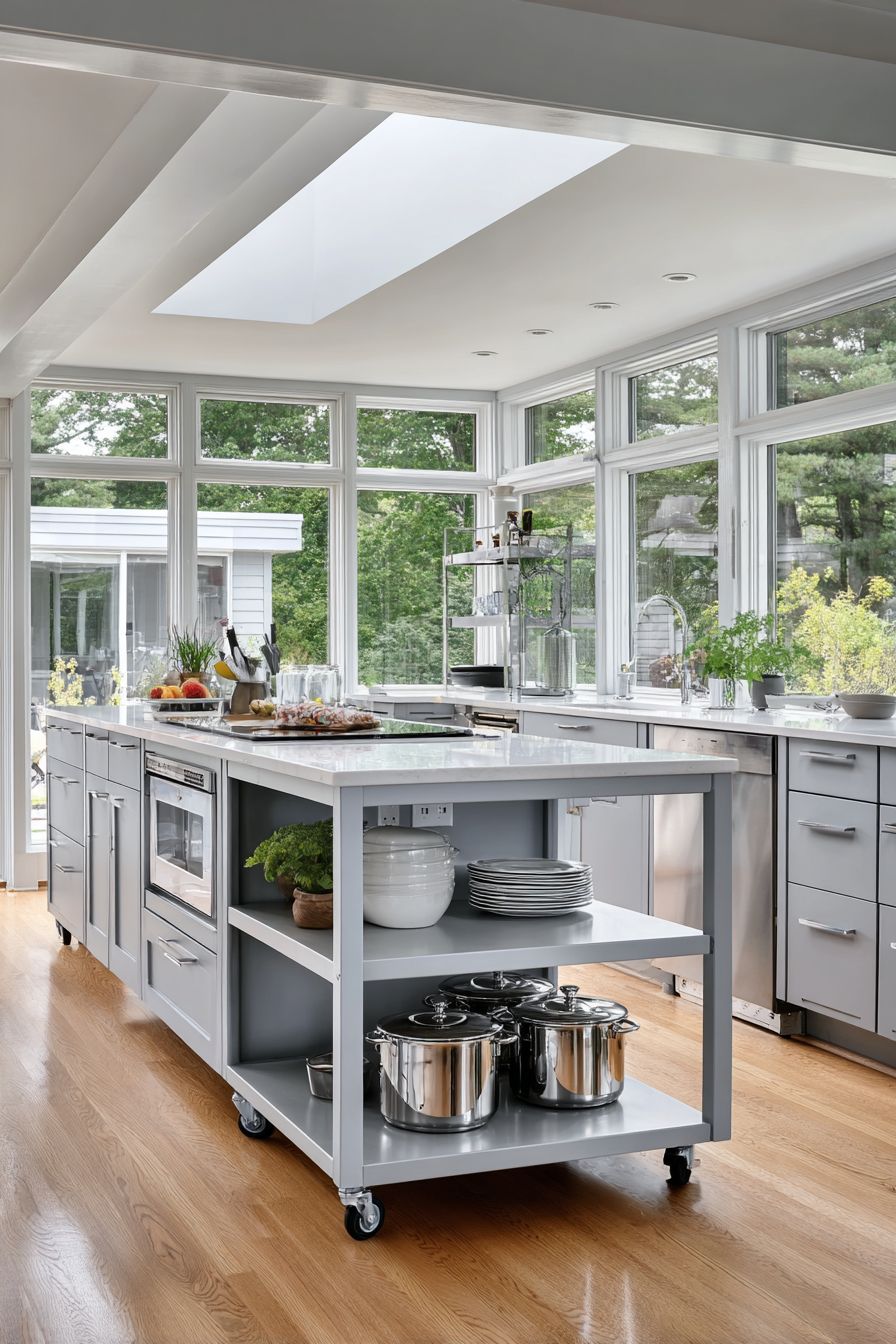
Key design tips for flexible kitchen design include choosing substantial casters for smooth mobility, incorporating fold-down features for space efficiency, providing integrated storage for tools and accessories, maintaining neutral surroundings to accommodate changing configurations, and selecting durable materials that can withstand frequent reconfiguration.
Why These Modern Kitchen Designs Represent the Best in Contemporary Living
These twenty modern kitchen interior concepts represent the pinnacle of contemporary kitchen design because they successfully balance multiple competing demands that define successful modern living spaces. Each design demonstrates sophisticated understanding of how modern families use their kitchens, moving beyond traditional cooking-focused layouts to create multi-functional environments that serve as command centers for busy households. The integration of technology, sustainable materials, and flexible functionality shows how modern kitchen design responds to evolving lifestyle needs while maintaining the aesthetic sophistication that makes homes feel special.
The emphasis on clean lines, quality materials, and innovative storage solutions reflects modern design’s commitment to both beauty and functionality. These kitchens prove that contemporary design doesn’t require sacrificing warmth or comfort for style, instead finding ways to incorporate natural materials, living elements, and comfortable seating areas that make kitchens feel welcoming. The use of professional-grade appliances, specialized storage systems, and dedicated work zones demonstrates how modern kitchens can accommodate serious cooking while maintaining the uncluttered appearances that define contemporary aesthetics.
Smart home integration, sustainable material choices, and universal design principles show how modern kitchen design addresses current concerns about environmental responsibility, technological advancement, and inclusive living. These designs represent the best of modern kitchen planning because they create spaces that are equally suited to daily family life and sophisticated entertaining, proving that contemporary design can be both practical and inspiring.
Conclusion
Modern kitchen design continues to evolve, incorporating new technologies, materials, and lifestyle considerations while maintaining the fundamental principles of clean lines, quality materials, and thoughtful functionality that define contemporary style. These twenty design concepts demonstrate that modern kitchens can accommodate diverse needs and preferences while maintaining sophisticated aesthetic appeal. From compact urban solutions to expansive entertaining spaces, each design shows how thoughtful planning and quality execution can create kitchens that enhance daily life while serving as beautiful focal points for contemporary homes.
The success of these modern kitchen interiors lies in their ability to balance competing demands for beauty, functionality, sustainability, and adaptability. They prove that contemporary design can embrace both cutting-edge technology and timeless natural materials, creating spaces that feel both current and enduring. As kitchens continue to evolve as the hearts of modern homes, these designs provide inspiration for creating spaces that truly serve the complex needs of contemporary living while maintaining the sophisticated beauty that makes houses feel like homes.
"As an Amazon Associate, I earn from qualifying purchases."
