
Minimalism has taken the interior design world by storm. Clean lines, neutral palettes, and uncluttered spaces feel refreshing in a busy world. Yet many homeowners find their minimal living rooms feeling cold, sterile, or unwelcoming. The missing ingredient is almost always texture.
Texture is the silent language of comfort. It communicates warmth before you even sit down. A beautifully minimal space doesn’t mean a flat or lifeless one. Thoughtful layering of textures transforms a sparse room into a sanctuary that feels both refined and deeply livable.
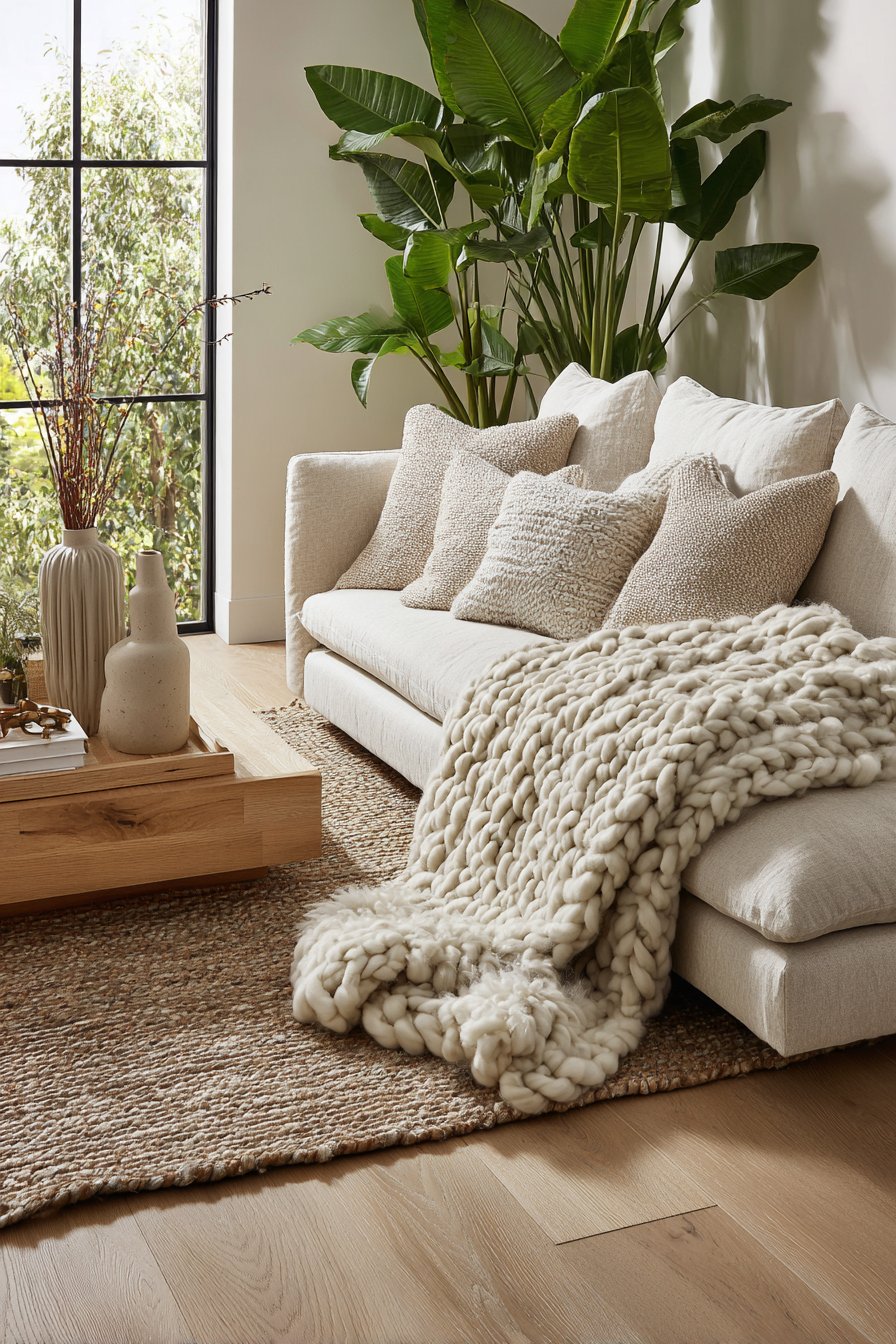
This article explores why texture is non-negotiable even in the most pared-down spaces. We’ll cover specific materials, design strategies, and practical tips to help you build a minimal living room that feels as good as it looks. Whether you’re starting fresh or refining an existing space, these ideas will elevate your interior significantly.
1. The Problem With “Too Minimal”
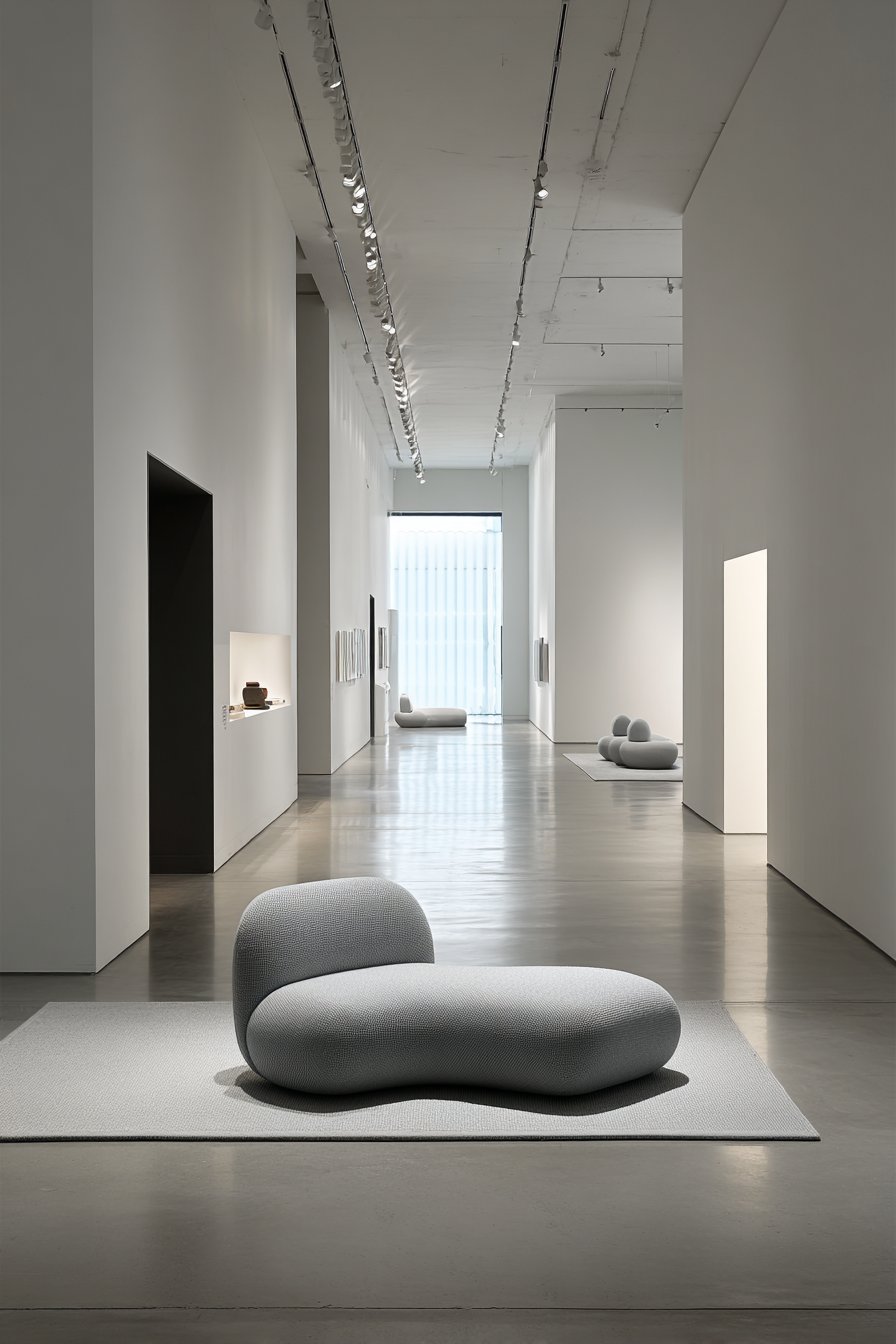
Many people interpret minimalism as removing everything. The result is a room that feels more like a showroom than a home. Emotional warmth is stripped away along with the clutter, leaving residents feeling disconnected from their own space.
The issue isn’t the style itself — it’s the misunderstanding of what minimalism truly means. Minimalism is about intentional simplicity, not sensory deprivation. Every element that remains should earn its place through beauty, function, or feeling.
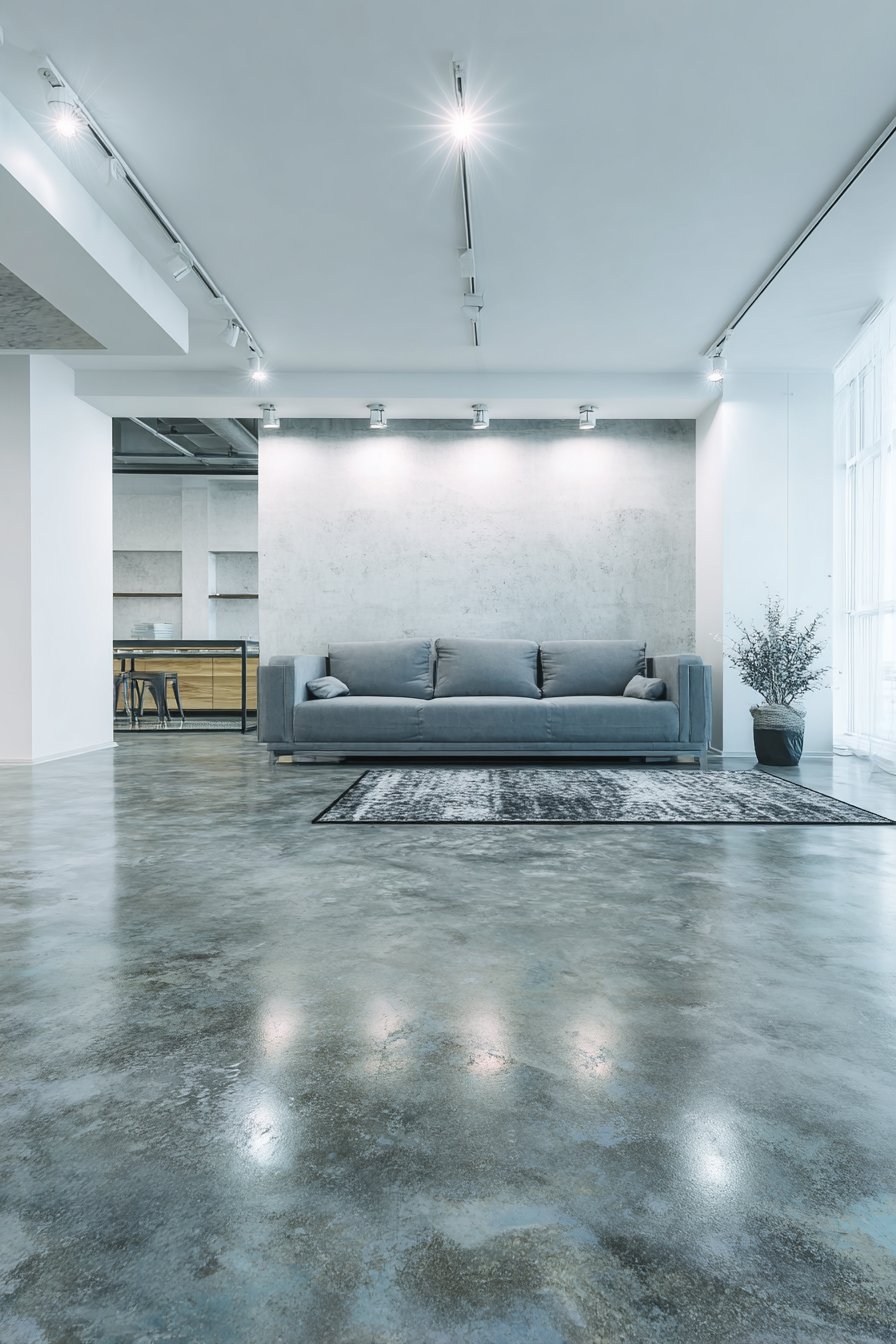
Texture is what bridges the gap between stark and serene. Without it, even expensive furniture feels underwhelming. A lack of tactile variety creates visual monotony that fatigues the eye and makes a space feel incomplete, no matter how well-curated.
- Audit your space for surfaces that feel visually flat or cold
- Identify areas where the eye has nowhere interesting to rest
- Ask yourself if your room feels inviting or intimidating to guests
- Note which materials currently dominate your living room
- Consider the emotional response your current space produces
- Use this as your baseline before adding any new elements
2. Understanding Texture in Interior Design
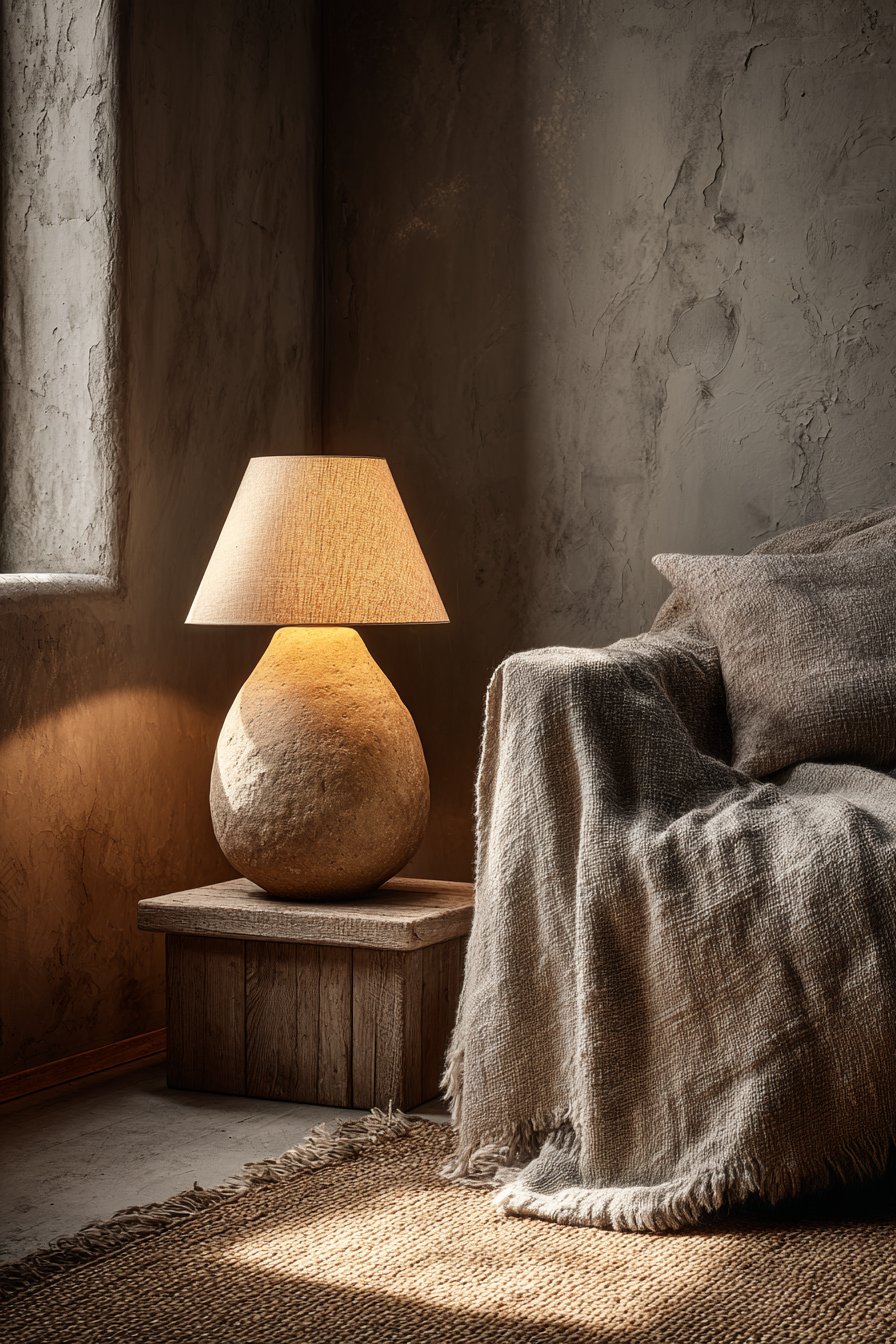
Texture in design refers to the surface quality of materials. It exists in two distinct forms: tactile texture, which you can physically feel, and visual texture, which the eye perceives even from a distance. Both play equally important roles in a minimal living room.
Tactile texture includes materials like chunky wool, rough linen, smooth leather, and carved wood. Visual texture includes patterns, weaves, grain lines, and surface variations that create depth without adding bulk. In minimal spaces, visual texture is especially powerful because it adds richness without crowding.
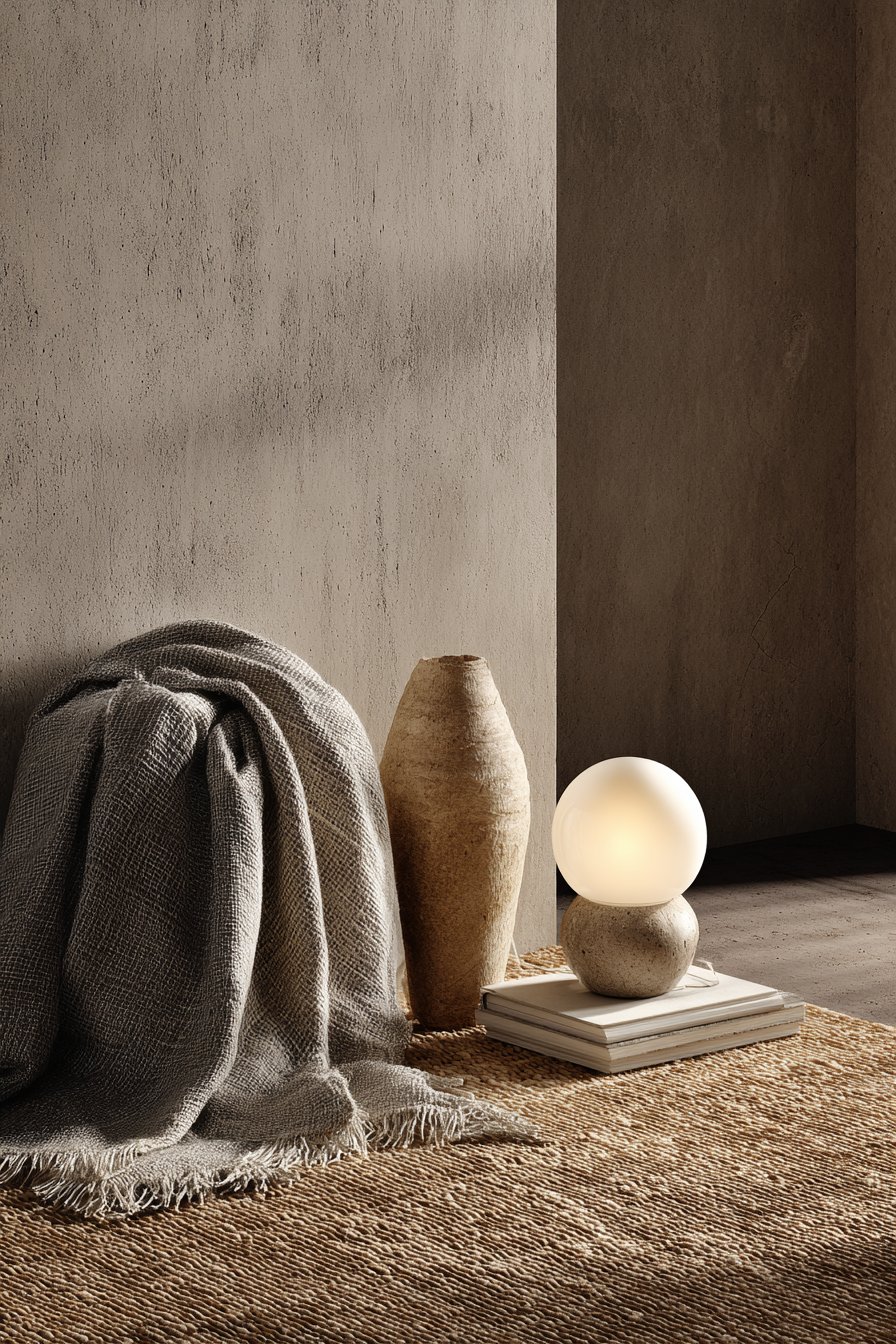
Understanding the interplay between these two types helps you make smarter design decisions. A smooth concrete wall might read as flat from across the room. Pairing it with a heavily woven throw or a textured ceramic lamp instantly creates contrast that makes both elements more interesting and the room more dynamic.
- Learn to distinguish between tactile and visual texture in your own home
- Study how light affects different surface materials throughout the day
- Collect material samples before committing to large purchases
- Test texture combinations in small ways before full implementation
- Consider how each texture feels underhand, not just how it looks
- Reference design books or mood boards to understand texture pairings
3. Natural Fibers Are the Foundation
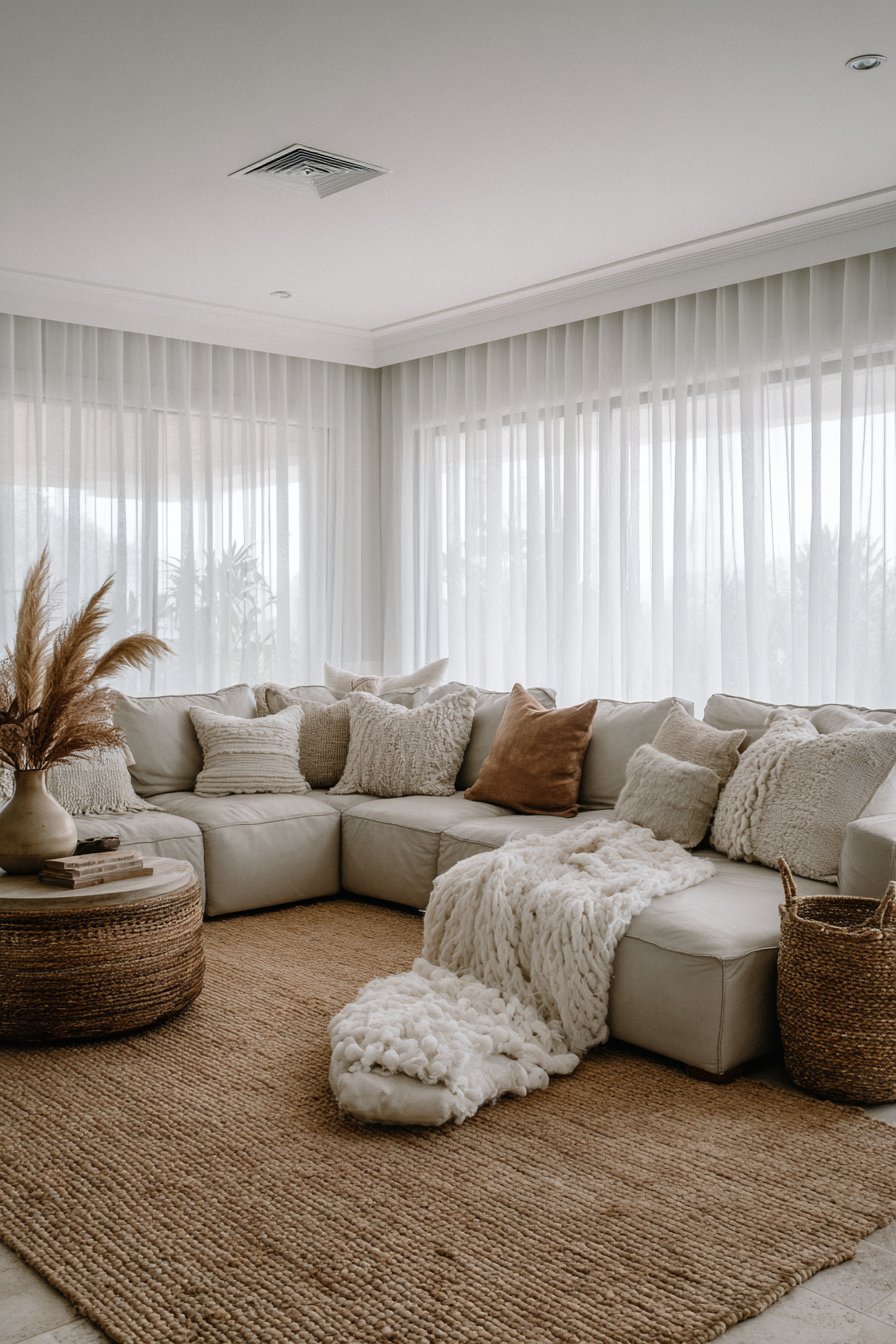
When it comes to building texture in a minimal living room, natural fibers are your most reliable starting point. Linen, cotton, jute, wool, and silk each bring a distinct tactile quality that synthetic materials simply cannot replicate. They also age beautifully, which adds character over time.
Linen cushions and curtains are particularly effective in minimal spaces. The slight roughness of linen creates visual interest without introducing bold color or pattern. It whispers rather than shouts, which is exactly the tone a minimal room requires. Linen also softens harsh light, creating a gentler, more welcoming atmosphere.
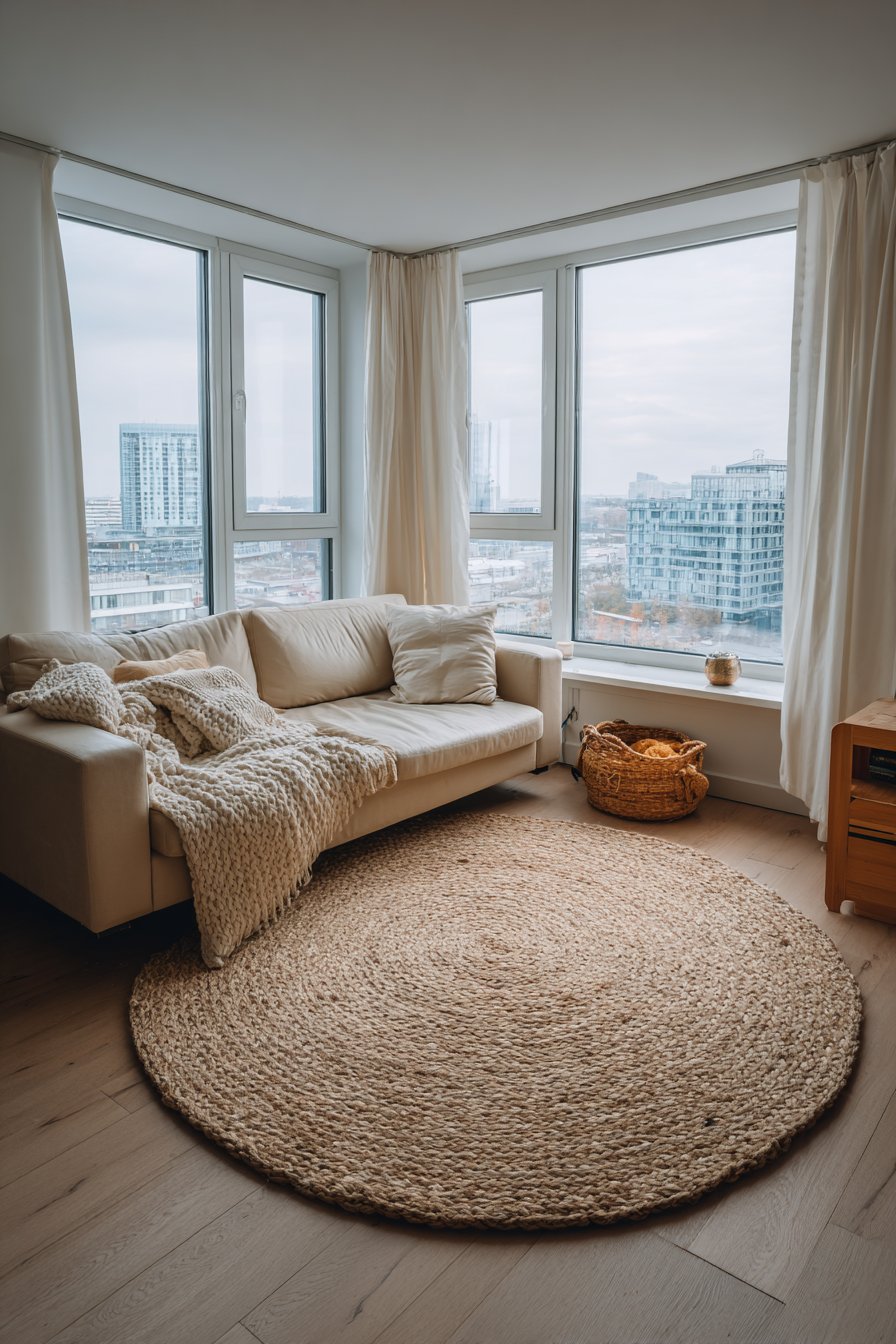
Wool and jute are excellent for grounding a space. A jute area rug adds warmth and earthy texture underfoot while maintaining a neutral visual profile. A wool throw draped over a sofa signals relaxation and comfort instantly. These natural elements connect the room to the outside world, making it feel more organic and human.
- Layer a linen throw over a leather or velvet sofa for contrast
- Choose jute or sisal rugs over flat synthetic alternatives
- Use linen curtains to soften window light naturally
- Add wool cushions in neutral tones for tactile variety
- Introduce a knitted or woven blanket basket near seating
- Mix fiber weights — lightweight cotton with chunky wool, for example
4. Wood Brings Warmth and Grain Detail
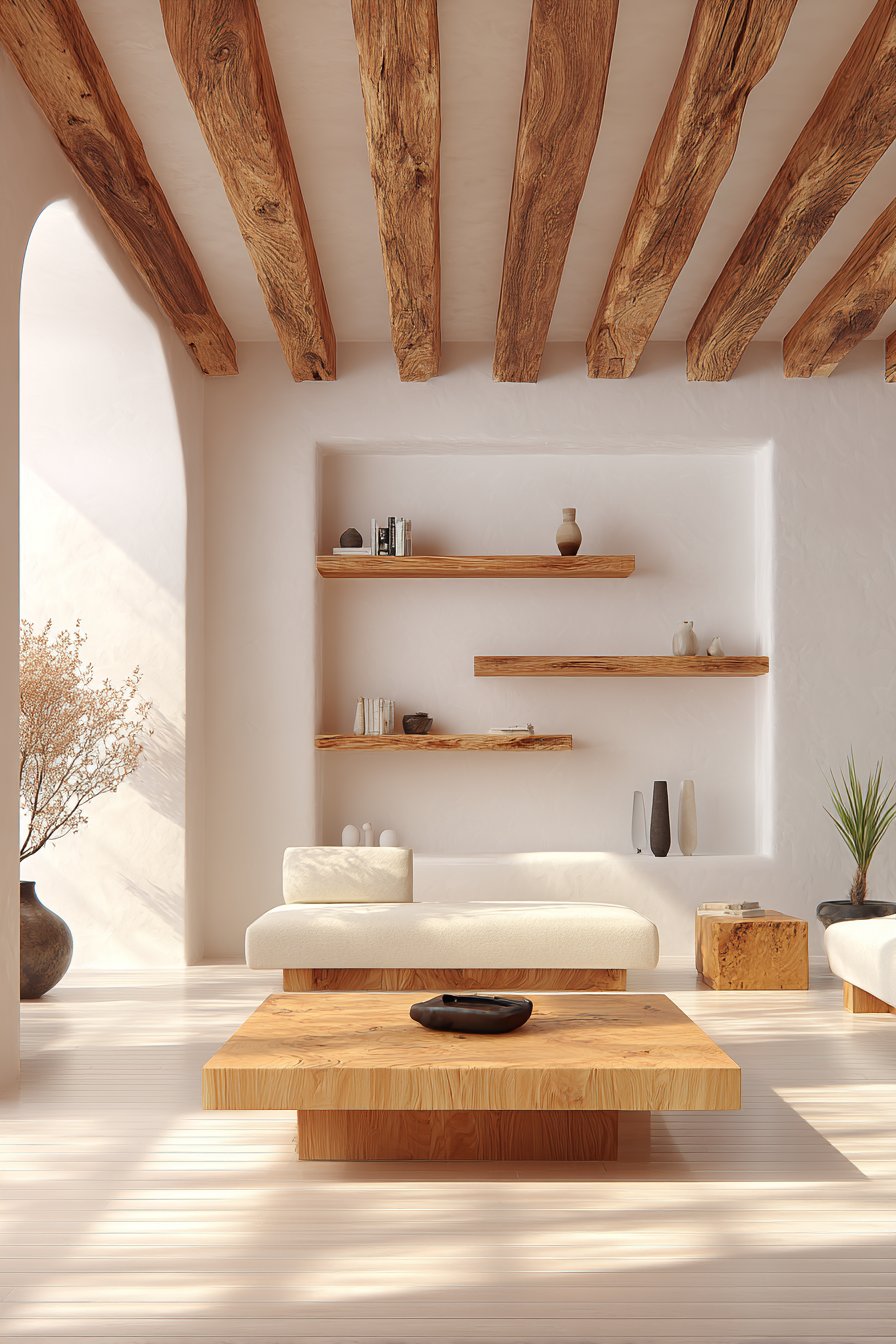
Few materials contribute more to warmth and comfort in a minimal living room than wood. Its natural grain is a form of visual texture that no paint or wallpaper can fully replicate. Each piece of wood is unique, giving your space a one-of-a-kind quality.
In minimal interiors, wood often serves as the primary warm element. A solid oak coffee table, a walnut side console, or exposed wooden ceiling beams can do enormous work in balancing the coolness of plaster walls and metal accents. The grain lines draw the eye gently and create movement without chaos.
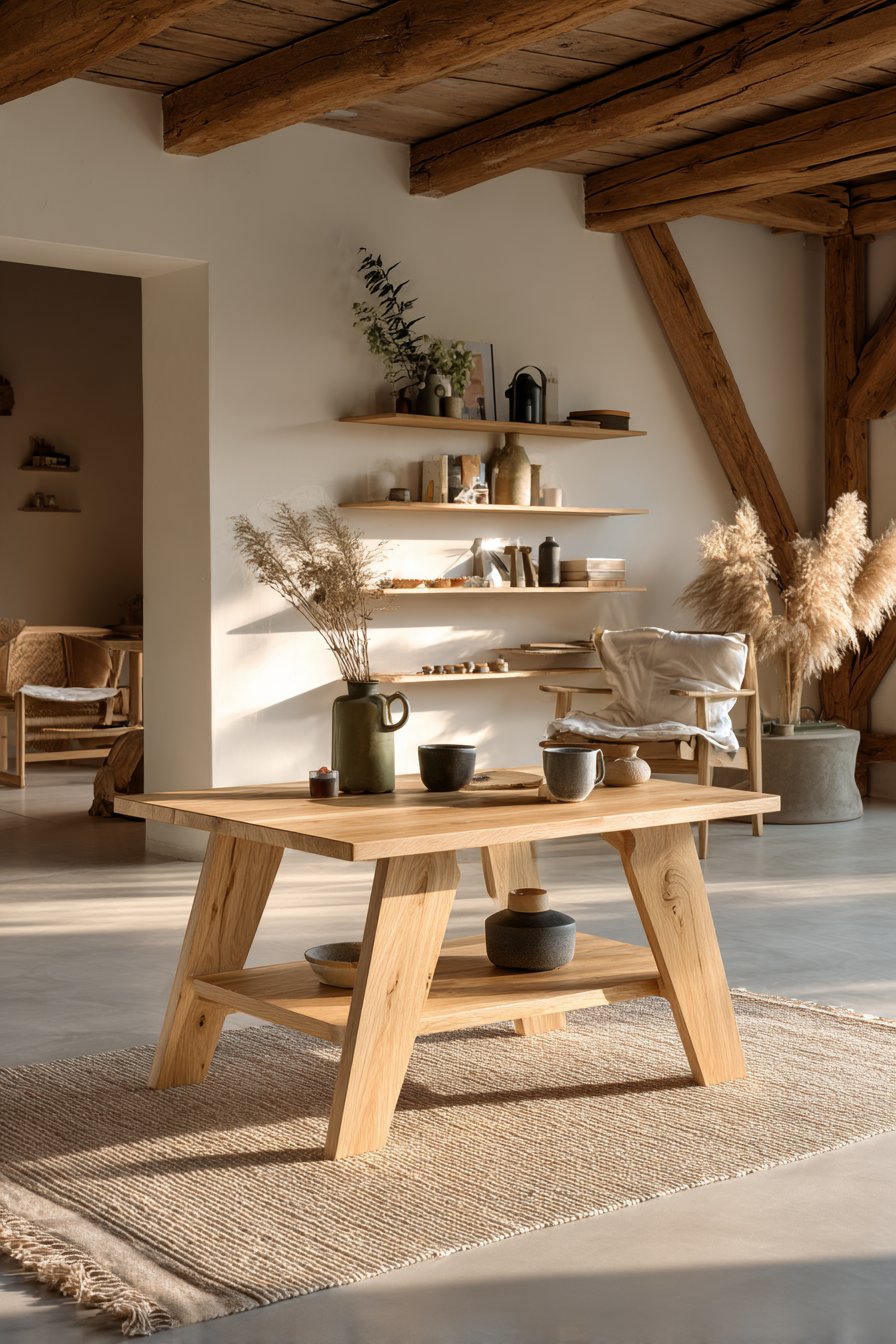
The finish of the wood matters greatly. Raw or matte finishes preserve the tactile quality of the grain and absorb light softly. Highly polished wood reflects light and leans more modern, but loses some of its organic warmth. For comfort-focused minimal spaces, opt for matte, oiled, or lightly brushed wood finishes whenever possible.
- Introduce a solid wood coffee table as a central textural anchor
- Use floating wooden shelves to add warmth to bare walls
- Choose furniture with visible wood grain over painted or lacquered alternatives
- Mix wood tones intentionally — light ash with darker walnut, for example
- Consider reclaimed wood accents for additional character and depth
- Add a wooden tray or decorative bowl as a small but effective detail
5. Stone and Ceramic Add Quiet Luxury
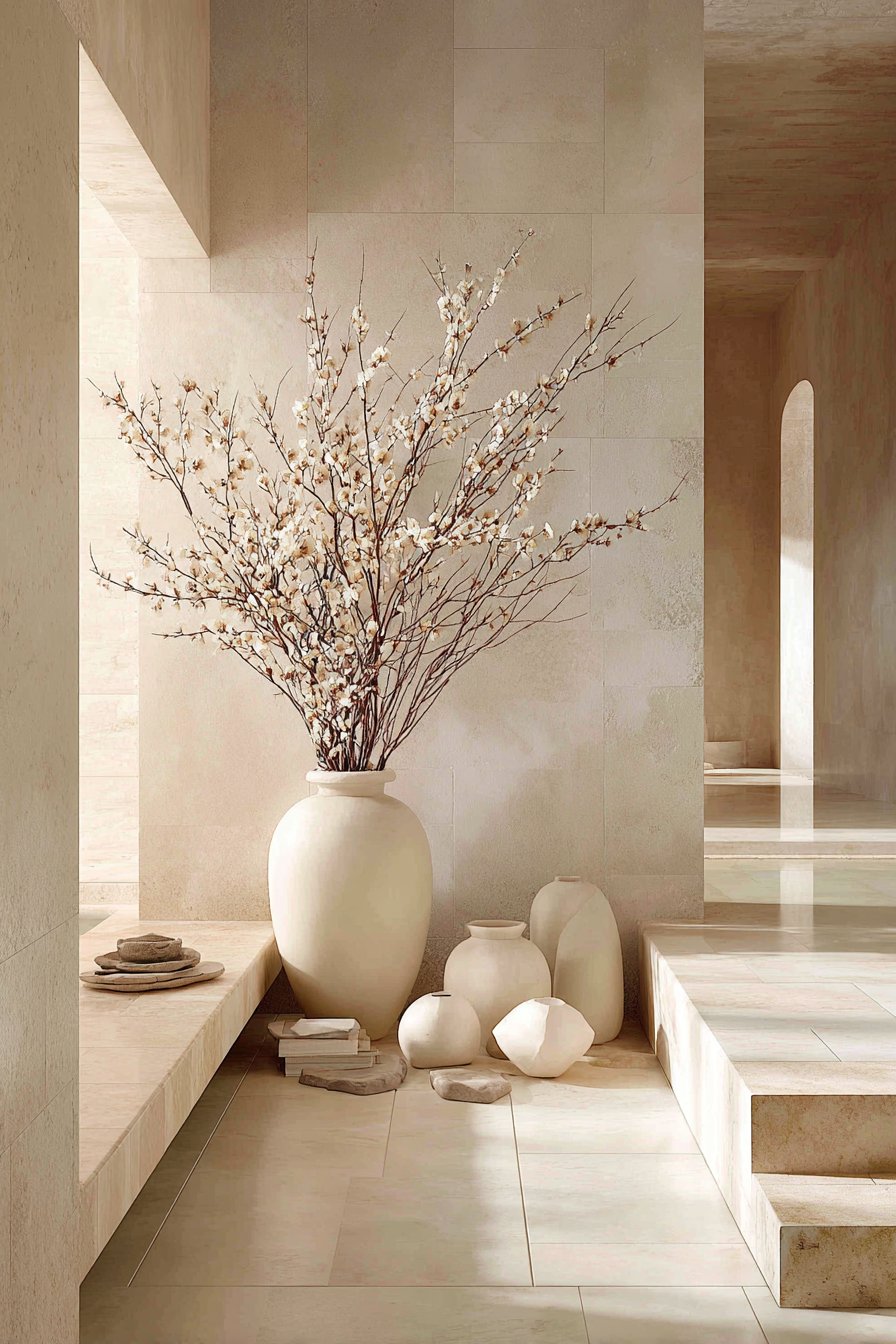
Stone and ceramic are among the most underrated texture providers in minimal living rooms. Their natural variation in color, surface, and finish brings a quiet luxury that feels both ancient and contemporary at the same time.
A ceramic vase on a shelf, a stone sculpture on a coffee table, or a marble side table introduces tactile weight and visual depth. These materials have inherent variation — no two pieces are identical — which prevents a minimal room from feeling mass-produced or impersonal. They ground the space with a sense of permanence and quality.
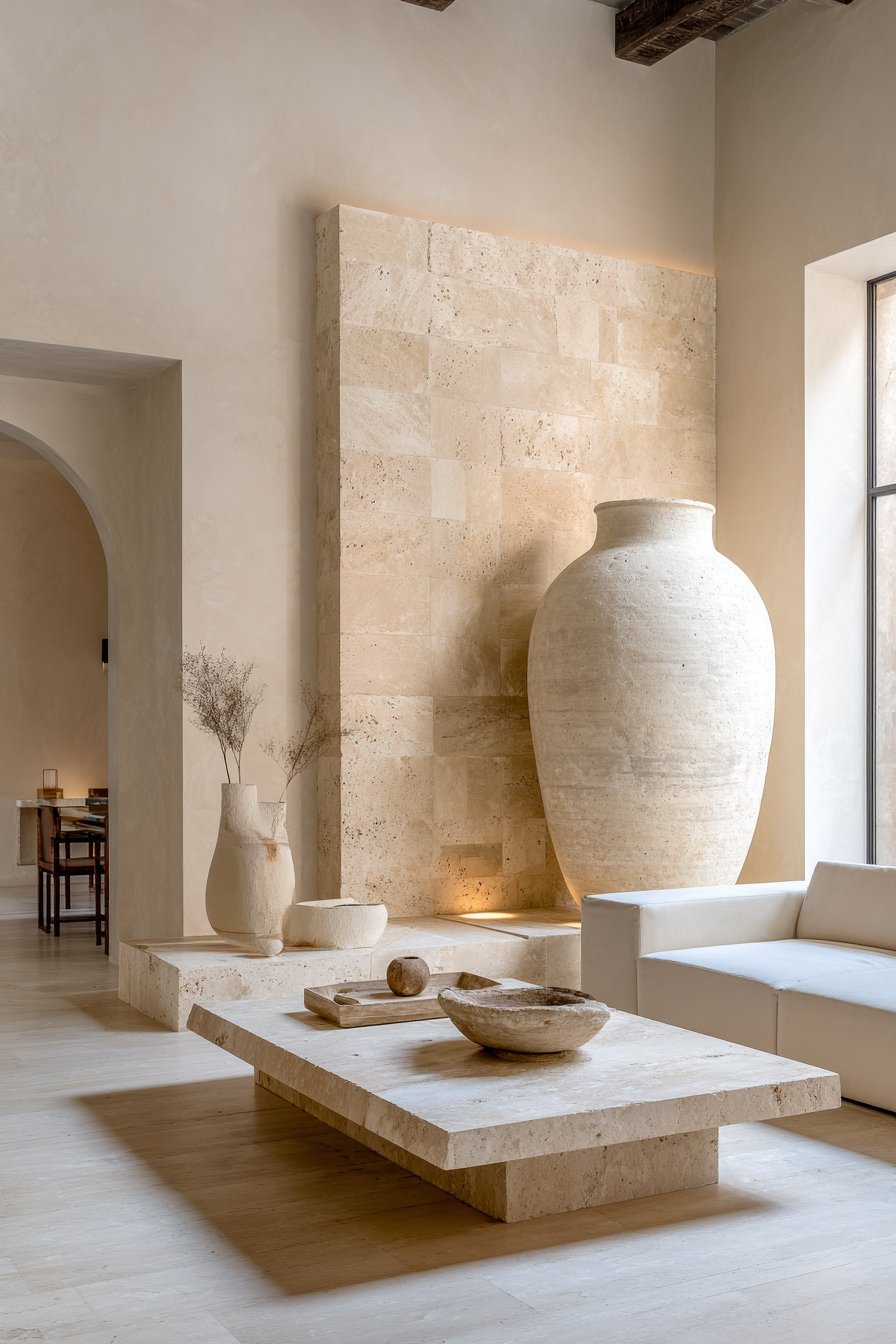
The matte ceramic trend has been particularly influential in modern minimal interiors. Matte surfaces absorb light rather than reflect it, creating a soft, velvety appearance that complements linen and wood beautifully. A single well-chosen ceramic piece can elevate an entire room’s textural palette.
- Place a large matte ceramic vase as a focal point on a shelf or console
- Use stone coasters, trays, or trivets as functional texture elements
- Consider a marble or travertine coffee table for subtle luxury
- Mix smooth and rough ceramic finishes for visual contrast
- Choose handmade ceramics over factory-produced ones for authenticity
- Use stone bookends or paperweights as small textural accents
6. Layering Rugs for Depth and Coziness
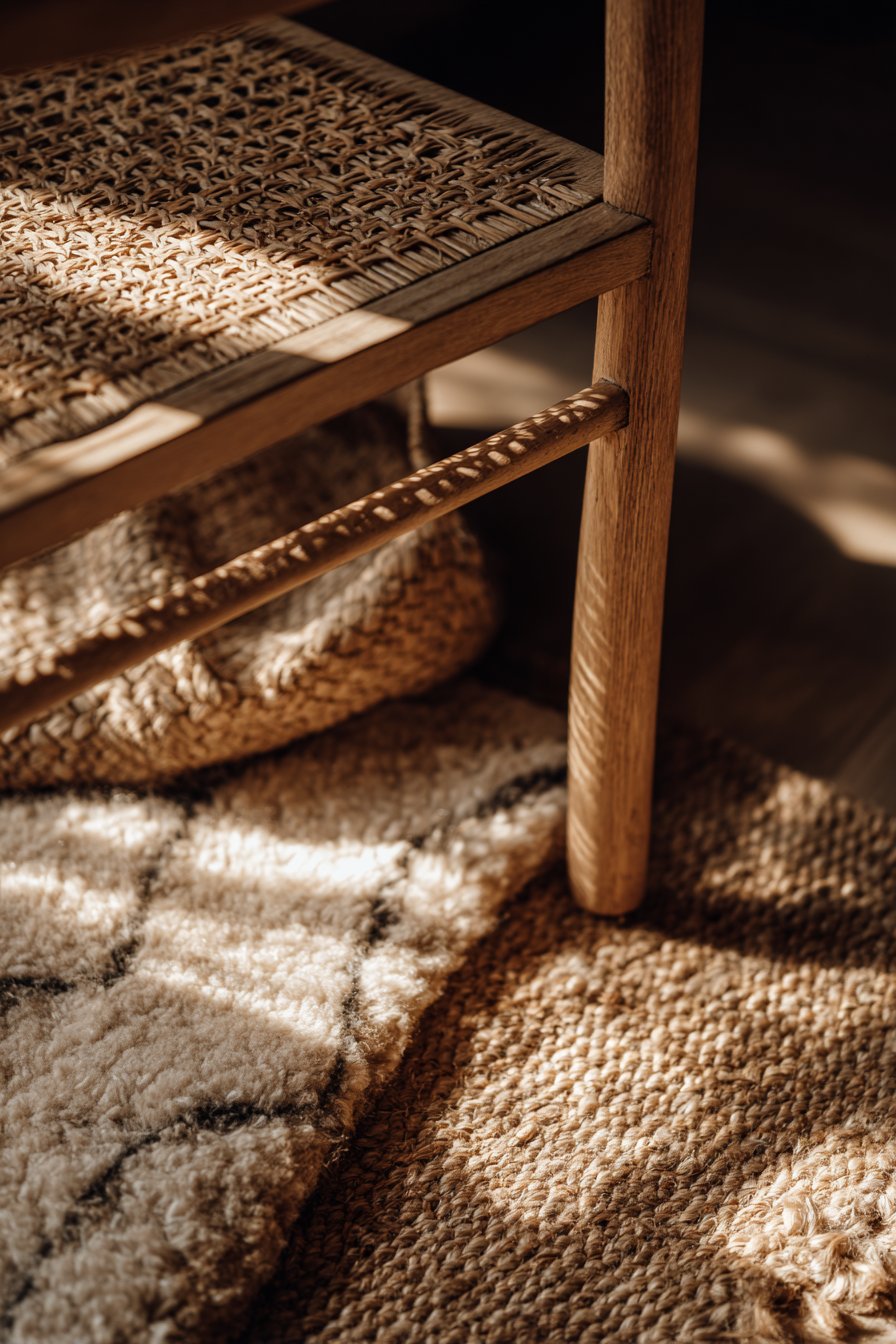
A single flat rug on a bare floor is a missed opportunity. Layering rugs is one of the most effective techniques for adding texture, warmth, and depth to a minimal living room without overwhelming the space. It’s a designer trick that works beautifully in pared-down environments.
Start with a large base rug in a neutral tone — sisal, jute, or a low-pile flatweave works well. Layer a smaller, softer rug on top, such as a sheepskin, a Moroccan Beni Ourain, or a vintage kilim. The contrast in pile height and texture creates a layered, luxurious feel underfoot and visually.
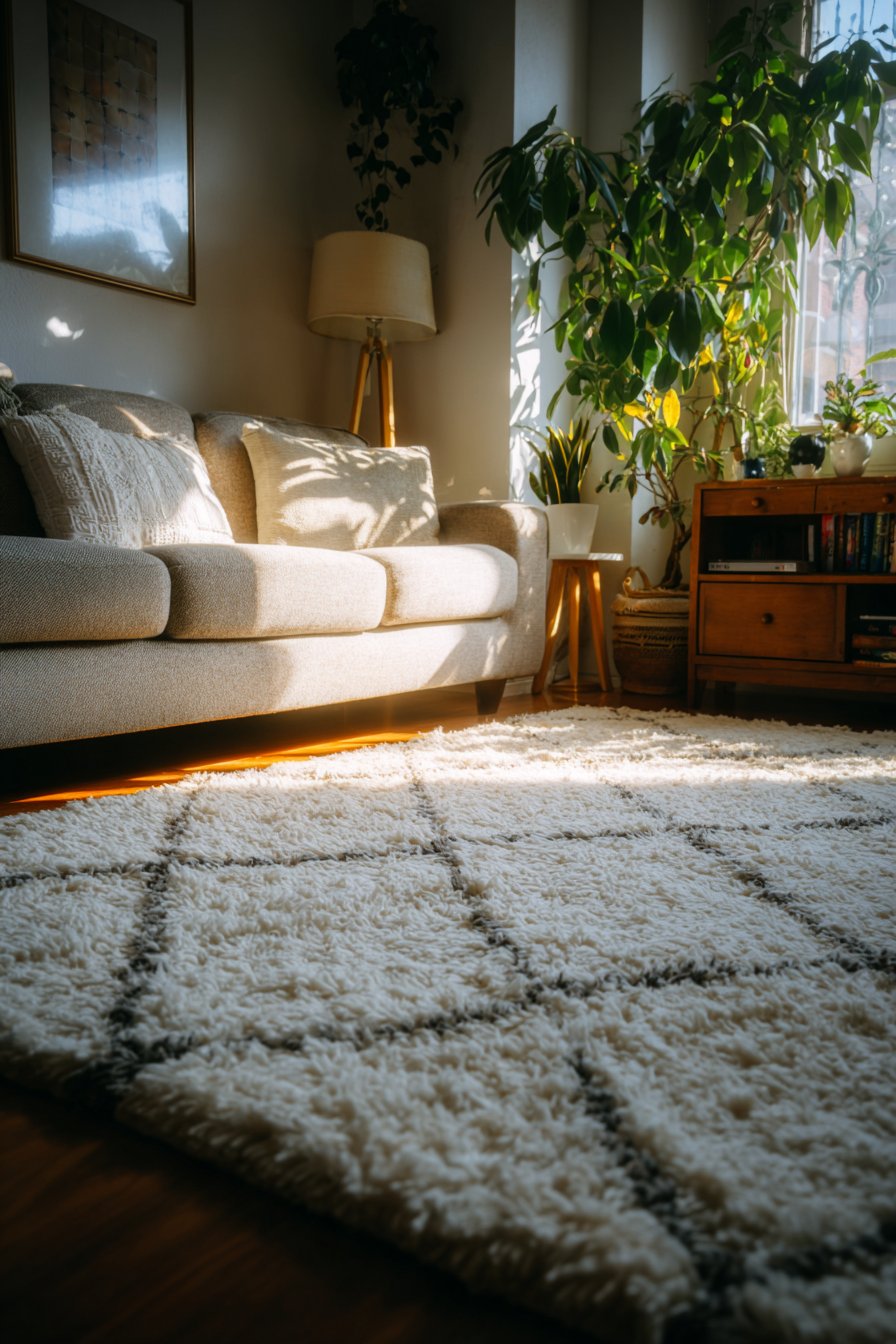
The key is keeping colors cohesive. In a minimal space, choose rugs that share a similar color family but differ in texture and scale. This approach builds richness without introducing visual clutter. The result is a floor treatment that feels intentional, cozy, and sophisticated all at once.
- Start with a large jute or sisal base rug for earthy texture
- Layer a smaller sheepskin or shaggy rug on top for contrast
- Keep the color palette within two or three neutral tones
- Ensure the base rug is large enough to anchor all furniture legs
- Avoid synthetic pile rugs — natural fibers feel and look superior
- Rotate rugs seasonally for a fresh feel without full redecorating
7. Cushions and Throws as Textural Workhorses
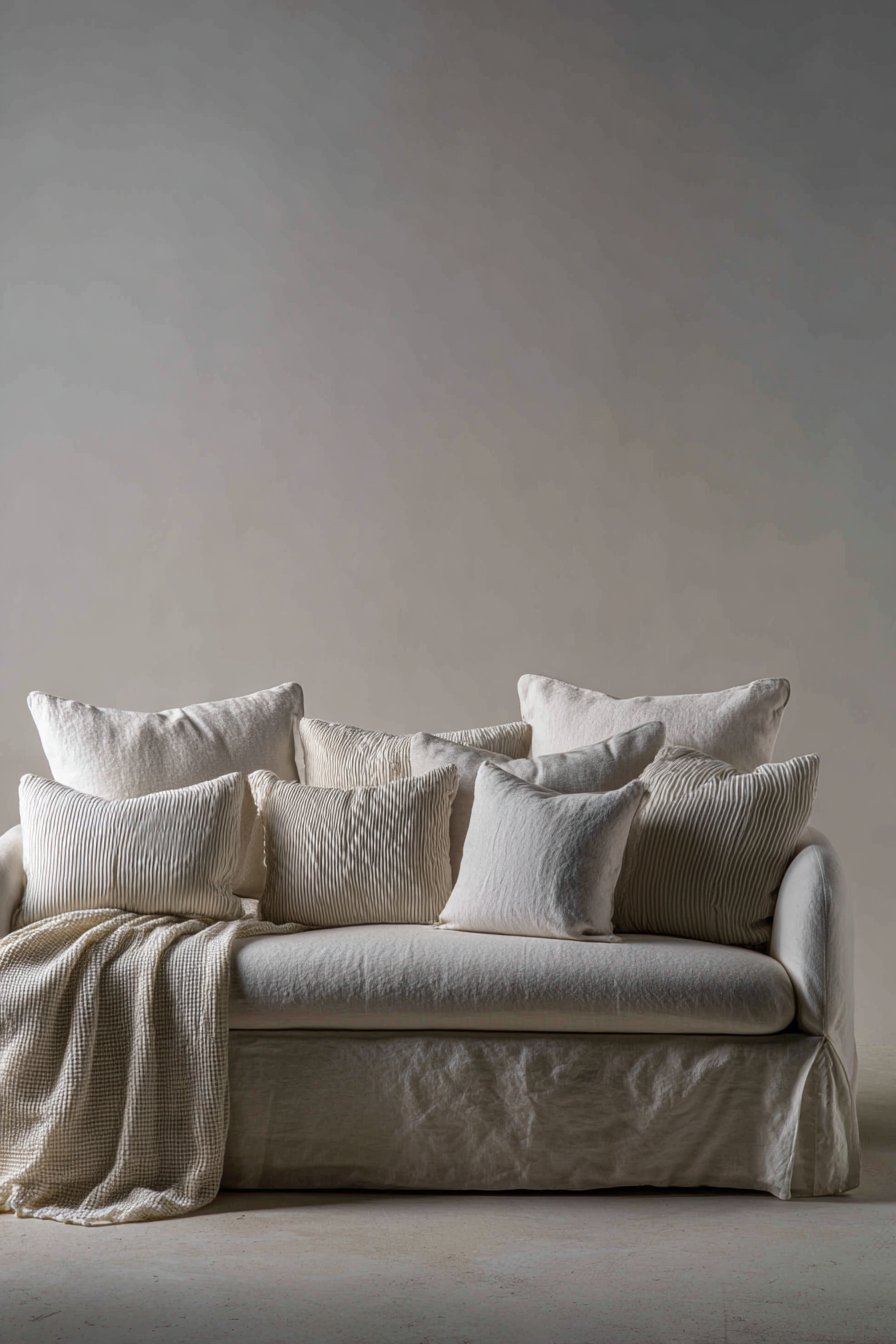
Cushions and throws are the most flexible and affordable tools in a designer’s texture toolkit. In minimal living rooms, they serve a critical function — they are often the primary source of tactile variety on the main sofa or seating area.
The goal is not quantity but variety in material and weave. Choose three to five cushions that differ in fabric — perhaps a smooth linen, a ribbed cotton, and a chunky knit. This contrast creates visual interest while maintaining a cohesive, uncluttered look. Avoid matching sets, which tend to feel flat and commercial.
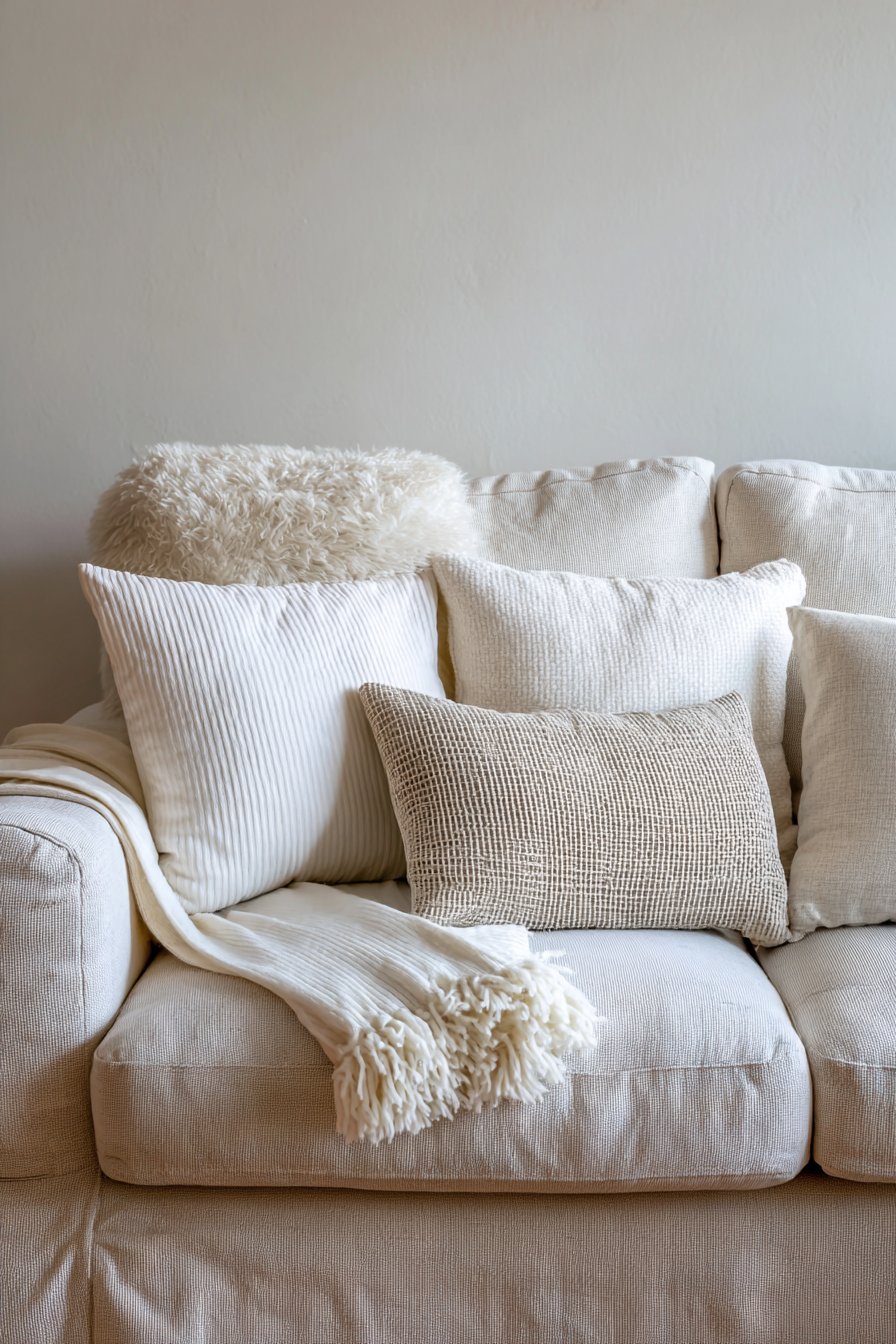
Throws deserve special attention. A casually draped wool or mohair throw communicates comfort and relaxation instantly. It softens the rigid lines of a sofa and makes the seating area feel lived-in and welcoming. Choose throws in natural fibers with visible weave or knit structure for maximum textural impact.
- Select cushions in different fabrics but within one or two color tones
- Include at least one chunky knit or woven cushion in your arrangement
- Drape a throw over one arm of the sofa rather than folding it flat
- Rotate cushion covers seasonally to refresh the space inexpensively
- Limit yourself to five cushions maximum on a standard two-seat sofa
- Choose cushion inserts that are slightly oversized for a plump, luxurious look
8. Walls Don’t Have to Be Flat
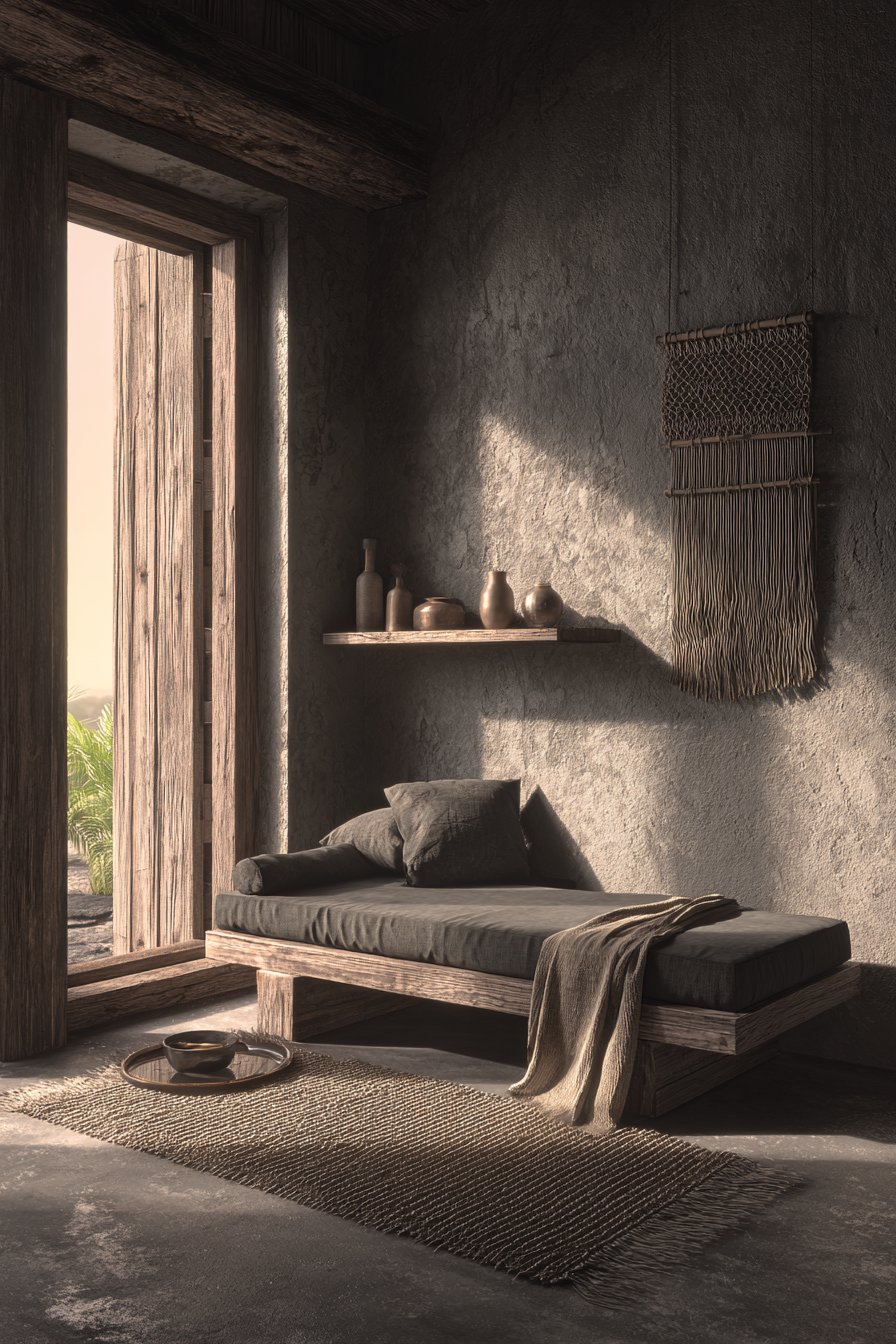
In minimal interiors, walls are often painted a single neutral color and left bare. While this approach is clean, it can feel emotionally empty. Introducing texture to walls is one of the most impactful ways to add warmth and depth without adding objects to the room.
Limewash and venetian plaster have become the go-to wall treatments for minimal interiors. Both techniques create a soft, uneven surface that catches light differently throughout the day. The result is a wall that appears to breathe — constantly shifting in tone and depth as natural light moves across it.
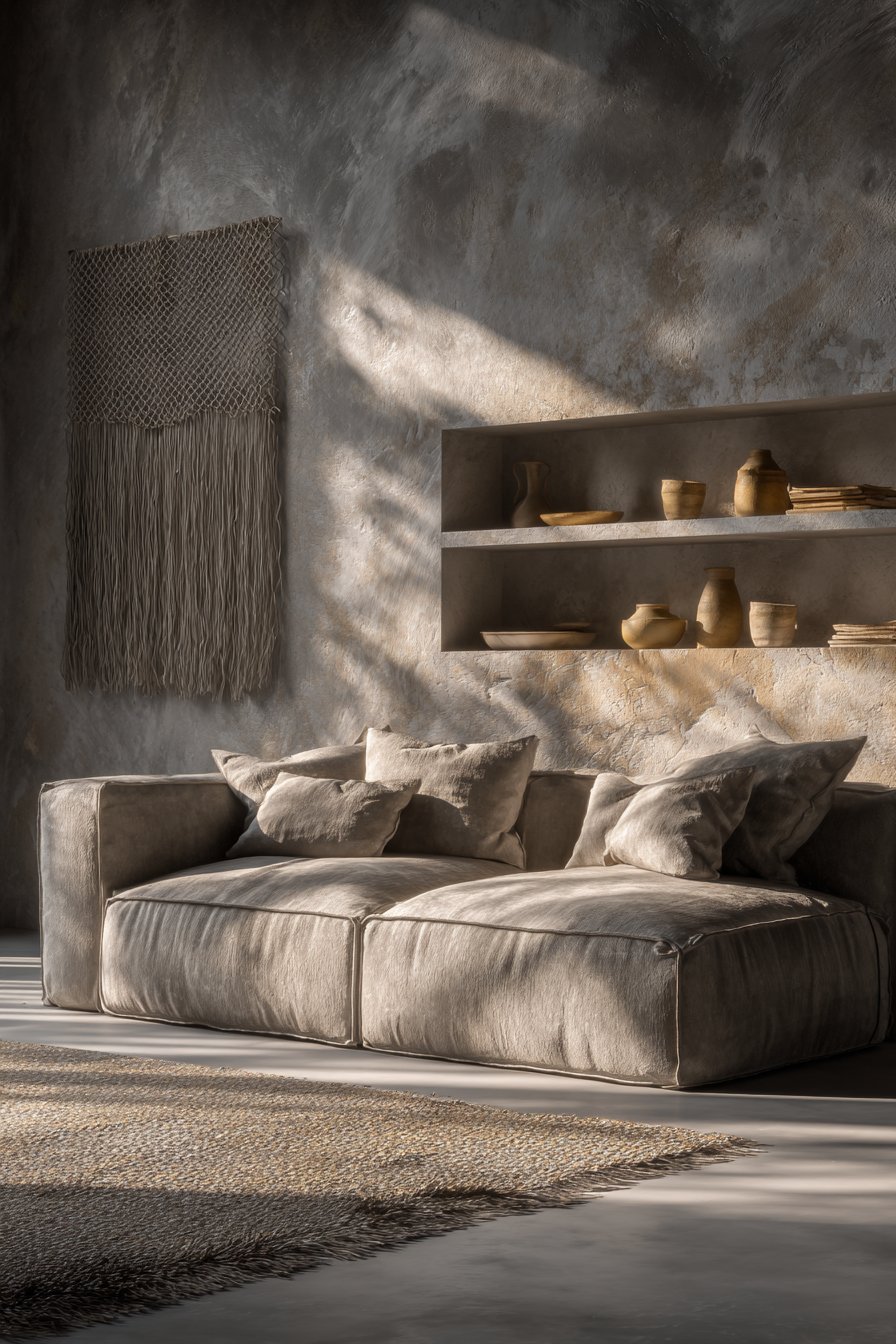
For those who prefer a simpler approach, textured wallpaper in a grasscloth or linen-look finish achieves a similar effect with less effort. These wallpapers add visual texture without introducing pattern, making them perfect for minimal spaces. Even a single textured accent wall behind the sofa can transform the entire room’s atmosphere.
- Consider limewash paint for a living, breathing wall texture
- Explore Venetian plaster for a more refined, polished finish
- Use grasscloth or linen-look wallpaper on a single accent wall
- Hang woven wall art or macramé for textural wall interest
- Leave a raw brick or concrete section exposed if structurally possible
- Use light to your advantage — texture looks best in raking side light
9. Plants as Living Texture
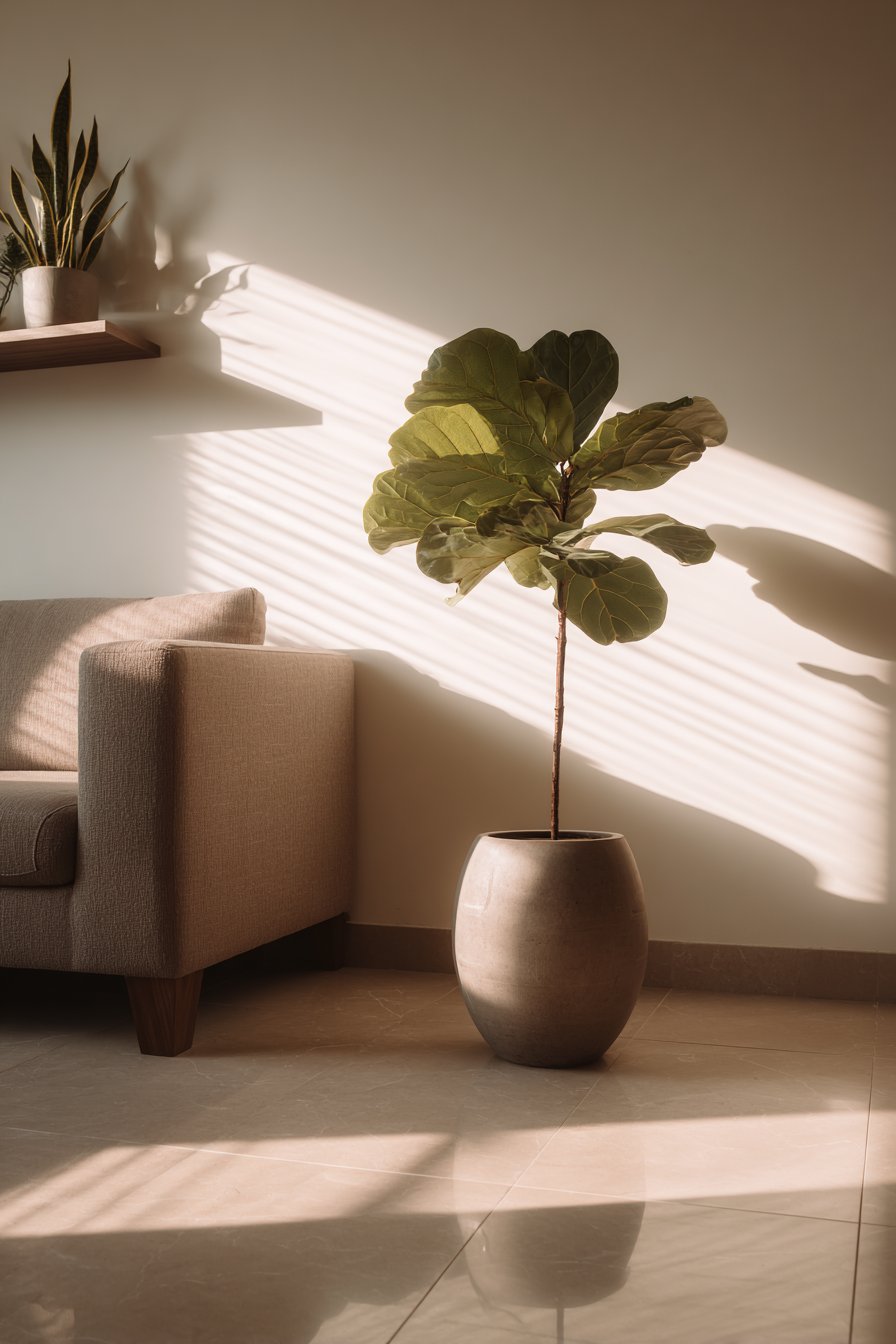
Living plants are one of the most powerful — and often overlooked — sources of texture in a minimal living room. Their leaves introduce organic shapes, varied surfaces, and natural color that no manufactured material can replicate. They make a space feel alive in the most literal sense.
The variety of leaf textures available across houseplants is staggering. The broad, glossy leaves of a fiddle-leaf fig. The soft, fuzzy texture of a velvet plant. The architectural spikes of a snake plant. Each brings a completely different tactile and visual quality. Combining two or three species creates a rich textural ecosystem within the room.
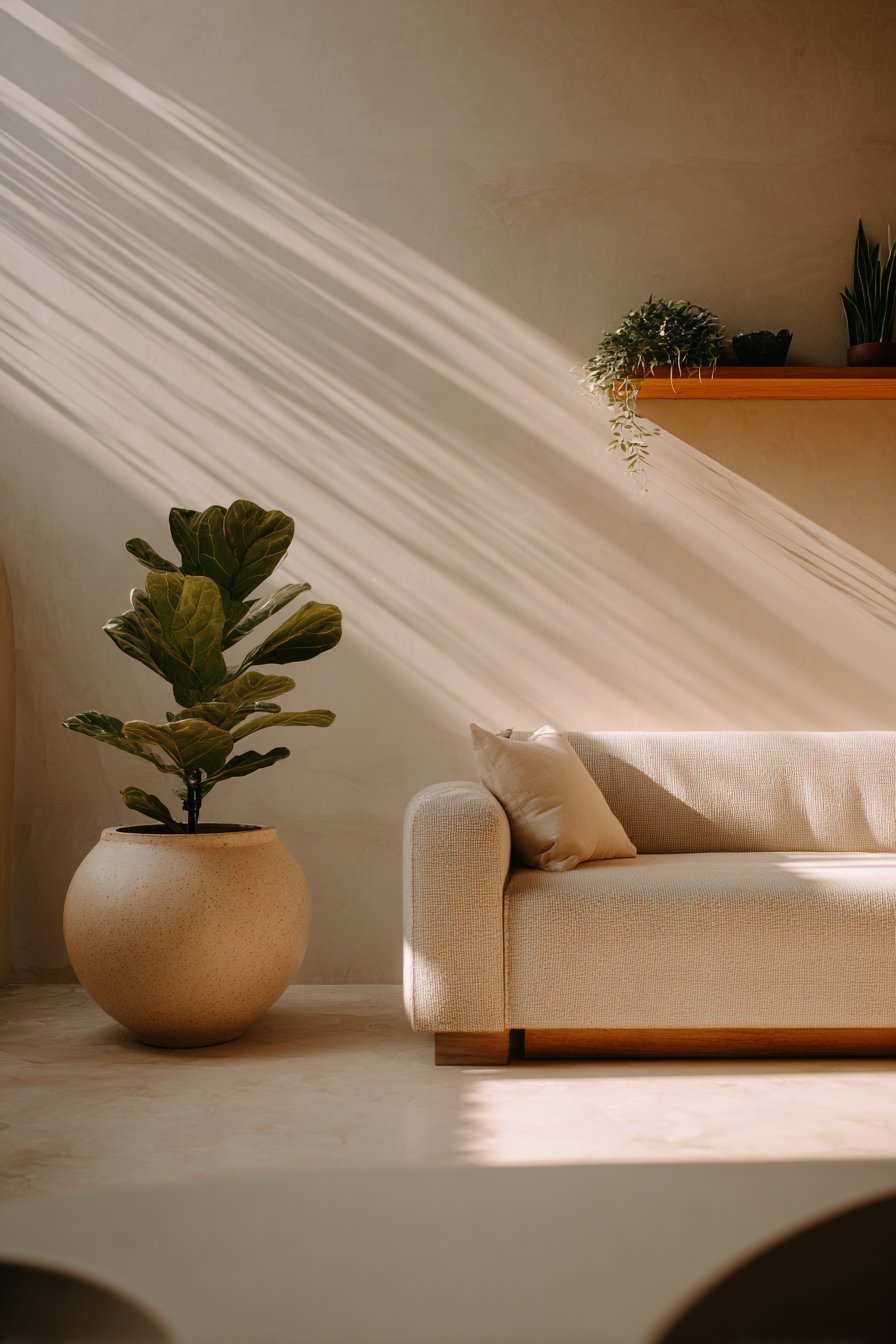
Plants also interact with light in beautiful ways, casting organic shadows and filtering sunlight softly. In a minimal room where light is often the primary decorative element, the movement and shadow play of plants adds a dynamic, ever-changing layer of texture that no static object can provide.
- Choose plants with varied leaf sizes and textures for visual interest
- Use oversized statement plants — a large monstera or fiddle-leaf fig — as anchors
- Place smaller plants at different heights to create vertical texture
- Select planters in ceramic, stone, or woven materials for added texture
- Consider trailing plants on shelves for organic, cascading texture
- Rotate plants toward light sources to maintain health and shape
10. Lighting That Reveals Texture
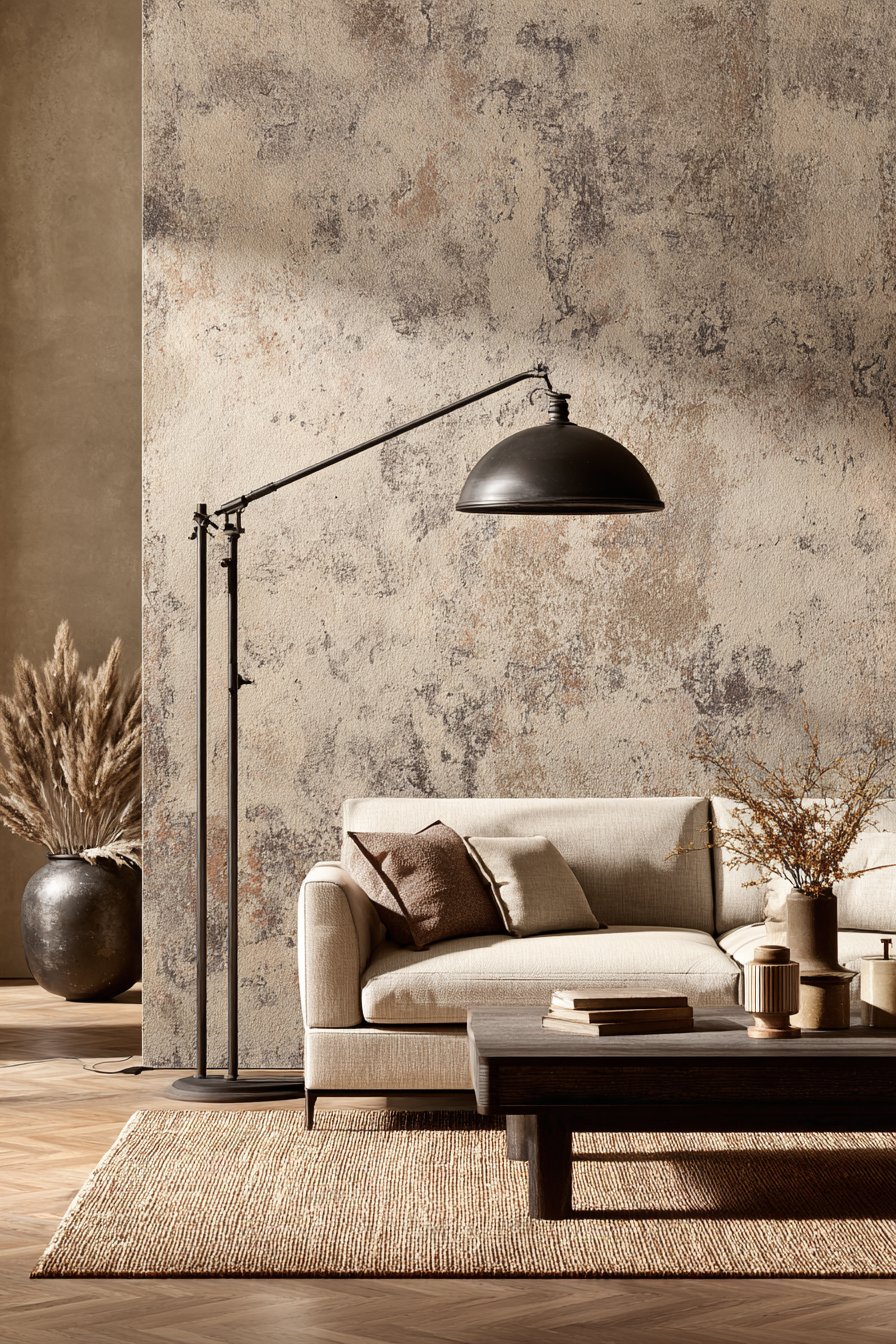
Lighting is the unsung hero of texture. Without the right light, even the most beautifully textured surfaces can appear flat and dull. In a minimal living room, thoughtful lighting is what makes every textural choice visible and impactful.
Raking light — light that strikes a surface at a low, oblique angle — is the most effective way to reveal texture. It creates shadows within the surface irregularities, making them visually pop. Wall sconces, floor lamps positioned close to textured walls, and low pendant lights all create this effect naturally.
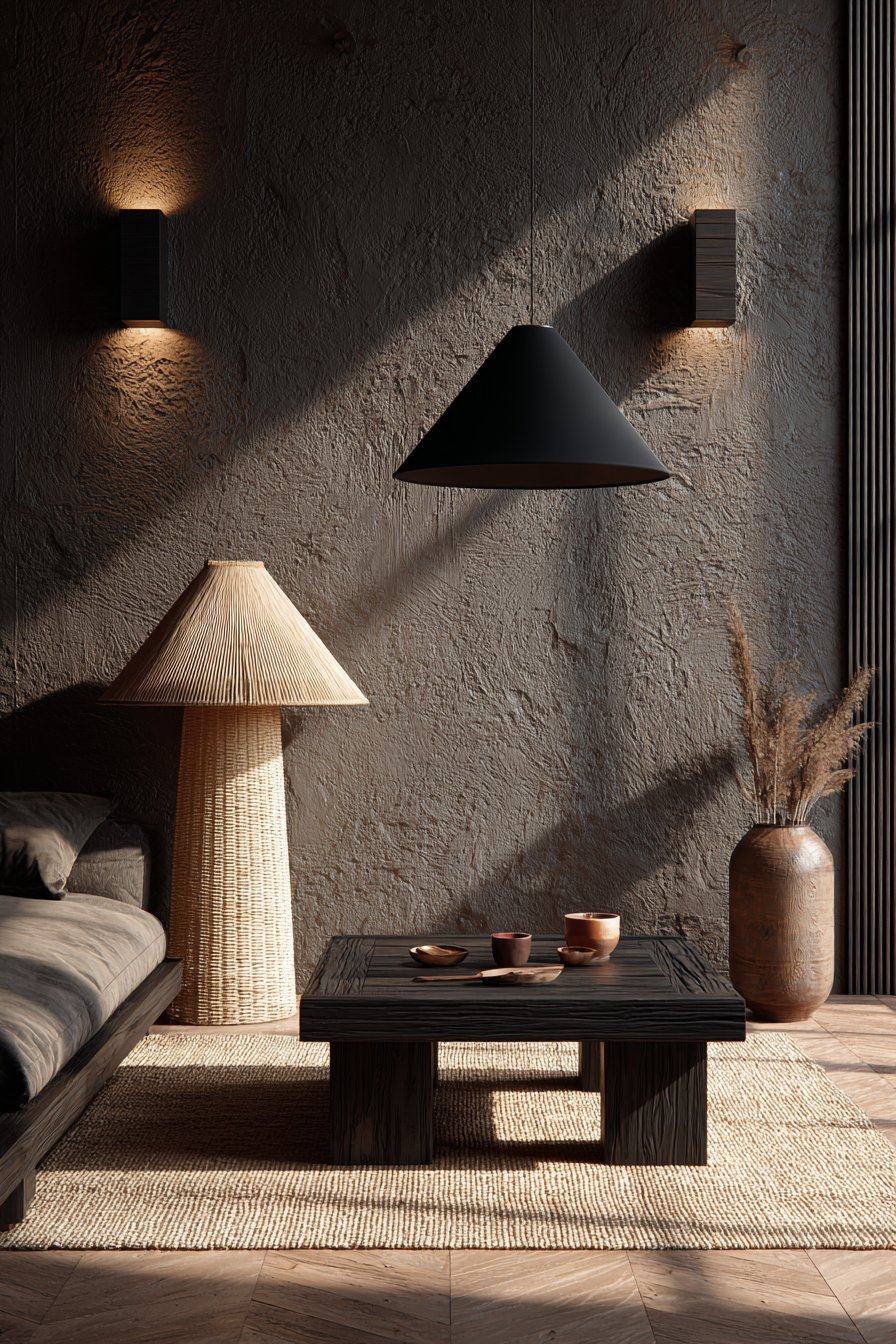
The warmth of light also matters. Warm-toned bulbs (2700K–3000K) enhance the natural warmth of wood, linen, and stone, while cooler bulbs flatten and cool these materials. Always choose warm white bulbs in a comfort-focused minimal living room. Dimmer switches allow you to adjust the intensity, making textures appear softer or more dramatic depending on the mood required.
- Position floor lamps close to textured walls to create revealing shadow play
- Install wall sconces to graze textured surfaces with raking light
- Choose bulbs in the 2700K–3000K range for warmth and richness
- Add dimmer switches to all main light sources for mood flexibility
- Use table lamps with linen or woven shades to introduce additional texture
- Experiment with candle light in the evenings for the softest, warmest texture reveal
11. The Role of Contrast in Minimal Spaces
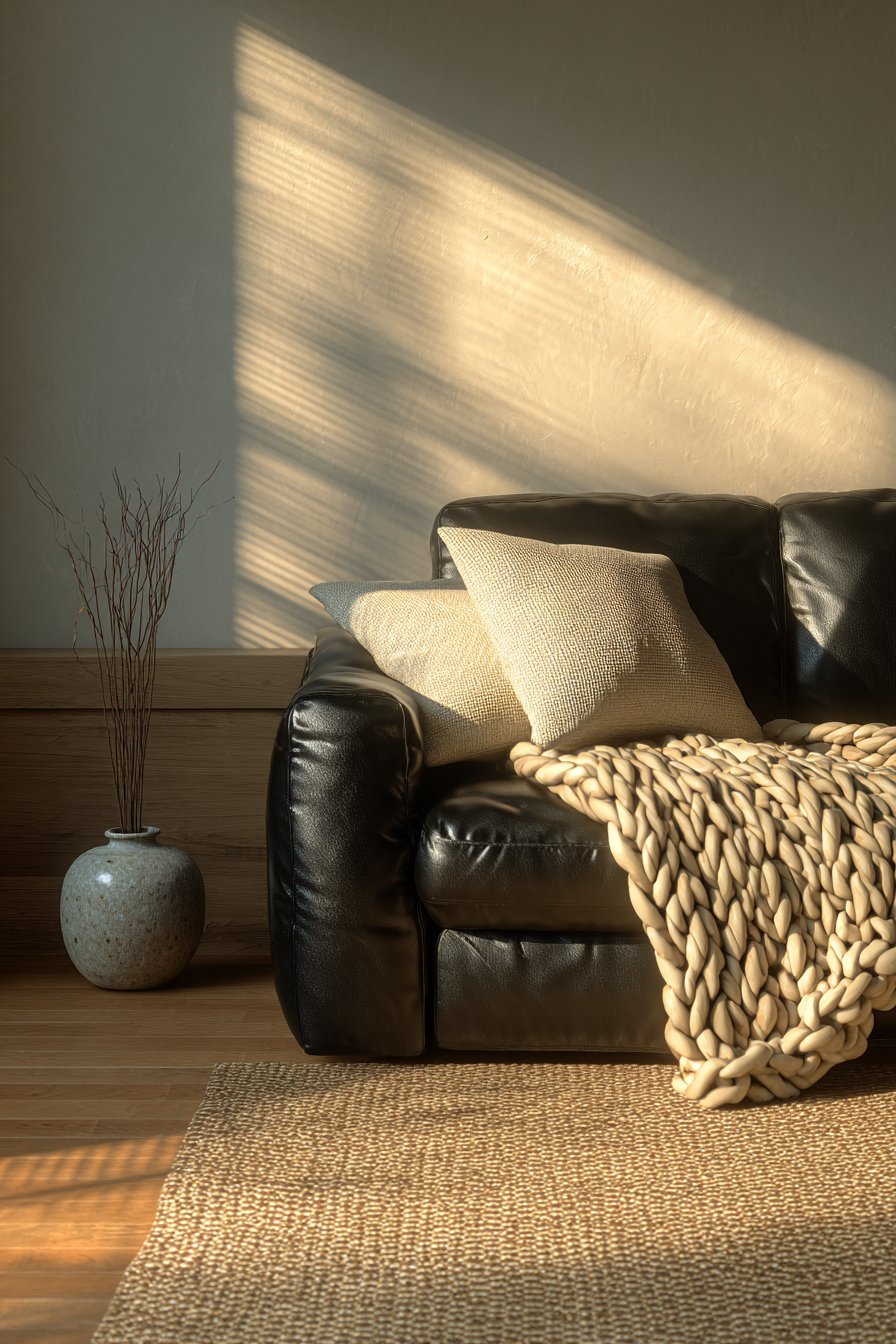
Contrast is the engine of a well-textured minimal room. Without contrast, even multiple textures can blend together and lose their individual impact. The goal is to pair materials that differ meaningfully — rough with smooth, matte with glossy, soft with hard.
A smooth leather sofa paired with a chunky knit throw is a classic contrast pairing. The stark difference between the two surfaces makes both more interesting. Similarly, a polished marble surface next to a raw linen cushion creates a juxtaposition that feels sophisticated and intentional rather than accidental.
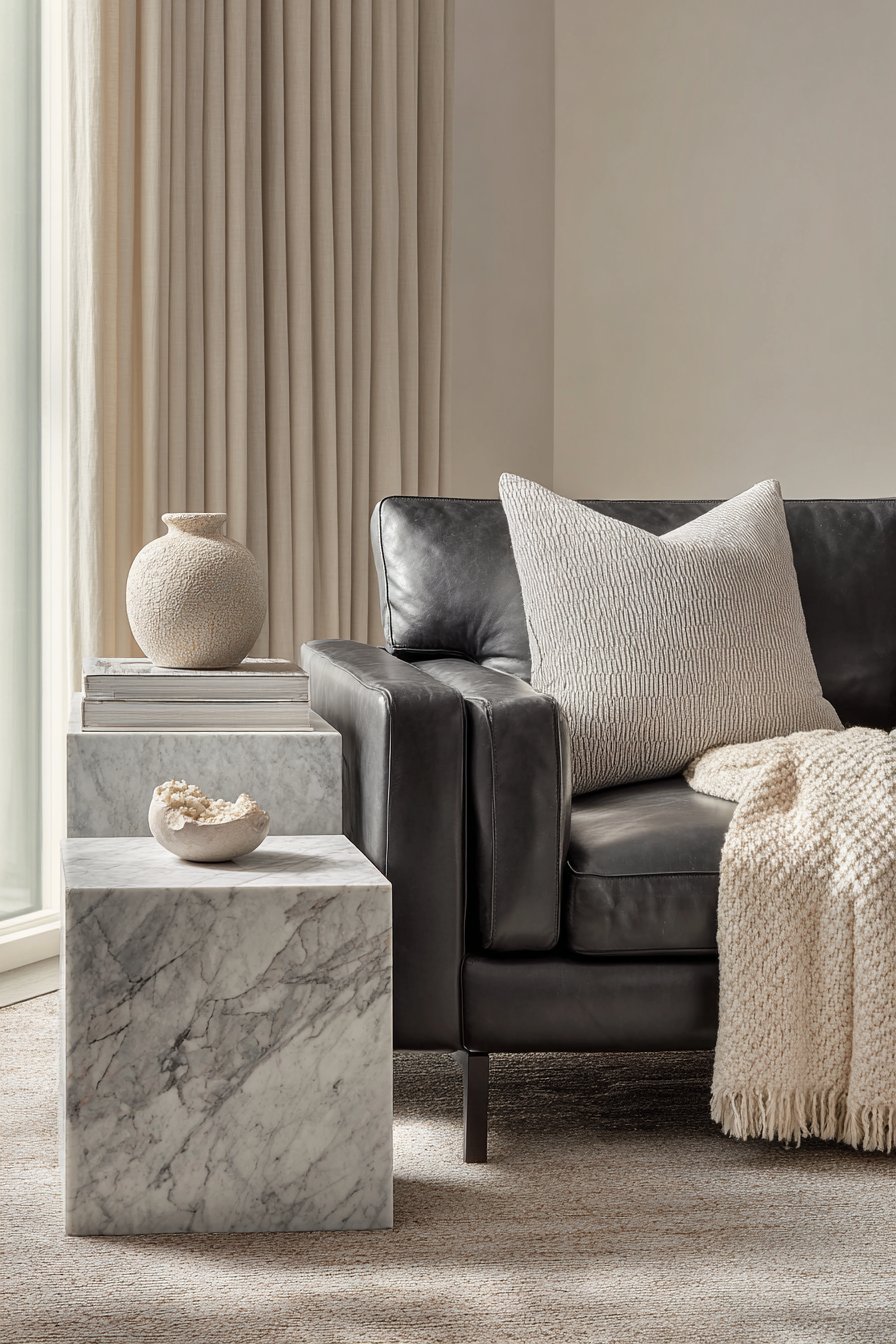
Scale contrast is equally important. A large, flat-woven rug paired with a small, heavily textured ceramic piece creates visual balance. Varying the scale of your textural elements prevents any single material from dominating the space. This balance is what gives a minimal room its sense of calm, considered elegance.
- Pair at least one smooth surface with one rough surface in every vignette
- Contrast matte and glossy finishes within the same color family
- Vary the scale of textural elements — large base textures with small detailed ones
- Use hard materials like stone and metal alongside soft textiles
- Avoid pairing two heavy textures together — balance weight carefully
- Study successful texture pairings in design magazines for inspiration
12. Keeping It Minimal While Adding Texture
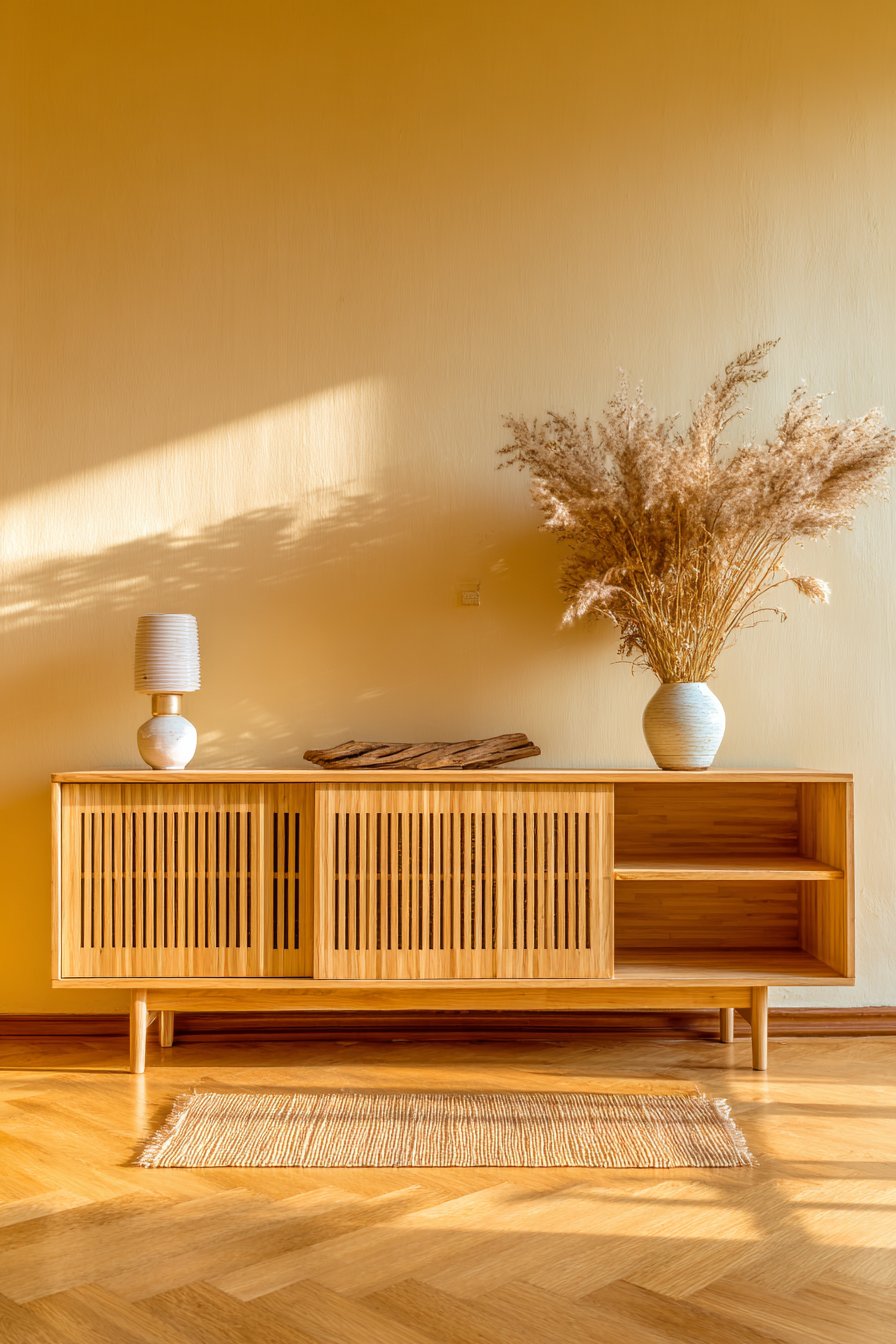
The fear many homeowners have is that adding texture will break the minimal aesthetic. This concern is understandable but unfounded when texture is added thoughtfully. The key is to add depth without adding visual noise.
The rule is simple: quality over quantity. One exceptional piece — a hand-thrown ceramic lamp, a beautifully woven rug, a piece of driftwood on a shelf — contributes more textural richness than a dozen cheap, mass-produced items. Invest in fewer, better pieces and allow each one space to breathe.
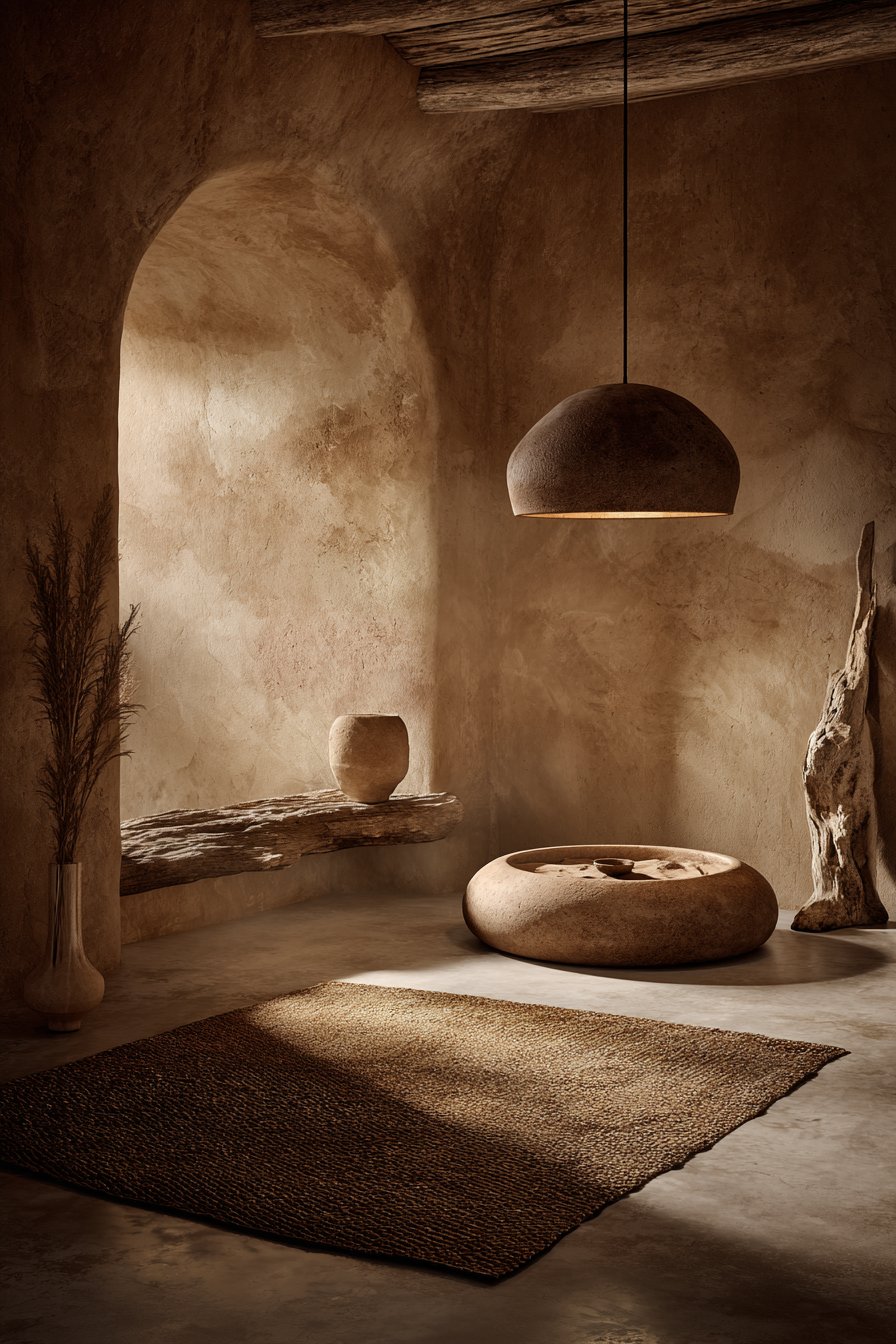
Editing is just as important as adding. As you introduce new textures, remove elements that no longer serve the space. A minimal room should never feel crowded, even if it’s richly textured. Think of texture as music — the silence between notes is as important as the notes themselves. Balance, restraint, and intention are what keep the minimal spirit intact while making the room feel genuinely comfortable.
- Choose one or two statement textural pieces rather than many small ones
- Allow negative space around textural objects so they can breathe visually
- Edit regularly — remove items that no longer contribute to the overall feeling
- Invest in quality natural materials over cheap synthetic alternatives
- Stick to a cohesive color palette so texture, not color, creates the interest
- Step back and assess the room as a whole after each addition
Conclusion
Minimalism and comfort are not opposing forces. They are partners when texture is handled with intention. A minimal living room stripped of textural variety is just an empty room. But a minimal room layered with thoughtful, varied, natural textures becomes a place of genuine refuge and beauty.
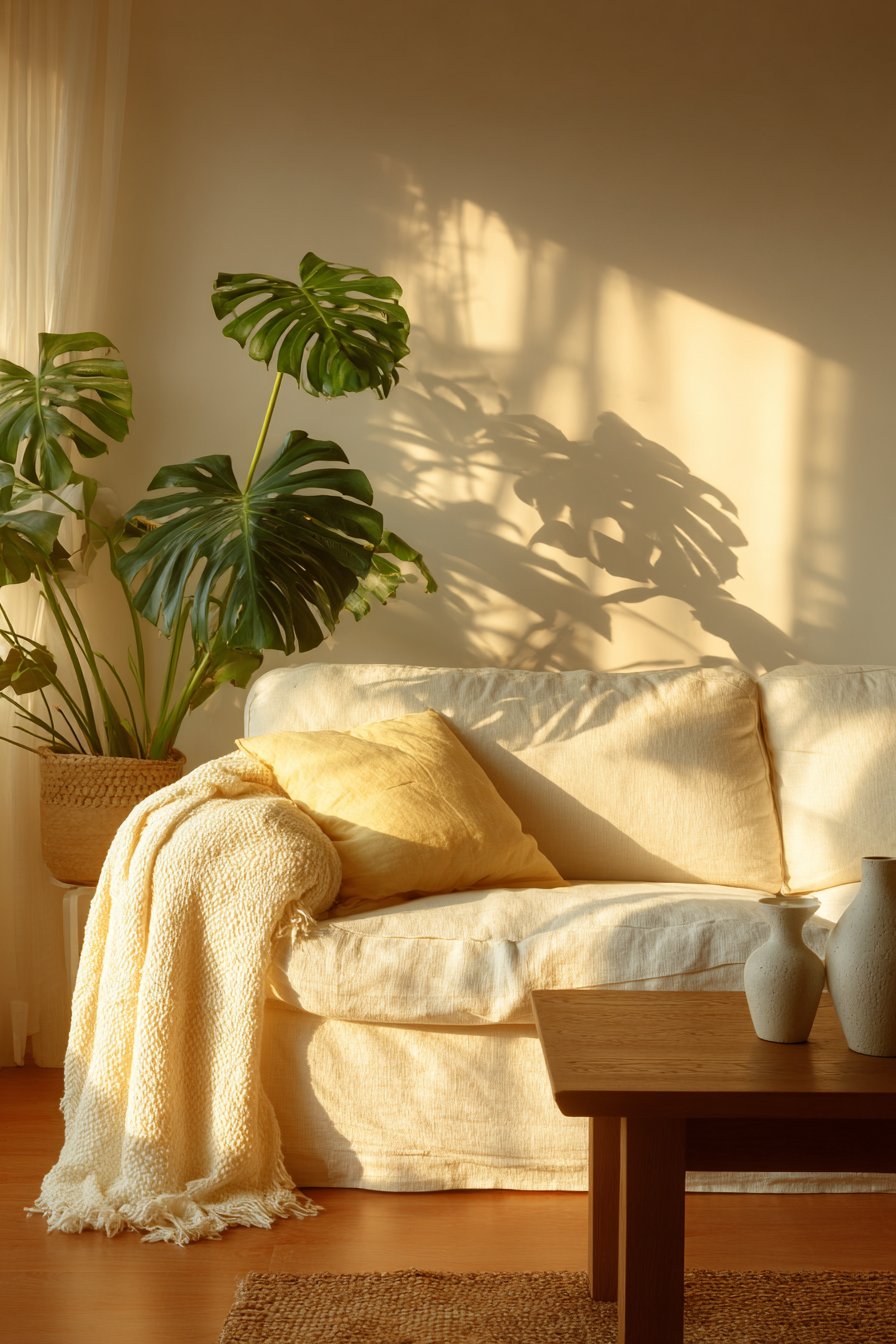
The ideas explored in this article — from natural fibers and warm wood to living plants and raking light — all point toward the same truth: texture is the soul of comfort. It’s what makes a room feel inhabited, loved, and truly lived in. Start with one or two changes, observe how the room responds, and build from there. The most beautiful minimal living rooms are never finished in a day — they evolve, breathe, and deepen over time, just like a life well lived.
"As an Amazon Associate, I earn from qualifying purchases."
