The mid century modern movement, flourishing from the 1940s to 1960s, continues to captivate homeowners and designers with its emphasis on clean lines, functional beauty, and seamless integration with nature. In the heart of the home, the kitchen becomes a canvas for expressing these timeless principles through thoughtful material selection, geometric forms, and purposeful design. A mid century modern kitchen transcends mere cooking space, evolving into a social hub that embodies the era’s optimistic vision of modern living.
Today’s interpretation of mid century modern kitchen design honors the movement’s core principles while embracing contemporary functionality and technology. The style’s characteristic elements—flat-panel cabinetry, natural wood grains, stone surfaces, and geometric patterns—create spaces that feel both nostalgic and refreshingly current. These kitchens celebrate the beauty of honest materials, letting the natural characteristics of wood, stone, and metal speak for themselves without unnecessary ornamentation.
The following collection presents thirty distinct approaches to mid century modern kitchen design, each showcasing unique interpretations of this beloved aesthetic. From compact galley layouts to expansive open-plan designs, these concepts demonstrate how mid century principles can be adapted to various spaces, lifestyles, and functional requirements. Whether you’re drawn to the warmth of walnut cabinetry, the drama of geometric tile work, or the sophistication of integrated appliances, these designs offer inspiration for creating your own mid century modern sanctuary.
1. Walnut Elegance with Waterfall Island
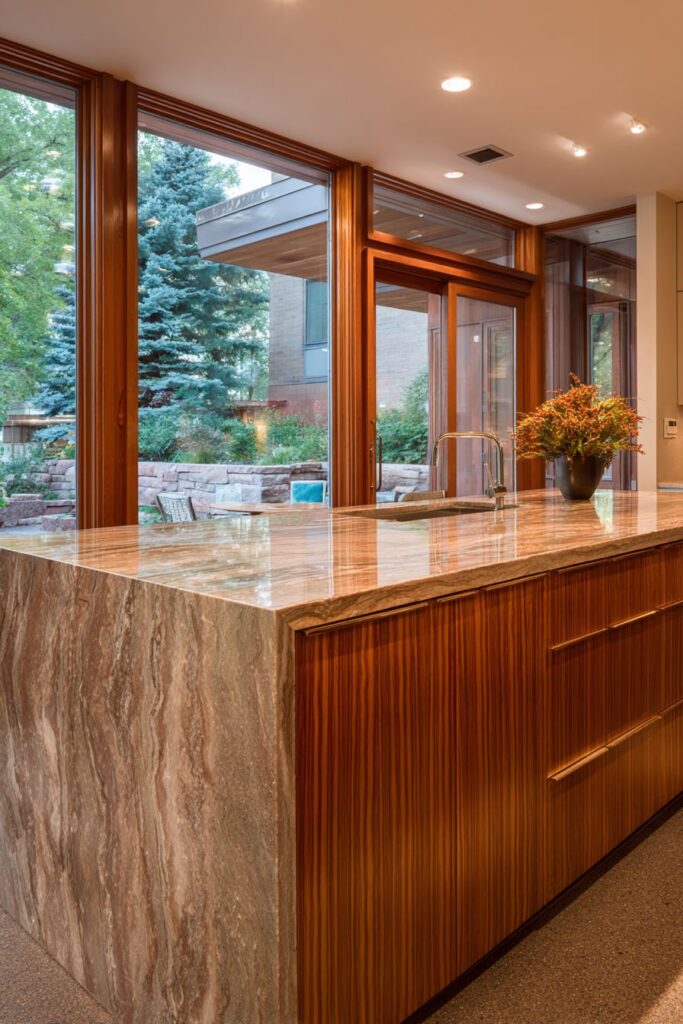
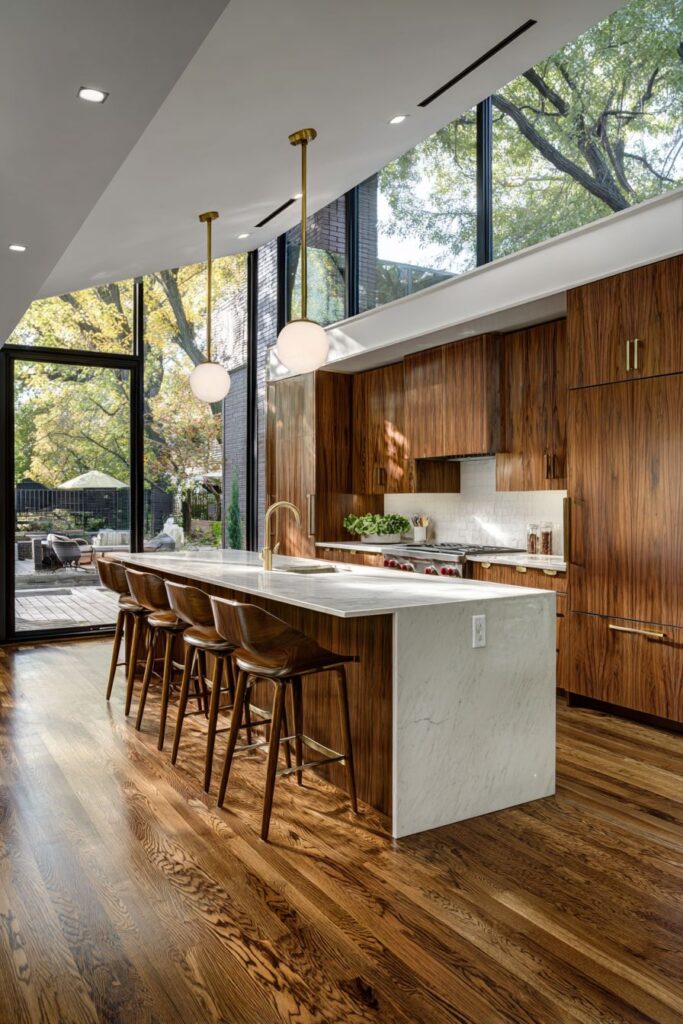
The epitome of mid century sophistication unfolds in this stunning kitchen where flat-panel walnut cabinets create a rich, warm foundation for the entire space. The integrated brass hardware adds subtle metallic accents without disrupting the clean lines that define the mid century aesthetic. The centerpiece kitchen island commands attention with its dramatic waterfall edge stone countertops, where the surface material cascades down the sides in an unbroken flow, creating visual continuity and modern elegance.
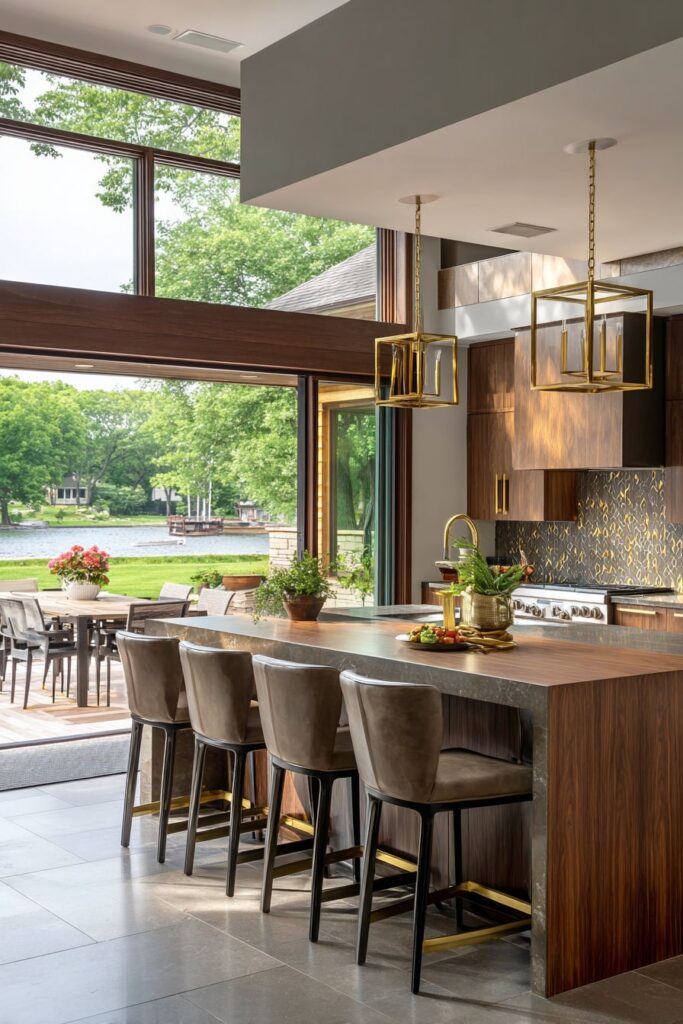
Floor-to-ceiling windows serve as the room’s natural lighting system, flooding the space with abundant daylight that highlights every nuance of the warm wood tones and emphasizes the geometric precision of the cabinetry. The seamless integration between indoor cooking space and outdoor patio, visible through expansive glass doors, exemplifies the mid century philosophy of bringing the outside in. This connection to nature enhances the organic warmth of the walnut while creating an expanded sense of space.
The open layout design maximizes both functionality and social interaction, allowing the cook to remain connected with family and guests while preparing meals. The careful balance of natural materials—warm wood, cool stone, and gleaming brass—creates a sophisticated palette that feels both timeless and thoroughly contemporary. Professional lighting design ensures that every surface receives optimal illumination, from task lighting over work areas to ambient lighting that enhances the evening atmosphere.
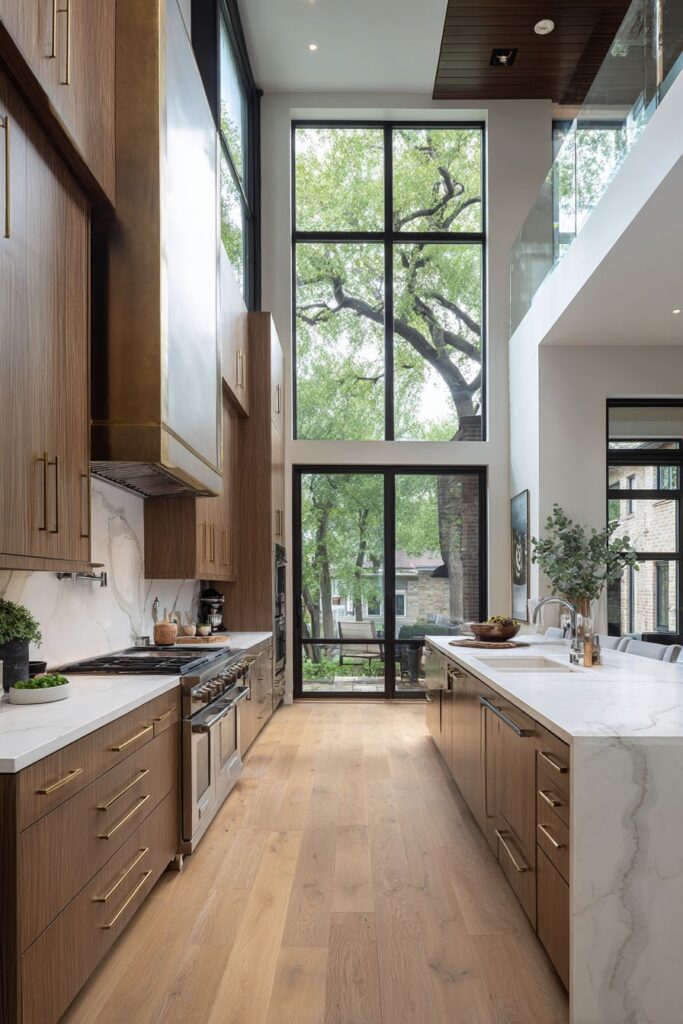
The integration of modern conveniences within the clean-lined aesthetic demonstrates how mid century principles can accommodate contemporary needs without compromising design integrity. Every element serves both form and function, from the streamlined cabinet pulls to the carefully proportioned island that provides ample workspace while maintaining visual lightness.
Key Design Tips:
- Choose waterfall edge countertops to create dramatic focal points and visual continuity
- Install floor-to-ceiling windows to maximize natural light and outdoor connections
- Select integrated brass hardware for subtle metallic accents that complement warm wood tones
- Design open layouts that encourage social interaction while maintaining functional efficiency
- Use consistent material palette throughout to create cohesive sophisticated atmosphere
2. Geometric Harmony with Earth-Toned Backsplash
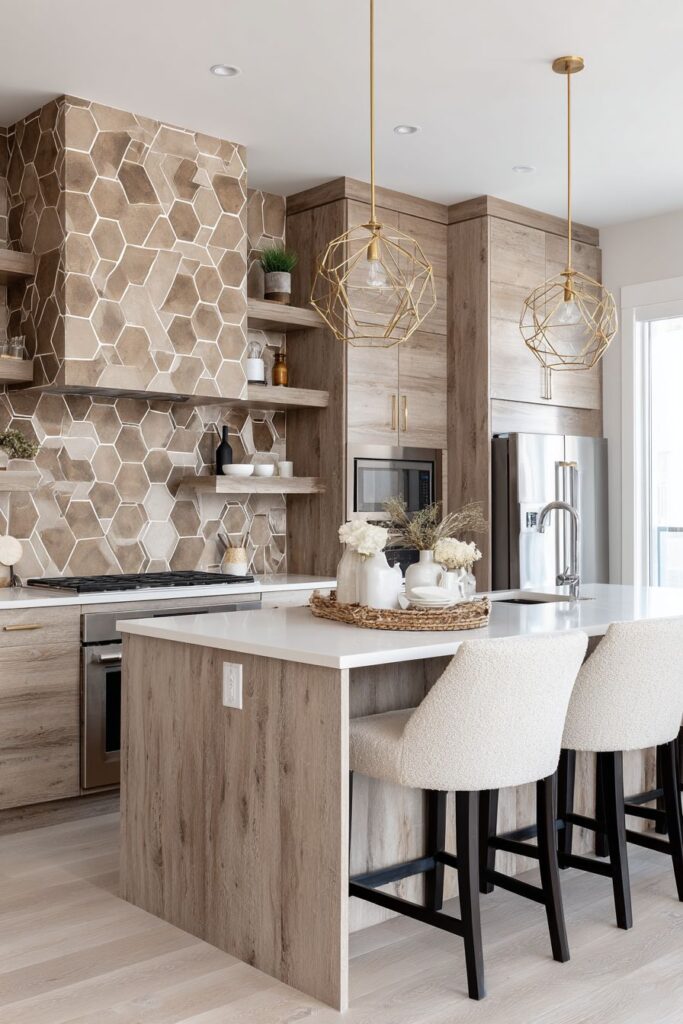
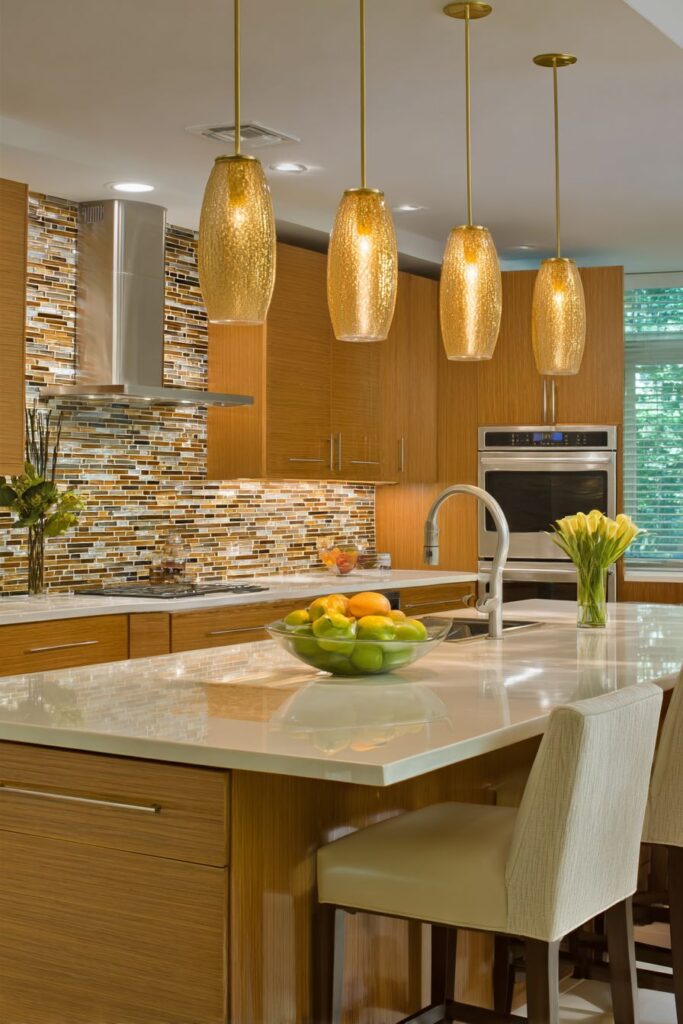
A striking geometric tile backsplash becomes the star of this sophisticated mid century modern kitchen, where warm earth tones create a captivating backdrop for the natural teak cabinetry. The carefully selected tile pattern introduces visual interest through geometric repetition while maintaining the clean, uncluttered aesthetic that defines the style. Each tile contributes to a larger composition that draws the eye upward, creating vertical emphasis that enhances the room’s proportions and architectural character.
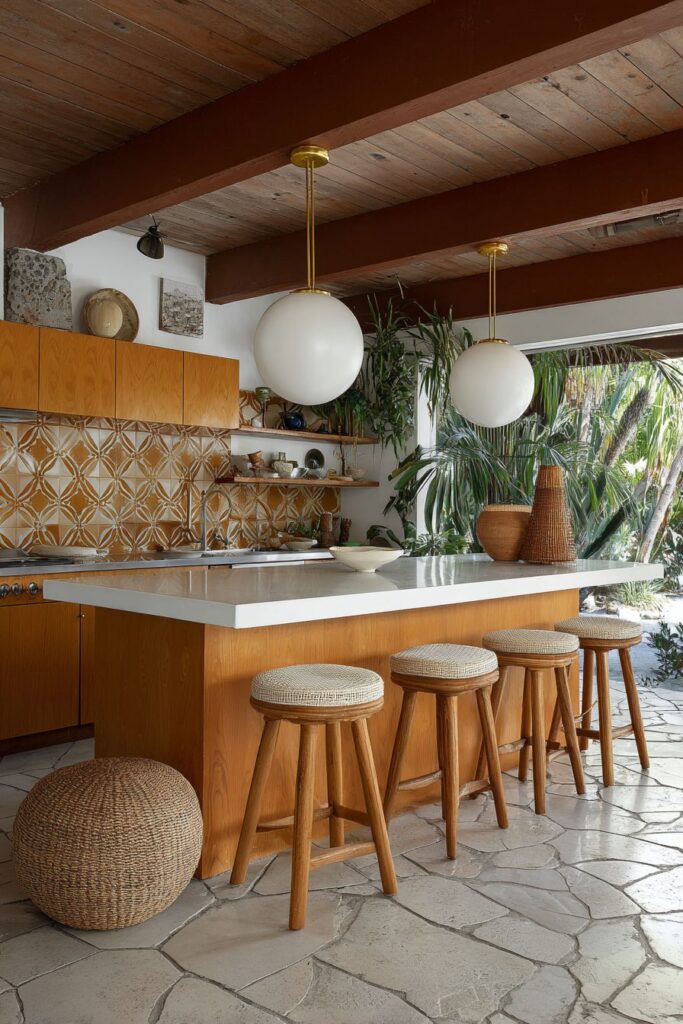
The natural teak cabinetry showcases the mid century appreciation for authentic wood grain and honest materials. The warm honey tones of the teak create perfect harmony with the earth-toned backsplash, establishing a cohesive color palette that feels both sophisticated and welcoming. Built-in stainless steel appliances maintain the period’s commitment to clean lines and functional integration, while their reflective surfaces add subtle textural contrast to the warm wood surroundings.
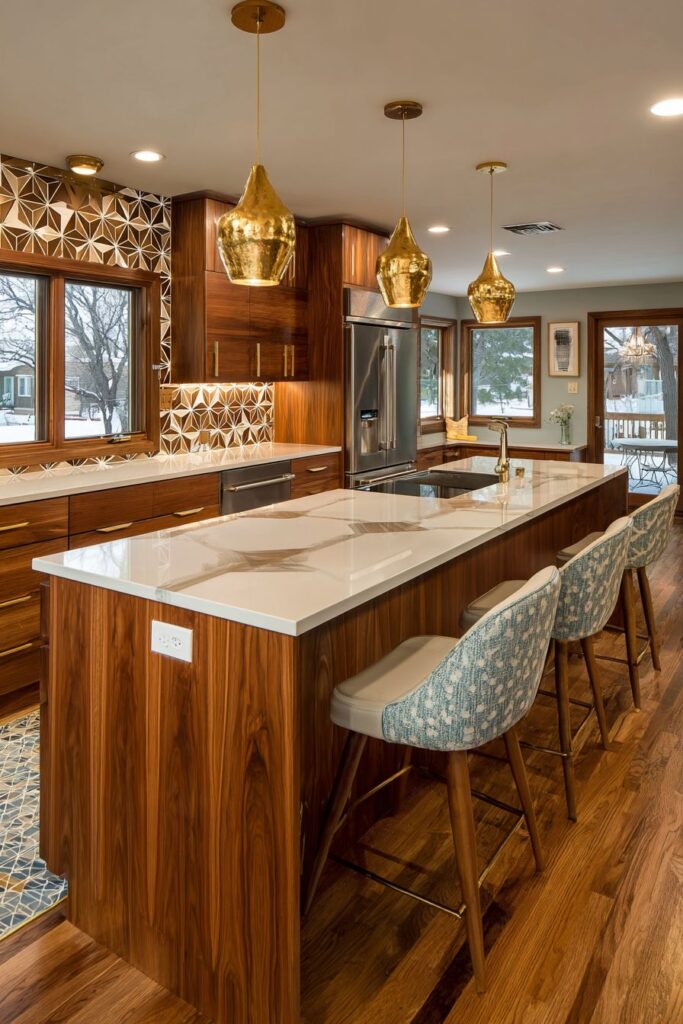
Pendant lights with brass accents hang gracefully over the functional breakfast bar, providing both task lighting and decorative interest. These fixtures echo the geometric themes found throughout the space while adding metallic warmth that ties into the overall design scheme. The breakfast bar itself extends the kitchen’s social functionality, creating an informal dining area that encourages casual interaction and everyday gathering.
The emphasis on horizontal lines throughout the design reflects the mid century preference for low, streamlined forms that create visual calm and spaciousness. Soft, diffused lighting techniques highlight the texture details of both the wood grain and geometric tile work, creating depth and visual interest that changes throughout the day as natural light shifts and evolves.
Key Design Tips:
- Select geometric tile patterns that complement rather than compete with cabinetry
- Use earth-toned color palettes to create warmth and visual cohesion
- Install pendant lighting with period-appropriate metallic finishes for authentic style
- Design breakfast bars to extend kitchen functionality and encourage social interaction
- Emphasize horizontal lines to create visual calm and enhance spatial proportions
3. Compact Efficiency with Floor-to-Ceiling Storage
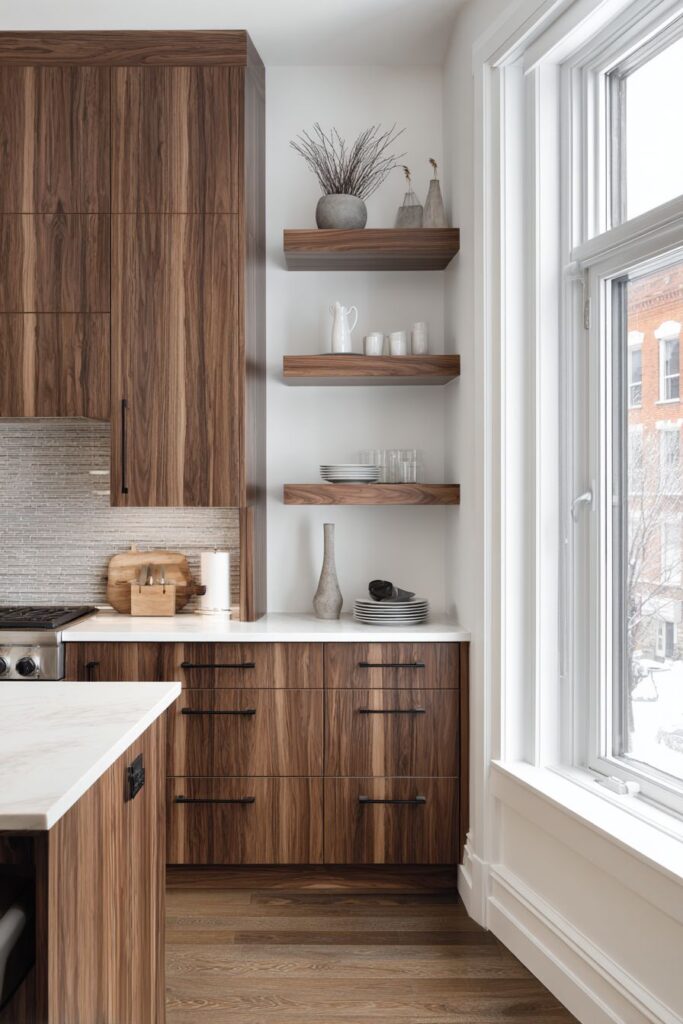
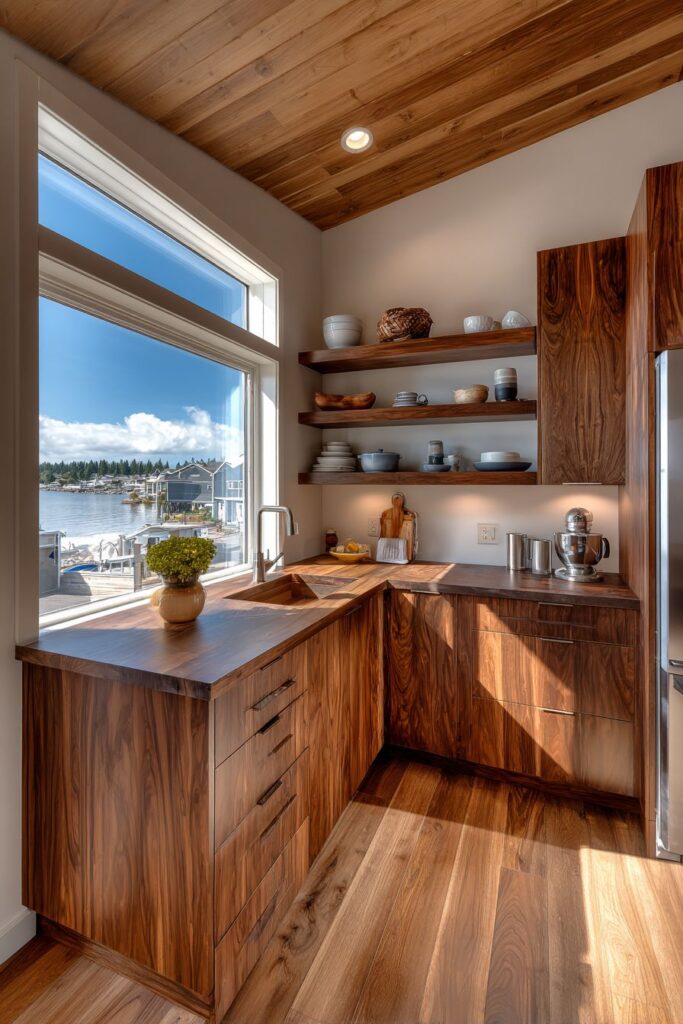
This thoughtfully designed compact mid century modern kitchen proves that small spaces can achieve maximum impact through intelligent storage solutions and careful attention to proportion. Floor-to-ceiling walnut cabinets create vertical emphasis while providing abundant storage capacity, making every inch of available space work efficiently. The rich wood grain adds warmth and character to the compact layout, while open floating shelves break up the solid cabinetry with display opportunities for period-appropriate dishware and decorative objects.
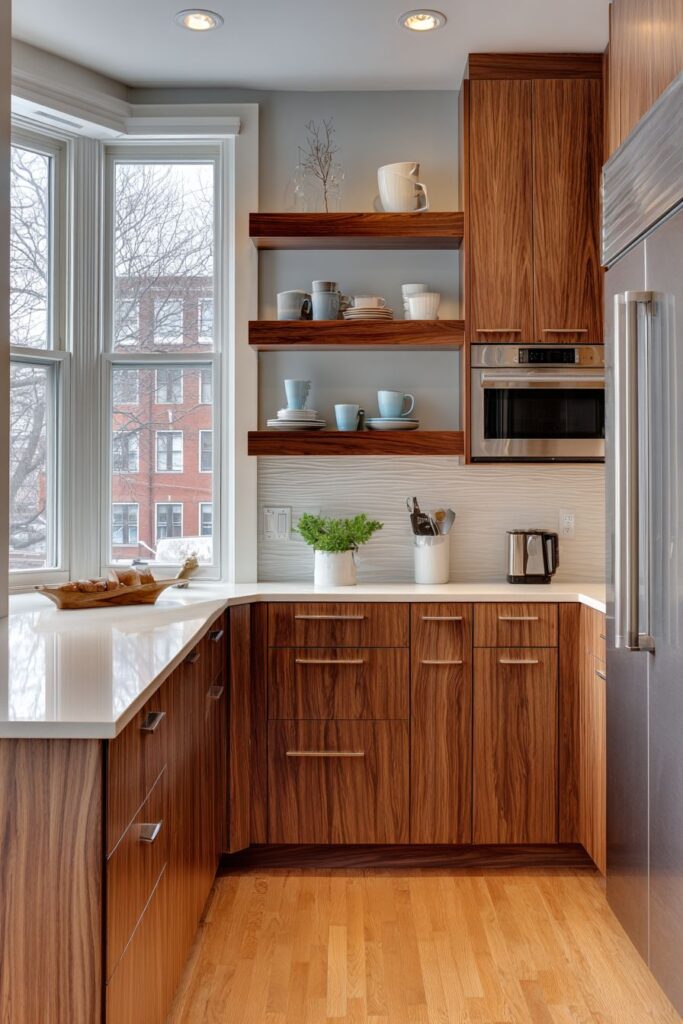
The small peninsula design ingeniously provides additional workspace without overwhelming the compact footprint, maintaining the signature clean lines that define mid century aesthetics. This efficient layout demonstrates how thoughtful planning can create functional cooking spaces even within limited square footage. The peninsula also serves as a natural boundary between the kitchen and adjacent living areas, creating definition without sacrificing the open, connected feeling that characterizes mid century home design.
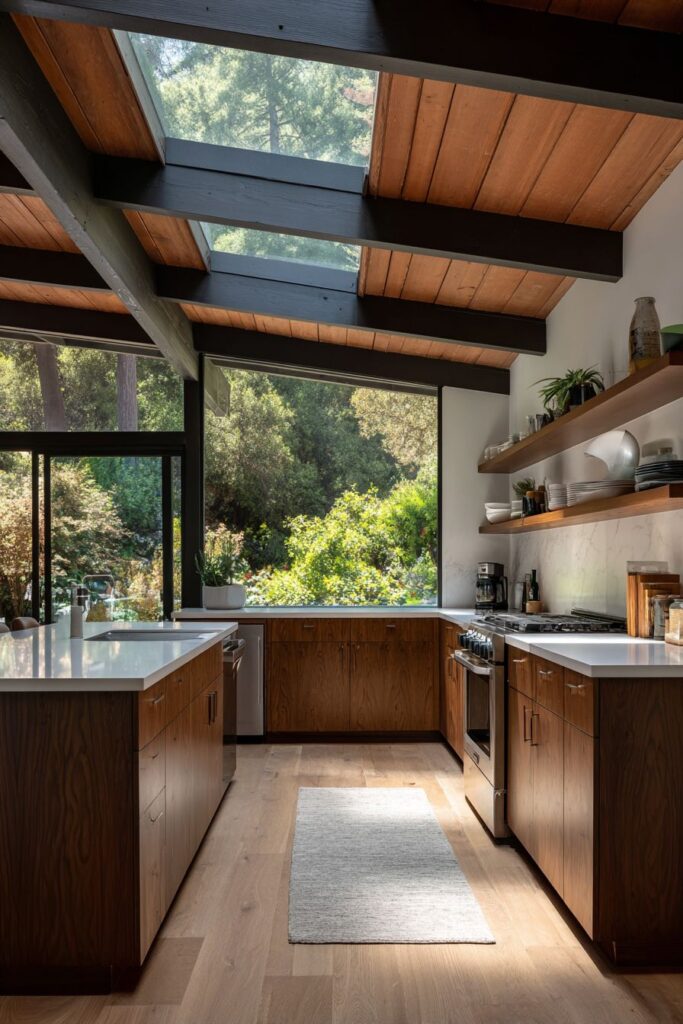
Natural daylight streams through a strategically placed large window, providing essential illumination while creating a strong connection to the outdoors. This natural light source enhances the beauty of the wood grain textures and creates changing patterns throughout the day that add visual interest to the compact space. Professional interior photography techniques capture balanced exposure that showcases both the practical storage solutions and the aesthetic beauty of the materials.
The careful balance of closed and open storage creates visual rhythm while serving practical needs. Lower cabinets provide concealed storage for everyday items, while floating shelves display curated collections that add personality and color to the neutral palette. This combination prevents the space from feeling cramped while maintaining the uncluttered appearance that is essential to mid century design success.
Key Design Tips:
- Maximize vertical space with floor-to-ceiling cabinetry for optimal storage efficiency
- Include floating shelves to break up solid cabinetry and provide display opportunities
- Design peninsulas to add workspace without overwhelming compact layouts
- Position windows strategically to maximize natural light in smaller spaces
- Balance closed and open storage to create visual rhythm and prevent cramped feeling
4. Integrated Dining with Burnt Orange Banquette
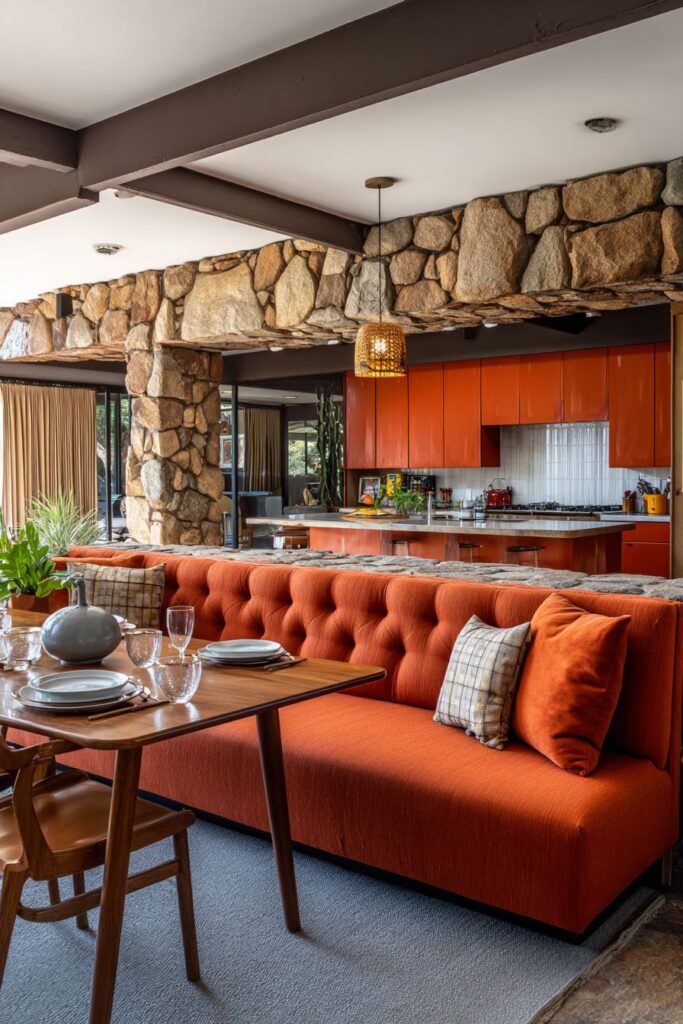
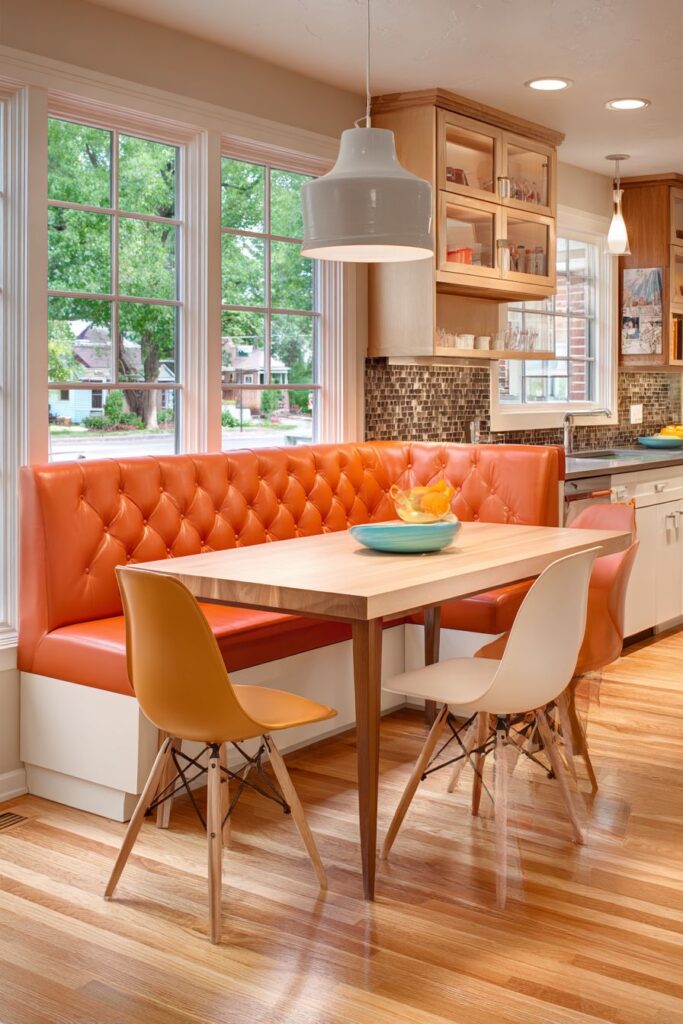
The seamless flow between cooking and dining spaces reaches its pinnacle in this expertly designed mid century modern kitchen featuring a built-in banquette upholstered in vibrant burnt orange. This bold color choice exemplifies the era’s confidence in using saturated hues as focal points within otherwise neutral palettes. The tufted upholstery adds textural interest while maintaining the clean lines that define the style, creating a comfortable gathering space that encourages lingering over meals and conversation.
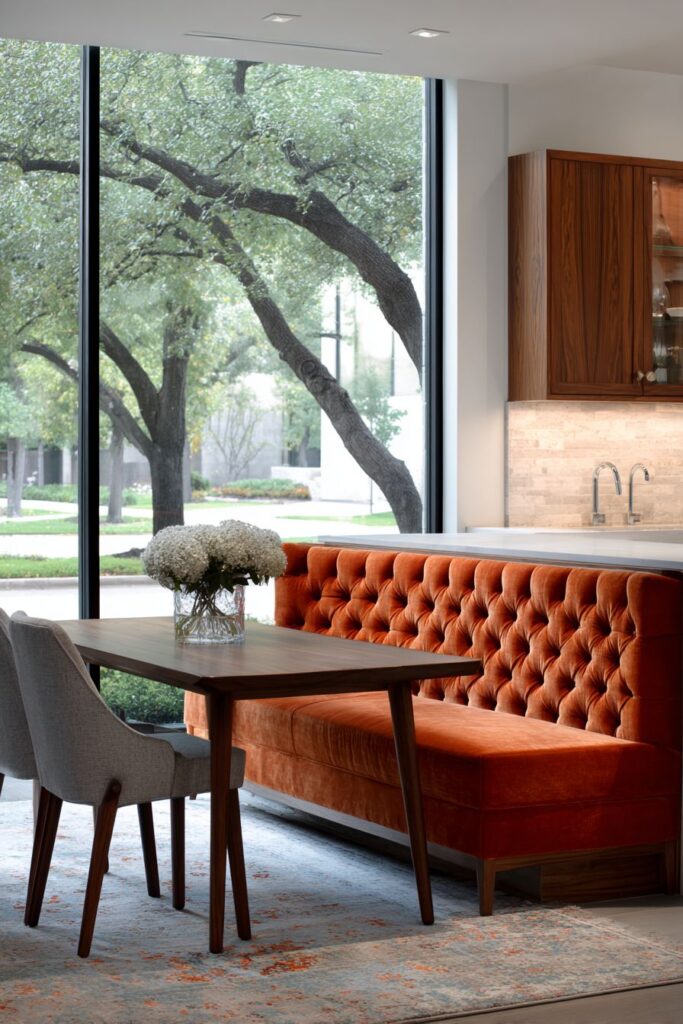
The adjacent kitchen displays all the characteristic elements of mid century design: flat-panel cabinets in natural wood tones and stone countertops that provide durable, beautiful work surfaces. The simple wooden table and tapered leg chairs echo the geometric forms found throughout the space, while their honest construction celebrates the mid century appreciation for quality craftsmanship and functional beauty.
Wide-angle interior design photography captures the sophisticated spatial relationships between cooking and dining areas, demonstrating how open planning can create distinct zones without sacrificing visual continuity. The natural lighting emphasizes the warm color palette, from the rich wood tones to the striking burnt orange upholstery, creating an inviting atmosphere that changes beautifully throughout the day.
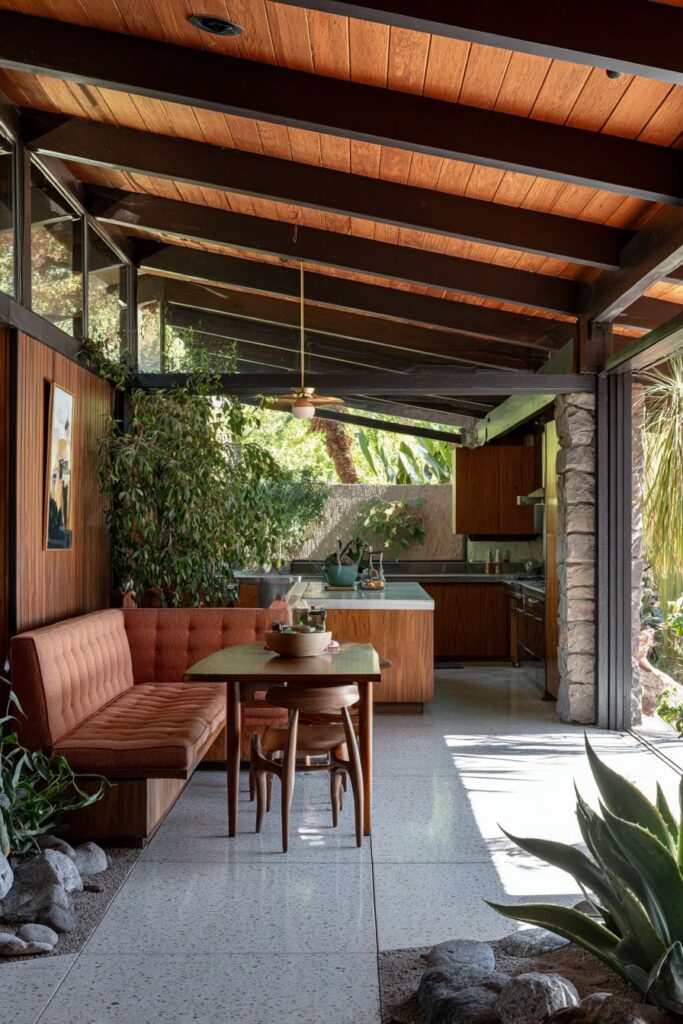
The integrated approach to kitchen and dining design reflects the mid century philosophy that the home should function as a unified whole rather than a collection of separate rooms. This concept creates opportunities for social interaction during meal preparation and encourages family gathering in the heart of the home. The careful attention to proportion ensures that neither the cooking nor dining area overwhelms the other, creating perfect balance within the unified space.
Key Design Tips:
- Use bold accent colors like burnt orange to create focal points within neutral palettes
- Design built-in banquettes to maximize seating while maintaining clean lines
- Select tapered leg furniture to echo mid century geometric forms throughout the space
- Plan open layouts that create distinct zones without sacrificing visual continuity
- Emphasize natural lighting to enhance warm color palettes and material textures
5. Centerpiece Island with Butcher Block Luxury
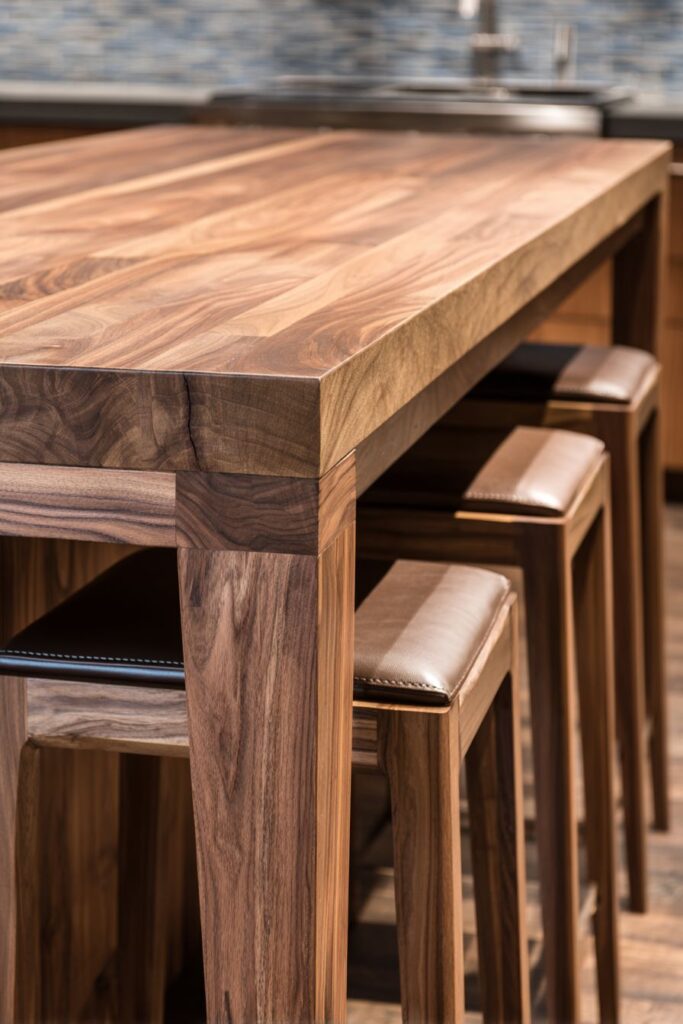
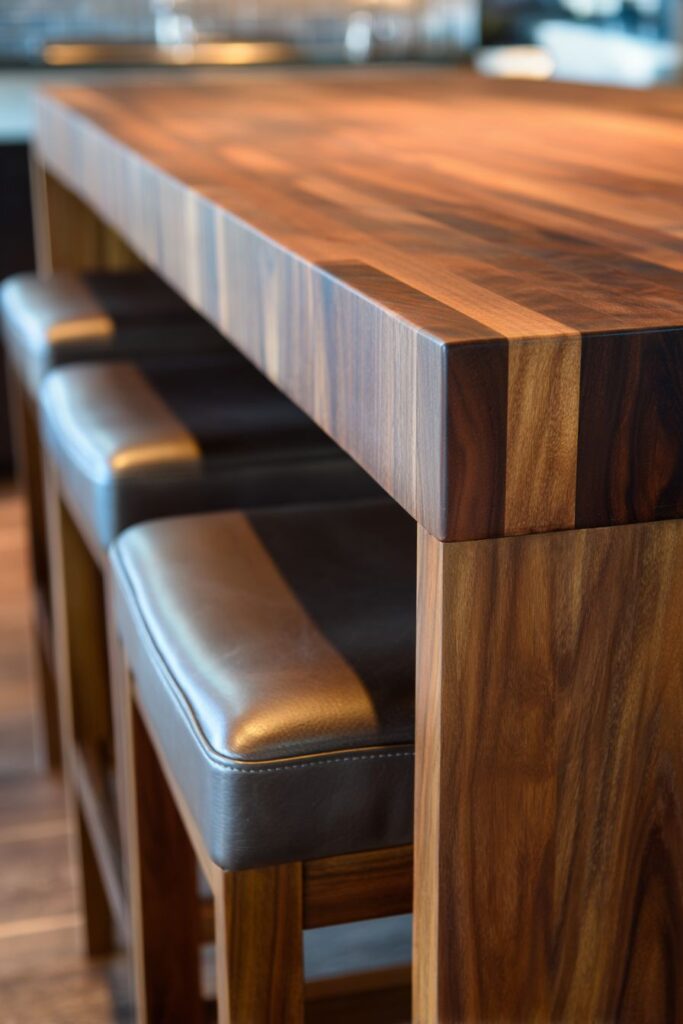
The heart of this mid century modern kitchen beats within a magnificent island designed as the ultimate centerpiece, featuring a thick butcher block top that celebrates the beauty of natural wood grain and honest construction. The substantial surface provides ample workspace for food preparation while creating a warm, inviting gathering place that draws family and friends together. Integrated seating transforms the island from purely functional element into social hub, encouraging interaction and casual dining within the kitchen environment.
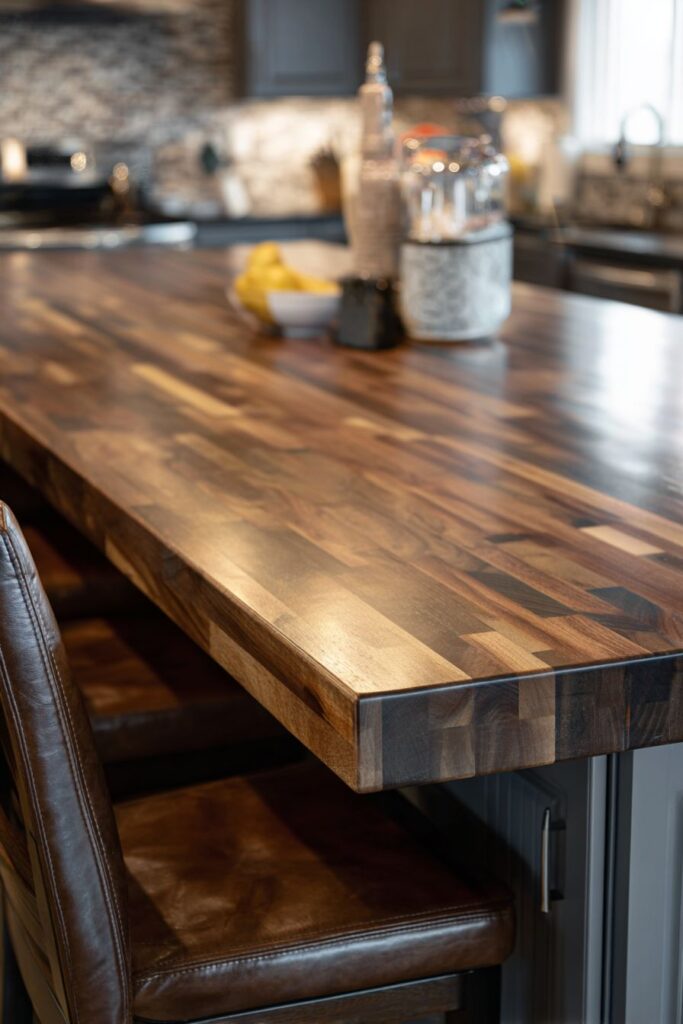
Clean-lined bar stools with leather cushions provide comfortable seating while maintaining the geometric precision that characterizes mid century design. The leather upholstery adds textural richness and develops a beautiful patina over time, embodying the era’s appreciation for materials that improve with age and use. The careful proportion between stools and island ensures comfortable seating height while maintaining visual lightness that prevents the large island from overwhelming the space.
Surrounding cabinetry in rich walnut creates visual warmth throughout the kitchen while maintaining the minimal hardware aesthetic that keeps focus on the wood’s natural beauty. The consistent material palette of butcher block and walnut creates sophisticated harmony, while the varying grain patterns add visual interest and character. Professional interior photography emphasizes the interplay of natural materials under soft ambient lighting, showcasing how different wood tones can work together to create depth and richness.
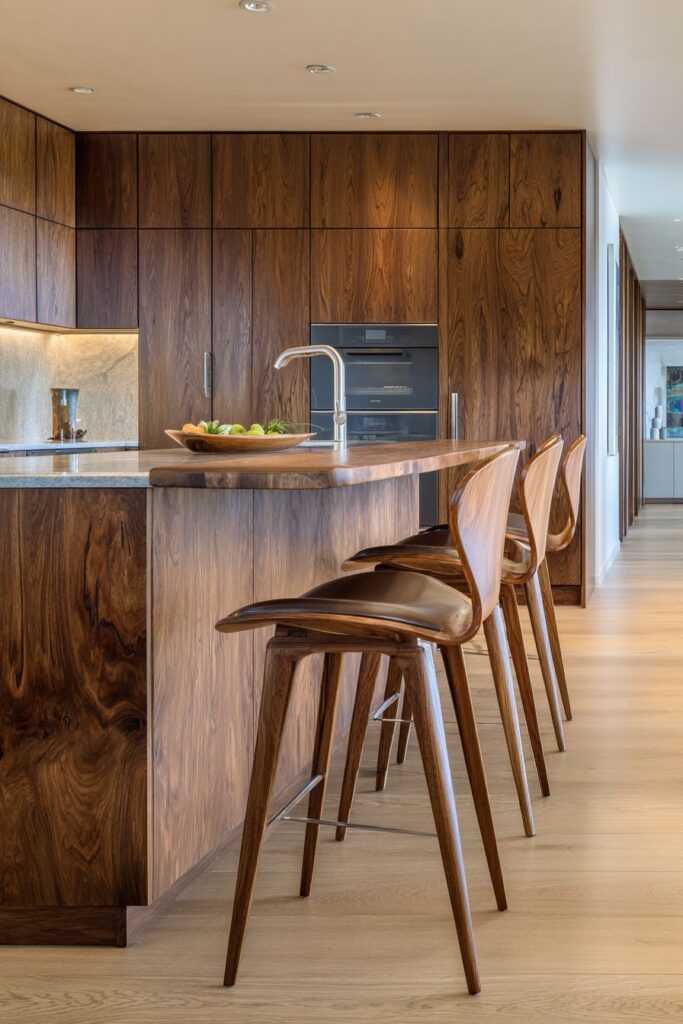
The island’s functionality extends beyond surface workspace to include carefully planned storage solutions that maintain clean lines while providing essential organization. Hidden compartments and drawers ensure that the island’s beautiful surfaces remain uncluttered, supporting the mid century principle that beauty and function should work seamlessly together. The thoughtful integration of electrical outlets and lighting fixtures enhances the island’s utility without compromising its aesthetic appeal.
Key Design Tips:
- Choose thick butcher block surfaces to create substantial, warm workspace centerpieces
- Integrate seating into island design to encourage social interaction and casual dining
- Select leather cushioned stools for comfort and developing patina that improves with age
- Maintain consistent wood tones throughout while varying grain patterns for visual interest
- Include hidden storage solutions to keep surfaces uncluttered and maintain clean lines
6. Dramatic Stone Accent with Integrated Hood Design
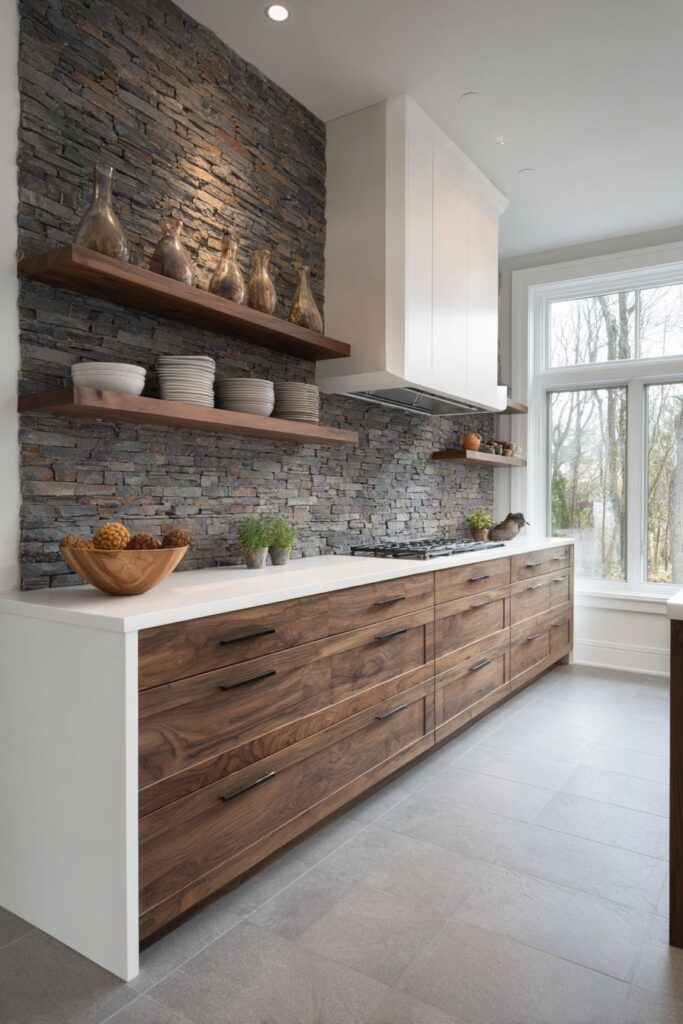
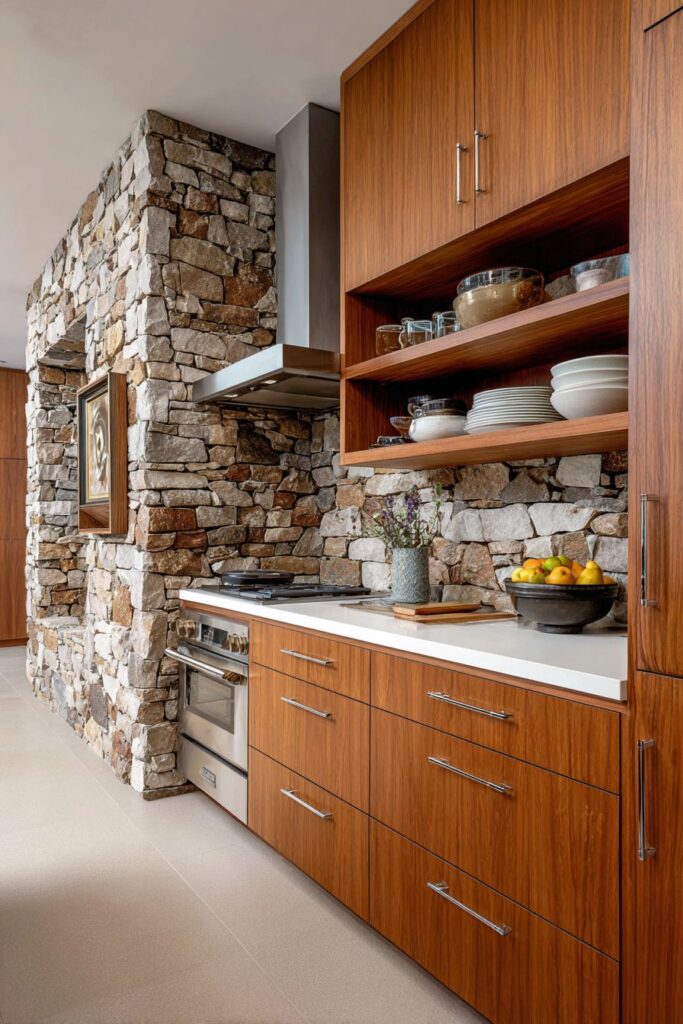
A dramatic stone accent wall creates breathtaking visual impact behind the cooktop in this sophisticated mid century modern kitchen, where natural materials take center stage in celebrating both form and function. The carefully selected stone showcases natural variations in color and texture that add depth and character to the cooking area, while its heat-resistant properties provide practical benefits for the high-heat cooking zone. The sleek range hood integration maintains clean lines while providing essential ventilation, demonstrating how functional requirements can enhance rather than compromise aesthetic goals.
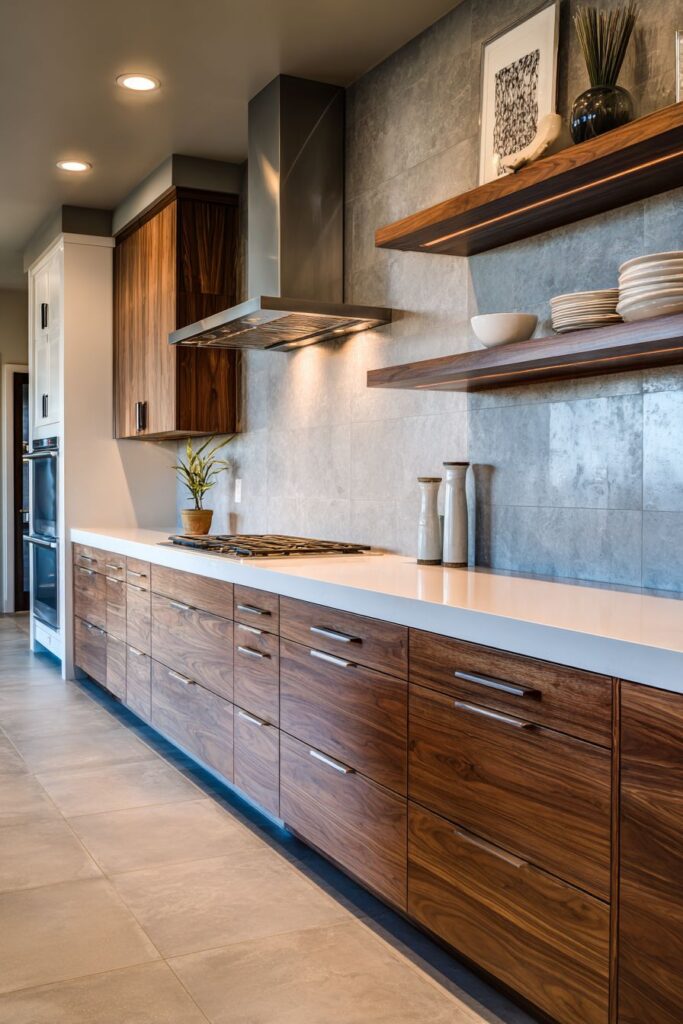
Natural wood upper cabinets balance the weight of the stone accent wall while adding warmth and organic texture to the composition. The careful proportioning between stone and wood creates visual harmony that feels both grounded and sophisticated. Open shelving provides display opportunities for curated dishware and cooking accessories, adding personality while maintaining the uncluttered appearance that defines successful mid century design.
Large format floor tiles enhance the horizontal emphasis that characterizes mid century aesthetics, creating visual calm and spaciousness throughout the kitchen. The tile selection complements the stone accent wall while providing easy maintenance and durability for high-traffic areas. Interior design photography captures the sophisticated material combinations under natural light, highlighting how stone textures and wood grain details contribute to the space’s overall richness and character.
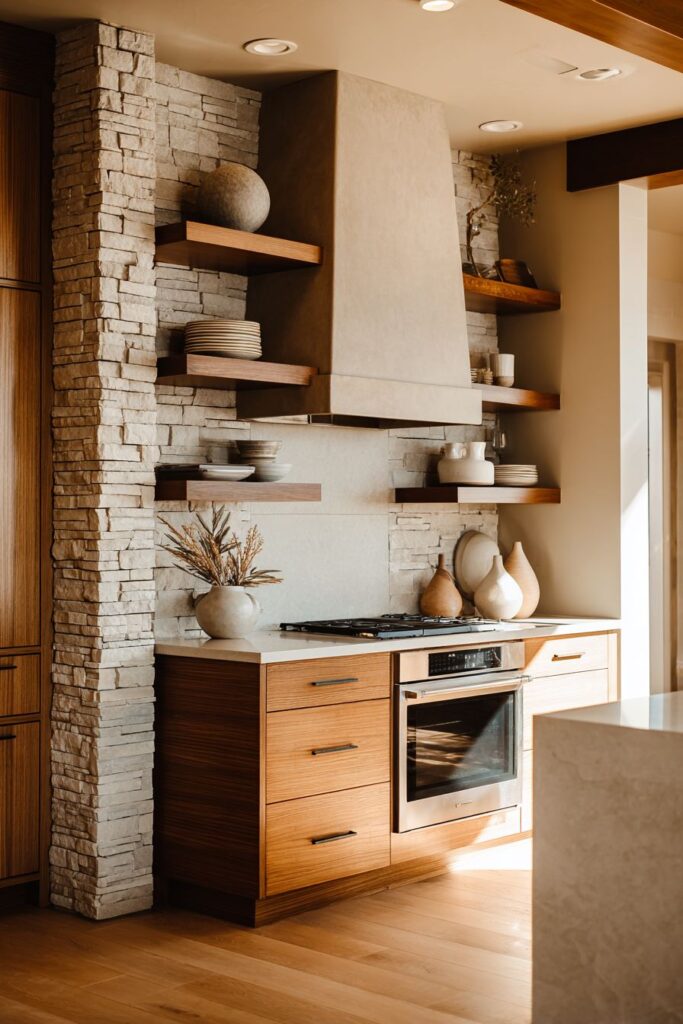
The integration of professional-grade cooking equipment within the mid century framework demonstrates how contemporary functionality can be seamlessly incorporated into period design principles. The careful attention to proportion and material harmony ensures that modern appliances enhance rather than compromise the authentic aesthetic, creating a kitchen that serves today’s cooking needs while honoring timeless design principles.
Key Design Tips:
- Create dramatic focal points with natural stone accent walls behind cooking areas
- Balance heavy stone elements with warm wood upper cabinetry for visual harmony
- Select large format floor tiles to emphasize horizontal lines and create spaciousness
- Integrate modern appliances seamlessly within period design principles
- Use open shelving strategically to add personality while maintaining uncluttered appearance
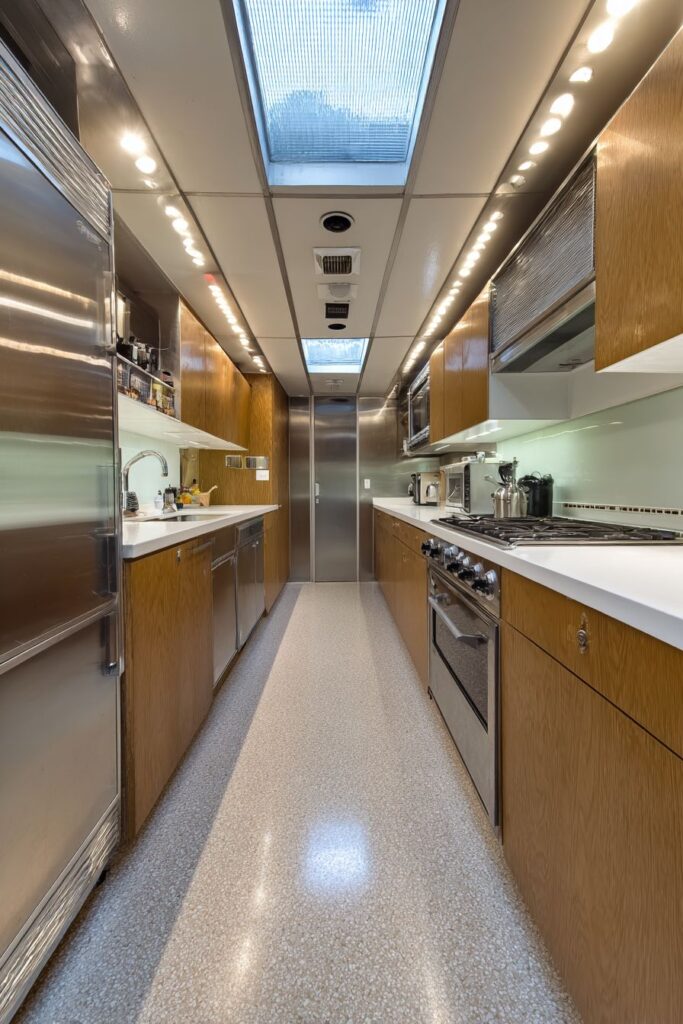
7. Efficient Galley Design with Skylight Innovation
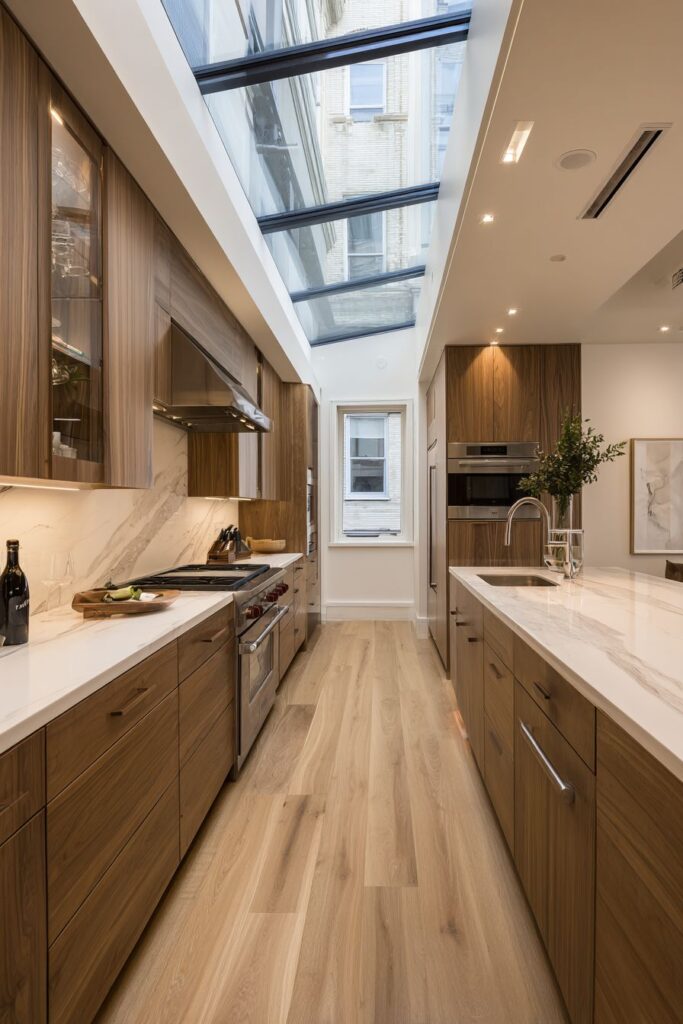
The narrow galley layout transforms into a masterpiece of efficiency and style in this carefully planned mid century modern kitchen, where streamlined cabinetry in warm teak maximizes every available inch while maintaining the clean lines essential to the aesthetic. White stone countertops provide beautiful contrast to the rich wood tones while offering durable, easy-to-maintain work surfaces that reflect light throughout the narrow space. The floor-to-ceiling storage solutions demonstrate how thoughtful design can overcome space limitations while creating visual height and grandeur.
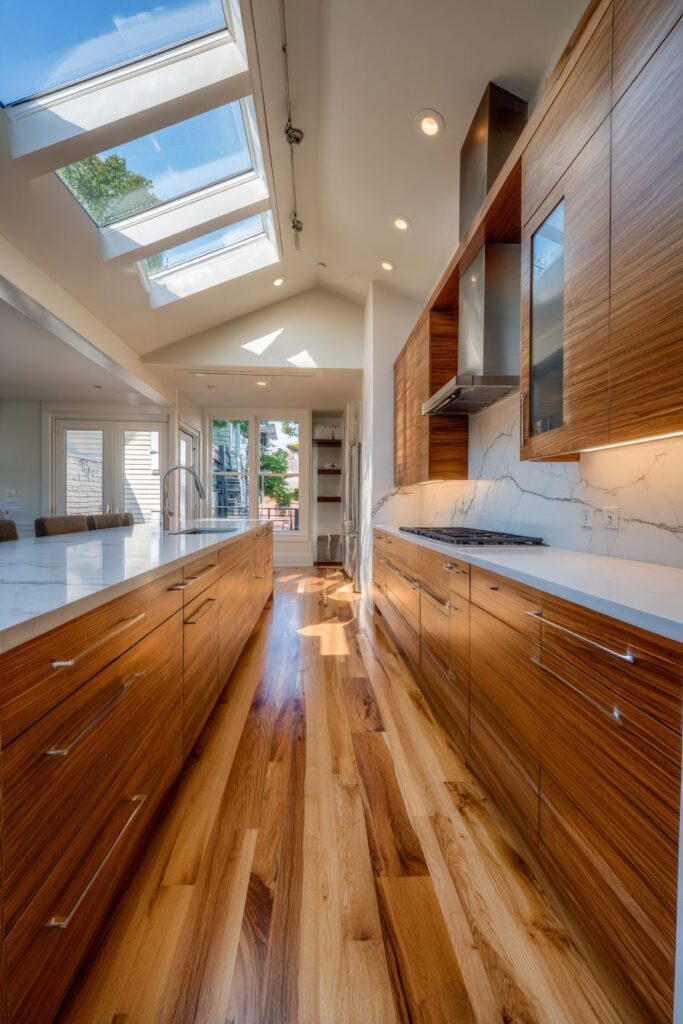
The innovative skylight placement provides natural illumination from above, creating a bright, airy feeling that counteracts the potential closed-in sensation of a galley layout. This overhead natural light source highlights the wood grain details and stone surface textures while creating dramatic changes in lighting throughout the day. The skylight also provides a connection to the sky and changing weather, bringing elements of nature into the compact workspace.
Professional interior photography emphasizes the practical layout and careful proportions that make this galley kitchen both beautiful and highly functional. The balanced exposure showcases both artificial and natural lighting integration, demonstrating how different light sources can work together to create optimal illumination for both task work and aesthetic enjoyment. The narrow space appears larger and more welcoming through careful attention to light distribution and reflection.
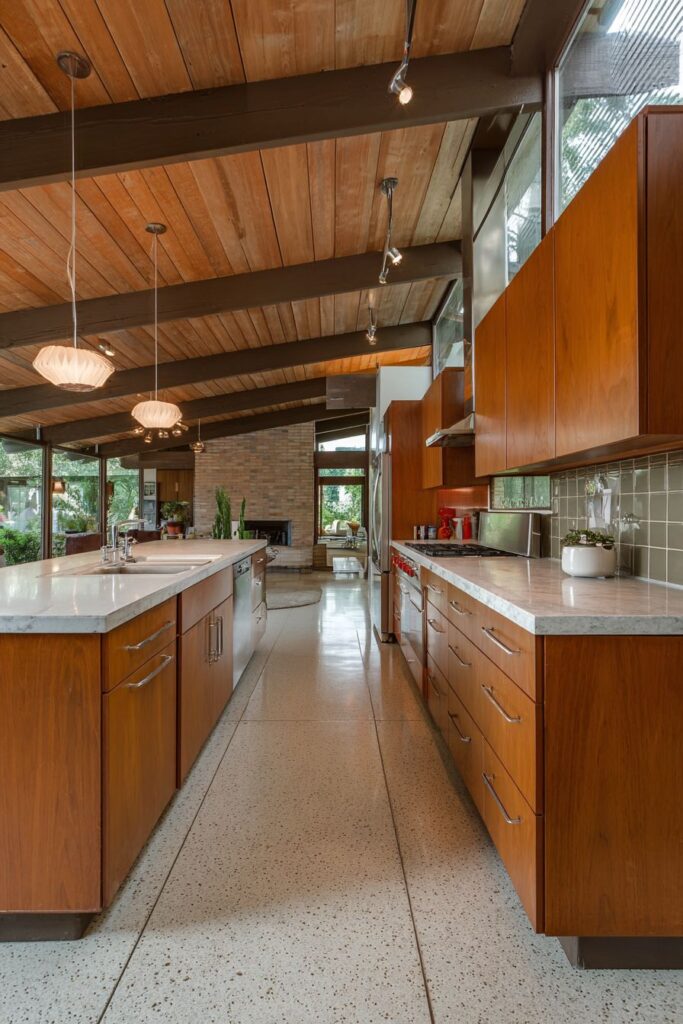
The storage solutions reach from floor to ceiling, ensuring that every cooking essential has its designated place while maintaining the uncluttered surfaces that define mid century style. Careful planning ensures that frequently used items remain easily accessible, while less-used items find homes in higher cabinets. This systematic approach to organization supports both efficient cooking workflows and visual calm.
Key Design Tips:
- Maximize narrow spaces with floor-to-ceiling storage that emphasizes vertical lines
- Install skylights to provide natural illumination and connection to outdoor elements
- Use white stone countertops to reflect light and create contrast with dark wood cabinetry
- Plan systematic storage to ensure efficient workflows within limited space
- Balance artificial and natural lighting for optimal task illumination and aesthetic appeal
8. Architectural Drama with Exposed Beam Ceiling
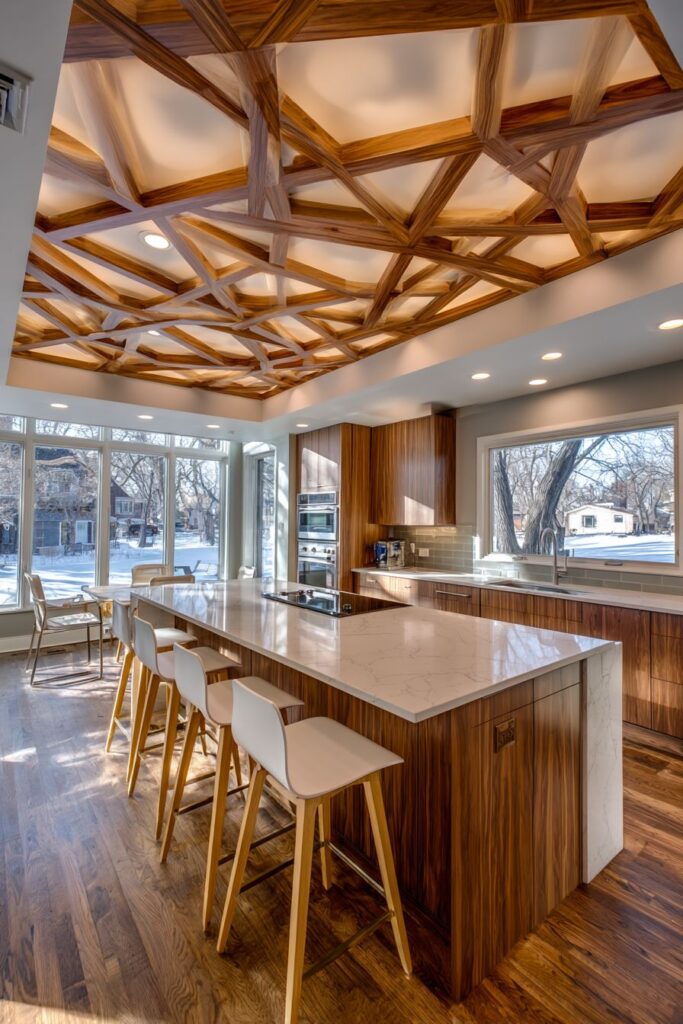
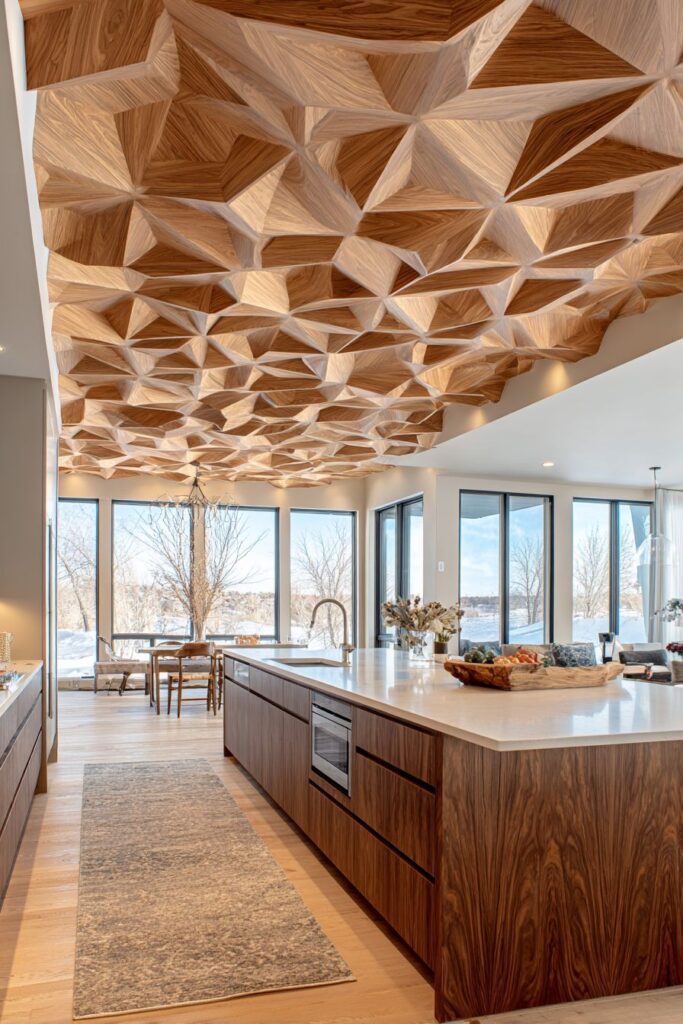
The unique geometric ceiling treatment featuring exposed beams creates architectural drama and visual interest in this striking mid century modern kitchen, where structural elements become decorative features that enhance the space’s character and authenticity. The walnut cabinetry below provides warm contrast to the ceiling’s linear geometry, creating a sophisticated interplay between horizontal and vertical design elements. This combination of structural honesty and material beauty exemplifies the mid century principle of celebrating rather than hiding architectural features.
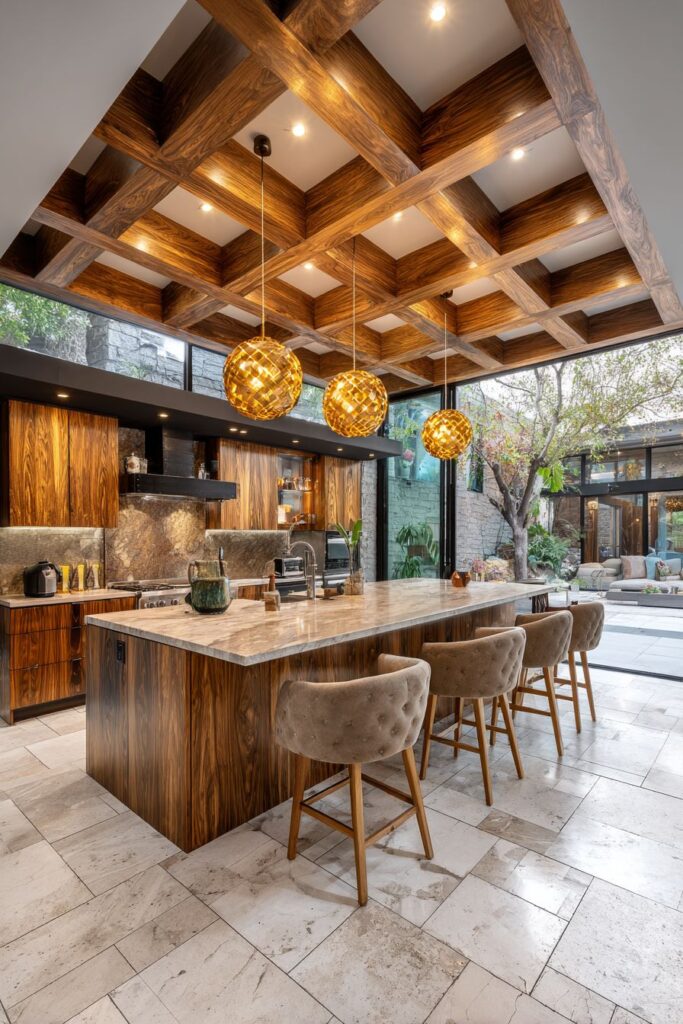
The large center island serves multiple functions as workspace, storage, and social hub, with integrated appliances that maintain clean lines while providing modern convenience. The island’s substantial presence anchors the space while providing essential functionality for both food preparation and casual dining. Careful proportion ensures that the island enhances rather than overwhelms the room’s architectural features, creating balance between fixed structural elements and moveable furniture pieces.
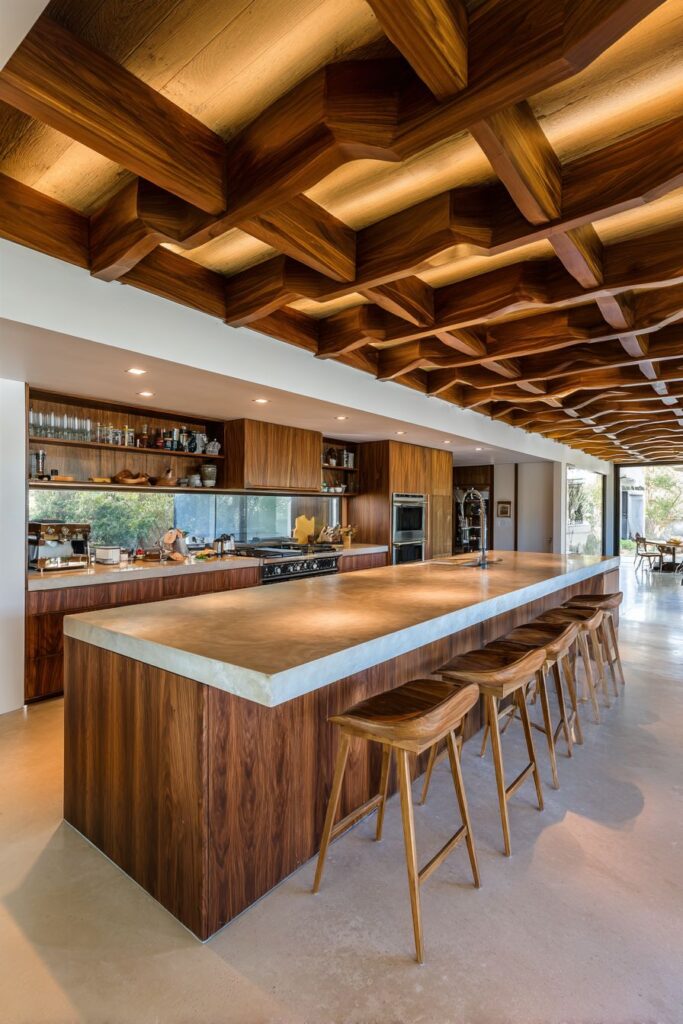
Wide-angle interior design photography captures the sophisticated relationship between architectural details and functional design elements, showcasing how vertical ceiling treatment can enhance horizontal kitchen layouts. The natural material palette of wood and stone creates continuity between ceiling and cabinetry while allowing each element to maintain its distinct character. Professional lighting design ensures that both architectural features and functional surfaces receive appropriate illumination.
The exposed beam ceiling adds textural richness and visual weight to the upper portion of the room, creating intimate human scale within what could otherwise feel like an expansive space. The geometric repetition of the beams echoes the linear qualities found throughout mid century design while adding three-dimensional depth that changes with lighting conditions throughout the day.
Key Design Tips:
- Embrace exposed structural elements as decorative features that add character and authenticity
- Create balance between architectural drama and functional kitchen requirements
- Use center islands to anchor spaces while providing essential workspace and storage
- Maintain consistent natural material palette while allowing distinct elements their own character
- Plan lighting to highlight both architectural features and functional work surfaces
9. Organized Luxury in Pantry Design
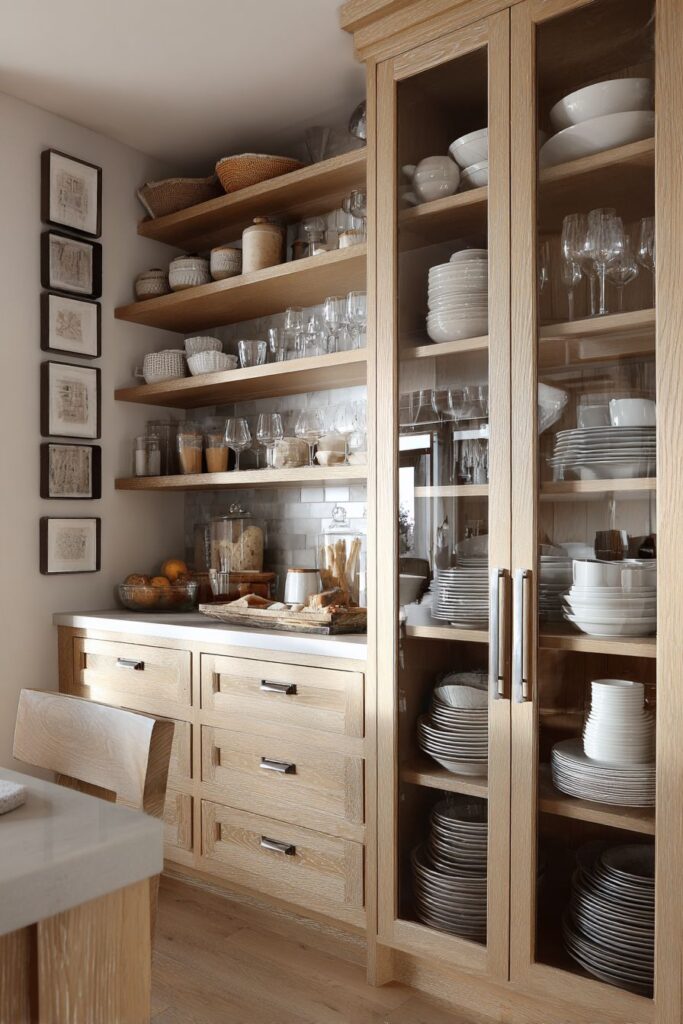
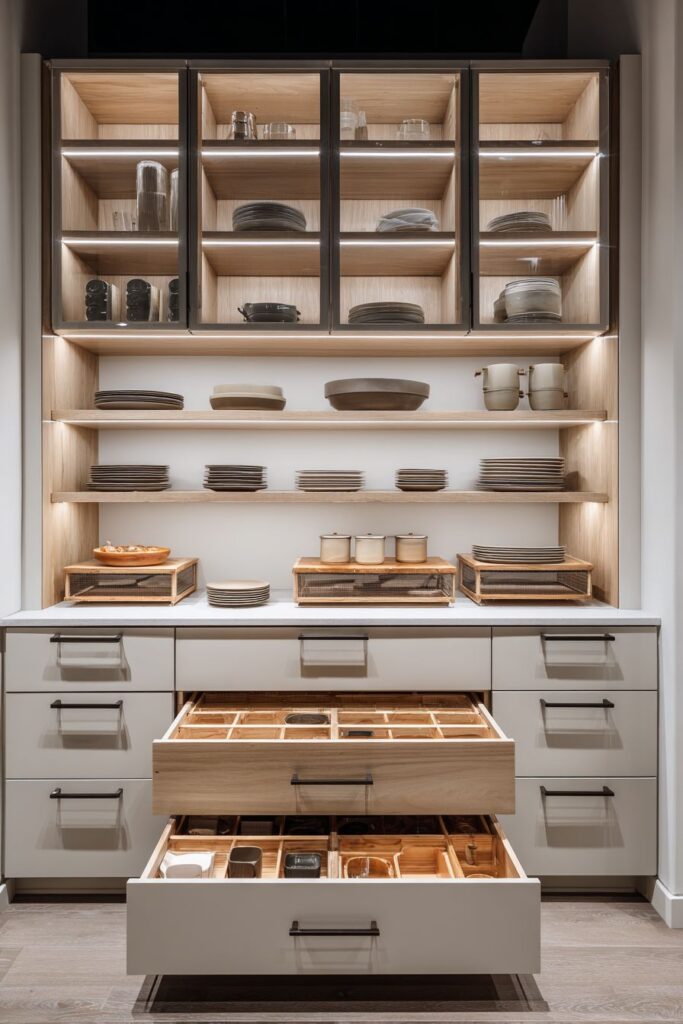
The floor-to-ceiling storage pantry area represents the pinnacle of organized luxury in mid century modern kitchen design, where natural wood finishes and integrated lighting create a beautiful and highly functional storage environment. Glass-front upper cabinets provide display opportunities for organized dishware and serving pieces, turning everyday storage into decorative elements that add personality and color to the neutral palette. The systematic organization demonstrates how thoughtful planning can transform utilitarian storage into an aesthetically pleasing component of kitchen design.
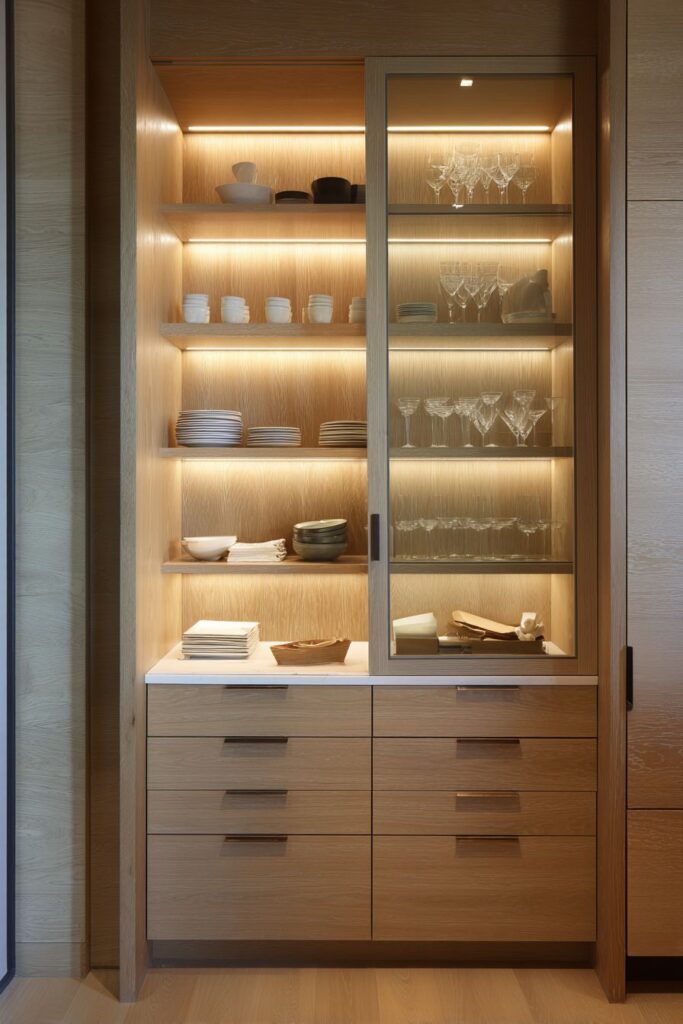
Lower drawers provide concealed storage for less attractive necessities while maintaining the clean lines that define the mid century aesthetic. The careful combination of open and closed storage creates visual rhythm while serving diverse storage needs, from display-worthy dishes to everyday cooking essentials. Integrated lighting ensures that every item remains easily visible and accessible, supporting both efficient kitchen workflows and visual appeal.
Interior design photography with detail focus captures the sophisticated organizational systems and cabinet hardware that make this storage area both beautiful and supremely functional. The seamless integration of form and function demonstrates how storage solutions can enhance rather than compromise aesthetic goals. Soft diffused lighting highlights the wood grain details while ensuring practical visibility for daily use.
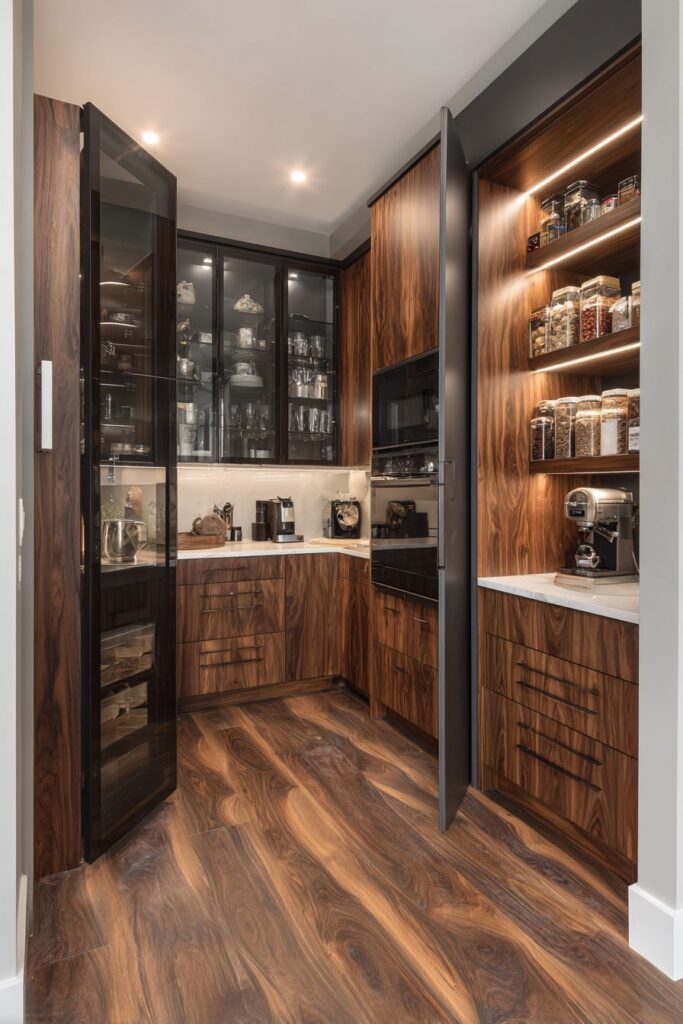
The systematic approach to pantry organization reflects the mid century appreciation for efficiency and order, where every item has its designated place and purpose. This methodical planning supports stress-free cooking while maintaining the uncluttered surfaces that are essential to successful mid century design. The beautiful materials and careful craftsmanship elevate everyday storage into luxury experience.
Key Design Tips:
- Combine glass-front upper cabinets with concealed lower storage for visual variety
- Install integrated lighting systems to ensure visibility and enhance aesthetic appeal
- Plan systematic organization where every item has its designated place and purpose
- Use natural wood finishes throughout to create consistency with main kitchen areas
- Balance display and concealed storage to serve both practical and aesthetic needs
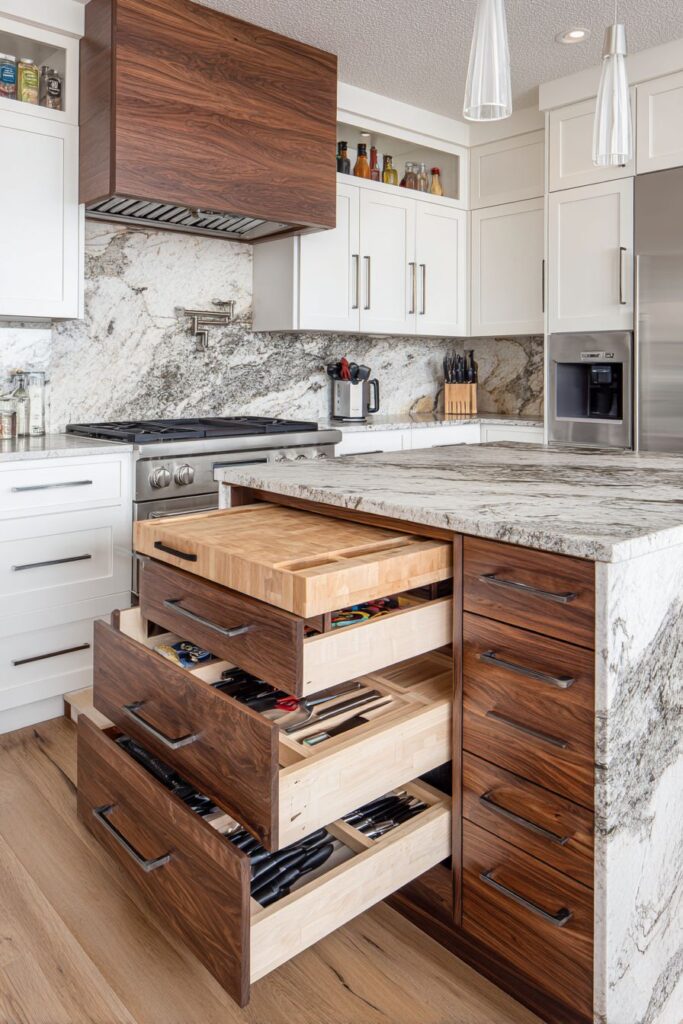
10. Dedicated Workspace with Integrated Cutting Boards
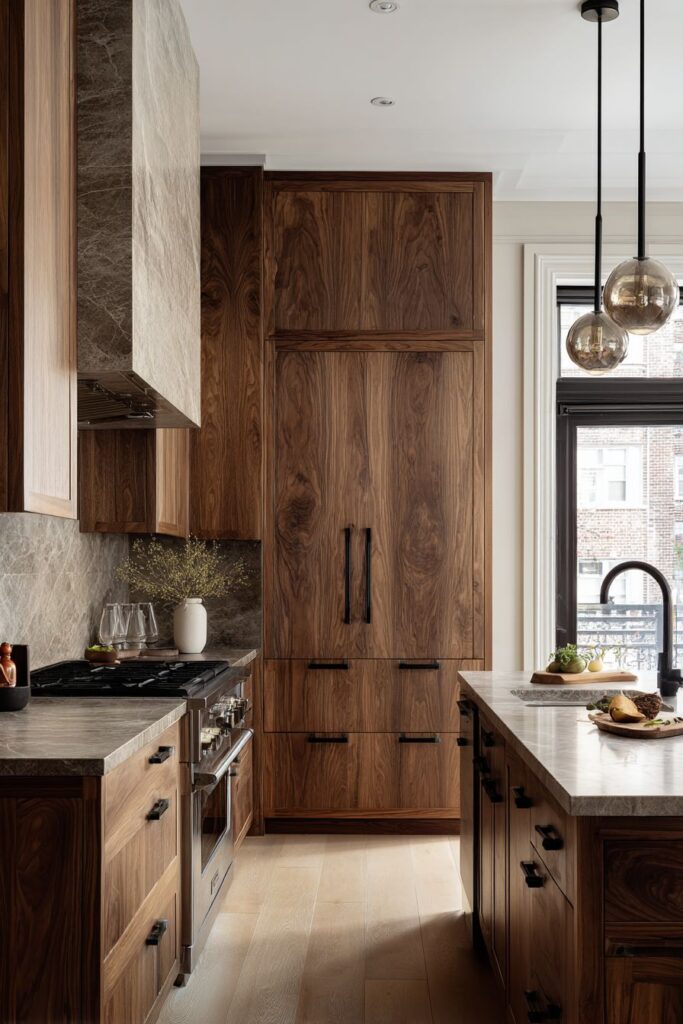
The thoughtfully designed prep area represents the ultimate in functional luxury, featuring integrated cutting board surfaces and knife storage built directly into the walnut cabinetry. This specialized workspace demonstrates how mid century principles of honest materials and purposeful design can create cooking areas that are both beautiful and supremely practical. The natural stone countertops provide durable work surfaces that complement the warm wood while offering heat and stain resistance for intensive food preparation tasks.
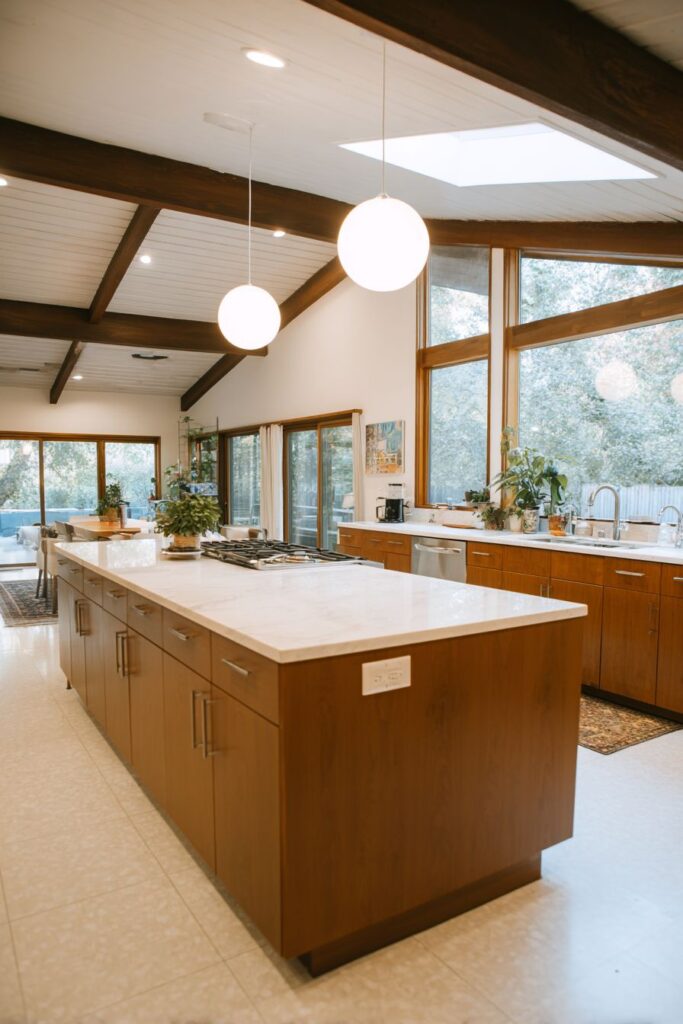
Pendant lighting ensures proper task illumination for detailed prep work, while the fixture design maintains the clean geometric lines that characterize mid century aesthetics. The careful positioning of lighting eliminates shadows while creating focused work zones that support efficient cooking workflows. Professional interior photography emphasizes the thoughtful design details and practical workspace organization, showcasing how attention to detail can elevate everyday cooking tasks.
The integrated cutting board surfaces represent the pinnacle of thoughtful kitchen design, where specialized tools become seamlessly incorporated into the cabinetry rather than cluttering countertop surfaces. The walnut construction ensures durability while adding warmth and character to the prep area. Knife storage built into the cabinet design keeps essential tools organized and easily accessible while maintaining safety and cleanliness.
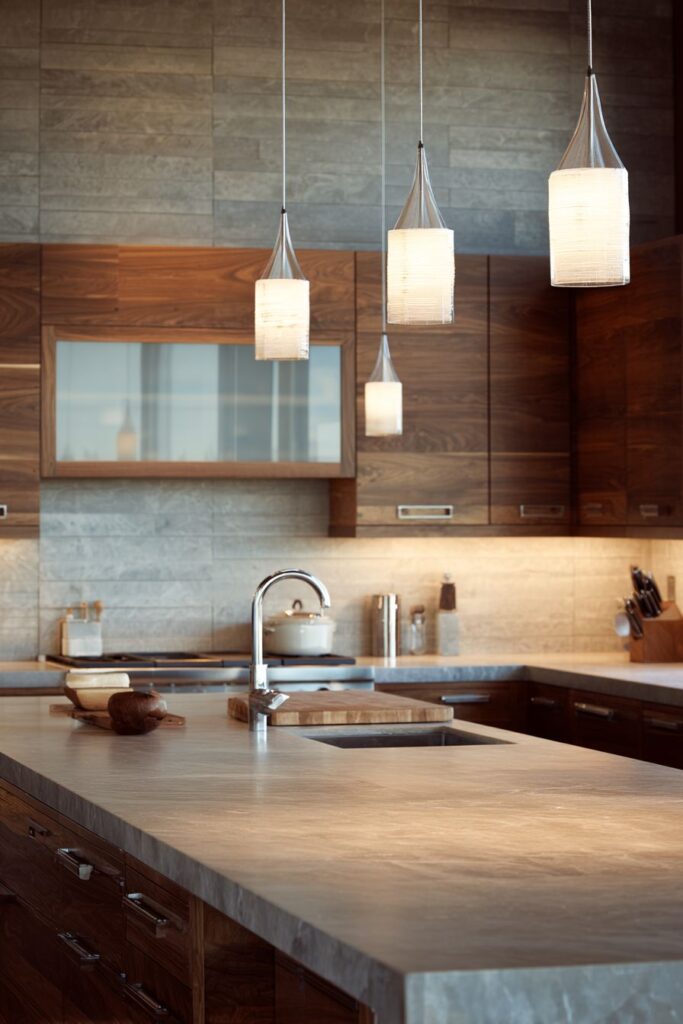
Material textures play a crucial role in this workspace design, with the smooth stone surfaces providing contrast to the warm wood grain while serving distinct functional purposes. The combination creates visual interest while supporting diverse prep tasks, from chopping vegetables on integrated cutting boards to rolling pastry on cool stone surfaces. This attention to material selection demonstrates the mid century principle that beauty and function should work seamlessly together.
Key Design Tips:
- Integrate cutting board surfaces directly into cabinetry for seamless functionality
- Build knife storage into cabinet design to maintain organized, clutter-free surfaces
- Install dedicated task lighting to eliminate shadows and support detailed prep work
- Combine stone and wood surfaces to serve diverse functional and aesthetic needs
- Plan specialized work zones that support efficient cooking workflows and food safety
11. Striking Two-Tone Cabinet Harmony
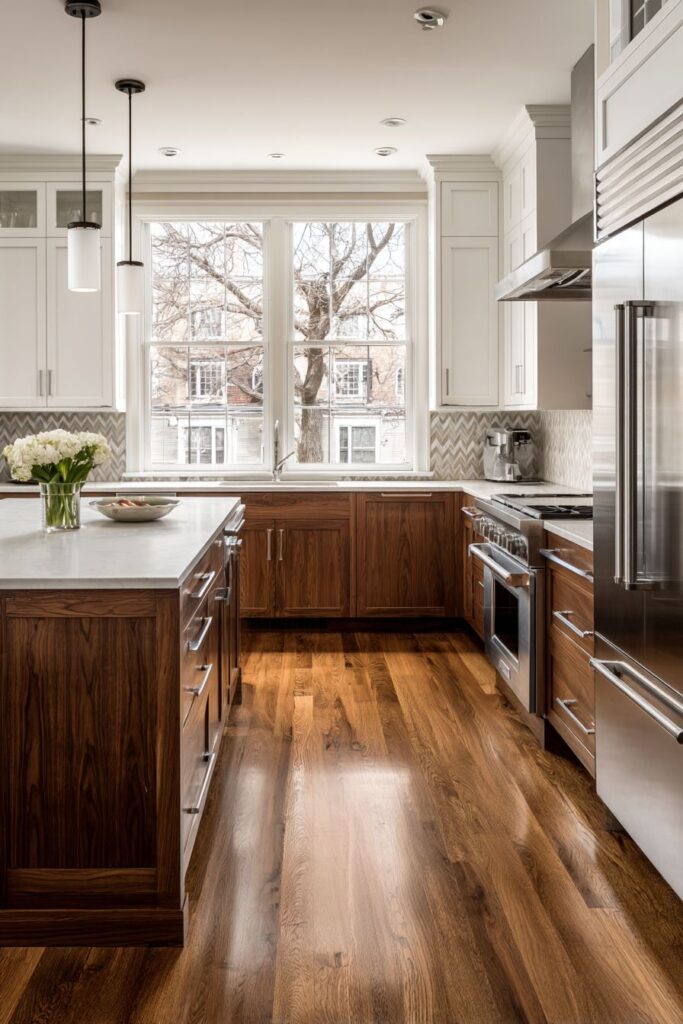
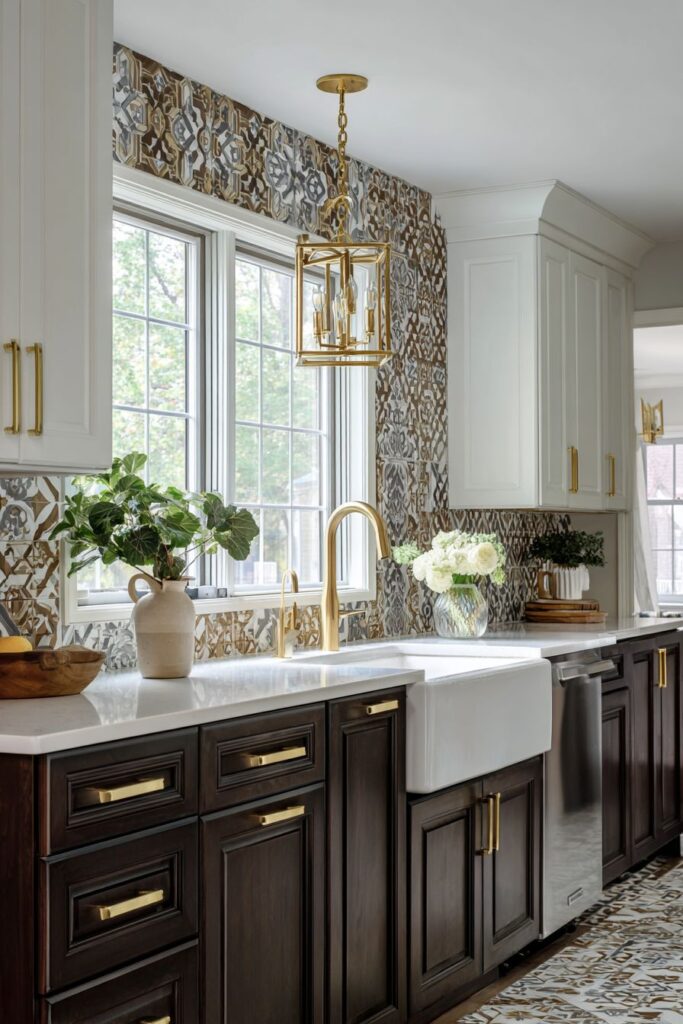
The bold contrast of dark walnut lower cabinets and white upper cabinets creates visual drama while maintaining the clean sophistication that defines mid century modern design. This two-tone approach adds depth and interest to the kitchen while serving practical purposes—the darker lower cabinets hide wear and fingerprints better, while white uppers reflect light and create an airier feeling. The geometric tile backsplash in muted earth tones provides the perfect bridge between these contrasting elements, tying the color scheme together with sophisticated pattern and texture.
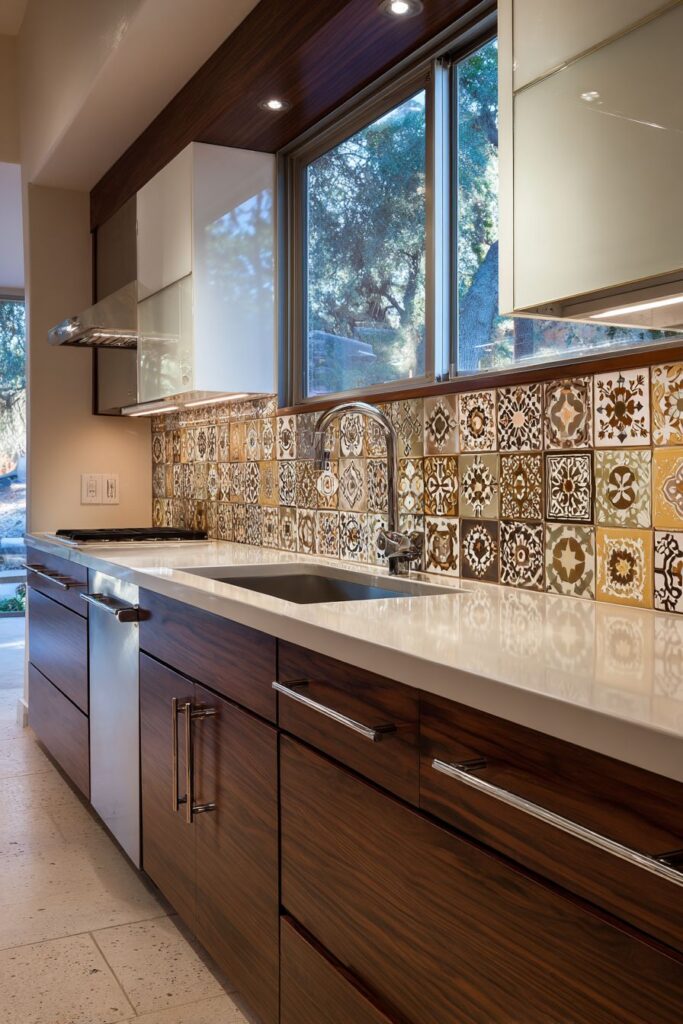
A large window above the sink serves as both a practical feature and design element, providing natural light for dish washing while creating a focal point that draws the eye upward. The window placement also maintains the mid century principle of connecting indoor and outdoor spaces, allowing views of landscaping or garden areas that change with the seasons. This natural light source enhances both the dark and light cabinetry, highlighting wood grain in the walnut while making the white cabinets appear crisp and fresh.
Stainless steel appliances maintain period authenticity while providing modern functionality, their clean lines and reflective surfaces complementing both the geometric backsplash and contrasting cabinet colors. The careful selection of appliances ensures they enhance rather than compete with the kitchen’s design scheme, maintaining visual harmony while providing contemporary convenience. Interior design photography captures the balanced color scheme and clean architectural lines with professional lighting techniques that showcase each element’s contribution to the overall composition.
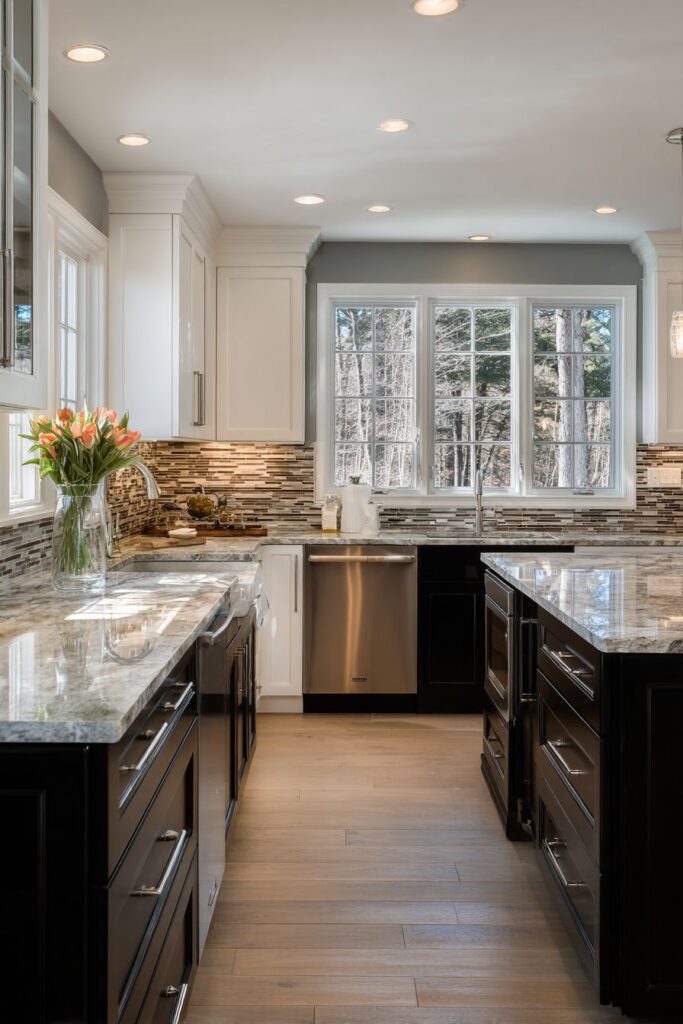
The successful integration of contrasting elements demonstrates the sophistication possible within mid century design principles, where bold choices can create stunning results when carefully planned and executed. The geometric tile pattern adds visual interest without overwhelming the space, while the earth tone colors provide warmth and sophistication that complements both light and dark cabinetry elements.
Key Design Tips:
- Use two-tone cabinetry to create visual drama while serving practical maintenance needs
- Select geometric tile backsplashes in neutral tones to bridge contrasting cabinet colors
- Position windows above sinks for natural task lighting and outdoor connections
- Choose stainless steel appliances that complement rather than compete with design elements
- Balance bold contrasts with neutral bridging elements for sophisticated harmony
12. Cozy Breakfast Nook Integration
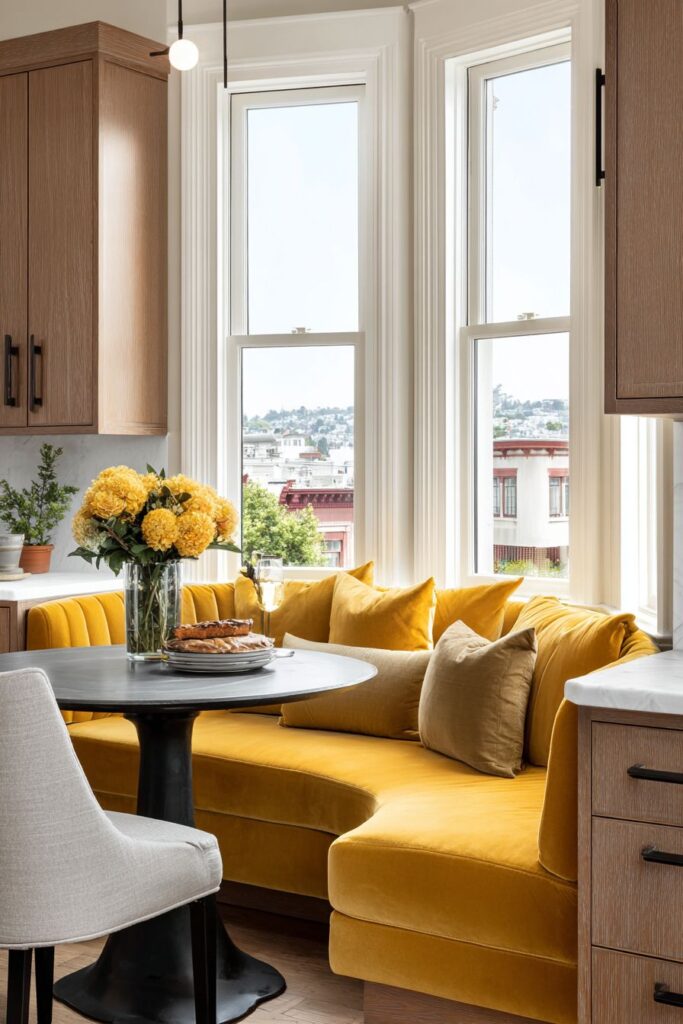
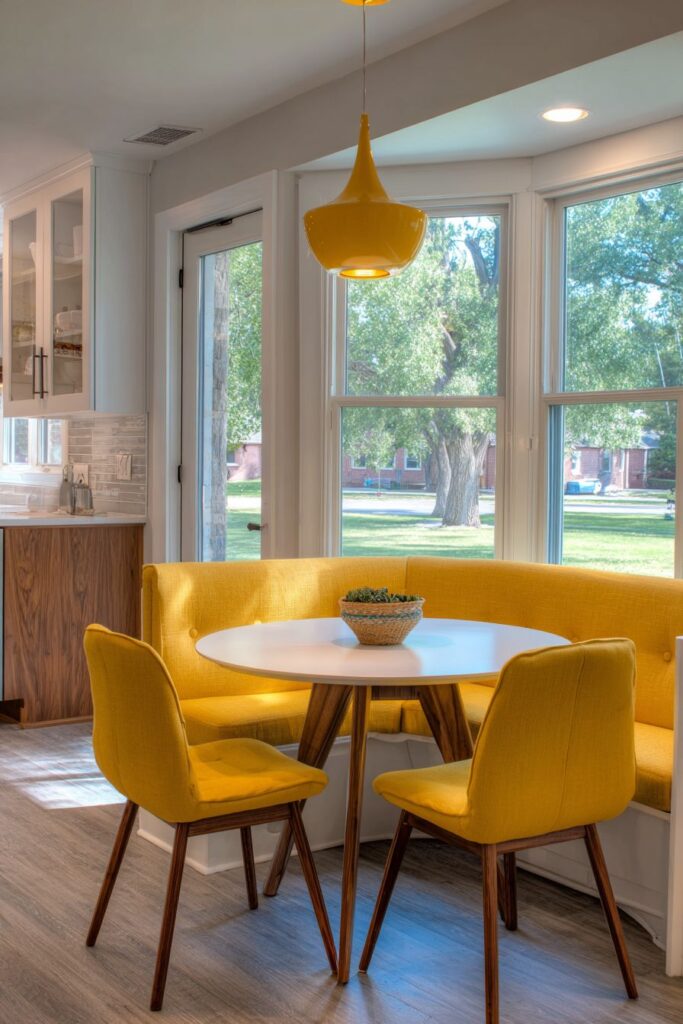
The charming built-in corner seating upholstered in vibrant mustard yellow fabric creates an inviting breakfast nook that perfectly embodies the mid century modern love for bold, optimistic colors and integrated furniture solutions. This sunny accent color energizes the space while complementing the warm wood tones found throughout the adjacent kitchen area. The simple round table and comfortable seating arrangement encourage lingering over morning coffee and casual meals, supporting the mid century philosophy of creating homes that promote family connection and everyday pleasure.
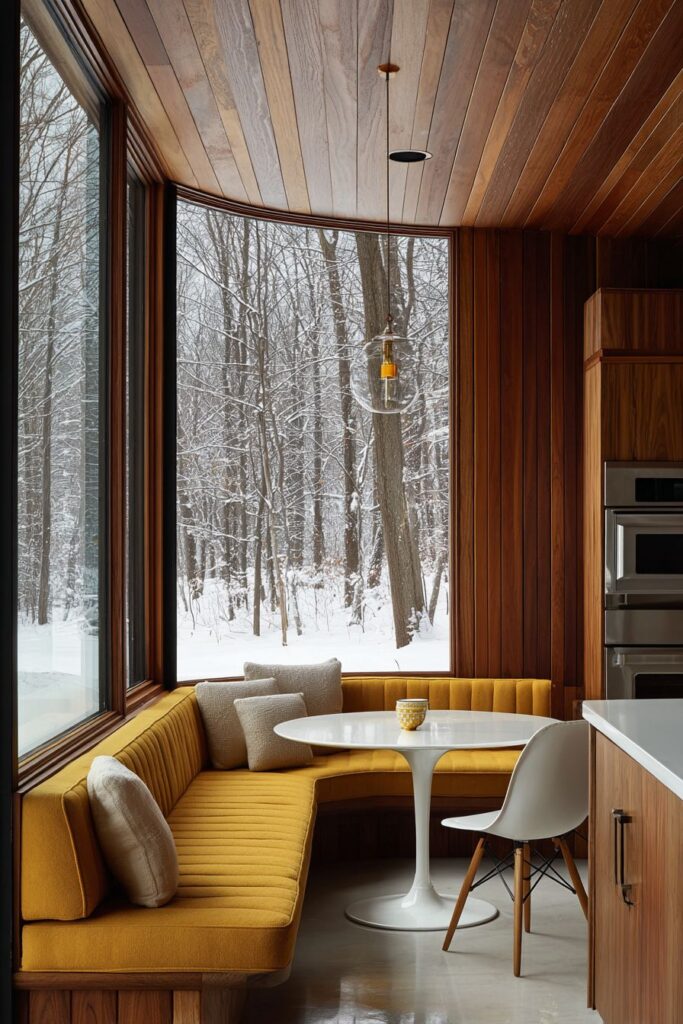
Large windows flood the breakfast nook with natural light, enhancing the cheerful mustard yellow upholstery while providing views of outdoor spaces that connect the interior with nature. This abundant daylight creates a bright, welcoming atmosphere that makes the breakfast area feel spacious and airy despite its compact footprint. The window placement also supports the mid century principle of bringing outdoor elements inside, whether through direct views of landscaping or simply the play of natural light and shadow throughout the day.
The adjacent kitchen features characteristic flat-panel cabinetry and integrated appliances that maintain clean lines while providing modern functionality. The seamless flow between cooking and dining areas demonstrates thoughtful space planning that creates distinct zones without sacrificing visual continuity. Wide-angle interior photography showcases this casual dining integration, capturing how different areas can work together to create a unified, functional environment.
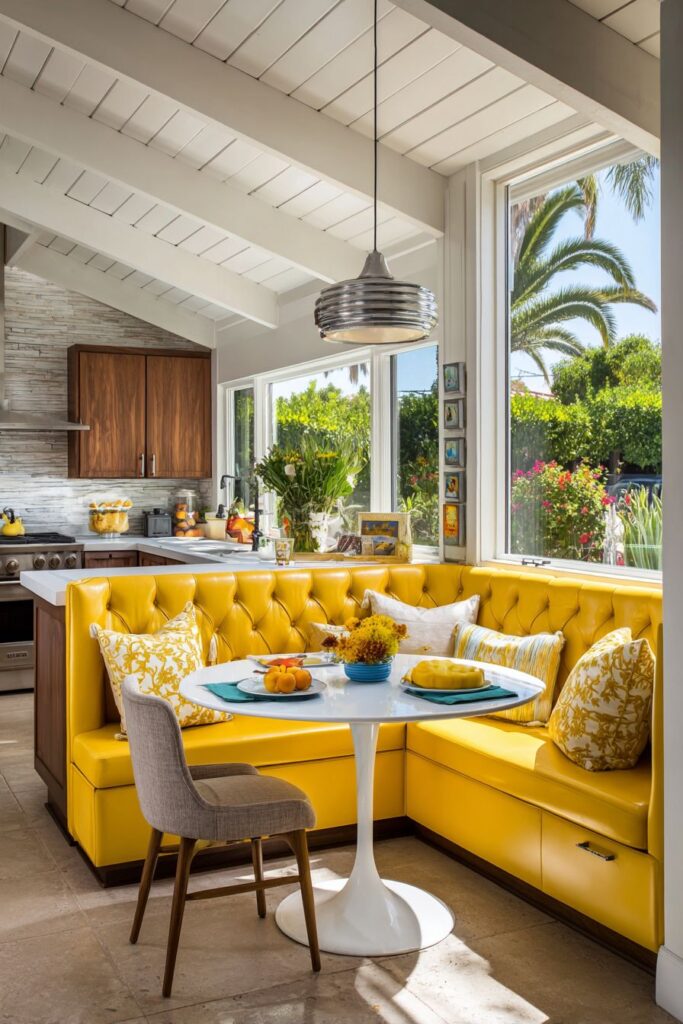
The bold accent color choice reflects the mid century confidence in using saturated hues to create personality and visual interest within otherwise neutral palettes. The mustard yellow adds warmth and energy to the space while demonstrating how color can be used strategically to define different areas and create focal points that draw people together for meals and conversation.
Key Design Tips:
- Use bold accent colors like mustard yellow to create energy and define dining areas
- Design built-in corner seating to maximize space efficiency while providing comfort
- Position windows to flood dining areas with natural light and outdoor connections
- Create seamless flow between cooking and casual dining areas for family interaction
- Select round tables for breakfast nooks to encourage intimate conversation and connection
13. Terrazzo Elegance with Colorful Character
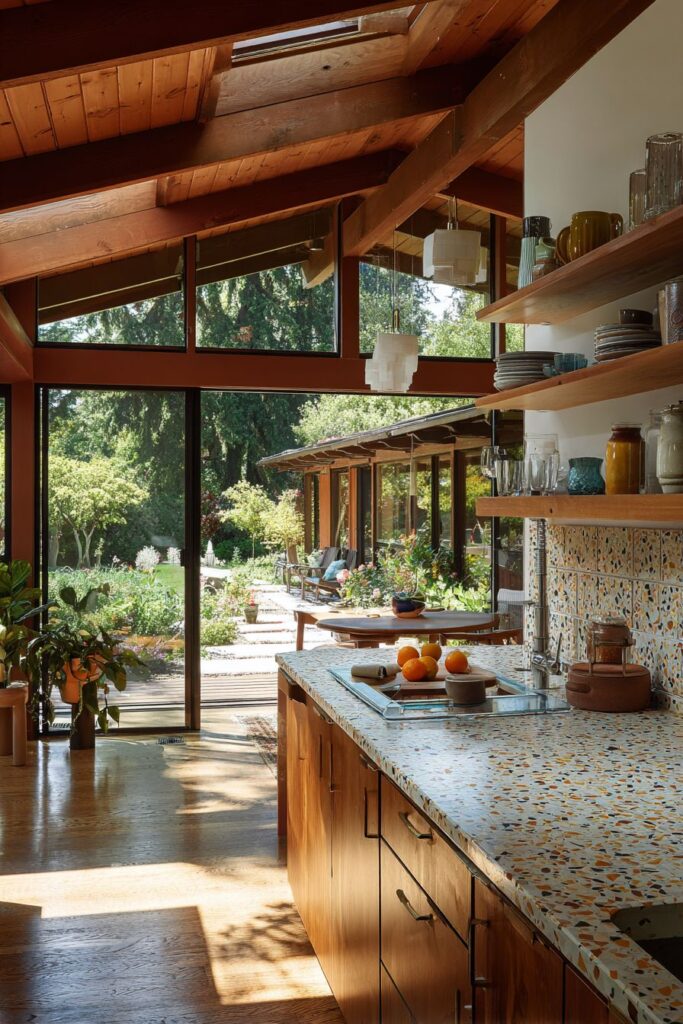
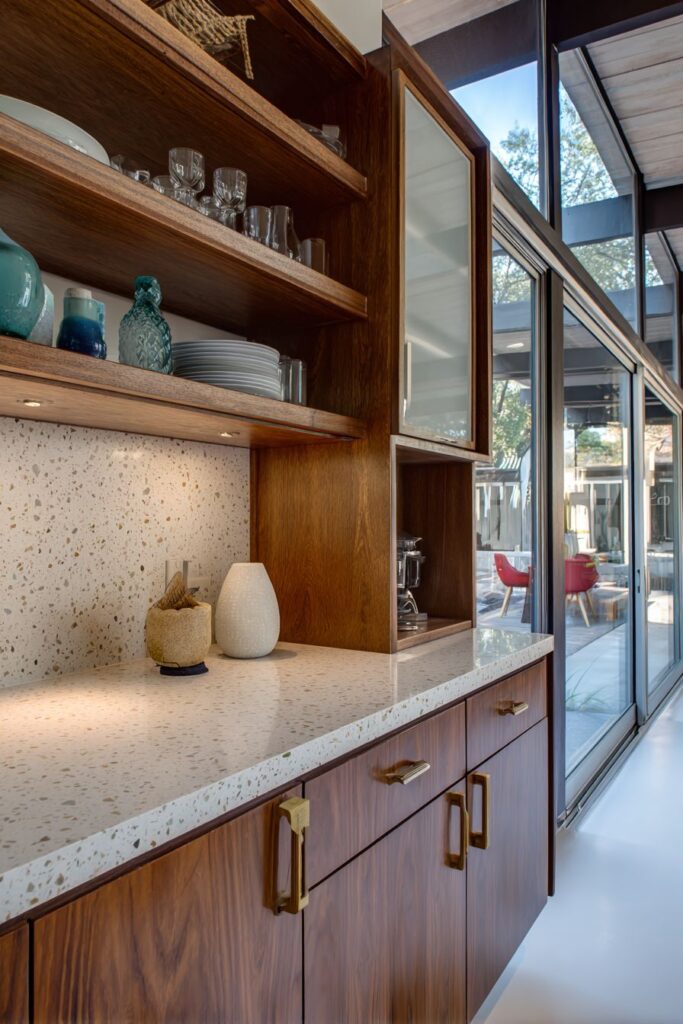
The unique terrazzo countertop becomes the star of this sophisticated kitchen, its colorful aggregate creating visual interest and character while maintaining the mid century appreciation for materials that combine beauty with durability. The speckled surface adds textural richness and subtle color variation that complements the warm walnut cabinetry while providing a practical work surface that improves with age and use. Brass hardware accents provide metallic warmth that ties together the natural stone and wood elements, creating a cohesive palette that feels both sophisticated and approachable.
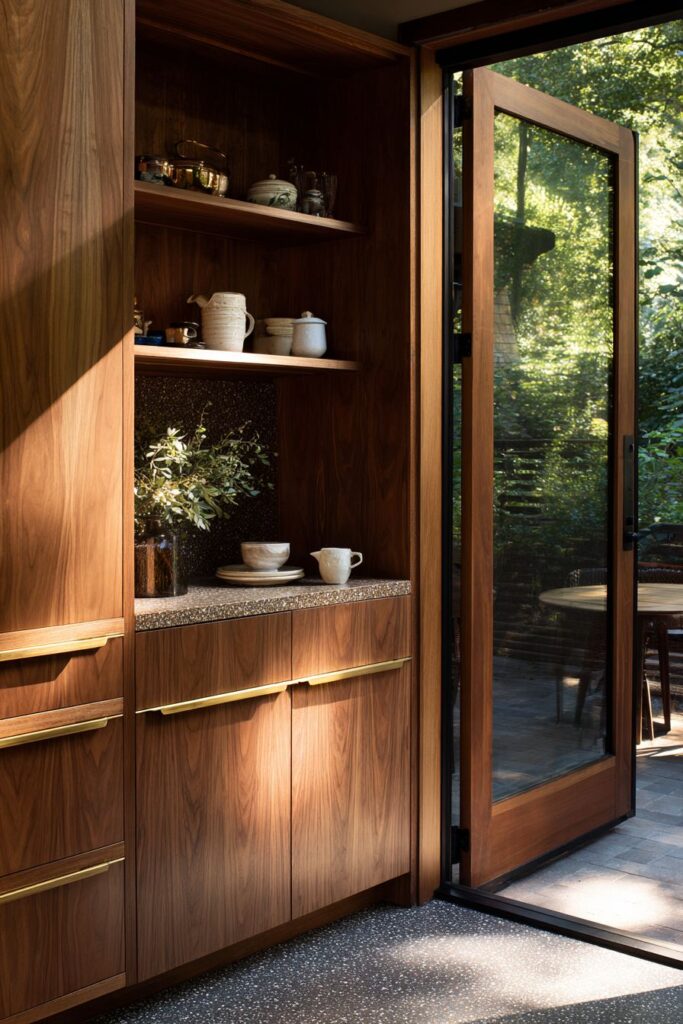
Open shelving provides display opportunities for period-appropriate ceramics and glassware, adding personality and color to the kitchen while maintaining the uncluttered aesthetic essential to mid century success. The careful curation of displayed items contributes to the overall design scheme while providing easy access to frequently used dishes and serving pieces. This balance between display and function exemplifies the mid century principle that everyday objects can be both beautiful and practical.
Large sliding glass doors create seamless connection to an outdoor dining area, extending the kitchen’s functionality while maintaining the open, connected feeling that characterizes mid century home design. The indoor-outdoor integration allows natural light to flood the interior while providing easy access to outdoor entertaining spaces. This connection to nature enhances the organic warmth of the wood and stone materials while creating expanded living possibilities.
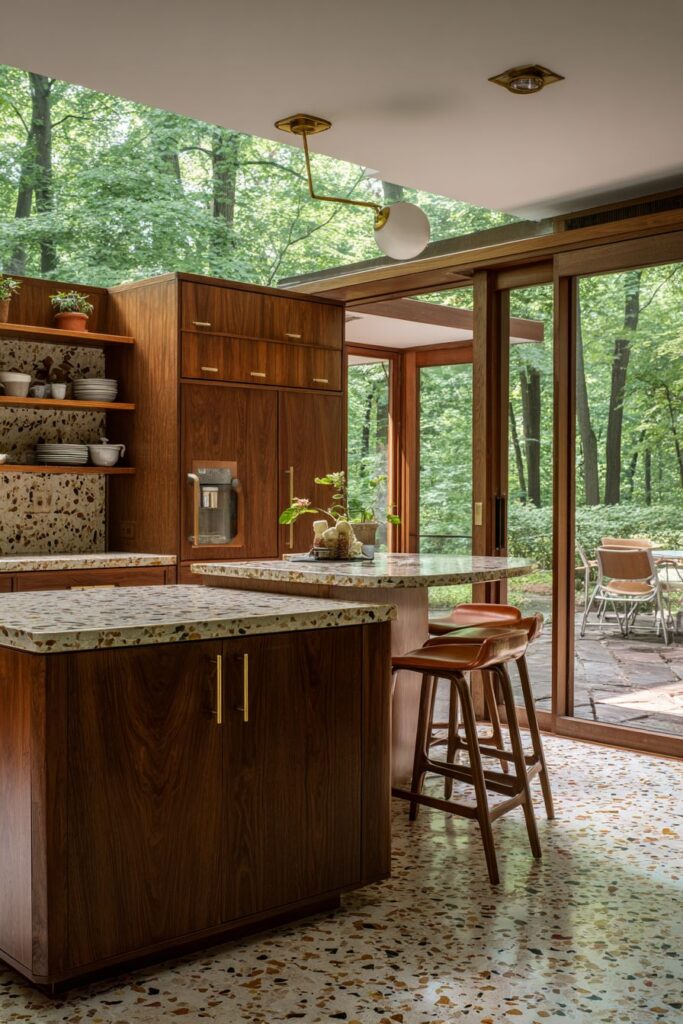
Professional interior design photography with balanced exposure captures the distinctive countertop material and its integration with surrounding elements, showcasing how unique material choices can become the foundation for entire design schemes. The terrazzo’s colorful character adds personality and visual interest without overwhelming the space, demonstrating how bold material choices can work within sophisticated design frameworks.
Key Design Tips:
- Choose terrazzo countertops for unique character and durable performance that improves with age
- Use open shelving to display period-appropriate ceramics and add personality to neutral palettes
- Install sliding glass doors to create seamless indoor-outdoor connections and expand functionality
- Select brass hardware accents to tie together stone and wood elements with metallic warmth
- Balance unique material choices with sophisticated design frameworks for lasting appeal
14. Live-Edge Drama with Social Functionality
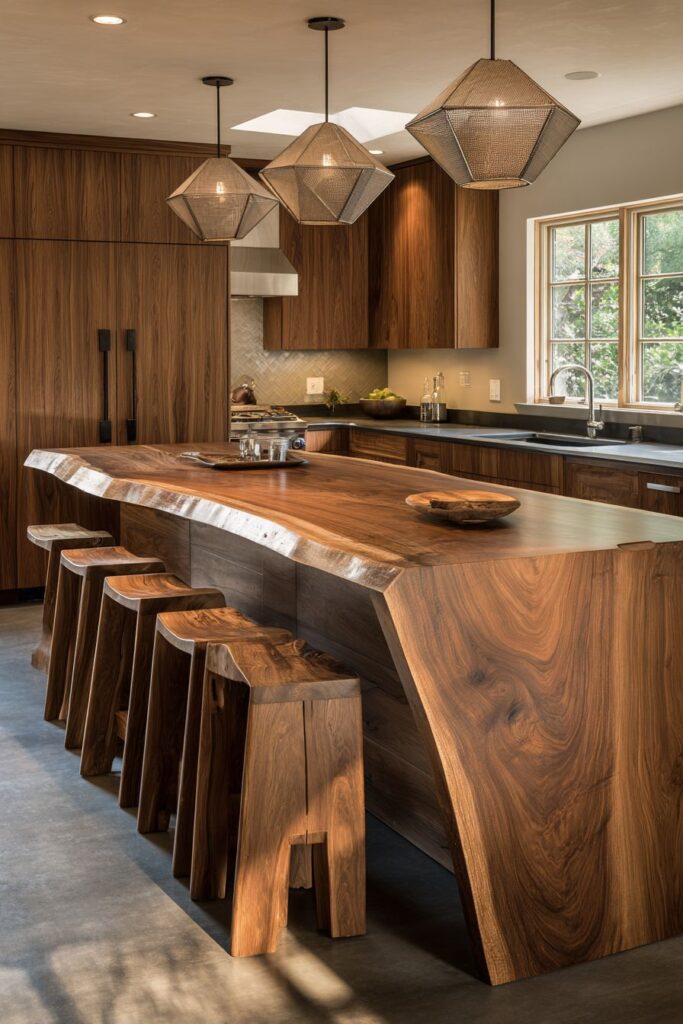
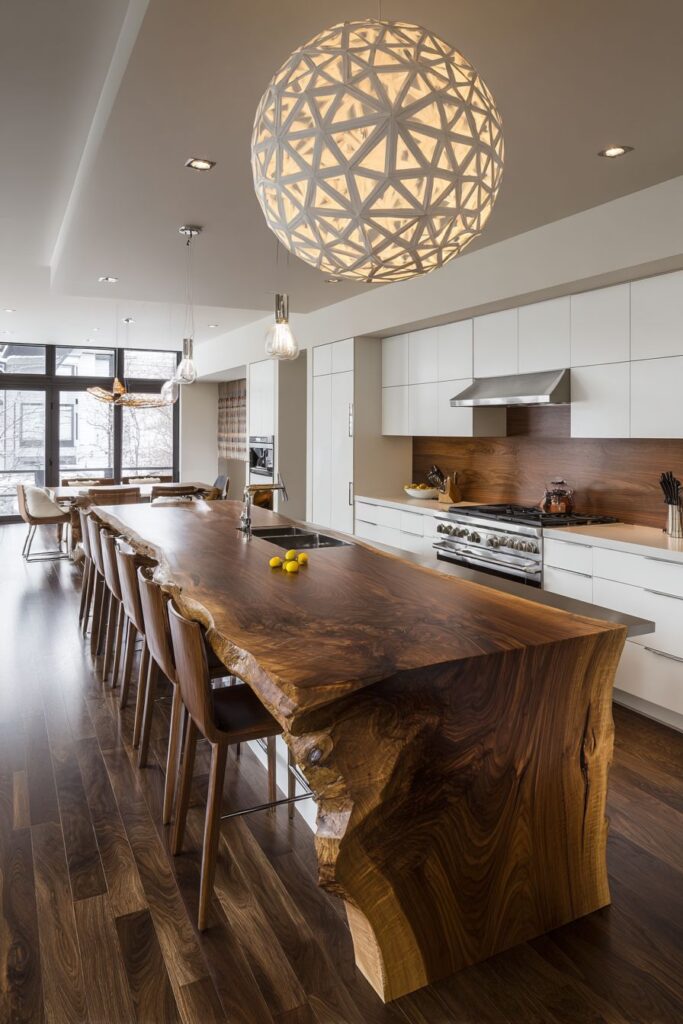
The dramatic kitchen island featuring live-edge walnut showcases the mid century appreciation for natural materials and organic forms, where the wood’s natural character becomes a central design element rather than something to be hidden or refined away. The live edge celebrates the tree’s original form while providing a unique, one-of-a-kind surface that adds character and conversation potential to the kitchen. Integrated seating for four transforms the island into a social hub where family and friends can gather while meals are prepared, supporting the mid century vision of kitchens as the heart of home life.
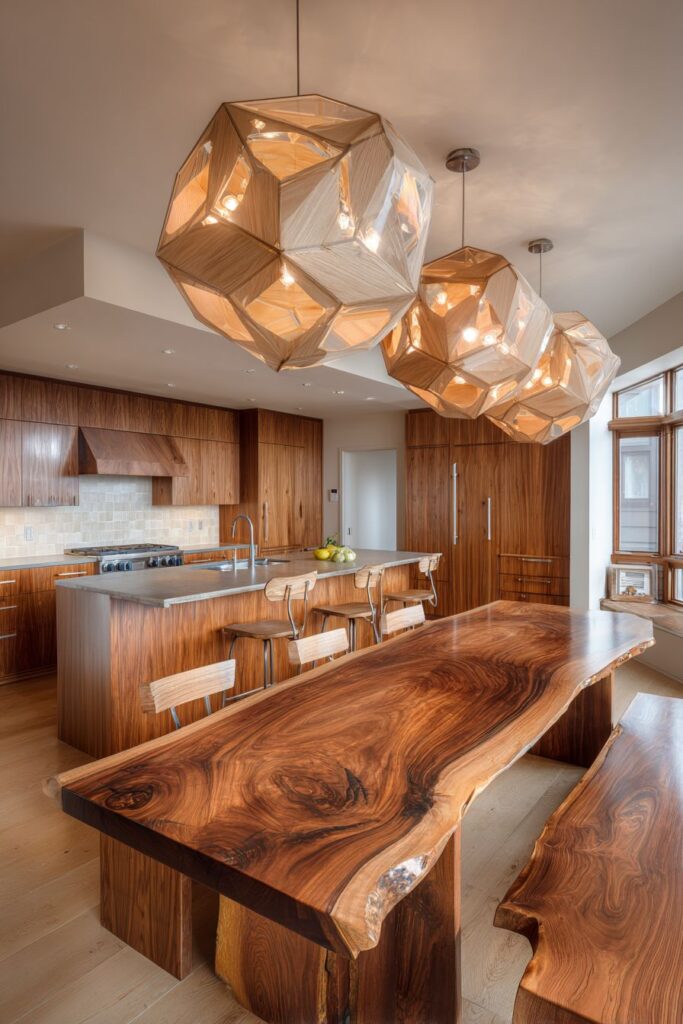
Surrounding cabinetry maintains clean lines and minimal hardware that allow the dramatic island to take center stage without competition from overly detailed or ornate elements. This design restraint demonstrates the mid century principle of letting beautiful materials speak for themselves without unnecessary embellishment. The consistent material palette creates harmony while allowing the live-edge wood to serve as the focal point that draws attention and admiration.
A geometric pendant light fixture provides focused illumination over the island while adding sculptural interest that complements the organic wood edge. The fixture’s clean lines and geometric form create interesting contrast with the natural wood while maintaining the overall aesthetic harmony. Interior photography emphasizes the natural wood character and social functionality, showcasing how organic elements can be successfully integrated into geometric design frameworks.
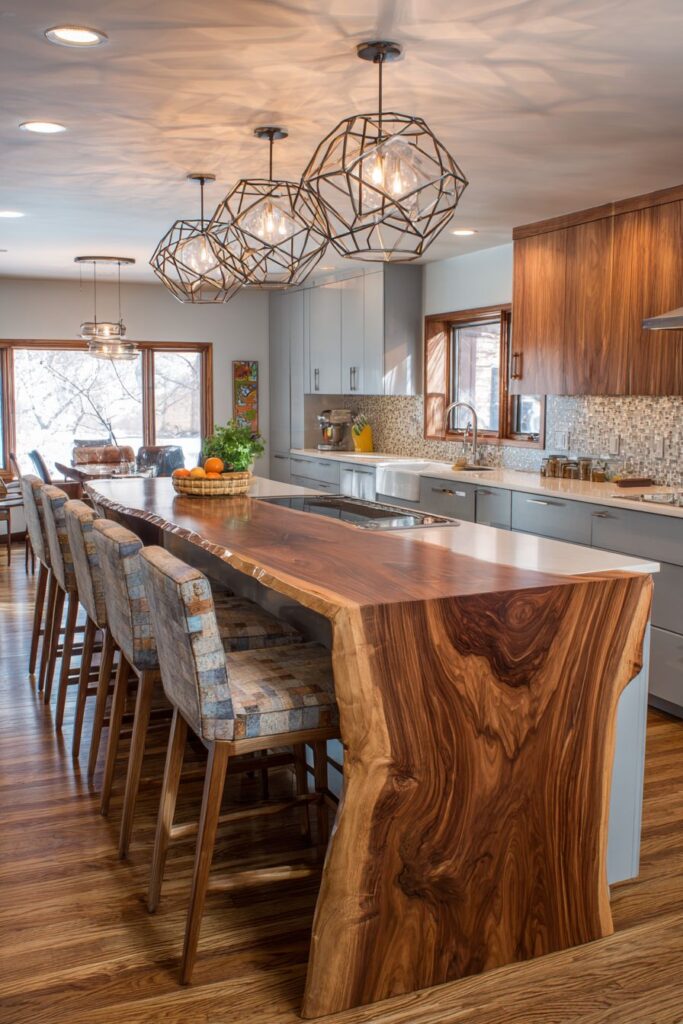
The island’s social functionality extends beyond simple seating to create opportunities for interactive cooking and casual dining that brings people together in the heart of the home. The comfortable seating arrangement encourages lingering over meals and conversation while providing front-row seats to cooking activities. This social integration reflects the mid century understanding that kitchens should serve as gathering places that strengthen family bonds and friendships.
Key Design Tips:
- Celebrate live-edge wood character as unique focal points rather than hiding natural forms
- Integrate seating into islands to create social hubs that encourage family interaction
- Use geometric pendant lighting to provide task illumination while adding sculptural interest
- Maintain design restraint in surrounding elements to let dramatic materials take center stage
- Plan islands for both functional workspace and social gathering to maximize kitchen potential
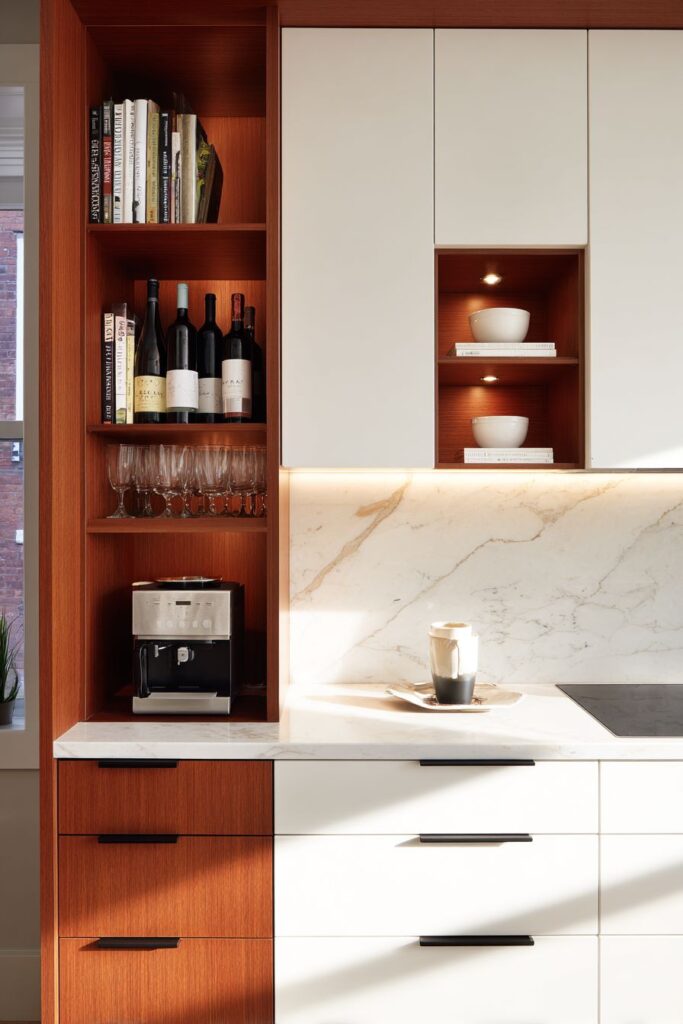
15. Storage Wall Sophistication
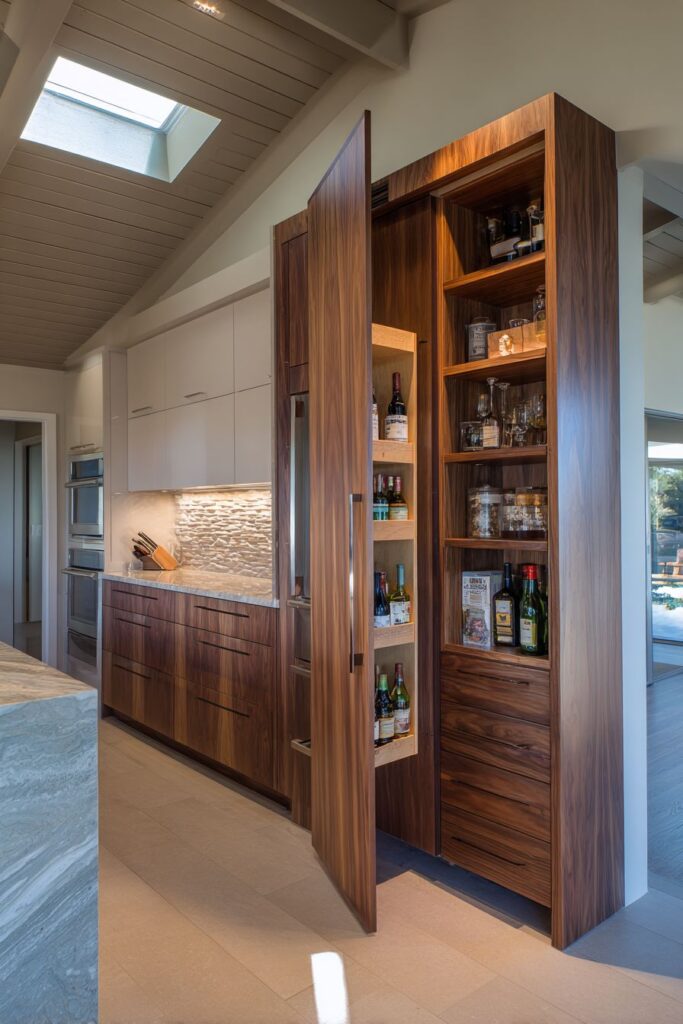
The impressive storage wall combines open and closed cabinetry in rich teak to create both functional organization and visual beauty, demonstrating how storage solutions can become architectural features that enhance rather than detract from kitchen design. Integrated wine storage and display areas transform utilitarian storage into sophisticated focal points that add personality and refinement to the space. Natural stone accents provide textural contrast while adding durability and visual interest that complements the warm wood tones.
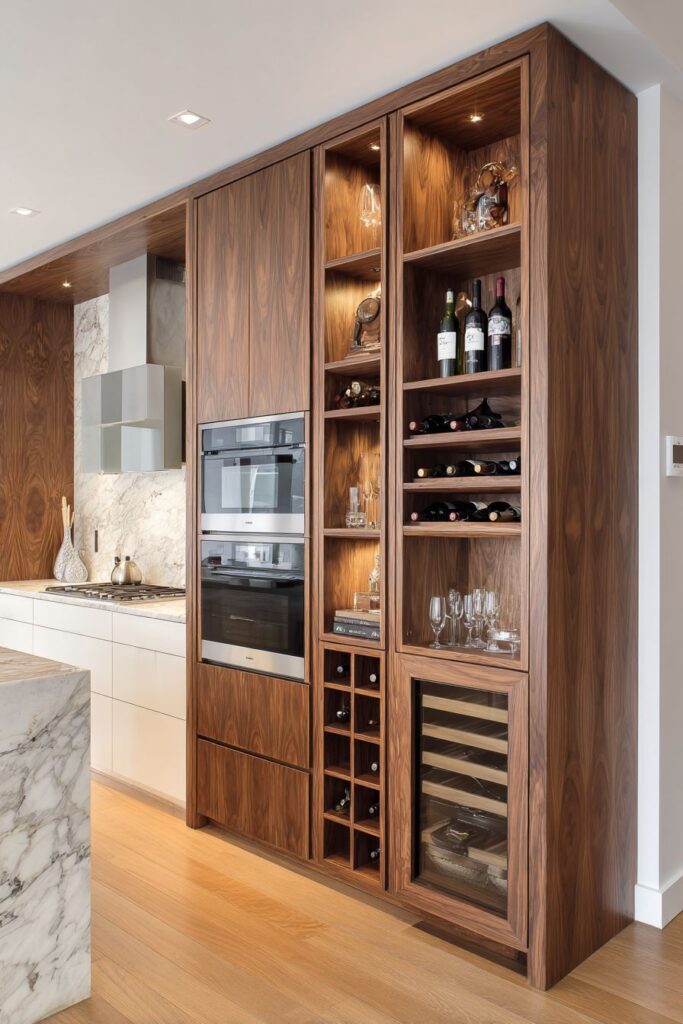
Hidden lighting illuminates display sections, creating dramatic effects that highlight collections of glassware, ceramics, or wine bottles while providing practical visibility for daily use. This integrated lighting system demonstrates how technological elements can be seamlessly incorporated into traditional cabinetry to enhance both function and aesthetics. Professional interior design photography focuses on organizational design and material combinations, showcasing the sophisticated integration of diverse storage needs within a unified design framework.
The systematic approach to storage organization reflects the mid century appreciation for efficiency and order, where different types of items receive appropriate storage solutions based on their size, frequency of use, and aesthetic value. Wine storage, display areas, and concealed storage work together to serve diverse needs while maintaining visual harmony. Detailed attention to cabinet construction and lighting integration ensures that every element serves both practical and aesthetic purposes.
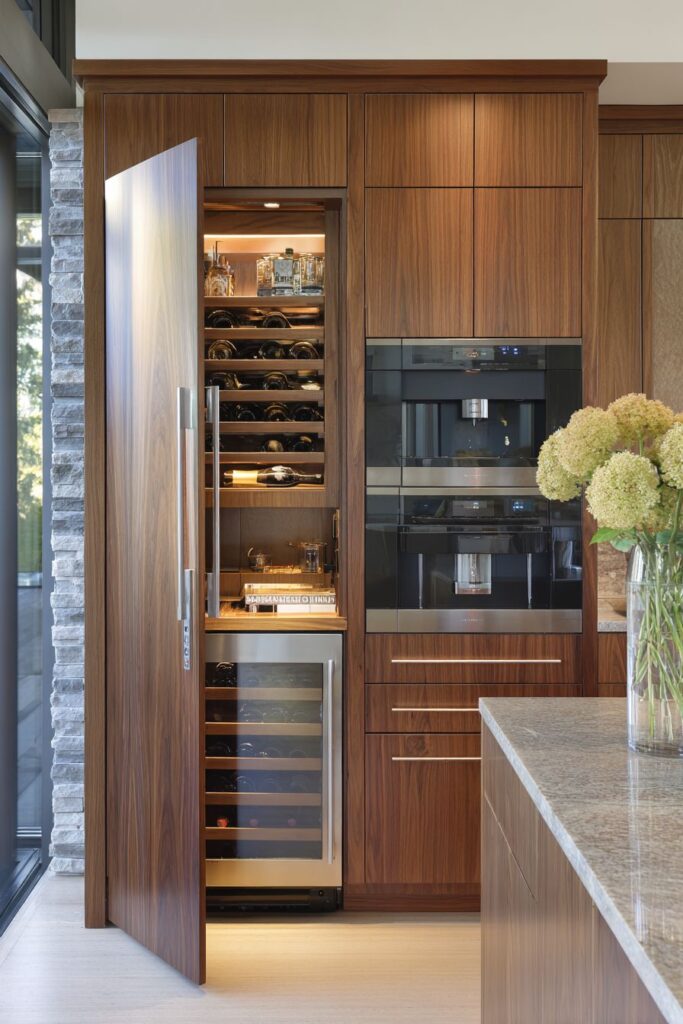
The rich teak construction provides consistency with other kitchen elements while adding warmth and character to what could otherwise feel like purely utilitarian storage. The natural wood grain adds textural richness that changes with lighting conditions throughout the day, creating visual interest that makes the storage wall feel like an integral part of the kitchen’s overall design rather than an afterthought.
Key Design Tips:
- Combine open and closed storage to serve diverse needs while creating visual rhythm
- Integrate specialized storage solutions like wine storage to add sophistication and functionality
- Install hidden lighting systems to highlight displays while providing practical visibility
- Use natural stone accents to add textural contrast and complement warm wood tones
- Plan systematic organization based on item characteristics and frequency of use
16. Pass-Through Connection with Serving Counter
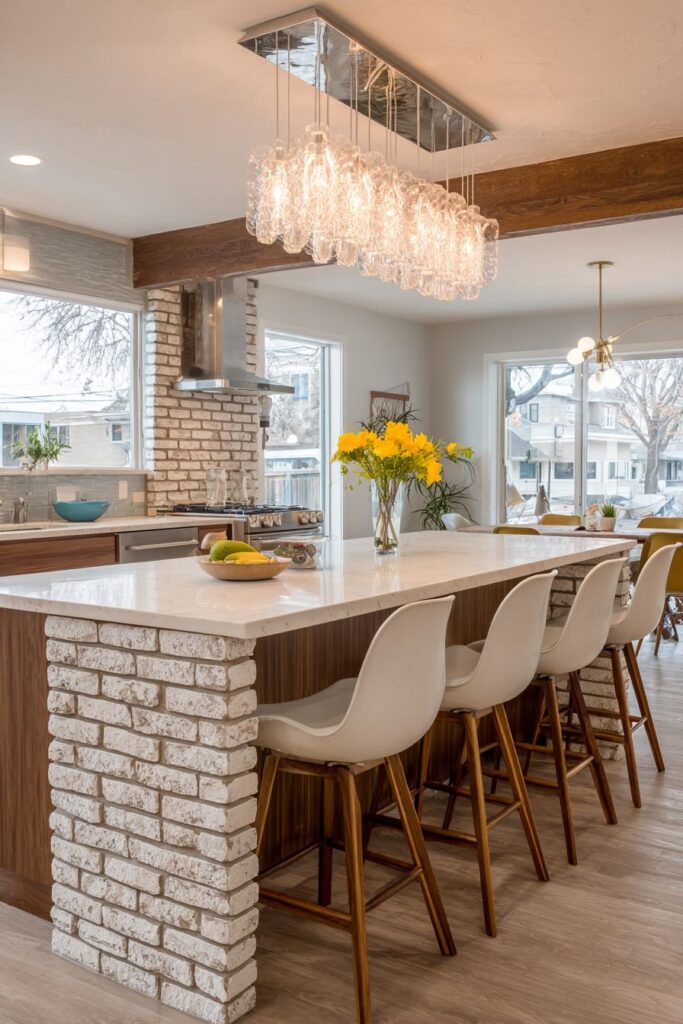
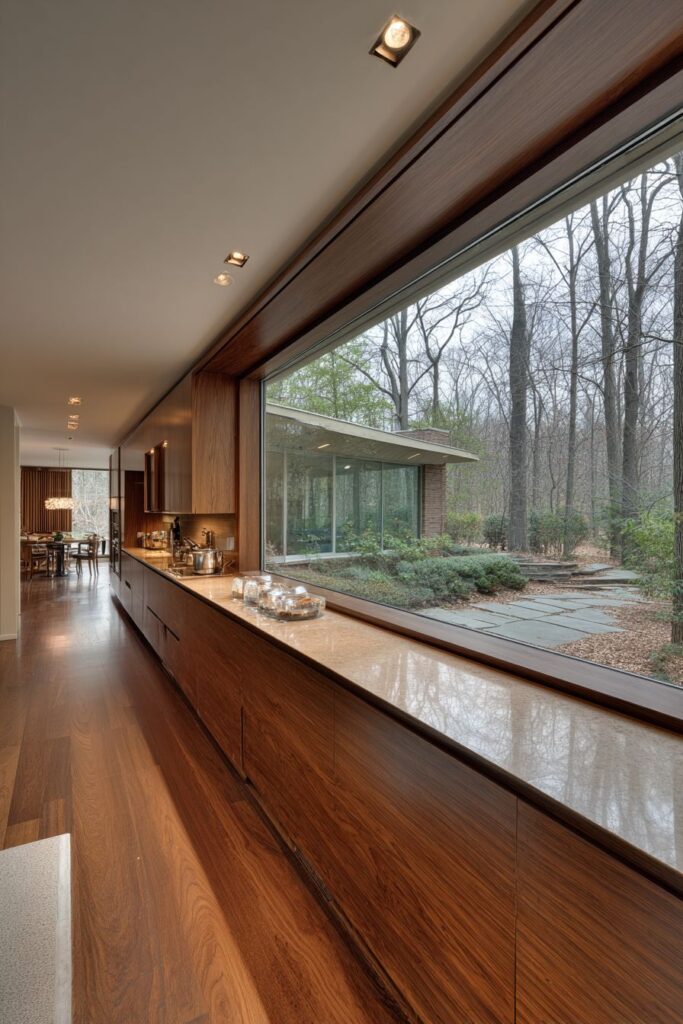
The innovative pass-through window to an adjacent dining room creates architectural interest while enhancing functional connectivity between cooking and dining areas. The serving counter with natural stone surface and walnut base provides a practical workspace for food service while maintaining the clean lines that define mid century aesthetics. This design element demonstrates how traditional room boundaries can be softened without sacrificing the distinct character of each space, creating improved flow while maintaining defined areas.
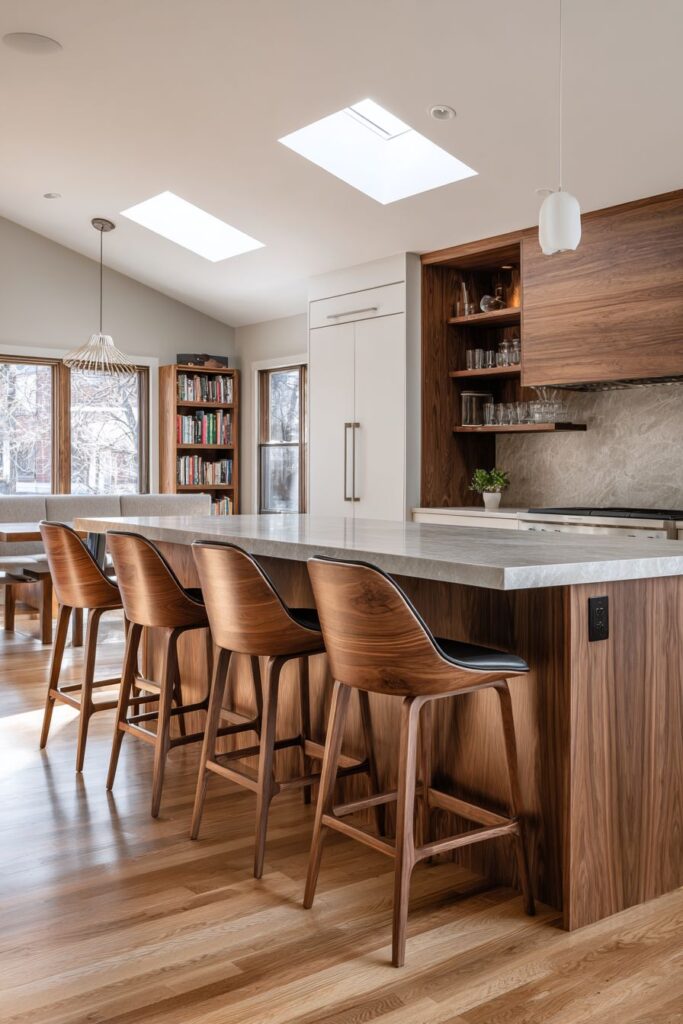
The kitchen displays characteristic clean-lined cabinetry and integrated appliances that provide modern functionality while honoring period design principles. The visual connection between spaces allows natural light to flow freely while enabling easy communication between those cooking and those dining. Wide-angle interior photography captures the architectural flow and functional design, showcasing how thoughtful planning can create connections that enhance everyday living.
The pass-through design serves multiple practical purposes, from simple conversation during meal preparation to efficient service during entertaining. The serving counter provides workspace for plating and presentation while offering casual seating opportunities for quick meals or coffee breaks. This multi-functional approach reflects the mid century appreciation for elements that serve diverse needs while maintaining aesthetic appeal.
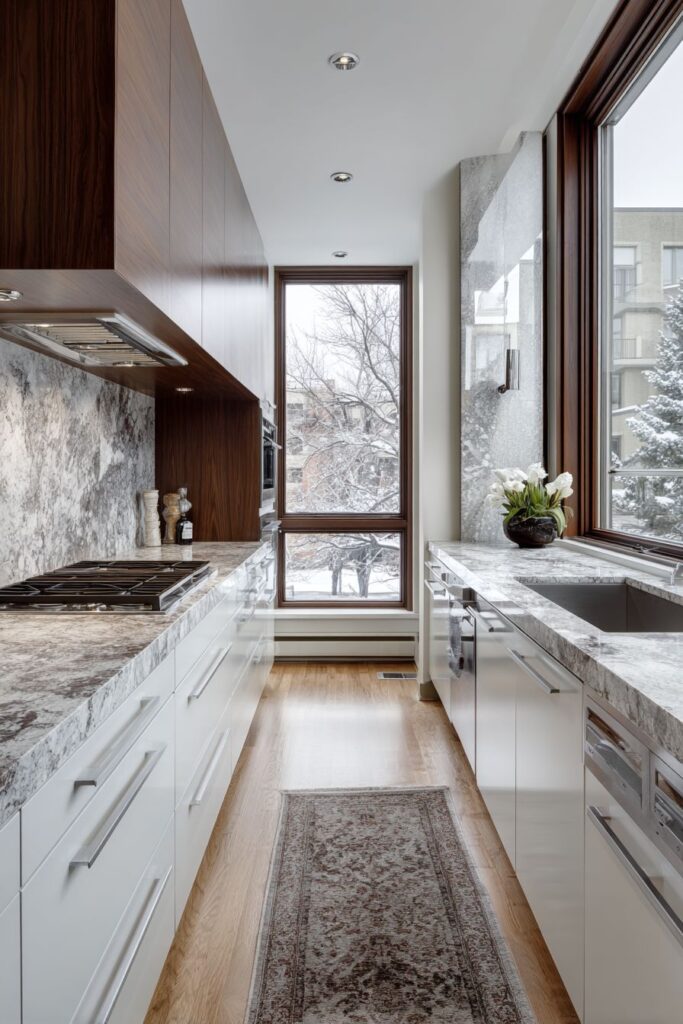
Natural lighting emphasizes the connection between indoor spaces while highlighting the beautiful materials used throughout both areas. The stone serving surface provides durability and easy maintenance while the walnut base adds warmth and character that ties the pass-through element into the kitchen’s overall design scheme. This material consistency creates visual harmony while serving distinct functional needs.
Key Design Tips:
- Design pass-through windows to enhance connectivity while maintaining distinct room character
- Create serving counters that provide workspace while offering casual seating opportunities
- Use consistent materials between connected spaces to create visual harmony and flow
- Plan openings to allow natural light flow between adjacent areas for enhanced brightness
- Balance connection and separation to improve function while preserving space definition
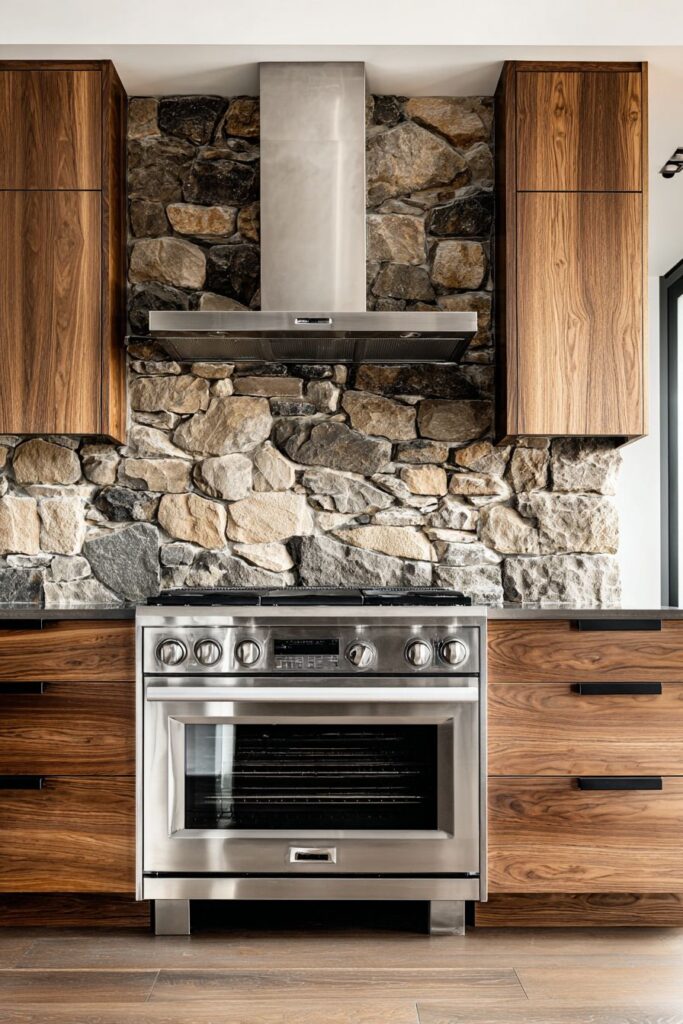
17. Stacked Stone Drama Behind Range
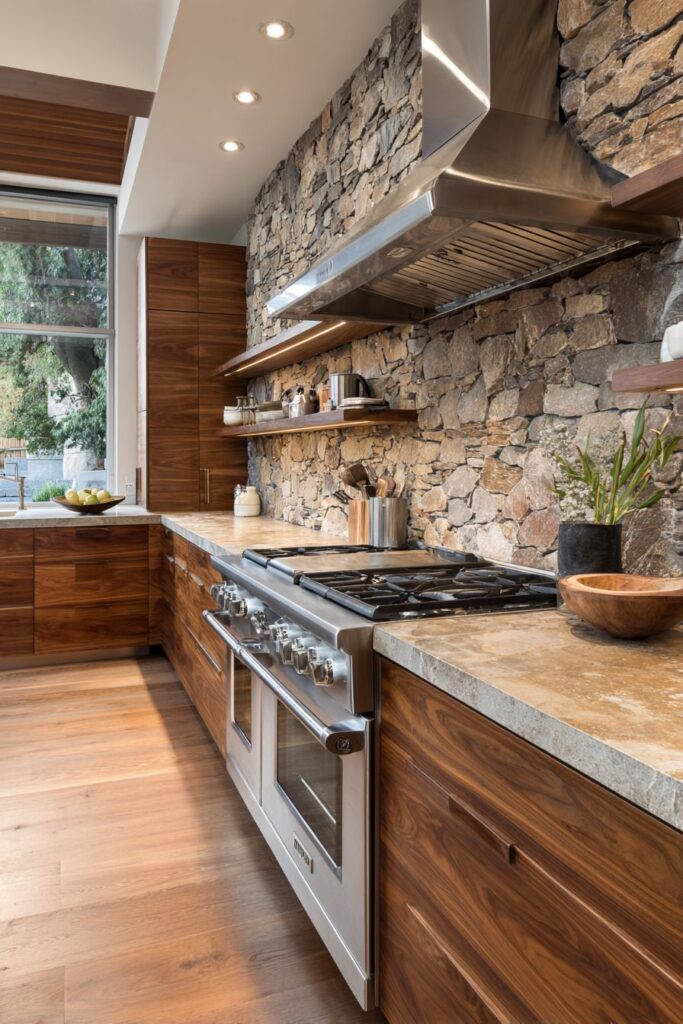
The unique backsplash of stacked stone in natural earth tones creates a dramatic focal point that extends from countertop to ceiling behind the range, transforming the cooking area into a sophisticated architectural feature. The natural stone variations add textural richness and visual interest while providing heat resistance and easy maintenance for the high-intensity cooking zone. Walnut cabinetry with minimal hardware maintains the clean aesthetic while adding warmth that complements the stone’s natural character.
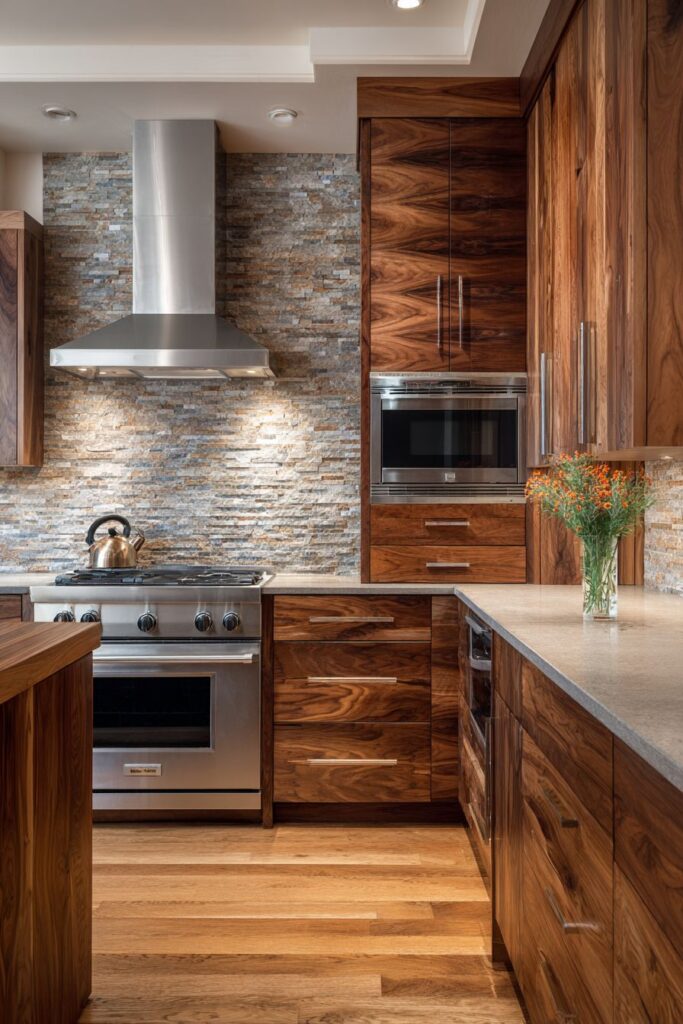
Stainless steel appliances provide modern functionality while their clean lines and reflective surfaces complement both the geometric stone pattern and organic wood grain. The careful integration of professional-grade equipment within the mid century framework demonstrates how contemporary cooking needs can be met without compromising authentic style. Interior design photography focuses on the dramatic backsplash material and its integration with surrounding cabinetry under professional lighting conditions.
The floor-to-ceiling stone treatment creates impressive visual weight that anchors the cooking area while providing a stunning backdrop for culinary activities. The natural earth tones add warmth and sophistication while maintaining the neutral palette that characterizes successful mid century design. Professional lighting highlights the stone’s natural texture variations while ensuring adequate task illumination for cooking activities.
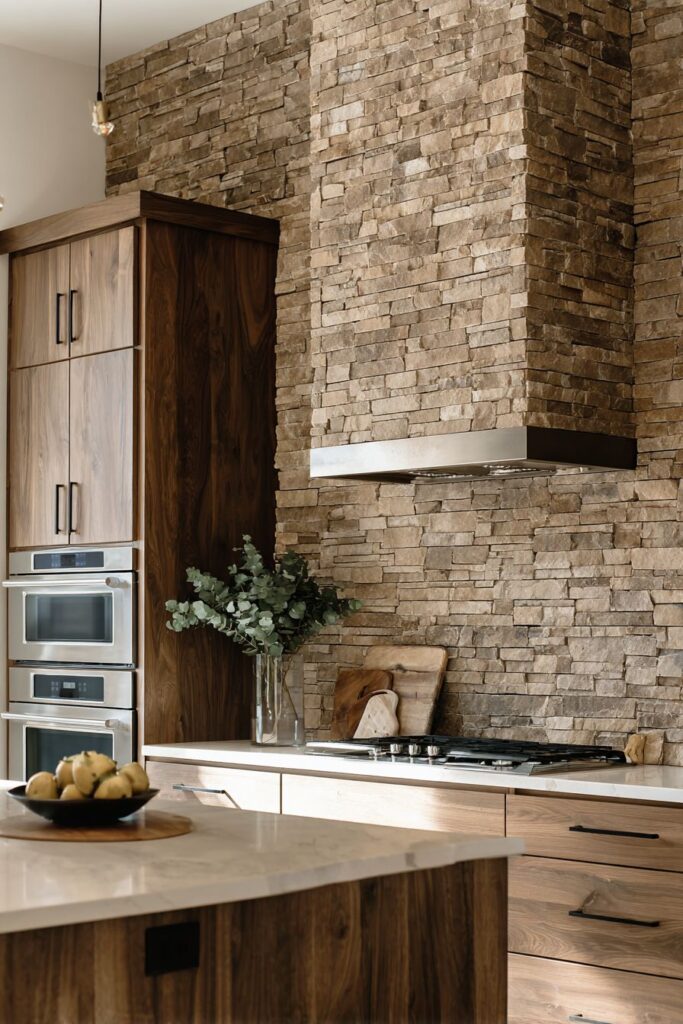
The extension of stone from counter to ceiling creates dramatic vertical emphasis that enhances the room’s proportions while serving practical needs for heat and splash protection. This bold design choice demonstrates how functional requirements can become opportunities for architectural drama and visual interest, transforming necessary elements into design features that enhance the overall aesthetic.
Key Design Tips:
- Extend stone backsplashes from counter to ceiling for dramatic vertical emphasis and architectural impact
- Select natural earth tones that add warmth while maintaining sophisticated neutral palettes
- Integrate professional appliances seamlessly within period design frameworks for authentic style
- Use minimal hardware on surrounding cabinetry to maintain focus on dramatic stone features
- Plan professional lighting to highlight natural texture variations while providing task illumination
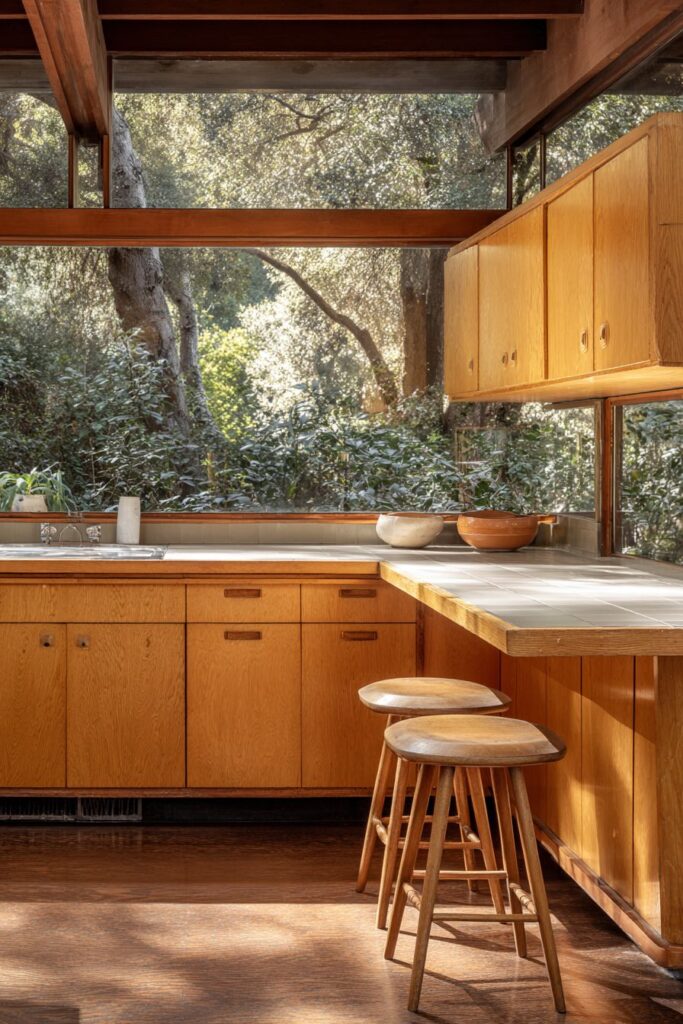
18. Cantilevered Innovation with Steel Support
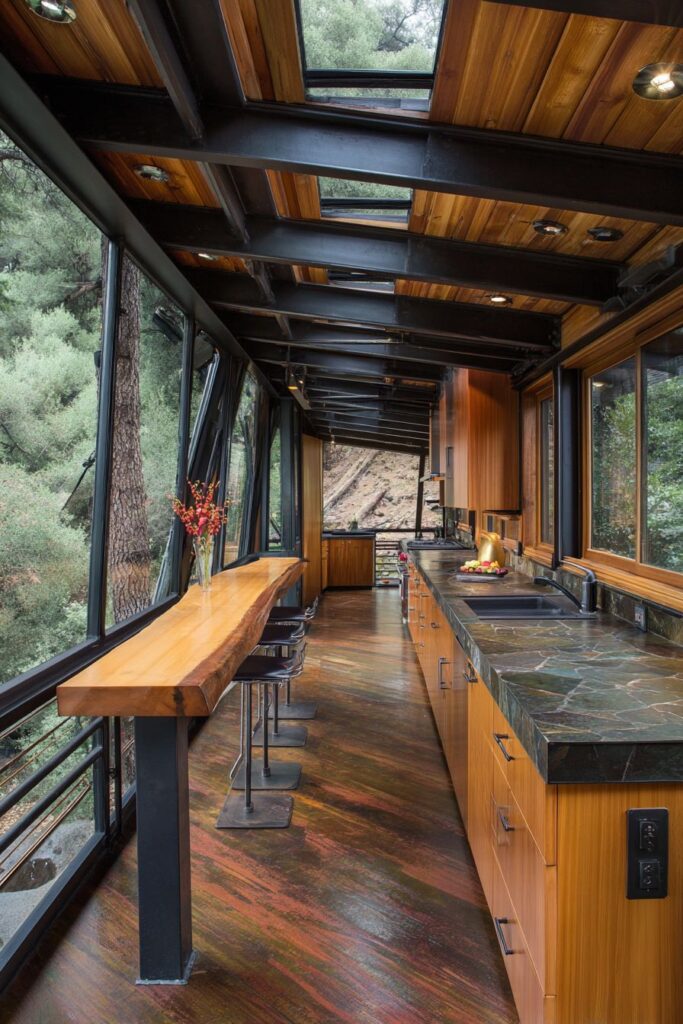
The cantilevered breakfast bar extending from the main island represents innovative structural design that creates visual lightness while providing functional workspace and casual dining. The single steel post support demonstrates mid century appreciation for honest structural expression and minimal intervention, allowing the breakfast bar to appear to float while providing necessary support. Integrated electrical outlets ensure modern convenience without compromising the clean aesthetic, demonstrating how contemporary needs can be seamlessly integrated into period design.
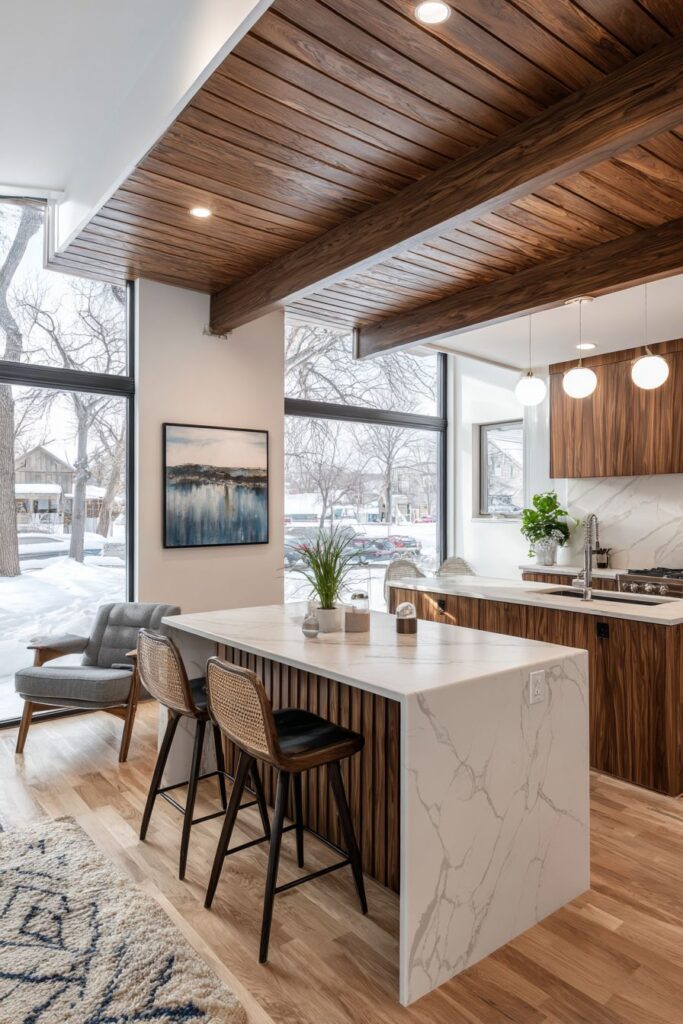
Natural wood cabinetry and stone countertops maintain the consistent material palette while serving distinct functional purposes throughout the island and breakfast bar. The continuous surfaces create visual flow while the structural innovation adds architectural interest that distinguishes this kitchen from more conventional designs. Professional interior photography emphasizes the structural design element and practical features, showcasing how engineering and aesthetics can work together to create distinctive results.
The breakfast bar’s extended reach creates additional workspace for food preparation while providing comfortable seating for casual meals and conversation. The elevated height creates visual separation between cooking and dining functions while maintaining the open connectivity that characterizes mid century planning. Balanced lighting highlights the engineering and aesthetic details while ensuring practical illumination for both work and dining activities.
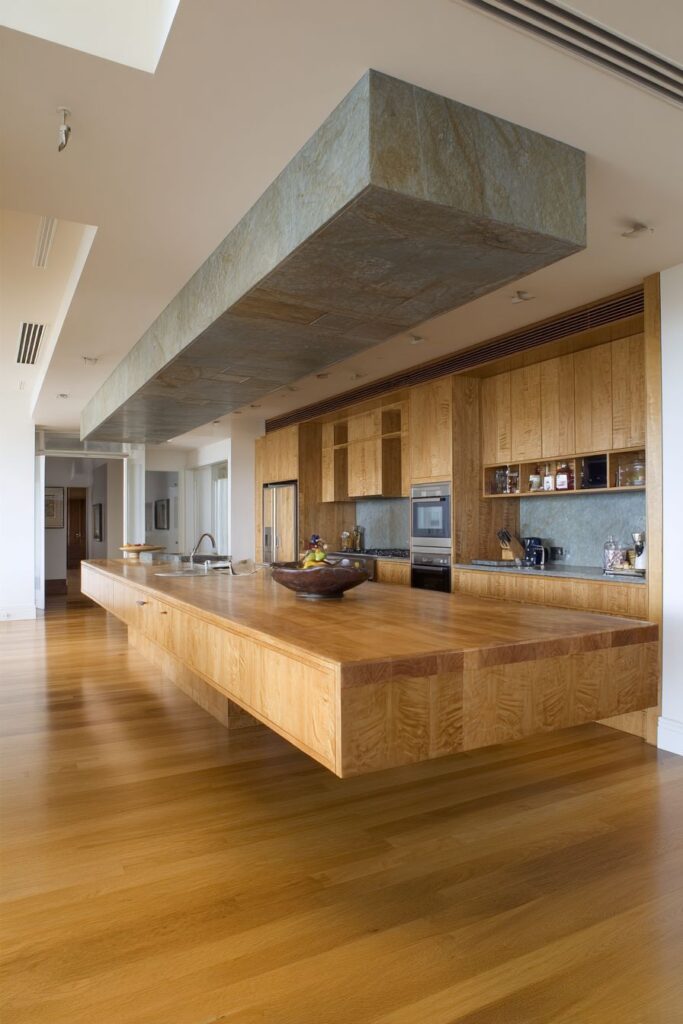
The integration of electrical outlets directly into the breakfast bar demonstrates thoughtful planning that anticipates modern needs for device charging and small appliance use. This forward-thinking approach reflects the mid century optimism about technology’s role in improving daily life while maintaining the clean aesthetic that defines the style. The careful detailing ensures that practical elements enhance rather than compromise the overall design.
Key Design Tips:
- Use cantilevered design elements to create visual lightness while providing functional workspace
- Express structural support honestly with minimal steel posts that add architectural interest
- Integrate electrical outlets seamlessly to serve modern needs without compromising clean aesthetics
- Plan extended breakfast bars for both additional workspace and casual dining functionality
- Balance structural innovation with consistent material palettes for cohesive sophisticated design
19. Seamless Appliance Integration
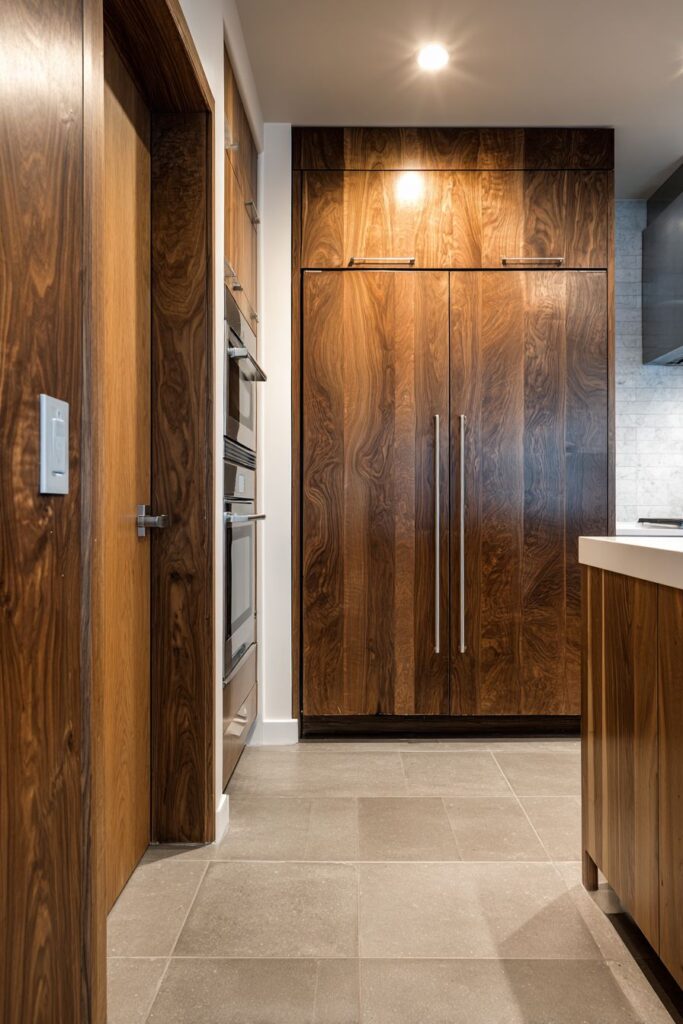
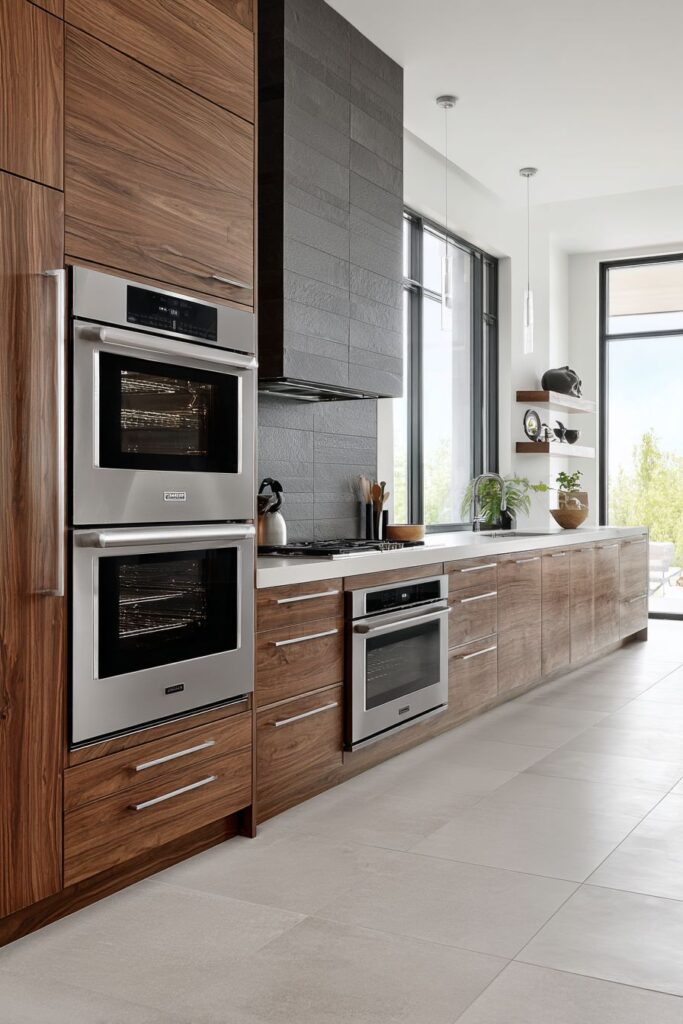
The built-in appliance integration featuring panel-ready refrigerator and dishwasher concealed within walnut cabinetry represents the pinnacle of mid century design philosophy, where functional elements disappear into the overall aesthetic while maintaining superior performance. This seamless integration creates uninterrupted cabinet lines that emphasize the beauty of natural wood grain while hiding the visual clutter of multiple appliances. Large format tile flooring in neutral tones complements the natural wood while providing easy maintenance for high-traffic areas.
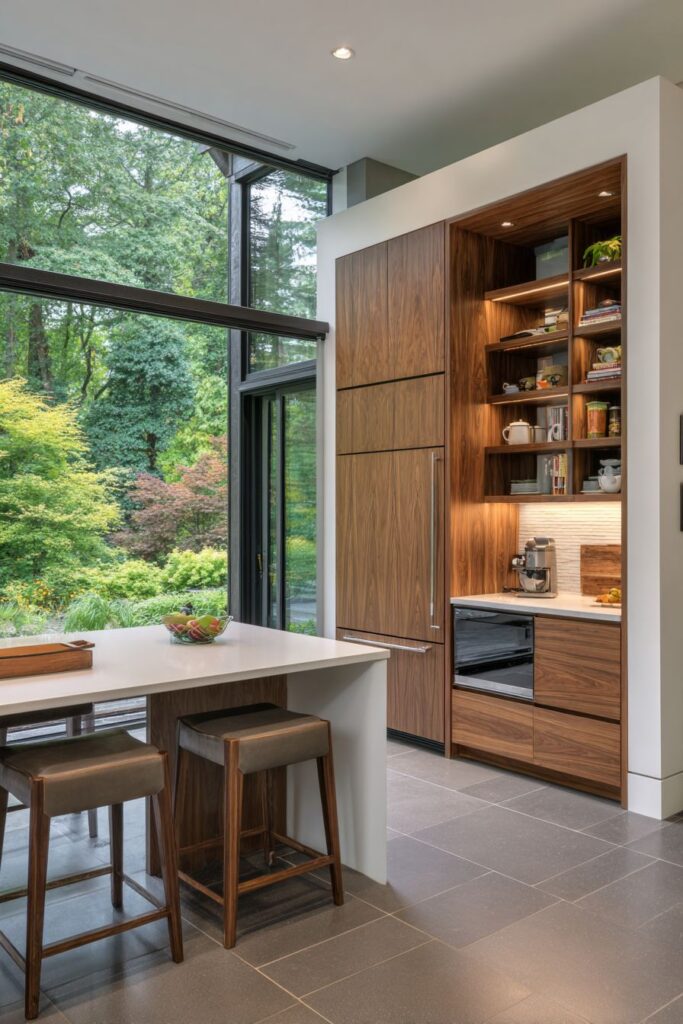
The panel-ready appliance approach allows contemporary functionality to serve modern needs while maintaining authentic period aesthetics. The careful attention to detail in matching wood grain and cabinet hardware ensures that integrated appliances truly disappear into the cabinetry design, creating clean, uncluttered surfaces that define successful mid century kitchens. Interior design photography captures the seamless appliance integration and clean aesthetic with natural lighting that highlights consistent material application.
The large format tile selection enhances the horizontal emphasis that characterizes mid century design while providing practical benefits for kitchen flooring. The neutral color palette complements the warm wood tones while offering durability and easy maintenance that supports active cooking and entertaining. The tile size creates fewer grout lines, maintaining the clean, uninterrupted surfaces that are essential to the aesthetic.
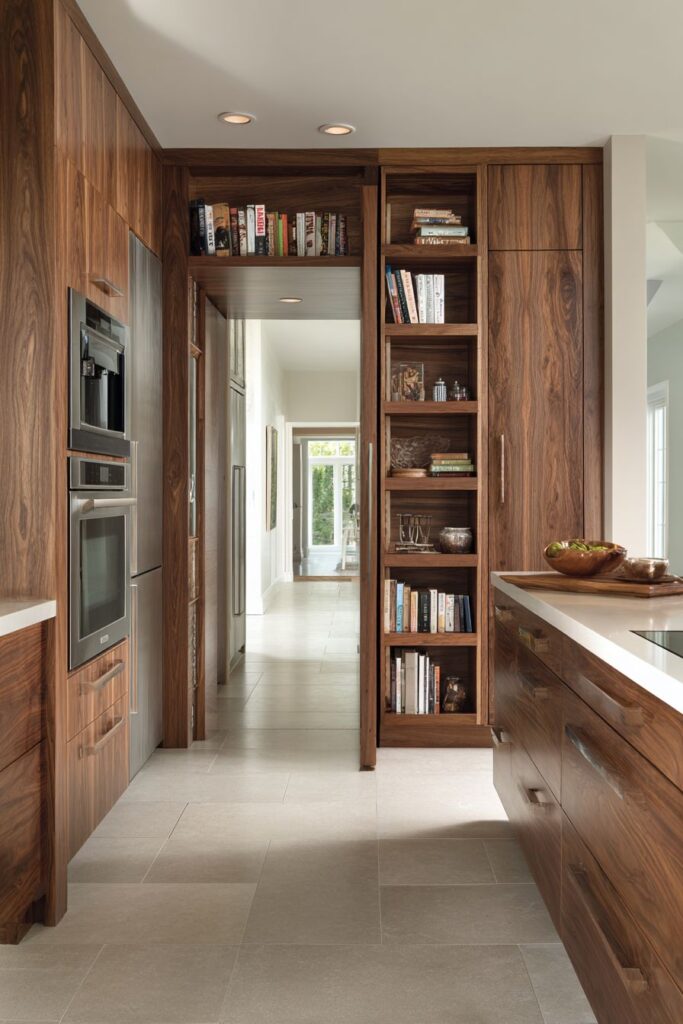
Thoughtful design details ensure that every element serves both form and function, from hidden appliance integration to carefully selected flooring materials. This systematic approach to design planning reflects the mid century appreciation for comprehensive solutions that address both practical needs and aesthetic goals. The result is a kitchen that functions beautifully while maintaining authentic period character.
Key Design Tips:
- Choose panel-ready appliances to achieve seamless integration within natural wood cabinetry
- Match wood grain and hardware details to ensure appliances truly disappear into cabinet design
- Select large format flooring to minimize grout lines and maintain clean, uninterrupted surfaces
- Plan comprehensive design solutions that address both practical needs and aesthetic goals
- Use neutral flooring colors that complement wood tones while providing easy maintenance
20. Corner Window Garden Connection
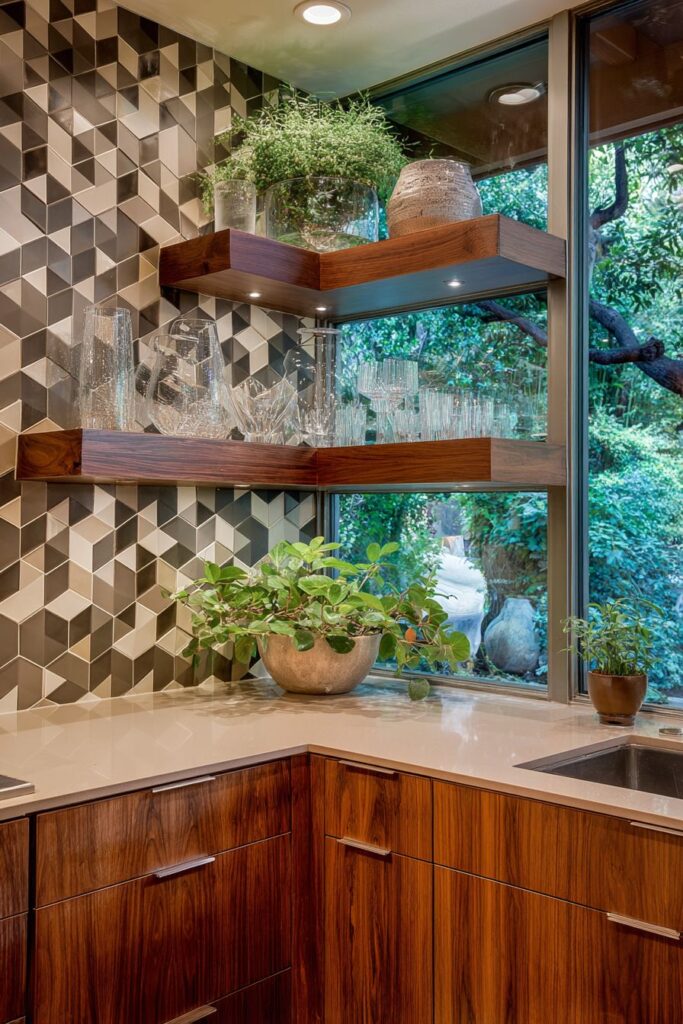
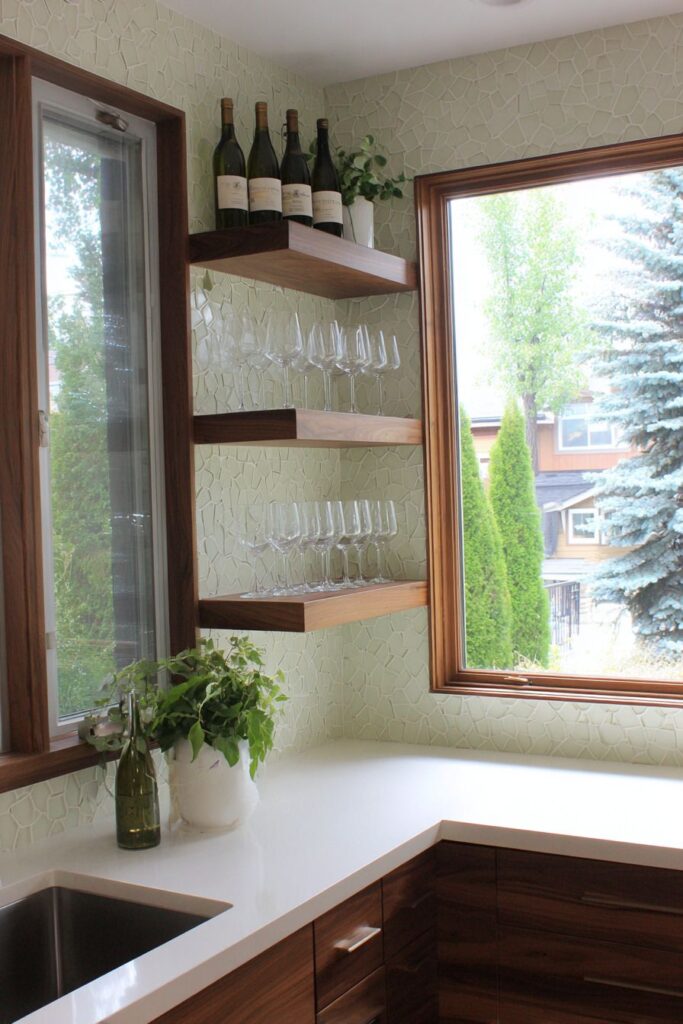
The unique corner window configuration creates a bright, cheerful environment over the sink area while providing natural light that enhances daily kitchen tasks. Floating shelves in natural walnut display glassware and plants, adding life and personality to the window area while maintaining the clean lines essential to mid century aesthetics. The geometric tile backsplash in muted colors provides textural interest while tying together the clean-lined cabinetry and window treatment in a cohesive design scheme.
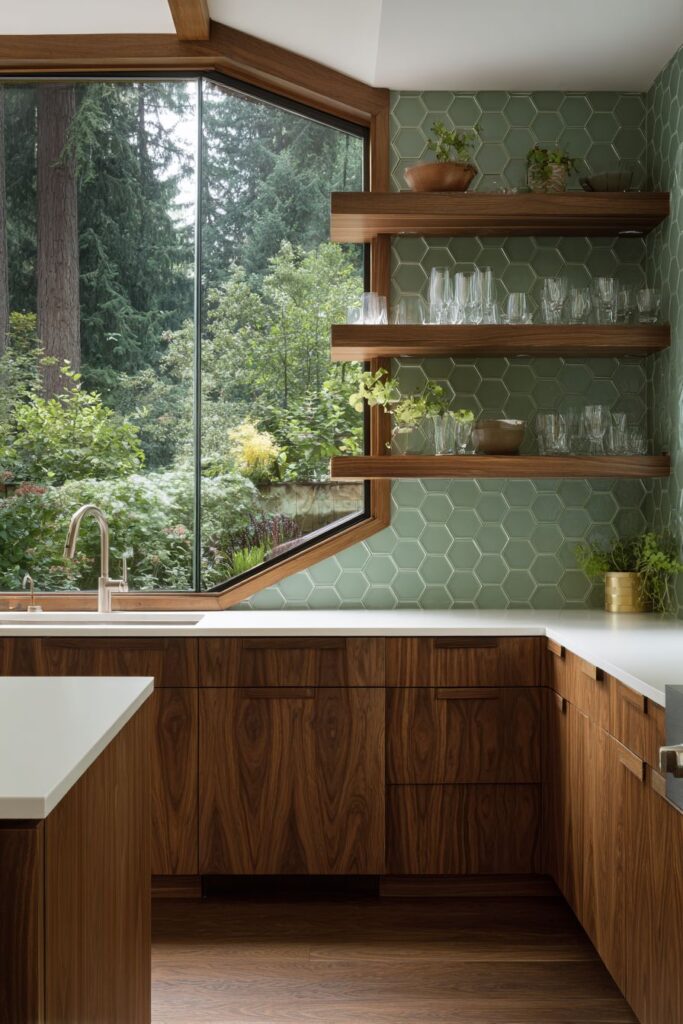
The strategic window placement maximizes natural light while creating strong connections to outdoor gardens and landscaping that change with the seasons. This connection to nature enhances the organic warmth of the wood materials while providing visual relief during daily kitchen tasks. Wide-angle interior photography showcases the window placement and shelf styling, demonstrating how thoughtful details can enhance both function and aesthetic appeal.
The floating shelves serve dual purposes as both storage and display, providing easy access to frequently used glassware while creating opportunities to incorporate plants and decorative objects that add personality to the space. The natural walnut construction ties the shelves into the overall material palette while their floating design maintains visual lightness that doesn’t compete with the window views. The careful styling creates visual interest without cluttering the clean aesthetic.
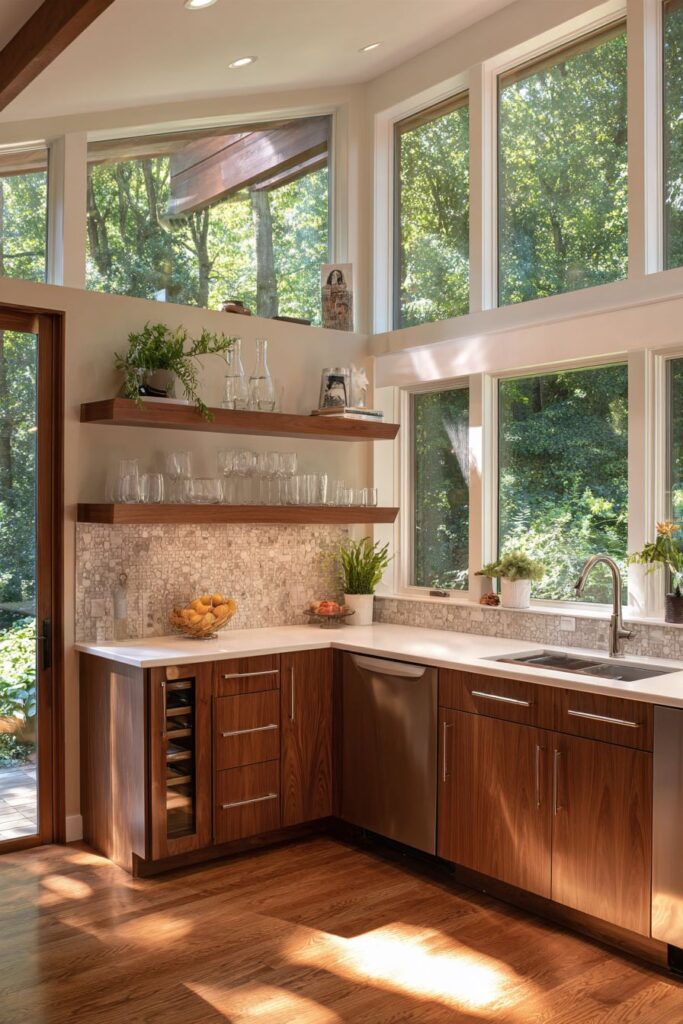
The geometric tile backsplash provides practical benefits for the sink area while adding pattern and texture that complements the natural materials throughout the kitchen. The muted color palette ensures that the tile enhances rather than competes with the window views and floating shelf displays, creating harmony between all design elements. Soft natural light emphasizes the connection to outdoor greenery while highlighting material textures and careful detailing.
Key Design Tips:
- Position corner windows to maximize natural light while creating strong outdoor connections
- Install floating shelves for dual storage and display purposes without compromising clean lines
- Include plants and greenery to add life and enhance connections to outdoor garden areas
- Select geometric tile backsplashes in muted colors that complement rather than compete with focal points
- Style shelves carefully to add personality while maintaining uncluttered mid century aesthetics
21. Multi-Level Island Innovation
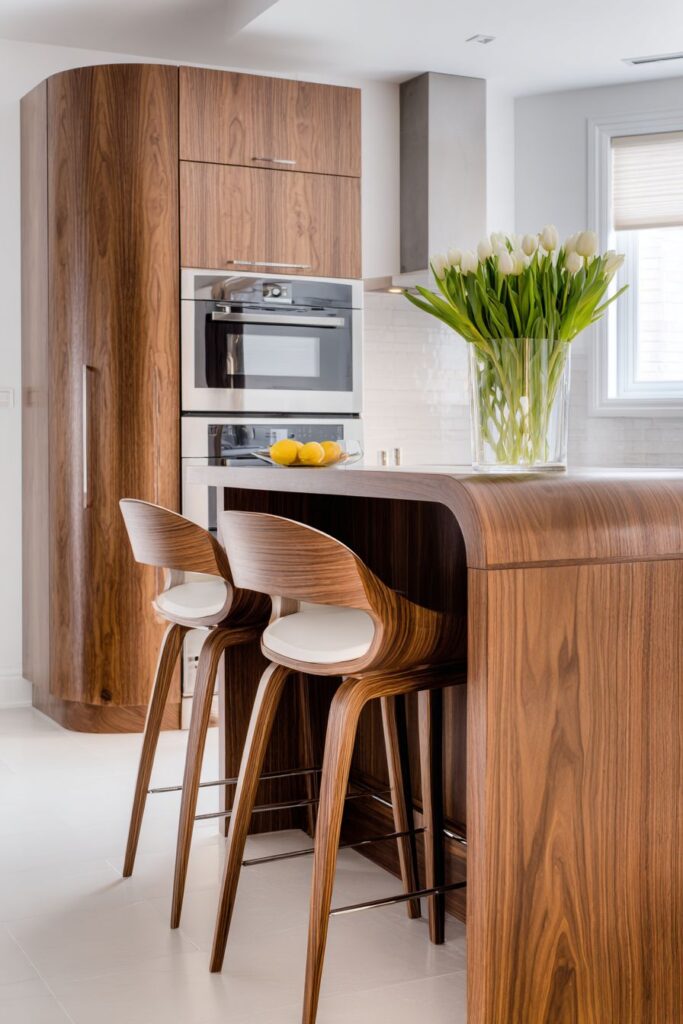
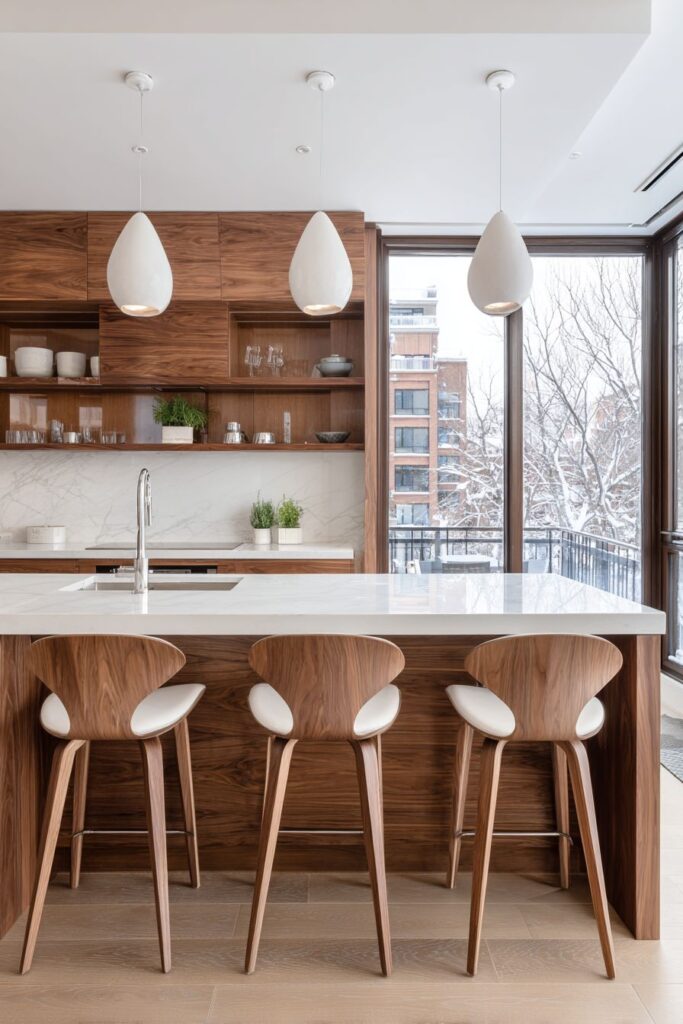
The two-level island design creates sophisticated functionality through elevated bar seating and lower food prep areas, all clad in matching walnut with waterfall edges that showcase the continuous wood grain patterns. This innovative approach maximizes the island’s utility while creating visual interest through varied heights and surface levels. Integrated storage maintains clean lines while providing maximum functionality, demonstrating how thoughtful design can address multiple needs within a single architectural element.
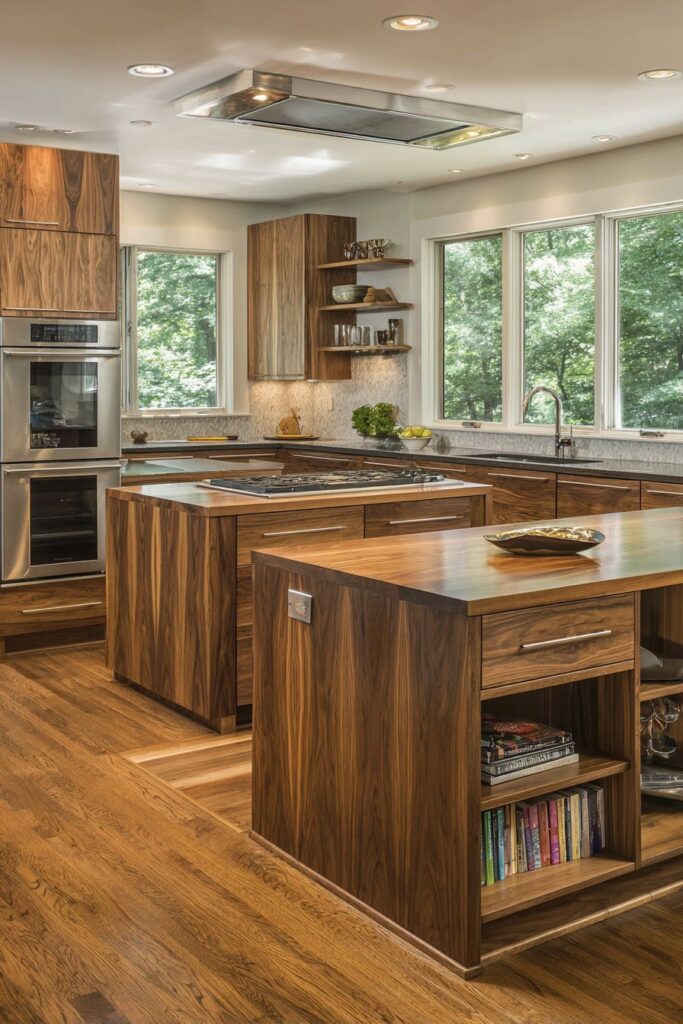
The waterfall edges create dramatic visual impact while celebrating the natural beauty of wood grain patterns that flow continuously from horizontal to vertical surfaces. This detail demonstrates the mid century appreciation for honest materials and quality craftsmanship, where construction details become decorative features that enhance rather than hide structural elements. Professional interior design photography focuses on the island’s multi-level design and practical workspace zones.
The elevated bar seating creates casual dining opportunities while providing comfortable views of cooking activities, encouraging social interaction during meal preparation. The lower prep area provides optimal working height for food preparation tasks while maintaining visual connection with seated guests. This multi-functional approach reflects the mid century understanding that kitchen spaces should serve diverse needs while maintaining aesthetic harmony.
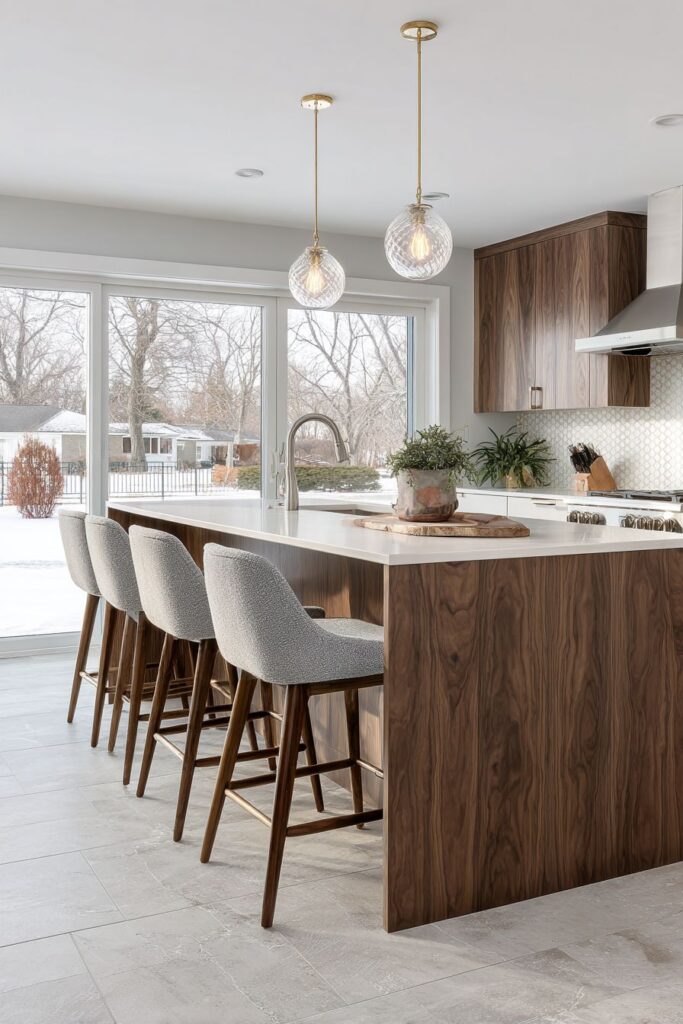
Balanced lighting highlights the continuous wood grain patterns while ensuring practical illumination for both food preparation and dining activities. The careful attention to wood grain matching creates visual continuity that makes the waterfall edges appear as natural extensions of the horizontal surfaces. Integrated storage solutions ensure that the island’s beautiful surfaces remain uncluttered while providing essential organization for kitchen tools and supplies.
Key Design Tips:
- Design multi-level islands to serve diverse functional needs while creating visual interest
- Use waterfall edges to showcase continuous wood grain patterns and quality craftsmanship
- Plan elevated seating for social interaction while maintaining optimal prep area working heights
- Integrate storage solutions to maintain clean surfaces while providing essential organization
- Balance lighting to highlight wood grain beauty while ensuring practical task illumination
22. Specialized Coffee Station Luxury
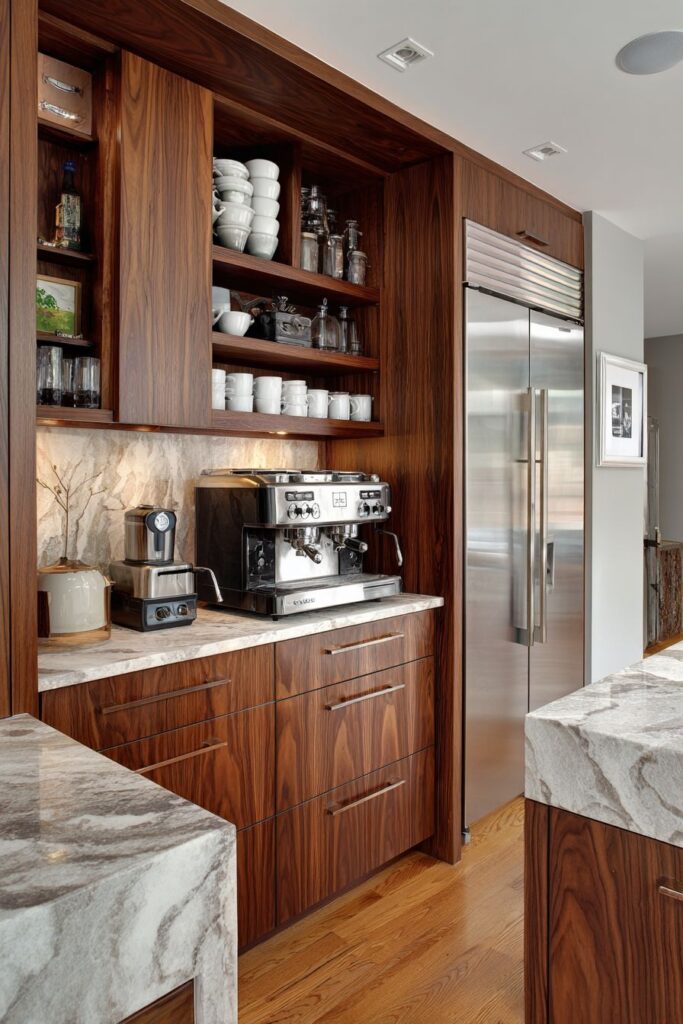
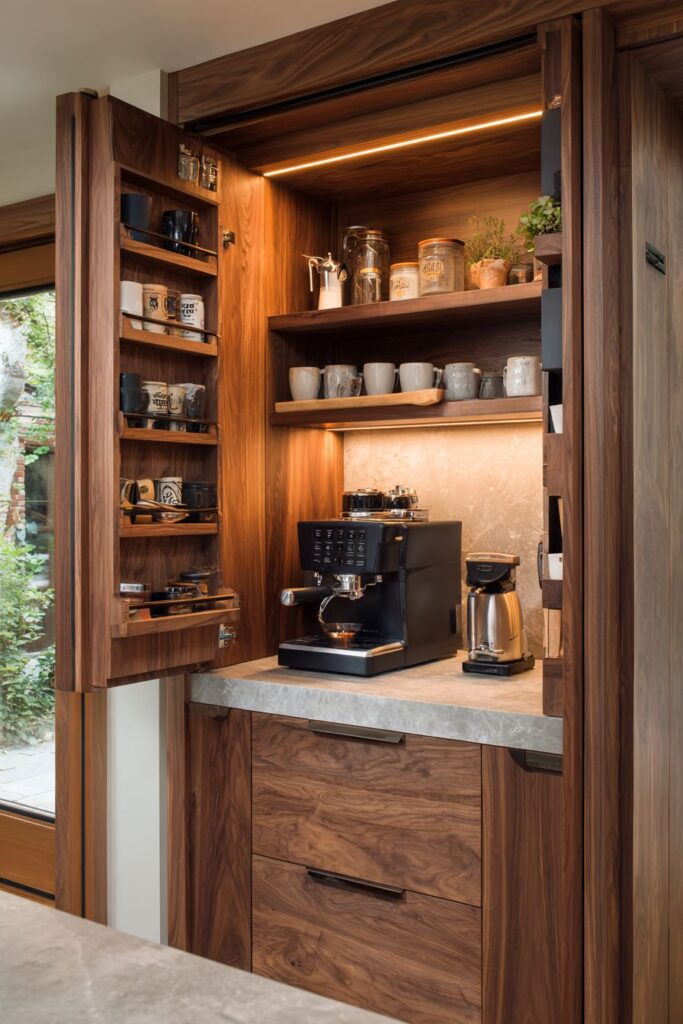
The dedicated coffee station built into walnut cabinetry represents the ultimate in specialized kitchen luxury, featuring integrated espresso machine, organized cup storage, and small appliance organization that transforms daily coffee rituals into sophisticated experiences. Natural stone countertops provide heat-resistant surfaces ideal for coffee equipment while adding textural contrast to the warm wood cabinetry. Subtle task lighting illuminates the workspace, ensuring optimal visibility for coffee preparation while creating intimate atmosphere for morning routines.
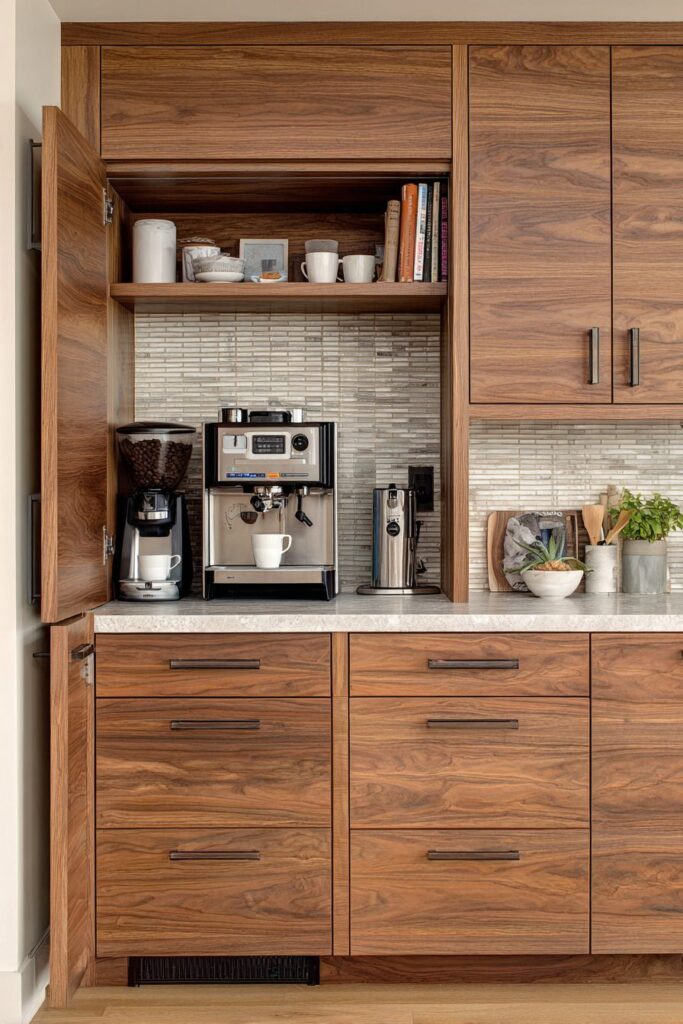
The careful organization of coffee-related equipment and supplies demonstrates how specialized storage can enhance both function and aesthetics, keeping everything needed for perfect coffee easily accessible while maintaining the clean lines essential to mid century design. The integration of electrical outlets and plumbing for the espresso machine shows thoughtful planning that anticipates the specific needs of serious coffee enthusiasts while maintaining aesthetic appeal.
Interior photography emphasizes the specialized function area and organizational details, showcasing how dedicated workspace zones can be seamlessly integrated into overall kitchen design. The attention to material textures and lighting design demonstrates how even utilitarian areas can become beautiful focal points when designed with care and attention to detail. The coffee station serves as an example of how modern lifestyle needs can be accommodated within period design frameworks.
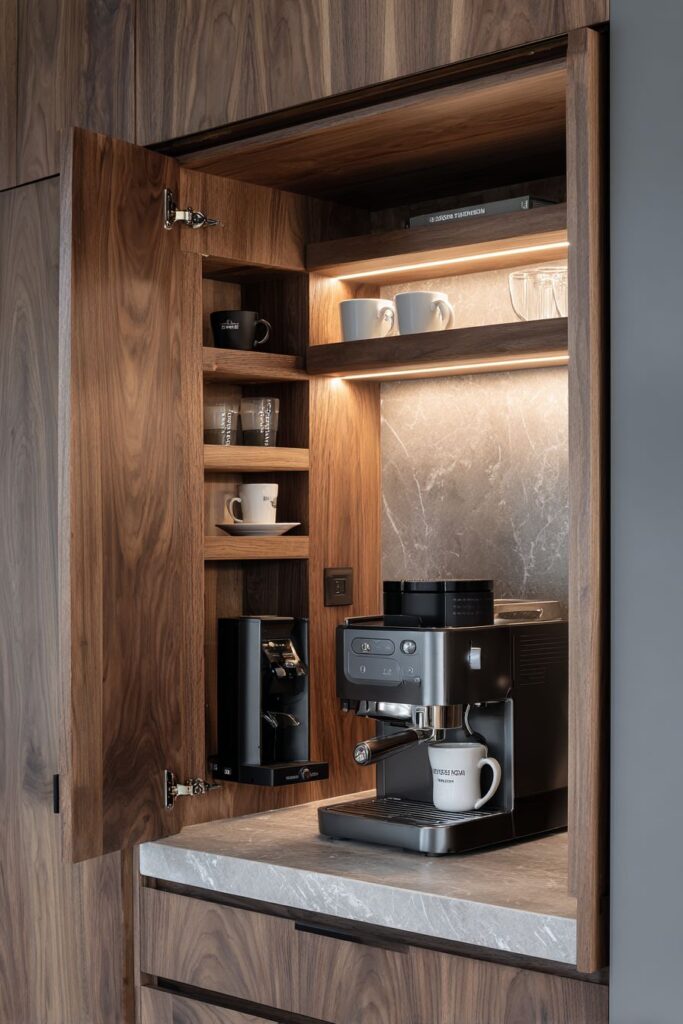
The walnut cabinetry provides consistency with other kitchen elements while creating a sense of luxury and craftsmanship that elevates the simple act of making coffee into a special daily ritual. The natural wood grain adds warmth and character while providing durable surfaces that improve with age and use. This attention to material quality reflects the mid century appreciation for honest, long-lasting construction.
Key Design Tips:
- Design specialized stations for specific activities like coffee preparation to enhance daily rituals
- Integrate espresso machines and plumbing to create professional-quality home coffee experiences
- Organize storage specifically for coffee equipment and supplies to maintain clean, efficient workflows
- Install subtle task lighting to create intimate atmosphere while ensuring practical visibility
- Use consistent materials throughout to maintain design harmony while serving specialized functions
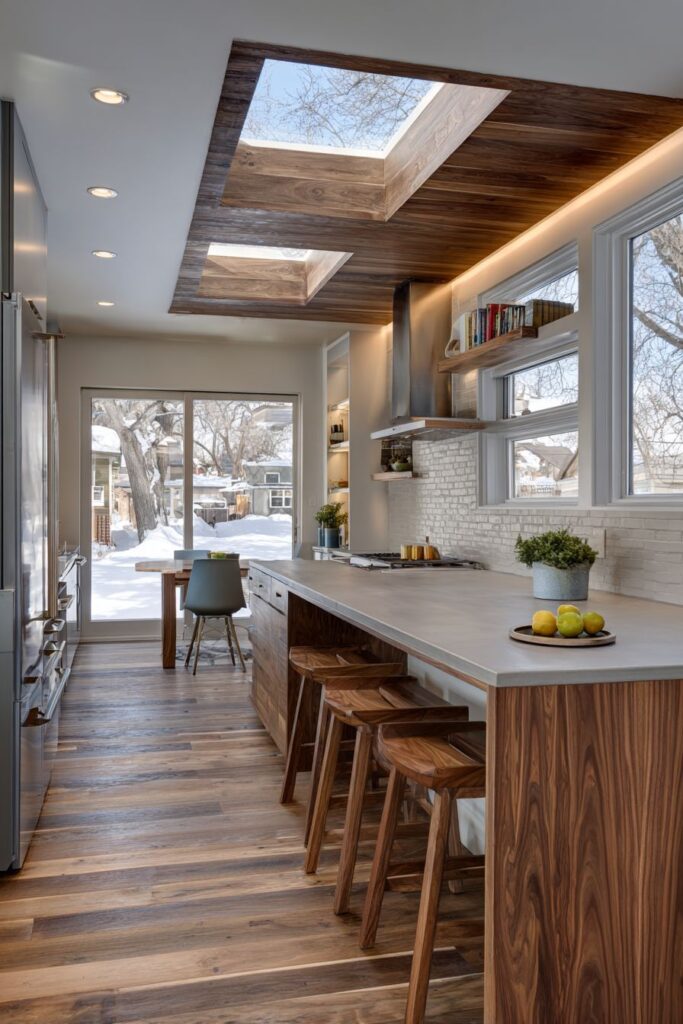
23. Angled Ceiling Architectural Character
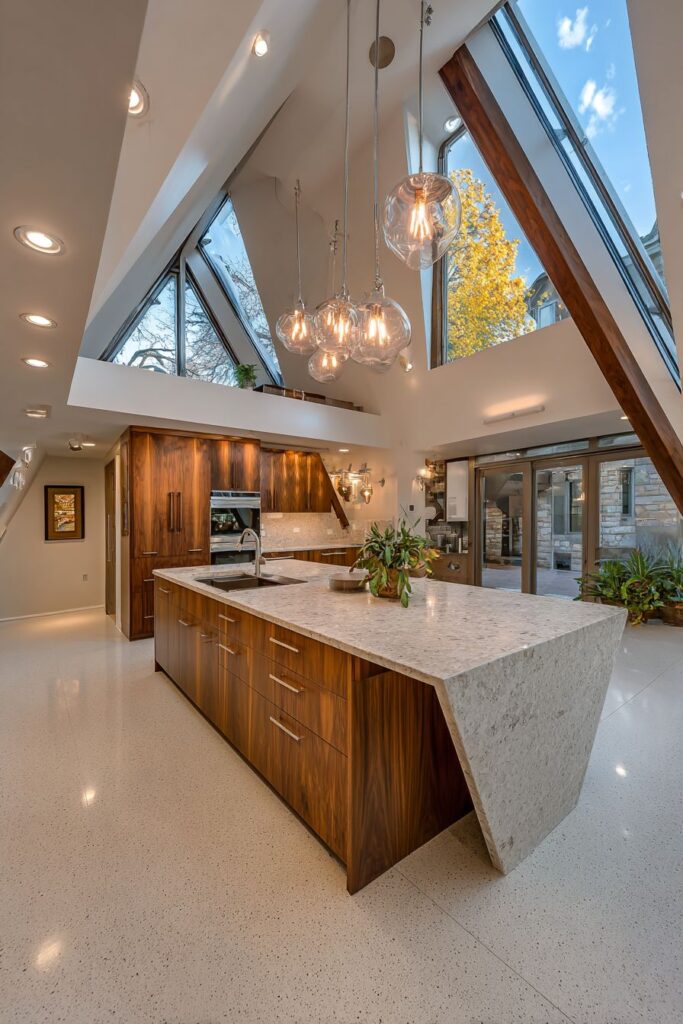
The distinctive angled ceiling following the roofline creates architectural character while demonstrating how structural requirements can become decorative features that enhance mid century aesthetics. Clerestory windows provide natural light from above while maintaining privacy and creating dramatic lighting effects throughout the day. Walnut cabinetry with integrated handles maintains clean lines while working harmoniously with the geometric architecture to create a cohesive, sophisticated environment.
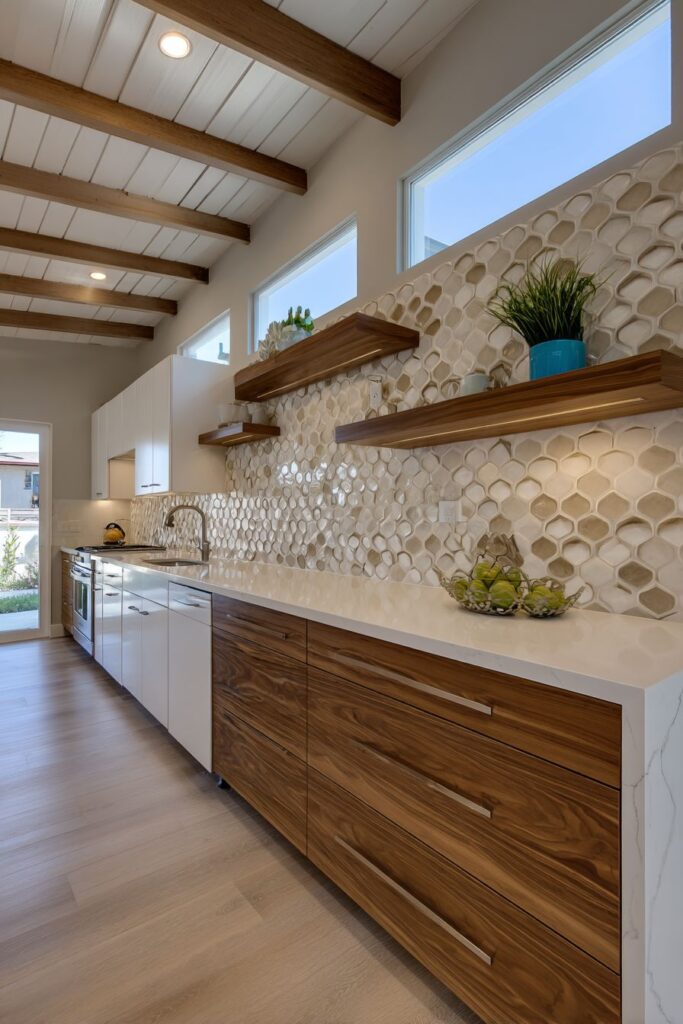
The geometric architecture enhances the period aesthetic while serving practical functions, from increased ceiling height to improved natural lighting opportunities. The angled lines create visual interest and spatial drama while maintaining the clean, uncluttered appearance that defines successful mid century design. Professional interior design photography captures the architectural elements and cabinet integration, showcasing how structural features can enhance rather than compromise kitchen functionality.
The clerestory windows flood the space with natural light while creating privacy from neighboring properties, demonstrating how thoughtful window placement can solve multiple design challenges simultaneously. The overhead light source highlights the walnut cabinetry’s natural grain while creating changing light patterns that add visual interest throughout the day. This connection to natural light cycles reflects the mid century appreciation for living spaces that connect inhabitants with natural rhythms.
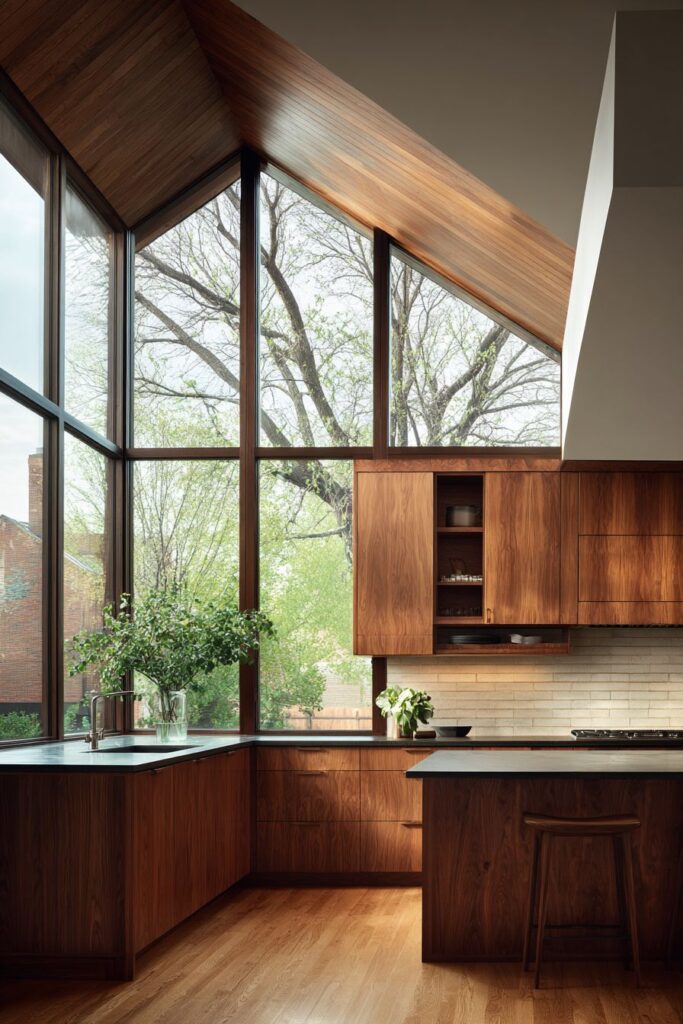
The integrated cabinet handles maintain the clean aesthetic while providing functional hardware that doesn’t interrupt the geometric lines created by the architectural ceiling treatment. This attention to detail demonstrates how every element, from major structural features to minor hardware details, contributes to the overall design success. The careful coordination between architecture and cabinetry creates unified space that feels intentional and thoughtfully planned.
Key Design Tips:
- Embrace angled ceilings as architectural features that add character and spatial drama
- Install clerestory windows for natural light while maintaining privacy from neighboring properties
- Use integrated cabinet handles to maintain clean lines and complement geometric architecture
- Plan lighting to highlight natural wood grain while taking advantage of changing daylight patterns
- Coordinate architectural elements with cabinetry design to create unified, intentional spaces
24. Concrete Sophistication with Integrated Drainage
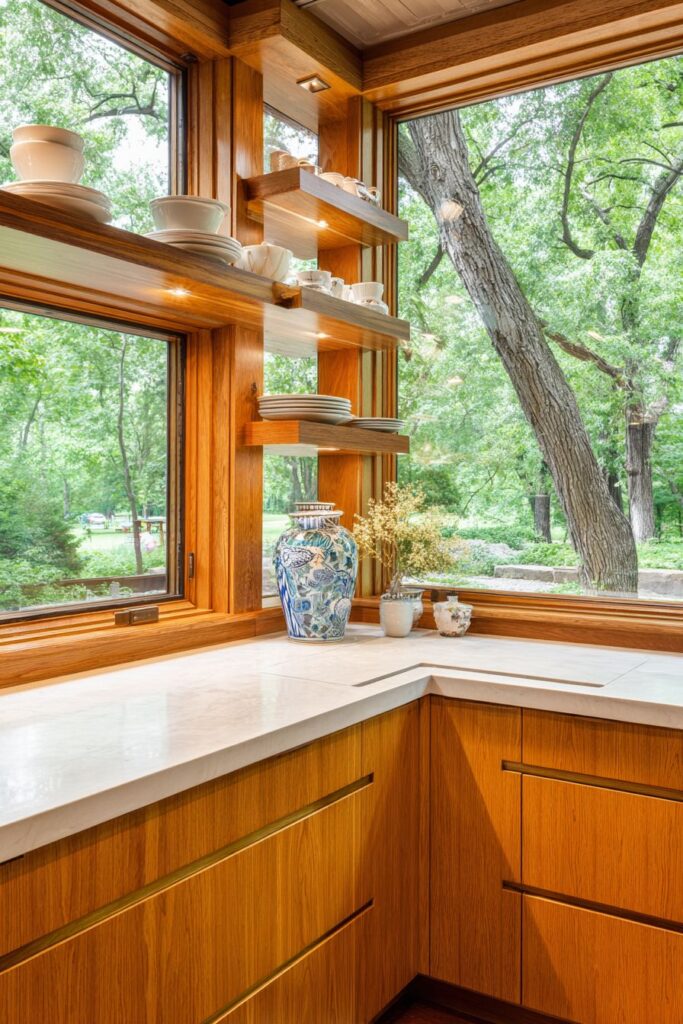
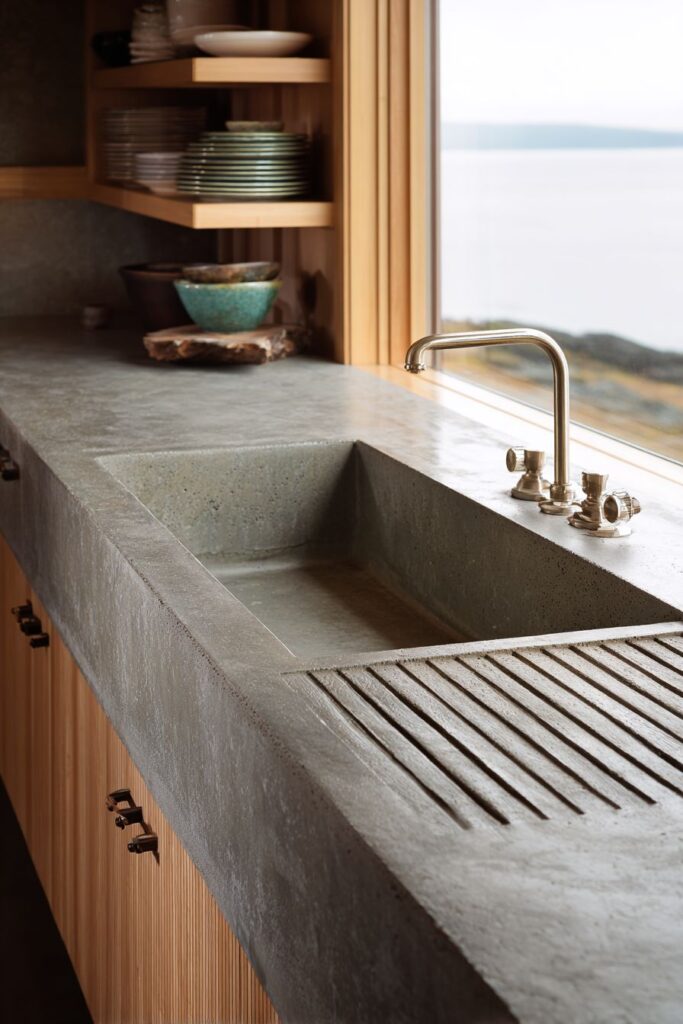
The large format concrete countertop with integrated drain board represents sophisticated material choice that combines industrial aesthetics with practical functionality. The subtle texture adds visual interest while providing durable, heat-resistant work surfaces ideal for active cooking. Paired with warm teak cabinetry and brass accent hardware, the concrete creates stunning contrast that demonstrates how diverse materials can work together to create sophisticated, contemporary interpretations of mid century principles.
The integrated drain board eliminates the need for separate drying areas while maintaining the clean, uncluttered surfaces essential to successful mid century design. This thoughtful detail shows how functional requirements can be seamlessly integrated into beautiful design solutions that enhance rather than compromise aesthetic goals. Open shelving displays curated dishware while large windows provide abundant natural light that highlights material textures and contrasts.
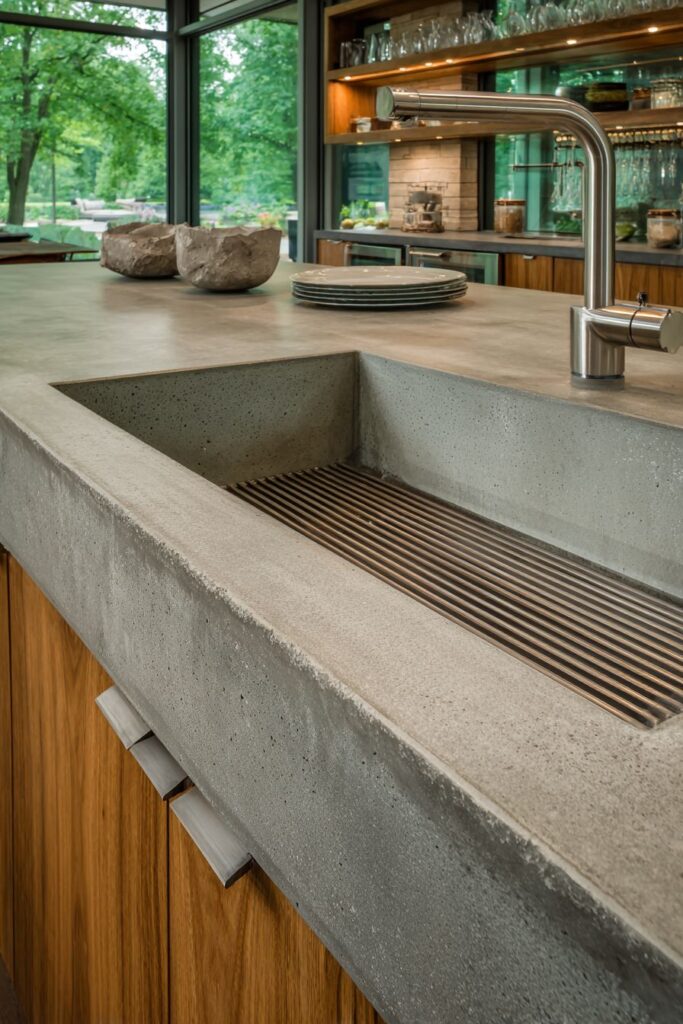
Interior design photography focuses on the concrete surface material and its integration with surrounding elements, showcasing how industrial materials can be successfully incorporated into residential kitchen design. The professional lighting highlights texture contrasts between smooth concrete, warm wood grain, and reflective brass accents. The careful attention to material combinations demonstrates sophisticated design sensibilities that honor mid century principles while embracing contemporary materials.
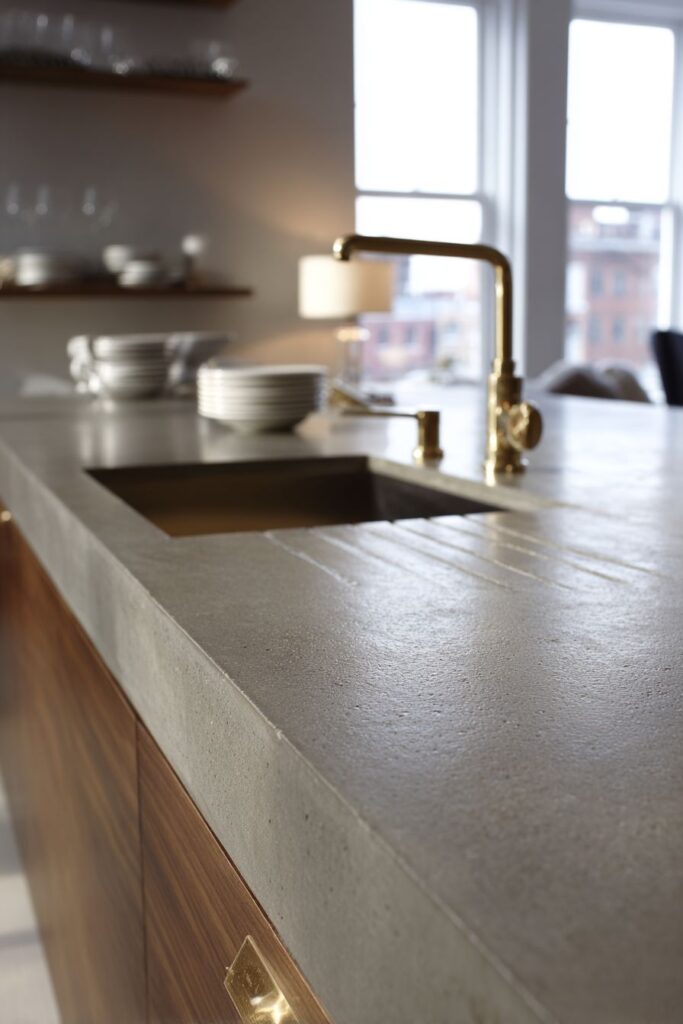
The concrete’s subtle texture provides visual interest while serving practical needs for food preparation and cleanup. The material ages beautifully, developing a patina that enhances its character over time, reflecting the mid century appreciation for materials that improve with age and use. The large format approach minimizes seams and creates clean, continuous work surfaces that support efficient kitchen workflows.
Key Design Tips:
- Choose concrete countertops for durability and an industrial aesthetic that complements natural wood cabinetry
- Integrate drain boards directly into countertop design for functional beauty and uncluttered surfaces
- Combine diverse materials like concrete, wood, and brass to create sophisticated contrast and visual interest
- Plan large format surfaces to minimize seams and create clean, continuous work areas
- Select materials that age beautifully and improve with use to honor mid century longevity principles
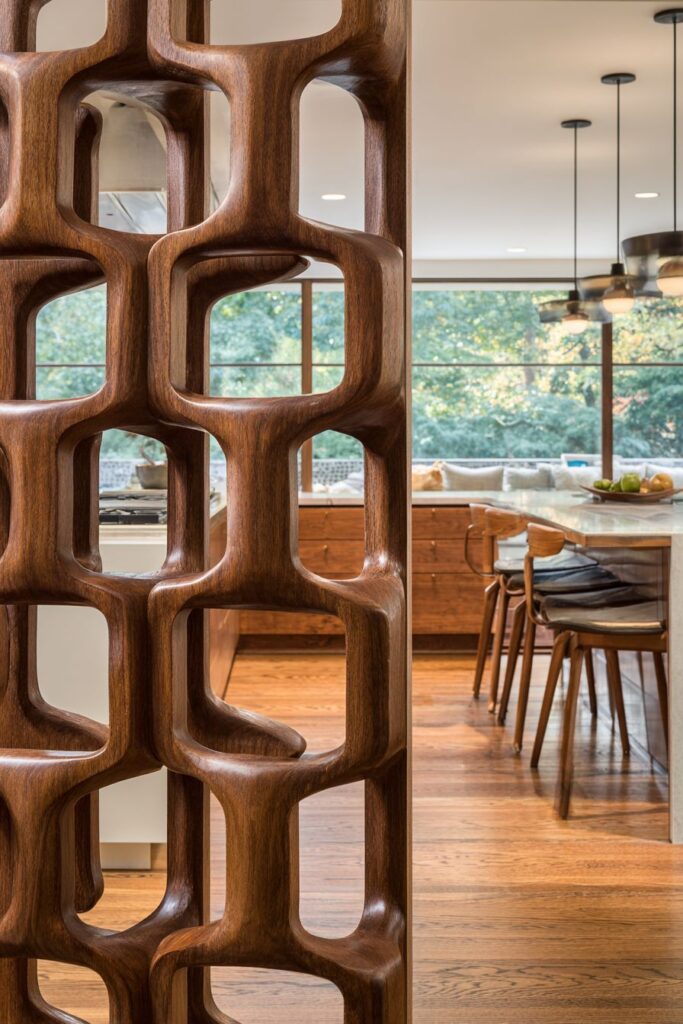
25. Room Divider with Dual Functionality
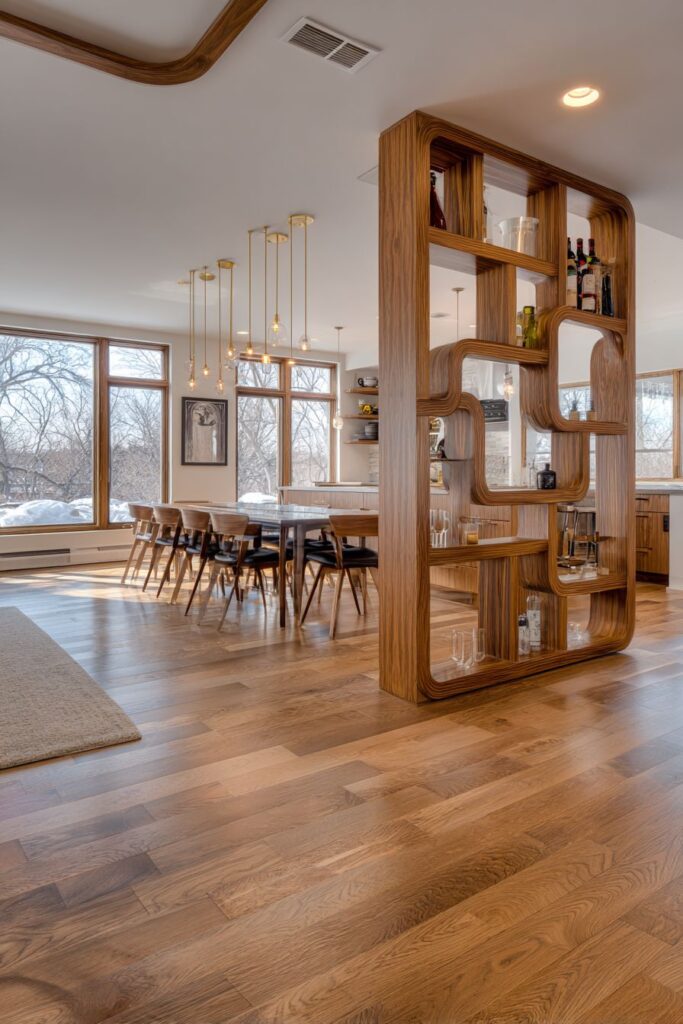
The unique room divider featuring both storage and display functions creates architectural interest while separating kitchen from adjacent living areas without sacrificing visual connection. Natural walnut construction with geometric openings provides practical organization while enhancing the overall architectural design. This innovative approach demonstrates how functional elements can become decorative features that add character and spatial definition to open floor plans.
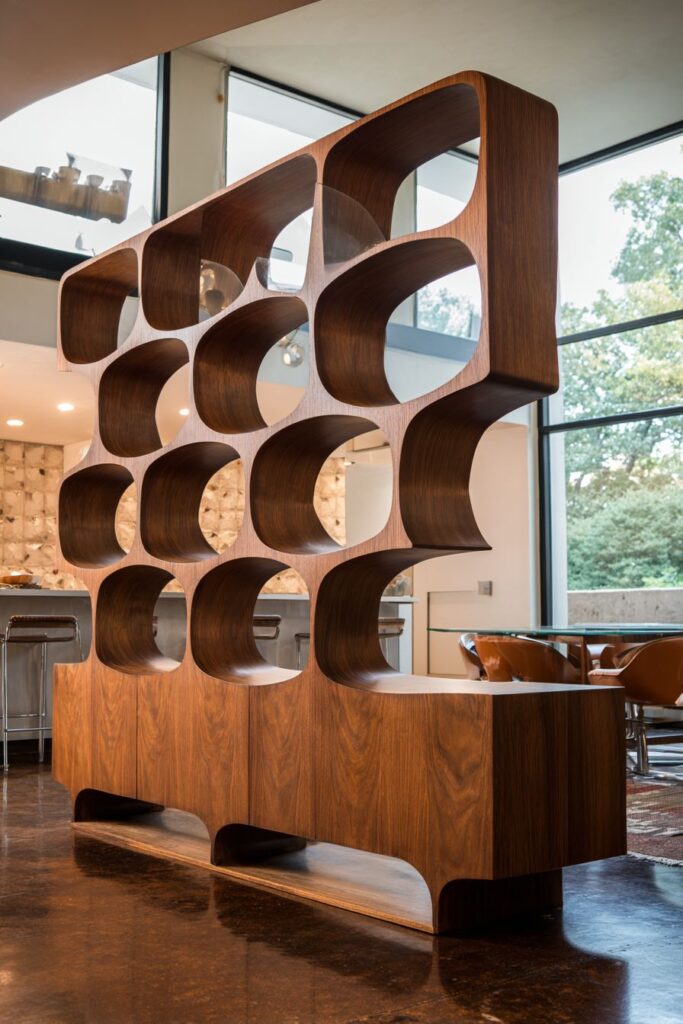
The dual functionality serves both kitchen storage needs and living area display opportunities, demonstrating efficient use of space while maintaining the clean lines essential to mid century aesthetics. The geometric openings create visual rhythm while allowing light and views to pass through, preventing the divider from feeling heavy or obstructive. Wide-angle interior photography captures the spatial relationships and functional benefits of this innovative design element.
The room divider’s height and proportions create effective separation between cooking and living areas while maintaining the open, connected feeling that characterizes mid century home design. The natural walnut construction provides consistency with kitchen cabinetry while adding warmth and character to both spaces. The careful attention to craftsmanship details ensures that the divider enhances rather than detracts from the overall design scheme.
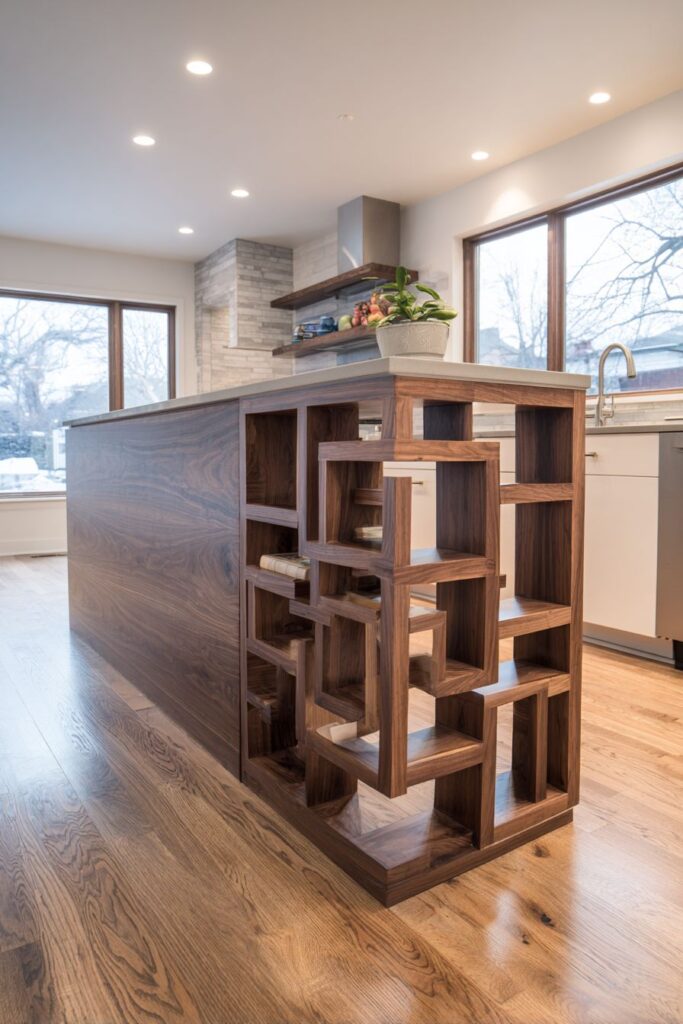
Balanced lighting highlights the geometric details and natural wood grain while ensuring that both spaces receive adequate illumination. The storage functions serve kitchen needs while the display areas add personality and visual interest to the living space, demonstrating how single elements can serve multiple purposes while maintaining aesthetic appeal.
Key Design Tips:
- Design room dividers that serve dual functions for both storage and display to maximize space efficiency
- Use geometric openings to create visual rhythm while maintaining light and view connections
- Maintain consistent materials between separated spaces to create visual harmony and flow
- Plan proportions carefully to create effective separation without feeling heavy or obstructive
- Balance lighting between adjacent spaces while highlighting architectural and craftsmanship details
26. Sustainable Design with Thermal Mass
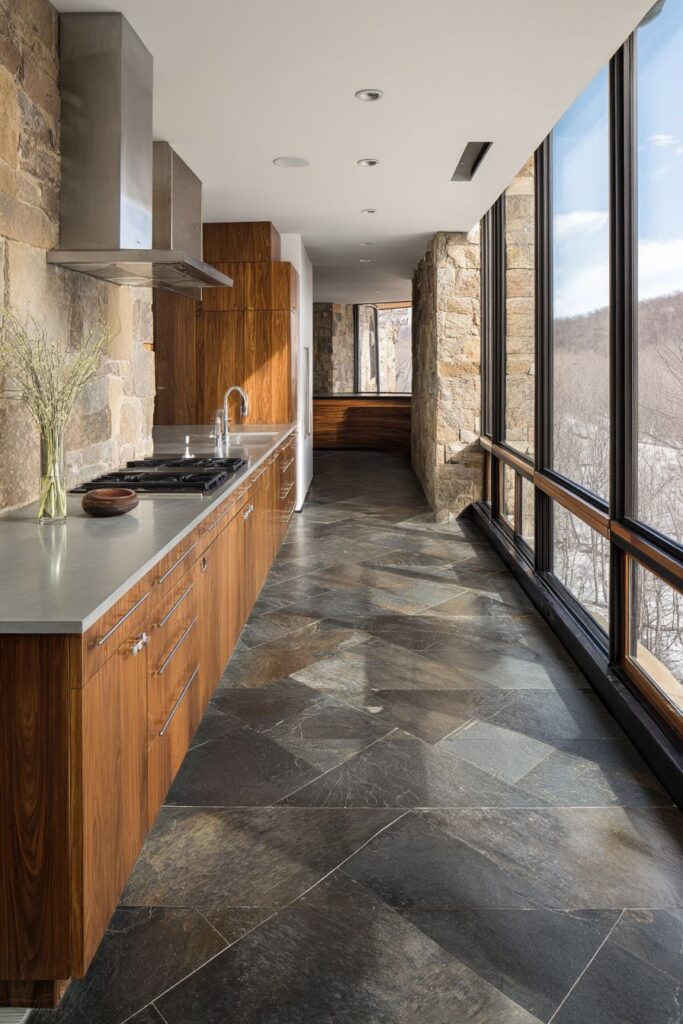
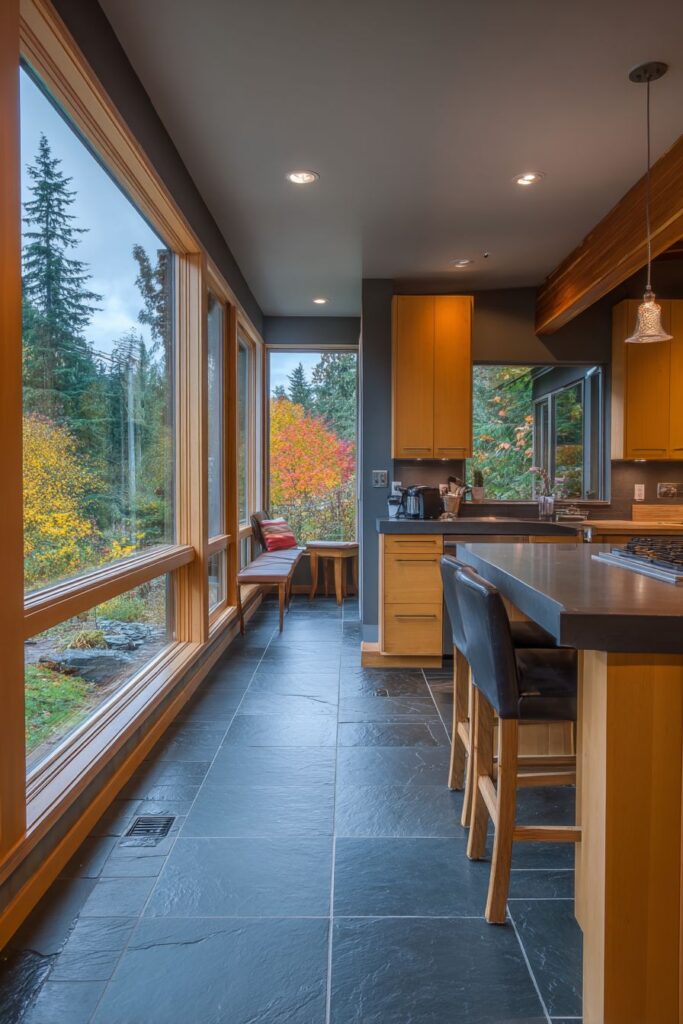
The radiant floor heating system with large format slate tiles provides thermal mass that enhances energy efficiency while adding sophisticated material character to the kitchen environment. Walnut cabinetry and natural stone countertops complement the slate flooring while creating a comprehensive natural material palette that reflects mid century appreciation for honest, authentic materials. Floor-to-ceiling windows maximize passive solar gain while maintaining clean aesthetic that defines the style.
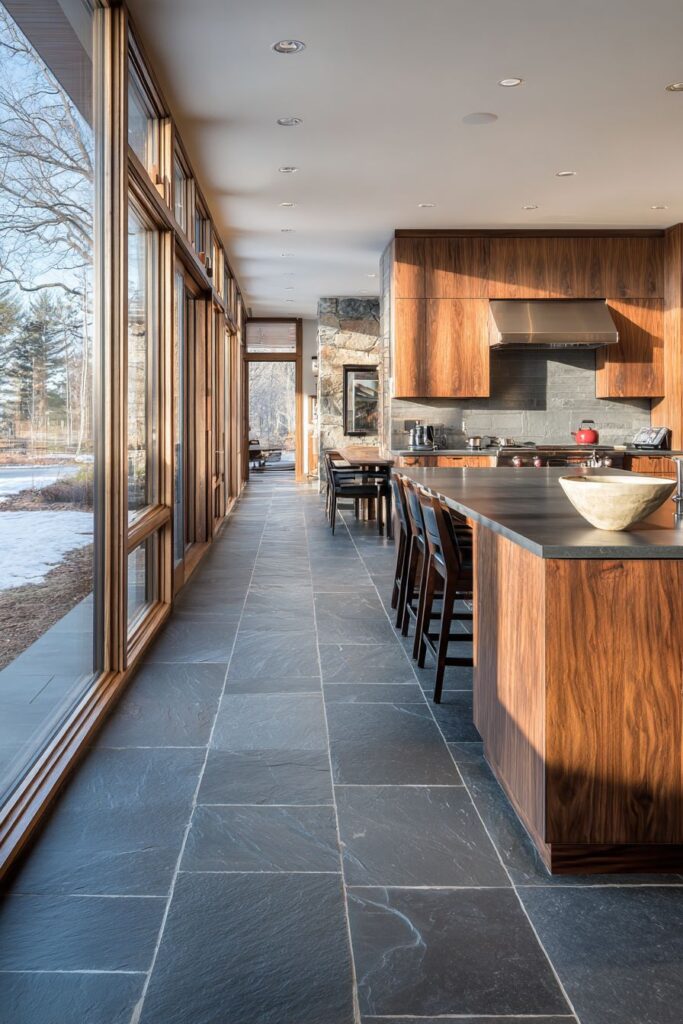
The sustainable design integration demonstrates how environmental consciousness can enhance rather than compromise aesthetic goals, reflecting contemporary interpretations of mid century principles that celebrate both beauty and responsibility. The slate tiles provide thermal mass that moderates temperature fluctuations while adding textural richness and natural color variation that complements the wood and stone elements throughout the space.
Professional interior design photography emphasizes the flooring material and thermal design integration, showcasing how sustainable technologies can be seamlessly incorporated into beautiful residential design. Natural lighting highlights stone texture and grain patterns while demonstrating the passive solar benefits of strategic window placement. The comprehensive approach to sustainable design reflects modern understanding of environmental stewardship.
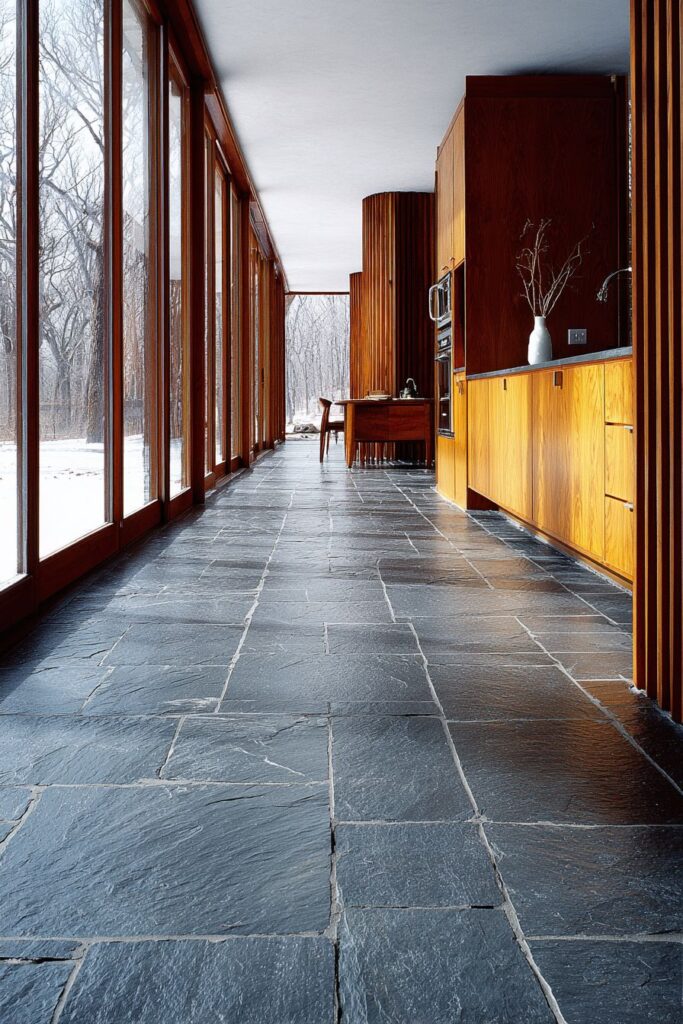
The large format tile selection minimizes grout lines while providing easy maintenance and durability for high-traffic kitchen areas. The natural slate color variations add visual interest while maintaining the neutral palette that allows other design elements to take prominence. The thermal properties provide year-round comfort while reducing energy consumption, demonstrating how sustainable choices can enhance daily living experience.
Key Design Tips:
- Integrate radiant floor heating with natural stone tiles for energy efficiency and thermal comfort
- Select large format tiles to minimize grout lines while maximizing natural material beauty
- Plan window placement to maximize passive solar gain while maintaining mid century aesthetic
- Use comprehensive natural material palettes that reflect environmental consciousness and authentic beauty
- Balance sustainable technology integration with aesthetic goals for enhanced daily living experience
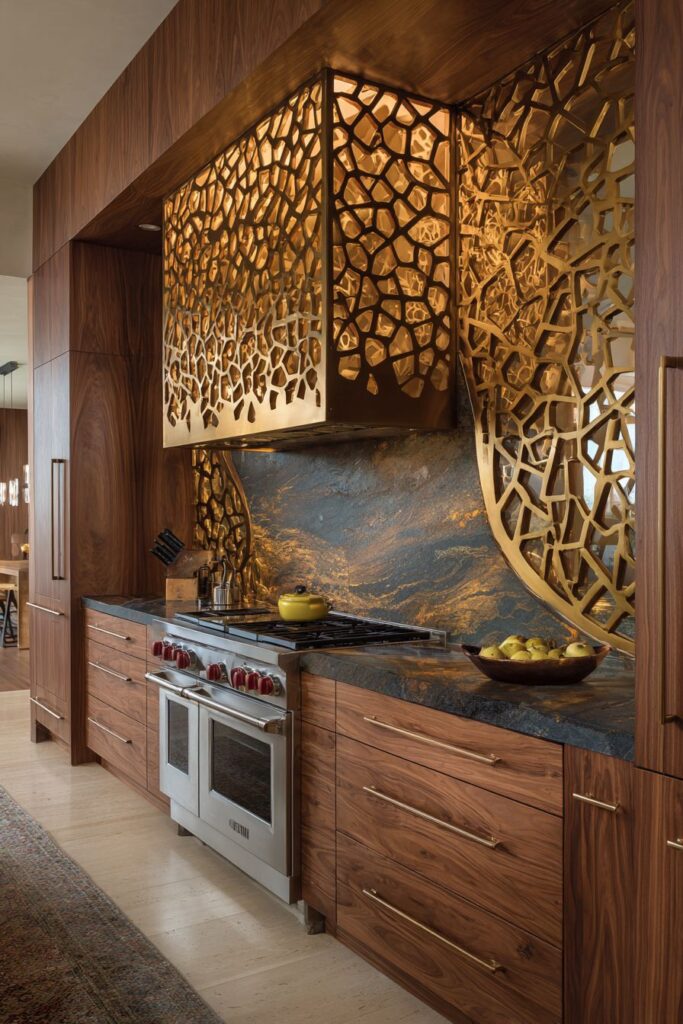
27. Statement Hood with Geometric Metalwork
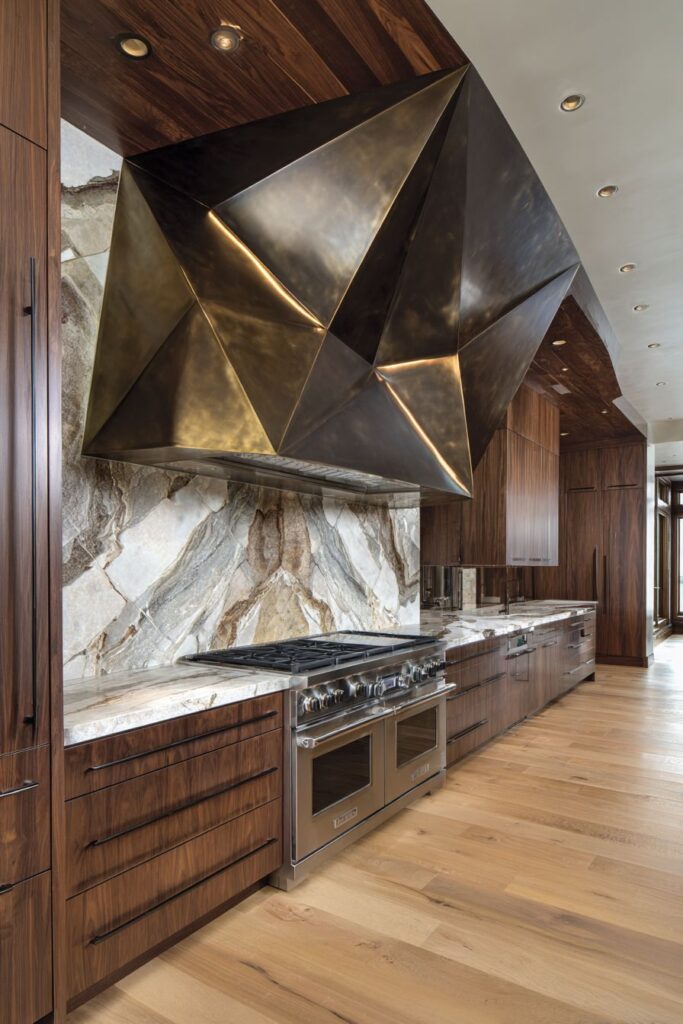
The striking hood design featuring geometric metalwork and integrated lighting creates a dramatic focal point over the professional-grade range while demonstrating how functional elements can become sculptural features. The geometric patterns echo mid century design principles while providing essential ventilation for serious cooking activities. Natural stone backsplash provides heat resistance while maintaining the material palette that ties the hood design into the overall kitchen aesthetic.
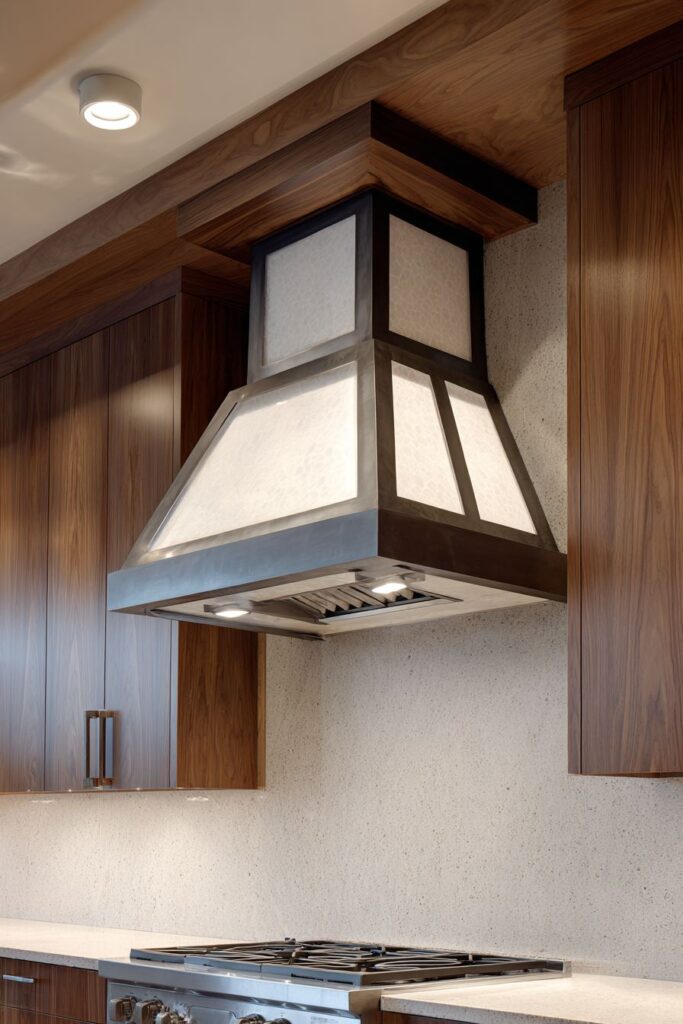
The integrated lighting within the hood design provides both task illumination for cooking and accent lighting that highlights the metalwork details, creating dramatic visual effects that change throughout the day. Professional interior photography focuses on the hood as a design element and its integration with surrounding cabinetry, showcasing how functional requirements can inspire architectural features that enhance the space’s character and sophistication.
The geometric metalwork demonstrates how industrial fabrication techniques can create residential design elements that honor mid century principles while serving contemporary needs. The careful proportions ensure that the hood provides adequate ventilation without overwhelming the space, while the integrated lighting eliminates the need for separate task lighting fixtures that could clutter the clean aesthetic.
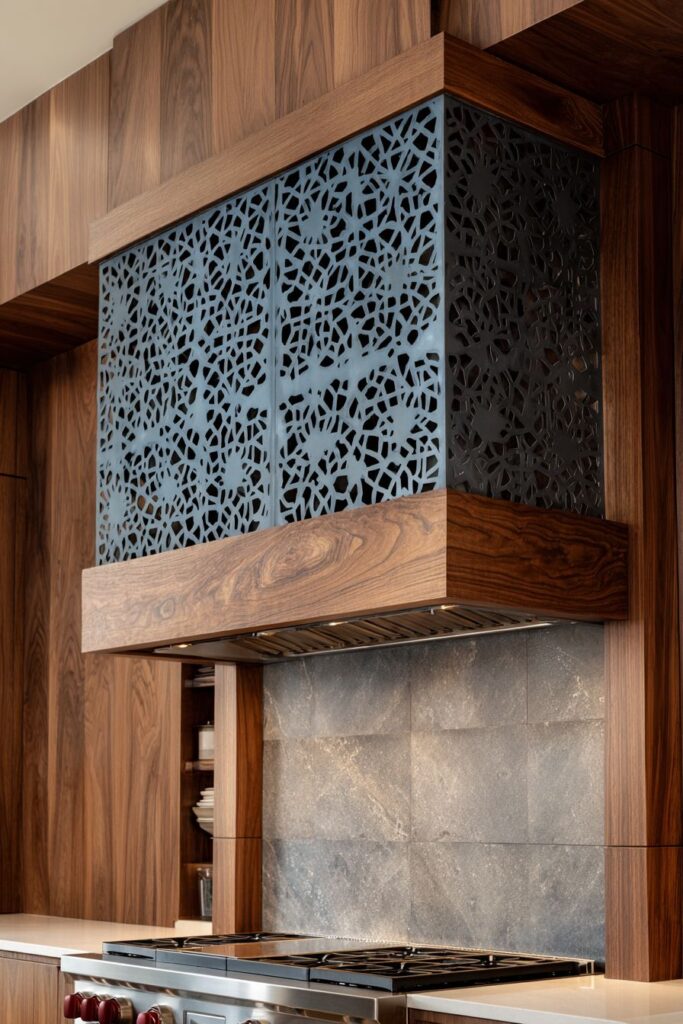
The walnut cabinetry surrounds provide warm contrast to the metalwork while maintaining visual harmony through consistent material application and careful attention to proportion. The natural stone backsplash ties the hood area into the overall material palette while providing practical heat resistance for the high-intensity cooking zone. The successful integration of functional and aesthetic elements demonstrates sophisticated design thinking.
Key Design Tips:
- Design statement hoods with geometric metalwork that serve both functional and sculptural purposes
- Integrate lighting within hood design to provide task illumination while highlighting architectural details
- Use natural stone backsplashes for heat resistance while maintaining consistent material palettes
- Plan hood proportions to provide adequate ventilation without overwhelming surrounding cabinetry
- Balance industrial fabrication techniques with residential scale for sophisticated contemporary design
28. Continuous Workspace with Integrated Tools
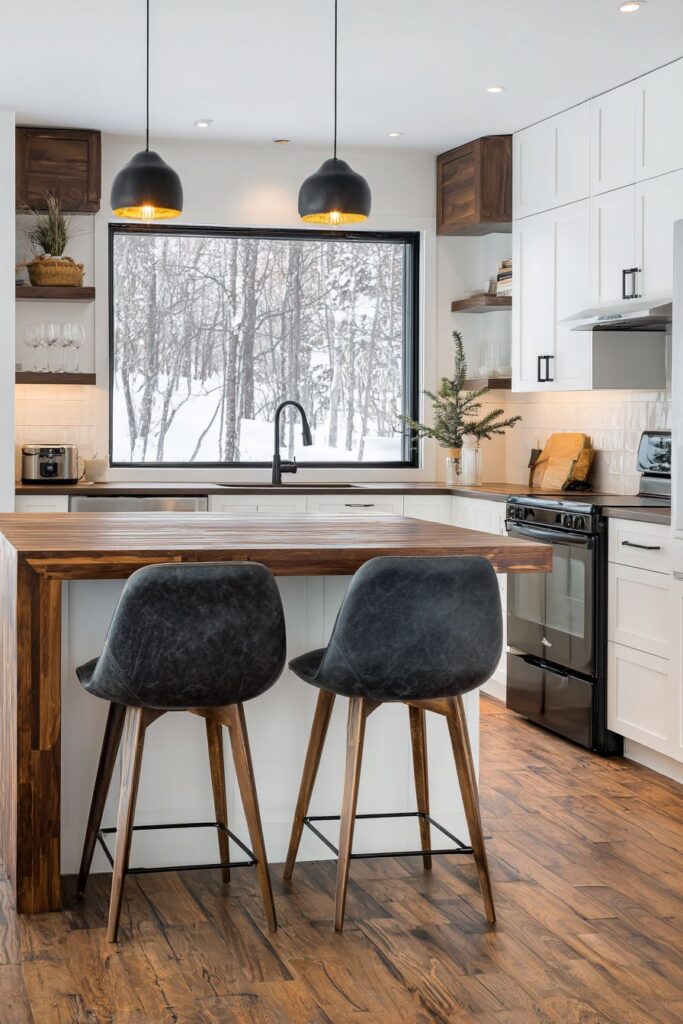
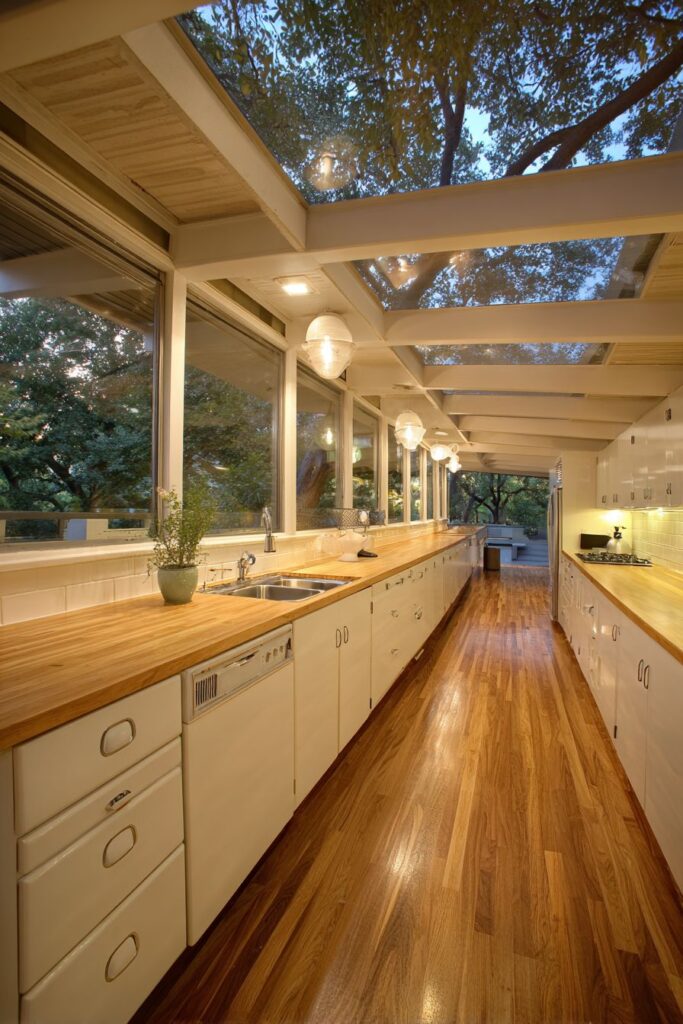
The wrap-around countertop configuration in butcher block maximizes workspace efficiency through continuous surfaces that flow seamlessly around the kitchen perimeter. Integrated cutting boards and prep sinks enhance functionality while maintaining the clean lines that define mid century aesthetics. The substantial wood surfaces celebrate natural material beauty while providing practical benefits for serious cooking activities. Large windows provide essential task lighting while pendant fixtures ensure adequate evening illumination for all workspace areas.
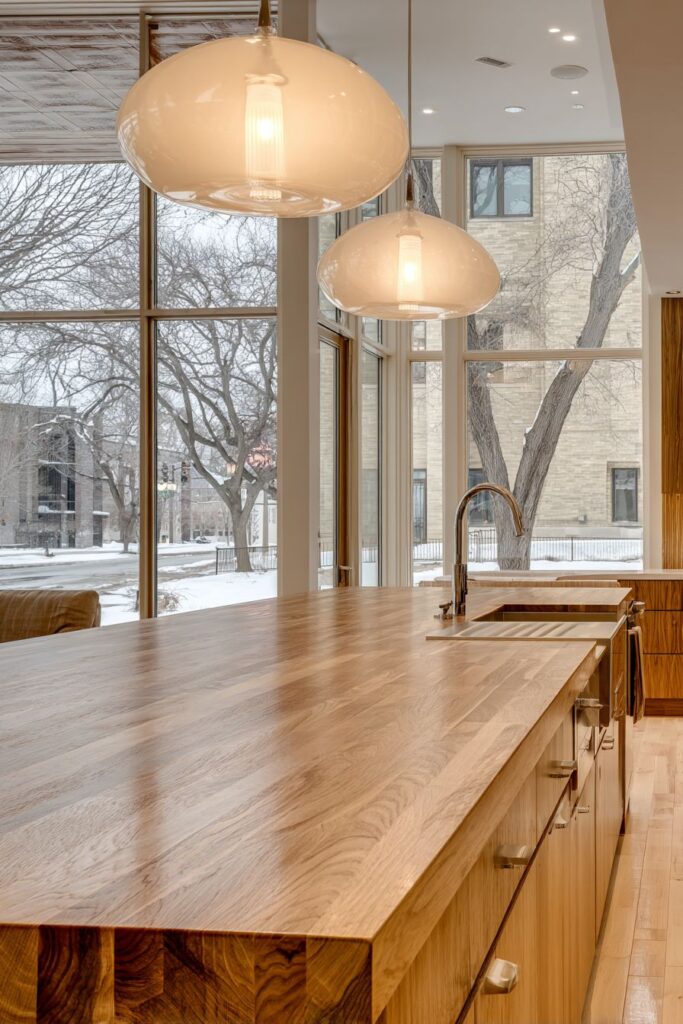
The continuous work surface eliminates breaks and seams that could interrupt workflow while providing maximum preparation space for elaborate meals and entertaining. The butcher block material adds warmth and character while offering practical benefits like natural antibacterial properties and the ability to be sanded and refinished as needed. Professional interior design photography captures the workspace efficiency and practical design features that make this kitchen both beautiful and supremely functional.
The integrated cutting boards eliminate the need for portable boards that can clutter countertops while providing dedicated prep areas that support efficient cooking workflows. The prep sinks offer convenient cleanup opportunities without requiring travel to the main sink, demonstrating thoughtful planning that anticipates the needs of serious home cooks. Balanced lighting highlights wood grain patterns while ensuring adequate illumination for detailed food preparation tasks.
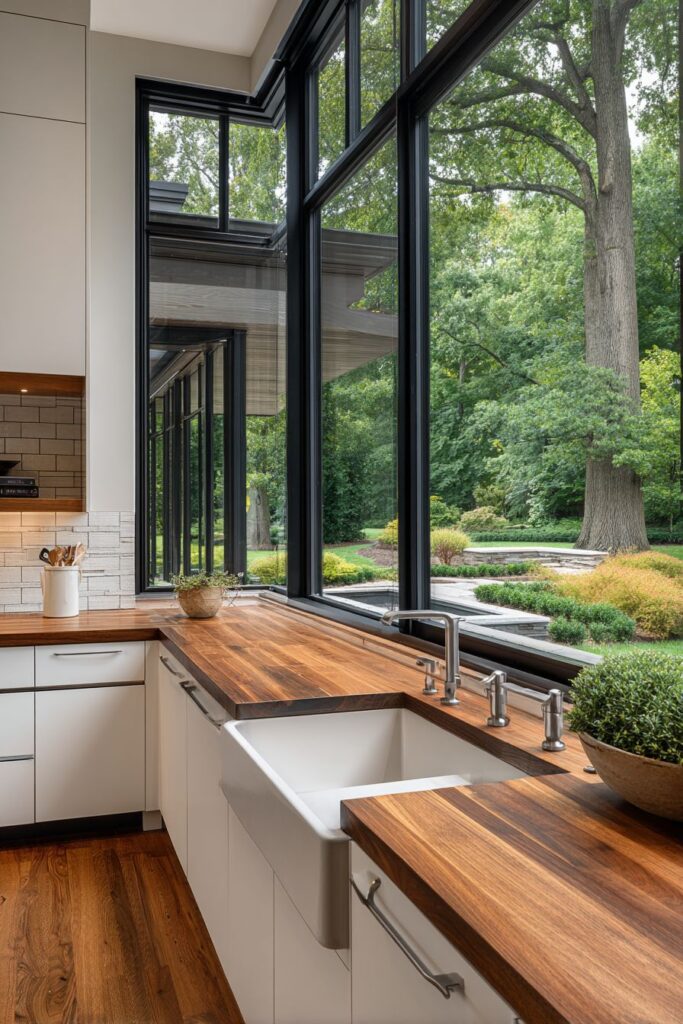
The wrap-around configuration creates an enclosed, efficient workspace while maintaining visual connection with adjacent living areas, reflecting the mid century preference for open planning that encourages social interaction.
The continuous surfaces provide flexibility for various cooking activities, while the integrated tools ensure that everything needed for food preparation remains easily accessible within the workspace zone.
Key Design Tips:
- Design wrap-around countertops for continuous workspace that maximizes preparation efficiency
- Integrate cutting boards and prep sinks to eliminate clutter while enhancing cooking workflows
- Use butcher block materials for natural beauty and practical benefits like antibacterial properties
- Plan comprehensive lighting that provides both natural task lighting and adequate evening illumination
- Create enclosed workspace zones that maintain visual connection with adjacent living areas
29. Artisanal Tile with LED Integration
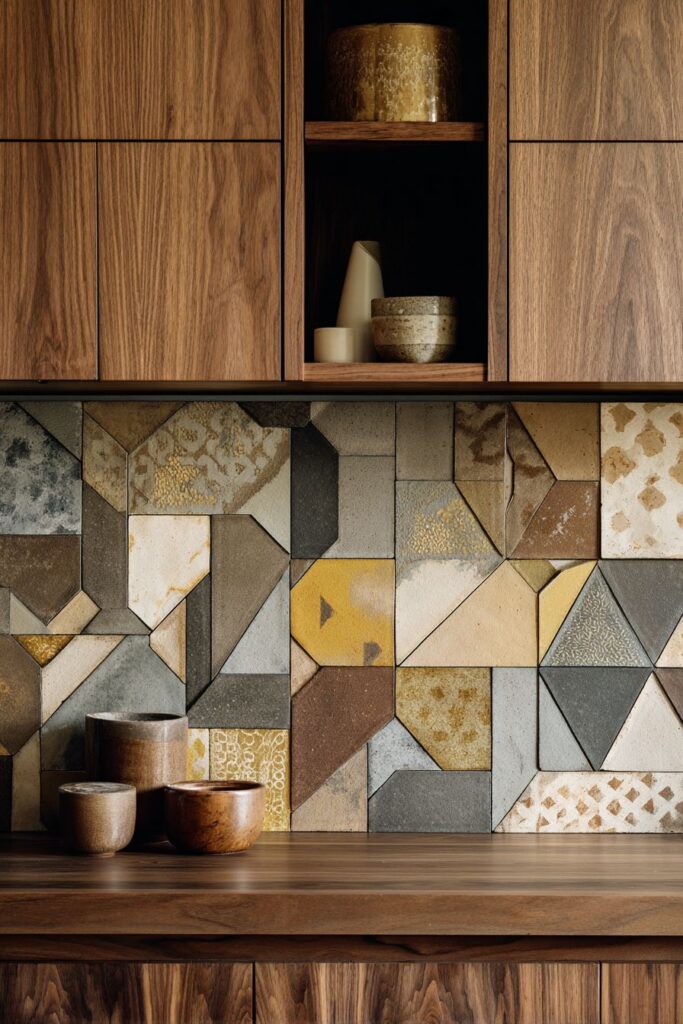
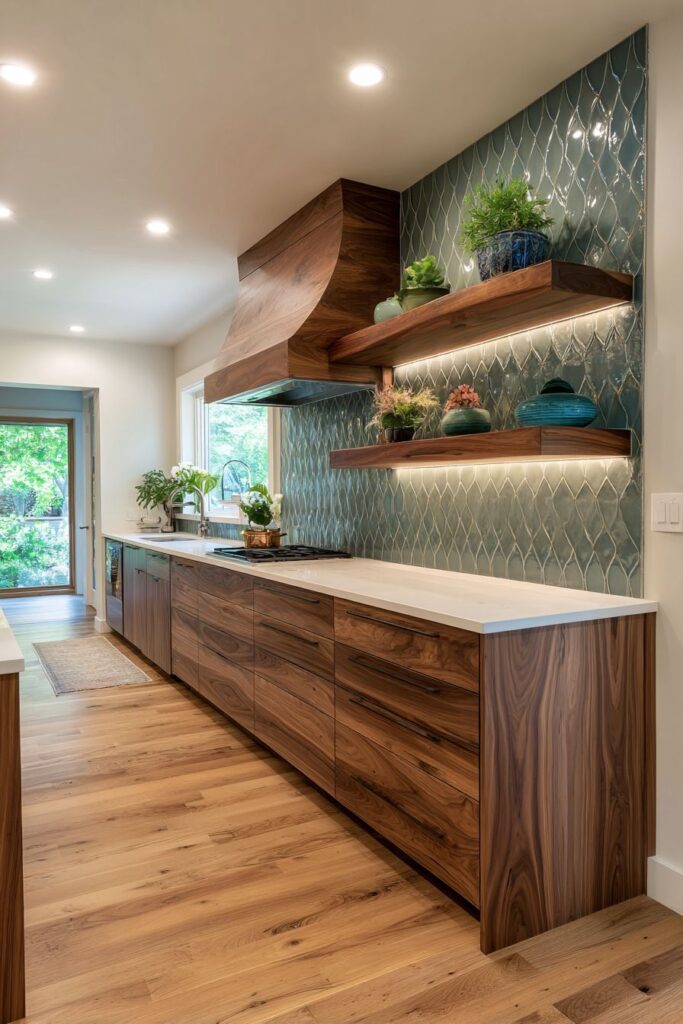
The unique backsplash featuring handmade ceramic tiles in earth tone glazes adds artisanal character while demonstrating how traditional craftsmanship can enhance mid century modern design principles. The carefully selected glazes complement walnut cabinetry while adding textural richness and subtle color variation that creates visual depth. Integrated LED strip lighting beneath upper cabinets provides both practical task illumination and accent lighting that highlights the ceramic glazes and wood textures.
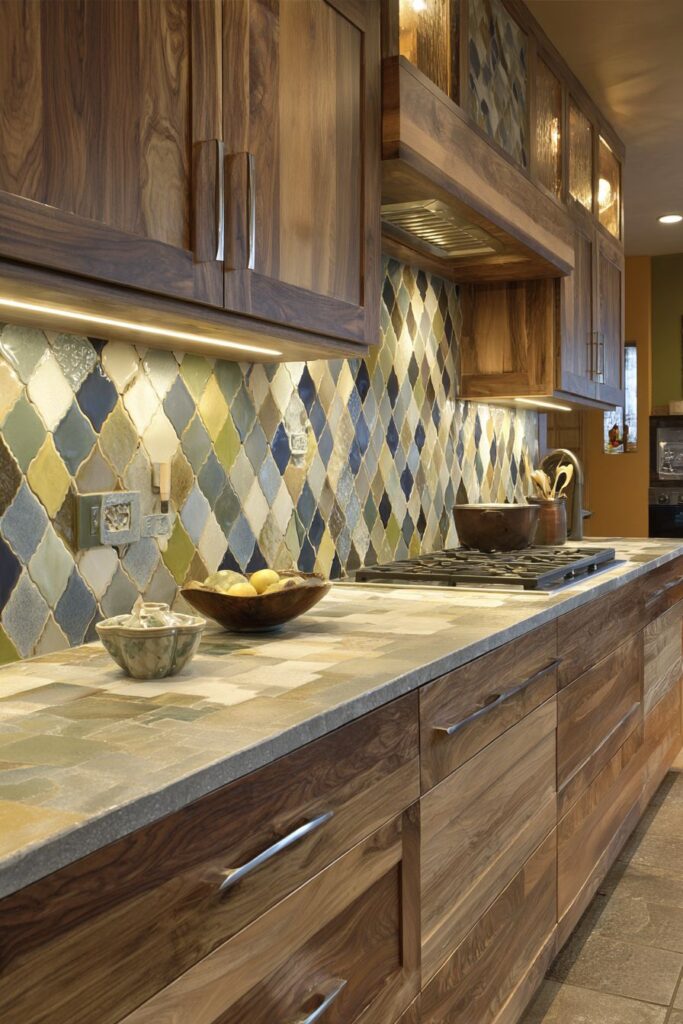
The handmade quality of the ceramic tiles reflects the mid century appreciation for craftsmanship and authentic materials, where slight variations in size and glaze create character rather than imperfection. The earth tone palette maintains the natural material harmony throughout the kitchen while adding warmth and sophistication that enhances the overall design scheme. Interior design photography emphasizes the artisanal tile work and cabinet lighting integration.
The LED strip lighting integration demonstrates how modern technology can be seamlessly incorporated into traditional design elements to enhance both function and aesthetics. The under-cabinet lighting eliminates shadows on work surfaces while creating dramatic accent lighting that highlights material textures and craftsmanship details. The soft natural light from windows complements the artificial lighting to create optimal illumination throughout the day.
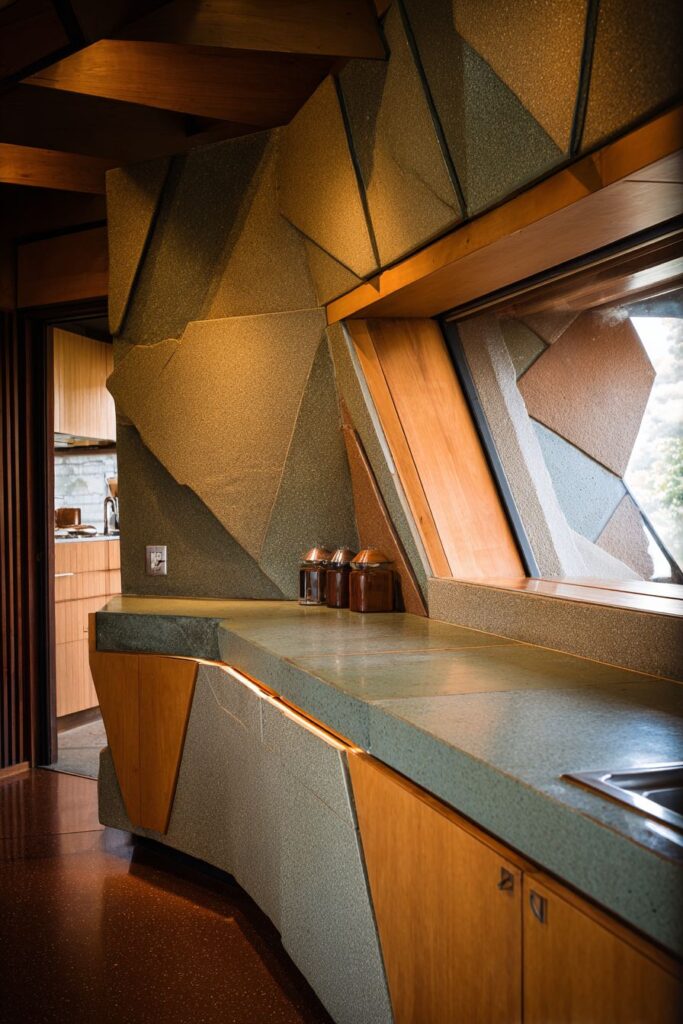
The combination of handmade tiles and integrated lighting creates visual depth that changes with different lighting conditions, adding dynamic character to the kitchen environment. The ceramic glazes reflect and refract light differently throughout the day, creating subtle color shifts that keep the space visually interesting while maintaining the calm, uncluttered aesthetic essential to mid century success.
Key Design Tips:
- Select handmade ceramic tiles for artisanal character and natural variation that adds authentic charm
- Choose earth tone glazes that complement wood cabinetry while adding warmth and sophistication
- Integrate LED strip lighting for both task illumination and accent lighting of material textures
- Plan lighting combinations that enhance material beauty while providing optimal workspace illumination
- Embrace slight variations in handmade materials as character features rather than imperfections
30. Butler’s Pantry Connection with Hidden Luxury
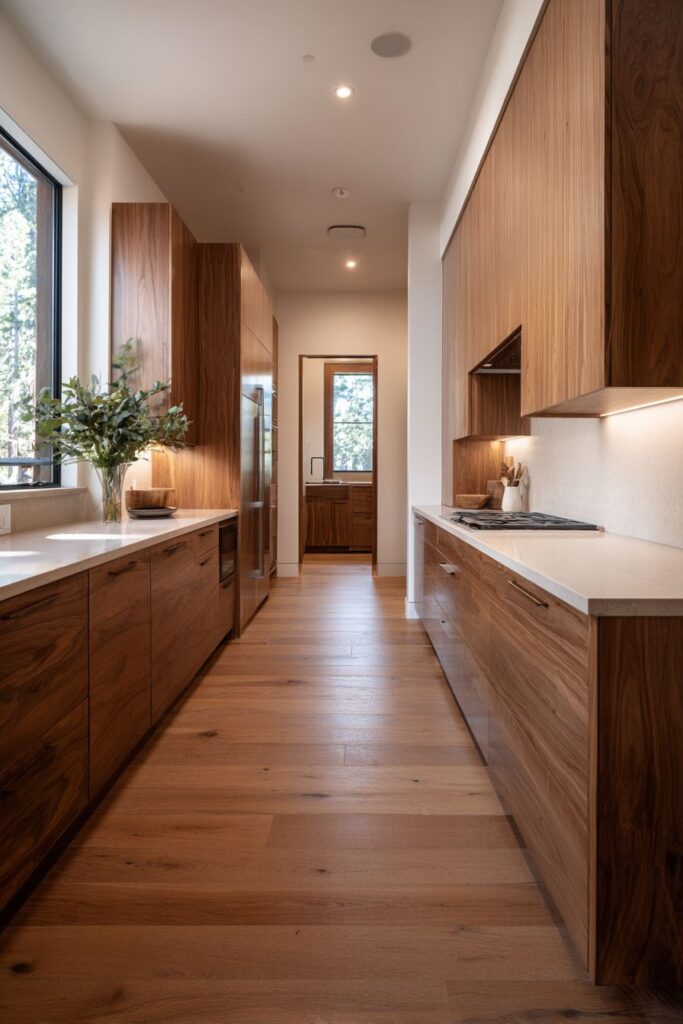
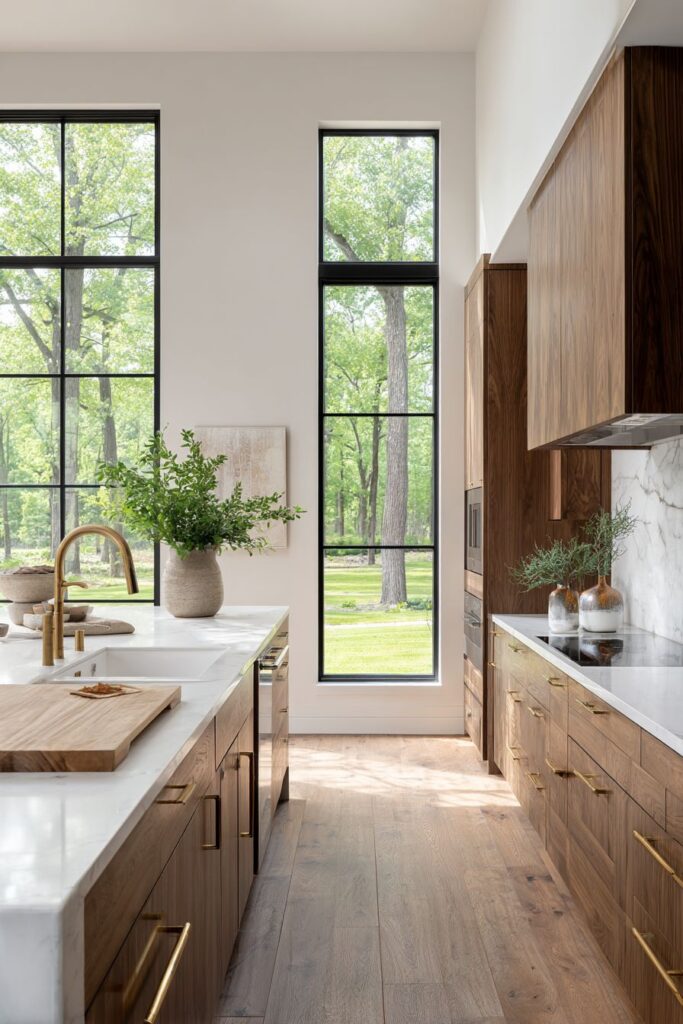
The butler’s pantry connection with pocket doors and matching walnut cabinetry provides additional storage and prep space while maintaining aesthetic continuity throughout the kitchen environment.
This hidden preparation area represents luxury convenience that supports serious cooking and entertaining without cluttering the main kitchen space. Natural stone surfaces continue between spaces while discrete lighting ensures full functionality within the concealed workspace.
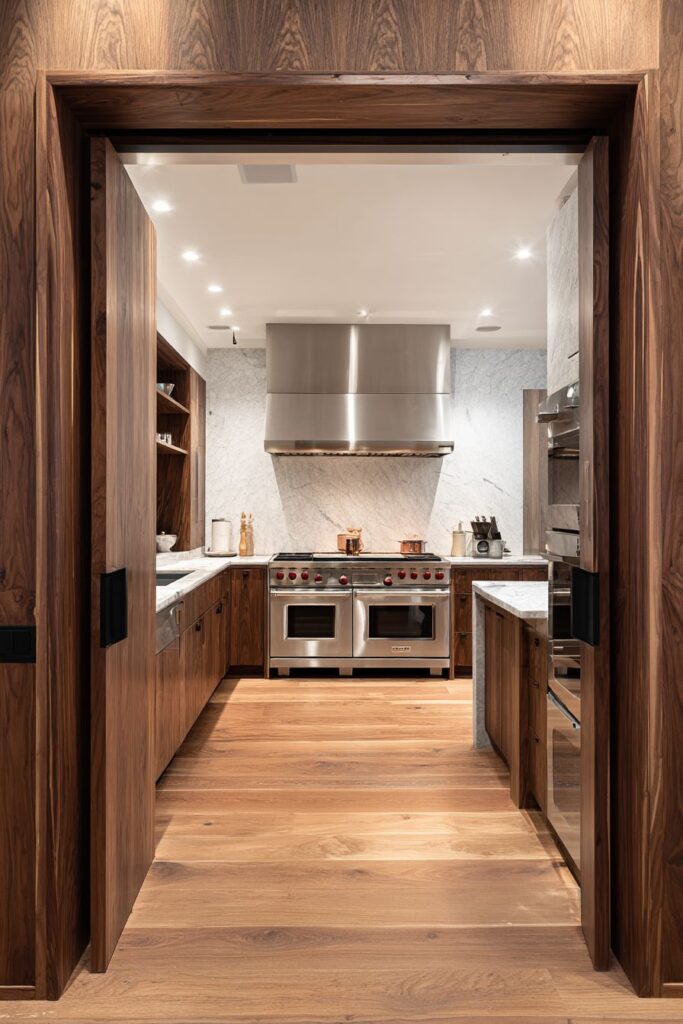
The pocket door design allows the pantry to be completely hidden when not in use while providing full access during food preparation and entertaining activities. This flexible approach reflects mid century appreciation for spaces that adapt to different needs and activities while maintaining clean, uncluttered appearance when formal presentation is desired. Wide-angle interior photography captures the spatial flow and storage solutions that make this design both practical and luxurious.
The matching walnut cabinetry ensures visual continuity between main kitchen and pantry areas, creating seamless transitions that make both spaces feel like integrated parts of a unified design. The continuous design language prevents the pantry from feeling like an afterthought while providing specialized storage and prep areas that support serious cooking activities. Professional lighting highlights the craftsmanship and material consistency throughout both areas.
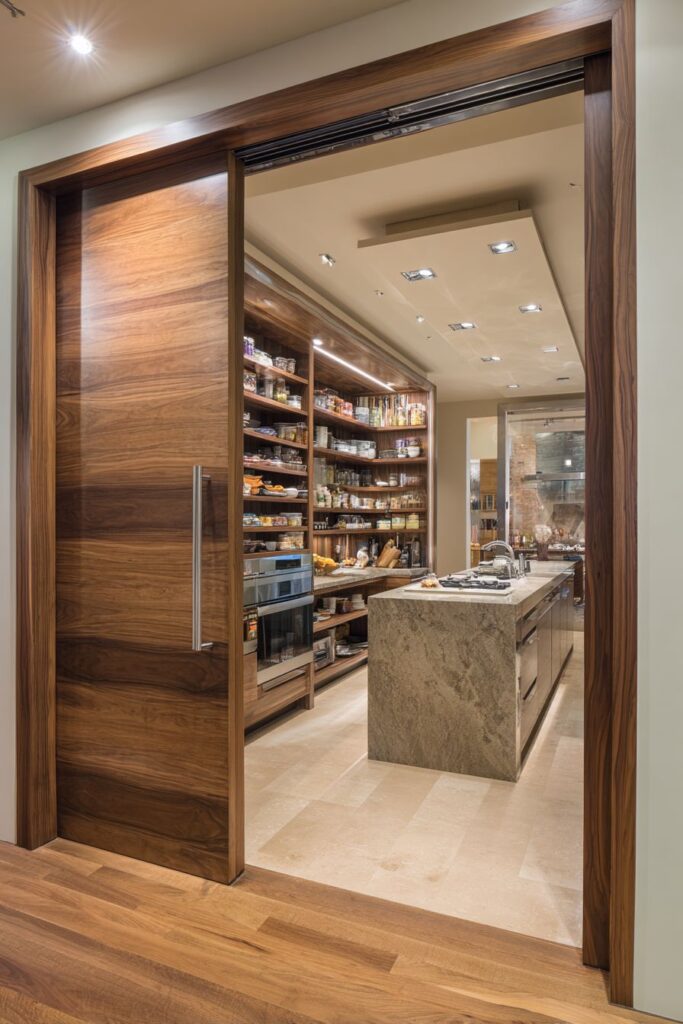
The butler’s pantry concept brings traditional luxury amenities into contemporary home design, providing a dedicated space for food preparation, storage, and cleanup that keeps the main kitchen pristine for social activities.
This separation of functions reflects sophisticated entertaining needs while maintaining the mid century principle that beautiful spaces should also be supremely functional.
Key Design Tips:
- Design butler’s pantries with pocket doors for flexible concealment and full access when needed
- Maintain consistent cabinetry materials between main kitchen and pantry for visual continuity
- Include natural stone surfaces in pantry areas for durability and aesthetic consistency
- Plan discrete lighting systems that ensure full functionality without compromising clean aesthetics
- Create separation between prep work and social areas to support sophisticated entertaining needs
Conclusion
These thirty mid century modern kitchen design concepts demonstrate the enduring appeal and versatility of this timeless aesthetic, where clean lines, natural materials, and functional beauty create spaces that serve contemporary needs while honoring classic design principles. From dramatic waterfall islands to innovative storage solutions, each design showcases how mid century elements can be adapted to diverse layouts, lifestyles, and functional requirements while maintaining the sophisticated simplicity that defines the style.
The consistent themes throughout these designs—natural wood cabinetry, stone surfaces, geometric forms, and seamless indoor-outdoor connections—provide a foundation for personal interpretation and customization. Whether you’re drawn to the warmth of walnut and teak, the drama of stone accent walls, or the efficiency of integrated storage systems, these concepts offer starting points for creating your own mid century modern sanctuary that reflects both personal style and practical needs.
The beauty of mid century modern kitchen design lies in its ability to feel both nostalgic and thoroughly contemporary, creating spaces that honor the past while embracing present-day functionality and lifestyle demands. By focusing on quality materials, thoughtful proportions, and the seamless integration of form and function, these designs create kitchens that will remain beautiful and relevant for decades to come, embodying the timeless principles that made mid century modern design a lasting influence on residential architecture and interior design.
"As an Amazon Associate, I earn from qualifying purchases."
