
Creating a functional and stylish kitchen in a limited space can feel like solving a complex puzzle. However, with thoughtful planning and smart design strategies, even the smallest kitchens can become highly efficient workspaces that don’t compromise on aesthetics. The key lies in understanding how to maximize every square inch while maintaining a sense of openness and visual appeal.
Compact kitchen design has evolved significantly over the years, moving beyond simple space-saving hacks to embrace sophisticated layouts that prioritize both form and function. Today’s small kitchens incorporate innovative storage solutions, multi-purpose fixtures, and clever design principles that make them feel surprisingly spacious. Whether you’re working with a galley kitchen, an L-shaped layout, or a single-wall design, the principles of efficient spatial planning remain consistent.
This comprehensive guide explores proven strategies for mastering compact kitchen layouts. From optimizing the work triangle to selecting appropriately scaled appliances and furniture, you’ll discover how to transform your small kitchen into a highly functional culinary space that reflects your personal style while accommodating your cooking needs.
1. Optimize the Kitchen Work Triangle
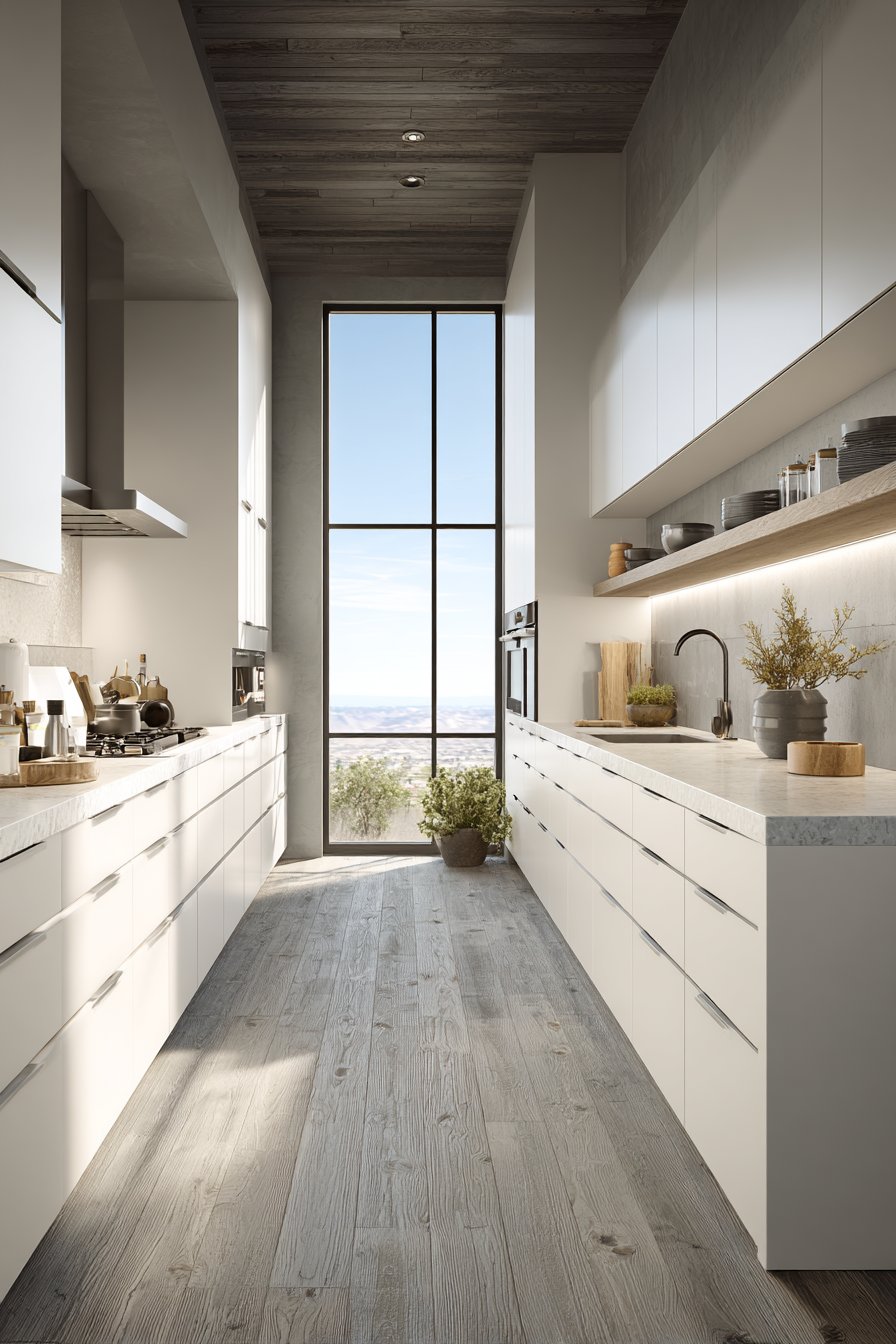
The work triangle concept remains fundamental in compact kitchen design, connecting your sink, stove, and refrigerator in an efficient pattern. In small spaces, this triangle becomes even more critical as it determines how smoothly you can move while preparing meals.
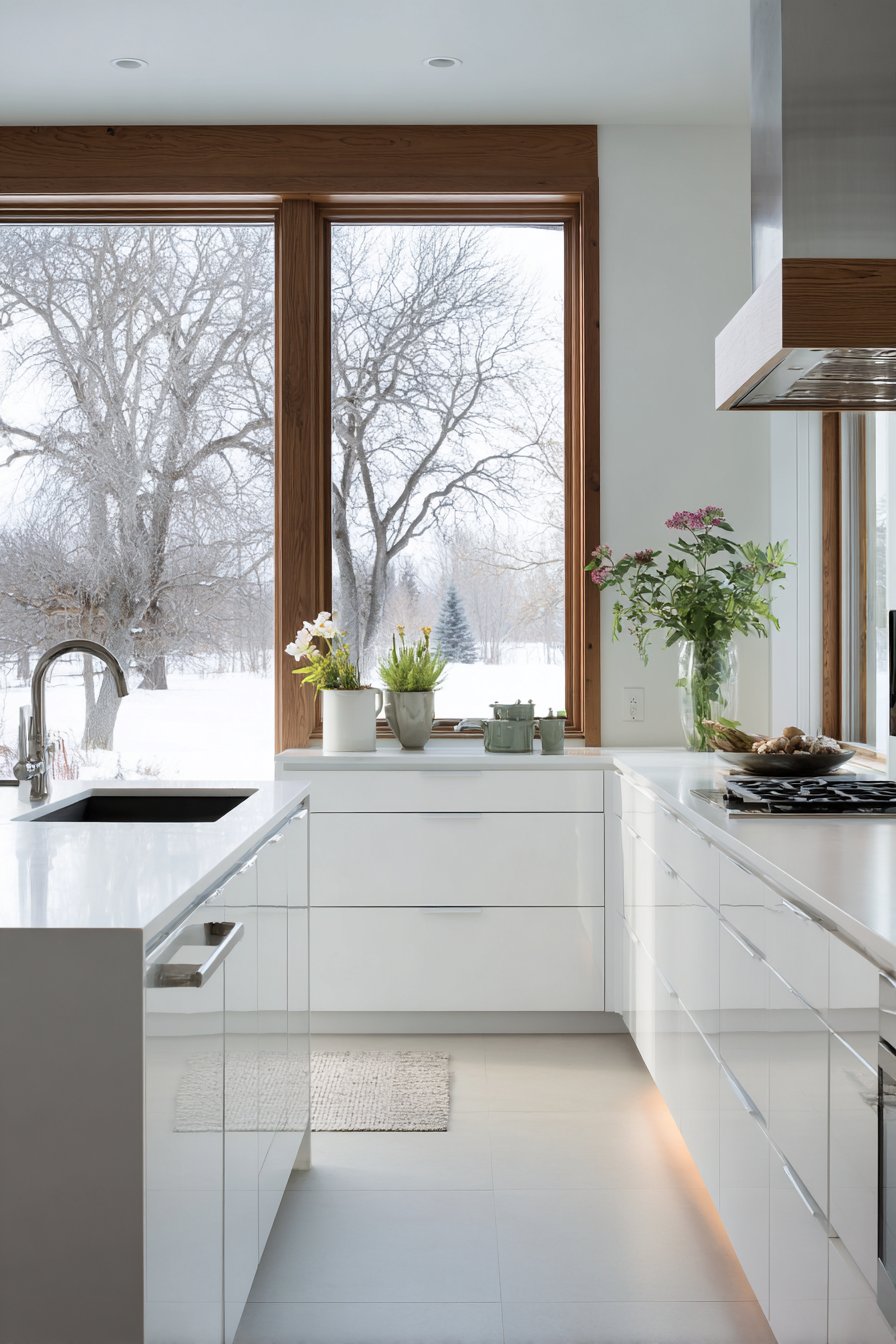
The ideal total distance between these three points should measure between 13 and 26 feet, ensuring everything stays within easy reach without creating a cramped feeling.
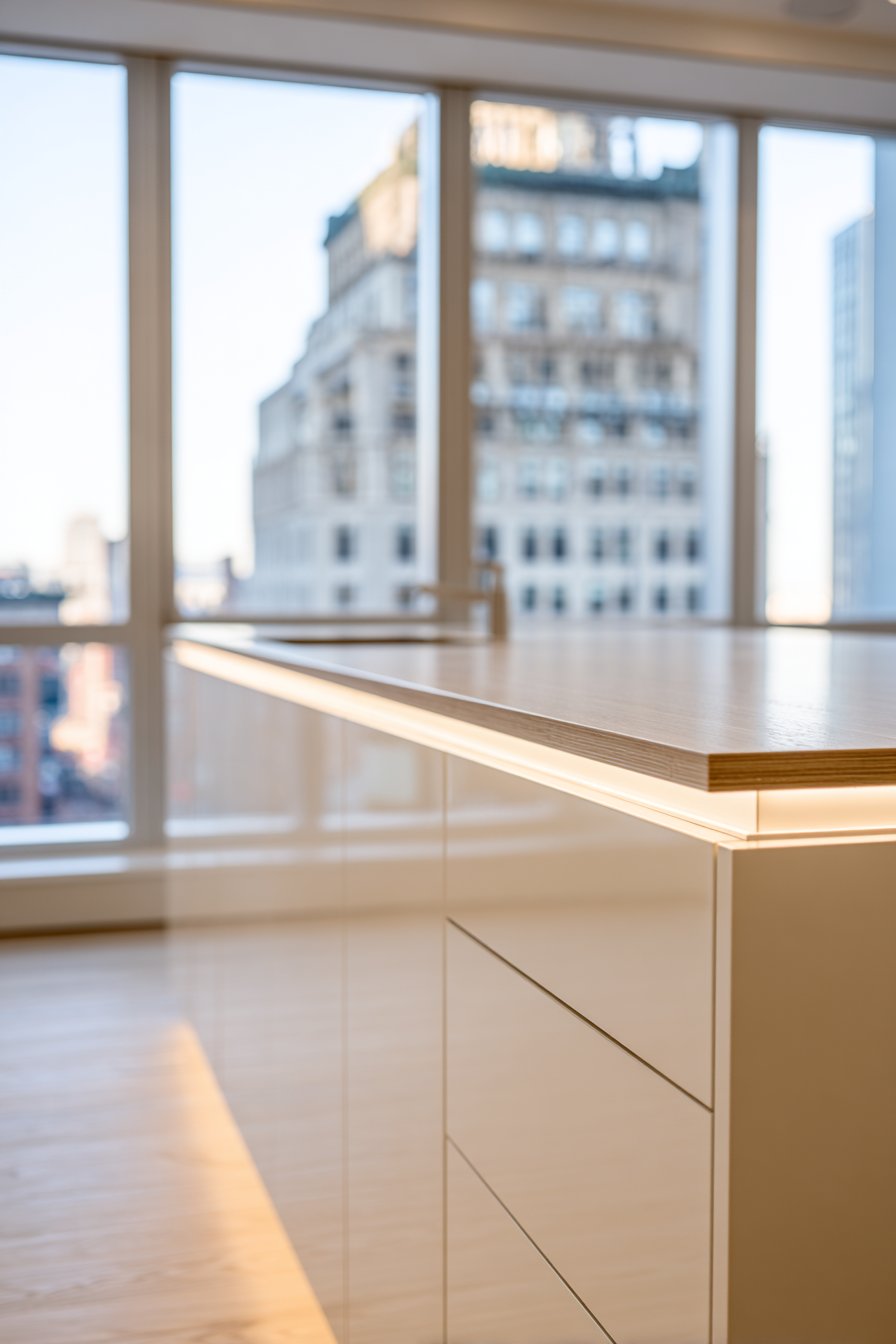
Strategic placement of these key elements reduces unnecessary steps and prevents bottlenecks during cooking. In compact layouts, positioning the sink on one wall with the refrigerator and stove on adjacent walls often creates the most efficient workflow. Consider how you actually use your kitchen and adjust accordingly.
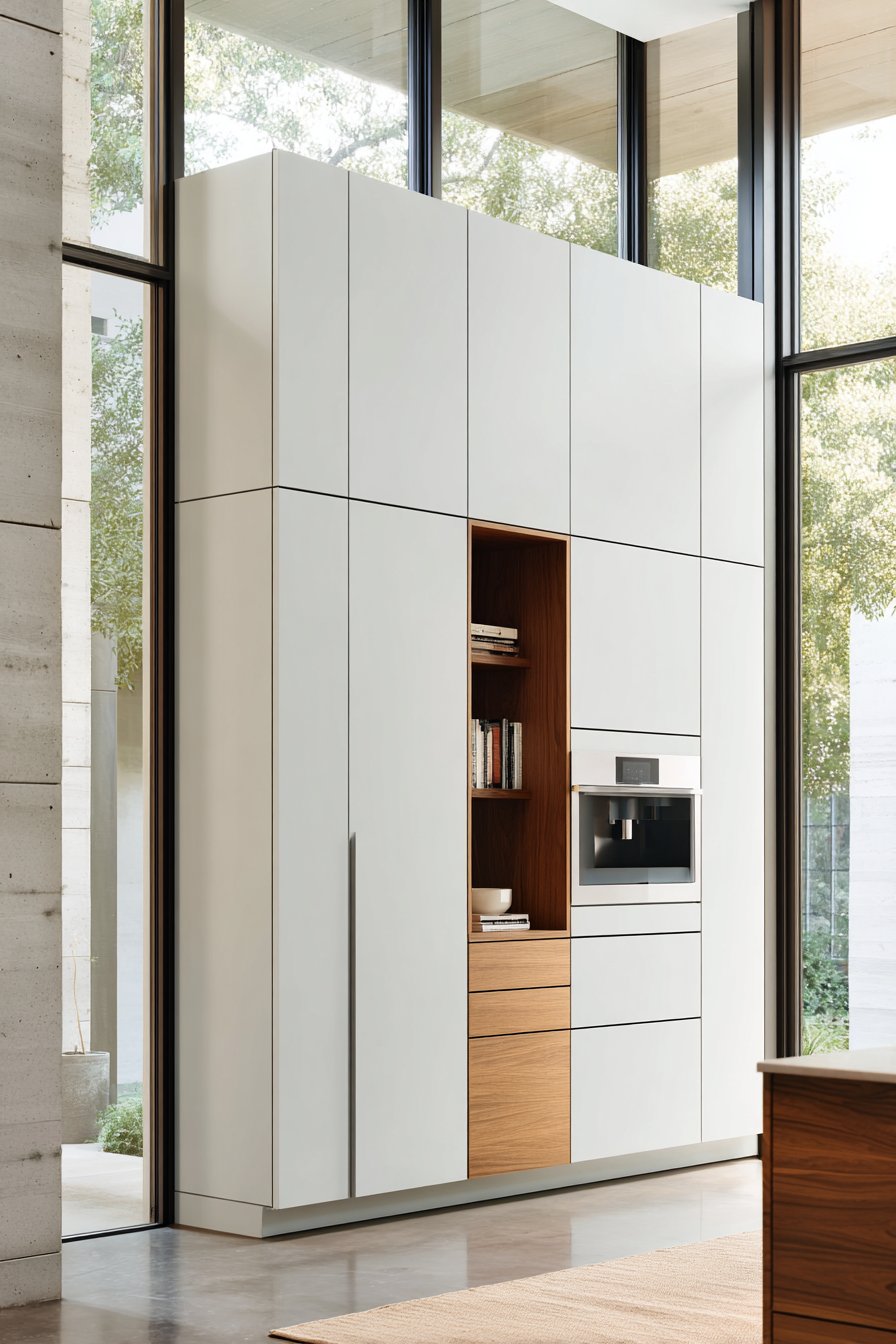
- Position your most-used appliances within arm’s reach of each other
- Ensure at least 4 feet of clearance between opposite counters for comfortable movement
- Place the sink near a window when possible for natural light
- Keep the refrigerator at the end of a run to avoid interrupting counter space
- Maintain 15-18 inches of landing space beside cooking surfaces
- Avoid placing the stove directly next to the refrigerator
2. Embrace Vertical Storage Solutions
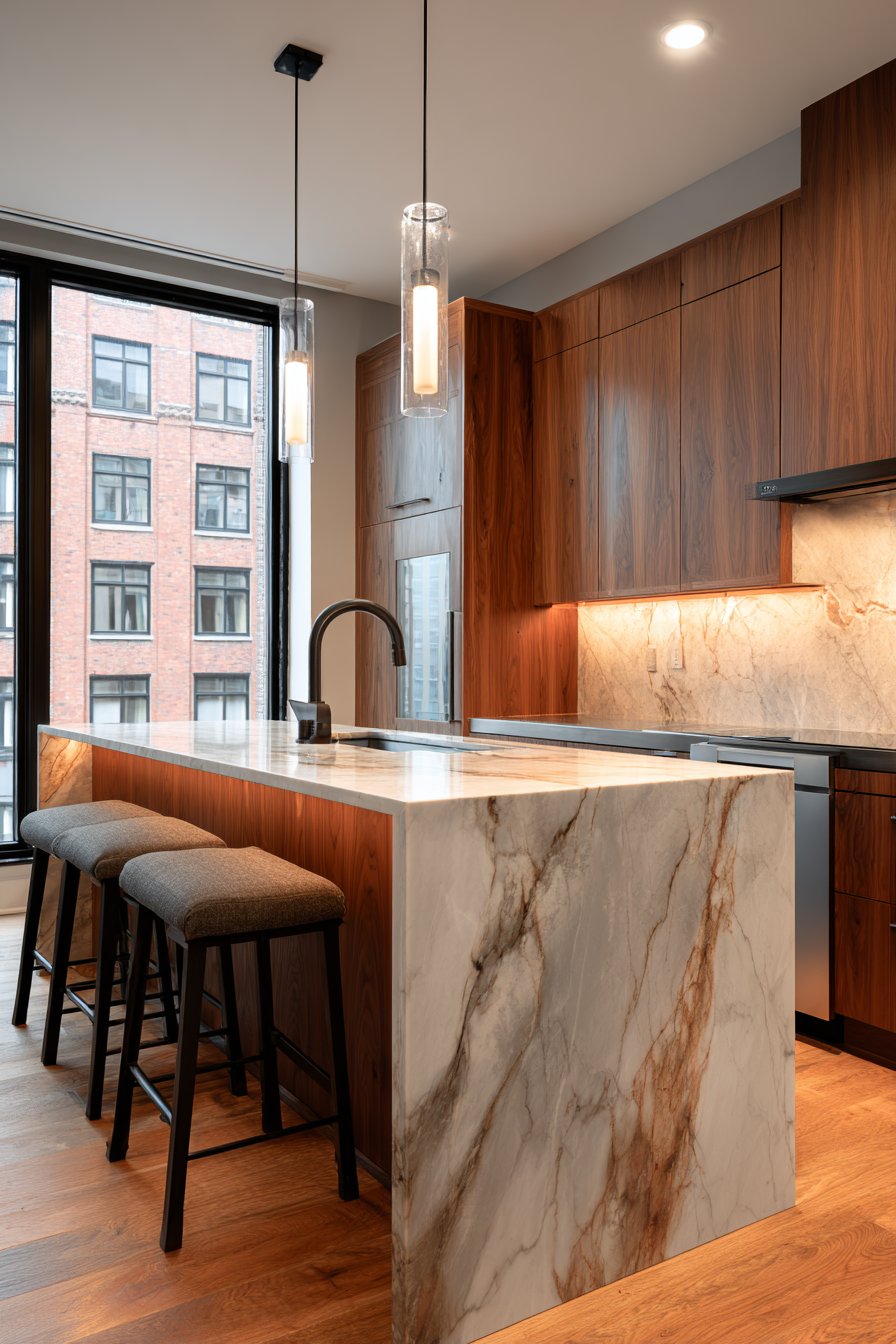
When floor space is limited, thinking vertically becomes your greatest asset. Walls offer untapped potential for storage that keeps countertops clear while providing easy access to everyday items.
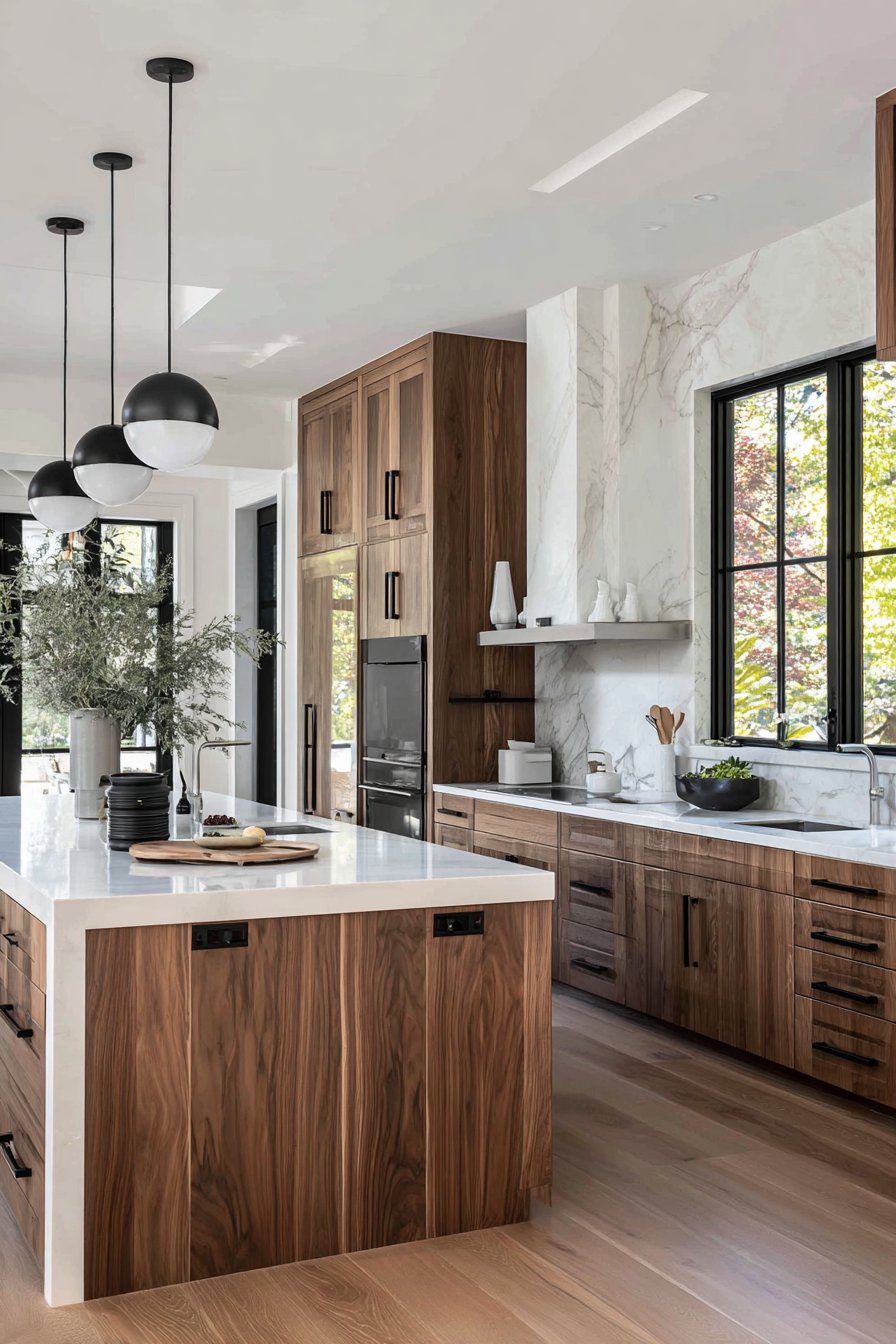
Upper cabinet extensions that reach the ceiling eliminate dust-collecting gaps while providing storage for rarely used items. Floor-to-ceiling cabinets create dramatic visual lines that draw the eye upward, making ceilings appear higher and rooms feel more expansive.
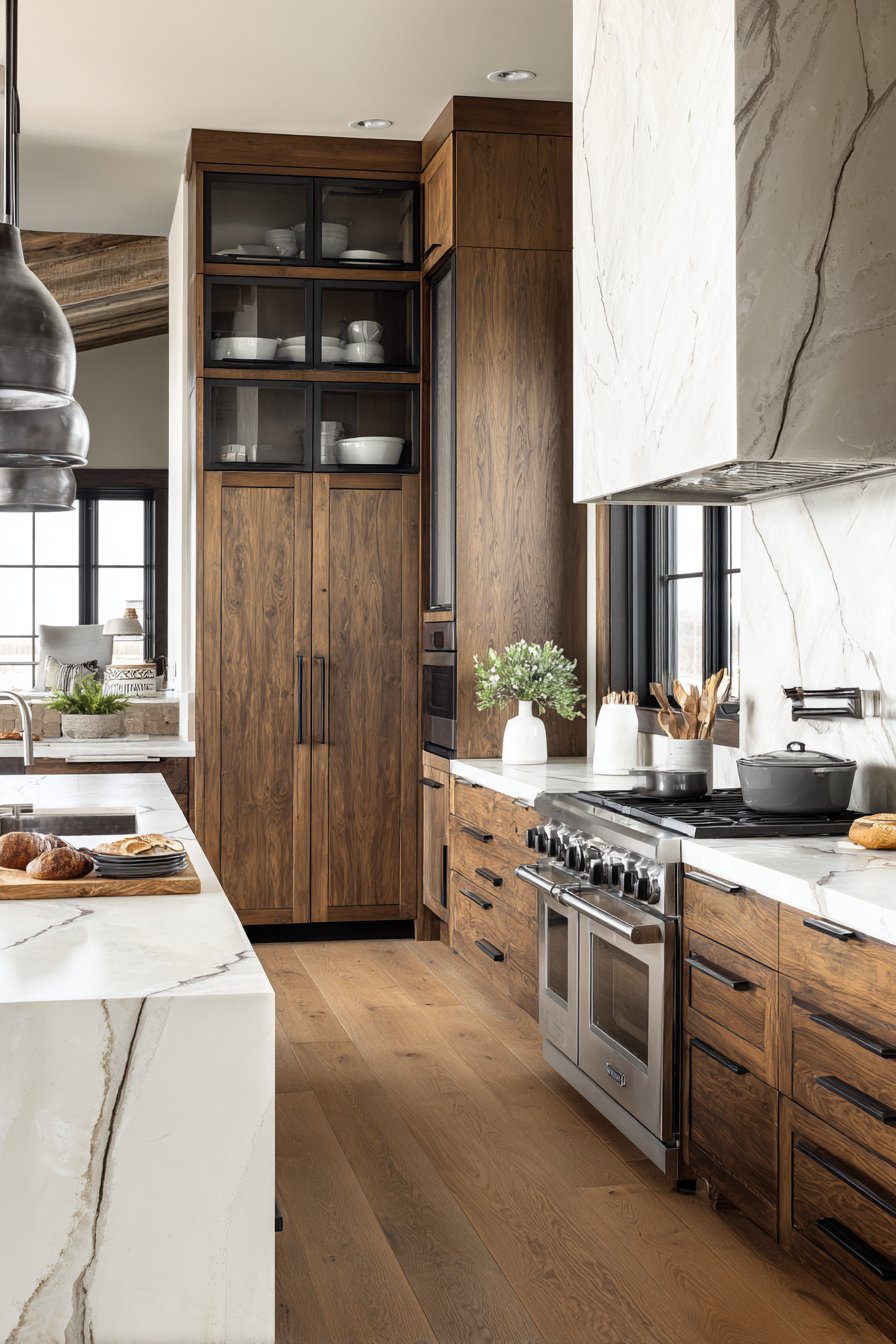
Open shelving interspersed with closed cabinets adds visual interest and keeps frequently accessed dishes within reach. Consider installing a pegboard system or magnetic knife strip to free up valuable drawer space.
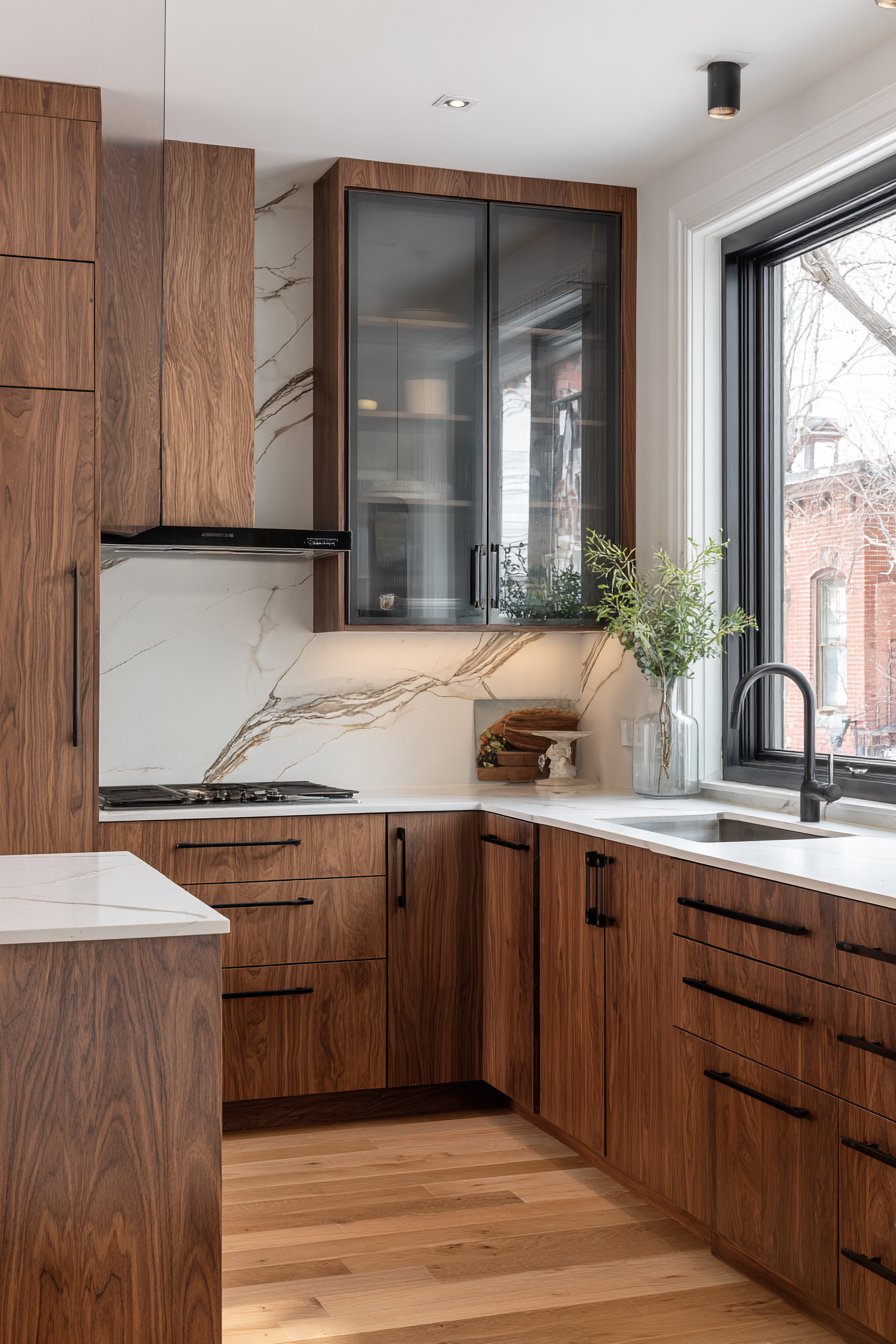
- Install cabinets that extend to the ceiling for maximum storage capacity
- Use floating shelves to display dishes while keeping them accessible
- Mount pot racks on walls or suspended from ceilings
- Add hooks under cabinets for mugs and utensils
- Incorporate narrow pull-out pantries in tight spaces beside appliances
- Utilize the inside of cabinet doors for spice racks and small items
3. Choose Appropriately Scaled Appliances
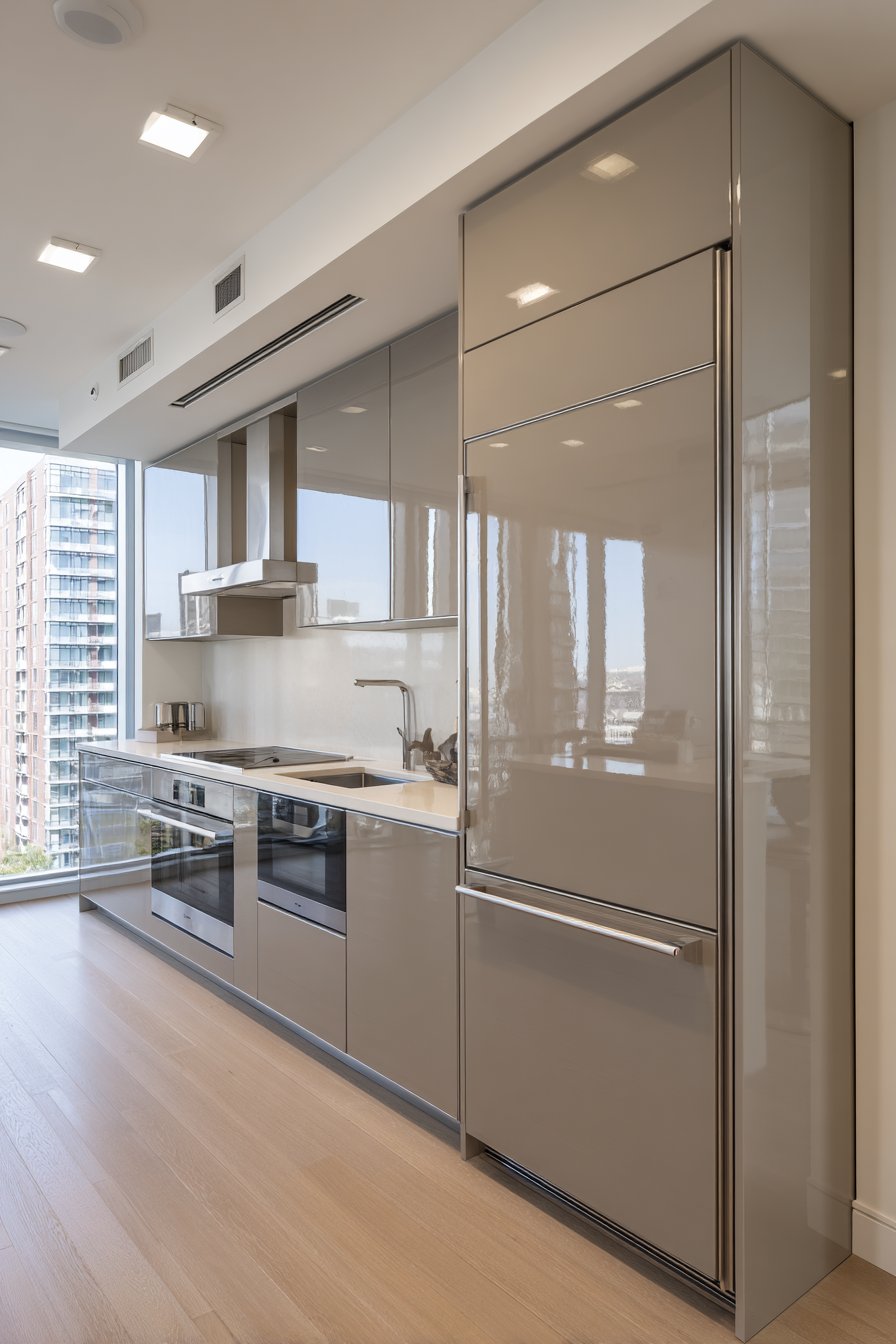
Compact appliances designed specifically for small kitchens have become increasingly sophisticated, offering full functionality without overwhelming the space. A 24-inch range instead of the standard 30-inch model saves precious counter space while still providing ample cooking capability.
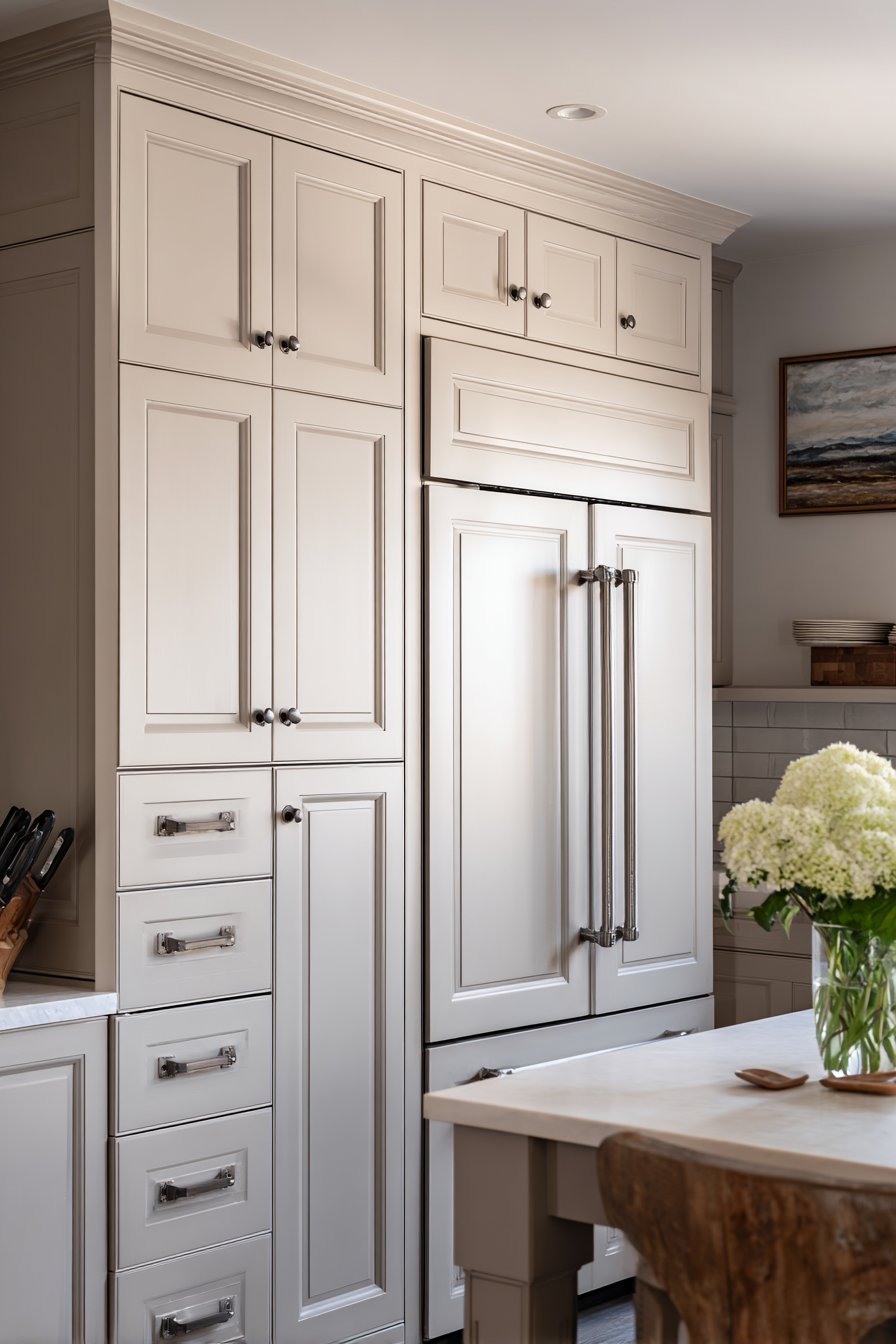
Similarly, apartment-sized refrigerators and slimline dishwashers maintain efficiency without dominating the room. Consider combination appliances that serve multiple purposes, such as microwave-convection oven combos or sink-dishwasher units.
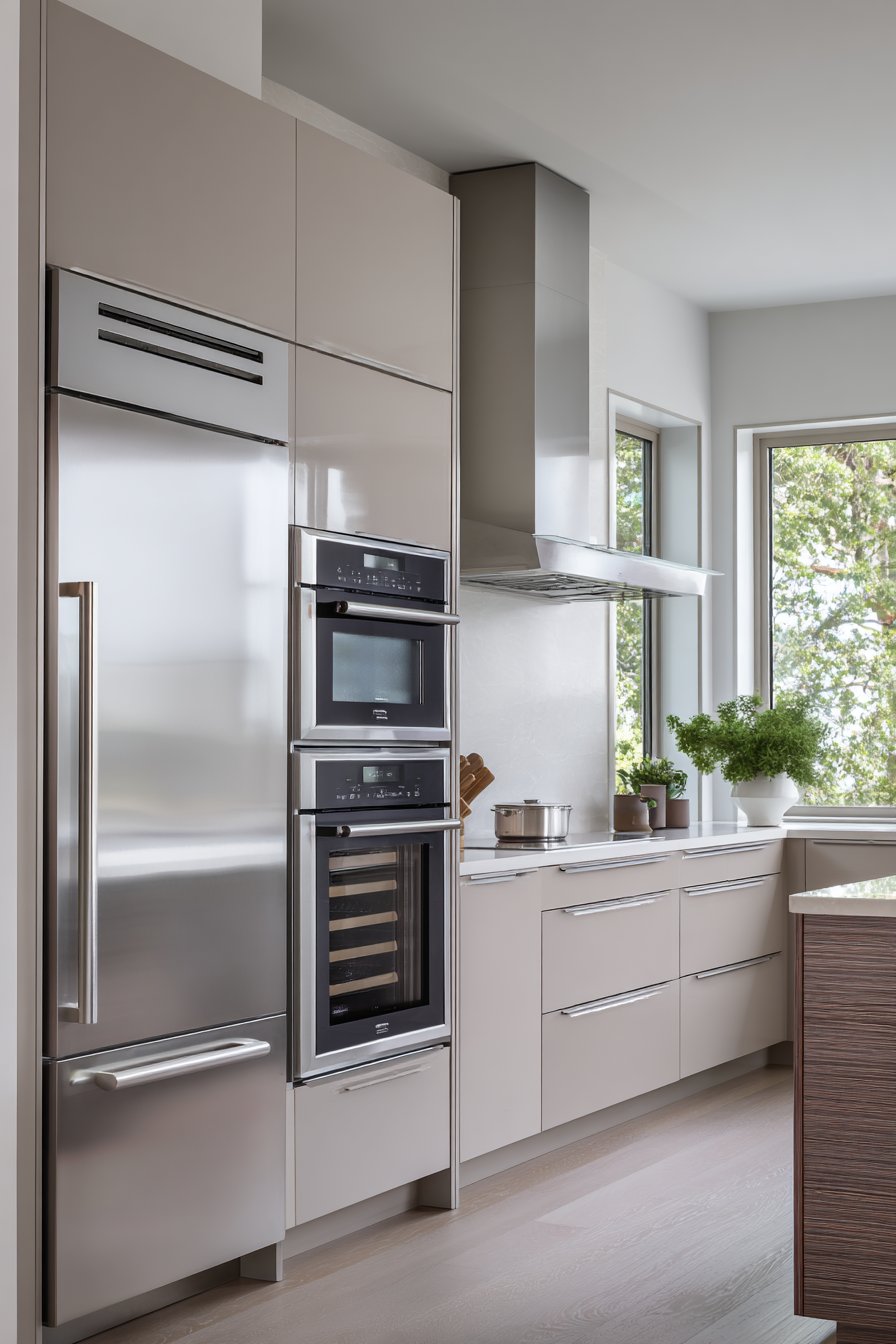
These innovative solutions reduce the number of separate appliances needed while maintaining cooking versatility. Built-in options create a streamlined appearance that contributes to visual spaciousness.
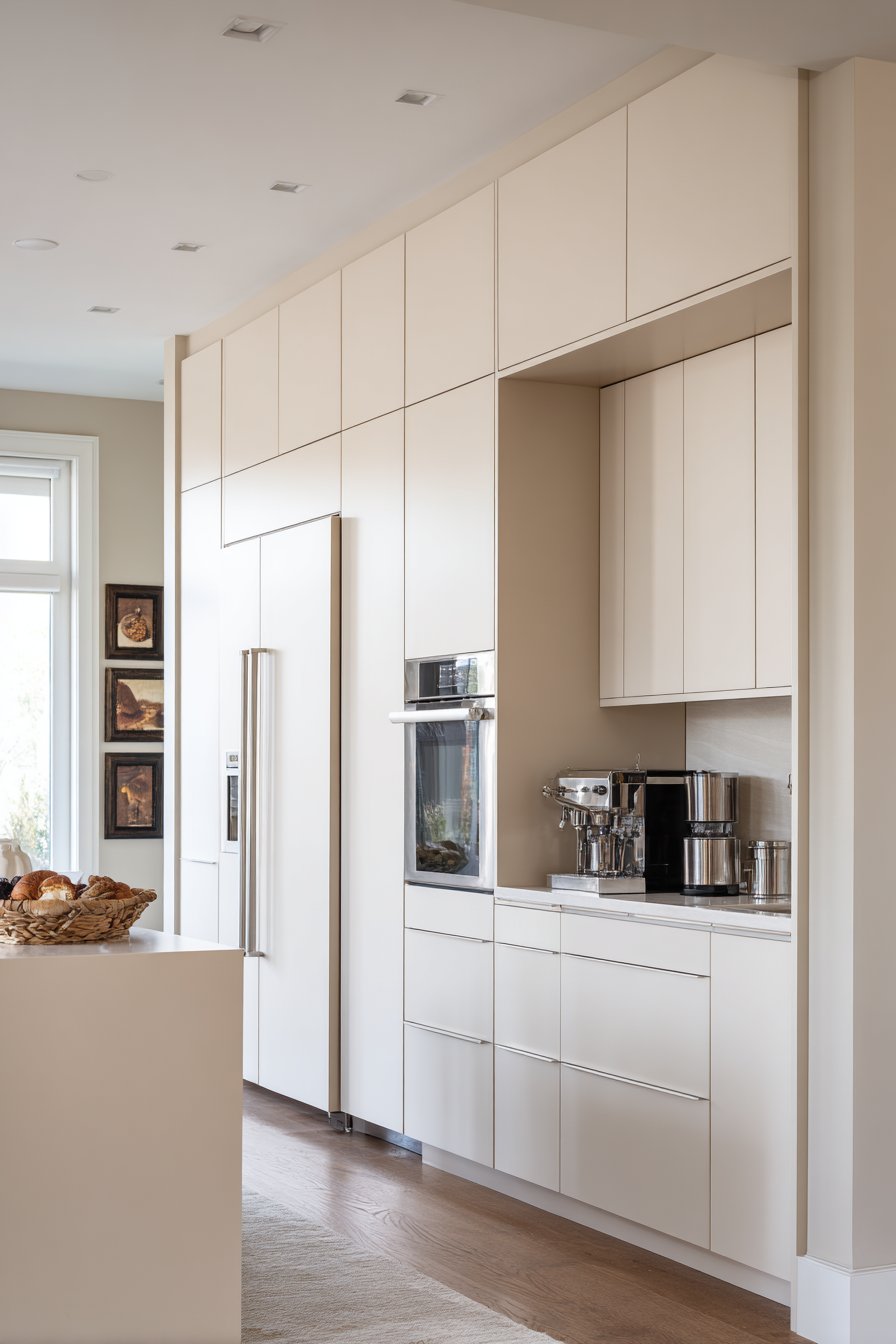
- Select a 24-inch range or cooktop for tighter spaces
- Consider counter-depth refrigerators that align with cabinetry
- Install an 18-inch dishwasher if a full-size model won’t fit
- Choose a compact microwave that mounts under cabinets
- Opt for a single-bowl sink with integrated accessories
4. Implement Smart Counter Space Solutions
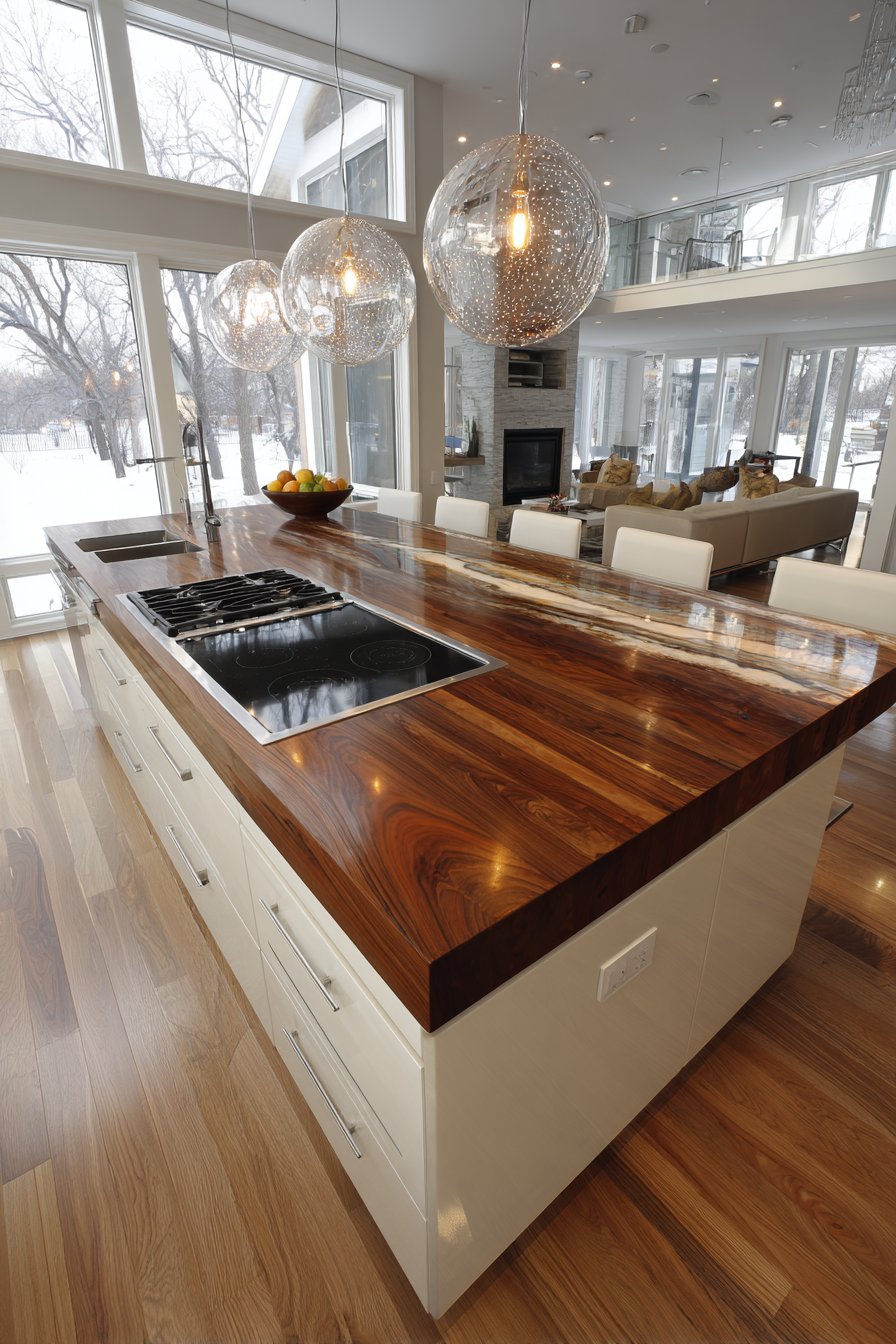
Counter space is premium real estate in compact kitchens, making every square inch count. Creating additional work surfaces through creative solutions transforms how you use your kitchen.
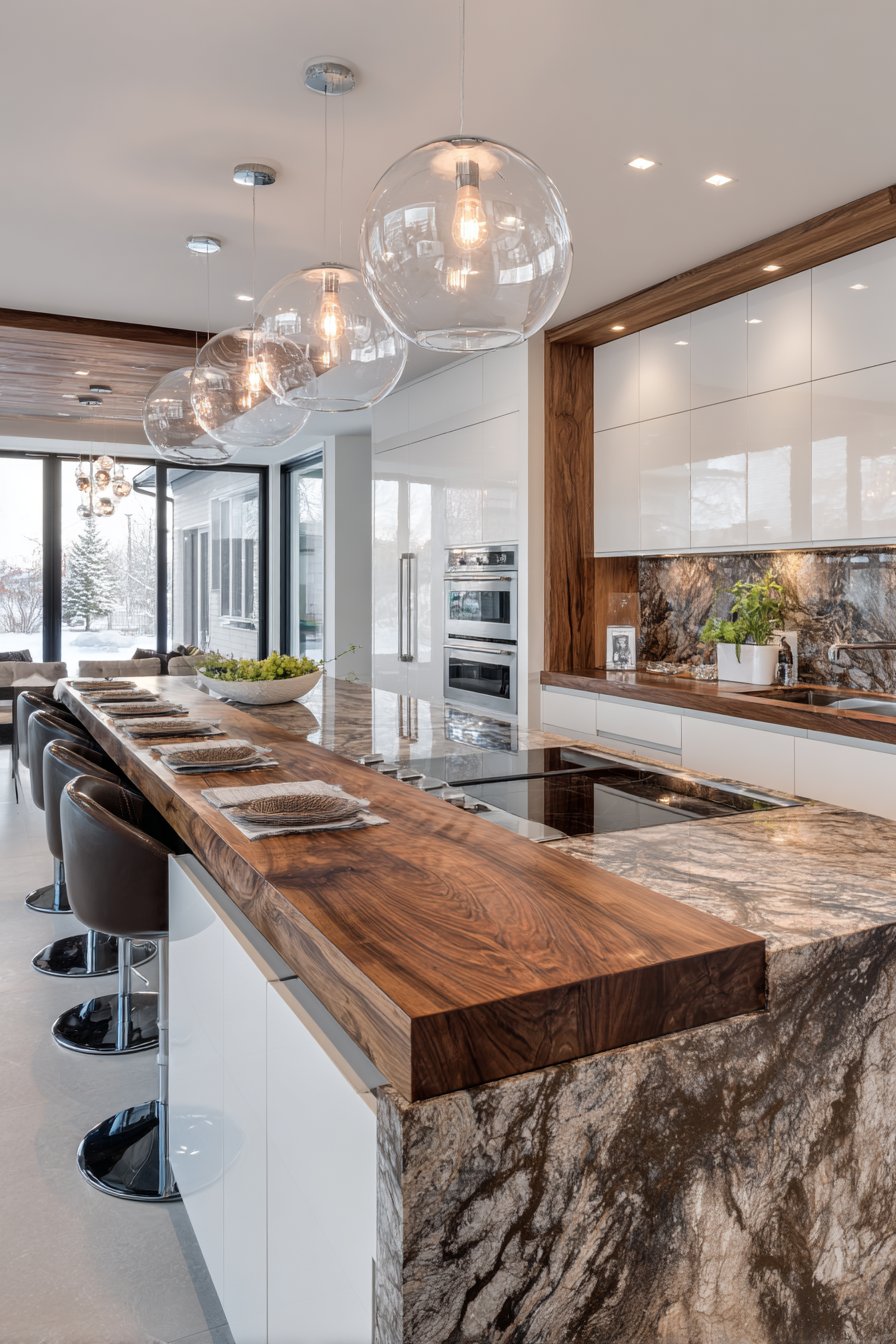
A pull-out cutting board tucked beneath the counter provides instant prep space that disappears when not needed, maintaining clean lines and open pathways.
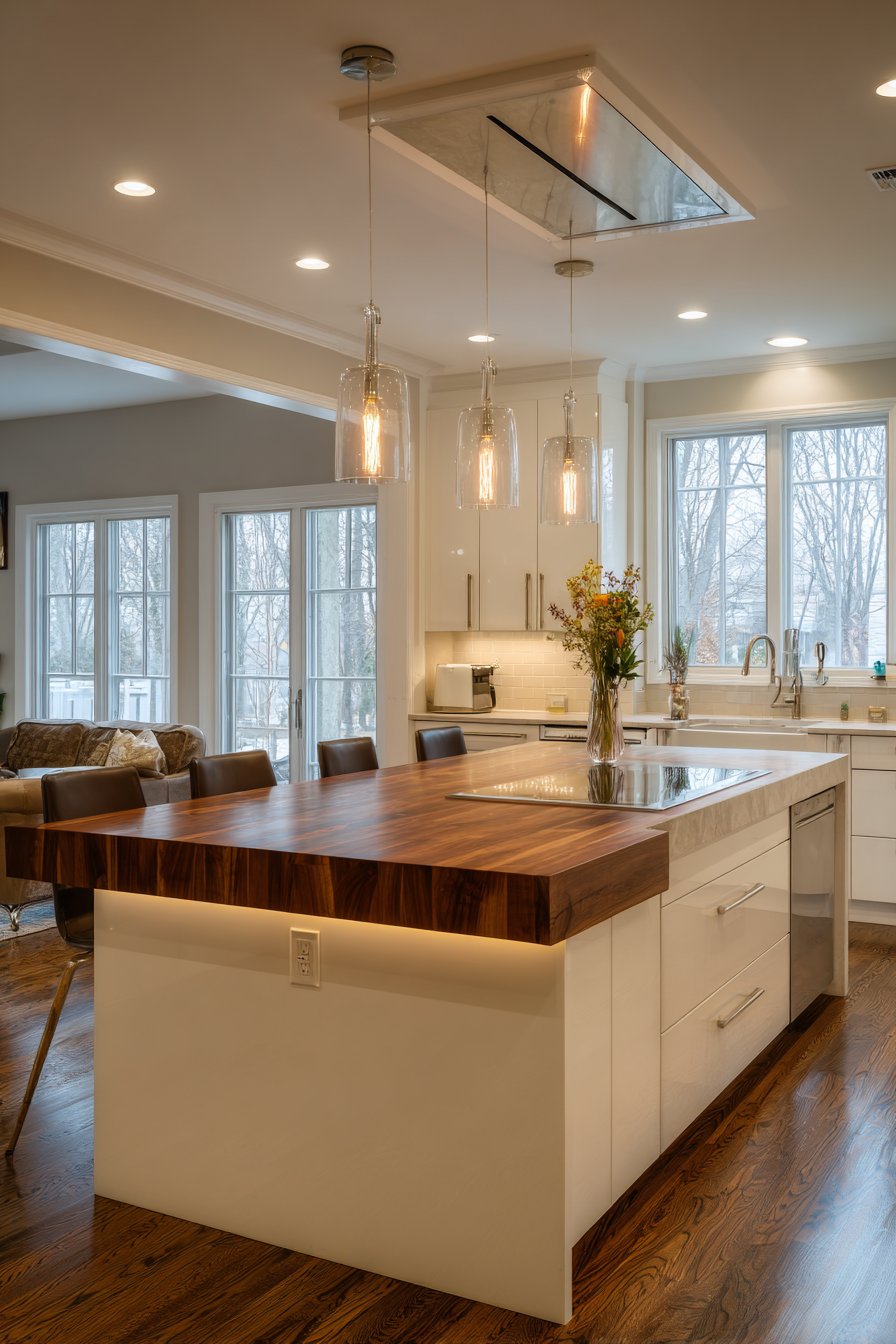
Rolling carts and portable islands offer flexible workspace that can be moved according to your needs or stored away entirely. Choose options with built-in storage to maximize their utility. Consider fold-down tables mounted to walls that create dining or prep surfaces on demand.
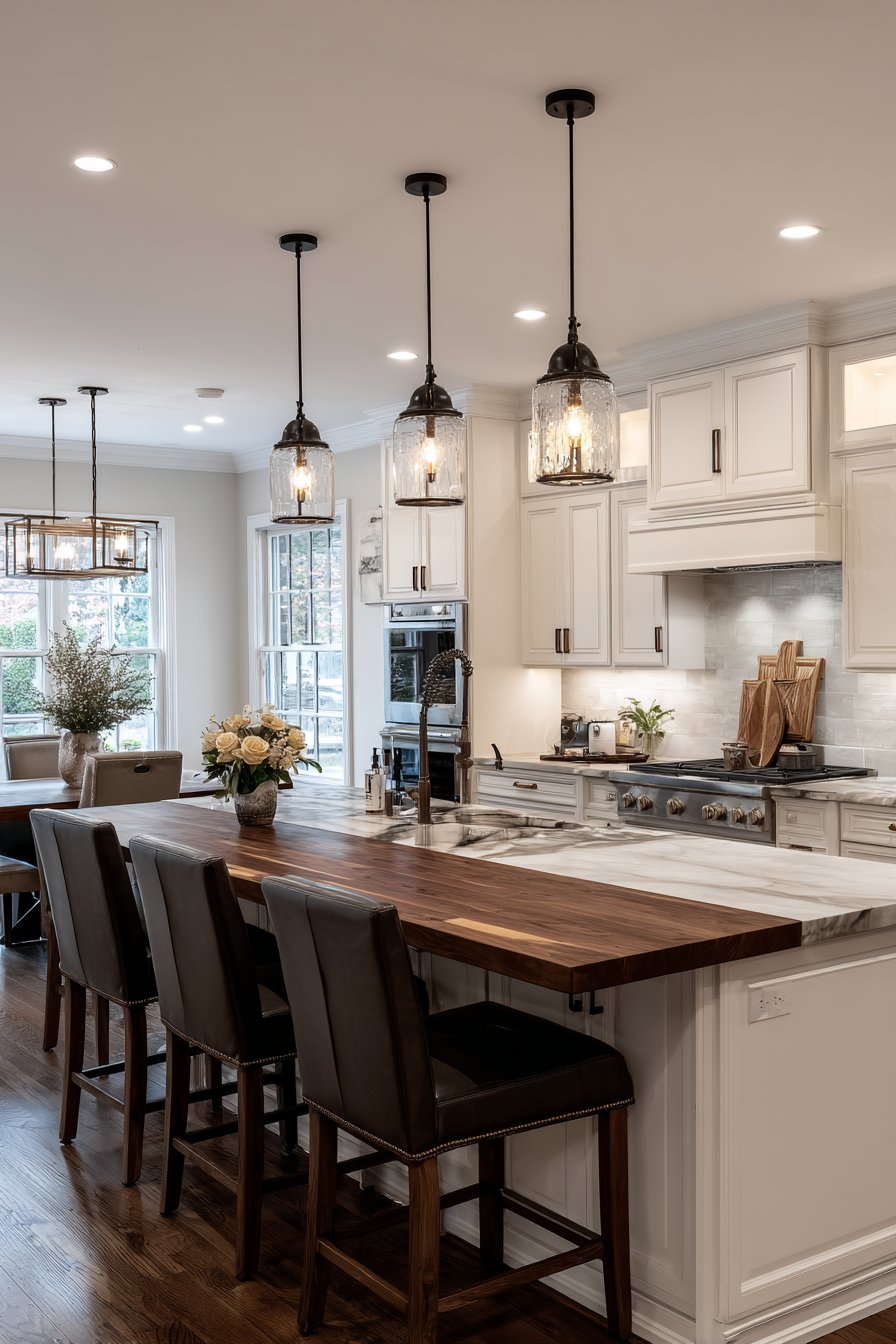
- Install pull-out cutting boards in base cabinets
- Use over-the-sink cutting boards to extend counter space temporarily
- Add a rolling cart with butcher block top for mobile workspace
- Mount a fold-down table for additional prep or dining area
- Keep countertops clear by storing small appliances in cabinets
- Use corner spaces with lazy susans or specialized corner drawers
5. Maximize Light and Color
Strategic lighting dramatically impacts how spacious a compact kitchen feels. Natural light should be maximized wherever possible, while layered artificial lighting ensures adequate illumination for tasks.
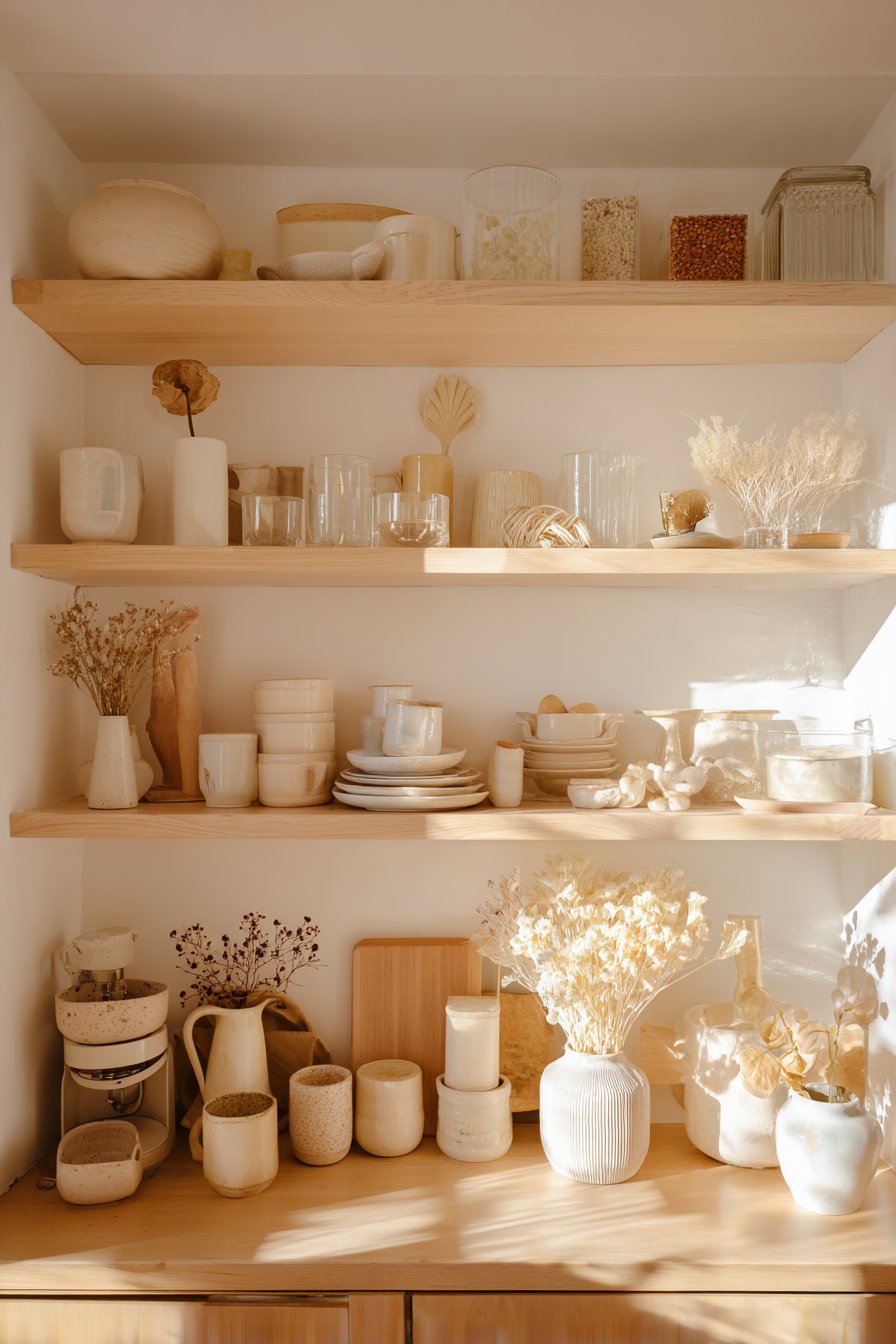
Under-cabinet lighting eliminates shadows on work surfaces and creates ambient glow that makes the space feel larger and more welcoming.
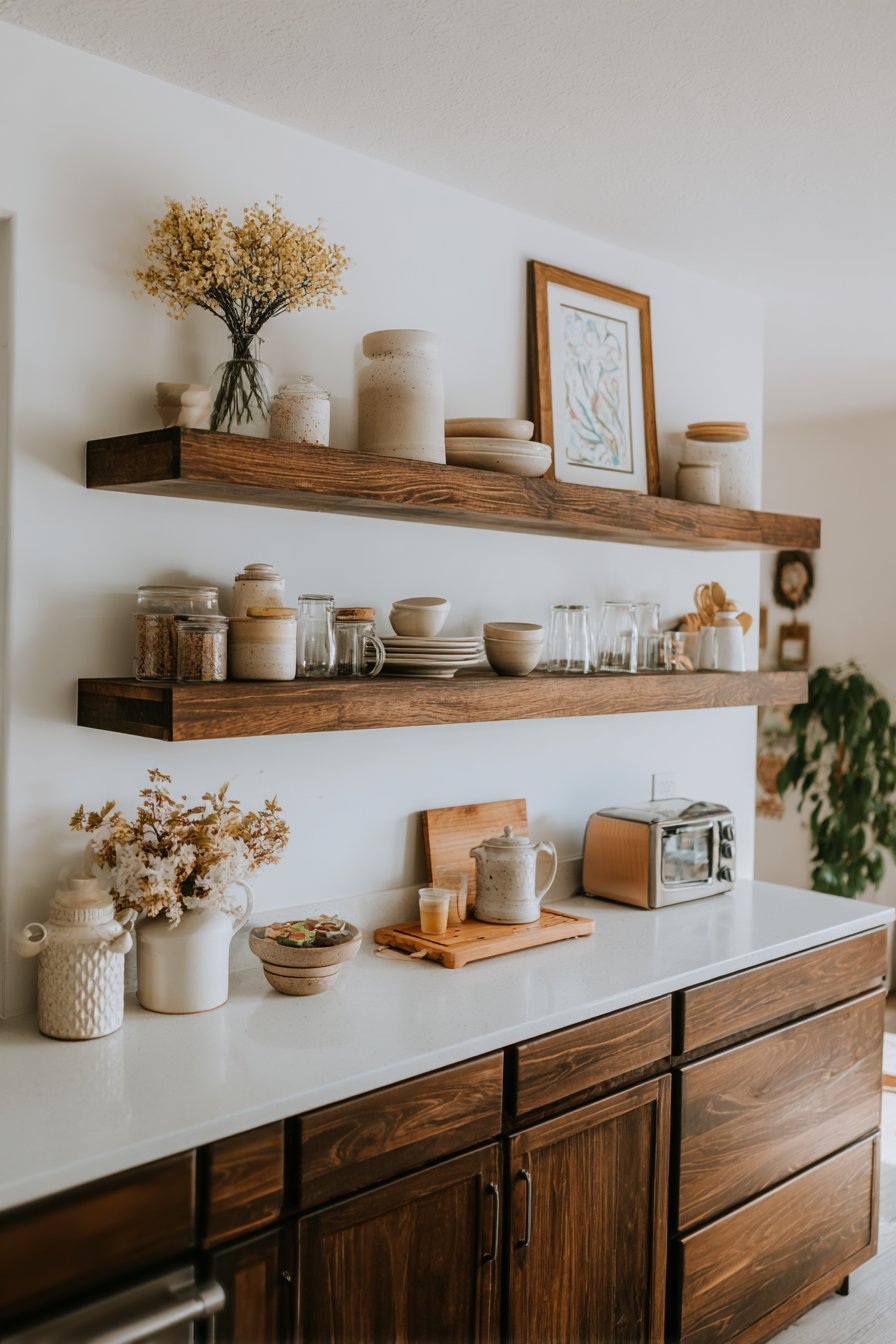
Light color palettes reflect illumination and create an airy atmosphere. White or pale-colored cabinets paired with light countertops and backsplashes form a cohesive backdrop that visually expands the space. Strategic pops of color through accessories add personality without overwhelming the room.
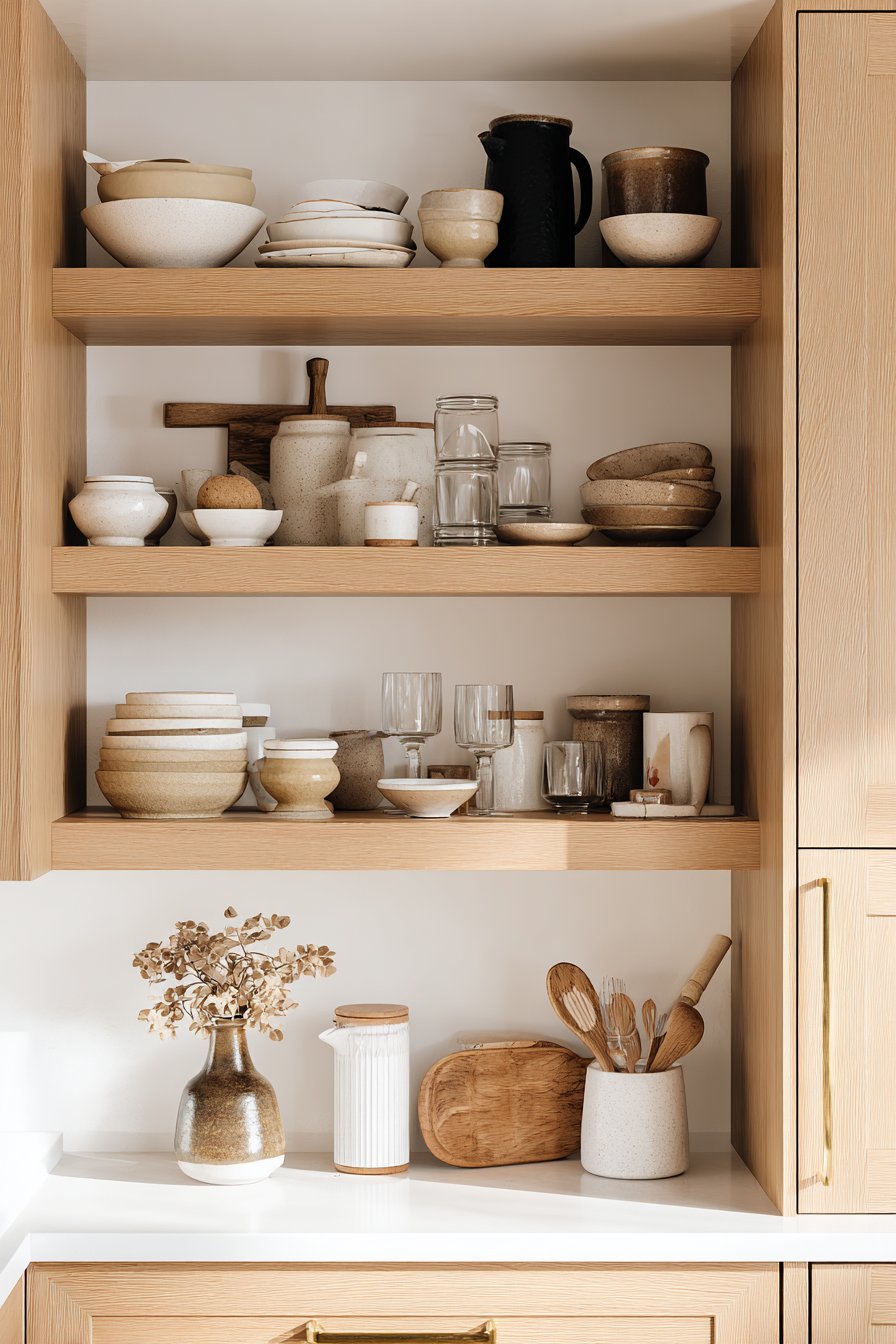
- Paint walls and cabinets in light, reflective colors
- Install under-cabinet LED strips for task lighting
- Use glass-front cabinets to create visual depth
- Choose glossy backsplash tiles that bounce light
- Maximize natural light with minimal window treatments
- Add pendant lights over key work areas for focused illumination
6. Create Streamlined Storage Systems
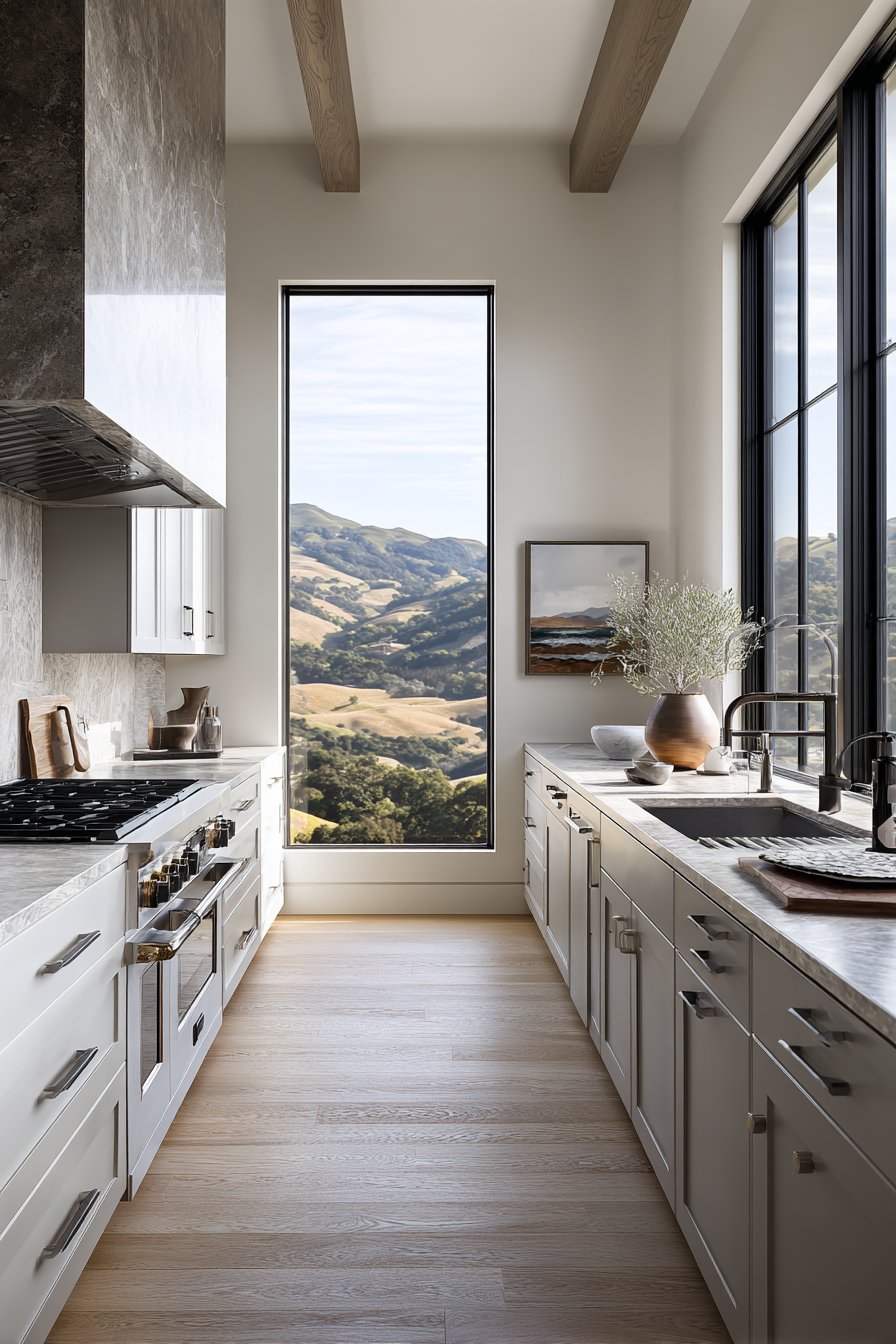
Organized storage prevents clutter from overtaking limited space and ensures everything has a designated home. Deep drawers with dividers accommodate pots, pans, and small appliances more efficiently than traditional cabinets.
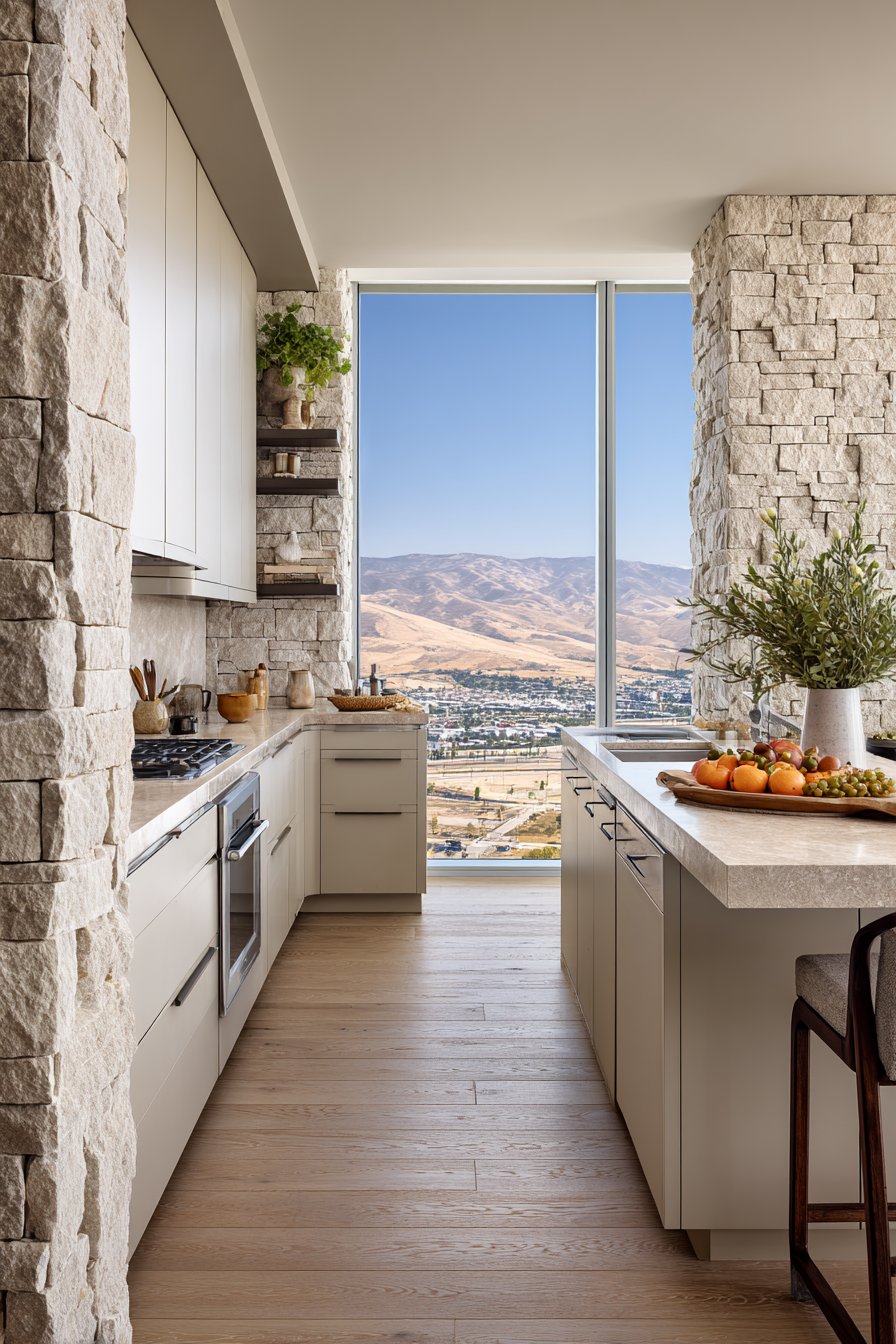
Pull-out organizers bring items from the back of cabinets forward, eliminating the need to remove multiple items to reach what you need.
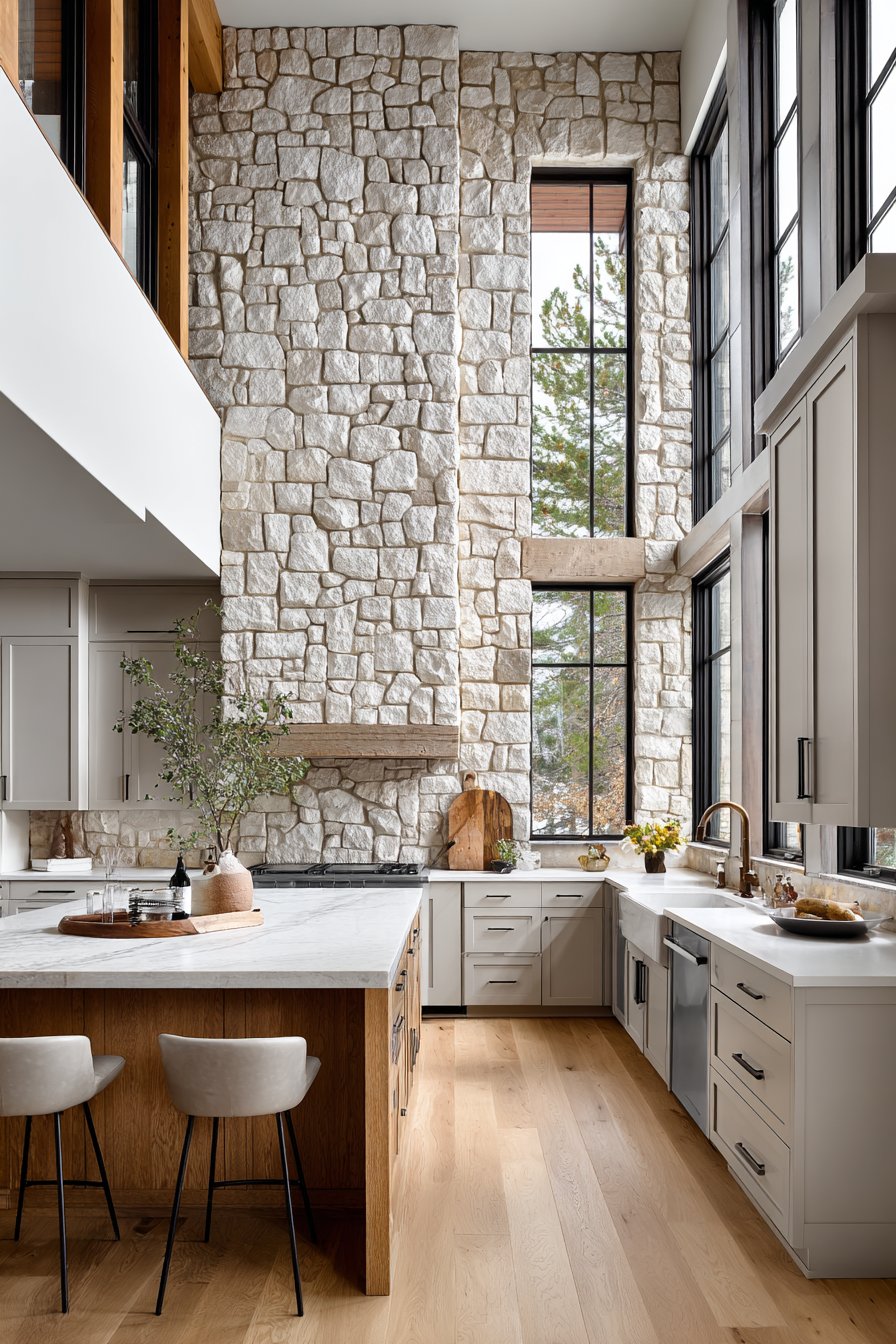
Customized storage solutions tailored to your specific needs and cooking habits maximize efficiency. Vertical dividers store baking sheets and cutting boards upright, while pull-out trash and recycling bins keep waste management hidden but accessible. Consider your actual usage patterns when designing storage systems.
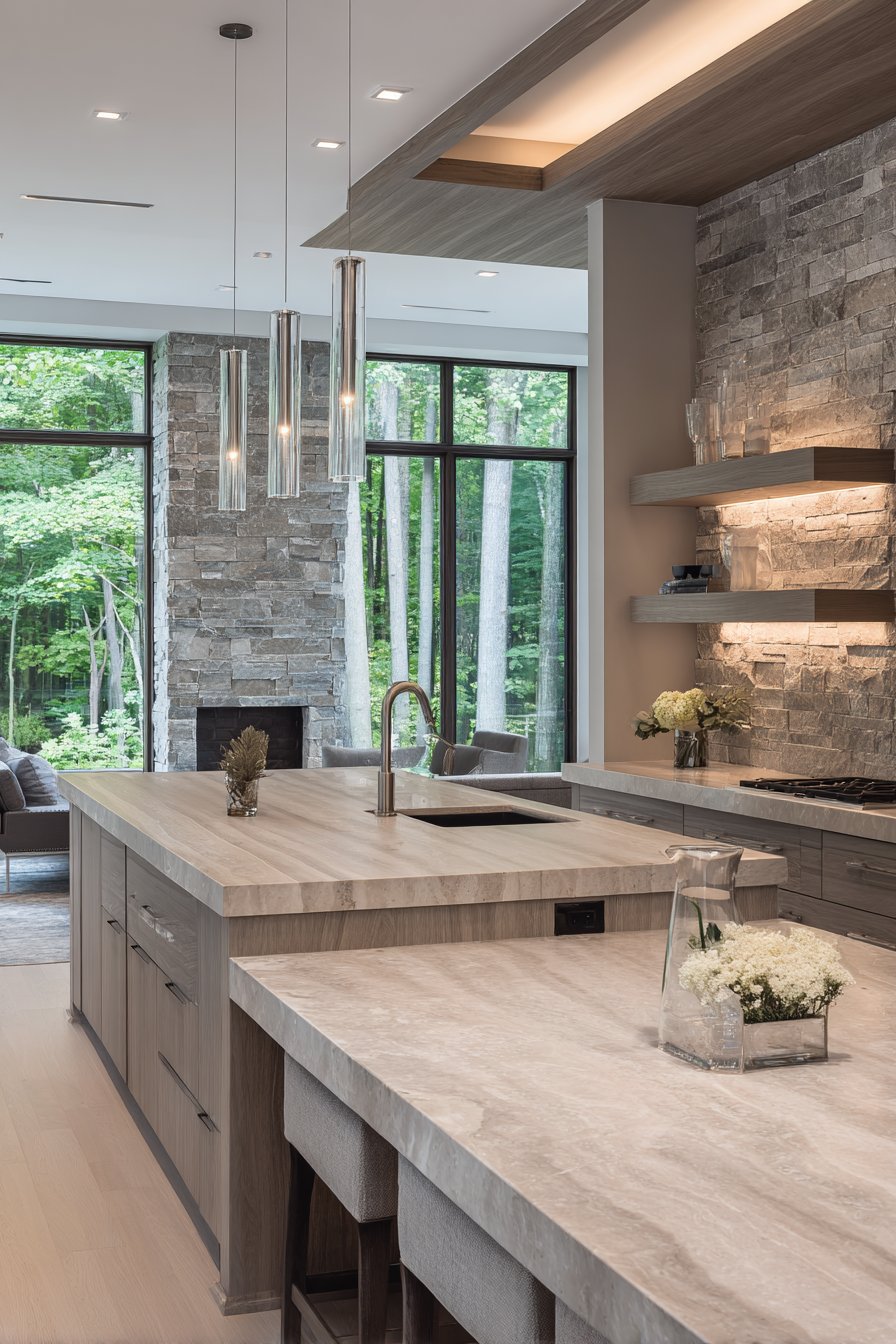
- Install deep drawers with adjustable dividers for pots and appliances
- Use pull-out shelves in base cabinets for easy access
- Add vertical dividers for baking sheets and cutting boards
- Incorporate a pull-out spice rack near the cooking area
- Install corner solutions like lazy susans or magic corners
- Use drawer organizers to maximize utensil storage efficiency
7. Incorporate Multi-Functional Design Elements
Dual-purpose features multiply the functionality of every element in a compact kitchen. A kitchen island that doubles as a dining table eliminates the need for separate eating space.
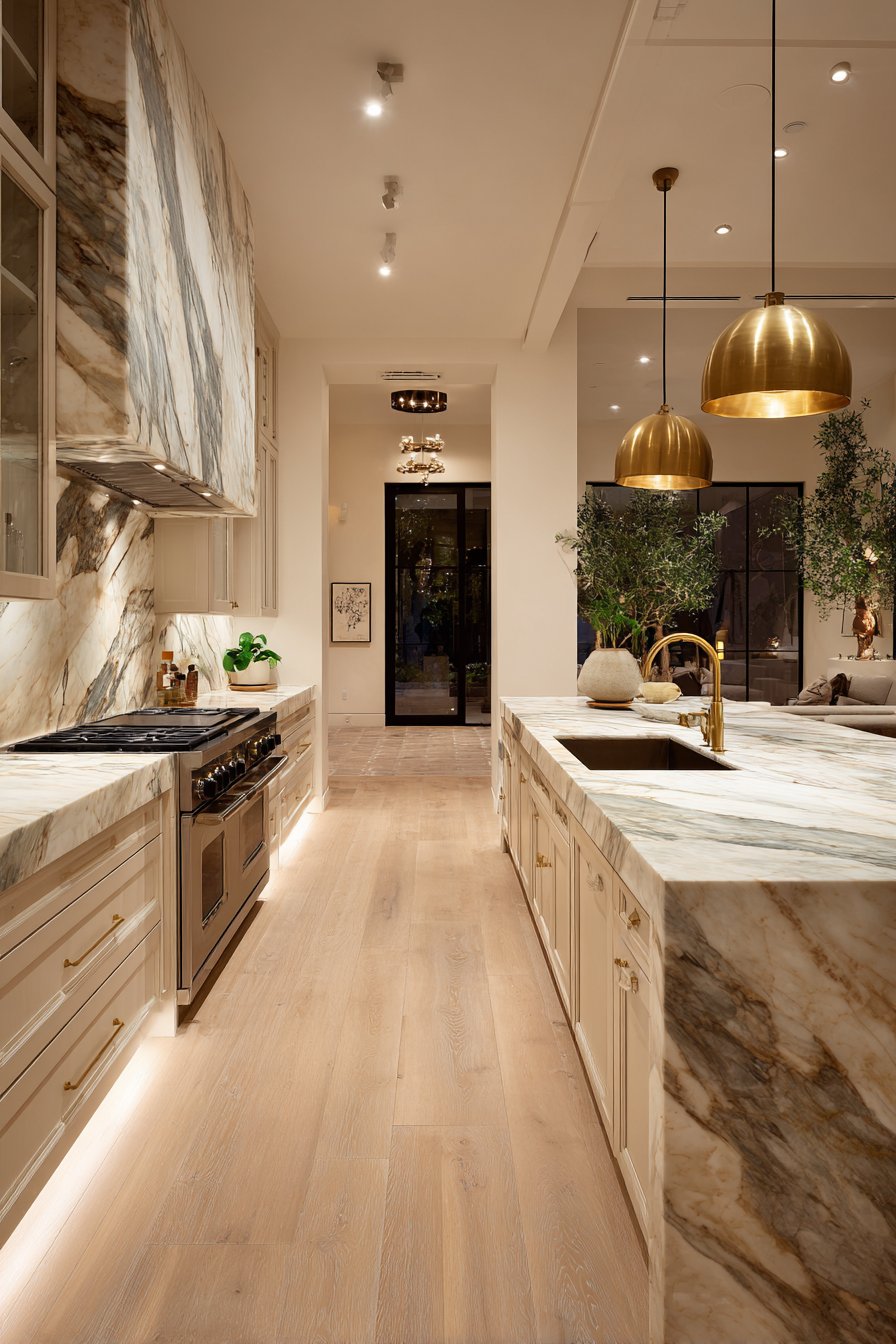
Cabinet doors equipped with integrated organization systems provide storage without requiring additional floor space.
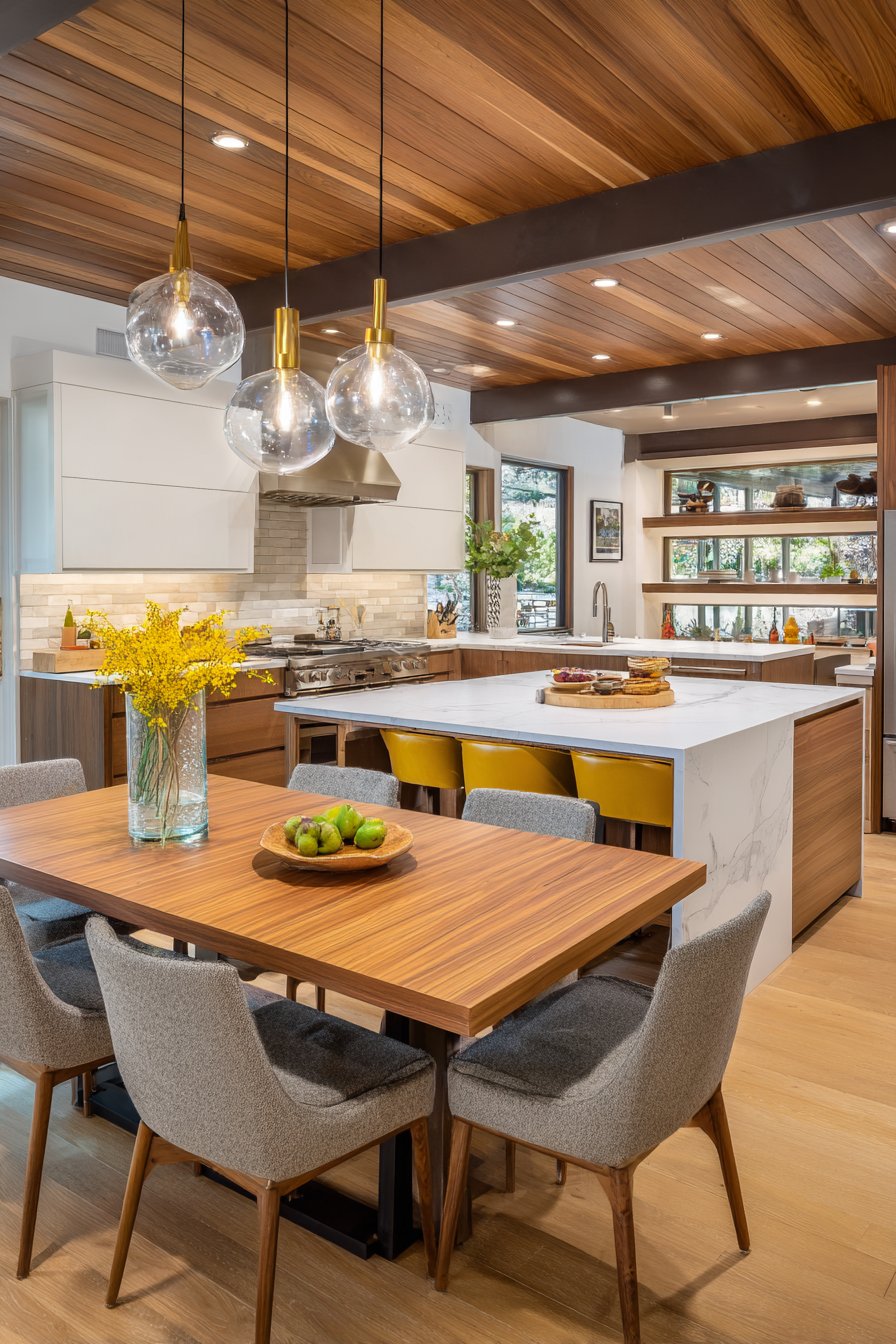
Toe-kick drawers utilize the typically wasted space beneath base cabinets for storing flat items like baking sheets or placemats.
Furniture-style pieces such as baker’s racks combine open storage, display space, and additional work surfaces in one attractive unit that adds character while serving multiple practical purposes.
- Choose an island with seating that serves as dining space
- Install toe-kick drawers for extra storage
- Use cabinet doors with mounted organizers
- Select a table that folds against the wall when not in use
- Incorporate built-in benches with hidden storage
8. Design for Visual Continuity
Visual flow makes compact kitchens feel more spacious by eliminating visual clutter and creating cohesive design lines. Consistent cabinet hardware, matching appliance finishes, and uniform color schemes contribute to a streamlined appearance. Minimizing contrast between elements allows the eye to move smoothly through the space without stopping at jarring transitions.
Integrated appliances that match cabinetry create a seamless look that disguises their presence. Handleless cabinets with push-to-open mechanisms eliminate hardware that can visually fragment surfaces. Continuous countertops without breaks maintain clean horizontal lines that emphasize width over depth.
- Match appliance finishes for a cohesive look
- Use integrated handles or push-to-open cabinets
- Choose similar tones for cabinets, walls, and counters
- Create continuous countertops without visual breaks
- Select a simple backsplash pattern that doesn’t overwhelm
- Maintain consistent flooring throughout adjacent spaces to expand visual boundaries
Conclusion
Mastering compact kitchen design requires balancing functionality with aesthetics while making strategic choices about every element. By optimizing your work triangle, maximizing vertical storage, and selecting appropriately scaled appliances, you create a kitchen that works efficiently within its physical constraints. Smart storage solutions and multi-functional design elements ensure that every inch serves a purpose.
The key to success lies in thoughtful planning that considers your specific needs and cooking habits. Light, color, and visual continuity work together to make small spaces feel larger and more inviting. Remember that a compact kitchen doesn’t mean compromising on style or capability—it simply requires more intentional design decisions. Start implementing these strategies today, and watch your small kitchen transform into a highly functional space that you’ll love using for years to come.
"As an Amazon Associate, I earn from qualifying purchases."
