
Creating a dining room that exudes luxury doesn’t always require unlimited budgets or designer labels. The perception of luxury stems from thoughtful design choices, quality materials, and attention to details that elevate the ordinary into something extraordinary. A truly expensive-feeling space balances opulence with restraint, creating an atmosphere where every element serves both aesthetic and functional purposes.
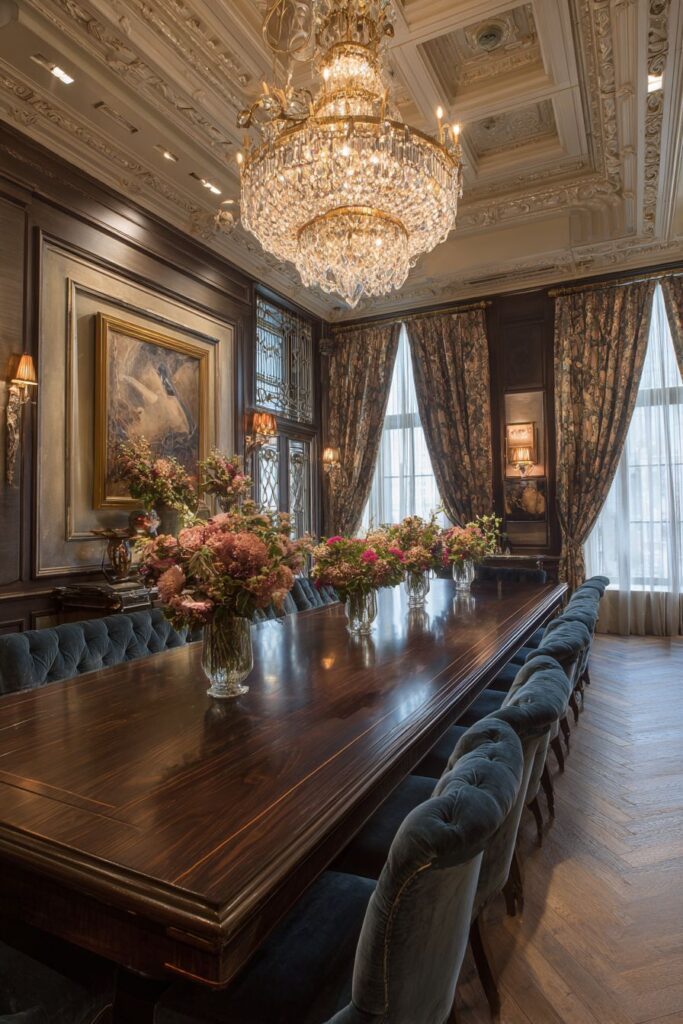
Strategic design decisions transform average dining spaces into sophisticated entertaining areas that rival high-end restaurants and boutique hotels. Understanding which elements contribute most to perceived value allows you to invest wisely, focusing resources on changes that deliver maximum visual and experiential impact. The difference between a standard dining room and a luxurious one often lies not in price tags but in curation, quality, and intentional design philosophy.
This comprehensive guide explores ten essential elements that define luxurious dining spaces. From selecting statement lighting fixtures to mastering the art of layered textures, each section reveals specific strategies for creating an expensive ambiance. Whether you’re renovating an existing space or starting from scratch, these principles will help you craft a dining room that feels both lavish and inviting, impressive yet comfortable for everyday use.
1. Invest in Statement Lighting Fixtures
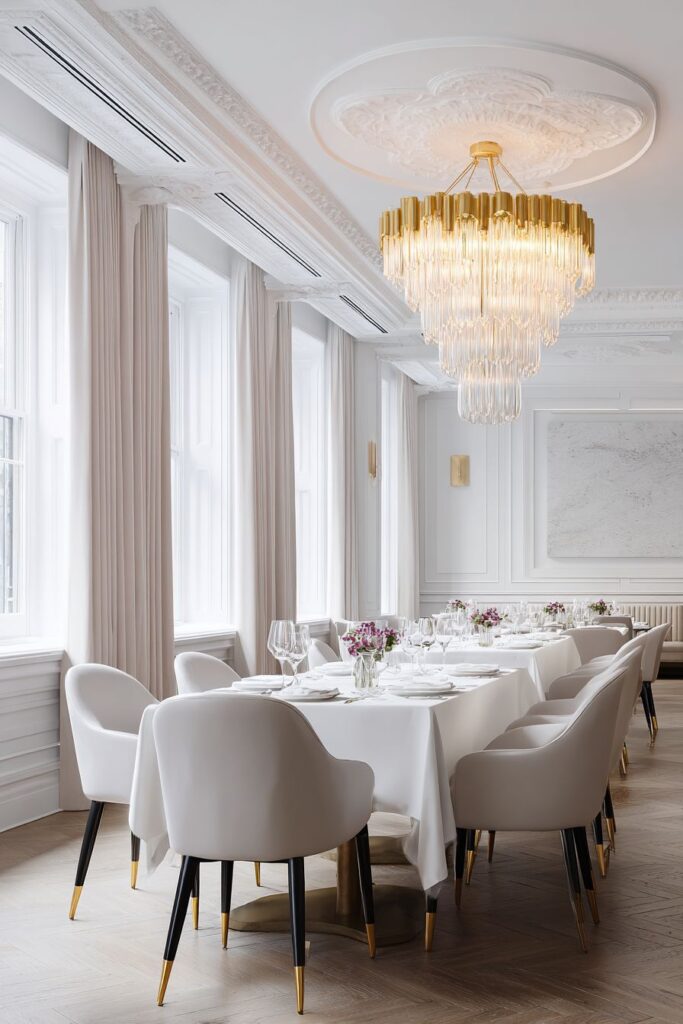
The chandelier or pendant light above your dining table serves as the room’s crown jewel and immediately signals quality to anyone entering the space. This fixture commands attention and sets the tone for the entire room’s aesthetic. A stunning overhead light creates visual drama while providing essential task lighting for meals and gatherings.
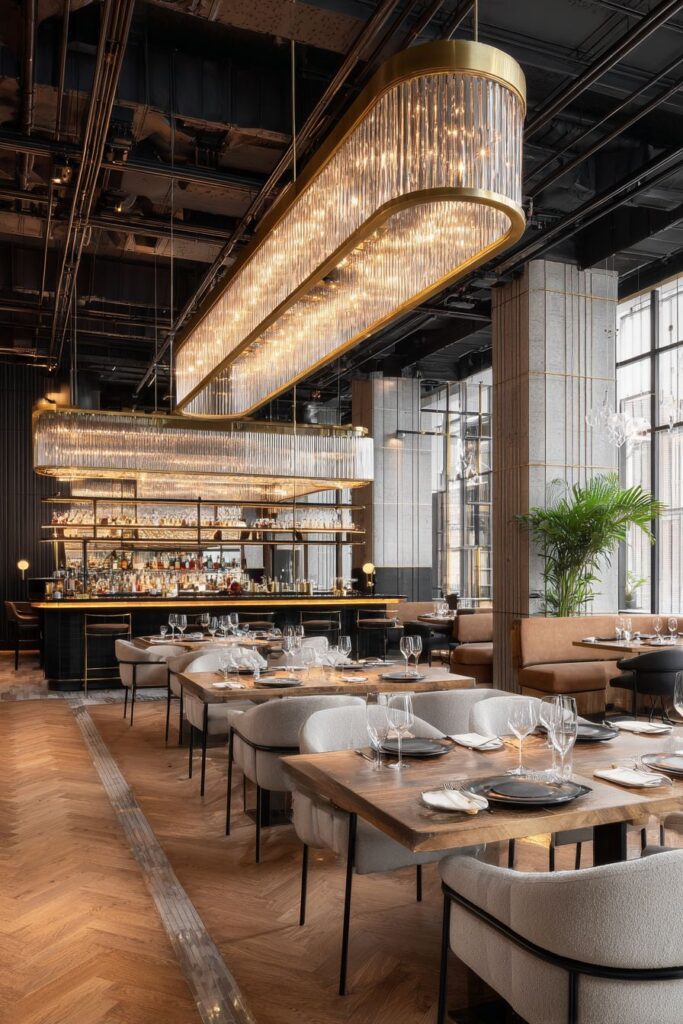
Scale matters tremendously when selecting dining room lighting. The fixture should measure approximately one-half to two-thirds the width of your dining table for proper proportion. Hang it 30-36 inches above the table surface to ensure adequate illumination without obstructing sightlines across the table during conversations.
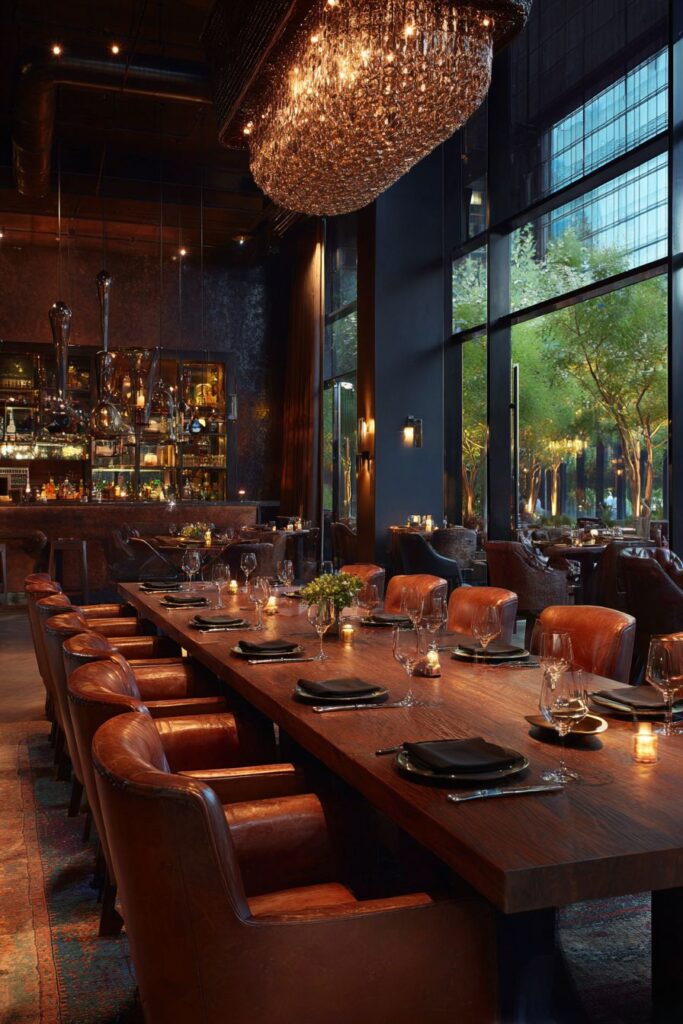
Material choices in lighting fixtures dramatically affect perceived value. Crystal, hand-blown glass, brass, and sculptural metals read as luxurious immediately. Even budget-conscious shoppers can find statement pieces that deliver high-end impact through interesting shapes, quality finishes, or architectural presence that elevates the entire space.
- Choose fixtures with interesting materials like crystal, brass, or artisan glass
- Ensure the chandelier measures one-half to two-thirds your table width
- Hang pendant lights 30-36 inches above the table surface for optimal lighting
- Install dimmer switches to control ambiance for different occasions
- Consider oversized fixtures for dramatic impact in rooms with high ceilings
- Select warm-toned bulbs (2700-3000K) for flattering, restaurant-quality lighting
2. Select Quality Dining Furniture
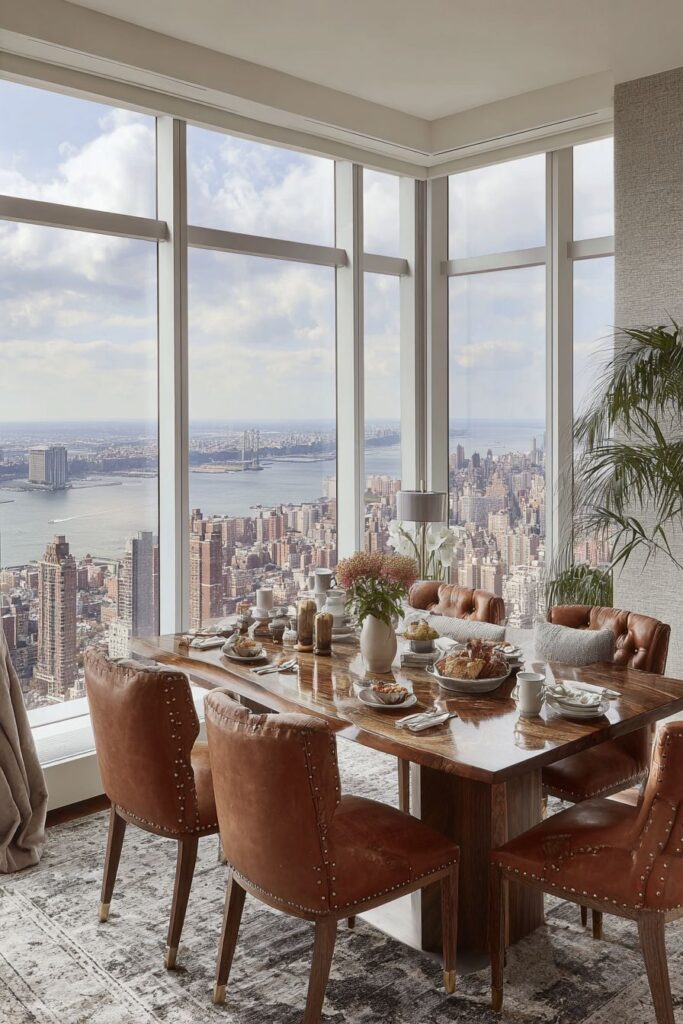
Solid wood construction separates luxury dining sets from budget alternatives instantly. Real wood tables and chairs possess weight, grain patterns, and tactile qualities that laminate or veneer simply cannot replicate. The substantial feel of quality furniture communicates permanence and investment in your home’s design.
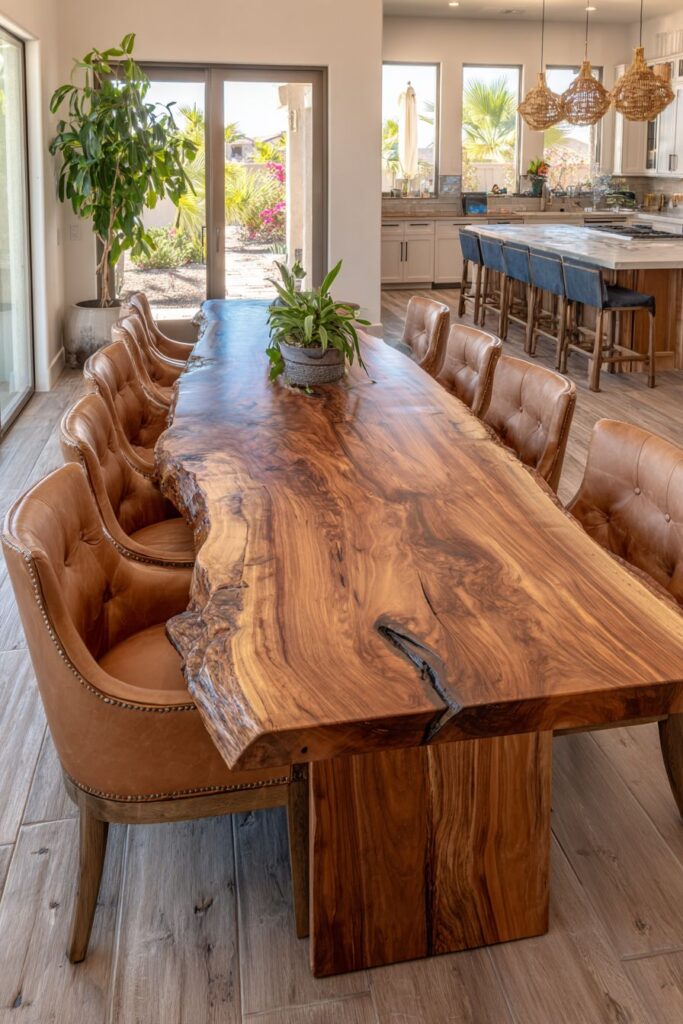
The dining table finish significantly impacts the room’s overall luxury quotient. High-gloss lacquered surfaces, richly stained hardwoods, or natural live-edge designs each convey sophistication through their refined execution. Pay attention to joinery details, edge treatments, and finish quality—these subtle elements register subconsciously and contribute to overall impressions of quality.
Upholstered dining chairs add immediate luxury through comfort and visual richness. Fabric or leather seating transforms functional furniture into inviting pieces that encourage lingering over meals. Choose chairs with substantial frames, quality upholstery, and design details like nailhead trim or button tufting for enhanced sophistication.
- Invest in solid wood tables rather than veneer or laminate alternatives
- Choose dining chairs with upholstered seats and backs for added comfort
- Look for quality joinery like dovetail joints and mortise-and-tenon construction
- Select tables with interesting bases or pedestals that showcase craftsmanship
- Consider mixed materials like wood with metal accents for contemporary luxury
- Ensure chairs feel substantial and stable when you sit in them
3. Layer Multiple Light Sources
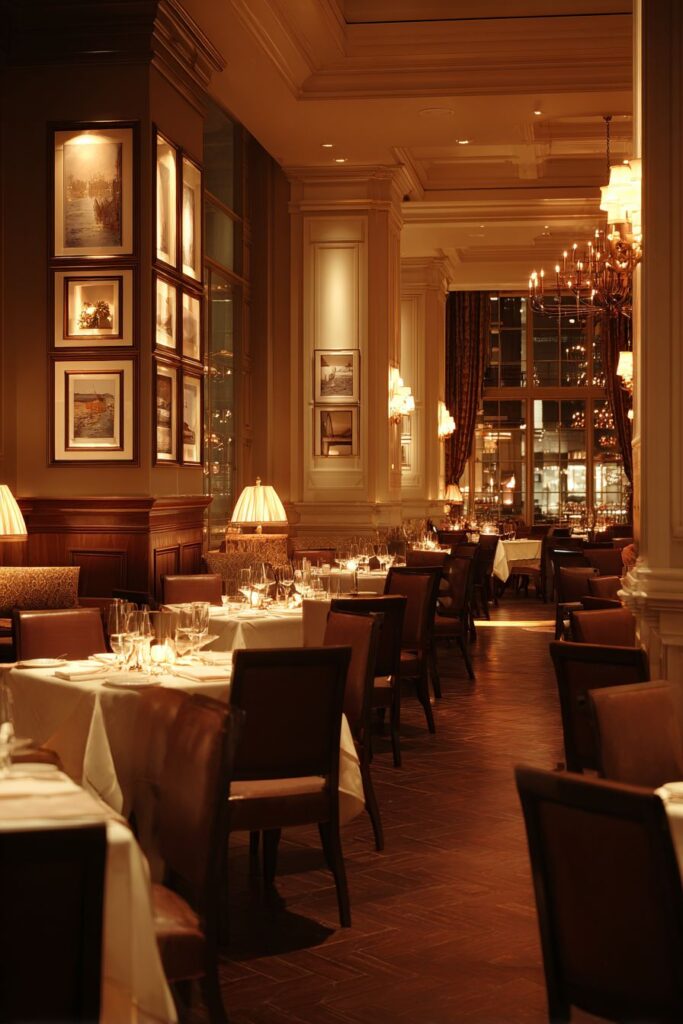
Ambient lighting beyond the central chandelier creates depth and sophistication that single-source lighting cannot achieve. Wall sconces, buffet lamps, or picture lights add layers of illumination that make the space feel professionally designed. This multi-layered approach mirrors high-end restaurants and luxury hotels.
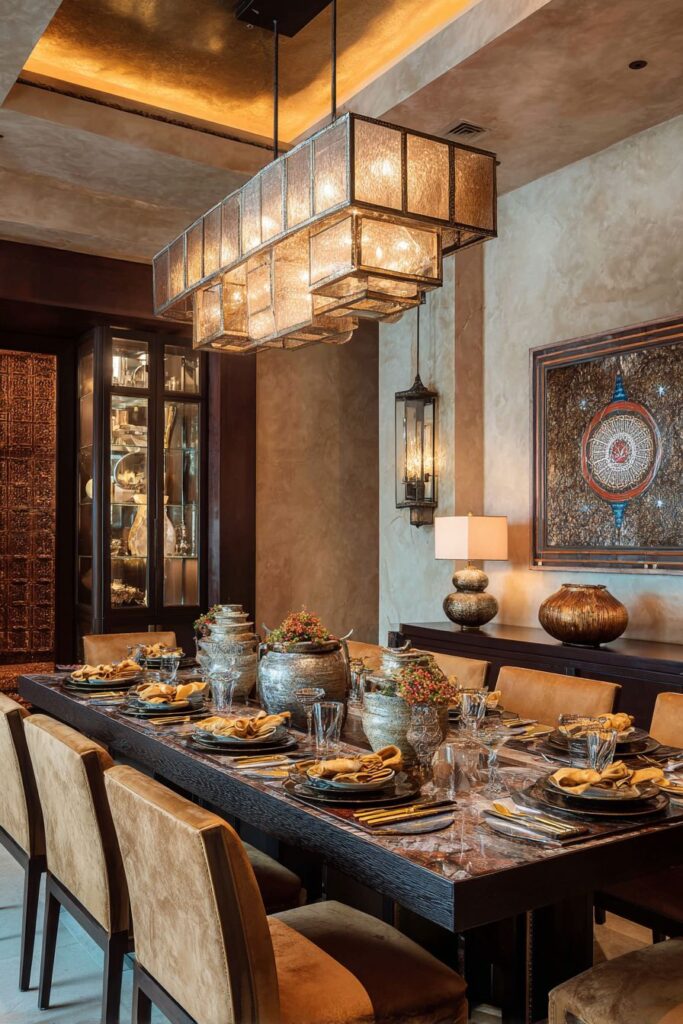
Accent lighting highlights architectural features, artwork, or decorative objects while contributing to the room’s overall atmosphere. Consider LED strip lighting in display cabinets, picture lights above artwork, or uplighting in corners to wash walls with soft illumination. These additional light sources create visual interest and allow flexible ambiance control.
The ability to adjust lighting levels throughout the dining experience enhances luxury substantially. Bright lighting works for family meals, while dimmed ambiance suits dinner parties and romantic occasions. Installing dimmers on all light sources provides complete control over mood and functionality.
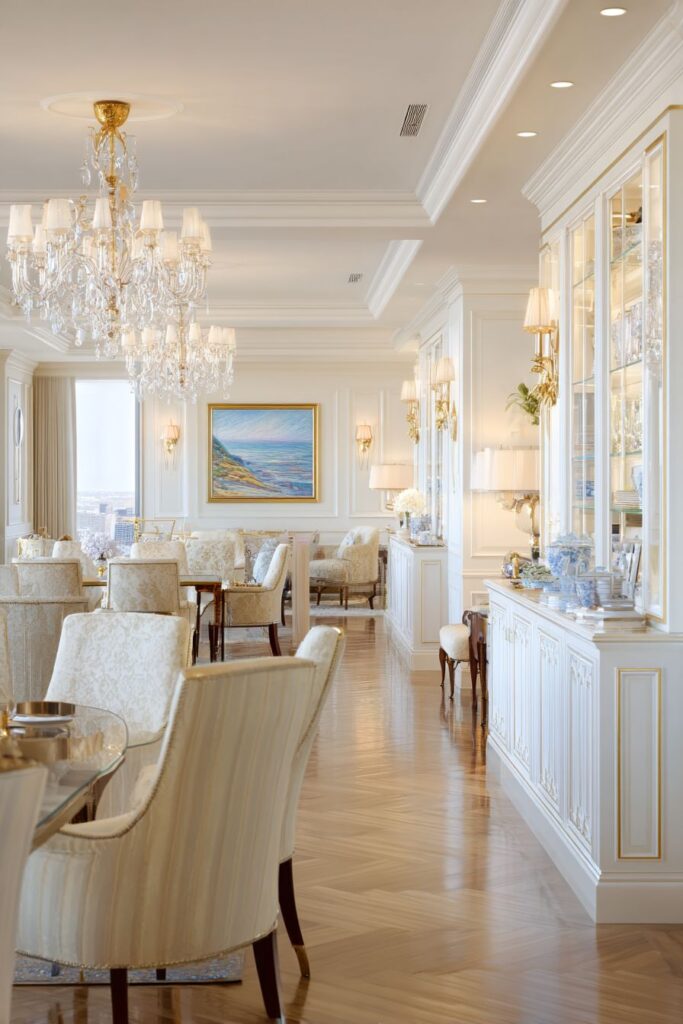
- Install wall sconces flanking a buffet or sideboard for balanced illumination
- Add table lamps on side furniture to create warm ambient lighting
- Use picture lights to highlight artwork and add architectural interest
- Install dimmers on every light source for complete ambiance control
- Consider LED strip lighting inside display cabinets for subtle drama
- Layer warm and cool light temperatures strategically for dimensional lighting
4. Incorporate Luxurious Textiles
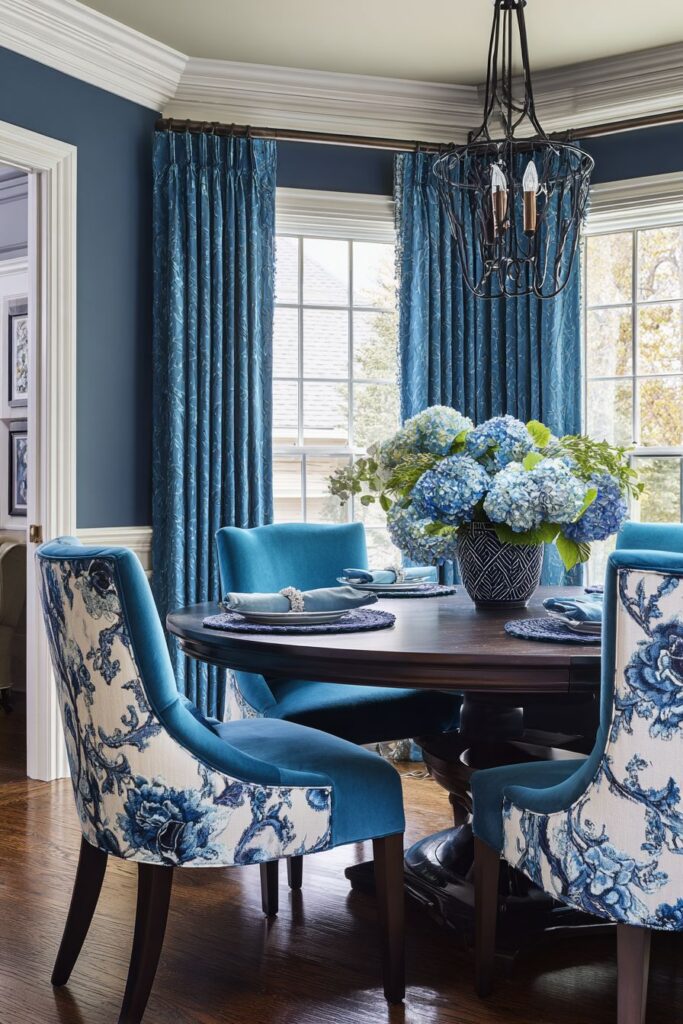
Window treatments in rich fabrics immediately elevate perceived room value. Floor-length draperies in silk, velvet, or high-quality linen add vertical drama and visual weight that short curtains or bare windows cannot match. The way fabric pools slightly on the floor signals intentional luxury and professional design.
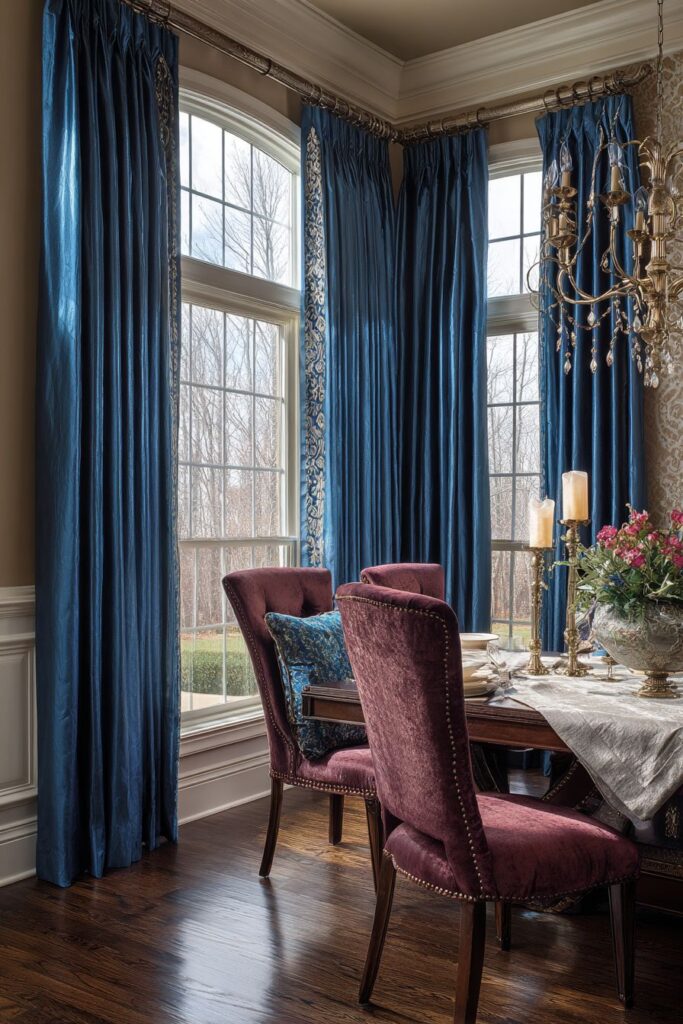
Table linens provide an easy luxury upgrade that transforms everyday dining into special occasions. Quality tablecloths, runners, and cloth napkins in natural fibers create a refined dining experience. Choose neutrals for versatility or rich jewel tones for dramatic impact that complements your overall color scheme.
The tactile quality of textiles contributes significantly to luxury perception. Guests notice the difference between polyester and linen napkins, between thin curtains and substantial draperies. Invest in fewer pieces of higher quality rather than extensive collections of mediocre textiles for maximum impact.
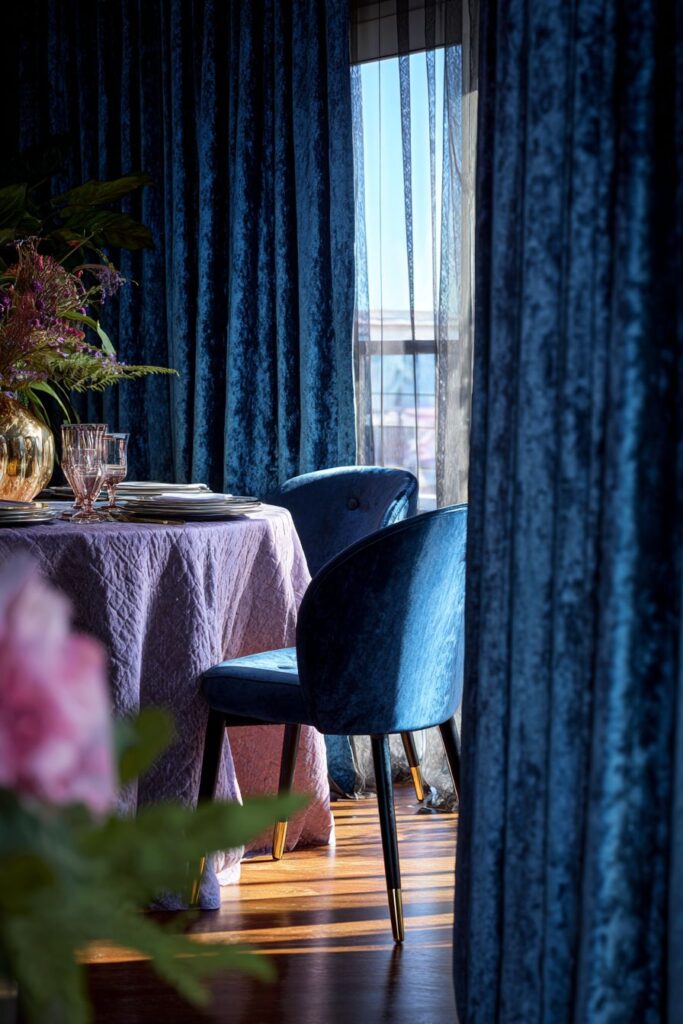
- Choose floor-length draperies that pool slightly on the floor for drama
- Select curtain fabrics like silk, velvet, or quality linen for rich texture
- Invest in quality table linens in natural fibers like linen or cotton
- Layer sheer curtains under heavier drapes for light control and depth
- Consider custom draperies for perfect proportions and professional finishing
- Use fabric napkin rings or ties as additional decorative elements
5. Add Architectural Details and Molding
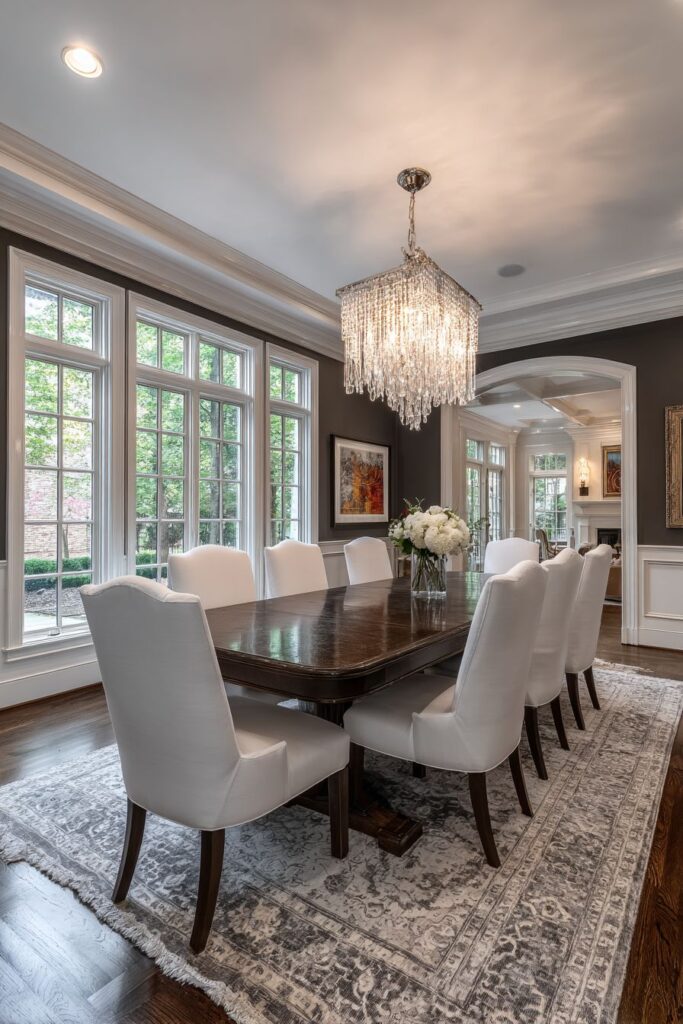
Crown molding and wainscoting create instant architectural sophistication that distinguishes luxury spaces from basic rooms. These permanent enhancements add dimension, shadow lines, and visual interest that flat walls lack. Even simple molding profiles significantly upgrade a room’s perceived value and finished quality.
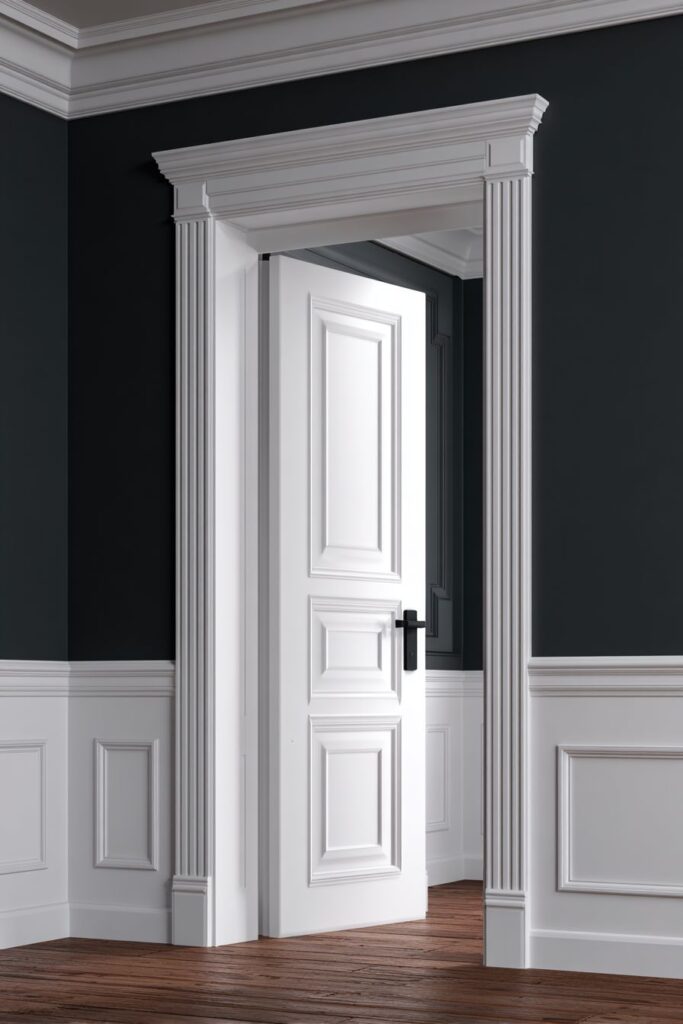
Wall treatments beyond paint create texture and depth that signal high-end design. Consider board-and-batten, picture frame molding, or decorative wall panels that add three-dimensional interest. These architectural elements provide structure and formality that elevate the dining experience from casual to refined.
The level of detail in trim work communicates craftsmanship and quality. Detailed baseboards, door casings, and chair rails in consistent profiles throughout the space create cohesion and finished appearance. Painting trim in contrasting colors or high-gloss white makes architectural elements stand out beautifully.
- Install crown molding in profiles proportional to ceiling height
- Add wainscoting or chair rails at 32-36 inches for classical elegance
- Consider board-and-batten or picture frame molding for textured walls
- Paint trim in high-gloss white or contrasting colors for definition
- Ensure all molding profiles coordinate throughout connected spaces
- Hire professionals for crisp lines and perfect mitered corners
6. Curate Meaningful Artwork and Decor
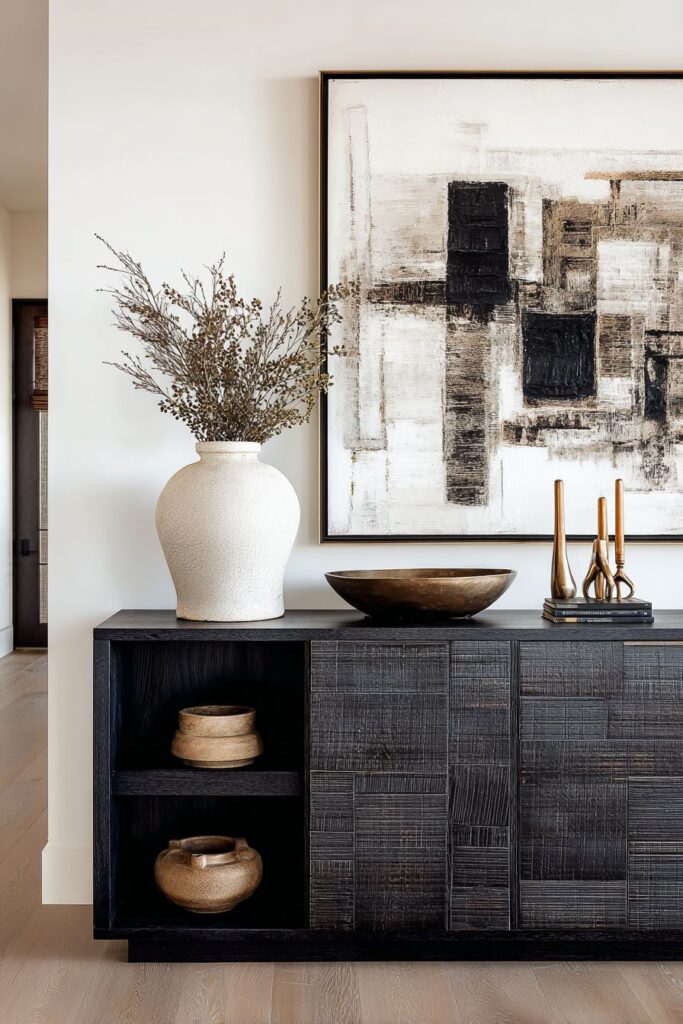
Large-scale artwork commands attention and establishes the dining room as a curated, intentional space worthy of investment. A substantial piece above a buffet or along a focal wall anchors the room visually while reflecting your personal taste. Size matters—small art in large spaces reads as unfinished or timid.
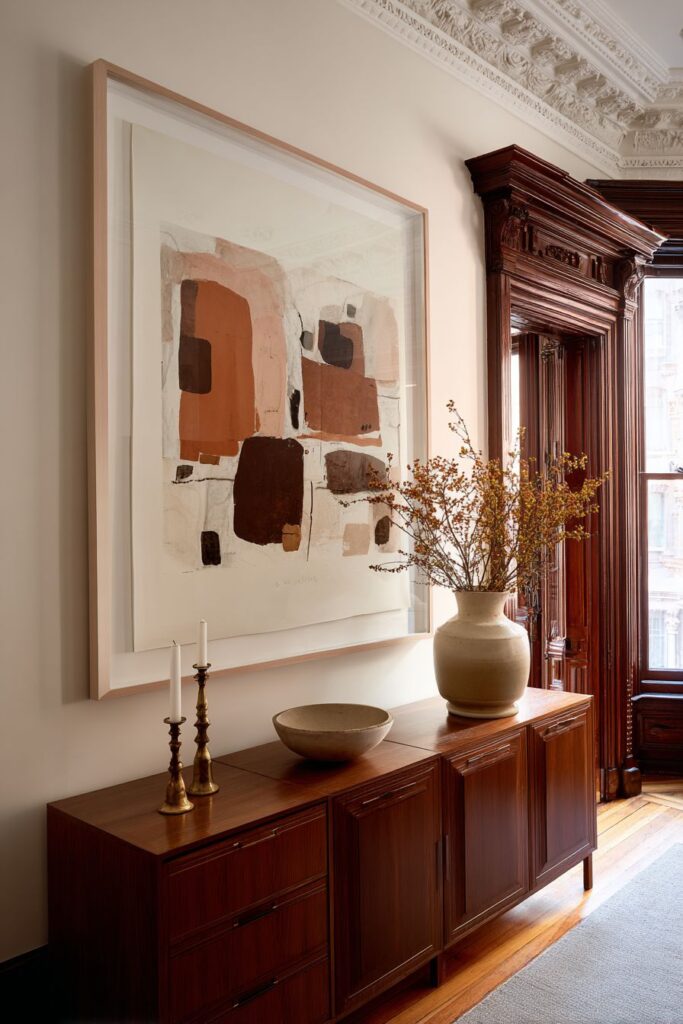
The quality of frames affects artwork impact as much as the pieces themselves. Museum-quality framing with substantial frames, proper matting, and quality glass elevates even affordable art prints. Professional framing signals that you value the artwork enough to present it properly.
Decorative objects on dining furniture should follow the less is more principle that defines luxury. A few carefully chosen pieces—a sculptural bowl, quality candlesticks, or a striking vase—create more impact than cluttered surfaces. Each item should earn its place through beauty, meaning, or exceptional quality.
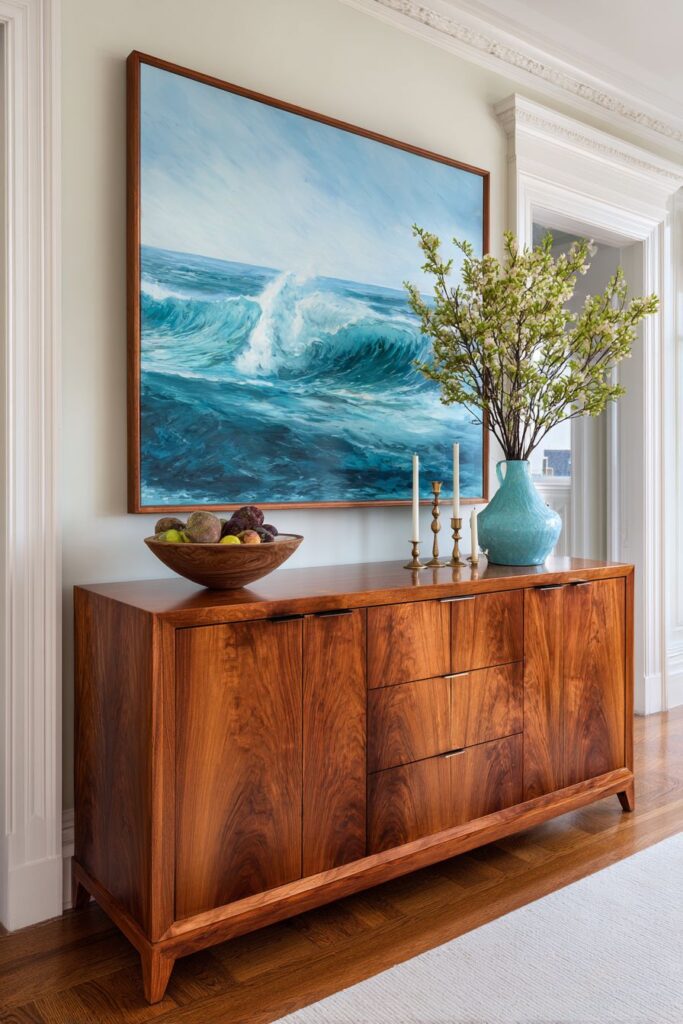
- Select artwork sized to fill two-thirds to three-quarters of available wall space
- Invest in professional framing with quality mats and substantial frames
- Hang art at 57-60 inches center height for gallery-standard placement
- Choose decorative objects that tell a story or showcase craftsmanship
- Follow the rule of three when arranging objects for visual balance
- Rotate seasonal decor to keep the space feeling fresh and curated
7. Perfect Your Color Palette
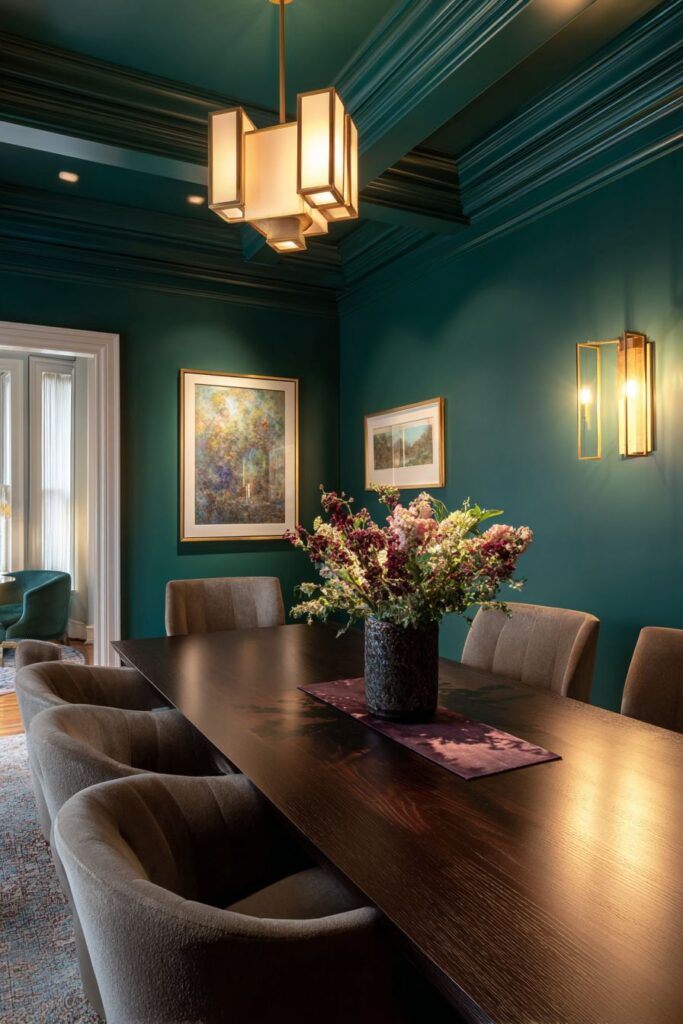
Sophisticated color schemes in dining rooms typically embrace depth and richness rather than bright, primary colors. Deep jewel tones like emerald, sapphire, or burgundy create intimate, cocoon-like spaces that feel expensive and intentional. These saturated colors work particularly well in rooms used primarily for evening entertaining.
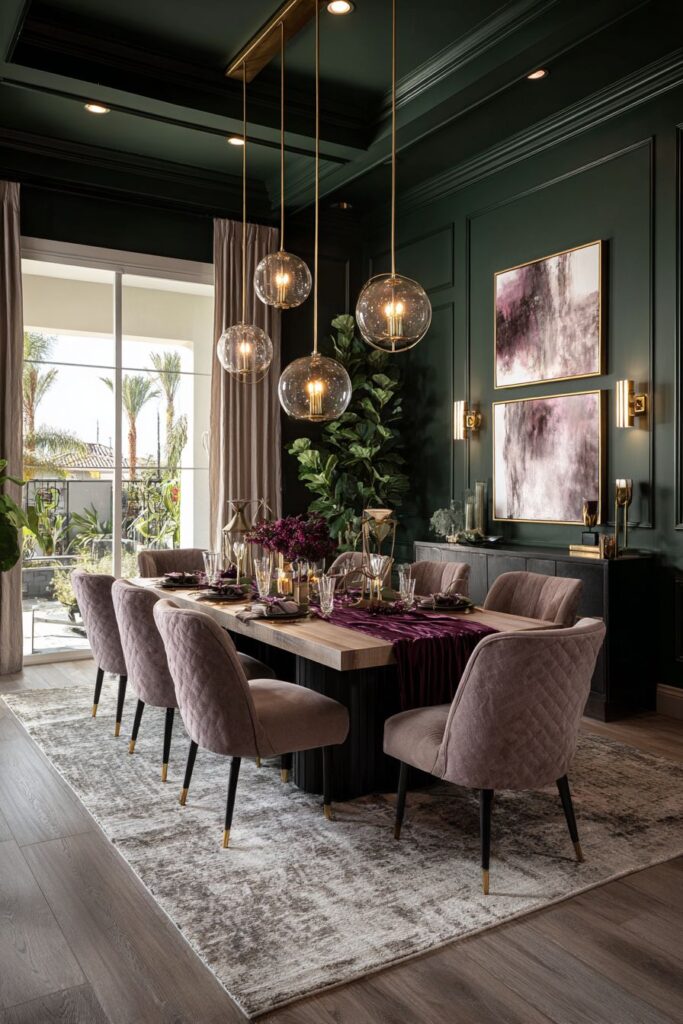
Neutral palettes can feel equally luxurious when executed with attention to tone and layering. Warm grays, soft taupes, creamy whites, and subtle beiges create serene backdrops that let furniture and decor shine. The key lies in using multiple shades within the same color family for dimensional interest.
Accent colors should be introduced thoughtfully through textiles, artwork, and accessories rather than painted surfaces. This approach allows flexibility while maintaining a cohesive foundation. Metallics like gold, brass, or silver add luxury touches without overwhelming the primary palette.
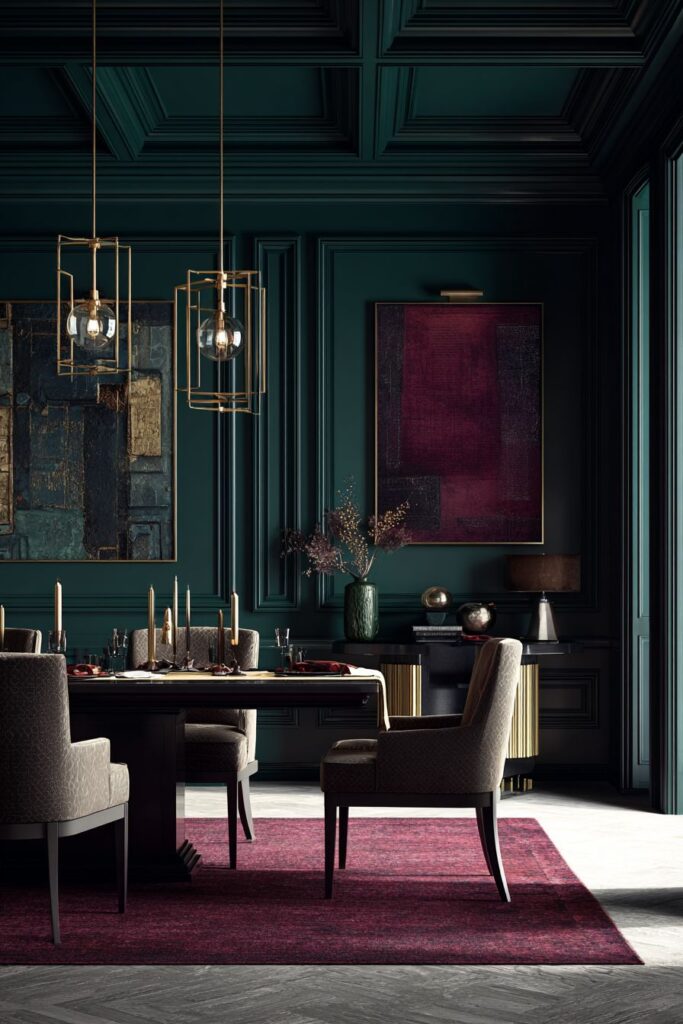
- Choose paint colors several shades deeper than you initially consider
- Test paint samples on multiple walls to see how light affects color
- Use one color family in various shades for sophisticated monochromatic schemes
- Incorporate metallics through light fixtures, hardware, and accessories
- Balance warm and cool tones for dimensional, professional color schemes
- Consider darker colors on accent walls or all walls for dramatic intimacy
8. Upgrade Hardware and Finishing Touches
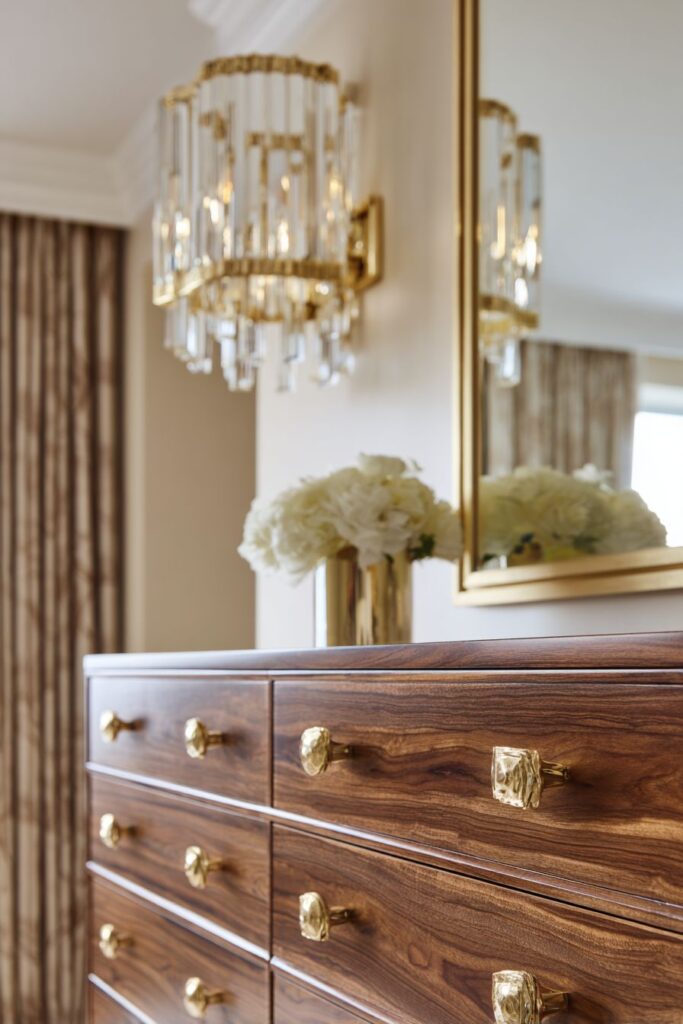
Quality hardware on dining furniture and built-ins contributes subtle luxury that guests perceive subconsciously. Cabinet pulls, drawer handles, and door knobs in substantial metals signal attention to detail and quality construction. Cheap, lightweight hardware undermines even expensive furniture pieces.
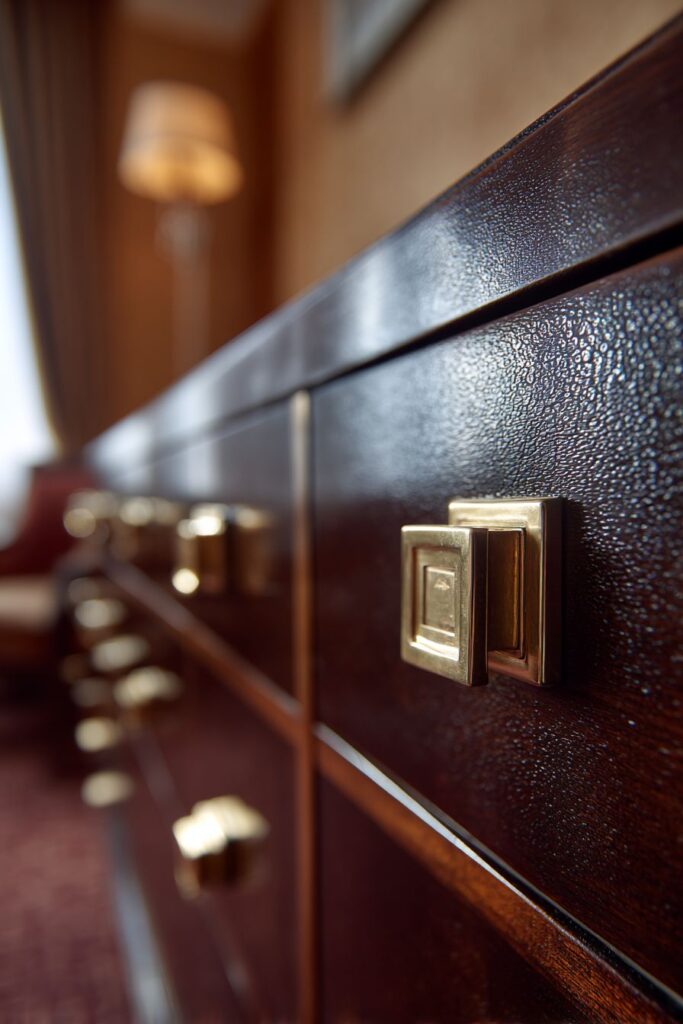
Finish consistency throughout the space creates cohesive, intentional design. Coordinate metal finishes in light fixtures, hardware, and accessories for polished professionalism. Mixing metals works beautifully when done intentionally, but random combinations appear unplanned and diminish luxury perception.
Small details like switch plates and outlet covers in premium finishes or architectural styles elevate the entire space. Upgrading these often-overlooked elements from builder-grade plastic to metal, glass, or colored options takes minutes but significantly impacts overall finish quality and attention to detail.
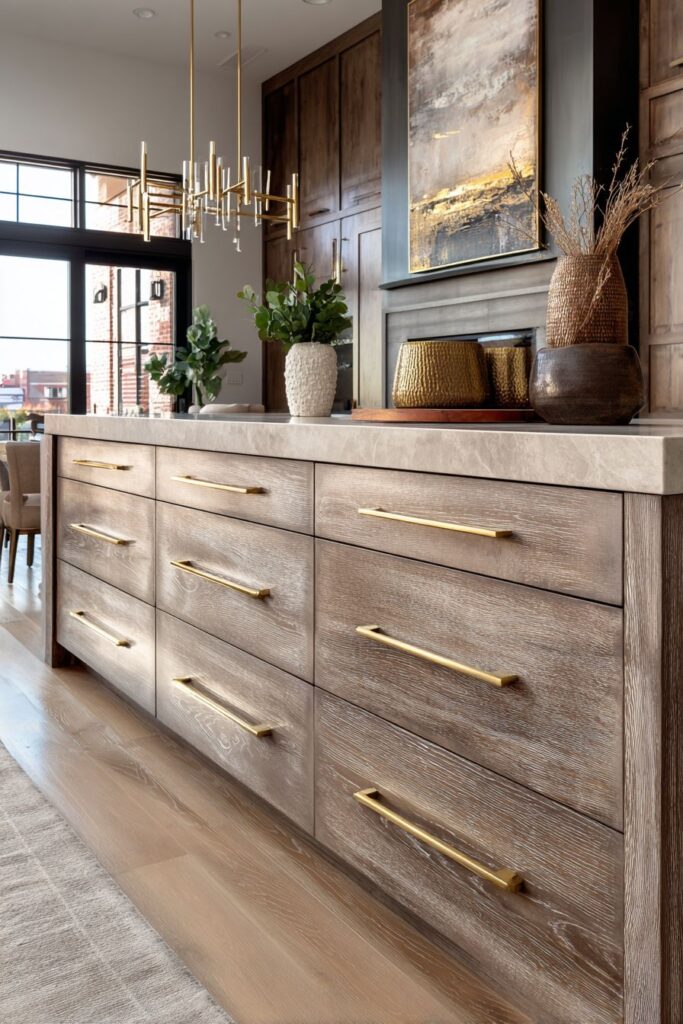
- Replace all hardware with substantial pieces in consistent finishes
- Coordinate metal finishes across fixtures, hardware, and accessories
- Choose brass, bronze, or brushed nickel for timeless luxury appeal
- Upgrade electrical covers to match trim color or select premium styles
- Add felt pads under all furniture legs to protect floors and reduce noise
- Install quality door stops and hinges that operate smoothly and quietly
9. Create a Focal Point Wall
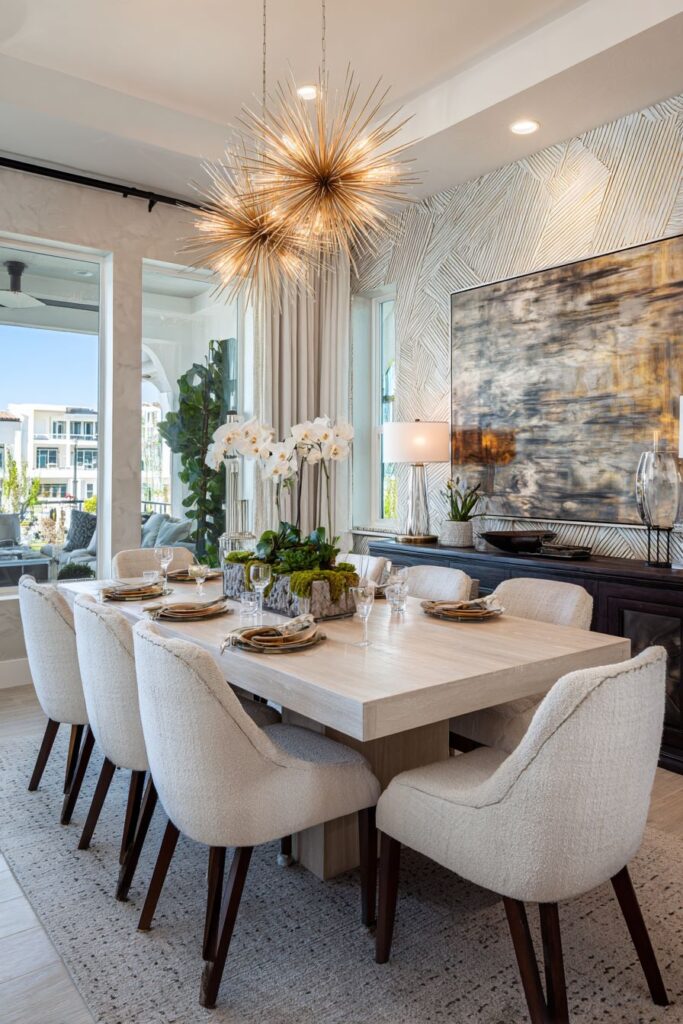
Feature walls anchor dining rooms and provide visual interest that elevates the entire space. Options include wallpaper in luxurious patterns, textured treatments like Venetian plaster, or accent paint colors that create depth and drama. This dedicated focal area adds intentionality and design sophistication.
Wallpaper has returned as a luxury element in contemporary dining spaces. Textured grasscloth, metallic patterns, or bold prints create instant personality and richness. Quality wallpaper provides depth and pattern that paint alone cannot achieve, making it worth the investment in rooms where you want maximum impact.
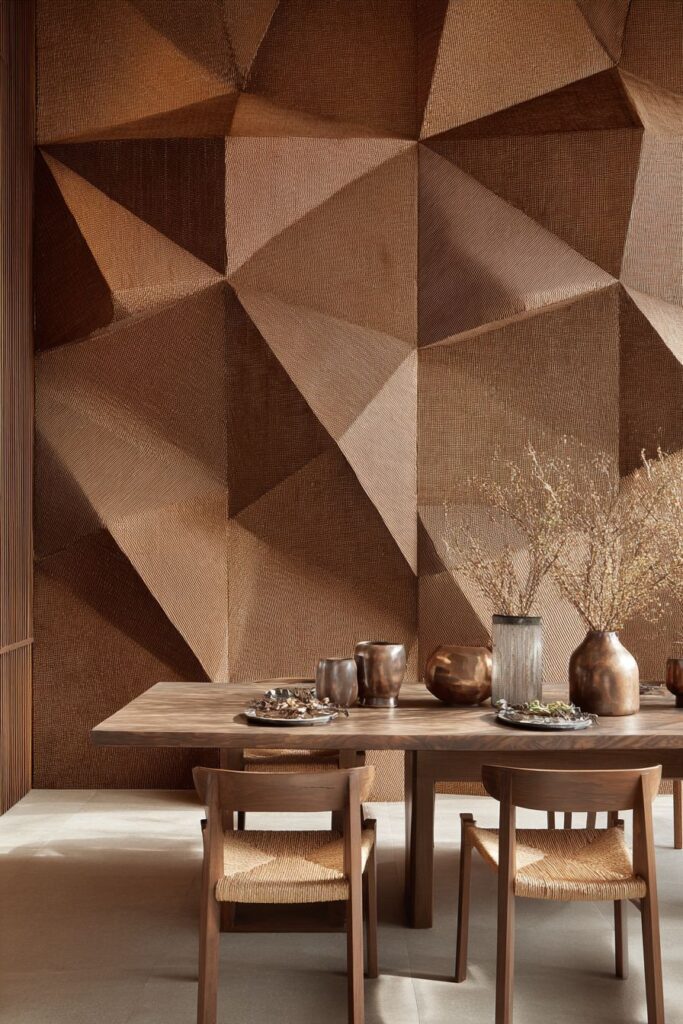
Textured wall finishes like plaster, stone, or wood paneling add three-dimensional interest and tactile luxury. These materials catch light differently throughout the day, creating dynamic surfaces that feel expensive and custom. Even faux techniques executed well can deliver impressive results at lower costs.
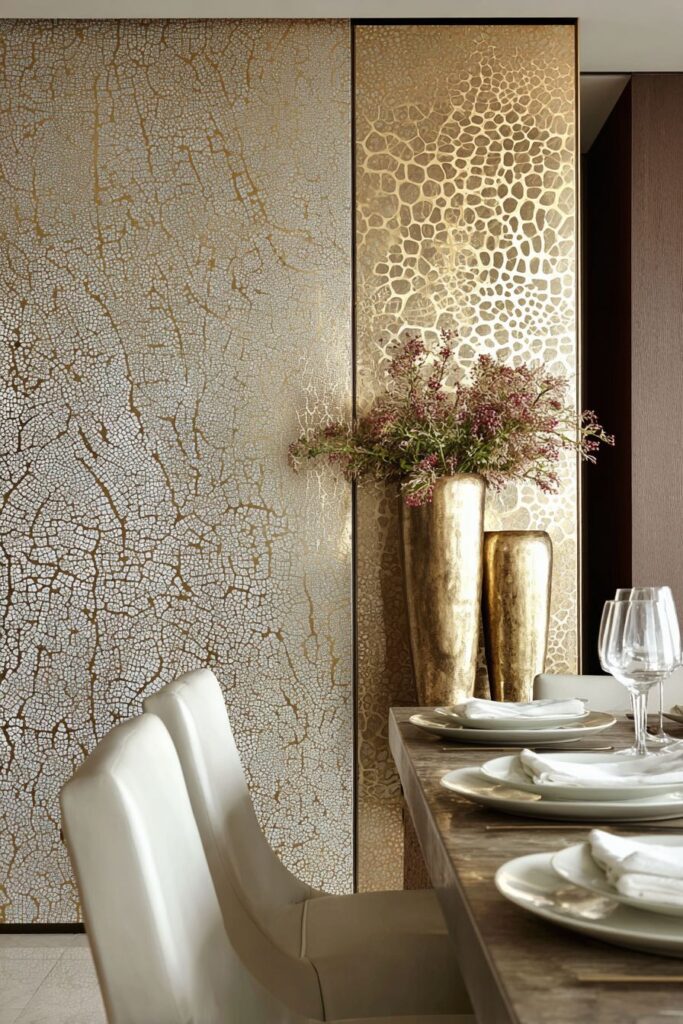
- Select wallpaper with texture, metallics, or subtle pattern for sophistication
- Consider the wall behind your dining table or buffet as the ideal focal point
- Ensure feature walls have adequate lighting to showcase texture and detail
- Balance bold walls with simpler surrounding surfaces to avoid overwhelming the space
- Test wallpaper samples in your actual lighting conditions before purchasing
- Hire professionals for wallpaper installation to ensure perfect seams and alignment
10. Add Fresh Flowers and Natural Elements
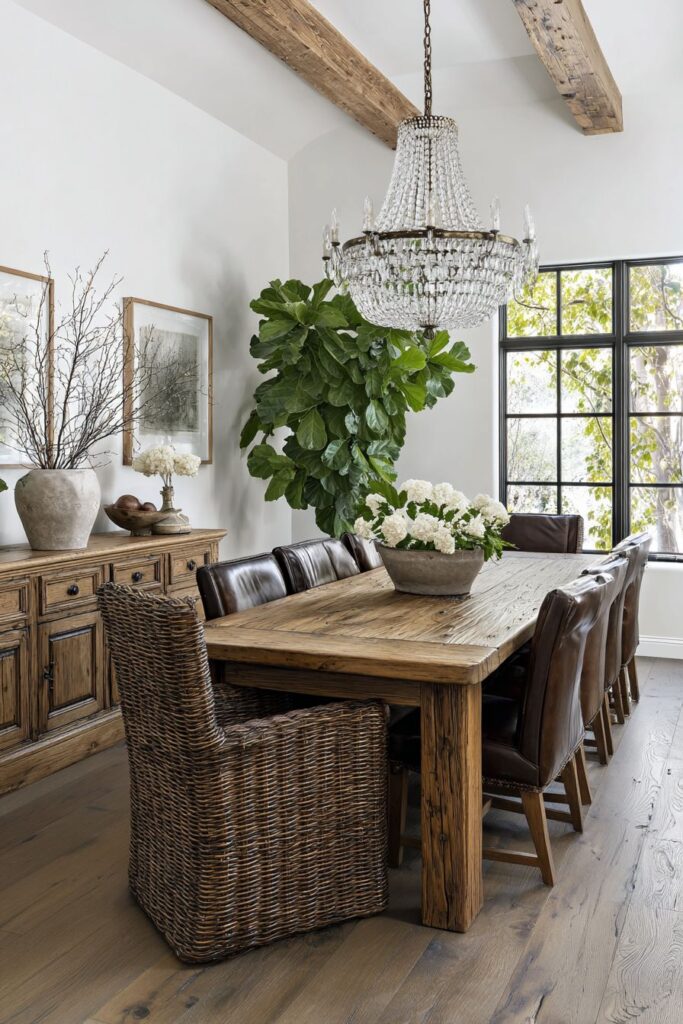
Fresh flowers instantly elevate any dining space with color, fragrance, and life that artificial elements cannot replicate. A substantial arrangement in a quality vase creates an immediate impression of luxury and care. Even simple grocery store flowers presented thoughtfully read as intentional and expensive.
Natural materials throughout the space connect the room to organic beauty and timeless luxury. Wood, stone, leather, and natural fibers possess inherent warmth and quality that synthetic materials lack. These elements age beautifully, developing patina that adds character rather than appearing worn.
Living elements like potted plants or herb gardens bring vitality and freshness to dining spaces. Large-scale plants in attractive containers add height and drama while improving air quality. Position greenery near windows where they’ll thrive while contributing to the room’s overall composition.
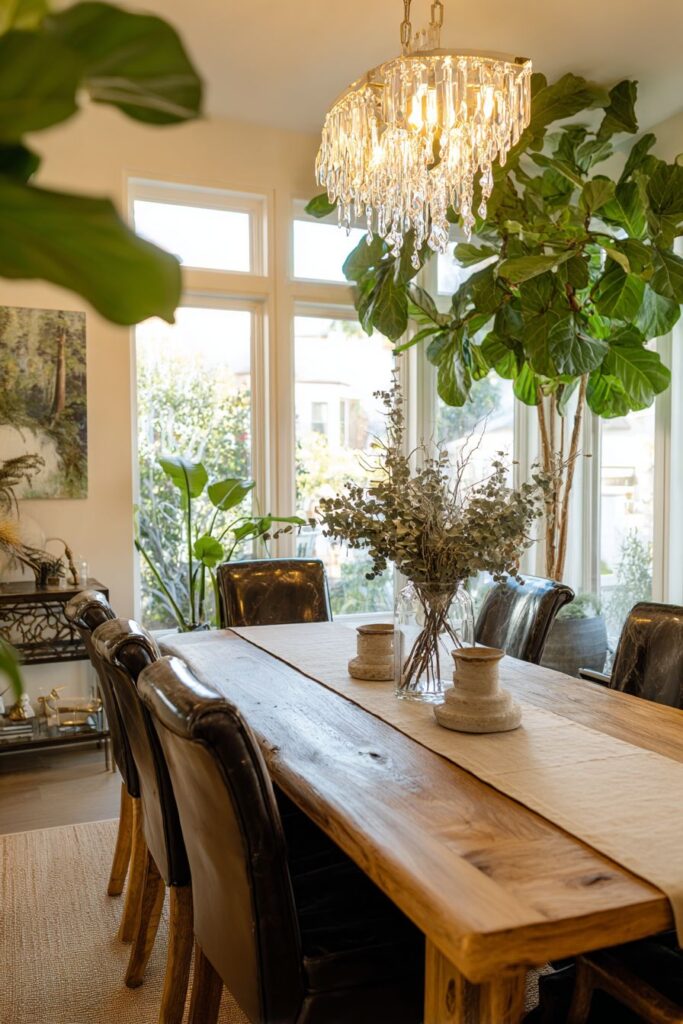
- Display fresh flowers weekly in substantial arrangements for ongoing luxury
- Choose quality vases in materials like crystal, ceramic, or metal
- Incorporate natural materials in furniture, flooring, and decor selections
- Add large potted plants in corners or flanking buffets for vertical interest
- Select plants appropriate for available light conditions to ensure they thrive
- Consider seasonal branches or greenery for dramatic, cost-effective statements
Conclusion
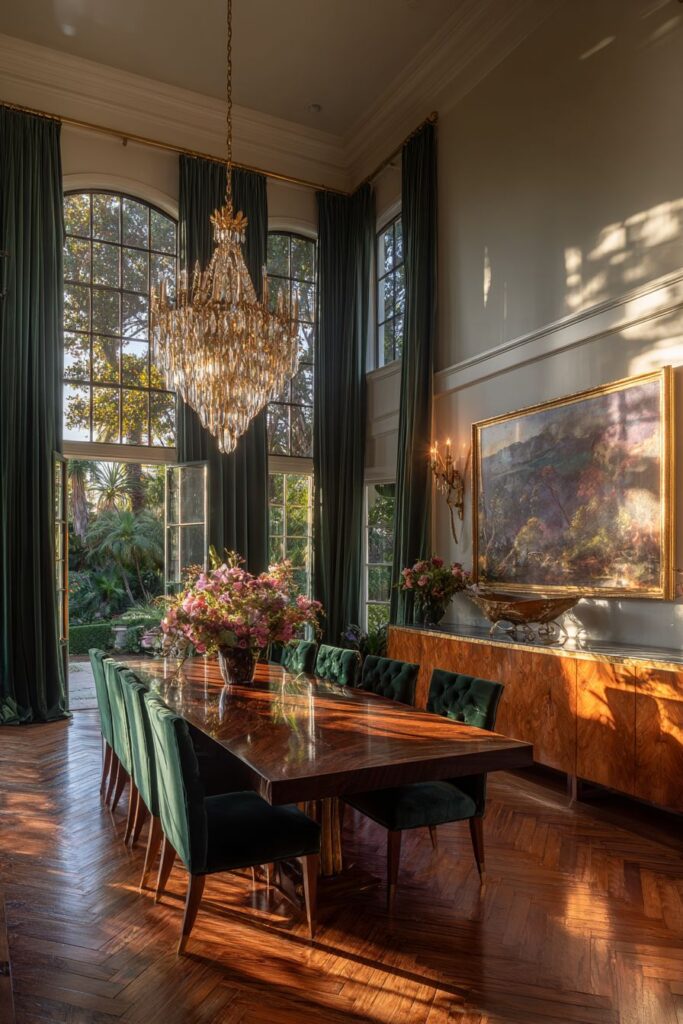
Creating a luxurious dining room centers on strategic investments in elements that deliver maximum visual and experiential impact. Quality lighting, substantial furniture, layered textiles, and thoughtful details combine to produce spaces that feel expensive regardless of actual budgets. The key lies in understanding which elements communicate luxury most effectively and investing accordingly.Remember that authentic luxury feels both impressive and comfortable, never stuffy or untouchable. Your dining room should invite use and create memorable experiences while showcasing your design sensibility. Start with foundational elements like lighting and furniture, then layer in architectural details, artwork, and finishing touches that reflect your personal style. The most luxurious spaces tell cohesive stories through carefully curated elements that work together harmoniously. Trust your instincts, invest in quality over quantity, and create a dining room that makes every meal feel like a special occasion.
"As an Amazon Associate, I earn from qualifying purchases."
