
Creating a beautiful and functional large living room presents unique opportunities and challenges that smaller spaces simply don’t offer. When you’re blessed with generous square footage, high ceilings, and expansive walls, the design possibilities become endless, yet the task of making the space feel cohesive and inviting requires careful planning and expert execution. Large living rooms serve as the heart of the home, where families gather, guests are entertained, and memories are made, making their design all the more crucial to get right.
The key to successfully designing a large living room lies in understanding how to balance scale, proportion, and functionality while creating intimate gathering spaces within the grander architectural framework. Unlike compact rooms where every inch must be maximized, large living spaces allow for multiple conversation areas, dramatic architectural features, and statement pieces that would overwhelm smaller rooms. The challenge becomes not filling every corner, but rather creating purposeful zones that serve different functions while maintaining visual harmony throughout the expansive space.
In this comprehensive guide, we’ll explore twenty distinct design concepts that showcase the versatility and potential of large living rooms. From rustic charm featuring reclaimed materials to sophisticated monochromatic schemes, from family-friendly layouts to entertainment-focused designs, each concept demonstrates how thoughtful planning can transform even the most challenging large space into a warm, welcoming, and functional living area that reflects your personal style and meets your lifestyle needs.
1. Sophisticated Sectional Sanctuary with Exposed Beam Drama
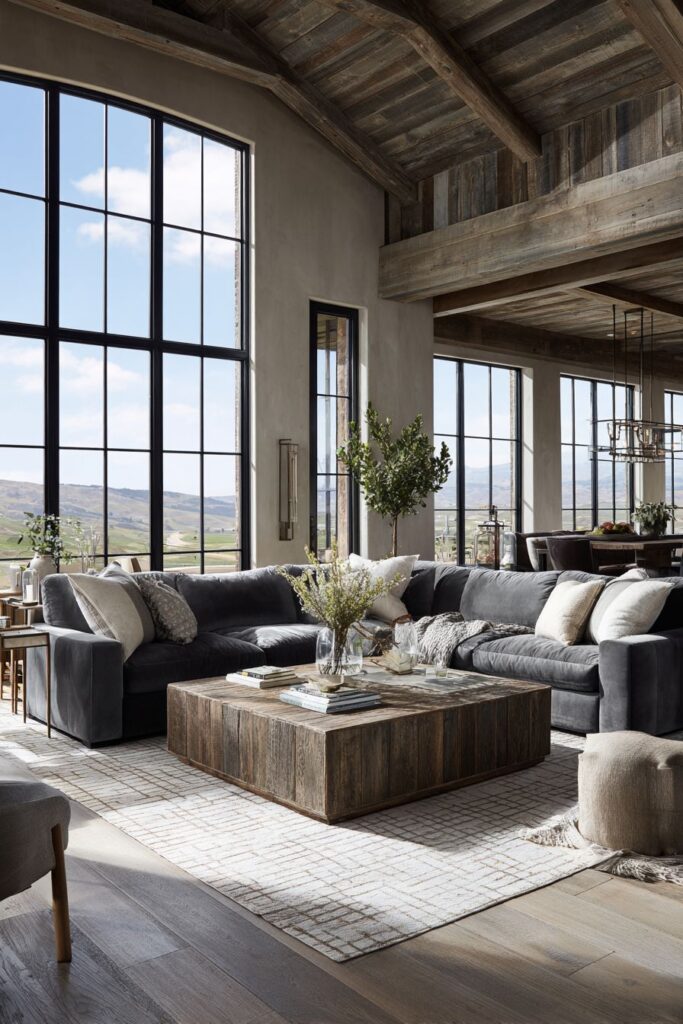
Transform your large living room into an elegant retreat by anchoring the space with a spacious charcoal grey sectional sofa that defines the main seating area without overwhelming the room’s generous proportions. The beauty of this design lies in its ability to create intimate conversation spaces within the grander architectural framework, where exposed wooden beams overhead add rustic charm while maintaining contemporary sophistication. These structural elements not only provide visual interest but also help break up the expansive ceiling plane, making the room feel more intimate despite its impressive scale.
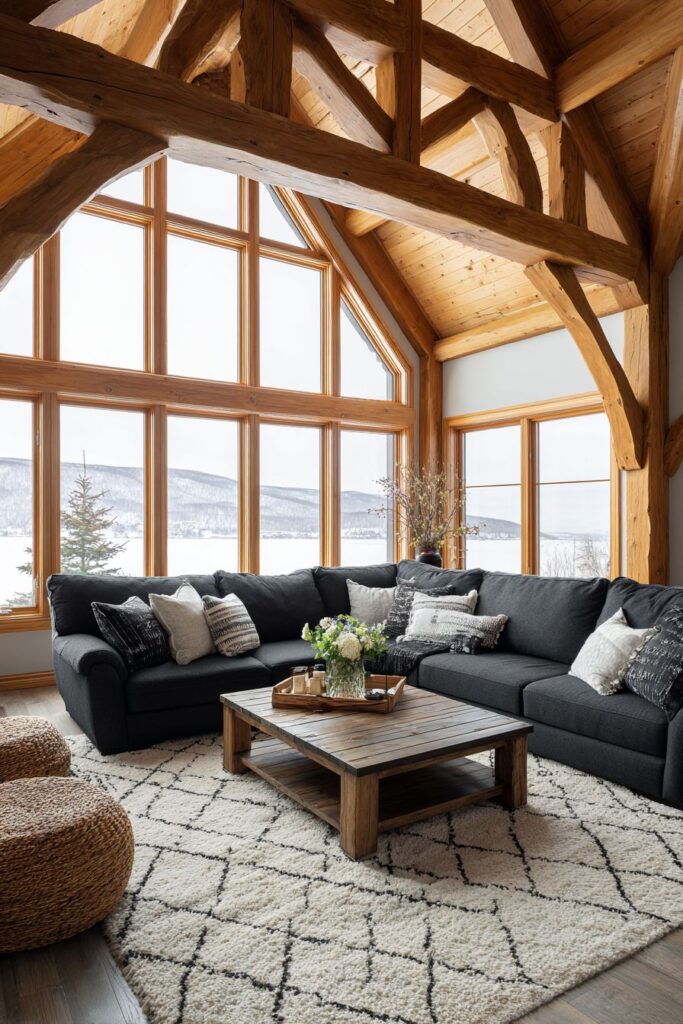
The magic happens when floor-to-ceiling windows flood the space with natural light, creating a dynamic interplay between interior comfort and outdoor beauty. This abundant natural lighting eliminates the cave-like feeling that can plague large rooms with insufficient illumination, instead creating a bright, airy atmosphere that changes throughout the day. The substantial coffee table in reclaimed oak serves as both a functional centerpiece and a grounding element that connects the seating arrangement to the earth-toned materials used throughout the space.
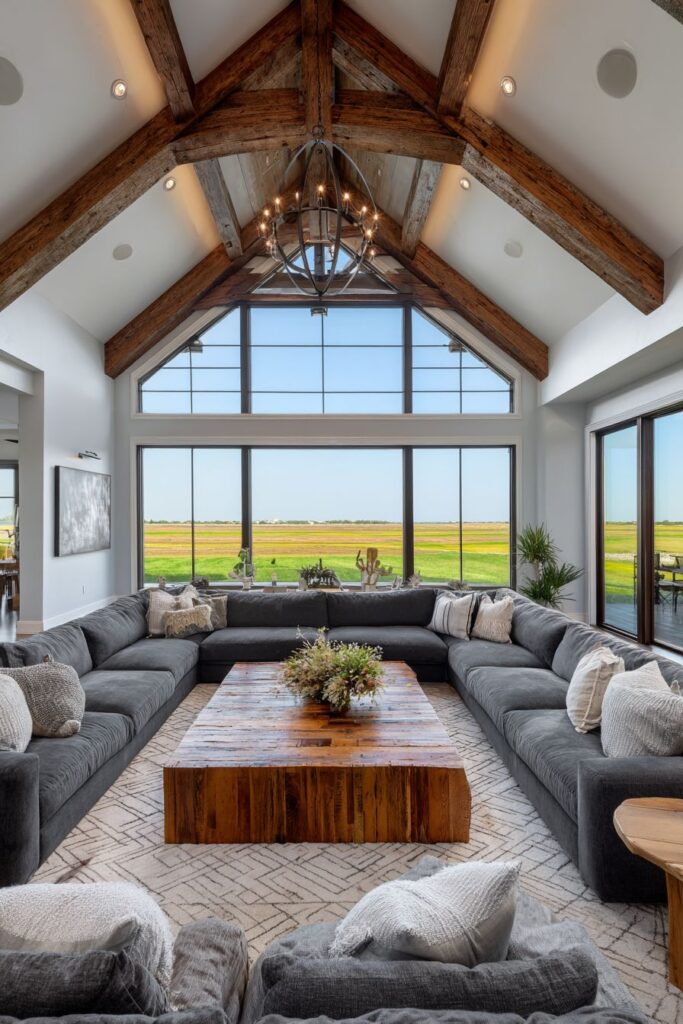
A large geometric wool rug becomes the foundation that unifies the entire seating arrangement while adding texture and visual weight appropriate for the room’s scale. The geometric pattern provides structure and definition without competing with the organic lines of the wooden beams, creating a balanced composition that feels both planned and natural. The rug’s generous size ensures that all furniture pieces have at least their front legs on the textile, creating a cohesive furniture grouping that doesn’t float awkwardly in the expansive room.
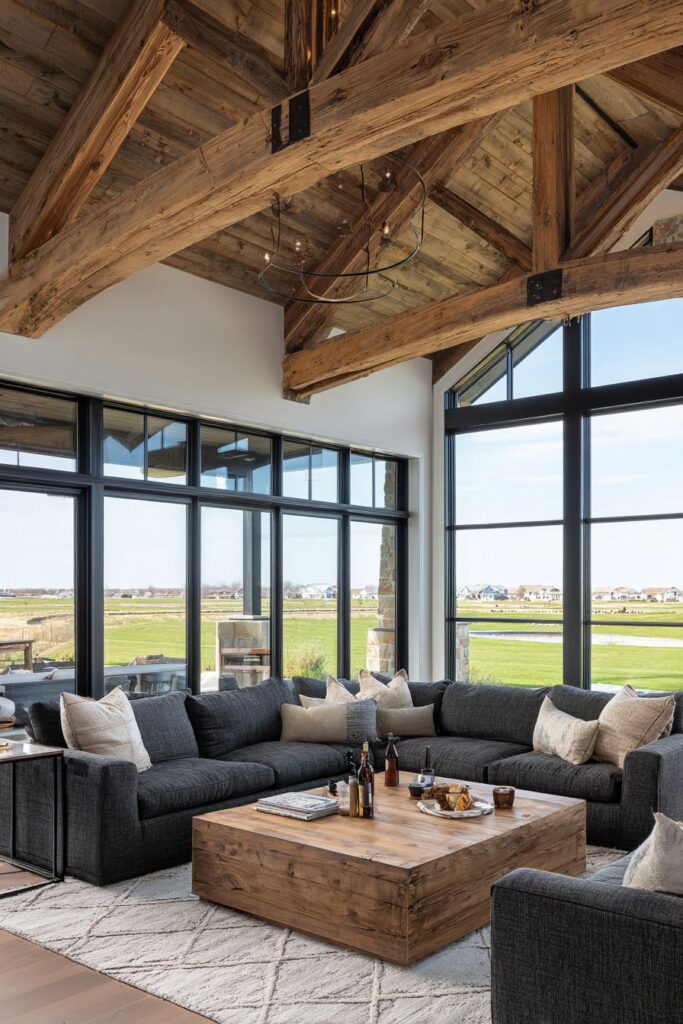
Key Design Tips:
- Choose furniture proportional to your room size – oversized sectionals work better than multiple small sofas in large spaces
- Use area rugs to define conversation areas and ensure they’re large enough for all seating to touch the rug
- Embrace architectural features like exposed beams rather than trying to hide them
- Position seating to take advantage of natural light while creating multiple conversation zones
- Select coffee tables that match the scale of your seating – substantial pieces ground large furniture arrangements
2. Multi-Zone Haven with Fireplace Focal Point
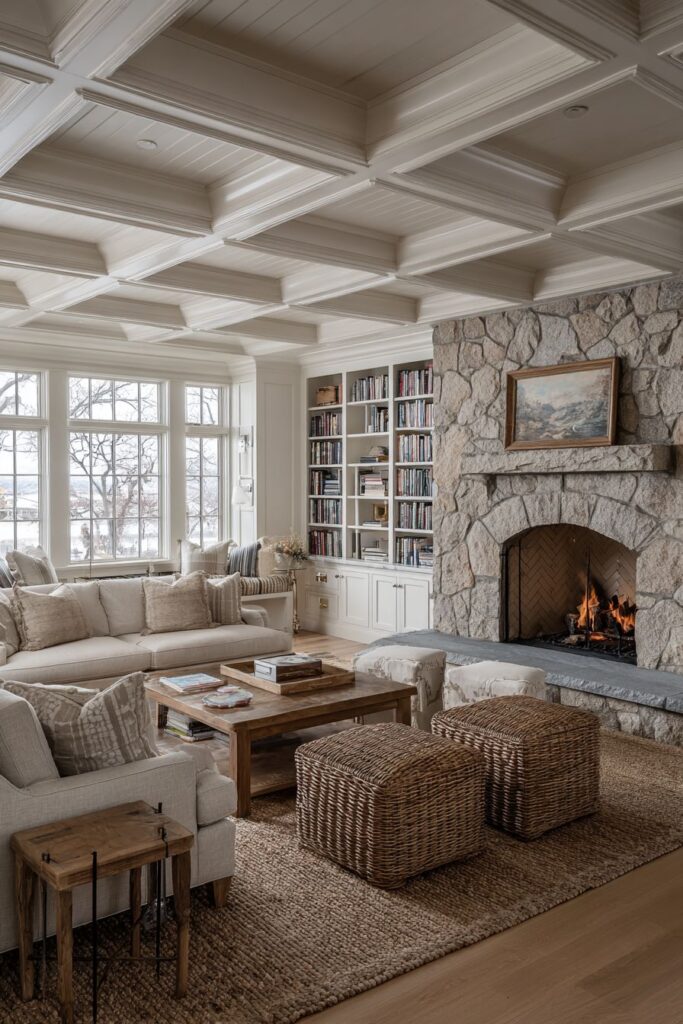
Create the ultimate large living room by establishing multiple conversation areas that serve different purposes while maintaining visual harmony throughout the space. The primary seating zone centers around a dramatic stone fireplace, where the natural texture and warmth of the stone create an inviting focal point that draws people together. This arrangement works particularly well in large rooms because it provides a natural gathering place that doesn’t rely on the room’s perimeter walls for definition, allowing the furniture to float confidently in the center of the space.
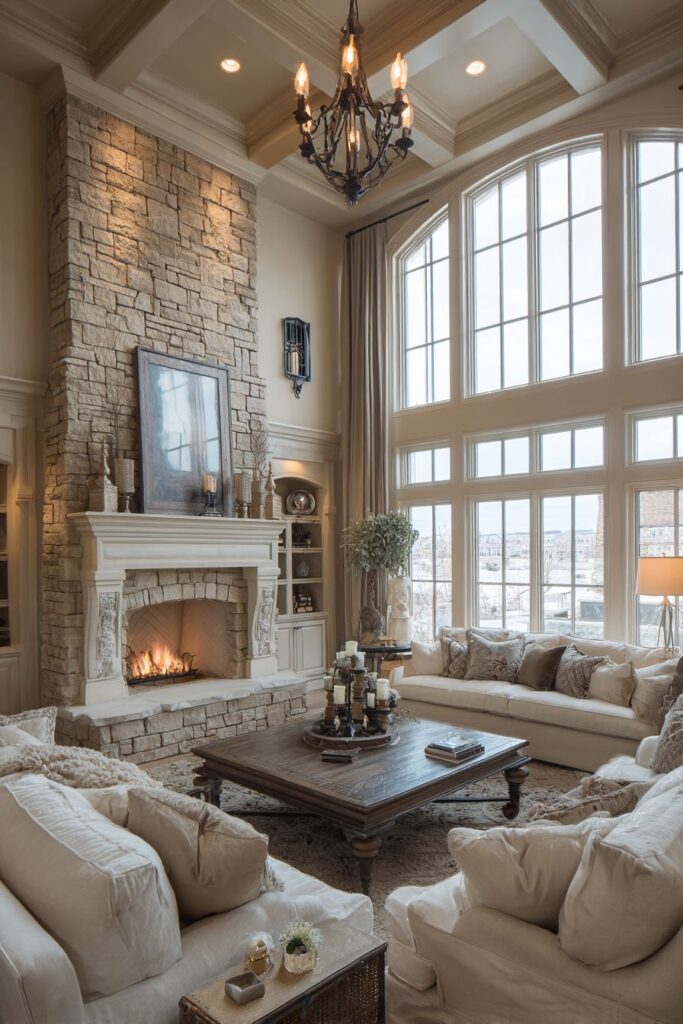
The secondary reading nook positioned by tall windows takes advantage of natural light while creating an intimate retreat within the larger room. This thoughtful zoning ensures that the expansive space serves multiple functions without feeling fragmented or disconnected. The neutral furnishings in cream and taupe with natural linen textures create a sophisticated foundation that allows the architectural elements to shine while providing the comfort and softness necessary for a lived-in family space.
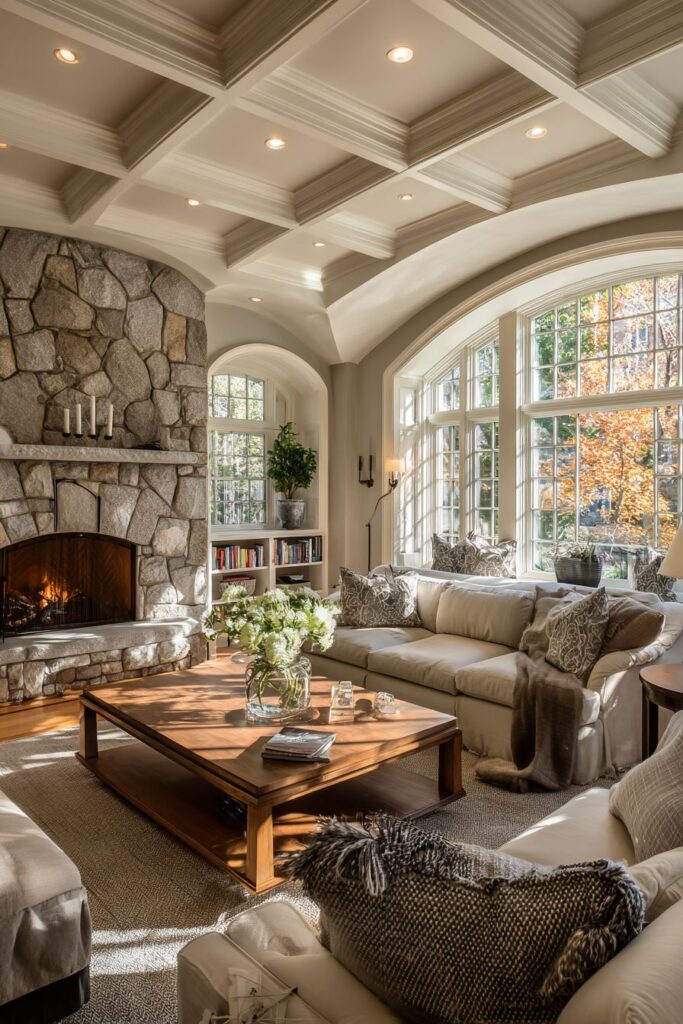
Architectural elements like coffered ceilings and built-in bookcases define the room’s character while providing the visual weight necessary to balance the generous proportions. These permanent fixtures serve multiple purposes: they add architectural interest overhead, provide storage solutions that don’t encroach on floor space, and create a sense of enclosure that makes the large room feel more intimate. The built-in bookcases particularly excel in large rooms because they can span entire walls without overwhelming the space, providing both storage and display opportunities.
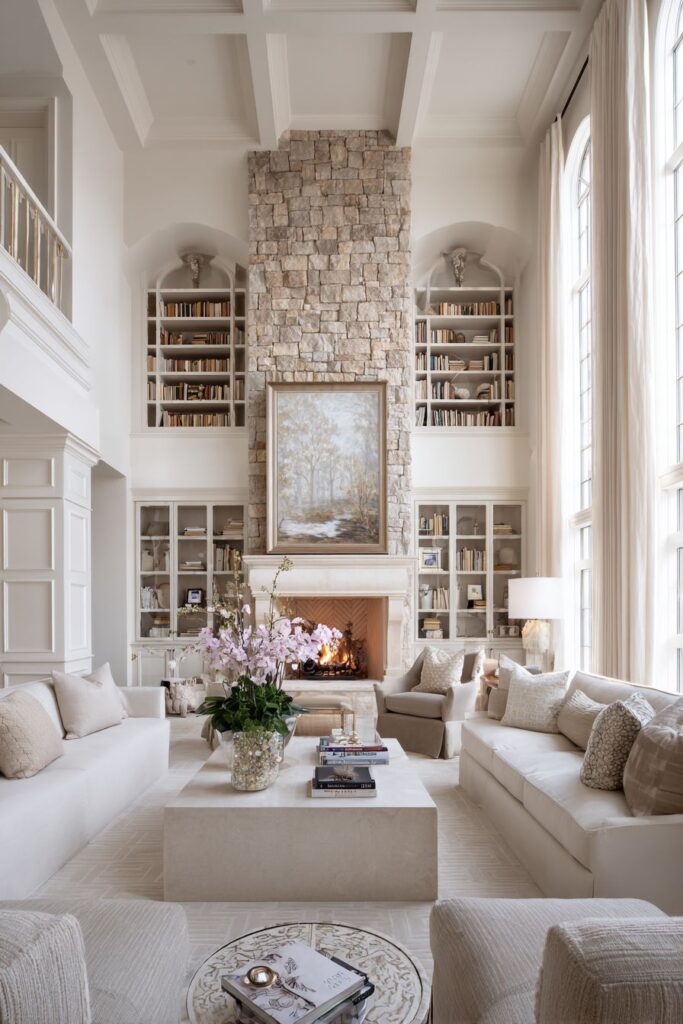
The professional interior photography techniques that would capture this space emphasize how soft natural lighting can make even the grandest rooms feel welcoming and lived-in. The key lies in layering different light sources throughout the day, from the natural light streaming through tall windows to the intimate glow of table lamps and the dramatic flicker of the fireplace in the evening.
Key Design Tips:
- Create distinct zones within large spaces using furniture placement rather than room dividers
- Use architectural features like fireplaces as natural focal points for seating arrangements
- Incorporate built-in storage to maximize functionality without cluttering floor space
- Layer lighting sources to accommodate different times of day and activities
- Choose neutral base colors that allow architectural details to take center stage
3. Entertainment-Focused Media Wall Masterpiece
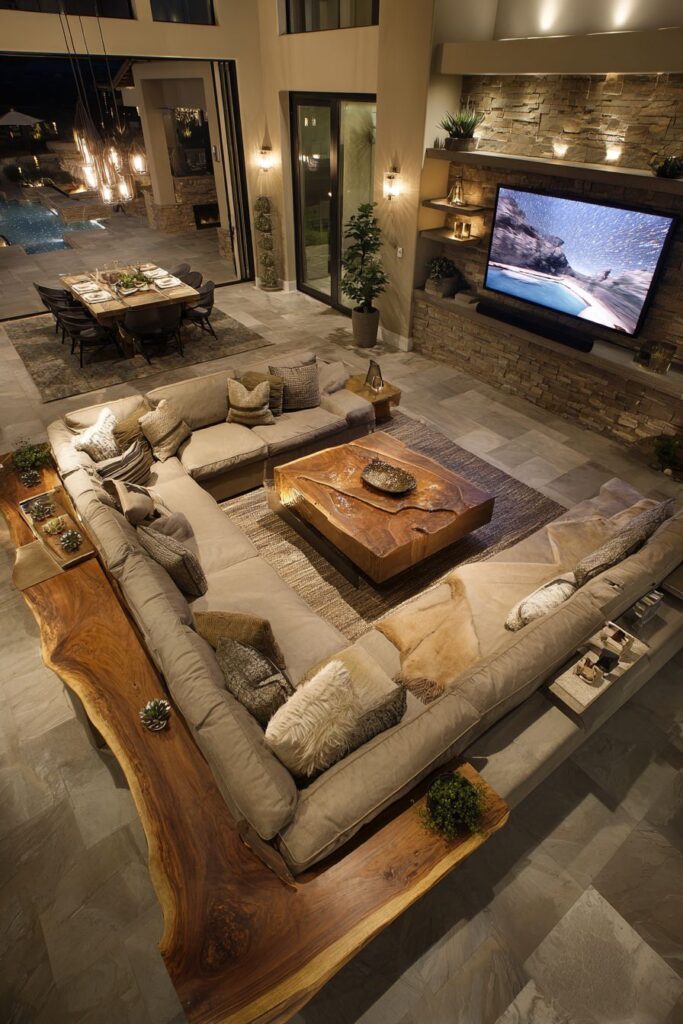
Design your large living room around the ultimate entertainment experience by featuring an oversized L-shaped sectional that faces a sophisticated media wall with built-in shelving. This configuration works exceptionally well in large spaces because it creates a clear focal point while providing ample seating for family movie nights and entertaining guests. The media wall serves as both a functional element and an architectural feature, incorporating closed storage for electronics and media while displaying decorative objects and books that add personality to the space.
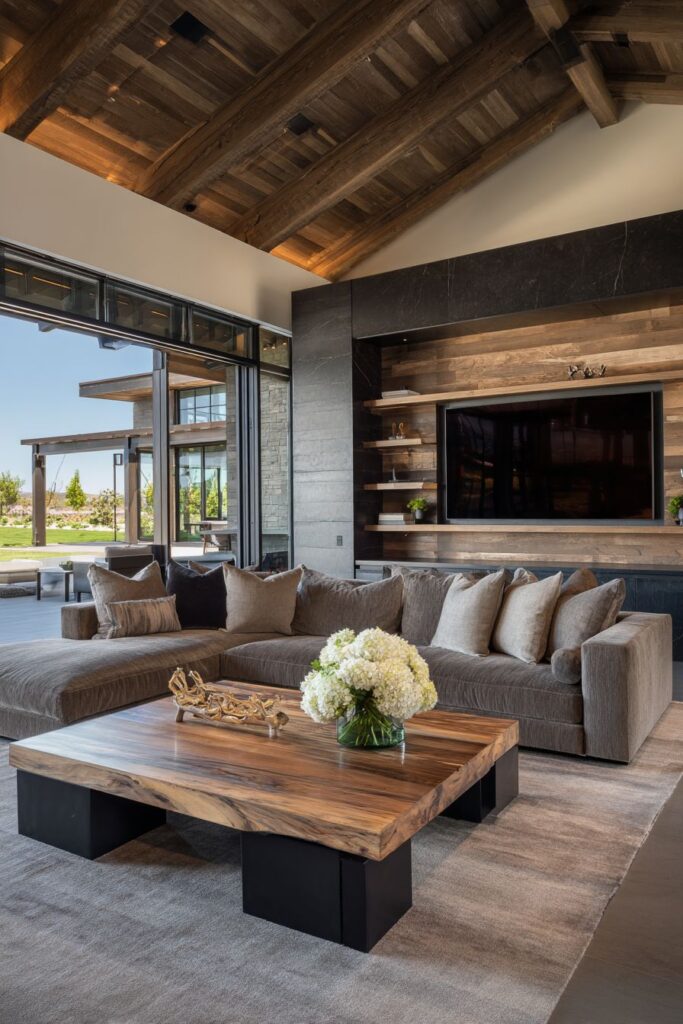
The incorporation of warm wood tones through floating shelves and a live-edge coffee table brings natural warmth to what could otherwise feel like a cold, technology-focused space. These organic elements provide textural contrast against the clean lines of the media wall while adding the visual weight necessary to balance the room’s impressive scale. The live-edge coffee table particularly excels in large rooms because its substantial size and organic shape create a stunning centerpiece that holds its own against the oversized seating.
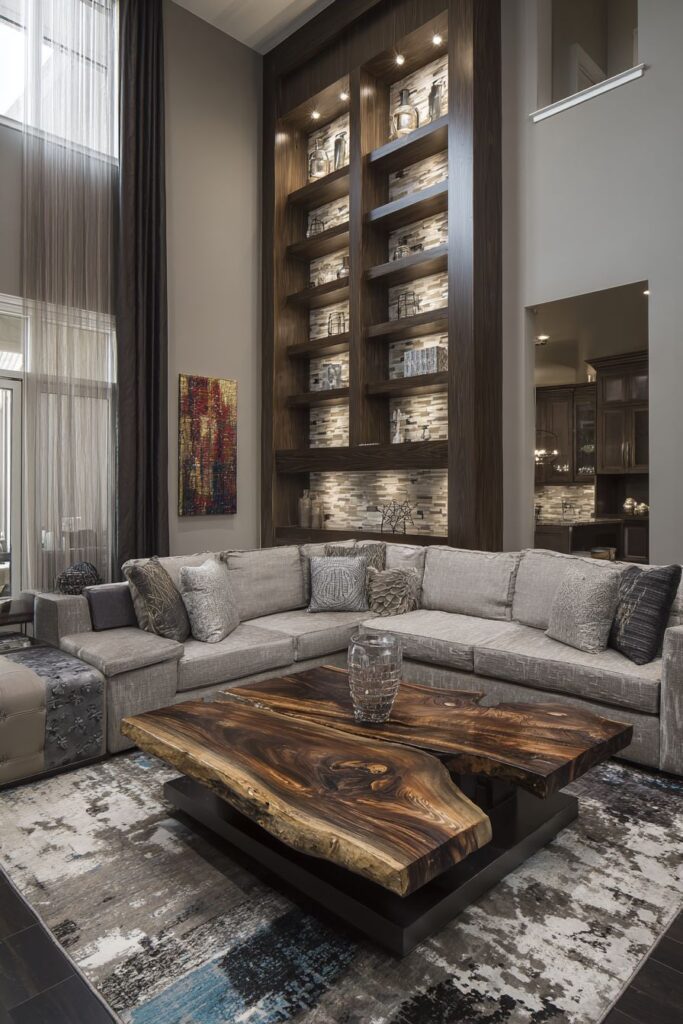
Large area rugs become essential tools for defining zones within the expansive floor plan, creating visual boundaries that help organize the space without requiring physical barriers. The layering of multiple rugs adds depth and interest while allowing different areas of the room to have distinct personalities. In entertainment-focused rooms, rugs also provide acoustic benefits, helping to absorb sound and create a more pleasant viewing experience.
The strategic interplay of natural and artificial lighting ensures that the room functions beautifully throughout the day and evening. During daytime hours, natural light prevents the space from feeling too focused on the television, while carefully planned artificial lighting creates the perfect ambiance for evening entertainment without creating glare on screens.
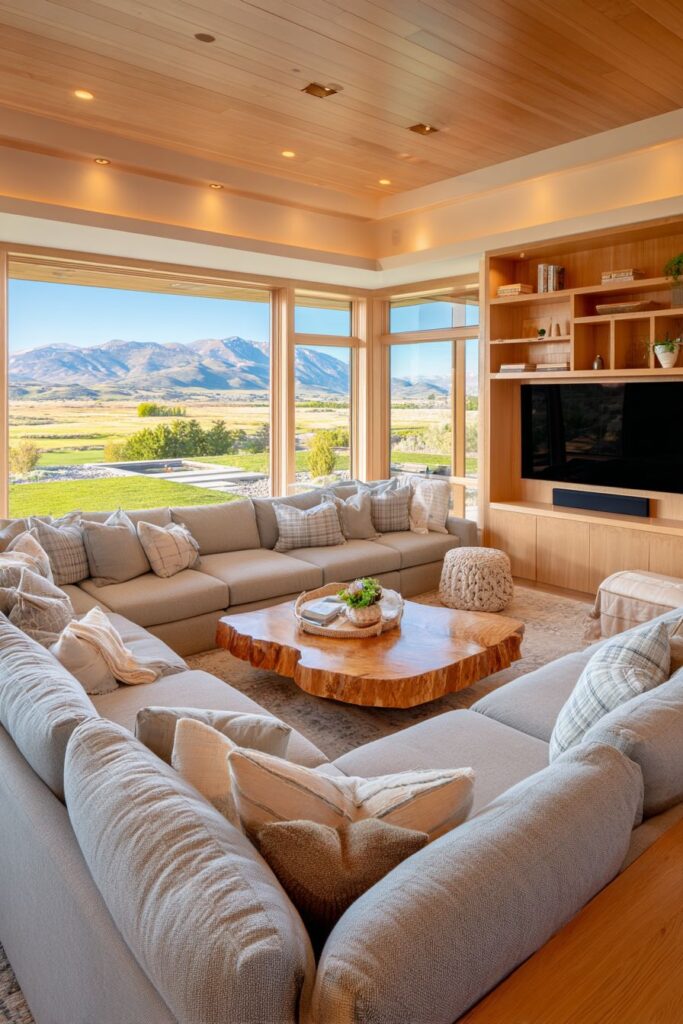
Key Design Tips:
- Scale your sectional to accommodate the room size – large rooms need substantial seating
- Incorporate built-in storage around media elements to maintain clean lines
- Add natural materials like wood to warm up technology-focused spaces
- Use multiple rugs to define different zones within open floor plans
- Plan lighting carefully to avoid glare on screens while maintaining ambiance
4. Double-Height Drama with Statement Chandelier
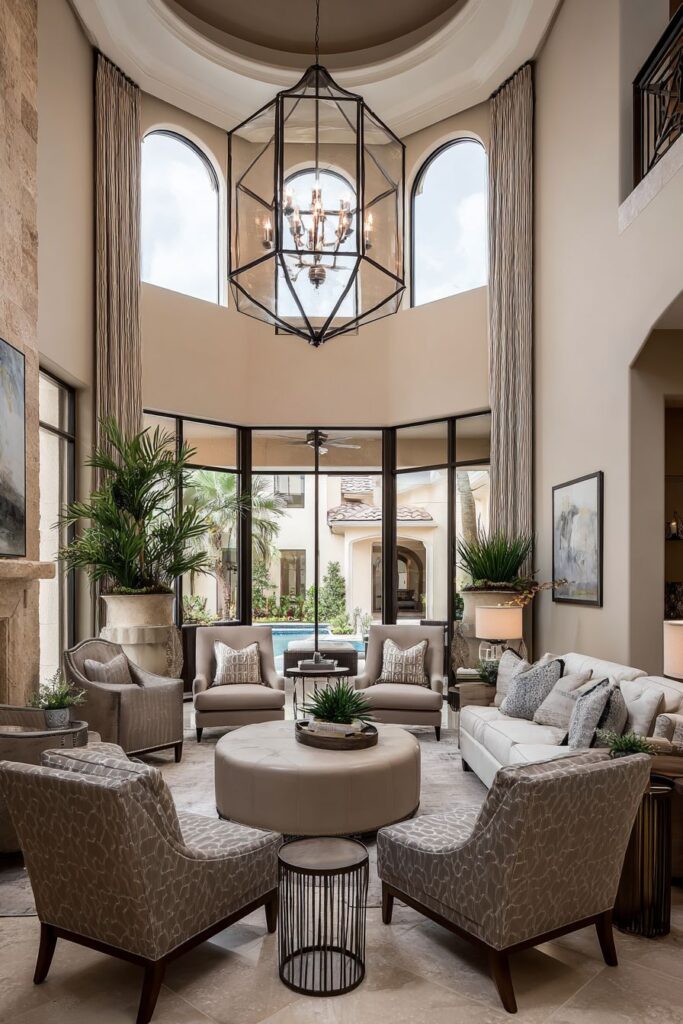
Embrace the vertical grandeur of your large living room by featuring a dramatic double-height ceiling crowned with a statement chandelier that serves as the ultimate focal point. This design approach works magnificently in large spaces because it draws the eye upward, emphasizing the room’s impressive scale while creating a sense of luxury and drama that smaller rooms simply cannot achieve. The chandelier becomes more than just a lighting fixture – it transforms into a piece of functional art that anchors the entire room’s design concept.
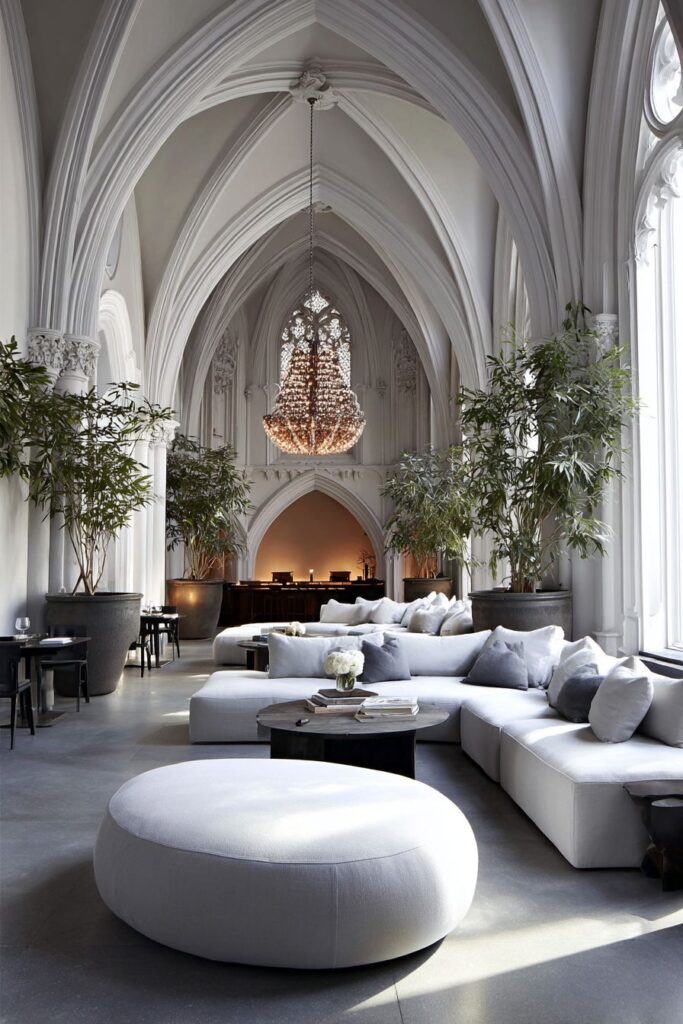
The furniture arrangement includes multiple seating groups strategically positioned to take advantage of the room’s impressive proportions while maintaining intimate conversation areas. A central conversation area around a round ottoman creates the primary gathering space, while additional seating groups scattered throughout the room provide options for different activities and group sizes. This approach prevents the common mistake of pushing all furniture against the walls, which would make the room feel even more cavernous and less inviting.
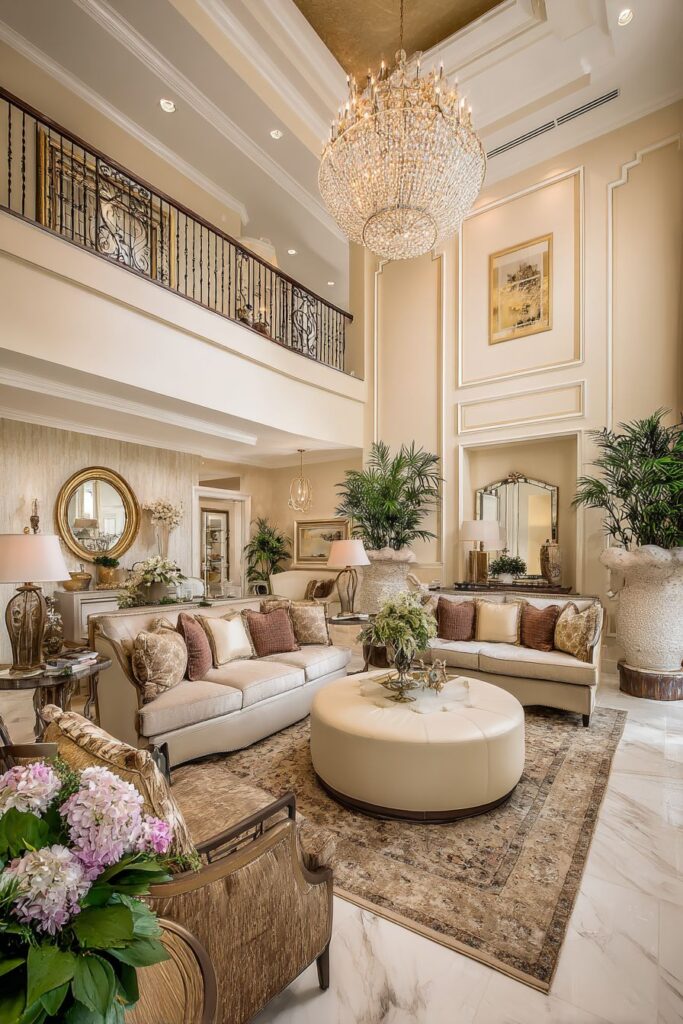
Tall plants in ceramic planters add crucial vertical elements that complement the room’s impressive scale without competing with the architectural drama overhead. These living elements bring natural texture and color into the space while helping to define different zones at floor level. The plants serve as natural room dividers that maintain the open feeling while providing subtle boundaries between different areas of the expansive room.
The wide-angle interior photography approach that would best capture this space showcases how vertical grandeur can be maintained while keeping furniture placement intimate and inviting. The key lies in balancing the dramatic overhead elements with comfortable, human-scale seating areas that encourage relaxation and conversation despite the room’s impressive dimensions.

Key Design Tips:
- Choose dramatic lighting fixtures that match the scale of high ceilings
- Create multiple seating groups rather than one large furniture arrangement
- Use tall plants to add vertical elements that complement high ceilings
- Position furniture away from walls to create intimate floating arrangements
- Balance dramatic architecture with comfortable, human-scale furniture pieces
5. Open Floor Plan Flow with Floating Furniture
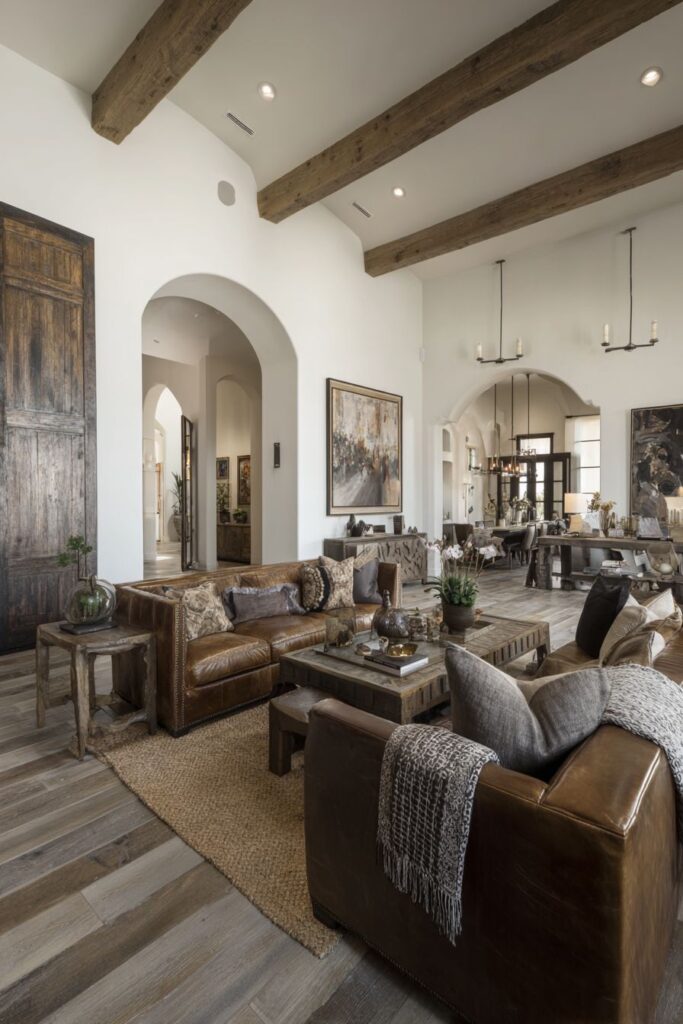
Master the art of open floor plan living by creating a floating furniture arrangement that doesn’t rely on walls for positioning, allowing your large living room to flow seamlessly into adjacent spaces. This approach requires confidence and skill because the furniture must be substantial enough to anchor different zones while maintaining visual lightness that preserves the open feeling. The key lies in creating purposeful groupings that serve specific functions while maintaining clear circulation paths throughout the interconnected spaces.
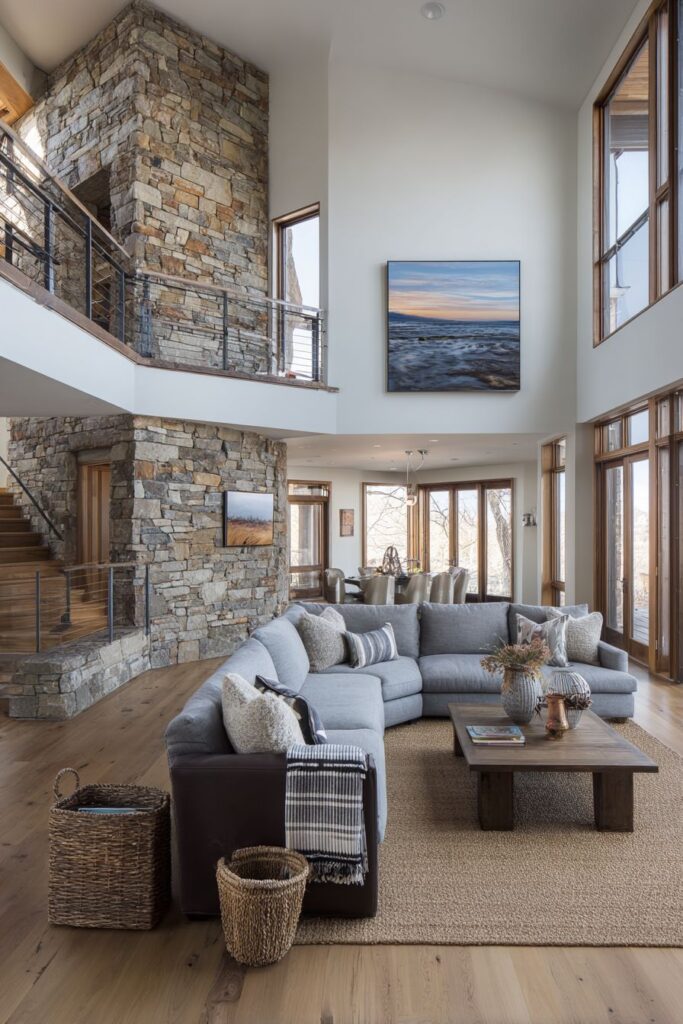
The strategic mix of textures through leather sofas, woven throws, and jute area rugs creates visual interest and tactile appeal that prevents the open space from feeling cold or sterile. Each texture serves a specific purpose: the leather provides durability and sophistication, the woven throws add softness and comfort, while the jute rug grounds the seating area with natural texture. This layering of materials creates depth and visual weight that helps define spaces without requiring physical barriers.
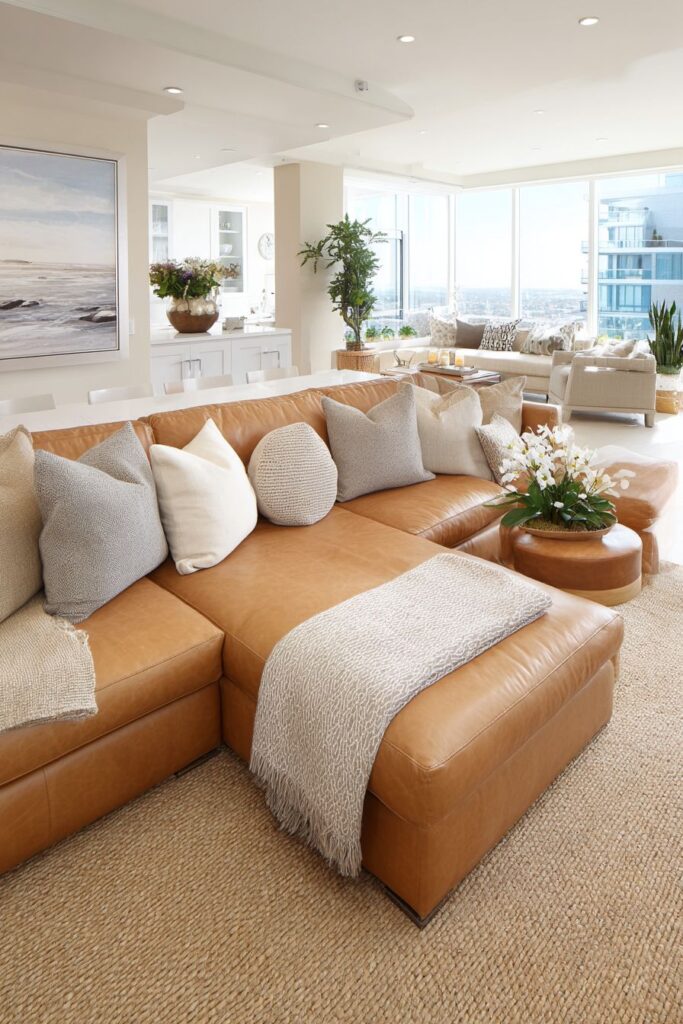
Large-scale artwork becomes essential in open floor plans because it creates visual anchors on expansive wall surfaces that might otherwise feel overwhelming or undefined. The artwork serves as focal points that help organize the space visually while providing opportunities to introduce color and personality. In large rooms with open floor plans, artwork can be sized more dramatically than in smaller spaces, creating stunning statement pieces that hold their own against the impressive architecture.
The professional interior photography approach that best captures open floor plan success emphasizes the flow between spaces while highlighting strategic furniture placement. The challenge lies in showing how different areas maintain their distinct identities while contributing to the overall cohesive design. Lighting plays a crucial role in this documentation, with natural and artificial sources working together to define different zones throughout the day.
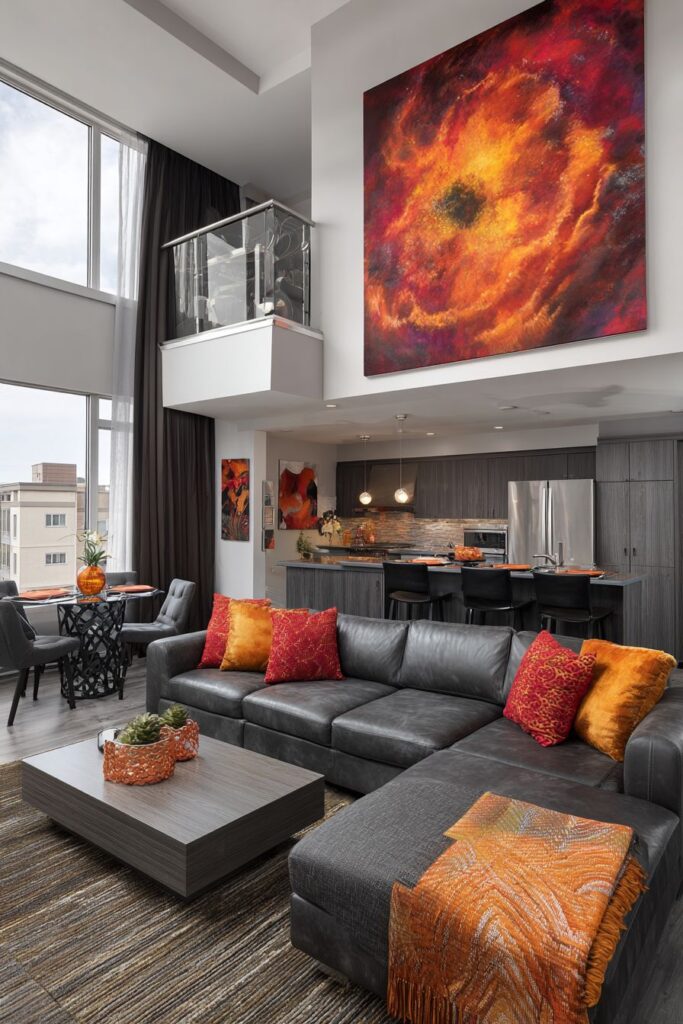
Key Design Tips:
- Float furniture in the center of large rooms rather than pushing against walls
- Mix textures thoughtfully to add visual and tactile interest throughout open spaces
- Use large-scale artwork to anchor expansive wall surfaces
- Maintain clear circulation paths between different zones and adjacent spaces
- Choose substantial furniture pieces that can define space without physical boundaries
6. Classic Symmetry with Fireplace Centerpiece
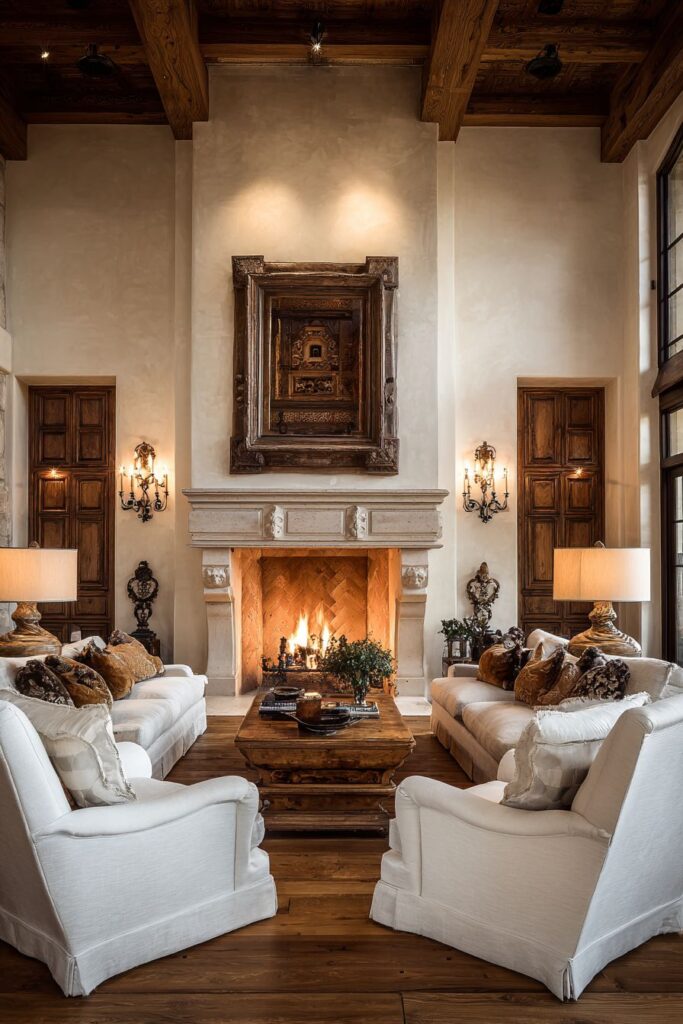
Create timeless elegance in your large living room by organizing the space around a central fireplace with perfectly symmetrical seating arrangements that emphasize classical proportions and formal balance. This traditional approach works exceptionally well in large spaces because it provides clear organization principles that prevent the room from feeling chaotic or overwhelming. The fireplace serves as the natural focal point that anchors the entire arrangement, while matching armchairs and side tables create the repetition and balance that define classical design.
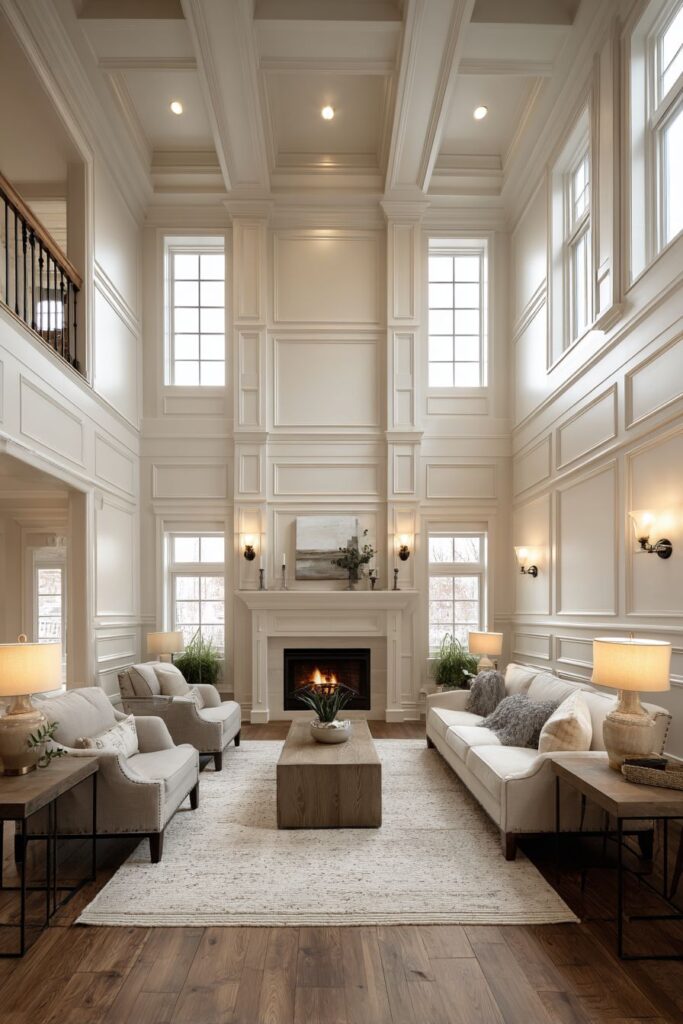
The space features classic architectural proportions enhanced by crown molding and rich walnut hardwood floors that provide the visual weight necessary to ground the expansive room. These permanent architectural elements work together to create a sense of luxury and craftsmanship that elevates the entire space beyond simple furniture arrangement. The crown molding particularly benefits large rooms by providing visual transition between walls and ceilings, preventing the space from feeling unfinished or institutional.
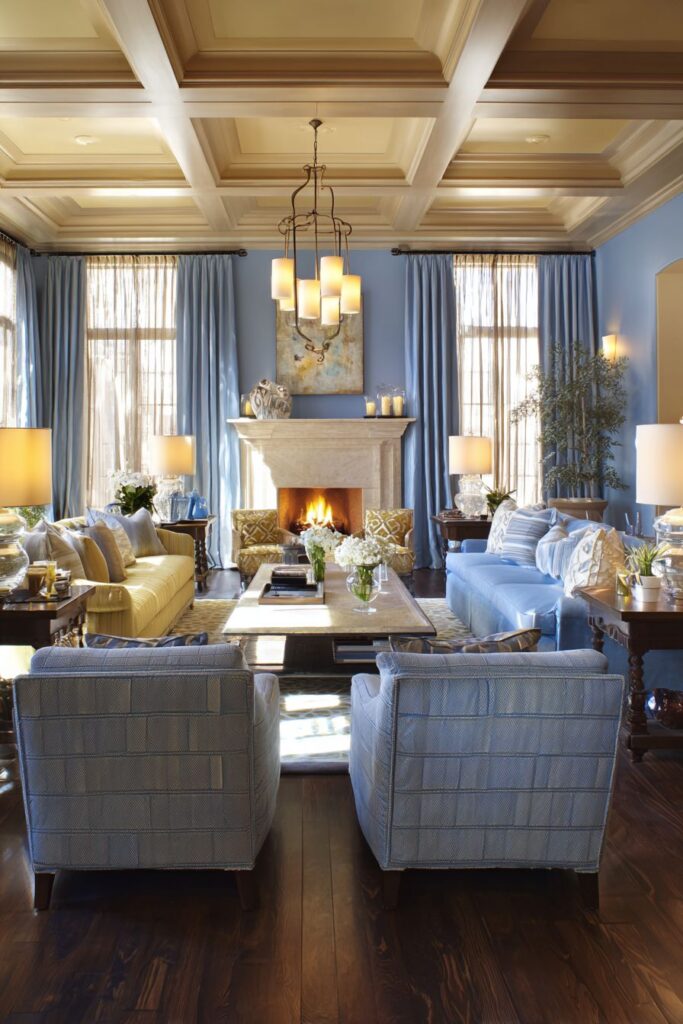
Multiple lighting sources including table lamps and sconces create the layered illumination essential for large rooms, ensuring that every seating area receives adequate light while contributing to the overall ambiance. This approach prevents the common problem of large rooms having dark corners or areas that feel unwelcoming during evening hours. The combination of ambient, task, and accent lighting creates depth and visual interest while supporting the room’s various functions throughout the day.
The natural lighting that floods through generous windows highlights the formal balance and traditional elegance that suits the room’s generous dimensions perfectly. This abundance of natural light prevents the traditional elements from feeling heavy or oppressive, instead creating a bright, welcoming atmosphere that combines classical sophistication with contemporary livability.
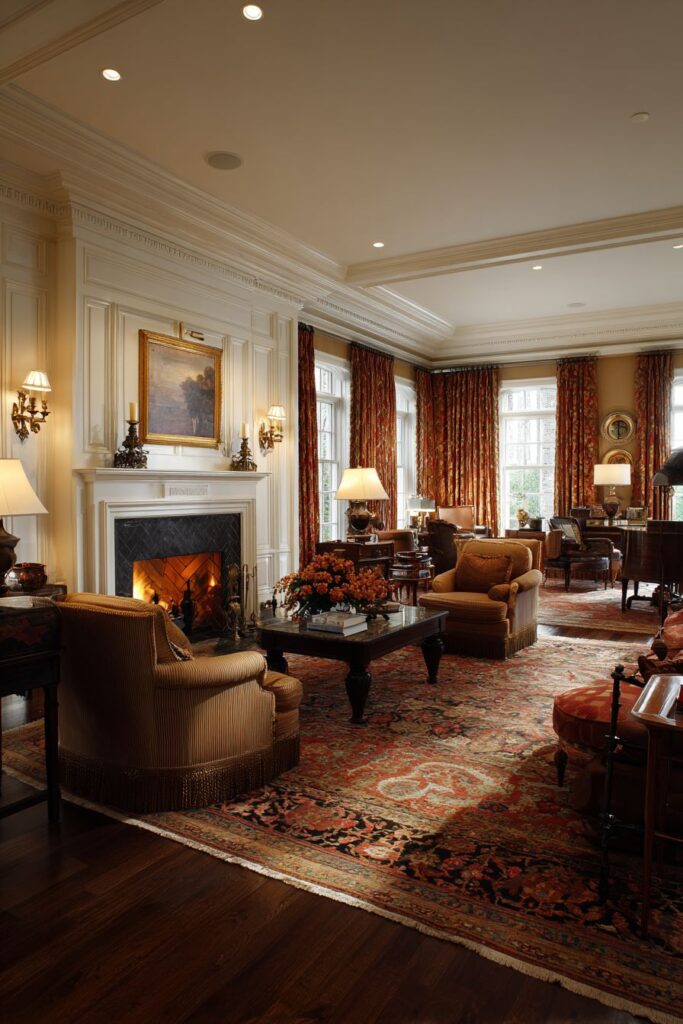
Key Design Tips:
- Use symmetrical arrangements to create formal balance in large traditional rooms
- Invest in quality architectural details like crown molding to add sophistication
- Layer multiple lighting sources to ensure even illumination throughout expansive spaces
- Choose rich materials like walnut floors that can anchor large rooms visually
- Position matching furniture pieces to create rhythm and repetition in classical designs
7. Built-In Entertainment Wall Showcase
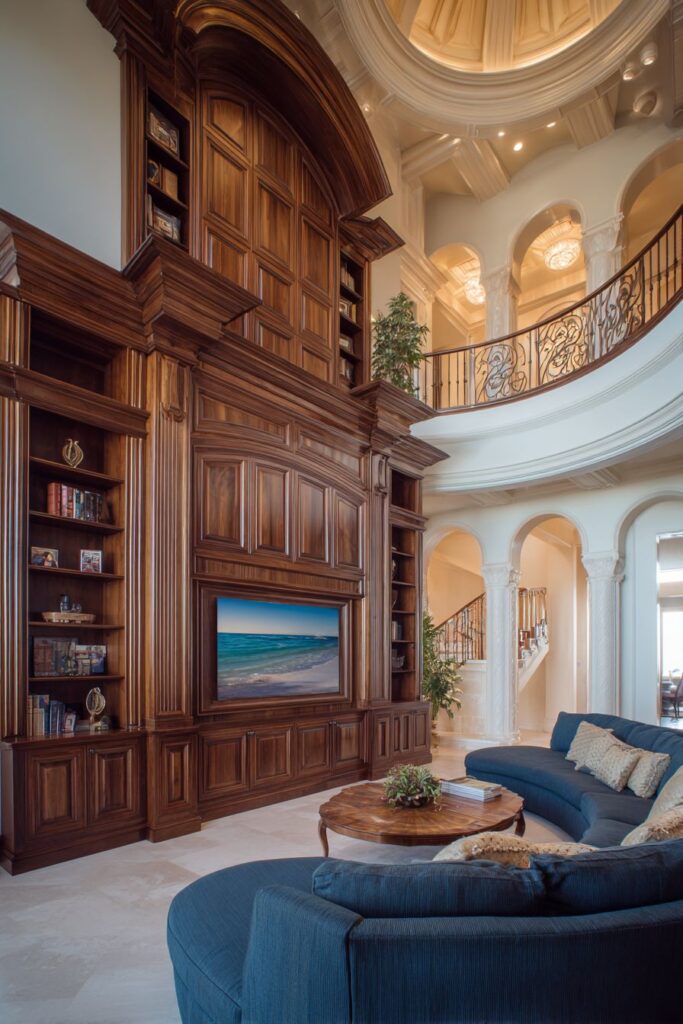
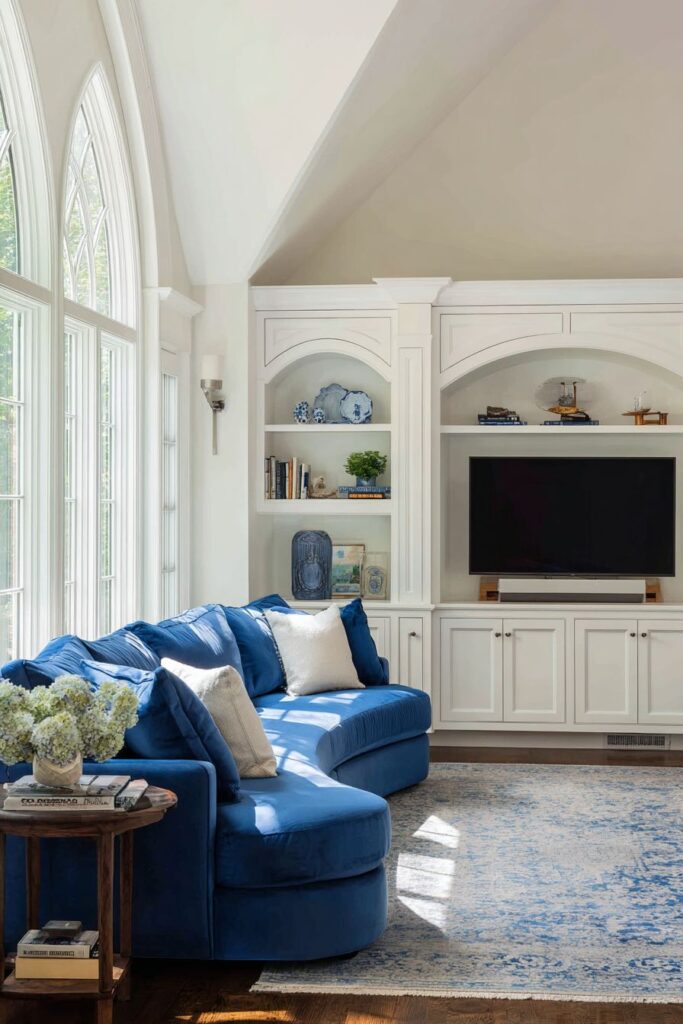
Transform one entire wall of your large living room into a floor-to-ceiling built-in entertainment center that incorporates both closed storage and open display areas, creating a custom solution that matches the room’s impressive scale. This approach works particularly well in large spaces because it provides the visual weight necessary to balance the room’s proportions while solving storage and display challenges that can plague expansive rooms. The built-in approach also allows for perfect proportions that would be impossible to achieve with standalone furniture pieces.
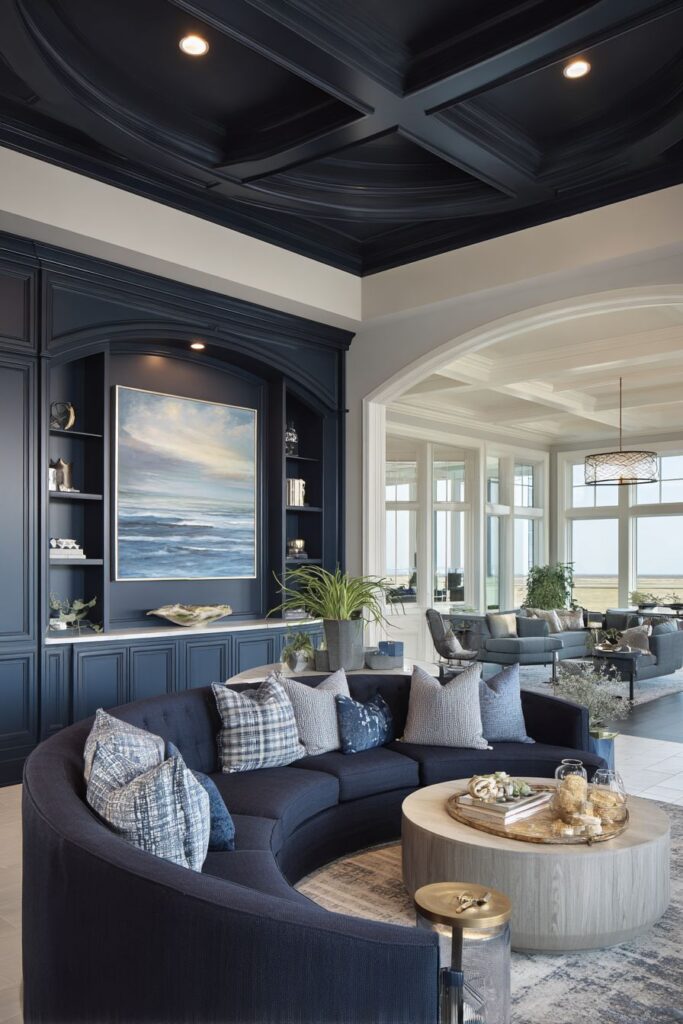
The curved sectional seating that follows the room’s architecture provides optimal viewing angles while creating a sophisticated furniture arrangement that complements the custom millwork. This curved approach softens the potentially rigid lines of the built-in wall while providing more seating than traditional straight sectionals. The flowing lines also create better conversation areas by naturally orienting seating toward the center of the arrangement rather than toward the walls.
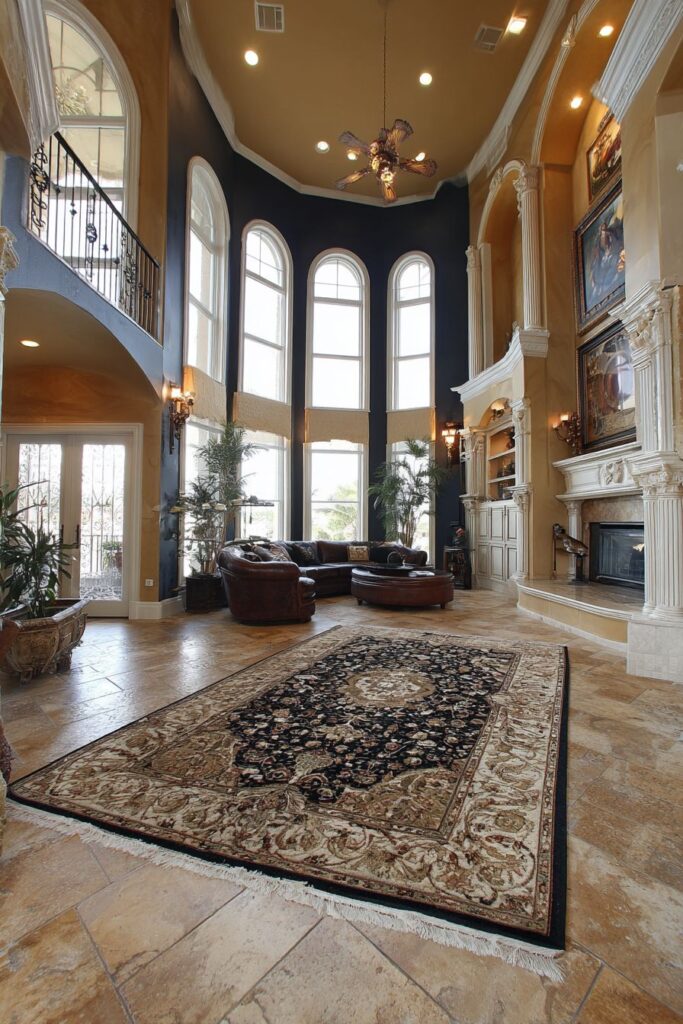
Rich navy blue accents provide dramatic contrast against neutral base colors, adding depth and sophistication that prevents the large room from feeling bland or characterless. The navy serves as a grounding color that can handle the scale of large rooms while providing a sophisticated alternative to black that might feel too heavy. This color choice also allows for versatile accent colors and seasonal changes without requiring major renovation.
The wide-angle photography required to capture this space emphasizes how custom millwork helps define large spaces while providing crucial storage and display functions. The built-ins create human-scale elements within the grander architectural framework, providing visual stopping points that prevent the eye from wandering aimlessly around the expansive room.
Key Design Tips:
- Design built-ins that match your room’s scale and architectural style
- Choose curved seating to soften angular built-in elements and improve conversation flow
- Use bold accent colors like navy to add sophistication and visual weight
- Incorporate both storage and display areas in built-in designs for maximum functionality
- Plan built-ins early in renovation projects to ensure proper proportions and integration
8. Multi-Functional Zone Organization
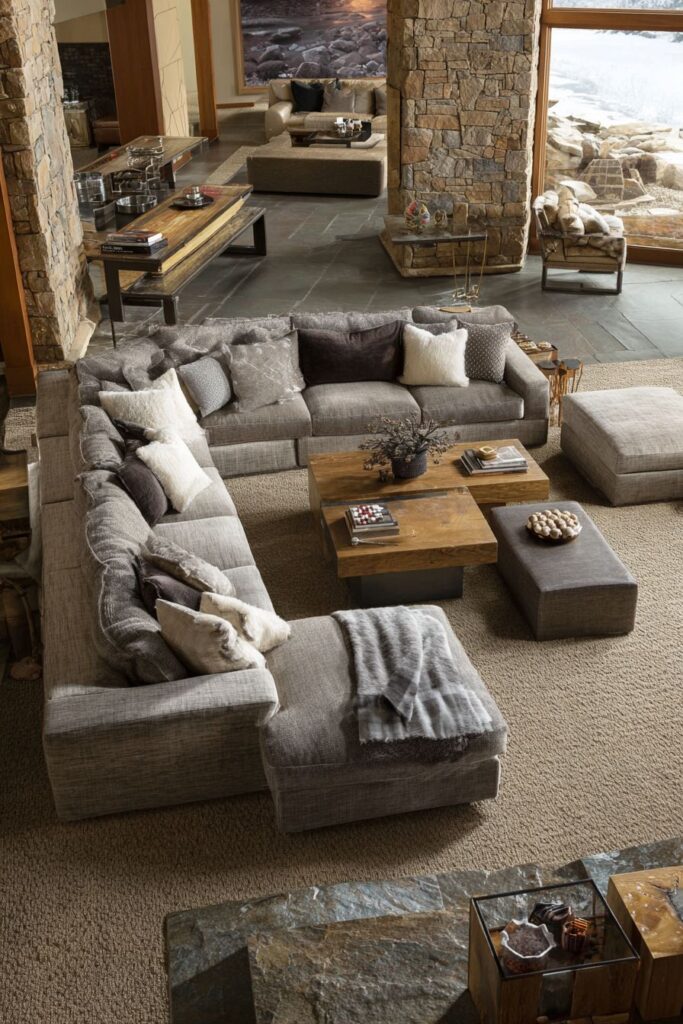
Master the art of large room functionality by creating multiple distinct zones including a main seating area, game table section, and bar cart station that each serve specific purposes while contributing to the overall design harmony. This approach acknowledges that large living rooms have the luxury of accommodating multiple activities simultaneously, but requires careful planning to ensure that each zone feels intentional rather than scattered. The key lies in using furniture scale and placement to create natural boundaries without physical barriers.
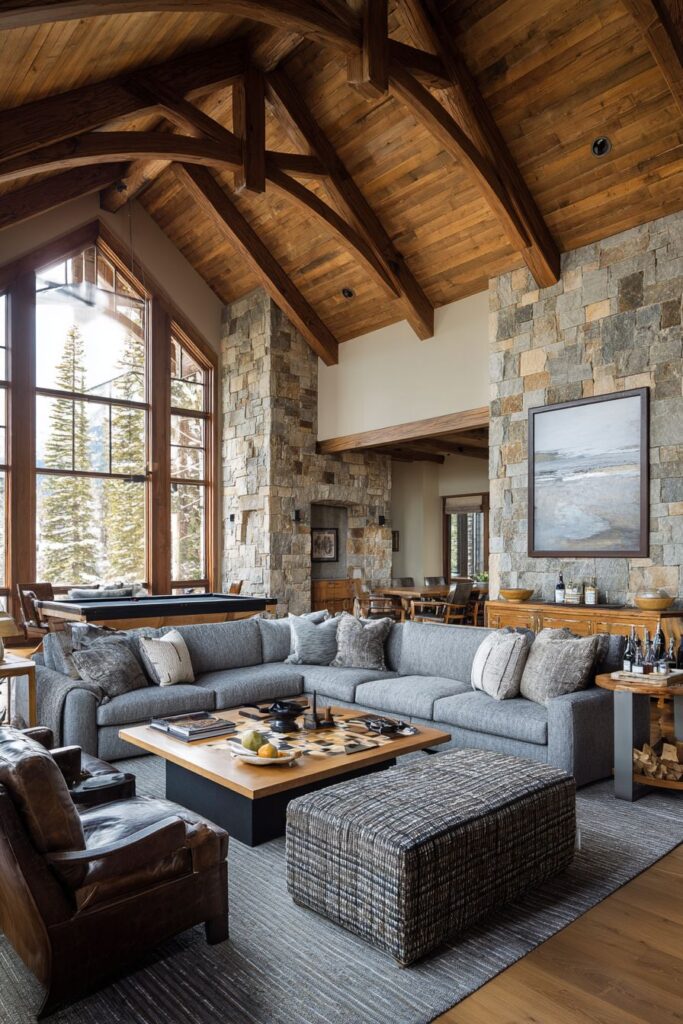
The furniture scale becomes crucial in this approach, with substantial pieces like oversized sectionals and large-scale ottomans needed to fill the space appropriately without leaving awkward gaps or making the room feel underfurnished. Each piece must be chosen not just for its individual merit but for how it relates to the other substantial pieces throughout the room. The large-scale ottoman, in particular, serves multiple functions as seating, storage, and table surface while providing the visual weight necessary to anchor the main seating area.
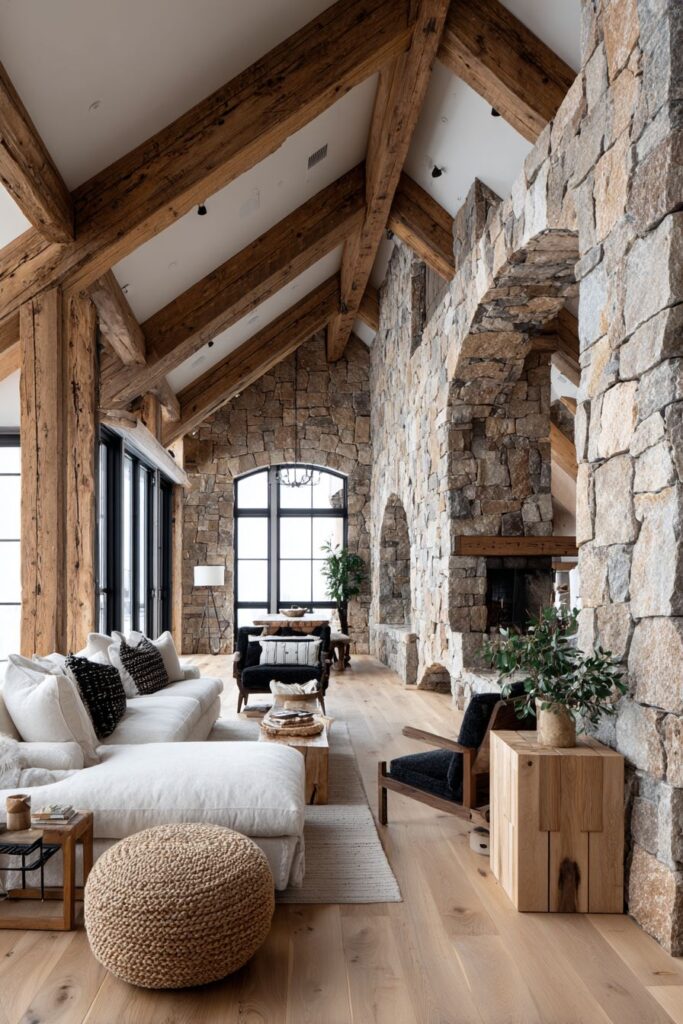
Natural materials including stone, wood, and woven textures create warmth throughout the multi-zone space, preventing it from feeling commercial or sterile despite its impressive size and multiple functions. These materials provide continuity between different zones while adding the tactile appeal that makes large rooms feel welcoming and lived-in. The repetition of natural materials creates visual harmony even when furniture styles vary between different functional areas.
The professional interior photography approach that captures this space best emphasizes functional zoning while showcasing the room’s impressive square footage and thoughtful organization. The challenge lies in documenting how different areas work together while maintaining their distinct identities, requiring careful attention to lighting and angles that show both individual zones and overall flow.
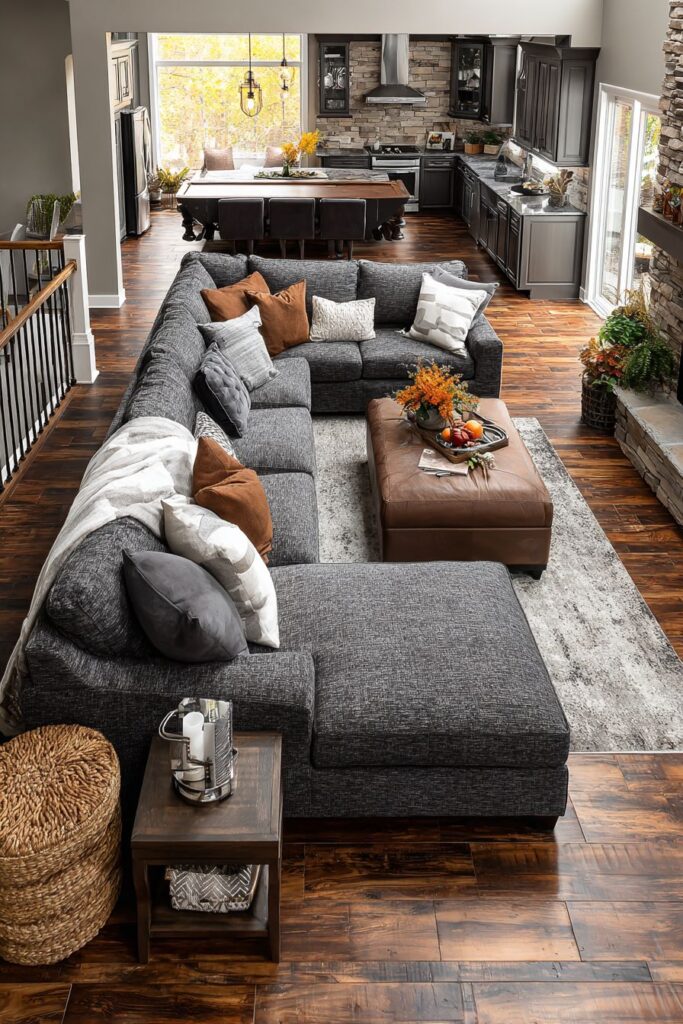
Key Design Tips:
- Create distinct functional zones using furniture placement and area rugs
- Choose substantial furniture that matches the scale of large rooms
- Repeat materials throughout different zones to maintain visual unity
- Plan circulation paths between zones to maintain easy flow
- Use area rugs to define each zone while choosing sizes appropriate for large rooms
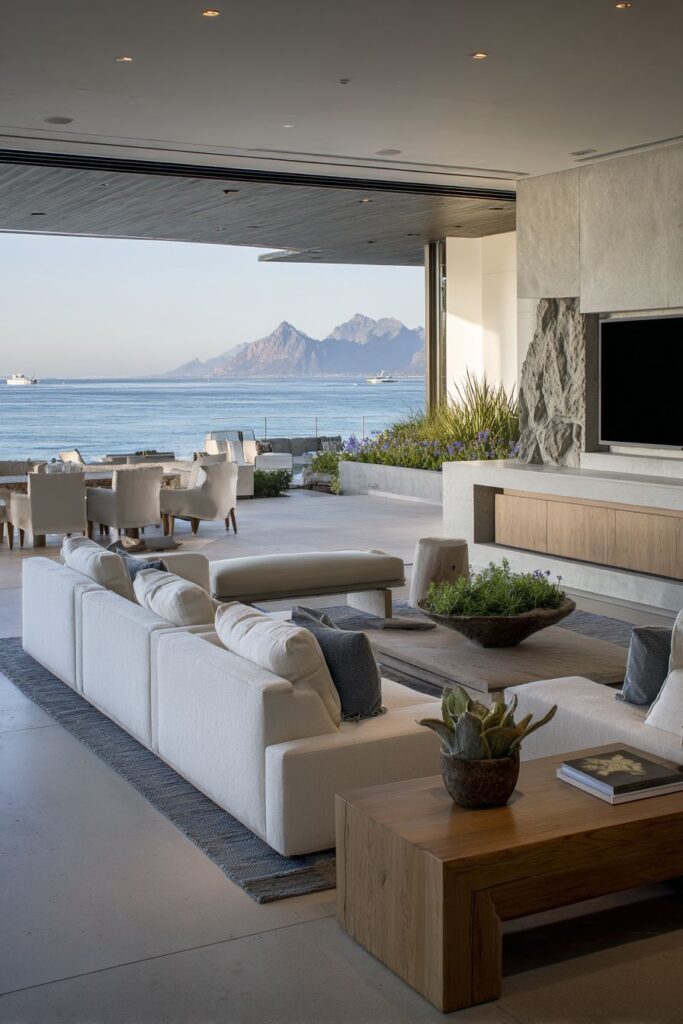
9. Indoor-Outdoor Transparency with Soaring Windows
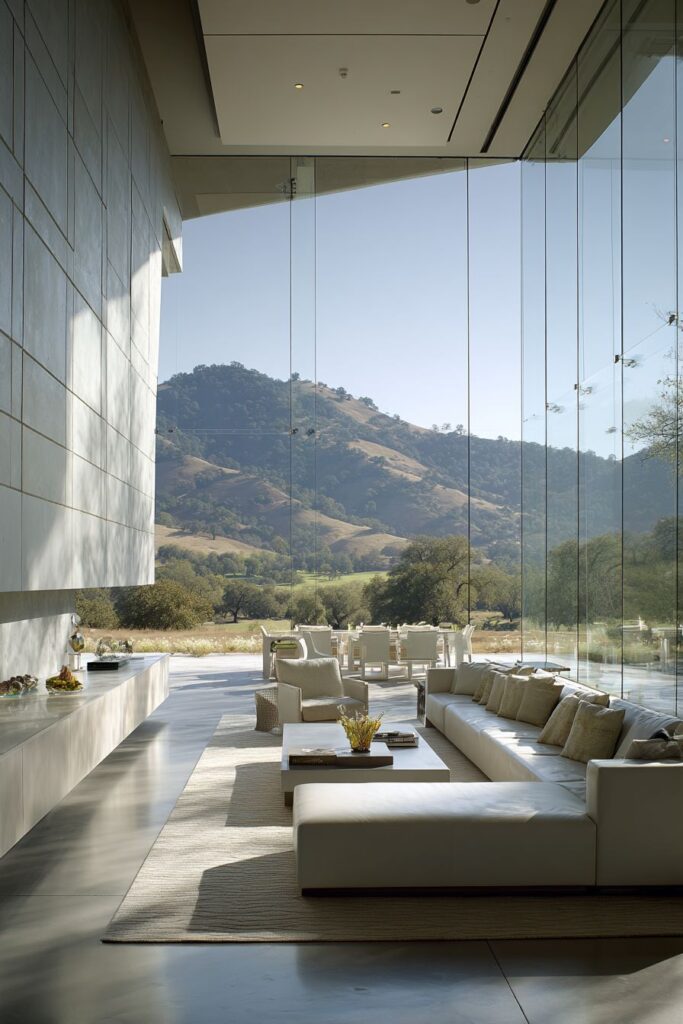
Maximize the connection between your large living room and the natural environment by featuring soaring windows and glass doors that create seamless indoor-outdoor flow while flooding the interior with natural light. This design approach works magnificently in large rooms because it prevents the space from feeling enclosed or cave-like, instead creating an expansive feeling that extends beyond the physical walls. The wall of glass becomes more than just a window – it transforms into a living artwork that changes with the seasons and weather.
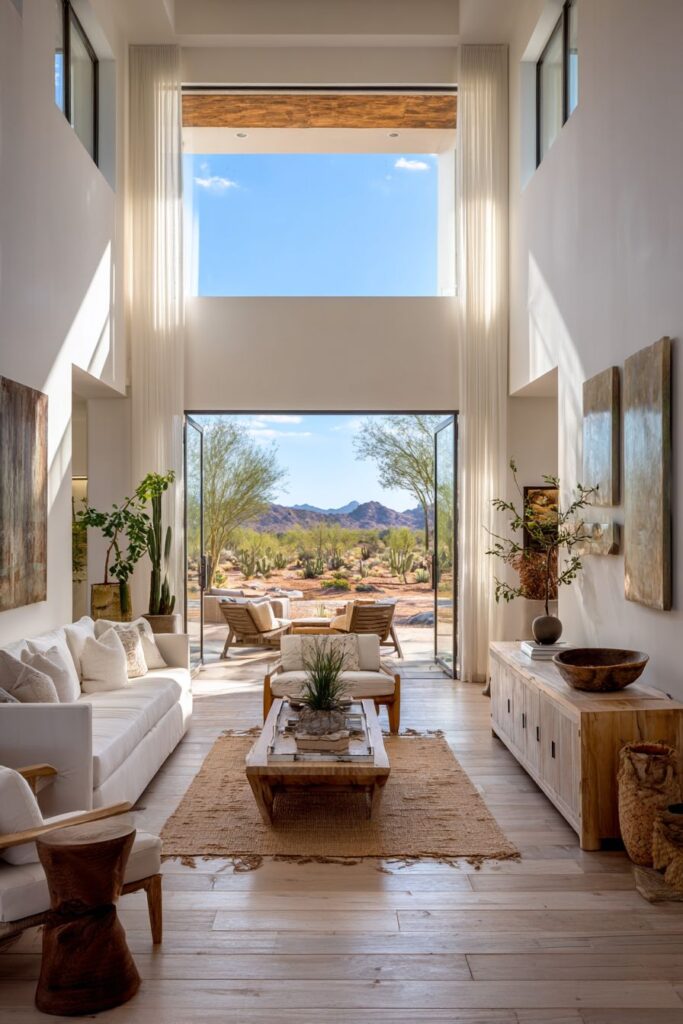
The light-colored furnishings chosen specifically to avoid competing with the dramatic views ensure that the natural beauty outside remains the primary focus while providing comfortable seating for enjoying the scenery. This restraint in furniture selection requires confidence because the temptation in large rooms is often to fill them with dramatic pieces, but in this case, the architecture and views provide all the drama needed. The furniture serves as a comfortable platform for appreciating the natural beauty rather than competing with it.

A long, low credenza provides essential storage without blocking sight lines to the outdoor views, demonstrating how careful furniture selection can maintain functionality without compromising the room’s primary asset. This piece must be proportioned perfectly – substantial enough to provide meaningful storage in a large room while remaining low enough to preserve the visual connection to the outdoors. The horizontal lines also complement the expansive windows and emphasize the room’s width.
The interior design photography approach that best captures this concept emphasizes transparency and openness while showing how the room’s expansive scale connects to the natural environment. The lighting becomes crucial in this documentation, with natural light playing the starring role while interior lighting supports the space during evening hours without creating reflections on the expansive glass surfaces.
Key Design Tips:
- Choose light-colored furnishings that won’t compete with dramatic natural views
- Select low-profile furniture that maintains sight lines to outdoor spaces
- Minimize window treatments to maximize natural light and outdoor connection
- Plan furniture placement to take advantage of multiple views throughout the room
- Consider glare management for times when natural light becomes too intense
10. Transitional Style Balance with Contemporary-Traditional Mix
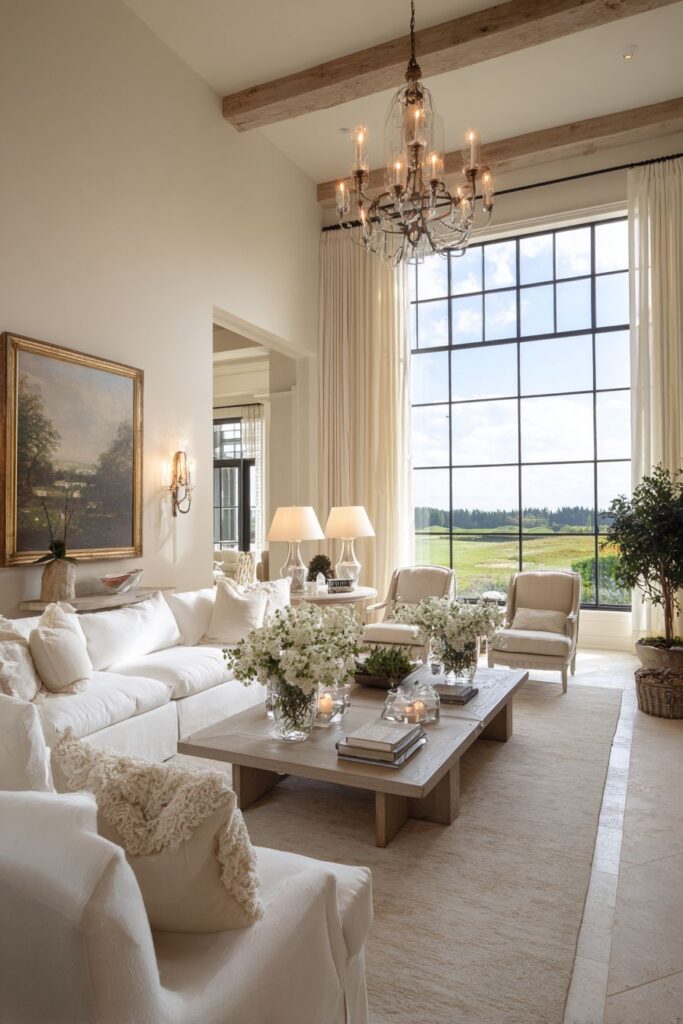
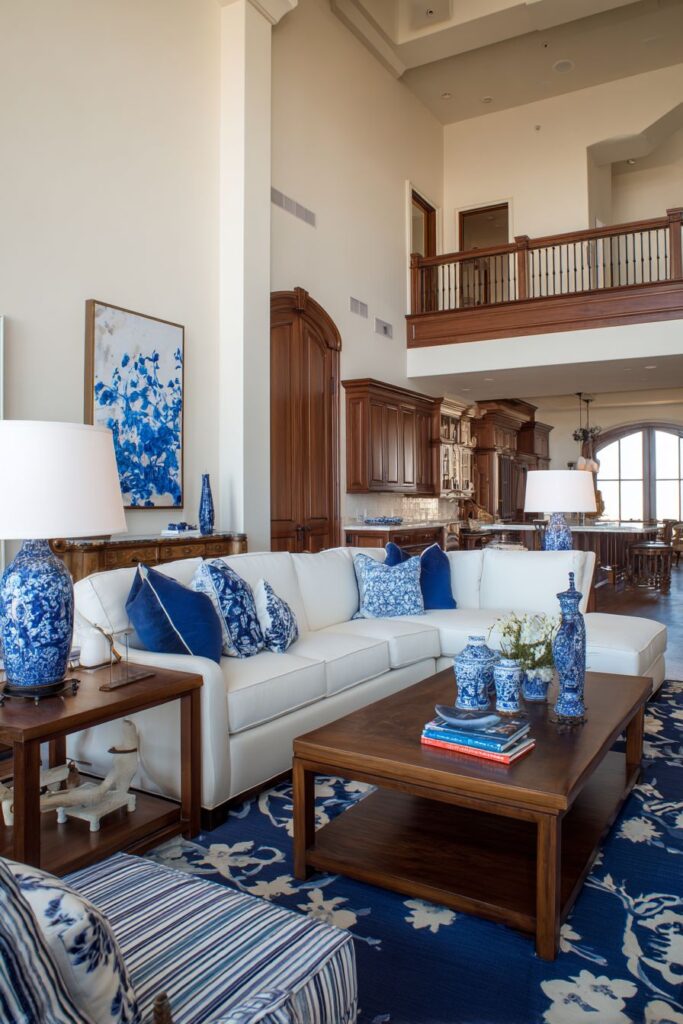
Create sophisticated design harmony in your large living room by blending contemporary and traditional elements scaled appropriately for the generous space, demonstrating how transitional style can work beautifully in impressive architectural settings. This approach requires careful curation because each element must be substantial enough to work in a large room while contributing to the overall aesthetic balance. The success lies in choosing pieces that share common ground – perhaps similar proportions, materials, or color tones – while representing different style periods.
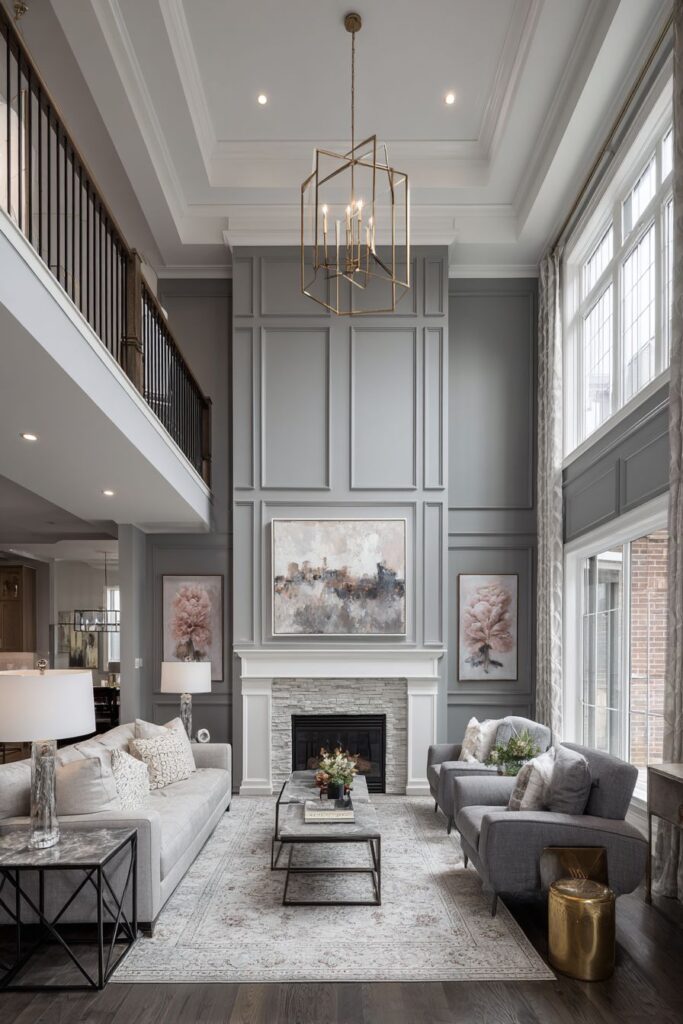
The room includes substantial pieces like large sectionals, multiple coffee tables, and impressive floor lamps that provide the visual weight necessary for large spaces while representing both contemporary and traditional design philosophies. The sectional might feature clean contemporary lines but be upholstered in a traditional fabric, while the coffee tables could include both a sleek modern piece and a more ornate traditional option. This mixing requires confidence and a trained eye to ensure that the result feels curated rather than confused.
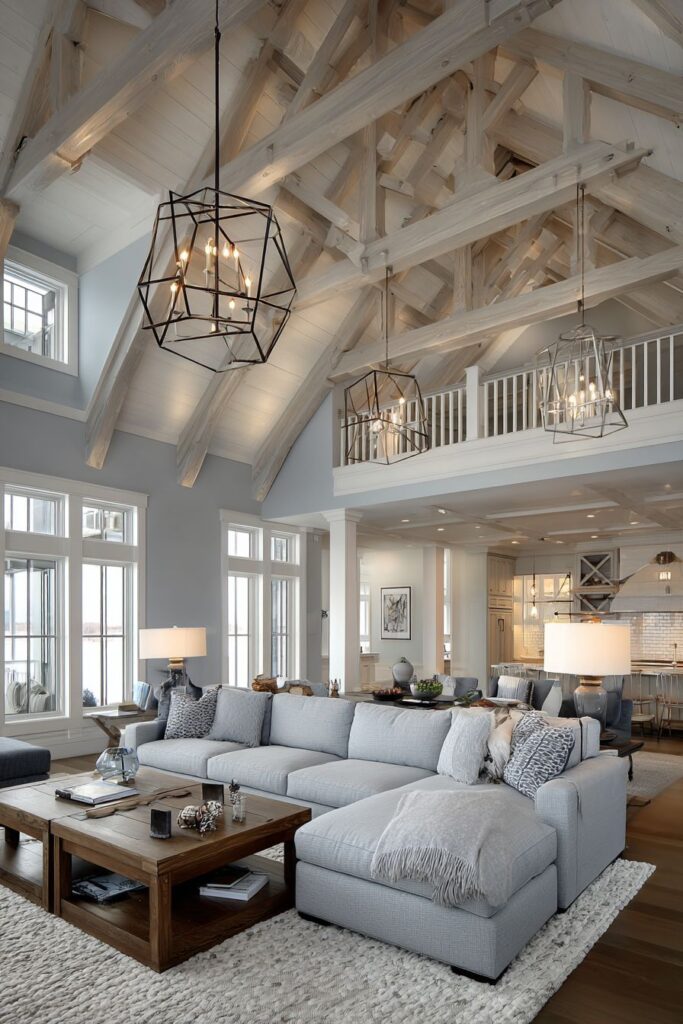
Layered rugs help define seating areas within the open floor plan while providing opportunities to introduce both contemporary patterns and traditional motifs that support the transitional theme. The rug layering also adds textural interest and visual depth that benefits large rooms, creating complexity that prevents the space from feeling flat or one-dimensional. The rugs must be sized generously to work in large rooms while their patterns and textures contribute to the style mixing.
The wide-angle interior photography that would document this space captures the sophisticated balance between old and new while highlighting how traditional elements are scaled up for impressive room dimensions. The lighting becomes particularly important in transitional spaces because it must support both contemporary and traditional elements without favoring one over the other.
Key Design Tips:
- Mix styles thoughtfully by finding common elements like scale, color, or material
- Choose substantial pieces that work together despite different style origins
- Use layered rugs to define areas while supporting the transitional aesthetic
- Scale traditional elements up for large rooms rather than using multiple small pieces
- Maintain color harmony throughout mixed-style elements to create unity
11. Cathedral Ceiling Rustic Drama with Stone Accent
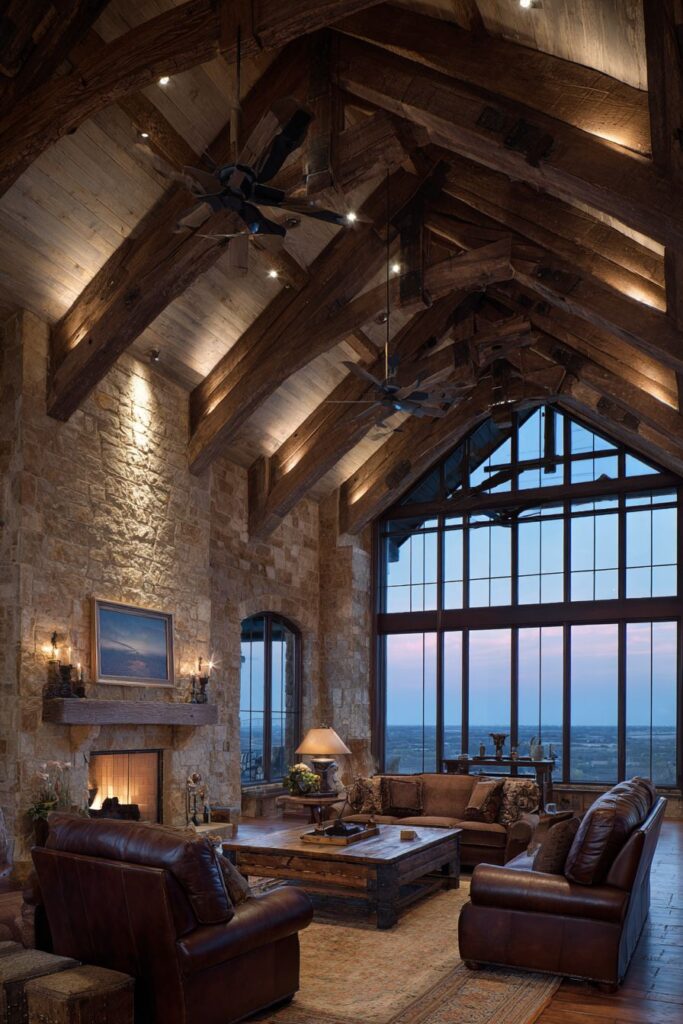
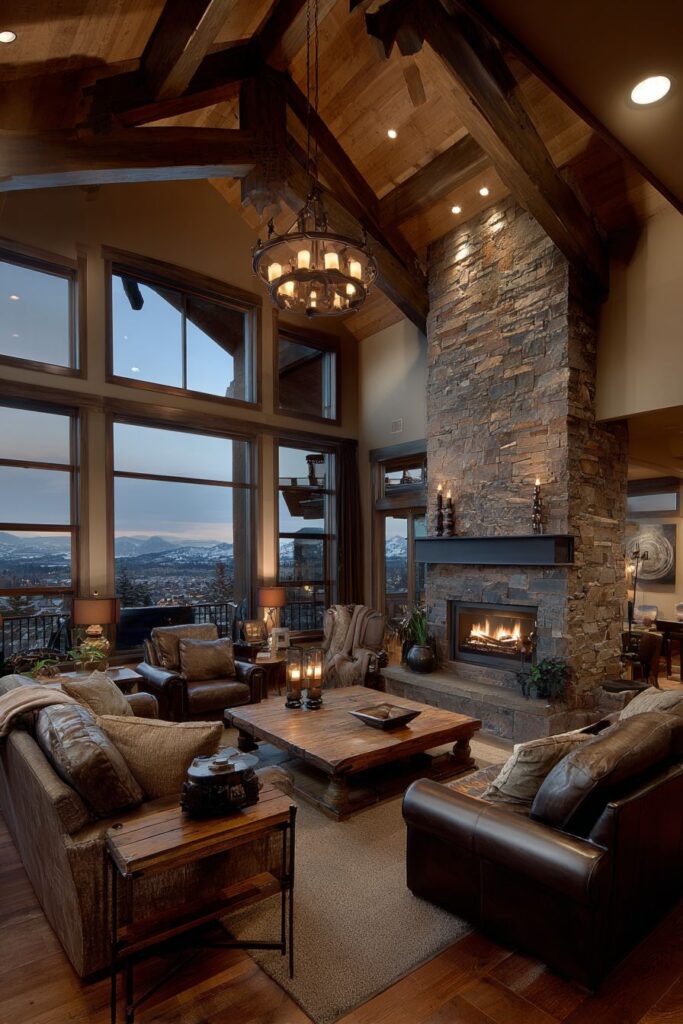
Embrace the dramatic architecture of cathedral ceilings and exposed wooden trusses by creating a large living room that celebrates rustic elegance while providing comfortable modern living. The exposed wooden trusses serve as natural artwork overhead, creating visual interest and warmth that prevents the high ceiling from feeling cold or institutional. These structural elements also help to break up the expansive ceiling plane into more manageable sections, making the room feel more intimate despite its impressive vertical scale.
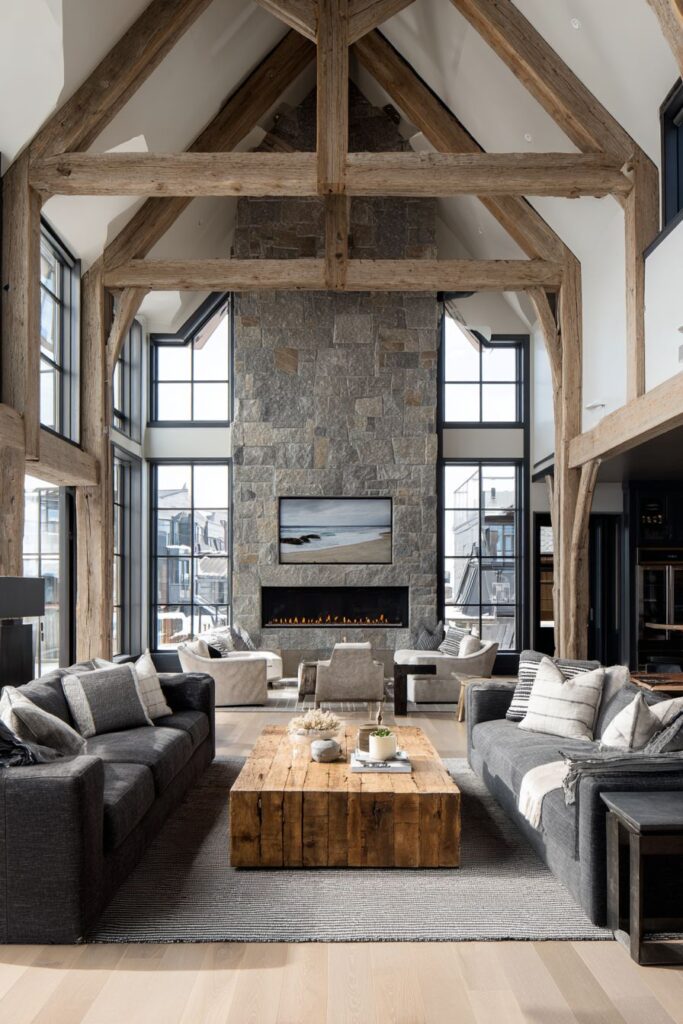
The stone accent wall with its linear fireplace becomes a powerful focal point that anchors the entire room while providing textural contrast to the wooden trusses overhead. This combination of natural materials creates a sophisticated rustic aesthetic that feels both timeless and contemporary. The linear fireplace design works particularly well in large rooms because it provides the visual weight necessary to balance the impressive architecture while offering a more contemporary alternative to traditional fireplace designs.
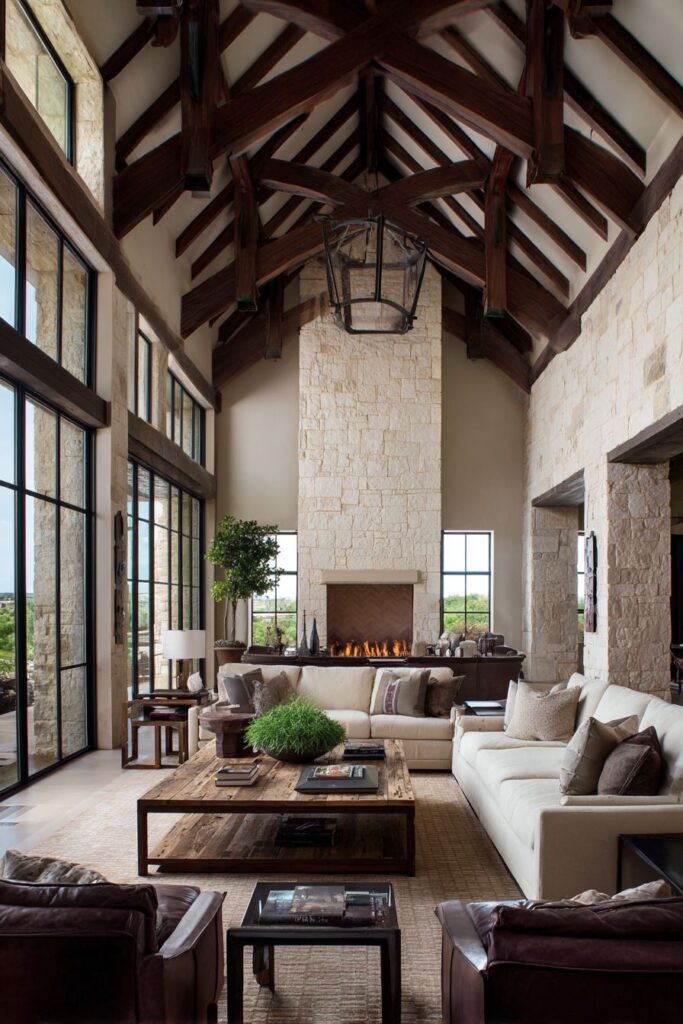
Deep seating pieces in rich fabrics positioned strategically to take advantage of both the fireplace and large windows create multiple comfortable gathering areas within the architecturally dramatic space. The seating must be substantial enough to hold its own against the impressive architecture while providing the comfort necessary for relaxed family living. The rich fabrics add luxury and sophistication that elevates the rustic elements beyond simple cabin aesthetics.
The reclaimed wood coffee table provides the perfect bridge between the rustic architectural elements and the more refined seating pieces, demonstrating how carefully chosen accessories can tie together different design elements. This piece must be scaled appropriately for the large room while providing the authentic character that supports the overall rustic theme without feeling contrived or overly themed.
Key Design Tips:
- Celebrate architectural drama rather than trying to minimize impressive ceiling height
- Combine natural materials like stone and wood for authentic rustic sophistication
- Choose substantial seating that can compete with dramatic architectural elements
- Use reclaimed materials for authenticity in rustic-themed large rooms
- Position furniture to take advantage of multiple focal points like fireplaces and views
12. Central Rug Anchoring with Artistic Elements
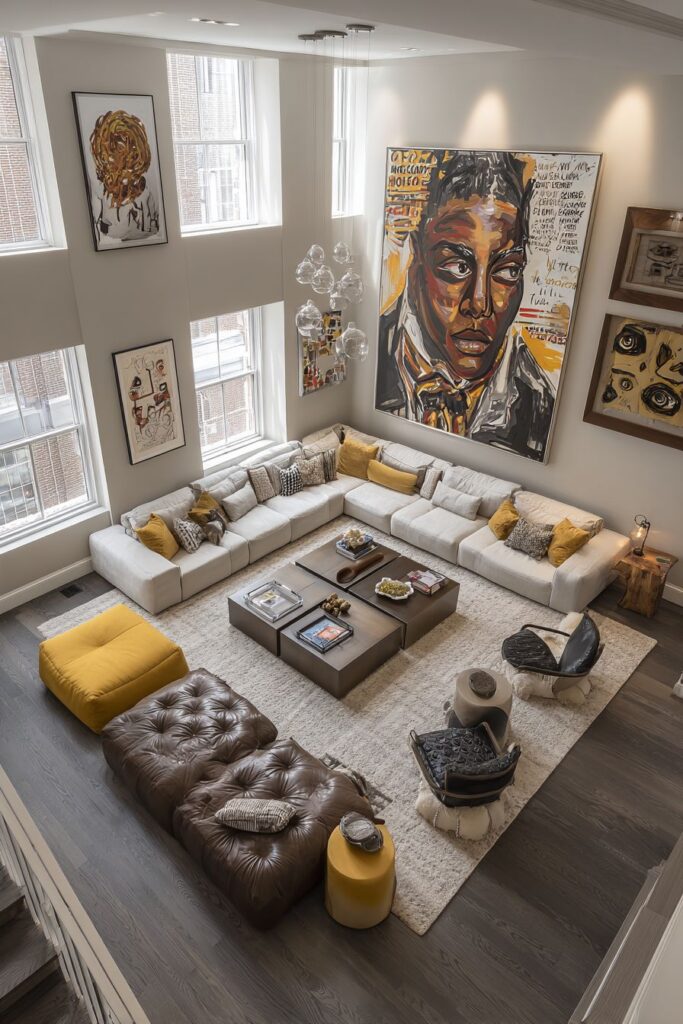
Create a cohesive large living room by organizing multiple seating pieces around a central area rug that serves as the foundation for the entire furniture arrangement while allowing artistic elements to shine throughout the expansive space. This approach works exceptionally well in large rooms because the rug provides a visual anchor that prevents furniture from floating aimlessly in the vast space while creating clear boundaries for the main conversation area. The rug becomes more than floor covering – it transforms into the foundation that supports the entire design concept.
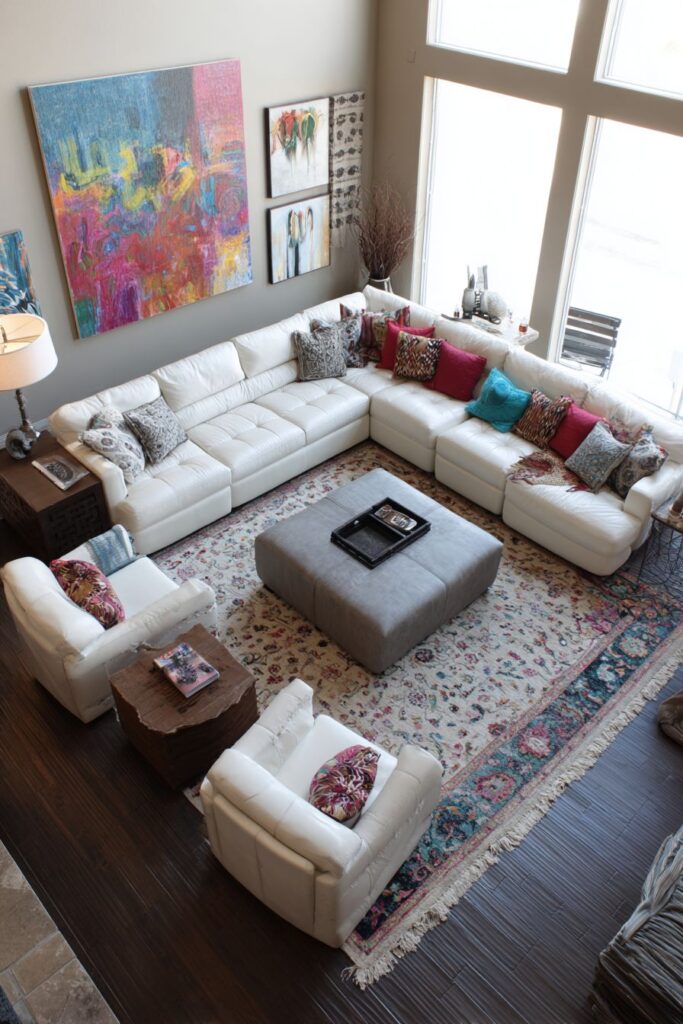
The multiple seating pieces including sectional sofas, accent chairs, and ottomans create varied seating options while maintaining unity through their relationship to the central rug. Each piece must be chosen for both its individual merit and its contribution to the overall composition, with sizes and styles that work harmoniously together while providing different levels of formality and comfort. The variety in seating types ensures that the large room can accommodate different activities and group sizes throughout the day.
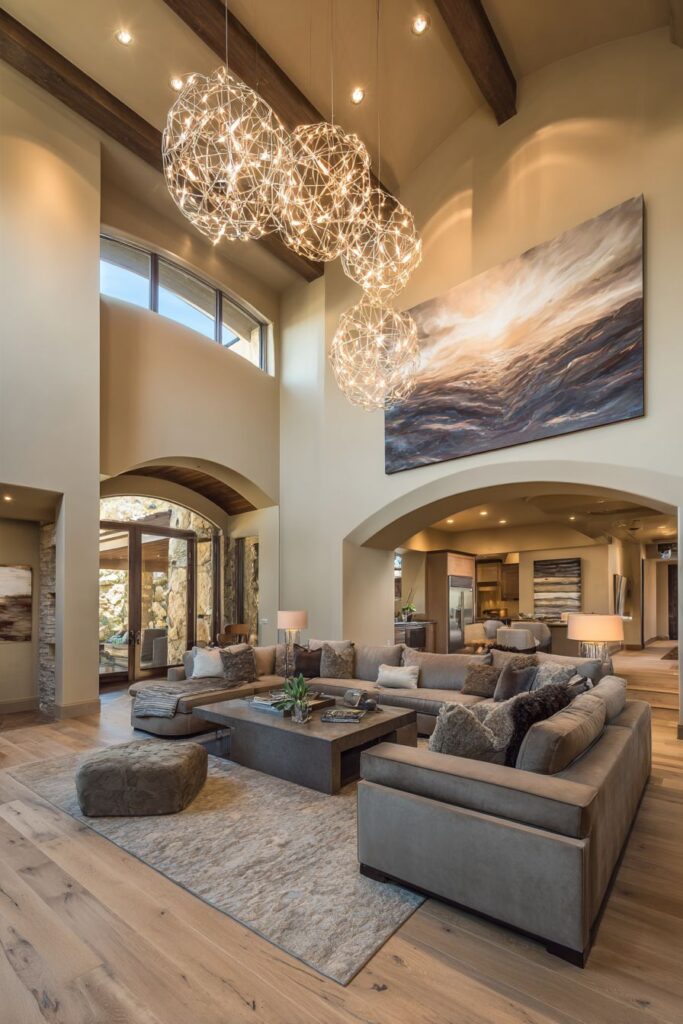
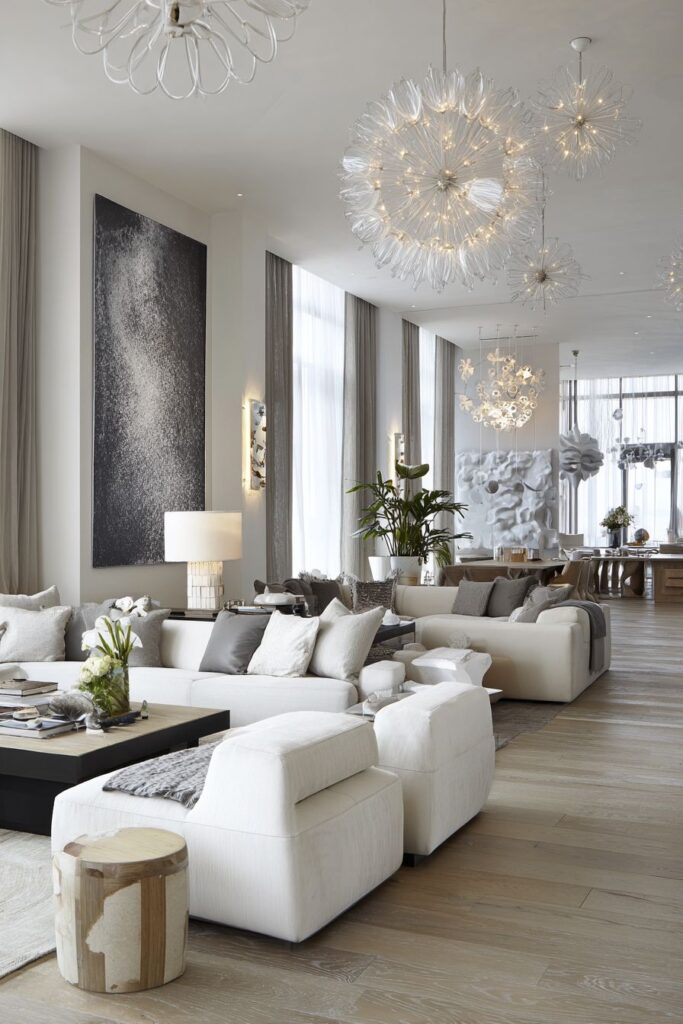
Neutral walls provide the perfect backdrop for large-scale artwork and sculptural lighting fixtures that serve as focal points throughout the expansive room. This neutral foundation allows artistic elements to take center stage while preventing the space from feeling overwhelming or visually chaotic. The large scale of both artwork and lighting fixtures must match the room’s impressive proportions while creating visual stopping points that organize the expansive wall surfaces.
The natural wood floors extend throughout the expansive area, providing continuity and warmth that grounds the neutral color palette while supporting the artistic elements. The wood’s natural texture and variation add visual interest without competing with the artwork, while its warm tones prevent the neutral walls from feeling cold or sterile. The flooring choice also provides acoustic benefits in large rooms, helping to absorb sound and create a more pleasant living environment.
Key Design Tips:
- Use large area rugs as anchors for furniture arrangements in expansive rooms
- Choose varied seating types to accommodate different activities and preferences
- Scale artwork dramatically for large wall surfaces to create proper visual impact
- Maintain neutral backgrounds that allow artistic elements to take center stage
- Select flooring materials that provide warmth and acoustic benefits in large spaces
13. Gallery Wall Showcase with Curated Art Collection
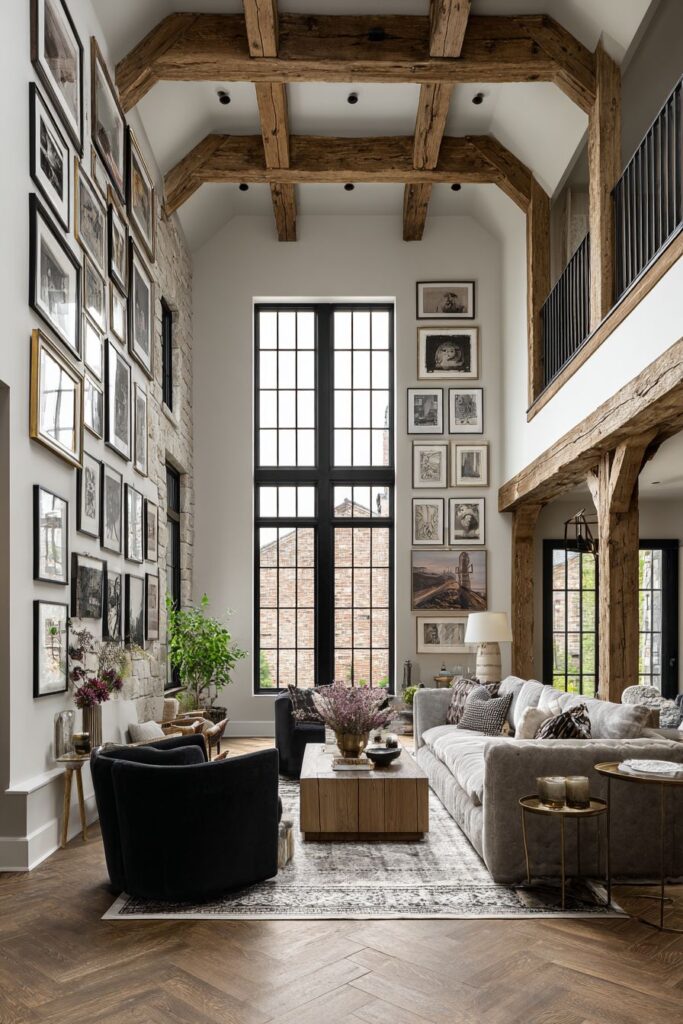
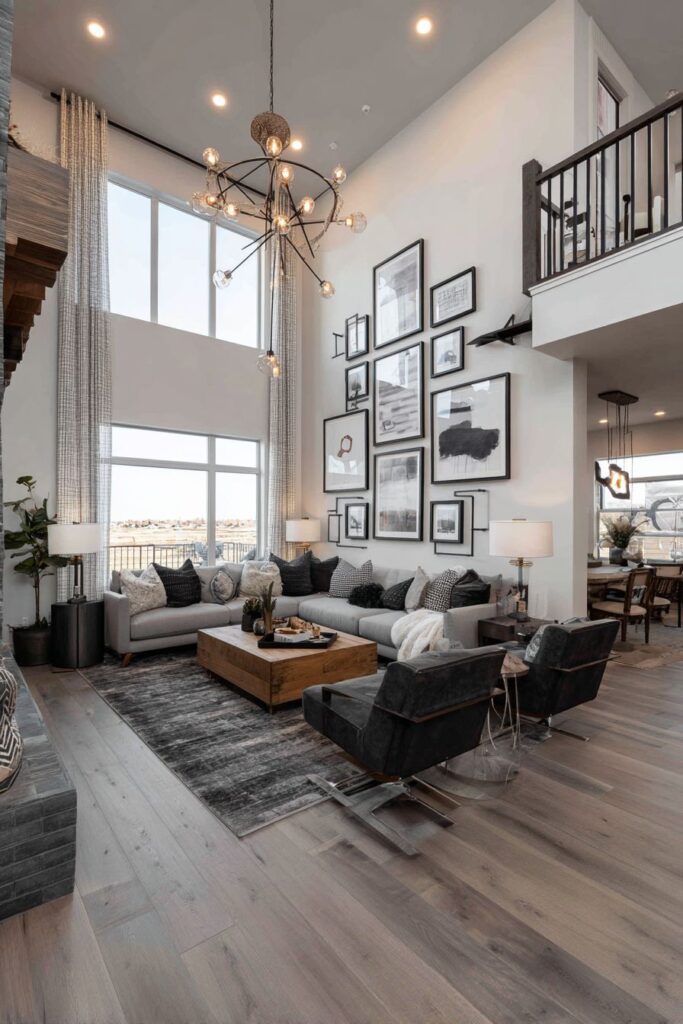
Transform one entire long wall of your large living room into a stunning gallery wall featuring carefully curated artwork in matching frames, creating a sophisticated focal point that provides the visual weight necessary to balance the room’s impressive proportions. This approach works magnificently in large spaces because it transforms what could be an overwhelming expanse of wall into an organized, purposeful display that draws the eye and creates a sense of intimacy within the grander space. The gallery wall becomes functional art that serves both aesthetic and practical purposes.
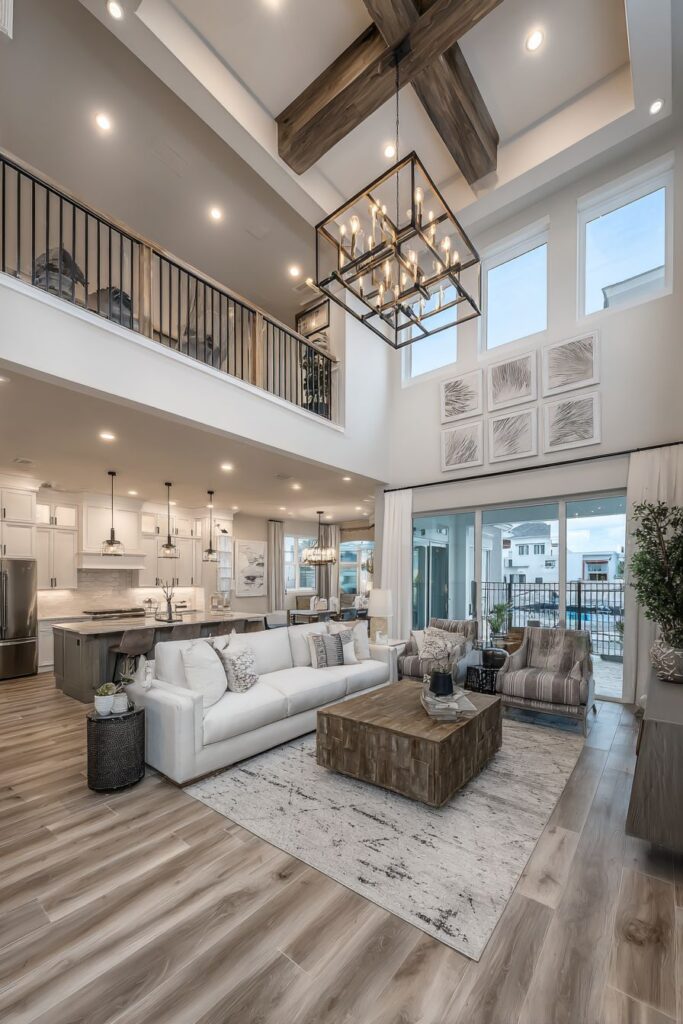
The seating arrangement includes substantial sofas and multiple accent chairs strategically positioned to encourage conversation while providing clear views of the impressive art collection. This furniture placement requires careful planning because each seating position should offer good views of the artwork while maintaining comfortable conversation distances between pieces. The substantial furniture scale ensures that the seating holds its own against the dramatic wall display while providing the comfort necessary for extended viewing and discussion of the art.
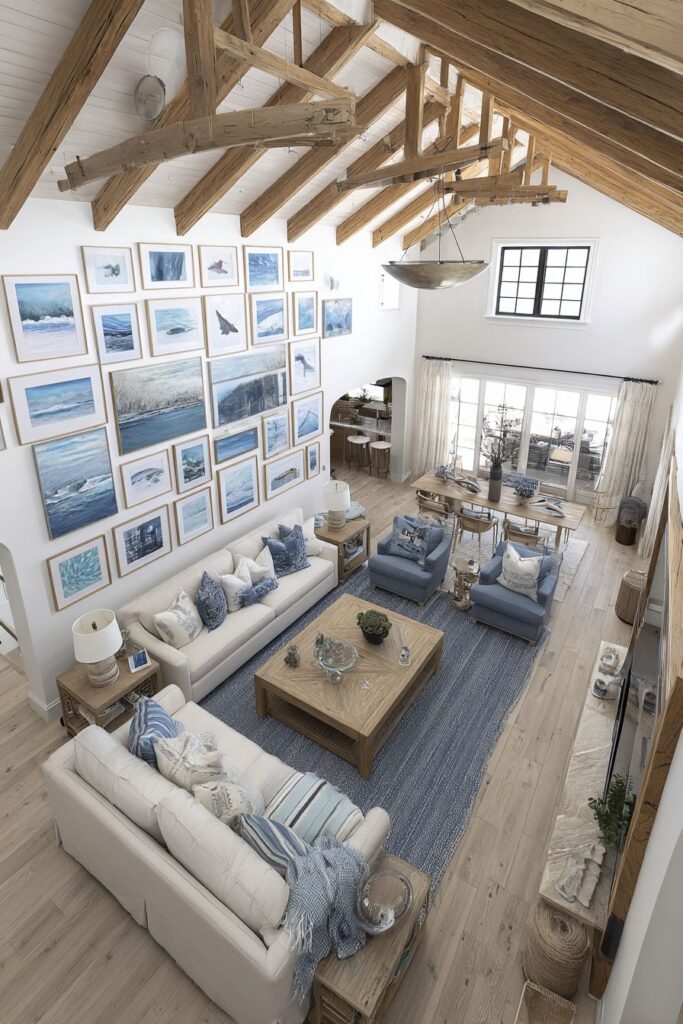
The neutral color palette throughout the room allows the gallery display to remain the undisputed focal point while providing a sophisticated foundation that works with various art styles and periods. This restraint in color requires confidence because large rooms often tempt designers to use bold colors to fill the space, but in this case, the artwork provides all the color and visual interest needed. The neutral background also allows for changes in the art collection without requiring room redecoration.
The wide-angle interior photography approach that would best capture this space showcases the impressive art collection while demonstrating how thoughtful furniture arrangement can support and enhance a gallery wall. The lighting becomes crucial in this documentation, with both natural and artificial sources needed to properly illuminate the artwork while providing comfortable ambient lighting for the seating areas.
Key Design Tips:
- Create gallery walls that span entire long walls in large rooms for proper scale
- Use matching frames to unify diverse artwork styles and create visual organization
- Position seating to provide optimal viewing angles for artwork display
- Maintain neutral color palettes that allow artwork to be the primary color source
- Plan lighting carefully to illuminate artwork while providing comfortable ambient light
14. Piano Focal Point with Musical Elegance
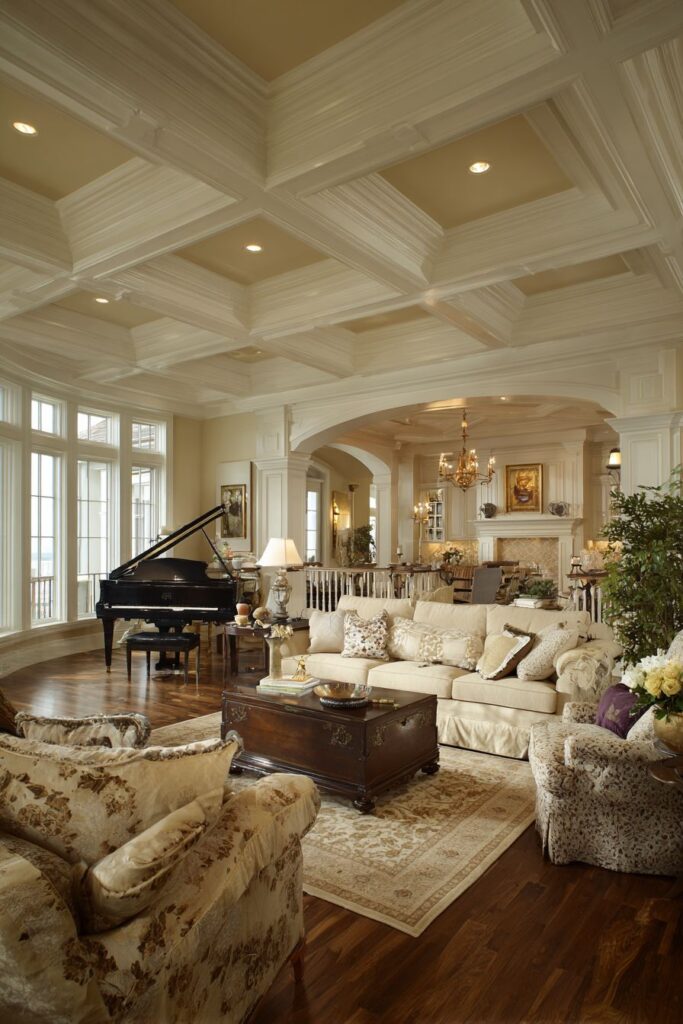
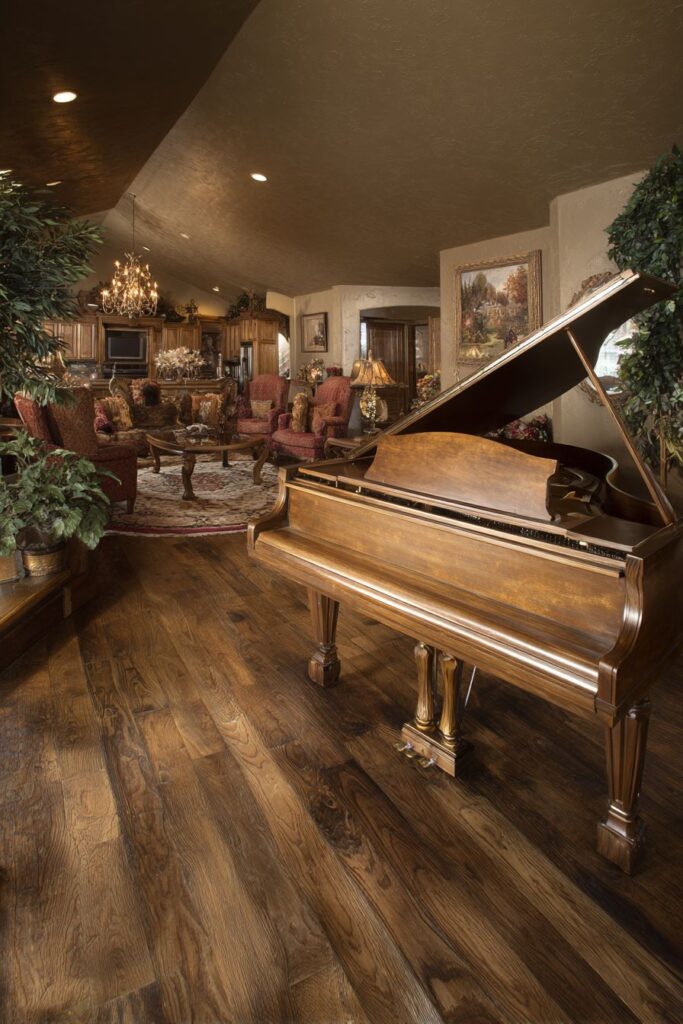
Create a sophisticated large living room that celebrates music by featuring a piano as the central focal point with surrounding seating arranged for both music appreciation and casual conversation. This approach transforms the large room into a performance space that maintains elegant formality while providing comfortable areas for daily family living. The piano serves as both a functional instrument and a substantial piece of furniture that provides the visual weight necessary to anchor a large room’s design.
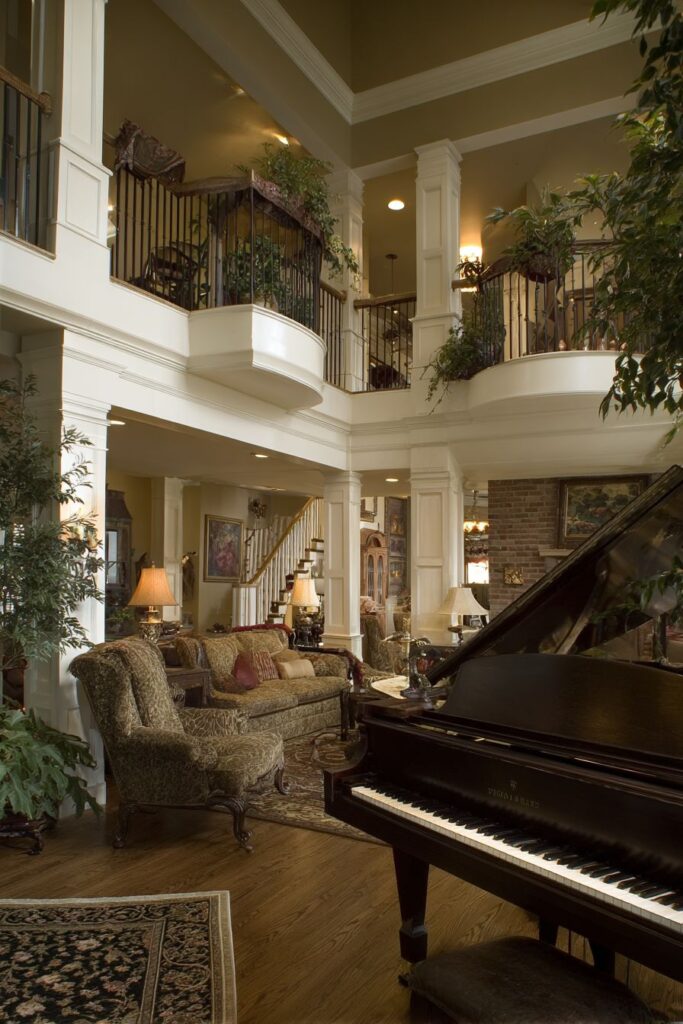
The formal seating area includes elegant furnishings scaled to match the room’s grandeur while providing comfortable viewing positions for musical performances. The seating arrangement must balance the needs of music appreciation – clear sight lines to the piano and good acoustics – with the requirements of casual conversation when the piano isn’t in use. This dual functionality requires careful furniture selection and placement that supports both formal and informal activities.
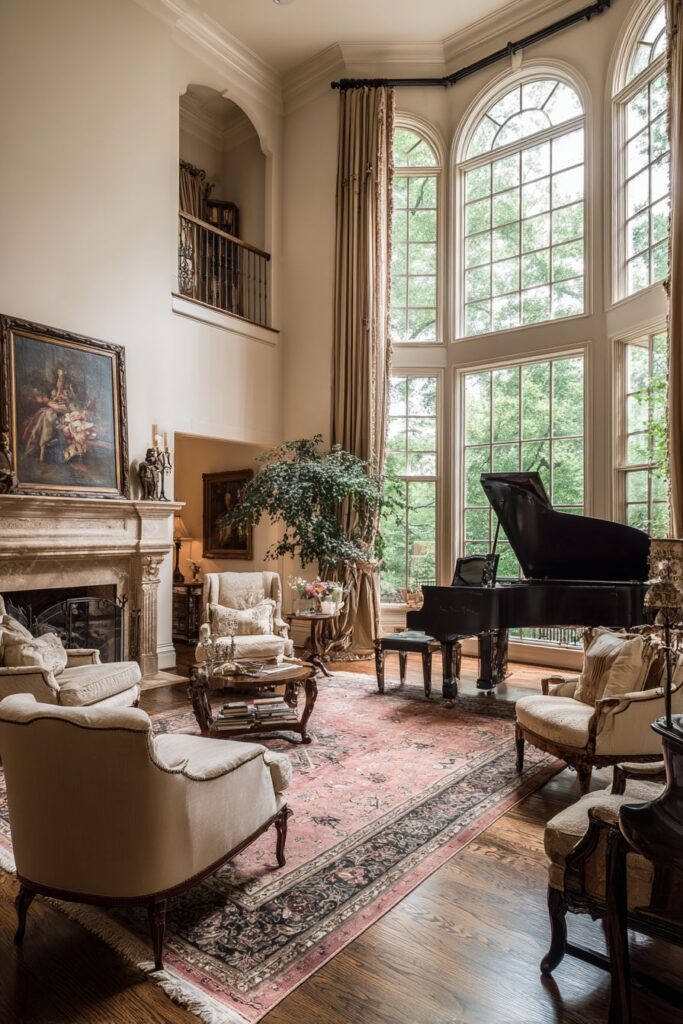
Rich hardwood floors and detailed millwork provide the architectural interest necessary to support the piano’s prominence while creating a sophisticated backdrop that enhances rather than competes with the musical focus. The hardwood floors also provide acoustic benefits, creating the resonance that enhances musical performance while adding warmth and elegance to the overall design. The millwork details add architectural sophistication that matches the grandeur of having a piano as a central room element.
The professional interior photography approach that captures this concept emphasizes the musical element while highlighting the room’s sophisticated proportions and formal furniture arrangement. The challenge lies in showing how the piano integrates with the overall design while maintaining its role as the primary focal point, requiring careful attention to angles and lighting that support both the instrument and the surrounding furnishings.
Key Design Tips:
- Position pianos where they can serve as focal points while allowing good sight lines from seating
- Choose elegant furnishings that match the sophistication implied by featuring a piano
- Consider acoustics when selecting flooring and window treatments for music rooms
- Plan lighting to illuminate sheet music while providing ambient room lighting
- Arrange seating to accommodate both music appreciation and casual conversation
15. Eclectic Vintage-Contemporary Mix with Bold Colors
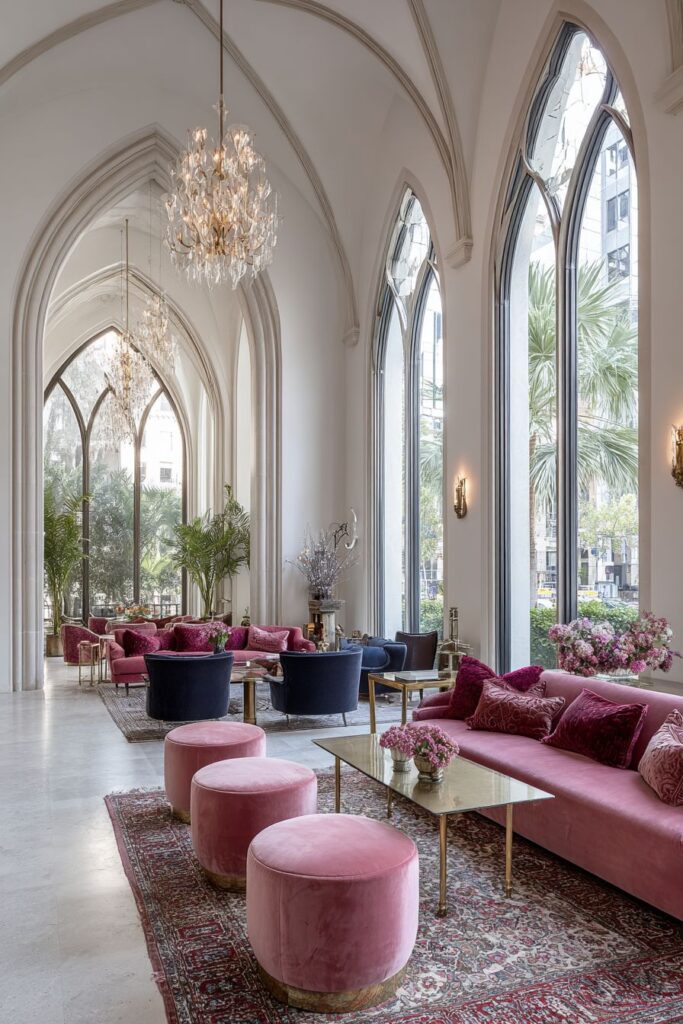
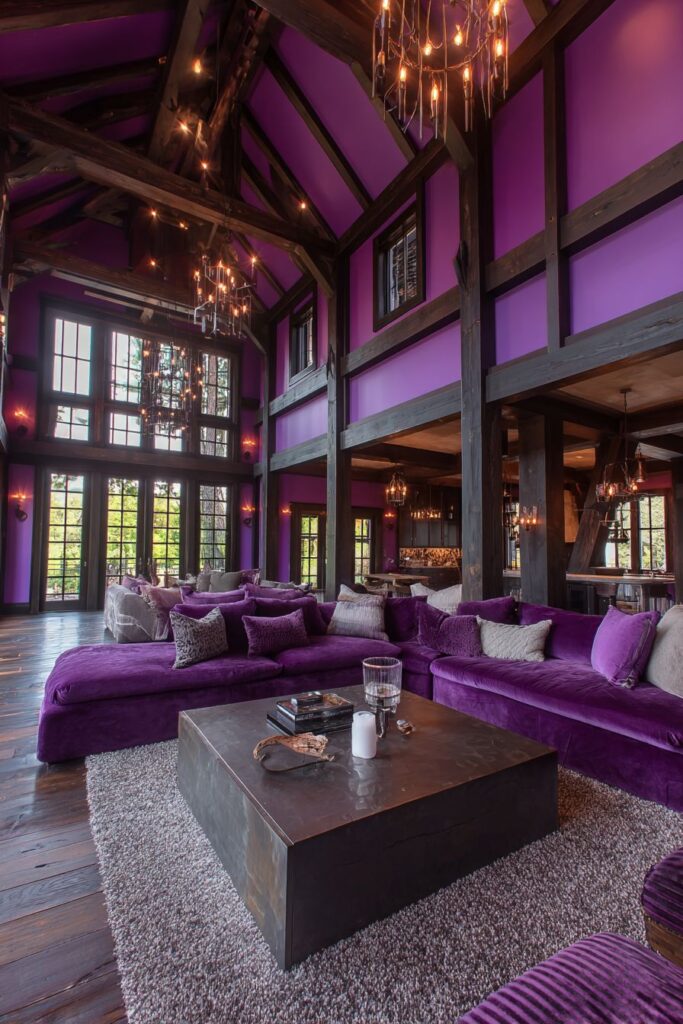
Create a dynamic large living room by curating an eclectic mix of vintage and contemporary furniture pieces, each substantial enough to hold its own in the expansive space while contributing to a cohesive design story that celebrates both historical character and modern innovation. This approach requires expert curation because every piece must earn its place through both individual merit and contribution to the overall composition. The success lies in finding common threads – perhaps similar proportions, complementary colors, or shared materials – that unify pieces from different eras.
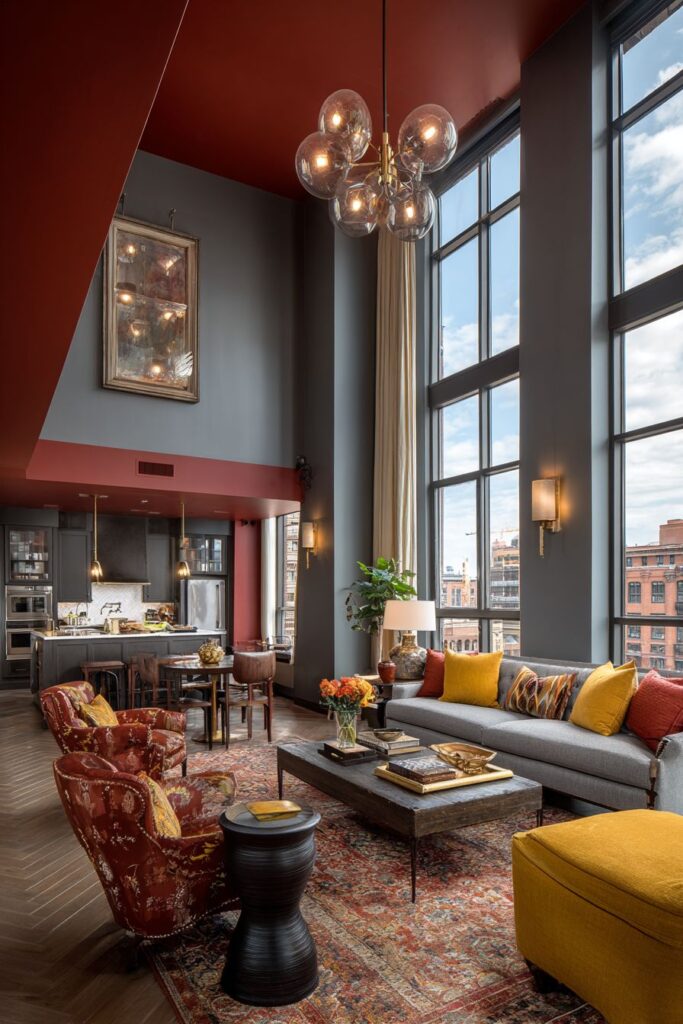
The high ceilings provide the perfect backdrop for modern light fixtures that create dramatic focal points overhead while the bold color palette including deep jewel tones adds richness and sophistication that prevents the large space from feeling overwhelming or chaotic. The jewel tones work particularly well in large rooms because they provide the visual weight necessary to fill expansive spaces while creating a sense of luxury and warmth. These colors also serve as unifying elements that can tie together disparate furniture styles and periods.
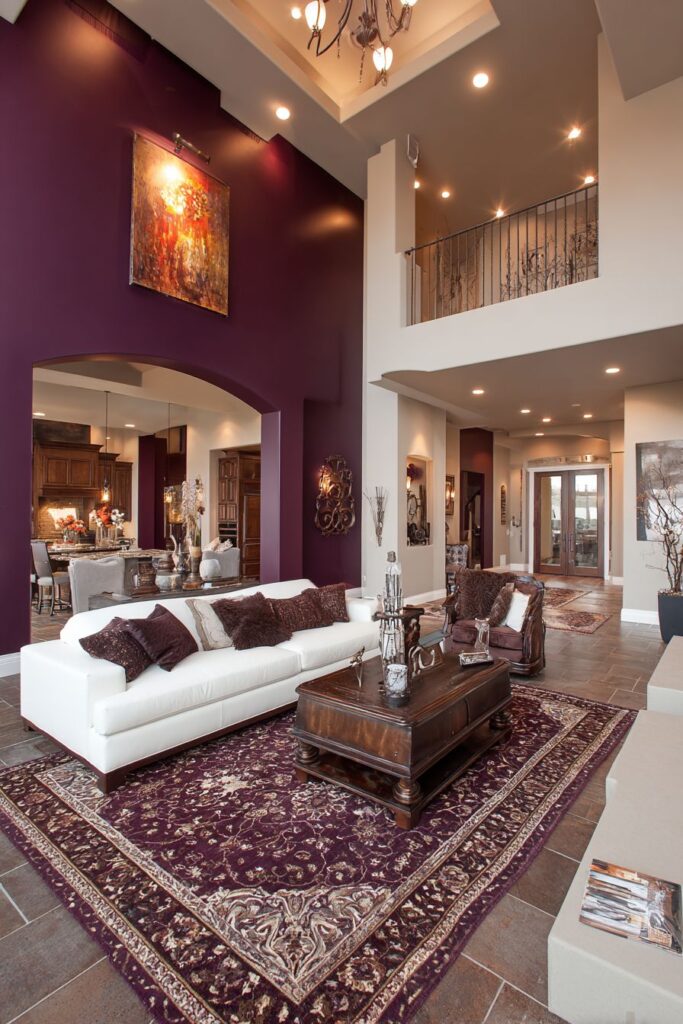
Multiple seating areas throughout the large room provide intimate spaces for different activities while showcasing the curated furniture collection to its best advantage. Each seating area can have its own personality while contributing to the overall eclectic theme, perhaps featuring a vintage sofa paired with contemporary side tables in one area while a modern sectional anchors another zone. This approach prevents the room from feeling like a furniture showroom while ensuring that every piece receives proper display and use.
The interior design photography with dramatic lighting emphasizes the curated collection while highlighting the room’s impressive architectural features. The lighting becomes particularly important in eclectic spaces because it must support various furniture styles and periods while creating the dramatic atmosphere that makes bold color choices feel intentional rather than overwhelming.
Key Design Tips:
- Curate carefully when mixing vintage and contemporary pieces in large spaces
- Use bold colors as unifying elements that tie together different furniture styles
- Create multiple seating areas that each showcase different aspects of your collection
- Choose substantial pieces from each era that can compete for attention in large rooms
- Use dramatic lighting to highlight both individual pieces and overall room composition
16. Family-Friendly Durability with Style
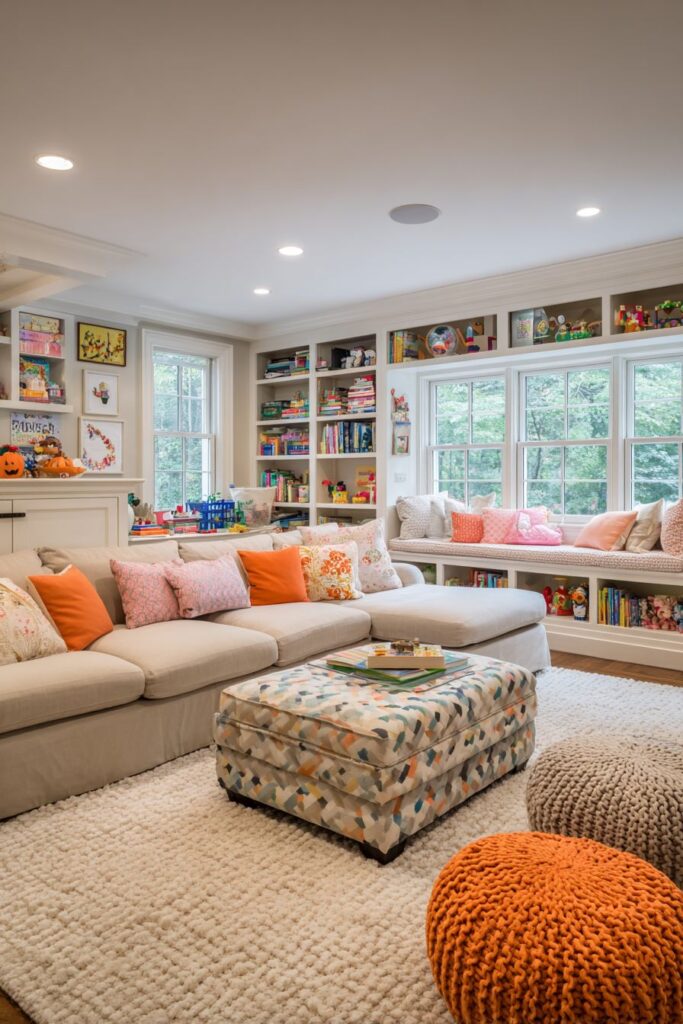
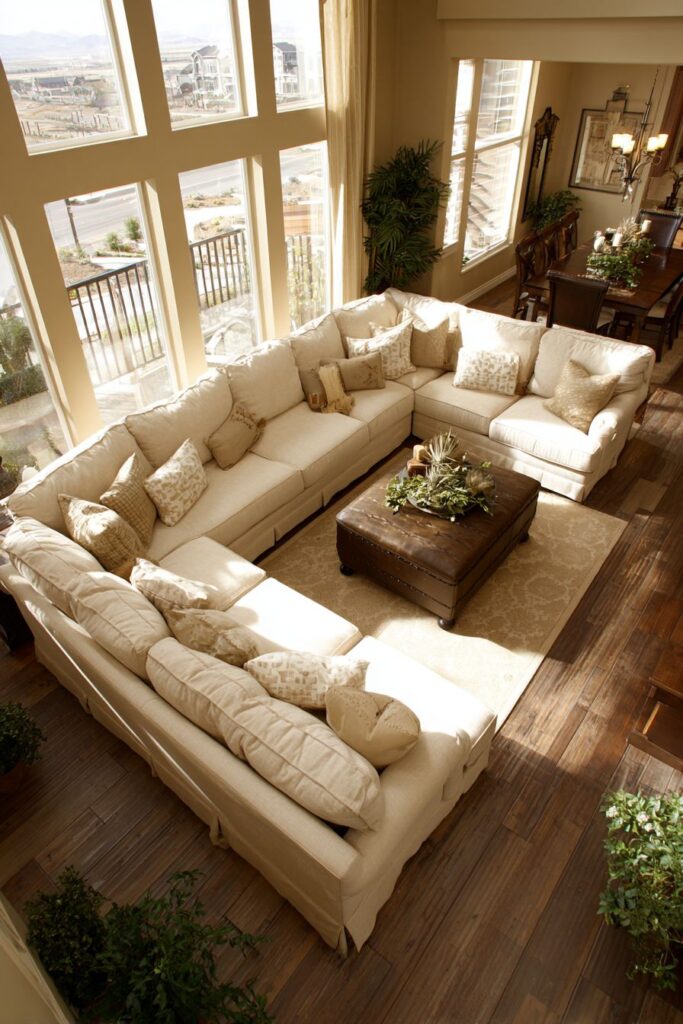
Design a large living room that prioritizes family living by incorporating durable fabrics and child-friendly furniture arrangements while maintaining sophisticated style that proves kid-friendly doesn’t mean sacrificing design quality. The large sectional with washable slipcovers serves as the primary seating while providing the durability necessary for active family living. The slipcover approach allows for easy cleaning and seasonal changes while maintaining the substantial scale necessary for large rooms.
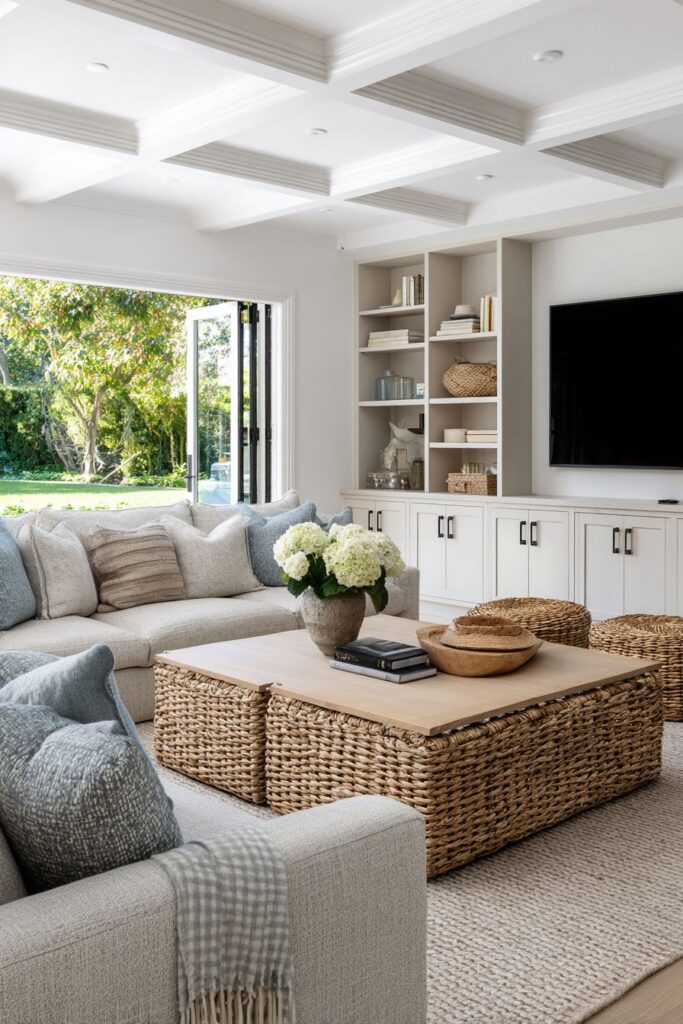
The oversized storage ottoman serves multiple functions as additional seating, table surface, and hidden storage for toys and family necessities, demonstrating how dual-purpose furniture can maximize functionality in large family rooms. This piece must be substantial enough to serve as a central focal point while providing the practical storage that keeps large rooms organized and clutter-free. The ottoman approach also provides flexibility for different activities and age groups throughout the day.
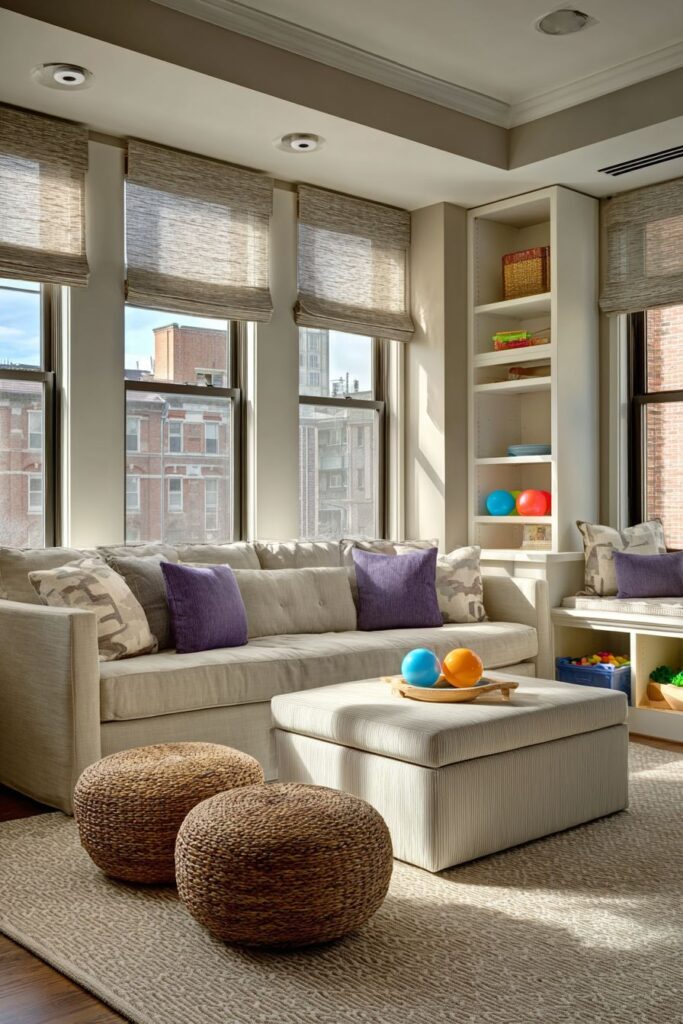
Built-in storage solutions become essential in large family rooms because they provide organization without cluttering the floor space that children need for play and activities. These built-ins can incorporate both open shelving for display and closed storage for items that need to be hidden, creating a balance between functionality and aesthetics. The built-in approach also allows for custom proportions that work with the room’s specific dimensions and the family’s storage needs.
Designated play areas within the larger room ensure that children have appropriate spaces for activities while maintaining the room’s overall sophistication and adult appeal. These areas can be defined through area rugs, furniture placement, or built-in elements while maintaining visual connection to the rest of the room. The challenge lies in creating spaces that serve children’s needs while integrating seamlessly with the overall design aesthetic.
Key Design Tips:
- Choose washable fabrics and slipcovers for easy maintenance in family-focused rooms
- Incorporate substantial storage solutions that don’t compromise the room’s style
- Create designated play areas within the larger space using rugs and furniture placement
- Select durable materials that can withstand daily family use while maintaining appearance
- Plan for flexibility in furniture arrangement to accommodate different family activities
17. Sophisticated Monochromatic Serenity
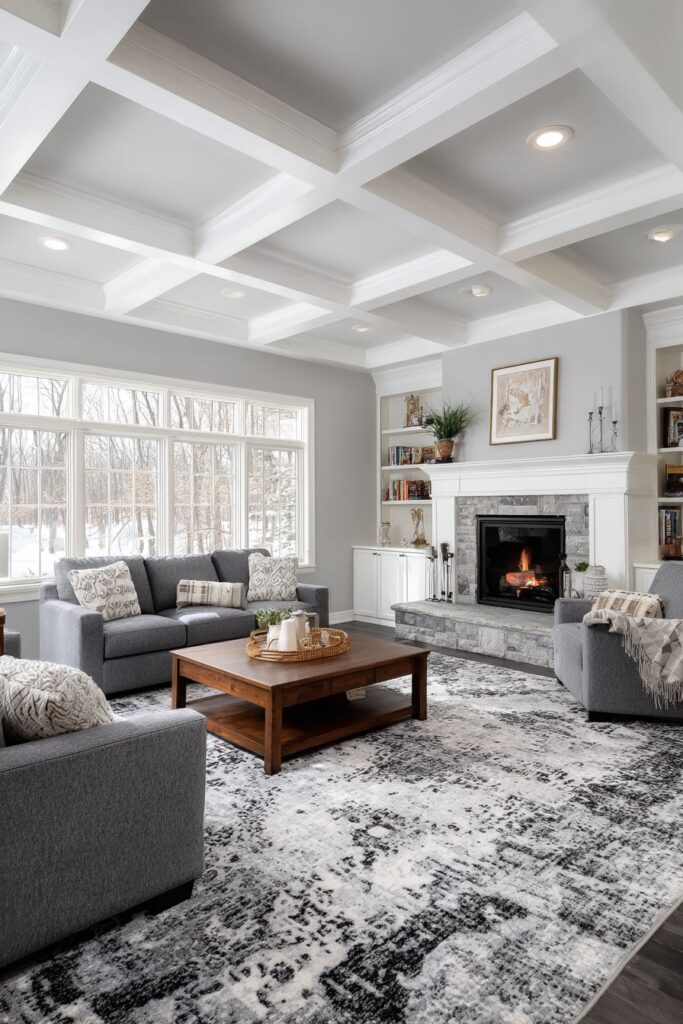
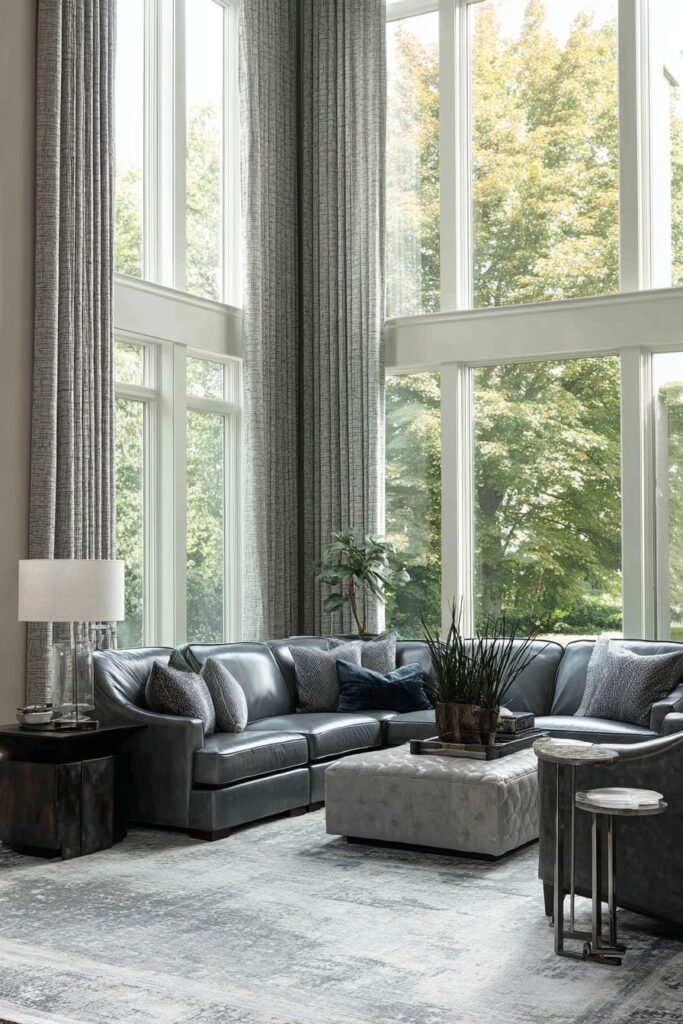
Create a serene and sophisticated large living room through a carefully orchestrated monochromatic color scheme in varying shades of grey and white, where substantial furniture pieces fill the space appropriately while layered textures provide visual interest without relying on color variation. This approach requires expert understanding of how texture, pattern, and material can create depth and interest within a limited color palette, making it one of the most challenging yet rewarding design concepts for large rooms.
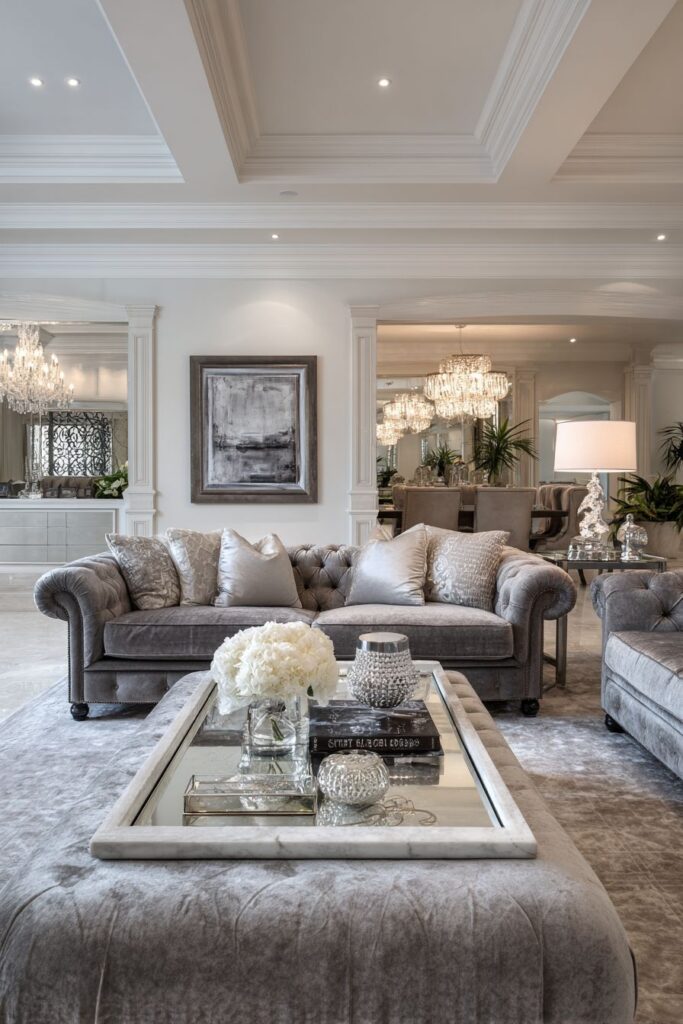
The substantial furniture pieces chosen for this space must provide the visual weight necessary to anchor a large room while working within the monochromatic constraints. This means selecting pieces with interesting shapes, textures, or proportions that create visual interest without relying on color contrast. The furniture arrangement becomes even more critical in monochromatic spaces because the eye relies more heavily on form and proportion to create visual interest and organization.
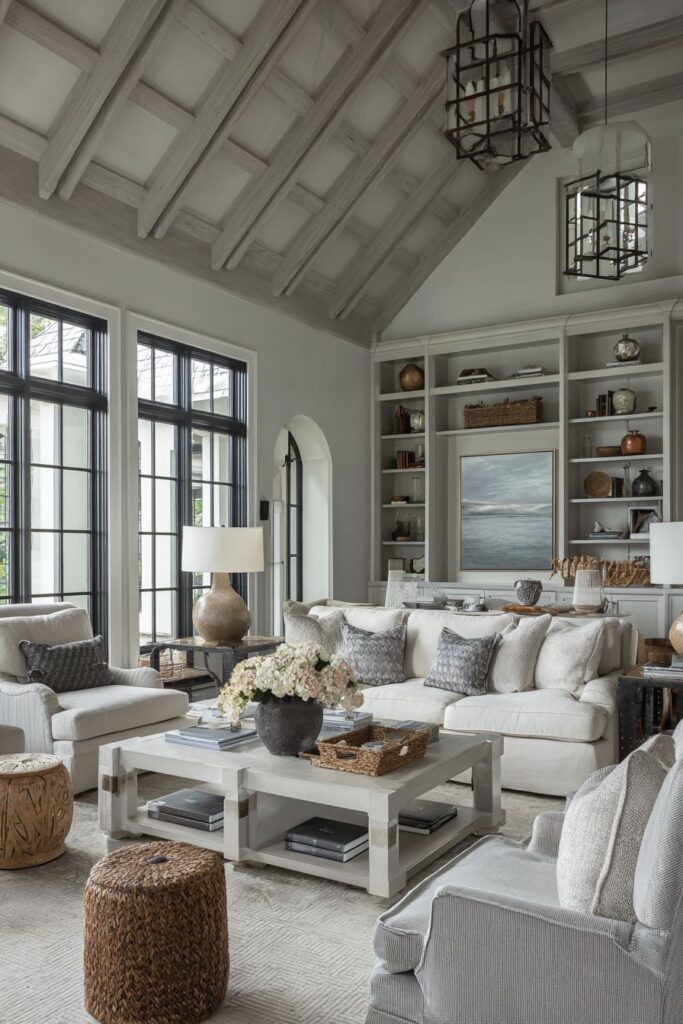
Layered textures through fabrics, rugs, and accessories become the primary tools for creating depth and visual complexity within the restrained color palette. Each texture must be chosen carefully to contribute to the overall composition while providing tactile interest that engages the senses beyond just visual appeal. The layering might include smooth leather, nubby linen, soft wool, and rough jute, each contributing different visual and tactile qualities that create richness within the simple color scheme.
Strategic lighting creates depth and interest throughout the neutral palette while highlighting the textural variations that provide visual complexity in the absence of color contrast. The lighting design becomes particularly crucial in monochromatic spaces because it must create the drama and focal points that color variations typically provide in more diverse palettes. Both natural and artificial lighting work together to reveal textures and create the subtle variations that prevent monochromatic schemes from feeling flat.
Key Design Tips:
- Layer textures extensively to create interest within limited color palettes
- Choose furniture with interesting shapes and proportions rather than relying on color
- Use strategic lighting to reveal textures and create depth in monochromatic schemes
- Vary material finishes from matte to glossy to create subtle visual variation
- Include natural elements like plants or wood to add organic texture to neutral palettes
18. Industrial Loft Character with Raw Materials

Transform your large living room into an industrial showcase by embracing raw materials including exposed brick walls, metal fixtures, and concrete floors while furnishing the space with leather seating and reclaimed wood pieces scaled appropriately for the dramatic architectural setting. This approach celebrates the honesty of materials and structural elements while creating comfortable living spaces within the raw architectural shell. The industrial aesthetic works particularly well in large rooms because it can handle bold architectural gestures that might overwhelm smaller spaces.
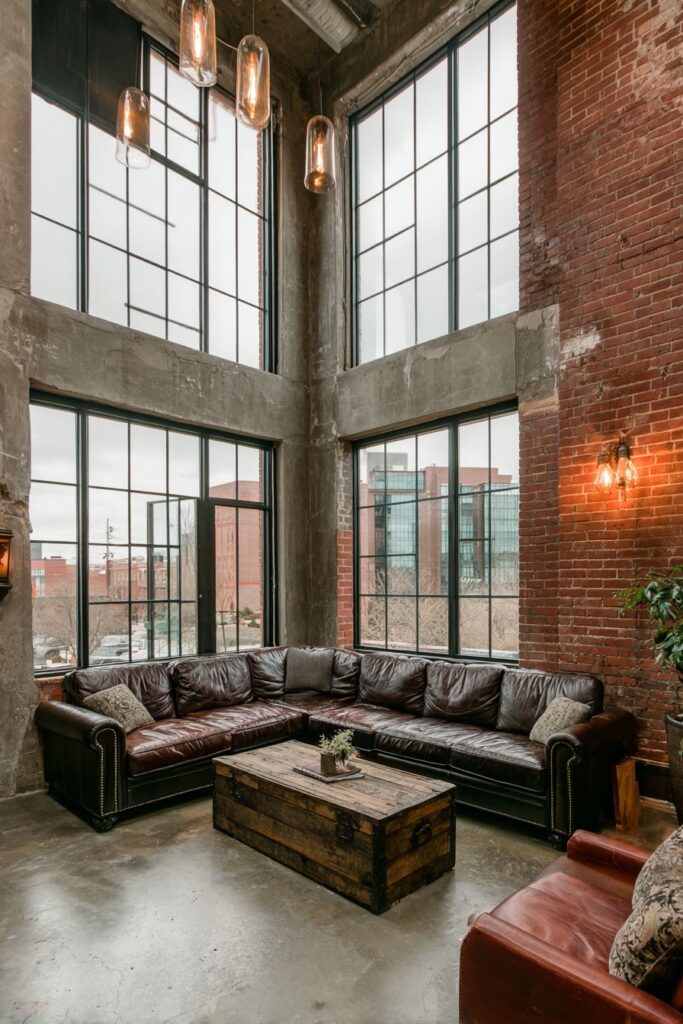
The exposed brick walls provide texture and warmth that prevent the industrial elements from feeling cold or unwelcoming while adding the visual weight necessary to ground a large room’s design. The brick’s natural variation and color add organic interest that balances the harder industrial materials like metal and concrete. These walls also provide excellent acoustic properties, helping to manage sound in the large space while adding character that can’t be achieved with painted surfaces.
Industrial Loft Character with Raw Materials
The high ceilings with exposed ductwork celebrate the building’s infrastructure rather than hiding it, creating an authentic industrial aesthetic that provides visual interest overhead while maintaining the raw character that defines this design approach. The exposed ductwork serves both aesthetic and practical purposes, providing the dramatic linear elements that help organize the expansive ceiling plane while maintaining the mechanical honesty that characterizes true industrial design.
Large factory-style windows flood the space with natural light while reinforcing the industrial theme through their substantial frames and grid patterns. These windows work perfectly in large rooms because they provide the scale necessary to balance impressive room proportions while their industrial character supports the overall design concept. The abundant natural light also prevents the raw materials from feeling too harsh or unwelcoming.

The furniture arrangement creates intimate seating areas within the raw architectural shell, demonstrating how carefully chosen pieces can provide comfort and warmth within industrial settings. The leather seating ages beautifully in industrial environments while providing the durability necessary for this aesthetic, and the reclaimed wood pieces add warmth and organic texture that balance the harder industrial materials.
Key Design Tips:
- Embrace exposed structural elements rather than trying to hide industrial features
- Choose leather furnishings that age well and complement industrial materials
- Add reclaimed wood pieces to warm up potentially cold industrial environments
- Use large-scale windows to flood industrial spaces with natural light
- Create intimate seating areas within larger industrial architectural shells
19. View-Focused Minimalism with Outdoor Connection
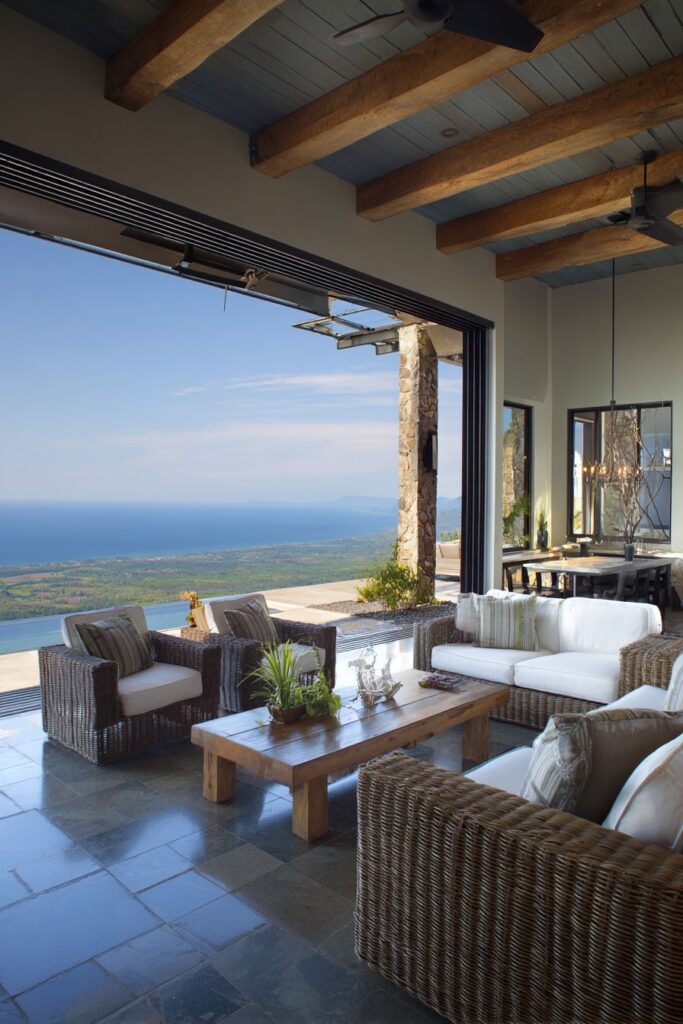
Design your large living room around stunning natural views by employing minimal furniture that avoids blocking sight lines while creating comfortable spaces for appreciating the outdoor scenery. This restrained approach requires confidence because the temptation in large rooms is often to fill them with dramatic furniture, but when blessed with spectacular views, the outdoor beauty should remain the primary focus. The furniture serves as a comfortable platform for enjoying the scenery rather than competing with it for attention.
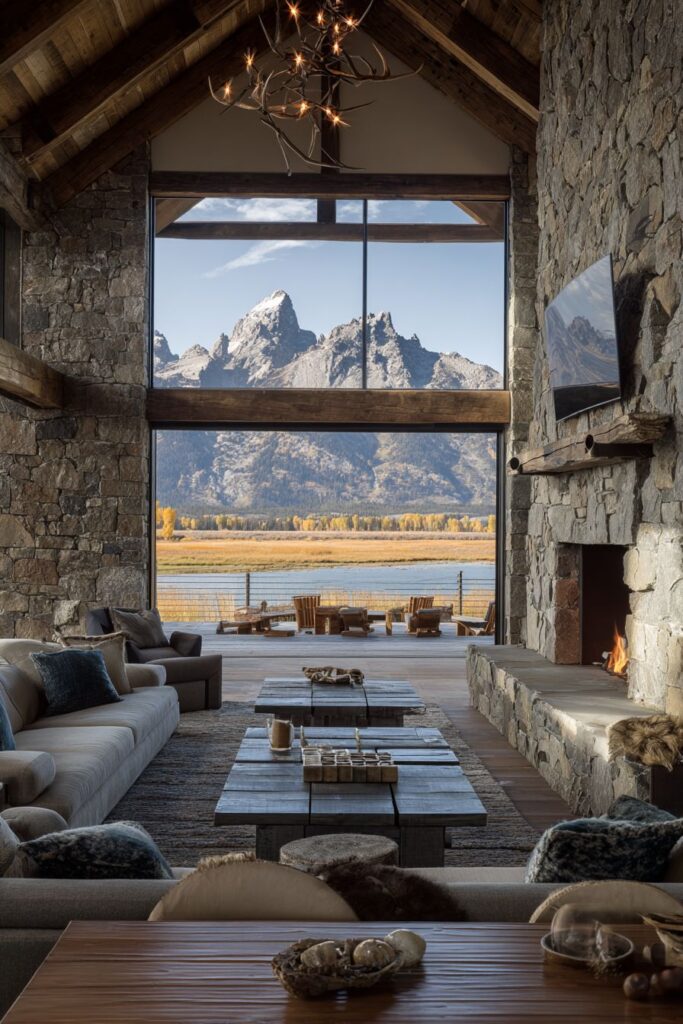
Low-profile seating and glass tables maintain transparency throughout the space while providing the functionality necessary for comfortable living. These pieces must be carefully proportioned to provide adequate seating and surface space while remaining visually light enough to preserve the connection to the outdoors. The glass tables particularly excel in this application because they provide surface space without visual weight, allowing the eye to flow uninterrupted toward the views.
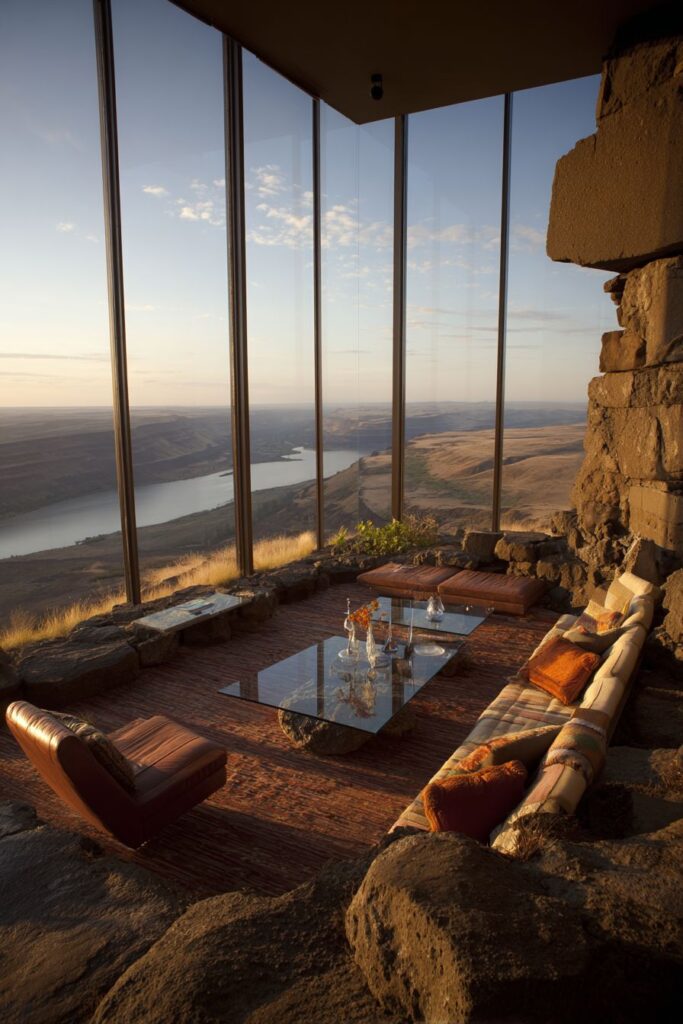
The color palette reflects the outdoor scenery with natural tones and organic textures that create harmony between interior and exterior environments. This approach requires careful observation of the outdoor colors and seasonal changes to ensure that the interior palette supports rather than competes with the natural beauty. The organic textures might include natural linen, jute, and unfinished wood that echo the textures found in the outdoor landscape.
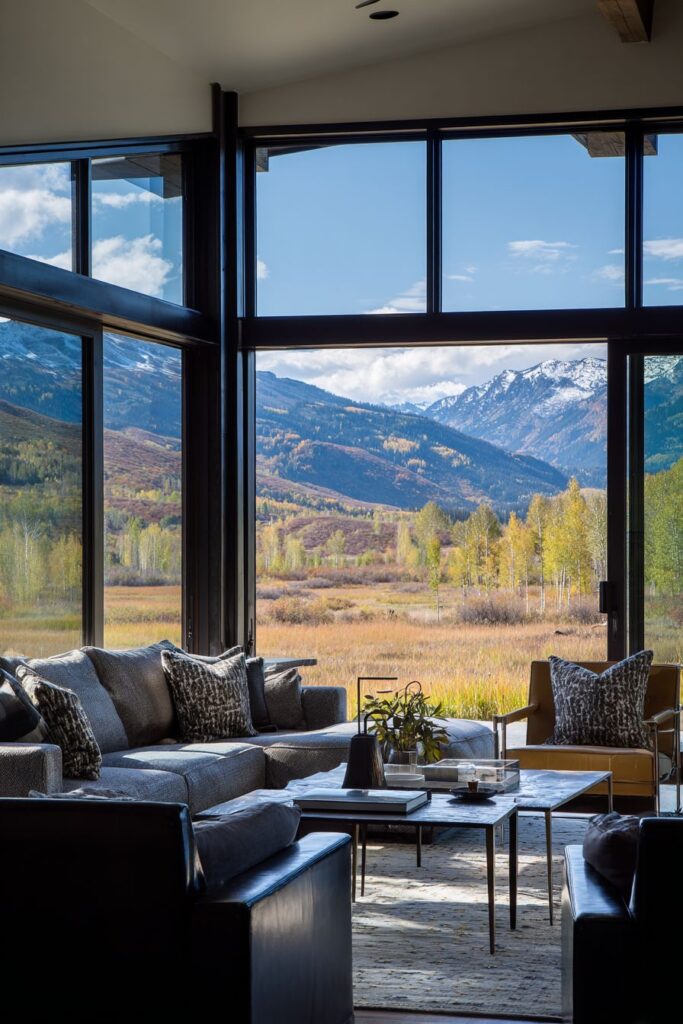
Large sliding doors blur the indoor-outdoor boundaries, creating seamless transitions that expand the living space beyond the physical walls. These openings must be proportioned generously to work with the room’s large scale while providing the maximum connection to outdoor spaces. The hardware and frames should be minimal to maintain the clean lines essential to this design approach.
Key Design Tips:
- Choose low-profile furniture that maintains sight lines to outdoor views
- Use glass surfaces to provide functionality without visual weight
- Echo outdoor colors in interior palette choices for harmony
- Install large sliding doors for maximum indoor-outdoor connection
- Practice restraint in furniture selection when views are the primary feature
20. Curved Sectional Luxury with Architectural Drama
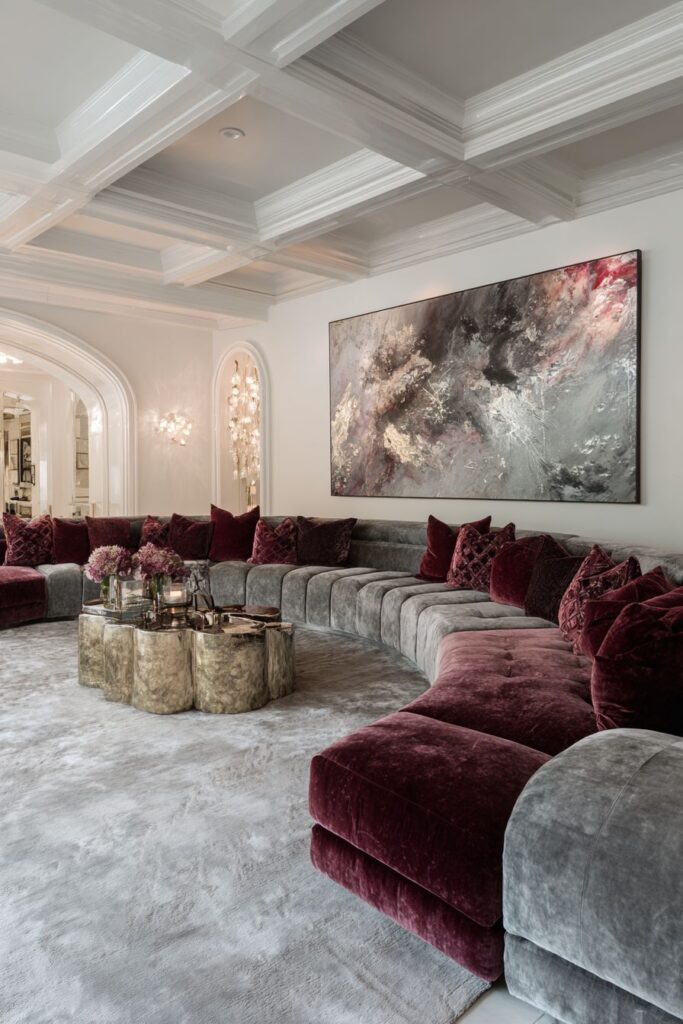
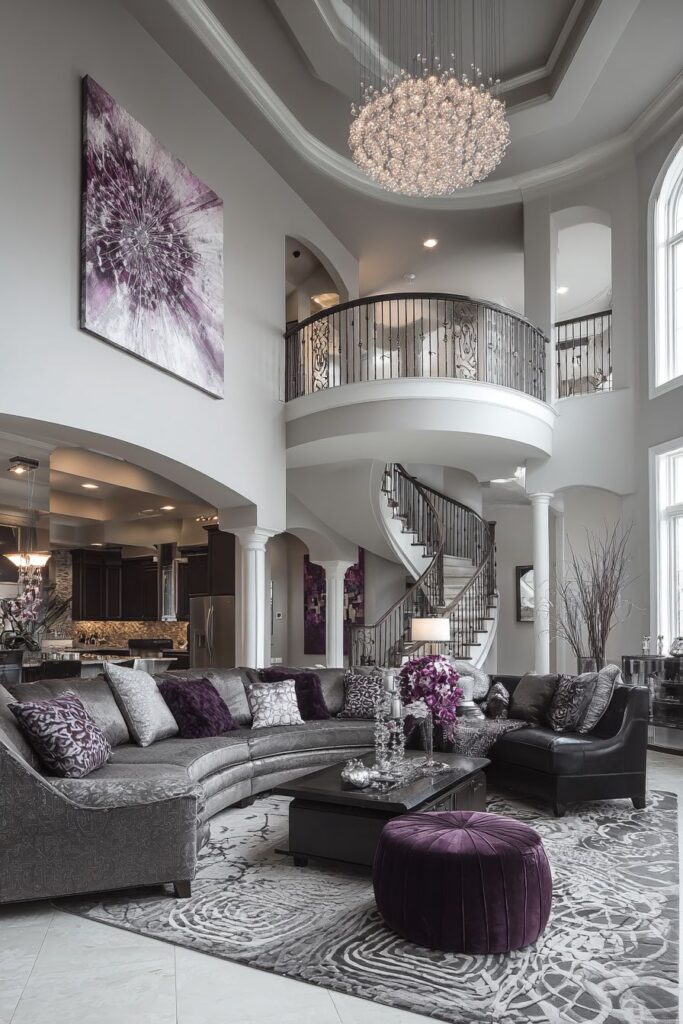
Create the ultimate sophisticated large living room by featuring a dramatic curved sectional that follows the room’s architecture while creating an intimate conversation area within the expansive space. The curved approach provides several advantages in large rooms: it creates better conversation flow by naturally orienting seating toward the center, it softens the potentially rigid lines of large architectural spaces, and it provides more seating capacity than traditional straight sectionals while maintaining elegant proportions.
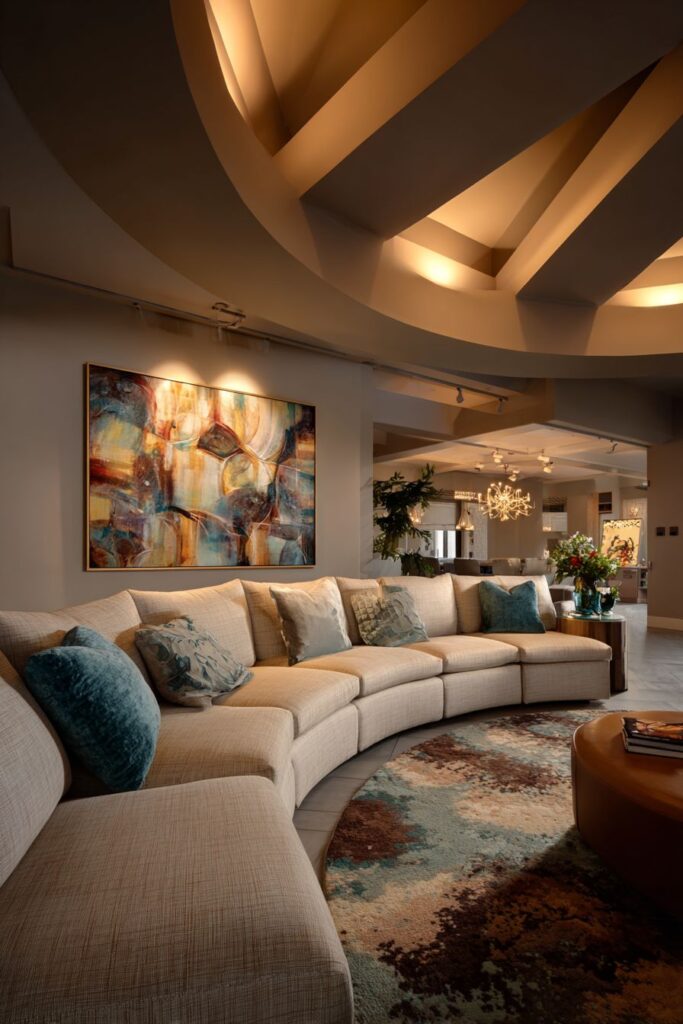
The statement lighting fixtures and bold artwork provide the dramatic focal points necessary to balance the room’s impressive dimensions while the curved seating creates a sophisticated counterpoint to angular architectural elements. The lighting must be scaled dramatically to work in large rooms while providing both ambient illumination and artistic focal points. The bold artwork serves similar purposes, creating visual anchors on expansive wall surfaces while introducing color and personality to the sophisticated neutral foundation.
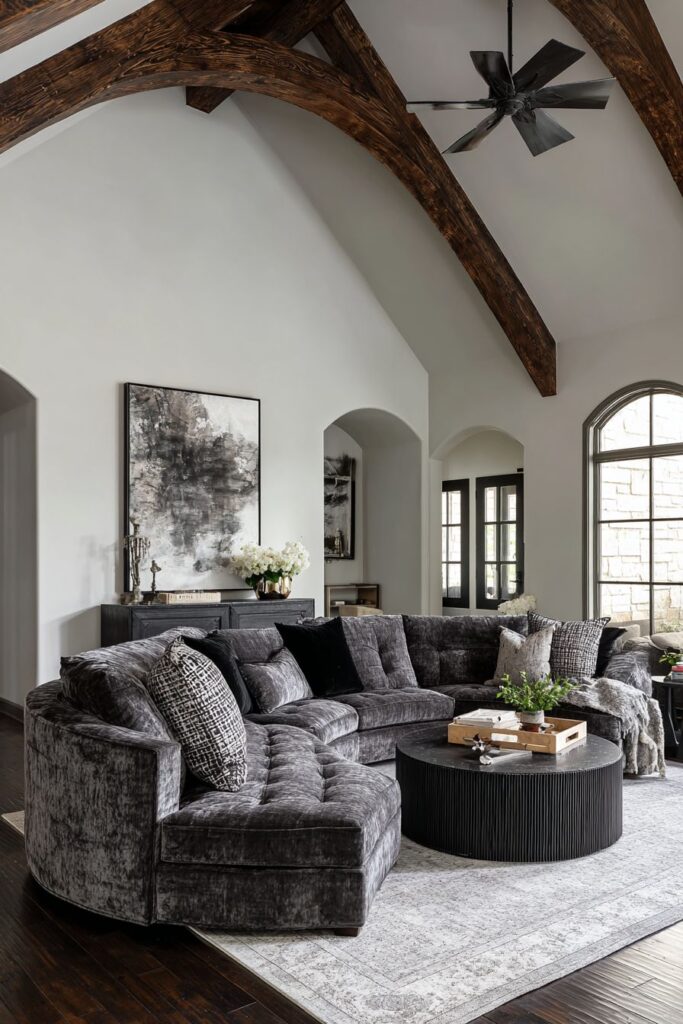
Rich textures through velvet upholstery and layered rugs add luxury and tactile appeal that makes the large room feel welcoming and comfortable despite its impressive scale. The velvet provides the visual richness necessary for sophisticated spaces while its texture adds depth and warmth that prevents the room from feeling cold or sterile. The layered rugs define the conversation area while adding pattern and texture that complement the curved seating arrangement.
Architectural details like tray ceilings add visual interest overhead while providing the finished appearance that matches the room’s luxurious furnishings and sophisticated design approach. These details help break up expansive ceiling planes while adding the architectural sophistication that elevates the space beyond simple furniture arrangement to true interior design.
Key Design Tips:
- Choose curved seating to create better conversation flow and soften angular architecture
- Scale lighting and artwork dramatically for proper proportion in large luxury rooms
- Layer rich textures like velvet and wool to add luxury and tactile appeal
- Include architectural details overhead to provide visual interest and sophistication
- Use area rugs to define conversation areas within curved seating arrangements
Why These Large Living Room Designs Excel
These twenty design concepts represent the pinnacle of large living room design because they each address the unique challenges and opportunities that expansive spaces present. Large living room design requires understanding how to balance scale, proportion, and functionality while creating spaces that feel both grand and intimate. Each concept demonstrates mastery of spacious living room layouts that maximize the benefits of generous square footage while avoiding common pitfalls like feeling cavernous or unwelcoming.
Open concept living rooms benefit tremendously from the zoning strategies demonstrated throughout these designs, where multiple conversation areas and functional zones create purpose and definition within expansive floor plans. The living room furniture arrangement principles shown in each concept ensure that pieces are properly scaled and positioned to create comfortable, functional spaces that take advantage of impressive room dimensions rather than being overwhelmed by them.
Large sectional living rooms appear frequently in these concepts because sectional seating provides the substantial furniture pieces necessary to anchor expansive spaces while offering the flexibility to accommodate various activities and group sizes. The luxury living room ideas incorporated throughout demonstrate how high-end materials, custom built-ins, and sophisticated color schemes can create spaces worthy of the impressive architecture they inhabit.
Contemporary large living rooms and traditional large living rooms both appear in this collection, proving that successful large room design transcends style preferences and depends more on understanding proportion, scale, and functionality. The entertainment room design concepts show how large spaces can accommodate media and technology without sacrificing style or comfort, while family-friendly living room examples demonstrate that child-safe doesn’t mean sacrificing sophistication.
The interior design principles underlying each concept focus on creating multiple focal points, using substantial furniture pieces, incorporating adequate lighting, and maintaining clear circulation paths – all essential elements for successful large room design. Whether featuring exposed beam ceilings, stone fireplaces, or floor-to-ceiling windows, each design celebrates rather than fights against impressive architectural features.
Conclusion
Large living rooms offer unparalleled opportunities for creating stunning, functional spaces that serve as the heart of the home while showcasing impressive architectural features and accommodating multiple activities simultaneously. The twenty concepts explored in this comprehensive guide demonstrate that successful large room design depends not on filling every corner with furniture, but on understanding how to create purposeful zones, choose appropriately scaled pieces, and maintain visual harmony throughout expansive spaces.
The key takeaways from these diverse approaches include the importance of creating multiple conversation areas rather than single large furniture groupings, using substantial pieces that match the room’s impressive scale, incorporating adequate lighting to prevent dark corners, and celebrating rather than minimizing dramatic architectural features. Whether your style preference leans toward rustic charm, contemporary sophistication, traditional elegance, or eclectic creativity, the principles remain consistent: respect the space’s proportions, create intimate areas within the grander framework, and choose elements that enhance rather than compete with the room’s natural assets.
As you embark on designing or redesigning your own large living room, remember that these spaces require patience and planning to achieve their full potential. Start with a clear understanding of how you want to use the space, then build your design around those functional requirements while respecting the room’s architectural character. Don’t be afraid to think big – large rooms can handle dramatic furniture, bold colors, and substantial artwork that would overwhelm smaller spaces. Most importantly, create a space that reflects your lifestyle and personality while taking full advantage of the luxury that generous square footage provides.
"As an Amazon Associate, I earn from qualifying purchases."
