
The kitchen table serves as more than just a surface for meals—it’s the heart of daily family life, a workspace, and often the first thing guests notice when entering your home. A well-styled centerpiece transforms this functional space into a visual anchor that elevates the entire room’s atmosphere. Yet many homeowners struggle with creating arrangements that remain beautiful throughout the week while withstanding the demands of everyday use.
Thoughtful interior design recognizes that kitchen table styling must balance aesthetic appeal with practicality. Unlike formal dining room arrangements that emerge only for special occasions, kitchen centerpieces need to accommodate breakfast chaos, homework sessions, and impromptu gatherings. The most successful designs marry visual interest with functionality, creating focal points that enhance rather than hinder daily activities.
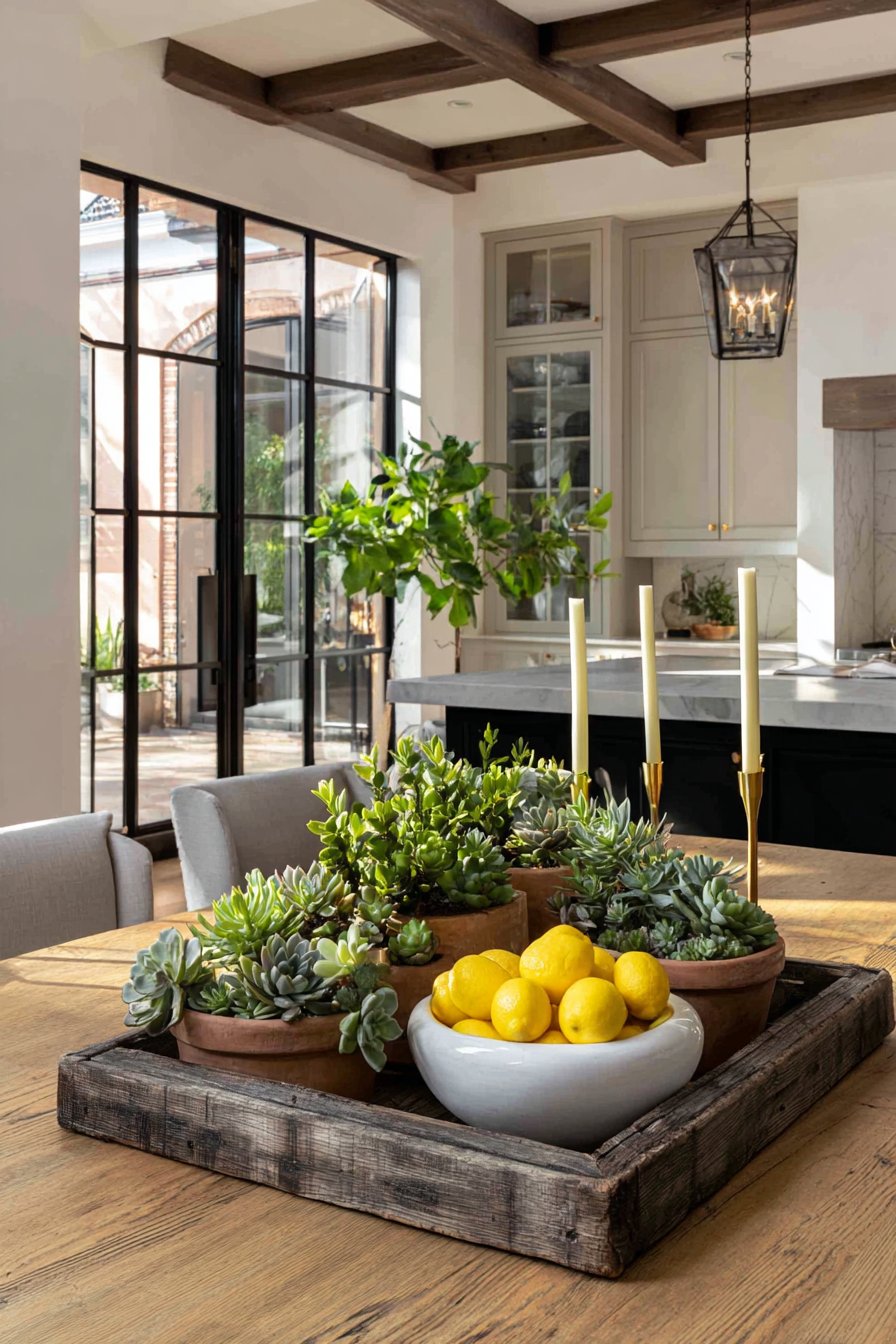
This article explores six proven strategies for crafting kitchen table centerpieces that maintain their beauty from Monday through Sunday. From selecting durable materials to establishing proper scale, these techniques cater to diverse design preferences—whether your style leans toward modern minimalism, rustic farmhouse charm, or classic elegance. Each approach emphasizes sustainability and ease of maintenance, ensuring your centerpiece enhances your space without creating additional work.
1. Choose a Durable Base Structure
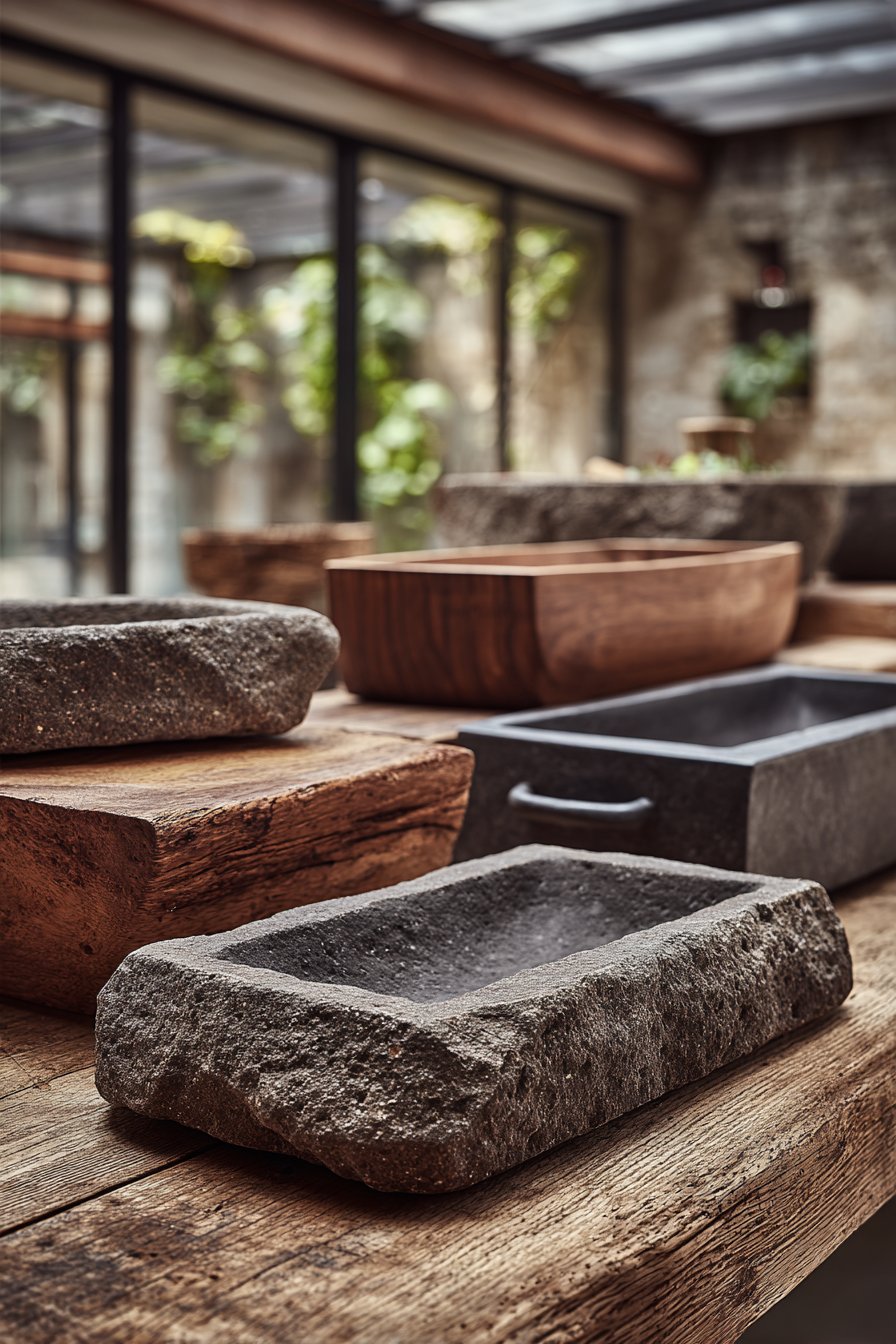
The foundation of any long-lasting centerpiece begins with selecting the right base element. A sturdy anchor piece provides stability and prevents constant rearrangement when the table gets bumped during daily activities. Materials like ceramic, wood, or metal withstand frequent handling far better than delicate glass or fragile porcelain.
Consider the weight and construction quality of your base piece. Heavy materials like stone trays, solid wood bowls, or cast iron containers stay firmly in place when children reach across the table or adults set down dishes. This stability becomes particularly crucial in busy households where the kitchen table serves multiple purposes throughout the day.
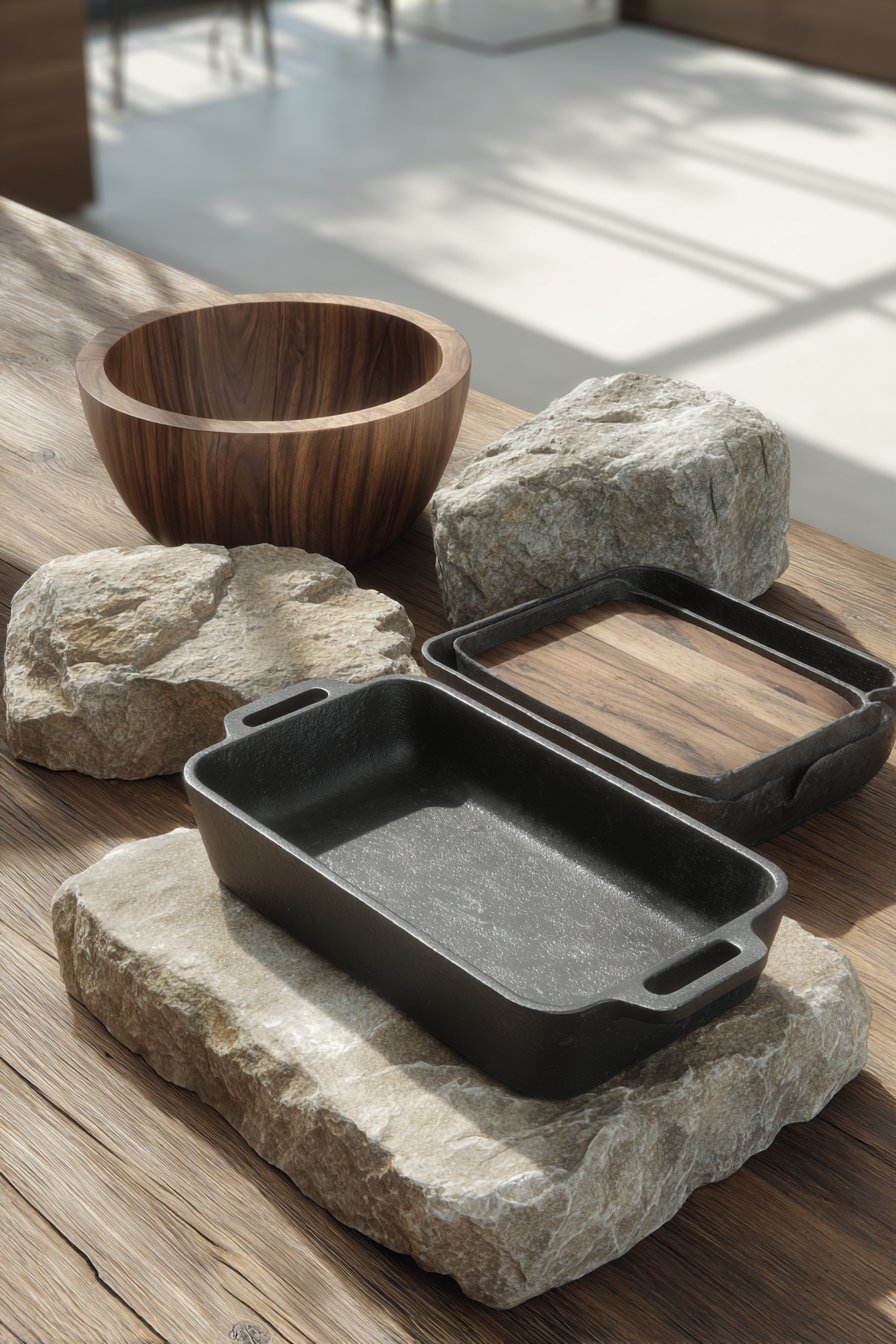
Your base should complement your kitchen’s existing design language while offering versatile styling potential. A neutral-toned wooden tray works across seasons and occasions, while a distinctive ceramic bowl can become a signature element that defines your table’s character. The key lies in choosing something substantial enough to anchor lighter decorative elements without overwhelming the table’s proportions.
- Select bases with flat, stable bottoms that won’t tip easily
- Choose materials that resist water damage and staining
- Opt for pieces measuring 12-18 inches for standard tables
- Consider weight distribution when selecting bowls or trays
- Invest in quality pieces that justify prominent placement
- Match the base finish to existing hardware or fixtures
2. Incorporate Low-Profile Greenery
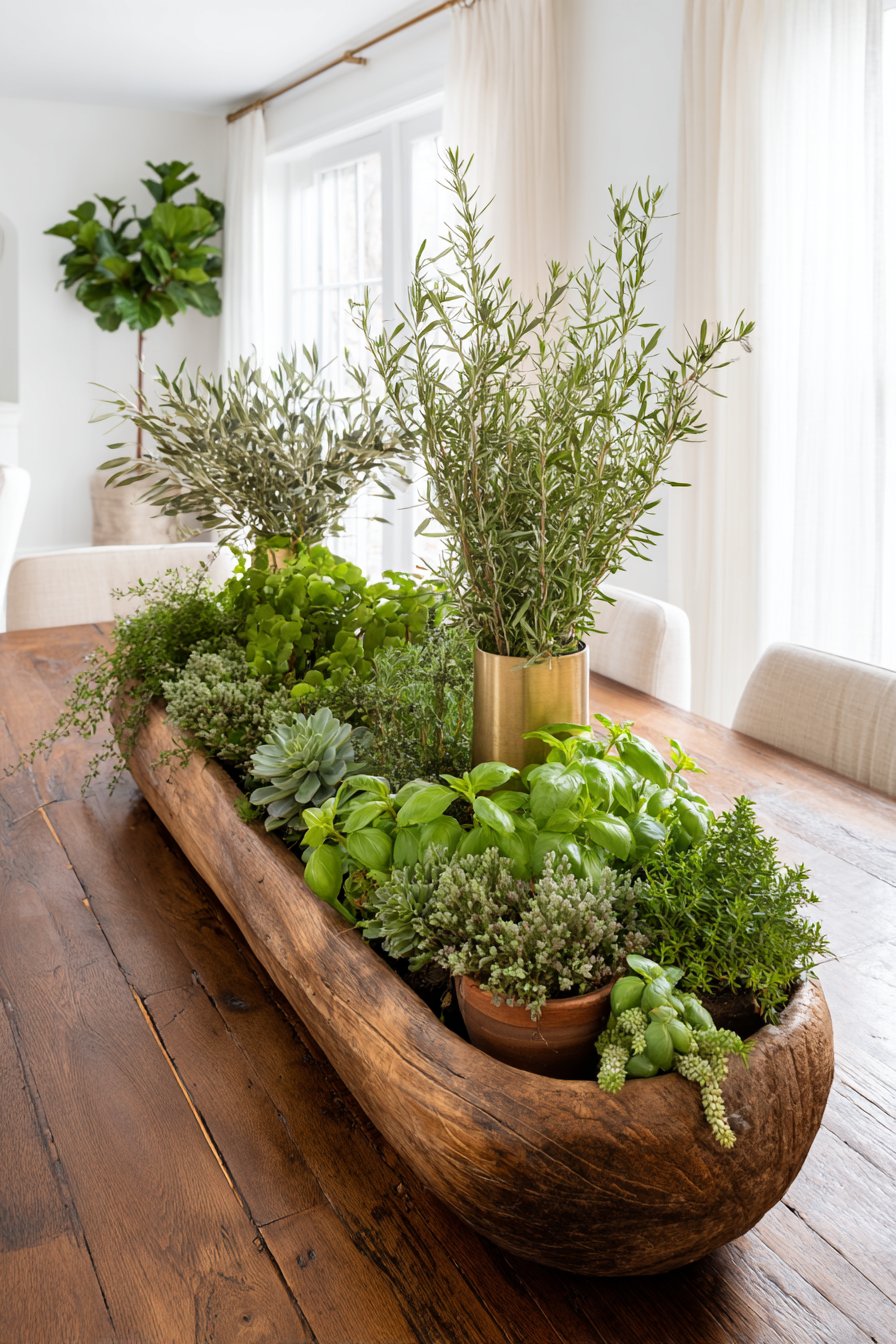
Fresh or preserved greenery brings organic vitality to kitchen tables without obstructing sightlines across the surface. Unlike tall floral arrangements that block conversation and view, low-profile plants create visual interest at eye level when seated. This approach maintains the table’s functionality while adding a natural element that refreshes the space.
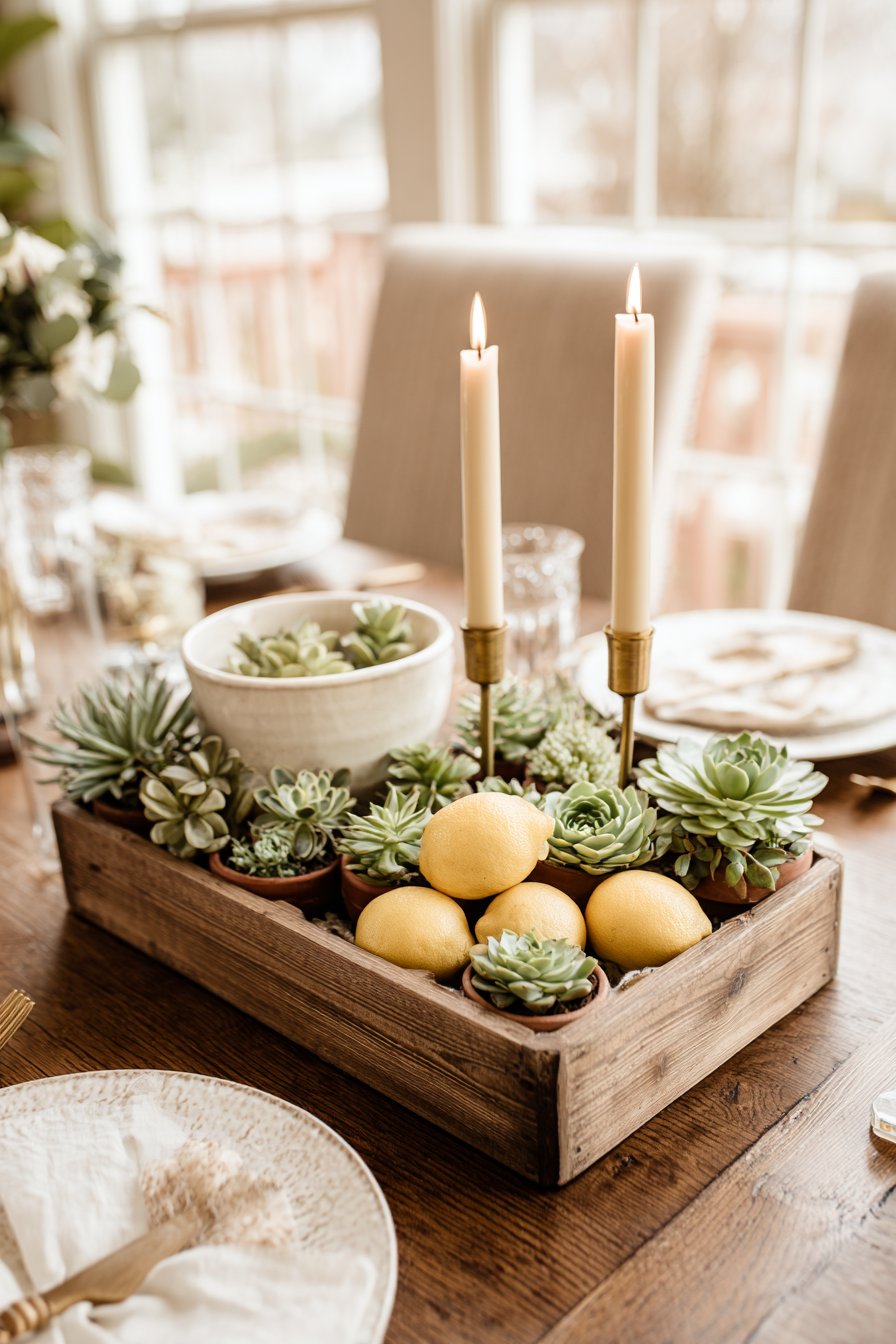
Succulents, air plants, and compact herbs offer minimal maintenance requirements that suit busy households perfectly. These hardy plants tolerate varying light conditions and irregular watering schedules better than traditional cut flowers. A small collection of potted herbs like basil or rosemary provides both decorative appeal and practical culinary benefits throughout the week.
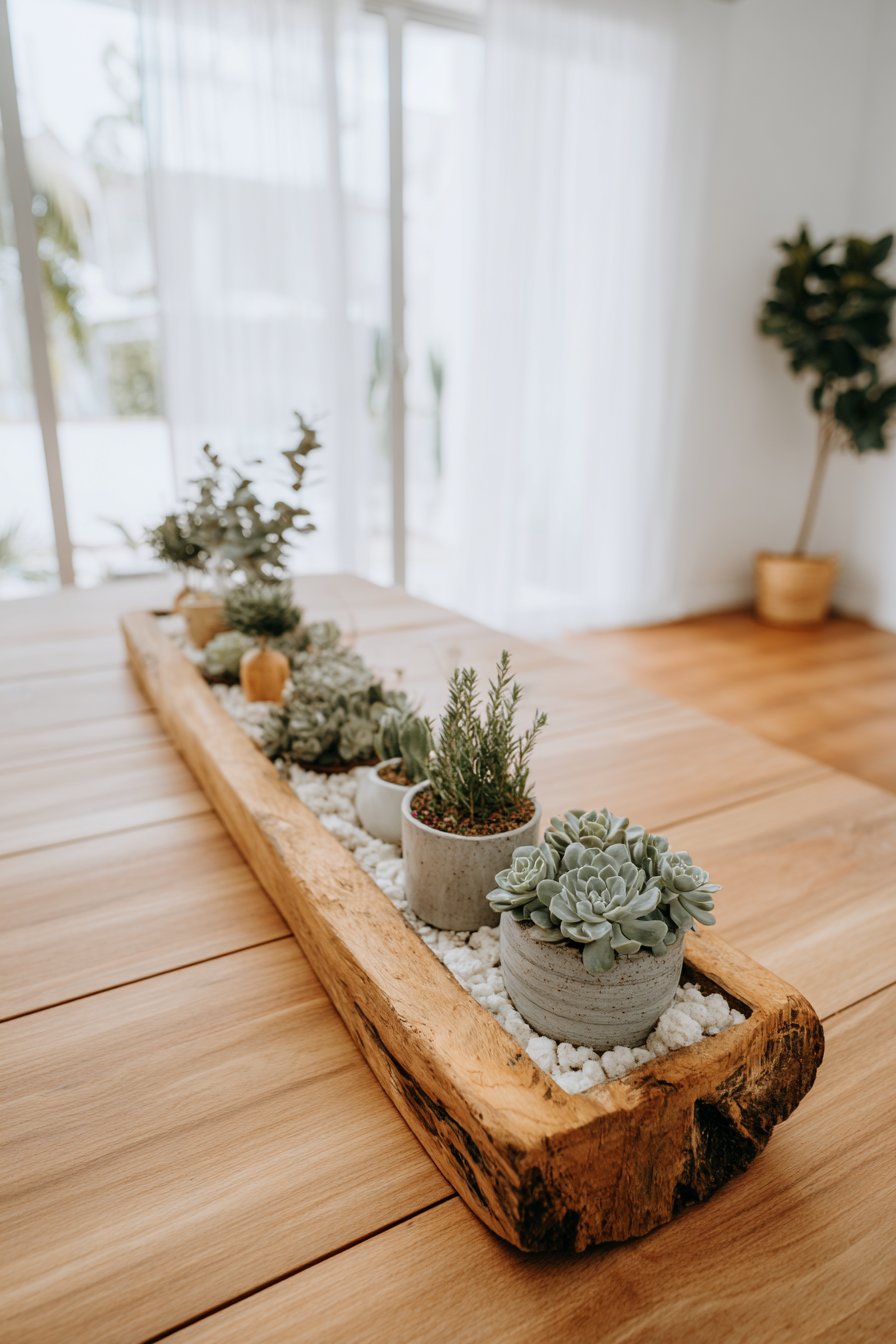
Preserved greenery such as eucalyptus, olive branches, or dried grasses eliminates maintenance entirely while providing lasting beauty. These materials maintain their appearance for weeks or months, making them ideal for homeowners who want consistent styling without daily upkeep. Layer different textures and shades of green to create depth without adding height.
- Keep plants under 8 inches tall to maintain clear sightlines
- Group three or five small plants for visual balance
- Choose ceramic or terracotta containers that complement your base
- Rotate herb plants between table and windowsill for optimal growth
- Replace cut greenery weekly or use preserved alternatives
- Avoid toxic plants if young children or pets frequent the area
3. Layer with Varying Heights and Textures
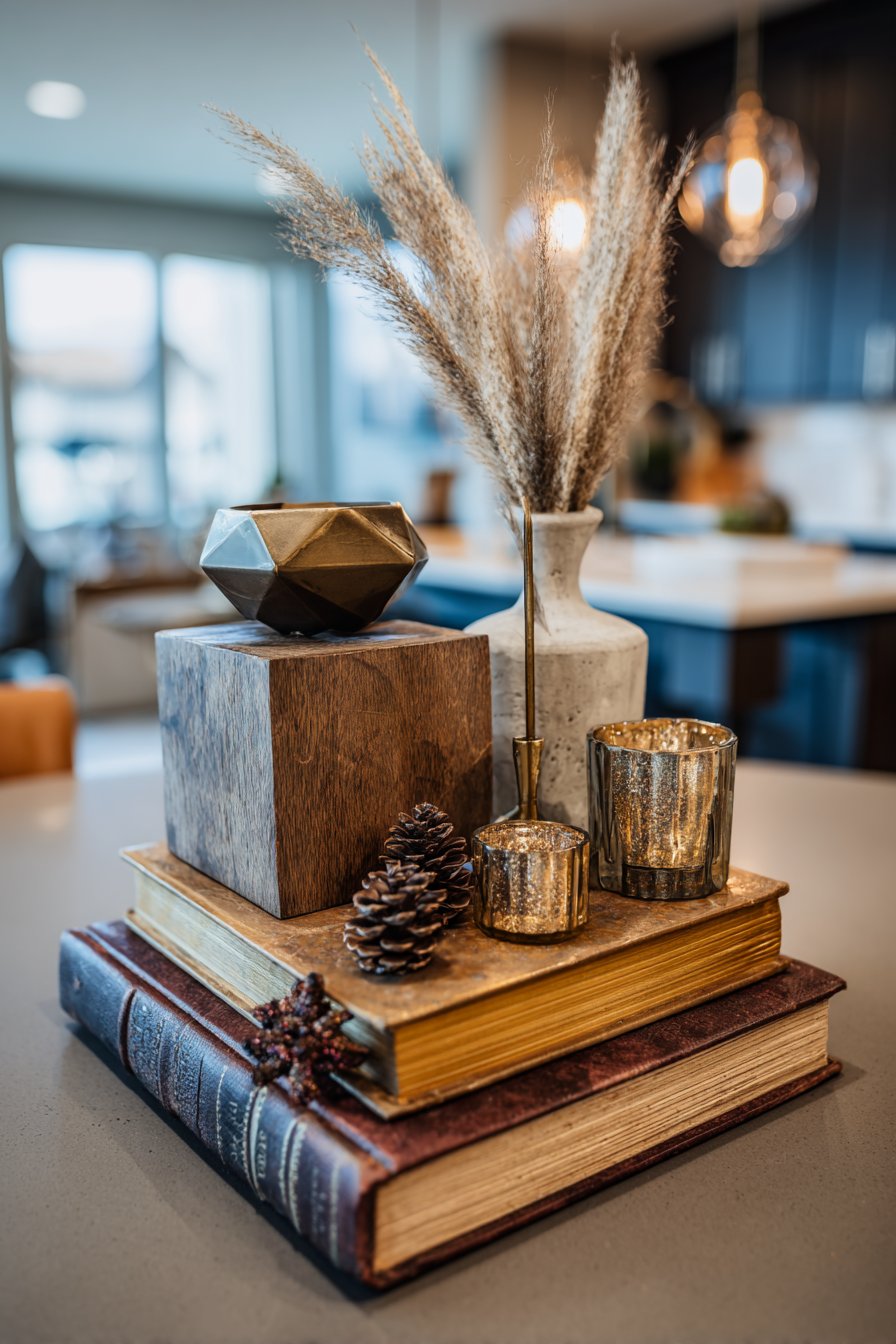
Creating visual interest requires dimensional variation within a compressed vertical space. The trick lies in establishing subtle height differences that draw the eye without compromising functionality. Stack books under decorative objects, use small pedestals, or incorporate naturally varied elements like pinecones, fruit, or candles at different stages of burn.
Textural contrast adds sophistication and prevents monotony in compact arrangements. Combine smooth ceramic with rough-hewn wood, pair matte finishes with metallic accents, or juxtapose organic materials with geometric forms. These variations create a curated look that appears intentional rather than randomly assembled.
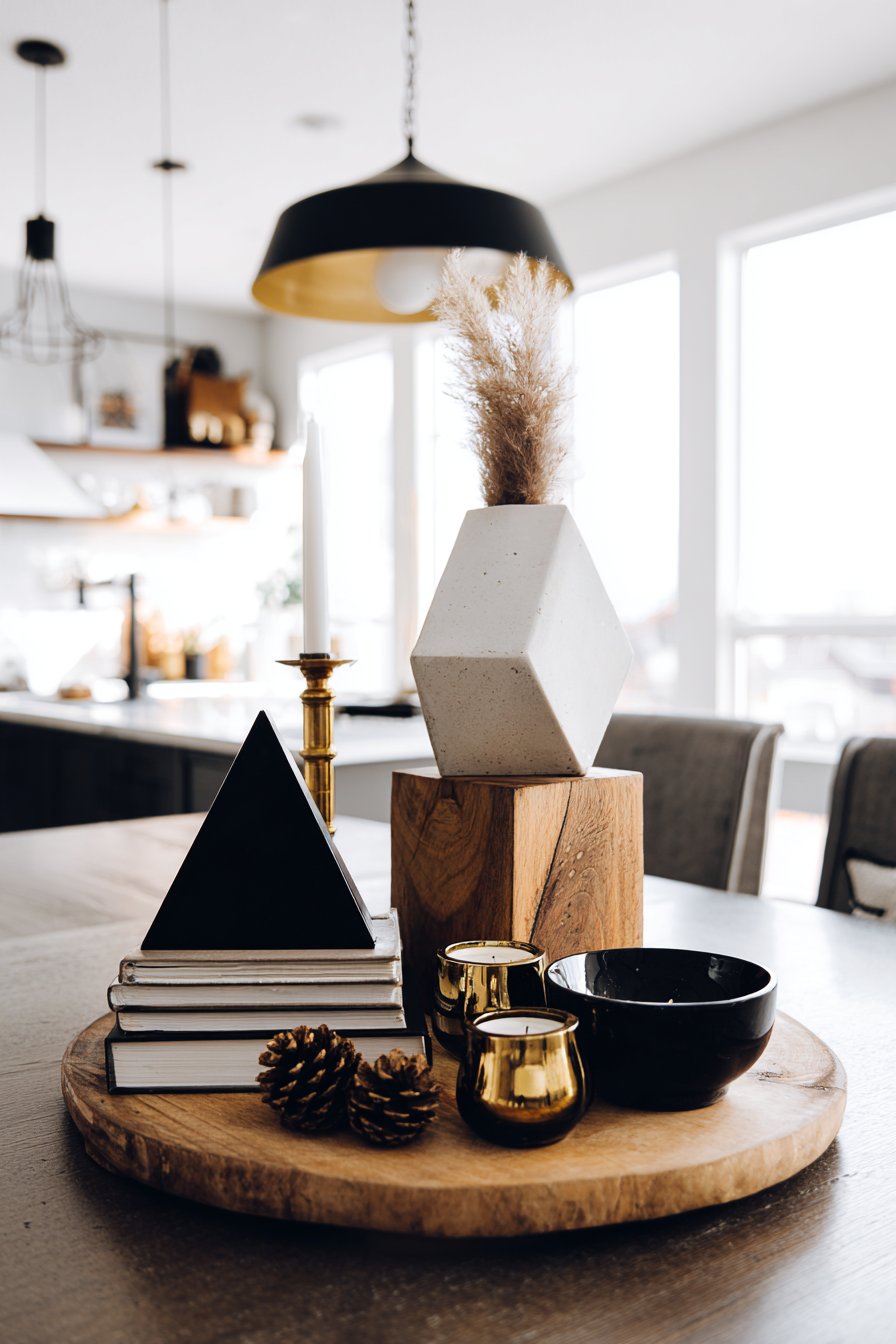
Maintain a triangular composition when arranging multiple elements, with the tallest point remaining below 12 inches for optimal functionality. This classical design principle ensures balance from all viewing angles while keeping the arrangement cohesive. Odd numbers of elements typically create more dynamic, natural-looking displays than even quantities.
- Establish a maximum height of 10-12 inches for all elements
- Use three distinct textures minimum for visual richness
- Incorporate at least one reflective element like glass or metal
- Balance rough and smooth materials throughout the composition
- Consider how textures appear from seated eye level
- Adjust proportions based on your table’s size and shape
4. Embrace Seasonal Rotation Flexibility
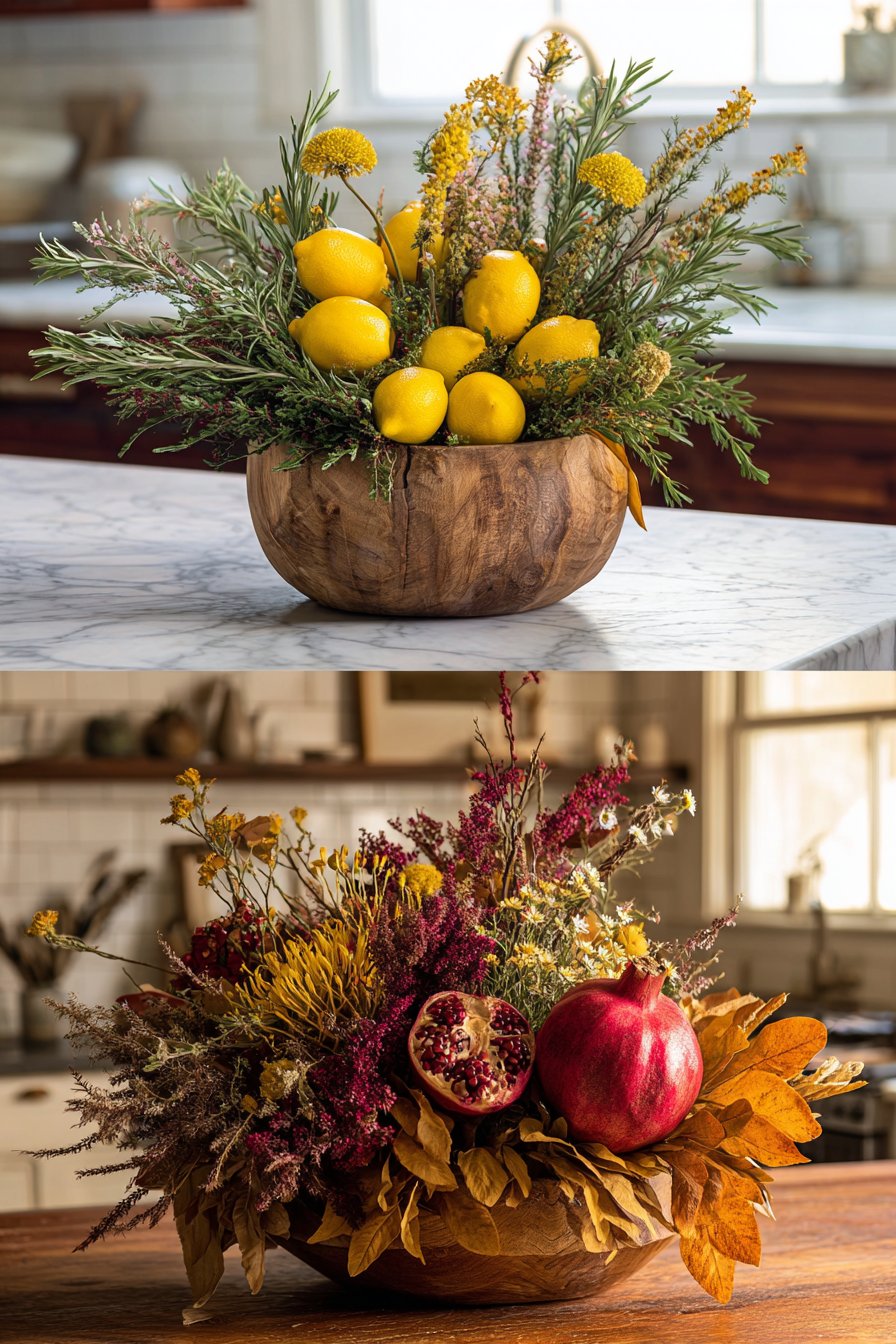
Designing your centerpiece with modular components allows effortless seasonal updates without complete overhauls. Keep your base structure constant while swapping smaller accent pieces to reflect changing seasons or holidays. This approach maintains continuity while preventing design fatigue and keeping your table feeling fresh.
Create a rotation system with storage containers for seasonal elements—spring flowers, summer fruit, autumn gourds, winter evergreens. This organization makes updates quick and prevents last-minute scrambling before gatherings. Label containers clearly and store them accessibly to encourage regular refreshing of your display.
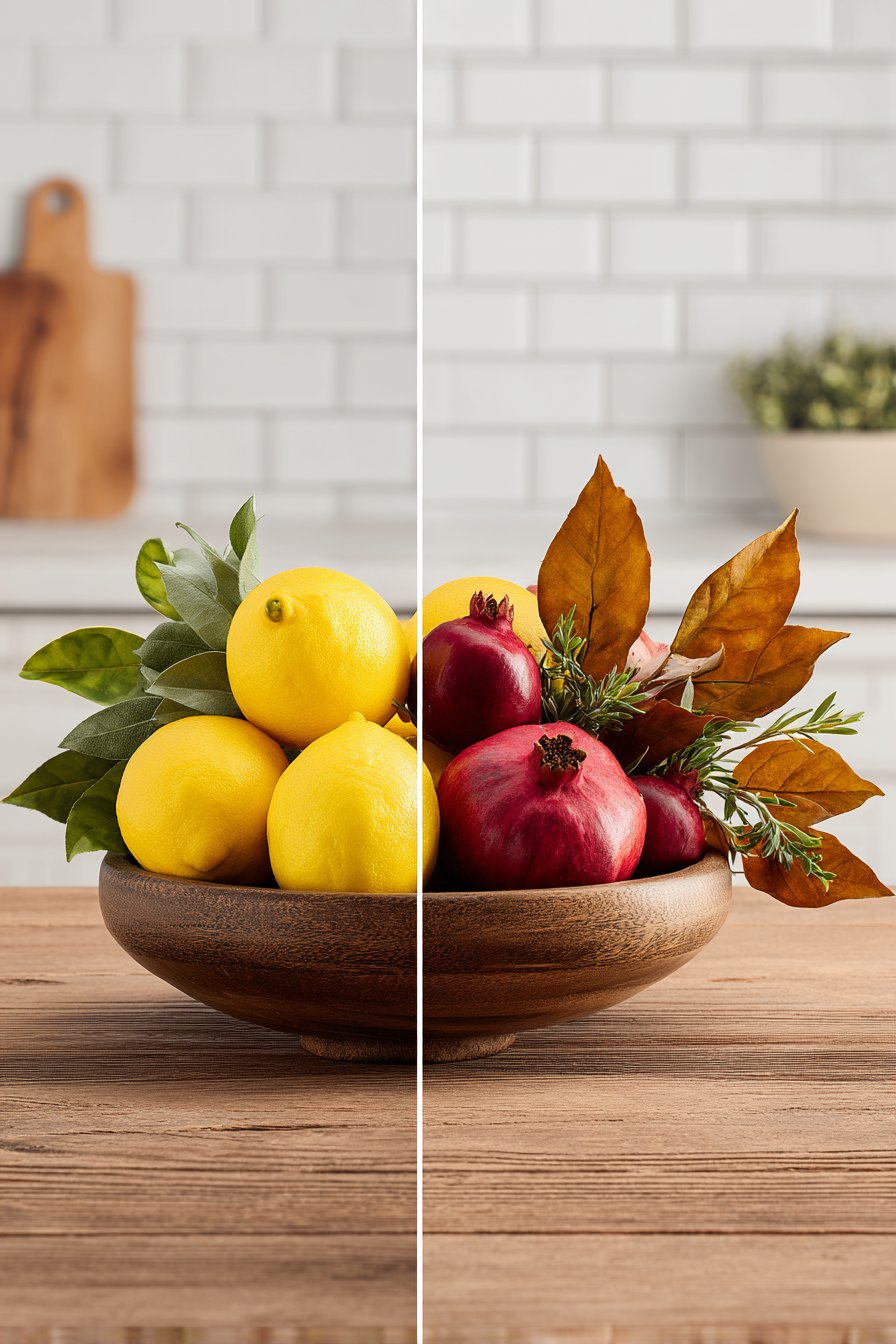
Neutral foundation pieces gain new life through strategic seasonal accents. A simple wooden bowl might hold lemons in summer, pomegranates in fall, and ornaments in winter. This flexibility maximizes your investment in quality base pieces while allowing creative expression through affordable, changeable elements.
- Maintain 60% permanent elements and 40% seasonal accents
- Shop seasonal clearance sales to build accent collections affordably
- Store off-season items in labeled, stackable containers
- Update centerpieces at the start of each season minimum
- Incorporate natural seasonal elements from your yard or local area
- Photograph successful arrangements for future reference and replication
5. Prioritize Practical Maintenance Considerations
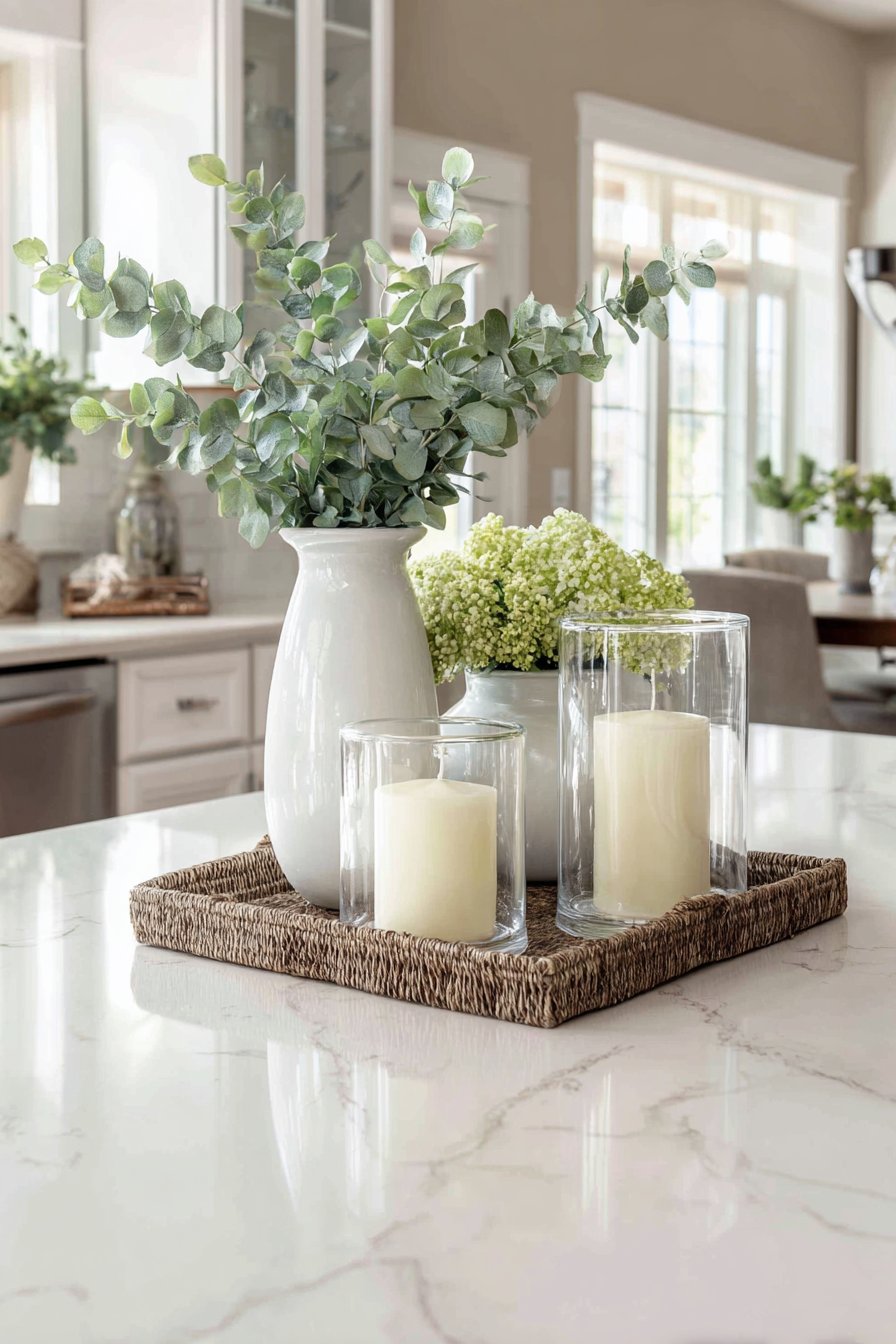
The most beautiful centerpiece fails if it creates maintenance burdens that lead to neglect or removal. Select materials and arrangements that align with your realistic cleaning schedule and tolerance for upkeep. Busy families benefit from choices that require minimal intervention, while design enthusiasts might enjoy arrangements demanding more attention.
Dust accumulation represents the primary enemy of lasting centerpieces. Choose pieces with smooth surfaces rather than intricate details that trap debris. Elevated elements on a tray allow quick removal during table cleaning, while permanently arranged items make wiping around them necessary. Consider which approach better suits your lifestyle.
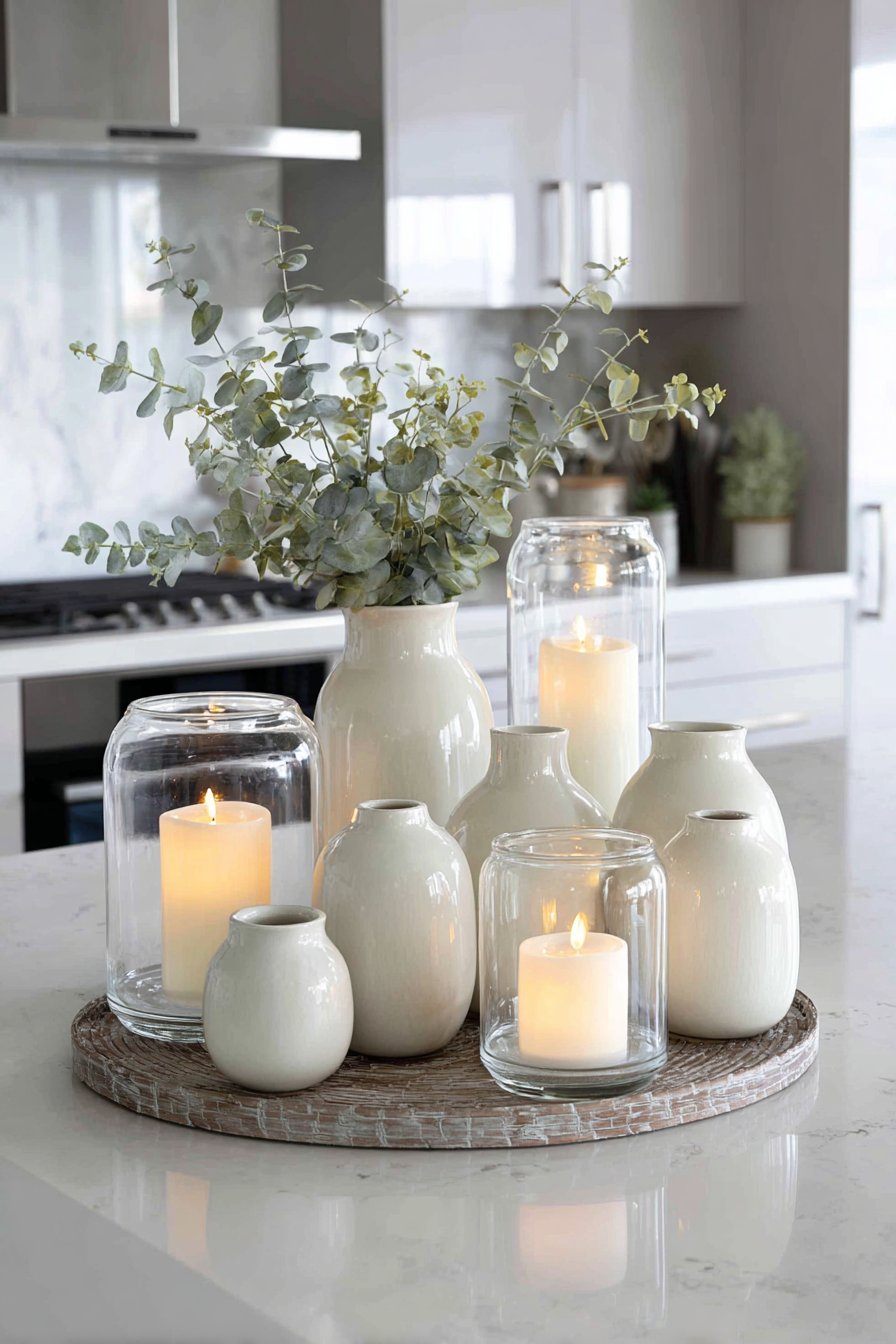
Water-based elements require careful consideration in kitchen table settings. Fresh flowers need daily water checks and weekly replacement, potentially causing spills or water rings. Battery-operated LED candles provide ambiance without dripping wax or fire hazards. These practical substitutions maintain aesthetic impact while reducing maintenance demands.
- Select washable or wipeable materials for easy cleaning
- Avoid arrangements requiring daily water checks if time-constrained
- Choose battery candles over real flames for unattended safety
- Keep a dedicated cloth for quick daily centerpiece dusting
- Position arrangements to allow easy table surface cleaning
- Consider removable trays that lift off entirely during meals
6. Scale Appropriately for Table Dimensions
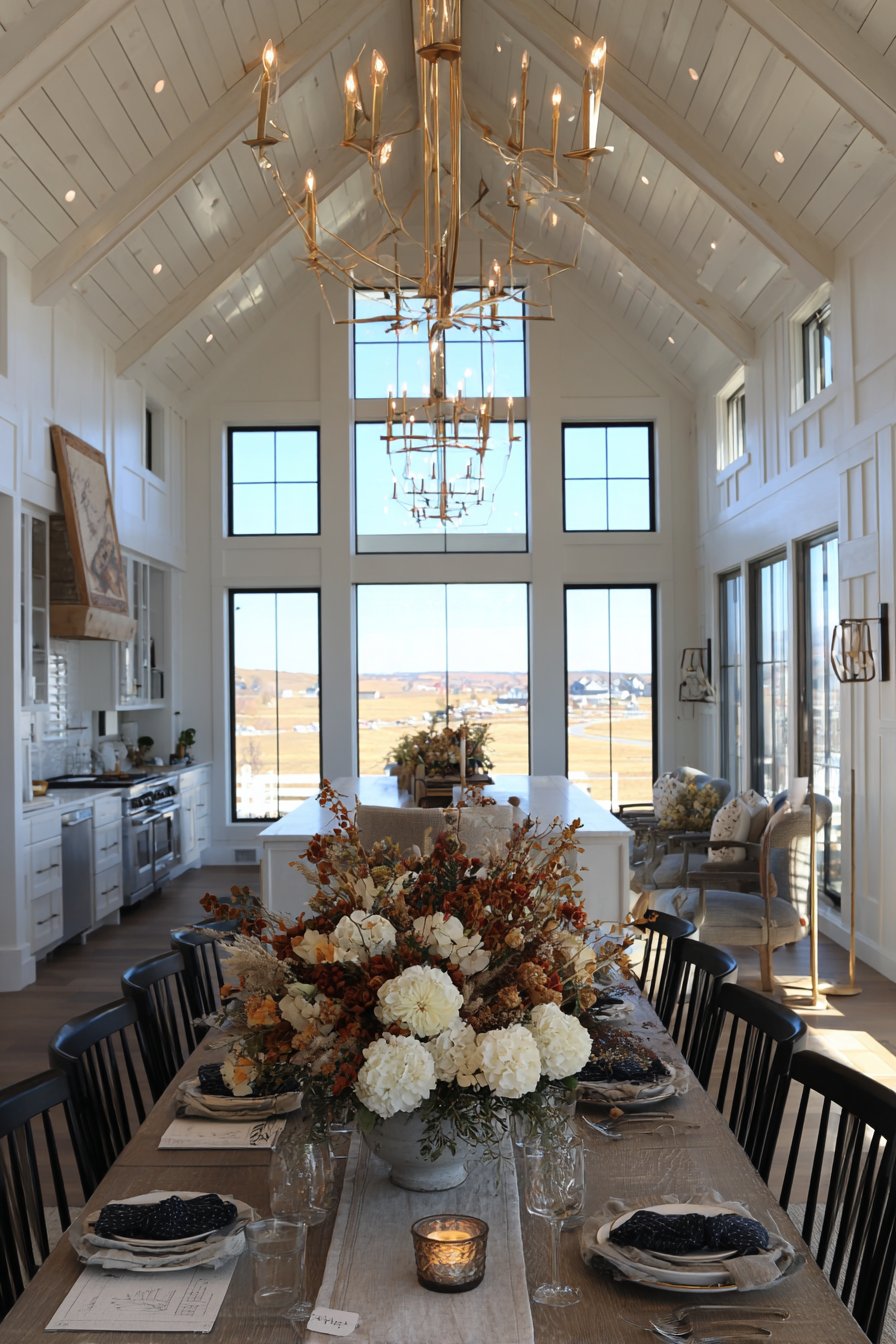
Proper proportion remains fundamental to successful centerpiece design, yet it’s the most commonly overlooked principle. Your arrangement should occupy approximately one-third of the table’s length or one-fourth of its total surface area. This guideline ensures adequate space for place settings, serving dishes, and elbow room during meals.
Round and square tables demand centered arrangements with radial balance, while rectangular tables accommodate either centered compositions or linear arrangements. Longer tables sometimes benefit from multiple smaller groupings rather than one large centerpiece, creating rhythm and preventing overwhelming any single focal point.
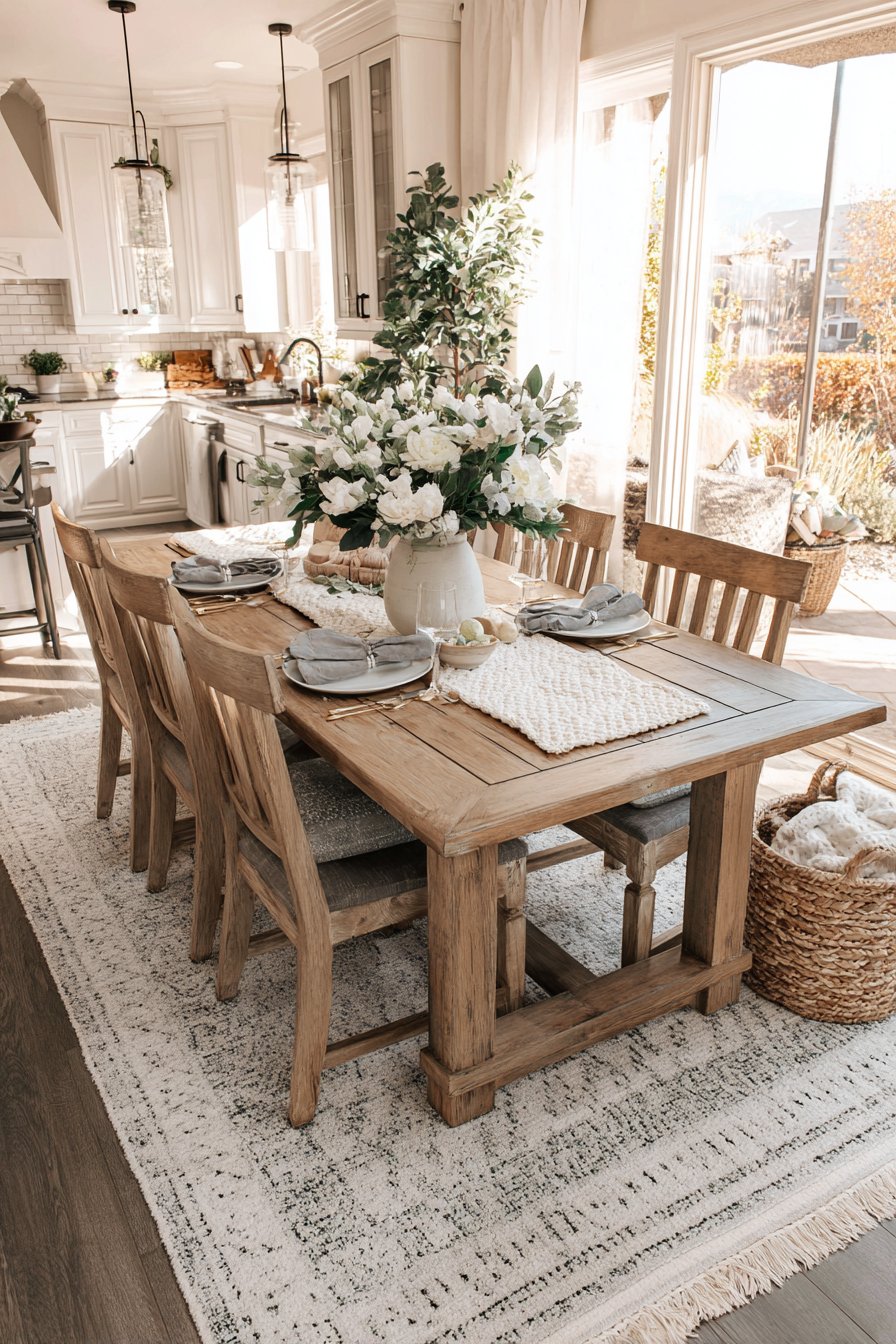
Consider the vertical relationship between centerpiece height and standard seating positions. Seated diners’ eye level typically falls around 36-40 inches from the floor, meaning centerpieces exceeding 12 inches begin obstructing face-to-face interaction. This functional limitation actually enhances design creativity by forcing innovative use of low-profile elements.
- Measure your table and calculate one-third its length as maximum centerpiece footprint
- Leave at least 24 inches clear for each place setting
- For tables over 72 inches, consider two smaller arrangements
- Test seated sightlines before finalizing any design
- Account for visual weight as well as physical dimensions
- Adjust scale seasonally based on entertaining frequency
Conclusion
Creating a kitchen table centerpiece that remains beautiful throughout the week requires balancing aesthetic vision with practical reality. The six strategies outlined here—establishing durable foundations, incorporating low-maintenance greenery, layering textures thoughtfully, enabling seasonal flexibility, prioritizing easy maintenance, and scaling appropriately—work together to create sustainable, functional designs. These principles transcend specific style preferences, adapting equally well to farmhouse charm, modern minimalism, or traditional elegance.
Successful centerpieces enhance daily life rather than complicating it. By investing in quality base pieces and thoughtfully selecting complementary elements, you create arrangements that withstand the week’s demands while elevating your kitchen’s atmosphere. Experiment with these techniques, trust your instincts, and remember that the most effective designs reflect your personal style while serving your household’s unique rhythms. Your kitchen table deserves a centerpiece that works as hard as you do—beautiful, resilient, and perfectly suited to your life.
"As an Amazon Associate, I earn from qualifying purchases."
