
The heart of every home deserves thoughtful design that balances functionality with aesthetic appeal. A well-designed kitchen serves as more than just a workspace for meal preparation—it becomes the gathering place where families connect, friends socialize, and culinary creativity flourishes. The kitchen aesthetic you choose sets the tone for your entire home, reflecting your personal style while accommodating your daily routines and entertaining needs.
Today’s kitchen design landscape offers an incredible array of aesthetic possibilities, from sleek minimalist spaces that celebrate clean lines and uncluttered surfaces to warm, rustic environments that embrace natural textures and vintage charm. Each design philosophy brings its own unique advantages, catering to different lifestyles, architectural contexts, and personal preferences. Whether you’re drawn to the timeless elegance of traditional styles or the cutting-edge appeal of contemporary designs, the key lies in understanding how materials, colors, lighting, and spatial arrangements work together to create a cohesive and inspiring environment.
This comprehensive guide explores twenty distinct kitchen aesthetic concepts, each offering a different perspective on how to create beautiful, functional culinary spaces. From coastal-inspired designs that capture the relaxed spirit of seaside living to industrial aesthetics that celebrate raw materials and urban sophistication, these design approaches demonstrate the incredible versatility of modern kitchen design. Each concept provides specific insights into materials, color schemes, lighting strategies, and design principles that you can adapt and incorporate into your own kitchen transformation.
1. Modern Minimalist Kitchen Aesthetic
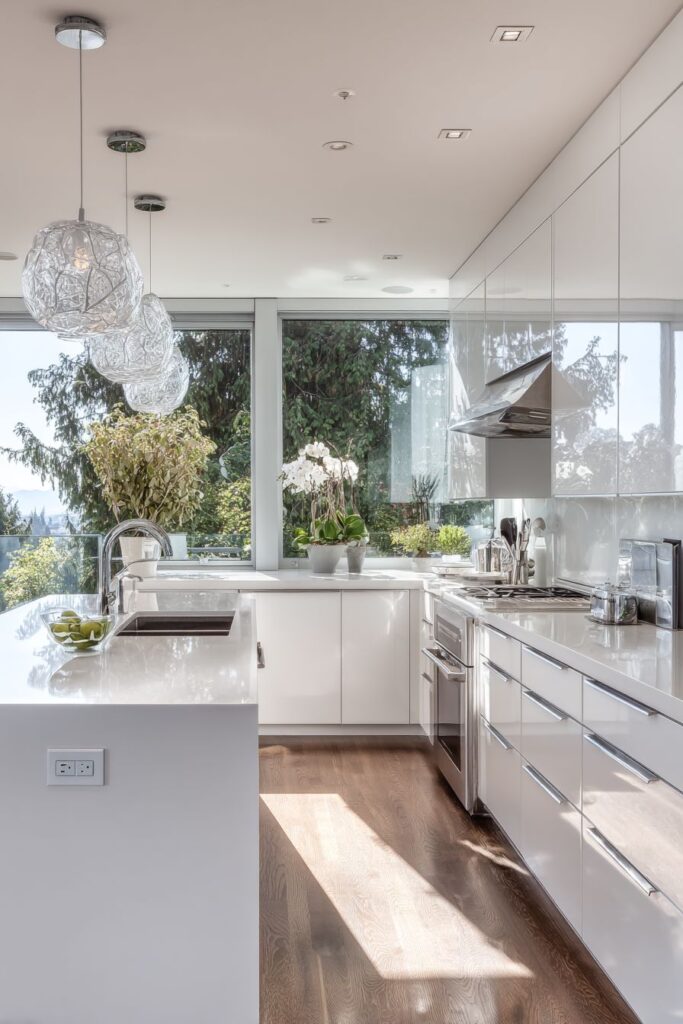
The modern minimalist kitchen aesthetic represents the pinnacle of refined simplicity, where every element serves a purpose while contributing to an overall sense of calm sophistication. This design philosophy embraces the “less is more” principle, creating spaces that feel both spacious and serene through careful attention to proportion, material selection, and the elimination of visual clutter. The foundation of this aesthetic typically features sleek white flat-panel cabinetry with integrated handles that maintain clean, uninterrupted lines throughout the space.
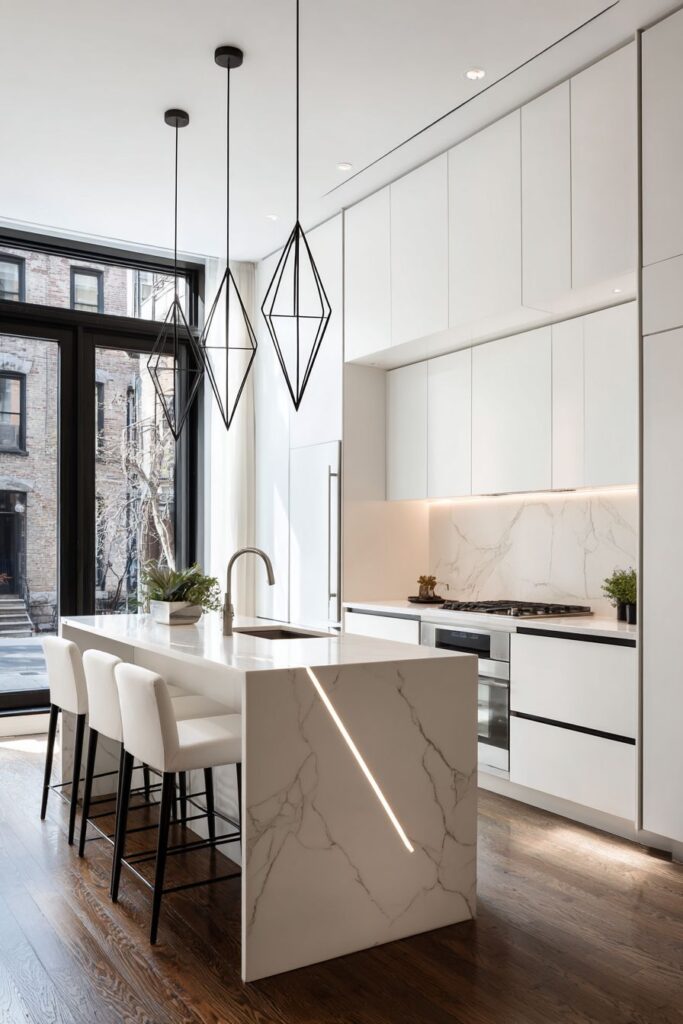
Quartz waterfall countertops serve as both functional work surfaces and striking architectural elements, their continuous flow from horizontal to vertical surfaces creating a sense of sculptural elegance. The integration of stainless steel appliances becomes virtually seamless in these designs, with many elements built directly into cabinetry to maintain the uncluttered aesthetic. Professional lighting design plays a crucial role, with geometric pendant lights providing both task illumination and artistic focal points above central islands or dining areas.
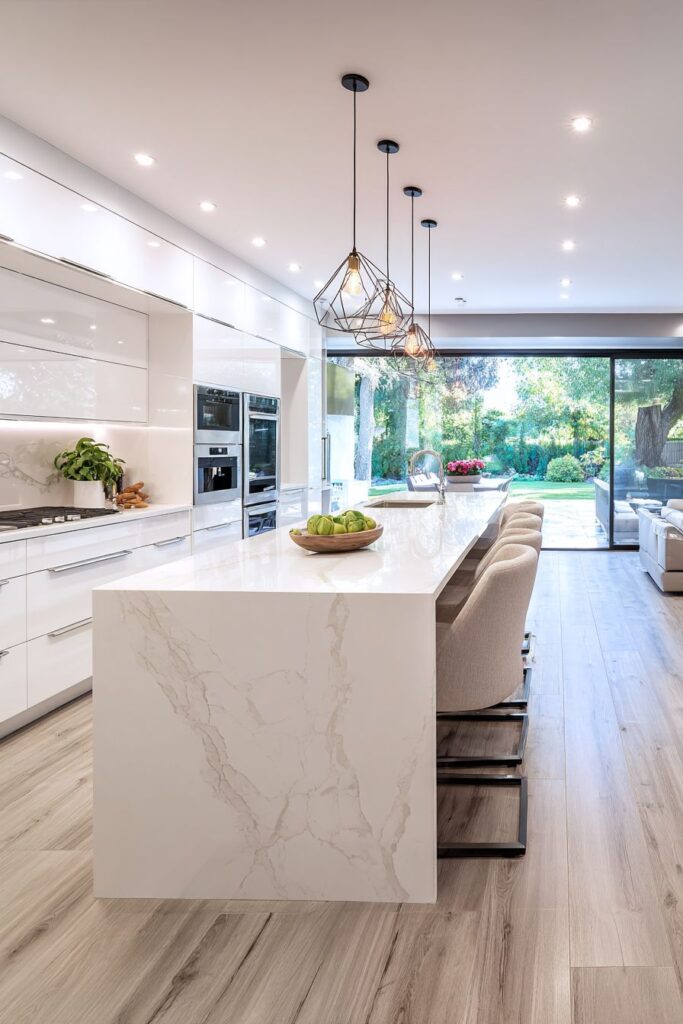
Natural light serves as a key design element in minimalist kitchens, with large windows strategically positioned to flood the space with soft, even illumination that emphasizes the clean lines and sophisticated material palette. The interplay of light and shadow becomes part of the design vocabulary, creating subtle visual interest without relying on decorative elements or color variation. Storage solutions remain completely hidden, with every utensil, appliance, and ingredient carefully organized behind closed doors to maintain the serene atmosphere.
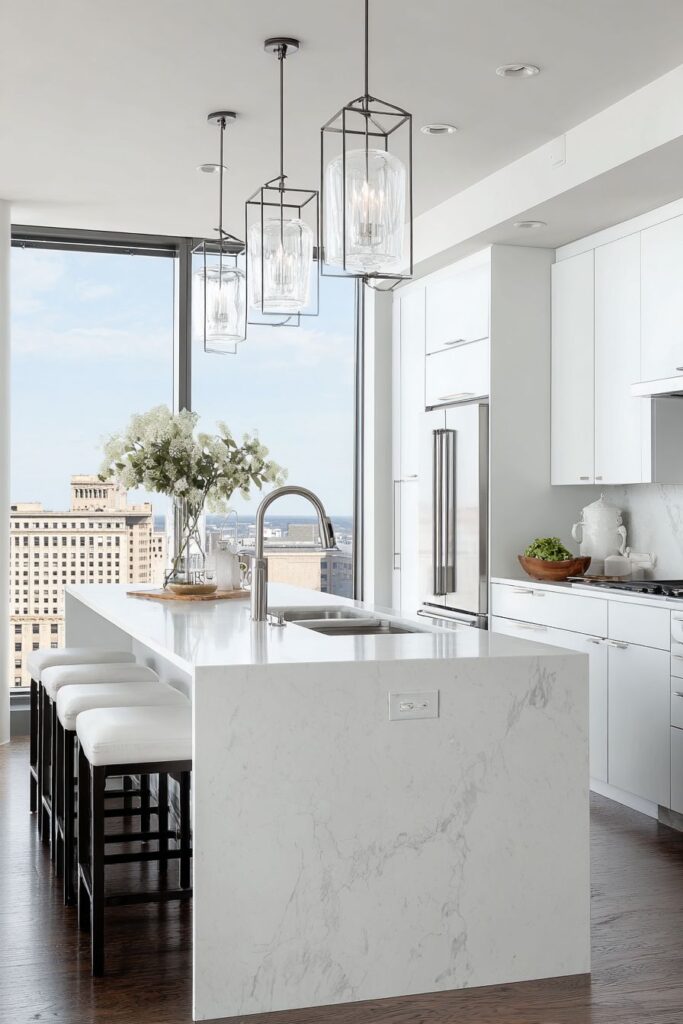
The color palette remains deliberately restrained, typically featuring whites, light grays, and natural material tones that enhance the sense of spaciousness while allowing the quality of materials and craftsmanship to take center stage. Key design tips for achieving this aesthetic include choosing flat-panel cabinetry with integrated handles to maintain clean lines, investing in high-quality quartz or stone surfaces with waterfall edges for dramatic impact, selecting appliances that can be integrated seamlessly into cabinetry, using pendant lights with geometric forms as sculptural elements, maximizing natural light through large windows or skylights, and maintaining completely clutter-free surfaces through strategic hidden storage solutions.
2. Warm Farmhouse Kitchen Aesthetic
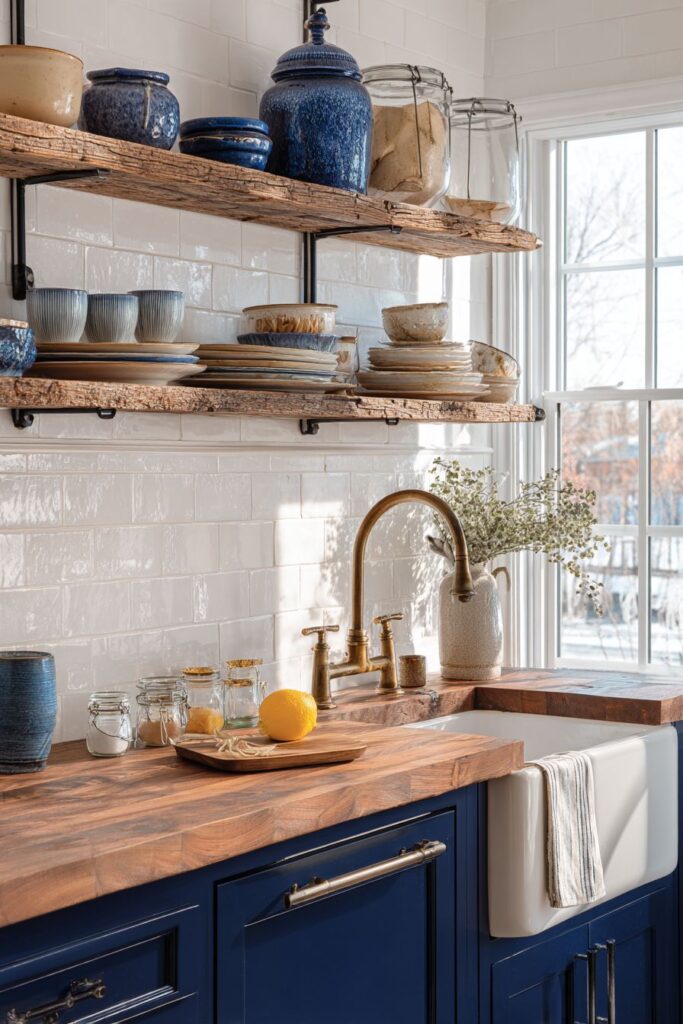
The warm farmhouse kitchen aesthetic celebrates the timeless appeal of rural living through the thoughtful integration of natural materials, vintage-inspired elements, and functional design principles rooted in traditional craftsmanship. This design approach creates spaces that feel both lived-in and welcoming, combining practical functionality with the comfortable charm of country living. Reclaimed wood open shelving serves as both storage and display, showcasing collections of ceramic dishware, mason jars, and other kitchen essentials that become part of the decorative scheme.
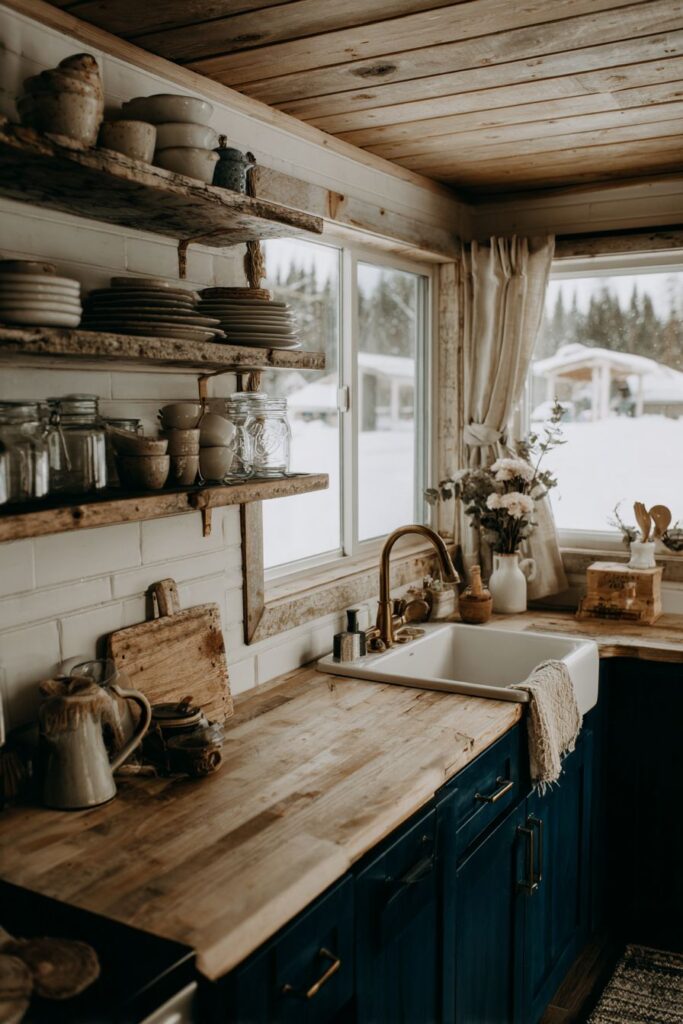
The foundation of farmhouse kitchen design typically features a sophisticated color palette that balances crisp white subway tile backsplashes with deep navy blue lower cabinets, creating visual depth while maintaining the classic farmhouse appeal. Butcher block countertops showcase the natural beauty of wood grain, developing character and patina over time while providing durable work surfaces perfect for food preparation. The contrast between cool whites and warm wood tones creates a dynamic yet harmonious color scheme that feels both fresh and timeless.
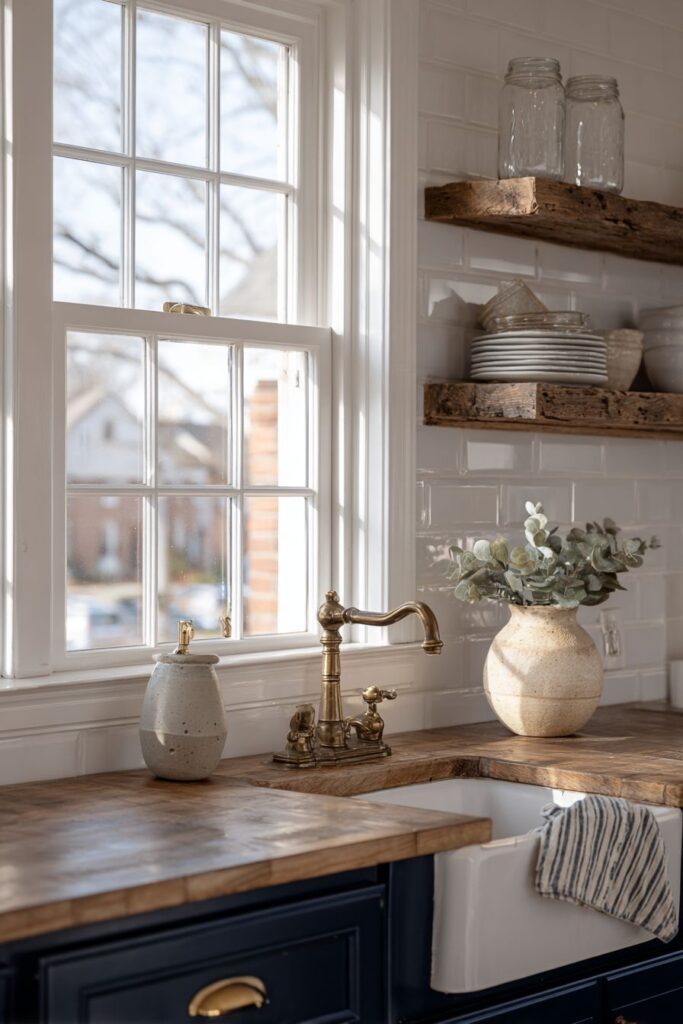
Vintage-inspired brass fixtures add warmth and authenticity to the space, while traditional farmhouse sinks with exposed fronts serve as both functional elements and design focal points. The integration of open shelving allows for the display of everyday items that become part of the room’s decorative appeal, creating a lived-in atmosphere that celebrates the tools and ingredients of daily cooking. Textural elements play a crucial role, with the combination of smooth ceramic surfaces, rough wood grains, and brushed metal finishes creating rich tactile experiences throughout the space.
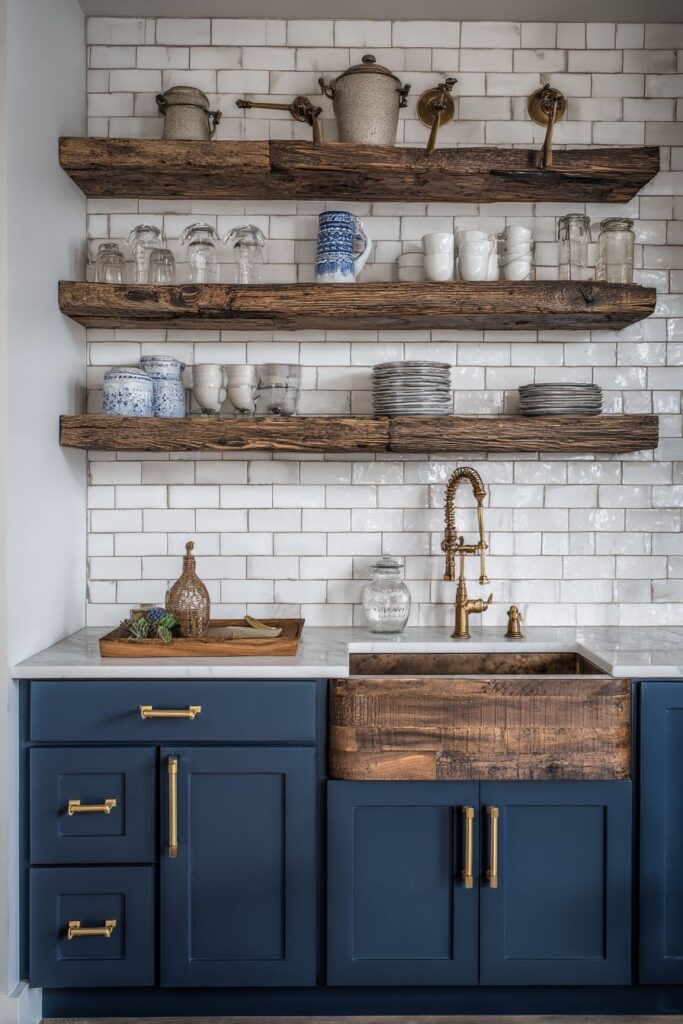
Lighting design in farmhouse kitchens emphasizes warm, natural illumination that highlights the beauty of natural materials while creating inviting atmospheres perfect for family gatherings and casual entertaining. The overall effect combines sophisticated design principles with comfortable, approachable aesthetics that make the space feel like the heart of the home. Key design tips include incorporating reclaimed wood for shelving and accents to add authentic character, using subway tile backsplashes for timeless appeal and easy maintenance, choosing deep, rich cabinet colors like navy or forest green for visual weight, installing farmhouse-style apron sinks as functional focal points, displaying everyday dishware and kitchen tools as decorative elements, and selecting vintage-inspired hardware and fixtures in brass or bronze finishes.
3. Sophisticated Scandinavian Kitchen Aesthetic
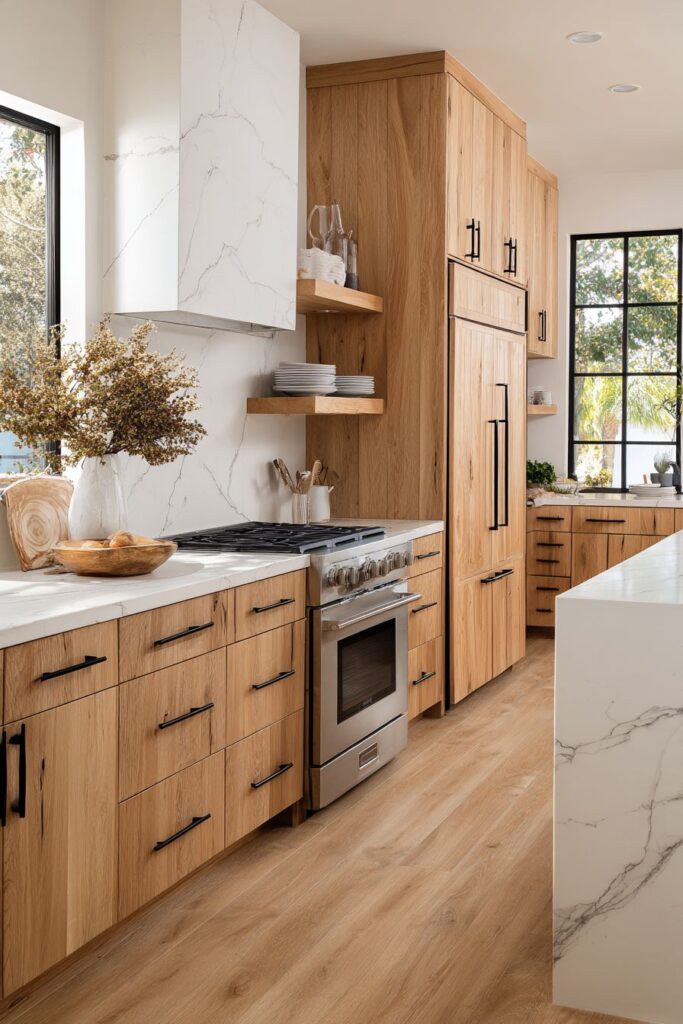
The sophisticated Scandinavian kitchen aesthetic embodies the Nordic design philosophy of functional beauty, emphasizing the natural characteristics of materials while maintaining an overall sense of lightness and serenity. This design approach celebrates the inherent beauty of light oak cabinetry, allowing the visible wood grain to serve as a natural decorative element while maintaining the clean, minimalist lines characteristic of Scandinavian design. The integration of matte black hardware provides subtle contrast against the pale wood surfaces, creating visual interest without overwhelming the serene color palette.
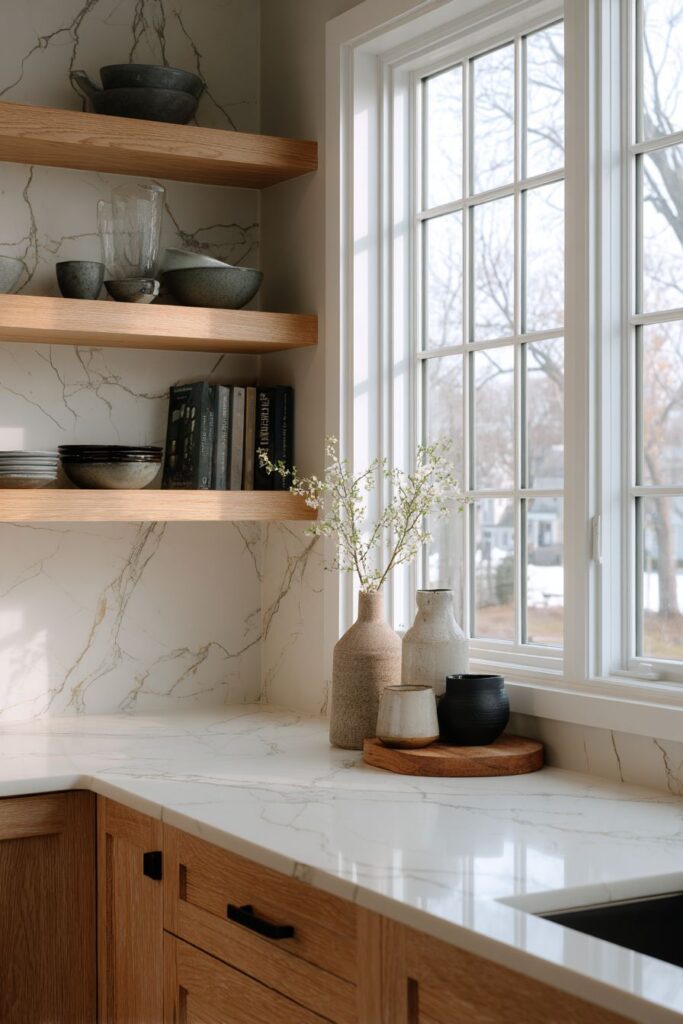
White marble countertops featuring subtle grey veining complement the natural wood tones perfectly, adding an element of luxury while maintaining the overall sense of restraint that defines Scandinavian aesthetics. The veining in natural stone provides organic pattern and movement that contrasts beautifully with the geometric precision of cabinet construction and architectural elements. Open shelving displays carefully curated collections of minimalist dishware, emphasizing quality over quantity while maintaining the uncluttered aesthetic that allows each element to be appreciated individually.
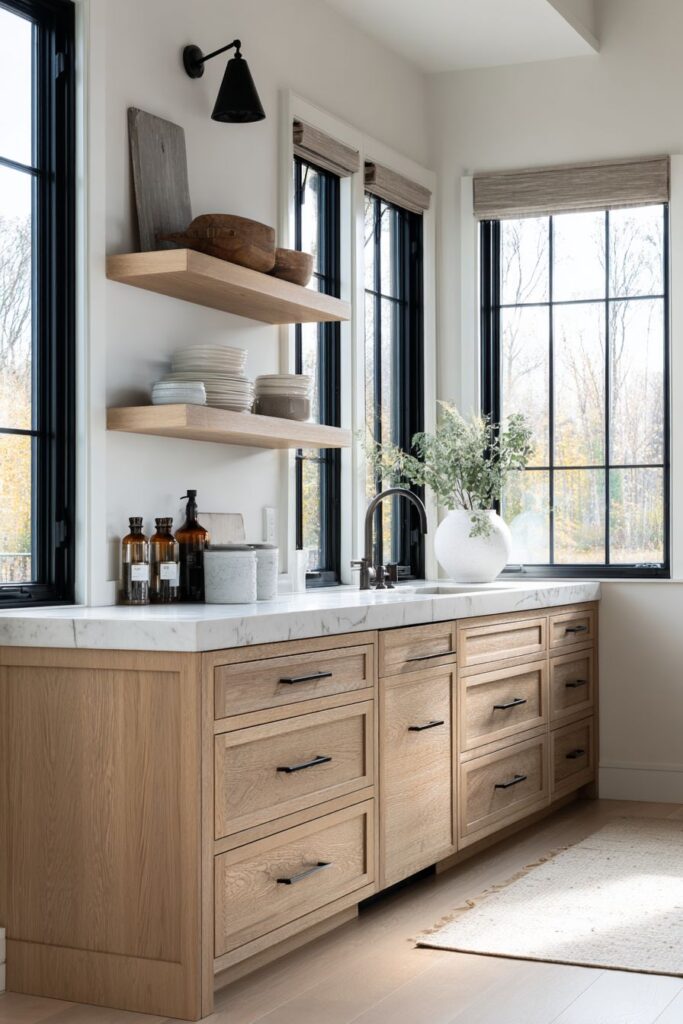
Natural light serves as perhaps the most important design element in Scandinavian kitchens, with large windows positioned to maximize daylight penetration throughout the space. This abundance of natural illumination enhances the pale wood tones and white surfaces while creating the bright, airy atmosphere that defines Nordic interior design. The interplay between natural materials and abundant light creates spaces that feel both sophisticated and approachable, elegant yet comfortable for daily use.
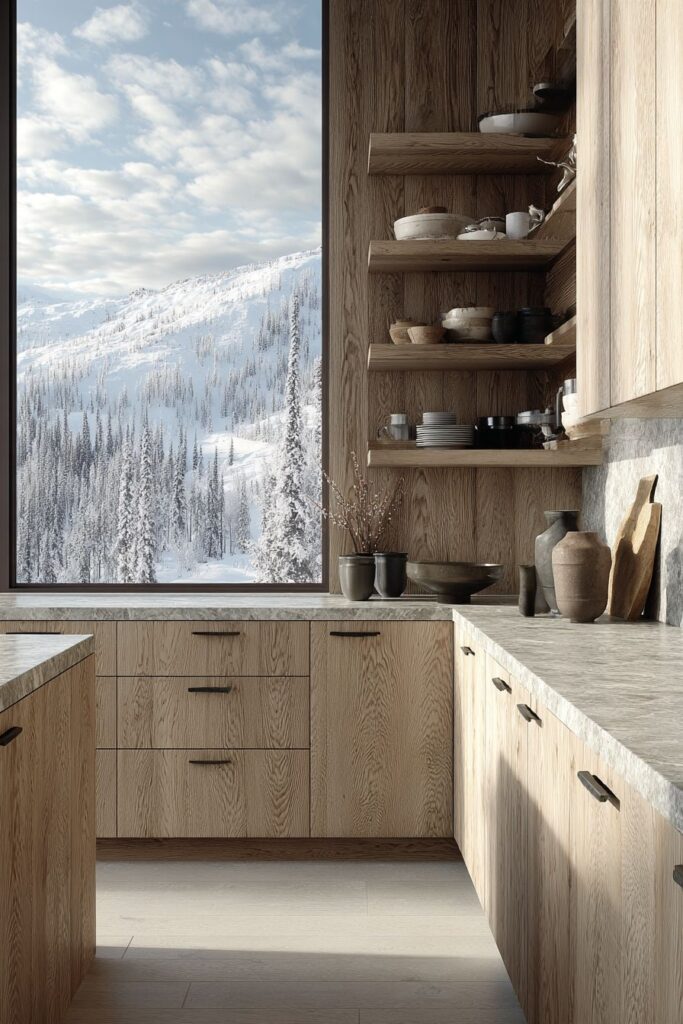
The emphasis on functional beauty means that every element serves both practical and aesthetic purposes, from the carefully proportioned cabinet doors to the precisely positioned lighting fixtures. Storage solutions remain cleverly integrated into the overall design, maintaining clean lines while providing ample space for kitchen essentials. The overall color palette remains deliberately restrained, focusing on natural wood tones, whites, and soft grays that create a harmonious backdrop for daily life.
Key design tips include selecting light oak cabinetry with visible wood grain for natural beauty, using matte black hardware for subtle contrast without overwhelming the palette, incorporating white marble with grey veining for organic pattern and luxury, maximizing natural light through large windows and minimal window treatments, displaying minimalist dishware on open shelving for functional decoration, and maintaining a restrained color palette focused on natural materials and whites.
4. Industrial Kitchen Aesthetic
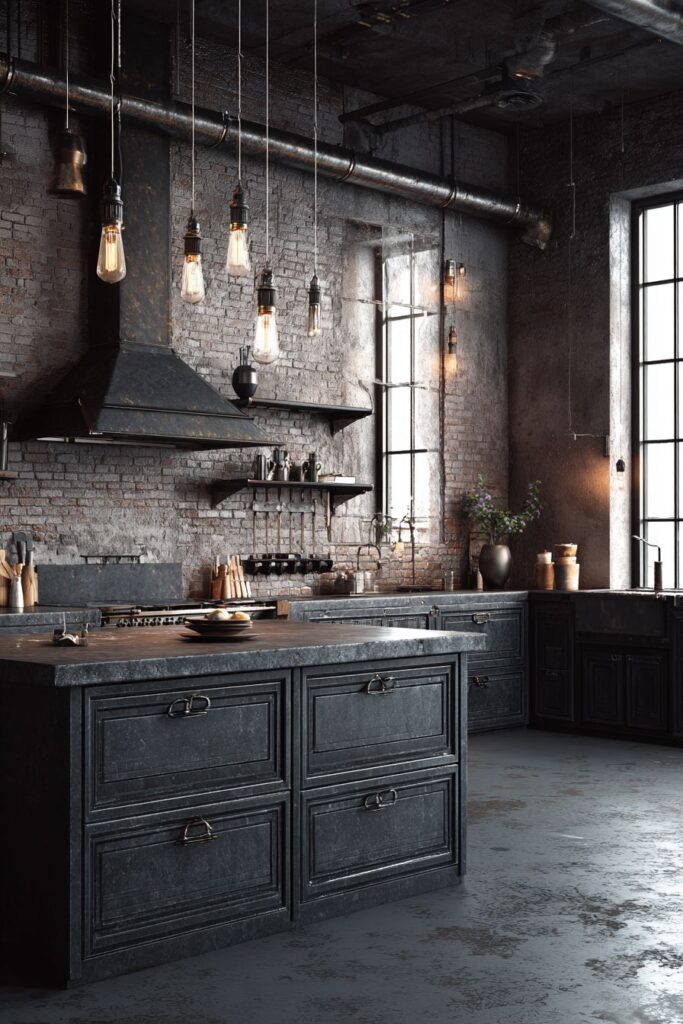
The industrial kitchen aesthetic draws inspiration from urban loft spaces and converted warehouses, celebrating raw materials and architectural elements that speak to the honest functionality of industrial design. Exposed brick walls serve as dramatic backdrops that add texture, warmth, and visual interest while maintaining the authentic character that defines this aesthetic approach. The natural variations in brick color and texture create organic pattern and visual depth that contrasts beautifully with the more refined elements of kitchen cabinetry and appliances.
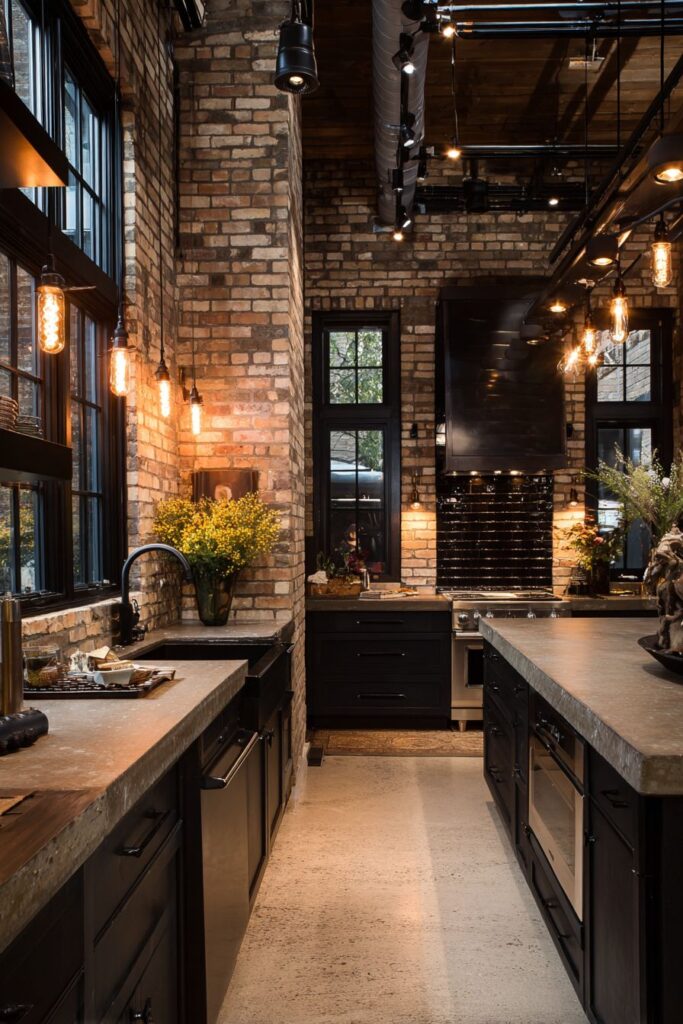
Black steel-framed windows provide both natural light and architectural structure, their geometric framework adding graphic elements that reinforce the industrial theme while maintaining visual connection to outdoor spaces. Dark charcoal cabinets feature raw steel hardware that emphasizes the honest materiality central to industrial design philosophy. These darker cabinet finishes ground the space while allowing lighter elements like concrete countertops and exposed brick to serve as contrasting focal points.
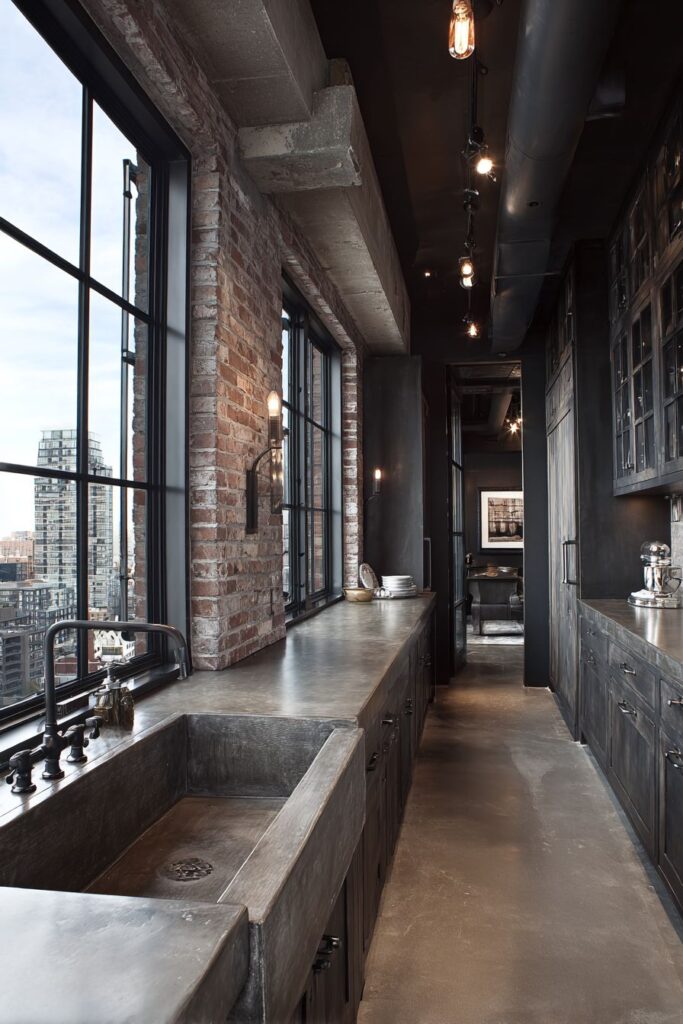
Concrete countertops showcase the beauty of industrial materials while providing durable, functional work surfaces that develop character over time. The natural variations in concrete color and texture add organic interest to the otherwise geometric precision of cabinetry and architectural elements. Edison bulb fixtures hanging from black metal tracks overhead reinforce the industrial aesthetic while providing warm, ambient lighting that softens the harder edges of raw materials.
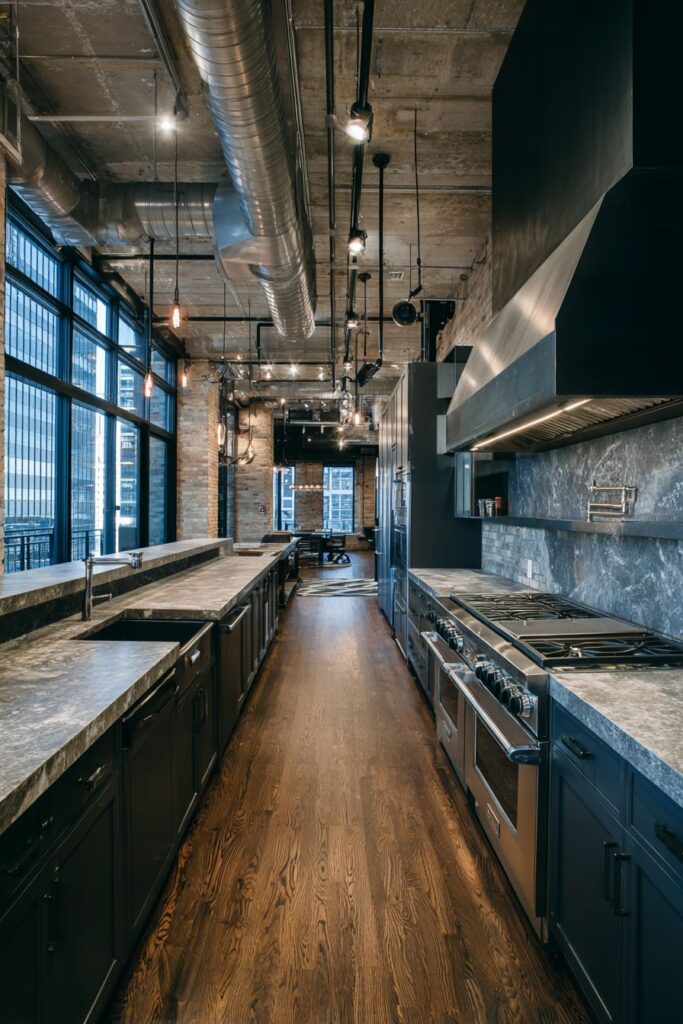
The successful integration of these raw materials requires careful attention to proportion and balance, ensuring that the space feels sophisticated rather than merely utilitarian. The interplay between rough textures like exposed brick and smooth surfaces like polished concrete creates rich tactile experiences while maintaining the authentic character that defines industrial design. Color palettes typically emphasize darker tones like charcoal, black, and natural concrete gray, with metallic accents in steel and iron providing additional texture and visual interest. Key design tips include exposing original brick walls for authentic texture and warmth, installing black steel-framed windows for architectural structure and natural light, choosing dark cabinet finishes to ground the space and create contrast, selecting concrete countertops for durability and industrial authenticity, using Edison bulb fixtures for warm ambient lighting and period character, and incorporating raw steel hardware and fixtures to emphasize honest materiality.
5. Coastal Kitchen Aesthetic
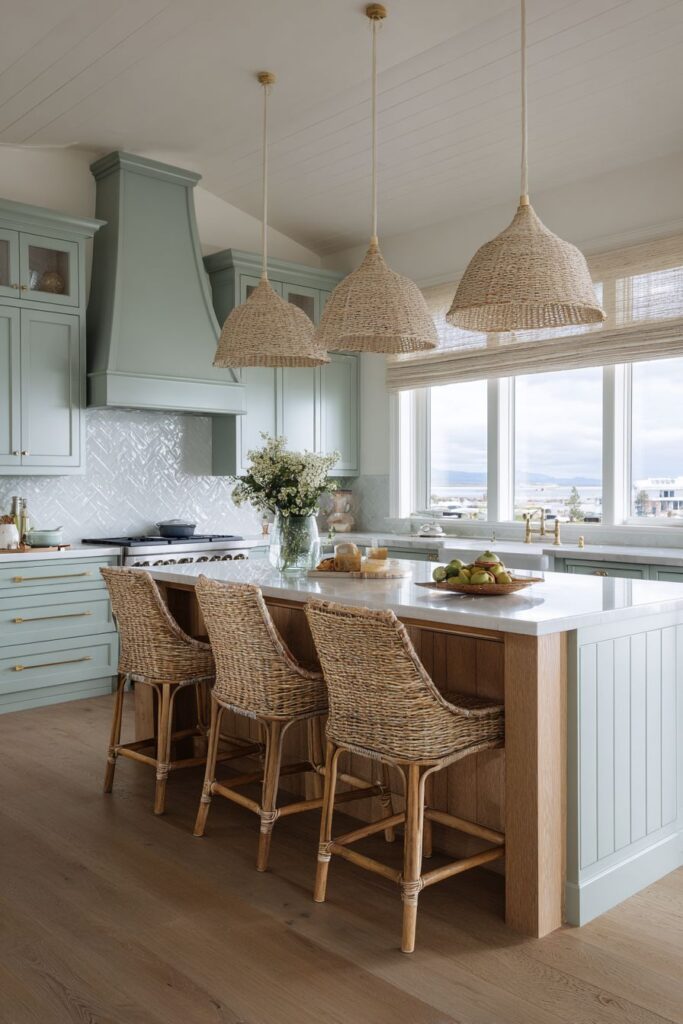
The coastal kitchen aesthetic captures the relaxed, breezy atmosphere of seaside living through the thoughtful integration of soft colors, natural textures, and elements that evoke the tranquil beauty of ocean environments. Soft sage green cabinetry serves as the foundation for this design approach, providing a sophisticated alternative to traditional white kitchen cabinets while maintaining the light, airy feeling essential to coastal design. This muted green tone evokes the colors of sea grass and weathered driftwood, creating an immediate connection to natural coastal landscapes.
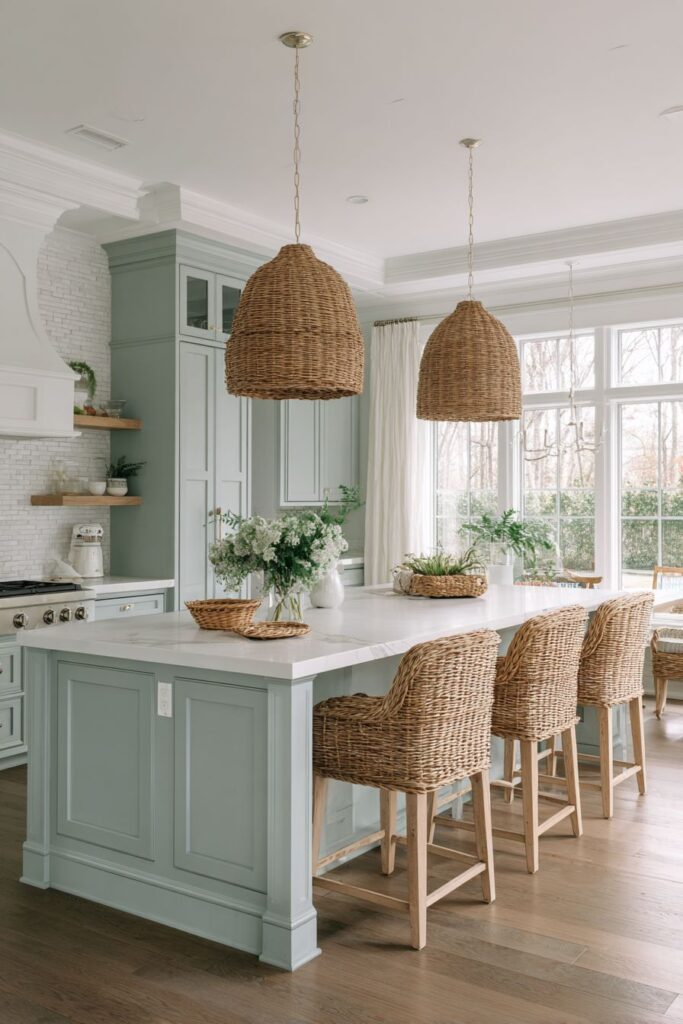
White subway tile backsplashes provide classic appeal while maintaining the bright, clean aesthetic that defines coastal design. The crisp contrast between soft green cabinetry and white tile creates visual interest without overwhelming the serene color palette. Natural woven textures throughout the space add warmth and organic appeal, from rattan bar stools that provide comfortable seating to seagrass pendant lights that cast warm, diffused illumination reminiscent of lazy summer afternoons by the water.
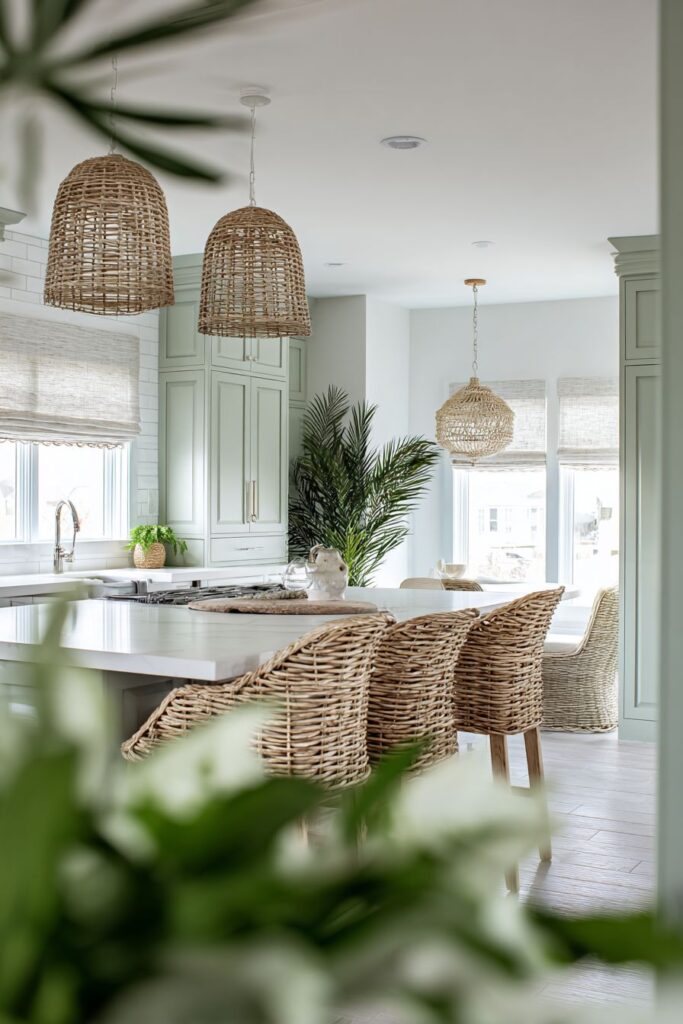
A white oak island serves as both functional workspace and natural focal point, its pale wood tone complementing the sage green cabinetry while adding the warmth of natural grain patterns. The combination of painted and natural wood finishes creates visual depth while maintaining the overall sense of lightness that defines coastal aesthetics. Natural light filtering through white linen window treatments adds to the breezy, relaxed atmosphere while providing privacy and gentle light diffusion.
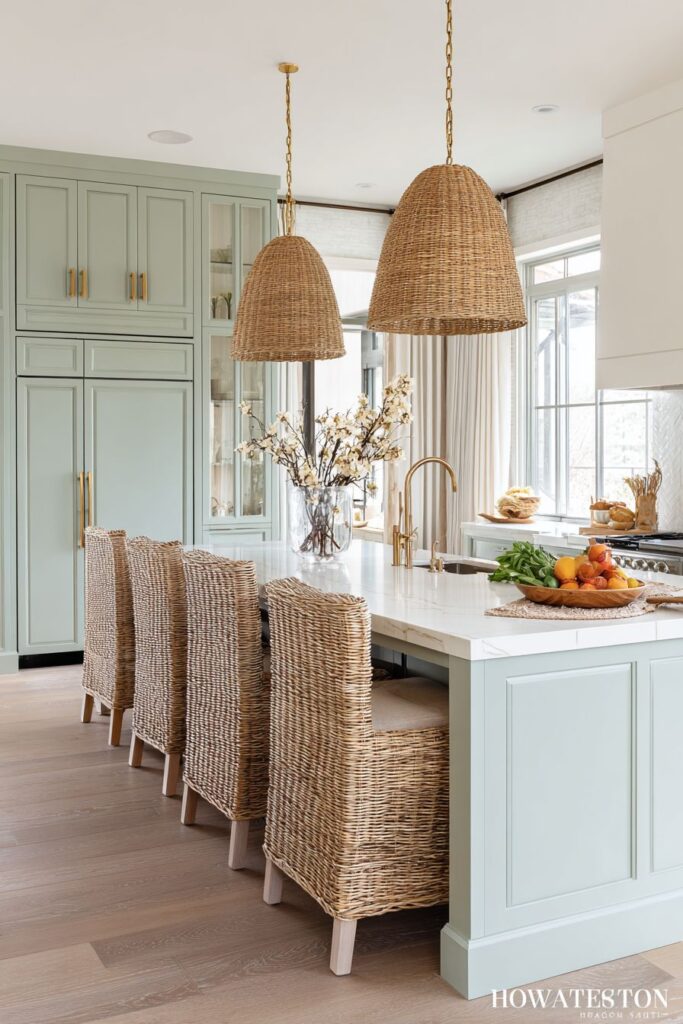
The coastal aesthetic succeeds through its emphasis on comfort and relaxation, creating spaces that feel like permanent vacation retreats while maintaining full functionality for daily cooking and entertaining needs. The integration of natural materials like wood and woven fibers adds tactile interest and organic warmth that prevents the light color palette from feeling cold or sterile. The overall effect creates kitchens that serve as peaceful retreats from daily stress while inspiring healthy, relaxed approaches to cooking and dining. Key design tips include choosing soft, muted green tones for cabinetry to evoke natural coastal colors, using white subway tile for classic, timeless appeal, incorporating natural woven textures through furniture and light fixtures, selecting white or pale wood islands for contrast and natural warmth, filtering natural light through linen window treatments for soft, diffused illumination, and adding natural fiber rugs and accessories for comfort and texture.
6. Contemporary Kitchen Aesthetic
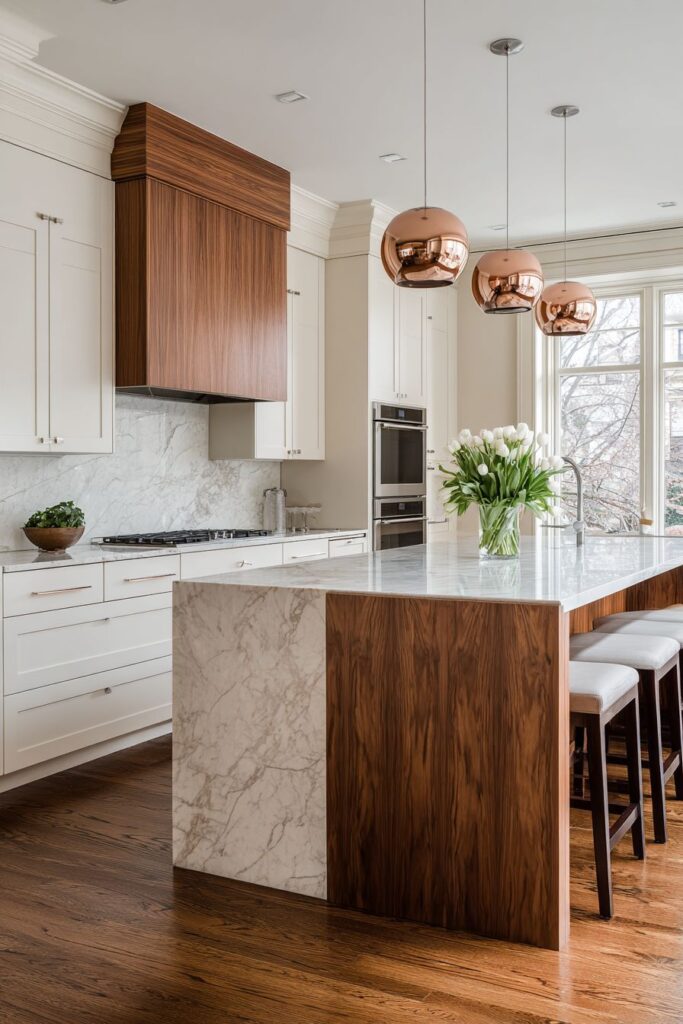
The contemporary kitchen aesthetic represents the cutting edge of current design trends, combining sophisticated material palettes with innovative functionality to create spaces that feel both current and timeless. Two-tone cabinetry featuring warm walnut upper cabinets paired with crisp white lowers creates visual depth and interest while demonstrating the sophisticated color relationships that define contemporary design. This contrast between rich, natural wood tones and clean white surfaces provides the perfect foundation for layering additional design elements and metallic accents.
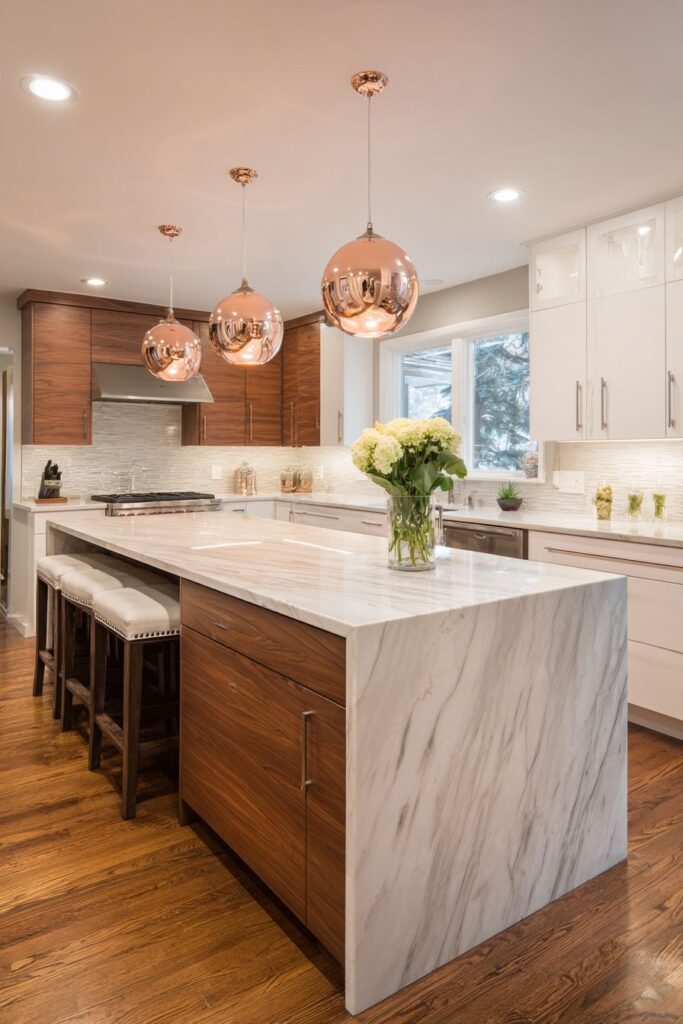
A large marble island serves as the commanding focal point of contemporary kitchens, featuring waterfall edges that create dramatic architectural statements while providing integrated seating for casual dining and social interaction. The continuous flow of marble from horizontal counter surface to vertical edge creates sculptural elegance that elevates the island from mere functionality to artistic centerpiece. The scale and proportion of these islands typically accommodate both extensive food preparation and comfortable seating for multiple people.
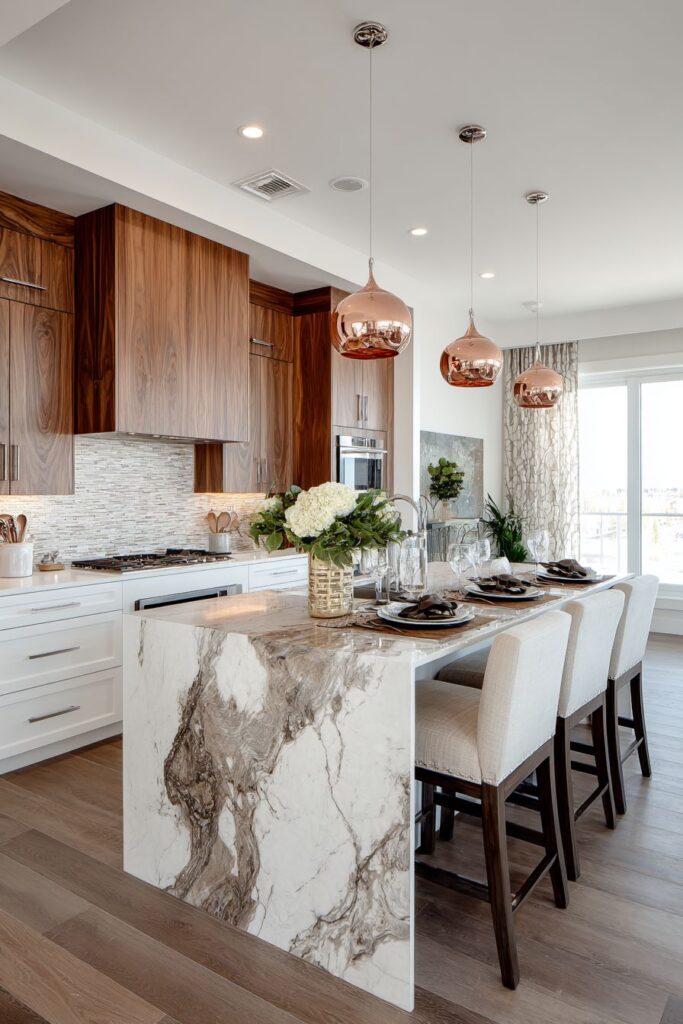
Sleek copper pendant lights add metallic warmth to the space while serving as jewelry-like accent pieces that enhance the sophisticated material palette. The warm tones of copper complement both the walnut wood and white surfaces while providing focused task lighting over work areas. Under-cabinet LED lighting highlights stone backsplashes and work surfaces while creating ambient illumination that enhances the overall sophistication of the design.
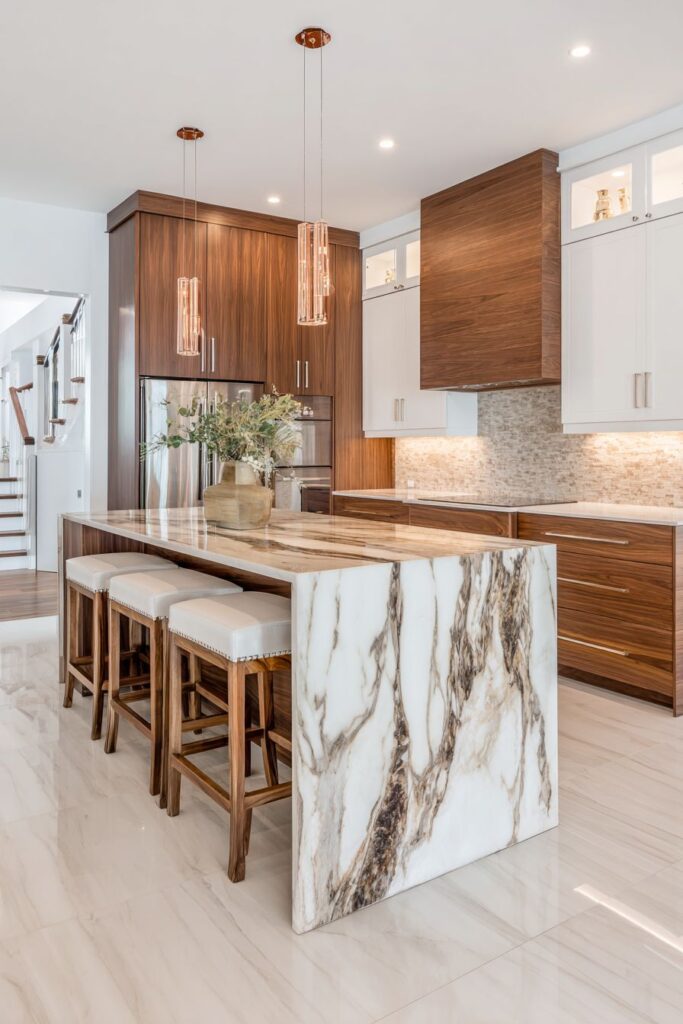
Contemporary kitchens succeed through their careful balance of warm and cool elements, natural and manufactured materials, and functional and decorative components. The integration of advanced lighting technology allows for precise control over both task and ambient illumination, creating spaces that adapt to different activities and times of day. Storage solutions remain cleverly integrated into the overall design, maintaining clean lines while accommodating the tools and ingredients of modern cooking. Key design tips include combining two-tone cabinetry for visual depth and contemporary appeal, creating dramatic focal points with waterfall edge islands, adding metallic warmth through copper or brass pendant lights, incorporating under-cabinet LED lighting for both task and ambient illumination, selecting high-quality natural stone surfaces for luxury and durability, and balancing warm and cool elements throughout the material palette.
7. Rustic Kitchen Aesthetic
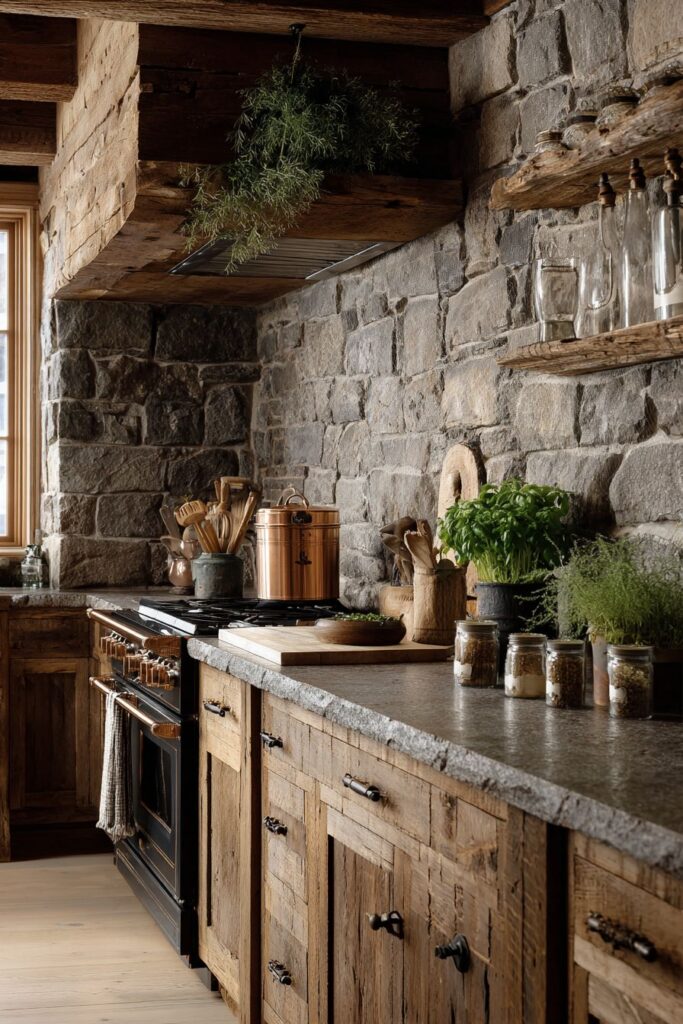
The rustic kitchen aesthetic celebrates the beauty of natural, weathered materials and traditional craftsmanship techniques that create spaces with authentic character and timeless appeal. Rough-hewn wooden beams serve as both structural and decorative elements, their irregular surfaces and visible tool marks telling stories of traditional building methods while adding dramatic architectural interest to ceiling lines. These beams often feature natural variations in color and grain that develop deeper character over time, becoming more beautiful with age and use.
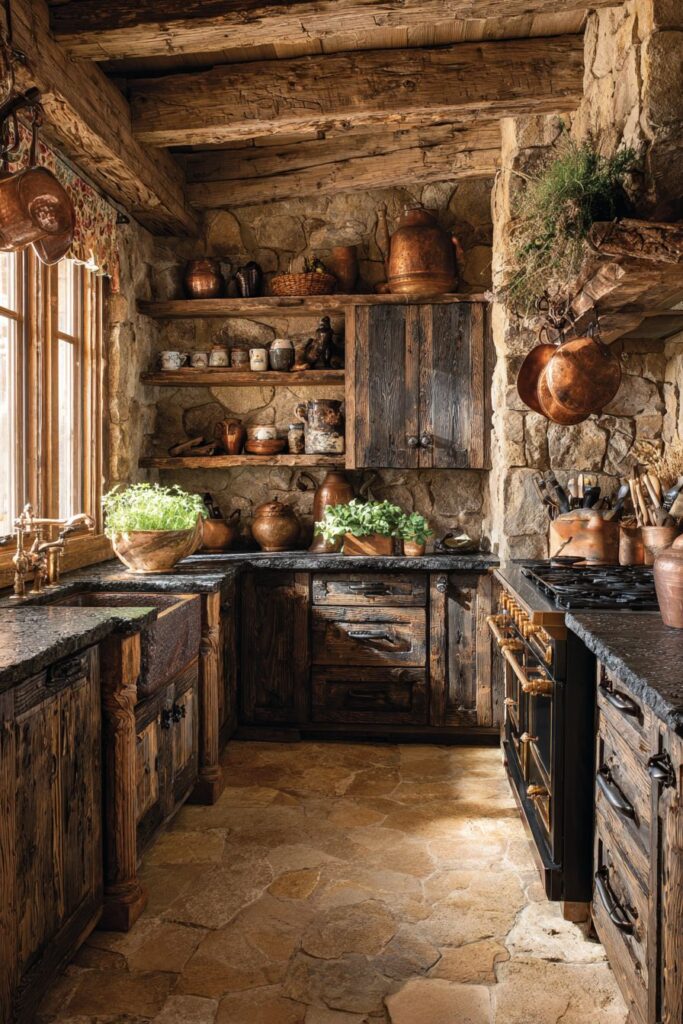
Stone accent walls provide textural backdrops that complement the wooden elements while adding the permanence and stability associated with traditional construction methods. The natural variations in stone color, texture, and pattern create organic visual interest that contrasts beautifully with the more refined elements of kitchen cabinetry and appliances. Distressed wood cabinets featuring wrought iron hardware emphasize the handcrafted quality that defines rustic design philosophy.
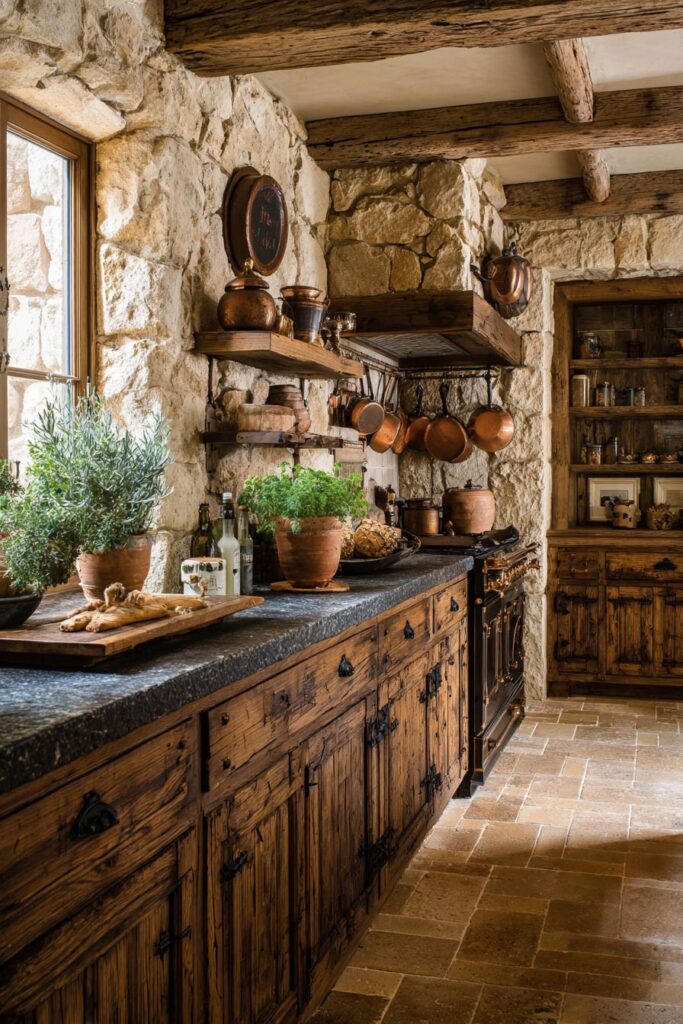
Granite countertops with natural edge details maintain the connection to natural materials while providing durable work surfaces that accommodate serious cooking and food preparation. The organic edges of live-edge stone surfaces create dramatic contrast with the geometric precision of cabinet construction while celebrating the natural beauty inherent in quarried stone. A vintage-style range with copper accents often serves as the focal point of rustic kitchens, its substantial presence and period-appropriate styling reinforcing the traditional aesthetic.
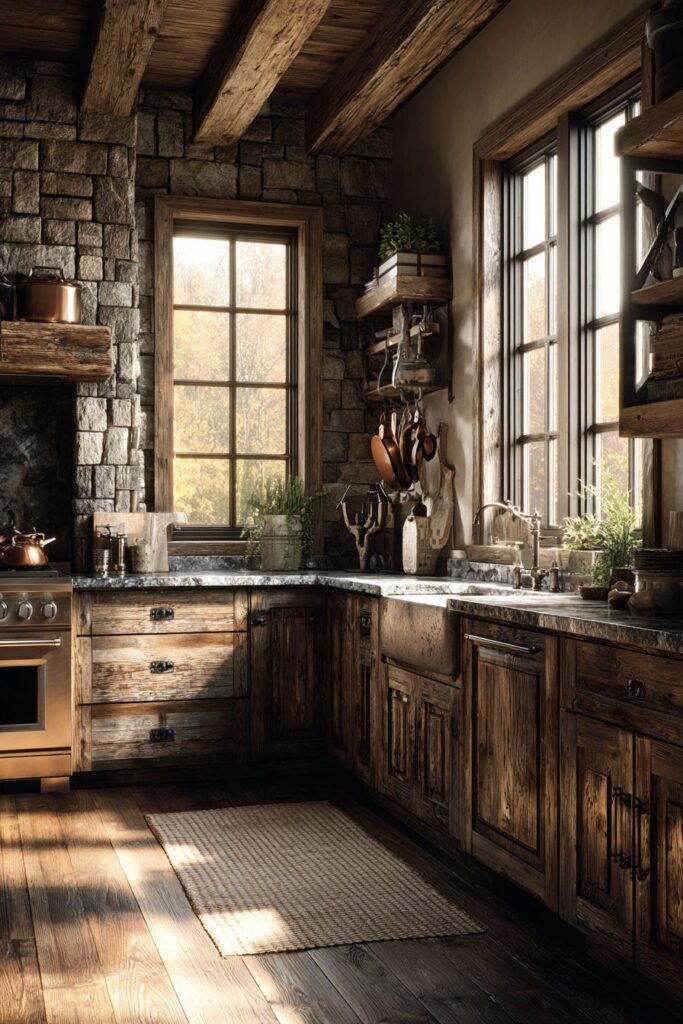
The integration of functional elements like hanging pot racks and herb gardens adds authentic charm while serving practical purposes in active cooking environments. These elements become part of the decorative scheme while maintaining their utilitarian functions, creating the lived-in atmosphere that makes rustic kitchens feel like the genuine heart of the home. The overall color palette typically emphasizes earth tones and natural material finishes that create warmth and comfort. Key design tips include incorporating rough-hewn wooden beams for authentic architectural character, using stone accent walls for textural interest and natural beauty, selecting distressed wood cabinets to emphasize handcrafted quality, choosing granite countertops with natural edges for organic appeal, installing vintage-style ranges as substantial focal points, and adding functional elements like pot racks and herb gardens for authentic charm.
8. Sleek Galley Kitchen Aesthetic
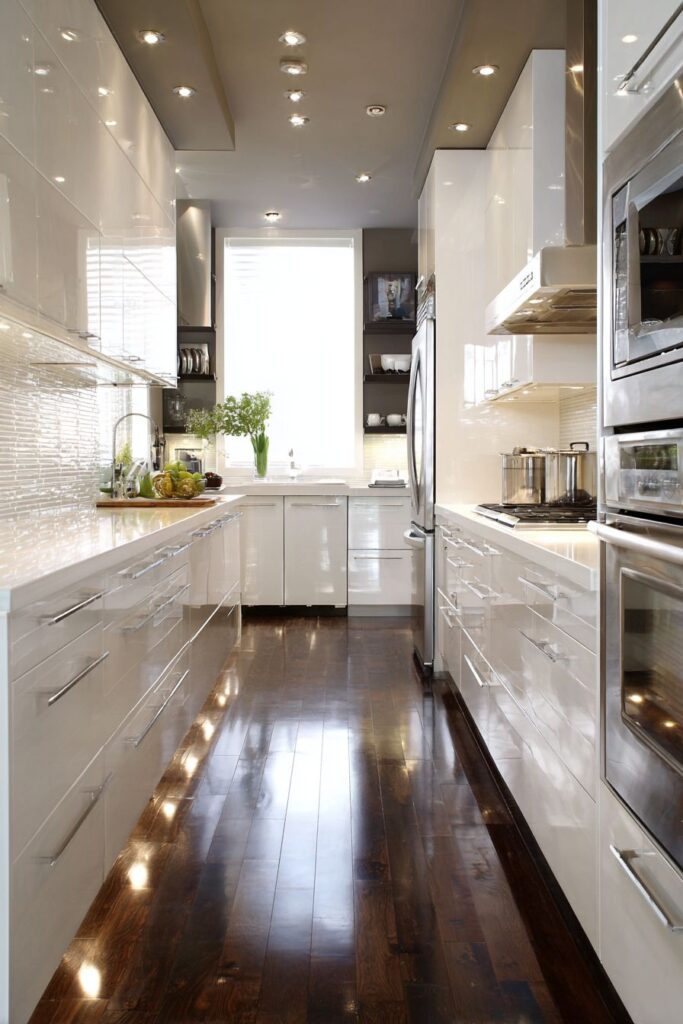
The sleek galley kitchen aesthetic demonstrates how thoughtful design can transform narrow spaces into highly functional and visually appealing culinary environments. This approach maximizes every square foot through strategic use of vertical space and carefully planned storage solutions that maintain clean, uncluttered appearances despite the spatial constraints. Floor-to-ceiling white cabinets create the illusion of height while providing extensive storage capacity for kitchen essentials and equipment.
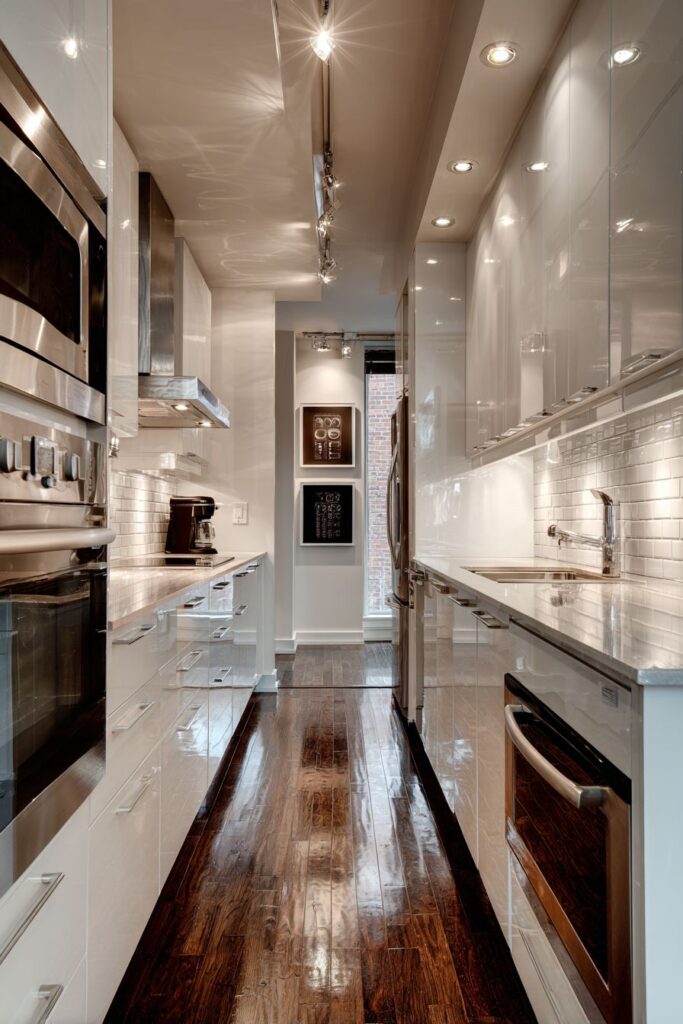
Integrated appliances disappear seamlessly into the cabinetry, maintaining the clean lines essential to making narrow spaces feel larger and more sophisticated. The integration of refrigerators, dishwashers, and other major appliances prevents visual fragmentation that could make small spaces feel cramped or cluttered. Glossy white subway tile backsplashes reflect light throughout the corridor-like space, creating brightness and visual depth that counteracts the potentially confining nature of galley layouts.
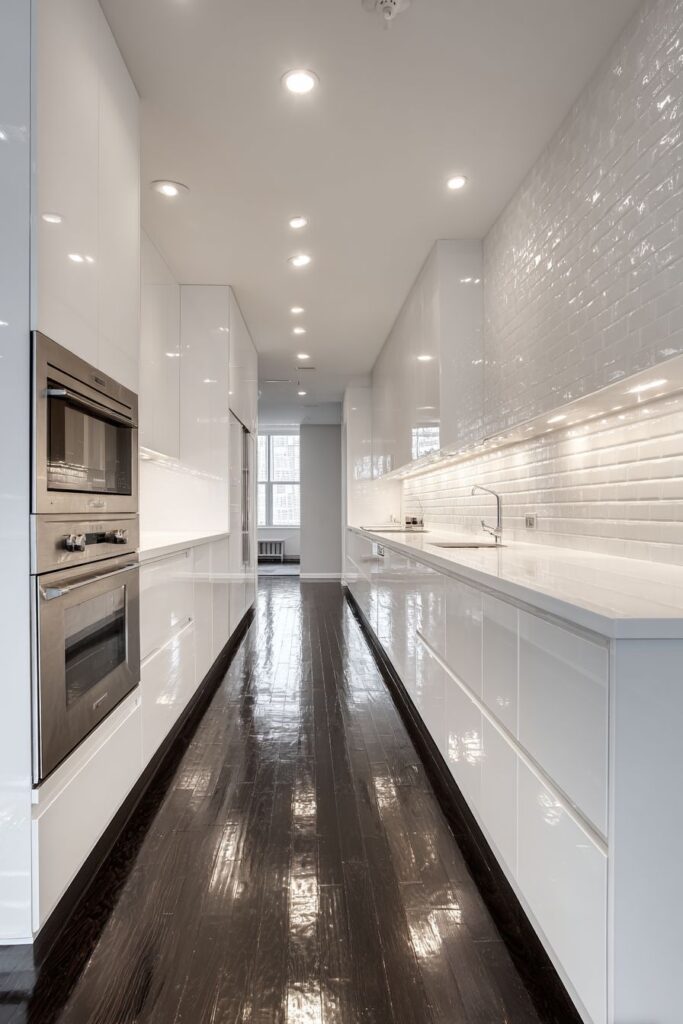
Dark hardwood floors provide visual grounding and contrast against the predominantly white upper elements while adding warmth and sophistication to the overall design. The contrast between light upper elements and darker floor surfaces creates visual balance while making the space feel more proportioned and substantial. Strategic lighting includes under-cabinet LED strips that eliminate shadows on work surfaces and recessed ceiling fixtures that provide general illumination without visual obstruction.
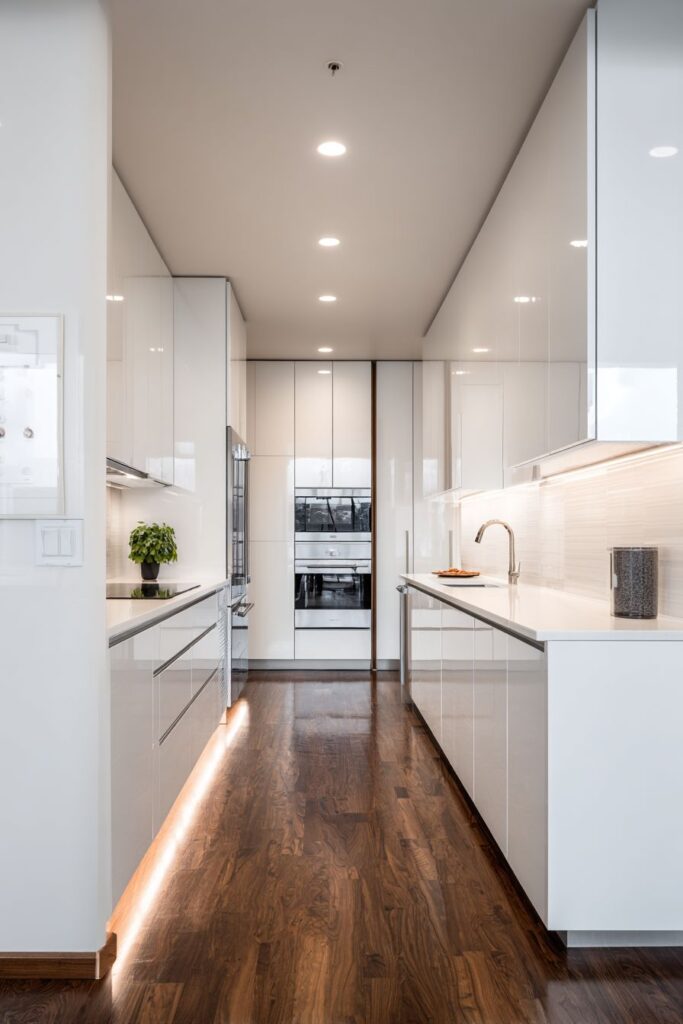
The success of galley kitchen design depends on maintaining clear circulation paths while maximizing storage and work surface availability. Every element must serve multiple purposes, from cabinet doors that incorporate interior organization systems to island units on wheels that provide additional workspace when needed but can be moved aside for better circulation. The careful selection of light colors and reflective surfaces helps small spaces feel larger and more open. Key design tips include using floor-to-ceiling cabinets to maximize vertical storage and create height illusion, integrating appliances seamlessly to maintain clean lines and prevent visual fragmentation, selecting glossy tile backsplashes to reflect light and create brightness, contrasting light upper elements with darker floors for visual grounding, incorporating strategic LED lighting to eliminate shadows and enhance functionality, and maintaining clear circulation paths while maximizing work surface availability.
9. Transitional Kitchen Aesthetic
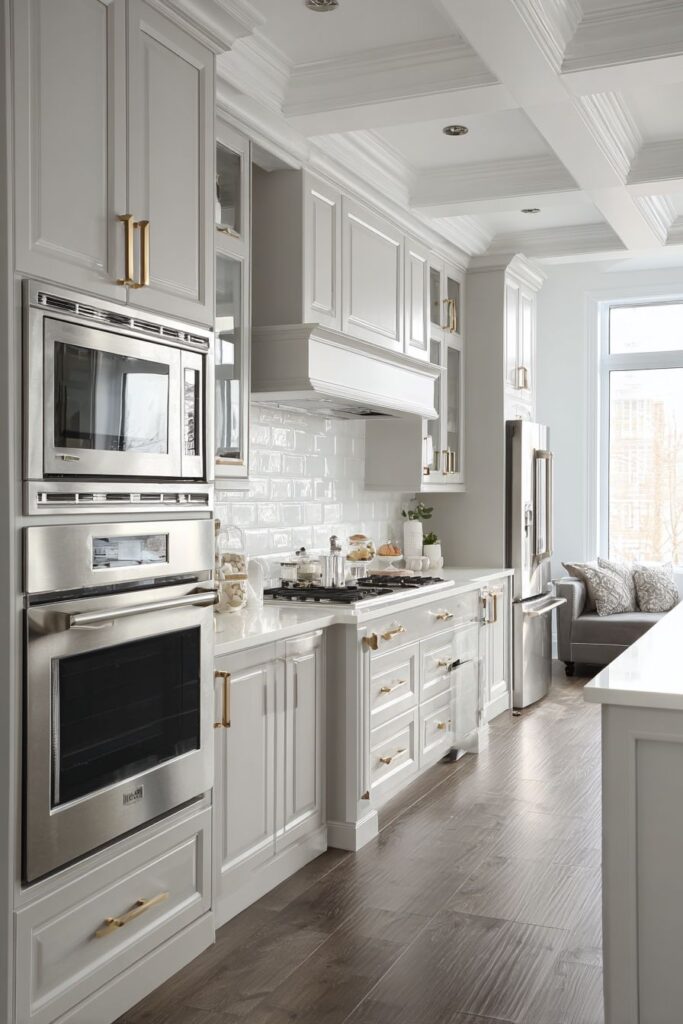
The transitional kitchen aesthetic represents the sophisticated balance between traditional charm and contemporary functionality, creating spaces that feel both timeless and current through the thoughtful integration of classic and modern design elements. Raised panel cabinets in soft grey provide traditional architectural detail while maintaining the neutral color palette favored in contemporary design. This approach allows homeowners to enjoy the craftsmanship and detail of traditional cabinetry while keeping the overall aesthetic fresh and current.
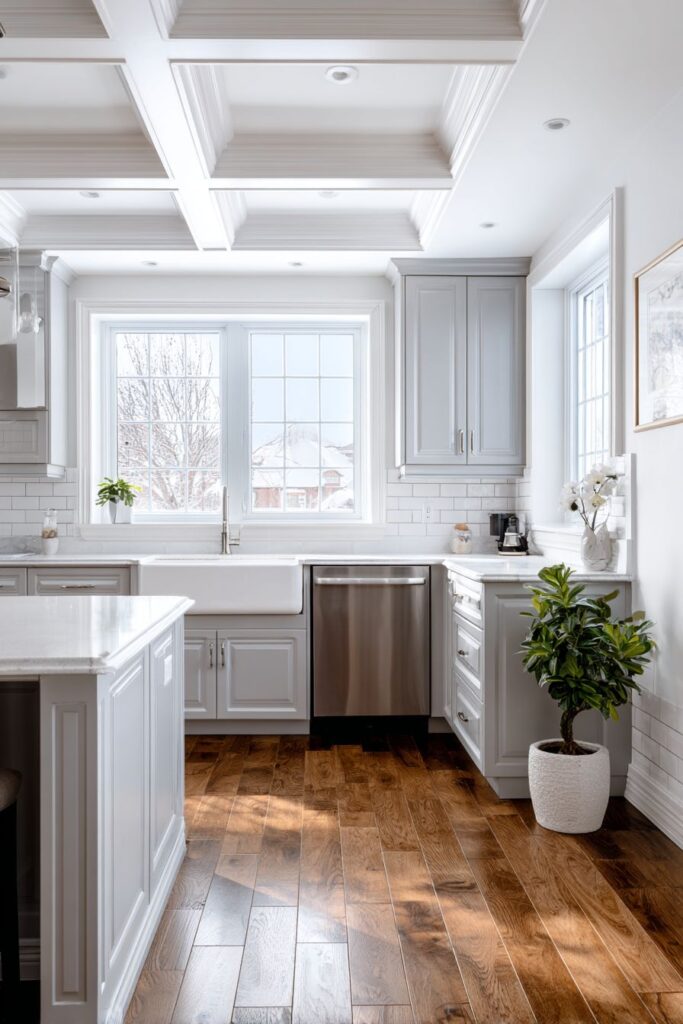
Modern quartz countertops provide the durability and consistent appearance demanded by contemporary lifestyles while complementing both traditional and modern design elements. The engineered nature of quartz surfaces allows for consistent color and pattern while eliminating the maintenance requirements associated with natural stone surfaces. Coffered ceiling details add architectural interest and traditional character while providing opportunities for integrated lighting solutions that serve both functional and aesthetic purposes.
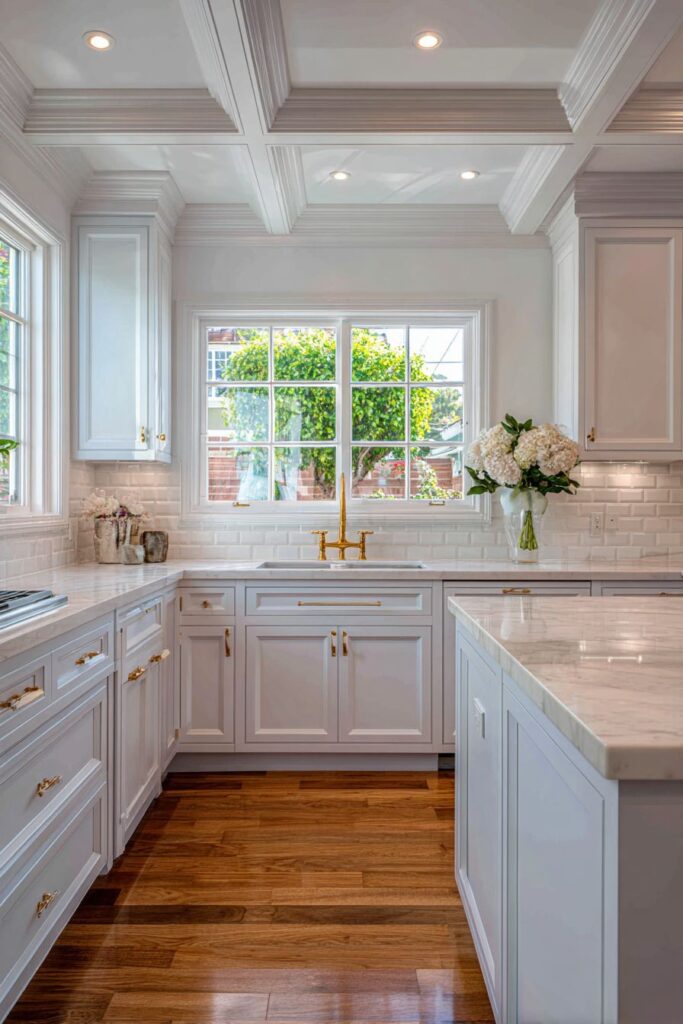
Classic subway tile backsplashes maintain timeless appeal while providing easy maintenance and classic styling that works with both traditional and contemporary elements. The enduring popularity of subway tile stems from its ability to serve as a neutral backdrop that allows other design elements to take center stage while maintaining its own subtle beauty. Bronze fixtures and hardware provide warm metallic accents that complement both traditional wood tones and contemporary neutral surfaces.
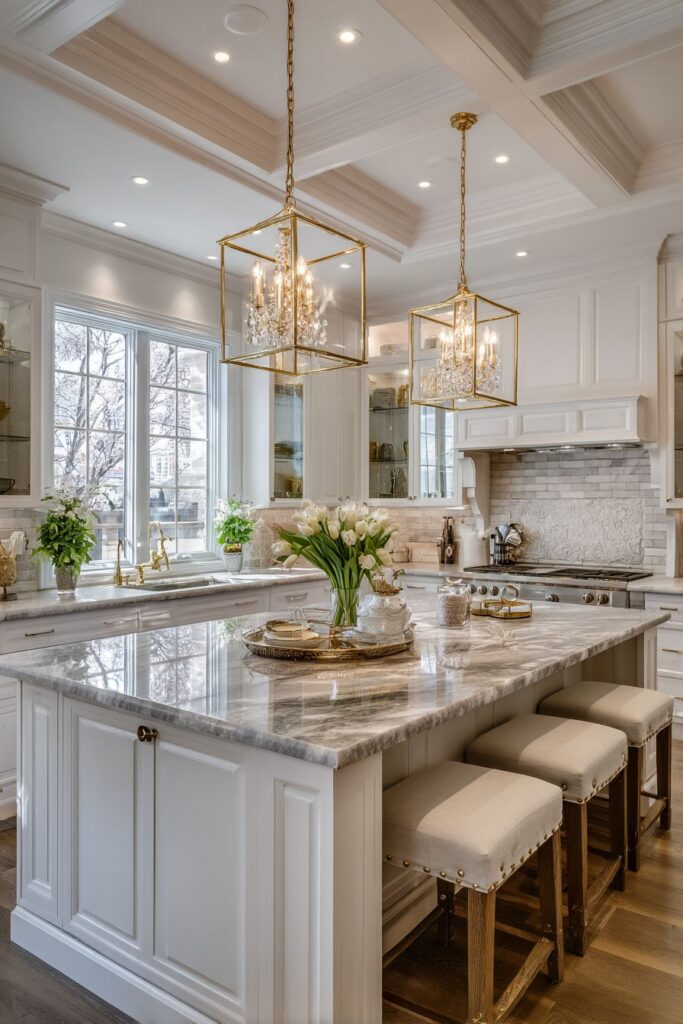
The transitional approach succeeds through its emphasis on quality materials and timeless proportions that transcend specific design trends. This aesthetic allows for the integration of both inherited pieces and contemporary additions, creating personalized spaces that reflect individual taste while maintaining broad appeal. The balanced approach to color, texture, and proportion creates kitchens that feel both comfortable and sophisticated. Key design tips include combining raised panel cabinetry with contemporary materials for balanced traditional-modern appeal, selecting neutral color palettes that work with both classic and contemporary elements, incorporating architectural details like coffered ceilings for traditional character, using bronze or warm metallic finishes to bridge different design periods, choosing classic subway tile for timeless backsplash appeal, and balancing quality traditional craftsmanship with contemporary functionality.
10. Mediterranean Kitchen Aesthetic
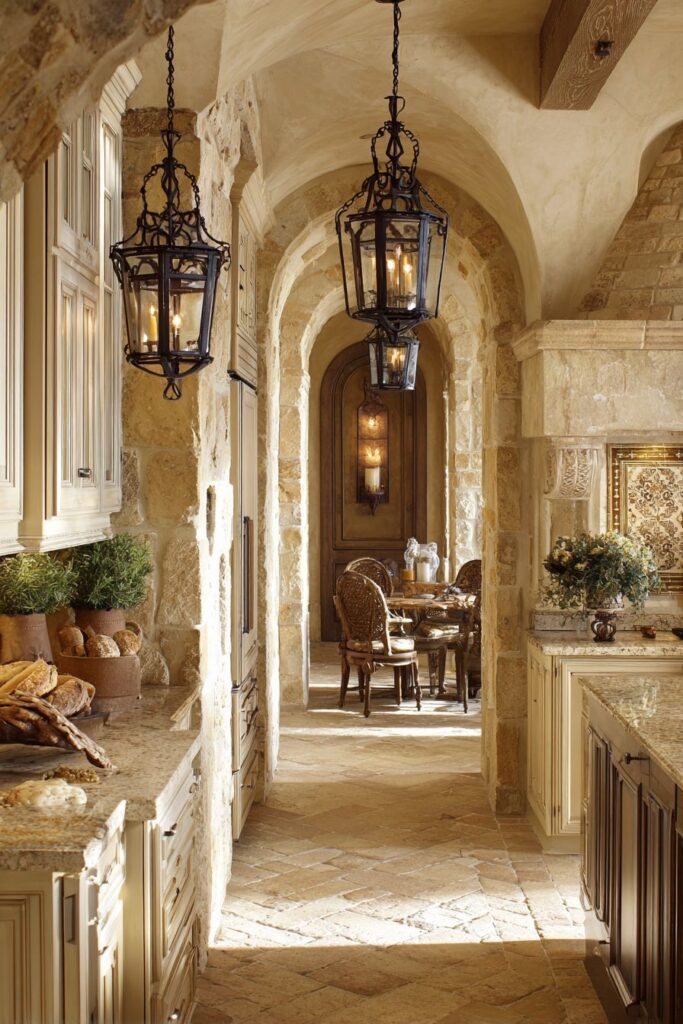
The Mediterranean kitchen aesthetic draws inspiration from the sun-drenched homes of Southern Europe, creating spaces that celebrate warmth, natural materials, and the relaxed lifestyle associated with coastal Mediterranean living. Warm terracotta tile floors provide the perfect foundation for this design approach, their earthy tones and handcrafted appearance immediately establishing the authentic character that defines Mediterranean design. The natural variations in terracotta tile create organic pattern and visual interest that develops more character with age and use.
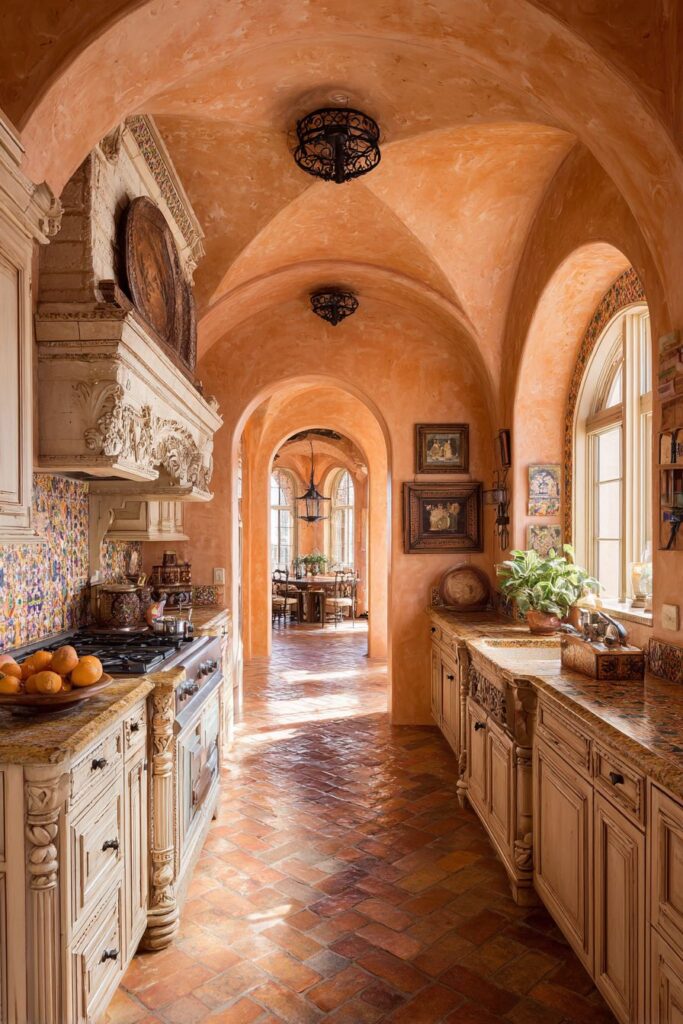
Arched doorways serve as distinctive architectural elements that reinforce the Mediterranean theme while creating graceful transitions between spaces. These curved architectural details contrast beautifully with the more geometric elements of cabinetry and provide the authentic period character that makes Mediterranean kitchens feel transported from European countryside villas. Cream-colored cabinets featuring decorative moldings emphasize traditional craftsmanship while maintaining the light, airy feeling essential to Mediterranean aesthetics.
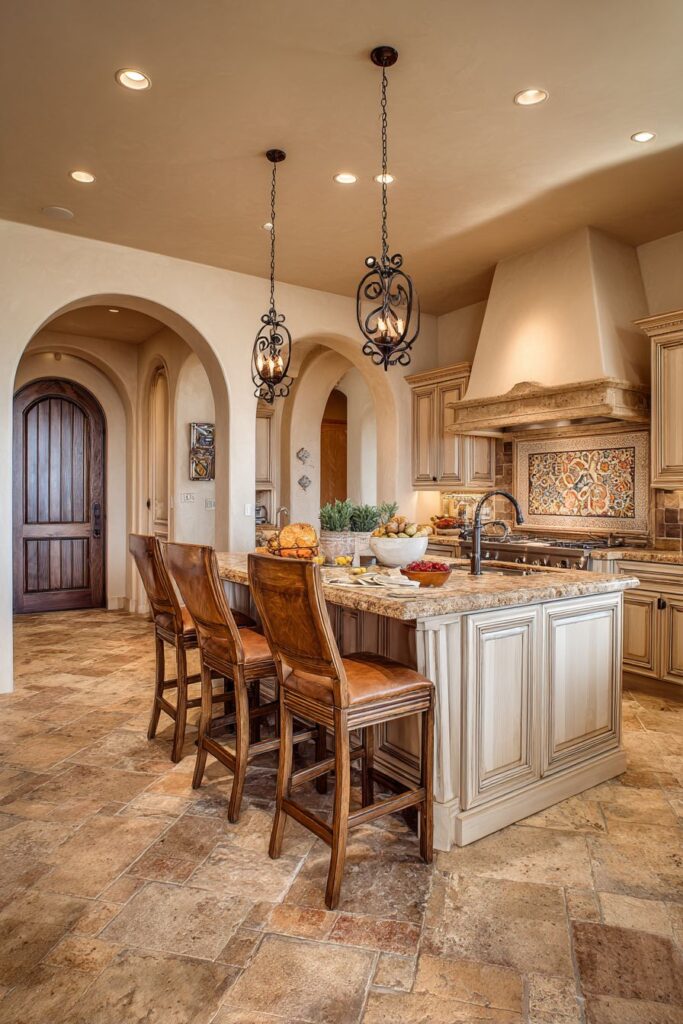
Natural stone countertops showcase the beautiful variation inherent in quarried stone while providing durable work surfaces that develop character over time. The organic patterns and color variations in natural stone surfaces complement the handcrafted tiles and traditional cabinetry while adding luxury and permanence to the overall design. Hand-painted ceramic tile backsplashes add artistic flair and authentic Mediterranean character through their unique patterns and rich colors.
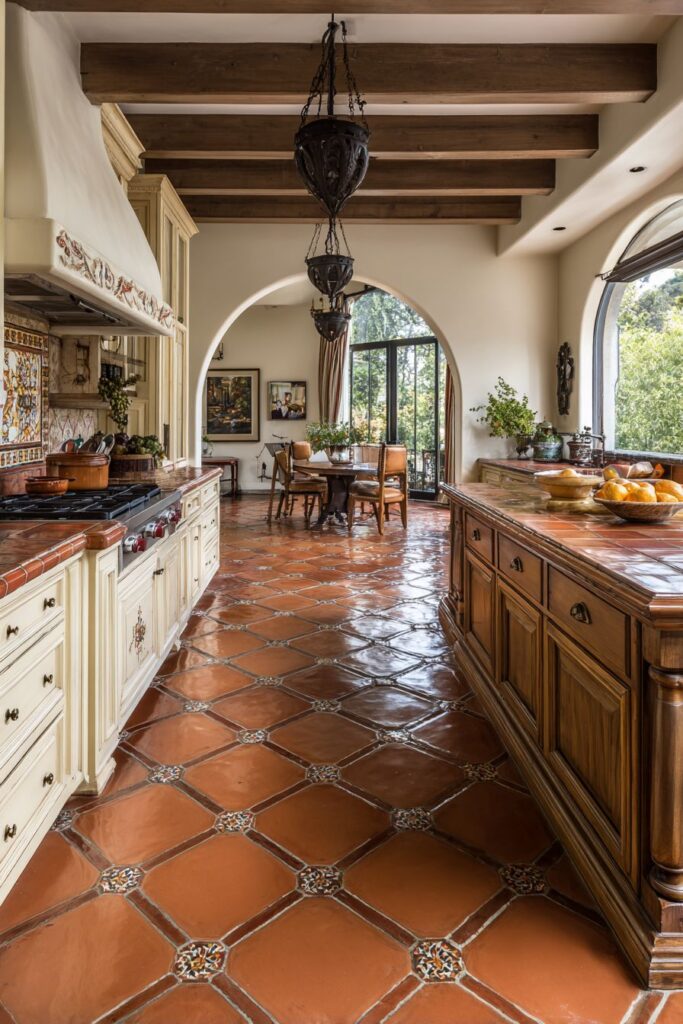
Wrought iron light fixtures create dramatic shadows and authentic period character while providing focused illumination over work areas and dining spaces. The integration of metalwork elements reinforces the handcrafted quality central to Mediterranean design while adding visual weight that balances the lighter elements throughout the space. The overall color palette emphasizes warm, earthy tones that create inviting atmospheres perfect for extended family gatherings and casual entertaining. Key design tips include using terracotta or warm stone flooring for authentic Mediterranean foundation, incorporating arched doorways and curved architectural details for period authenticity, selecting cream or warm white cabinetry with traditional molding details, choosing natural stone countertops for organic beauty and luxury, adding hand-painted ceramic tiles for artistic flair and cultural authenticity, and installing wrought iron fixtures for dramatic lighting and traditional character.
11. Mid-Century Modern Kitchen Aesthetic
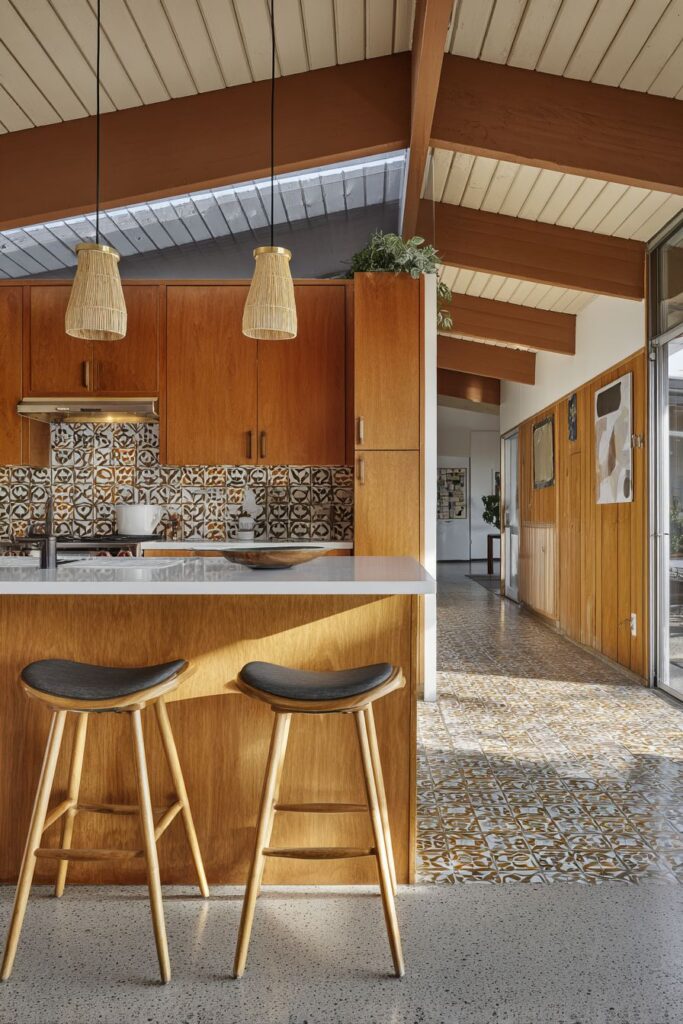
The mid-century modern kitchen aesthetic celebrates the iconic design principles of the 1950s and 1960s, emphasizing clean lines, geometric patterns, and the integration of natural materials with period-appropriate manufacturing techniques. Flat-panel teak cabinetry serves as the foundation for this aesthetic, its rich wood grain and warm honey tones providing the authentic character that defines mid-century design. The precision of flat-panel construction reflects the period’s emphasis on clean, unadorned surfaces that allow the beauty of natural materials to take center stage.
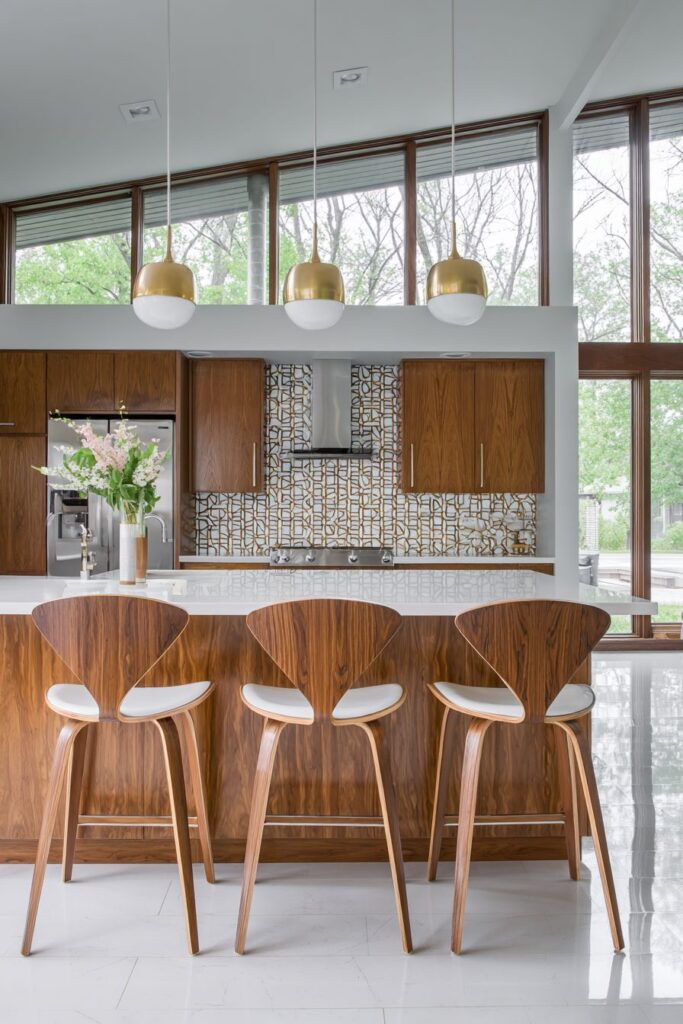
Brass hardware adds warm metallic accents that complement teak surfaces while providing the authentic period details that make mid-century kitchens feel genuinely transported from their original era. The integration of geometric tile backsplash patterns reinforces the period’s love of bold graphic design while adding visual interest and authentic character. These patterns often feature bold colors and angular designs that reflect the optimistic, forward-looking spirit of the mid-century period.
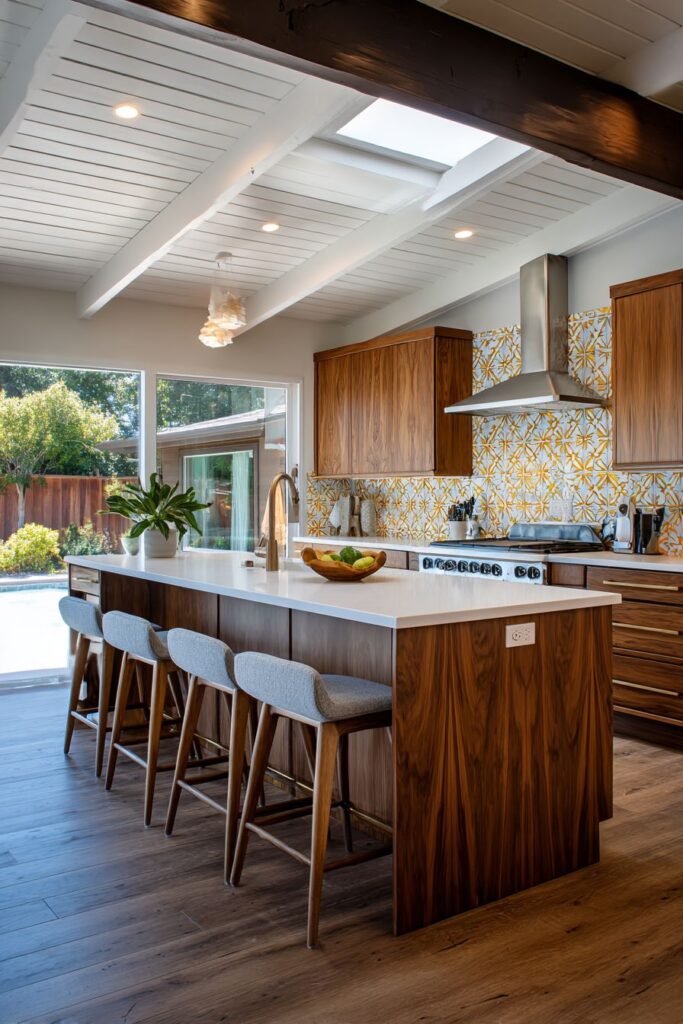
A peninsula with bar-height seating incorporates period-appropriate materials while providing the casual dining areas that were becoming popular during the mid-century era. This integrated approach to seating reflects the period’s emphasis on open floor plans and casual living while maintaining the clean lines essential to the aesthetic. Vintage-inspired appliances maintain authentic styling while providing modern functionality and efficiency.
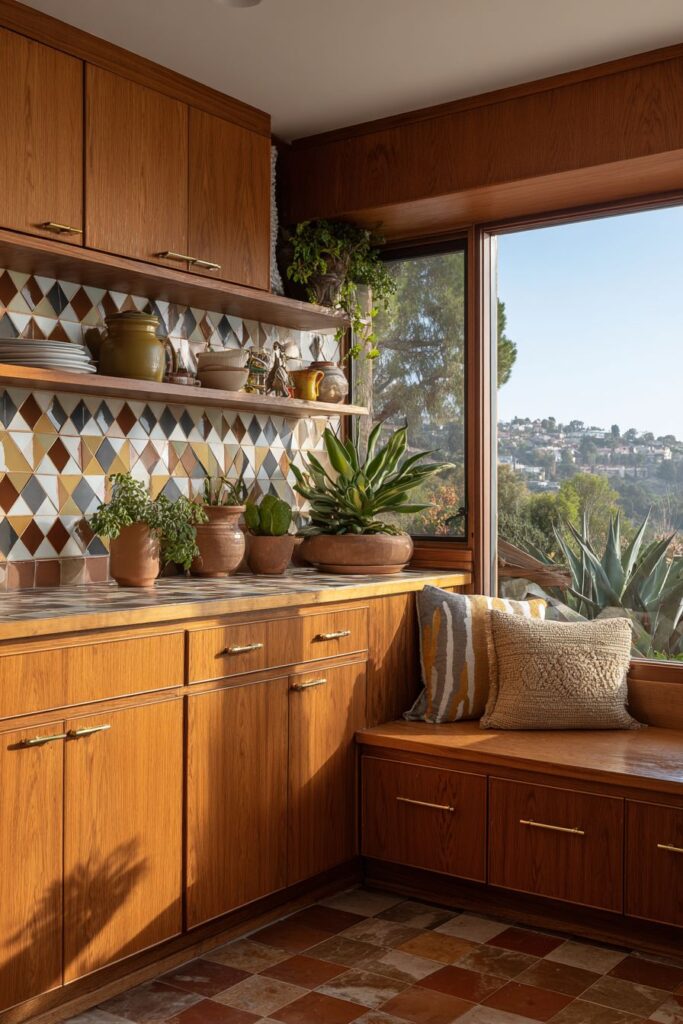
Large windows with minimal treatments flood the space with natural light while maintaining the connection to outdoor spaces that was central to mid-century design philosophy. The emphasis on natural light and outdoor connection reflects the period’s optimistic embrace of California lifestyle and indoor-outdoor living. Period-appropriate color palettes often include bold accent colors alongside natural wood tones and neutral backgrounds. Key design tips include selecting flat-panel teak cabinetry for authentic mid-century character and warm natural beauty, using brass hardware and fixtures for period-appropriate metallic warmth, incorporating geometric tile patterns for bold graphic interest, designing peninsulas with bar seating for casual dining integration, choosing vintage-inspired appliances that combine authentic styling with modern efficiency, and maximizing natural light through large windows with minimal treatments.
12. Luxury Kitchen Aesthetic
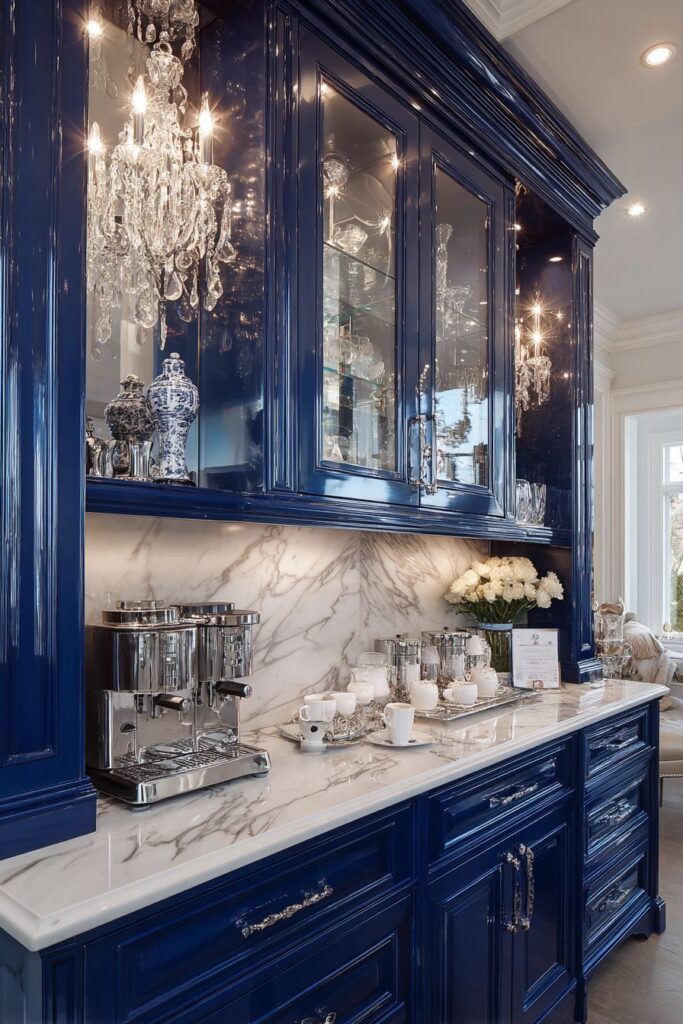
The luxury kitchen aesthetic represents the pinnacle of custom craftsmanship and premium materials, creating spaces that serve as both functional workspaces and impressive showcases of sophisticated design and quality construction. Custom millwork featuring intricate crown molding and furniture-style details demonstrates the level of craftsmanship that defines truly luxurious kitchens. These handcrafted elements require skilled artisans and premium materials, resulting in cabinetry that functions more like fine furniture than standard kitchen storage.
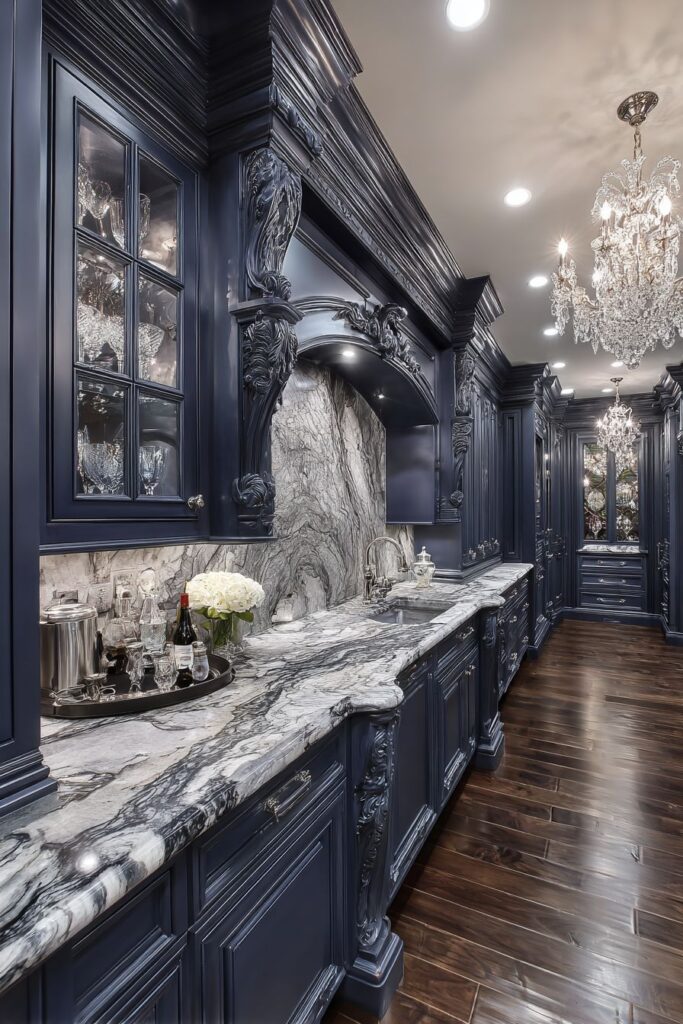
Marble countertops with dramatic veining serve as natural artwork while providing elegant work surfaces that enhance food preparation and presentation. The selection of premium marble slabs with exceptional veining patterns creates unique installations where no two kitchens are exactly alike. Rich navy cabinetry provides sophisticated color and visual weight that grounds the space while serving as an elegant backdrop for premium fixtures and accessories.
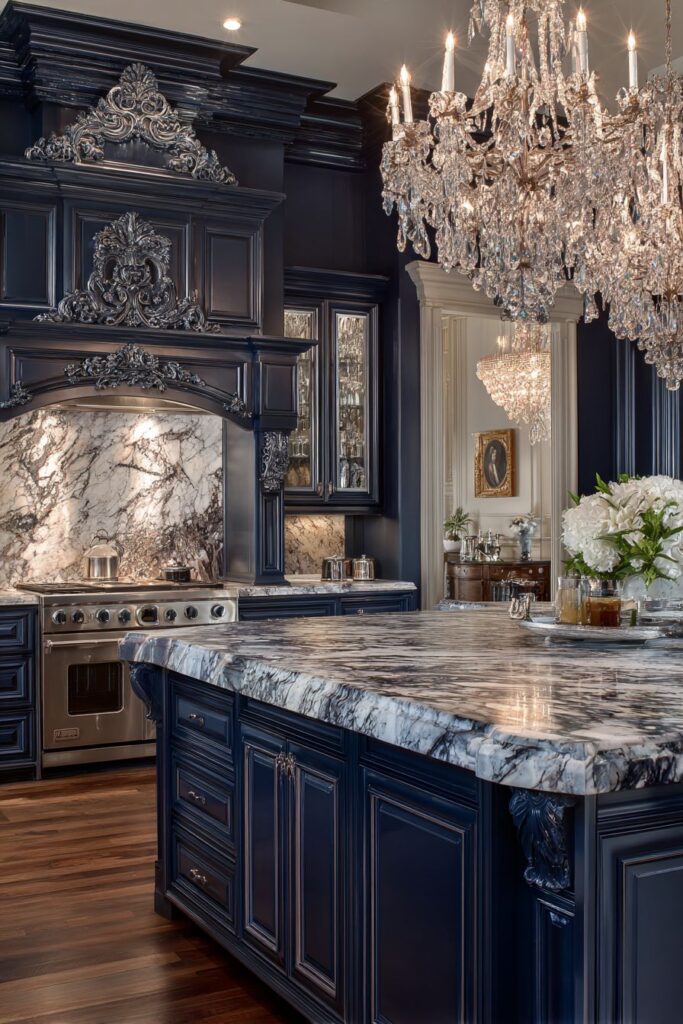
Crystal chandeliers provide elegant illumination that transforms functional kitchens into impressive entertaining spaces suitable for formal gatherings and special occasions. The integration of fine lighting fixtures elevates the space beyond mere functionality while providing the dramatic focal points that define luxury interiors. Butler’s pantries and dedicated coffee stations add functional luxury elements that enhance both daily convenience and entertaining capabilities.
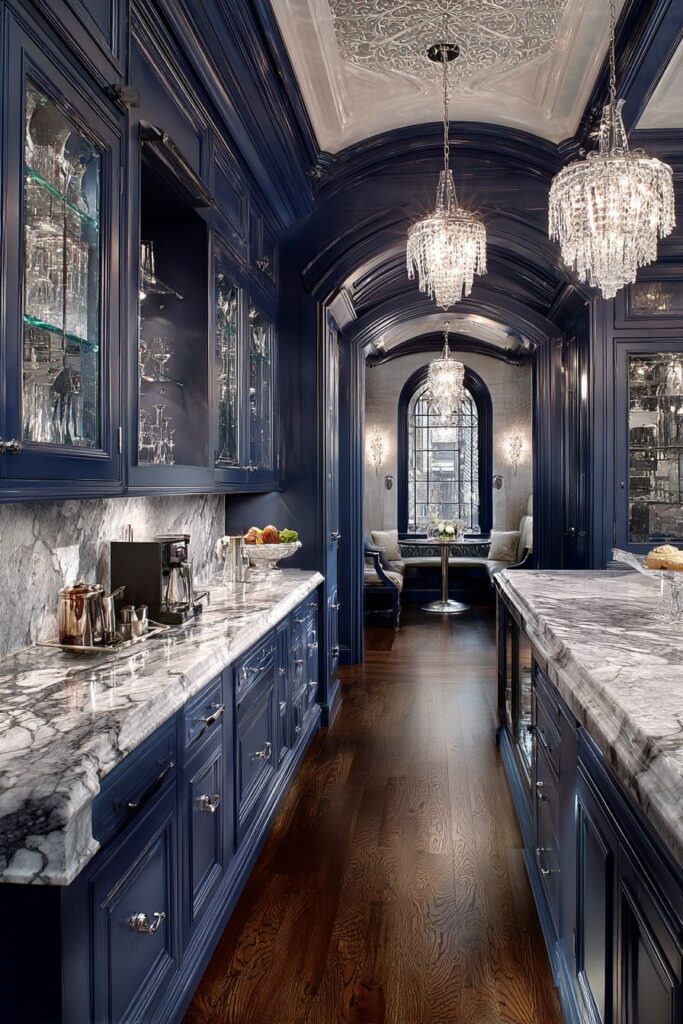
The luxury aesthetic succeeds through its emphasis on custom solutions and premium materials that create unique, personalized spaces. Every element, from cabinet hardware to plumbing fixtures, represents the finest available options while contributing to a cohesive design vision. Storage solutions are both extensive and beautifully integrated, providing space for fine china, crystal, and entertaining essentials while maintaining the refined appearance essential to luxury design.
Key design tips include investing in custom millwork with furniture-quality details and craftsmanship, selecting premium marble with dramatic veining for natural artwork and luxury appeal, choosing rich, sophisticated cabinet colors like navy or deep green for visual weight, incorporating crystal chandeliers for elegant illumination and dramatic focal points, adding butler’s pantries and coffee stations for functional luxury, and ensuring every detail reflects premium quality and custom craftsmanship.
13. Eclectic Kitchen Aesthetic
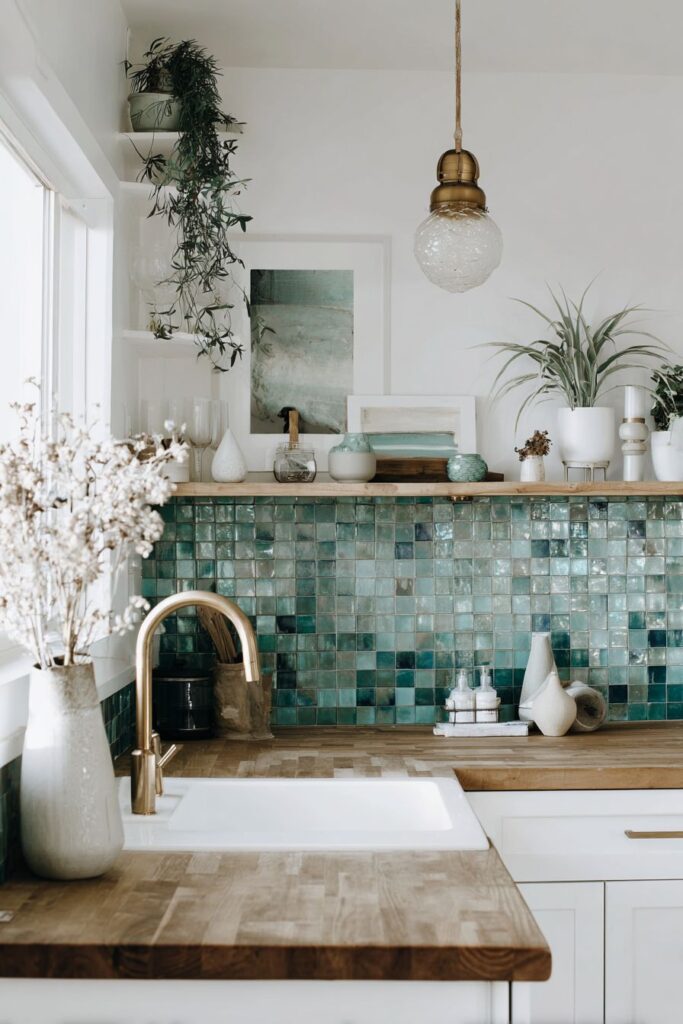
The eclectic kitchen aesthetic celebrates individual creativity and personal expression through the thoughtful mixing of vintage and modern elements that create unique, personalized spaces full of character and charm. This approach allows homeowners to incorporate beloved pieces from different periods and styles while maintaining overall cohesion through careful attention to color, scale, and proportion. Colorful tile backsplashes serve as artistic focal points that can incorporate bold patterns, mixed materials, or handcrafted elements that reflect personal taste and creative vision.
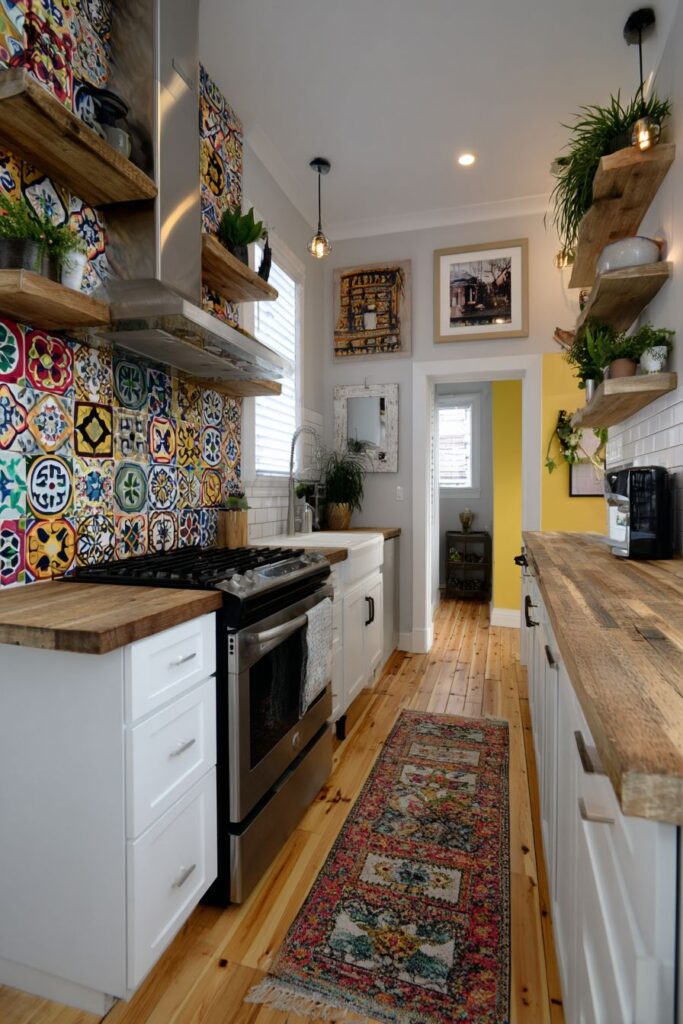
Brass open shelving provides both functional storage and opportunities for displaying collections of pottery, glassware, and kitchen accessories that become part of the decorative scheme. The warm metallic finish of brass complements a wide variety of colors and materials while adding vintage character that bridges different design periods. Reclaimed wood countertops add natural warmth and authentic character while providing durable work surfaces that develop beautiful patina over time.
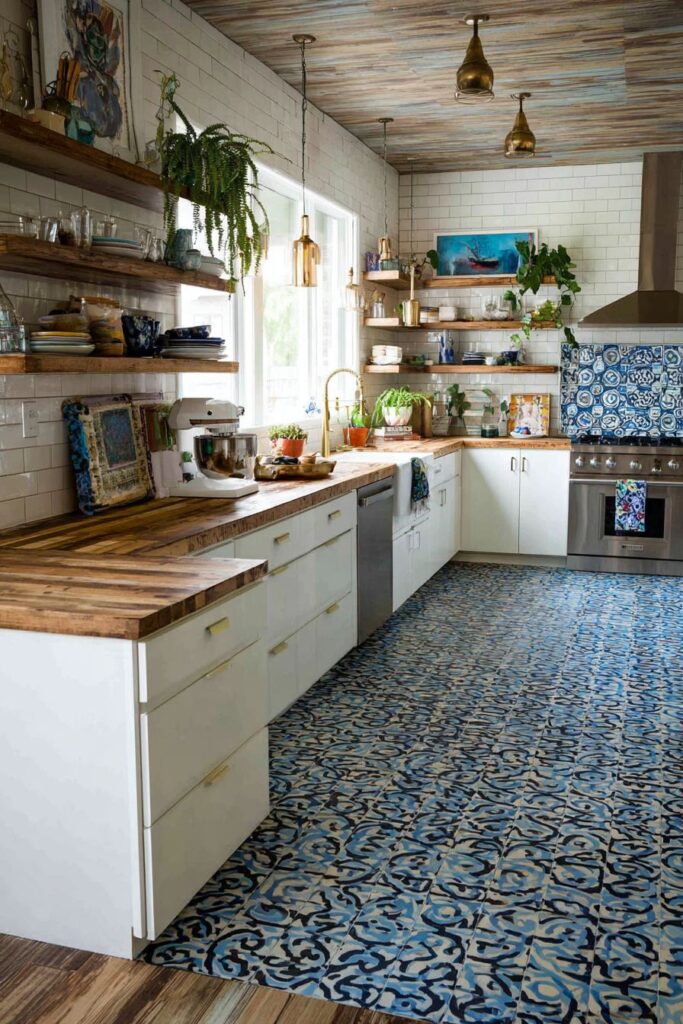
Sleek white cabinets provide a neutral foundation that allows more eclectic elements to take center stage without overwhelming the space. This approach demonstrates how restraint in some areas can provide the visual calm necessary to showcase bolder choices in others. Vintage pendant lights add character and authentic period details while providing focused task lighting over work areas and island seating.
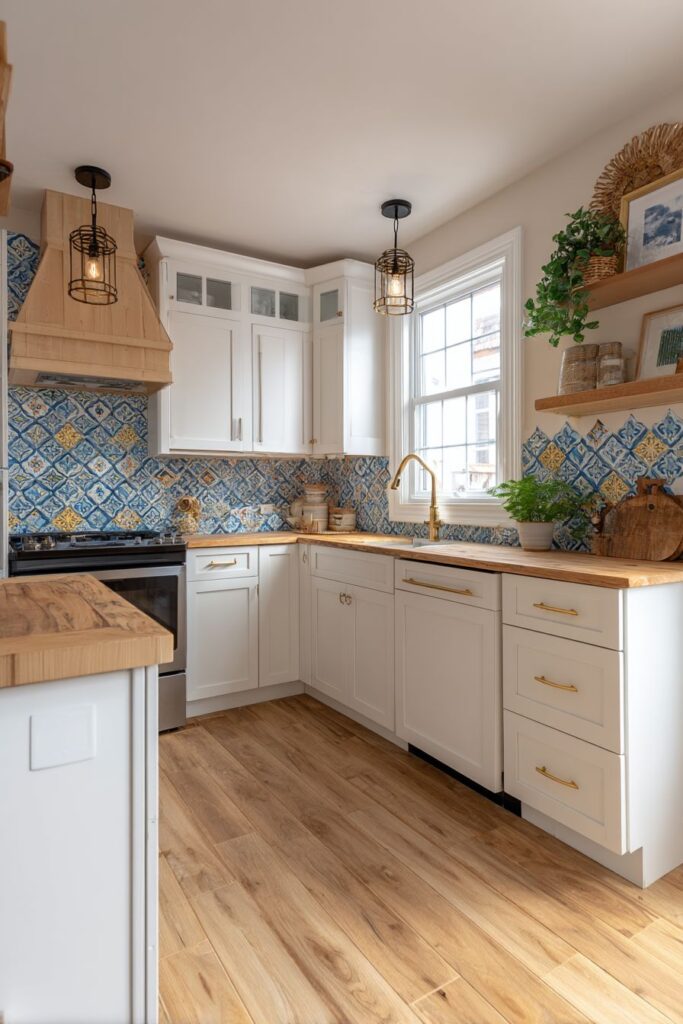
The integration of plants and artwork personalizes the space while adding life, color, and texture that make eclectic kitchens feel like true expressions of their owners’ personalities. The lived-in quality that defines successful eclectic design comes from the careful curation of meaningful objects and the willingness to mix different periods and styles with confidence and creativity. The overall approach emphasizes personality over perfection, creating spaces that feel collected over time rather than designed all at once.
Key design tips:
Include mixing vintage and modern elements with confidence while maintaining overall cohesionusing colorful or patterned tile backsplashes as artistic focal points, incorporating brass open shelving for functional display and vintage warmth, selecting reclaimed wood countertops for natural character and sustainability, choosing neutral cabinet colors to provide a foundation for bolder accent pieces, and personalizing the space with plants, artwork, and meaningful objects that reflect individual taste.
14. Small Apartment Kitchen Aesthetic
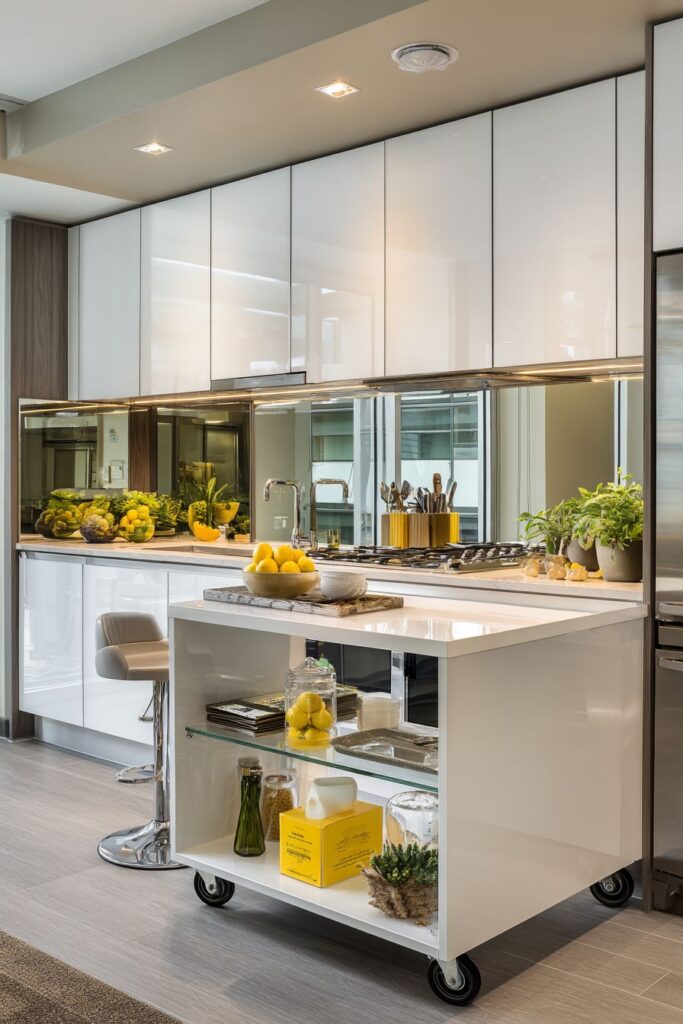
The small apartment kitchen aesthetic demonstrates how intelligent design can maximize functionality and beauty within severely limited square footage, creating efficient culinary spaces that feel both sophisticated and highly functional. This approach requires careful planning and creative solutions that make every square foot serve multiple purposes while maintaining the visual appeal essential to comfortable urban living. White cabinets reaching to the ceiling create vertical emphasis while maximizing storage capacity for small space living.
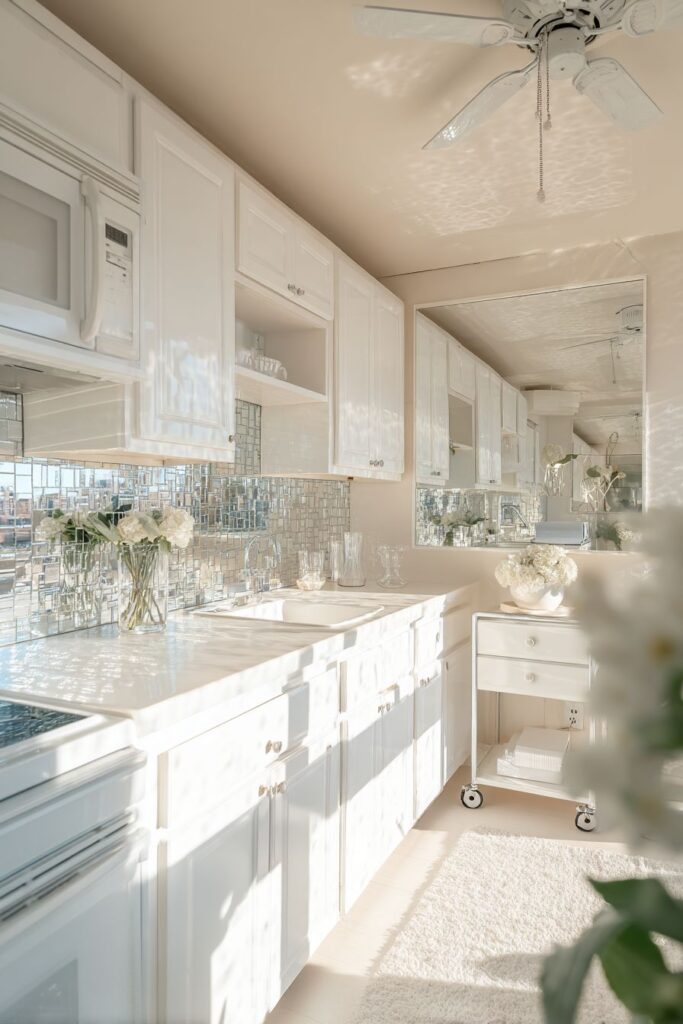
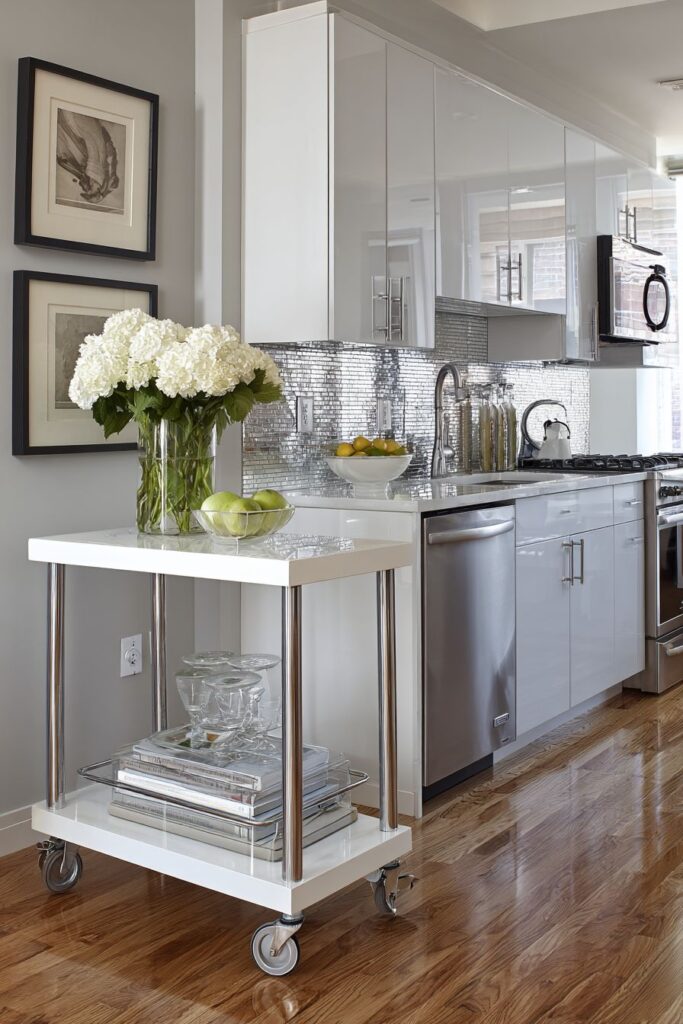
The light color palette helps small spaces feel larger and more open while reflecting available natural light throughout the compact space. A small island on wheels provides flexible workspace that can be repositioned as needed for different activities or moved aside to improve circulation during busy periods. This mobility allows apartment dwellers to adapt their kitchen layout to different needs while maintaining maximum functionality.
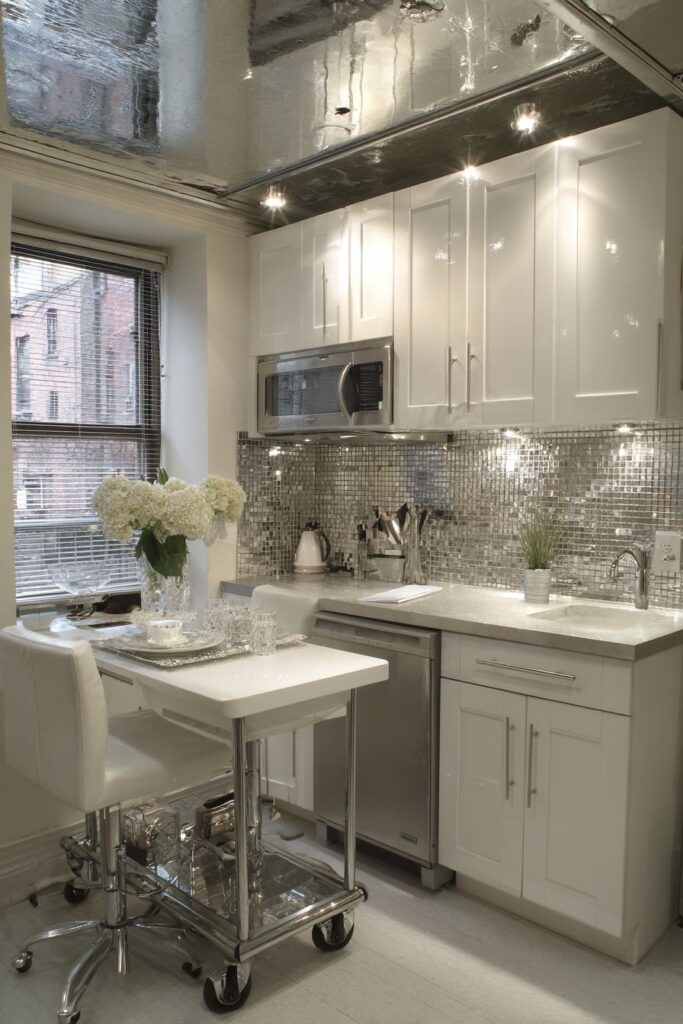
Mirrored backsplash surfaces reflect light and create visual depth that counteracts the potentially confining nature of small spaces. The reflective quality of mirror surfaces doubles the apparent size of the kitchen while adding glamour and sophistication that prevents small spaces from feeling insignificant or cramped. Strategic lighting design becomes even more important in small spaces, with under-cabinet LED strips and recessed ceiling fixtures eliminating shadows that could make compact areas feel closed-in.
Thoughtful storage solutions are essential for small apartment kitchens, with every cabinet and drawer designed to maximize capacity while maintaining easy access to frequently used items. The integration of pull-out organizers, vertical dividers, and specialized storage accessories ensures that small kitchens can accommodate all the tools and ingredients necessary for serious cooking. The overall aesthetic proves that size limitations need not compromise either functionality or beauty.
Key design tips
Include using white cabinets and light colors to maximize apparent size and brightness, installing floor-to-ceiling cabinets to maximize vertical storage capacity, incorporating mobile islands for flexible workspace and improved circulation, using mirrored backsplashes to create visual depth and reflect light, implementing strategic lighting to eliminate shadows and enhance functionality, and designing custom storage solutions that maximize capacity while maintaining accessibility.
15. Traditional English Country Kitchen Aesthetic
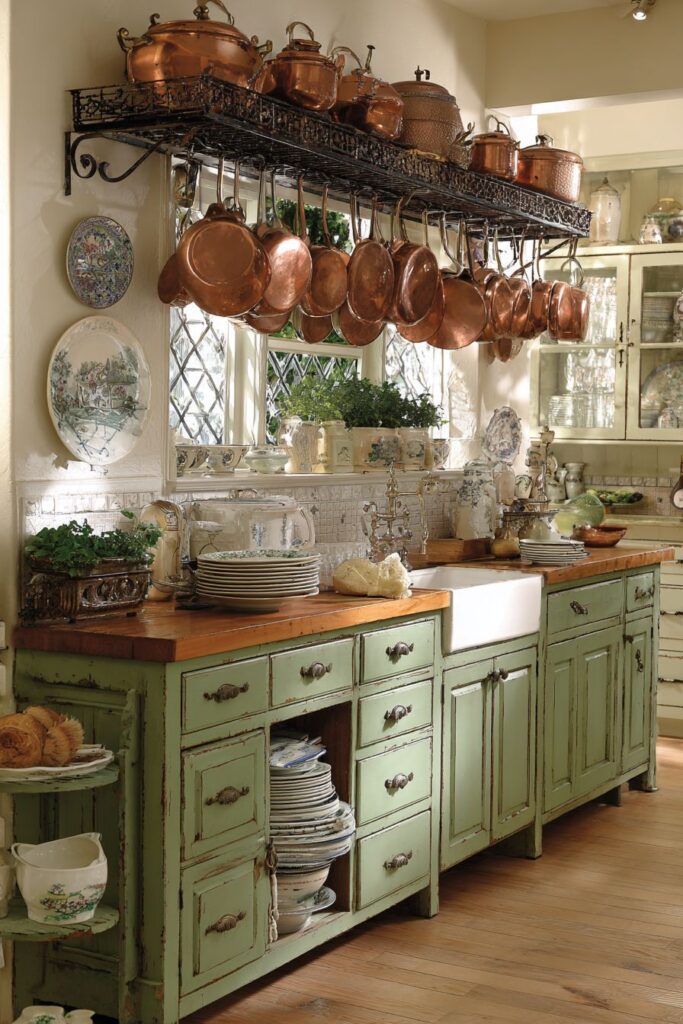
The traditional English country kitchen aesthetic captures the timeless charm of rural British homes through the integration of painted wood cabinetry, natural materials, and vintage elements that create spaces steeped in history and character. Painted wood cabinets in sage green provide the foundation for this aesthetic, their muted color and traditional construction methods reflecting the authentic character of period English kitchens. The painted finish allows for the integration of traditional joinery techniques while providing the soft, weathered appearance that defines country styling.
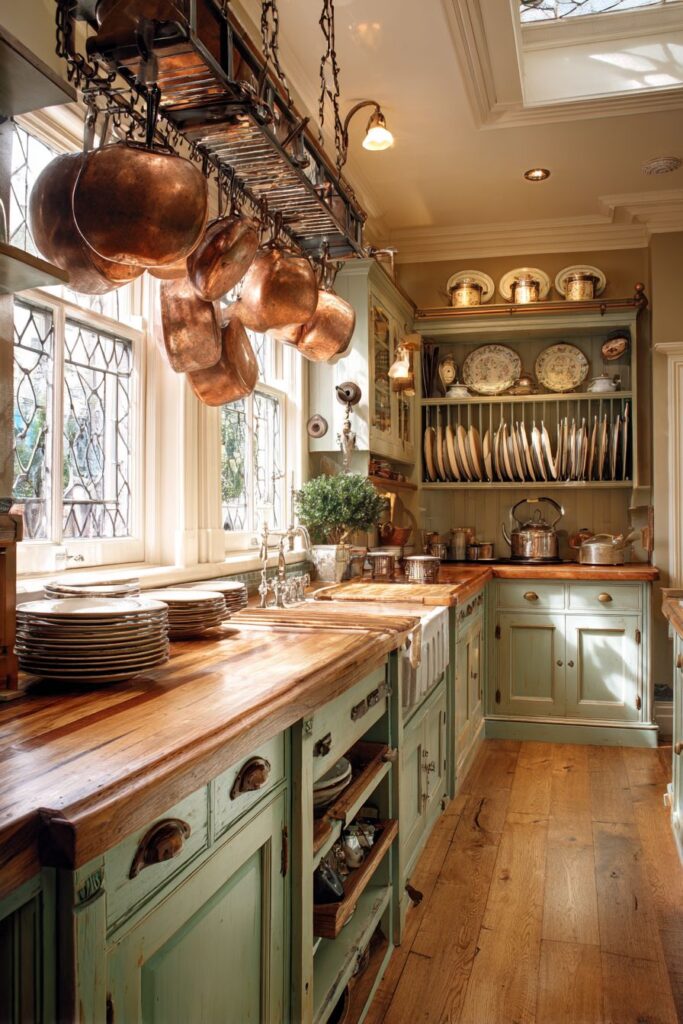
Natural wood countertops showing patina and wear celebrate the beauty of aged materials while providing functional work surfaces that improve with use over time. The development of natural patina in wood surfaces tells the story of countless meals prepared and shared, adding authentic character that cannot be manufactured or replicated. Open plate racks display vintage china collections while providing practical storage that keeps frequently used dishes easily accessible.
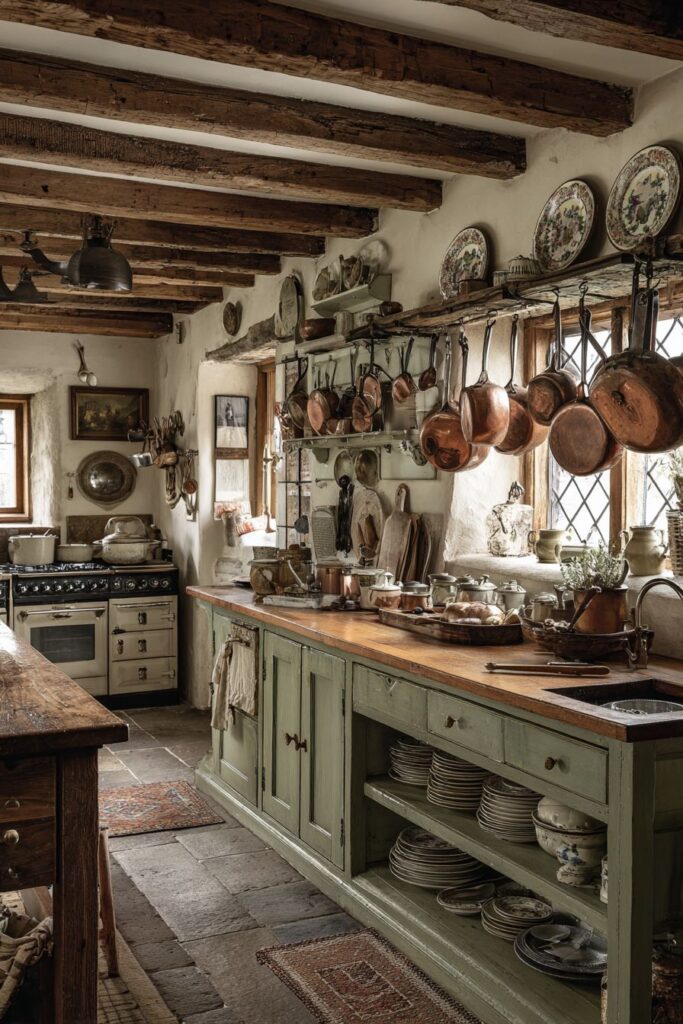
Copper pots hanging from wrought iron racks add both functional storage and decorative appeal while reinforcing the authentic period character that makes English country kitchens feel genuinely historical rather than merely styled. The warm tones of copper complement the painted cabinetry while adding the metallic elements essential to traditional kitchen functionality. Leaded glass windows filter soft natural light across the space while providing the authentic architectural details that complete the period aesthetic.
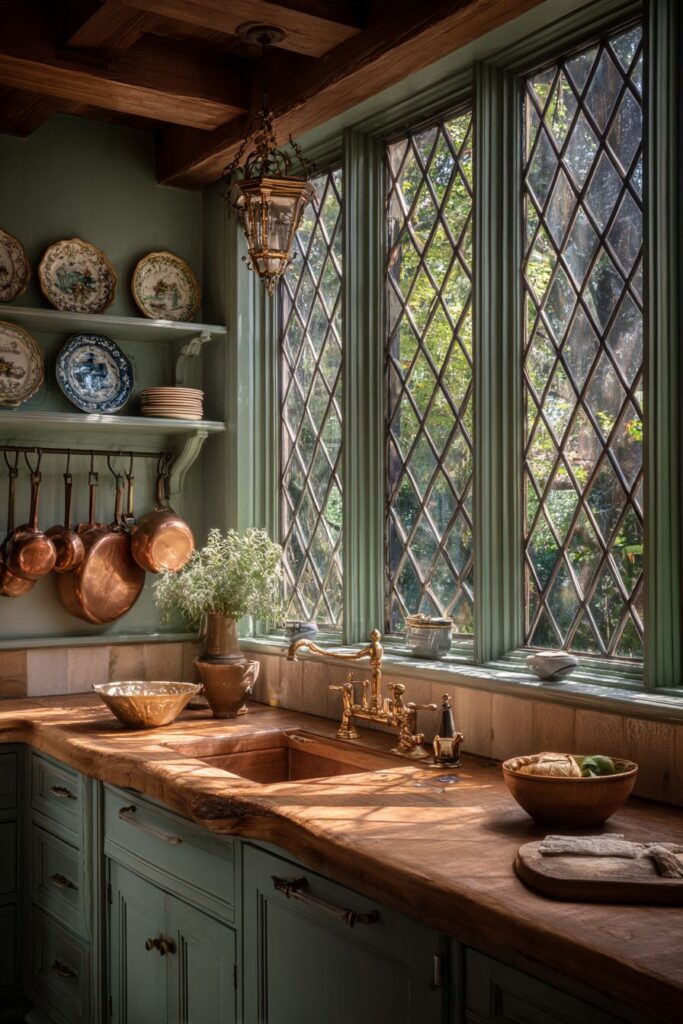
The English country approach emphasizes comfort, functionality, and the beauty of well-used materials over contemporary concerns with perfect finishes and coordinated styling. This aesthetic celebrates the accumulation of beautiful, functional objects over time while maintaining the warm, welcoming atmosphere that makes these kitchens the heart of family life. The overall effect creates spaces that feel both historically grounded and perfectly suited to contemporary living.
Key design tips:
Include choosing painted wood cabinetry in traditional colors like sage green or cream for authentic period character, incorporating natural wood countertops that develop beautiful patina over time, displaying vintage china on open plate racks for functional decoration, hanging copper pots from wrought iron racks for storage and authentic character, installing leaded glass windows for period architectural details and filtered natural light, and embracing the beauty of aged and weathered materials rather than pursuing perfect finishes.
16. Japanese-Inspired Kitchen Aesthetic
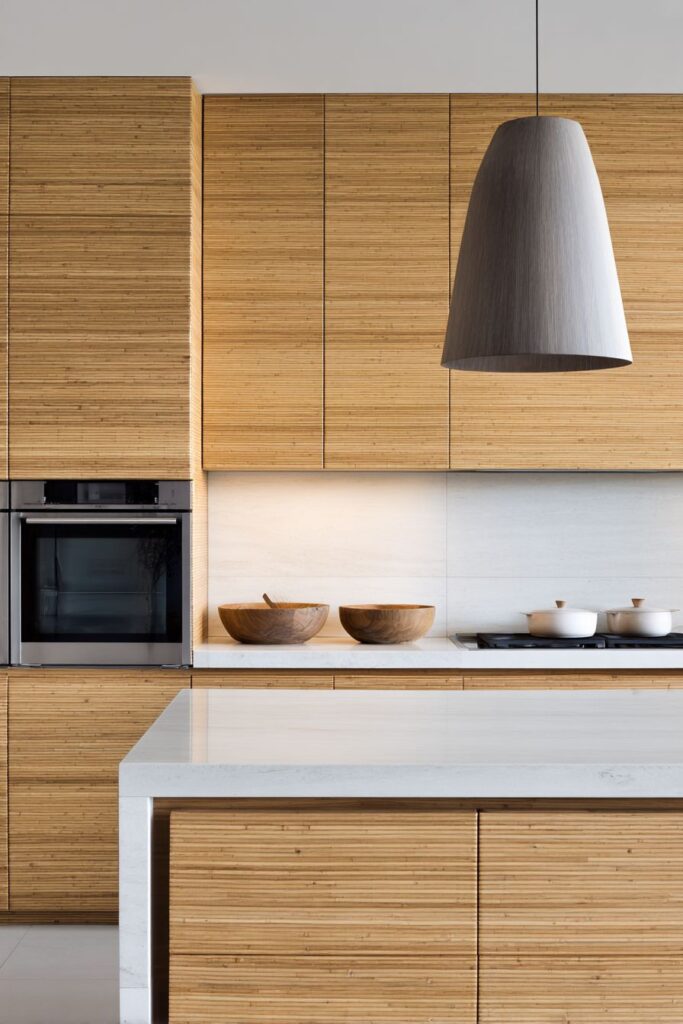
The Japanese-inspired kitchen aesthetic embodies the zen principles of simplicity, natural beauty, and functional harmony that characterize traditional Japanese design philosophy. This approach emphasizes clean lines, natural materials, and the elimination of visual clutter to create spaces that promote both efficient cooking and peaceful contemplation. Bamboo cabinets showcase the natural beauty of sustainable materials while providing the clean, geometric lines essential to Japanese design aesthetics.
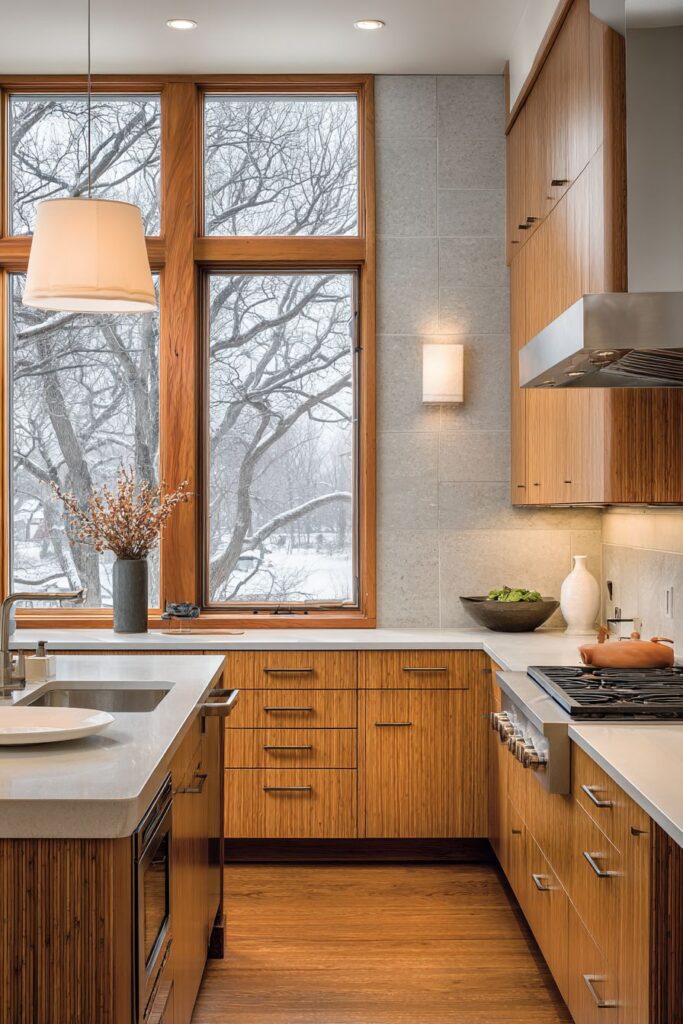
Stone countertops add natural beauty and durability while maintaining the connection to earth elements that grounds Japanese-inspired spaces in natural harmony. The integration of natural stone surfaces with bamboo cabinetry creates textural contrast while maintaining the overall sense of organic unity that defines successful Japanese design. Minimal hardware maintains the streamlined appearance that allows the natural beauty of materials to take center stage without distraction.
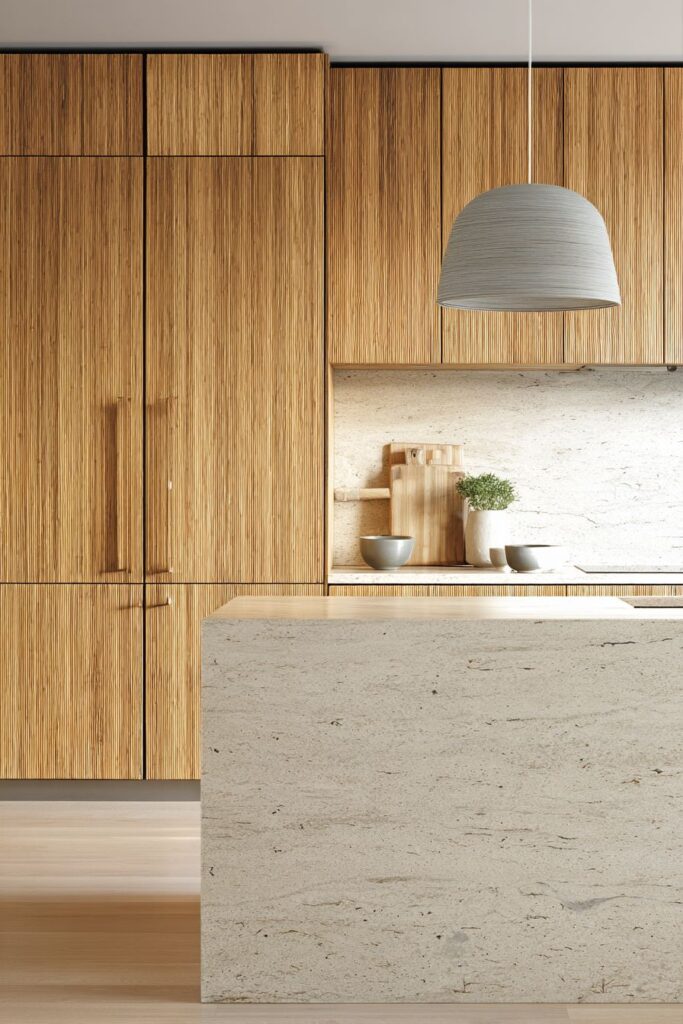
Integrated appliances disappear seamlessly into the design, reflecting the Japanese principle of hidden functionality that prioritizes the overall aesthetic harmony over the display of technological features. This approach creates kitchens that feel more like serene workshops than equipment-heavy cooking spaces. A single statement pendant light provides focused task lighting while serving as the only decorative element in otherwise minimal spaces.
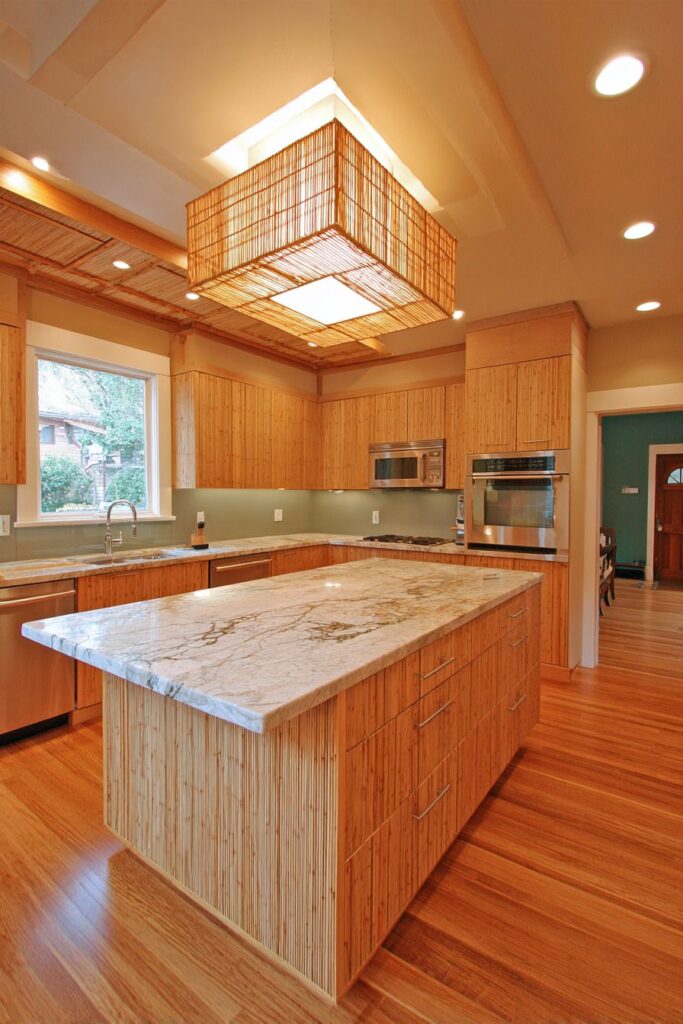
The zen-like quality that defines Japanese-inspired kitchens comes from the careful attention to proportion, the selection of natural materials, and the elimination of everything that does not serve both functional and aesthetic purposes. This disciplined approach creates spaces that feel both calming and highly efficient, supporting both contemplative cooking practices and quick meal preparation. The overall aesthetic promotes mindful cooking while maintaining the sophisticated beauty that makes these kitchens inspiring daily environments.
Key design tips
include selecting bamboo cabinetry for sustainable natural beauty and clean geometric lines, incorporating stone countertops for durability and connection to natural elements, using minimal hardware to maintain streamlined appearances and focus on materials, integrating appliances seamlessly to prioritize aesthetic harmony over technology display, providing focused task lighting through single statement fixtures, and eliminating visual clutter to create peaceful, contemplative cooking environments.
17. Bold Contemporary Kitchen Aesthetic
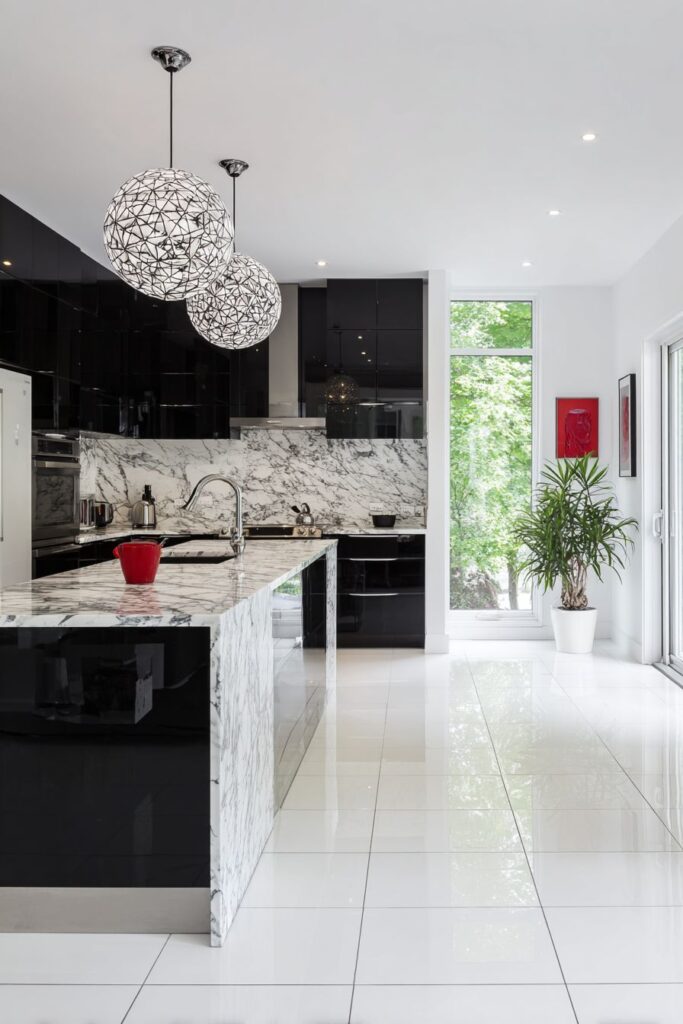
The bold contemporary kitchen aesthetic represents the confident use of high-contrast design elements and dramatic material relationships that create striking, memorable spaces perfect for homeowners who appreciate bold graphic design. This approach typically features high-contrast black and white elements that create strong visual impact while maintaining the sophisticated elegance essential to successful contemporary design. Glossy black cabinets provide dramatic depth and reflection while serving as sophisticated backdrops for contrasting elements.
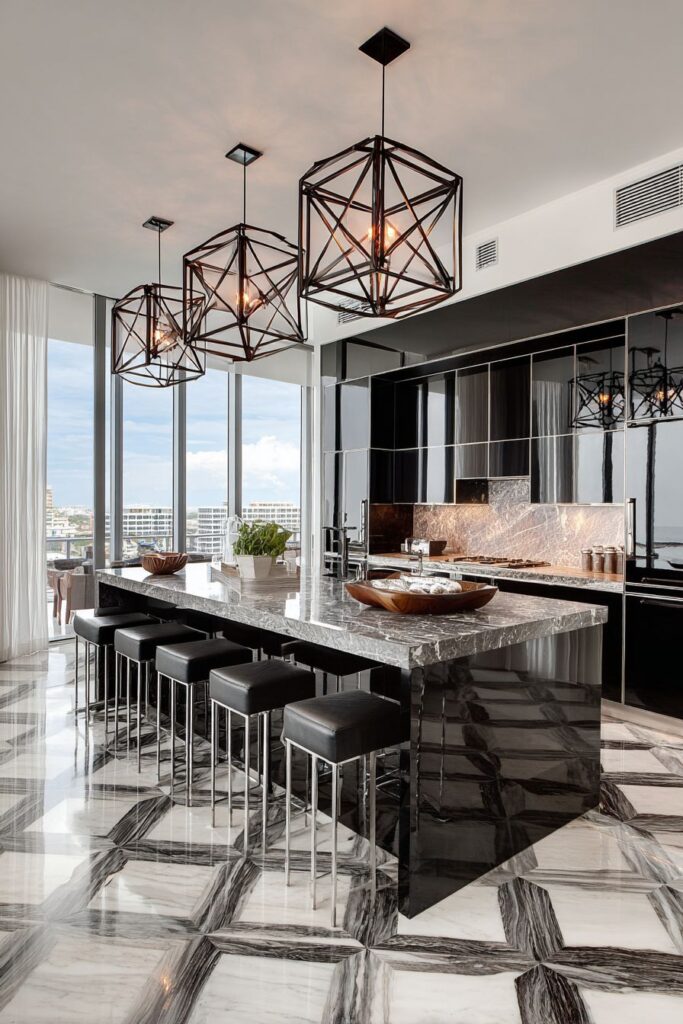
White marble countertops with natural veining create stunning contrast against dark cabinetry while adding luxury and natural beauty that prevents the bold color scheme from feeling harsh or cold. The natural patterns in marble surfaces provide organic relief from the geometric precision of contemporary cabinetry while maintaining the overall sophisticated aesthetic. Geometric pendant lights serve as sculptural focal points that reinforce the graphic nature of bold contemporary design.
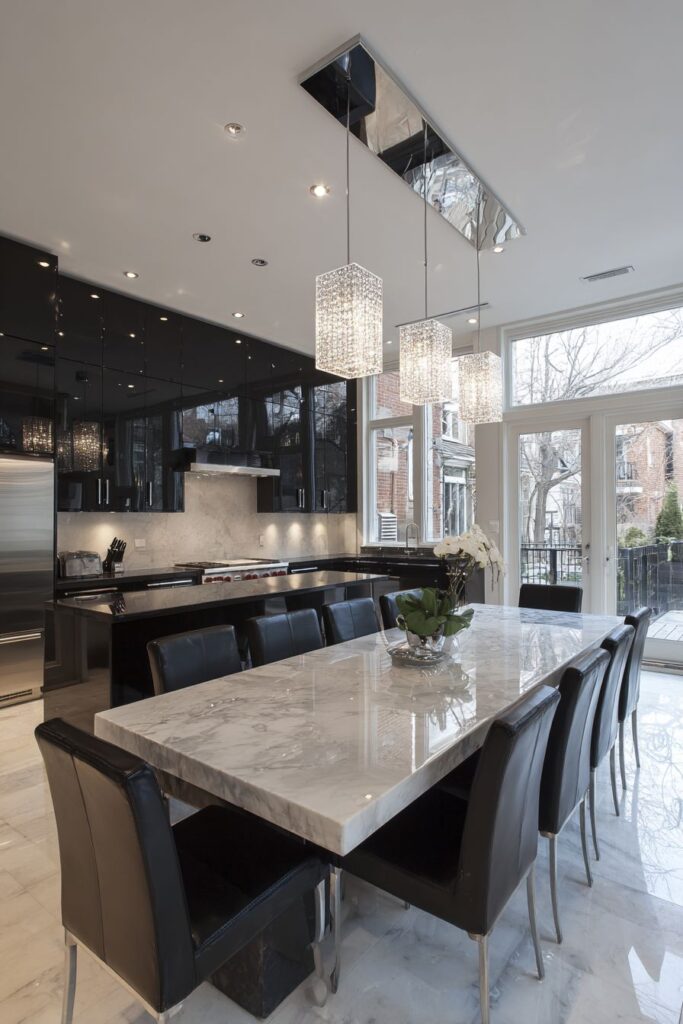
Stainless steel appliances add industrial touches while providing the professional functionality demanded by serious cooks and entertainers. The integration of commercial-grade appliances reflects the contemporary emphasis on performance while contributing to the sophisticated material palette. Large format floor tiles maintain clean lines while providing durable surfaces that complement the overall geometric aesthetic.
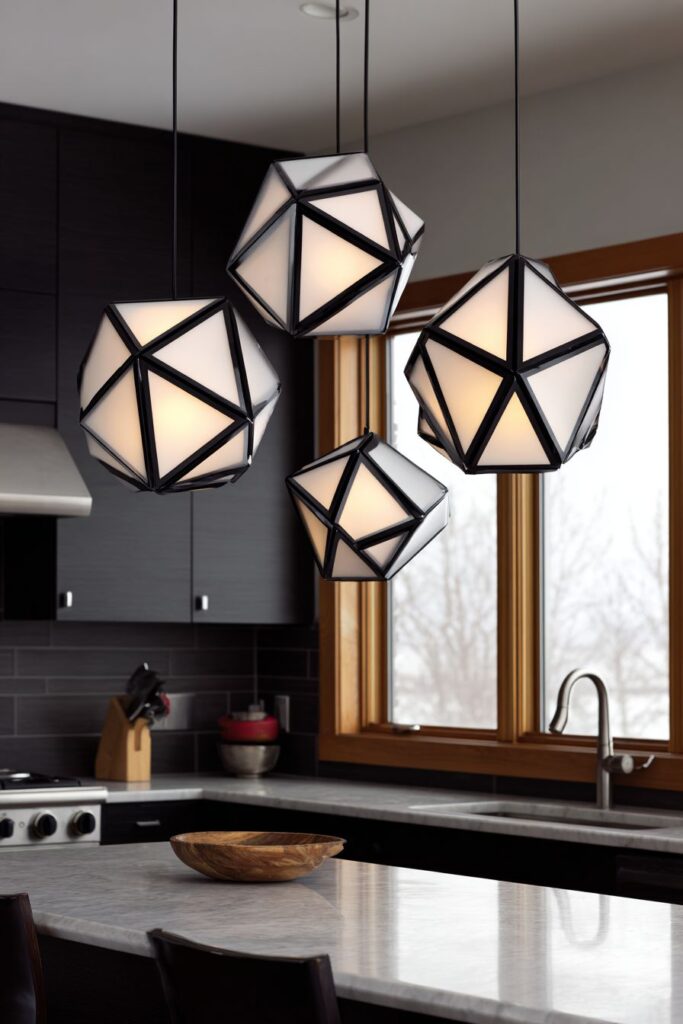
Minimal window treatments allow for maximum natural light while maintaining the uncluttered appearance essential to contemporary design. The emphasis on natural light helps balance the dramatic contrast of black and white elements while creating dynamic shadow patterns that change throughout the day. The successful integration of bold contrasts requires careful attention to proportion and balance to create spaces that feel sophisticated rather than overwhelming. Key design tips include using high-contrast black and white elements for dramatic visual impact, selecting glossy cabinet finishes to add depth and light reflection, incorporating white marble with natural veining for luxury and organic pattern, choosing geometric pendant lights as sculptural focal points, integrating stainless steel appliances for professional functionality and material diversity, and using large format tiles to maintain clean lines and geometric precision.
18. French Provincial Kitchen Aesthetic
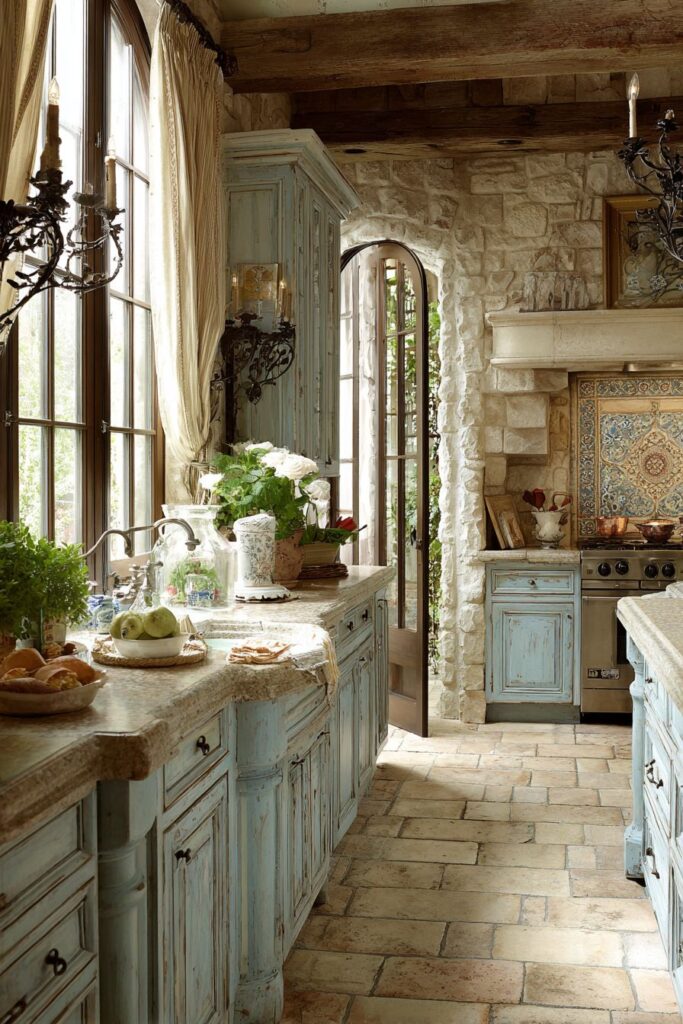
The French Provincial kitchen aesthetic captures the romantic charm of rural French countryside homes through the integration of distressed finishes, soft colors, and traditional elements that create spaces infused with Old World romance and timeless elegance. Distressed wood cabinets in cream and soft blue tones provide the foundation for this aesthetic, their weathered appearance and gentle colors reflecting the authentic patina that develops in genuine period kitchens over decades of use and care.
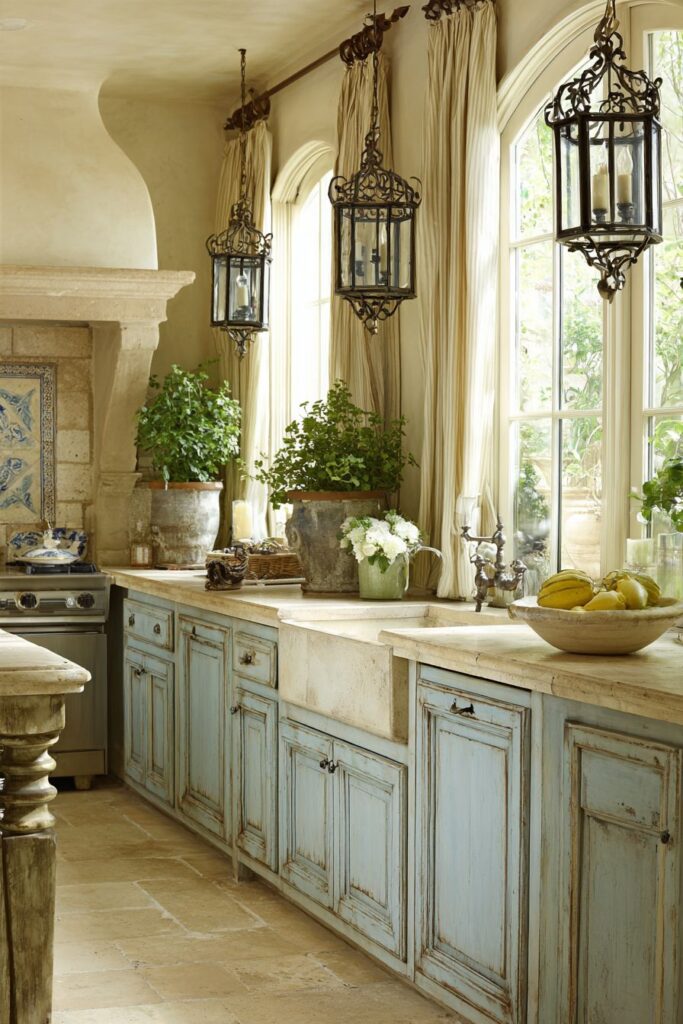
The combination of cream and soft blue creates a sophisticated color palette that feels both fresh and historically grounded, reflecting the traditional French approach to color that emphasizes subtle harmony over bold contrast. Natural stone countertops add authentic Old World charm while providing durable work surfaces that complement the distressed cabinetry finishes. The organic patterns and natural variations in stone surfaces reinforce the handcrafted quality that defines French Provincial design.
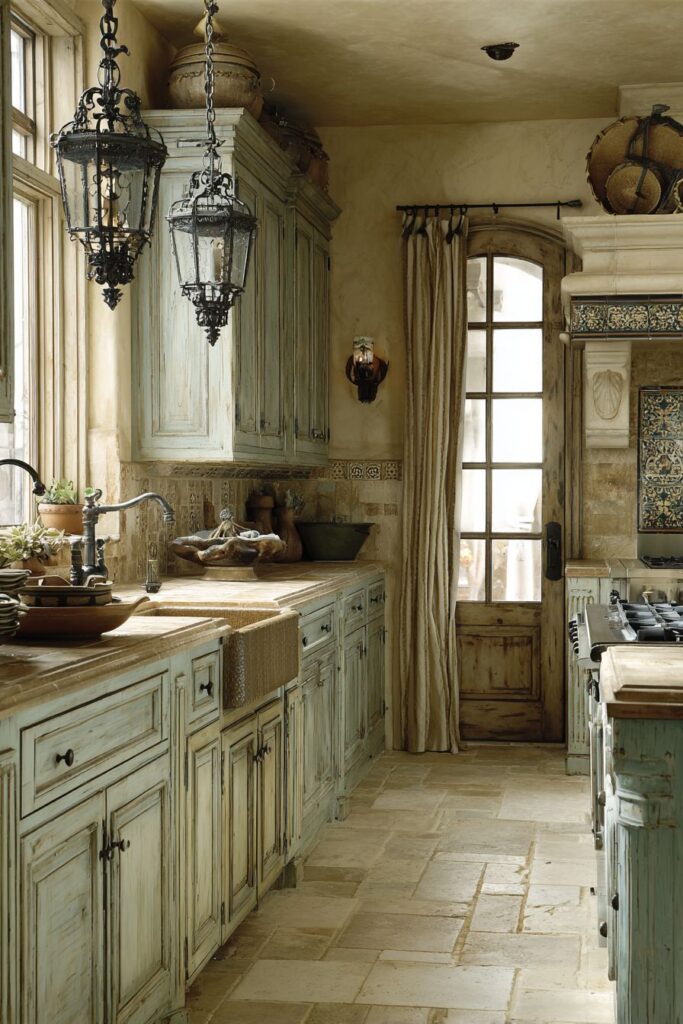
Decorative tile backsplashes featuring hand-painted patterns or traditional motifs add artistic elements that reflect the French appreciation for craftsmanship and decorative arts. These tiles often incorporate floral patterns, geometric designs, or scenic elements that tell stories and add personality to functional spaces. Vintage-style appliances maintain period authenticity while providing modern functionality, often featuring details like brass hardware or classic proportions that complement the overall aesthetic.
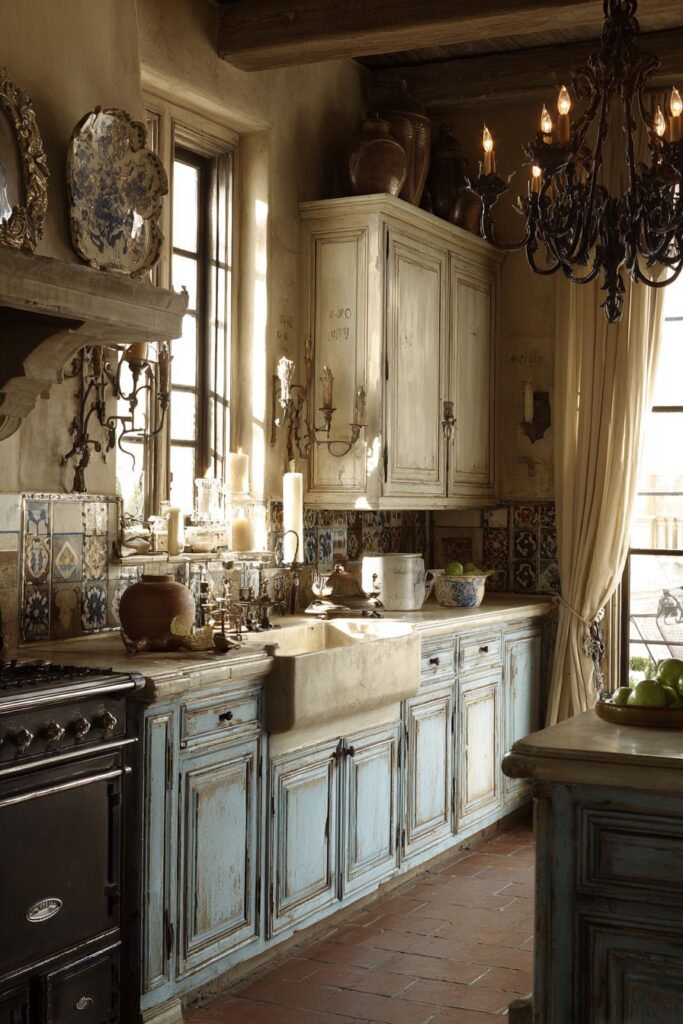
Wrought iron chandeliers provide romantic lighting while adding the metalwork elements essential to authentic French Provincial design. These fixtures often feature curved lines, floral motifs, or candle-style bulbs that enhance the romantic atmosphere while providing functional illumination. Natural linen window treatments complete the romantic look while filtering natural light to create the soft, diffused illumination that makes French Provincial kitchens feel perpetually bathed in golden afternoon light.
The French Provincial aesthetic succeeds through its emphasis on romance, comfort, and the beauty of aged materials that tell stories of family gatherings and shared meals. This approach celebrates imperfection and the patina of daily use while maintaining sophisticated color relationships and proportions. Key design tips include choosing distressed wood cabinets in soft, romantic colors like cream and pale blue, incorporating natural stone countertops for Old World authenticity and durability, selecting decorative tile backsplashes with hand-painted patterns for artistic flair, using vintage-style appliances that maintain period authenticity, installing wrought iron chandeliers for romantic lighting and metalwork details, and adding natural linen window treatments for soft, diffused natural light.
19. Modern Open-Plan Kitchen Aesthetic
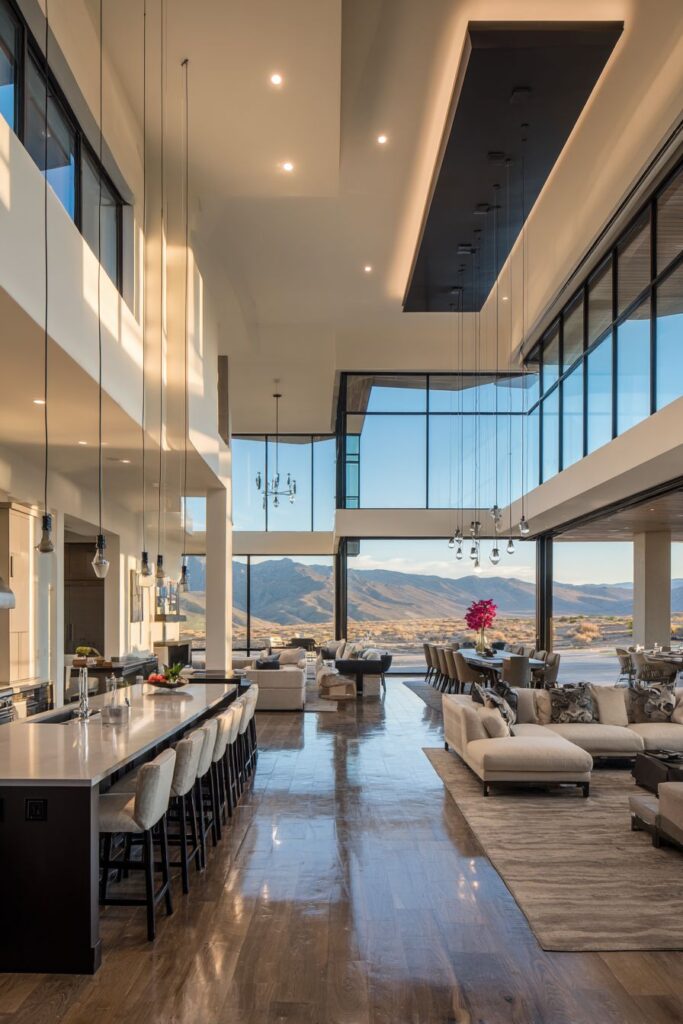
The modern open-plan kitchen aesthetic represents the contemporary approach to integrated living that seamlessly connects cooking, dining, and social spaces through consistent materials, unified color palettes, and thoughtful spatial planning. This design philosophy recognizes that modern lifestyles require flexible spaces that adapt to multiple functions while maintaining sophisticated aesthetic appeal throughout connected areas. The integration begins with consistent flooring materials that flow uninterrupted from kitchen work areas through dining and living spaces.
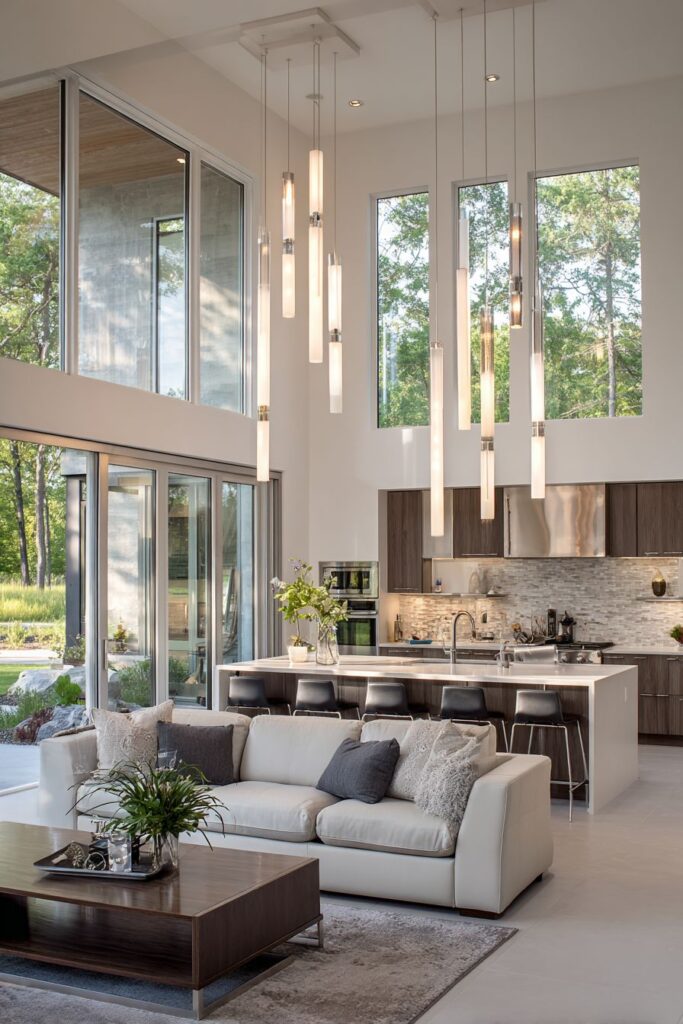
A large island with bar seating serves as the natural transition point between cooking and social areas while providing the functional workspace essential for meal preparation and casual dining. The scale and proportion of these islands typically accommodate extensive food preparation while offering comfortable seating for multiple people, making them the natural gathering points for family activities and entertaining. The island often incorporates different counter heights to accommodate both food preparation and dining functions.
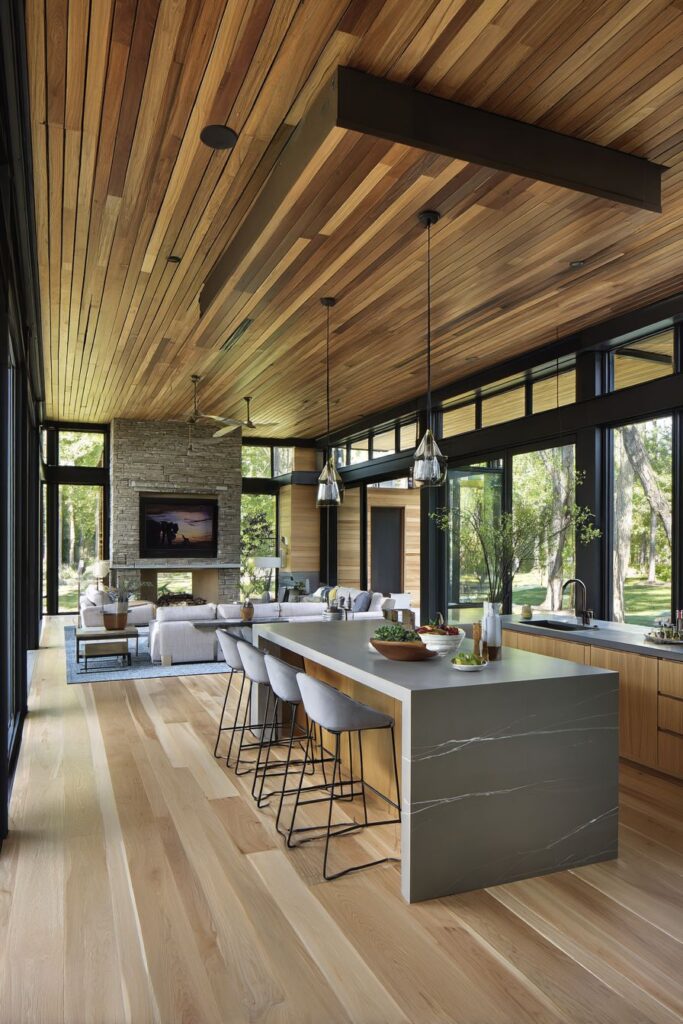
Pendant lights define the kitchen zone within the larger open space while providing focused task lighting over work areas and island seating. The selection and placement of these fixtures becomes crucial in open-plan designs, as they must provide functional lighting while contributing to the overall aesthetic harmony of connected spaces. Floor-to-ceiling windows provide abundant natural light while maintaining the visual connection between interior and exterior spaces that enhances the sense of openness.
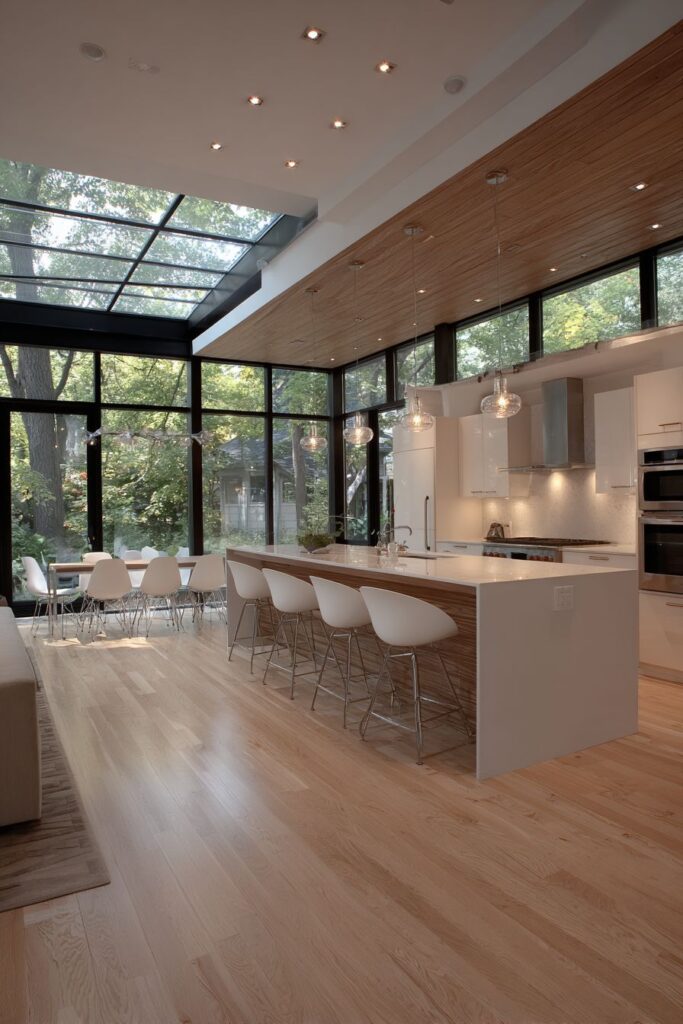
The unified design approach requires careful attention to material selection and color coordination that works across multiple functional areas. Storage solutions must maintain clean lines while accommodating the tools and equipment necessary for cooking, dining, and entertaining within the connected spaces. The overall aesthetic emphasizes flow, flexibility, and the sophisticated integration of multiple functions within cohesive design frameworks. Key design tips include using consistent flooring materials throughout connected spaces for visual unity, designing large islands with bar seating as transition points between functional zones, incorporating pendant lights to define kitchen areas within larger open spaces, maximizing natural light through floor-to-ceiling windows, maintaining unified material palettes across cooking, dining, and living areas, and integrating storage solutions that serve multiple functions while maintaining clean aesthetic lines.
20. Sustainable Kitchen Aesthetic
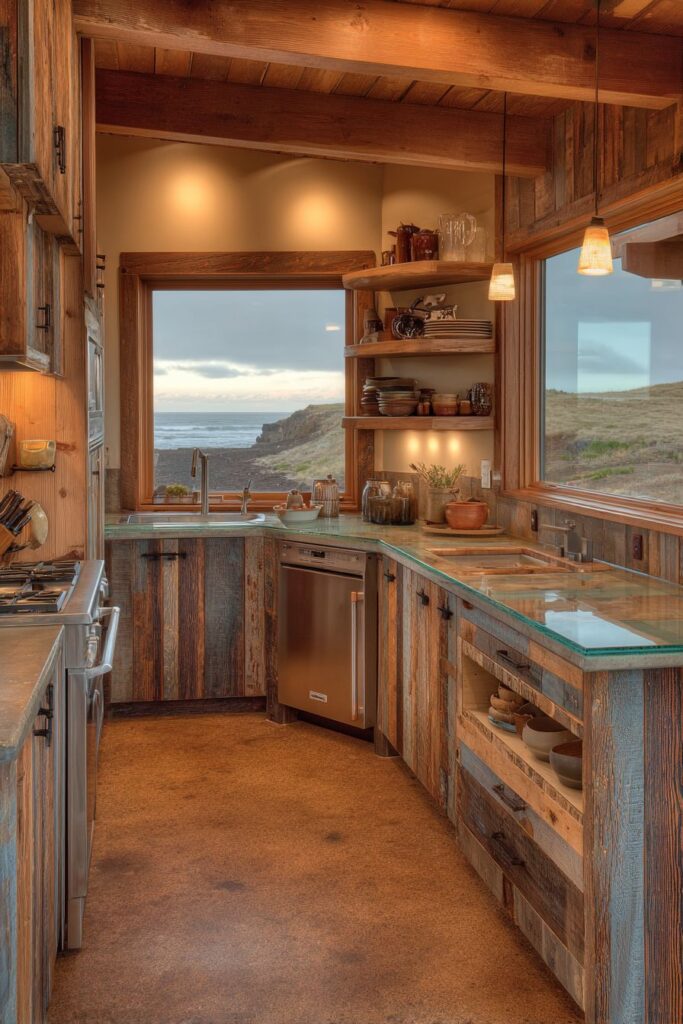
The sustainable kitchen aesthetic represents the growing commitment to environmental responsibility through the selection of eco-friendly materials, energy-efficient systems, and design approaches that minimize environmental impact while creating beautiful, functional spaces. Reclaimed wood cabinets showcase the beauty of salvaged materials while reducing demand for new timber harvesting. These cabinets often feature unique grain patterns, nail holes, and other character marks that tell stories while providing authentic sustainable beauty.
Recycled glass countertops provide durable work surfaces created from post-consumer materials while adding unique colors and textures that cannot be found in traditional stone or manufactured surfaces. These innovative materials often incorporate interesting visual elements like embedded glass fragments or metallic flecks that create distinctive appearances while supporting environmental goals. Energy-efficient appliances reduce utility consumption while providing the performance necessary for serious cooking and food preparation.
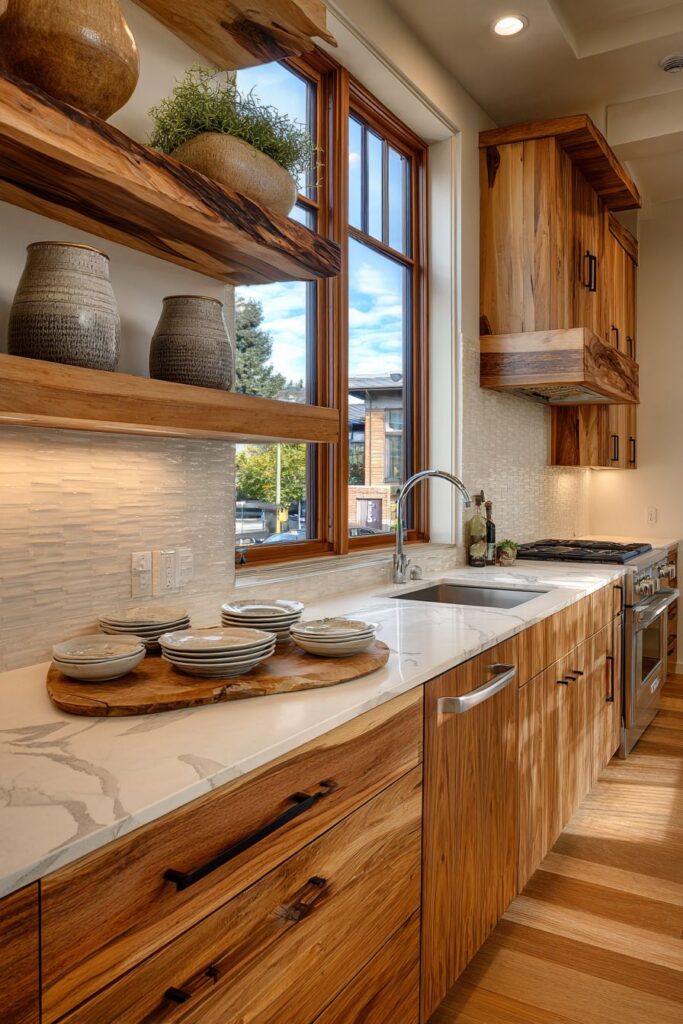
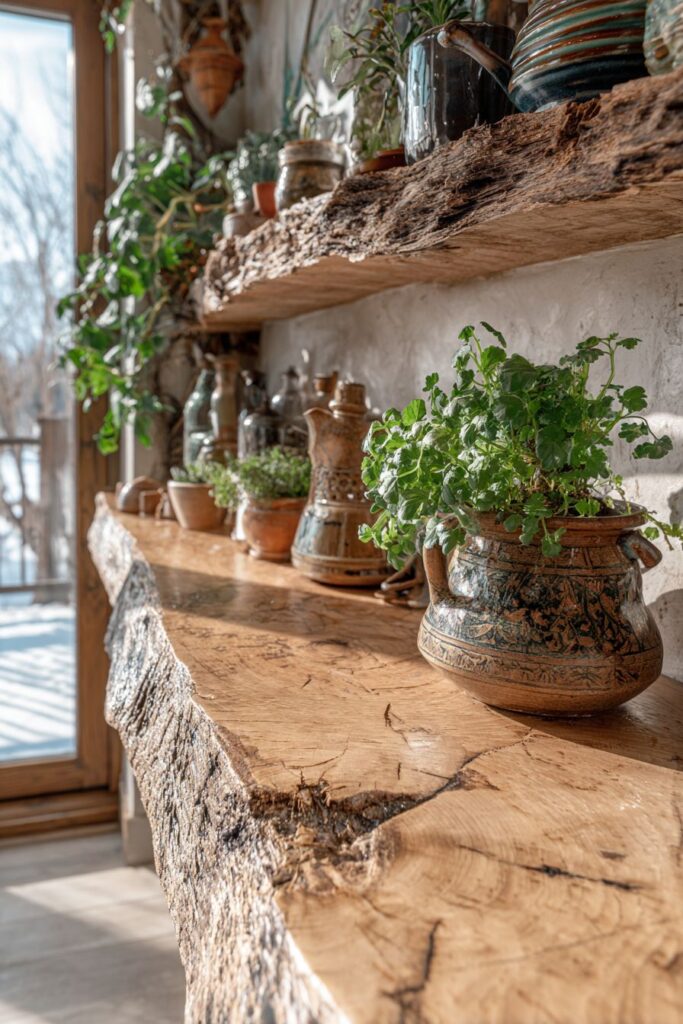
Live edge wooden shelving displays locally-made pottery and artisan-crafted accessories while supporting both local economies and sustainable manufacturing practices. The integration of local materials and products reduces transportation impacts while creating unique, regionally-appropriate aesthetics that reflect local character and resources. Herbs growing in window planters provide fresh ingredients while adding life and natural beauty to kitchen environments.
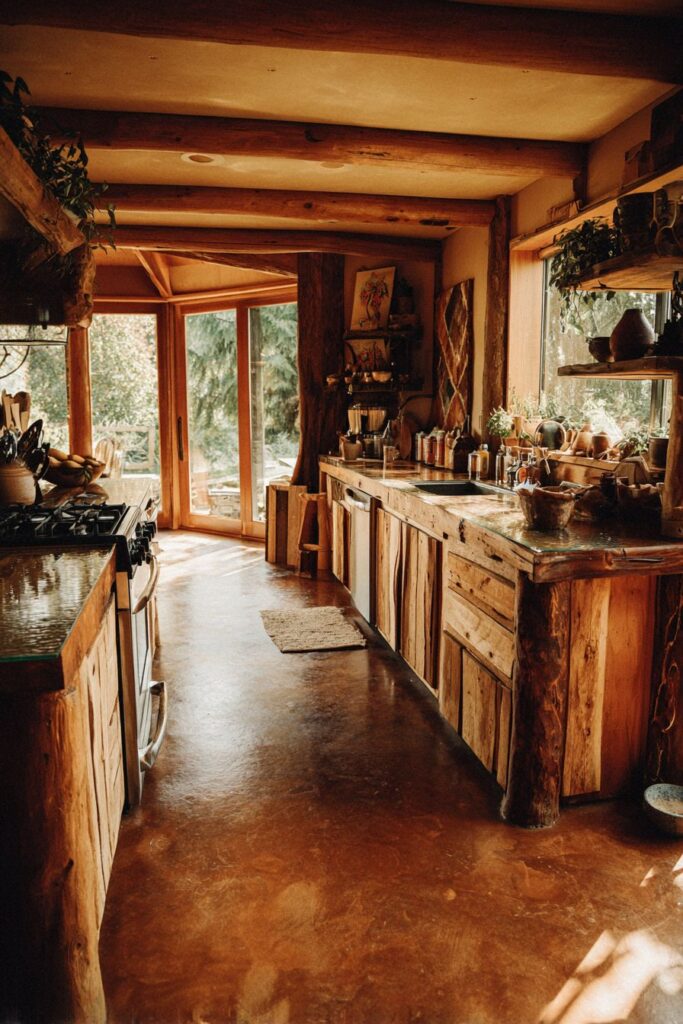
Natural cork flooring provides comfort, durability, and renewable material sourcing while offering unique textural qualities that complement other sustainable materials. Low-VOC finishes improve indoor air quality while reducing environmental impact during manufacturing and application. The sustainable approach proves that environmental responsibility enhances rather than compromises aesthetic appeal and functional performance. Key design tips include choosing reclaimed wood cabinets for unique character and reduced environmental impact, selecting recycled glass countertops for distinctive beauty and sustainable material sourcing, investing in energy-efficient appliances to reduce ongoing utility consumption, incorporating live edge shelving to display local pottery and support regional artisans, growing herbs in window planters for fresh ingredients and natural beauty, and using natural cork flooring for renewable comfort and distinctive texture.
Conclusion
These twenty distinct kitchen aesthetic concepts demonstrate the incredible diversity of design approaches available to today’s homeowners, each offering unique advantages and aesthetic appeals that can transform ordinary cooking spaces into extraordinary culinary environments. From the serene simplicity of minimalist design to the bold drama of contemporary contrasts, from the authentic charm of rustic materials to the sophisticated elegance of luxury finishes, each aesthetic philosophy provides a different pathway to creating kitchens that serve both practical needs and aesthetic aspirations.
The key to successful kitchen design lies in understanding how different materials, colors, lighting strategies, and spatial arrangements work together to create cohesive environments that reflect personal style while accommodating daily routines and entertaining needs. Whether you’re drawn to the sustainable beauty of eco-friendly materials, the timeless appeal of traditional craftsmanship, or the cutting-edge sophistication of contemporary design, the principles outlined in these concepts provide the foundation for creating personalized kitchen environments that enhance both cooking experiences and daily life.
The most successful kitchen designs often incorporate elements from multiple aesthetic approaches, combining the warmth of natural materials with the efficiency of contemporary systems, or blending the character of vintage elements with the functionality of modern appliances. The goal is not to rigidly follow any single aesthetic but rather to understand the principles that make each approach successful and adapt them to create unique, personalized spaces that reflect individual taste, lifestyle needs, and architectural context.
As you consider transforming your own kitchen space, remember that the best designs balance aesthetic appeal with practical functionality, creating environments that inspire both everyday cooking and special occasion entertaining. These twenty aesthetic concepts provide the inspiration and practical guidance necessary to envision and create kitchen spaces that serve as the true heart of your home, supporting both daily routines and memorable gatherings for years to come.
"As an Amazon Associate, I earn from qualifying purchases."
