
In the ever-evolving world of interior design, few styles have captured the hearts of homeowners and designers alike as profoundly as the Japandi aesthetic. This revolutionary design philosophy represents a harmonious marriage between Japanese minimalism and Scandinavian functionality, creating spaces that are both deeply calming and supremely practical. The kitchen, often considered the heart of the home, becomes a sanctuary of tranquility when designed with Japandi principles, where every element serves a purpose while contributing to an overall sense of serene beauty.
The Japandi style emerges from a shared appreciation for natural materials, clean lines, and the profound beauty found in simplicity. While Japanese design emphasizes the concept of “less is more” through mindful curation and the celebration of imperfection (wabi-sabi), Scandinavian design brings its renowned functionality and hygge-inspired comfort. Together, these philosophies create kitchens that are not merely functional spaces but meditative environments where cooking becomes a mindful practice and gathering feels intentional and peaceful.
This comprehensive guide explores twenty distinct interpretations of the Japandi kitchen, each showcasing unique aspects of this beloved design style. From storage solutions that celebrate both beauty and organization to lighting concepts that honor natural rhythms, these designs demonstrate how the fusion of two distinct cultural approaches to living can create spaces of extraordinary beauty and practical excellence. Whether you’re planning a complete kitchen renovation or seeking inspiration for smaller updates, these concepts will guide you toward creating a kitchen that embodies the very best of both Japanese and Scandinavian design traditions.
1. Clean White Oak Cabinetry with Integrated Harmony
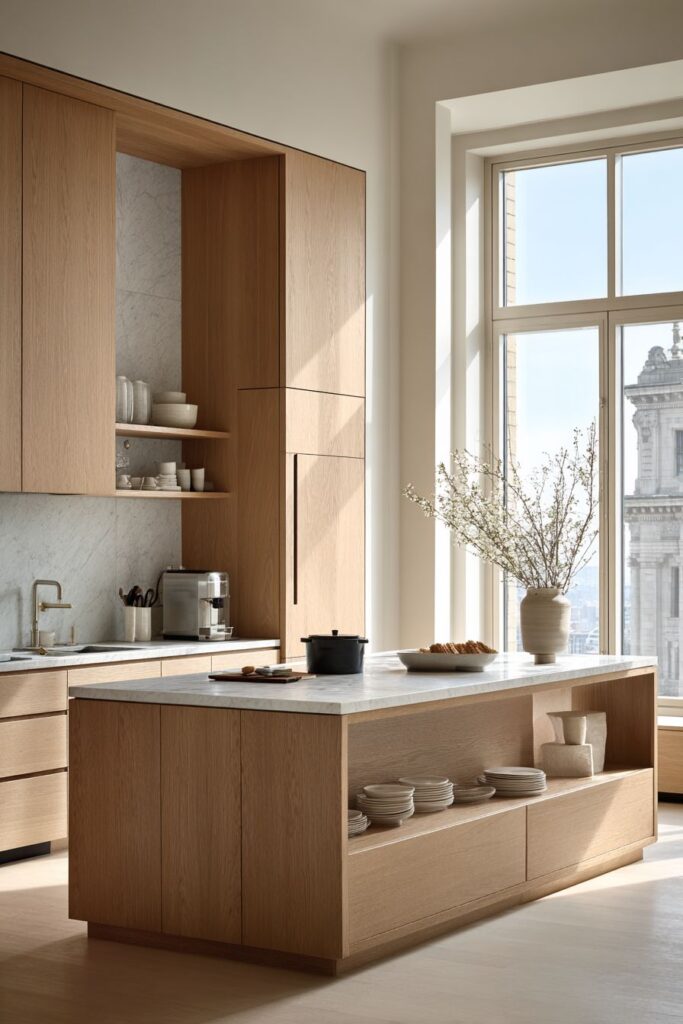
The foundation of any exceptional Japandi kitchen lies in its cabinetry, and nothing exemplifies this better than clean white oak units with seamlessly integrated handles. This approach celebrates the natural beauty of wood grain while maintaining the uncluttered aesthetic that defines both Japanese and Scandinavian design. The wood’s visible grain patterns tell a story of organic growth, bringing nature’s timeline directly into the modern kitchen environment.
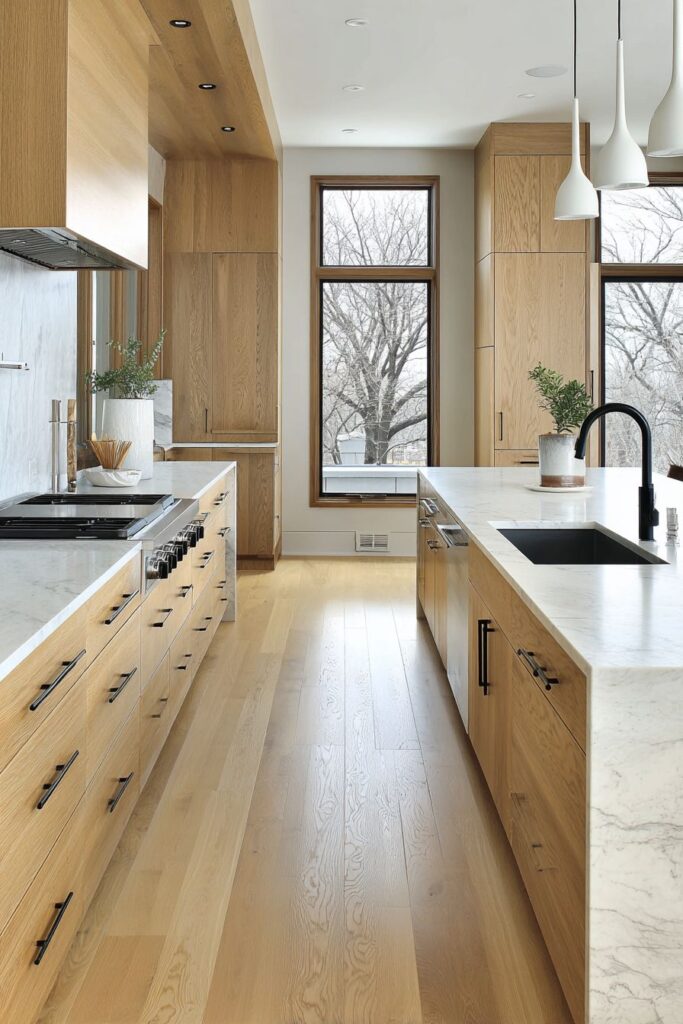
The integration of handles eliminates visual disruption while maintaining full functionality, creating surfaces that flow uninterrupted from one cabinet to the next. This seamless approach reflects the Japanese principle of removing unnecessary elements while the Scandinavian influence ensures that practical needs are never compromised. The natural variations in the wood grain provide subtle visual interest without overwhelming the space’s serene atmosphere.
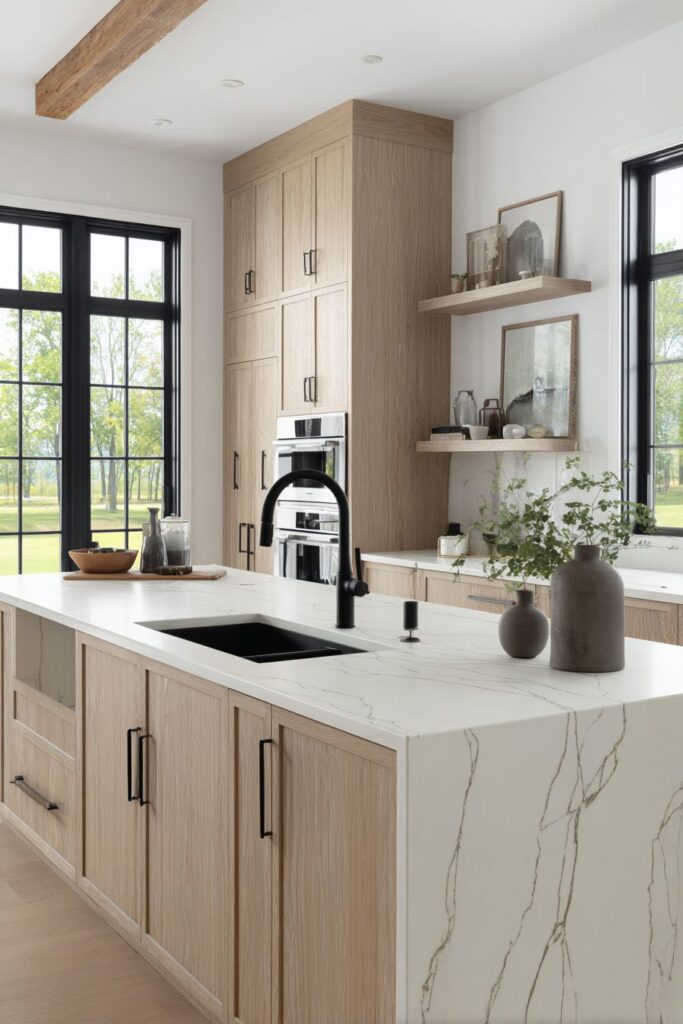
Professional installation of such cabinetry requires careful attention to grain matching and precise joinery techniques. The cabinet doors align perfectly, creating the illusion of continuous surfaces while concealing extensive storage behind. This approach to kitchen design prioritizes both aesthetic purity and functional excellence, embodying the core values of the Japandi philosophy.
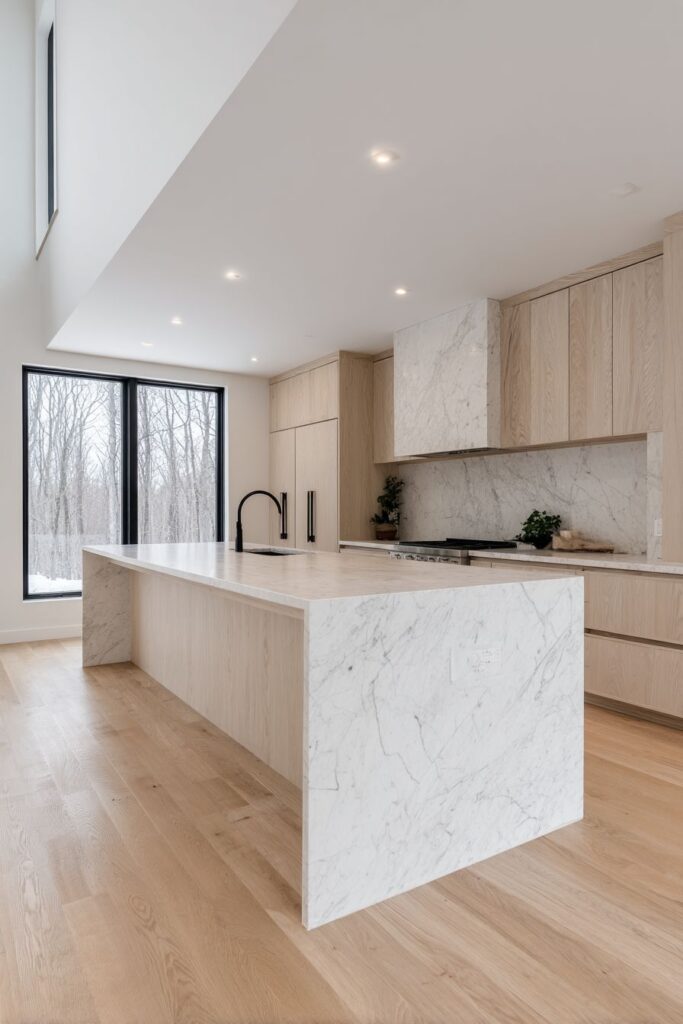
Key Design Tips:
- Select white oak with consistent but natural grain variations for visual continuity
- Specify integrated handles that are milled directly into the cabinet faces for seamless operation
- Ensure proper grain matching across adjacent cabinet doors for professional results
- Consider push-to-open mechanisms for drawers and cabinets to maintain clean lines
- Plan cabinet interiors with thoughtful organization systems that reflect Japanese precision
2. Practical Storage Solutions with Hidden Push-to-Open Mechanisms
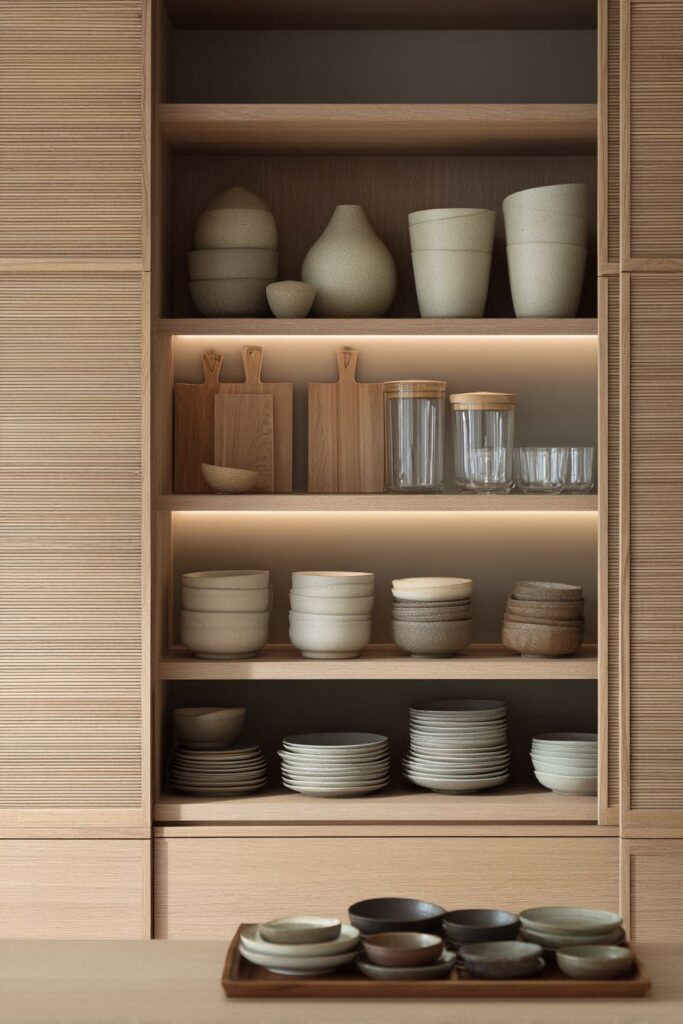
Storage in a Japandi kitchen transcends mere functionality to become an art form that celebrates both organization and beauty. Floor-to-ceiling cabinetry in warm blonde wood creates a cocoon of natural material while hidden push-to-open mechanisms maintain the clean aesthetic lines that are essential to this design philosophy. Every item has its designated place, reflecting the Japanese principle of mindful organization combined with Scandinavian practicality.
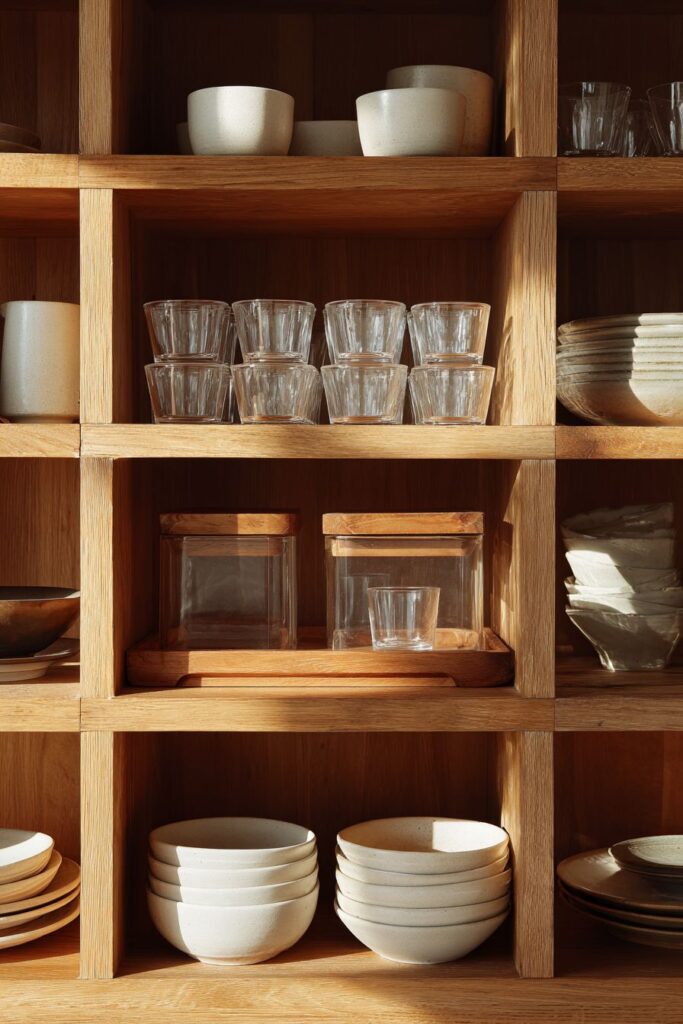
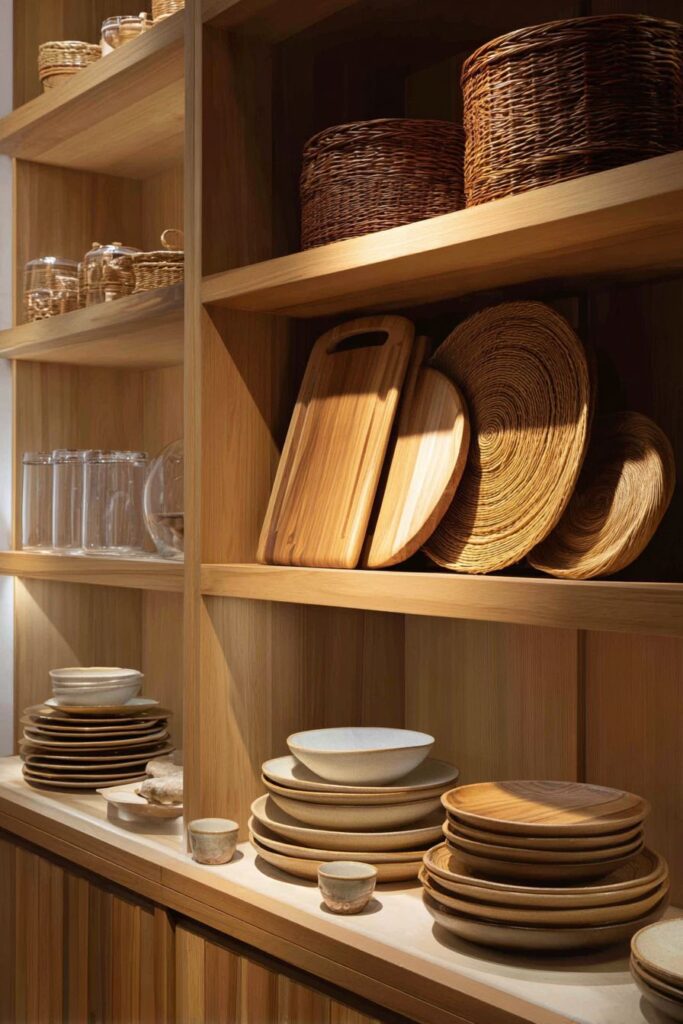
Open shelving within this storage system provides opportunities to display carefully curated collections of ceramic dishware in neutral tones. These displays become part of the room’s decoration while remaining fully functional, embodying the Japandi principle that beautiful objects should be used rather than merely admired. Bamboo cutting boards and glass storage containers add textural variety while maintaining the natural material palette.
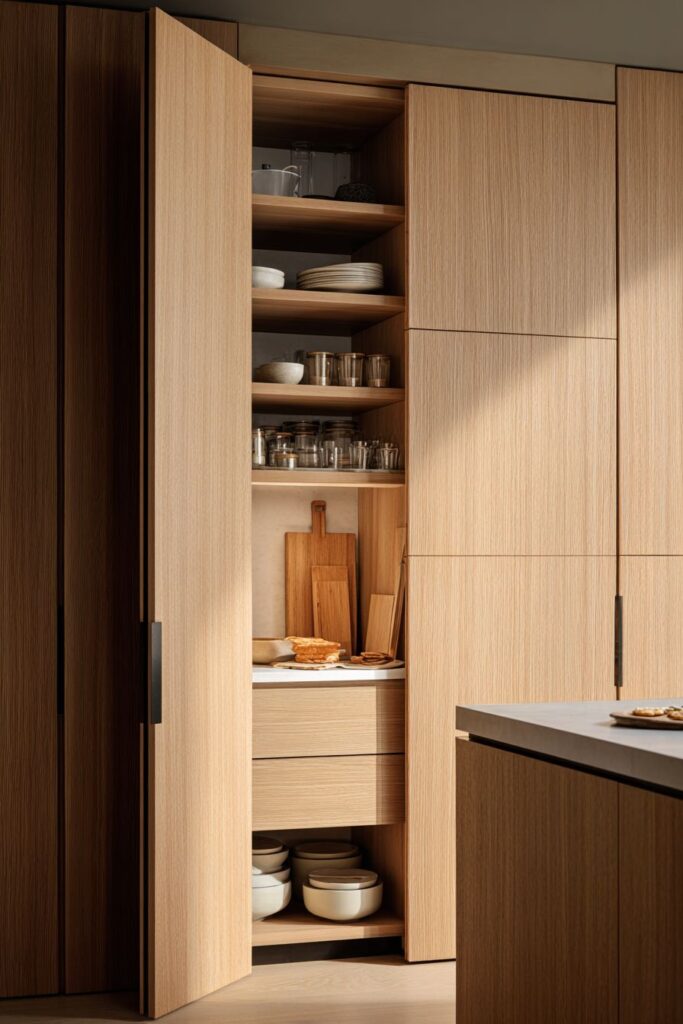
The psychology of such organized spaces cannot be understated. When everything has its place and that place is both beautiful and accessible, cooking becomes a more meditative and enjoyable experience. The hidden mechanisms ensure that the kitchen maintains its serene appearance even when storage is frequently accessed, supporting the Japanese concept of finding beauty in everyday rituals.
Key Design Tips:
- Install floor-to-ceiling storage to maximize space efficiency and create visual height
- Choose warm blonde wood tones that complement natural lighting conditions
- Incorporate a mix of open and closed storage for both display and concealment
- Select push-to-open hardware that operates smoothly and quietly
- Organize storage contents by frequency of use and visual appeal
- Use natural materials like bamboo and glass for storage containers that remain visible
3. Live-Edge Island Celebrating Natural Imperfections
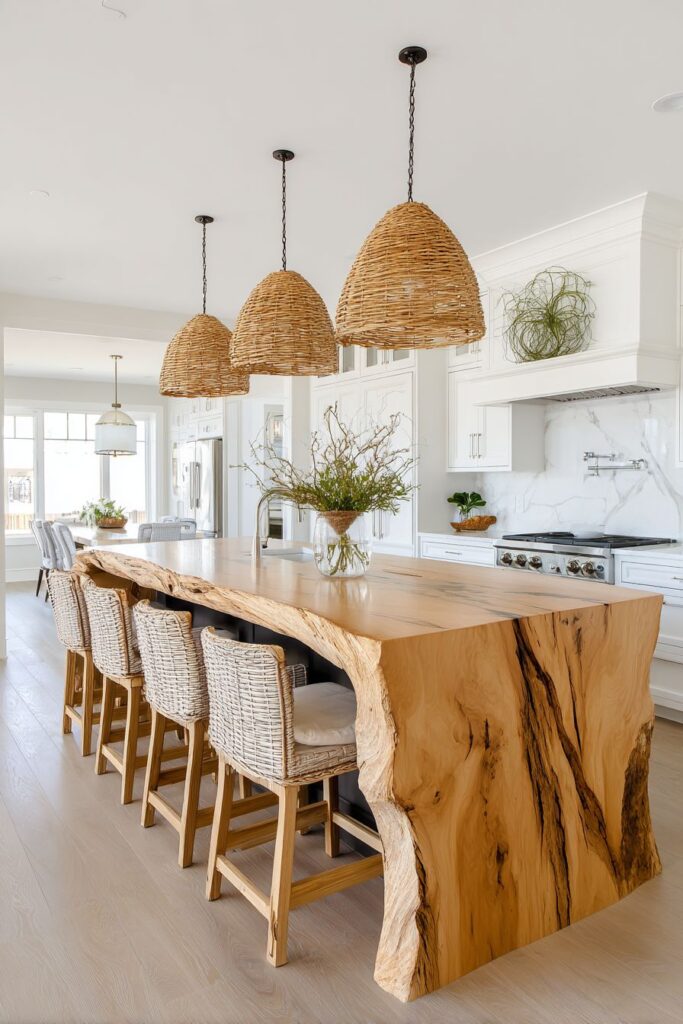
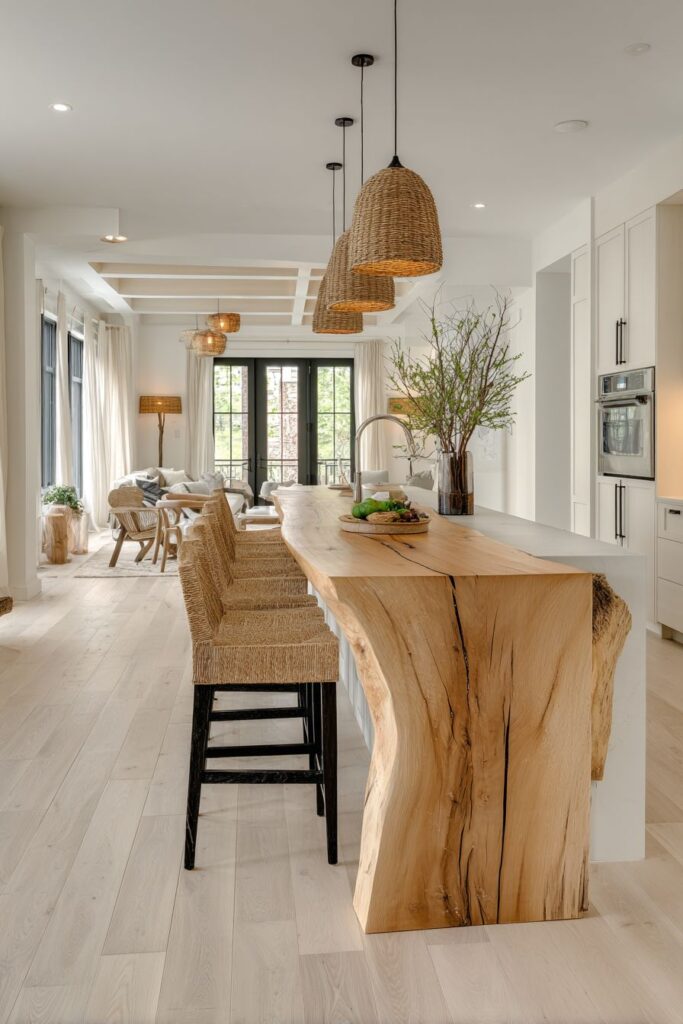
The kitchen island serves as both a functional workspace and the room’s central artistic statement when designed with Japandi principles. A live-edge detail crafted from light ash wood celebrates the natural imperfections that make each piece unique, embodying the Japanese concept of wabi-sabi while providing the practical work surface that Scandinavian design demands. This approach honors the tree’s original form while adapting it for modern kitchen needs.
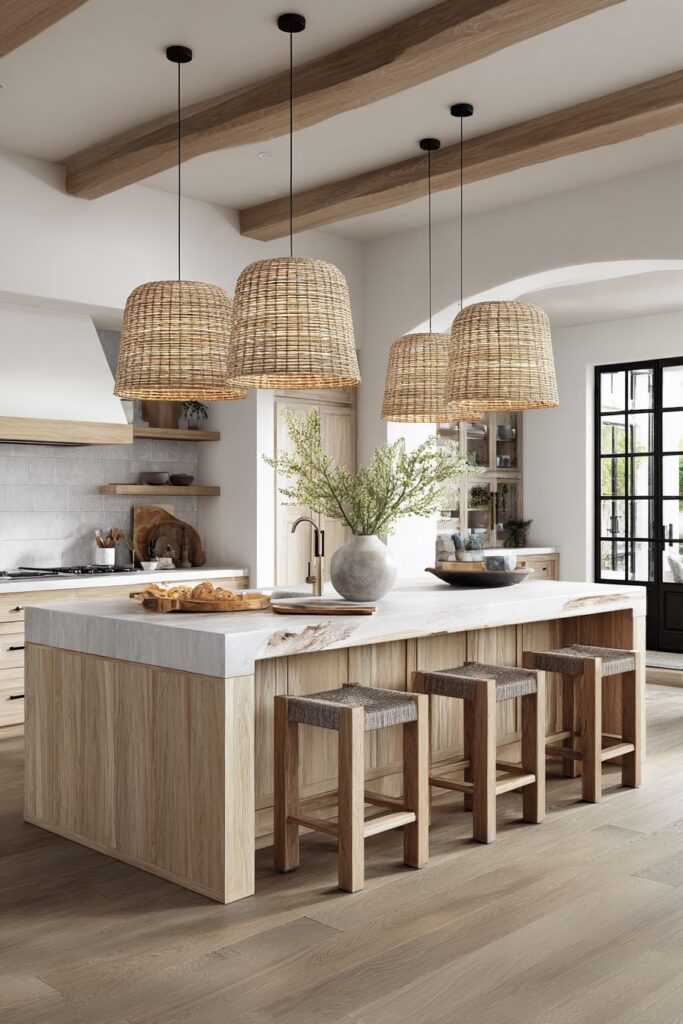
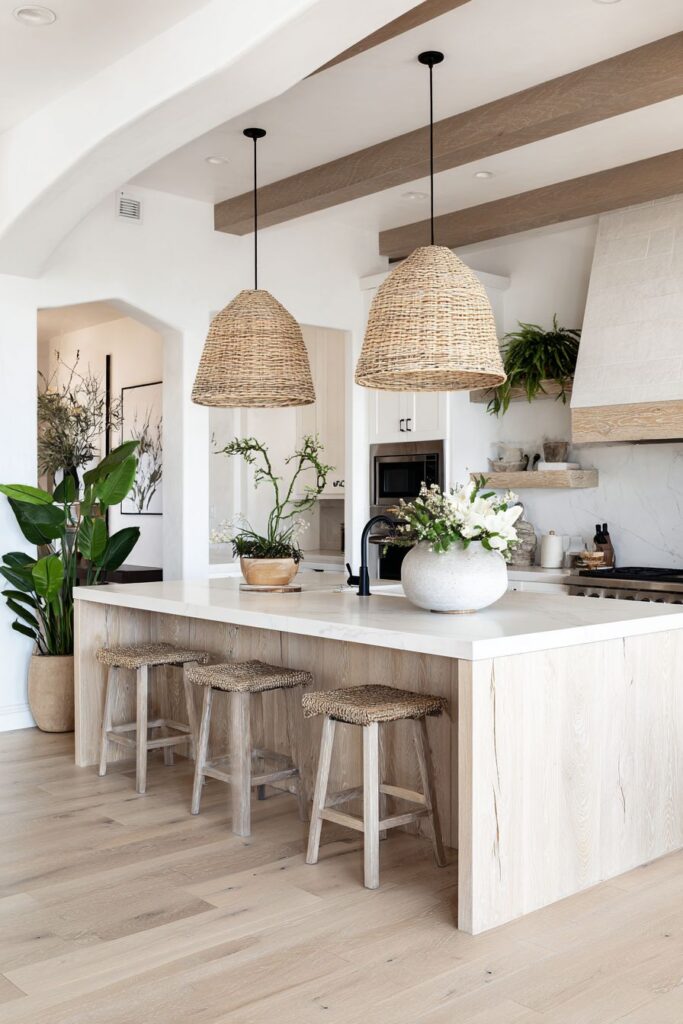
The surrounding environment of white walls and pale wood flooring creates a neutral backdrop that allows the island’s natural beauty to shine without competition. The subtle grain variations in the flooring echo the wood tones of the island while maintaining visual cohesion throughout the space. This monochromatic approach with natural variation creates depth without visual chaos.
Pendant lights with woven natural fiber shades suspended above the island provide both task lighting and textural interest. The warm pools of light they create enhance the wood’s natural grain patterns during evening hours while providing practical illumination for food preparation. The choice to use natural fiber shades rather than glass or metal reinforces the commitment to organic materials throughout the design.
Key Design Tips:
- Source live-edge wood from sustainable suppliers who can provide documentation of origin
- Seal live-edge surfaces properly to prevent moisture damage while preserving natural texture
- Balance the organic island shape with geometric elements elsewhere in the kitchen
- Choose pendant lights that provide adequate task lighting while contributing to the natural aesthetic
- Plan electrical and plumbing carefully to accommodate the irregular island edge
- Consider the island’s scale in relation to the room’s overall proportions
4. Minimalist Galley Layout with Handleless Design
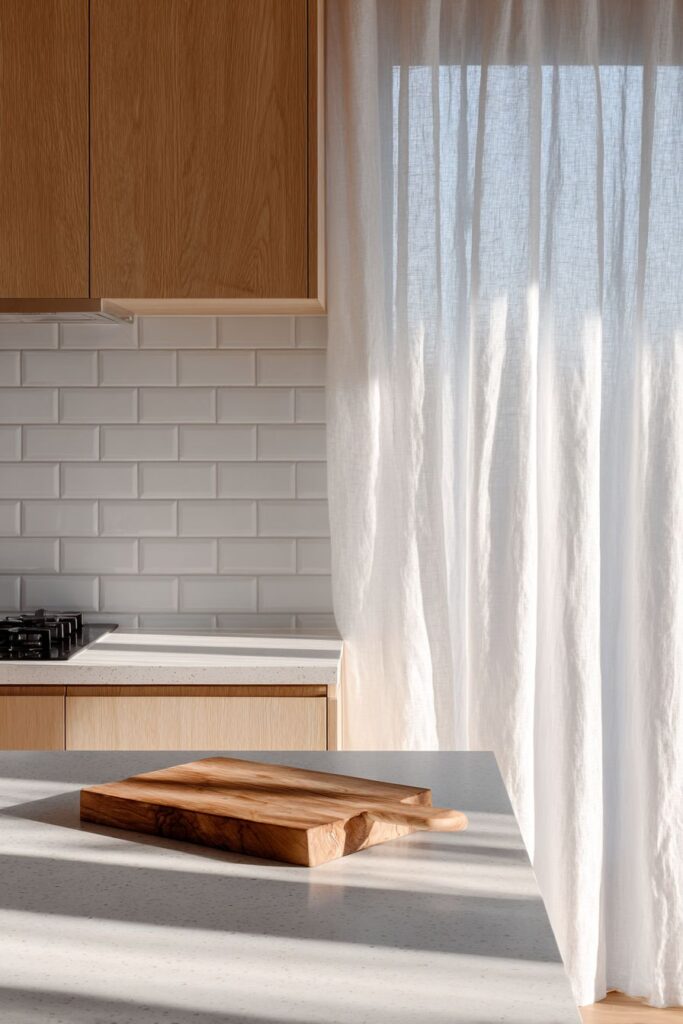
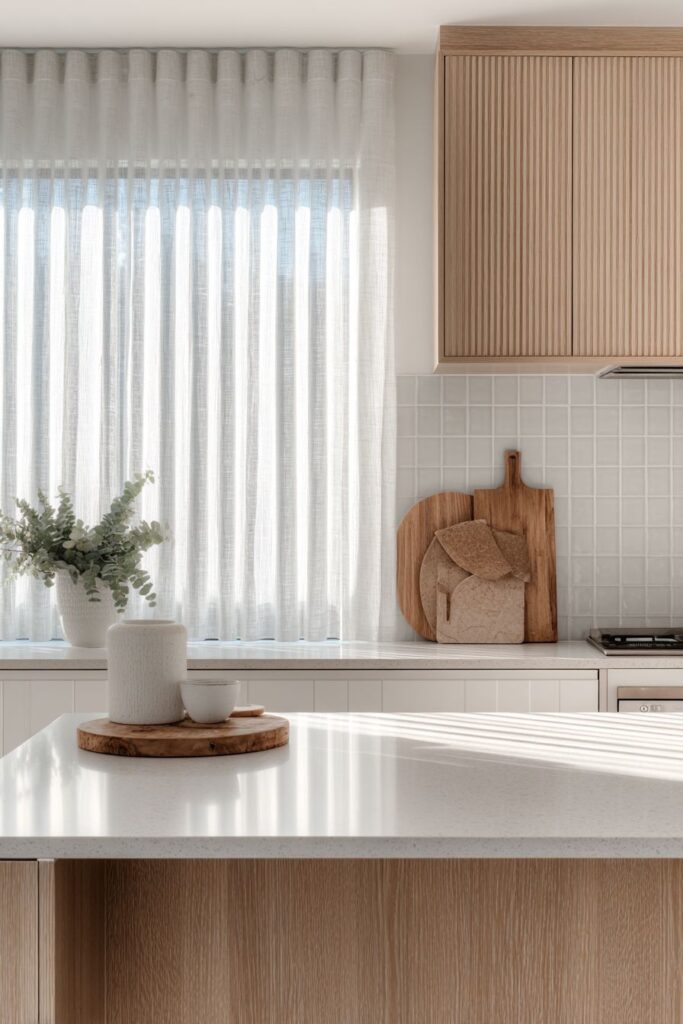
The galley kitchen layout finds new expression in Japandi design, where the linear arrangement becomes an exercise in refined simplicity and maximum efficiency. Handleless cabinetry in pale birch creates uninterrupted surfaces that emphasize the kitchen’s clean lines while integrated appliances disappear into the overall composition. This approach reflects the Japanese aesthetic of removing visual distractions while maintaining the Scandinavian focus on practical functionality.
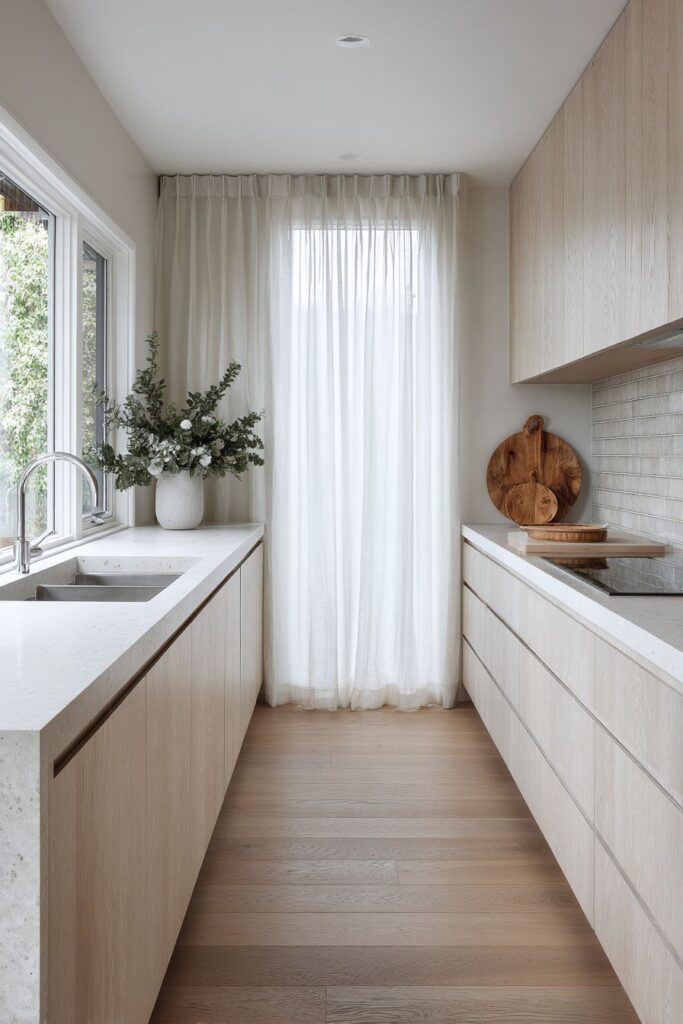
A single statement piece, such as a handcrafted wooden cutting board resting on quartz countertops in soft grey tones, provides the only decoration needed in such a refined space. This careful curation reflects the Japanese principle of appreciating singular beautiful objects rather than accumulating multiple decorative elements. The cutting board serves both practical and aesthetic purposes, embodying the Japandi ideal of functional beauty.
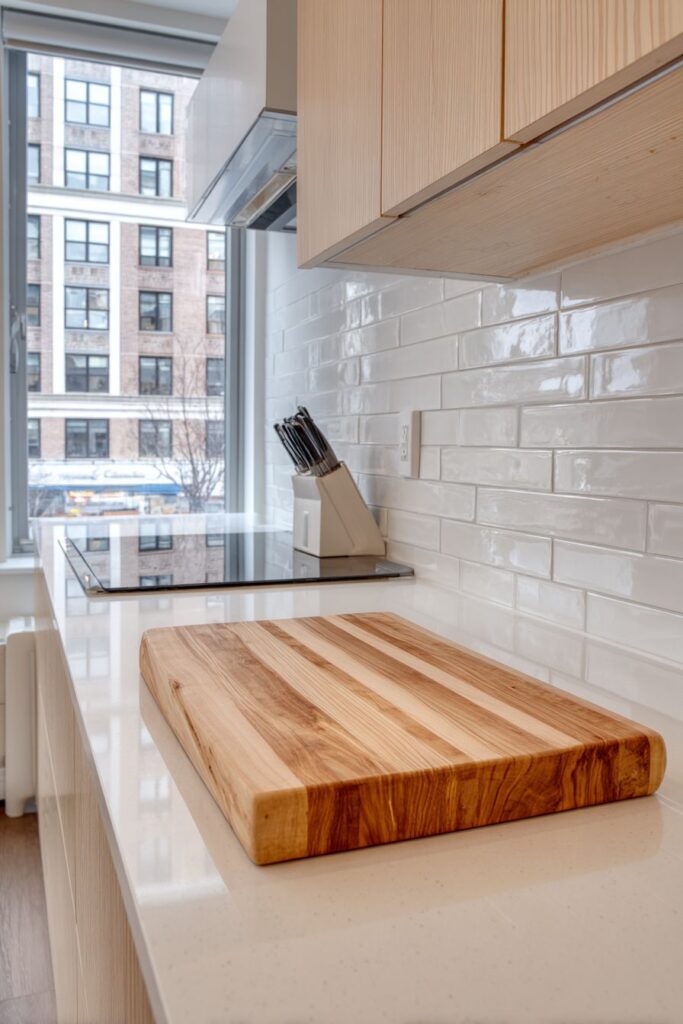
The backsplash of subtle white subway tiles with minimal grout lines maintains visual continuity without adding unnecessary pattern or color. Natural morning light filtered through sheer linen window treatments creates a tranquil atmosphere that changes subtly throughout the day, connecting the interior space with natural rhythms. This attention to lighting quality reflects both cultures’ appreciation for the beauty of natural illumination.
Key Design Tips:
- Plan the galley layout carefully to ensure adequate workspace on both sides
- Select pale wood tones that reflect rather than absorb natural light
- Integrate appliances completely to maintain clean sightlines
- Choose one statement piece for decoration rather than multiple small items
- Specify high-quality hardware that operates smoothly without visible handles
- Use natural window treatments that filter rather than block daylight
5. Kitchen Dining Area with Zen Garden Views
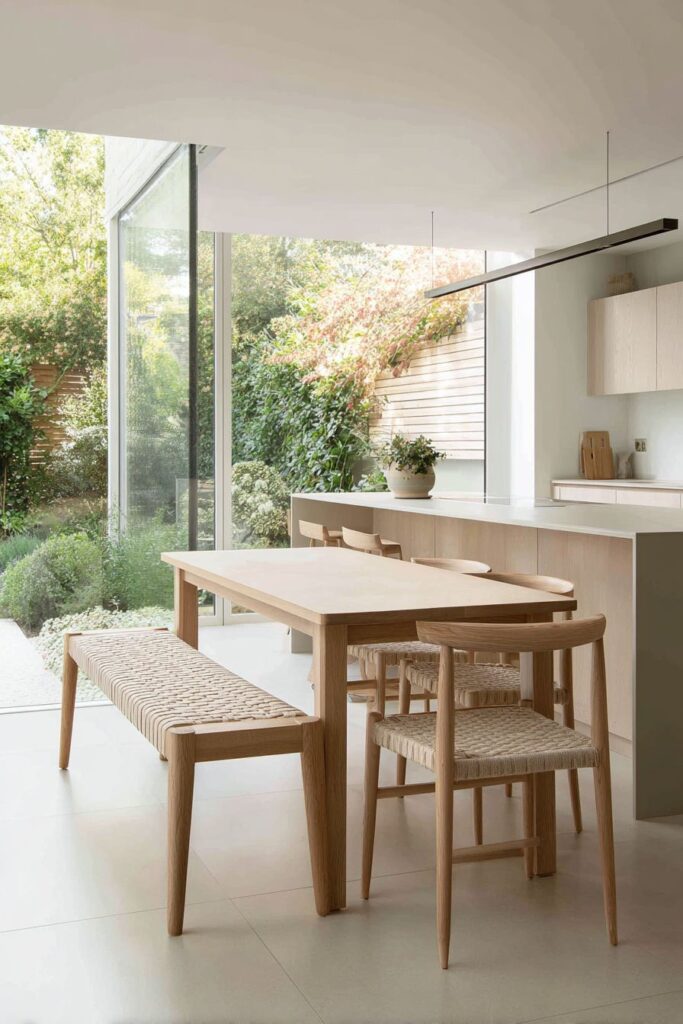
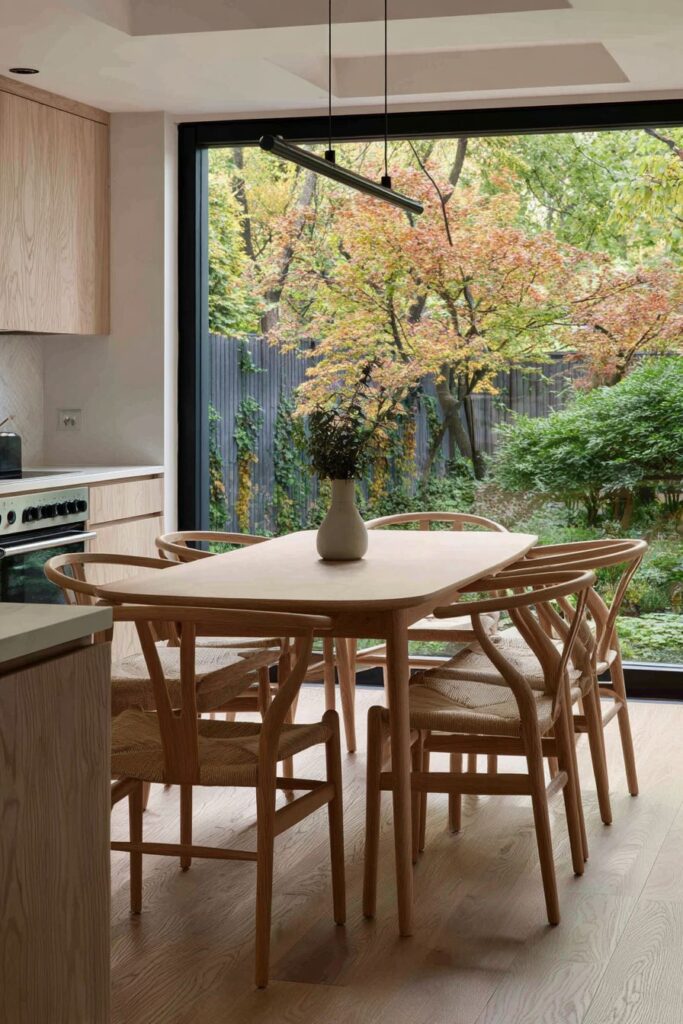
The integration of dining space within the kitchen environment creates opportunities for meaningful connection and mindful eating practices. A simple wooden table in natural oak positioned strategically near large windows offers views of a zen garden, bringing the contemplative aspects of Japanese garden design into daily dining experiences. This connection to nature supports the Japandi principle of finding harmony between interior and exterior environments.
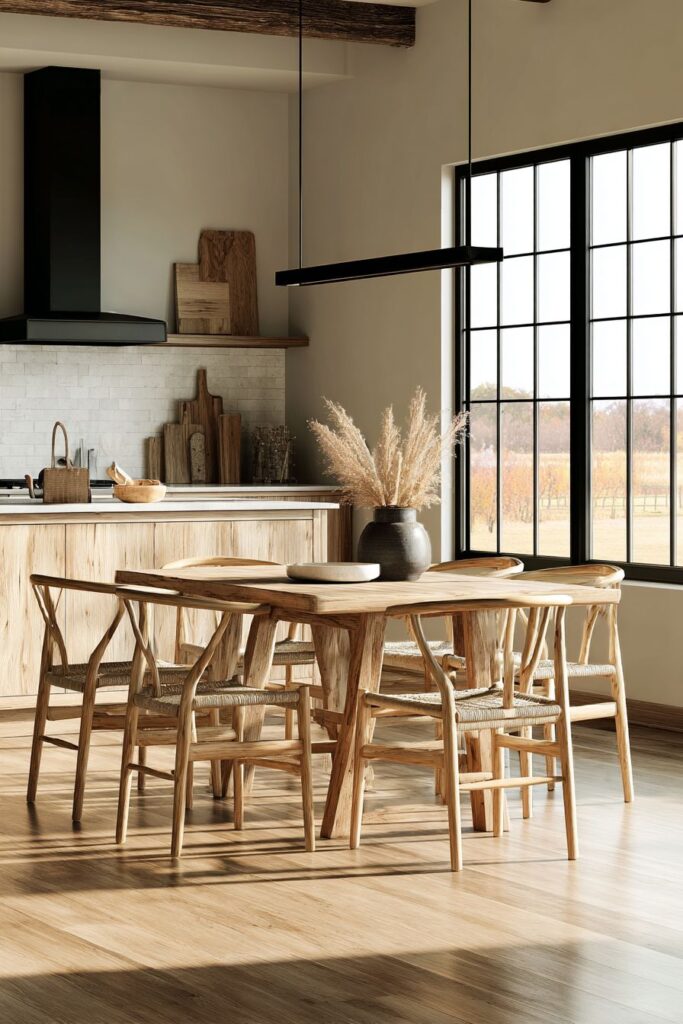
Understated wooden chairs with woven rush seats embody both Japanese craftsmanship traditions and Scandinavian comfort principles. The rush seats provide textural interest and natural material authenticity while offering surprising comfort for extended dining sessions. The chairs’ simple lines complement the table’s natural wood grain without competing for visual attention, creating a cohesive dining ensemble.
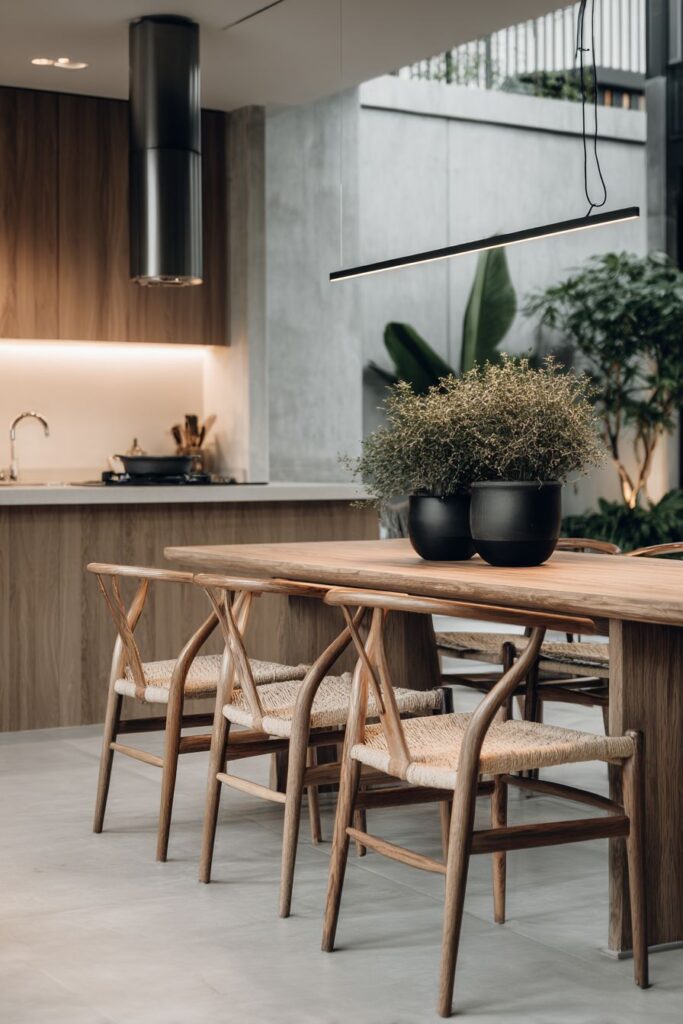
Linear pendant lighting in black metal provides focused task lighting over the dining surface while maintaining the overall design’s restraint. The fixture’s geometric form contrasts subtly with the organic wood elements while its black finish grounds the predominantly light color palette. This careful balance between light and dark elements reflects both cultures’ understanding of contrast as an essential design tool.
Key Design Tips:
- Position dining areas to maximize natural views and lighting opportunities
- Choose natural oak with beautiful grain patterns that improve with age
- Select chairs that provide comfort without excessive padding or upholstery
- Install pendant lighting at appropriate height for both ambient and task illumination
- Plan the dining area’s scale to accommodate both intimate meals and larger gatherings
- Consider the flow between cooking and dining areas for practical meal service
6. Compact Urban Living with Vertical Storage Solutions
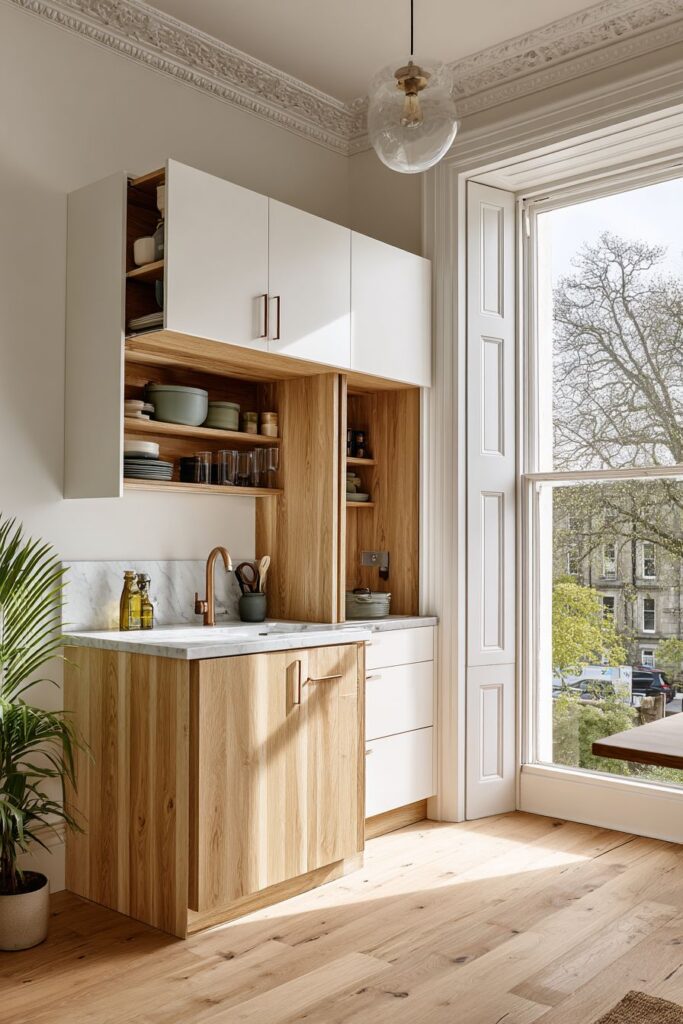
Urban living presents unique challenges that Japandi design addresses through clever space-saving solutions that never compromise aesthetic principles. Vertical storage solutions maximize every inch of available space while a fold-down dining surface integrated into the kitchen island provides flexible functionality for small apartments. This approach demonstrates how thoughtful design can create livability in compact spaces without sacrificing style or serenity.
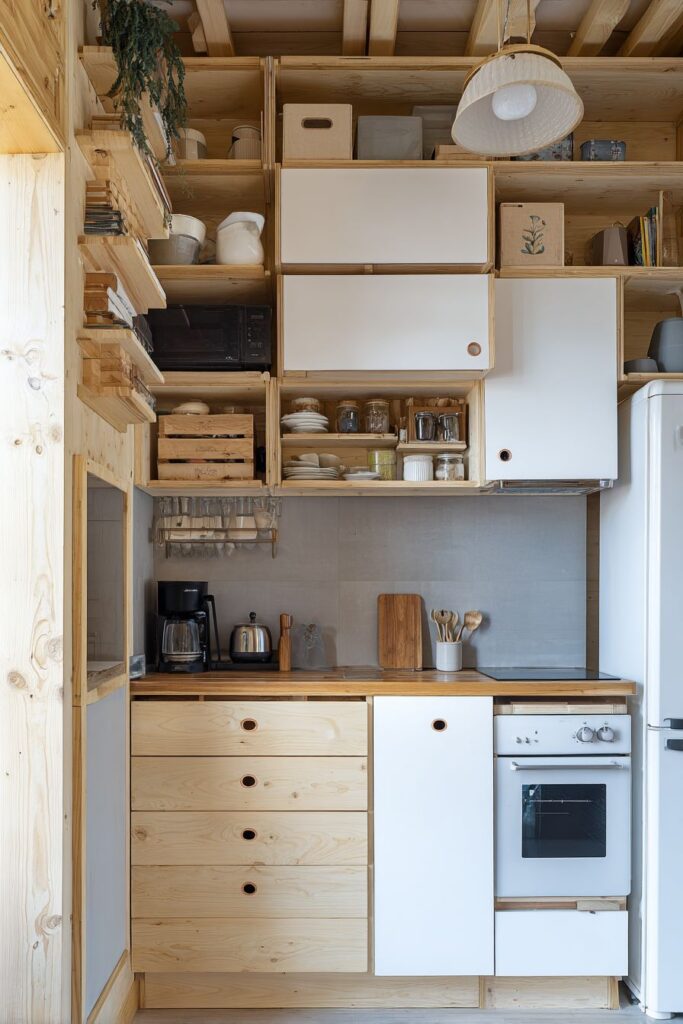
The combination of white lacquer upper cabinets with natural wood lower cabinets creates visual lightness that makes the compact space feel larger while maintaining the warmth that natural materials provide. This two-toned approach reflects light upward while grounding the design with earthy wood tones below, a technique that enhances the perception of space and height.
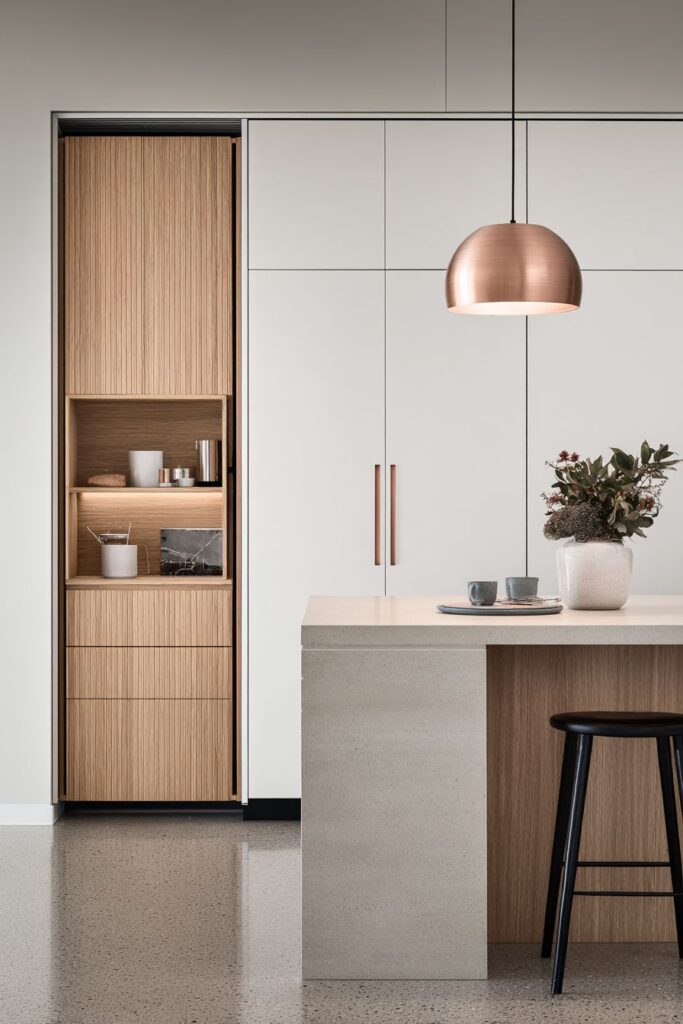
Copper accents appear subtly in hardware and a single pendant light, introducing warm metallic tones that complement the wood elements without overwhelming the restrained color palette. These carefully chosen accents demonstrate how minimal metallic elements can add sophistication and warmth to a primarily neutral design scheme. The copper’s natural patina process aligns with Japanese appreciation for materials that age beautifully over time.
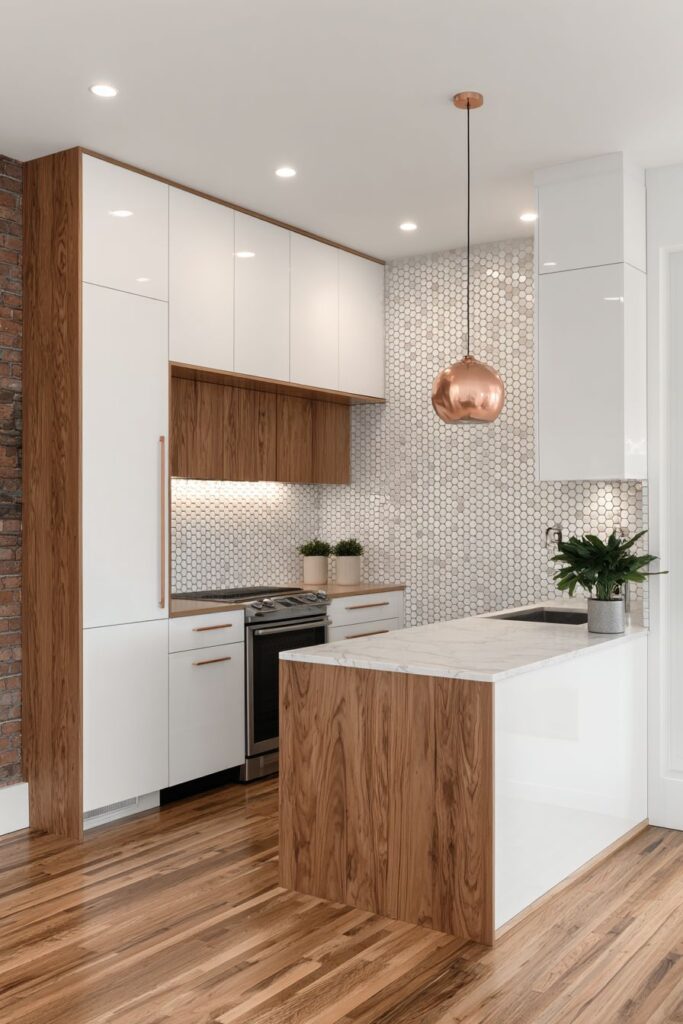
Key Design Tips:
- Maximize vertical space with floor-to-ceiling storage solutions
- Use light colors on upper elements to enhance spatial perception
- Incorporate fold-down or pull-out surfaces for flexible functionality
- Choose warm metallic accents that complement natural wood tones
- Plan storage carefully to accommodate all necessary items without clutter
- Consider multi-functional elements that serve multiple purposes efficiently
7. Luxurious Materials with Artisanal Details
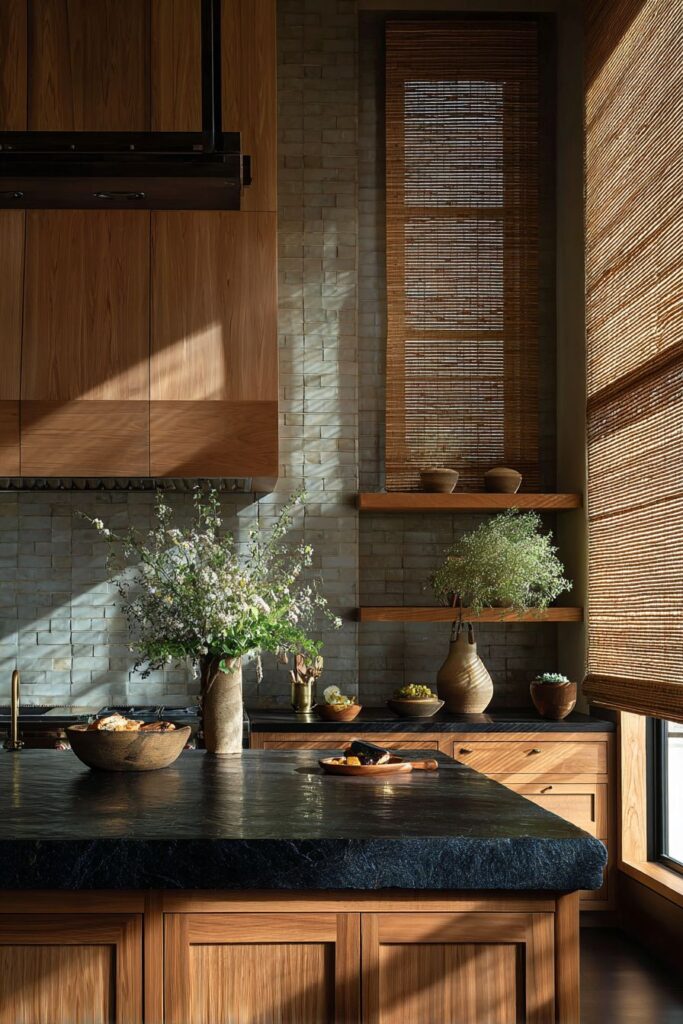
Luxury in Japandi design comes not from ostentation but from the quality of materials and the skill of their craftsmanship. A dramatic black granite countertop island creates a striking focal point while warm teak cabinetry with visible wood joints celebrates traditional joinery techniques. This combination demonstrates how contrasting materials can create drama while maintaining the overall sense of restraint that defines the style.
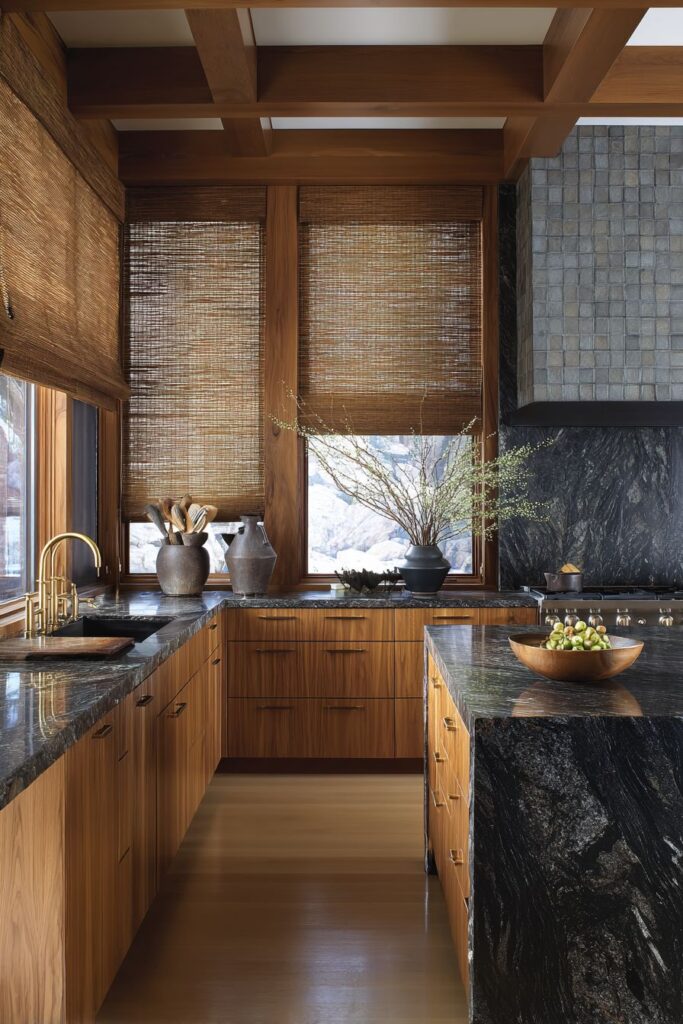
Handmade ceramic tiles in soft grey with natural texture variations provide a backsplash that feels both contemporary and timeless. Each tile’s slight irregularities tell the story of human craftsmanship, embodying the Japanese appreciation for the marks of the maker’s hand. These subtle variations create visual interest without disrupting the overall sense of calm that pervades the space.
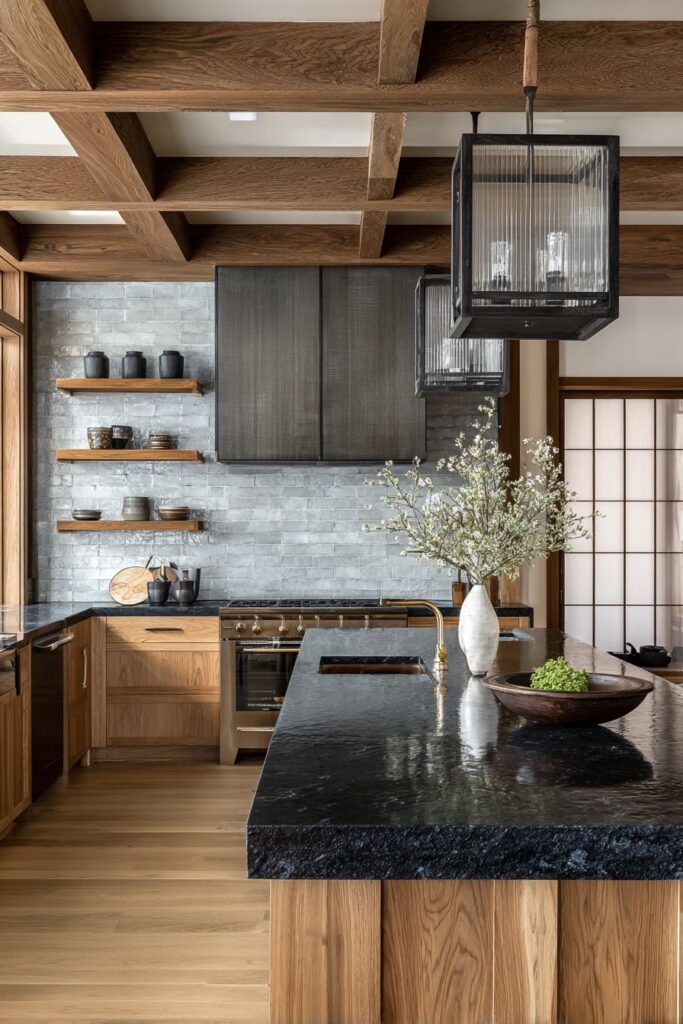
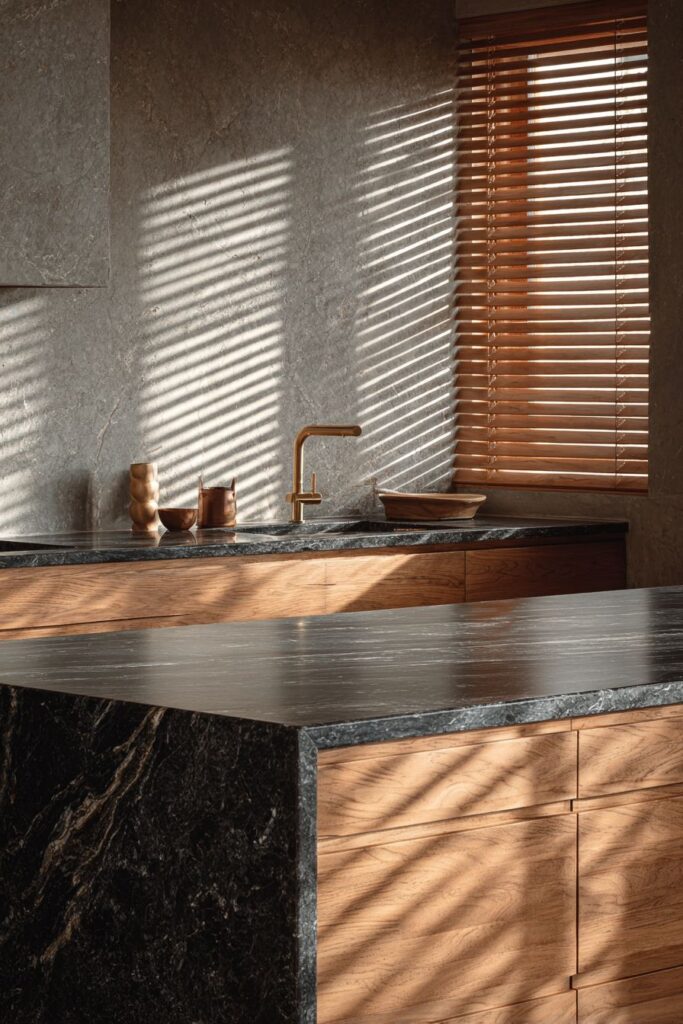
Brass fixtures introduce warm metallic accents that bridge the gap between the dark granite and warm wood tones. The brass’s natural aging process aligns with both cultures’ appreciation for materials that develop character over time. Natural light filtered through bamboo blinds creates geometric shadow patterns that change throughout the day, adding dynamic visual interest to the refined material palette.
Key Design Tips:
- Invest in high-quality natural materials that age beautifully over time
- Celebrate traditional craftsmanship through visible joinery and handmade elements
- Use dramatic contrasts sparingly for maximum impact
- Choose metallic finishes that complement the overall warm color palette
- Select window treatments that filter light while creating interesting shadow patterns
- Balance luxury materials with restraint to avoid overwhelming the space
8. Dedicated Coffee Station as Mindful Practice
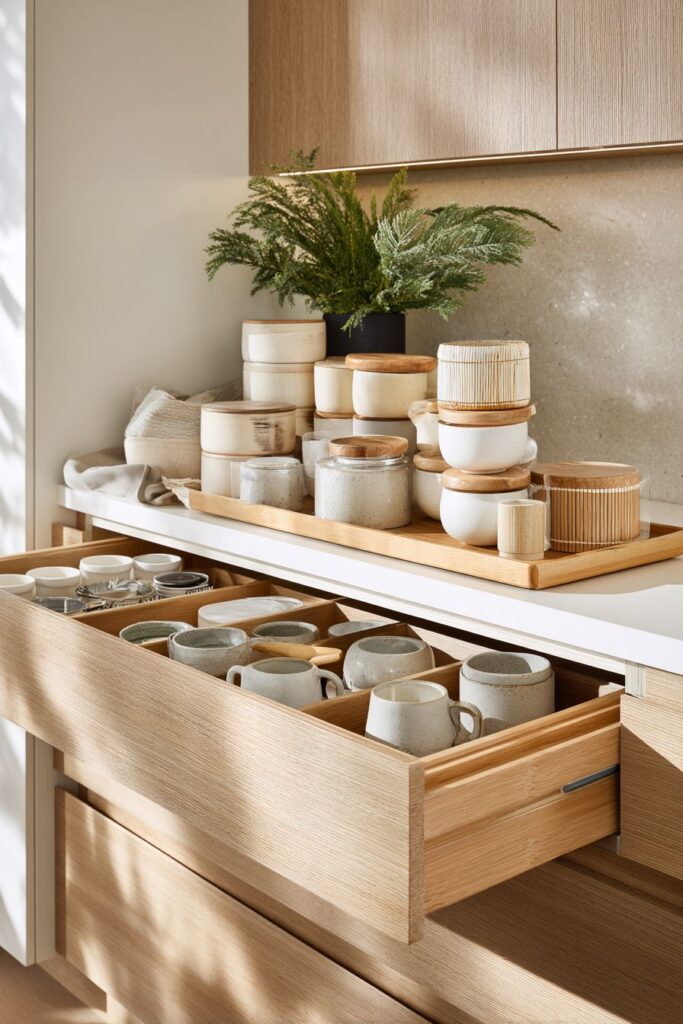
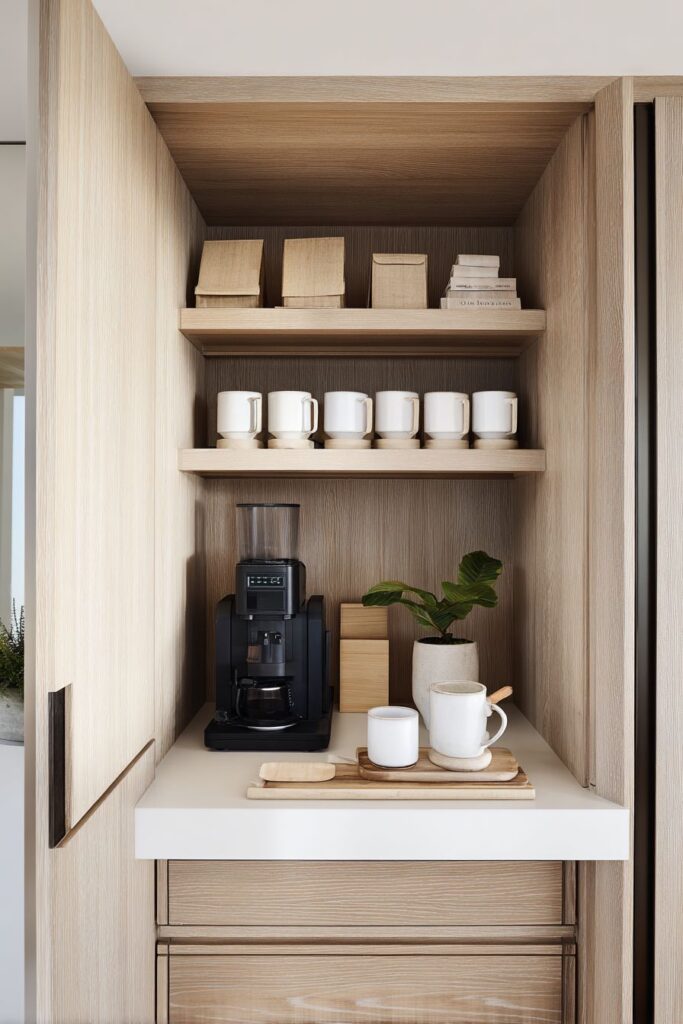
The ritual of coffee preparation becomes a meditative practice when given dedicated space within the Japandi kitchen design. A built-in coffee station with specific storage for ceramic mugs and bamboo accessories transforms the daily coffee routine into a mindful moment of appreciation. This approach reflects both cultures’ understanding of how everyday activities can become opportunities for contemplation and gratitude.
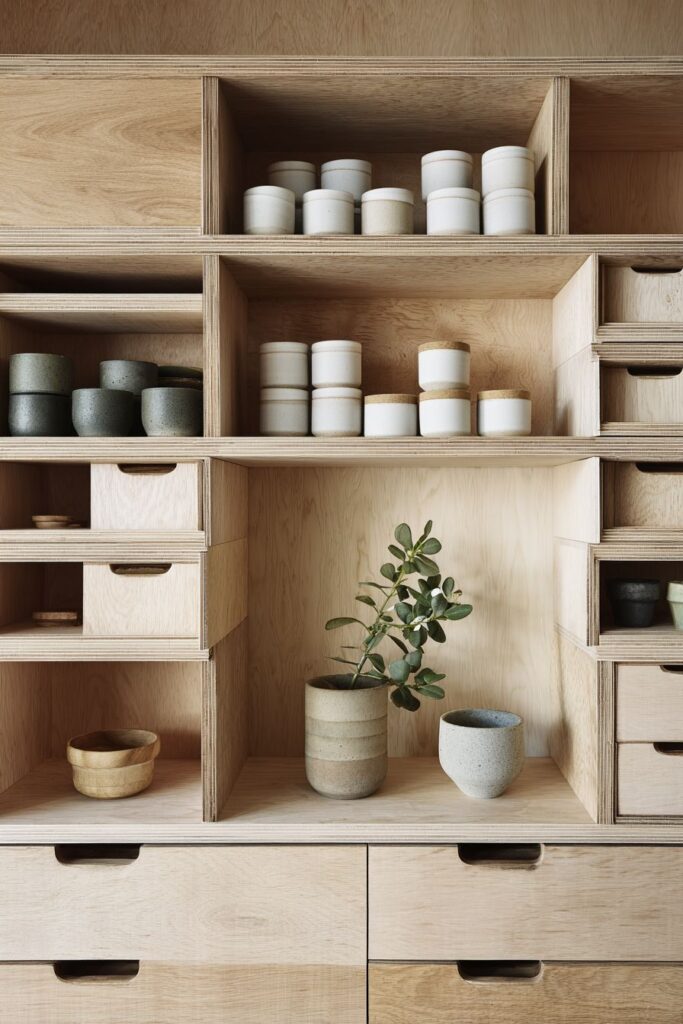
Surrounding cabinetry in pale maple with natural edge details provides storage that celebrates the wood’s organic origins while maintaining functional organization. Push-to-open drawers eliminate the need for hardware while providing smooth, quiet operation that supports the kitchen’s serene atmosphere. The natural edge details remind users of the wood’s forest origins while adding subtle textural interest.
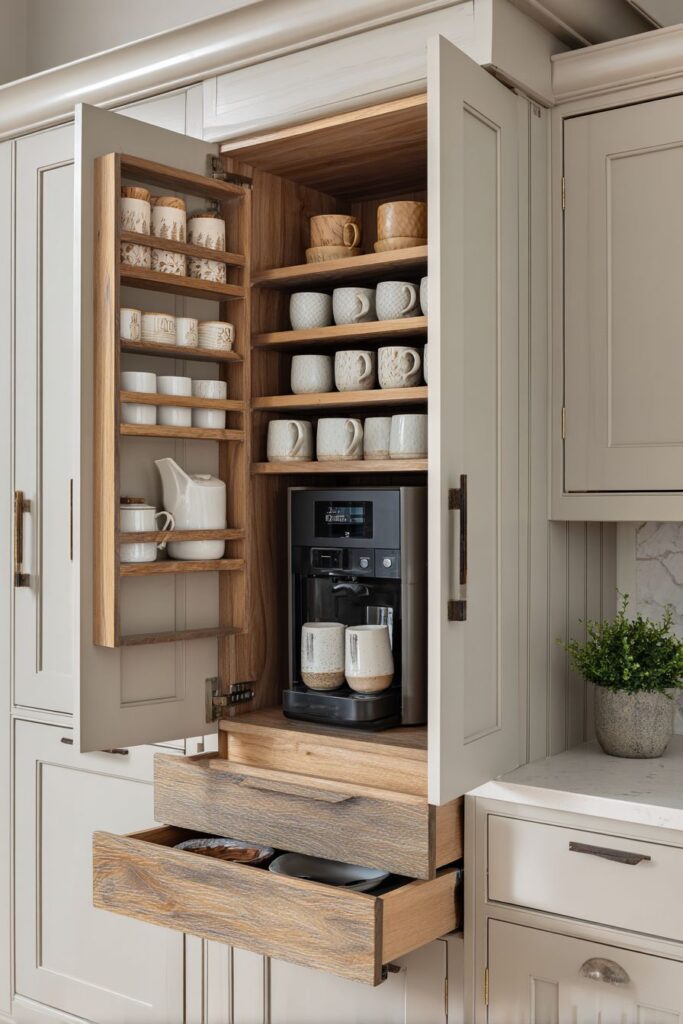
A single potted plant provides the only splash of green in an otherwise neutral palette, embodying the Japanese principle of finding profound beauty in singular natural elements. This carefully chosen plant becomes a living artwork that requires daily attention, further supporting the mindful approach to kitchen activities. The plant’s care becomes part of the morning ritual, connecting users with natural cycles and growth.
Key Design Tips:
- Dedicate specific space for coffee preparation to elevate the daily ritual
- Use pale wood tones that reflect morning light beautifully
- Include natural edge details that celebrate wood’s organic origins
- Select ceramic and bamboo accessories that align with natural material principles
- Incorporate a single living plant as a focal point and mindfulness reminder
- Plan storage specifically for coffee-related items to maintain organization
9. Family-Friendly Design with Hidden Practicality
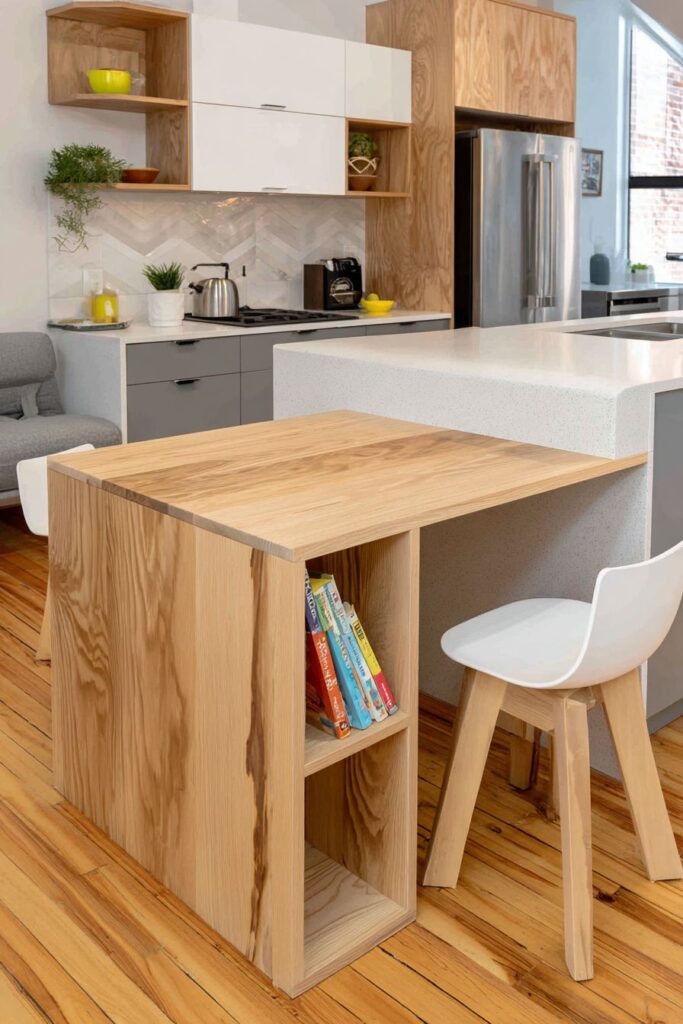
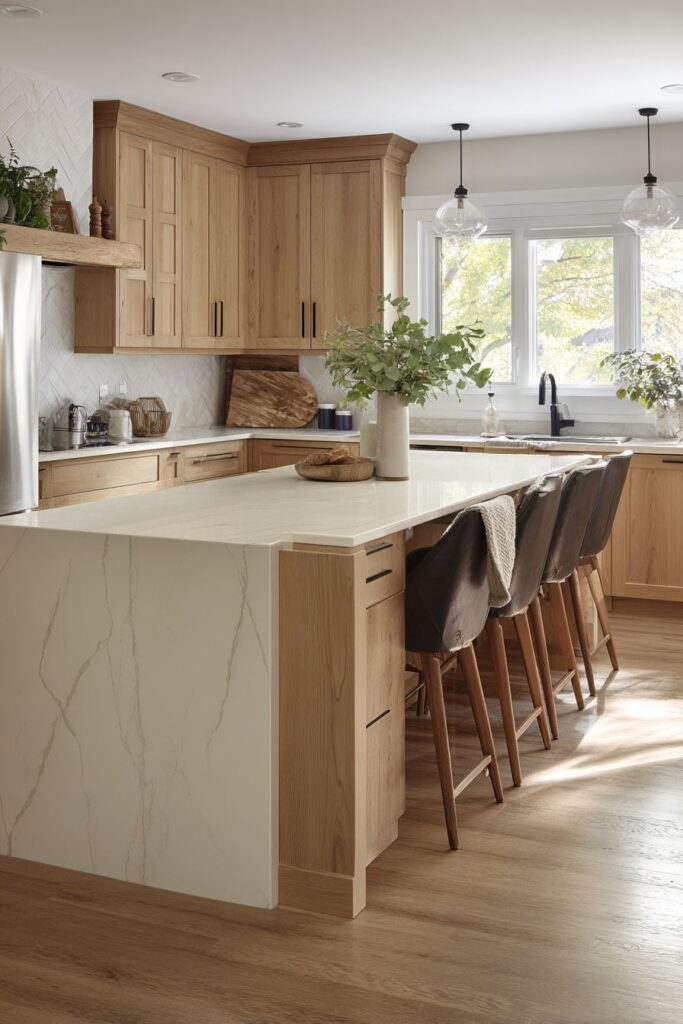
Creating a family-friendly Japandi kitchen requires balancing the style’s inherent minimalism with the practical realities of daily family life. A large central island with integrated seating and hidden storage for children’s items demonstrates how thoughtful planning can accommodate family needs while maintaining clean aesthetic lines. This approach proves that functional family living and beautiful design are not mutually exclusive.
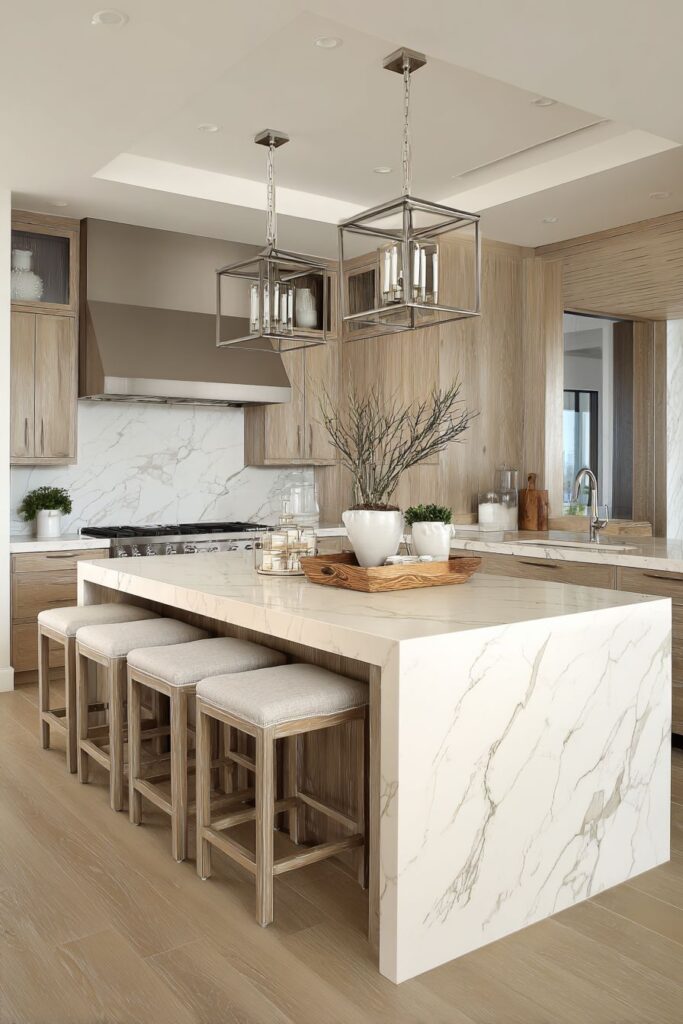
Natural hickory wood cabinets showcase beautiful grain patterns that can withstand the inevitable wear of family life while aging gracefully over time. The wood’s natural durability makes it an excellent choice for busy families, while its warm tones create an inviting atmosphere for family gatherings. Stone countertops provide the durability needed for meal preparation while maintaining the natural material palette that defines Japandi design.
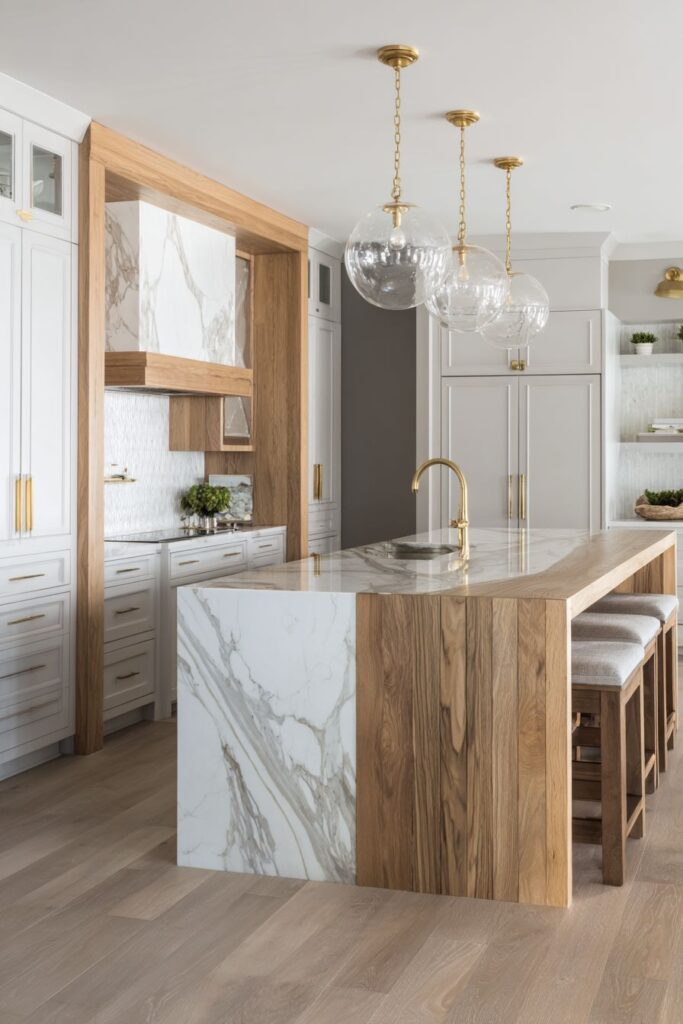
The color palette remains calm and neutral with touches of warm grey, creating a soothing environment that helps family members feel centered and peaceful even during busy meal preparation times. This carefully controlled palette demonstrates how restraint in color choices can create spaces that feel both dynamic and serene, supporting family harmony through environmental design.
Key Design Tips:
- Plan extensive hidden storage to accommodate family necessities without visible clutter
- Choose durable natural materials that age beautifully with family use
- Integrate seating that accommodates both children and adults comfortably
- Maintain neutral color palettes that remain calming during busy family times
- Consider easy-to-clean surfaces that don’t compromise the natural material aesthetic
- Design storage solutions that children can access and organize independently
10. Pantry Organization as Functional Art
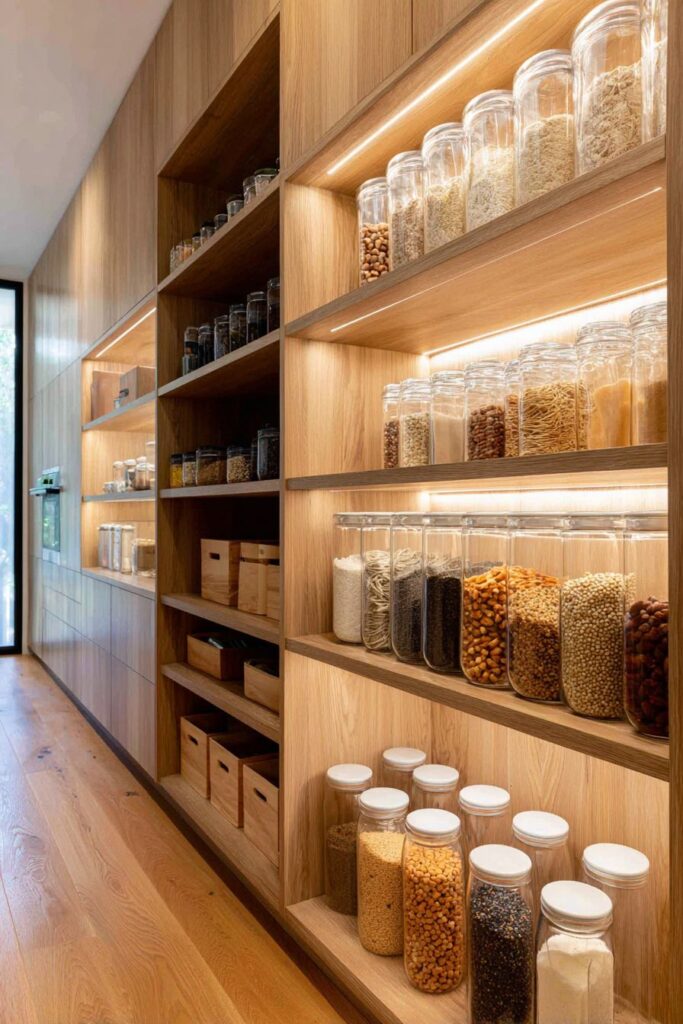
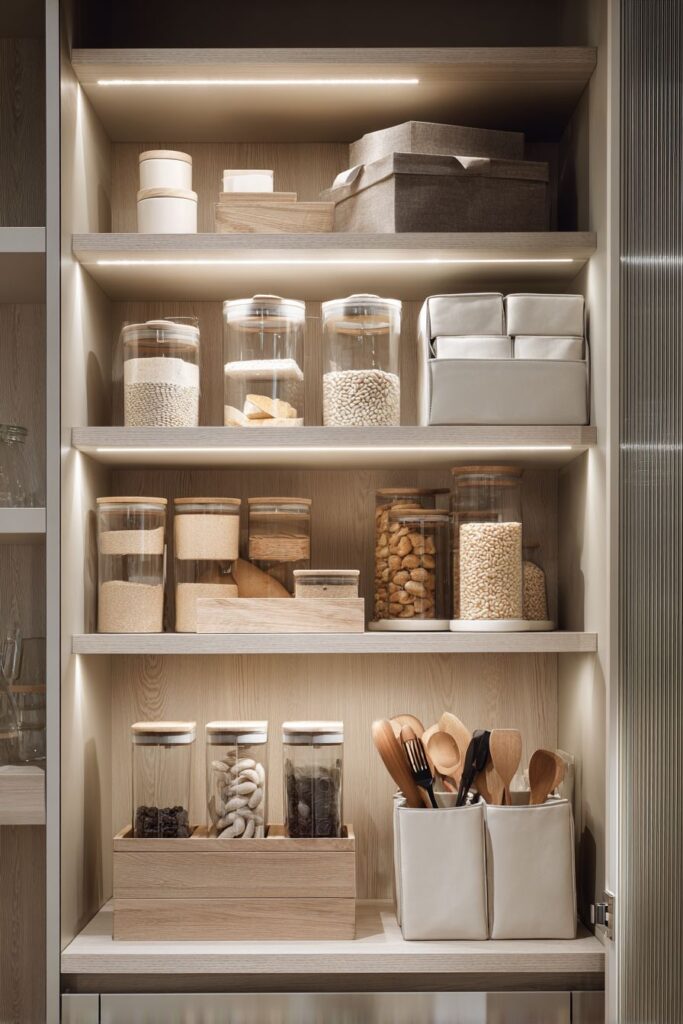
The pantry becomes an extension of the kitchen’s aesthetic philosophy when designed with Japandi principles, transforming food storage into a celebration of organization and natural beauty. Floor-to-ceiling storage combines open shelving with hidden compartments, allowing for the display of beautiful storage containers while concealing less attractive necessities. This approach demonstrates how utilitarian spaces can contribute to the overall design excellence.
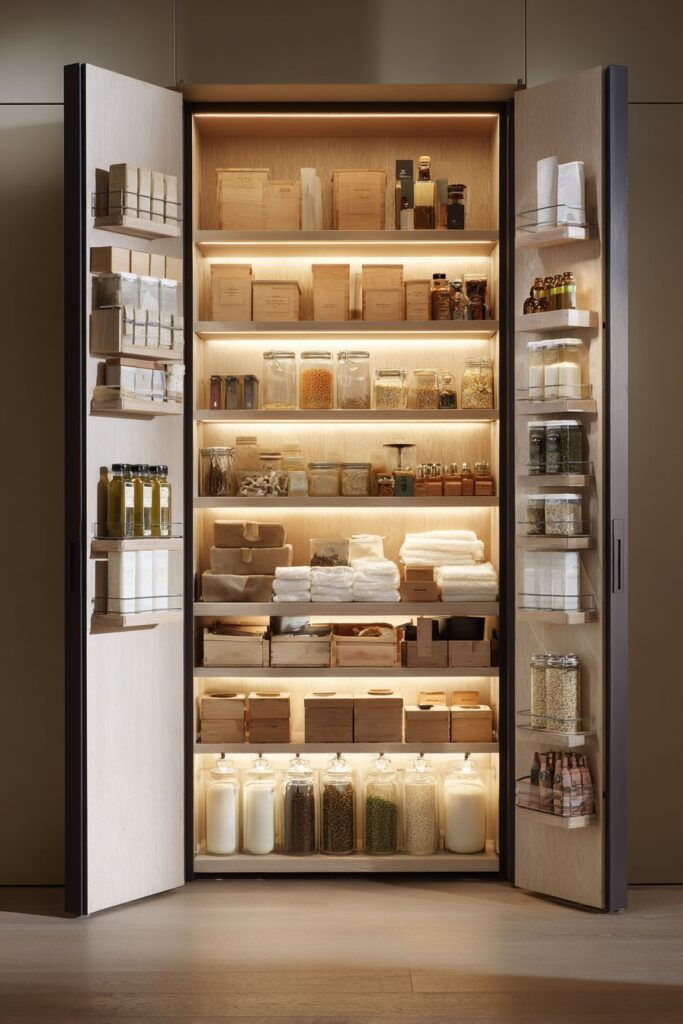
Glass containers holding bulk items create visual rhythm and transparency while wooden boxes organize smaller essentials with Japanese precision. This combination of materials reflects both cultures’ appreciation for honest materials that age well while serving practical functions. The careful arrangement of stored items becomes part of the room’s visual composition, elevating everyday necessity to artful display.
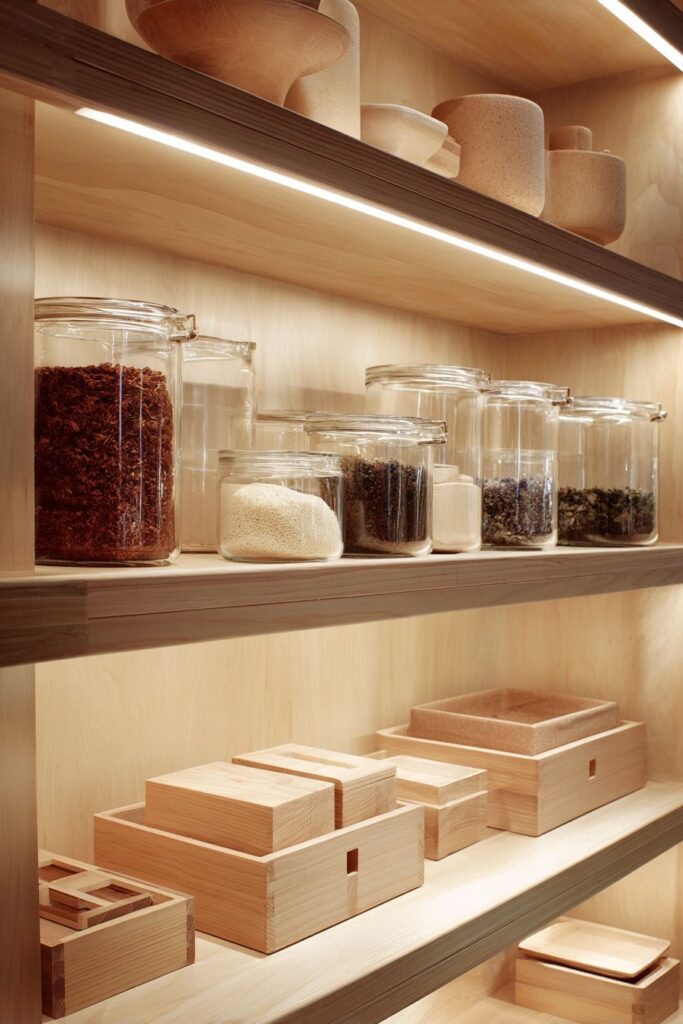
Integrated LED lighting highlights the organized contents while using the same pale wood as the main kitchen to maintain visual continuity throughout the home. This attention to lighting design ensures that the pantry feels like an integral part of the kitchen rather than a utilitarian afterthought. The lighting also makes finding ingredients easier while creating an atmosphere that makes organization feel pleasurable rather than burdensome.
Key Design Tips:
- Invest in beautiful storage containers that contribute to the overall aesthetic
- Combine open and closed storage for both display and practical concealment
- Use consistent wood tones throughout all kitchen and pantry spaces
- Install adequate lighting that makes organization practical and beautiful
- Plan storage categories that reflect actual cooking and eating habits
- Choose durable materials that can withstand frequent use and cleaning
11. Waterfall Countertop as Sculptural Element
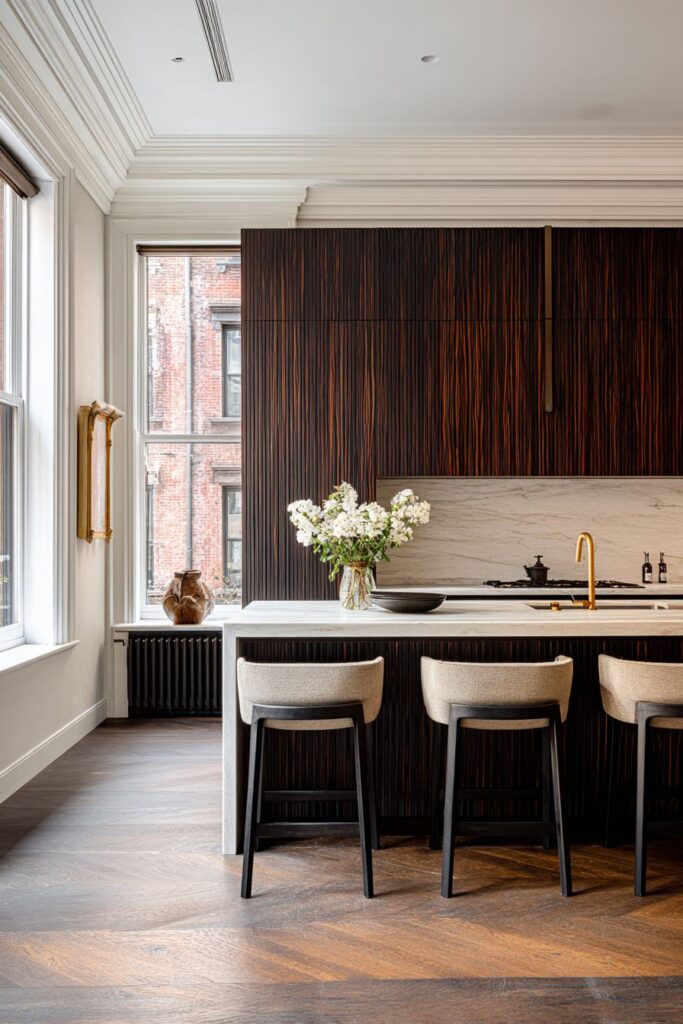
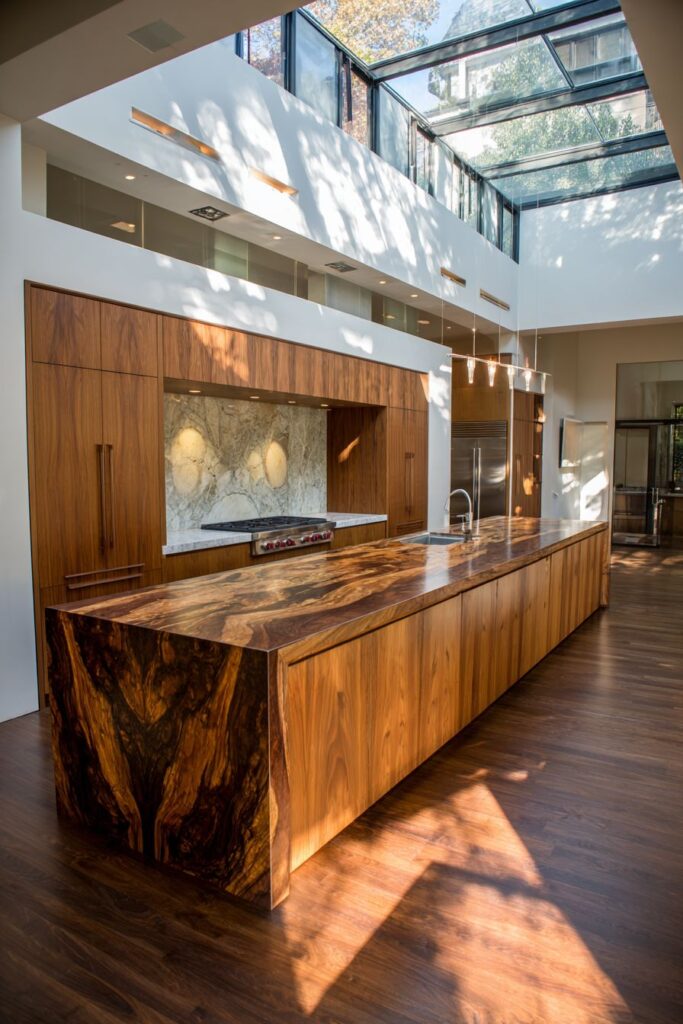
The kitchen countertop transcends mere functionality to become sculptural art when designed as a waterfall edge in bookmatched walnut. This approach celebrates the wood’s natural grain patterns while creating a dramatic focal point that anchors the entire kitchen design. The bookmatched technique mirrors the grain pattern, creating visual symmetry that appeals to both Japanese appreciation for natural beauty and Scandinavian love of clean lines.
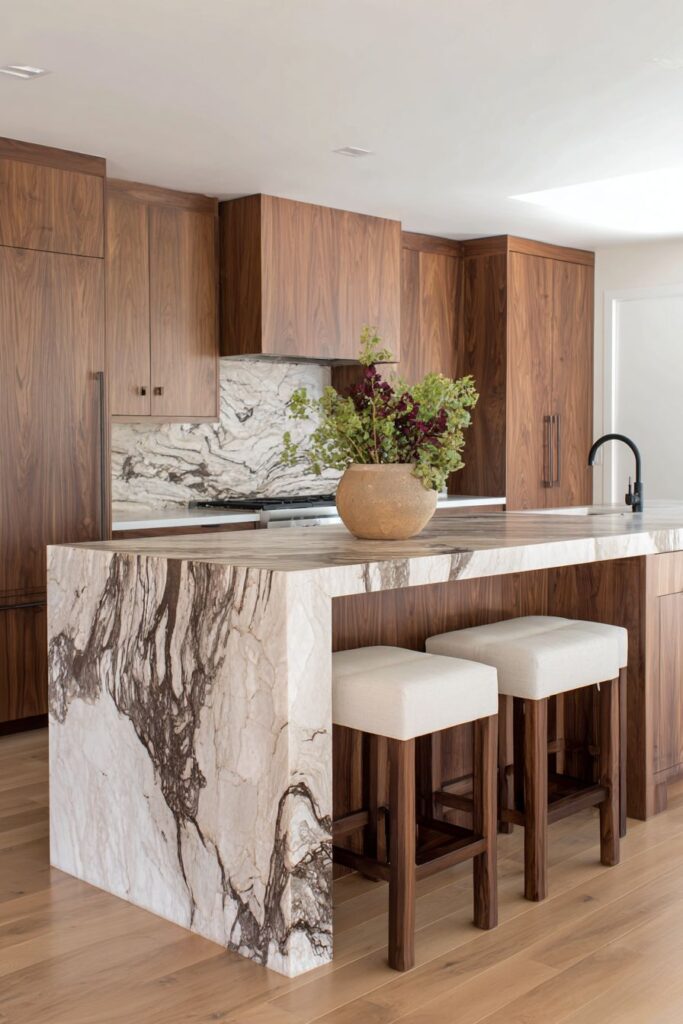
Surrounding cabinetry in soft white oak provides contrast while maintaining warmth, allowing the walnut waterfall to command attention without overwhelming the space. This careful balance of wood tones demonstrates sophisticated material planning that creates hierarchy and visual interest while maintaining overall harmony. The contrast helps define different functional areas while supporting the overall aesthetic coherence.
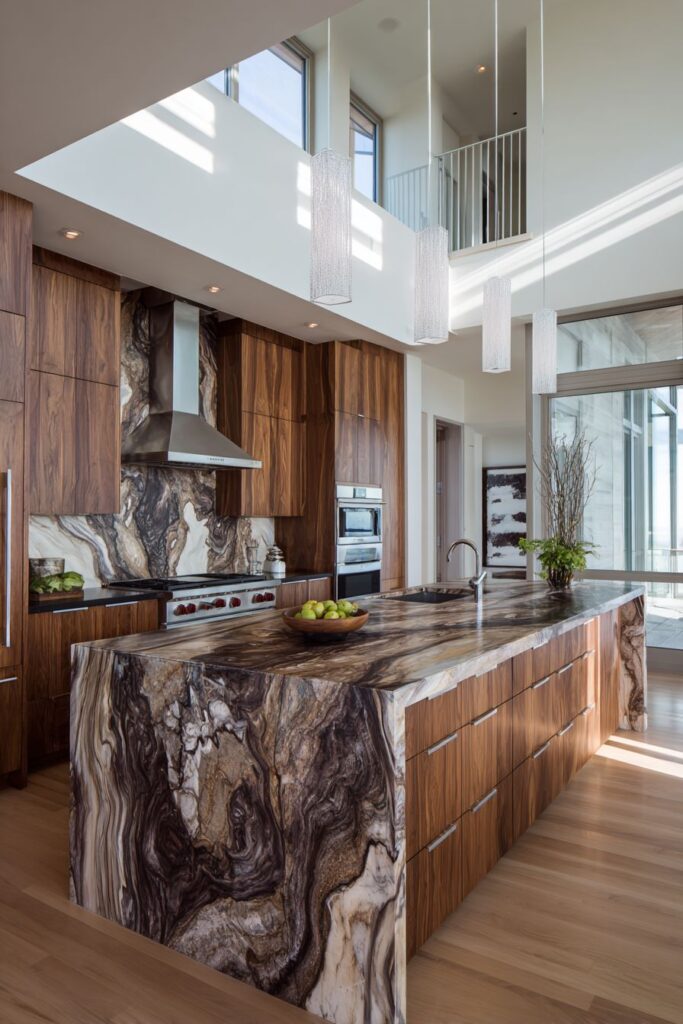
Minimal hardware appears only where functionally necessary, with most storage accessed through push mechanisms that maintain the clean surface planes. This approach reflects both cultures’ preference for reducing visual complexity while maintaining full functionality. Natural light from clerestory windows creates dramatic shadows that enhance the wood grain’s natural beauty throughout the day, connecting the interior space with natural lighting rhythms.
Key Design Tips:
- Select bookmatched slabs carefully to ensure grain continuity and visual impact
- Balance dramatic elements with restrained surrounding materials
- Plan push mechanisms carefully to ensure reliable long-term operation
- Consider clerestory windows for dramatic lighting effects without privacy concerns
- Protect wood countertops with appropriate sealers while maintaining natural appearance
- Plan electrical and plumbing integration carefully to avoid disrupting the waterfall edge
12. Integrated Herb Garden Connecting with Nature
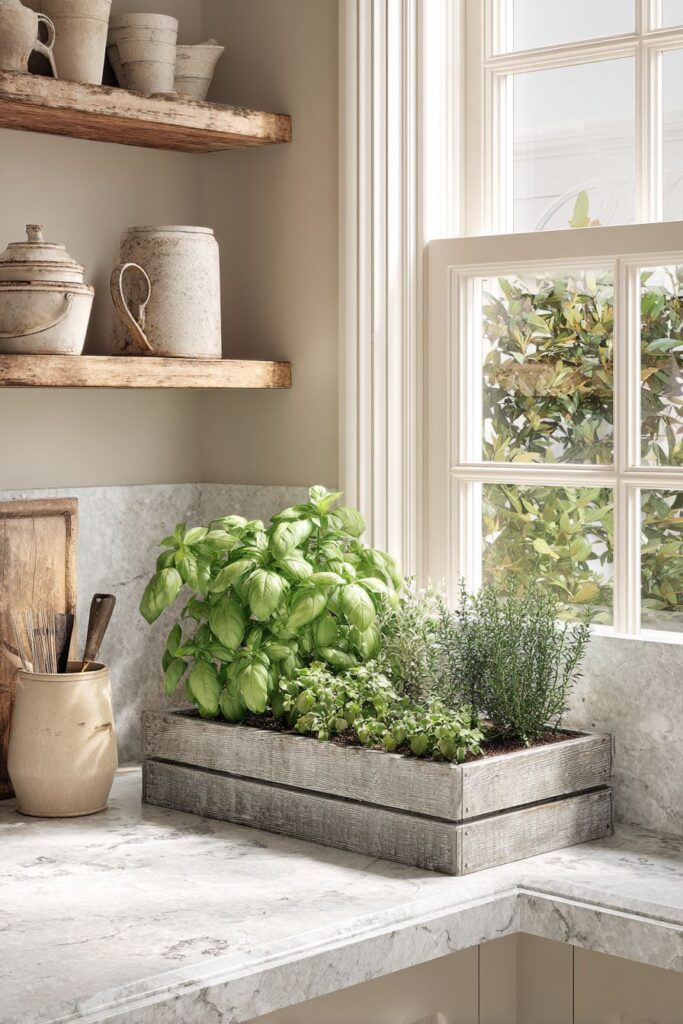
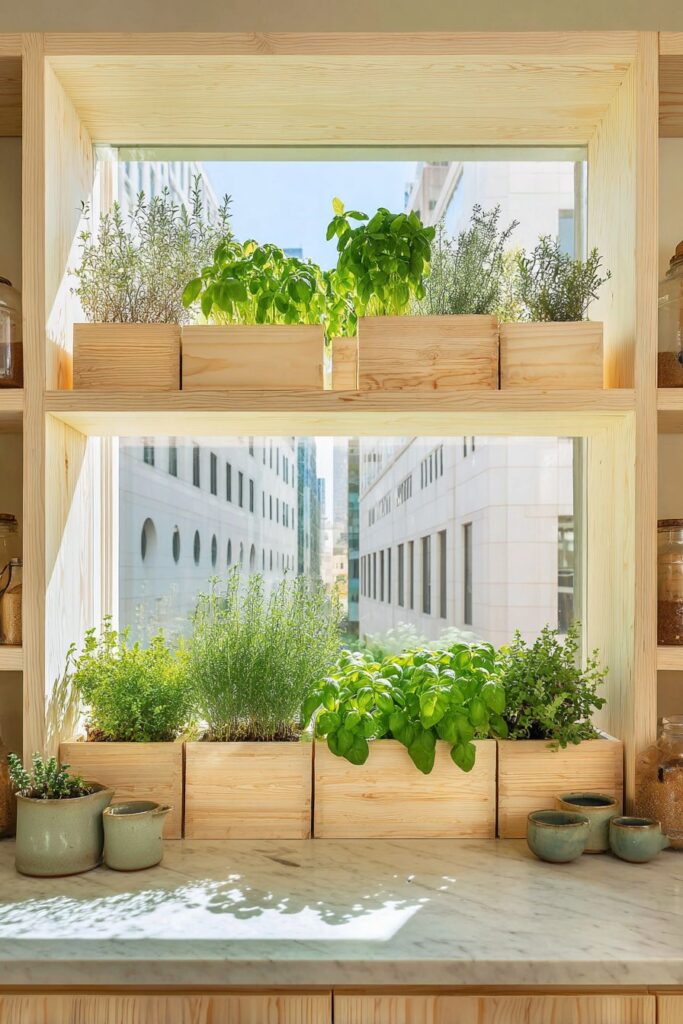
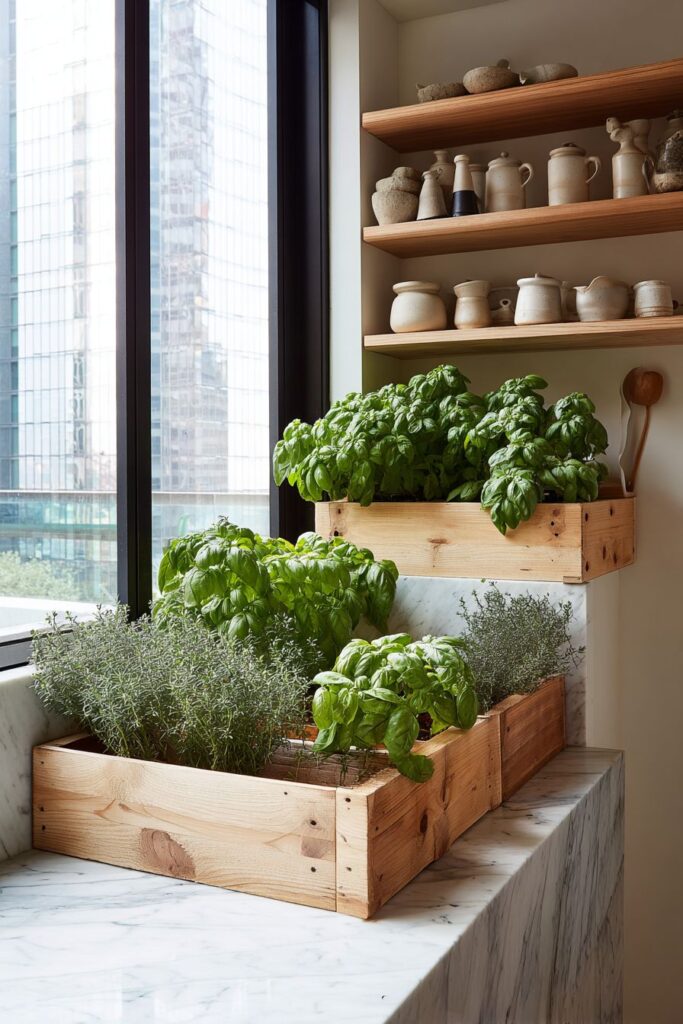
Bringing living plants into the kitchen environment creates opportunities for daily connection with natural growth cycles and seasonal changes. An integrated herb garden positioned in the window area provides fresh ingredients while adding the life force that plants bring to interior spaces. Wooden planters containing basil, thyme, and other culinary herbs create a living backsplash that changes with the seasons and responds to daily care.
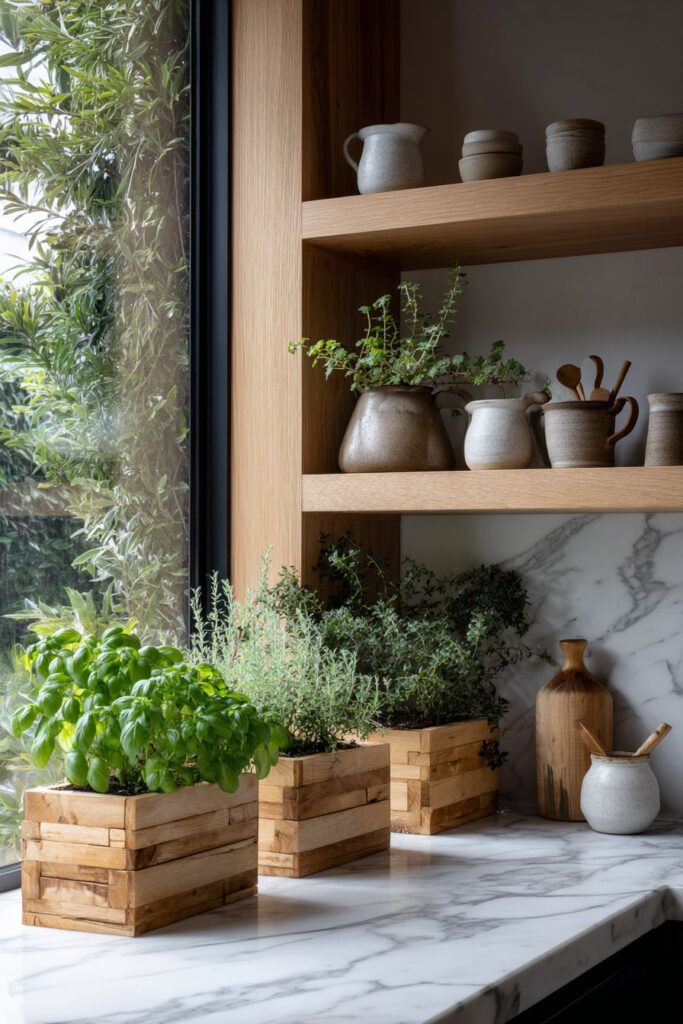
Honed marble countertops provide a clean backdrop for the herb garden while natural wood shelving holds ceramic pots and essential gardening tools. This combination of materials creates textural variety while maintaining the natural palette that defines Japandi design. The marble’s neutral tones allow the green herbs to become the primary color accent, embodying the principle of using living elements as decoration.
This integration of food production into kitchen design reflects both Japanese and Scandinavian traditions of connecting with natural processes and seasonal rhythms. The daily care required by the herbs becomes part of the kitchen routine, encouraging mindfulness and connection with natural cycles. The fresh herbs also enhance cooking experiences while reducing dependency on packaged goods, supporting sustainable living practices.
Key Design Tips:
- Choose herbs that thrive in kitchen lighting conditions and match cooking preferences
- Install adequate drainage systems to protect surrounding surfaces
- Select wooden planters that complement the kitchen’s wood tones
- Plan convenient access to water for daily plant care
- Choose herbs with different textures and growth patterns for visual interest
- Consider seasonal rotation of herbs to maintain year-round freshness and variety
13. Technology Integration with Traditional Materials
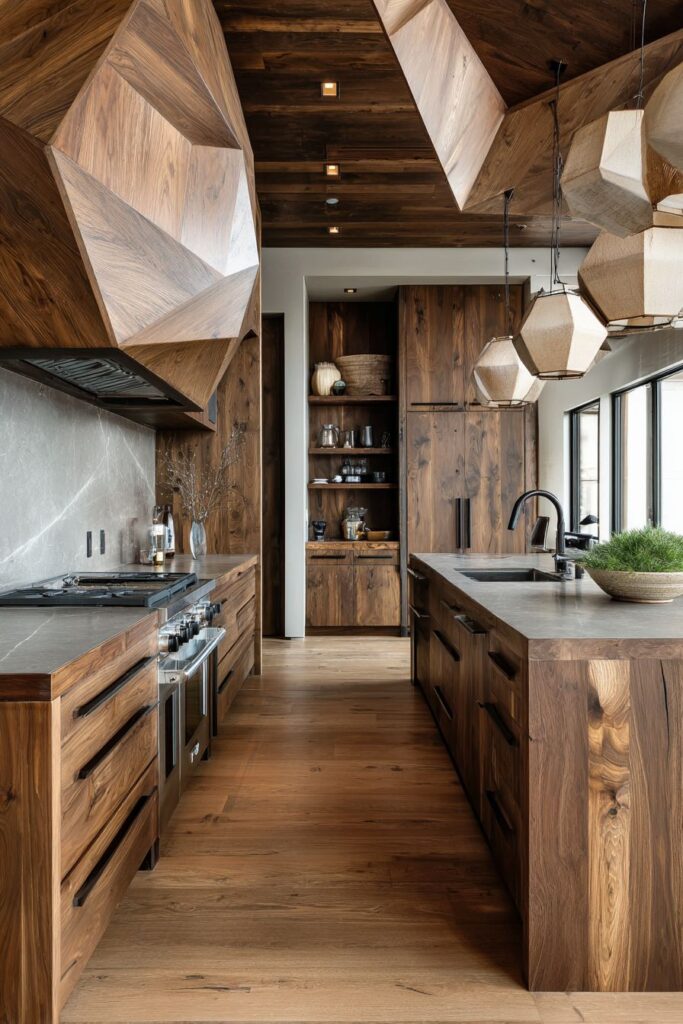
Modern kitchen functionality requires sophisticated technology, but Japandi design principles demand that such elements integrate seamlessly with natural materials and clean lines. Hidden induction cooktops and concealed storage solutions demonstrate how contemporary convenience can coexist with traditional aesthetic values. This approach proves that technological advancement and design purity can work together harmoniously.
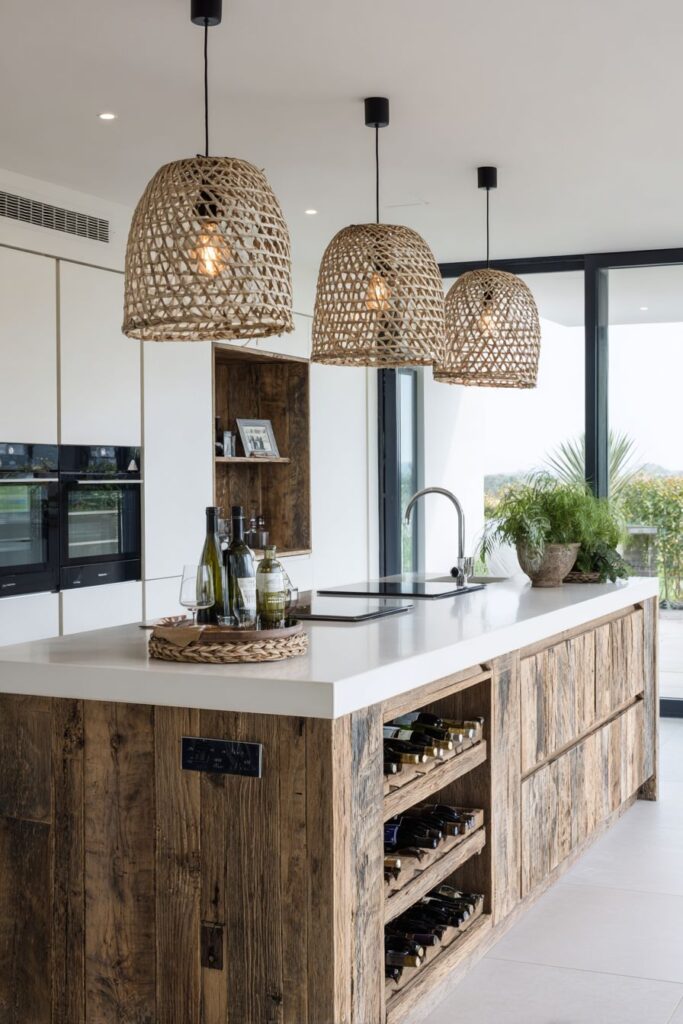
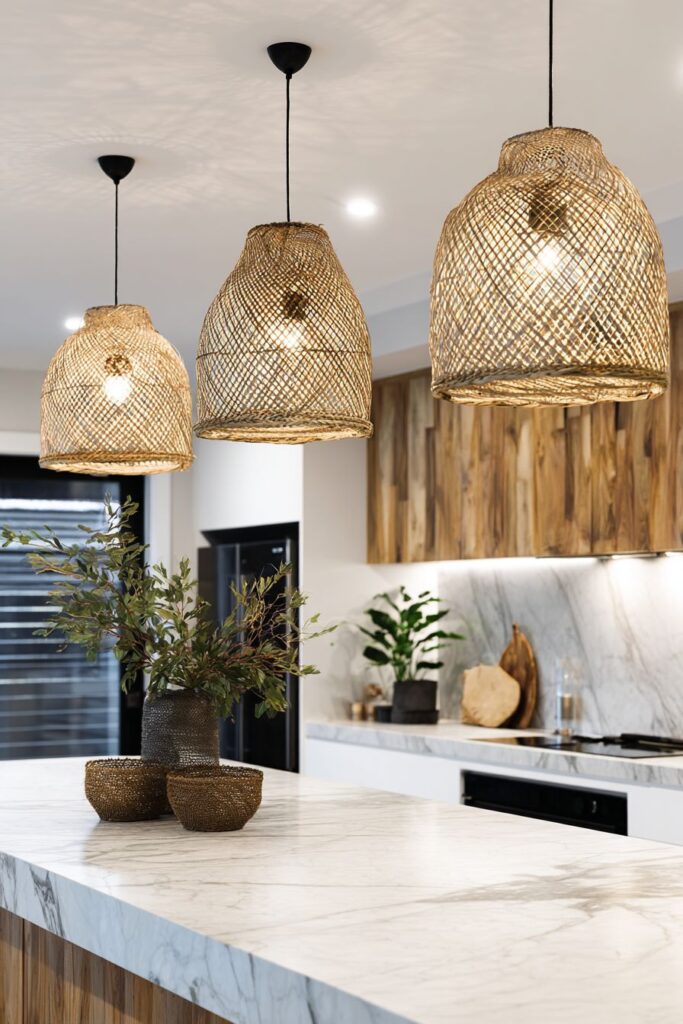
The island combines reclaimed teak with contemporary functionality, creating a workspace that honors the past while serving present needs. The reclaimed wood brings history and character while modern engineering ensures proper function and durability. Pendant lighting using natural materials like bamboo or linen shades provides adequate task illumination while maintaining consistency with the overall material palette.
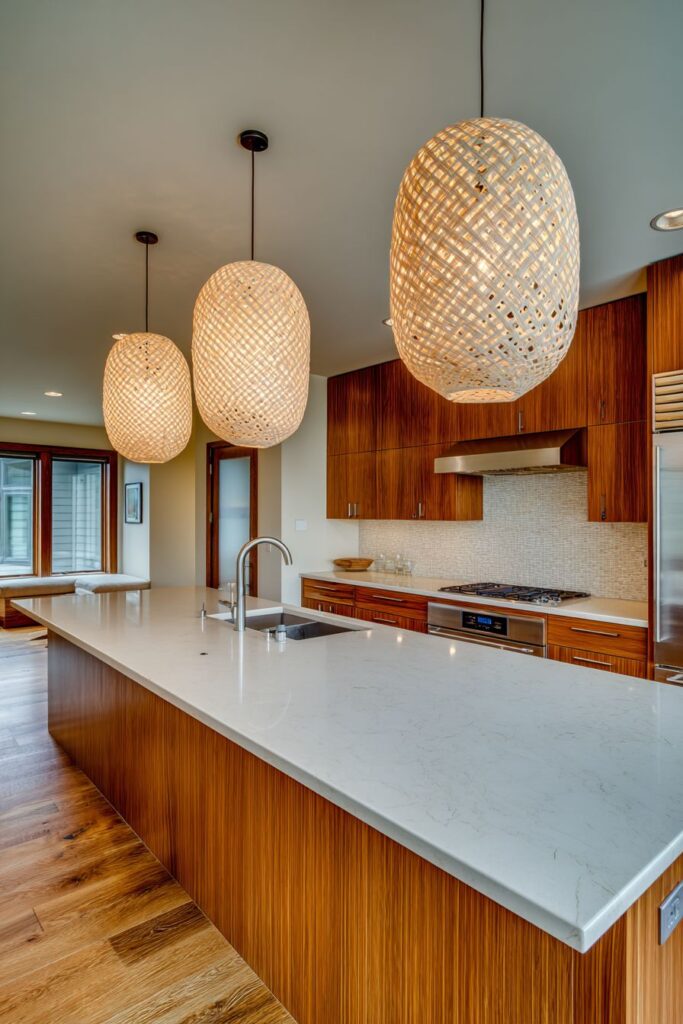
This balance between ancient wisdom and modern convenience reflects the core philosophy of Japandi design: taking the best elements from traditional practices while adapting them for contemporary living. The invisible technology allows users to focus on the cooking process rather than the tools, supporting mindful engagement with food preparation. The visible craftsmanship in traditional materials provides tactile and visual pleasure that technology alone cannot offer.
Key Design Tips:
- Plan technology integration early in the design process to ensure seamless installation
- Choose appliances with clean lines that integrate well with cabinetry design
- Use traditional materials for visible elements while concealing modern technology
- Ensure adequate ventilation for hidden appliances to prevent overheating
- Select pendant lighting that provides adequate task illumination for detailed work
- Balance modern convenience with opportunities for traditional cooking techniques
14. Breakfast Nook with Garden Views
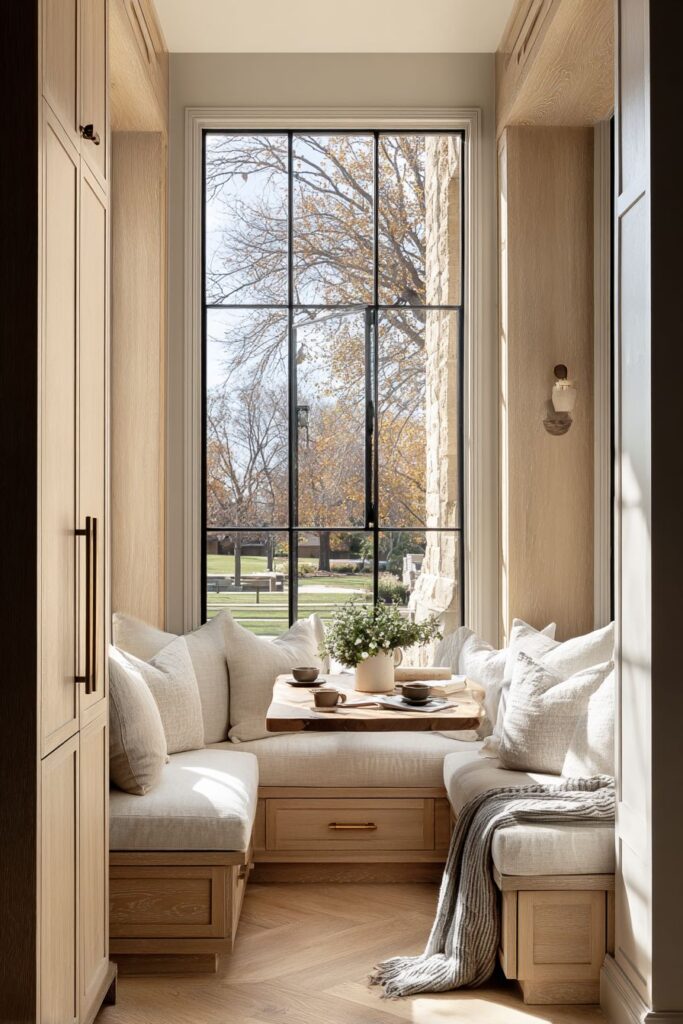
Creating an intimate breakfast nook within the kitchen environment provides opportunities for mindful morning meals and quiet reflection before the day begins. Built-in bench seating upholstered in natural linen positioned adjacent to large windows creates a connection with outdoor garden views while providing comfortable seating that integrates seamlessly with the kitchen’s architecture. This approach demonstrates how thoughtful planning can create distinct zones within open kitchen layouts.
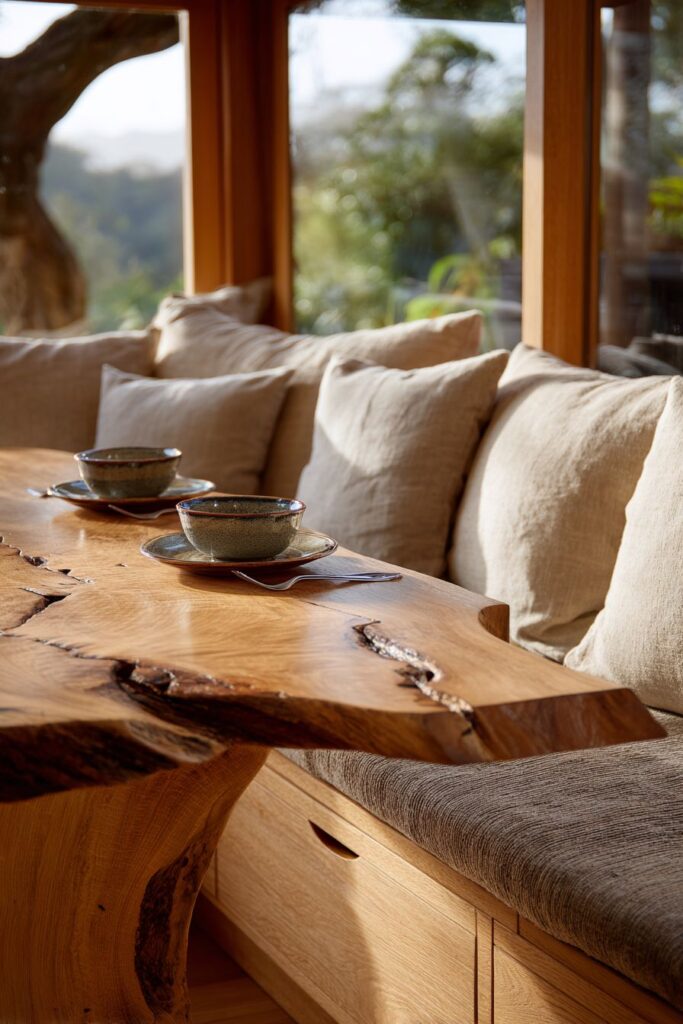
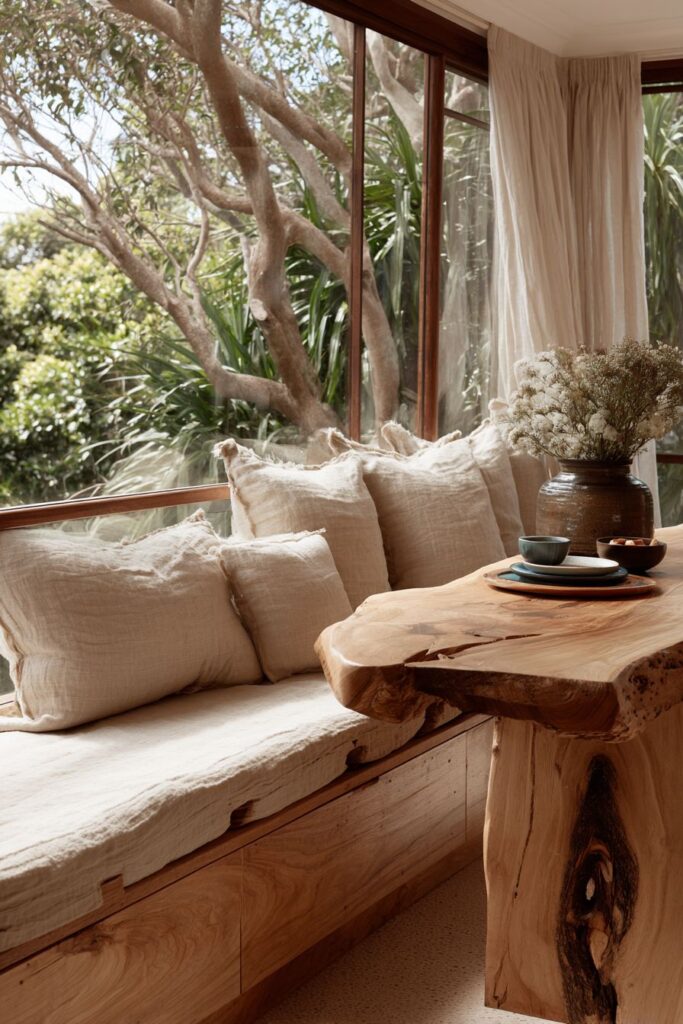
The accompanying table features live-edge wood with visible knots and grain patterns that celebrate natural imperfection, embodying the Japanese concept of wabi-sabi while providing a practical surface for morning meals. The wood’s natural character tells the story of the tree’s growth, bringing awareness of natural processes into daily dining experiences. Storage drawers integrated beneath the seating provide practical organization while maintaining clean lines.
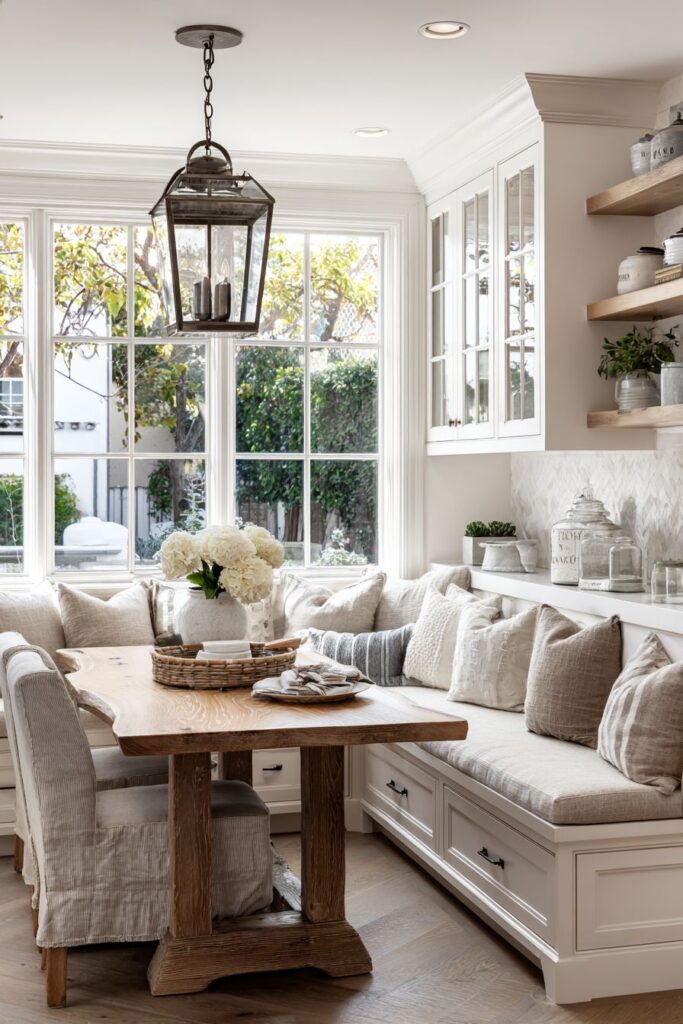
This intimate space encourages slower, more contemplative meal experiences that contrast with the hurried pace of modern life. The garden views provide seasonal changes and natural beauty that enhance the dining experience while connecting interior activities with exterior natural rhythms. The design supports both solitary reflection and intimate conversation, making it equally suitable for individual contemplation and shared meals.
Key Design Tips:
- Position seating to maximize natural views and morning light exposure
- Choose live-edge wood that showcases natural grain patterns and character
- Include hidden storage to maintain clean lines while providing practical organization
- Select natural linen upholstery that ages beautifully with use
- Plan adequate electrical access for morning coffee or device charging needs
- Consider seasonal views when positioning the nook for year-round enjoyment
15. Open Shelving as Curated Display
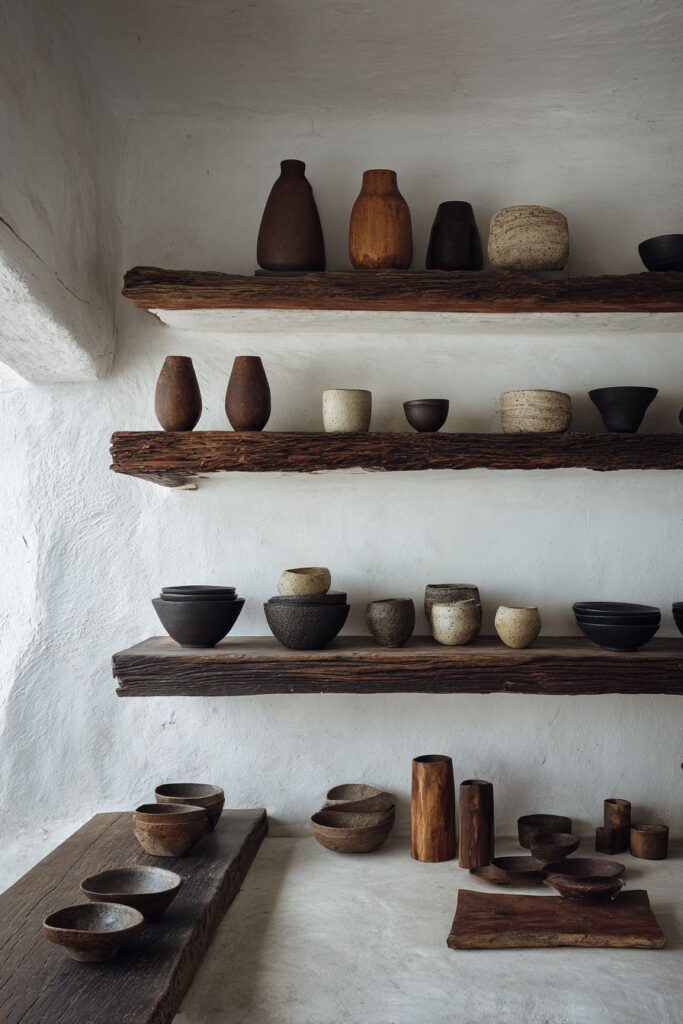
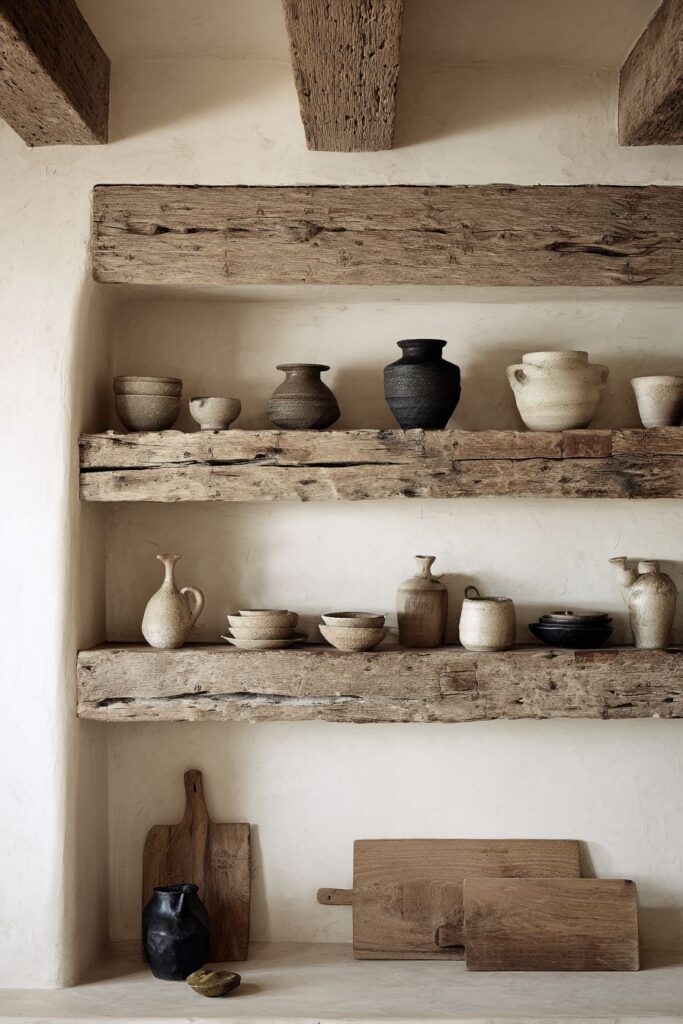
Open shelving transforms functional storage into artful display when approached with Japandi principles of careful curation and mindful arrangement. Displaying ceramic dishware in earth tones alongside natural wood serving pieces creates functional art that celebrates both beauty and utility. Each item earns its place through both practical value and aesthetic contribution, reflecting the philosophy that beautiful objects should be used rather than merely admired.
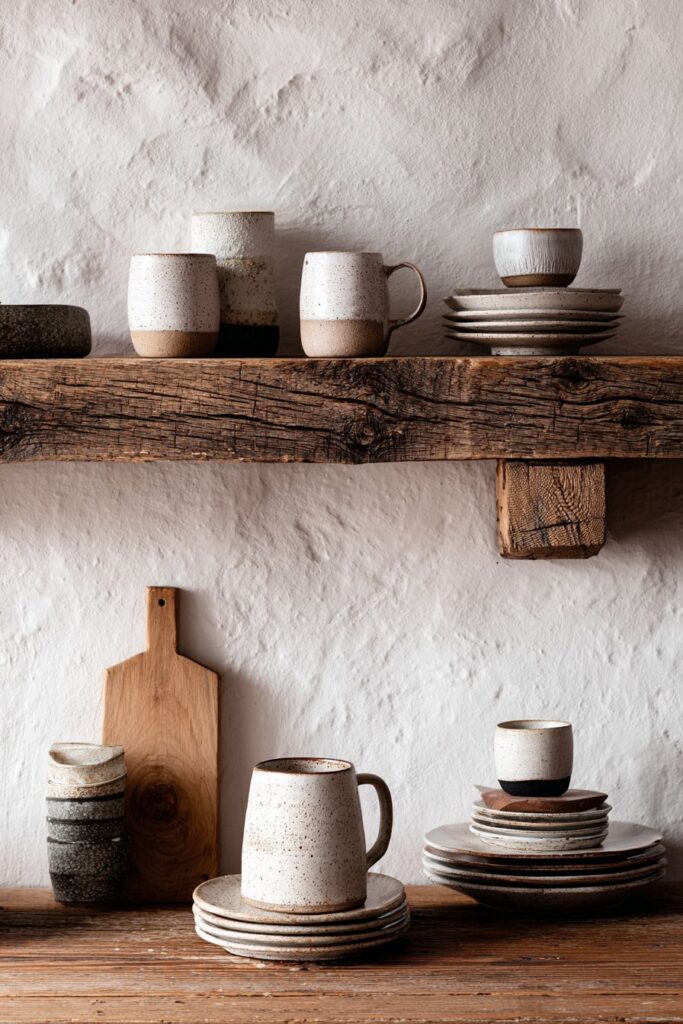
Reclaimed barn wood shelving with visible age marks provides textural backdrop while white plaster walls create neutral contrast that allows the displayed items to command attention. The wood’s history becomes part of the design narrative, bringing stories of previous use and natural aging into the contemporary kitchen environment. Each piece’s placement considers both functional accessibility and visual composition, creating arrangements that please the eye while supporting daily use.
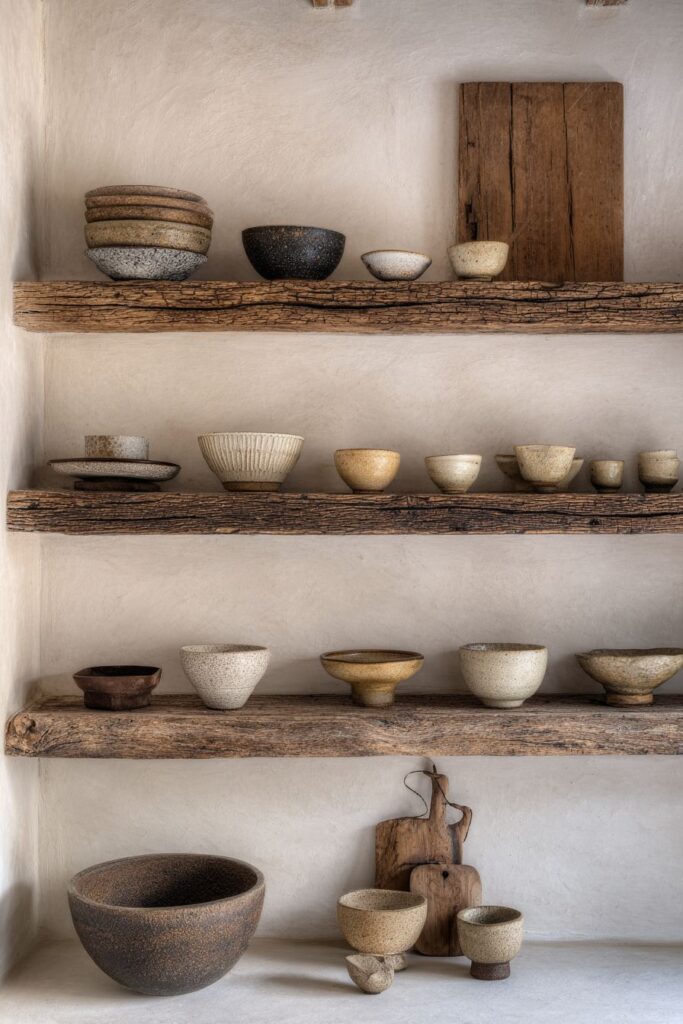
The careful attention to negative space between displayed items reflects Japanese aesthetic principles of allowing emptiness to contribute to overall composition. This approach prevents visual clutter while creating rhythm and breathing room that enhances rather than overwhelms the space. The result is storage that feels intentional and artistic while remaining completely practical for daily kitchen activities.
Key Design Tips:
- Curate displayed items carefully, choosing pieces that serve both functional and aesthetic purposes
- Use reclaimed wood that brings character and history to the display area
- Plan adequate depth for shelving to accommodate various dish sizes and shapes
- Arrange items with attention to visual balance and negative space
- Choose a cohesive color palette for displayed items to create unity
- Rotate displayed items seasonally to maintain visual interest and prevent dust accumulation
16. Natural Stone Sink Area for Meditative Tasks
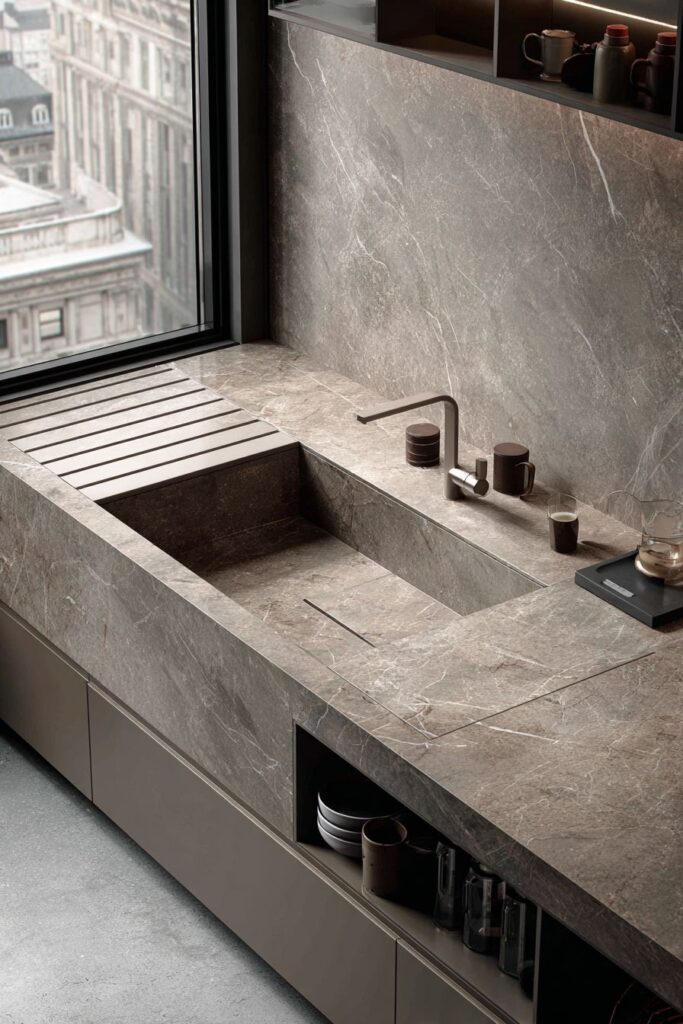
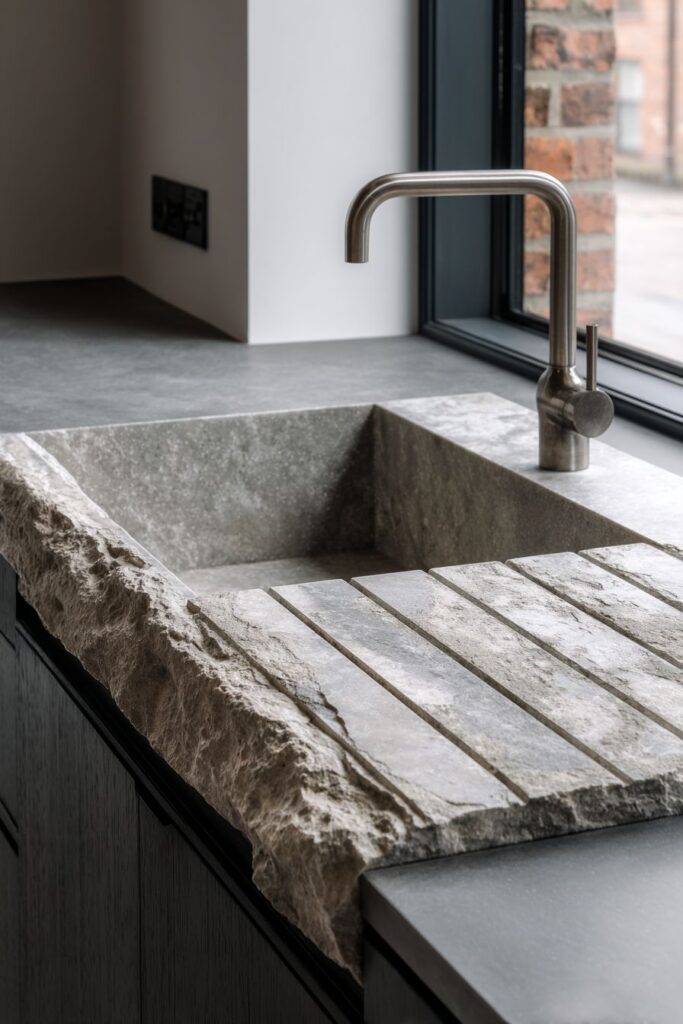
The kitchen sink area becomes a space for meditation and mindfulness when designed with a single deep basin carved from natural stone. This approach elevates the daily tasks of washing and food preparation by providing a workspace that connects users with natural materials and thoughtful design. The stone’s thermal mass and natural texture create a sensory experience that enhances rather than merely accommodates necessary kitchen tasks.
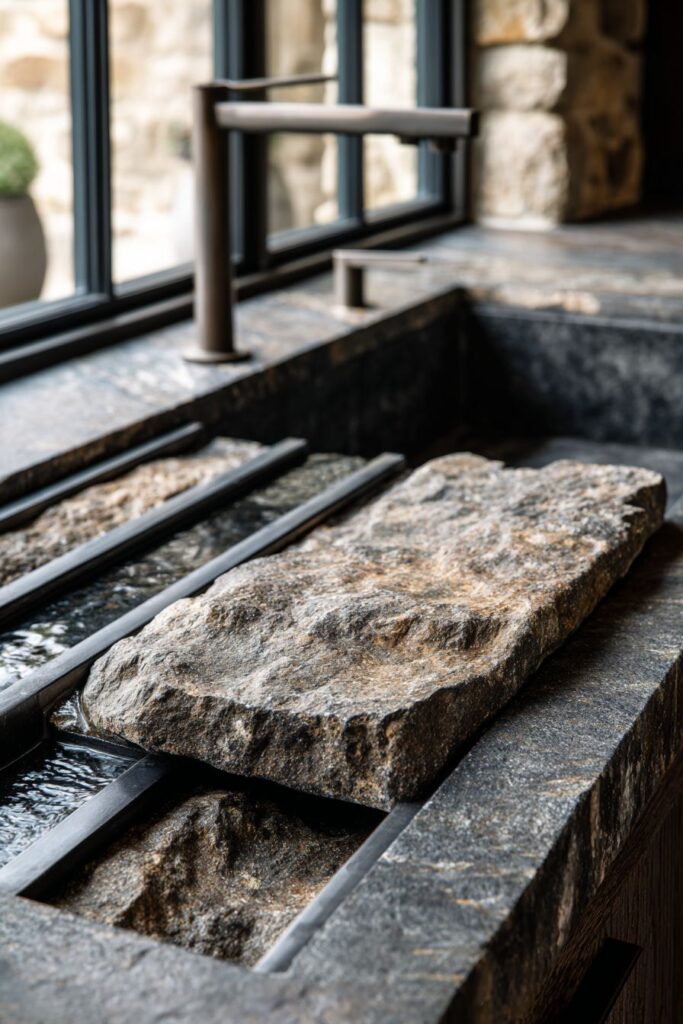
A minimalist faucet in brushed steel provides functionality without visual distraction, allowing the stone basin to command attention as the area’s primary artistic element. The surrounding countertop extends into a subtle draining board with carefully planned grooves that manage water flow while maintaining aesthetic purity. This integration of function and beauty demonstrates how practical necessities can become opportunities for design excellence.
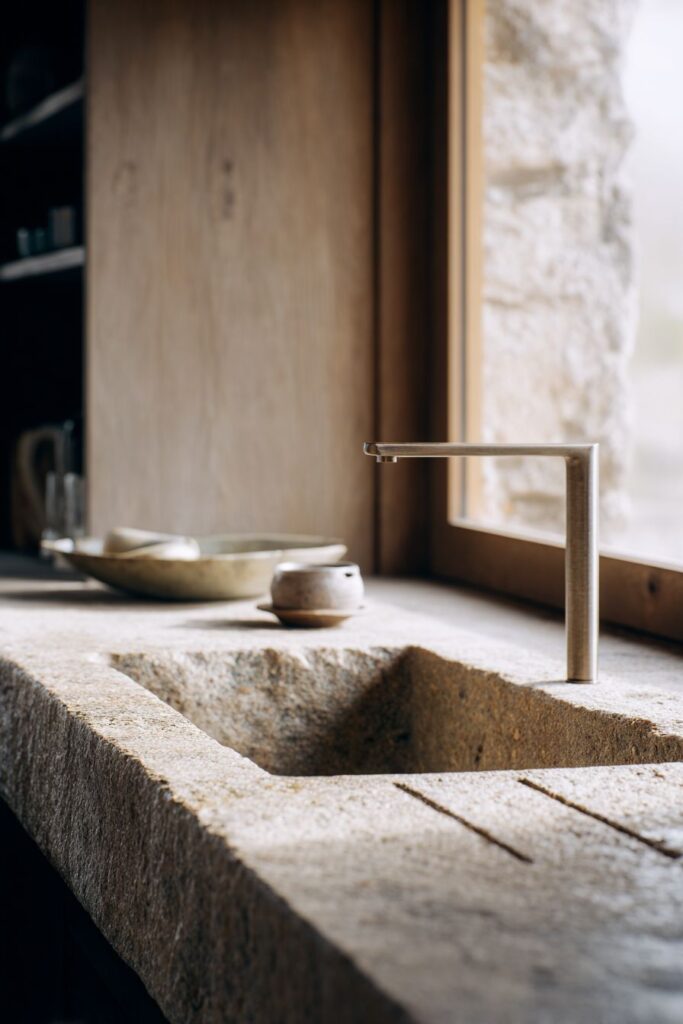
Windows positioned above the sink area provide natural light that enhances the stone’s texture while offering views that make dishwashing and food preparation more pleasant. The combination of natural light, natural materials, and garden views transforms routine tasks into opportunities for peaceful reflection and connection with natural rhythms. This approach honors both cultures’ understanding of how environmental design can enhance daily experiences.
Key Design Tips:
- Select natural stone that complements the overall material palette while providing durability
- Choose faucets with clean lines that complement rather than compete with the stone basin
- Plan drainage carefully to protect surrounding surfaces from water damage
- Position windows to provide both natural light and pleasant views during sink tasks
- Consider the stone’s maintenance requirements and plan appropriate care routines
- Integrate storage nearby for dish towels and cleaning supplies to maintain organization
17. Custom Range Hood as Floating Sculpture
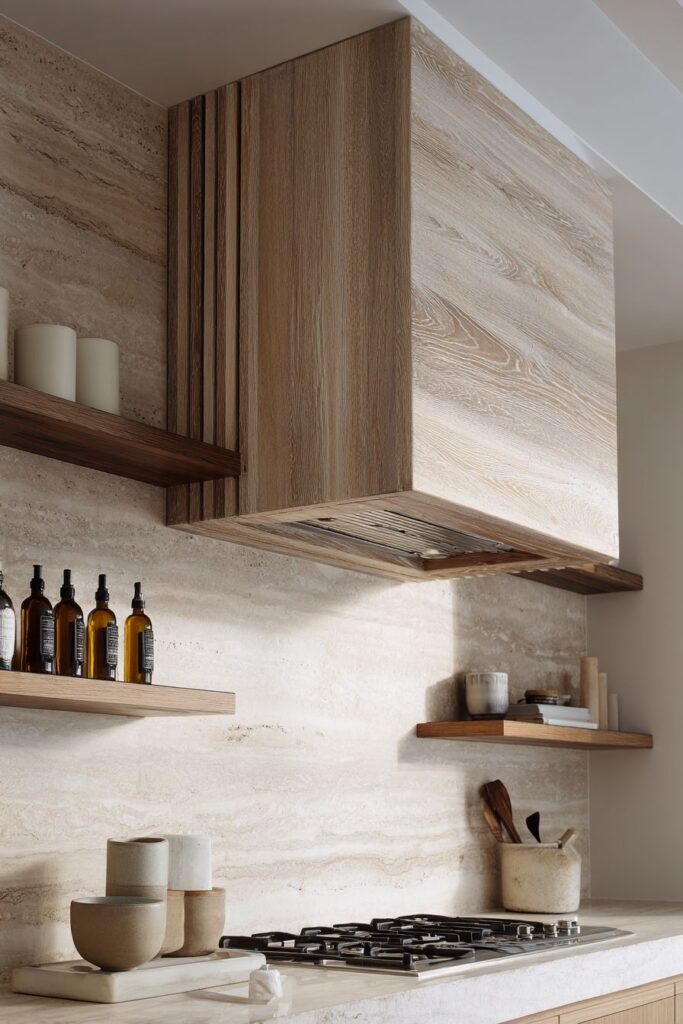
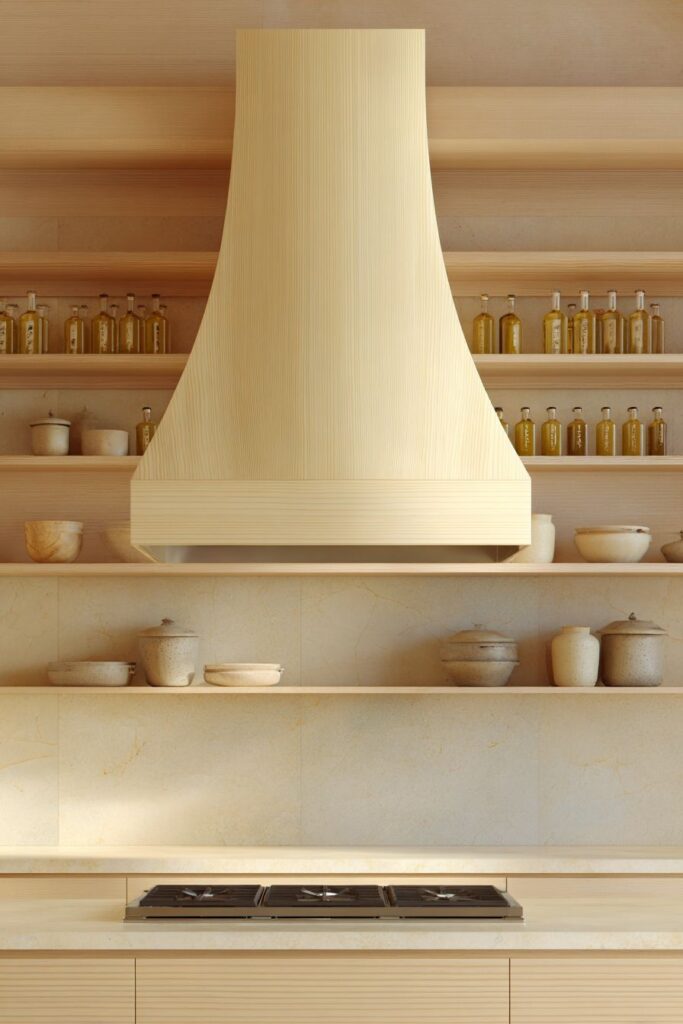
The kitchen range hood transcends mere ventilation to become sculptural art when crafted from pale wood that appears to float above the cooking surface. This approach demonstrates how necessary functional elements can contribute to rather than detract from the overall design excellence. The hood’s seemingly weightless presence reflects both Japanese principles of visual lightness and Scandinavian appreciation for functional beauty.
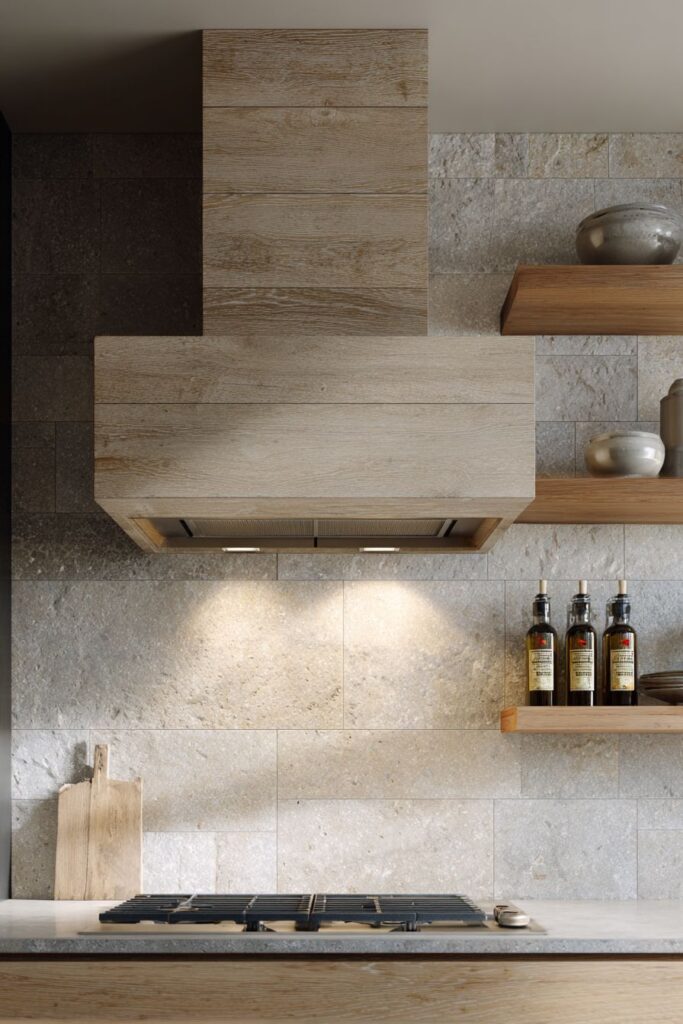
Natural stone backsplash with subtle color variations provides textural backdrop while maintaining the neutral palette that allows the wooden hood to command attention as the area’s primary focal point. Wooden shelving integrated nearby holds essential cooking oils in glass bottles and ceramic containers, creating functional storage that contributes to the overall aesthetic composition. The organic materials work together to create warmth and visual interest while maintaining practical functionality.
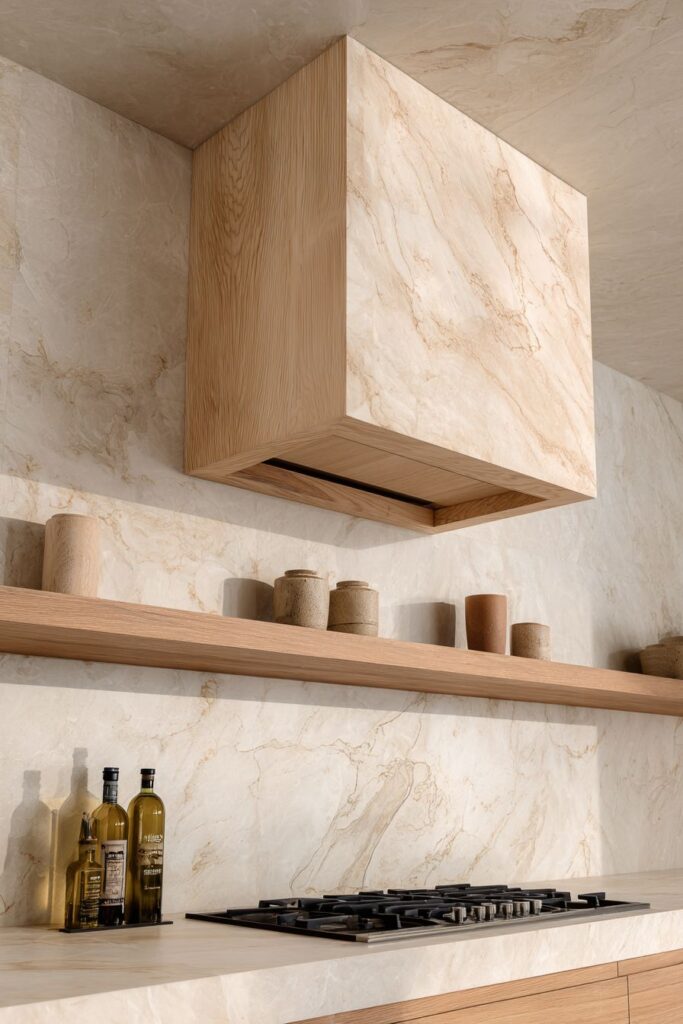
This balance between powerful ventilation capability and aesthetic harmony demonstrates sophisticated engineering that supports both practical cooking needs and design excellence. The hood’s pale wood finish complements the cabinetry while its floating appearance creates visual drama without overwhelming the space. The custom design allows for perfect integration with the kitchen’s specific proportions and functional requirements.
Key Design Tips:
- Plan ventilation capacity carefully to ensure adequate performance for serious cooking
- Select wood finishes that can withstand heat and moisture from cooking activities
- Design the floating effect with proper structural support that remains invisible
- Integrate the hood’s proportions with the overall kitchen scale and cabinet arrangements
- Choose complementary materials for backsplash and nearby storage elements
- Consider lighting integration within or around the hood for enhanced task illumination
18. Wide-Plank Flooring with Natural Character
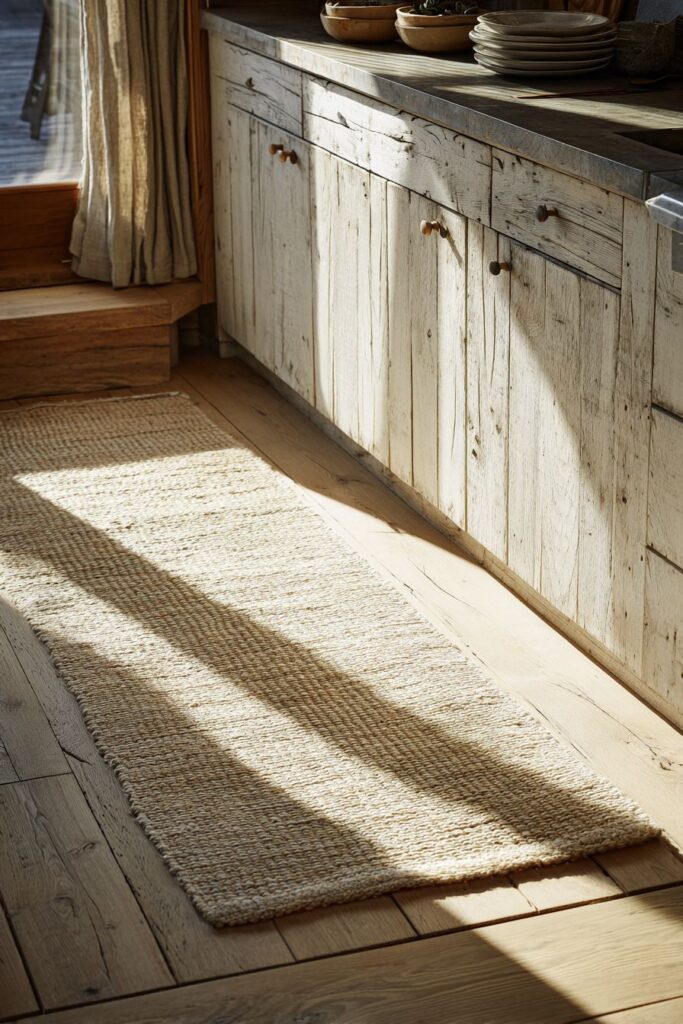
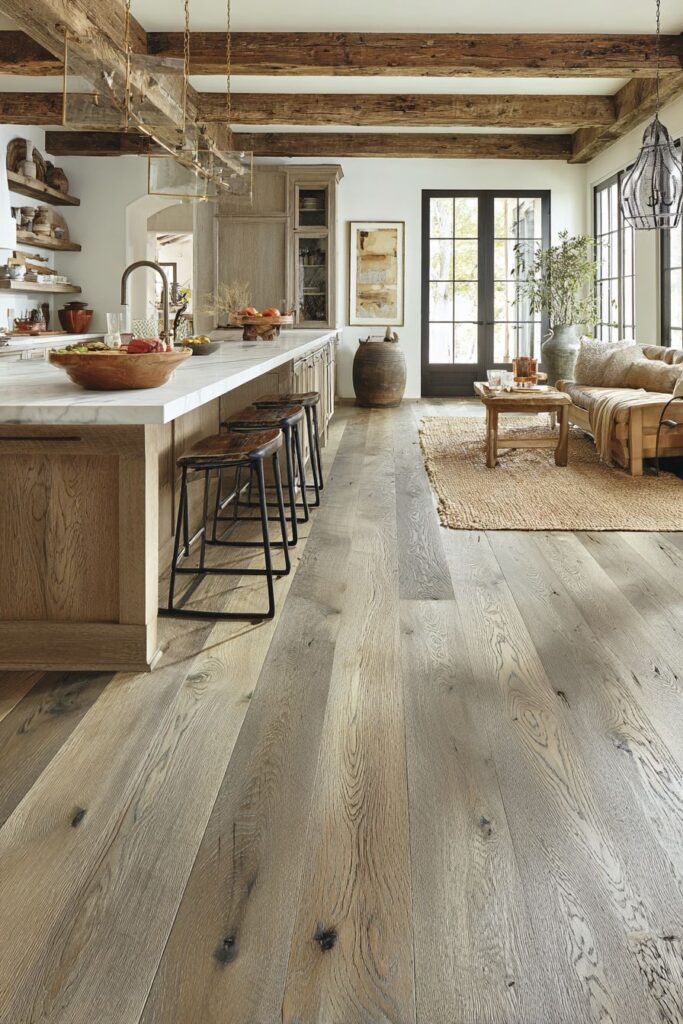
The kitchen floor provides the foundation for the entire design composition when planned with wide-plank white oak that showcases natural knots and grain variations. This approach celebrates the wood’s authentic character while creating visual continuity that extends seamlessly into adjacent living spaces. The flooring’s natural imperfections tell the story of each tree’s growth, bringing awareness of natural processes directly into the daily kitchen experience.
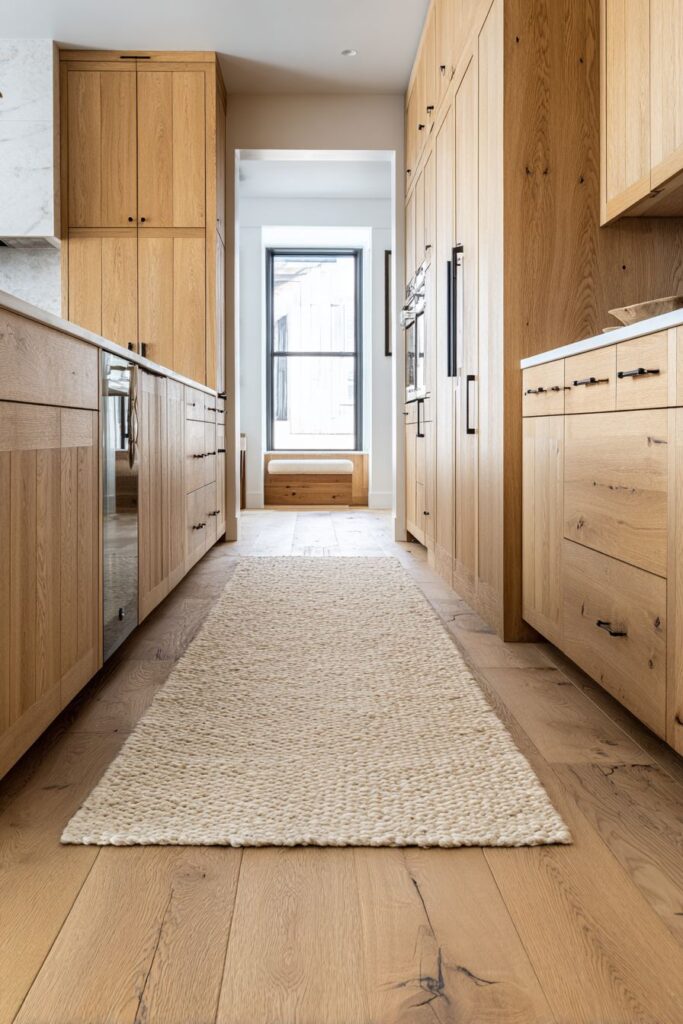
The seamless transition from kitchen to living areas creates spatial flow that enhances the perception of size while maintaining design coherence throughout the home. Natural jute area rugs provide textural definition and warmth underfoot while protecting high-traffic areas from excessive wear. These organic fiber rugs complement the wood flooring while adding another layer of natural material authenticity.
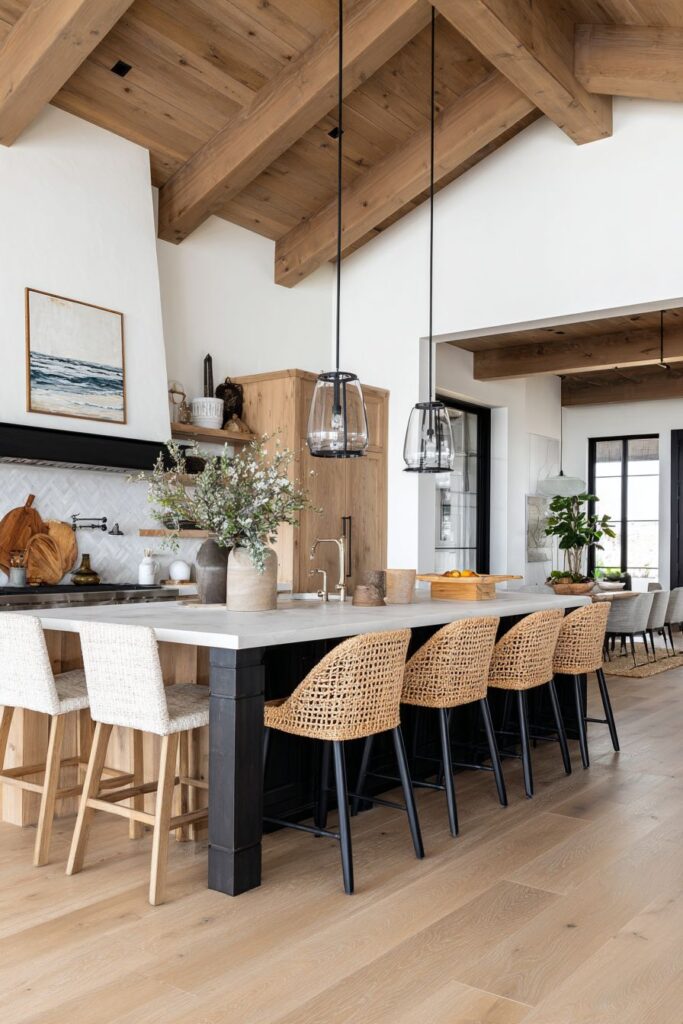
The commitment to celebrating rather than hiding wood’s natural grain patterns reflects both cultures’ appreciation for honest materials that age gracefully over time. Each plank’s unique character contributes to the floor’s overall beauty while the wide-plank format creates visual spaciousness that enhances the kitchen’s sense of openness. Low-maintenance finishing allows the wood’s natural beauty to shine while providing practical durability for family use.
Key Design Tips:
- Select wide planks that showcase beautiful grain patterns and natural character
- Plan installation carefully to ensure proper acclimation and stable performance
- Choose finishes that protect the wood while maintaining its natural appearance
- Consider traffic patterns when planning rug placement for both protection and aesthetics
- Ensure smooth transitions between kitchen flooring and adjacent room surfaces
- Plan maintenance routines that preserve the floor’s beauty while accommodating daily use
19. Flexible Track Lighting with Natural Integration
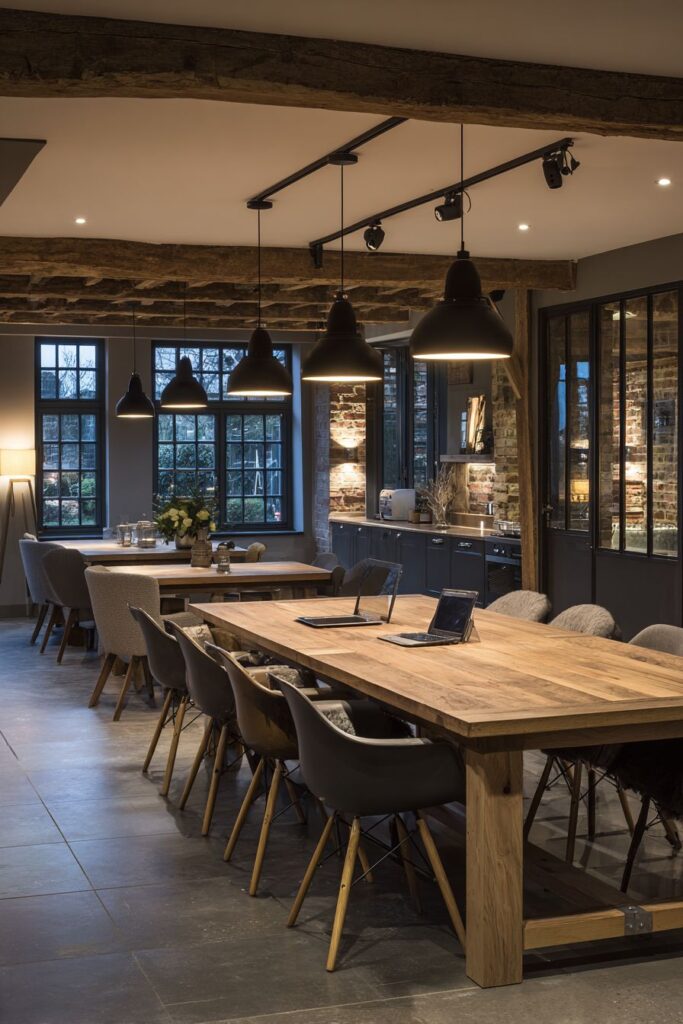
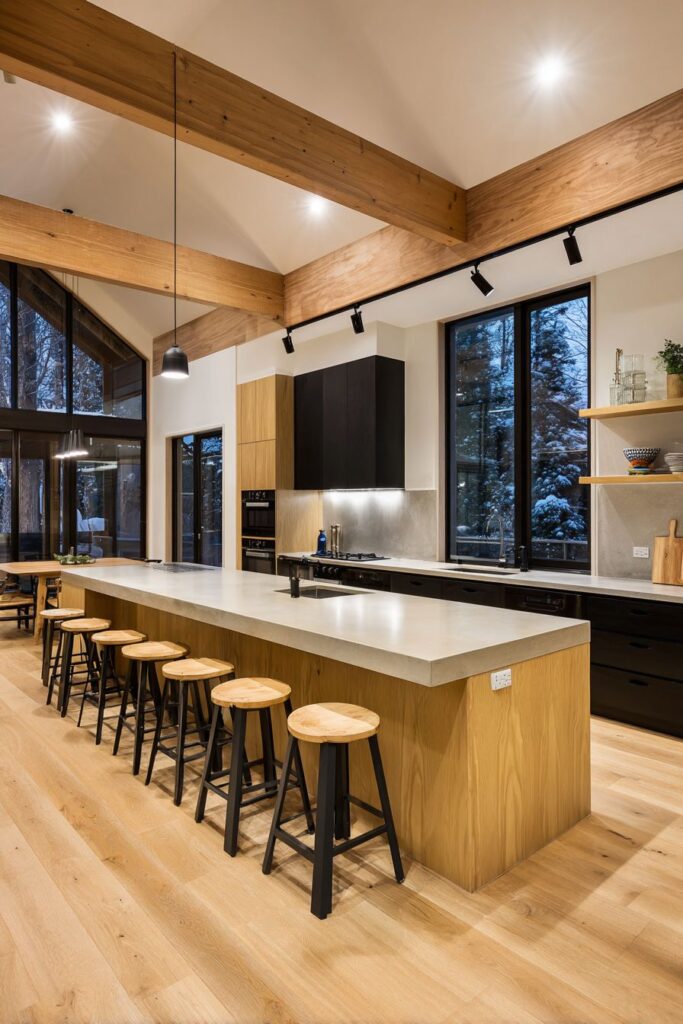
Ceiling-mounted track lighting provides flexible illumination while maintaining the minimal visual impact essential to Japandi design principles. Adjustable heads in matte black finish offer practical workspace lighting that can be repositioned as needs change, while the restrained color palette ensures that the fixtures integrate harmoniously with the overall design composition. This approach demonstrates how functional lighting can support rather than dominate the aesthetic environment.
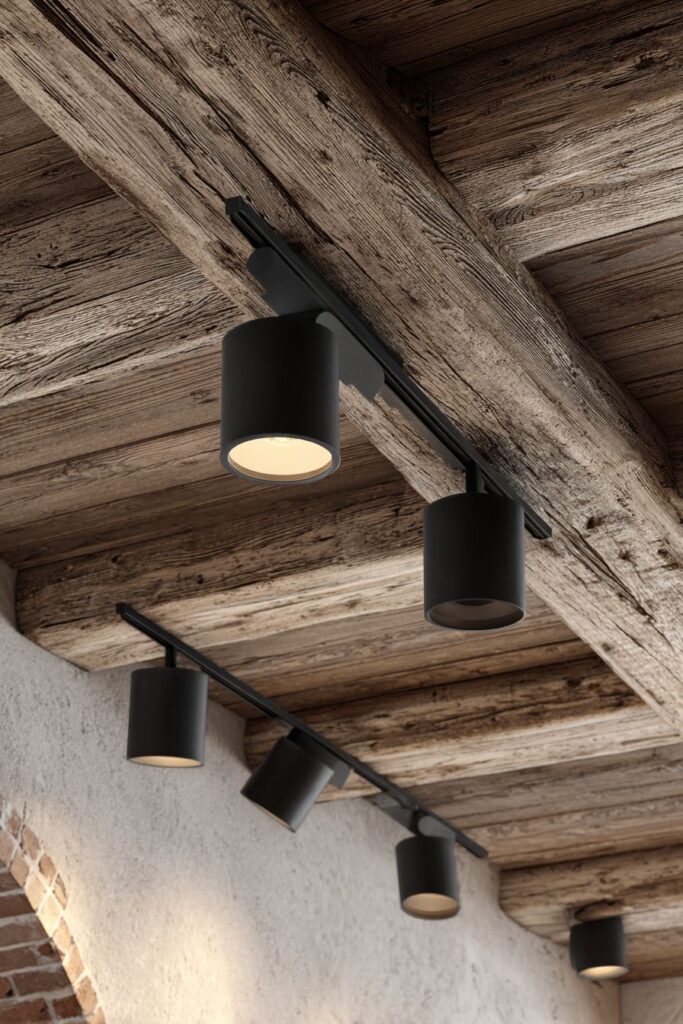
Natural wood beam details add architectural interest to the ceiling plane while providing visual warmth that balances the technical aspects of the track lighting system. The beams’ organic texture contrasts beautifully with the geometric precision of the light fixtures while maintaining the natural material emphasis that defines the space. The combination creates visual depth and interest without sacrificing the clean lines that characterize the style.
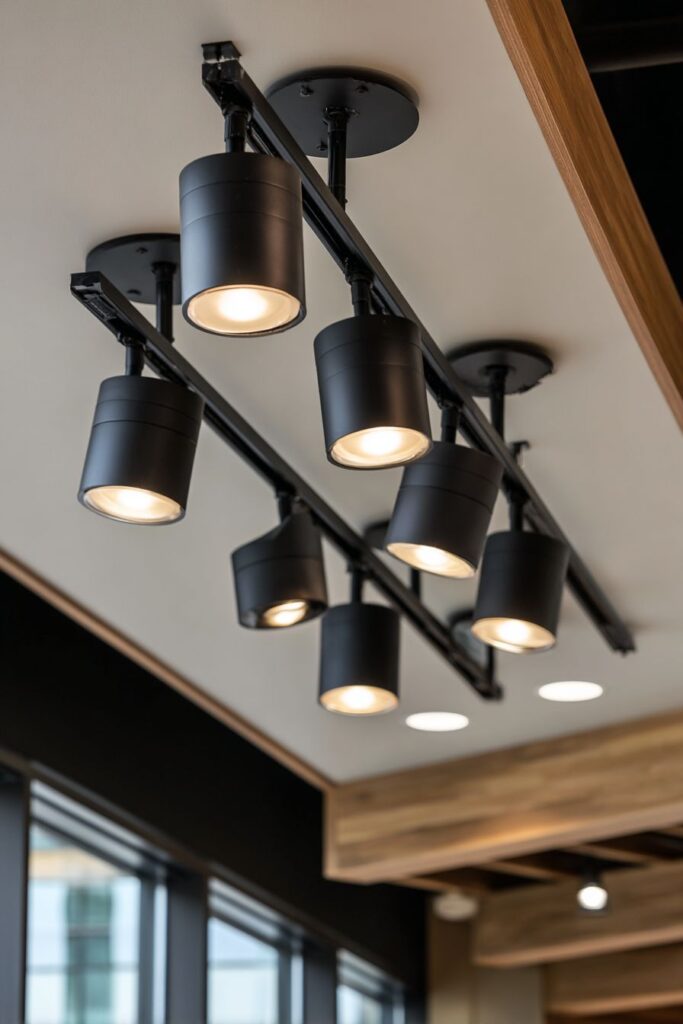
The balance between ambient and task lighting needs reflects sophisticated understanding of how different lighting conditions support various kitchen activities throughout the day. Evening ambiance with warm color temperatures creates atmosphere for relaxed dining while bright task lighting supports detailed food preparation. The adjustable nature of track lighting allows users to customize illumination for specific activities while maintaining overall design coherence.
Key Design Tips:
- Plan track placement to provide adequate coverage for all work areas without excessive fixtures
- Choose matte black finishes that integrate well with natural wood elements
- Include natural wood ceiling details that add warmth and textural interest
- Select LED bulbs with warm color temperatures that complement natural materials
- Consider dimming capabilities for flexible ambiance control throughout the day
- Position tracks to avoid shadows on work surfaces during food preparation tasks
20. Complete Kitchen Renovation Philosophy
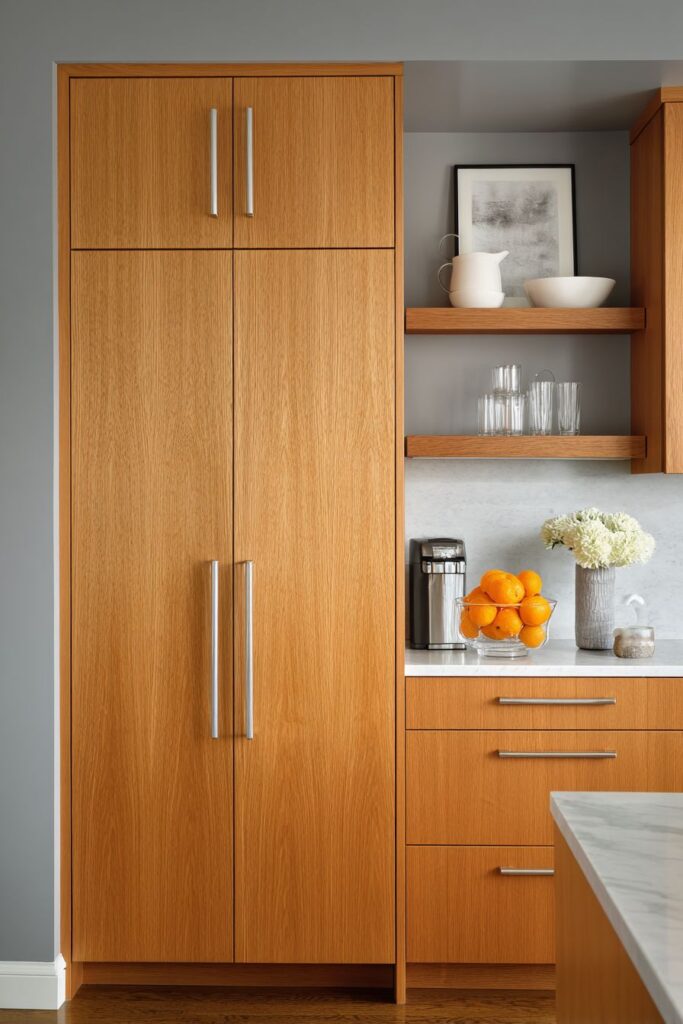
A complete Japandi kitchen renovation represents the successful integration of two distinct design traditions into a cohesive living environment that serves modern family needs while honoring timeless aesthetic principles. The transformation from traditional to minimalist aesthetic demonstrates how thoughtful design can create spaces that feel both contemporary and timeless, functional and beautiful, practical and serene.
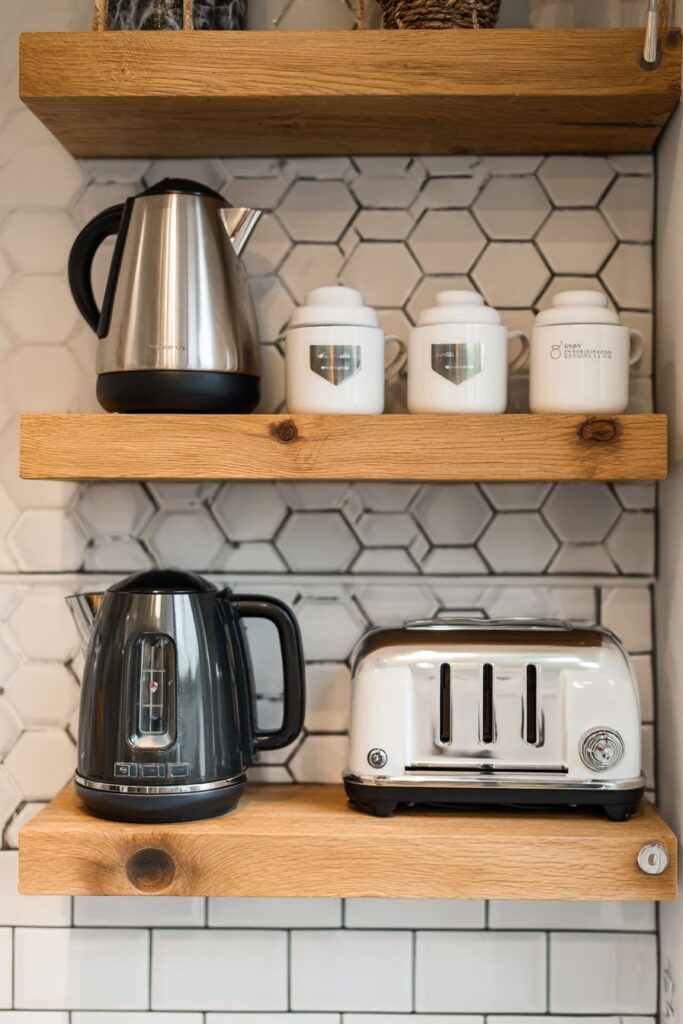
The cohesive palette of natural wood, white, and soft grey creates visual harmony while carefully selected hardware and fixtures provide necessary functionality without disrupting the overall aesthetic composition. Each element serves both practical and aesthetic purposes, embodying the fundamental principle that true design excellence emerges when function and beauty work together seamlessly. No element exists merely for decoration; everything contributes to both daily use and visual pleasure.
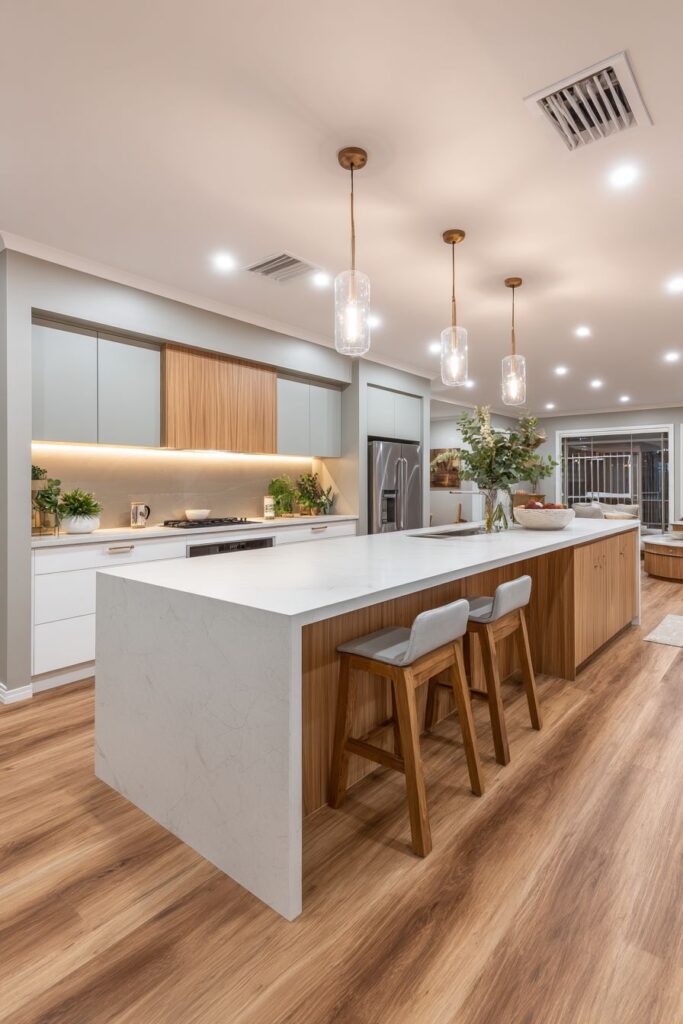
This approach to kitchen design reflects a lifestyle philosophy that values quality over quantity, mindfulness over convenience, and lasting beauty over temporary trends. The space embodies principles from both Japanese and Scandinavian design traditions while creating something entirely new and perfectly suited to contemporary living. The successful integration proves that different cultural approaches to design can strengthen rather than dilute each other when thoughtfully combined.
The renovation process requires careful planning and skilled execution to achieve the seamless integration of materials, functions, and aesthetic elements. Professional installation ensures that every joint, surface, and detail meets the exacting standards that Japandi design demands. The result is a kitchen that will age gracefully while providing decades of beautiful and functional service to the families who use it daily.
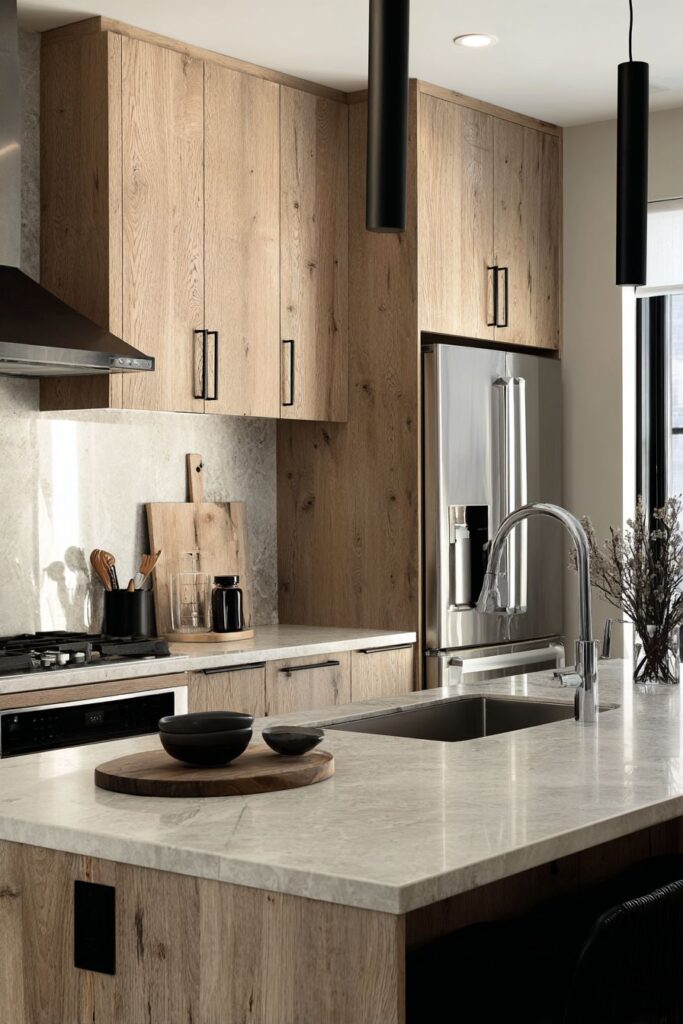
Key Design Tips:
- Plan renovations comprehensively to ensure all elements work together harmoniously
- Invest in quality materials and skilled installation for lasting beauty and performance
- Consider long-term maintenance requirements when selecting finishes and materials
- Balance aesthetic goals with practical family needs for sustainable daily use
- Document the design process to guide future maintenance and potential updates
- Create spaces that support both efficient cooking and peaceful gathering for optimal family life
Why These Japandi Kitchen Designs Represent the Best of Both Worlds
The twenty kitchen concepts presented here demonstrate why Japandi style has become the preferred choice for discerning homeowners seeking spaces that combine aesthetic excellence with practical functionality. Each design celebrates the marriage of Japanese minimalism with Scandinavian functionality, creating kitchens that serve as both highly efficient workspaces and serene sanctuaries for daily life.
The emphasis on natural materials like white oak, teak, and natural stone connects inhabitants with organic textures and processes that provide psychological grounding in our increasingly digital world. These materials age beautifully, developing character and patina that enhance rather than diminish their beauty over time. The investment in quality natural materials represents a commitment to sustainability and lasting value that transcends temporary design trends.
Storage solutions that prioritize both organization and beauty demonstrate how practical necessities can contribute to rather than detract from overall design excellence. Hidden push-to-open mechanisms, integrated herb gardens, and carefully curated open shelving prove that functionality and aesthetics can work together to create spaces that please both the eye and the practical mind. The attention to organization reflects deep cultural values about the importance of order and mindfulness in daily life.
The integration of technology with traditional craftsmanship shows how contemporary convenience can coexist with timeless design principles. Hidden appliances and seamless storage solutions provide modern functionality while visible wood joints and handcrafted details celebrate human skill and natural material authenticity. This balance creates kitchens that feel both cutting-edge and deeply rooted in cultural tradition.
Lighting design that honors natural rhythms while providing practical illumination demonstrates sophisticated understanding of how environmental factors affect daily experience. The use of natural materials for light fixtures, strategic window placement for optimal daylight, and flexible artificial lighting systems create spaces that support both energetic food preparation and peaceful evening dining.
The emphasis on creating spaces for mindful activities, from dedicated coffee stations to breakfast nooks with garden views, reflects the deeper philosophy that underlies both Japanese and Scandinavian design traditions. These cultures understand that environmental design profoundly affects human well-being and that thoughtfully created spaces can support more conscious and peaceful approaches to daily life.
Family-friendly adaptations prove that sophisticated design and practical family living are not mutually exclusive. Storage solutions that accommodate children’s needs while maintaining clean aesthetic lines, durable natural materials that improve with use, and flexible spaces that adapt to changing family activities demonstrate how good design serves real life rather than merely creating beautiful photographs.
The celebration of imperfection through live-edge details, natural wood grain, and handcrafted elements reflects a mature understanding that authentic beauty emerges from accepting rather than fighting natural variation. This philosophy creates spaces that feel alive and authentic rather than sterile and perfect, supporting human comfort and psychological well-being.
The integration of plant life and natural views connects interior spaces with seasonal changes and natural growth cycles, providing daily reminders of the larger natural world. This connection supports both physical and mental health while creating dynamic visual interest that changes throughout the year. The commitment to bringing nature indoors reflects both cultures’ understanding of humans’ fundamental need for connection with the natural world.
Professional installation and attention to craftsmanship details ensure that these designs provide lasting beauty and reliable performance. The investment in skilled execution reflects understanding that true luxury comes from quality rather than ostentation, and that well-made spaces provide greater long-term satisfaction than quickly executed alternatives.
These Japandi kitchen designs represent the evolution of interior design toward more thoughtful, sustainable, and human-centered approaches to creating living spaces. They prove that it is possible to create environments that are simultaneously beautiful and practical, sophisticated and comfortable, contemporary and timeless. The success of this design philosophy reflects growing awareness that our living environments profoundly affect our daily experience and that investing in thoughtful design is an investment in quality of life.
Conclusion
The Japandi kitchen represents more than a design trend; it embodies a philosophy of living that values quality over quantity, mindfulness over speed, and authentic beauty over superficial decoration. These twenty distinct interpretations demonstrate the remarkable flexibility and enduring appeal of combining Japanese minimalism with Scandinavian functionality to create spaces that serve contemporary needs while honoring timeless principles.
The success of these designs lies in their ability to create environments that support both practical cooking activities and peaceful daily experiences. By emphasizing natural materials, thoughtful organization, and the integration of nature into interior spaces, these kitchens become sanctuaries that nurture both body and spirit. The careful balance between functionality and aesthetics ensures that these spaces will continue to serve families beautifully for decades to come.
Whether you’re planning a complete kitchen renovation or seeking inspiration for smaller updates, the principles demonstrated in these designs offer guidance for creating spaces that embody the very best of both Japanese and Scandinavian design traditions. The key lies in understanding that true luxury comes not from expensive materials or elaborate decoration, but from thoughtful planning, quality craftsmanship, and the creation of spaces that enhance daily life through their beauty, functionality, and connection to natural materials and processes.
As you begin to incorporate these Japandi principles into your own kitchen design, start with small changes that reflect the core values of both traditions. Consider replacing hardware with integrated solutions that create cleaner lines, introduce natural materials through cutting boards or storage containers, or reorganize existing storage to reflect the Japanese principle of giving every item a designated place. These incremental changes can begin the transformation toward a more mindful and beautiful kitchen environment.
The enduring appeal of Japandi design lies in its ability to create spaces that feel both contemporary and timeless, sophisticated and comfortable, practical and beautiful. By choosing this approach for your kitchen renovation, you’re investing in a design philosophy that will continue to provide satisfaction and functionality long after temporary trends have faded. The natural materials will age gracefully, developing character and beauty that cannot be achieved through artificial alternatives.
Remember that the most successful Japandi kitchens emerge from understanding the deeper principles rather than simply copying surface aesthetics. Focus on creating spaces that support mindful living, celebrate natural materials, and provide both practical functionality and visual serenity. The goal is not perfection but harmony—the seamless integration of all elements into a unified whole that serves your family’s specific needs while embodying the timeless wisdom of two great design traditions.
The future of kitchen design lies in approaches like Japandi that prioritize sustainability, mindfulness, and authentic beauty over temporary trends and excessive consumption. By choosing to create a kitchen that embodies these values, you’re participating in a larger movement toward more conscious and thoughtful approaches to living. Your kitchen becomes not just a workspace but a daily reminder of the importance of quality, beauty, and connection to the natural world in creating a truly satisfying life.
"As an Amazon Associate, I earn from qualifying purchases."
