
Japanese kitchen design represents centuries of refined philosophy where functionality and beauty exist in perfect harmony. Rooted in principles of simplicity, respect for materials, and mindful space utilization, these kitchens embody a profound understanding of how environments shape daily rituals. The Japanese approach transforms cooking spaces into serene sanctuaries that nourish both body and spirit.

Western kitchens often prioritize abundance and display, while Japanese design embraces restraint and intentionality. Every element serves a purpose, every material receives respect, and every space breathes with carefully considered emptiness. This philosophy, influenced by Zen Buddhism and traditional craftsmanship, creates kitchens that feel calm, organized, and deeply satisfying to inhabit.

Understanding these time-honored principles offers valuable insights for anyone seeking to create more mindful, efficient kitchen spaces. Whether you’re designing a new kitchen or refining an existing one, Japanese design wisdom provides practical guidance that transcends cultural boundaries. These eight fundamental principles reveal how simplicity, natural materials, and thoughtful organization create kitchens that serve life beautifully while honoring the art of cooking.
1. Embrace Ma – The Beauty of Negative Space
The concept of ma represents the intentional void between objects, the breathing room that gives meaning to what surrounds it.
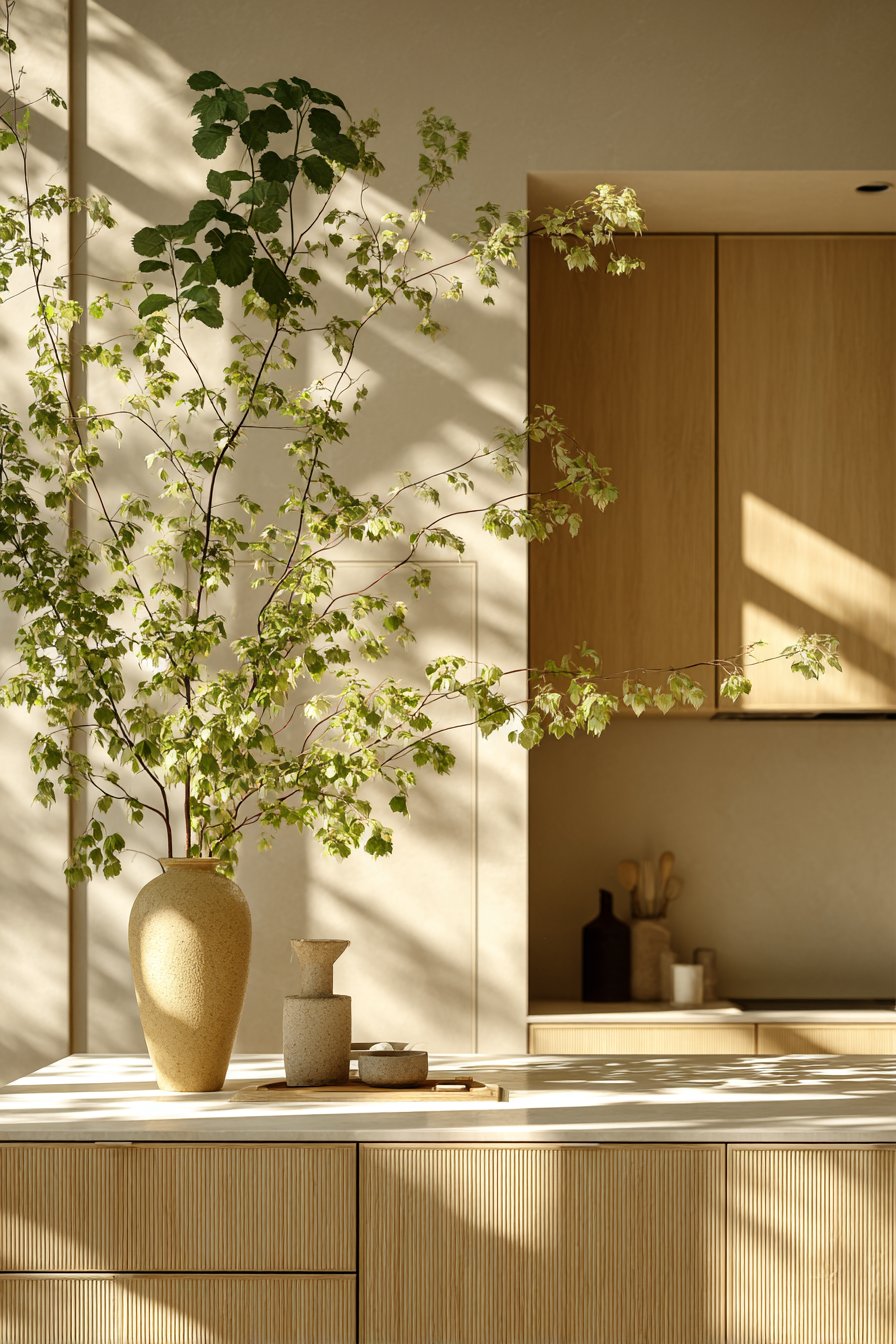
In Japanese kitchens, this translates to uncluttered countertops, minimal display, and spaces that feel open despite compact dimensions. This emptiness isn’t absence but rather purposeful presence that allows focus and clarity.
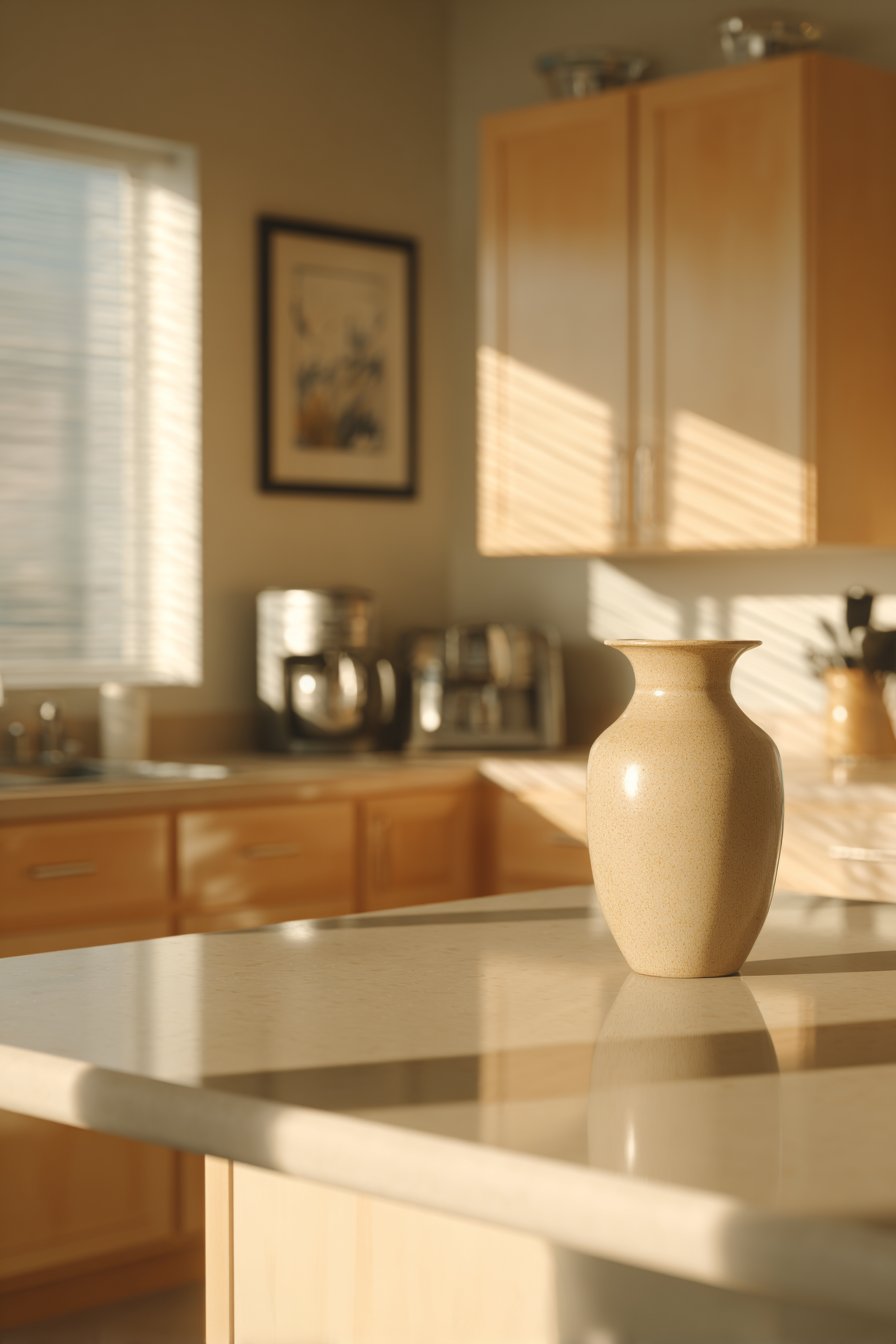
Creating ma requires discipline in what you choose to keep visible and accessible. Counters remain clear except during active cooking, with most items stored behind closed doors.
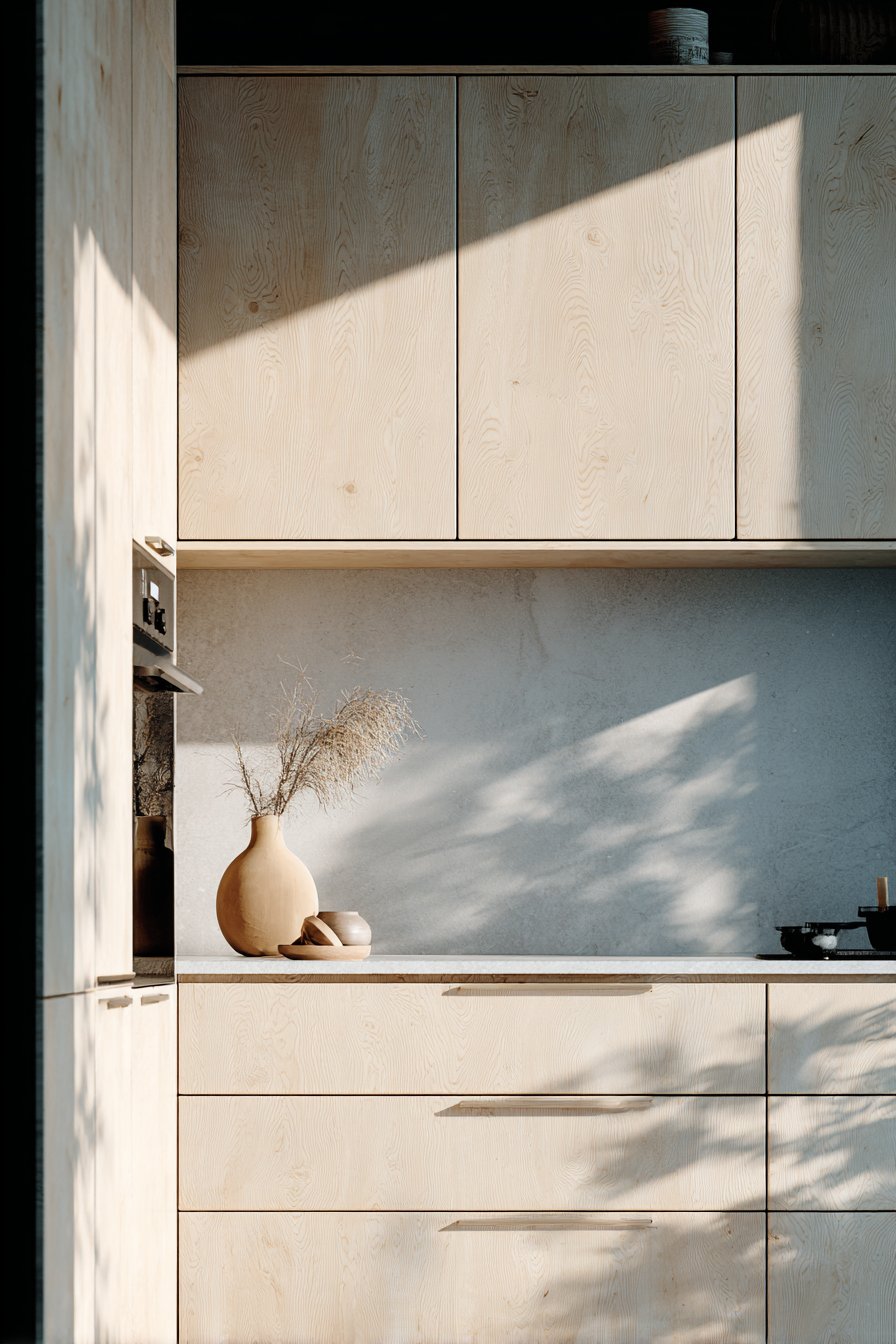
This approach reduces visual noise and mental clutter while making cleaning effortless. The psychological benefits of empty space create calm environments where cooking becomes meditation rather than chaos.
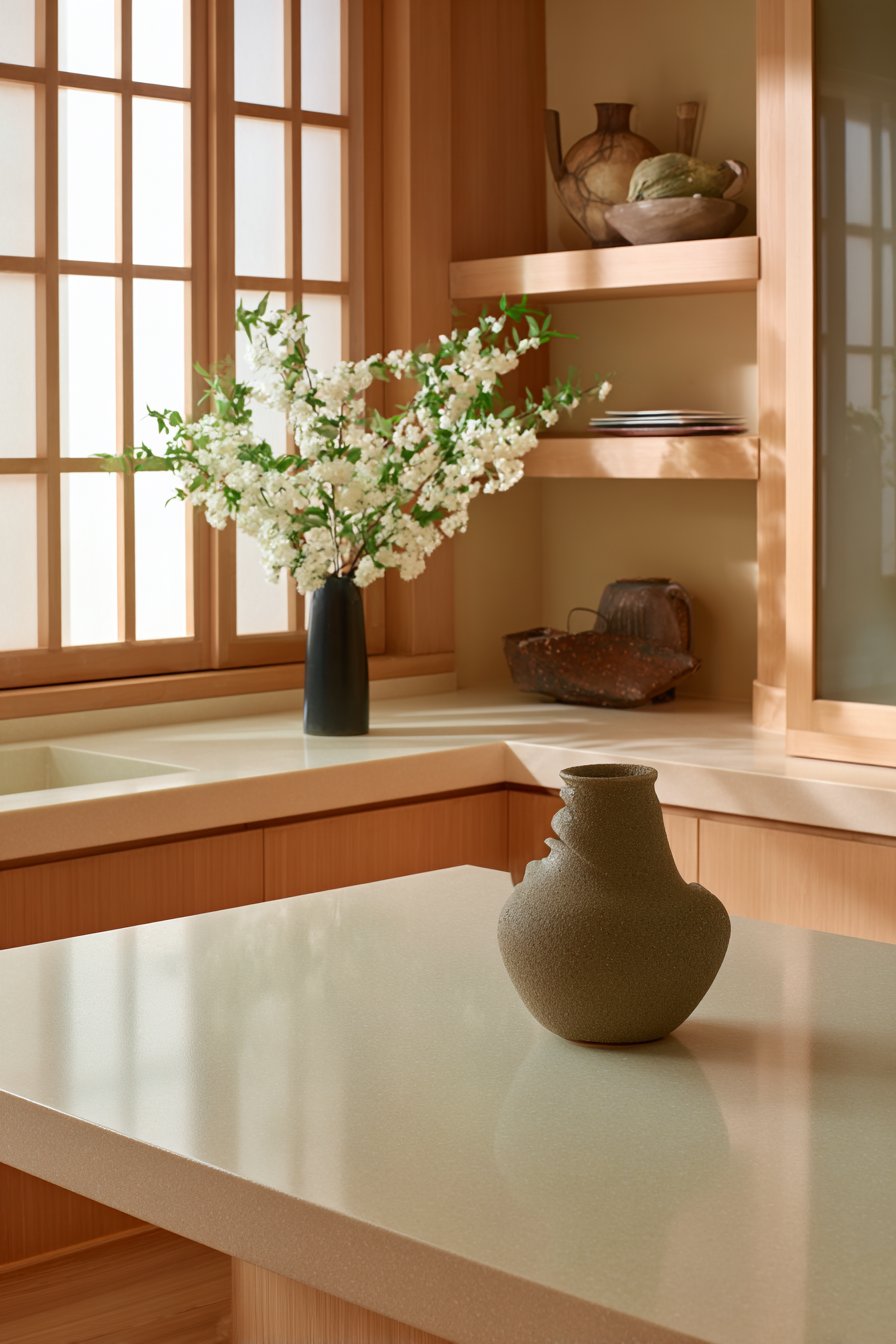
- Maintain clear countertops with only essential daily-use items visible
- Store small appliances in cabinets rather than leaving them out
- Create breathing room around displayed objects rather than crowding surfaces
- Choose quality over quantity in every possession and placement decision
- Allow empty wall space rather than filling every surface with decoration
- Practice regular editing to maintain the sense of spaciousness
2. Honor Natural Materials and Their Inherent Beauty
Japanese design celebrates unfinished, natural materials that age gracefully and develop character through use. Wood in its natural state, stone with visible texture, and metal that develops patina all embody the principle of wabi-sabi—finding beauty in imperfection and impermanence.
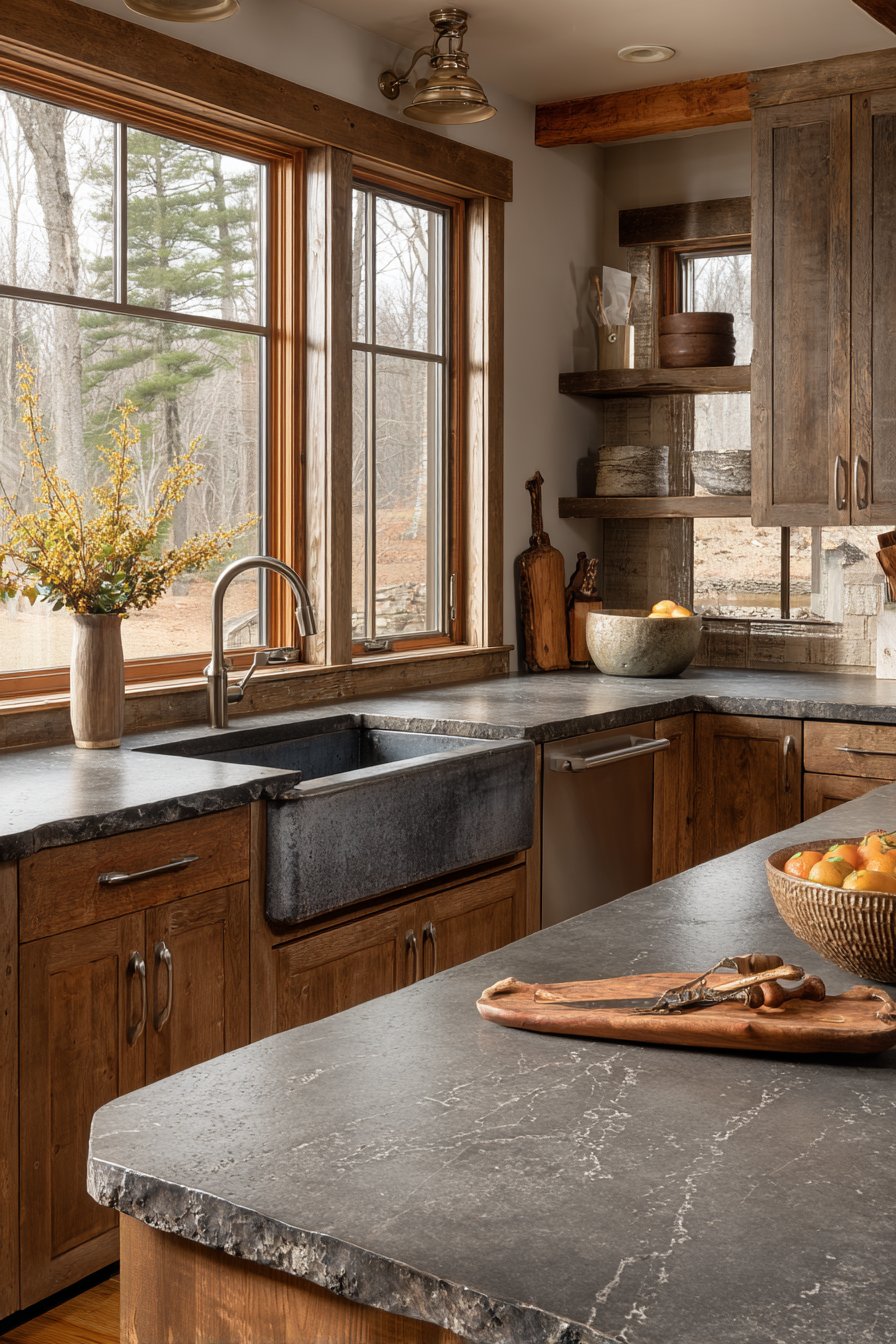
These materials connect kitchens to nature while telling stories through their evolving surfaces. Light woods like hinoki cypress, cedar, and bamboo dominate traditional Japanese kitchens for their warmth and antimicrobial properties.
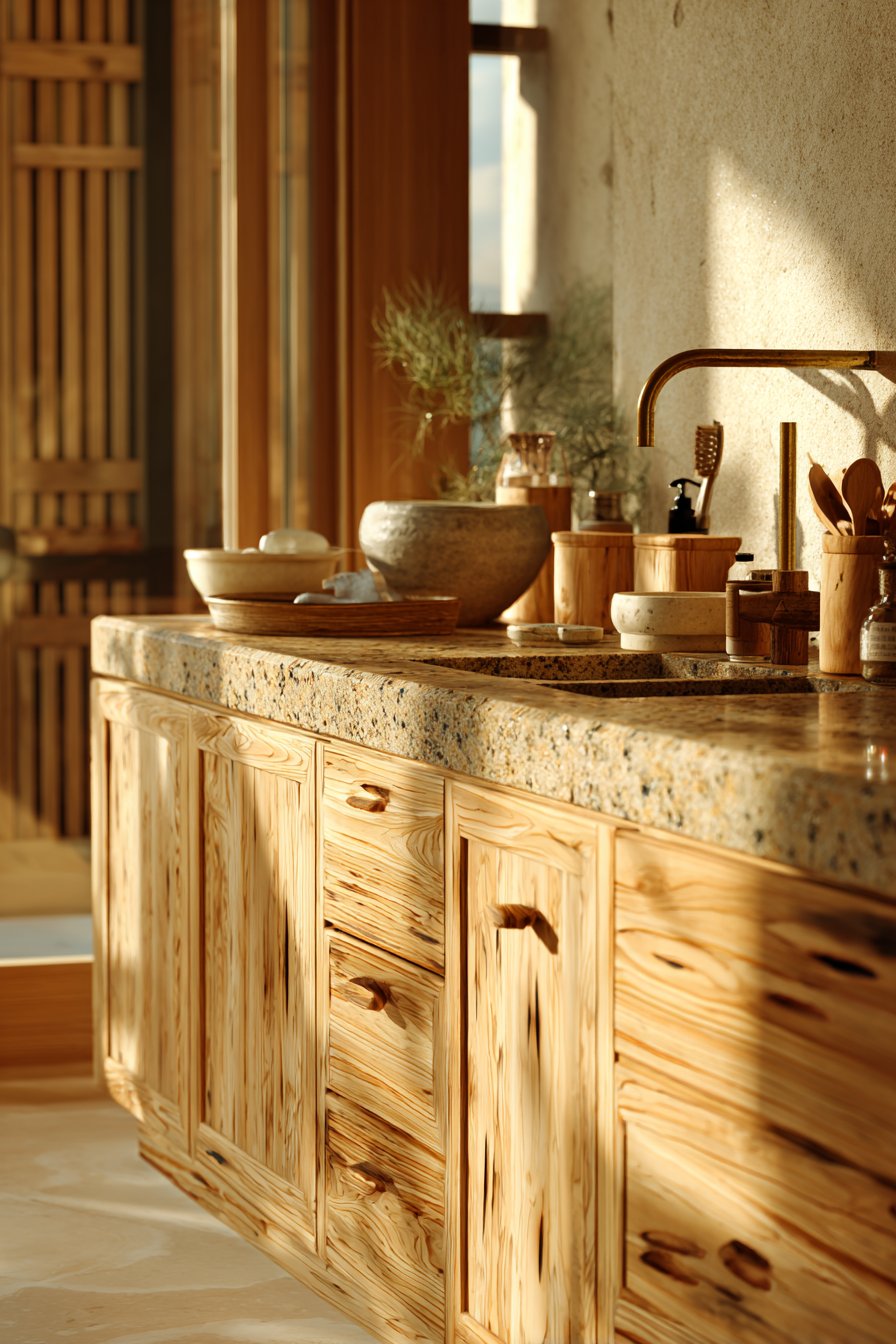
Stone countertops and ceramic sinks showcase natural variations in color and texture rather than uniform perfection. This respect for materials means choosing solid construction over laminates and celebrating wood grain patterns rather than concealing them.
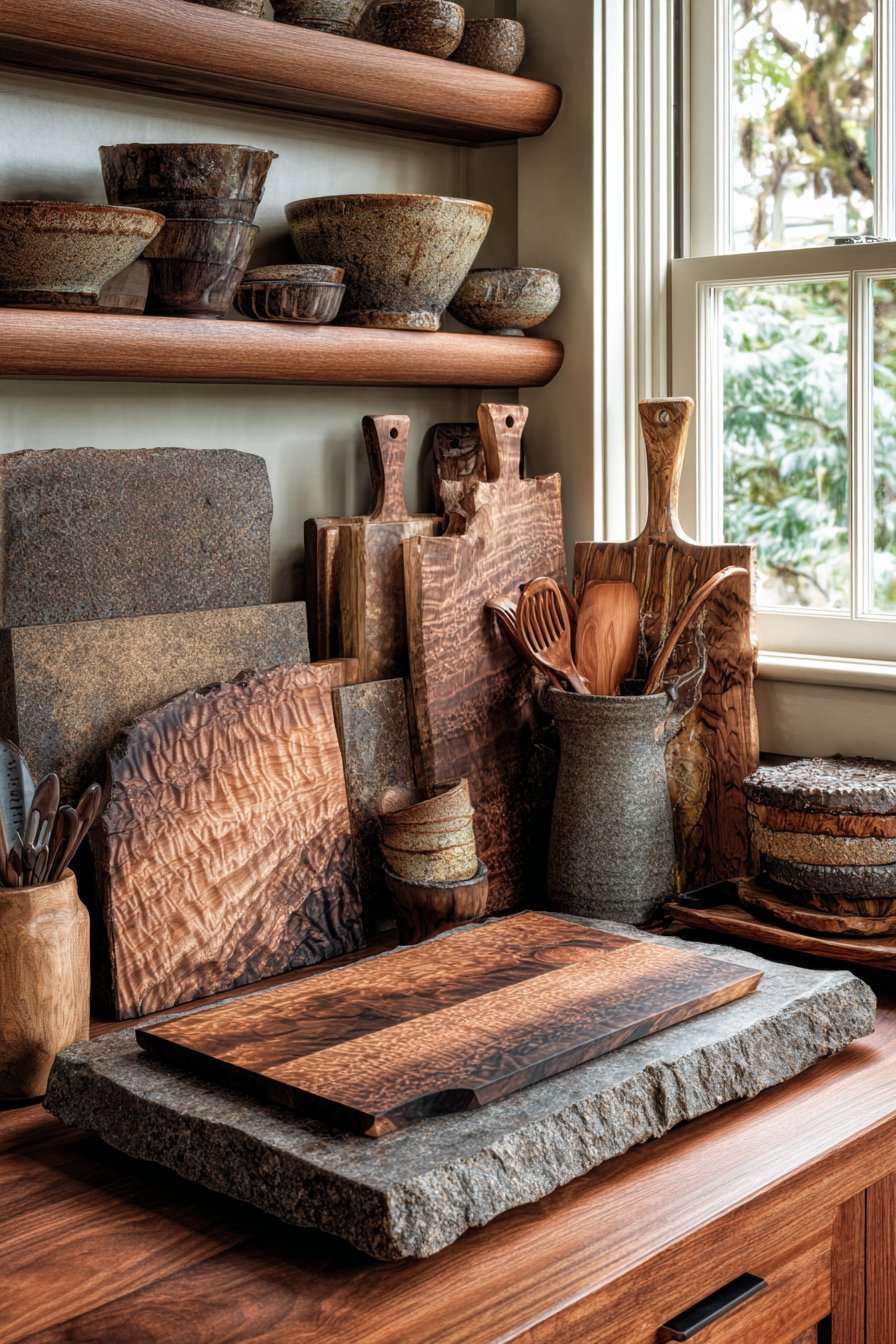
- Select solid wood cabinetry in natural finishes that showcase grain
- Choose stone countertops with visible natural variation and texture
- Incorporate bamboo for cutting boards, utensils, and storage solutions
- Use ceramic and stoneware for sinks and decorative elements
- Allow metal fixtures to develop natural patina over time
- Avoid synthetic materials that imitate natural ones poorly
3. Perfect the Art of Compact Storage
Japanese homes pioneered vertical storage solutions and space-saving innovations born from necessity. Every cubic inch serves a purpose through clever organizational systems that keep items accessible yet hidden.
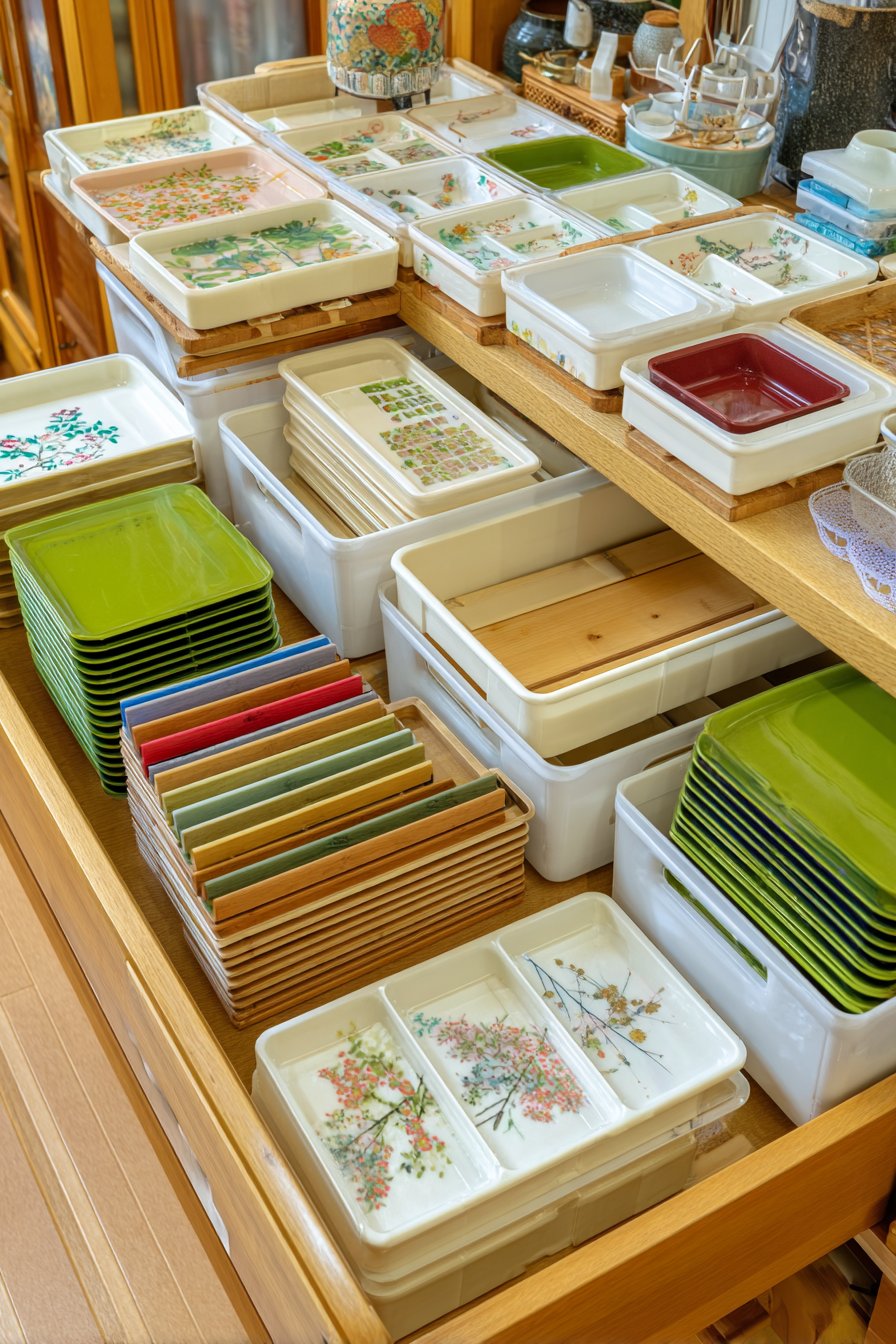
Drawers within drawers, pull-out pantries, and vertical dividers maximize storage density while maintaining visual simplicity on the surface.
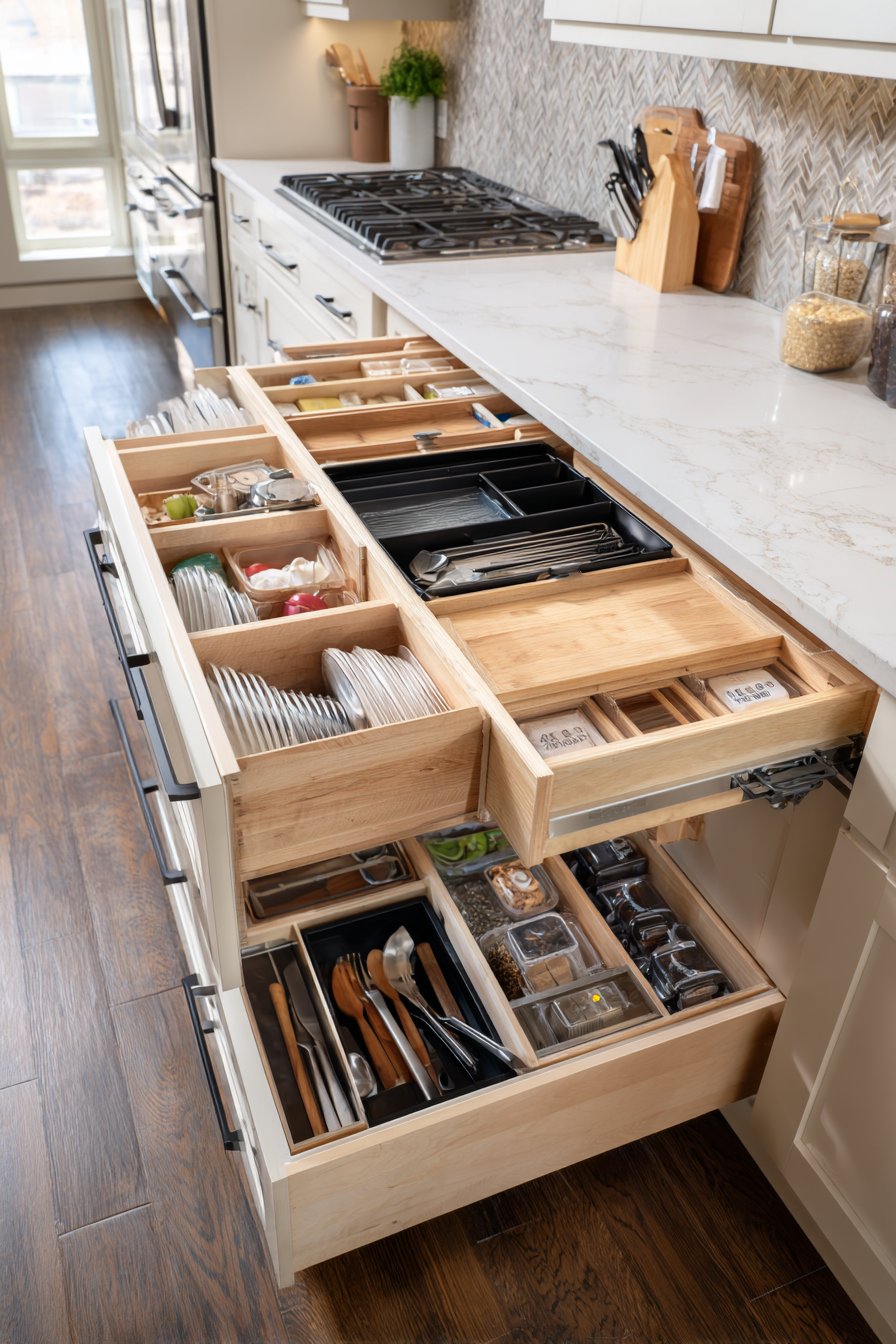
The principle of omotenashi—wholehearted hospitality—extends to how storage serves the cook. Frequently used items occupy the most accessible positions, while seasonal or specialty equipment stores in higher or deeper locations. This hierarchical organization respects both the tools and the person using them through thoughtful placement.
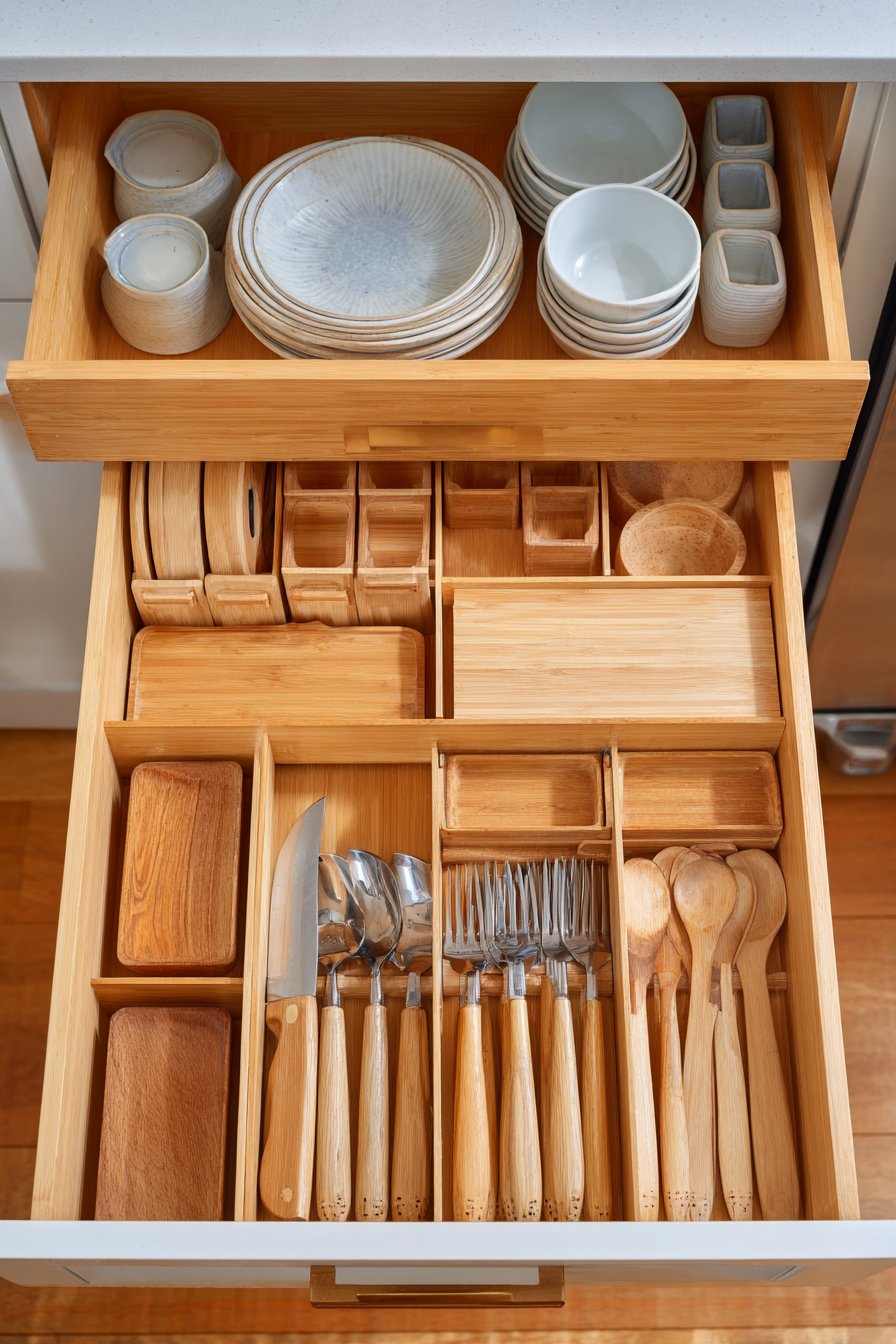
- Install deep drawers with custom inserts for vertical plate storage
- Use pull-out systems that bring back-cabinet contents forward easily
- Incorporate toe-kick drawers for flat items like baking sheets
- Add vertical dividers for cutting boards, trays, and baking pans
- Create designated homes for every tool and ingredient category
- Utilize corner spaces with specialized rotating or pull-out mechanisms
4. Integrate the Kitchen with Living Spaces Thoughtfully
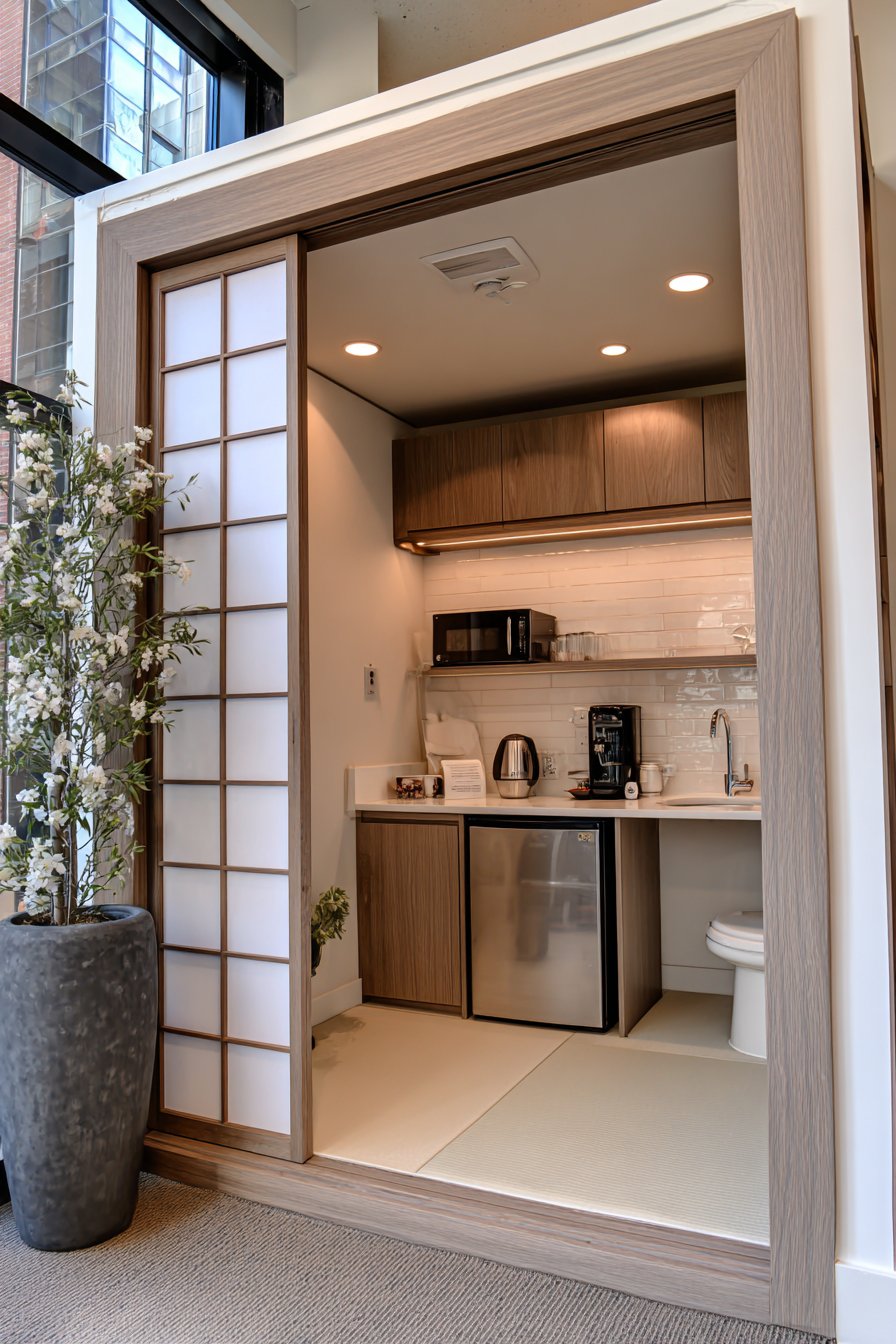
Traditional Japanese homes feature fluid boundaries between cooking and living areas while maintaining visual separation through shoji screens or partial walls.
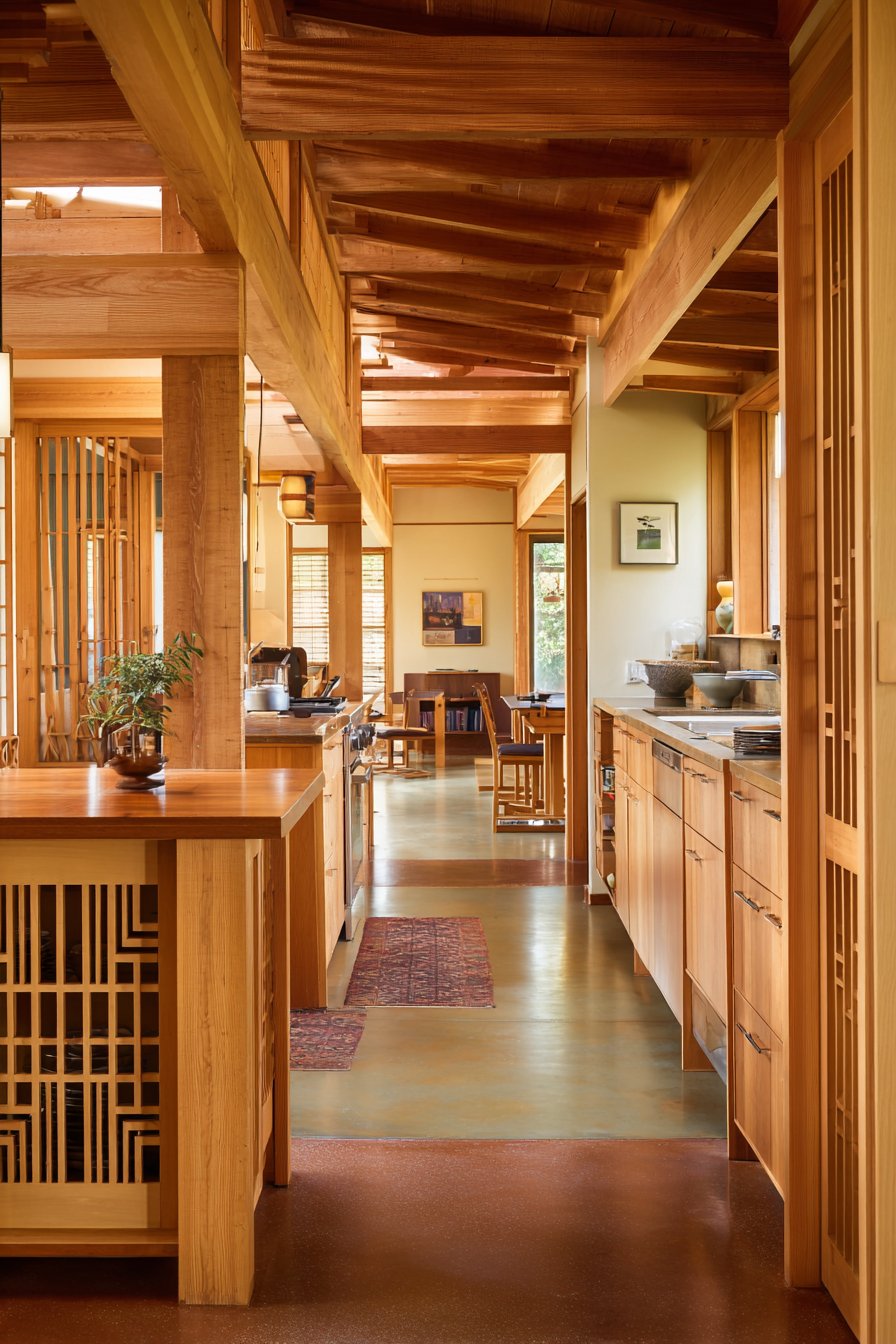
This approach creates a connection without chaos, allowing cooks to remain engaged with household activities while maintaining the kitchen’s functional integrity as a dedicated workspace.
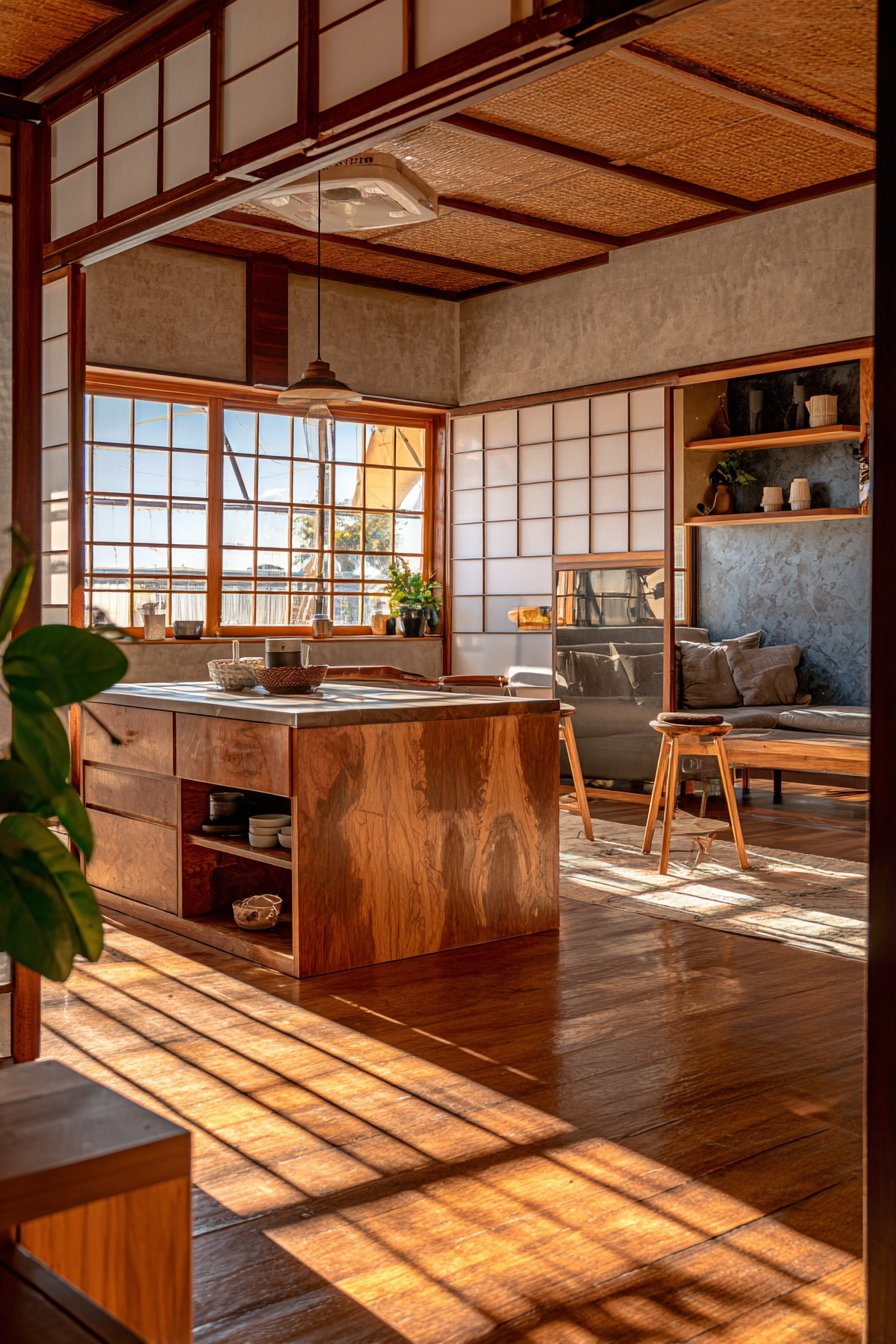
Modern interpretations use transparent or semi-transparent partitions, varied floor levels, or strategic furniture placement to define zones without solid walls.
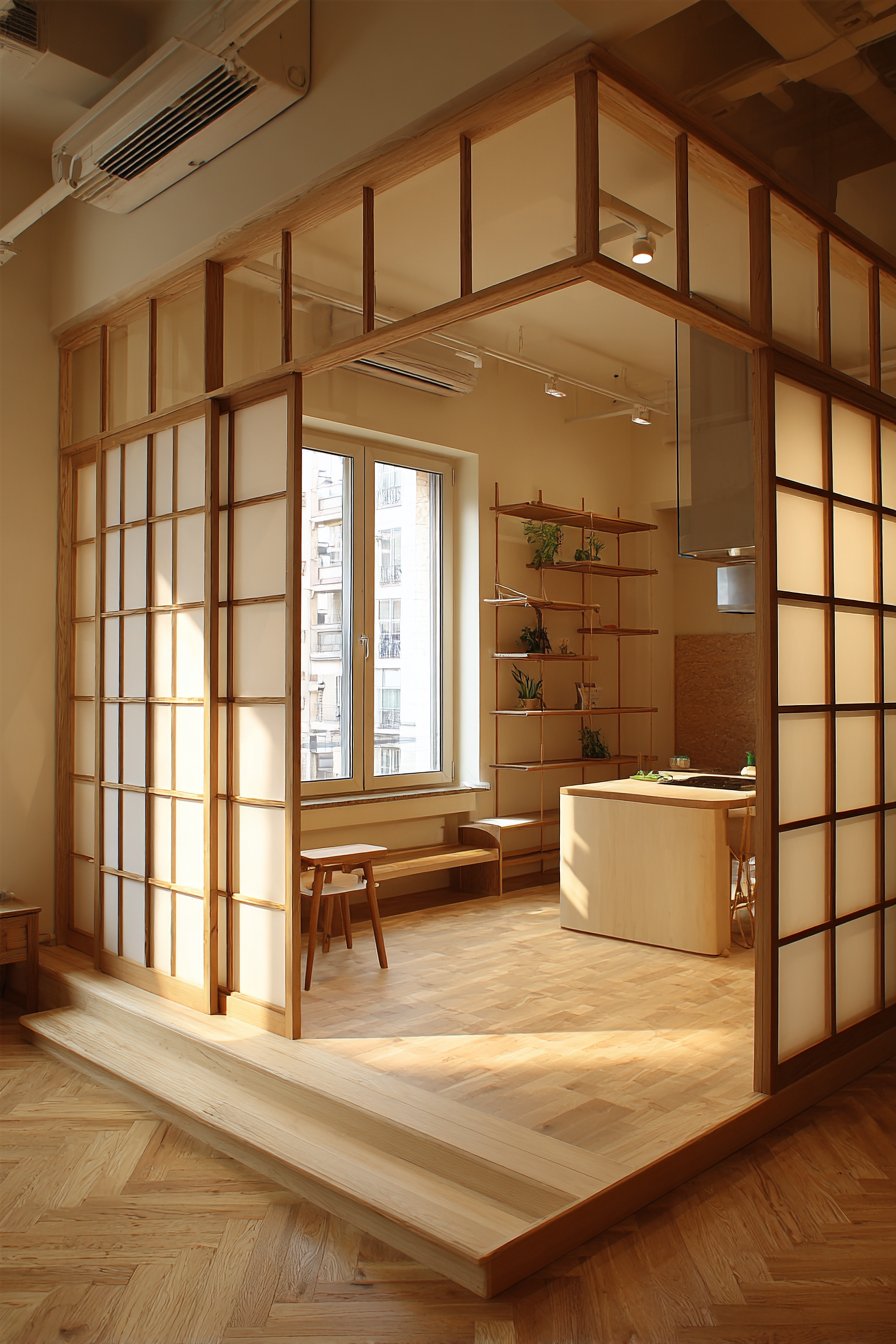
This integration acknowledges that kitchens serve social functions beyond cooking while respecting the need for occasional privacy and containment of cooking activities.
- Use sliding panels or screens that open for connection and close for privacy
- Create visual separation through flooring material changes or level variations
- Position kitchen islands as transitional elements between spaces
- Incorporate pass-through windows that connect while maintaining boundaries
- Design sightlines carefully to share pleasant views while hiding work messes
- Maintain acoustic considerations through sound-absorbing materials in shared spaces
5. Practice Meticulous Organization and Categorization
The Japanese approach to organization goes beyond mere tidiness to create systems where everything has a designated, logical home. Similar items group together in clearly defined categories, with storage solutions custom-fitted to contents. This precision reduces decision fatigue and makes cooking workflows seamless and intuitive.
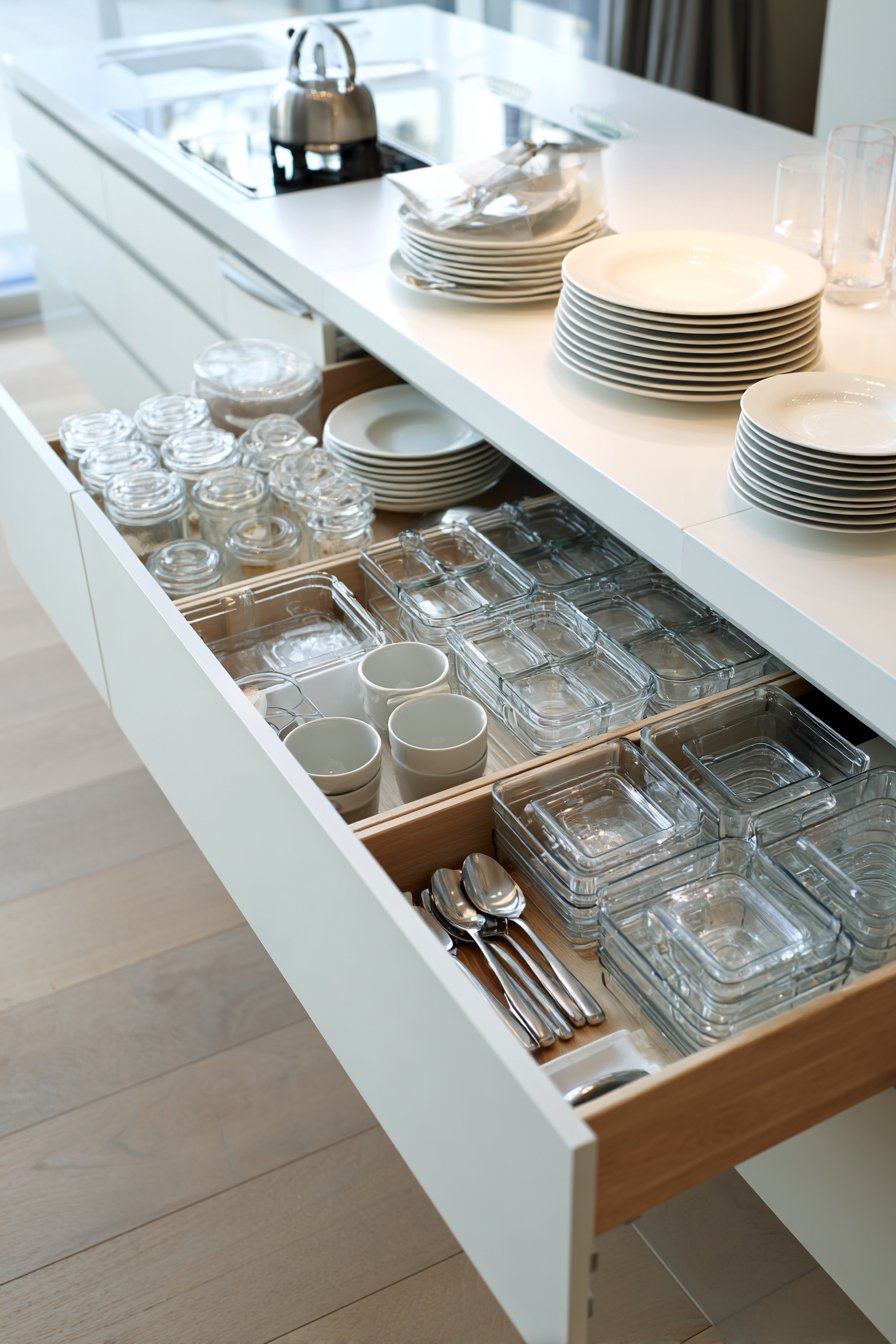
Labeling systems and transparent containers create visual clarity within closed storage. Rice, grains, and dry goods transfer to matching containers that stack efficiently and display contents clearly.
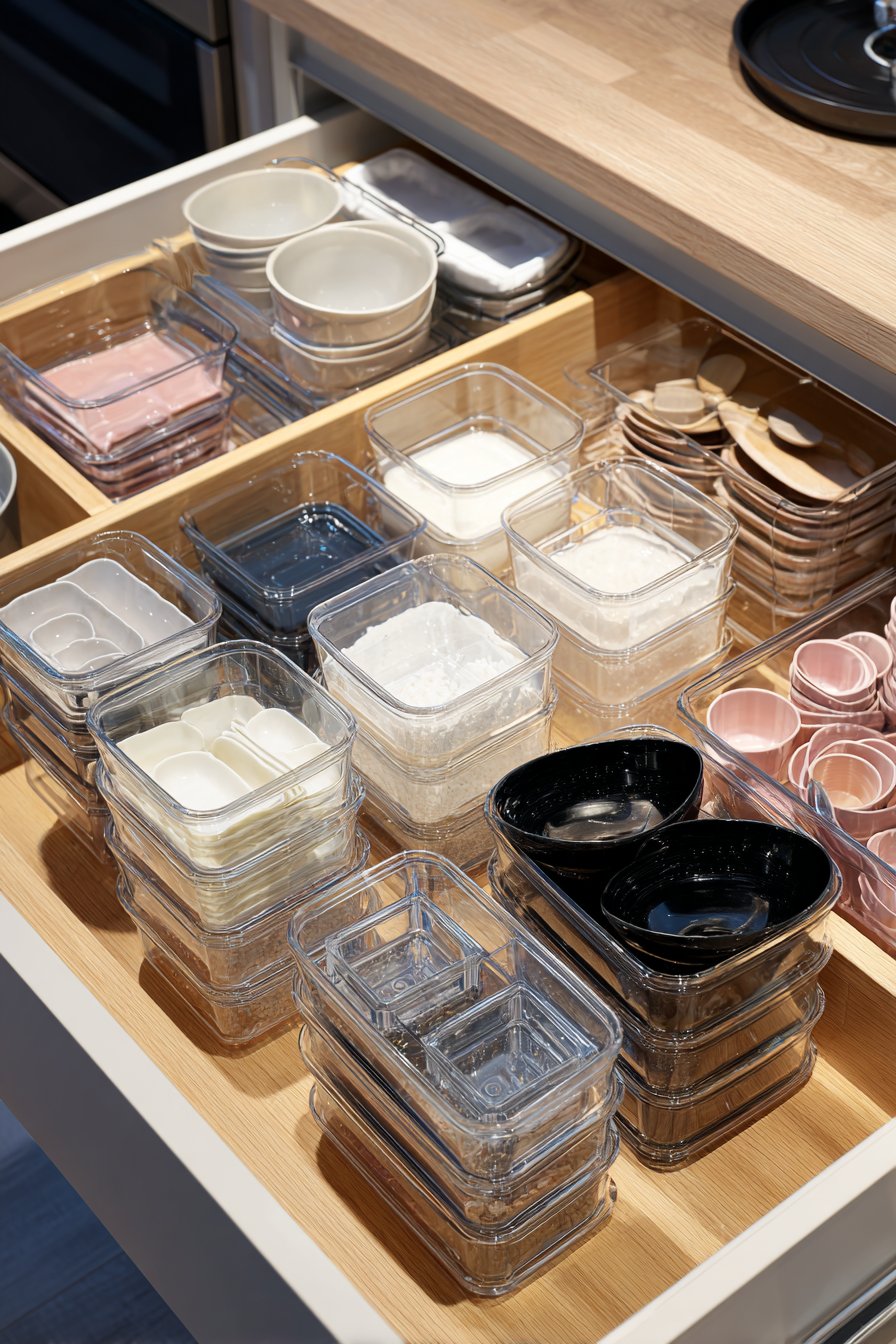
This systematization reflects the broader Japanese value of respect through order—honoring your possessions and your time through thoughtful arrangement.
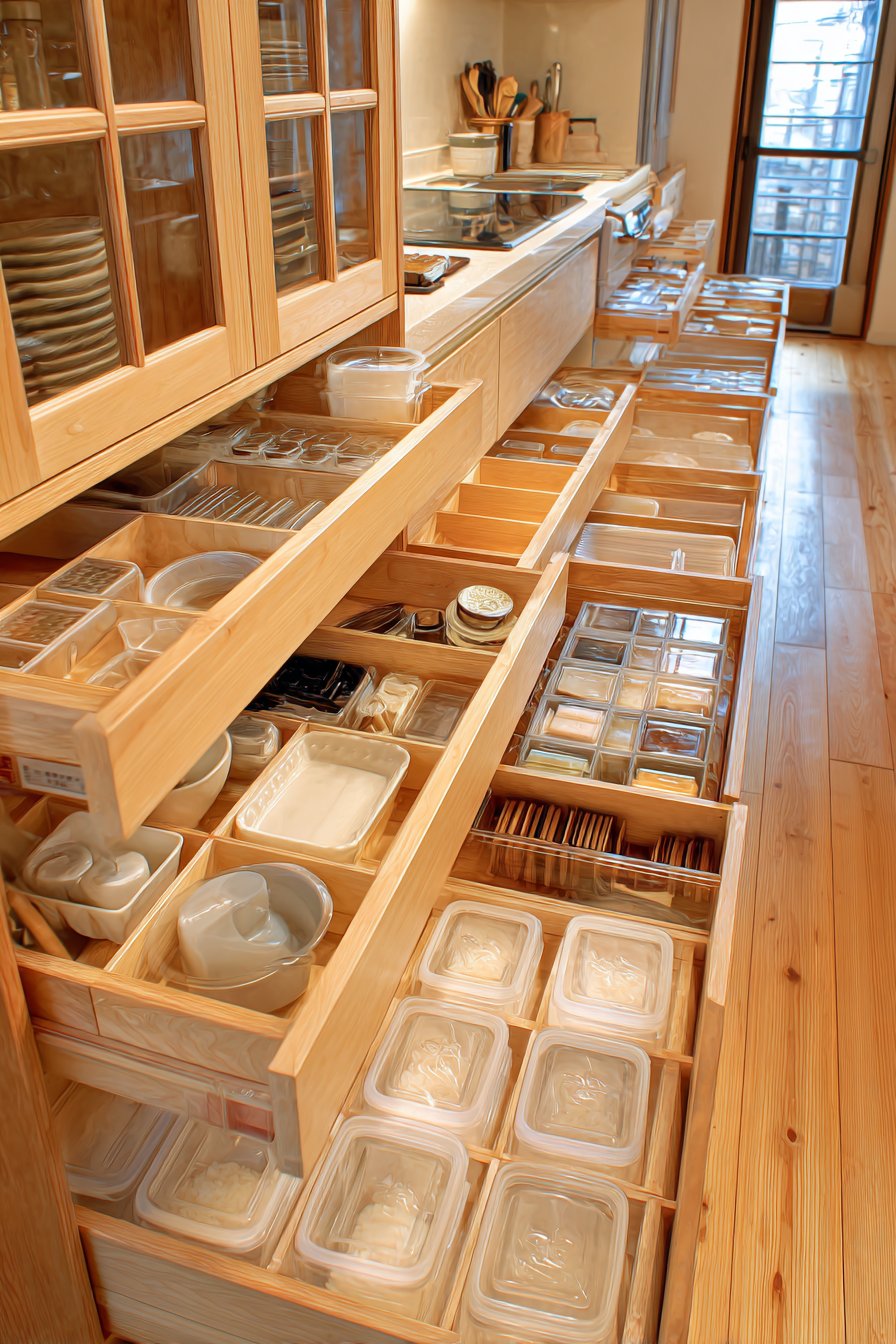
- Group items by function and frequency of use systematically
- Transfer dry goods to matching, stackable containers with labels
- Use drawer dividers to create specific zones for utensils and tools
- Arrange dishes and bowls by size in descending order
- Dedicate specific drawers or cabinets to single categories like baking or tea
- Implement consistent labeling in Japanese or your preferred language
6. Incorporate Water Elements and Purification Rituals
Water holds sacred significance in Japanese culture, and kitchens honor this through prominent, beautiful sinks and meticulous hygiene practices. The sink becomes a focal point rather than hiding in utilitarian corners, often crafted from ceramic or stone in generous dimensions that accommodate traditional washing rituals for vegetables and dishes.
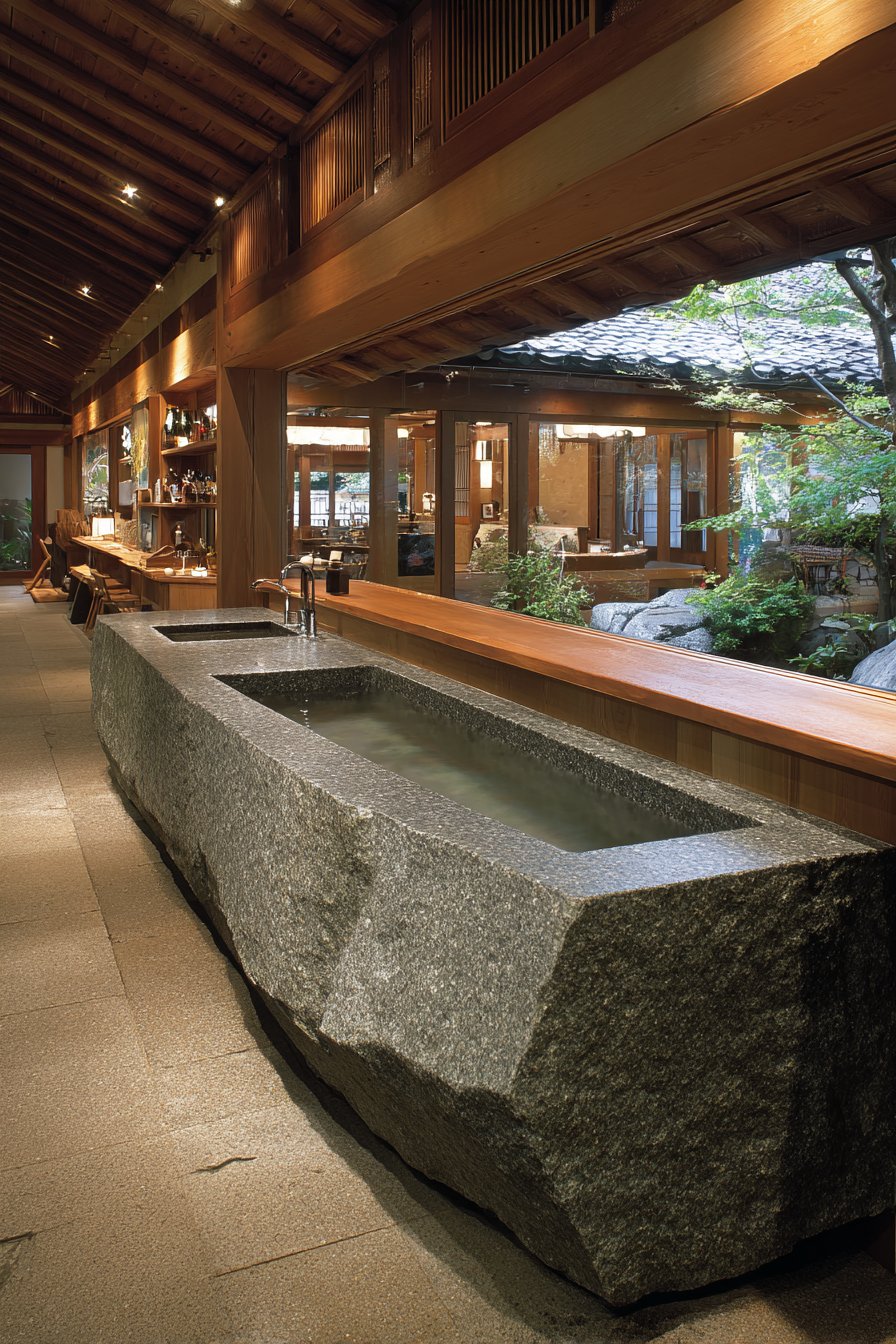
Multiple water sources serve different purposes—one for food preparation, another for cleaning. Drainage receives equal attention through sloped surfaces and efficient systems.
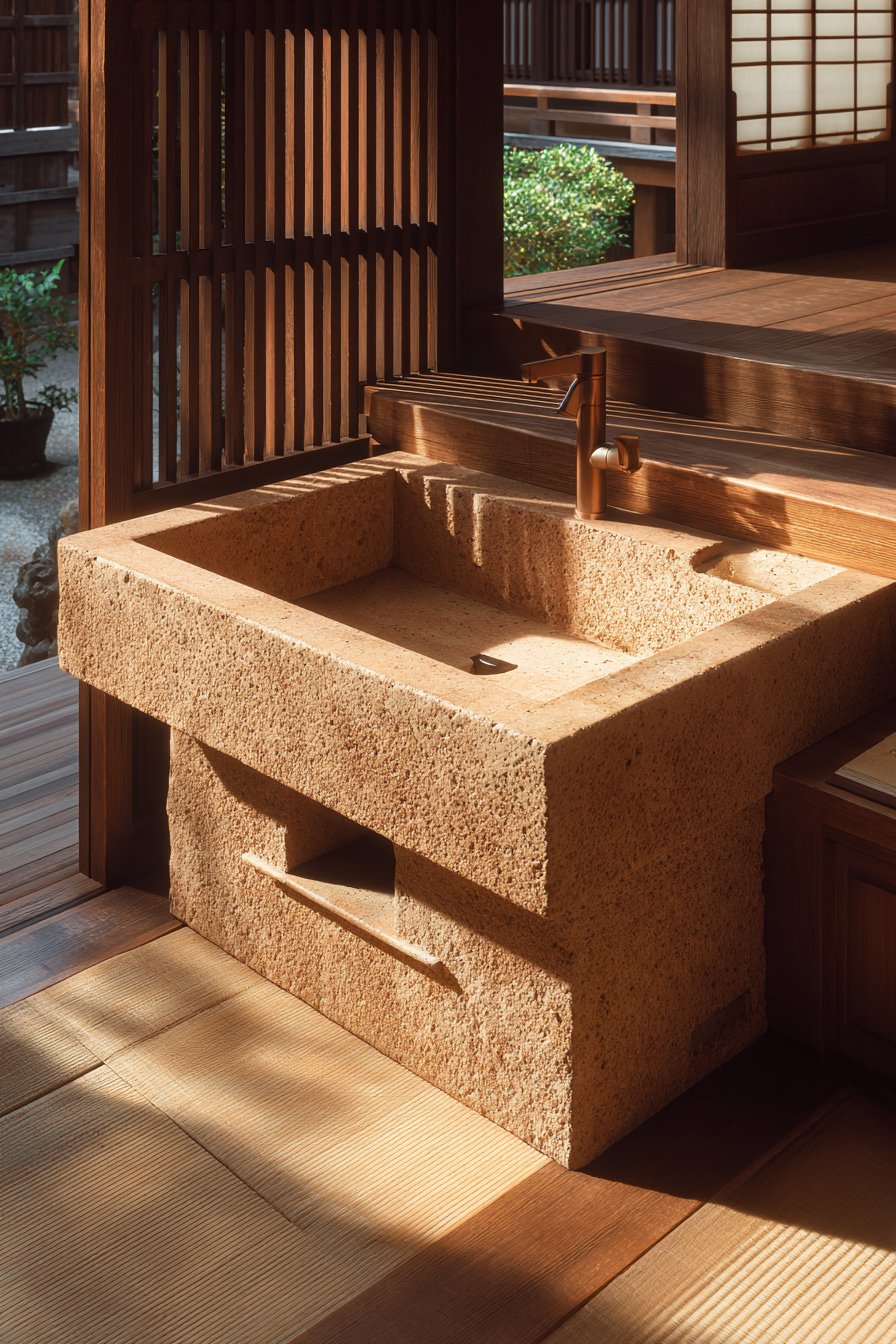
This emphasis on water flow and cleanliness as spiritual practice transforms mundane kitchen tasks into mindful rituals that honor ingredients and tools.
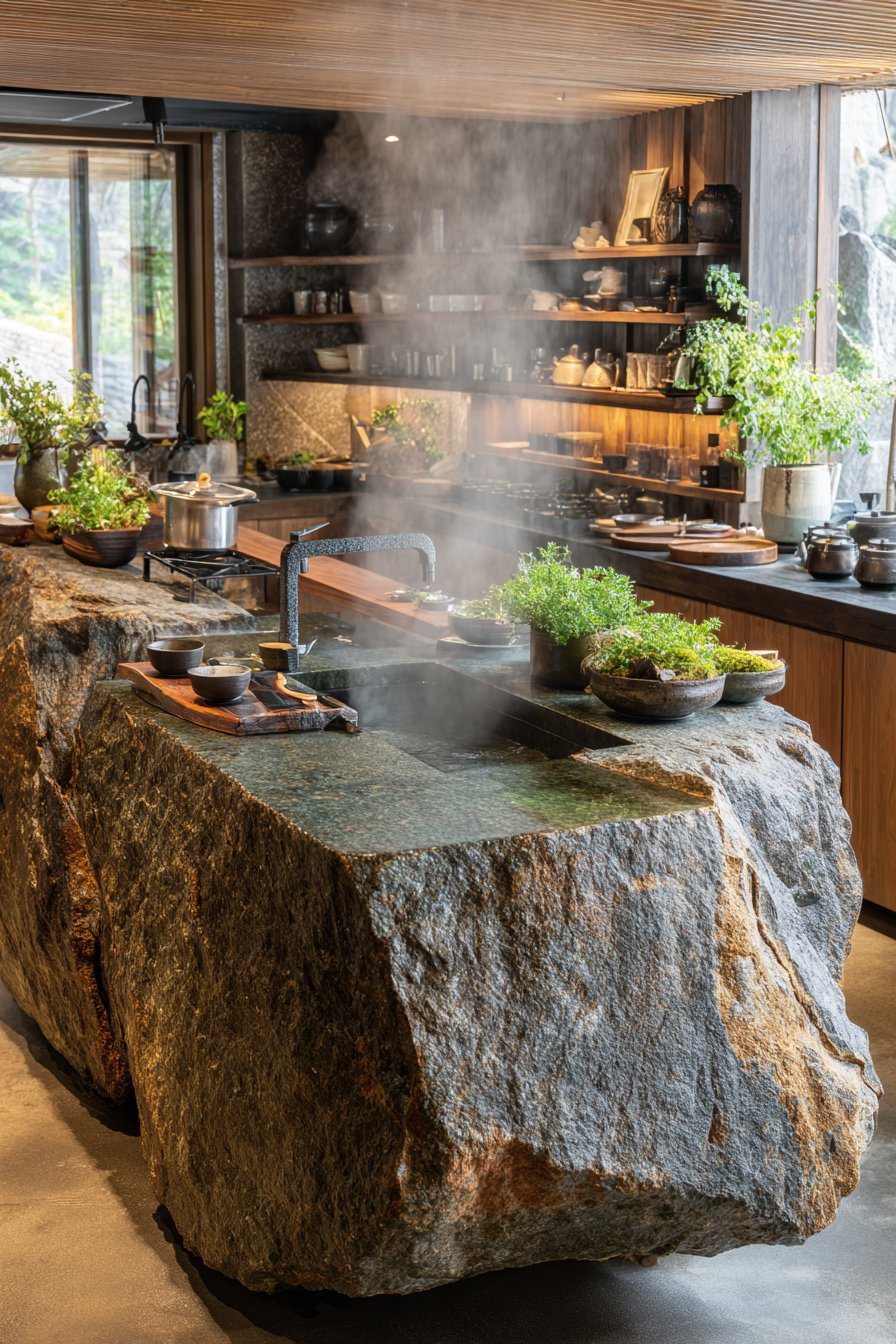
- Select oversized, deep sinks that accommodate large pots and proper washing
- Choose materials like ceramic, stone, or stainless steel for durability and beauty
- Install pull-down or pull-out faucets with multiple spray functions
- Create dedicated prep sinks separate from cleaning sinks when space allows
- Incorporate dish drying racks that drain efficiently and fold away
- Maintain immaculate sink areas that reflect respect for water and cleanliness
7. Design for Efficient Movement and Workflow
Japanese kitchen layouts prioritize economy of motion through compact work triangles where everything sits within easy reach. This efficiency stems from centuries of optimizing small spaces, creating workflows where cooks pivot rather than walk between stations.
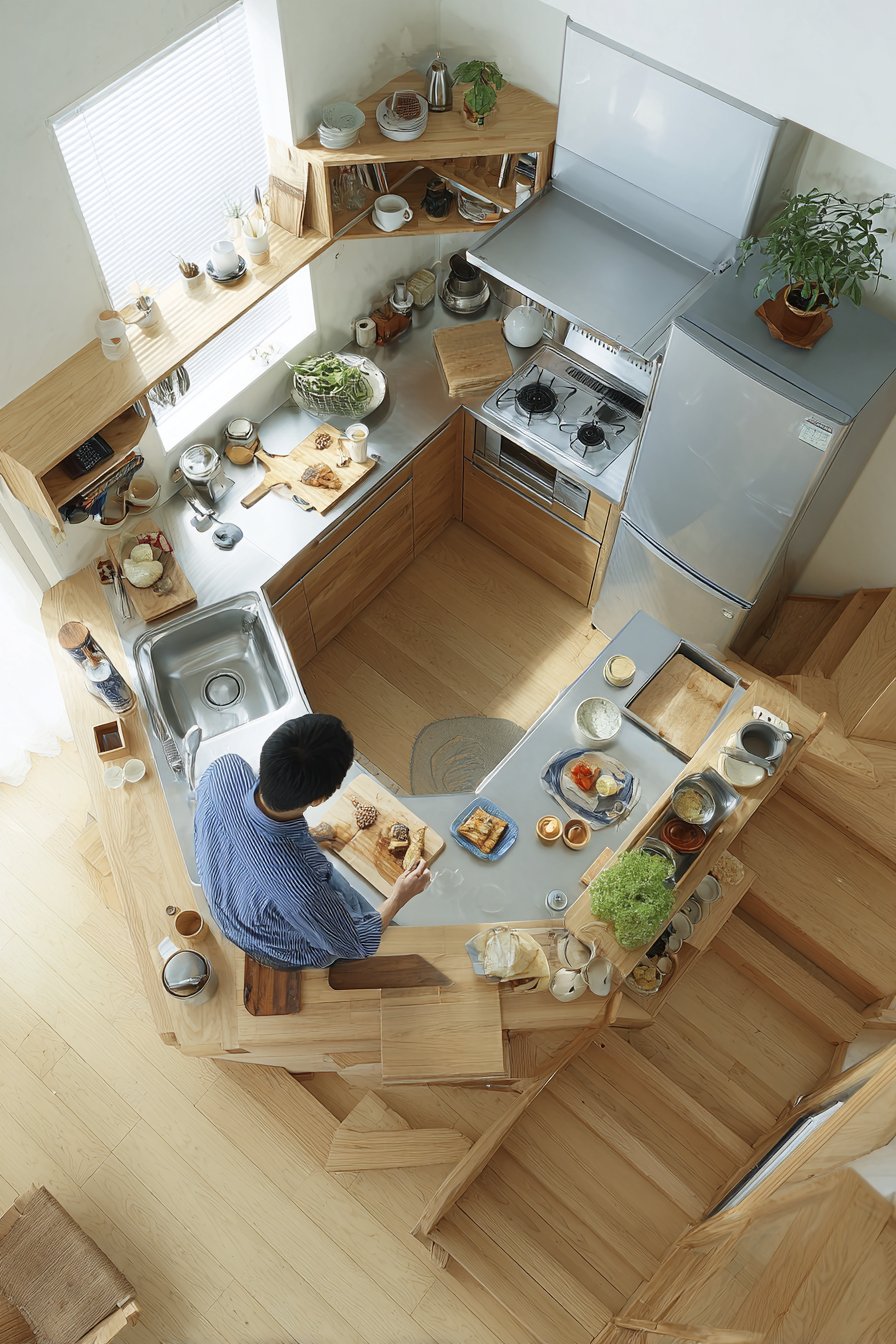
The ergonomic perfection of these arrangements reduces fatigue during extended cooking sessions. Counter heights, storage locations, and appliance positions receive precise calibration to individual users when possible.
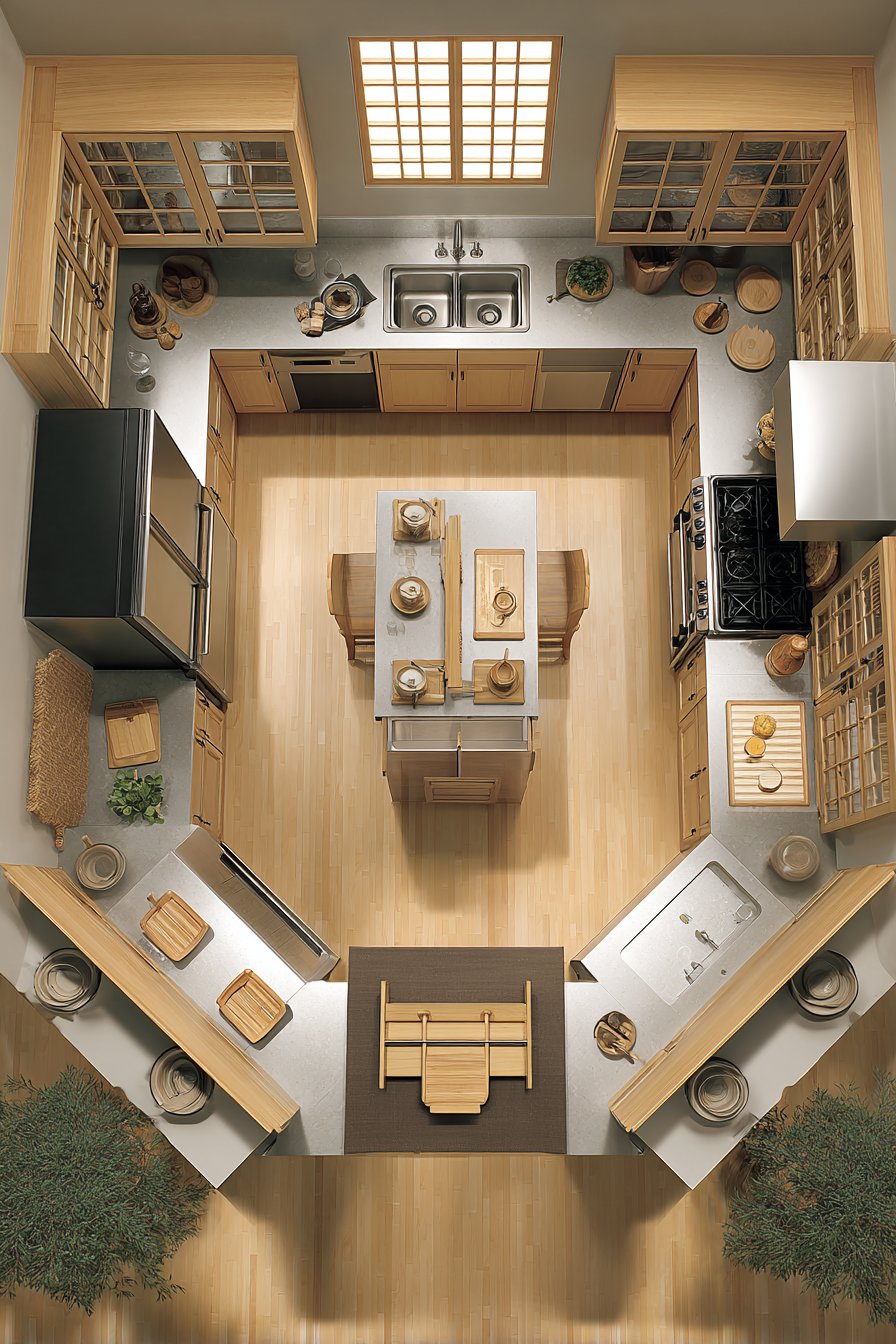
This customization reflects the Japanese dedication to craftsmanship and the belief that tools should serve their users perfectly. Every movement feels natural and effortless in well-designed Japanese kitchens.
- Position sink, stove, and refrigerator in compact triangular arrangement
- Place most-used items within arm’s reach of primary work zones
- Install counters at heights suited to the primary cook’s stature
- Create dedicated prep zones with appropriate tools nearby
- Minimize walking distance between related activities and storage
- Design workflows that support both right and left-handed users
8. Cultivate Simplicity Through Restraint
Less is more isn’t just an aesthetic choice in Japanese design but a philosophical commitment to simplicity as a path to clarity. Restrained color palettes, minimal patterns, and unadorned surfaces create visual peace that supports focused cooking and mindful eating.
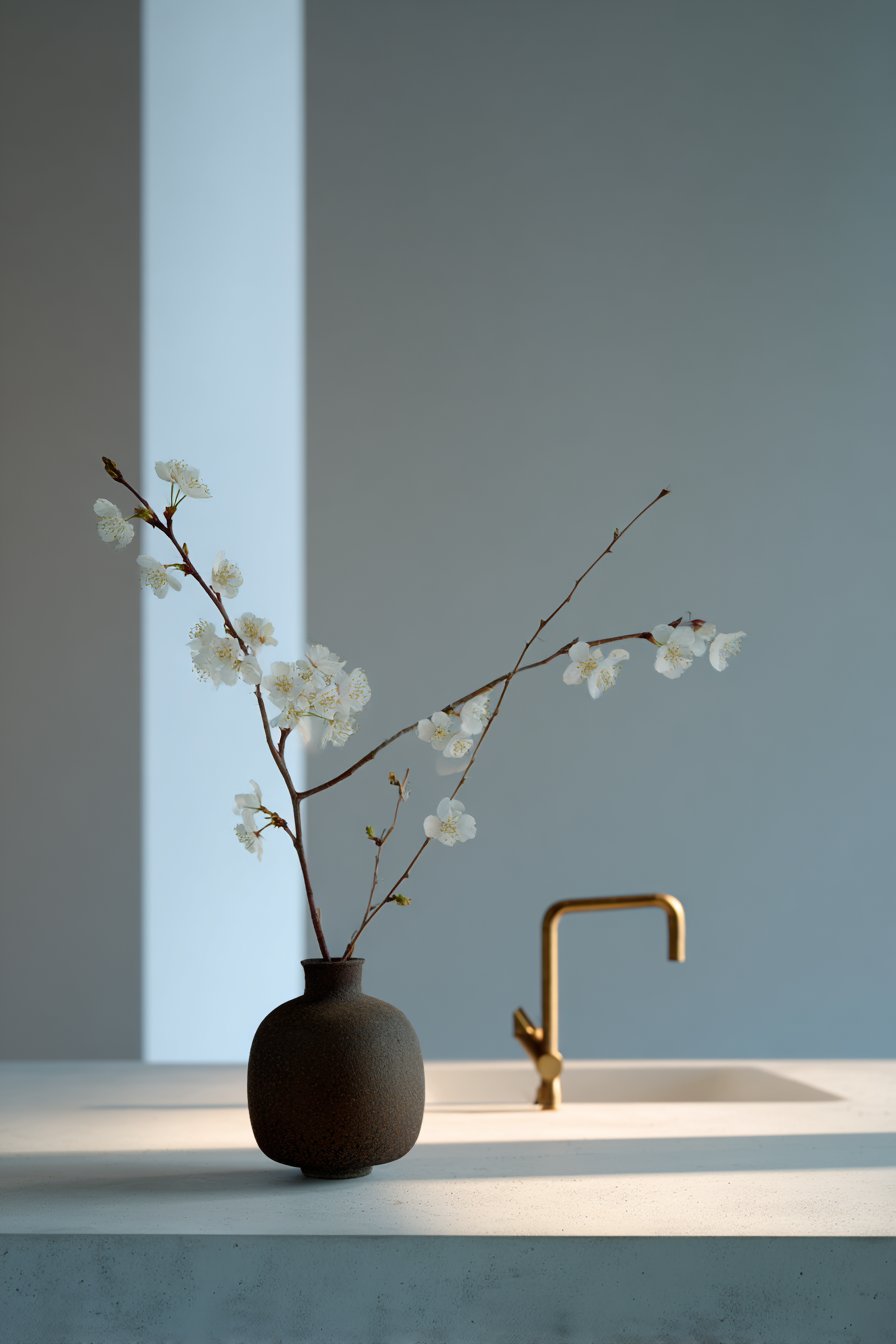
This simplicity requires confidence and discipline to maintain against impulses toward accumulation. The principle extends beyond appearance to encompass functional simplicity—tools that serve single purposes excellently rather than multi-function gadgets of mediocre performance.
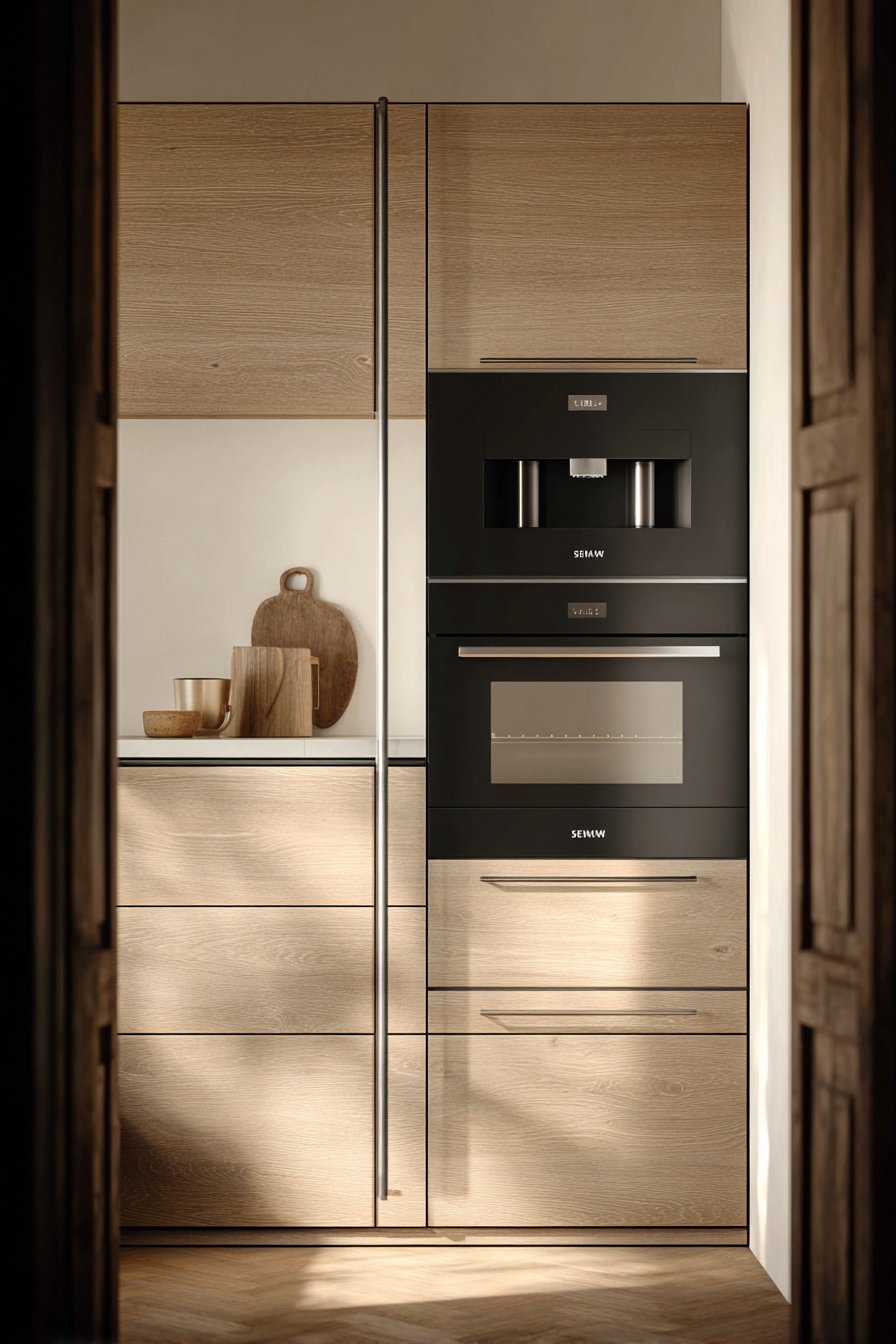
Quality items used regularly take precedence over extensive collections rarely touched. This curation creates kitchens that feel spacious, clean, and deeply satisfying.
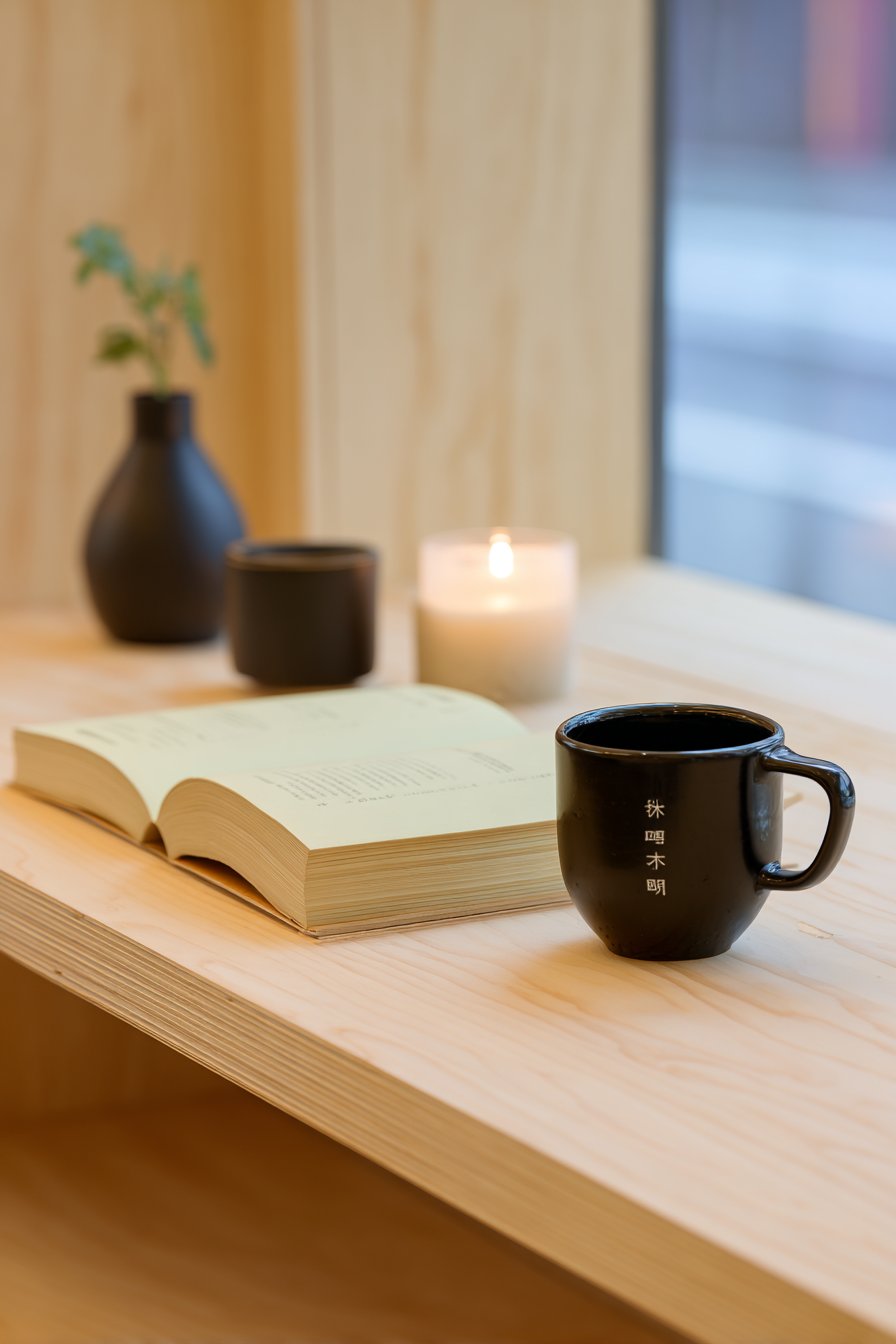
- Limit color palettes to natural wood tones with white and subtle accents
- Avoid decorative patterns and busy tile designs
- Choose simple, timeless hardware in brushed or matte finishes
- Display only a few carefully selected, beautiful objects
- Invest in fewer, higher-quality tools rather than extensive collections
- Practice regular decluttering to maintain an essential-items-only philosophy
Conclusion
Japanese kitchen design principles offer profound wisdom for creating spaces that nourish body, mind, and spirit. These eight foundational concepts—from embracing negative space to practicing restraint—work synergistically to produce kitchens of remarkable beauty and functionality. The Japanese approach proves that limitations inspire creativity and that simplicity requires sophistication.

Implementing these principles transforms cooking from a chore into a mindful practice that connects us to ingredients, tools, and the present moment. Whether you adopt all eight principles or selectively incorporate elements that resonate, Japanese design wisdom elevates kitchen spaces beyond mere functionality into realms of tranquility and purposeful beauty. Begin with one principle, experience its impact, and gradually cultivate a kitchen that reflects these timeless values of harmony, respect, and intentional living.
"As an Amazon Associate, I earn from qualifying purchases."
