
As the holiday decorations come down and the calendar turns to a fresh year, January presents the perfect opportunity to reimagine your living spaces with intentional, thoughtful design. This transitional month calls for a refined approach to home decor—one that embraces the quiet beauty of winter while setting the stage for new beginnings. The crisp, clean aesthetic of January house decor focuses on creating organized, serene environments that inspire productivity, relaxation, and renewal. It’s about stripping away the excess and celebrating the essential elements that make a house feel like home.
Thoughtful interior design during this season transforms our homes into sanctuaries that reflect our aspirations for the year ahead. Whether you’re drawn to minimalist Scandinavian influences, practical organizational solutions, or cozy textural layers that combat winter chill, January offers a blank canvas for reinvention. The beauty of this month’s design philosophy lies in its versatility—each space can be tailored to reflect personal style while maintaining the overarching theme of fresh starts and mindful simplicity.
This comprehensive guide explores twenty distinct approaches to January house decor, each offering unique inspiration for transforming different areas of your home. From living rooms bathed in winter light to organized closets that spark joy, these design concepts celebrate the intersection of functionality and beauty. Each space demonstrates how neutral palettes, natural materials, and thoughtful organization can create environments that feel both refreshing and welcoming during the coldest month of the year.
1. Winter White Living Room Sanctuary
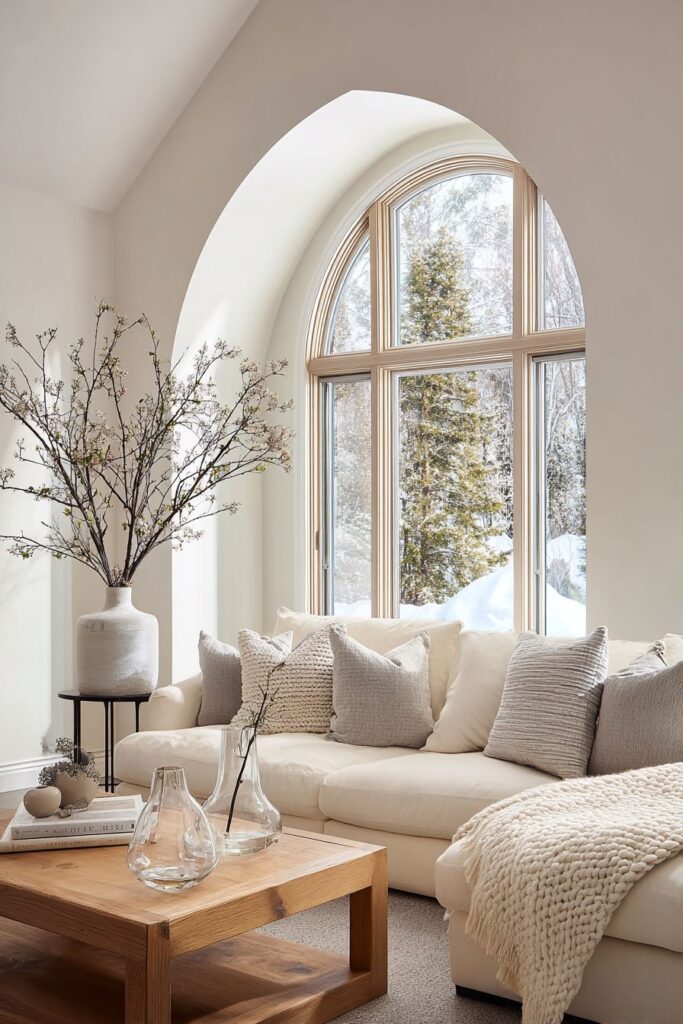
Imagine stepping into a living room where winter white walls create an ethereal backdrop for the season’s quiet beauty. This fresh January house decor approach centers on a plush cream-colored sofa adorned with textured knit throw blankets in ivory and light grey, creating layers of tactile comfort that invite you to settle in with a good book or enjoy quiet conversation. The neutral color palette doesn’t feel stark or cold; instead, it radiates warmth through the careful selection of soft grey accents that add depth without overwhelming the serene atmosphere.
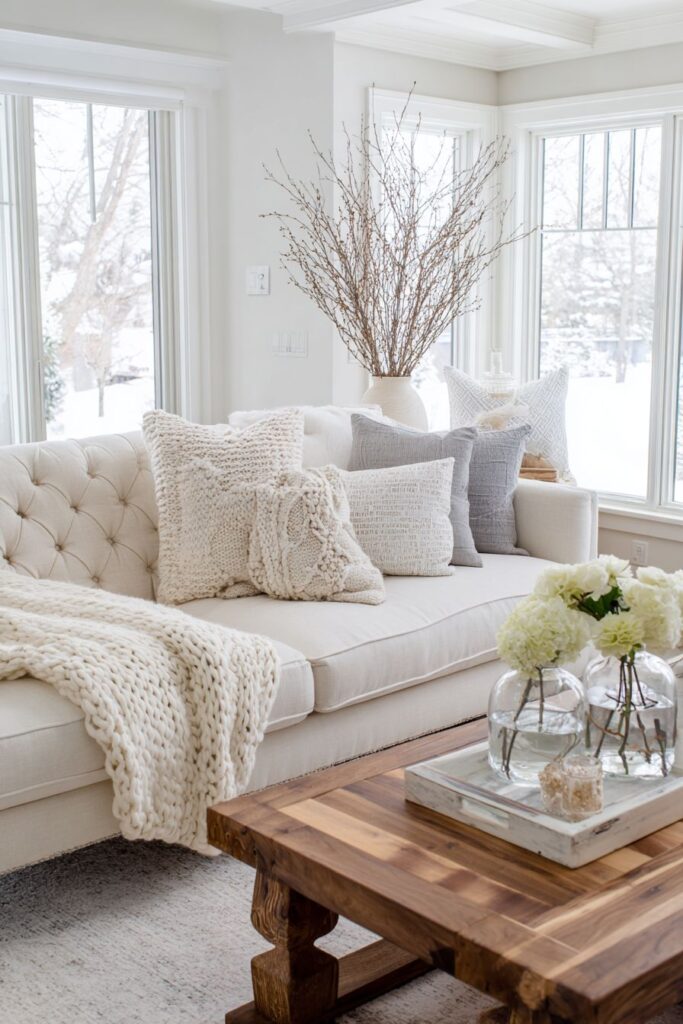
The natural wood coffee table serves as a grounding element in this airy space, its organic grain patterns providing visual interest while maintaining the room’s minimalist aesthetic. Upon its surface, simple glass vases hold winter branches—their stark silhouettes creating natural sculptures that celebrate the season’s raw beauty. These botanical elements bring the outside in without cluttering the carefully curated space, demonstrating how less truly can be more in effective interior design.
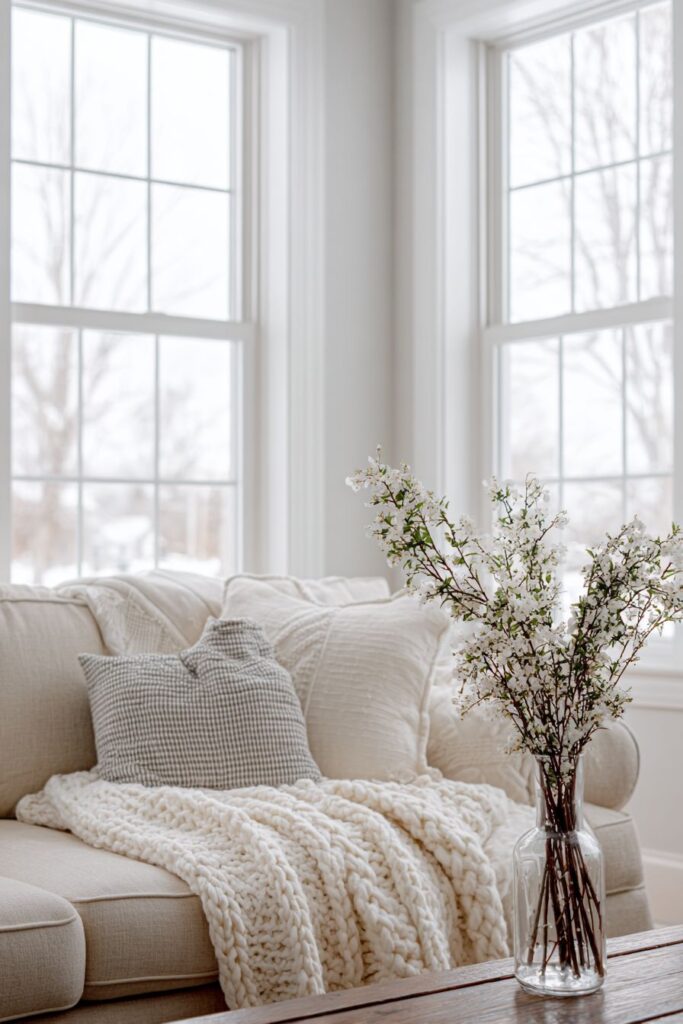
Large windows become the room’s greatest asset, flooding the space with soft winter daylight that shifts throughout the day. This natural illumination highlights the subtle variations in texture—from the nubby weave of throw blankets to the smooth finish of the coffee table—creating a dynamic environment that never feels static. The clean, organized aesthetic speaks to the new year’s promise of fresh starts and intentional living.
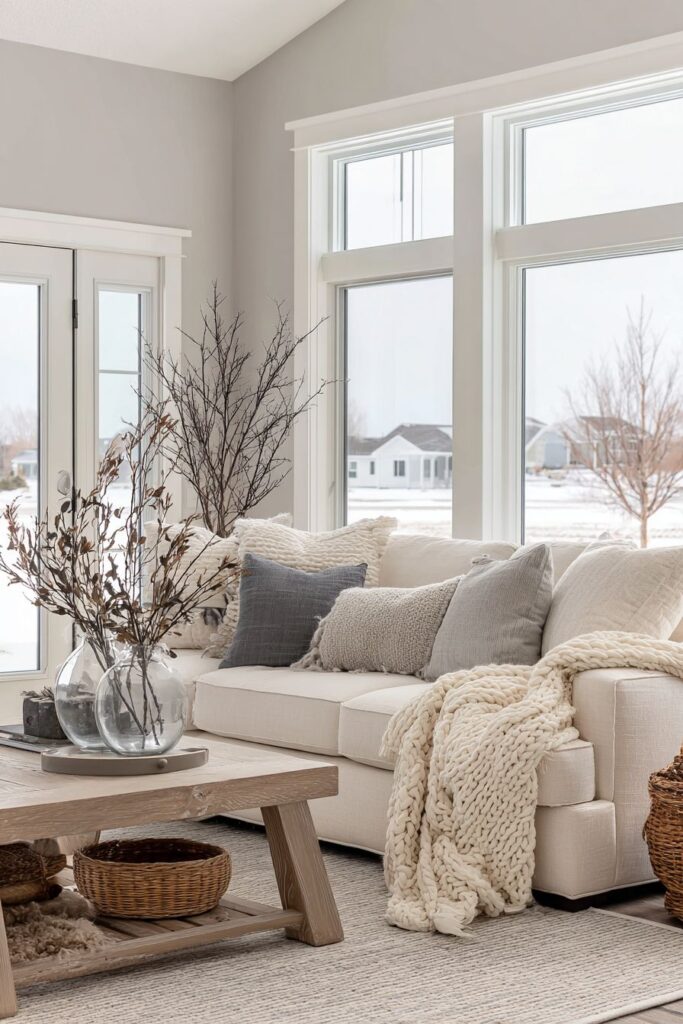
Key Design Tips:
- Layer different shades of white and cream to create depth without adding color
- Incorporate textured fabrics like knit throws and woven materials for winter warmth
- Use natural elements sparingly for maximum impact
- Maximize natural light by keeping window treatments minimal or sheer
- Choose furniture with clean lines to maintain an uncluttered feel
2. Minimalist Bedroom Retreat

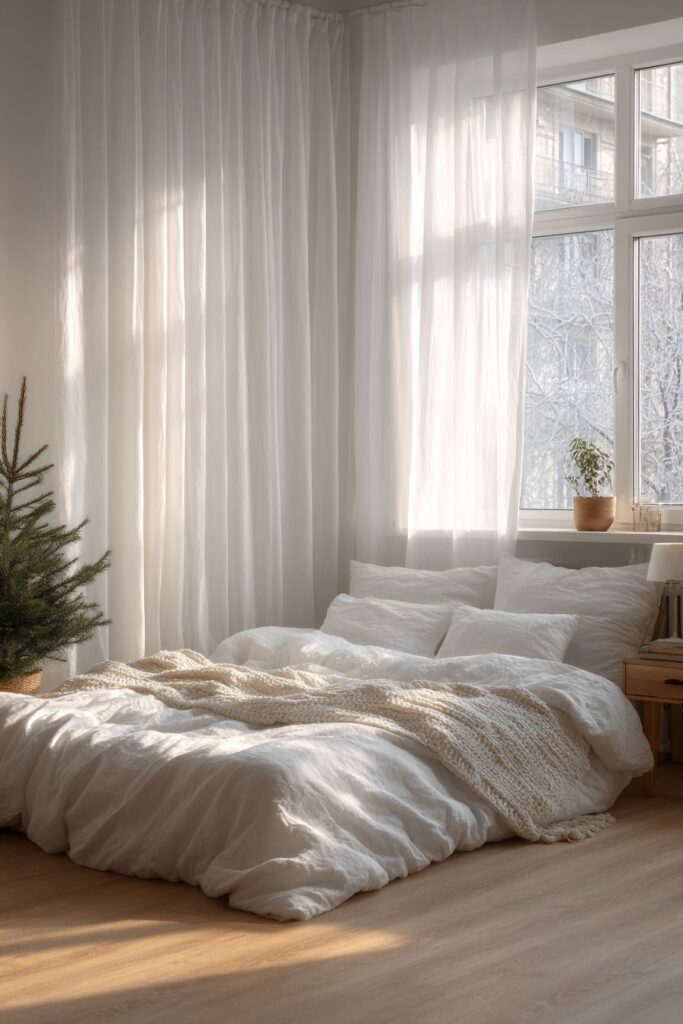
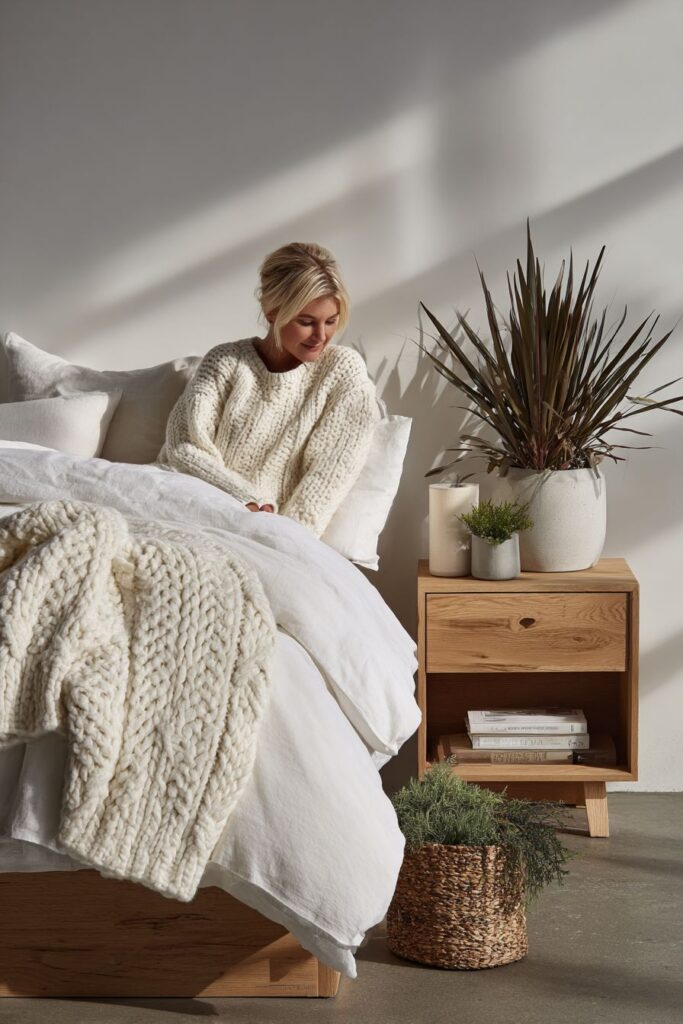
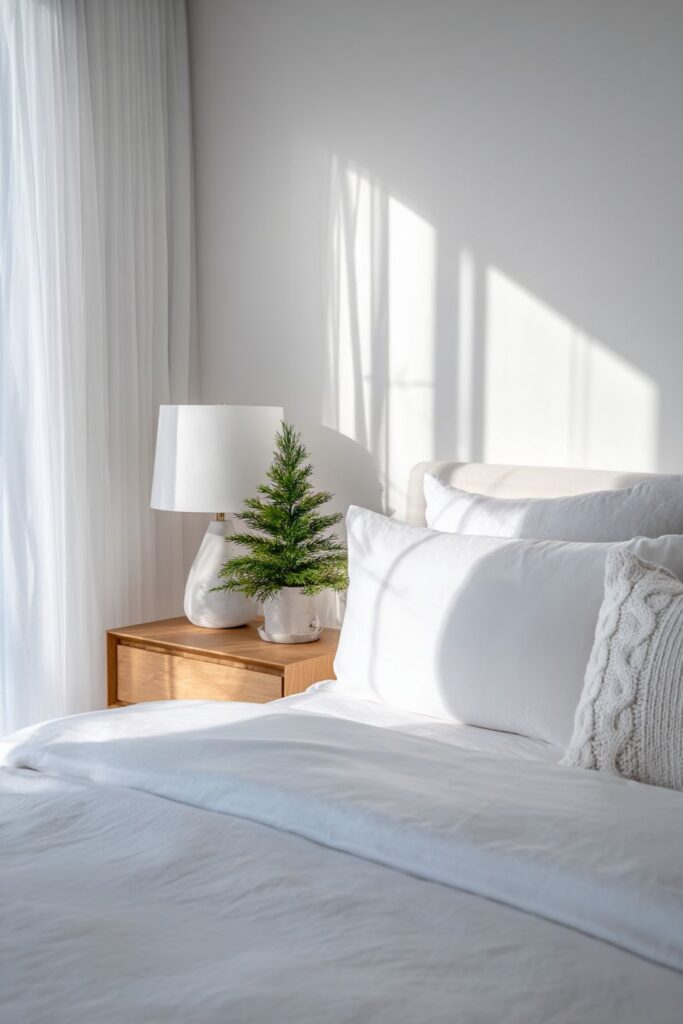
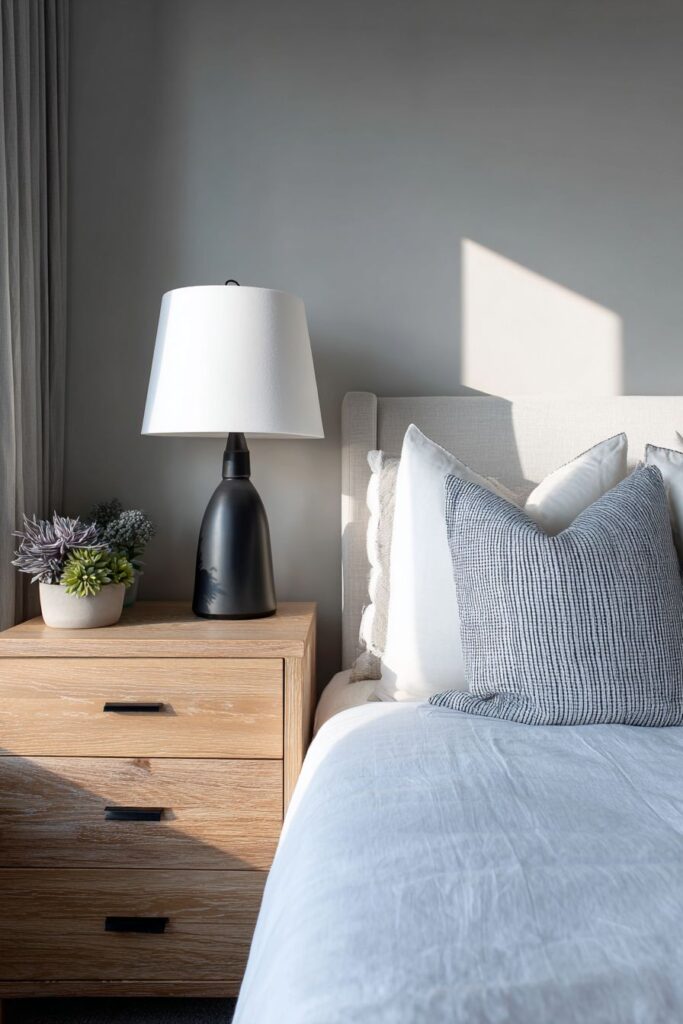
The minimalist January bedroom embodies the concept of peaceful new beginnings through its dedication to simplicity and comfort. Crisp white bedding forms the foundation of this serene space, while layered textures including a linen duvet and cable-knit throw add dimension without sacrificing the room’s calm atmosphere. This approach to bedroom design recognizes that true luxury lies not in opulence but in the quality of materials and the thoughtfulness of their arrangement.
A streamlined nightstand in light oak exemplifies the less-is-more philosophy, its clean lines and natural finish providing functional beauty. Upon its surface sits only a single modern lamp—its form as considered as its function—and a small potted evergreen that brings life to the space without demanding attention. This restraint creates a visual quietness that promotes restful sleep and peaceful mornings, essential qualities for a bedroom designed to support well-being.
Sheer curtains play a crucial role in this design, filtering pale winter sunlight to create soft shadows that dance across the room throughout the day. This gentle interplay of light and shadow adds movement to the minimalist space, preventing it from feeling static or sterile. The overall effect is a bedroom that feels like a breath of fresh air—decluttered, organized, and perfectly aligned with the intention-setting energy of January.
Key Design Tips:
- Invest in high-quality bedding in neutral colors for timeless appeal
- Limit nightstand items to absolute essentials plus one decorative element
- Use sheer window treatments to soften light while maintaining privacy
- Choose furniture pieces with simple, clean silhouettes
- Add one living plant to bring nature’s calming presence indoors
3. Organized Entryway Excellence
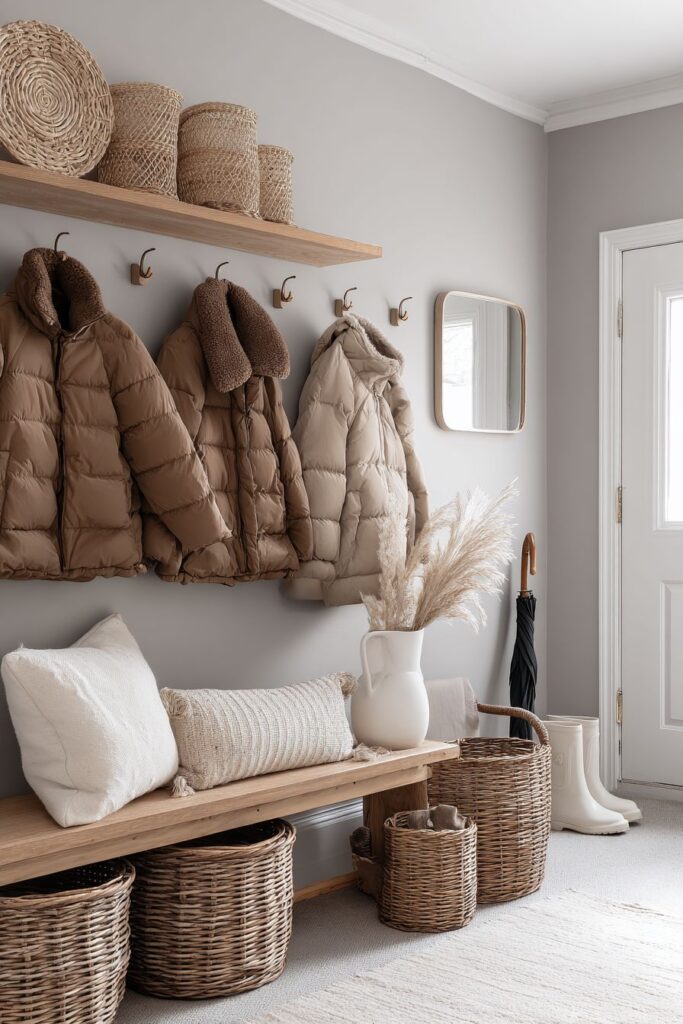
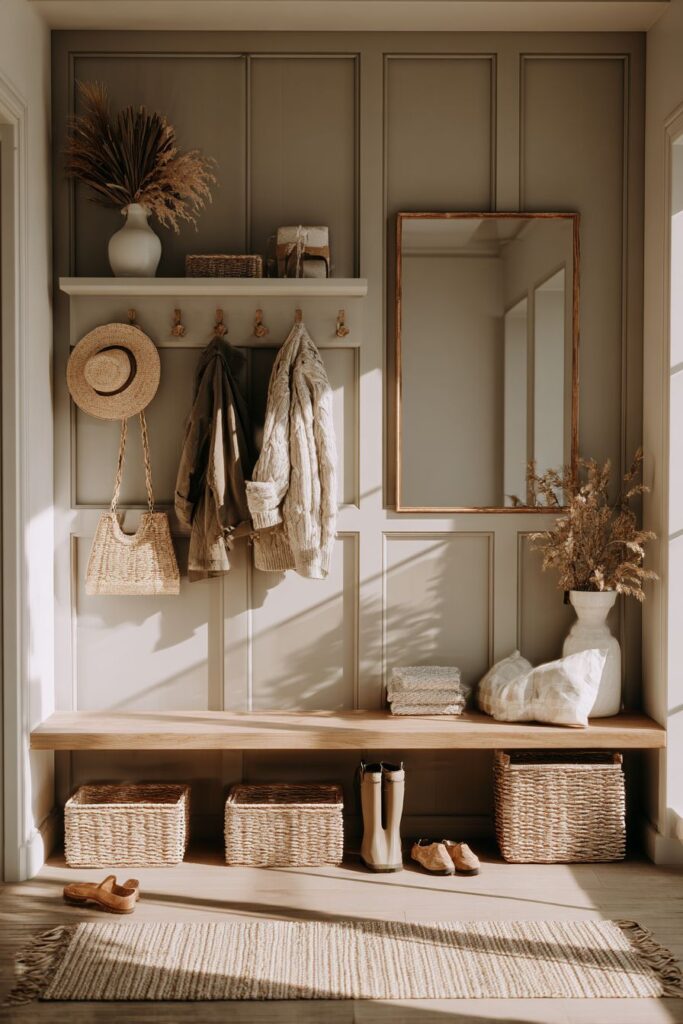
A well-designed January house decor entryway sets the tone for the entire home, and this practical approach demonstrates how organization and aesthetics can work in perfect harmony. Wall-mounted hooks display winter coats with intentionality, transforming necessary storage into a visual element that adds texture and color in measured doses. Below, a wooden bench with woven baskets underneath provides seating while concealing the everyday items that tend to accumulate in entry spaces.
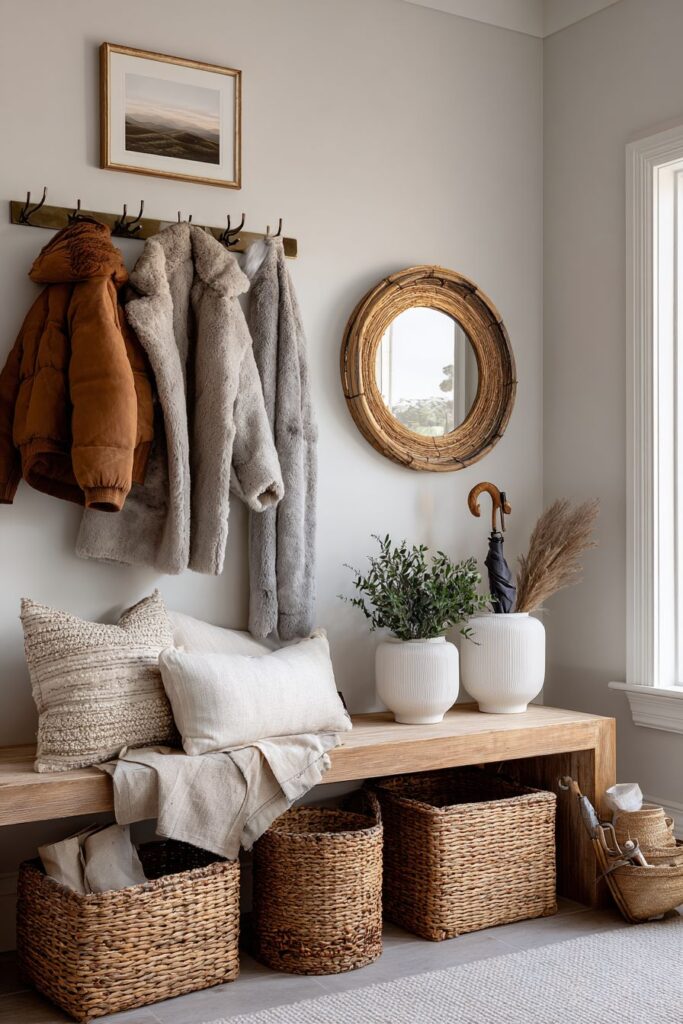
The soft dove grey walls create a sophisticated backdrop that reflects natural light beautifully, making even compact entryways feel more spacious and welcoming. A simple mirror positioned strategically multiplies this light effect while serving the practical purpose of last-minute appearance checks before heading out into the winter day. This dual functionality exemplifies smart design that doesn’t sacrifice style for usefulness.
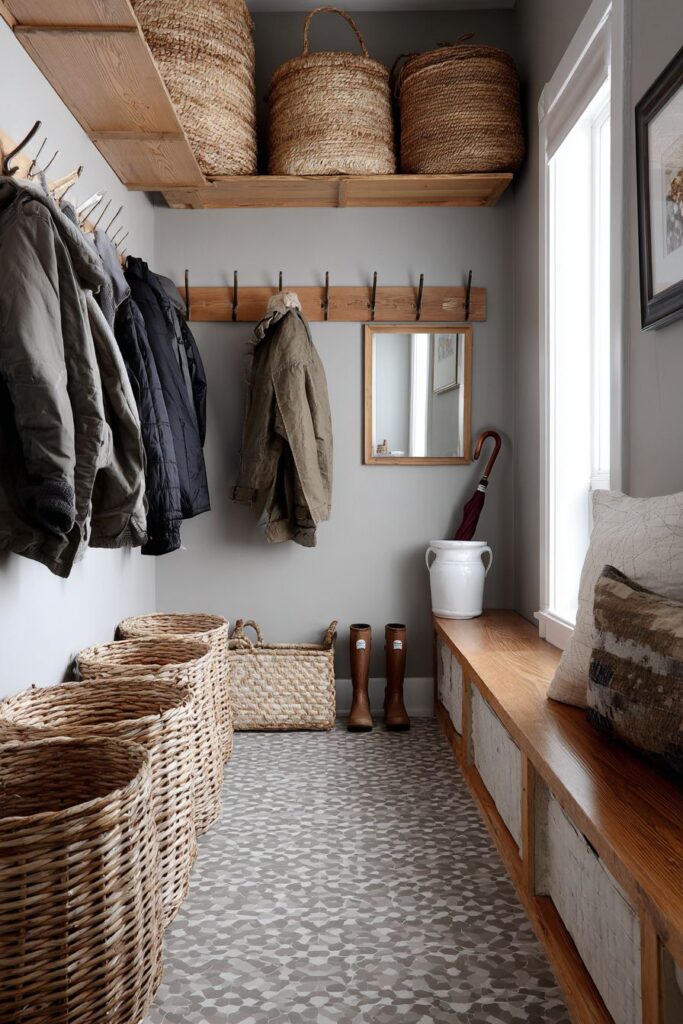
The inclusion of a boot tray and umbrella stand addresses January’s practical needs—wet boots and unpredictable weather—while white ceramic accessories add brightness that prevents the space from feeling too utilitarian. This balance between function and form creates an entryway that welcomes you home while keeping winter’s mess contained and organized. The result is a transition space that truly transitions, helping you leave the outside world behind as you enter your sanctuary.
Key Design Tips:
- Install hooks at varying heights to accommodate different family members
- Use baskets to conceal items while maintaining easy access
- Choose a mirror that’s both functional and decorative
- Designate specific spots for wet weather gear to prevent chaos
- Keep color palette neutral to create a calm first impression
4. Farmhouse Dining Room Simplicity
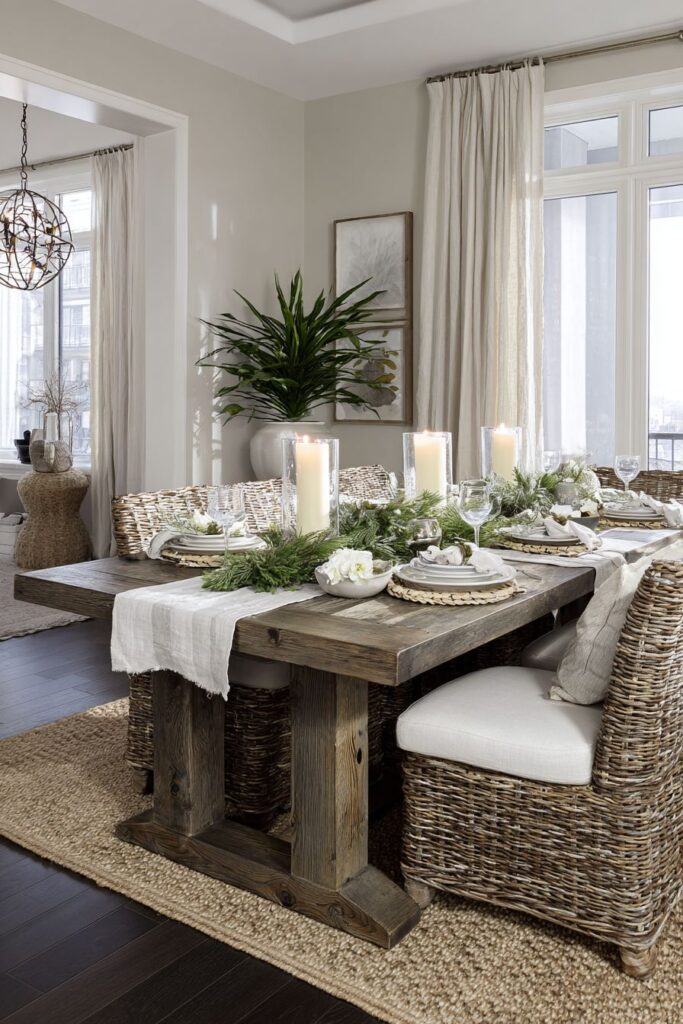
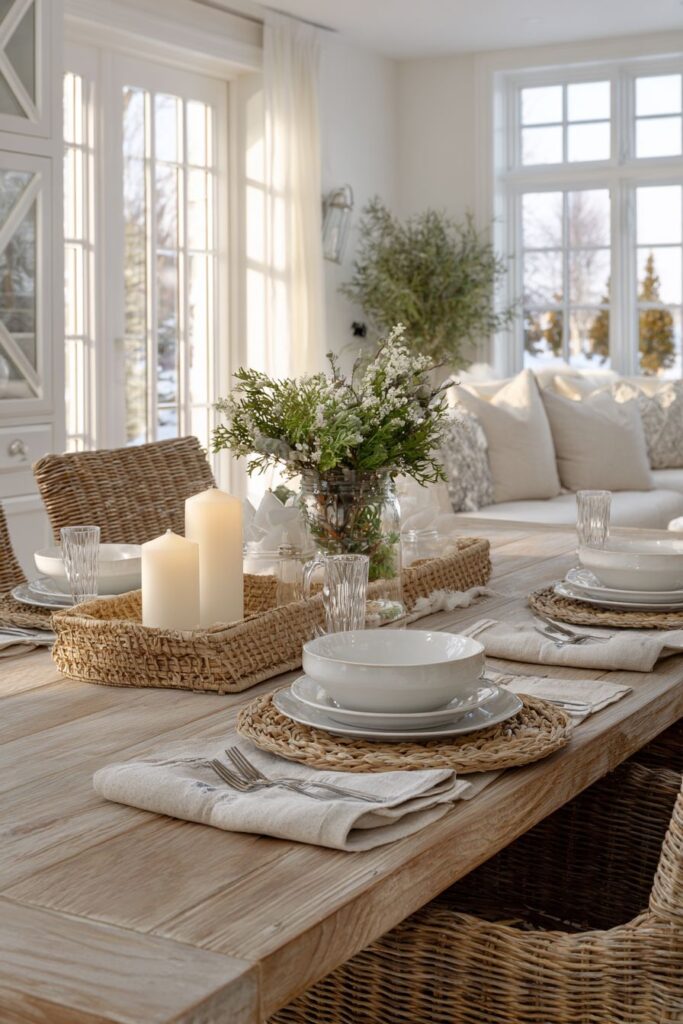
This January house decor dining room embraces farmhouse charm while maintaining the clean, post-holiday simplicity that defines the month’s aesthetic. A substantial farmhouse table becomes the room’s anchor, its generous proportions perfect for gathering family and friends around simple white dinnerware and linen placemats in natural tones. The understated elegance of this setting proves that memorable meals don’t require elaborate table settings—just thoughtful, quality pieces that allow conversation and connection to take center stage.
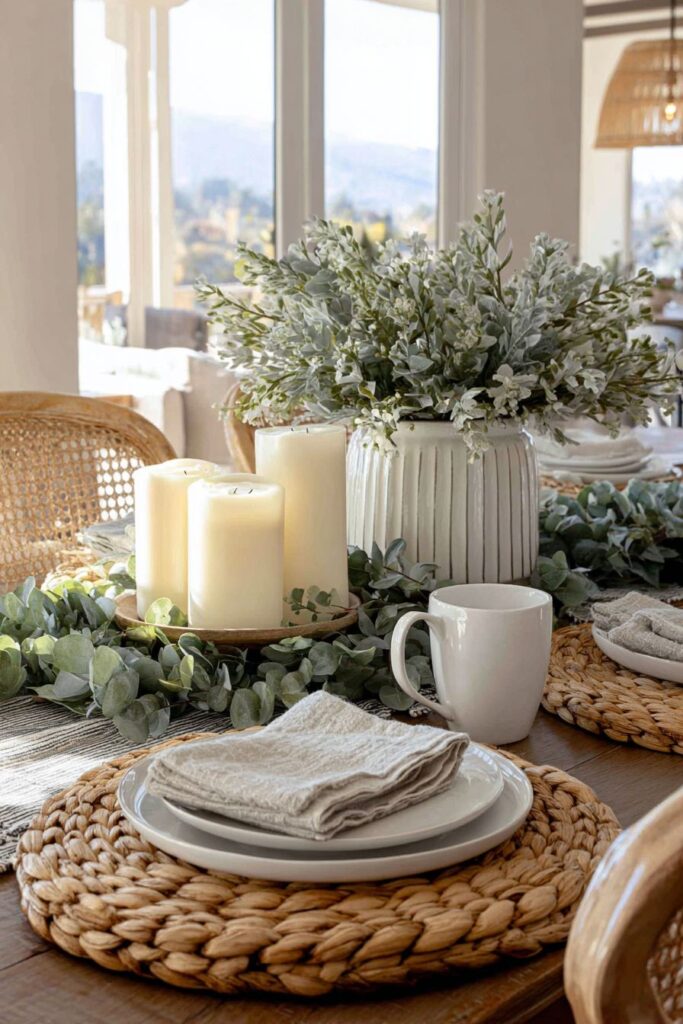
The low centerpiece of fresh winter greenery and white pillar candles creates visual interest at eye level without obstructing views across the table, a crucial consideration for spaces meant to foster connection. This arrangement brings life and light to the table while maintaining an organic, unfussy quality that feels appropriate for January’s stripped-back aesthetic. The natural elements echo the season outside while the candles promise warmth and intimacy for long winter evenings.
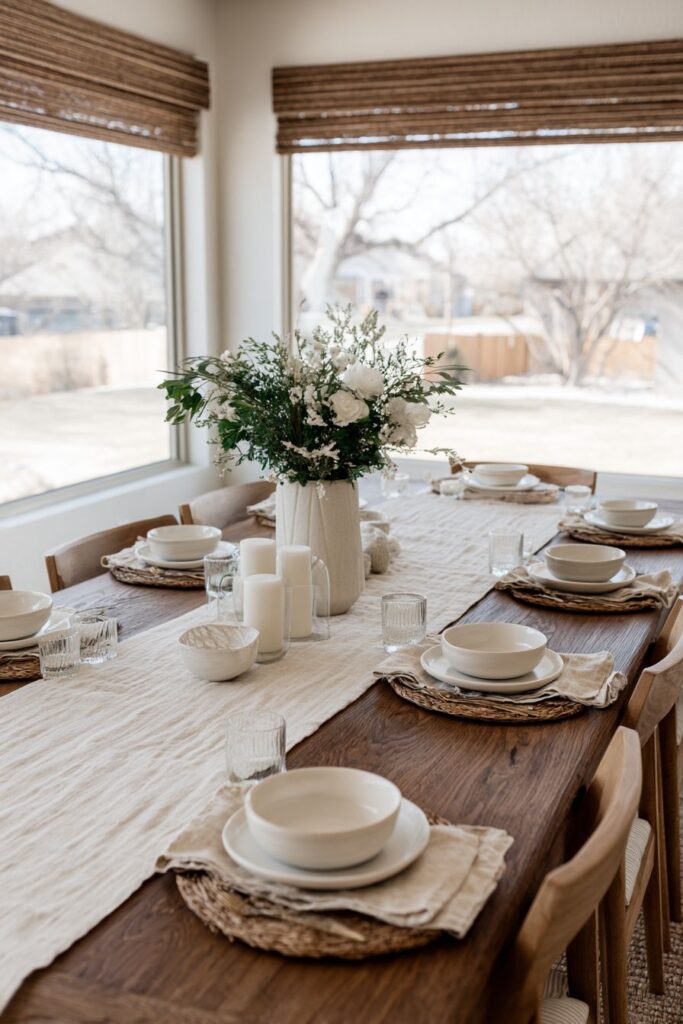
Light wood chairs and a sisal rug ground the space with natural materials that add warmth without overwhelming the room’s serene palette. Soft diffused daylight from nearby windows highlights every texture—the grain of the wood, the weave of the linen, the organic forms of the greenery—creating a dining environment that feels both refined and relaxed. This is a room that celebrates the simple pleasure of breaking bread together, perfect for establishing new year traditions.
Key Design Tips:
- Choose a substantial table that can anchor the room and accommodate guests
- Keep dinnerware simple in white or neutral tones for versatility
- Create low centerpieces that encourage conversation across the table
- Use natural fiber rugs to add warmth and define the dining zone
- Maximize natural light sources to create an inviting daytime atmosphere
5. Window-Side Reading Nook
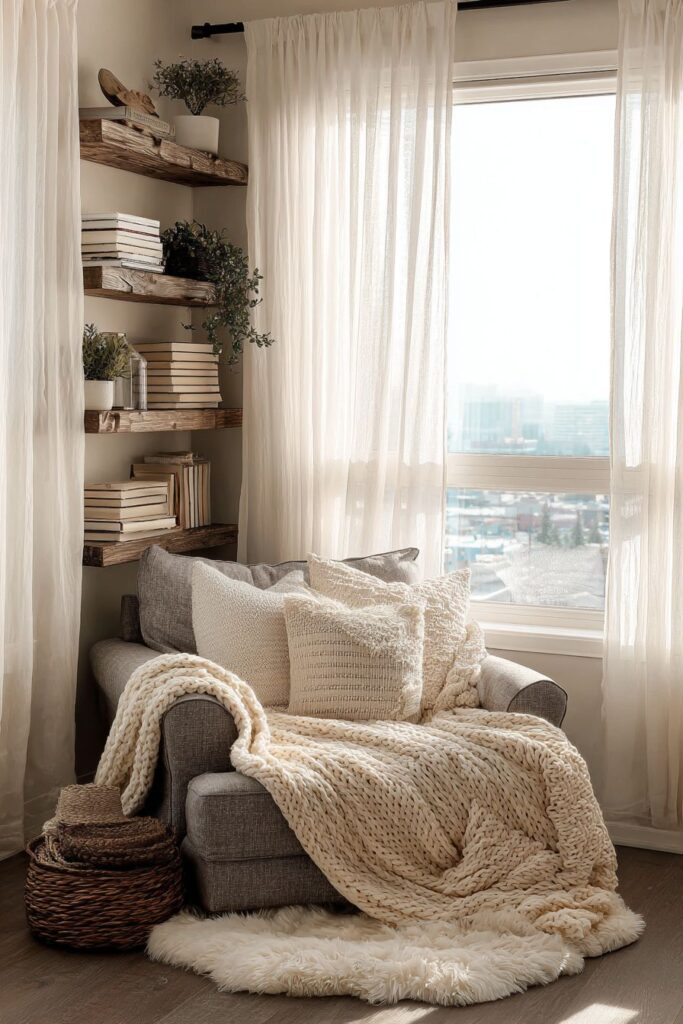
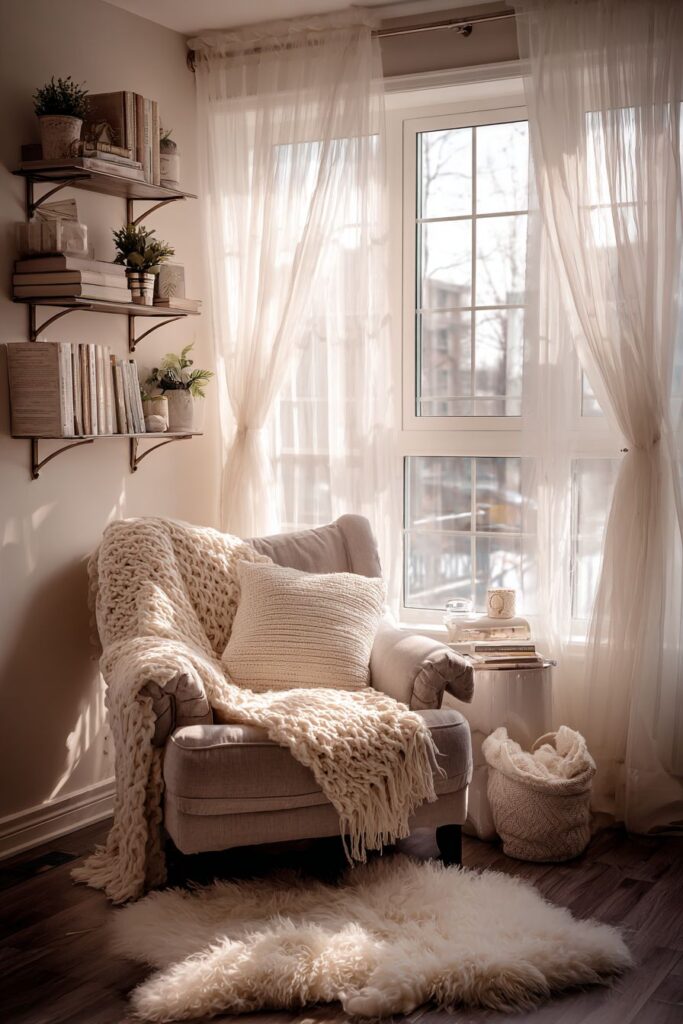
The cozy January reading nook represents a personal sanctuary within the home, a dedicated space for quiet reflection and literary escape during long winter afternoons. Positioned strategically near a window, a comfortable armchair upholstered in soft grey fabric becomes the centerpiece of this intimate retreat. The chair’s generous proportions invite curling up with a book, while its neutral color allows it to blend seamlessly with the room’s winter-inspired palette.
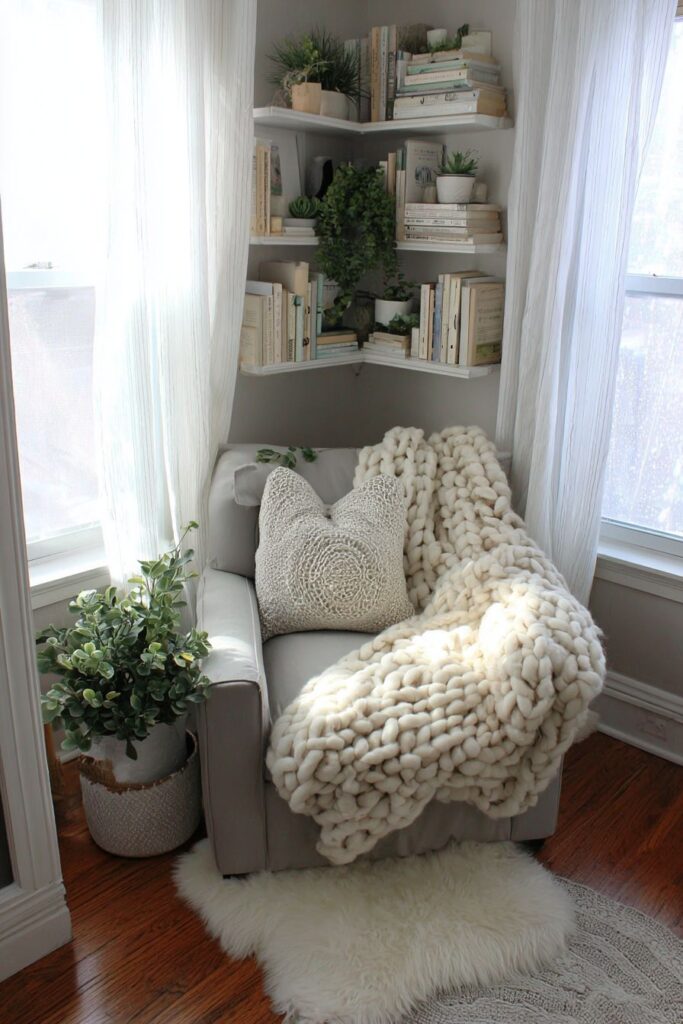
Layered textiles transform this corner into a tactile haven—a chunky knit throw blanket in cream drapes invitingly over the chair’s arm, while a sheepskin rug cushions feet against cold floors. These textural elements aren’t merely decorative; they’re essential components of the nook’s functionality, providing the physical comfort necessary for losing yourself in a good story. The interplay of different fabric weights and weaves creates visual interest that keeps the neutral space from feeling monotonous.
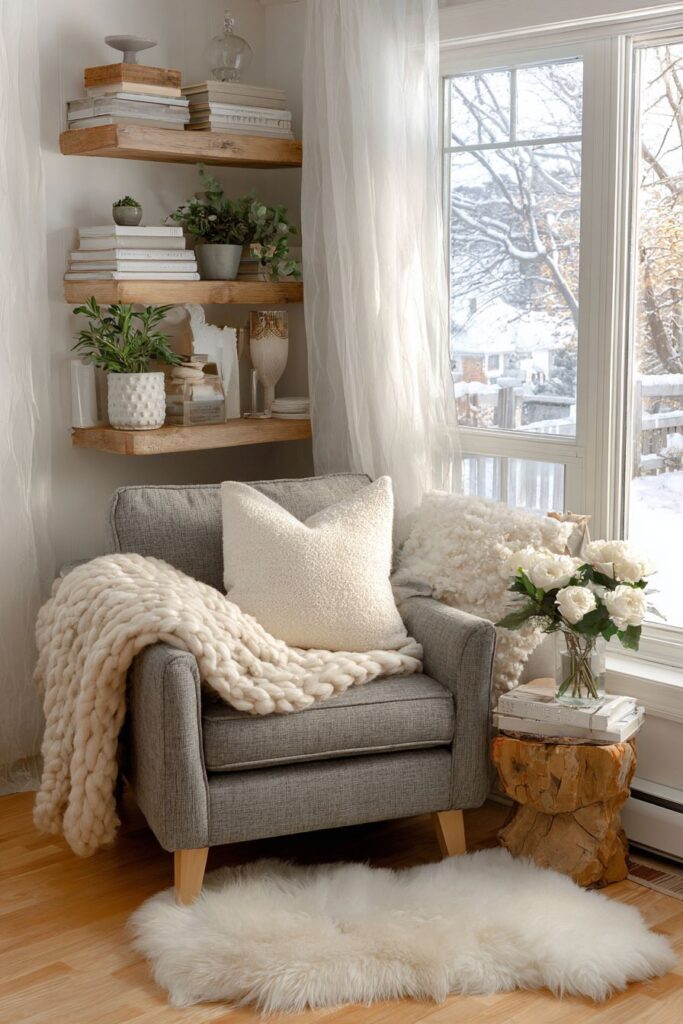
Floating shelves display organized books alongside small potted plants, creating a personal library that’s both functional and decorative. The careful curation of these shelves—perhaps organized by color or subject—reflects the organizational spirit of January while ensuring your favorite titles remain easily accessible. Natural winter light streams through sheer curtains, creating gentle highlights that shift throughout the day, making this reading nook a space you’ll want to return to again and again.
Key Design Tips:
- Choose an oversized chair that truly invites relaxation
- Layer multiple textures in complementary neutral tones
- Install adjustable task lighting for evening reading sessions
- Organize books in a visually pleasing way that makes them easy to access
- Position the nook near natural light sources when possible
6. Streamlined Kitchen Organization
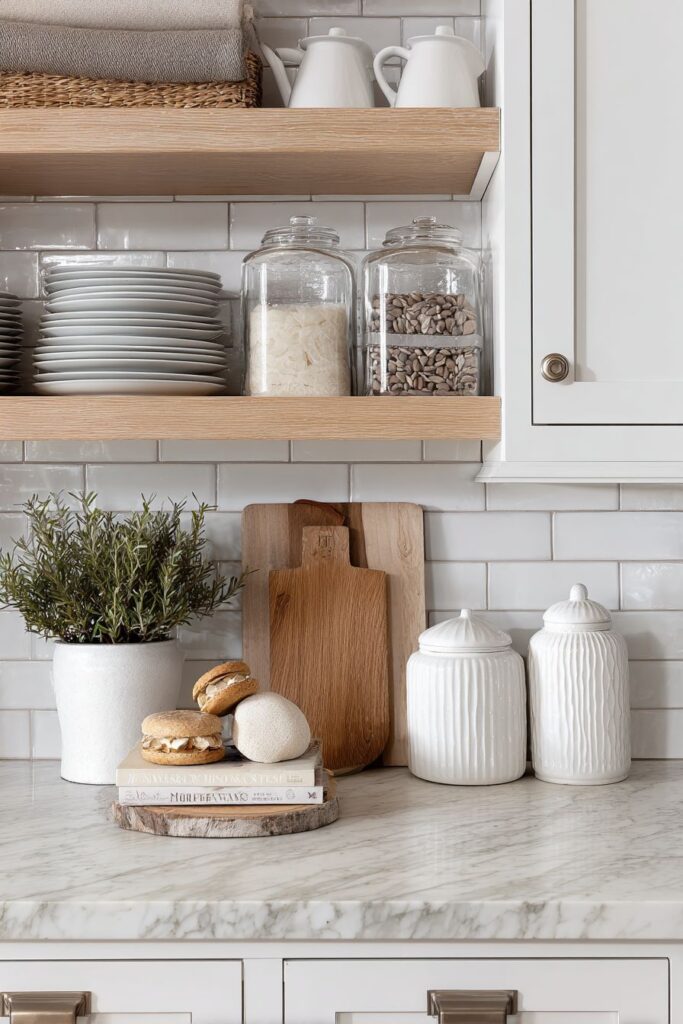
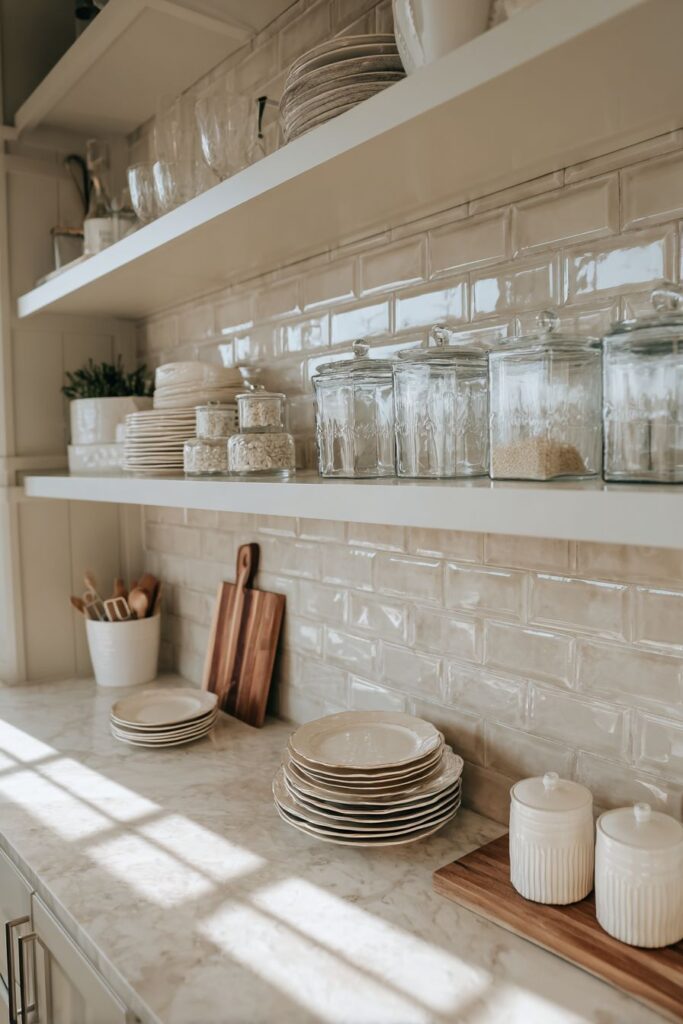
This January house decor kitchen transformation celebrates the beauty of organization, where open shelving displays neatly arranged white dishes and clear glass storage containers like works of art. This approach requires commitment to maintaining order, but the visual payoff—a kitchen that feels spacious, clean, and inspiring—makes the effort worthwhile. The pristine presentation of everyday items elevates them from mere utensils to design elements that contribute to the room’s overall aesthetic.
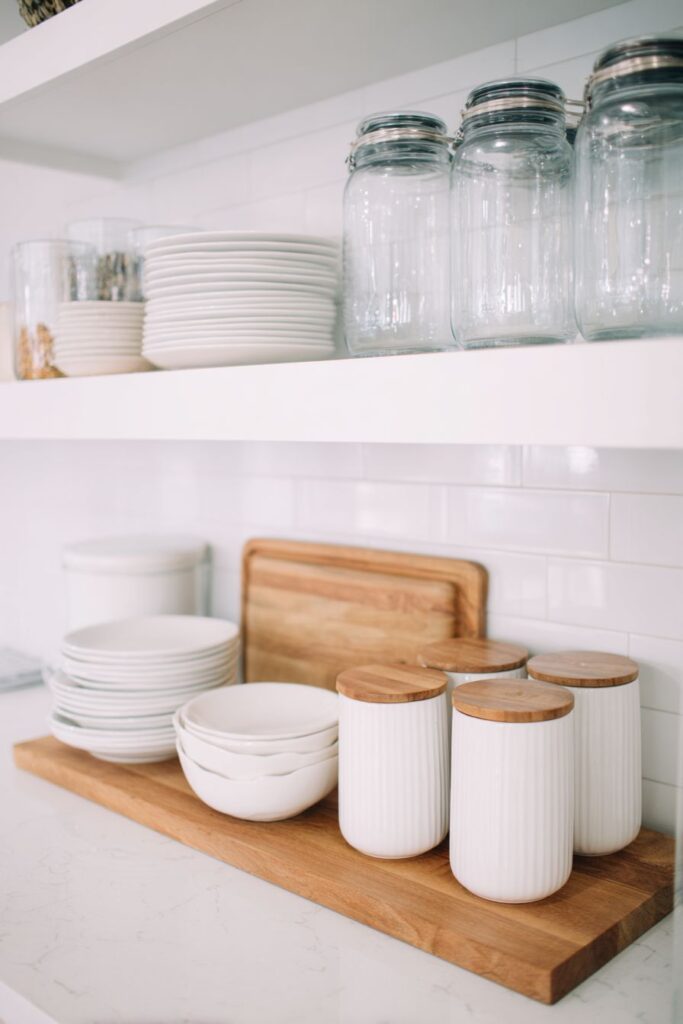
Marble countertops gleam without clutter, styled with minimal accessories including a wooden cutting board that adds warmth and a set of white ceramic canisters that provide both storage and visual continuity. This restraint in styling allows the kitchen’s architectural features and quality materials to shine, creating a workspace that feels professional yet welcoming. The clean surfaces also serve a practical purpose, providing ample room for meal preparation without the stress of navigating around decorative items.
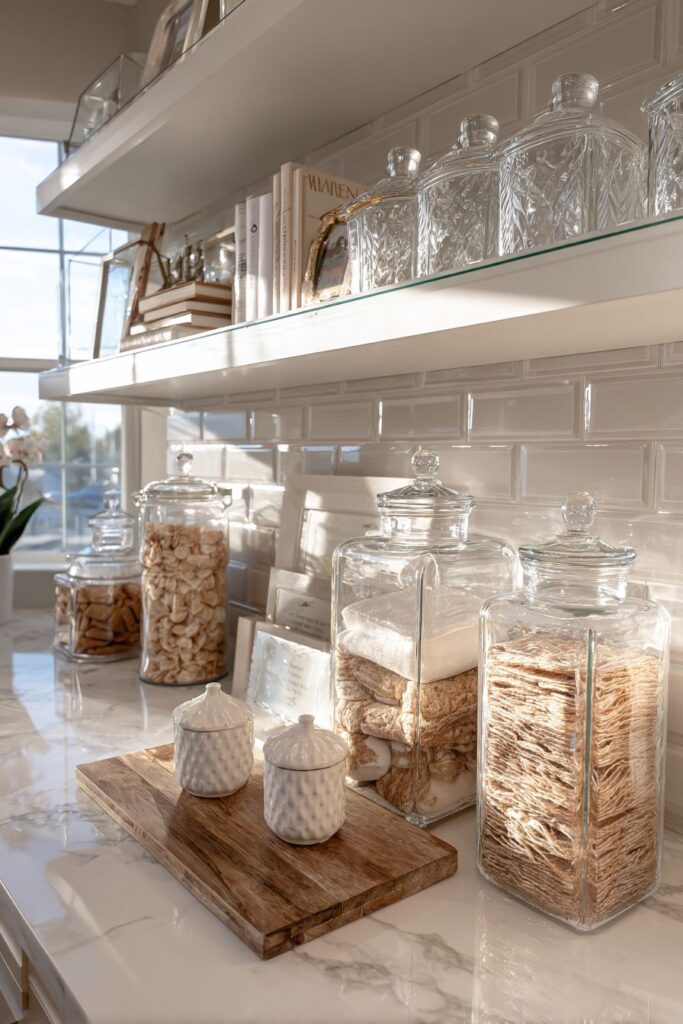
The subway tile backsplash in pristine condition paired with brushed nickel fixtures creates a classic combination that will remain stylish for years to come. Natural daylight emphasizes the fresh, organized post-holiday reset, making the kitchen feel like a bright start to each new day. This functional workspace demonstrates how January’s organizational energy can transform a utilitarian room into an inspiring environment where cooking becomes a pleasure rather than a chore.
Key Design Tips:
- Commit to open shelving only if you can maintain consistent organization
- Use clear containers to create visual uniformity while showing contents
- Limit countertop items to frequently used essentials plus one or two decorative pieces
- Choose timeless materials like marble and subway tile for longevity
- Maintain a cohesive color scheme for a calming, organized appearance
7. Productive Home Office Haven
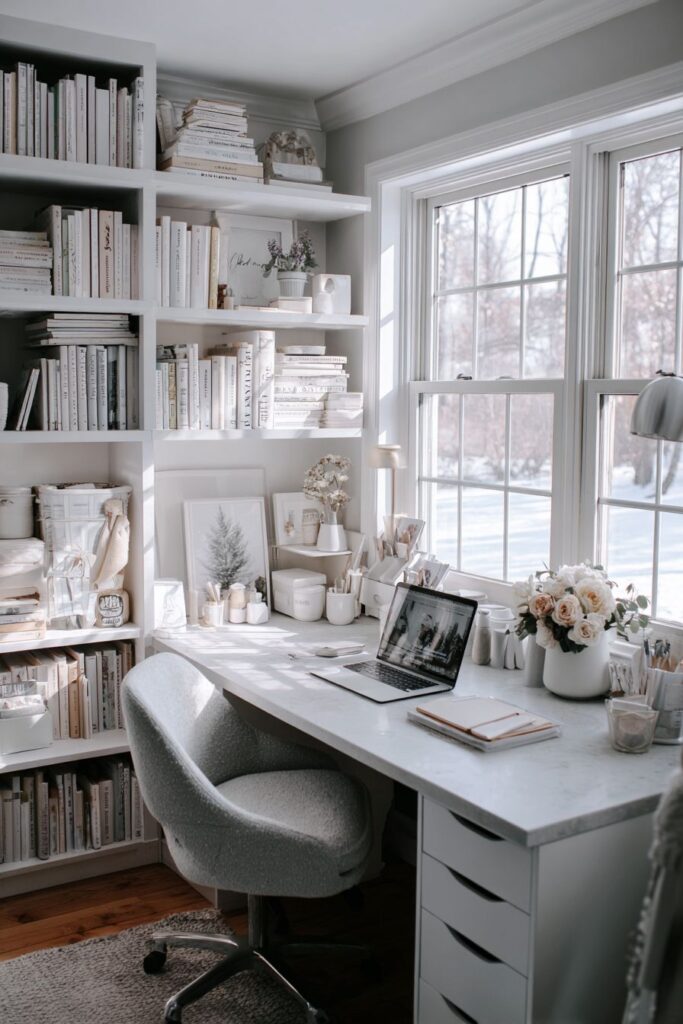
The serene January house decor home office proves that productive spaces need not sacrifice aesthetics for functionality. A clean desk setup featuring minimal accessories and organized supplies in white and grey containers creates a workspace that promotes focus and creativity. This intentional minimalism eliminates visual distractions, allowing your mind to concentrate on the tasks at hand while the organized environment reduces stress and increases efficiency.
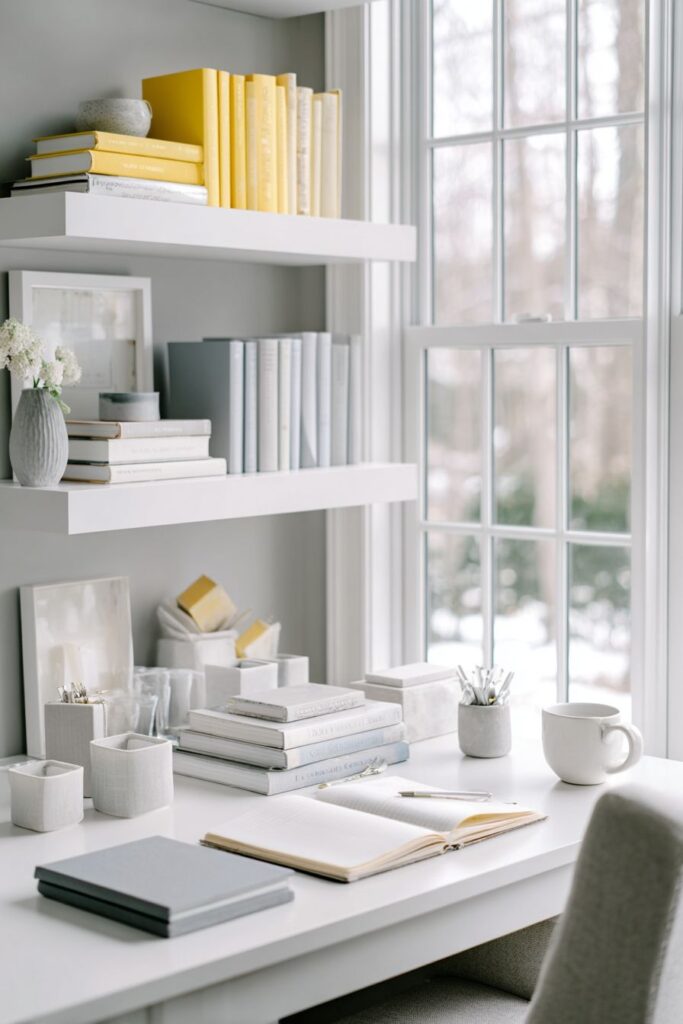
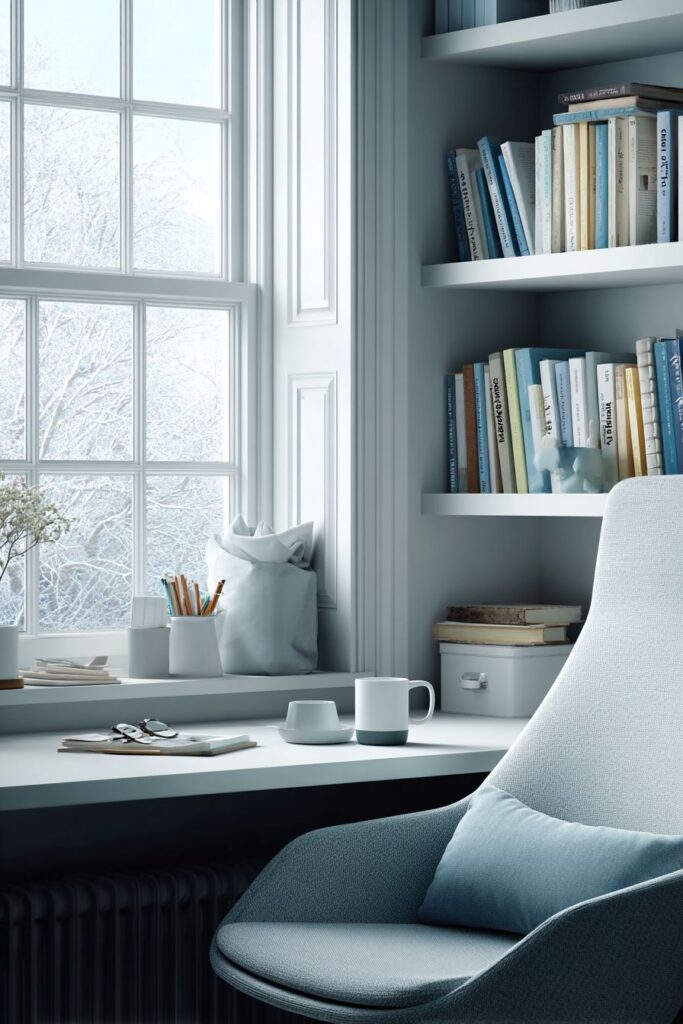
Floating shelves display books arranged by color, creating visual calm through thoughtful organization that transforms a practical necessity into an artistic installation. This rainbow arrangement or monochromatic grouping serves dual purposes—making titles easier to locate while providing a pleasing backdrop to video calls and daily work sessions. The books themselves become decor, their spines creating patterns and color blocks that add personality without clutter.
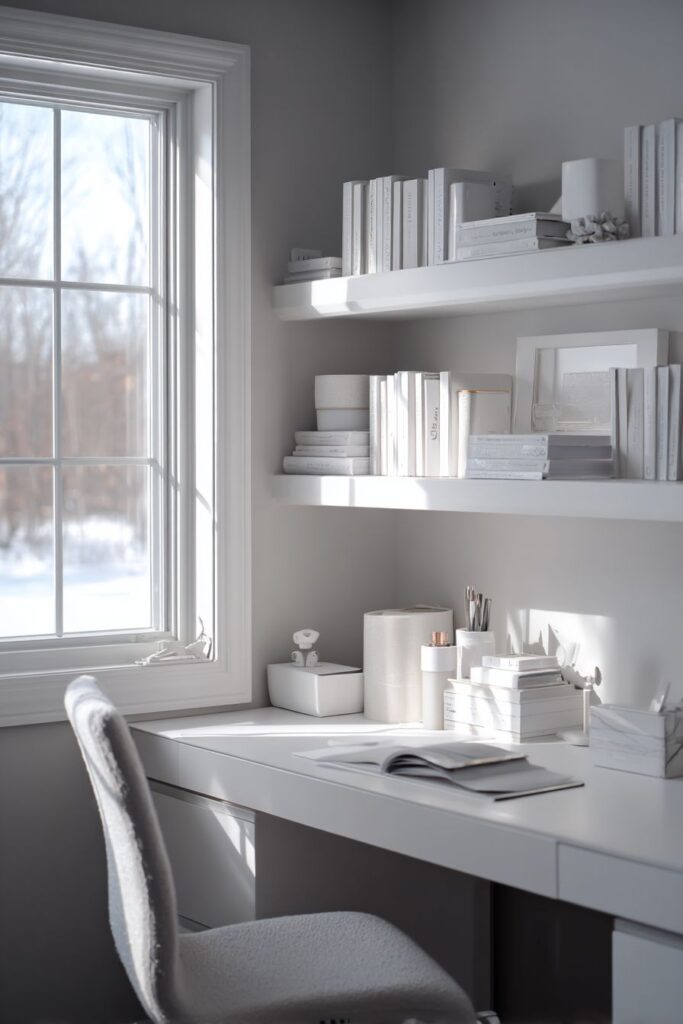
A comfortable ergonomic chair in light grey fabric ensures that functionality supports long work sessions without compromising the room’s aesthetic cohesion. The large window allowing winter daylight to illuminate the space reduces eye strain while connecting you to the natural rhythm of the day—an important consideration for those working from home. This office exemplifies how January’s focus on organization and fresh starts can create an inspiring workspace that supports your professional goals throughout the year.
Key Design Tips:
- Invest in quality ergonomic furniture that supports health and productivity
- Use matching containers and organizers for a cohesive, calm appearance
- Arrange books by color for visual interest and easier location
- Position your desk to maximize natural light without screen glare
- Keep only current projects visible; archive completed work elsewhere
8. Spa-Like Bathroom Serenity
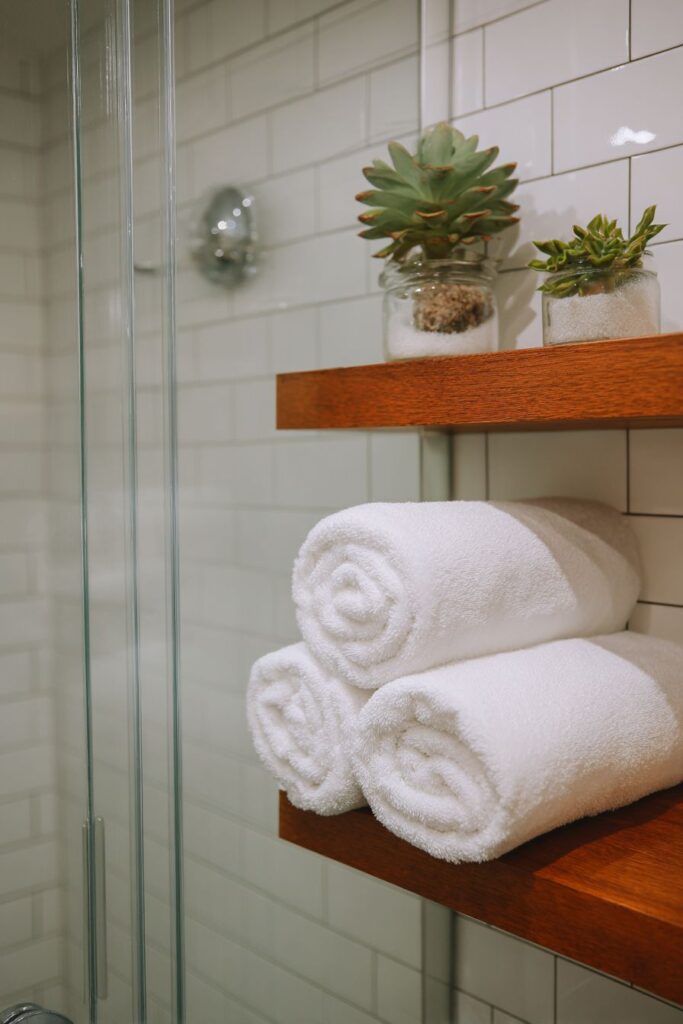
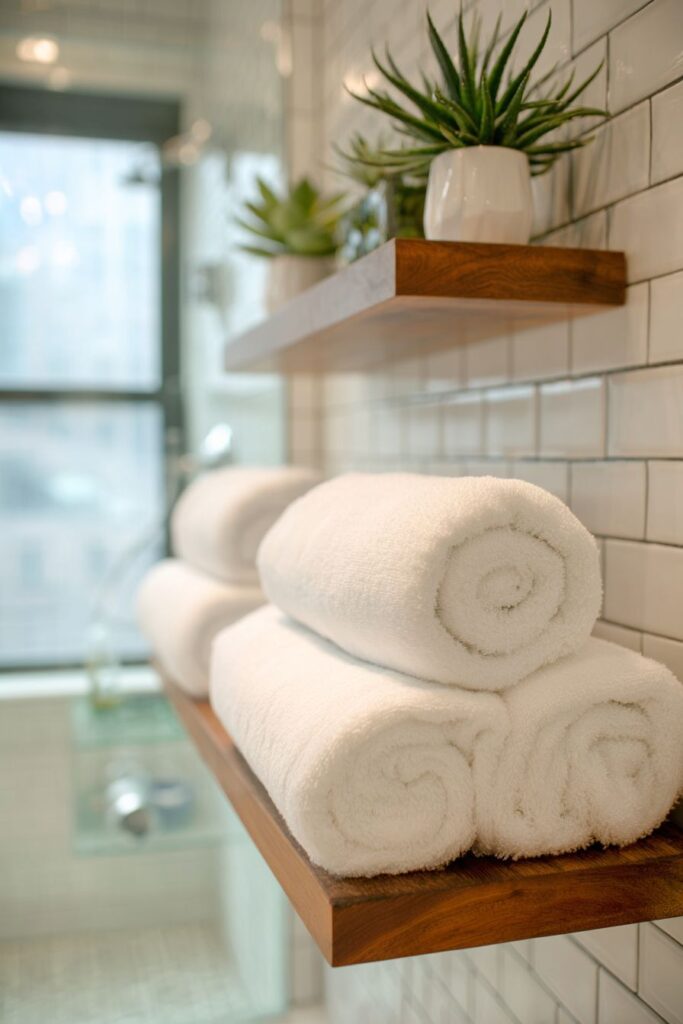
This January house decor bathroom transformation creates a spa-like retreat that turns daily routines into moments of self-care and relaxation. Rolled white towels displayed on floating wooden shelves become sculptural elements, their pristine appearance and organized presentation setting the tone for the room’s dedication to cleanliness and order. This hotel-inspired styling elevates the mundane into something special, reminding you each day that you deserve luxury and attention to detail.
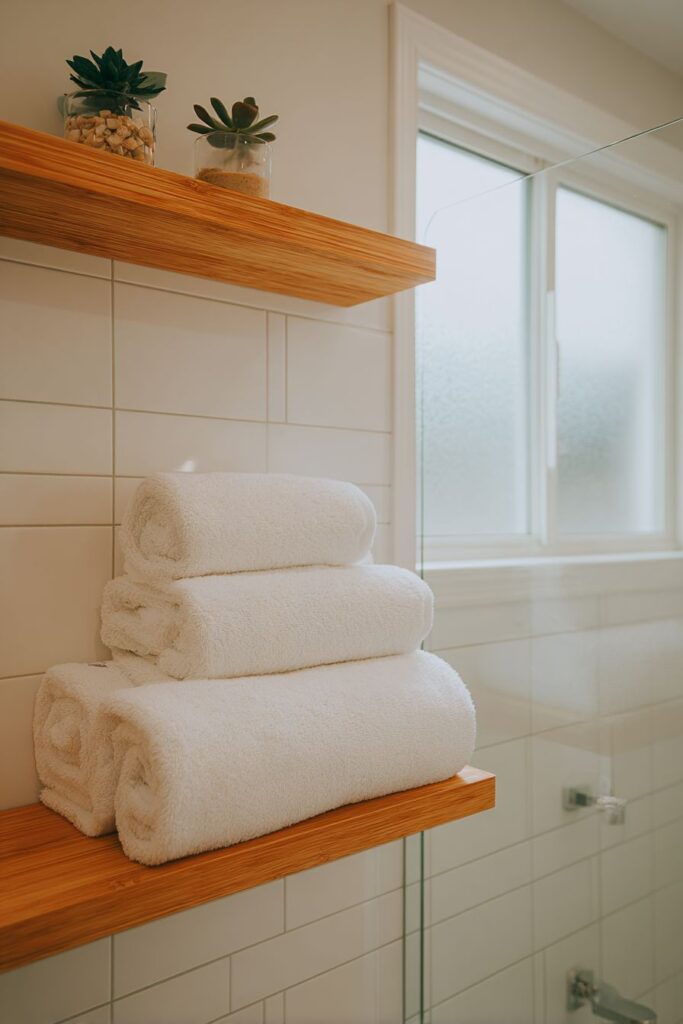
Chrome fixtures gleam against white subway tiles, their reflective surfaces bouncing light around the room to create a bright, energizing atmosphere perfect for morning routines. A glass shower partition maintains visual openness, preventing even modest-sized bathrooms from feeling cramped or closed-in. This transparency, combined with the monochromatic palette, creates an illusion of expanded space that makes the bathroom feel more generous than its square footage might suggest.
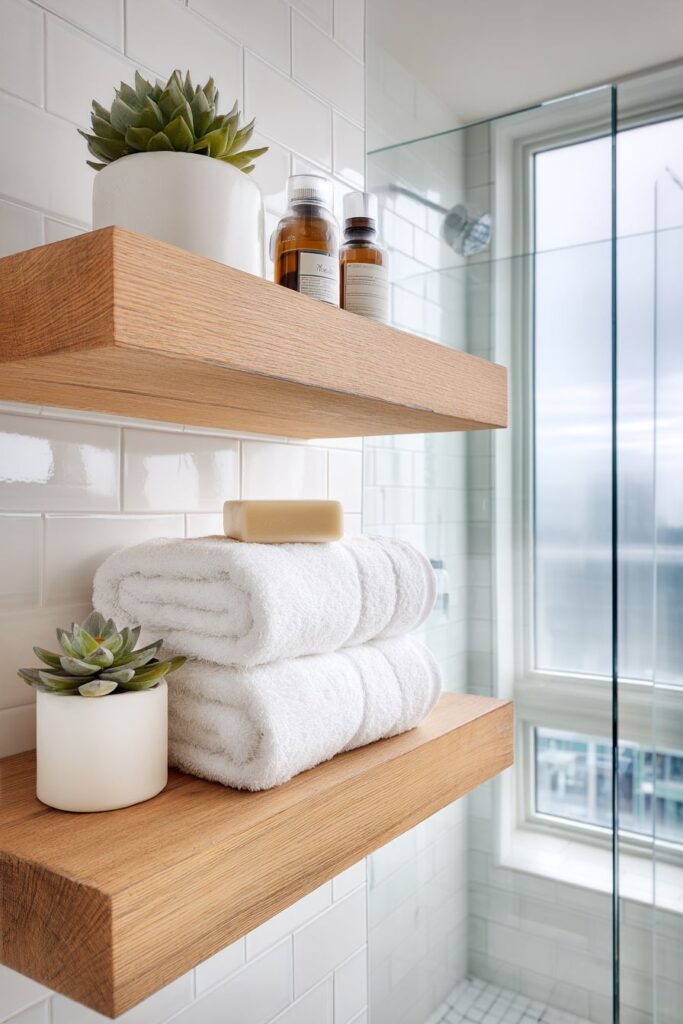
Small succulent plants add life without clutter, their compact size and minimal care requirements making them perfect bathroom companions. These green accents provide just enough color to soften the white-on-white scheme without disrupting the serene atmosphere. Soft natural lighting through a frosted window creates gentle ambiance while maintaining privacy, completing this sanctuary where you can wash away yesterday’s concerns and prepare for today’s possibilities.
Key Design Tips:
- Roll and display towels for a hotel-like aesthetic and easy access
- Choose a consistent color palette of whites and cool tones for spa ambiance
- Incorporate glass elements to maintain visual openness
- Add living plants that thrive in bathroom humidity
- Use frosted glass for natural light with privacy
9. Transitional Living Room Mantel
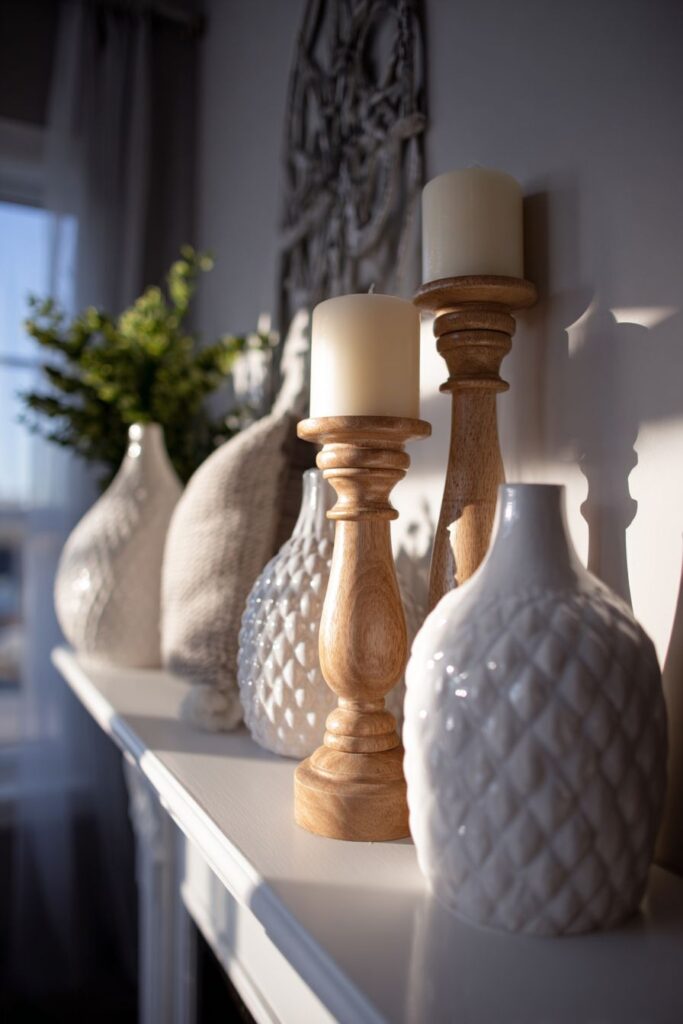
The January house decor living room mantel serves as a focal point that bridges the gap between holiday excess and everyday elegance. Styled with winter elements including white ceramic vases, natural wood candlesticks, and subtle greenery, this arrangement celebrates the season without feeling specifically holiday-oriented. The classic white fireplace surround provides a fresh backdrop that allows each carefully chosen element to shine, creating a composition that feels balanced and intentional.
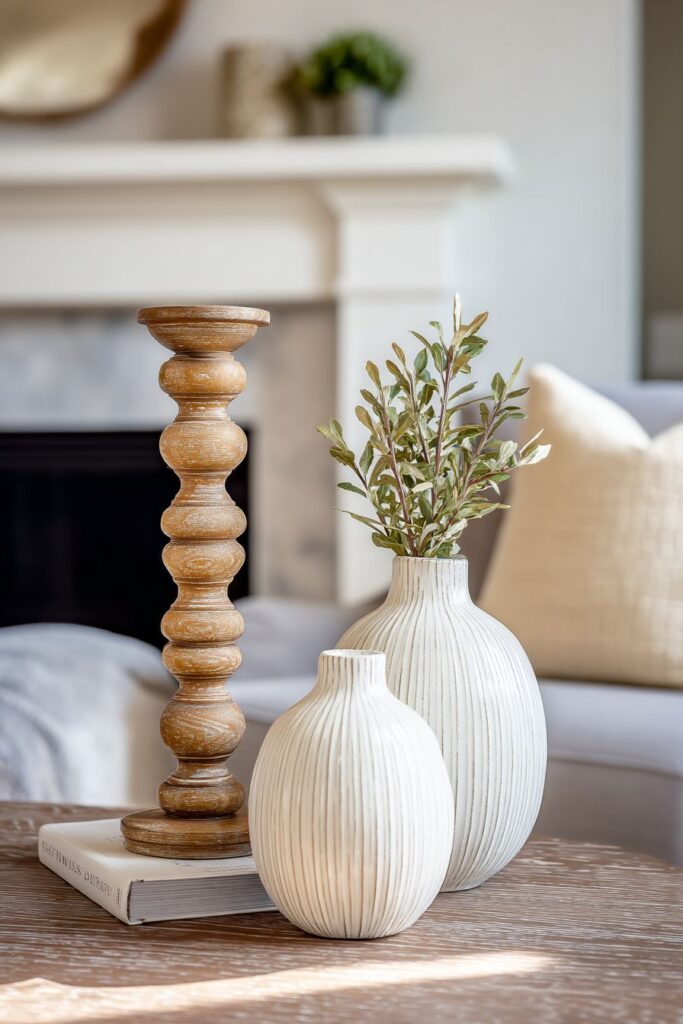
Nearby seating features grey upholstery with cream pillows, creating a cohesive color story that extends from the mantel throughout the living area. This repetition of tones unifies the space while the varied textures—smooth ceramics, rough wood, soft fabric—add depth and interest. The neutral palette allows seasonal adjustments through simple swaps of greenery or accessories, making this a flexible foundation for year-round design.
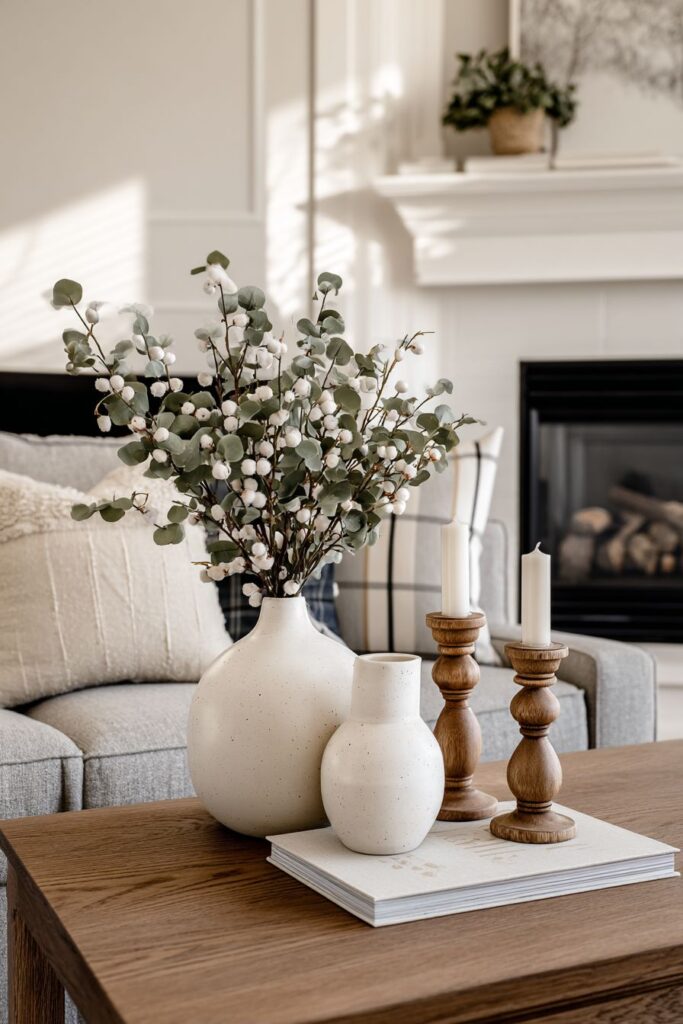
Afternoon winter light creates soft shadows that enhance the peaceful atmosphere, casting gentle patterns across the white mantel and highlighting the organic forms of branches and botanical elements. This interplay of light and shadow adds dimension to the space, creating a living tableau that changes throughout the day. The overall effect is a living room that feels both current and timeless, ready to welcome the new year while honoring the comfort of home.
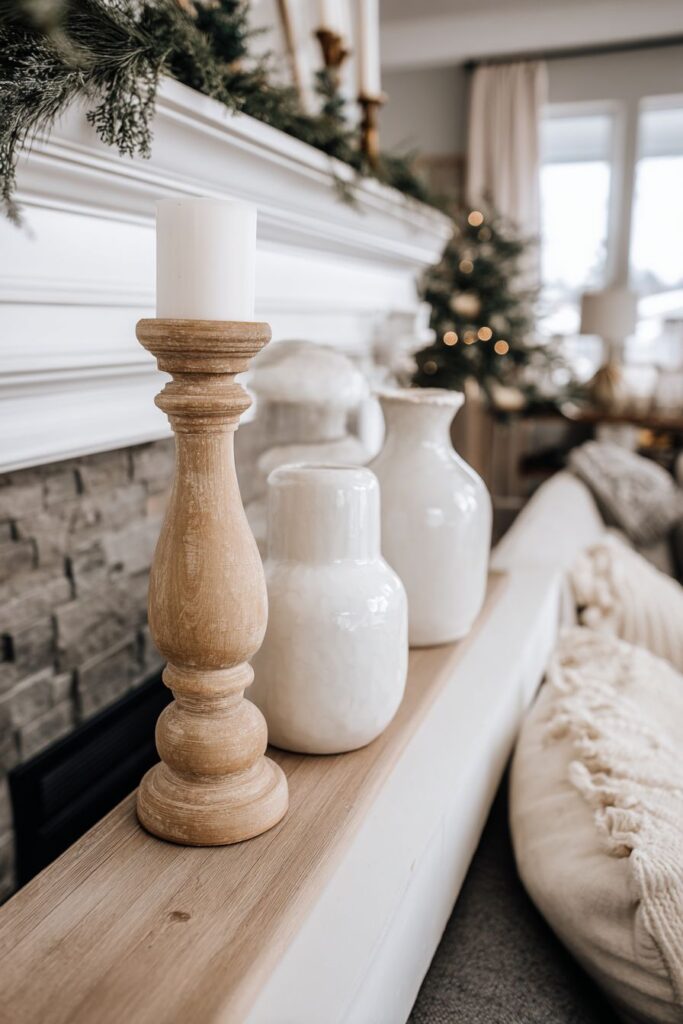
Key Design Tips:
- Group mantel items in odd numbers for visual appeal
- Vary heights of decorative elements to create dynamic composition
- Use the mantel to establish color palette for surrounding seating area
- Choose items that can transition between seasons with minor adjustments
- Allow natural light to interact with your styling for added dimension
10. Organized Nursery Calm
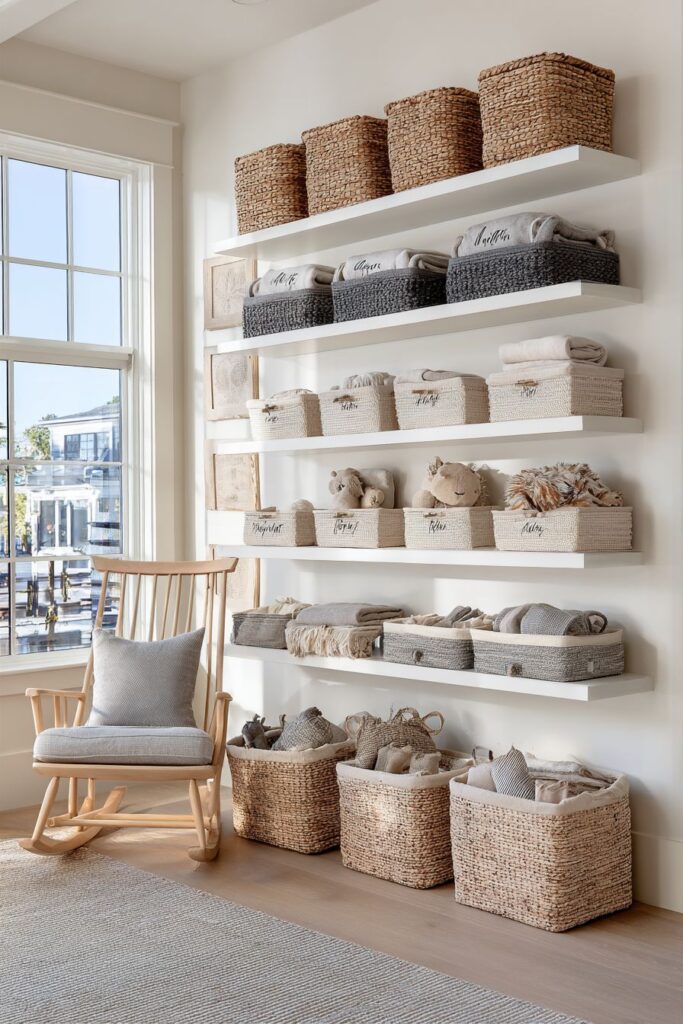
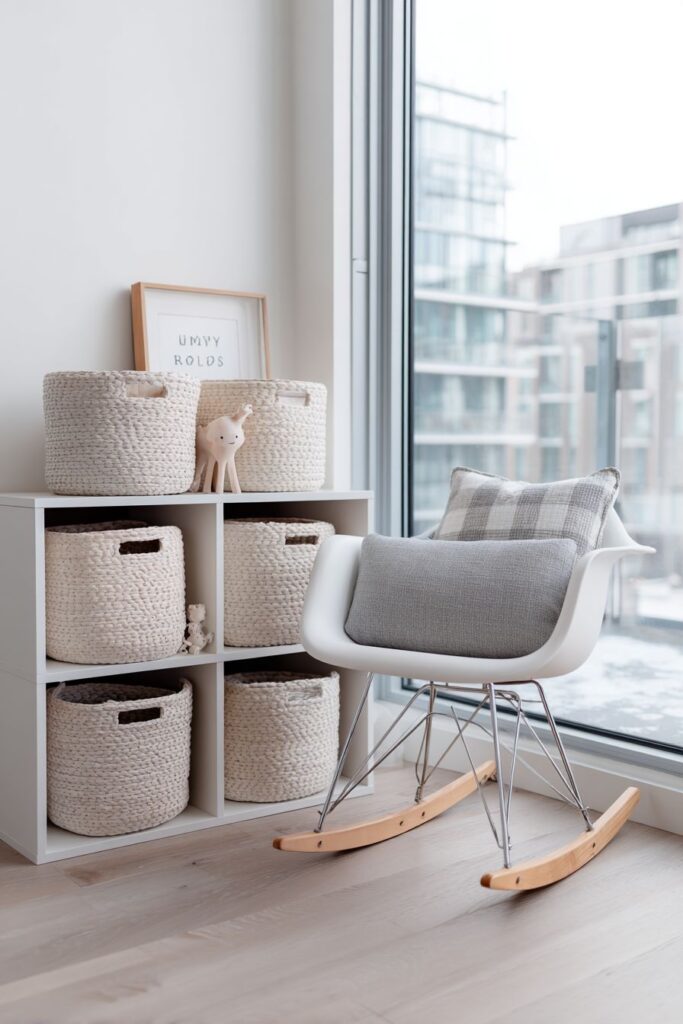
This January house decor nursery demonstrates how organization and aesthetics combine to create a peaceful environment for both baby and caregiver. Labeled woven baskets on white shelving units provide a place for everything, making it easy to locate necessities during late-night changes or feeding sessions. This practical organization reduces stress during already challenging moments, while the neutral color scheme creates a calm atmosphere conducive to rest and bonding.
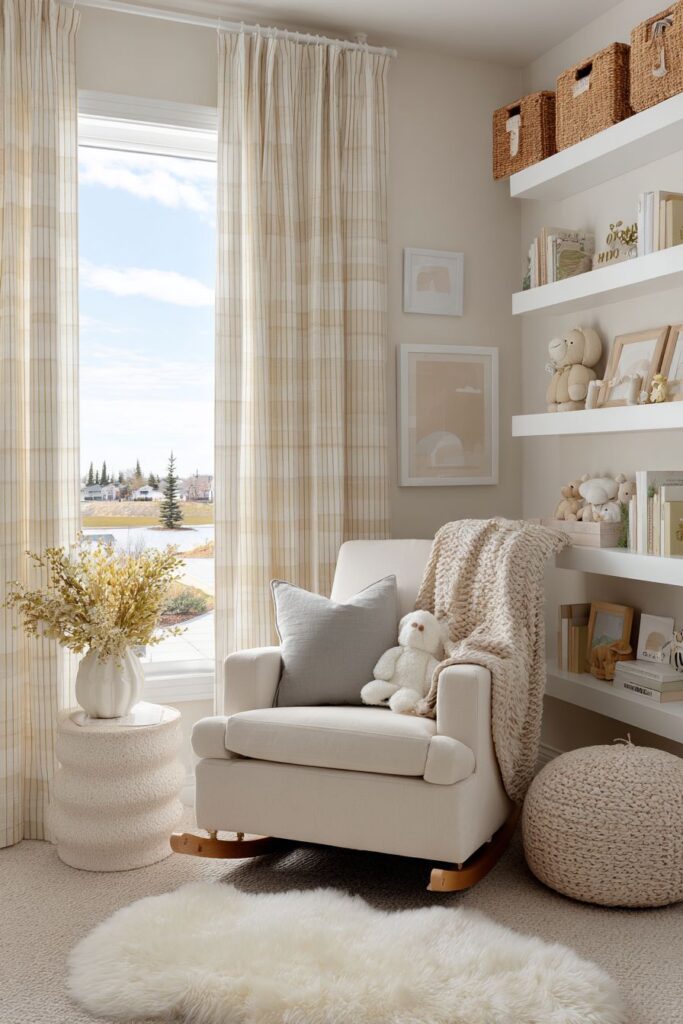
A rocking chair with soft grey cushions sits near the window, positioned to take advantage of natural light for daytime feeding and reading sessions. This thoughtful placement recognizes that new parents spend countless hours in this chair, making comfort and ambiance crucial considerations. The gentle motion combined with soft natural light creates a soothing environment that can help settle fussy babies while providing a peaceful retreat for caregivers.
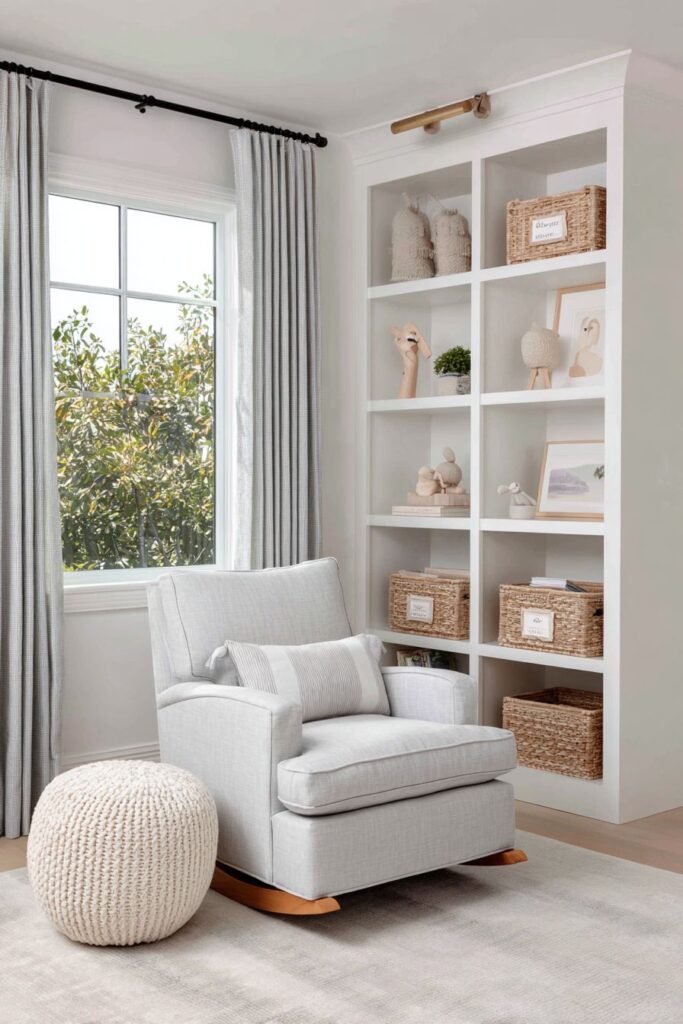
Minimal wall art in soft neutrals decorates without overwhelming, creating visual interest at adult eye level while maintaining the serene environment babies need for healthy development. The space feels fresh and uncluttered, with practical functionality prioritized over decorative excess. This approach to nursery design recognizes that the new year brings enough changes and challenges—the nursery should be a haven of organization and peace where families can focus on what truly matters.
Key Design Tips:
- Use labeled baskets to make organization obvious and easy to maintain
- Position rocking chair near natural light sources for daytime comfort
- Choose minimal, calming artwork rather than busy, stimulating patterns
- Maintain clear floor space for safe movement during nighttime care
- Select furniture in neutral colors that can transition as child grows
11. Modern Mudroom Efficiency
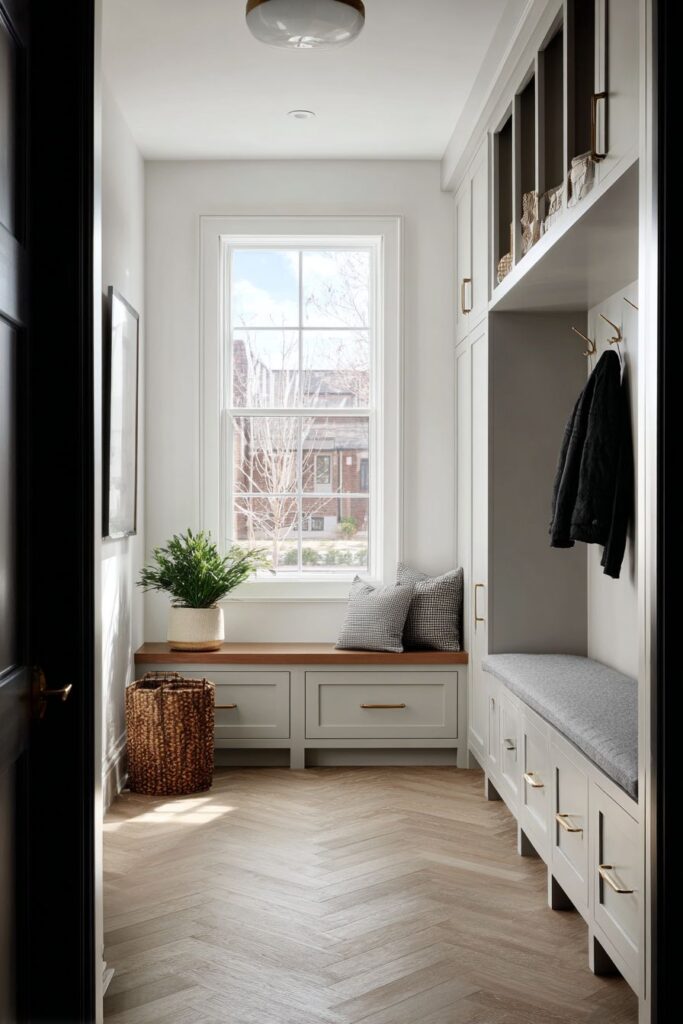
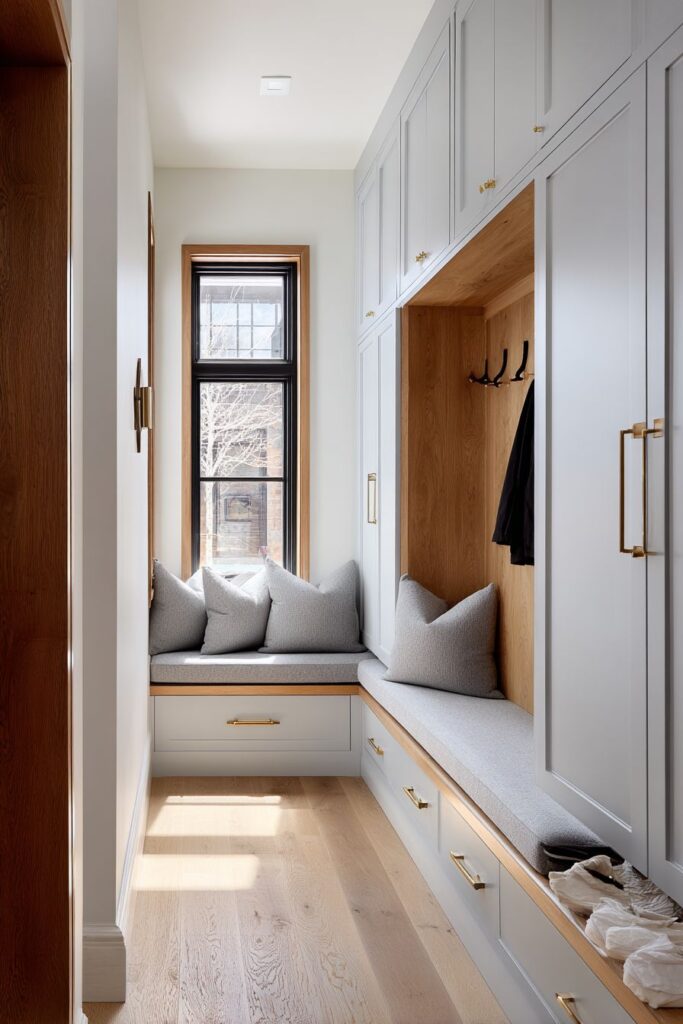
The modern January house decor mudroom combines sleek built-in cabinetry in light grey with brass hardware, creating a space that’s both highly functional and visually sophisticated. This dedicated transition area prevents winter’s mess from infiltrating the rest of the home while providing attractive storage that makes organization effortless. The light grey finish reflects available light, keeping the space bright despite being an interior room, while the brass hardware adds warmth and a touch of elegance to the utilitarian space.
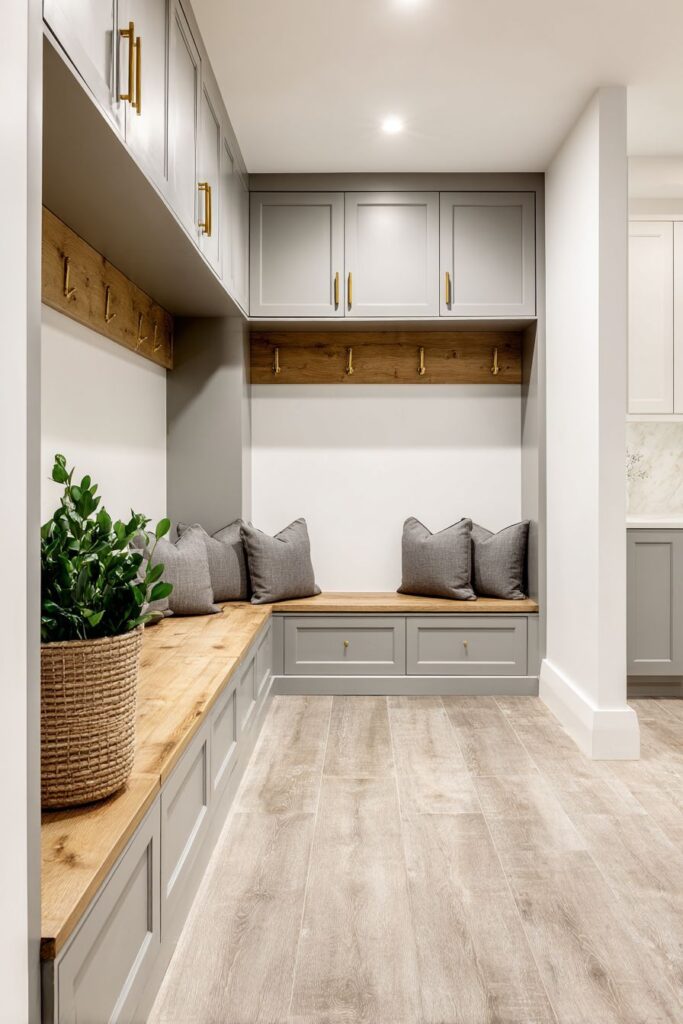
Bench seating with grey cushions provides comfortable functionality, offering a place to sit while removing boots or waiting for family members to gather before heading out. The hooks above hold minimal winter accessories in an organized fashion, with each family member having designated space that prevents the chaotic pile-up common in busy households. This systematic approach to storage means everything has its place, making morning routines smoother and arrivals home more pleasant.
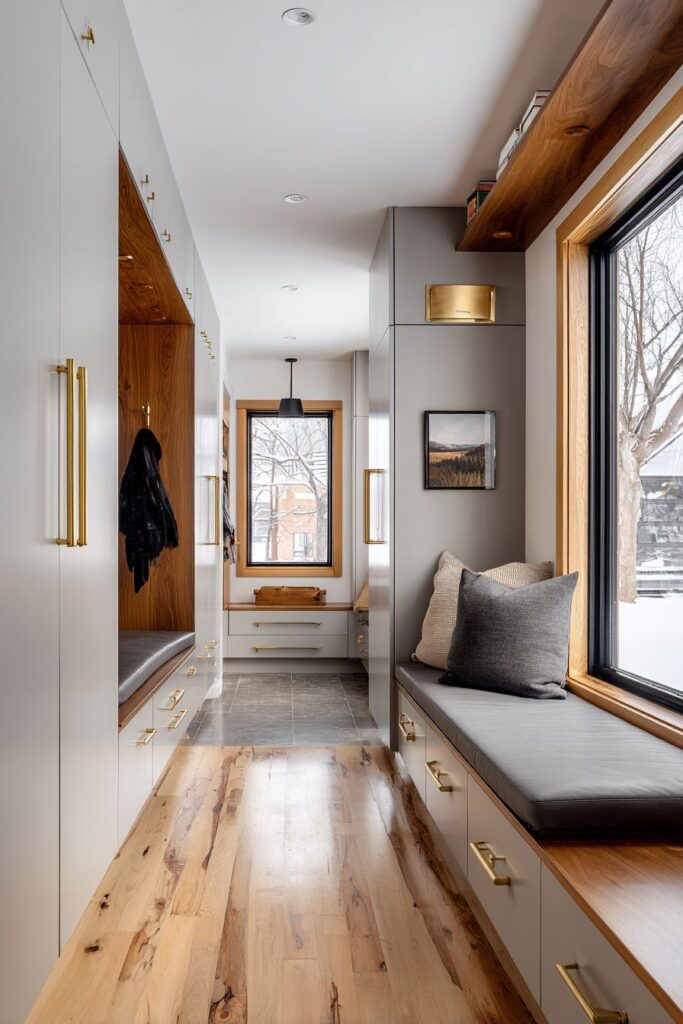
White walls maximize light reflection while natural wood accents add warmth that prevents the space from feeling cold or institutional. The combination of modern cabinetry and organic wood creates an appealing balance between contemporary design and timeless natural materials. This mudroom proves that practical spaces can be beautiful, setting a standard of organization and aesthetic consideration that influences the entire home’s atmosphere.
Key Design Tips:
- Invest in quality built-in cabinetry for maximum storage efficiency
- Provide seating at appropriate height for putting on and removing shoes
- Assign individual hooks or cubbies to each family member
- Use light colors on walls and cabinets to brighten interior spaces
- Include natural wood elements to warm modern finishes
12. Hotel-Inspired Guest Bedroom
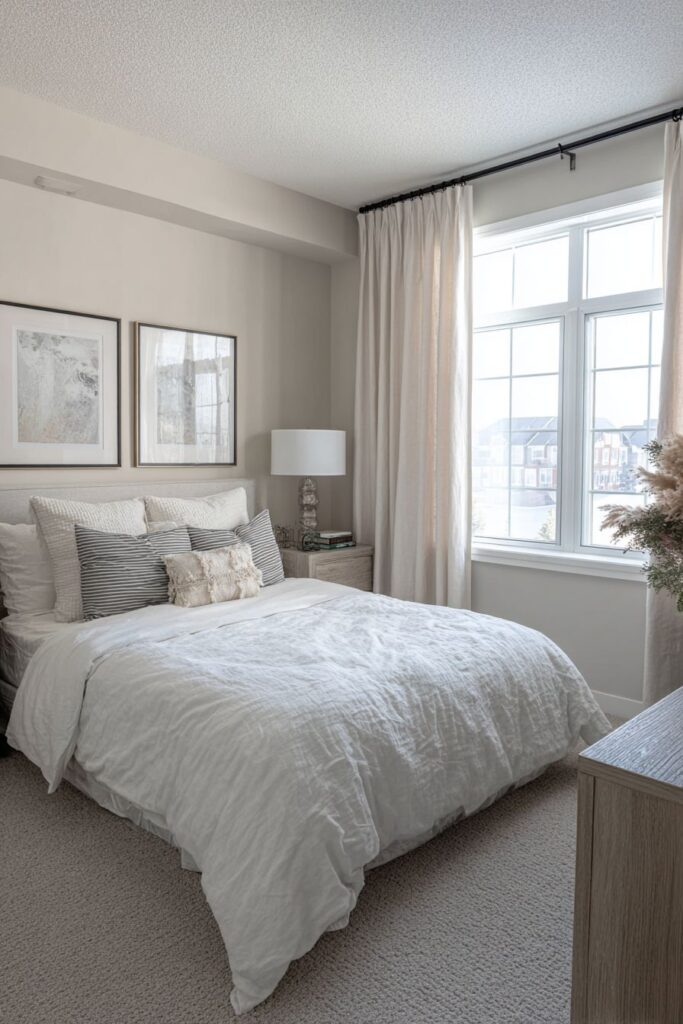
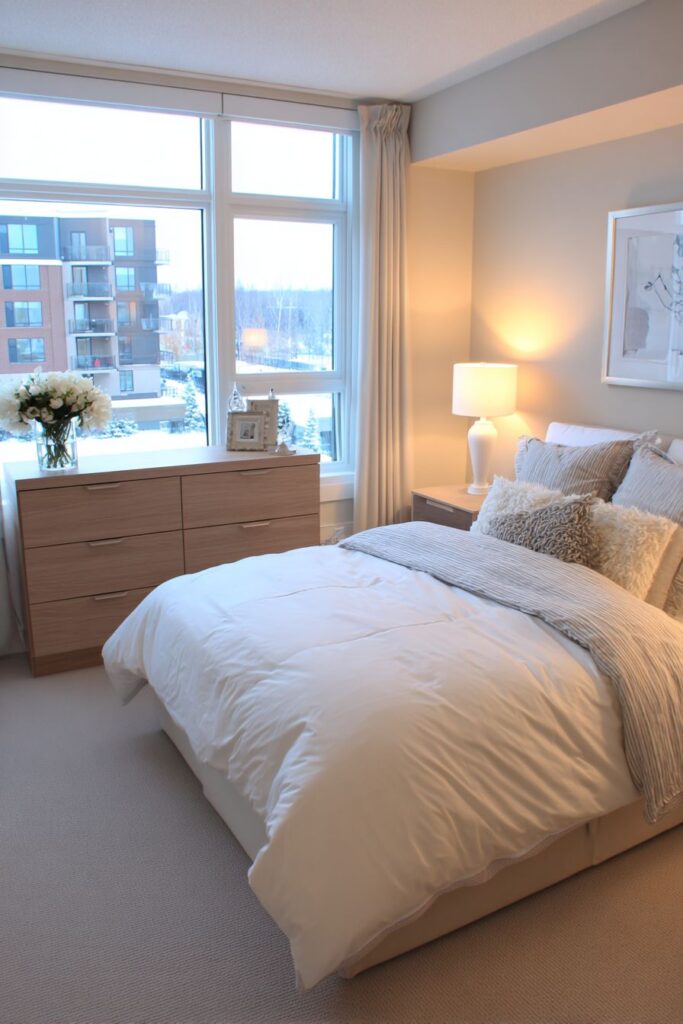
This January house decor guest bedroom creates a welcoming retreat that makes visitors feel pampered and valued through hotel-inspired simplicity. White bedding with subtle grey striped accent pillows provides comfort and visual interest without overwhelming the serene space. This restrained approach to styling ensures guests can personalize the room with their belongings without feeling the space is already too decorated or cluttered with the homeowner’s aesthetic preferences.
A streamlined dresser in natural oak displays only essential items—perhaps a carafe of water with glasses, a small plant, and a basket of travel-sized toiletries—providing amenities that demonstrate thoughtfulness without crowding the surface. This careful curation shows consideration for guests’ needs while maintaining the clean, uncluttered environment that promotes restful sleep. The natural oak finish adds warmth that balances the cool tones of the bedding, creating a harmonious color palette.
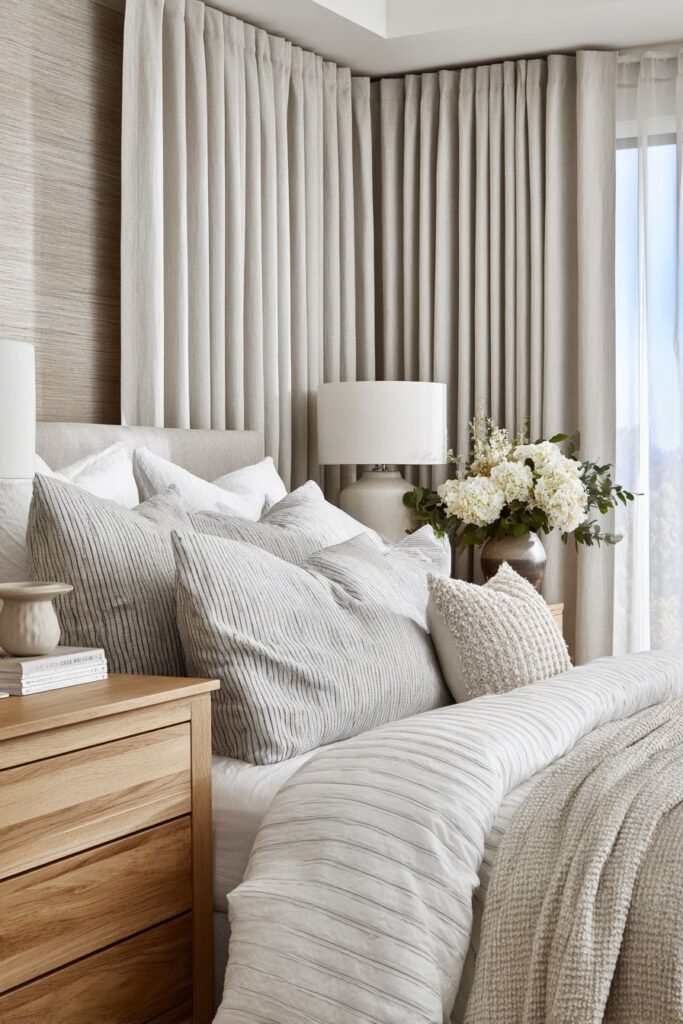
Blackout curtains in soft linen allow guests to control light levels according to their preferences, whether they need complete darkness for sleeping or filtered daylight for reading in bed. Bedside lamps with white shades provide adequate task lighting for nighttime reading without harsh glare. This guest bedroom anticipates needs without fuss, creating a space where visitors can truly relax and feel at home, embodying the generous hospitality spirit perfect for starting the new year.
Key Design Tips:
- Keep bedding simple and neutral to appeal to varied preferences
- Provide adequate task lighting on both sides of the bed
- Clear dresser surface of personal items before guests arrive
- Include blackout curtains or shades for flexible light control
- Add small amenities like water carafe or reading materials as thoughtful touches
13. Functional Laundry Room Refresh
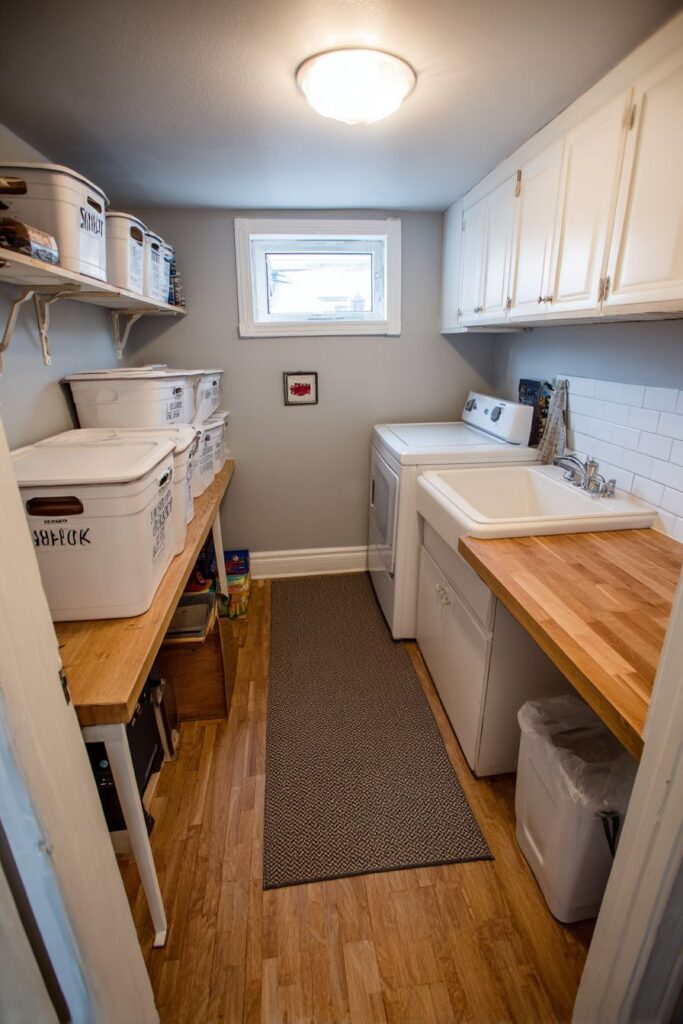
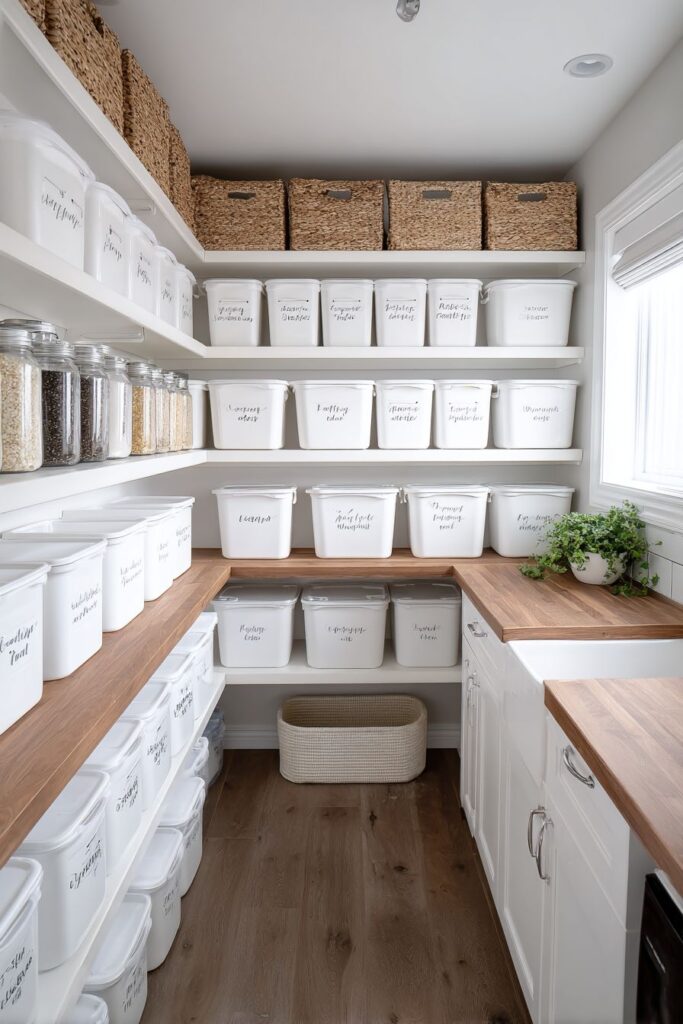
The functional January house decor laundry room transforms a purely utilitarian space into an organized, pleasant environment where household tasks feel less burdensome. Organized shelving with white storage containers labeled for efficiency makes it easy to locate supplies quickly, streamlining the laundry process and reducing frustration. This systematic approach recognizes that efficiency in utility spaces creates more time for activities you actually enjoy, making the organizational investment worthwhile.
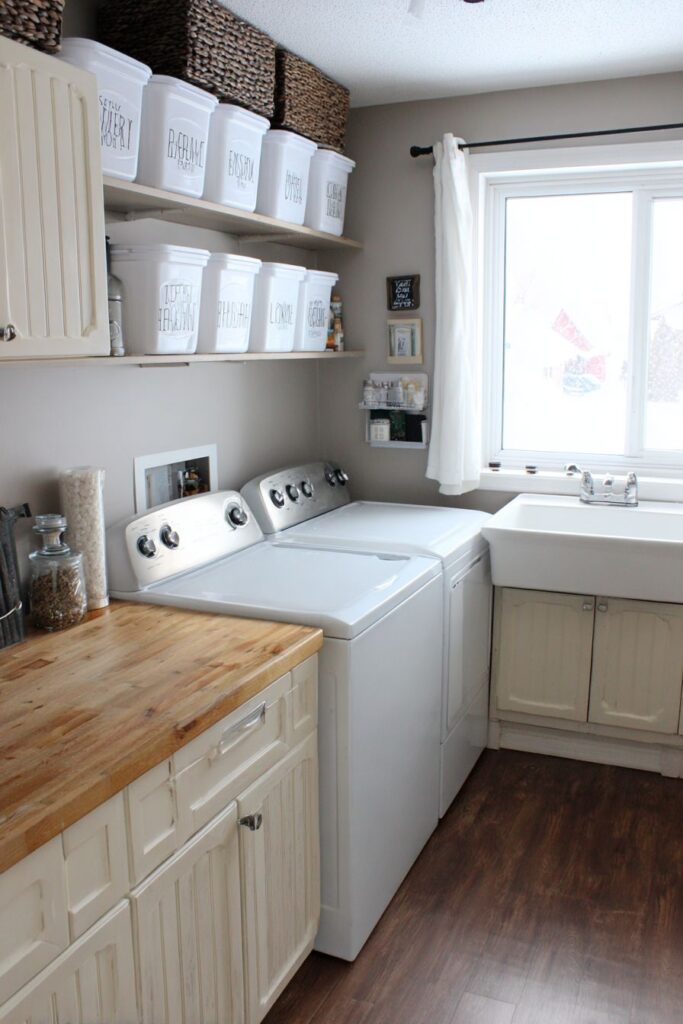
Light grey walls complement white cabinetry and a farmhouse sink, creating a cohesive palette that feels clean and fresh—appropriate qualities for a space dedicated to cleanliness. The farmhouse sink provides generous capacity for hand-washing delicates or soaking stained items, while its classic style adds unexpected charm to the practical space. A folding counter in butcher block provides workspace with warmth, the natural wood grain introducing organic visual interest to the predominantly neutral scheme.
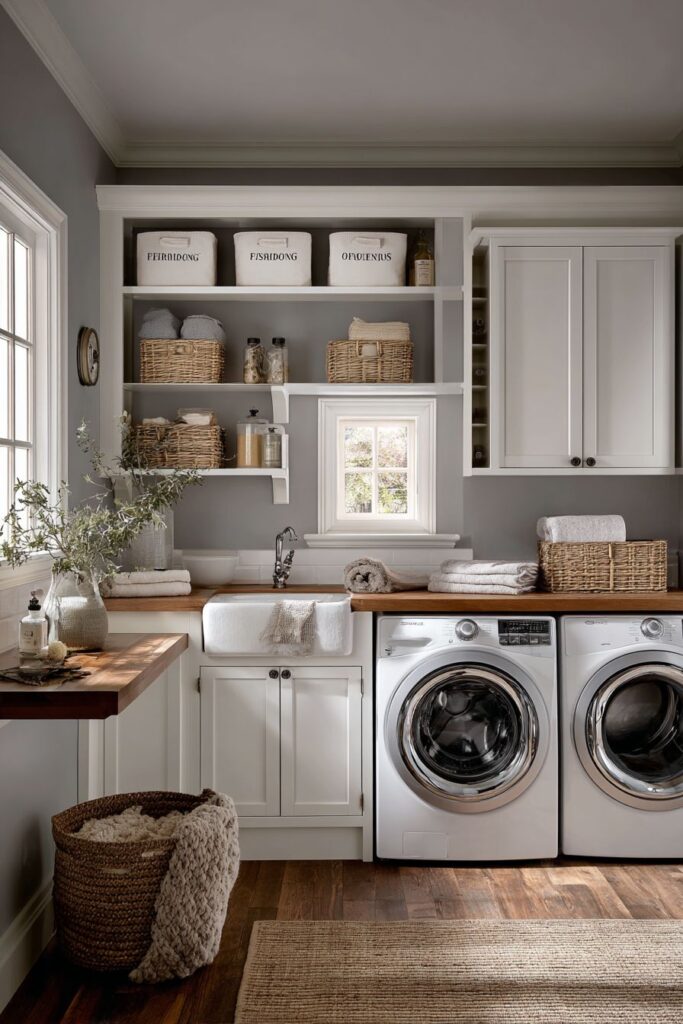
Natural lighting from a small window highlights the practical, refreshed space, making laundry tasks feel less isolated and cave-like. Even modest amounts of natural light can dramatically improve the experience of spending time in utility areas, connecting you to the time of day and preventing the disconnected feeling that can come from working in windowless spaces. This laundry room proves that every space in your home deserves design attention, as thoughtful environments improve daily life regardless of the room’s purpose.
Key Design Tips:
- Label all storage containers clearly for family-wide organization
- Choose a color scheme that reinforces the room’s purpose of cleanliness
- Include a folding surface at comfortable working height
- Maximize any available natural light with minimal window treatments
- Select durable, easy-to-clean materials for surfaces
14. Winter Sunroom Comfort
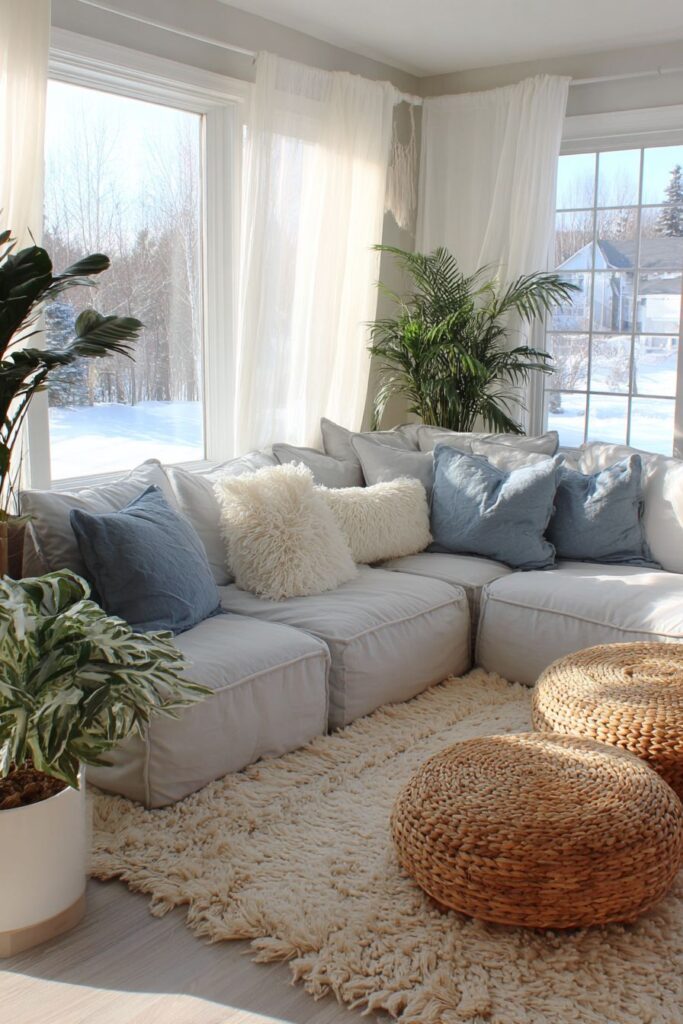
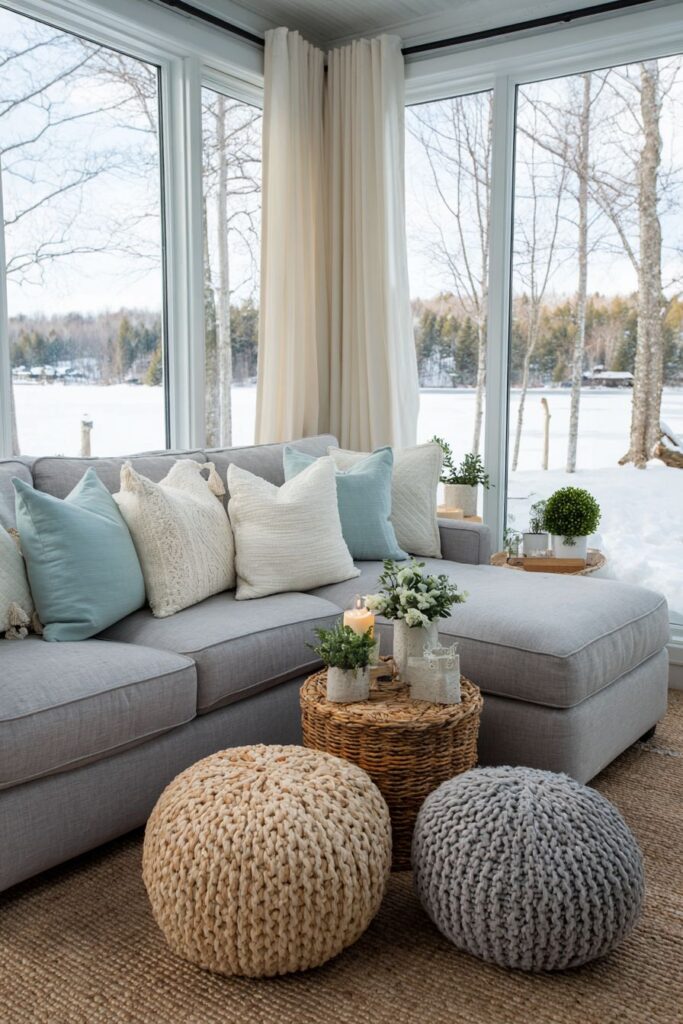
This January house decor sunroom showcases how to embrace winter rather than merely endure it, creating a comfortable space that celebrates the season’s beauty. A sectional sofa in light grey linen provides ample seating for family gatherings or solitary reflection, while abundant throw pillows in winter white and soft blue add comfort and subtle color that echoes winter skies and snow. The generous proportions of the sectional create an inviting anchor for this light-filled room.
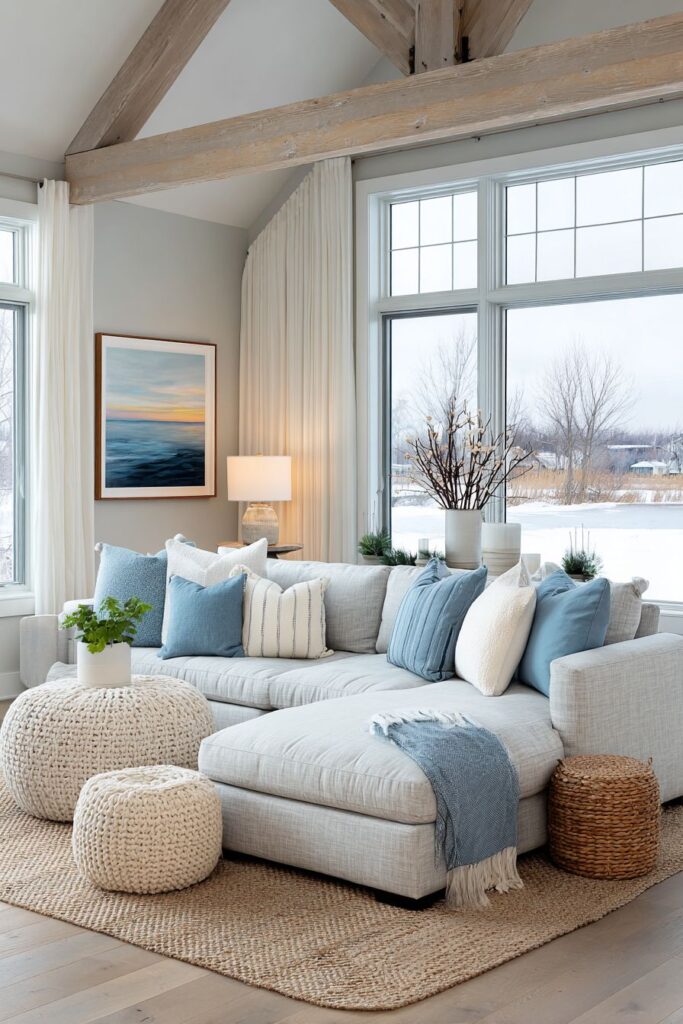
Large windows frame winter landscape views, turning the season’s stark beauty into living artwork that changes daily with weather and light conditions. Sheer curtains soften harsh midday light without blocking views, creating gentle filtering that prevents glare while maintaining connection to the outdoors. This relationship between interior comfort and exterior views exemplifies the sunroom’s unique position as a transitional space between home and nature.
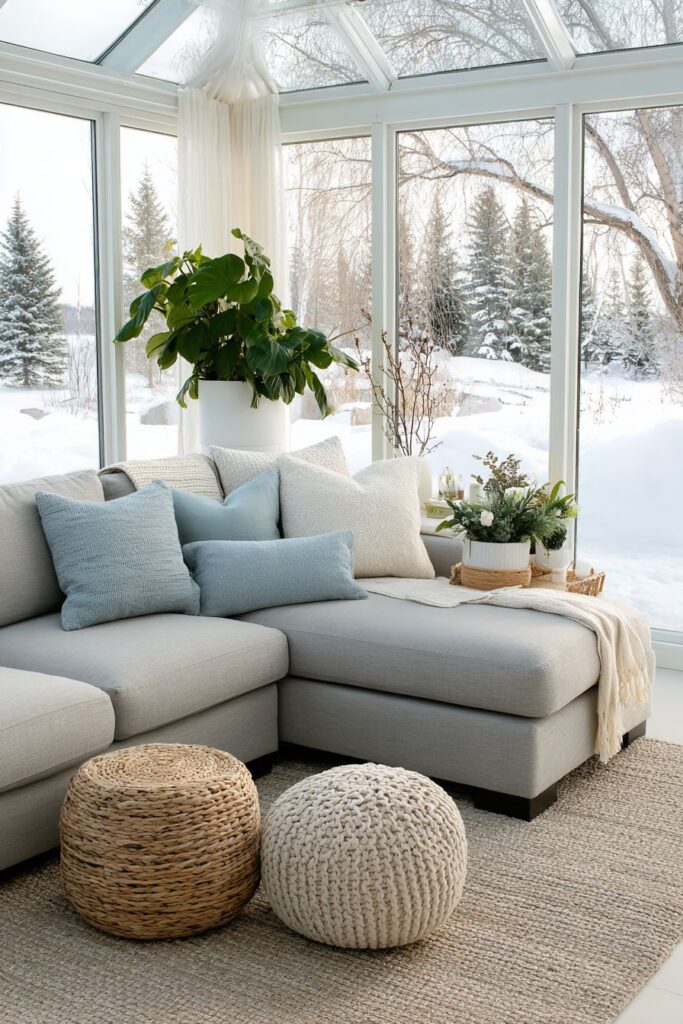
Natural fiber rugs and woven poufs add texture that grounds the airy space, preventing it from feeling too ethereal or untouchable. Plants in simple white pots bring life and air-purifying benefits to the room, their green presence providing hope and growth even during dormant winter months. This sunroom creates a peaceful winter retreat where you can enjoy the season’s quiet beauty while remaining comfortably warm and protected, embodying the concept of hygge perfectly.
Key Design Tips:
- Choose comfortable, durable upholstery for high-use sunroom seating
- Use sheer curtains to manage light without losing views
- Add textural elements through rugs and poufs for grounding warmth
- Include cold-hardy plants that thrive in temperature fluctuations
- Layer throw pillows in seasonal colors for easy updates
15. Minimalist Hallway Gallery
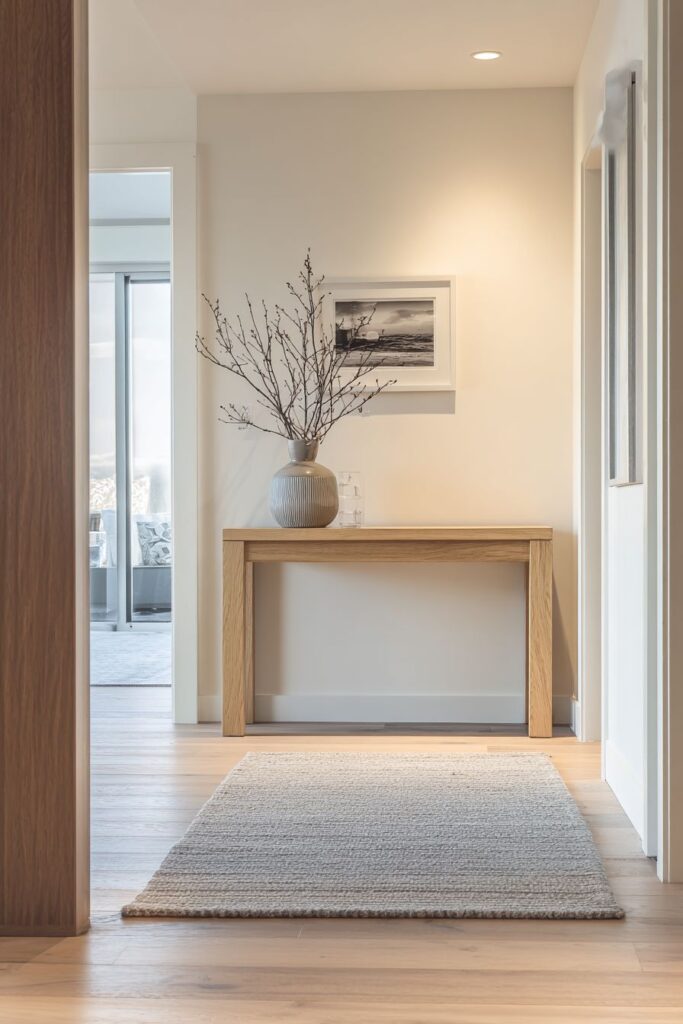
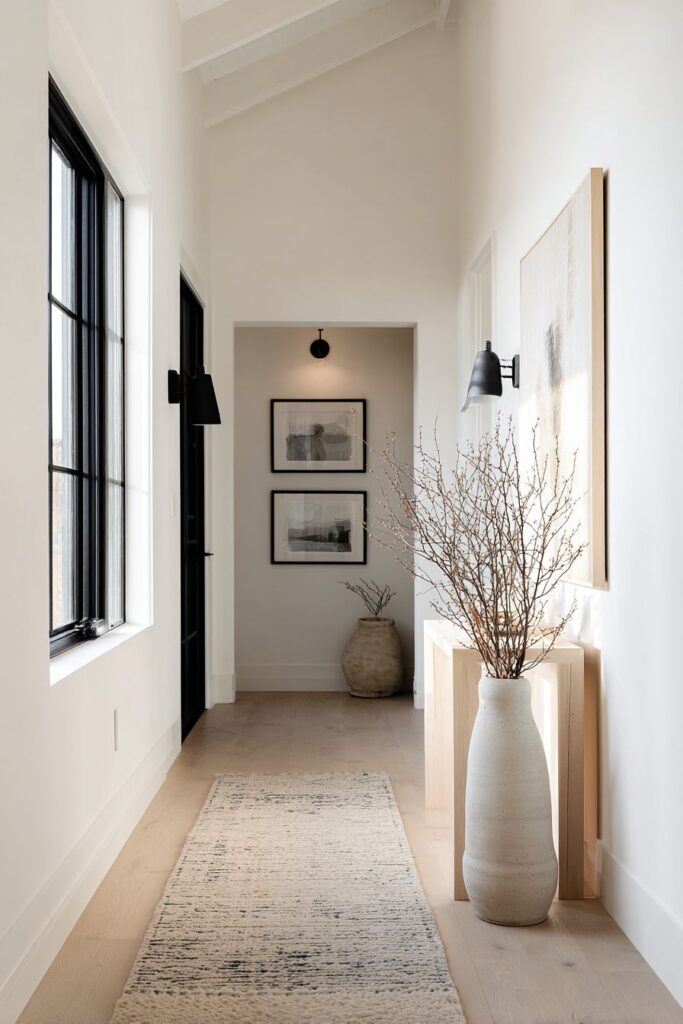
The minimalist January house decor hallway proves that transitional spaces deserve as much design consideration as destination rooms. A gallery wall featuring black and white photography in simple frames creates visual interest without overwhelming the narrow space, with the monochromatic palette maintaining the serene atmosphere while adding personality and artistic expression. The careful curation of images—perhaps family photos, architectural studies, or nature shots—tells a story as you move through the corridor.
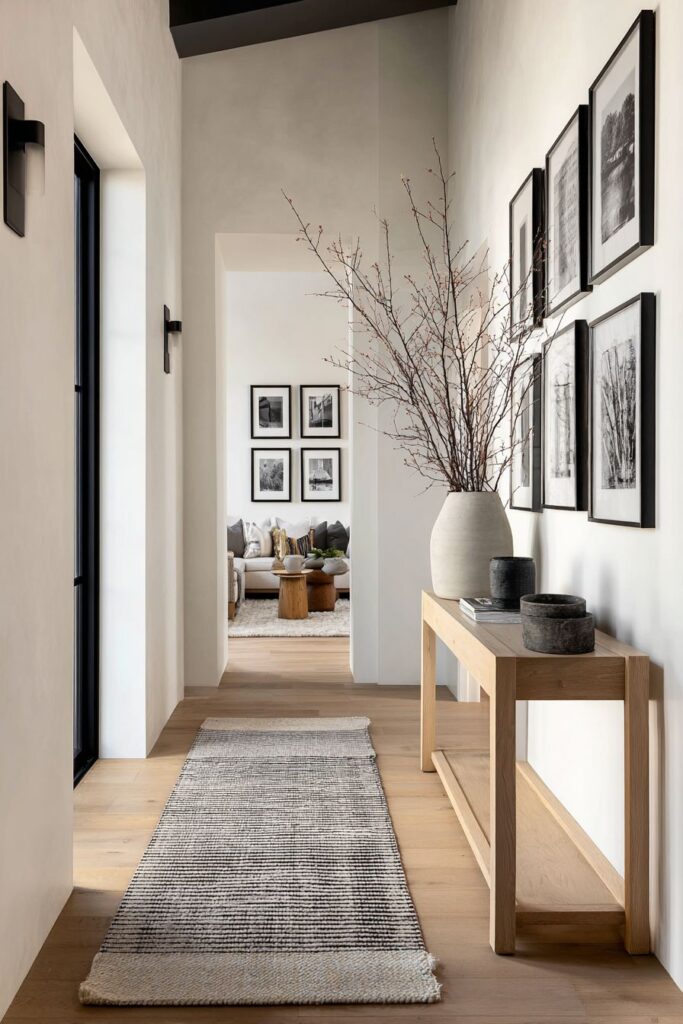
A narrow console table in light wood provides a landing spot for keys and mail without obstructing the hallway’s flow, its slim profile and elevated design maintaining visual openness. Upon its surface sits a single ceramic vase with bare branches, a sculptural arrangement that celebrates winter’s stark beauty while demonstrating restraint in styling. This minimal approach prevents the hallway from feeling cluttered or cramped, maintaining easy passage while creating moments of beauty.
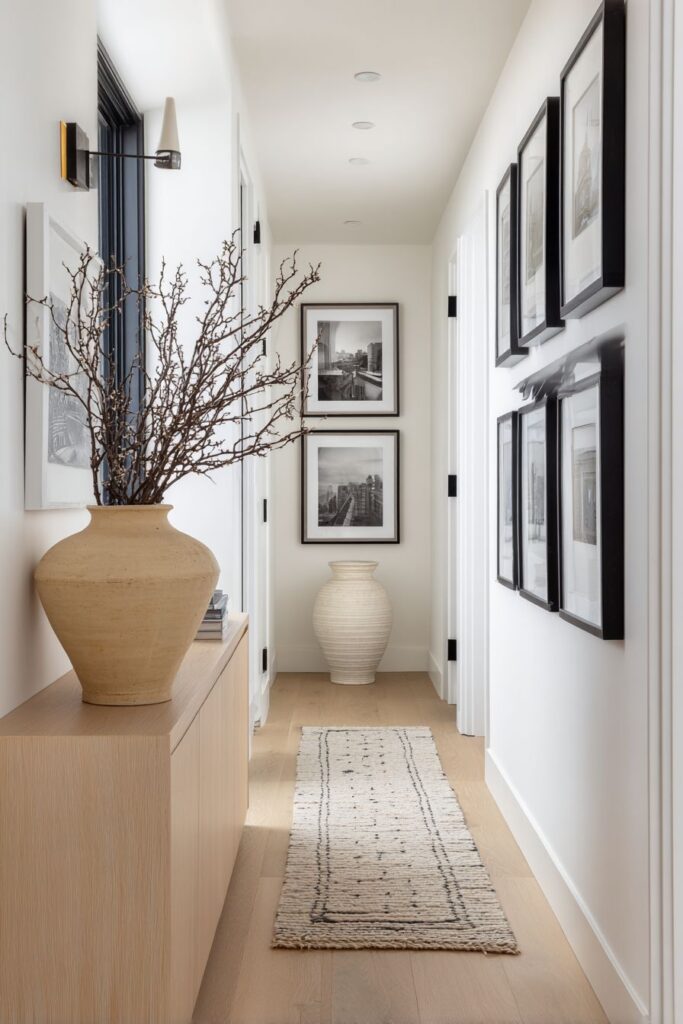
A runner rug in neutral tones adds warmth to hardwood floors while defining the path and reducing noise from footsteps. Sconce lighting provides ambient glow that creates welcoming atmosphere during evening hours, with the wall-mounted fixtures saving valuable floor space. This hallway exemplifies how thoughtful design can transform even the most functional spaces into areas that contribute to your home’s overall aesthetic narrative, making every journey through your house a pleasant experience.
Key Design Tips:
- Choose artwork in consistent frames and color schemes for cohesion
- Select narrow furniture that doesn’t impede hallway traffic flow
- Use vertical space with wall-mounted lighting and hanging art
- Add runner rugs for warmth and noise reduction on hard floors
- Keep decorative items to carefully chosen singular pieces
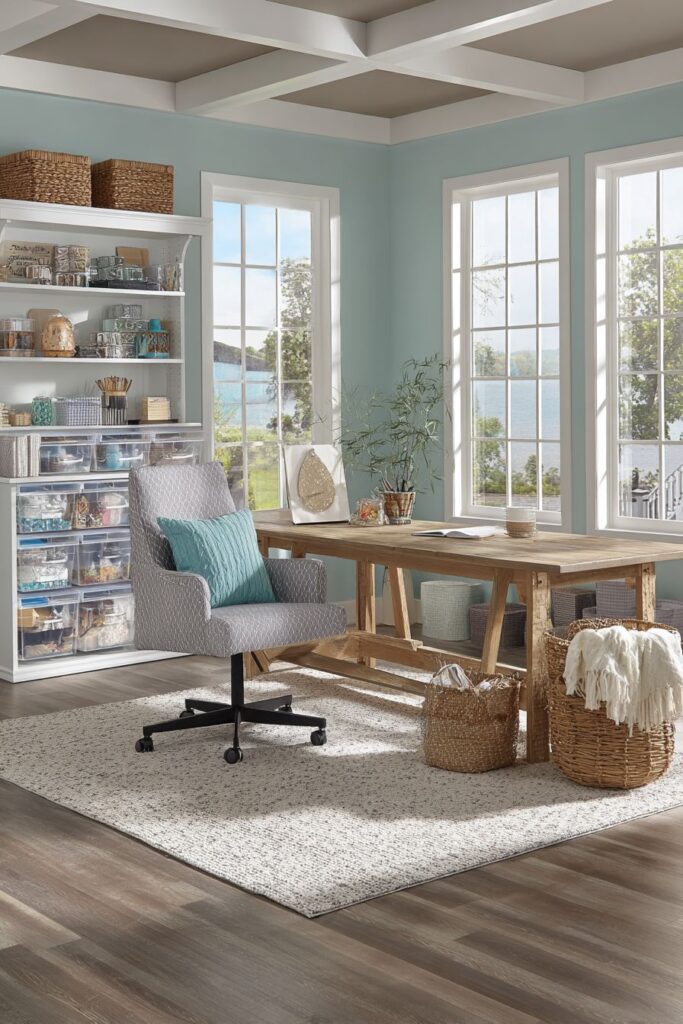
16. Organized Craft Room Inspiration
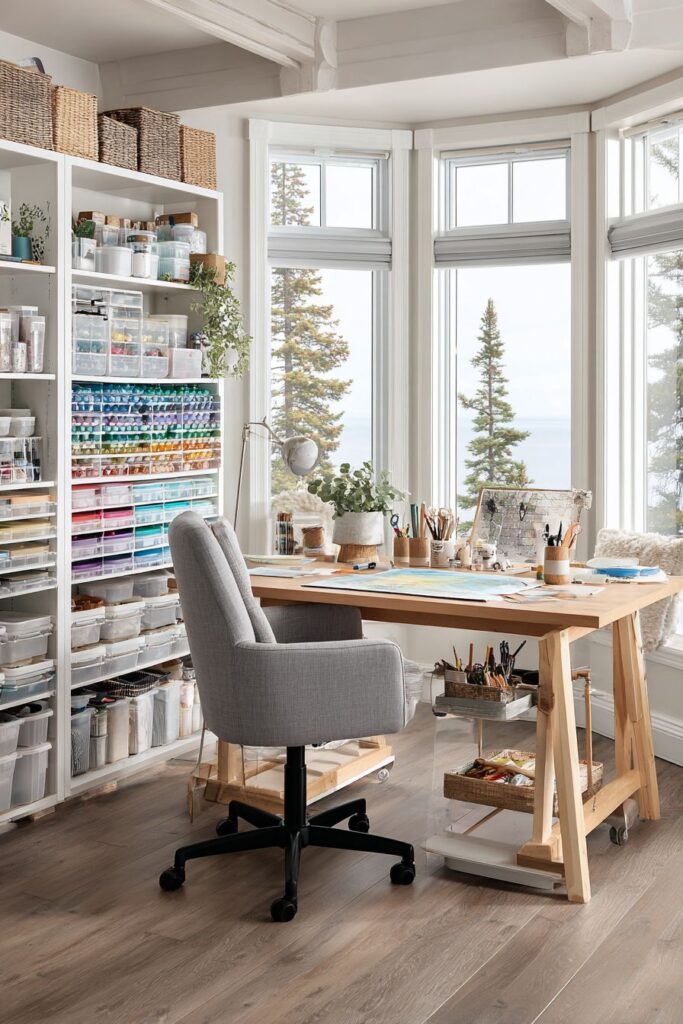
This January house decor craft room represents the creative person’s dream—an organized space where inspiration flows freely and supplies are easily accessible. Clear storage containers on white shelving display supplies by category, transforming practical organization into a rainbow of creative possibilities. This visual inventory system makes it easy to see what materials you have available, preventing duplicate purchases while inspiring new project ideas through unexpected color and material combinations.
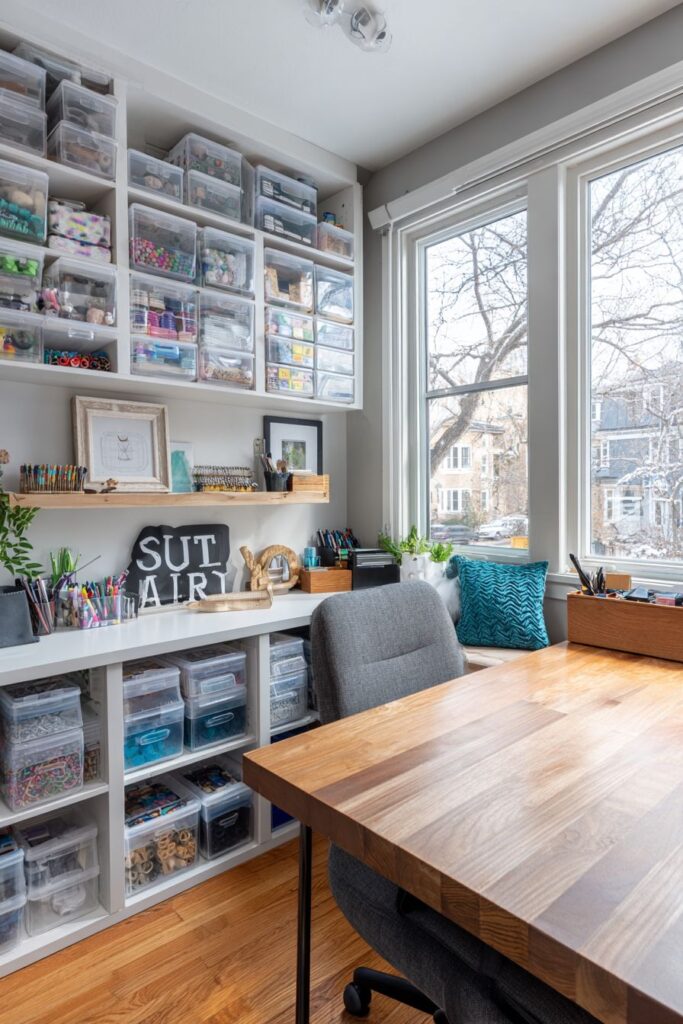
The large work table in natural wood provides ample workspace for spreading out projects, with its generous surface accommodating cutting mats, sewing machines, or any creative endeavor you might pursue. The natural wood finish adds warmth to the predominantly white storage system while creating a durable, cleanable surface that can withstand the inevitable spills and marks of creative work. A comfortable task chair in grey fabric ensures you can work for extended periods without physical discomfort interfering with your creative flow.
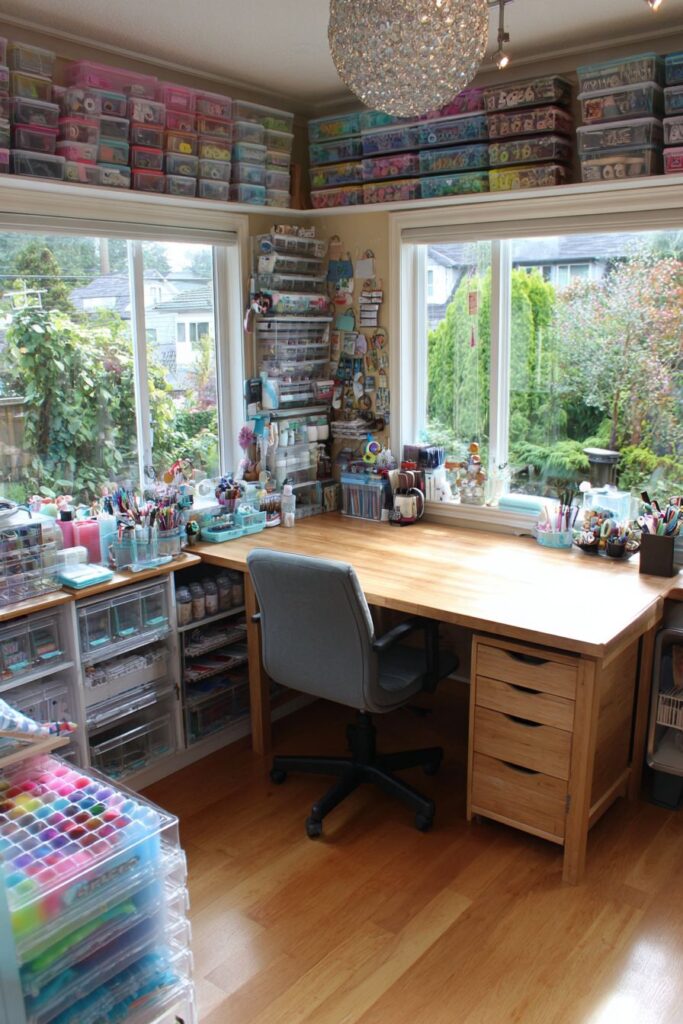
Natural daylight from multiple windows creates ideal working conditions, with true color representation crucial for making accurate creative decisions about color matching and coordination. This abundant natural light also creates an energizing environment that makes spending time in the craft room a pleasure rather than feeling isolated in a dark workspace. This organized, inspiring creative environment demonstrates how January’s organizational energy can set the stage for a year of productive, joyful making.
Key Design Tips:
- Store supplies in clear containers sorted by type for easy location
- Provide generous work surface in durable, easy-to-clean materials
- Ensure adequate task seating with proper ergonomic support
- Maximize natural light sources for true color representation
- Create logical storage zones based on your specific creative practices
17. Scandinavian Living Room Corner
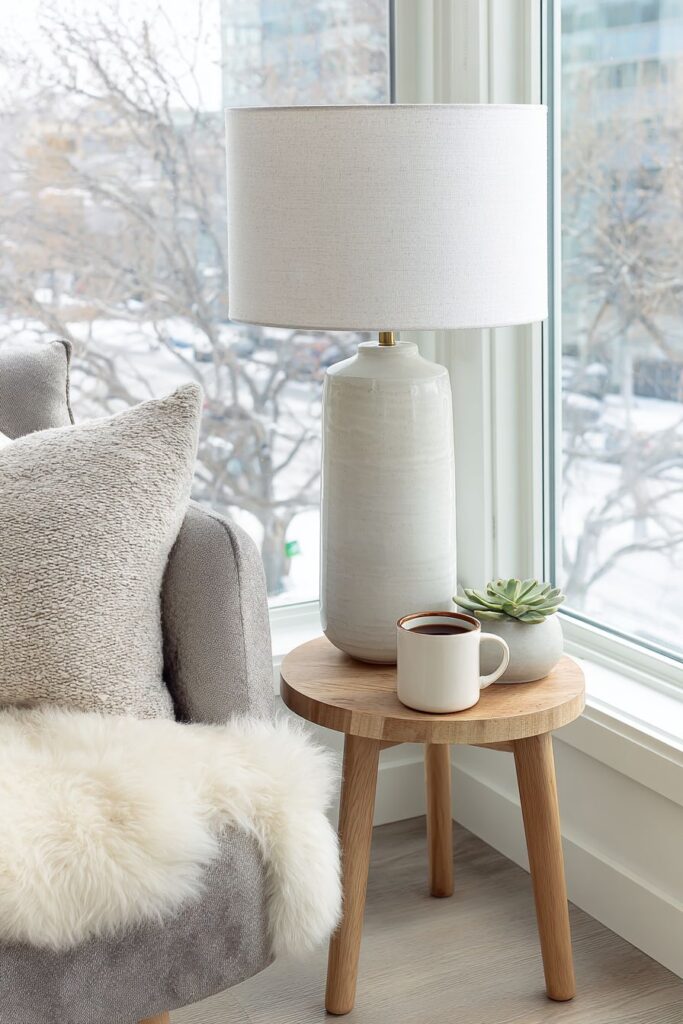
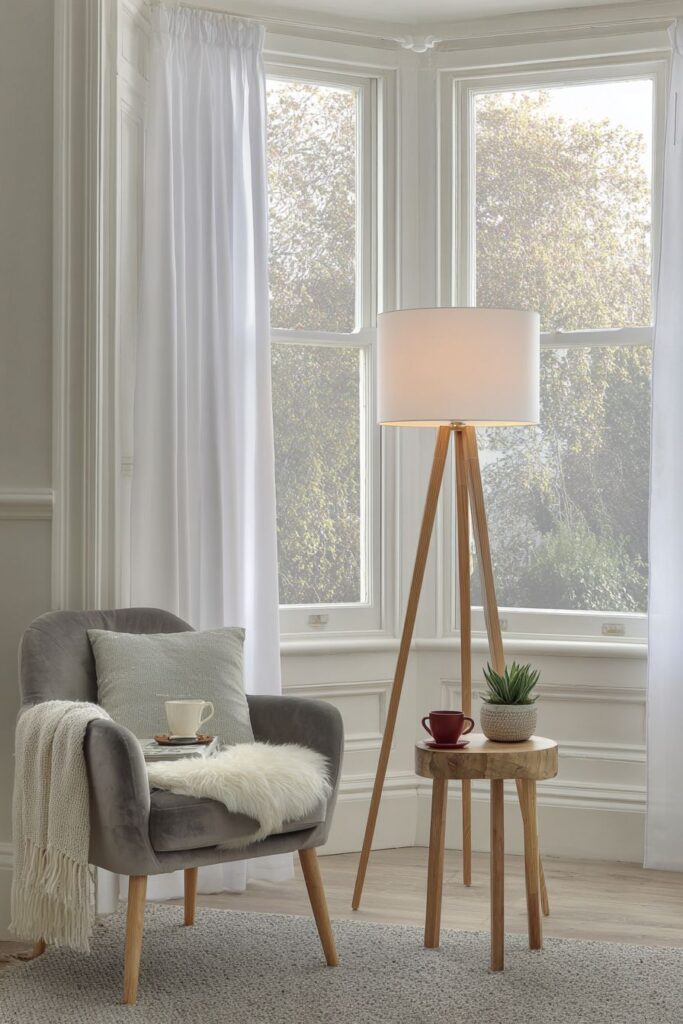
The Scandinavian-inspired January house decor living room corner captures the essence of hygge—that Danish concept of cozy contentment that seems particularly relevant during cold winter months. A floor lamp with white shade stands beside a grey velvet armchair, creating a reading nook that beckons with comfort and warmth. The velvet upholstery adds luxurious tactility that invites touch, while its grey tone maintains the neutral palette central to Scandinavian design philosophy.
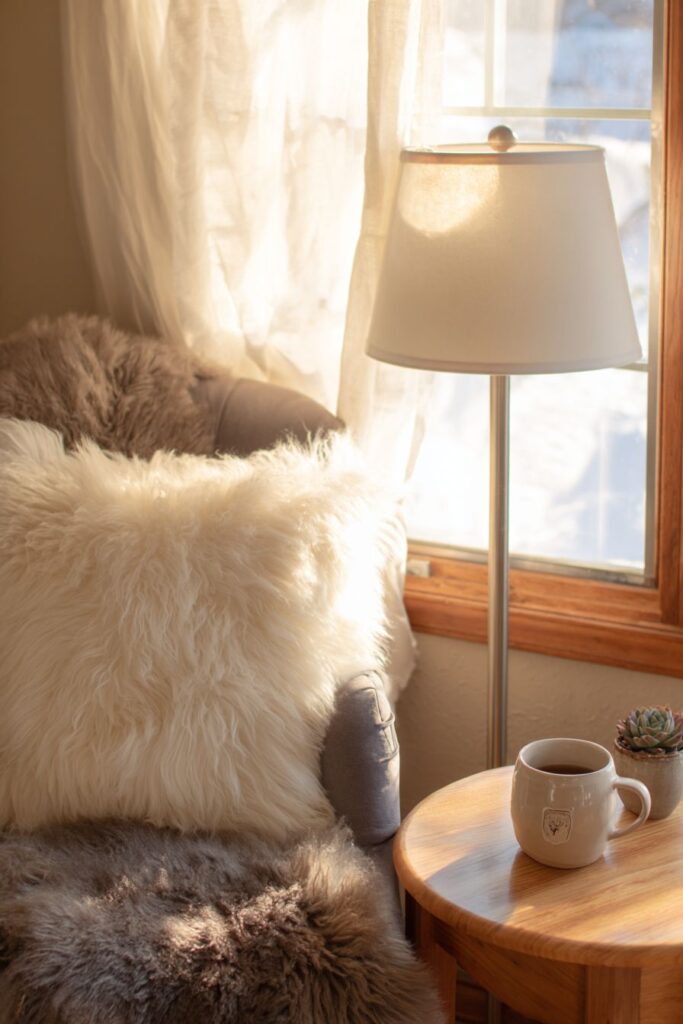
The minimal side table in light oak holds just a ceramic mug and small succulent, embodying the “less is more” approach that characterizes Nordic interior design. This restraint isn’t about deprivation but rather about choosing each item with intention, ensuring that everything in the space earns its place through beauty, function, or ideally both. A sheepskin throw draped over the chair adds textural interest and provides extra warmth for cold evenings, its natural material connecting the indoor space to the natural world.
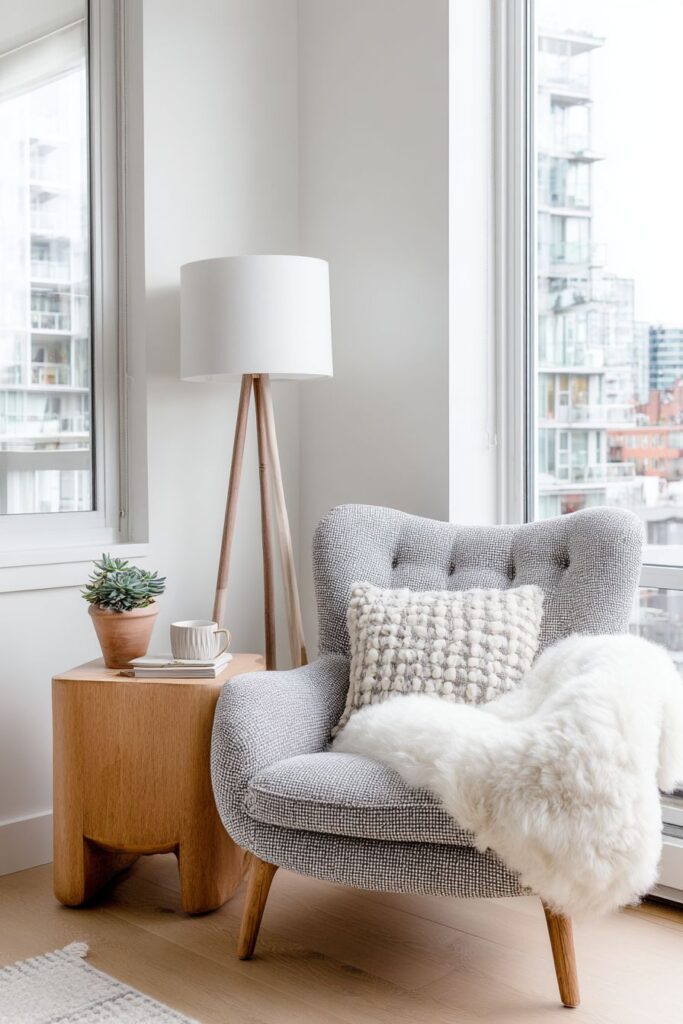
A large window with simple white curtains allows winter light to filter through, with the Nordic appreciation for natural light reflected in the minimal window treatment that maximizes daylight access. This connection to natural light cycles helps combat winter darkness while creating dynamic lighting conditions that change throughout the day. This corner exemplifies how Scandinavian design principles create spaces of calm beauty that support well-being during the challenging winter months.
Key Design Tips:
- Invest in one quality upholstered piece rather than multiple lesser items
- Use natural materials like wood, wool, and sheepskin for authentic Scandinavian feel
- Keep window treatments minimal to maximize precious winter daylight
- Choose items with dual purpose—beautiful and functional
- Create cozy corners with layered lighting—overhead, task, and ambient
18. Welcoming Breakfast Nook
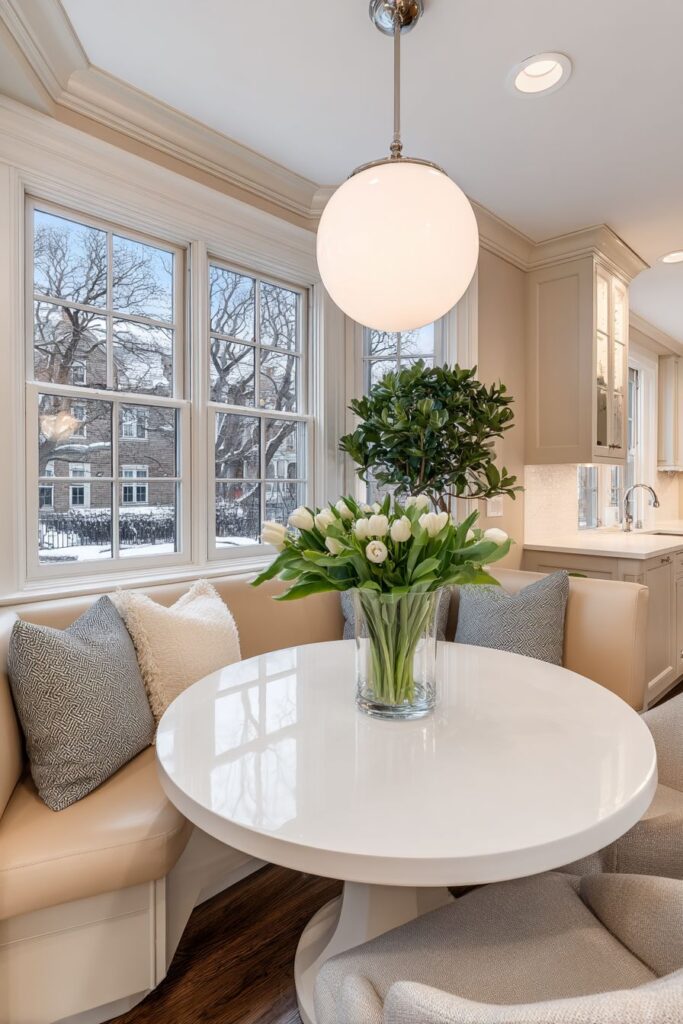
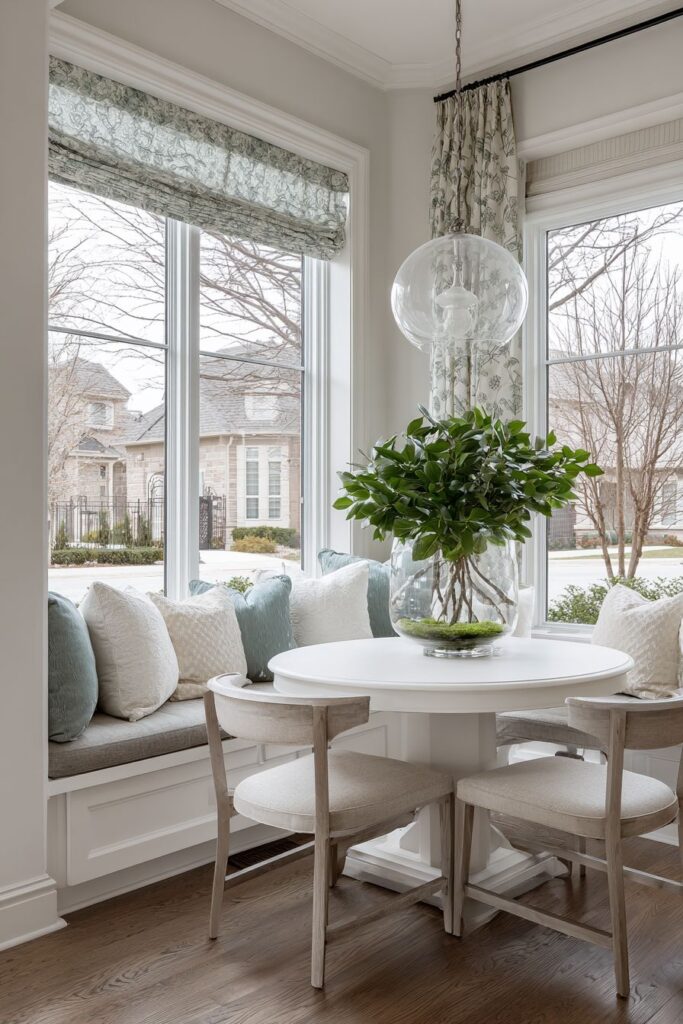
This January house decor breakfast nook creates an inviting casual dining space that encourages lingering over morning coffee and unhurried weekend brunches. Built-in bench seating featuring grey cushions and white and cream pillows provides comfortable seating that doesn’t require pulling out chairs, making the space feel more accessible and relaxed. The built-in design maximizes seating capacity while creating a cozy, enclosed feeling that makes the nook feel like a special retreat within the home.
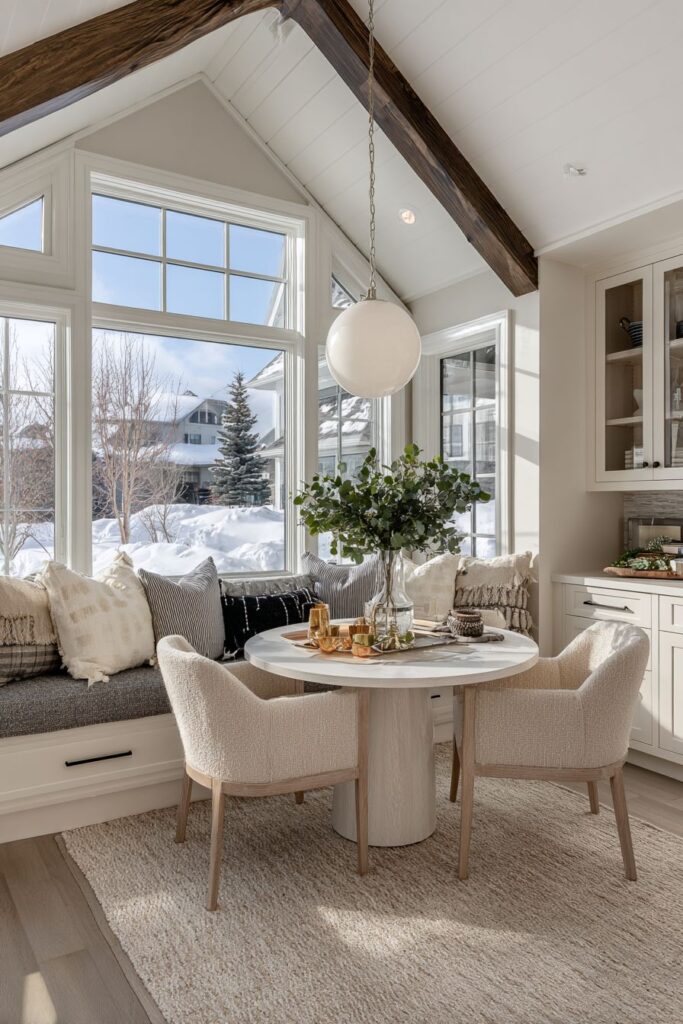
The round pedestal table in white painted finish seats four comfortably while its circular shape promotes conversation and connection better than rectangular alternatives. The pedestal base provides leg room from any seating angle, preventing the awkward straddle often required with traditional four-legged tables. Windows on two sides flood the space with morning light, creating an energizing environment that helps you start the day positively—no artificial lighting needed during breakfast hours.
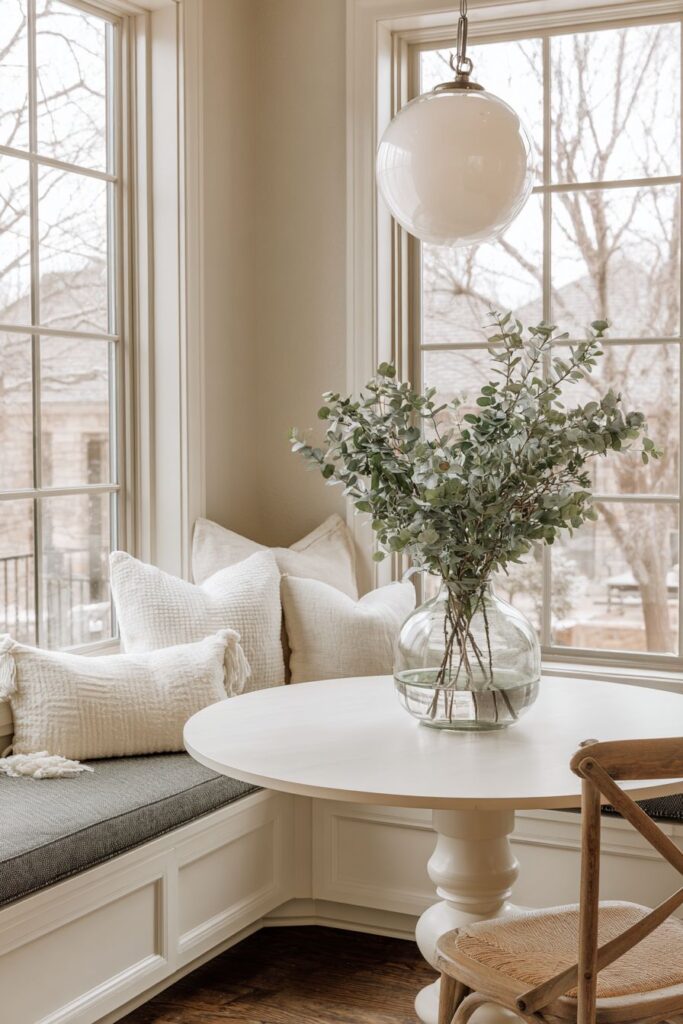
A simple white pendant light hangs above, providing evening illumination when natural light fades, while fresh greenery in a clear glass vase provides a natural element that brings life and color without requiring elaborate centerpiece arrangements. This breakfast nook demonstrates how thoughtful design can elevate everyday routines, transforming morning meals from rushed necessities into moments of peace and connection that set a positive tone for the day ahead.
Key Design Tips:
- Choose built-in seating to maximize space efficiency
- Use round tables to promote conversation and easier flow
- Position nook near windows to take advantage of morning light
- Keep centerpieces simple and low for unobstructed views
- Add cushions for comfort during extended sitting
19. Satisfying Closet Transformation

The practical January house decor closet transformation demonstrates how organization can be deeply satisfying and aesthetically pleasing simultaneously. Organized hanging space with matching velvet hangers creates visual uniformity while the non-slip surface prevents clothes from sliding, protecting your investment in quality garments. Shoe shelving with clear acrylic dividers keeps pairs together and visible, eliminating the frustrating morning search for matching shoes while the transparent dividers maintain visual lightness.
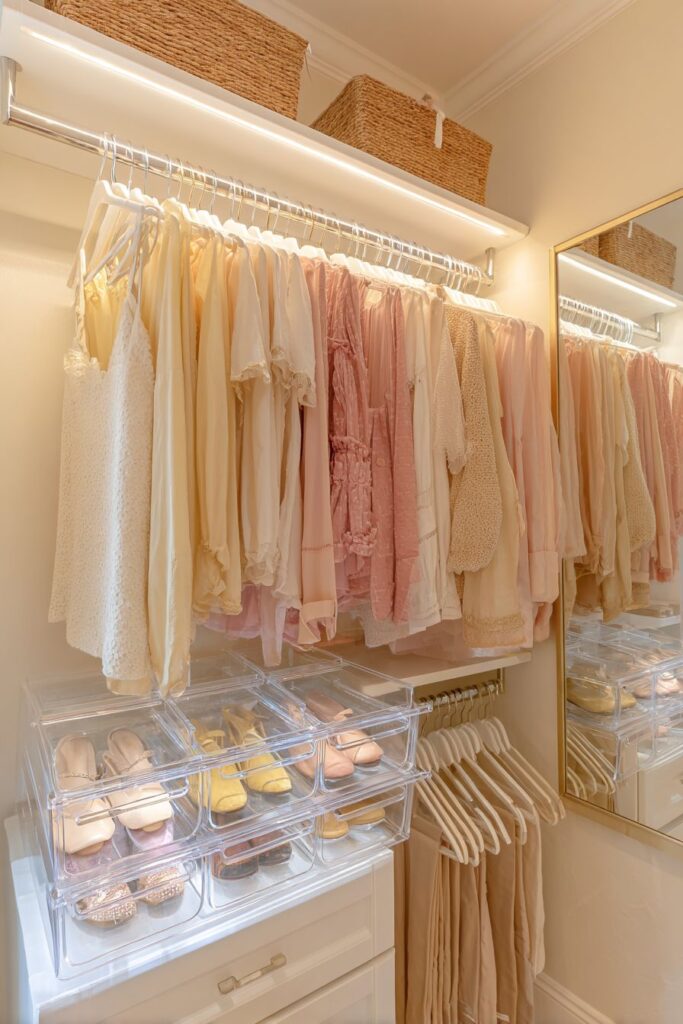
Drawer units in white provide concealed storage for smaller items, their uniform fronts creating clean lines that contribute to the overall organized appearance. LED strip lighting illuminates the space evenly, ensuring true color representation when selecting outfits and eliminating the dark corners where items get forgotten and unused. The neutral color-coordinated wardrobe creates visual calm, with clothes arranged by type and color creating a rainbow effect that’s both practical and beautiful.
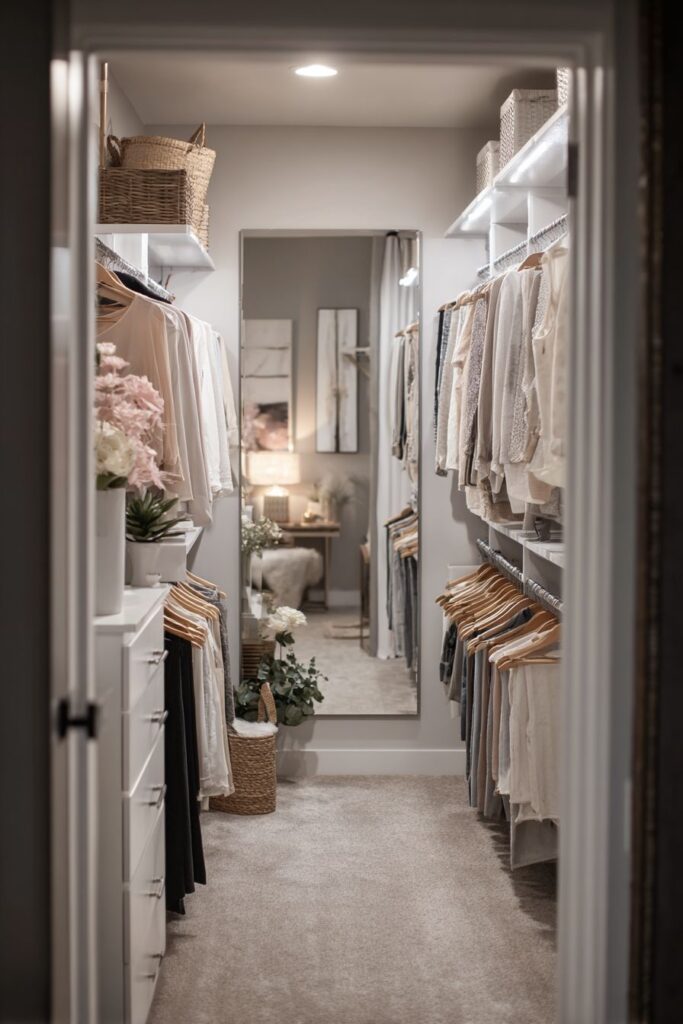
A full-length mirror reflects the organized system back to you, allowing complete outfit evaluation while also visually expanding the closet space. This transformation represents January’s fresh start energy at its best—clearing out what no longer serves you, organizing what remains with care, and creating systems that make daily life easier. The satisfaction of opening this closet door and seeing everything in its place cannot be overstated, proving that organization is a form of self-care.

Key Design Tips:
- Use matching hangers for visual uniformity and garment care
- Install adequate lighting to see true colors and eliminate dark spots
- Organize clothes by type, then by color within each category
- Choose drawer units with dividers for smaller items organization
- Include a full-length mirror for complete outfit assessment
20. Thoughtful Patio Transition

This January house decor patio transition space demonstrates how outdoor areas deserve attention even during winter months, with preparation and organization setting the stage for enjoyment of warmer seasons ahead. Cleaned and organized outdoor furniture stored under weather-resistant covers protects your investment while demonstrating the care and foresight that characterizes successful home management. This protective storage extends furniture life while keeping the patio looking tidy rather than abandoned during winter months.

Potted evergreens in concrete planters provide winter interest, their persistent green offering hope and life even during dormant months while the substantial concrete containers add architectural presence to the space. String lights carefully coiled and stored in clear containers demonstrate the organizational mindset that makes seasonal transitions smooth, with transparent storage allowing you to see exactly what you have when spring arrives. The swept clean surface and tidy arrangement suggest preparation for warmer months, embodying the forward-thinking approach that January encourages.
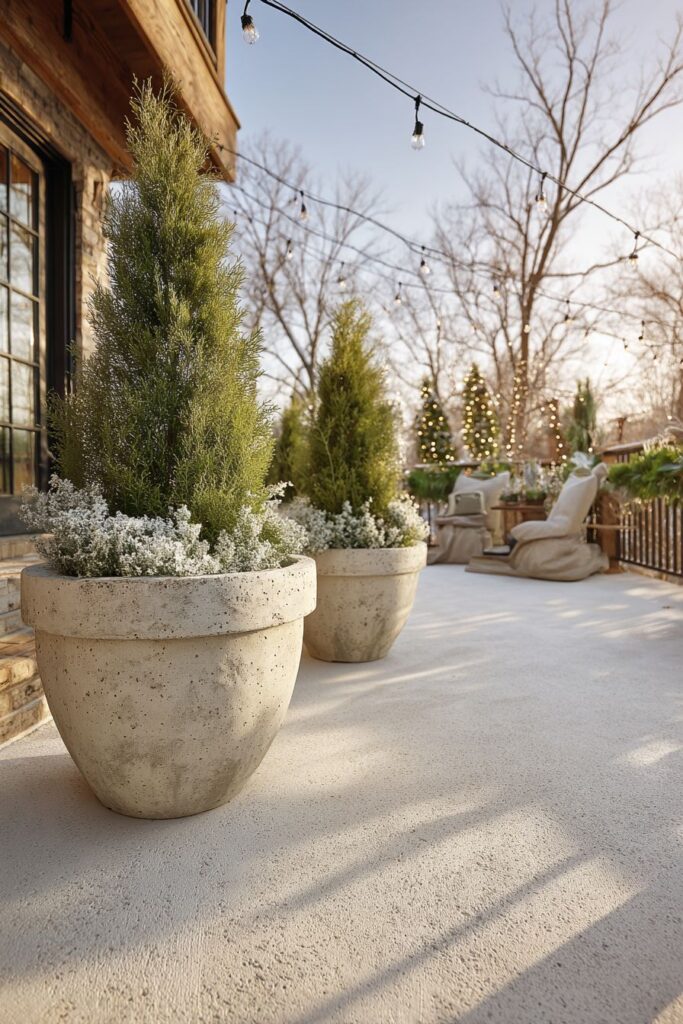
Natural winter daylight captures the practical maintenance and thoughtful organization that often goes unseen but makes enormous difference in home maintenance and seasonal enjoyment. This patio transition space reminds us that home care is an ongoing process, with winter providing opportunity for preparation and planning rather than merely being a season to endure. The attention given to this outdoor space demonstrates how comprehensive home design considers every area, creating cohesive environments that function beautifully year-round.

Key Design Tips:
- Invest in quality weather-resistant covers for outdoor furniture protection
- Keep some evergreen elements for winter visual interest
- Store seasonal items in clear containers for easy spring access
- Maintain cleanliness even in unused outdoor spaces
- Use winter months for planning and preparing outdoor improvements
Why These January House Decor Designs Work Best
These twenty January house decor approaches represent the pinnacle of post-holiday interior design, each offering unique benefits while sharing core principles that make them exceptionally effective for this transitional month. The emphasis on neutral palettes—whites, greys, creams, and natural wood tones—creates serene environments that feel refreshing after the visual intensity of holiday decorations. This color strategy provides a calming foundation that supports the new year’s focus on fresh starts, organization, and intentional living, while offering versatile backdrops that adapt easily to future seasonal updates.
The organizational focus throughout these designs addresses January’s natural inclination toward decluttering and system-building. From the labeled storage containers in the craft room to the matching hangers in the organized closet, each space demonstrates how thoughtful organization reduces daily stress while creating visually pleasing environments. These organizational strategies aren’t merely aesthetic choices—they’re functional solutions that make homes work better for their inhabitants, supporting productivity and peace of mind throughout the year ahead.
Natural materials feature prominently across all designs, with wood, linen, wool, and other organic elements creating warmth that prevents neutral spaces from feeling cold or sterile. These materials bring textural interest that adds depth to monochromatic schemes while connecting interior spaces to the natural world—a crucial consideration for maintaining well-being during winter months when outdoor time may be limited. The natural material palette also ensures these designs age gracefully, with wood developing patina and natural fabrics wearing in rather than wearing out.
The strategic use of natural light throughout these January house decor concepts acknowledges light’s crucial role in winter well-being and home enjoyment. Multiple designs position seating near windows, use sheer curtains to maximize daylight, or incorporate mirrors to multiply available light—all techniques that combat winter’s darkness while reducing reliance on artificial lighting during daytime hours. This attention to natural illumination creates dynamic spaces that change throughout the day, preventing static environments while supporting circadian rhythms and mood regulation.
Functionality receives equal emphasis with aesthetics in every design, recognizing that beautiful spaces must also work efficiently for their intended purposes. The mudroom’s built-in storage, the craft room’s organized supplies, the kitchen’s streamlined workspace—each design prioritizes practical use while maintaining visual appeal. This dual focus ensures these spaces remain valuable long-term rather than becoming decorative but impractical showpieces that frustrate daily living.
The versatility of these neutral-based designs provides excellent value for homeowners, as the foundational elements adapt easily to changing seasons and evolving personal styles. A living room styled for January in whites and greys can transition to spring with the addition of pastel pillows, to summer with bright botanical elements, or to fall with warm ochre accents—all without requiring major overhauls. This adaptability makes these January designs smart investments that continue delivering value throughout the year.
The layered texture approach visible across multiple designs—chunky knits, sheepskin throws, woven baskets, natural fiber rugs—creates visual and tactile interest essential for successful neutral schemes. These textural variations prevent monochromatic spaces from appearing flat or boring, instead creating depth and dimension that engage the eye and invite touch. This layering technique also allows for easy seasonal updates by swapping throw blankets or pillows without changing fundamental design elements.
Each design emphasizes quality over quantity, with carefully curated items chosen for their beauty, functionality, or ideally both. This mindful approach to furnishing and decorating aligns perfectly with January’s fresh start energy while promoting sustainable consumption patterns. Rather than filling homes with numerous mediocre items, these designs invest in fewer, better pieces that provide lasting satisfaction and stand the test of time both functionally and aesthetically.
The inclusion of living elements—potted plants, fresh greenery, winter branches—across multiple designs brings life and air-purifying benefits while connecting interior spaces to natural cycles and seasons. These botanical touches provide color accents in neutral schemes, improve indoor air quality, and offer the psychological benefits of caring for living things—all particularly valuable during winter months when interaction with nature may be limited.
These January house decor designs succeed because they address the month’s unique position as both ending point and beginning—clearing away holiday excess while establishing foundations for the year ahead. They create homes that feel refreshed and organized without feeling stark or unwelcoming, spaces that inspire productivity while offering comfort and restoration. This balance makes them not just visually appealing but genuinely supportive of the lives lived within these thoughtfully designed walls.
Conclusion
The journey through these twenty January house decor concepts reveals a comprehensive approach to creating homes that support your best life during the new year and beyond. From the serene bedroom retreat to the organized craft room, each space demonstrates how thoughtful design choices—neutral palettes, natural materials, strategic organization, and attention to light—combine to create environments that nurture well-being while reflecting personal style. These designs prove that the period following holiday celebrations isn’t about deprivation or austerity but rather about intentional curation and mindful living.
As you consider implementing these ideas in your own home, remember that successful interior design isn’t about perfectly replicating magazine images but rather about adapting principles to suit your specific needs, space, and lifestyle. Start with the areas that cause the most daily friction—perhaps the cluttered entryway or the disorganized craft supplies—and apply the organizational and aesthetic strategies demonstrated here. Small changes often create momentum for larger transformations, with one well-designed space inspiring improvements throughout your home.
The new year provides the perfect opportunity to reimagine your living spaces, and January’s quiet beauty offers ideal inspiration for creating homes that balance functionality with aesthetics. Whether you’re drawn to Scandinavian minimalism, farmhouse simplicity, or modern organization, these design concepts provide frameworks you can personalize and adapt. Embrace the season’s energy for fresh starts, invest in quality pieces that will serve you for years, and create spaces that don’t just look beautiful but actively support the life you want to live. Your home should be your sanctuary, and these January design approaches help you build environments that refresh, inspire, and welcome you home every single day.
"As an Amazon Associate, I earn from qualifying purchases."
