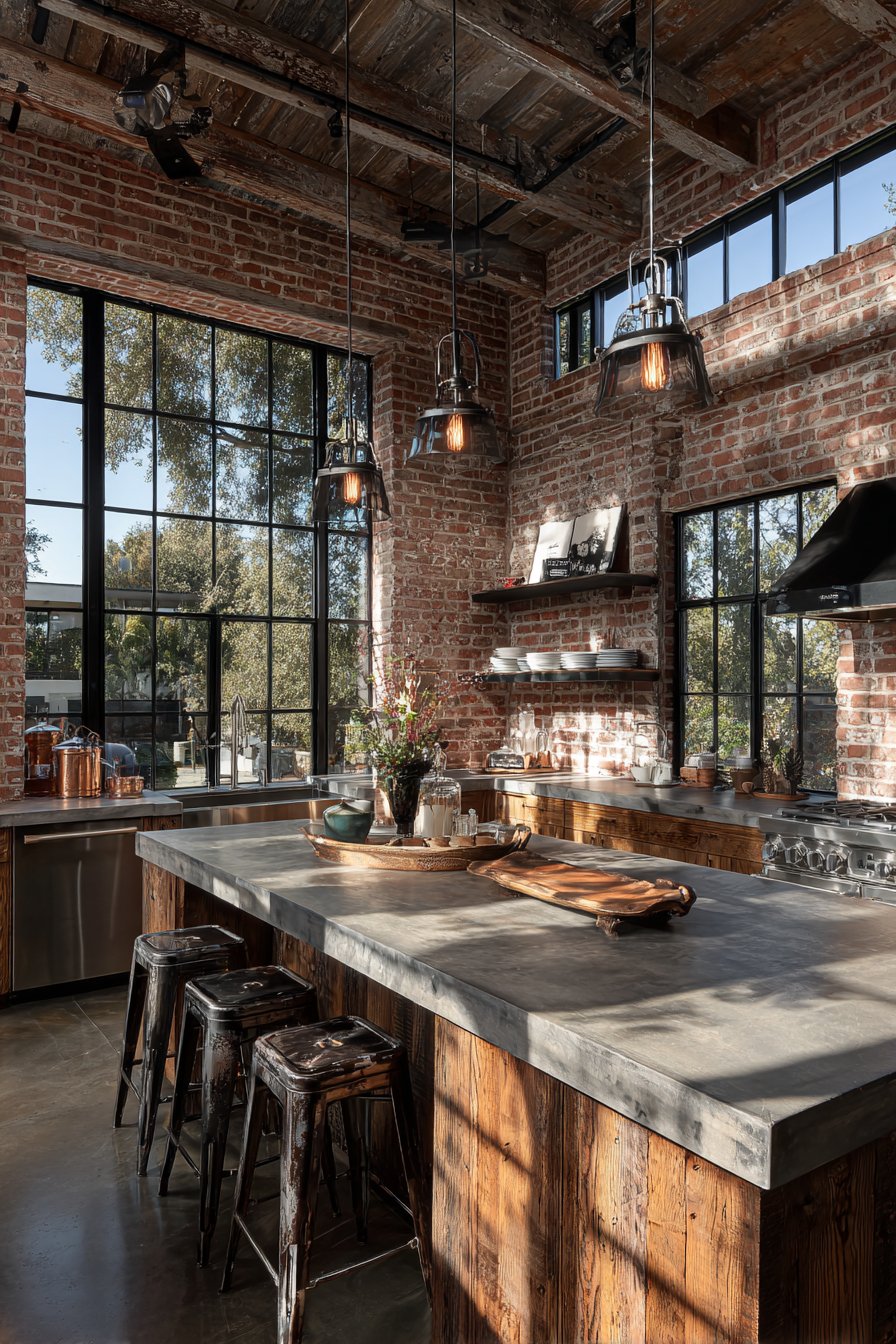
Industrial kitchen design has become one of the most sought-after styles for homeowners who crave authentic character and urban sophistication. This aesthetic draws inspiration from converted warehouses, old factories, and loft apartments, celebrating raw materials and exposed architectural elements. The beauty of industrial style lies in its ability to blend rugged textures with modern functionality, creating spaces that feel both lived-in and refreshingly contemporary.
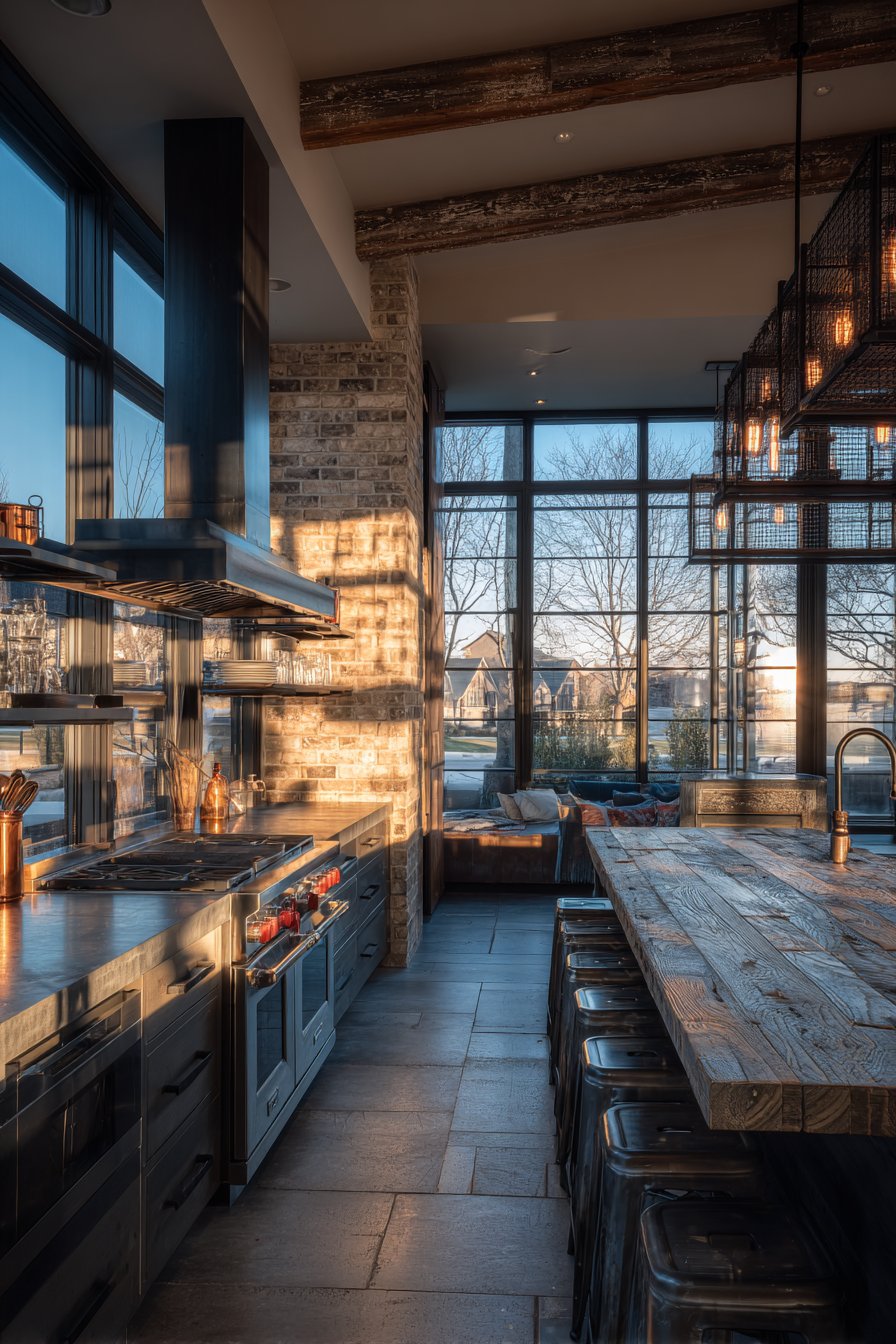
What makes industrial kitchens particularly appealing is their versatility and timelessness. Unlike trends that fade quickly, the industrial aesthetic has maintained its popularity because it speaks to our desire for honest, unpretentious design. These kitchens embrace imperfections, showcase structural elements, and create a backdrop that feels both edgy and inviting. Whether you’re renovating a historic building or simply want to infuse your modern home with distinctive personality, industrial style offers endless possibilities for creative expression.
The following ideas will guide you through essential elements that define industrial kitchen design. From exposed brick walls to metal accents, each concept focuses on creating an authentic atmosphere while maintaining the practical needs of a working kitchen. These design strategies prove that industrial doesn’t mean cold or unwelcoming—instead, they demonstrate how raw materials and thoughtful details combine to create spaces with genuine soul and lasting appeal.
1. Expose Brick Walls for Authentic Texture
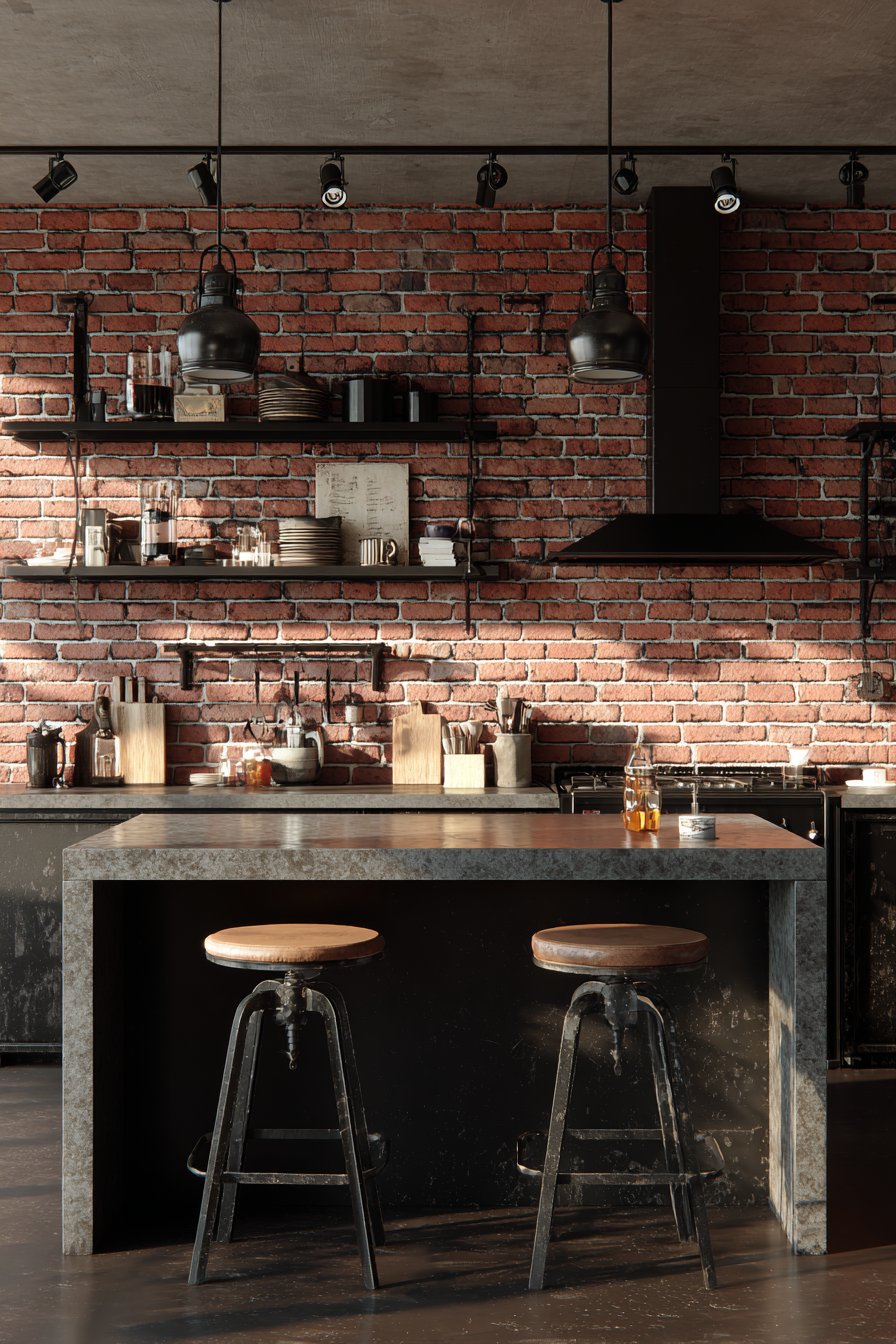
Exposed brick walls serve as the cornerstone of industrial kitchen design, providing instant architectural interest and historical depth. These surfaces tell stories through their weathered appearance, color variations, and mortar patterns. Whether your home features original brickwork or you’re considering brick veneer, this element creates an unmistakable focal point that anchors the entire design scheme. The natural texture contrasts beautifully with sleek appliances and smooth countertops.
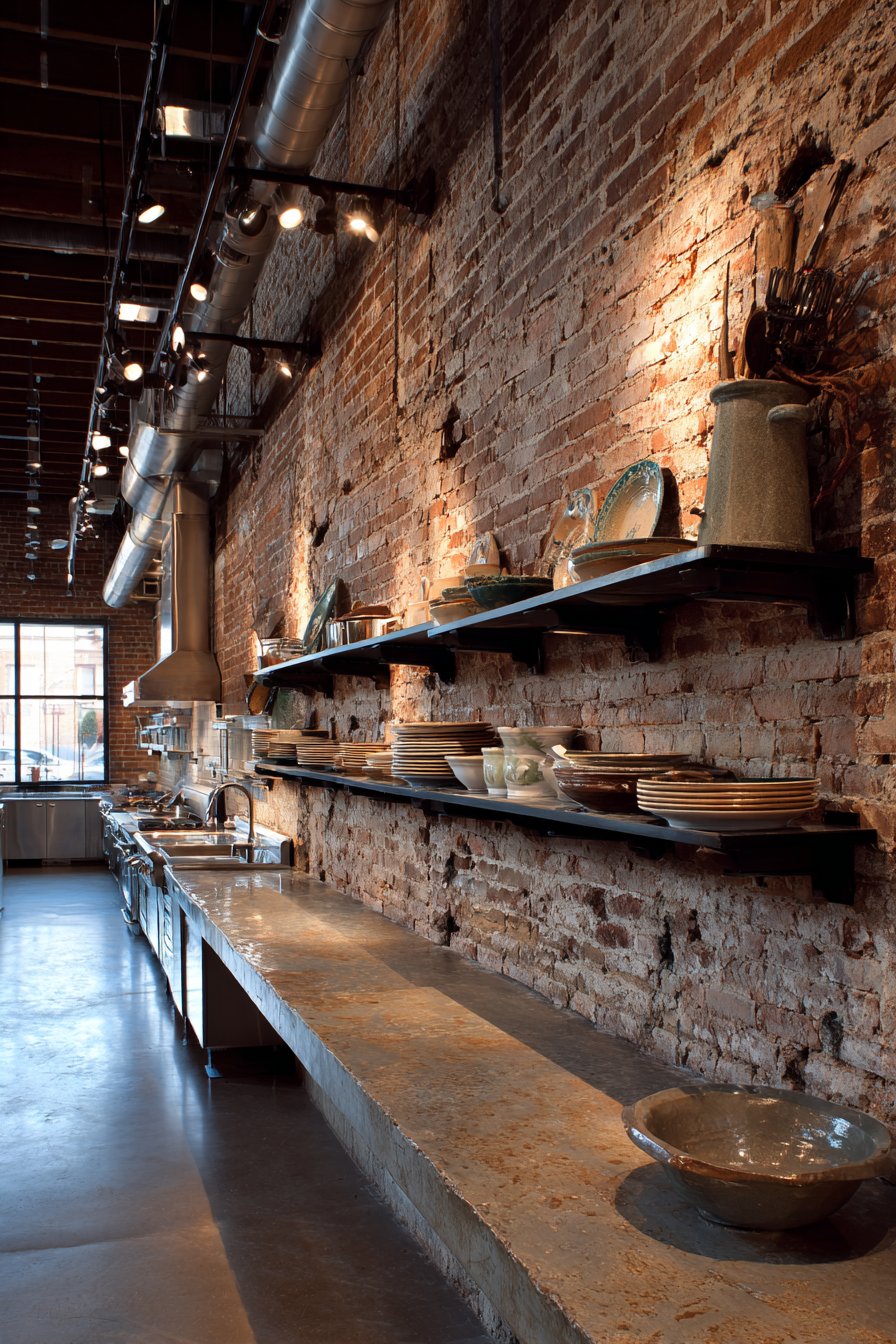
The warmth of brick balances industrial materials like stainless steel and concrete. Red clay bricks introduce earthy tones that prevent the space from feeling too stark. If your walls aren’t brick, consider exposing one accent wall or installing thin brick tiles that capture the authentic look. The key is leaving the brick in its natural state—avoid painting unless achieving a specific aesthetic. Sealed brick maintains its character while protecting against kitchen moisture and grease.
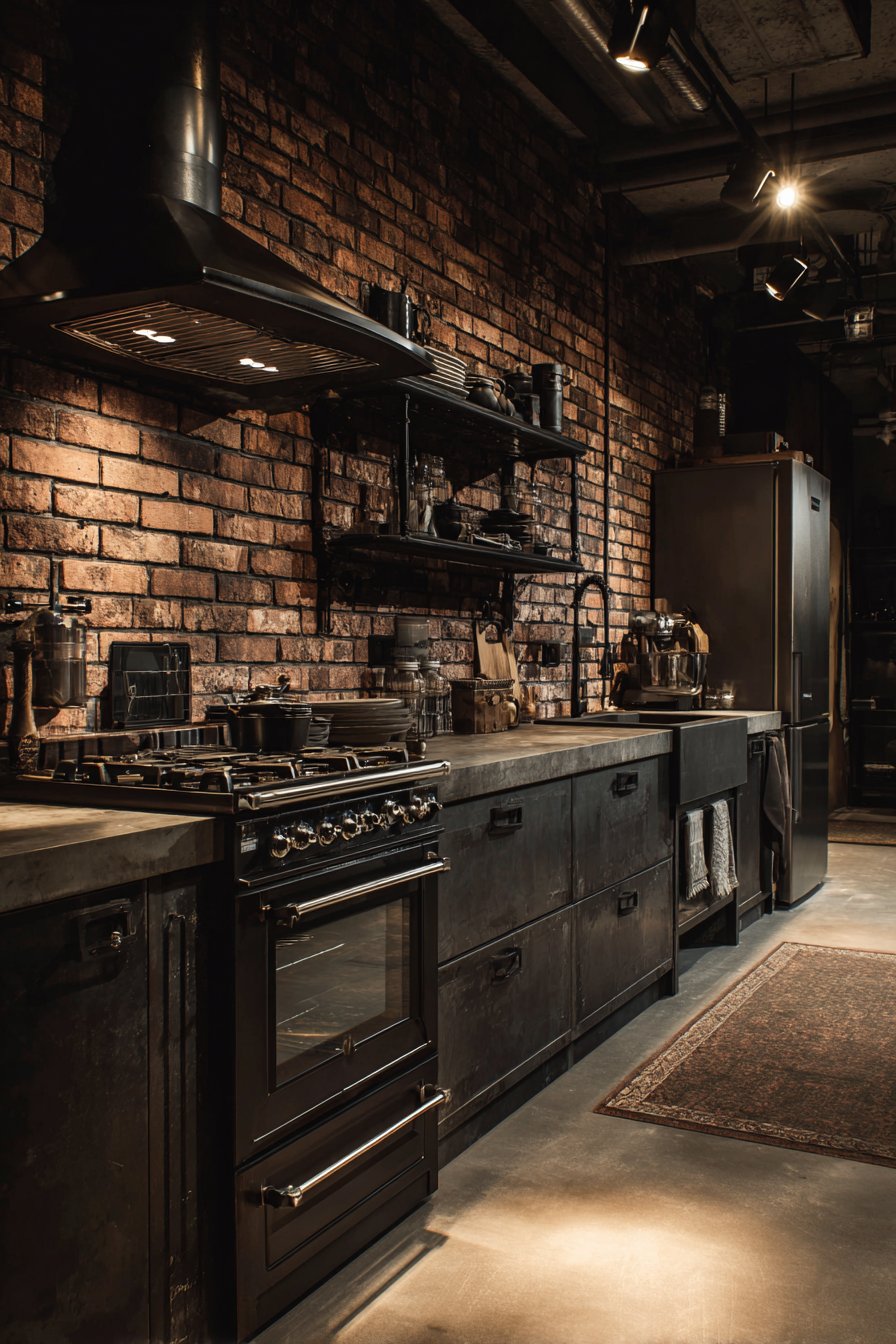
Proper maintenance ensures your brick walls remain beautiful for decades. Apply a breathable sealer specifically designed for masonry, which protects without altering the appearance. Strategic lighting enhances brick texture, with track lights or picture lights creating dramatic shadows. Position open shelving against brick to create visual layers and display your favorite kitchen items. This combination of rough and refined elements exemplifies the industrial aesthetic perfectly.
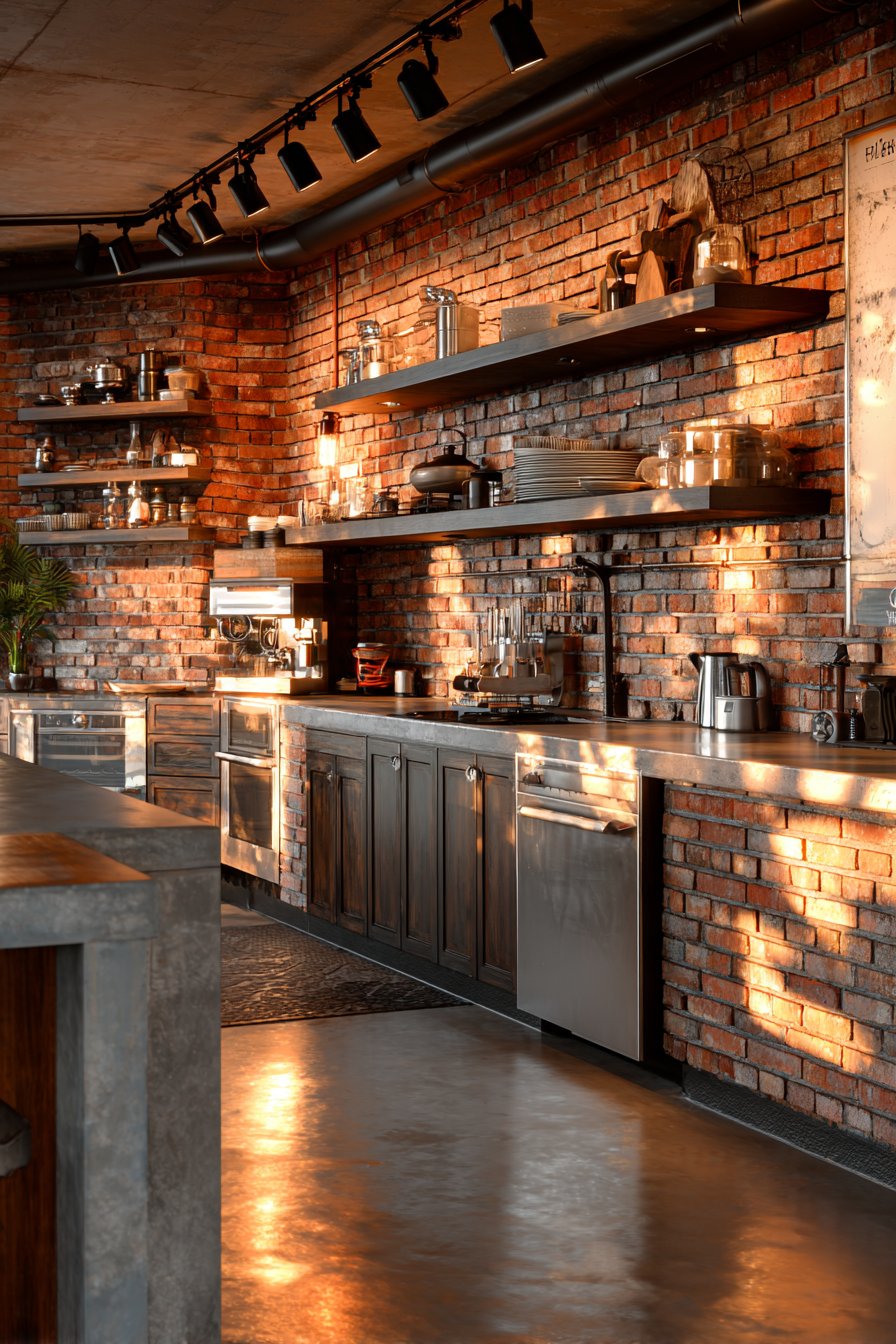
- Use wire brushes to clean mortar joints without harsh chemicals
- Install floating shelves directly into brick using appropriate anchors rated for masonry
- Consider whitewashing brick for a softer industrial look that brightens darker kitchens
- Leave imperfections visible as they add authentic character and historical value
- Combine brick with other raw materials like reclaimed wood for enhanced textural contrast
- Position task lighting to highlight brick texture during evening hours
2. Install Open Metal Shelving Systems
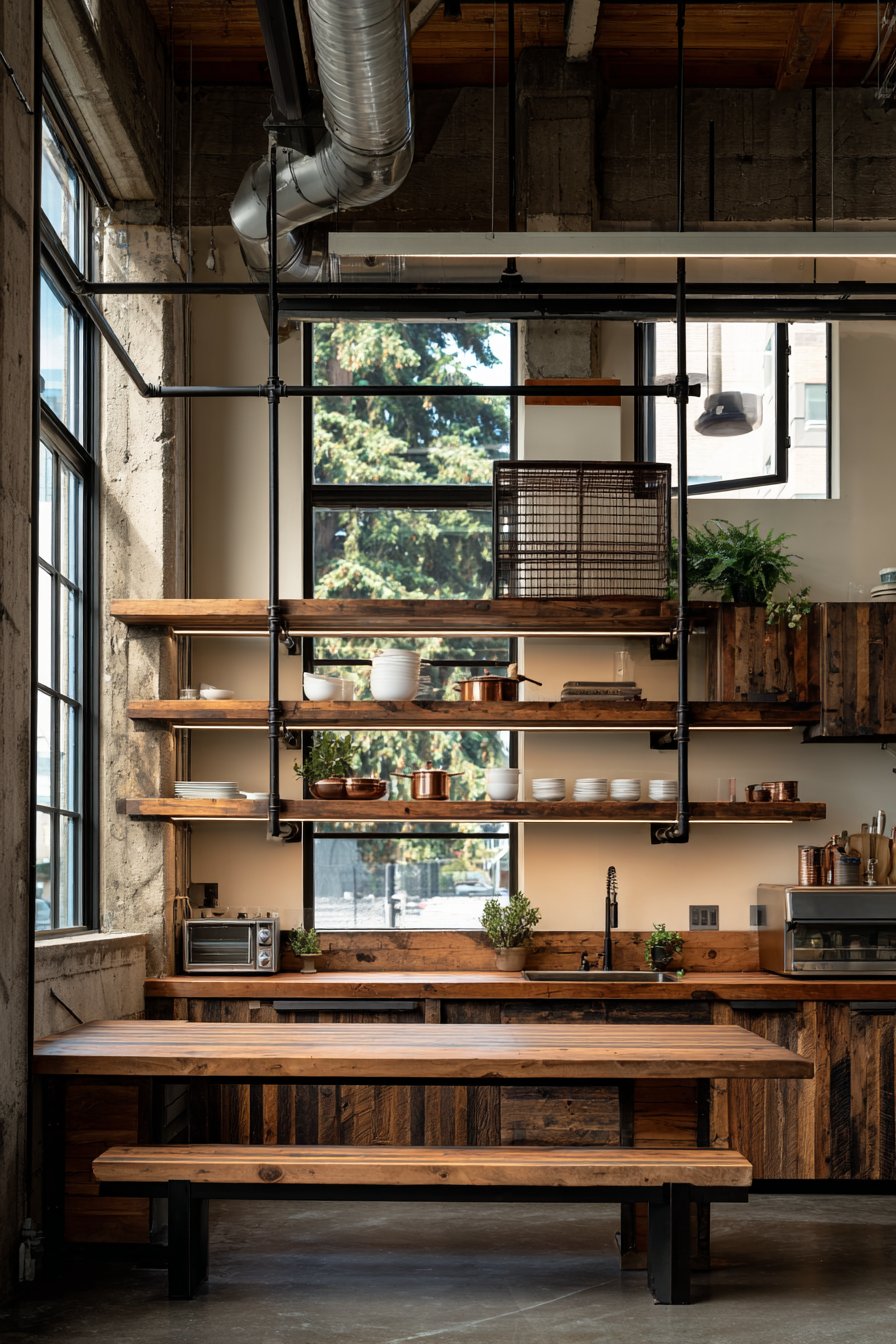
Open metal shelving replaces traditional upper cabinets, creating an airy, expansive feeling while showcasing your dishware and kitchen essentials. Industrial pipe shelving or commercial-grade metal units provide both storage and display opportunities. This approach makes everything accessible and encourages you to curate your kitchen items thoughtfully. The exposed storage system reduces visual weight compared to solid cabinets, making even compact kitchens feel more spacious.
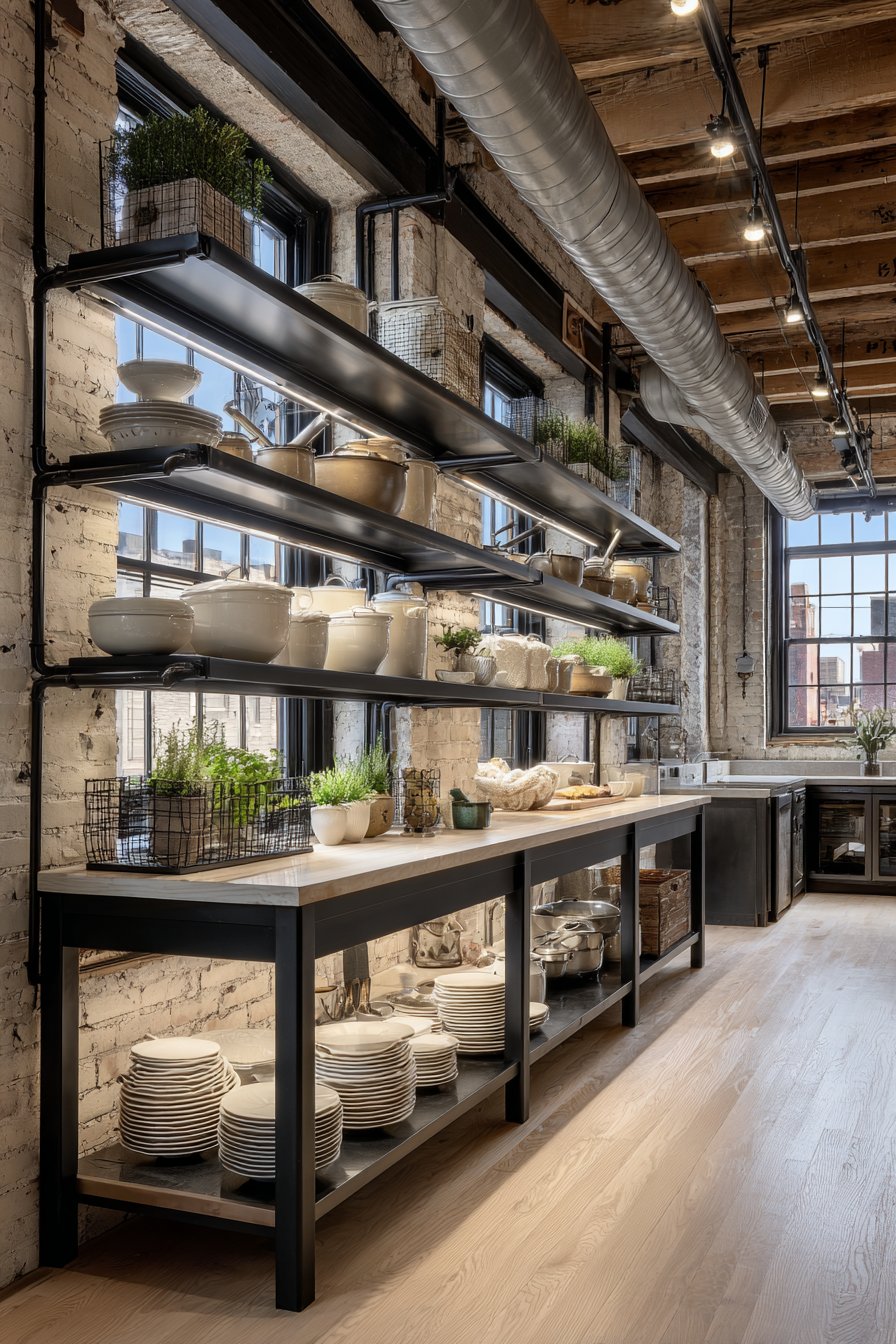
Metal shelving comes in various finishes including black iron, brushed steel, and antiqued bronze. Choose materials that coordinate with your faucets and hardware for a cohesive look. The structural honesty of visible brackets and supports reinforces the industrial aesthetic. These systems often cost less than custom cabinetry while offering superior flexibility—adjust shelf heights as your needs change or rearrange items seasonally.
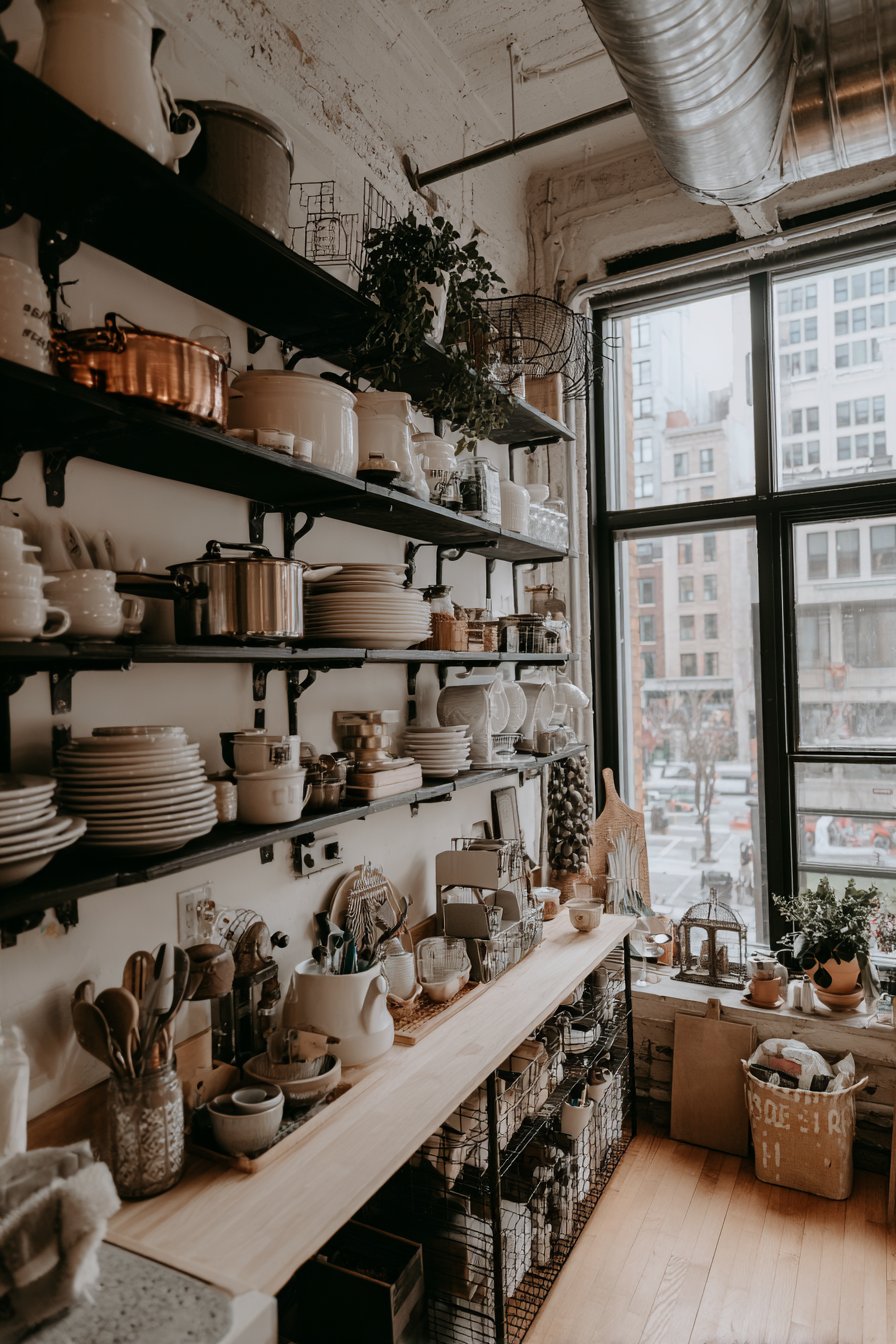
Styling open shelves requires balancing function with visual appeal. Group similar items together and incorporate varying heights to create dynamic arrangements. Mix practical pieces like dishes and glassware with decorative elements such as plants or vintage kitchen tools. Leave some breathing room between objects to prevent shelves from appearing cluttered. This curated approach demonstrates that industrial style values both utility and aesthetics.
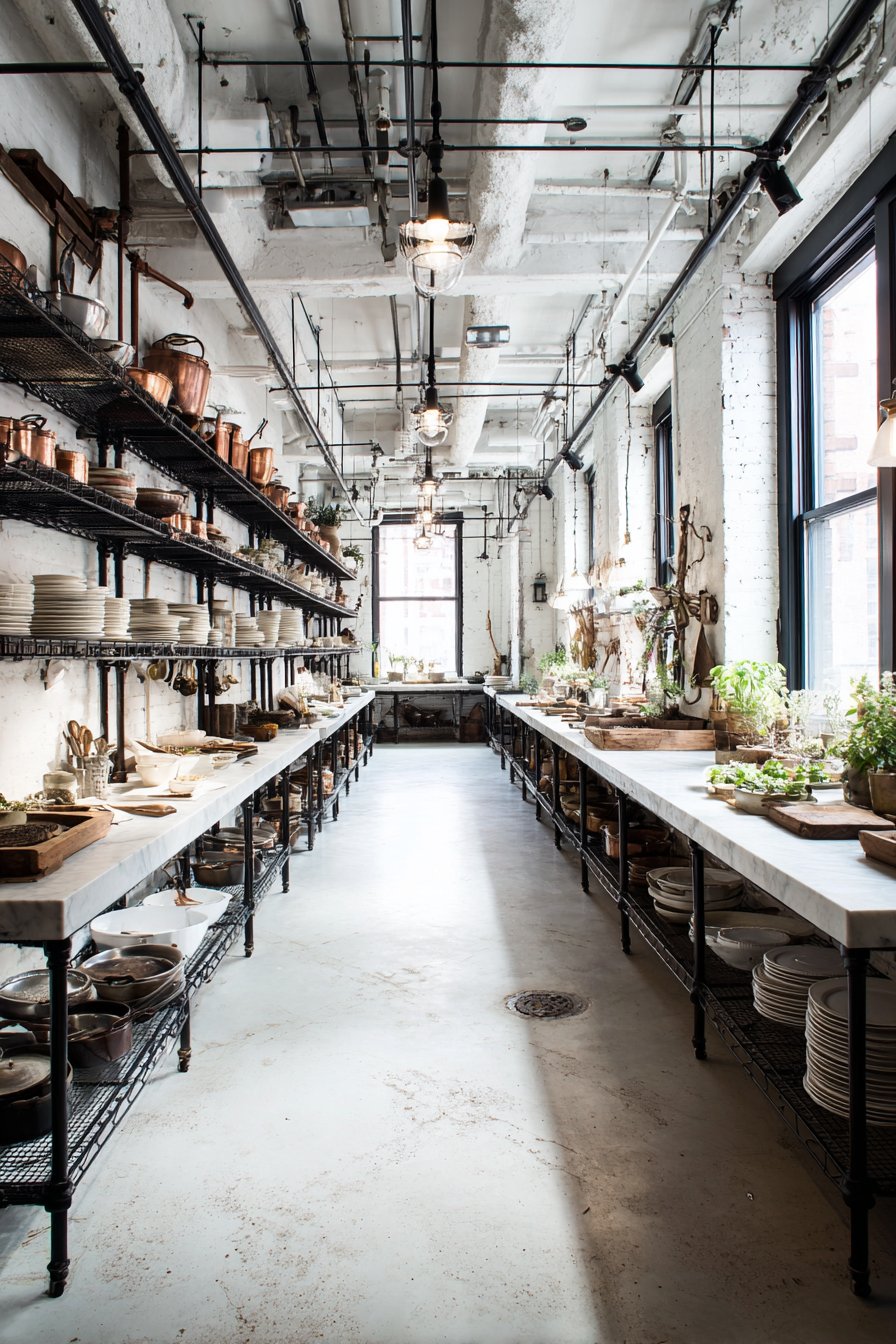
- Organize items by color for cohesive visual impact that’s easy on the eyes
- Incorporate wire baskets for concealing less attractive necessities while maintaining the industrial vibe
- Use shelf risers to maximize vertical space and create dimensional displays
- Display attractive cookware like copper pots or cast iron skillets as decorative elements
- Maintain consistency with dishware sets rather than mismatched collections for cleaner lines
- Install LED strip lighting beneath shelves to illuminate work surfaces and highlight displays
3. Choose Concrete Countertops for Industrial Edge
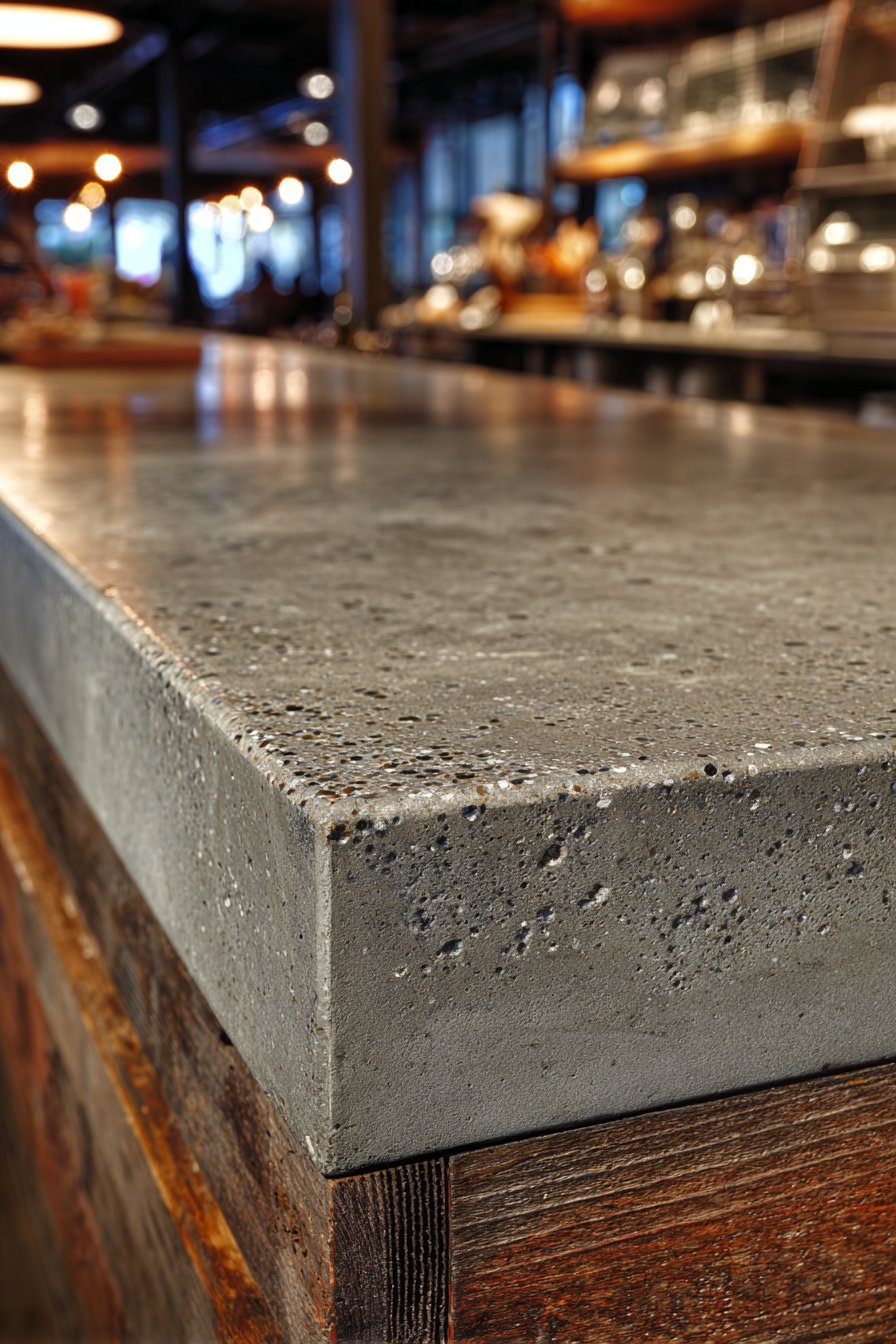
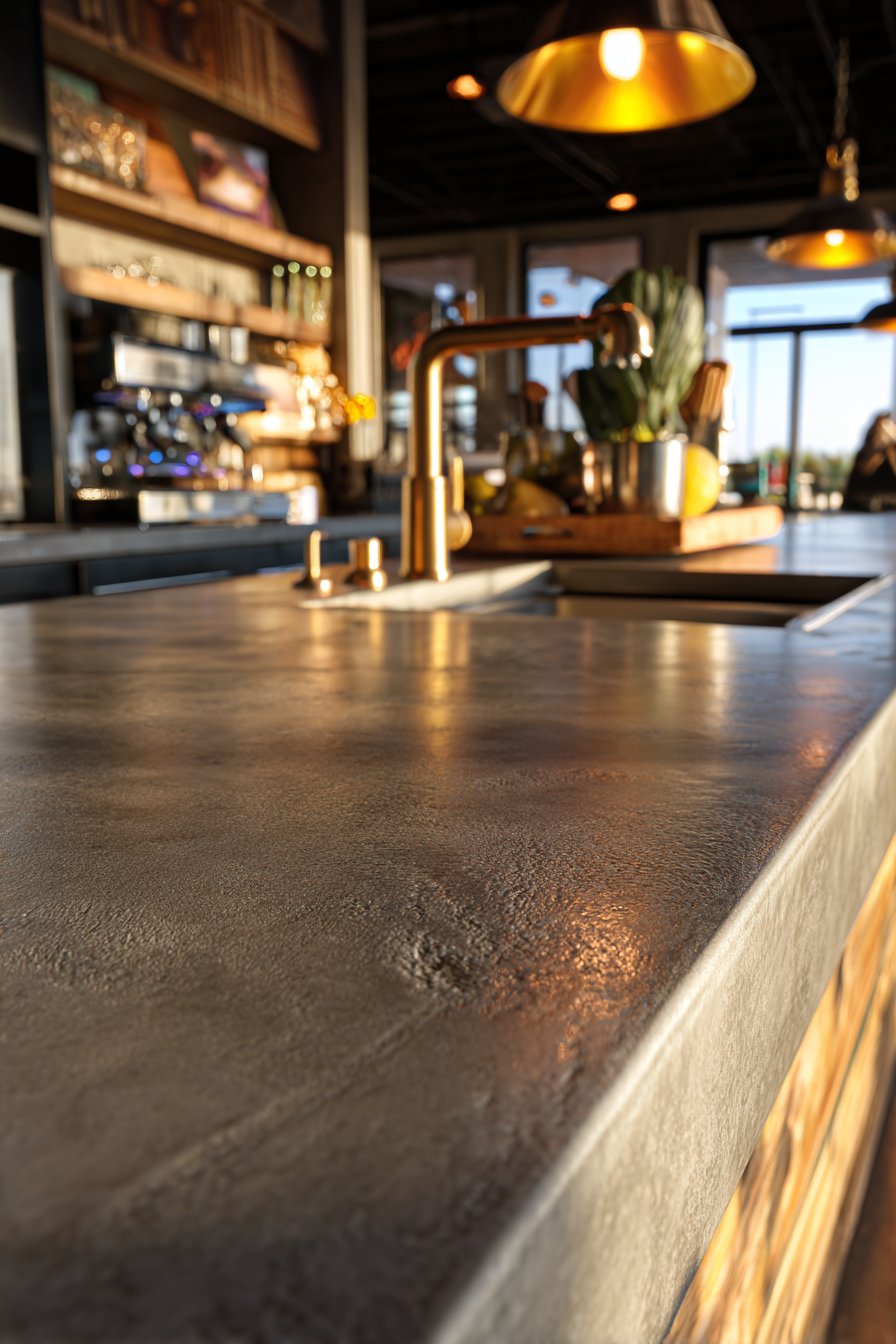
Concrete countertops deliver unmatched durability and contemporary appeal while embodying industrial design principles. This material can be poured, cast, or installed as preformed slabs, offering customization options for any kitchen layout. The natural gray tones complement stainless steel appliances and provide a neutral backdrop for colorful accents. Concrete develops a unique patina over time, gaining character with age rather than showing wear.
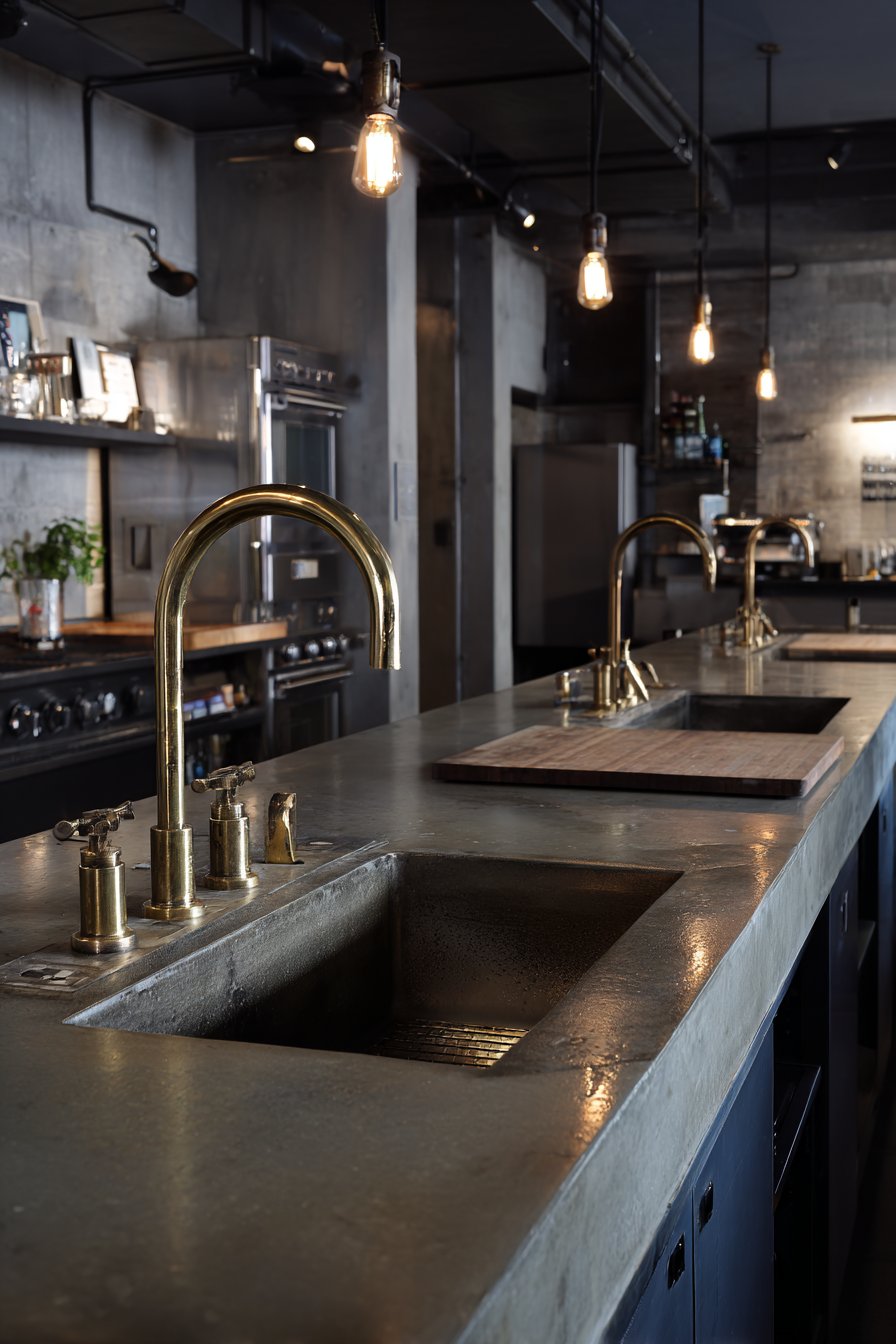
Modern concrete countertops feature various finishes from polished and smooth to textured and raw. Adding aggregates like crushed glass or metal shavings creates visual interest and personalization. The thermal mass of concrete helps regulate kitchen temperature, and proper sealing makes surfaces resistant to stains and heat. Consider integrated sinks for seamless transitions that enhance the minimalist industrial aesthetic.
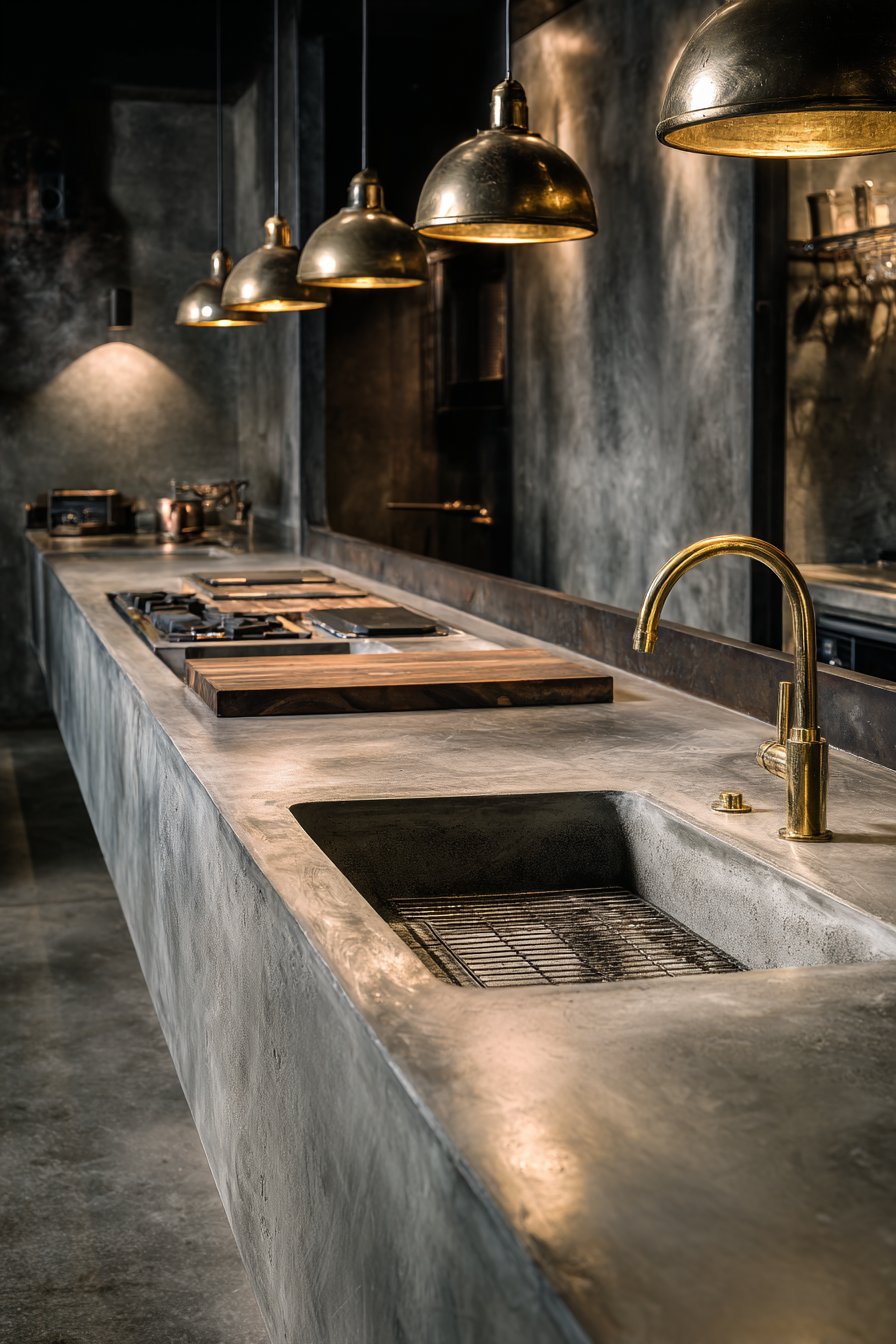
Installation requires professional expertise to ensure proper mixing, pouring, and curing. Factor in adequate support structures as concrete weighs considerably more than granite or quartz. The material’s versatility allows for custom edge profiles from simple square edges to more decorative treatments. Maintenance involves resealing annually and using pH-neutral cleaners to preserve the surface integrity and appearance.
- Select food-safe sealers specifically formulated for concrete countertops to ensure safety
- Request samples showing different aggregate options before making final selections
- Consider integral color for uniform appearance throughout the entire countertop thickness
- Use trivets and cutting boards despite heat resistance to prevent potential surface damage
- Clean spills promptly even on sealed surfaces to maintain a pristine appearance
- Embrace minor imperfections like air bubbles as authentic characteristics of the material
4. Incorporate Industrial Pendant Lighting
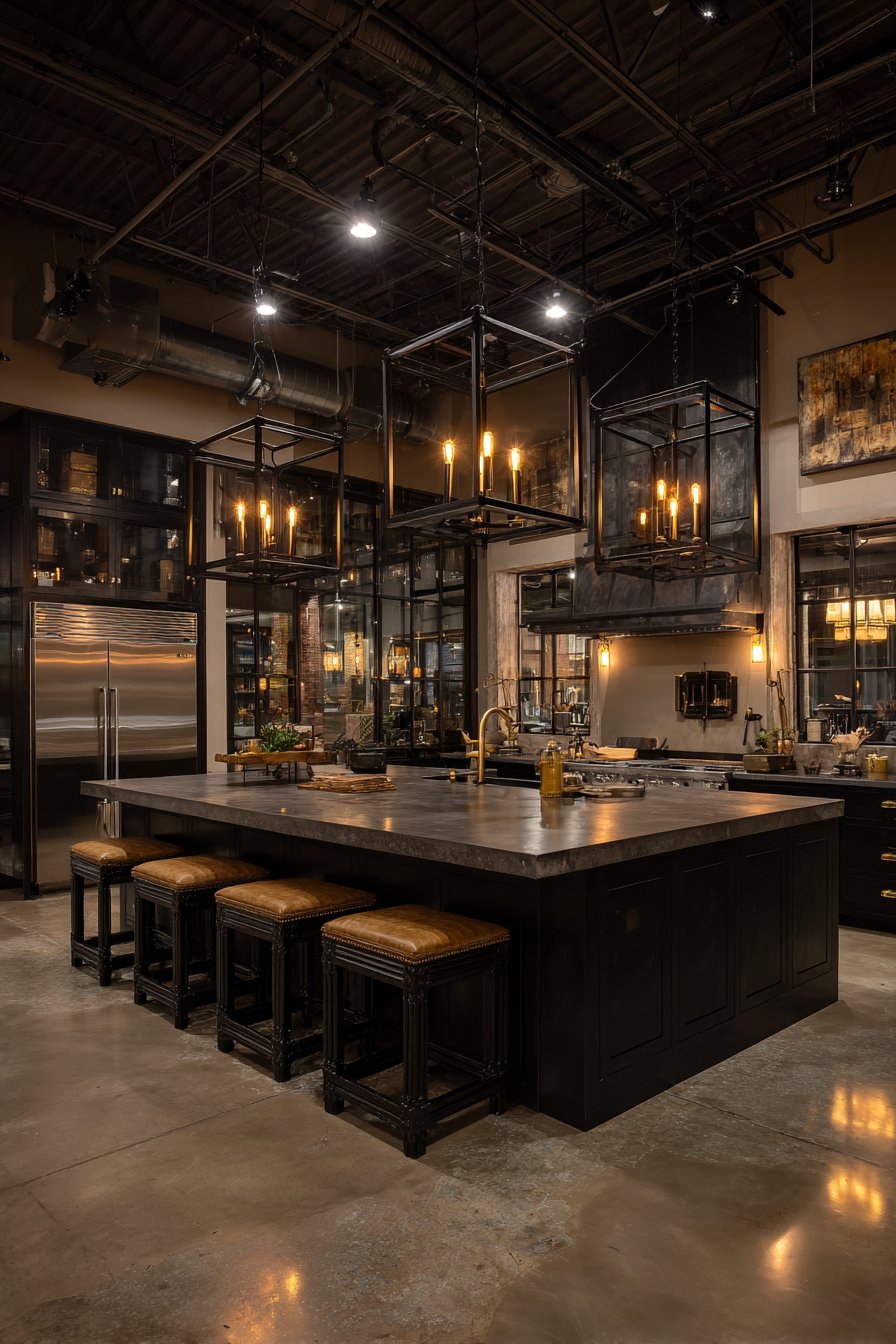
Statement pendant lights define the visual hierarchy and atmosphere of industrial kitchens. Fixtures featuring exposed bulbs, metal cages, or warehouse-inspired designs create dramatic focal points above islands and dining areas. These lights provide essential task lighting while reinforcing the utilitarian aesthetic. Choose oversized pendants for bold impact or cluster smaller fixtures for layered illumination that adds architectural interest.
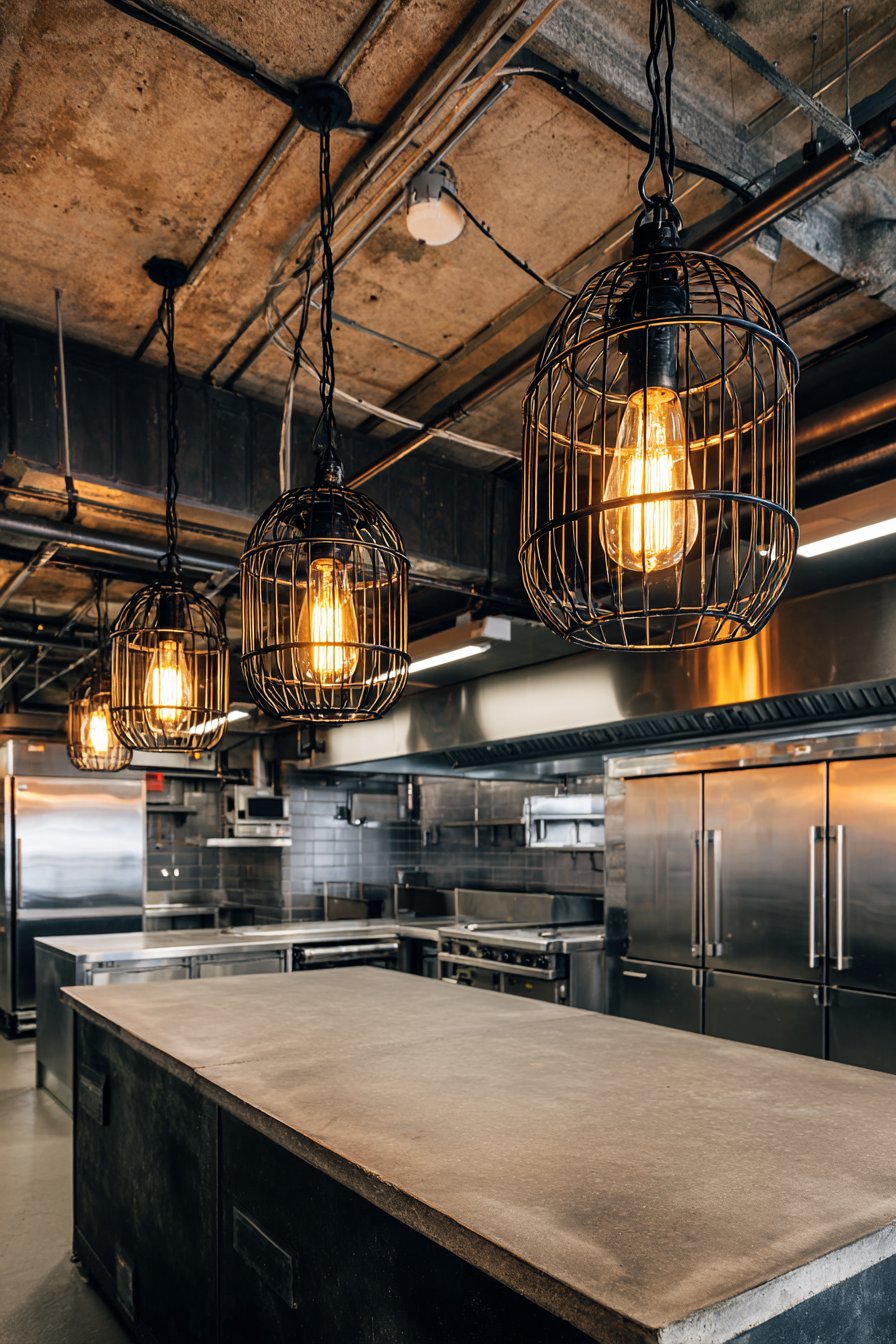
Materials like aged brass, black iron, and brushed nickel complement industrial elements throughout the kitchen. Glass globes with visible filament bulbs celebrate Edison-style illumination that harkens back to early industrial lighting. The combination of form and function makes these fixtures practical investments that elevate the entire design. Adjustable pendant heights allow you to customize lighting based on ceiling height and counter dimensions.
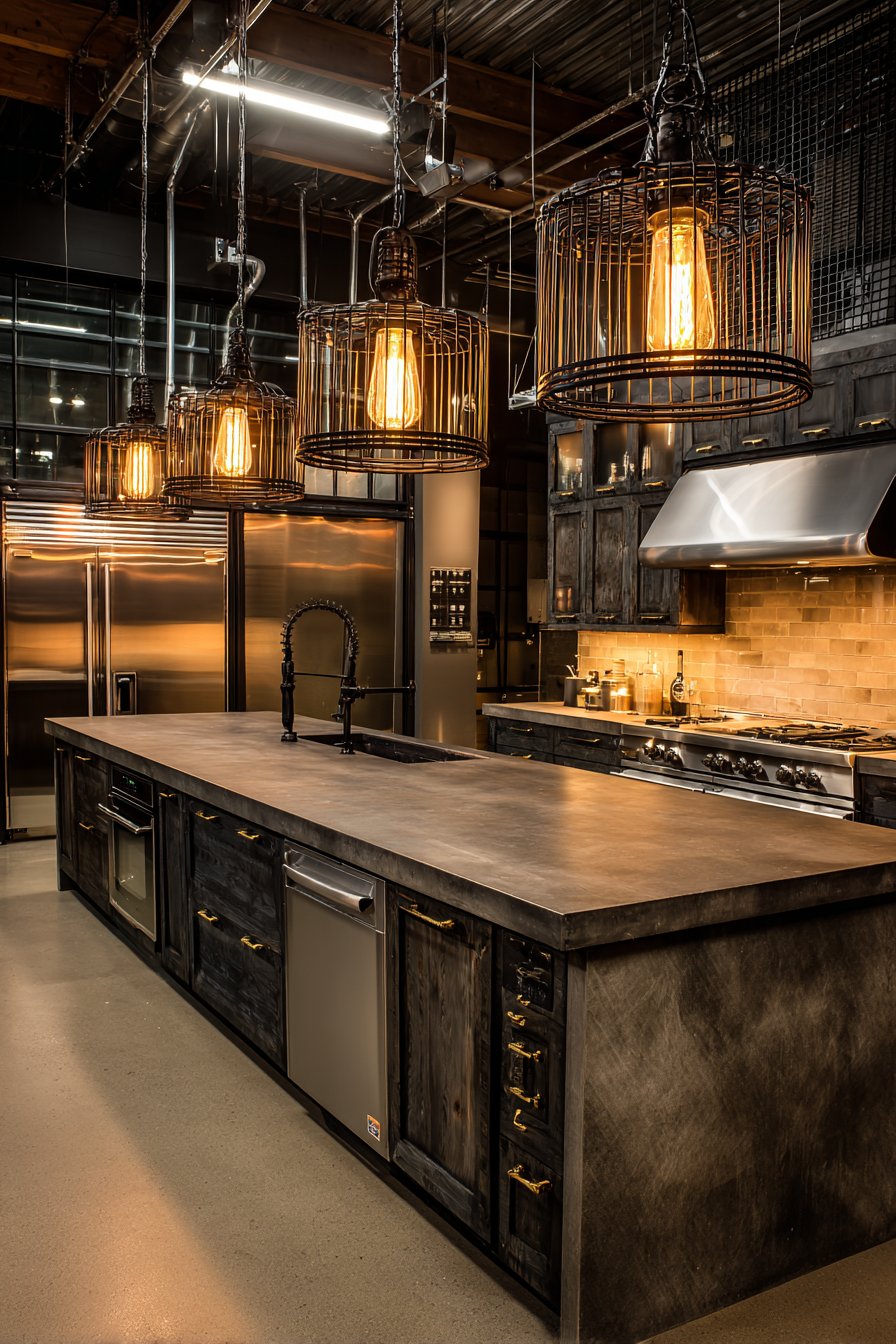
Proper placement ensures optimal illumination without visual obstruction. Space pendants 30 to 36 inches apart when using multiple fixtures over an island. Hang them 60 to 72 inches from the floor or 30 to 36 inches above countertops. Install dimmer switches to control mood and functionality throughout different times of day. Layer pendant lighting with under-cabinet fixtures and recessed lights for comprehensive illumination that meets all kitchen activities.
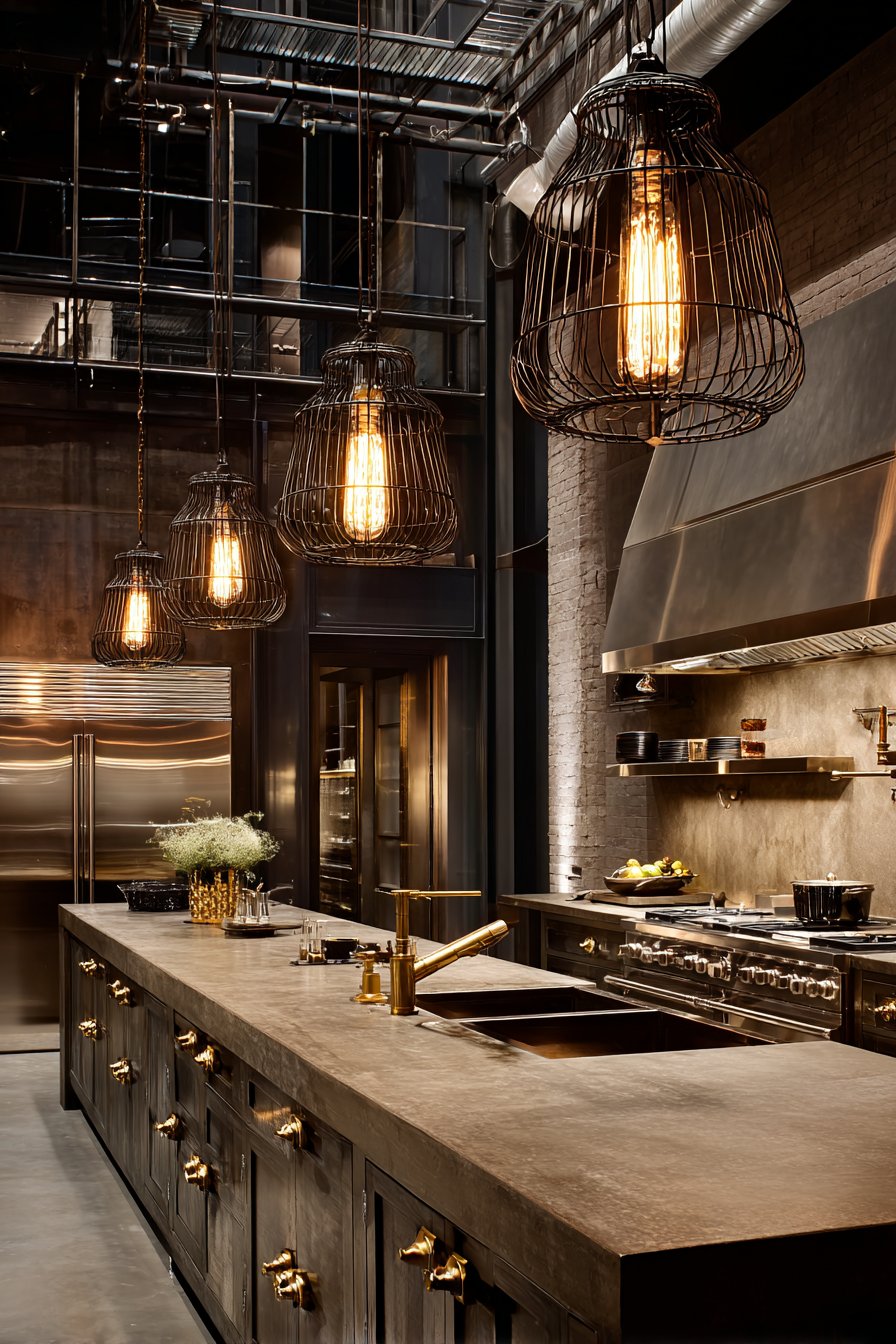
- Mix pendant styles for eclectic industrial charm rather than perfect matching
- Choose LED bulbs that mimic warm Edison filaments for energy efficiency
- Consider pulley-style fixtures for authentic industrial character and adjustability
- Install pendants on sloped ceiling adapters in kitchens with angled ceilings
- Use oversized pendants sparingly to avoid overwhelming smaller kitchen spaces
- Coordinate metal finishes with cabinet hardware and plumbing fixtures for cohesion
5. Add Stainless Steel Appliances and Accents
Professional-grade stainless steel appliances anchor the industrial kitchen aesthetic while delivering commercial functionality. These pieces provide visual consistency and reflect light throughout the space. Beyond major appliances, incorporate stainless steel elements through backsplashes, range hoods, and countertop edges. The material’s durability withstands heavy use while maintaining its appearance, making it ideal for high-traffic kitchens that serve as family gathering spaces.
The reflective quality of stainless steel creates visual expansion in smaller kitchens and complements other industrial materials beautifully. Choose brushed or matte finishes to reduce fingerprints and glare. Consider commercial appliance brands that offer superior performance and authentic industrial styling. Features like exposed hinges, visible rivets, and industrial-grade controls enhance the utilitarian aesthetic while providing professional cooking capabilities.
Maintaining stainless steel requires specific cleaning techniques to prevent streaking and water spots. Use microfiber cloths with specialized cleaners or simple soap and water solutions. Wipe in the direction of the grain to maintain the brushed finish. Avoid abrasive materials that can scratch surfaces. The low-maintenance nature of stainless steel makes it practical for busy households, and minor scratches contribute to the aged industrial patina over time.
- Invest in fingerprint-resistant stainless steel for high-touch areas like refrigerator doors
- Mix stainless steel with warmer materials like wood to prevent cold appearance
- Consider restaurant supply stores for authentic commercial kitchen fixtures and accessories
- Use stainless steel organizational systems for drawers to maintain the industrial theme
- Install magnetic knife strips in stainless steel for functional wall storage
- Choose appliances with matching metal tones for unified appearance throughout the kitchen
6. Install Reclaimed Wood Elements for Warmth
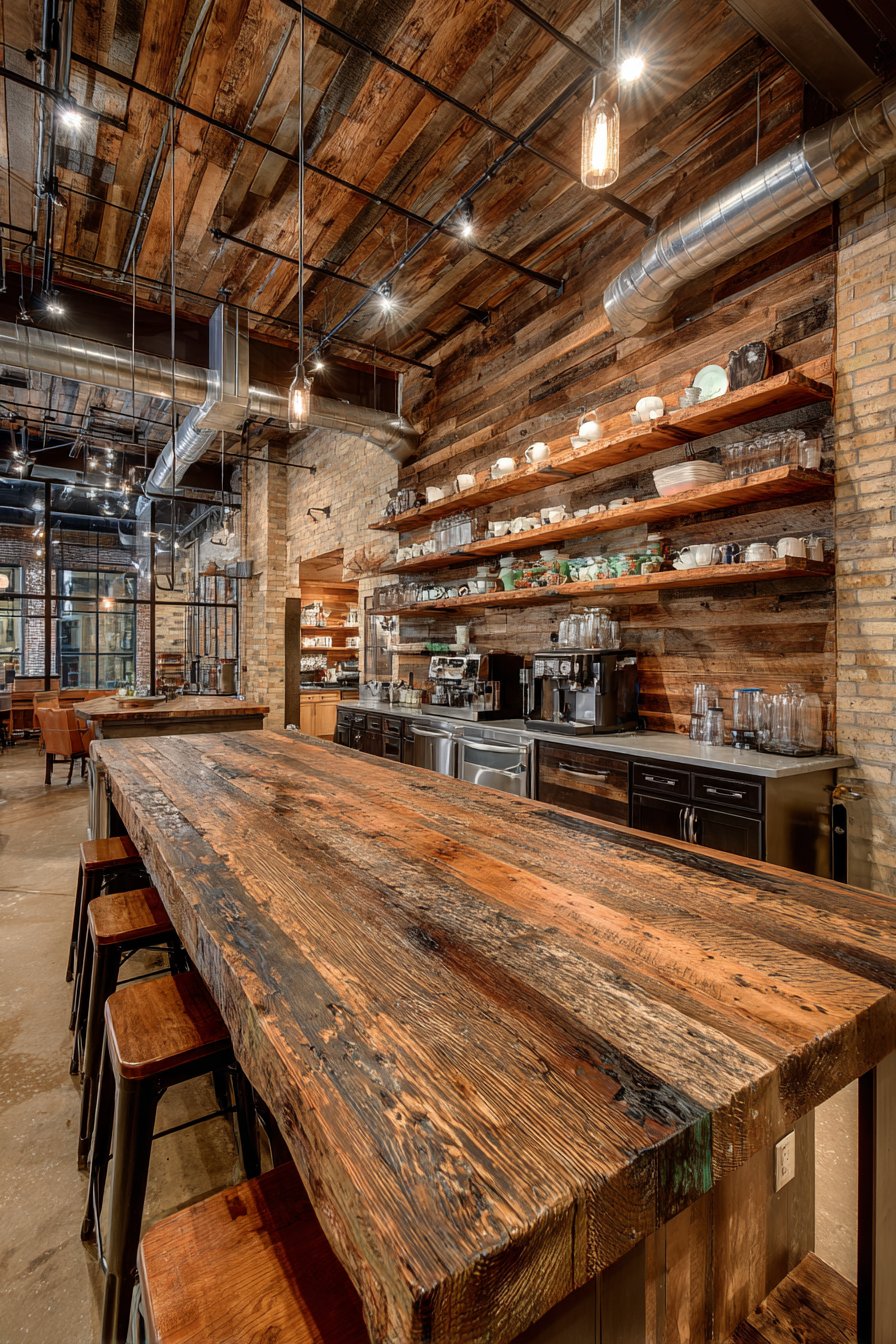
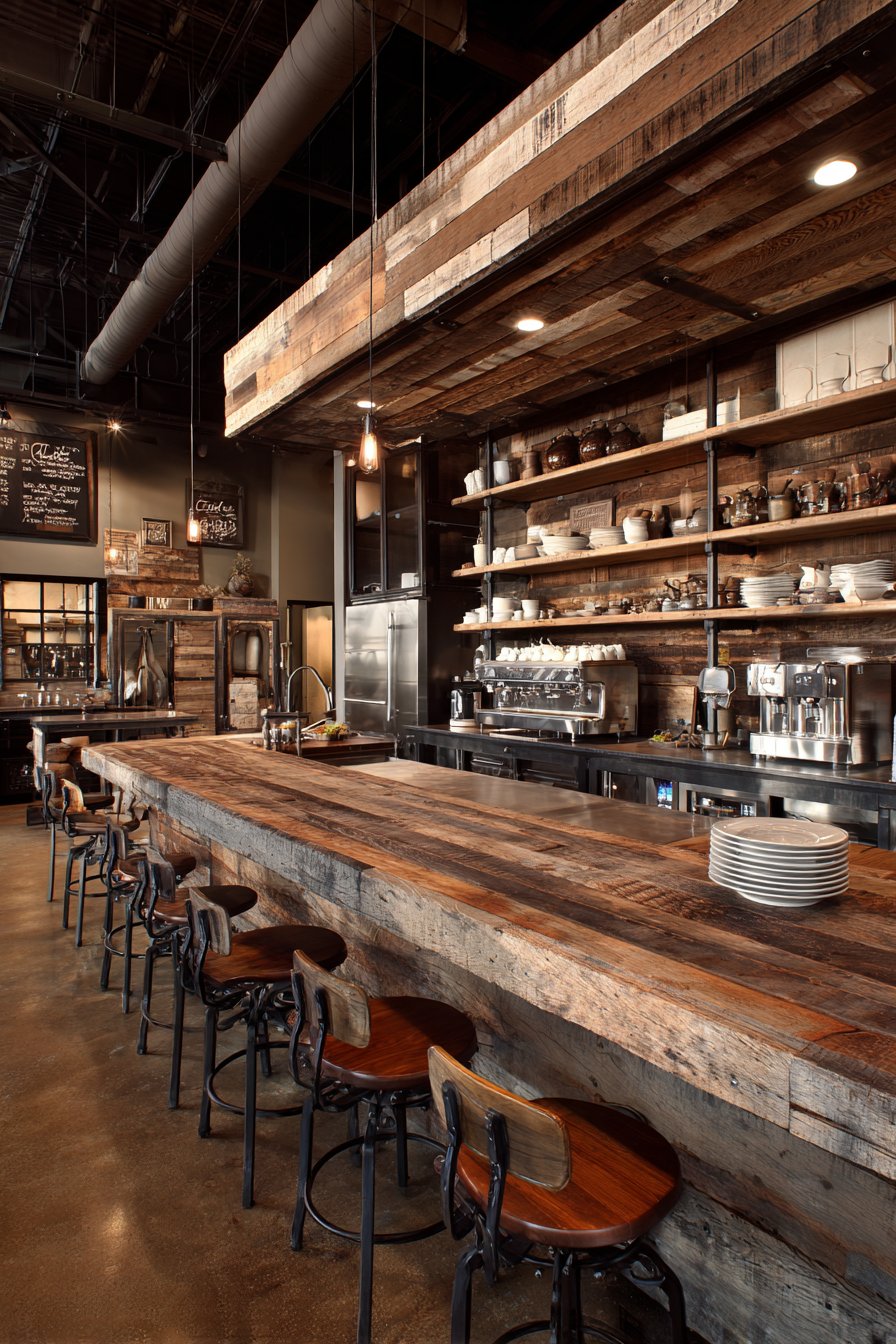
Reclaimed wood provides essential warmth and organic texture that balances industrial materials’ coolness. Use salvaged lumber for floating shelves, butcher block islands, or ceiling beams. The weathered appearance and natural imperfections add historical depth and visual interest. Each piece tells a story through nail holes, saw marks, and varied patination that develops over decades. This material creates inviting contrast against concrete, metal, and brick.
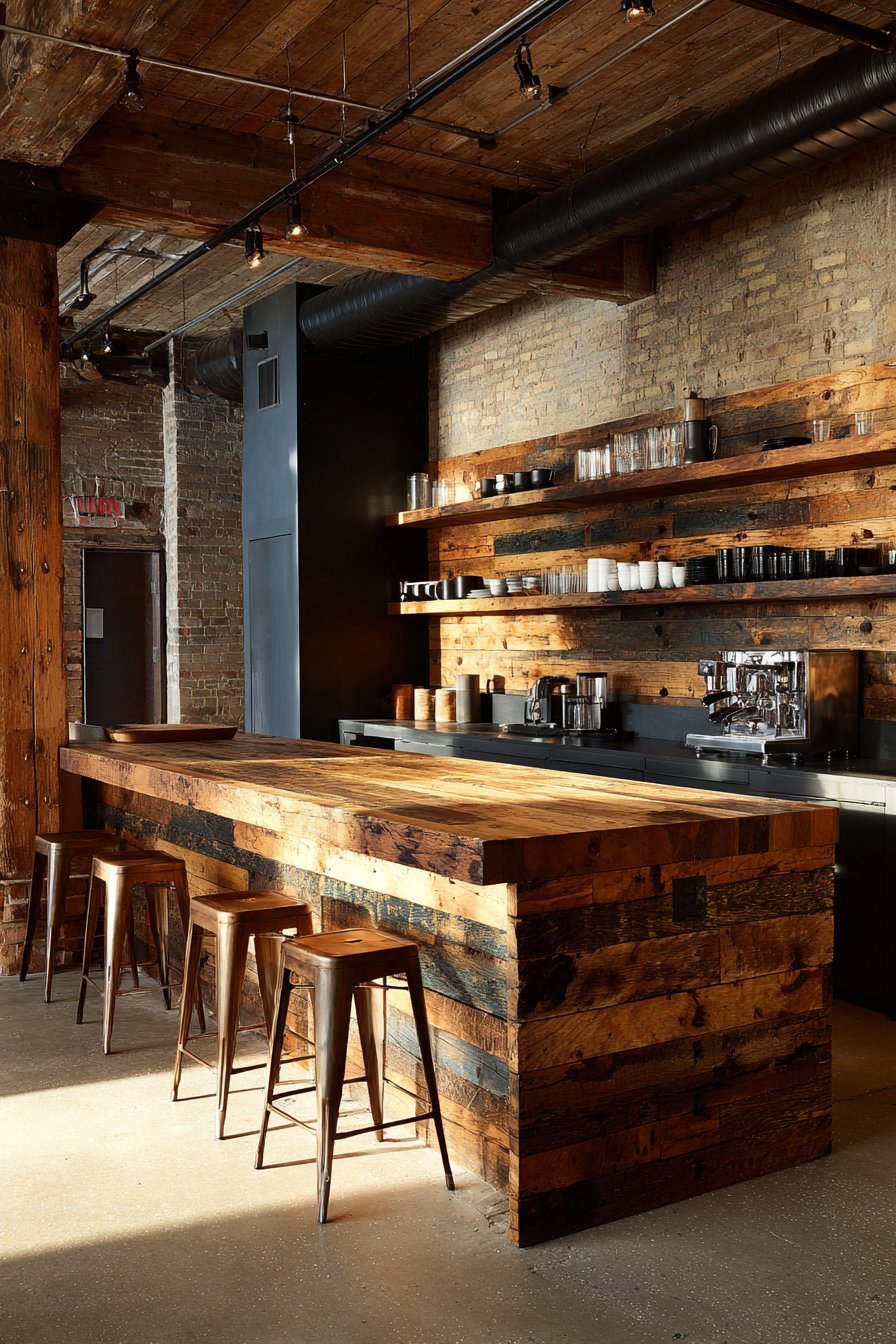
Sourcing reclaimed wood from demolition sites, old barns, or specialty suppliers ensures authentic character. Look for hardwoods like oak, maple, or walnut that withstand kitchen conditions. Proper treatment includes thorough cleaning, kiln-drying to eliminate pests, and sealing to protect against moisture and food stains. The natural variation in color and grain makes each installation unique, contributing to the handcrafted quality industrial design celebrates.
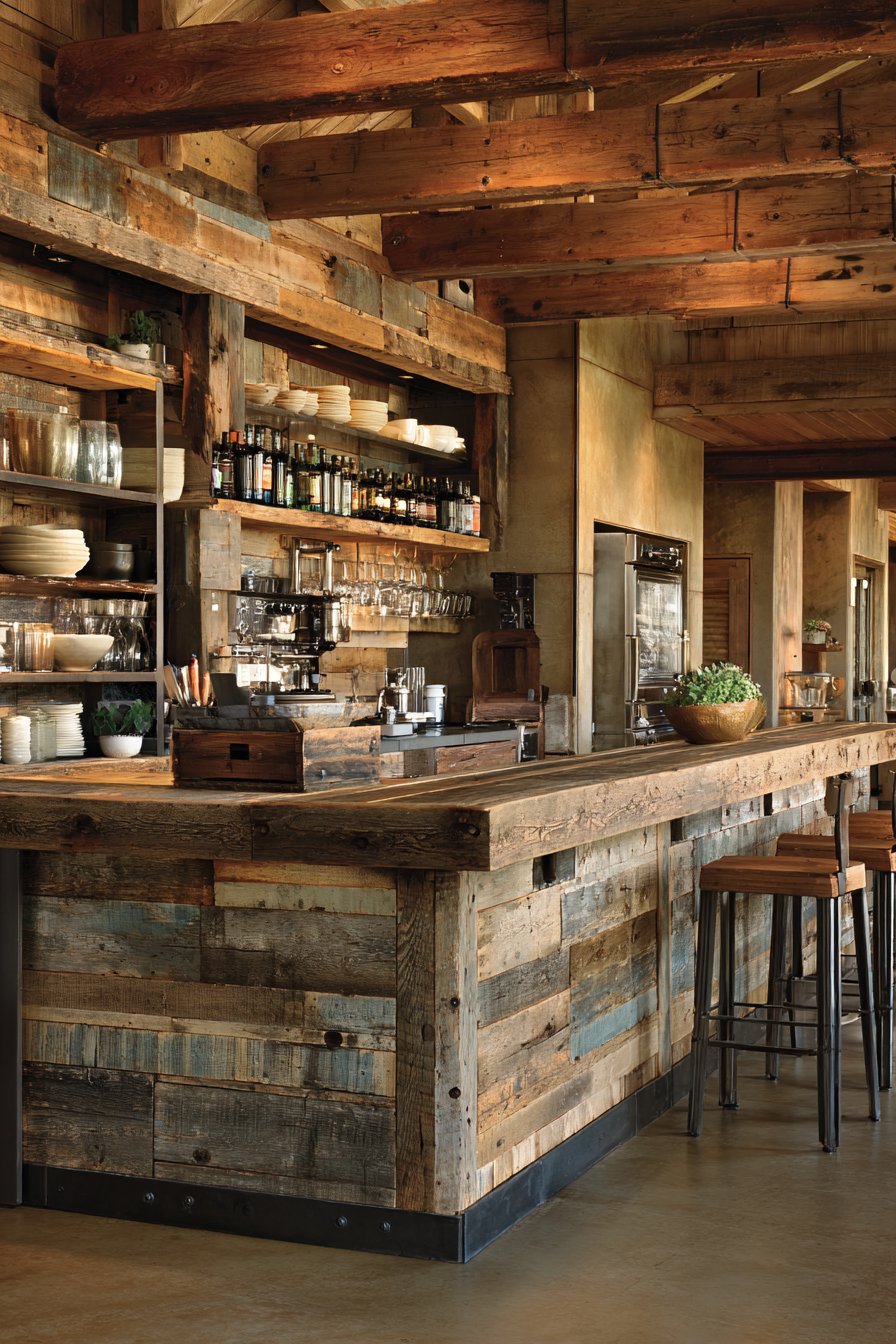
Incorporating wood strategically prevents the kitchen from feeling too harsh or cold. Consider a reclaimed wood accent wall behind open shelving or a substantial butcher block countertop on the island. Wooden bar stools, cutting boards, and utensil holders extend the material throughout the space. The combination of aged wood and industrial metals creates the perfect balance between rugged and refined that defines successful industrial design.
- Verify reclaimed wood is properly treated to prevent insect infestation in your home
- Mix wood tones rather than matching everything for authentic salvaged appearance
- Apply food-safe finishes like mineral oil or beeswax on surfaces contacting food
- Consider lighter wood tones if your kitchen receives limited natural light
- Use reclaimed wood ceiling beams to add architectural interest overhead
- Combine different wood species for enhanced visual texture and depth
7. Feature Industrial-Style Faucets and Fixtures
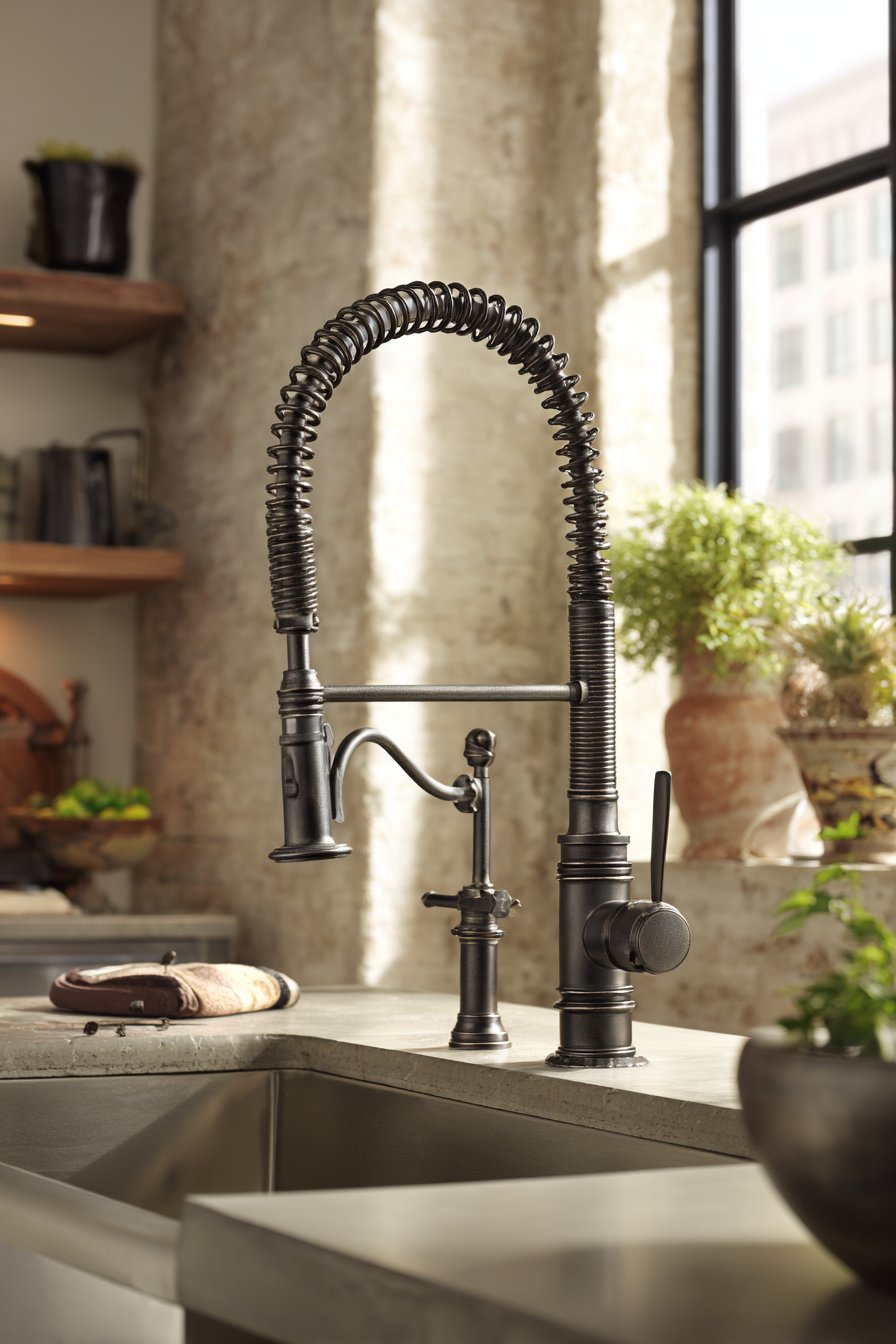
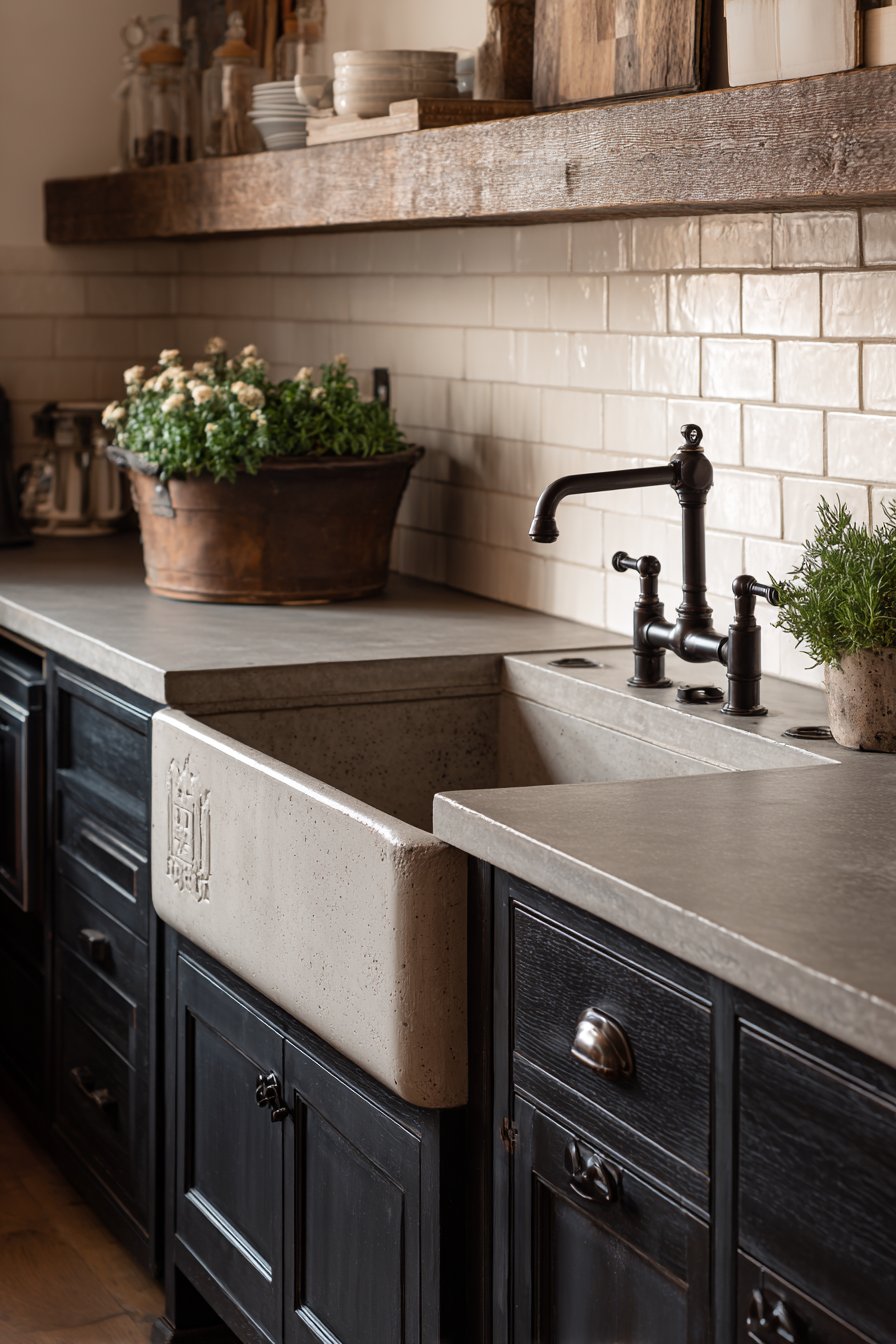
Commercial-inspired faucets and fixtures deliver both functionality and authentic industrial style. Look for designs with exposed springs, bridge construction, or high-arc profiles reminiscent of restaurant kitchens. Materials like brushed nickel, matte black, or unlacquered brass develop natural patina over time. These fixtures combine professional performance with distinctive visual appeal that reinforces the industrial aesthetic throughout the kitchen workspace.
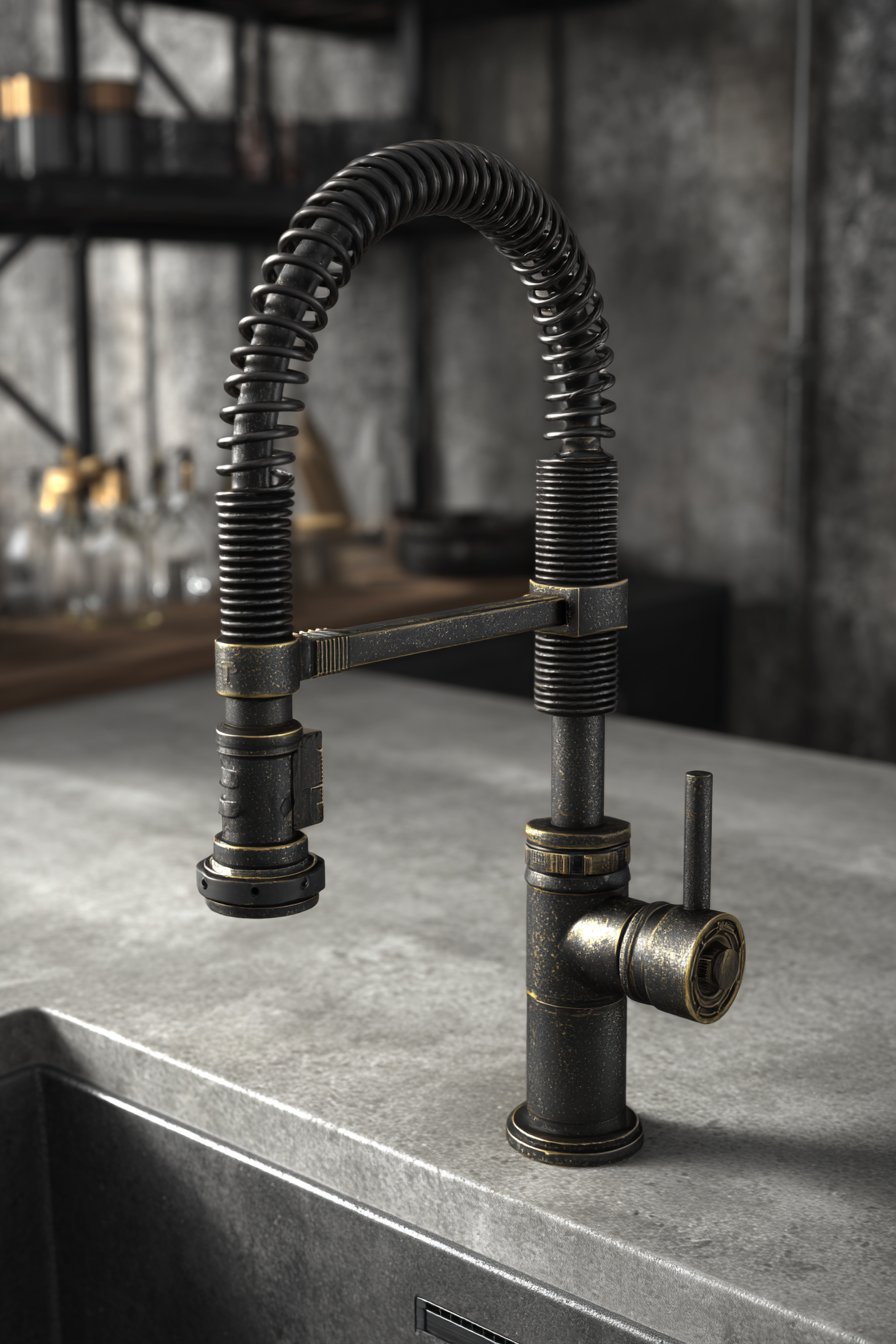
Pull-down spray heads and dual-function capabilities provide practical advantages for food preparation and cleanup. Choose fixtures with solid brass construction for durability and longevity. The substantial weight and quality feel of well-made industrial fixtures justify their investment. Consider wall-mounted faucets for a unique design statement that frees up counter space around the sink and creates unexpected visual interest.
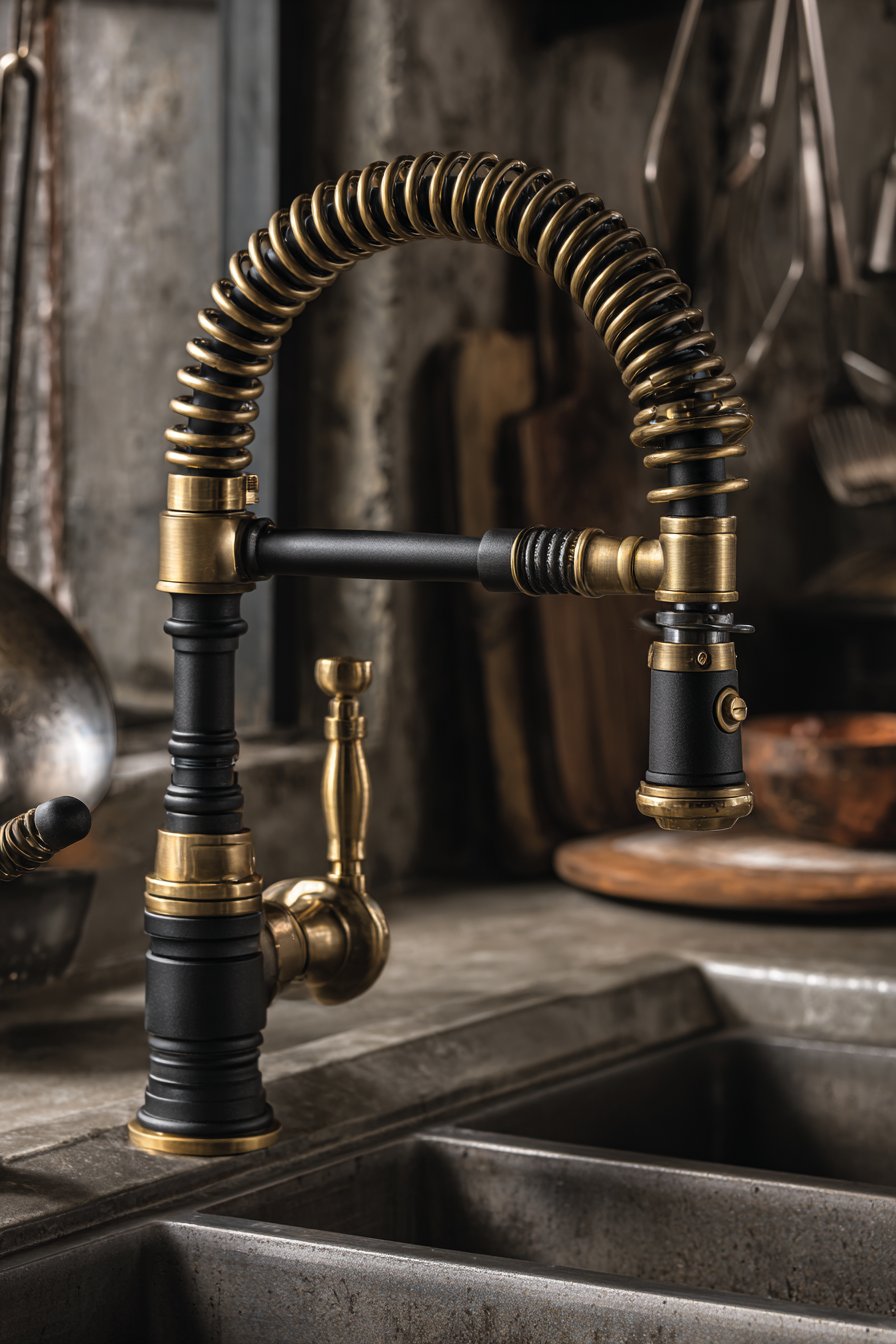
Coordinate fixture finishes throughout the kitchen for cohesive design. Extend your chosen metal to cabinet hardware, lighting, and decorative accessories. The consistent finish creates visual flow while allowing individual pieces to make statements. Industrial fixtures often feature exposed mounting hardware and visible fasteners that celebrate honest construction. These details distinguish industrial style from concealed, seamless contemporary designs.
- Select faucets with ceramic disc valves for reliable, drip-free performance
- Consider pot fillers near the range for convenient pasta and soup preparation
- Choose matte finishes over polished chrome to reduce fingerprint visibility
- Install a separate prep sink with matching faucet for enhanced functionality
- Look for flexible hose connections that allow for easy replacement and maintenance
- Verify faucet height accommodates your largest pots and dishware before purchasing
8. Create Contrast with Black Window Frames and Doors
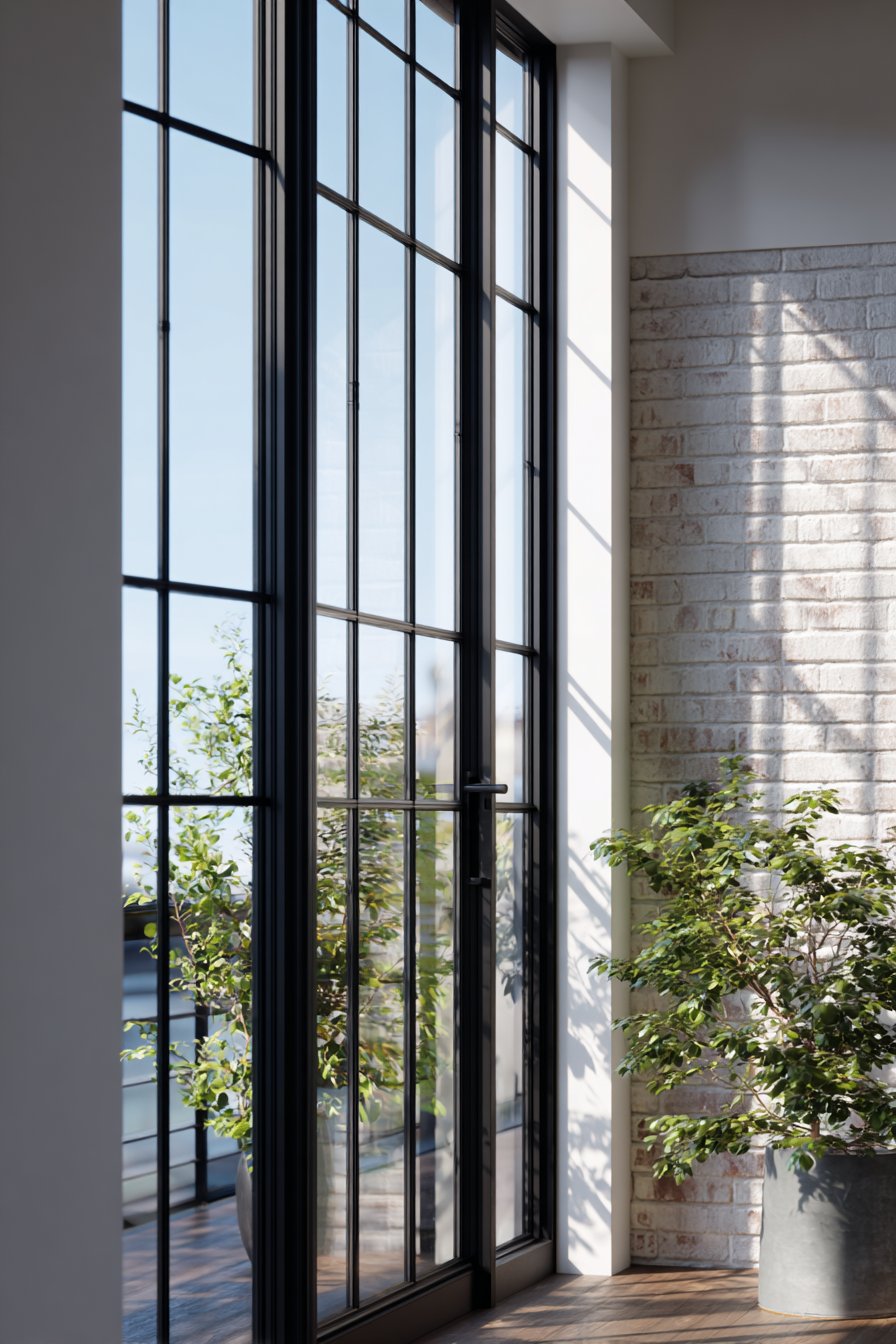
Black-framed windows and doors provide striking architectural definition that enhances the industrial aesthetic. These elements create crisp visual boundaries between interior and exterior spaces while drawing attention to natural light. Steel-framed windows reference factory architecture, where large industrial windows maximized daylight for workers. The bold contrast against white or brick walls creates dramatic impact with minimal investment.
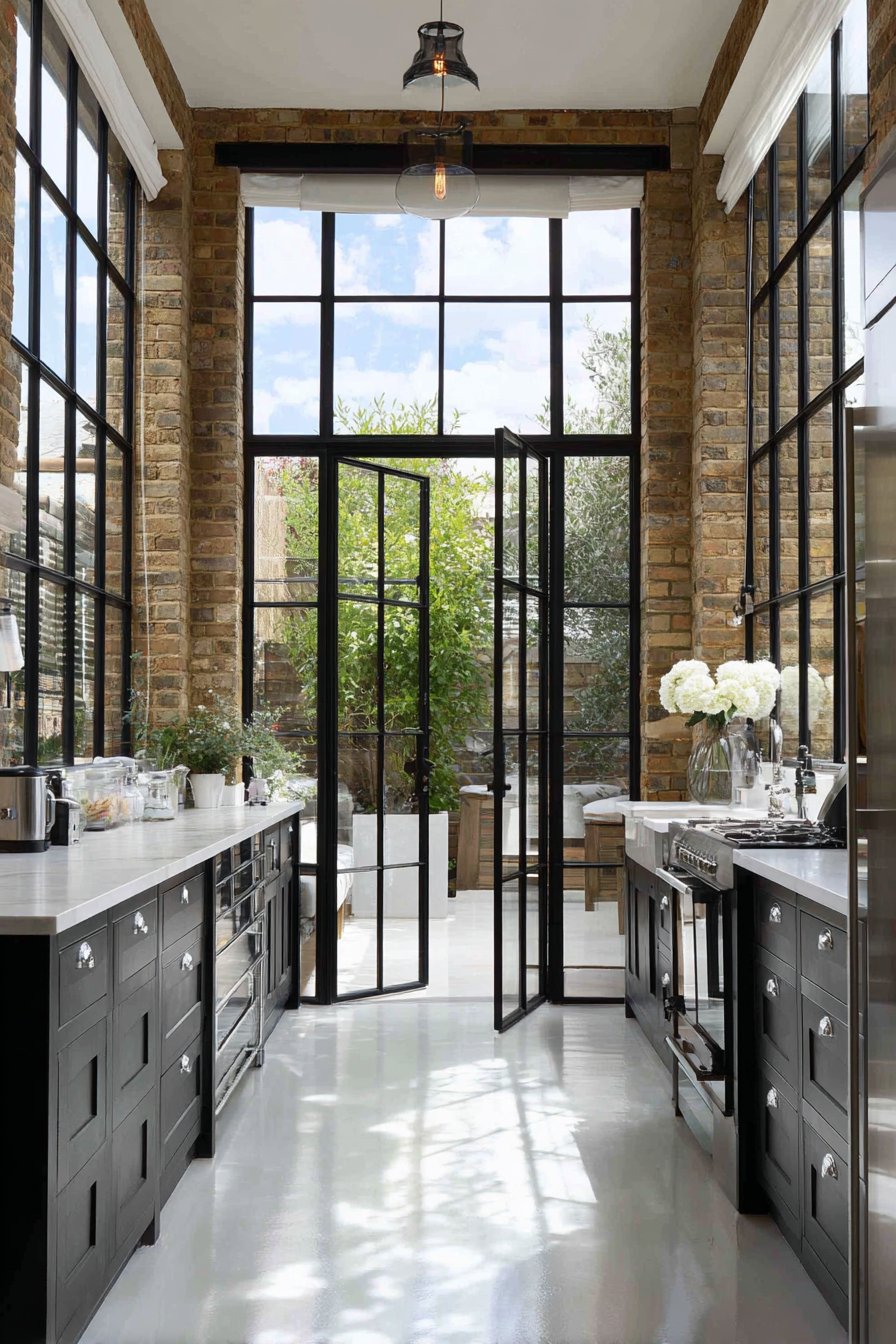
Modern aluminum or steel window systems offer slim profiles that maximize glass area and views. Choose gridded patterns for authentic industrial character or clean single panes for contemporary interpretation. Black door frames create cohesive flow throughout the home when extended beyond the kitchen. Interior black-framed glass doors separate spaces while maintaining visual connectivity and light transmission that prevents the industrial style from feeling closed-off.
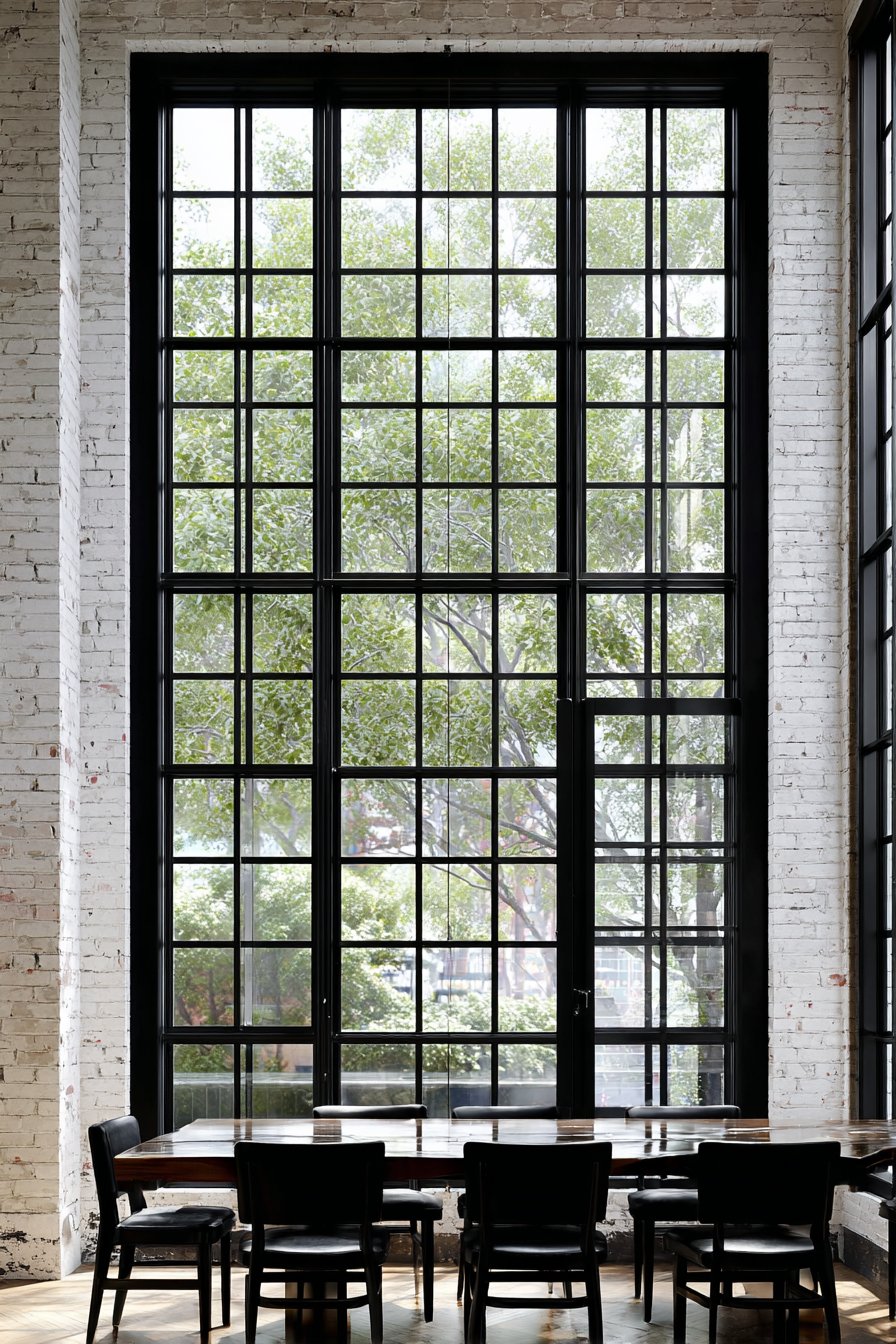
Installing black-framed elements requires careful consideration of existing architecture. Retrofit projects may involve custom fabrication to match existing window sizes. The investment delivers significant visual impact and can increase home value through enhanced architectural character. Pair black frames with simple window treatments like roller shades or cafe curtains that maintain the minimal, functional aesthetic industrial design embraces.
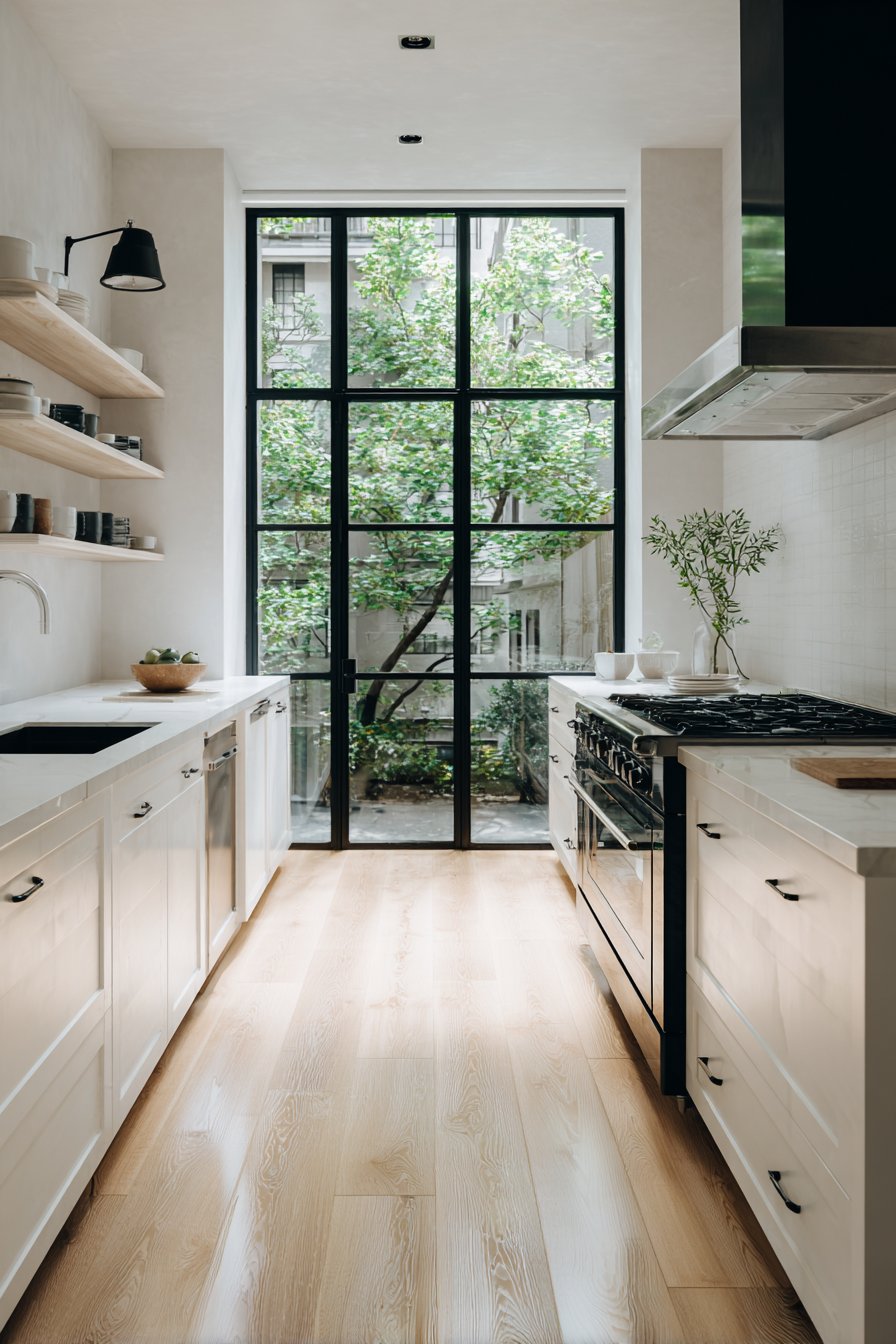
- Consider Crittall-style steel windows for authentic industrial warehouse appearance
- Use black frames to visually connect kitchen windows with doors and partition walls
- Install internal black-framed glass walls to create defined zones while maintaining openness
- Choose energy-efficient glazing options despite the industrial aesthetic requirements
- Clean black frames with appropriate products that won’t damage powder-coated finishes
- Extend black frame treatment to skylights for comprehensive architectural cohesion
9. Incorporate Metal Bar Stools and Seating
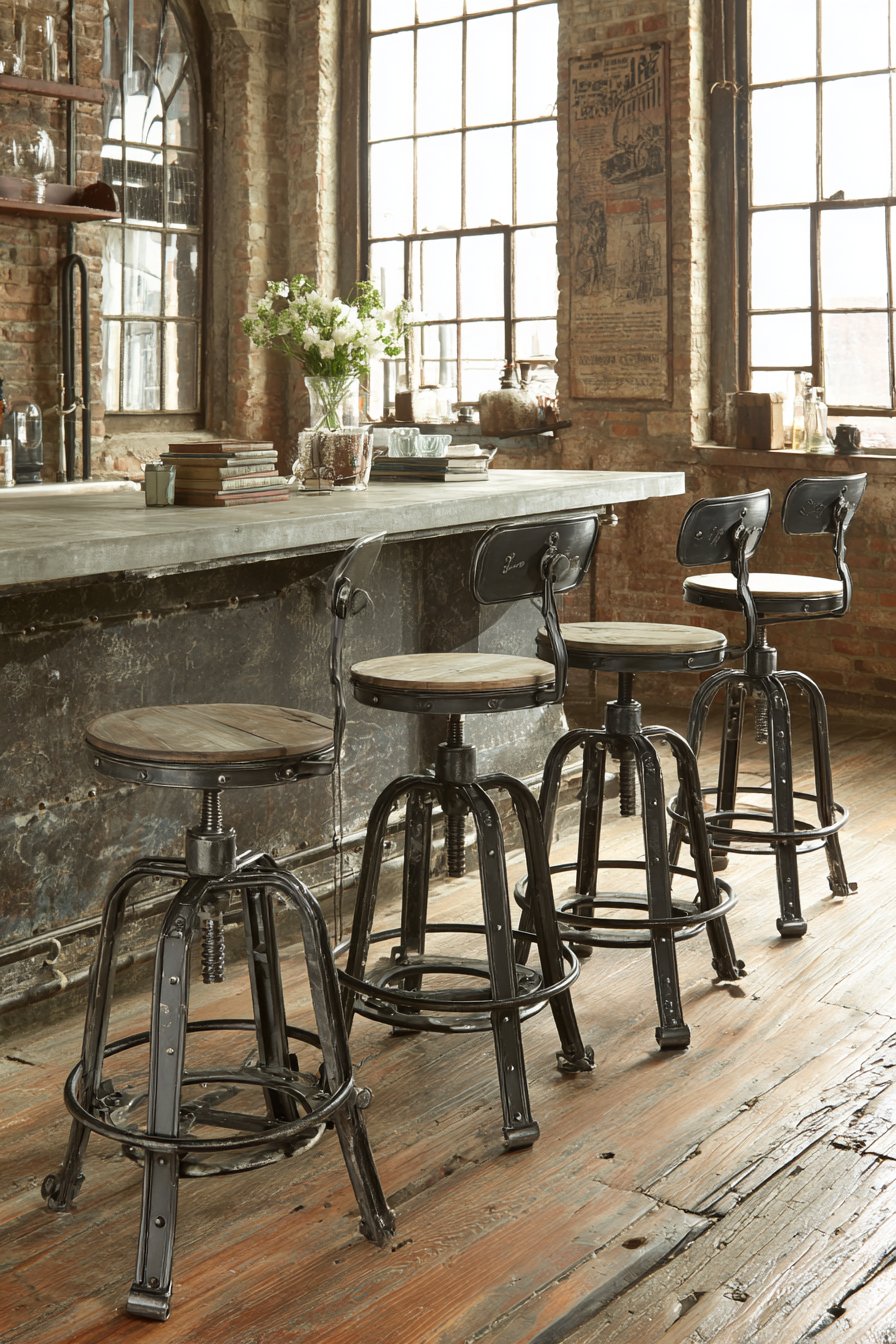
Industrial metal bar stools provide essential seating that reinforces the utilitarian aesthetic. Choose designs with riveted construction, visible welds, or distressed finishes that celebrate honest manufacturing processes. Materials like steel, iron, or aluminum offer durability for daily use. Consider backless stools for streamlined profiles that tuck completely under counters or backed versions for comfortable extended sitting during casual meals and conversations.
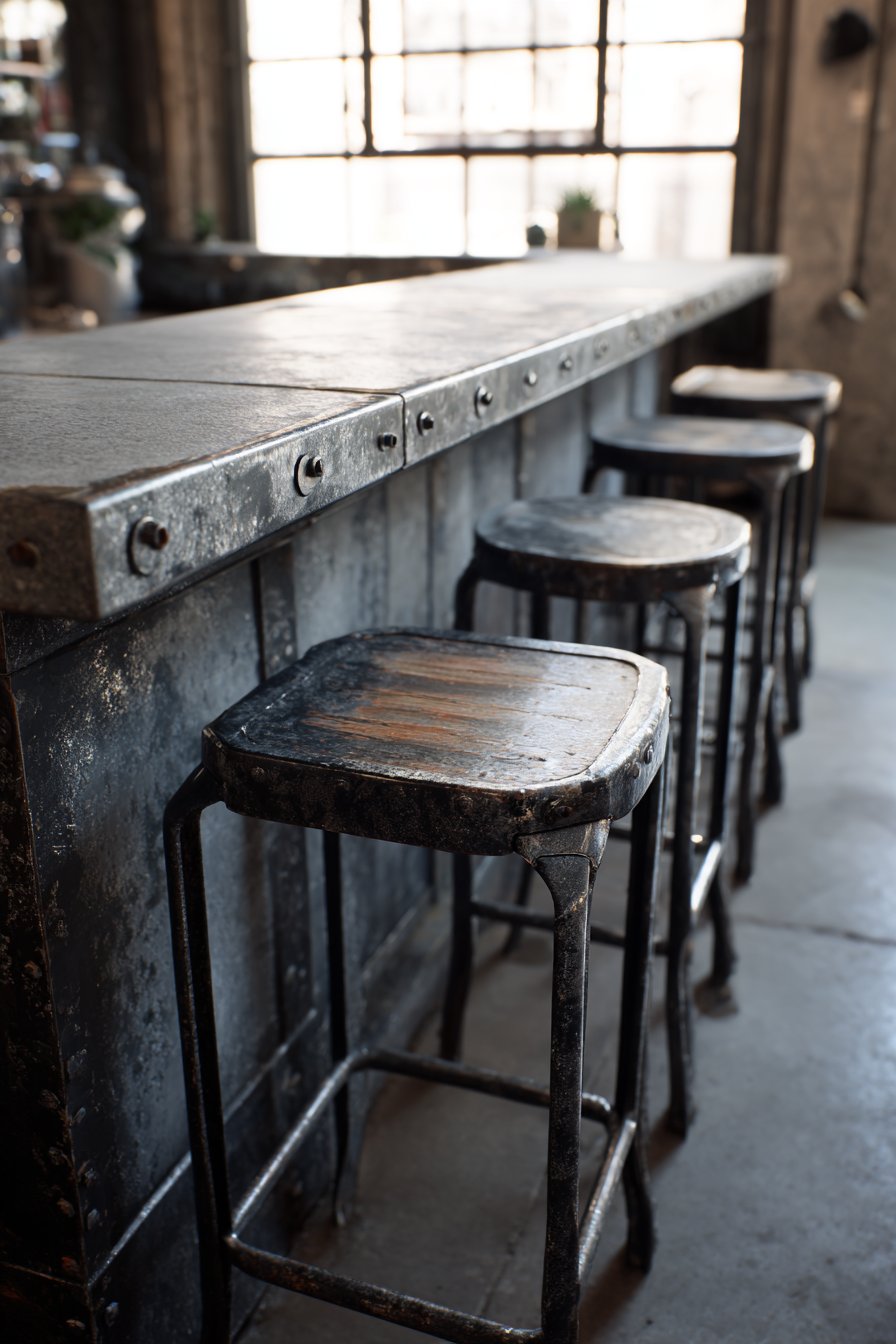
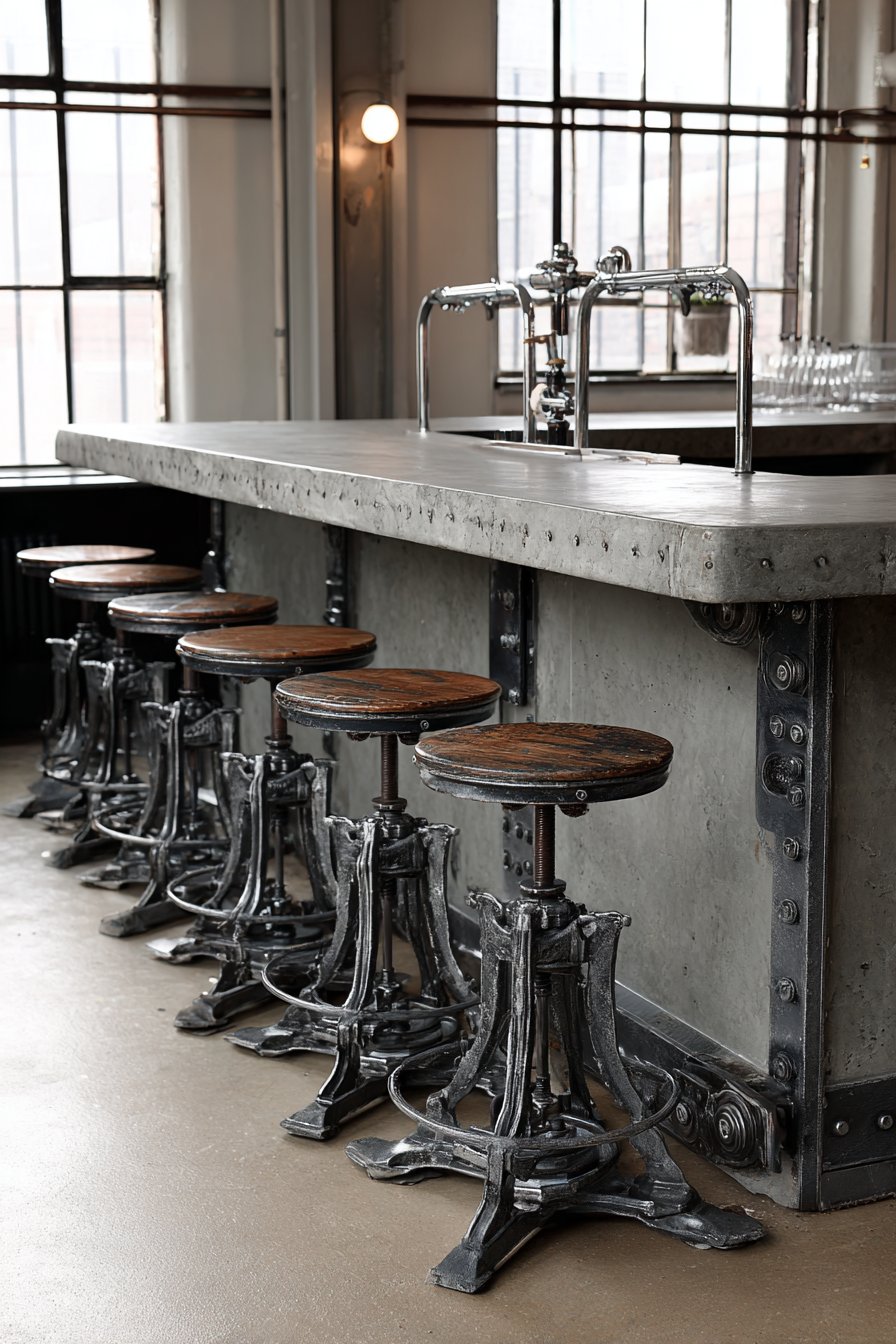
Seating height depends on counter dimensions—standard counters require 24 to 26-inch stools while 36-inch counters need 30-inch bar-height seating. Swivel mechanisms and footrests enhance functionality and comfort. Industrial stools often feature adjustable heights through threaded mechanisms or hydraulic lifts. The mechanical details become decorative elements that align with the industrial design philosophy of celebrating functional components.
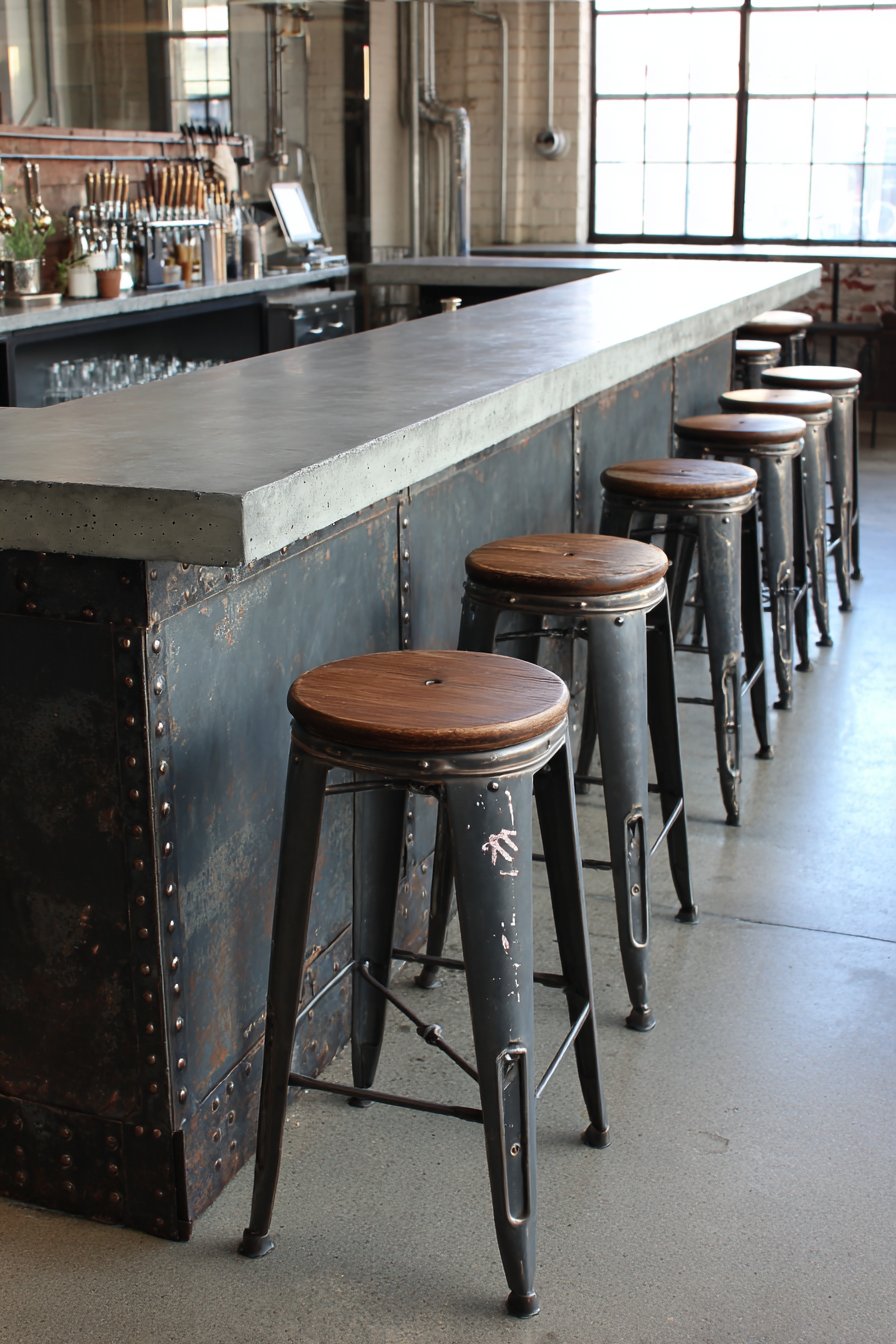
Mix metal stools with occasional wooden seats to add warmth and textural variety. Vintage factory stools from salvage yards provide authentic character and unique finds. Modern reproductions offer consistent sizing and finishes while capturing classic industrial style. Consider cushioned seats in leather or durable fabrics for enhanced comfort without sacrificing the aesthetic. The right seating balances visual impact with practical comfort for everyday kitchen use.
- Look for powder-coated finishes that resist scratching and wear in high-use areas
- Choose backless stools for compact kitchens where space conservation is essential
- Consider stackable designs for flexible seating that stores efficiently when not needed
- Add felt pads to stool feet to protect flooring from scratches and scuffs
- Select adjustable-height stools for versatility across different counter heights or users
- Mix matched sets with occasional vintage pieces for collected-over-time character
10. Design with Minimal Upper Cabinets and Open Space
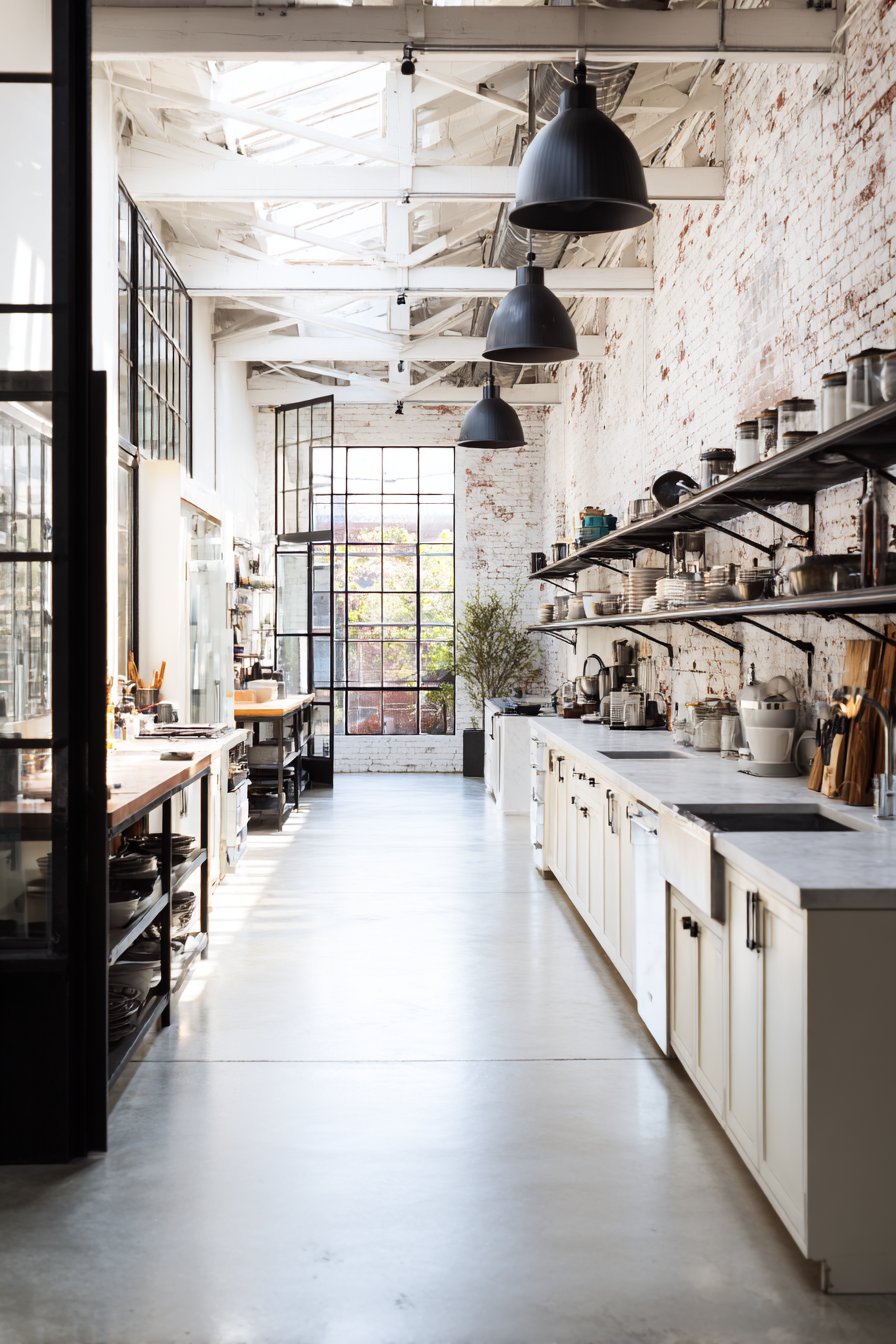
Minimizing upper cabinetry creates the airy, expansive quality essential to industrial kitchen design. This approach celebrates vertical space and architectural features rather than concealing them behind storage. Replace solid upper cabinets with open shelving, exposed brick, or blank walls that showcase the kitchen’s structural elements. The resulting openness makes even modest kitchens feel significantly larger and less confined.
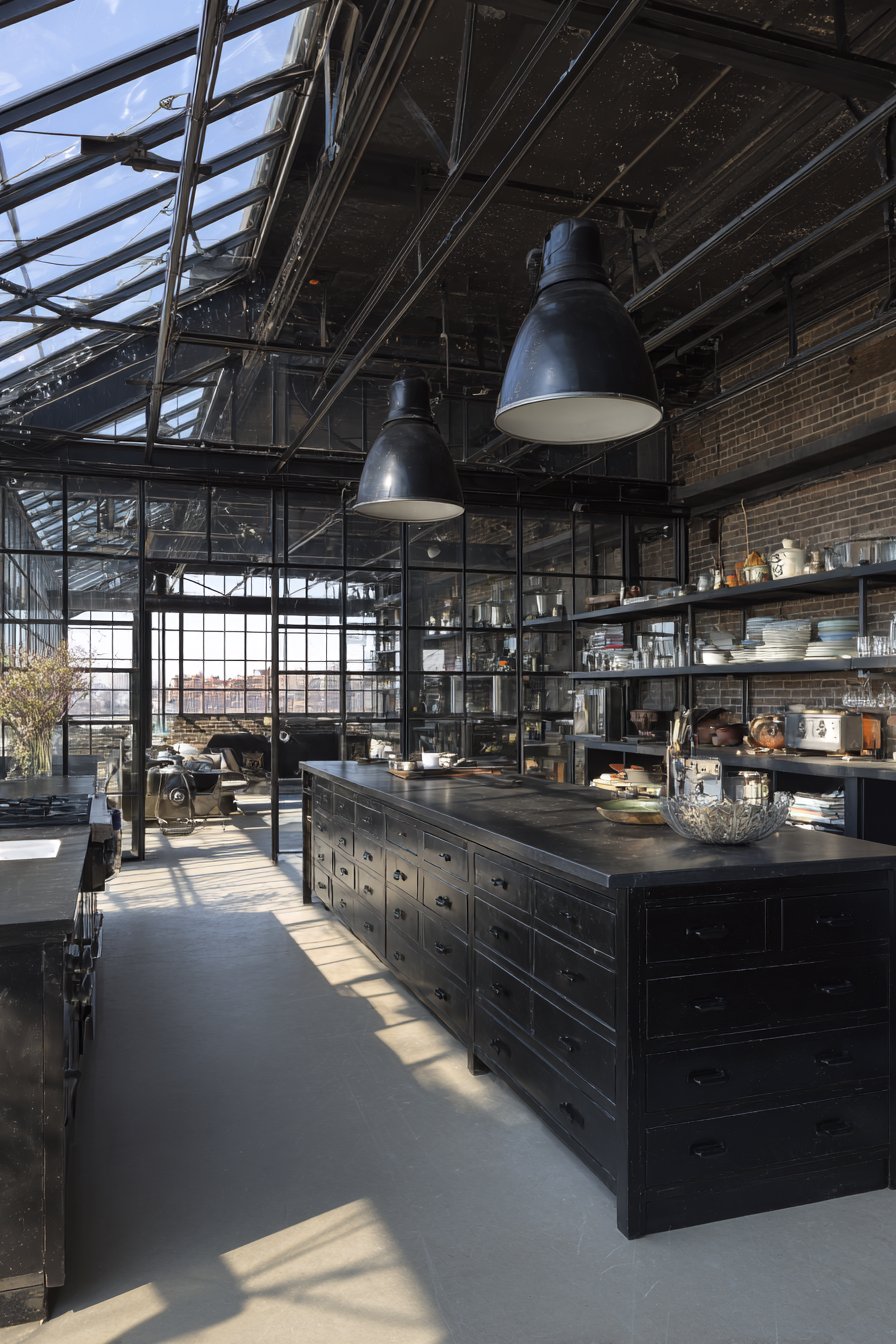
Strategic lower cabinet storage compensates for reduced upper cabinetry. Incorporate deep drawers, pull-out organizers, and vertical dividers that maximize efficiency. The discipline of limited storage encourages thoughtful curation of kitchen items—you’ll keep only what you truly use and love. This editing process aligns with industrial style’s emphasis on functional minimalism rather than excessive accumulation.
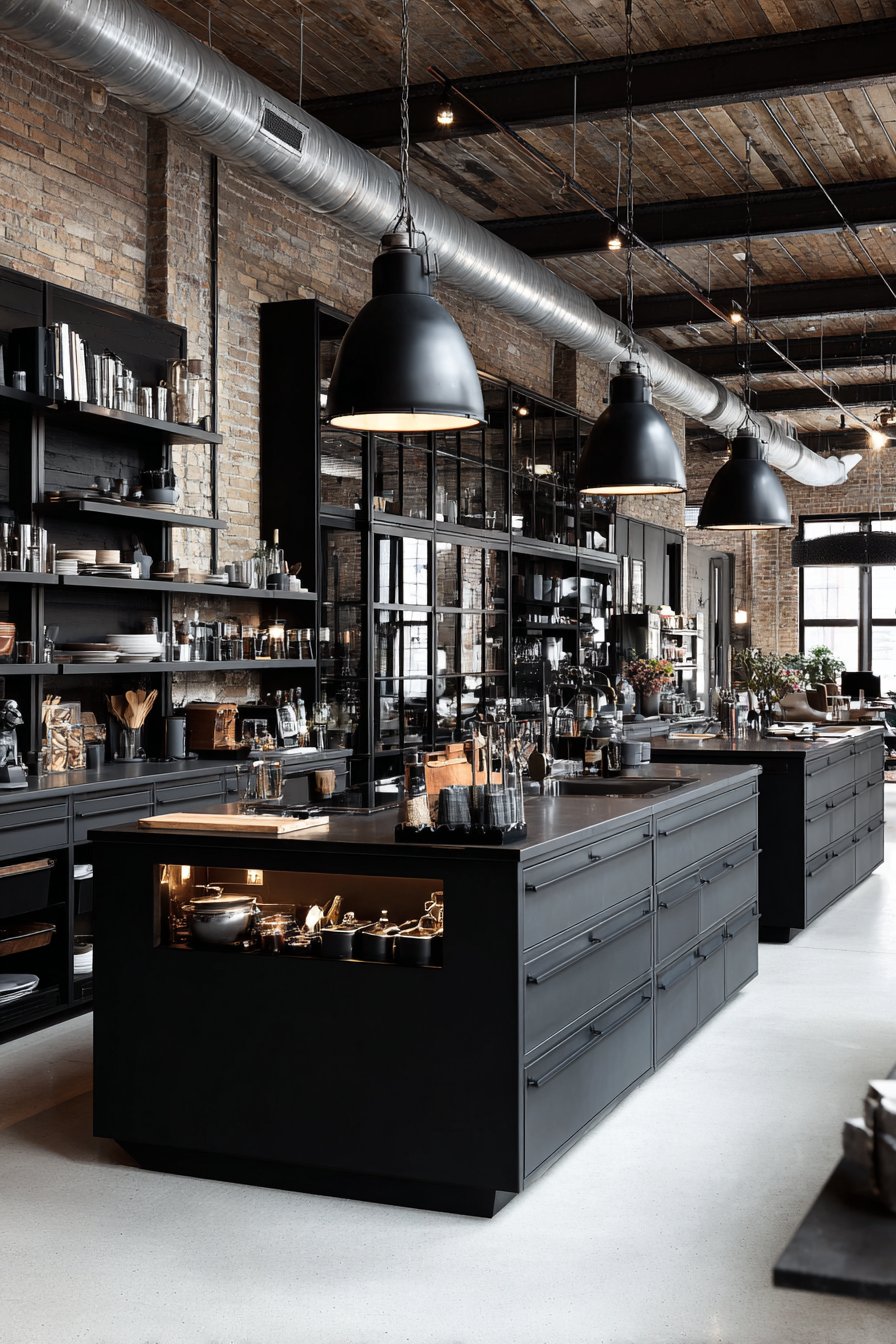
The visual lightness achieved through minimal upper cabinets allows pendant lighting and architectural details to take center stage. Without upper cabinets creating visual barriers, the kitchen flows seamlessly into adjacent spaces. This openness promotes social interaction and creates kitchen spaces that feel integrated with the home rather than separated. The design choice requires embracing visible storage and maintaining organization, but delivers unmatched spatial quality that defines successful industrial kitchens.
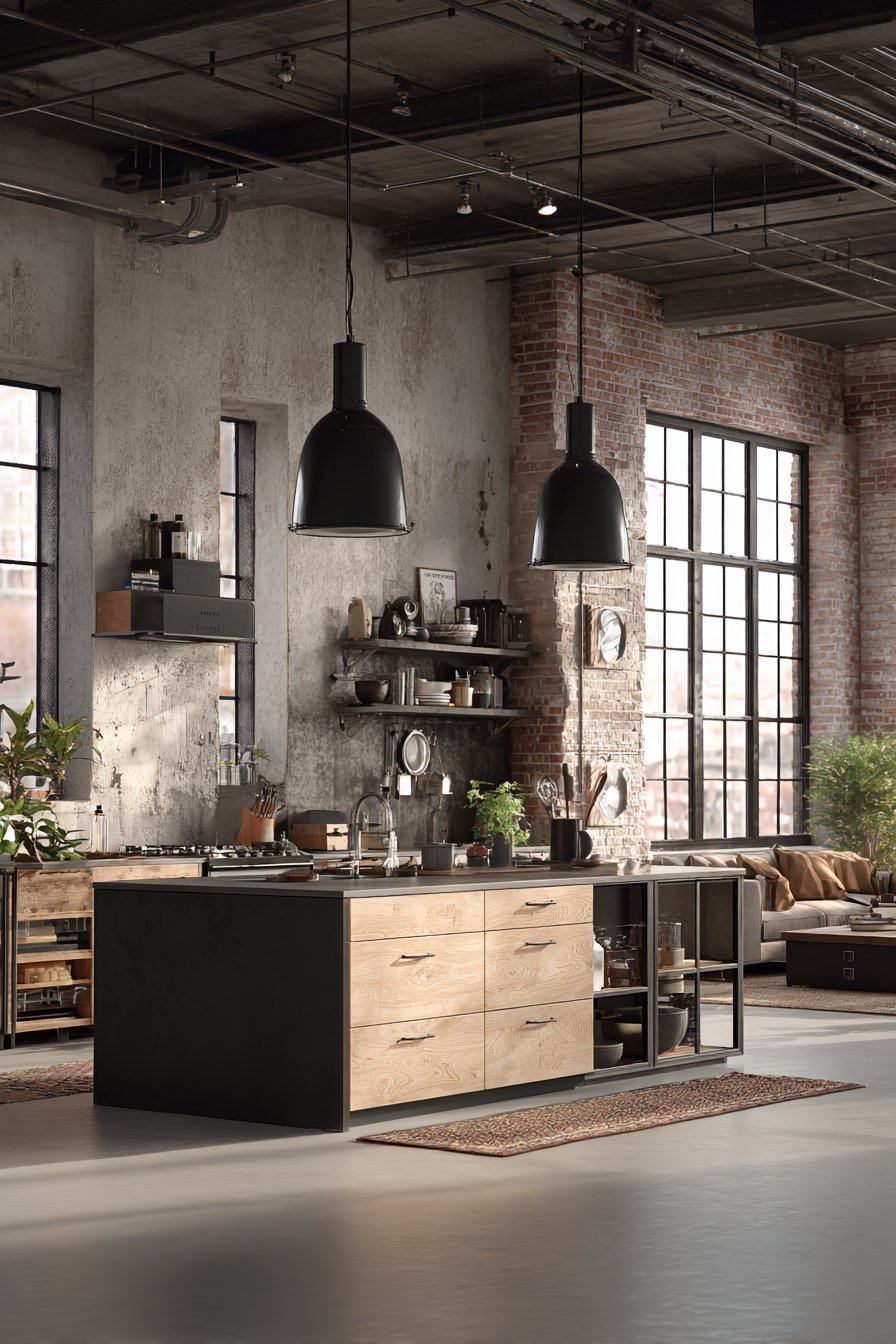
- Install task lighting under remaining upper cabinets for functional work surface illumination
- Use lower cabinet interiors efficiently with customized drawer organizers and pull-outs
- Consider glass-front cabinets sparingly if you need some enclosed storage
- Maintain disciplined organization since everything remains visible in open storage
- Create dedicated zones for items you use daily versus occasional specialty tools
- Embrace the open aesthetic by displaying attractive dishware and vintage kitchen tools
Conclusion
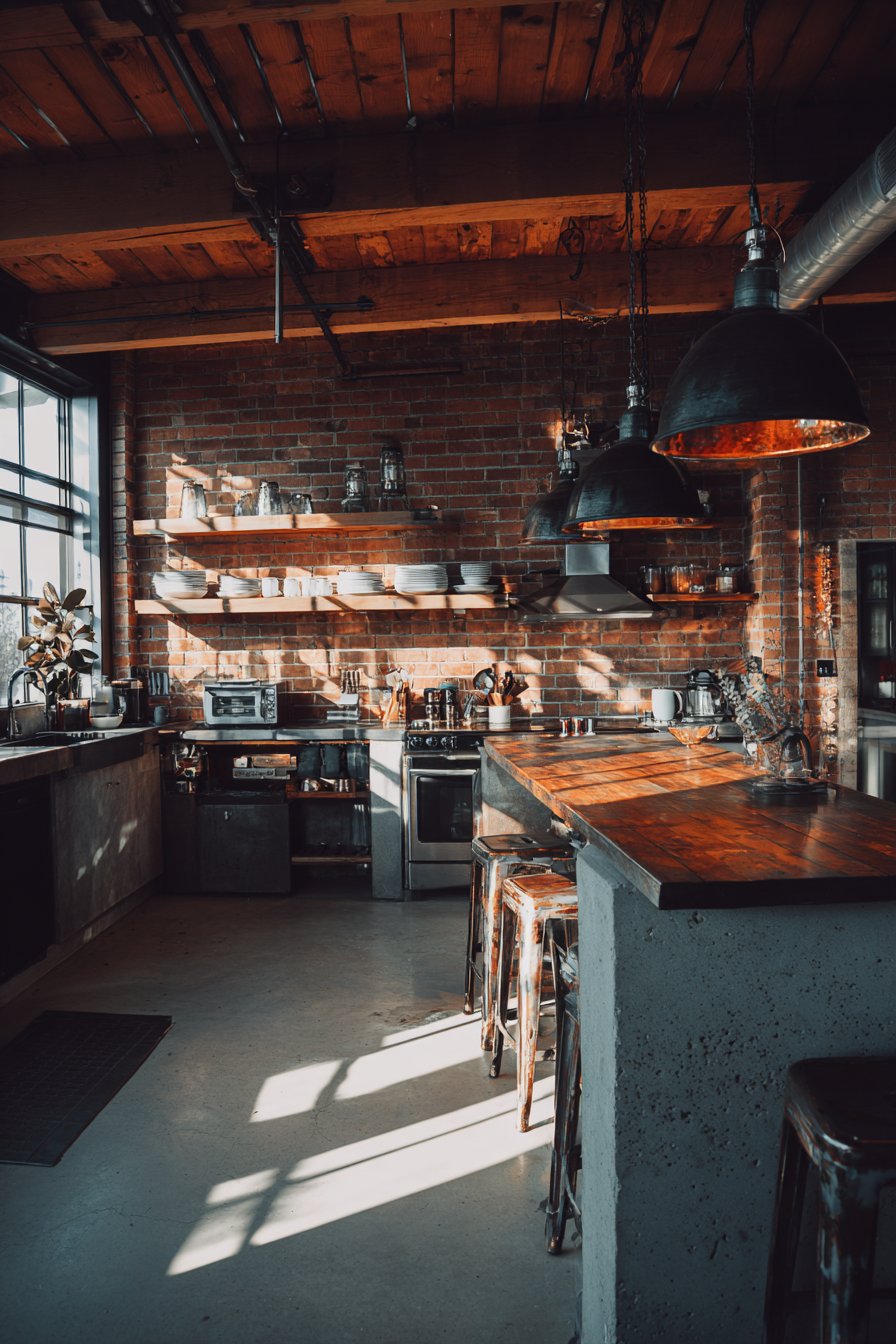
Industrial style kitchens offer timeless appeal and distinctive character that stands apart from conventional design approaches. By incorporating exposed materials, metal accents, and honest construction, you create spaces with genuine personality. These ten ideas demonstrate how raw textures and refined details combine to produce kitchens that feel both authentic and inviting. The beauty lies in balancing rugged elements with warm touches that prevent the industrial aesthetic from becoming cold or unwelcoming.
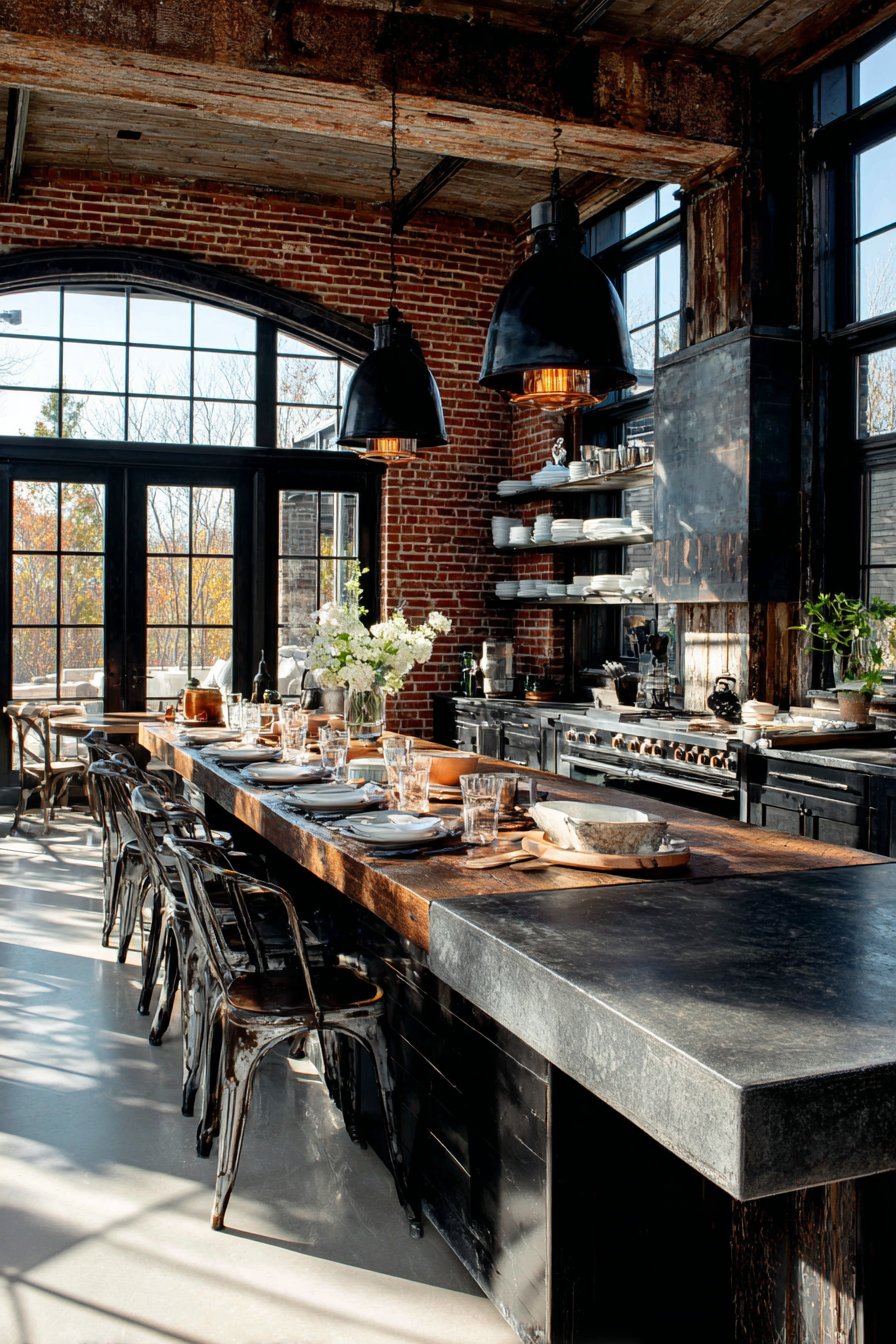
Remember that successful industrial design celebrates imperfection and patina rather than pristine perfection. Start with one or two key elements like exposed brick or metal shelving, then layer additional features as your budget and timeline allow. The industrial style’s flexibility means you can adapt these ideas to any space and budget, creating kitchens that reflect your personal taste while honoring this distinctive design tradition. Let these concepts inspire you to create a kitchen with authentic character that improves with age.
"As an Amazon Associate, I earn from qualifying purchases."
