
French country kitchens represent the perfect marriage of timeless elegance and rustic authenticity, creating spaces that feel both sophisticated and welcoming. These kitchens embody the essence of provincial French living, where functionality meets beauty in the most effortless way. The style draws inspiration from the countryside homes of France, where generations of families have gathered to prepare meals, share stories, and create lasting memories around weathered wooden tables and well-worn stone countertops.
The allure of French country kitchen design lies in its ability to create spaces that feel collected over time rather than decorated in a single moment. This aesthetic celebrates imperfection as beauty, embracing the gentle wear patterns on wooden surfaces, the subtle color variations in handmade tiles, and the patina that develops on copper cookware through years of loving use. Every element tells a story, from the hand-forged wrought iron hardware to the vintage pottery displayed on open shelves.
In this comprehensive exploration, we’ll journey through twenty distinct French country kitchen concepts, each showcasing unique elements that contribute to this beloved design style. From farmhouse sinks positioned beneath casement windows to exposed ceiling beams supporting wrought iron pot racks, these spaces demonstrate how authentic materials, thoughtful craftsmanship, and a deep appreciation for heritage can transform a kitchen into the heart of the home.
1. The Classic Farmhouse Sink Sanctuary
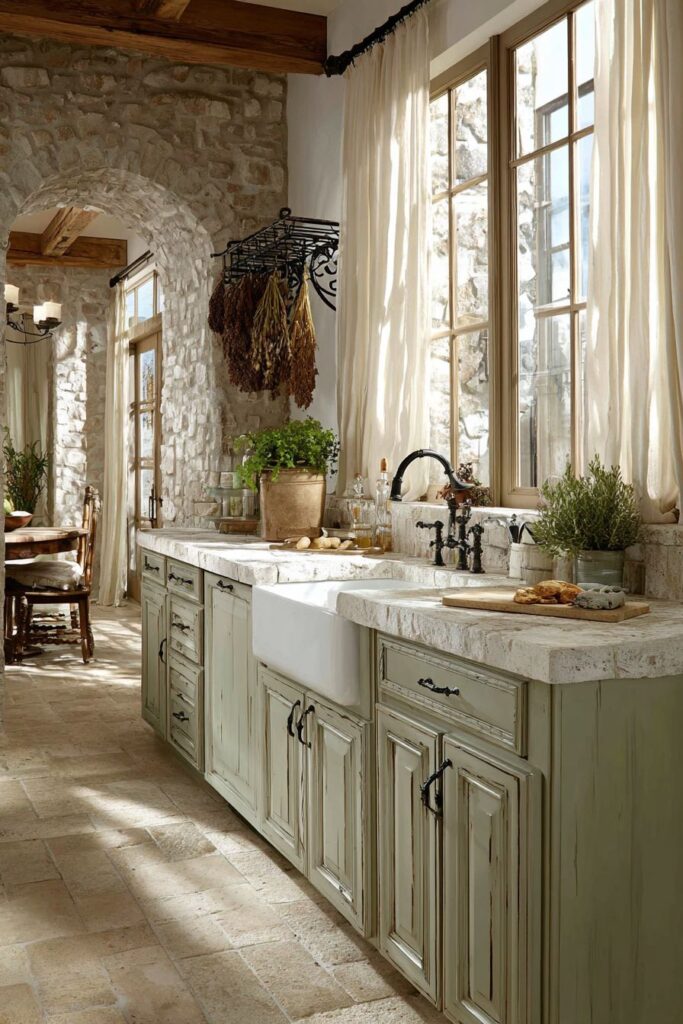
The centerpiece of any authentic French country kitchen often begins with a magnificent farmhouse sink, its weathered white ceramic surface telling stories of countless meal preparations and family gatherings. This substantial apron-front design commands attention while maintaining the humble charm that defines French provincial style. The sink sits beneath a traditional casement window with divided light panes, creating a perfect marriage of form and function that allows natural light to illuminate daily kitchen tasks while offering glimpses of the surrounding countryside or garden beyond.
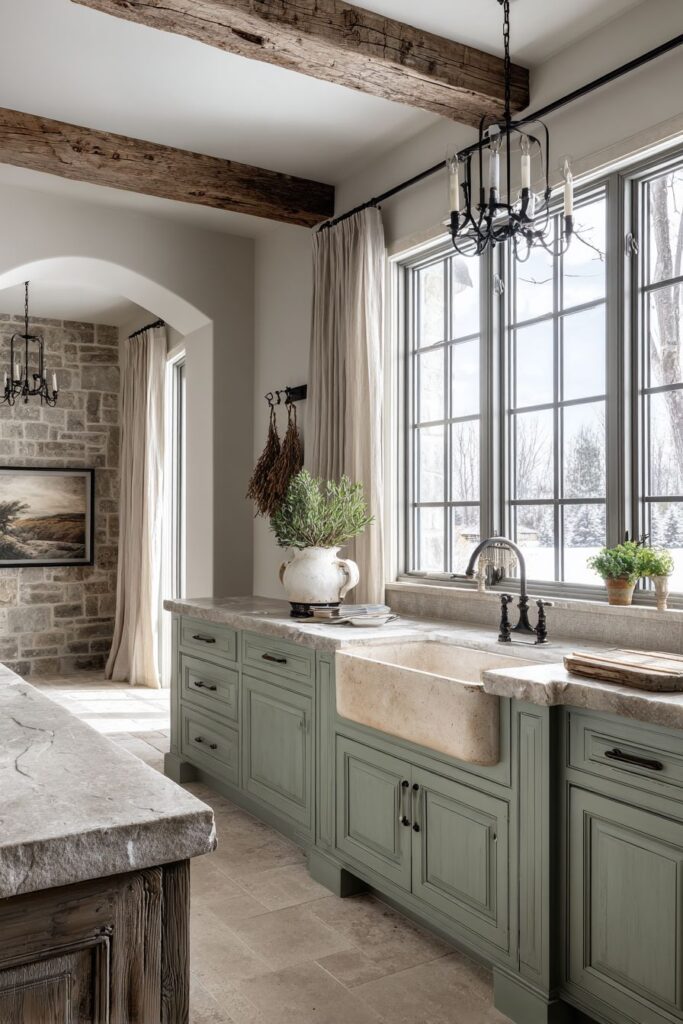
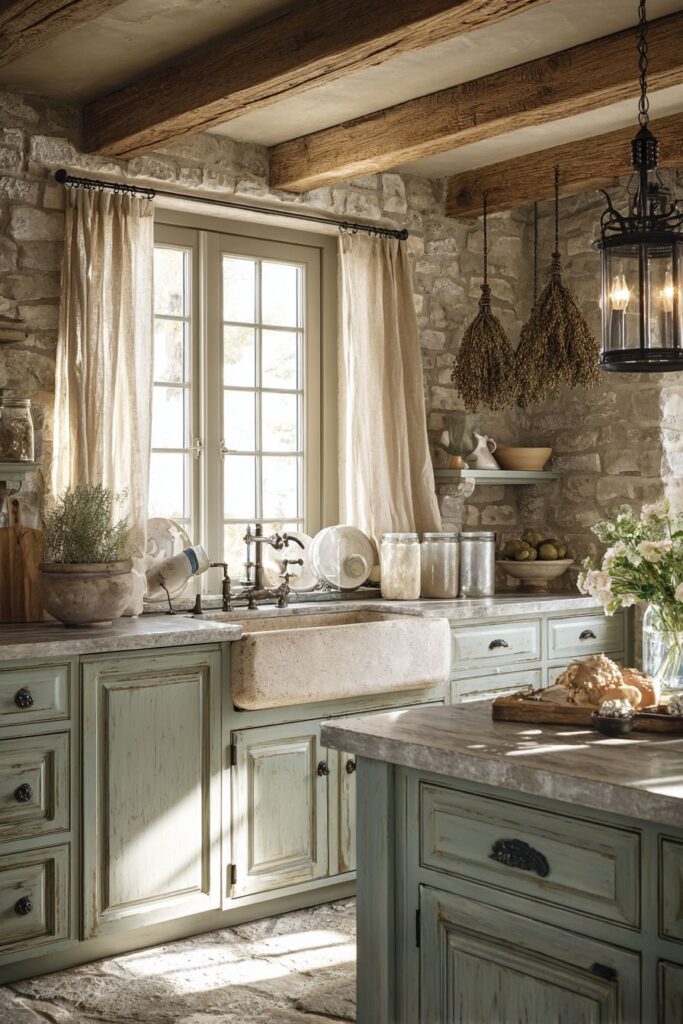
The surrounding cabinetry showcases distressed wooden construction in soft sage green, a color choice that reflects the muted tones found in French provincial landscapes. Each cabinet door bears the gentle marks of time, with edges naturally worn from years of use and surfaces that catch light in subtle ways. The wrought iron hardware, hand-forged with attention to traditional techniques, provides both functionality and authentic period detail. These elements work together to create a sense of history and permanence that mass-produced alternatives simply cannot replicate.
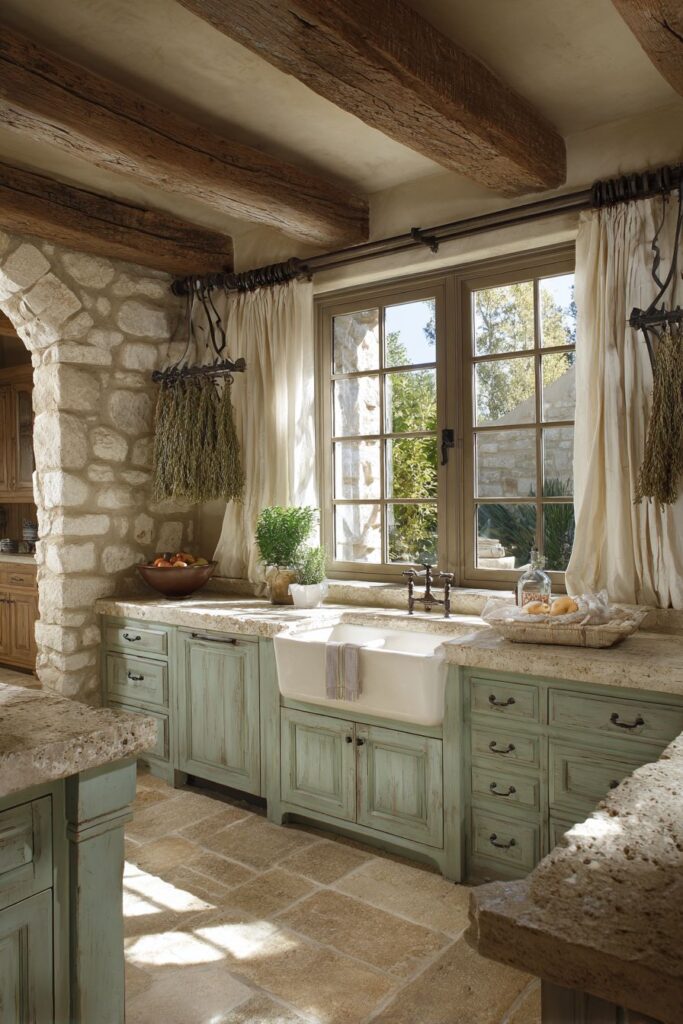
Natural stone countertops complement the sink area with their own unique character, featuring subtle variations in color and texture that speak to their geological origins. The surface bears the gentle wear patterns that develop through daily use, creating a patina that enhances rather than diminishes the beauty of the material. Above, dried herbs hang from wrought iron pot racks suspended from exposed wooden ceiling beams, filling the space with both visual interest and the gentle fragrance of lavender, thyme, and rosemary.
The lighting in this space plays a crucial role in establishing the authentic French country atmosphere. Natural daylight streams through linen cafe curtains, creating soft shadows that dance across the various textures and surfaces throughout the day. This ever-changing light quality brings the space to life, highlighting the authentic materials and handcrafted details that make French country kitchens so enduringly appealing.
Key Design Tips:
- Choose an apron-front sink in weathered ceramic for authentic farmhouse appeal
- Install casement windows with divided lights to maximize natural light and maintain period accuracy
- Select distressed wood cabinetry in muted colors like sage green or cream
- Incorporate hand-forged wrought iron hardware for genuine period detail
- Use natural stone countertops that show character and wear patterns
- Hang dried herbs from ceiling-mounted pot racks for both beauty and functionality
2. The Reclaimed Oak Island Masterpiece
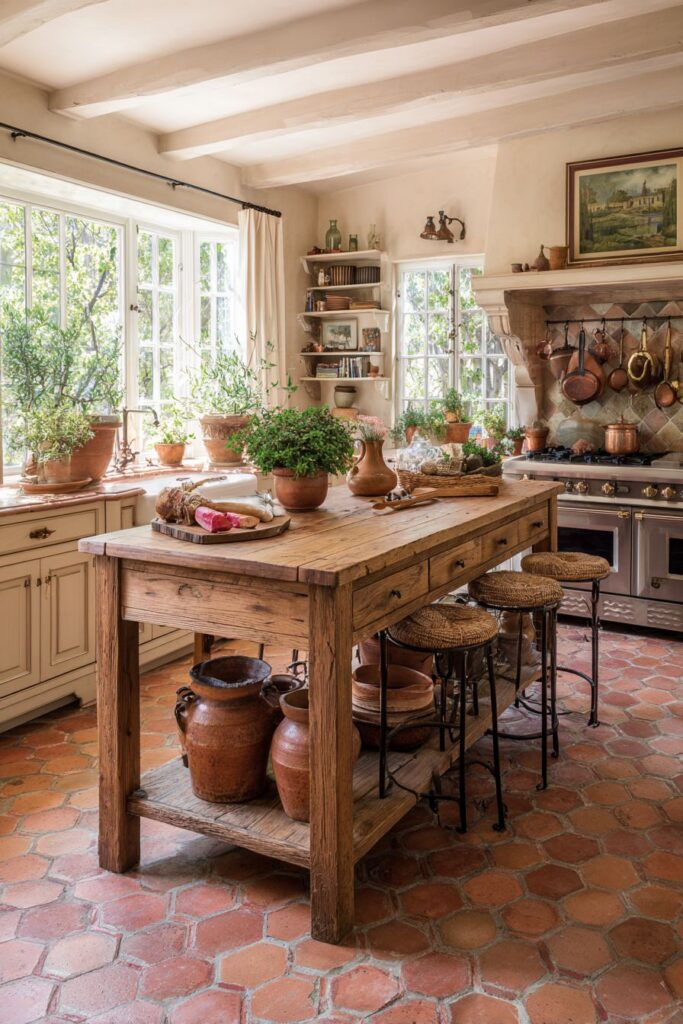
At the heart of this French country kitchen stands a magnificent island crafted from reclaimed oak, its butcher block top showcasing the natural grain variations and gentle wear patterns that only time can create. This substantial piece serves as both a functional workspace and a gathering point for family and friends, embodying the French approach to kitchen design where beauty and utility are inseparable. The warm honey tones of the aged oak create an inviting focal point that draws people into the space while providing ample room for food preparation, casual dining, and conversation.
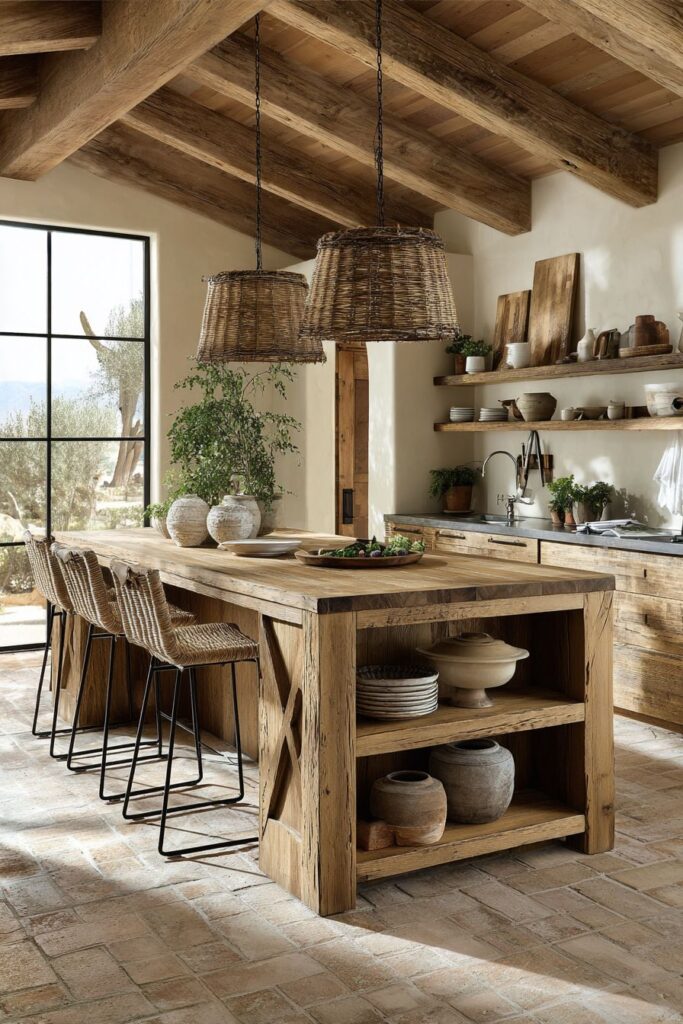
The island’s design philosophy extends beyond mere functionality to embrace the French country principle of displaying beautiful objects in daily use. Open shelving below the work surface creates perfect opportunities to showcase earthenware pottery and vintage copper cookware, transforming everyday items into decorative elements. These collections tell stories of meals prepared and shared, while the varied patinas on copper pots and the subtle glazes on ceramic vessels add layers of visual interest and authentic character to the space.
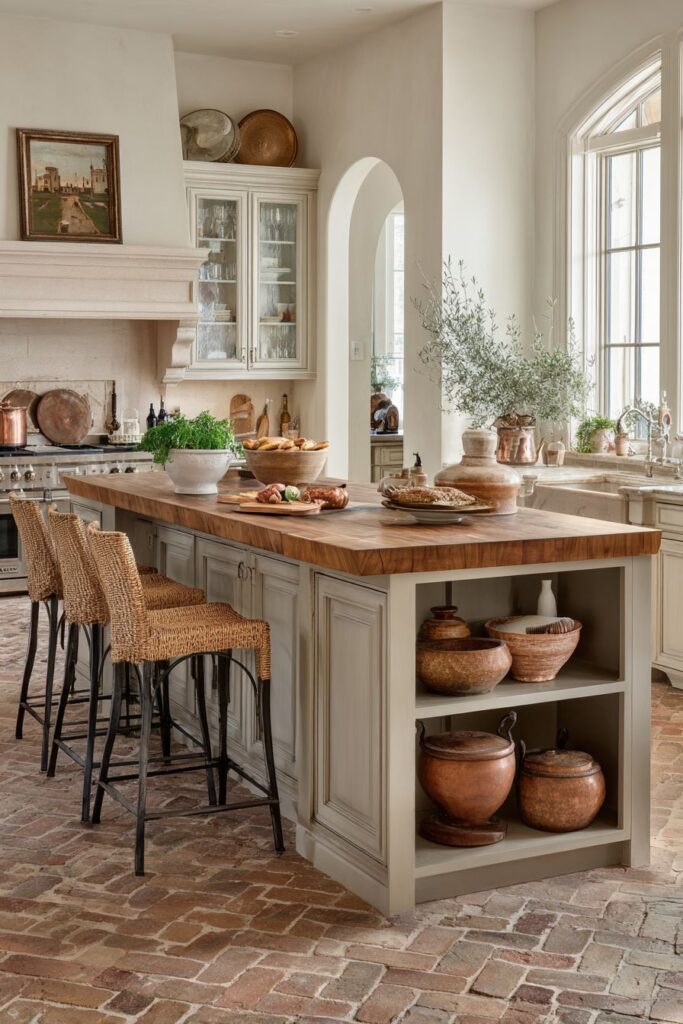
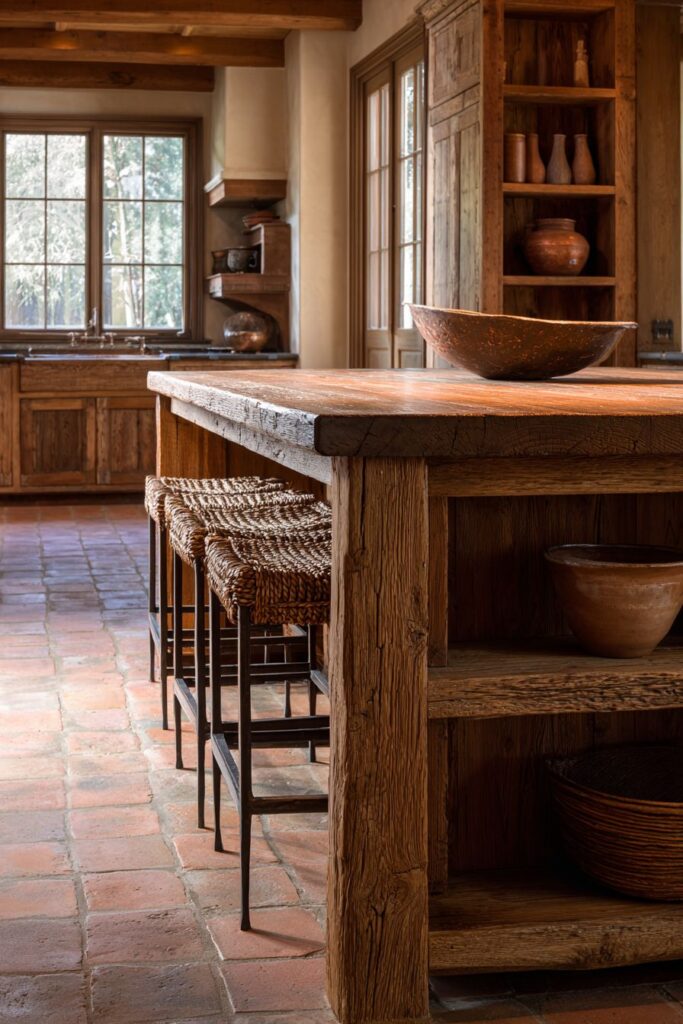
Wrought iron bar stools with woven rush seats provide rustic seating that complements the island’s substantial presence. The natural materials and traditional craftsmanship techniques represented in these pieces reflect the French country commitment to honoring traditional skills and sustainable practices. The rush seats develop a beautiful patina over time, becoming more comfortable and characterful with each use, while the wrought iron frames provide sturdy support that will last for generations.
The flooring throughout this space consists of terra cotta tiles with natural color variations that extend the warm, earthy palette established by the oak island. These handmade tiles show the subtle irregularities that mark authentic craftsmanship, with each piece slightly different in color, texture, and size. The natural clay material develops a beautiful patina over time, becoming more lustrous and rich with age and use.
Key Design Tips:
- Select reclaimed wood for islands to add instant character and environmental consciousness
- Incorporate open shelving to display collections of pottery and cookware
- Choose bar stools with natural materials like rush seats and wrought iron frames
- Use handmade terra cotta tiles for flooring to establish warm, earthy foundations
- Allow natural materials to age gracefully without excessive maintenance
- Balance substantial furniture pieces with delicate decorative elements
3. Hand-Painted Tile Artistry
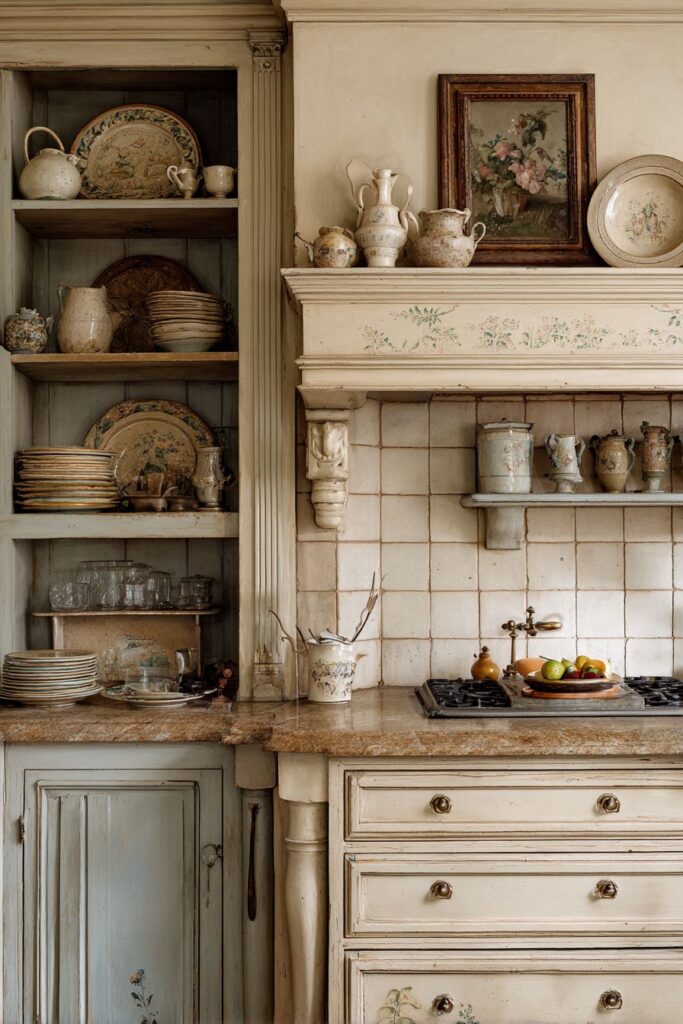
The backsplash area of this French country kitchen showcases the beauty of hand-painted ceramic tiles, each piece a small work of art featuring soft cream and muted blue tones with subtle floral motifs. These tiles represent the French tradition of incorporating handcrafted elements into functional spaces, where artisanal skill transforms everyday surfaces into objects of beauty. The gentle variations in brushstrokes and slight differences in glazing create a surface that catches light beautifully while providing practical protection for the wall behind the cooking area.
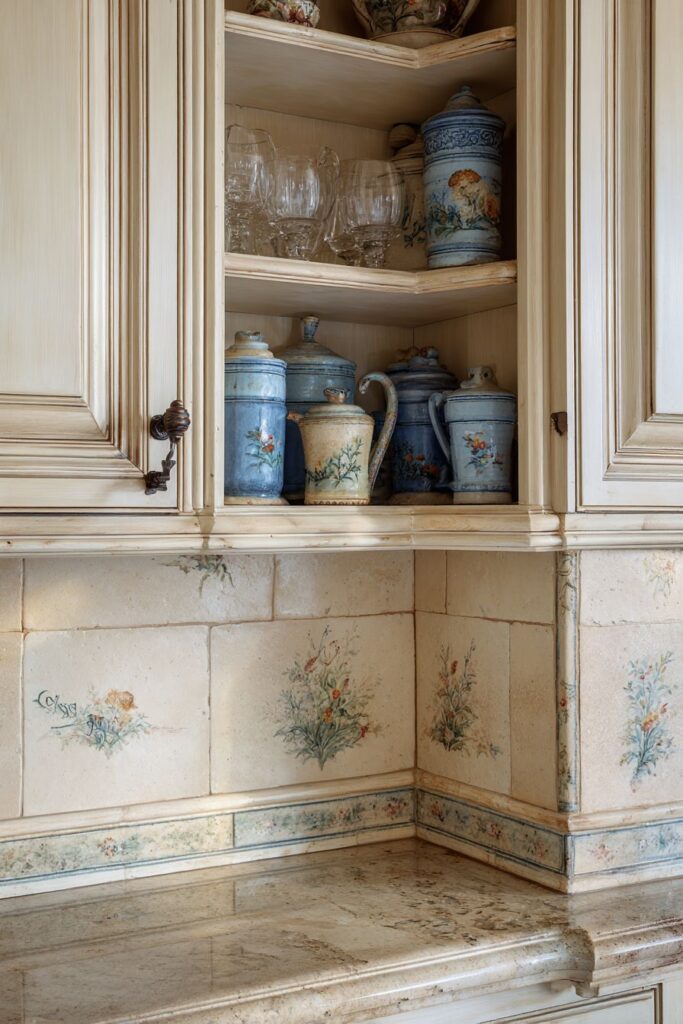
The weathered white cabinetry provides the perfect backdrop for these artistic tiles, featuring beadboard detailing that adds texture and visual interest without competing with the decorative backsplash. The cabinet surfaces show the gentle wear patterns that develop naturally over time, particularly around handles and frequently used doors, creating an authentic patina that cannot be artificially replicated. Antique brass hardware complements the warm tones in the tiles while providing the substantial feel and authentic aging that marks quality period reproductions.
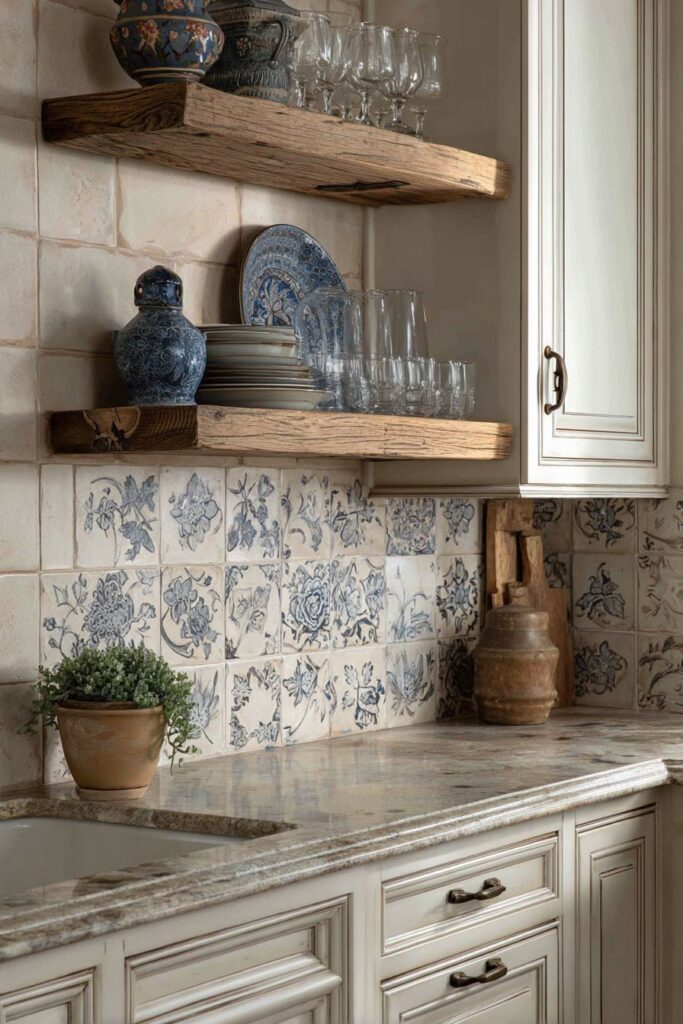
Open wooden shelves interrupt the cabinet run, creating opportunities to display vintage French pottery and glassware that complement the tile’s color palette. These collections serve both decorative and functional purposes, keeping everyday dishes and serving pieces within easy reach while contributing to the kitchen’s authentic French country atmosphere. The varied heights, shapes, and glazes of the pottery create visual interest while the glass pieces add sparkle and lightness to balance the more substantial ceramic elements.
Natural stone countertops complete the composition, their subtle color variations and gentle wear patterns speaking to years of daily use and care. The stone’s natural beauty lies in its imperfections – the slight variations in color, the occasional fossil inclusion, and the way the surface has been shaped by countless meal preparations. This authentic aging process creates surfaces that are more beautiful and characterful than when they were first installed.
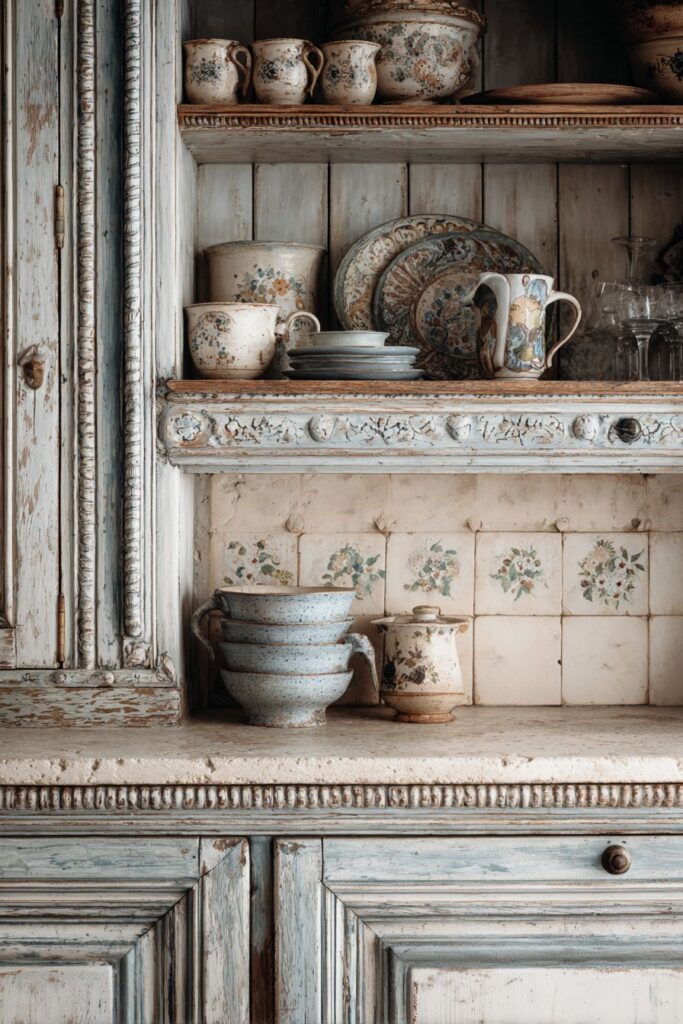
Key Design Tips:
- Invest in hand-painted tiles for backsplashes to add artisanal character
- Choose weathered white cabinetry with beadboard detailing for authentic texture
- Incorporate antique brass hardware for warm metallic accents
- Display pottery collections on open shelving for functional decoration
- Select natural stone countertops that show gentle wear and character
- Embrace imperfections as marks of authentic aging and use
4. The Rustic Trestle Table Gathering Space
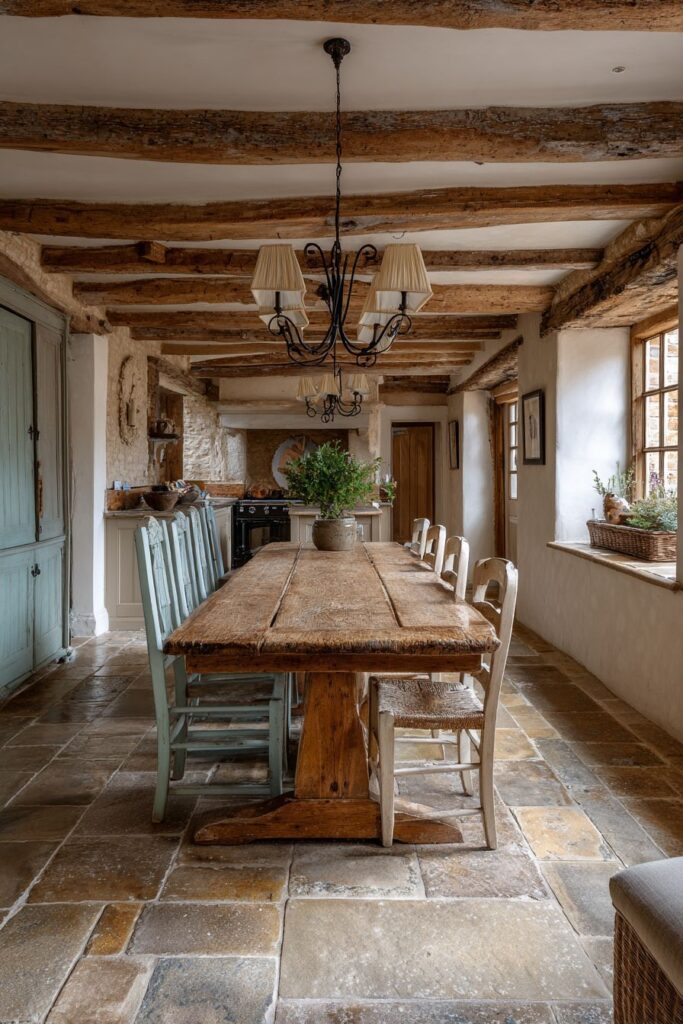
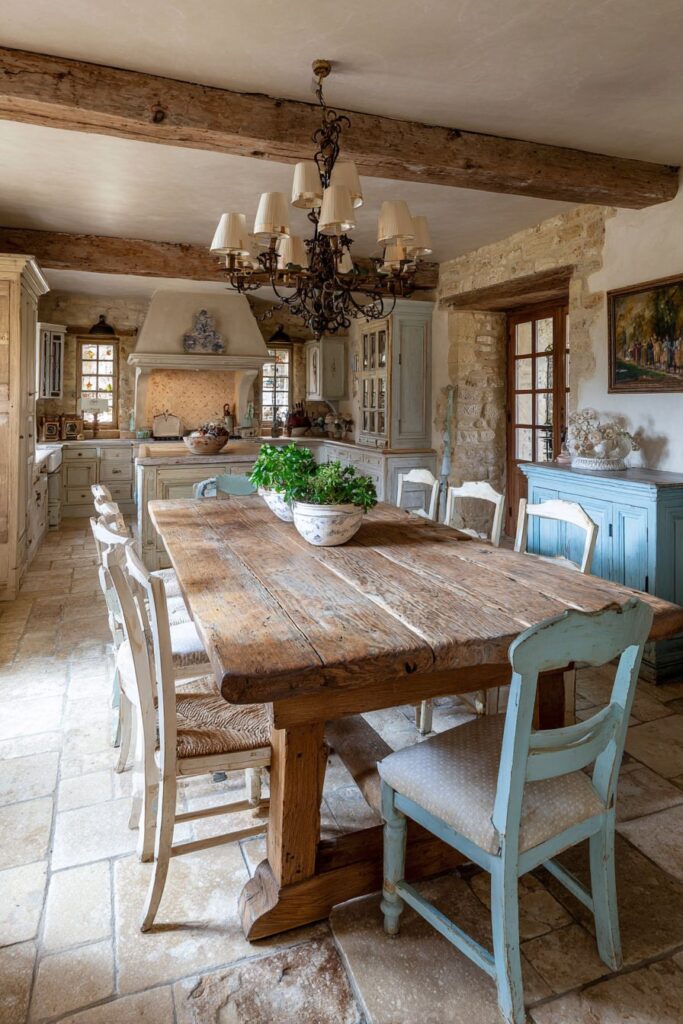
The dining area within this French country kitchen centers around a magnificent rustic wooden trestle table, its natural wood grain and subtle wear marks telling stories of countless family meals and celebrations. This substantial piece embodies the French approach to furniture, where pieces are built to last generations and become more beautiful with age and use. The table’s generous proportions provide ample space for large gatherings while its rustic construction maintains the informal elegance that characterizes French country style.
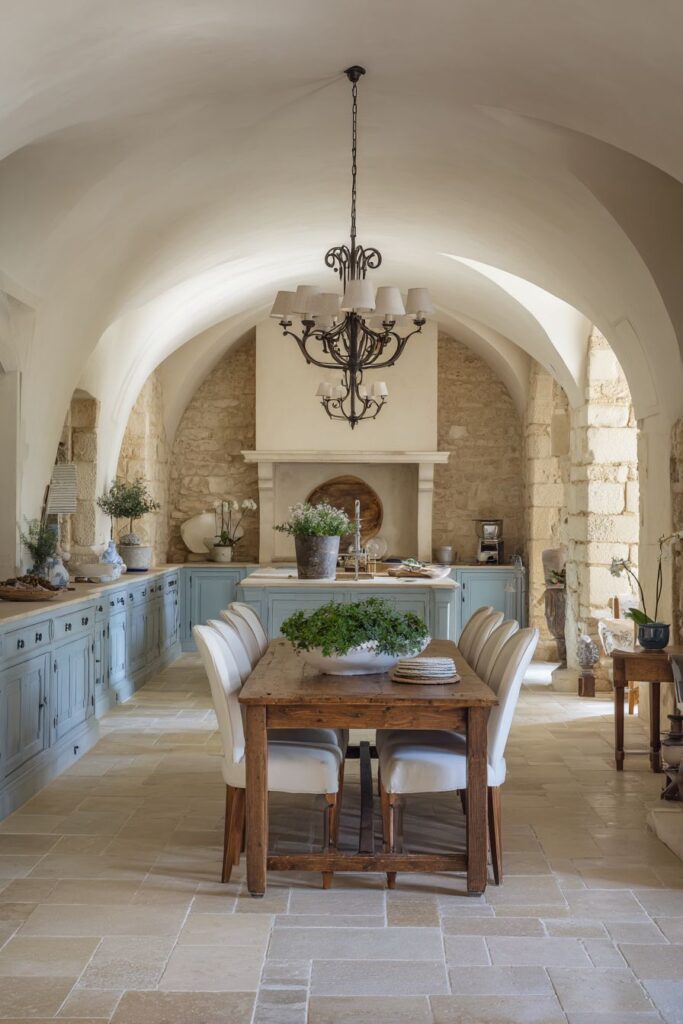
Surrounding the table, mismatched vintage chairs in cream and soft blue painted finishes create an eclectic seating arrangement that appears collected over time rather than purchased as a matching set. This approach to furnishing reflects the French country philosophy of valuing character and history over uniformity, where each piece brings its own story and personality to the composition. The painted finishes show gentle wear at edges and high-touch areas, creating an authentic patina that speaks to years of family use and enjoyment.
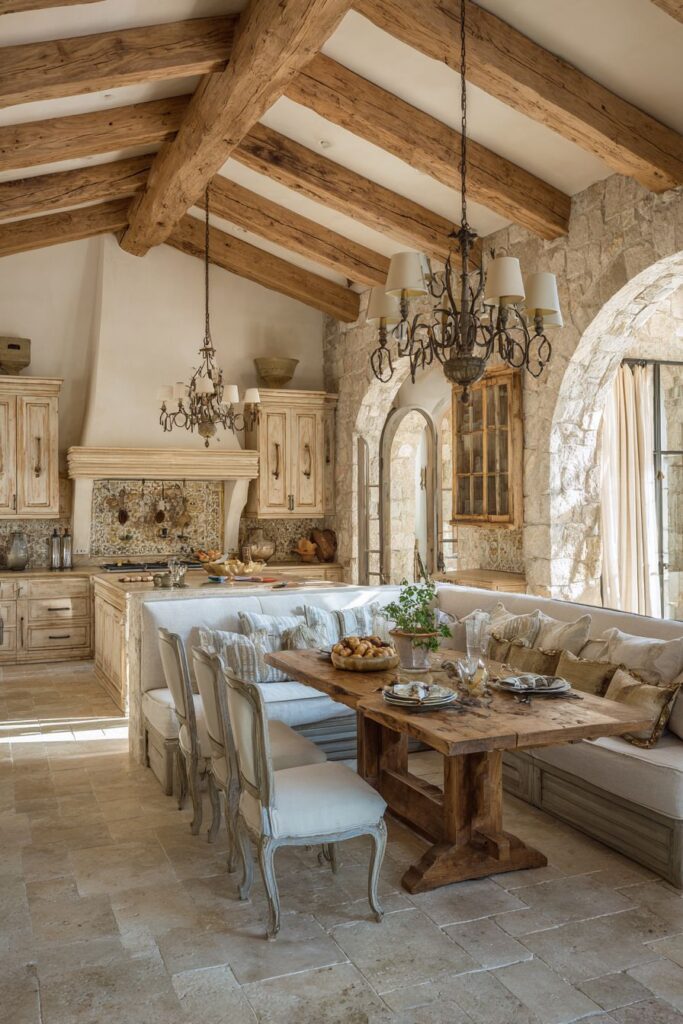
Above this gathering space, a wrought iron chandelier with cream fabric shades provides ambient lighting that transforms the area from a daytime workspace into an intimate evening dining room. The hand-forged metalwork showcases traditional blacksmithing techniques while the fabric shades soften the light, creating a warm, inviting atmosphere perfect for long conversations over leisurely meals. This lighting fixture serves as both a functional element and a decorative focal point that anchors the dining area within the larger kitchen space.
The stone floor tiles extend throughout the dining area, their natural variations adding authentic texture while providing a durable surface that improves with age. The subtle color differences and slightly irregular edges of these handmade tiles create a floor that feels organic and lived-in, perfectly complementing the rustic furniture and relaxed atmosphere of the space.
Key Design Tips:
- Choose substantial wooden tables with visible grain and wear patterns
- Mix vintage chairs in complementary colors rather than matching sets
- Install wrought iron chandeliers with fabric shades for warm ambient lighting
- Use natural stone tiles for flooring that ages beautifully over time
- Embrace the collected-over-time aesthetic rather than coordinated perfection
- Create generous gathering spaces that accommodate large family meals
5. Floor-to-Ceiling Display Storage
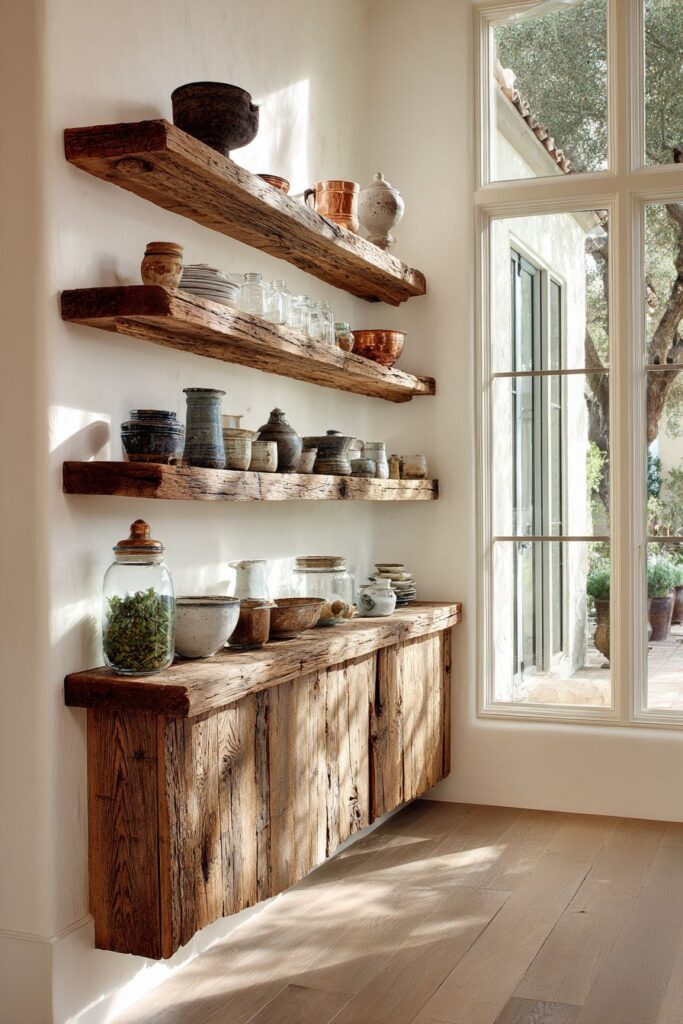
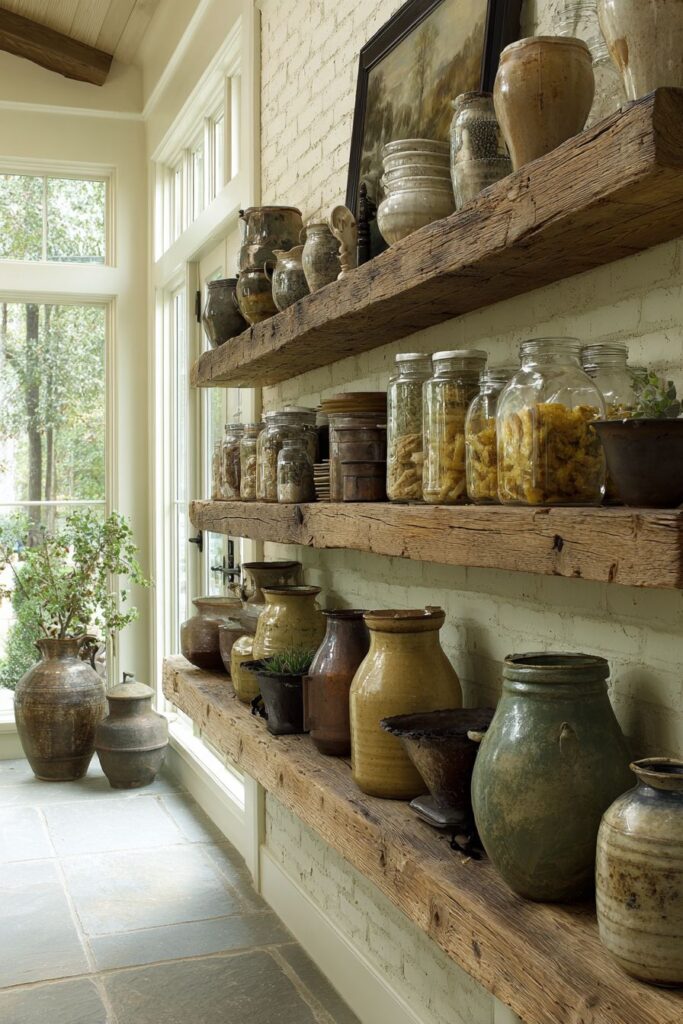
This French country kitchen features magnificent floor-to-ceiling open shelving crafted from reclaimed chestnut wood, its visible grain texture and natural knots creating a backdrop of rustic sophistication. The shelving system transforms an entire wall into a display area that celebrates the beauty of everyday objects while providing practical storage for kitchen essentials. This approach to storage reflects the French country principle of finding beauty in functionality, where necessary items become decorative elements through thoughtful arrangement and quality craftsmanship.
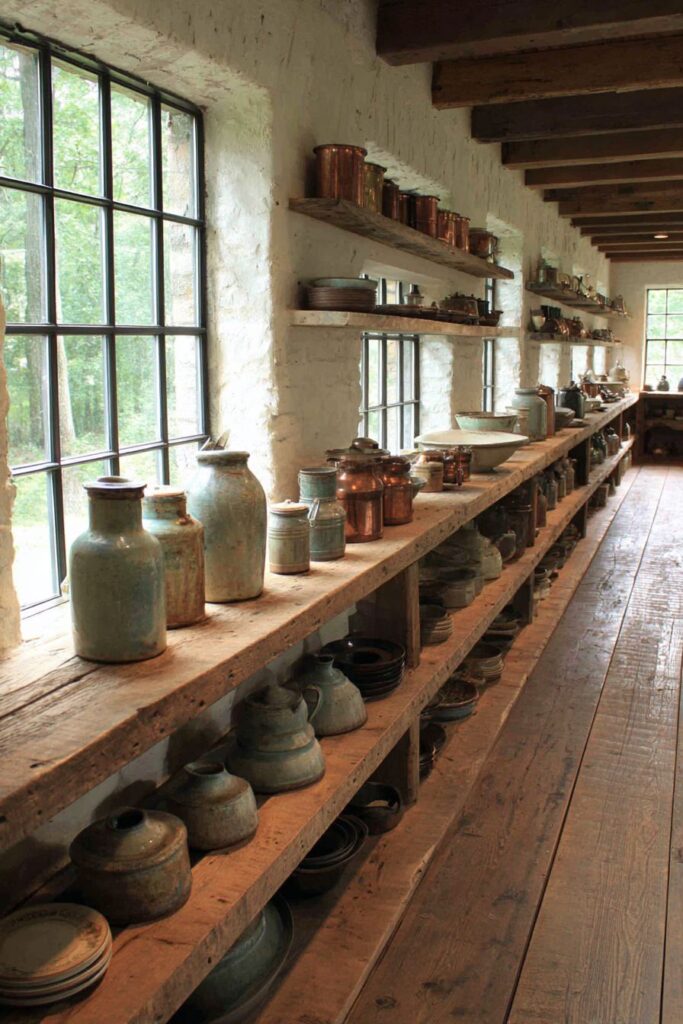
The shelves showcase an authentic collection of vintage French ceramics, copper molds, and glass preserving jars, each piece carefully chosen for both its utility and aesthetic appeal. The varied heights, textures, and colors of these collections create visual interest while telling the story of French culinary traditions. Copper molds gleam with the patina of age and use, while ceramic pieces display the subtle variations in glaze and form that mark handmade pottery. Glass preserving jars catch and reflect light, adding sparkle and transparency to balance the weightier ceramic and metal elements.
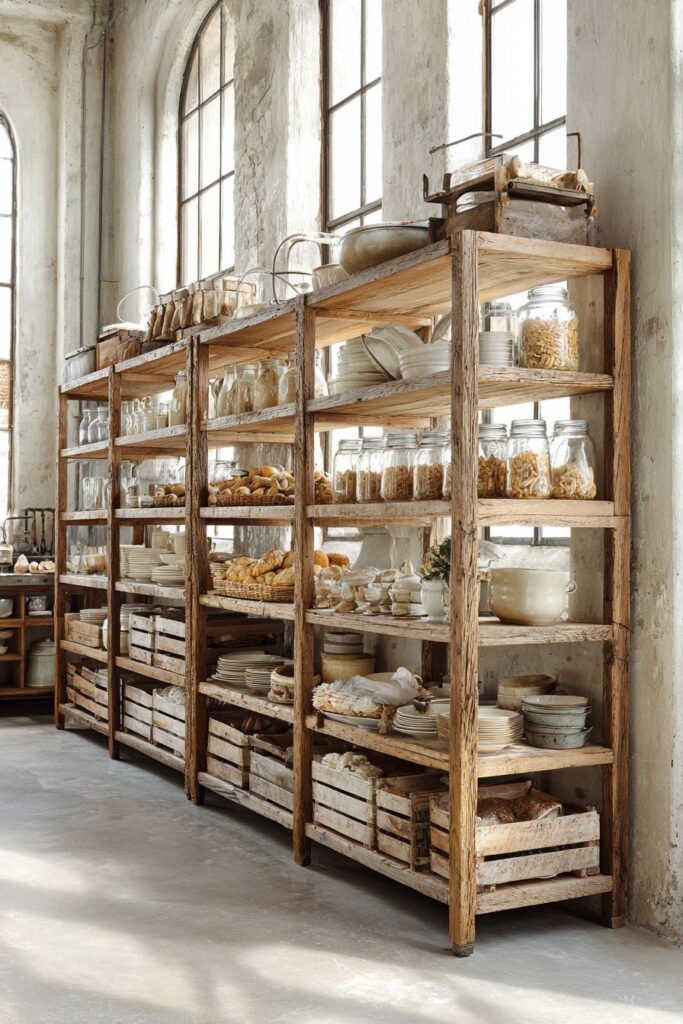
The weathered white plaster walls provide a neutral backdrop that allows the collections to take center stage while maintaining the soft, lived-in quality that characterizes authentic French country interiors. The plaster’s subtle texture variations and gentle aging create surfaces that feel organic and warm, perfectly complementing the natural wood shelving and displayed objects.
Natural light from tall windows creates an ever-changing display throughout the day, casting gentle shadows that highlight the varied textures and colors of the displayed items. This dynamic lighting transforms the storage wall into a living artwork that changes with the time of day and season, keeping the space feeling fresh and engaging despite the permanence of the architectural elements.
Key Design Tips:
- Install floor-to-ceiling shelving in reclaimed wood for maximum storage and character
- Display collections of vintage ceramics, copper, and glass for functional decoration
- Use weathered white plaster walls as neutral backdrops for collections
- Arrange items by varying heights, textures, and colors for visual interest
- Take advantage of natural light to create dynamic shadow play throughout the day
- Choose quality pieces that will develop beautiful patinas over time
6. The Cast Iron Range Focal Point
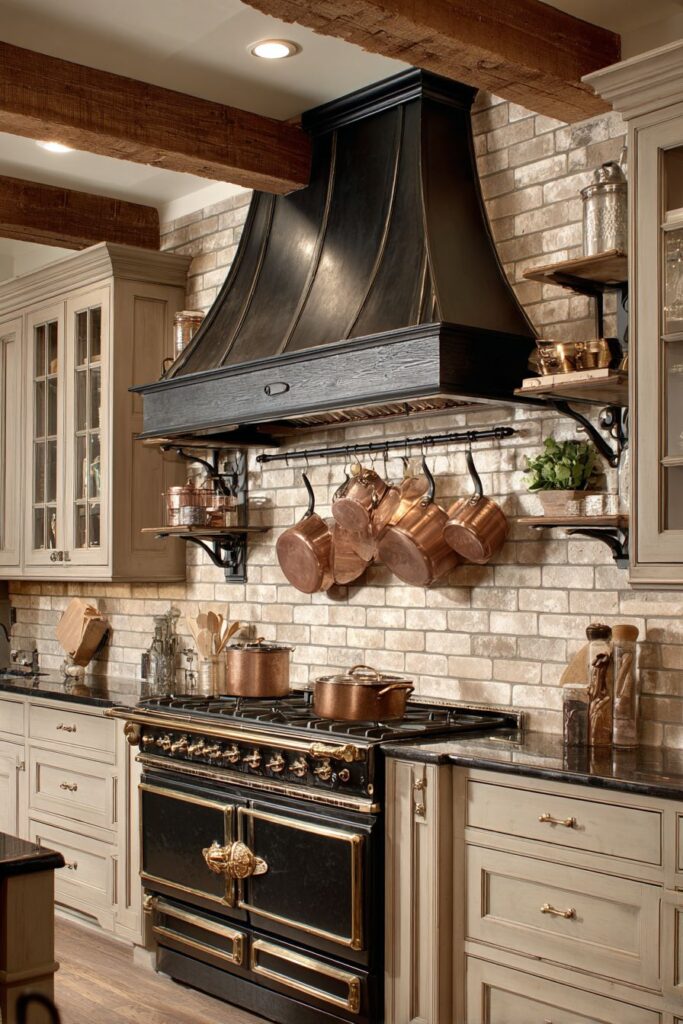
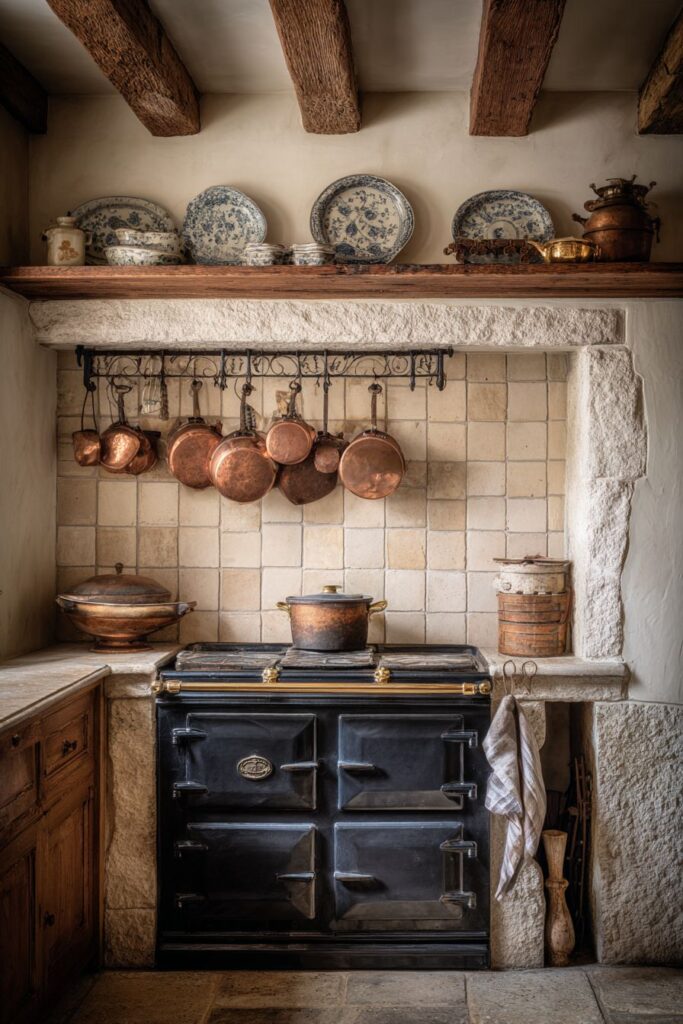
The cooking area of this French country kitchen centers around a magnificent vintage-inspired cast iron stove with brass accents, positioned within a limestone alcove that creates a natural focal point for the entire space. This substantial appliance embodies the French approach to cooking equipment, where functionality and beauty are equally important considerations. The cast iron construction provides superior heat retention and even cooking, while the brass accents add warmth and elegance that elevates the stove from mere appliance to kitchen centerpiece.
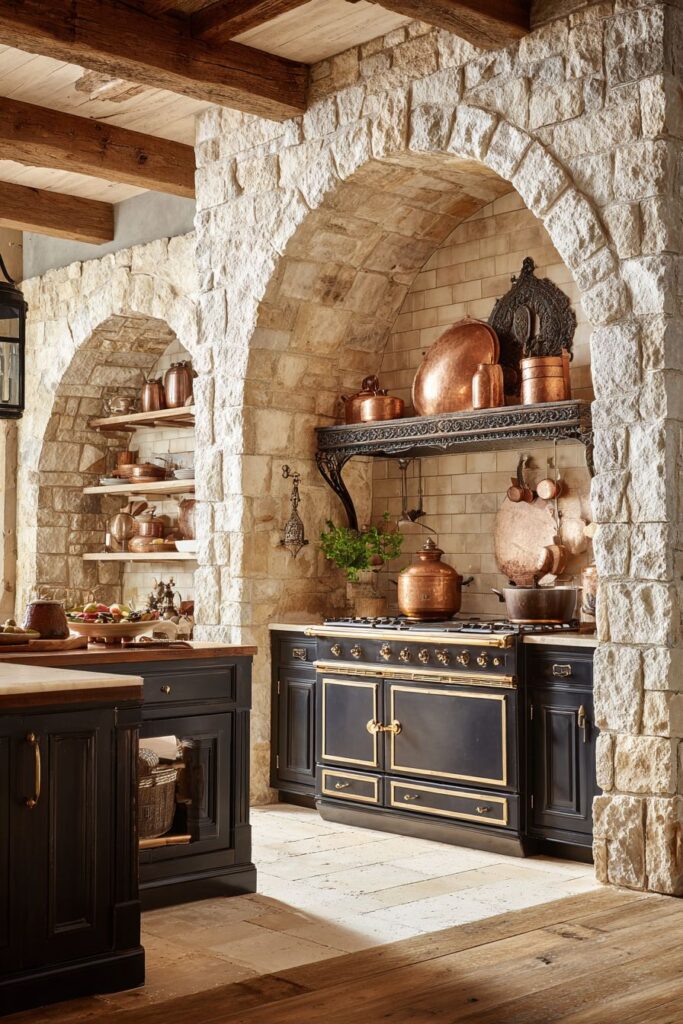
The limestone alcove surrounding the range creates an architectural framework that emphasizes the importance of the cooking area while providing practical benefits. The natural stone’s heat-resistant properties make it an ideal material for this high-temperature zone, while its subtle color variations and soft texture complement the robust presence of the cast iron stove. The alcove design draws inspiration from traditional French farmhouse kitchens, where the cooking fire was literally and figuratively the heart of the home.
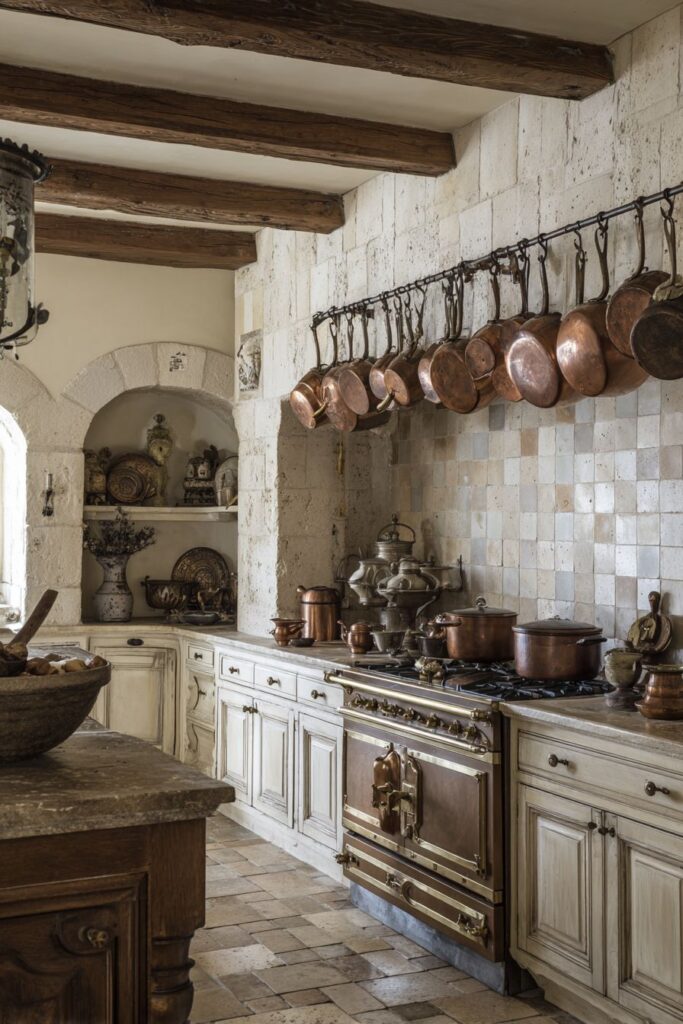
Hand-forged wrought iron pot racks suspended above the range display copper cookware in a arrangement that is both practical and decorative. These elevated storage solutions keep frequently used pots and pans within easy reach while showcasing the beautiful patinas that develop on copper through regular use. The wrought iron brackets and supports demonstrate traditional blacksmithing techniques, with subtle variations in the metalwork that speak to hand-crafted authenticity rather than machine-made uniformity.
The surrounding walls feature cream-colored subway tiles with subtle texture variations that provide practical, easy-to-clean surfaces while maintaining the handcrafted aesthetic that defines French country style. These tiles show the slight irregularities in size and surface that mark authentic handmade products, creating a backsplash that feels organic and warm rather than sterile and industrial.
Key Design Tips:
- Choose cast iron stoves with brass accents for authentic period cooking equipment
- Create limestone alcoves to frame and emphasize the cooking area
- Install hand-forged pot racks for practical storage that displays cookware beautifully
- Use cream subway tiles with texture variations for practical yet attractive backsplashes
- Incorporate exposed ceiling beams to add architectural interest and authenticity
- Display copper cookware to add warm metallic tones and functional beauty
7. The Organized Pantry Haven
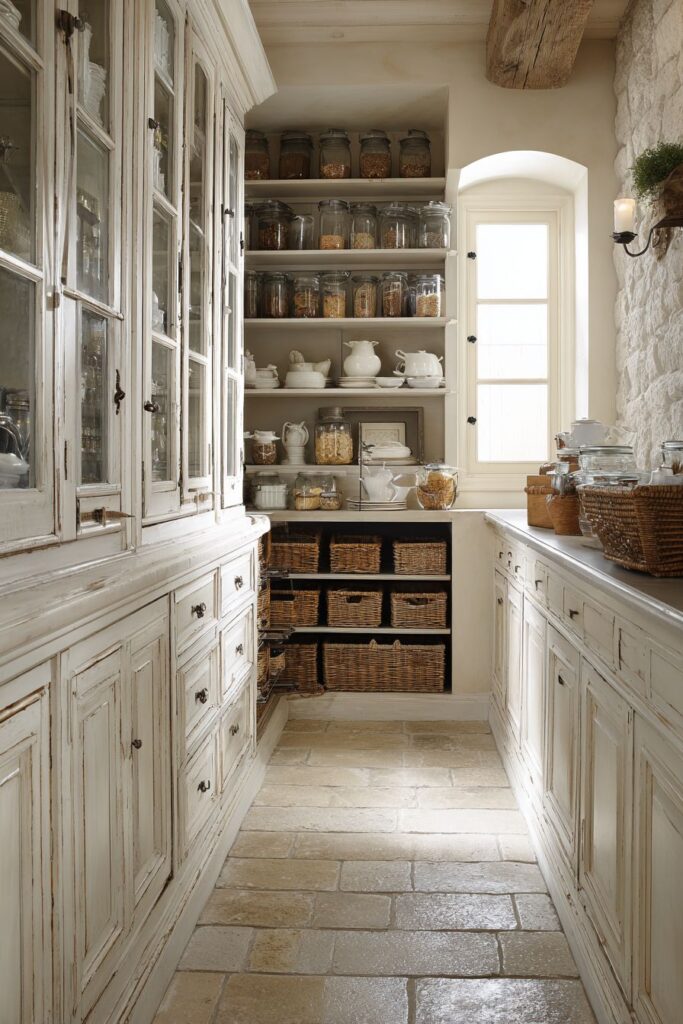
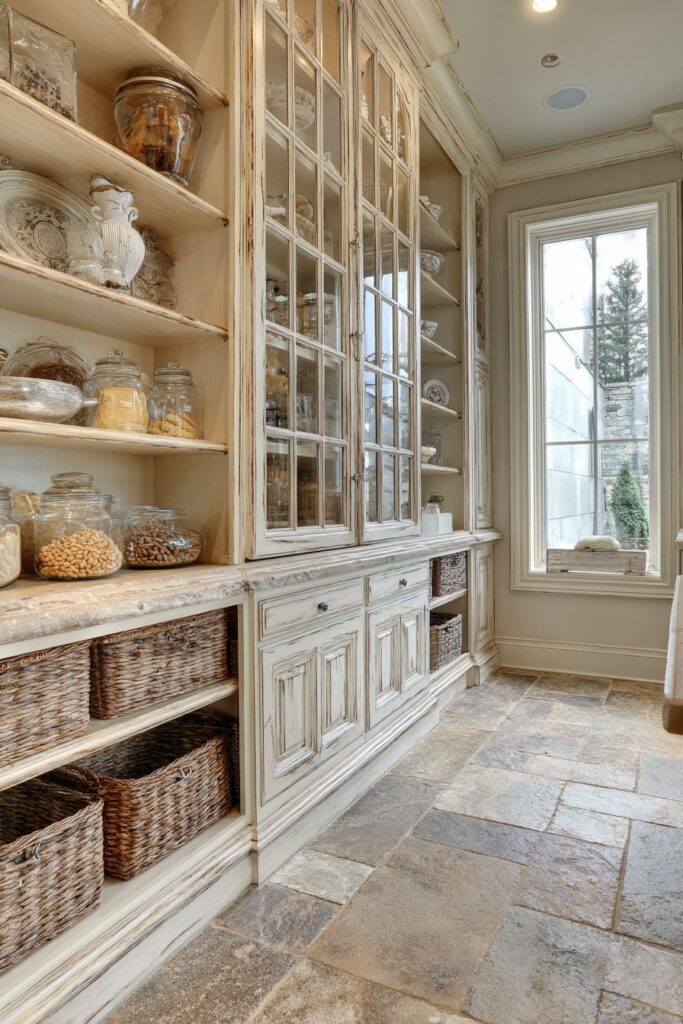
This French country kitchen pantry represents the perfect marriage of beauty and organization, featuring floor-to-ceiling built-in cabinetry in distressed cream paint that shows gentle wear at the edges where hands have opened doors and drawers thousands of times. The cabinet construction demonstrates traditional joinery techniques with raised panel doors and quality hardware that will last for generations. The gentle distressing process reveals hints of wood grain beneath the paint, creating depth and character that mass-produced cabinets simply cannot match.
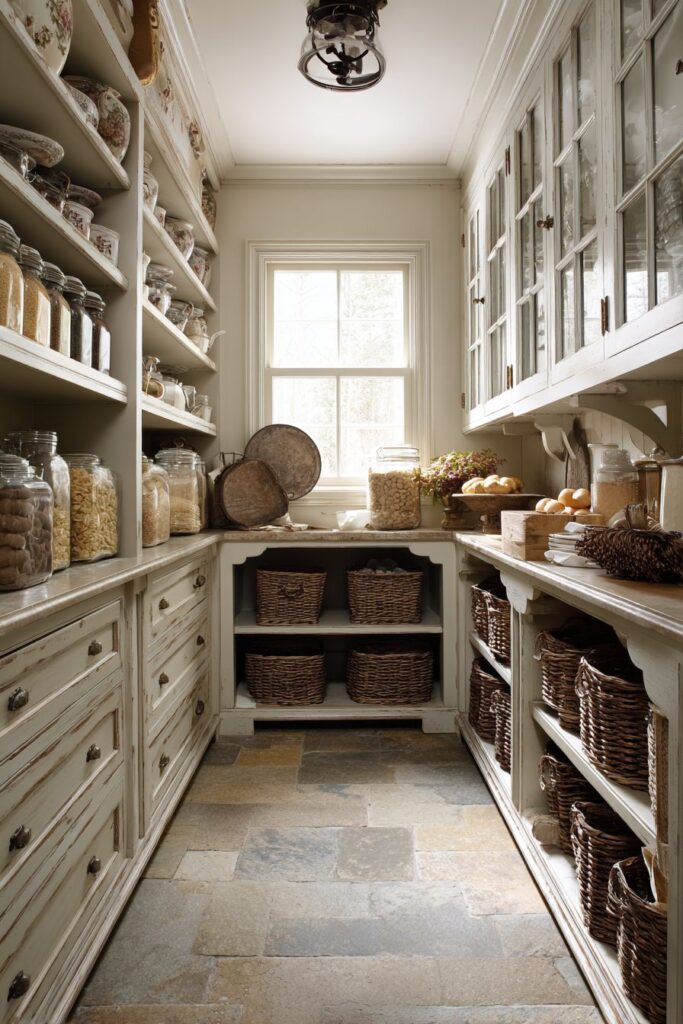
Glass-front upper cabinets provide opportunities to display vintage French pottery and preserving jars while keeping contents visible and easily accessible. This display storage approach transforms necessary pantry items into decorative elements, where rows of preserving jars filled with colorful spices, grains, and preserved foods create an attractive and practical storage system. The varied shapes and sizes of vintage pottery add visual interest while providing containers for bulk items and specialty ingredients.
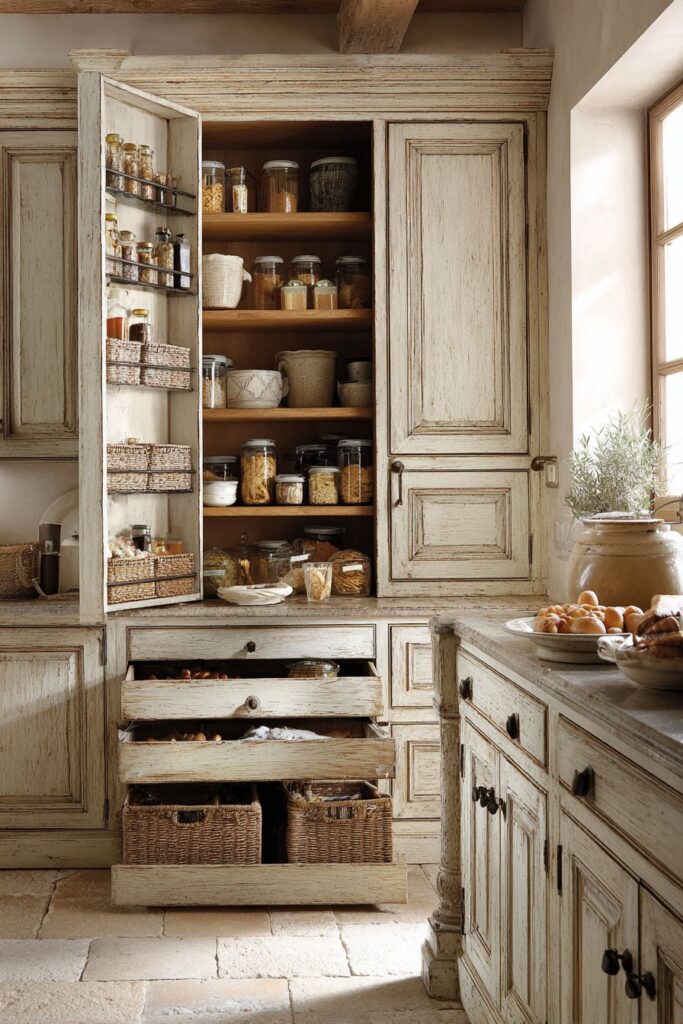
Pull-out drawers with woven baskets provide practical storage solutions that maintain the natural material aesthetic throughout the pantry space. These baskets offer flexible storage for items of various sizes while adding texture and warmth to the built-in cabinetry. The woven construction allows air circulation around stored items while the natural materials develop beautiful patinas over time, becoming more attractive and characterful with age and use.
Natural stone flooring extends into the pantry space, providing continuity with the main kitchen while offering a durable, easy-to-clean surface that handles heavy foot traffic and occasional spills. The subtle color variations in the stone create visual interest without being distracting, while the natural material connects the pantry to the earth-centered philosophy that underlies French country design.
Key Design Tips:
- Install floor-to-ceiling built-ins in distressed cream paint for maximum storage
- Use glass-front upper cabinets to display collections while maintaining organization
- Incorporate pull-out drawers with woven baskets for flexible, attractive storage
- Extend main kitchen flooring into pantry areas for visual continuity
- Choose quality hardware and joinery techniques that will age gracefully
- Organize storage to create attractive displays of everyday items
8. The Intimate Breakfast Nook
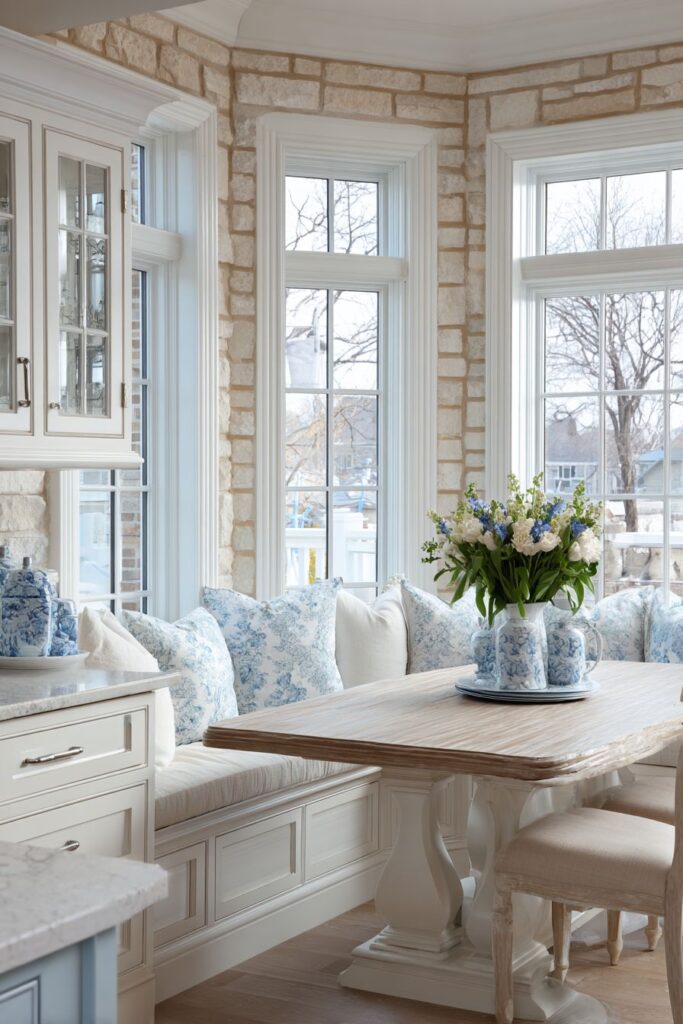
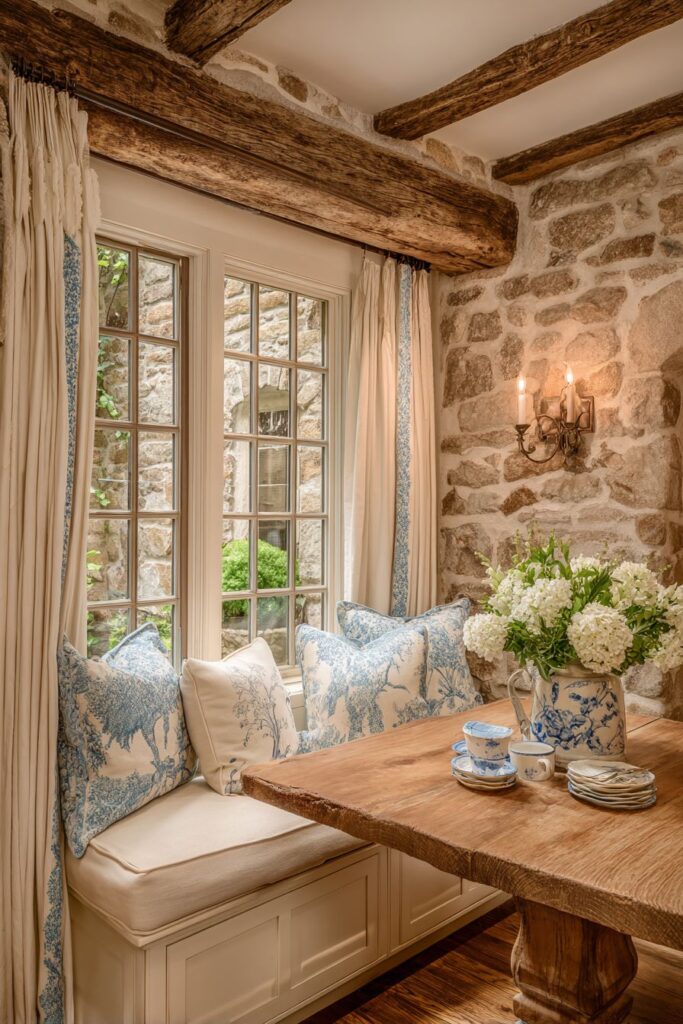
This charming breakfast nook creates an intimate dining space within the French country kitchen through thoughtful use of built-in seating and carefully chosen materials. The built-in banquette features cream linen cushions that provide comfortable seating while coordinating throw pillows in soft blue toile patterns add color and pattern without overwhelming the gentle palette. This seating arrangement maximizes space efficiency while creating a cozy, intimate atmosphere perfect for morning coffee and casual meals.
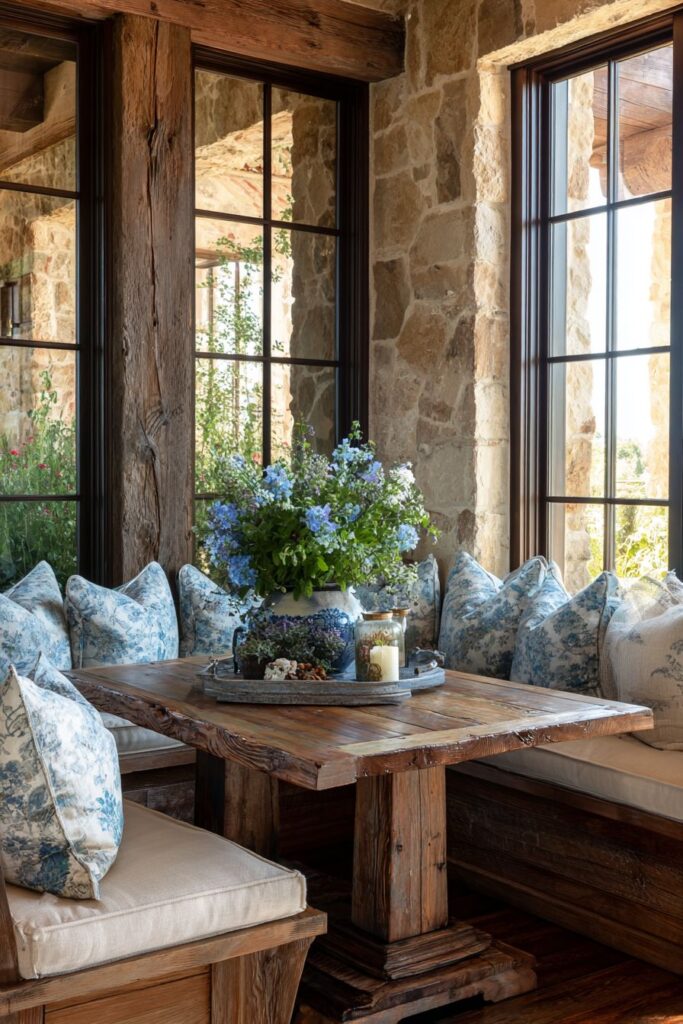
The rustic wooden table at the center of the seating area features natural edge details that showcase the beauty of the wood’s original form, connecting diners to the natural world even while indoors. The table’s generous proportions provide ample space for place settings while its substantial construction ensures it will withstand daily use for generations. The natural wood finish develops a beautiful patina over time, becoming more lustrous and characterful with each meal shared around its surface.
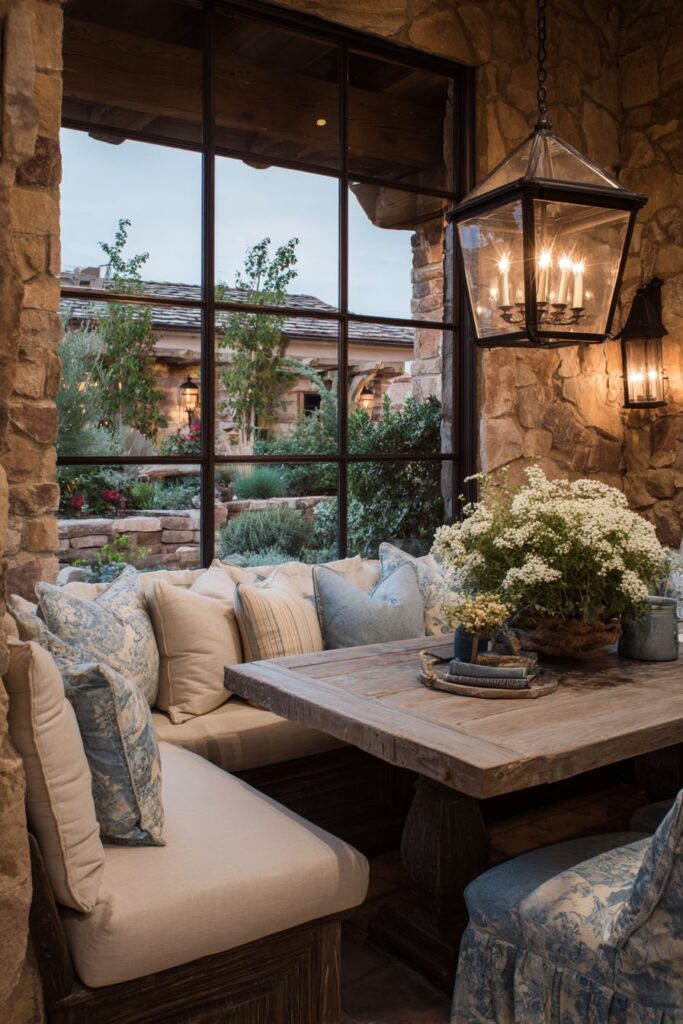
Casement windows with divided lights frame views of an herb garden, creating a direct connection between the breakfast nook and the source of fresh ingredients used in daily cooking. This visual connection to the garden reinforces the French country emphasis on fresh, seasonal ingredients and the importance of understanding where food originates. The window design, with its traditional muntins and hardware, maintains period authenticity while providing excellent natural light and ventilation.
Natural stone walls add authentic texture and thermal mass to the breakfast nook, creating a sense of permanence and connection to traditional building techniques. The stone’s natural variations in color and texture provide visual interest while the material’s inherent durability ensures the space will age gracefully. The stone surfaces develop subtle patinas over time, becoming more beautiful and integrated into the overall design scheme.
Key Design Tips:
- Create built-in banquette seating with comfortable linen cushions
- Add pattern through coordinating throw pillows in traditional French prints
- Choose rustic wooden tables with natural edge details for authentic character
- Install casement windows to frame garden views and maximize natural light
- Use natural stone walls to add texture and thermal mass
- Design breakfast nooks as intimate spaces separate from main kitchen activity
9. The Central Worktable Command Center
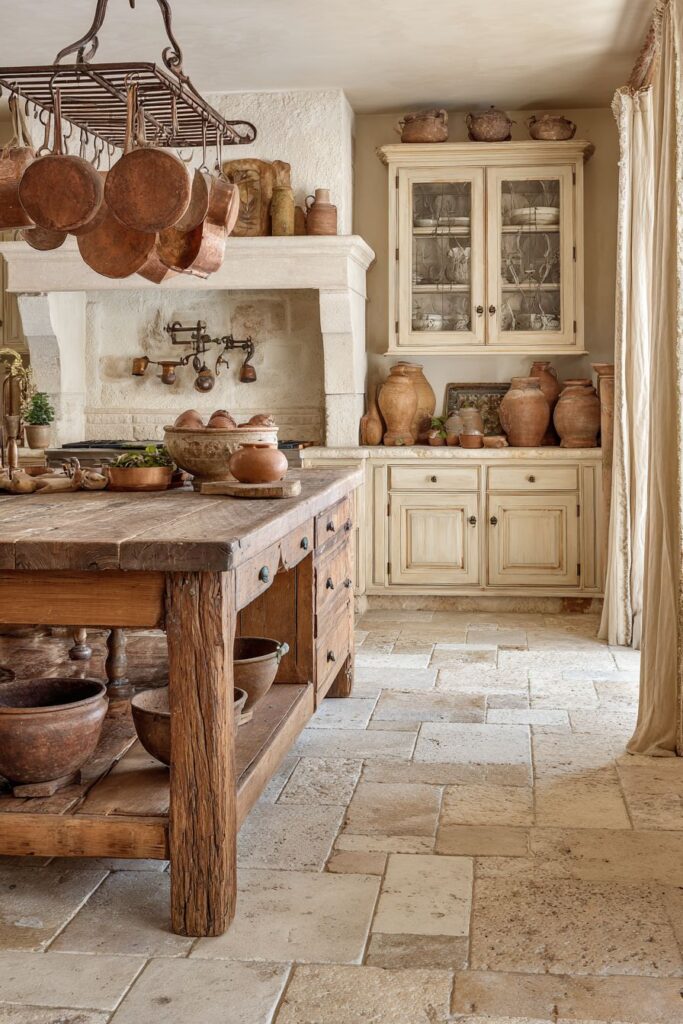
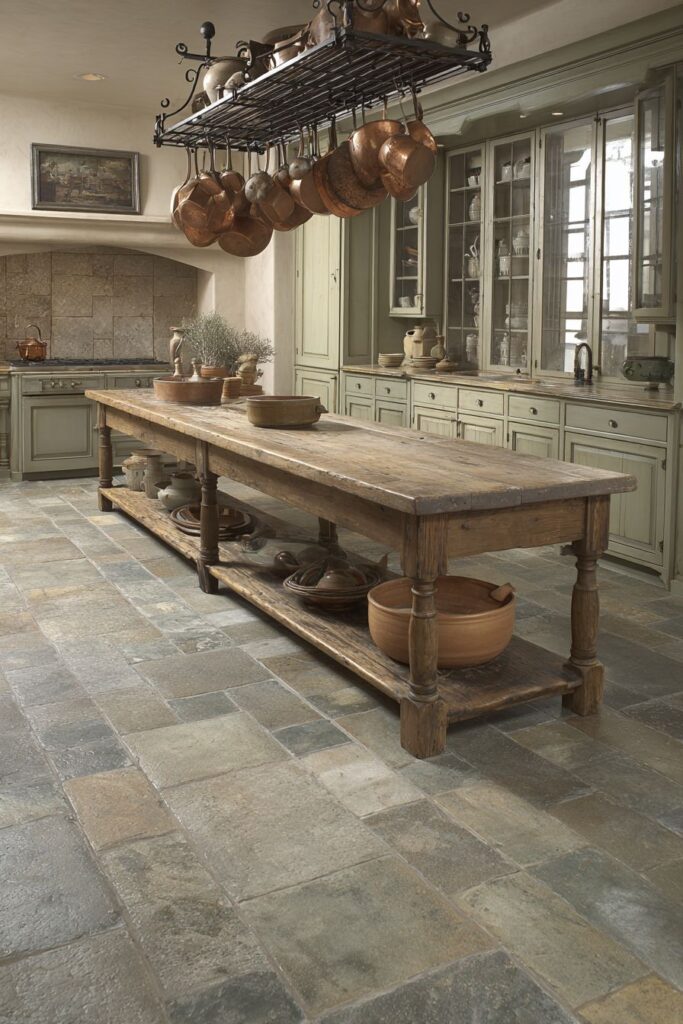
The heart of this French country kitchen features a substantial central worktable crafted from thick oak planks, its natural wood grain visible through a weathered finish that tells stories of countless meal preparations. This magnificent piece serves as both a functional workspace and a gathering point, embodying the French approach to kitchen design where beautiful, substantial furniture takes precedence over built-in cabinetry. The table’s generous proportions provide ample space for multiple cooks to work simultaneously while its height is perfectly calibrated for comfortable food preparation tasks.
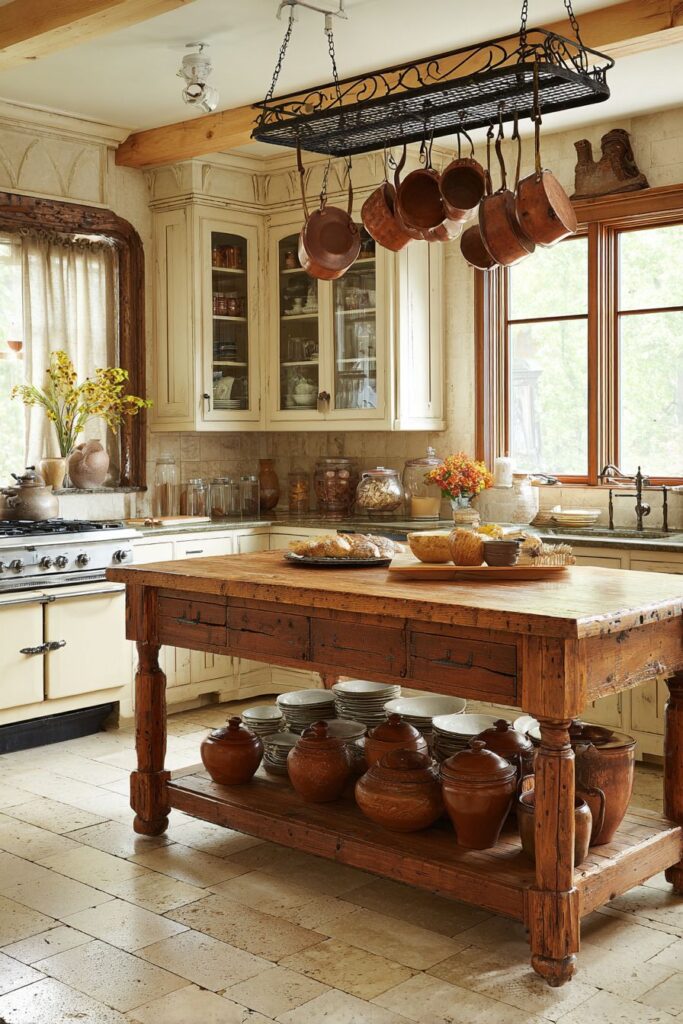
Above this central workspace, vintage copper pots hang from a wrought iron pot rack, creating both practical storage and visual drama. The copper’s warm tones complement the oak table while the varied patinas on different pieces speak to years of use and care. This elevated storage keeps frequently used cookware within easy reach while freeing up valuable cabinet and counter space. The wrought iron rack itself demonstrates traditional blacksmithing techniques, with hand-forged details that add authenticity and character to the functional design.
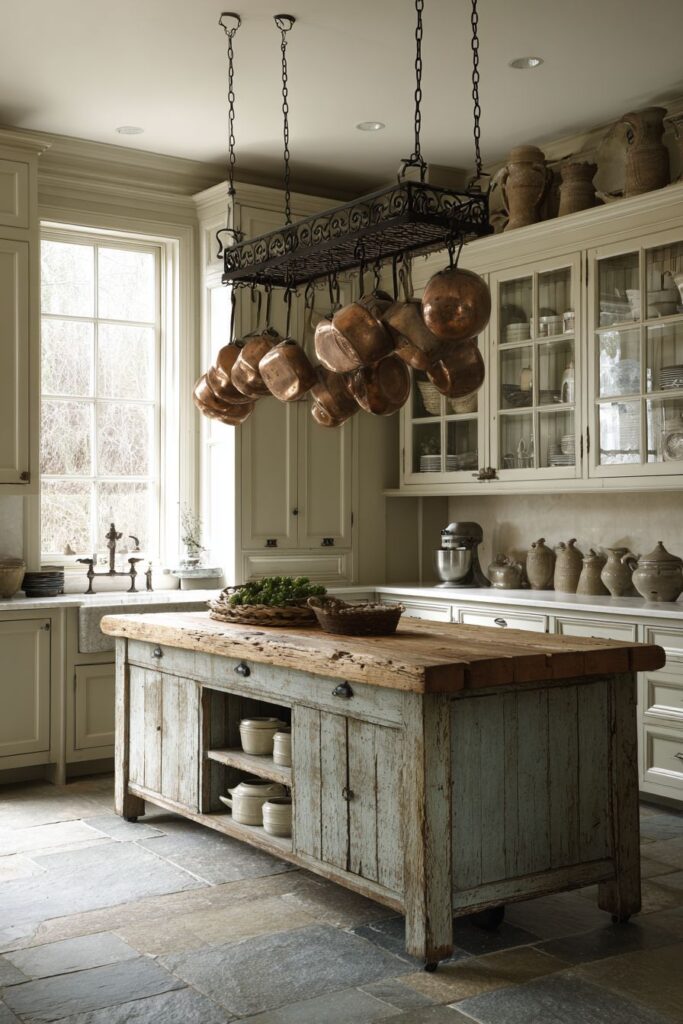
Stone tile flooring extends throughout the workspace area, providing a durable surface that can withstand the demands of serious cooking while maintaining the natural material aesthetic that defines French country style. The tiles’ natural color variations create visual interest underfoot while the material’s inherent properties provide excellent thermal mass and easy maintenance. This flooring choice connects the kitchen to traditional building methods while offering practical benefits for modern cooking needs.
The surrounding cream-painted cabinetry features glass doors that display collections of vintage pottery, transforming necessary storage into decorative opportunities. These collections serve both practical and aesthetic purposes, keeping everyday dishes and serving pieces easily accessible while contributing to the kitchen’s authentic French country atmosphere. The varied glazes, shapes, and sizes of the pottery create visual interest while the glass doors protect contents from dust while allowing them to remain visible.
Key Design Tips:
- Install substantial oak worktables as central kitchen features for maximum functionality
- Hang copper cookware from wrought iron pot racks for practical storage and visual appeal
- Choose stone tile flooring for durability and natural material authenticity
- Use glass-front cabinetry to display pottery collections while providing practical storage
- Select cream paint colors that complement natural wood and stone materials
- Design workspaces that accommodate multiple cooks working simultaneously
10. The Traditional Corner Sink Station
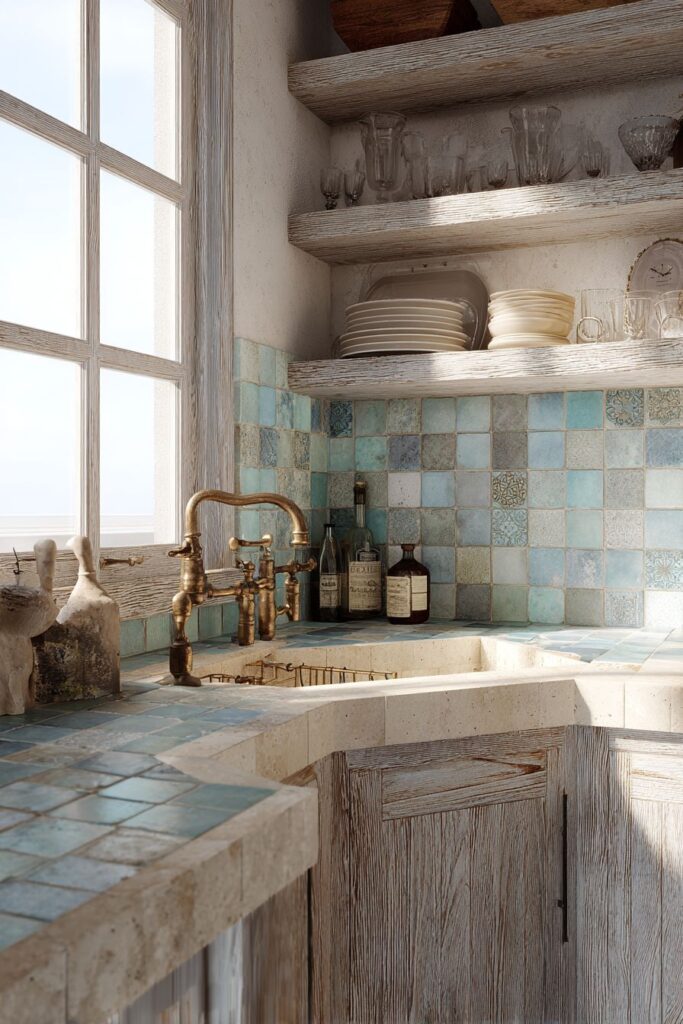
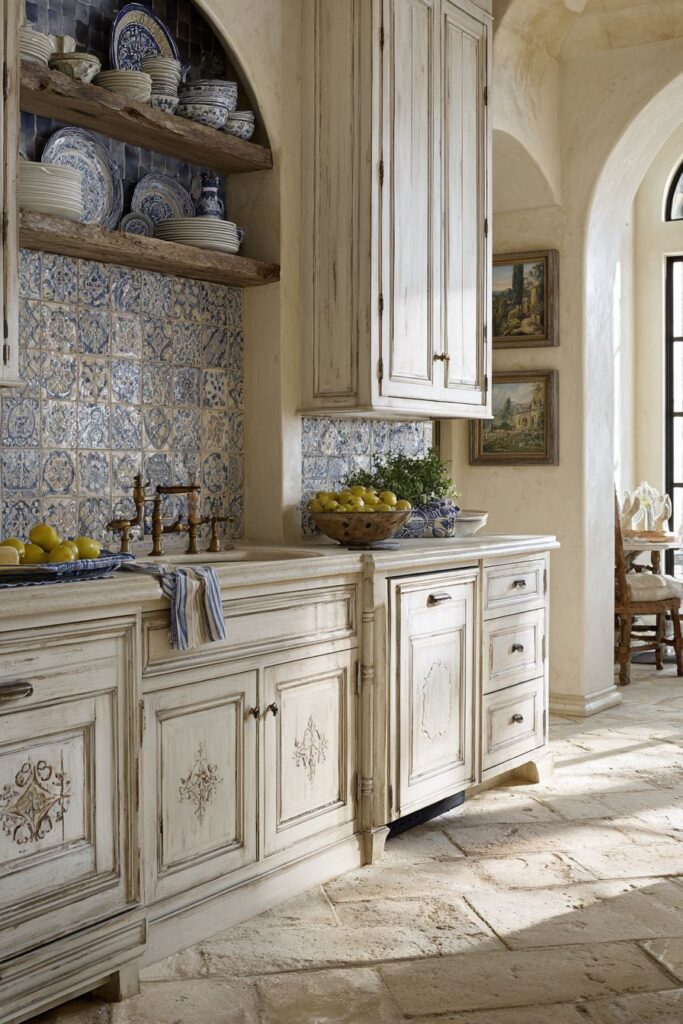
This thoughtfully designed corner embraces traditional French country sensibilities through its incorporation of a corner sink with a vintage-style bridge faucet in aged brass finish. This placement maximizes counter space while creating an efficient workflow triangle, demonstrating how French country design principles can enhance both beauty and functionality. The bridge faucet design, with its separate hot and cold handles connected by a graceful arch, represents traditional plumbing techniques while providing superior control over water temperature and flow.
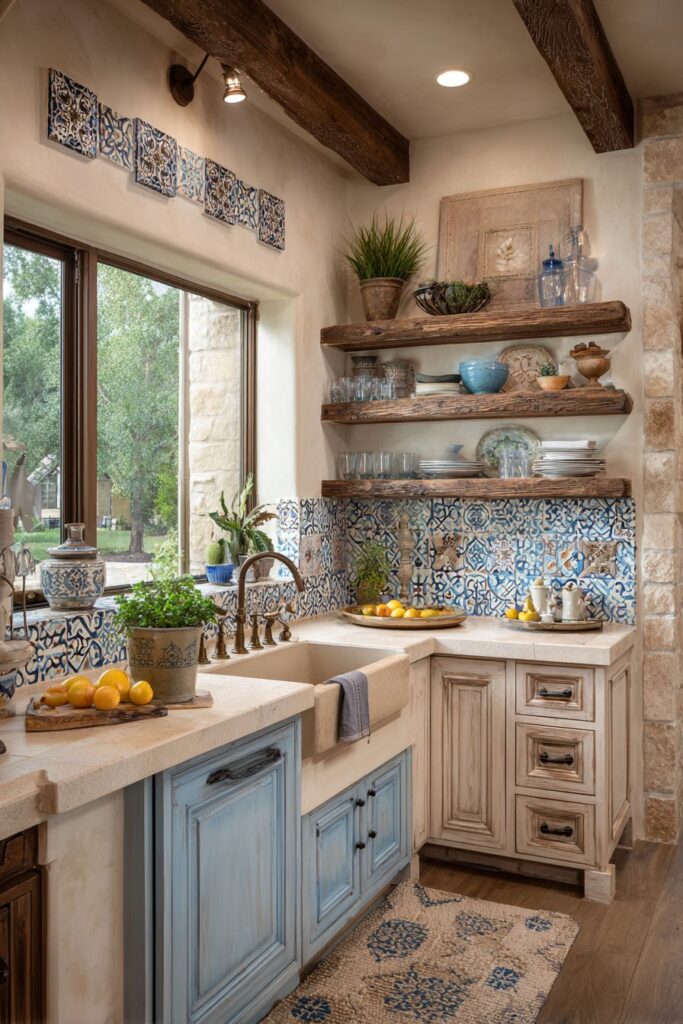
Open shelving crafted from weathered wood displays everyday dishes and glassware in an arrangement that is both practical and visually appealing. This storage approach keeps frequently used items within easy reach while eliminating the visual weight of solid cabinet doors in what could otherwise feel like a cramped corner location. The weathered wood finish shows the gentle wear patterns that develop naturally over time, creating surfaces that feel warm and inviting rather than stark and utilitarian.
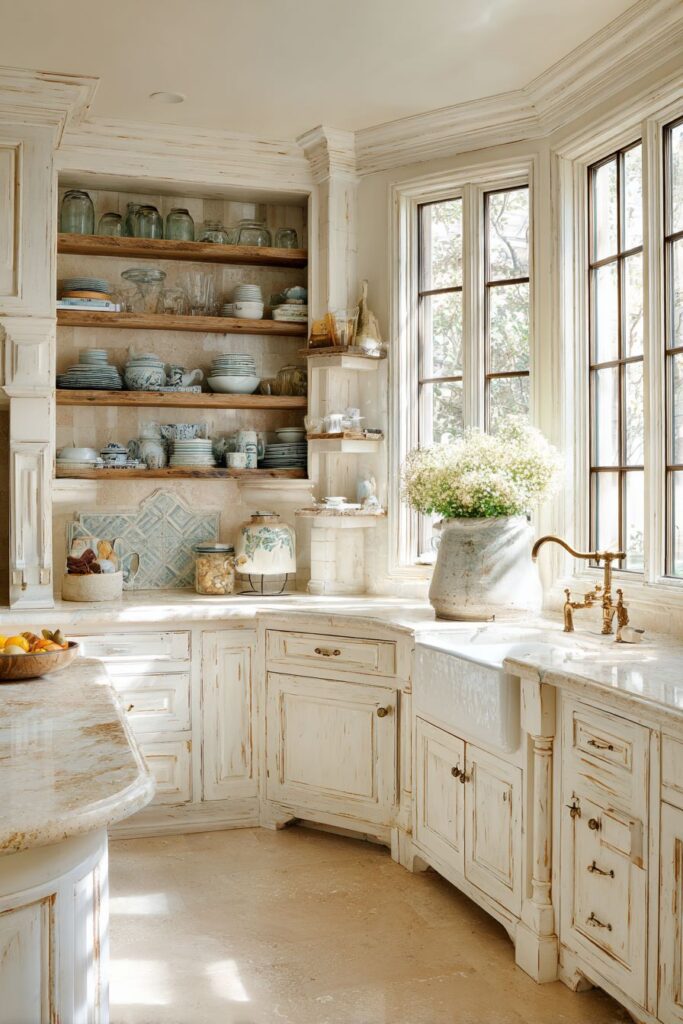
Hand-painted tile details in soft blue and cream create visual interest without overwhelming the compact space, demonstrating how traditional craft techniques can enhance even the most functional areas of the kitchen. These decorative tiles serve as both backsplash protection and artistic elements, transforming a necessary surface into an opportunity for beauty. The soft color palette complements the cream cabinetry while the hand-painted details add the slight irregularities that mark authentic craftsmanship.
Natural limestone countertops show subtle color variations that speak to the stone’s geological origins while providing practical work surfaces that improve with age and use. The limestone’s natural properties make it an excellent choice for kitchen applications, while its soft color palette complements both the painted tiles and weathered wood elements throughout the space.
Key Design Tips:
- Install corner sinks to maximize counter space in compact kitchen layouts
- Choose bridge faucets in aged brass for authentic traditional styling
- Use open shelving in weathered wood to display everyday dishes attractively
- Incorporate hand-painted tile details for artistic elements in functional areas
- Select natural limestone countertops for color variation and practical durability
- Design corner areas to feel open and spacious rather than cramped and enclosed
11. Exposed Beam Architectural Drama
The ceiling of this French country kitchen showcases magnificent exposed wooden beams with natural grain texture and gentle weathering from age, creating architectural drama that draws the eye upward while adding substantial character to the space. These structural elements, likely reclaimed from historic buildings, demonstrate traditional timber framing techniques where large wooden members were joined using traditional mortise and tenon joinery. The beams’ substantial proportions and authentic aging create a sense of permanence and history that cannot be replicated with modern alternatives.
Wrought iron pot racks suspended from these beams display vintage copper cookware and dried herb bundles, transforming the ceiling area into functional storage while adding visual interest to the upper reaches of the kitchen. This elevated storage solution keeps frequently used pots and pans easily accessible while freeing up valuable cabinet space below. The copper cookware develops beautiful patinas over time, while dried herb bundles add both practical seasoning ingredients and gentle fragrance to the kitchen atmosphere.
The cream-colored cabinetry with beadboard detailing lines the walls below, creating a pleasing contrast between the substantial overhead beams and the more delicate vertical lines of the cabinet details. The beadboard construction demonstrates traditional millwork techniques while adding texture and visual interest to what could otherwise be plain cabinet faces. The cream paint color provides a neutral backdrop that allows the natural wood beams to remain the dominant architectural feature.
Natural stone flooring adds authentic texture throughout the space while providing excellent thermal mass that helps moderate temperature fluctuations. The stone’s natural variations in color and texture create visual interest underfoot while the material’s inherent durability ensures it will withstand heavy use while becoming more beautiful with age. This flooring choice connects the kitchen to traditional building methods while offering practical benefits for modern family life.
Key Design Tips:
- Install or preserve exposed wooden beams to add architectural drama and authenticity
- Use wrought iron pot racks suspended from beams for practical overhead storage
- Choose cream cabinetry with beadboard details to complement substantial beam work
- Display copper cookware to add warm metallic tones and functional beauty
- Incorporate dried herb bundles for both fragrance and visual interest
- Select natural stone flooring to ground the design with authentic materials
12. The Herb Garden Window Connection
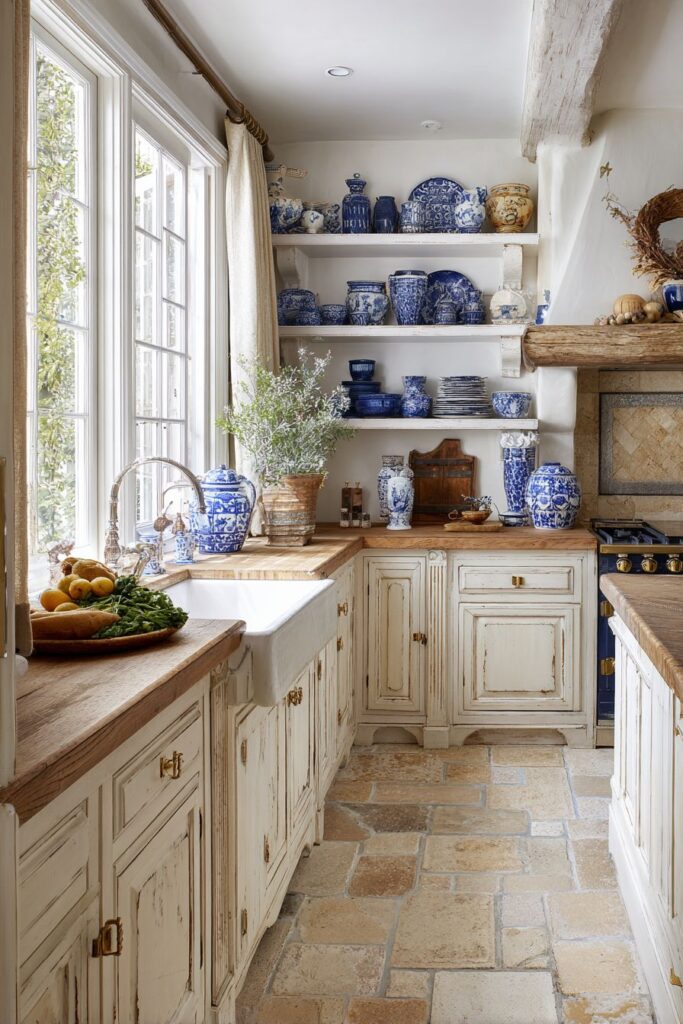
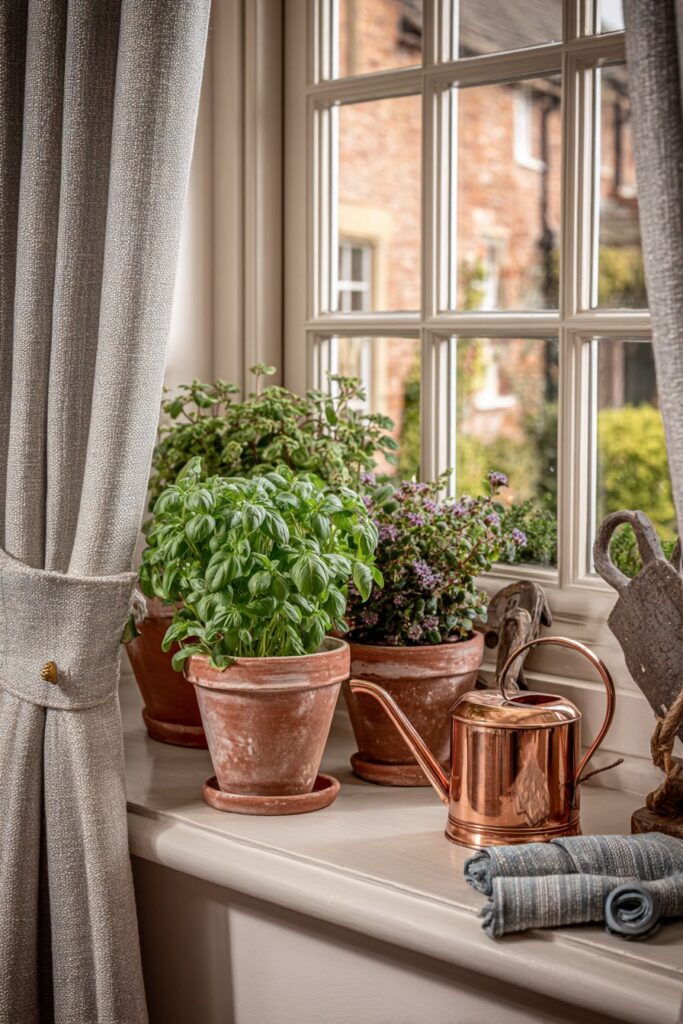
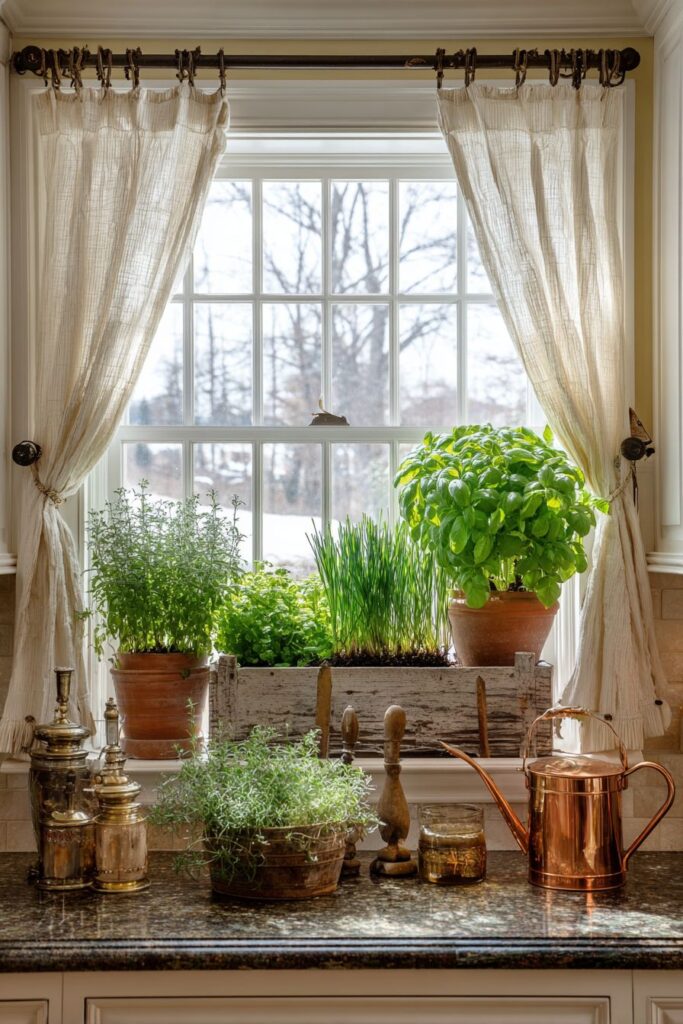
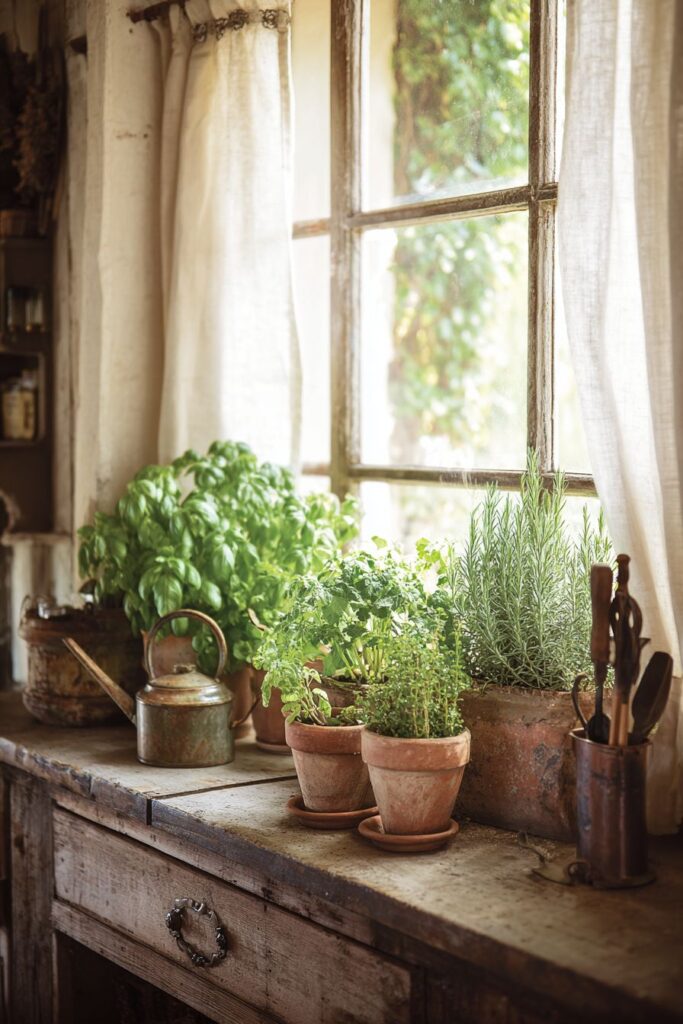
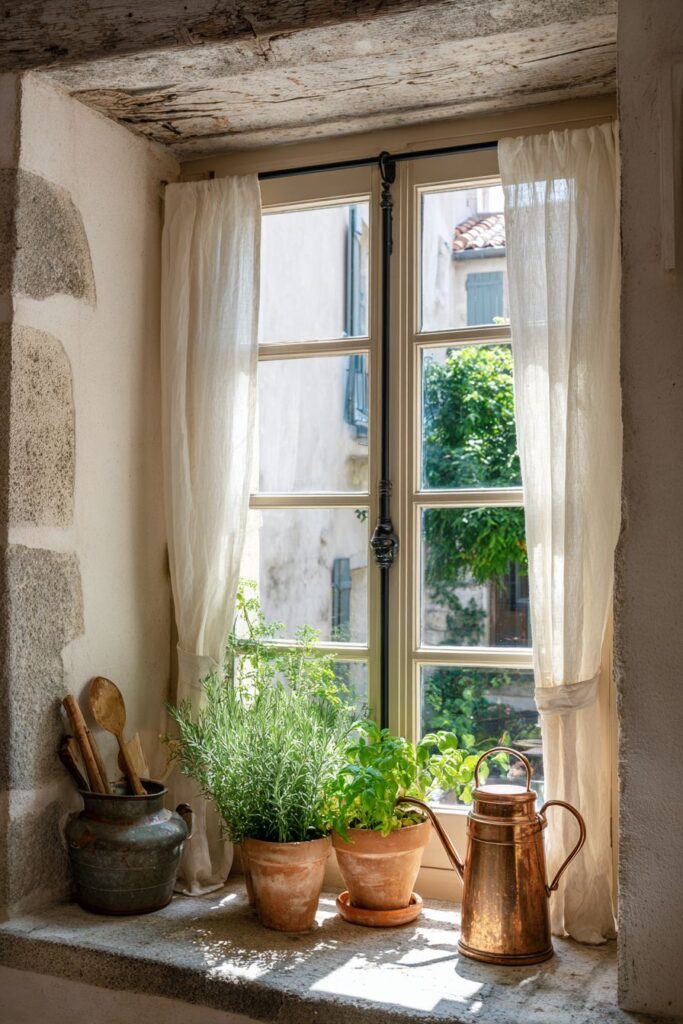
This delightful kitchen window area creates a direct connection between indoor cooking and outdoor gardening through its incorporation of a deep windowsill herb garden featuring terracotta pots containing fresh herbs. This arrangement brings the garden indoors while providing easy access to fresh seasonings for daily cooking needs. The terracotta pots develop beautiful patinas over time, while the living herbs add color, texture, and fragrance that changes with the seasons and daily care routines.
Cream linen cafe curtains with subtle texture hang on wrought iron rods, providing privacy when needed while maintaining the soft, informal quality that characterizes French country interiors. The natural linen material filters light beautifully while the cream color coordinates with other soft neutrals throughout the kitchen. The wrought iron rods demonstrate traditional metalworking techniques while providing sturdy support for the window treatments.
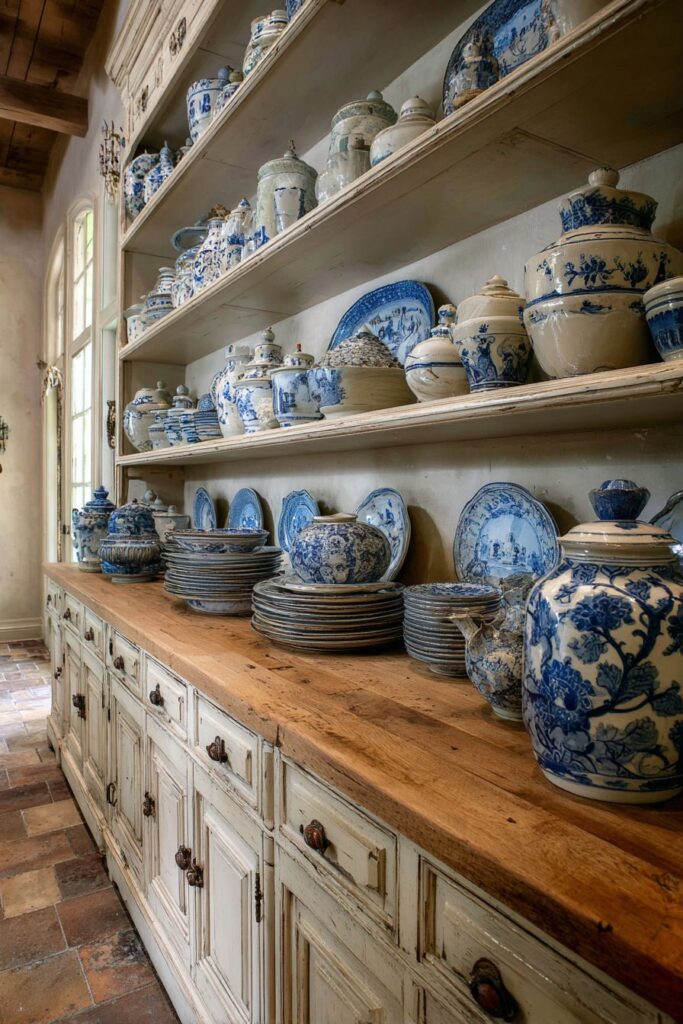
A vintage copper watering can and garden tools create an attractive vignette that reinforces the connection between kitchen and garden while providing practical implements for herb care. These functional objects become decorative elements through their beautiful materials and authentic aging, demonstrating the French country principle of finding beauty in everyday necessities. The copper develops a rich patina over time, while the wooden handles of garden tools show wear patterns that speak to regular use and care.
Weathered white wooden trim frames the casement window, its painted surface showing gentle wear that speaks to years of opening and closing, cleaning and maintenance. This authentic aging creates character that cannot be artificially reproduced, while the window’s traditional construction provides excellent ventilation and natural light. The casement design allows full opening for maximum air circulation while maintaining period architectural accuracy.
Key Design Tips:
- Create windowsill herb gardens using terracotta pots for fresh cooking ingredients
- Install cream linen cafe curtains for soft light filtering and privacy
- Use wrought iron curtain rods for sturdy support and traditional styling
- Display vintage copper watering cans and garden tools as functional decoration
- Choose weathered white window trim for authentic period character
- Design window areas to strengthen the connection between indoor and outdoor spaces
13. The Traditional Dresser Hutch Display
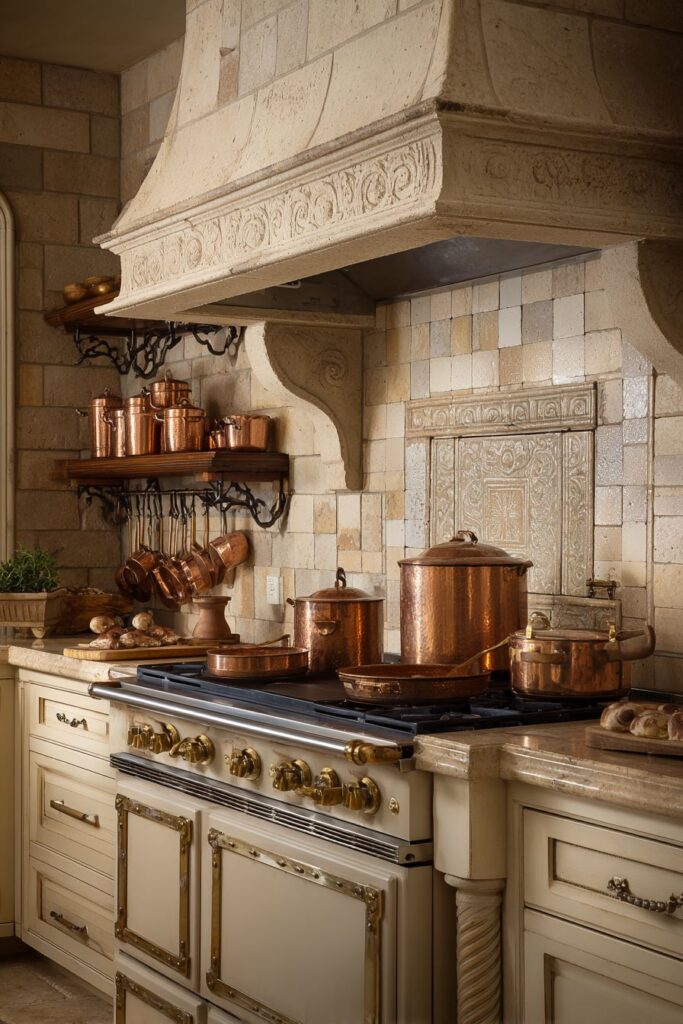
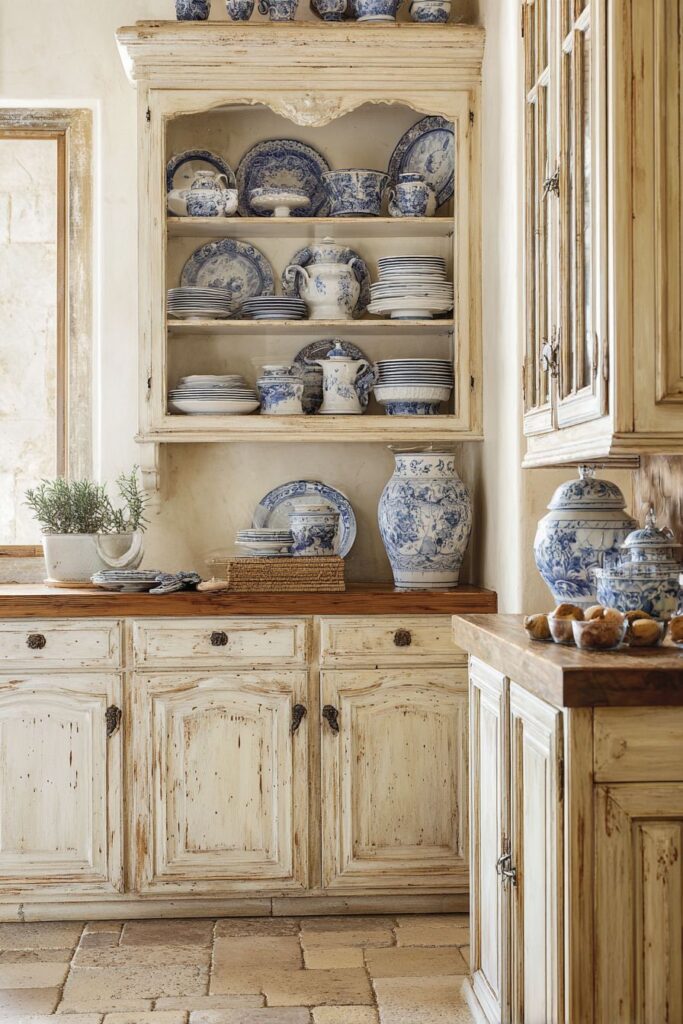
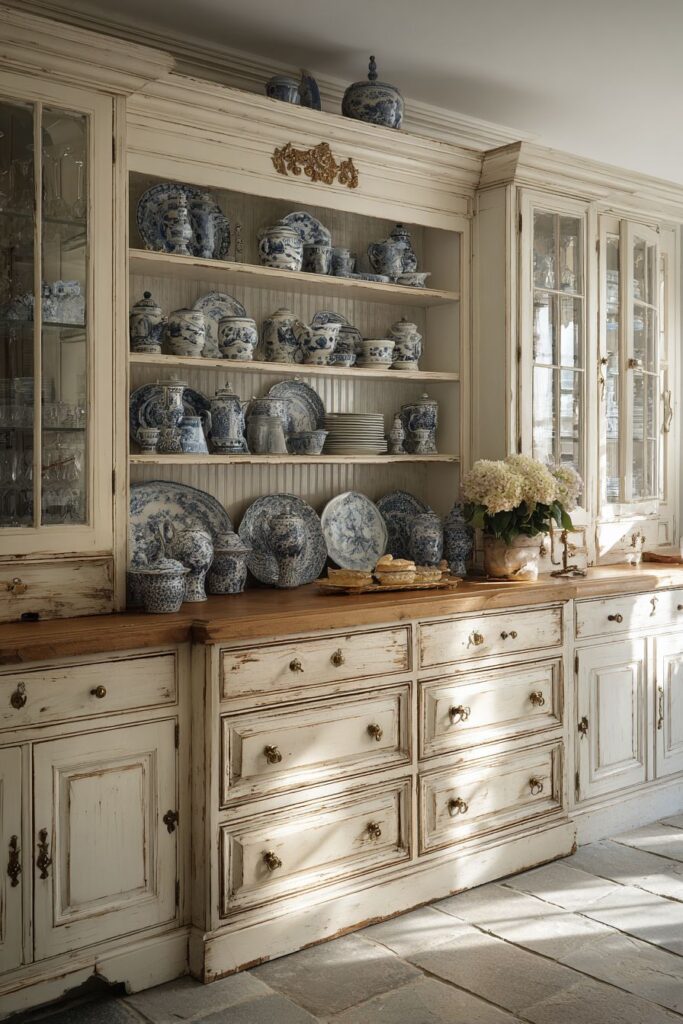
This magnificent dresser hutch serves as both storage and display area, featuring open shelving that showcases blue and white transferware pottery in authentic patterns that speak to centuries of ceramic tradition. The hutch design represents traditional furniture making techniques where substantial pieces were built to last generations while providing maximum storage and display opportunities. The open shelving allows collections to be easily viewed and accessed while protecting them from dust and damage through thoughtful arrangement and quality construction.
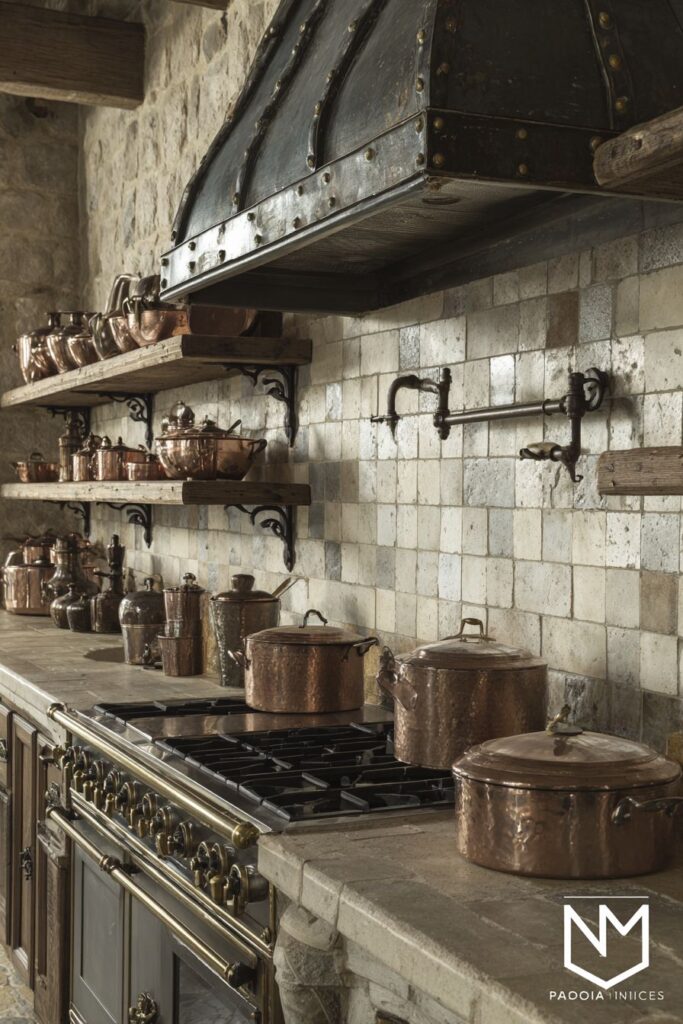
The lower cabinets feature raised panel doors in distressed cream paint with vintage brass hardware that shows authentic aging and patina. These cabinet doors demonstrate traditional millwork techniques where individual panels were fitted into substantial frames using time-tested joinery methods. The distressed paint finish reveals hints of wood grain beneath while the gentle wear patterns at edges and high-touch areas speak to years of family use and enjoyment.
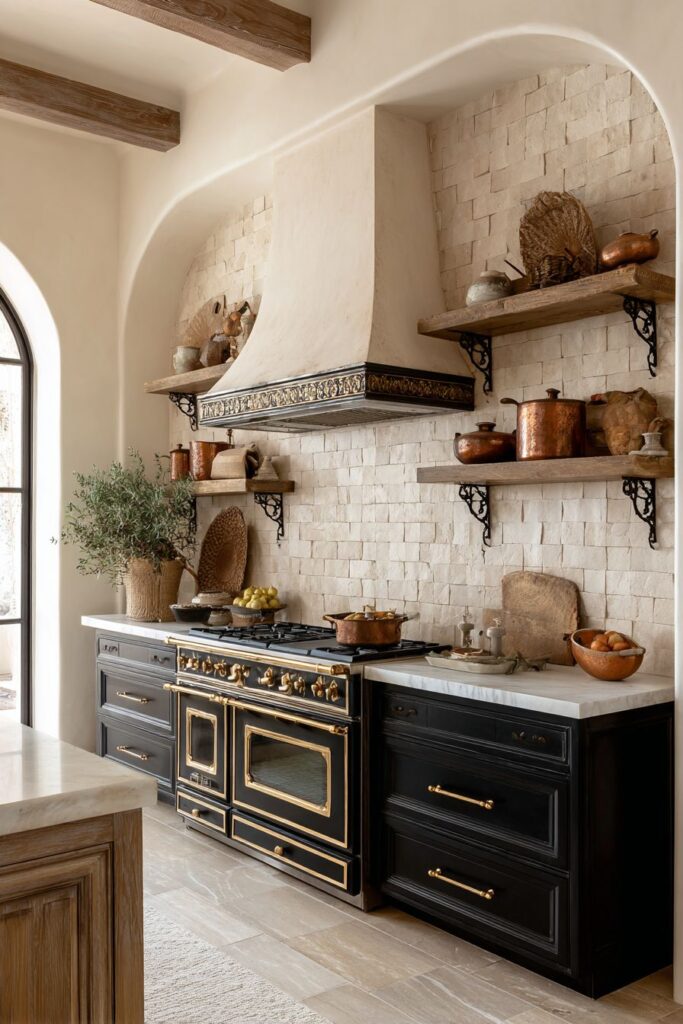
Natural oak countertops show gentle wear patterns from daily use, their honey tones complementing both the cream cabinetry and the blue and white pottery displayed above. The wood develops a beautiful patina over time, becoming more lustrous and characterful with each meal preparation and daily maintenance routine. These countertops provide practical work surfaces while maintaining the natural material aesthetic that defines French country design principles.
Stone tile flooring with subtle color variations adds rustic authenticity while providing a durable foundation that improves with age and use. The handmade tiles show slight irregularities in size and surface that mark authentic craftsmanship, while their natural clay composition develops rich patinas over time. This flooring choice connects the kitchen to traditional building methods while offering practical benefits for heavy daily use.
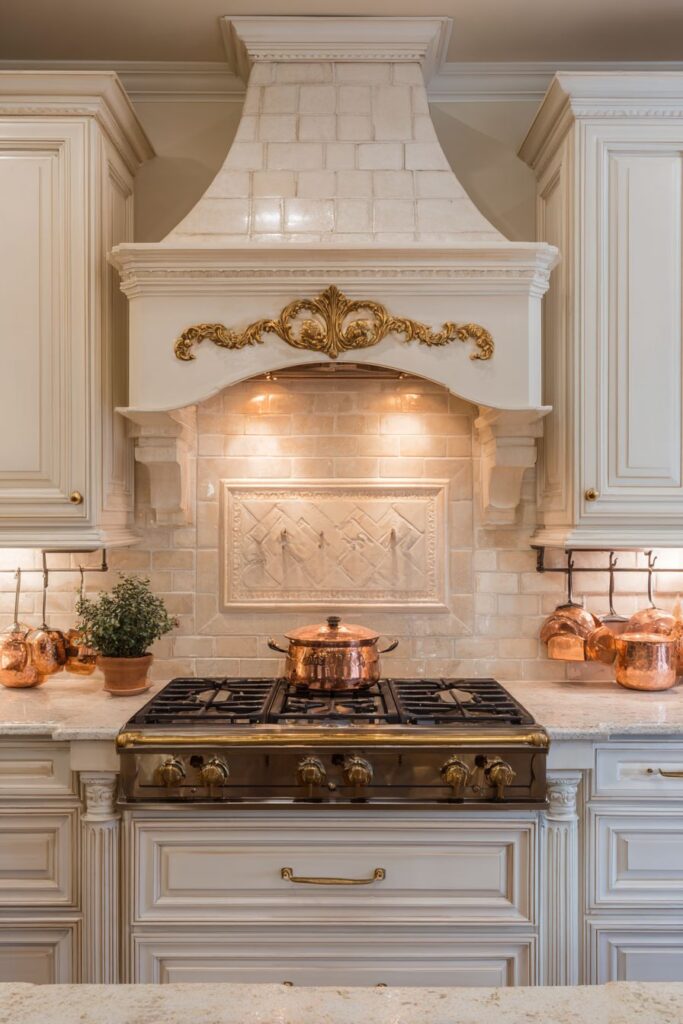
Key Design Tips:
- Install traditional dresser hutches for maximum storage and display opportunities
- Collect blue and white transferware pottery for authentic French country collections
- Choose raised panel cabinet doors with distressed cream paint for traditional styling
- Use vintage brass hardware that shows authentic aging and patina
- Select natural oak countertops that develop beautiful patinas over time
- Install handmade stone tile flooring for authentic texture and durability
14. The Professional Range Hood Statement
This impressive kitchen features a vintage-style cast iron range hood with brass accents positioned above a professional gas range, creating a cooking zone that combines traditional aesthetics with modern performance capabilities. The cast iron construction provides excellent heat resistance and durability while the brass accents add warm metallic tones that complement other brass elements throughout the kitchen. This substantial hood serves as both a functional necessity and a decorative focal point that anchors the cooking area within the larger kitchen design.
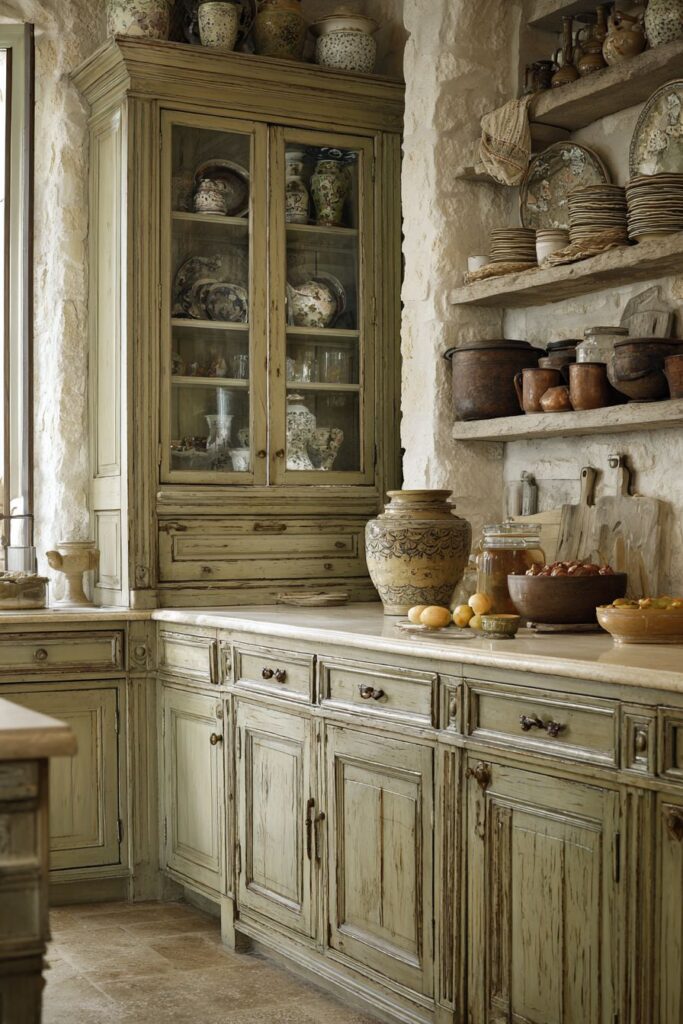
Hand-forged wrought iron brackets support wooden shelves that display copper cookware, transforming necessary pot storage into an attractive design element. These elevated shelves keep frequently used cookware within easy reach while showcasing the beautiful patinas that develop on copper through regular use and proper care. The wrought iron brackets demonstrate traditional blacksmithing techniques with subtle variations in the metalwork that speak to hand-crafted authenticity rather than machine-made uniformity.
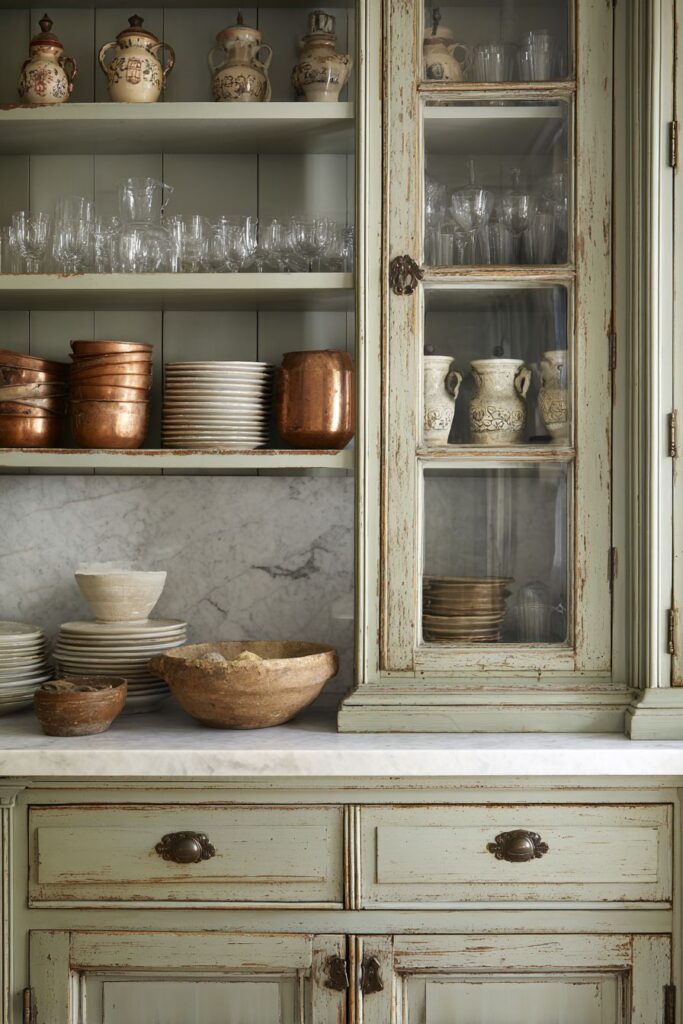
Cream subway tiles with subtle texture variations create the backsplash, providing practical, easy-to-clean surfaces while maintaining the handcrafted aesthetic that defines French country style. These tiles show the slight irregularities in size and surface that mark authentic handmade products, creating a backsplash that feels organic and warm rather than sterile and industrial. The cream color coordinates with cabinetry while reflecting light to brighten the cooking area.
Natural stone countertops complete the composition with their subtle color variations and practical durability that makes them ideal for serious cooking applications. The stone’s natural beauty lies in its imperfections – the slight variations in color, occasional fossil inclusions, and the way the surface develops character through daily use and proper maintenance.
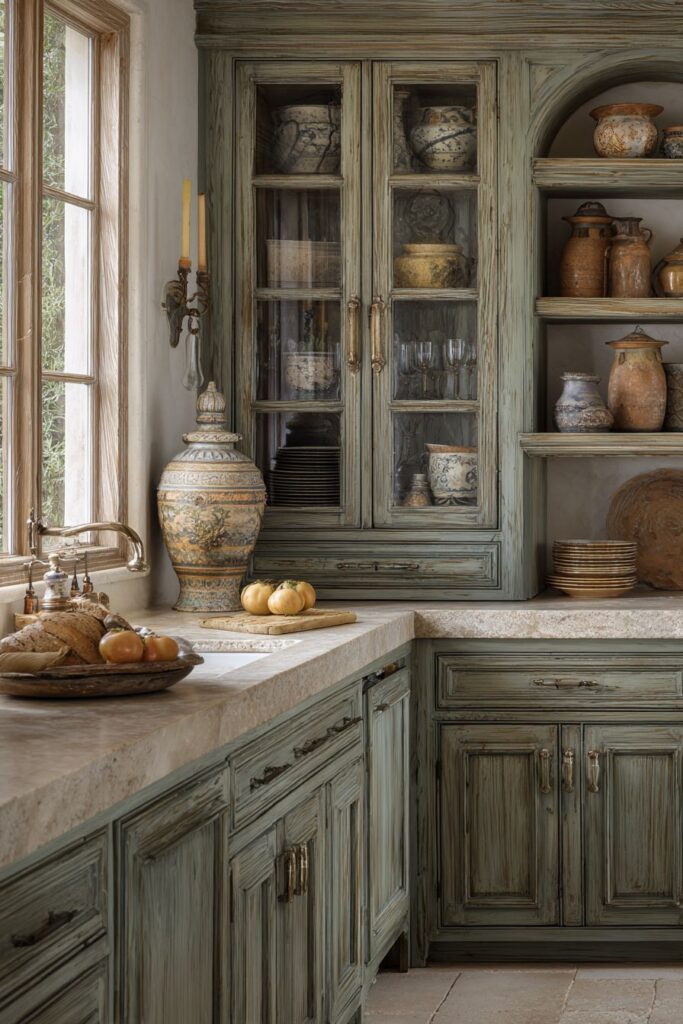
Key Design Tips:
- Install cast iron range hoods with brass accents for traditional styling and superior performance
- Use hand-forged wrought iron brackets to support display shelving
- Display copper cookware on open shelves for both beauty and accessibility
- Choose cream subway tiles with texture variations for practical backsplashes
- Select natural stone countertops for durability and authentic material beauty
- Design cooking zones that combine traditional aesthetics with modern performance
15. The Sage Green Cabinet Showcase
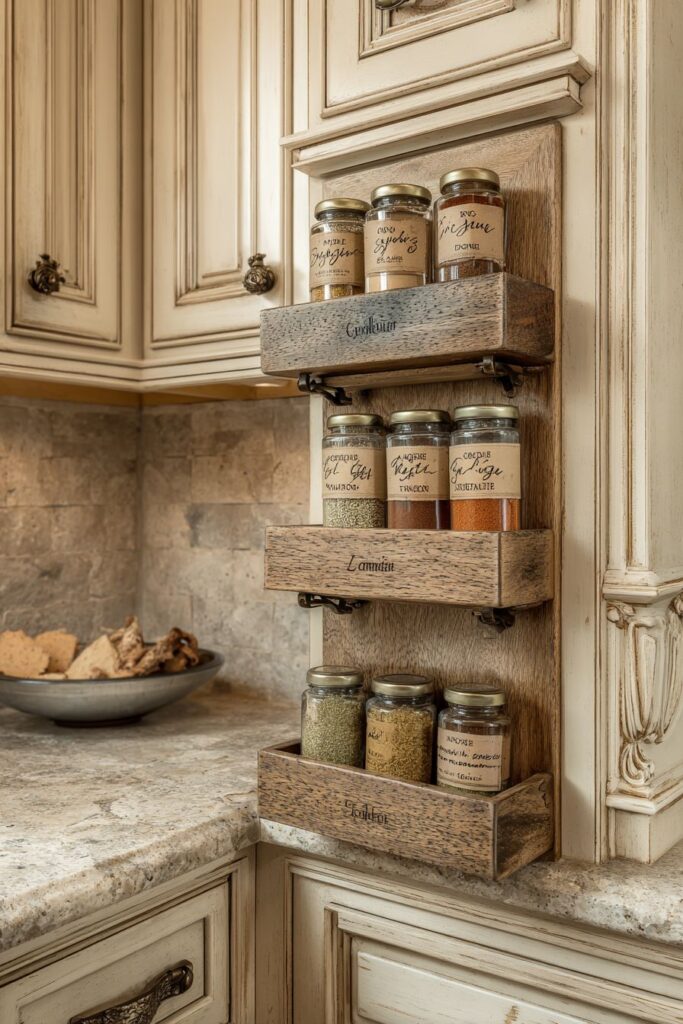
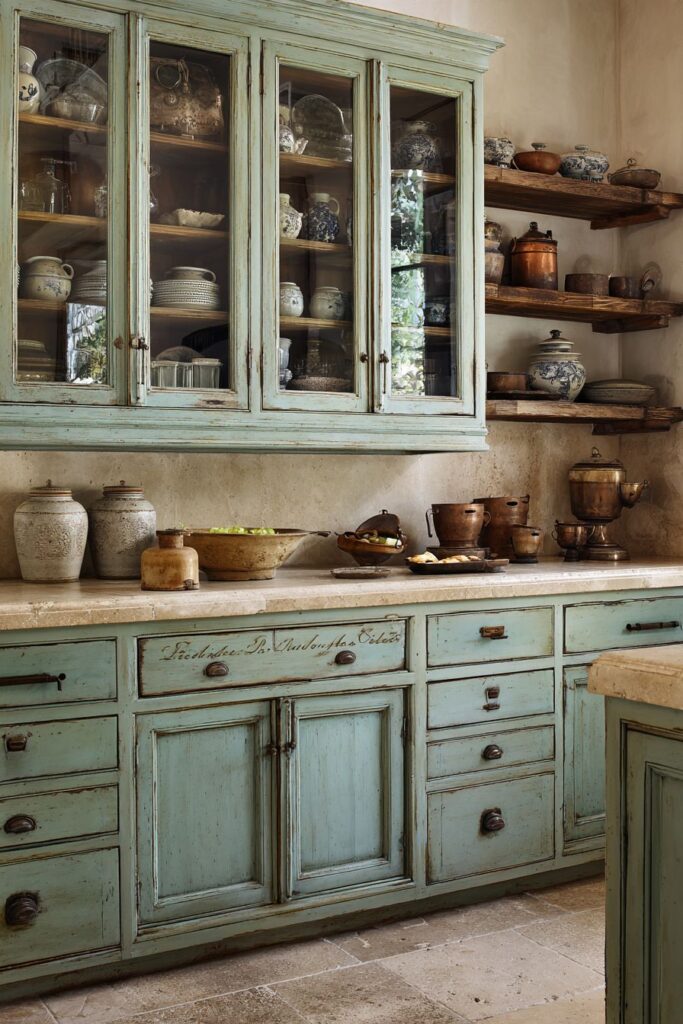
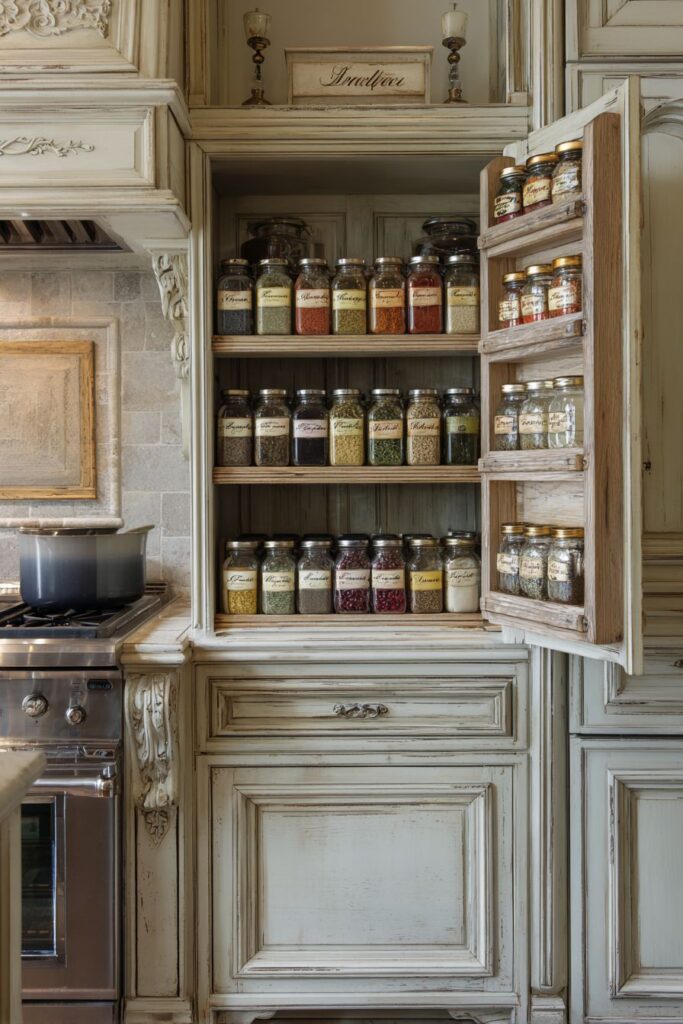
This beautifully composed kitchen features weathered wooden cabinetry in soft sage green with glass-front upper doors that display vintage French pottery and glassware, creating storage solutions that serve both practical and decorative purposes. The sage green color choice reflects the muted tones found in French provincial landscapes while providing a sophisticated alternative to traditional cream or white cabinetry. The weathered finish shows gentle aging that speaks to years of family use while the color develops subtle depth and complexity through natural patina development.
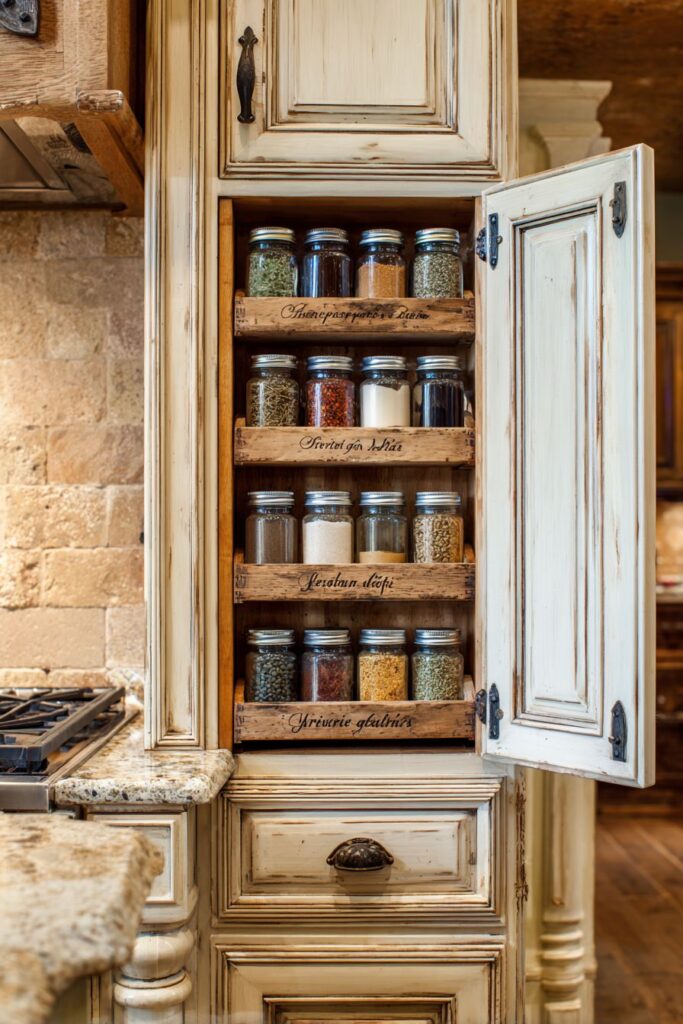
Antique brass hardware with authentic patina shows the genuine aging that occurs through decades of daily use, creating tactile and visual elements that cannot be artificially reproduced. This hardware demonstrates quality construction techniques where substantial materials were crafted to last generations while developing beautiful aging characteristics. The warm brass tones complement the sage green paint while adding metallic accents that catch and reflect light throughout the kitchen.
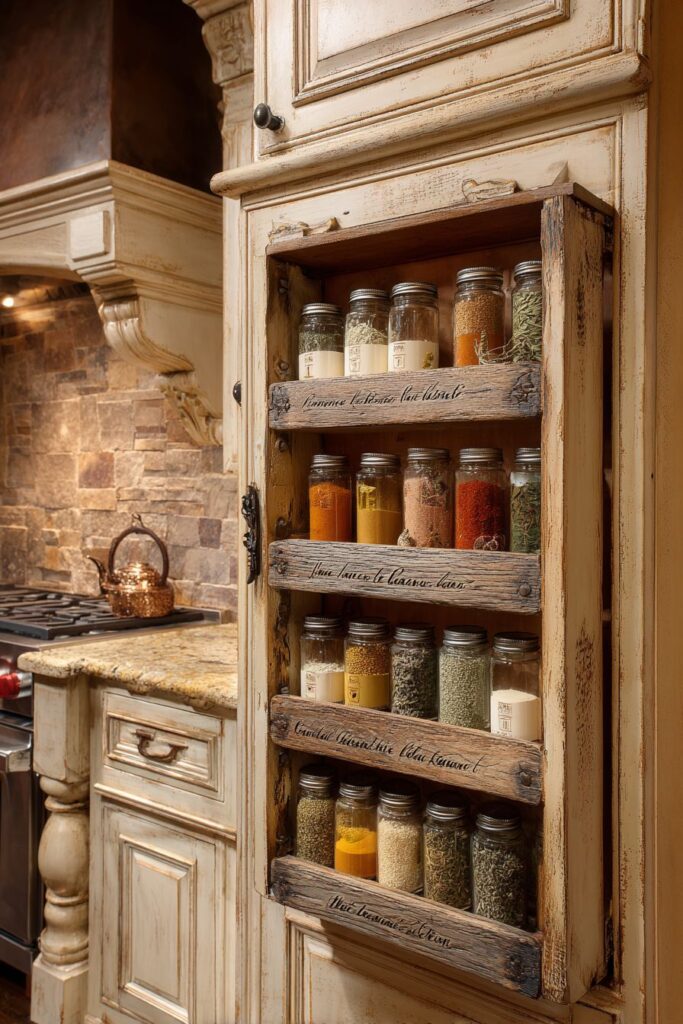
Natural limestone countertops feature subtle fossil inclusions that speak to the stone’s geological origins while providing practical work surfaces that improve with age and use. These natural elements add visual interest and educational opportunities while connecting the kitchen to earth-centered design principles. The limestone’s soft color palette coordinates beautifully with the sage green cabinetry while providing neutral backgrounds for food preparation and display.
Open shelving interrupts the cabinet run to display earthenware crocks and copper molds, creating opportunities to showcase collections while maintaining easy access to frequently used items. These collections serve both decorative and functional purposes, demonstrating the French country principle of finding beauty in everyday necessities. The varied textures, shapes, and patinas of these pieces create visual interest while telling stories of traditional cooking methods and food preservation techniques.
Key Design Tips:
- Choose sage green cabinet paint for sophisticated color alternatives to traditional cream
- Install glass-front upper cabinets to display pottery and glassware collections
- Use antique brass hardware with authentic patina for quality metallic accents
- Select limestone countertops with fossil inclusions for geological interest
- Display earthenware crocks and copper molds for functional decoration
- Embrace weathered finishes that show gentle aging and authentic character
16. The Grand Farmhouse Table Centerpiece
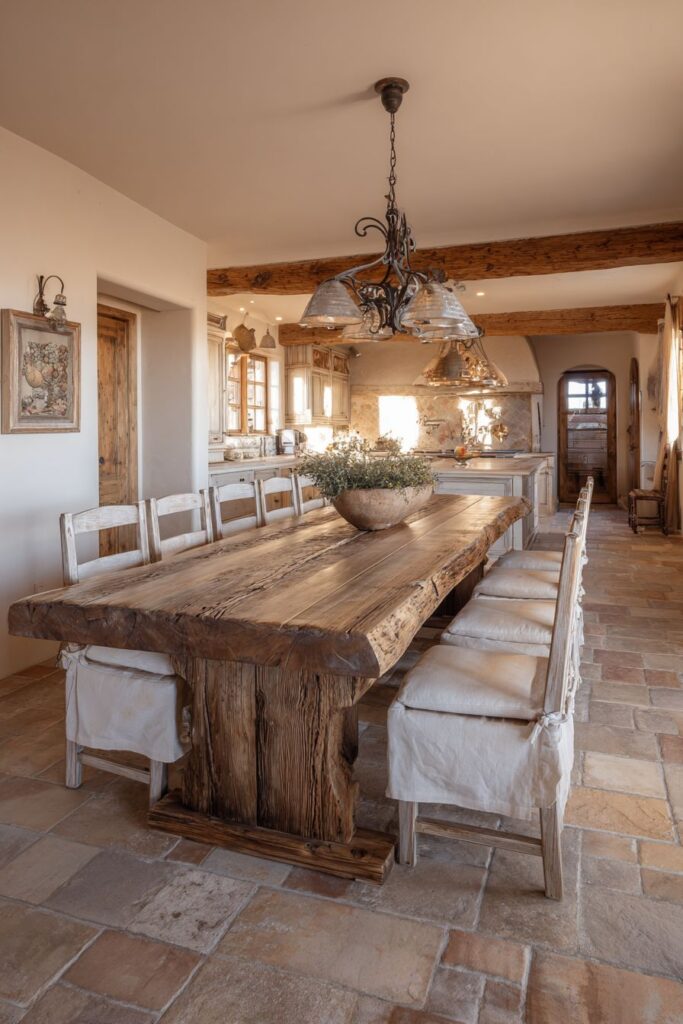
This impressive kitchen centers around a magnificent farmhouse table crafted from thick oak planks with natural edge details that showcase the wood’s original form and inherent beauty. This substantial piece serves as both a functional workspace and a gathering point for family meals, embodying the French approach to furniture where pieces are built to last generations while becoming more beautiful with age and use. The table’s generous proportions provide ample space for large gatherings while its rustic construction maintains the informal elegance that characterizes French country style.
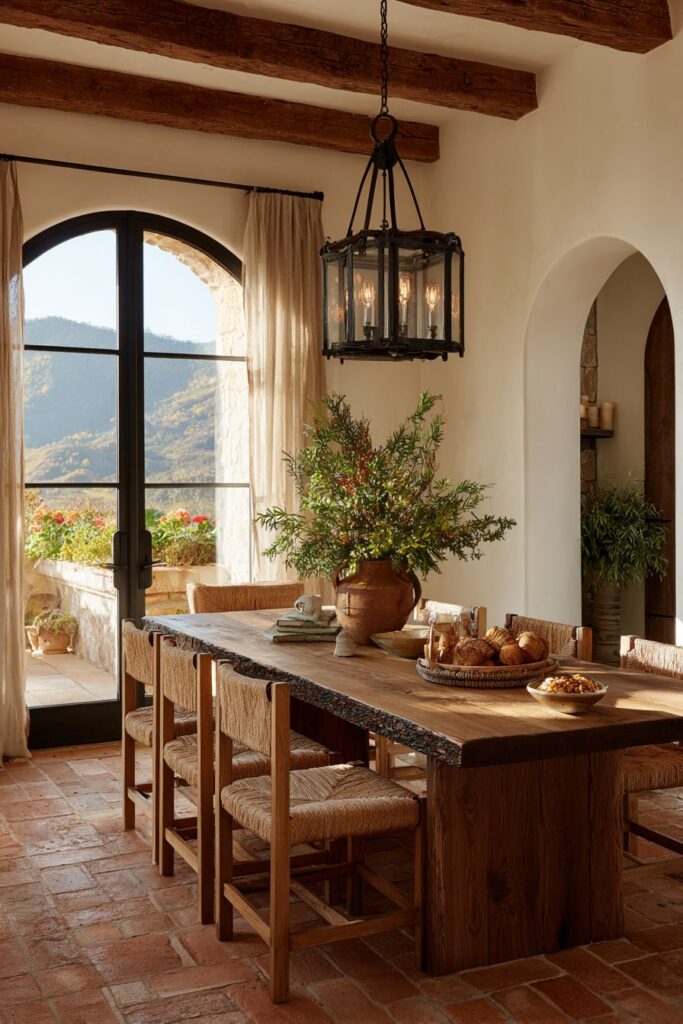
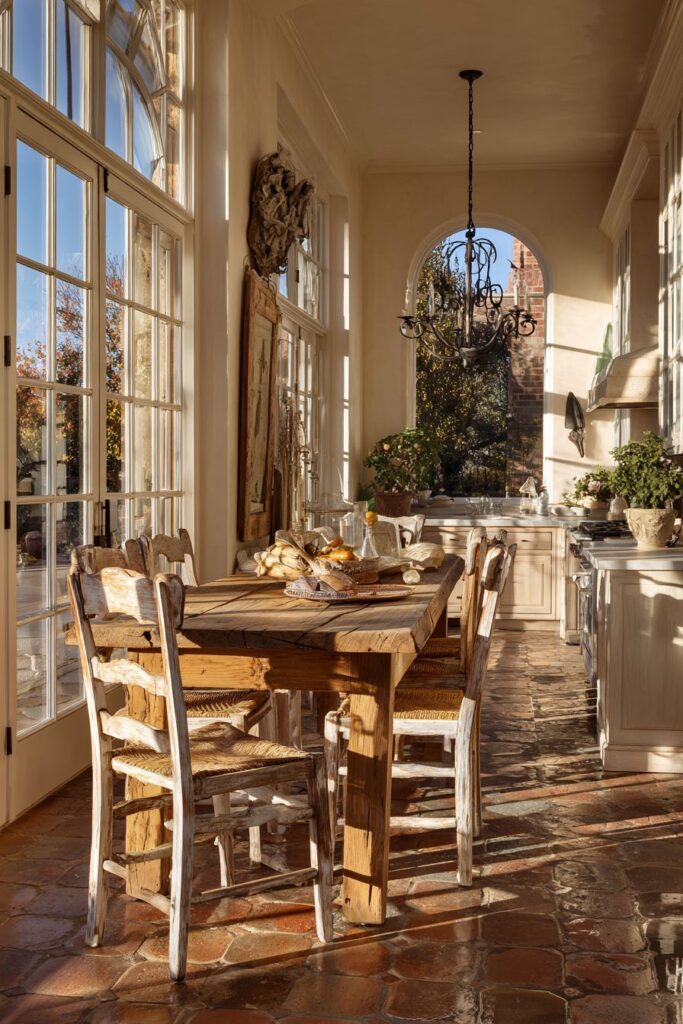
Vintage wooden chairs with rush seats in weathered cream paint surround the table, creating seating arrangements that appear collected over time rather than purchased as matching sets. This approach to furnishing reflects the French country philosophy of valuing character and history over uniformity, where each piece brings its own story and personality to the composition. The rush seats develop beautiful patinas over time while providing comfortable seating that improves with age and use.
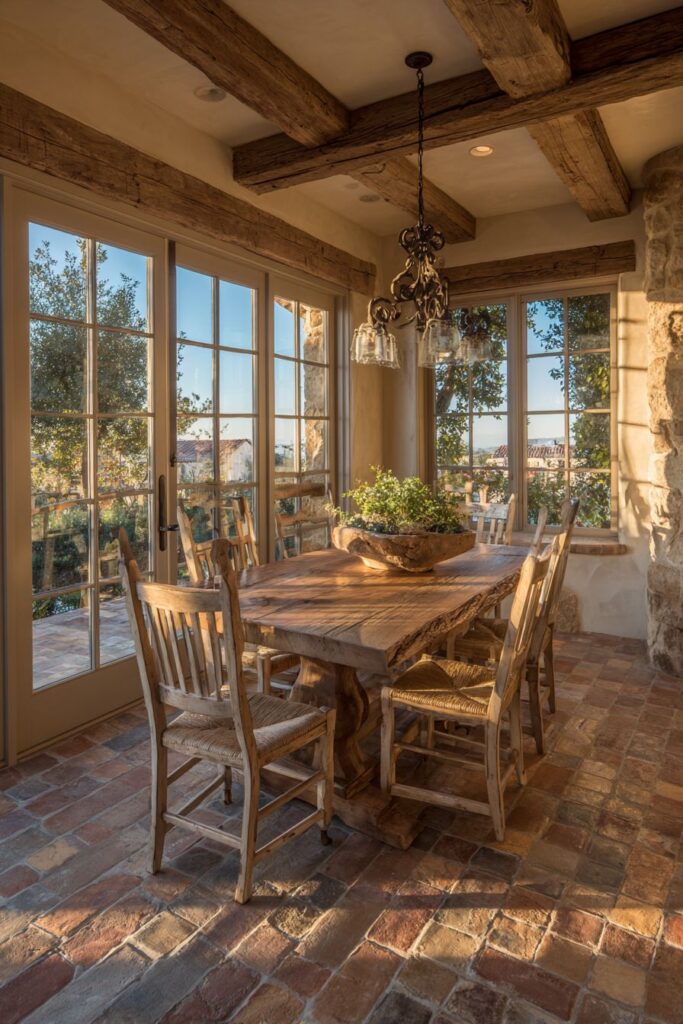
A wrought iron chandelier with glass shades provides ambient lighting that transforms the area from a daytime workspace into an intimate evening dining room. The hand-forged metalwork showcases traditional blacksmithing techniques while the glass shades protect flame or bulbs while diffusing light throughout the space. This lighting fixture serves as both a functional element and a decorative focal point that anchors the dining area within the larger kitchen space.
Terra cotta floor tiles with natural color variations add warmth while providing durable surfaces that develop beautiful patinas over time. The handmade tiles show subtle irregularities that mark authentic craftsmanship, while their natural clay composition creates floors that feel organic and connected to traditional building methods. These tiles improve with age, developing rich patinas that enhance rather than diminish their natural beauty.
Key Design Tips:
- Choose substantial oak farmhouse tables with natural edge details for authentic character
- Use vintage wooden chairs with rush seats for comfortable, characterful seating
- Install wrought iron chandeliers with glass shades for ambient lighting
- Select terra cotta tiles with natural color variations for warm, durable flooring
- Embrace the collected-over-time aesthetic rather than coordinated perfection
- Design generous gathering spaces that accommodate large family meals and celebrations
17. The Organized Spice Storage Solution
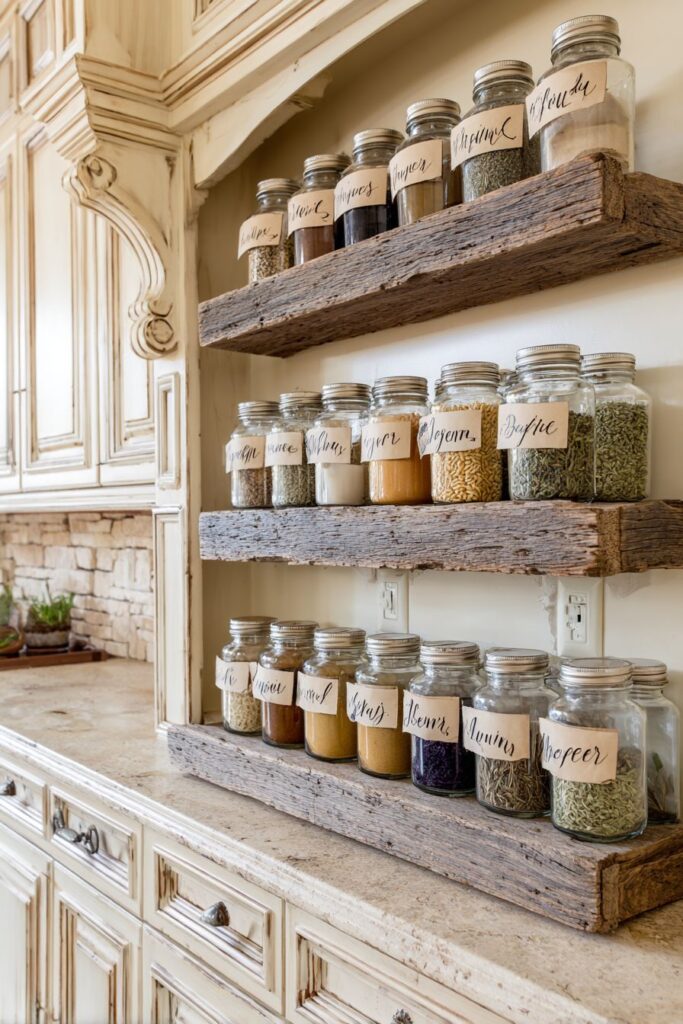
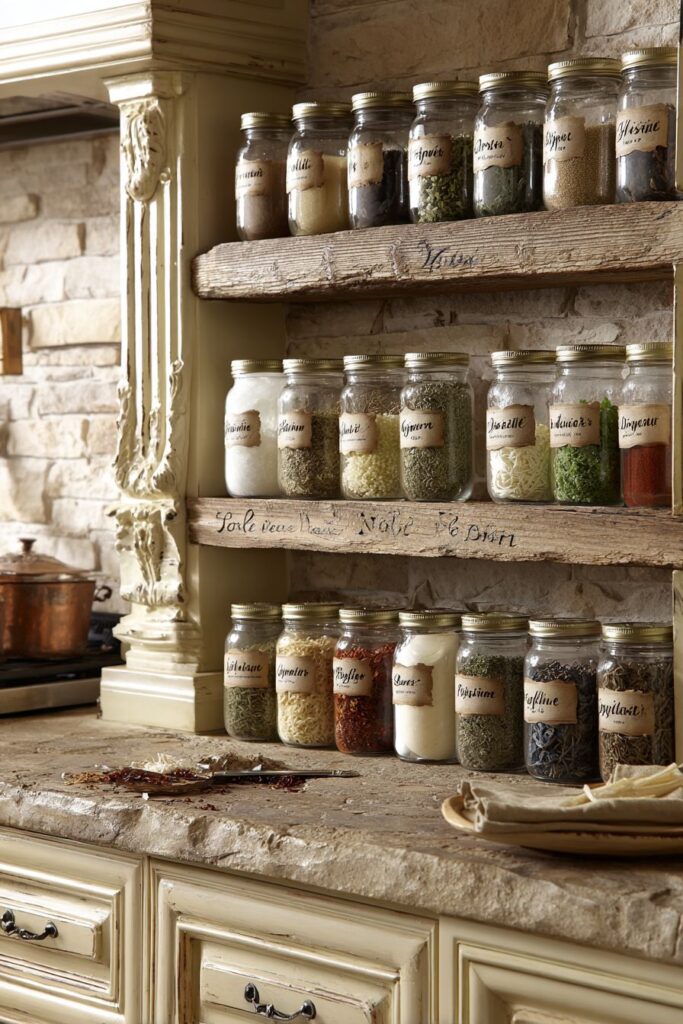
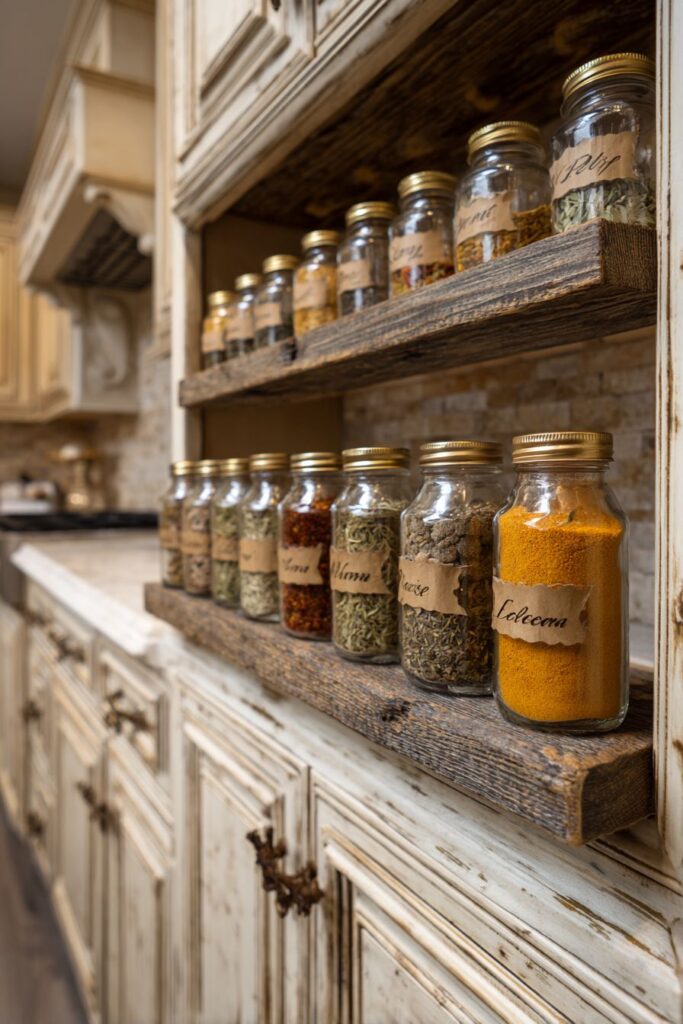
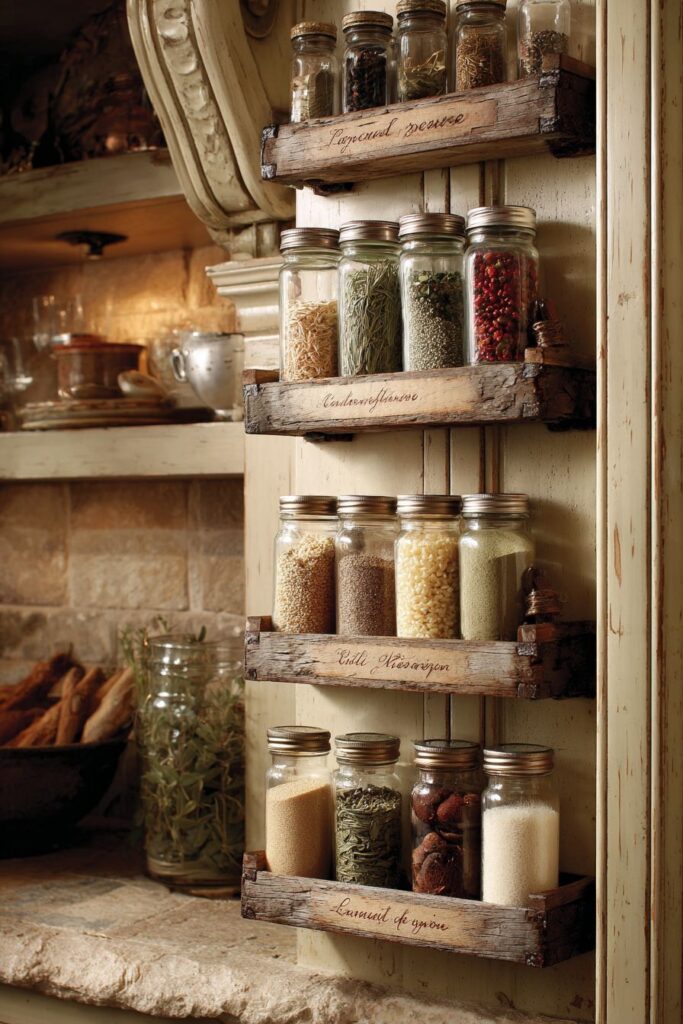
This thoughtfully designed storage area features built-in spice storage with small glass jars displaying colorful spices and dried herbs arranged on weathered wooden shelves, transforming necessary kitchen storage into an attractive and practical organization system. The transparent jars allow easy identification of contents while creating colorful displays that change with seasonal cooking needs and ingredient availability. Hand-written labels in French add authentic charm while providing practical identification for family members and guests who might assist with cooking tasks.
The surrounding cabinetry features raised panel doors in cream paint with gentle distressing that reveals hints of wood grain beneath the painted surface. These cabinet doors demonstrate traditional millwork techniques where individual panels were fitted into substantial frames using time-tested joinery methods. The distressed finish shows gentle wear patterns that develop naturally through daily use, creating authentic aging that cannot be artificially replicated through manufacturing processes.
Natural stone backsplash provides neutral texture while protecting wall surfaces from cooking splashes and moisture. The stone’s natural variations in color and texture create visual interest without competing with the colorful spice displays, while the material’s inherent durability ensures easy maintenance and long-term performance. This material choice connects the storage area to the earth-centered design principles that underlie French country aesthetics while providing practical benefits for kitchen applications.
The weathered wooden shelves show natural grain patterns and gentle wear that speaks to years of use and care, creating storage surfaces that become more beautiful over time. The wood’s natural properties provide stable platforms for spice storage while the aged finish complements other weathered elements throughout the kitchen. These shelves demonstrate traditional carpentry techniques where substantial materials were crafted to provide generations of reliable service.
Key Design Tips:
- Create built-in spice storage using small glass jars for visibility and organization
- Add hand-written French labels for authentic charm and practical identification
- Use raised panel cabinet doors with gentle distressing for traditional character
- Install natural stone backsplashes for neutral texture and practical protection
- Choose weathered wooden shelves that show natural grain and authentic aging
- Organize spices by color and frequency of use for both beauty and functionality
18. The Traditional Baker’s Rack Display
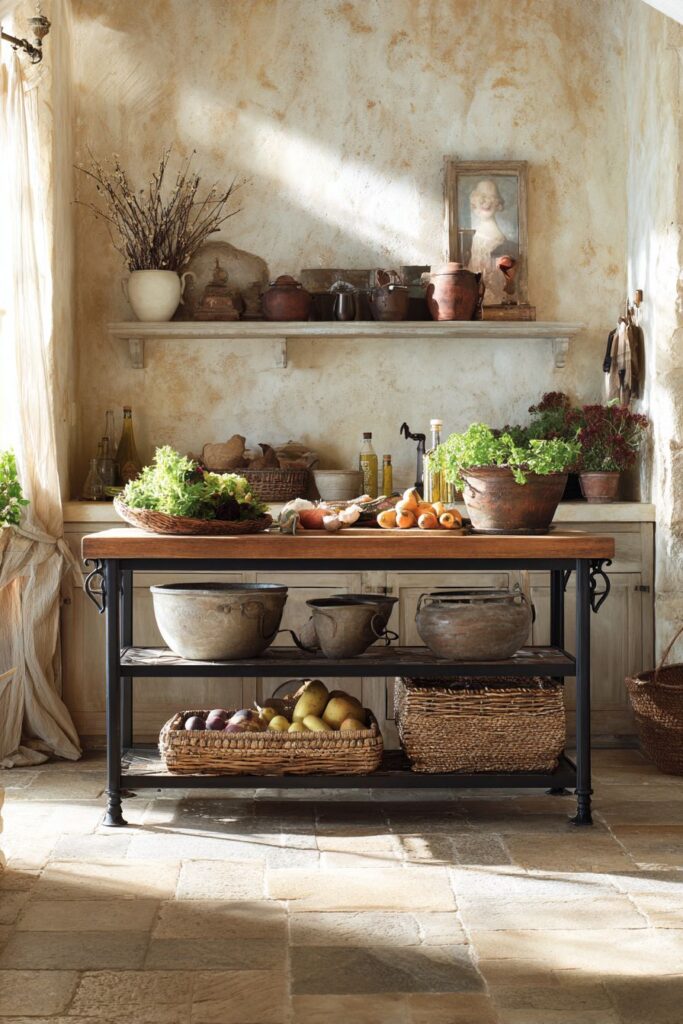
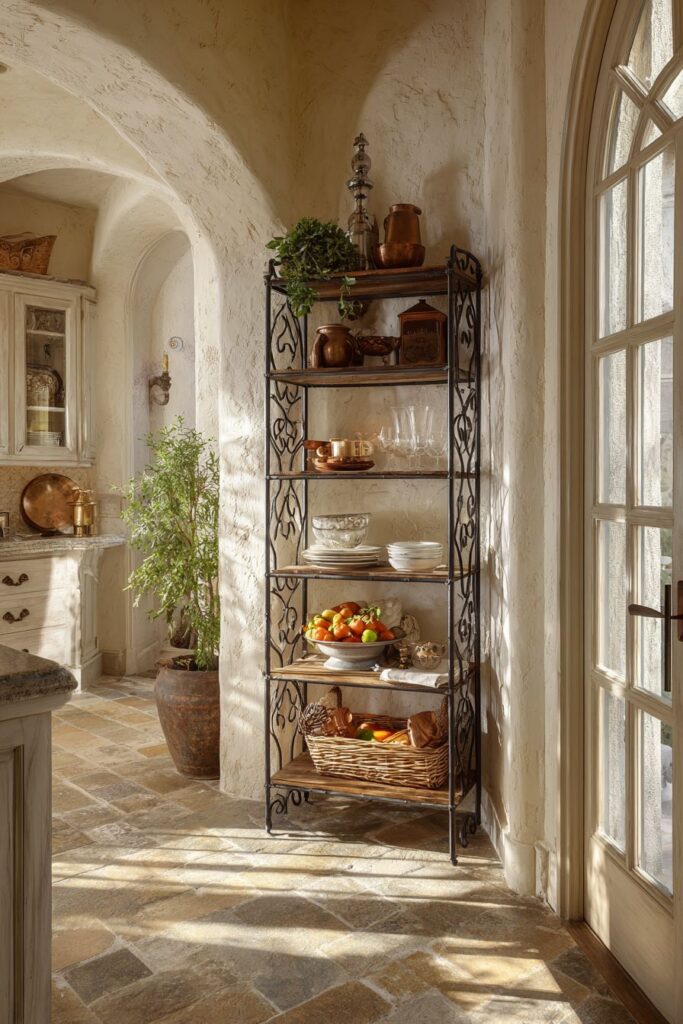
This charming kitchen corner features a traditional baker’s rack crafted from wrought iron with wooden shelves, creating a freestanding storage and display piece that embodies the French country principle of combining beauty with functionality. The wrought iron construction demonstrates traditional blacksmithing techniques with hand-forged details that add authenticity and character to the functional design. This substantial piece provides flexible storage that can be moved and rearranged as needs change, while maintaining the permanent appearance of built-in storage.
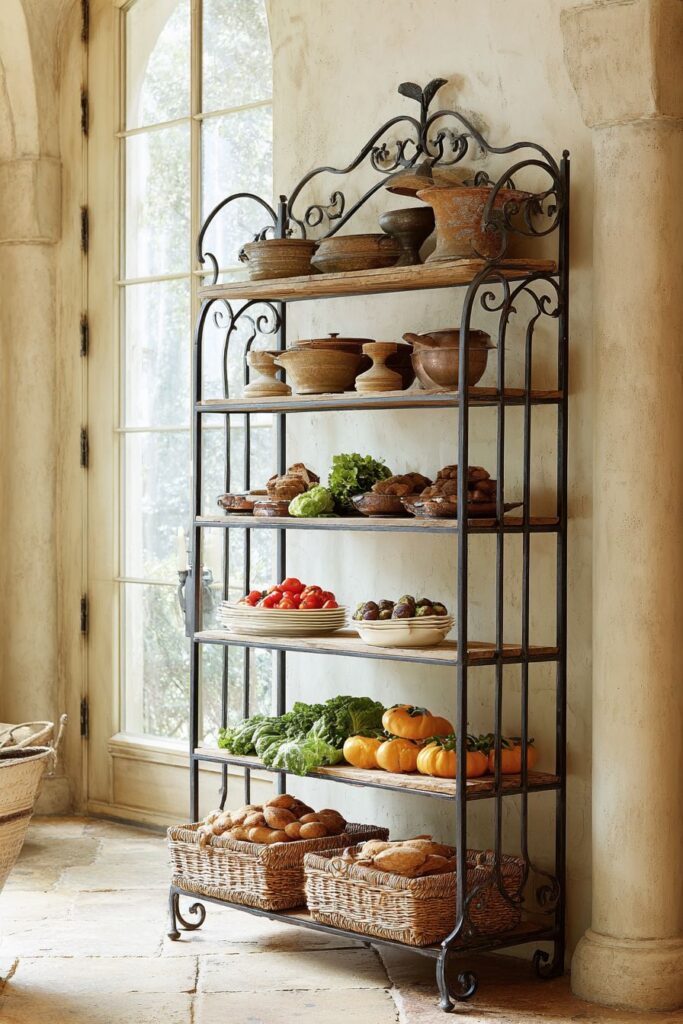
The wooden shelves display vintage pottery, copper molds, and fresh produce in woven baskets, creating arrangements that serve both decorative and practical purposes. These collections tell stories of French culinary traditions while providing easy access to frequently used items. The varied textures, shapes, and colors of the displayed objects create visual interest while demonstrating the French approach to finding beauty in everyday necessities.
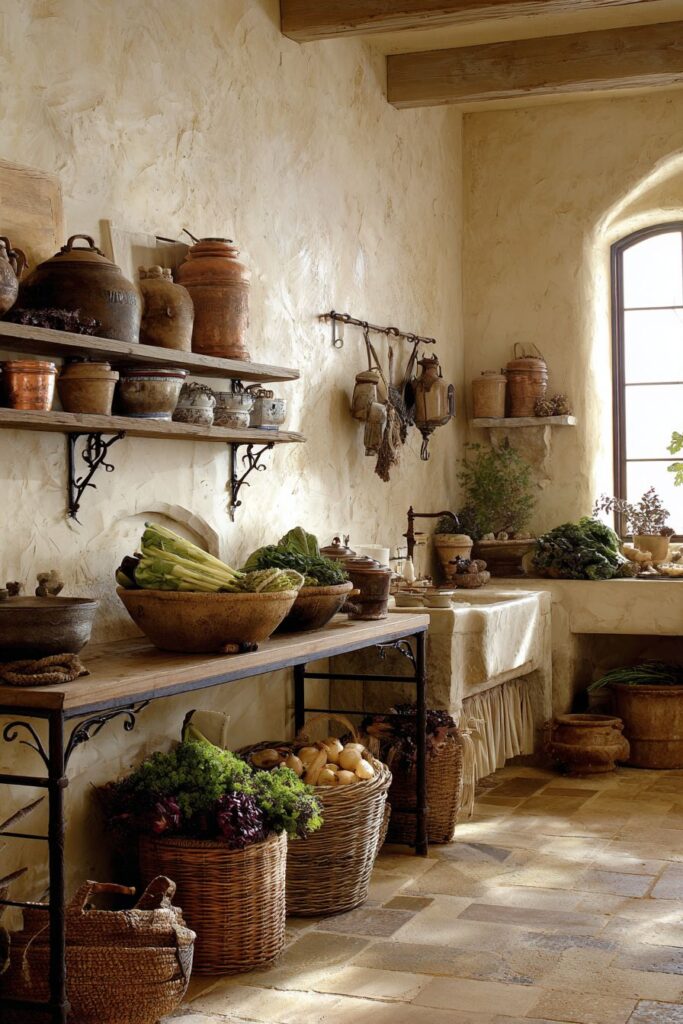
The piece stands against cream plaster walls with subtle texture variations that provide neutral backgrounds for the displayed collections while maintaining the soft, organic quality that characterizes authentic French country interiors. The plaster’s hand-applied finish creates subtle shadows and highlights that change throughout the day, adding visual interest while connecting the space to traditional building techniques.
Natural stone flooring extends throughout the space, providing continuity with other kitchen areas while offering durability and easy maintenance. The stone’s natural variations in color and texture create visual interest underfoot while the material’s thermal mass helps moderate temperature fluctuations throughout the day and season.
Key Design Tips:
- Install traditional baker’s racks for flexible storage that combines beauty with function
- Display vintage pottery and copper molds for authentic French country collections
- Use woven baskets for fresh produce storage that adds natural texture
- Choose cream plaster walls with subtle texture for neutral display backgrounds
- Select wrought iron construction with wooden shelves for authentic material combinations
- Position freestanding pieces to create focal points while maintaining flexibility
19. The Copper Sink Treasure
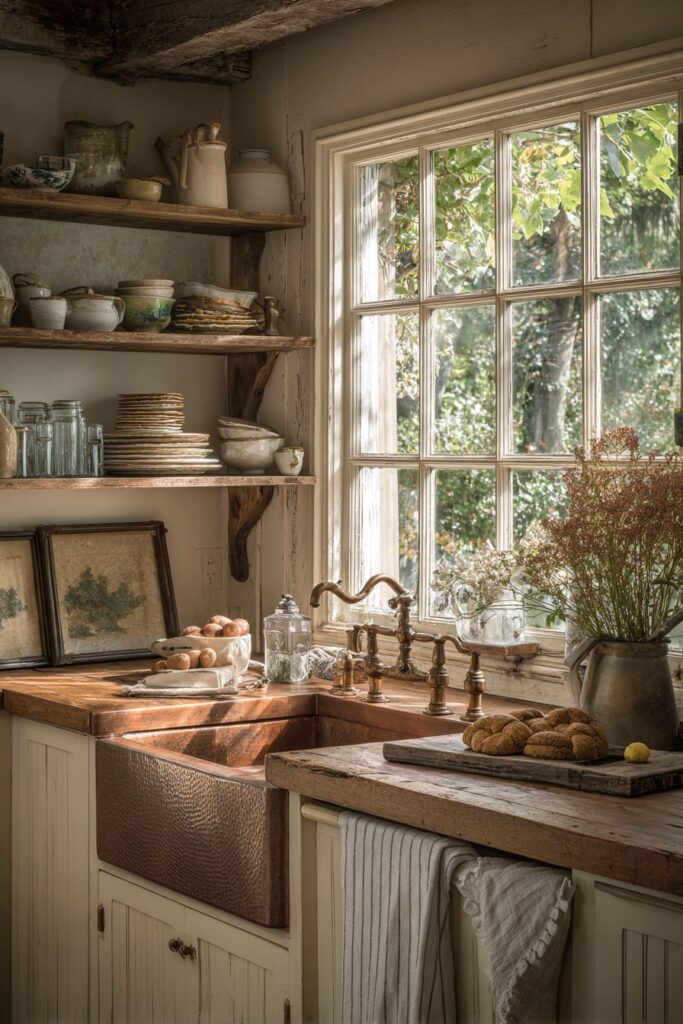
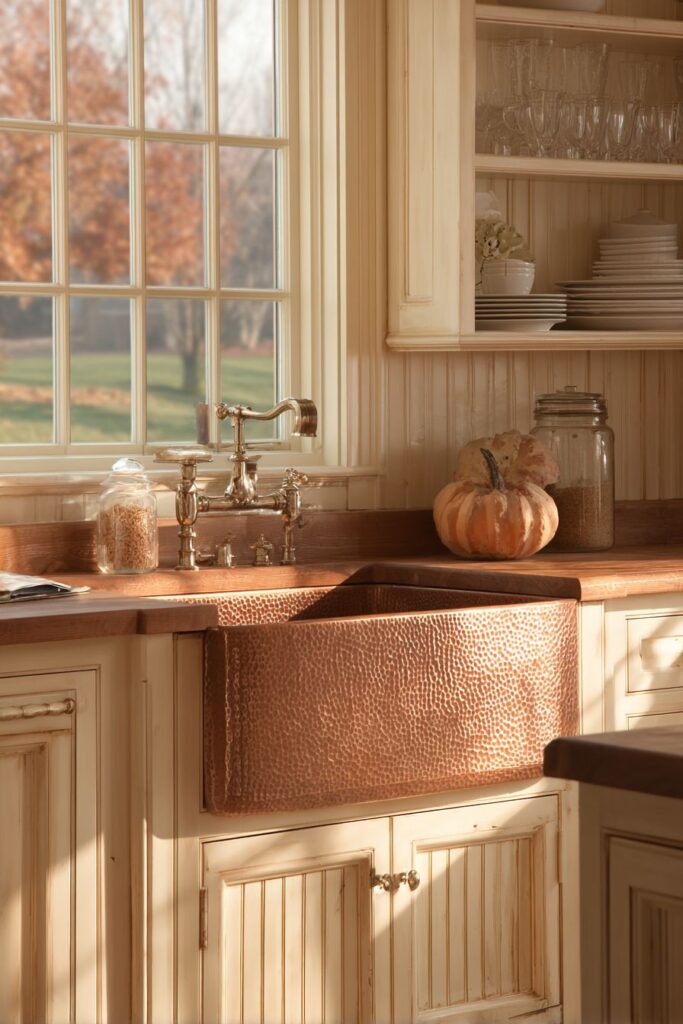
This distinctive kitchen features a vintage-style copper sink with aged patina positioned beneath a window with divided light panes, creating a washing station that serves as both a functional necessity and a decorative focal point. The copper’s warm tones develop beautiful patinas over time, becoming more lustrous and characterful with proper care and daily use. This material choice demonstrates the French country commitment to selecting materials that improve with age rather than deteriorate, creating surfaces that become more valuable and beautiful over time.
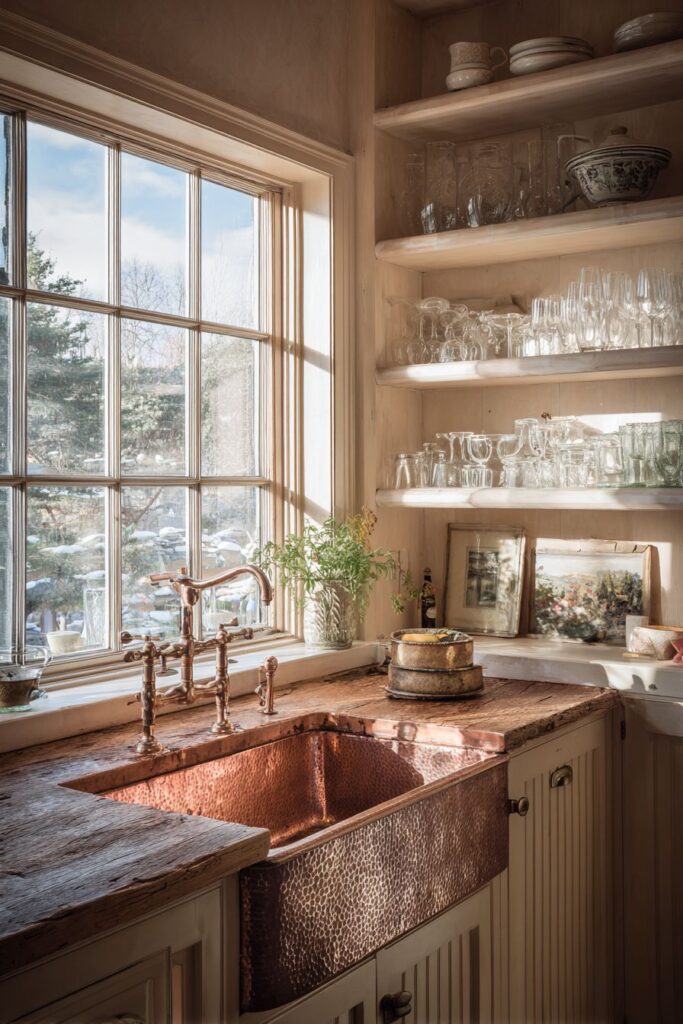
Weathered wooden countertops show natural grain variations and gentle wear from daily use, their honey tones complementing the copper sink while providing practical work surfaces around the washing area. The wood develops beautiful patinas through proper maintenance and regular use, becoming more lustrous and smooth while showing the gentle wear patterns that speak to years of meal preparation and cleanup activities.
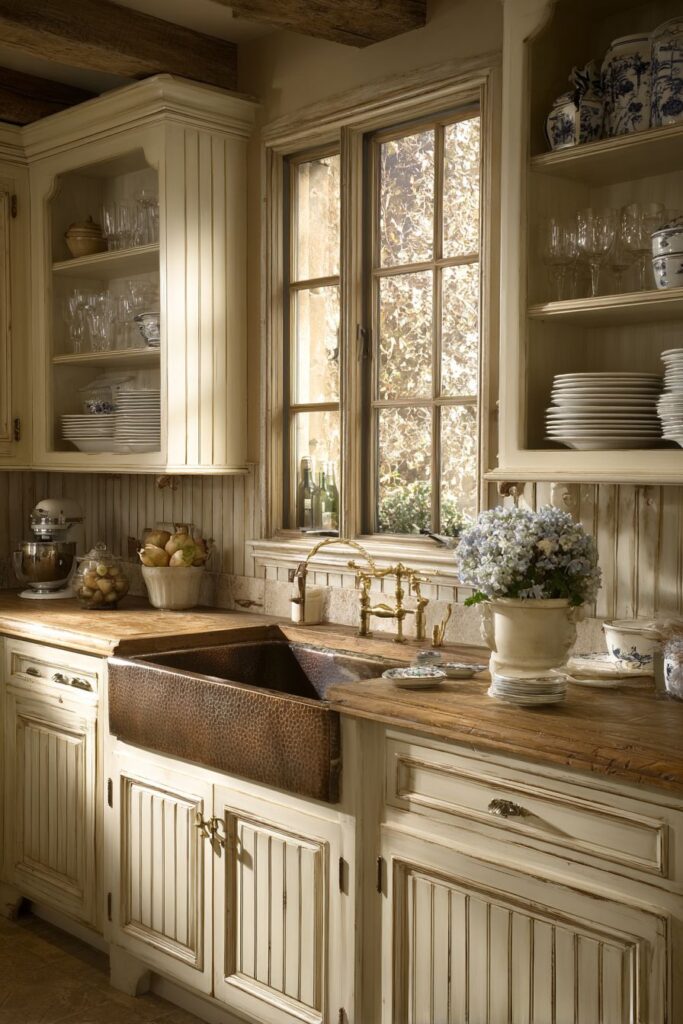
Open shelving displays everyday dishes and glassware in arrangements that keep frequently used items easily accessible while creating attractive displays of necessary kitchen equipment. This storage approach eliminates the visual weight of solid cabinet doors while allowing collections to become decorative elements that contribute to the kitchen’s authentic French country atmosphere.
Cream-colored cabinetry with beadboard detailing provides storage below while maintaining the traditional millwork aesthetic that defines French country interiors. The beadboard construction adds texture and visual interest while demonstrating traditional carpentry techniques where individual boards were carefully fitted together to create seamless surfaces.
Key Design Tips:
- Choose copper sinks with aged patina for distinctive washing stations that develop character
- Install divided light windows to frame sink areas with traditional architectural details
- Use weathered wooden countertops that show natural grain and authentic aging
- Display everyday dishes on open shelving for functional decoration
- Select cream cabinetry with beadboard details for traditional millwork authenticity
- Position sinks beneath windows for natural light and outdoor views during cleanup tasks
20. The Cozy Fireside Gathering Space
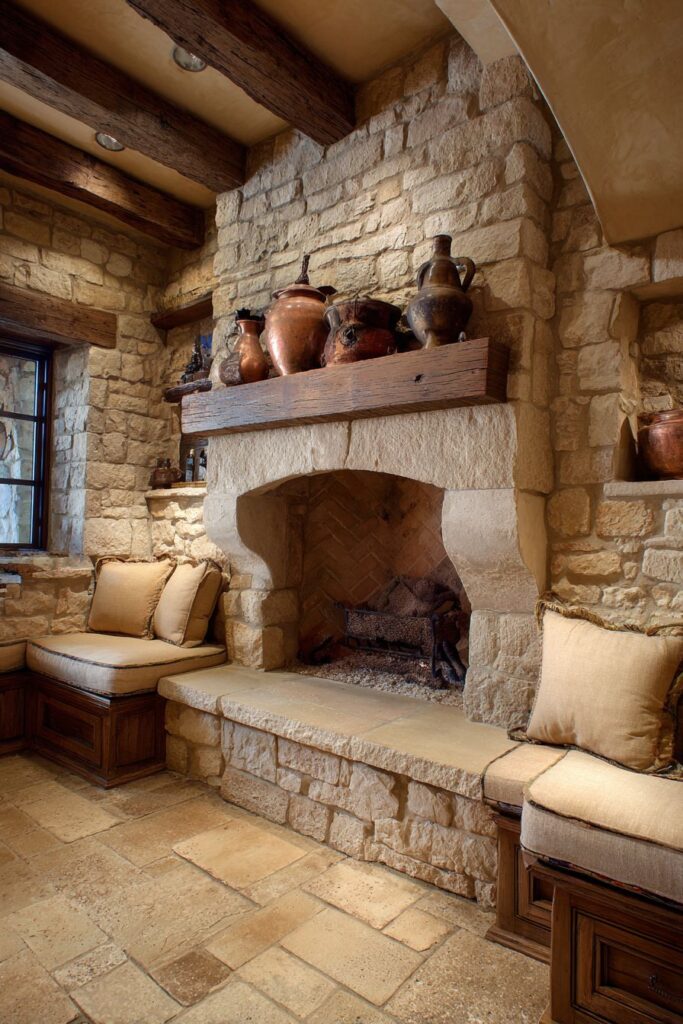
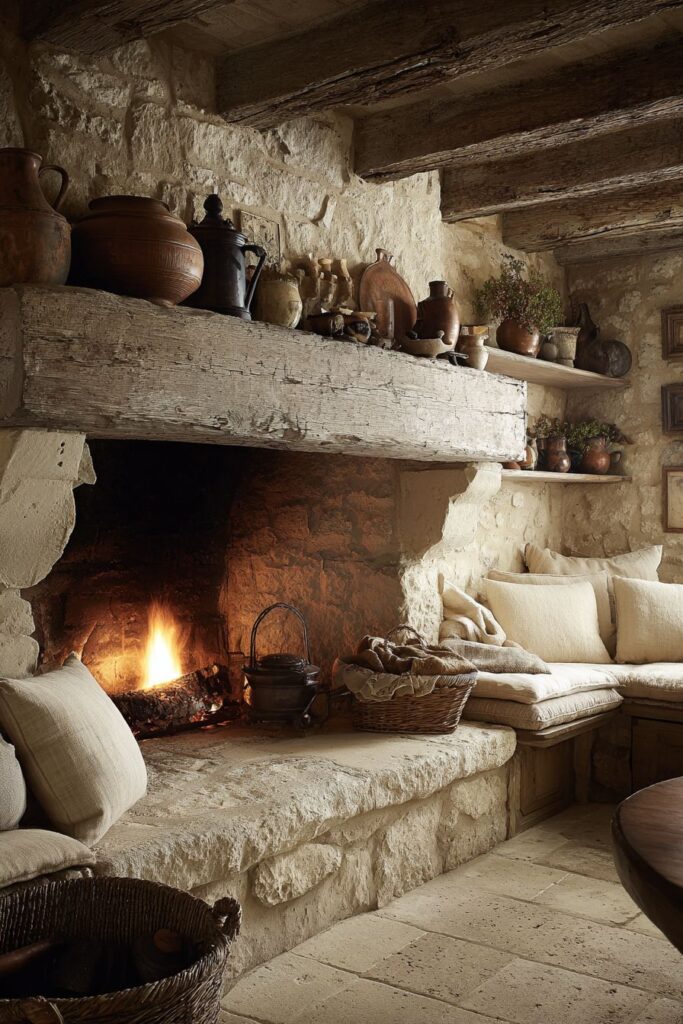
This remarkable kitchen incorporates a traditional stone fireplace with a rustic wooden mantel that displays vintage pottery and copper vessels, creating a gathering space that extends the kitchen’s function beyond mere food preparation into the realm of family comfort and entertainment. The stone fireplace demonstrates traditional masonry techniques while providing both warmth and visual anchor for the kitchen’s social activities. This substantial architectural feature connects the space to centuries-old traditions of gathering around fires for warmth, cooking, and companionship.
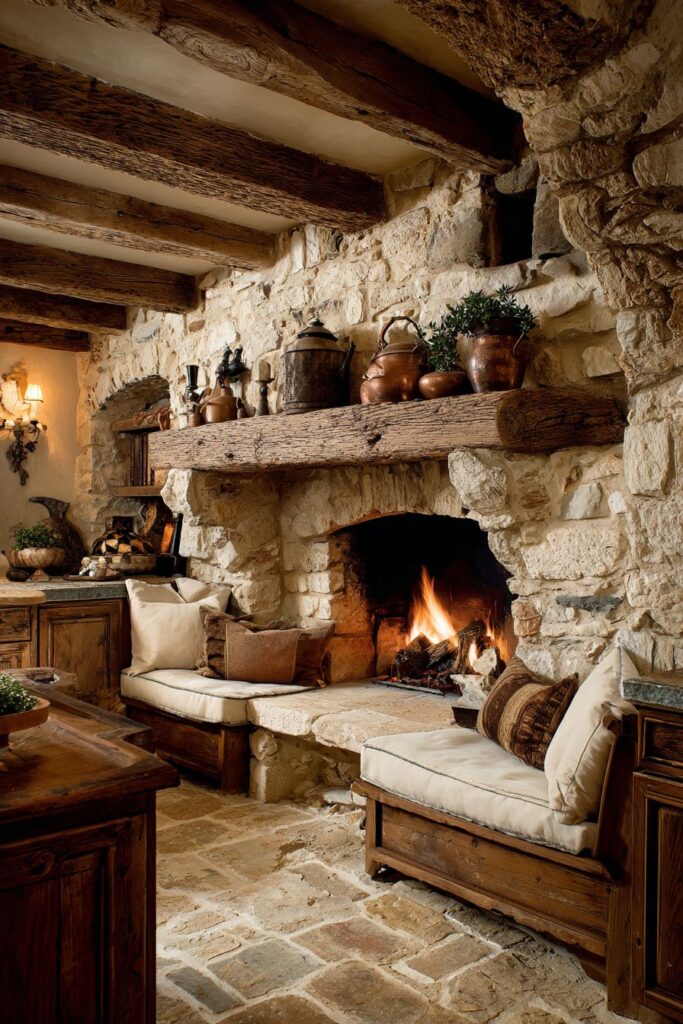
Built-in wooden seating with cream linen cushions flanks the hearth, creating comfortable spots for morning coffee, casual conversations, or supervised cooking lessons with children and grandchildren. This seating arrangement maximizes the fireplace’s warmth and ambiance while providing flexible gathering spaces that accommodate various family activities throughout the day and season.
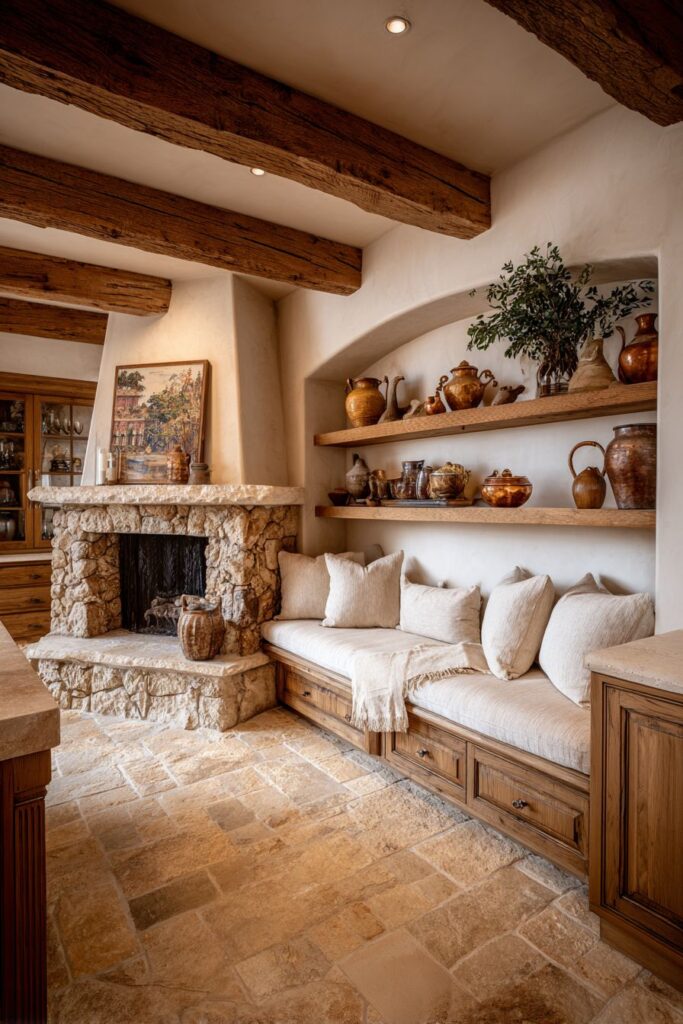
Natural stone flooring extends throughout the space with subtle color variations that add authentic texture while providing excellent thermal mass that works with the fireplace to moderate temperature fluctuations. The stone’s natural properties make it an ideal material for areas around fire features, while its inherent beauty connects the space to traditional building methods and earth-centered design principles.
Exposed ceiling beams add architectural interest above while providing additional opportunities for hanging storage and decorative elements. These structural members demonstrate traditional timber framing techniques while creating visual connections between the fireplace area and the rest of the kitchen space.
Key Design Tips:
- Incorporate traditional stone fireplaces for warmth and architectural focal points
- Install built-in seating with comfortable cushions for flexible gathering spaces
- Display pottery and copper vessels on mantels for authentic decoration
- Use natural stone flooring for thermal mass and traditional building connections
- Add exposed ceiling beams for architectural interest and hanging storage opportunities
- Design fireside areas that accommodate various family activities and social functions
Why French Country Kitchens Represent the Pinnacle of Kitchen Design
French country kitchens consistently rank among the most desirable kitchen styles because they successfully balance sophistication with comfort, tradition with functionality, and beauty with practicality. These spaces demonstrate how authentic materials, traditional craftsmanship, and thoughtful design principles can create environments that feel both elegant and welcoming, formal yet relaxed, substantial yet warm.
The enduring appeal of French country kitchen design lies in its commitment to quality materials that improve with age rather than deteriorate over time. Natural stone countertops develop beautiful patinas, copper cookware becomes more lustrous, wooden surfaces grow smoother and more characterful, and ceramic tiles show the gentle wear patterns that speak to years of family use and enjoyment. This approach to material selection creates kitchens that become more valuable and beautiful as they age, rather than requiring constant updating and replacement.
The style’s emphasis on handcrafted elements and traditional techniques connects these kitchens to centuries of culinary tradition while providing the functionality needed for modern family life. Hand-forged wrought iron hardware, hand-painted ceramic tiles, reclaimed wooden beams, and artisanal pottery collections all contribute to spaces that feel authentic and meaningful rather than mass-produced and generic.
French country kitchens excel at creating gathering spaces that accommodate both intimate family meals and large celebrations, demonstrating how thoughtful space planning can enhance social interaction and family bonding. Substantial farmhouse tables, comfortable built-in seating, and flexible furniture arrangements allow these kitchens to adapt to changing needs while maintaining their essential character and charm.
The style’s color palette of soft sage greens, weathered creams, warm terra cottas, and natural wood tones creates environments that feel both sophisticated and restful, providing welcome respites from the intensity of modern life while maintaining the energy and functionality needed for serious cooking and entertaining activities.
Conclusion
French country kitchens represent more than mere design choices – they embody a philosophy of living that values quality over quantity, authenticity over artifice, and comfort over formality. These spaces demonstrate how traditional materials, time-tested techniques, and thoughtful design principles can create environments that serve multiple generations while becoming more beautiful and meaningful with each passing year.
The twenty designs explored in this comprehensive guide showcase the remarkable versatility and enduring appeal of French country kitchen aesthetics, from intimate breakfast nooks to grand gathering spaces, from practical pantry organization to decorative display opportunities. Each element contributes to spaces that feel both sophisticated and welcoming, demonstrating how authentic materials and traditional craftsmanship can enhance daily life while creating lasting value.
Whether you’re planning a complete kitchen renovation or simply seeking inspiration for updating existing spaces, these French country concepts offer timeless solutions that will serve your family well for generations to come. The key lies in selecting quality materials, embracing authentic aging processes, and creating spaces that honor both beauty and functionality in equal measure.
Consider incorporating elements from these designs into your own kitchen, whether through a magnificent farmhouse sink, hand-painted ceramic tiles, reclaimed wooden furniture, or collections of vintage pottery and copper cookware. Remember that French country style develops over time through careful selection and patient nurturing, creating spaces that tell stories and welcome families home to the heart of authentic, comfortable living.
"As an Amazon Associate, I earn from qualifying purchases."
