
In today’s world of compact living spaces and multi-functional homes, the folding dining table has emerged as a hero of interior design. These ingenious pieces of furniture represent the perfect marriage of form and function, offering homeowners the flexibility to adapt their dining spaces to their ever-changing needs. Whether you’re hosting an intimate dinner for two or accommodating a lively family gathering, a well-chosen folding dining table can transform your space with remarkable ease and sophistication.
The beauty of folding dining tables lies not just in their practical versatility, but in their ability to maintain aesthetic appeal while solving real-world space challenges. From tiny studio apartments to sprawling family homes, these adaptable pieces have found their way into diverse living situations, each bringing its own unique design personality. Modern manufacturers have elevated the humble folding table from a purely utilitarian object to a statement piece that can anchor and define a dining space.
The following collection showcases twenty distinct approaches to folding dining table design, each representing a different style philosophy and practical application. These designs span from rustic farmhouse charm to sleek contemporary minimalism, from space-saving studio solutions to elegant formal dining pieces. Each concept demonstrates how thoughtful design can address specific lifestyle needs while contributing to the overall aesthetic harmony of a home.
1. Space-Saving Oak Excellence for Modern Apartments
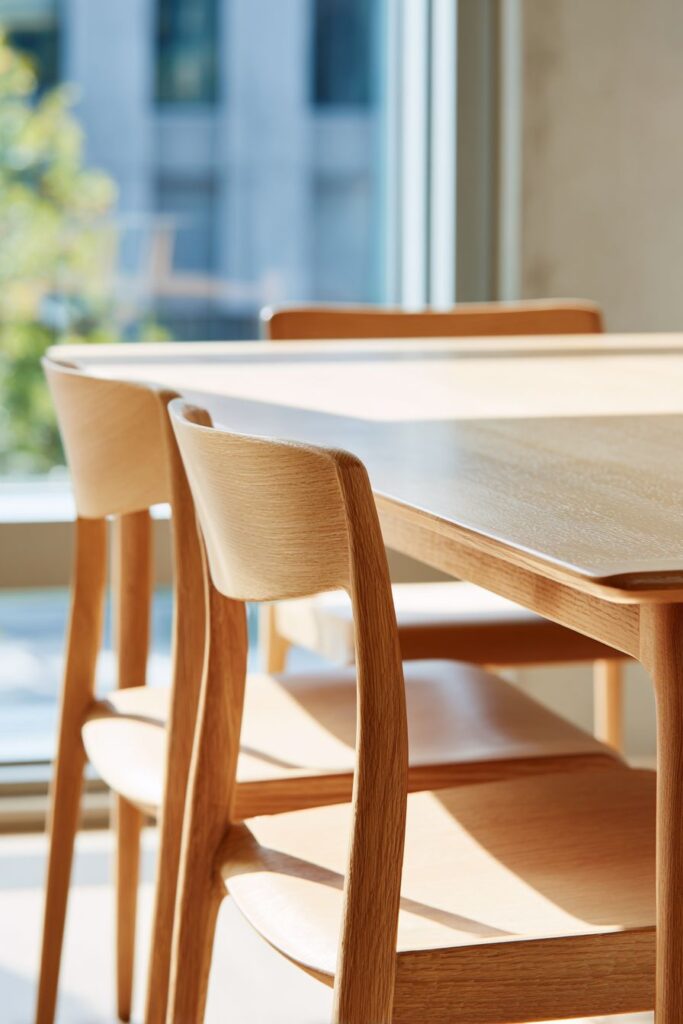
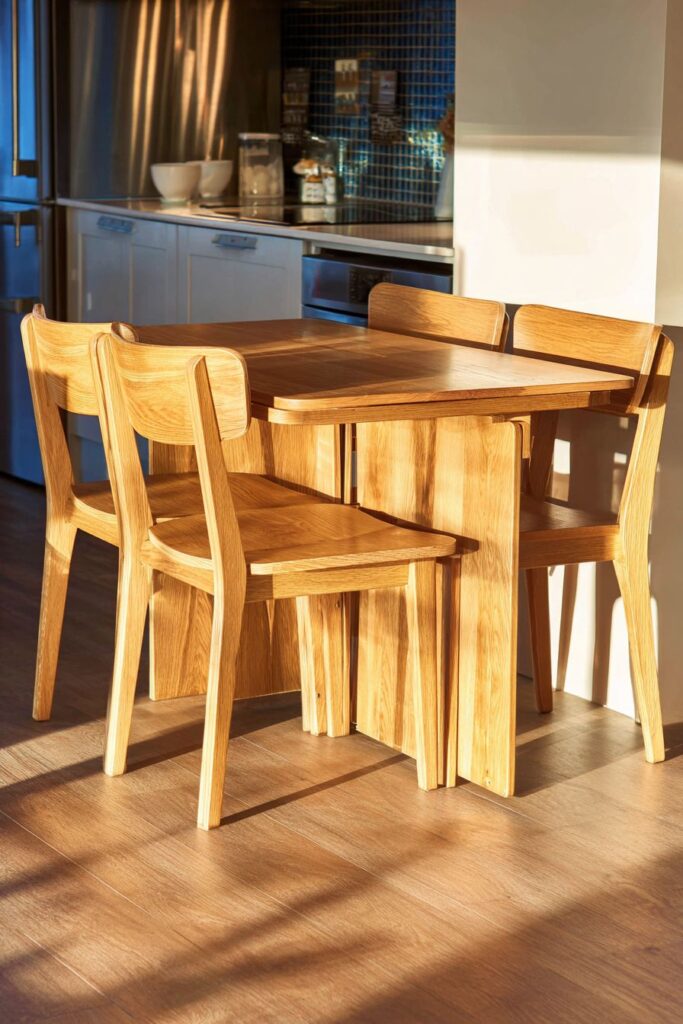
The light oak folding dining table represents the pinnacle of Scandinavian-inspired functionality meeting contemporary urban living. Crafted from sustainably sourced oak with a natural oil finish, this table showcases the wood’s inherent beauty through clean, unadorned lines that speak to modern sensibilities. When positioned in a compact apartment dining area, the table’s warm honey tones create an inviting focal point that draws the eye without overwhelming the space. The precision-engineered folding mechanism operates with whisper-quiet smoothness, allowing the table to transition effortlessly from a space-saving console to a full dining surface for four.
The natural grain patterns in the oak create visual interest while maintaining the clean aesthetic that small spaces demand. Light filtering through nearby windows catches the subtle variations in the wood tone, creating depth and warmth that artificial lighting cannot replicate. The table’s proportions are carefully calculated to provide maximum seating capacity while folded dimensions remain compact enough for even the smallest dining nooks.
Professional interior photographers often highlight this table’s ability to anchor a space without dominating it. The four matching chairs, typically featuring complementary wood tones and streamlined profiles, create a cohesive dining ensemble that feels intentional rather than cramped. The key to success with this design lies in maintaining sight lines and allowing adequate circulation space around the extended table.
Key Design Tips:
- Choose natural oil finishes over lacquer to highlight wood grain authenticity
- Position near natural light sources to maximize the wood’s warm undertones
- Select chairs with similar wood tones but varied textures for visual interest
- Maintain clear pathways around the extended table for comfortable movement
- Use neutral wall colors to let the oak’s natural beauty take center stage
2. Contemporary White Lacquer Sophistication
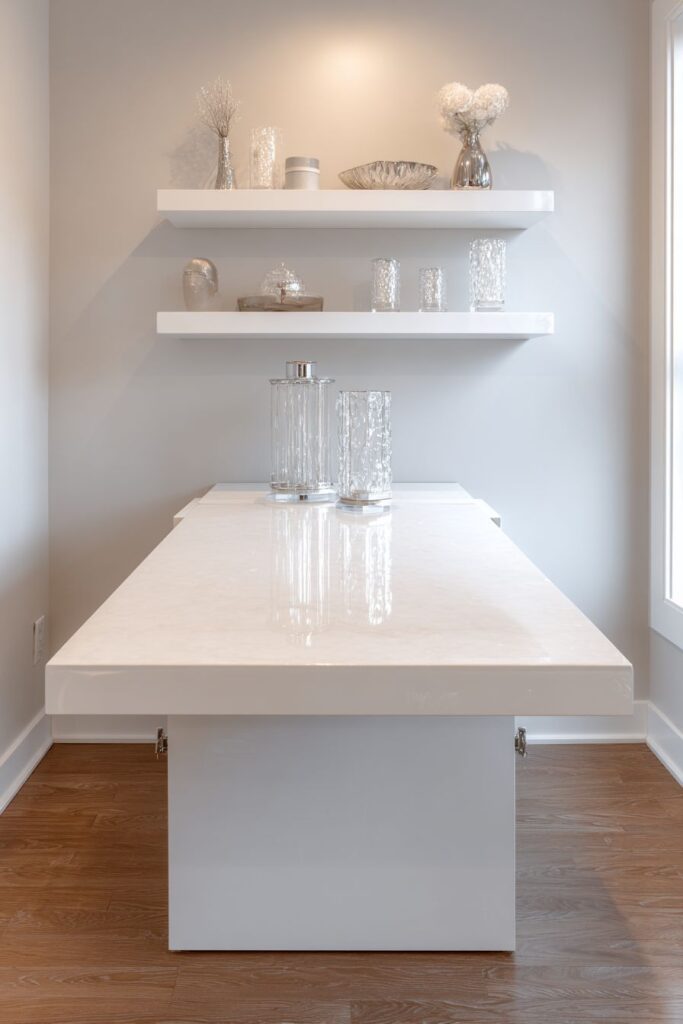
The pristine white lacquered folding dining table embodies minimalist luxury at its finest, serving as both a functional dining surface and a sculptural element in contemporary interiors. This design philosophy embraces the “less is more” principle, where every detail serves a specific purpose while contributing to the overall aesthetic harmony. The high-gloss white finish creates a mirror-like surface that reflects surrounding light, effectively brightening the entire dining area and creating the illusion of expanded space.
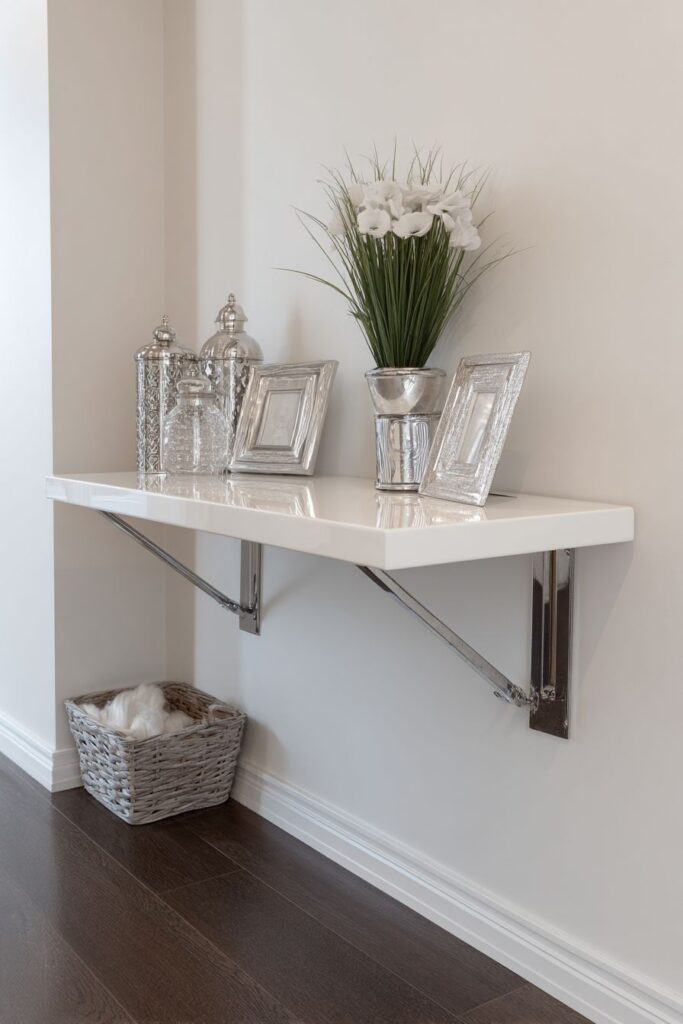
When positioned against neutral walls, this table becomes a stunning focal point that demonstrates how practical furniture can achieve artistic status. The sleek metal hinges and support brackets in brushed steel provide necessary structural integrity while serving as deliberate design accents. These metallic elements catch and reflect light, adding subtle sparkle that elevates the overall sophistication of the piece.
The table’s dual personality shines in its console configuration, where the folded surface becomes a platform for carefully curated decorative objects. This transformation capability makes it ideal for studio apartments and multi-use spaces where furniture must serve multiple functions without compromising style. Professional interior designers often specify this type of table for clients who value clean lines and uncluttered aesthetics.
The engineering behind this table’s folding mechanism represents contemporary furniture design at its most refined. Hidden hardware ensures that functional elements don’t interrupt the clean visual lines, while precision manufacturing allows for smooth operation that will endure years of regular use.
Key Design Tips:
- Use microfiber cloths for cleaning to avoid scratching the glossy surface
- Position away from direct sunlight to prevent yellowing over time
- Choose decorative objects with strong geometric forms for console styling
- Incorporate textural elements through lighting and accessories to add warmth
- Consider the table’s reflective properties when planning room lighting
3. Rustic Reclaimed Wood Character
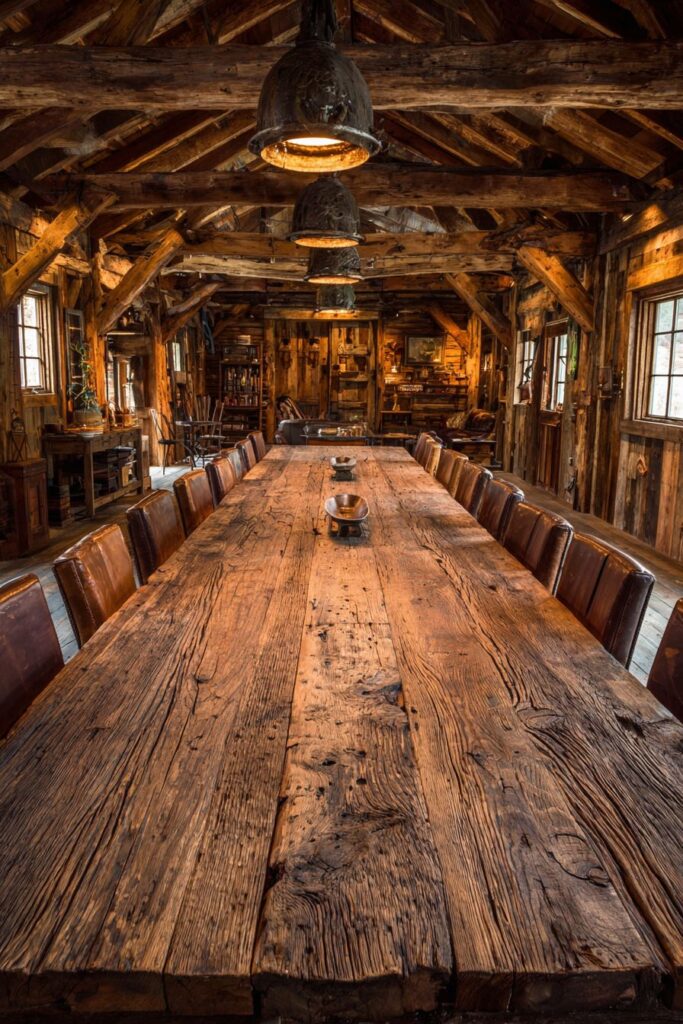
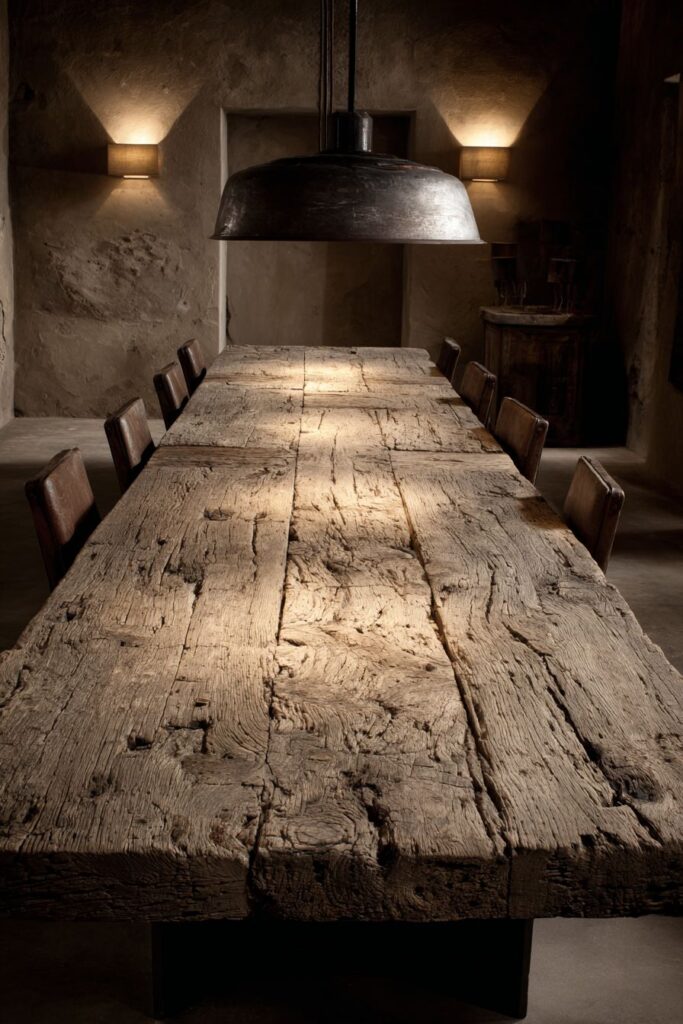
The reclaimed barn wood folding dining table tells a story through every weathered grain line and authentic imperfection, bringing centuries of history into contemporary farmhouse-style kitchens. This design celebrates the beauty of aged materials, where time has enhanced rather than diminished the wood’s character. Each piece of reclaimed timber carries unique markings from its previous life, creating a dining surface that serves as both functional furniture and conversation starter.
The visible weathering patterns and natural imperfections become design features rather than flaws, contributing to an authentic aesthetic that cannot be replicated through artificial aging techniques. When surrounded by mismatched vintage chairs, the table becomes the centerpiece of an eclectic dining arrangement that feels collected over time rather than purchased as a set. This approach to dining room design celebrates individuality and personal expression over coordinated perfection.
Warm pendant lighting above the table creates dramatic shadows that emphasize the rich texture and deep grain patterns inherent in aged wood. The interplay between light and shadow brings the material’s history to life, highlighting nail holes, saw marks, and natural wear patterns that speak to the wood’s agricultural heritage. Professional photographers often use focused lighting to capture these textural details, creating images that convey both the material’s authenticity and its enduring appeal.
The folding mechanism in rustic tables often incorporates traditional joinery techniques alongside modern engineering, creating a hybrid approach that honors craftsmanship while ensuring reliable function. Heavy-duty hinges and support brackets are typically finished in oil-rubbed bronze or black iron to complement the aged wood aesthetic while providing the structural integrity necessary for regular use.
Key Design Tips:
- Embrace imperfections as character features rather than flaws
- Mix chair styles and finishes for an authentic collected look
- Use warm-toned lighting to enhance the wood’s natural patina
- Position table away from high-humidity areas to preserve the wood
- Apply appropriate sealers to protect against stains while maintaining texture
4. Compact Marble-Look Studio Solution
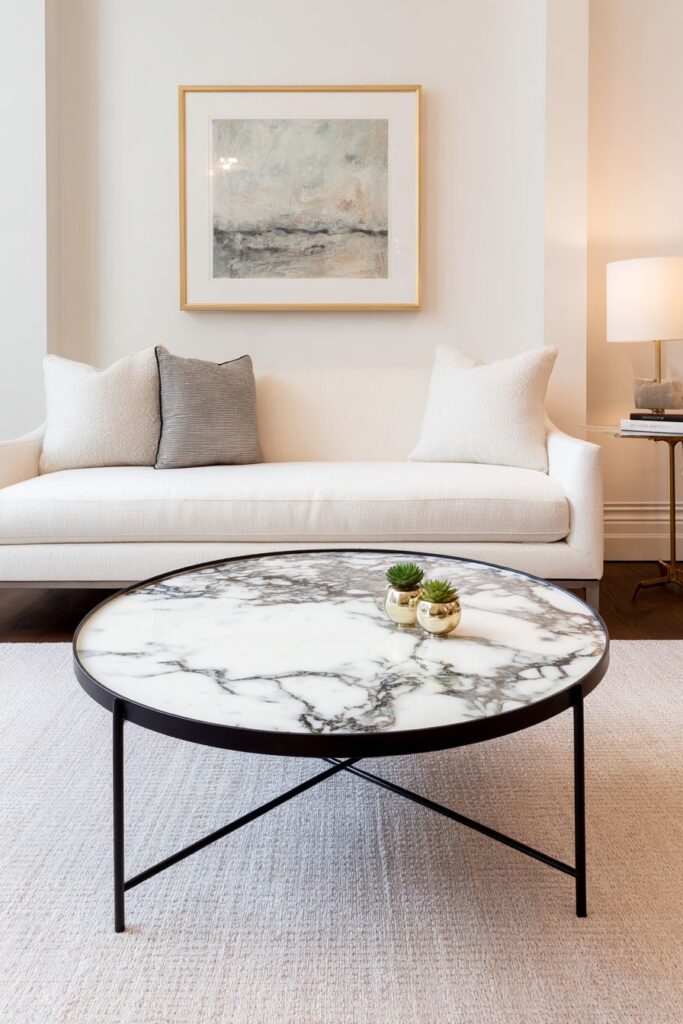
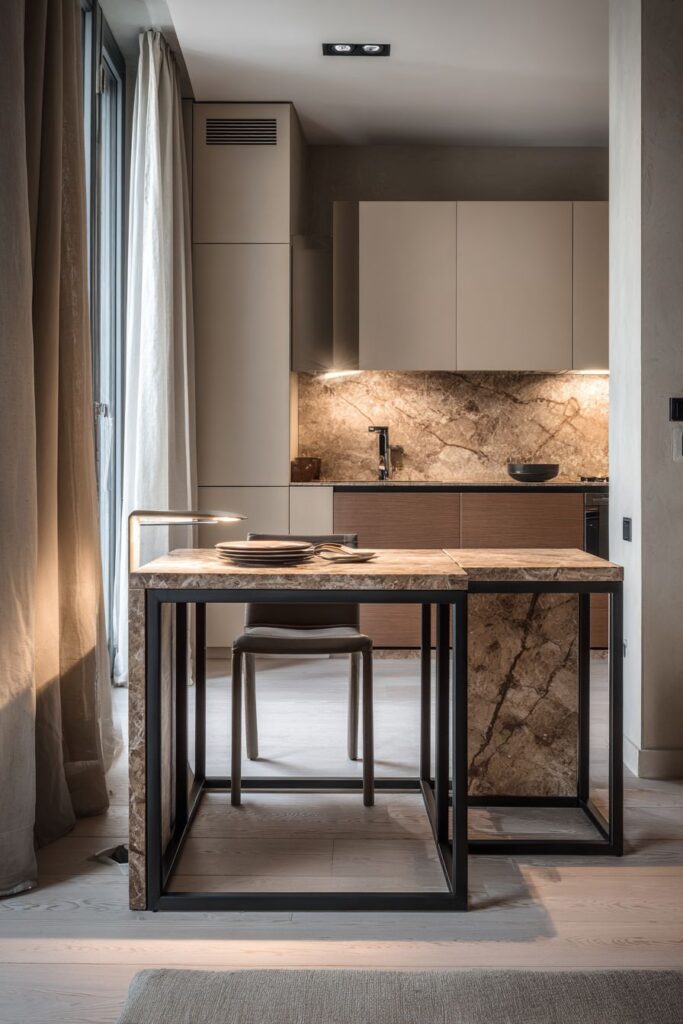
The marble-look folding dining table with its sophisticated black metal frame represents the ultimate in small-space luxury living. This design demonstrates how high-end aesthetics can be achieved in compact studio apartments without sacrificing functionality or style. The engineered marble surface provides the visual impact of natural stone while offering superior durability and stain resistance, making it ideal for daily use in multi-functional living spaces.
The seamless transition from side table to dining surface for four showcases intelligent design thinking that addresses the specific challenges of studio living. When folded, the table occupies minimal floor space while providing a useful surface for everyday items, books, or decorative objects. Extended, it creates a proper dining area that can accommodate intimate dinners or casual entertaining without overwhelming the limited square footage.
The black metal frame provides both structural integrity and visual contrast against the light marble pattern, creating a sophisticated color palette that works well with neutral decor schemes. The powder-coated finish resists scratches and wear while maintaining its matte appearance over time. The frame’s geometric lines echo contemporary architectural elements, creating visual harmony with modern minimalist interiors.
Professional interior photographers often showcase this table’s versatility by capturing it in both configurations within the same space, demonstrating the dramatic transformation possible with well-designed folding furniture. The marble pattern catches and reflects light beautifully, adding visual interest without the weight and expense of natural stone.
Key Design Tips:
- Choose engineered surfaces for durability and consistent patterning
- Use contrast between light tops and dark bases for visual impact
- Position strategically to maximize natural light reflection
- Keep surrounding decor minimal to highlight the table’s sophistication
- Select accessories that complement rather than compete with the marble pattern
5. Traditional Dark Walnut Elegance
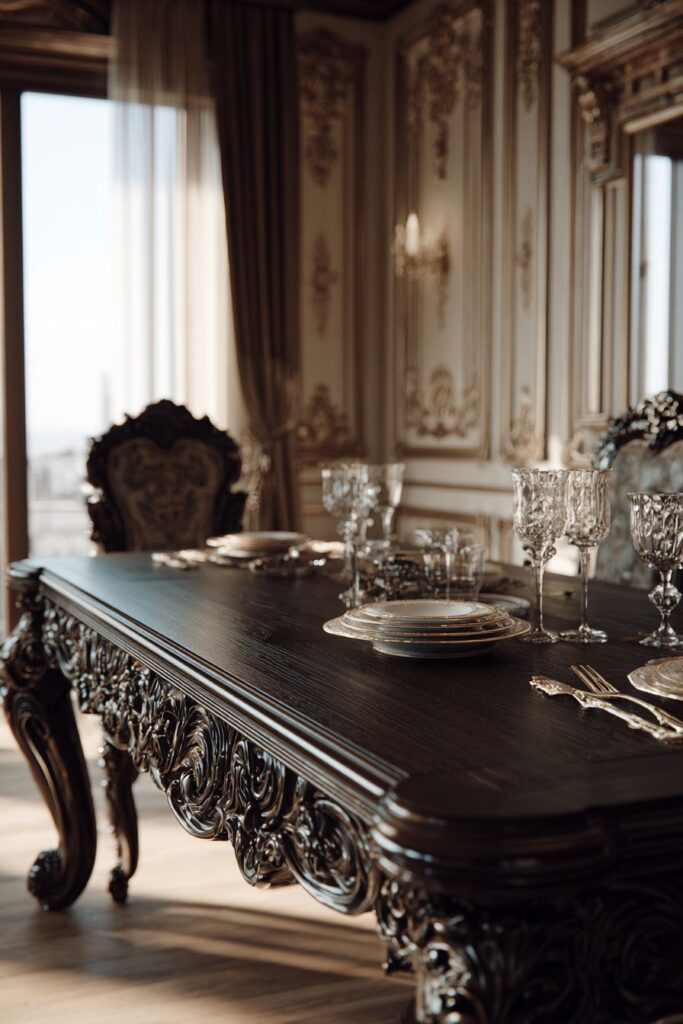
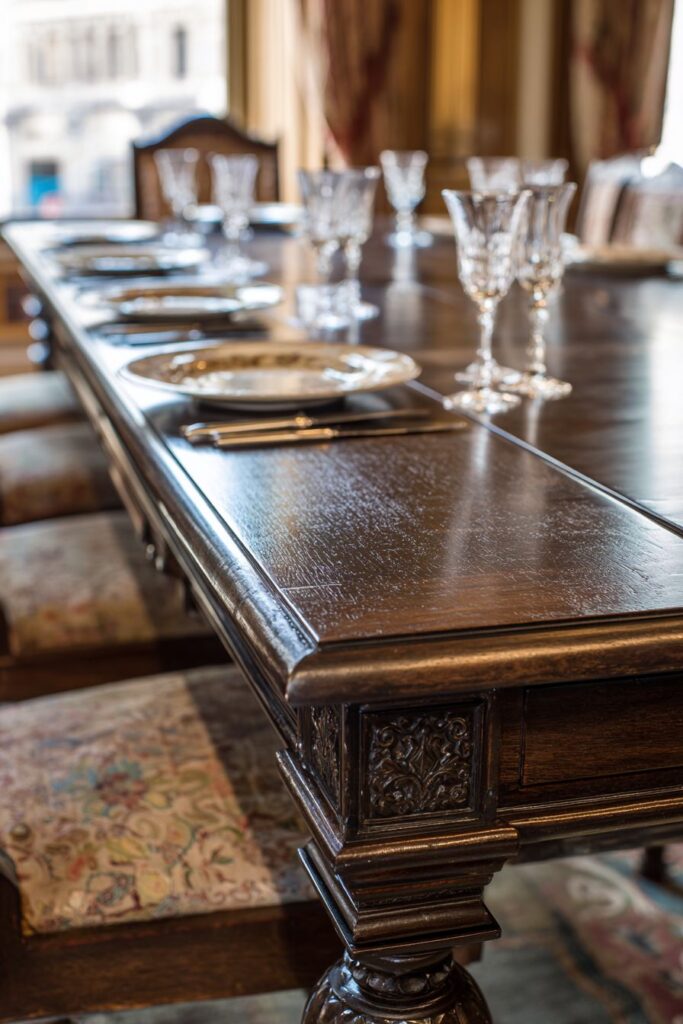
The traditional folding dining table in rich dark walnut with ornate carved legs represents timeless craftsmanship adapted for modern living needs. This design bridges the gap between formal dining furniture and practical space management, proving that elegance and functionality can coexist beautifully. The deep chocolate tones of the walnut create a sense of gravitas and sophistication that anchors formal dining rooms while the folding capability provides flexibility for varying entertainment needs.
The ornate carved leg details showcase traditional woodworking techniques that have been passed down through generations of craftspeople. These decorative elements add visual weight and artistic interest to the piece, creating focal points that draw the eye and invite closer inspection. The carving patterns often incorporate classical motifs such as acanthus leaves, scrollwork, or geometric designs that reflect specific historical periods or regional styles.
When partially extended and dressed with fine china and crystal glassware, this table creates an intimate dining experience that feels both special and welcoming. The formal setting demonstrates the table’s ability to rise to special occasions while its folding capability ensures it doesn’t overwhelm the space during everyday use. Natural window light creates subtle highlights on the polished wood surface, revealing the depth and richness of the walnut grain.
The sophisticated folding mechanism in traditional tables often incorporates time-tested joinery techniques alongside modern hardware, creating a blend of old-world craftsmanship and contemporary engineering. Hidden brackets and support systems maintain the table’s elegant lines while ensuring reliable operation and structural integrity.
Key Design Tips:
- Polish regularly to maintain the wood’s lustrous finish
- Use warm lighting to enhance the rich chocolate tones
- Select formal dining accessories that match the table’s elegance
- Position in rooms with architectural details that complement the ornate style
- Consider the table’s visual weight when planning room layouts
6. Modern Glass and Chrome Transparency
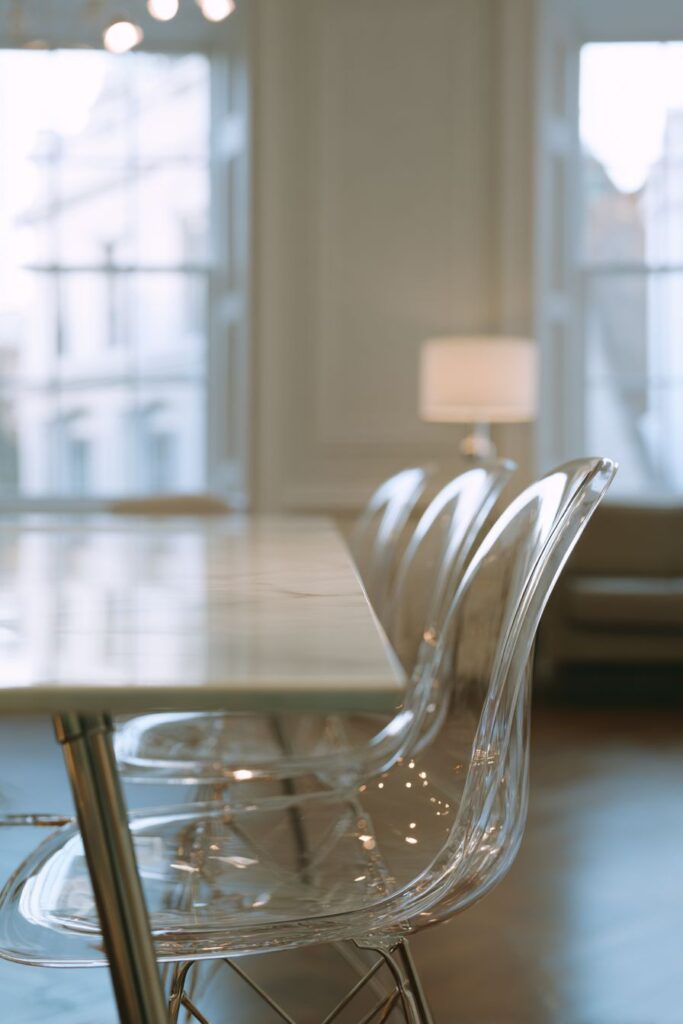
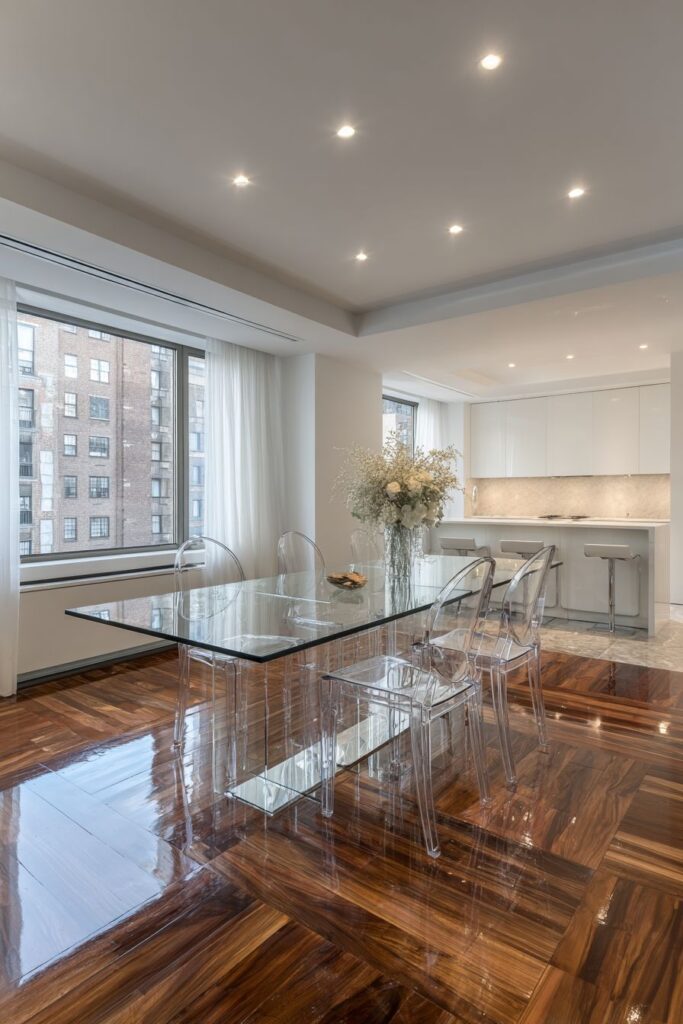
The modern folding dining table featuring a glass top and chrome support structure embodies contemporary design principles that prioritize visual lightness and spatial flow. This sophisticated piece demonstrates how transparent materials can create functional furniture that doesn’t visually consume precious floor space, making it ideal for open-plan living areas where maintaining sight lines is crucial.
The tempered glass surface provides a practical dining area while its transparency allows light to flow freely throughout the space, creating an airy atmosphere that benefits compact interiors. The chrome support structure adds structural necessity while contributing to the overall aesthetic through its reflective properties, which help bounce light around the room and create visual interest through shifting reflections.
Four acrylic chairs complete this sophisticated seating arrangement, maintaining the transparency theme while providing comfortable seating that virtually disappears when not in use. This coordinated approach to transparent furniture creates a cohesive design statement that feels intentional rather than coincidental, demonstrating how material choices can unify a dining area’s aesthetic.
Professional interior photography often captures this table from multiple angles to showcase its space-saving capabilities and demonstrate how transparent furniture can make rooms appear larger than their actual dimensions. The interplay between the glass surface and chrome supports creates interesting light patterns that change throughout the day as natural light shifts position.
Key Design Tips:
- Keep glass surfaces spotless to maintain the transparent effect
- Use appropriate glass cleaners to avoid streaking and residue
- Position to take advantage of natural light reflection
- Choose accessories that complement rather than clutter the clean aesthetic
- Ensure adequate lighting to prevent the table from appearing invisible in dim conditions
7. Scandinavian Birch Minimalism
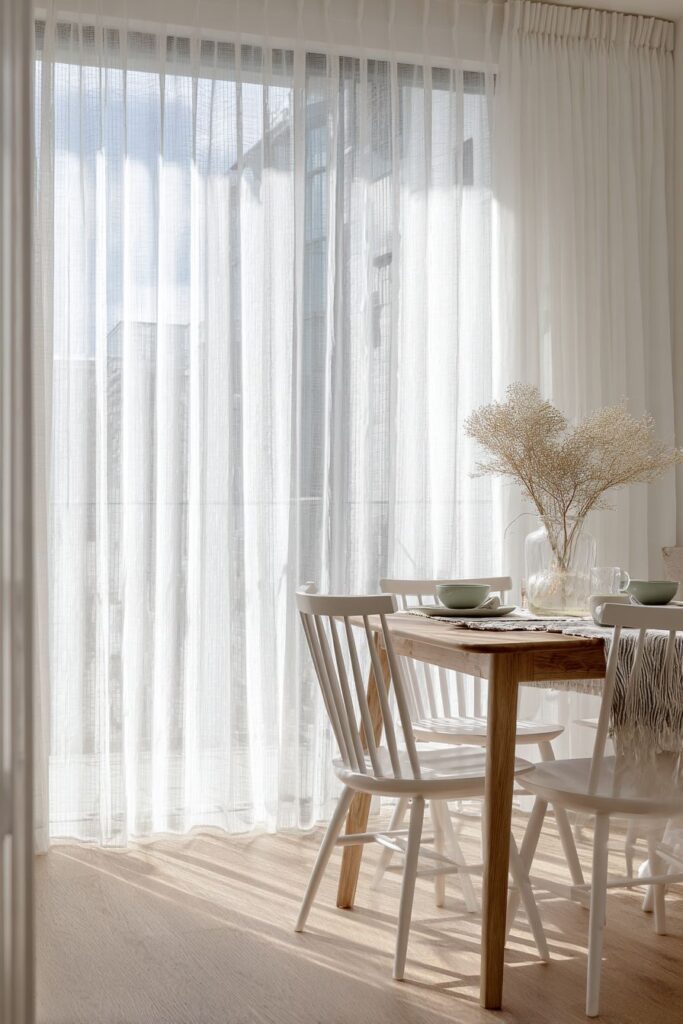
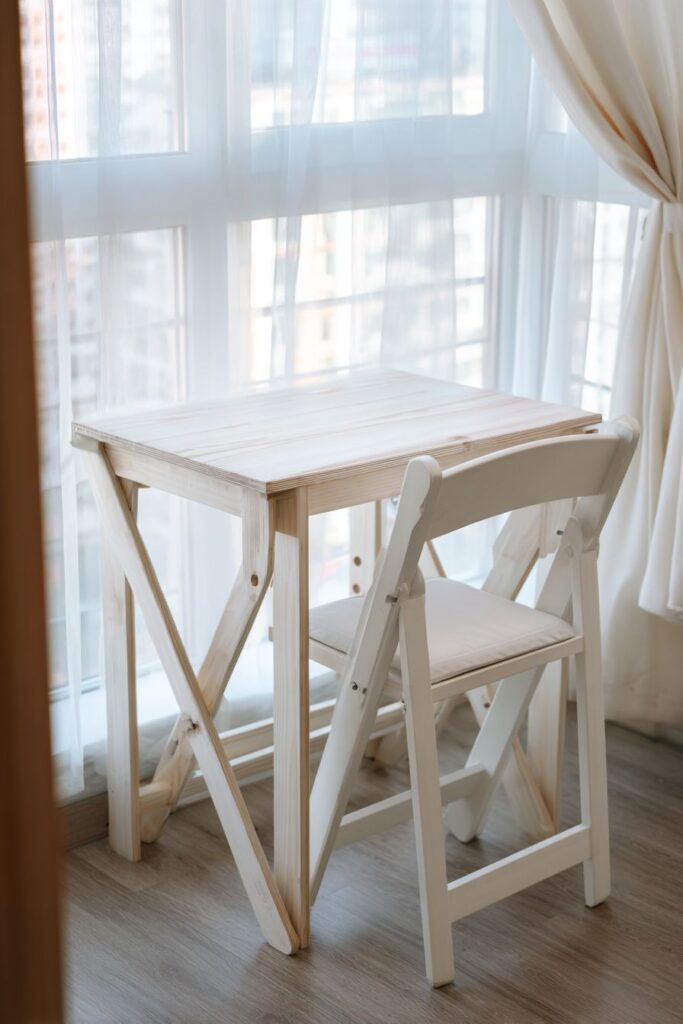
The Scandinavian-inspired folding dining table in pale birch wood represents the essence of Nordic design philosophy, where functionality, natural materials, and understated beauty converge to create furniture that enhances rather than dominates living spaces. This design approach celebrates the inherent qualities of birch wood, allowing its light color and subtle grain patterns to create visual warmth without overwhelming compact dining areas.
The simple, functional design elements reflect the Scandinavian commitment to purposeful aesthetics, where every curve and line serves both practical and visual purposes. The pale birch finish brings natural lightness to dining spaces, particularly effective in regions with limited natural light during winter months. This wood choice creates an optimistic atmosphere that feels fresh and welcoming throughout all seasons.
Light filtering through sheer curtains creates an ethereal quality that highlights the clean grain pattern and minimalist construction details. The interplay between natural light and wood creates subtle shadows that add depth and interest to the table’s simple form. White ladder-back chairs and a simple wool runner complete the Nordic aesthetic, creating a serene dining environment that promotes relaxation and mindful eating.
The engineering behind Scandinavian folding tables emphasizes reliability and longevity, reflecting cultural values that prioritize quality over quantity. Simple mechanical systems reduce potential points of failure while clean lines ensure the table remains visually relevant across changing design trends.
Key Design Tips:
- Embrace natural light to enhance the wood’s pale beauty
- Keep decorative elements minimal and functional
- Choose textiles in natural fibers and neutral colors
- Position near windows to maximize daylight benefits
- Select simple, geometric shapes for accompanying accessories
8. Industrial Metal and Distressed Wood Fusion
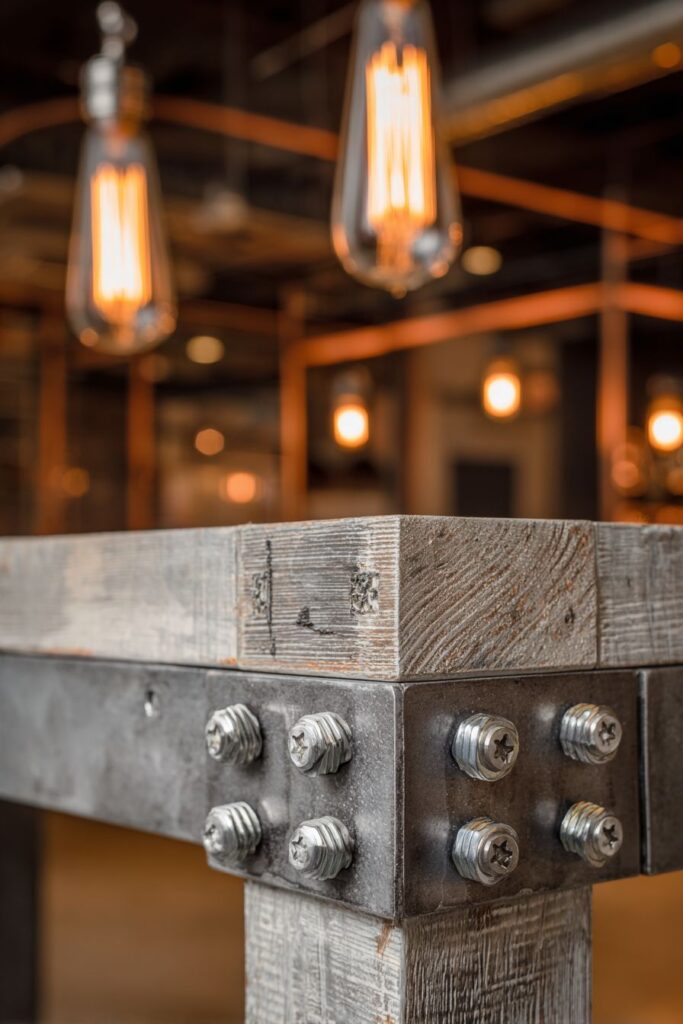
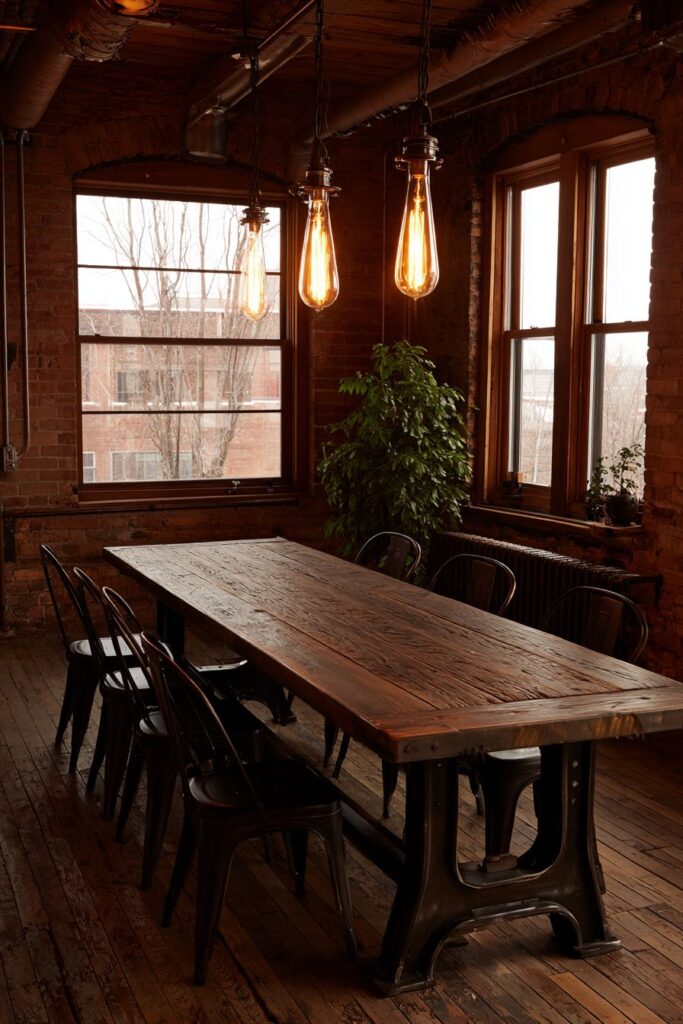
The industrial-style folding dining table showcases the raw beauty of utilitarian design, where exposed mechanical elements become decorative features rather than hidden necessities. This design philosophy celebrates honest materials and functional aesthetics, creating furniture that feels authentic to its urban loft environment. The combination of distressed wood and metal framework creates visual tension that energizes dining spaces with its bold, unapologetic presence.
The distressed wood top tells a story through its weathered surface, artificial aging, and deliberate imperfections that suggest years of use and character development. This treatment creates a surface that feels comfortable and lived-in rather than precious or untouchable. The contrast between the warm wood tones and cool metal framework establishes a dynamic visual relationship that defines industrial design aesthetics.
The visible folding mechanism serves as both functional necessity and a design element, with exposed bolts, hinges, and support brackets becoming integral parts of the table’s industrial character. This transparency in construction reflects the industrial design principle of celebrating rather than hiding functional elements, creating furniture that feels honest about its purpose and construction methods.
Edison bulb pendant lights cast warm, dramatic lighting that highlights the raw materials and utilitarian aesthetic while softening the potentially harsh industrial elements. The warm light creates pools of illumination that make the dining area feel intimate despite the bold design elements, demonstrating how lighting choices can balance industrial rawness with livable comfort.
Key Design Tips:
- Embrace exposed hardware as decorative elements
- Use warm lighting to soften harsh material contrasts
- Incorporate vintage or antique accessories for authentic character
- Choose seating that complements rather than competes with the industrial aesthetic
- Position in spaces with architectural details that support the industrial theme
9. Coastal Weathered Teak Serenity
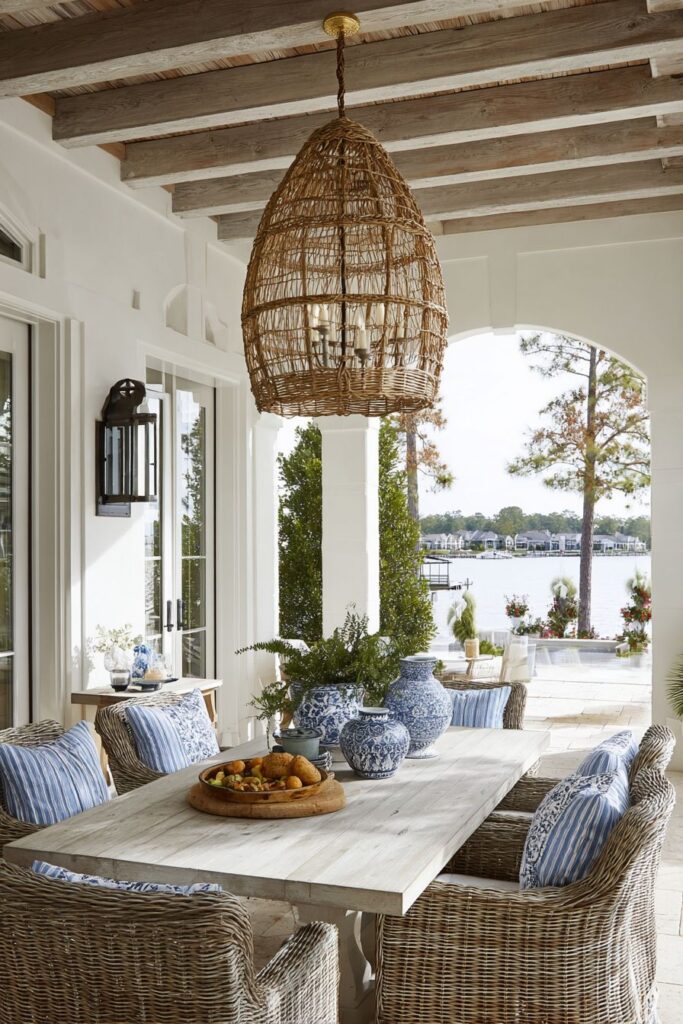
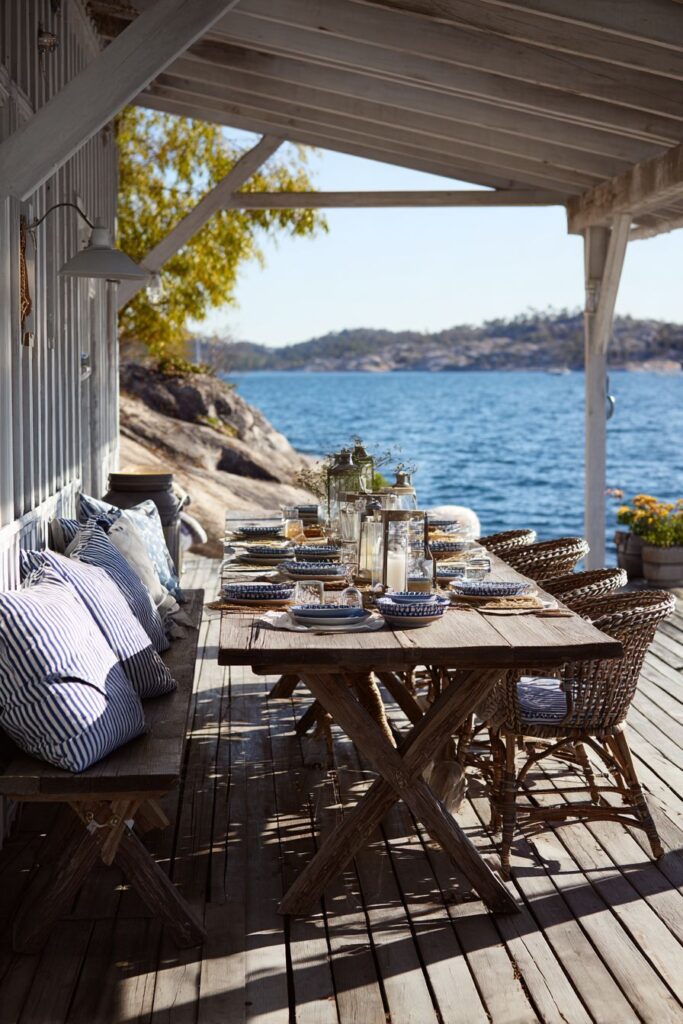
The coastal-themed folding dining table in weathered teak with rope details captures the essence of seaside living, bringing the relaxed sophistication of maritime design into residential spaces. This table design celebrates the natural weathering process that occurs when quality wood furniture is exposed to salt air and coastal conditions, creating surfaces that develop character and patina over time.
The rope details serve both decorative and functional purposes, echoing traditional nautical craftsmanship while providing textural interest that enhances the coastal theme. These elements connect the furniture to maritime traditions while adding tactile qualities that invite touch and interaction. The natural fiber rope develops its own patina over time, deepening in color and softening in texture to complement the weathered wood.
When positioned on a covered porch overlooking water views, this table creates a seamless connection between indoor and outdoor living spaces. The weathered teak finish can withstand exposure to coastal elements while developing additional character through natural aging processes. Wicker chairs with blue and white striped cushions complete the maritime aesthetic while providing comfortable seating that maintains the relaxed coastal atmosphere.
Natural seaside lighting creates gentle shadows that highlight the authentic weathering patterns and maritime-inspired design elements. The soft, diffused quality of coastal light enhances rather than dominates the weathered materials, creating an environment that feels naturally integrated with its seaside setting.
Key Design Tips:
- Allow natural weathering to enhance the maritime character
- Use marine-grade finishes for outdoor or coastal installations
- Select accessories in classic nautical colors and materials
- Position to take advantage of natural coastal light and views
- Incorporate natural fiber textiles that complement the organic aesthetic
10. Mid-Century Modern Teak Innovation
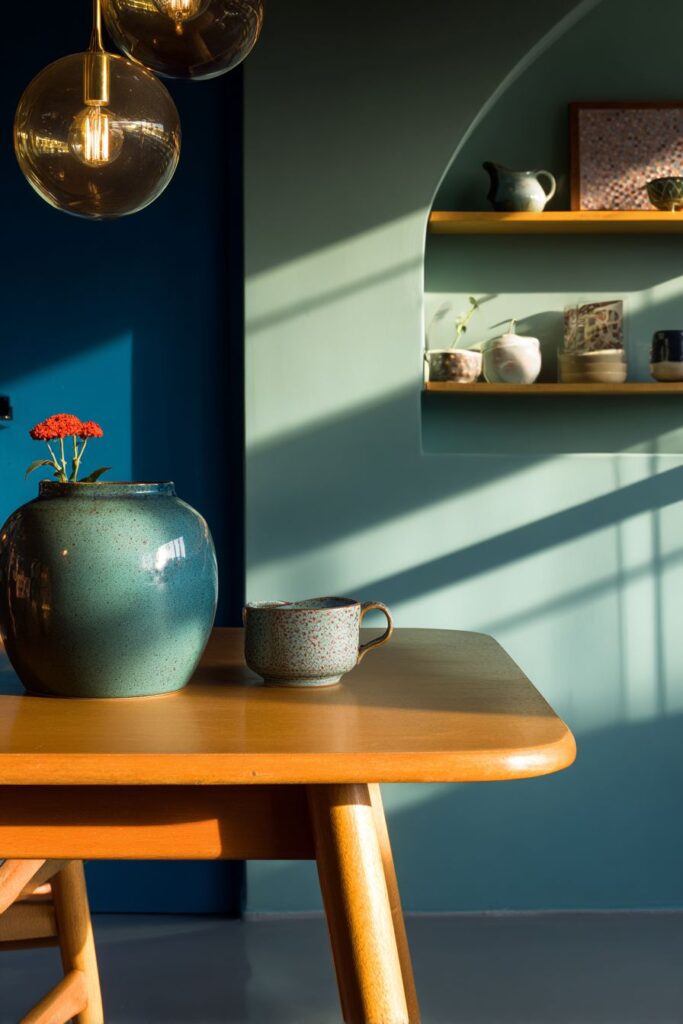
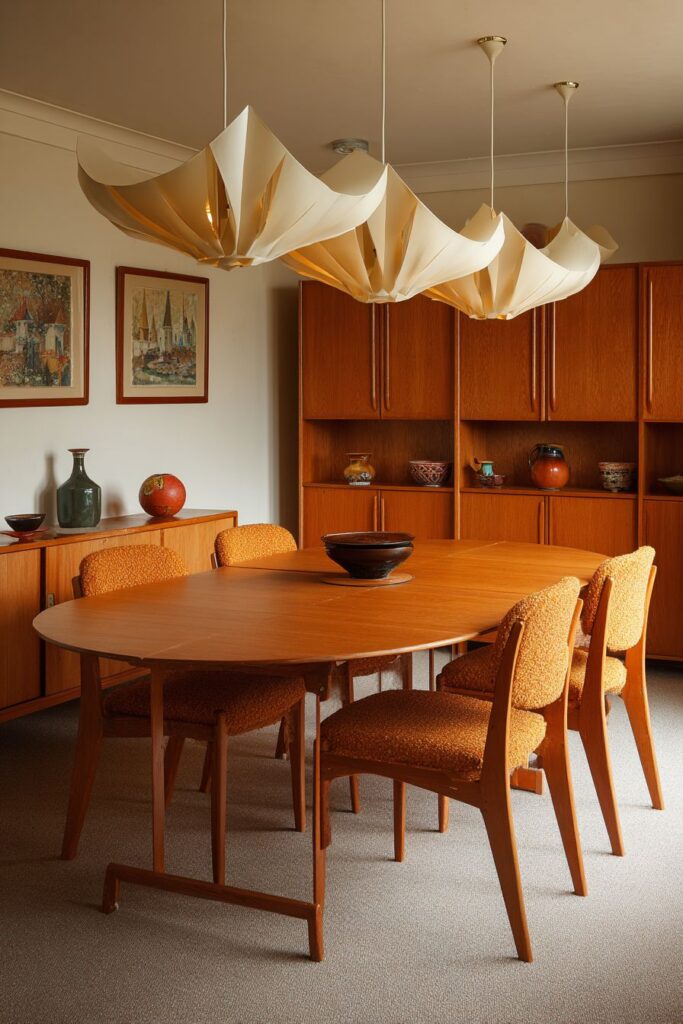
The mid-century modern folding dining table with tapered legs and warm teak finish represents a pivotal moment in furniture design history when innovative engineering met sophisticated aesthetics. This design embodies the optimistic spirit of 1950s modernism, where new materials and manufacturing techniques enabled designers to create furniture that was both beautiful and remarkably functional.
The tapered leg profile reflects the mid-century fascination with atomic-age design principles, where traditional furniture forms were reimagined through the lens of space-age aesthetics. These legs create visual lightness while providing stable support, demonstrating how thoughtful engineering can enhance both function and appearance. The warm teak finish showcases the period’s preference for rich, natural wood tones that brought warmth to modernist interiors.
The innovative folding mechanism reflects 1950s design ingenuity, where mechanical solutions were celebrated rather than hidden. The engineering represents a perfect balance between sophisticated functionality and elegant simplicity, creating a table that operates smoothly while maintaining its refined proportions in both extended and folded configurations.
Atomic-era pendant lighting and vintage ceramic pieces complete the authentic mid-century setting, creating a dining environment that feels both nostalgic and remarkably contemporary. The enduring appeal of mid-century design demonstrates how quality materials and thoughtful proportions create furniture that transcends temporary style trends.
Key Design Tips:
- Emphasize the warm teak finish through appropriate lighting
- Select period-appropriate accessories to enhance authenticity
- Position legs to showcase the distinctive tapered profile
- Use atomic-era inspired lighting to complete the aesthetic
- Keep decorative elements simple to highlight the table’s elegant proportions
11. Multi-Functional Storage Integration
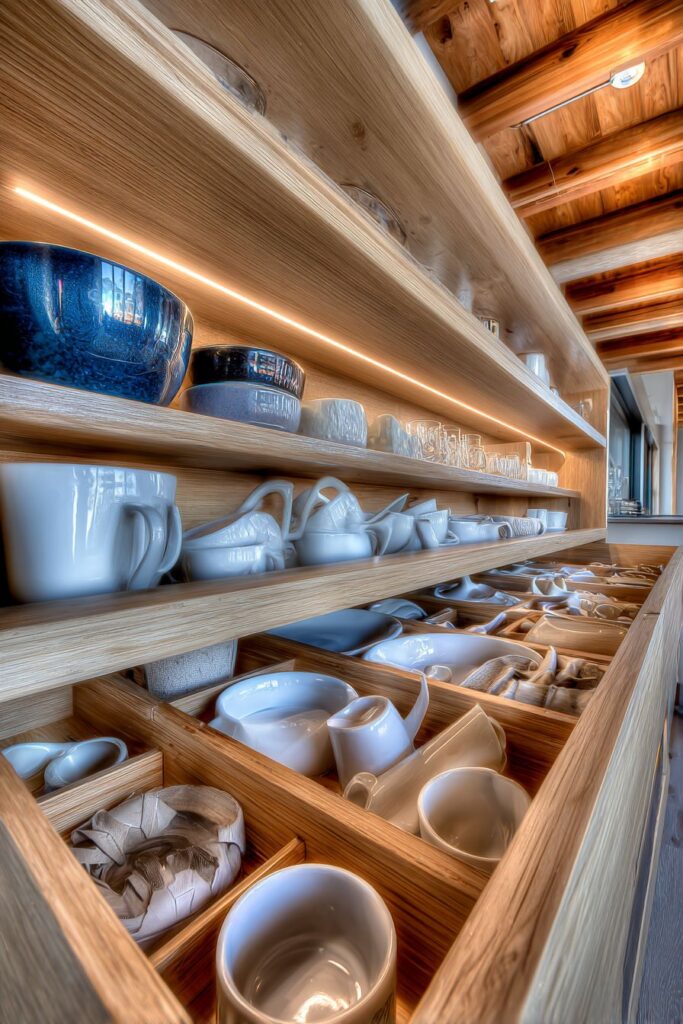
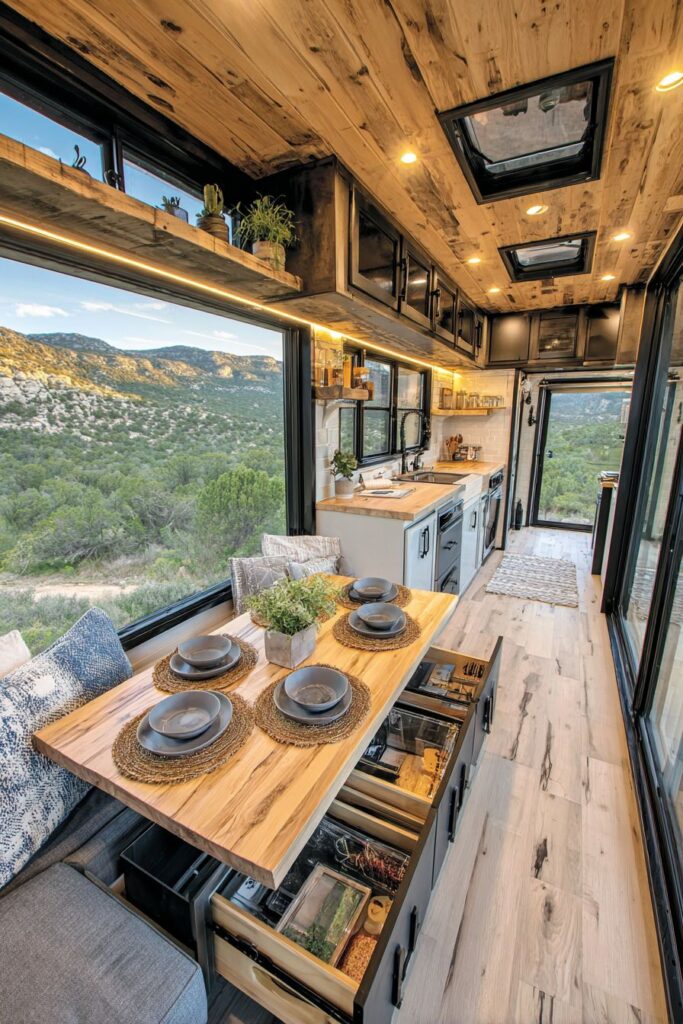
The space-efficient folding dining table with built-in storage compartments represents the ultimate solution for tiny house living, where every cubic inch must serve multiple purposes without compromising livability or style. This innovative design demonstrates how creative engineering can address storage challenges while maintaining the aesthetic appeal necessary for comfortable daily living.
The table’s base structure cleverly incorporates storage for dishes, linens, and dining accessories, eliminating the need for separate storage furniture while keeping essential items easily accessible. Hidden compartments maintain clean exterior lines while providing organized storage that makes efficient use of vertical space. This integration of storage and dining functionality exemplifies the problem-solving approach that defines successful tiny house design.
When extended to seat four people, the table proves that compact living doesn’t require sacrificing social dining experiences. The engineering challenge of creating stable support for both the extended table surface and the storage compartments demonstrates sophisticated design thinking that prioritizes both function and user experience.
Carefully positioned LED strip lighting highlights the innovative storage solutions and multifunctional design elements, creating visual interest while providing task lighting for dining activities. The energy-efficient lighting reflects the sustainability principles that often motivate tiny house living while showcasing the table’s ingenious engineering solutions.
Key Design Tips:
- Organize storage compartments by frequency of use
- Use dividers and organizers to maximize storage efficiency
- Position LED lighting to highlight both dining and storage functions
- Choose storage solutions that maintain easy access to essentials
- Consider weight distribution when loading storage compartments
12. Mahogany and Brass Traditional Luxury
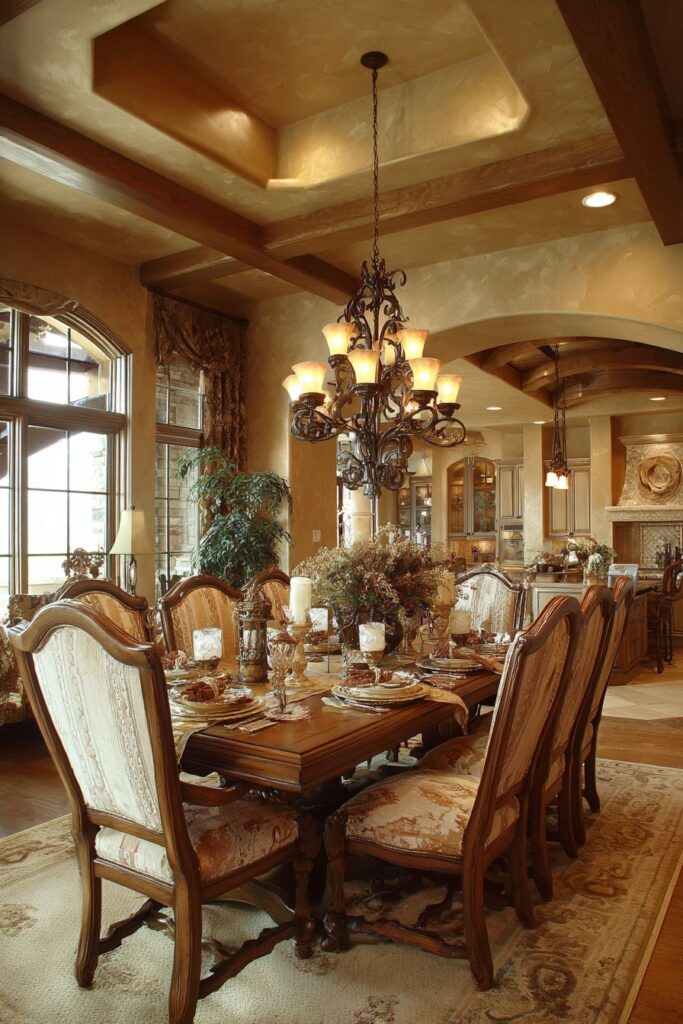
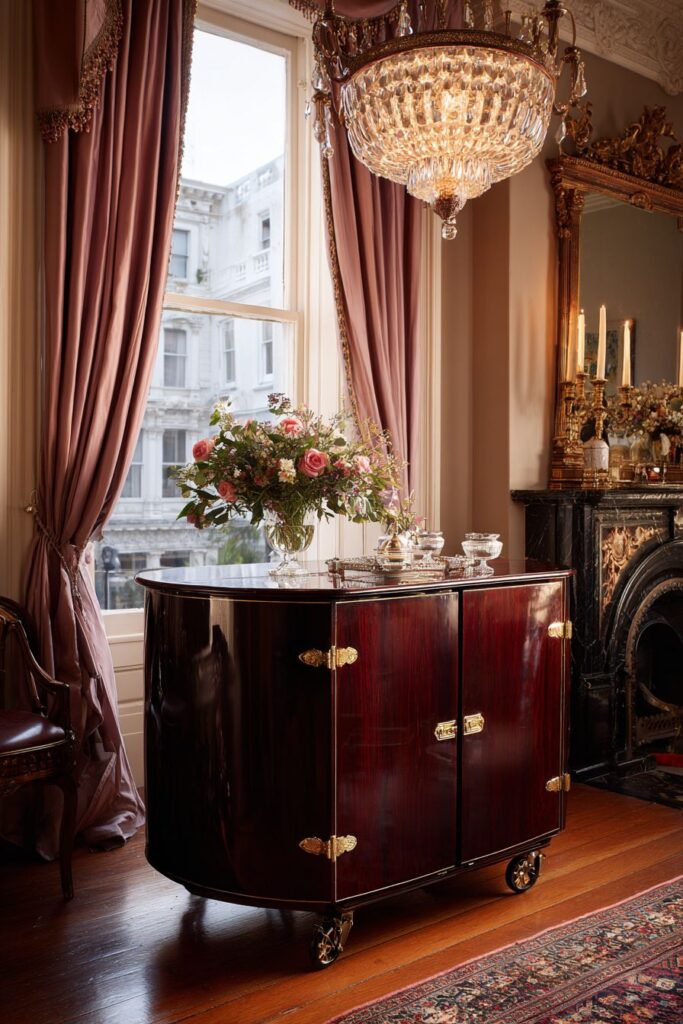
The elegant folding dining table with rich mahogany finish and brass hardware accents represents traditional luxury adapted for contemporary living needs. This sophisticated piece demonstrates how classic materials and time-honored craftsmanship techniques can be integrated with modern functionality to create furniture that bridges historical and contemporary design sensibilities.
The deep, lustrous mahogany finish creates a surface that improves with age and care, developing depth and character through years of use and proper maintenance. The rich chocolate and burgundy tones inherent in mahogany wood provide warmth and gravitas that anchors formal dining rooms while creating an atmosphere of established elegance and refined taste.
Brass hardware accents serve both functional and decorative purposes, with hinges, brackets, and support mechanisms crafted from quality brass that develops a natural patina over time. These metallic elements catch and reflect warm chandelier light, adding sparkle and visual interest while maintaining the traditional aesthetic that defines formal dining furniture.
The sophisticated folding mechanism represents the marriage of traditional joinery techniques with contemporary engineering, creating a reliable operation that maintains the table’s refined appearance whether extended for formal dinner parties or folded for everyday use. This dual functionality makes the table practical for modern entertaining while preserving the elegance expected in formal dining settings.
Key Design Tips:
- Use warm lighting to enhance the mahogany’s rich color
- Polish brass regularly to maintain its lustrous appearance
- Select formal dining accessories that complement the traditional aesthetic
- Position in rooms with architectural details that support the elegant style
- Consider the table’s formal appearance when planning casual dining use
13. Contemporary Concrete and Steel Minimalism
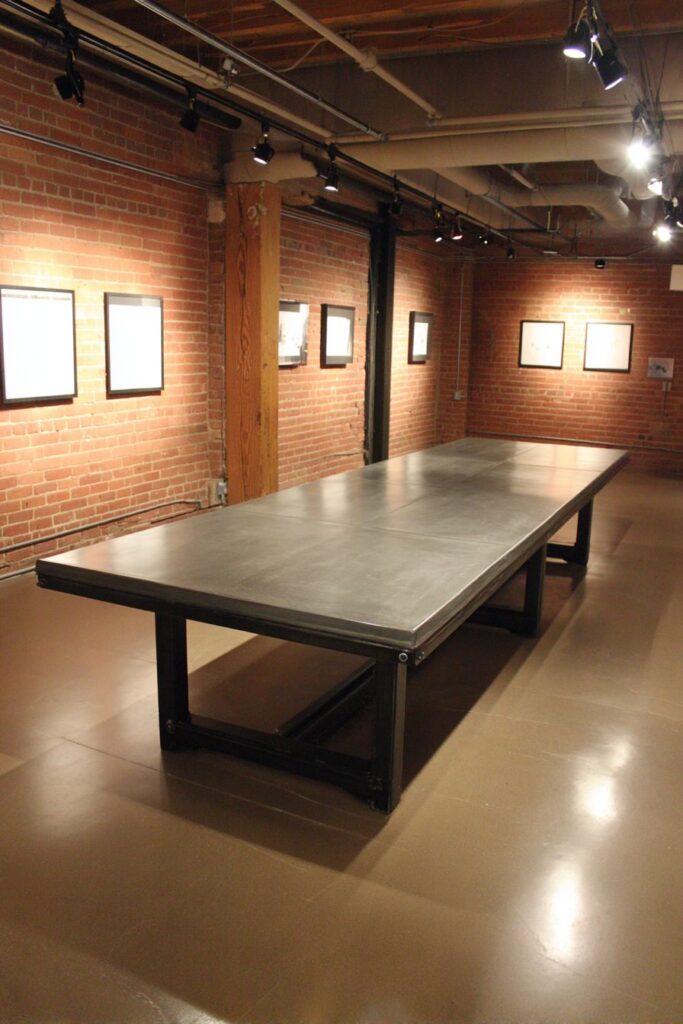
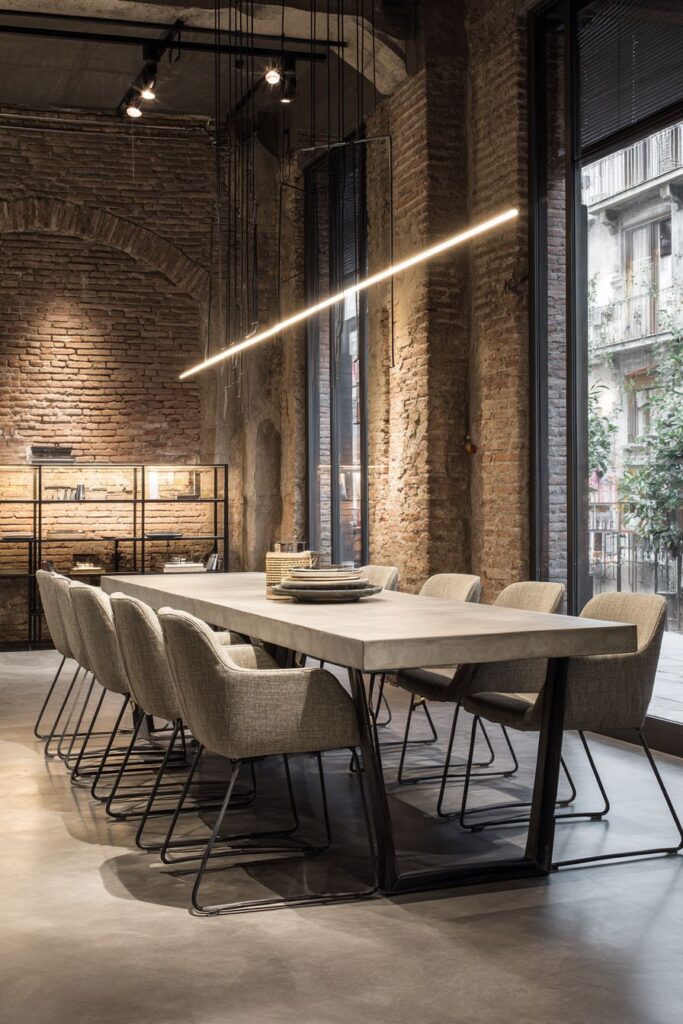
The contemporary folding dining table with a concrete top and black steel base represents industrial minimalism refined for urban living spaces. This design celebrates raw materials through sophisticated execution, creating furniture that feels both contemporary and timeless. The concrete surface provides durability and unique character while the steel base ensures structural integrity and visual lightness.
The minimalist design philosophy emphasizes material honesty, where the inherent qualities of concrete and steel are celebrated rather than disguised. The concrete top develops subtle variations and natural patina over time, creating a surface that becomes more interesting with age and use. This evolution reflects the modern appreciation for materials that improve rather than deteriorate through daily interaction.
When positioned in modern urban apartments with exposed brick walls and polished concrete floors, this table creates visual harmony through material relationships rather than color coordination. The textural contrast between smooth concrete and matte steel surfaces provides tactile interest while maintaining the clean aesthetic that defines contemporary minimalist design.
Track lighting above provides focused illumination that emphasizes the textural contrast between materials while creating dramatic shadows that add depth and visual interest. The precise lighting control allows the table to serve multiple functions throughout the day, from casual breakfast surface to sophisticated dinner setting.
Key Design Tips:
- Seal concrete surfaces appropriately for dining use
- Use focused lighting to enhance textural contrasts
- Select accessories that complement rather than compete with the material aesthetic
- Position to create visual relationships with architectural elements
- Consider the table’s weight when planning placement and mobility
14. Bohemian Carved Wood Artistry
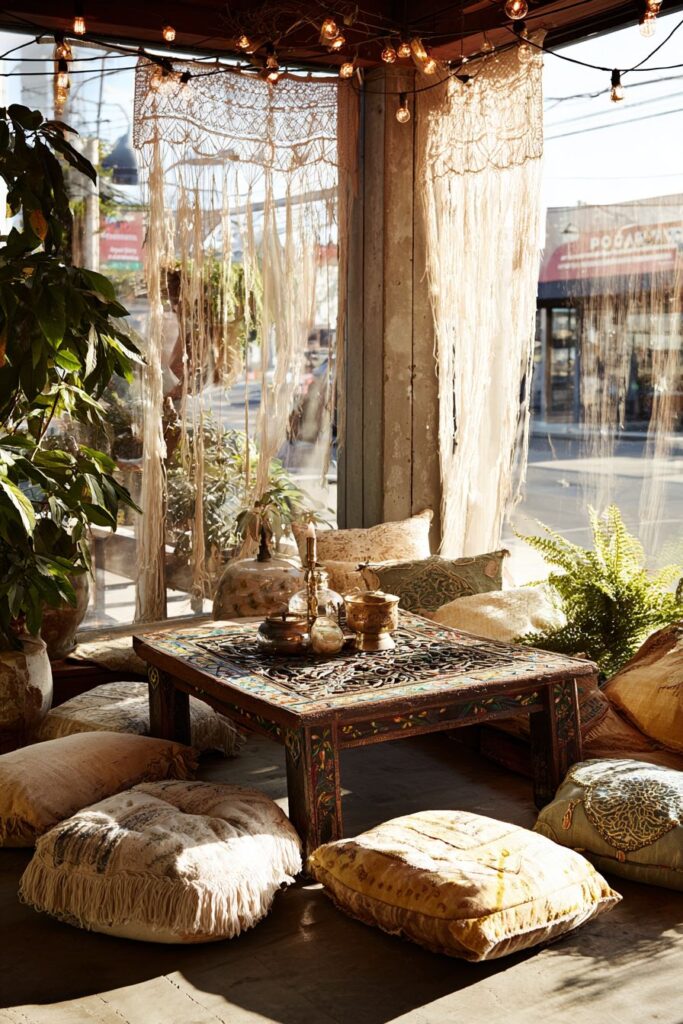
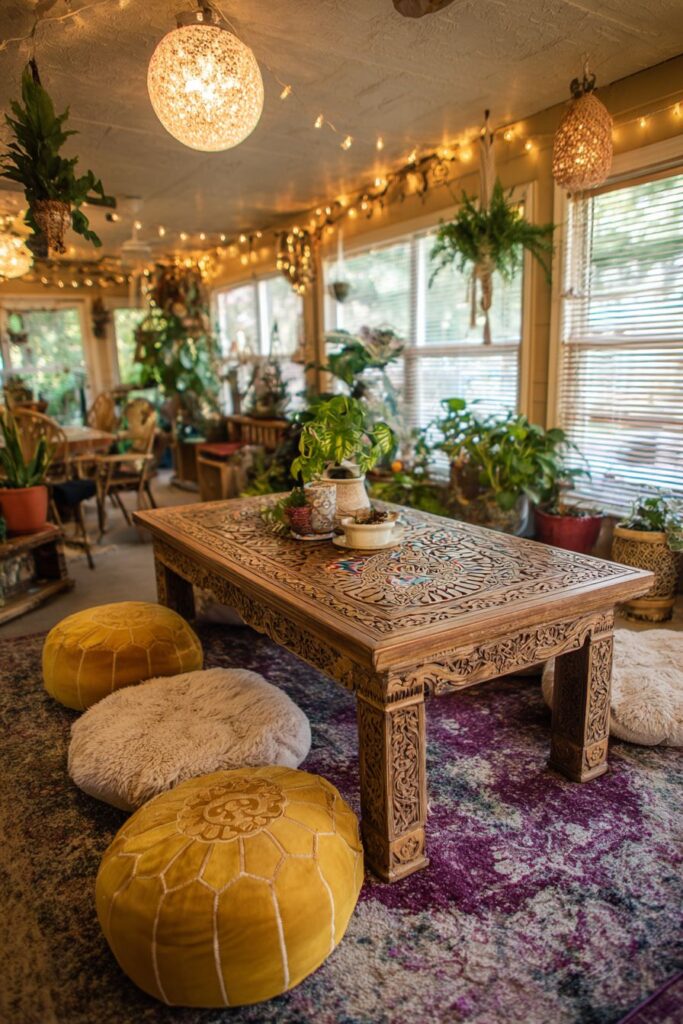
The bohemian-style folding dining table featuring intricate carved patterns and colorful inlay details represents global design influences merged with practical functionality. This artistic piece transforms dining into a cultural experience, where the table surface becomes a canvas for traditional craftsmanship techniques from around the world. The carved wooden top showcases hand-crafted details that celebrate individual artisan skills and cultural design traditions.
The intricate patterns and colorful inlay details create visual richness that serves as both functional surface and decorative art piece. Traditional carving techniques from various global cultures contribute to an eclectic aesthetic that feels collected and curated rather than mass-produced. The combination of carved elements with colored inlays creates depth and visual interest that changes throughout the day as lighting conditions shift.
Floor cushions and low stools create a casual, worldly dining experience that breaks away from traditional Western dining formalities. This low-profile seating arrangement encourages relaxed conversation and communal dining experiences while accommodating the table’s artistic presence. The informal seating options also provide flexibility for varying group sizes and cultural dining preferences.
Warm string lights and natural sunlight filtering through macrame window coverings create layered lighting that highlights the artistic details and global-inspired design elements. The combination of artificial and natural light sources creates an atmospheric dining environment that feels magical and transportive, supporting the bohemian aesthetic’s emphasis on experience and sensory richness.
Key Design Tips:
- Celebrate handcrafted details through appropriate lighting
- Mix seating options to support flexible dining arrangements
- Use natural materials and textiles to enhance the global aesthetic
- Position to take advantage of natural light for showcasing carved details
- Select accessories that complement rather than compete with the table’s artistry
15. High-Gloss Urban Sophistication
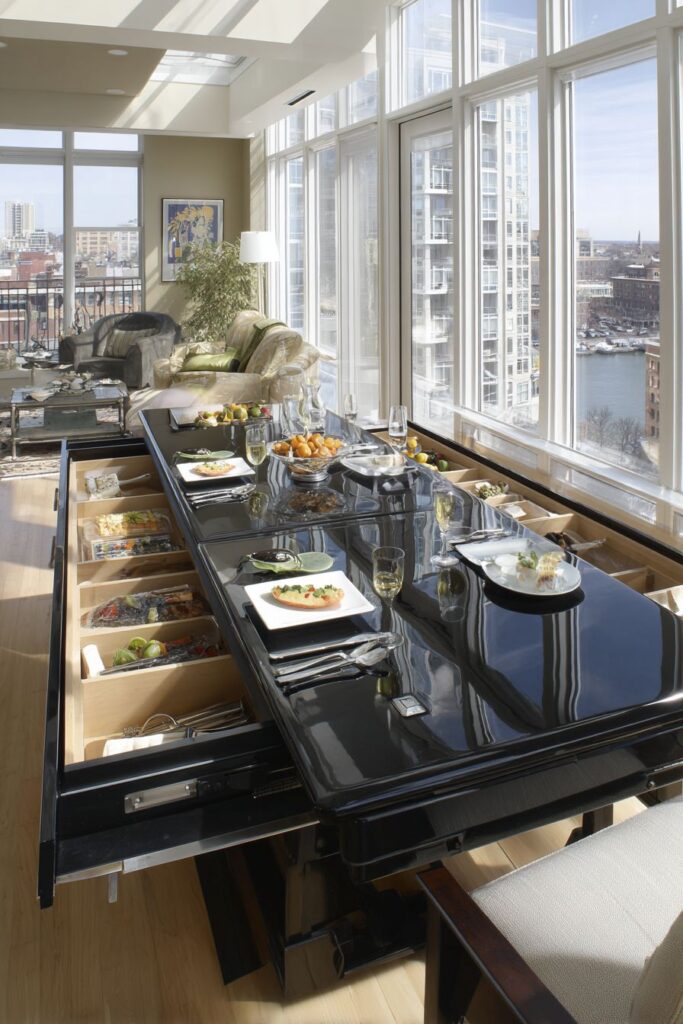
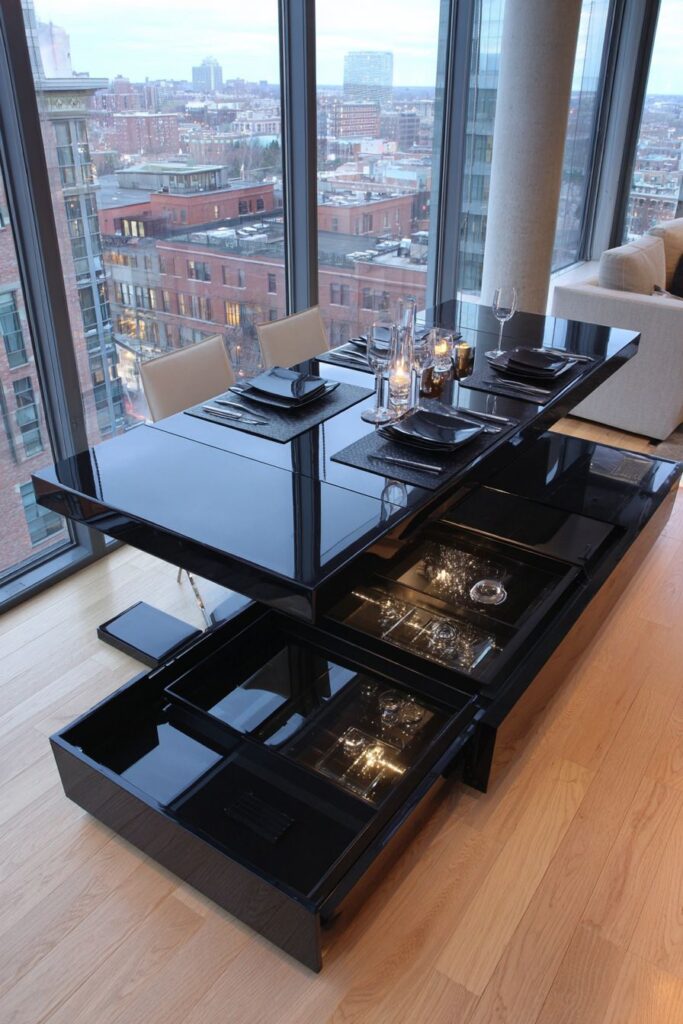
The sleek folding dining table with high-gloss black finish and hidden storage drawers epitomizes urban luxury living, where sophisticated aesthetics meet intelligent functionality. This design demonstrates how contemporary furniture can serve multiple purposes while maintaining the refined appearance demanded by upscale urban interiors. The precision engineering required for smooth folding operation and hidden storage integration represents furniture design at its most sophisticated.
The high-gloss black finish creates a mirror-like surface that reflects surrounding light sources, effectively doubling the visual impact of carefully planned lighting schemes. During daylight hours, floor-to-ceiling windows provide abundant natural light, while evening city views create dramatic reflections that transform the table into a sophisticated focal point. This reflective quality makes the table particularly effective in smaller spaces where light amplification can create the illusion of expanded square footage.
Hidden storage drawers maintain the table’s clean exterior lines while providing organized storage for dining essentials, electronics, or everyday items. The concealed storage solution addresses urban living’s space constraints while maintaining the sophisticated aesthetic required for formal dining or entertaining. The smooth-operating drawer mechanisms reflect quality manufacturing and attention to detail.
Professional photography often captures this table’s transformation capabilities, showcasing both the console and dining configurations within the same urban setting. The dramatic city backdrop provides context for the table’s sophisticated urban character while demonstrating how quality furniture can enhance rather than compete with spectacular views.
Key Design Tips:
- Use lint-free cloths for cleaning to maintain the mirror finish
- Position strategically to maximize light reflection and city views
- Select accessories with strong geometric forms to complement the sleek aesthetic
- Consider the table’s reflective properties when planning lighting placement
- Choose storage organization systems that maintain easy access to essentials
16. Farmhouse White and Natural Wood Charm
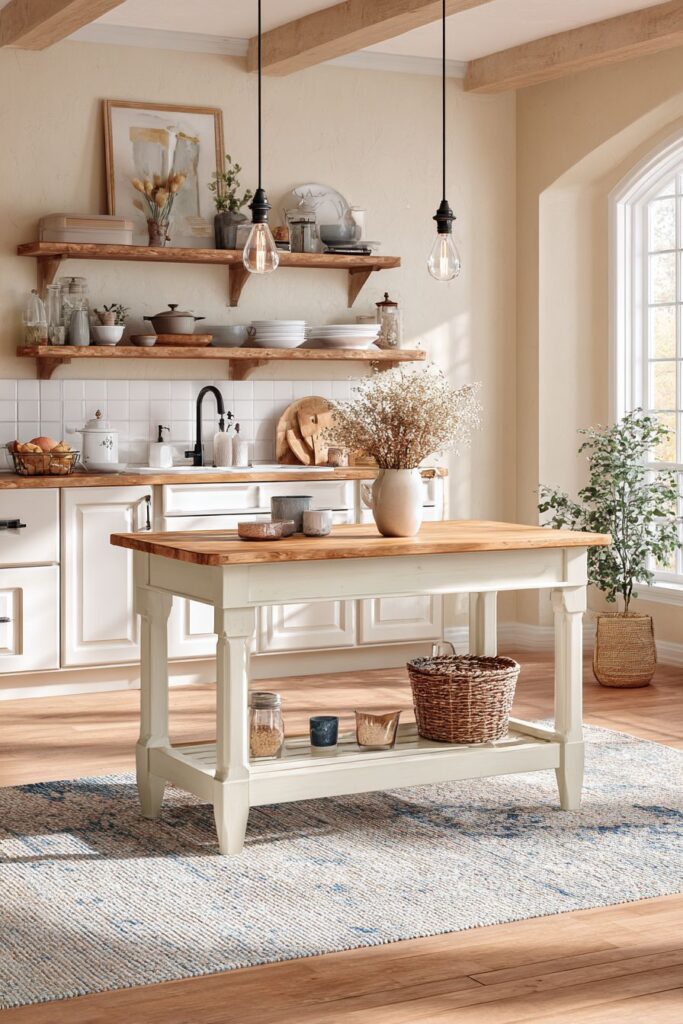
The farmhouse-style folding dining table with distressed white painted finish and natural wood top brings comfortable country living into contemporary homes. This design celebrates the casual elegance of rural life, where furniture is valued for both its functionality and its ability to create welcoming gathering spaces. The combination of painted base and natural wood top creates visual interest while maintaining the approachable aesthetic that defines farmhouse style.
The distressed white painted finish suggests years of loving use and family gatherings, creating furniture that feels comfortable and welcoming rather than precious or untouchable. Authentic paint wear patterns around edges and high-contact areas add character while the underlying wood occasionally shows through to suggest natural aging processes. This treatment creates furniture that feels inherited rather than purchased.
When positioned in country kitchens with open shelving and vintage accessories, this table becomes the heart of family life and casual entertaining. The practical design accommodates both intimate family meals and larger gatherings, demonstrating the flexibility that makes farmhouse furniture so enduringly popular. The natural wood top provides warmth and durability while the painted base adds lightness and casual charm.
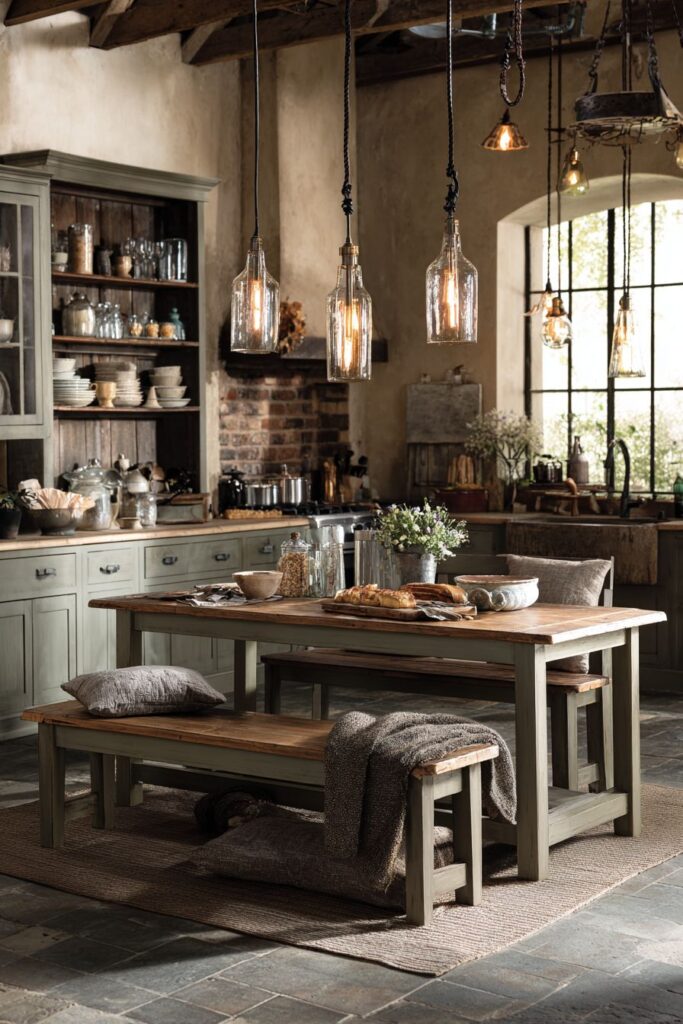
Warm pendant lighting with Edison bulbs creates a cozy atmosphere while highlighting the authentic paint wear and natural wood character. The vintage-style lighting supports the farmhouse aesthetic while providing practical illumination for dining activities. The warm light quality enhances both the white paint and natural wood tones, creating a balanced and inviting dining environment.
Key Design Tips:
- Embrace authentic wear patterns as character features
- Use warm lighting to enhance both paint and wood elements
- Select vintage-inspired accessories that support the farmhouse theme
- Position in settings that complement the casual country aesthetic
- Choose accompanying seating that maintains the relaxed, comfortable feeling
17. Japanese Zen Natural Simplicity
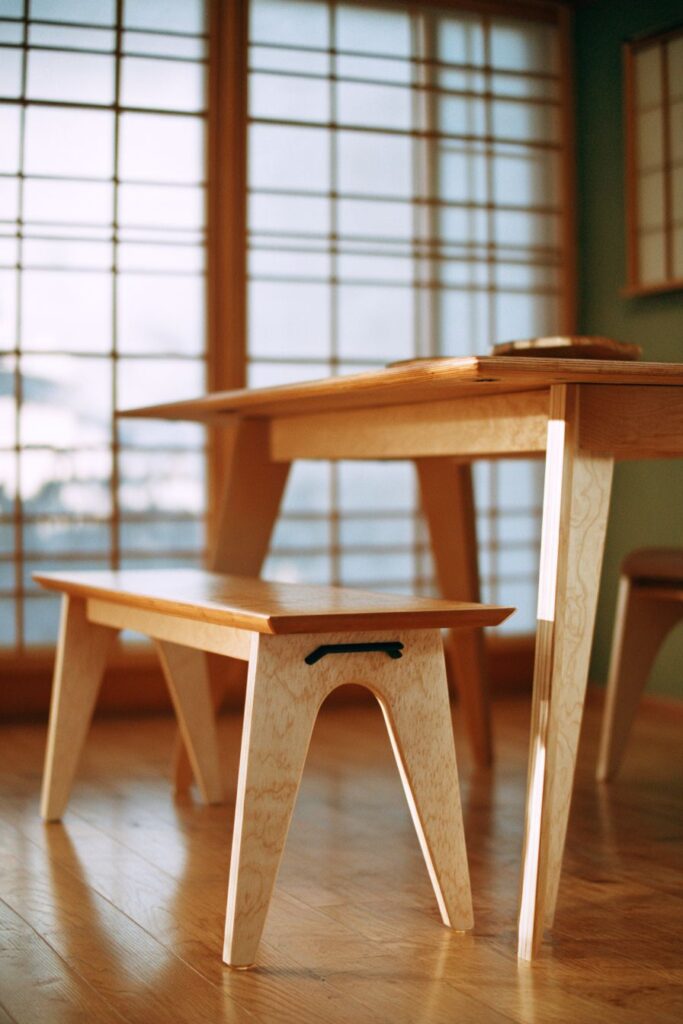
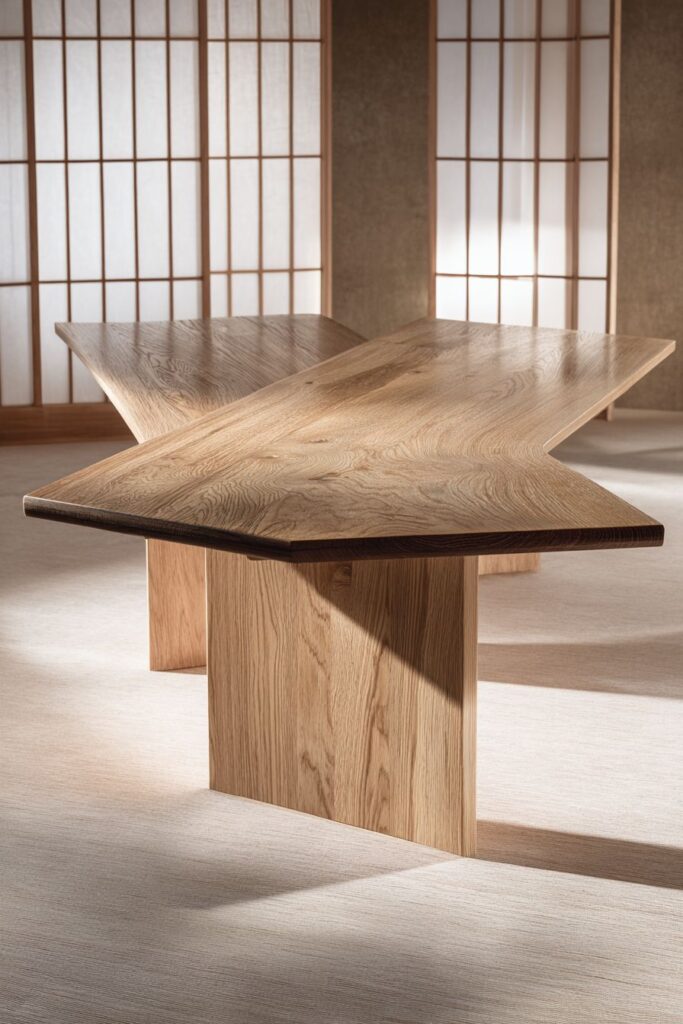
The Japanese-inspired folding dining table with clean lines and natural ash wood construction embodies the principles of zen design philosophy, where simplicity and natural beauty create spaces for mindful living. This understated design reflects wabi-sabi aesthetics that find beauty in imperfection and impermanence while providing flexible dining solutions that adapt to changing needs without disrupting the serene atmosphere.
The clean lines and minimal ornamentation allow the natural ash wood’s inherent beauty to take center stage, with subtle grain patterns providing visual interest without overwhelming the senses. The pale wood tone creates a calm, neutral foundation that supports meditation and mindful eating practices. This material choice reflects the Japanese appreciation for natural materials that age gracefully while developing character over time.
The table’s understated design philosophy extends to its folding mechanism, which operates smoothly and quietly without drawing attention to its mechanical aspects. This discretion supports the zen principle of creating functional objects that serve their purpose without creating visual or auditory distractions from peaceful contemplation.
Soft natural lighting from paper screen windows creates gentle shadows that emphasize the wood grain and meditative qualities of the space. The filtered light quality supports the contemplative atmosphere while highlighting the craftsmanship details in the wood construction. This lighting approach reflects the Japanese understanding of how light quality affects mood and promotes peaceful states of mind.
Key Design Tips:
- Emphasize natural wood beauty through minimal finishing
- Use soft, diffused lighting to create calm atmospheres
- Keep decorative elements to essential minimums
- Position to take advantage of natural light and peaceful views
- Select accompanying elements that support rather than distract from meditation
18. Art Deco Geometric Glamour
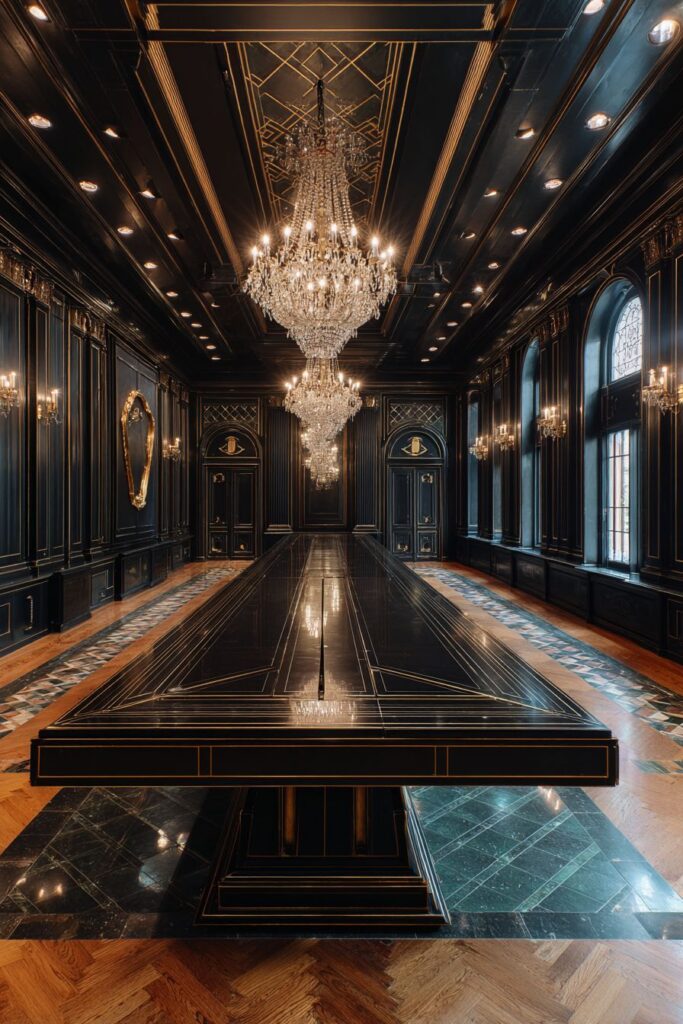
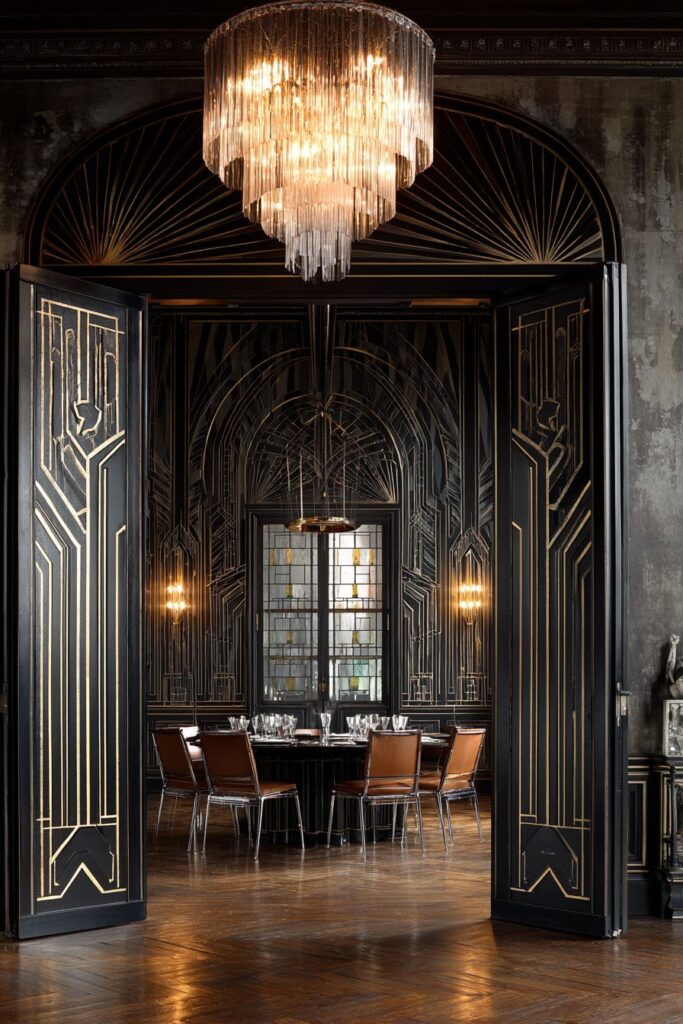
The art deco-inspired folding dining table featuring geometric patterns and rich ebony finish with gold leaf accents represents 1920s glamour adapted for contemporary entertaining. This sophisticated piece demonstrates how historical design movements can inspire modern functionality while maintaining their essential aesthetic character. The geometric patterns reflect the period’s fascination with mathematical precision and machine-age aesthetics.
The rich ebony finish provides a dramatic backdrop for the geometric patterns and gold leaf accents, creating depth and visual interest that changes as viewers move around the table. The lustrous wood surface reflects light beautifully while the gold accents catch and amplify illumination sources, creating sparkle and movement that energizes dining spaces. This combination of materials creates furniture that serves as both functional piece and artistic statement.
The sophisticated folding mechanism is concealed within the ornate base structure, maintaining the period-appropriate aesthetic while providing contemporary convenience. This integration of modern functionality with historical style demonstrates how classic design elements can be adapted for current lifestyle needs without compromising their essential character.
Dramatic lighting from crystal chandeliers highlights the luxurious materials and period-appropriate decorative elements while creating an atmosphere of elegant sophistication. The interplay between artificial light sources and the reflective surfaces creates dynamic visual effects that enhance the glamorous atmosphere associated with art deco design.
Key Design Tips:
- Use dramatic lighting to enhance geometric patterns and metallic accents
- Select period-appropriate accessories that complement the glamorous aesthetic
- Position to showcase the geometric details from multiple viewing angles
- Consider the table’s visual drama when planning room layouts
- Choose accompanying furniture that supports rather than competes with the art deco statement
19. Sustainable Bamboo Innovation
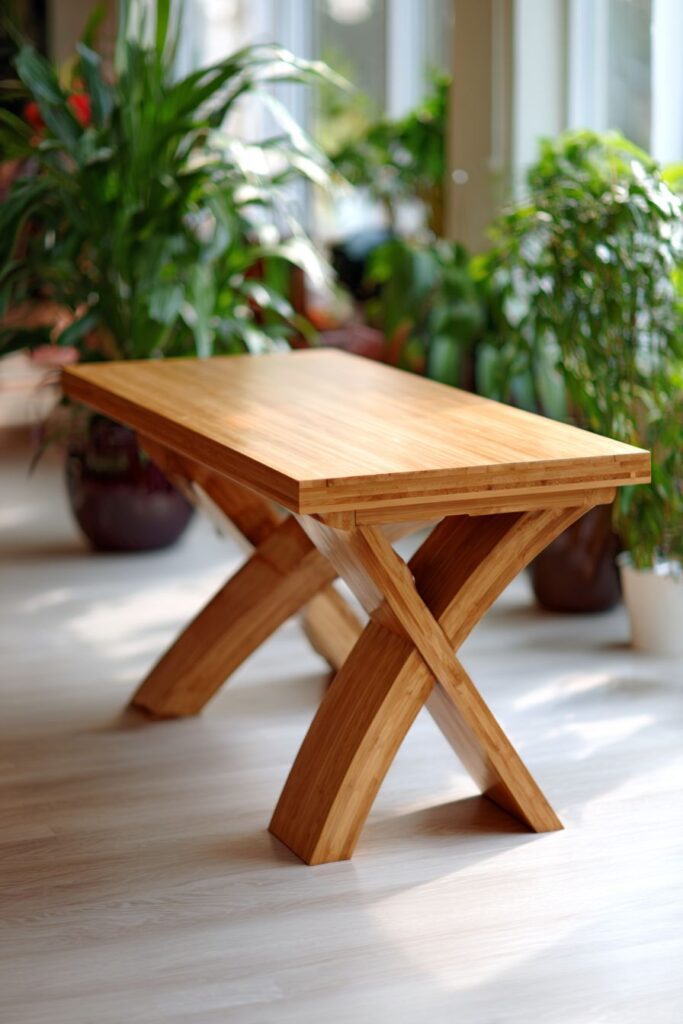
The eco-friendly folding dining table made from sustainable bamboo with natural oil finish represents environmentally conscious design that doesn’t compromise aesthetics or functionality. This innovative piece demonstrates how sustainable materials can create beautiful, durable furniture while supporting responsible manufacturing practices. The natural bamboo construction showcases the material’s inherent strength and distinctive grain patterns.
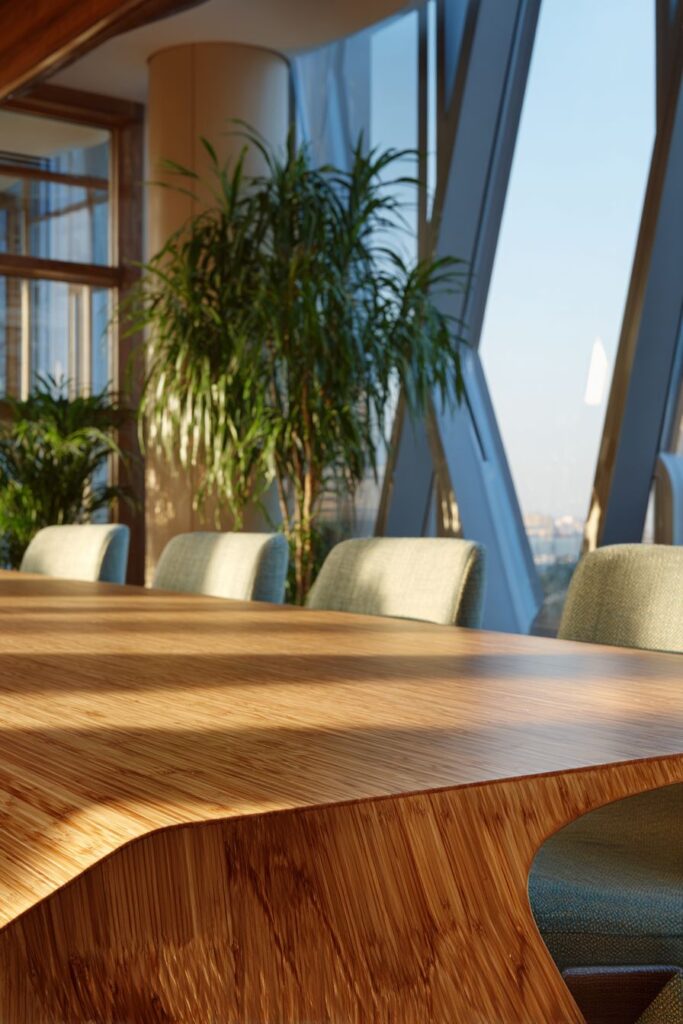
Bamboo’s rapid growth rate and renewable harvesting make it an ideal choice for environmentally conscious consumers seeking to reduce their ecological footprint without sacrificing quality or style. The natural oil finish enhances the bamboo’s distinctive grain patterns while providing protection against daily use and moisture exposure. This finish choice maintains the material’s natural character while ensuring longevity and durability.
When displayed in green-conscious dining spaces with living plants and recycled materials, this table creates visual harmony through shared environmental values. The sustainable design philosophy extends beyond materials to include packaging, manufacturing processes, and end-of-life disposal considerations. This holistic approach to sustainable design creates furniture that aligns with environmentally conscious lifestyles.
Natural daylight streaming through energy-efficient windows highlights the bamboo’s natural texture and sustainable design philosophy while supporting the overall environmental theme. The connection between sustainable furniture choices and energy-efficient architecture creates a cohesive approach to environmentally responsible living.
Key Design Tips:
- Use natural lighting to showcase bamboo’s distinctive grain patterns
- Select eco-friendly accessories and materials for the surrounding space
- Position near plants and natural elements to enhance the environmental theme
- Choose finishes that maintain the bamboo’s natural character
- Consider the table’s sustainability story when planning the overall room design
20. Transitional Two-Tone Versatility
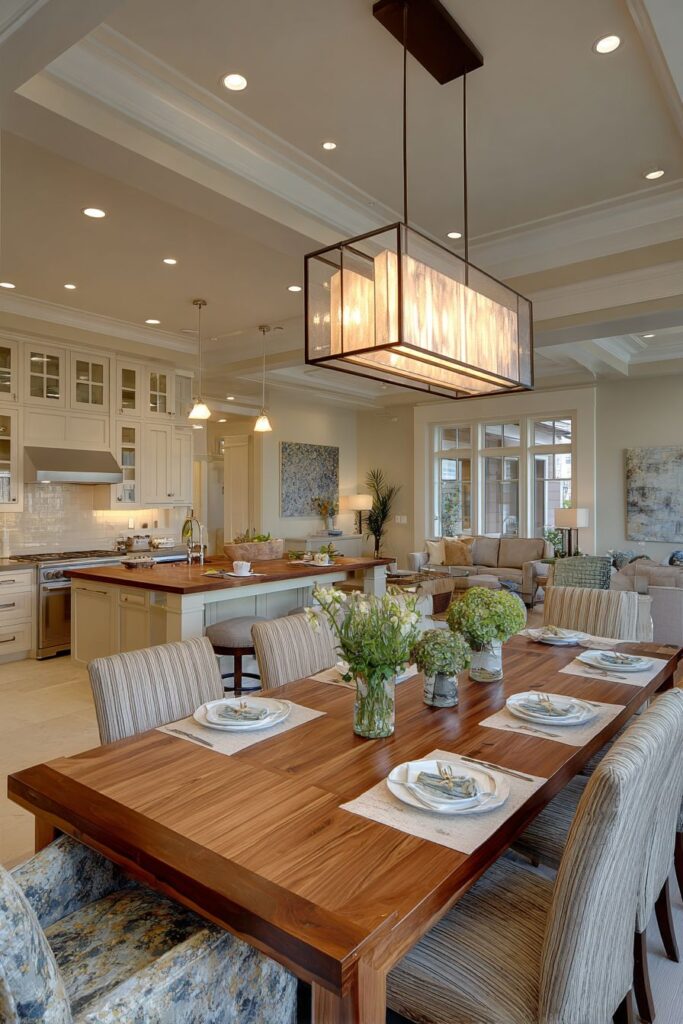
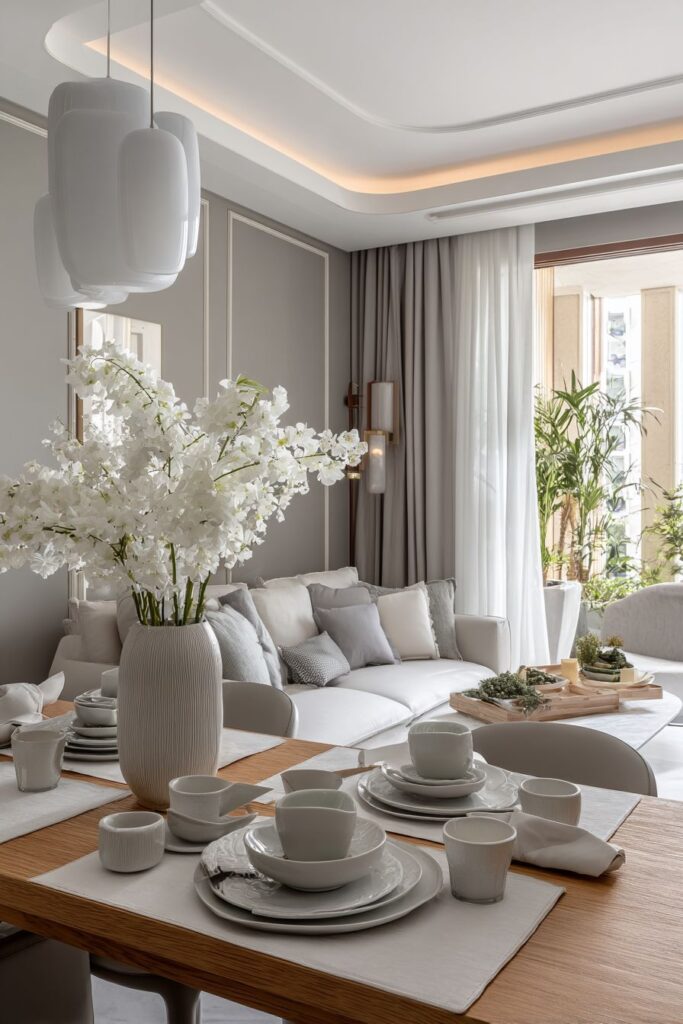
The transitional folding dining table with two-tone finish combining painted base and stained wood top represents design flexibility that bridges traditional and contemporary styles. This adaptable piece demonstrates how thoughtful design can create furniture that works across multiple aesthetic approaches while providing practical functionality for diverse entertaining needs. The dual-finish treatment creates visual interest while maintaining broad style compatibility.
The painted base provides color flexibility that can complement various decor schemes, while the stained wood top adds natural warmth and durability that appeals to traditional sensibilities. This combination allows the table to adapt to changing design preferences without requiring replacement, making it a sustainable choice for evolving households and style preferences.
When positioned in versatile dining rooms that blend traditional and contemporary elements, this table serves as a unifying piece that connects different design eras and styles. The adaptable design complements both casual family dining and more formal entertaining scenarios, demonstrating the flexibility that makes transitional furniture so appealing to diverse households.
Layered lighting from recessed fixtures and modern pendants creates balanced illumination that highlights the sophisticated dual-finish treatment while supporting multiple dining scenarios throughout the day. The flexible lighting approach complements the table’s adaptable character while ensuring appropriate illumination for various activities and entertaining styles.
Key Design Tips:
- Use the painted base to introduce color into neutral spaces
- Balance the two finishes through careful lighting and accessory choices
- Position to take advantage of both casual and formal dining scenarios
- Select accompanying furniture that complements rather than competes with the dual aesthetic
- Consider the table’s style flexibility when planning room updates and changes
Why These Folding Dining Table Designs Represent the Best in Modern Furniture
Each of the twenty folding dining table designs presented represents a unique solution to contemporary living challenges while maintaining distinct aesthetic personalities. These space-saving dining solutions demonstrate how modern furniture design has evolved to address urban living constraints without sacrificing style or functionality. The versatile dining furniture concepts showcase innovative engineering that allows single pieces to serve multiple purposes throughout the day.
The compact dining tables featured here represent the pinnacle of multi-functional furniture design, where form and function achieve perfect balance through thoughtful engineering and material selection. These transformable dining surfaces prove that small space furniture can maintain luxury aesthetics while providing practical solutions for flexible dining arrangements.
Contemporary folding tables have redefined what’s possible in modern dining room design, offering convertible dining furniture that adapts to changing needs throughout the day. The innovative dining solutions presented demonstrate how adaptive furniture design can create efficient space utilization without compromising the dining experience.
These stylish folding dining tables represent the best in practical dining furniture because they address real-world challenges while maintaining aesthetic appeal. The designer folding tables showcase how luxury meets functionality in pieces that serve as both statement furniture and everyday dining solutions.
The extendable dining tables featured demonstrate smart furniture design that maximizes dining room versatility while providing elegant space-saving options. These premium folding tables prove that functional design can achieve sophisticated aesthetics without compromise.
Conclusion
The world of folding dining tables represents one of furniture design’s most successful marriages of form and function, where practical necessity inspires innovative aesthetics rather than limiting them. These twenty distinct approaches to transformable dining furniture demonstrate how thoughtful design can address the challenges of modern living while enhancing rather than compromising the dining experience.
From the clean lines of Scandinavian minimalism to the ornate details of traditional craftsmanship, each design philosophy brings unique strengths to the challenge of creating furniture that serves multiple purposes without sacrificing visual appeal. The diversity of materials, from sustainable bamboo to luxurious mahogany, proves that environmental consciousness and aesthetic sophistication can coexist beautifully in contemporary furniture design.
The engineering innovations showcased in these designs represent significant advances in mechanical functionality, where complex folding mechanisms operate with precision while remaining virtually invisible when not in use. This seamless integration of technology and craftsmanship reflects the evolution of furniture manufacturing, where traditional joinery techniques combine with modern engineering to create pieces that will endure decades of regular use.
Perhaps most importantly, these folding dining tables demonstrate how thoughtful design can enhance quality of life in tangible ways. Whether enabling intimate dinners in studio apartments or accommodating large family gatherings in traditional homes, each design solution addresses specific lifestyle needs while contributing to the overall aesthetic harmony of living spaces.
The future of dining furniture lies in this type of adaptive design thinking, where flexibility becomes a design feature rather than a compromise. As living spaces continue to evolve and urban density increases, furniture that can transform to meet changing needs while maintaining beauty and functionality will become increasingly valuable.
For homeowners considering folding dining tables, the key lies in selecting designs that align with both current needs and future aspirations. The best pieces will grow with changing lifestyles, providing reliable function and enduring beauty that justifies the investment over many years of use. Whether drawn to the rustic charm of reclaimed wood, the sleek sophistication of glass and chrome, or the timeless appeal of traditional craftsmanship, there exists a folding dining table design that can transform any space into a welcoming environment for gathering, sharing meals, and creating lasting memories.
The twenty designs presented here represent just the beginning of what’s possible when innovative thinking meets practical necessity. As designers continue to push the boundaries of what furniture can accomplish, we can expect even more creative solutions that make our homes more functional, beautiful, and adaptable to the ever-changing demands of modern life.
"As an Amazon Associate, I earn from qualifying purchases."
