
European kitchen design represents the pinnacle of functional elegance and timeless sophistication. For centuries, European homes have perfected the art of creating cooking spaces that seamlessly blend practicality with aesthetic refinement. These kitchens reflect a deep-rooted philosophy where every element serves a purpose while contributing to an overall atmosphere of warmth and understated luxury.
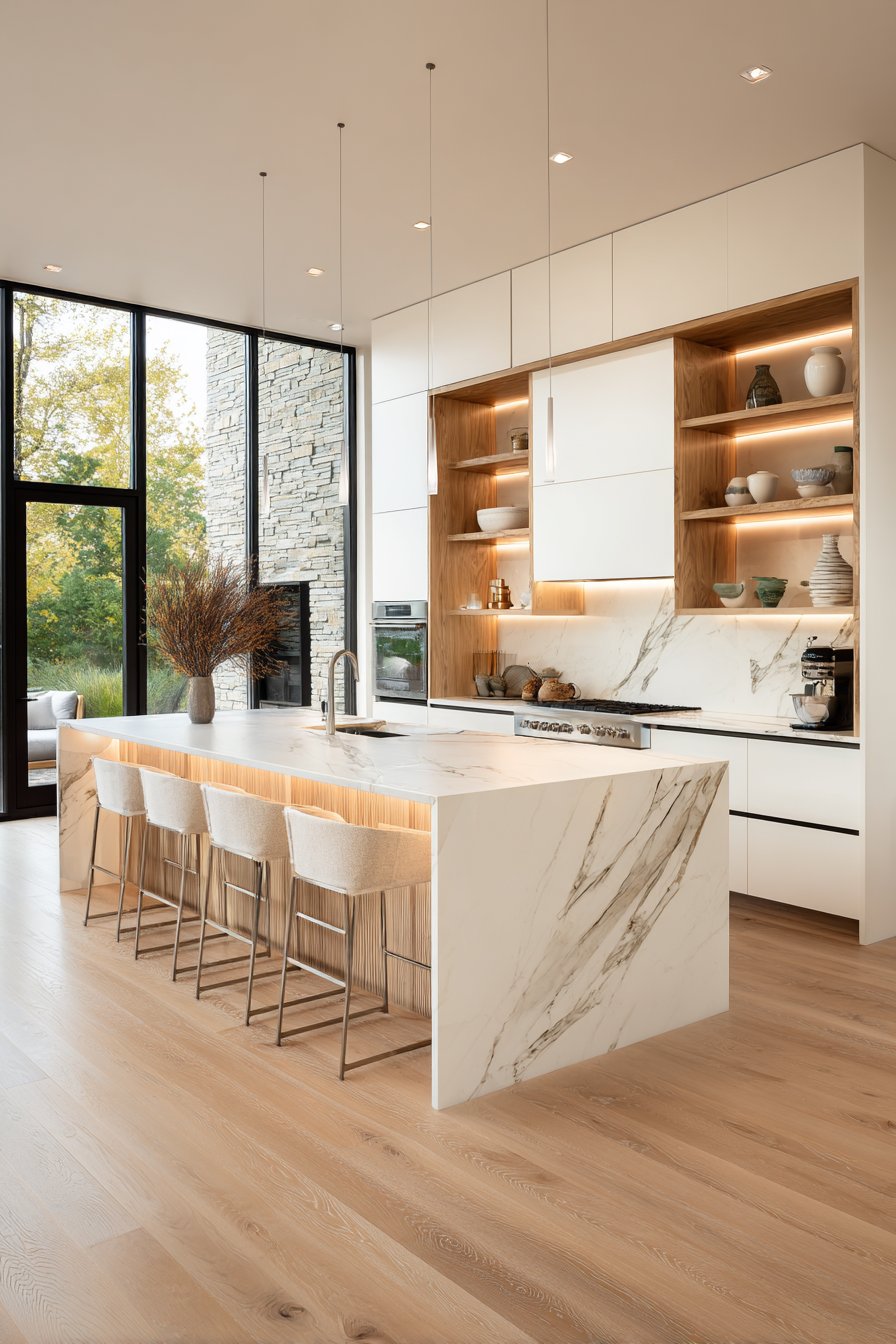
The distinction of European kitchen design lies in its ability to transform ordinary spaces into culinary havens that inspire creativity and foster connection. Unlike purely decorative approaches, European kitchens prioritize intelligent spatial planning and quality craftsmanship. They embrace minimalism without sacrificing character, creating environments where form genuinely follows function in the most beautiful way possible.
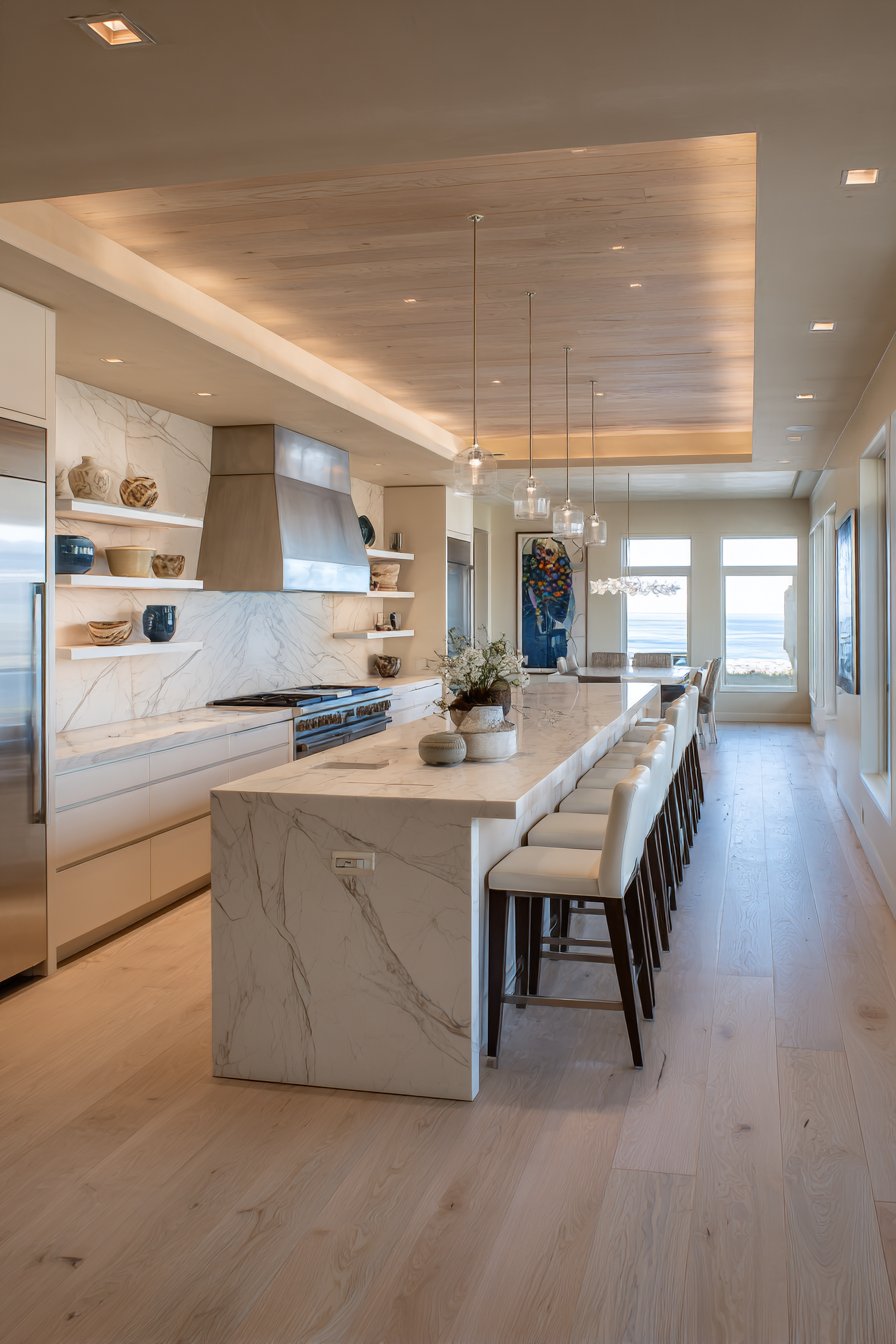
This article explores the defining characteristics that make European kitchen design internationally coveted. From Scandinavian minimalism to Italian craftsmanship, we’ll examine how these distinctive design principles create kitchens that remain relevant across generations. Whether you’re planning a complete renovation or seeking inspiration for modest updates, understanding these unique elements will help you capture authentic European sophistication in your own home.
1. Streamlined Cabinetry with Handleless Design
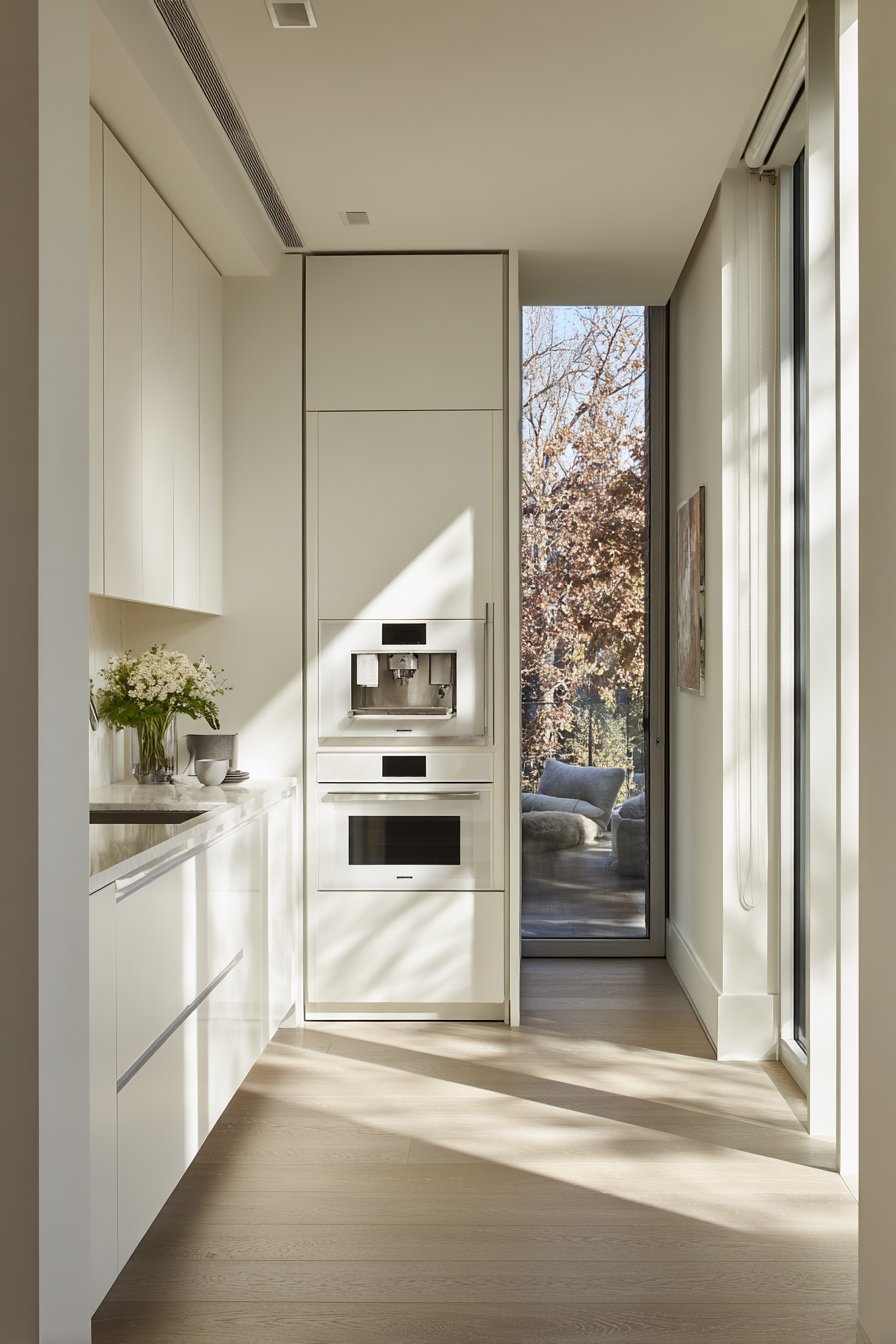
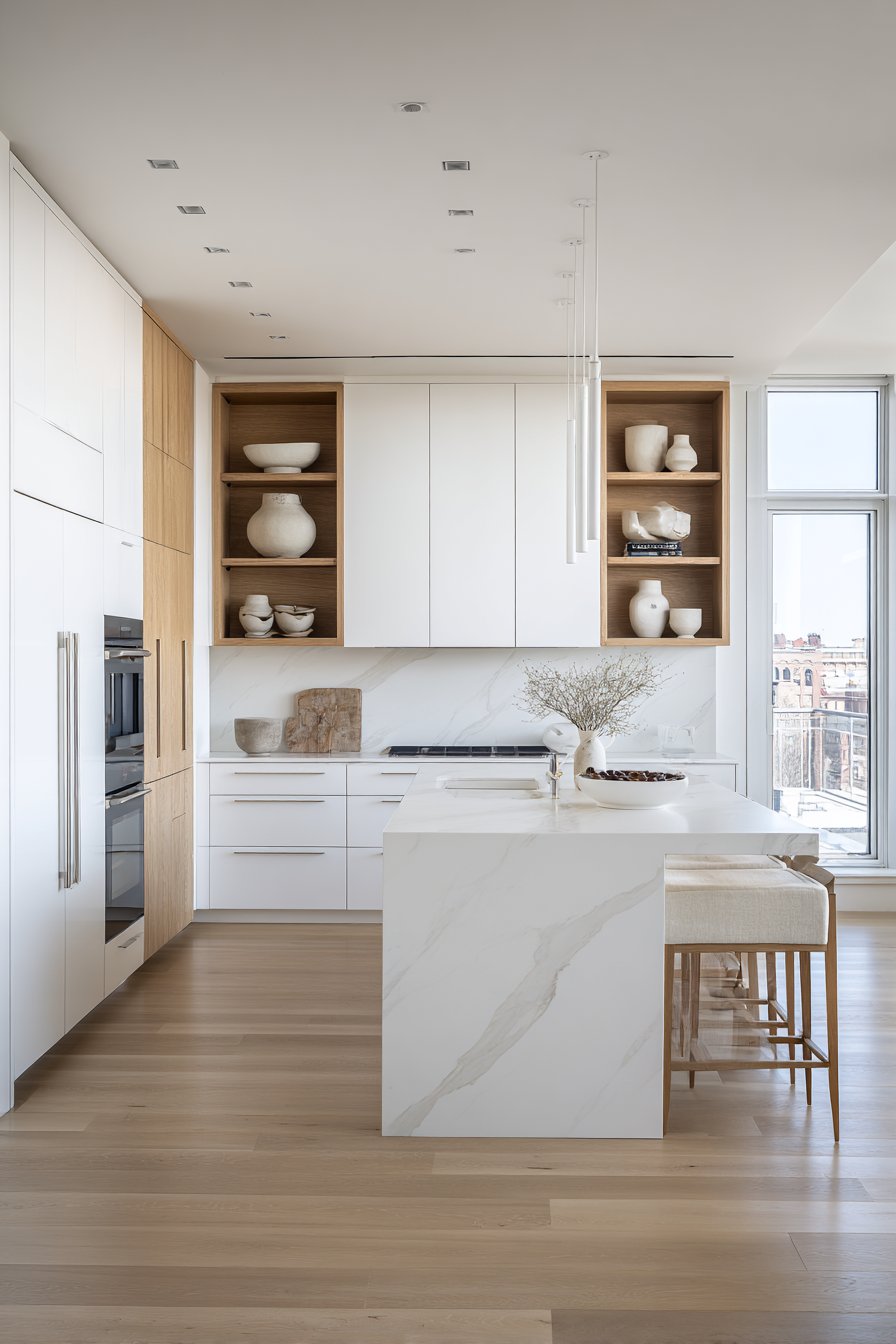
European kitchens champion clean architectural lines through their signature handleless cabinetry systems. This approach eliminates visual clutter by incorporating push-to-open mechanisms or integrated finger pulls. The result creates an uninterrupted facade that emphasizes the beauty of materials rather than decorative hardware.
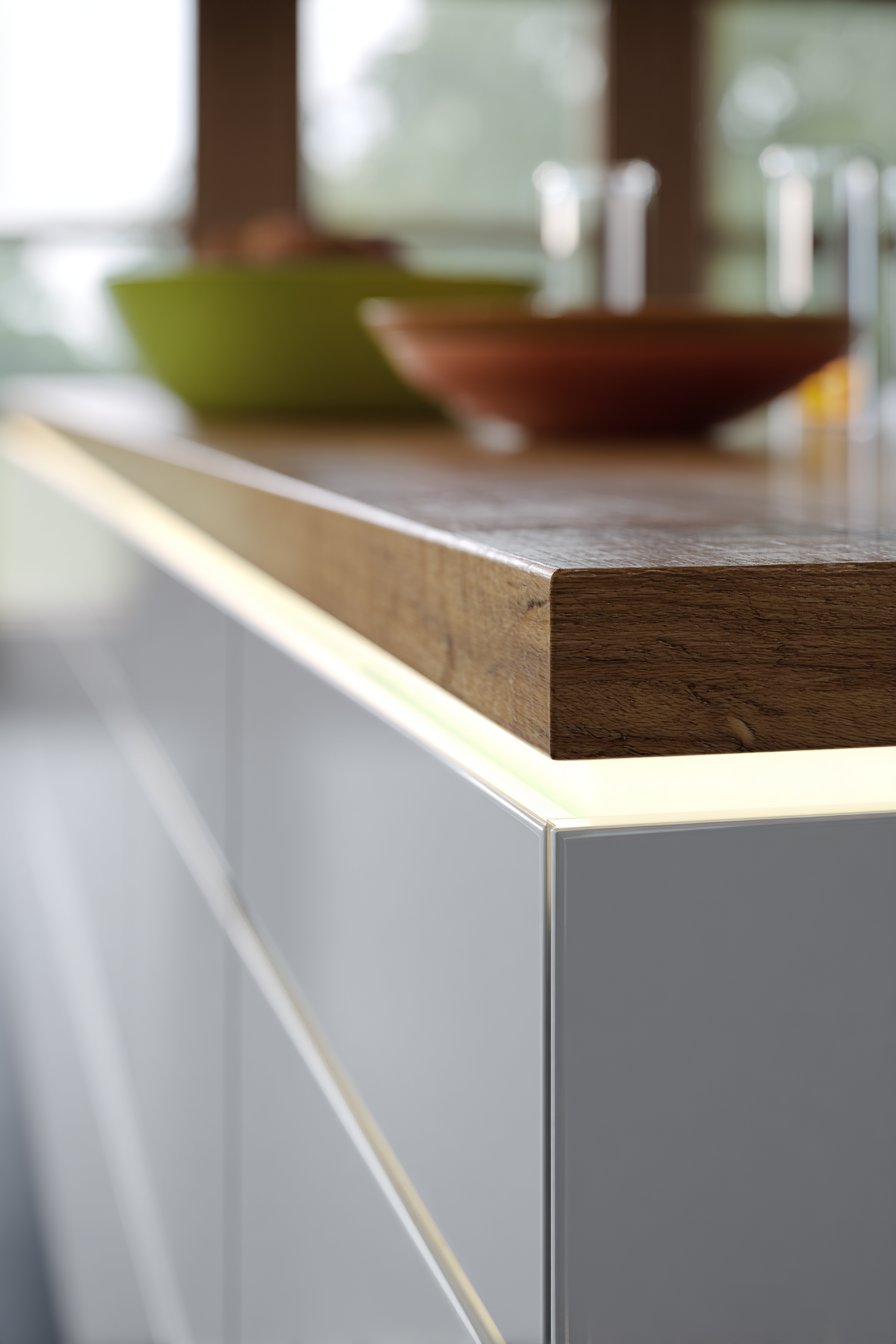
The handleless aesthetic reflects European design’s commitment to understated refinement. These cabinets appear as seamless surfaces that blend into walls, creating a calm visual environment. This design choice particularly shines in smaller kitchens where reducing visual noise makes spaces feel more expansive and organized.
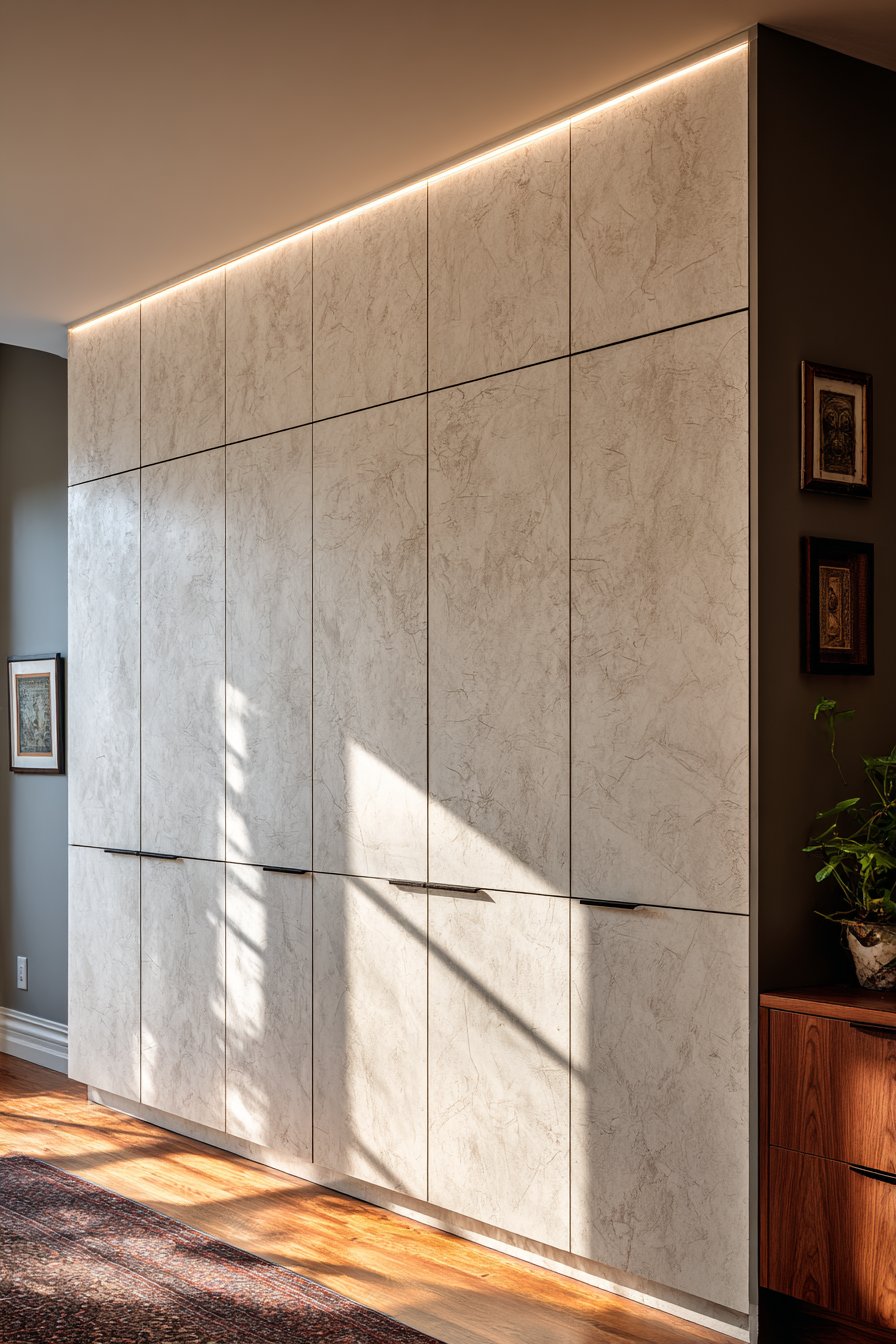
Beyond aesthetics, handleless systems offer practical advantages for modern living. They’re easier to clean without hardware catching dirt and grease. The push-to-open technology feels intuitive and contemporary. This combination of form meeting function perfectly embodies European design philosophy.
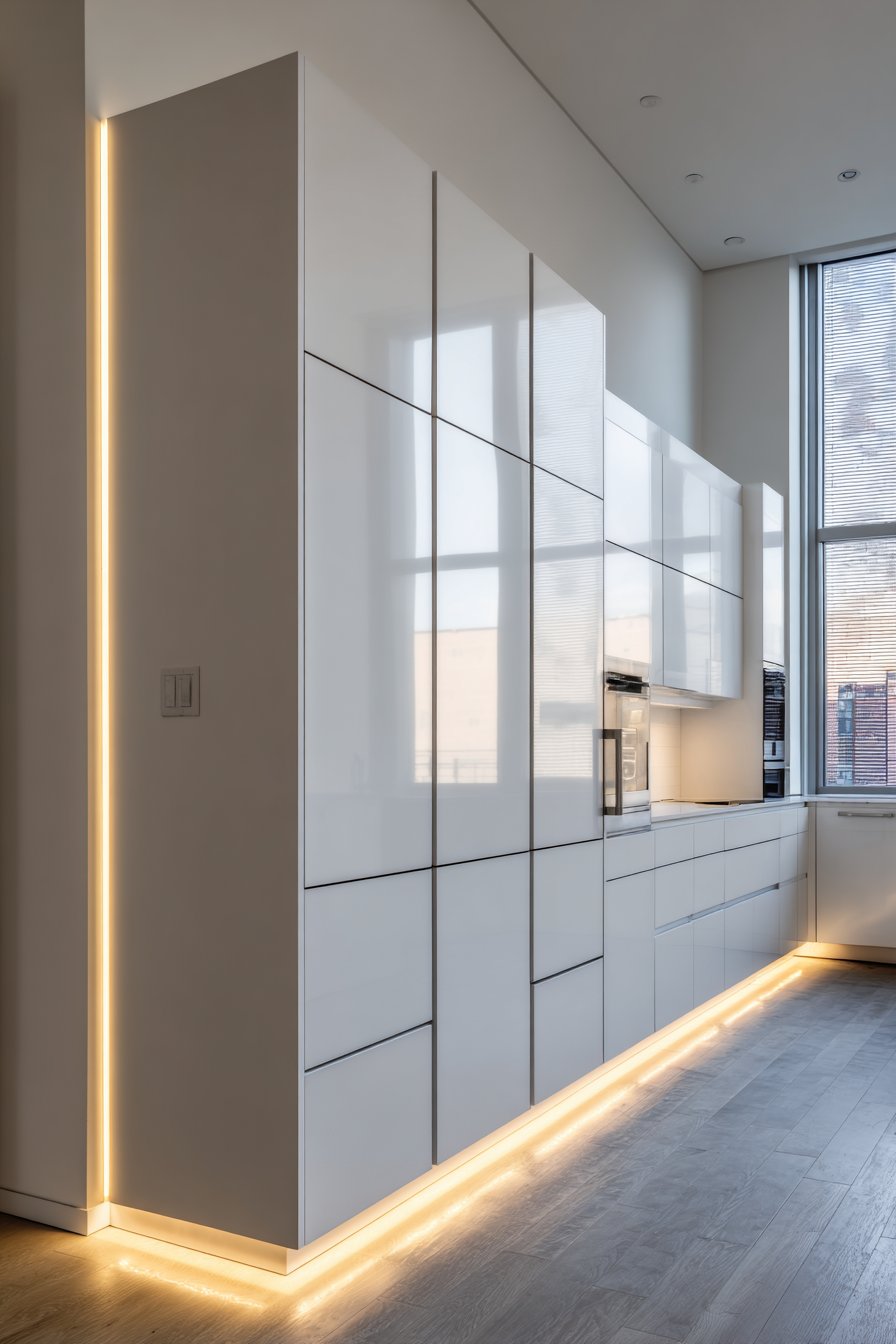
- Choose matte or satin finishes that complement minimalist aesthetics
- Install soft-close mechanisms for whisper-quiet operation
- Consider integrated LED strips along cabinet bases for subtle lighting
- Select high-quality materials that showcase natural textures
- Maintain consistency in cabinet heights for a unified appearance
2. Mixed Material Palettes Creating Visual Interest
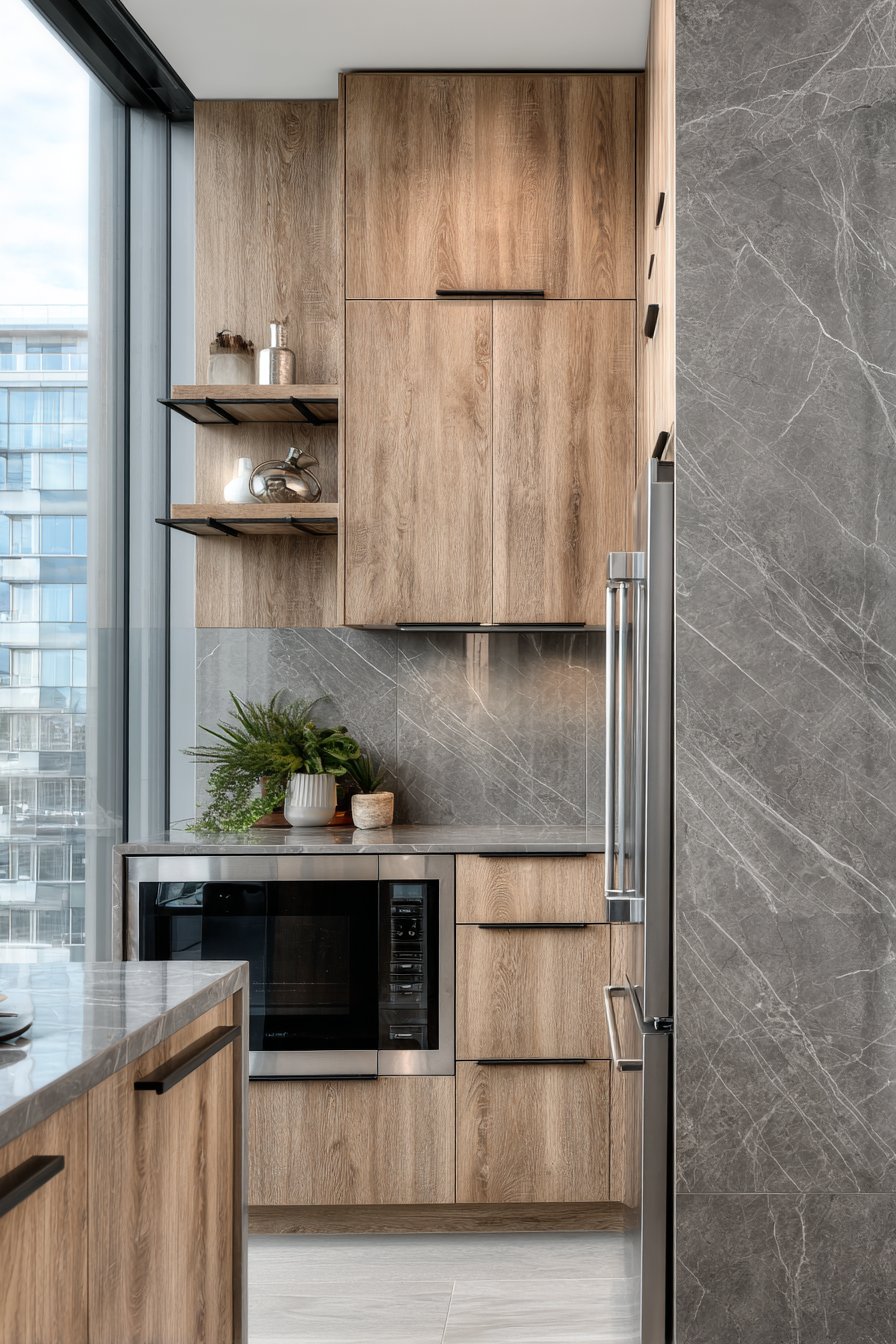
European kitchens masterfully combine contrasting materials to create depth without overwhelming spaces. Wood, stone, metal, and glass coexist harmoniously through thoughtful proportioning. This approach avoids monotony while maintaining cohesive visual language throughout the space.
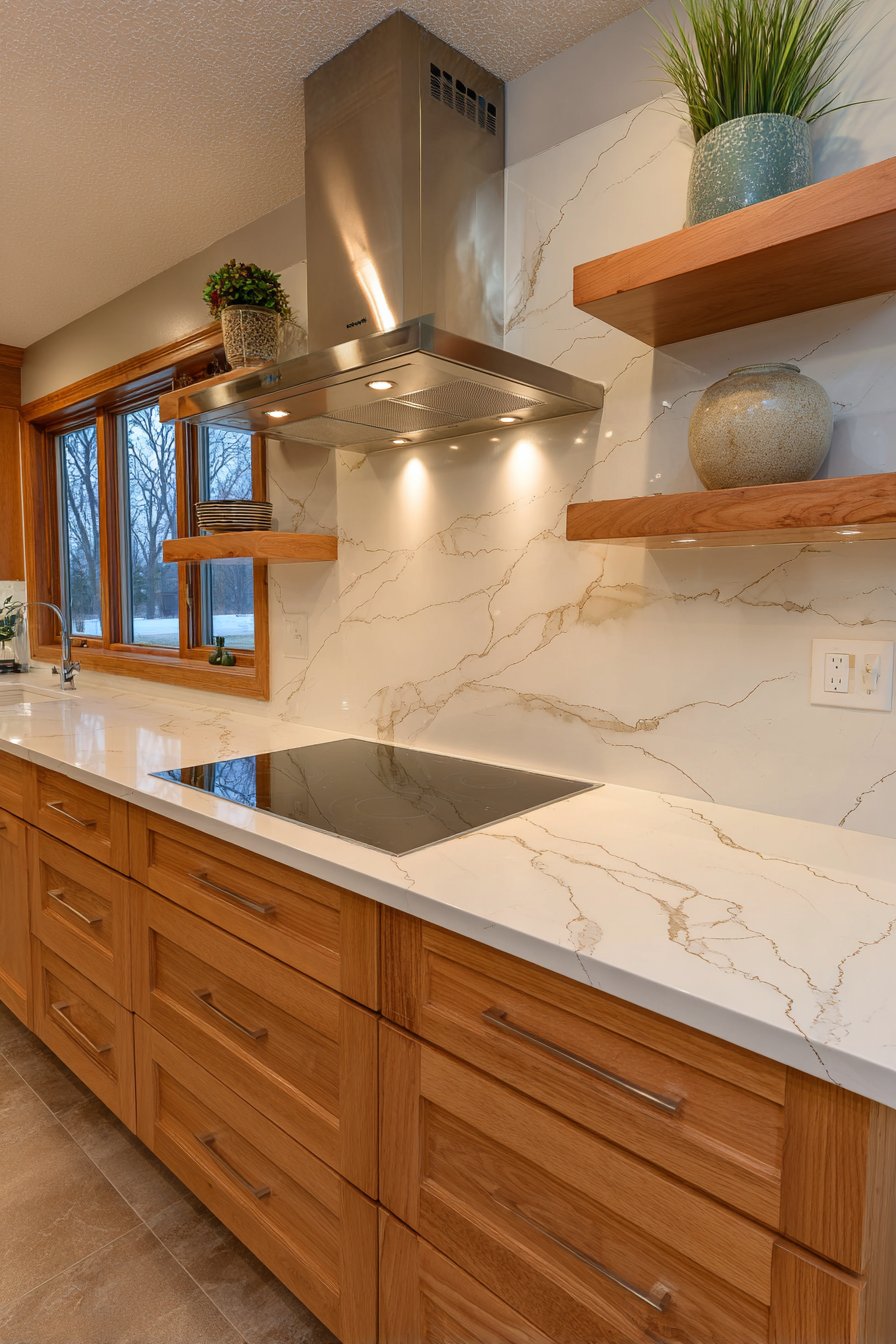
The mixing of materials serves both aesthetic and practical purposes. Natural wood brings warmth to sleek contemporary designs. Stone countertops provide durable work surfaces with organic beauty. Stainless steel adds industrial sophistication while offering easy maintenance. Glass elements introduce lightness and reflection.
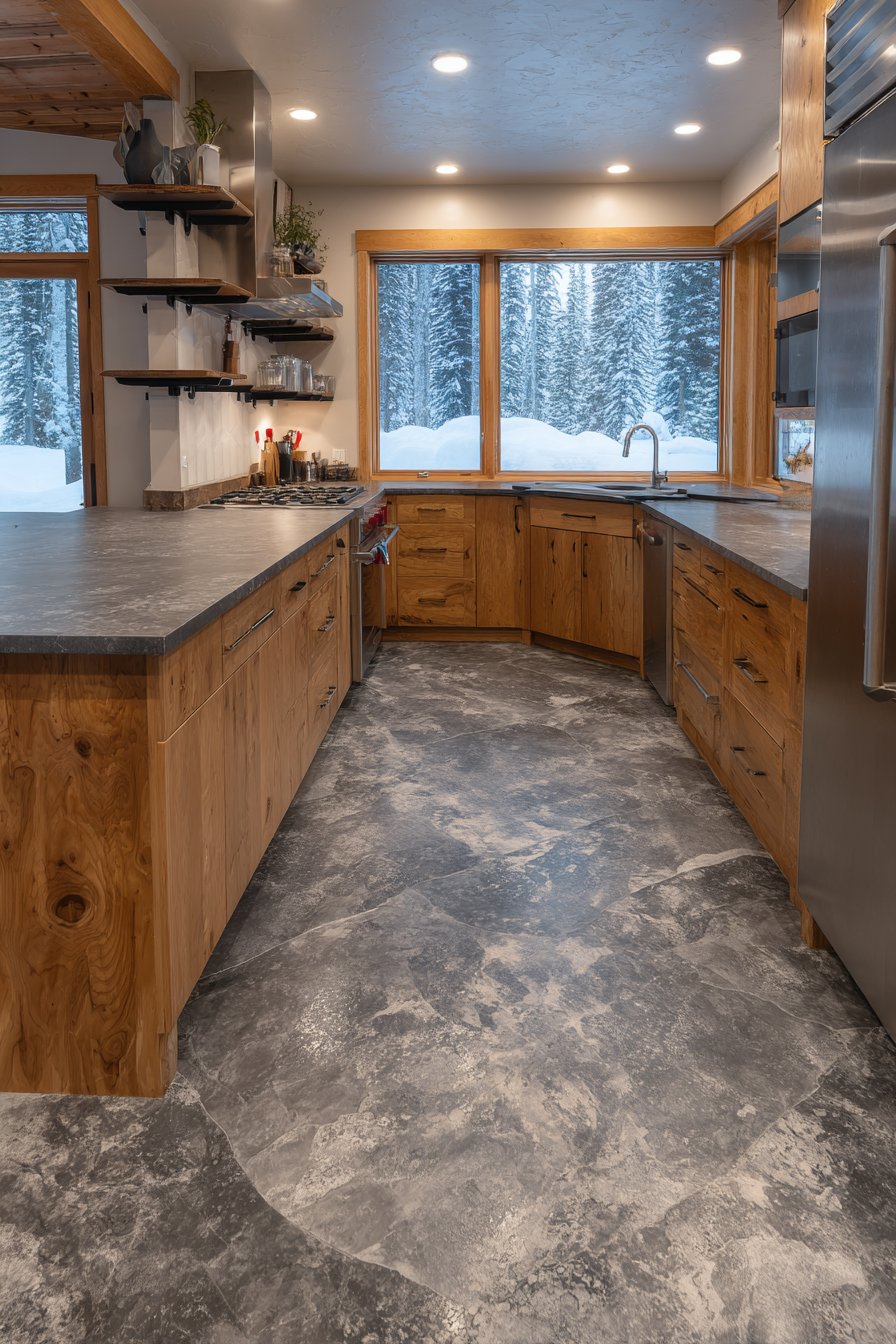
Quality European kitchens never sacrifice material integrity for trends. They favor authentic finishes over imitations. This commitment to genuine materials ensures kitchens age gracefully, developing character rather than showing wear. The tactile experience becomes as important as visual appeal.
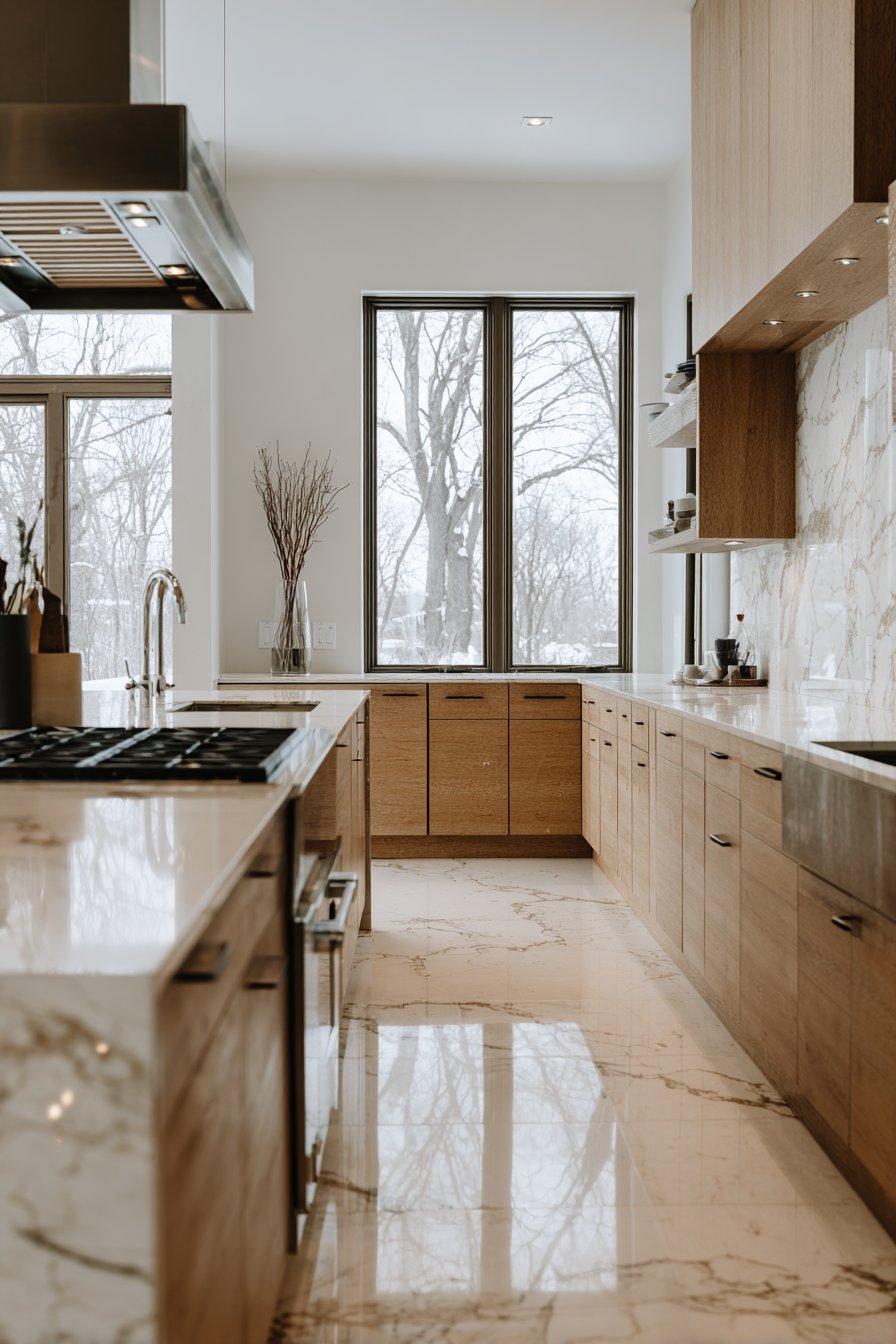
- Pair warm wood tones with cool stone for balanced contrast
- Use metal accents sparingly for maximum impact
- Incorporate glass in backsplashes or cabinet inserts
- Select materials with complementary undertones
- Invest in quality finishes that improve with age
3. Integrated Appliances for Seamless Aesthetics
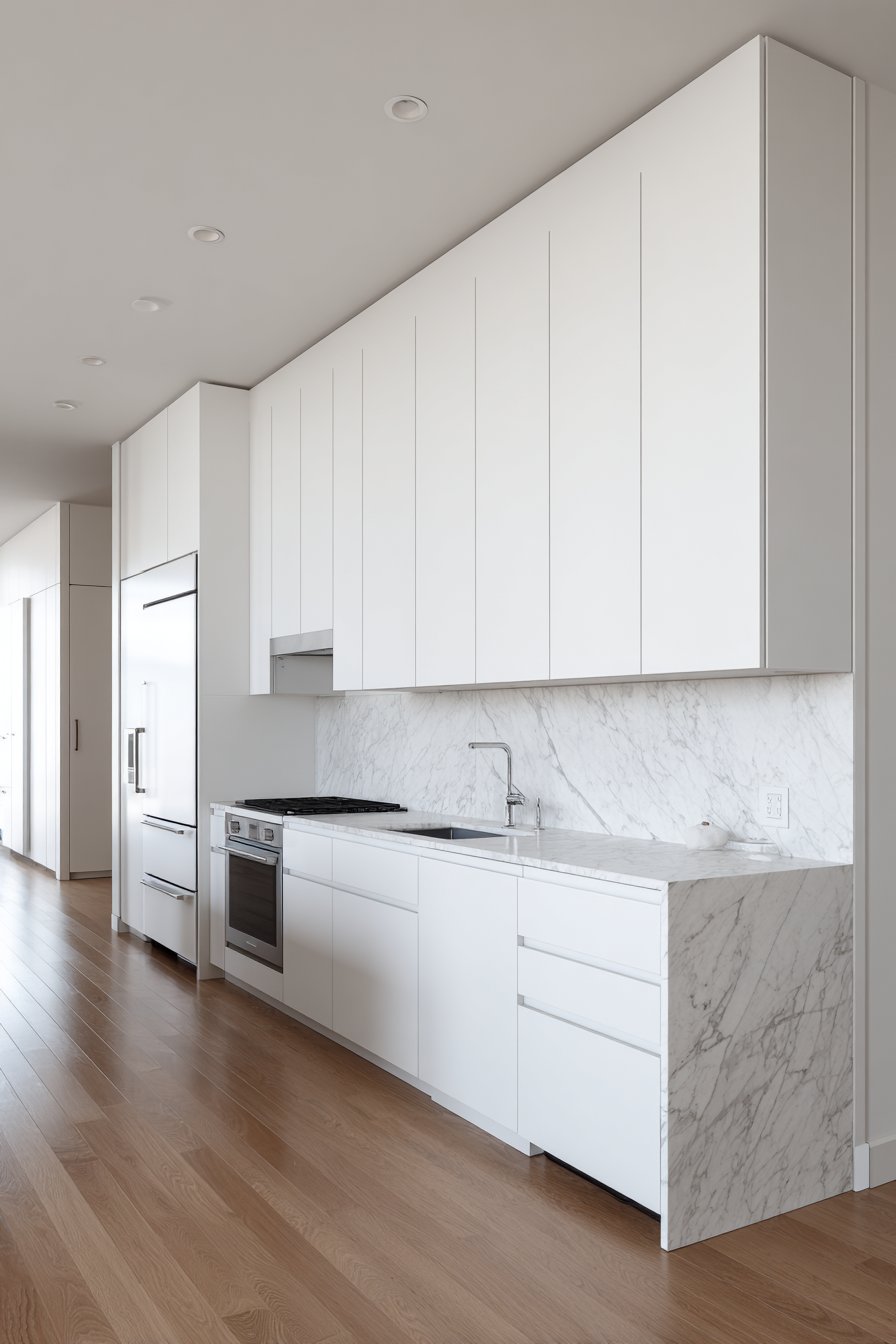
The European approach conceals appliances behind matching cabinetry panels for uninterrupted visual flow. Refrigerators, dishwashers, and even ovens disappear into the overall design. This creates a furniture-like quality rather than a kitchen that announces its utilitarian purpose.
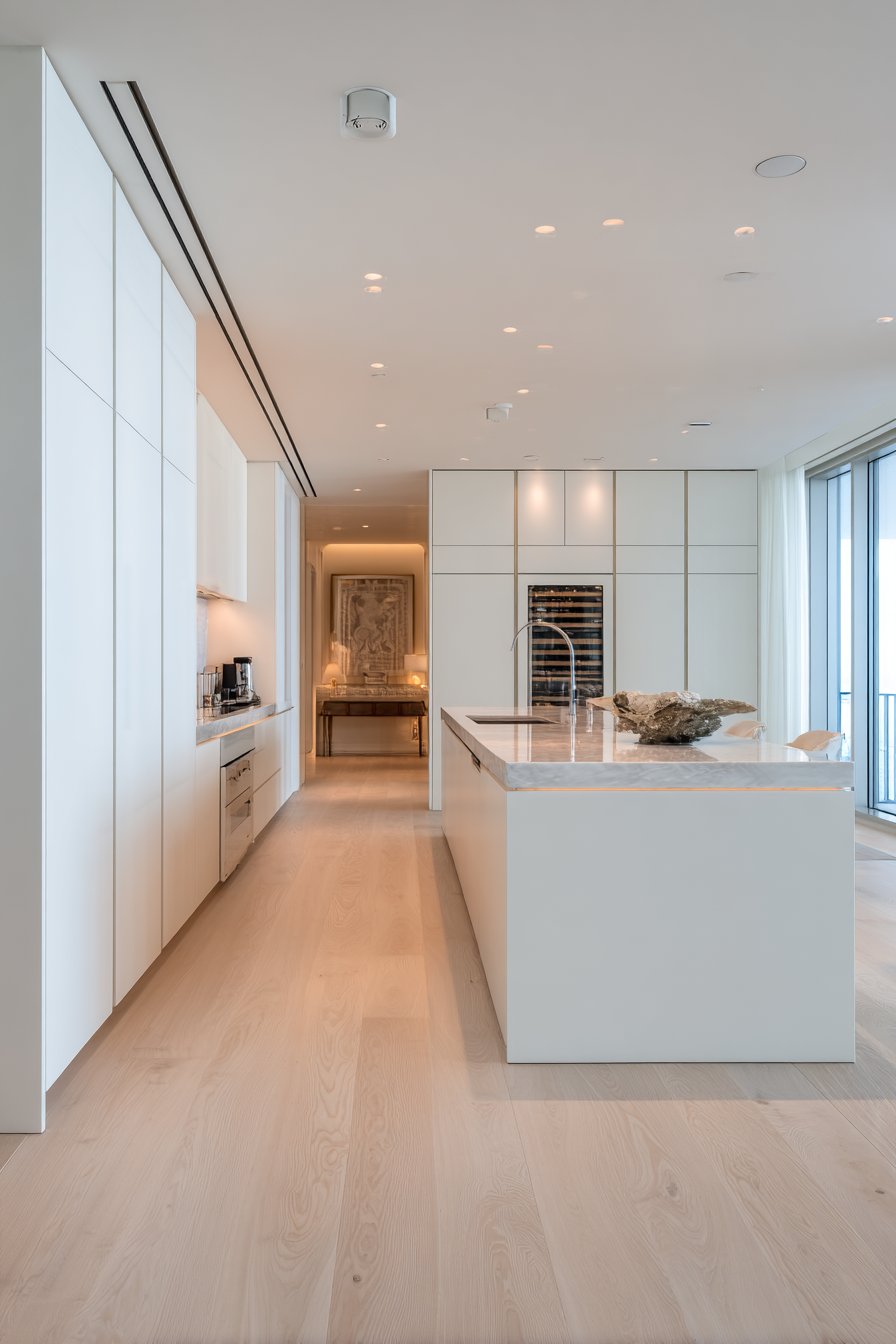
Integrated appliances reflect European priorities of discretion and sophistication. By hiding modern technology behind elegant facades, these kitchens maintain timeless appeal. The strategy prevents appliances from dating the space as technology evolves. This forward-thinking approach ensures long-term design relevance.
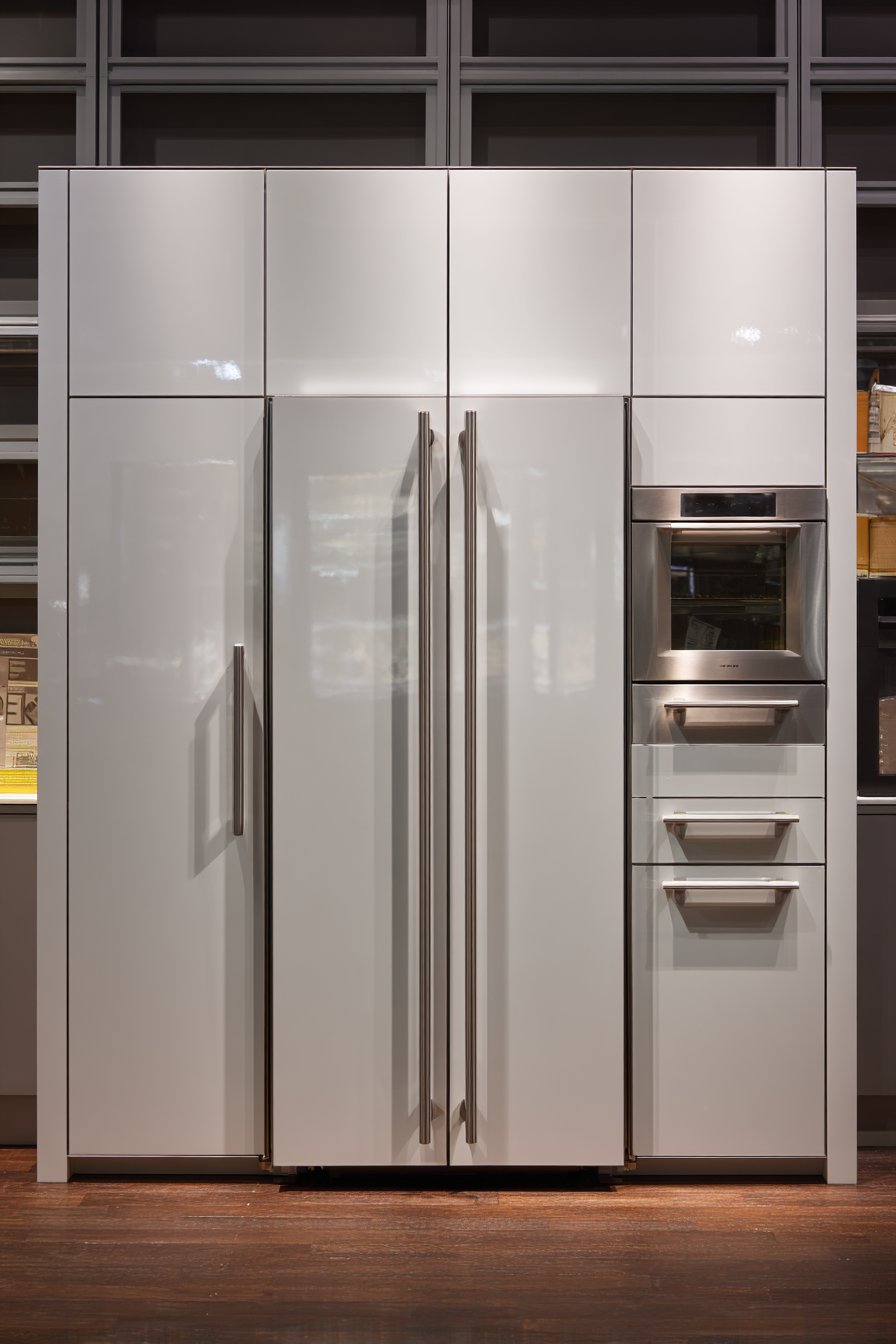
Beyond aesthetics, appliance integration serves acoustic benefits. Enclosed appliances run more quietly, contributing to peaceful home environments. The seamless design also simplifies cleaning by eliminating gaps where debris accumulates. This holistic thinking characterizes authentic European design.
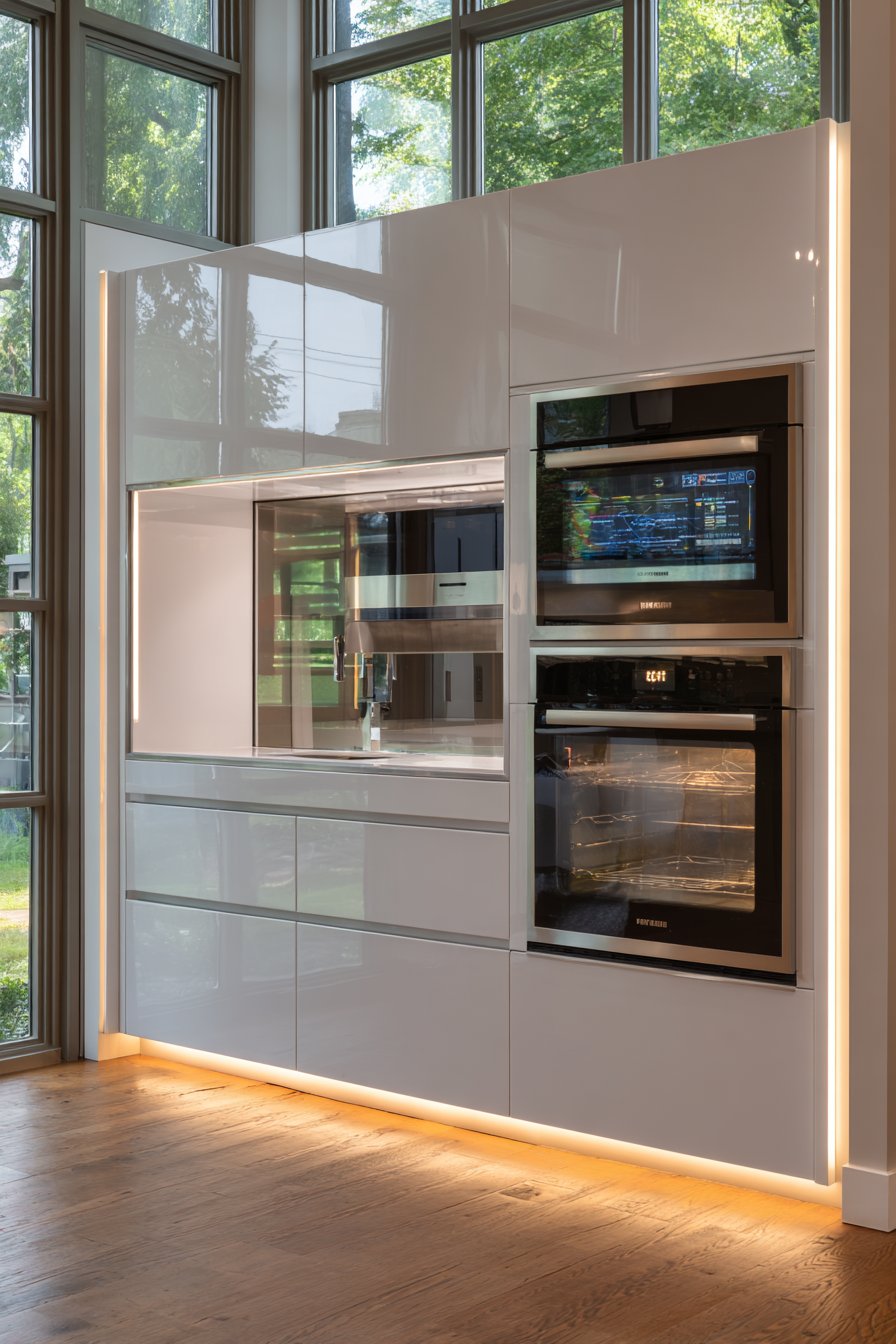
- Panel all major appliances to match cabinetry exactly
- Choose appliances designed specifically for integration
- Maintain consistent handle style across all panels
- Consider under-counter refrigeration for streamlined look
- Install ventilation hoods concealed within cabinetry
4. Functional Islands as Social Centerpieces
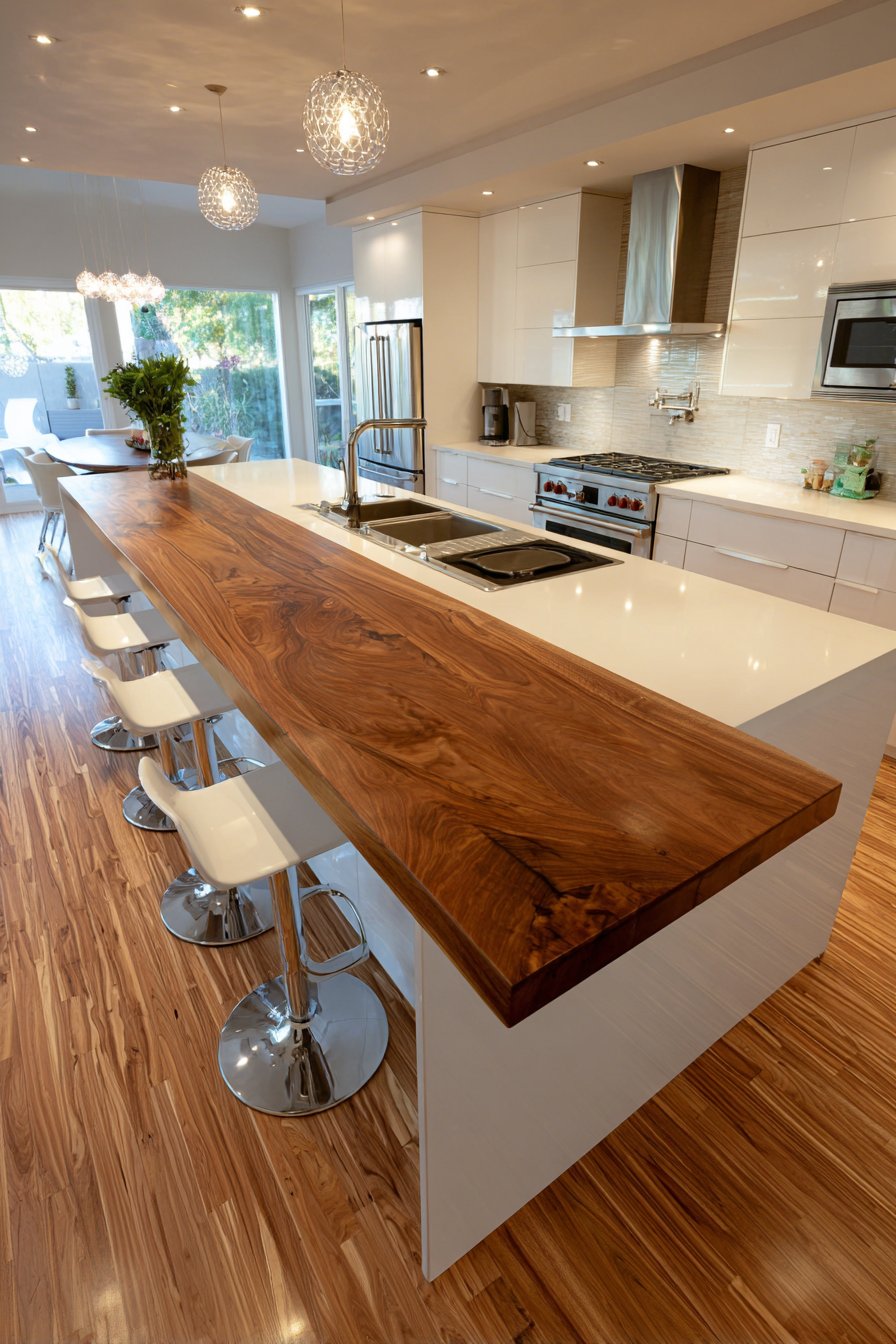
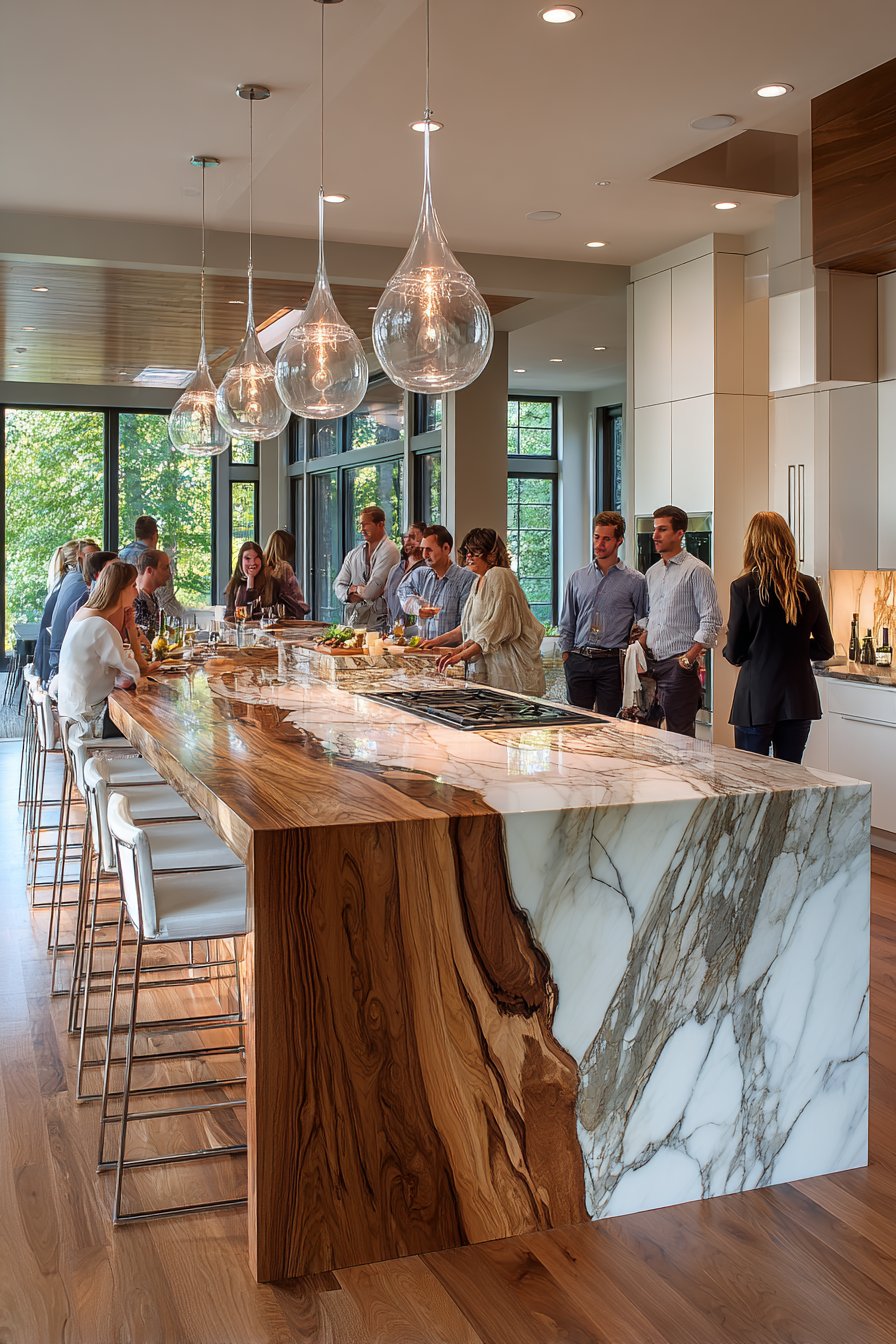
European kitchen islands serve as multifunctional hubs rather than mere workspace additions. These islands incorporate cooking, prep areas, storage, and seating within thoughtfully proportioned designs. They become the social heart where cooking and conversation naturally merge.
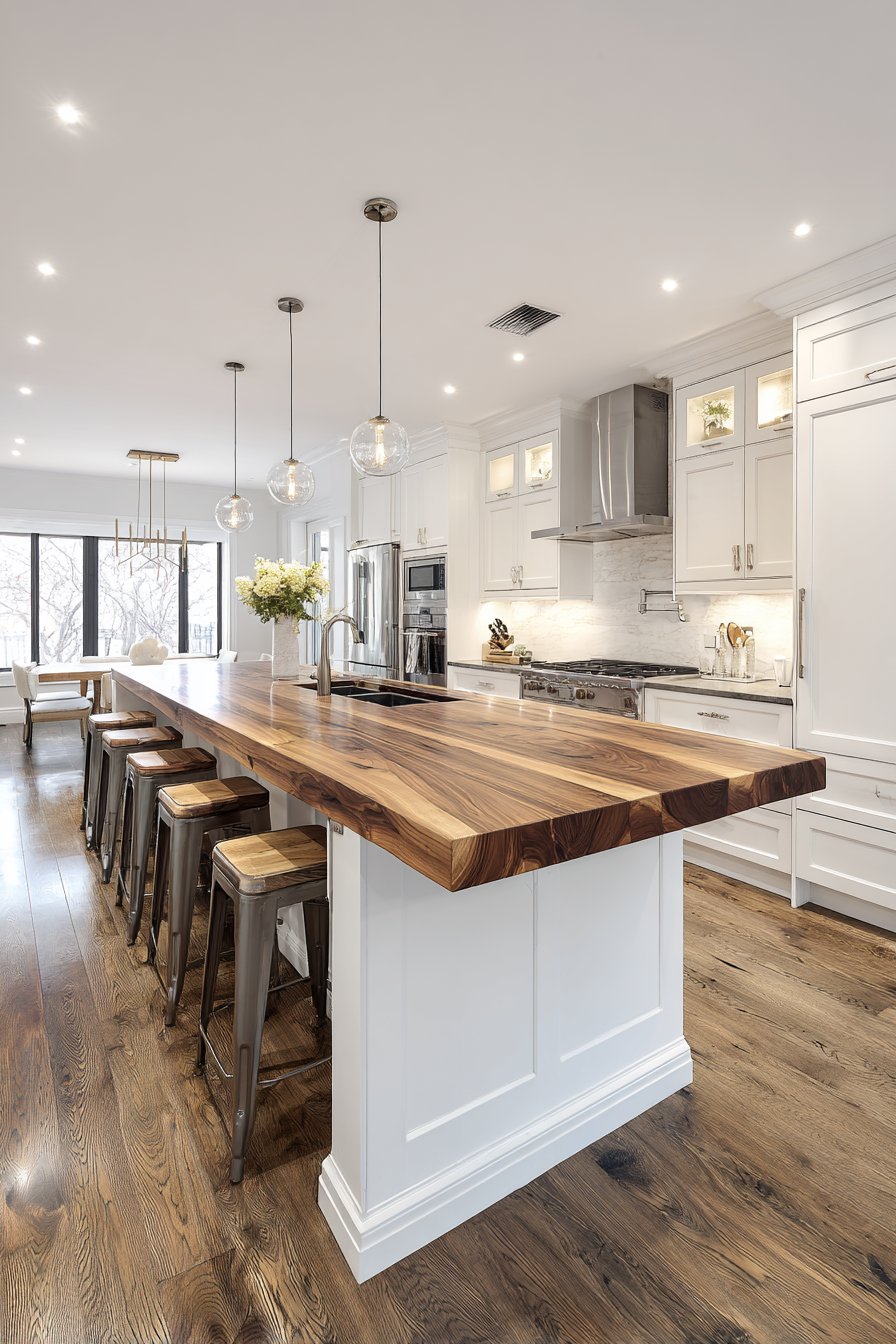
The European island differs from oversized American counterparts through restrained dimensions. These islands maintain clear circulation paths and proper work triangle efficiency. Their size feels appropriate to room proportions, never overwhelming the space. This spatial sensitivity reflects centuries of designing within constrained footprints.
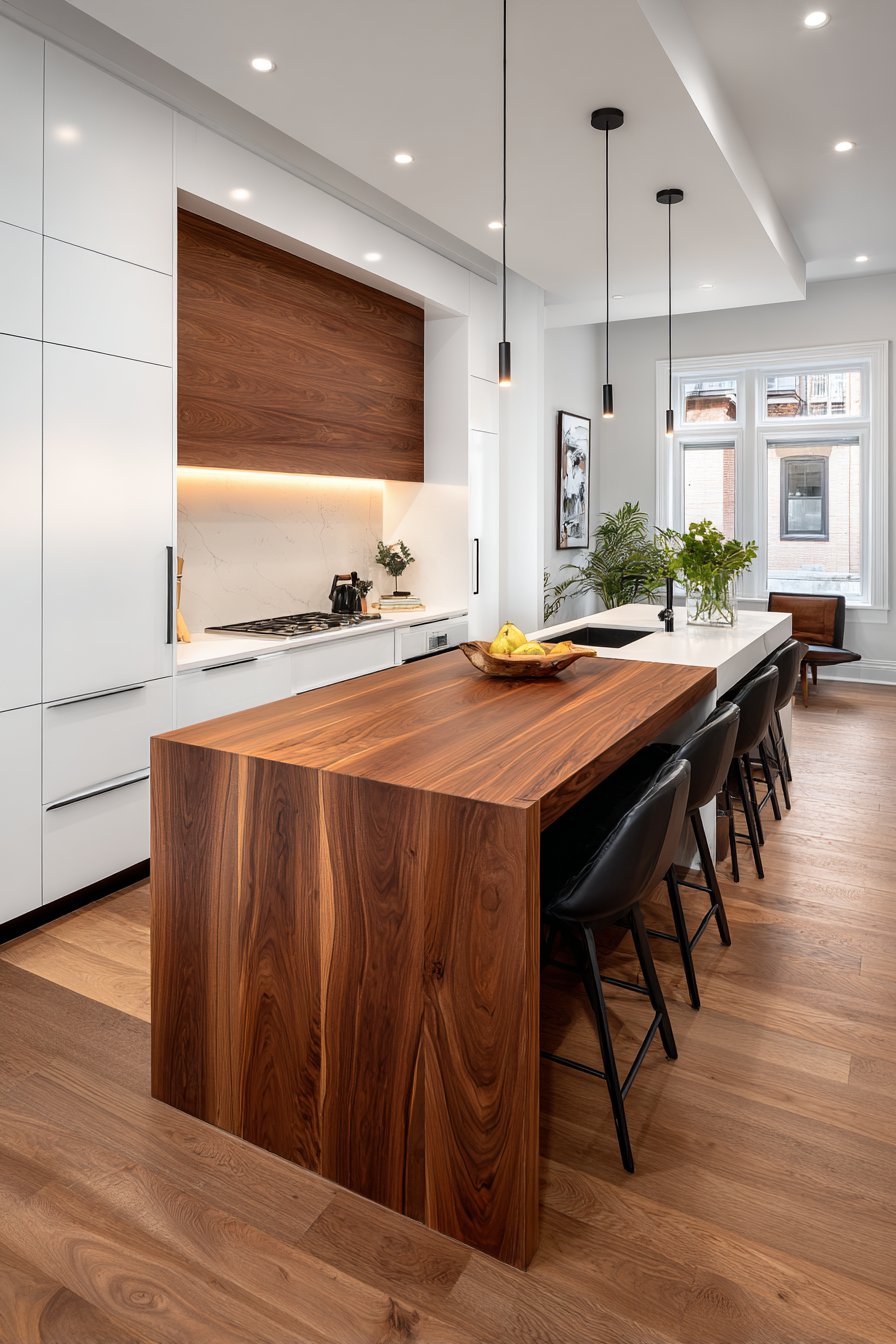
Materials and finishes on European islands often contrast with perimeter cabinetry. A wood-topped island against white cabinets creates visual interest while maintaining cohesion. This strategy adds personality without chaos. The island becomes a deliberate focal point within the unified design.
- Size islands proportionally to allow comfortable movement
- Include electrical outlets discreetly within island structure
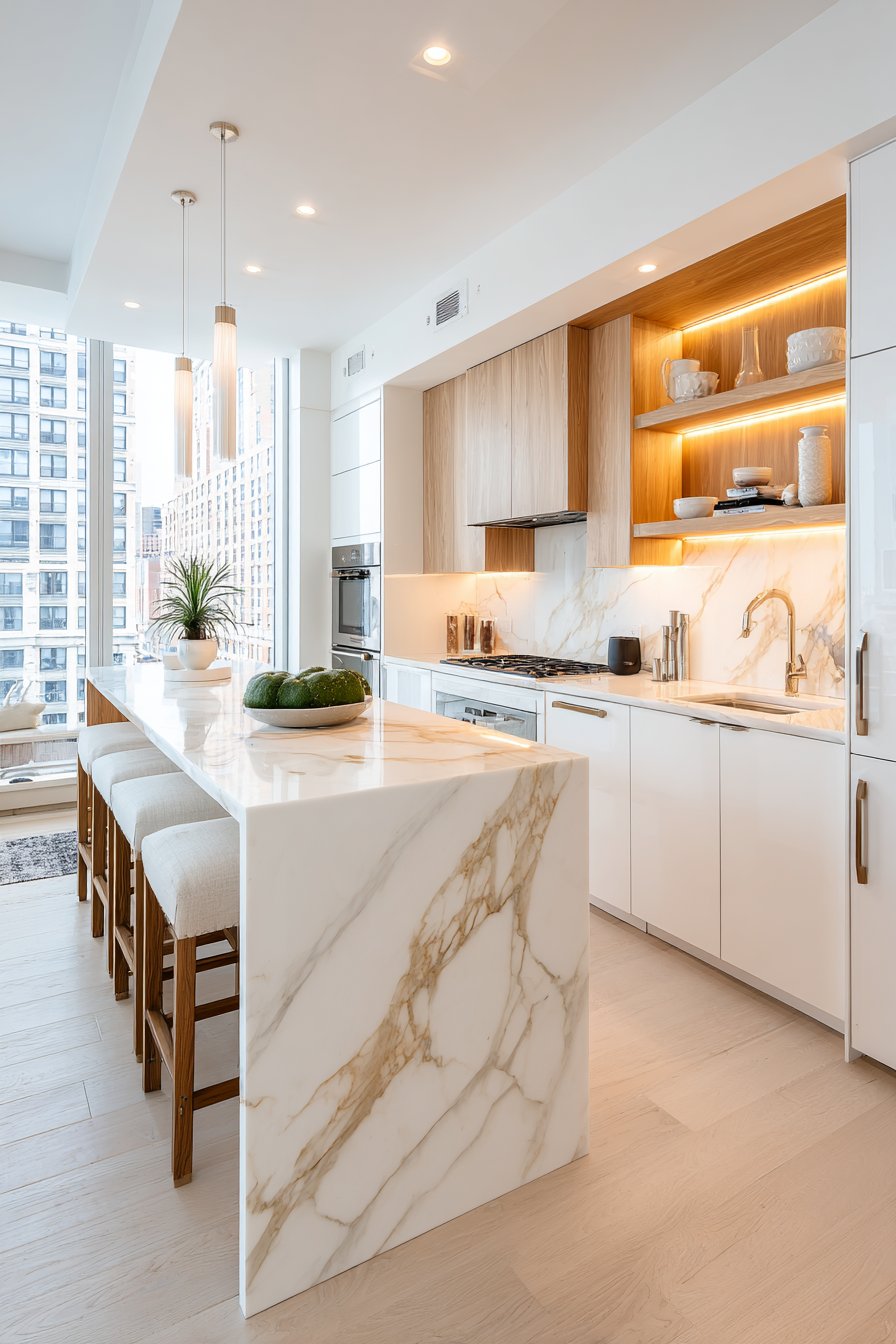
- Consider waterfall edges for contemporary sophistication
- Incorporate storage solutions on all island sides
- Add pendant lighting at appropriate heights above
5. Open Shelving Displaying Curated Collections
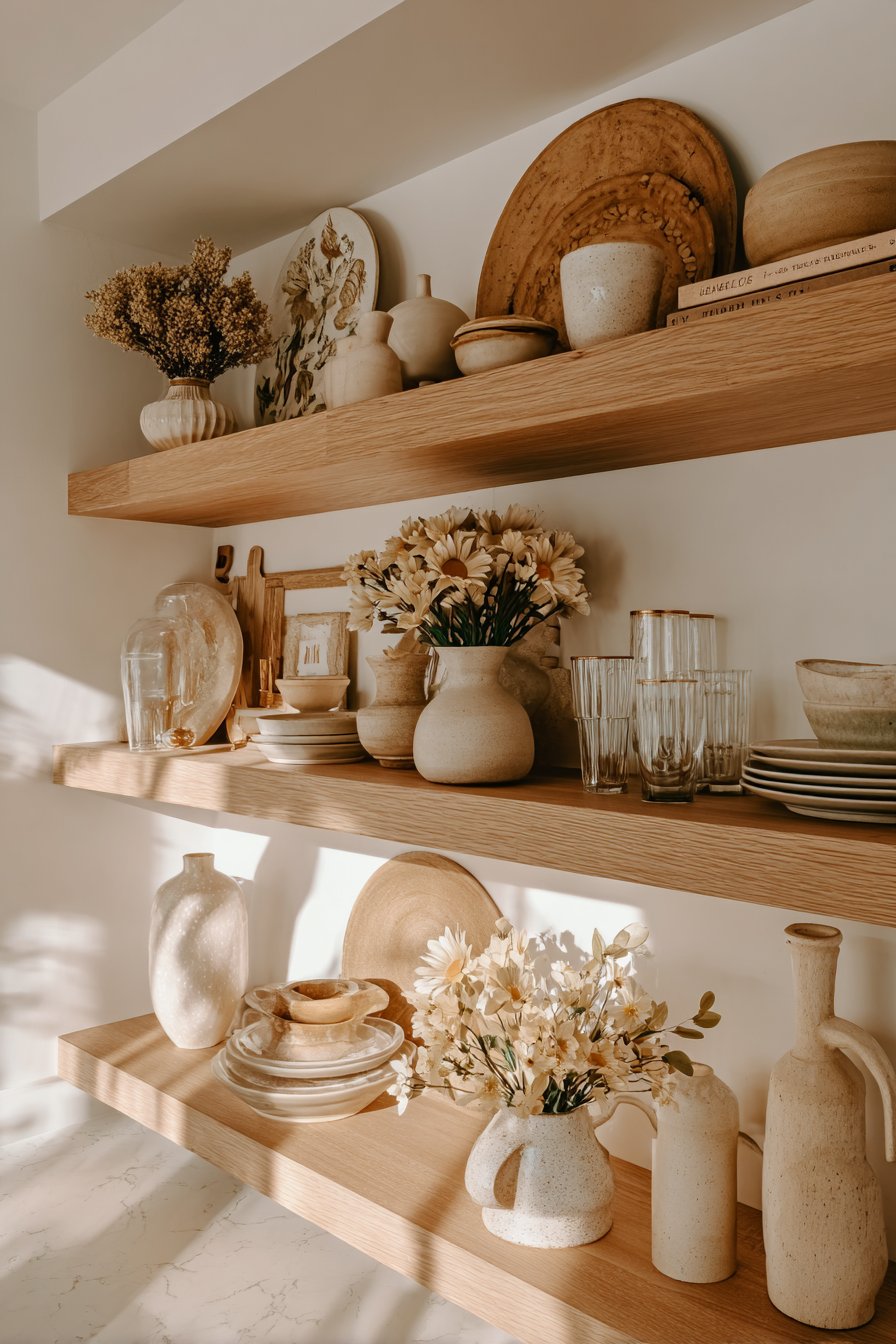
European kitchens embrace open shelving as opportunities for personal expression within minimalist frameworks. These shelves display carefully curated dishware, glassware, and cooking essentials. The key lies in intentional curation rather than random accumulation.
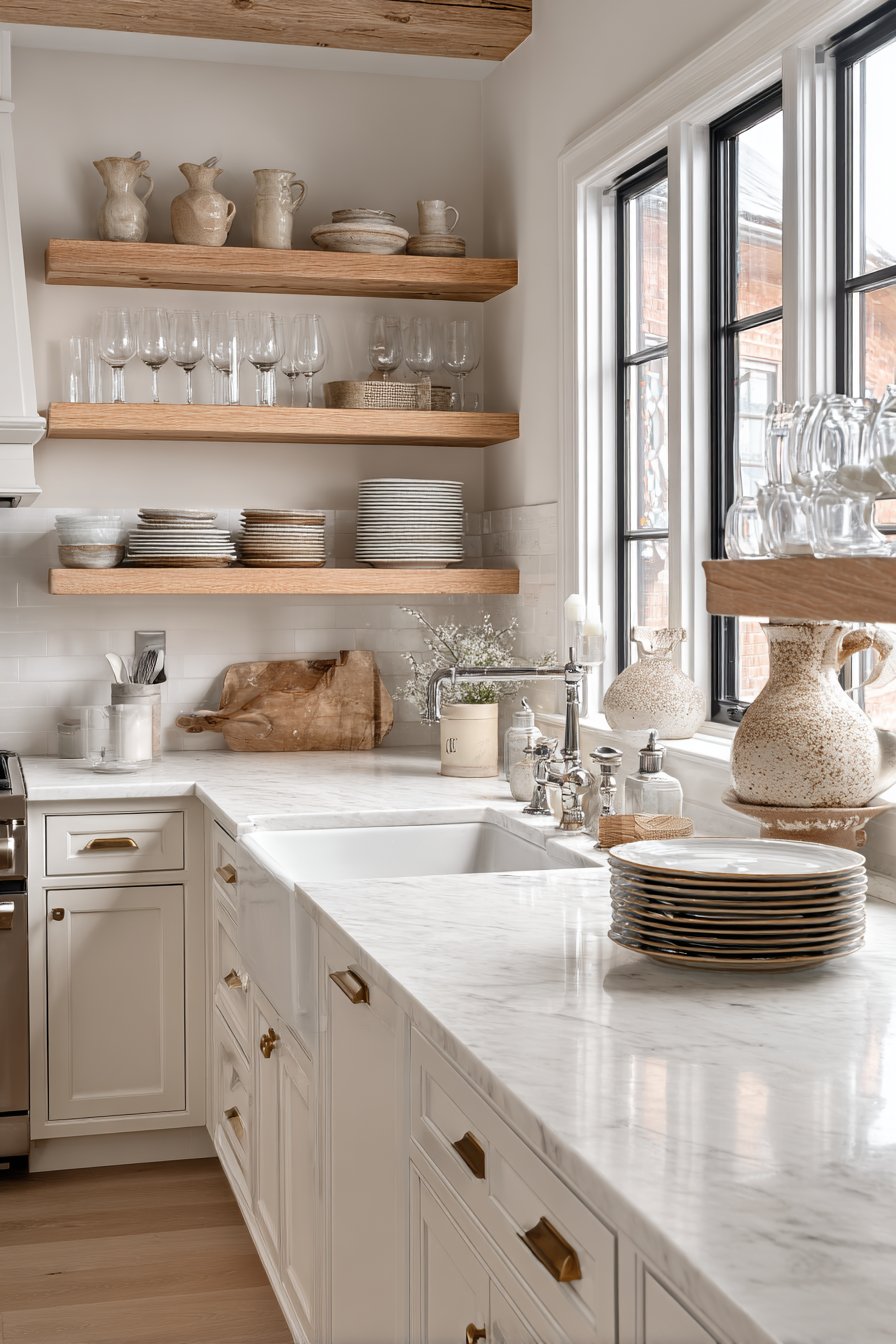
Open shelving provides practical accessibility to frequently used items while creating visual interest. Europeans favor displaying beautiful, functional objects rather than decorative knick-knacks. High-quality ceramics, elegant glassware, and artisanal containers become functional art within the space.
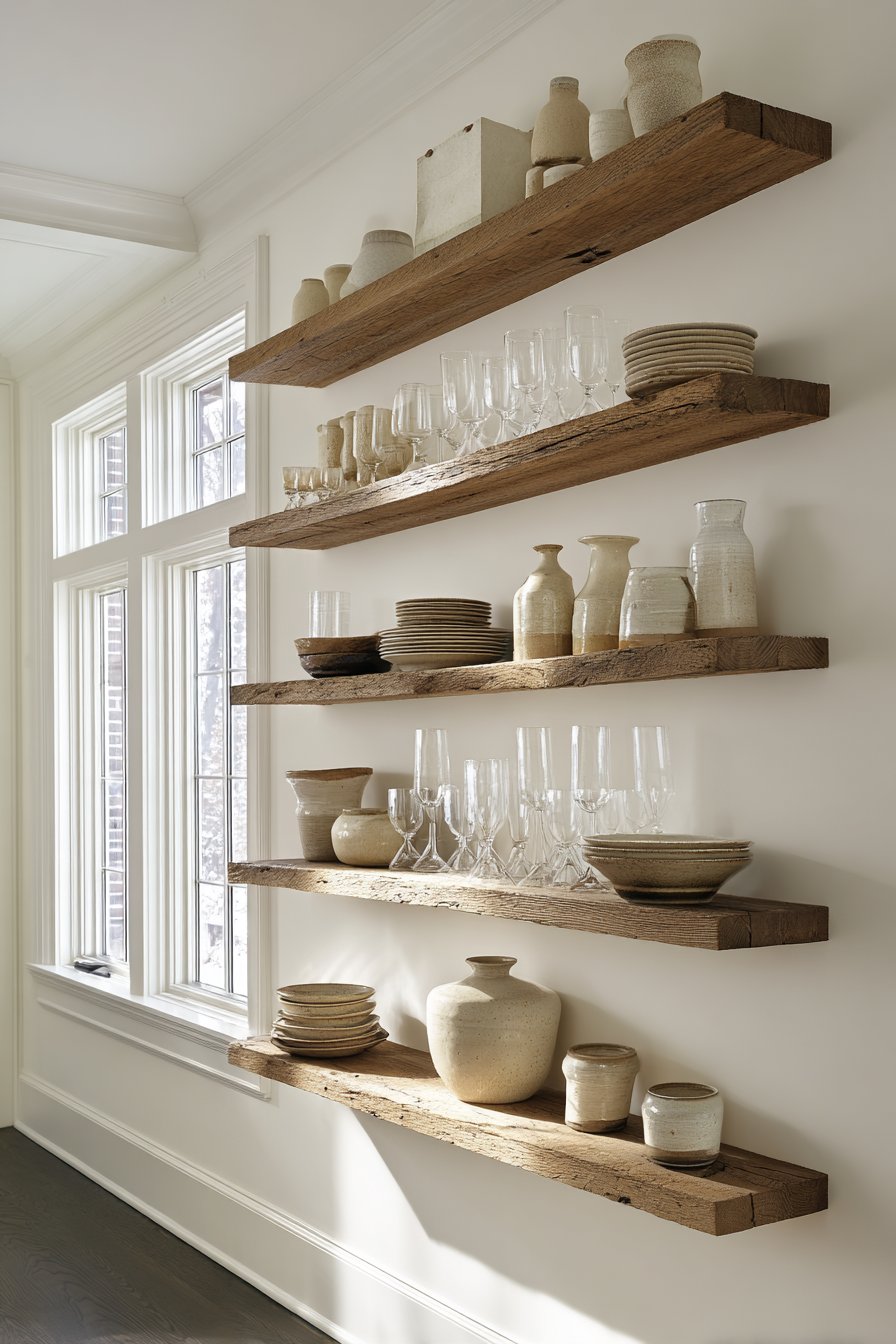
This approach requires disciplined maintenance and thoughtful selection. Only items deserving display earn shelf space. The restraint creates breathing room that feels refreshing rather than stark. This balance between display and minimalism exemplifies European design sophistication.
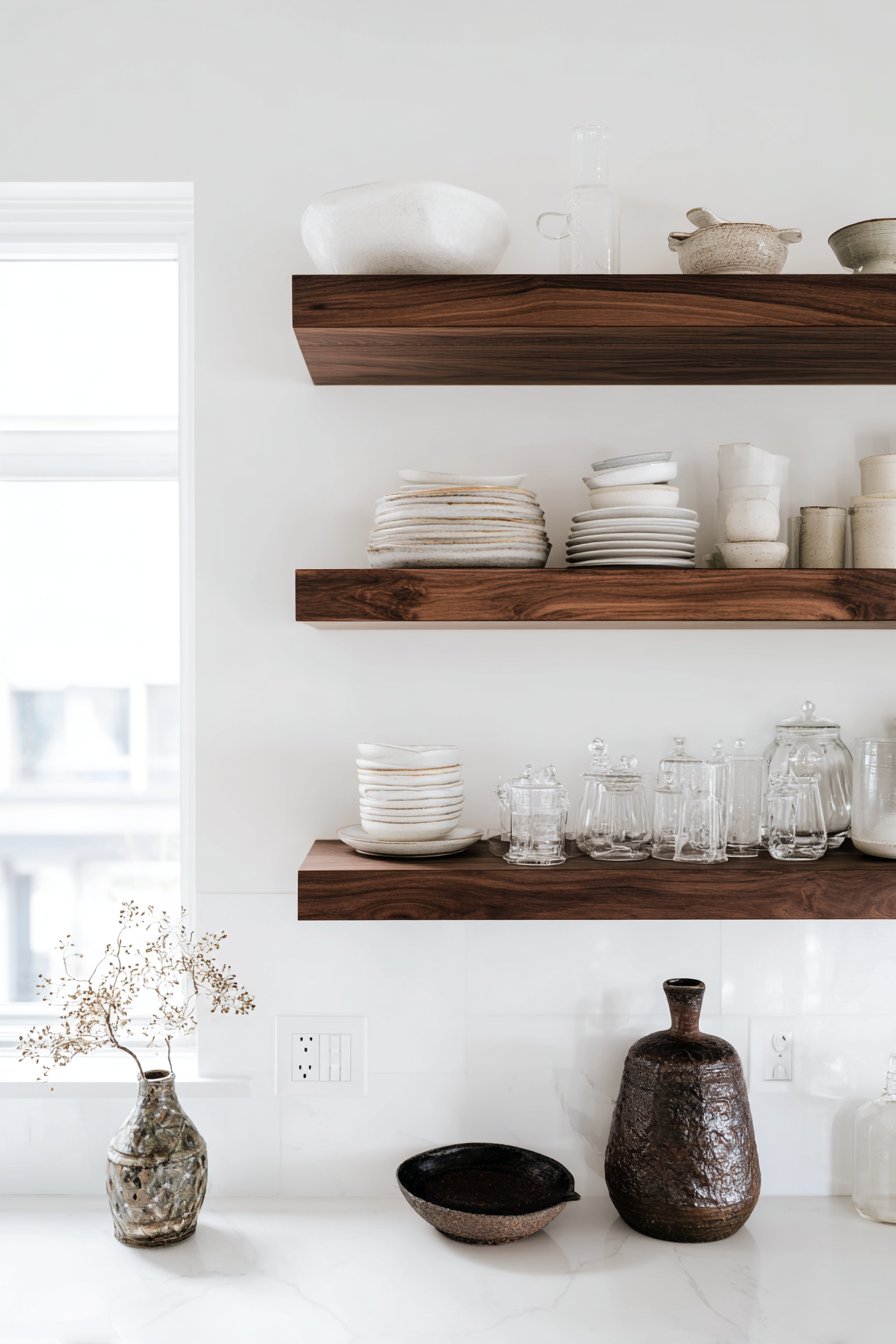
- Limit open shelving to one or two strategic areas
- Display only items you regularly use and love
- Maintain color coordination among displayed objects
- Clean shelving regularly to prevent dust buildup
- Replace closed cabinets with open shelves gradually
6. Neutral Color Schemes with Natural Undertones
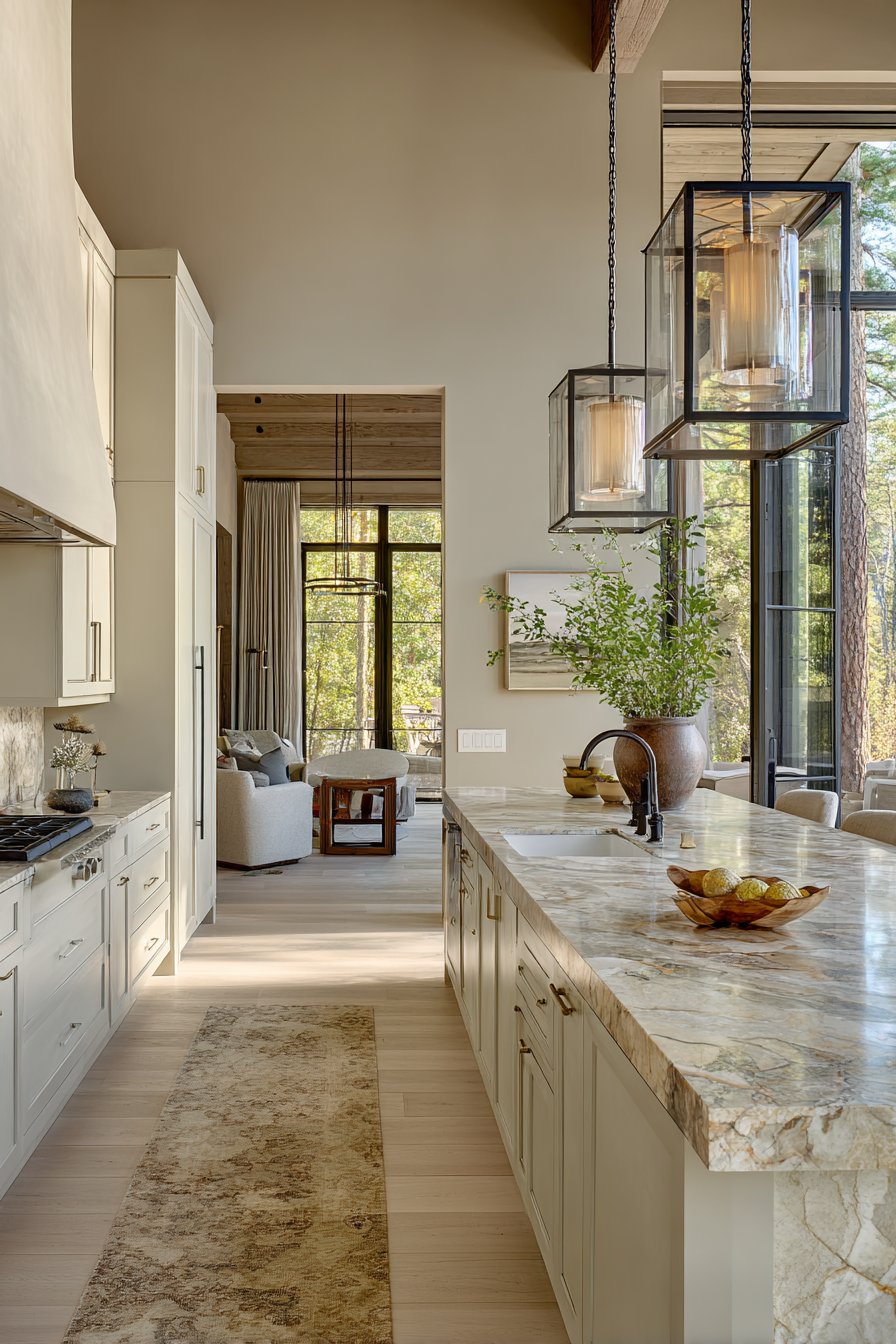
European kitchens favor sophisticated neutral palettes anchored in natural materials. Whites, grays, beiges, and warm taupes dominate, creating calming environments. These colors showcase architectural details and material textures rather than competing for attention.
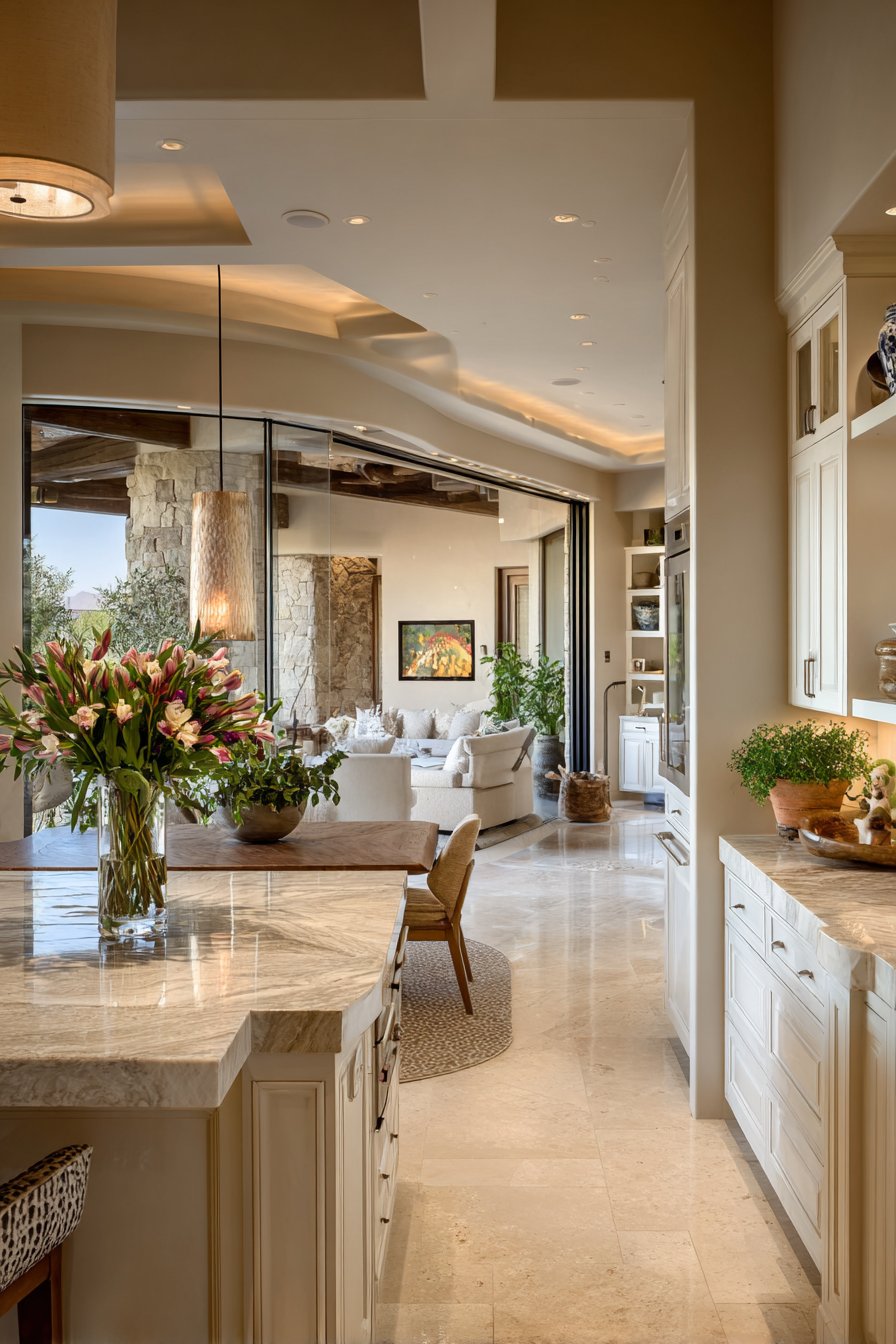
The European neutral palette differs from stark minimalism through complex layering. Multiple shades of white create depth without introducing color. Warm grays complement cool undertones for balanced sophistication. This nuanced approach prevents spaces from feeling cold or sterile.
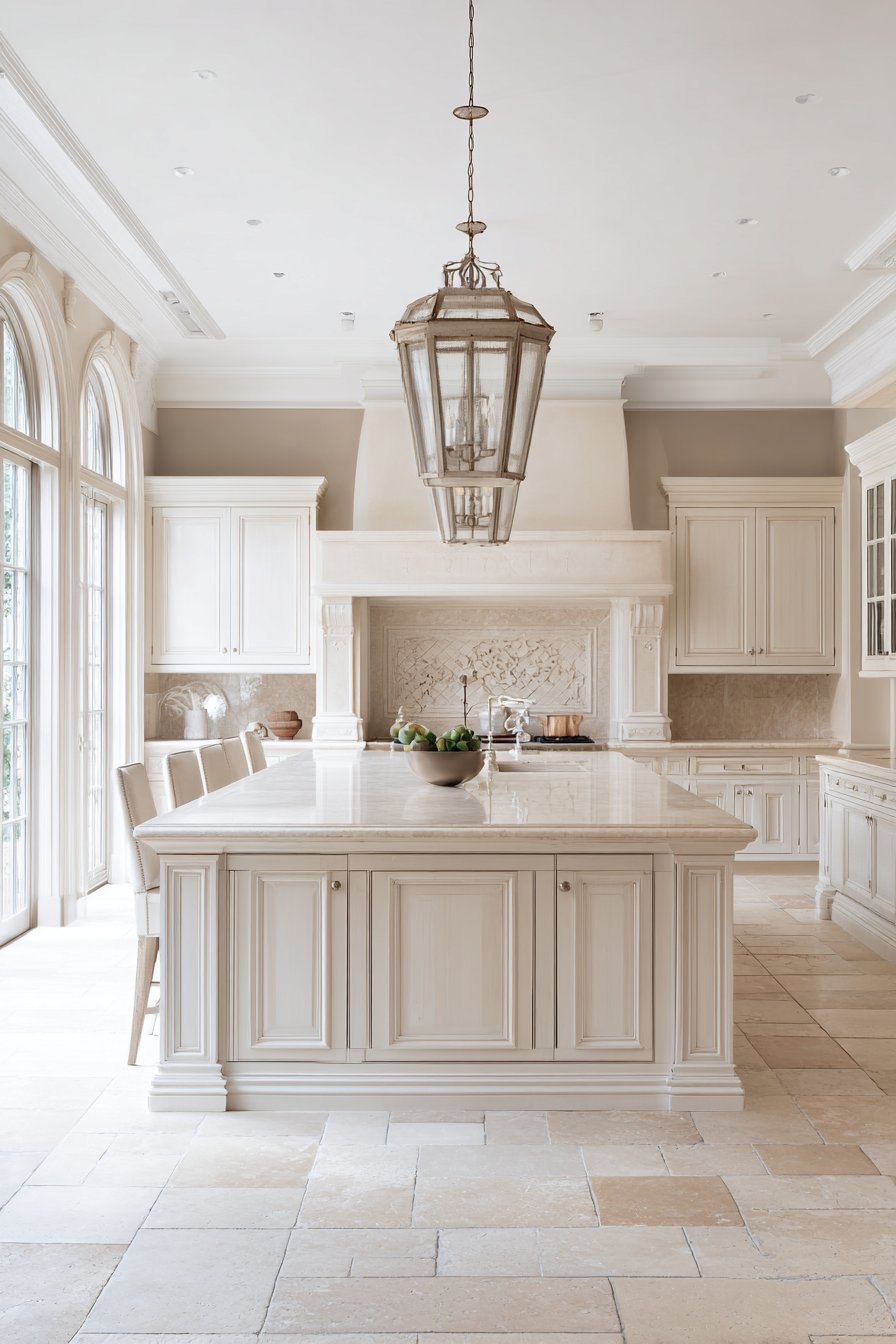
Natural light plays crucial role in activating neutral schemes. European kitchens maximize window exposure to animate subtle color variations throughout the day. This dynamic quality keeps minimal spaces feeling alive and engaging. The interplay of light becomes integral to the design.
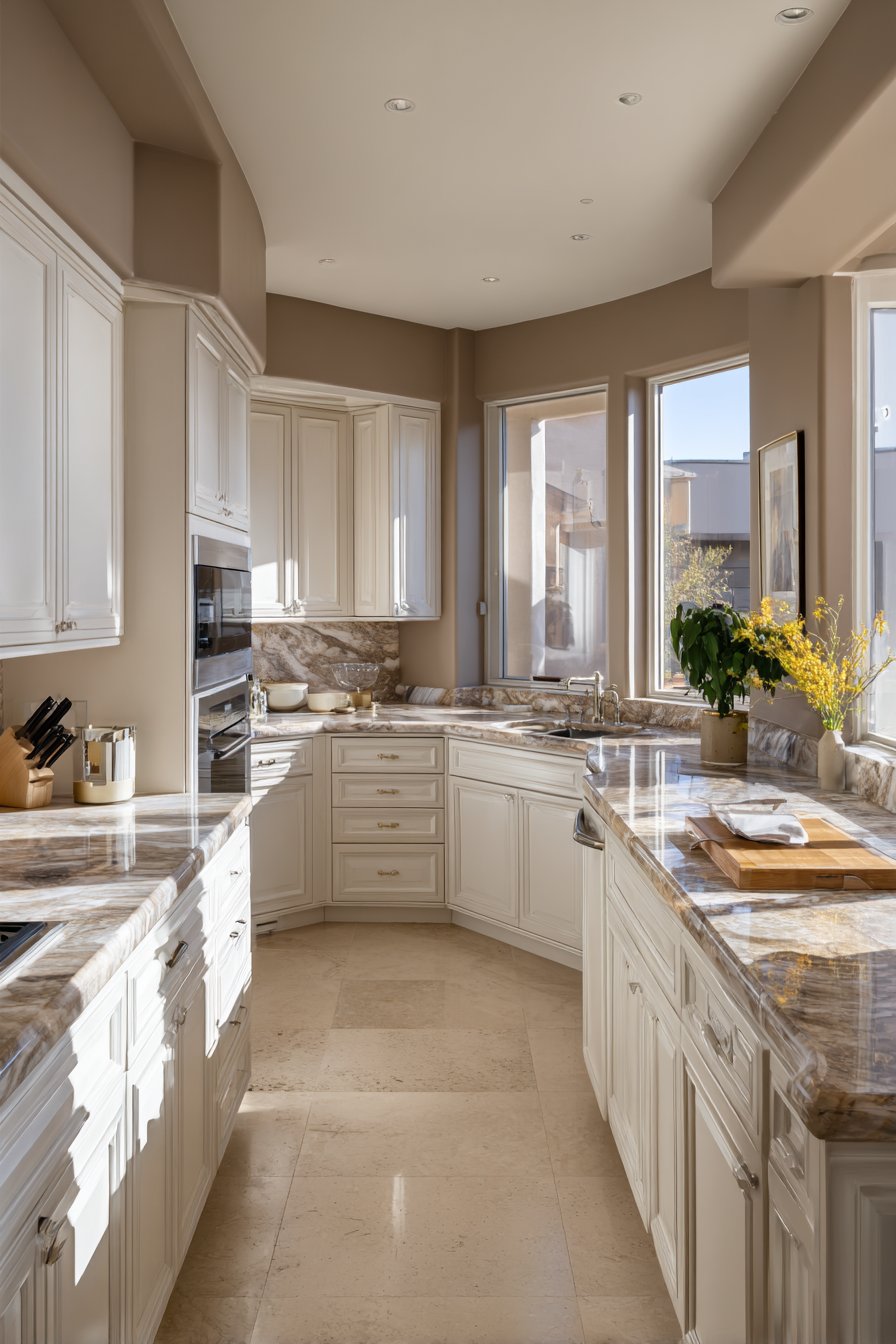
- Layer three to five neutral shades for dimensional depth
- Choose warmer neutrals in kitchens with limited natural light
- Test colors in actual lighting conditions before committing
- Use darker neutrals as grounding elements near floors
- Introduce texture through materials rather than color
7. Efficient Lighting Designed for Tasks and Ambiance
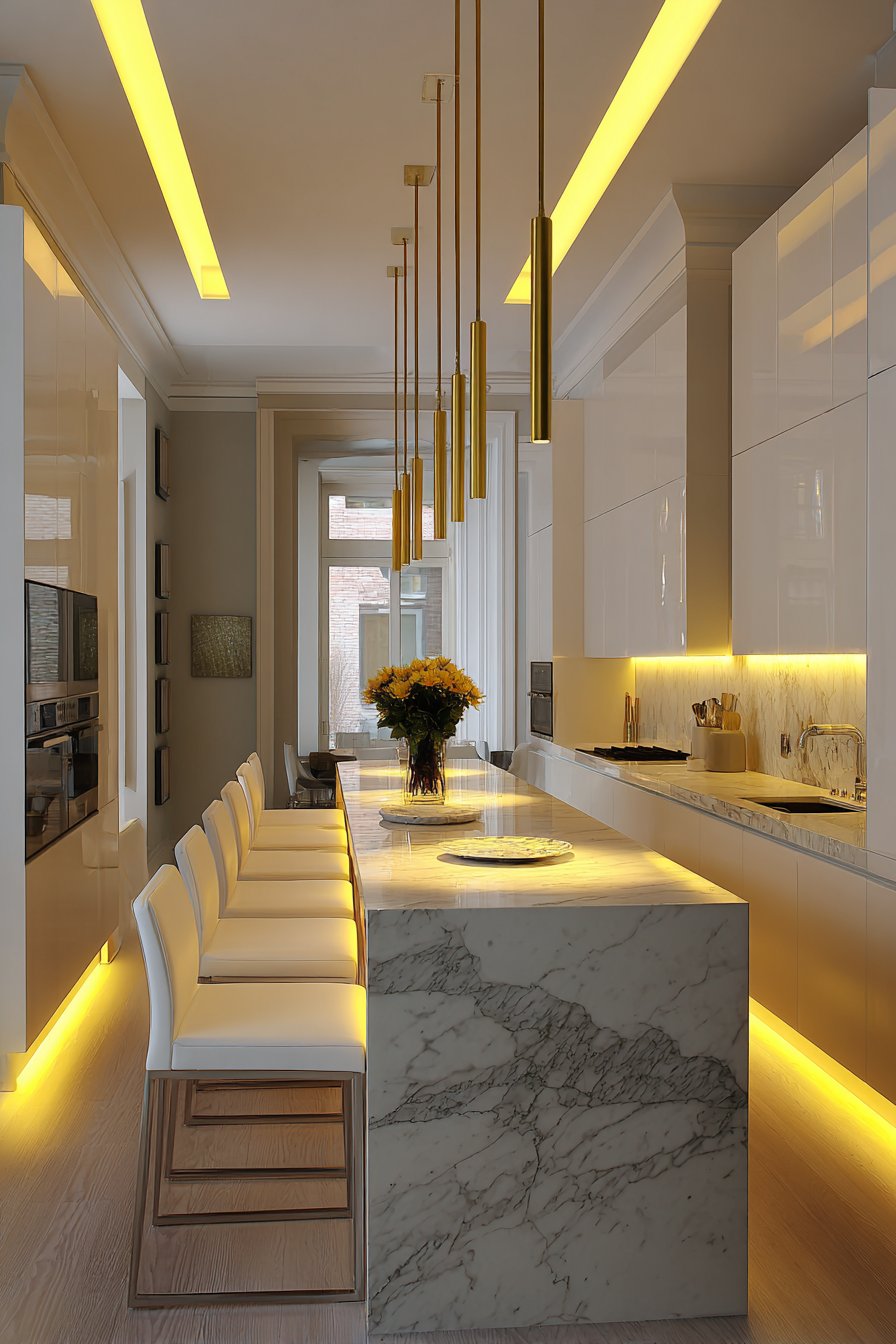
European kitchen lighting follows layered strategies combining task, ambient, and accent illumination. Under-cabinet LED strips provide shadow-free work surfaces. Pendant fixtures add personality while illuminating islands or dining areas. This multi-level approach ensures appropriate lighting for every activity.
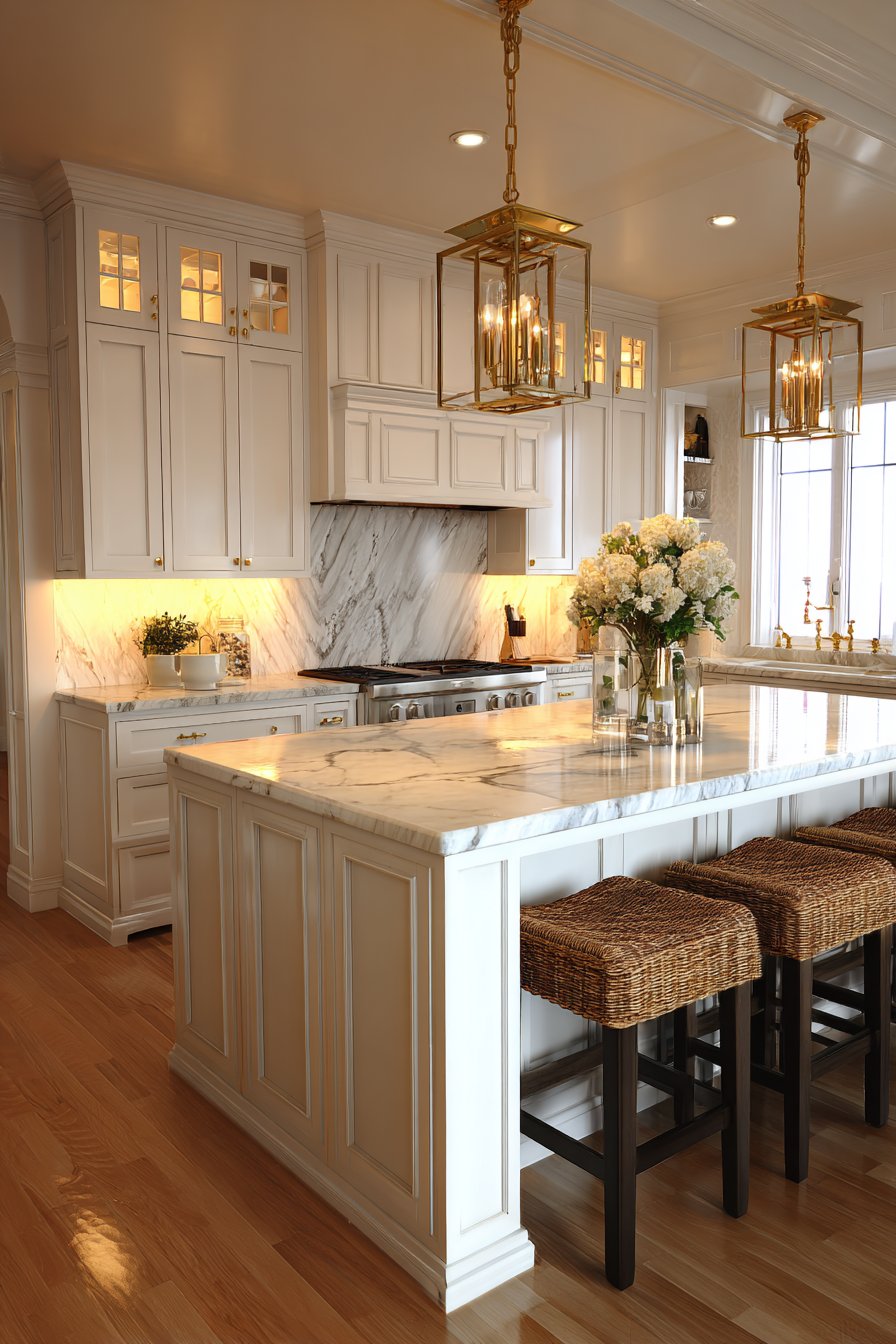
The quality of light receives careful consideration in European designs. Warm color temperatures create inviting atmospheres for gathering. Dimmable systems allow adjustment throughout the day. This attention to lighting characteristics recognizes how illumination affects mood and functionality.
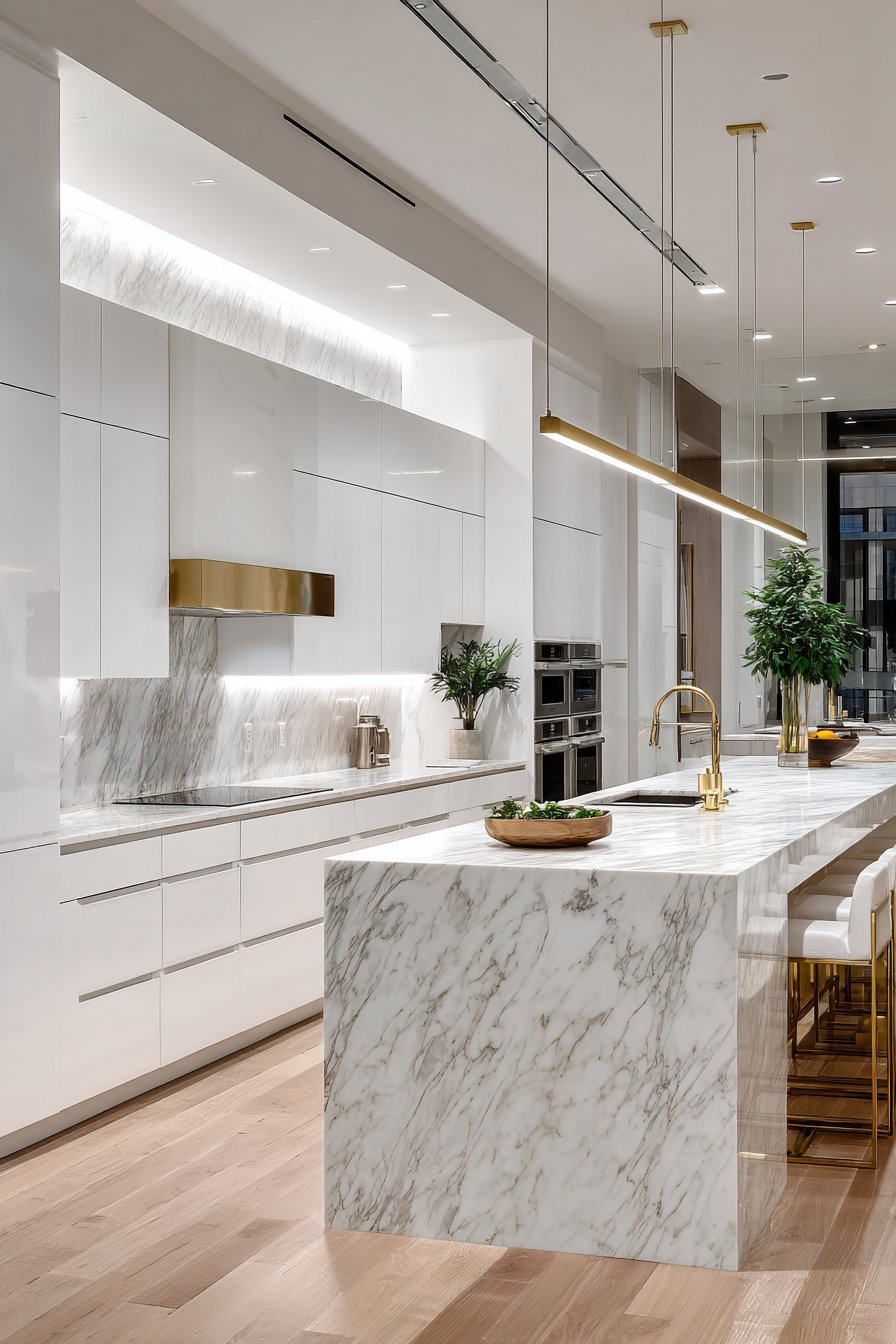
European designers minimize visible fixtures whenever possible. Recessed lighting maintains clean ceilings. Integrated LED systems hide within cabinetry. When fixtures appear, they’re selected as design elements contributing to overall aesthetic rather than purely functional additions.
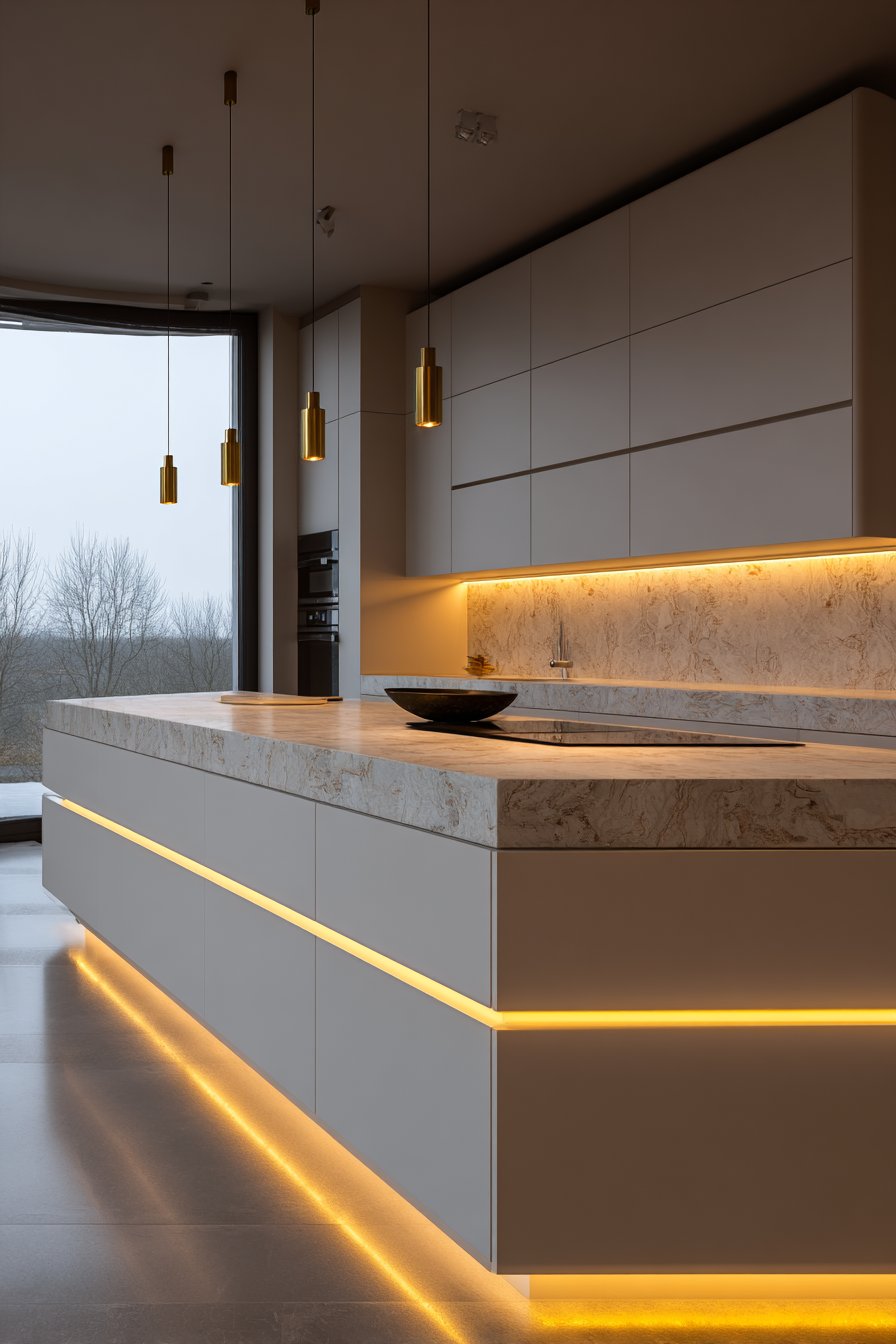
- Install dimmers on all lighting circuits for flexibility
- Use LED strips with warm color temperatures
- Position task lighting to eliminate work surface shadows
- Choose statement pendants that complement the overall style
- Consider lighting control systems for convenience
8. Smart Storage Solutions Maximizing Every Inch
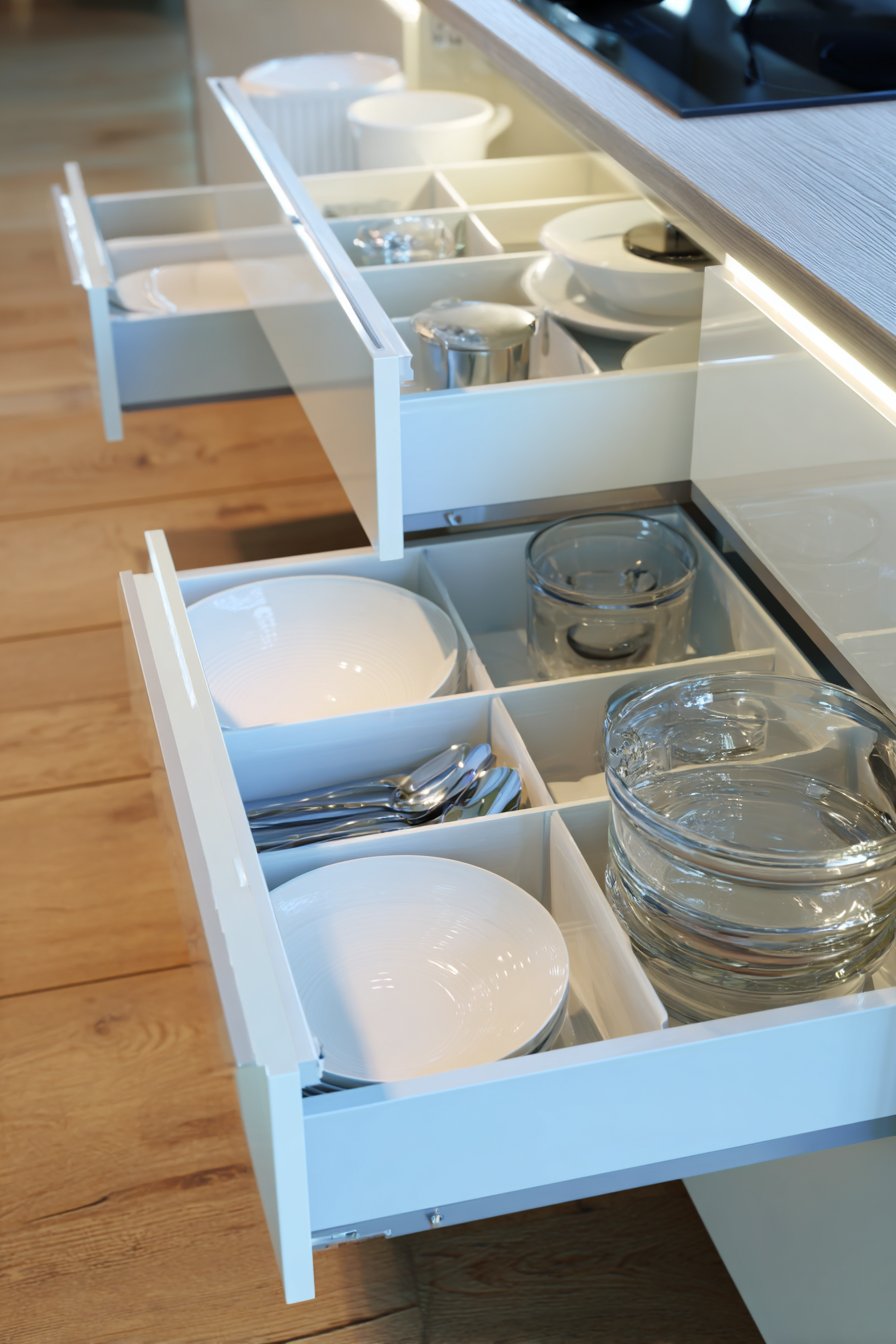
European kitchens demonstrate ingenious storage strategies born from designing within limited square footage. Pull-out pantries, corner carousel systems, and drawer dividers ensure everything has designated places. This organizational rigor prevents clutter from accumulating.
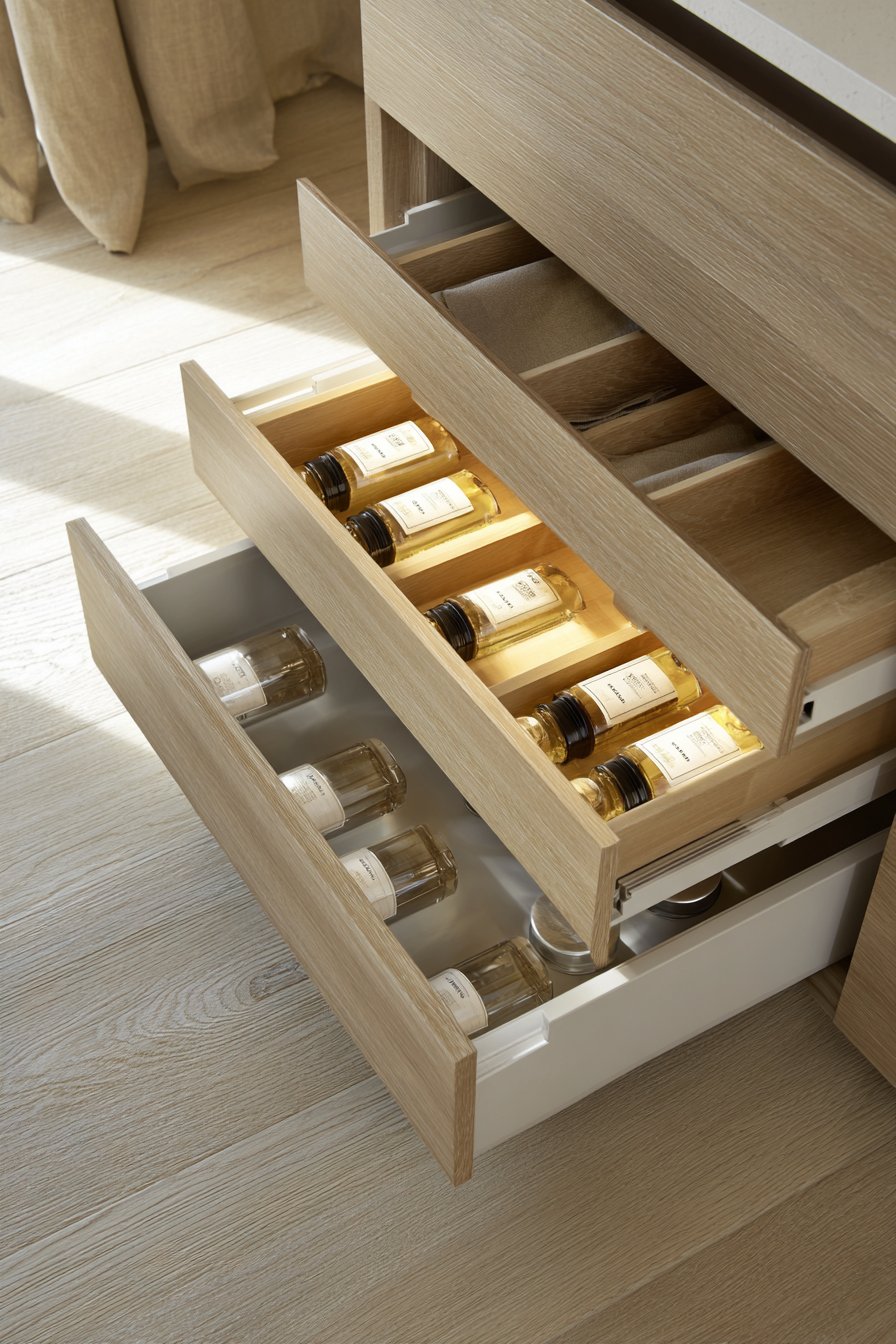
The European approach prioritizes vertical storage optimization. Tall cabinets extend to the ceilings, utilizing often-wasted space. Deep drawers with internal organization systems replace traditional lower cabinets. This three-dimensional thinking dramatically increases usable storage capacity.
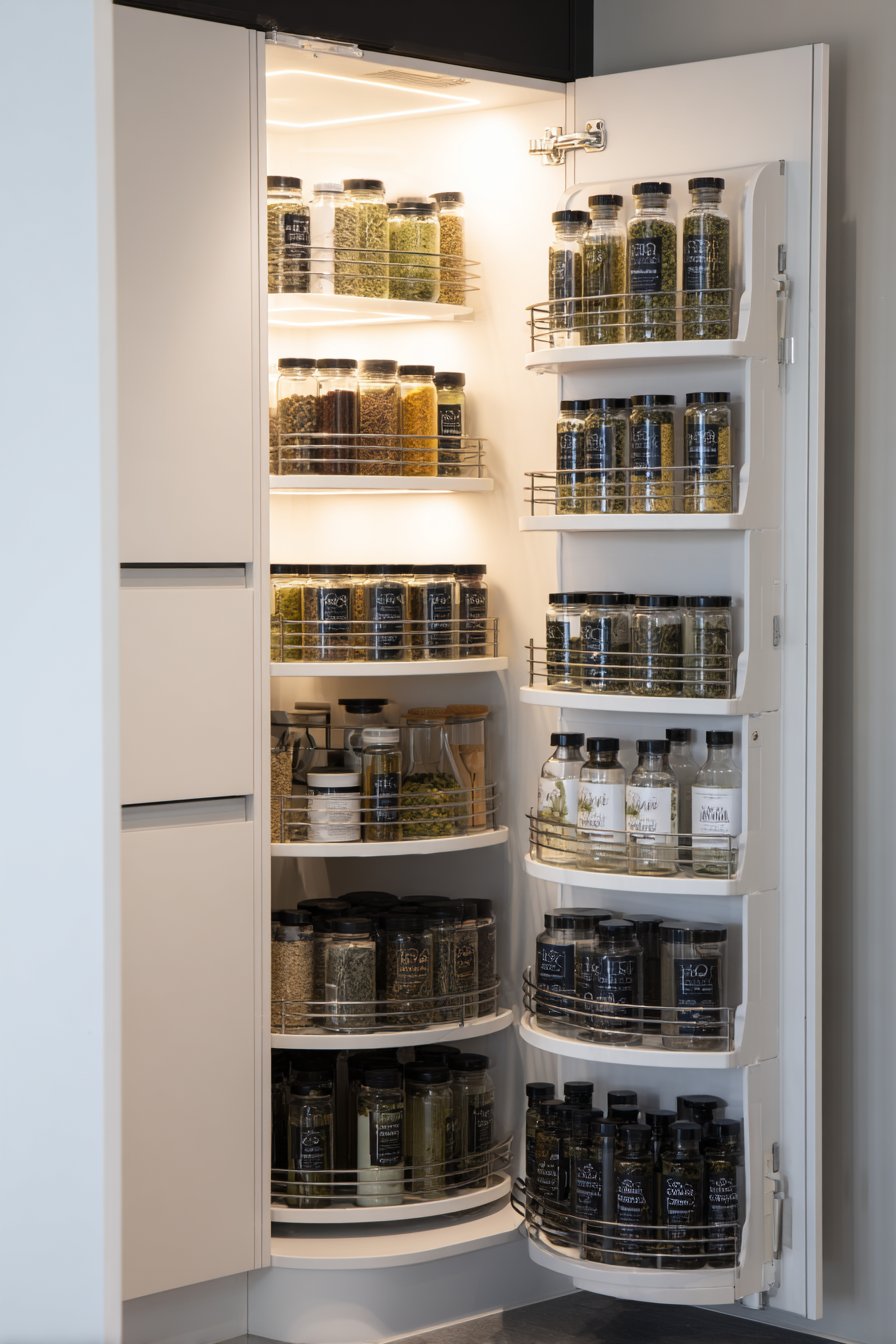
Storage solutions remain invisible until needed in authentic European designs. Appliance garages hide small electronics. Cutlery dividers organize without showing. This hidden functionality maintains visual calm while delivering exceptional practicality that improves daily life.
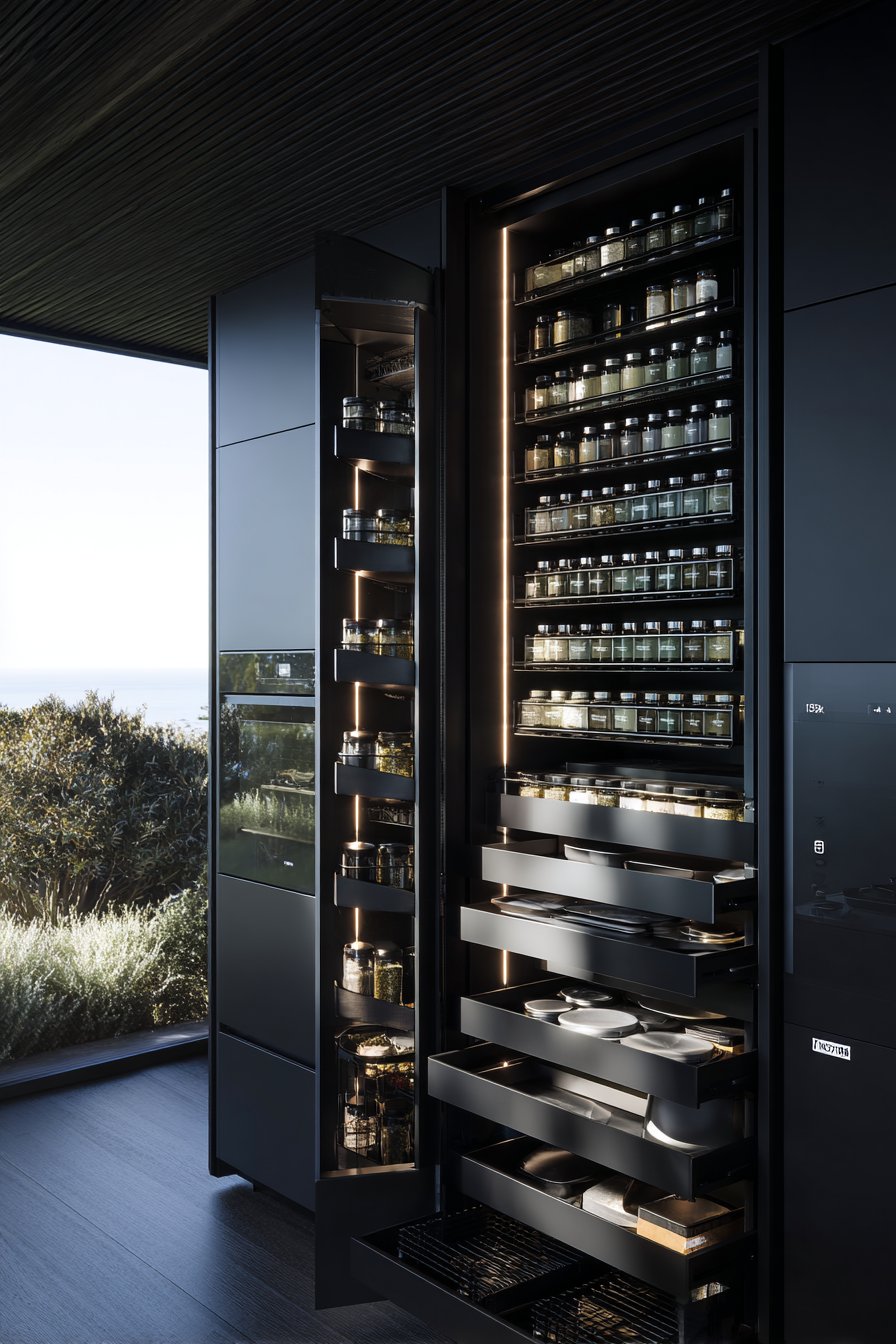
- Extend cabinetry to ceiling height for maximum capacity
- Install pull-out systems in corner cabinets
- Use drawer dividers customized to contents
- Incorporate vertical dividers for baking sheets and trays
- Add interior cabinet lighting for visibility
9. High-Quality Materials Emphasizing Longevity
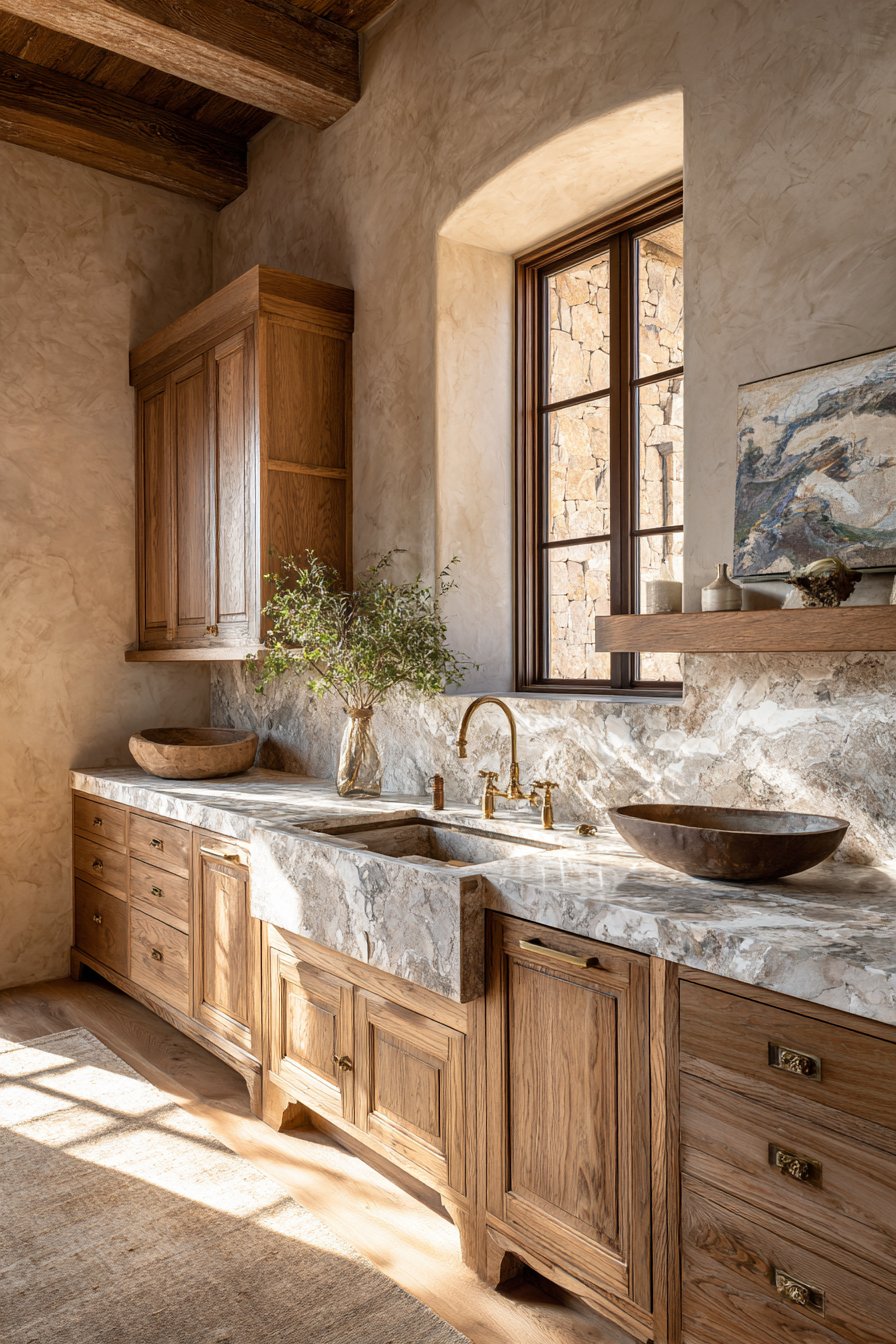
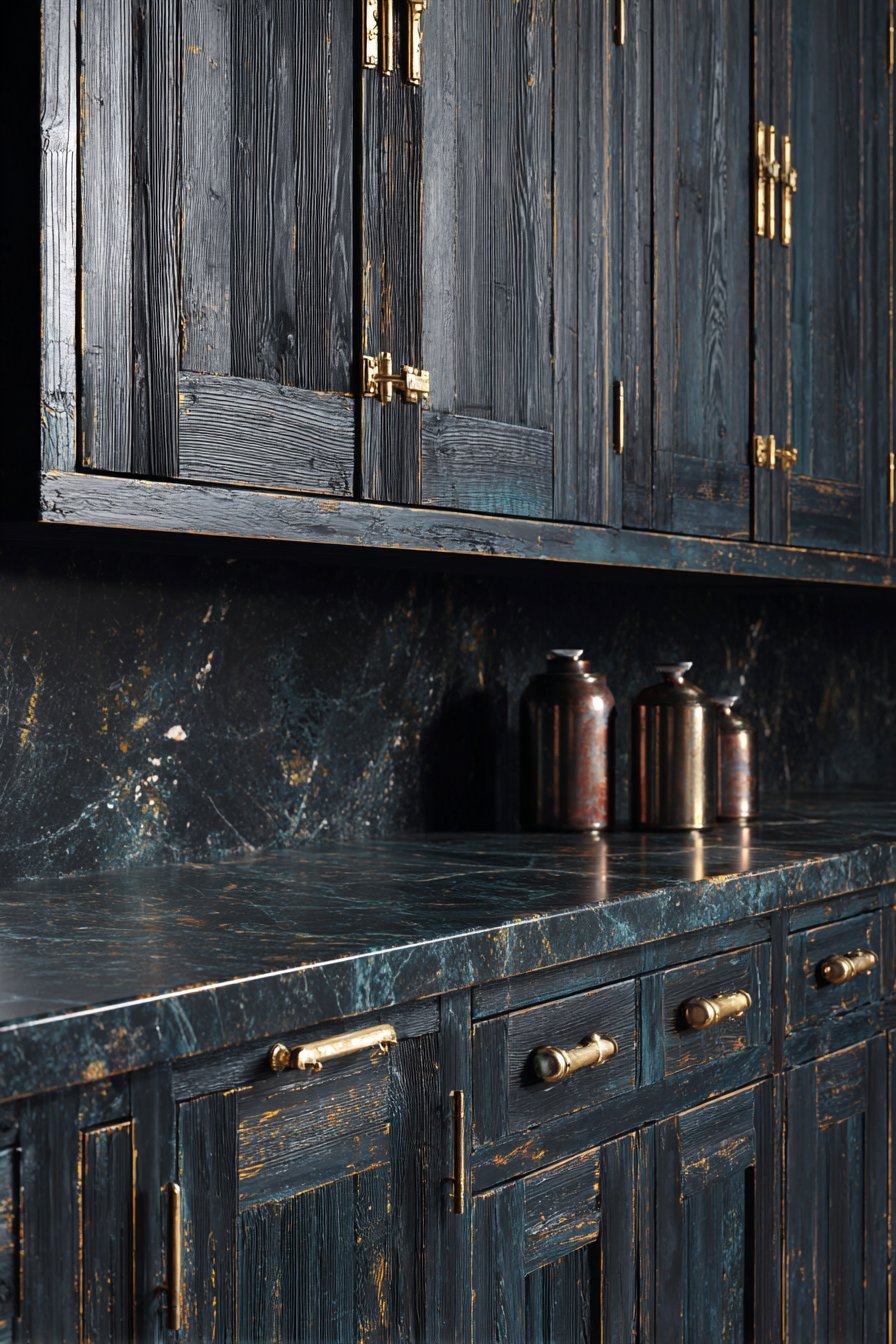
European kitchen design invests in exceptional materials selected for durability and timeless beauty. Solid wood cabinetry, natural stone countertops, and quality hardware reflect commitment to lasting value. This approach rejects disposable trends favoring designs that improve with age.
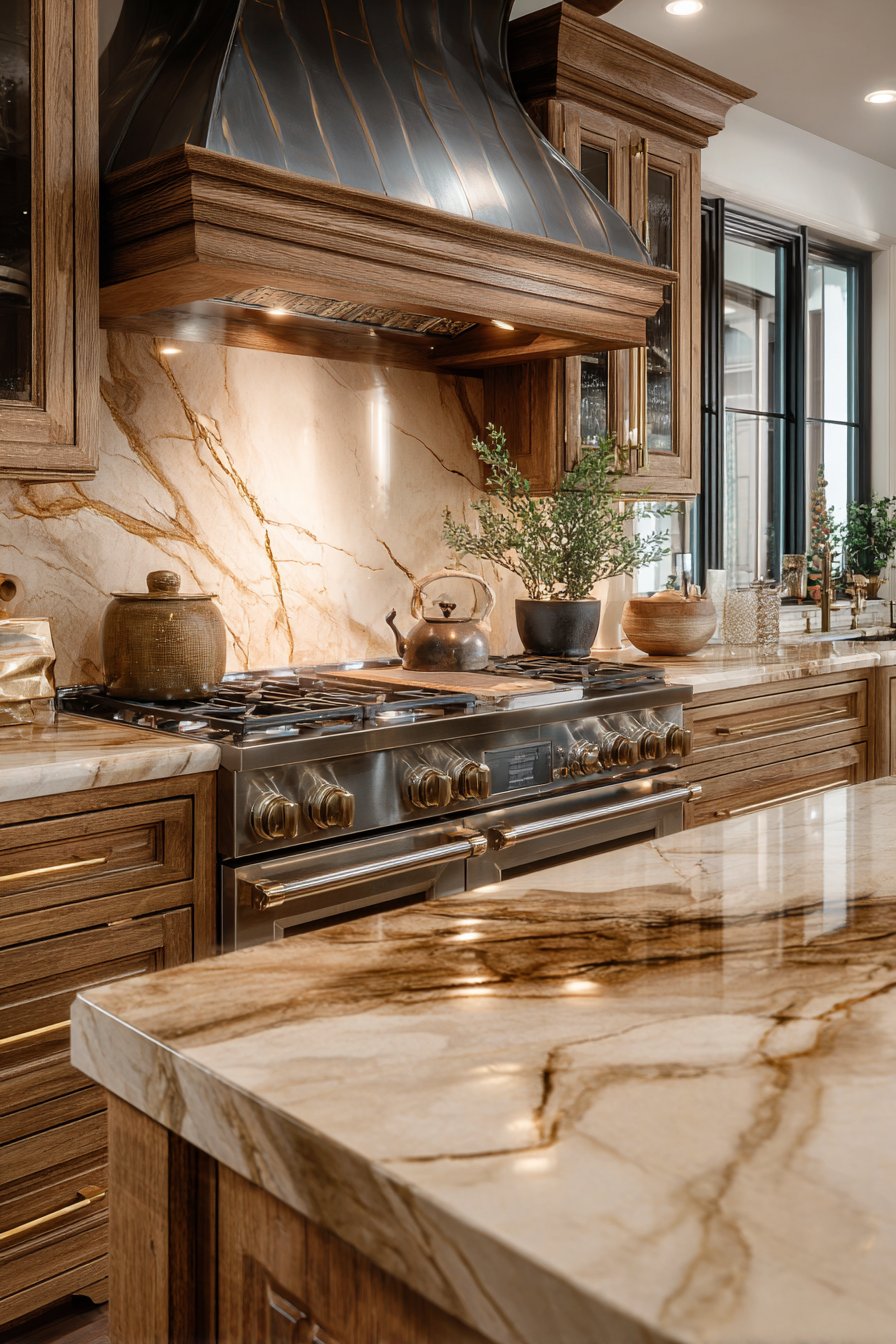
The European philosophy recognizes that quality materials justify initial investment through decades of service. Solid construction withstands daily use without deteriorating. Natural materials develop patinas that add character rather than showing wear. This long-term perspective fundamentally differs from replacement-oriented approaches.
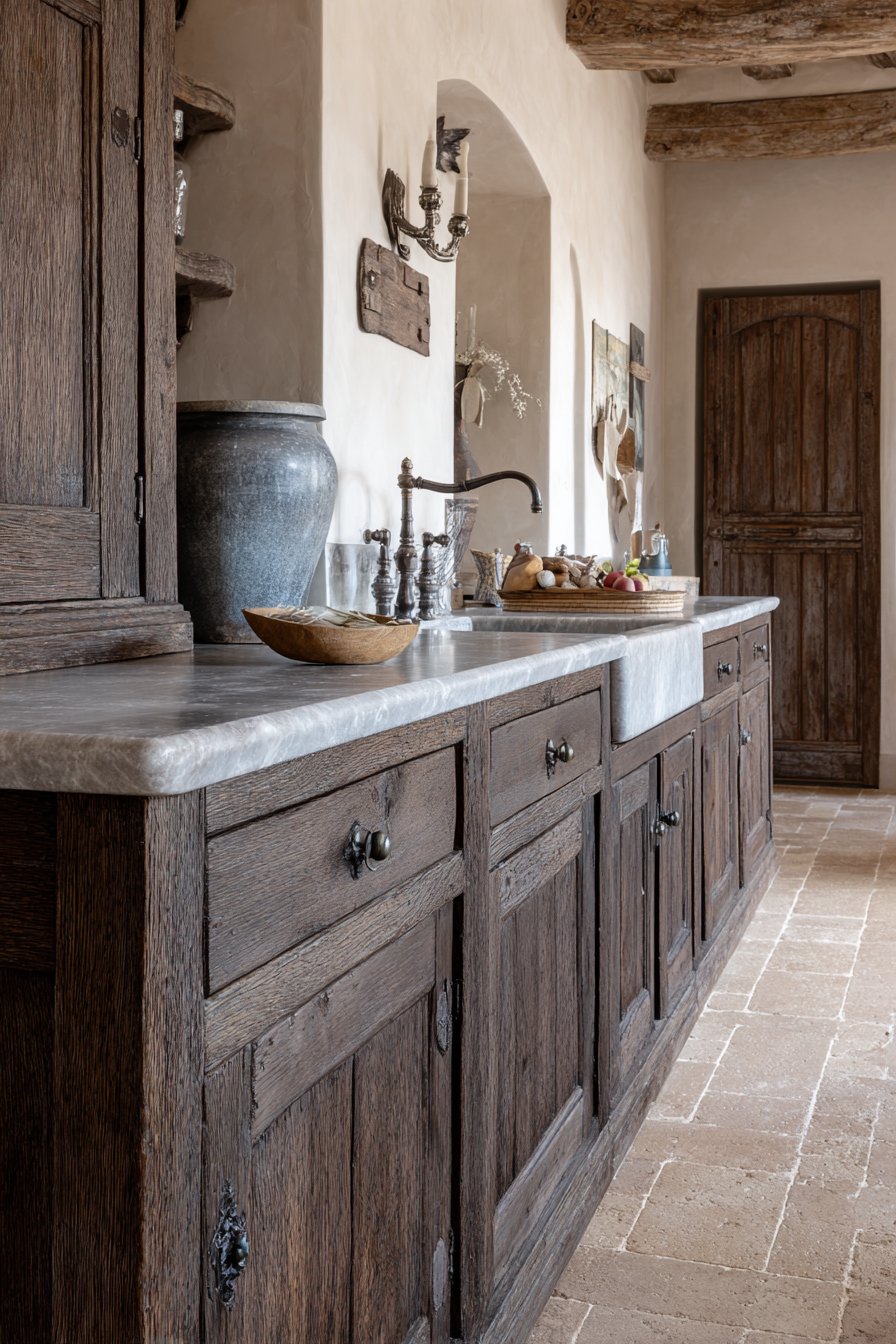
Material authenticity remains paramount in genuine European design. Laminate pretending to be wood lacks integrity. Real materials offer tactile qualities and aging characteristics impossible to replicate. This commitment to honest materials creates kitchens with soul and substance.
- Choose solid wood over engineered alternatives when possible
- Select natural stone or quality quartz for countertops
- Invest in brass or stainless steel hardware
- Specify soft-close mechanisms on all doors and drawers
- Prioritize timeless materials over trendy finishes
European kitchen design achieves enduring appeal through thoughtful restraint and quality craftsmanship. These spaces prove that true luxury lies in perfect proportions, honest materials, and intelligent functionality. By embracing these principles, you create kitchens that transcend temporary trends
The beauty of European design philosophy is its adaptability across budgets. Whether renovating completely or updating gradually, these principles guide decisions toward lasting satisfaction. Start with quality materials in high-impact areas. Embrace simplified aesthetics that showcase beautiful essentials. Most importantly, remember that authentic European design values substance over showmanship, creating kitchens that genuinely improve daily living while maintaining timeless elegance.
"As an Amazon Associate, I earn from qualifying purchases."
