
Creating an elegant living room is an art form that combines aesthetic vision with functional design principles. The living room serves as the heart of the home, where families gather, guests are entertained, and daily life unfolds in comfort and style. A truly elegant living space transcends mere decoration—it reflects the personality of its inhabitants while providing a sanctuary of refined beauty that stands the test of time.
The concept of elegance in interior design encompasses far more than expensive furnishings or trending color schemes. It involves a thoughtful curation of elements that work harmoniously together: the interplay of light and shadow, the balance of textures and materials, the careful consideration of scale and proportion. An elegant living room speaks in whispers rather than shouts, creating an atmosphere of sophisticated calm that welcomes both intimate conversations and grand celebrations.
In this comprehensive guide, we explore twenty distinctive approaches to elegant living room design, each offering a unique perspective on luxury and refinement. From timeless traditional aesthetics to cutting-edge contemporary innovations, these designs demonstrate how different styles can achieve elegance through various means—whether through the rich patina of antique woods, the sleek lines of modern minimalism, or the bold confidence of maximalist composition. Each design concept provides actionable insights and professional techniques that you can adapt to create your own sophisticated living space.
1. Sophisticated Neutral Sanctuary with Chesterfield Elegance

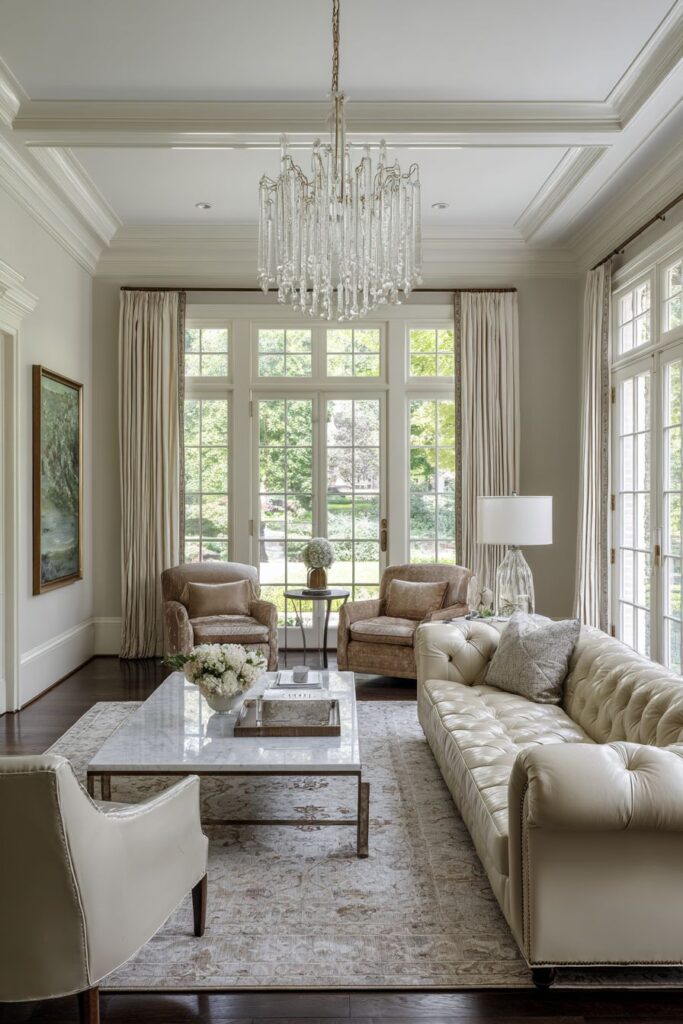
The epitome of refined living begins with a masterfully curated neutral palette that exudes timeless sophistication. This elegant living room centers around a cream leather Chesterfield sofa with its iconic deep-buttoned upholstery and rolled arms, creating an immediate focal point that speaks to both comfort and luxury.
The matching armchairs arranged strategically around a marble-topped coffee table establish a conversational grouping that feels both formal and welcoming. The rich hardwood floors beneath showcase subtle grain patterns that add warmth and natural beauty to the space, their lustrous finish reflecting the ambient light and creating depth throughout the room.
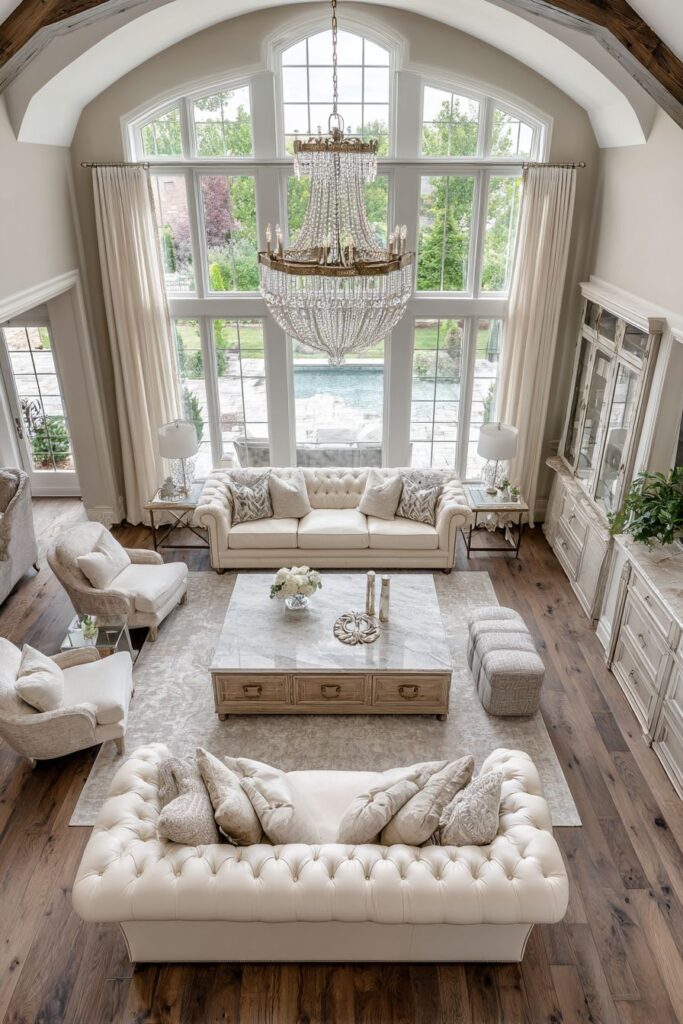
The architectural elements in this design elevate the space beyond simple furniture arrangement. Tall windows dressed in silk drapes frame spectacular views while filtering natural light to create the perfect ambiance throughout the day. The crystal chandelier suspended above serves as both functional lighting and artistic statement, its faceted surfaces casting dancing patterns of light across the room’s surfaces. The sophisticated interplay between the neutral tones creates a canvas that feels both luxurious and livable, where every element has been chosen for its contribution to the overall harmony of the space.
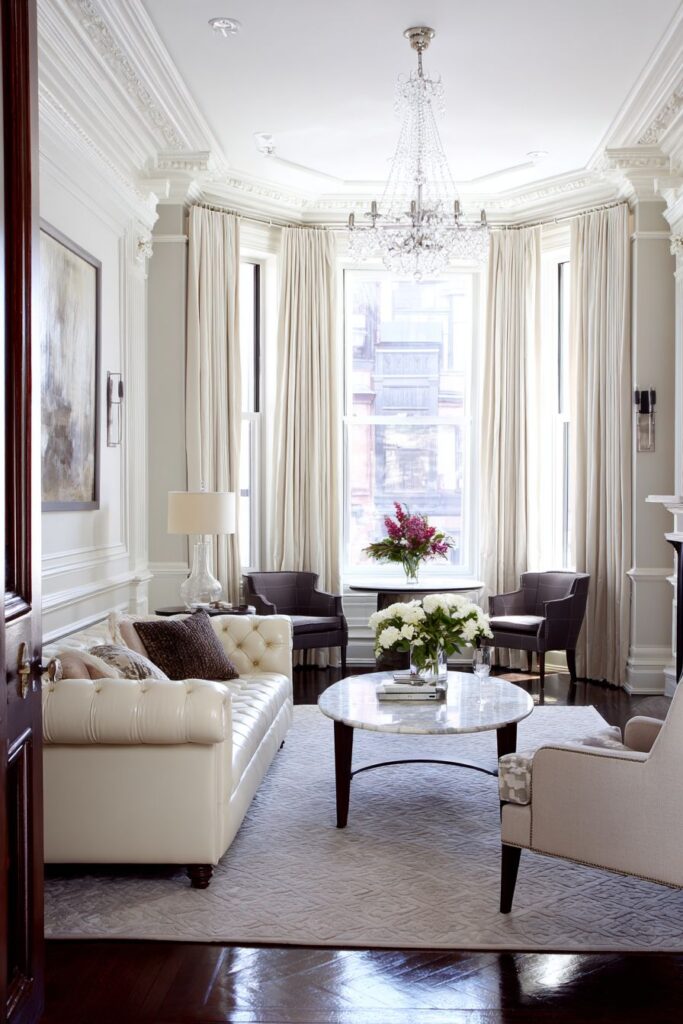
The beauty of this neutral approach lies in its versatility and enduring appeal. The cream and beige tones provide a calming backdrop that never feels dated, while the quality materials ensure longevity both in terms of durability and style. The marble coffee table adds a touch of natural luxury with its unique veining, while the leather upholstery develops character over time, becoming more beautiful with age and use.
Key Design Tips for Neutral Elegance:
- Invest in quality leather furniture that improves with age and use
- Layer different textures within the same color family to create visual interest
- Use crystal or glass elements to reflect light and add sparkle without color
- Choose marble or natural stone surfaces for their unique patterns and luxury appeal
- Install proper window treatments to control natural light and add softness to hard surfaces
2. Monochromatic Sophistication with Charcoal Luxury
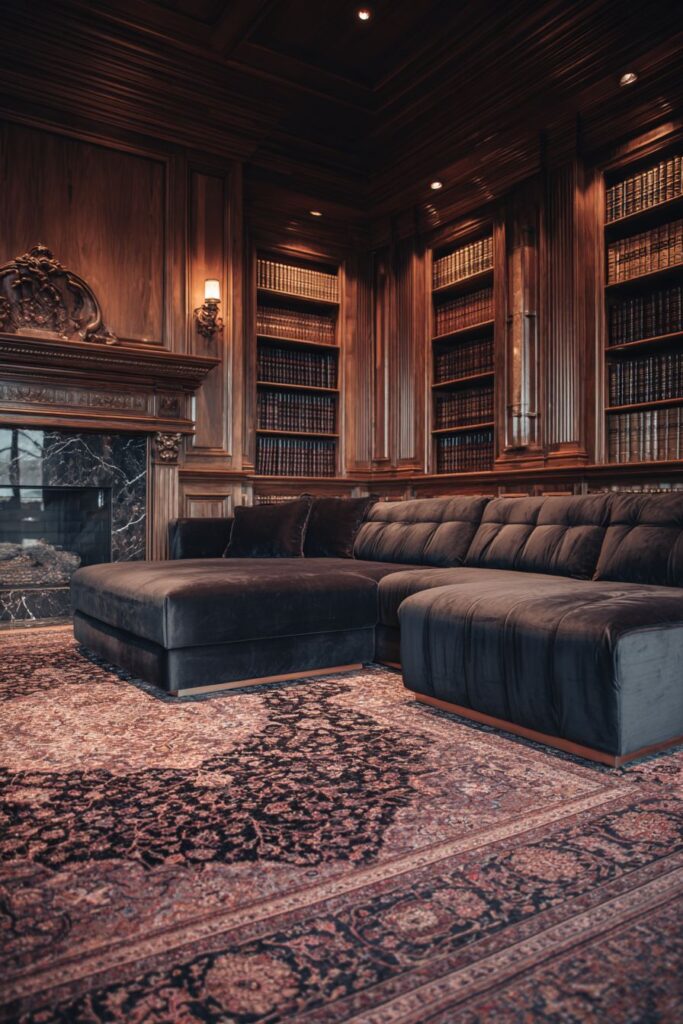
The power of a monochromatic color scheme reveals itself in this stunning living room where deep charcoal tones create an atmosphere of dramatic sophistication. The plush velvet sectional in deep charcoal serves as the room’s anchor, its rich texture catching light and shadow to create visual depth and luxury. Positioned atop an intricate Persian rug, the seating arrangement draws the eye while the rug’s traditional patterns add cultural richness and artistic heritage to the contemporary setting.

Built-in mahogany bookshelves line an entire wall, creating both functional storage and visual impact. These shelves, filled with leather-bound volumes and carefully curated decorative objects, transform the living space into a sophisticated library atmosphere. The warm wood tones of the mahogany provide the perfect contrast to the cool charcoal palette, creating a balanced composition that feels both masculine and refined. The careful arrangement of books and objects on the shelves shows attention to both aesthetic appeal and personal expression.

The marble fireplace serves as the room’s natural focal point, its ornate mantelpiece details speaking to classical architectural traditions while the clean lines of the surround keep the design feeling contemporary. The contrast between the white marble and dark walls creates a striking visual anchor that draws the eye and provides a gathering point for the seating arrangement.
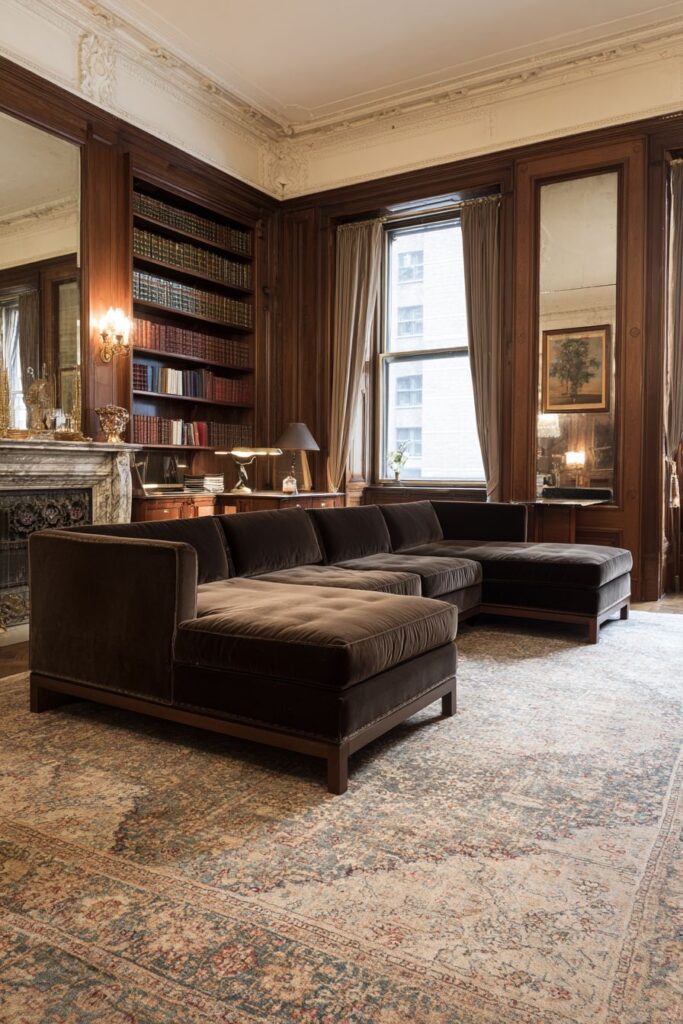
The genius of this monochromatic approach lies in its ability to create drama and sophistication while maintaining visual cohesion. The various shades of charcoal, from the light grey of the walls to the deep black of the velvet upholstery, create a layered composition that feels rich and complex without being overwhelming.
Key Design Tips for Monochromatic Elegance:
- Use different textures in the same color family to prevent monotony
- Incorporate warm wood tones to balance cool color palettes
- Add metallic accents sparingly to provide subtle contrast and reflection
- Layer lighting sources to prevent monochromatic schemes from feeling flat
- Include natural elements like marble or stone to add organic variation to uniform colors
3. French-Inspired Timeless Charm
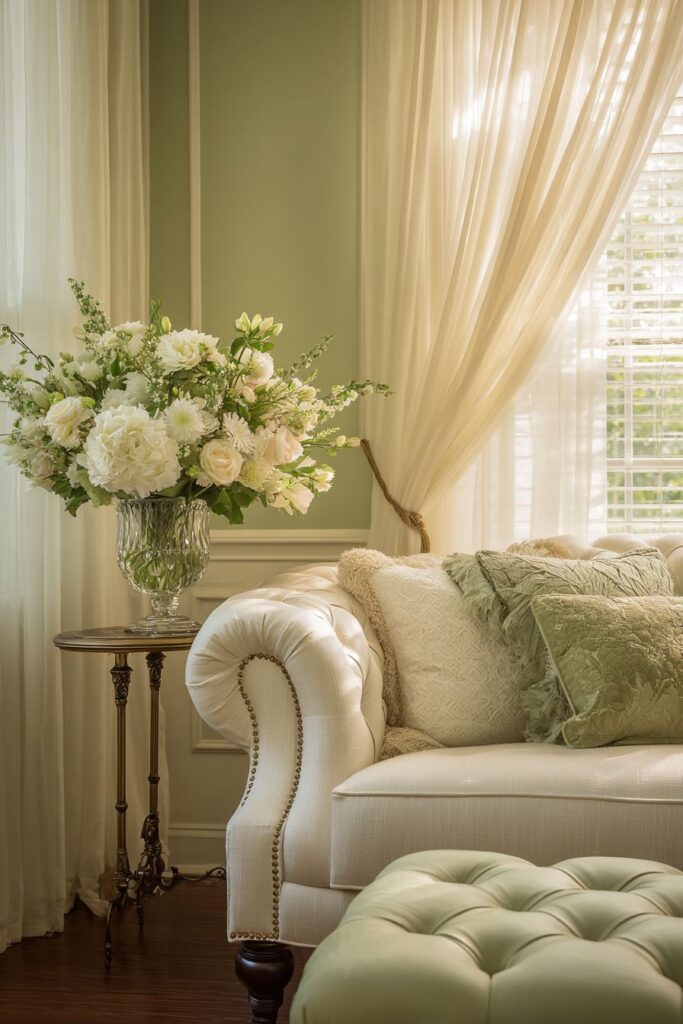
This living room embodies the effortless elegance of French provincial design with its carefully curated collection of classic furniture and architectural details. The tufted linen sofa with rolled arms and matching ottoman creates a relaxed yet refined seating arrangement that invites both formal entertaining and casual relaxation. The neutral linen upholstery provides a perfect backdrop for decorative pillows and throws while maintaining the clean, classic lines that define French country style.

The antique brass accent table serves as both functional furniture and decorative element, its patinated surface telling stories of age and authenticity. Fresh flowers arranged in a crystal vase atop this table bring natural beauty and fragrance into the space while adding a touch of color that changes with the seasons. This simple yet elegant styling choice demonstrates how fresh elements can keep traditional designs feeling current and alive.
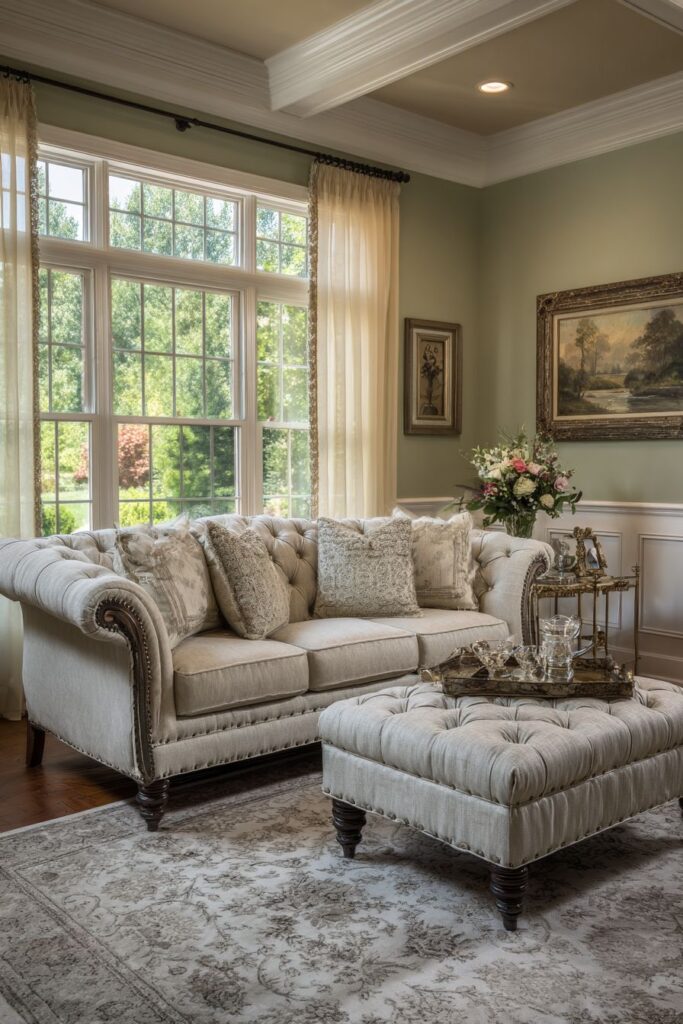
Architectural details play a crucial role in establishing the French aesthetic. Wainscoting and crown molding add visual interest and traditional charm to the sage green walls, creating sophisticated layers that speak to fine craftsmanship and attention to detail. These architectural elements provide the perfect backdrop for the furniture arrangement while adding the kind of period-appropriate details that make French provincial design so enduringly appealing.
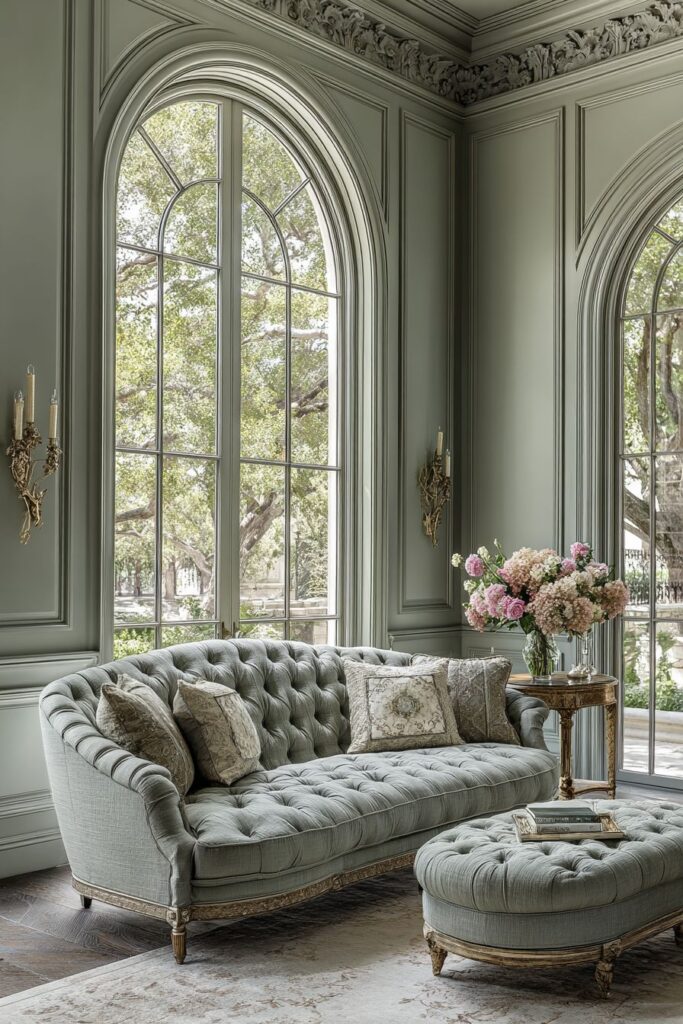
Floor-to-ceiling windows dressed with sheer panels maximize the natural light while maintaining privacy and softness. The quality of light in this space feels naturally filtered and gentle, creating the perfect atmosphere for both morning coffee and evening conversations. The sage green walls provide a calming backdrop that works beautifully with both natural and artificial lighting throughout the day.
Key Design Tips for French Provincial Style:
- Choose furniture with classic proportions and traditional upholstery techniques
- Incorporate antique or vintage accessories for authentic character
- Use architectural molding and wainscoting to add period-appropriate details
- Maintain a connection to nature through fresh flowers and natural light
- Select muted, sophisticated colors that feel timeless rather than trendy
4. Symmetrical Formal Sophistication
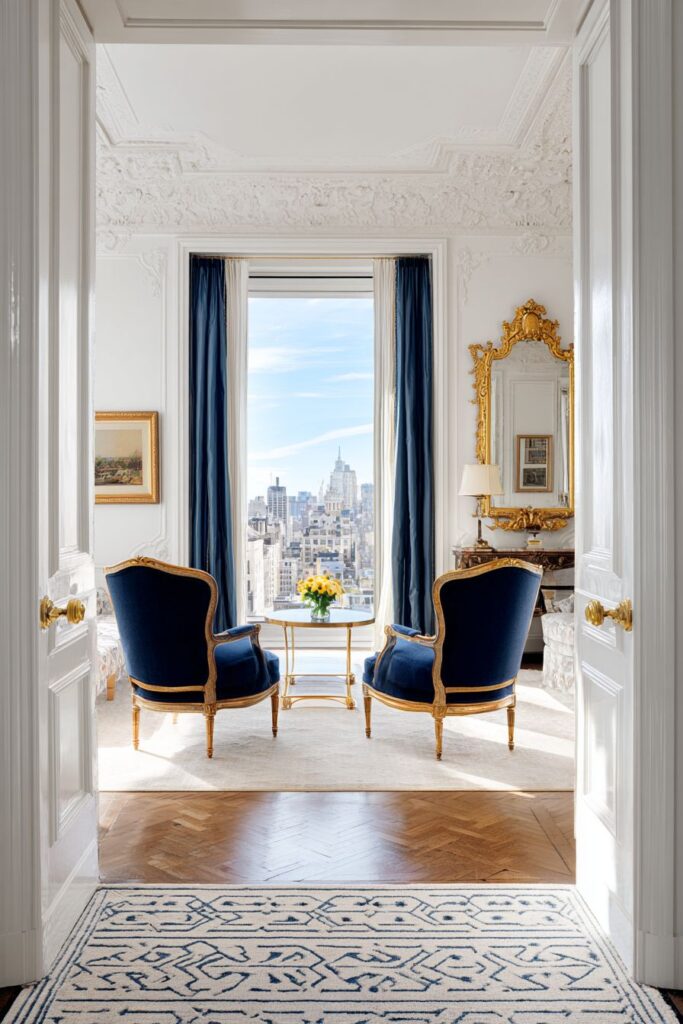
The power of symmetrical design reveals itself in this formally elegant living room where every element has been carefully balanced to create visual harmony and sophisticated order. Twin bergère chairs flank a marble-topped console table, establishing a classical furniture arrangement that speaks to traditional interior design principles while feeling thoroughly contemporary. The bergère chairs, with their exposed wood frames and upholstered seats, represent the perfect marriage of comfort and formality that defines elegant living spaces.
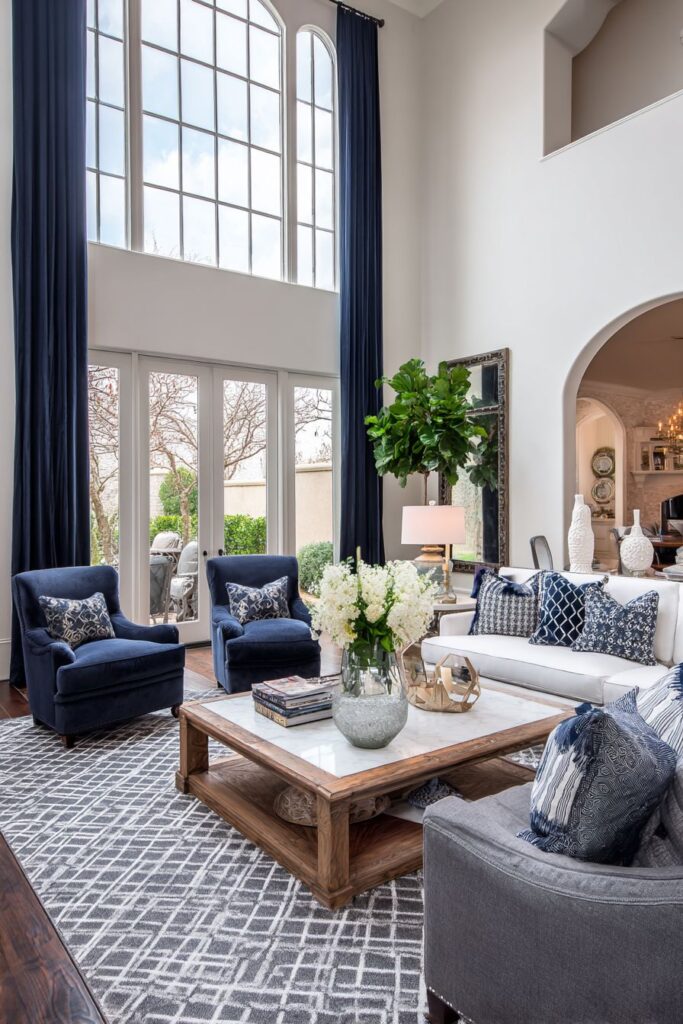
The console table serves multiple functions in this arrangement, providing both surface space for decorative objects and visual weight to anchor the symmetrical composition. Its marble top echoes the natural luxury found throughout the space while offering practical surface area for lamps, books, or decorative accessories. The placement of this piece creates a secondary seating area that can accommodate intimate conversations or quiet reading.

Rich navy blue velvet curtains frame the tall windows, adding depth of color and luxurious texture while maintaining the formal atmosphere of the space. The deep blue provides a sophisticated contrast to lighter wall colors while the velvet texture adds tactile luxury that elevates the overall sensory experience of the room. These curtains also serve practical functions, controlling light and providing privacy when needed.
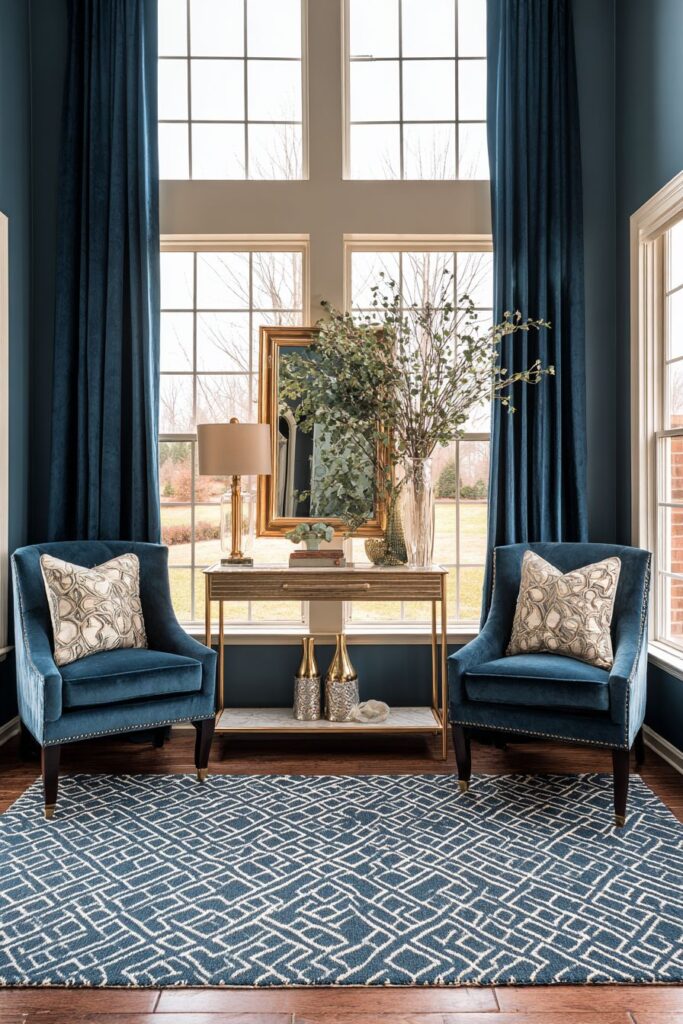
The geometric wool rug anchors the seating area while its pattern adds visual interest without overwhelming the carefully balanced composition. Above the console, a gilded mirror reflects natural light throughout the space while serving as an artistic focal point that complements the formal symmetry of the furniture arrangement.
Key Design Tips for Symmetrical Elegance:
- Create balanced furniture arrangements using pairs of identical or similar pieces
- Use mirrors strategically to reflect light and create the illusion of larger space
- Choose rich, deep colors for window treatments to add sophistication and drama
- Incorporate geometric patterns in rugs or textiles to add visual interest within formal arrangements
- Maintain consistent scale and proportion across all furniture pieces for harmonious composition
5. Contemporary Classic with Ivory Sophistication
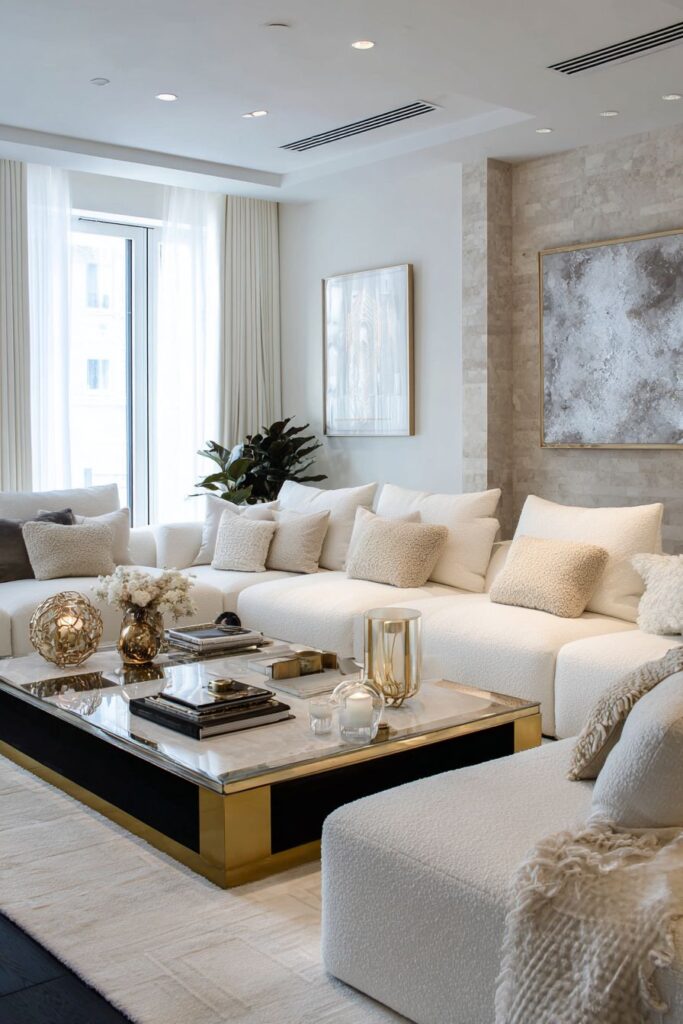
This living room represents the perfect evolution of classic design principles into contemporary living, where traditional elegance meets modern functionality. The low-profile sectional in ivory bouclé fabric provides ample seating while maintaining the clean lines that define contemporary style. The bouclé texture adds tactile interest and visual depth while the ivory color creates a neutral foundation that works with any accent colors or seasonal decorating changes.

The glass and brass coffee table exemplifies the sophisticated material combinations that make contemporary classic design so appealing. The transparency of the glass keeps the space feeling open and airy while the brass framework adds warmth and metallic luxury. This combination of materials creates a piece that feels both substantial and light, modern and timeless.
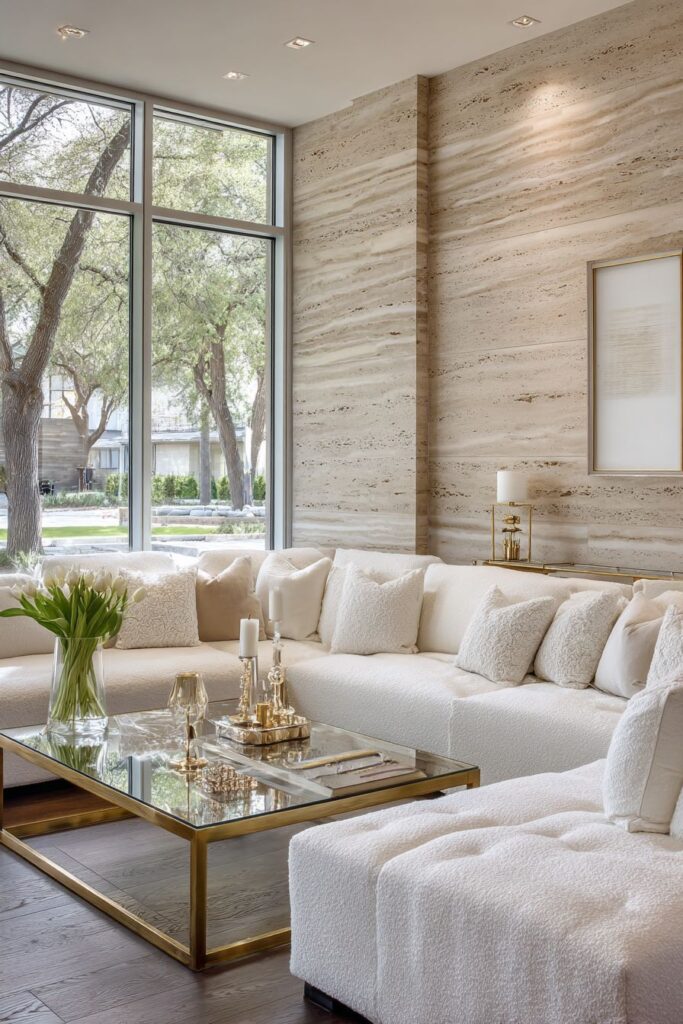
The travertine accent wall introduces natural texture and organic beauty without overwhelming the clean aesthetic. This natural stone brings earthy warmth to the contemporary palette while its subtle variations in color and pattern add visual interest that remains sophisticated and understated. The travertine serves as a textural focal point that grounds the space in natural beauty.
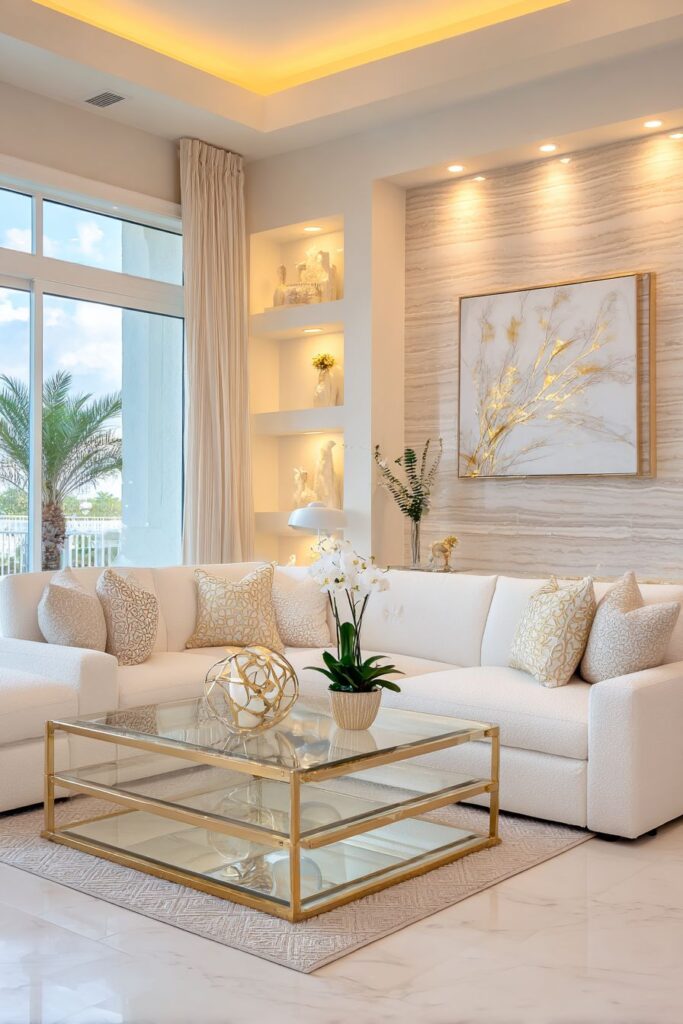
Minimalist artwork provides carefully curated visual interest without competing with the architectural elements or furniture pieces. The art selection demonstrates the principle that in contemporary design, each piece should earn its place through both aesthetic appeal and thoughtful integration with the overall composition.
Key Design Tips for Contemporary Classic Style:
- Choose furniture with clean lines but luxurious materials and textures
- Combine transparent elements with warm metals for sophisticated material contrast
- Use natural stone or wood accent walls to add organic texture to modern spaces
- Select artwork that complements rather than competes with architectural elements
- Maintain negative space to allow each design element to be fully appreciated
6. Mid-Century Modern Sophistication

The enduring appeal of mid-century modern design comes alive in this sophisticated living room where walnut wood furniture creates warmth and natural beauty throughout the space. The sleek credenza and matching side tables showcase the clean lines and functional beauty that define this design era, while their rich walnut grain adds organic pattern and warmth that prevents the space from feeling cold or stark.
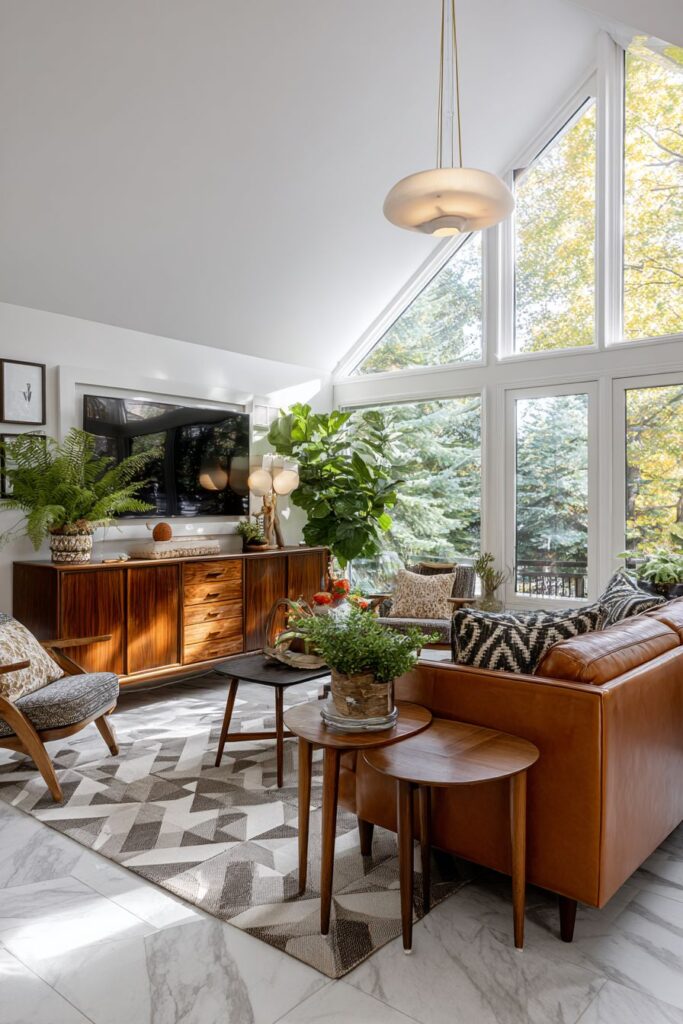
The camel leather sofa represents the perfect marriage of comfort and style that characterizes the best of mid-century design. Its clean lines speak to modernist principles while the rich leather upholstery ages beautifully and provides lasting comfort. The camel color adds warmth to the space while working harmoniously with the walnut wood tones and other natural materials throughout the room.
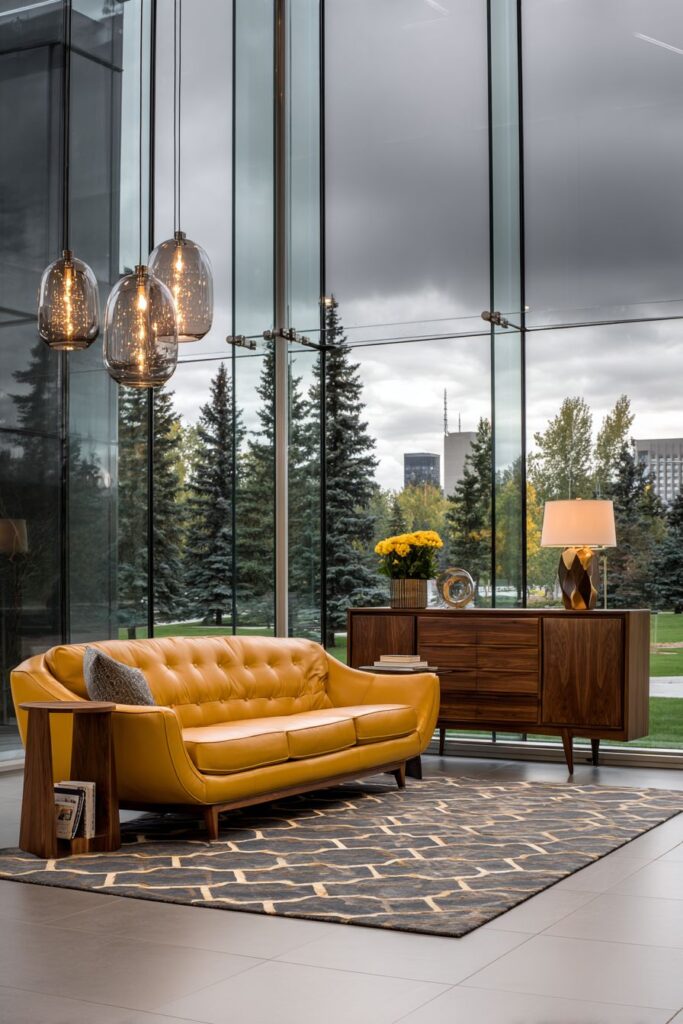
A geometric patterned rug in muted tones anchors the seating area while adding visual interest that remains sophisticated and timeless. The pattern choice reflects the mid-century appreciation for bold graphics while the muted color palette ensures the rug enhances rather than overwhelms the overall composition. This type of rug demonstrates how patterns can add personality to a space without sacrificing elegance.
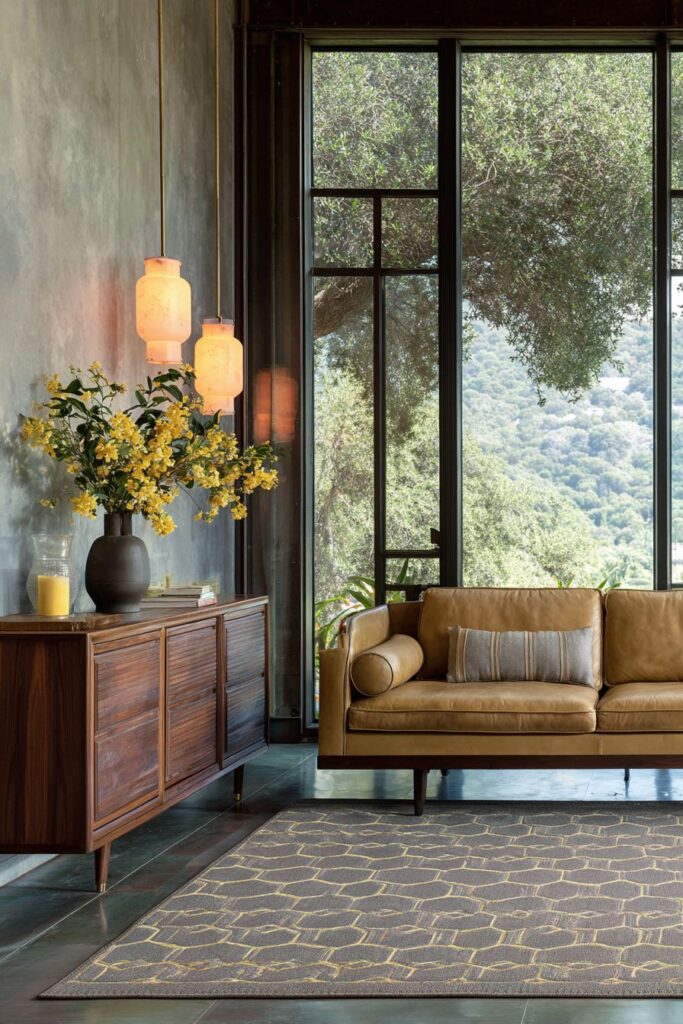
Floor-to-ceiling windows provide the abundant natural light that mid-century modern design requires, while pendant lighting adds evening ambiance with fixtures that double as sculptural elements. The lighting choices reflect the era’s appreciation for functional beauty, where every element serves both practical and aesthetic purposes.
Key Design Tips for Mid-Century Modern Elegance:
- Invest in authentic wood furniture with beautiful grain patterns and clean lines
- Choose leather upholstery in warm, natural colors that age gracefully
- Use geometric patterns sparingly in muted color palettes for sophistication
- Maximize natural light while incorporating sculptural lighting fixtures
- Maintain the principle of functional beauty in every design choice
7. Grand Piano Cultural Sophistication
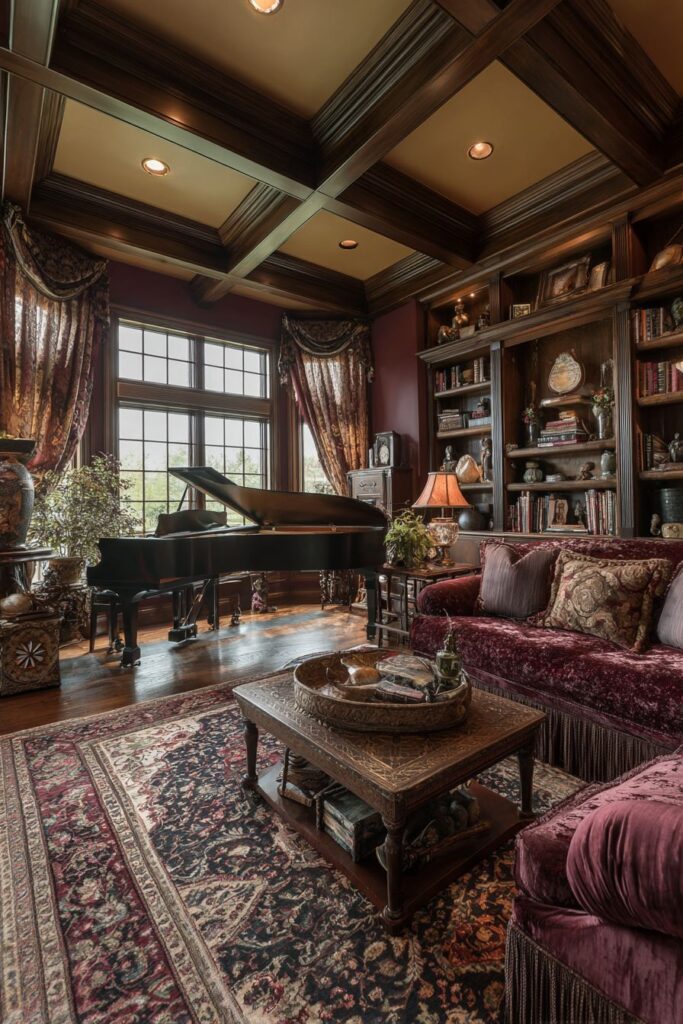
This living room elevates cultural sophistication to an art form with a grand piano serving as the magnificent centerpiece around which all other elements are arranged. The piano represents not just musical artistry but also serves as a stunning piece of furniture that speaks to refined taste and cultural appreciation. Its glossy black surface reflects light throughout the room while its imposing presence creates a natural gathering point for both musical performances and social conversations.

Comfortable seating in rich burgundy velvet surrounds the piano area, creating intimate conversation groupings that encourage both musical appreciation and social interaction. The burgundy color adds depth and luxury to the space while the velvet texture provides tactile comfort and visual richness. This seating arrangement demonstrates how furniture can be both beautiful and functional, supporting the room’s primary purpose while contributing to its overall aesthetic appeal.
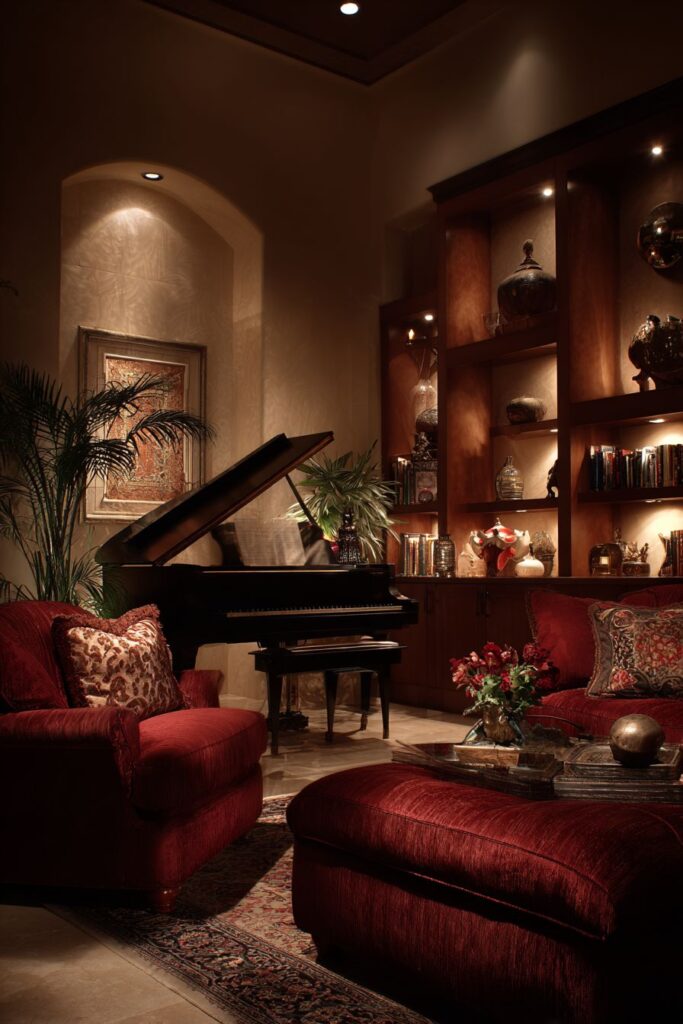
The Oriental rug with intricate patterns defines the conversation area while adding cultural richness and artistic heritage to the space. These traditional rugs bring centuries of craftsmanship and artistic tradition into the contemporary living space, their complex patterns and rich colors providing a sophisticated foundation for the furniture arrangement. The rug choice shows appreciation for global artistry while grounding the space in timeless beauty.
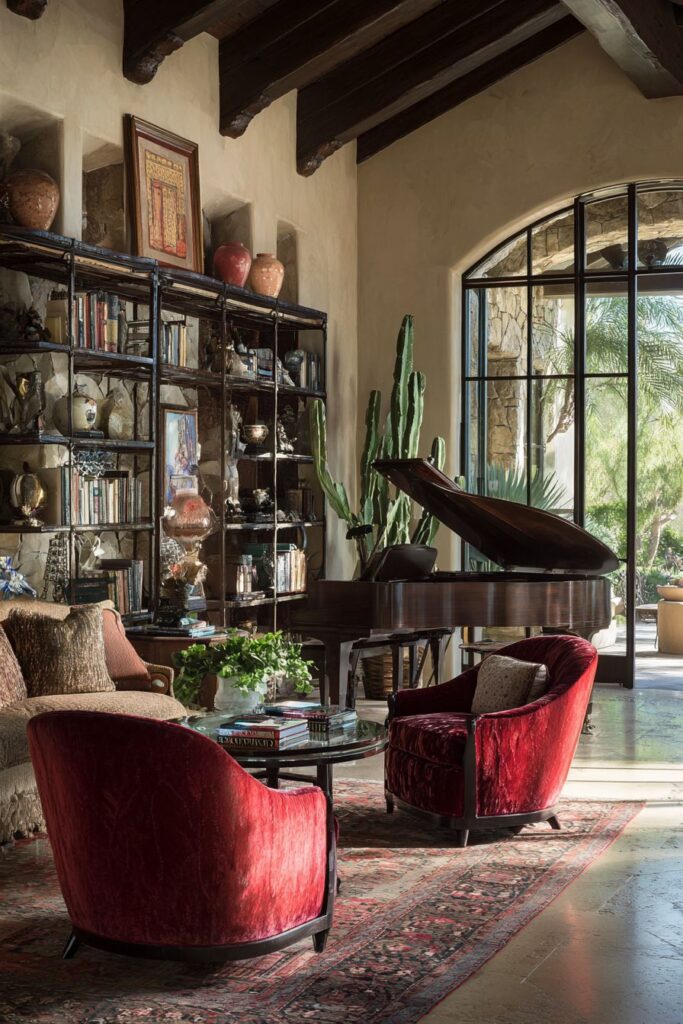
Built-in display shelves showcase art objects and books, creating a gallery-like atmosphere that speaks to intellectual curiosity and cultural sophistication. The coffered ceiling adds architectural drama and classical beauty that complements the room’s emphasis on cultural refinement and artistic appreciation.
Key Design Tips for Cultural Sophistication:
- Choose one major artistic element as the room’s focal point and arrange everything else around it
- Incorporate traditional textiles and rugs that bring cultural heritage into contemporary spaces
- Create display areas for art, books, and cultural objects that reflect personal interests
- Use rich, luxurious colors and textures to create an atmosphere worthy of cultural appreciation
- Add architectural details that enhance the room’s sense of importance and ceremony
8. Scandinavian-Inspired Refined Minimalism
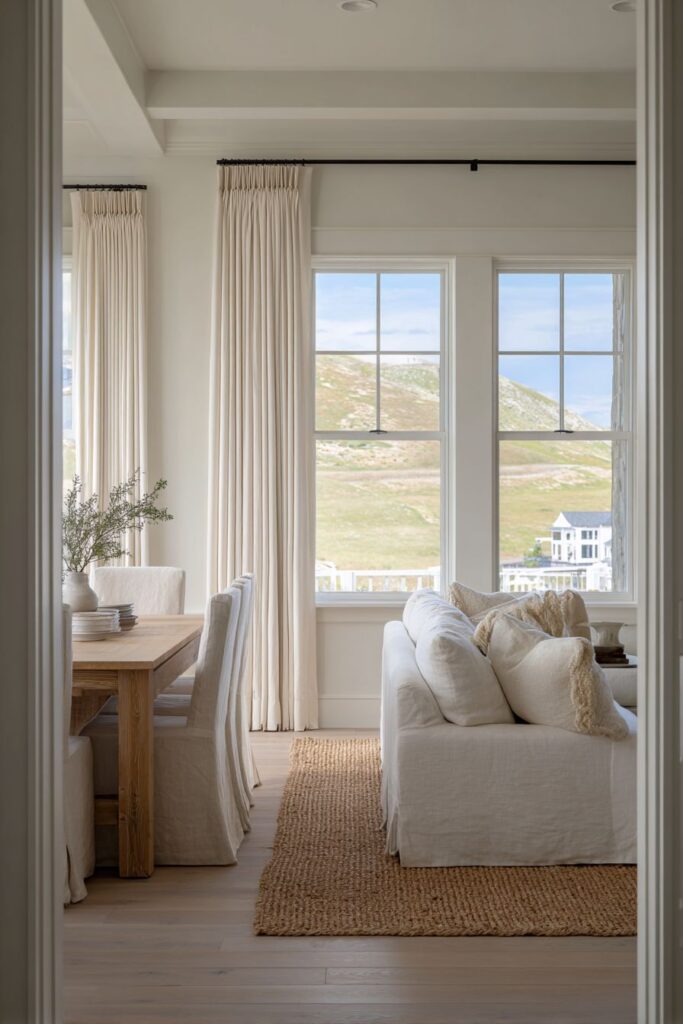
This living room demonstrates how Scandinavian design principles can create elegant sophistication through restraint and natural beauty. The light oak dining table extension into the living space represents the Scandinavian approach to multi-functional design, where furniture serves multiple purposes while maintaining aesthetic appeal. The natural wood grain provides warmth and organic beauty while the clean lines keep the space feeling uncluttered and serene.
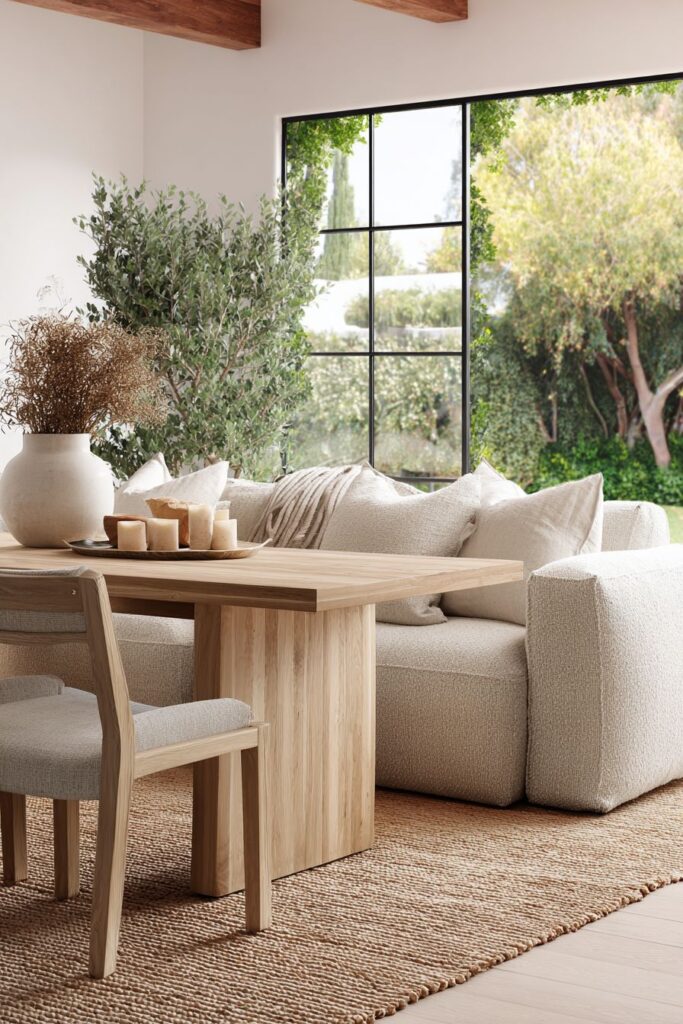
Linen-upholstered dining chairs continue the natural theme while providing comfortable seating that works for both dining and casual conversation. The linen fabric adds texture and softness while its neutral color maintains the cohesive palette that makes Scandinavian design so restful and appealing. These chairs demonstrate how furniture can be both beautiful and practical, supporting the lifestyle needs of modern living.
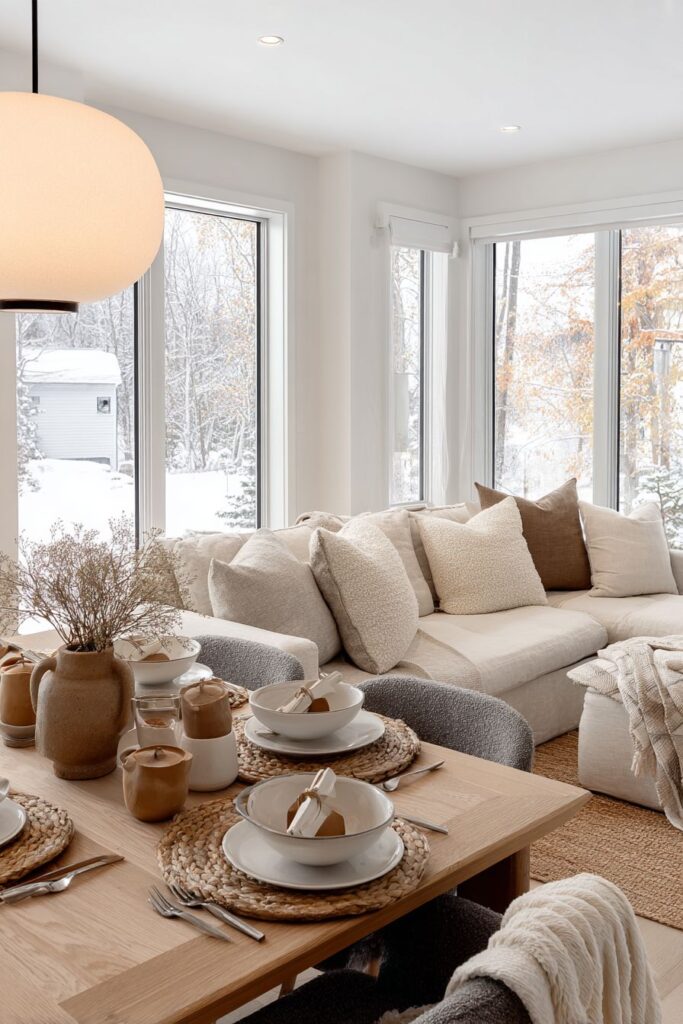
The neutral palette includes cream wool throw pillows and natural jute rug that layer different textures within the same color family to create visual interest without disrupting the serene atmosphere. This approach to color and texture shows how sophistication can be achieved through subtle variations rather than dramatic contrasts.
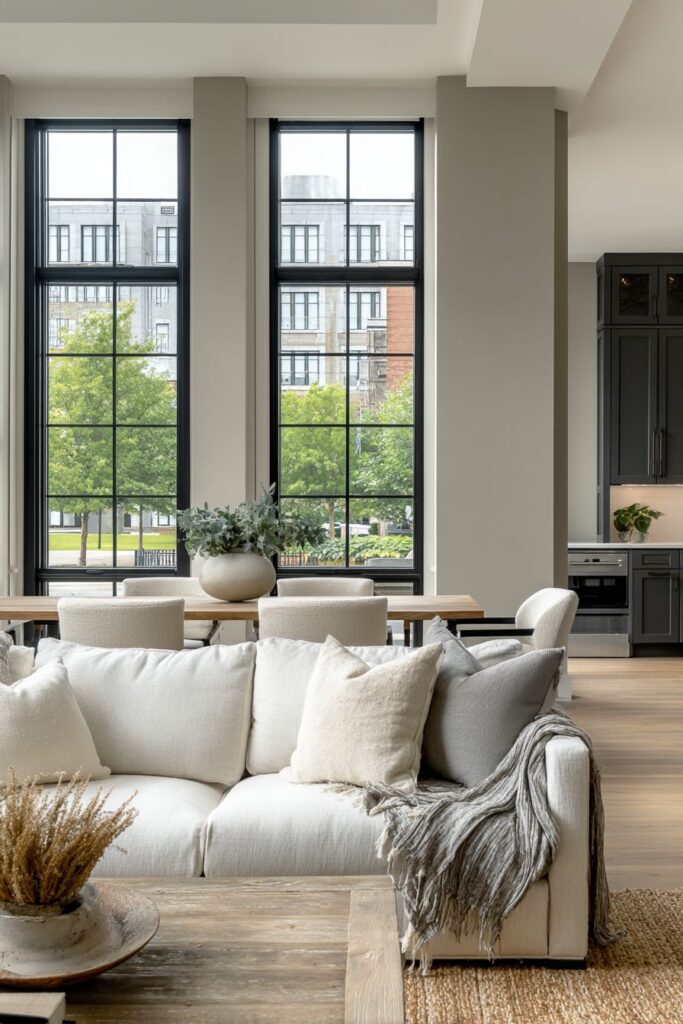
Large windows with minimal frames maximize natural light, which is essential to the Scandinavian aesthetic. The quality of light in this space feels pure and clean, creating the perfect backdrop for the natural materials and neutral colors that define this sophisticated approach to minimalism.
Key Design Tips for Scandinavian Refinement:
- Choose furniture that serves multiple functions while maintaining clean aesthetic lines
- Layer natural textures within neutral color palettes for sophisticated visual interest
- Maximize natural light with minimal window treatments and light-colored walls
- Invest in quality natural materials that age beautifully and improve with use
- Maintain uncluttered spaces that allow the beauty of individual elements to shine
9. Vertical Drama with Architectural Grandeur
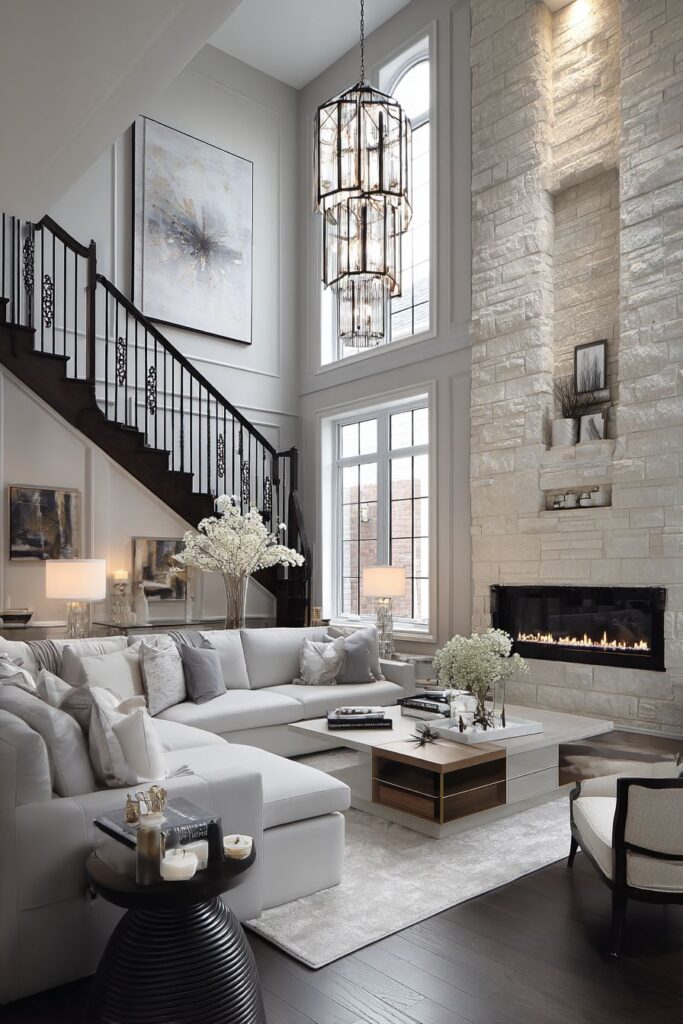
This living room makes dramatic use of vertical space with double-height ceilings and a statement staircase with wrought iron railings that create architectural theater and grand sophistication. The soaring ceiling height transforms the space into something truly spectacular, while the staircase serves as both functional element and sculptural focal point that draws the eye upward and emphasizes the room’s impressive scale.
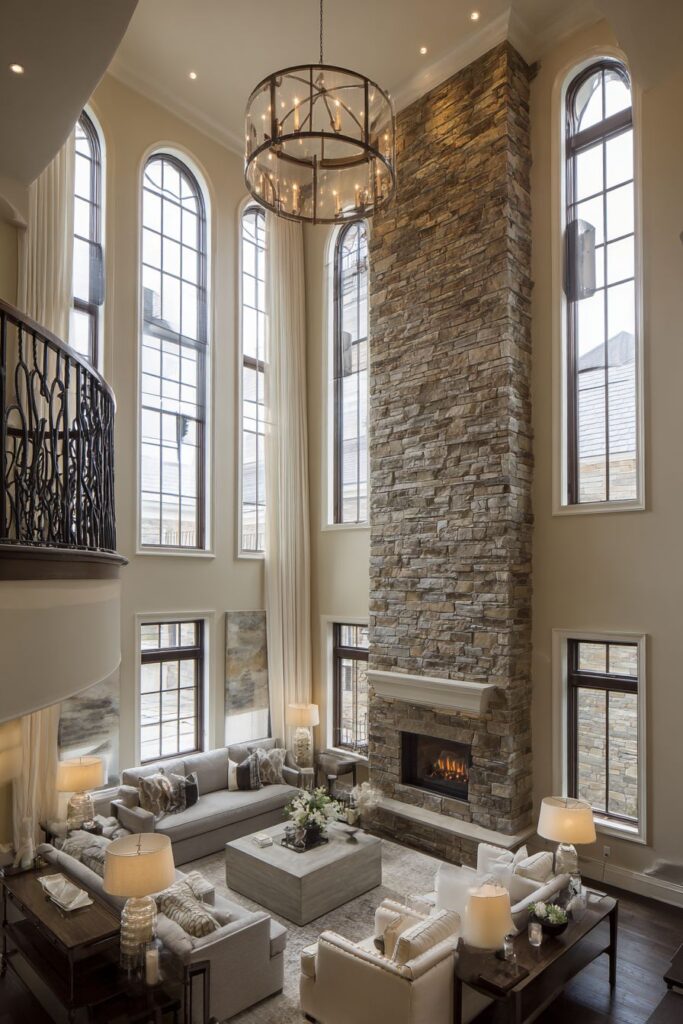
The oversized sectional in pearl grey provides ample seating while its neutral color allows the architectural elements to take center stage. The scale of this furniture piece is perfectly proportioned to the room’s grand dimensions, demonstrating how furniture size must be carefully considered in relation to ceiling height and overall room proportions. The pearl grey color adds sophistication while working harmoniously with the other neutral elements throughout the space.
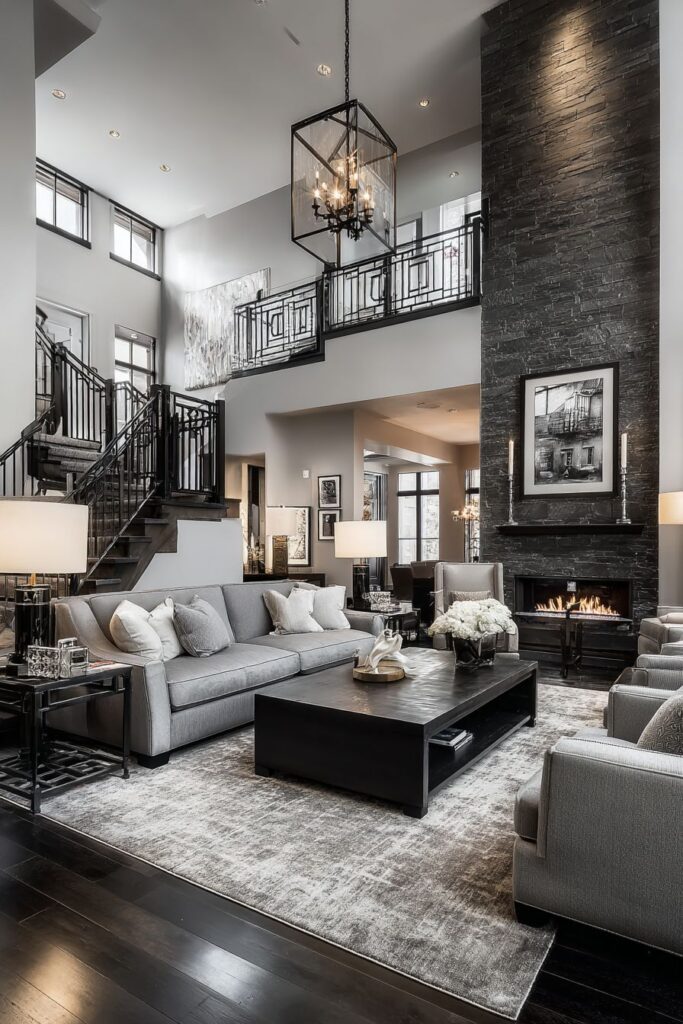
A dramatic stone fireplace with modern insert serves as the horizontal anchor to balance the room’s vertical emphasis. The stone material adds natural texture and organic beauty while the modern fireplace insert provides contemporary functionality within the traditional material framework. This combination of classic materials with modern technology exemplifies sophisticated contemporary design.
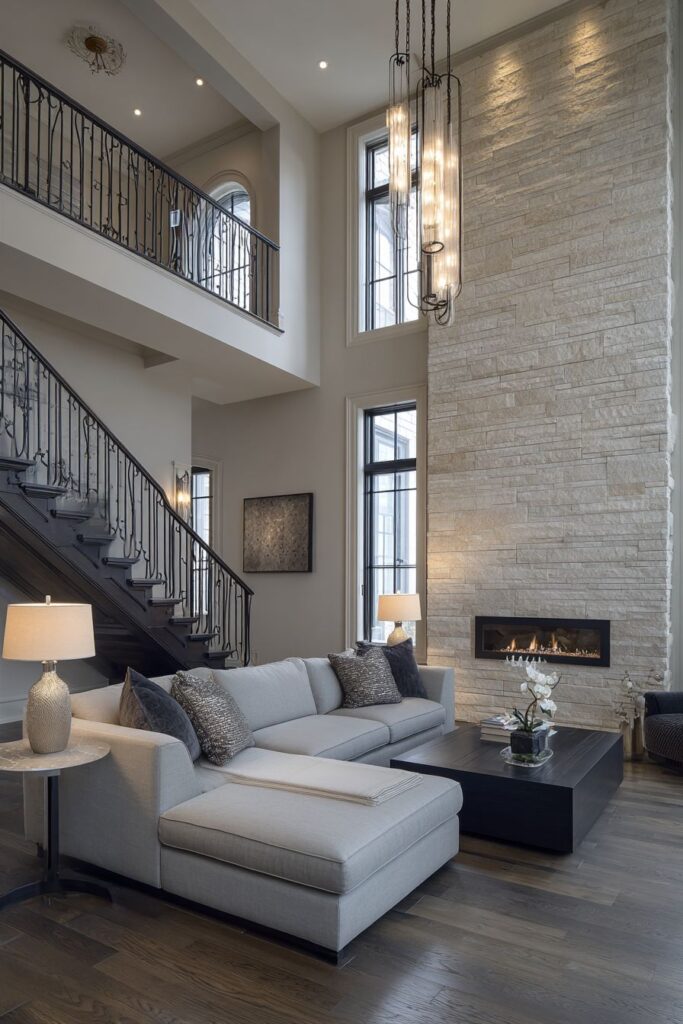
Layered lighting includes both chandelier and table lamps, creating multiple levels of illumination that can be adjusted for different activities and times of day. The clerestory windows high above provide natural light during the day while maintaining privacy and creating dramatic light patterns that change throughout the day.
Key Design Tips for Architectural Drama:
- Scale furniture appropriately to room dimensions, especially in spaces with high ceilings
- Use both vertical and horizontal elements to create balanced compositions in tall spaces
- Layer lighting sources at different heights to properly illuminate large spaces
- Choose materials that complement rather than compete with dramatic architectural features
- Create multiple focal points to prevent overwhelming emphasis on ceiling height alone
10. Coastal-Inspired Relaxed Sophistication
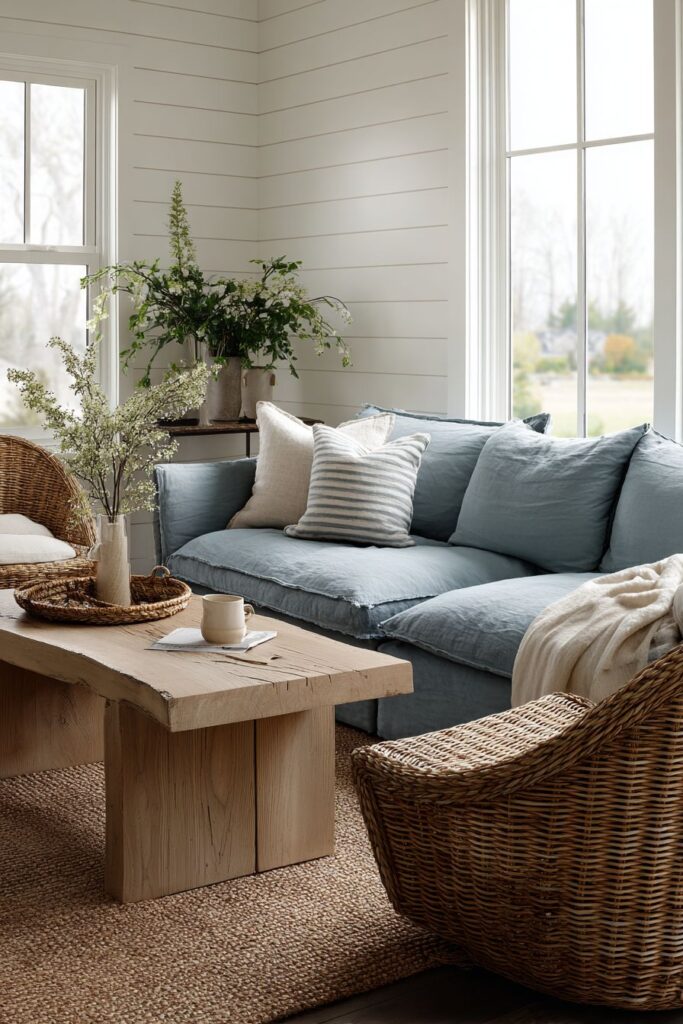
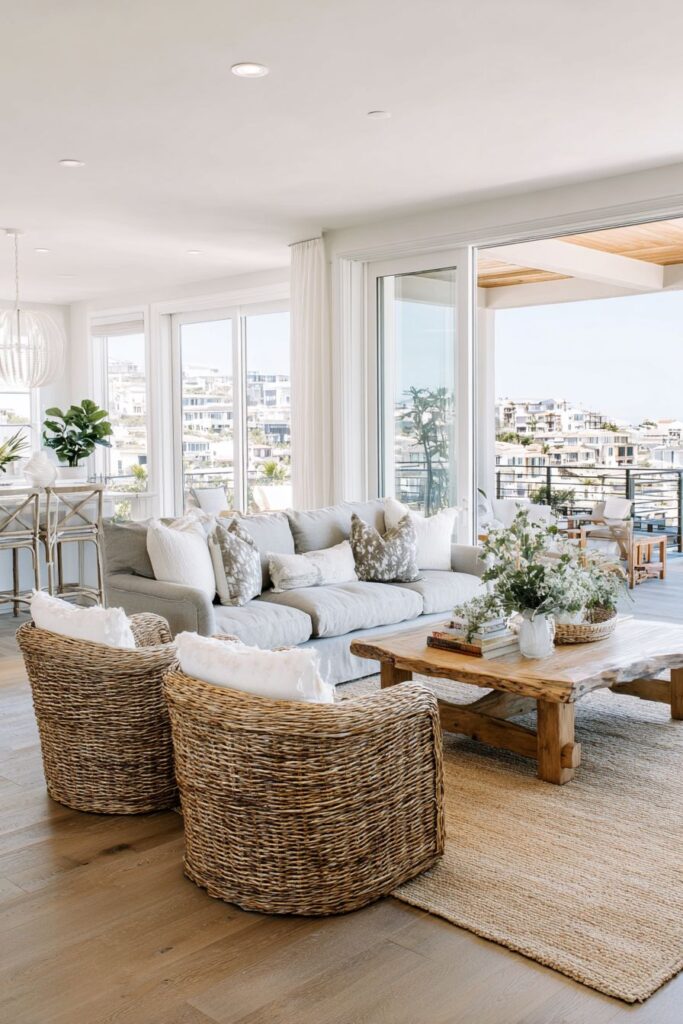
This living room brings the tranquil beauty of coastal living into an elegant interior setting through carefully chosen materials and colors that evoke ocean and shore. The linen sofa in soft blue-grey captures the essence of sea and sky while providing comfortable seating with the relaxed elegance that defines sophisticated coastal style. The linen fabric choice adds natural texture and casual luxury while its color connects the interior space to the natural world outside.
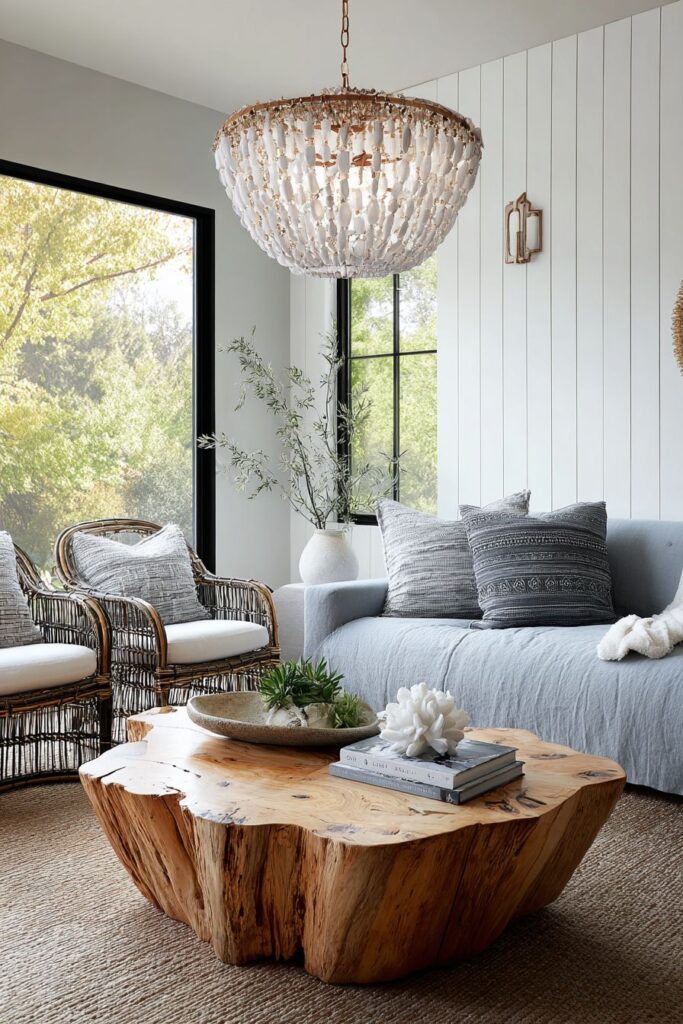
The natural wood coffee table with live edge detail brings organic beauty into the space while celebrating the natural imperfections that make each piece unique. The live edge maintains the tree’s original contour, creating a piece that feels both sophisticated and connected to nature. This type of furniture choice demonstrates how coastal elegance can incorporate rustic elements while maintaining overall sophistication.

Woven textures throughout the space include sisal rug and rattan accent chairs that add natural materials and varied textures while maintaining the coastal theme. These natural fibers bring tactile interest and visual warmth while their neutral colors work harmoniously with the overall palette. The combination of different natural textures creates layers of interest that keep the space from feeling flat or monotonous.
The shiplap accent wall painted in crisp white provides architectural interest while staying true to coastal building traditions. This type of wall treatment adds texture and visual interest while maintaining the clean, fresh feeling that makes coastal design so appealing and relaxing.
Key Design Tips for Coastal Sophistication:
- Use colors inspired by natural coastal elements like sea, sky, and sand
- Incorporate natural materials and textures that reference beach and shore environments
- Choose furniture with organic shapes and natural imperfections for authentic coastal feel
- Maintain light, airy color palettes that feel fresh and relaxing
- Add architectural details that reference traditional coastal building techniques
11. Traditional English Country Elegance
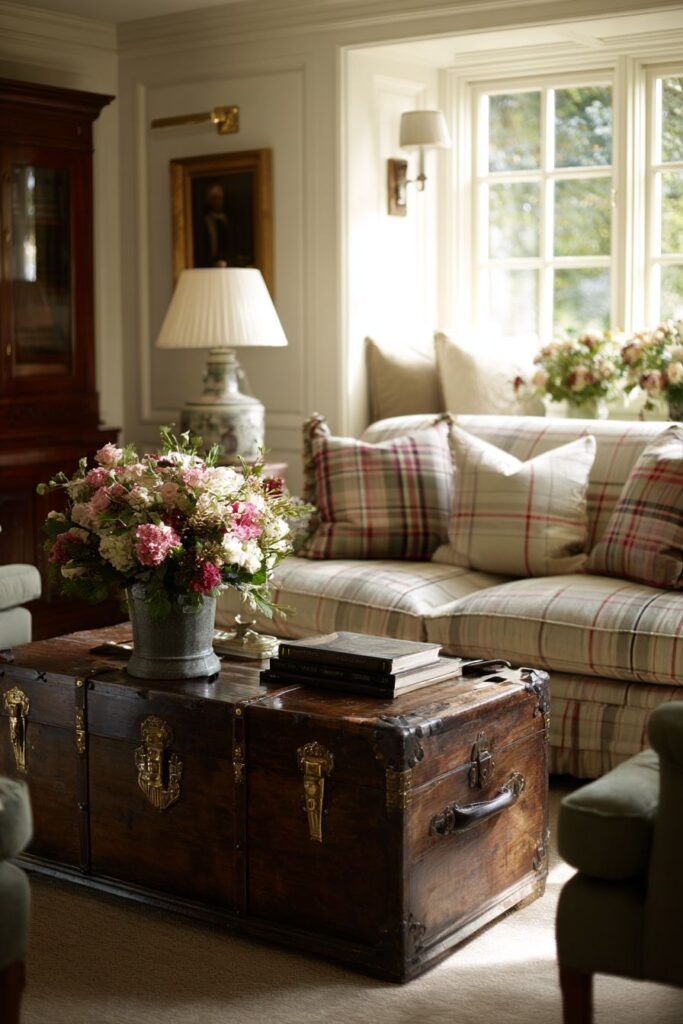
This living room embodies the timeless charm of traditional English country style through its carefully layered textiles and comfortable furniture arrangements. The rolled-arm sofa in classic plaid pattern serves as the centerpiece, its traditional upholstery reflecting the English appreciation for quality textiles and enduring patterns. The plaid pattern adds visual interest and cultural authenticity while the comfortable proportions invite relaxation and conversation.
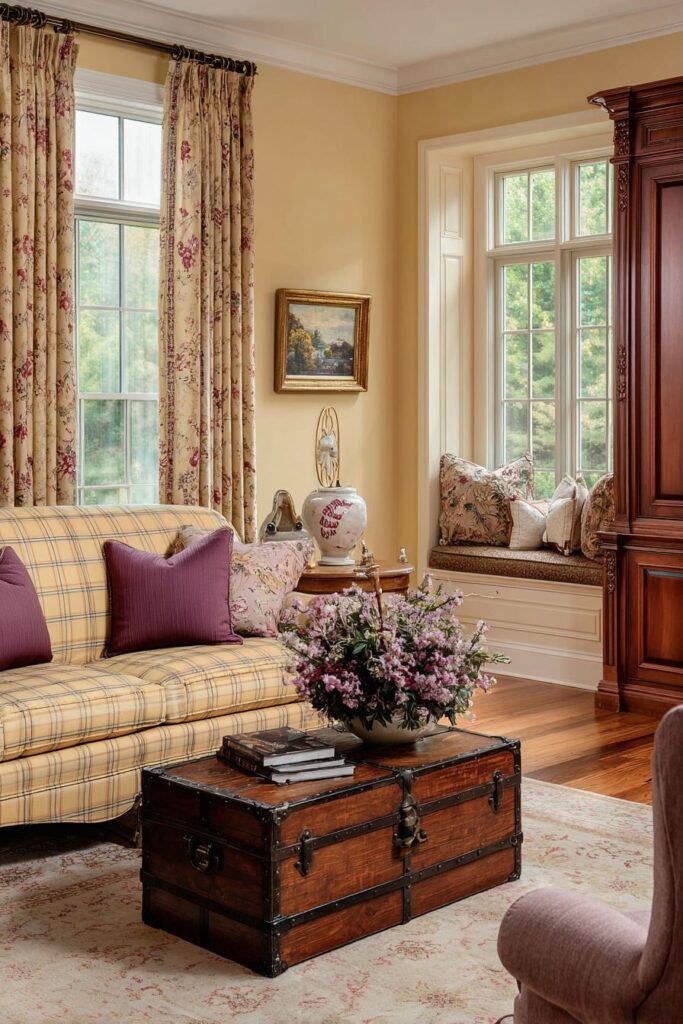
Wingback chairs in complementary solid fabric provide additional seating while their classic silhouette speaks to furniture-making traditions that have remained popular for centuries. These chairs represent the English country approach to mixing patterns and solids within the same space, creating visual variety while maintaining overall harmony through careful color coordination.

The antique wooden trunk serving as coffee table adds both functional surface space and historical character to the room. This type of furniture choice reflects the English country appreciation for pieces with history and story, where functionality and beauty combine with the patina of age and use. The trunk provides hidden storage while serving as a conversation piece that speaks to the room’s traditional character.

A built-in window seat provides additional seating while taking advantage of natural light and garden views. This architectural feature reflects the English tradition of creating cozy reading nooks and intimate seating areas that make the most of available space while providing comfortable spots for quiet activities like reading or contemplation.
Key Design Tips for English Country Elegance:
- Mix traditional patterns like plaids and florals with solid colors in complementary hues
- Choose furniture with classic proportions and traditional upholstery techniques
- Incorporate pieces with history and character rather than all-new furniture
- Create multiple seating areas for different activities and group sizes
- Add fresh flowers and natural elements to maintain connection to country traditions
12. Art Deco Glamorous Drama
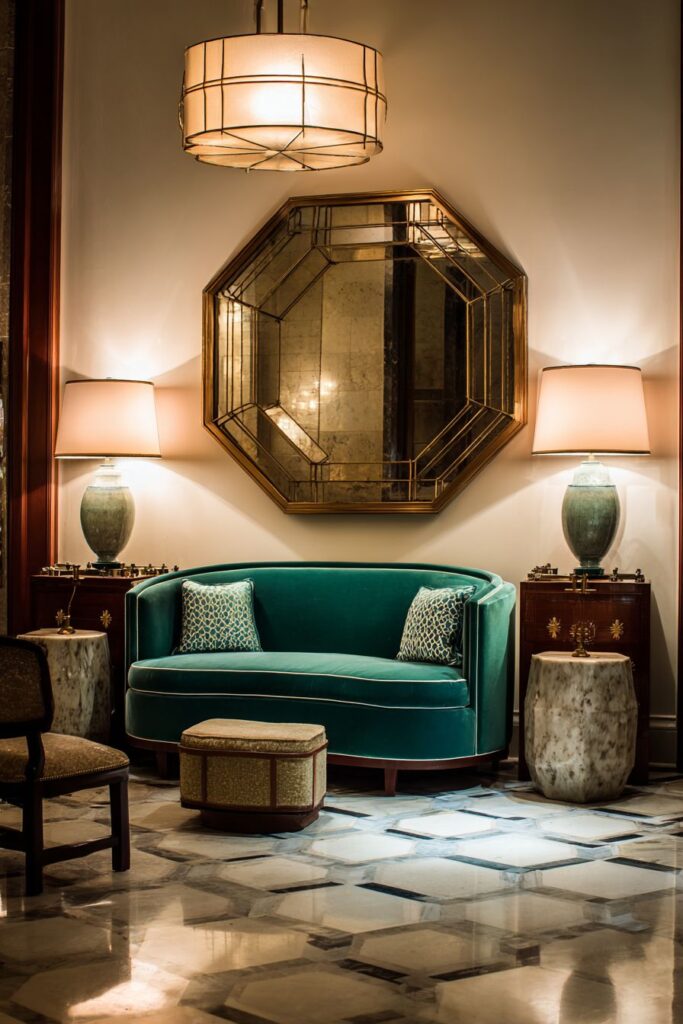
This living room captures the glamorous sophistication of Art Deco design through bold geometric forms and luxurious materials that create dramatic visual impact. The curved velvet sofa in emerald green serves as a stunning focal point, its sensuous curves and rich color embodying the Art Deco appreciation for both comfort and visual drama. The emerald green provides sophisticated color depth while the velvet texture adds tactile luxury that invites both sitting and admiring.
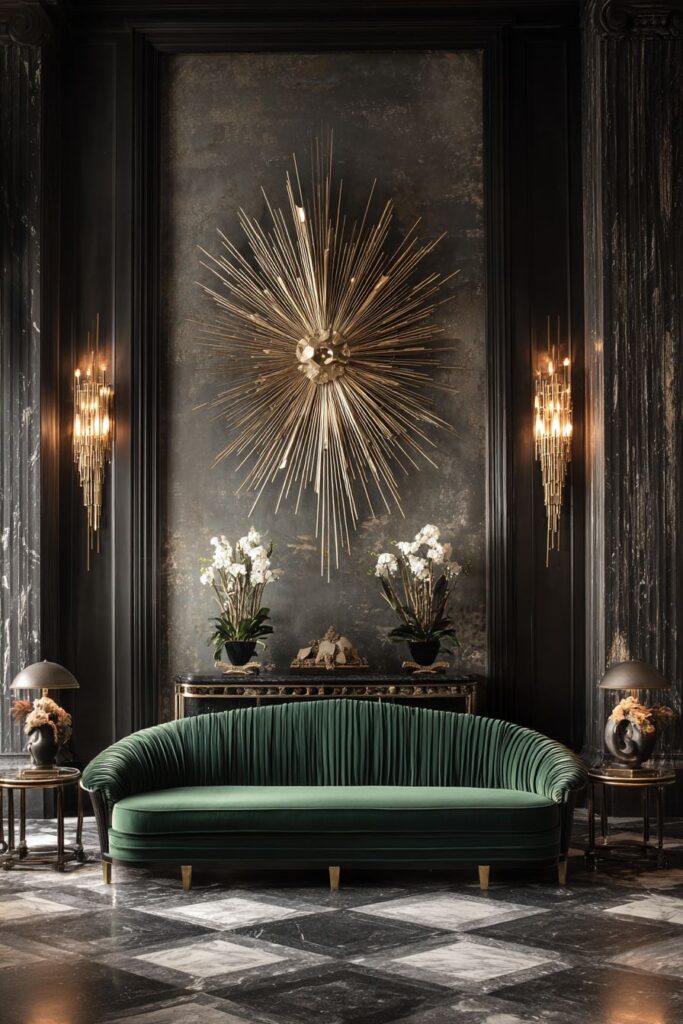
The geometric brass mirror positioned above the sofa continues the Art Deco theme while serving practical and aesthetic functions. Its angular geometric form reflects the period’s appreciation for bold shapes and mathematical precision, while the brass material adds metallic glamour that catches and reflects light throughout the space. This type of mirror serves as both functional element and artistic statement.

Lacquered side tables and marble accent pieces throughout the space reflect the Art Deco love of luxury materials and high-gloss finishes. The lacquered surfaces provide sophisticated shine and depth of color while the marble elements add natural luxury and organic pattern that balances the more geometric elements in the room.

Rich jewel tones complement metallic accents throughout the space, creating a palette that feels both luxurious and dramatic. The combination of emerald green with brass and other metallic elements creates a sophisticated color story that feels both historical and thoroughly contemporary.
Key Design Tips for Art Deco Glamour:
- Choose furniture with bold geometric forms and luxurious upholstery materials
- Incorporate metallic elements in brass, chrome, or gold for authentic period glamour
- Use rich jewel tones as accent colors against neutral backgrounds
- Select accessories with geometric patterns and high-gloss finishes
- Create dramatic lighting effects that highlight metallic elements and rich textures
13. Transitional Balance with Rustic Contemporary
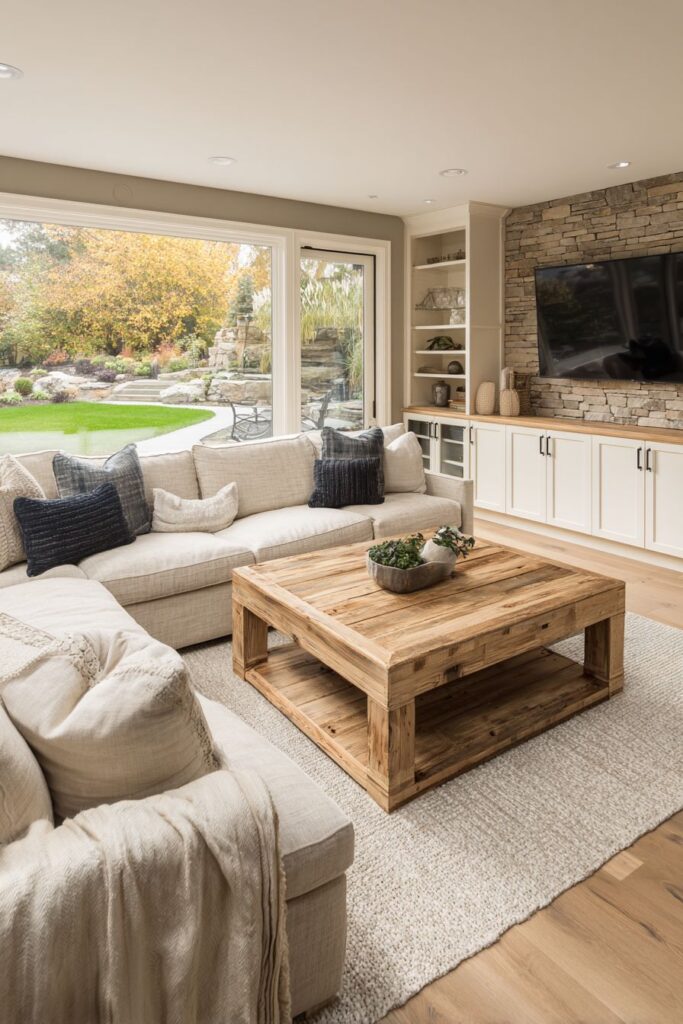
This living room achieves sophisticated balance by combining contemporary clean lines with rustic natural materials in a transitional approach that feels both current and timeless. The neutral linen sectional provides contemporary comfort and style while its neutral color and clean lines create a sophisticated foundation that works with various decorating approaches. The linen upholstery adds natural texture while maintaining the uncluttered aesthetic that defines successful transitional design.
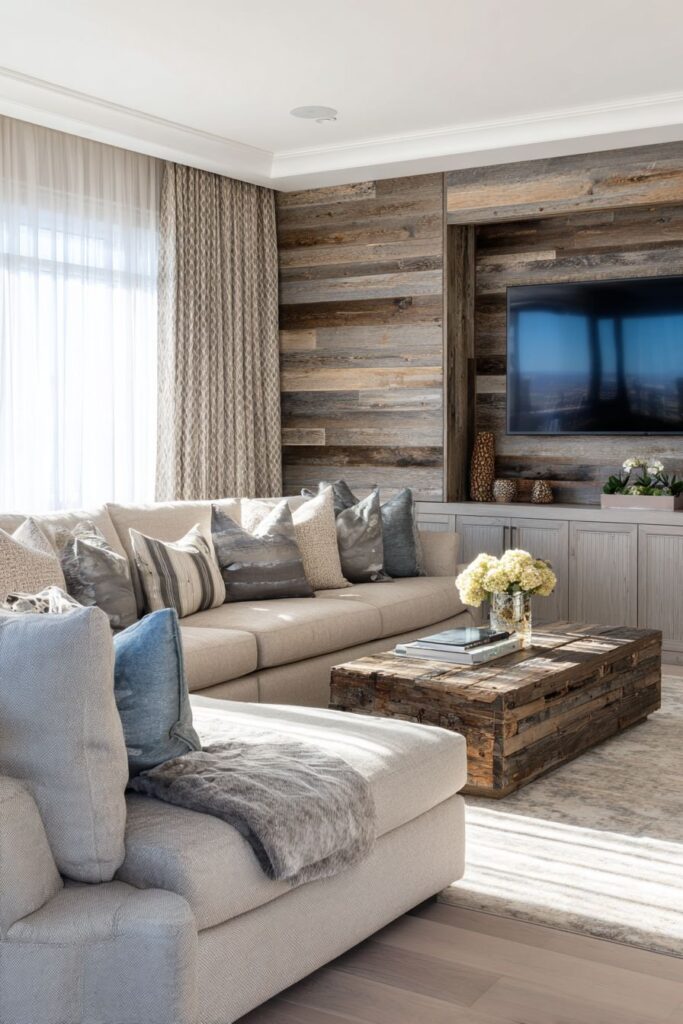
The rustic reclaimed wood coffee table creates textural contrast and natural beauty while its weathered surface tells stories of previous use and age. This type of furniture choice demonstrates how transitional design successfully combines different stylistic elements, where the rustic character of the reclaimed wood balances the contemporary lines of the sectional seating.

The built-in entertainment center with hidden storage maintains clean lines while providing practical functionality for modern living needs. This type of storage solution shows how transitional design addresses contemporary lifestyle requirements while maintaining aesthetic appeal through thoughtful design and quality craftsmanship.

A natural stone accent wall adds organic texture and visual weight while maintaining the sophisticated balance between rustic and contemporary elements. The stone provides natural beauty and textural interest while its neutral color works harmoniously with both the contemporary furniture and rustic wood elements.
Key Design Tips for Transitional Elegance:
- Balance contemporary furniture lines with natural materials and textures
- Choose neutral color palettes that work with both traditional and modern elements
- Incorporate built-in storage solutions that maintain clean aesthetic lines
- Use natural materials like stone and wood to add warmth to contemporary spaces
- Create contrast through texture rather than color for sophisticated visual interest
14. Mediterranean Warmth with Architectural Character
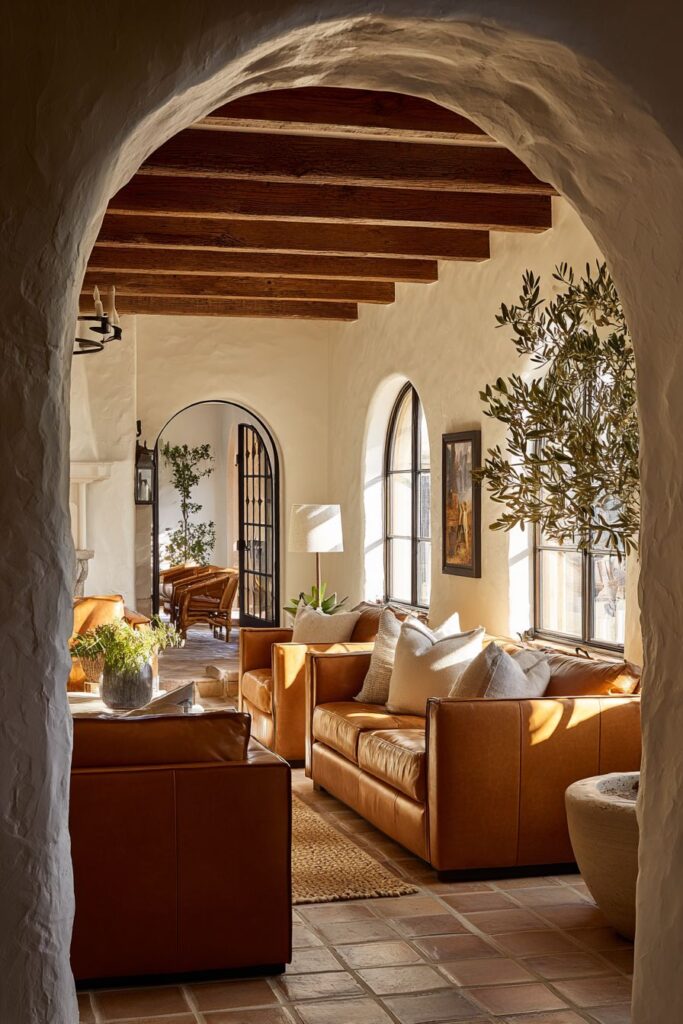
This living room brings the warmth and character of Mediterranean design into an elegant interior setting through architectural details and authentic materials that evoke southern European charm. Arched doorways and wrought iron details provide architectural interest while staying true to Mediterranean building traditions that emphasize both beauty and functionality. These elements create visual flow between spaces while adding the kind of crafted details that make Mediterranean design so enduringly appealing.
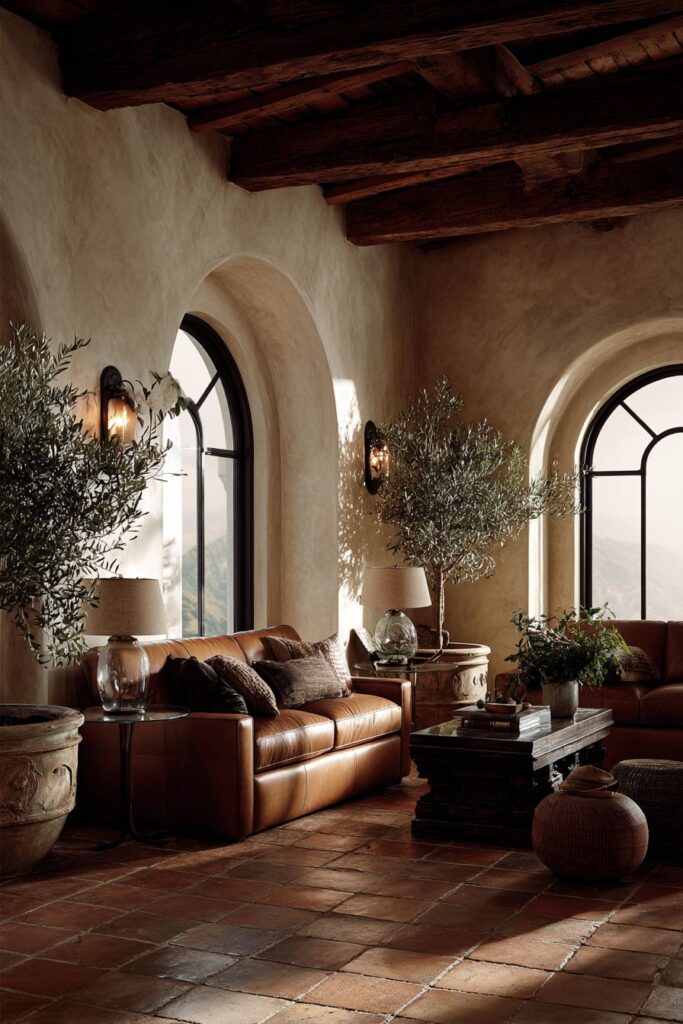
Terra cotta tile floors provide authentic Mediterranean flooring while their warm color and natural variations add organic beauty throughout the space. These tiles improve with age and use while providing practical flooring that handles both formal entertaining and daily family life. The terra cotta color works harmoniously with the other warm tones throughout the space.

Leather furniture in warm cognac tones adds sophisticated comfort while its rich color complements the terra cotta floors and other warm elements in the room. The cognac leather provides luxury and durability while its color speaks to the Mediterranean appreciation for rich, warm materials that age beautifully and develop character over time.

Exposed wooden ceiling beams add architectural character while their natural wood grain provides organic pattern and warmth overhead. Potted olive trees bring natural elements and authentic Mediterranean plant life into the interior space, creating connections to outdoor gardens and Mediterranean landscapes.
Key Design Tips for Mediterranean Elegance:
- Incorporate authentic architectural details like arched openings and exposed beams
- Choose warm, earthy colors inspired by Mediterranean landscapes and materials
- Use natural materials like terra cotta, stone, and wood for authentic character
- Add plants and natural elements that connect interior spaces to outdoor environments
- Select furniture and accessories that will age beautifully and develop patina over time
15. Minimalist Luxury with Serene Sophistication
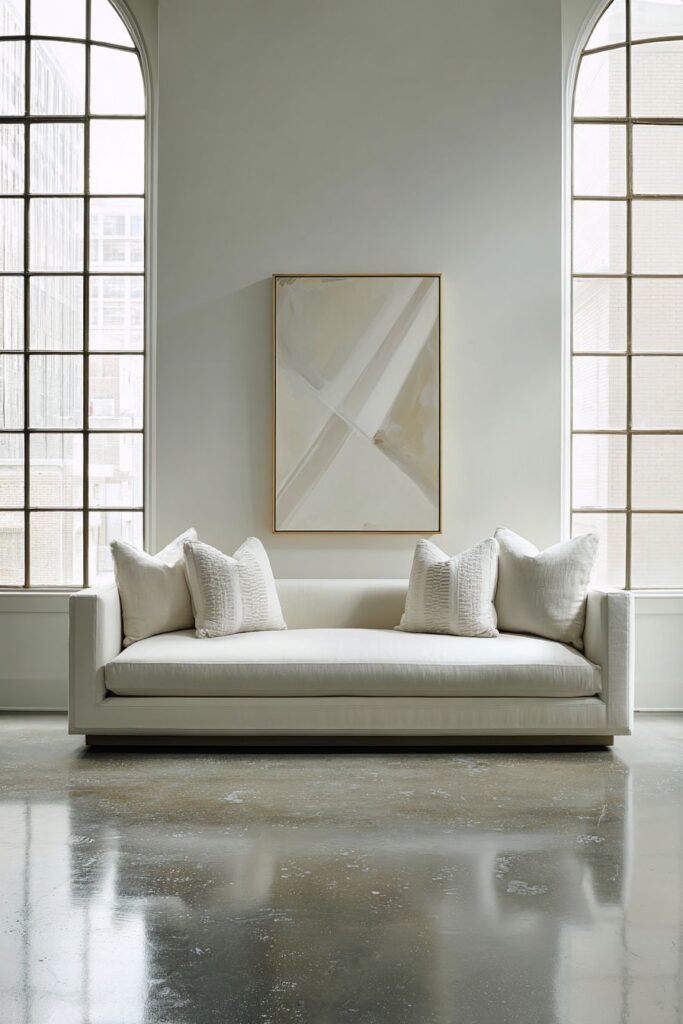
This living room demonstrates how minimalist principles can create sophisticated luxury through careful editing and attention to quality over quantity. Low-profile furniture in neutral tones creates clean lines and uncluttered compositions while maintaining comfortable functionality. The furniture selection shows restraint and thoughtful curation, where each piece serves both practical and aesthetic purposes while contributing to the overall sense of calm sophistication.
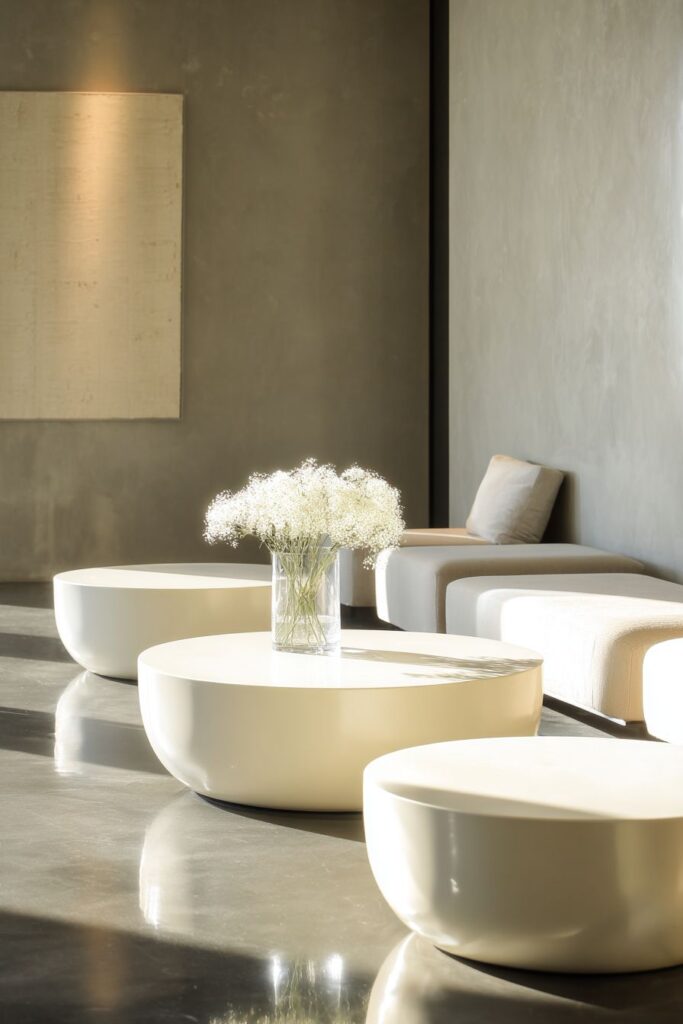
Polished concrete floors reflect natural light while providing a sophisticated industrial element that grounds the space in contemporary materials. The concrete surface adds textural interest through subtle variations while its reflective quality helps bounce light throughout the space, creating the bright, airy feeling that makes minimalist spaces so appealing.
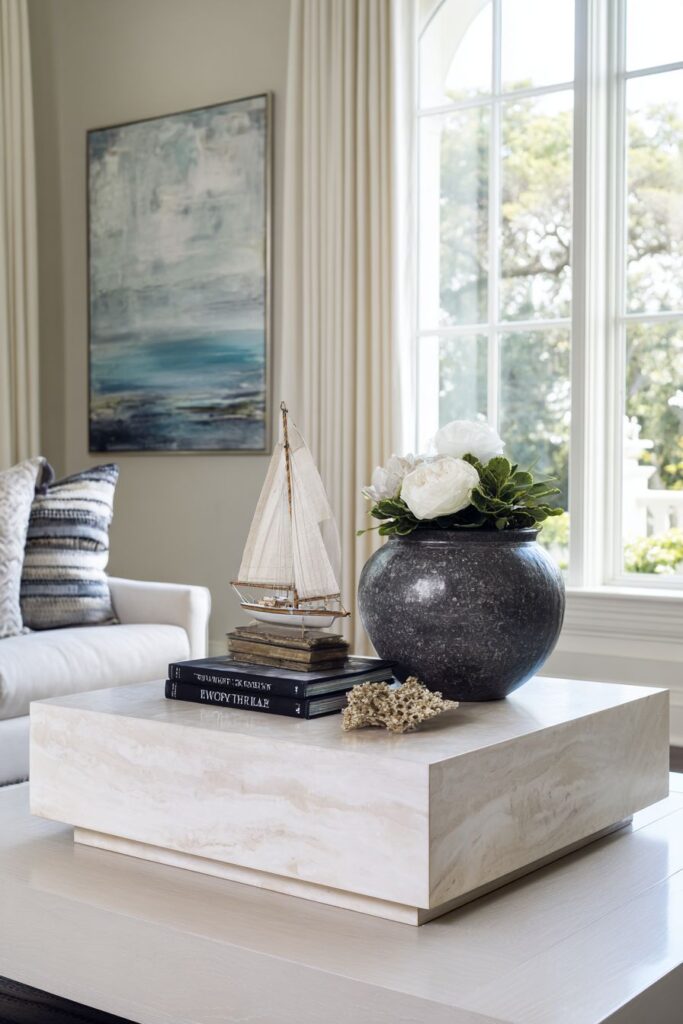
A single statement artwork provides focal interest without overwhelming the serene aesthetic. This approach to art selection demonstrates the minimalist principle that fewer, higher-quality pieces create more impact than multiple smaller elements. The artwork serves as the room’s primary decorative element while all other elements support and enhance its presence.
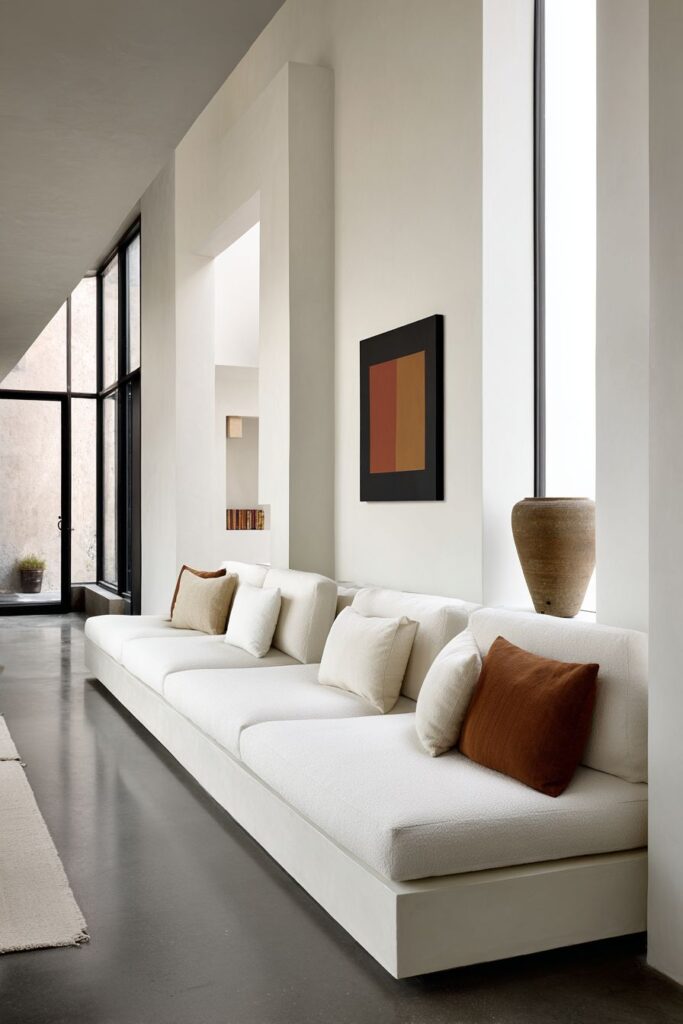
Hidden storage solutions maintain the uncluttered aesthetic while providing practical functionality for modern living needs. This type of storage planning shows how successful minimalist design requires careful consideration of lifestyle needs and storage requirements to maintain the clean, organized appearance that makes these spaces so restful and appealing.
Key Design Tips for Minimalist Luxury:
- Choose fewer, higher-quality furniture pieces with clean lines and superior materials
- Use reflective surfaces like polished concrete to maximize natural light
- Select one or two statement art pieces rather than multiple smaller decorative elements
- Plan hidden storage solutions to maintain uncluttered surfaces and clean lines
- Emphasize negative space as an important design element that allows other elements to shine
16. Industrial Chic with Refined Urban Character
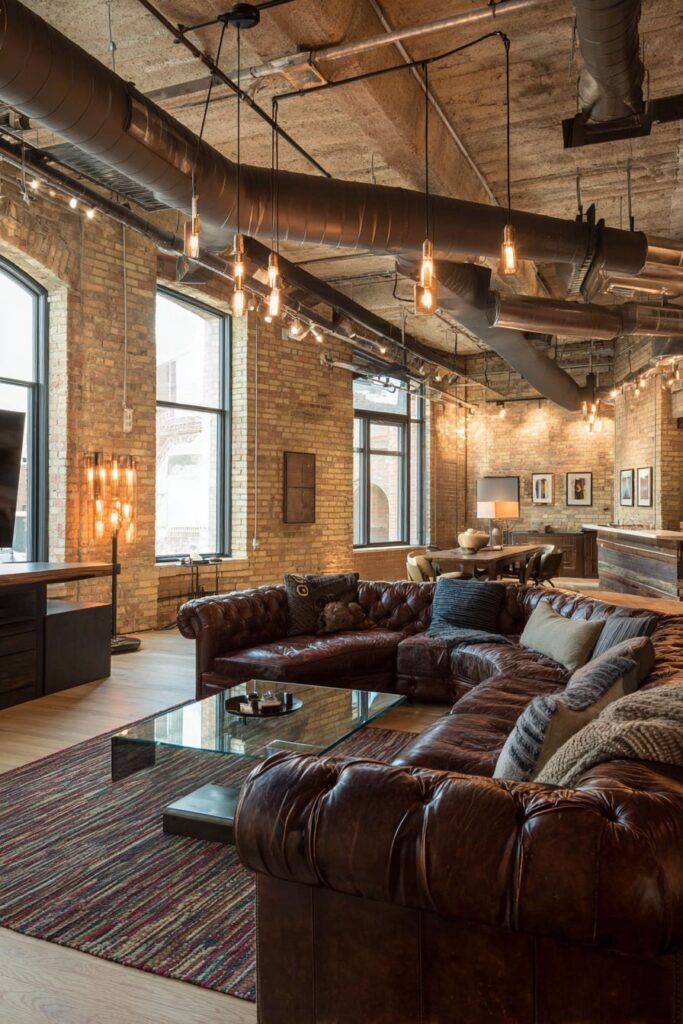
This living room transforms industrial elements into sophisticated urban elegance through the careful balance of raw and refined materials. Exposed brick walls and steel beam ceiling details provide authentic industrial character while their honest materials add textural interest and historical authenticity to the contemporary living space. These architectural elements speak to the building’s original purpose while creating a sophisticated backdrop for elegant furniture and accessories.
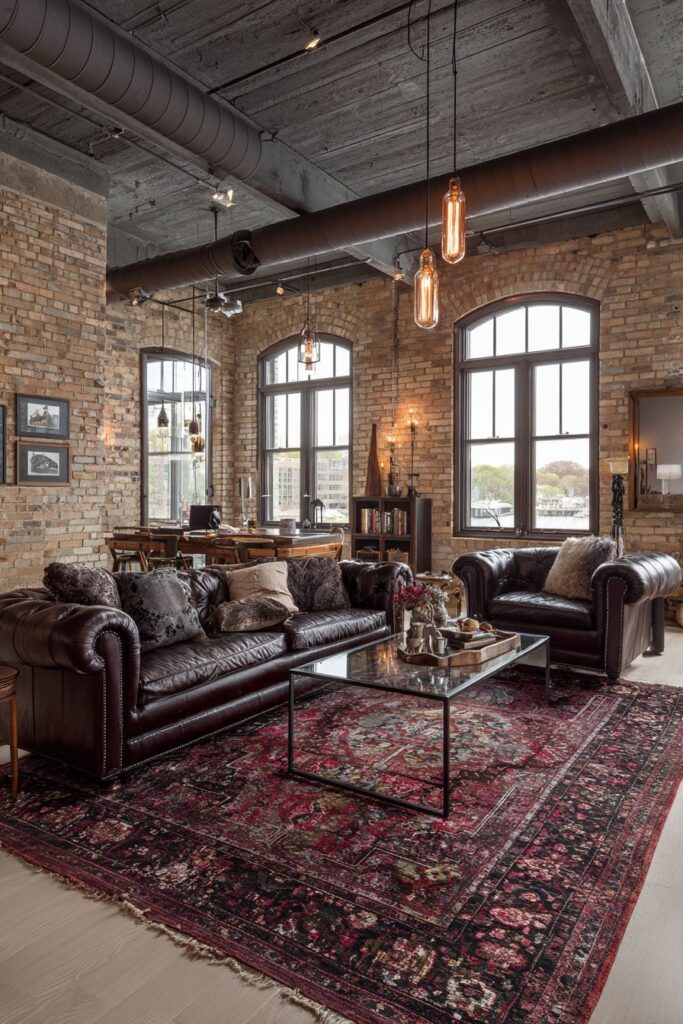
The vintage leather Chesterfield sofa pairs beautifully with the modern glass coffee table, creating eclectic sophistication through the combination of traditional and contemporary elements. The Chesterfield’s rich leather upholstery and classic button-tufted design provide timeless elegance while the glass table maintains visual lightness that prevents the space from feeling heavy or overwhelming.

Edison bulb fixtures provide warm ambient lighting while staying true to the industrial aesthetic through their exposed bulb design and simple fixtures. This type of lighting choice shows how industrial elements can provide both functionality and style while contributing to the overall sophisticated atmosphere of the space.
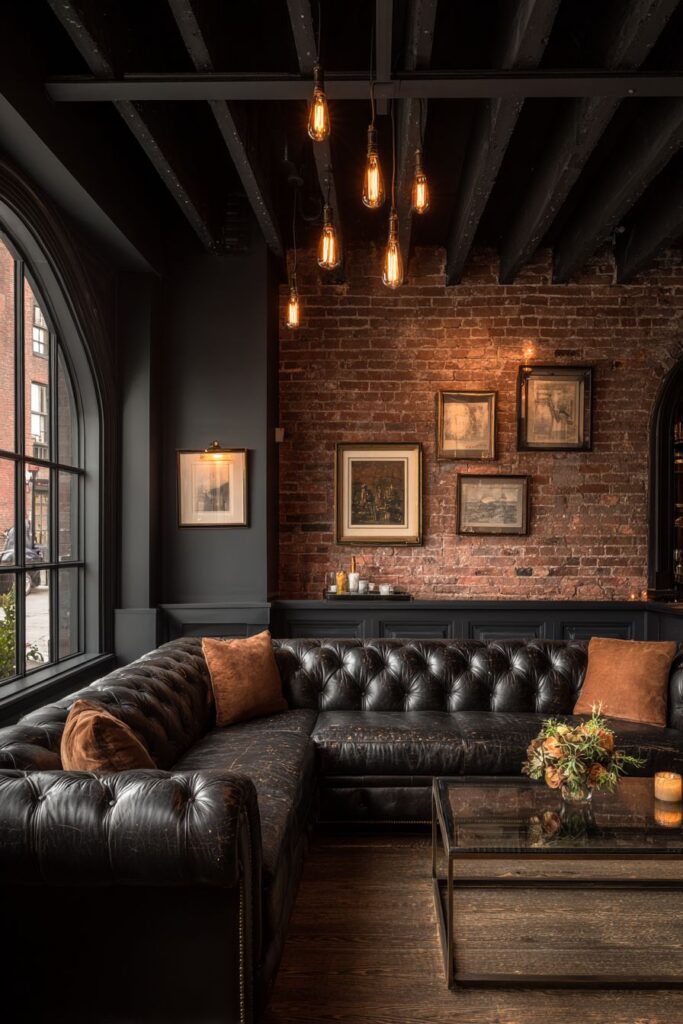
Large factory windows provide abundant natural light while their industrial proportions and minimal frames maintain the authentic character of the space. The quality of light in this urban loft setting creates dramatic shadows and highlights that emphasize the contrast between raw and refined materials throughout the day.
Key Design Tips for Industrial Chic Elegance:
- Balance raw industrial materials with refined furniture and accessories
- Choose lighting fixtures that complement the industrial aesthetic while providing sophisticated ambiance
- Incorporate vintage or antique furniture pieces to add character and authenticity
- Use transparent elements like glass to maintain visual lightness in spaces with heavy materials
- Maximize natural light to highlight the contrast between different materials and textures
17. Global-Inspired Cultural Sophistication
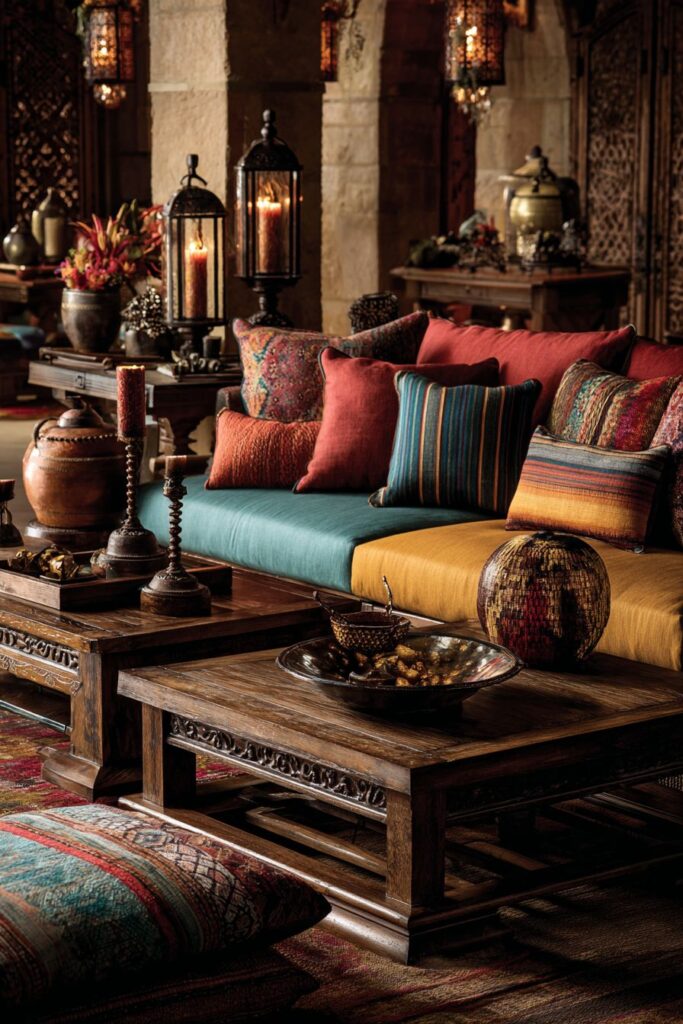
This living room celebrates global artistry and cultural traditions through a carefully curated collection of handwoven textiles and carved wooden furniture from various cultural traditions. The furniture selection demonstrates appreciation for craftsmanship from around the world while maintaining visual cohesion through thoughtful color coordination and scale considerations. Each piece tells a story while contributing to the overall sophisticated composition.
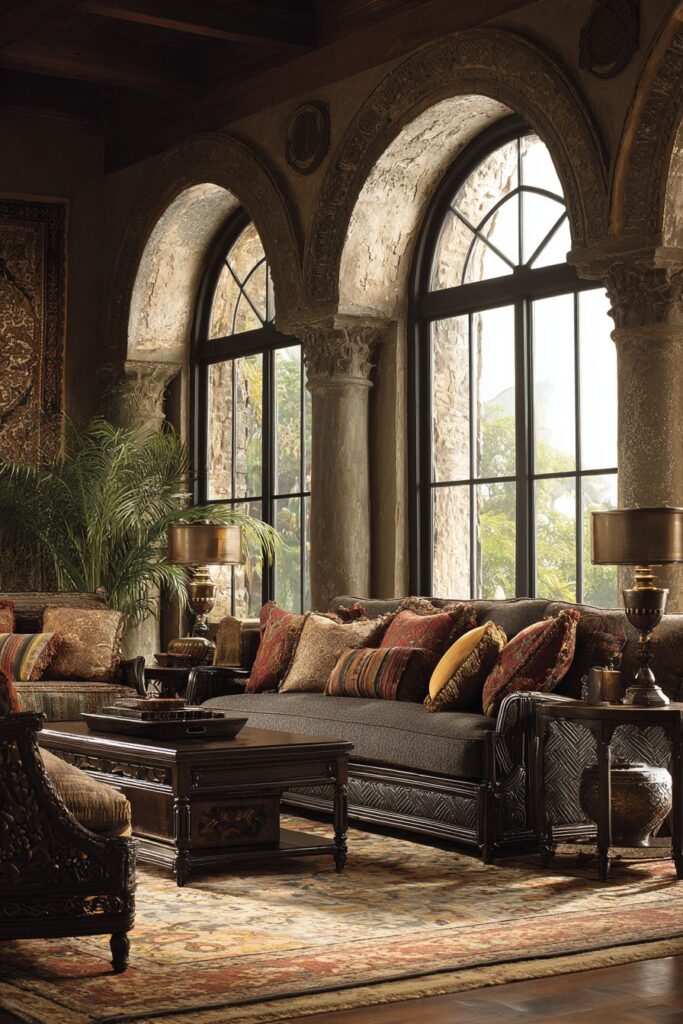
Rich tapestries and colorful throw pillows create layered visual interest while maintaining a cohesive color story that prevents the global elements from feeling chaotic or overwhelming. This approach to textile layering shows how multiple patterns and colors can work together when unified by careful attention to scale, color relationships, and overall composition.

Antique brass accessories add metallic warmth while their patinated surfaces speak to age and authenticity. These brass elements provide sophisticated shine and reflection while their traditional forms connect to the global artisan traditions represented throughout the space.

The success of this global approach lies in the careful curation and thoughtful arrangement of elements from different cultural traditions. Rather than feeling like a collection of souvenirs, this space demonstrates sophisticated appreciation for global artistry while maintaining the refined elegance that makes it suitable for contemporary living.
Key Design Tips for Global Sophistication:
- Choose authentic pieces from various cultures while maintaining overall color and scale harmony
- Layer patterns and textures carefully to create visual interest without overwhelming the space
- Use metallic elements to add warmth and connection between different cultural pieces
- Create cohesive color stories that unify diverse elements from different traditions
- Display cultural pieces with the respect and prominence they deserve as works of art
18. Maximalist Confidence with Pattern Mastery
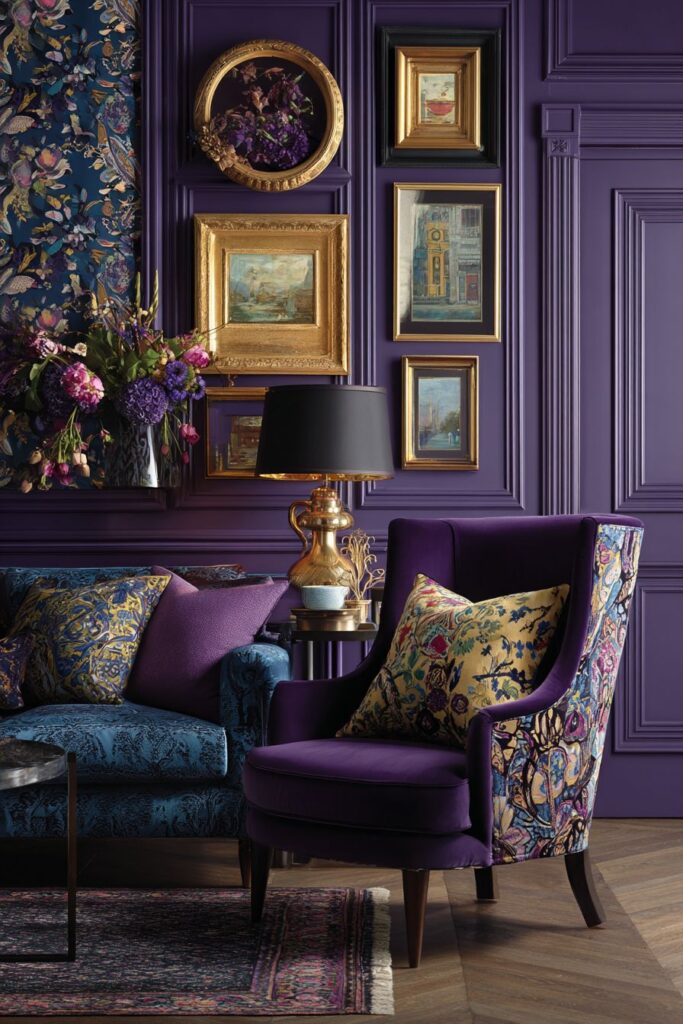
This living room demonstrates how maximalist design can achieve sophisticated elegance through confident use of rich patterns and bold colors arranged in carefully considered composition. The velvet sofa in deep purple serves as an anchor for the bold color scheme while its luxurious texture provides tactile richness that invites both sitting and admiring. The deep purple color creates sophisticated drama while working harmoniously with other rich colors throughout the space.
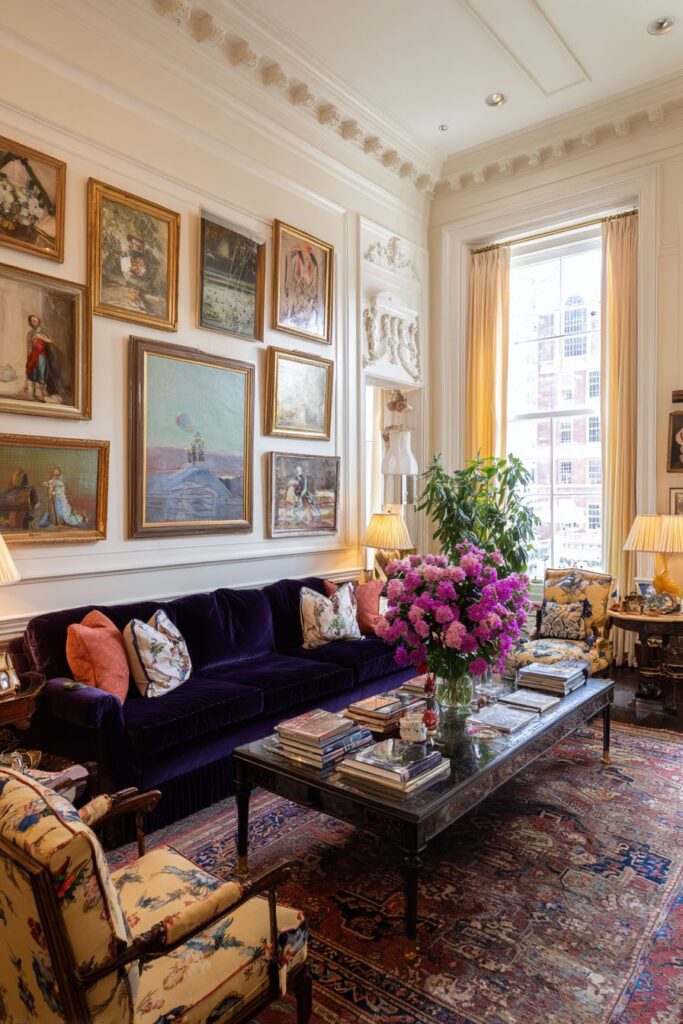
Patterned chairs and layered Persian rugs add visual complexity while their careful coordination prevents the space from feeling chaotic or overwhelming. This approach to pattern mixing requires confident design choices and careful attention to scale relationships, color coordination, and visual balance. The Persian rugs provide cultural richness and artistic heritage while serving as sophisticated foundations for the furniture arrangements.

The gallery wall features ornate frames and varied artwork that creates a curated collection feeling while maintaining sophisticated visual organization. This type of art display shows how multiple pieces can work together when unified by consistent framing choices and thoughtful arrangement that considers both individual pieces and overall composition.

The confidence required for successful maximalist design comes from understanding how colors, patterns, and textures relate to each other, and having the design skill to create harmony within complexity.
Key Design Tips for Maximalist Elegance:
- Choose a unifying color palette that allows different patterns to work together harmoniously
- Use consistent framing and display techniques to create cohesion among multiple art pieces
- Layer textures and patterns at different scales to create visual interest without chaos
- Maintain some neutral elements to provide visual rest areas within busy compositions
- Display confidence in color and pattern choices while maintaining sophisticated restraint in overall composition
19. Sustainable Luxury with Environmental Consciousness
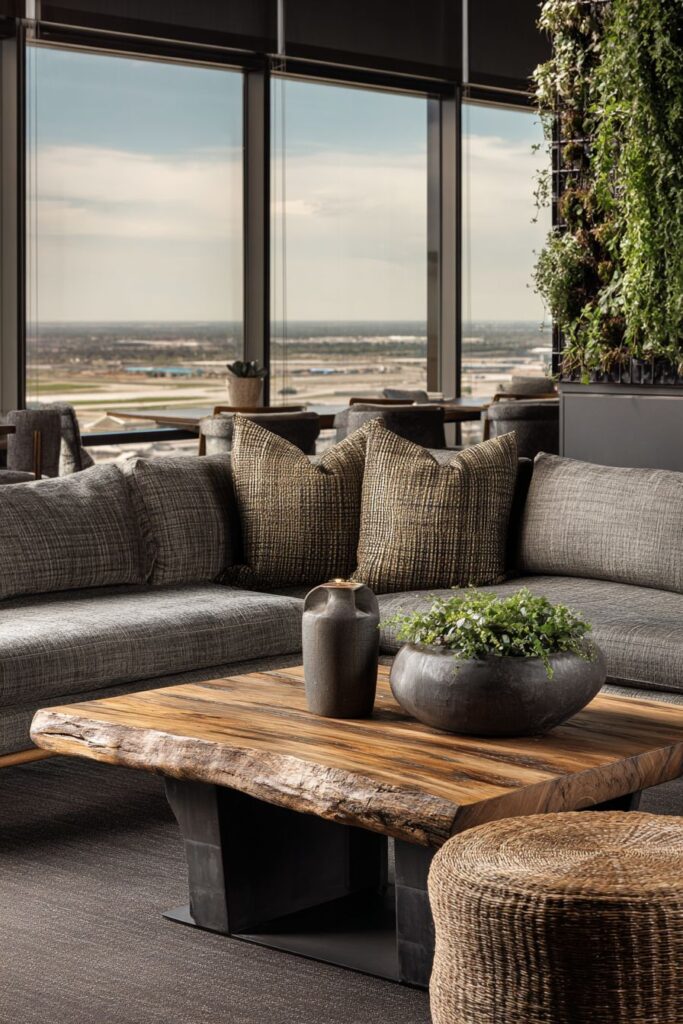
This living room demonstrates how environmental responsibility can align with sophisticated luxury through furniture crafted from reclaimed materials and organic fabrics. The live-edge walnut coffee table celebrates natural beauty while using reclaimed wood that tells stories of previous use and environmental stewardship. The live edge maintains the tree’s original contour, creating a piece that feels both sophisticated and connected to natural processes.
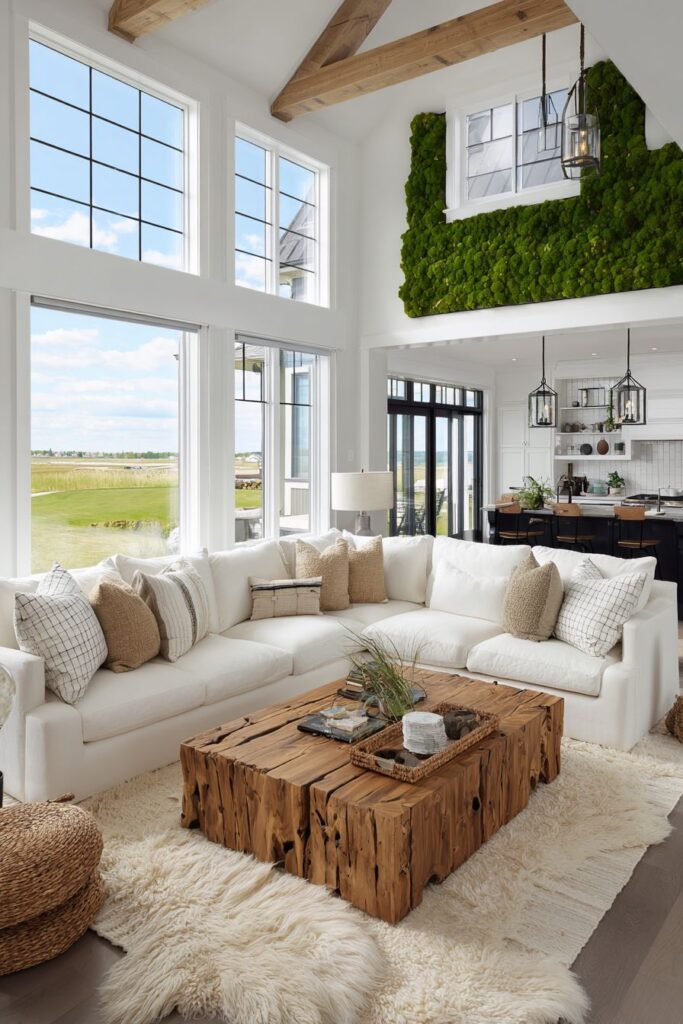
Hemp-linen upholstery demonstrates sustainable fabric choices while providing natural texture and durability that improves with age and use. These organic fabrics offer sophisticated alternatives to conventional upholstery while their natural fibers provide breathability and comfort that synthetic materials cannot match. The neutral colors of these natural fabrics work harmoniously with other sustainable materials throughout the space.

The living wall with integrated planters adds natural air purification while creating a sophisticated green element that connects the interior space to natural processes. This type of installation demonstrates how environmental consciousness can enhance rather than compromise sophisticated design, providing both aesthetic beauty and functional benefits for indoor air quality and human wellbeing.
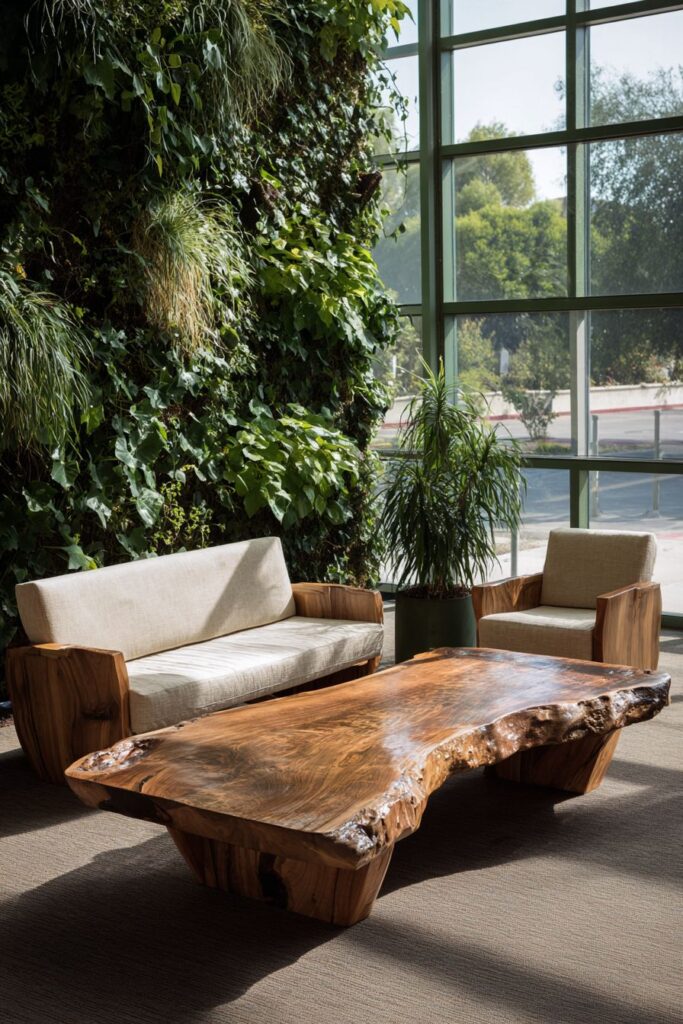
Natural lighting through large windows emphasizes the connection to nature while reducing energy consumption and creating the bright, healthy environments that make sustainable spaces so appealing for daily living.
Key Design Tips for Sustainable Sophistication:
- Choose reclaimed and recycled materials that offer both environmental benefits and unique character
- Use organic fabrics and natural fibers for upholstery and textiles
- Incorporate living plants and green walls for natural air purification and biophilic benefits
- Maximize natural light to reduce energy consumption while creating healthy interior environments
- Select furniture and accessories that will last for generations rather than requiring frequent replacement
20. Smart Home Integration with Invisible Technology

This living room represents the future of elegant living through smart home integration featuring hidden technology and wireless charging surfaces built seamlessly into furniture. The technology integration maintains sophisticated aesthetics while providing modern convenience and functionality that enhances rather than disrupts the elegant atmosphere. Motorized window treatments and invisible speakers provide comfort and entertainment while remaining completely hidden from view.
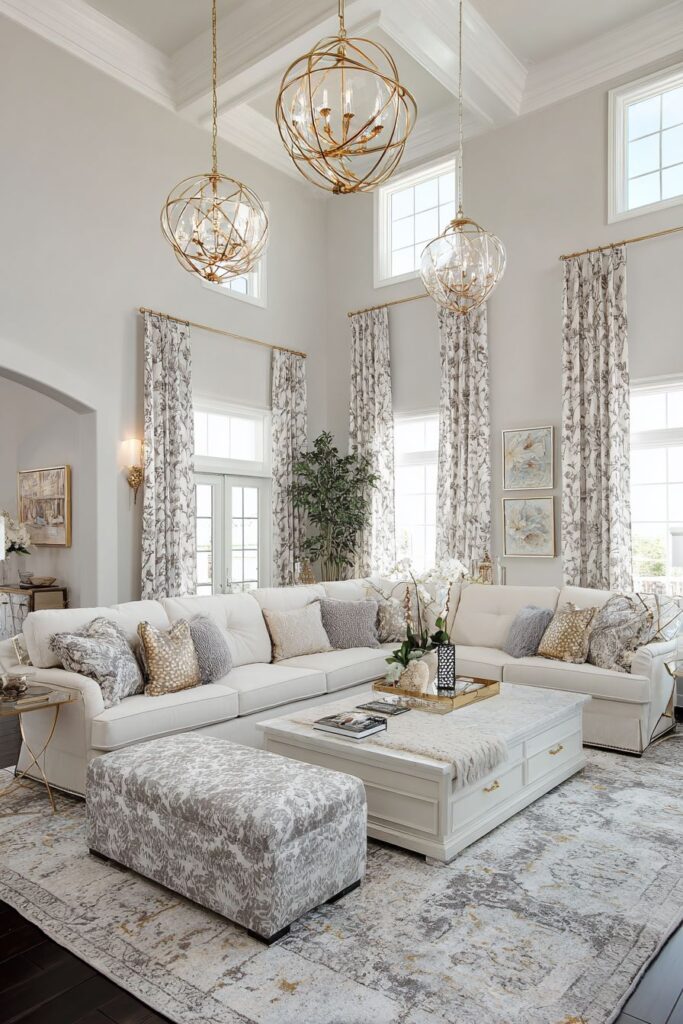
The furniture design incorporates wireless charging surfaces and hidden technology connections that eliminate the visual clutter of cords and devices while maintaining the clean aesthetic that defines contemporary elegance. This approach to technology integration shows how modern convenience can be incorporated into sophisticated spaces without compromising design principles or visual appeal.
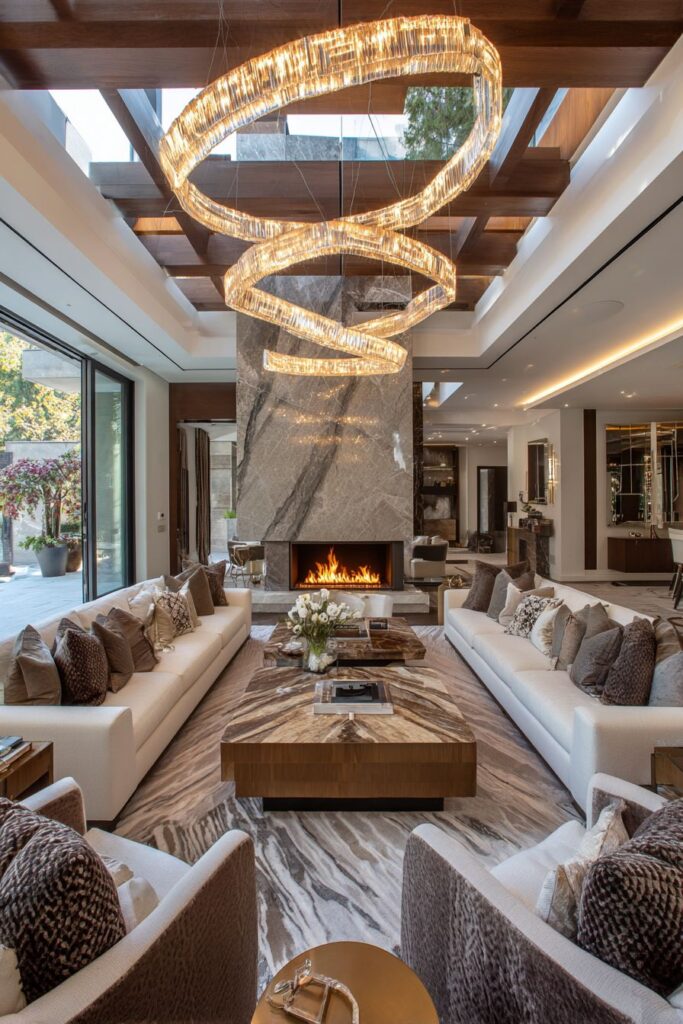
The neutral palette with metallic accents creates a timeless backdrop for advancing technology while ensuring that the space remains elegant even as technology evolves. This type of color scheme provides sophisticated beauty while allowing for future technology updates without requiring complete design changes.
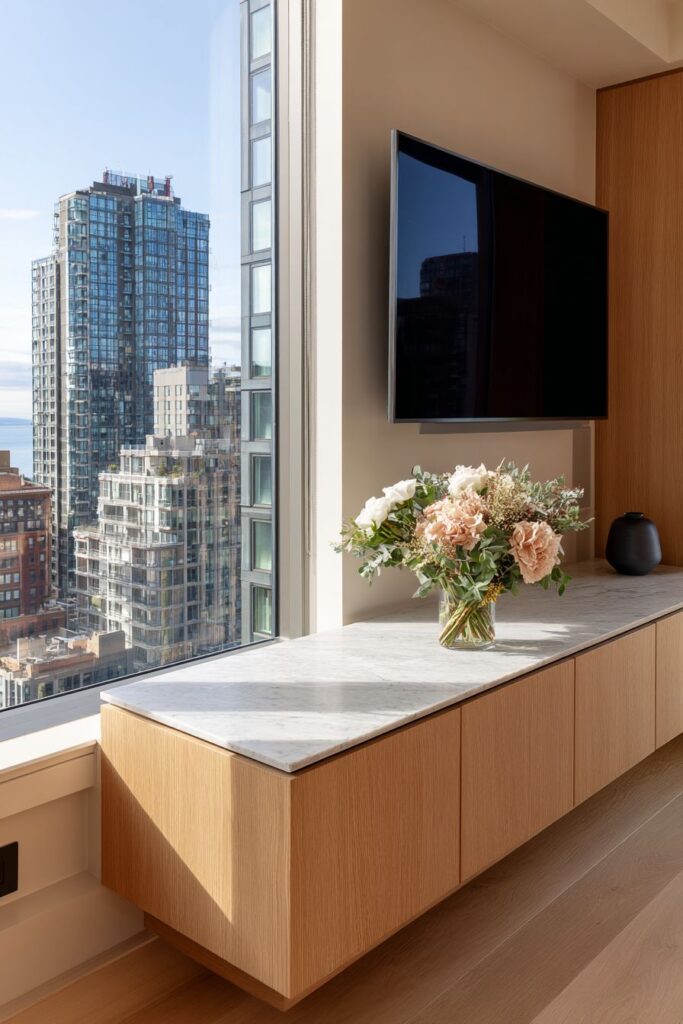
The seamless blend of luxury and innovation demonstrates how contemporary elegance must consider both current lifestyle needs and future technology developments, creating spaces that remain beautiful and functional as technology continues to advance.
Key Design Tips for Smart Home Elegance:
- Plan technology integration during initial design phases to ensure seamless installation
- Choose furniture with built-in technology features that eliminate visible cords and devices
- Use neutral color palettes that won’t conflict with future technology updates
- Prioritize hidden installation of smart home features to maintain clean aesthetic lines
- Select technology solutions that enhance comfort and convenience without compromising sophisticated design
Why These Elegant Living Room Designs Represent the Best in Contemporary Interior Design
These twenty elegant living room designs represent the pinnacle of contemporary interior design because they successfully address the complex challenges of modern living while maintaining timeless aesthetic appeal. Each design demonstrates mastery of fundamental design principles including balance, proportion, harmony, and rhythm, while incorporating innovative solutions for contemporary lifestyle needs. The sophisticated use of color theory, material science, and spatial composition in these designs creates environments that are both functionally superior and visually stunning.
The neutral sophistication approach exemplified in the Chesterfield design showcases how classic furniture forms can be updated with contemporary materials and finishes to create spaces that feel both familiar and fresh. This design philosophy resonates with homeowners who appreciate traditional craftsmanship while requiring modern comfort and functionality. The careful attention to lighting design and material quality ensures these spaces age gracefully while maintaining their sophisticated appeal for decades.
Monochromatic elegance demonstrates the power of restrained color palettes to create dramatic visual impact through texture and form rather than bold color contrasts. This approach appeals to sophisticated homeowners who understand that true luxury often whispers rather than shouts, creating environments that feel calming and refined while providing the perfect backdrop for both daily living and formal entertaining.
The French provincial charm and English country elegance designs prove that traditional styles remain relevant when executed with authentic materials and proper proportions. These approaches satisfy the growing desire for spaces with character and history, providing alternatives to the stark minimalism that has dominated contemporary design. The layered textiles and mixed patterns in these designs create visual richness that feels collected over time rather than purchased all at once.
Symmetrical formal sophistication addresses the need for spaces that can accommodate both intimate family gatherings and larger social events. The careful furniture arrangement and lighting design in these spaces create multiple conversation areas while maintaining visual cohesion and elegant flow. This type of design appeals to homeowners who entertain frequently and need spaces that can adapt to different group sizes and activities.
The contemporary classic and mid-century modern approaches demonstrate how historical design movements can be reinterpreted for contemporary living without losing their essential character. These designs incorporate modern technology and lifestyle requirements while maintaining the clean lines and functional beauty that made these styles iconic. The careful material selection and attention to proportion ensure these spaces feel authentic rather than derivative.
Cultural sophistication designs featuring grand pianos and global elements appeal to homeowners who view their living spaces as expressions of intellectual curiosity and cultural appreciation. These designs create environments that support artistic pursuits and cultural activities while maintaining the comfort and functionality required for daily family life. The integration of musical instruments and art collections demonstrates how personal interests can be elegantly incorporated into sophisticated interior design.
The Scandinavian refinement and minimalist luxury approaches address the growing desire for simplified living and reduced environmental impact. These designs prove that restraint and careful editing can create more impactful and satisfying environments than accumulation of possessions. The emphasis on natural materials and connection to outdoor environments appeals to homeowners seeking healthier, more sustainable living spaces.
Architectural drama designs with double-height ceilings and grand staircases demonstrate how interior design must respond to and enhance existing architectural features. These spaces require careful scale considerations and sophisticated lighting design to prevent the grand proportions from feeling overwhelming or impersonal. The success of these designs lies in creating intimate seating areas within larger architectural contexts.
Coastal sophistication and Mediterranean warmth bring regional design traditions into contemporary contexts while maintaining the relaxed elegance that makes these styles so enduringly popular. These approaches demonstrate how climate and lifestyle considerations can influence design decisions while creating spaces that feel both sophisticated and comfortable for daily living.
The transitional balance approach represents perhaps the most practical solution for contemporary homeowners who appreciate elements from multiple design styles. These designs successfully combine traditional and contemporary elements through careful attention to scale, proportion, and material harmony. The result creates spaces that feel both current and timeless, sophisticated and livable.
Industrial chic designs transform urban architectural elements into sophisticated living environments while maintaining the authentic character that makes these spaces so appealing. The careful balance of raw and refined materials creates visual interest while addressing contemporary desires for spaces with character and history.
Art Deco glamour and maximalist confidence designs appeal to homeowners who view their living spaces as opportunities for bold artistic expression. These approaches require sophisticated understanding of color theory and pattern relationships to achieve elegance within complexity. The success of these designs demonstrates that contemporary elegance can embrace drama and bold choices when executed with proper design skill.
Sustainable luxury represents the future direction of sophisticated interior design, proving that environmental consciousness and refined aesthetics can work together harmoniously. These designs incorporate reclaimed materials, organic fabrics, and energy-efficient systems while maintaining the material quality and visual sophistication that define elegant living spaces.
Smart home integration addresses the challenge of incorporating advancing technology into sophisticated interior design without compromising aesthetic appeal. These designs demonstrate how hidden technology and seamless integration can enhance comfort and convenience while maintaining the clean lines and refined materials that define contemporary elegance.
The superiority of these elegant living room designs lies in their comprehensive approach to contemporary living challenges. Each design addresses multiple requirements, including comfort, functionality, aesthetic appeal, environmental responsibility, and technological integration while maintaining the timeless qualities that ensure long-term satisfaction and relevance.
These designs incorporate advanced lighting techniques that create multiple mood settings throughout the day while highlighting architectural features and material textures. The sophisticated use of both natural and artificial lighting demonstrates an understanding of how light quality affects both visual appeal and human wellbeing in interior spaces.
The material selections in these designs reflect deep understanding of how different textures, finishes, and patterns work together to create sophisticated visual compositions. The careful coordination of hard and soft materials, matte and glossy finishes, and smooth and textured surfaces creates layered environments that engage multiple senses while maintaining visual harmony.
Color theory applications throughout these designs demonstrate sophisticated understanding of how different color relationships affect mood, spatial perception, and visual comfort. The restrained palettes in minimalist designs create calm sophistication, while the bold color choices in maximalist approaches demonstrate confident artistic expression within refined compositions.
Spatial composition in these designs addresses contemporary open-plan living requirements while creating defined activity areas and visual organization. The furniture arrangements and architectural elements work together to create flow and connection while maintaining intimate seating areas and comfortable conversation groupings.
Conclusion
These twenty elegant living room designs represent the best of contemporary interior design because they successfully balance aesthetic beauty with functional excellence while addressing the complex requirements of modern living. Each design demonstrates mastery of fundamental design principles while incorporating innovative solutions for contemporary lifestyle needs including technology integration, environmental consciousness, and flexible functionality.
The timeless appeal of these designs lies in their sophisticated use of quality materials, careful attention to proportion and scale, and thoughtful consideration of how spaces will be used and enjoyed over time. Whether embracing traditional elegance or contemporary innovation, each design creates environments that enhance daily life while providing lasting satisfaction and visual pleasure.
The diversity of approaches represented in these designs ensures that homeowners with different personalities, lifestyles, and aesthetic preferences can find inspiration for creating their own elegant living spaces. The key to success lies in understanding the fundamental principles that make these designs successful and adapting them thoughtfully to individual circumstances and requirements.
These designs encourage experimentation with different textures, colors, and furniture arrangements while maintaining the sophisticated restraint and attention to quality that defines truly elegant interior design. The result is living spaces that feel both personal and refined, comfortable and sophisticated, current and timeless.
As you consider implementing these elegant living room concepts in your own home, remember that true elegance emerges from thoughtful curation rather than expensive accumulation. Focus on quality over quantity, invest in pieces that will age beautifully, and create spaces that reflect your personal style while embracing the timeless principles of sophisticated design that make these twenty approaches so enduringly appealing and successful.
"As an Amazon Associate, I earn from qualifying purchases."
