
The heart of any home deserves thoughtful consideration, and nowhere is this more evident than in the kitchen—the space where families gather, memories are made, and culinary magic happens. In today’s design landscape, the eclectic kitchen has emerged as a celebration of personality, creativity, and the beautiful art of mixing old with new. This design philosophy embraces the unexpected, combining vintage treasures with modern functionality to create spaces that tell stories and reflect the unique personalities of their inhabitants.
An eclectic kitchen transcends traditional design rules, inviting homeowners to curate their spaces with intention while maintaining an air of comfortable spontaneity. This approach to kitchen design offers the perfect solution for those who refuse to be confined by single design styles, instead choosing to create spaces that evolve organically over time. From mixing cabinet finishes and hardware to combining different lighting styles and displaying collections of varied dishware, the eclectic kitchen celebrates diversity in all its forms.
In this comprehensive guide, we’ll explore twenty distinct eclectic kitchen concepts that showcase the versatility and charm of this beloved design approach. Each space demonstrates how thoughtful curation, balanced proportions, and strategic layering can transform any kitchen into a personalized haven that seamlessly blends functionality with artistic expression. Whether you’re drawn to bold patterns, vintage collections, or unexpected material combinations, these designs will inspire you to embrace the beautiful chaos of eclectic style.
1. Vibrant Vintage and Modern Fusion
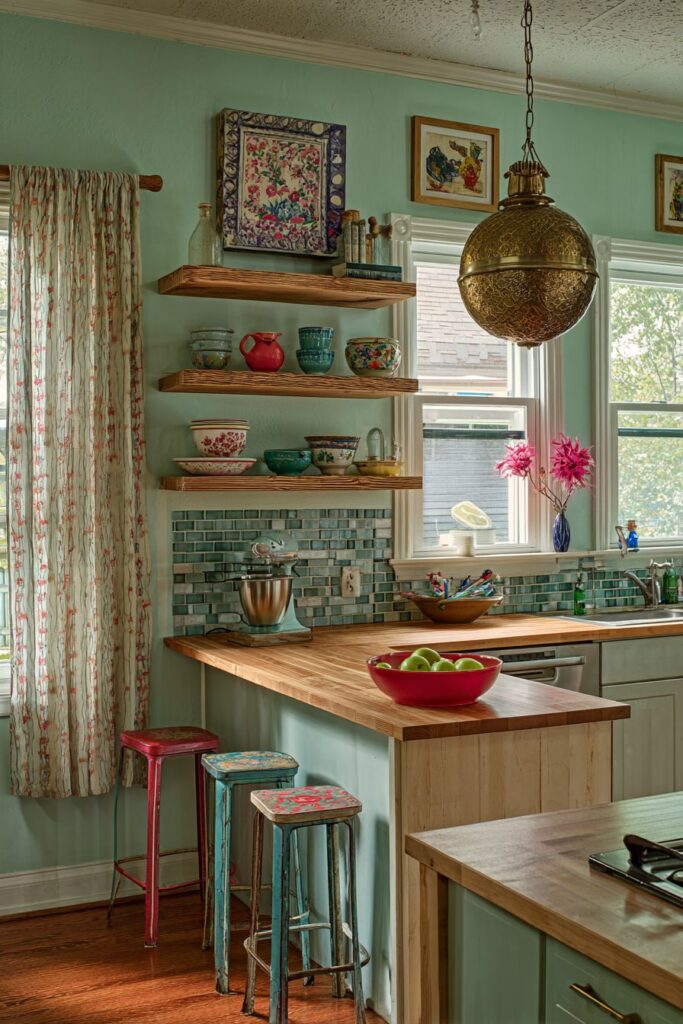
This stunning eclectic kitchen showcases the perfect marriage between vintage charm and modern functionality through its thoughtful use of open shelving and colorful displays. The reclaimed wood floating shelves create visual warmth against the sage green subway tile backsplash, providing the perfect stage for an artfully curated collection of colorful ceramics and mismatched dishware. Each piece tells its own story, from Depression-era milk glass to contemporary artisan pottery, creating a rich tapestry of textures and hues that speaks to the homeowner’s discerning eye for beautiful objects.
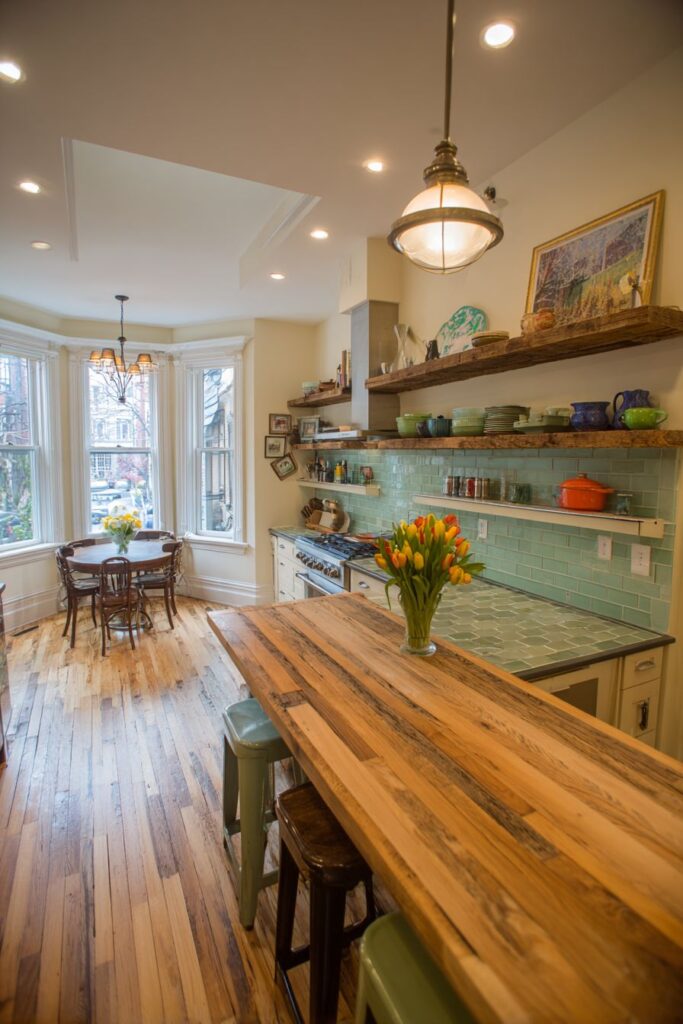
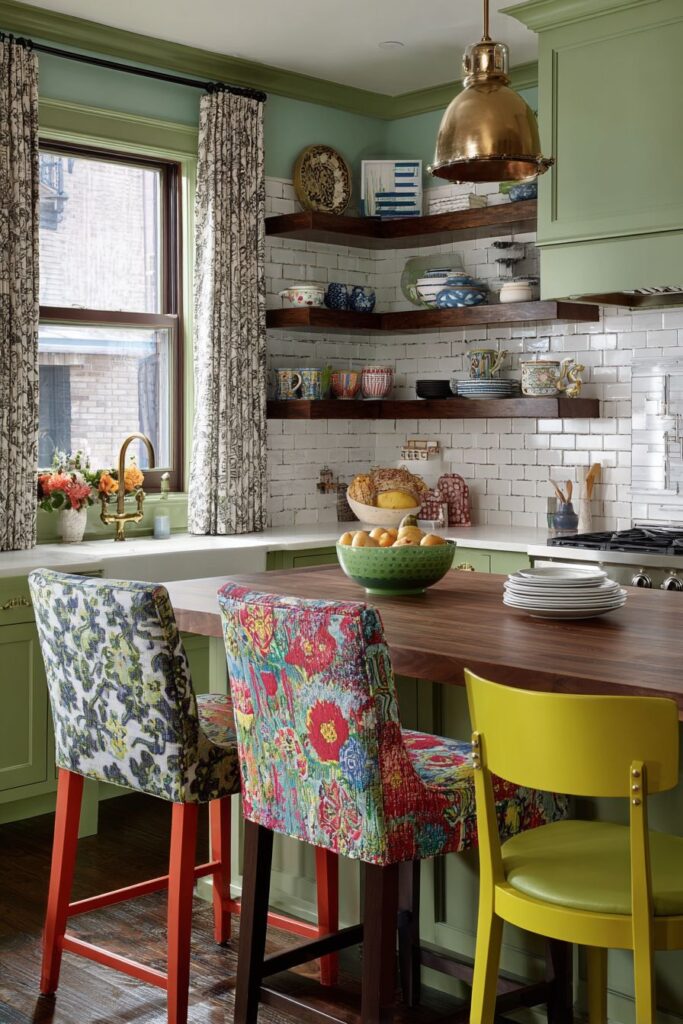
The butcher block island serves as the kitchen’s commanding centerpiece, its natural wood grain providing an organic anchor for the surrounding eclectic elements. Mismatched bar stools in different styles and colors gather around this central hub, each piece carefully selected to contribute to the overall harmony while maintaining its individual character. The vintage brass pendant light hanging overhead casts a warm, golden glow that enhances the natural beauty of the wood while creating intimate lighting for food preparation and casual dining.
Natural light streaming through delicate café curtains adds an additional layer of softness to this dynamic space, highlighting the beautiful interplay between textures and creating gentle shadows that change throughout the day. The curated chaos of the eclectic design becomes most apparent in these moments of natural illumination, where every collected object seems to glow with its own inner light. This approach to lighting—both natural and artificial—demonstrates the importance of considering how different times of day will affect the overall ambiance of an eclectic space.
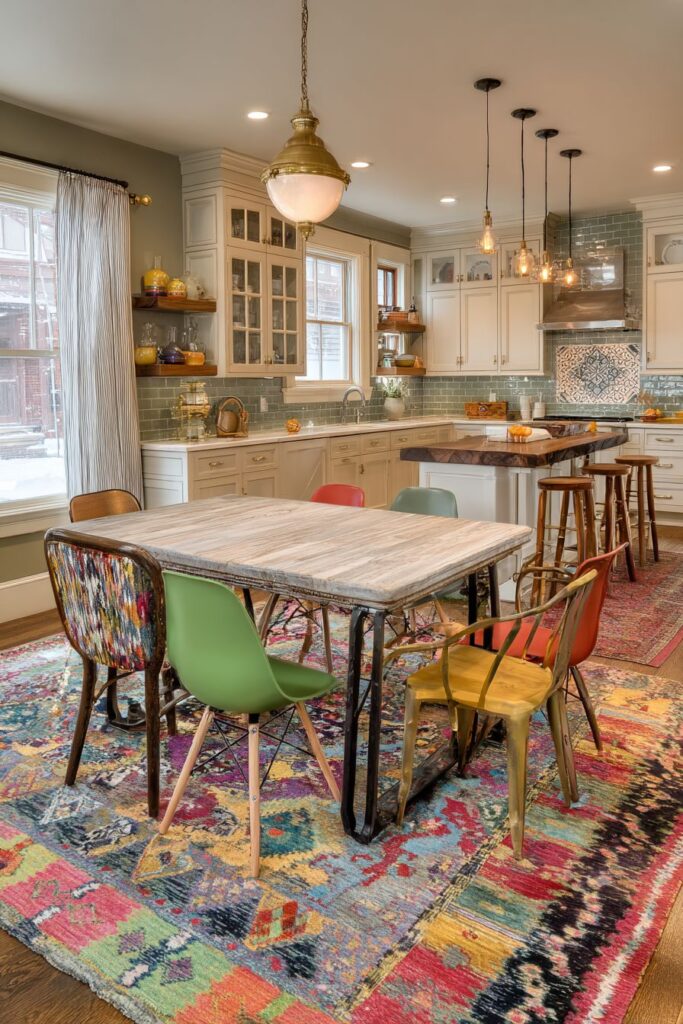
Key Design Tips:
- Layer different textures through wood, ceramic, and metal elements to create visual depth
- Use open shelving as both storage and display opportunity for collected pieces
- Choose one unifying color (like sage green) to tie together disparate elements
- Mix lighting sources at different heights to create ambient and task illumination
- Allow collections to evolve naturally rather than forcing matching sets
2. Bold Geometric Patterns with Warm Wood Elements
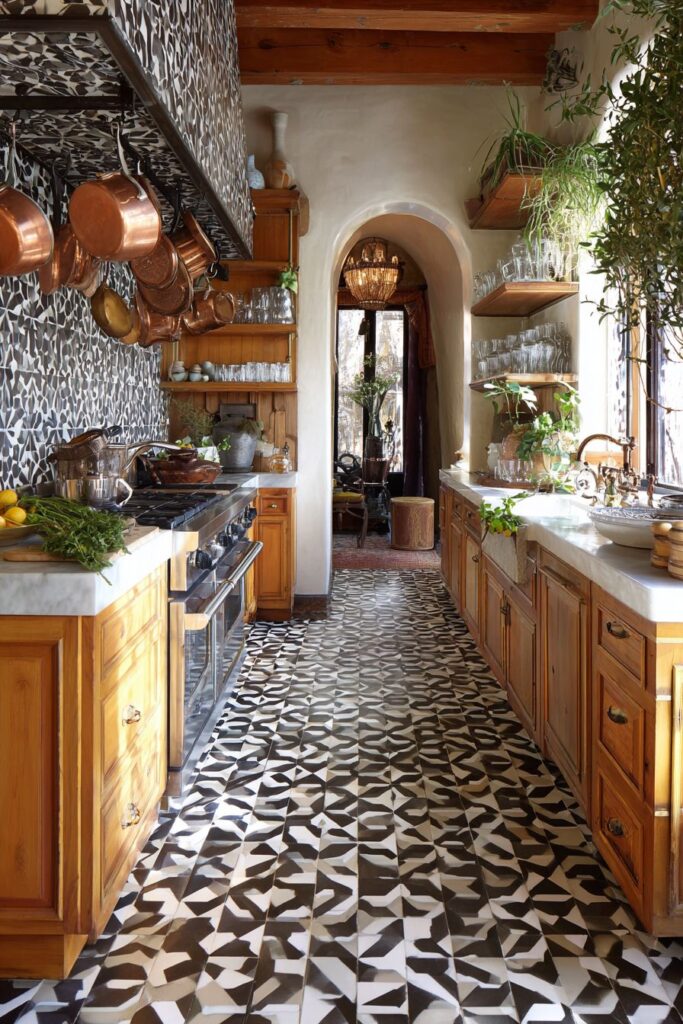
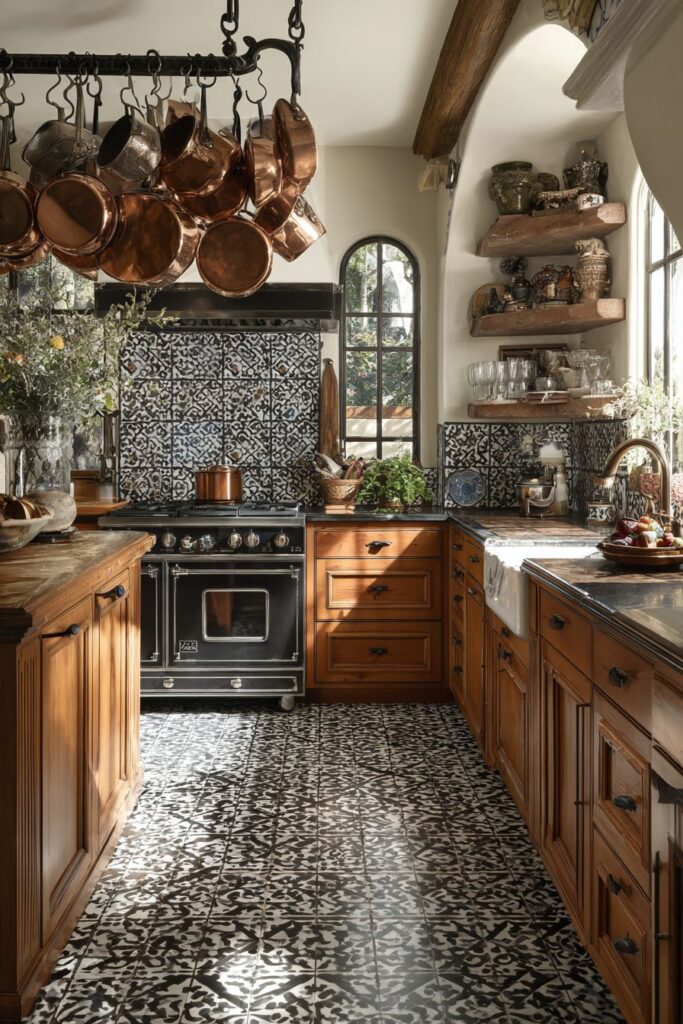
The dramatic black and white geometric tile flooring creates an striking foundation for this eclectic kitchen, demonstrating how bold patterns can serve as artwork beneath your feet. These eye-catching tiles provide the perfect counterpoint to the warm honey oak cabinets, creating a sophisticated dialogue between cool geometric precision and organic wood warmth. The contrast between these elements exemplifies the eclectic principle that opposing forces can create beautiful harmony when balanced with intention and skill.
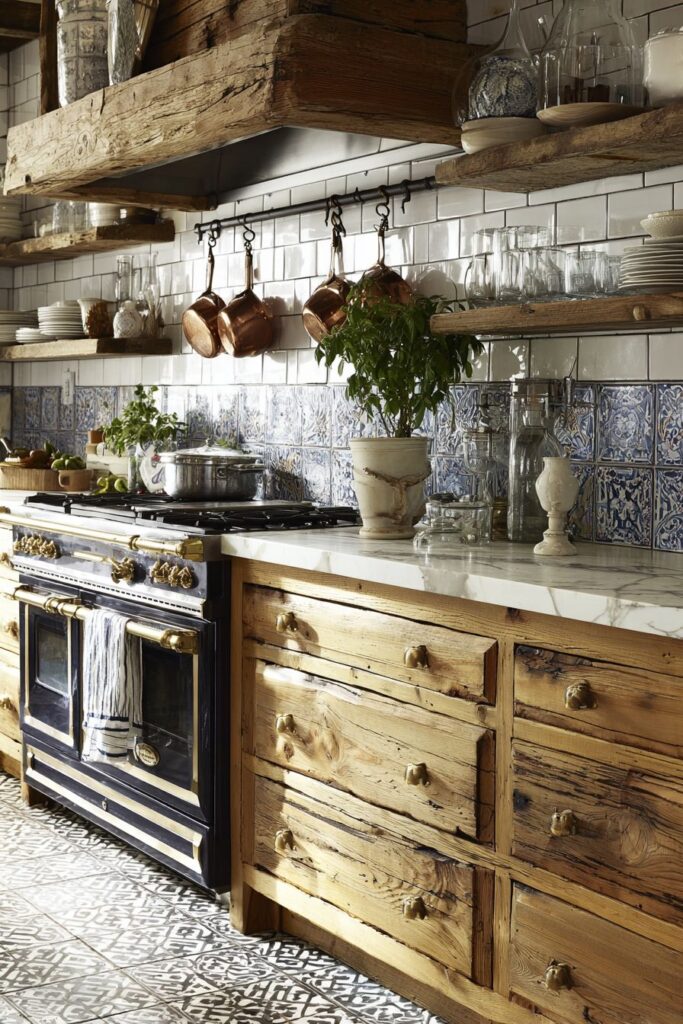
Copper pots and pans suspended from a wrought iron pot rack above the vintage gas range introduce metallic warmth and practical functionality to the space. The copper’s rich patina and the iron’s industrial character add layers of visual interest while serving essential culinary functions. Hand-painted Moroccan tiles in blues and whites form an artistic backsplash that bridges the color gap between the bold floor and neutral walls, introducing Mediterranean flair that feels both exotic and welcoming.
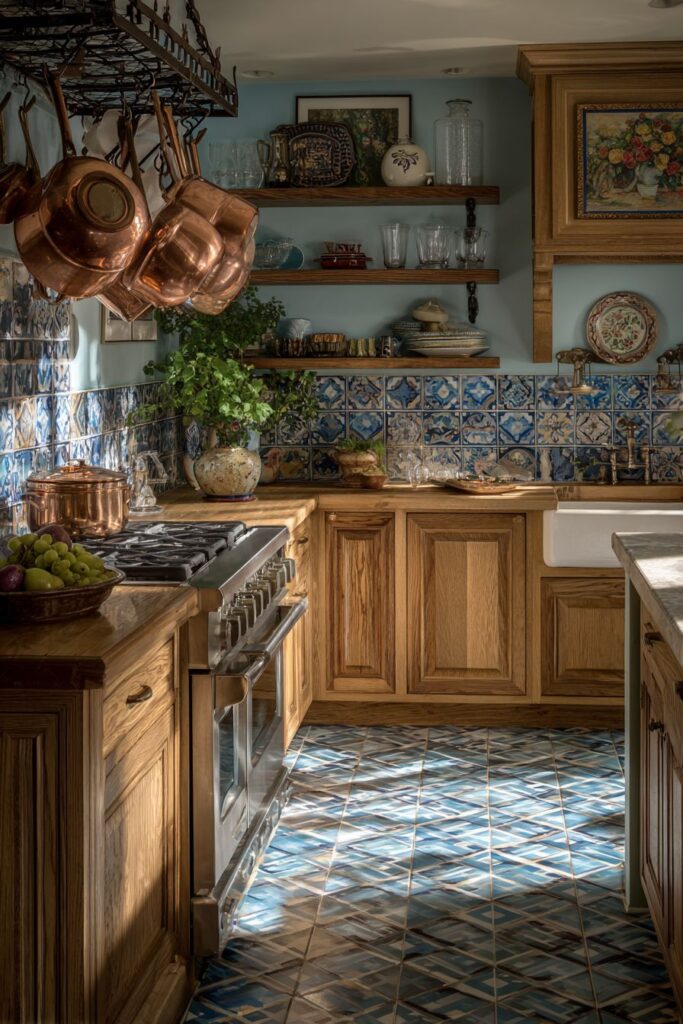
Open shelving throughout the space displays an carefully curated array of vintage glassware alongside thriving plants, creating living artwork that changes with the seasons. The interplay between the transparent quality of vintage glass and the vibrant green of growing plants adds life and movement to the static elements of the design. Soft natural lighting filters through these displays, creating prismatic effects that dance across the walls and highlight the thoughtful arrangement of objects.
Key Design Tips:
- Use bold floor patterns as the foundation for your eclectic color scheme
- Balance hard geometric elements with organic shapes and natural materials
- Incorporate functional storage that doubles as decorative display
- Mix metallics like copper and iron for warmth and industrial character
- Add living elements through plants to soften hard surfaces and add movement
3. Repurposed Antique Centerpiece Island
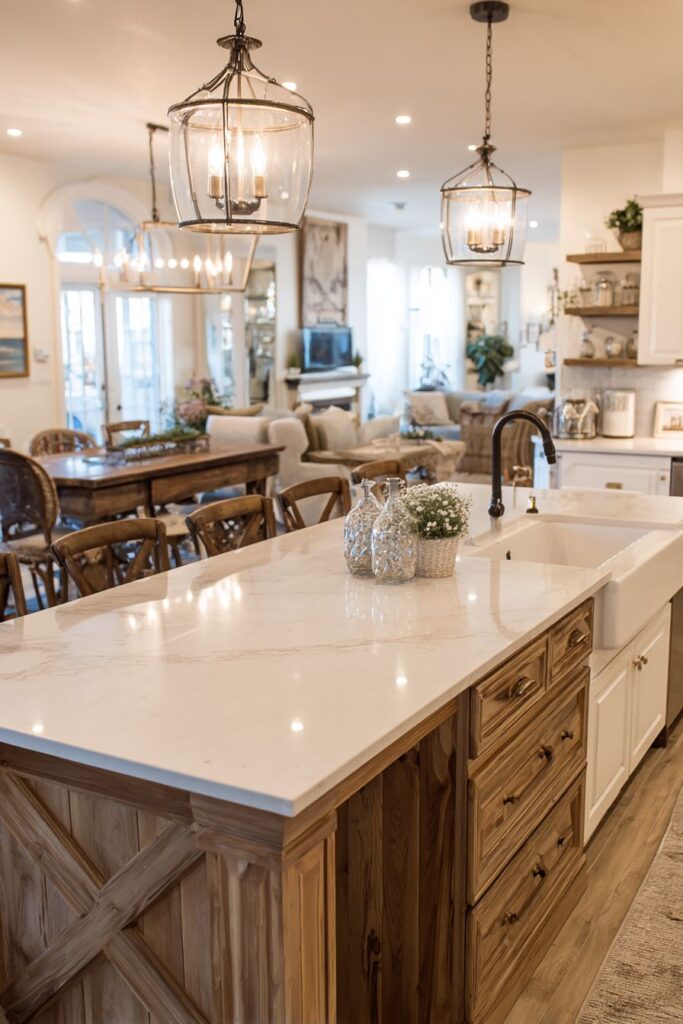
The transformation of an antique dresser into a functional kitchen island represents the ultimate expression of eclectic design philosophy—finding new life for beautiful old pieces while maintaining their inherent character and charm. The marble countertop creates a luxurious working surface that honors the dresser’s elegant proportions while adding contemporary functionality. This marriage of old and new demonstrates how eclectic design can preserve history while adapting to modern needs, creating pieces that are both nostalgic and thoroughly practical.
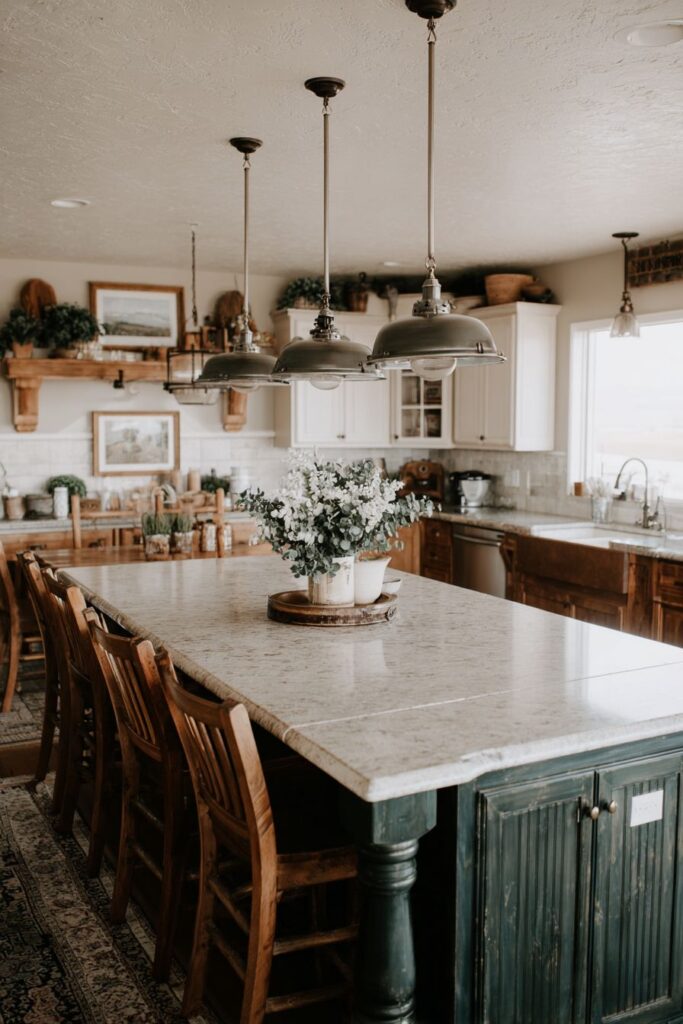
Surrounding cabinetry showcases the eclectic principle of mixing finishes, with painted cabinets in soft colors complementing natural wood elements throughout the space. This approach creates visual interest without overwhelming the senses, allowing each element to shine while contributing to the overall cohesive design. The varying heights of vintage industrial lighting fixtures add dramatic vertical interest, creating layers of illumination that highlight different aspects of the space throughout the day.
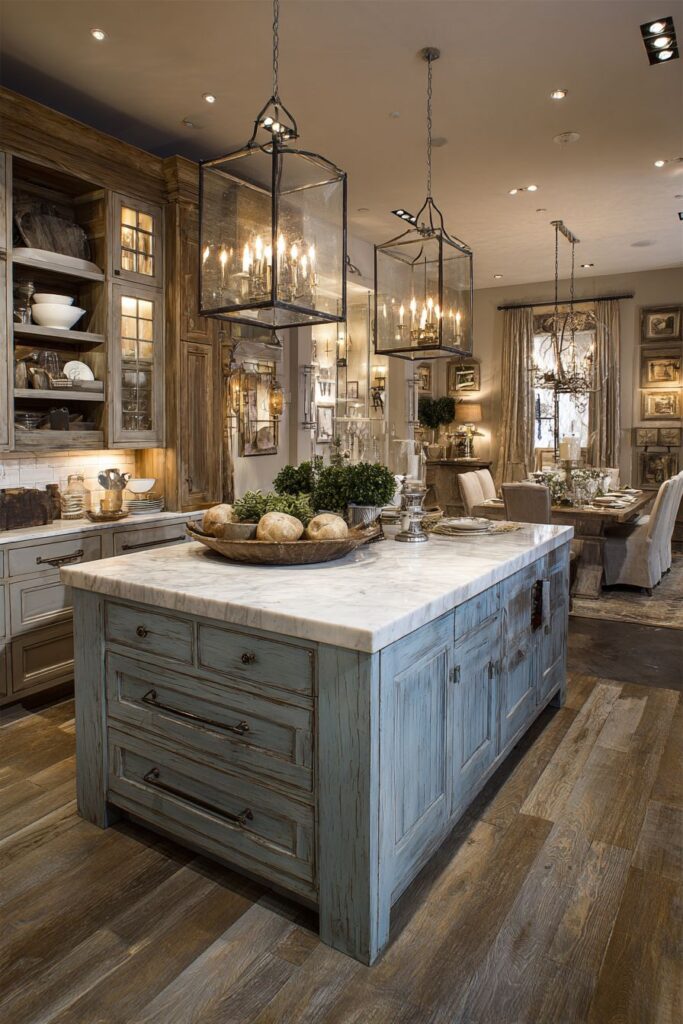
Mismatched dining chairs gathered around a farmhouse table continue the theme of curated collecting, each piece selected for its unique character while maintaining compatibility with the overall aesthetic. The walls serve as a gallery for vintage artwork interspersed with open shelving, creating a lived-in museum quality that invites exploration and discovery. This approach to wall decoration demonstrates how eclectic spaces can serve multiple functions—practical storage, artistic display, and personal expression all woven together seamlessly.
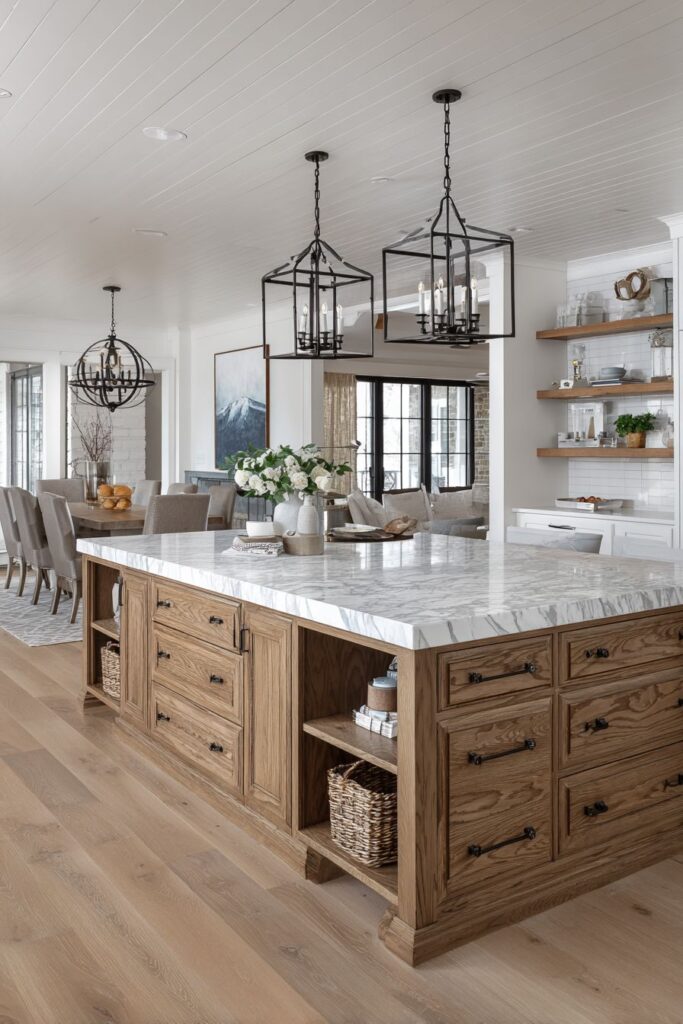
Key Design Tips:
- Look for antique furniture pieces that can be repurposed with new countertops or hardware
- Mix cabinet finishes strategically to create zones while maintaining visual flow
- Vary lighting heights to create layers of illumination and visual interest
- Use walls as gallery space to display art, objects, and functional storage
- Choose dining furniture based on character rather than matching sets
4. Artistic Patchwork Backsplash Design
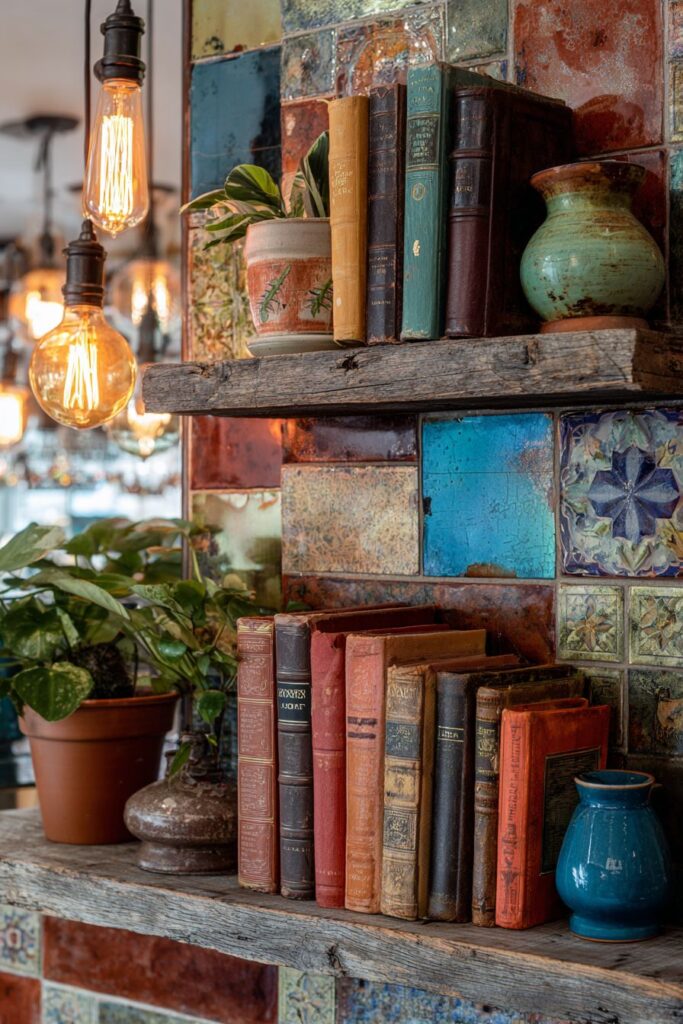
The stunning backsplash in this eclectic kitchen serves as a masterpiece of mixed media artistry, combining vintage mirror tiles, reclaimed brick, and colorful ceramic accents in an inspired patchwork pattern. This approach transforms a functional necessity into a work of art, demonstrating how eclectic design can elevate everyday elements into something extraordinary. The varying textures and reflective qualities of different materials create a dynamic surface that changes throughout the day as light conditions shift, ensuring that the space never feels static or predictable.
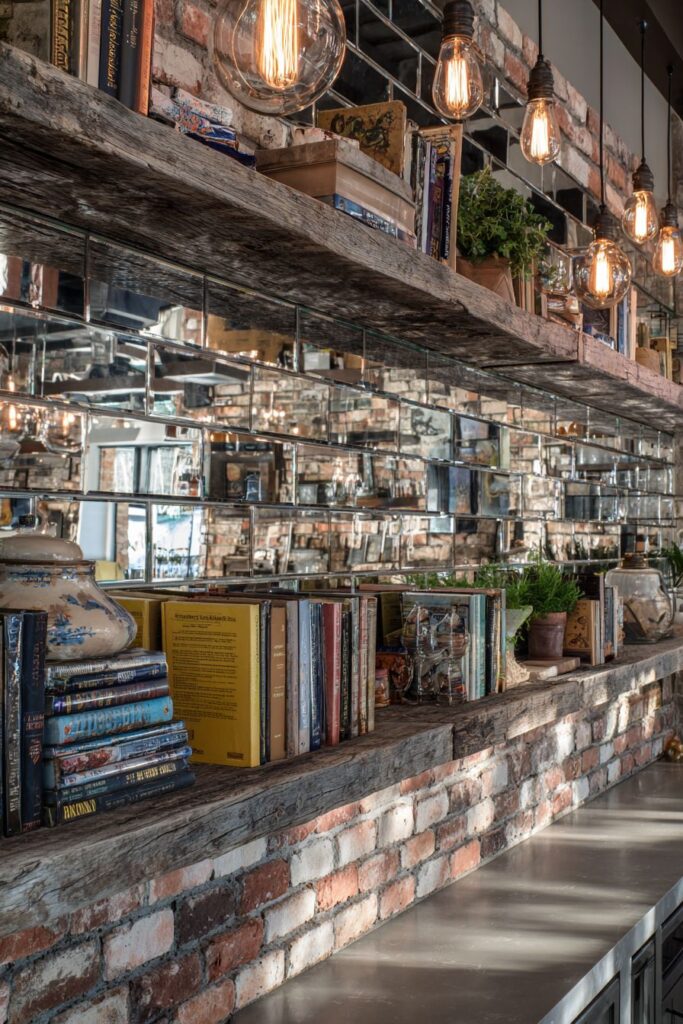
Reclaimed barn wood floating shelves provide the perfect complement to this textural extravaganza, their weathered surfaces and natural grain creating a calming counterpoint to the energetic backsplash. These shelves display a thoughtfully curated collection of vintage cookbooks, thriving plants, and artisanal pottery, each object chosen for its contribution to the overall story of the space. The combination of practical storage and beautiful display demonstrates the eclectic principle that function and form should always work together in harmony.
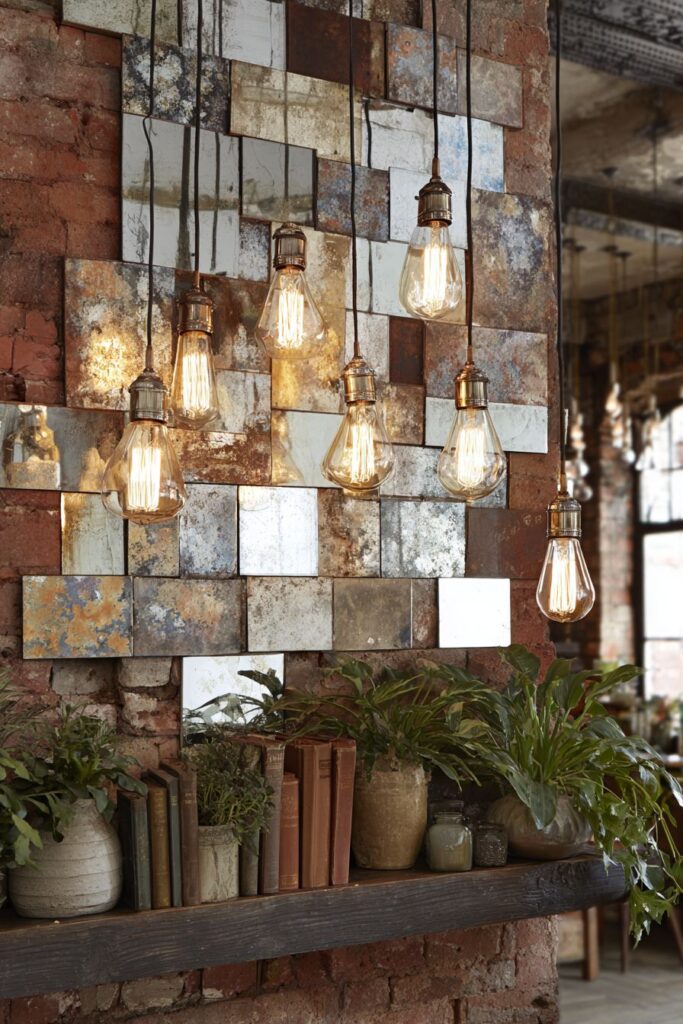
Edison bulb pendant lights suspended at varying heights provide warm ambient lighting that highlights the incredible textural diversity of the backsplash while creating intimate pools of illumination for specific tasks. The warm, golden quality of Edison bulb lighting enhances the natural patina of aged materials while creating a cozy atmosphere that invites lingering and conversation. This lighting choice exemplifies how vintage-inspired elements can provide both practical function and aesthetic appeal in eclectic spaces.
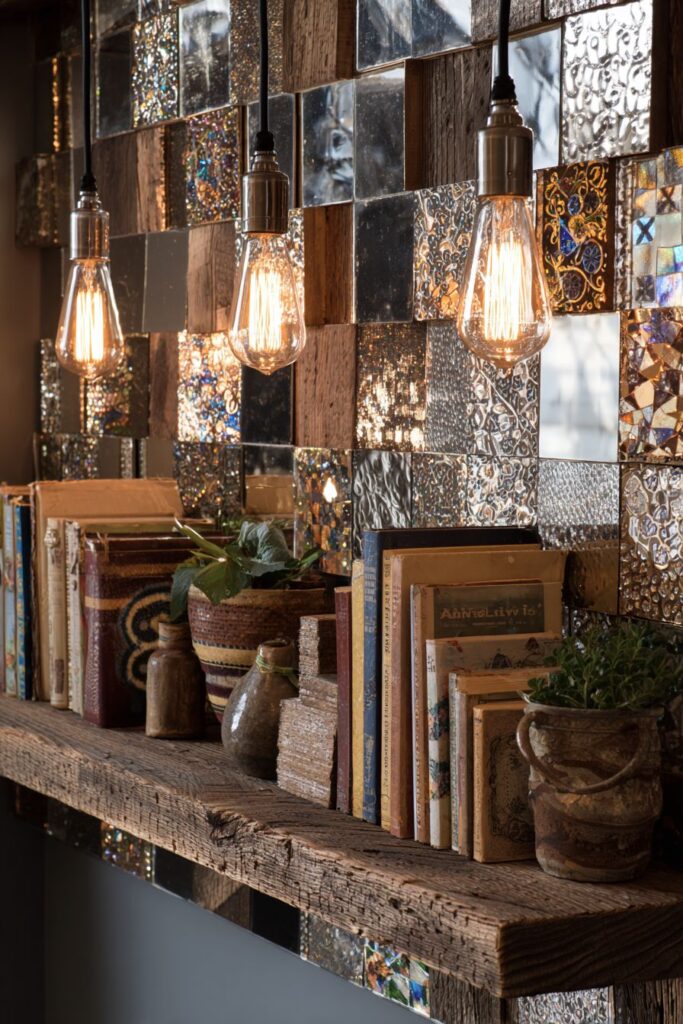
Key Design Tips:
- Create visual interest by mixing materials with different textures and reflective qualities
- Use floating shelves made from reclaimed materials to add warmth and character
- Display collections that combine practical items with decorative objects
- Choose Edison bulb lighting for warm, vintage-inspired ambiance
- Allow each material to maintain its unique character while contributing to the whole
5. Botanical Wallpaper Accent with Mixed Materials
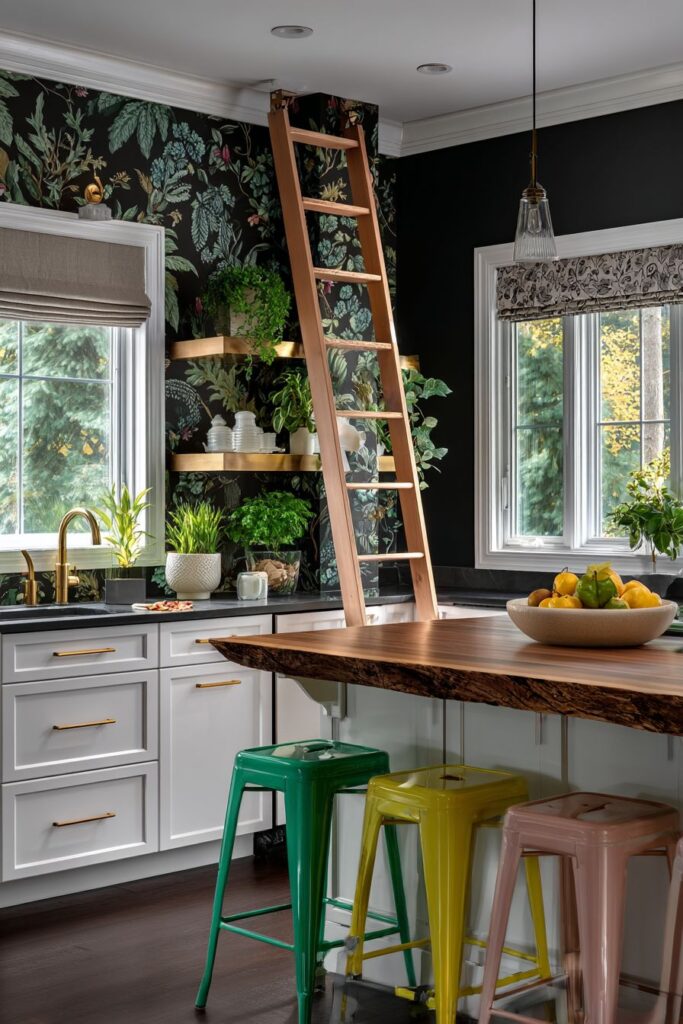
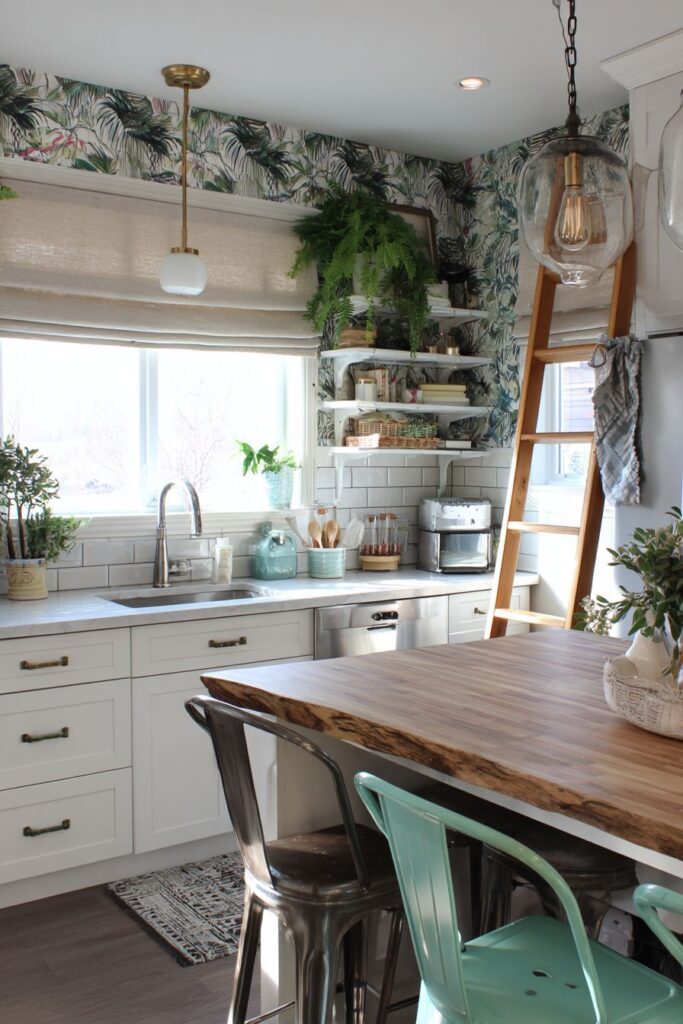
Bold botanical wallpaper on a single accent wall creates a dramatic focal point that demonstrates how pattern can be used effectively in eclectic design without overwhelming the space. The lush, oversized botanical prints bring nature indoors while creating a sophisticated backdrop for the clean lines of white Shaker cabinets. This strategic use of pattern shows how eclectic design can incorporate bold elements while maintaining balance and preventing visual chaos. The brass hardware throughout provides warm metallic accents that tie together all the disparate elements in the space.
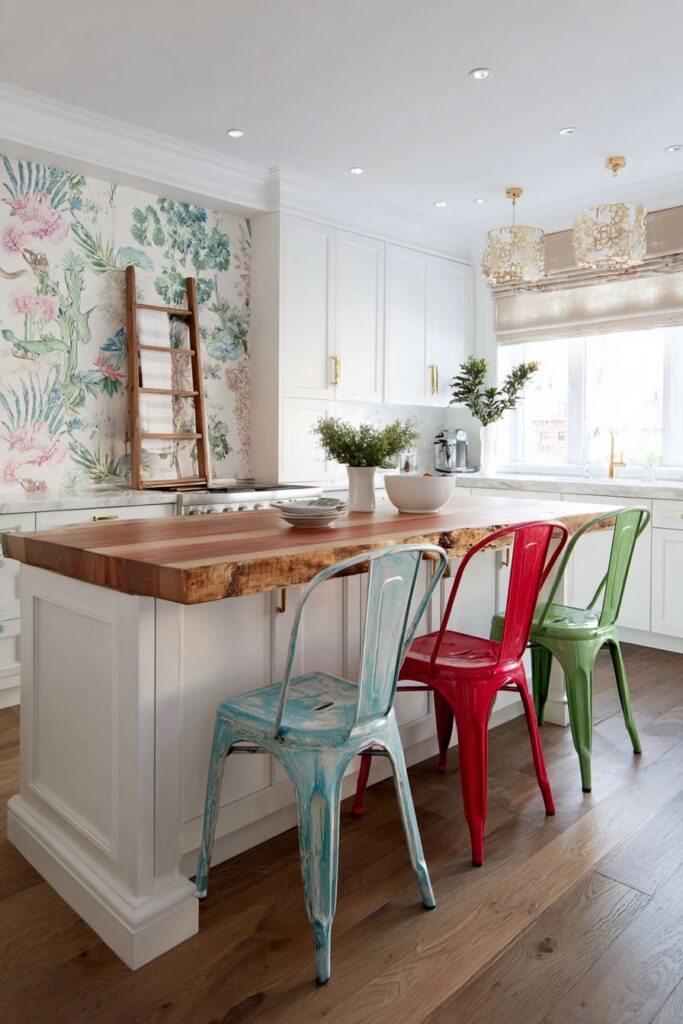
A vintage wooden ladder serves as both functional storage and sculptural element, providing a creative solution for displaying dish towels and small plants while adding vertical interest to the design. This repurposing of everyday objects exemplifies the eclectic approach to finding beauty and function in unexpected places. The ladder’s weathered patina and simple construction provide textural contrast to the more refined elements in the space, creating the kind of authentic character that makes eclectic kitchens so appealing.
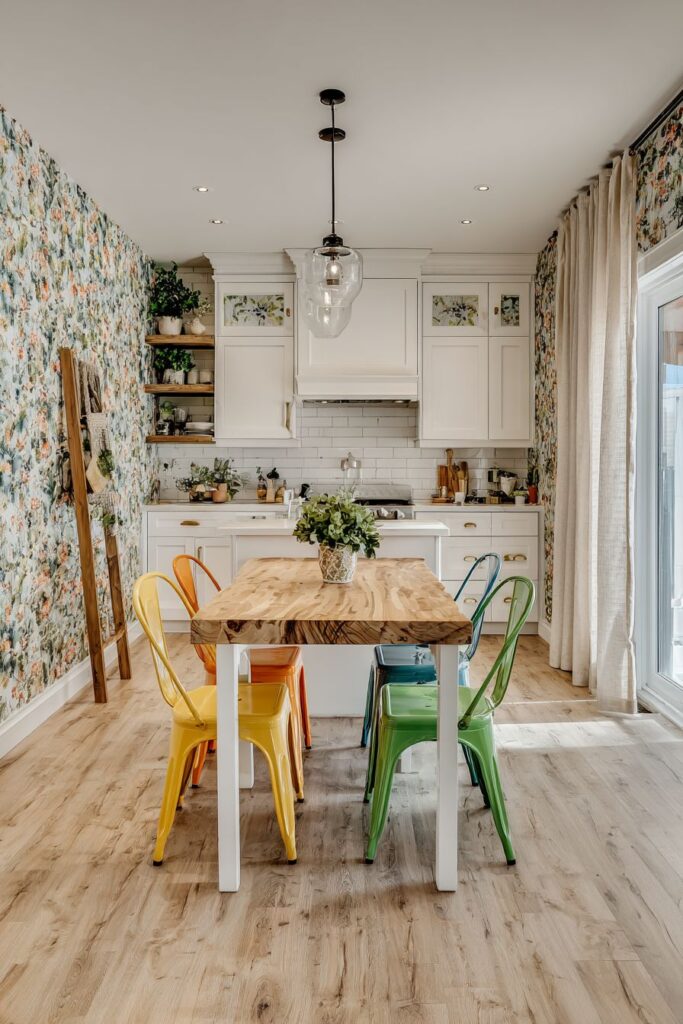
The kitchen island showcases the eclectic principle of material mixing through its live-edge wood countertop paired with a modern white base. This combination creates a striking focal point that bridges rustic and contemporary aesthetics while providing essential workspace and storage. Vintage metal chairs in different colors surround the island, each piece contributing its own personality while maintaining visual harmony through shared materials and similar proportions. Roman shades filter natural daylight beautifully, creating soft, diffused illumination that highlights the balanced interplay of patterns and textures throughout the space.
Key Design Tips:
- Use bold wallpaper on a single accent wall to create focus without overwhelming
- Repurpose vintage items like ladders for creative storage solutions
- Mix countertop materials to create visual interest and define different zones
- Choose seating in related but non-matching styles for eclectic charm
- Layer window treatments to control natural light and add softness
6. Industrial Farmhouse Material Fusion
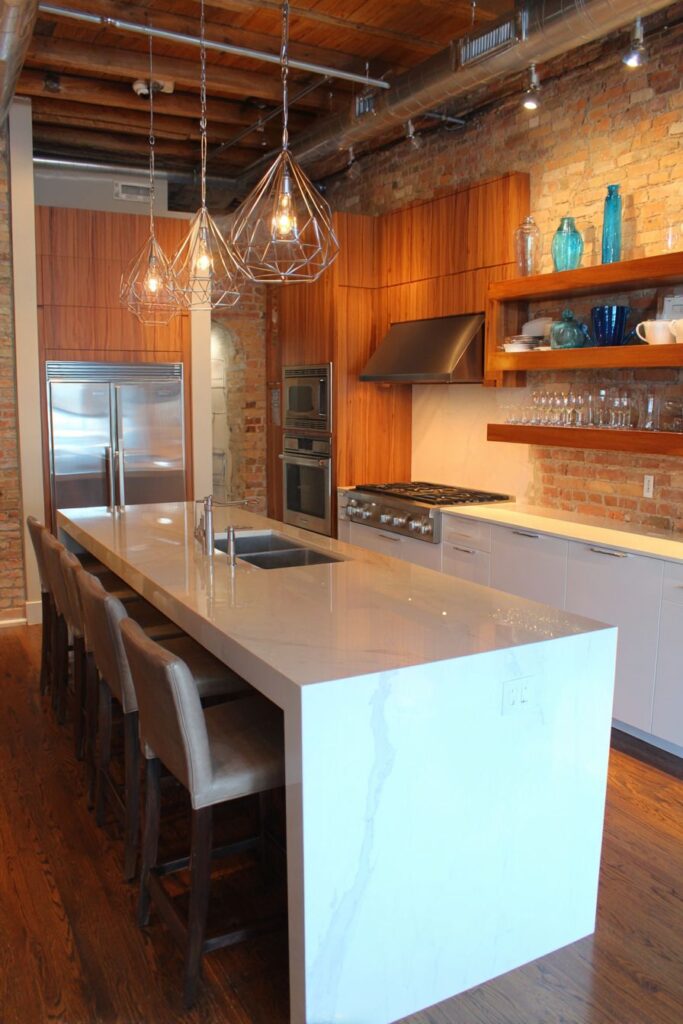
The exposed brick walls in this eclectic kitchen create a raw, industrial backdrop that provides perfect contrast to sleek modern appliances, demonstrating how opposing aesthetics can complement each other beautifully. The brick’s natural texture and warm terracotta tones add instant character and history to the space, while contemporary stainless steel appliances ensure that function keeps pace with form. A classic farmhouse sink set into rich butcher block countertops bridges the gap between industrial and rural aesthetics, creating a workspace that feels both professional and homey.
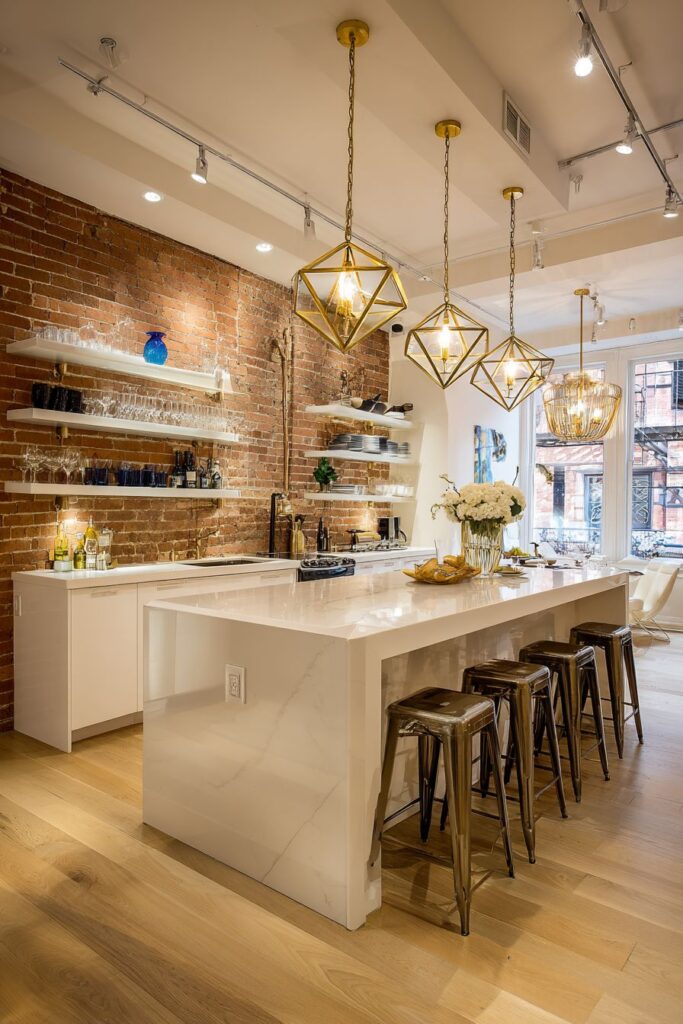
Vintage industrial bar stools surround a contemporary island featuring dramatic waterfall quartz edges, showcasing the eclectic principle of mixing periods and styles within a single focal point. The clean lines of the waterfall edge provide stunning contrast to the weathered character of the vintage seating, while the island’s generous proportions make it perfect for both food preparation and casual dining. This combination demonstrates how eclectic design can incorporate cutting-edge contemporary elements while maintaining connection to historical design traditions.
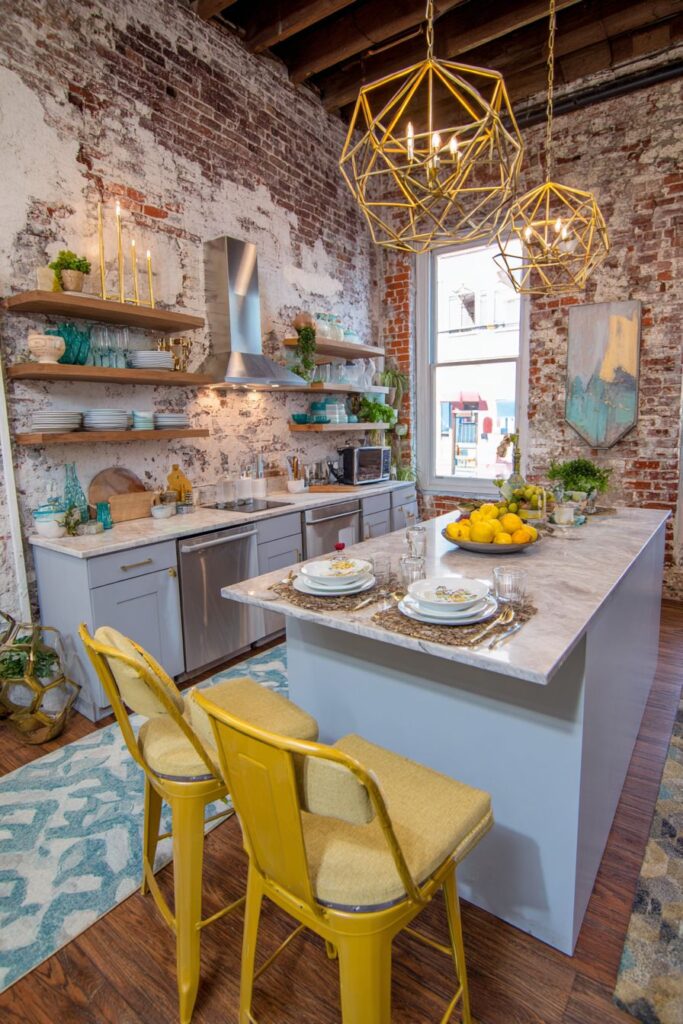
Open shelving throughout the space displays a carefully balanced mix of modern white dishes and vintage colored glassware, creating functional storage that doubles as artistic display. The interplay between clean contemporary ceramics and the rich colors of vintage glass creates visual interest while maintaining practical functionality. Pendant lighting includes both modern geometric fixtures and vintage brass pieces, suspended at different heights to create layers of illumination that enhance the textural variety of materials throughout the space.
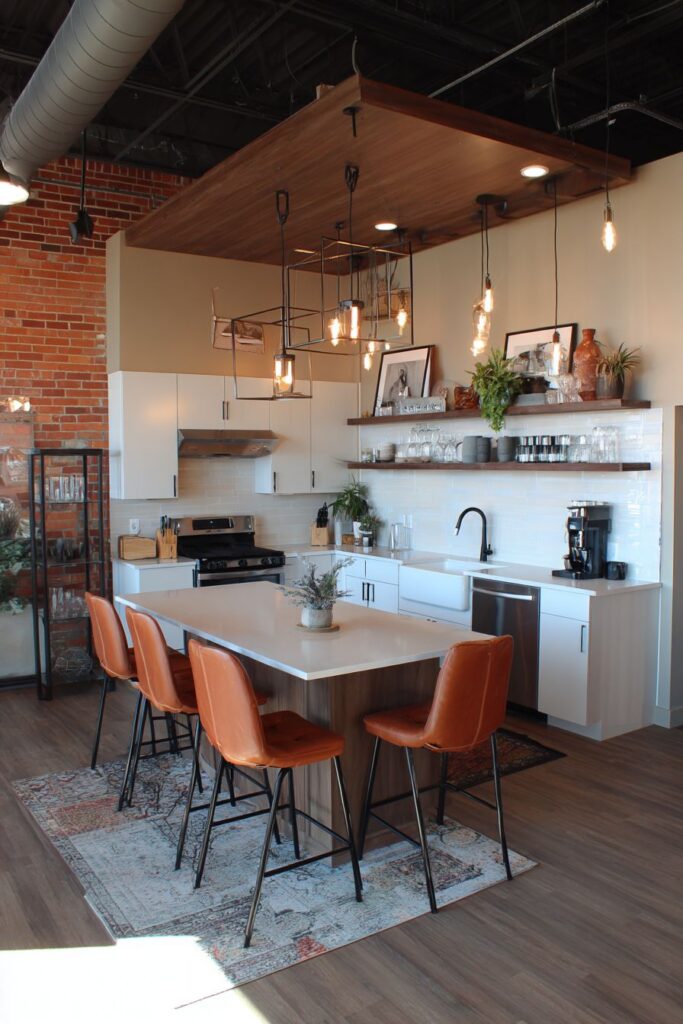
Key Design Tips:
- Combine raw materials like brick with polished contemporary surfaces for contrast
- Use farmhouse elements to soften industrial hardness and add warmth
- Mix vintage seating with contemporary islands for eclectic focal points
- Display dishes and glassware as functional art on open shelving
- Layer different lighting styles to highlight various materials and textures
7. Painted Vintage Storage with Modern Accents
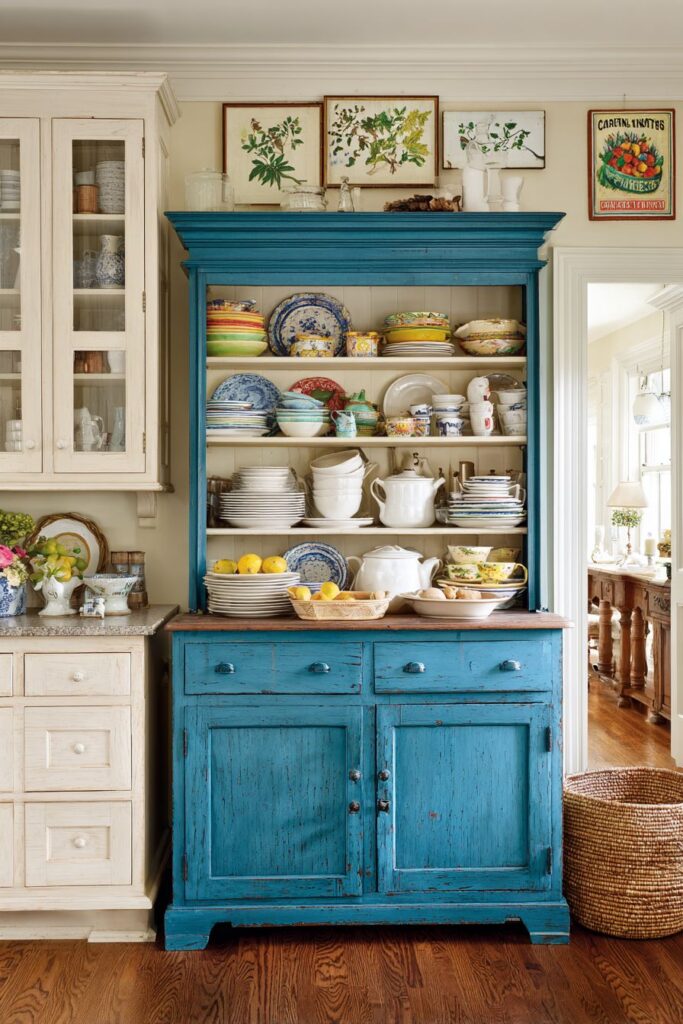
A stunning vintage hutch painted in deep teal becomes the star of this eclectic kitchen storage solution, demonstrating how a bold color choice can transform ordinary furniture into extraordinary focal points. The rich, jewel-toned paint creates dramatic contrast against the natural wood cabinets while providing the perfect backdrop for displaying colorful dishware alongside crisp modern white pieces. This approach to storage shows how eclectic design can make practical necessities into beautiful features that contribute significantly to the overall aesthetic of the space.
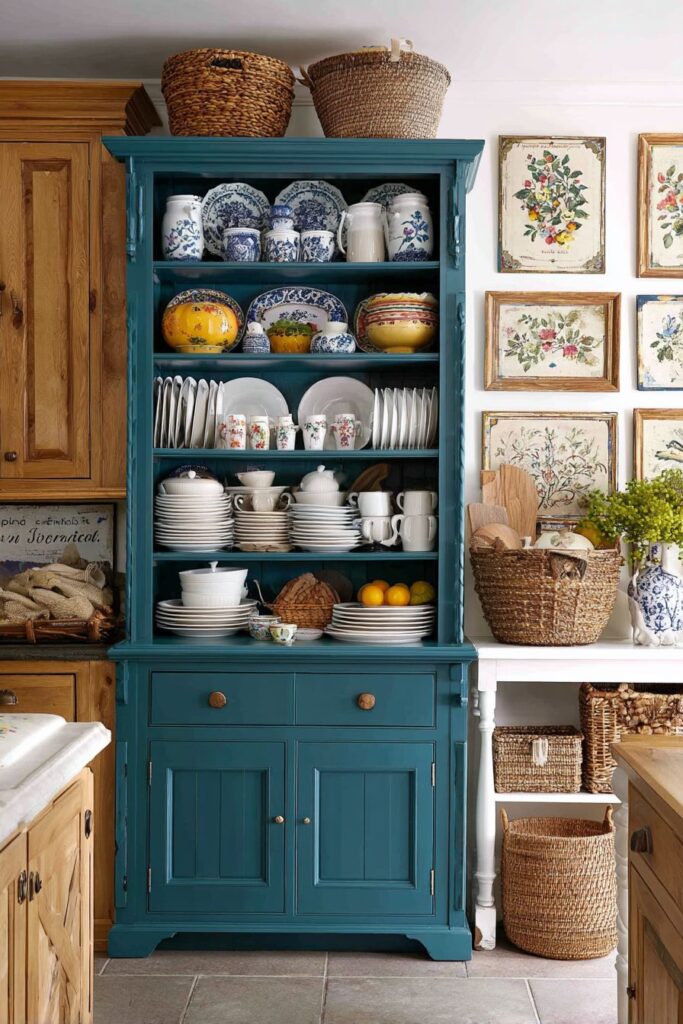
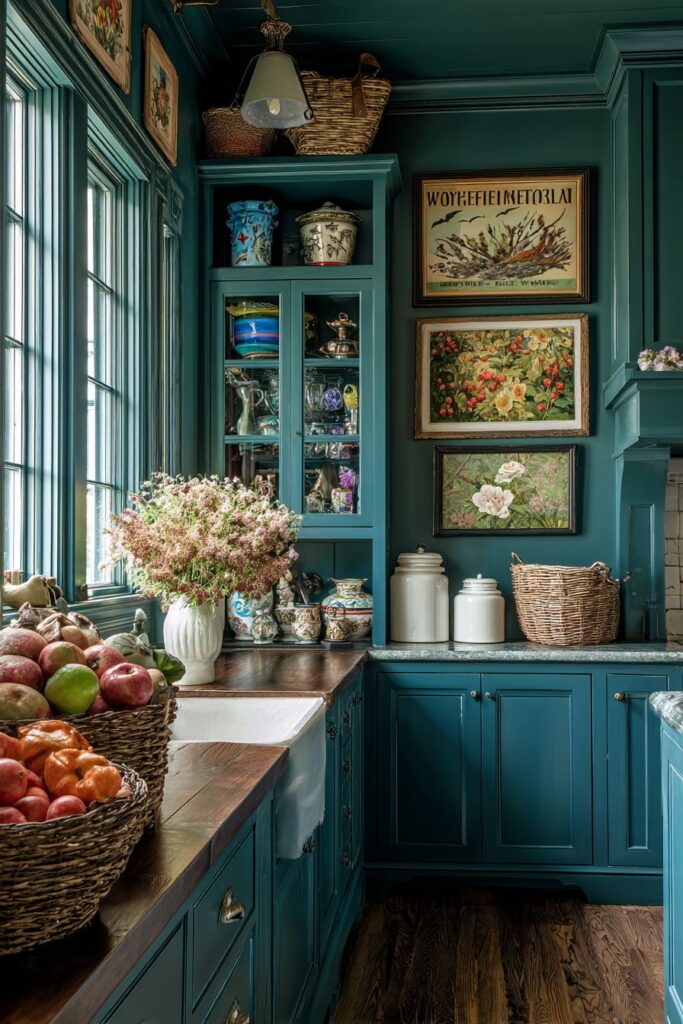
The surrounding cabinetry showcases the sophisticated use of mixed finishes, combining natural wood elements with strategically placed painted accents that tie into the hutch’s bold teal color. Walls throughout the space serve as gallery areas for vintage advertising signs and botanical prints, creating a collected-over-time feeling that is essential to authentic eclectic design. The careful curation of these wall elements demonstrates how personal collections can become integral parts of the overall design scheme while maintaining individual character and charm.
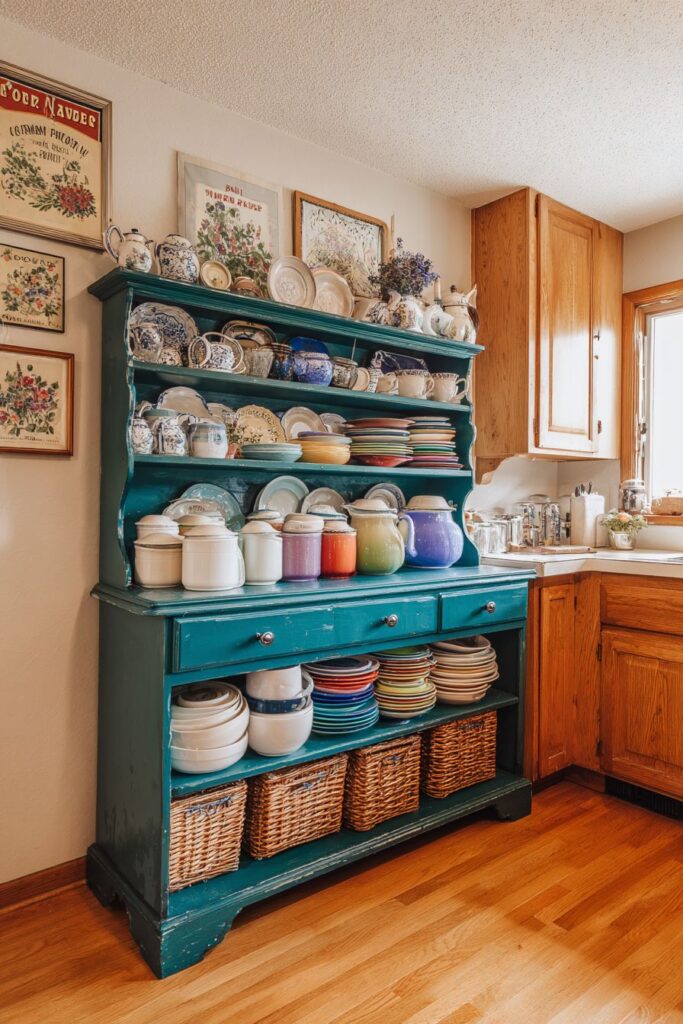
Woven baskets provide additional storage solutions while introducing important textural elements that soften the hard surfaces of cabinets and countertops. These natural fiber elements add warmth and organic appeal to the space while serving essential organizational functions. Soft natural lighting filters through the various displays and collections, creating gentle shadows and highlights that emphasize the careful layering of different periods, styles, and materials that make this eclectic kitchen so visually compelling and personally meaningful.
Key Design Tips:
- Use bold paint colors on vintage furniture to create dramatic focal points
- Mix cabinet finishes strategically to create visual zones and interest
- Display collections on walls to add personality and lived-in character
- Incorporate natural textures through baskets and other woven elements
- Layer lighting to create depth and highlight different collections and materials
8. Colorful Ceiling Beams with Mixed Cabinet Styles
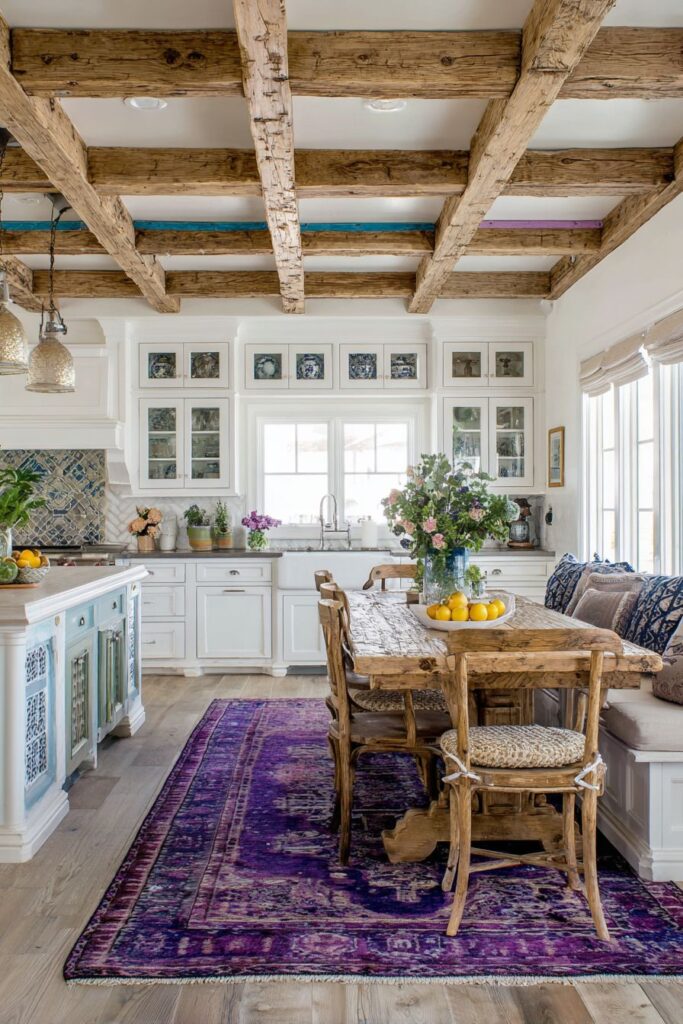
Exposed wooden beams painted in contrasting colors create an unexpected ceiling treatment that draws the eye upward and adds dramatic architectural interest to this eclectic kitchen. This bold ceiling design demonstrates how eclectic style can transform structural elements into decorative features, using color to create visual movement and energy in spaces that might otherwise feel static. The contrasting beam colors work together to define different areas of the kitchen while maintaining overall unity through thoughtful color coordination.
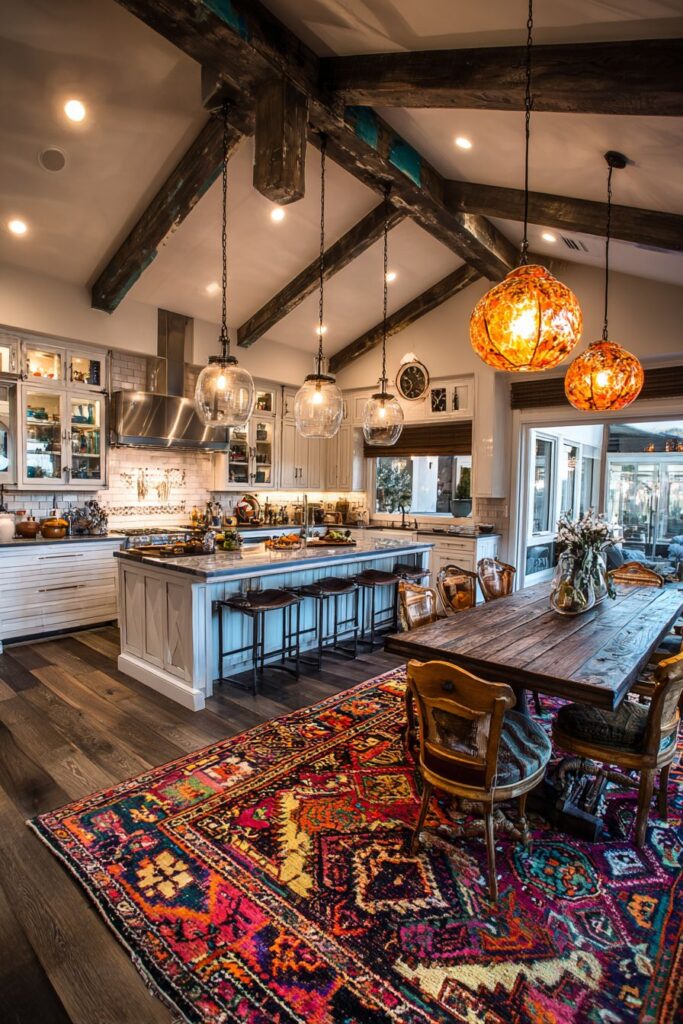
Below this dramatic ceiling treatment, modern white cabinets mix seamlessly with vintage glass-front upper cabinets that display an impressive collection of colorful pottery and dishware. This combination of cabinet styles creates visual interest while providing both concealed and display storage options that are essential in functional kitchen design. The glass-front cabinets allow beautiful collections to become part of the room’s decor while keeping items dust-free and easily accessible for daily use.
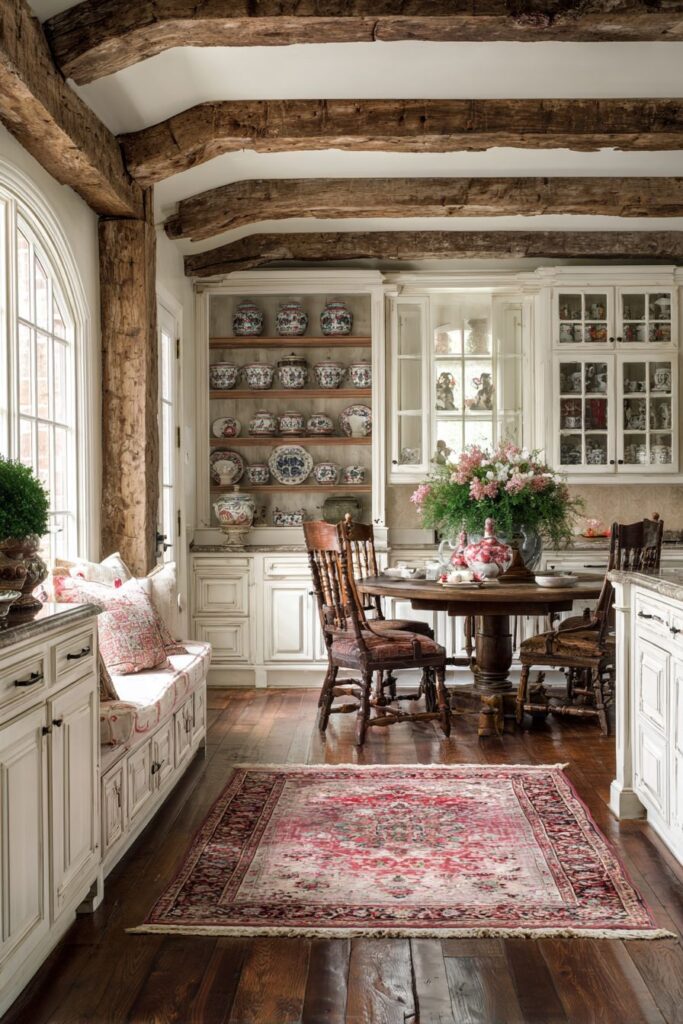
A vintage Persian rug defines the seating area where mismatched antique chairs gather around a substantial reclaimed wood table, creating an intimate dining zone within the larger kitchen space. The rug’s intricate patterns and rich colors complement the painted ceiling beams while providing warmth and comfort underfoot. This layered approach to flooring treatment shows how eclectic design can use textiles to define zones, add comfort, and introduce additional color and pattern without overwhelming the space.
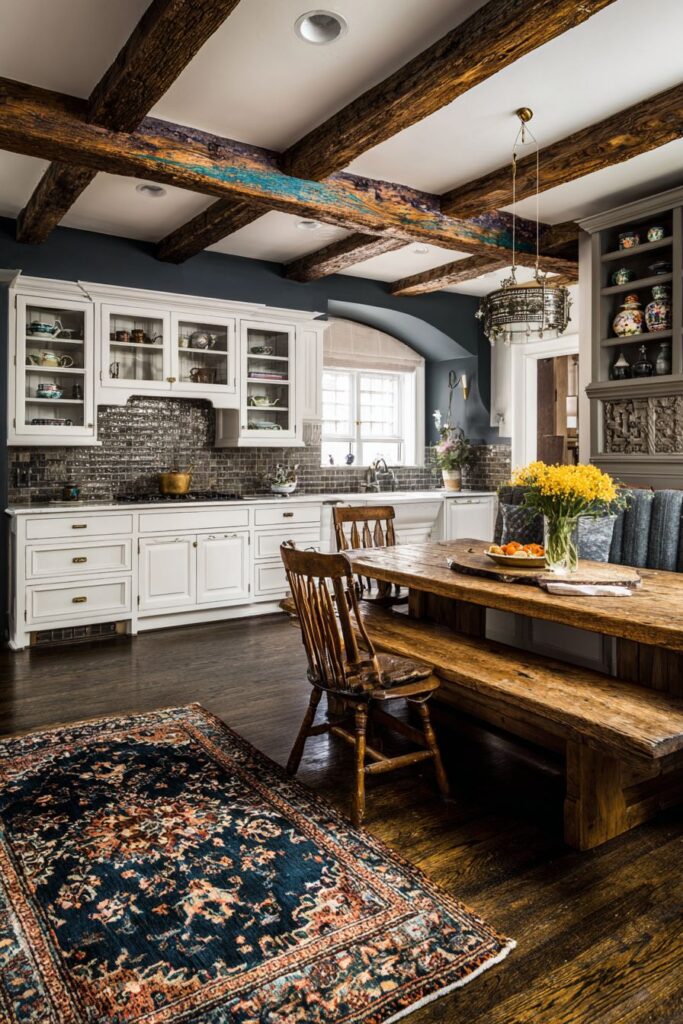
Key Design Tips:
- Paint exposed beams in contrasting colors to create architectural drama and visual movement
- Mix cabinet door styles to create interest while maintaining functional storage
- Use vintage rugs to define seating areas and add warmth to hard flooring
- Display colorful collections in glass-front cabinets for functional decoration
- Create intimate dining zones within larger kitchen spaces through furniture arrangement
9. Portuguese Tile Artistry with Contemporary Balance
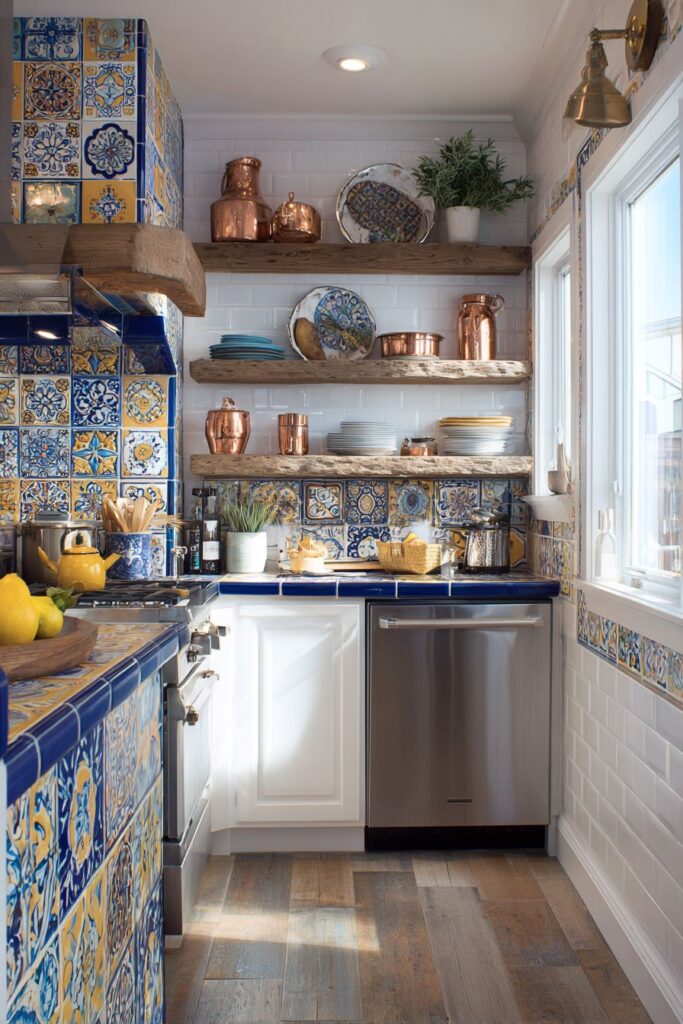
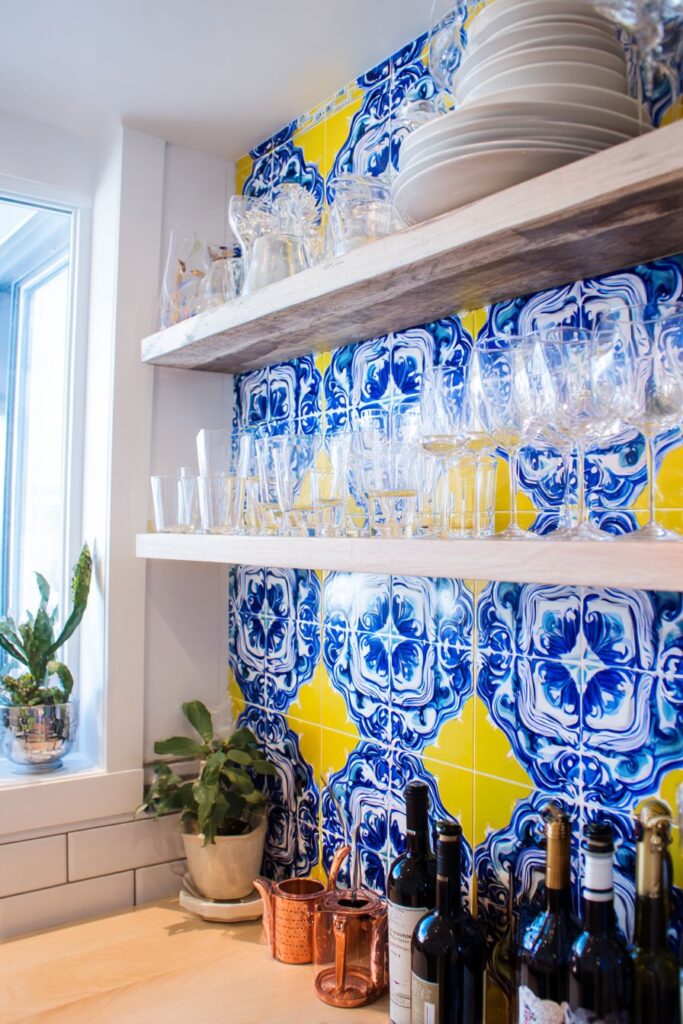
The vibrant hand-painted Portuguese azulejo tiles in blues and yellows create a stunning artistic backsplash that serves as the focal point of this eclectic kitchen design. These traditional ceramic tiles bring centuries of Portuguese craftsmanship into the contemporary kitchen, their intricate patterns and brilliant colors creating a sense of global sophistication and cultural richness. The contrast between these ornate decorative tiles and clean white subway tiles in adjacent areas demonstrates the eclectic principle of strategic pattern placement—using bold elements as accents rather than overwhelming the entire space.
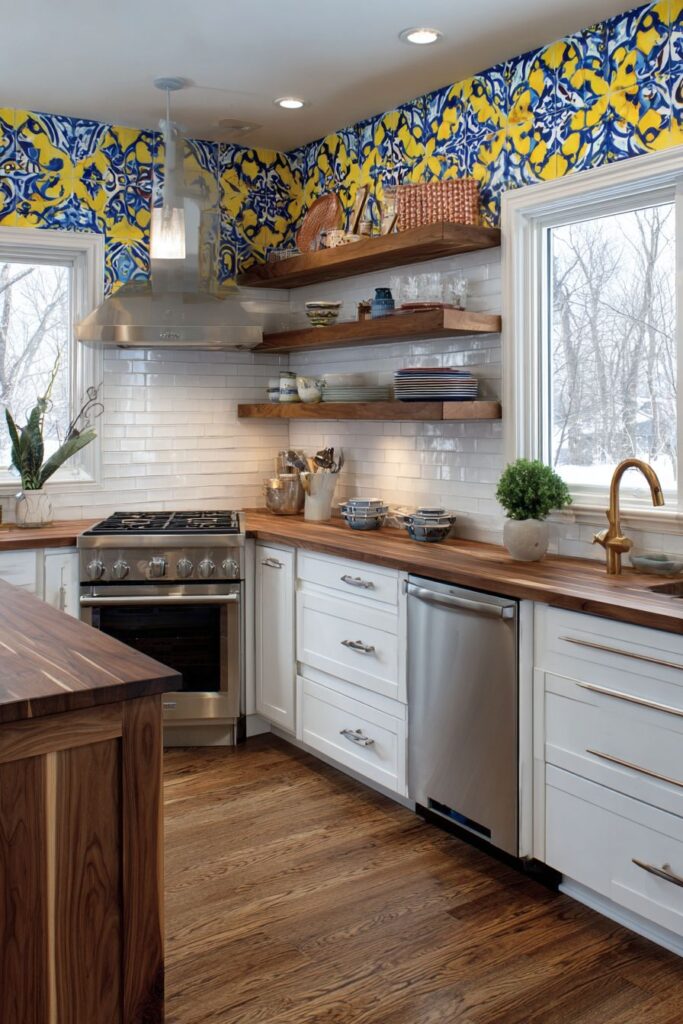
Modern stainless steel appliances provide sleek functionality while vintage copper accessories add warmth and traditional craftsmanship appeal throughout the space. This combination shows how eclectic design can successfully bridge the gap between cutting-edge technology and time-honored materials, creating kitchens that are both thoroughly modern and rich with historical character. The copper’s warm patina and handcrafted quality provide perfect counterpoint to the precision of contemporary appliances.
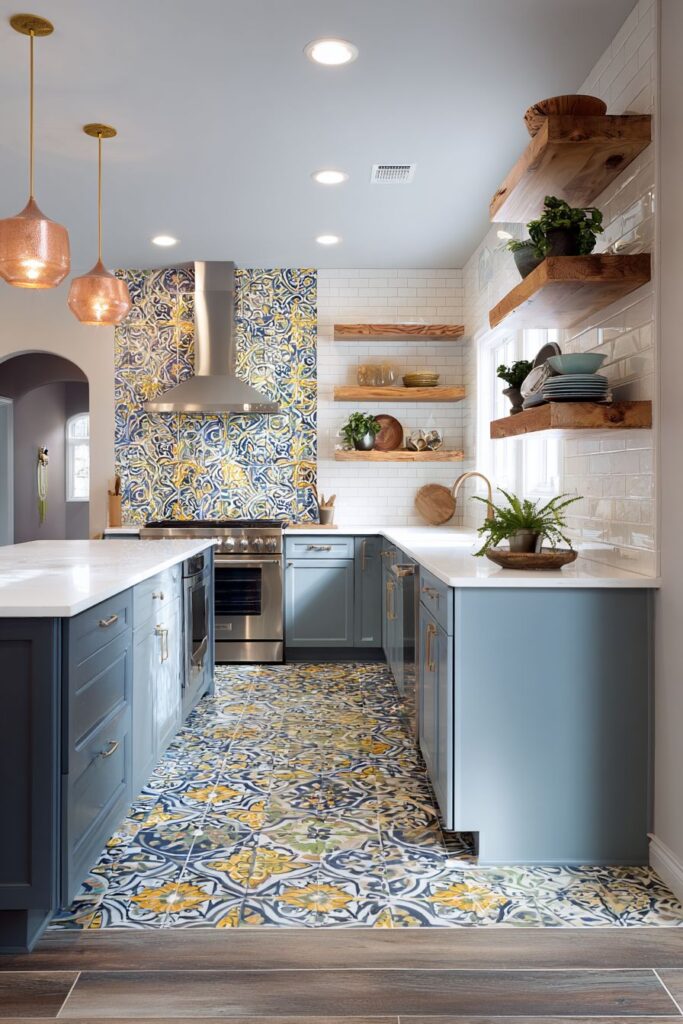
Reclaimed wood shelving displays a thoughtful mix of contemporary and vintage serving pieces, creating functional storage that doubles as curated display space. The weathered character of the reclaimed wood adds textural interest while providing the perfect neutral backdrop for both sleek modern ceramics and characterful vintage pieces. Natural window lighting creates beautiful reflections in the Portuguese tiles while highlighting the rich patina of copper accessories and the organic grain of reclaimed wood elements throughout the space.
Key Design Tips:
- Use hand-painted tiles as artistic focal points balanced with neutral elements
- Mix modern appliances with vintage accessories for functional eclecticism
- Display contemporary and vintage serving pieces together on reclaimed wood shelving
- Position decorative tiles near natural light sources to maximize their visual impact
- Balance ornate patterns with clean, simple elements to prevent visual overwhelm
10. Sophisticated Color Coordination in Mixed Styles
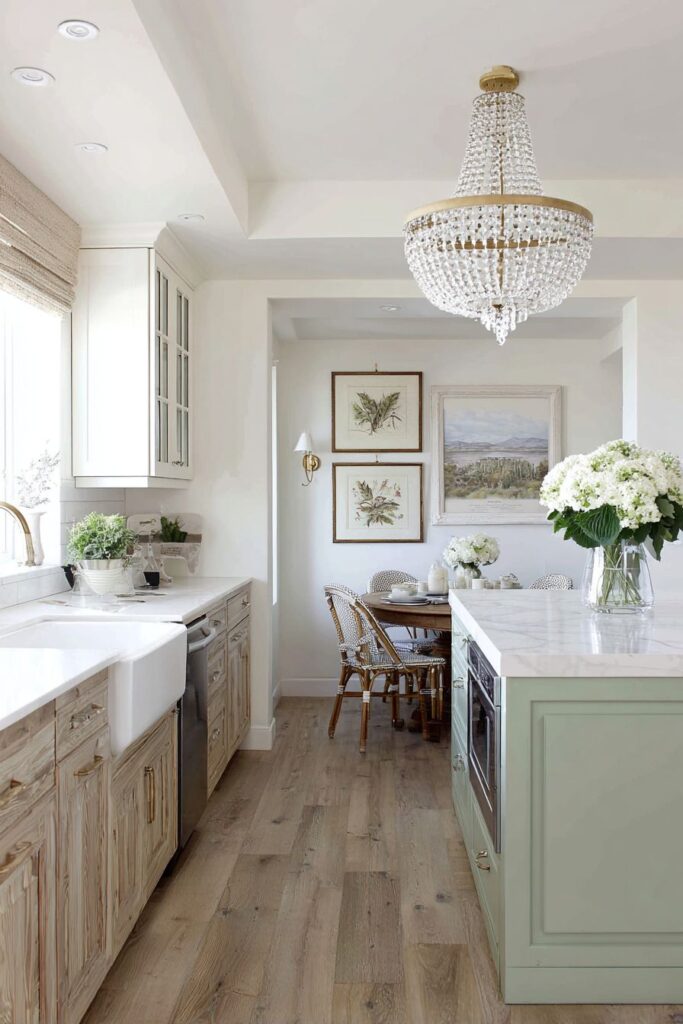
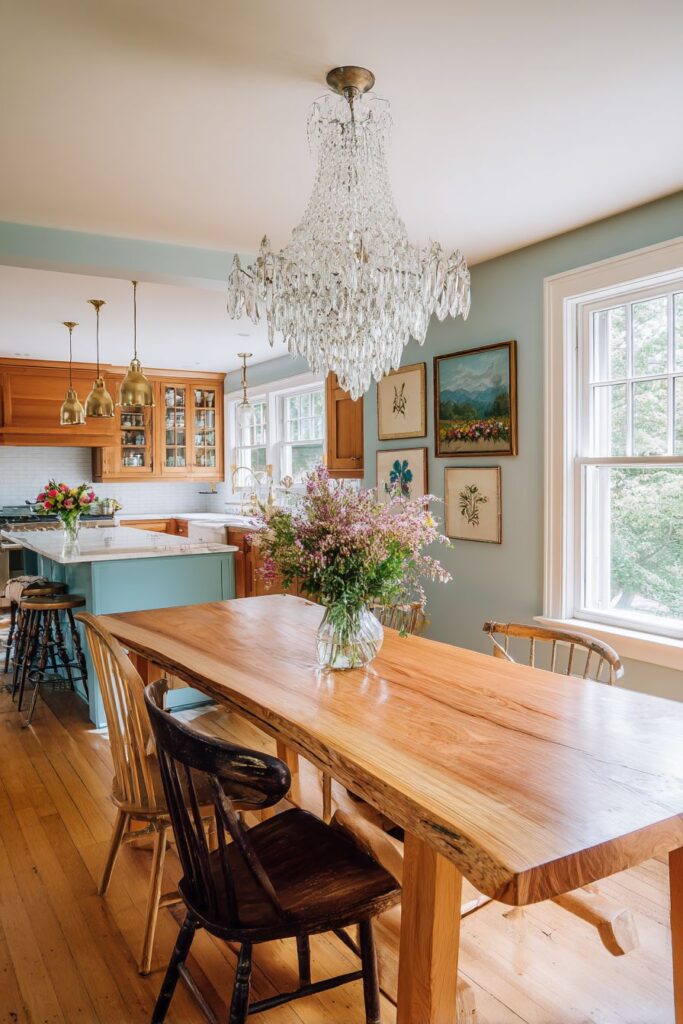
This eclectic kitchen demonstrates the power of sophisticated color coordination through its masterful use of painted sage green lower cabinets paired with natural wood upper cabinets featuring elegant glass fronts. The sage green provides a calming, nature-inspired base color that grounds the design while allowing other elements to shine, while the natural wood uppers add warmth and organic texture that prevents the space from feeling too controlled or cold. The glass fronts on the upper cabinets create opportunities for beautiful display while maintaining the clean lines essential to sophisticated eclectic design.
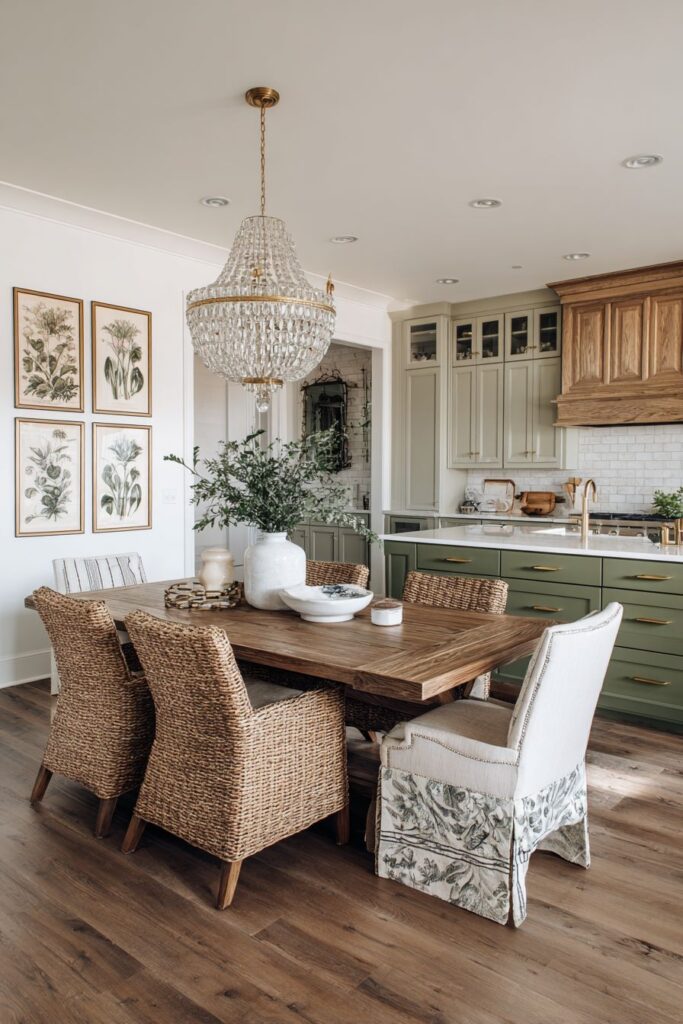
A vintage chandelier with crystal accents hangs gracefully above a modern farmhouse table, creating a stunning focal point that bridges formal and casual design traditions. The chandelier’s sparkling crystals add glamour and light play to the space while its vintage character provides historical depth and personality. The farmhouse table’s clean lines and substantial proportions provide perfect counterpoint to the chandelier’s ornate detailing, surrounded by chairs in different styles that maintain unity through a carefully coordinated color palette.
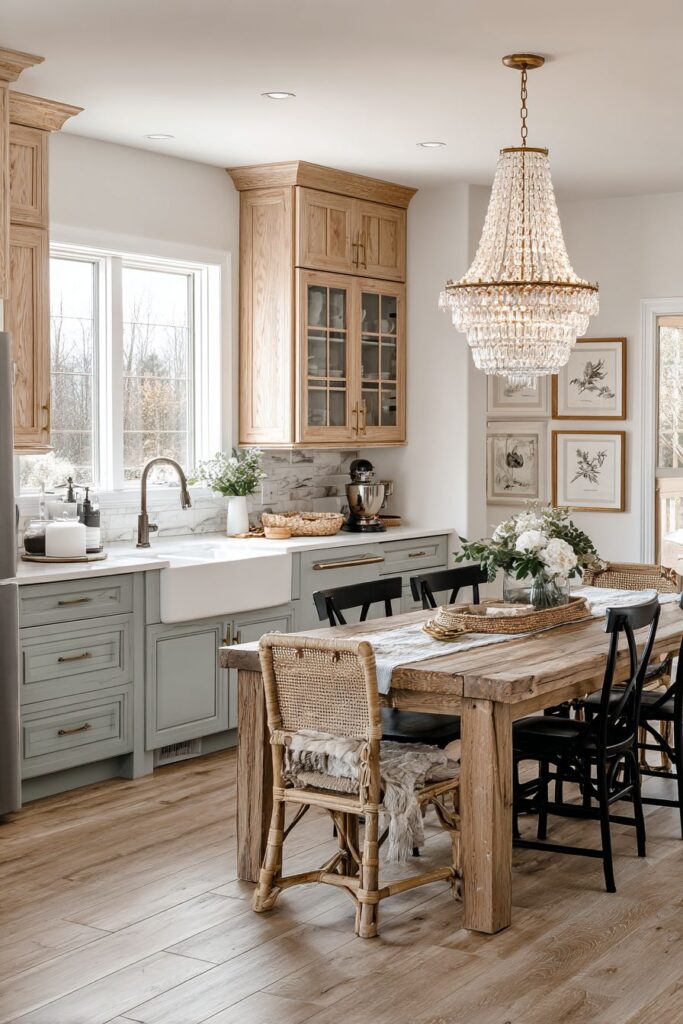
The walls feature a thoughtfully curated gallery wall combining vintage botanical prints with modern photography, demonstrating how eclectic design can successfully mix different artistic periods and styles within a cohesive color scheme. This approach to wall decoration creates visual interest and personal expression while maintaining the sophisticated restraint that elevates this kitchen above mere collecting. The strategic placement of artwork at different heights and in various frame styles creates dynamic visual movement that keeps the eye engaged and interested.
Key Design Tips:
- Use a unifying color like sage green to coordinate diverse cabinet styles and finishes
- Mix formal elements like crystal chandeliers with casual farmhouse furniture
- Create gallery walls that combine different artistic periods within a coordinated palette
- Choose glass-front cabinets to display beautiful collections while maintaining clean lines
- Unify mismatched furniture through strategic color coordination rather than exact matching
11. Vintage Appliance as Colorful Focal Point
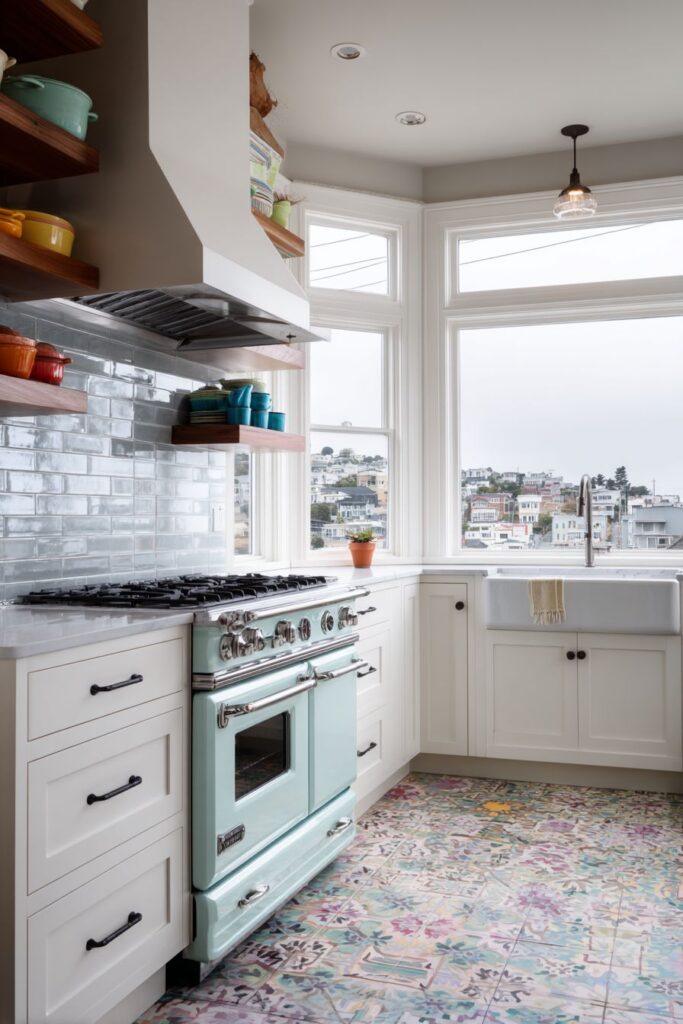
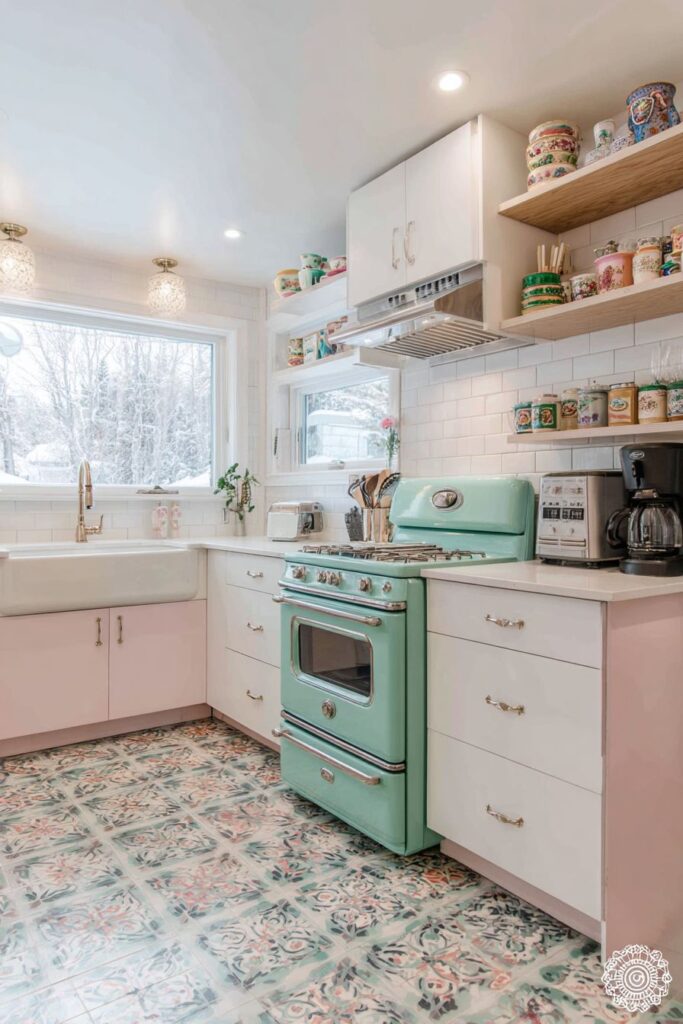
A stunning vintage range in soft mint green serves as the undisputed star of this eclectic kitchen, demonstrating how a single bold appliance can anchor an entire design scheme while providing both function and vintage charm. The range’s cheerful mint green finish creates a delightful focal point that influences the entire color palette of the space, showing how eclectic design can build around a single beloved piece. White cabinets with modern hardware provide clean contrast while allowing the vintage range to command center stage without competition.
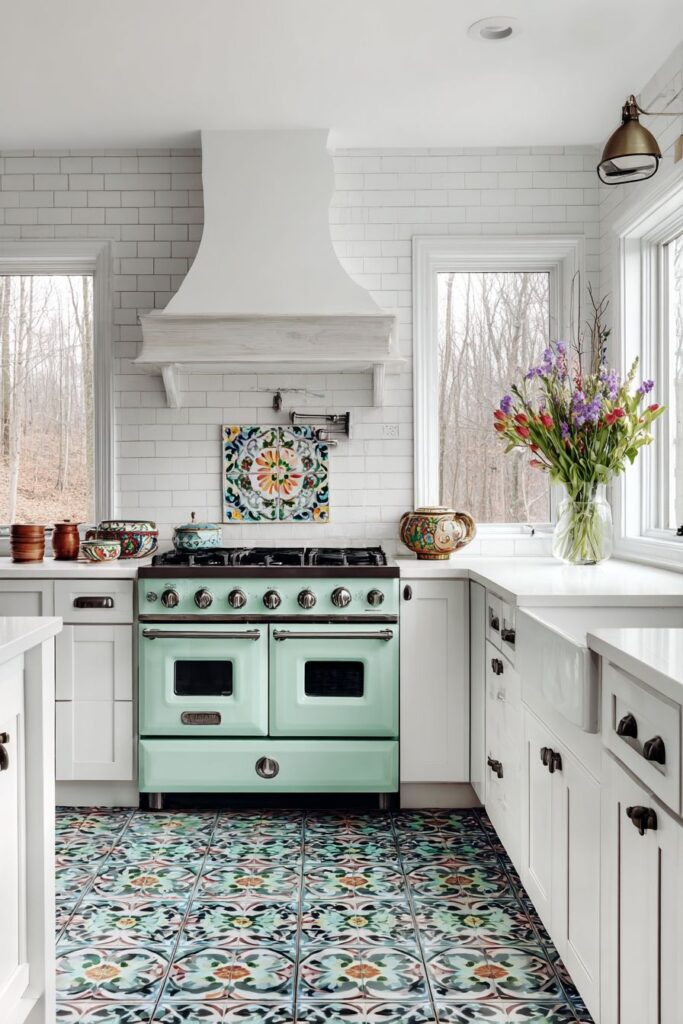
Open shelving displays an impressive collection of vintage Fiestaware in coordinating colors, creating functional storage that celebrates the joy of collecting beautiful objects. The Fiestaware’s bold, saturated colors complement the mint green range while adding layers of visual interest through their varied shapes and sizes. This approach to display storage shows how eclectic kitchens can make practical necessities into decorative features that contribute to the overall personality of the space.
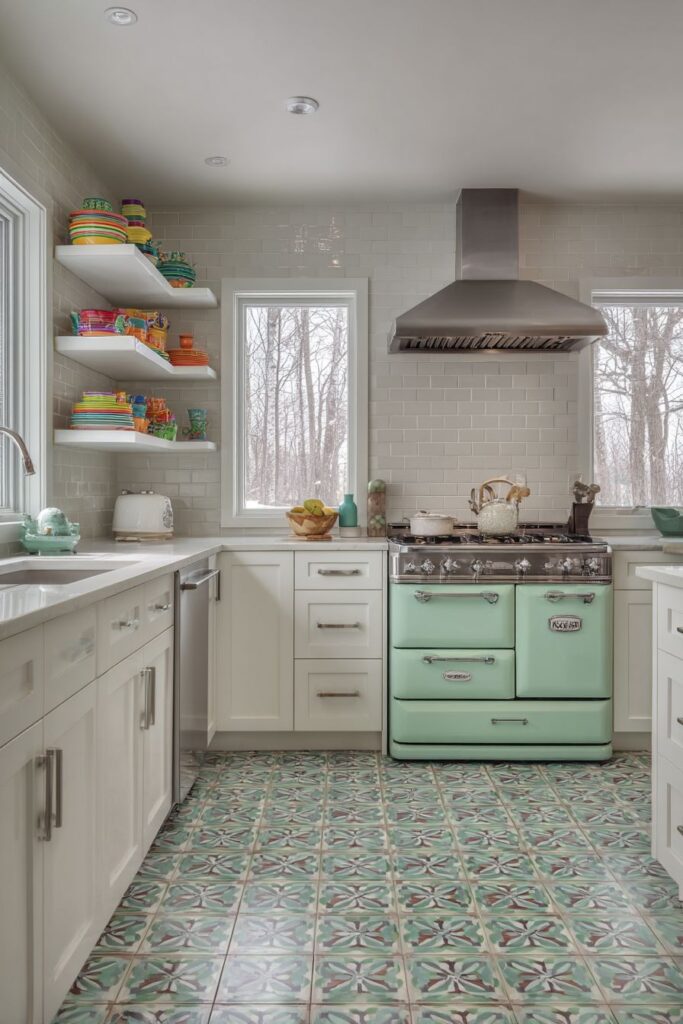
Patterned cement tiles in soft pastels create a beautiful foundation that complements the overall color palette while adding subtle pattern and texture underfoot. These tiles bridge the gap between the mint green range and the white cabinets while introducing additional visual interest through their geometric patterns. Modern subway tiles provide neutral balance as a backsplash, allowing the more colorful and patterned elements to shine without creating visual chaos. Natural light from multiple windows creates beautiful color play throughout the space, highlighting the careful balance between bold color choices and neutral grounding elements.
Key Design Tips:
- Build your color palette around a single standout vintage appliance
- Use open shelving to display colorful collections that complement key pieces
- Choose patterned flooring in coordinating but softer colors for subtle foundation interest
- Balance bold colored elements with clean neutral backgrounds like white subway tile
- Maximize natural light to enhance color play and create dynamic visual interest throughout the day
12. Dramatic Dark Walls with Brass Accents
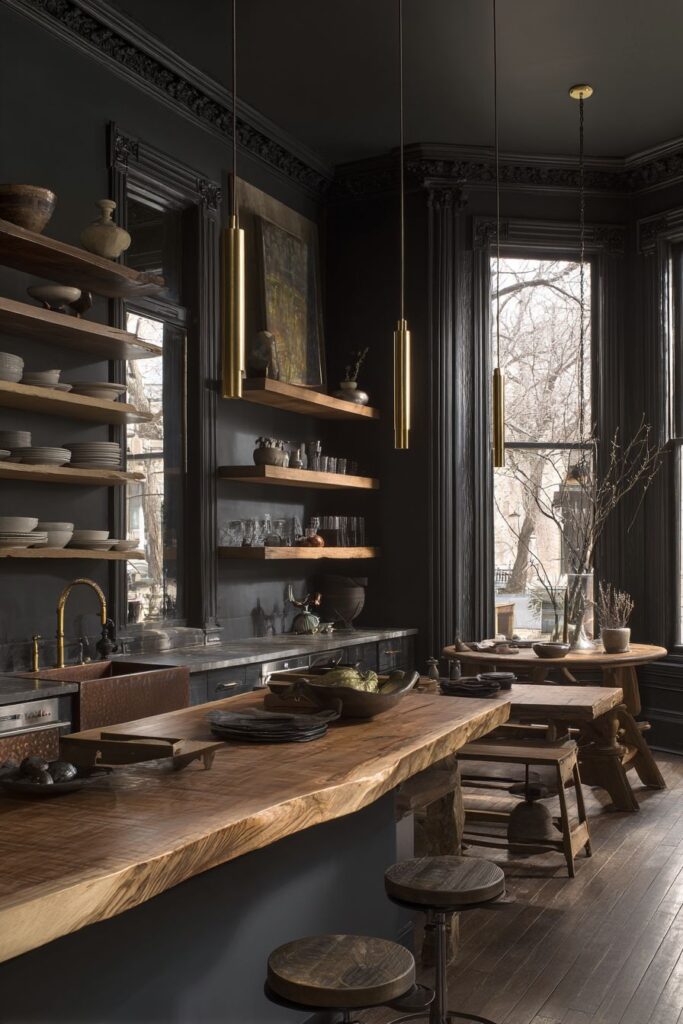
Dramatic black walls create a sophisticated and unexpected backdrop for this moody eclectic kitchen, demonstrating how dark colors can create intimacy and drama while serving as the perfect stage for carefully chosen accent pieces. The black walls make floating shelves in natural wood appear to glow while providing stunning contrast for white dishes and warm brass accents throughout the space. This bold color choice shows how eclectic design can embrace dramatic elements while maintaining livability and warmth through strategic material and accent choices.
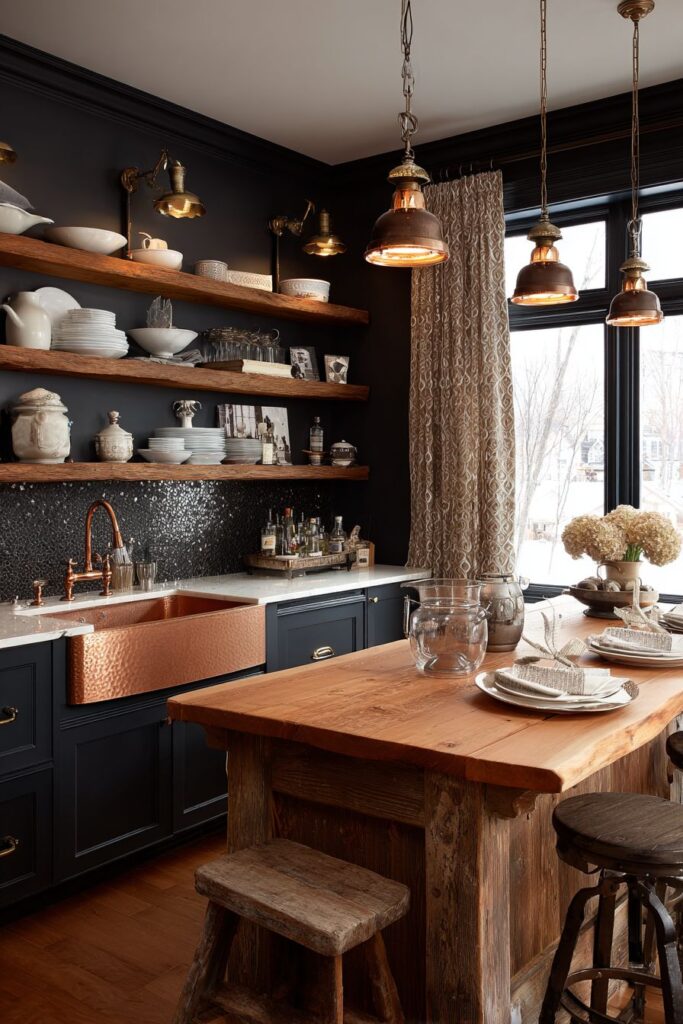
A vintage copper farm sink positioned beneath a window dressed with charming café curtains creates a functional focal point that combines practical necessity with vintage character and natural light. The copper’s warm patina stands out beautifully against the dark walls while the café curtains soften the overall mood and filter natural light gently throughout the space. Modern pendant lights with brass fittings provide essential task lighting while maintaining the warm metallic theme that unifies the various vintage and contemporary elements.
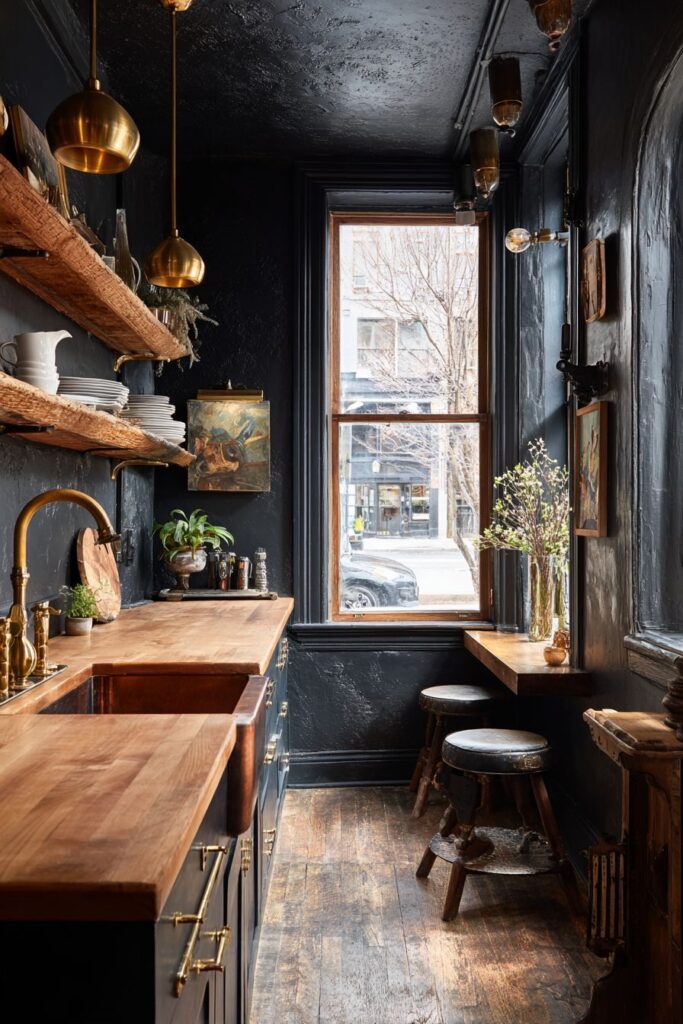
The strategic combination of contemporary bar stools with a vintage wooden step stool demonstrates the eclectic principle of mixing different periods and styles within a single functional category. Each seating piece serves different purposes while contributing to the overall character of the space, showing how eclectic design can be both practical and personally expressive. The professional photography captures the sophisticated moodiness of the dark color palette while highlighting how warm metallics and natural wood tones can create comfort and livability even in dramatically colored spaces.
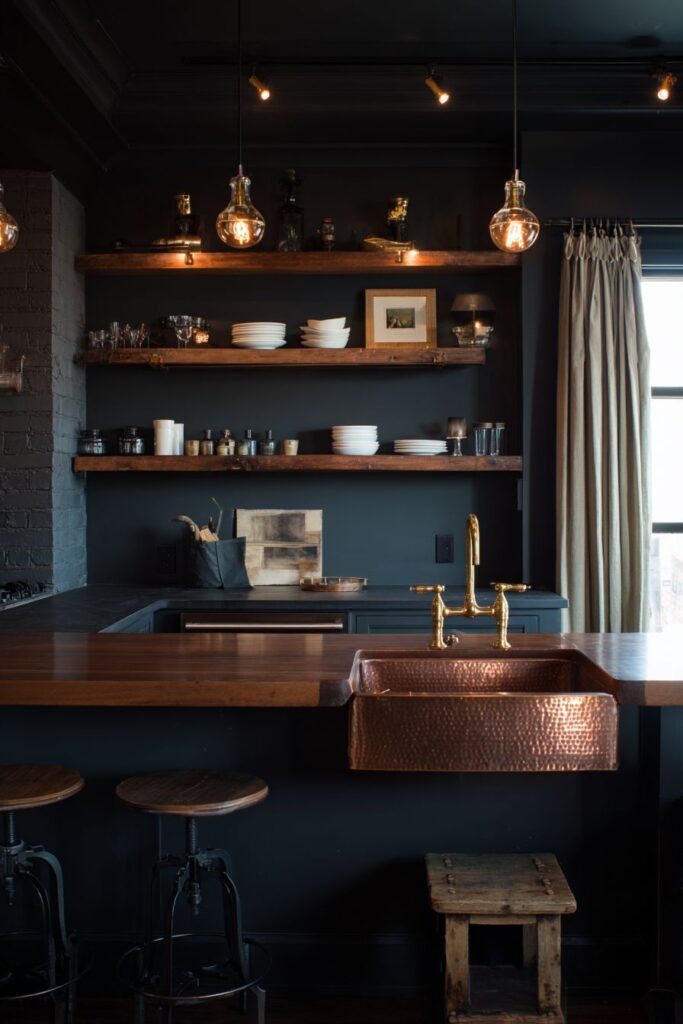
Key Design Tips:
- Use dark walls as sophisticated backdrops that make accent pieces pop dramatically
- Combine vintage copper elements with modern brass fixtures for warm metallic consistency
- Mix different types of seating to serve various functional needs while adding character
- Use café curtains to soften hard elements and filter natural light gently
- Balance dramatic color choices with warm materials like wood and copper to maintain comfort
13. Cozy Breakfast Nook Integration
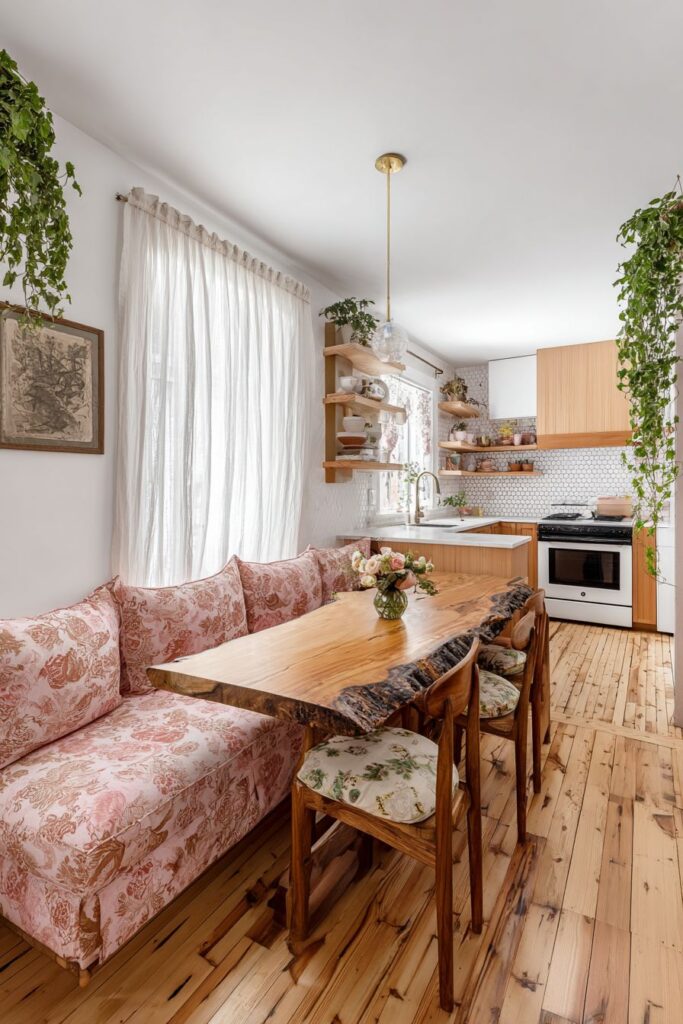
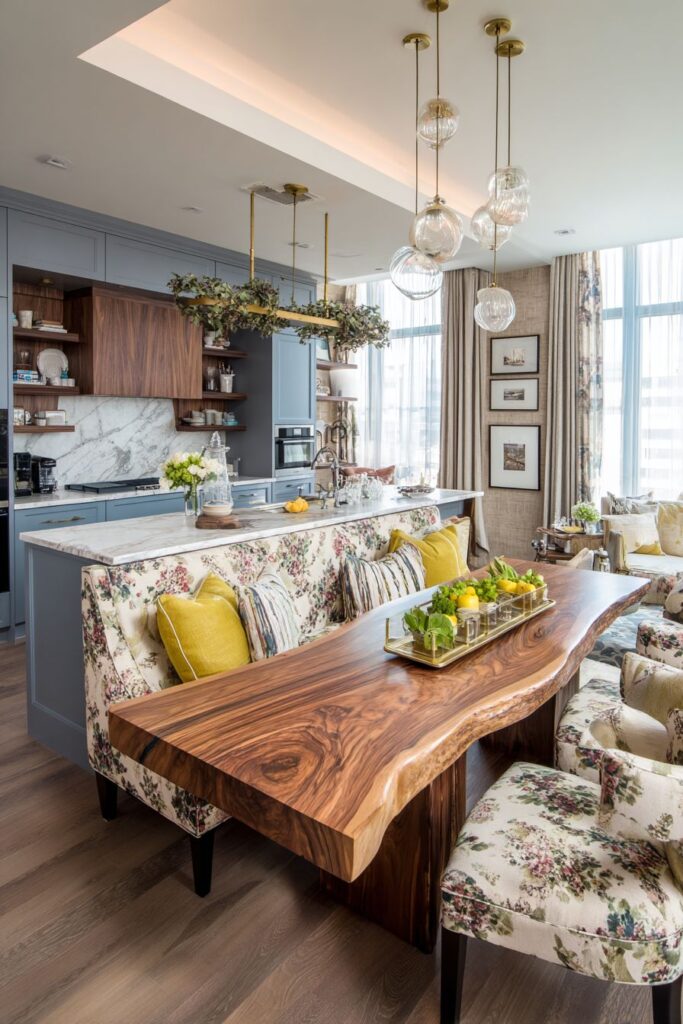
The built-in banquette seating upholstered in vintage floral fabric creates an intimate breakfast nook that exemplifies the eclectic principle of combining comfort with character and personal expression. The vintage floral pattern adds softness and traditional charm to the space while the built-in design maximizes seating efficiency and creates a cozy gathering spot for family meals. This approach shows how eclectic design can incorporate traditional patterns and materials while maintaining contemporary functionality and comfort.
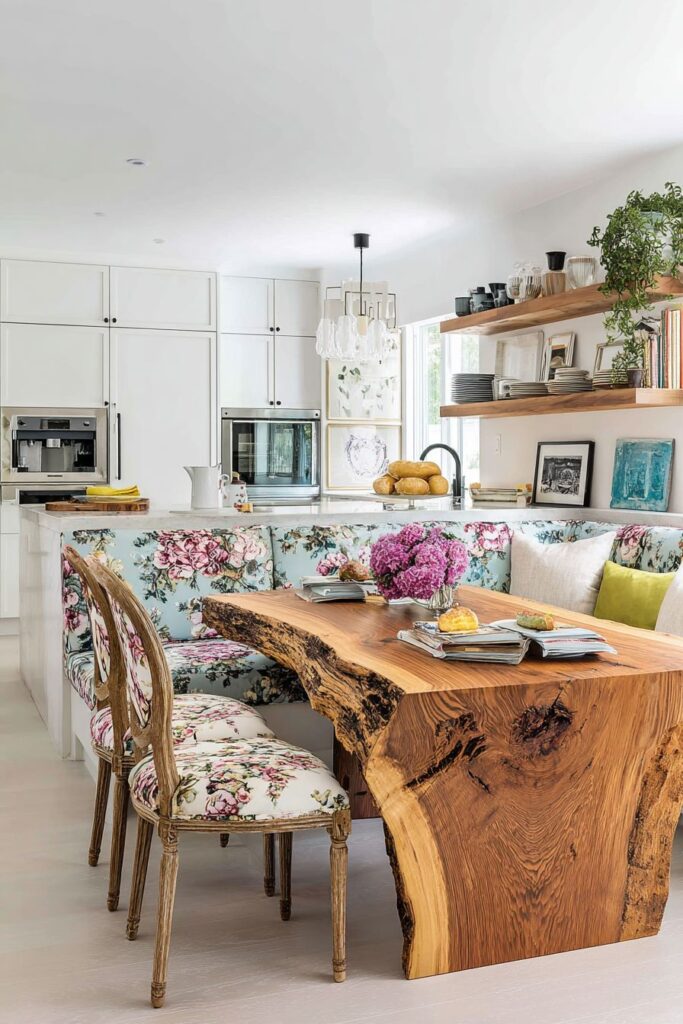
A live-edge wood table paired with mismatched vintage chairs continues the theme of celebrating natural materials alongside collected pieces with individual character and history. The live-edge table’s organic form provides beautiful contrast to the structured built-in seating while its natural wood grain adds warmth and texture to the intimate dining area. Each vintage chair contributes its own personality while maintaining compatibility with the overall warm, welcoming aesthetic of the breakfast nook.
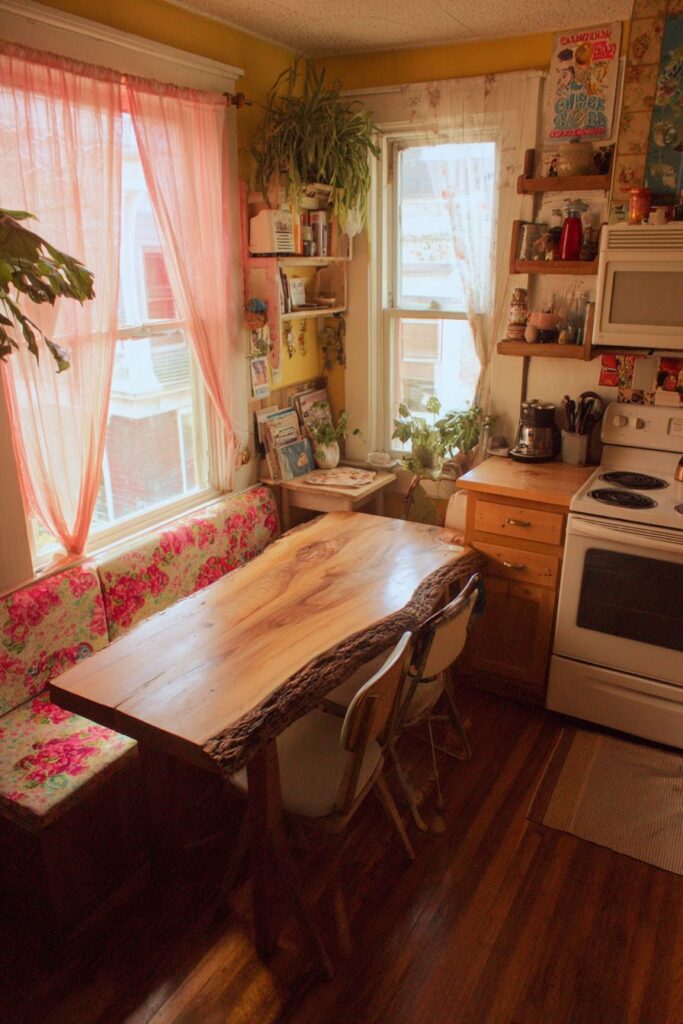
The surrounding kitchen seamlessly integrates modern appliances with vintage accessories, while walls throughout the space feature a thoughtful mix of open shelving, carefully chosen artwork, and thriving hanging plants that add life and movement to the design. This layered approach to wall decoration creates visual interest without overwhelming the cozy scale of the breakfast nook, demonstrating how eclectic spaces can successfully balance multiple design elements within intimate settings. Soft morning light filtering through sheer curtains bathes the entire area in gentle illumination, creating the perfect atmosphere for leisurely breakfast conversations and quiet morning rituals.
Key Design Tips:
- Create intimate dining areas with built-in seating upholstered in vintage fabrics
- Use live-edge wood tables to add organic warmth to structured seating arrangements
- Mix modern appliances with vintage accessories throughout the surrounding kitchen space
- Layer wall decorations with shelving, art, and plants for visual richness
- Choose window treatments that filter morning light softly for cozy breakfast atmospheres
14. Statement Range Hood as Artistic Centerpiece
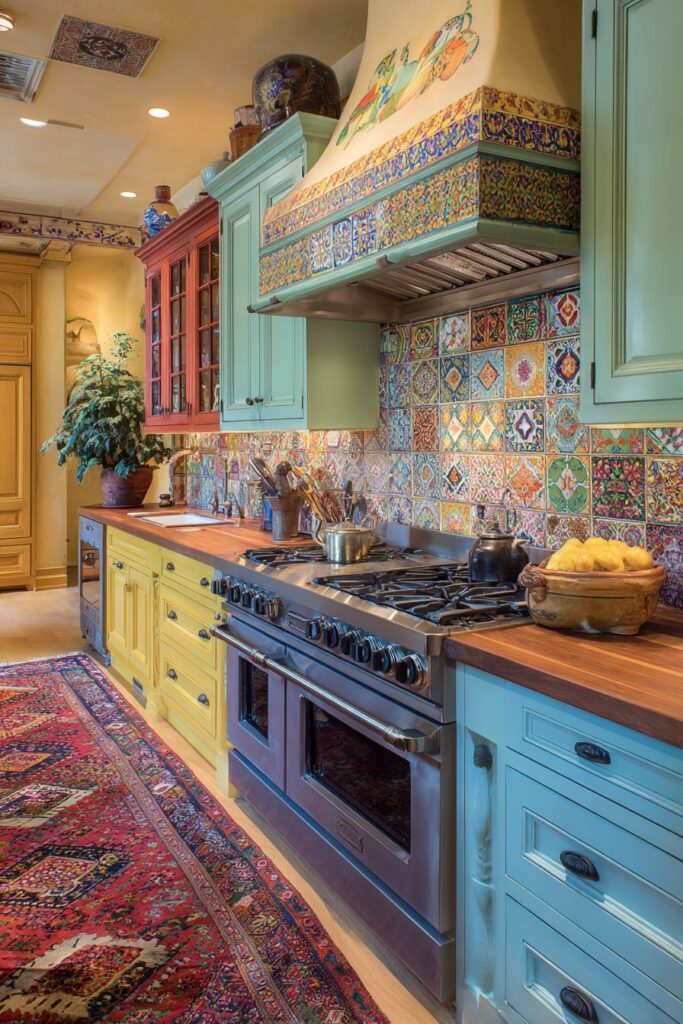
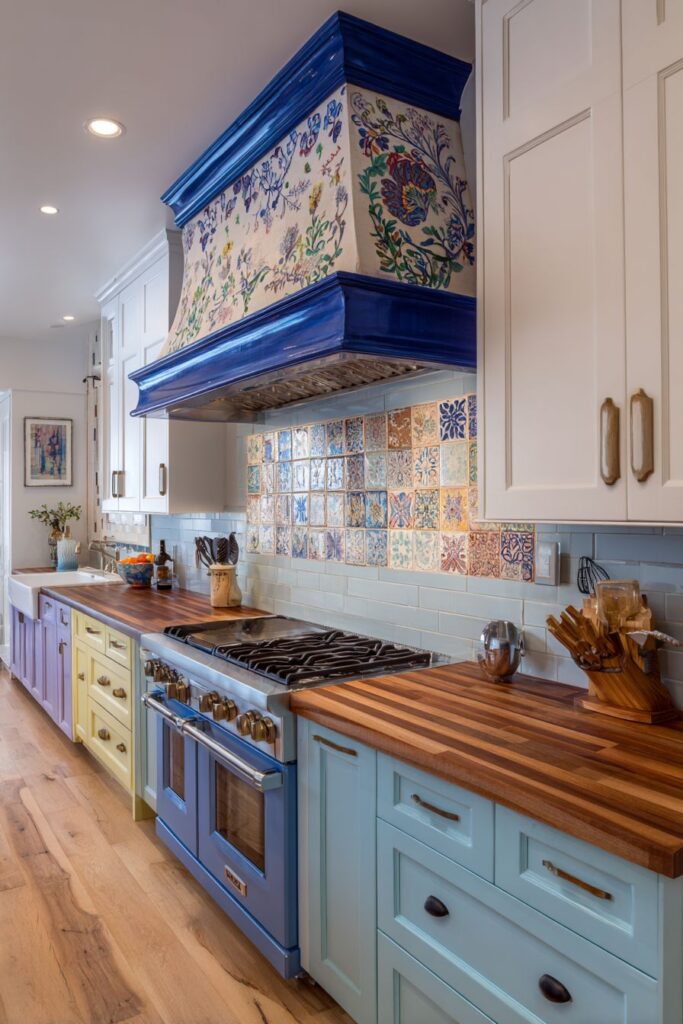
A spectacular range hood covered in decorative tiles from different eras and regions transforms this essential kitchen element into a breathtaking work of art that anchors the entire eclectic design scheme. The hood showcases tiles with various patterns, colors, and historical origins, creating a mosaic-like masterpiece that celebrates global ceramic traditions while providing practical ventilation above a professional gas range. This approach demonstrates how eclectic design can elevate purely functional elements into stunning focal points that become conversation pieces and artistic statements.
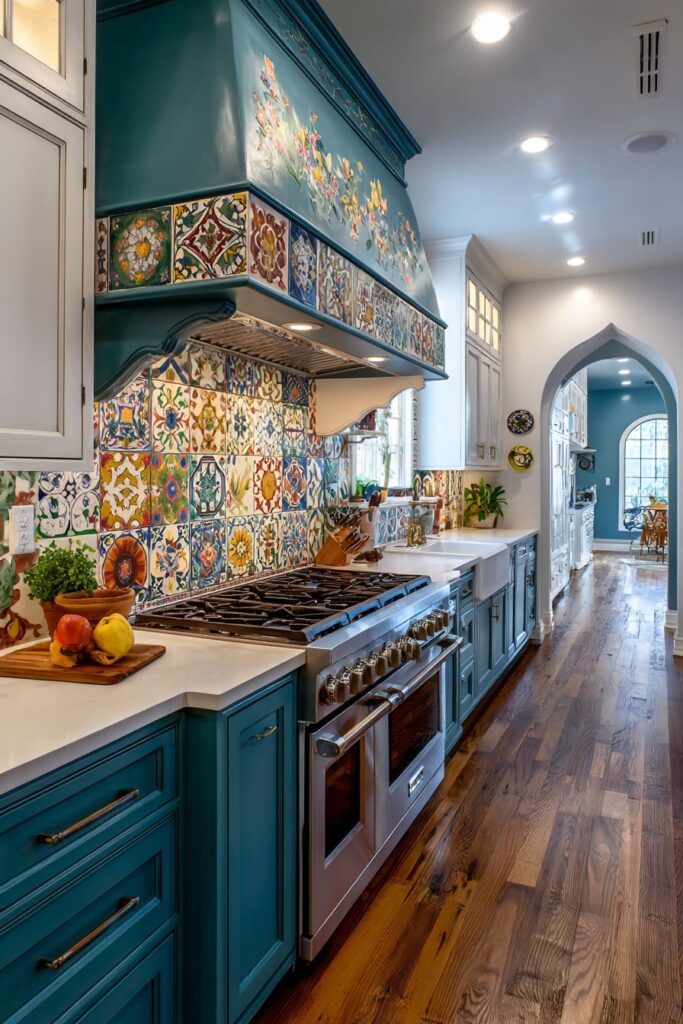
Painted cabinets in multiple coordinating colors surround this dramatic centerpiece, with each cabinet color carefully chosen to complement the complex tile work while maintaining visual harmony throughout the space. The strategic use of multiple paint colors creates defined zones and visual interest while preventing the bold hood from overwhelming the surrounding elements. Vintage hardware mixed with modern pulls adds another layer of eclectic detail, showing how even small elements can contribute to the overall collected-over-time aesthetic that makes eclectic kitchens so personally appealing.
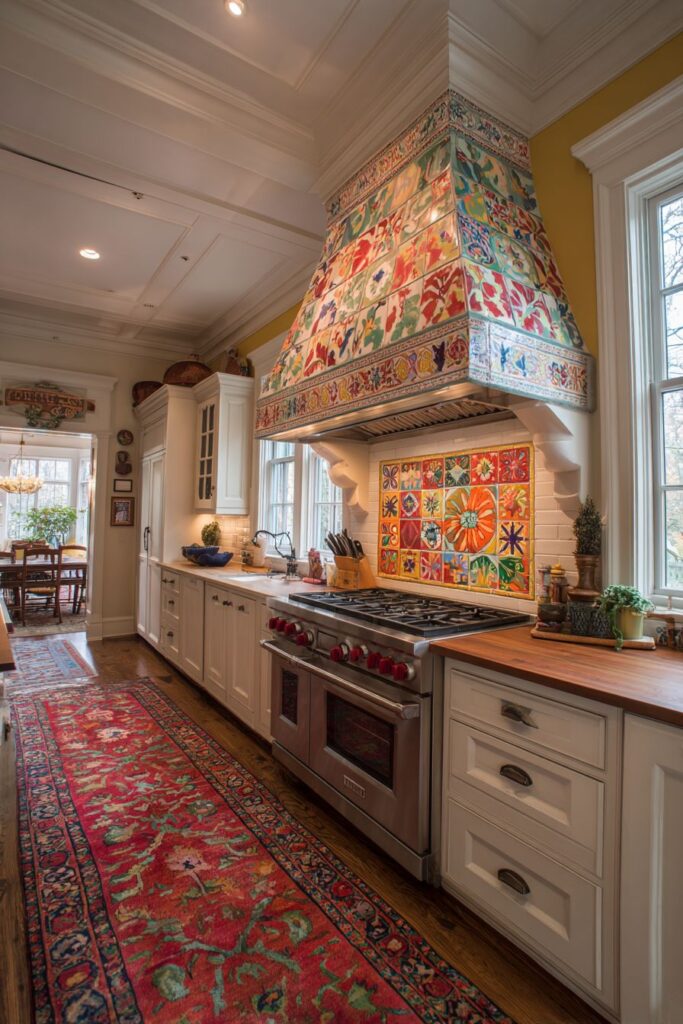
Countertops in both rich butcher block and sleek quartz demonstrate the eclectic principle of material mixing, with each surface chosen for its specific functional benefits while contributing to the overall textural richness of the space. The butcher block adds warmth and traditional craftsmanship appeal, while the quartz provides contemporary durability and easy maintenance. This combination shows how eclectic design can successfully incorporate both traditional and modern materials within a single workspace, creating kitchens that honor the past while embracing contemporary functionality.
Key Design Tips:
- Transform functional elements like range hoods into artistic focal points with decorative tile work
- Use multiple coordinating cabinet colors to create zones while maintaining overall harmony
- Mix vintage and modern hardware details for authentic eclectic character
- Combine different countertop materials to maximize both form and function
- Build tile designs using ceramics from different eras and regions for global sophistication
15. Apothecary-Inspired Display and Organization
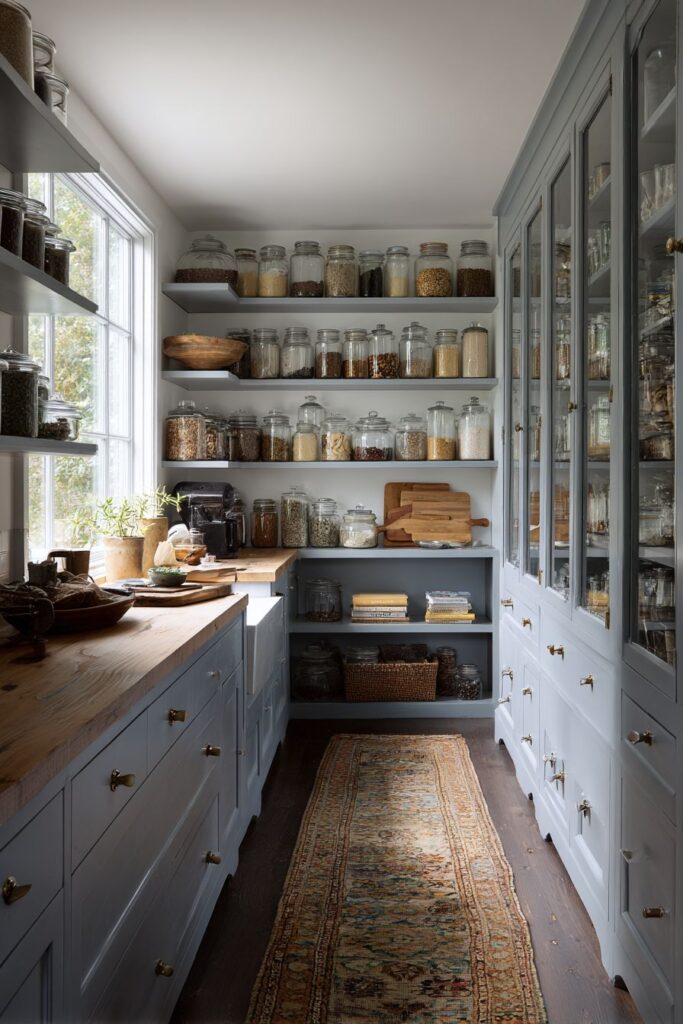
Vintage apothecary jars and modern glass canisters create a beautiful display storage solution that bridges historical pharmacy aesthetics with contemporary kitchen organization needs. These transparent containers showcase dry goods, spices, and other kitchen essentials while adding vertical interest and functional beauty to open shelving throughout the space. The combination of vintage and modern glass pieces demonstrates how eclectic design can honor traditional forms while adapting them for contemporary use, creating storage solutions that are both practical and visually compelling.
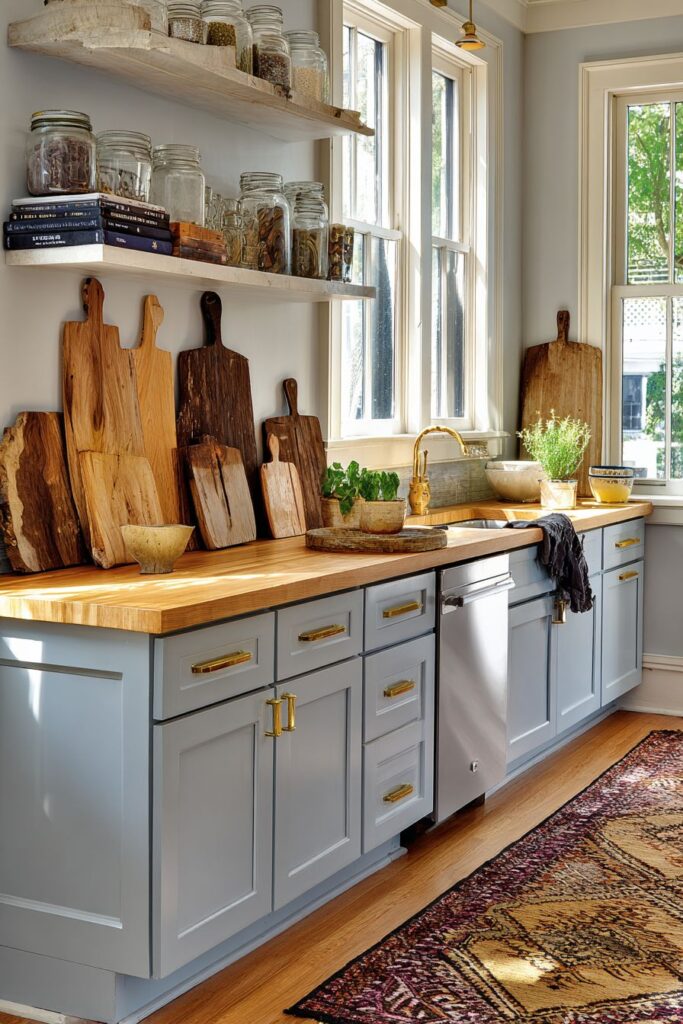
Painted cabinets in soft blue-gray provide a calming, sophisticated backdrop for the brass hardware that unifies various elements throughout the kitchen while adding warm metallic accents that complement the glass storage containers. The blue-gray color choice creates a serene atmosphere that allows the various collected pieces and natural materials to shine without competing for attention. Natural wood countertops add organic warmth and provide beautiful contrast to the painted cabinet finish while offering practical workspace for daily cooking activities.
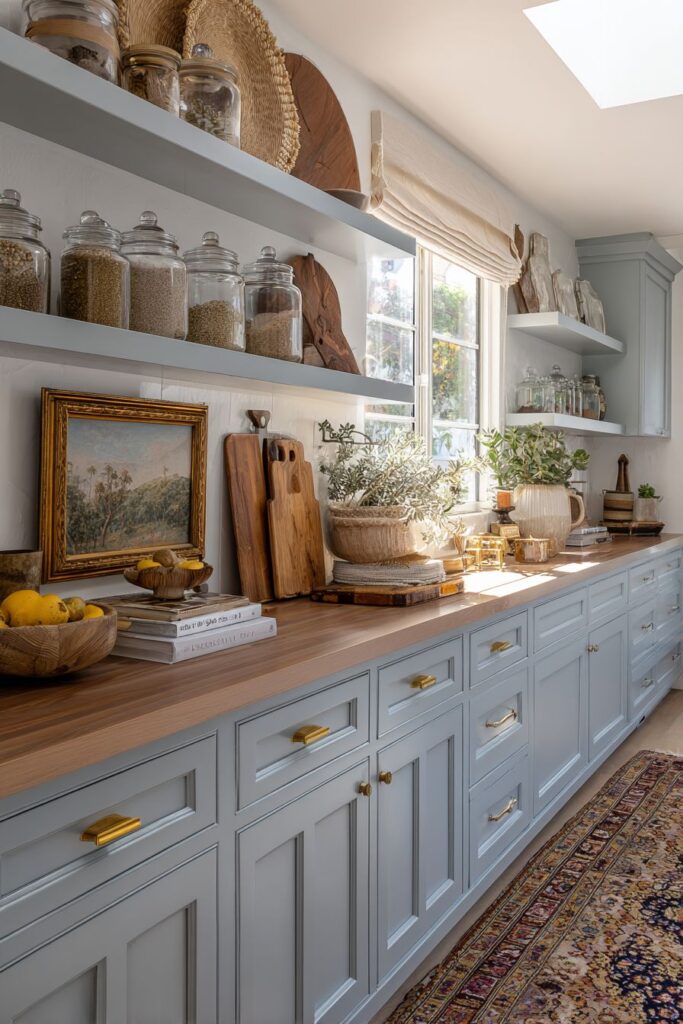
A vintage runner rug in warm, earthy tones adds comfort and color underfoot while helping to define the kitchen workspace and add softness to the hard surfaces of floors and countertops. A thoughtful collection of cutting boards in various woods and sizes leans casually against the backsplash, showcasing different wood grains and natural colors while remaining easily accessible for daily cooking tasks. Natural lighting streaming through windows highlights the beautiful arrangement of functional and decorative objects, demonstrating how eclectic kitchens can make everyday items into artistic displays that enhance both form and function.
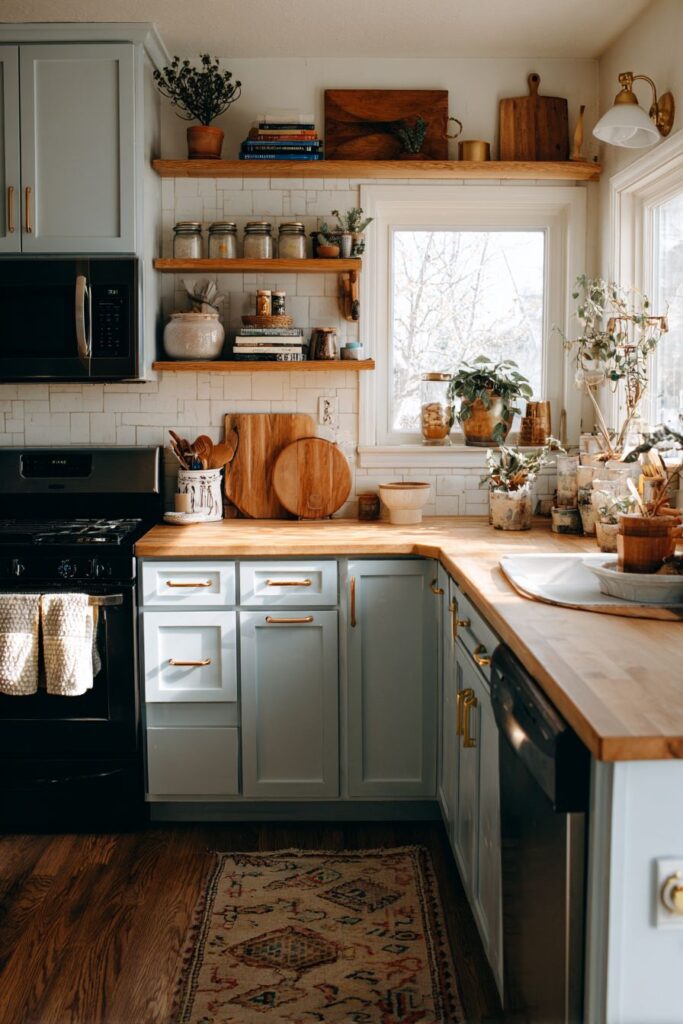
Key Design Tips:
- Use vintage apothecary jars mixed with modern containers for beautiful functional storage
- Choose soft, sophisticated paint colors that allow collections and natural materials to shine
- Add brass hardware as unifying warm metallic accents throughout the space
- Display cutting boards as functional art that showcases natural wood variations
- Layer vintage rugs to add warmth and comfort while defining workspace zones
16. Mixed Metallic Finishes for Visual Richness
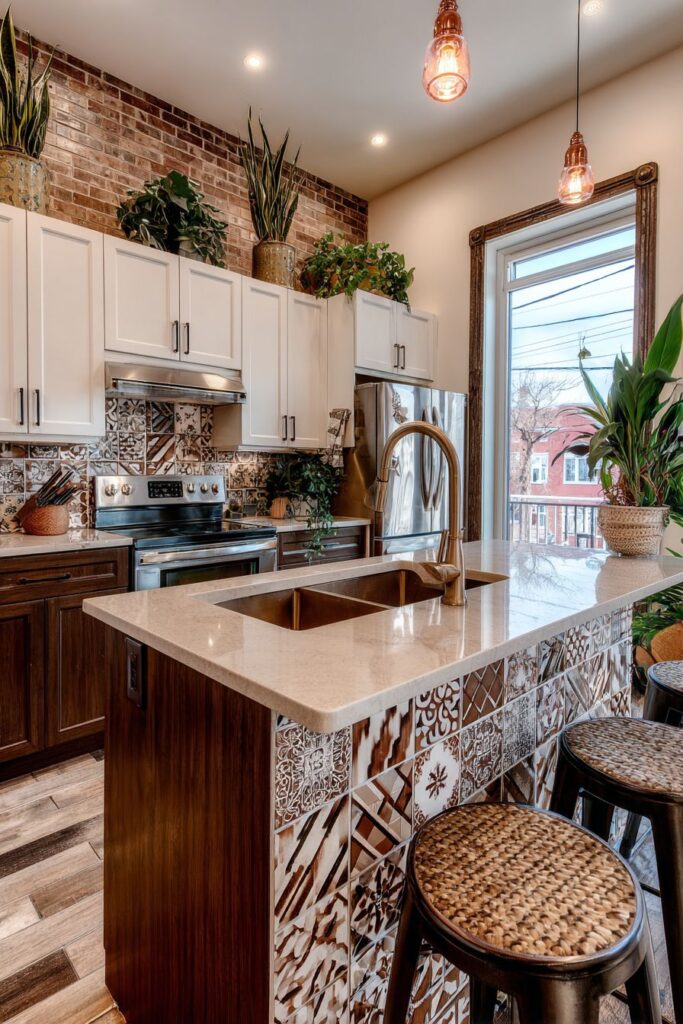
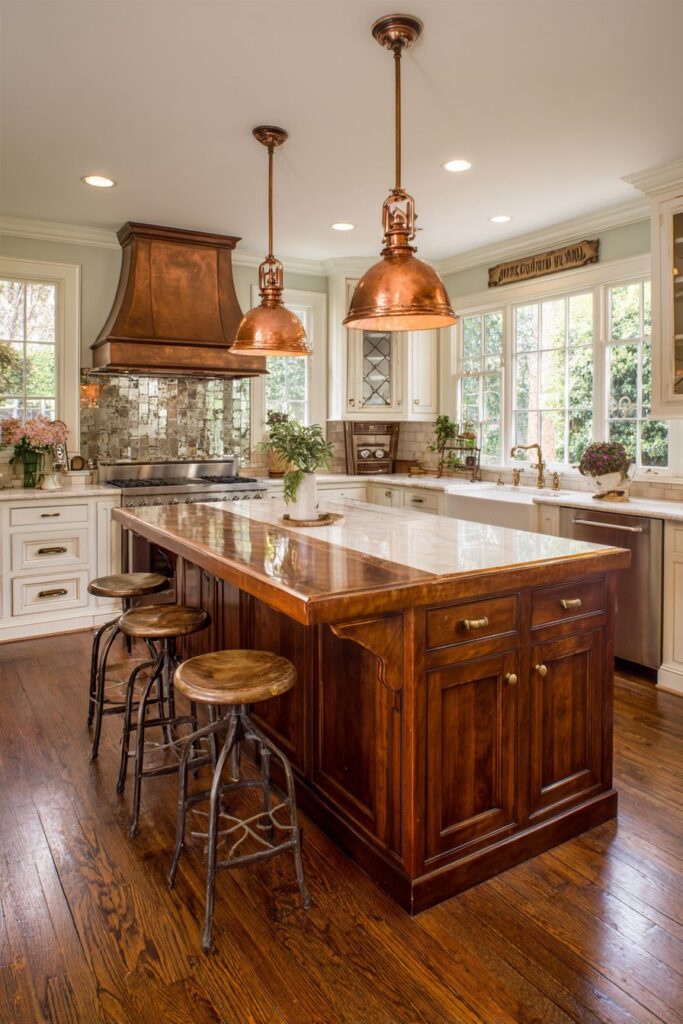
This sophisticated eclectic kitchen demonstrates the artful use of mixed metallic finishes through brass faucets, copper pendant lights, stainless steel appliances, and iron bar stools, creating a rich tapestry of metallic tones that work together harmoniously rather than competing for attention. The key to successfully mixing metals lies in strategic placement and proportion—each metallic finish serves a specific function while contributing to the overall warm, collected aesthetic that defines great eclectic design. This approach shows how multiple metallic finishes can create visual richness and depth while maintaining sophisticated restraint.
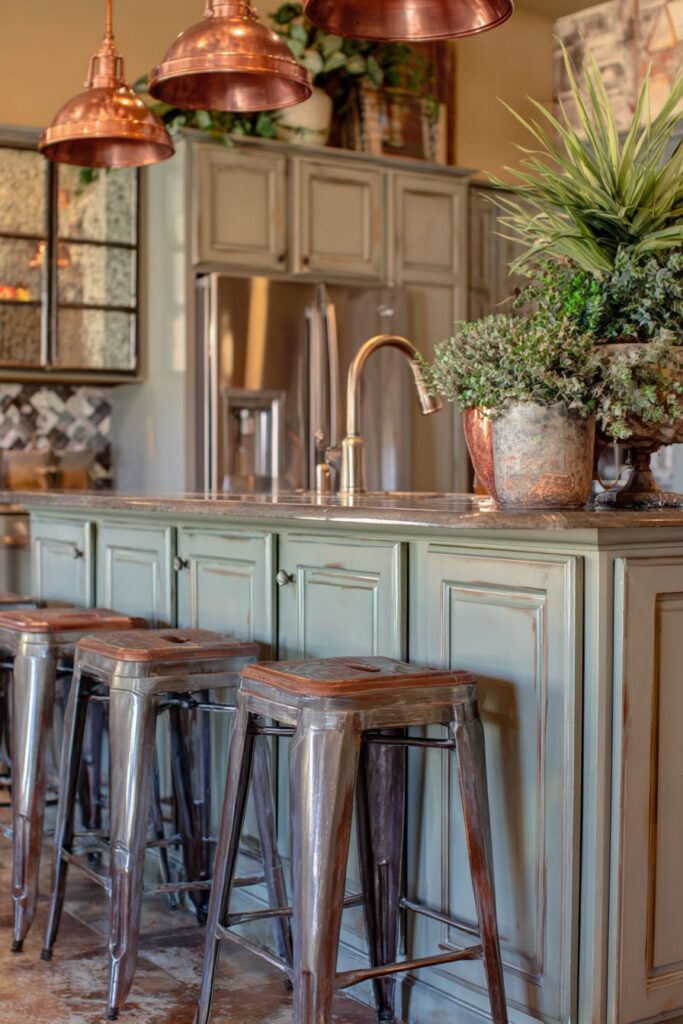
Cabinet finishes showcase both painted and stained options, demonstrating how wood treatments can complement the metallic variety while providing grounding natural elements that prevent the space from feeling too industrial or cold. The combination of different wood finishes adds textural interest while maintaining the warm, organic quality that makes kitchens feel inviting and comfortable. The backsplash cleverly combines classic subway tiles with vintage mirror tiles, creating reflective surfaces that multiply the light from various sources while adding glamorous vintage character to practical wall coverage.
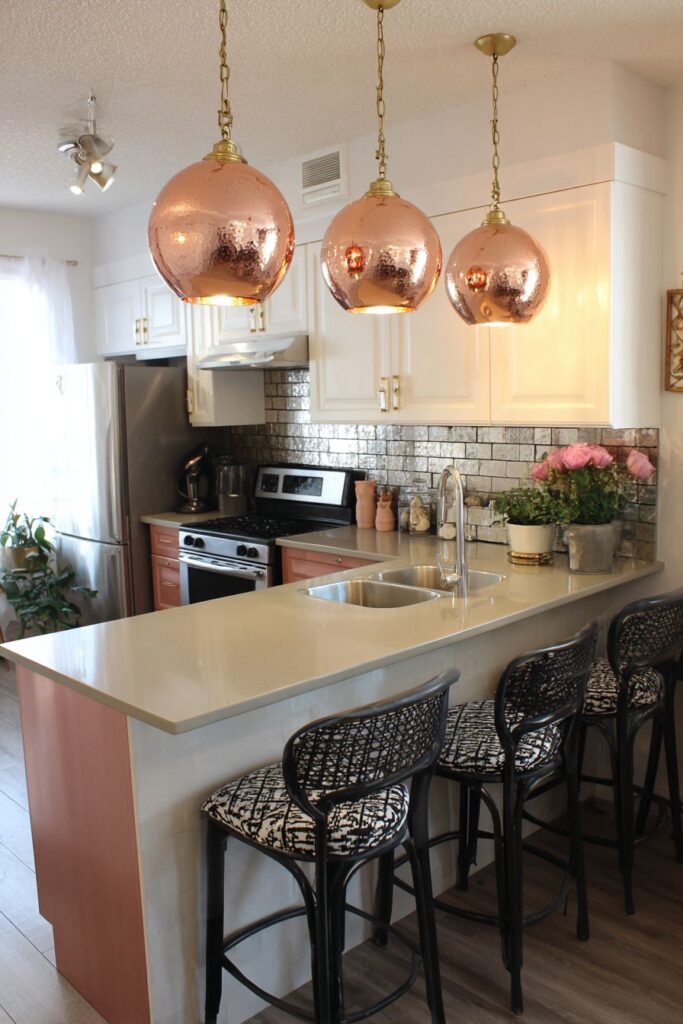
Plants in containers of various materials and sizes add living elements that soften the hard surfaces of metals and ceramics while introducing natural color variation and organic shapes that complement the angular precision of metallic fixtures and appliances. The professional photography captures how different metals can complement each other when chosen with intention and balanced throughout the space, rather than creating visual chaos through random metallic choices. This demonstrates the importance of treating metallic finishes as a cohesive design element rather than isolated individual choices.
Key Design Tips:
- Mix metallic finishes strategically with attention to balance and proportion throughout the space
- Combine painted and stained cabinet finishes for visual interest and natural grounding
- Use vintage mirror tiles to multiply light and add glamorous character to practical backsplashes
- Add living plants in varied containers to soften metallic hardness with organic elements
- Treat all metallic choices as part of a cohesive design strategy rather than random individual selections
17. Farm Table Island Alternative with Varied Seating
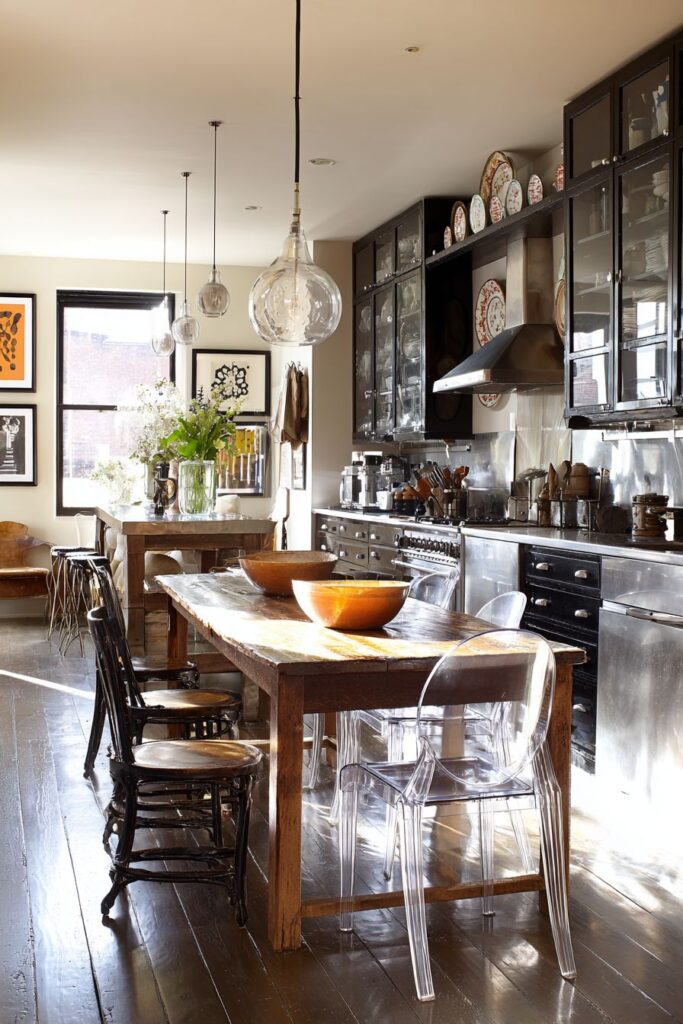
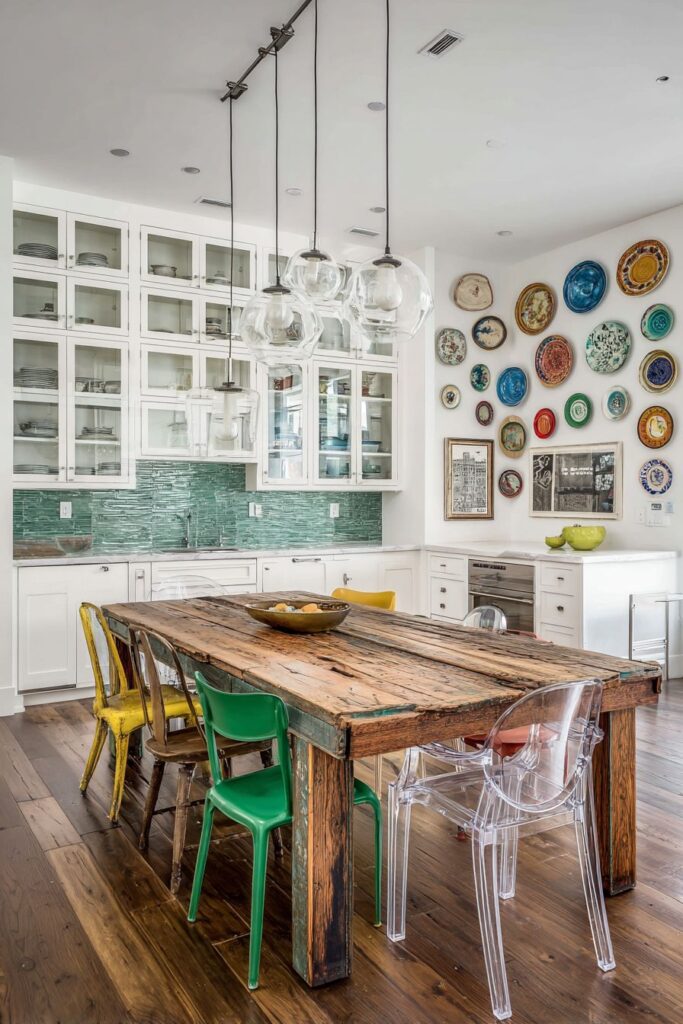
A substantial vintage farm table serves as an alternative to a traditional kitchen island, demonstrating how eclectic design can repurpose beautiful old pieces for contemporary functional needs while maintaining their inherent character and historical appeal. The table’s weathered wood surface and substantial proportions provide generous workspace for food preparation while serving as a gathering place for casual dining and conversation. This approach shows how eclectic kitchens can honor traditional furniture forms while adapting them for modern culinary lifestyles.
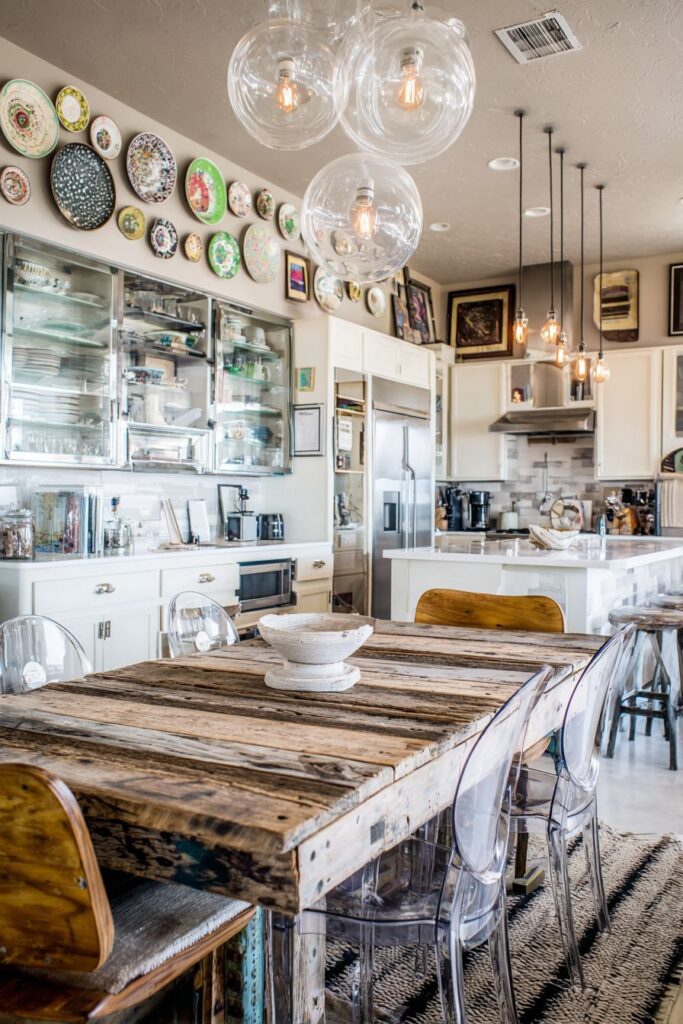
The seating around this central table showcases the eclectic principle of celebrating variety through chairs in completely different styles—modern acrylic pieces that seem to float visually, vintage wooden chairs with rich patina and character, and industrial metal pieces with angular contemporary appeal. Despite their obvious differences, these diverse seating options work together through careful attention to scale, proportion, and spacing, creating an engaging conversation area where each seat offers its own personality while contributing to the overall dynamic energy of the space.
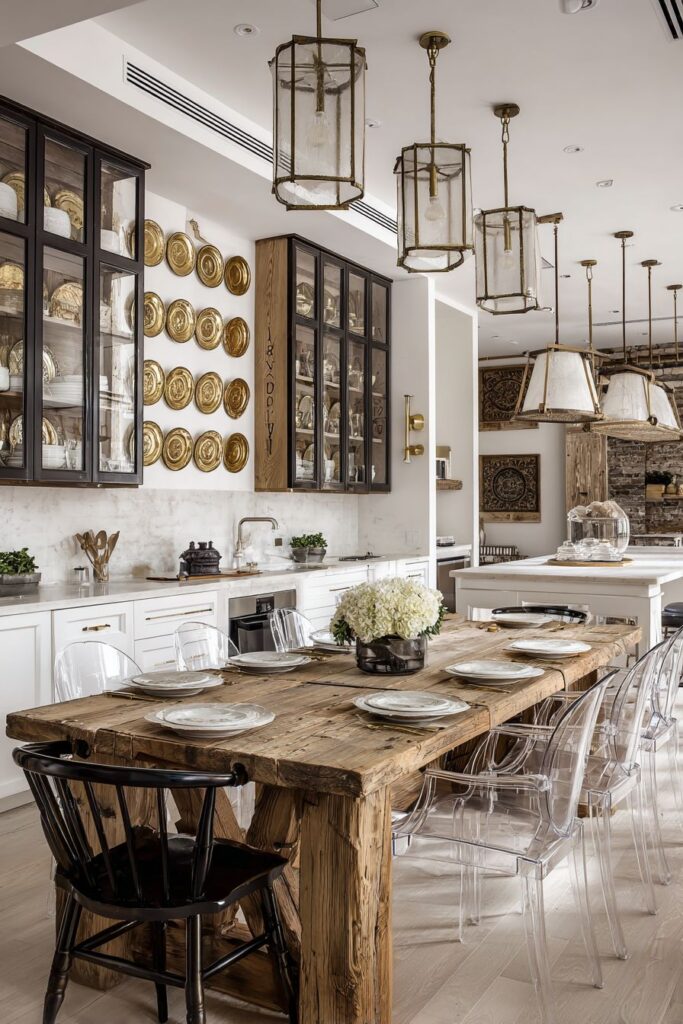
Glass-front upper cabinets mixed with solid painted lower cabinets provide varied storage solutions while maintaining visual lightness that prevents the substantial farm table from overwhelming the space. The glass fronts allow for beautiful display of collections while the solid lower cabinets provide concealed storage for less attractive necessities. Walls throughout the space feature a curated collection of vintage plates and modern artwork, creating gallery-like displays that add personality and visual interest while celebrating both historical and contemporary aesthetic traditions.
Key Design Tips:
- Repurpose substantial vintage tables as functional island alternatives with character and history
- Mix seating styles dramatically while maintaining unity through scale and proportion
- Combine glass-front and solid cabinet doors for varied storage and display options
- Create gallery walls mixing vintage collections with contemporary art pieces
- Use pendant lighting at varying heights to create intimate zones around large central tables
18. Textured Walls with Layered Natural Elements
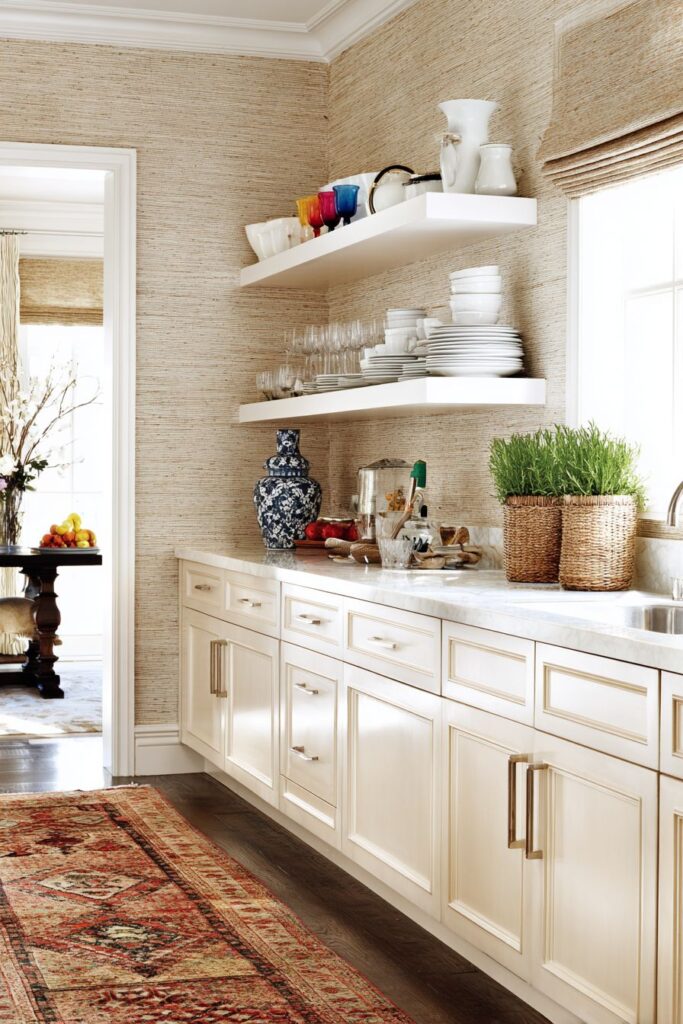
Grasscloth wallpaper creates beautiful textured walls that add sophisticated natural appeal behind open shelving displaying a carefully curated mix of modern white dishes, vintage colored glassware, and small potted herbs for both function and fresh beauty. The grasscloth texture introduces organic pattern and depth without overwhelming the space, while providing a beautiful neutral backdrop that allows collected objects to shine with their individual character and appeal. This approach shows how textured wall treatments can add visual interest while maintaining the sophisticated restraint essential to successful eclectic design.
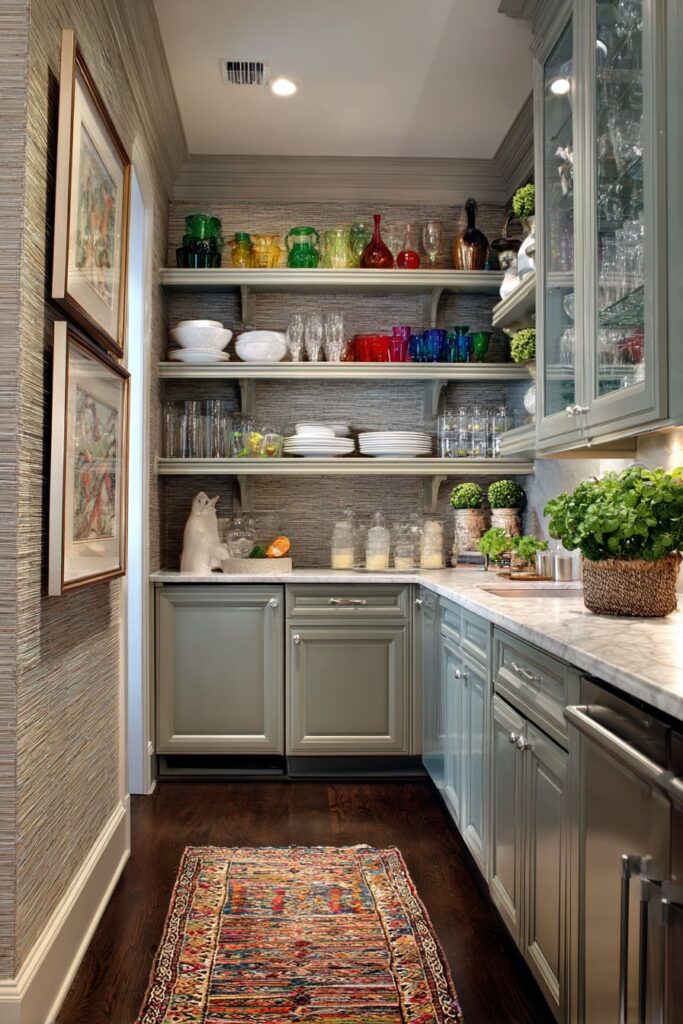
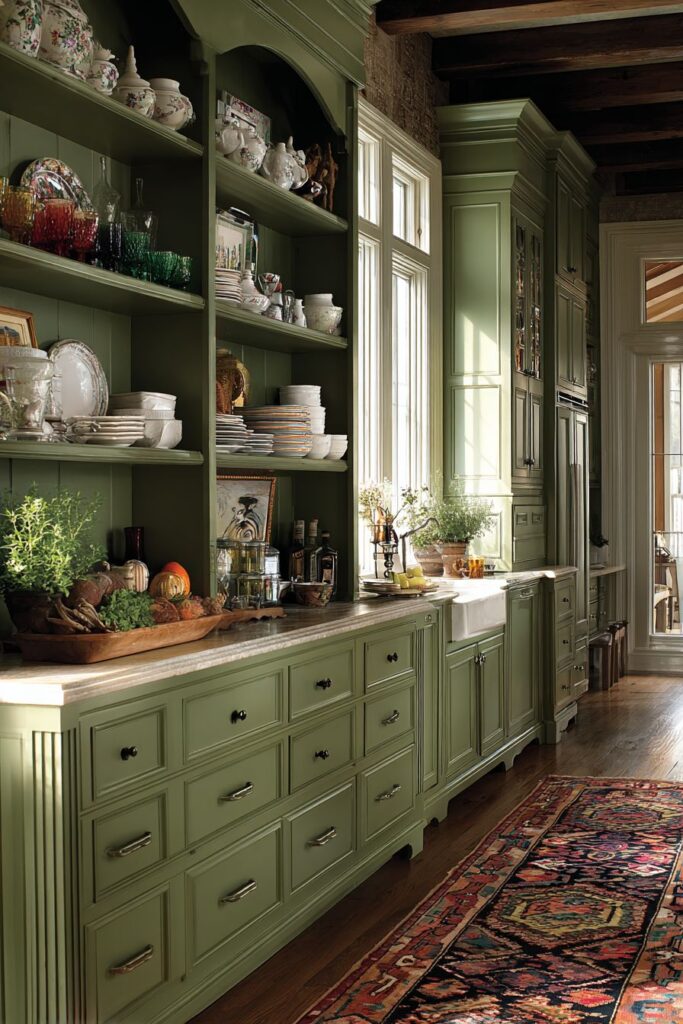
Cabinetry throughout the space showcases both contemporary flat-panel doors and traditional raised-panel styles in coordinating but different colors, demonstrating how various door styles can coexist successfully when unified through strategic color choices and quality hardware selection. This mixing of cabinet door styles adds visual texture and interest while providing opportunities to highlight different functional zones within the kitchen workspace. The coordinating color palette ensures that variety enhances rather than disrupts the overall design harmony.
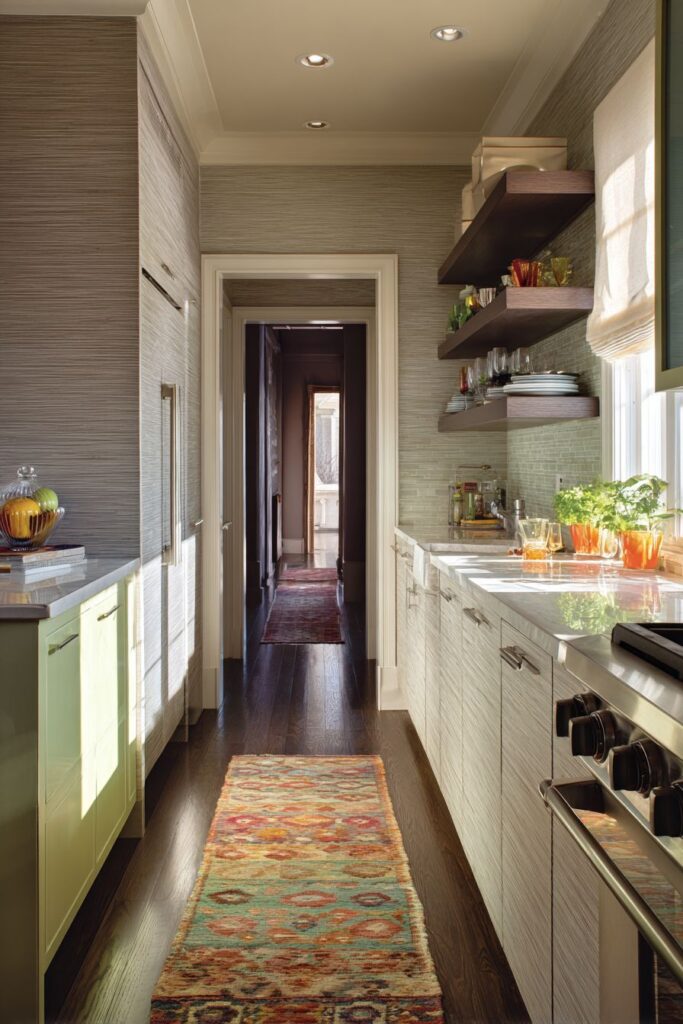
A vintage kilim runner adds pattern, warmth, and comfort to the hardwood floors while introducing additional color and textile richness that complements the grasscloth walls and natural wood elements throughout the space. The runner’s geometric patterns and earthy colors provide grounding elements that anchor the various collected pieces and cabinet styles while adding the kind of lived-in comfort that makes eclectic kitchens feel welcoming and personal. Natural light emphasizes the beautiful layered textures of grasscloth, wood, textiles, and varied objects, creating a rich sensory experience that changes throughout the day.
Key Design Tips:
- Use grasscloth wallpaper to add sophisticated natural texture behind open shelving displays
- Mix cabinet door styles successfully through coordinating colors and quality hardware
- Add vintage textile runners to introduce pattern and warmth to hardwood flooring
- Display functional items like herbs alongside decorative objects for living beauty
- Layer multiple natural textures to create rich sensory experiences that change with lighting
19. Repurposed Library Ladder for Creative Storage
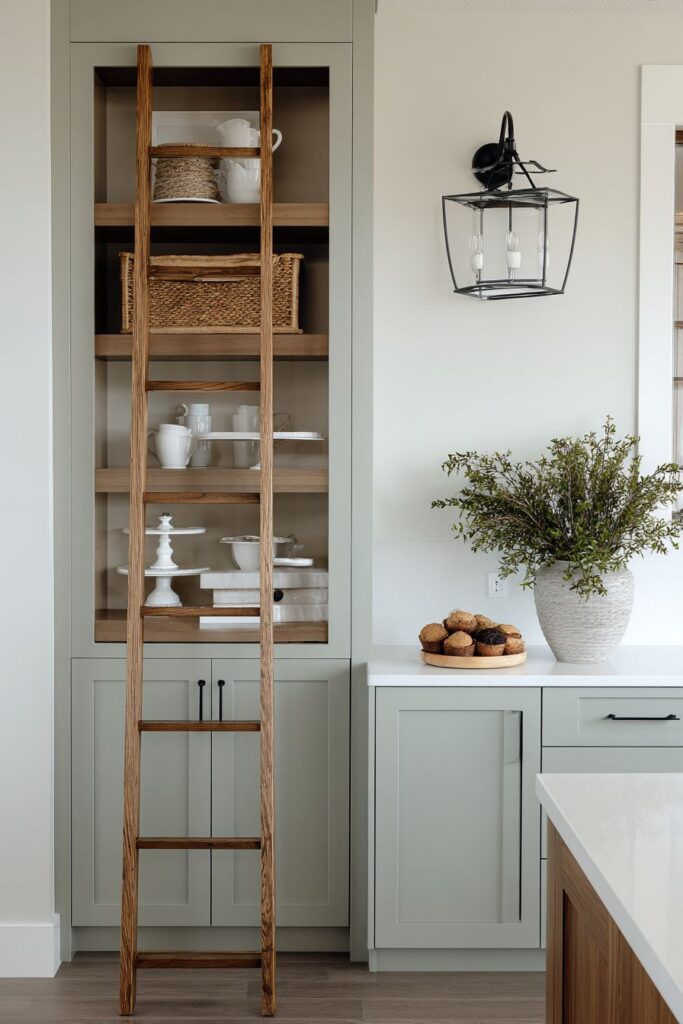
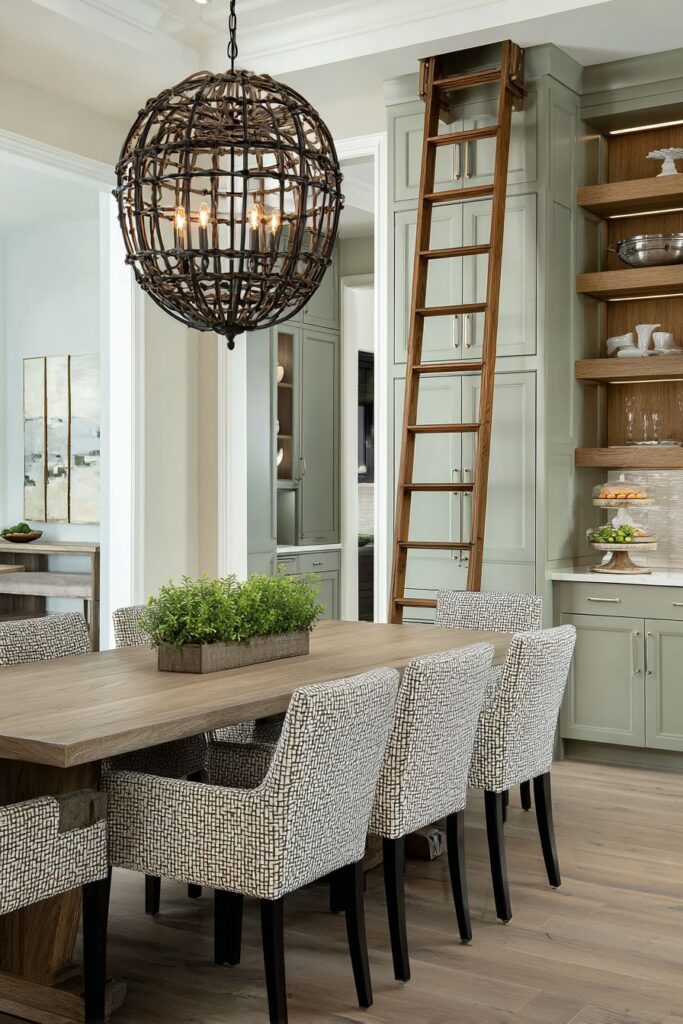
A vintage library ladder repurposed for accessing upper kitchen cabinets demonstrates the eclectic principle of finding new uses for beautiful old objects while adding both practical function and visual charm to the space. The ladder’s warm wood tones and classic proportions add vertical interest while providing safe access to high storage areas, showing how eclectic design can solve practical problems through creative adaptation of historical pieces. This approach celebrates the beauty of well-made older objects while proving their continued relevance in contemporary living spaces.
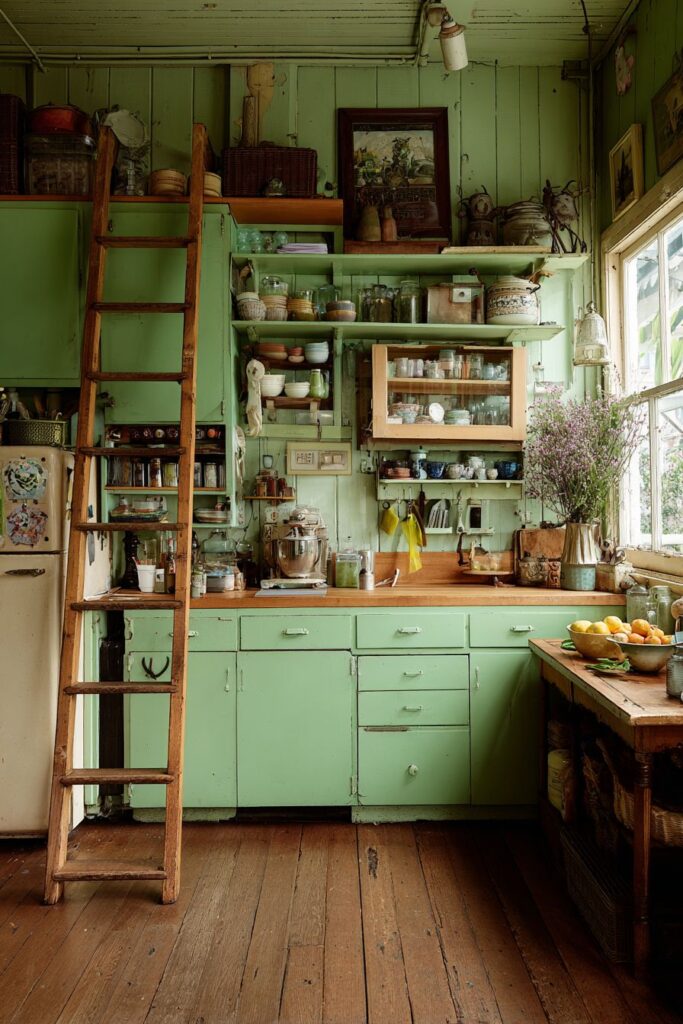
Painted cabinets in sage green provide a sophisticated color backdrop that complements the warm wood ladder while natural wood elements throughout add organic texture and traditional craftsmanship appeal. Vintage industrial lighting fixtures add character and focused illumination while maintaining the mixed-period aesthetic that makes eclectic kitchens so personally appealing and visually interesting. The combination of painted and natural wood finishes creates visual zones while maintaining overall harmony through careful color coordination and attention to proportion.
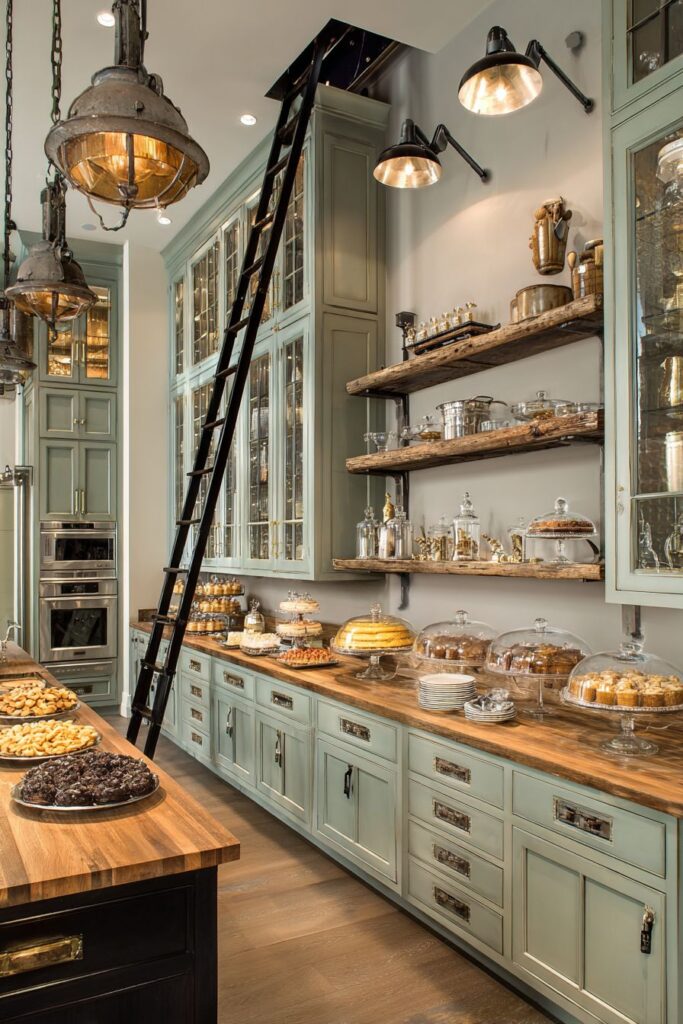
A collection of vintage cake stands and modern serving pieces creates functional display on open shelving, demonstrating how eclectic kitchens can celebrate both the practical and decorative aspects of beautiful objects. The cake stands add vertical interest and vintage charm while remaining readily available for entertaining use, while modern serving pieces provide contemporary functionality and clean lined appeal. This thoughtful curation shows how successful eclectic design requires intentional selection rather than random accumulation, with each piece chosen for its contribution to both form and function.
Key Design Tips:
- Repurpose vintage ladders creatively for both access and decorative architectural interest
- Combine sage green painted elements with natural wood for sophisticated color harmony
- Use vintage industrial lighting to add character while providing functional task illumination
- Display functional serving pieces as decorative elements on open shelving systems
- Curate collections intentionally rather than accumulating random objects for an authentic eclectic appeal
20. Breakfast Bar with Mixed Period Elements
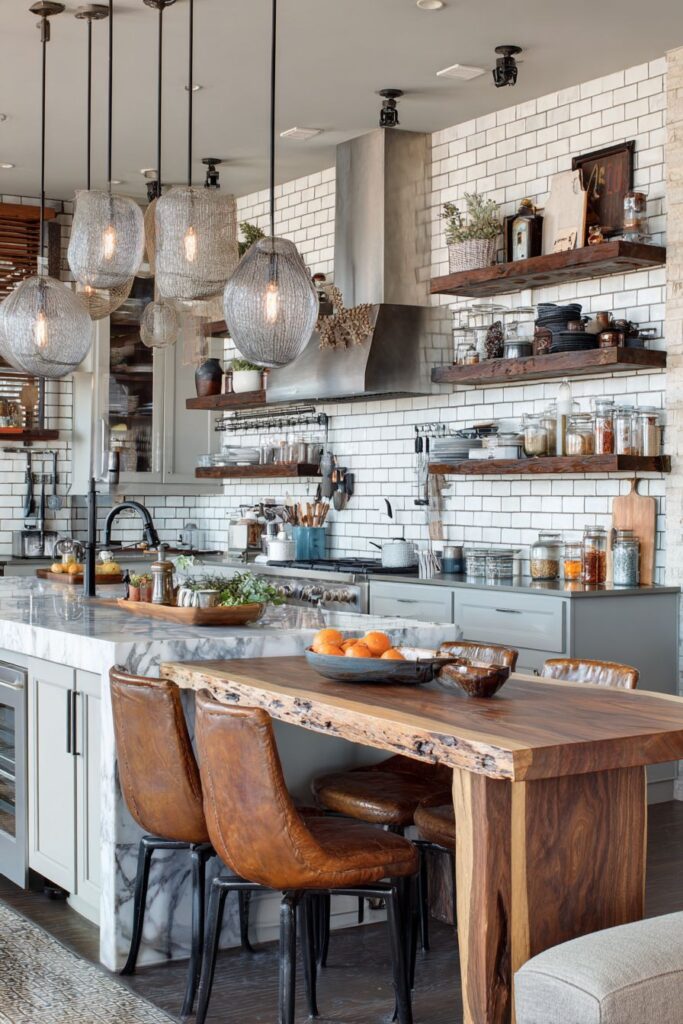
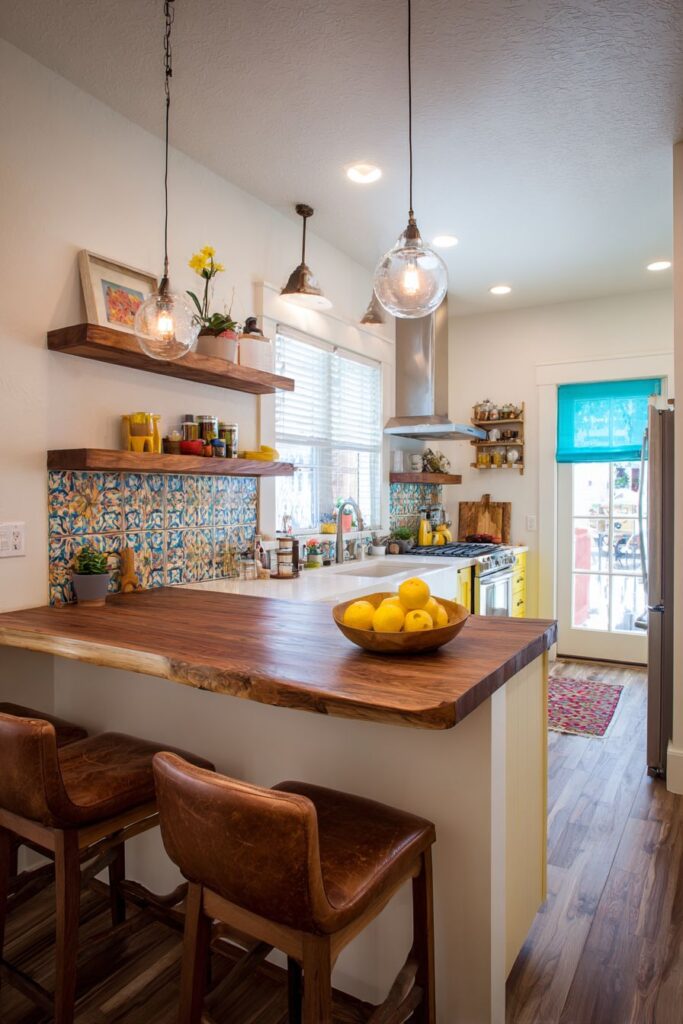
A cozy breakfast bar featuring vintage leather counter stools paired with modern pendant lighting and a live-edge wood counter extension creates an intimate casual dining area that perfectly exemplifies the successful mixing of different historical periods and design styles. The vintage leather stools add rich texture and warm color while providing comfortable seating that develops beautiful patina over time, demonstrating how eclectic design celebrates the aging process of quality materials. The modern pendant lighting provides clean-lined contemporary appeal while ensuring proper task lighting for dining and food preparation activities.
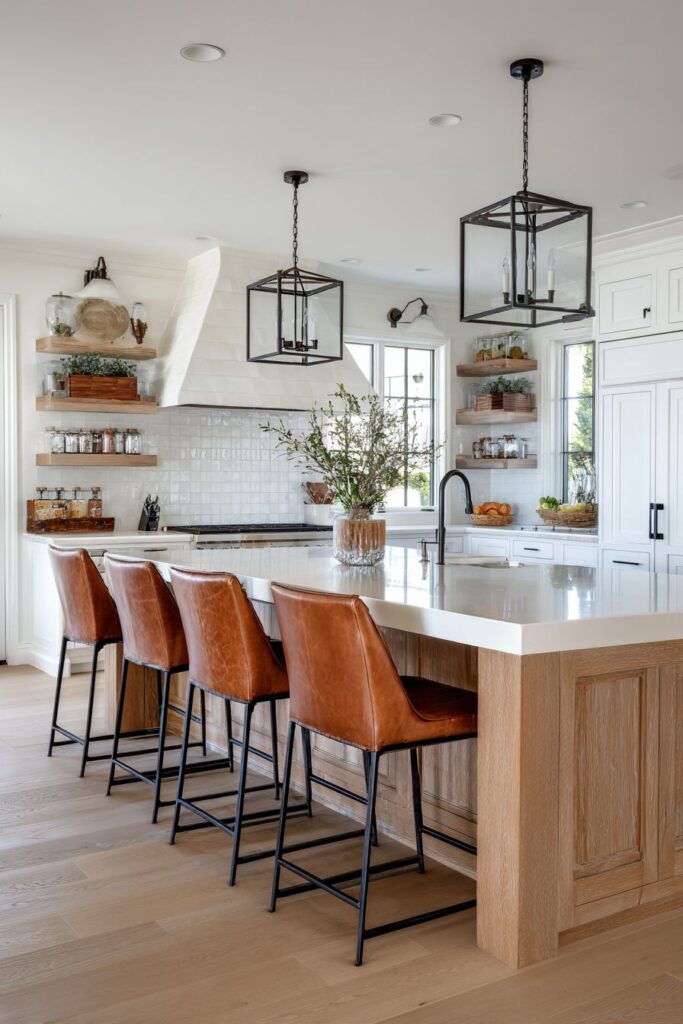
The live-edge wood counter extension showcases the natural beauty of wood grain while providing additional workspace and casual dining surface that bridges rustic and contemporary aesthetics seamlessly. This organic element adds warmth and natural character to the space while demonstrating how eclectic design can incorporate both refined and rustic elements within a single functional area. The contrast between the smooth leather seating and rough-edged natural wood creates interesting textural dialogue that engages the senses and adds visual depth.
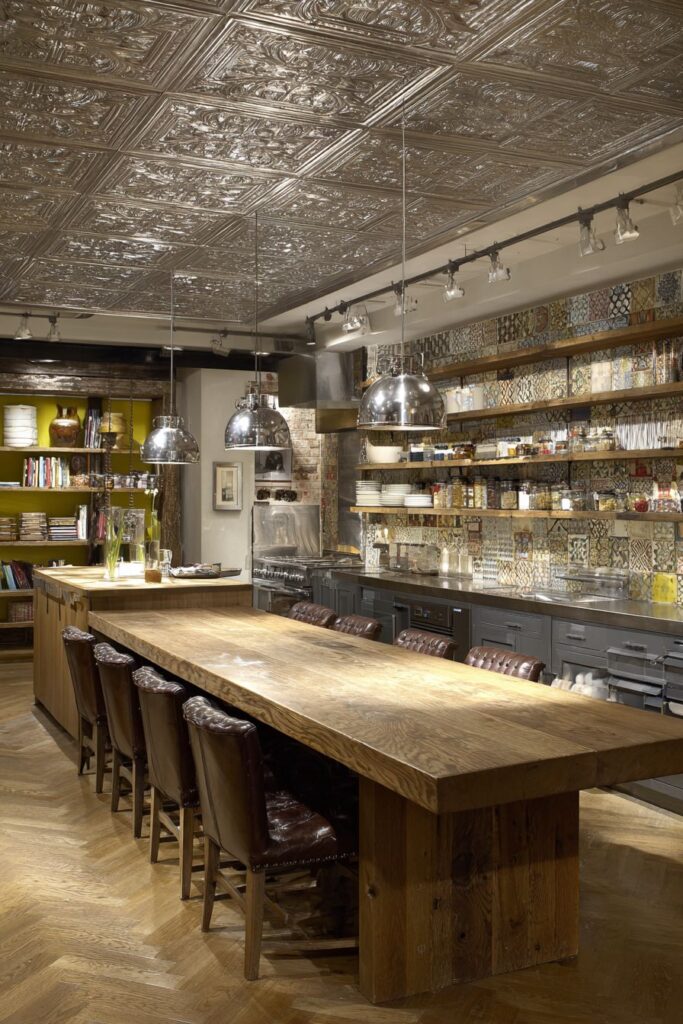
The main kitchen area successfully combines white subway tiles with vintage tin ceiling tiles as backsplash elements, creating an unexpected and charming mixture that celebrates both classic and industrial design traditions. This creative backsplash approach shows how eclectic design can repurpose architectural salvage materials for new uses while maintaining their historical character and charm. Cabinetry throughout the space mixes painted and natural finishes, while walls include both modern floating shelves and vintage spice racks, creating functional storage with significant visual interest and personality.
Key Design Tips:
- Mix vintage leather seating with contemporary lighting for successful period blending
- Use live-edge wood elements to bridge rustic and refined design aesthetics naturally
- Combine different tile types creatively for unique backsplash treatments with historical character
- Mix cabinet finishes strategically while maintaining overall visual harmony through color coordination
- Repurpose vintage storage pieces like spice racks alongside modern shelving for functional charm
Why These Eclectic Kitchen Designs Represent the Best of Contemporary Kitchen Style
These twenty eclectic kitchen designs represent the pinnacle of contemporary kitchen styling because they successfully demonstrate how thoughtful curation, balanced proportions, and strategic layering can create spaces that are both highly functional and deeply personal. Each design showcases the fundamental principles that make eclectic kitchens so appealing: the celebration of individuality over conformity, the honoring of both historical and contemporary design traditions, and the creation of spaces that tell stories through carefully chosen objects and materials.
The vintage and modern fusion approach seen throughout these designs represents the best of eclectic thinking—honoring the craftsmanship and character of historical pieces while embracing the functionality and clean lines of contemporary design. This approach creates kitchens that feel both timeless and current, avoiding the dated look that can plague kitchens designed in single-period styles. The mixed material philosophy demonstrated in these spaces shows how combining elements like reclaimed wood, vintage metals, contemporary ceramics, and natural stone can create rich textural experiences that engage multiple senses and create lasting visual interest.
The color coordination strategies employed in these designs prove that eclectic doesn’t mean chaotic—each space demonstrates how unifying color palettes can allow diverse elements to coexist harmoniously while maintaining their individual character. The strategic pattern mixing shown throughout these kitchens illustrates how bold patterns can be used as focal points when balanced with neutral elements, creating spaces that feel dynamic without overwhelming the senses. The creative storage solutions featured in these designs show how functional necessities can become decorative features through thoughtful selection and display of beautiful objects.
The lighting layering techniques demonstrated across these spaces prove how multiple light sources at different heights can create ambiance, provide task illumination, and highlight collections and architectural features effectively. The open shelving displays featured throughout these kitchens show how practical storage can double as curated gallery space, allowing homeowners to showcase their collections while keeping items easily accessible for daily use. The mixed seating approaches seen in these designs demonstrate how variety in furniture selection can create more interesting and personally expressive spaces than matching sets ever could.
These eclectic kitchen designs succeed because they understand that the best kitchens serve multiple functions—they must be practical workspaces, comfortable gathering places, and expressions of personal style all at once. The repurposing and adaptation strategies shown throughout these spaces demonstrate sustainable design thinking while creating truly unique focal points that can’t be purchased in any store. The global influence integration seen in many of these designs shows how incorporating elements from different cultures and traditions can create sophisticated, worldly spaces that celebrate diversity and craftsmanship traditions from around the world.
The natural element incorporation featured throughout these designs proves how living plants, natural wood grains, and organic textures can soften hard surfaces and add life to spaces dominated by manufactured materials. The metallic mixing mastery demonstrated in several of these kitchens shows how different metal finishes can work together when chosen strategically and balanced throughout the space, creating richness without chaos.
Most importantly, these designs succeed because they demonstrate that eclectic style requires more skill and intention than any other design approach—successfully mixing periods, styles, colors, and materials demands a sophisticated understanding of proportion, balance, and harmony that creates spaces with both immediate appeal and lasting satisfaction.
Conclusion
The twenty eclectic kitchen designs explored in this comprehensive guide demonstrate that successful eclectic style is far from random—it requires careful curation, strategic planning, and a sophisticated understanding of how different elements can work together to create harmonious yet dynamic spaces. Each design proves that eclectic kitchens can successfully balance bold focal points with neutral grounding elements, mix multiple periods and styles while maintaining visual unity, and create spaces that are both highly functional and deeply personal.
The key to achieving successful eclectic kitchen design lies in understanding that variety and harmony are not opposing forces—when carefully balanced, diverse elements can create richer, more interesting spaces than any single design style could achieve alone. Whether through mixing cabinet finishes, combining different lighting styles, layering textures and patterns, or displaying collections of varied objects, these designs show how eclectic principles can create kitchens that truly reflect their owners’ personalities while providing practical, beautiful spaces for daily living.
As you consider incorporating eclectic elements into your own kitchen design, remember that the best eclectic spaces evolve over time through thoughtful addition and careful curation rather than wholesale renovation. Start with elements that speak to you personally—perhaps a vintage light fixture, a collection of colorful dishware, or a piece of repurposed furniture—and build around these anchor pieces with intention and patience. The result will be a kitchen that not only serves your practical needs but also tells your unique story through the beautiful interplay of carefully chosen elements from different periods, styles, and traditions.
"As an Amazon Associate, I earn from qualifying purchases."
