
The dining room serves as the heart of the home, a gathering place where families come together to share meals, celebrate special occasions, and create lasting memories. Unlike other spaces that may prioritize function over form, the dining room offers a unique opportunity to express your personality through bold design choices and creative combinations. Eclectic dining room design represents the perfect marriage of different styles, periods, and aesthetics, creating spaces that are both visually stunning and deeply personal.
Embracing an eclectic approach to dining room design allows you to break free from the constraints of traditional decorating rules. This style celebrates the beauty found in contrast, the harmony achieved through thoughtful curation, and the personality that emerges when diverse elements are brought together with intention. Whether you’re drawn to mixing vintage finds with contemporary pieces, layering patterns and textures, or combining furniture from different cultures and eras, eclectic design offers endless possibilities for creating a truly unique space.
The twenty distinctive dining room concepts explored in this comprehensive guide demonstrate how eclectic design principles can be applied across various budgets, space sizes, and personal preferences. From bold pattern mixing and vintage modern fusion to global influences and sustainable design choices, each concept offers practical inspiration and actionable advice for transforming your dining space into an eclectic masterpiece that reflects your individual style and enhances your daily living experience.
1. Vintage Persian Elegance Meets Mid-Century Modern
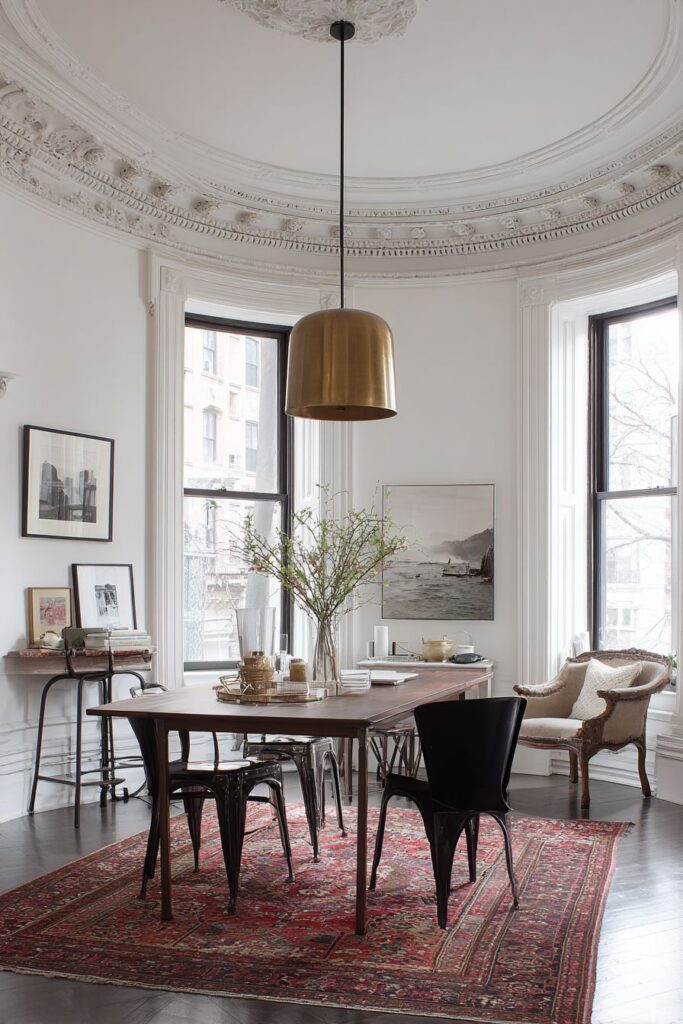
Step into a dining room where a magnificent vintage Persian rug serves as the foundation for an extraordinary blend of design periods. The rich jewel tones and intricate patterns of the antique carpet provide a luxurious base for a sleek mid-century modern walnut dining table, its clean lines and warm wood grain creating a striking contrast against the ornate textile beneath. The seating arrangement tells a story of collected treasures: a stately Victorian armchair with its carved details and rich upholstery, two industrial metal stools that add urban edge, and an elegant French bergère with its characteristic curved silhouette and refined fabric.
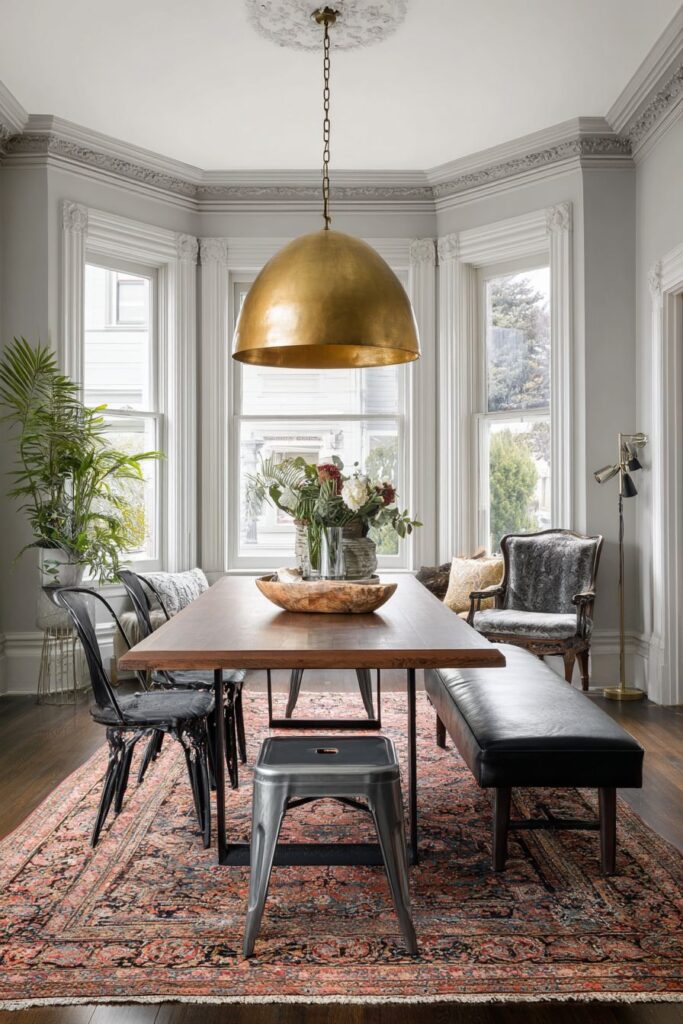
The lighting in this space demonstrates the power of unexpected pairings. A contemporary brass pendant light hangs gracefully above the table, its geometric form and warm metallic finish creating visual tension with the room’s traditional crown molding. This juxtaposition of old and new, ornate and minimal, creates a sophisticated dialogue between different design eras. The brass fixture not only provides functional task lighting but also serves as a sculptural element that bridges the gap between the antique furnishings and the modern table.
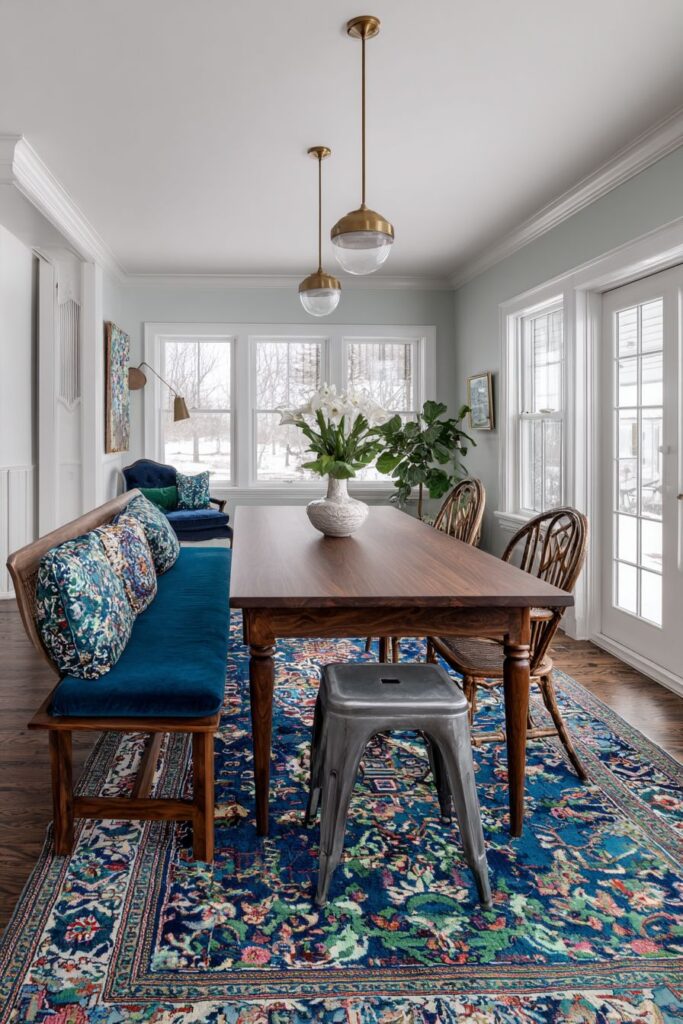
Natural light streaming through tall windows illuminates the carefully curated collection, highlighting the varied textures and finishes that make this space so compelling. The interplay of light across the Persian rug’s silk threads, the walnut’s natural grain, the brass pendant’s reflective surface, and the diverse upholstery fabrics creates a constantly changing visual experience throughout the day. This dynamic quality ensures the room never feels static, instead offering new discoveries with each viewing angle and lighting condition.
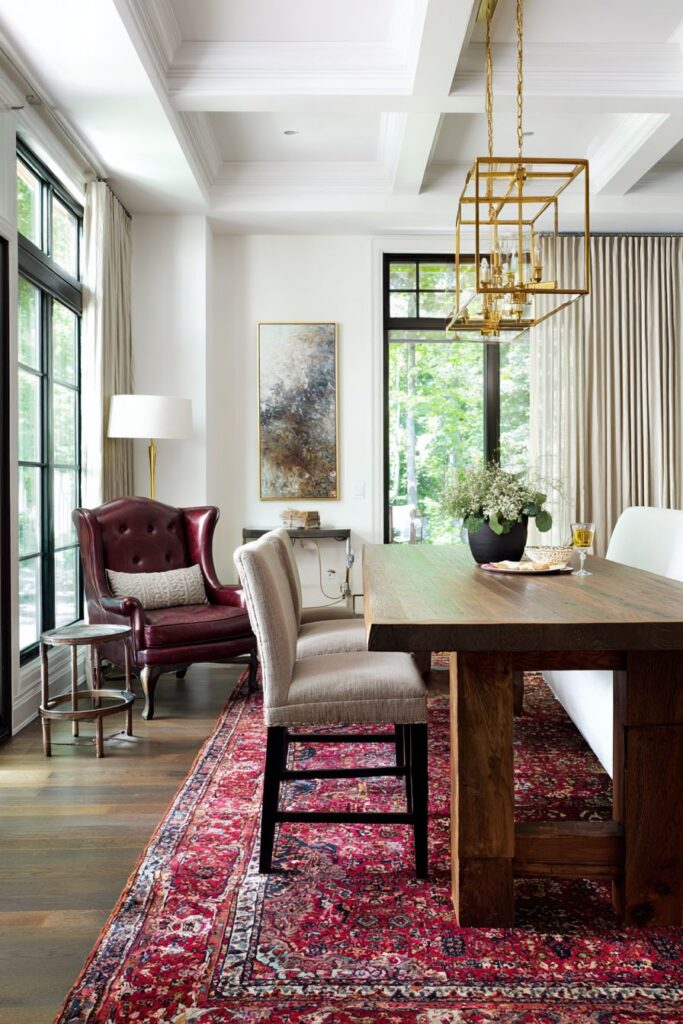
Key Design Tips:
- Choose one large statement piece like a Persian rug to anchor your eclectic mix
- Balance ornate elements with clean-lined modern pieces to prevent visual overwhelm
- Use metallic accents strategically to create cohesion between disparate elements
- Invest in quality natural lighting to showcase the beauty of mixed textures and materials
2. Rustic Farmhouse Foundation with Eclectic Seating
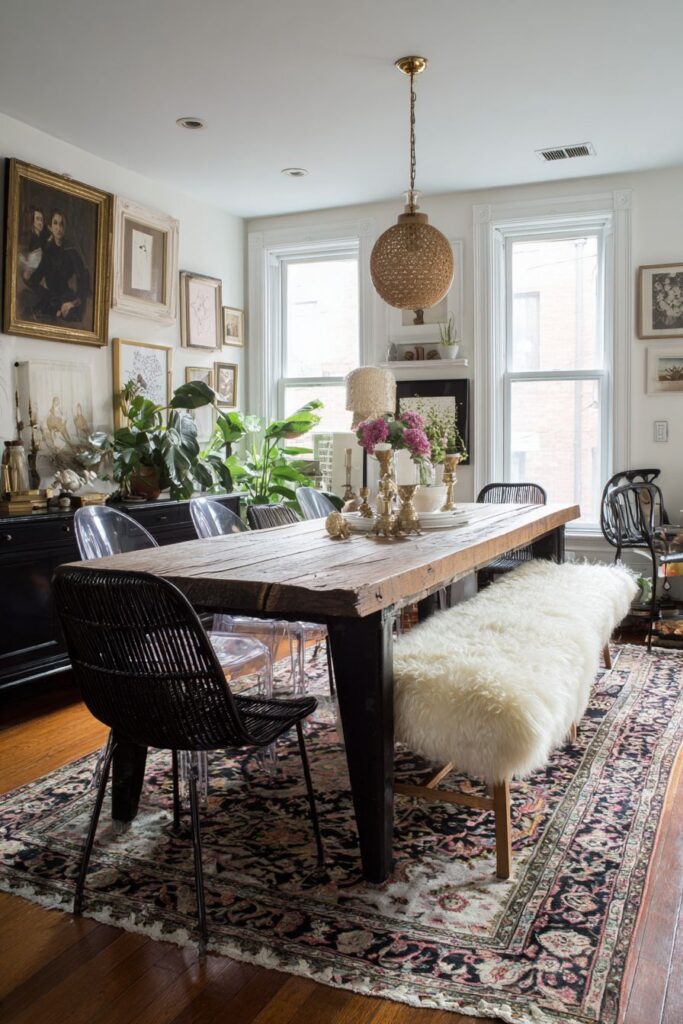
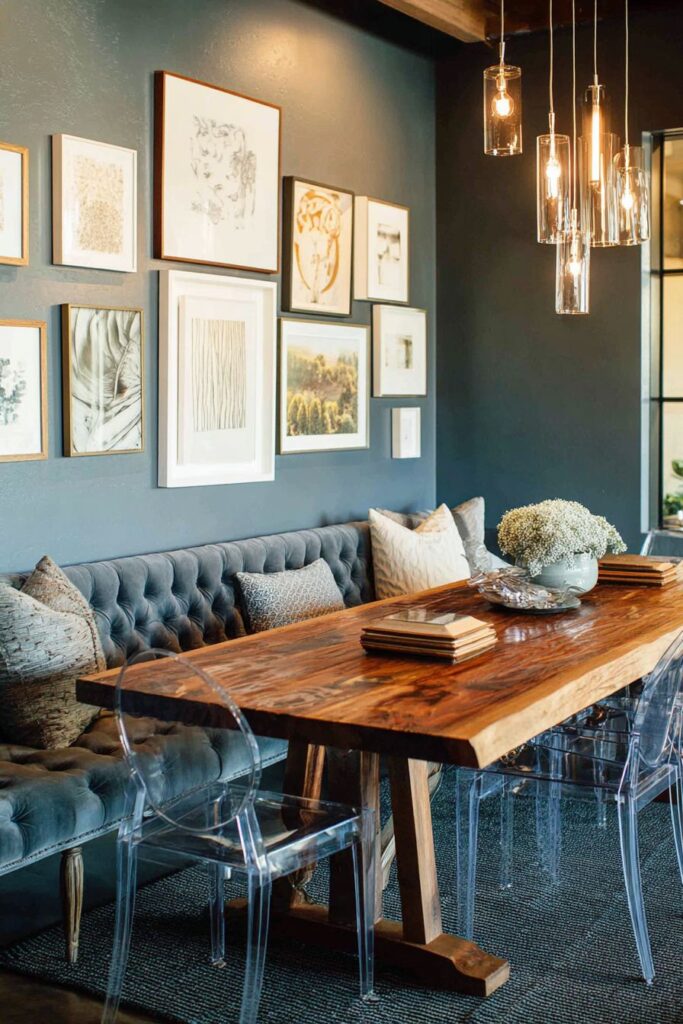
A rustic farmhouse table elevated on sleek hairpin legs creates an intriguing foundation that bridges traditional and contemporary aesthetics. This unexpected pairing demonstrates how eclectic design can honor classic forms while embracing modern manufacturing techniques. The substantial wooden top carries the weight of history and craftsmanship, while the minimalist metal legs add an industrial edge that prevents the space from feeling overly traditional or rustic.
The seating arrangement transforms the dining experience into a celebration of diverse comfort preferences and design periods. A tufted velvet bench provides luxurious seating along one side, its rich texture and deep pile creating a sense of opulence that contrasts beautifully with the table’s rustic character. Rattan chairs bring natural warmth and casual elegance, their woven texture adding organic appeal and lightness to the composition. The single sleek acrylic chair serves as a modern punctuation mark, its transparent form allowing the other elements to shine while contributing contemporary sophistication.
The walls become a canvas for personal storytelling through a carefully composed gallery wall that mixes vintage botanical prints, modern abstract art, and family photographs in various frame styles. This eclectic arrangement creates visual interest at eye level while seated, encouraging conversation and providing talking points for guests. The mix of subject matters and artistic styles reflects the homeowner’s diverse interests and experiences, making the space feel authentically personal rather than designed by committee.
Key Design Tips:
- Combine furniture legs and bases from different eras for unexpected visual interest
- Use bench seating to maximize flexibility and accommodate varying group sizes
- Create gallery walls with mixed media to add personality and conversation starters
- Balance heavy rustic elements with lighter, more delicate pieces
3. Bold Pattern Mixing Mastery
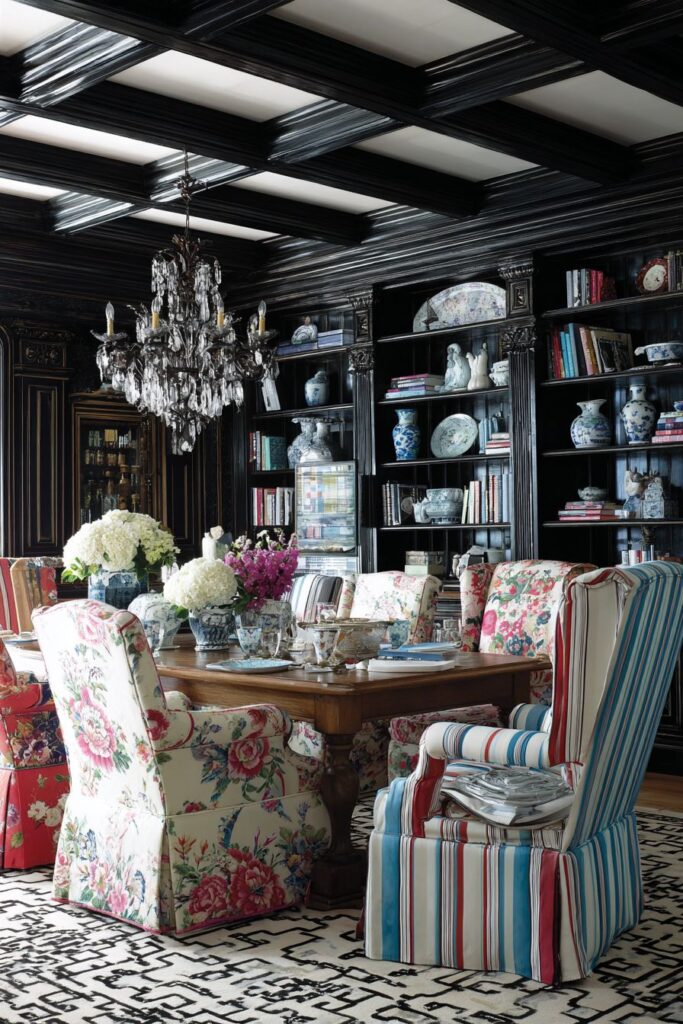
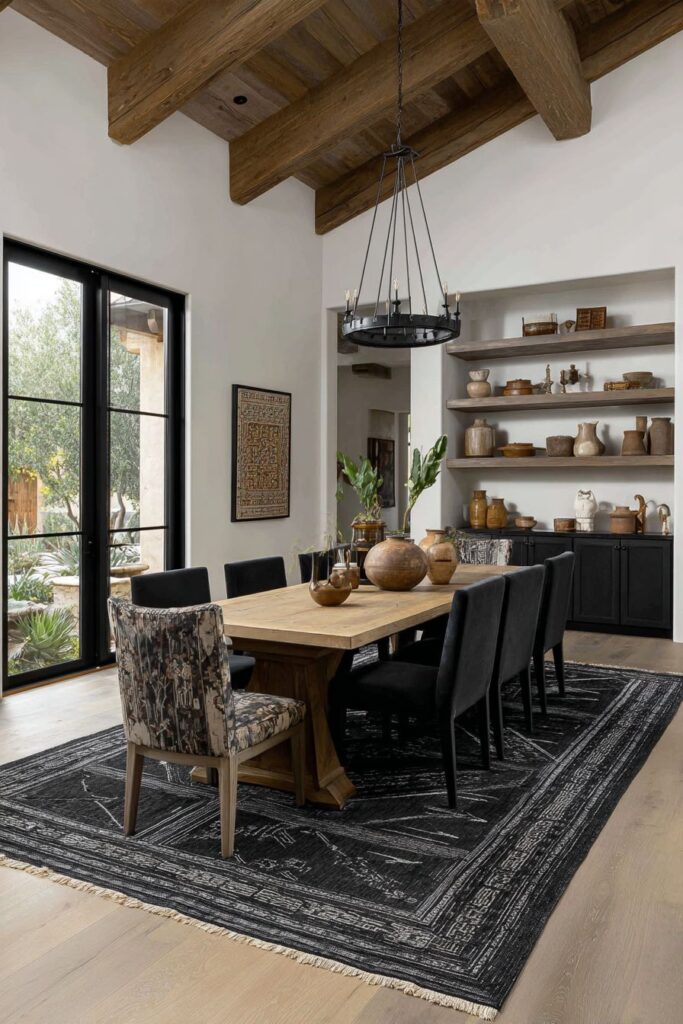
The art of pattern mixing reaches its zenith in this dynamic dining space, where a geometric black and white area rug creates a bold foundation beneath a traditional wooden dining table. The high-contrast pattern provides a strong graphic element that can handle the visual weight of multiple competing designs throughout the room. This sophisticated approach to pattern mixing requires confidence and careful consideration of scale, color, and visual weight to achieve harmony rather than chaos.
The seating upholstery showcases three distinctly different fabric patterns: floral chintz with its romantic, traditional appeal; solid velvet that provides textural contrast and visual rest; and striped linen that adds linear rhythm and casual sophistication. Each fabric choice serves a specific purpose in the overall composition, with the solid velvet acting as a neutral buffer between the more assertive patterns. The success of this combination lies in the shared color palette that runs through all three fabrics, creating unity despite their stylistic differences.
A vintage chandelier hanging above the table provides classical elegance and ambient lighting, while modern floating shelves display a curated collection of ceramics and books. This upper-level storage and display solution keeps the tabletop clear for dining while adding visual interest and personality to the vertical plane. The mix of utilitarian books and beautiful ceramics demonstrates how functional items can serve double duty as decorative elements in an eclectic space.
Key Design Tips:
- Start with one bold pattern as your anchor, then build around it with smaller-scale designs
- Include solid colors strategically to provide visual rest between competing patterns
- Maintain a consistent color palette across different patterns for cohesion
- Use floating shelves to display collections without overwhelming the dining surface
4. Jewel-Toned Color Layering
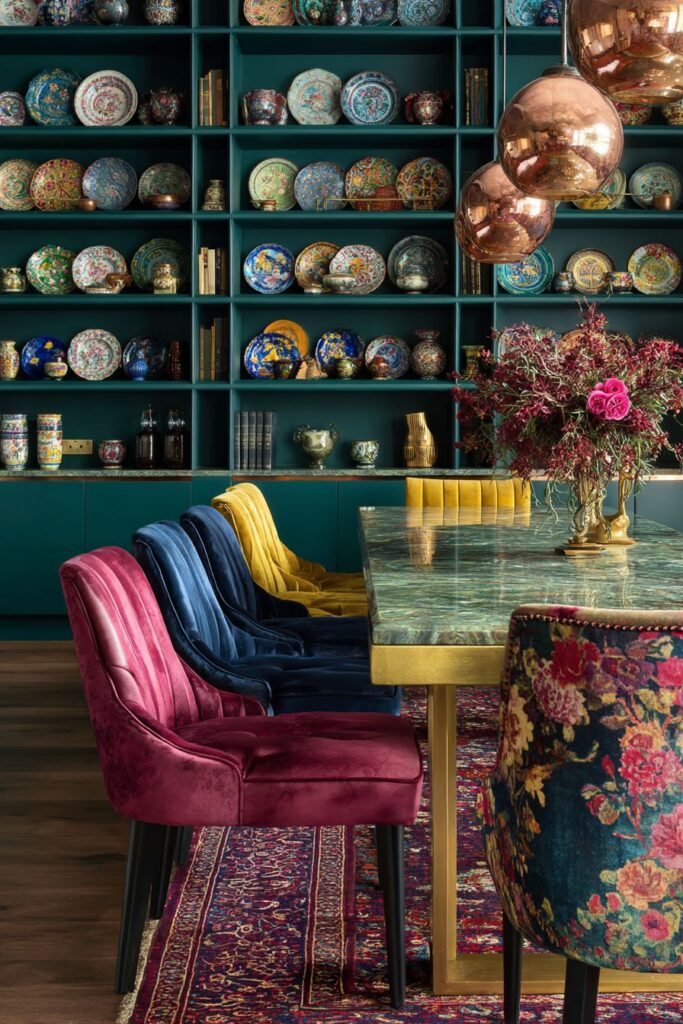
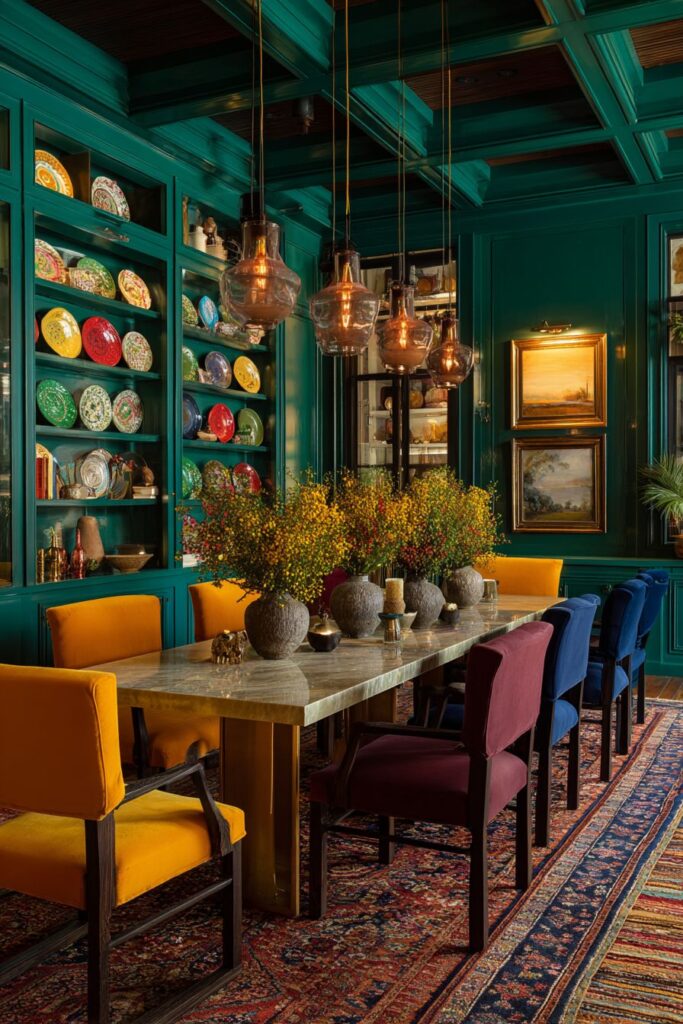
Deep emerald green walls create a sophisticated backdrop that transforms this dining space into a jewel box of rich colors and luxurious materials. The bold wall color requires confidence and commitment, but when executed properly, it provides unmatched drama and elegance. This saturated hue serves as the perfect foil for the warm metallics and varied textures that populate the space, creating depth and visual interest that neutral walls simply cannot achieve.
The brass dining table base paired with a marble top represents the perfect marriage of warm and cool elements, with the brass providing golden undertones that complement the green walls while the marble adds classical elegance and practical durability. This combination of materials creates a sophisticated foundation that can support the room’s bold color choices without competing for attention. The varied textures of metal and stone add tactile interest that invites closer inspection and touch.
The diverse chair collection showcases the power of color coordination across different materials and styles. Burgundy leather brings richness and traditional elegance, mustard yellow fabric adds warmth and contemporary flair, while navy blue velvet provides luxurious texture and sophisticated contrast. These jewel tones work harmoniously together because they share similar saturation levels and complement the emerald wall color, creating a cohesive palette despite the variety of materials and forms.
Key Design Tips:
- Choose one dominant wall color to anchor your entire color scheme
- Mix warm and cool materials like brass and marble for visual balance
- Use jewel tones in similar saturation levels for sophisticated color harmony
- Display colorful collections like ceramic plates to reinforce your color story
5. Global Influences and Cultural Fusion
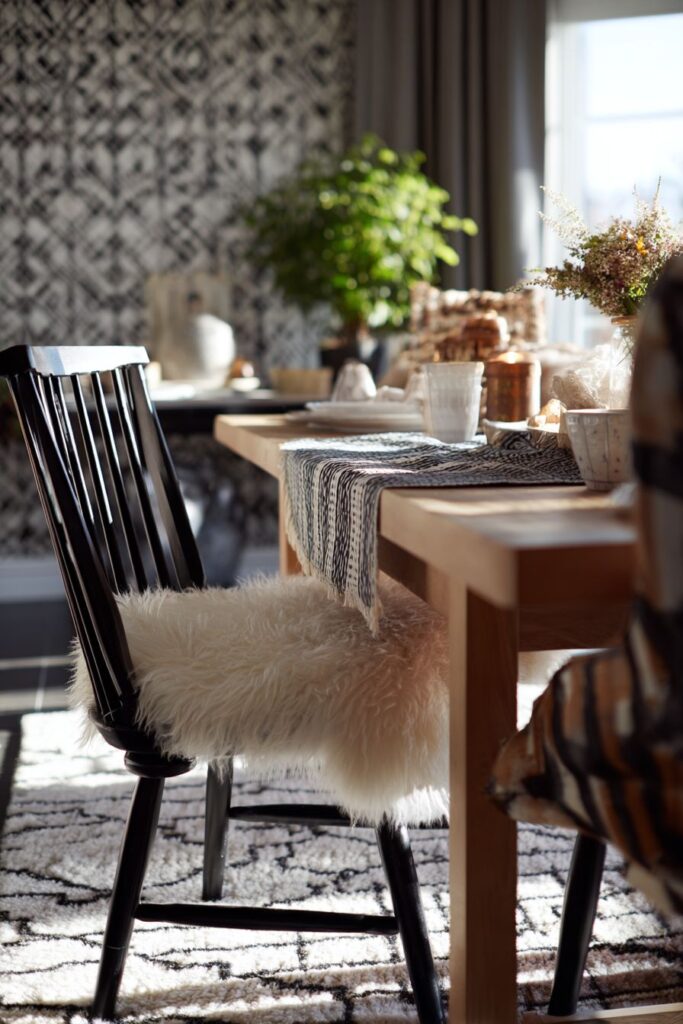
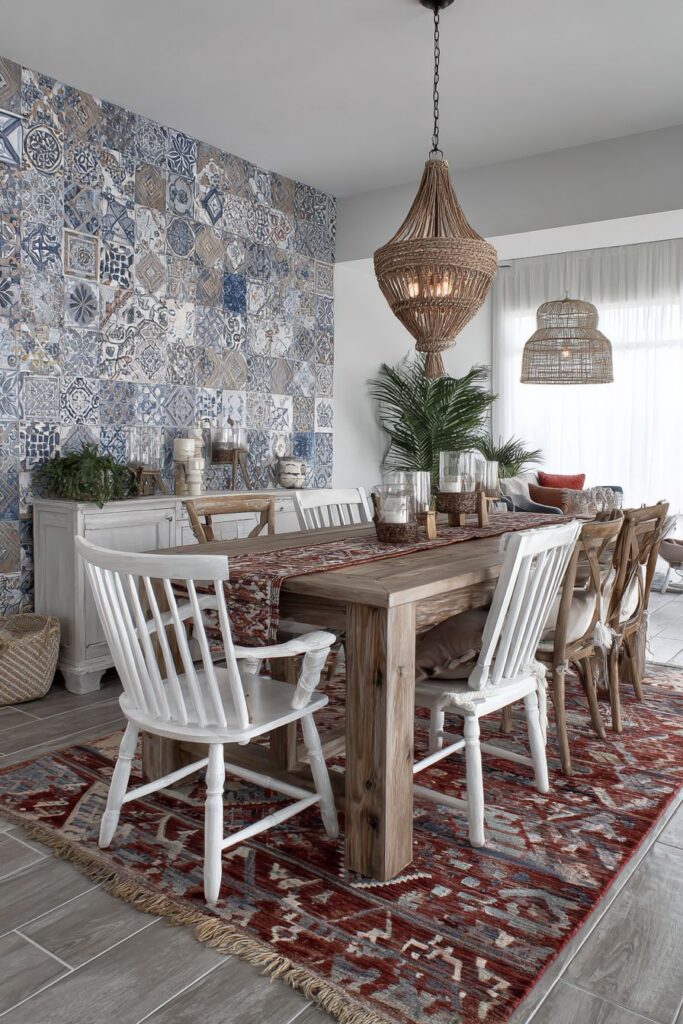
A stunning Moroccan tile accent wall creates an exotic focal point that transports diners to distant lands while maintaining the functionality required for modern living. The intricate geometric patterns and rich colors of authentic Moroccan tilework provide visual complexity and cultural authenticity that cannot be replicated with wallpaper or paint. This bold architectural element serves as the room’s primary design driver, influencing all other material and color choices throughout the space.
The Scandinavian-style dining table provides a perfect counterpoint to the ornate wall treatment, its clean lines and light wood finish preventing the room from becoming visually overwhelming. This demonstrates how eclectic design can successfully combine seemingly opposing aesthetics – the minimalist Scandinavian approach and the ornate Moroccan tradition – when unified by thoughtful planning and shared natural materials.
The internationally inspired seating collection tells the story of global travels and cultural appreciation. A Chinese Chippendale chair brings centuries of refined craftsmanship and elegant proportions, while a Mexican equipale chair adds rustic charm and handcrafted authenticity. The contemporary Italian design piece contributes sleek sophistication and modern manufacturing precision. Together, these chairs represent different continents, time periods, and design philosophies, yet they unite around the common theme of quality craftsmanship and distinctive character.
Key Design Tips:
- Use authentic cultural elements like handmade tiles for genuine visual impact
- Balance ornate features with simpler, cleaner-lined pieces for visual relief
- Collect seating from different cultures to create an internationally inspired mix
- Layer textiles from various traditions to reinforce the global theme
6. Vintage and Modern Fusion
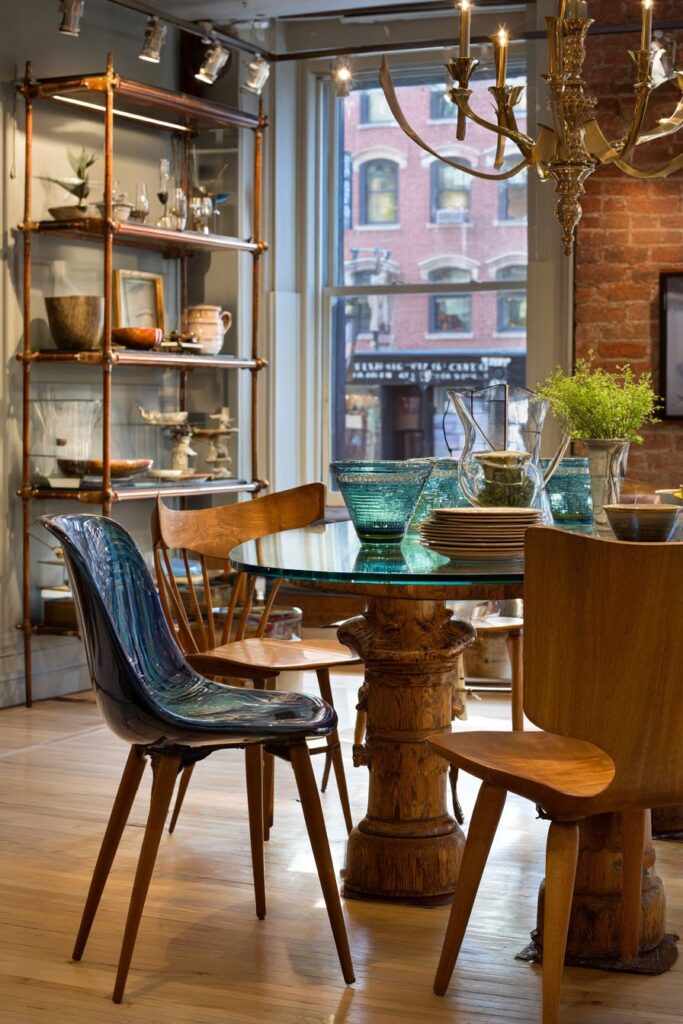
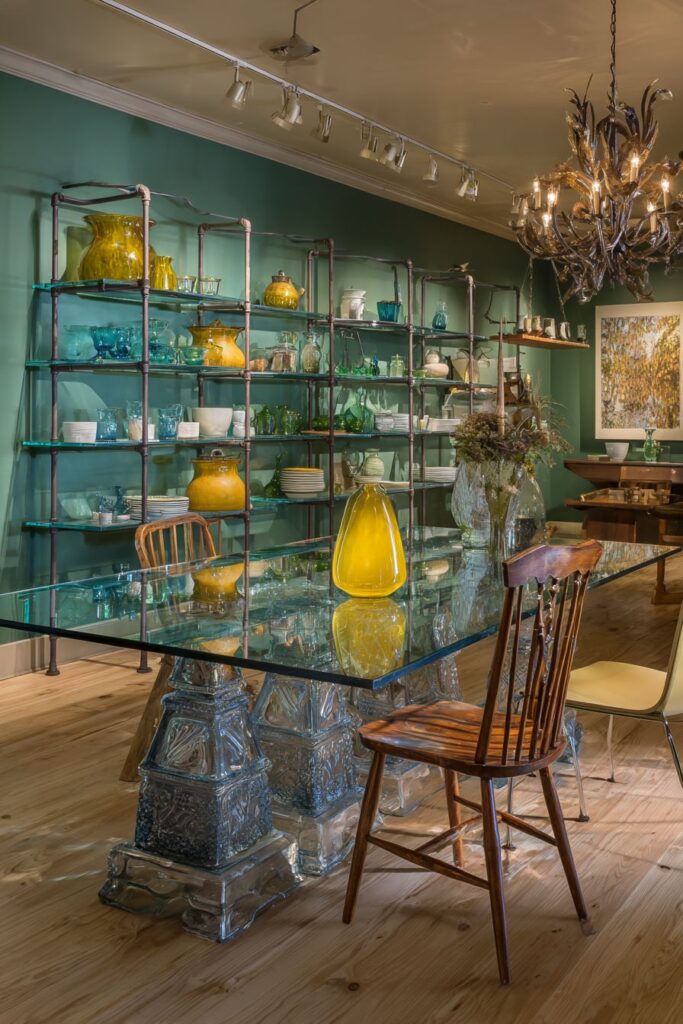
The marriage of a sleek glass dining table with ornate Victorian-style pedestals creates a striking example of how eclectic design can honor the past while embracing contemporary aesthetics. The transparent glass top allows the elaborate base details to remain visible and appreciated, while its clean, unadorned surface provides a modern contrast to the decorative metalwork below. This combination demonstrates how seemingly incompatible elements can work together when they share certain qualities – in this case, both pieces exhibit exceptional craftsmanship and attention to detail.
The seating arrangement furthers the vintage-modern dialogue through a carefully balanced mix of mid-century modern molded plastic chairs and traditional wooden Windsor chairs. The plastic chairs contribute lightweight functionality and colorful contemporary appeal, while the Windsor chairs bring centuries of proven ergonomic design and handcrafted authenticity. This juxtaposition creates visual interest while ensuring comfortable seating for extended dinner conversations.
Industrial pipe shelving provides both storage and display opportunities, its utilitarian aesthetic adding another layer to the room’s design narrative. The raw metal finish and exposed hardware reference urban loft living and contemporary industrial design, while the functionality serves practical dining room needs. The shelving displays create opportunities for mixing vintage glassware with contemporary ceramics, reinforcing the room’s commitment to blending old and new elements throughout every aspect of the design.
Key Design Tips:
- Choose transparent table tops to showcase decorative bases while maintaining visual lightness
- Mix seating materials like plastic and wood to span different design eras
- Use industrial shelving to add a contemporary edge to traditional spaces
- Display collections that reinforce your mixing philosophy with vintage and modern pieces
7. Texture Mixing and Organic Materials
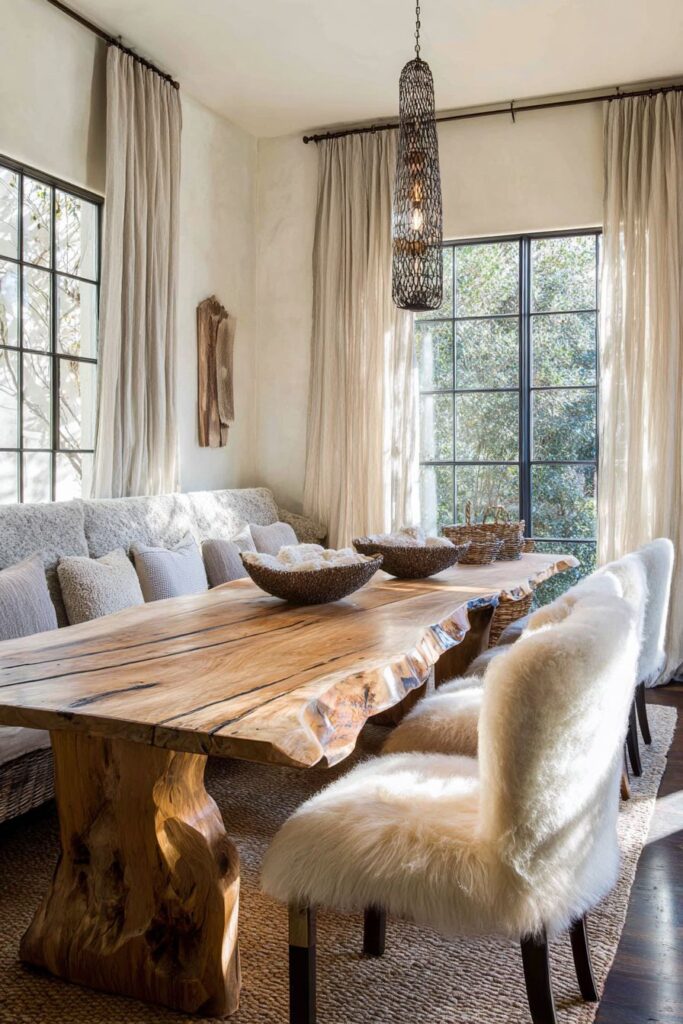
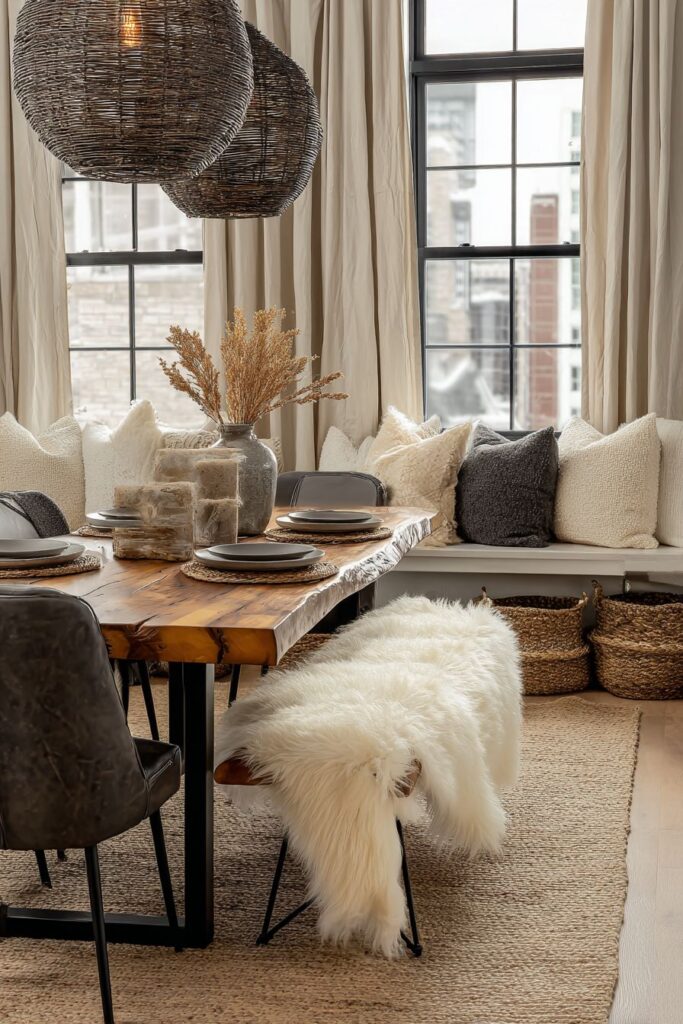
A magnificent live-edge wood dining table serves as the centerpiece for a celebration of natural textures and organic materials. The untreated wood edge preserves the tree’s original form, bringing the raw beauty of nature indoors while providing a substantial and unique focal point that cannot be replicated through manufactured furniture. The natural grain patterns, color variations, and imperfections tell the story of the tree’s growth, making each table truly one-of-a-kind.
The upholstered seating collection demonstrates the sophisticated art of texture mixing across natural and manufactured materials. Bouclé wool provides nubby, tactile interest and contemporary sophistication; smooth leather adds traditional luxury and practical durability; natural linen brings casual elegance and breathable comfort; while faux fur contributes unexpected luxury and visual warmth. Each material serves both functional and aesthetic purposes, creating a dining experience that engages multiple senses.
A jute rug anchors the seating area while reinforcing the natural material theme, its rough weave and neutral color providing textural interest without competing with the other organic elements. Woven baskets along the built-in bench seating offer practical storage solutions that double as decorative elements, their handcrafted appearance supporting the room’s commitment to natural materials and artisanal craftsmanship.
Key Design Tips:
- Choose furniture with natural imperfections like live-edge wood for authentic character
- Mix multiple textures on seating to create tactile interest and visual variety
- Use natural fiber rugs to reinforce organic material themes
- Incorporate storage baskets that serve dual decorative and functional purposes
8. Artistic Elements and Creative Expression
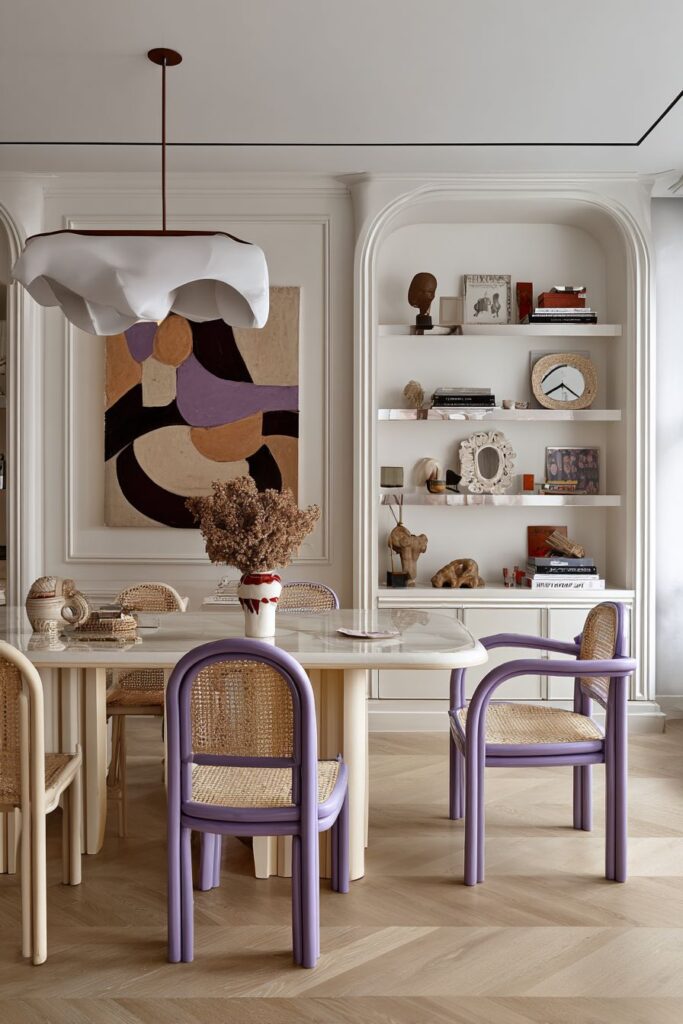
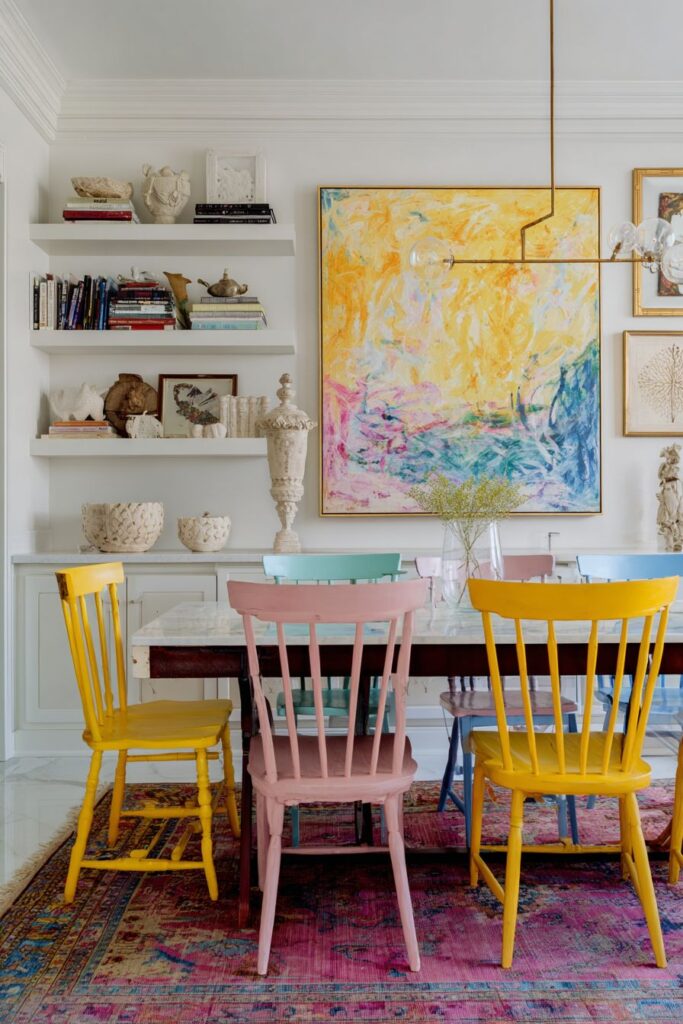
Art takes center stage in this creatively charged dining space, where an oversized abstract painting dominates one wall, creating a gallery-like atmosphere that elevates everyday dining to a cultural experience. The large scale of the artwork demands attention and provides a sophisticated focal point that demonstrates the homeowner’s commitment to supporting contemporary artists and living with meaningful art. This bold choice transforms the dining room from purely functional space to an extension of personal artistic taste.
Vintage bentwood chairs painted in different pastel colors create a whimsical seating arrangement that balances the serious art with playful elements. This creative approach to matching dining chairs shows how paint can transform humble vintage finds into unique design elements. Each chair maintains its original bentwood form and comfort while contributing a different color to the room’s palette, creating visual interest and encouraging guests to choose their preferred hue.
The wall composition extends beyond the primary artwork to include smaller vintage mirrors and sculptural wall hangings that create a curated gallery effect. This layered approach to wall decoration provides multiple focal points and viewing experiences, encouraging diners to discover new details during extended meals. The mix of reflective surfaces, dimensional objects, and flat artwork creates visual depth and complexity that cannot be achieved with a single large piece alone.
Key Design Tips:
- Invest in one large-scale artwork to create dramatic impact and set the room’s artistic tone
- Paint vintage chairs in coordinating colors to create custom seating solutions
- Layer wall art at different scales to create gallery-like visual interest
- Mix reflective and dimensional pieces to add depth and complexity to wall compositions
9. Scale Contrast and Proportional Play
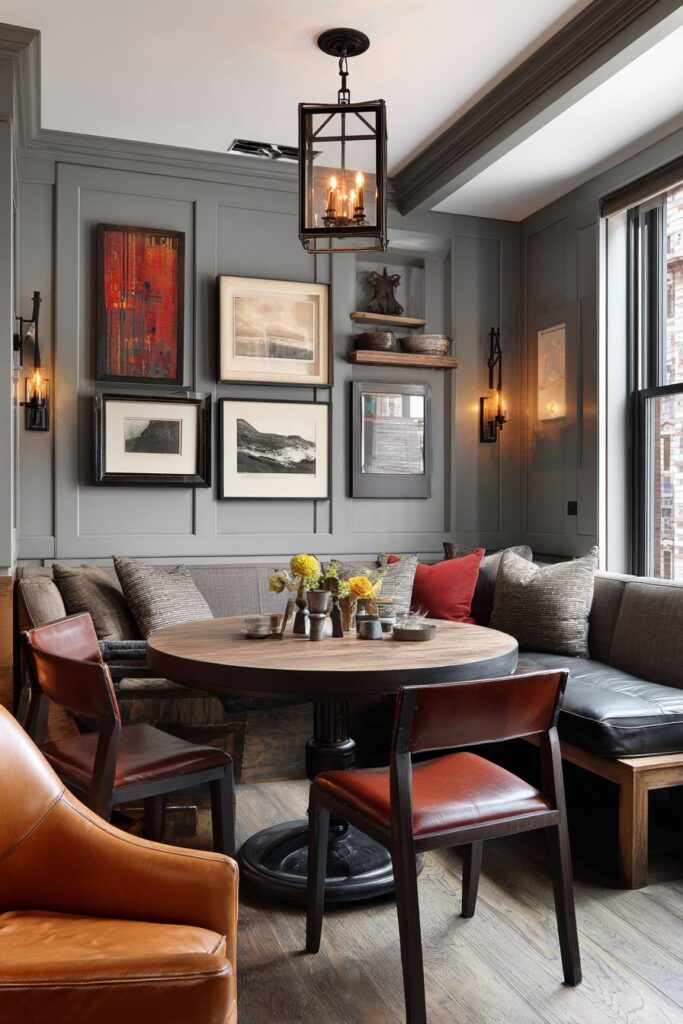
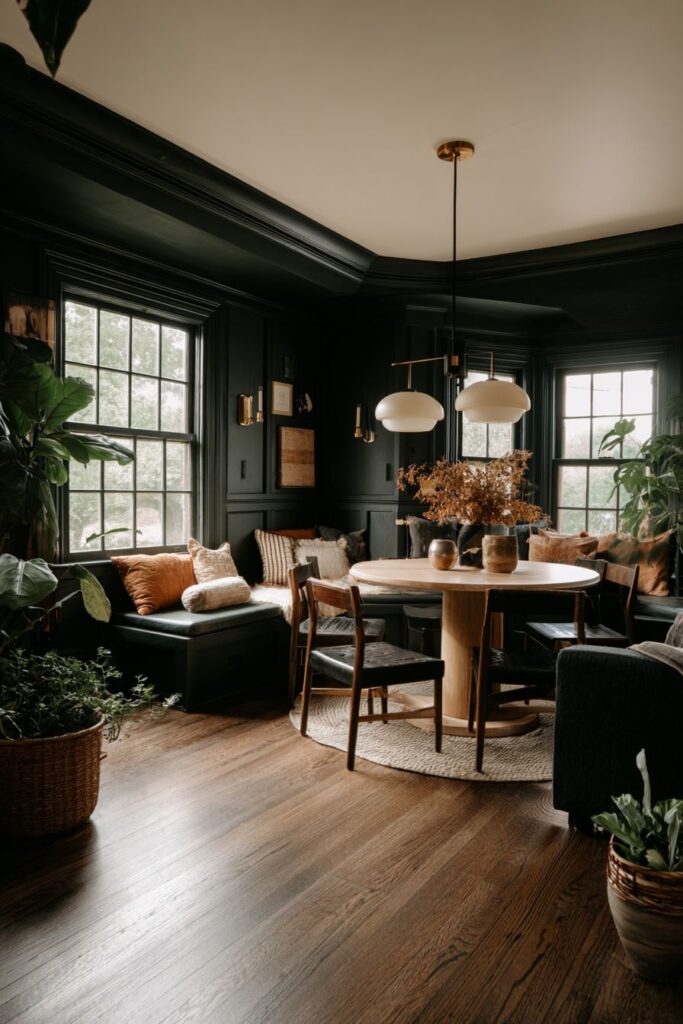
An intimate round pedestal table creates a cozy central gathering point that contrasts dramatically with the varied chair heights and styles surrounding it. This approach to dining room design celebrates the unexpected and challenges traditional notions of matching furniture sets. The round table shape encourages conversation and creates equal seating positions, while its smaller scale allows the diverse seating collection to take center stage as the room’s primary design feature.
The seating arrangement reads like a celebration of different human postures and comfort preferences. A tall bar stool brings vertical emphasis and casual perching options; a low-slung lounge chair offers relaxed, almost living room comfort; standard dining chairs provide traditional table-height seating; while a built-in banquette with varied throw pillows creates flexible group seating that can accommodate different numbers of diners. This diverse collection ensures that every guest can find their preferred seating style and comfort level.
Mixed metals throughout the space provide unity despite the varied furniture scales and styles. Lighting fixtures, picture frames, and decorative objects in different metallic finishes create visual connections between disparate elements while adding reflective surfaces that enhance the room’s lighting. This strategic use of metallics demonstrates how finishing details can create cohesion in eclectic spaces without requiring matching materials or colors.
Key Design Tips:
- Use round tables to create equal seating positions and encourage conversation
- Mix furniture heights deliberately to create visual interest and accommodate different comfort preferences
- Include built-in seating to maximize space efficiency and provide flexible group accommodation
- Repeat metallic finishes throughout the space to create visual unity across diverse elements
10. Sustainable Design and Conscious Collecting
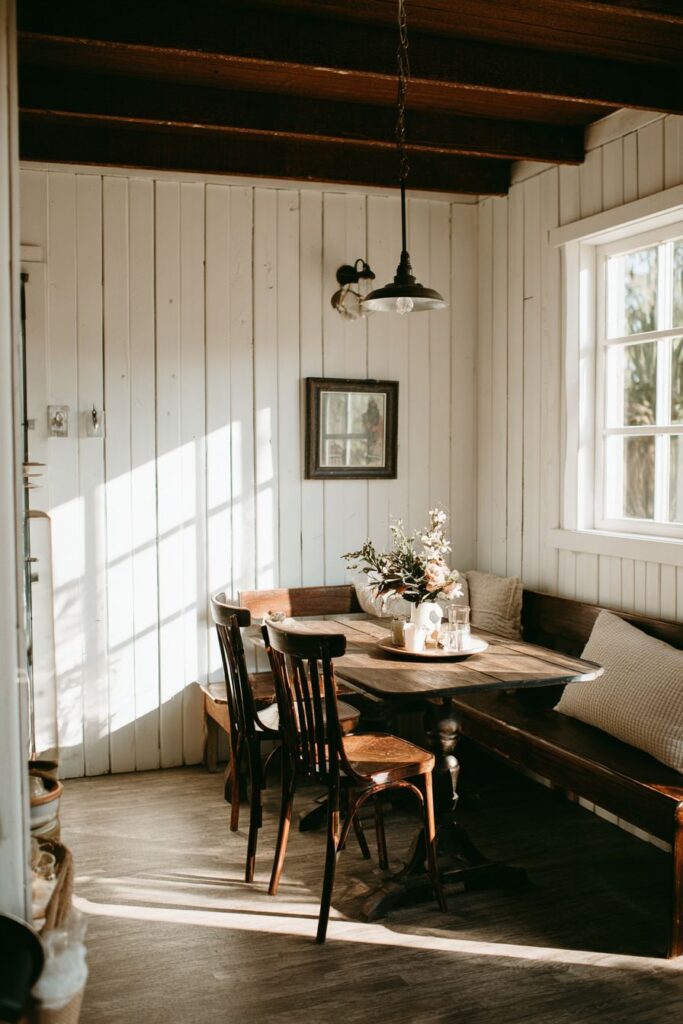
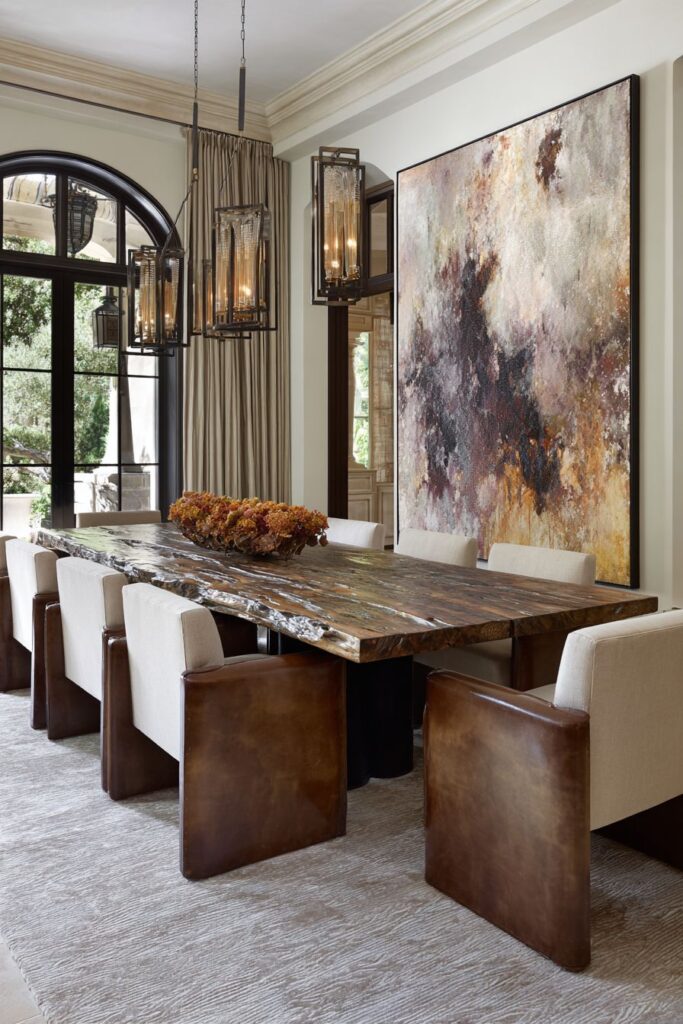
A reclaimed wood dining table anchors this environmentally conscious dining space, its weathered surface and visible nail holes telling stories of previous lives and purposes. This approach to sustainable furniture selection demonstrates how environmental responsibility can enhance rather than compromise design quality. The patina and character marks that develop over decades of use cannot be manufactured or artificially aged, providing authentic beauty that new furniture simply cannot match.
The seating collection represents a thoughtful curation of pieces from different decades, each rescued and restored to extend its useful life while preserving design history. Restored 1950s aluminum chairs bring mid-century modern sophistication and lightweight functionality; a repurposed church pew adds substantial seating capacity and spiritual resonance; vintage school chairs contribute nostalgic charm and ergonomic comfort developed over decades of classroom use; while contemporary recycled plastic seating demonstrates how modern sustainable materials can be both environmentally responsible and aesthetically pleasing.
Upcycled lighting fixtures and secondhand artwork complete the sustainable design story while maintaining high aesthetic standards. This approach requires patience and creativity to source quality pieces, but the results provide a unique character that cannot be purchased from retail furniture stores. Each piece carries its own history and story, creating a dining space that feels collected over time rather than purchased all at once.
Key Design Tips:
- Choose reclaimed materials for major pieces to add authentic character and environmental benefits
- Mix furniture from different decades to create historically rich and sustainable design
- Embrace patina and wear marks as design features rather than flaws
- Source unique pieces from estate sales, auctions, and vintage dealers for one-of-a-kind finds
11. Bold Wallpaper and Pattern Balance
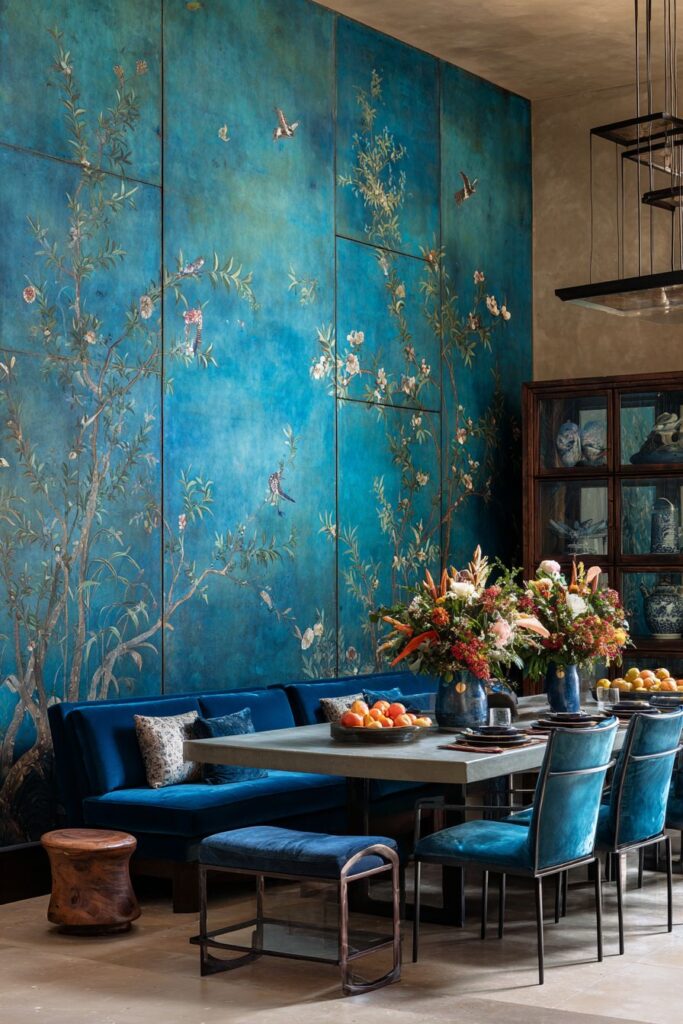
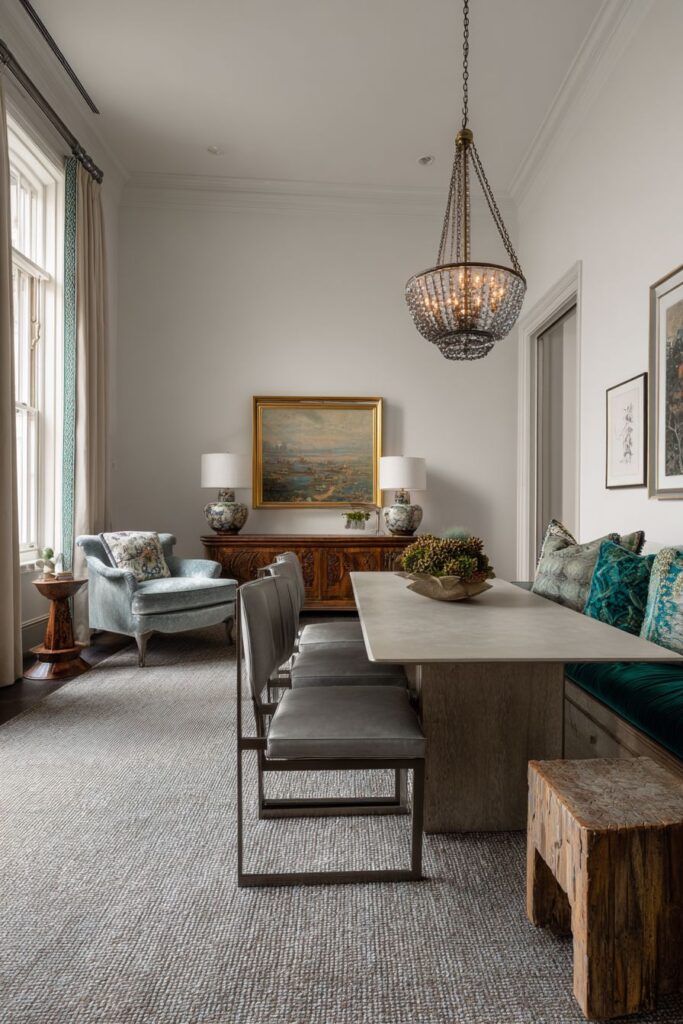
Hand-painted chinoiserie panels create an extraordinary backdrop that transforms this dining space into an exotic retreat reminiscent of 18th-century European fascination with Asian decorative arts. The intricate birds, flowering branches, and delicate landscapes provide visual richness that cannot be achieved through printed wallpapers or painted surfaces. This level of decorative detail requires careful balance in the furniture and accessories to prevent visual overwhelm while honoring the wallpaper’s artistic significance.
A minimalist concrete dining table provides the perfect counterpoint to the ornate wall treatment, its industrial materials and clean lines creating striking contrast that allows both elements to shine. The concrete’s raw, unfinished surface brings contemporary edge and textural interest while its substantial weight provides stability and permanence. This bold material choice demonstrates confidence in mixing seemingly incompatible aesthetics – the refined decorative tradition of chinoiserie with the brutal honesty of raw concrete.
The eclectic seating collection includes sleek metal chairs, a velvet settee, and rustic wooden stools, each contributing different textural and stylistic elements to the composition. The metal chairs provide linear simplicity and industrial edge; the velvet settee adds luxury and comfort for extended dining; while the wooden stools bring natural warmth and casual flexibility. This varied approach to seating ensures functional diversity while maintaining visual interest.
Key Design Tips:
- Balance ornate wallpapers with simple, clean-lined furniture to prevent visual competition
- Choose unexpected table materials like concrete to add contemporary contrast
- Mix seating styles to create functional variety and visual rhythm
- Display ceramic collections in vintage furniture to reinforce traditional decorative themes
12. Functional Storage and Organized Beauty
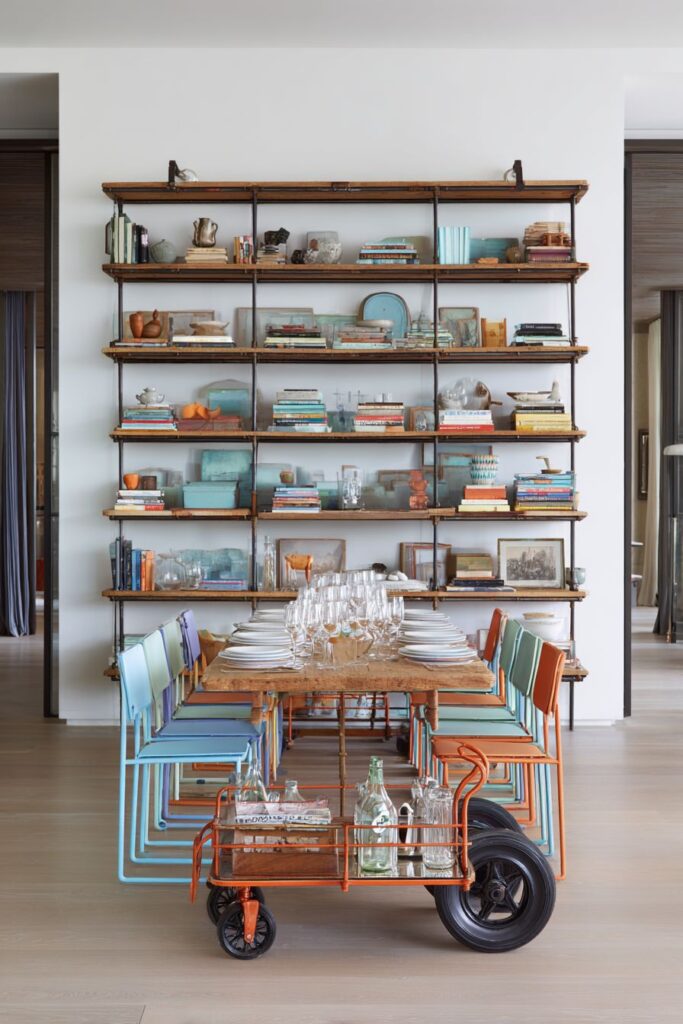
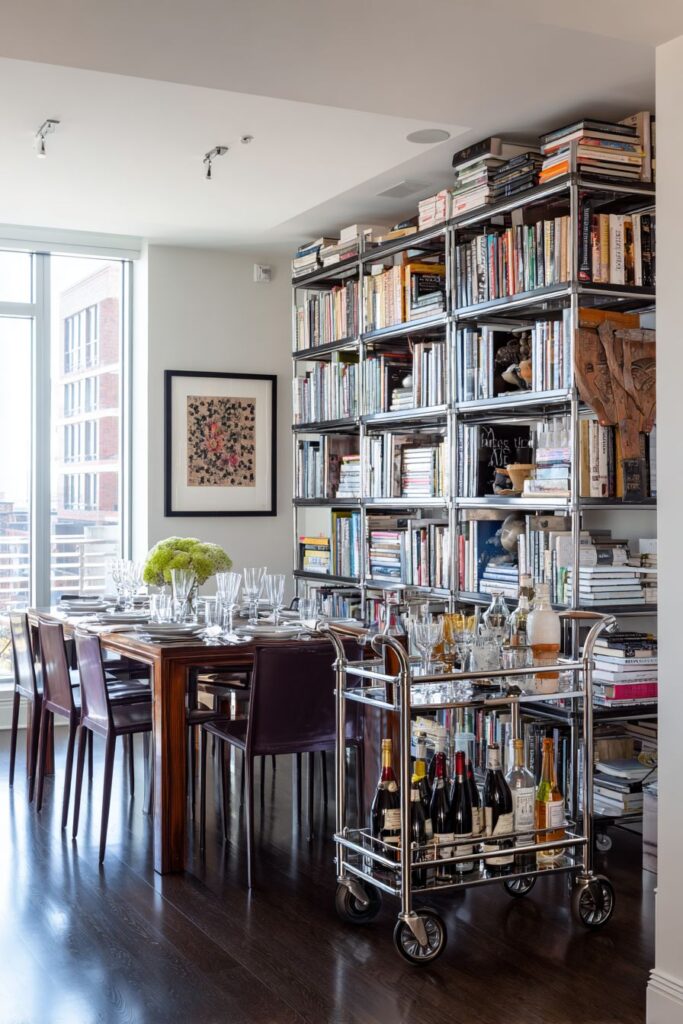
Open shelving systems mixing wood, metal, and glass materials create a storage solution that doubles as a decorative display, demonstrating how functional needs can enhance rather than compromise aesthetic goals. The varied materials add visual interest while serving different practical purposes – wood provides warmth and natural beauty, metal adds industrial strength and contemporary edge, while glass contributes lightness and allows background colors to show through. This thoughtful approach to storage design shows how utility can be beautiful.
The dining area centers around an expandable table that adapts to varying group sizes, surrounded by stackable chairs in different colors that provide flexible seating solutions without sacrificing style. This practical approach to dining furniture acknowledges the reality of modern entertaining while maintaining the eclectic aesthetic through color variety and thoughtful chair selection. The ability to store extra chairs when not needed keeps the space from feeling cluttered while ensuring adequate seating for larger gatherings.
A vintage bar cart provides mobile storage and service options, its ability to move throughout the space adding functional flexibility while contributing period character and charm. The cart’s multiple tiers accommodate glasses, bottles, serving pieces, and decorative objects, creating opportunities for seasonal styling changes and entertainment preparation. This piece demonstrates how vintage finds can solve contemporary functional needs while adding authentic character to eclectic spaces.
Key Design Tips:
- Mix storage materials to add visual interest while serving different functional needs
- Choose expandable dining furniture to accommodate varying group sizes efficiently
- Use different colored chairs to maintain eclectic appeal while ensuring adequate seating
- Include mobile storage pieces like bar carts for flexible entertaining options
13. Lighting Layering and Ambient Creation
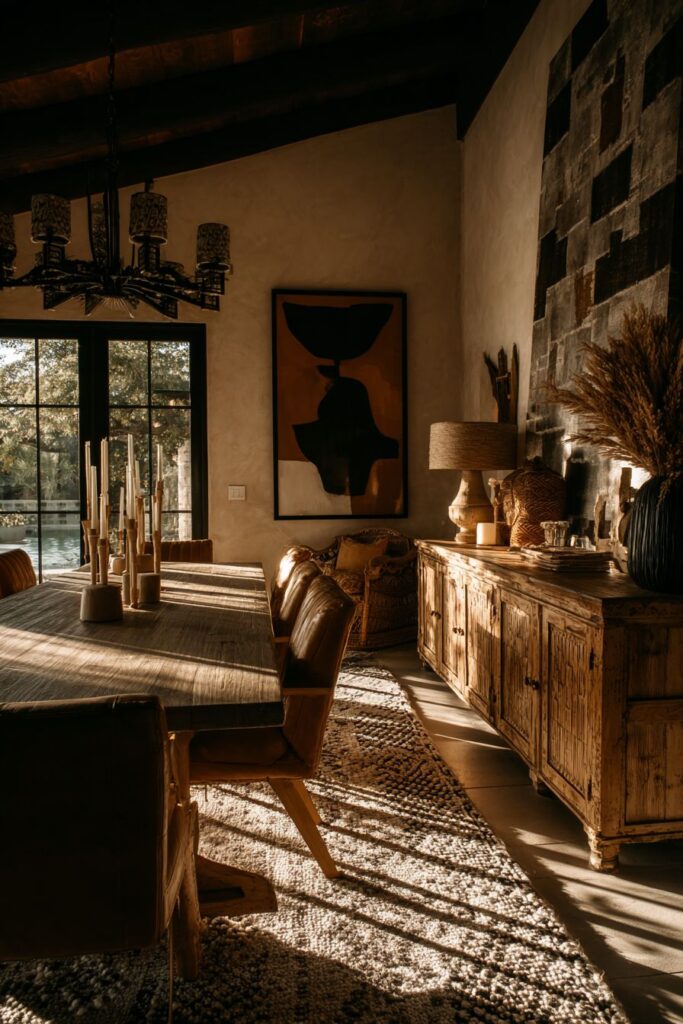
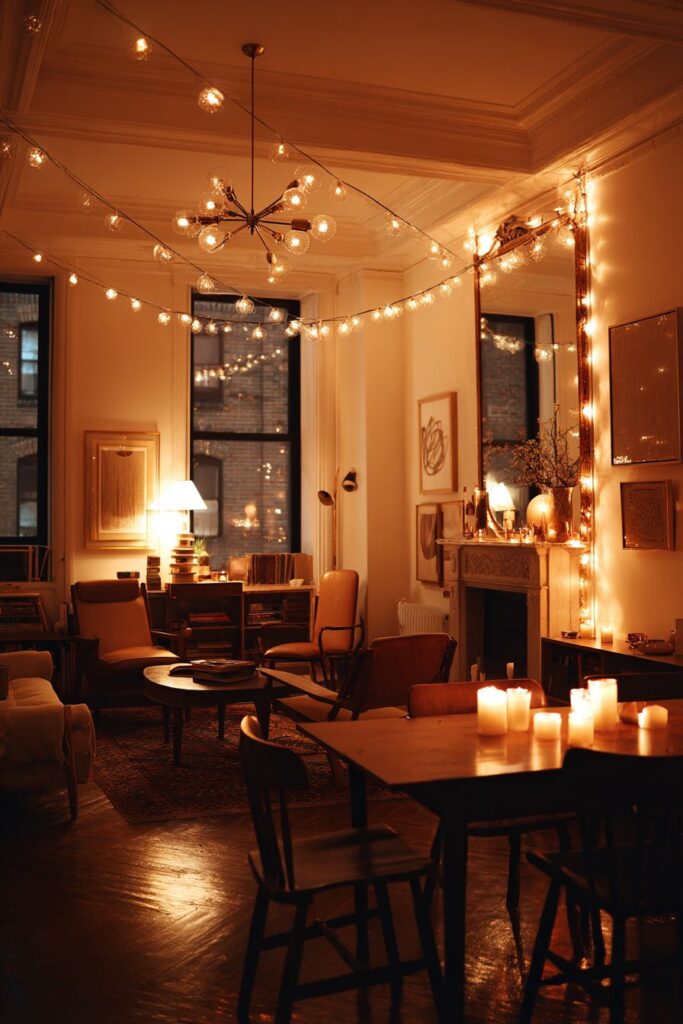
Multiple lighting sources work together to create a sophisticated illumination scheme that adapts to different dining occasions and times of day. A statement modern chandelier provides primary task lighting while serving as a sculptural focal point; vintage table lamps on a sideboard add warm ambient lighting and decorative interest; string lights along windows contribute sparkle and romance; while candles on the dining table create an intimate atmosphere for special occasions. This layered approach ensures appropriate lighting for every dining situation while adding visual interest through varied fixture styles.
The mix of warm and cool light sources creates depth and visual complexity that single-source lighting cannot achieve. Warm incandescent bulbs in vintage fixtures provide cozy, intimate atmosphere, while cooler LED sources in contemporary fixtures ensure adequate task lighting for dining activities. This balance prevents the space from feeling too stark or too dim, instead creating inviting conditions that encourage lingering over meals and conversation.
The diverse furniture collection includes mid-century dining chairs, a traditional wooden table, and contemporary art pieces that work together under the carefully planned lighting scheme. Evening photography captures how the multiple light sources highlight different materials and textures throughout the day, creating constantly changing visual experiences. The interplay of light and shadow adds drama and sophistication that transforms the space from a daytime functional area to an evening entertainment destination.
Key Design Tips:
- Layer multiple light sources at different heights to create flexible ambient options
- Mix warm and cool light temperatures to provide both task and mood lighting
- Include moveable lighting like table lamps for adjustable illumination
- Use candles strategically to add romance and intimacy for special occasions
14. Small Space Solutions and Smart Design
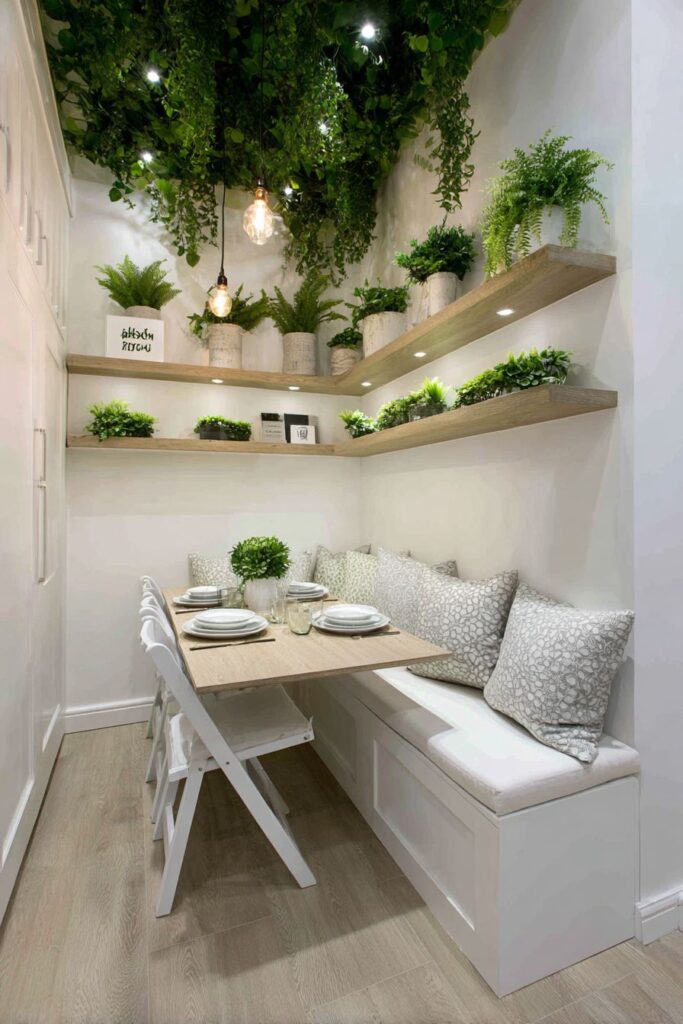
A clever drop-leaf table maximizes functionality in limited square footage, expanding to accommodate dinner parties while folding down to preserve daily circulation space. This traditional furniture form proves its continued relevance in contemporary small space living, providing dining capacity without permanent space commitment. The table’s ability to transform from a compact console to full dining surface demonstrates how thoughtful furniture selection can multiply a small space’s functional possibilities.
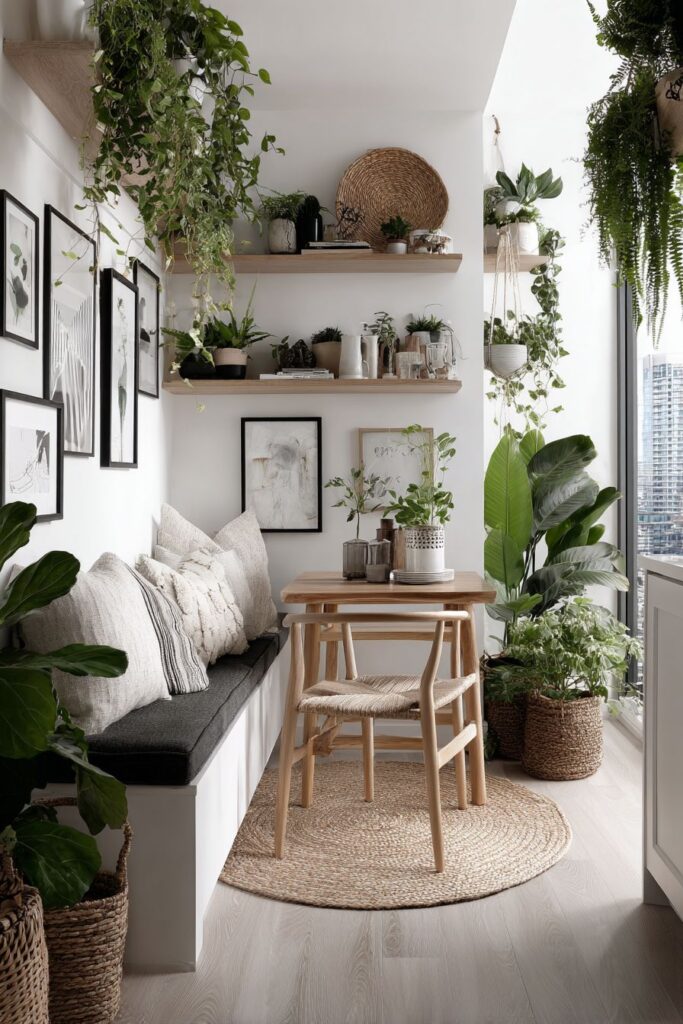
Folding chairs stored against walls when not in use maintain the eclectic aesthetic through varied styles while disappearing when additional floor space is needed. Mixed with built-in corner banquette seating featuring storage underneath, the seating solution maximizes every square inch while providing hidden storage for dining linens, seasonal decorations, and entertainment supplies. This integrated approach to furniture design shows how custom solutions can address multiple needs simultaneously.
Vertical displays maximize wall space through strategic placement of hanging plants, artwork, and floating shelves that draw the eye upward and create the illusion of greater height. This approach to small space design utilizes often-overlooked vertical surfaces while maintaining the eclectic mixing philosophy through varied display objects and artistic styles. The upward visual movement creates spaciousness that purely horizontal arrangements cannot achieve.
Key Design Tips:
- Choose expandable furniture that adapts to changing space needs throughout the day
- Store folding chairs stylishly against walls to maintain aesthetic appeal
- Build in storage seating to maximize functionality in every piece
- Use vertical displays to draw attention upward and create spaciousness
15. Metallic Accents and Reflective Harmony
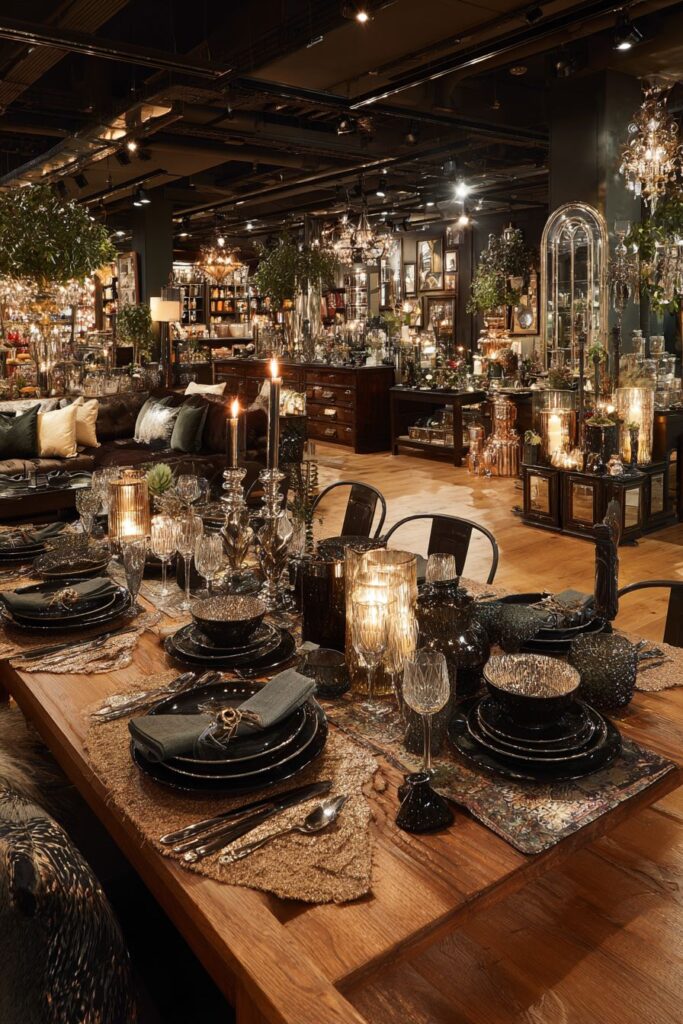
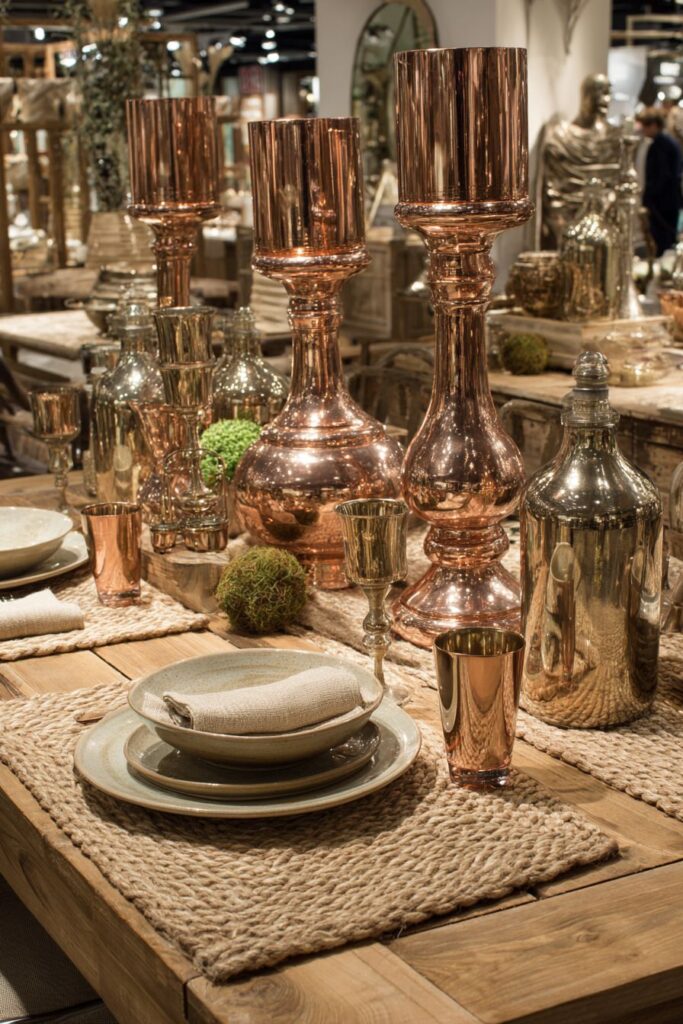
Metallic accents throughout the space create sophisticated coordination without requiring exact matching, demonstrating how varied metal finishes can work together when thoughtfully distributed. Brass candlesticks provide warm golden tones; copper planters add rich reddish undertones; silver-framed mirrors contribute cool reflective surfaces; while iron chair frames bring dark industrial strength. This metallic mixing creates visual richness while maintaining enough variety to support the eclectic aesthetic.
The metallic elements find balance through natural materials that ground the reflective surfaces and prevent the space from feeling cold or overly formal. Jute placemats provide textural contrast and natural warmth; ceramic dishes add handcrafted authenticity and color; while linen napkins contribute softness and tactile comfort. This balance between hard reflective surfaces and soft natural materials creates a dining experience that engages multiple senses.
Warm lighting creates subtle reflections on various metal surfaces, adding sparkle and visual interest that changes throughout the day as natural light shifts and evening artificial lighting takes over. Professional photography highlighting these material contrasts shows how metallics can add luxury and sophistication to eclectic spaces without overwhelming the natural elements that provide warmth and comfort.
Key Design Tips:
- Distribute metallic finishes throughout the space rather than concentrating them in one area
- Balance reflective surfaces with natural materials to maintain warmth
- Use varied metal tones to create visual interest while maintaining coordination
- Position metallics to catch and reflect both natural and artificial light sources
16. Seasonal Flexibility and Adaptable Design
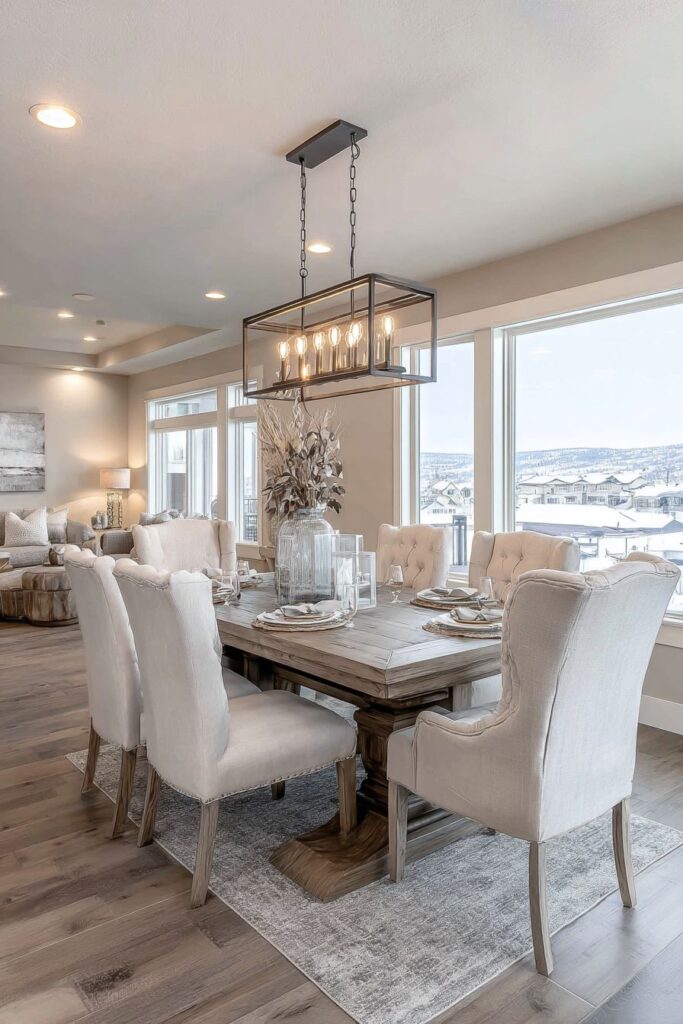
Interchangeable elements throughout the dining space allow for seasonal updates and style evolution without major furniture replacement, demonstrating how thoughtful planning can create long-term design flexibility. Removable chair cushions in different fabrics can be swapped seasonally – light linens for summer, rich velvets for winter – maintaining comfort while refreshing the color palette and textural interest. This approach to seasonal decorating provides variety while maximizing investment in quality foundation pieces.
Swappable artwork creates opportunities for rotating displays that reflect changing seasons, holidays, or personal interests without permanent commitment to specific pieces. A gallery wall system with consistent framing but changeable prints allows for artistic evolution while maintaining visual coherence. This flexibility encourages artistic exploration and seasonal expression without requiring major design overhauls.
Modular lighting systems provide both functional and aesthetic adaptability, allowing fixtures to be reconfigured for different occasions and seasonal needs. Track lighting with adjustable heads can highlight artwork changes, while pendant lights on adjustable cords can be raised or lowered for different table settings and seasonal decorations. This technical flexibility supports the room’s commitment to adaptability and change.
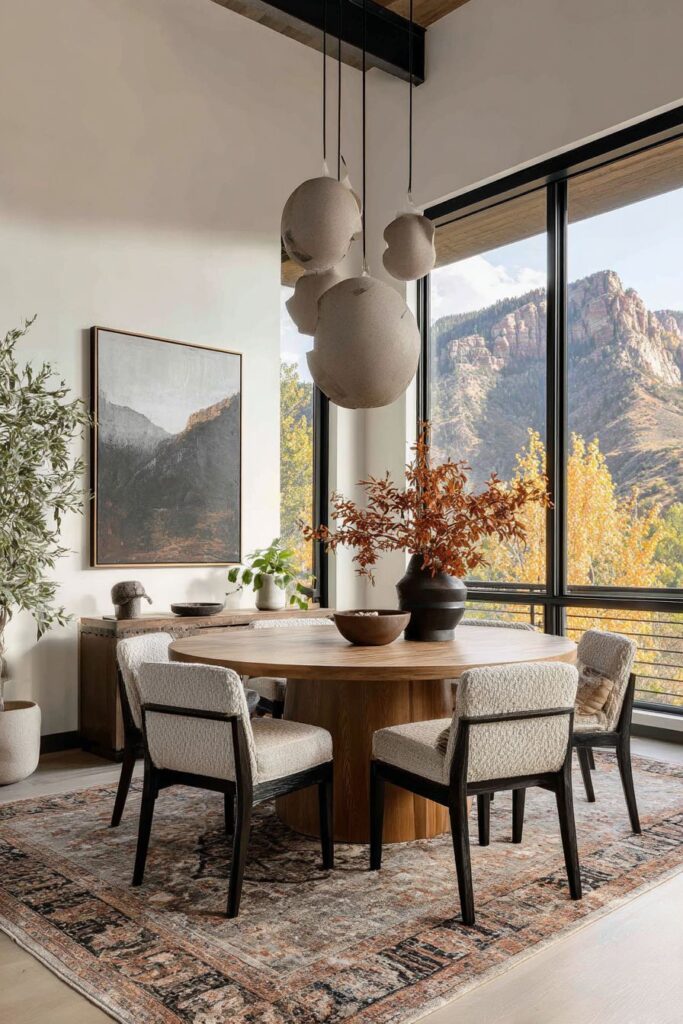
Key Design Tips:
- Invest in quality foundation pieces that can support changing seasonal decorations
- Use removable textiles like cushions and table linens for easy seasonal updates
- Design gallery walls with consistent framing systems for easy artwork rotation
- Choose adjustable lighting systems that adapt to changing display and functional needs
17. Indoor Plants and Biophilic Design
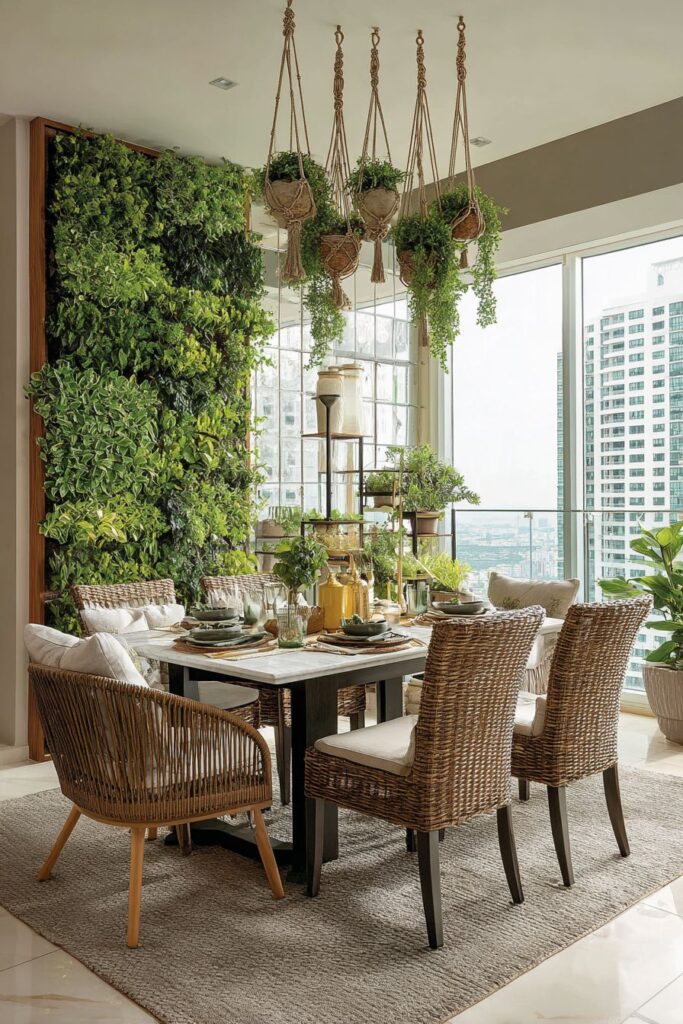
Indoor plants function as living design elements, bringing natural color, texture, and air-purifying benefits to the dining space while supporting the eclectic mixing philosophy through varied container styles and plant forms. Hanging macrame planters at different heights creates vertical interest and bohemian charm; potted plants on plant stands of varying materials – wood, metal, ceramic – add tabletop decoration and textural variety; while a living wall behind the dining area creates a dramatic green backdrop that changes seasonally with plant growth and flowering cycles.
The botanical elements complement rather than compete with diverse furniture pieces, demonstrating how plants can unify eclectic collections through their natural presence. Rattan chairs echo the natural theme while providing comfortable seating; a marble-top table adds classical elegance that grounds the organic elements; while vintage accessories contribute collected character that suggests a love of both natural beauty and design history.
The lush, garden-like atmosphere created by multiple plants at varying heights and scales transforms the dining experience into a connection with nature that cannot be achieved through purely manufactured decorative elements. Interior photography captures how plants add life and movement to static furniture arrangements while providing seasonal change and growth that keeps the space feeling fresh and evolving.
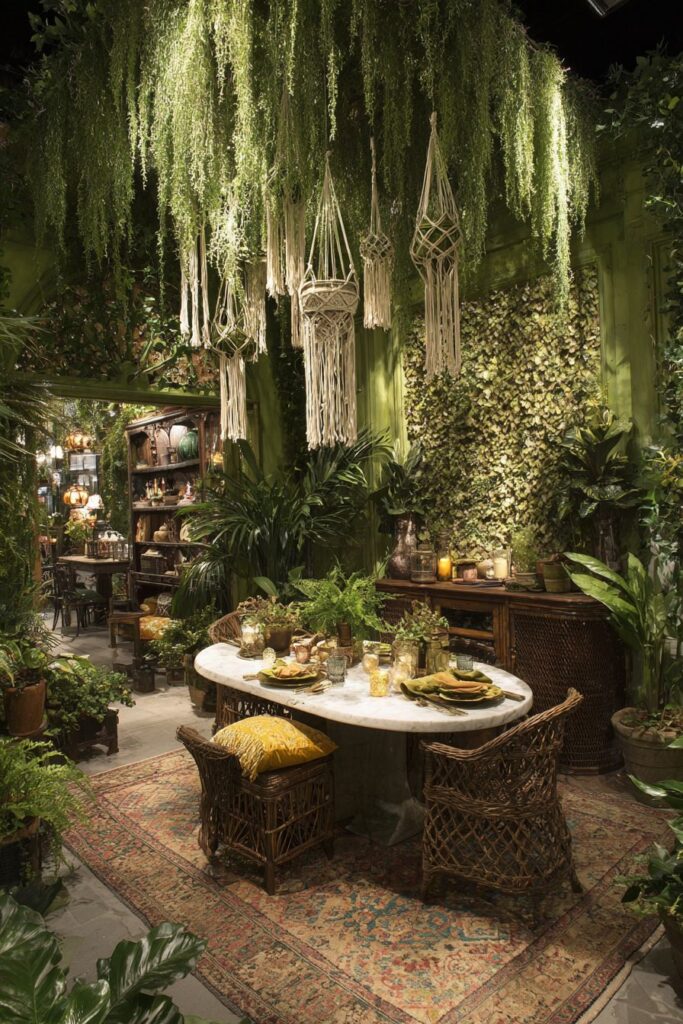
Key Design Tips:
- Use plants at multiple heights to create vertical interest and natural screening
- Mix planter materials to support eclectic design themes while maintaining plant health
- Choose plant varieties that provide different textures, colors, and seasonal interest
- Create living walls for dramatic impact and maximum air purification benefits
18. Entertainment Features and Multi-Functional Zones
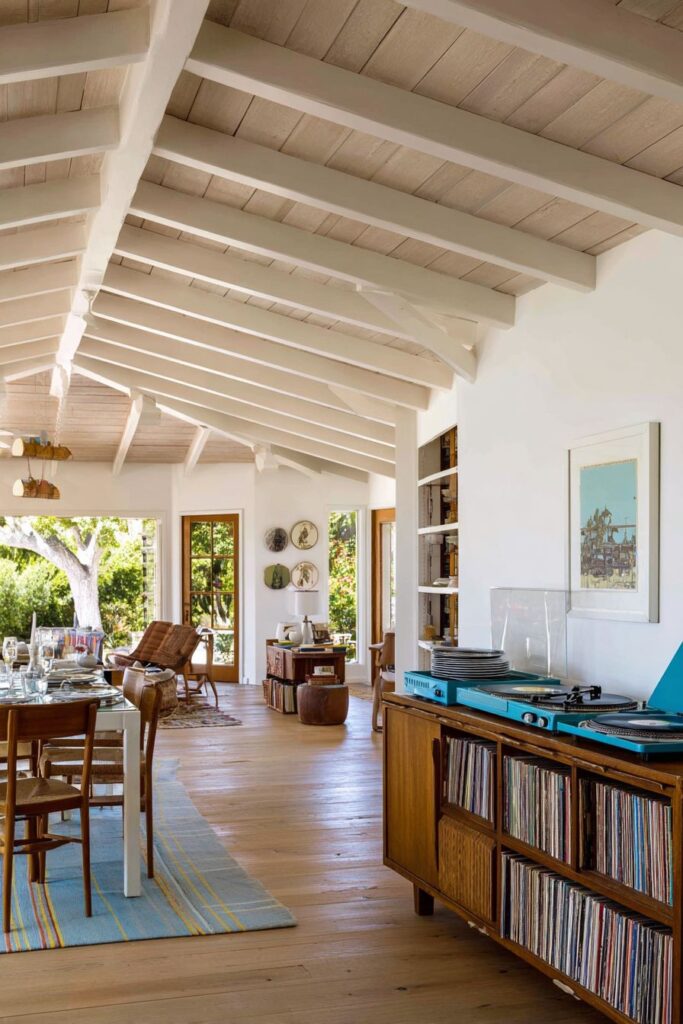
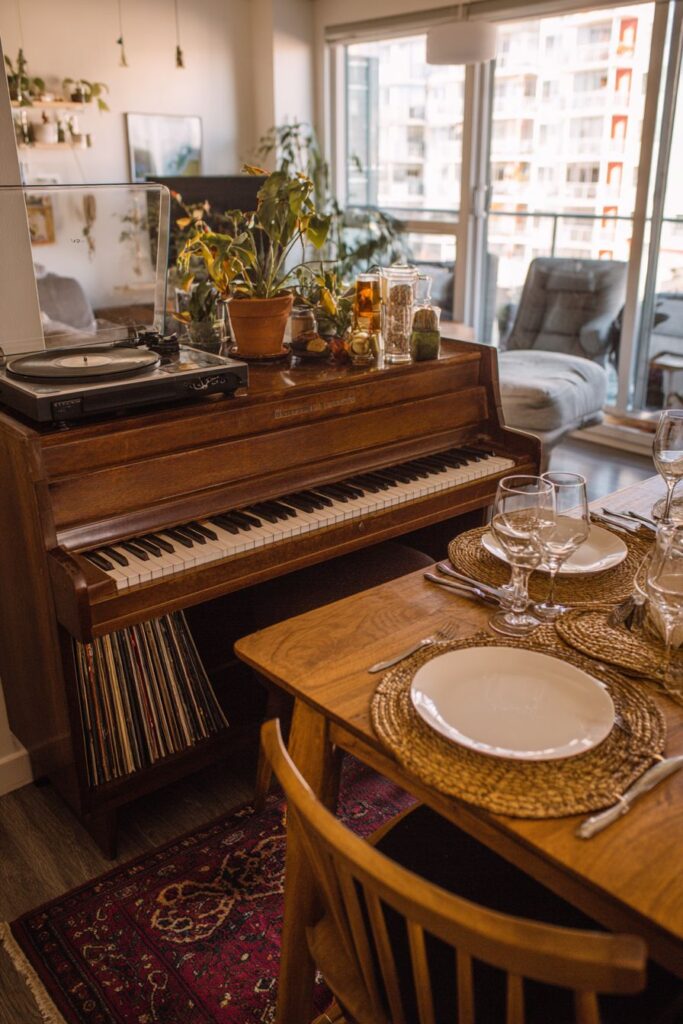
A vintage record player console serves double duty as both an entertainment center and dining storage, demonstrating how eclectic spaces can incorporate personal interests and hobbies into functional furniture pieces. The console’s vinyl collection display, alongside dinner plates and glassware shows how music and dining can coexist beautifully, creating opportunities for soundtrack-enhanced meals and post-dinner entertainment. This integration of personal passions into dining room design creates authentic character that cannot be purchased from furniture stores.
Comfortable seating extends beyond traditional dining chairs to include a cozy reading chair and ottoman positioned for post-dinner relaxation, acknowledging that modern dining rooms often serve multiple purposes beyond meal service. This additional seating creates a secondary conversation area that encourages lingering after meals while providing alternative seating options for casual entertaining and daily family use.
Multiple zones within the space are defined by area rugs and lighting, creating distinct areas for dining, entertaining, and relaxation without requiring physical room divisions. Wide-angle photography shows how the multifunctional layout accommodates different activities while maintaining visual cohesion through repeated design elements and coordinated color palettes. This zoning approach maximizes the room’s utility while preserving the eclectic aesthetic throughout.
Key Design Tips:
- Choose furniture pieces that serve multiple storage and entertainment functions
- Include comfortable seating beyond traditional dining chairs for post-meal relaxation
- Use area rugs to define different functional zones within larger spaces
- Plan lighting to support multiple activities from dining to entertainment to reading
19. Family Heirlooms and Personal History
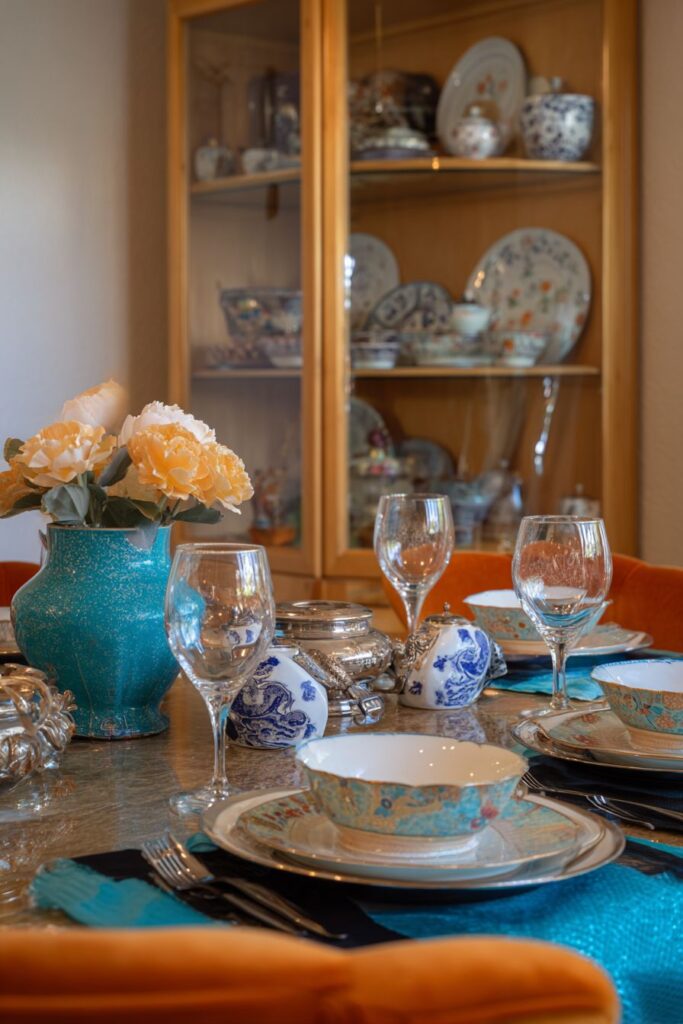
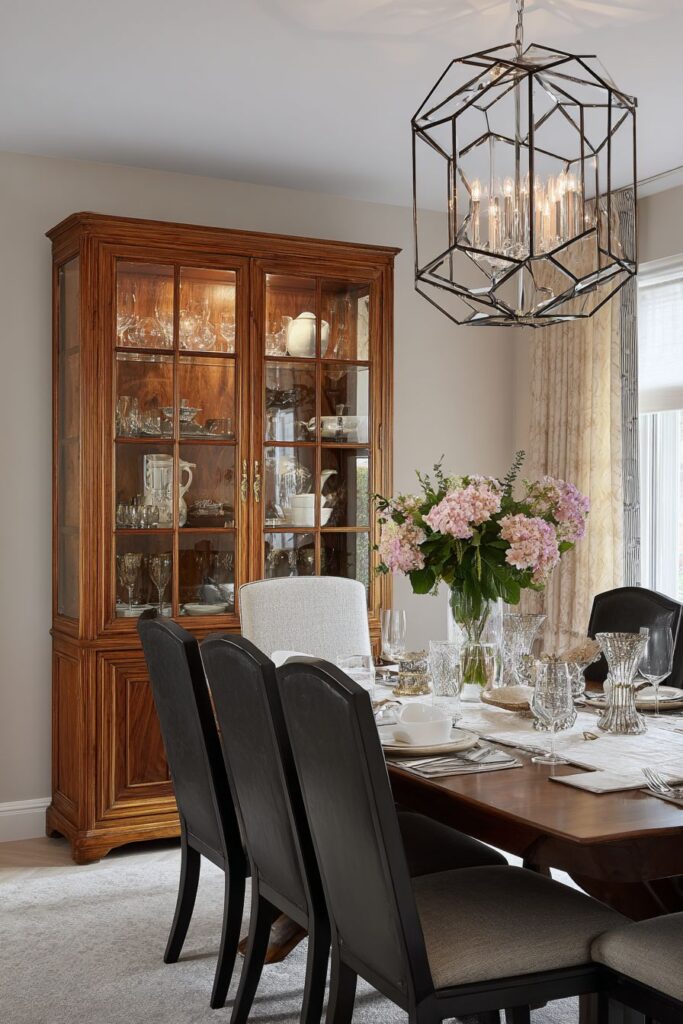
Family heirlooms mixed with contemporary purchases create a dining space that tells the story of multiple generations while remaining functional for modern living. Grandmother’s china cabinet displays vintage dishes alongside modern ceramics, creating a collection that spans decades and reflects evolving taste while honoring family history. This approach to decorating demonstrates how inherited pieces can be integrated into contemporary design without creating museum-like spaces that feel untouchable.
Antique dining chairs reupholstered in contemporary fabrics show how traditional forms can be updated for current comfort and style preferences while preserving their structural integrity and historical significance. This restoration approach extends the life of quality pieces while adapting them to current aesthetic preferences, creating unique seating that cannot be purchased new. The investment in professional reupholstery demonstrates respect for craftsmanship and family heritage.
Inherited silver serving pieces paired with new table linens create table settings that blend family tradition with contemporary entertaining styles. This mixing of old and new elements for special occasions shows how eclectic design principles can extend to functional items, creating memorable dining experiences that connect past and present family celebrations.
Key Design Tips:
- Display inherited collections alongside contemporary pieces to create visual dialogue between generations
- Reupholster antique seating in modern fabrics to maintain comfort while preserving historical forms
- Mix vintage serving pieces with contemporary table linens for updated traditional entertaining
- Tell family stories through thoughtful display and integration of meaningful inherited objects
20. Budget-Friendly Creativity and DIY Innovation
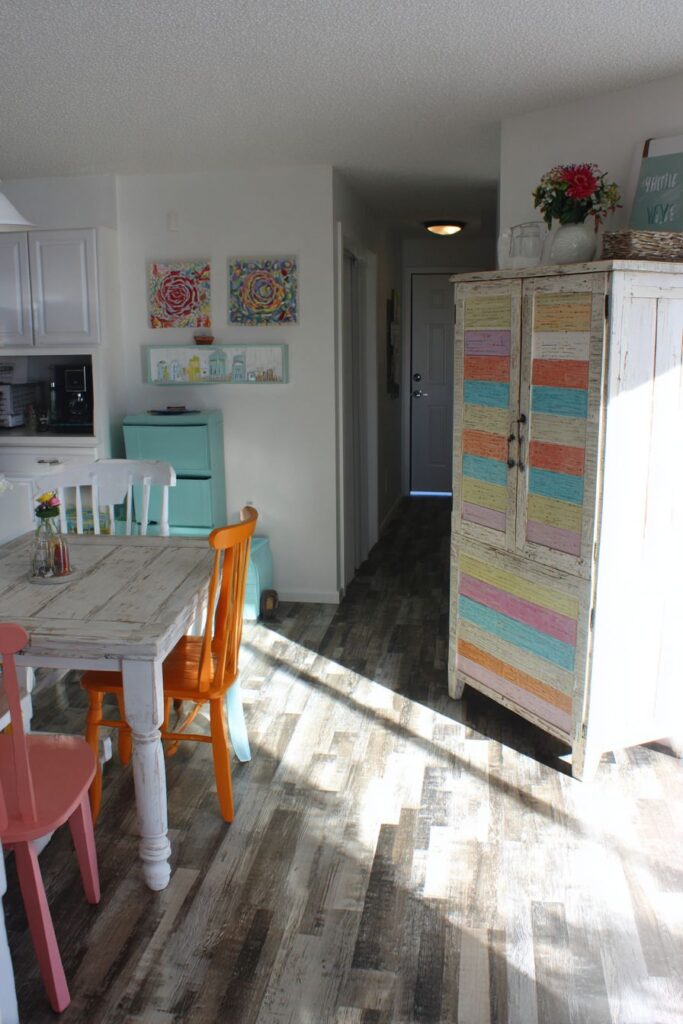
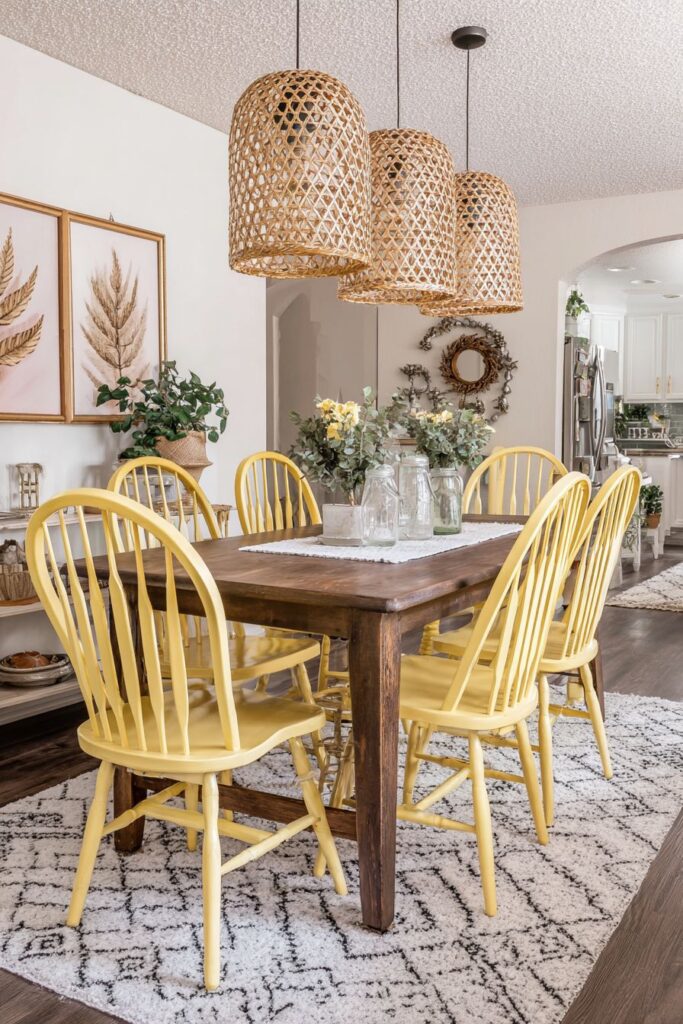
Thrift store finds and DIY projects demonstrate how creativity and sweat equity can create distinctive design solutions without major financial investment. Mismatched vintage chairs painted in coordinating colors show how unified color schemes can create cohesion among disparate pieces while maintaining individual character. This approach requires time and effort rather than large budgets, making eclectic design accessible to all economic levels while encouraging personal creativity and skill development.
A door converted to a dining table with hairpin legs represents innovative thinking about materials and forms, transforming architectural salvage into functional furniture. This DIY approach creates a unique piece with character and history while demonstrating resourceful problem-solving. The substantial door surface provides ample dining space while the industrial hairpin legs add a contemporary edge and visual lightness that prevents the piece from feeling heavy despite its solid wood construction.
Mason jar pendant lights and artwork created from vintage book pages complete the creative approach to budget decorating, showing how everyday objects can be transformed into design elements through imagination and effort. These DIY lighting and art solutions provide custom design touches that reflect personal creativity while achieving sophisticated results through careful planning and execution rather than expensive purchases.
Key Design Tips:
- Unify mismatched pieces through coordinating paint colors while preserving individual character
- Repurpose architectural elements like doors and windows into unique furniture pieces
- Create custom lighting from unexpected materials for unique design solutions
- Make artwork from found materials and vintage ephemera for personal wall decoration
Why These Eclectic Dining Room Ideas Represent the Best in Contemporary Design
These twenty eclectic dining room concepts represent the pinnacle of contemporary interior design because they successfully balance multiple competing demands that define modern living. Each design demonstrates mastery of color theory, spatial composition, material mixing, and functional planning while maintaining the personal authenticity that makes a space truly livable rather than merely showroom-perfect.
The vintage modern fusion approaches showcased throughout these designs represent sophisticated understanding of design history and contemporary manufacturing capabilities. By combining pieces from different eras, these rooms create visual narratives that span decades or centuries while serving current functional needs. This temporal mixing requires deep knowledge of design periods, material compatibility, and proportional relationships to achieve harmony rather than chaos.
Global influences featured in many of these concepts demonstrate cultural awareness and appreciation that reflects our increasingly connected world. The successful integration of Moroccan tiles, Chinese Chippendale chairs, Mexican equipale seating, and Scandinavian tables shows how eclectic design can celebrate cultural diversity while creating cohesive living spaces. This international approach requires sensitivity to cultural significance while avoiding superficial appropriation.
Sustainable design practices integrated throughout these concepts reflect growing environmental consciousness without compromising aesthetic quality. The emphasis on reclaimed materials, vintage furniture restoration, upcycled accessories, and conscious collecting shows how environmental responsibility can enhance rather than limit design possibilities. These approaches require patience and creativity but produce unique results that cannot be achieved through purely retail purchasing.
Budget-conscious solutions prove that exceptional design excellence depends more on creativity and effort than expensive purchases. The DIY projects, thrift store transformations, and innovative material uses demonstrate how resourcefulness and imagination can create distinctive spaces that rival high-budget professional designs. This accessibility makes eclectic design principles available to all economic levels while encouraging personal creativity and skill development.
The functional flexibility demonstrated across these concepts acknowledges how modern families use dining spaces for multiple purposes beyond formal meal service. Expandable tables, modular seating, entertainment integration, and **storage solutions storage solutions show how contemporary dining rooms must adapt to changing family needs while maintaining aesthetic appeal. This multifunctional approach requires sophisticated planning to ensure that practical needs enhance rather than compromise the overall design vision.
Pattern and texture mixing featured throughout these designs represents advanced understanding of visual composition and sensory experience. The successful combination of geometric rugs with floral upholstery, smooth leather with nubby bouclé, and industrial metals with organic woods demonstrates mastery of contrast and harmony principles. These sophisticated mixing techniques create spaces that engage multiple senses while maintaining visual coherence through careful attention to scale, proportion, and color relationships.
Lighting design strategies employed across these concepts show how illumination can enhance eclectic mixing rather than simply providing functional brightness. The layered lighting approaches, metallic accent coordination, and seasonal adaptability demonstrate how light can unify disparate elements while creating atmospheric flexibility for different occasions and times of day. This technical sophistication elevates these designs beyond simple furniture arrangement to comprehensive environmental creation.
Personal storytelling integrated into each concept shows how eclectic design can express individual history and interests while maintaining broad appeal and design excellence. The family heirloom integration, artistic collections, travel souvenirs, and hobby-related furniture demonstrate how personal meaning can enhance rather than compromise professional design quality. This authentic approach creates spaces that feel collected over time rather than purchased all at once.
Space planning efficiency showcased in both large and small dining rooms proves that eclectic principles can enhance rather than complicate spatial functionality. The vertical storage solutions, multi-zone layouts, flexible seating arrangements, and circulation planning show how diverse elements can be organized to maximize both practical utility and visual appeal. This sophisticated approach to space utilization ensures that aesthetic goals support rather than conflict with daily living needs.
Color psychology applications throughout these designs demonstrate understanding of how hue, saturation, and contrast affect mood and appetite in dining environments. The jewel-toned palettes, neutral anchoring strategies, seasonal color flexibility, and metallic accent coordination show how color can enhance the dining experience while supporting the eclectic mixing philosophy. This sophisticated approach to color creates environments that encourage relaxation, conversation, and enjoyment of food and company.
Material quality emphasis across all concepts proves that eclectic design requires investment in lasting pieces rather than trendy disposable furniture. The focus on solid wood construction, quality upholstery fabrics, authentic cultural artifacts, and artisanal craftsmanship demonstrates how eclectic mixing can celebrate human skill and natural materials. This quality-focused approach ensures that these designs will remain beautiful and functional for decades while developing the patina and character that mass-produced furniture cannot achieve.
Artistic integration featured throughout these designs shows how eclectic spaces can support and display creative expression while maintaining functional dining capability. The gallery wall compositions, sculptural lighting fixtures, handmade accessories, and creative DIY projects demonstrate how artistic elements can enhance daily living while expressing personal creativity and cultural appreciation.
Conclusion
The twenty eclectic dining room concepts presented in this comprehensive guide demonstrate that exceptional interior design emerges from thoughtful curation, creative problem-solving, and authentic personal expression rather than adherence to rigid style rules or expensive purchases. Each design successfully balances the competing demands of function and beauty, tradition and innovation, personal meaning and broad appeal that define truly livable spaces.
Eclectic design principles offer liberation from conventional decorating constraints while requiring a sophisticated understanding of color, proportion, texture, and spatial relationships to achieve harmony among diverse elements. The success of these approaches depends on confidence in personal taste combined with respect for design fundamentals and quality craftsmanship. This balance between creative freedom and technical knowledge creates spaces that feel both professional and authentic.
Implementation strategies for these concepts can be adapted to various budgets, space sizes, and personal preferences by focusing on the underlying principles rather than exact replication. Start with one strong anchor piece – whether a vintage rug, bold wallpaper, or inherited furniture – then build the collection gradually through thoughtful acquisition and creative projects. This organic approach creates authentic character while allowing the design to evolve with changing needs and discoveries.
Long-term satisfaction with eclectic dining rooms comes from their ability to grow and change with their owners rather than feeling frozen in time or requiring complete replacement when tastes evolve. The flexible approaches showcased here accommodate seasonal updates, new acquisitions, family changes, and lifestyle evolution while maintaining their fundamental character and appeal. The dining room’s role as a family gathering place makes it the perfect laboratory for experimenting with eclectic design principles that celebrate diversity, creativity, and personal expression. These twenty concepts prove that thoughtful mixing of styles, periods, cultures, and materials can create spaces that enhance daily life while expressing individual personality and values. Embrace the unexpected, trust your instincts, and create dining spaces that tell your unique story while welcoming family and friends to share in the beauty and warmth of truly personal design.
"As an Amazon Associate, I earn from qualifying purchases."
