
The dining room console has emerged as one of the most versatile and essential pieces of furniture in contemporary home design. More than just a decorative afterthought, this functional piece serves as a bridge between aesthetics and practicality, offering storage solutions while creating a visual focal point that can completely transform your dining space. Whether you’re working with a grand formal dining room or a compact apartment eating area, the right console can elevate your interior design from ordinary to extraordinary. This foundational furniture piece provides the perfect platform for displaying treasured items, storing dining essentials, and anchoring the overall aesthetic of your room.
In today’s diverse design landscape, dining room consoles come in an incredible array of styles, materials, and configurations. From rustic reclaimed wood pieces that bring warmth and history into your home to sleek minimalist designs that embody contemporary sophistication, there’s a console to match every personal taste and architectural style. The beauty of these pieces lies not only in their visual appeal but also in their adaptability—they can serve as buffet stations during dinner parties, display surfaces for your favorite art and accessories, or practical storage solutions that keep your dining area organized and clutter-free.
This comprehensive guide explores twenty distinctive dining room console designs, each representing a unique approach to style, functionality, and spatial integration. From the organic beauty of natural wood grains to the glamorous sophistication of art deco influences, from space-saving solutions for small apartments to luxurious statement pieces for formal settings, we’ll examine how different materials, finishes, and design philosophies can create dramatically different atmospheres in your dining space. Whether you’re drawn to the cozy comfort of farmhouse style, the clean lines of Scandinavian minimalism, or the eclectic charm of bohemian design, you’ll discover inspiring ideas and practical tips for selecting and styling the perfect console for your home.
1. Rich Walnut Wood Console with Natural Grain Beauty
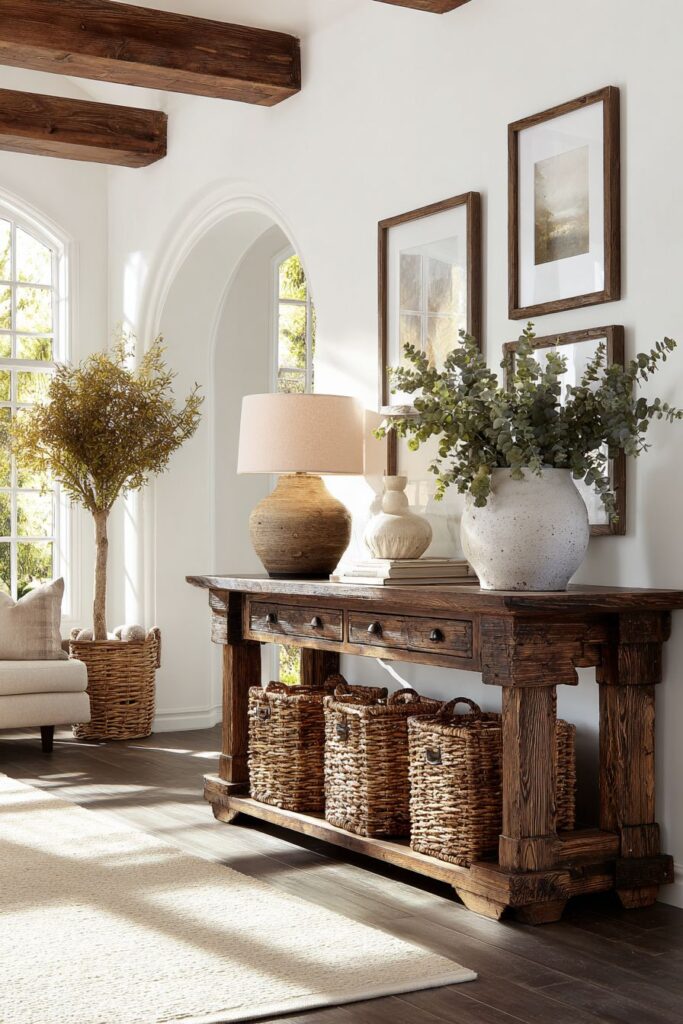
Solid walnut wood represents the pinnacle of natural elegance in furniture design, and a dining room console crafted from this premium material brings an undeniable sophistication to any space. The deep, chocolate-brown tones of walnut wood, accented by lighter sapwood streaks and distinctive grain patterns, create a visual interest that synthetic materials simply cannot replicate. This type of console typically features substantial construction that speaks to both durability and quality, with every knot, swirl, and color variation telling a unique story about the tree from which it came.
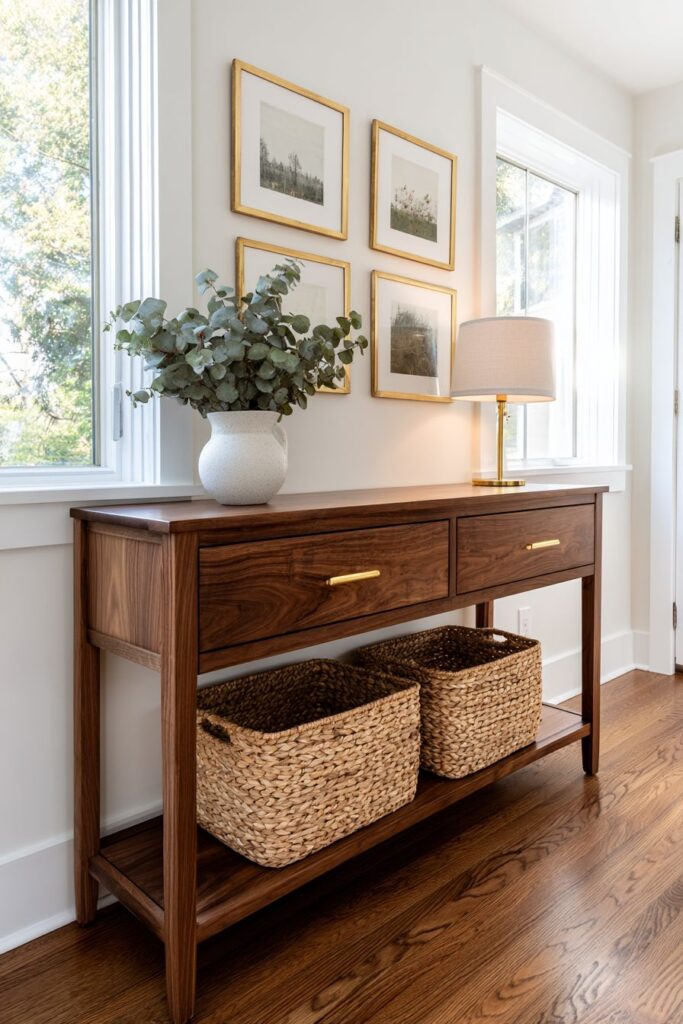
The practical design of a walnut console often includes two smoothly gliding drawers fitted with antique brass handles that provide both functional storage and decorative appeal. These drawers are perfect for housing table linens, serving utensils, candles, and all the small items that tend to clutter dining spaces. The lower shelf offers additional storage opportunities, and when fitted with woven baskets, it combines organization with texture, adding a layer of visual warmth that complements the rich wood tones above. This thoughtful layering of storage solutions ensures that your dining room remains both beautiful and practical.
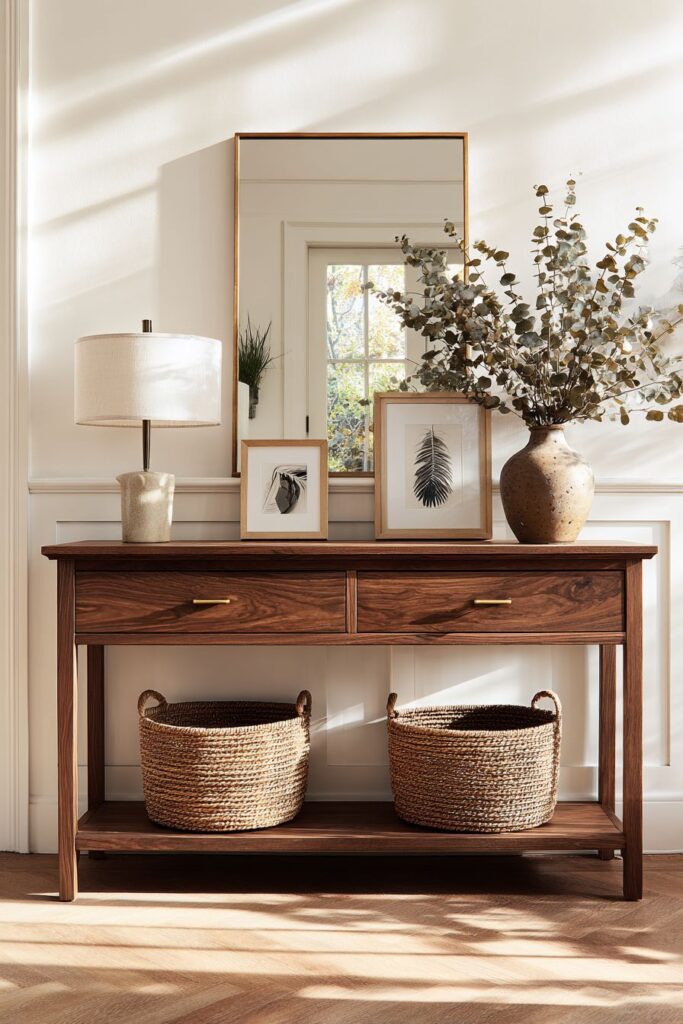
Styling a walnut console requires a delicate balance that allows the natural beauty of the wood to remain the star while adding personality through carefully chosen accessories. A ceramic table lamp with a neutral shade provides ambient lighting that can transform the dining area during evening gatherings, while the warm glow enhances the natural depth of the walnut grain. Fresh eucalyptus branches in a complementary ceramic vase bring life and a subtle fragrance to the space, their silvery-green foliage creating a striking contrast against the dark wood. Framed artwork positioned above or beside the console adds a personal touch and draws the eye upward, creating vertical interest in the room’s design.
The interplay of natural daylight with walnut wood creates a dynamic visual experience throughout the day. Morning light reveals the cooler undertones in the grain, while afternoon sun brings out the warmer, reddish hues that make walnut so beloved by furniture makers and designers. The subtle shadows cast across the console’s surface emphasize its dimensional quality and craftsmanship, highlighting the expert joinery and attention to detail that goes into creating such a piece. When positioned against a soft white wall, the console becomes a stunning focal point that anchors the dining room with timeless elegance.
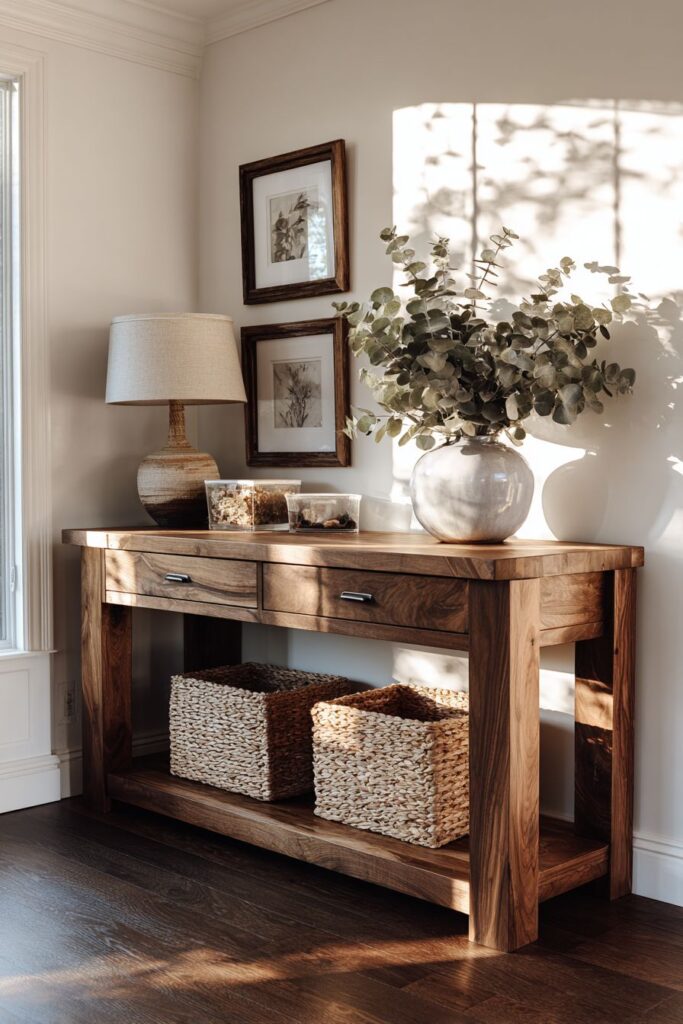
Key Design Tips:
- Select solid walnut rather than veneer for longevity and the ability to refinish the piece over time
- Position the console to receive natural light, which will enhance the wood’s natural color variations throughout the day
- Choose brass or bronze hardware to complement walnut’s warm undertones
- Use woven natural materials like baskets and linens to echo the organic quality of the wood
- Keep accessories minimal to avoid overwhelming the beautiful grain patterns
- Maintain the wood with appropriate furniture oil to preserve its rich color and protective finish
2. Sleek Black Modern Console with Geometric Precision
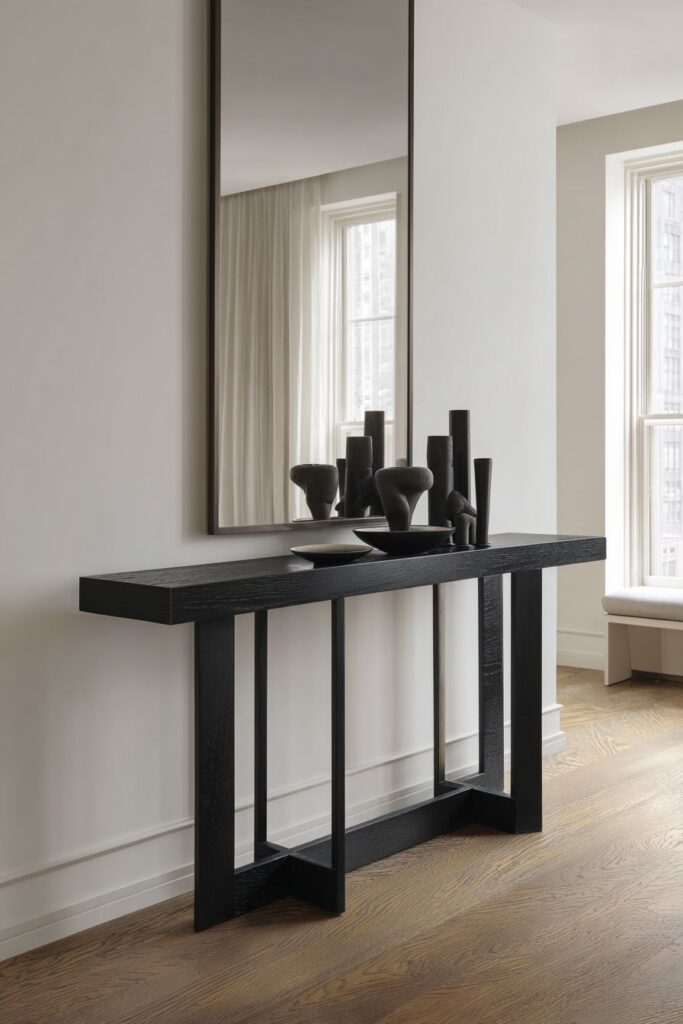
Modern design philosophy emphasizes clean lines, functional simplicity, and bold statements, and a sleek black console with geometric precision embodies all these principles perfectly. The deep black finish creates a dramatic visual anchor in the dining room, providing a sophisticated backdrop that makes everything displayed upon it appear more intentional and curated. The minimalist metal legs, often powder-coated in matching black, create an airy foundation that prevents the piece from feeling heavy despite its dark coloration, while their geometric forms add an architectural quality that appeals to contemporary sensibilities.
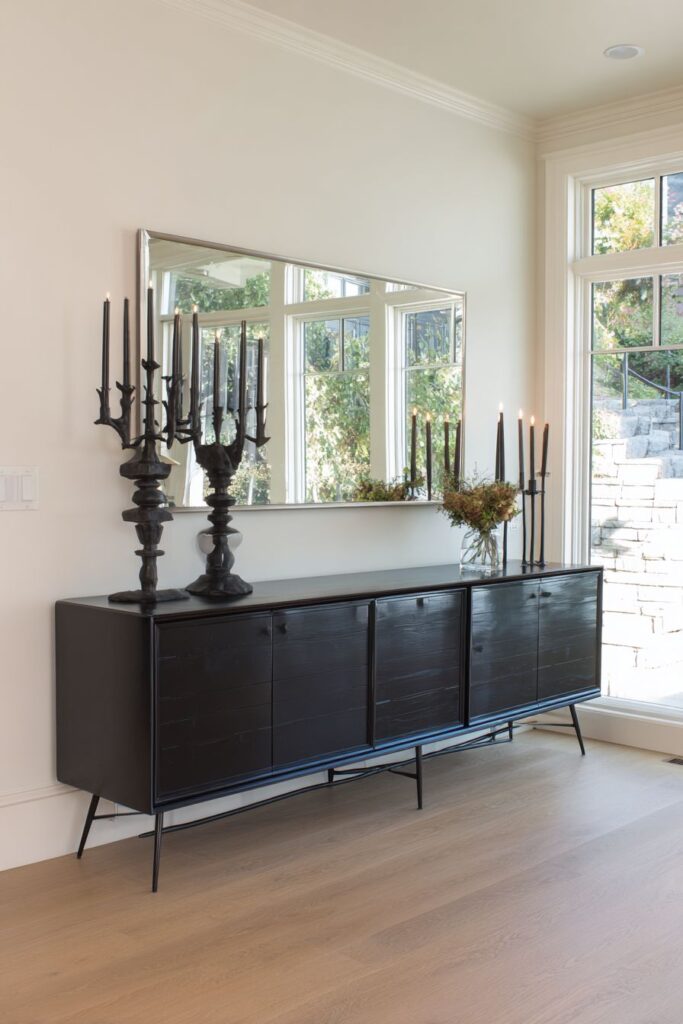
The strategic placement of a large horizontal mirror above a black console is a designer’s secret weapon for transforming dining spaces. This mirror doesn’t just serve decorative purposes—it fundamentally alters the perception of the room by reflecting light, doubling the visual space, and creating intriguing depth that makes even modest dining areas feel more expansive and luxurious. The mirror’s reflection captures the dining table, chairs, and any pendant lighting, effectively creating a second dining room within the same space and adding a dynamic quality as people move through the reflected scene during meals and gatherings.
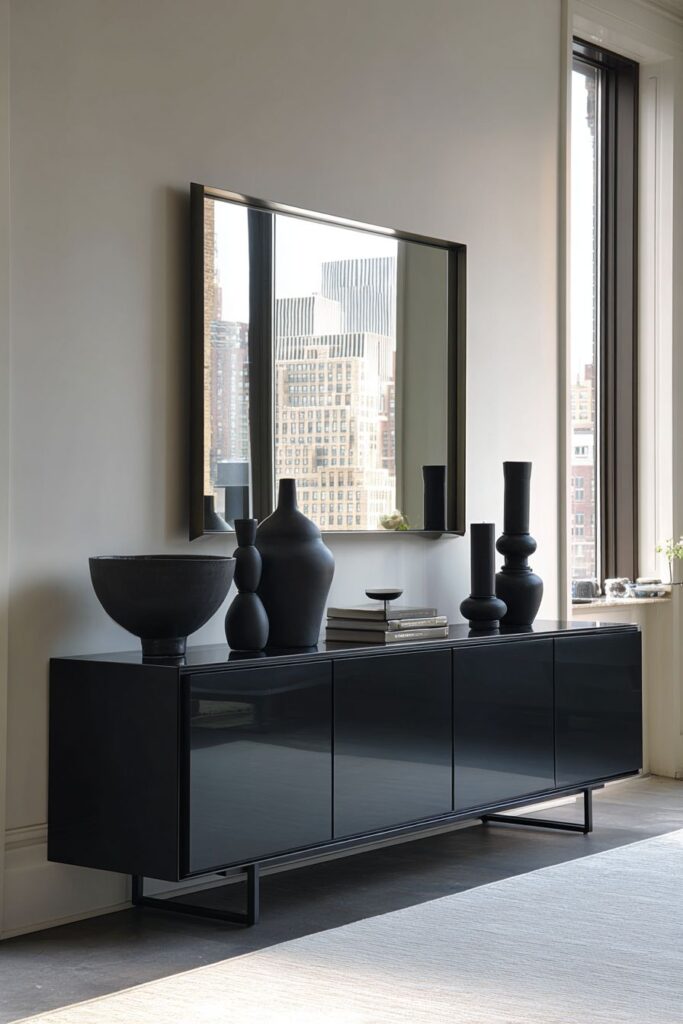
Styling a modern black console requires restraint and intention, as the monochromatic foundation demands accessories that enhance rather than clutter. A sculptural centerpiece in an unexpected form—perhaps an abstract ceramic piece or a twisted metal sculpture—becomes a conversation starter and adds artistic interest without competing with the console’s streamlined design. Matching candlesticks in matte black create symmetry and rhythm, their simple forms echoing the console’s minimalist aesthetic while providing functional ambient lighting for intimate dinners. The key to successful modern styling is the careful editing of accessories, ensuring that each piece serves a purpose and contributes to the overall compositional balance.
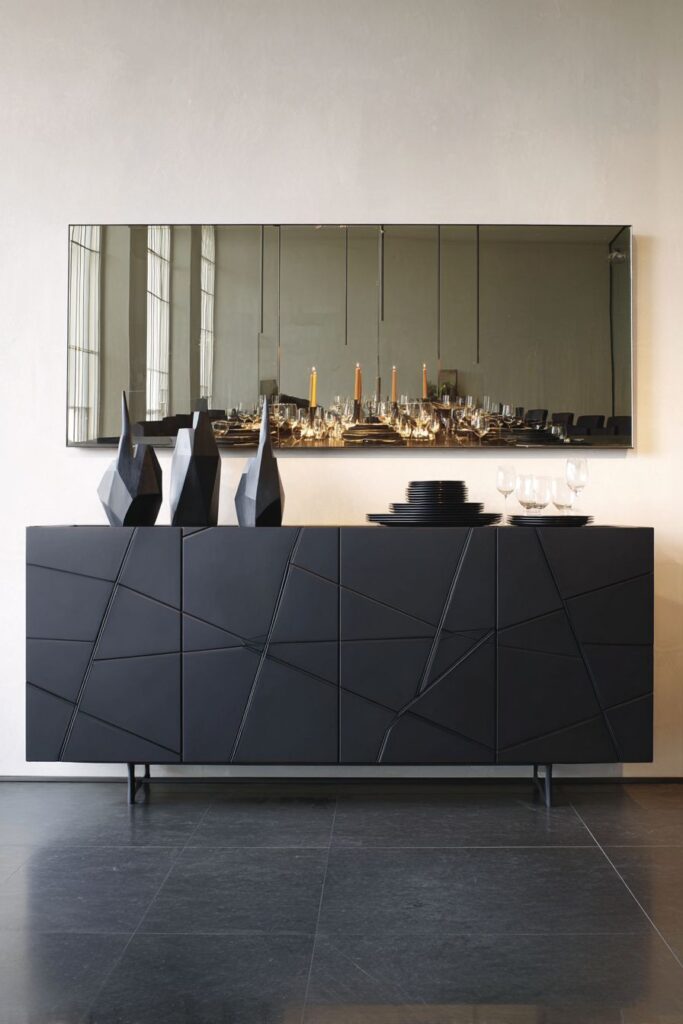
The beauty of a black modern console lies in its versatility and ability to anchor diverse color schemes. Against white walls, it creates striking contrast and defines the dining space with architectural clarity. In rooms with darker walls or bold accent colors, the black console provides visual continuity and sophistication. The geometric metal legs create interesting negative space beneath the console, allowing light to pass through and preventing the piece from visually overwhelming smaller dining rooms. This careful attention to proportion and visual weight makes the modern black console an excellent choice for contemporary, transitional, and even eclectic dining spaces.
Key Design Tips:
- Pair black consoles with metallic accents like brass, copper, or chrome for added visual interest
- Use the reflective quality of a black finish to add depth and drama to neutral dining rooms
- Position lighting to create highlights on the glossy surface, emphasizing the console’s sleek profile
- Choose sculptural accessories with interesting silhouettes that stand out against the dark background
- Maintain the black finish with microfiber cloths to avoid visible dust and fingerprints
- Balance the visual weight of black with lighter elements in the room, such as pale walls or light-colored dining chairs
3. Farmhouse-Style Console with Reclaimed Pine Charm
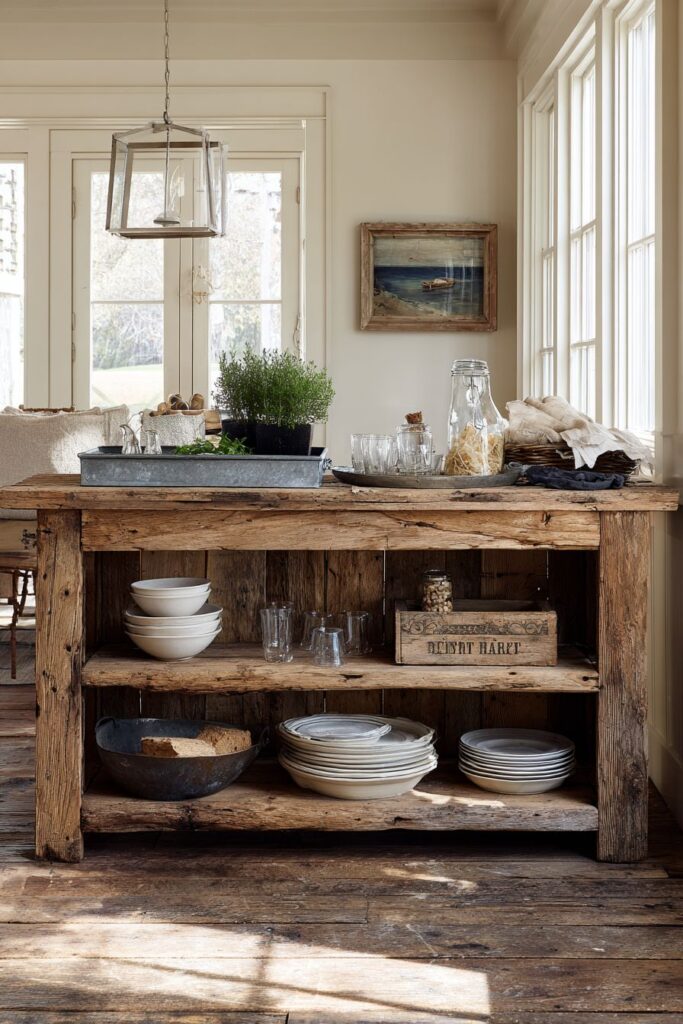
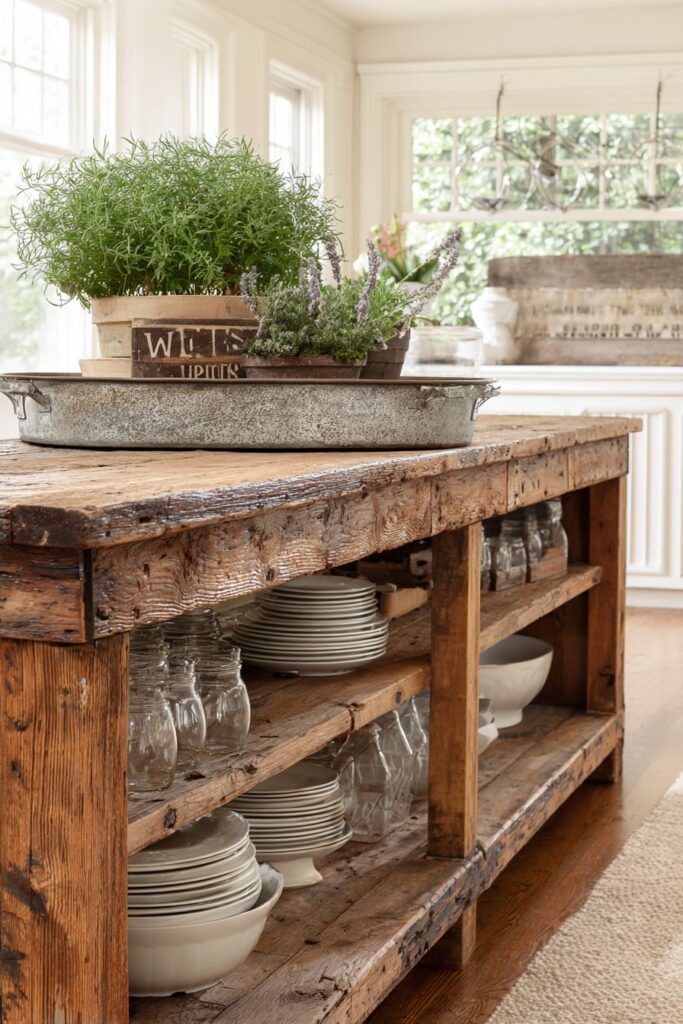
The farmhouse aesthetic celebrates authenticity, simplicity, and the beauty of imperfection, making a console crafted from reclaimed pine an ideal choice for those seeking to infuse their dining room with rustic warmth and character. Reclaimed pine carries with it a sense of history and sustainability, as the wood has been salvaged from old barns, factories, or other structures and given new life as functional furniture. The visible knots, natural color variations ranging from honey gold to weathered gray, and occasional nail holes or saw marks tell stories of the wood’s previous incarnation, adding layers of visual interest that new lumber simply cannot provide.
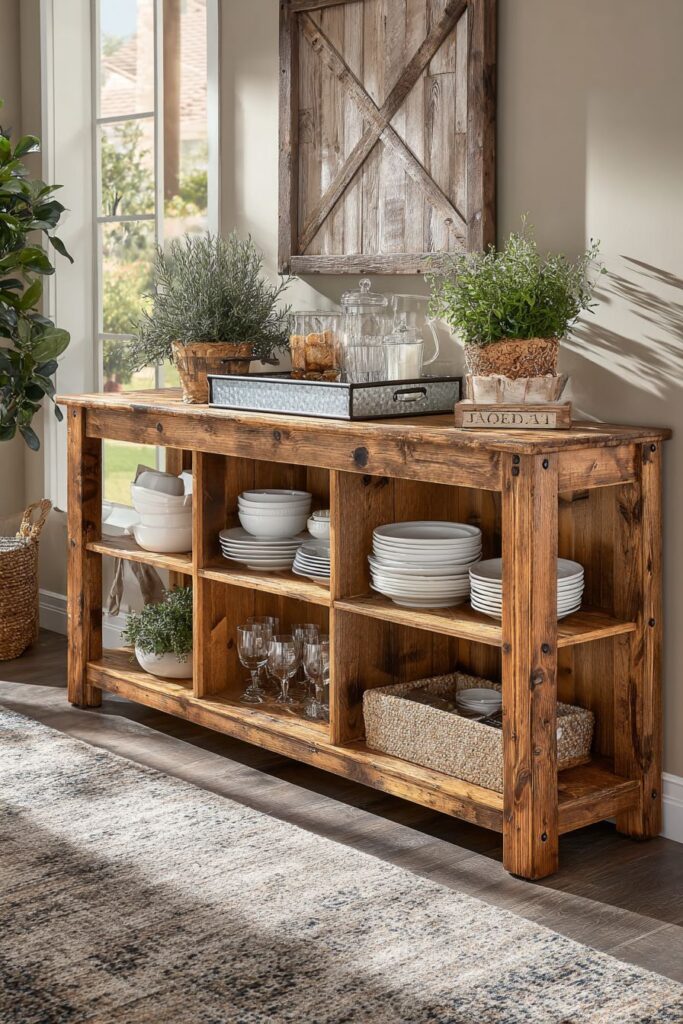
The open shelving design commonly found in farmhouse consoles embraces the concept of functional display, where everyday items become part of the room’s decorative scheme. White ceramic dishes stacked on the lower shelf create a crisp visual contrast against the warm-toned wood, while vintage glassware catches and refracts light, adding sparkle and dimension to the composition. This approach to storage reflects the farmhouse principle that beautiful, well-made objects should be visible and accessible rather than hidden away, celebrating the honest utility of everyday items and creating a lived-in atmosphere that feels welcoming rather than formal.
Decorating a farmhouse console involves layering textures and incorporating items that reflect an agrarian, handcrafted aesthetic. A galvanized metal tray provides a practical surface for corralling smaller items while adding industrial texture that complements the rustic wood. Potted herbs like rosemary, thyme, or basil bring life, fragrance, and a connection to kitchen gardening traditions, while also serving the practical purpose of providing fresh ingredients for cooking. A rustic wooden sign with a meaningful phrase or family name adds personality and completes the curated-yet-casual look that defines successful farmhouse styling.
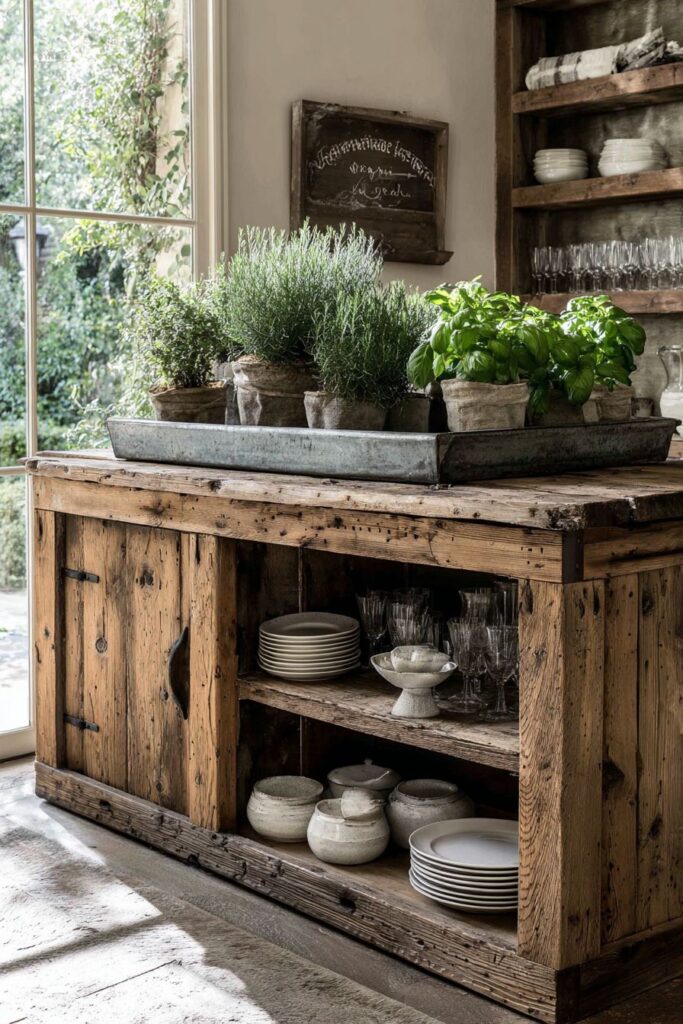
The relationship between farmhouse consoles and natural lighting is particularly important, as soft daylight from nearby windows illuminates the authentic material textures and creates the warm shadows that give depth to the wood’s surface. The reclaimed nature of the pine means that different boards may weather and age differently, creating a patchwork of tones that becomes more beautiful as sunlight moves across the surface throughout the day. This dynamic quality, combined with the honest construction and practical functionality, makes the farmhouse console an enduring choice for dining rooms that prioritize comfort, authenticity, and approachable style over formal perfection.
Key Design Tips:
- Embrace the natural imperfections in reclaimed wood as features rather than flaws
- Mix white or cream ceramics with the warm wood tones for classic farmhouse contrast
- Incorporate metal accents in galvanized, aged, or black finishes to add industrial touches
- Display frequently used items on open shelves to maintain the functional aesthetic
- Use natural elements like fresh herbs, flowers, or seasonal produce as living decorations
- Choose woven baskets or vintage containers for concealed storage that maintains the rustic theme
4. Narrow Space-Saving Console for Compact Living
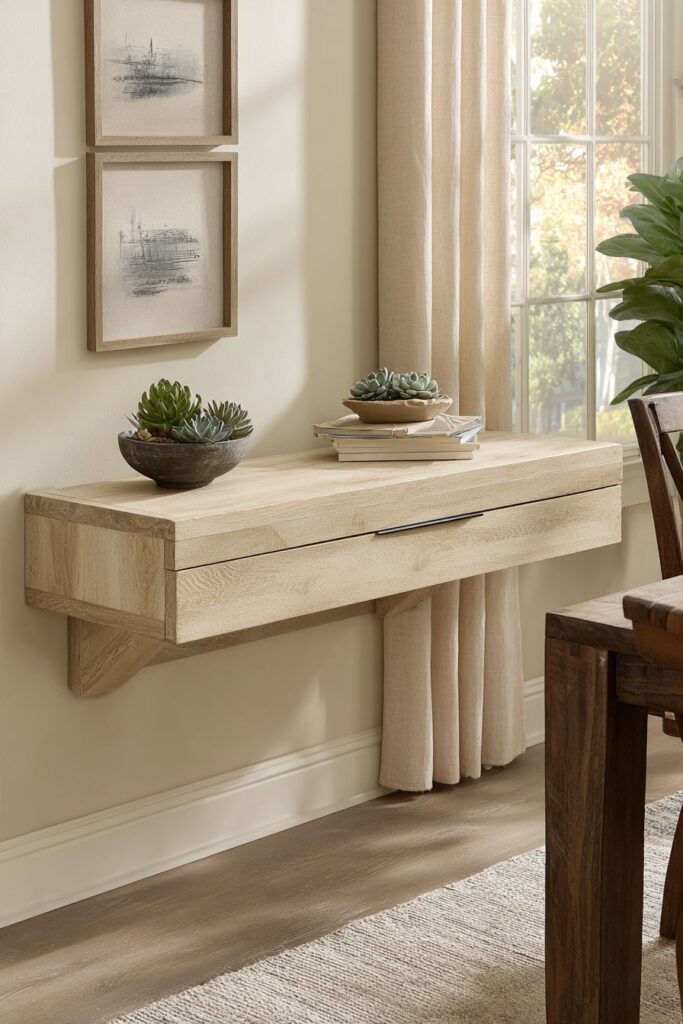
In urban apartments and homes with limited square footage, every inch of space matters, making a narrow dining room console an ingenious solution for adding function without sacrificing precious floor area. Measuring approximately ten inches deep, these ultra-slim consoles prove that thoughtful design can deliver both style and utility within the tightest spatial constraints. The light oak finish commonly chosen for these pieces helps maintain a sense of openness and airiness, as lighter wood tones visually recede rather than dominate, making small dining areas feel less cramped and more inviting.
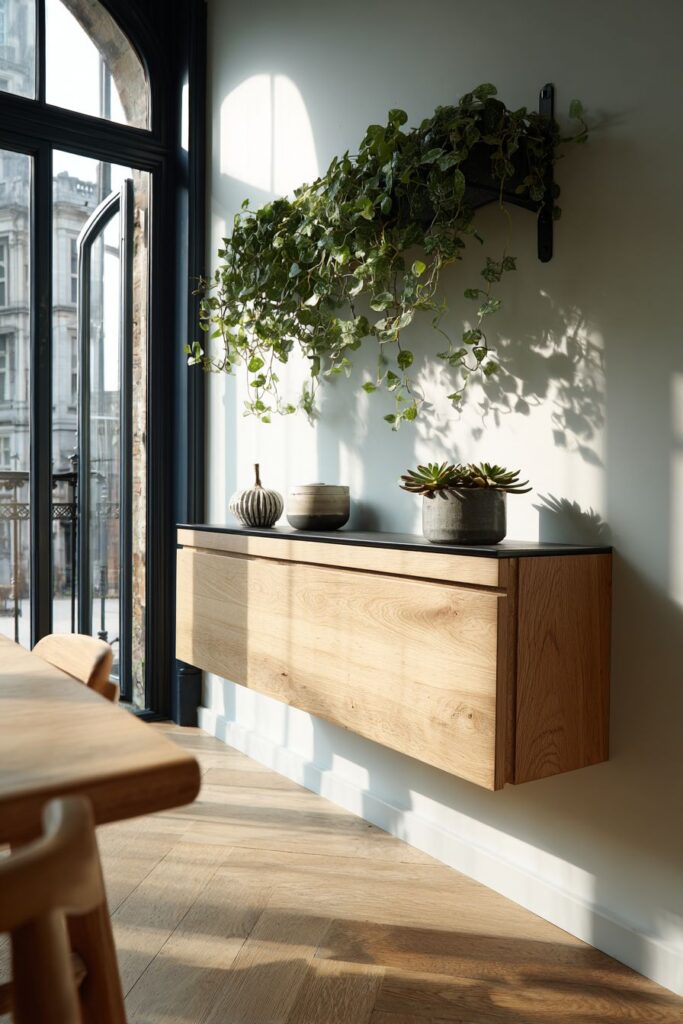
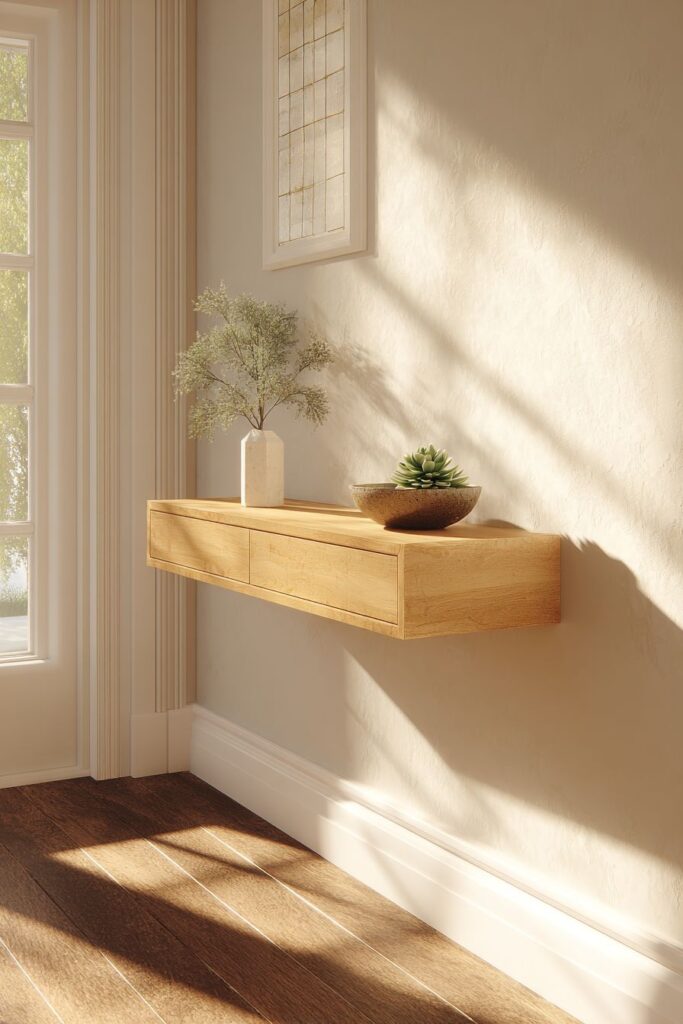
The wall-mounted floating design represents a brilliant engineering solution that maximizes usable floor space while providing essential storage. By utilizing strong floating brackets concealed within the wall, the console appears to hover effortlessly, creating an unobstructed floor area that makes cleaning easier and enhances the room’s sense of spaciousness. This mounting method also offers flexibility in placement height, allowing homeowners to customize the installation to their specific needs and ensure comfortable access to the single slim drawer that houses dining essentials like napkins, coasters, serving utensils, and candles.
Styling a narrow console requires a minimalist approach that respects the piece’s streamlined proportions and space-conscious purpose. A small succulent arrangement brings life and organic texture without requiring the depth that larger plants would demand, while the low-maintenance nature of succulents makes them ideal for busy urban dwellers. A decorative bowl serves double duty as both an aesthetic element and a functional catchall for keys, spare change, or other small items that might otherwise clutter countertops. The restraint shown in accessorizing emphasizes the console’s clean lines and ensures that the dining area maintains an uncluttered, serene atmosphere.
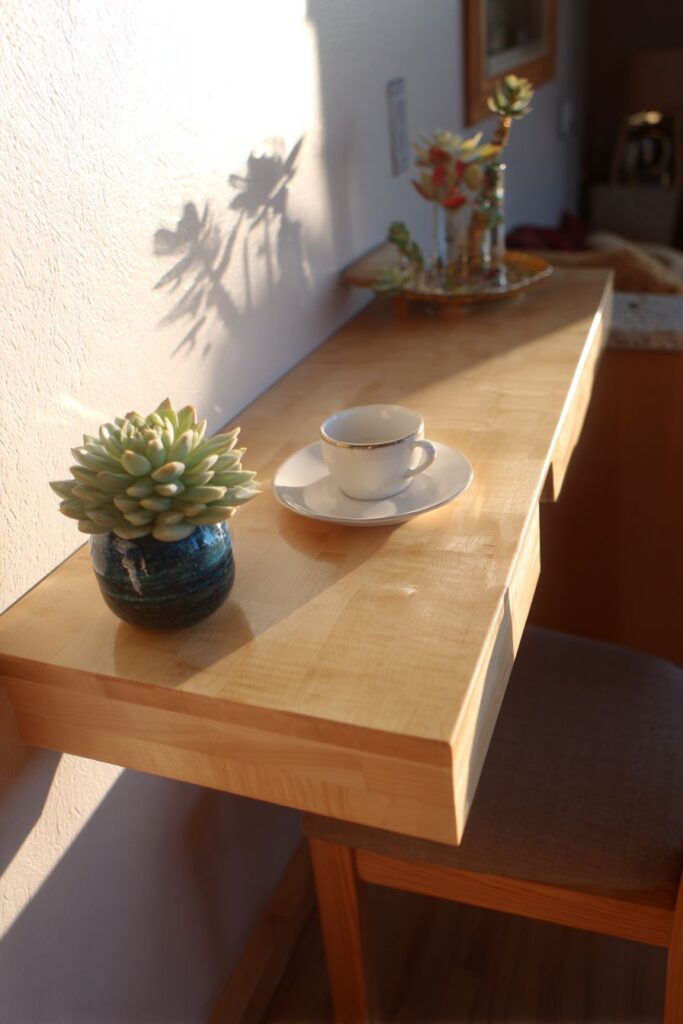
The practical benefits of a narrow console extend beyond mere storage, as the piece creates a defined edge to the dining area without impeding traffic flow through adjacent spaces. In open-plan layouts where the dining area flows into living spaces or kitchens, the console acts as a subtle room divider that delineates the eating zone while maintaining visual connectivity. The slim profile ensures that people can move comfortably past the console even in tight quarters, while the functional storage consolidates dining necessities in one accessible location, eliminating the need to run to other rooms for frequently used items during meals.
Key Design Tips:
- Measure your space carefully before purchasing, ensuring at least 36 inches of clearance for comfortable passage
- Choose wall-mounted designs to maximize floor space and ease cleaning
- Select light wood finishes or painted white consoles to enhance the sense of openness
- Limit accessories to 2-3 carefully chosen pieces to maintain the uncluttered aesthetic
- Use the console’s surface for items you access regularly to justify its presence in a small space
- Consider consoles with integrated outlets or USB ports for added functionality without additional furniture
5. Elegant Grey-Washed Oak Console with Marble Sophistication
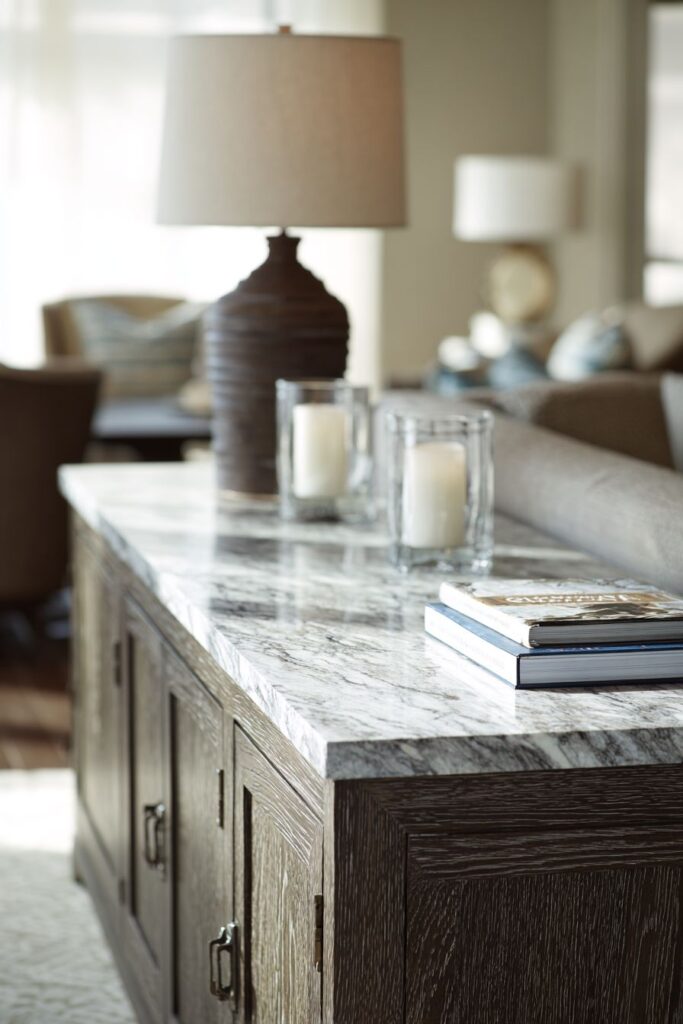
The marriage of grey-washed oak with a marble top represents a sophisticated approach to transitional design, blending the organic warmth of natural wood with the cool elegance of stone in a combination that feels both timeless and contemporary. The grey wash finish transforms traditional oak into something more nuanced and refined, subduing the wood’s natural golden tones while allowing its distinctive grain pattern to remain visible. This technique creates a sophisticated neutral foundation that complements a wide range of dining room color schemes, from crisp whites and soft grays to deeper charcoals and navy blues.
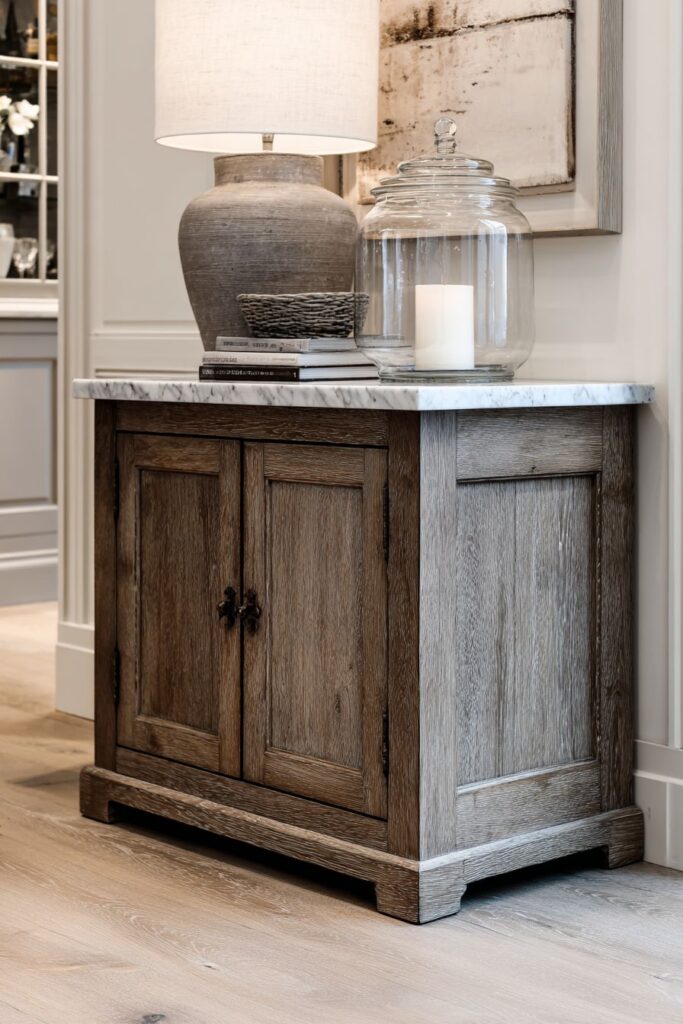
The marble top elevates the console from ordinary to extraordinary, with subtle white and grey veining that creates natural artwork across the surface. No two marble slabs are identical, making each console a unique piece with its own distinctive pattern of veins, clouds, and crystalline structures. The cool, smooth surface of marble provides an ideal platform for displaying decorative objects and serving items, as its heat-resistant properties make it practical for holding warm serving dishes, while its stain-resistant sealed finish protects against the inevitable spills and marks that occur in active dining spaces.
The thoughtful inclusion of two cabinet doors with soft-close hinges reflects an attention to quality and user experience that defines well-designed furniture. Soft-close mechanisms prevent the sharp bang of cabinet doors slamming shut, maintaining a serene atmosphere and protecting both the cabinet contents and the console’s structural integrity over years of use. Antique bronze hardware adds a layer of sophistication and provides visual contrast against the grey-washed wood and pale marble, introducing warm metallic tones that prevent the neutral palette from feeling cold or sterile.
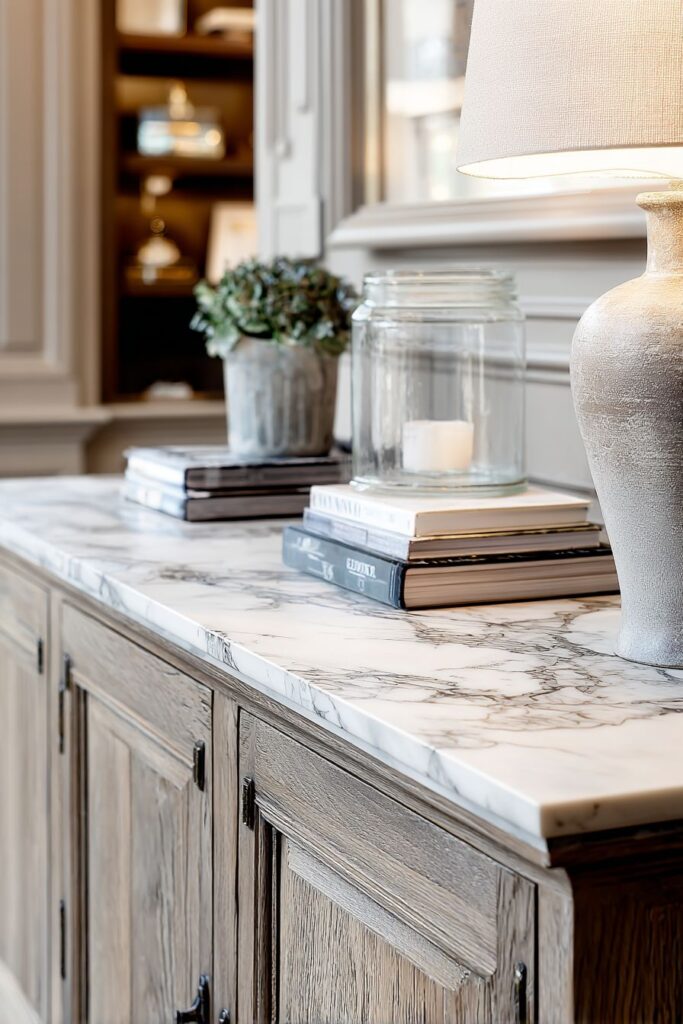
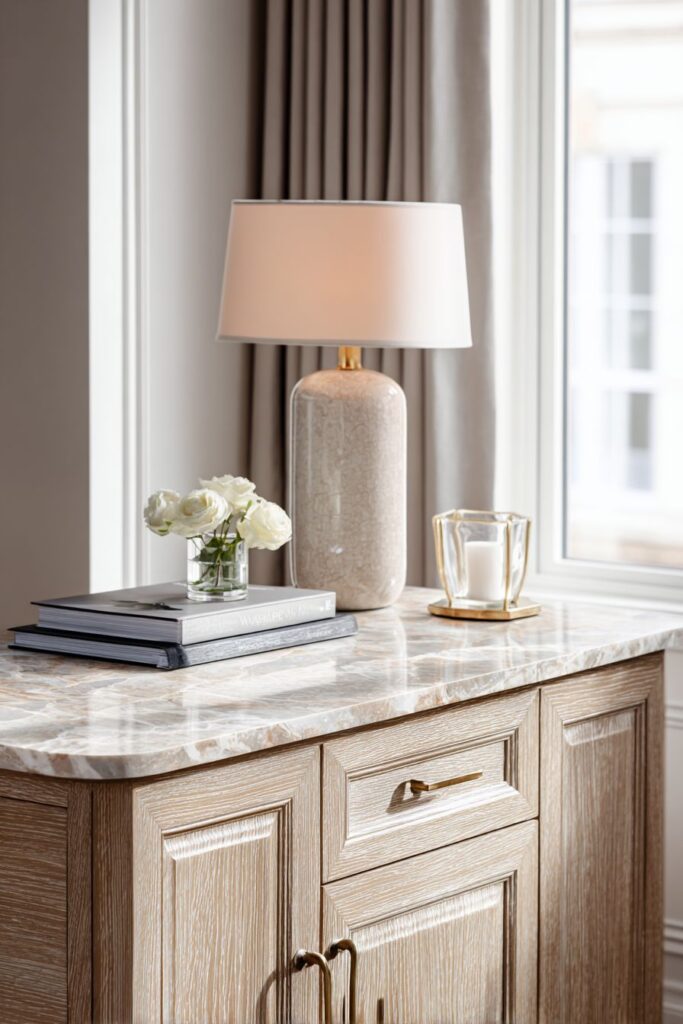
Styling this elegant console involves selecting accessories that honor its refined aesthetic without overwhelming its sophisticated material combination. A tall ceramic lamp with a linen shade provides essential ambient lighting while its neutral tones complement the console’s gray palette. Coffee table books stacked thoughtfully add visual height variation and reveal the homeowner’s interests and personality, whether in art, design, travel, or cuisine. A glass hurricane candle holder introduces transparency and the warm flicker of candlelight, creating an inviting atmosphere for dining while showcasing another material texture that adds to the layered, collected look of a well-designed space.
Key Design Tips:
- Seal marble tops properly to protect against staining from wine, oil, or acidic foods
- Use coasters and trivets even on sealed marble to maintain its pristine appearance over time
- Choose soft-close hardware for all cabinets to protect contents and extend furniture lifespan
- Layer metallic finishes like bronze, brass, and silver for a collected, sophisticated look
- Position the console to receive soft, diffused natural light that highlights the marble’s veining
- Balance the cool tones of grey and marble with warm accents in lighting, textiles, or accessories
6. Mid-Century Modern Console with Iconic Retro Design
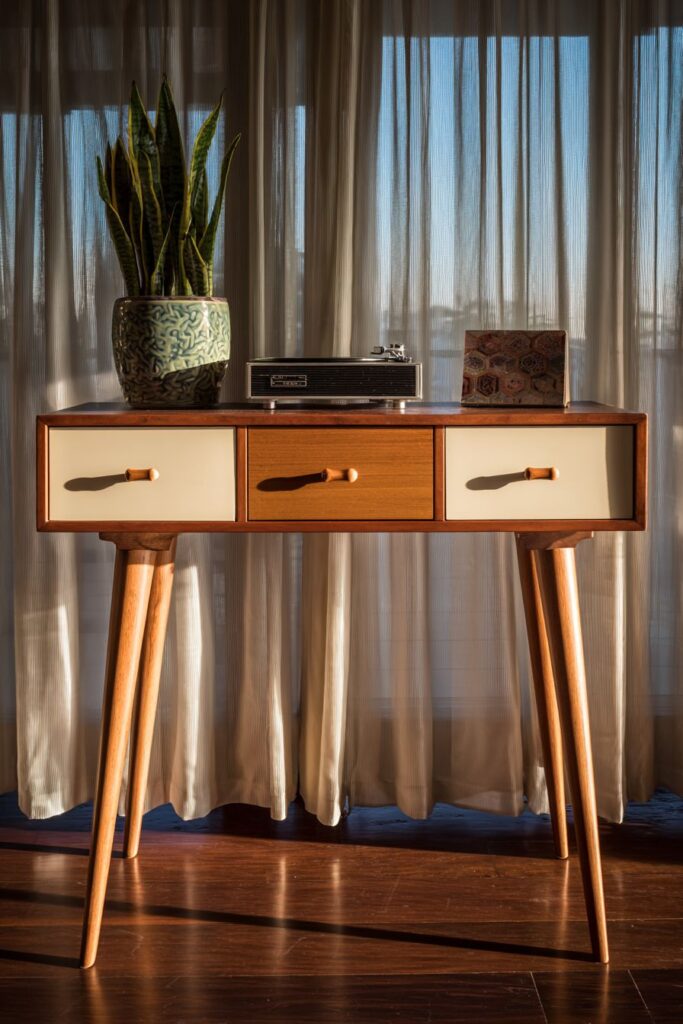
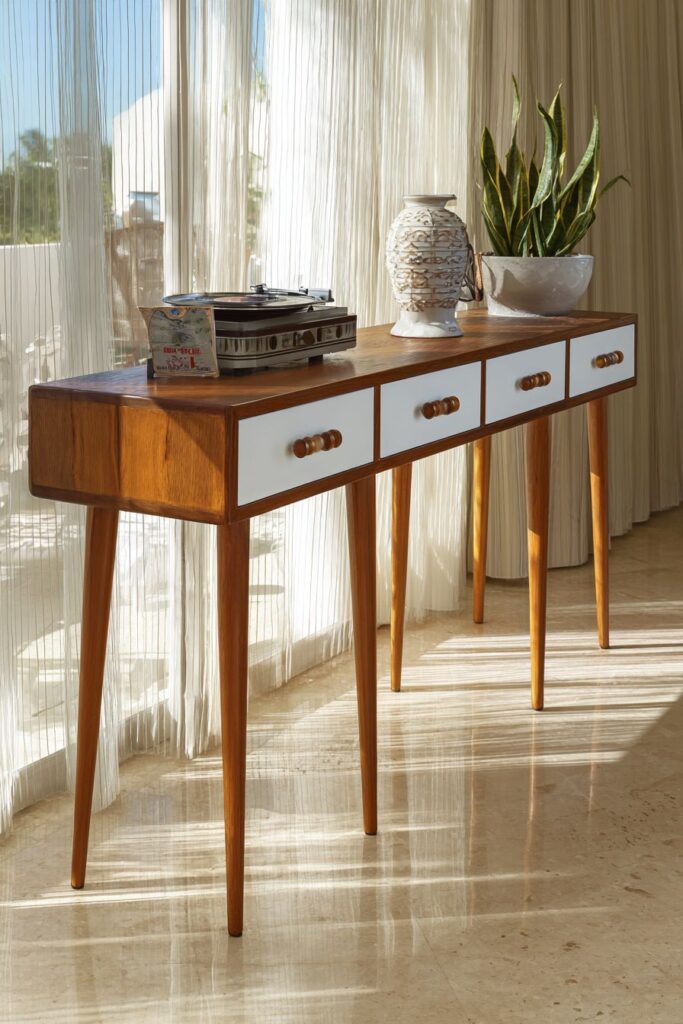
Mid-century modern design continues to captivate homeowners and designers decades after its emergence, and a console featuring this aesthetic brings the optimism, functionality, and clean lines of the 1950s and 60s into contemporary dining spaces. The distinctive tapered wooden legs that angle outward create a sense of lightness and visual interest, while the two-tone finish combining warm teak with matte white drawer fronts exemplifies the era’s love of contrasting materials and colors. This thoughtful combination prevents the piece from feeling too warm or too cool, striking a perfect balance that works in diverse color schemes.
The cylindrical wooden pulls characteristic of mid-century design serve as functional sculpture, their simple geometric forms reflecting the era’s fascination with clean shapes and honest materials. These pulls are comfortable to grasp and add rhythmic repetition across the drawer fronts, creating visual interest through their placement and casting small shadows that emphasize their dimensional quality. The overall silhouette of a mid-century console tends toward horizontal emphasis, with low profiles and wide proportions that ground the piece and create visual stability while maintaining the era’s signature airy quality.
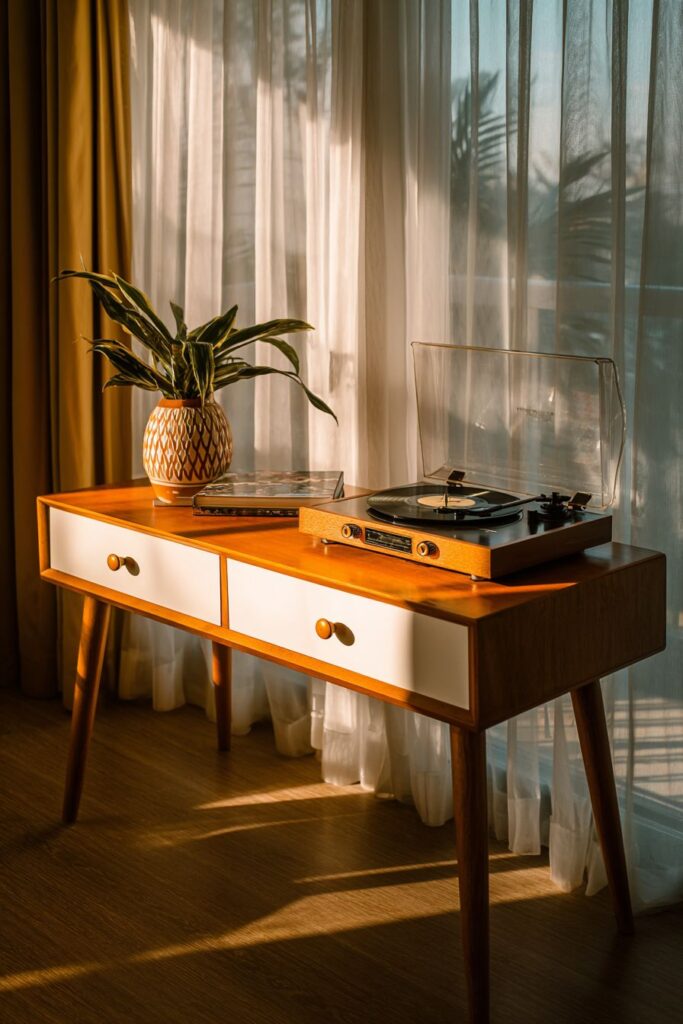
Decorating a mid-century modern console involves selecting accessories that reflect the period’s aesthetic while maintaining functionality. A vintage ceramic vase in an organic form or atomic-inspired pattern celebrates the era’s artistic sensibilities, while its practical use for displaying fresh flowers or branches keeps the piece from feeling like a museum exhibit. A small record player acknowledges the importance of music and entertainment in mid-century homes while potentially serving as a functional element for vinyl enthusiasts experiencing the format’s ongoing revival. A potted snake plant, with its strong vertical leaves and low-maintenance requirements, adds the biophilic element that mid-century designers championed, bringing nature indoors in a structured, architectural way.
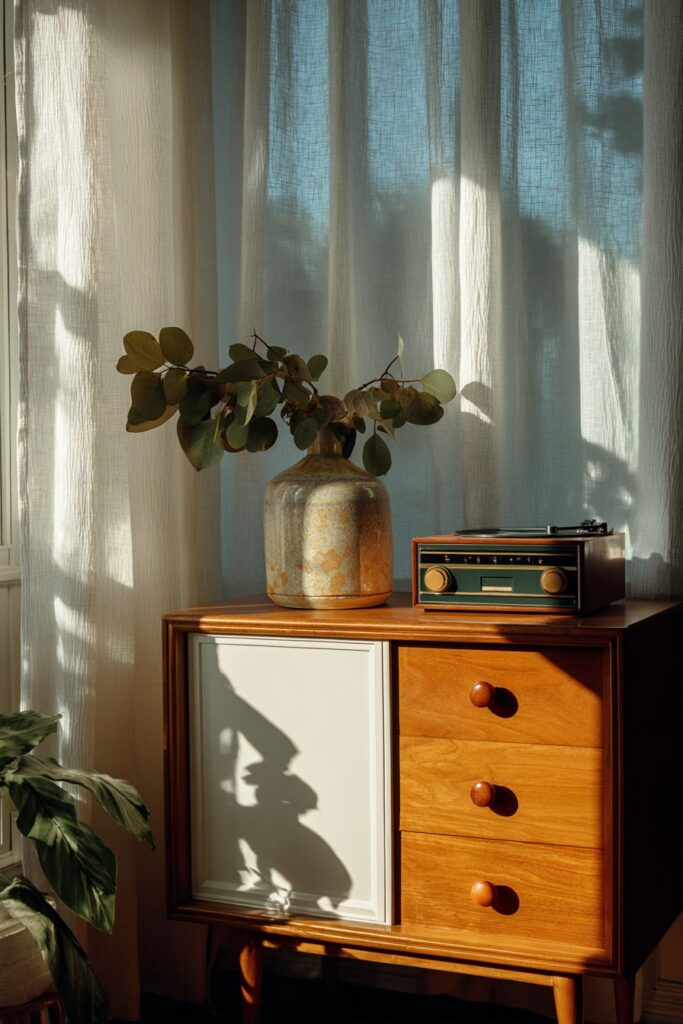
The magic of mid-century modern design truly comes alive during golden hour, when warm natural light streams through windows and illuminates the teak’s honey tones while creating long, dramatic shadows from the angled legs. This time of day emphasizes the thoughtful proportions and careful craftsmanship that define authentic mid-century furniture, revealing how every element serves both functional and aesthetic purposes. The clean lines and uncluttered design philosophy of this style ensure that the console remains a focal point without overwhelming the dining space, embodying the mid-century principle that good design should enhance daily life without demanding constant attention.
Key Design Tips:
- Look for authentic or reproduction pieces with proper tapered legs and period-appropriate hardware
- Maintain teak with appropriate oil to preserve its warm honey color and protect against drying
- Mix vintage and contemporary accessories to prevent the space from feeling like a time capsule
- Incorporate geometric patterns and organic forms that reflect mid-century artistic sensibilities
- Position the console to receive natural light that emphasizes the wood’s warm tones
- Keep the styling relatively minimal to honor the era’s “less is more” philosophy
7. Rustic Barn Wood Console with Industrial Accents
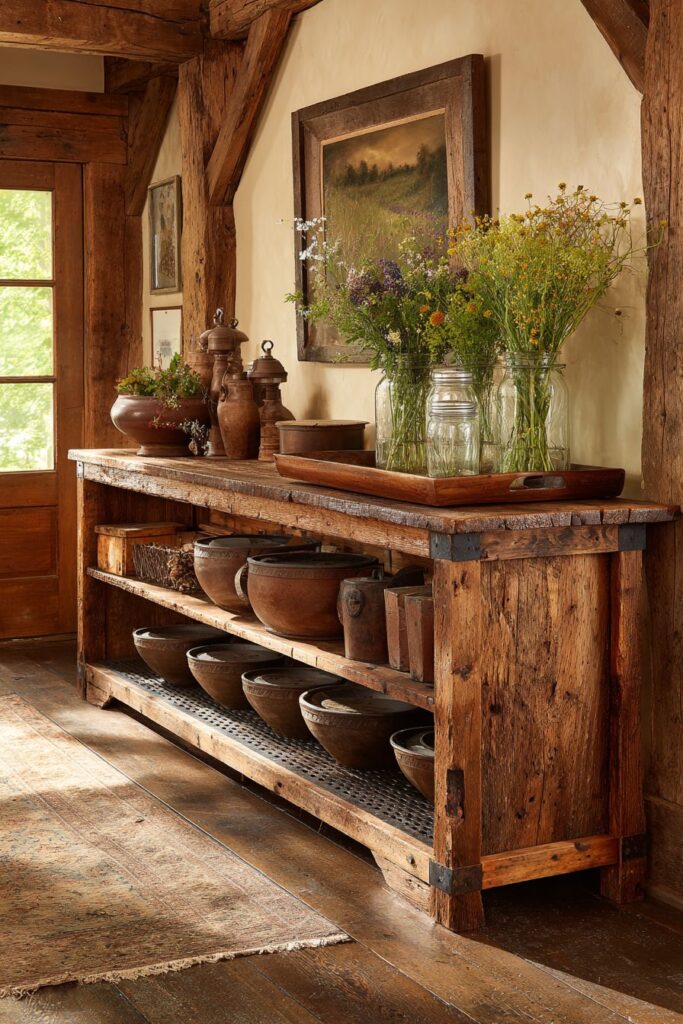
A console constructed from rough-hewn barn wood represents the ultimate in authentic rustic design, bringing fragments of agricultural history and craftsmanship into contemporary dining spaces. The visible weathering on reclaimed barn wood—sun bleaching, water stains, and the gentle erosion caused by decades of exposure—creates a patina that cannot be artificially replicated, making each piece genuinely unique. Natural imperfections like knots, splits, checks, and even old nail holes become design features that add character and tell silent stories about the wood’s previous life as part of a working farm structure.
The incorporation of wrought iron corner brackets adds both structural support and industrial aesthetics, creating visual interest through the contrast between the organic, weathered wood and the strong, utilitarian metal. These brackets, often featuring hand-forged details or deliberate imperfections, reference traditional joinery methods while providing the reinforcement necessary for modern use. The lower shelf constructed from reclaimed metal mesh continues this industrial theme while offering practical storage that maintains visual transparency, preventing the console from appearing too heavy or solid while adding another layer of textural interest.
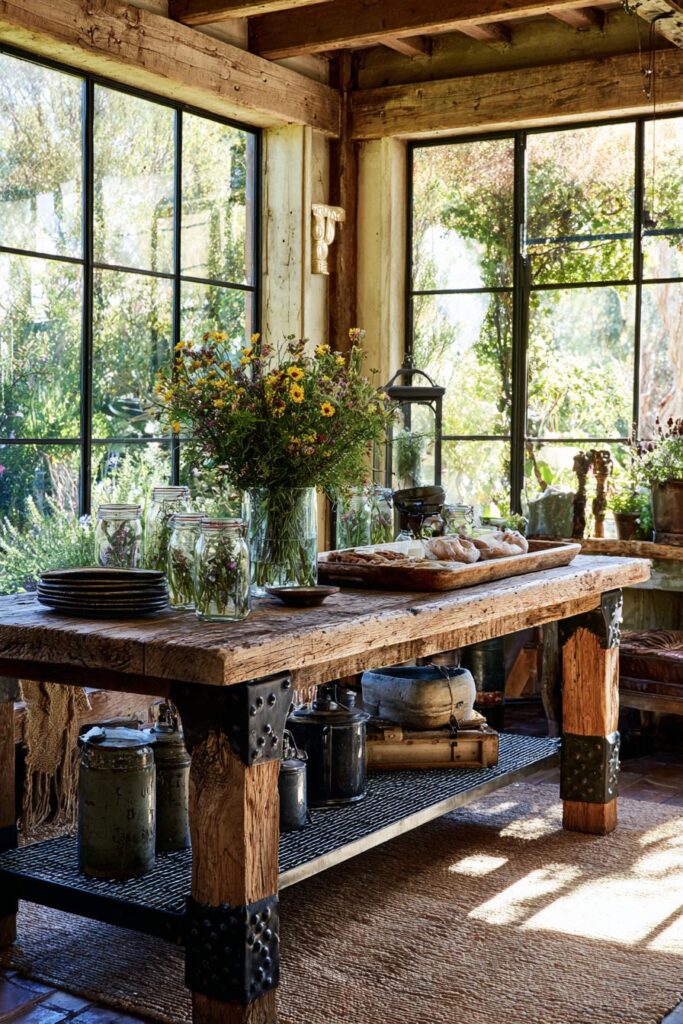
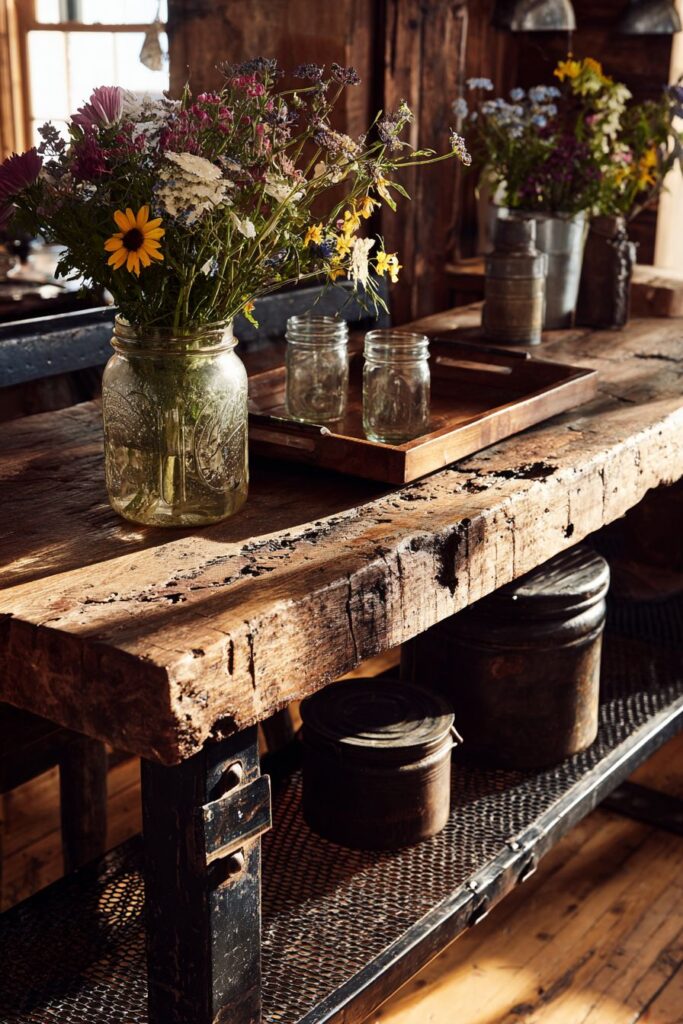
Styling a rustic barn wood console embraces the farmhouse aesthetic of displaying simple, honest objects that combine beauty with utility. Mason jars filled with wildflowers celebrate the connection between rural life and natural beauty, their humble glass forms highlighting the flowers themselves rather than competing for attention. A wooden serving tray, perhaps scarred and worn from years of use, provides a practical surface for gathering items while contributing additional wood texture and patina to the composition. Vintage metal containers in galvanized finishes or aged tin add storage solutions that feel authentic to the piece’s agricultural roots while organizing smaller items that might otherwise create clutter.
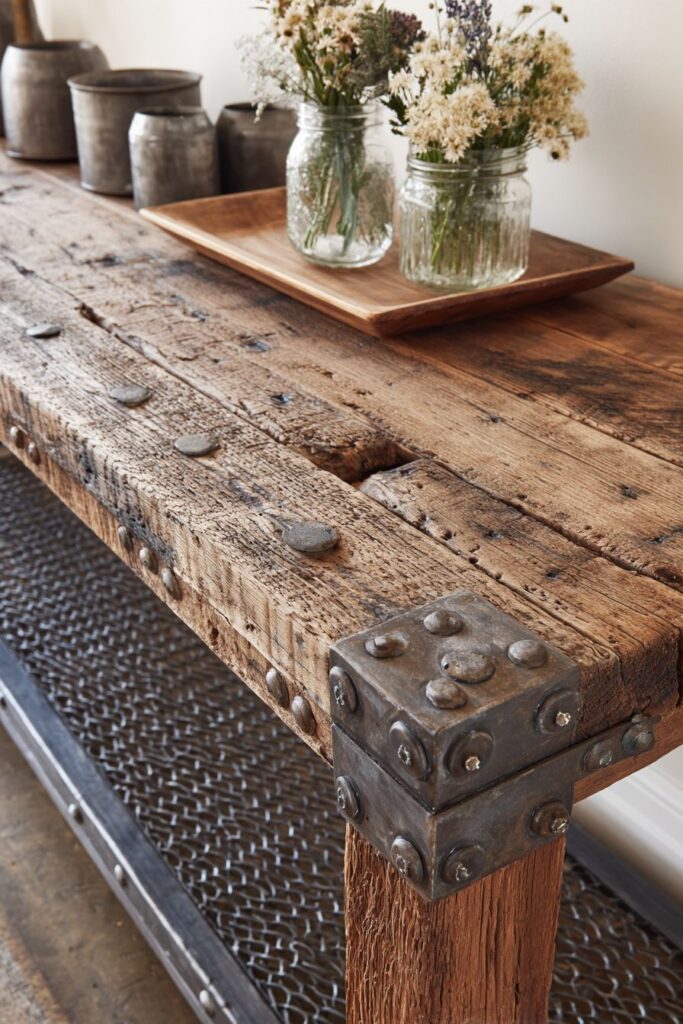
Natural daylight plays a crucial role in illuminating the rich textures and age marks that make barn wood so distinctive. Side-lighting from nearby windows creates dramatic shadows that emphasize every crack, grain line, and surface irregularity, effectively turning the console into a piece of functional sculpture. The aged wood texture absorbs and reflects light differently than smooth, finished woods, creating a matte quality with subtle variations that shift throughout the day. The industrial metal details catch highlights and provide points of visual punctuation that draw the eye and create contrast against the organic wood surfaces.
Key Design Tips:
- Ensure reclaimed wood has been properly cleaned, treated for insects, and sealed for indoor use
- Embrace the imperfections and weathering as design features rather than flaws
- Mix wood and metal finishes to create authentic industrial-rustic character
- Use open metal shelving or mesh to maintain visual lightness despite substantial wood construction
- Display vintage or antique items that complement the aged aesthetic of the reclaimed materials
- Position the console where natural light will emphasize its textural qualities throughout the day
8. Scandinavian Console in Pale Ash with Minimalist Purity
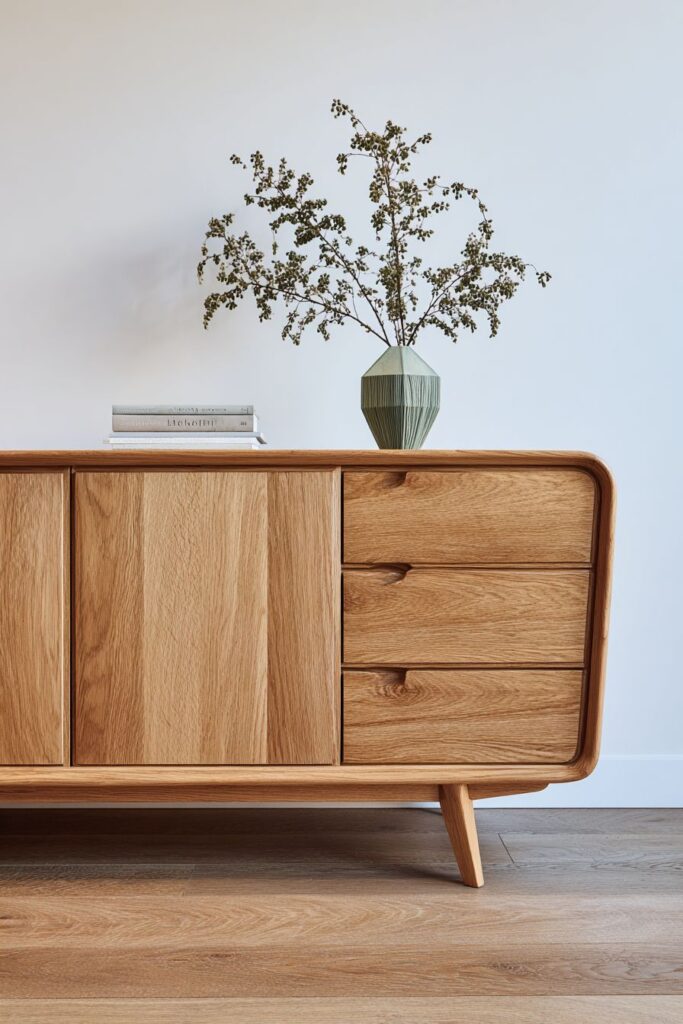
Scandinavian design philosophy centers on simplicity, functionality, and the celebration of natural materials, making a console crafted from light ash wood a perfect embodiment of Nordic aesthetic principles. The pale, almost bleached appearance of ash wood creates an airy, calm foundation that helps small dining spaces feel larger and more open while maintaining the warmth and organic quality that only real wood can provide. The simple, functional design eschews unnecessary ornamentation in favor of clean lines and honest construction, reflecting the Scandinavian belief that beauty emerges from purity of form and quality of craftsmanship rather than applied decoration.
The integration of finger-pull handles represents a thoughtful detail that maintains the minimalist aesthetic while providing functional access to the drawer contents. Rather than projecting hardware that would interrupt the console’s clean lines, finger pulls are recessed grooves or cutouts that allow hands to grip and open drawers while preserving the unbroken horizontal lines that define Scandinavian furniture. This attention to detail reflects the Nordic approach to design where every element serves a purpose and nothing is included merely for decoration.
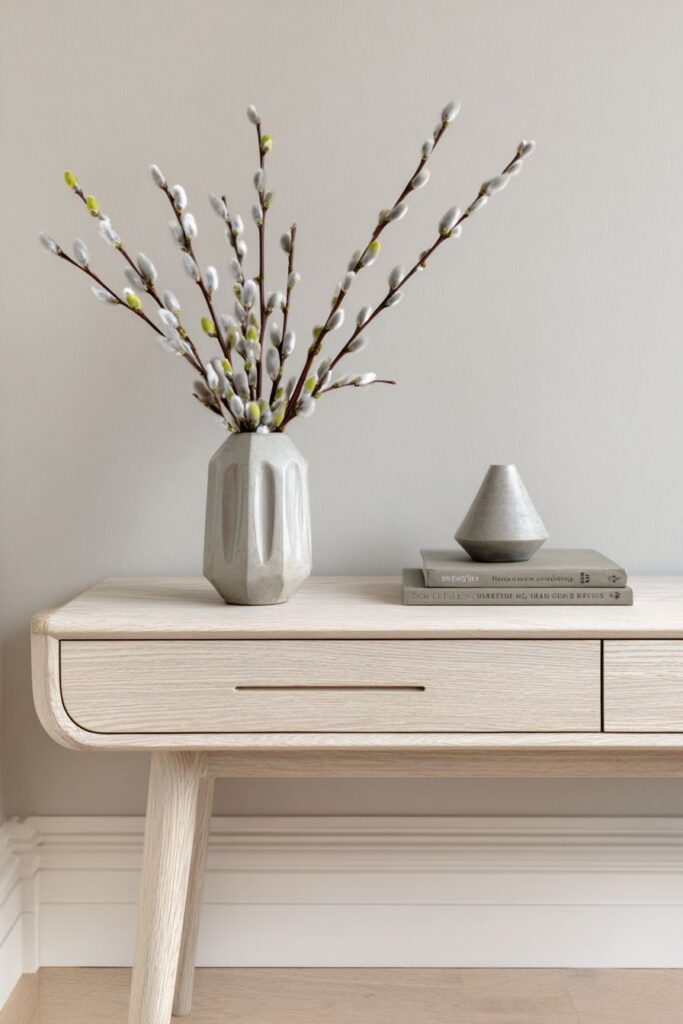
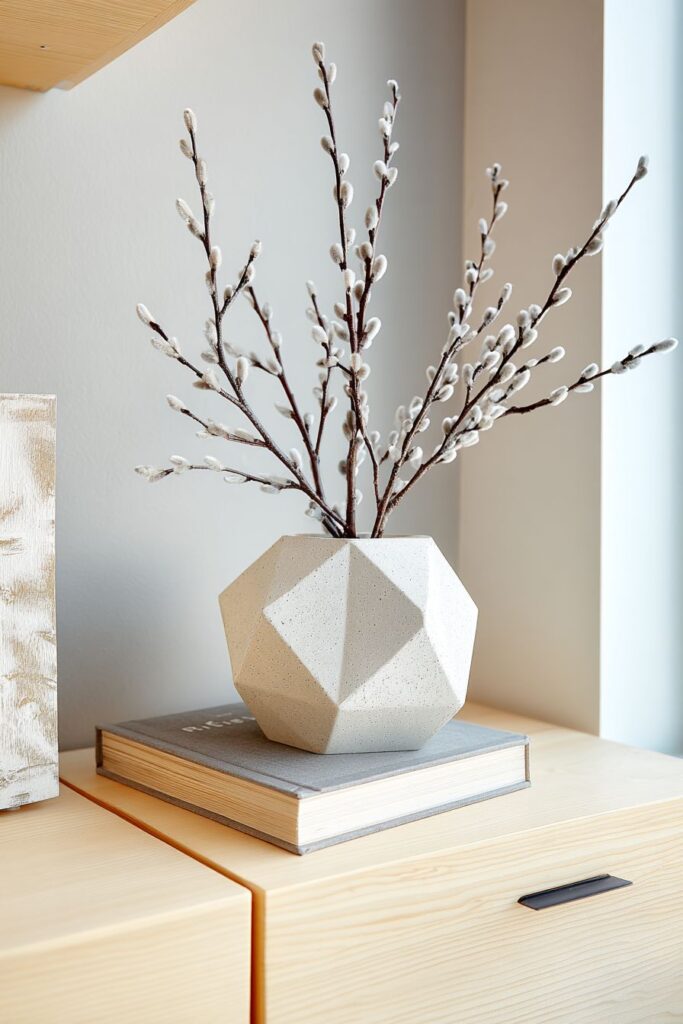
Styling a Scandinavian console requires careful restraint and the confidence to leave empty space, as the Nordic aesthetic values breathing room and the absence of clutter as essential components of good design. A single geometric vase holding pussy willow branches demonstrates this principle perfectly—the simple container form provides visual interest through its shape rather than pattern or color, while the pussy willows’ soft, fuzzy catkins add organic texture and subtle movement without overwhelming the composition. A small stack of design books introduces another horizontal line while providing easily accessible reading material that reflects the homeowner’s interests in architecture, art, or design.
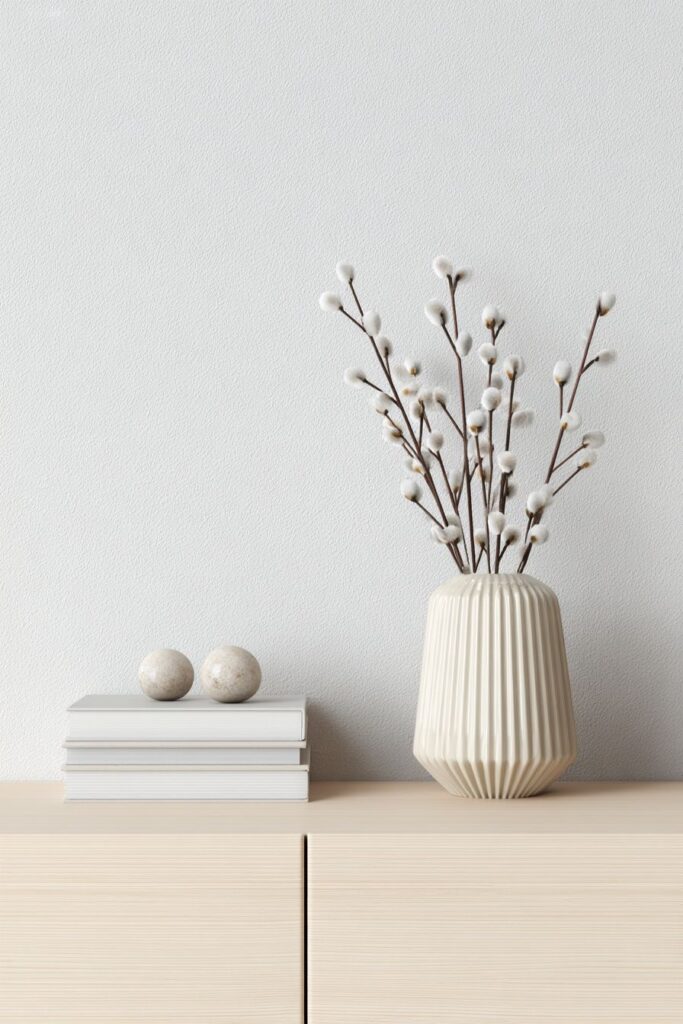
The relationship between light and Scandinavian design cannot be overstated, as the long, dark winters of northern Europe have created a design culture that maximizes and celebrates natural illumination. Bright, even natural lighting showcases the pale wood tones and creates the luminous, fresh atmosphere that characterizes successful Scandinavian interiors. The light ash finish reflects rather than absorbs light, bouncing illumination around the room and contributing to the sense of spaciousness and airiness. This emphasis on brightness and clarity makes Scandinavian consoles particularly well-suited to dining rooms with good natural light or those seeking to create a sense of expansiveness within limited square footage.
Key Design Tips:
- Choose pale wood finishes in ash, birch, or pine to achieve authentic Scandinavian aesthetics
- Maintain clean, uncluttered surfaces with minimal decorative objects
- Use integrated handles or finger pulls to preserve unbroken lines
- Incorporate natural materials like wood, wool, and linen rather than synthetic alternatives
- Maximize natural light through strategic furniture placement and light-colored walls
- Add subtle warmth through textiles and occasional metallic accents to prevent coldness
9. Industrial-Style Console with Raw Material Authenticity
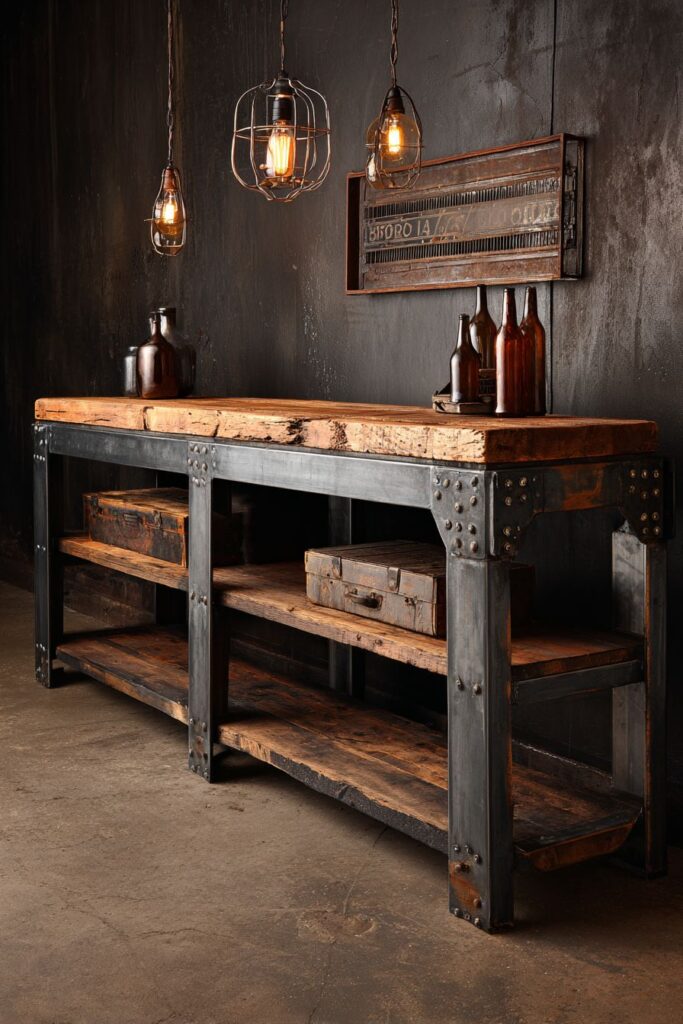
Industrial design celebrates the honest beauty of raw materials, utilitarian construction, and the aesthetic vocabulary of factories and warehouses, making an industrial-style console a bold choice for dining rooms that embrace edgy, urban sophistication. The solid metal frame with visible weld marks pays homage to manufacturing processes, deliberately showcasing the joinery methods rather than hiding them beneath polished finishes or decorative elements.
This transparency of construction reflects the industrial philosophy that the way something is made should be evident and celebrated rather than concealed, creating an authentic aesthetic that resonates with those who appreciate craftsmanship and honest materials.
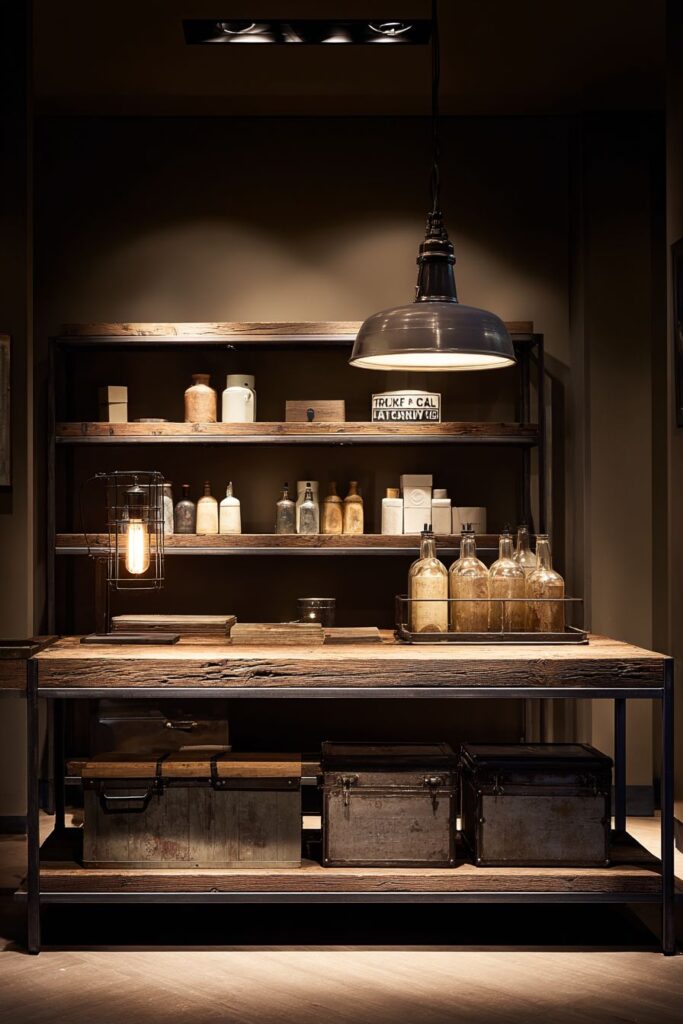
The reclaimed wood top brings organic warmth to balance the cool metal framework, with natural cracks and fill repairs serving as evidence of the wood’s history and previous life. Rather than seeking pristine, perfect lumber, industrial design embraces these imperfections as character marks that add visual interest and tell stories about the material’s journey. The contrast between the rough, textured wood and the smooth, strong metal creates dynamic tension that energizes the space and prevents it from feeling too refined or precious.
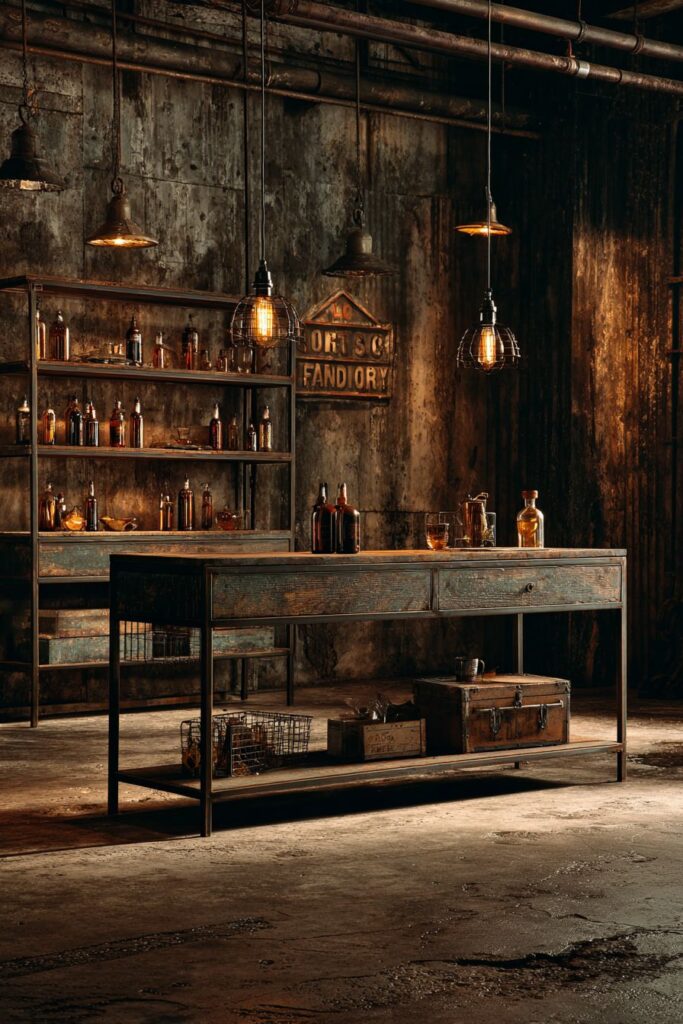
Open metal shelving below provides practical storage while maintaining the industrial aesthetic of transparency and functionality. This exposed shelving displays vintage bottles with interesting labels and shapes, along with industrial-style storage boxes in metal or aged cardboard that contribute to the utilitarian theme. An Edison bulb lamp references early electrical lighting while providing warm, amber-toned illumination that softens the potentially harsh industrial materials. Metal factory signage adds authentic provenance and serves as conversation-starting wall art that reinforces the console’s industrial character.
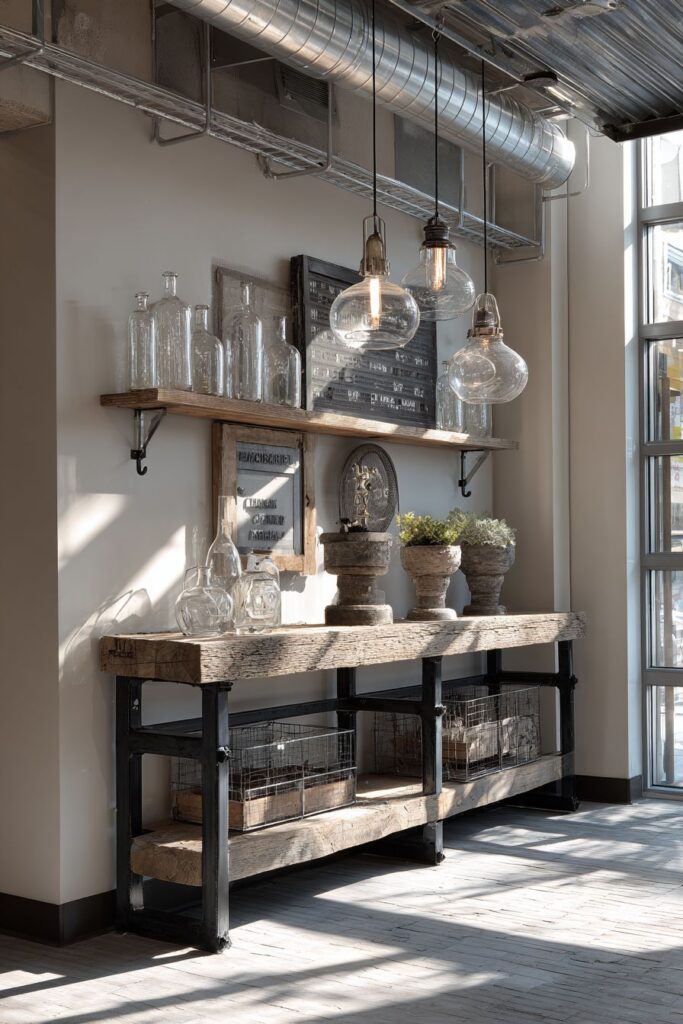
The dramatic interplay of light and shadow becomes particularly important in industrial styling, as overhead pendant lighting creates strong shadows that emphasize the three-dimensional qualities of metal frames, exposed hardware, and textured materials. These shadows cast by industrial fixtures add depth and drama to the composition, highlighting the raw authenticity of materials and construction methods. The utilitarian aesthetic embraces functional beauty over decorative refinement, making industrial consoles ideal for loft spaces, urban apartments, or any dining room seeking to capture the edgy energy of converted industrial spaces.
Key Design Tips:
- Choose pieces with visible welds, rivets, or hardware that showcase construction methods
- Balance cold metal finishes with warm reclaimed wood or aged leather elements
- Incorporate Edison bulbs or cage-style lighting to reference early industrial illumination
- Display objects with industrial provenance like vintage tools, factory molds, or metal containers
- Use open shelving to maintain the transparent, functional aesthetic
- Create dramatic lighting that casts strong shadows emphasizing dimensional qualities
10. Coastal Console in Weathered White with Beach-Inspired Serenity
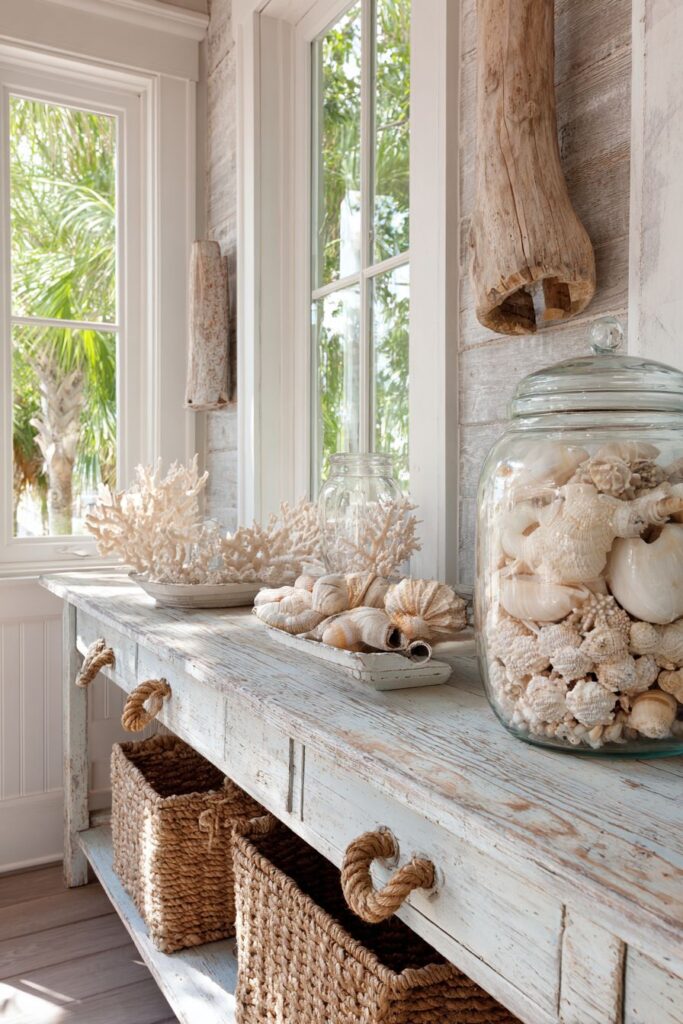
A coastal console painted in soft weathered white with a distressed finish captures the relaxed, sun-bleached aesthetic of seaside living, bringing the calming influence of beach environments into your dining space. The distressed finish deliberately reveals hints of natural wood beneath the white paint, mimicking the way ocean air, salt spray, and intense sunlight naturally weather exterior surfaces in coastal communities. This intentional aging technique creates visual depth and prevents the white from appearing too stark or clinical, instead evoking the gentle, organic aging process that gives vintage beach cottages their authentic charm and character.
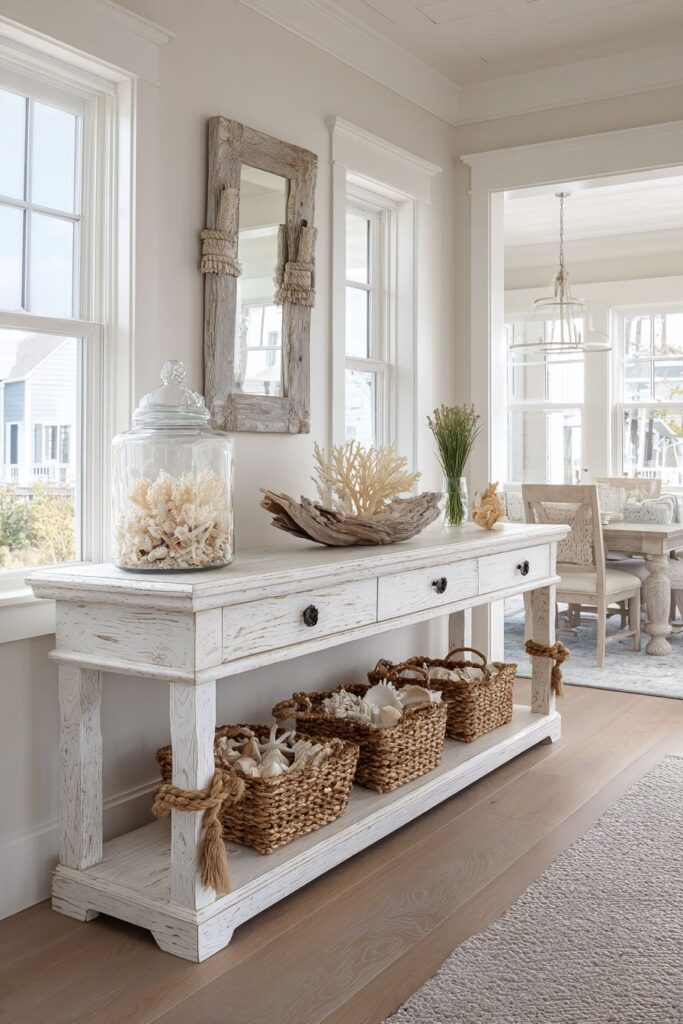
The rope-wrapped drawer pulls add a nautical detail that reinforces the coastal theme while providing tactile interest and comfortable functionality. The natural texture of wrapped rope contrasts beautifully with the smooth painted surface, introducing an organic element that connects to maritime traditions and beach environments. The lower shelf typically features woven seagrass baskets that provide concealed storage while contributing additional natural texture. Seagrass, harvested from coastal wetlands, brings an authentic connection to shoreline ecosystems while offering the practical benefit of hiding less attractive storage contents behind its naturally beautiful weave.
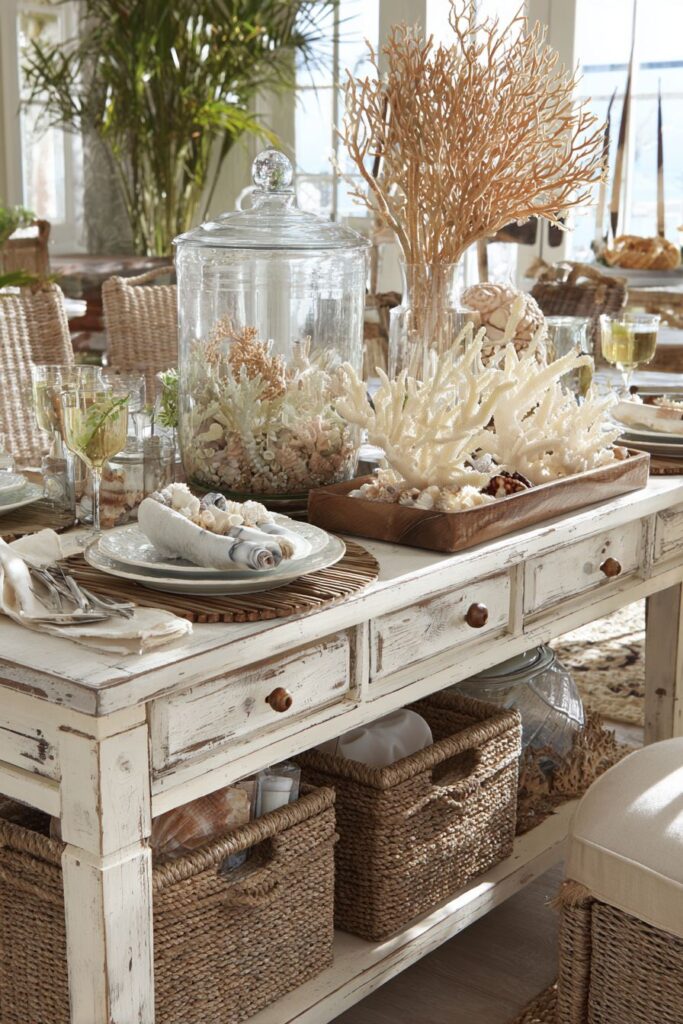
Decorating a coastal console involves thoughtful curation of items that evoke beach memories and ocean connections without veering into heavy-handed theme decoration. Coral specimens—whether actual coral, faux coral for environmental consciousness, or coral-shaped ceramic pieces—add sculptural interest and natural form. Driftwood pieces smoothed by waves and sun provide organic sculpture that celebrates nature’s patient artistry. A glass jar filled with collected shells becomes a personal memory keeper, displaying treasures gathered during beach walks while creating visual interest through the variety of shell shapes, sizes, and colors visible through the transparent glass.
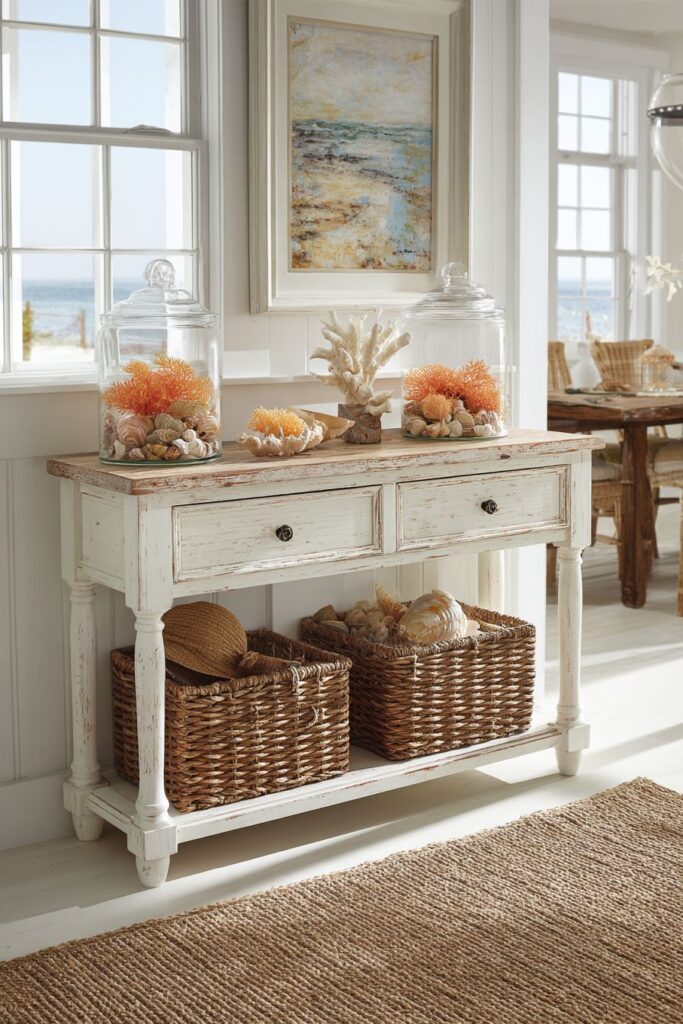
Natural lighting from nearby windows is essential for achieving the bright, airy atmosphere that defines successful coastal design. The weathered white finish reflects maximum light, bouncing illumination around the room and creating the sun-drenched feeling of a beach house even in inland locations. The interplay between the white console, natural light, and ocean-inspired accessories creates a sense of calm and relaxation that makes the dining room feel like a retreat from daily stress. This bright, breezy aesthetic makes coastal consoles particularly appealing for casual dining spaces where relaxation and comfortable gathering take precedence over formal presentation.
Key Design Tips:
- Use weathered or distressed white finishes rather than stark white for authentic coastal character
- Incorporate natural materials like rope, seagrass, and driftwood to reference beach environments
- Display collected shells, coral, or sea glass in glass containers that show off their natural beauty
- Maximize natural light through strategic placement near windows
- Keep the color palette light and neutral with accents of soft blue, aqua, or sandy beige
- Avoid overly themed or kitschy beach decorations in favor of subtle, sophisticated coastal references
11. Contemporary High-Gloss Console in Bold Navy with Gold Accents
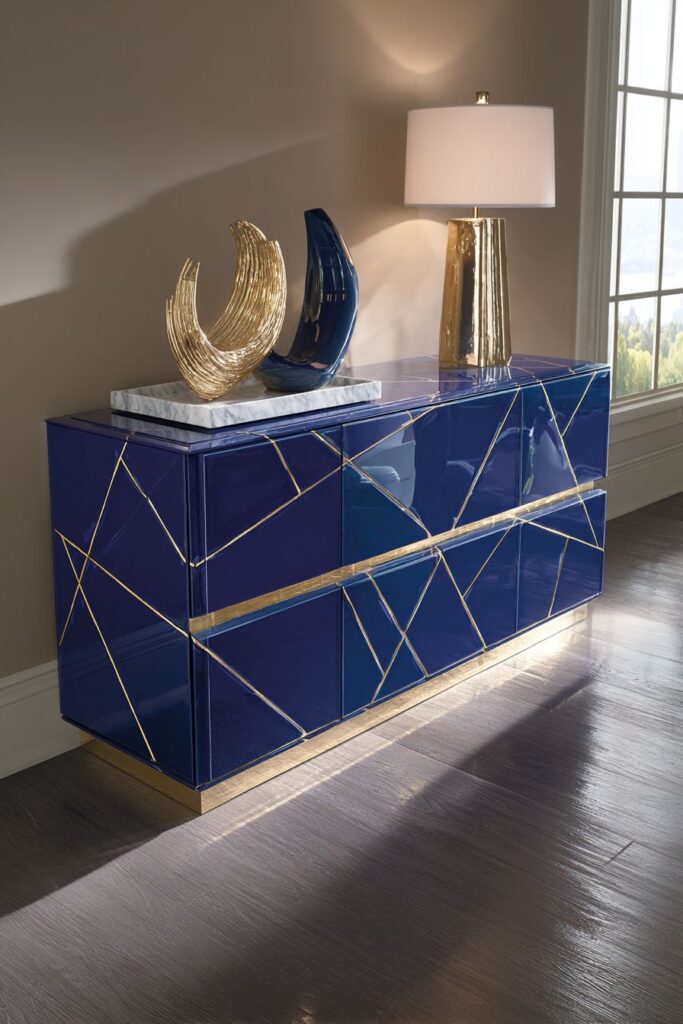
A contemporary console finished in high-gloss navy blue lacquer with gold-toned metal accents makes a powerful design statement that transforms the dining room from background to showcase. The striking navy color provides depth and sophistication while remaining neutral enough to work with various color schemes, from crisp whites and soft grays to warm creams and even bold accent colors. The high-gloss lacquer finish creates a mirror-like surface that reflects light and surrounding elements, adding glamour and visual drama while showcasing the precision of the console’s construction and the quality of its finish.
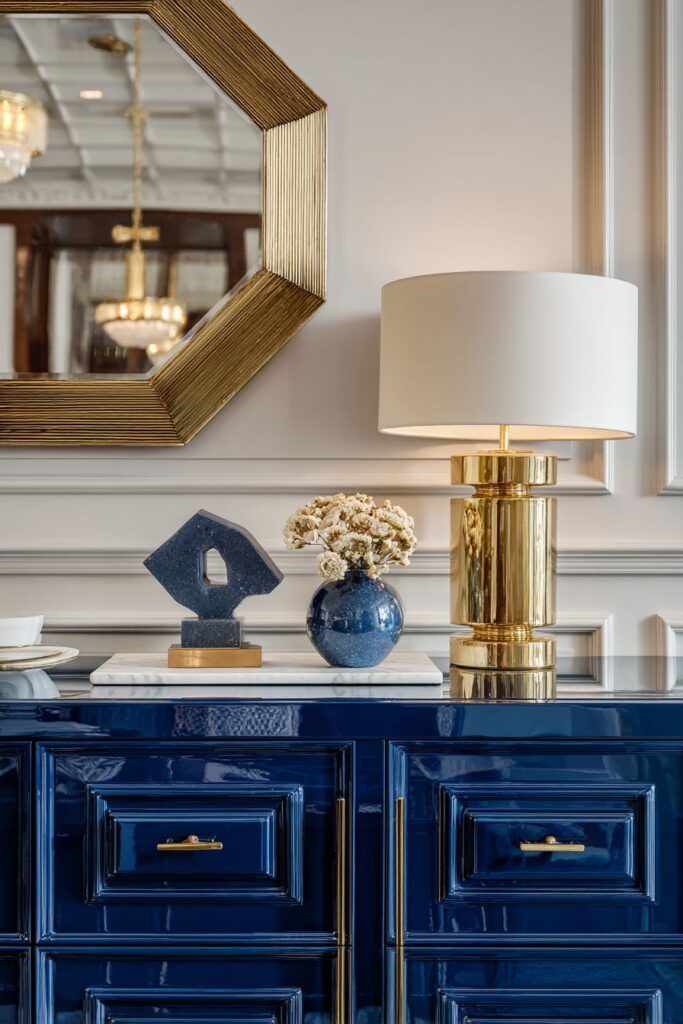
The push-to-open drawer mechanism represents contemporary convenience, eliminating the need for hardware that would interrupt the console’s sleek surfaces. This invisible mechanism allows drawers to open with a gentle press, then close with another touch, maintaining the unbroken facade that defines high-end modern furniture. The geometric pattern created by inset panels on the drawer fronts adds dimensional interest without requiring applied ornamentation, demonstrating how thoughtful design can create visual complexity through shape and shadow rather than added decoration.
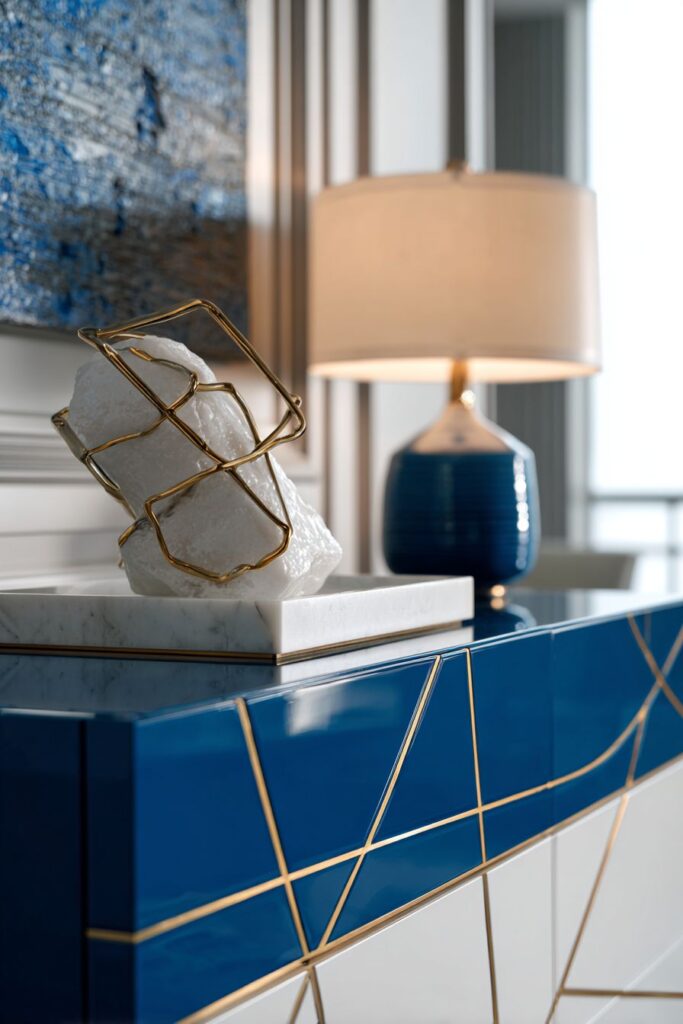
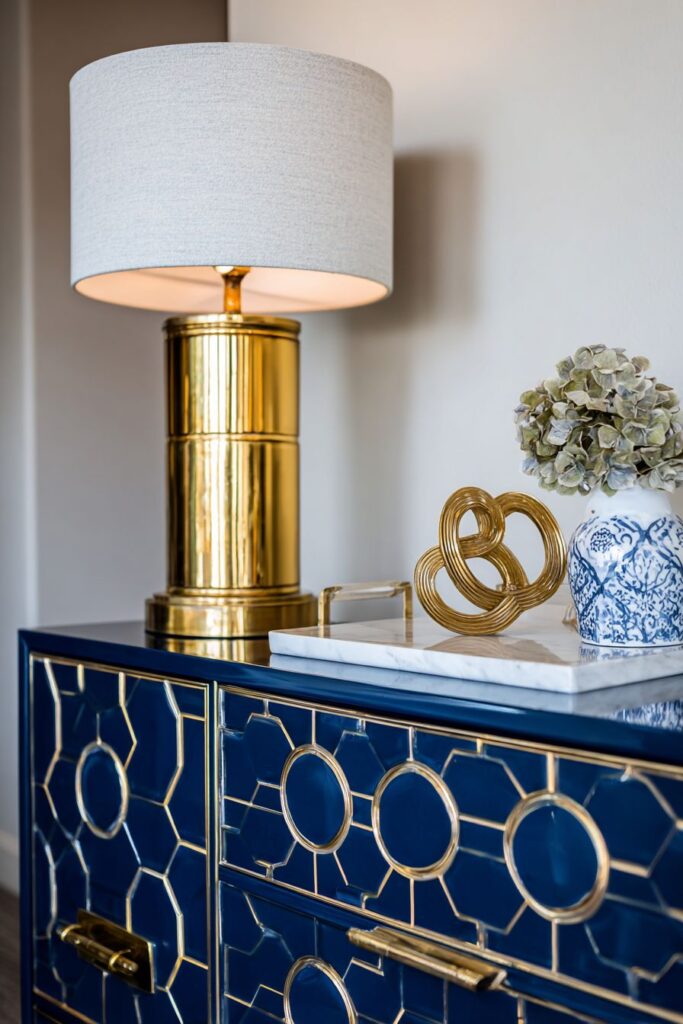
The gold-toned metal accents—whether in legs, edge trim, or subtle hardware details—provide luxurious contrast against the deep navy, introducing warm metallic tones that catch light and add points of visual interest. This combination of navy and gold has historical roots in maritime flags and military dress uniforms, lending an established, authoritative quality to the pairing while remaining thoroughly contemporary in execution. The reflective quality of both the glossy navy surface and the metallic gold accents creates a dynamic interplay that changes with viewing angle and lighting conditions.
Styling this bold contemporary console requires accessories that match its confident aesthetic and don’t compete with its strong presence. A modern abstract sculpture in complementary colors or mixed metals provides artistic interest and three-dimensional form. A marble tray adds natural stone texture while creating a defined area for organizing smaller items. A sophisticated table lamp with a brass base introduces another gold-toned element that harmonizes with the console’s metallic accents while providing ambient lighting that enhances the room’s atmosphere during evening gatherings.
Key Design Tips:
- Clean high-gloss surfaces regularly with appropriate products to maintain their reflective finish
- Position the console to take advantage of both natural and artificial lighting that highlights its glossy surface
- Choose bold accent colors that create strong statements in contemporary spaces
- Pair navy with warm metals like gold, brass, or copper for sophisticated contrast
- Use push-to-open hardware to maintain clean, uninterrupted surfaces
- Balance the bold console with neutral walls to prevent visual overwhelm
12. Transitional Cherry Wood Console with Timeless Shaker Craftsmanship
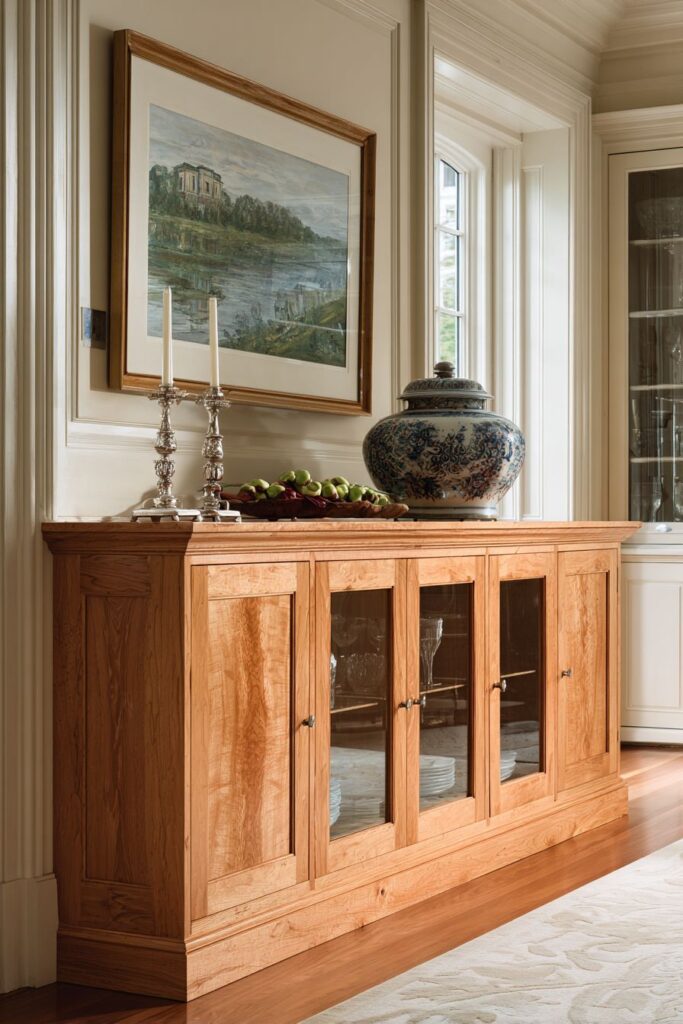
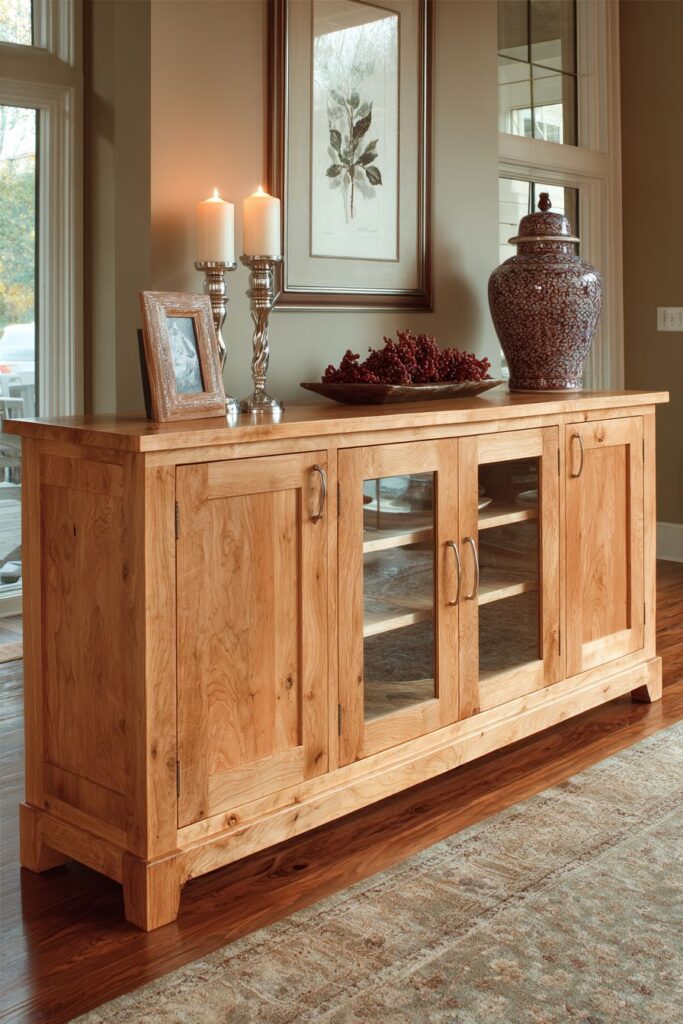
A transitional console combining traditional craftsmanship with modern simplicity represents the ideal solution for dining rooms that bridge classic and contemporary aesthetics. Solid cherry wood construction brings warmth and quality that improves with age, as cherry naturally deepens from its initial light pinkish-brown tone to a rich reddish-brown patina over years of exposure to light. The Shaker-style door panels reference American furniture-making traditions rooted in simplicity, honest construction, and functional beauty—principles that remain relevant centuries after their establishment by Shaker communities.
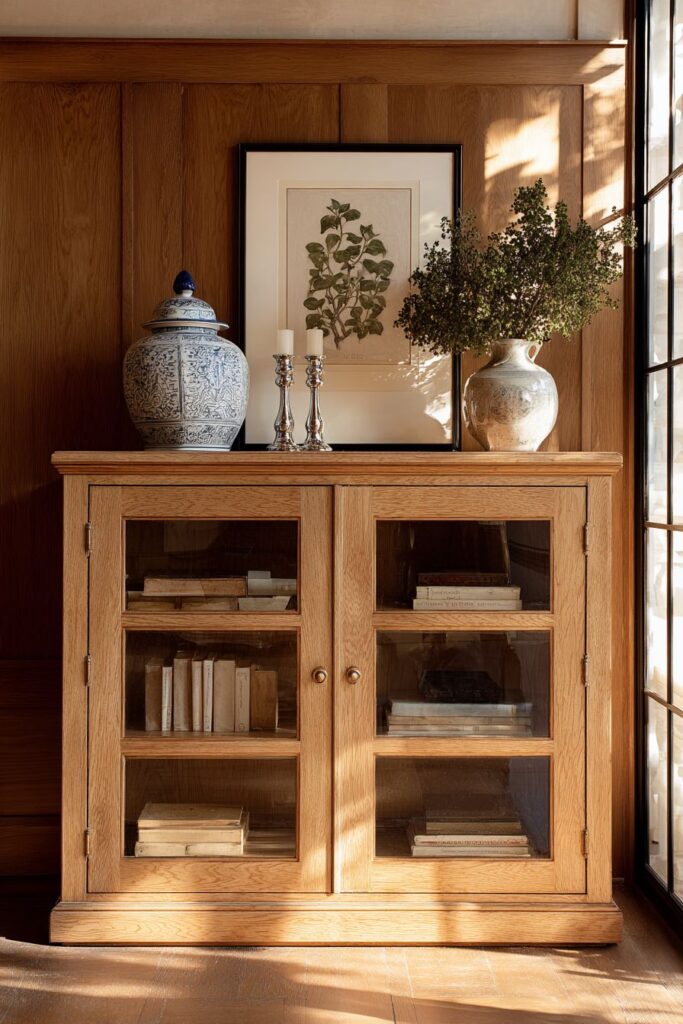
The inclusion of glass-paned cabinet doors adds a contemporary transparency that lightens the traditional form while allowing the display of beautiful dinnerware, glassware, or decorative objects. This visible storage creates opportunities for curated display while maintaining protection from dust and the practical organization that closed cabinets provide. Adjustable interior shelving offers flexibility to accommodate items of various heights, from tall serving pieces to stacks of dinner plates, ensuring the console adapts to your specific storage needs rather than forcing you to adapt to fixed shelving heights.
Decorating a transitional console involves selecting accessories that honor both traditional and contemporary sensibilities, creating a collected look that feels refined without being stuffy. A classic ginger jar in traditional blue and white porcelain adds Asian-influenced elegance that has been embraced by Western design for centuries. Silver candlesticks provide formal metallic elegance while catching and reflecting light, their polished surfaces creating bright points of interest against the warm cherry wood. A small framed botanical print adds natural imagery in a traditional presentation format, contributing color and life without overwhelming the composition.
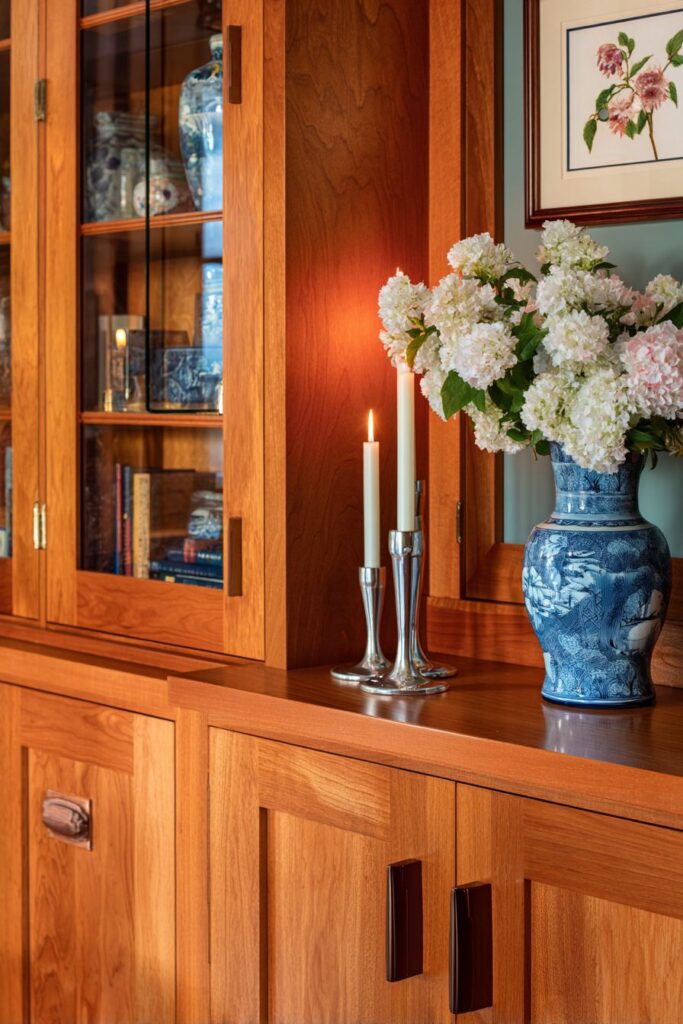
Soft natural lighting plays beautifully across cherry wood, emphasizing the grain patterns and bringing out the wood’s natural luster and depth. The quality of cherry’s grain—typically straight but occasionally featuring interesting figure like curl or birdseye—becomes more apparent as light moves across the surface throughout the day. This natural play of light and wood creates a living quality that makes the console an ever-changing focal point rather than a static piece of furniture. The timeless design ensures that the console will remain stylistically relevant through changing design trends, making it an excellent investment for those seeking enduring quality and beauty.
Key Design Tips:
- Choose solid cherry construction rather than veneer for the best aging characteristics
- Allow cherry to develop its natural patina rather than preventing color change
- Use glass-paned doors to display beautiful items while protecting them from dust
- Mix traditional elements like ginger jars with simpler contemporary pieces
- Incorporate metallic accents in silver, pewter, or brushed nickel for transitional styling
- Position to receive natural light that enhances the wood’s natural color evolution
13. Compact Apartment Console with Gold Hairpin Leg Sophistication
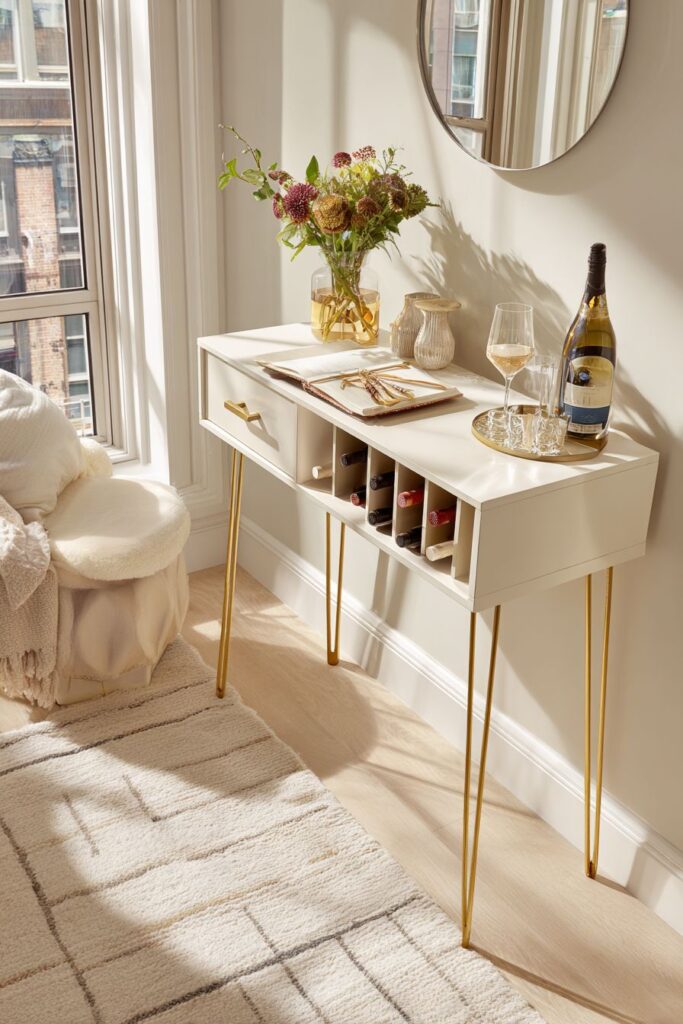
Urban apartment living demands furniture that delivers maximum function within minimal space, and a compact console designed specifically for small-scale living proves that spatial constraints need not compromise style or utility. The narrow profile ensures the piece fits comfortably in modest dining areas without impeding traffic flow or making the space feel cramped. The white painted finish creates a clean, fresh foundation that visually recedes and helps maintain a sense of openness—crucial in smaller spaces where dark or heavy furniture can overwhelm and make rooms feel even more confined than they actually are.
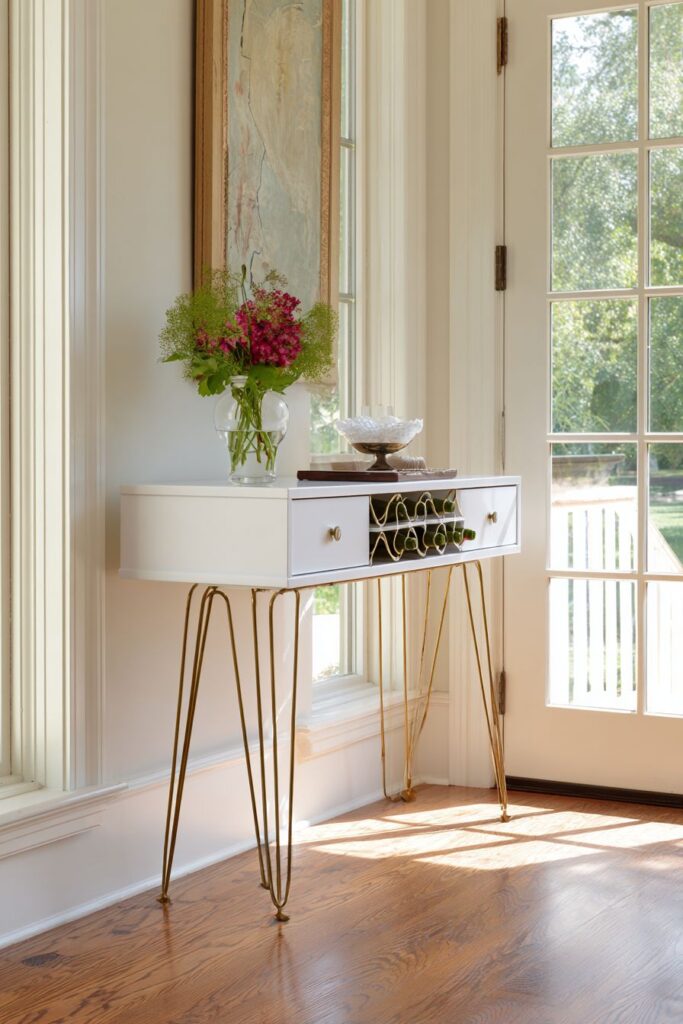
Gold hairpin legs provide structural support with minimal visual weight, their slender forms creating an airy, floating appearance that contributes to the sense of spaciousness. The metallic gold finish adds a touch of glamour and sophistication that elevates the piece beyond purely utilitarian furniture, demonstrating that practical space-saving solutions can also be beautiful and stylish. The open space beneath the console created by the elevated hairpin legs allows light to pass through and makes the floor area appear larger and less interrupted, while also simplifying cleaning—an important consideration in small apartments where furniture arrangement often leaves little room for maneuvering.
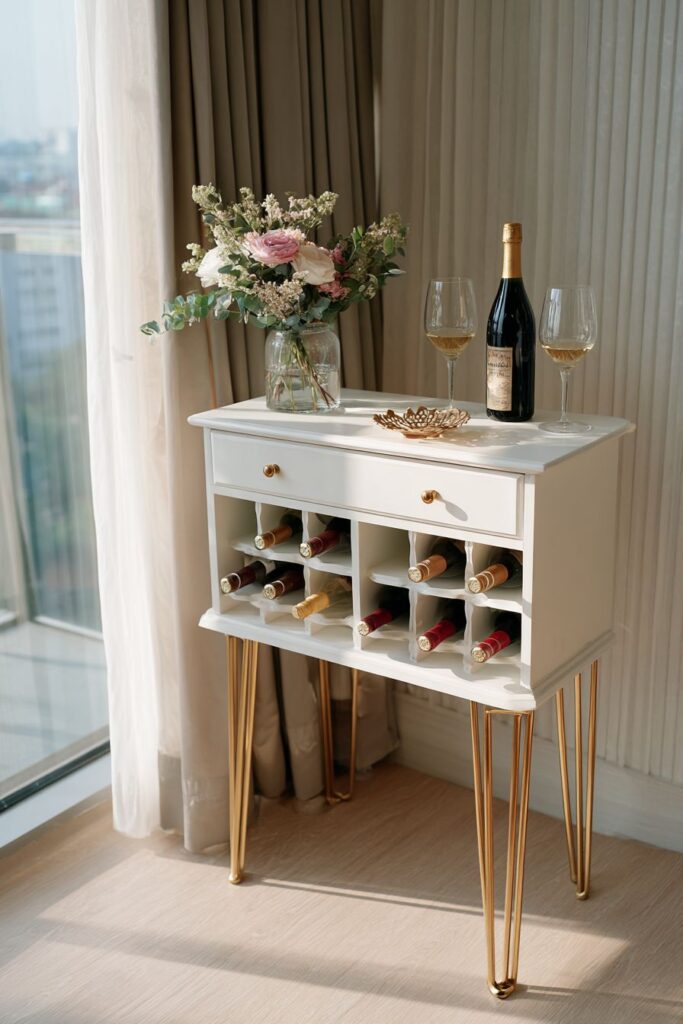
The inclusion of a single drawer provides essential concealed storage for items like cocktail napkins, bottle openers, candles, and other small dining accessories that need to be kept handy but don’t deserve display space. The lower shelf typically accommodates a small wine rack that holds four to six bottles, making efficient use of vertical space while keeping favorite wines accessible for casual dinners or entertaining. This dual-level storage approach maximizes the console’s utility without increasing its footprint, demonstrating the thoughtful space planning that makes small-scale living both practical and enjoyable.
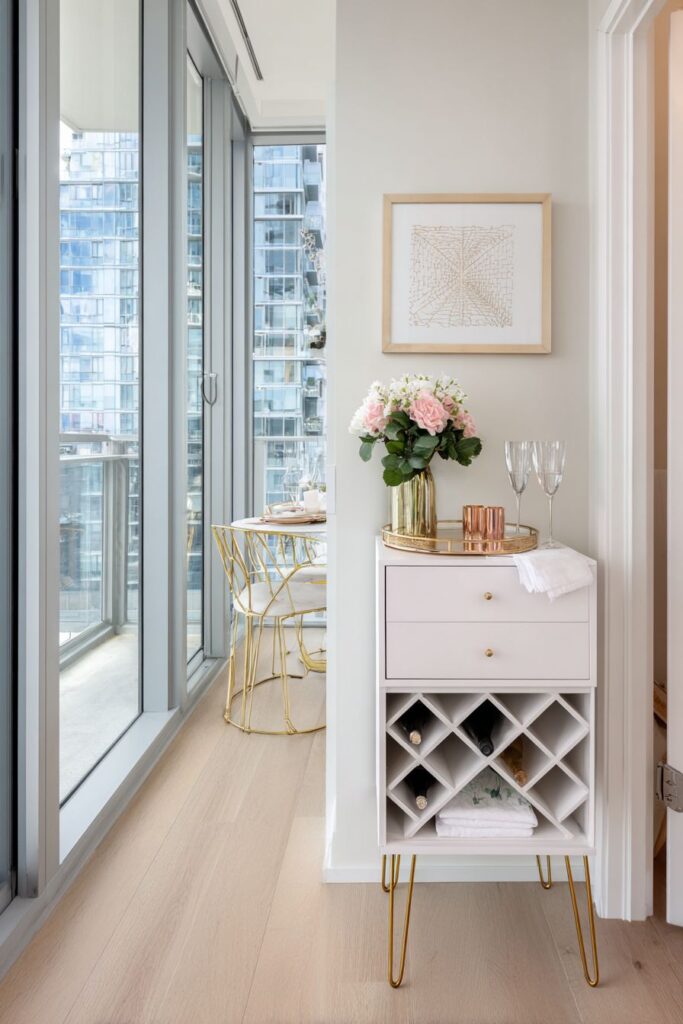
Styling a compact console requires careful curation, as every accessory must justify its presence through either beauty or function—ideally both. A petite vase of fresh flowers brings life, color, and natural fragrance to the dining area without demanding excessive surface space or overwhelming the console’s proportions. The flowers can be rotated seasonally or weekly, providing ever-changing decoration that keeps the space feeling fresh and cared-for. A decorative catchall dish serves the practical purpose of corralling small items like keys or loose change while adding a touch of personality through its material, color, or pattern. This edited approach to styling ensures the console enhances the apartment’s aesthetic without contributing to visual clutter that can make small spaces feel chaotic.
Key Design Tips:
- Measure your available space carefully, allowing adequate clearance for comfortable movement
- Choose light colors and metallic legs to maintain visual lightness in small dining areas
- Utilize vertical space with lower shelves for wine storage or baskets
- Limit surface accessories to 2-3 carefully chosen pieces that provide both beauty and function
- Consider consoles with wheels for flexibility in rearranging small spaces
- Use the console to define the dining zone in open-plan apartment layouts
14. Luxury Mahogany Console with Formal Carved Elegance
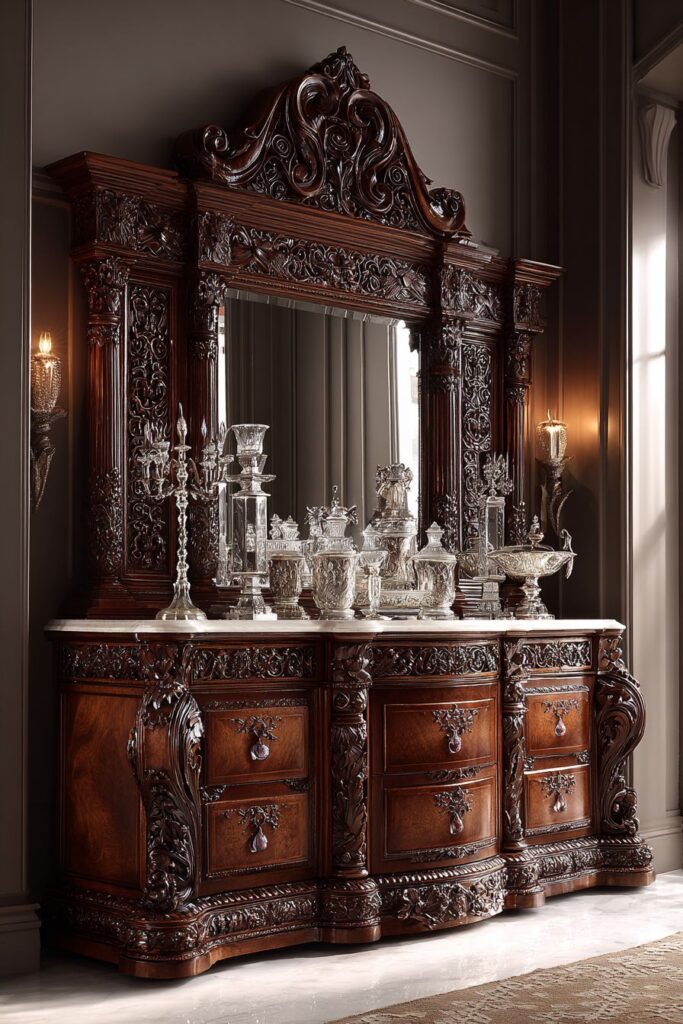
A luxury console crafted from rich mahogany with intricate carved details represents the pinnacle of formal dining room furniture, bringing old-world elegance and sophisticated craftsmanship to spaces that celebrate traditional beauty and refined living. The deep reddish-brown color of mahogany, ranging from medium brown with red overtones to darker, almost burgundy tones, creates instant visual richness and warmth. This premium hardwood has been prized for centuries in fine furniture making for its beautiful color, fine grain, excellent workability, and natural resistance to decay and insect damage.
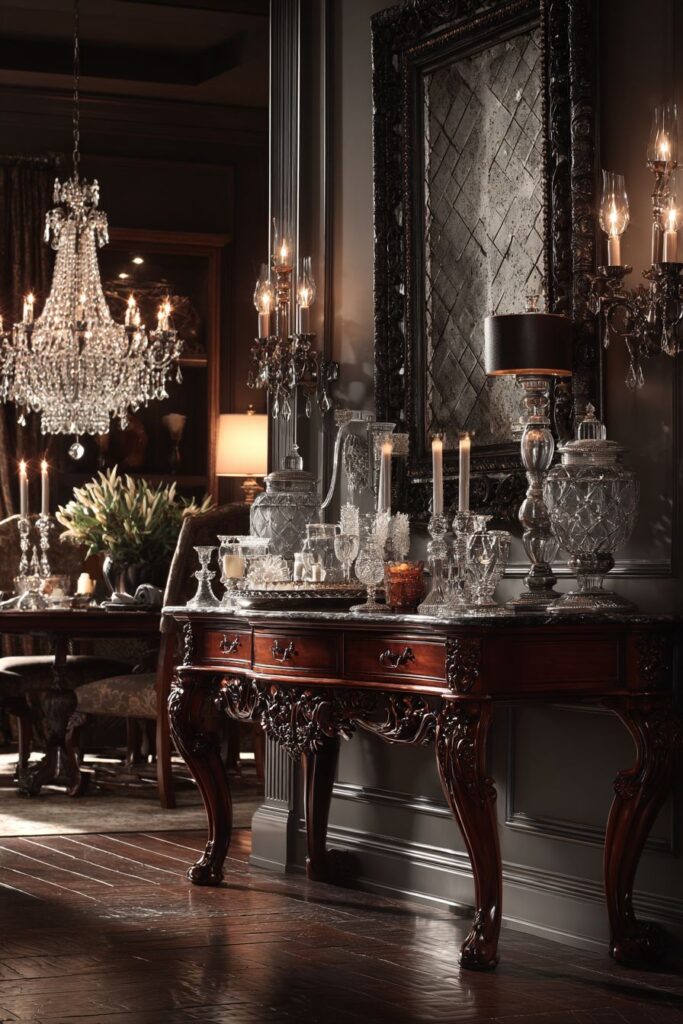
The intricate carved details on drawer fronts showcase the skill of master craftspeople who transform flat surfaces into three-dimensional artworks featuring motifs like acanthus leaves, scrollwork, floral patterns, or geometric designs. These hand-carved elements catch light and create shadows that add depth and movement to the console’s surface, rewarding close examination while contributing to the overall impression of luxury and attention to detail. The curved cabriole legs—characterized by their graceful S-curve from knee to ankle—reference classical furniture forms that have remained symbols of elegance since their development in the early 18th century.
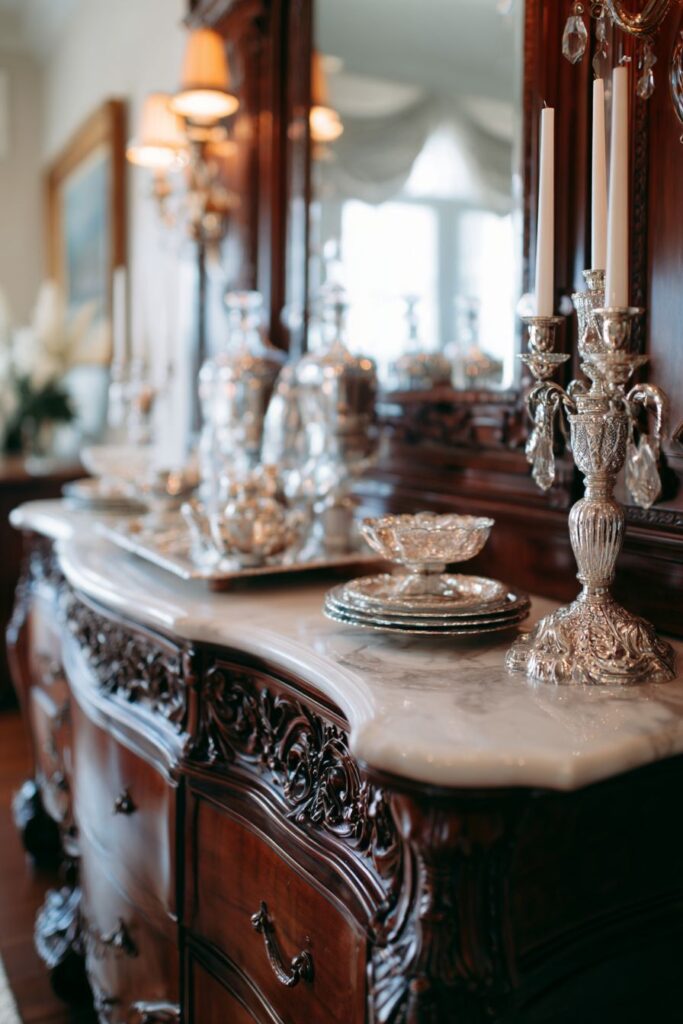
The addition of a beveled mirror backing creates visual drama and spatial expansion while adding another layer of luxury through the precision cutting required for beveled edges. This mirror reflects the dining room behind the console, effectively doubling the visual space and creating intriguing depth. The polished marble top provides a cool, smooth surface that contrasts beautifully with the warm wood, offering practical benefits including heat resistance and stain resistance while introducing another premium material that elevates the console’s luxury status.
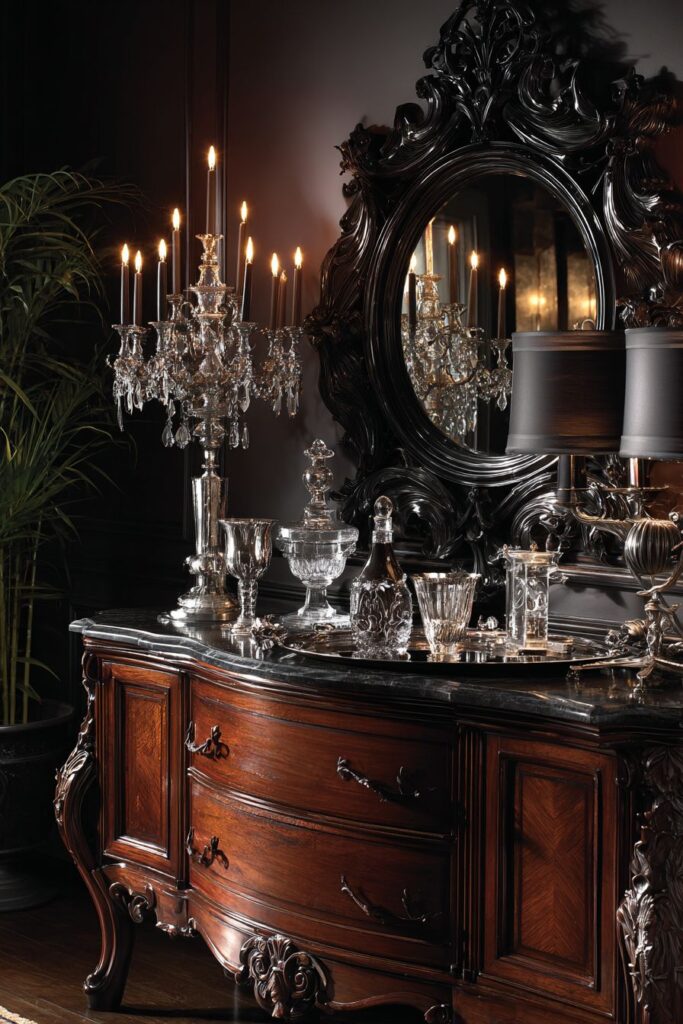
Styling a formal mahogany console involves selecting accessories that match its elevated aesthetic and traditional character. Formal silver serving pieces—perhaps a tea service, serving trays, or covered dishes—provide functional beauty while their polished surfaces create bright reflective points against the dark wood. A crystal decanter set for spirits adds sophistication and suggests the refined entertaining that such a console was designed to support. An ornate candelabra with multiple arms creates vertical drama and provides ambient candlelight that enhances the formal atmosphere during elegant dinners.
Key Design Tips:
- Invest in solid mahogany construction for authentic color, grain, and aging characteristics
- Maintain the wood with appropriate furniture polish to preserve its rich color and luster
- Choose formal, traditional accessories in silver, crystal, and fine porcelain
- Position lighting to highlight carved details and create dramatic shadows
- Use the marble top for serving during formal dinners to protect it from heat and moisture
- Consider the console’s substantial visual weight when planning room layout and balance
15. Bohemian Console with Eclectic Natural Materials
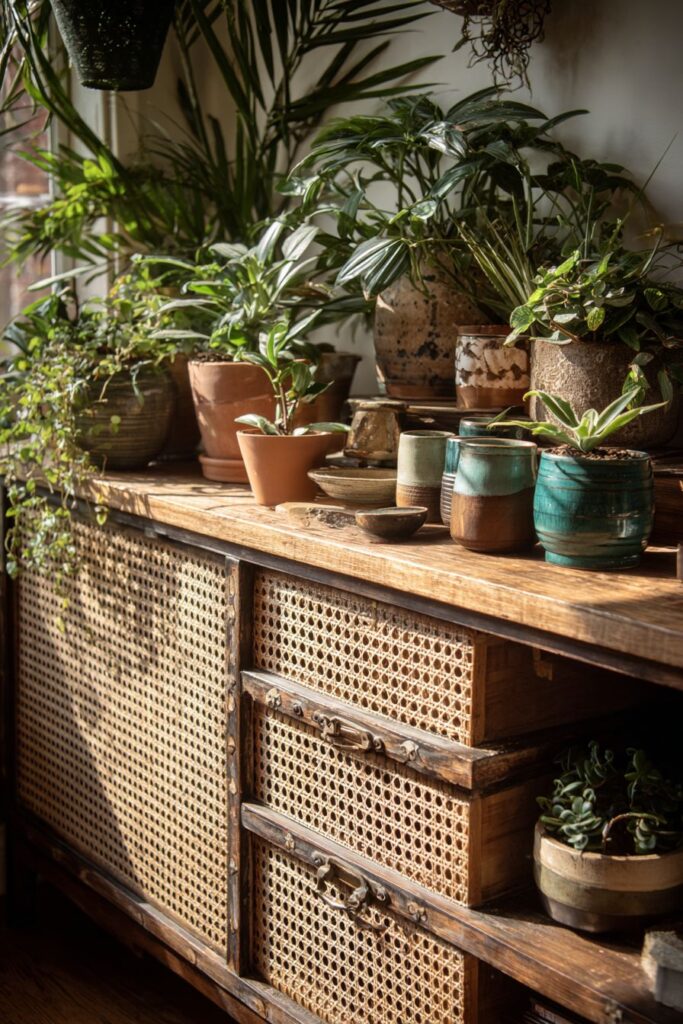
A bohemian console featuring mixed natural materials embodies the free-spirited, globally-influenced aesthetic that celebrates individuality, handcrafted beauty, and the artful combination of diverse textures and origins. The foundation of mango wood with its honey finish provides warm, golden-brown tones with distinctive grain patterns that vary from straight to wildly figured, creating visual interest that reflects the wood’s tropical origins. Mango wood, harvested from mango fruit trees at the end of their productive life, represents sustainable forestry practices while offering beautiful, durable material for furniture making.
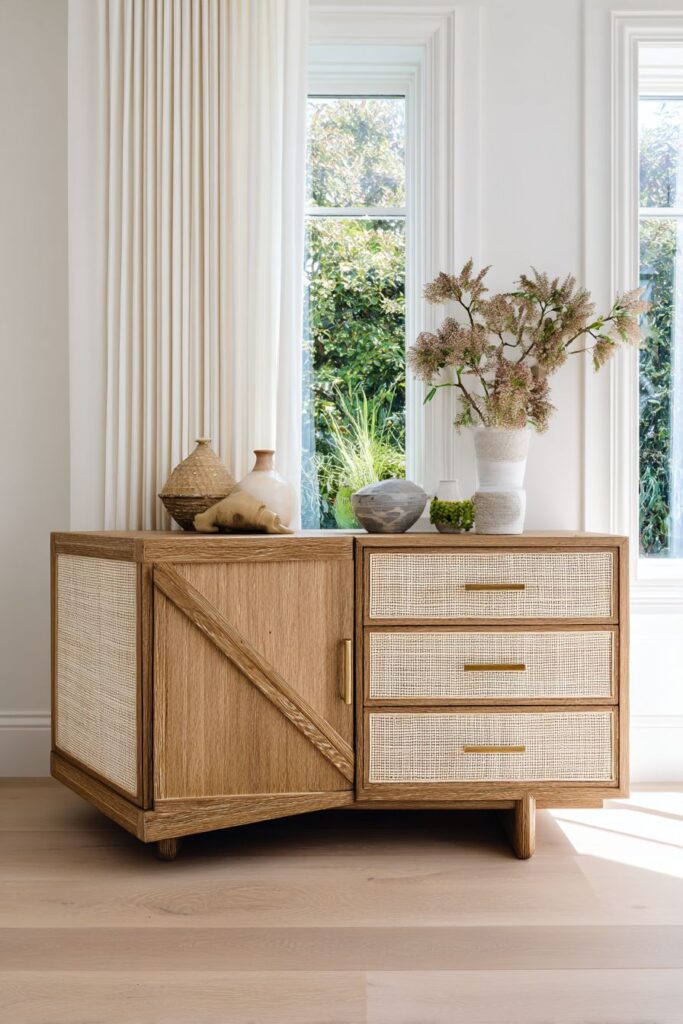
The woven rattan drawer fronts introduce textural contrast and handcrafted character, their natural beige tones and organic weave patterns adding dimension and global influence. Rattan weaving represents centuries-old craft traditions from Southeast Asia, bringing cultural richness and artisanal quality to the console. The asymmetric drawer placement defies conventional symmetry, creating visual intrigue and reflecting the bohemian principle that perfect balance is less interesting than thoughtful imbalance. Decorative metal corner accents with aged patina add another material layer while providing structural reinforcement and historical character.
Styling a bohemian console embraces the concept of curated abundance, where layers of textiles, plants, and collected objects create a rich, personalized composition. Layered textiles—perhaps a table runner topped with smaller cloth pieces or vintage scarves—introduce color, pattern, and softness while protecting the wood surface. Potted trailing plants like pothos, string of pearls, or ivy bring living greenery that cascades over the console’s edge, softening its lines and connecting the interior to the natural world. An assortment of colorful ceramic pieces in various sizes, shapes, and patterns reflects the bohemian love of global crafts and handmade objects, creating a collection that tells stories about travels, interests, and discoveries.
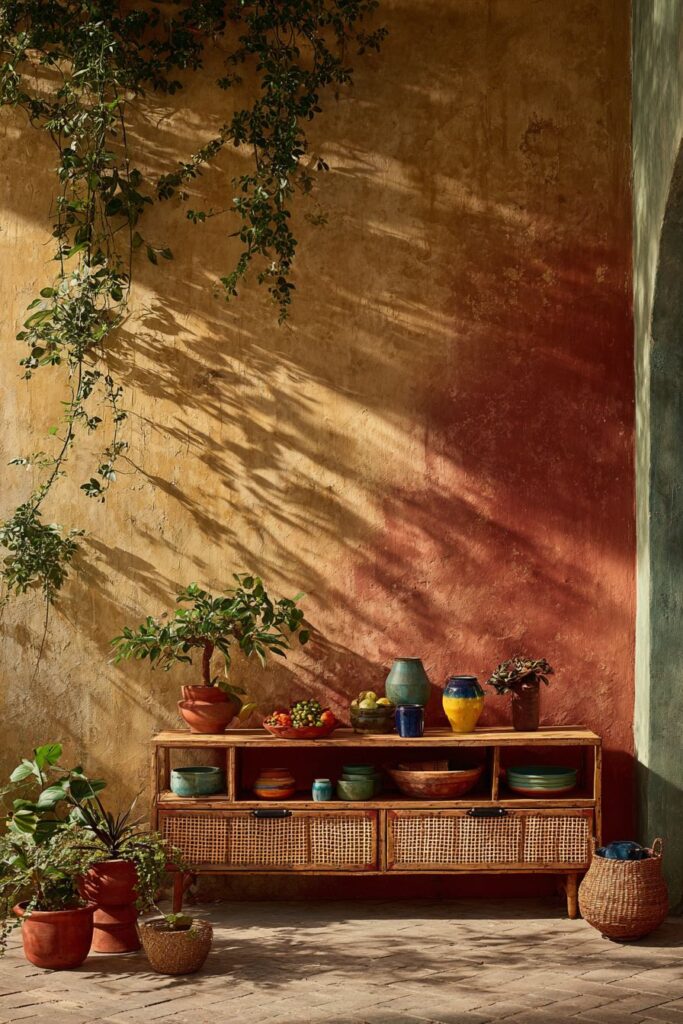
Warm natural lighting enhances the bohemian aesthetic by illuminating the varied textures and creating the golden, inviting glow that makes boho spaces feel welcoming and comfortable. The interplay of light across different materials—smooth wood, textured rattan, woven textiles, glazed ceramics—creates visual richness and dimensional complexity. The free-spirited aesthetic of bohemian design makes it particularly forgiving and personal, as there’s no single correct way to style a boho console; instead, the goal is creating a composition that reflects your personality, interests, and aesthetic preferences.
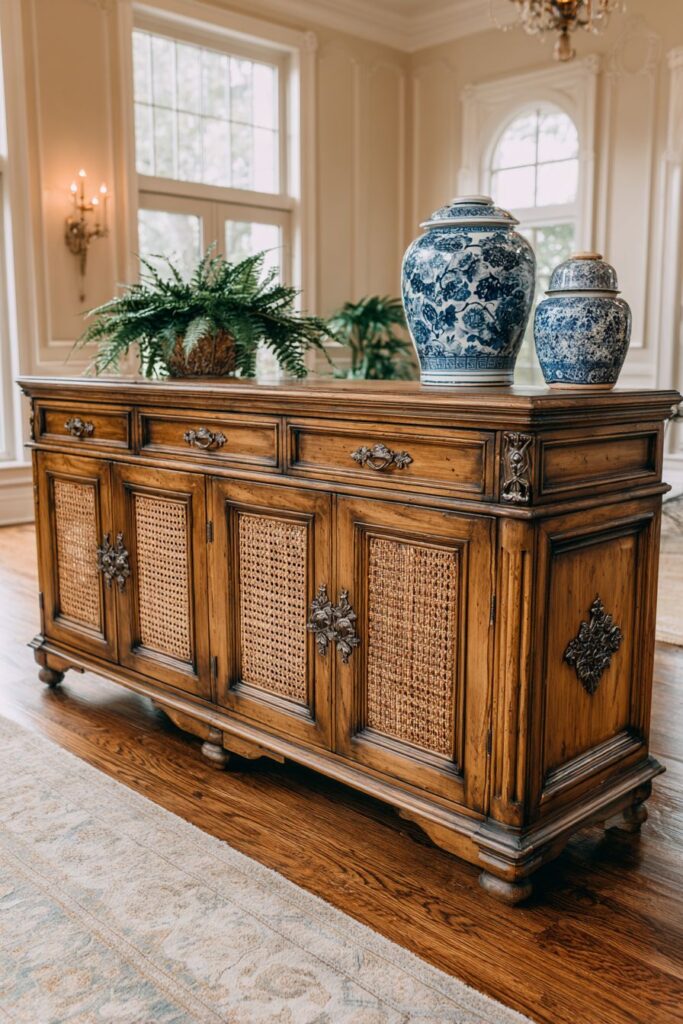
Key Design Tips:
- Mix materials freely, combining wood, rattan, metal, textiles, and ceramics
- Embrace asymmetry and unexpected combinations rather than rigid symmetry
- Layer textiles in complementary or contrasting patterns for depth and color
- Incorporate live plants, especially trailing varieties that soften hard edges
- Display collected objects from travels or that hold personal meaning
- Choose warm lighting that enhances the golden tones in natural materials
16. Minimalist Concrete Grey Console with Architectural Presence
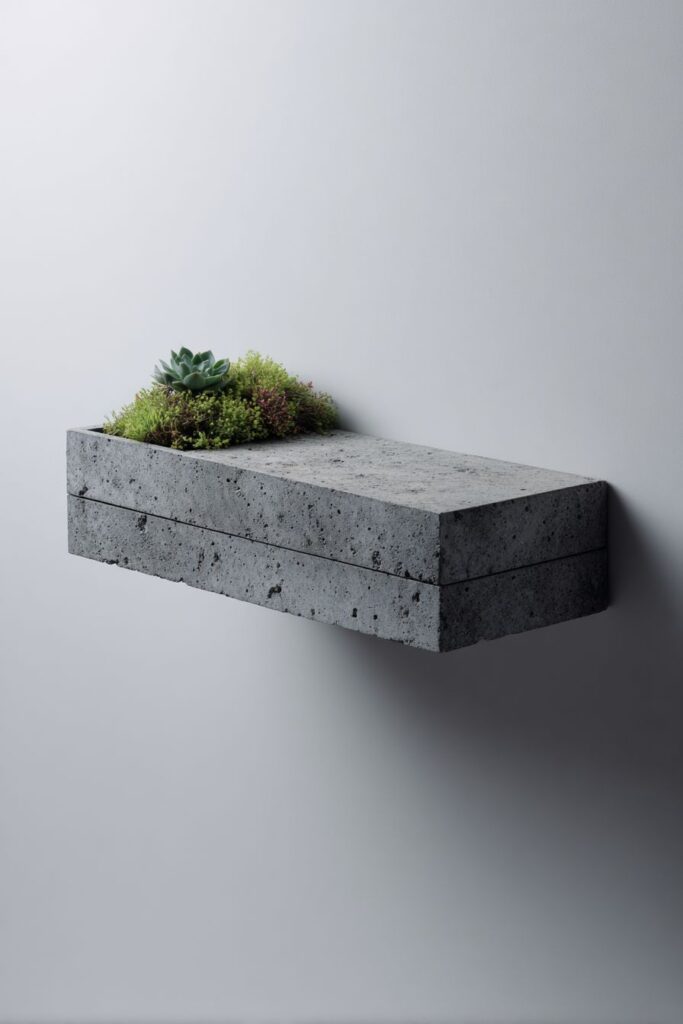
A minimalist console finished in concrete grey with an ultra-slim silhouette represents the intersection of architecture and furniture design, bringing the stark beauty and honest materiality of contemporary architecture into the dining room. The concrete grey finish—whether actual concrete or concrete-effect paint—evokes the raw, industrial aesthetic of exposed concrete structures while maintaining the practicality and weight considerations necessary for residential furniture. This monochromatic palette creates a neutral foundation that allows other design elements in the room to take prominence while the console provides architectural structure and definition.
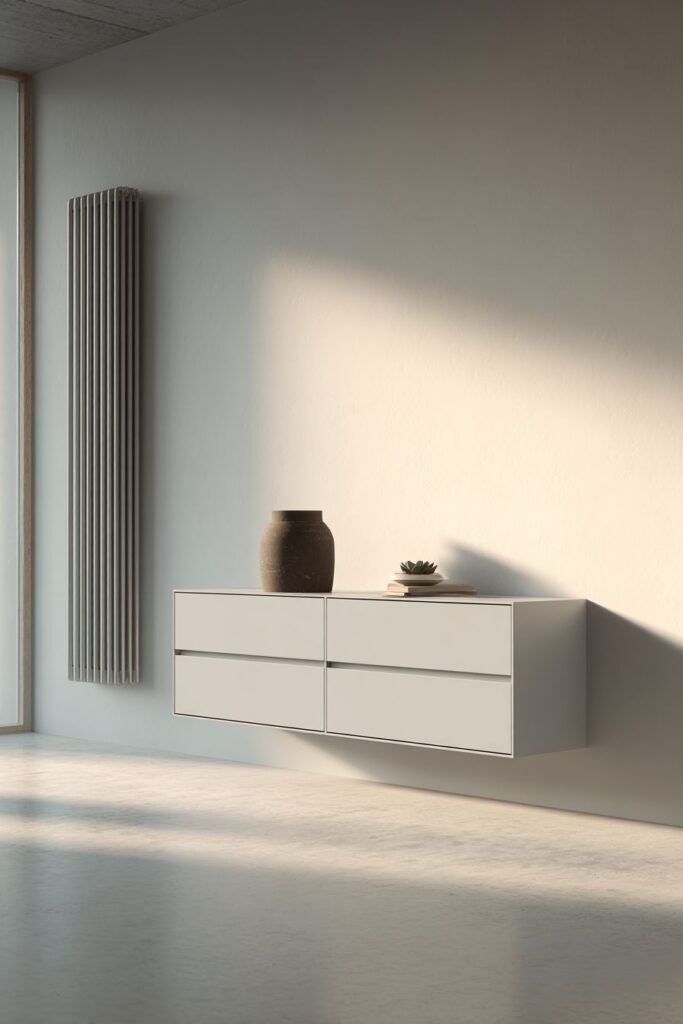
The handleless push-open drawers maintain the console’s clean, uninterrupted surfaces, eliminating any projecting hardware that would disturb the minimalist aesthetic. This seamless facade creates a sculptural quality where the console reads as a pure geometric form rather than a collection of functional parts. The floating wall-mounted installation with concealed brackets creates a suspended appearance that seems to defy gravity, adding visual drama while maintaining the floor space beneath completely clear and unobstructed.
Styling a minimalist console requires extreme restraint and the confidence to embrace negative space as a design element in itself. A single sculptural object—perhaps an abstract ceramic form or a piece of contemporary art glass—provides a focal point without cluttering the composition. The object should be chosen for its form, texture, or color rather than narrative content, reflecting the minimalist principle that beauty emerges from essential forms rather than applied decoration. A low-profile succulent arrangement adds organic life while maintaining the horizontal emphasis and restraint that defines minimalist aesthetics.
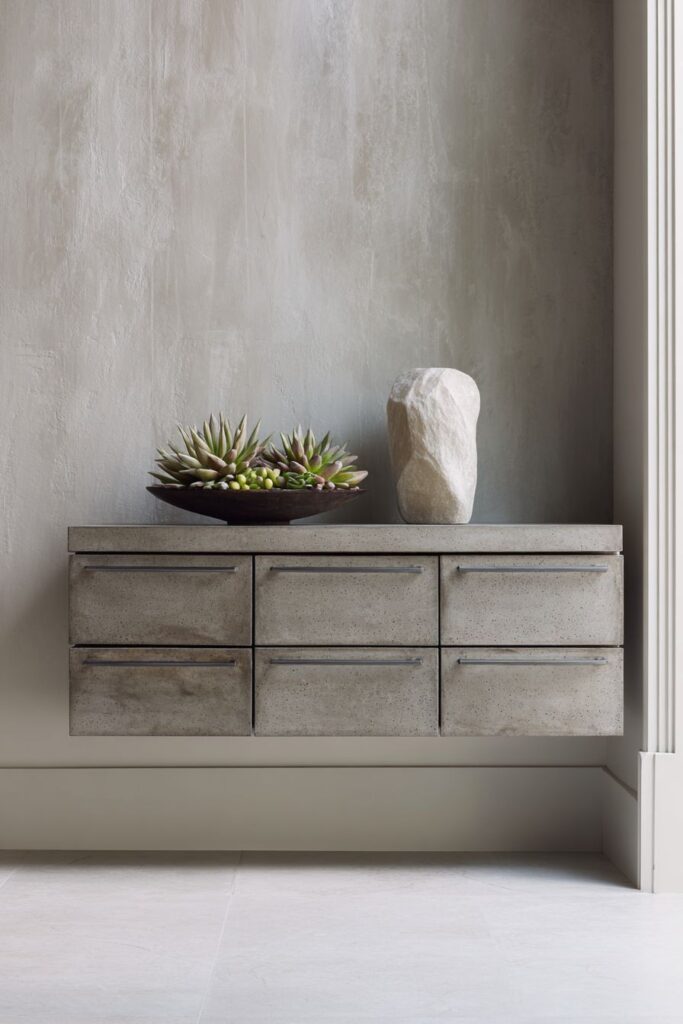
The architectural quality of a minimalist console becomes apparent through even, soft lighting that reveals the precision of its construction and the purity of its forms. The monochromatic grey palette creates subtle tonal variations as light moves across surfaces throughout the day, demonstrating that minimalism need not be cold or boring when executed with attention to quality materials and precise proportions. The console’s role in a minimalist dining space extends beyond storage to include spatial definition and visual anchoring, proving that furniture can make powerful statements through reduction and refinement rather than ornament and abundance.
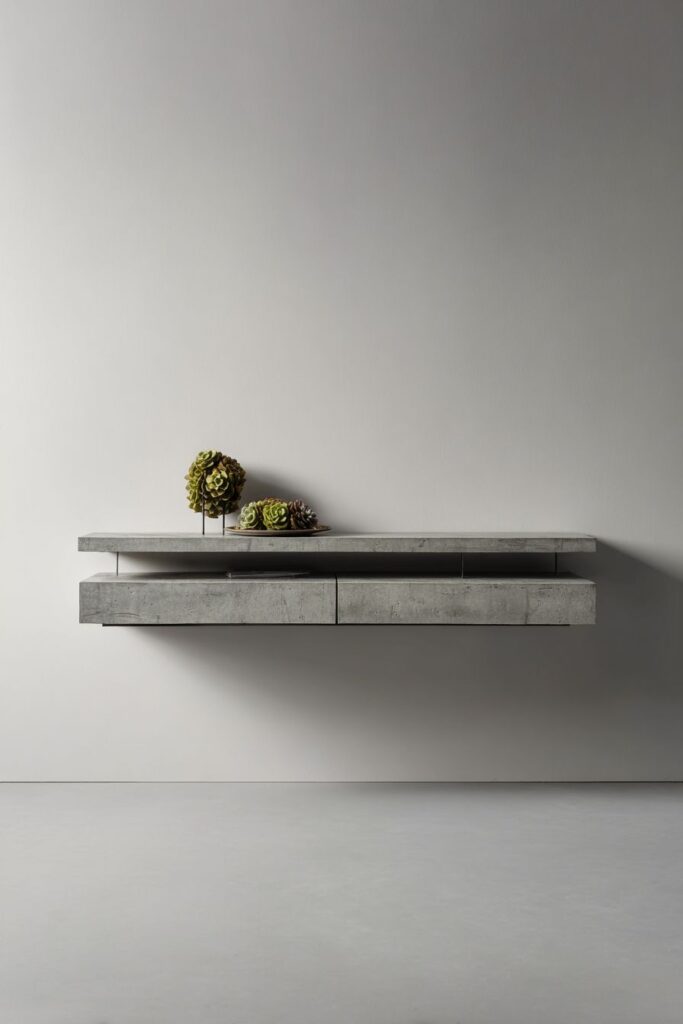
Key Design Tips:
- Choose push-open mechanisms to eliminate hardware and maintain clean surfaces
- Use wall-mounting with concealed brackets for floating installation
- Limit styling to 1-2 carefully chosen objects with strong form or sculptural presence
- Embrace negative space as an essential design element rather than void to be filled
- Select precise, well-made pieces where quality craftsmanship is evident
- Create visual interest through material texture and tonal variation within neutral palettes
17. French Country Console with Provincial Romantic Charm
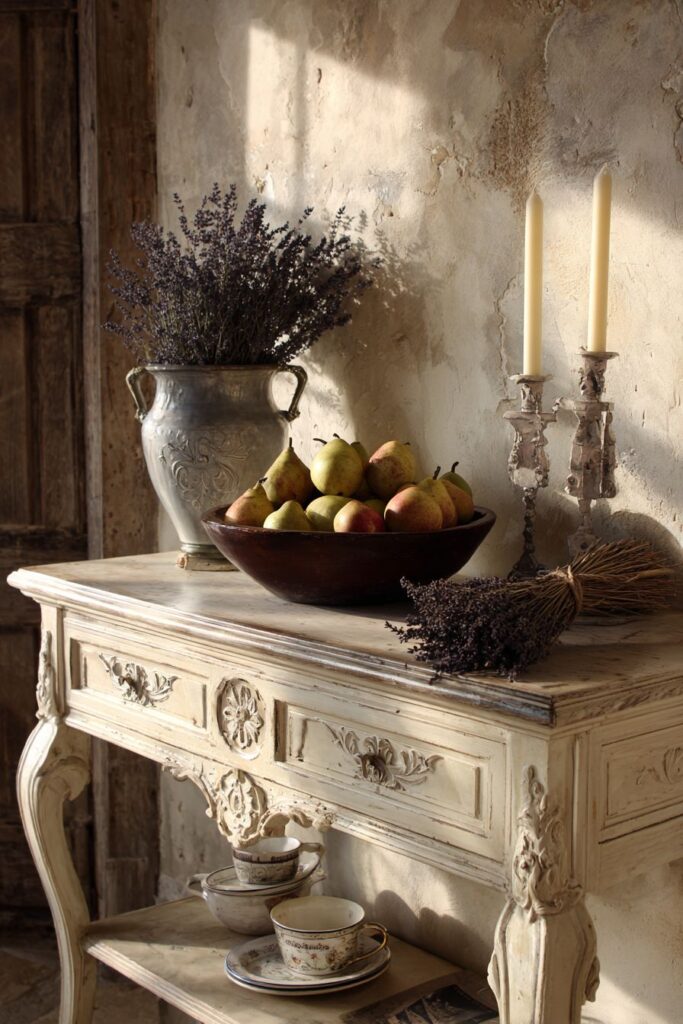
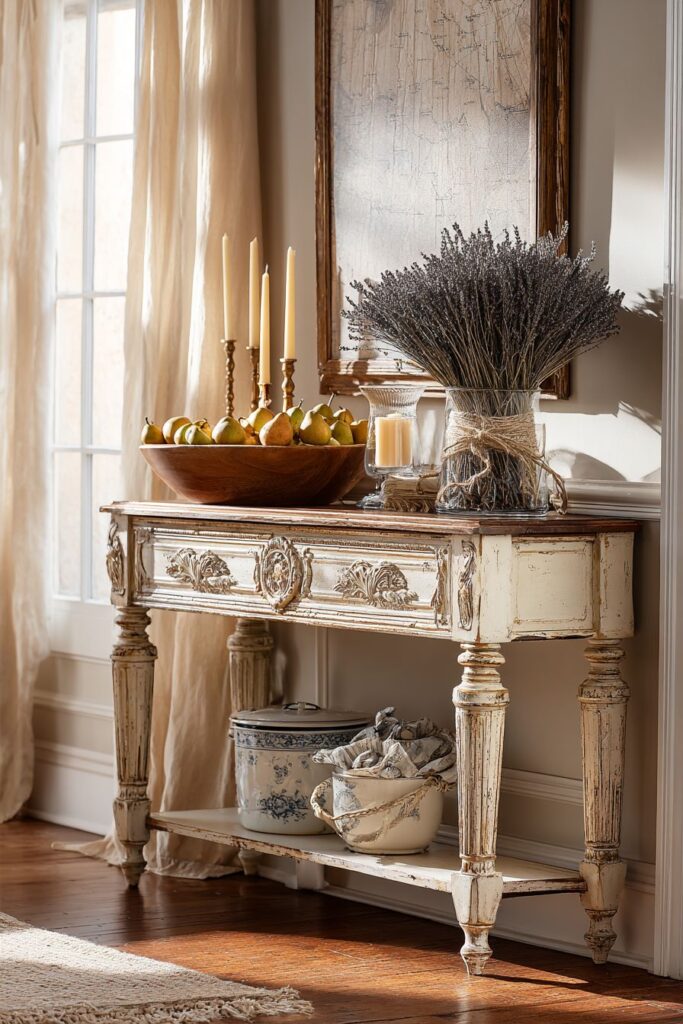
A French country console in distressed cream paint with ornate carved details transports the dining room to the sun-drenched countryside of Provence, bringing romantic European elegance and time-worn beauty to your home. The distressed cream finish—applied over quality wood then deliberately aged through techniques like dry brushing, sanding edges, and applying glazes—creates the appearance of a treasured piece that has served generations of family gatherings. This intentional aging reflects the French country philosophy that the most beautiful furniture shows evidence of use and care over time rather than showroom perfection.
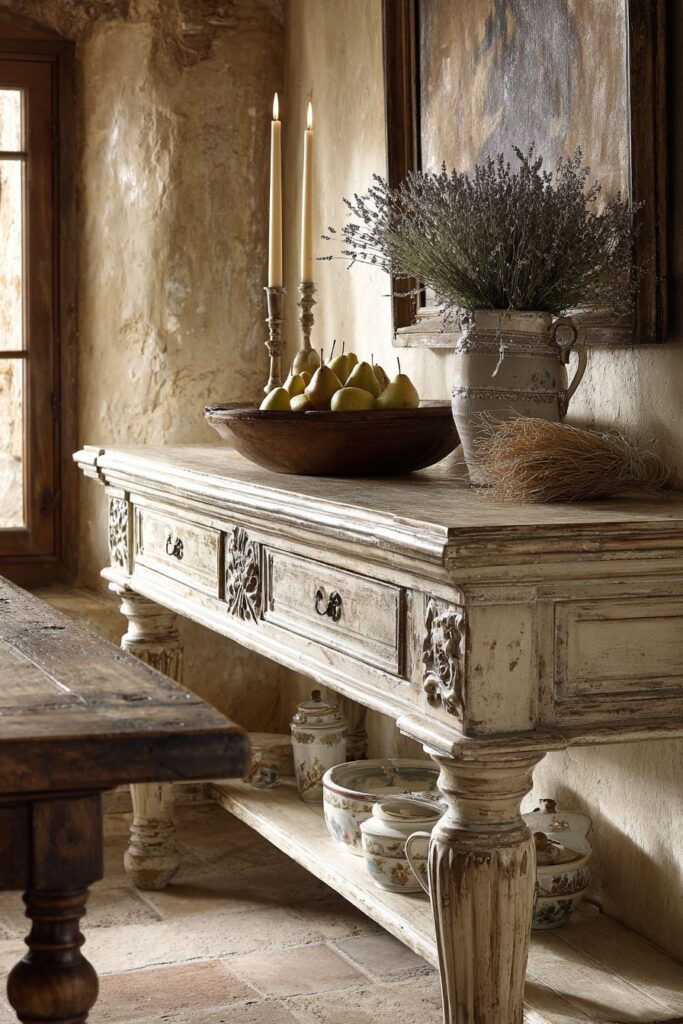
The ornate carved details and curved legs characteristic of provincial furniture demonstrate the influence of formal French design interpreted through the lens of rural craftsmanship. These carved elements might include floral motifs, scrollwork, or simple geometric patterns that add visual richness without the elaborate gilding and formal precision of palace furniture. The curves and carvings soften the console’s form, creating the romantic, graceful lines that define French country style. Decorative escutcheons—ornamental plates surrounding keyholes—add authentic period detail even if the drawers don’t actually lock, referencing historical furniture construction while contributing metallic accents.
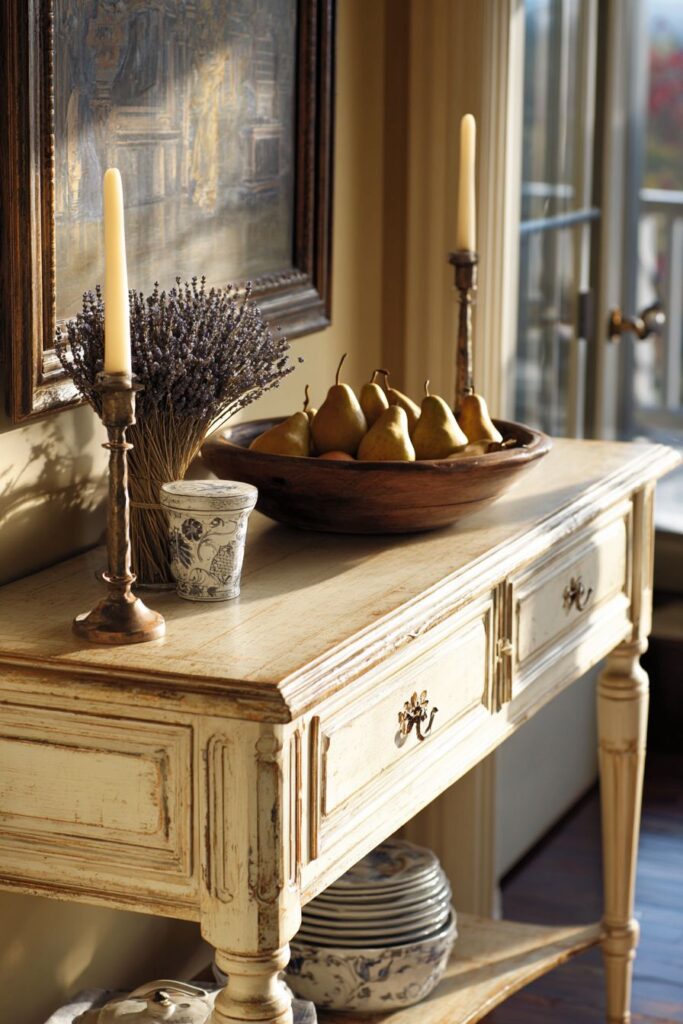
The lower shelf provides display opportunities for vintage enamelware in classic white with colored trim, these practical pieces bringing authentic period character while remaining functional for modern use. A rustic wooden bowl filled with fresh pears creates a still-life composition that celebrates the French country love of simple pleasures and agricultural bounty. A tall candlestick in aged brass or verdigris finish adds vertical height and references the candlelit evenings before electricity. Dried lavender bundles bring the signature fragrance and color of Provence while adding natural texture that complements the painted wood.
Natural lighting creates the soft shadows that emphasize carved details and reveal the dimensional quality of the distressed finish. Side-lighting particularly enhances the romantic quality of French country furniture, as it illuminates the high points of carvings while leaving recesses in gentle shadow. This interplay of light and shadow adds depth and brings the carved details to life, transforming flat surfaces into three-dimensional artistry. The romantic, aged aesthetic makes French country consoles ideal for dining rooms that prioritize charm, warmth, and lived-in beauty over modern sleekness or formal perfection.
Key Design Tips:
- Choose pieces with authentic carved details rather than applied moldings
- Embrace distressed finishes that show wood beneath the paint
- Display vintage French items like enamelware, ironstone, or copper cookware
- Incorporate lavender, herbs, or dried flowers for authentic Provencal character
- Use cream, soft grey-blue, or pale sage paint colors typical of the region
- Layer in natural materials like wood, linen, and woven baskets for textural warmth
18. Multipurpose Console with Drop-Leaf Versatility
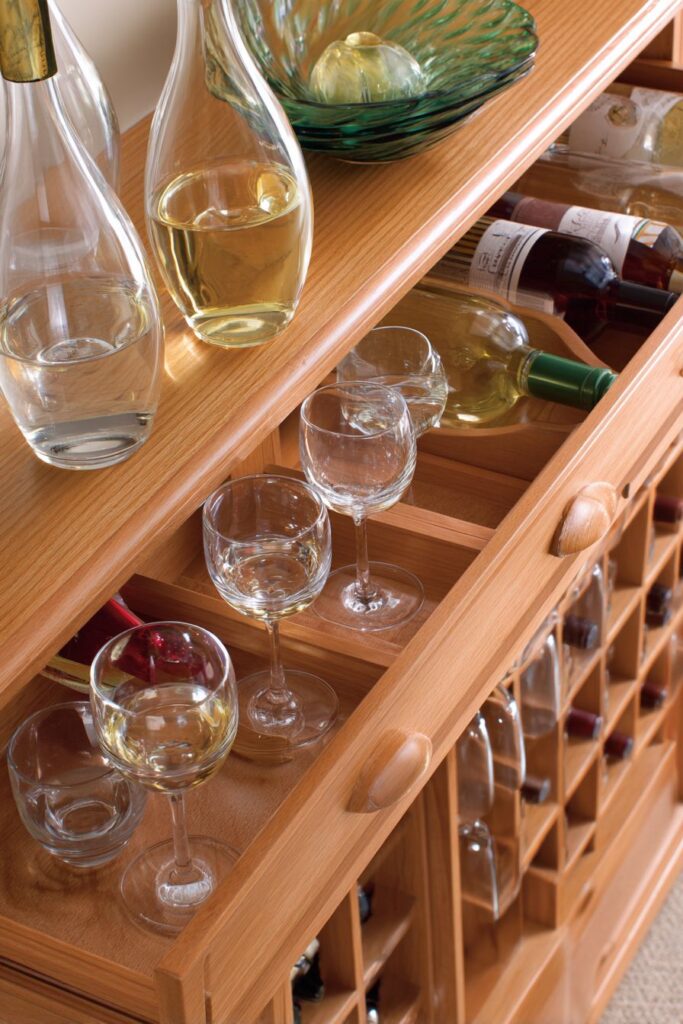
A multipurpose console featuring drop-leaf extension represents ingenious furniture design that adapts to changing needs, transforming from a streamlined storage piece to expanded serving surface when entertaining demands additional space. This convertible functionality makes it ideal for dining rooms that serve multiple purposes or for households where flexibility trumps static arrangements. The medium-toned oak construction with satin finish provides neutral warmth that works across diverse decorating styles while the practical finish resists showing wear and requires minimal maintenance.
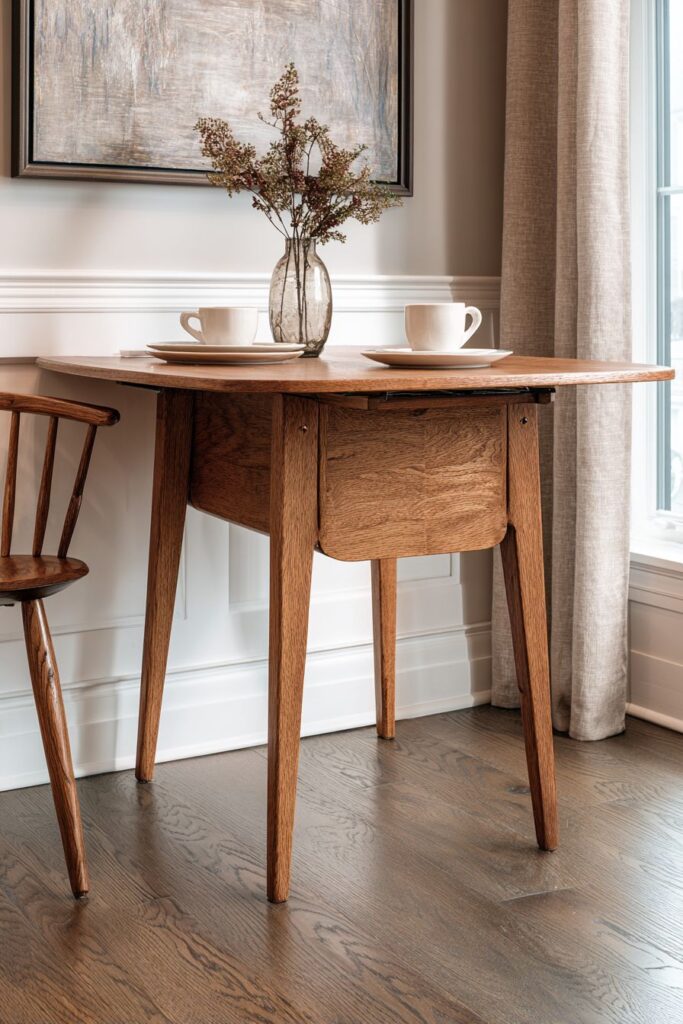
The drop-leaf mechanism—typically supported by swing-out brackets or sliding supports when extended—allows one or both sides of the console to fold up and lock into place, instantly creating additional surface area for serving buffet-style meals, displaying holiday spreads, or accommodating unexpected guests. When the leaves are lowered, the console returns to its compact profile, maximizing floor space during everyday use. This transformation requires no tools or complicated procedures, making it genuinely practical for regular use rather than a rarely-employed novelty.
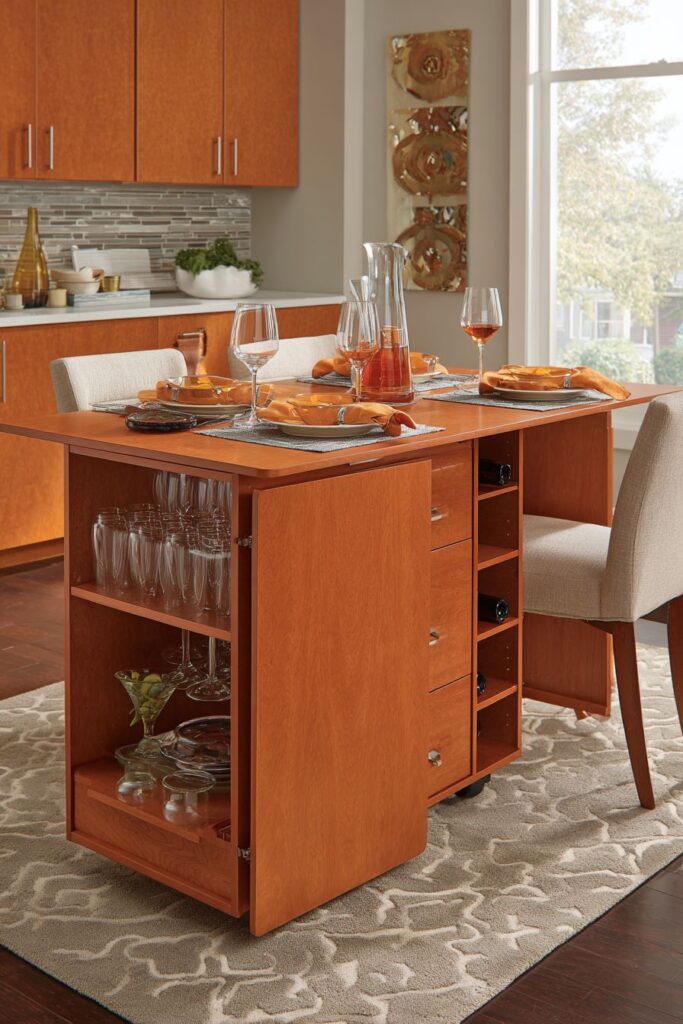
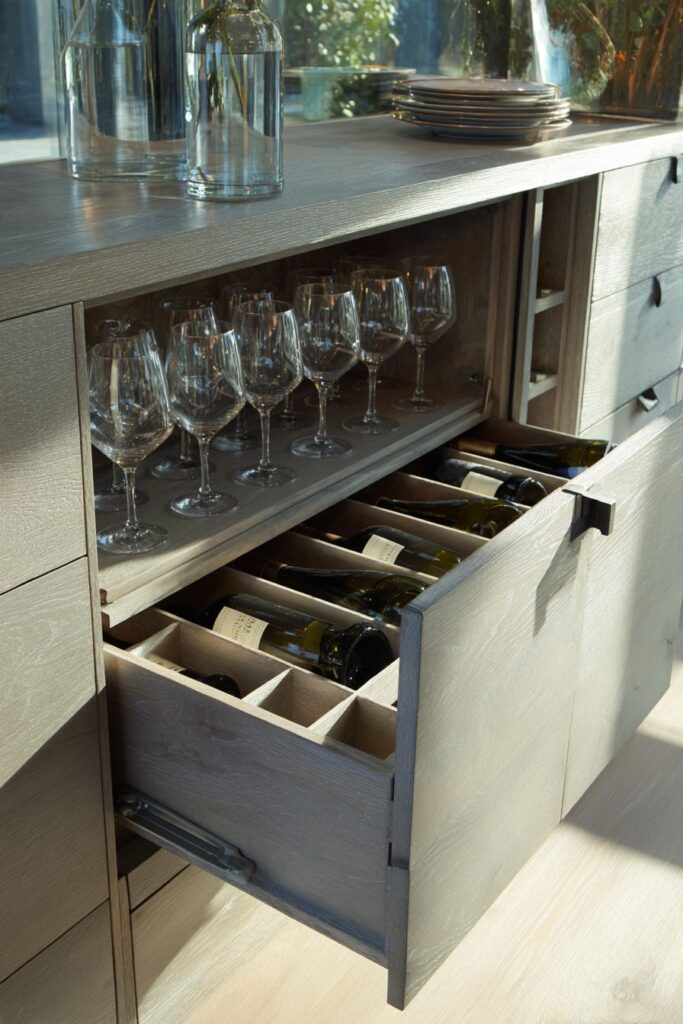
The inclusion of wine glass storage racks underneath demonstrates thoughtful space utilization and purpose-built design for dining room needs. These racks hold stemware securely by their bases, keeping glasses dust-free and easily accessible while making efficient use of vertical space that might otherwise remain empty. A stemware holder provides additional hanging storage for wine glasses, their suspended position creating an attractive display while preventing the chips and cracks that can occur when glasses are stacked or stored haphazardly. Cup-style drawer pulls offer comfortable, ergonomic grip while their traditional form suits a range of decorating styles from farmhouse to transitional.
Styling this versatile console involves demonstrating both its standard and extended configurations, showing potential buyers or users how the piece adapts to different situations. Dining accessories like serving platters, wine decanters, napkin holders, and candles should be visible, reinforcing the console’s dining-specific functions. The practical nature of this piece means styling should emphasize usability and organization rather than pure aesthetics, showing how the console solves real problems while maintaining attractive appearance. Wide-angle photography captures the full transformation from compact to extended position, highlighting the engineering and thoughtful design that makes this versatility possible.
Key Design Tips:
- Test drop-leaf mechanisms for smooth operation and solid support when extended
- Use wine glass storage to free up cabinet space while displaying attractive stemware
- Style to show both configurations, demonstrating the piece’s full versatility
- Choose neutral wood finishes that coordinate with existing dining furniture
- Position the console with adequate clearance to extend leaves when needed
- Use the extended surface during parties for buffet service or beverage station
19. Art Deco Console with Glamorous 1920s Sophistication
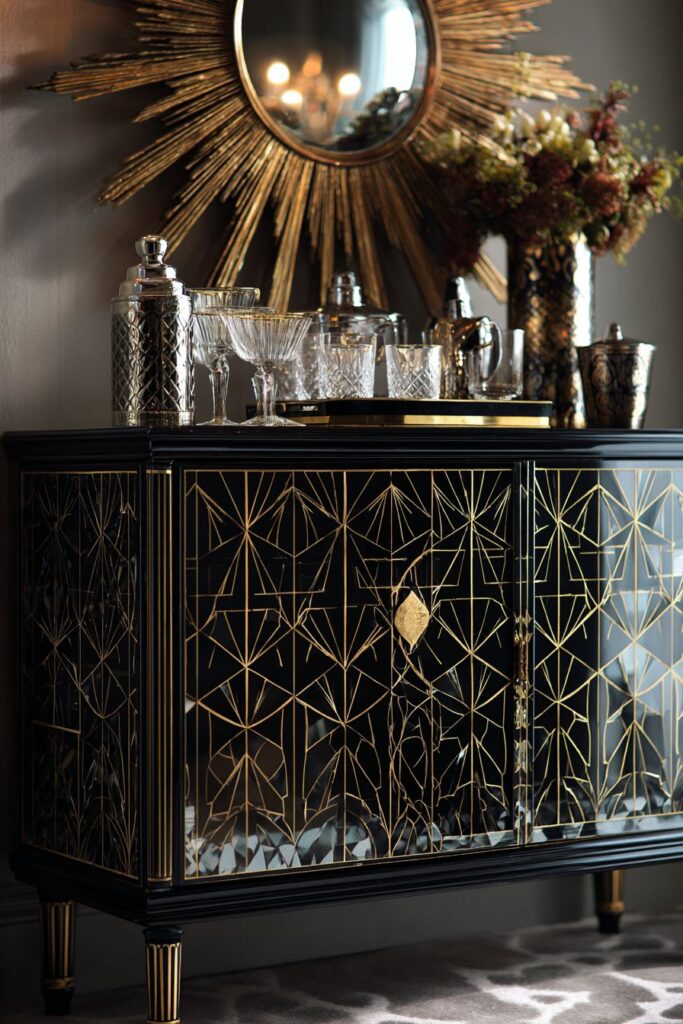
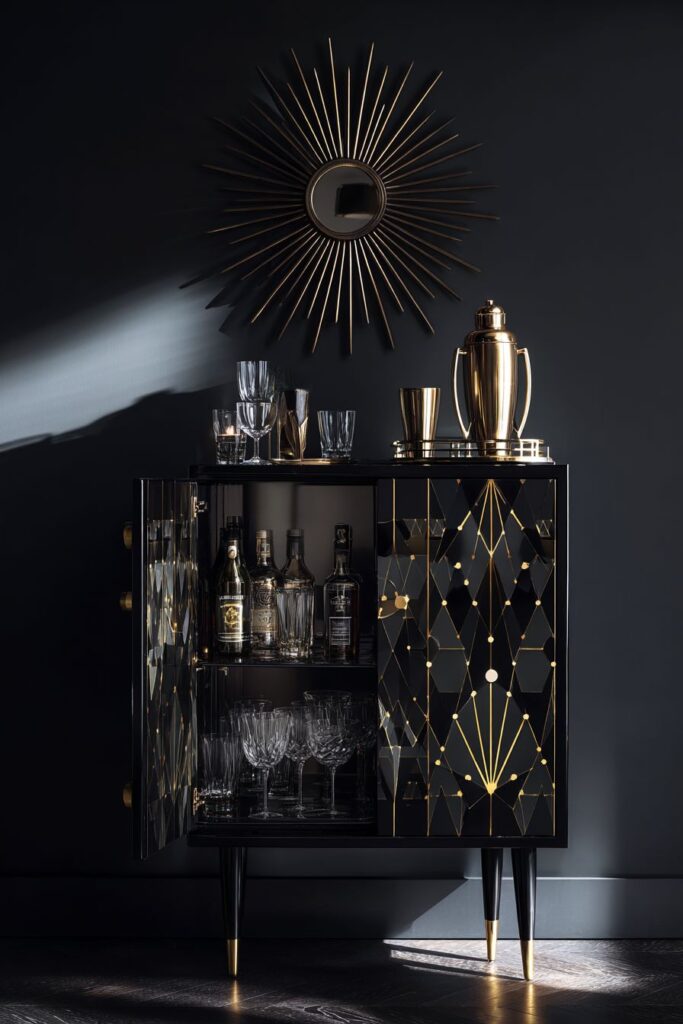
An art deco-inspired console in black lacquer with geometric inlay patterns in brass and mother-of-pearl captures the glamorous sophistication and bold geometric aesthetic of the roaring twenties. The black lacquer finish provides a dramatic, mirror-like surface that reflects light and creates visual depth through its glossy perfection. This high-gloss black serves as an ideal canvas for the geometric inlay patterns that define art deco design—sunbursts, zigzags, chevrons, and stylized floral forms executed in contrasting materials that catch light and create dazzling visual interest.
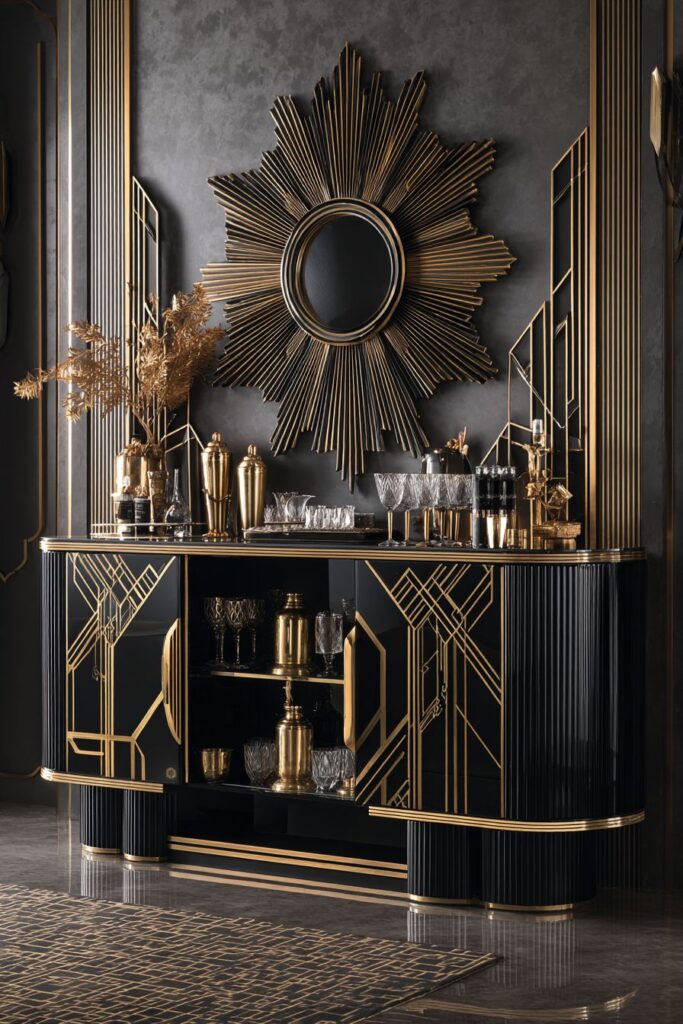
The brass inlay brings warm metallic tones that pop dramatically against the black background, their polished surfaces catching light and creating golden highlights that emphasize the geometric patterns. Mother-of-pearl inlay adds iridescent beauty and organic texture, its lustrous surface shifting colors as viewing angles change and light plays across its surface. This combination of black, brass, and mother-of-pearl creates the luxurious, jewel-like quality that defines art deco furniture, evoking the jazz age’s love of glamour, luxury, and bold design statements.
The symmetrical design with a center cabinet flanked by open display shelves reflects art deco’s love of balanced composition and geometric order. The fluted legs reference classical columns reinterpreted through the modernist lens of the 1920s, their vertical lines creating rhythm and adding architectural detail. Open shelving provides opportunities to display art deco-appropriate items like crystal glassware that catches light, vintage cocktail shaker sets in chrome or silver, and other period objects that reinforce the glamorous aesthetic.
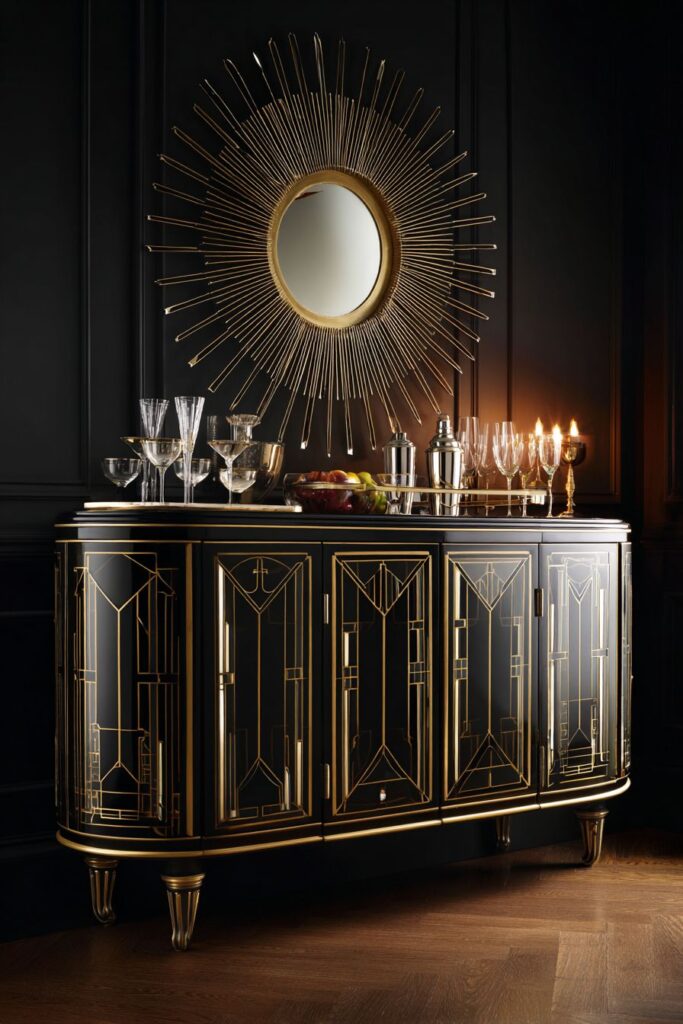
A sunburst mirror positioned above the console amplifies the art deco theme while serving practical and aesthetic functions. The radiating rays of the sunburst design create dramatic visual impact while the mirror reflects the room and multiplies light, contributing to the bright, glamorous atmosphere that art deco interiors celebrate. Dramatic lighting—perhaps from a nearby chandelier or strategically placed accent lights—creates highlights on the glossy black surface and metallic details, emphasizing the console’s luxurious materials and meticulous craftsmanship. This interplay of light, reflection, and geometric pattern creates the theatrical quality that makes art deco design so captivating and memorable.
Key Design Tips:
- Choose pieces with authentic geometric inlay rather than printed patterns
- Incorporate metallic elements in brass, chrome, or silver for art deco glamour
- Position lighting to create dramatic highlights on glossy surfaces and metallic details
- Display crystal, chrome, or mirrored accessories that enhance the glamorous aesthetic
- Use symmetrical arrangements that reflect art deco’s love of balanced composition
- Maintain high-gloss finishes with appropriate cleaning products to preserve their mirror-like quality
20. Sustainable Bamboo Console with Eco-Conscious Design
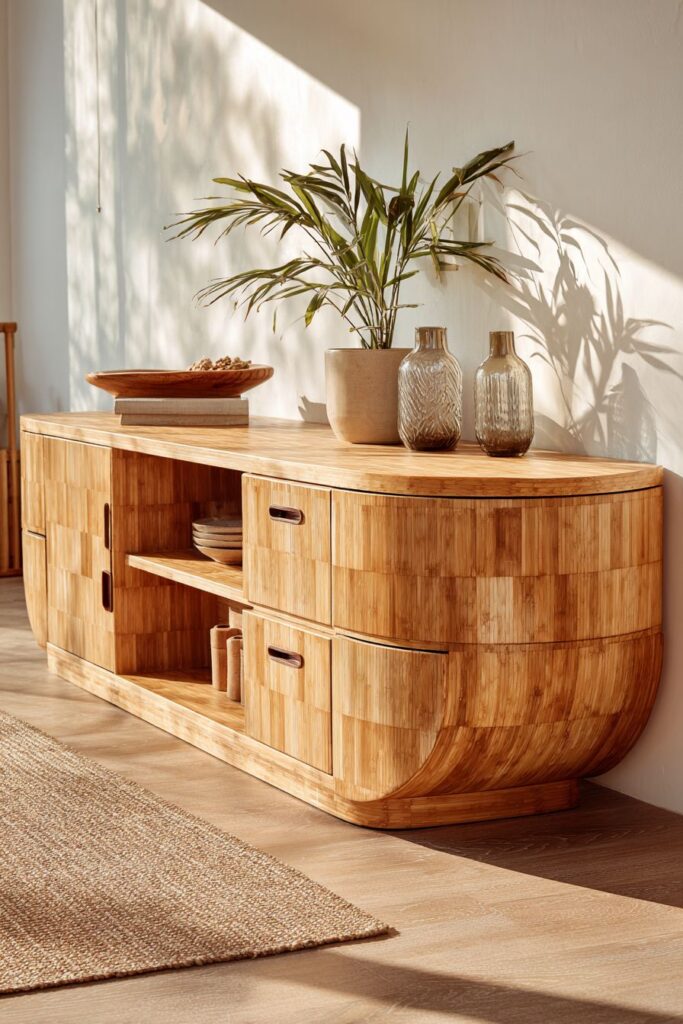
A sustainable console crafted from FSC-certified bamboo represents the intersection of environmental responsibility and beautiful design, proving that eco-friendly choices need not compromise aesthetics or quality. Bamboo’s natural honey finish showcases the material’s distinctive appearance, with visible node patterns creating regular horizontal lines that identify the material and add rhythmic visual interest. These nodes—the segmented joints where leaves once emerged—create subtle dimensional changes across the surface that catch light and cast gentle shadows, transforming a functional detail of bamboo’s growth structure into a decorative element.
The FSC certification ensures the bamboo comes from responsibly managed forests that meet rigorous environmental and social standards, giving environmentally-conscious consumers confidence in their purchasing decisions. Beyond certification, bamboo itself represents remarkable sustainability, as it grows rapidly (some species up to three feet per day), regenerates from its root system after harvesting without requiring replanting, and sequesters significant carbon dioxide while producing abundant oxygen. The eco-friendly construction extends to non-toxic water-based finishes that eliminate harmful volatile organic compounds, and reclaimed metal hardware that reduces demand for virgin materials.
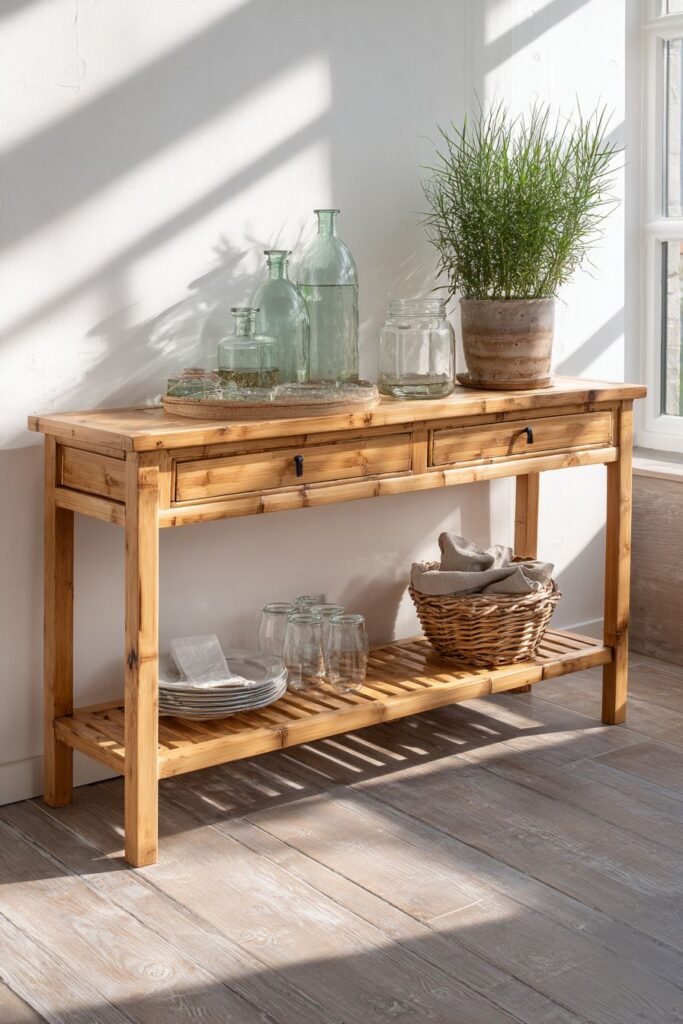
The console’s design includes two drawers for concealed storage and open shelving that displays earth-friendly dining accessories, creating opportunities to showcase other sustainable choices like recycled glass dishes, organic textiles, or handmade ceramics from local artisans. This visible commitment to sustainability communicates values and priorities while maintaining the practical storage functions that make consoles valuable dining room furniture. The honest, natural appearance of bamboo fits beautifully into various decorating styles from Asian-inspired to contemporary to casual coastal, demonstrating its versatility beyond purely eco-focused design.
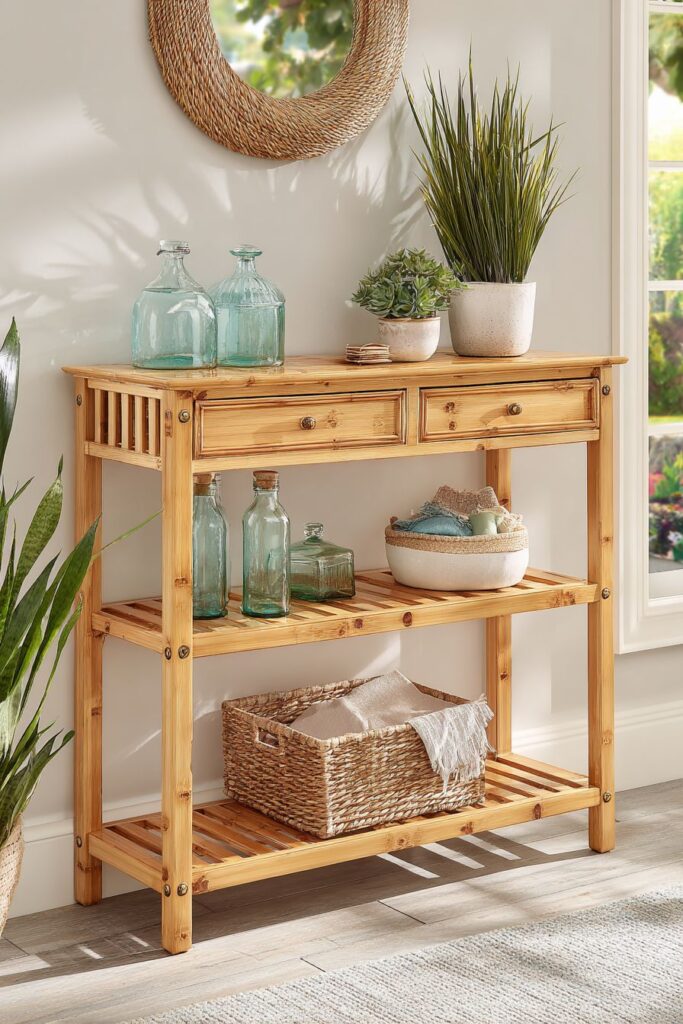
Styling a sustainable bamboo console embraces natural materials and earth-friendly accessories that reinforce the environmental consciousness motivating the furniture choice. A potted bamboo plant creates beautiful circularity, displaying the living plant from which the furniture material derives while bringing fresh greenery and natural air purification to the dining room. Recycled glass vases in soft green or blue tones showcase sustainable manufacturing while their transparent forms add lightness and allow flower stems to become part of the decorative display. Organic cotton table linens in natural, undyed tones demonstrate that sustainable textiles can be both beautiful and functional, their soft texture and honest appearance complementing the bamboo’s natural aesthetic.
Bright natural lighting emphasizes the environmentally conscious design choices and renewable material selection while showcasing bamboo’s warm, golden tones. The natural finish appears to glow when backlit or sidelit, the light filtering through the bamboo’s grain and highlighting its natural beauty. This celebration of natural materials and sustainable practices reflects growing consumer awareness about environmental impacts and desire to make purchasing decisions that align with personal values without sacrificing the beauty, quality, and functionality expected from home furnishings.
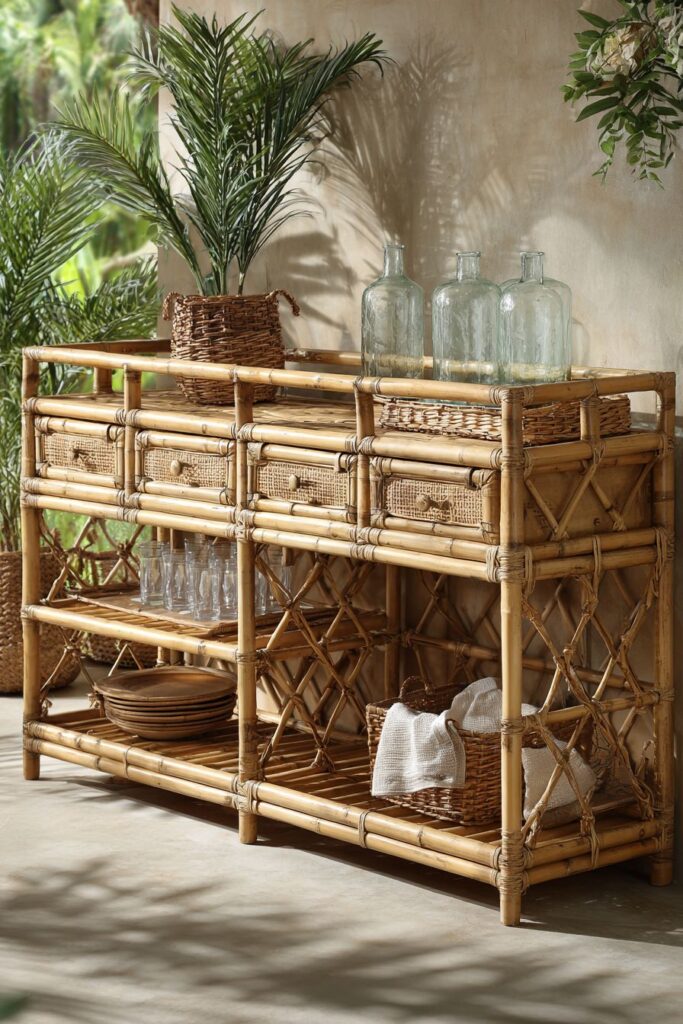
Key Design Tips:
- Look for FSC or similar certification ensuring responsible sourcing
- Choose non-toxic, water-based finishes that minimize environmental impact
- Display other sustainable items that reinforce eco-conscious lifestyle choices
- Incorporate live plants to enhance air quality and connect to nature
- Use natural, undyed textiles in organic cotton, linen, or hemp
- Position to receive natural light that showcases bamboo’s warm, golden tones
Why These Dining Room Console Designs Represent the Best in Contemporary Interior Design
The twenty dining room console designs explored in this comprehensive guide represent the pinnacle of contemporary furniture design because they successfully balance aesthetics with functionality while addressing diverse lifestyle needs, spatial constraints, and personal style preferences. Each console demonstrates how thoughtful material selection, expert craftsmanship, and purposeful design create furniture pieces that transcend mere utility to become integral components of beautiful, functional dining spaces.
The natural wood consoles—whether solid walnut, reclaimed pine, rich cherry, or sustainable bamboo—celebrate the inherent beauty of organic materials while providing durability and timeless appeal that synthetic alternatives cannot match. Natural wood grain patterns, color variations, and textural qualities create visual interest that rewards close examination and becomes more beautiful over time as the wood develops patina and character. These pieces connect us to natural materials and traditional craftsmanship while meeting modern functional needs through thoughtful storage design and contemporary proportions.
The painted and finished consoles—from coastal weathered white to contemporary high-gloss navy to minimalist concrete grey—demonstrate how surface treatments and color choices dramatically alter a piece’s aesthetic impact and stylistic associations. These finishes allow consoles to make bold statements or recede into neutral backgrounds depending on design goals, proving that identical forms can serve vastly different aesthetic purposes through thoughtful finish selection. The distressed, aged finishes appeal to those valuing historical character and rustic authenticity, while high-gloss lacquers and modern matte finishes serve contemporary and minimalist sensibilities.
The style-specific consoles—including mid-century modern, art deco, French country, industrial, Scandinavian, and bohemian designs—show how furniture can embody particular design movements and historical periods while remaining functional for contemporary living. These pieces allow homeowners to express personal style preferences and create cohesive interiors that tell design stories, whether celebrating the clean lines and organic forms of mid-century modernism, the glamorous geometry of art deco, or the relaxed eclecticism of bohemian style. This stylistic diversity ensures that regardless of personal taste or existing decor, there’s a console design that will integrate beautifully while providing necessary storage and display functions.
The space-conscious designs—particularly the narrow wall-mounted console, the compact apartment piece, and the multipurpose drop-leaf model—address the reality that many modern homes feature limited square footage where every piece of furniture must justify its presence through exceptional functionality or space efficiency. These innovative designs prove that spatial constraints need not mean compromising style, as clever engineering, wall-mounting techniques, convertible features, and slim profiles allow beautiful furniture to fit comfortably in compact dining areas. This practical approach to design makes sophisticated dining room furniture accessible to apartment dwellers and small-home owners who might otherwise feel excluded from design conversations focused on spacious rooms.
The luxury and formal consoles—including the carved mahogany piece with marble top and the art deco design with brass and mother-of-pearl inlay—demonstrate that some dining spaces call for statement pieces that celebrate craftsmanship, premium materials, and traditional luxury. These consoles serve formal dining rooms where elegant entertaining and sophisticated aesthetics take precedence, providing the visual gravitas and refined beauty appropriate to these elevated settings. The intricate carving, premium wood species, stone tops, and metallic inlays showcase artisanal skills and material quality that justify significant investment while creating furniture that can serve multiple generations.
The storage innovations across these twenty designs—from wine glass racks and stemware holders to soft-close drawers, adjustable shelving, and hidden compartments—show how contemporary console design prioritizes practical functionality alongside aesthetic appeal. Modern dining rooms require storage for table linens, serving pieces, barware, candles, and numerous accessories, and well-designed consoles provide organized, accessible storage that keeps dining areas uncluttered while making entertaining easier. The combination of open and closed storage allows for both display of beautiful items and concealment of less attractive necessities.
The material diversity represented—including various woods, marble, concrete, metal, glass, rattan, and mixed materials—demonstrates the rich palette available to contemporary furniture designers and the importance of material selection in defining a piece’s character and style associations. Natural materials bring organic warmth and textural interest, while manufactured materials like powder-coated metal and high-gloss lacquer provide durability and contemporary aesthetics. The most successful mixed-material designs thoughtfully combine contrasting textures and finishes to create visual complexity and dimensional interest.
The environmental consciousness demonstrated by the sustainable bamboo console reflects growing awareness about furniture’s ecological impact and consumer demand for responsible sourcing, non-toxic finishes, and renewable materials. This design proves that environmental responsibility and beautiful design need not conflict, as FSC-certified bamboo provides distinctive aesthetics, excellent durability, and rapid renewability. This eco-conscious approach represents an important direction for contemporary furniture design as consumers increasingly align purchasing decisions with environmental values.
The styling possibilities explored across these twenty consoles demonstrate how the same piece of furniture can be personalized through accessory choices, creating individual expressions within established design frameworks. From the minimal styling of Scandinavian and minimalist consoles to the abundant layering of bohemian and farmhouse pieces, the approach to console decoration communicates personal style and lifestyle priorities. This flexibility ensures that while the console provides structural and storage functions, its ultimate character emerges through the homeowner’s styling choices and displayed treasures.
These console designs represent the best of contemporary furniture design because they honor traditional craftsmanship while embracing modern innovation, celebrate natural materials while exploring contemporary finishes, provide essential storage while creating beautiful focal points, and serve diverse aesthetic preferences while maintaining functional excellence. Whether your dining room calls for rustic farmhouse warmth, sleek contemporary sophistication, romantic French country charm, or bold art deco glamour, there’s a console design that will transform your space while meeting practical storage needs and reflecting your personal style. The key to selecting the ideal console lies in honestly assessing your spatial constraints, storage requirements, existing decor, and aesthetic preferences, then choosing the design that best balances all these considerations while bringing beauty and functionality to your dining room.
Conclusion
The dining room console has evolved from a simple serving table to a multifunctional furniture piece that serves as storage solution, display platform, and design statement simultaneously. As we’ve explored through these twenty distinctive designs, the contemporary console market offers remarkable diversity in materials, styles, finishes, and configurations, ensuring that every dining room—regardless of size, style, or budget—can benefit from this versatile furniture piece.
The key takeaways from this comprehensive exploration include the importance of matching console style to your dining room’s overall aesthetic, the value of quality materials and construction that will serve you for years to come, and the practical benefits of thoughtful storage design that keeps your dining area organized and functional. Whether you’re drawn to the rich natural grain of walnut wood, the space-saving innovation of wall-mounted designs, the glamorous sophistication of art deco styling, or the environmental responsibility of sustainable bamboo, your choice should reflect both your aesthetic preferences and practical needs.
Remember that the console’s ultimate success depends not only on selecting the right piece but also on thoughtful styling that allows the furniture to shine while expressing your personality. Use the styling tips provided for each design as starting points, then adapt them to your specific space, collections, and preferences. Don’t be afraid to experiment with different accessory arrangements, seasonal decorations, and lighting options until you achieve a composition that feels both beautiful and authentically yours.
As you consider adding a dining room console or replacing an existing piece, take time to measure your space carefully, assess your storage needs honestly, and research quality manufacturers who stand behind their craftsmanship. Whether you invest in a luxury carved mahogany showpiece or a compact apartment-friendly design, choose quality over quantity and timeless style over passing trends. The right console will serve your household for decades, adapting to changing needs and evolving alongside your design sensibilities. Transform your dining room today by selecting a console that balances beauty with function, reflects your personal style, and becomes a cherished part of your home’s story.
"As an Amazon Associate, I earn from qualifying purchases."
