
The kitchen serves as more than a functional workspace—it represents the emotional heart of your home where memories form over shared meals and conversations. A cozy kitchen atmosphere transforms everyday cooking from a mundane routine into comforting ritual, making family and guests naturally gravitate toward this nurturing space. The warmth you cultivate here extends beyond physical temperature to encompass feelings of safety, belonging, and contentment.
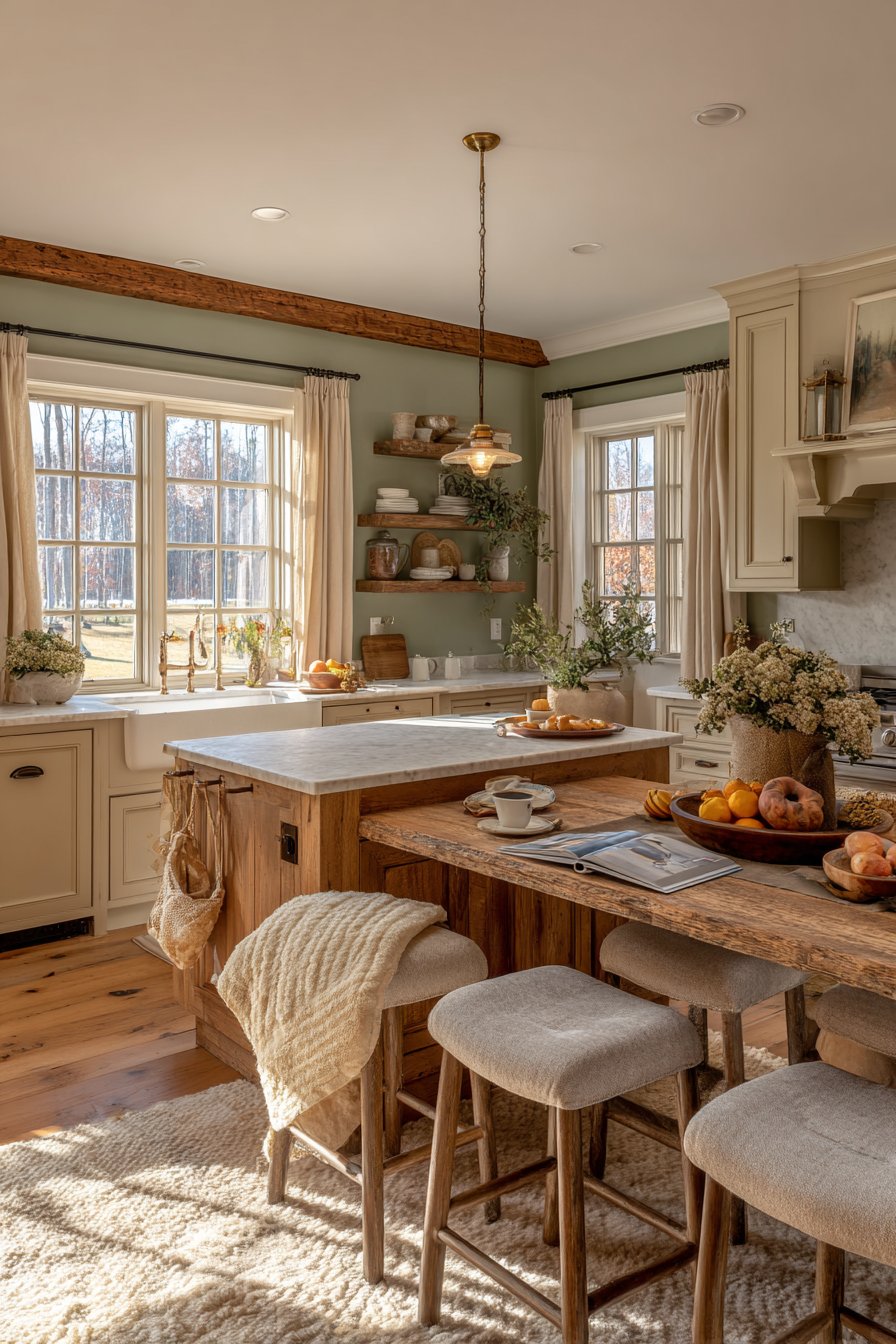
Creating genuine coziness doesn’t require extensive renovations or significant financial investment. Instead, it emerges from thoughtful layering of elements that engage multiple senses simultaneously. The soft glow of warm lighting, the inviting aroma of simmering soup, the tactile pleasure of natural materials, and the visual comfort of personal touches all contribute to an atmosphere that envelops you like a favorite sweater.
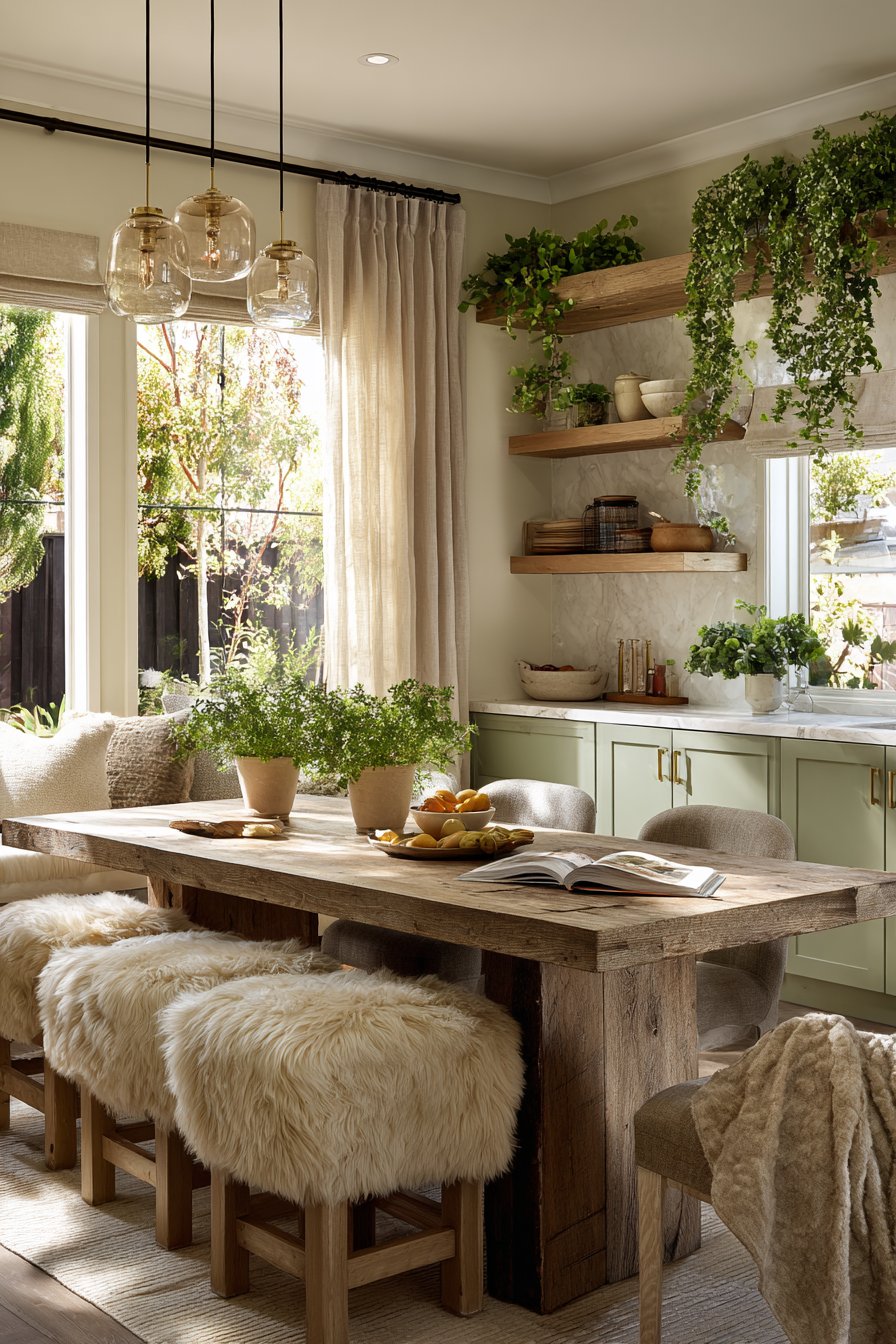
This comprehensive guide explores ten accessible strategies for cultivating irresistible warmth and comfort in your kitchen. Whether you’re working with a sprawling culinary haven or a compact apartment kitchen, these principles adapt beautifully to any space or style.
From lighting adjustments to textile additions, each tip builds upon the others to create a multi-dimensional atmosphere that transforms your kitchen into the welcoming sanctuary it deserves to be, encouraging longer visits and more meaningful connections.
1. Layer Warm, Ambient Lighting
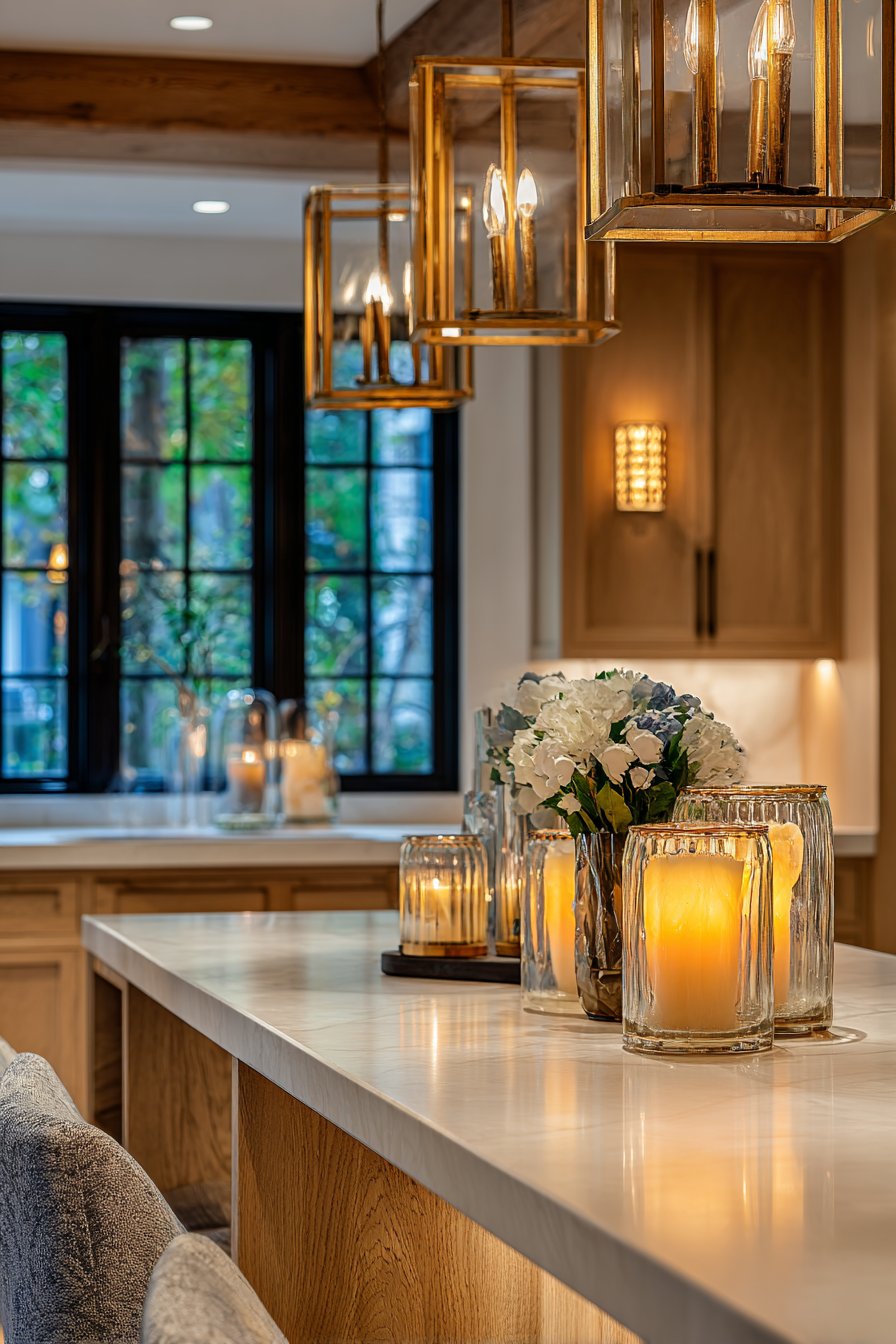
Strategic lighting profoundly impacts how cozy a space feels. Harsh overhead fluorescents create institutional atmospheres, while layered, warm-toned lighting envelops kitchens in inviting glows. Multiple light sources at varying heights—pendant fixtures, under-cabinet strips, and accent lamps—create dimensional illumination that flatters and comforts rather than exposing every imperfection starkly.
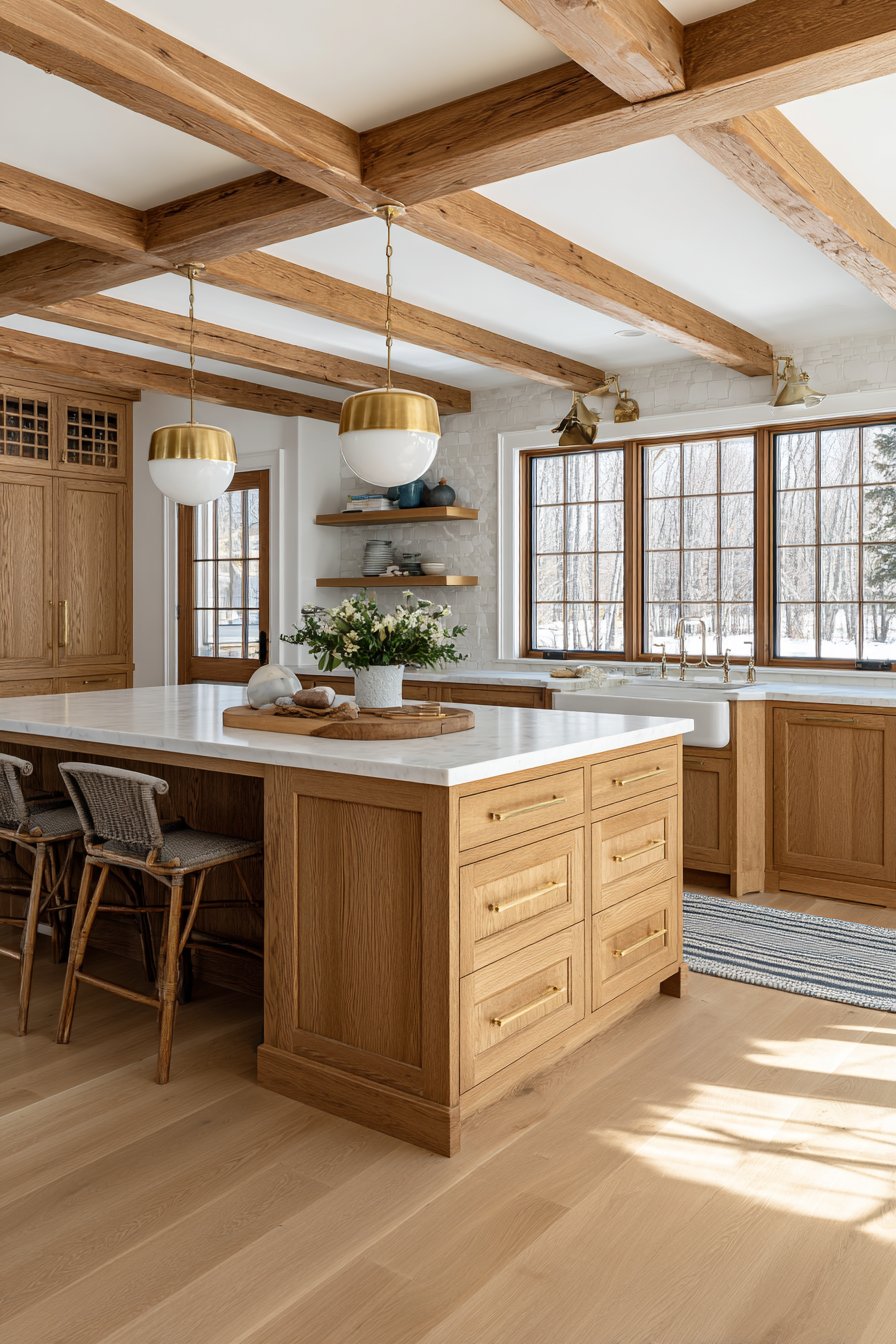
Install dimmer switches on all controllable fixtures to adjust brightness throughout the day. Bright task lighting supports morning meal prep, while softened evening illumination creates intimate dining atmospheres. Choose bulbs with warm color temperatures between 2700K and 3000K that cast golden, flattering light reminiscent of candlelight or sunset rather than cool, blue-toned institutional brightness.
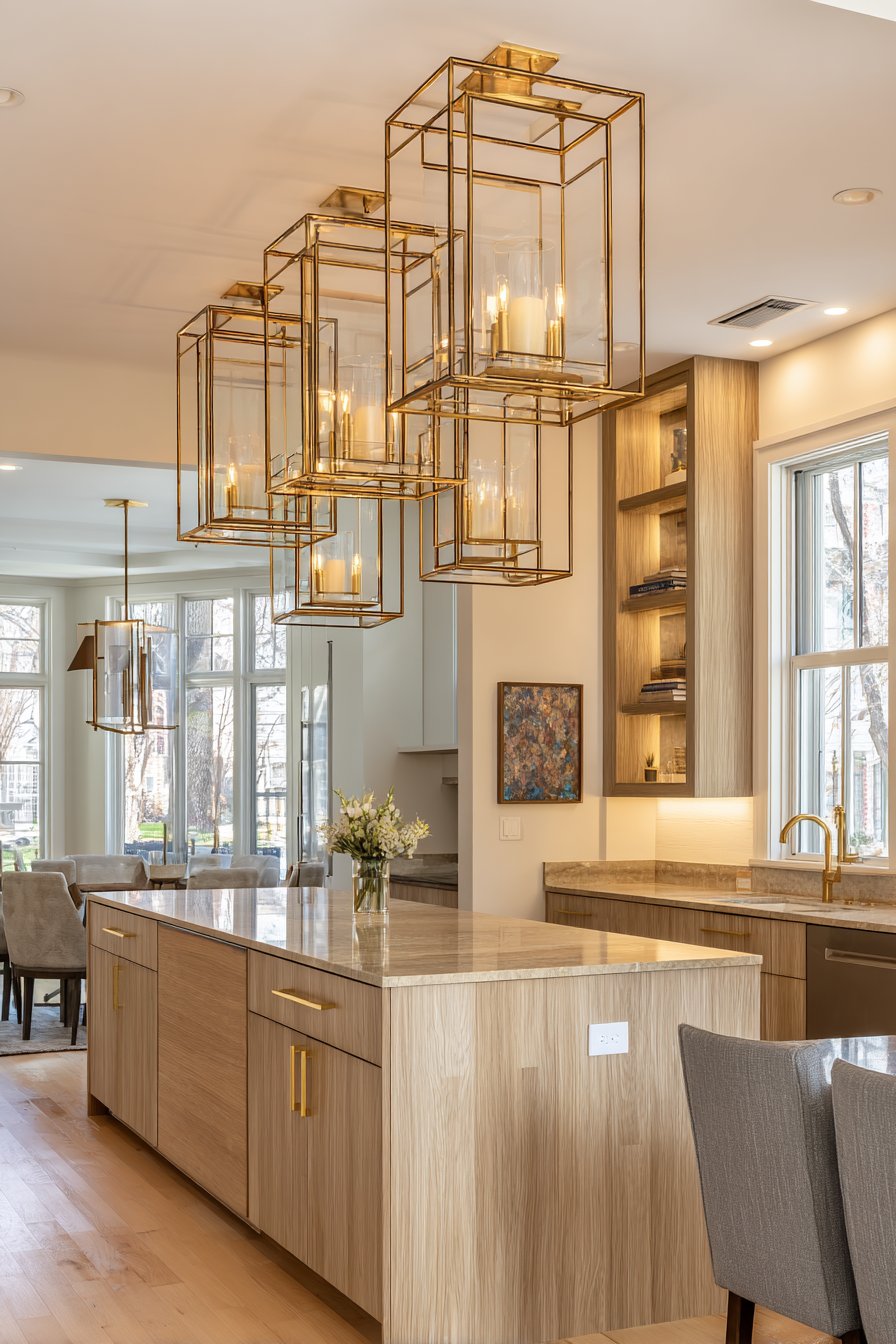
- Replace harsh overhead bulbs with warm-white LED alternatives
- Install under-cabinet lighting that illuminates counters without glare
- Add pendant lights over islands or dining areas for focused warmth
- Incorporate plug-in accent lamps on counters or open shelving
- Use dimmer switches to control intensity for different activities and moods
- Include decorative string lights or lanterns for additional ambient glow
- Place candles in hurricanes or lanterns for flickering, atmospheric light
- Position table lamps on buffets or sideboards for living-room-like warmth
2. Incorporate Soft Textiles Throughout
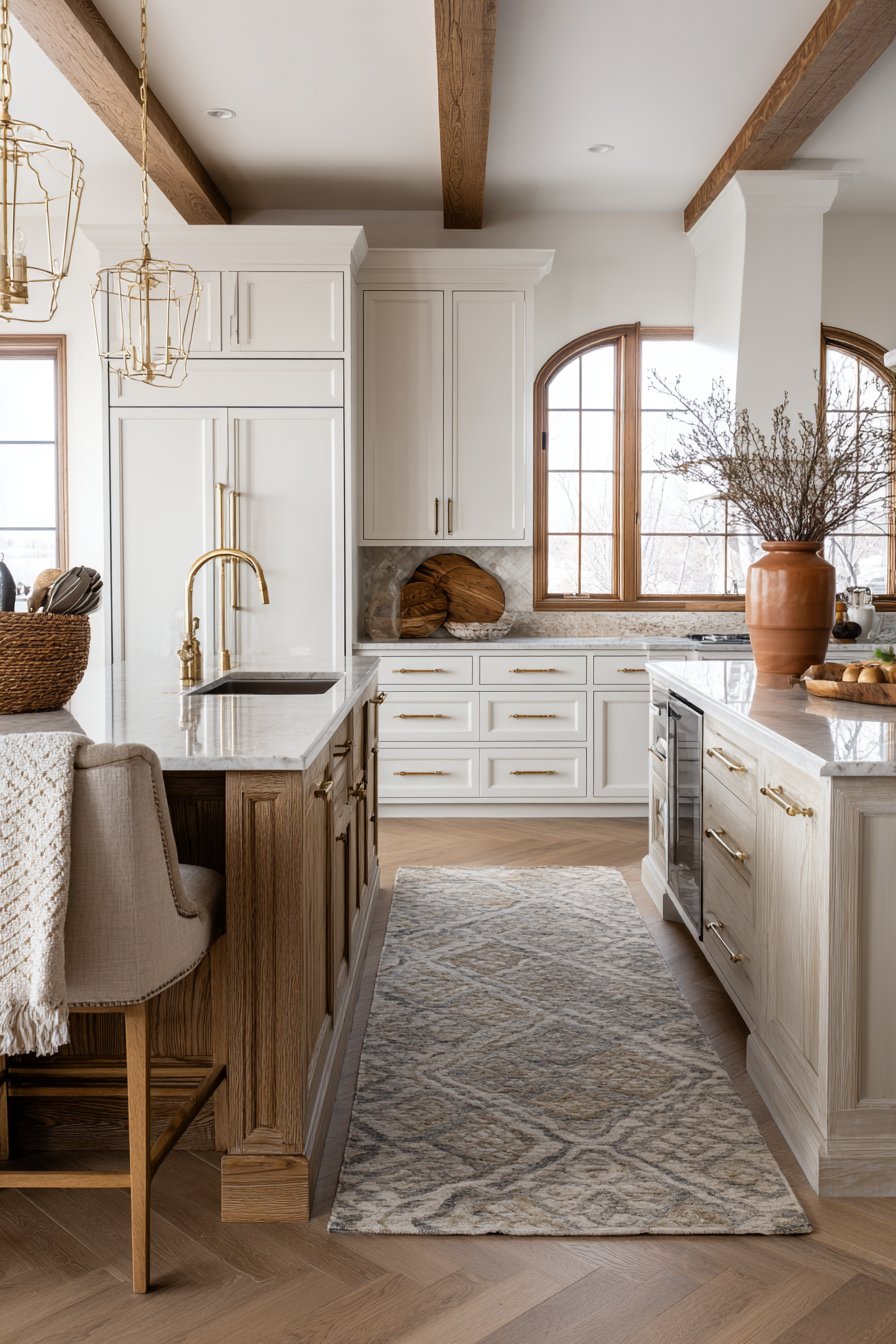
Fabric elements introduce immediate softness that counterbalances hard kitchen surfaces. Linen curtains, cotton dish towels, woven rugs, and cushioned seating bring tactile warmth that makes kitchens feel less utilitarian and more residential. These textiles absorb sound, reducing echo and creating quieter, more intimate acoustic environments.
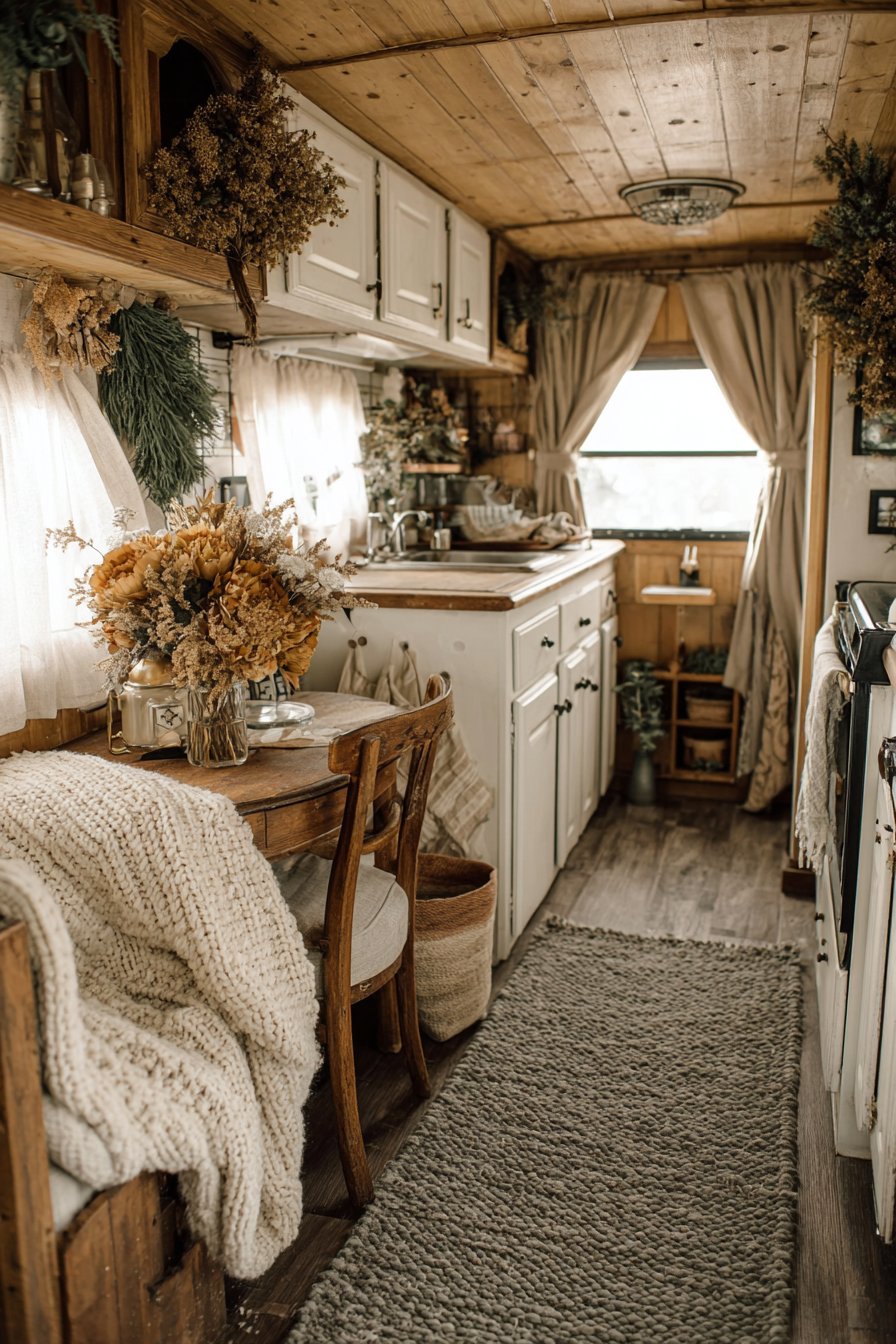
Layer textiles in natural fibers that improve with age and washing. Vintage-inspired tea towels displayed on hooks, substantial linen napkins stored in view, and kitchen rugs in natural wool or cotton add comfort underfoot while contributing visual softness. These practical elements serve functional purposes while dramatically enhancing the cozy atmosphere through their inherent warmth and texture.
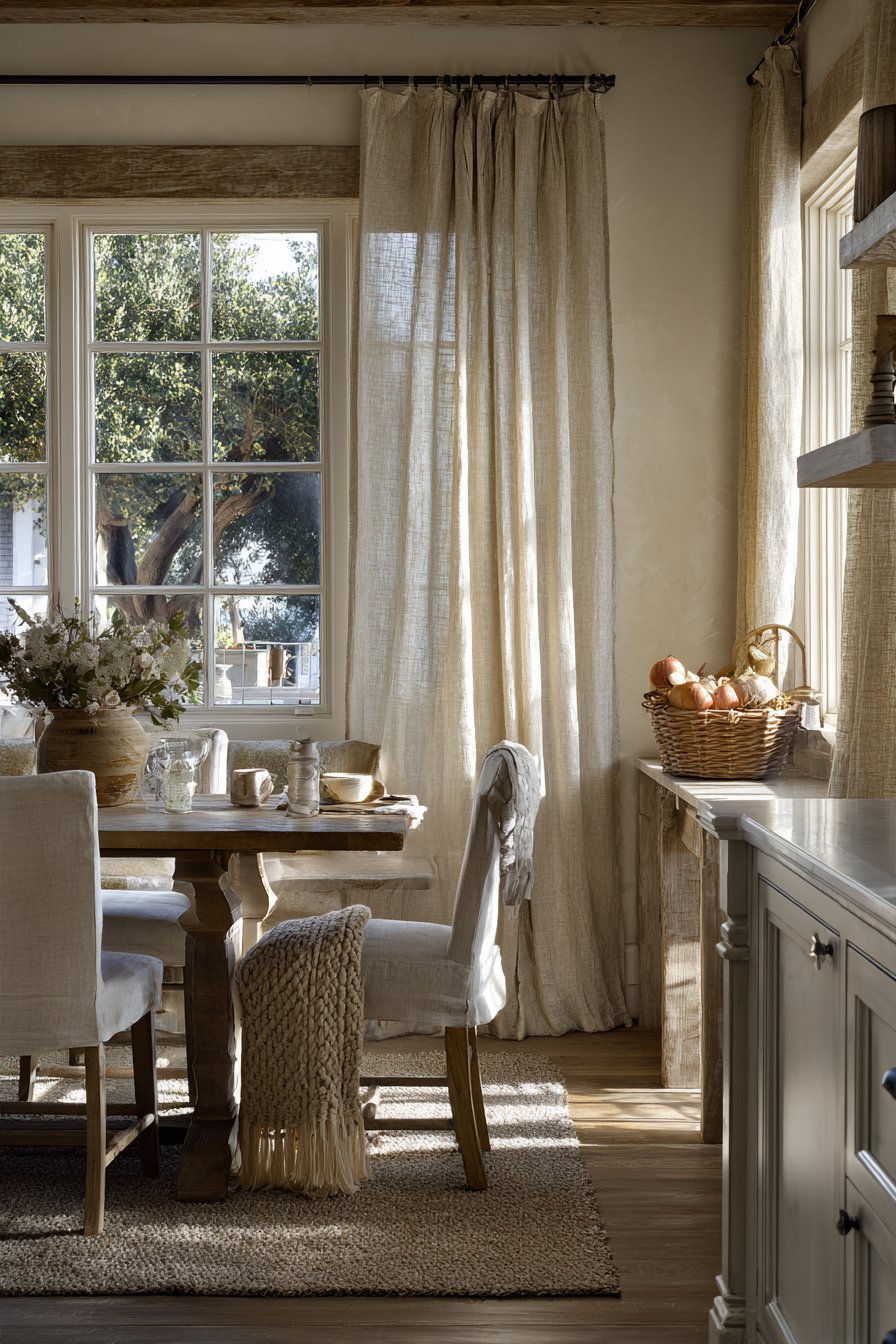
- Hang linen or cotton cafe curtains that filter light softly
- Display beautiful dish towels on hooks or oven handles
- Add a substantial wool or cotton rug in high-traffic work zones
- Include cushions on dining chairs or window seats
- Drape a cozy throw over a kitchen chair for unexpected comfort
- Use cloth napkins in warm colors stored visibly in baskets
- Cover open shelving with ruffled fabric skirts for cottage charm
- Place a table runner in natural linen or textured cotton for dining areas
3. Display Personal Collections and Meaningful Objects
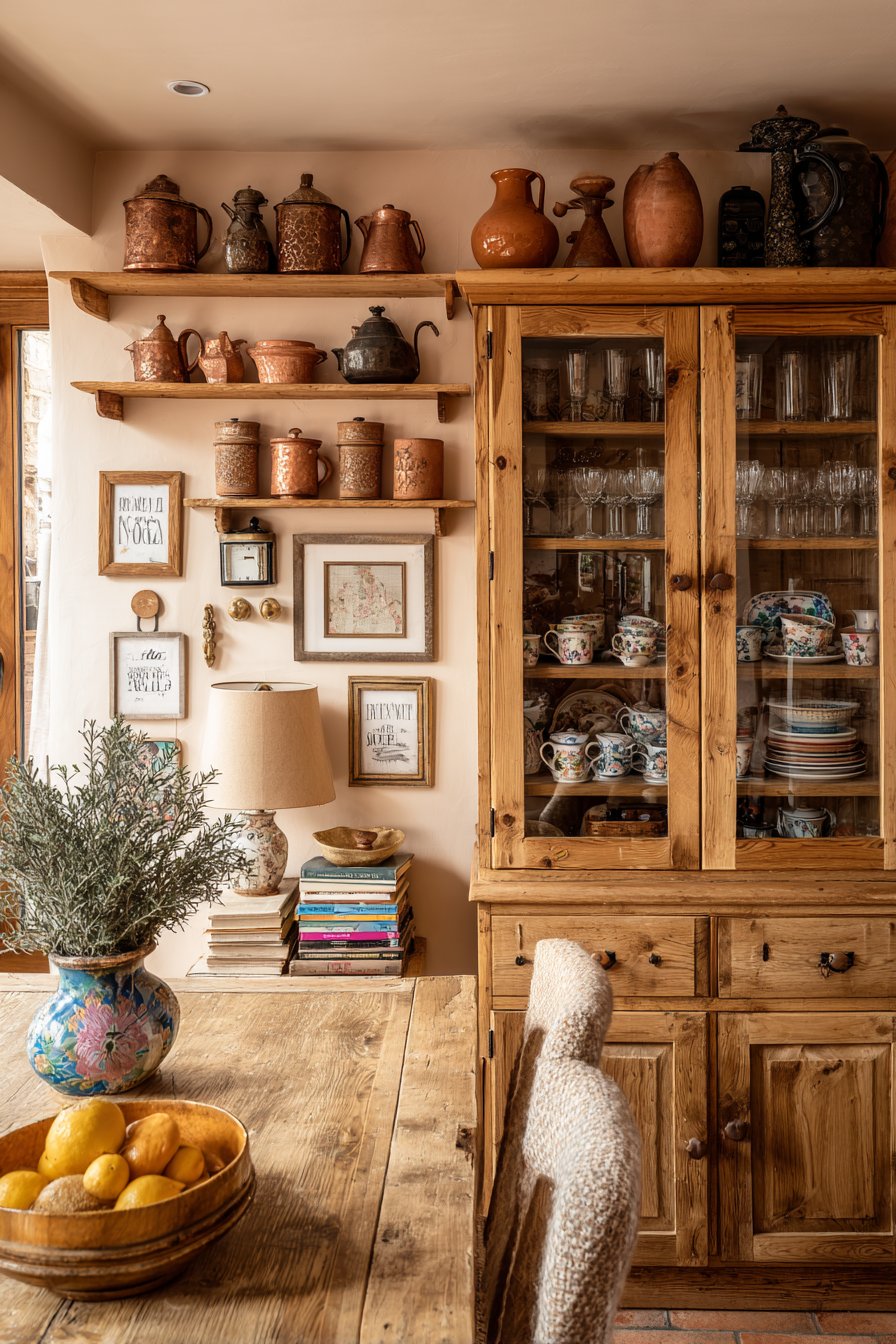
Cherished possessions transform generic kitchens into personal sanctuaries filled with stories and memories. Grandmother’s mixing bowls, inherited serving platters, or collected pottery from travels create emotional connections that generic decor cannot replicate. These meaningful objects remind you of loved ones and experiences, infusing everyday cooking with deeper significance.
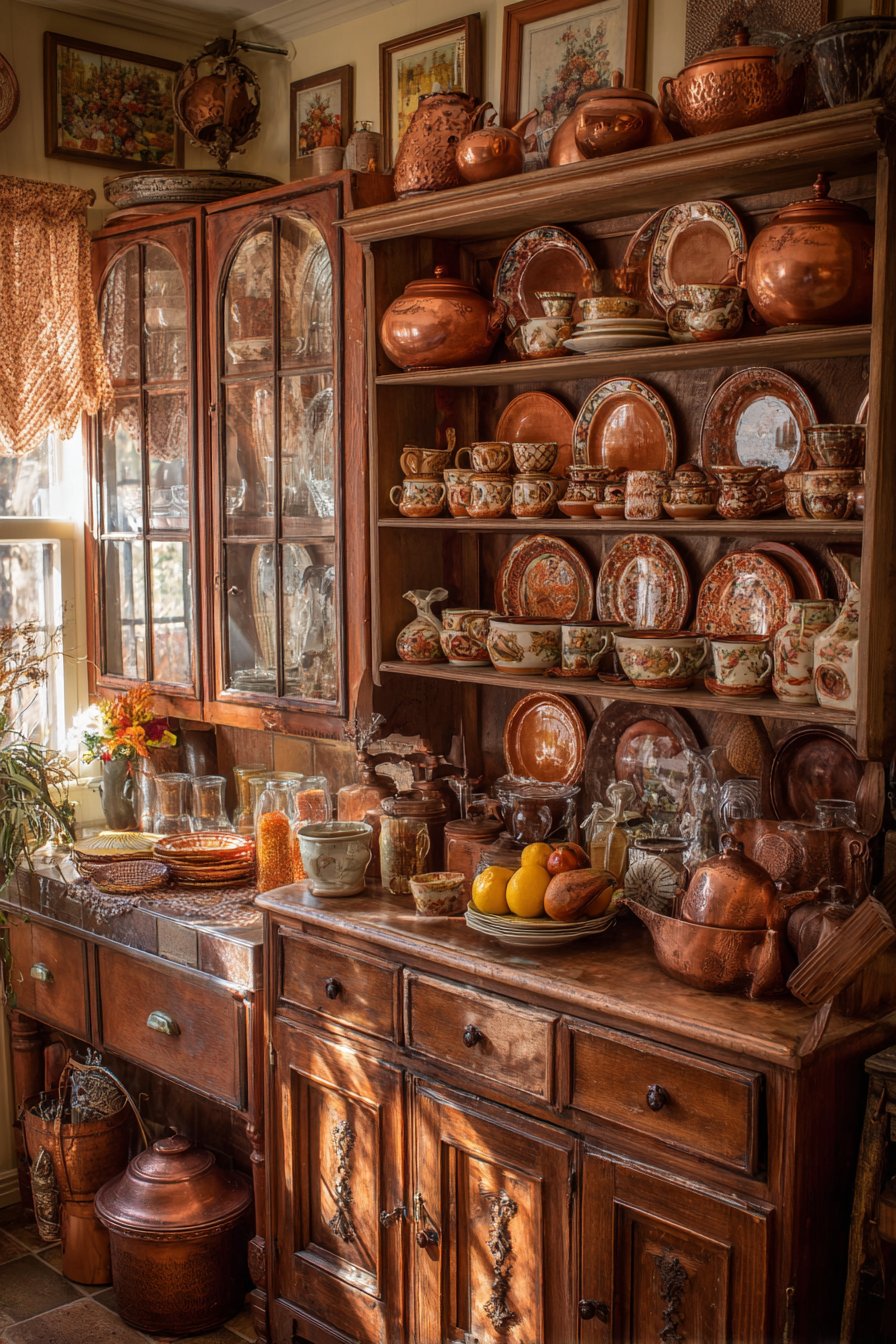
Curate displays that balance aesthetics with sentiment, grouping similar items for visual cohesion while maintaining variety. Open shelving, glass-front cabinets, or plate racks showcase collections as living art rather than hidden storage. The presence of well-loved, frequently used items creates authenticity and warmth that carefully staged showroom kitchens perpetually lack.
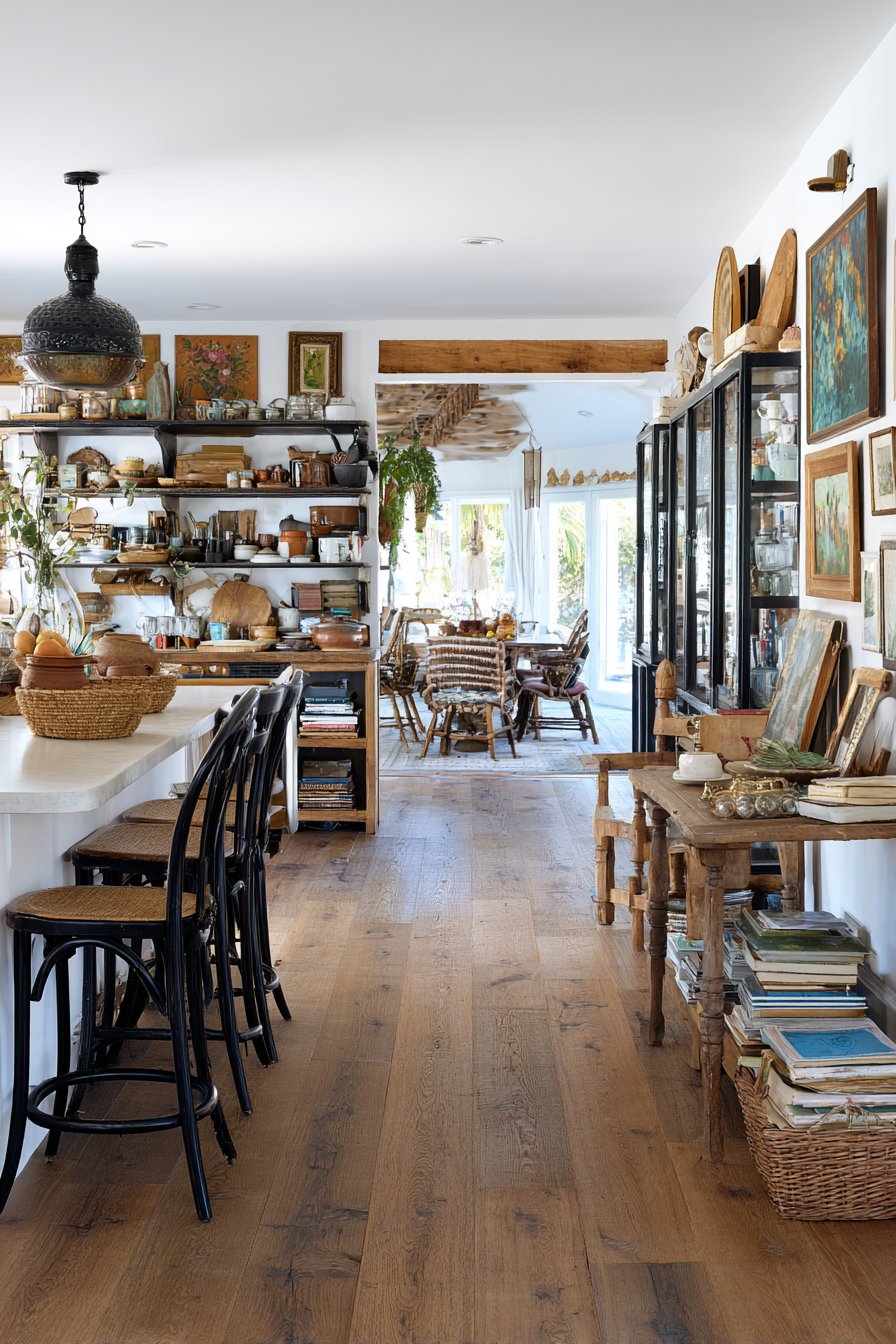
- Display vintage cookware or inherited serving pieces on open shelves
- Hang a collection of copper molds or antique utensils as wall art
- Showcase pottery or ceramics acquired during meaningful travels
- Arrange family recipe cards or handwritten notes in vintage frames
- Feature children’s artwork or family photos in simple frames
- Group collections of similar items like vintage bottles or ironstone pitchers
- Display well-worn cookbooks with sentimental value on cookbook stands
- Include handmade pottery or crafts gifted by loved ones
4. Introduce Natural Wood Elements
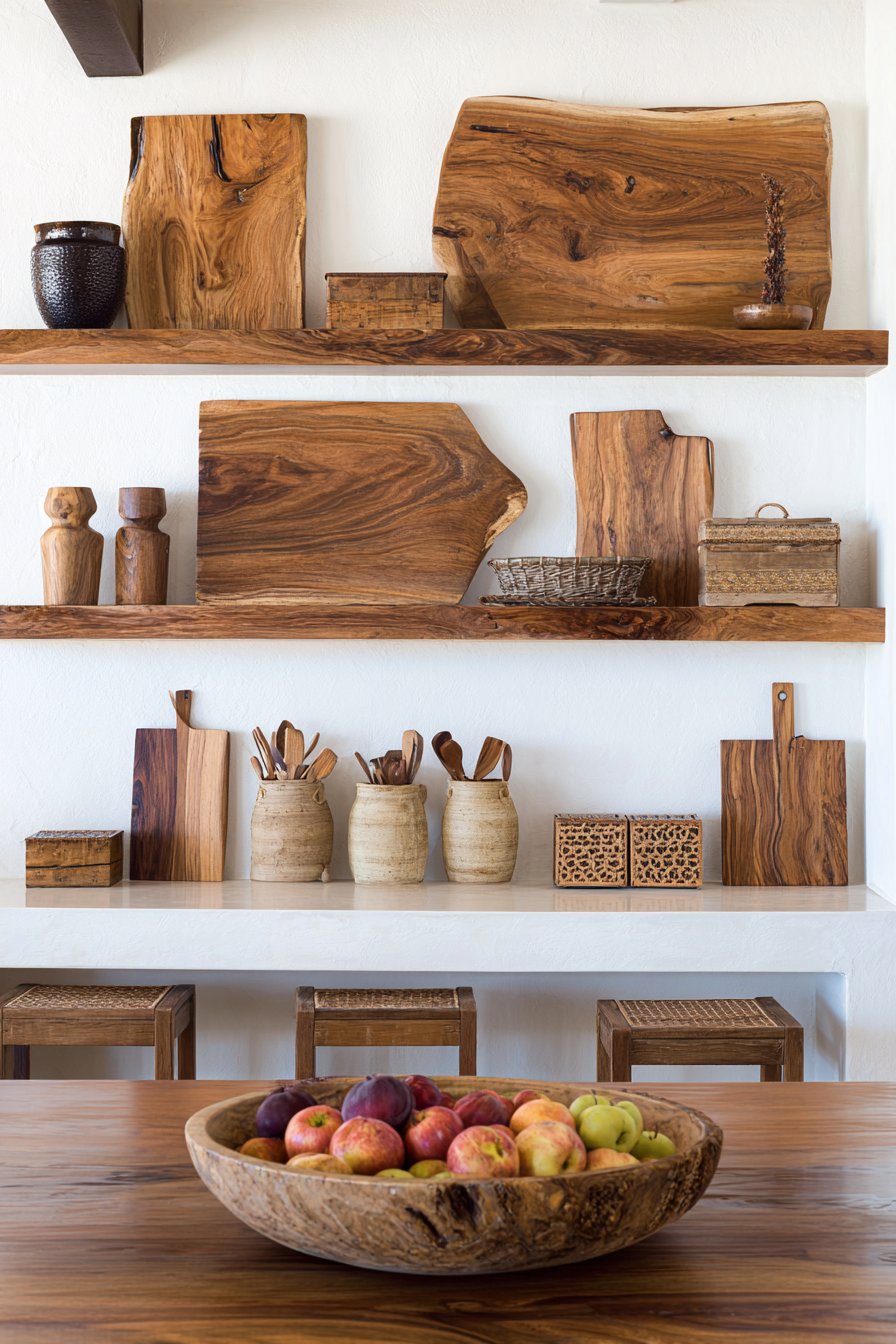
Warm wood tones create instant coziness through their organic beauty and inherent warmth. Wooden cutting boards propped against backsplashes, floating shelves in rich walnut, or a rustic farmhouse table introduce natural texture that softens contemporary kitchens while adding depth to traditional spaces. Wood’s versatility allows it to complement virtually any design style authentically.
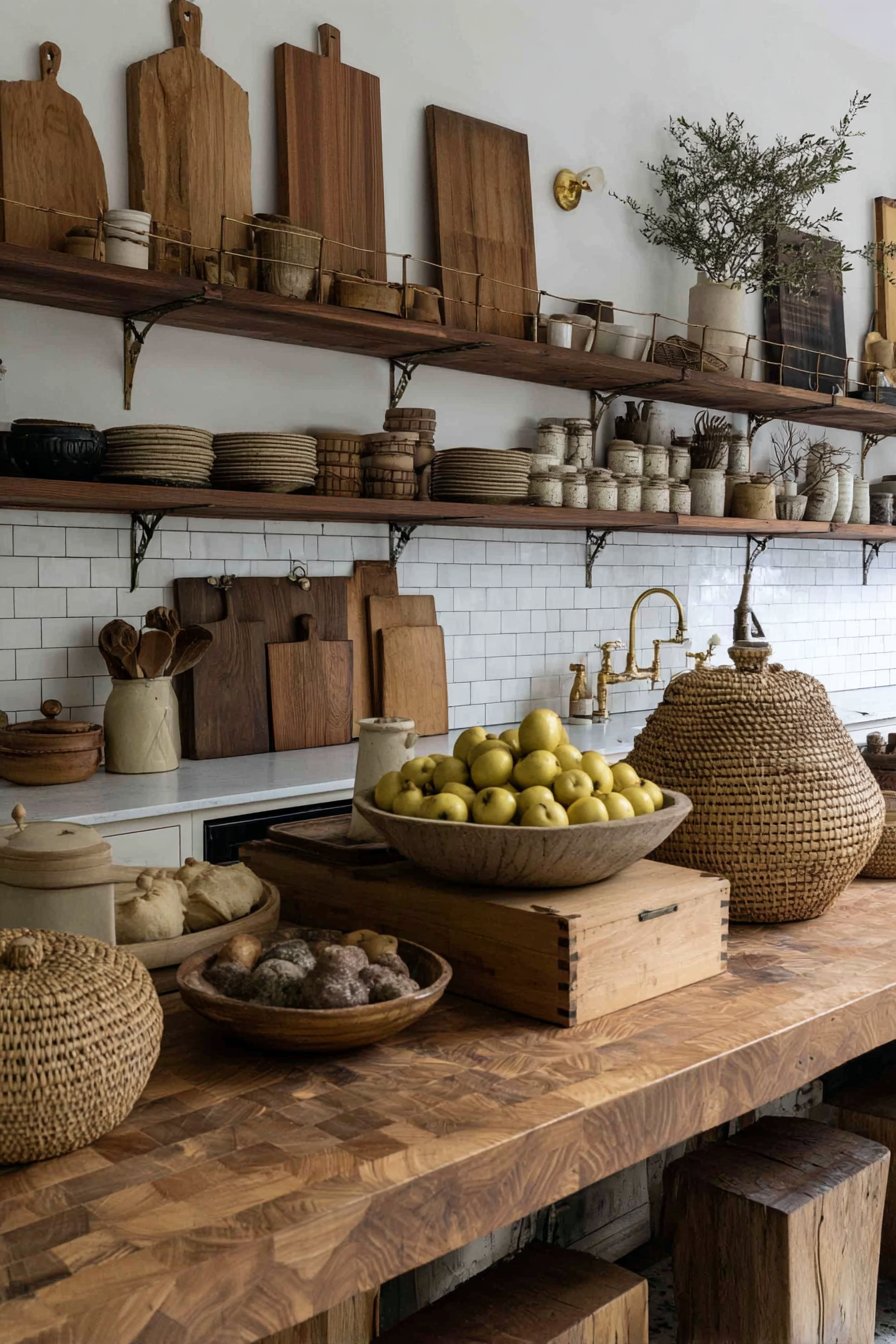
The varied grain patterns and color variations in natural wood prevent monotony while adding visual interest that engages the eye. Unlike synthetic materials, wood develops character over time through use and age, becoming more beautiful and telling richer stories. This living material connects kitchens to nature, bringing organic warmth that manufactured products cannot replicate.
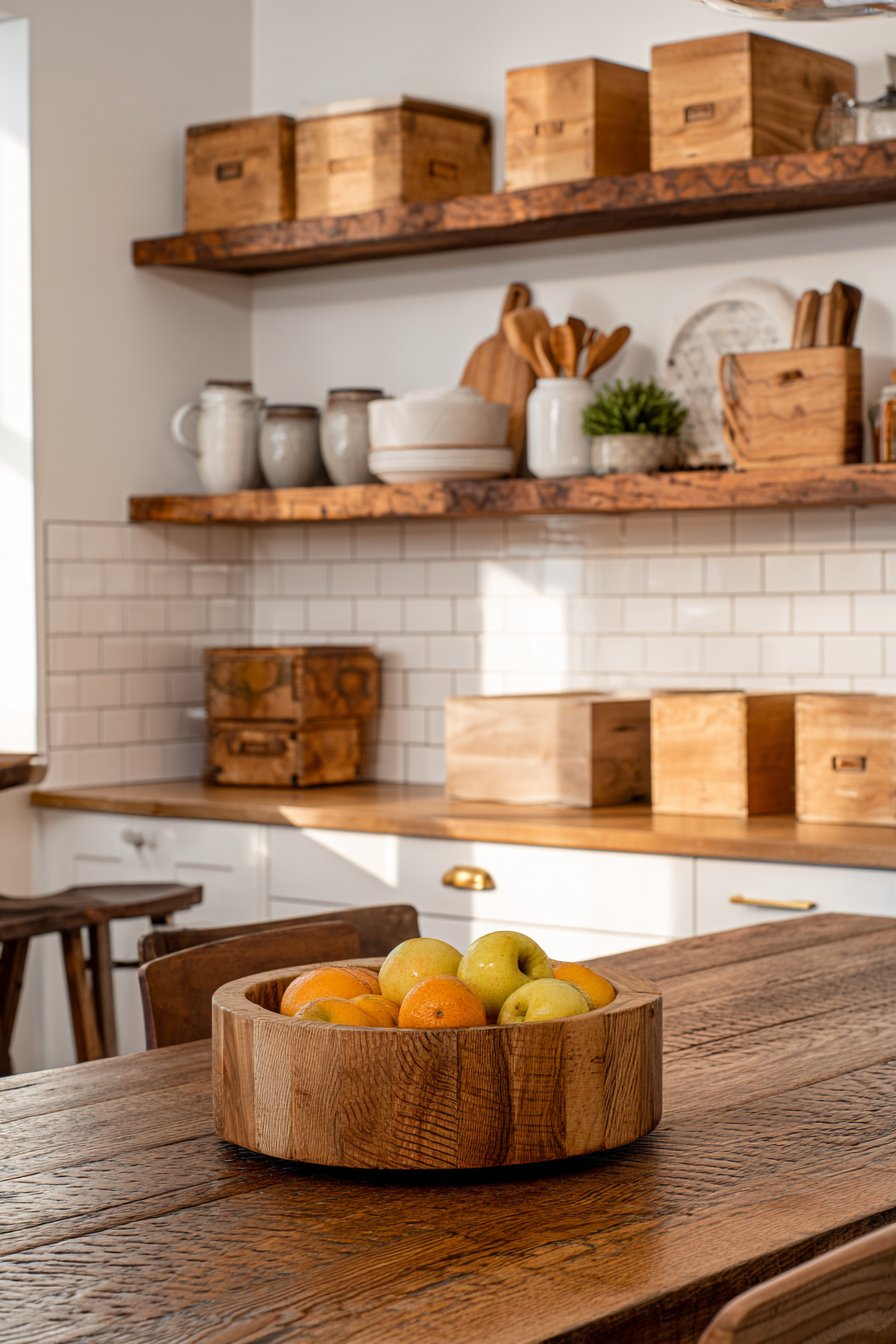
- Display wooden cutting boards in various sizes as functional art
- Add wooden utensils in crocks or displayed on hooks
- Install floating wood shelves in natural or stained finishes
- Include a wooden bowl filled with seasonal fruit as a centerpiece
- Choose wooden bar stools or dining chairs with visible grain
- Incorporate a butcher block section into countertops for warmth
- Use wooden crates or boxes for attractive produce storage
- Add wooden trivets, spoon rests, or serving boards as accents
5. Fill Spaces with Living Plants and Fresh Herbs
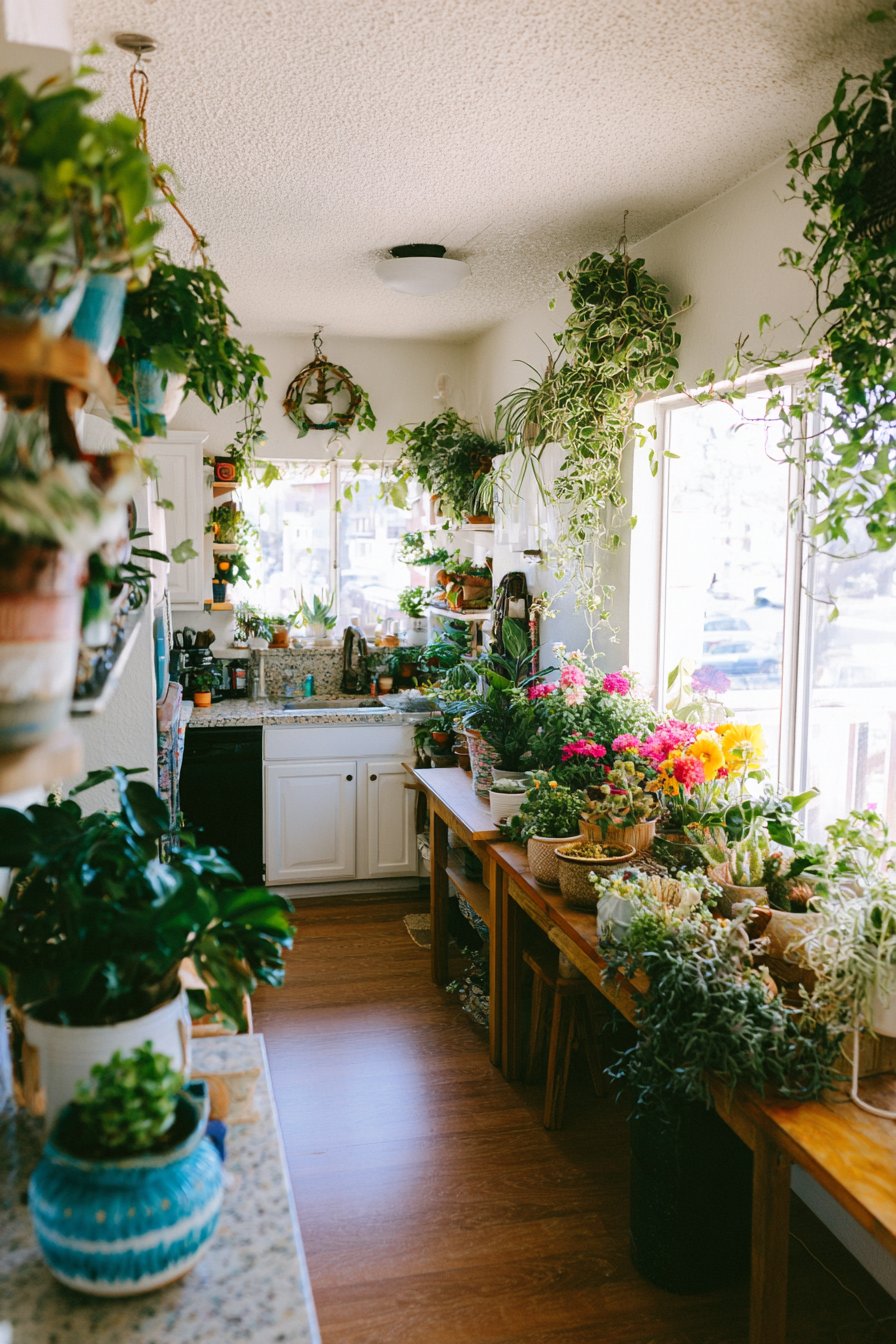
Living greenery brings vitality and freshness that transform sterile kitchens into nurturing environments. Potted herbs on windowsills provide cooking ingredients while filling spaces with natural beauty and fragrance. Larger plants like fiddle leaf figs or pothos vines introduce dramatic organic forms that soften architectural lines and purify air naturally.
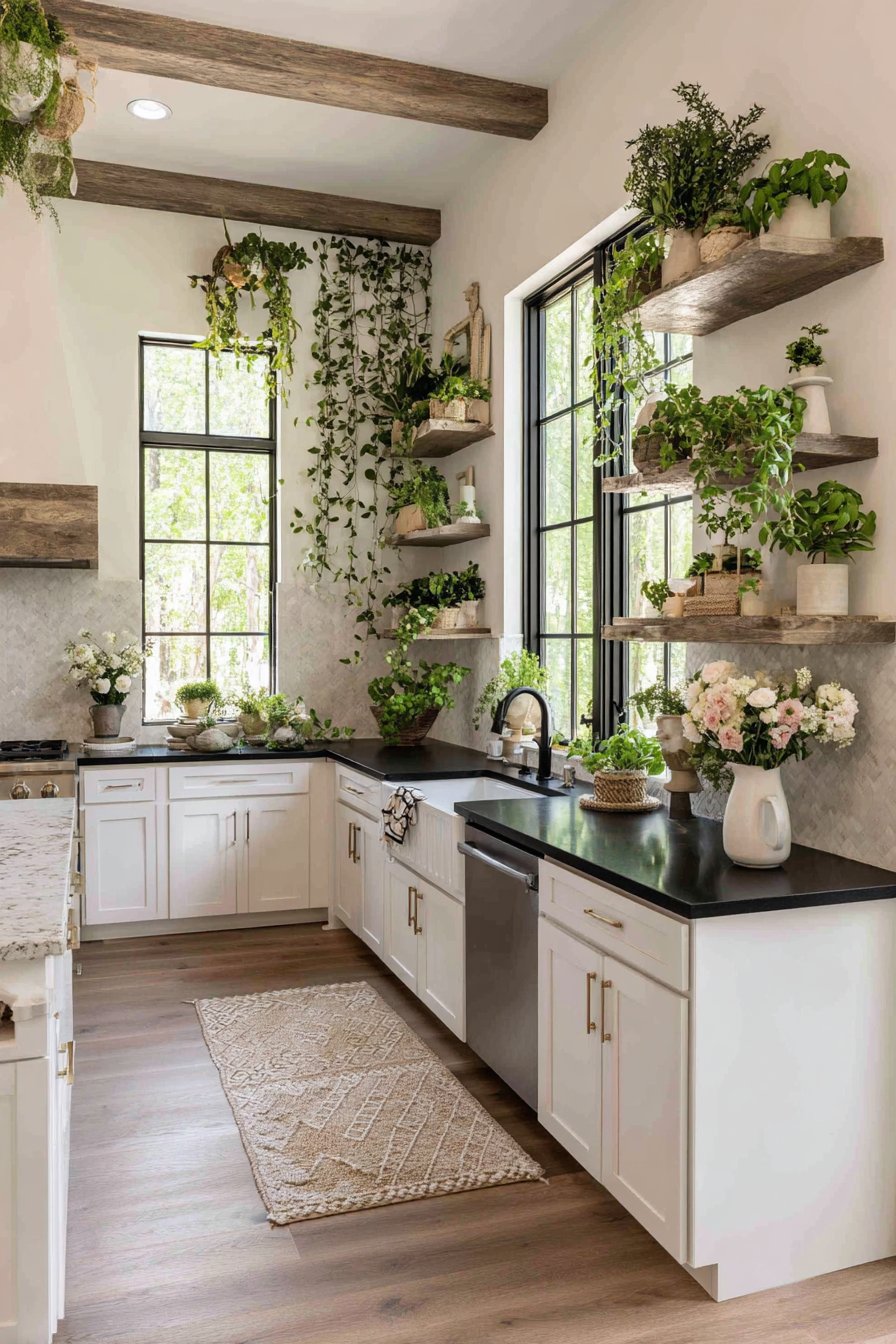
The changing nature of plants—new growth, seasonal flowering, or cascading vines—ensures your kitchen never feels static or staged. This living element requires attention and care, creating opportunities for nurturing rituals that deepen your connection to the space. The presence of thriving plants suggests abundance, health, and the sustaining of life itself.
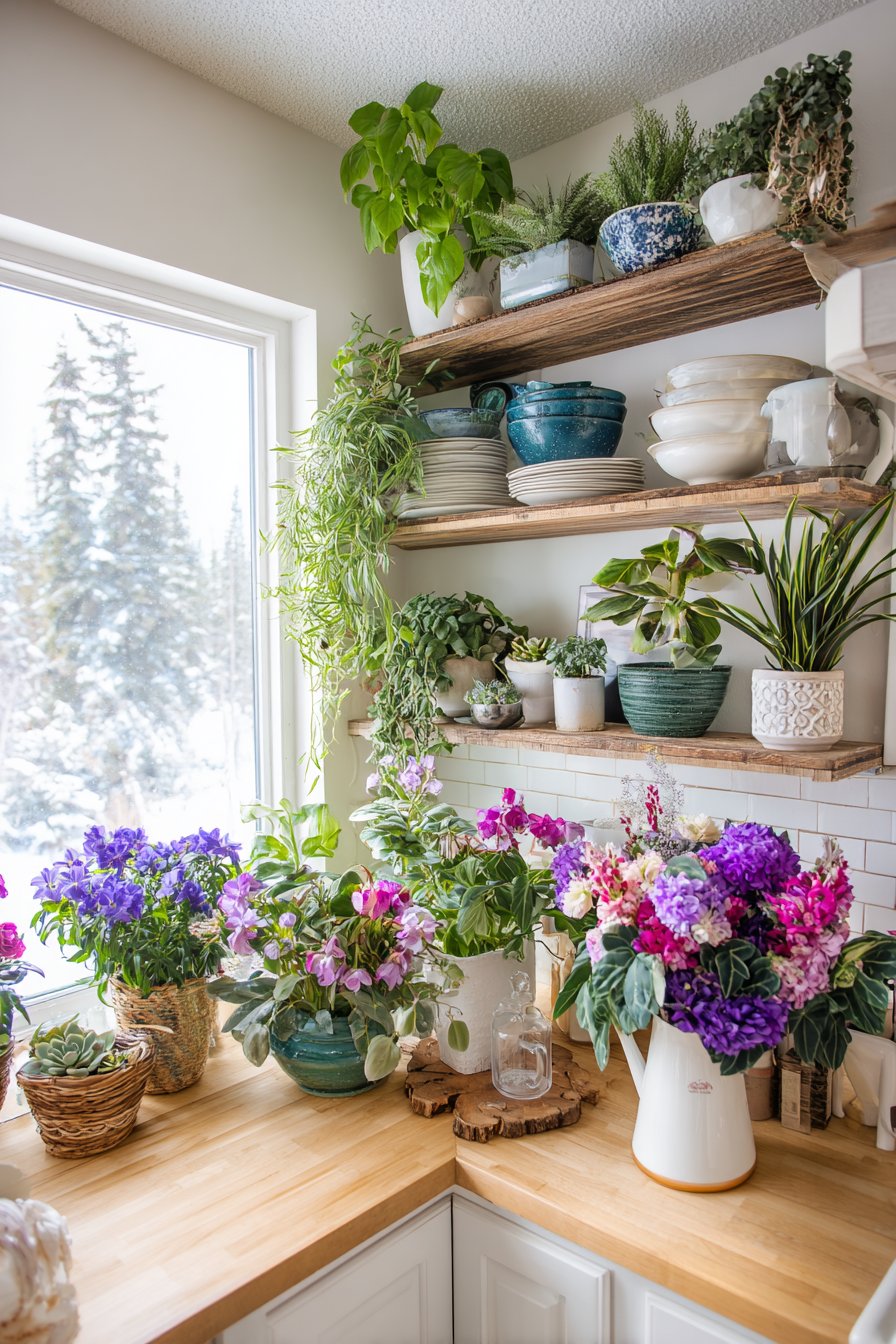
- Grow culinary herbs like basil, rosemary, and thyme in sunny windows
- Place a substantial potted plant in an unused corner for drama
- Hang trailing plants like pothos or ivy from upper cabinets
- Display fresh flowers from the market or garden in simple vessels
- Include succulents in vintage containers for low-maintenance greenery
- Create a small herb garden in attractive pots grouped together
- Add seasonal branches or flowering stems in tall pitchers or vases
- Incorporate air plants in creative displays for unexpected organic touches
6. Embrace Warm, Inviting Color Palettes
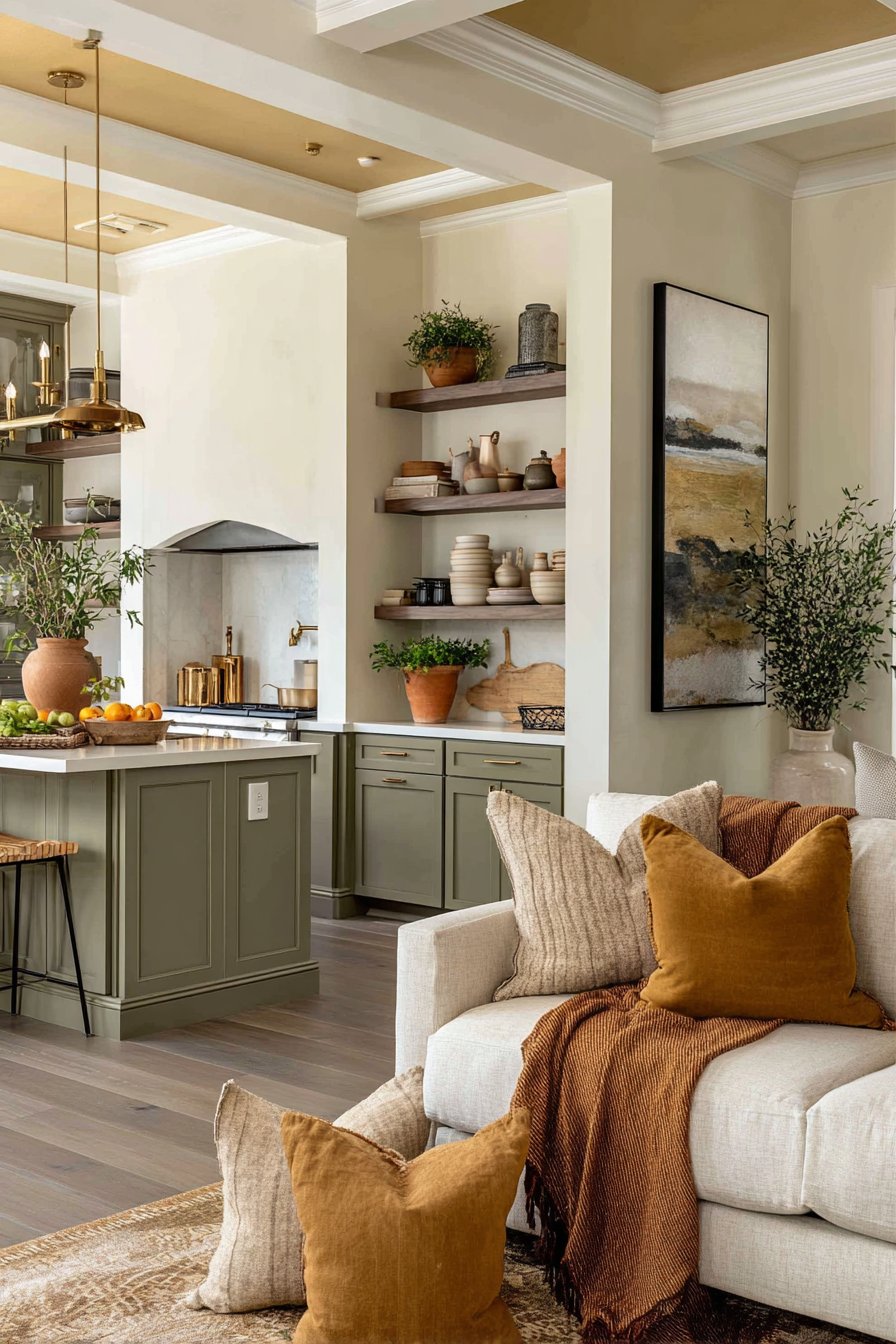
Color psychology significantly influences how cozy spaces feel. Warm hues like cream, soft terracotta, gentle sage, or muted mustard create enveloping atmospheres that welcome and comfort. These earth-toned palettes connect to natural landscapes and traditional homes, triggering subconscious associations with safety and warmth.
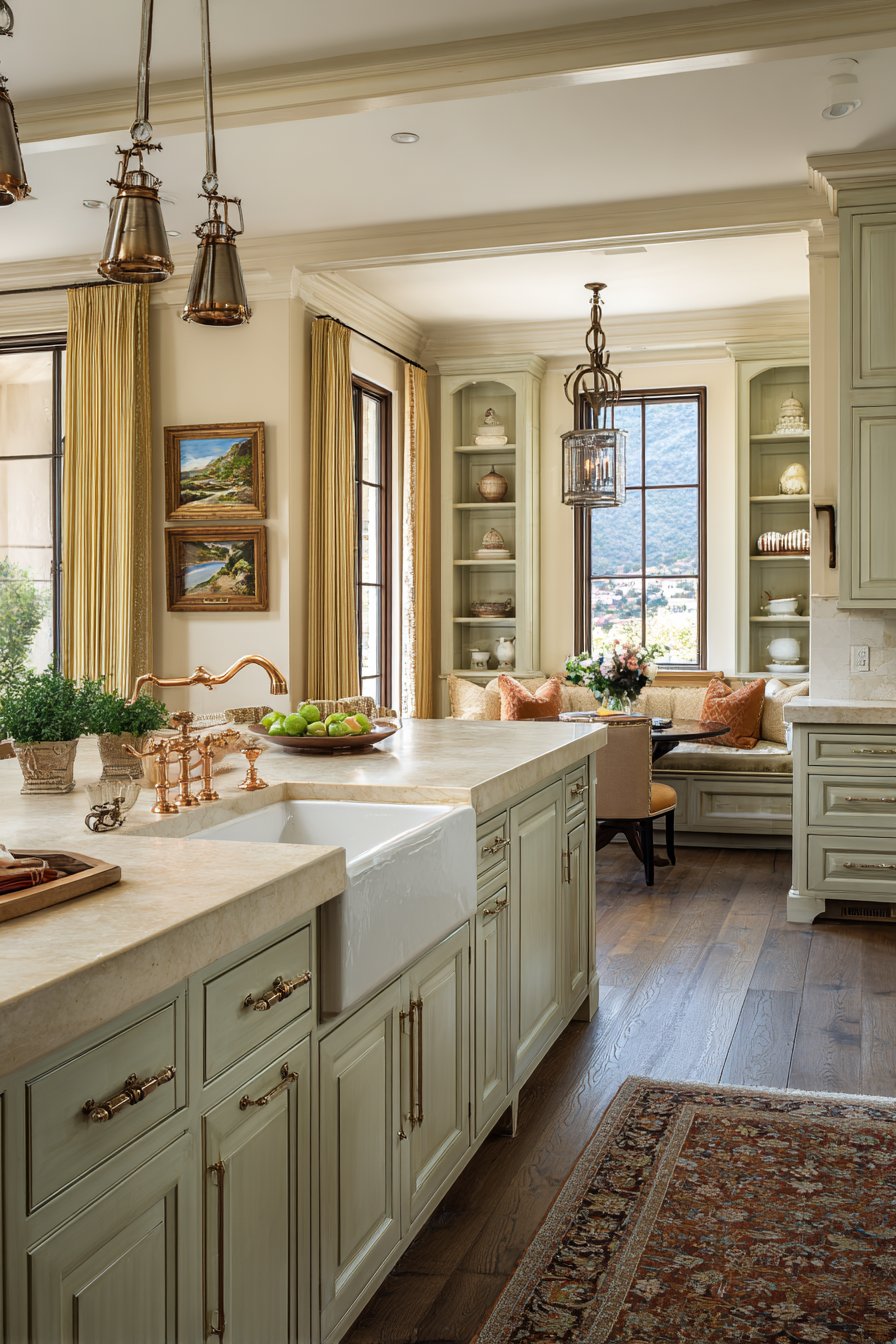
Introduce color through easily changeable elements rather than permanent fixtures if flexibility matters. Painted walls, window treatments, dishware, and decorative accessories allow you to adjust warmth levels seasonally or as tastes evolve. Even predominantly neutral kitchens benefit from warm undertones in whites and grays rather than stark, cool-toned alternatives.
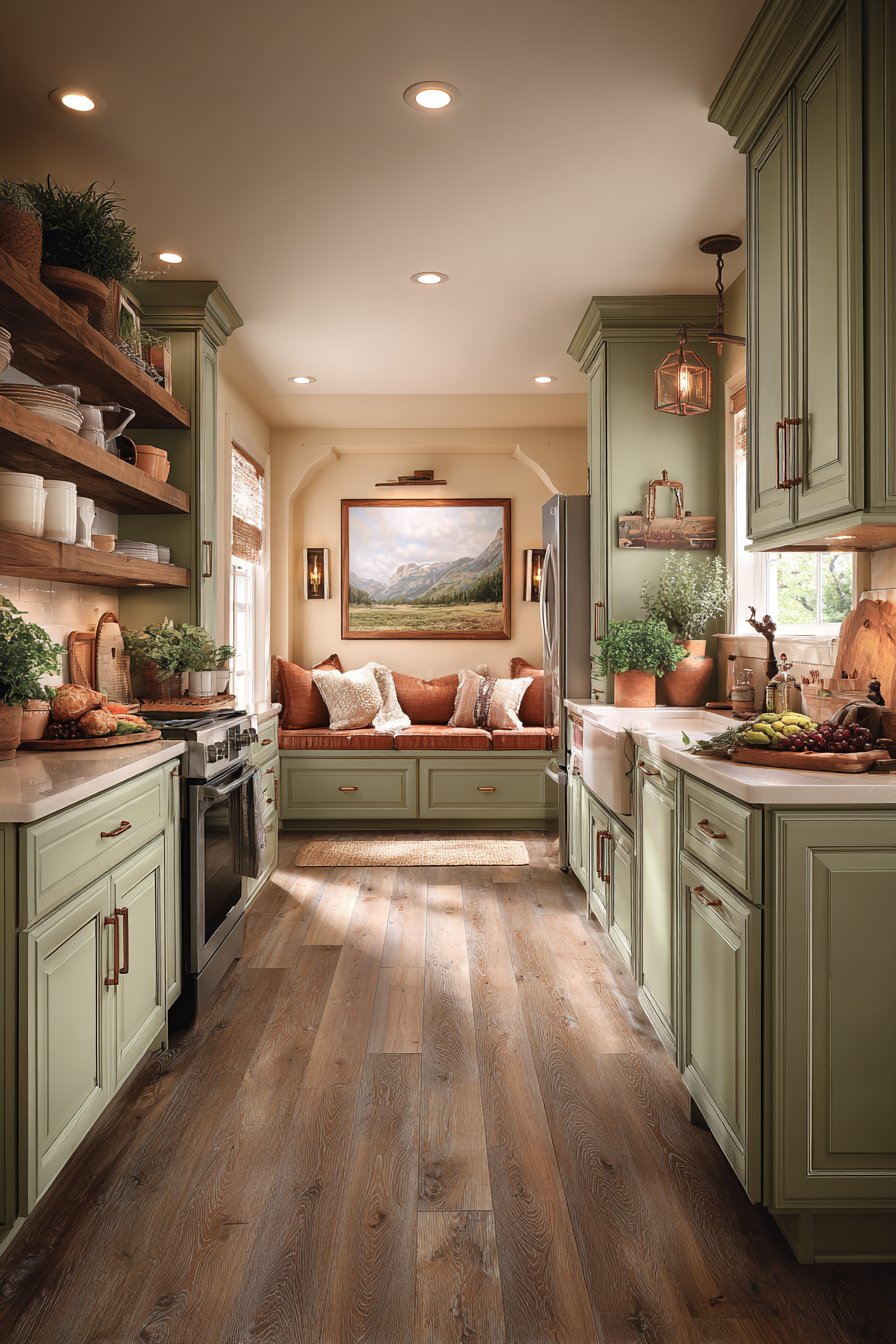
- Paint walls in warm whites with cream or yellow undertones
- Choose cabinetry in soft sage, warm gray, or creamy off-white
- Add warmth through terracotta pots, copper accents, or brass fixtures
- Select warm-toned wood finishes rather than gray or bleached options
- Incorporate textiles in rust, ochre, or cinnamon for accent colors
- Use warm metallic finishes like brass, copper, or bronze throughout
- Display dishes and serving pieces in cream, ivory, or warm earth tones
- Choose artwork featuring warm landscapes or still-life compositions
7. Create Inviting Seating Areas
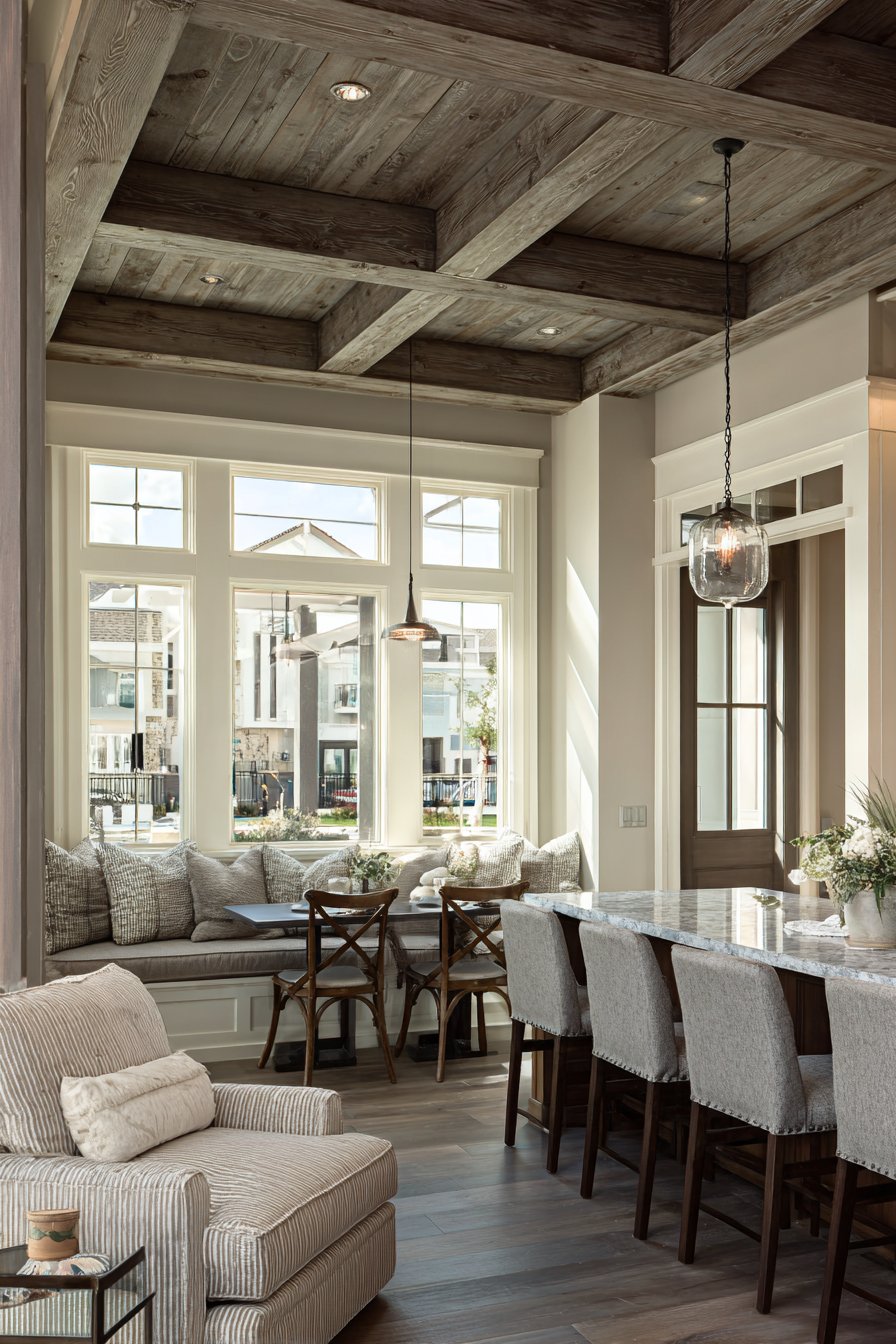
Comfortable seating encourages lingering, transforming kitchens from utilitarian workspaces into social gathering spots. A breakfast nook with cushioned benches, bar stools at the island, or a small bistro table near the window invites family members and guests to settle in for extended conversations. This designated seating signals that people’s presence matters more than pristine counters.
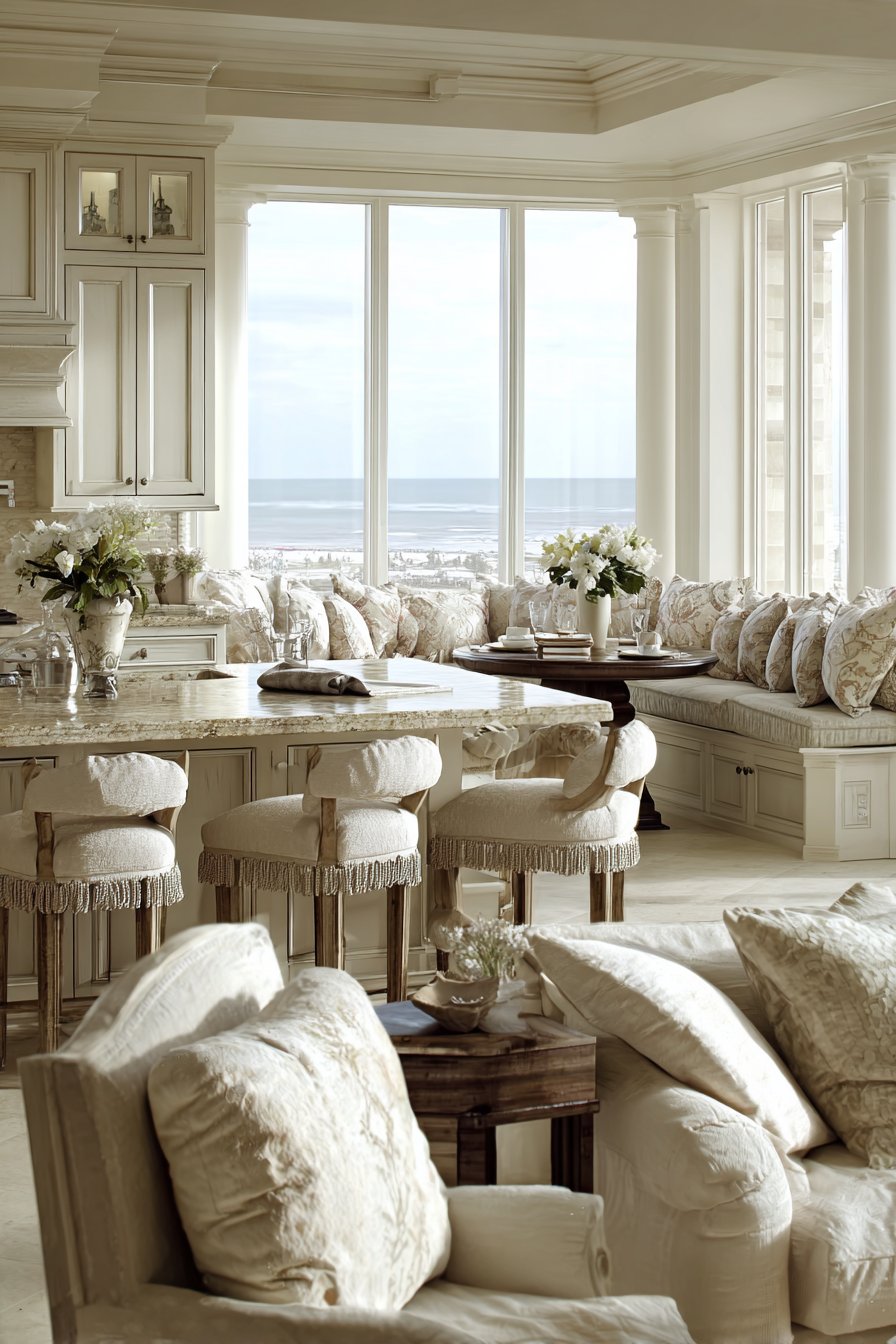
Make seating genuinely comfortable rather than merely decorative. Cushions, supportive backs, and appropriate heights ensure people actually use these spaces rather than perching briefly. Position seating to allow cooks to interact with seated guests, maintaining conversation flow that makes everyone feel included and connected throughout meal preparation.
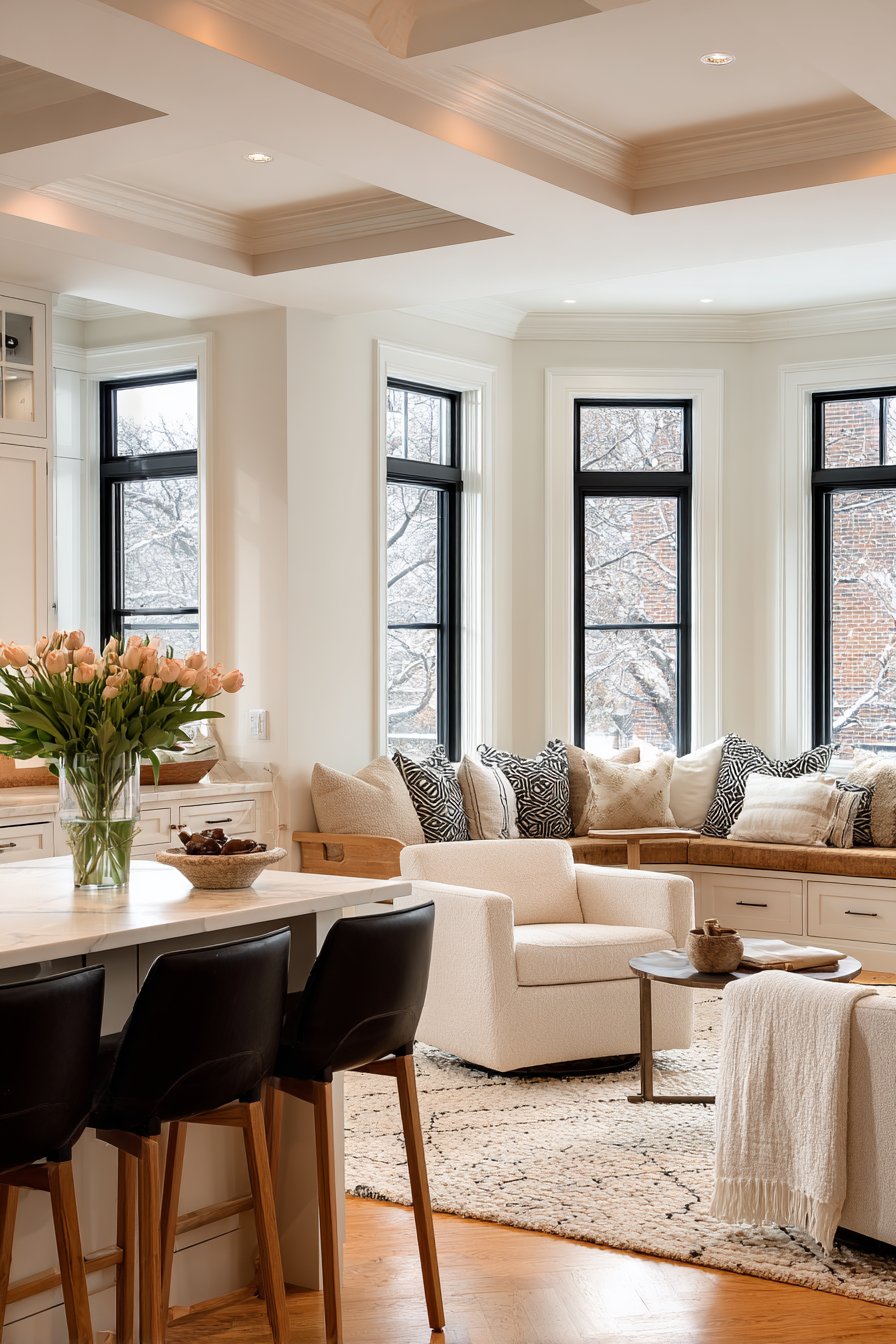
- Add cushioned bar stools with backs to kitchen islands
- Create a breakfast nook with built-in or freestanding benches
- Include a small table with comfortable chairs in available corners
- Place a cozy armchair in larger kitchens for keeping cooks company
- Add cushions to hard seating for improved comfort and softness
- Position seating to facilitate conversation with the cooking area
- Ensure adequate legroom and comfortable seat heights for actual use
- Include a window seat with cushions and throw pillows if space allows
8. Maintain Gentle Background Sounds

Auditory atmosphere affects coziness as profoundly as visual elements. Soft music, the gentle bubbling of simmering pots, or the quiet hum of appliances creates comforting ambient sound that prevents uncomfortable silence while avoiding overwhelming noise. Strategic sound management makes kitchens feel alive and inhabited rather than sterile or chaotic.

Install a quality speaker system or keep a vintage radio for playing music that enhances your kitchen’s mood. Classical, jazz, folk, or acoustic music creates pleasant backgrounds without demanding attention. The rhythmic sounds of chopping, stirring, and mixing become meditative when freed from electronic interruption, though gentle music often enhances the cooking experience.

- Play soft background music at conversational volume levels
- Choose a quality Bluetooth speaker with warm, full sound
- Consider instrumental or acoustic music that doesn’t demand attention
- Include a vintage radio for nostalgic charm and NPR programming
- Embrace the natural sounds of cooking as pleasant ambient noise
- Avoid television or loud media that dominates rather than enhances
- Use sound to mask less pleasant mechanical noises from appliances
- Create playlists that match different times of day or activities
9. Add Aromatic Elements and Pleasant Scents
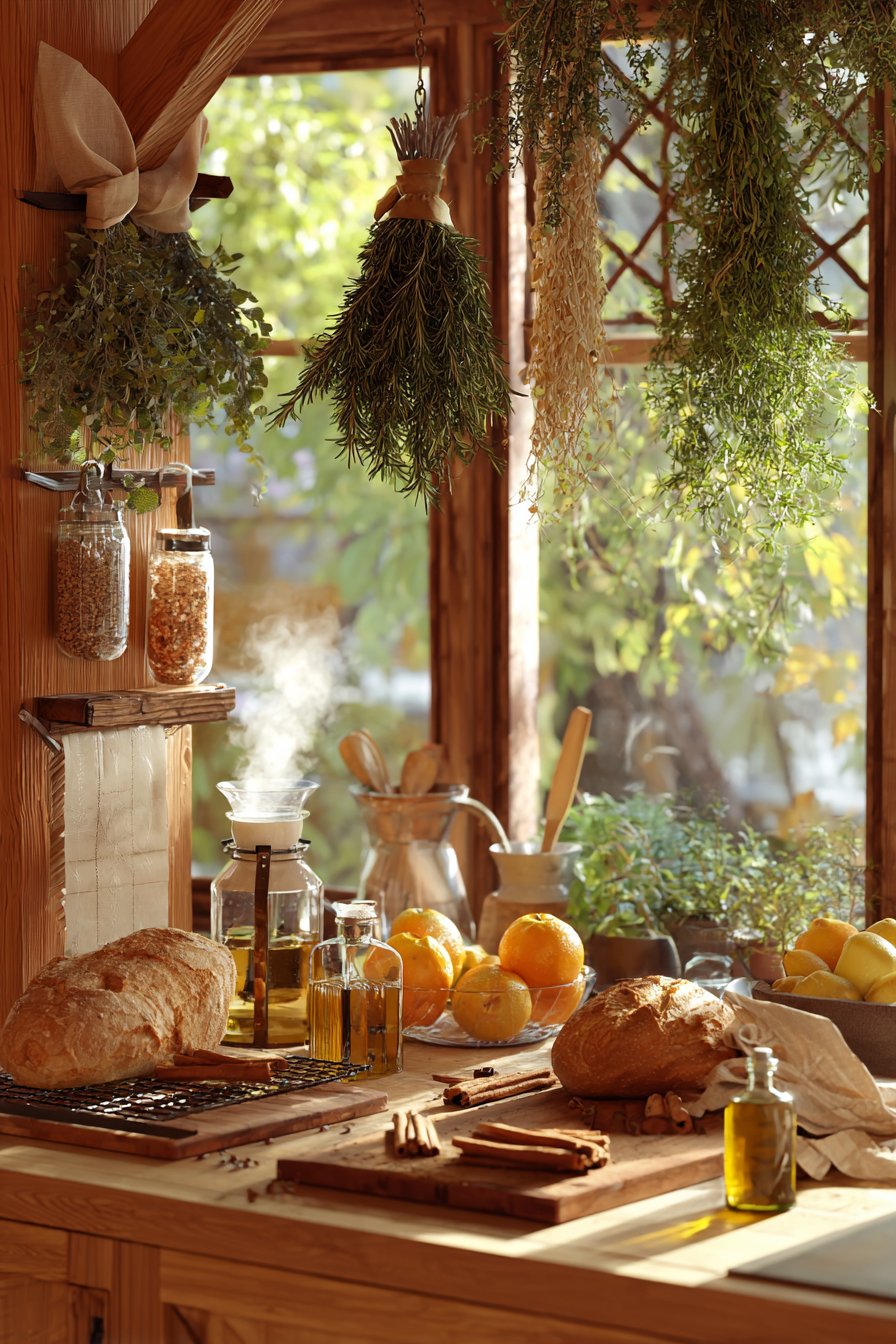
Olfactory experiences trigger powerful emotional responses and memory associations. The aroma of fresh coffee, baking bread, or simmering soup creates instant coziness that welcomes and comforts. Strategic scent management—introducing pleasant aromas while eliminating unpleasant ones—transforms kitchens into sensory sanctuaries that feel nurturing and inviting.
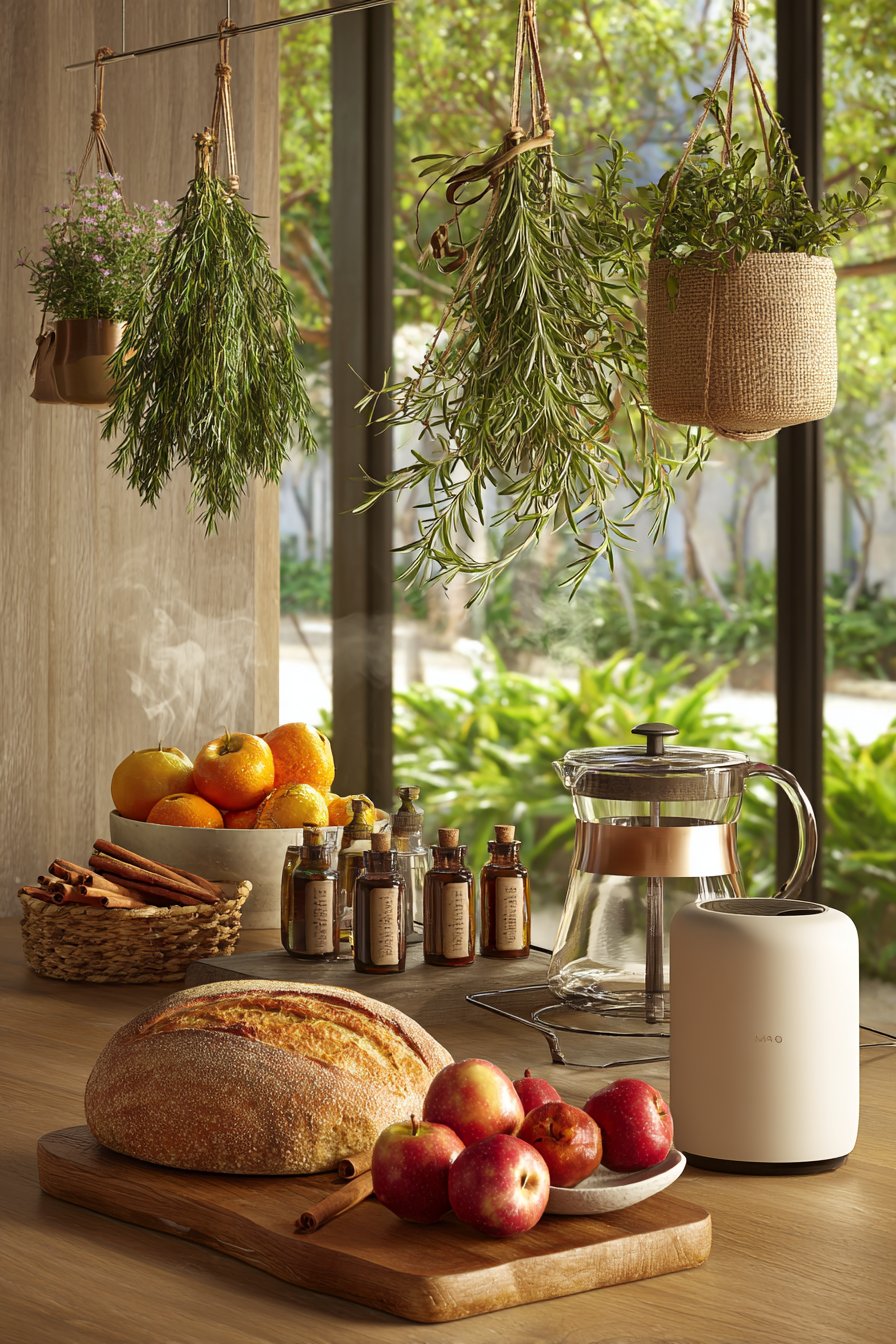
Natural scents work best, avoiding synthetic air fresheners that smell artificial and overwhelming. Fresh herbs, citrus peels, vanilla extract, or cinnamon sticks simmered gently introduce subtle fragrances. The authentic smells of home cooking—garlic sautéing, onions caramelizing, or butter melting—create olfactory signatures that family members associate with home, comfort, and love.
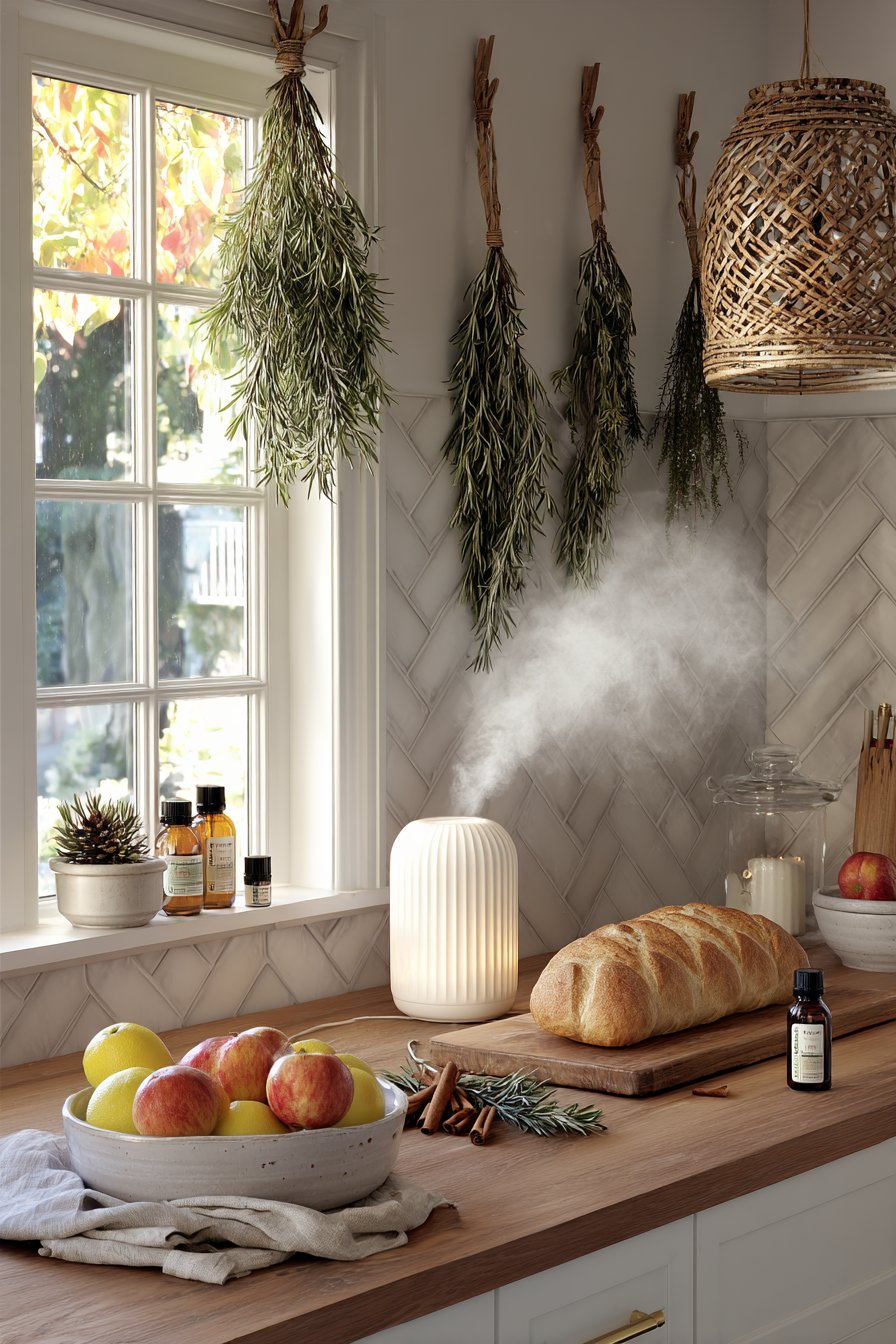
- Keep fresh herbs that release fragrance when brushed or used
- Simmer citrus peels with cinnamon sticks for natural room scent
- Display bowls of seasonal fruit that emit subtle pleasant aromas
- Bake bread or cookies to fill spaces with comforting scents
- Use essential oil diffusers with gentle, natural fragrances sparingly
- Keep vanilla extract or almond extract nearby for occasional scenting
- Open windows regularly to maintain fresh air circulation
- Eliminate cooking odors promptly through proper ventilation rather than masking
10. Maintain Organized but Lived-In Appearance
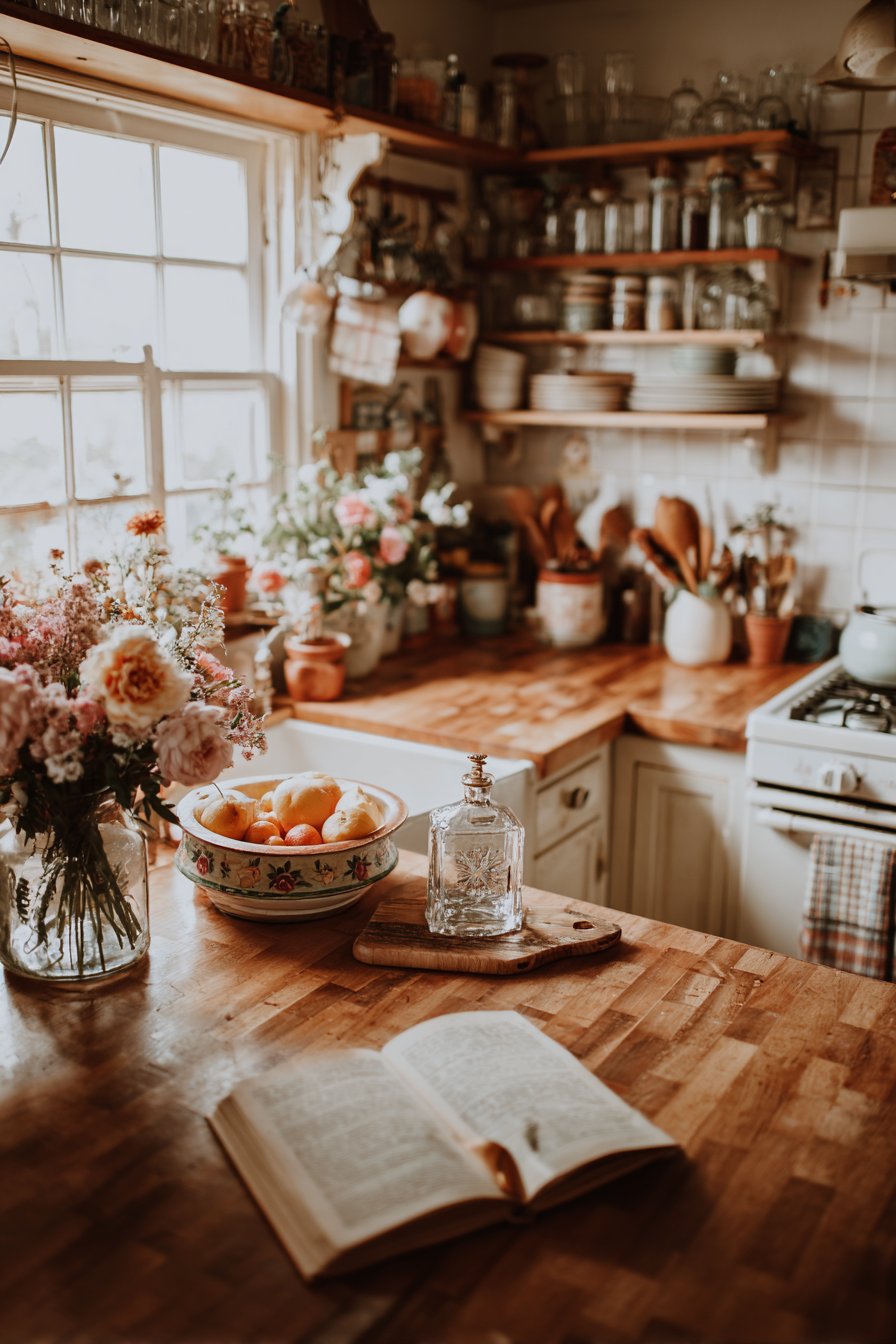
Balanced organization creates coziness by eliminating chaos without achieving sterile perfection. A kitchen that shows evidence of use and life—a cookbook left open to tonight’s recipe, a wooden spoon resting in a crock, fresh ingredients waiting for preparation—feels warm and authentic. This lived-in quality signals that the space serves real people rather than existing as a showroom display.
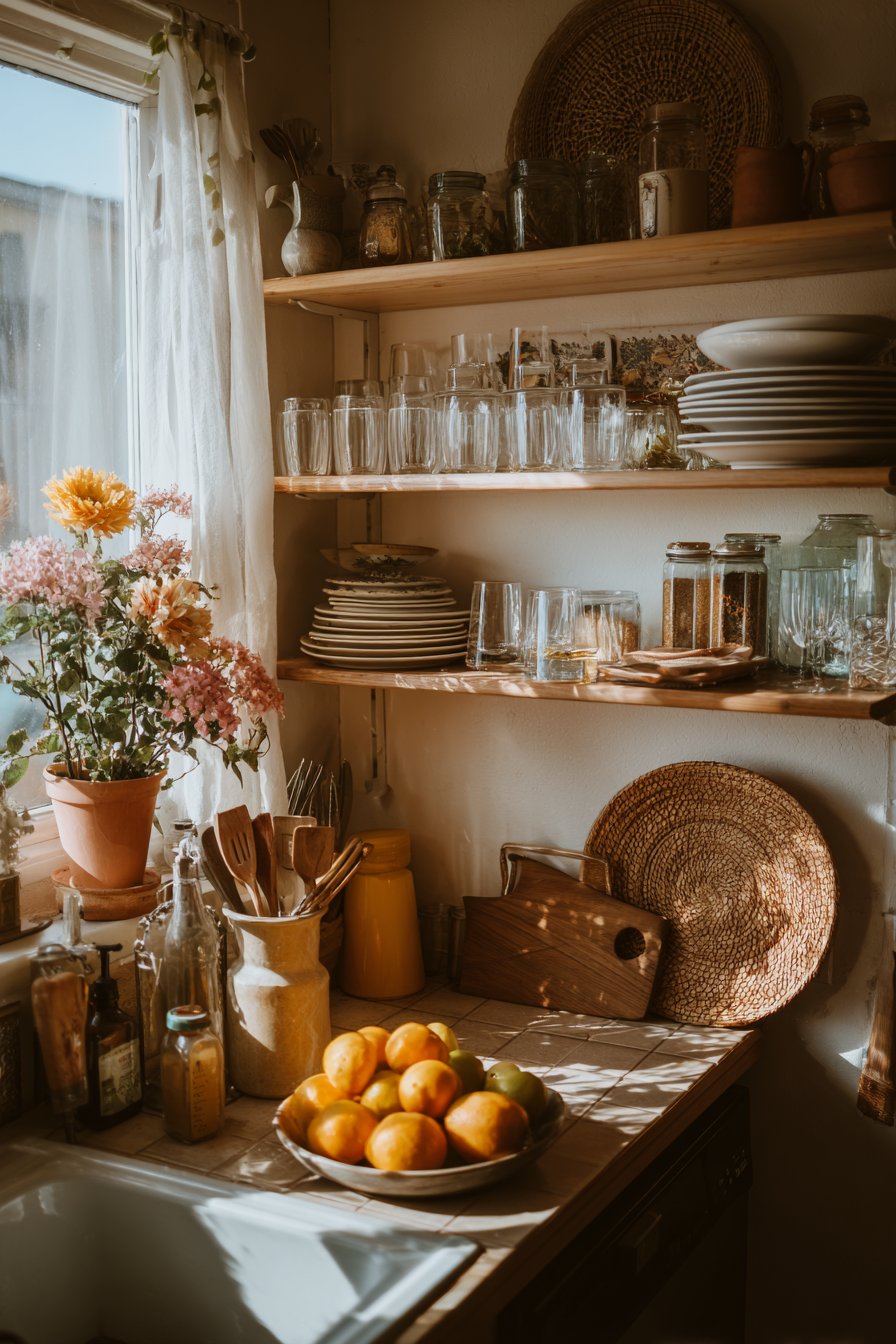
Strategic editing keeps clutter controlled while allowing meaningful items to remain visible. Clear counters of unnecessary appliances but leave beautiful items like fruit bowls, herb pots, or attractive dish soap dispensers. This curated approach to what remains visible ensures your kitchen feels both organized and genuinely inhabited, achieving the sweet spot between magazine-perfect and chaotic.
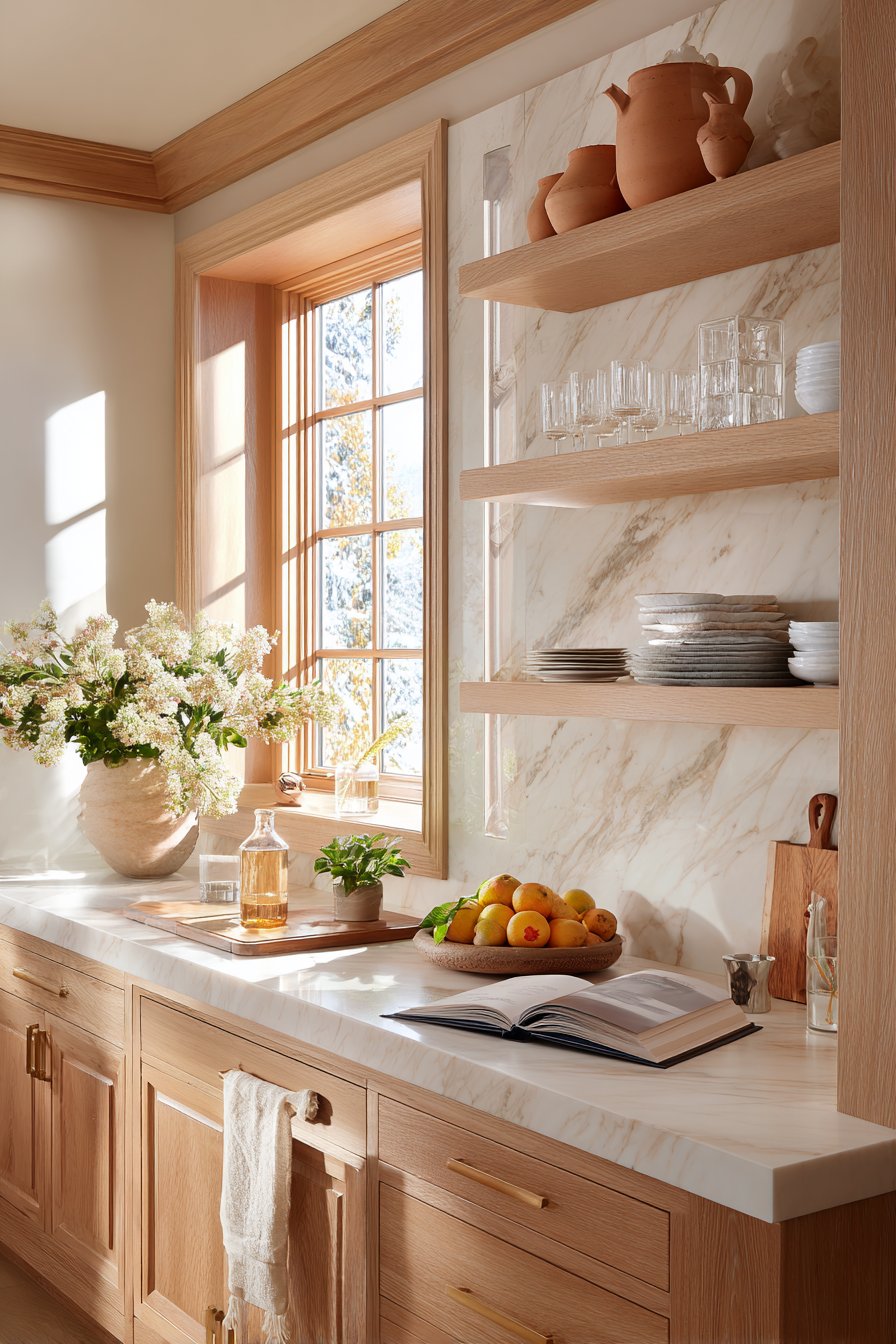
- Keep counters mostly clear but include a few beautiful, useful items
- Leave a cookbook or two visible rather than hidden away
- Display fresh produce in attractive bowls or baskets
- Hang frequently used utensils on hooks rather than in drawers
- Maintain organized but visible storage on open shelves
- Include evidence of current cooking projects without creating clutter
- Edit regularly but resist over-styling into uninhabitable perfection
- Allow small signs of life like fresh flowers or a coffee mug to remain
Conclusion
Creating a cozy kitchen atmosphere represents an ongoing practice rather than a finished project. The ten strategies explored here work synergistically, each element enhancing others to produce spaces that feel genuinely warm and welcoming. From the foundational importance of layered lighting to the finishing touches of pleasant aromas and living plants, these accessible techniques transform kitchens into nurturing sanctuaries that draw people in and encourage them to linger.
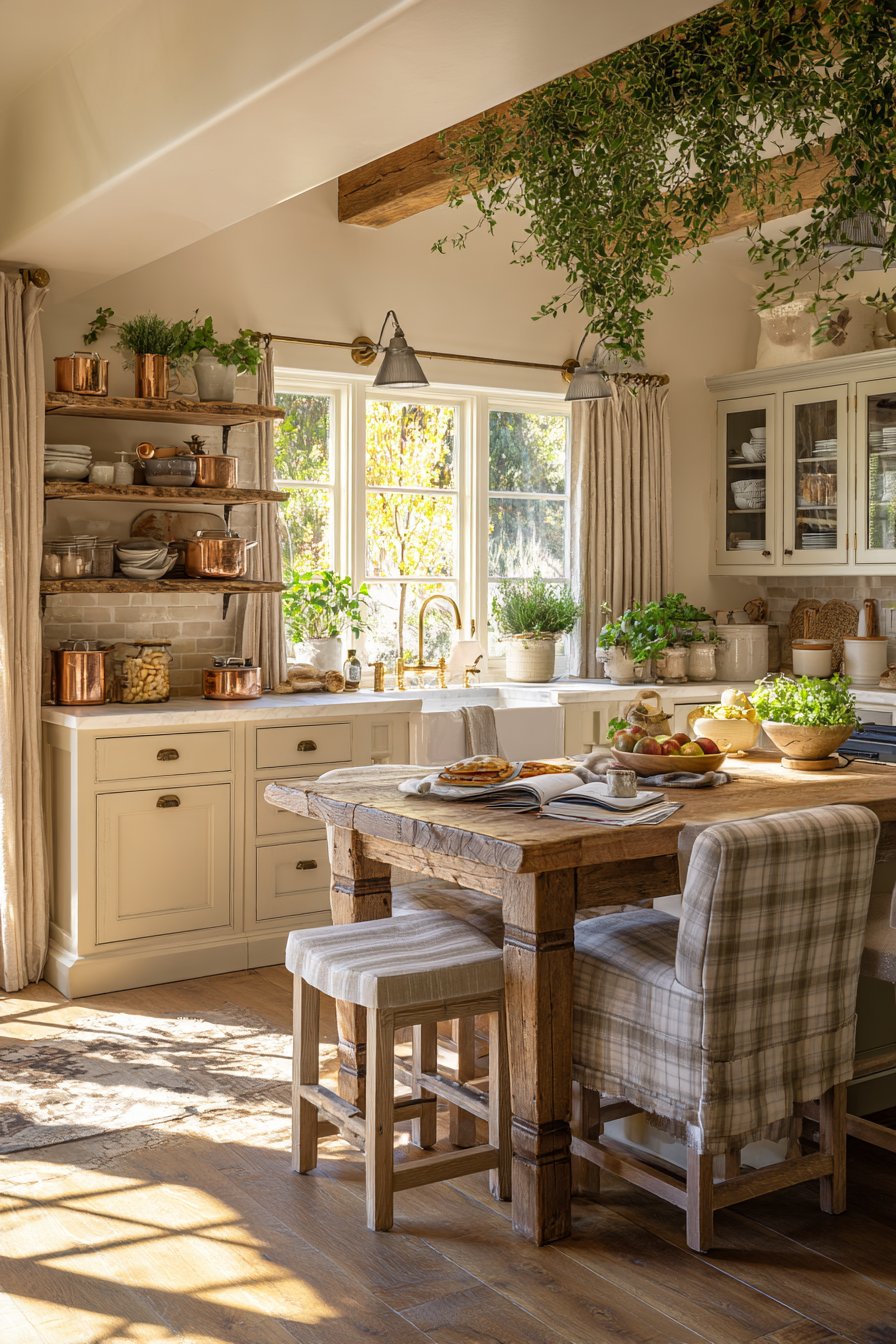
Remember that authentic coziness emerges from personal touches and lived experience rather than perfect execution of design trends. Your kitchen should reflect your family’s rhythms, cherished possessions, and daily rituals. The most inviting kitchens balance beauty with functionality, maintaining enough order to feel peaceful while embracing enough imperfection to feel genuinely inhabited and loved.
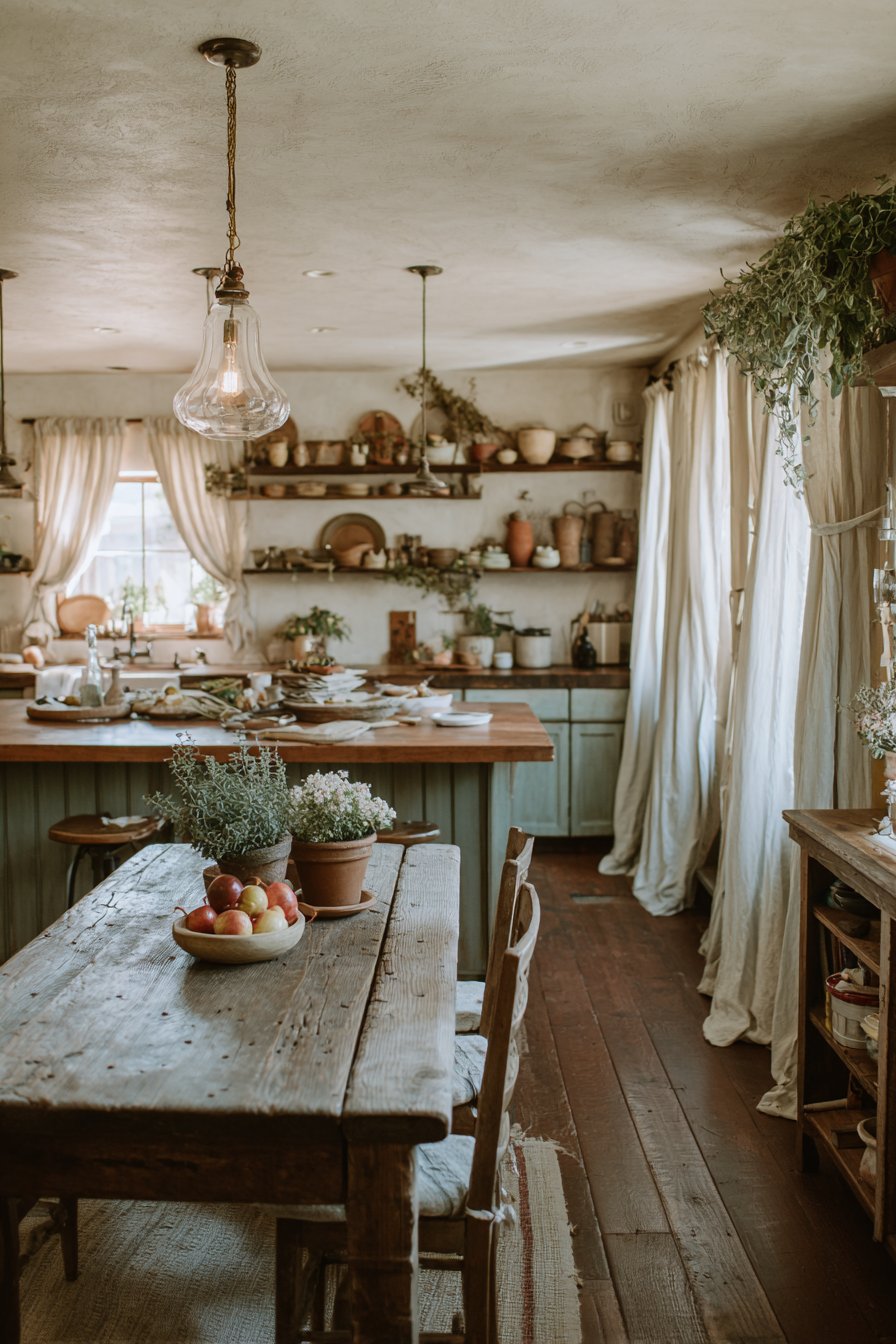
Begin implementing these tips gradually, adding layers over time as you discover what resonates most strongly in your space. Pay attention to which elements make you feel most comfortable and build upon those foundations. A truly cozy kitchen isn’t created in a day but evolves through attention, care, and the accumulation of meaningful moments. By thoughtfully incorporating these principles, you’ll cultivate a kitchen atmosphere that becomes the warm, welcoming heart of your home—a space where cooking becomes pleasure, meals become celebrations, and ordinary days feel a little more special simply by virtue of the environment you’ve created.
"As an Amazon Associate, I earn from qualifying purchases."
