
The colonial dining room represents one of America’s most enduring and beloved interior design styles, embodying a rich heritage that spans centuries of craftsmanship, functionality, and understated elegance. These spaces tell the story of early American life, where dining rooms served as the heart of family gatherings, community meetings, and daily sustenance. The beauty of colonial design lies in its perfect balance of practicality and warmth, creating environments that feel both historically significant and refreshingly livable in today’s modern homes.
Colonial dining rooms are characterized by their emphasis on natural materials, handcrafted furniture, and architectural details that speak to a time when quality and durability were paramount. From the rich patina of aged wood to the soft glow of pewter serving pieces, every element in a colonial dining space has been carefully chosen for both beauty and function. The style celebrates the imperfections that come with handmade craftsmanship, where visible wood grain, tool marks, and natural aging are not flaws to be hidden but features to be celebrated.
In this comprehensive exploration, we’ll journey through twenty distinct colonial dining room concepts, each showcasing different aspects of this timeless style. From intimate family spaces with drop-leaf tables to grand gathering rooms with massive trestle tables, these designs demonstrate the versatility and enduring appeal of colonial aesthetics. Whether you’re drawn to the rustic charm of reclaimed wood or the refined elegance of cherry and walnut pieces, colonial dining rooms offer inspiration for creating spaces that honor the past while serving contemporary lifestyles.
1. Traditional Farmhouse Colonial Elegance
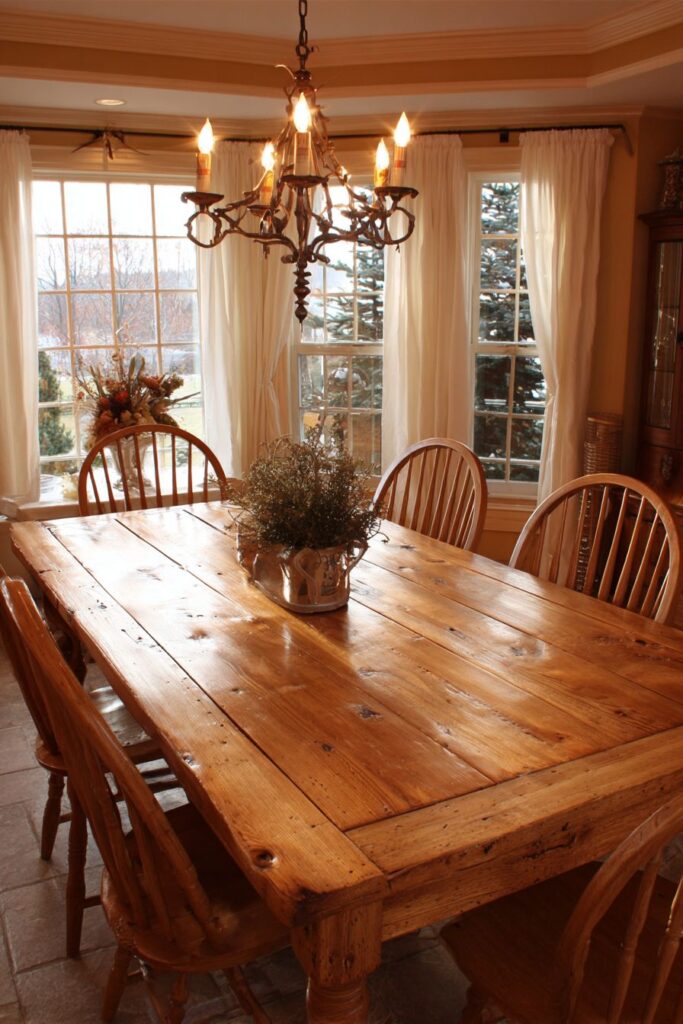
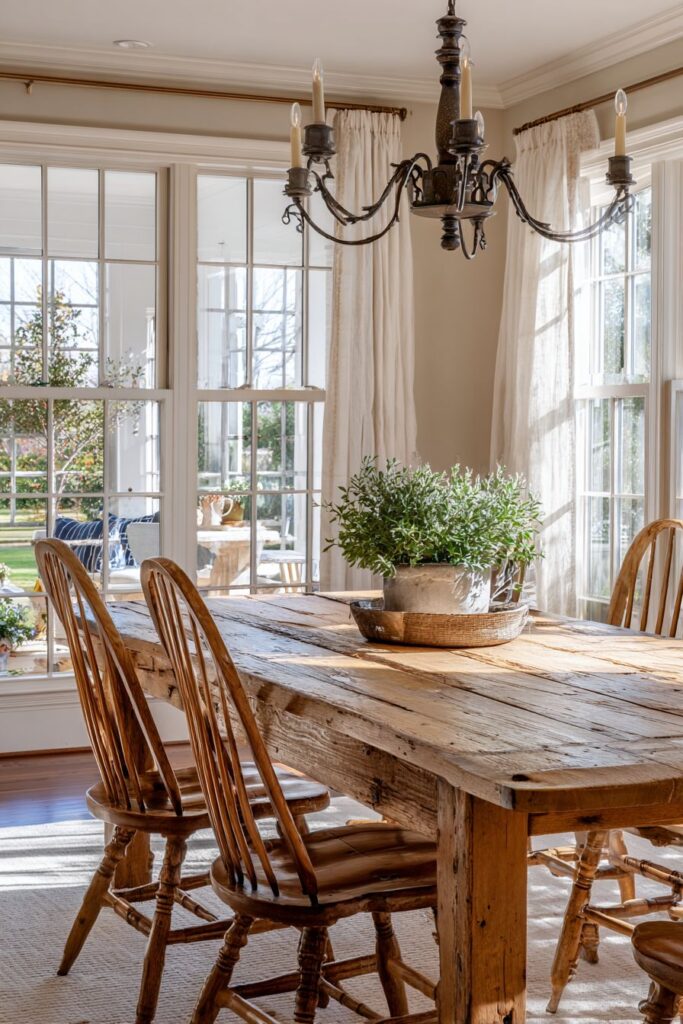
Step into a dining room where authenticity meets livability, featuring a magnificent solid oak farmhouse table that serves as the room’s commanding centerpiece. The table’s surface tells stories through its visible wood grain and natural imperfections, each mark and variation adding character that cannot be manufactured or replicated. Surrounding this focal point are authentic Windsor chairs with their distinctive spindle backs, each one slightly different from the next, reflecting the handcrafted nature of colonial furniture making.

The architectural details in this space exemplify classic colonial design principles, with crown molding adding sophistication along the ceiling line while chair rail wainscoting painted in warm cream tones provides visual interest and historical accuracy. These elements work together to create the layered look that defines colonial interiors, where each component serves both aesthetic and practical purposes. The cream paint color chosen for the wainscoting reflects the colonial preference for soft, natural hues that complement rather than compete with the rich wood tones.
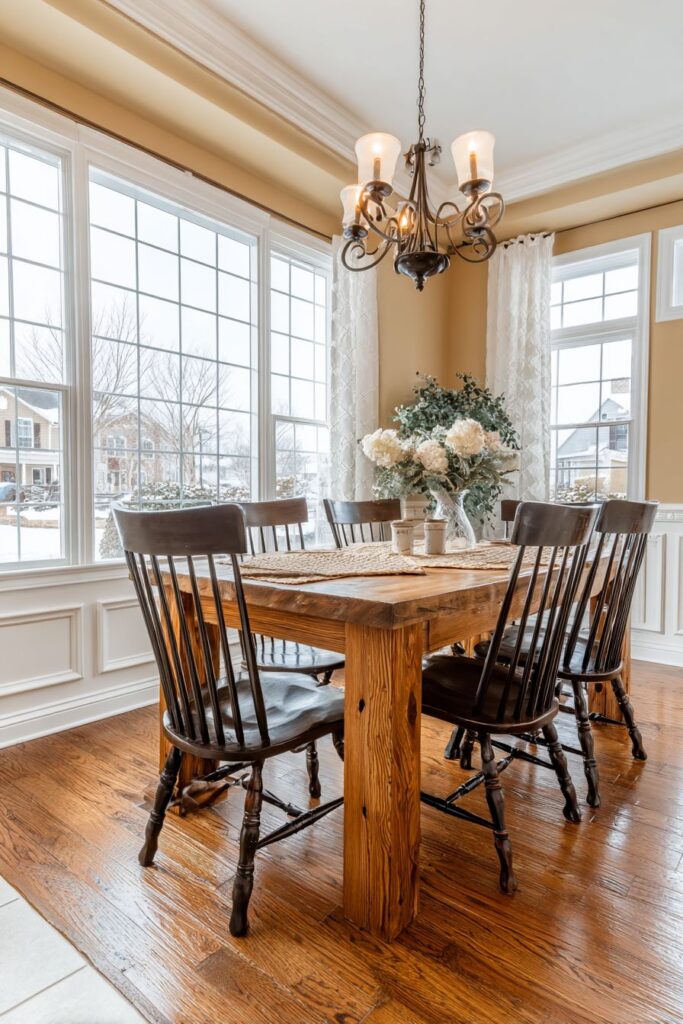
Natural light floods the space through multi-pane windows dressed with simple white curtains, allowing the beauty of the oak table and Windsor chairs to take center stage. The pewter chandelier suspended above the dining table provides both illumination and historical authenticity, its candle-style lights casting the kind of warm, flickering glow that would have been familiar to colonial families. This lighting choice reinforces the connection to the past while providing adequate illumination for modern dining needs.
Key Design Tips:
- Choose furniture with visible wood grain and natural imperfections to enhance authenticity
- Incorporate architectural details like crown molding and wainscoting for historical accuracy
- Use cream and warm white paint colors to complement natural wood tones
- Select multi-pane windows with simple treatments to maximize natural light
- Install pewter or wrought iron lighting fixtures for period-appropriate illumination
2. Corner Cupboard Display Colonial Charm

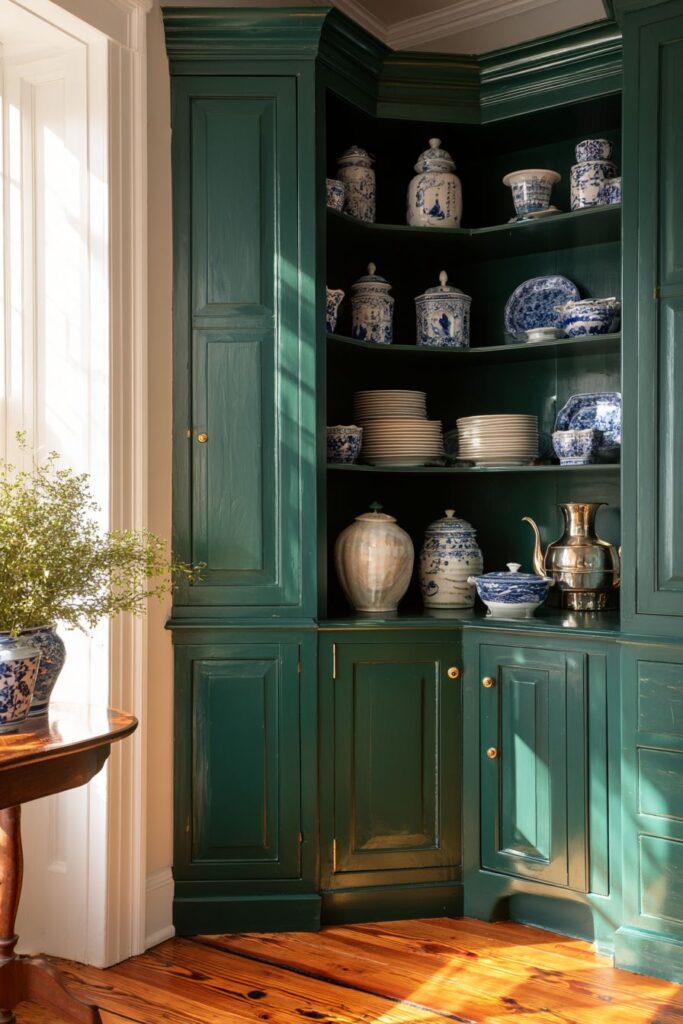
A built-in corner cupboard becomes the star of this colonial dining space, showcasing the period’s dedication to both beauty and functionality. The cupboard’s traditional raised panel doors, painted in deep forest green, demonstrate the colonial love affair with rich, earthy colors that connect interior spaces to the natural world outside. Brass hardware adds the perfect finishing touch, its warm tones complementing both the green paint and the natural wood elements throughout the room.
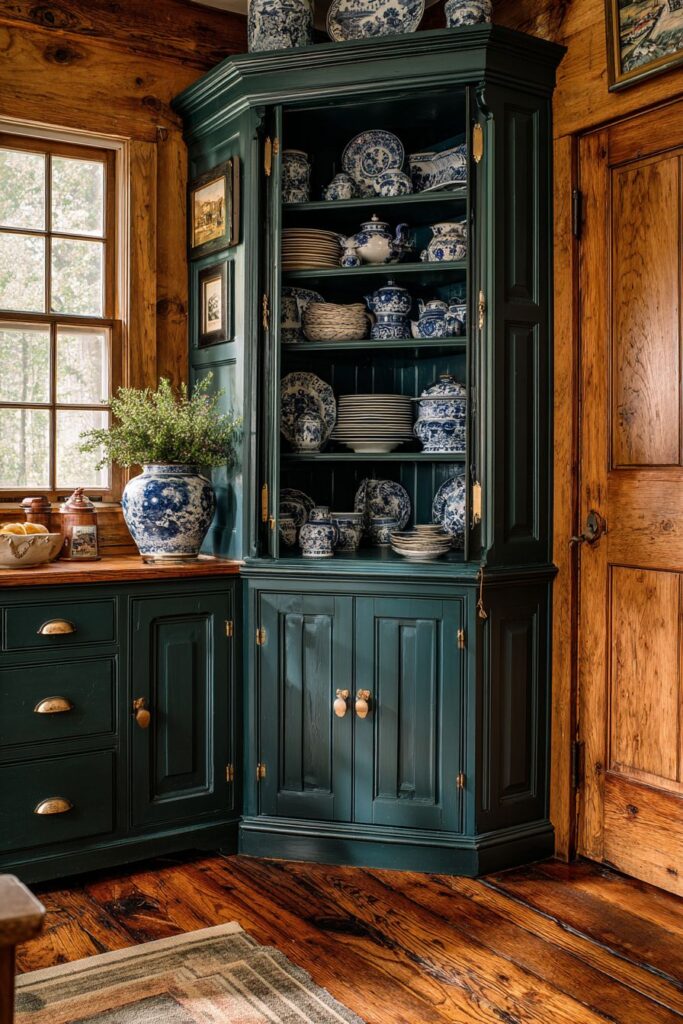
The cupboard’s contents tell the story of colonial dining traditions, with authentic blue and white transferware china creating visual interest through pattern and color. Pewter serving pieces reflect light beautifully, their soft metallic surfaces adding luminosity to the display while maintaining the authentic colonial material palette. This careful curation of display items demonstrates how colonial homeowners took pride in their possessions, using everyday objects as decorative elements that enhanced the room’s overall aesthetic.
Wide-plank pine flooring grounds the space with its warm honey tones and natural wear patterns that speak to decades of family life. The flooring’s imperfections and variations in color and grain are not defects but rather evidence of the authentic aging process that gives colonial interiors their distinctive character. The interplay between the rich green of the cupboard, the warm wood tones of the flooring, and the blue and white china creates a color palette that feels both historically accurate and timelessly appealing.
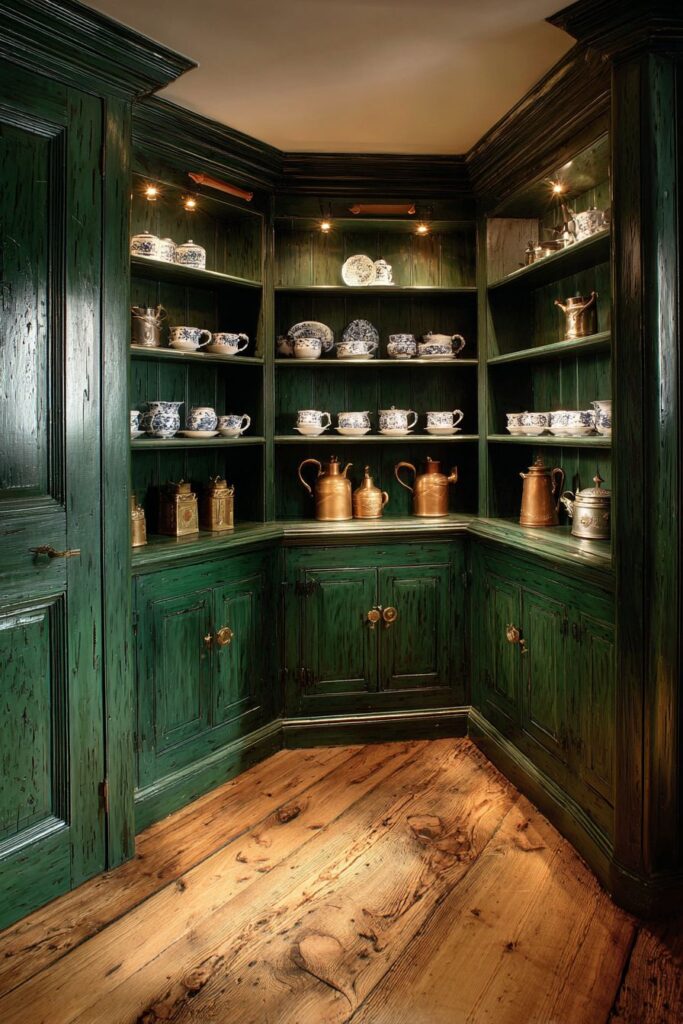
The lighting in this space has been carefully considered to highlight the textural details that make colonial design so compelling. Soft natural illumination emphasizes the wood grain variations, the reflective surfaces of the pewter pieces, and the intricate patterns of the transferware china. This attention to lighting demonstrates how proper illumination can transform functional storage into a beautiful focal point that enhances the entire dining experience.
Key Design Tips:
- Paint built-in storage in deep, earthy colors like forest green or barn red
- Display authentic colonial materials like pewter, transferware, and wooden pieces
- Choose brass hardware with natural patina for authentic period appeal
- Embrace wide-plank flooring with natural wear patterns and honey tones
- Use soft natural lighting to highlight textures and reflective surfaces
3. Reclaimed Chestnut Wood Dining Heritage
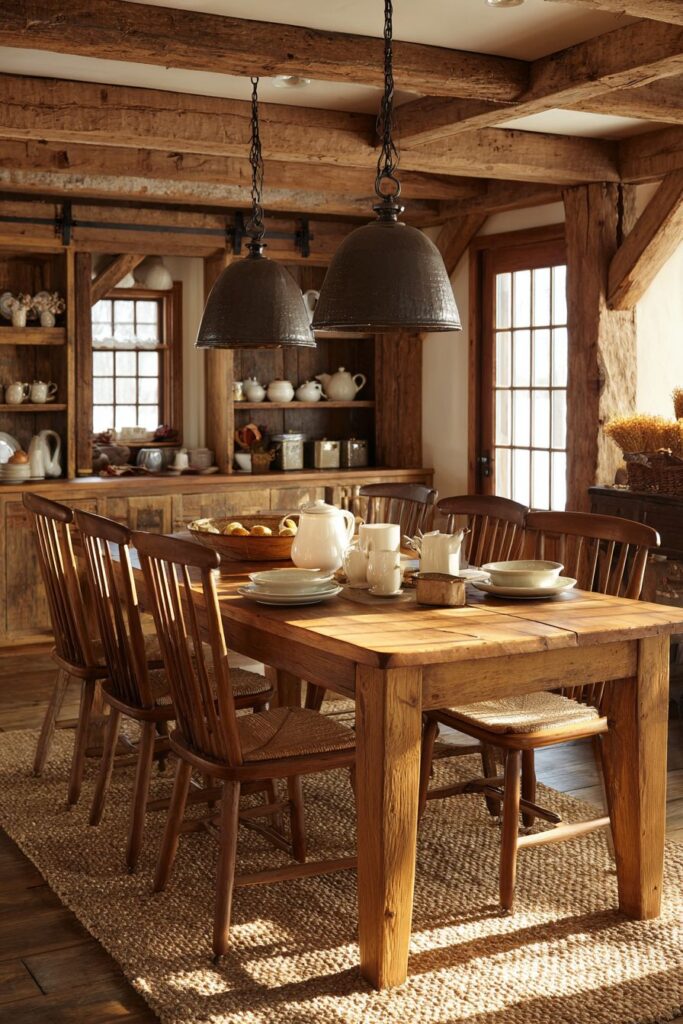
The centerpiece of this colonial dining room is a magnificent rectangular table crafted from reclaimed chestnut wood, its surface bearing the noble scars of time in the form of natural knots and aged patina. This choice of reclaimed wood speaks to both environmental consciousness and historical authenticity, as chestnut was a favored material among colonial craftsmen before disease decimated American chestnut forests. The table’s surface tells countless stories through its weathered appearance, creating a dining surface that is both functional and deeply meaningful.
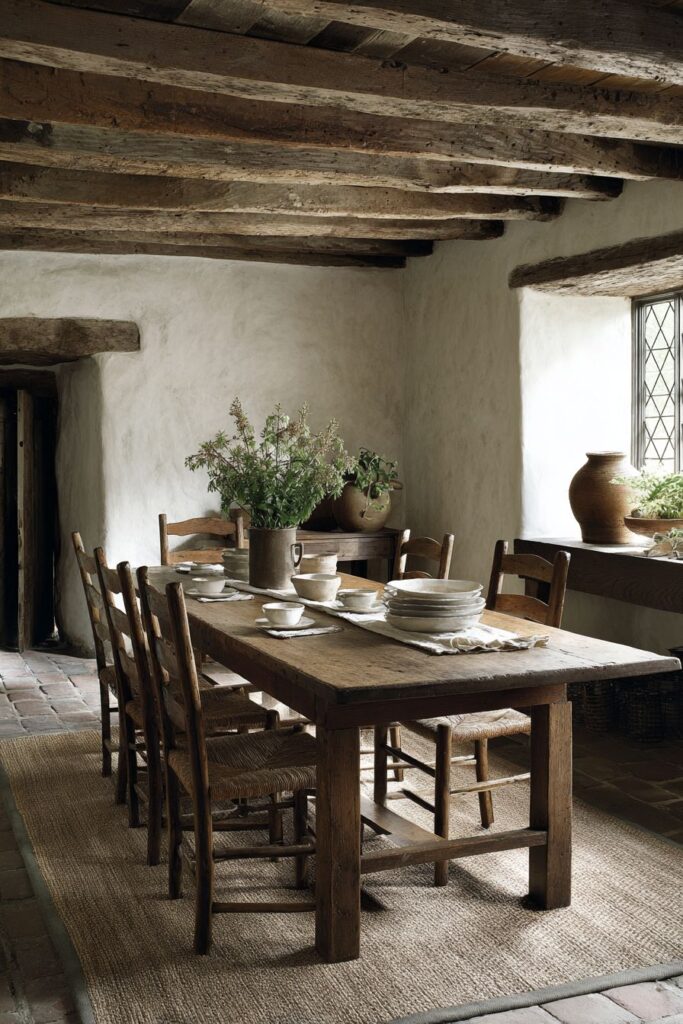
Six ladder-back chairs with traditional rush seats provide seating that perfectly embodies colonial design principles of simplicity and durability. The rush seats, woven from natural materials, offer comfort while maintaining the authentic colonial aesthetic that values natural materials over synthetic alternatives. Each chair shows slight variations in construction and aging, reflecting the handmade quality that makes colonial furniture so appealing to modern homeowners seeking authenticity in their living spaces.
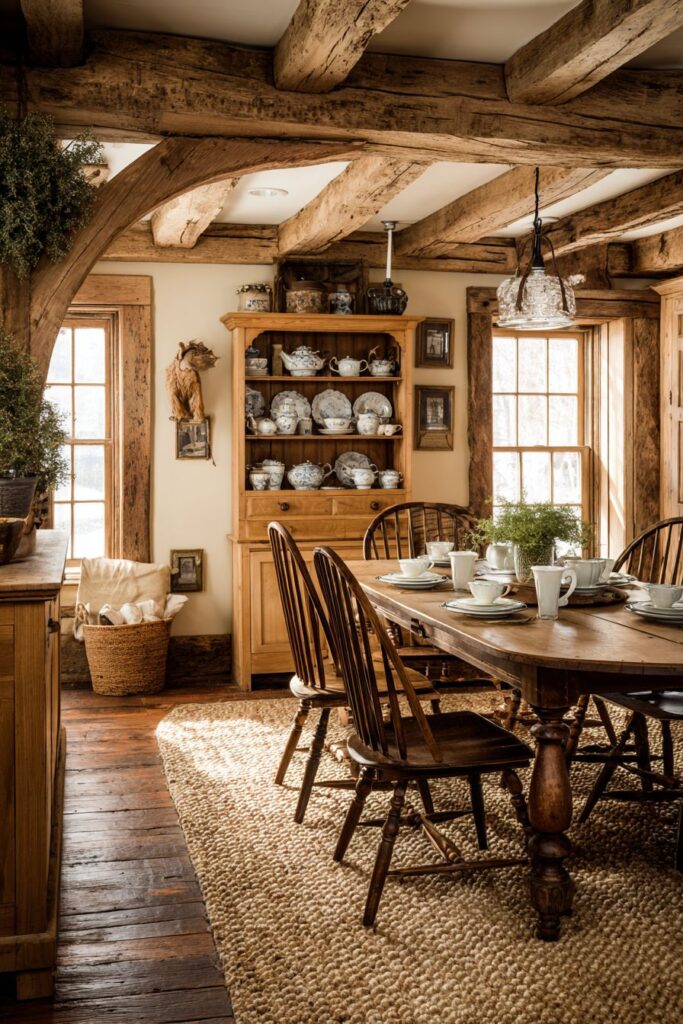
The table setting embraces colonial simplicity with white ironstone dishes and natural linen napkins that allow the beauty of the wood table to remain the focal point. This restraint in table decoration reflects colonial values of practicality and understated elegance, where the natural beauty of materials takes precedence over elaborate ornamentation. The white ironstone dishes provide a clean, crisp contrast to the rich wood tones while maintaining period authenticity.
A large braided rug in earth tones anchors the seating area, its handmade construction and natural color palette perfectly complementing the reclaimed chestnut table. Above, exposed ceiling beams add architectural interest and historical authenticity, their natural wood finish and hand-hewn appearance creating a sense of structural honesty that characterizes the best colonial interiors. Golden hour lighting transforms this space into a warm, inviting environment where the handcrafted quality of each piece is celebrated and highlighted.

Key Design Tips:
- Select reclaimed wood furniture to add historical significance and environmental consciousness
- Choose rush-seat chairs for authentic colonial comfort and natural material appeal
- Use white ironstone dishes and natural linens for simple, elegant table settings
- Incorporate braided rugs in earth tones to anchor seating areas
- Expose ceiling beams to add architectural interest and structural honesty
4. Classic Hutch Colonial Storage Solutions
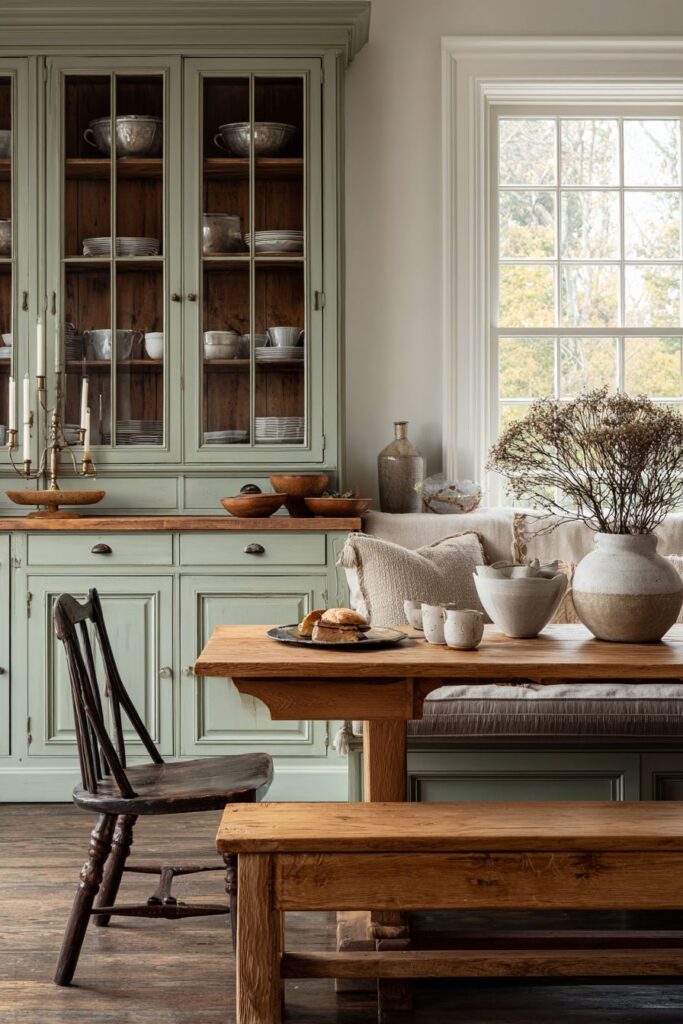
This colonial dining room showcases the perfect marriage of form and function through a classic hutch that demonstrates the colonial commitment to practical beauty. The glass-front upper cabinets create an elegant display case for collections of pewter plates and wooden bowls, transforming everyday dining items into decorative elements that enhance the room’s authentic colonial character. The transparency of the glass allows the beautiful forms and patina of the pewter pieces to become part of the room’s overall aesthetic while keeping them protected and easily accessible.
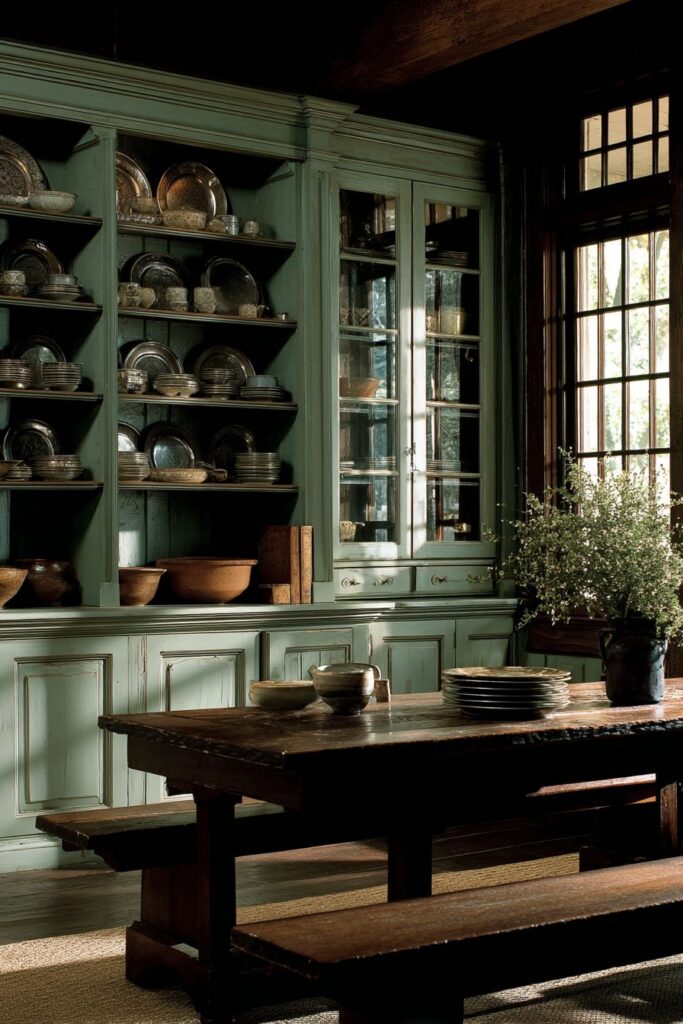
The lower cabinet portion of the hutch features traditional raised panel doors painted in sage green milk paint, a color choice that reflects colonial preferences for muted, natural hues derived from the landscape. Milk paint, with its flat finish and subtle color variations, provides the authentic appearance that modern paints often cannot achieve. The raised panel construction demonstrates the colonial craftsman’s attention to detail and commitment to creating furniture that was both beautiful and built to last for generations.

A simple wooden bench serves multiple purposes in this thoughtfully designed space, providing additional seating when needed while maintaining the clean, uncluttered aesthetic that characterizes the best colonial interiors. The bench’s simple construction and natural wood finish complement the hutch perfectly, demonstrating how colonial furniture makers understood the importance of creating pieces that worked harmoniously together rather than competing for attention.
Natural lighting from nearby windows illuminates the varied textures of wood, glass, and metal throughout the space, creating a dynamic interplay of light and shadow that brings the colonial pieces to life. The careful positioning of the hutch to take advantage of this natural illumination demonstrates the colonial understanding of how proper lighting could enhance both the functionality and beauty of their carefully crafted furniture pieces.

Key Design Tips:
- Use glass-front cabinets to display colonial collectibles while keeping them protected
- Choose milk paint in sage green or other muted natural colors for authentic appeal
- Incorporate simple wooden benches for flexible seating and authentic colonial style
- Position furniture to take advantage of natural light for optimal display
- Mix textures of wood, glass, and metal to create visual interest and authenticity
5. Compact Colonial Space Maximization
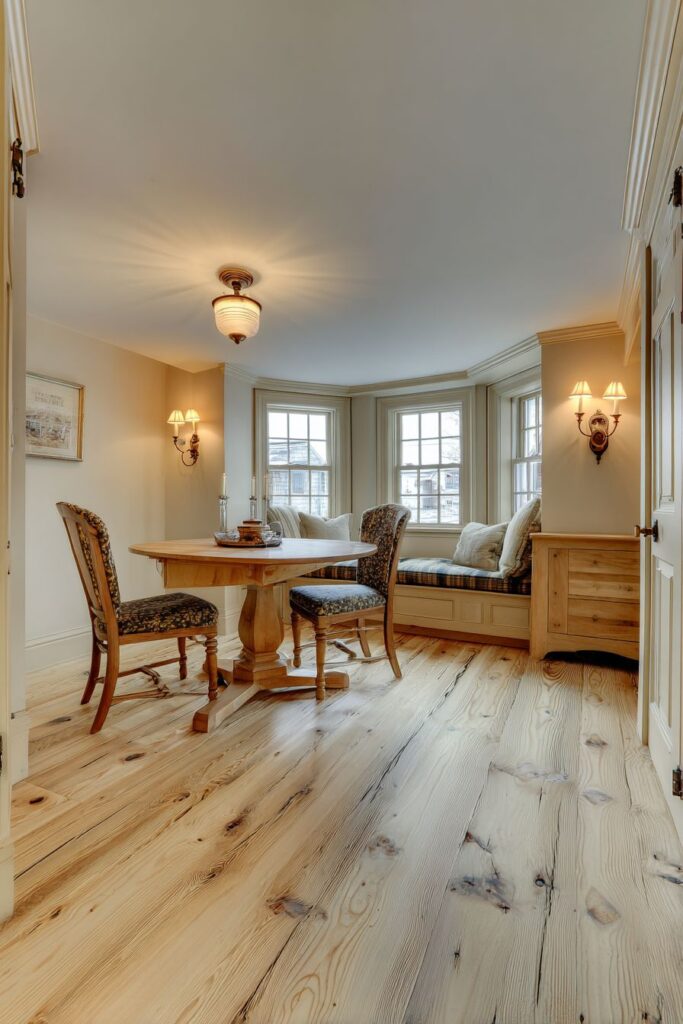
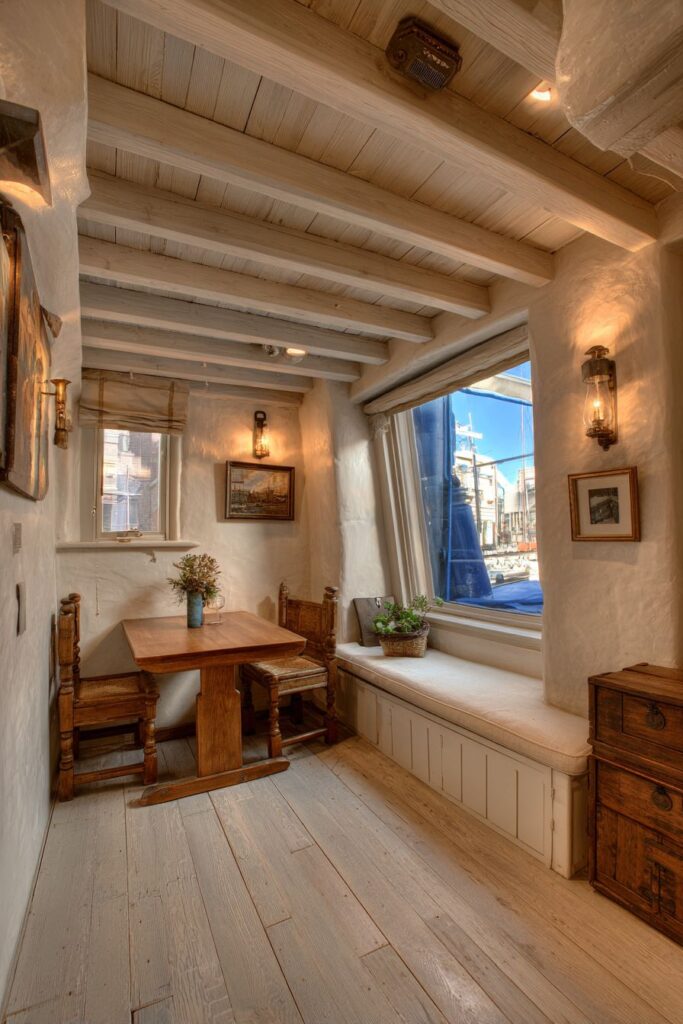
Small spaces present unique opportunities for colonial design, and this intimate dining room demonstrates how authentic colonial style can be adapted to work beautifully in compact areas. The drop-leaf table in warm maple wood serves as both a space-saving solution and a testament to colonial ingenuity, expanding when needed for family gatherings while maintaining a minimal footprint during everyday use. This type of adaptable furniture reflects the colonial understanding that homes needed to serve multiple functions efficiently.

Two captain’s chairs with carved details provide seating that combines comfort with authentic colonial styling, their solid construction and thoughtful proportions making them perfect for smaller spaces where every piece must earn its place. The carved details on these chairs demonstrate the colonial craftsman’s ability to add beauty even to highly functional pieces, proving that practicality and aesthetics could coexist harmoniously in well-designed furniture.
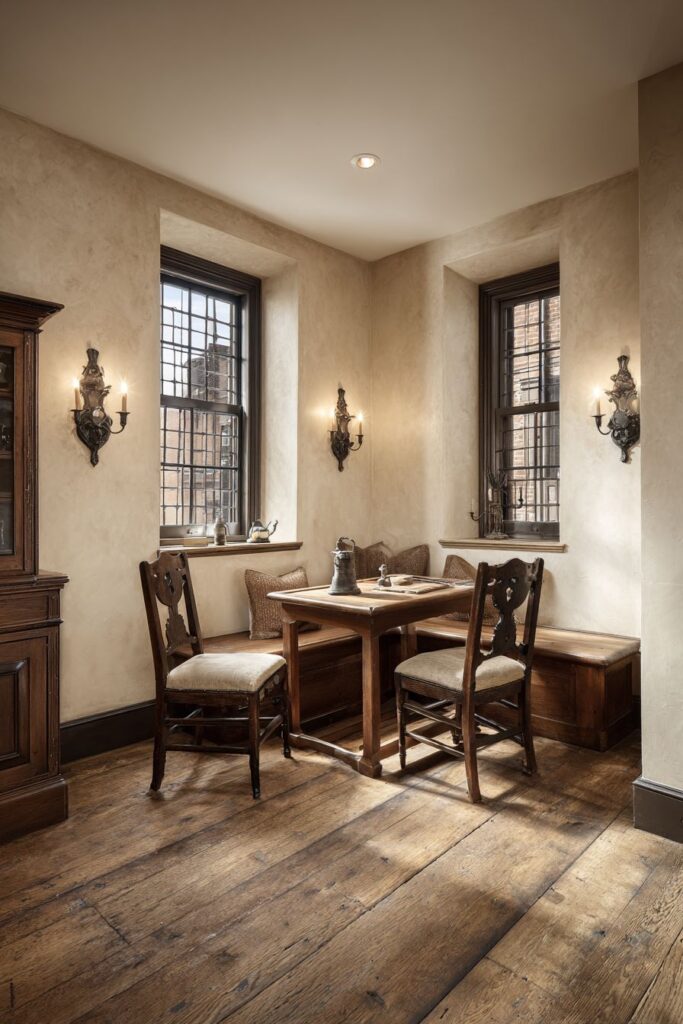
A wooden settle with storage beneath exemplifies colonial multifunctionality, providing flexible seating options while offering concealed storage for dining linens, serving pieces, or seasonal items. This piece represents the colonial approach to furniture design, where every item needed to serve multiple purposes to make the most of limited living space. The settle’s high back also provides comfort and protection from drafts, another practical consideration that colonial furniture makers incorporated into their designs.
Colonial-style pewter sconces mounted on the walls provide ambient lighting without taking up valuable floor or table space, their warm glow creating an intimate atmosphere perfect for small family gatherings. The choice of pewter for the lighting fixtures maintains material authenticity while providing practical illumination that enhances the warm maple wood and natural plaster walls. Wide-plank flooring with natural color variations adds visual interest to the compact space while maintaining the authentic colonial aesthetic.
Key Design Tips:
- Choose drop-leaf tables for space-saving flexibility in small colonial dining areas
- Select captain’s chairs with carved details to add interest without overwhelming compact spaces
- Incorporate storage benches or settles to maximize functionality in limited square footage
- Use wall-mounted pewter sconces to provide lighting without using floor space
- Install wide-plank flooring to create visual expansion in smaller rooms
6. Large Trestle Table Colonial Gathering
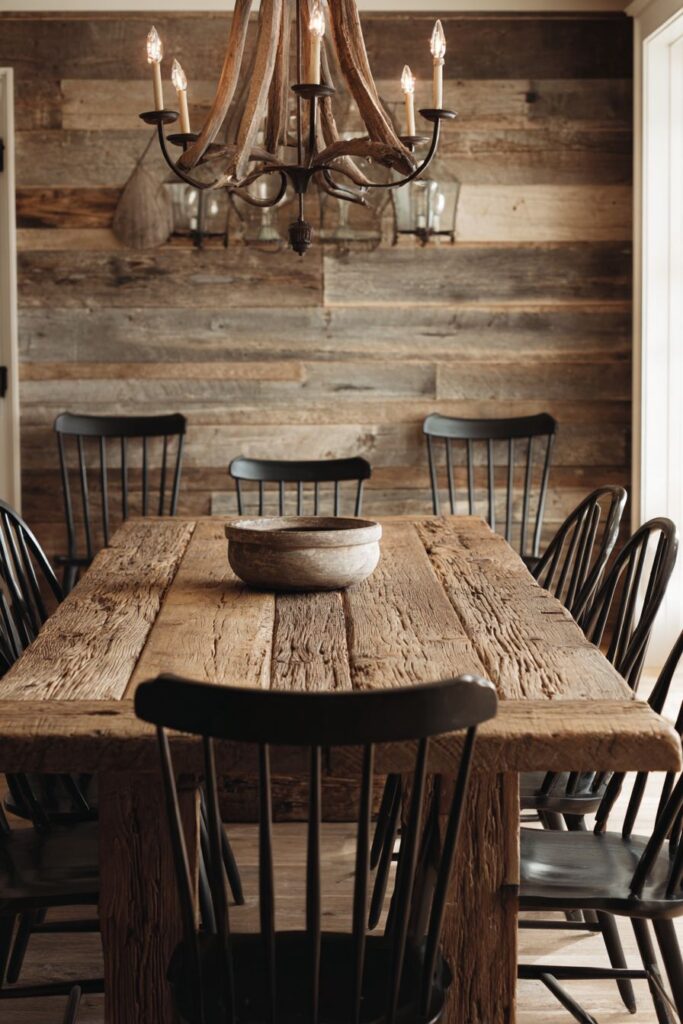
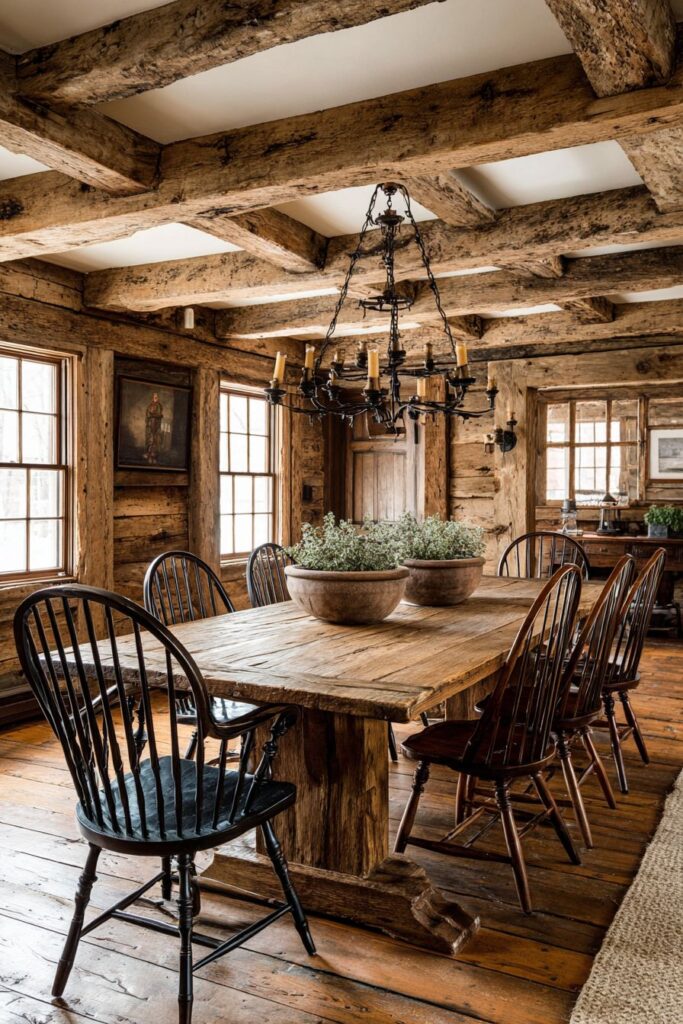
The commanding presence of a large trestle table crafted from weathered oak creates the perfect centerpiece for colonial family gatherings and community meals. The visible mortise and tenon joinery details showcase the structural integrity and craftsmanship that defines the best colonial furniture, where every joint and connection was made to last for generations. This construction method, both beautiful and practical, represents the colonial commitment to creating furniture that could withstand the demands of daily family life while maintaining its structural soundness over decades of use.

Eight mismatched but period-appropriate chairs surround this magnificent table, including several Windsor chairs and one distinguished carver chair positioned at the head of the table. This eclectic mix of seating reflects the authentic colonial practice of acquiring furniture over time, creating dining sets that evolved organically rather than being purchased all at once. Each chair brings its own character and history to the gathering, contributing to the rich, layered look that makes colonial dining rooms so compelling and authentic.
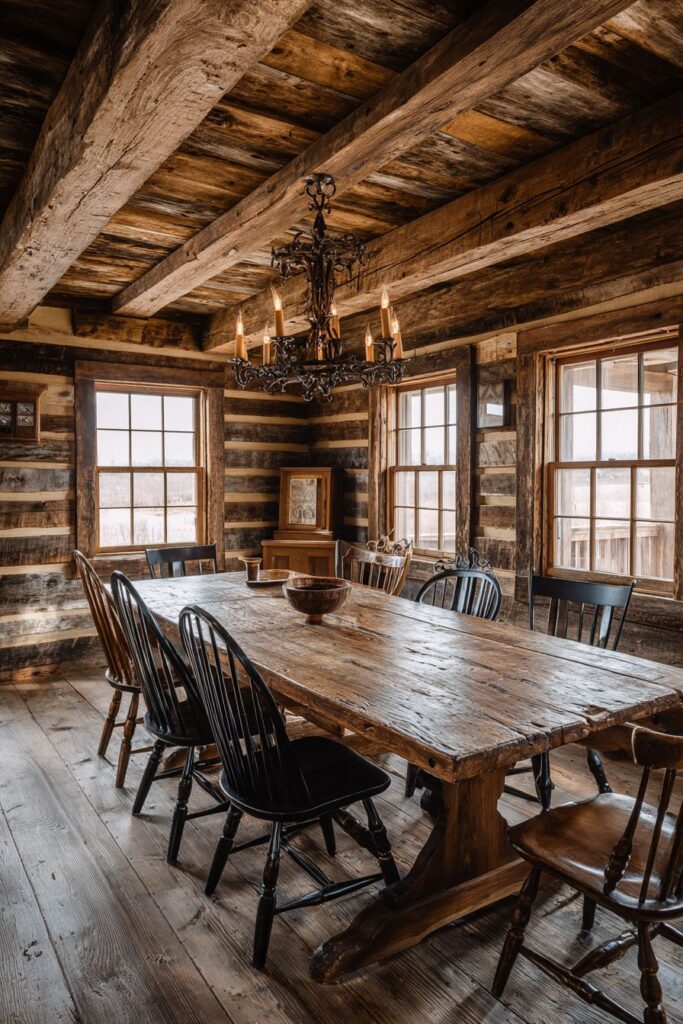
The simple wooden chandelier suspended above the table features wrought iron details that add visual interest while maintaining period authenticity. This lighting choice provides adequate illumination for large family gatherings while creating the kind of warm, inviting atmosphere that encourages lingering conversations and shared meals. The combination of wood and wrought iron reflects colonial material preferences and demonstrates how functional pieces could also serve as beautiful focal points.
Horizontal wood planking covers the walls in their natural finish, showing subtle aging that adds character and authenticity to the space. This wall treatment, combined with the soft natural lighting that emphasizes the handcrafted quality of each piece, creates an environment that celebrates the communal gathering nature of colonial dining. The overall effect is a space that feels both historically significant and warmly welcoming to contemporary families seeking authentic colonial character.
Key Design Tips:
- Choose trestle tables with visible joinery details to showcase colonial craftsmanship
- Mix different period-appropriate chair styles for authentic eclectic appeal
- Position one special carver chair at the table head for traditional hierarchy
- Install simple wooden chandeliers with wrought iron details for period lighting
- Use horizontal wood planking with natural aging for authentic wall treatments
7. Cherry Wood Sideboard Colonial Craftsmanship
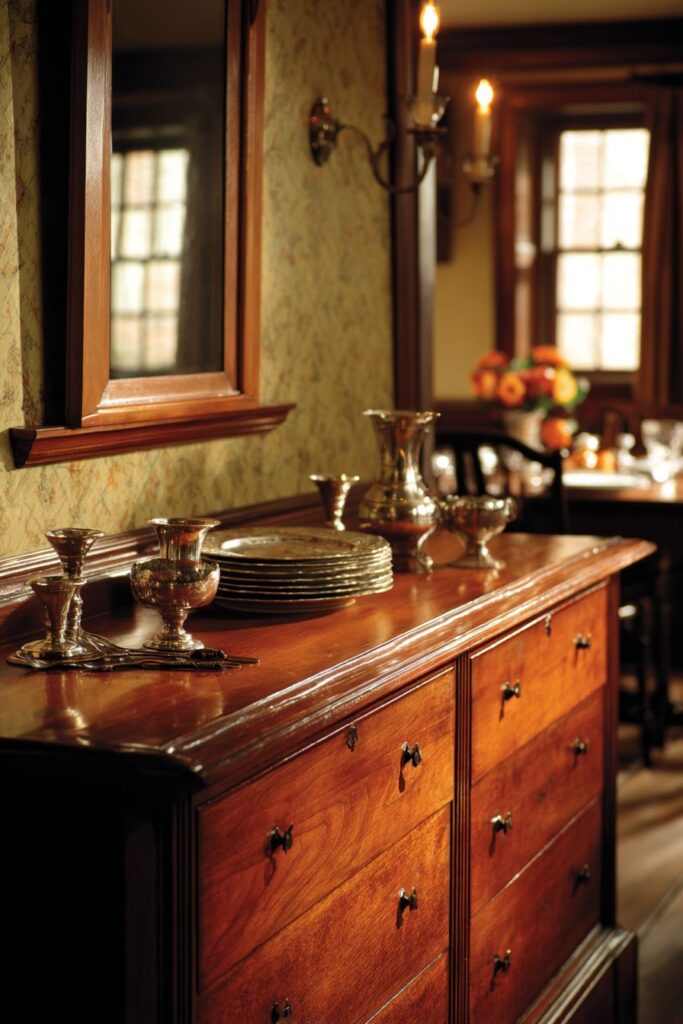
A magnificent sideboard crafted from rich cherry wood becomes the focal point of sophisticated colonial dining, its traditional dovetail drawer construction and original brass pulls telling the story of superior craftsmanship and attention to detail. The cherry wood’s warm reddish tones develop deeper richness over time, creating the kind of natural patina that cannot be artificially reproduced. This evolution of color and character makes cherry wood furniture increasingly beautiful with age, embodying the colonial principle that quality pieces should improve rather than deteriorate over time.
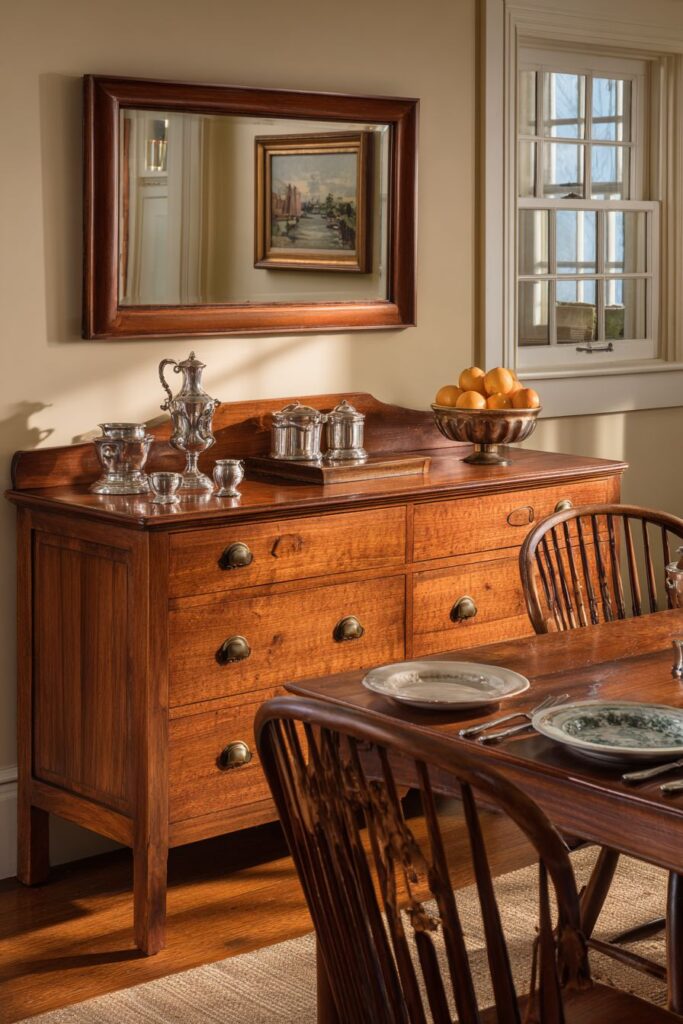
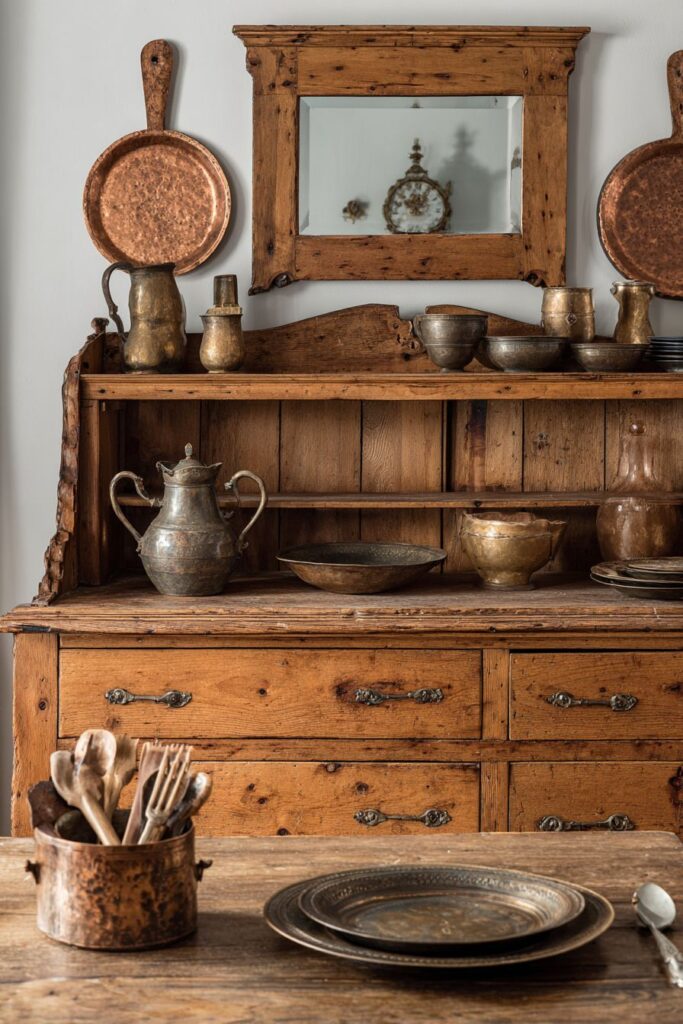
The sideboard’s surface provides an elegant platform for displaying a carefully curated collection of pewter serving pieces and wooden trenchers, each item chosen for both its functional value and its contribution to the overall aesthetic. The pewter pieces reflect light beautifully, their soft metallic surfaces creating points of luminosity that enliven the rich wood tones of the sideboard. Wooden trenchers add textural interest while maintaining the natural material palette that defines authentic colonial interiors.
Above the sideboard hangs a period-appropriate mirror in a simple wooden frame, its understated design allowing the beauty of the cherry wood and displayed objects to remain the primary focus. This restraint in decorative elements reflects colonial design principles that valued subtle enhancement rather than dramatic ornamentation. The mirror serves both practical and aesthetic functions, reflecting light throughout the space while providing a functional element for the dining experience.

The adjacent dining table showcases place settings with pewter plates and horn-handled utensils, creating a cohesive colonial dining experience that celebrates authentic materials and traditional craftsmanship. The careful selection of serving pieces and utensils demonstrates how colonial dining was elevated through attention to detail and quality materials rather than elaborate decoration. Balanced lighting throughout the space highlights the rich wood tones and authentic colonial craftsmanship details that make this dining room truly exceptional.
Key Design Tips:
- Select cherry wood furniture for its warming color that deepens beautifully with age
- Look for dovetail construction and original brass hardware for authentic craftsmanship
- Display pewter serving pieces and wooden trenchers for period-appropriate styling
- Choose simple wooden-framed mirrors that complement rather than compete with furniture
- Use horn-handled utensils and pewter plates for complete colonial dining authenticity
8. Built-in Plate Rail Colonial Display
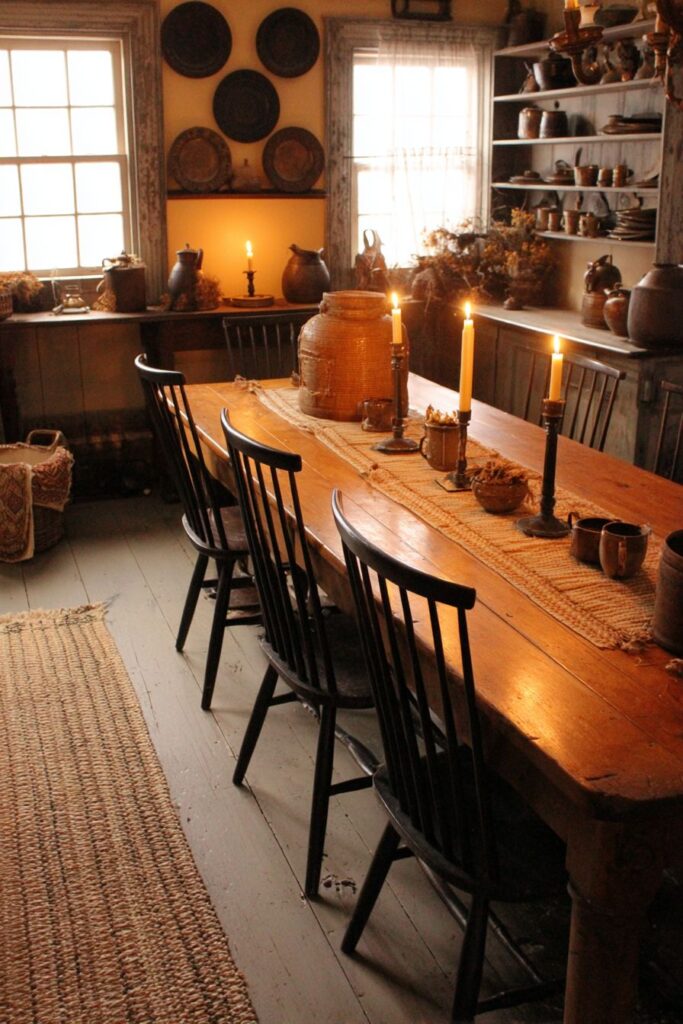
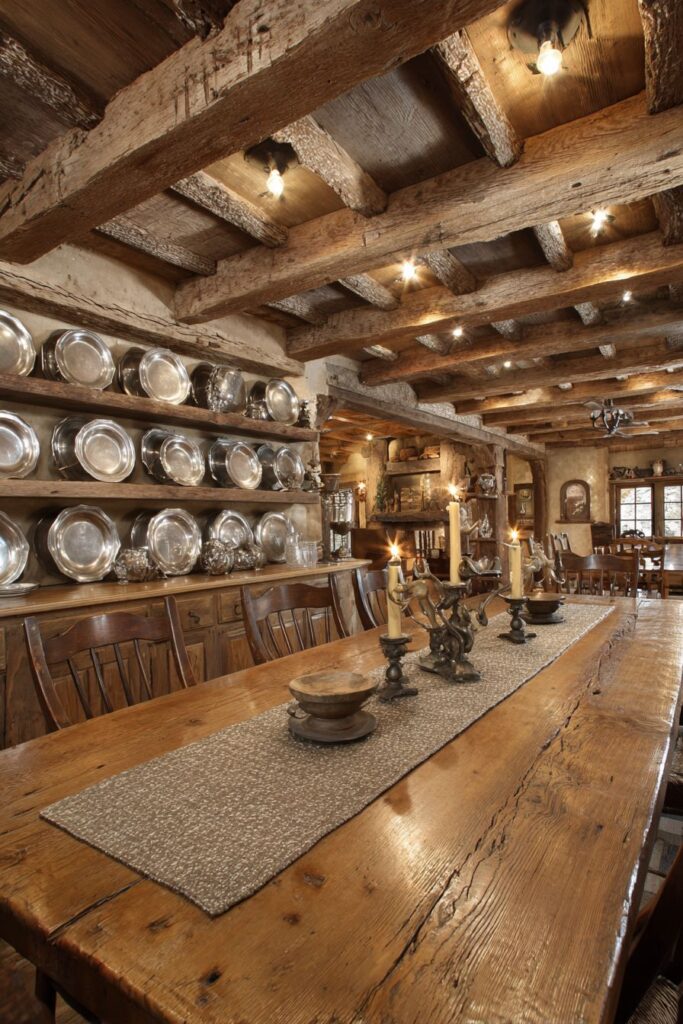
The upper walls of this colonial dining room feature built-in plate rails that transform functional storage into beautiful architectural elements, displaying an extensive collection of pewter chargers and wooden plates that celebrate colonial material traditions. These plate rails demonstrate the colonial understanding of how everyday objects could serve dual purposes, providing practical storage while creating visual interest and displaying the family’s prized possessions. The linear arrangement of plates creates rhythm and pattern along the wall, adding decorative appeal without requiring additional furniture or floor space.

The dining table’s thick plank top with breadboard ends showcases traditional colonial woodworking techniques that combined beauty with structural integrity. Breadboard ends prevent warping and splitting while adding visual weight and importance to the table design. This construction method represents the colonial craftsman’s understanding of wood movement and their ability to create solutions that were both practical and aesthetically pleasing, resulting in furniture that could serve families for generations.
Simple wooden chairs with woven rush seats surround the table, showing natural wear that speaks to decades of family gatherings and shared meals. The rush seats, created from natural materials using traditional weaving techniques, provide comfortable seating while maintaining the authentic colonial aesthetic that values handmade construction over manufactured uniformity. The visible wear patterns on these chairs tell stories of family life and add character that new furniture simply cannot provide.
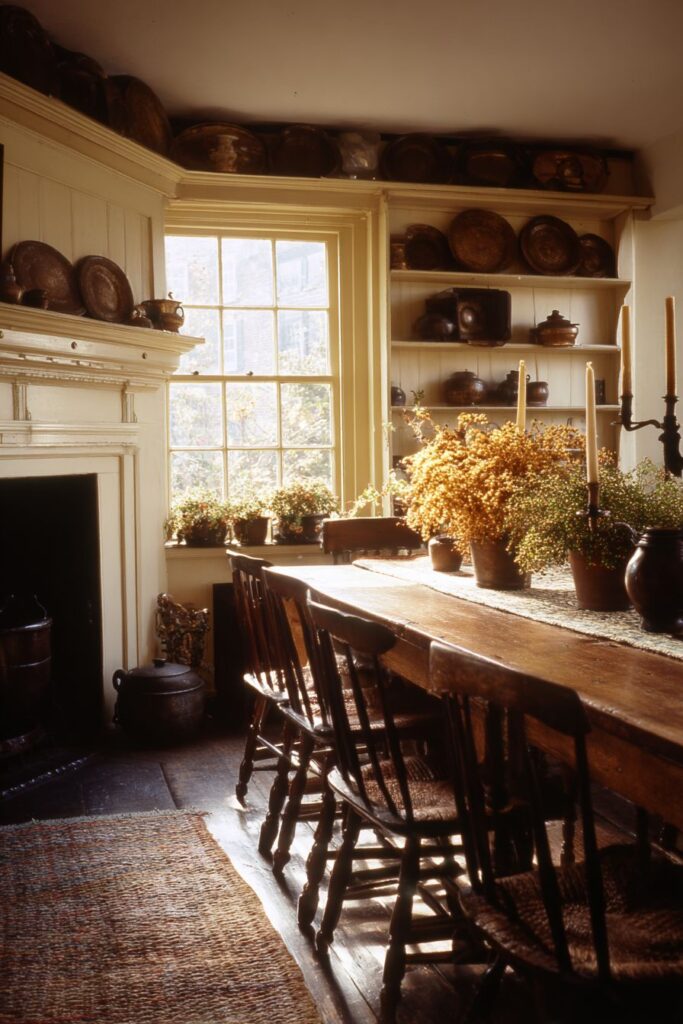
A braided runner in muted colors spans the table length, its handmade construction and natural color palette perfectly complementing the pewter and wooden elements throughout the space. Candlelight from pewter candlesticks creates warm, flickering illumination that emphasizes the handmade quality of colonial dining accessories while providing the intimate atmosphere that makes colonial dining rooms so inviting. This combination of natural materials, traditional craftsmanship, and warm lighting creates a dining environment that feels both historically authentic and comfortably livable.
Key Design Tips:
- Install built-in plate rails to display colonial china and pewter collections
- Choose tables with breadboard ends for authentic colonial construction details
- Select chairs with rush seats that show natural wear and aging
- Use handmade braided runners in muted, natural color palettes
- Incorporate pewter candlesticks for authentic colonial lighting and atmosphere
9. Tiger Maple Gate-Leg Table Elegance
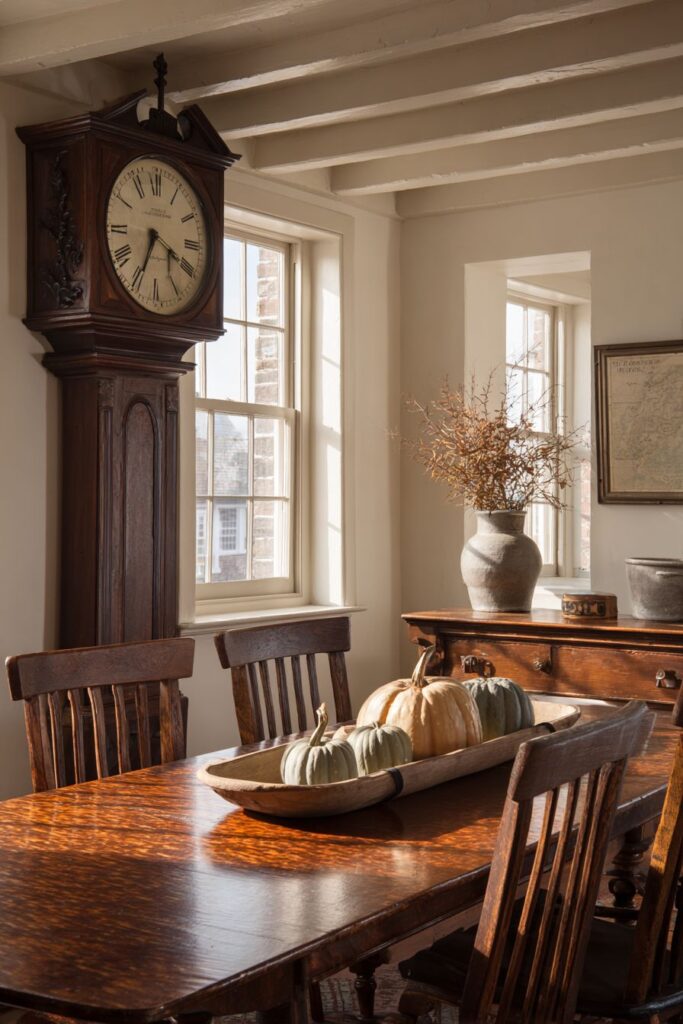
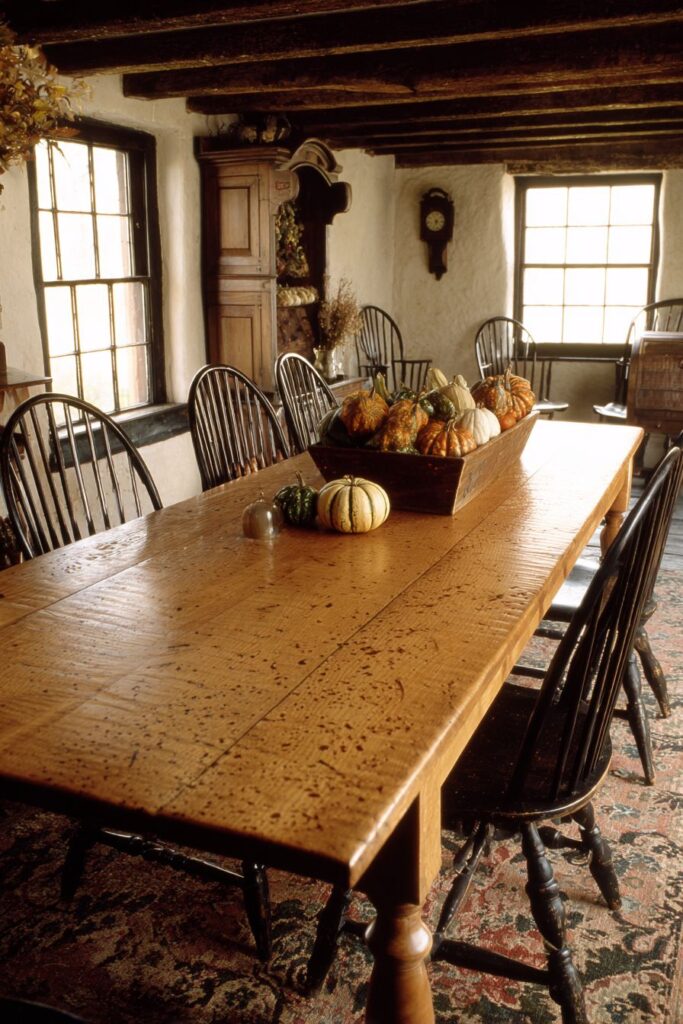
The distinctive grain patterns of tiger maple create visual excitement in this refined colonial dining room, where a gate-leg table serves as both functional furniture and natural art piece. Tiger maple, with its dramatic flame-like grain patterns, was highly prized by colonial craftsmen for its beauty and rarity, making furniture pieces that were considered treasures worthy of being passed down through generations. The gate-leg design demonstrates colonial ingenuity in creating furniture that could adapt to different space requirements while maintaining structural integrity and visual appeal.

Slat-back chairs with turned posts provide seating that combines comfort with authentic colonial styling, their simple yet elegant construction reflecting the colonial aesthetic that found beauty in clean lines and honest construction. The turned posts showcase the colonial woodworker’s skill with a lathe, creating subtle decorative elements that enhance the chairs’ appeal without overwhelming their essential simplicity. These chairs complement the tiger maple table perfectly, allowing its stunning grain patterns to remain the focal point.
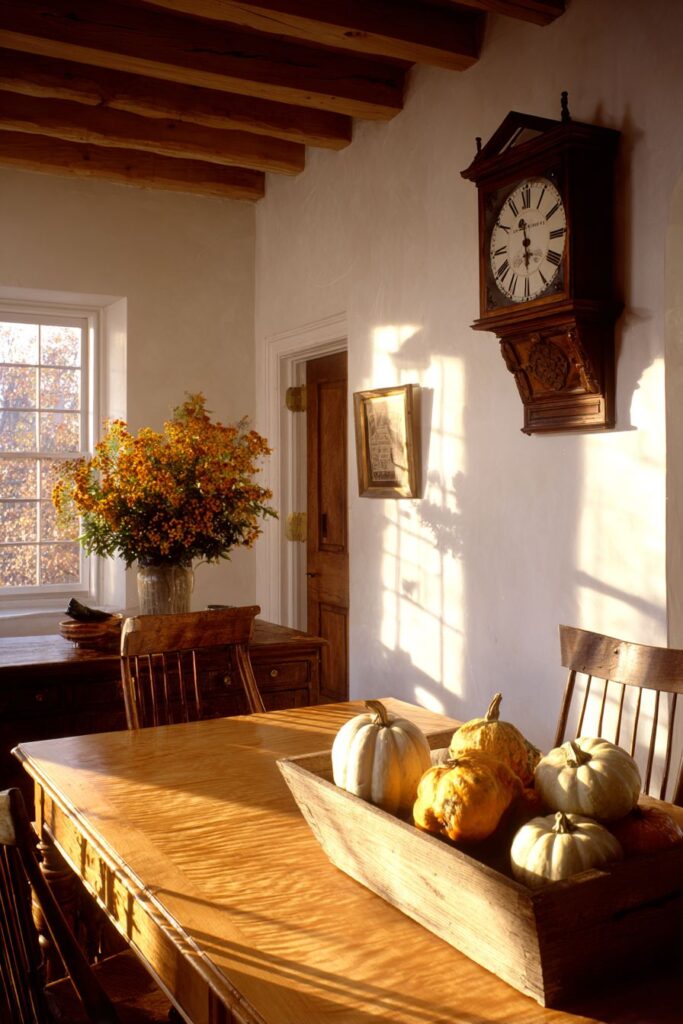
A wooden trencher filled with autumn gourds serves as a centerpiece that celebrates the colonial connection to seasonal abundance and natural materials. This simple yet effective decorative choice reflects colonial values that found beauty in everyday objects and seasonal celebrations, creating dining environments that changed subtly with the rhythms of the agricultural year. The warm colors and organic forms of the gourds complement the tiger maple’s golden tones while maintaining the natural material palette.
The room’s corner features a tall case clock that serves both practical and decorative functions, its presence adding vertical interest and historical authenticity to the space. Simple white-washed walls with exposed ceiling beams create a backdrop that allows the tiger maple’s dramatic grain patterns to command attention while maintaining the clean, uncluttered aesthetic that characterizes the finest colonial interiors. Natural window light enhances the wood’s figure and creates the kind of understated elegance that makes colonial design timelessly appealing.
Key Design Tips:
- Choose tiger maple furniture for dramatic grain patterns and colonial authenticity
- Position gate-leg tables to take maximum advantage of natural window light
- Use slat-back chairs with turned posts for period-appropriate seating
- Create seasonal centerpieces using natural materials like gourds and fruits
- Include tall case clocks for vertical interest and functional colonial authenticity
10. Tavern Table Colonial Hearthside Dining
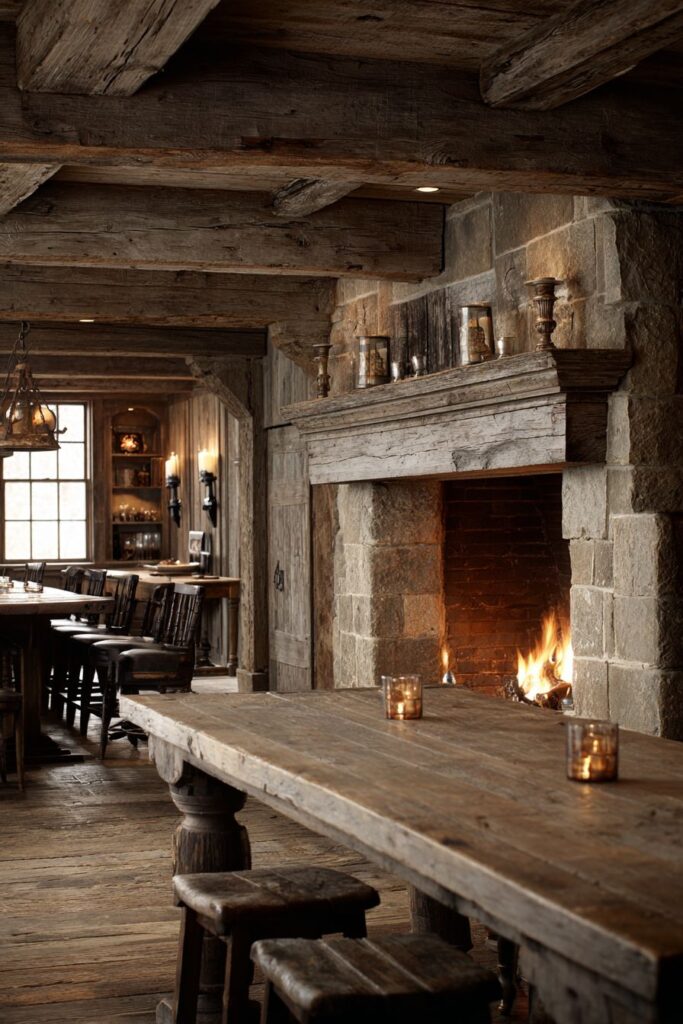
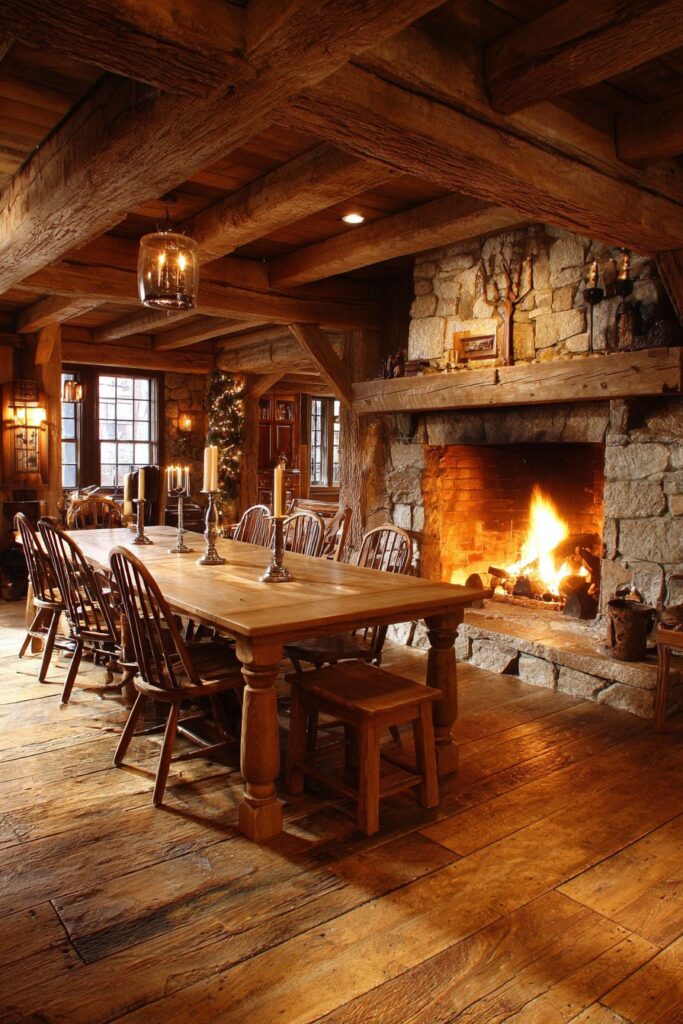
A sturdy tavern table with thick oak top and turned legs creates the perfect gathering place for hearty colonial meals, its robust construction speaking to the colonial understanding that dining furniture needed to withstand the rigors of daily family life. The turned legs demonstrate the colonial woodworker’s skill while providing the structural support necessary for a table that might serve multiple generations. This style of table, originally designed for taverns and public houses, brings a sense of conviviality and community to family dining spaces.
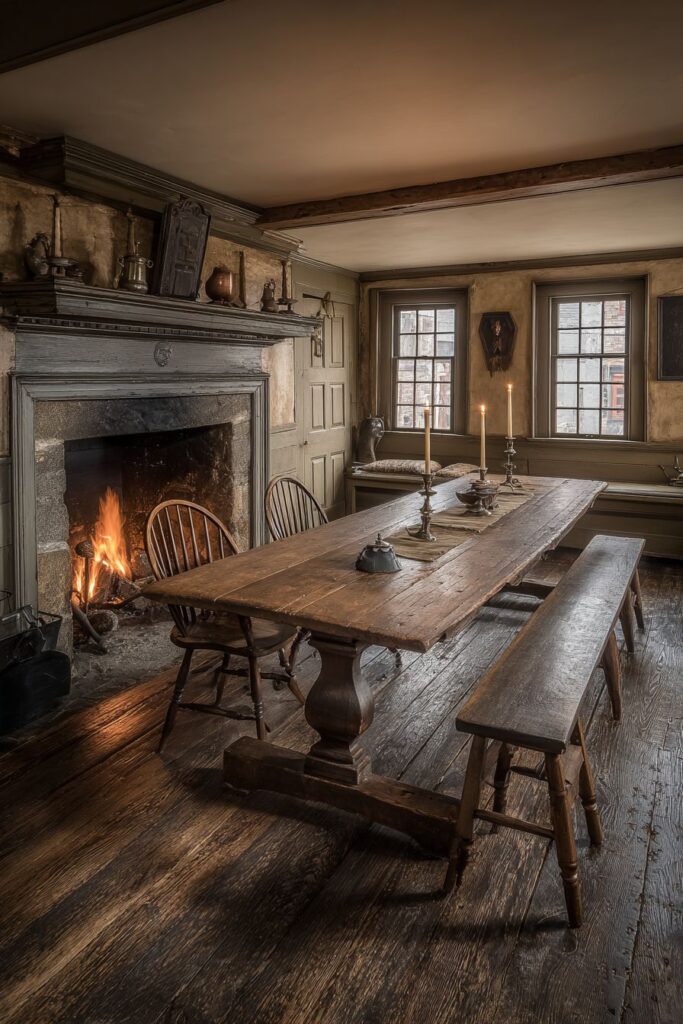
The mix of bannister-back chairs and simple wooden stools provides flexible seating options that reflect the colonial practice of making furniture serve multiple purposes and accommodate varying group sizes. Bannister-back chairs, with their distinctive vertical slats, offer formal seating for family members while the wooden stools can be easily moved and stored when not needed. This combination of seating types creates a casual, welcoming atmosphere that encourages both formal family meals and informal gatherings.
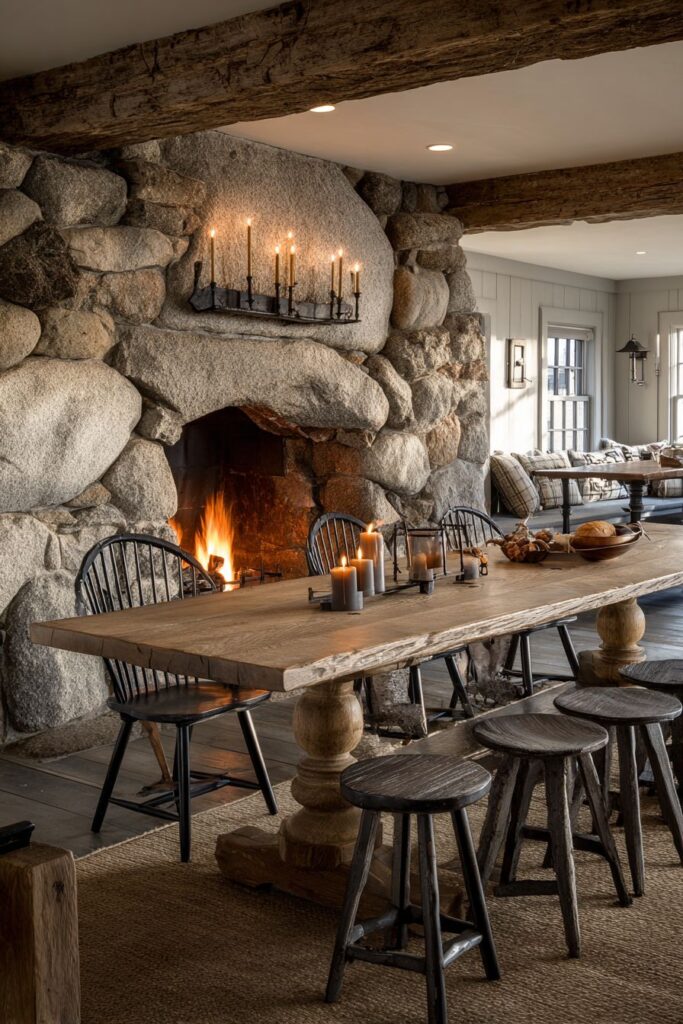
The large stone fireplace with wooden mantel dominates one wall, serving as both a heating source and a focal point that anchors the dining space. Pewter candlesticks displayed on the mantel add authentic colonial charm while providing additional lighting options for evening meals. The fireplace represents the heart of colonial home life, where families gathered for warmth, cooking, and socializing, making it a natural complement to the dining area.
Wide pine floorboards with natural aging and patina anchor the space, their honey-colored tones and visible wear patterns adding warmth and authenticity to the room. The combination of warm firelight and natural daylight creates atmospheric lighting that highlights the rustic colonial charm and emphasizes the handcrafted quality of each furniture piece. This interplay of light and shadow brings the space to life and creates the kind of inviting atmosphere that makes colonial dining rooms so enduringly popular.
Key Design Tips:
- Choose tavern tables with thick tops and turned legs for sturdy colonial authenticity
- Mix bannister-back chairs with simple stools for flexible seating arrangements
- Include a stone fireplace with wooden mantel as a focal point and heating source
- Install wide pine floorboards with natural aging for authentic colonial character
- Use combination lighting from fireplace and windows for warm, atmospheric illumination
11. Harvest Table Pine Wood Authenticity
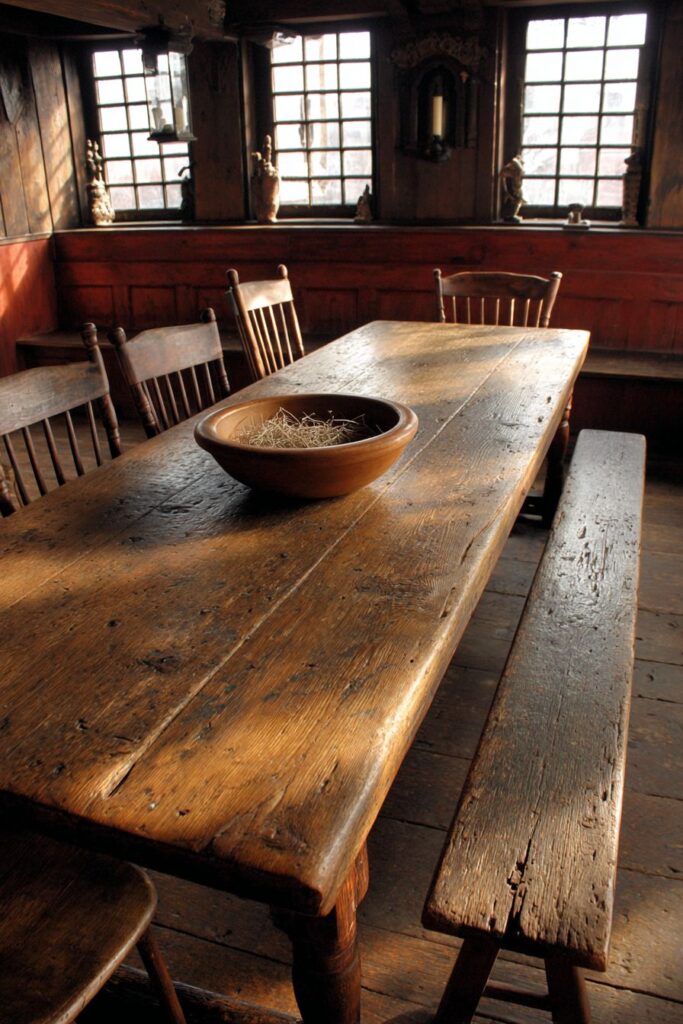
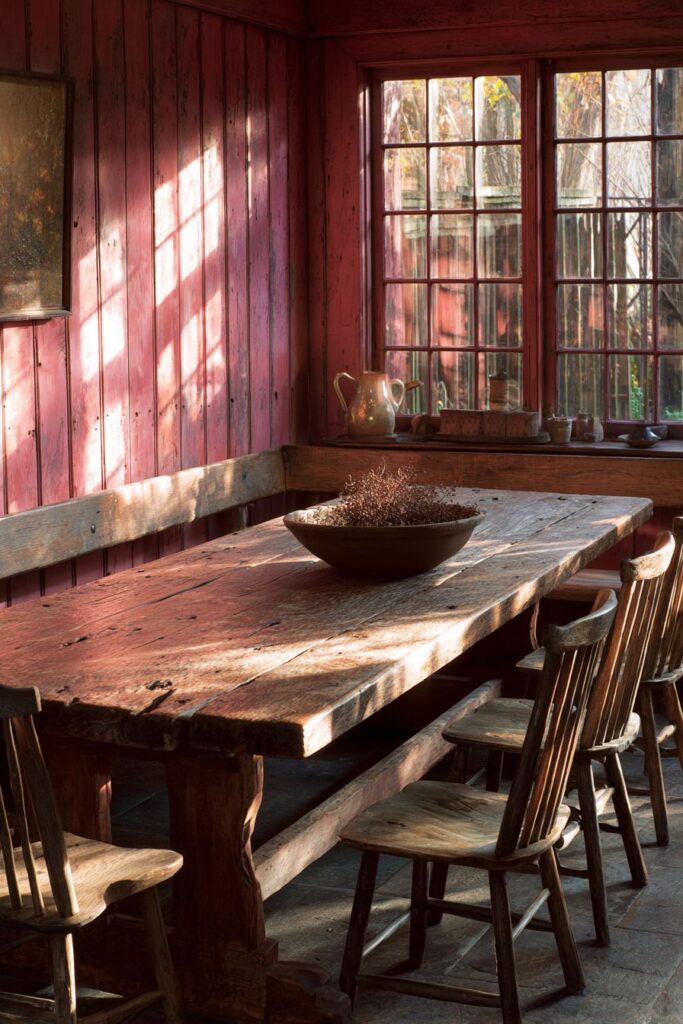
A magnificent harvest table crafted from aged pine showcases the natural imperfections and tool marks that authenticate colonial craftsmanship, its removable leaves demonstrating the practical colonial approach to furniture that needed to adapt to varying family sizes and occasions. The aged pine surface bears the honest marks of hand tools and generations of use, creating a patina and character that modern manufacturing cannot replicate. These imperfections are not flaws but rather evidence of the human hands and traditional tools that shaped each piece.
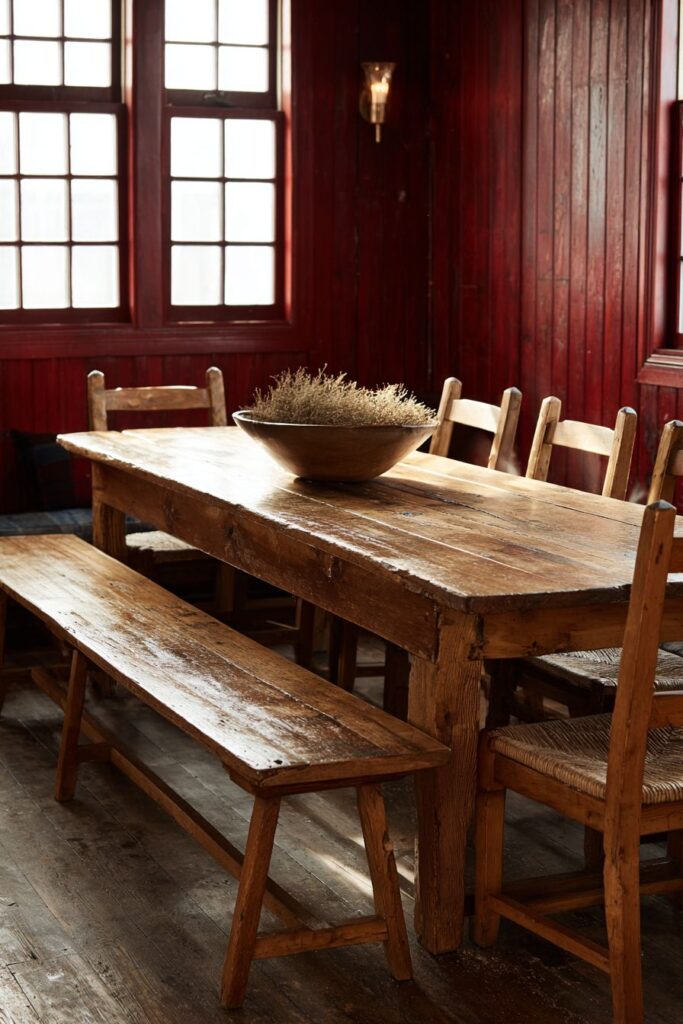
The seating arrangement combines a long wooden bench on one side with individual ladder-back chairs on the other, creating an informal yet organized approach to family dining that reflects colonial practicality and social structure. The bench accommodates multiple family members efficiently while the individual chairs provide more formal seating options. This mixed seating approach creates visual interest while serving the practical needs of colonial families who often included extended family members and frequent guests.
A simple wooden bowl filled with dried herbs serves as both a functional storage solution and an attractive centerpiece, demonstrating the colonial practice of finding beauty in everyday necessities. The dried herbs would have been used for cooking and medicinal purposes, making this centerpiece both decorative and practical. This approach to decoration reflects colonial values that found beauty in functionality and preferred useful objects to purely ornamental ones.
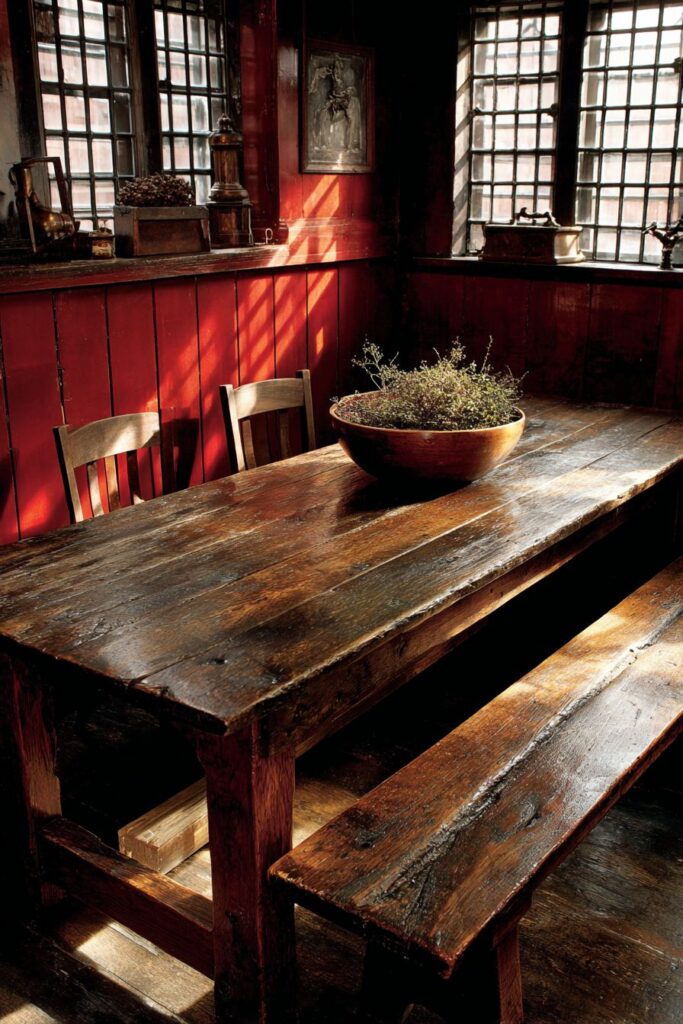
The walls feature vertical wood paneling painted in deep red milk paint, a bold color choice that reflects colonial confidence in using rich, saturated hues derived from natural pigments. The vertical paneling adds architectural interest and historical authenticity while the deep red color creates warmth and intimacy in the dining space. Natural lighting from tall windows with small panes creates interesting shadow patterns across the authentic colonial textures, emphasizing the handcrafted quality and natural materials that define this style.
Key Design Tips:
- Select harvest tables with removable leaves for flexible colonial dining solutions
- Combine long benches with individual chairs for varied seating arrangements
- Use dried herbs in wooden bowls for functional and attractive centerpieces
- Paint vertical wood paneling in deep colors like red milk paint for colonial authenticity
- Install tall windows with small panes to create interesting light patterns
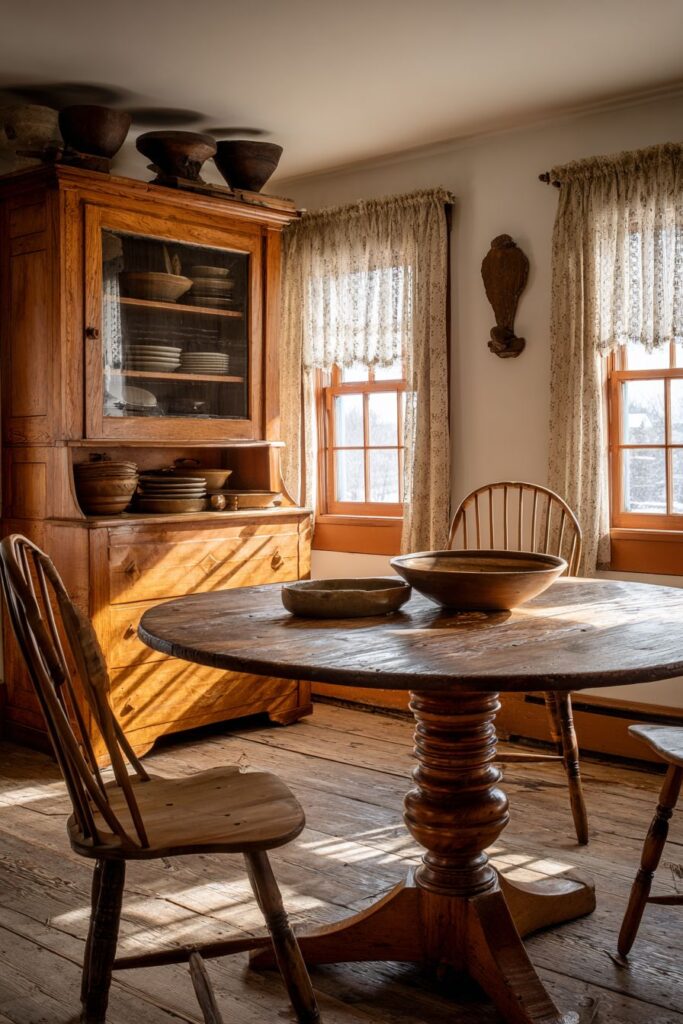
12. Round Pedestal Table Windsor Seating
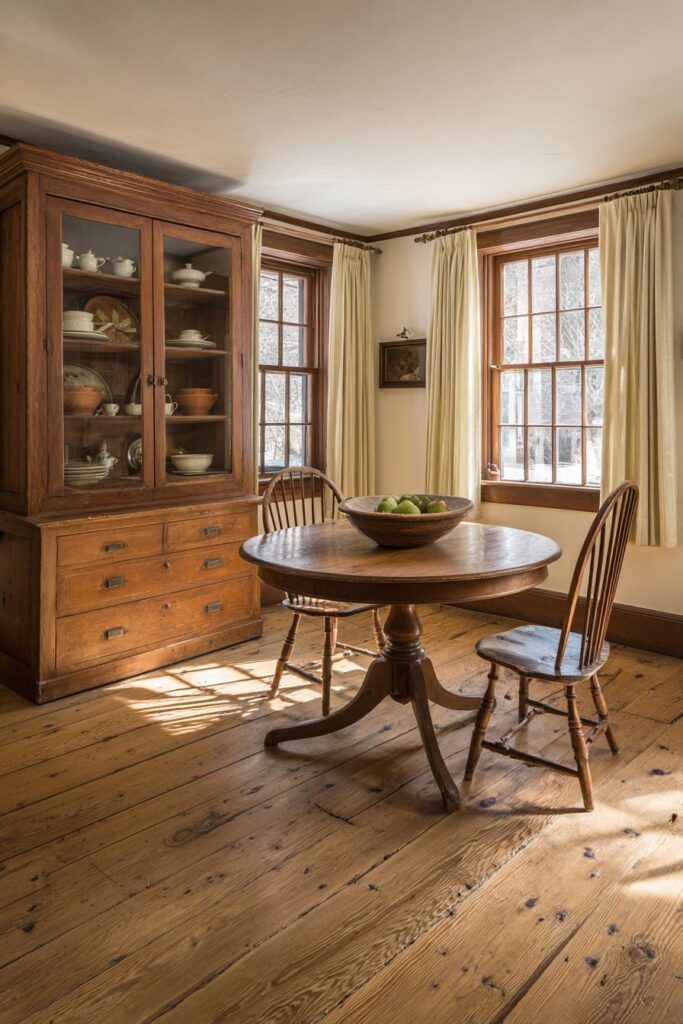
The graceful curves of a round pedestal table crafted from rich walnut wood create an intimate dining environment that encourages conversation and connection among family members. The single turned base demonstrates sophisticated colonial woodworking skills while providing stability and elegance that makes this piece suitable for both everyday family meals and special occasions. Walnut, prized for its beautiful grain and rich brown tones, was reserved for the finest colonial furniture pieces, making this table a centerpiece worthy of admiration.
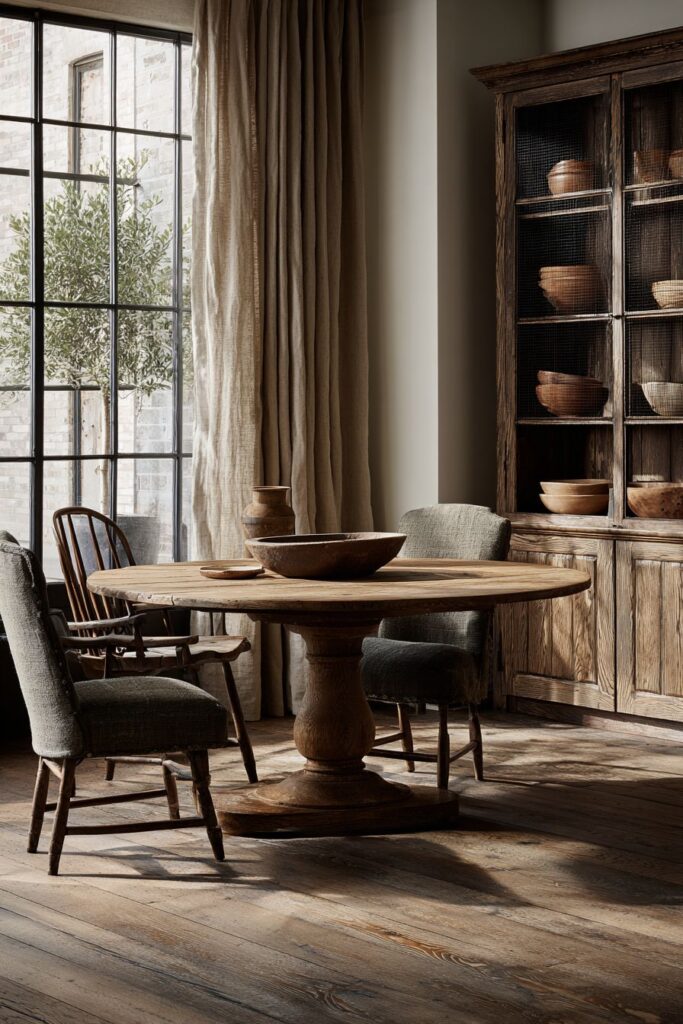
Four Windsor bow-back chairs with continuous arm construction surround the table, their flowing lines and ergonomic design representing the pinnacle of colonial chairmaking artistry. The continuous arm construction, where the armrest flows seamlessly into the chair back, requires exceptional skill to execute properly and results in seating that is both beautiful and remarkably comfortable. These chairs demonstrate how colonial craftsmen combined aesthetic appeal with functional excellence to create furniture that served families well for generations.
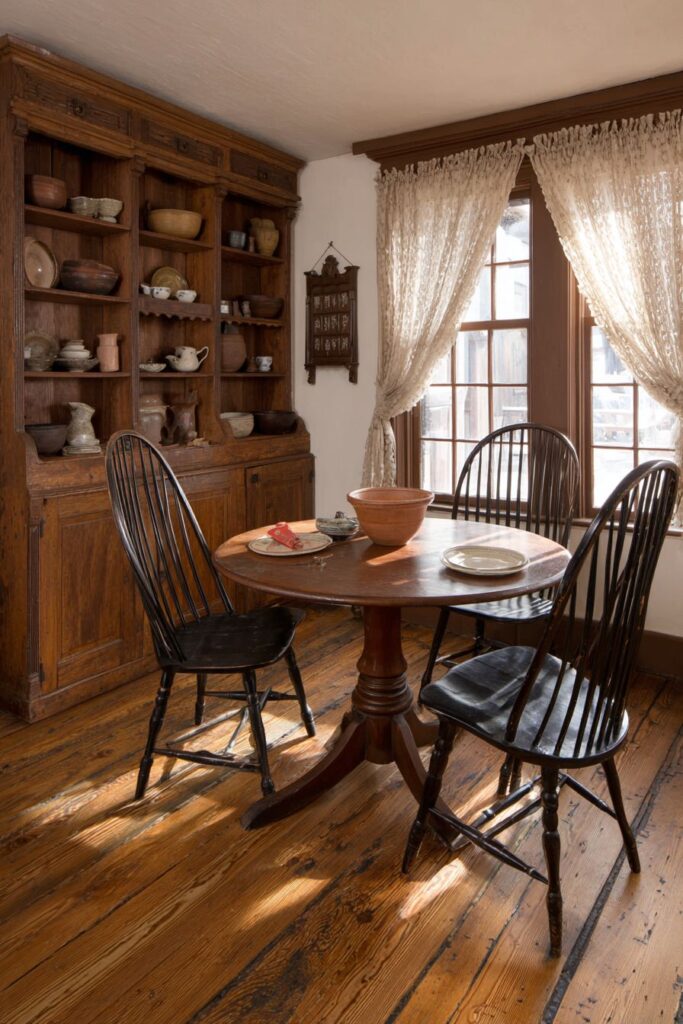
A corner cabinet with chicken wire doors provides attractive storage for earthenware pottery and wooden bowls, its rustic door treatment adding texture and visual interest while maintaining the room’s authentic colonial character. The chicken wire, originally a practical solution for ventilation while keeping pests out of stored food, creates an appealing geometric pattern that complements the curved lines of the Windsor chairs and round table. The earthenware and wooden bowls displayed within continue the natural material theme.
Wide-plank flooring in natural pine with visible knots and grain patterns grounds the space with warm, honey-colored tones that complement the walnut table and enhance the overall sense of warmth and welcome. Soft morning light filtering through simple linen window treatments creates gentle shadows that emphasize the handcrafted quality of each furniture piece while maintaining the serene, peaceful atmosphere that makes colonial dining rooms such appealing retreats from modern life.
Key Design Tips:
- Choose round pedestal tables in walnut for intimate colonial dining experiences
- Select Windsor bow-back chairs with continuous arms for ultimate comfort and style
- Install corner cabinets with chicken wire doors for attractive storage solutions
- Display earthenware pottery and wooden bowls for authentic colonial collections
- Use simple linen window treatments to filter natural light softly
13. Sawbuck Table Post-and-Beam Construction
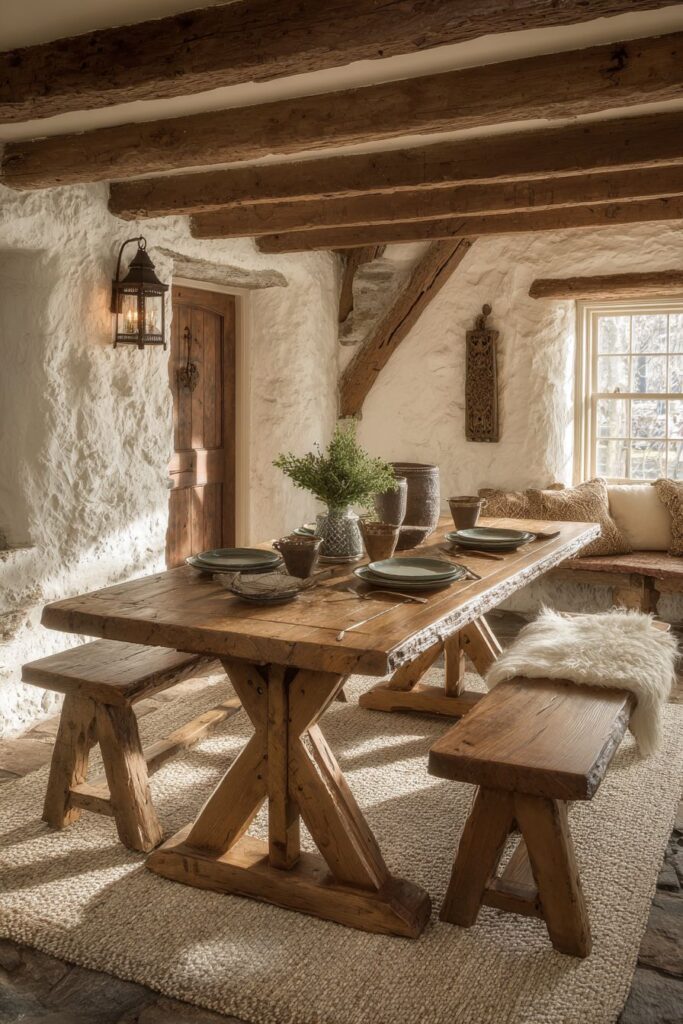
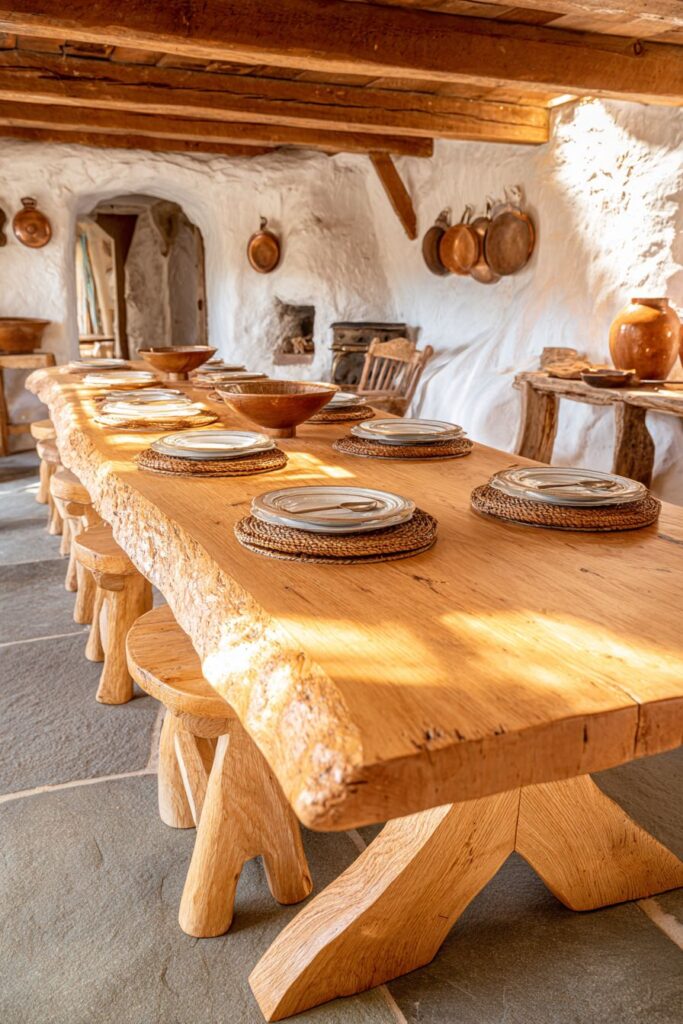
The distinctive X-shaped supports of a sawbuck table create visual drama while demonstrating the structural ingenuity that characterizes the finest colonial furniture design. The thick plank top shows natural edge details that celebrate the beauty of wood in its most authentic form, where the tree’s original shape is honored rather than hidden. This construction method, both practical and beautiful, represents the colonial craftsman’s ability to create furniture that was structurally sound while showcasing the natural materials used in its creation.
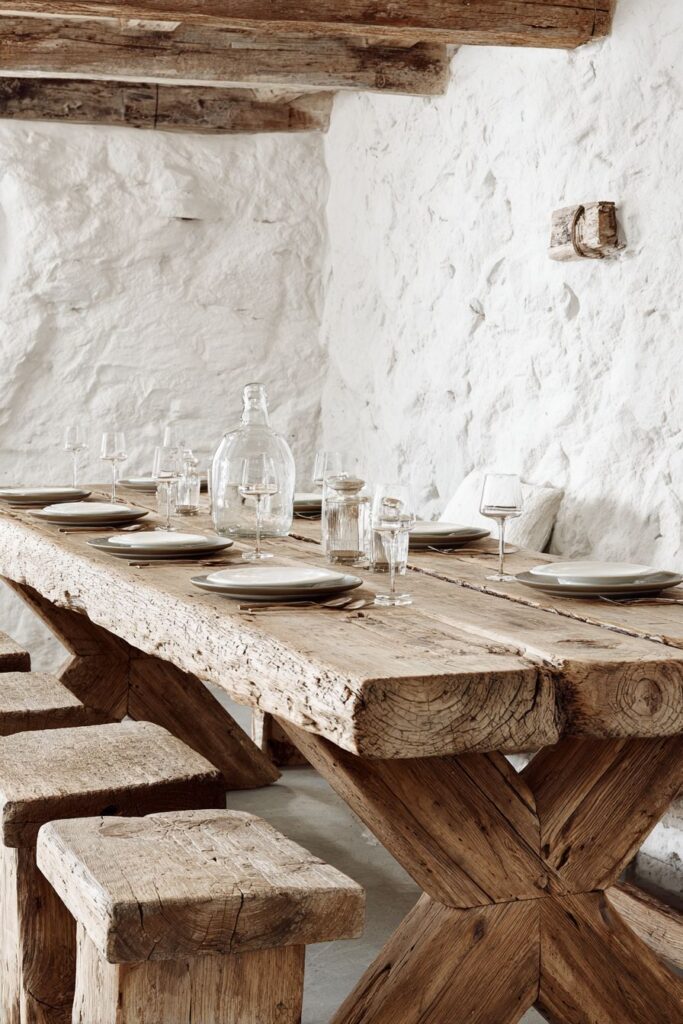
Seating includes several joint stools and a carved chair reserved for the head of household, reflecting colonial social structures and the hierarchical nature of family dining arrangements. The joint stools, with their simple construction and sturdy design, provided seating for family members and guests while the carved chair denoted status and respect for the family patriarch or matriarch. This differentiation in seating types tells the story of colonial social customs while providing practical furniture solutions.
Traditional colonial architectural elements dominate the space, including exposed post-and-beam construction that showcases the structural honesty valued by colonial builders. The whitewashed plaster walls with their irregular texture add authentic colonial character while reflecting the handmade quality that modern construction often lacks. These architectural elements work together to create a space that feels genuinely historical while remaining functional for contemporary use.
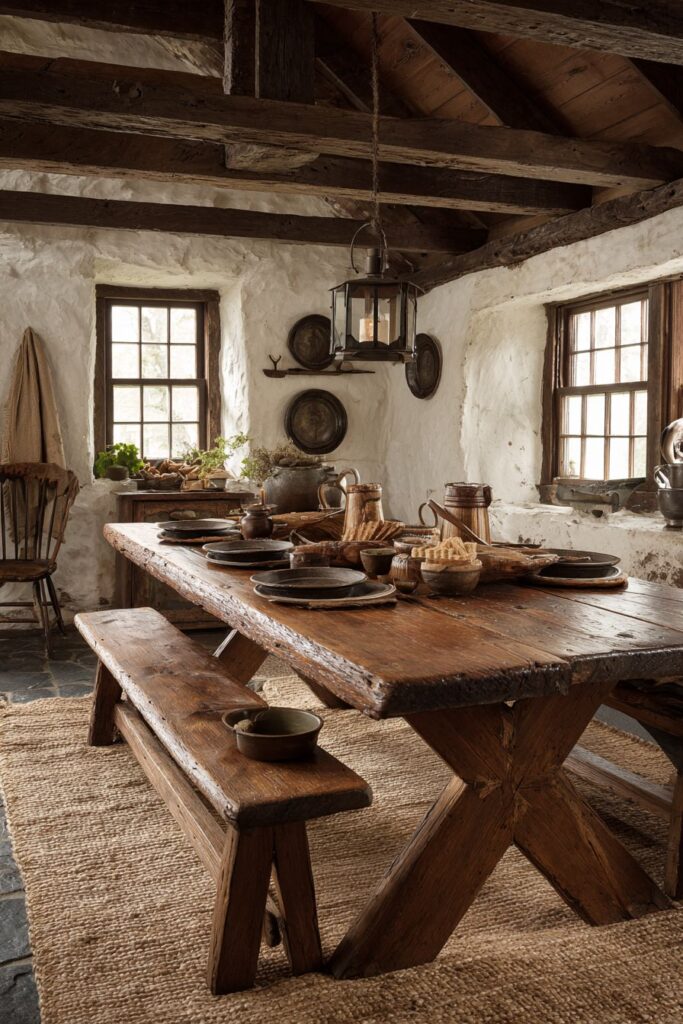
Pewter plates and wooden spoons arranged for a simple meal demonstrate the colonial approach to dining that valued substance over style, where the quality of materials and the warmth of family gathering were more important than elaborate table settings. Interior design photography captures the authentic rusticity and functional simplicity that define early colonial dining, emphasizing how beauty emerged naturally from honest materials and skilled craftsmanship rather than elaborate ornamentation.
Key Design Tips:
- Choose sawbuck tables with X-shaped supports for structural drama and colonial authenticity
- Include joint stools and one special carved chair to reflect colonial social hierarchy
- Expose post-and-beam construction for structural honesty and historical accuracy
- Use whitewashed plaster walls with irregular texture for authentic colonial character
- Set tables simply with pewter plates and wooden utensils for period-appropriate dining
14. Butterfly Table Cherry Wood Refinement
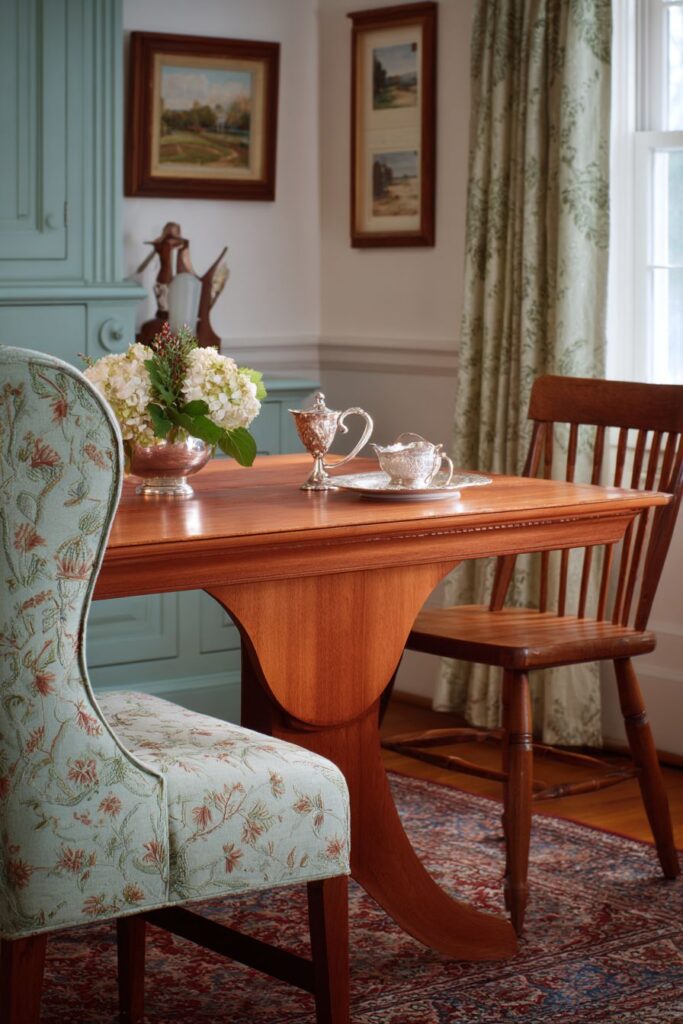
The distinctive wing-shaped drop leaves of a butterfly table create both visual interest and practical flexibility in this refined colonial dining space. Crafted from cherry wood with warm reddish tones that deepen beautifully with age, this table represents the evolution of colonial furniture making toward more sophisticated and specialized pieces. The butterfly table design, named for the wing-like shape of its drop leaves, demonstrates colonial ingenuity in creating furniture that could serve multiple functions while maintaining aesthetic appeal.
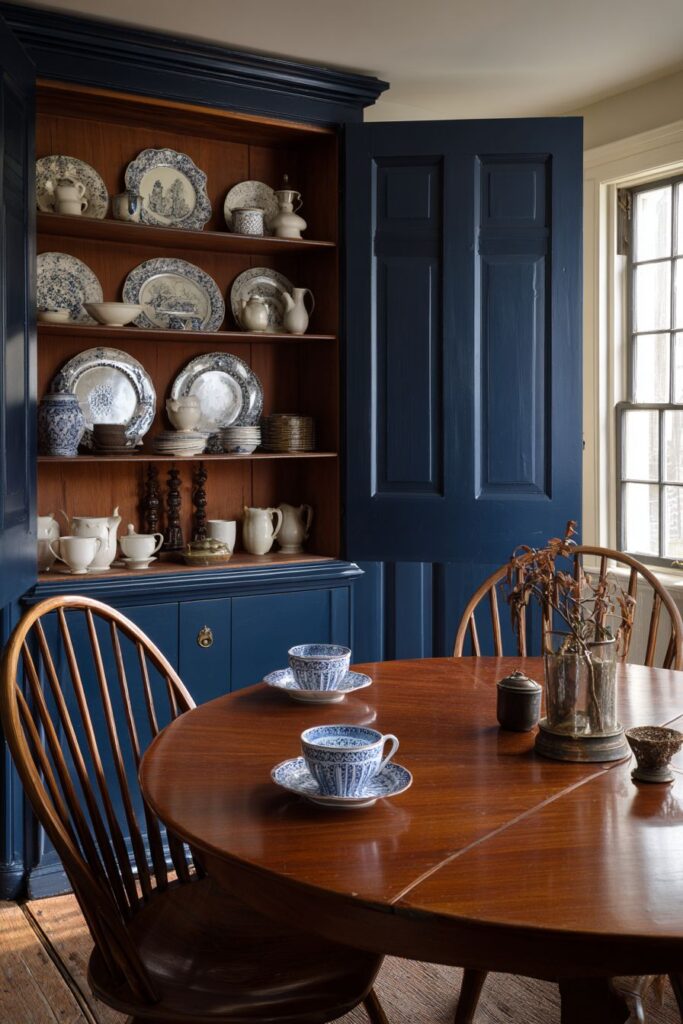
Two carver chairs with rush seats provide formal seating that combines comfort with authentic colonial styling, their elevated status indicated by arms and more elaborate construction than standard dining chairs. The rush seats, woven from natural materials, provide comfortable seating while maintaining the authentic colonial aesthetic that values handmade construction and natural materials. These chairs represent the finest colonial seating, reserved for honored guests and family members.
The table surface displays a carefully arranged collection of pewter serving pieces and a wooden salt cellar, items that would have been treasured possessions in colonial households. The pewter serving pieces reflect light beautifully while demonstrating the colonial preference for metals that aged gracefully and could be passed down through generations. The wooden salt cellar, a necessity in colonial kitchens, adds functional beauty while representing the colonial practice of creating attractive containers for everyday necessities.
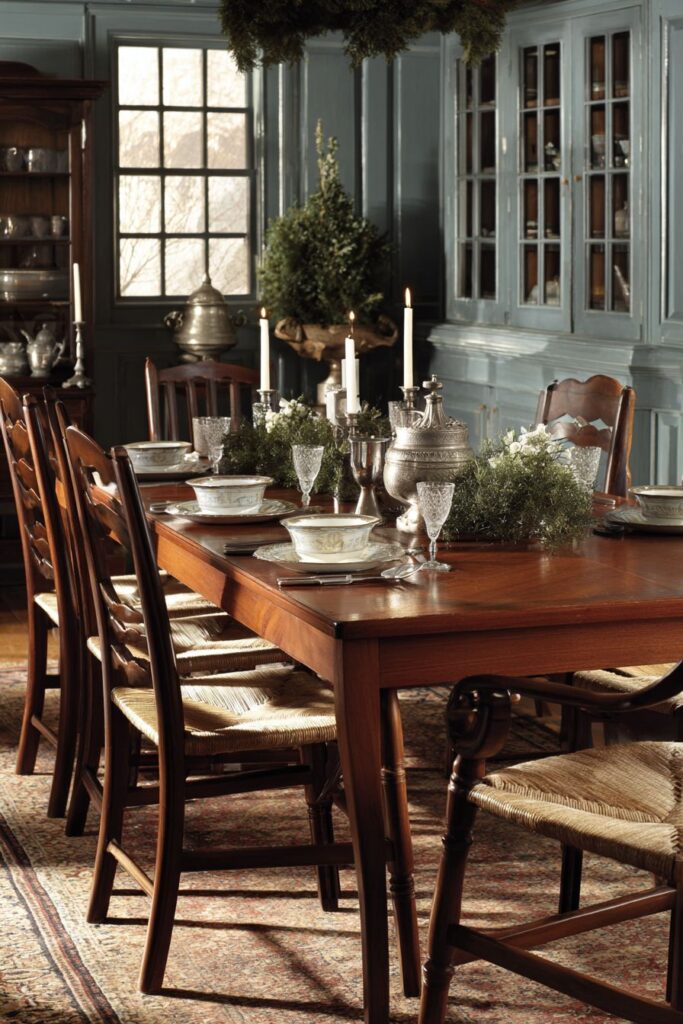
A corner cupboard painted in Williamsburg blue showcases white ironstone and pewter, its historically accurate color creating visual interest while providing authentic colonial storage solutions. The Williamsburg blue, a color associated with colonial Virginia, adds richness and depth to the space while maintaining historical authenticity. Professional interior photography with balanced lighting highlights the elegant proportions and authentic colonial color palette that make this dining room both beautiful and historically significant.
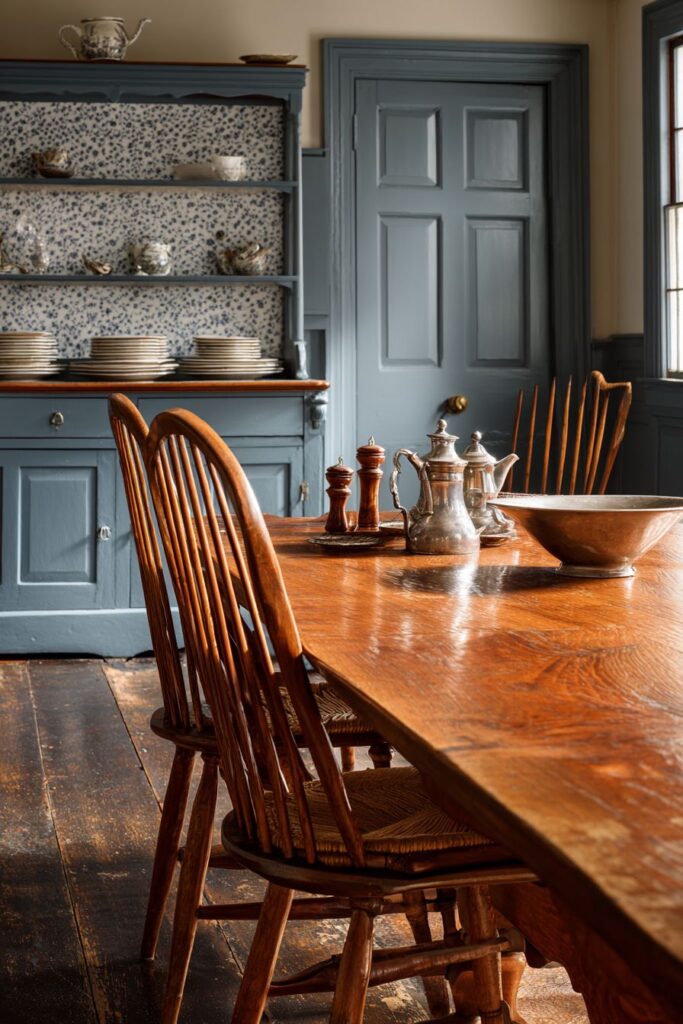
Key Design Tips:
- Select butterfly tables for their unique drop-leaf design and space-saving functionality
- Use carver chairs with rush seats for formal colonial dining arrangements
- Display pewter serving pieces and wooden salt cellars for authentic colonial styling
- Paint cupboards in Williamsburg blue or other documented colonial colors
- Showcase white ironstone and pewter collections for period-appropriate displays
15. Communion Table Meeting House Simplicity
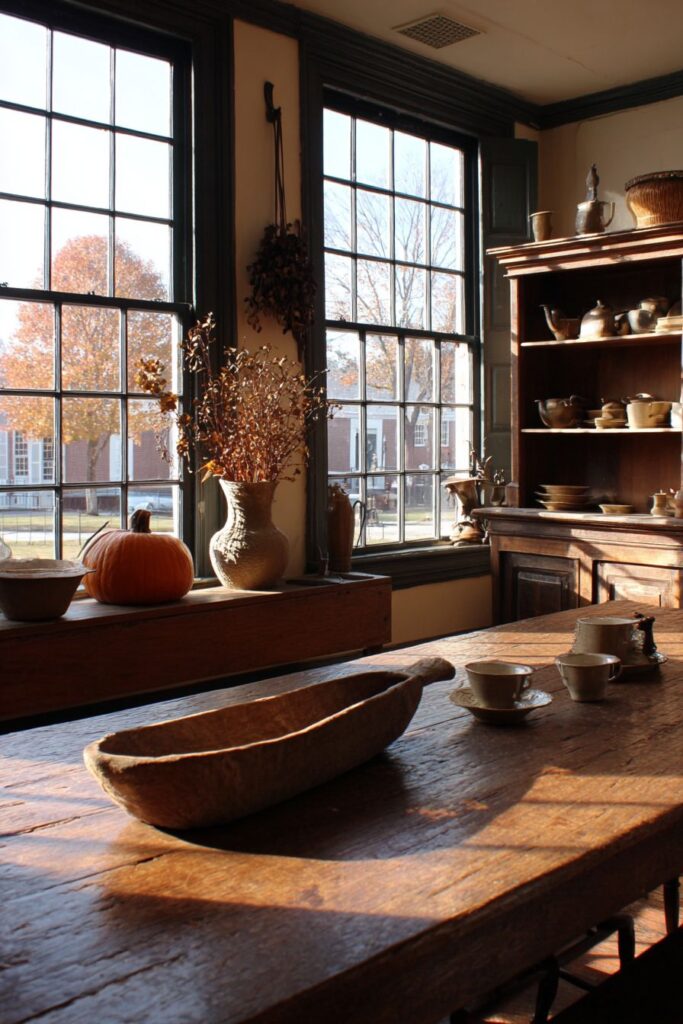
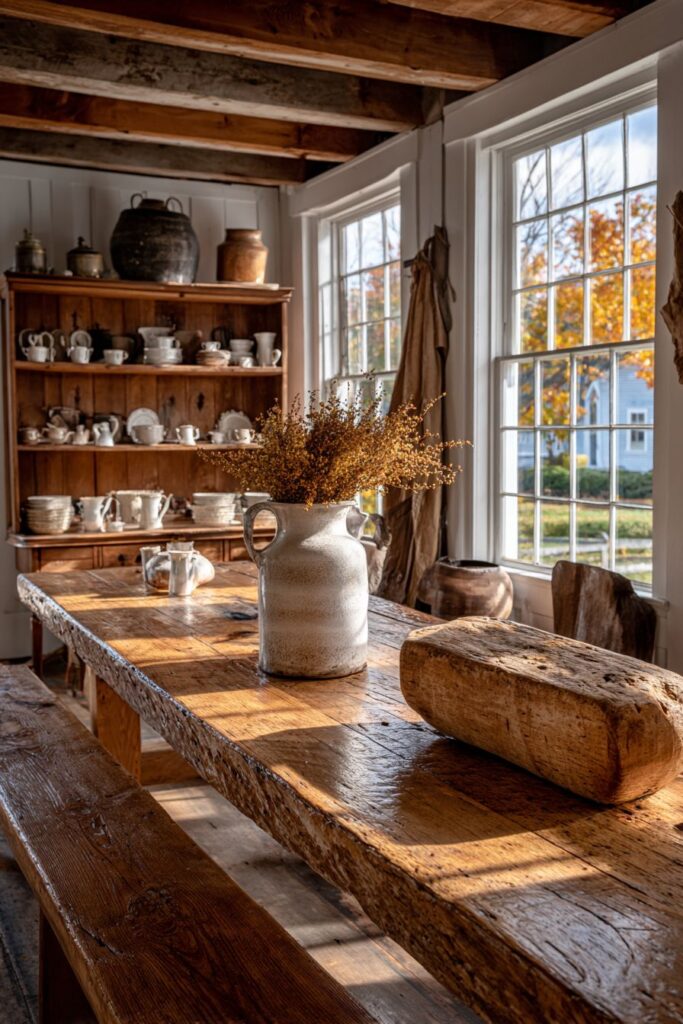
The clean, unadorned lines of a communion table design reflect the austere beauty of colonial meeting house furniture, where simplicity and functionality took precedence over decoration or ornamentation. Crafted from aged maple wood, this table embodies the colonial religious communities’ belief that beauty should emerge from honest construction and fine materials rather than elaborate carving or applied decoration. The table’s simple design creates a sense of peace and contemplation that makes every meal feel special and meaningful.
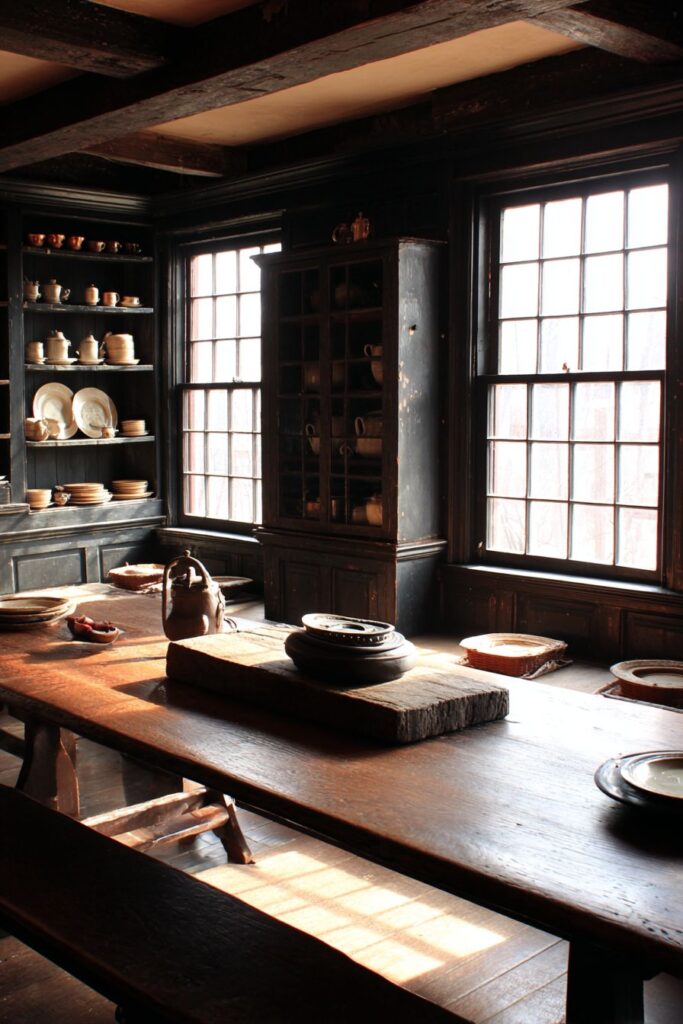
Backless benches that tuck neatly under the table when not in use demonstrate the colonial understanding of efficient space usage and multifunctional furniture design. These benches, with their clean lines and practical construction, provide flexible seating that can accommodate varying numbers of diners while disappearing completely when the dining space needs to serve other purposes. The benches’ simple beauty complements the table perfectly while maintaining the uncluttered aesthetic that characterizes this style.

A large wooden trencher serves dual purposes as both a serving piece and decorative element, its handcrafted form and natural wood tones adding visual interest without disrupting the space’s serene simplicity. This piece represents the colonial practice of finding beauty in functional objects, where everyday items were crafted with care and attention to proportion and form. The trencher’s presence on the table creates a focal point while maintaining the understated elegance that defines meeting house style.
The room includes a tall wooden cupboard with original hardware displaying ceramic crockery and wooden utensils, its simple construction and honest materials reflecting the same values expressed by the communion table and benches. Natural lighting from multi-pane windows creates a serene atmosphere that emphasizes the meeting house simplicity of colonial design, where the focus was on creating spaces that encouraged contemplation and community rather than display or ostentation.
Key Design Tips:
- Choose communion table designs for their clean lines and spiritual simplicity
- Use backless benches that tuck under tables for space-saving colonial functionality
- Display large wooden trenchers as both serving pieces and decorative elements
- Include tall cupboards with original hardware for authentic storage solutions
- Maximize natural lighting to enhance the serene, contemplative atmosphere
16. Chair-Table Convertible Colonial Innovation
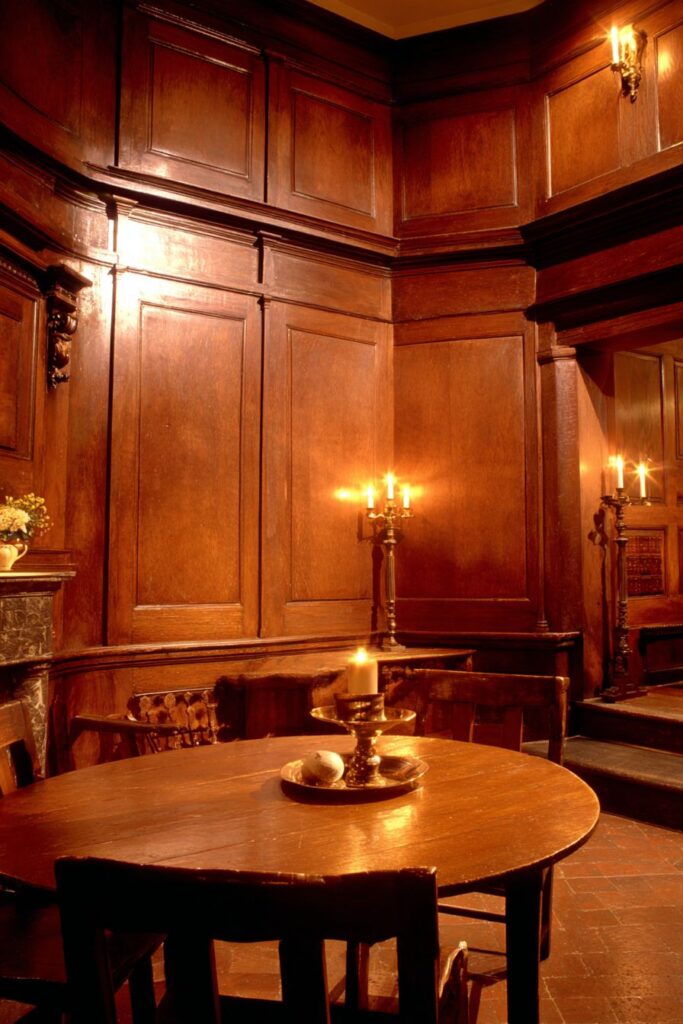
The ingenious chair-table design represents colonial furniture making at its most innovative, creating a piece that serves dual purposes in compact living spaces where every square foot mattered. When configured as a table, this remarkable piece of furniture accommodates intimate dining while taking up minimal floor space, then converts to a comfortable chair when table space is not needed. This type of convertible furniture demonstrates the colonial understanding that homes needed to serve multiple functions efficiently, especially in smaller dwellings where space was at a premium.

Simple wooden chairs positioned nearby provide additional seating when the chair-table is serving its table function, their clean lines and honest construction complementing the multifunctional centerpiece perfectly. These chairs, with their straightforward design and sturdy construction, represent the colonial preference for furniture that prioritized function and durability over elaborate decoration. Their simple beauty allows the ingenious chair-table to remain the focal point while providing necessary additional seating.
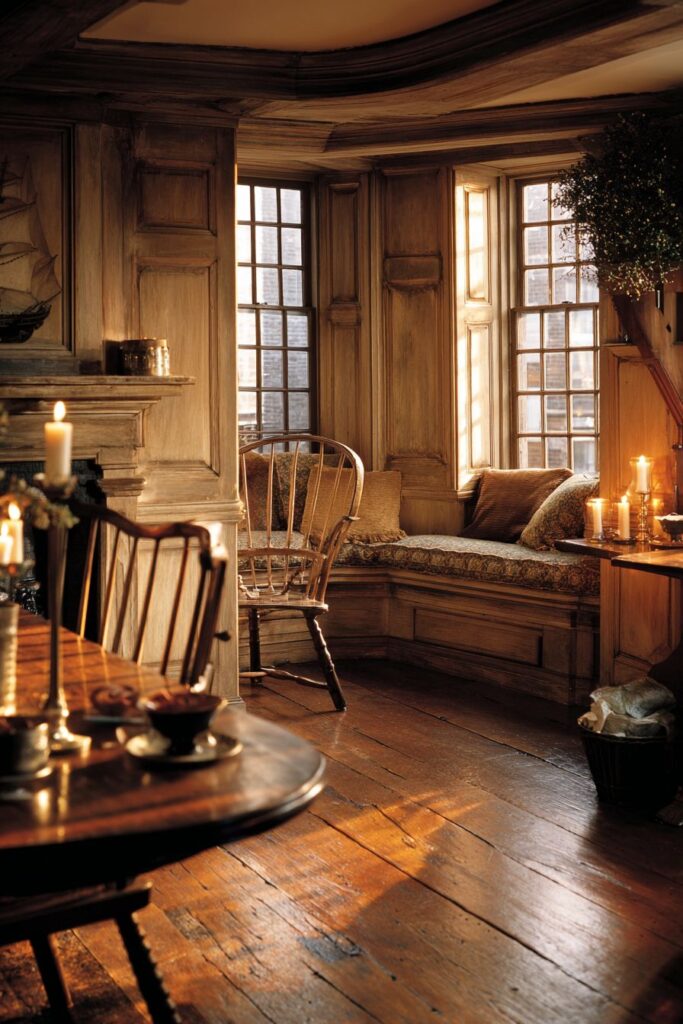
A built-in corner bench with storage provides both seating and organization solutions, its dual function exemplifying the colonial approach to furniture that needed to earn its place through multiple uses. The storage compartment beneath the bench seat would have been used to store dining linens, seasonal items, or other household necessities, making this piece both practical and space-efficient. The bench’s integration into the room’s architecture creates a seamless, built-in appearance that maximizes both seating and storage.
Colonial wood paneling with natural pine finish and traditional board-and-batten construction showcases authentic building techniques while adding visual interest and historical accuracy to the space. The natural pine finish, with its warm honey tones and visible grain patterns, creates a backdrop that celebrates the beauty of wood while maintaining the clean, uncluttered aesthetic that allows the ingenious functionality of the colonial furniture to shine. Candlelight from period-appropriate holders creates warm ambiance while highlighting the clever design solutions that make colonial furniture so enduringly appealing.
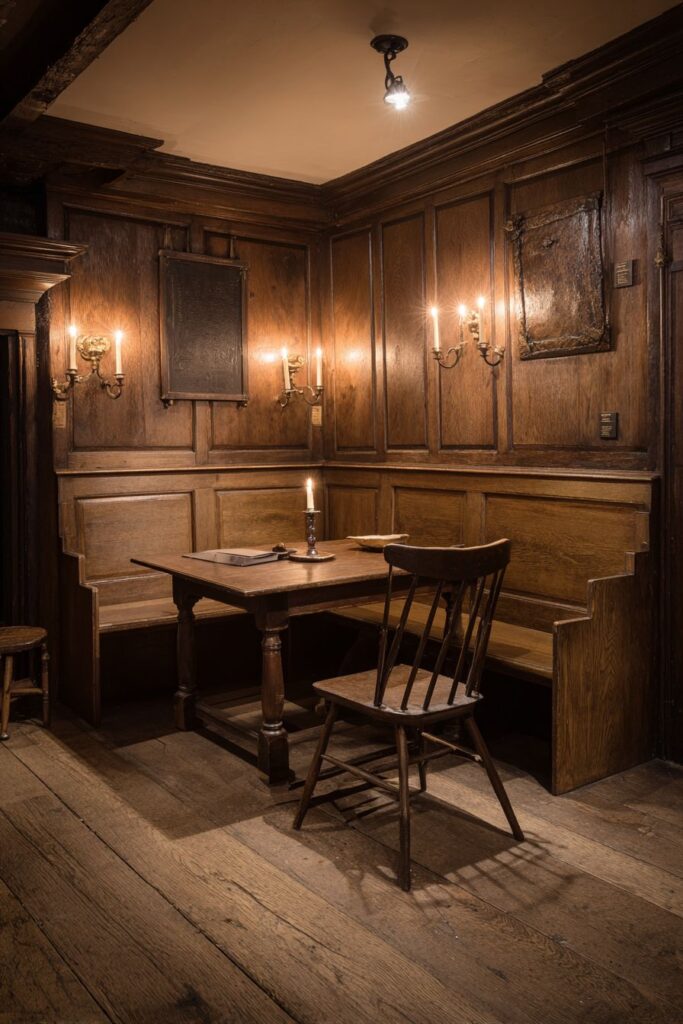
Key Design Tips:
- Choose chair-tables for ultimate space efficiency in compact colonial dining areas
- Position simple wooden chairs nearby to provide additional seating flexibility
- Install built-in corner benches with storage for maximum functionality
- Use board-and-batten paneling with natural pine finish for authentic colonial walls
- Provide candlelight to emphasize the ingenious functionality of convertible furniture
17. Refectory Table Extended Family Gatherings
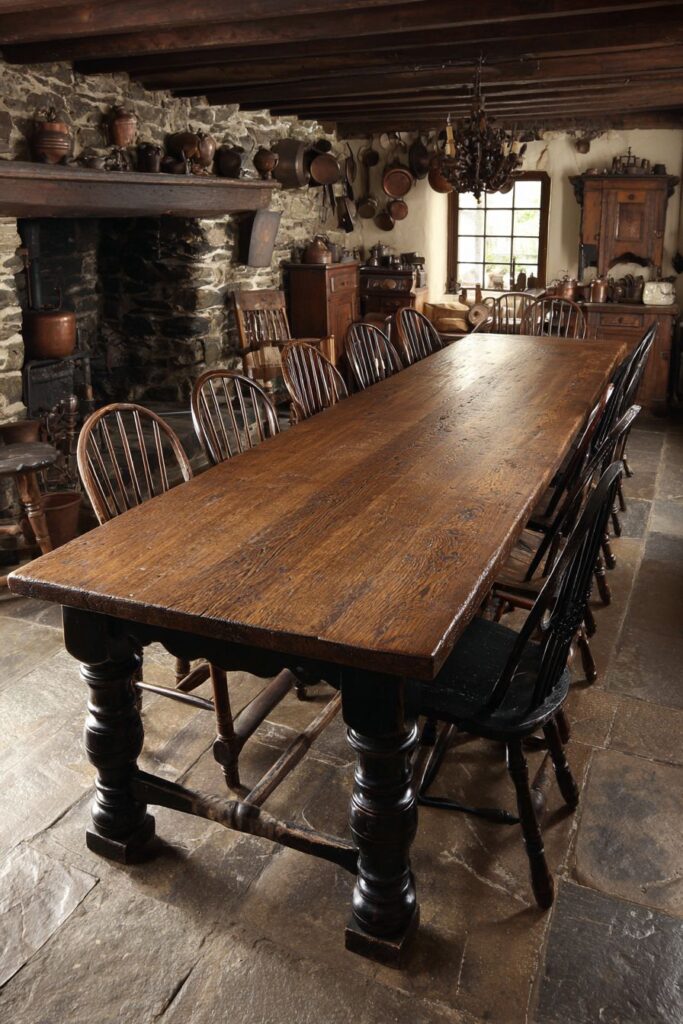
A magnificent long refectory-style table made from thick chestnut planks creates the perfect centerpiece for extended family gatherings and community meals, its generous proportions accommodating large groups while its heavy turned legs provide the structural support necessary for such an impressive piece. The thick chestnut planks, with their rich brown tones and distinctive grain patterns, create a surface that improves with age and use, developing the kind of patina and character that makes antique colonial furniture so desirable. This style of table, originally designed for monastery dining halls, brings a sense of community and abundance to colonial family dining.
The combination of different chair styles surrounding this impressive table represents the authentic colonial practice of collecting furniture over time rather than purchasing matching sets. Several ladder-back chairs, a few Windsor chairs, and simple joint stools create an eclectic mix that tells the story of a family’s furniture acquisitions over generations. This mixed approach to seating creates visual interest while demonstrating the colonial value of functionality over matching appearance, where each piece earned its place through usefulness and quality construction.
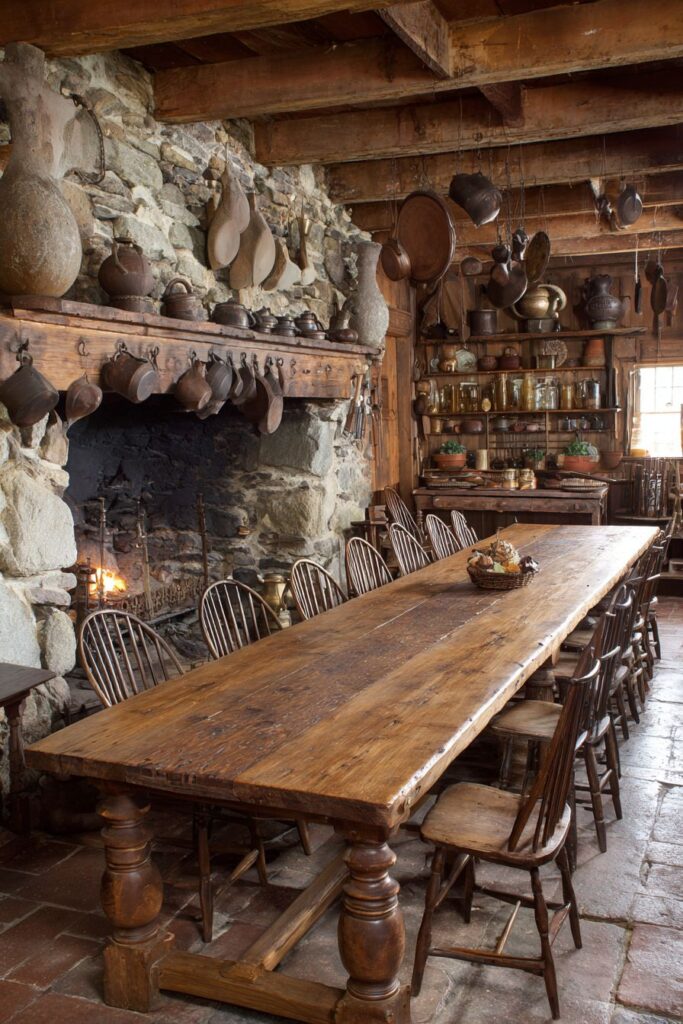
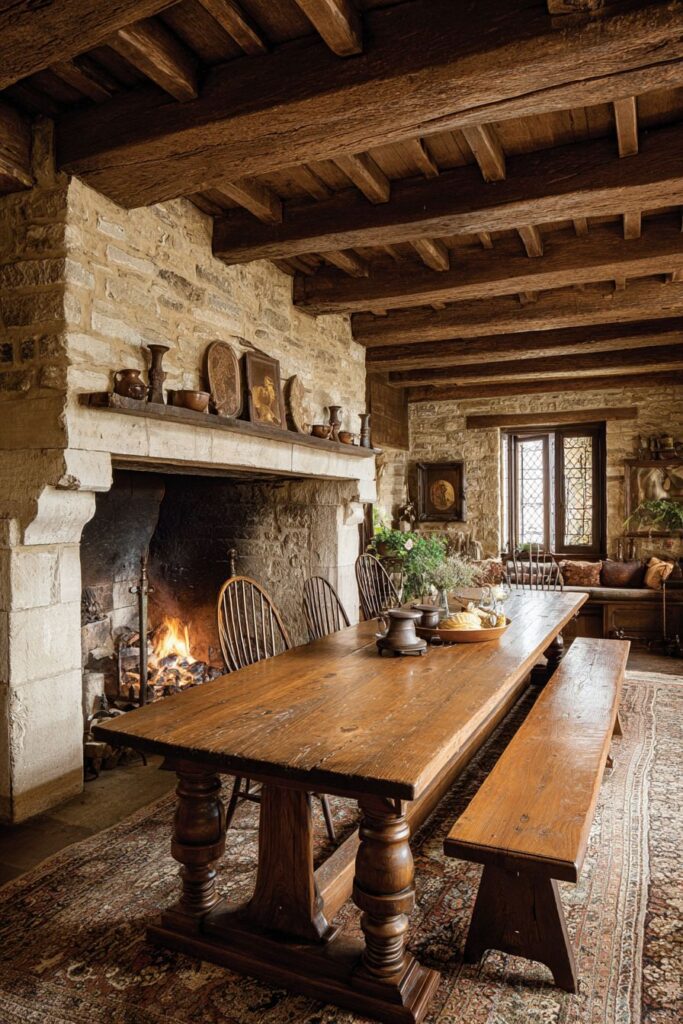
A massive stone fireplace dominates one wall, its generous proportions and traditional construction creating a focal point that anchors the entire dining space A massive stone fireplace dominates one wall, its generous proportions and traditional construction creating a focal point that anchors the entire dining space while providing both warmth and cooking capabilities. The wooden mantel, crafted from the same chestnut as the dining table, displays cooking implements and pewter serving pieces that would have been essential to colonial meal preparation. This fireplace represents the heart of colonial home life, where families gathered not only for warmth but also for the social rituals that surrounded food preparation and shared meals.
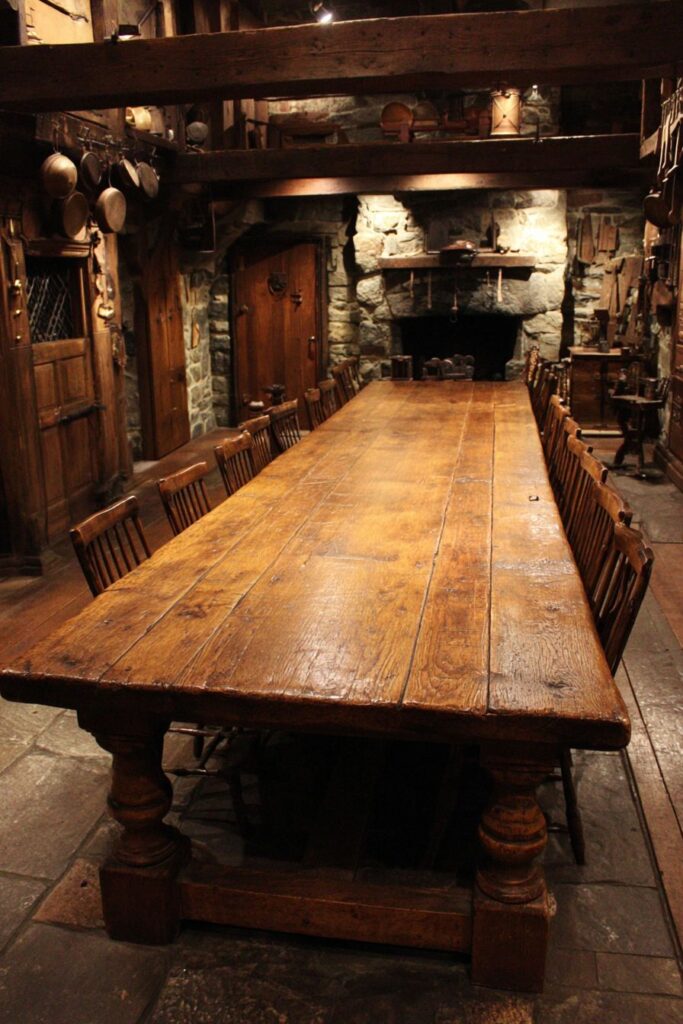
The presence of cooking implements hanging near the fireplace tells the story of colonial dining, where meals were prepared over open flames and serving pieces moved directly from cooking area to dining table. The integration of cooking and dining spaces reflects the practical colonial approach to home design, where efficiency and functionality took precedence over formal separation of activities. This arrangement creates an authentic colonial atmosphere where the entire process of meal preparation and consumption becomes part of the dining experience.
Professional interior photography captures the communal spirit and authentic mixed-furniture approach that defines colonial dining spaces, emphasizing how beauty emerged from the honest combination of functional pieces rather than coordinated design schemes. The interplay of natural light from windows and warm firelight creates an atmosphere that celebrates both the practical and social aspects of colonial dining, where meals were community events that strengthened family bonds and welcomed guests into the household circle.
Key Design Tips:
- Choose refectory tables with thick plank tops for large family gathering capacity
- Mix different period chair styles to create authentic colonial eclectic appeal
- Include massive stone fireplaces for cooking capability and social focal points
- Display cooking implements and serving pieces for functional colonial authenticity
- Integrate cooking and dining areas to reflect authentic colonial home organization
18. Cricket Table Intimate Colonial Dining
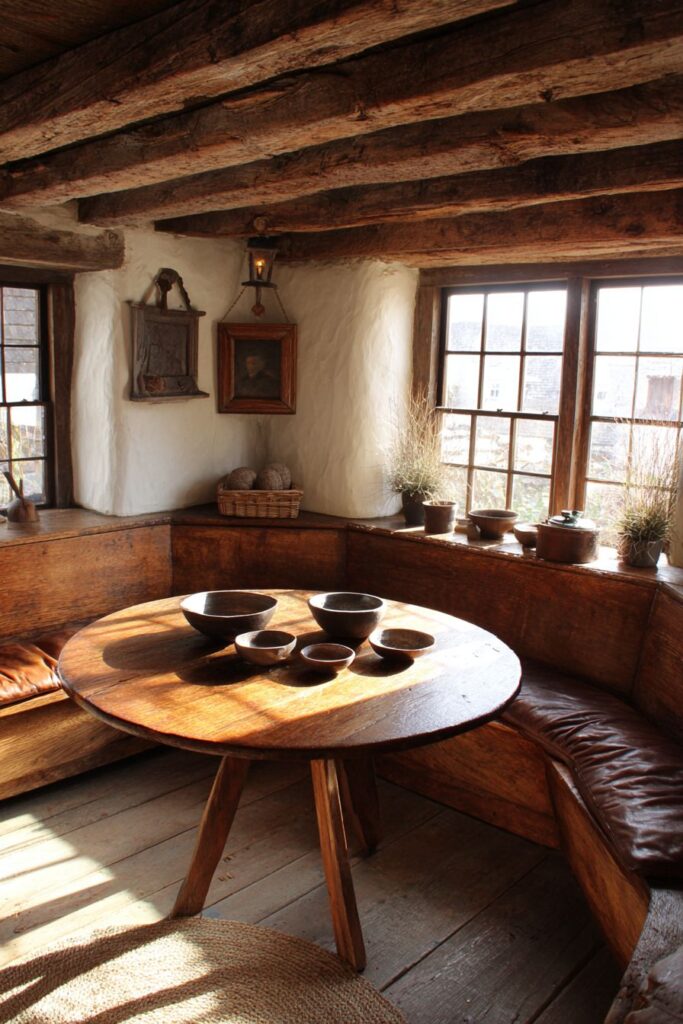
The charming proportions of a small round cricket table with three splayed legs create an intimate dining environment perfect for small families or cozy meals, its compact size and efficient design reflecting the colonial understanding that not every meal required a large gathering space. The three-leg design, both practical and aesthetically pleasing, provides excellent stability while using minimal materials, demonstrating the colonial craftsman’s ability to create furniture that was both economical and beautiful. This style of table brings warmth and intimacy to colonial dining while maintaining the authentic character that makes the style so appealing.
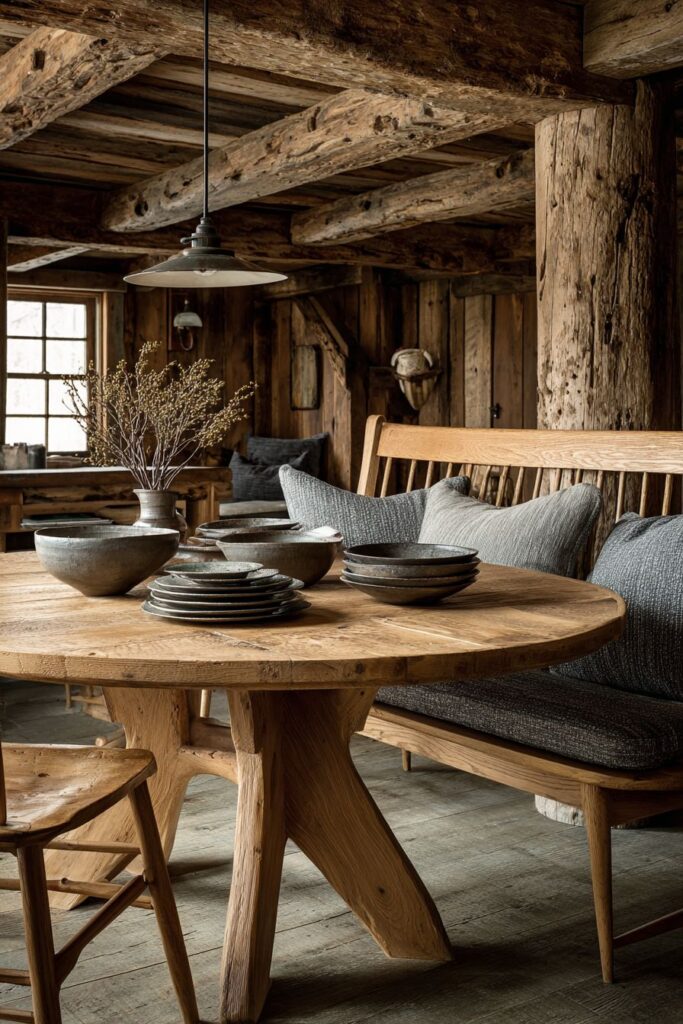
A wooden settle with high back provides seating for multiple people while offering protection from drafts, its generous proportions and solid construction creating a sense of security and comfort that was essential in colonial homes. The high back design serves both practical and social functions, providing physical comfort while creating a sense of enclosure that encourages intimate conversation. This piece represents the colonial understanding that furniture should serve multiple purposes, providing seating, draft protection, and social facilitation in a single well-designed piece.
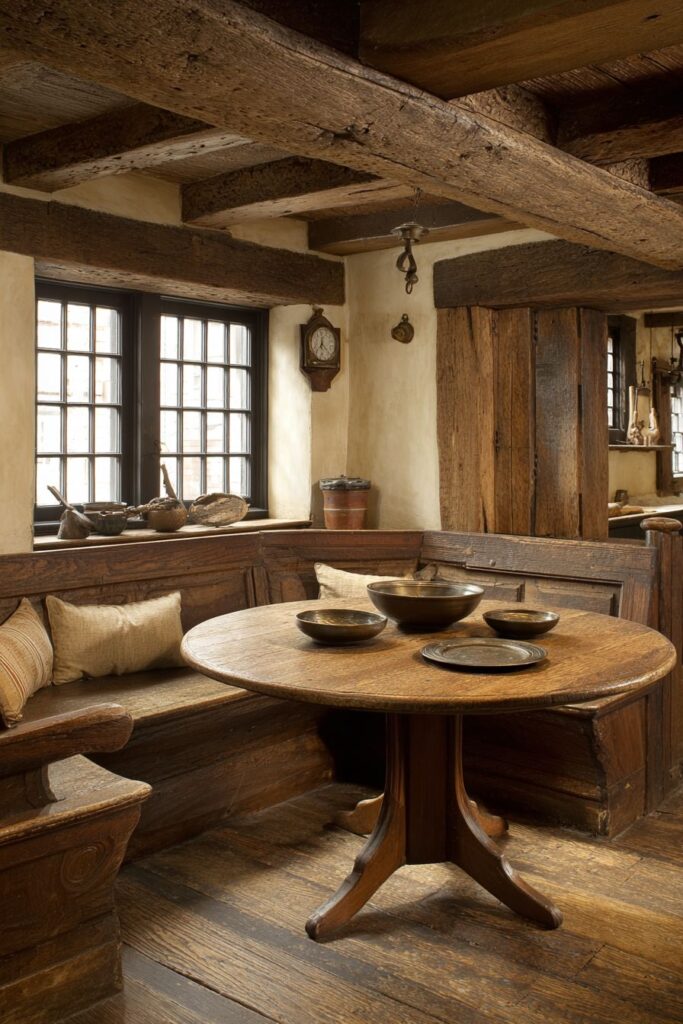
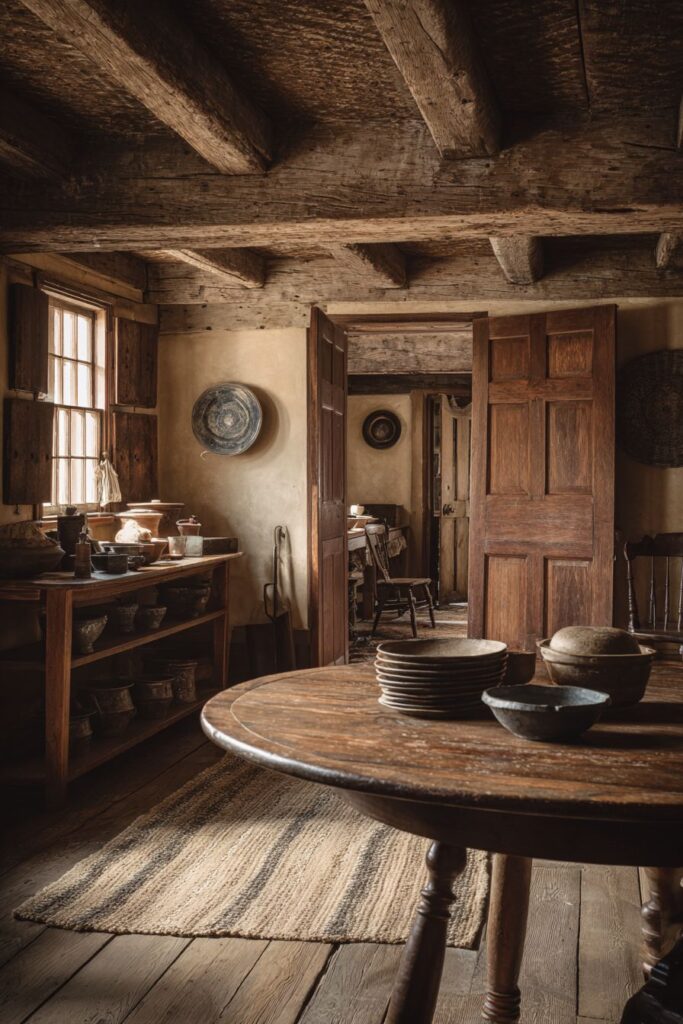
The room showcases original hand-hewn ceiling beams with adze marks and natural irregularities that authenticate the colonial construction methods and celebrate the handcrafted quality that defines the style. These beams, with their visible tool marks and natural variations, tell the story of the craftsmen who shaped them and add architectural interest that cannot be replicated by modern manufacturing methods. The honest display of construction techniques reflects colonial values that found beauty in structural truth and skilled craftsmanship.
Pewter plates and wooden bowls arranged on the table surface create a simple yet authentic table setting that celebrates colonial material preferences and dining customs. The combination of pewter and wood represents the colonial palette of natural materials that aged beautifully and could be passed down through generations. Natural lighting emphasizes the handcrafted details and tool marks that authenticate the colonial craftsmanship, creating an atmosphere that celebrates both the humble functionality and enduring beauty of traditional colonial design.
Key Design Tips:
- Use cricket tables with three splayed legs for intimate colonial dining experiences
- Include wooden settles with high backs for draft protection and multiple seating
- Showcase hand-hewn beams with visible tool marks for authentic colonial character
- Set tables simply with pewter plates and wooden bowls for period accuracy
- Emphasize natural lighting to highlight handcrafted details and authentic aging
19. Draw-Leaf Extension Table Colonial Adaptability
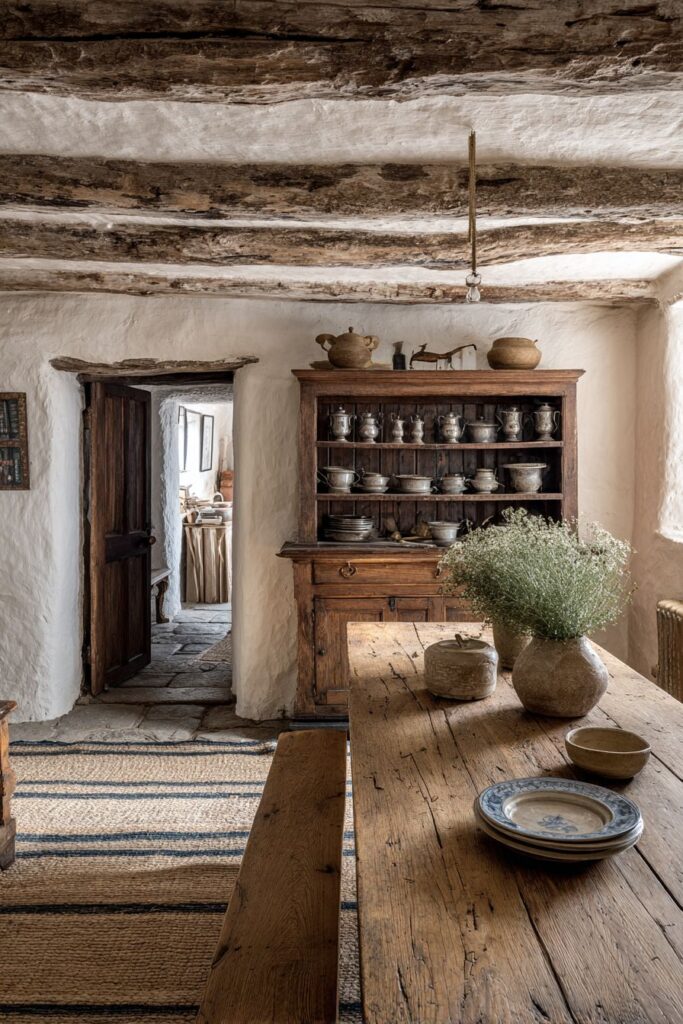
The ingenious draw-leaf extension mechanism demonstrates colonial solutions for accommodating varying group sizes, allowing families to expand their dining capacity when needed while maintaining a more intimate scale for everyday meals. This oak table represents the colonial understanding that furniture needed to adapt to the changing needs of family life, from quiet weeknight dinners to large holiday gatherings. The extension mechanism, operated by drawing out leaves hidden beneath the main table surface, showcases the sophisticated joinery skills of colonial craftsmen who created furniture that was both mechanically sound and aesthetically pleasing.
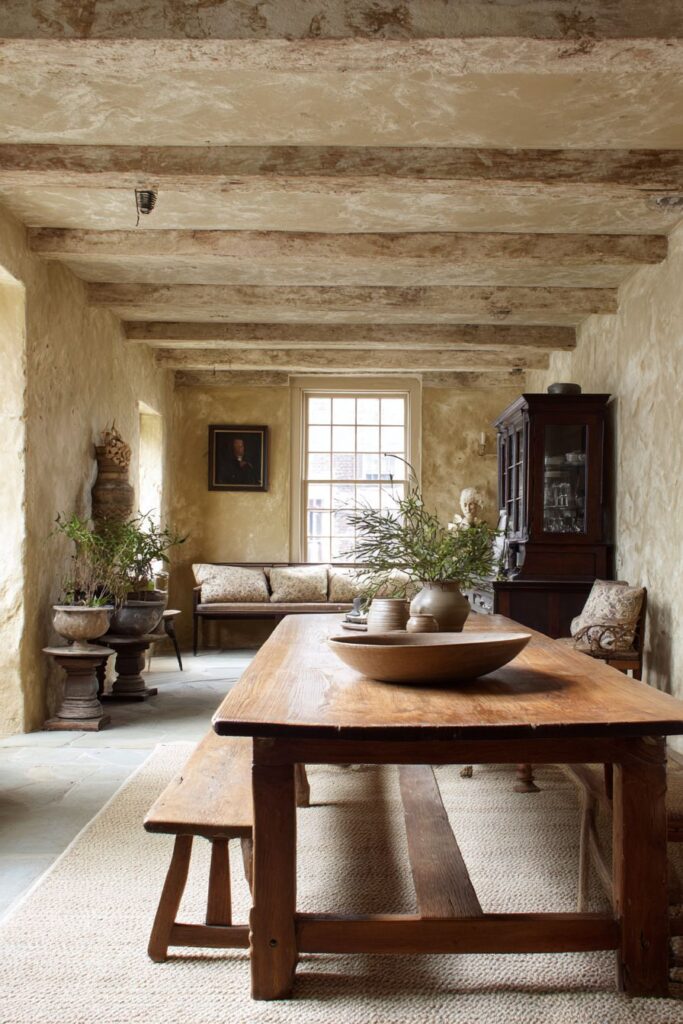
The room features a magnificent court cupboard displaying the family’s finest pewter and ceramic pieces arranged by size and function, its impressive proportions and elaborate construction indicating the wealth and status of the household. The court cupboard, with its multiple shelves and display areas, serves both practical storage needs and social functions, allowing families to showcase their best possessions for guests and special occasions. The arrangement of pewter and ceramic pieces by size and function reflects colonial organizing principles that valued both beauty and practicality in household displays.
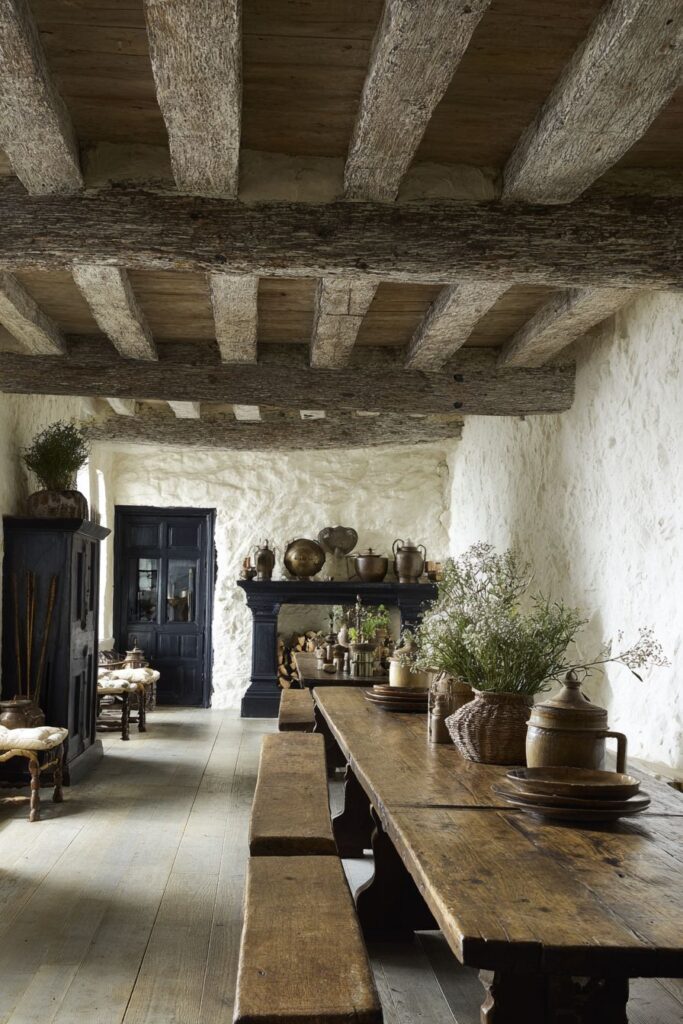
Simple wooden forms, or backless benches, provide flexible seating options that can be easily moved and reconfigured as the table size changes, demonstrating the colonial preference for adaptable furniture solutions. These forms, with their straightforward construction and honest materials, complement the draw-leaf table perfectly while providing the flexibility necessary for varying group sizes. The simplicity of these seating pieces allows the sophisticated extension table mechanism to command attention while ensuring adequate seating for all occasions.
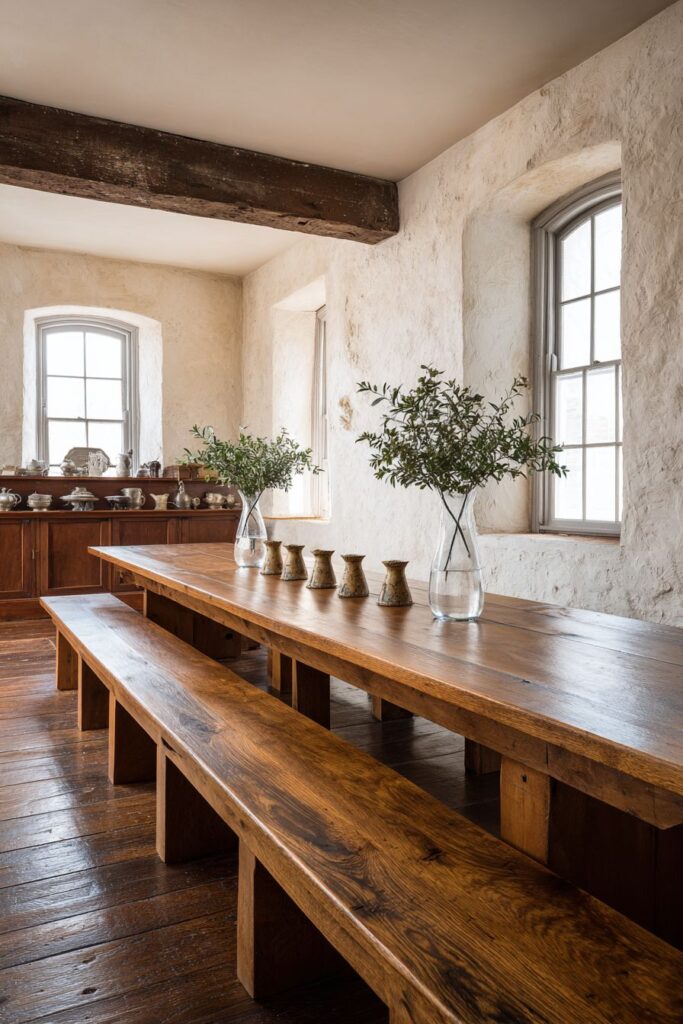
Colonial architectural details including a summer beam across the ceiling and plastered walls with natural texture variations add authentic historical character while showcasing traditional building techniques. The summer beam, a heavy structural timber that supports the floor above, becomes a decorative element that adds visual weight and historical authenticity to the space. The natural texture variations in the plaster walls reflect the handmade quality that gives colonial interiors their distinctive character and visual interest.
Key Design Tips:
- Choose draw-leaf tables for flexible dining capacity in colonial homes
- Display finest pieces in court cupboards arranged by size and function
- Use simple wooden forms or benches for adaptable seating solutions
- Include summer beams and hand-plastered walls for architectural authenticity
- Prioritize furniture that adapts to changing family and entertaining needs
20. Traditional Tavern Table Windsor Settee Comfort
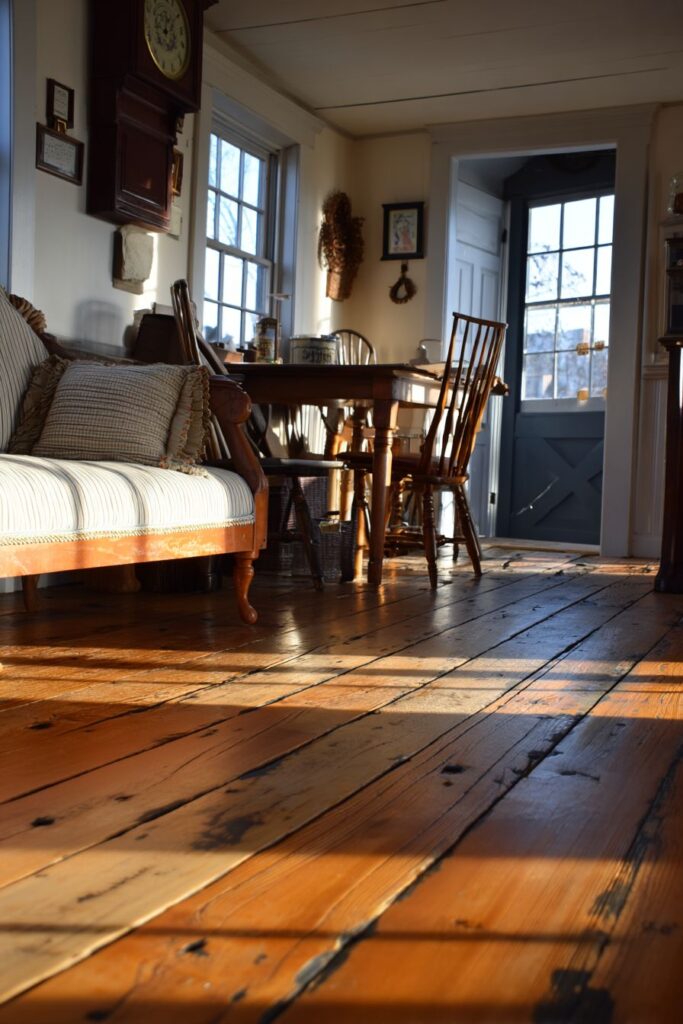
The well-worn tavern table with shoe-foot base and scrubbed pine top embodies decades of family use and authentic colonial character, its surface bearing the honest marks of countless meals and gatherings that tell the story of family life over generations. The shoe-foot base design, both sturdy and elegant, provides excellent stability while showcasing the colonial craftsman’s attention to both function and form. The scrubbed pine top, worn smooth by years of use and cleaning, creates a surface that is both practical and beautiful, demonstrating how colonial furniture improved with age and use rather than deteriorating.

A Windsor settee provides generous seating for multiple family members while maintaining the authentic colonial aesthetic that values comfort and craftsmanship in equal measure. This piece, essentially an extended Windsor chair, demonstrates the colonial ability to adapt successful designs for different purposes and needs. Several individual Windsor chairs with bamboo-turned spindles complement the settee perfectly, their delicate turnings and graceful proportions creating seating that is both comfortable and visually appealing.
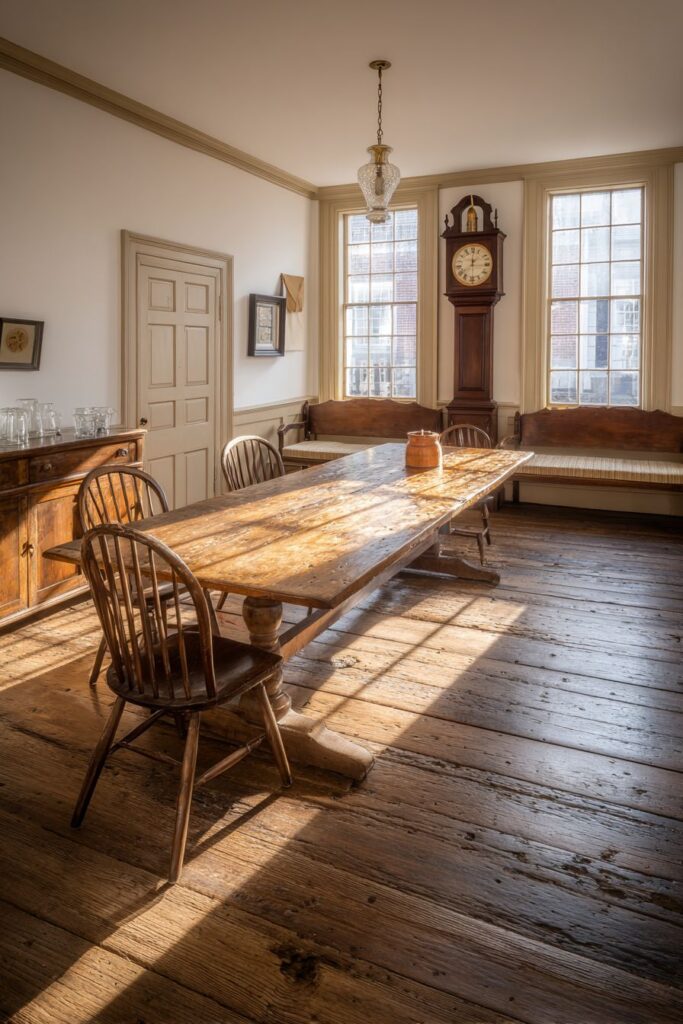
A tall case clock stands majestically in the corner, its presence adding both functional timekeeping and vertical architectural interest to the dining space. This piece represents the pinnacle of colonial furniture making, where clockmaking and cabinetmaking skills combined to create furniture that was both highly functional and aesthetically sophisticated. The hanging salt box mounted on the nearby wall provides practical storage for this essential colonial commodity while adding authentic period detail that enhances the room’s historical character.
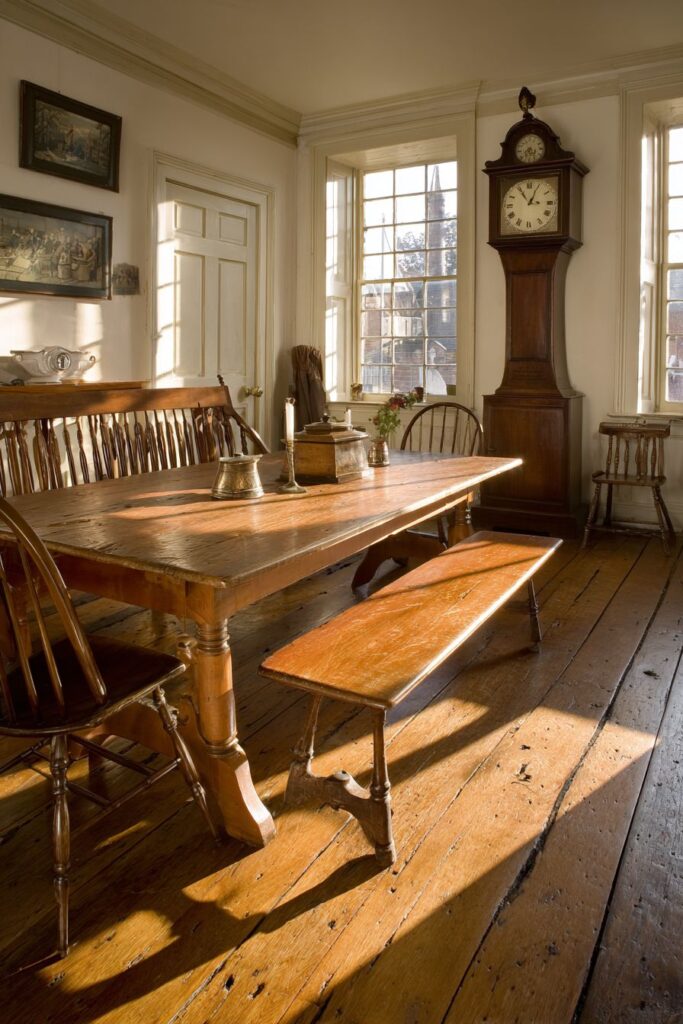
Wide-board pine flooring with natural patina and simple white lime-wash walls create a backdrop that allows the rich wood tones and authentic colonial furnishings to command attention while maintaining the clean, uncluttered aesthetic that defines the finest colonial interiors. Golden afternoon light creates warm shadows that emphasize the lived-in authenticity and enduring appeal of traditional colonial dining spaces, where beauty emerged from the honest use of quality materials and skilled craftsmanship rather than elaborate decoration or artificial enhancement.
Key Design Tips:
- Choose tavern tables with shoe-foot bases for authentic colonial dining character
- Include Windsor settees for generous family seating with period authenticity
- Position tall case clocks for functional timekeeping and vertical visual interest
- Install hanging salt boxes for practical storage and authentic colonial details
- Use wide-board pine flooring with natural patina for warm, authentic foundations
Why These Colonial Dining Room Designs Represent the Best of American Heritage
These twenty colonial dining room designs showcase the very best of American furniture making and interior design traditions, representing a style that has endured for centuries because of its perfect balance of beauty, functionality, and authenticity. Each design demonstrates different aspects of colonial excellence, from the sophisticated joinery techniques that created furniture built to last generations to the ingenious space-saving solutions that made small homes highly functional. The colonial approach to dining room design prioritized quality materials, honest construction, and timeless aesthetics that improve rather than deteriorate with age.
The furniture pieces featured in these designs represent the pinnacle of American craftsmanship, where skilled artisans created pieces that served both practical and aesthetic functions while telling the story of early American life. From the dramatic grain patterns of tiger maple to the rich, warming tones of cherry wood that deepen with age, colonial furniture makers understood how to select and work with materials that would become more beautiful over time. The joinery techniques, including mortise and tenon construction, dovetail drawers, and hand-forged hardware, create furniture that maintains its structural integrity for centuries while developing the kind of patina and character that modern manufacturing cannot replicate.
These designs excel because they demonstrate the colonial understanding that dining rooms should serve as the heart of family life, where meals become opportunities for connection, conversation, and community building. The flexible furniture solutions, from drop-leaf tables that expand for gatherings to convertible chair-tables that maximize small spaces, show how colonial designers created environments that could adapt to changing family needs while maintaining their essential character and functionality. The integration of storage solutions, from built-in cupboards to corner cabinets with chicken wire doors, demonstrates the colonial ability to combine beauty with practicality in ways that enhance rather than compromise the overall design aesthetic.
The material palette featured in these colonial dining rooms represents the finest traditions of American design, where natural materials like wood, pewter, iron, and natural fibers create environments that feel both sophisticated and approachable. The colonial preference for materials that age gracefully means that these dining rooms become more beautiful over time, developing the kind of authentic character that cannot be artificially created. The color schemes, from deep forest greens and barn reds to the warm cream tones of milk paint, reflect the colonial connection to the natural landscape while creating interiors that feel both historically accurate and timelessly appealing.
These dining room designs represent the best of colonial style because they demonstrate how authentic historical design can enhance contemporary living while maintaining its essential character and integrity. The emphasis on quality over quantity, durability over fashion, and functionality over pure decoration creates dining environments that serve modern families well while connecting them to the rich heritage of American craftsmanship and design excellence. Each piece of furniture, every architectural detail, and all the decorative elements work together to create spaces that honor the past while serving the present, making colonial dining rooms enduringly popular among homeowners who value authenticity, quality, and timeless beauty.
Conclusion
Colonial dining rooms represent far more than just a decorative style—they embody a philosophy of living that values quality, authenticity, and the enduring beauty that emerges from honest materials and skilled craftsmanship. Throughout these twenty distinct designs, we’ve explored how colonial aesthetics create dining environments that serve as true gathering places for families, where the warmth of natural wood, the glow of pewter, and the comfort of handcrafted furniture combine to create spaces that feel both historically significant and wonderfully livable.
The enduring appeal of colonial dining rooms lies in their ability to balance sophistication with approachability, creating spaces that feel both special enough for important gatherings and comfortable enough for everyday family meals. Whether you’re drawn to the intimate charm of a cricket table with Windsor chairs or the grand communal spirit of a refectory table surrounded by mixed period seating, colonial design offers solutions that enhance both the functional and emotional aspects of dining. These spaces remind us that the best dining rooms are those that encourage lingering conversations, strengthen family bonds, and create memories that last for generations.
As you consider incorporating colonial elements into your own dining space, remember that authenticity doesn’t require perfection or complete period accuracy. The colonial spirit can be captured through careful attention to natural materials, honest construction, and the kind of functional beauty that makes everyday objects worthy of display and admiration. Start with one authentic piece—perhaps a handcrafted wooden table or a collection of pewter serving pieces—and build your colonial dining room gradually, allowing each addition to enhance and complement what came before. In this way, you’ll create a dining environment that honors the past while serving your contemporary lifestyle, proving that the best design principles are truly timeless.
"As an Amazon Associate, I earn from qualifying purchases."
