
Colonial dining rooms evoke a sense of timeless elegance and historical charm that transcends modern design trends. These spaces celebrate the architectural heritage of early American settlers, combining functional simplicity with refined craftsmanship. The beauty of colonial design lies in its ability to create warm, inviting spaces that honor tradition while accommodating contemporary lifestyles.
Understanding how to properly decorate a colonial dining room requires appreciation for authentic period details and classic design principles. This style emphasizes natural materials, symmetrical arrangements, and purposeful ornamentation that never feels excessive. Whether you’re restoring a historic home or incorporating colonial elements into a modern space, the key is balancing authenticity with livability.
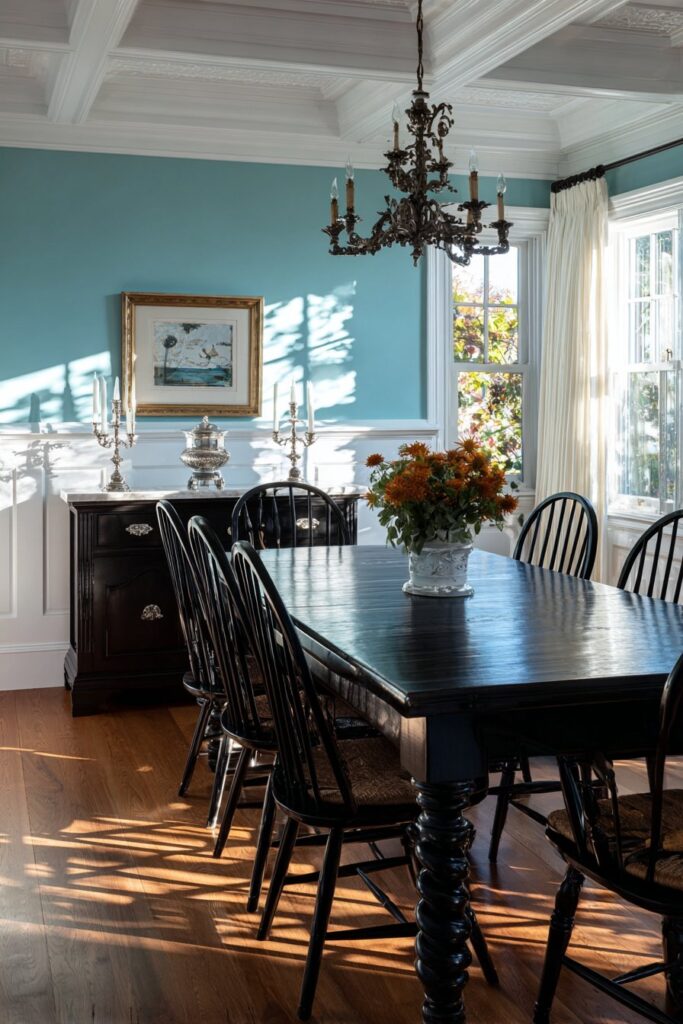
This comprehensive guide explores essential elements of colonial dining room design, from furniture selection to color palettes, lighting choices, and decorative accents. You’ll discover how to create a space that honors 18th-century aesthetics while serving as a functional gathering place for family meals and entertaining. Each section provides practical insights to help you achieve an authentic colonial atmosphere that feels both historically accurate and comfortably contemporary.
1. Choose Authentic Colonial Furniture Pieces
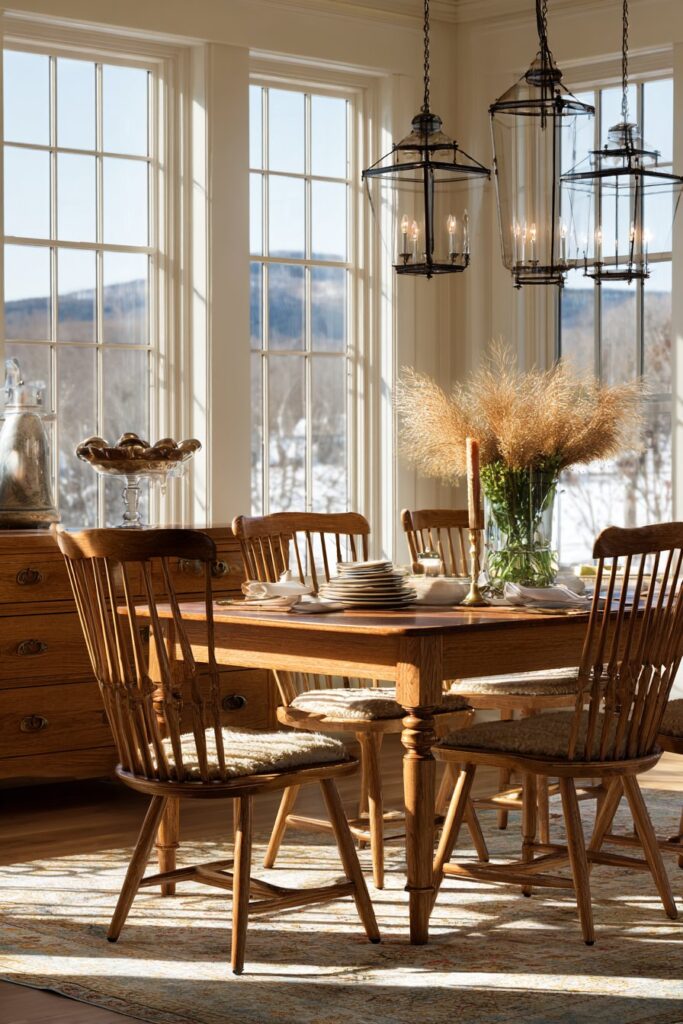
The foundation of any colonial dining room begins with selecting period-appropriate furniture that reflects craftsmanship from the 1700s. Colonial furniture emphasizes solid wood construction, particularly cherry, maple, oak, and mahogany. These pieces feature clean lines, minimal ornamentation, and functional design that has endured for centuries.
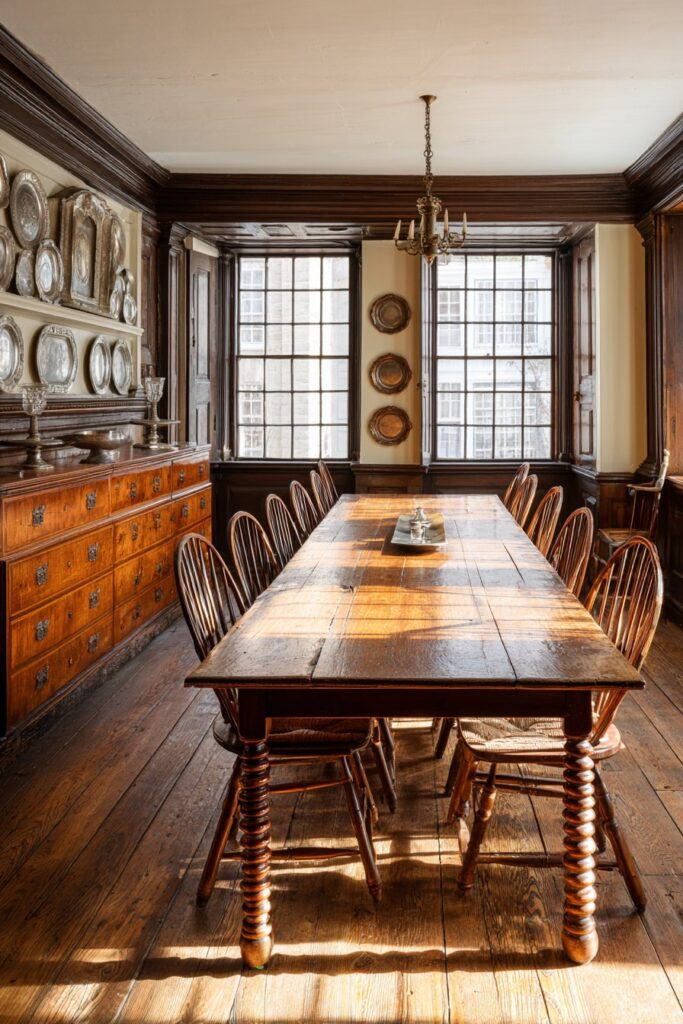
Your dining table should serve as the room’s centerpiece, preferably a rectangular or oval design with turned legs and simple apron details. Look for tables made from single wood species without veneer, as colonists valued honest construction. The wood should display natural grain patterns and warm patina that develops over time. Avoid ultra-modern finishes or distressed treatments that appear artificially aged.
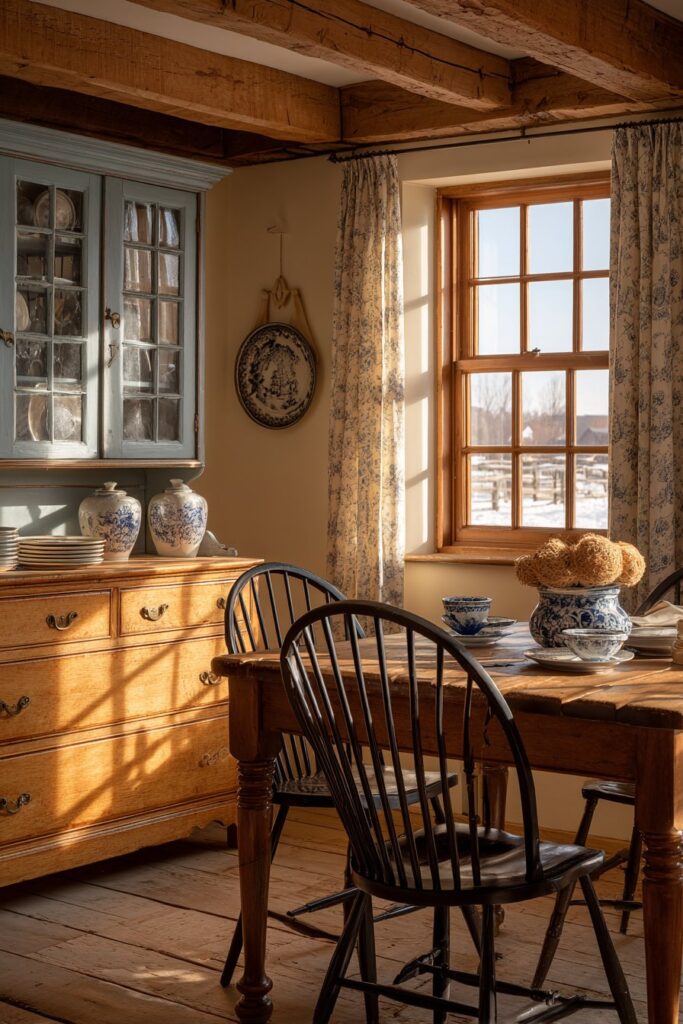
Complement your table with ladder-back or Windsor chairs that showcase traditional joinery techniques. These seating options typically feature rush or woven seats and subtly curved backs for comfort. A sideboard or hutch provides essential storage while displaying pewter, china, or other period-appropriate serving pieces. Select pieces with brass hardware and dove-tailed drawer construction for authenticity.
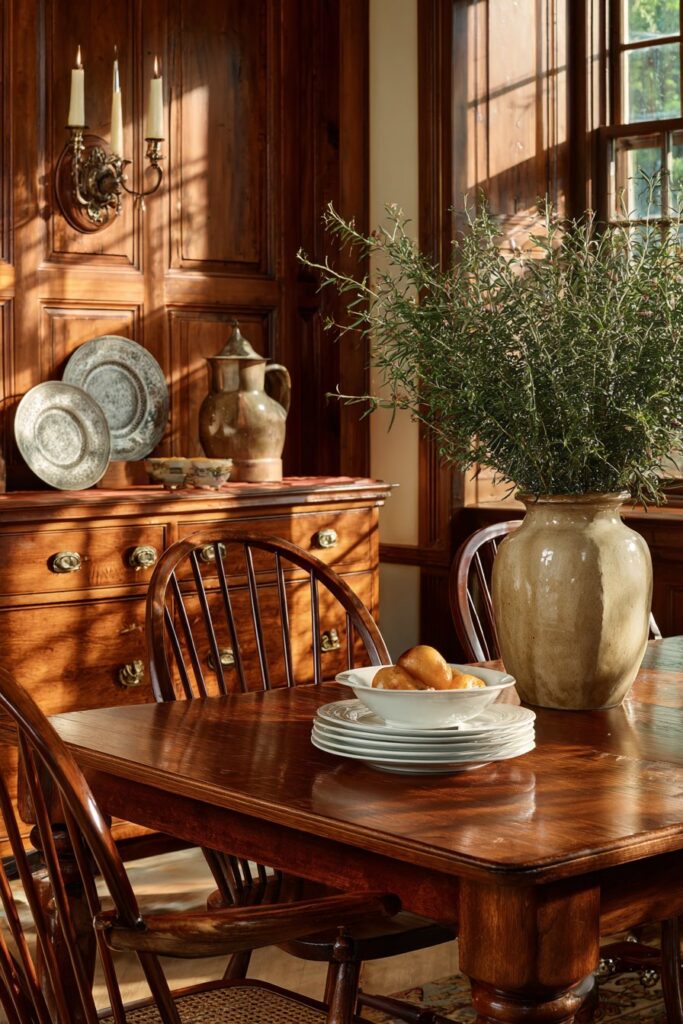
- Invest in solid wood furniture made from cherry, maple, or mahogany for lasting quality
- Choose tables with turned legs and simple apron details rather than ornate carvings
- Select Windsor or ladder-back chairs with woven rush seats for authentic seating
- Add a sideboard or hutch with brass hardware for storage and display
- Ensure all furniture pieces share similar wood tones for visual cohesion
- Avoid mixing colonial furniture with modern or contemporary styles
2. Implement Traditional Color Palettes
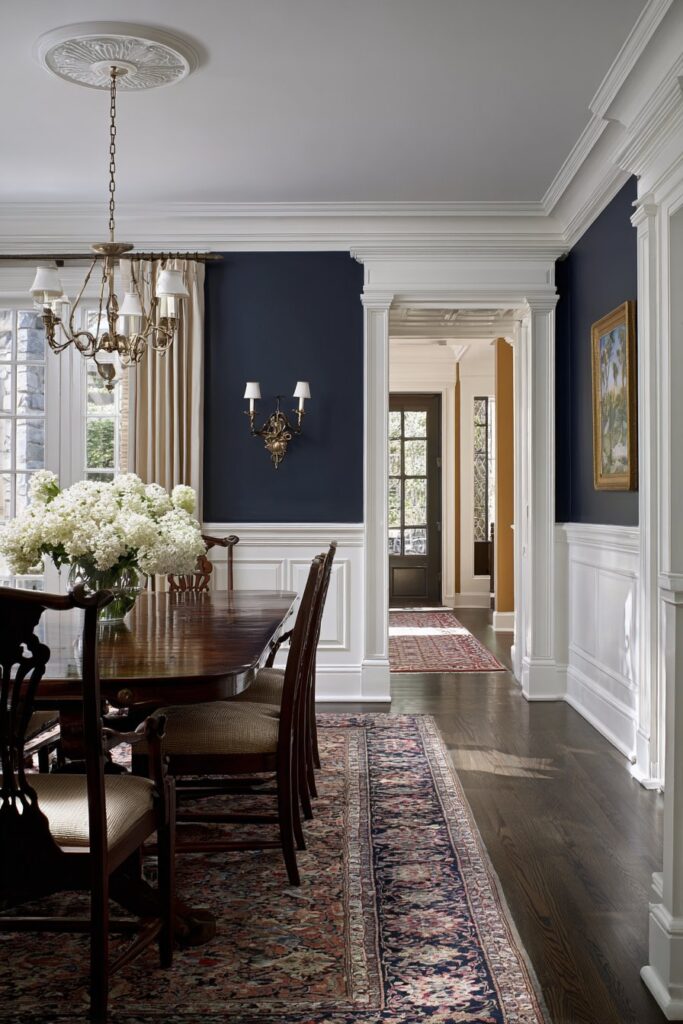
Colonial color schemes draw inspiration from natural pigments available to early American settlers, creating spaces that feel grounded and historically accurate. These palettes favor muted, earthy tones rather than bright or synthetic-looking colors. The most authentic colonial dining rooms utilize deep reds, warm golds, forest greens, and rich navy blues alongside neutral foundations.
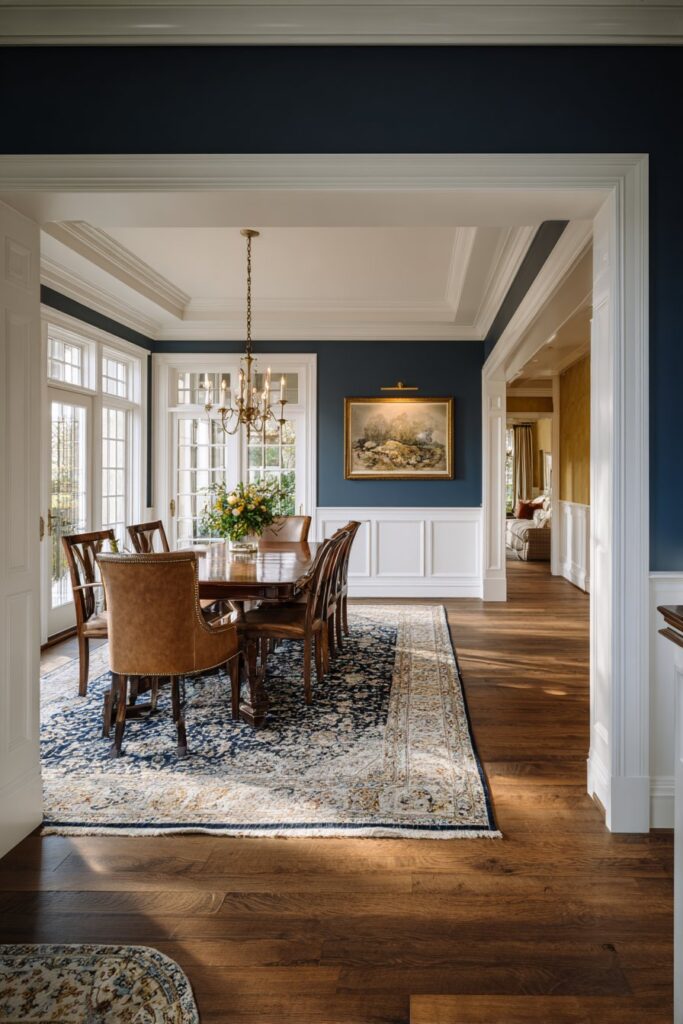
Wall colors should establish a sophisticated backdrop for your dining furniture and accessories. Consider Williamsburg colors like colonial blue, tavern ochre, or oyster white that were popular in 18th-century homes. These historically accurate hues create depth without overwhelming the space. Many paint manufacturers offer colonial color collections specifically formulated to match period paint analyses from historic properties.
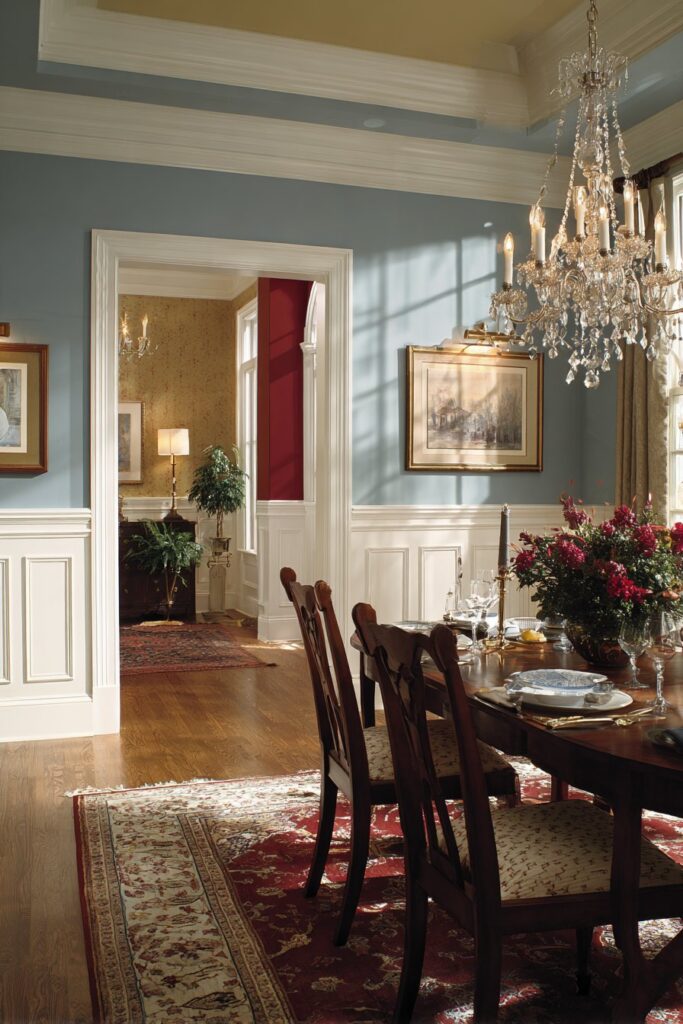
Trim work traditionally appears in contrasting white or cream to highlight architectural details like wainscoting, crown molding, and window casings. This contrast adds visual interest while emphasizing the room’s structural elements. Floor colors typically showcase natural wood tones in medium to dark stains, or painted finishes in dark green, red, or black for less formal colonial homes.
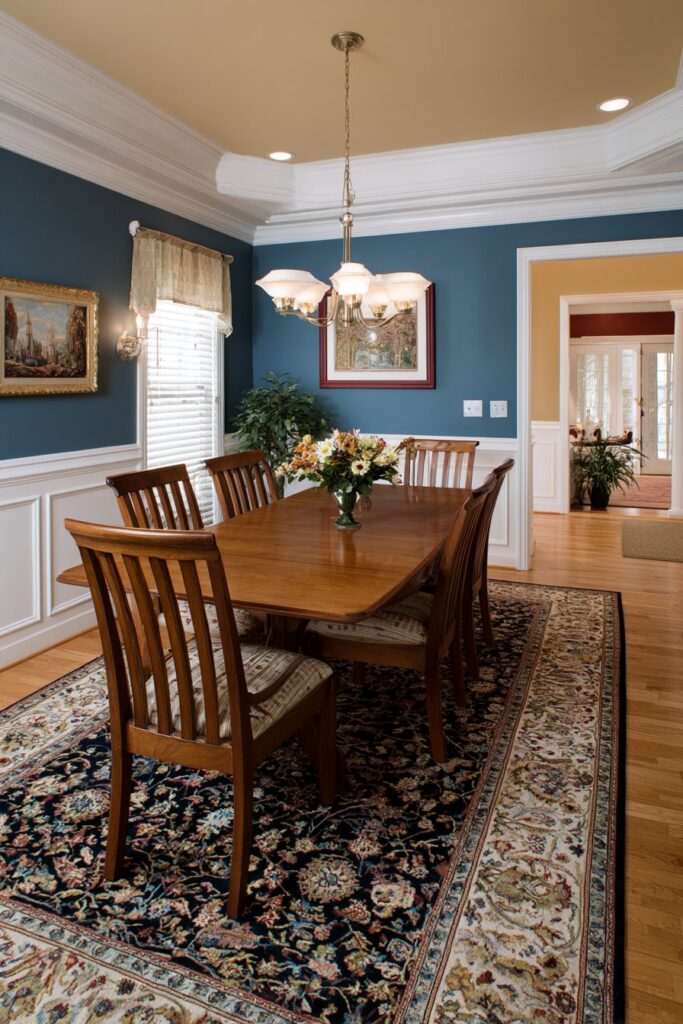
- Paint walls in authentic colonial colors like Williamsburg blue, brick red, or butter yellow
- Use white or cream trim to create contrast and highlight architectural details
- Apply muted, earthy tones derived from natural pigments rather than bright modern colors
- Consider document paint colors researched from historic colonial properties
- Maintain consistency with adjacent rooms to ensure smooth visual transitions
- Test paint samples in different lighting conditions before committing to final colors
3. Install Period-Appropriate Lighting Fixtures
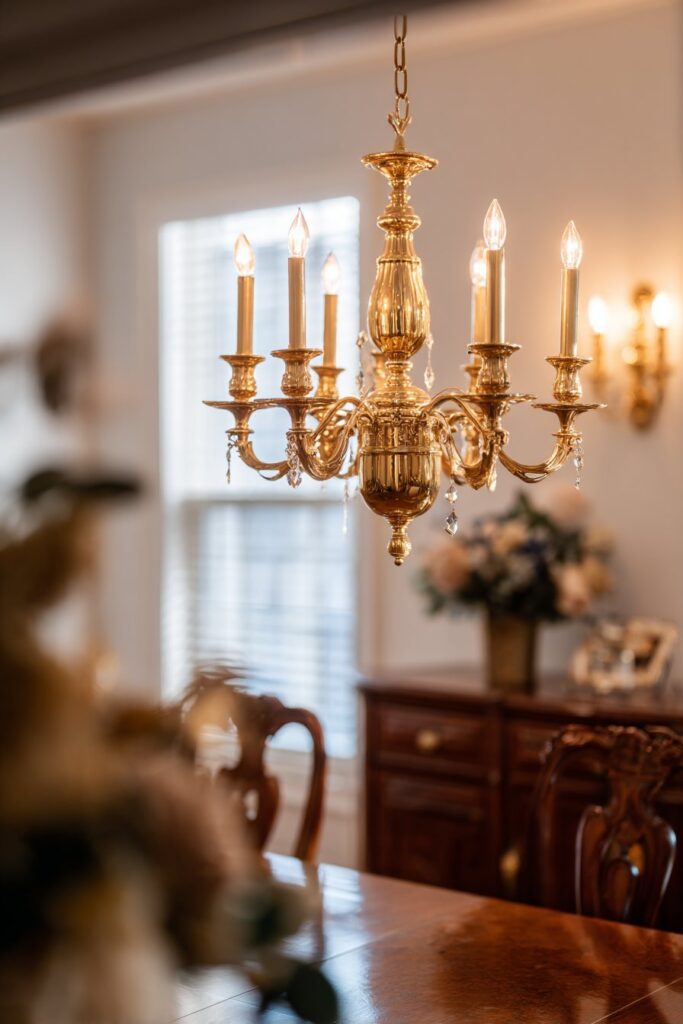
Lighting in colonial dining rooms requires careful attention to historical authenticity while meeting modern functional needs. Colonial homes originally relied on candlelight, lanterns, and natural sunlight, creating warm, intimate atmospheres. Today’s colonial dining rooms can achieve similar ambiance through thoughtfully selected reproduction fixtures that honor period design.
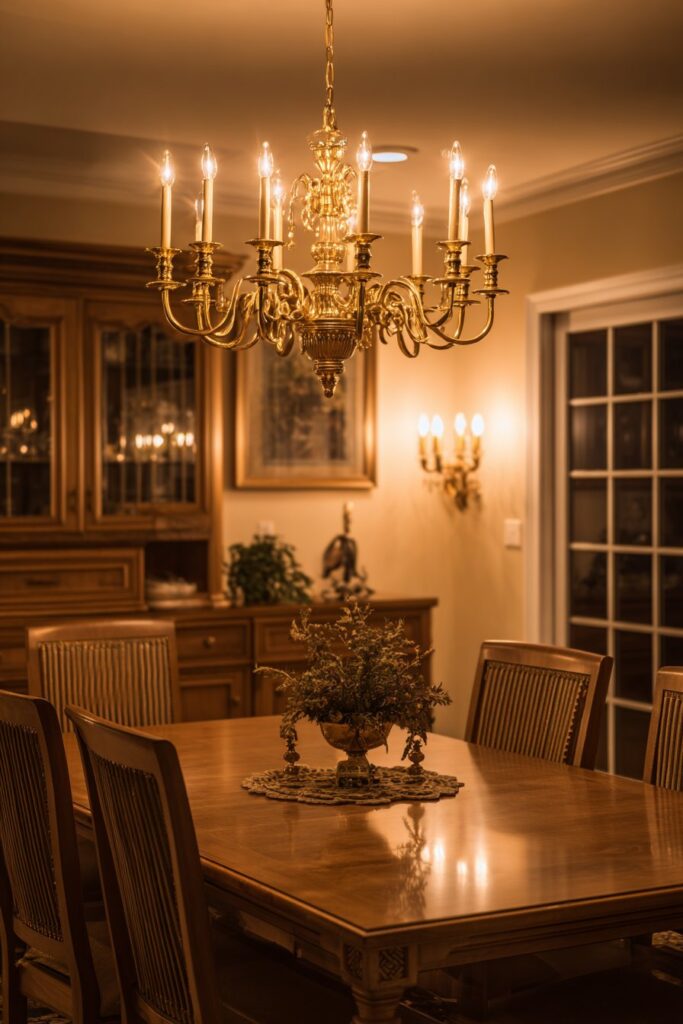
A central chandelier serves as the primary light source and focal point above your dining table. Choose fixtures made from brass, pewter, or wrought iron with multiple arms holding candle-style bulbs. Authentic colonial chandeliers feature simple, elegant designs without excessive ornamentation or crystal embellishments. The fixture should hang approximately 30-36 inches above the table surface for proper illumination and visual proportion.
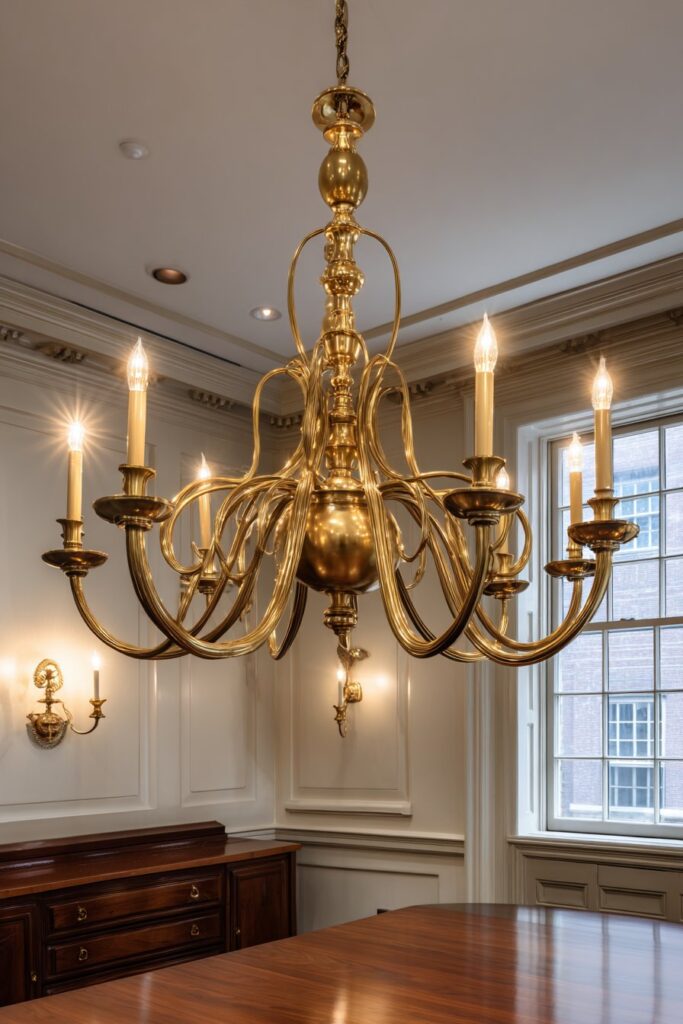
Supplement overhead lighting with wall sconces flanking a sideboard or positioned symmetrically around the room. These fixtures should match your chandelier’s finish and style, featuring similar candle-style elements. Consider dimmer switches to adjust lighting levels for different occasions, from bright family dinners to intimate evening gatherings. This flexibility honors colonial sensibilities while providing modern convenience.
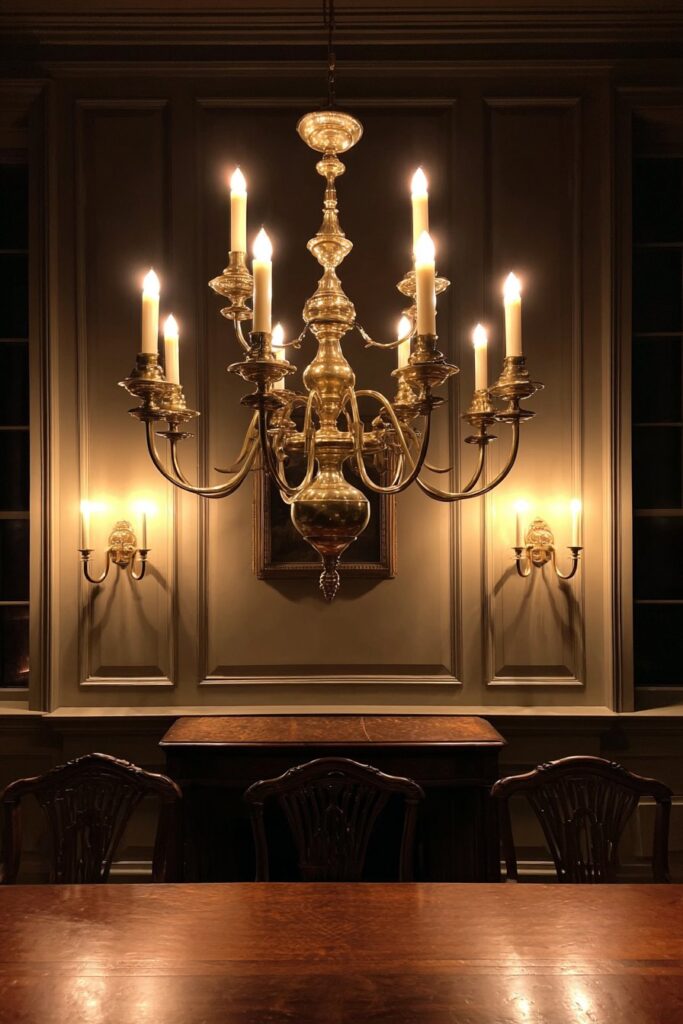
- Install a brass or pewter chandelier with candle-style bulbs as the centerpiece
- Position the chandelier 30-36 inches above the dining table for proper scale
- Add matching wall sconces for supplemental lighting and symmetrical balance
- Choose fixtures with simple designs that avoid modern or overly ornate elements
- Install dimmer switches to control ambiance for various dining occasions
- Use warm-toned LED bulbs that mimic candlelight’s golden glow
4. Incorporate Classic Architectural Details
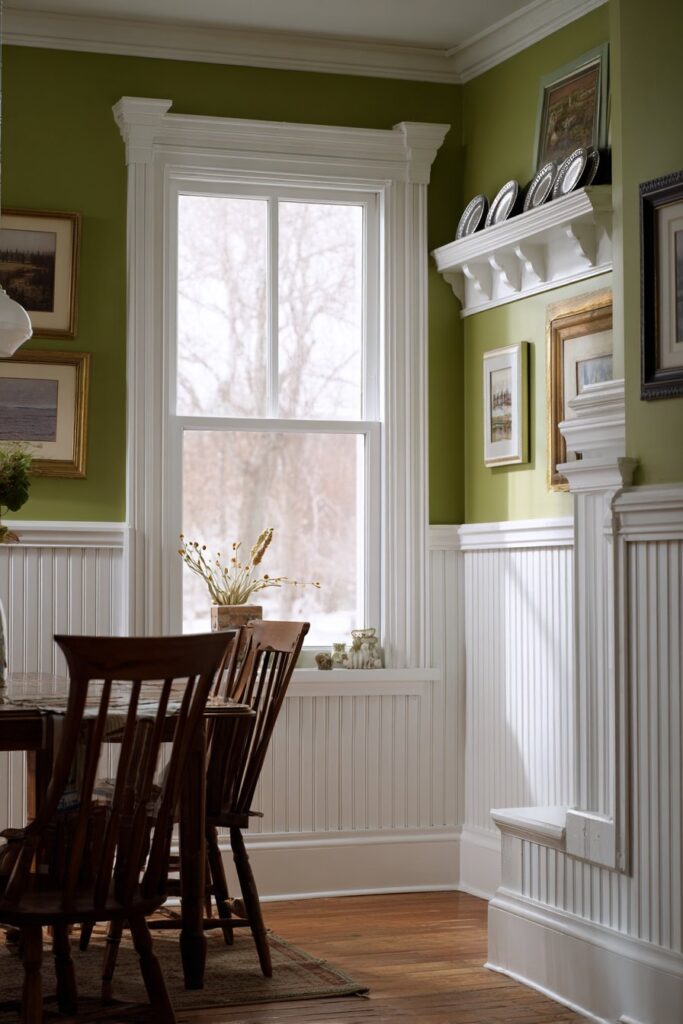
Architectural elements define colonial character more than any other design aspect, transforming ordinary rooms into historically resonant spaces. These details include wainscoting, crown molding, chair rails, and paneled walls that reflect colonial craftsmanship. Adding these features creates authentic depth and visual interest while honoring period construction methods.
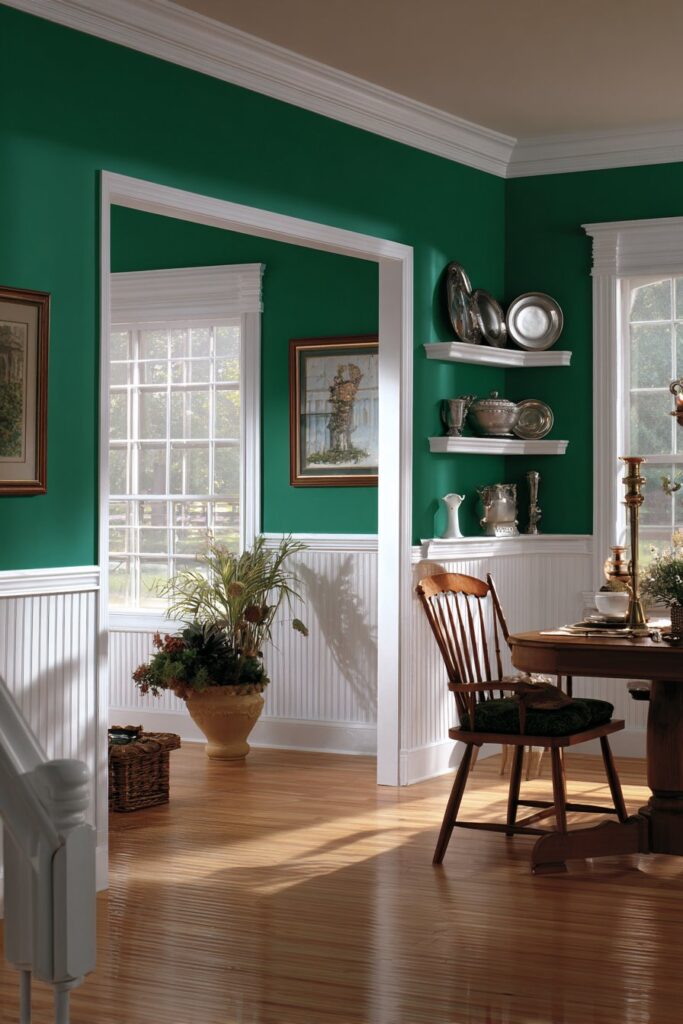
Wainscoting or beadboard panels extending three to four feet up the wall provide both decorative appeal and practical protection. Colonial homes frequently featured this treatment in dining rooms to prevent chair backs from damaging plaster walls. Paint wainscoting in white or cream to contrast with darker wall colors above, or use natural wood finishes for warmer, more casual colonial spaces.
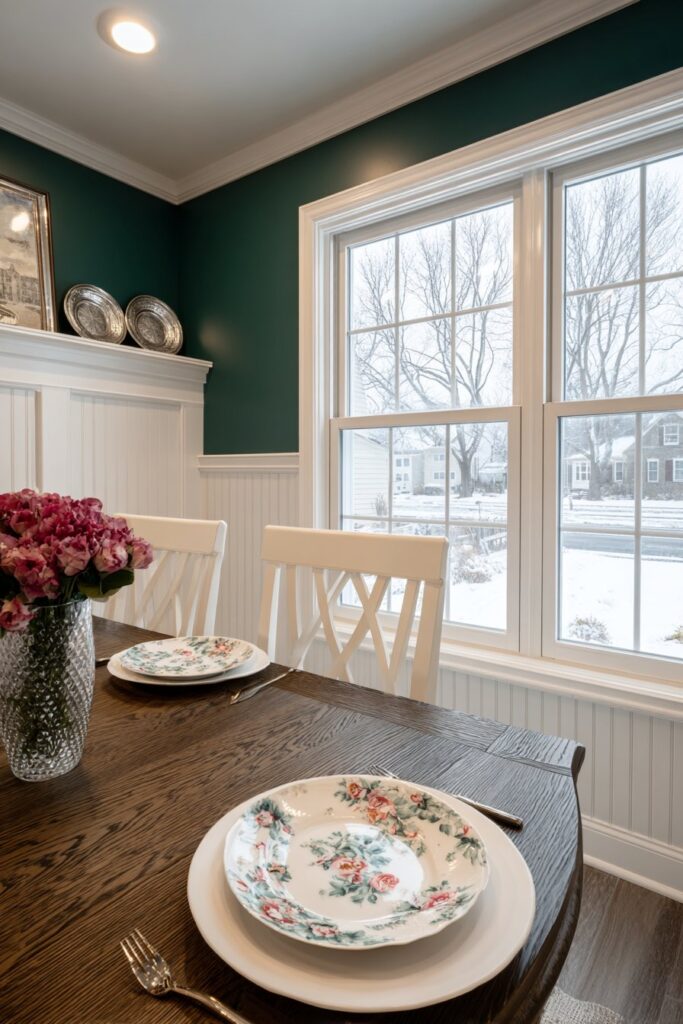
Crown molding and chair rails complete the architectural framework, adding horizontal definition to wall surfaces. These elements should feature simple profiles rather than elaborate Victorian-style designs. Consider adding a plate rail or display shelf near the ceiling to showcase pewter plates, decorative pottery, or other period-appropriate collectibles. These architectural touches create vertical interest while serving functional display purposes.
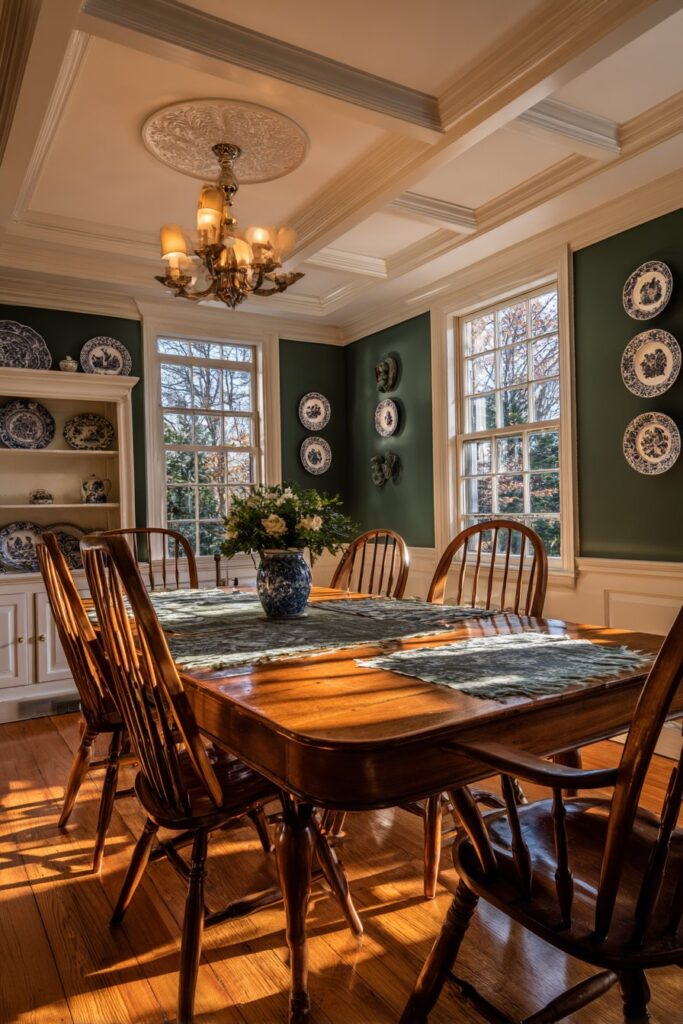
- Install wainscoting or beadboard extending three to four feet up walls
- Add simple crown molding and chair rails with period-appropriate profiles
- Paint architectural trim in contrasting white or cream for definition
- Include a plate rail near the ceiling for displaying colonial collectibles
- Ensure all millwork maintains consistent profiles throughout the room
- Consider adding raised panel treatments on feature walls for added depth
5. Select Traditional Window Treatments
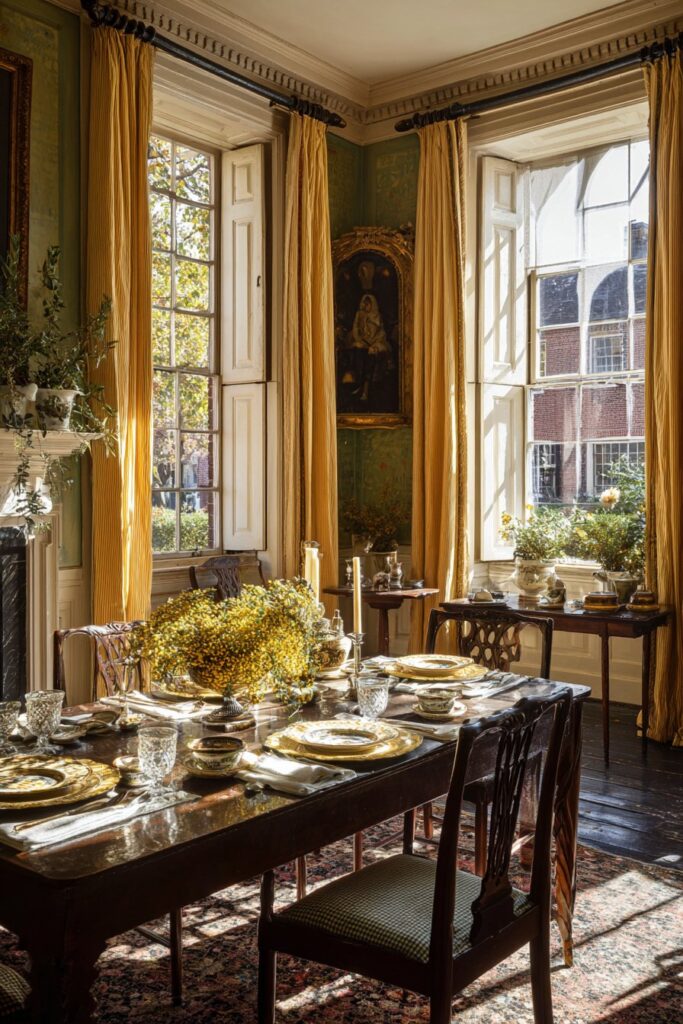
Window dressings in colonial dining rooms should enhance natural light while providing privacy and controlling temperature. Colonial homes featured simple, functional treatments rather than elaborate draperies. Modern colonial dining rooms achieve authenticity through carefully selected fabrics, hardware, and hanging methods that respect historical precedent.
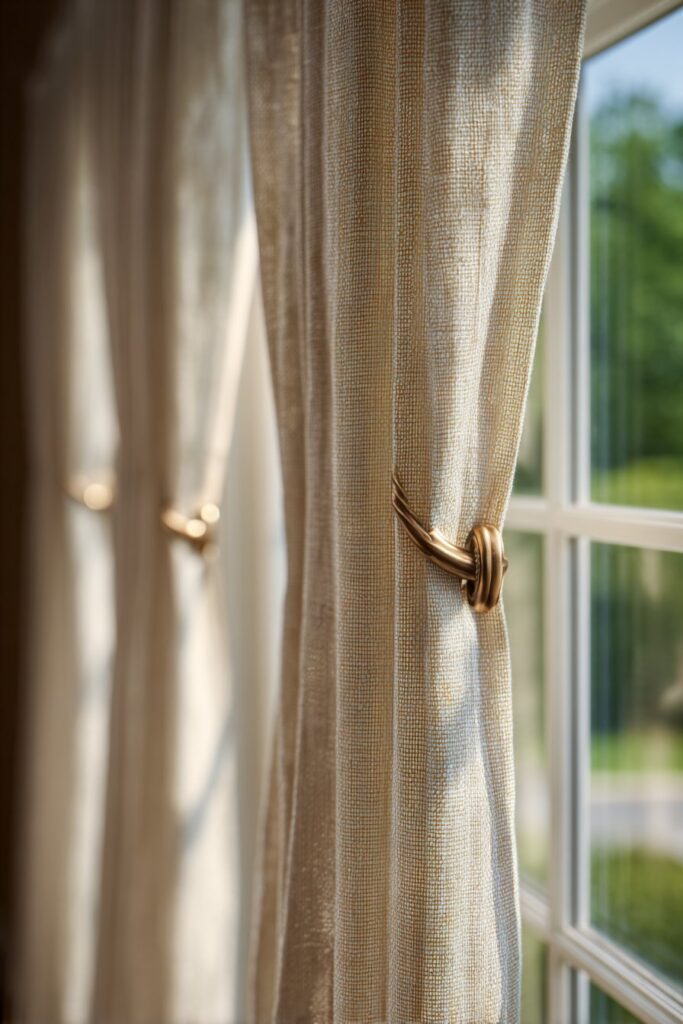
Natural fiber fabrics like linen, cotton, and wool work best for colonial window treatments. Choose solid colors, simple stripes, or small-scale patterns such as checks, plaids, or subtle florals in period-appropriate colors. Avoid synthetic fabrics, large-scale prints, or contemporary patterns that clash with colonial aesthetics. Fabric weight should be substantial enough to insulate without appearing heavy or overly formal.
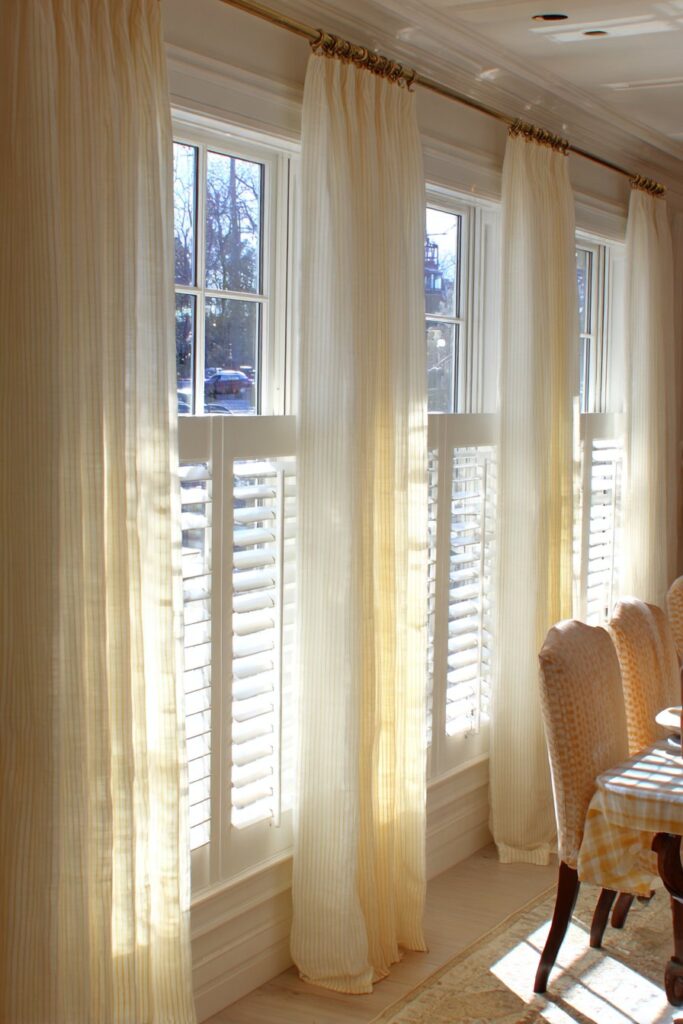
Hardware should feature wrought iron or wooden rods with simple finials rather than elaborate decorative ends. Hang curtains using wooden rings or tabs for authentic appearance. Consider interior shutters as an alternative or complement to fabric treatments, as these were common in colonial homes. Shutters provide excellent light control while adding architectural interest and historical accuracy.
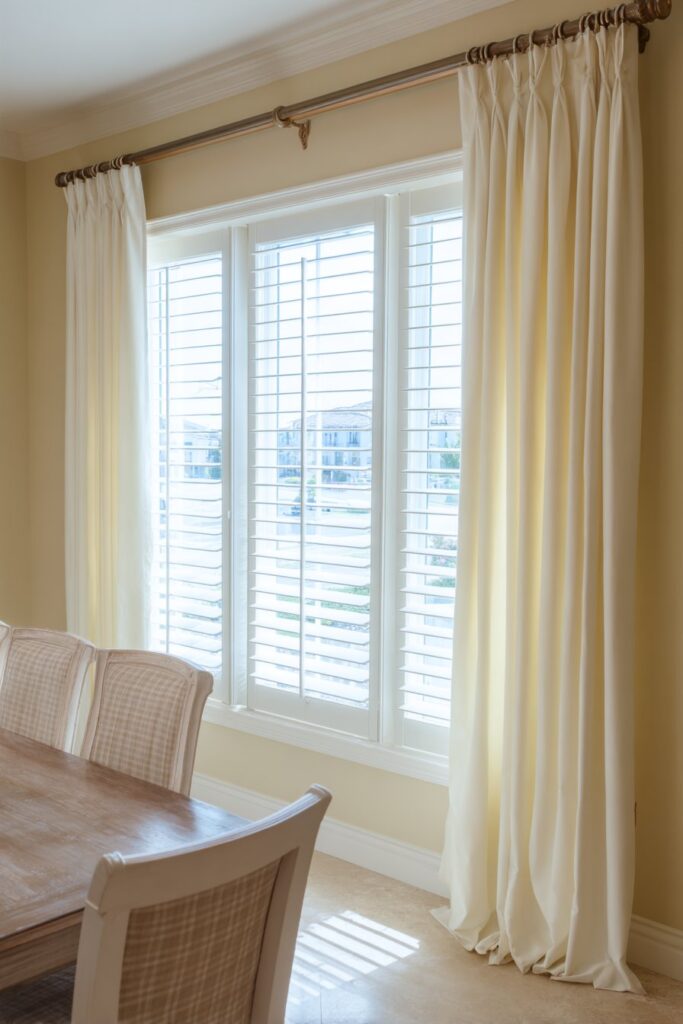
- Use natural fiber fabrics like linen or cotton in solid colors or simple patterns
- Choose period-appropriate colors that coordinate with your wall palette
- Install simple wooden or wrought iron curtain rods with minimal ornamentation
- Consider interior shutters for authentic light control and added insulation
- Avoid synthetic fabrics, large prints, or contemporary patterns
- Keep treatments simple and functional rather than elaborate or fussy
6. Display Colonial Accessories and Tableware
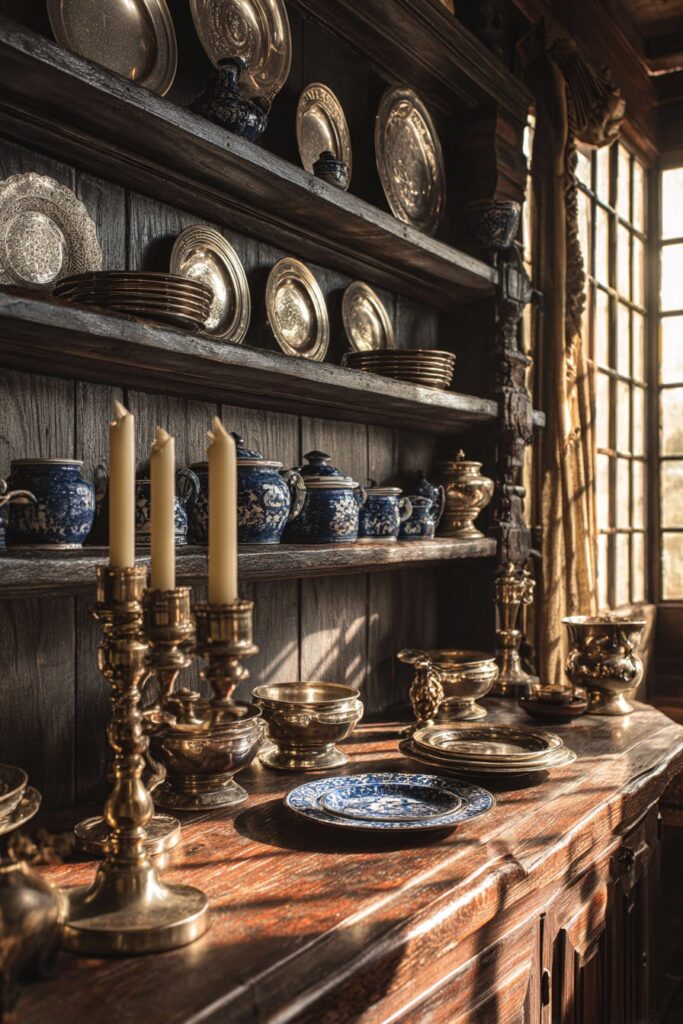
Accessories complete your colonial dining room by adding layers of authenticity and personal character. These decorative elements should reflect items commonly found in 18th-century homes, including pewter, pottery, brass candlesticks, and wooden serving pieces. Thoughtful accessory selection transforms a well-furnished room into a convincing colonial environment.
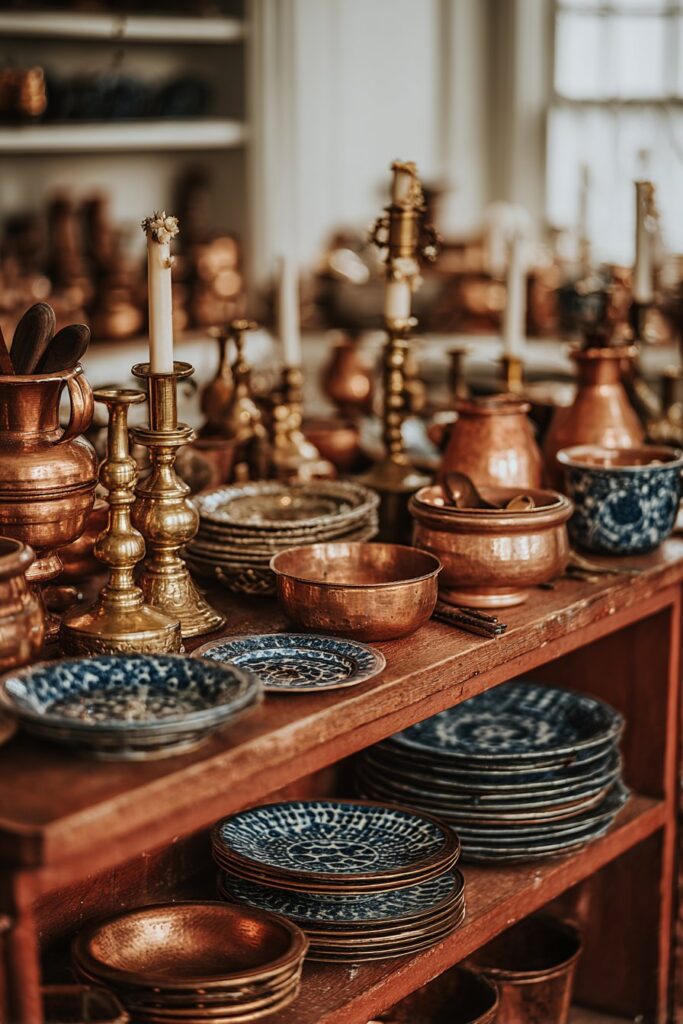
Pewter serving pieces deserve prominent display on your sideboard or hutch, as pewter was the primary tableware material before porcelain became affordable. Look for plates, platters, bowls, and tankards in authentic colonial forms. Brass candlesticks in varying heights add warmth and dimension when arranged on the dining table or sideboard. These practical items served essential functions while adding decorative appeal.
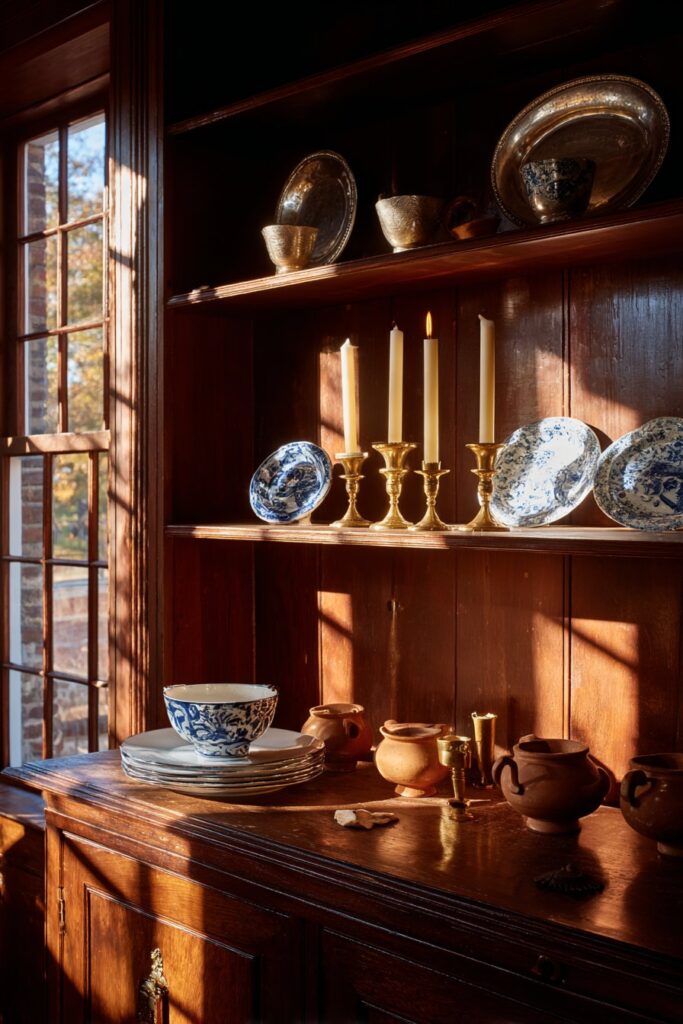
Incorporate earthenware pottery in traditional forms like crocks, bowls, and pitchers for both display and use. Blue and white transferware, delftware, or simple redware pieces add color while maintaining period authenticity. Wooden accessories including trenchers, bowls, and utensils connect to colonial craftsmanship traditions. Display these items openly rather than hiding them in cabinets to create a lived-in, authentic atmosphere.
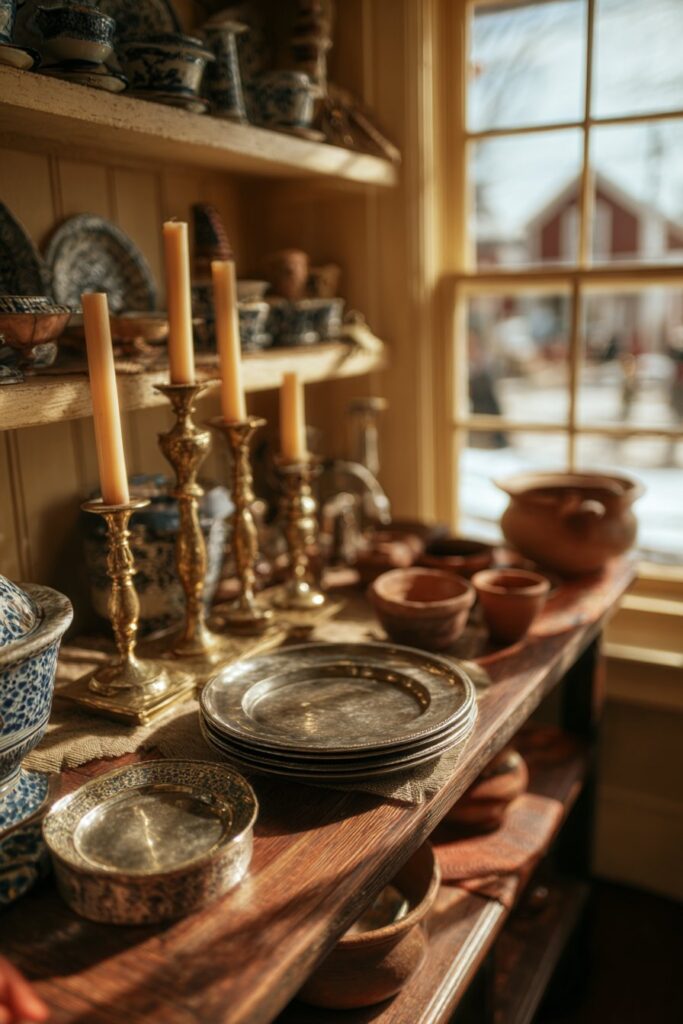
- Display pewter plates, platters, and serving pieces on open shelving
- Arrange brass candlesticks in varying heights on tables and sideboards
- Include earthenware pottery like crocks and bowls for authentic character
- Add blue and white transferware or delftware for period-appropriate color
- Incorporate wooden serving pieces and utensils as functional decor
- Group accessories in odd numbers for visually pleasing arrangements
7. Add Colonial-Era Artwork and Wall Decor
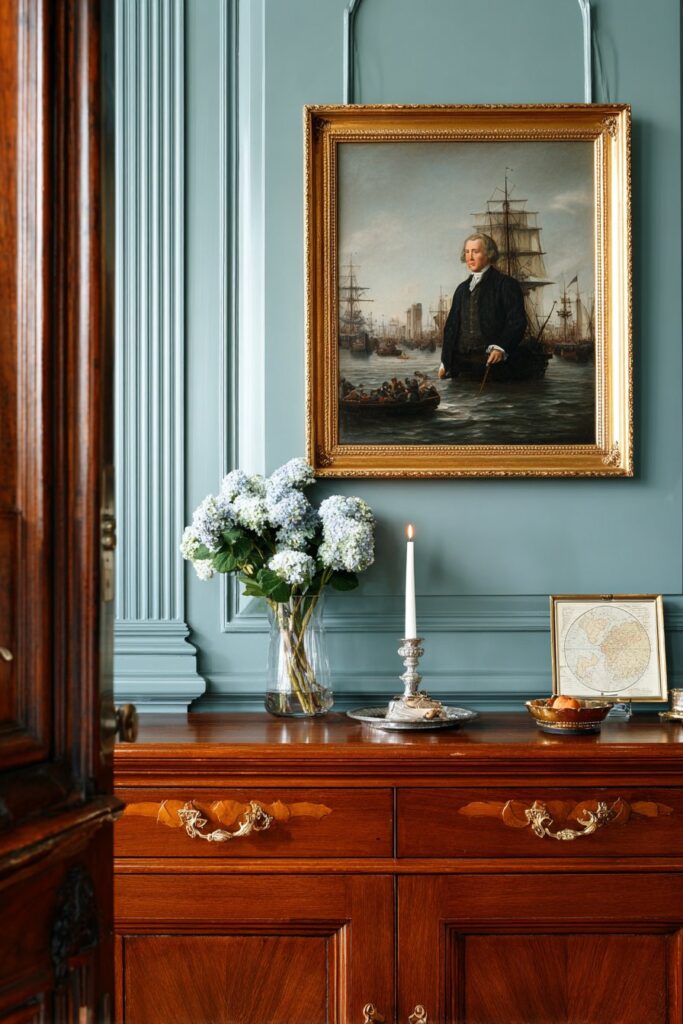
Wall decorations in colonial dining rooms should maintain visual restraint while adding personality and historical context. Colonial homes featured fewer wall decorations than modern spaces, making each piece more significant. Appropriate artwork includes portraits, landscapes, botanical prints, and maps that reflect 18th-century artistic sensibilities and subject matter.
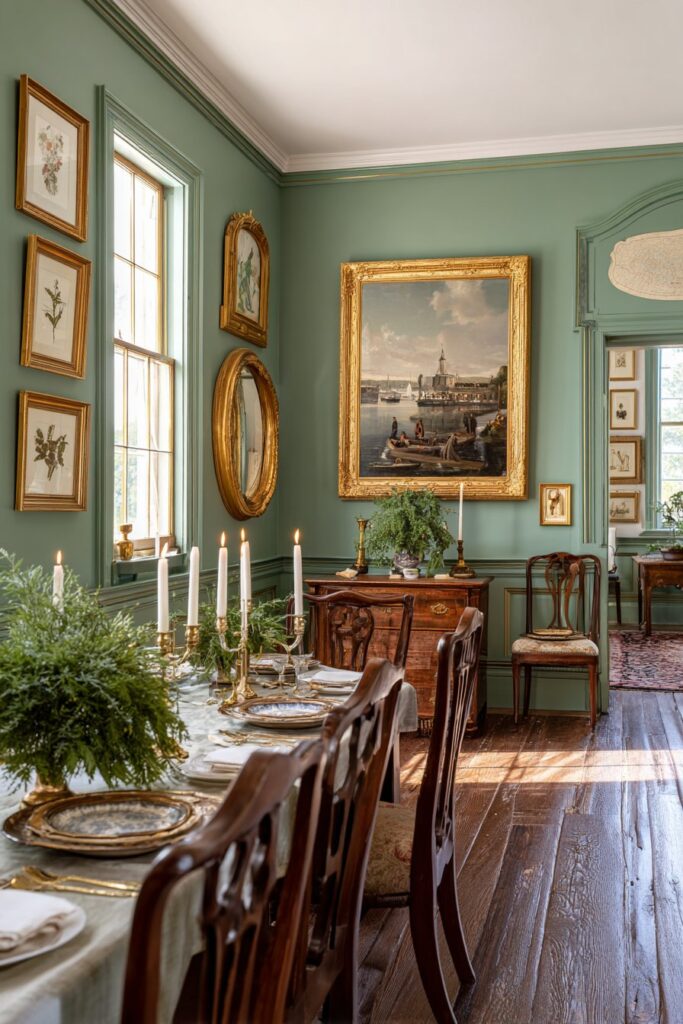
Portrait paintings or prints in gilded frames add formality and historical character to dining room walls. These don’t need to be family ancestors; period-appropriate portraits of historical figures or anonymous subjects work equally well. Landscape paintings depicting pastoral scenes, harbors, or architectural views provide visual interest while maintaining colonial authenticity. Choose artwork with muted colors that complement your room’s palette.
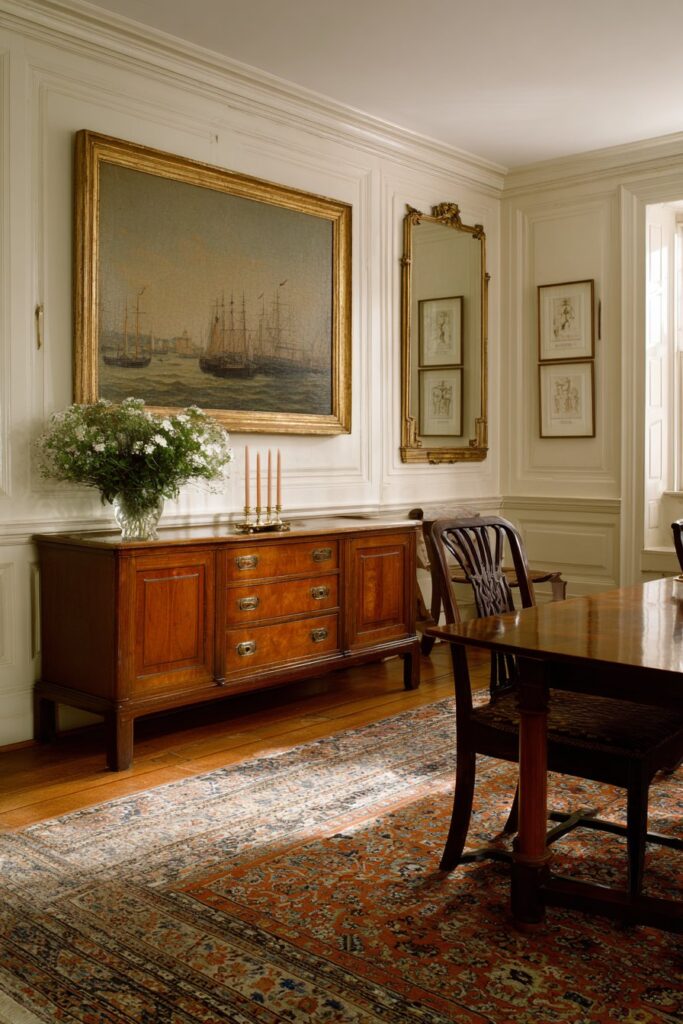
Consider displaying antique maps or botanical prints in simple frames for educational and decorative appeal. Mirrors with wood or gilded frames were prized colonial possessions that added light and space to dining rooms. Position mirrors strategically to reflect candlelight or window light, enhancing illumination while adding architectural interest. Keep wall arrangements simple, avoiding dense gallery walls that feel contemporary.
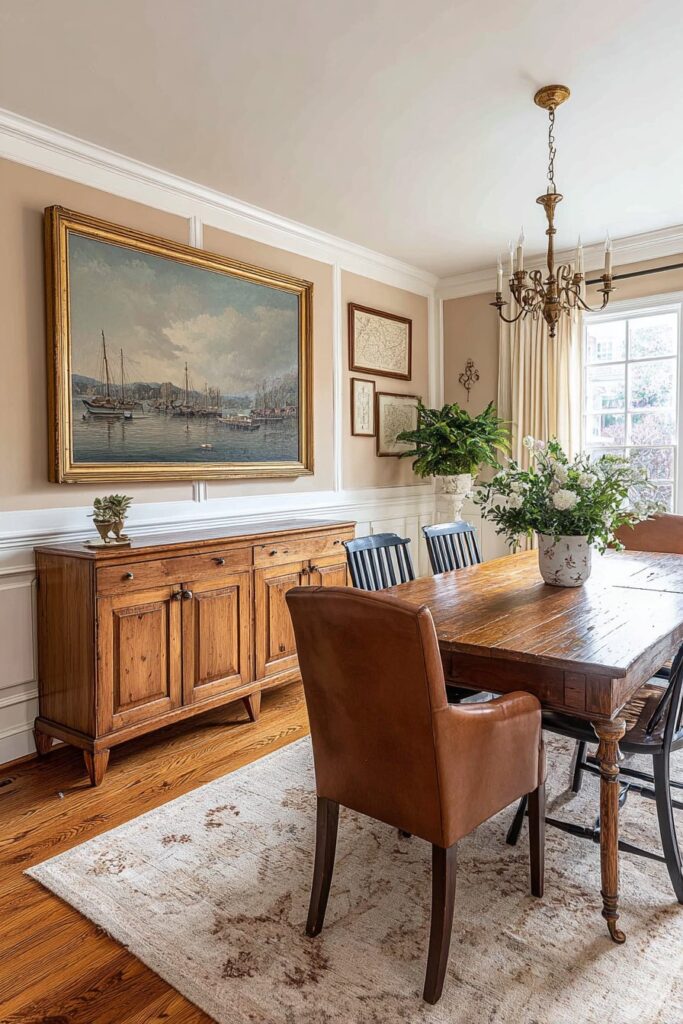
- Hang portrait paintings or prints in gilded frames for formal character
- Display landscape paintings with pastoral or architectural subjects
- Add antique maps or botanical prints for educational interest
- Include mirrors in period frames to enhance light and space
- Maintain simple wall arrangements rather than dense gallery walls
- Choose artwork with muted, period-appropriate color palettes
8. Create Authentic Flooring Solutions
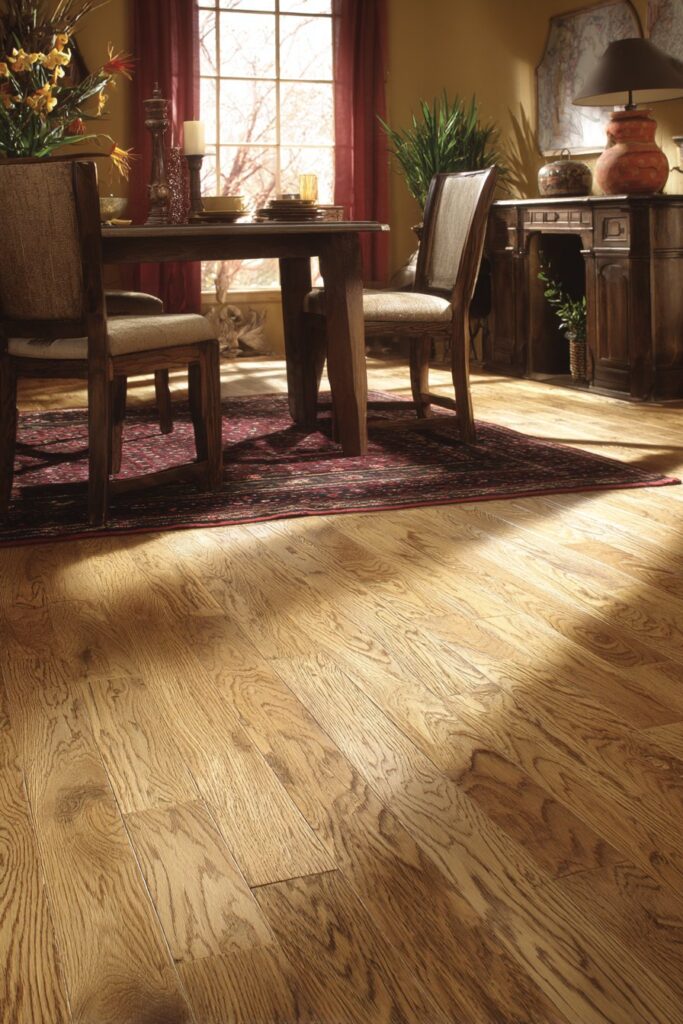
Flooring choices significantly impact your colonial dining room’s authenticity and atmosphere. Colonial homes featured wide-plank hardwood floors, painted wood floors, or brick and stone in more rustic settings. Modern reproductions can achieve similar effects while accommodating contemporary construction methods and maintenance preferences.
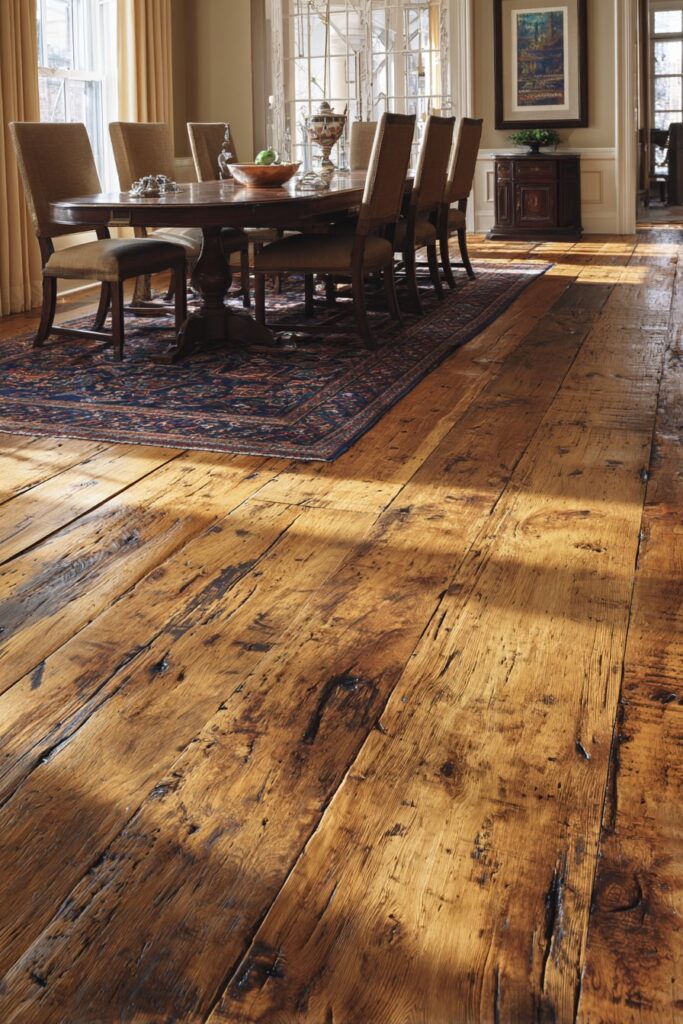
Wide-plank hardwood in oak, pine, or chestnut creates the most authentic colonial foundation. These planks typically measure six inches or wider, showing natural character marks, knots, and grain variations. Choose random-width planking for added historical accuracy, as colonial builders used whatever lumber widths were available. Finish floors in natural tones with hand-scraped texture or matte polyurethane that avoids glossy contemporary appearance.
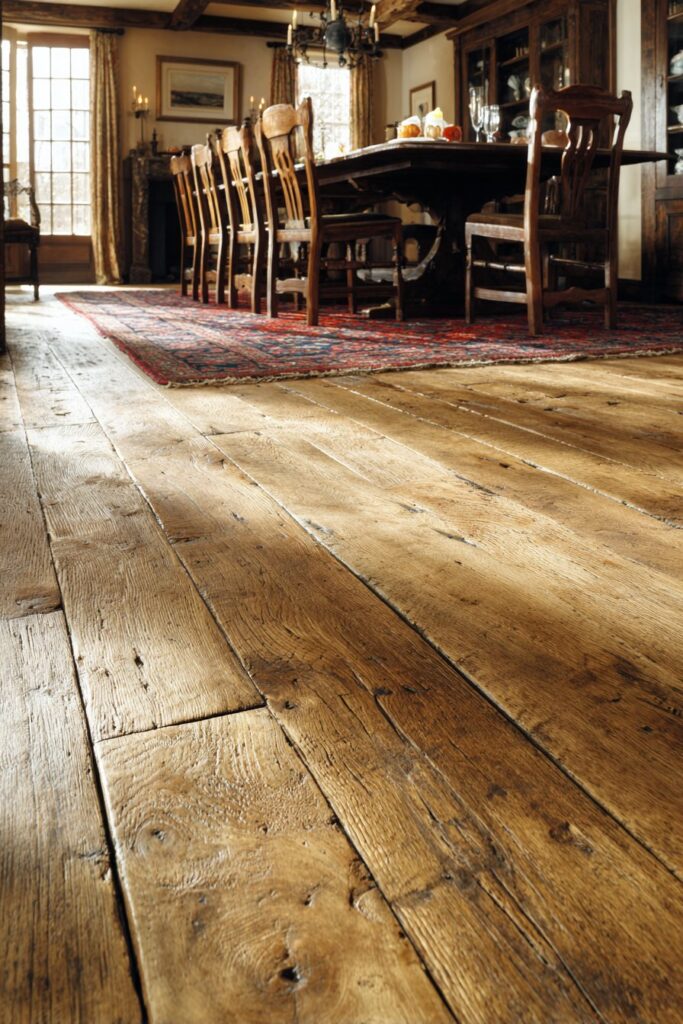
Alternatively, consider painted wood floors in dark colors like colonial red, green, or black for less formal colonial settings. This treatment was common in working-class colonial homes and creates distinctive character. Area rugs in oriental or hooked designs add warmth and color while protecting high-traffic areas. Keep rugs appropriately sized, allowing at least 18 inches of flooring to show around all sides of your dining table.
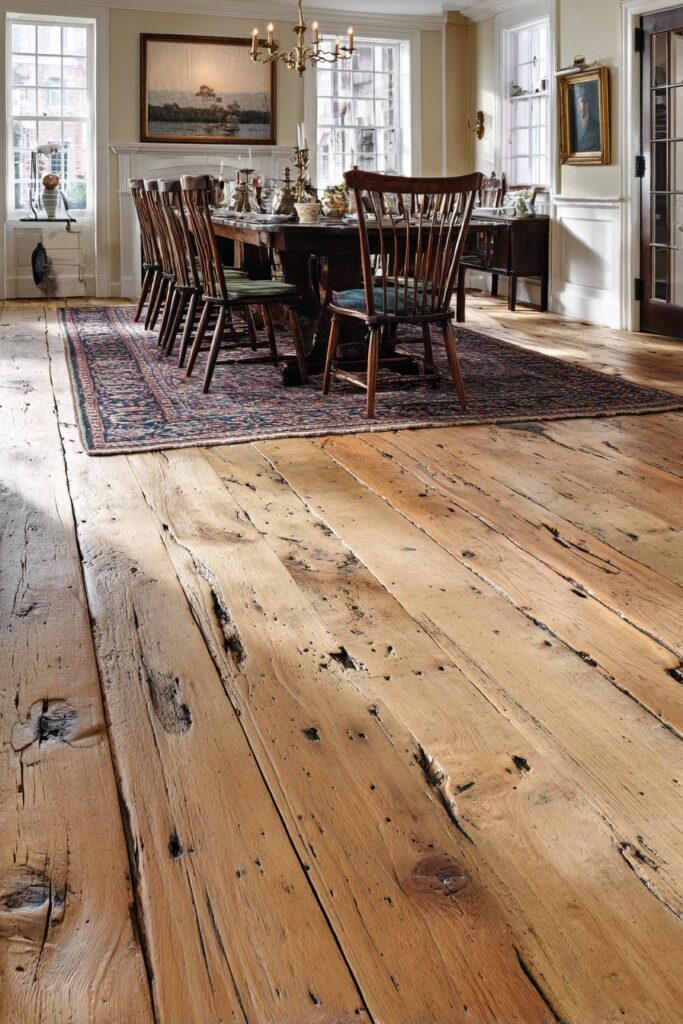
- Install wide-plank hardwood flooring in oak, pine, or chestnut
- Choose random-width planking for authentic colonial appearance
- Apply matte or hand-scraped finishes that avoid contemporary gloss
- Consider painted floors in colonial colors for rustic character
- Add oriental or hooked area rugs sized to show flooring perimeter
- Maintain floors with traditional methods using natural oils or wax
Conclusion
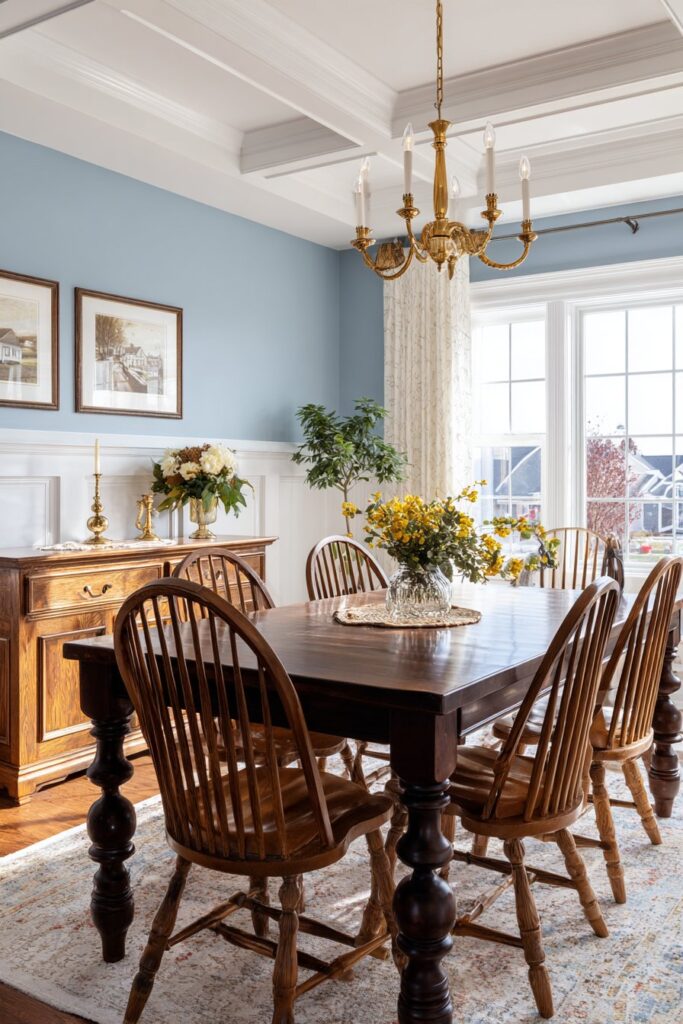
Creating an authentic colonial dining room requires attention to historical details while maintaining functional modern living spaces. The key lies in selecting period-appropriate furniture, colors, lighting, and accessories that work harmoniously to transport you to 18th-century America. Each element contributes to an overall atmosphere of refined simplicity and timeless elegance.
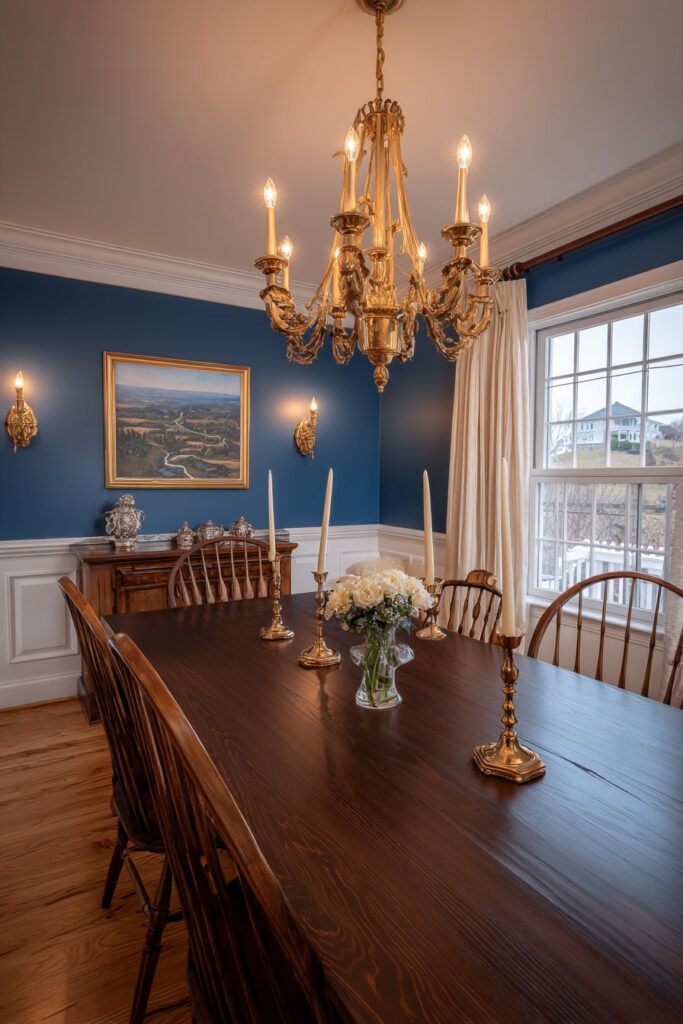
Remember that colonial design celebrates quality craftsmanship and natural materials over excessive ornamentation. Focus on creating a cohesive environment where architectural details, furnishings, and decorative elements complement each other without competing for attention. Your colonial dining room should feel inviting and comfortable, not like a museum display. Embrace the warmth and character that authentic colonial design brings to modern homes, creating a dining space where treasured memories unfold around tables that honor America’s architectural heritage.
"As an Amazon Associate, I earn from qualifying purchases."
