
Coffee tables are the unsung heroes of living room design. They sit at the heart of your seating arrangement, anchoring the space and inviting conversation. Yet they are also one of the easiest surfaces in the home to overwhelm with clutter. Magazines, remotes, candles, and decorative objects pile up quickly — and before long, your centerpiece becomes a source of visual stress rather than calm.
Thoughtful coffee table styling is about striking the perfect balance between form and function. A well-styled table feels curated, not crowded. It reflects your personality while keeping the space feeling open, airy, and intentional. Whether your home leans toward minimalist, bohemian, or classic traditional design, the principles of intentional arrangement apply universally.
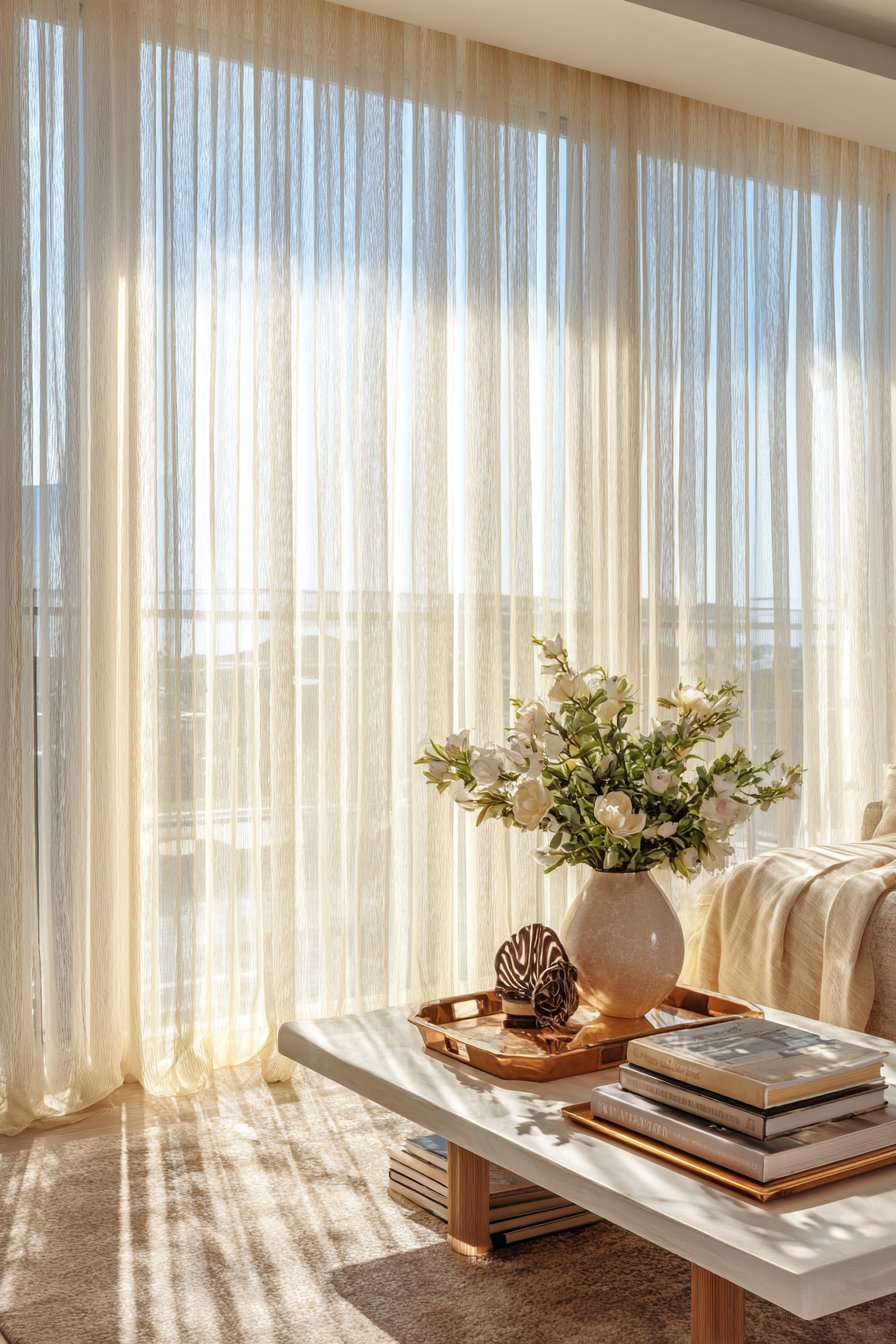
In this article, we explore seven expert-backed tips for styling your coffee table without visual clutter. Each tip draws on core principles of interior design and spatial composition — helping you create a surface that looks professionally styled every single day.
1. Start With a Clean Slate and Define Your Purpose
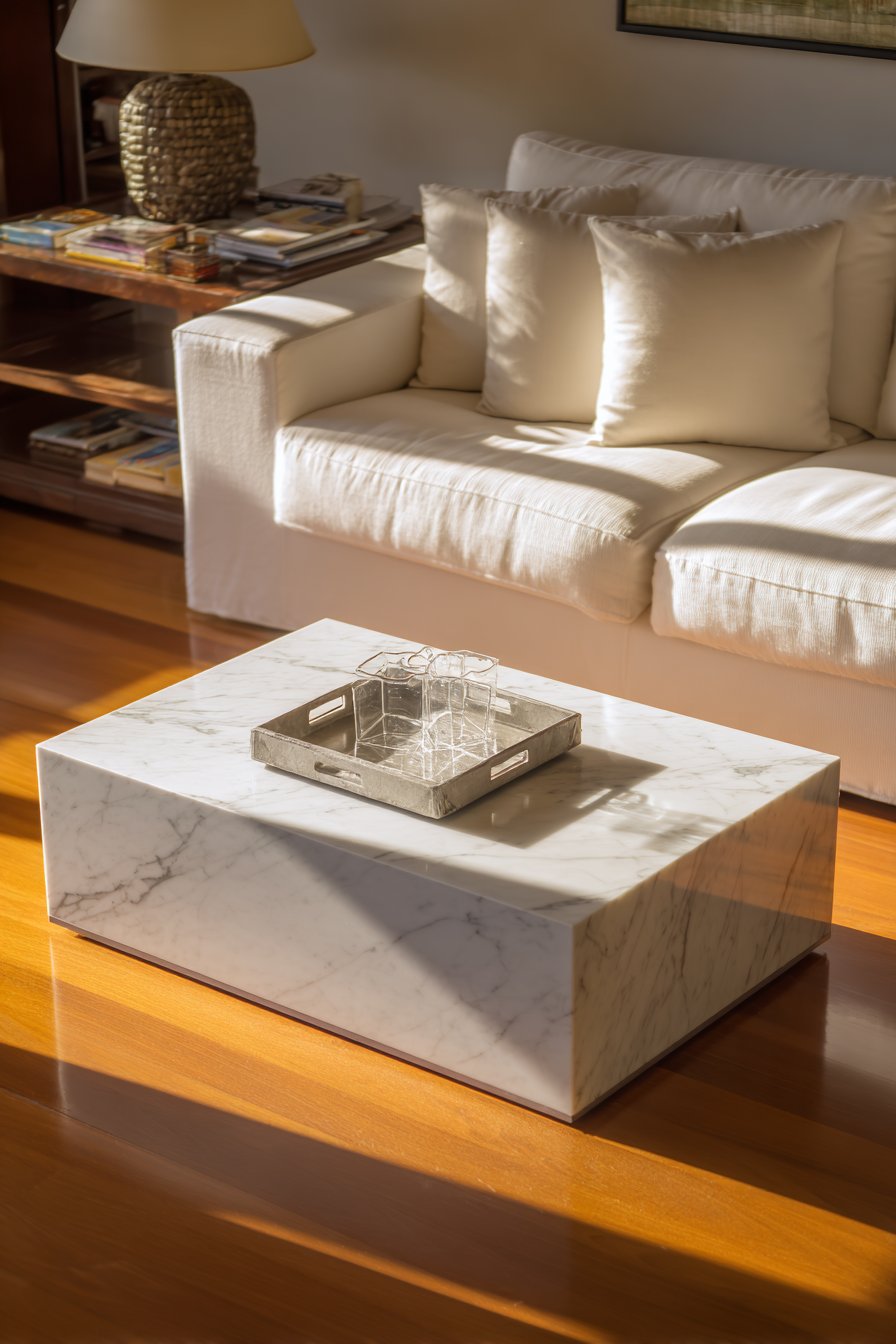
Before placing a single object, clear everything off your coffee table completely. This reset is not just practical — it is psychological. Starting fresh forces you to make deliberate choices about what belongs on the surface rather than simply leaving things where they landed.
Ask yourself: what is the primary function of this table? Do you need it for drinks, books, or purely decorative display? Defining its purpose shapes every decision that follows. A table that serves drinks needs coasters and clear surface space. A purely decorative table can lean more heavily into sculptural arrangements.
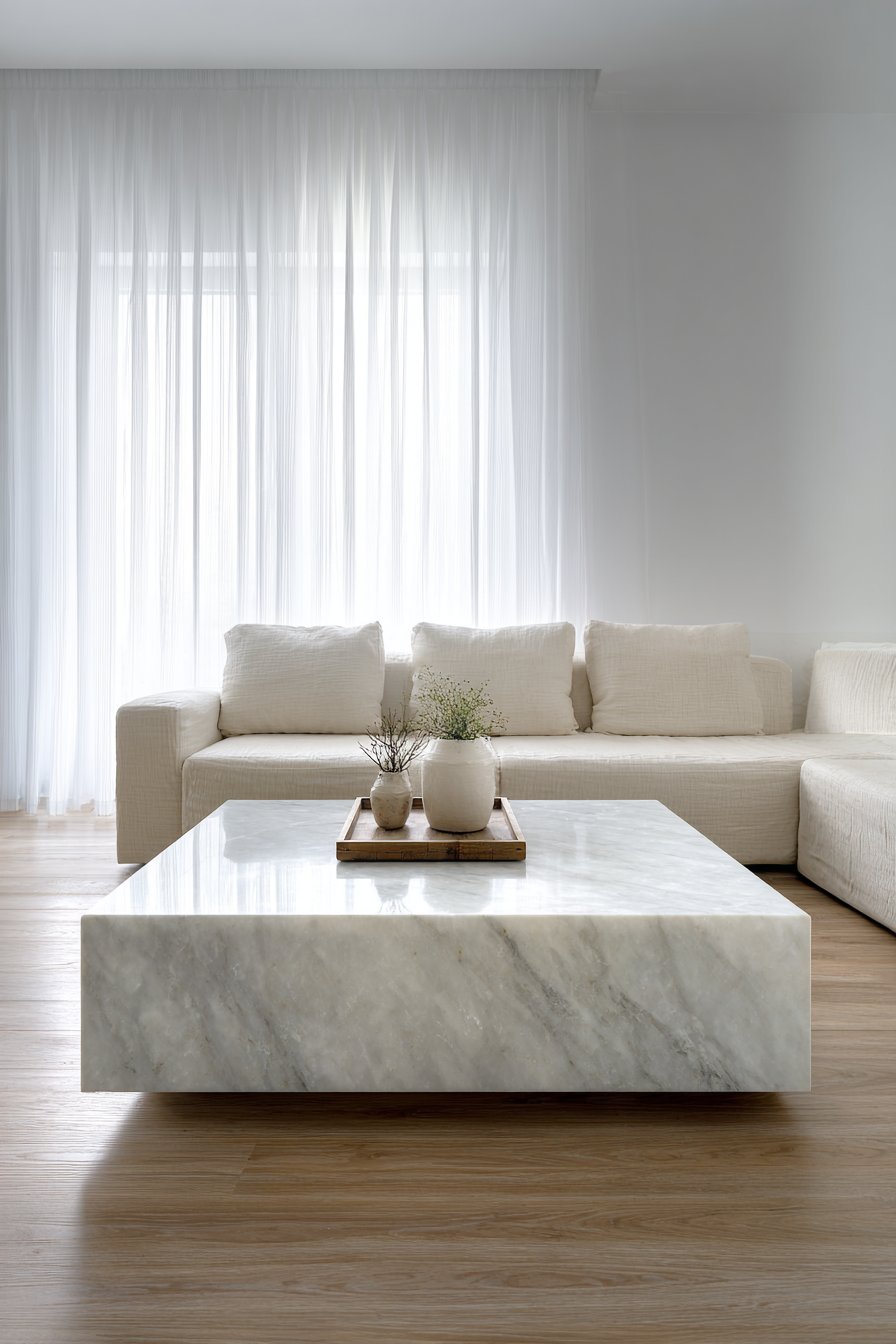
Once you know the purpose, you can make smarter decisions about how many objects to include. Most professional interior designers recommend keeping at least 60% of the table surface visible at all times. This breathing room is what separates a styled table from a cluttered one.
- Clear the table completely before restyling
- Write down the one or two main functions your table must serve
- Commit to keeping 60% of the surface empty
- Remove any items that do not serve the defined purpose
- Reassess the table’s purpose seasonally as your needs change
2. Use the Rule of Three for Object Groupings

The rule of three is one of the most powerful principles in visual design. Objects grouped in odd numbers — especially threes — feel more natural and dynamic than even-numbered groupings. Our eyes move fluidly through asymmetrical arrangements, making the composition feel effortless and intentional.
When styling your coffee table, think in clusters of three objects. Choose items that vary in height, texture, and scale. For example, pair a tall candle with a medium-height decorative bowl and a small stack of books. The variation in height creates visual movement and prevents the arrangement from feeling flat or static.
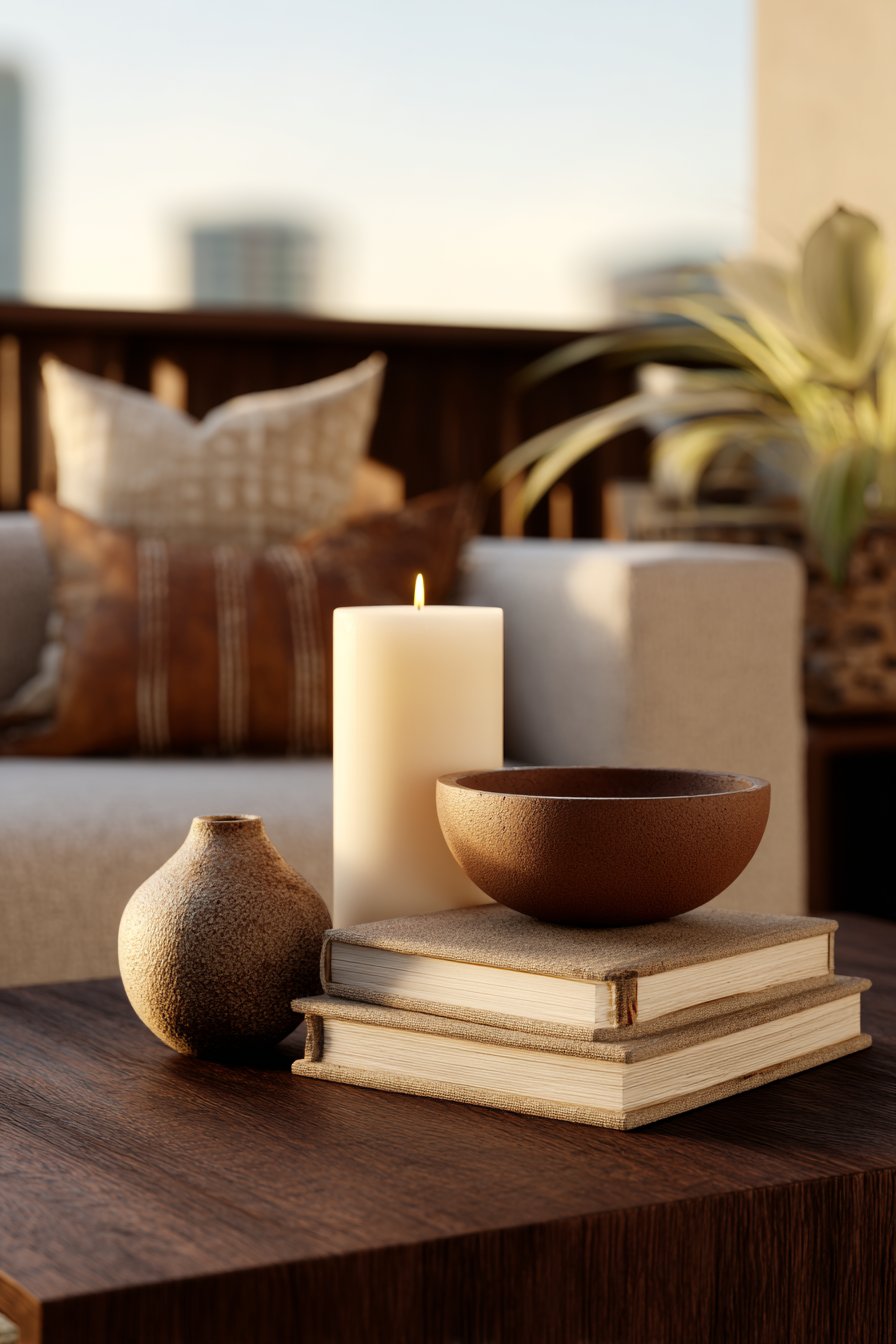
Keep each grouping contained to one area of the table rather than spreading objects across the entire surface. This concentration of decor leaves breathing room around the cluster and reinforces the curated look. Avoid placing objects in rows or symmetrical lines, as this can feel rigid and lifeless.
- Group objects in sets of three or five, never even numbers
- Vary the height of each item within a grouping
- Combine contrasting textures like smooth ceramics with rough wood
- Keep groupings contained rather than spread across the surface
- Leave generous empty space between each cluster
3. Choose a Cohesive Color Palette
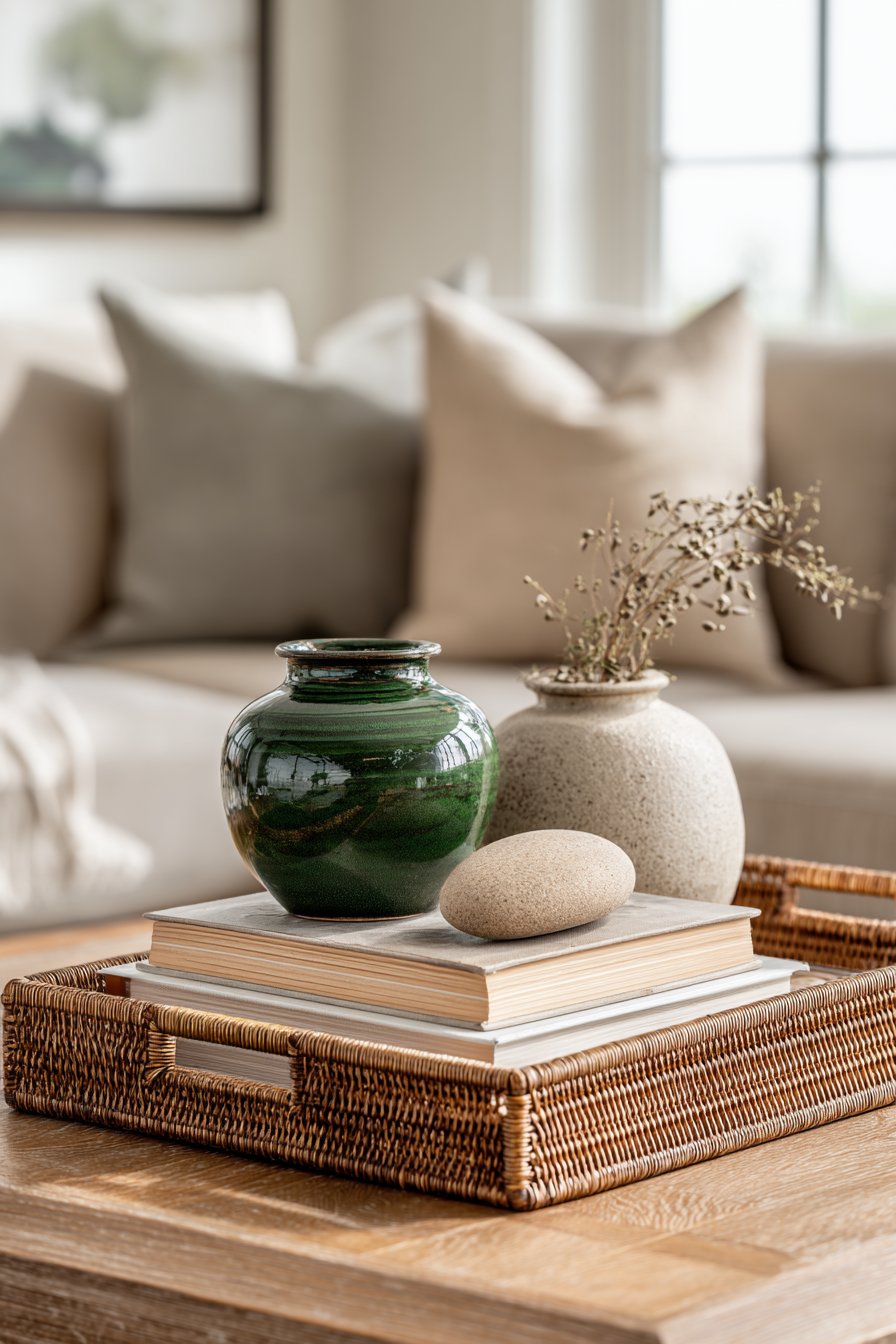
Color is one of the fastest ways to either unify or fragment a coffee table display. When too many competing colors appear on one surface, the eye has nowhere to rest. The result is visual noise — the exact opposite of what great styling achieves.
Select a palette of two to three colors and stick to it. These colors should complement your existing living room palette rather than clash with it. Neutral tones like warm white, natural wood, and muted terracotta work beautifully together. Alternatively, a monochromatic approach — varying shades of a single color — creates a sophisticated, cohesive look.
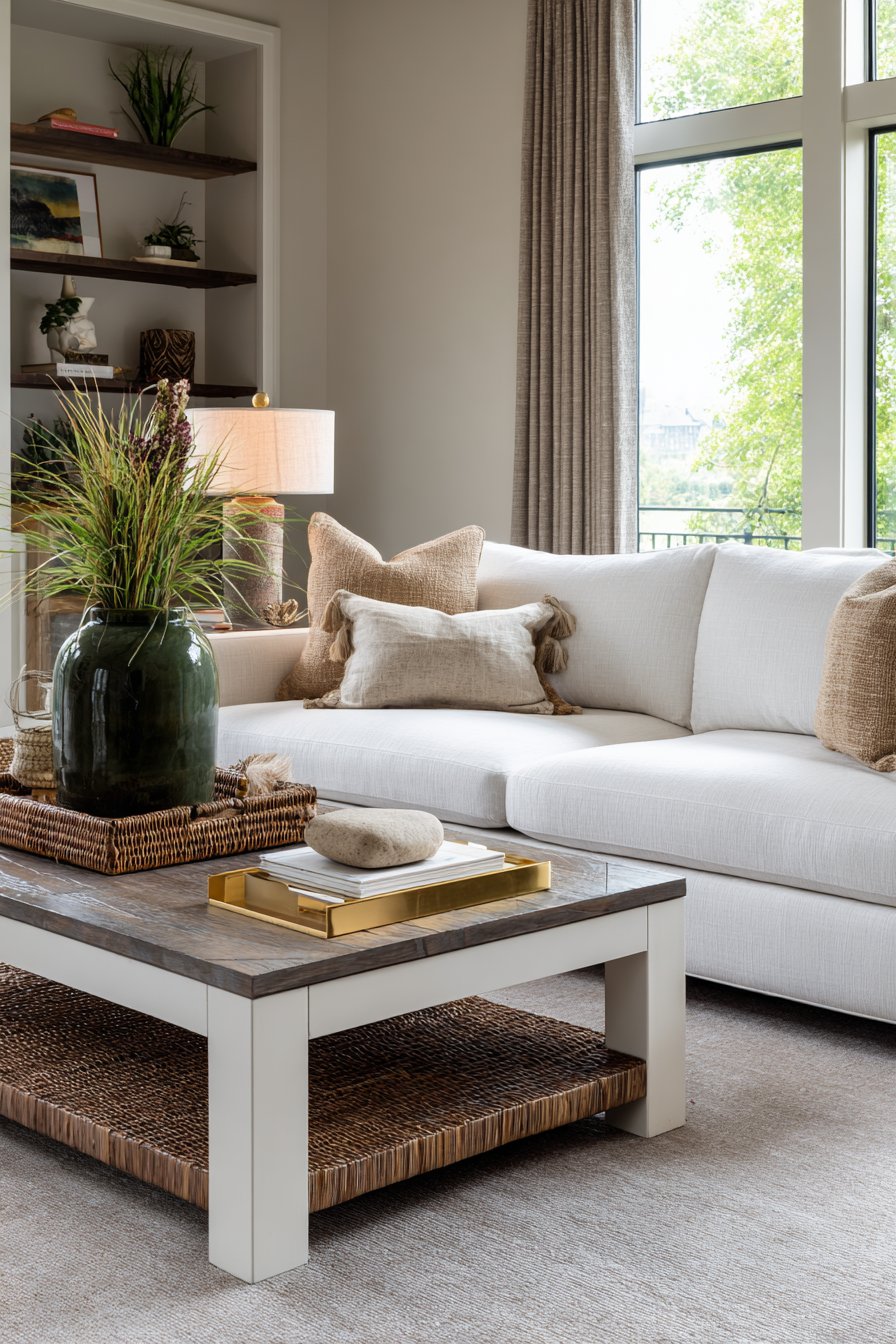
Use accent colors sparingly as a finishing touch. A single bold object, like a deep green vase or a brass sculpture, can anchor the composition without overwhelming it. Keeping the majority of your palette neutral allows that one accent to breathe and stand out dramatically.
- Limit the palette to two or three complementary colors
- Echo colors already present in your room’s upholstery or walls
- Use neutral tones as the foundation of your arrangement
- Add one bold accent color for visual interest
- Avoid patterns that compete with each other on the same surface
4. Incorporate Varying Heights and Layers
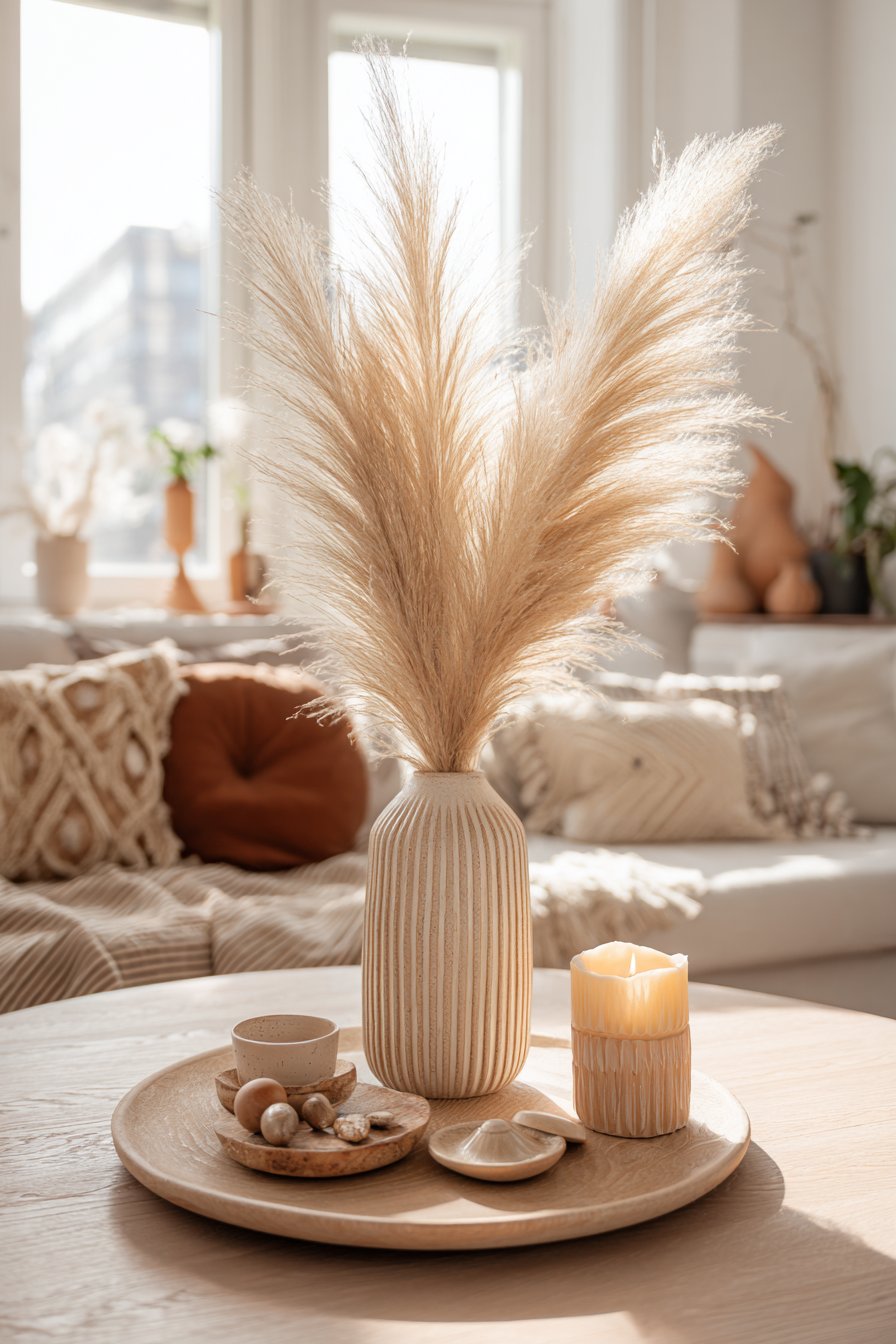
Flat, same-height arrangements always look underwhelming on a coffee table. The secret to a professionally styled surface is layering — stacking, elevating, and varying the heights of your objects to create dimension and depth.
Start with your tallest element as the anchor. This could be a sculptural vase, a tall candle pillar, or a decorative plant. Build outward from there, moving to medium-height objects and then to low, flat elements like a tray or a stack of books. This pyramid-style layering draws the eye upward and creates a satisfying sense of movement.
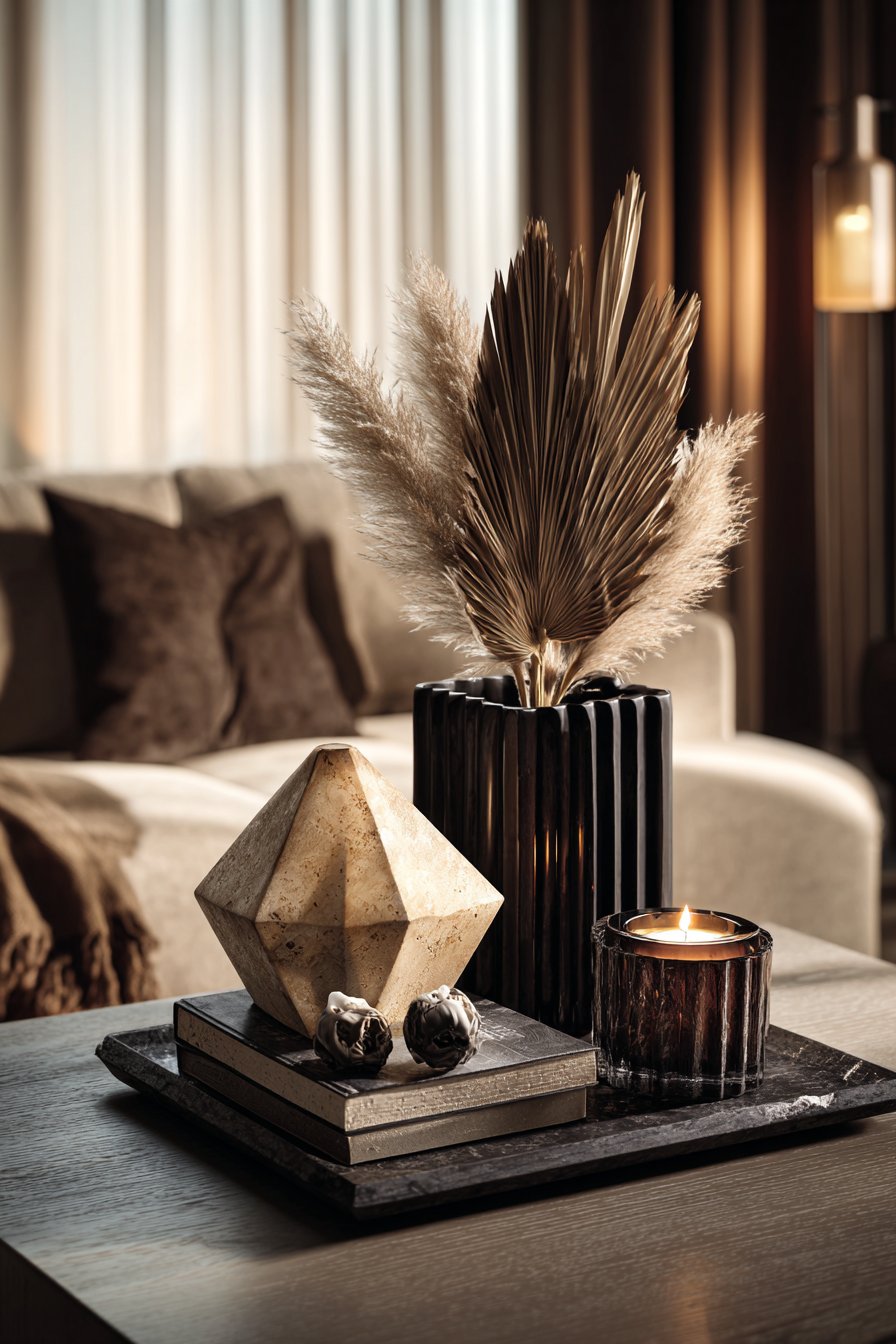
Trays are especially effective for adding a visual layer without adding height. A beautiful tray acts as a defined stage for your smaller objects, corralling them neatly and creating the illusion of order. This technique is a favorite among interior stylists for good reason — it works every time.
- Begin with the tallest object as your focal anchor
- Build down in height toward the edges of the arrangement
- Use a decorative tray to contain and ground smaller items
- Stack books horizontally to create platform layers
- Avoid placing all objects at the same height
5. Edit Ruthlessly — Less Is Always More
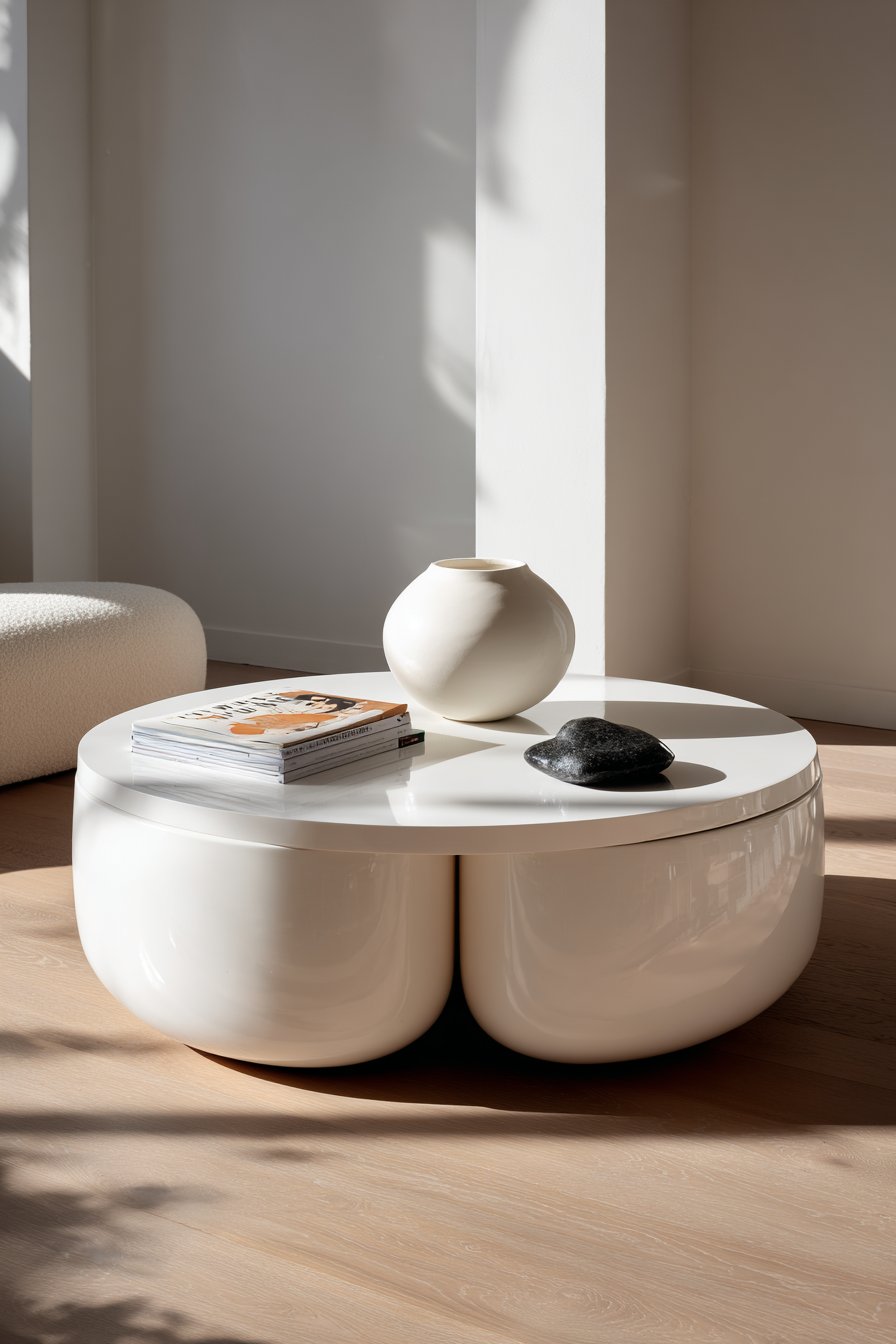
The most common mistake in coffee table styling is keeping too much. Every additional object adds visual weight to the composition. Past a certain point, adding more actually diminishes the impact of every individual piece on the table.
A curated selection of three to five objects will almost always outperform a crowded collection of ten. This is the essence of the “less is more” principle — a few beautiful, meaningful objects have far more impact than many objects competing for attention. Before finalizing your arrangement, remove one item. You will likely find the composition instantly improves.
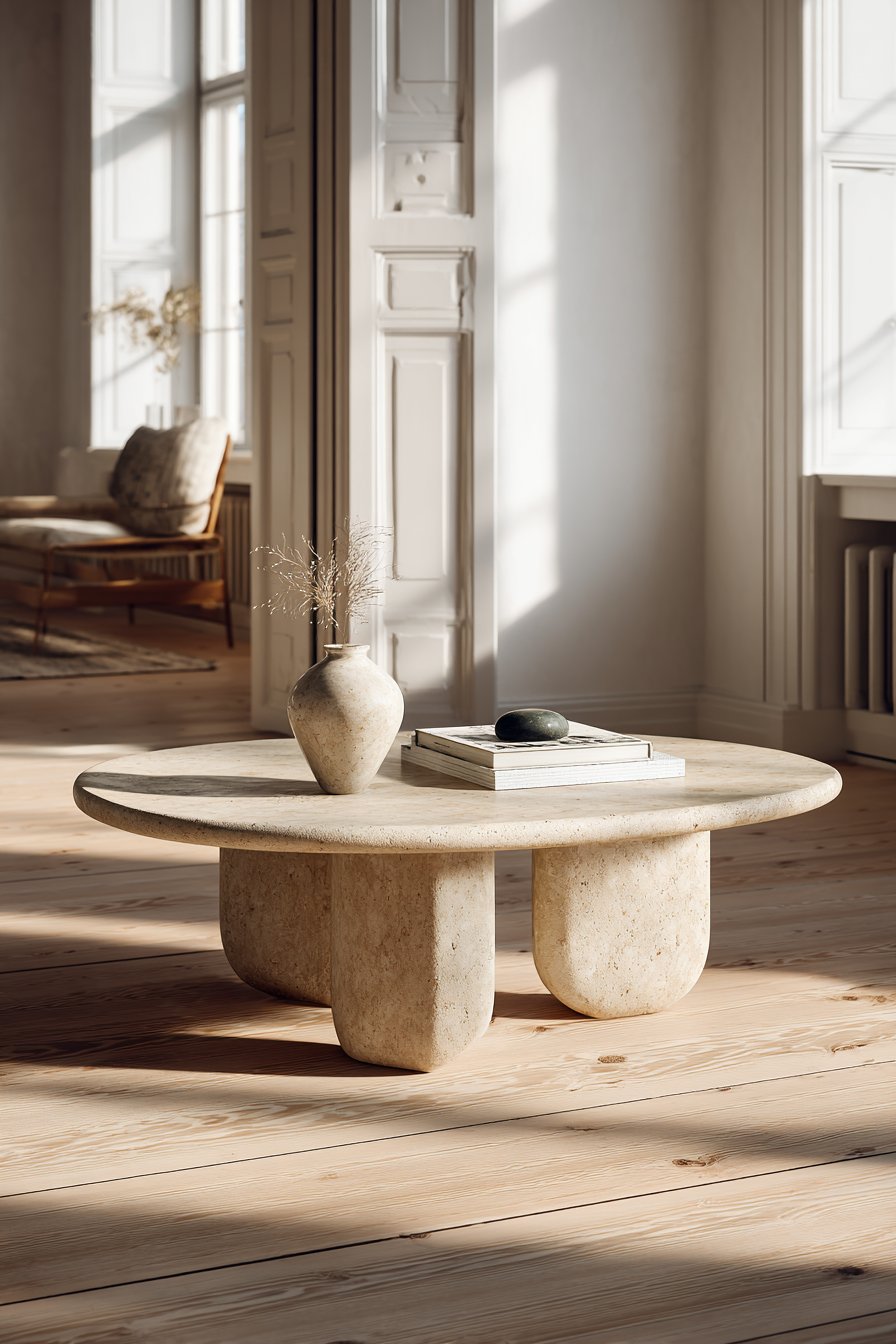
Be especially ruthless about functional clutter like remote controls, chargers, and stray paperwork. These items belong in drawers, baskets, or dedicated storage spots — not on your styled surface. If remotes must stay accessible, tuck them inside a small decorative box or a lidded tray.
- Limit your arrangement to three to five objects maximum
- Remove one object after styling and evaluate the improvement
- Store remote controls and cables out of sight in a decorative box
- Ask “does this add beauty or function?” before including any item
- Resist the urge to fill every inch of available space
6. Ground the Arrangement With a Tray or Books
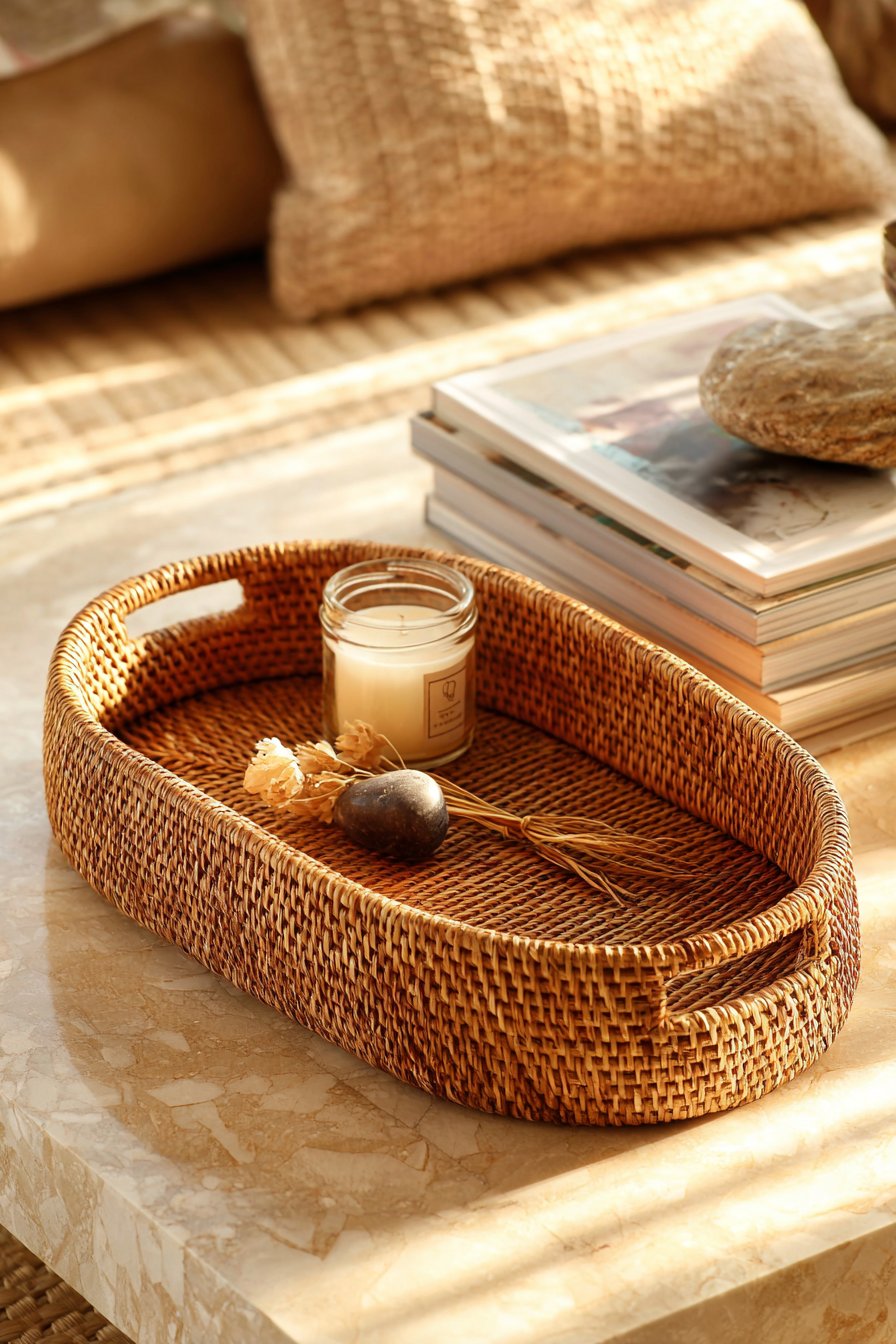
Every great coffee table arrangement needs an anchor element — something that grounds the composition and signals where the styled area begins and ends. Without an anchor, objects can feel scattered and unrelated, even if individually beautiful.
A large decorative tray is the most versatile anchoring tool available. It creates an instant frame around your objects, unifying them visually. Choose a tray in a material that complements your room — rattan and wicker for a natural boho feel, lacquered wood for contemporary spaces, or hammered metal for an artisan, global look.
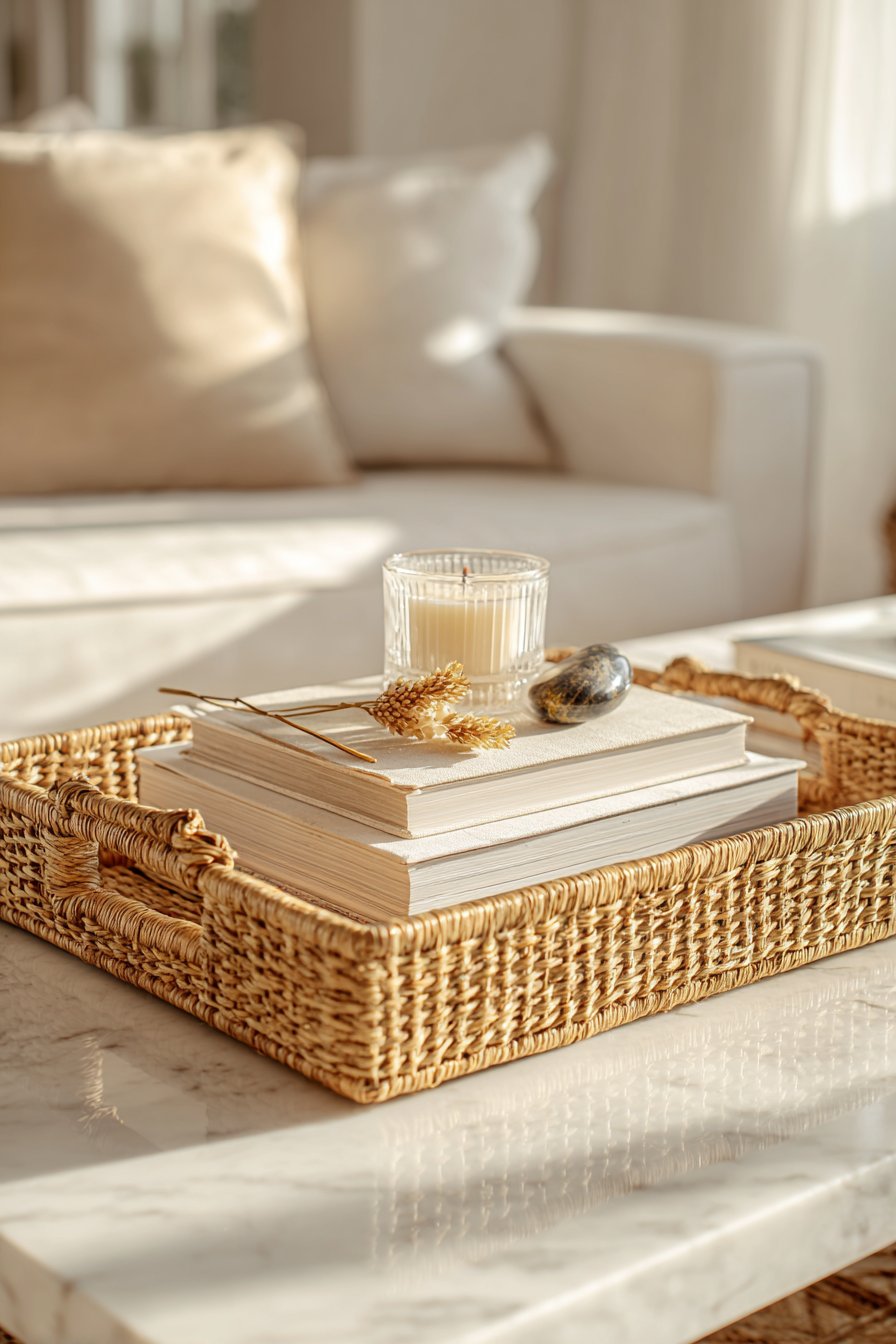
Stacked books serve a similar purpose. A curated stack of two or three coffee table books creates both visual weight and a strong horizontal base. Choose books with beautiful covers in colors that align with your palette. Remove the dust jackets if they clash — often the hardcover beneath is more attractive and cohesive.
- Use a large tray to define and contain the styled zone
- Choose tray materials that complement your room’s existing textures
- Stack two to three coffee table books as a base layer
- Remove dust jackets on books that disrupt your color palette
- Ensure the anchor element is proportional to the table size
7. Add a Natural Element for Warmth and Life
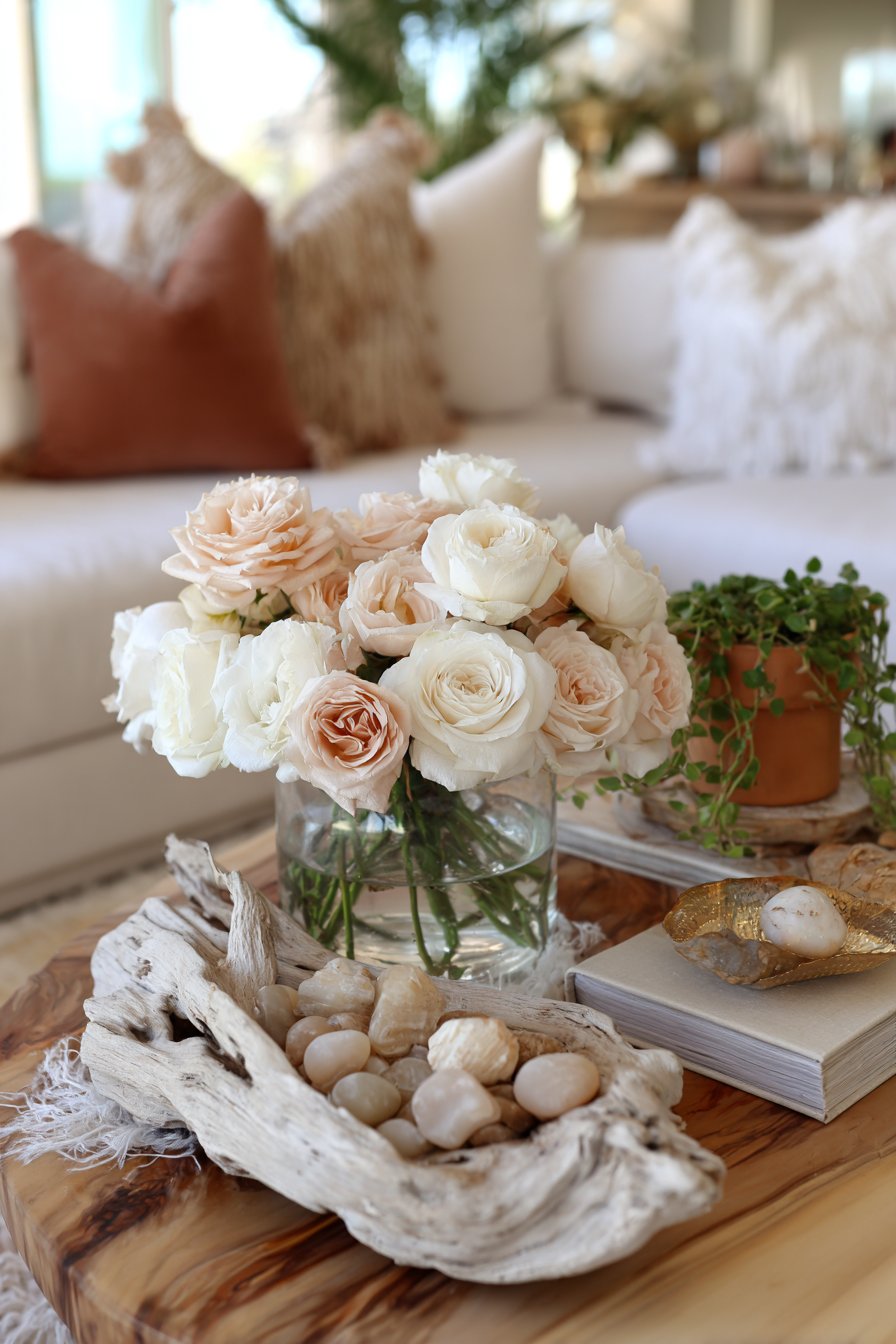
No coffee table arrangement feels truly complete without something living or organic. Natural elements introduce warmth, texture, and a sense of vitality that manufactured objects simply cannot replicate. They also soften the composition, preventing it from feeling too rigid or overly designed.
Fresh flowers are the obvious choice — and for good reason. A small bloom arrangement in a simple vase adds color, fragrance, and an effortless organic quality. If fresh flowers are not practical, consider a potted succulent or trailing plant like pothos or string of pearls. These low-maintenance options bring lasting life to the arrangement.
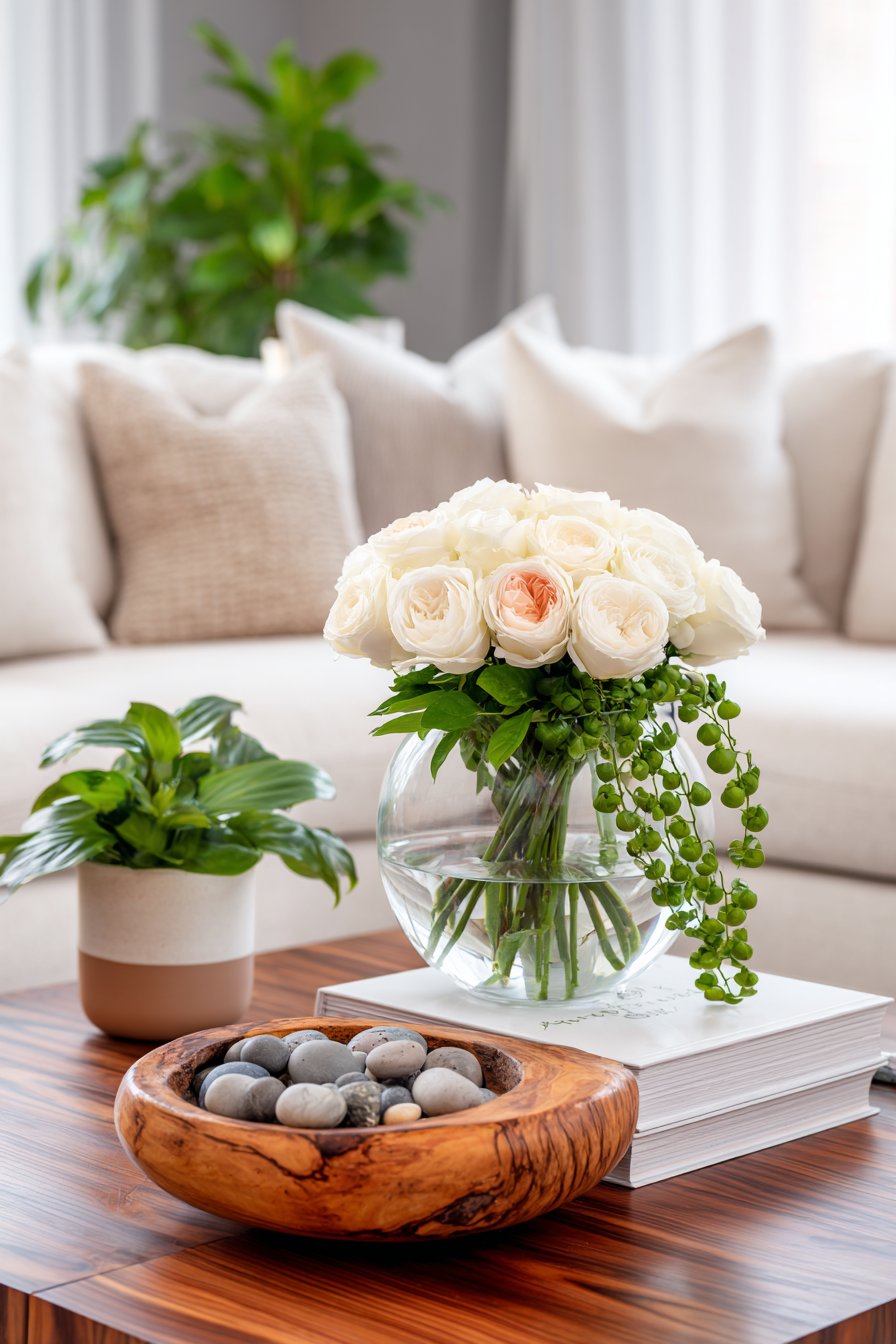
Beyond plants, consider other organic materials like a polished stone, a piece of driftwood, a bowl of pine cones, or a cluster of dried pampas grass. These elements carry the quiet beauty of the natural world into your interior space. They also change with the seasons, giving you an easy opportunity to refresh your styling throughout the year.
- Add a small vase of fresh flowers as a seasonal accent
- Choose a low-maintenance succulent or plant for lasting greenery
- Incorporate organic textures like polished stone or driftwood
- Swap natural elements seasonally to keep the arrangement feeling fresh
- Keep living elements proportional — avoid oversized plants that dominate
Conclusion
Styling a coffee table without visual clutter comes down to intention, restraint, and a few timeless design principles. Start with a clear purpose, group objects thoughtfully, commit to a cohesive color palette, and let breathing room do the heavy lifting. Remember that every object you remove often improves the composition more than every object you add.
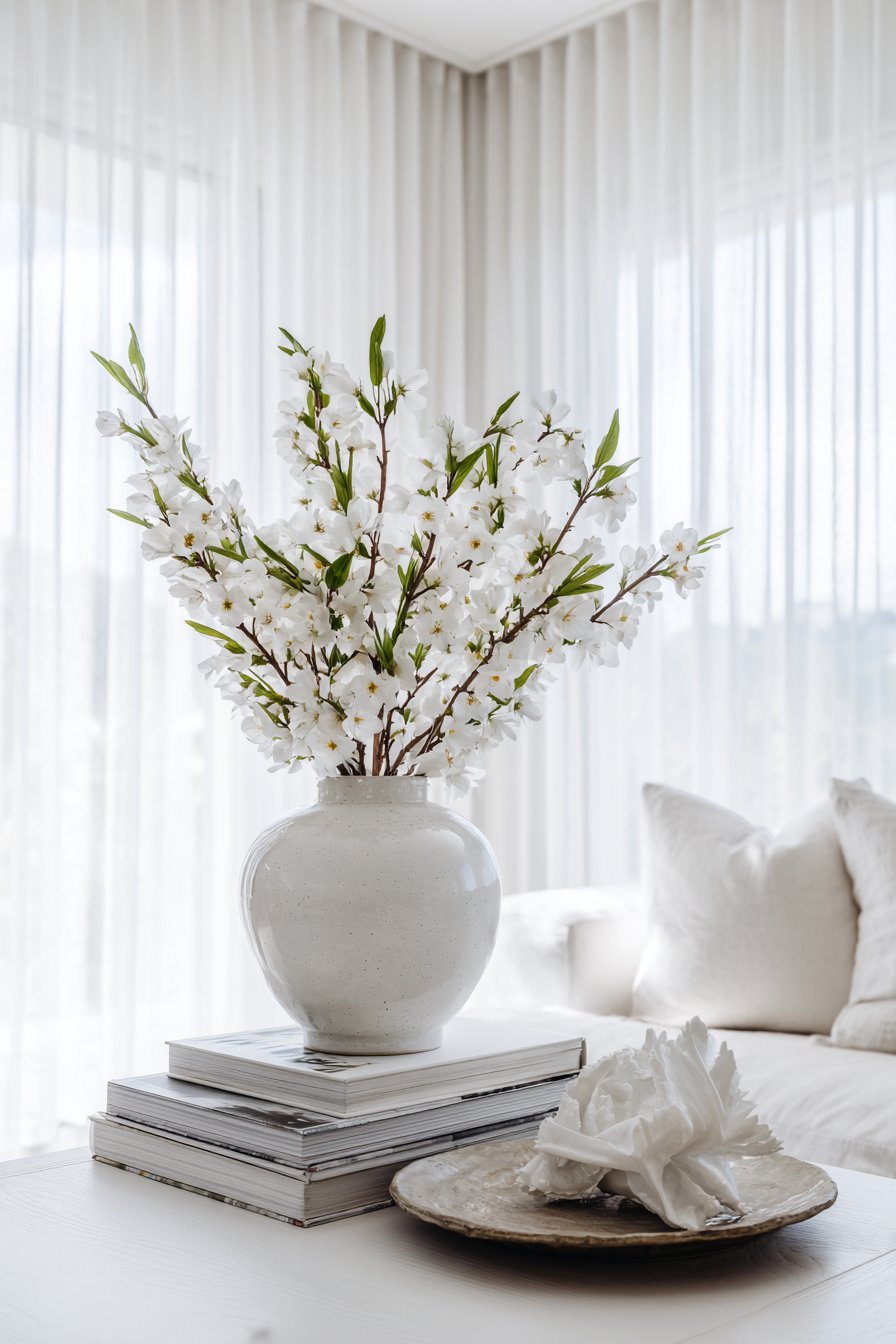
The most beautifully styled coffee tables are not the ones with the most objects — they are the ones that feel most effortless. With these seven tips in hand, you have everything you need to transform your coffee table into a curated, clutter-free centerpiece that elevates your entire living room. Trust the process, edit boldly, and enjoy the calm that intentional design always brings.
"As an Amazon Associate, I earn from qualifying purchases."
