
A beautifully styled buffet table serves as both functional serving space and stunning focal point in your dining room. The art of buffet styling transforms ordinary furniture into eye-catching displays that enhance your home’s aesthetic while providing practical storage and serving capabilities. Whether hosting elegant dinner parties or simply elevating everyday decor, a well-appointed buffet reflects thoughtful design and personal style.
Strategic buffet styling requires balancing form and function, creating arrangements that look intentional without appearing overly staged. The best displays combine varying heights, textures, and purposes while maintaining visual harmony and accessibility. Understanding fundamental design principles like the rule of three, symmetry versus asymmetry, and layering techniques allows you to create professional-looking arrangements that adapt seamlessly to different occasions and seasons.
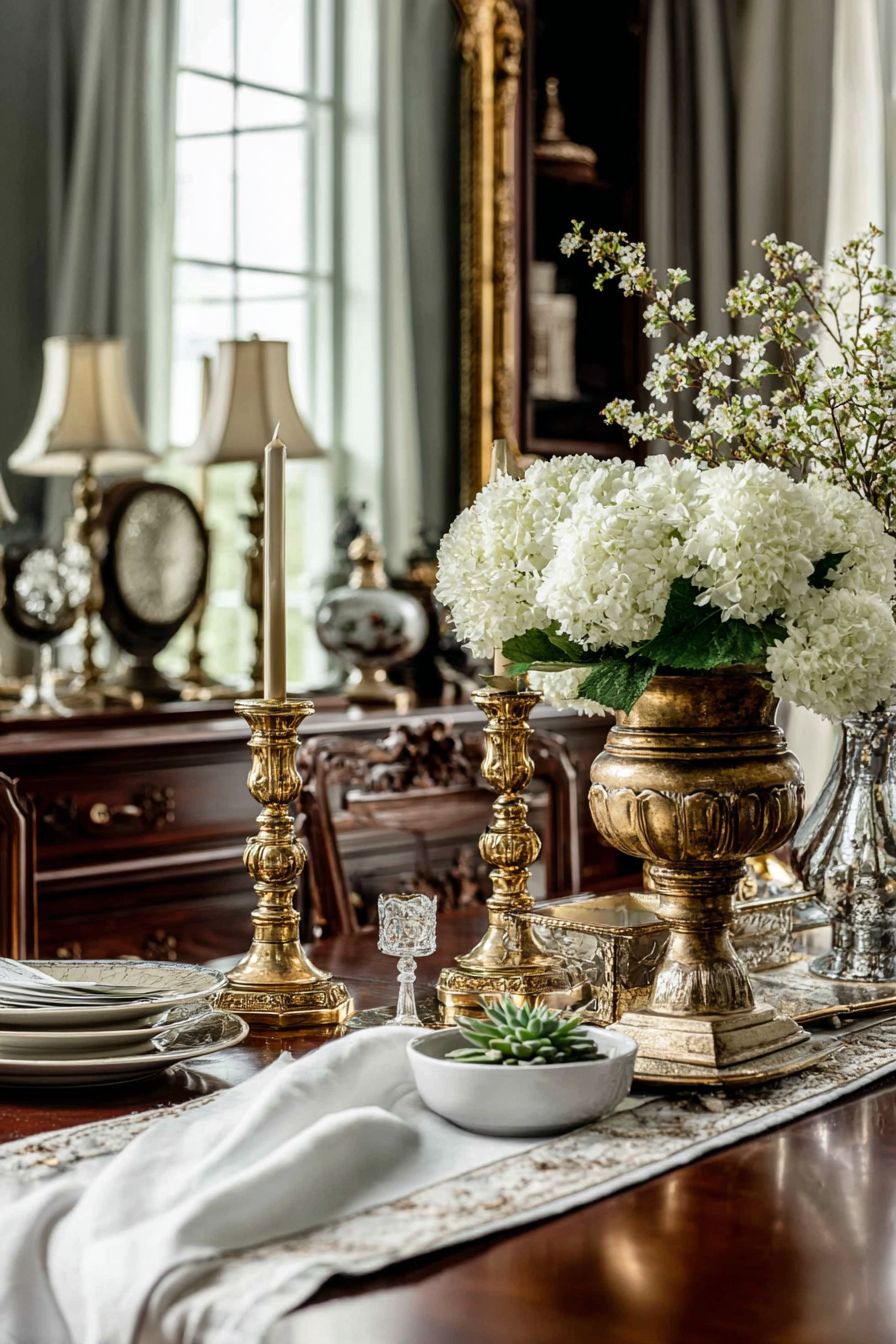
This comprehensive guide presents fourteen essential tips for styling buffet tables that work for every occasion, from casual family gatherings to formal celebrations. You’ll discover how to create visual interest through height variation, incorporate functional elements beautifully, and adapt your styling approach to match different events and seasons. These versatile strategies work regardless of your buffet size, style, or budget, helping you create displays that impress guests while serving your practical needs perfectly.
1. Start with a Clean Foundation
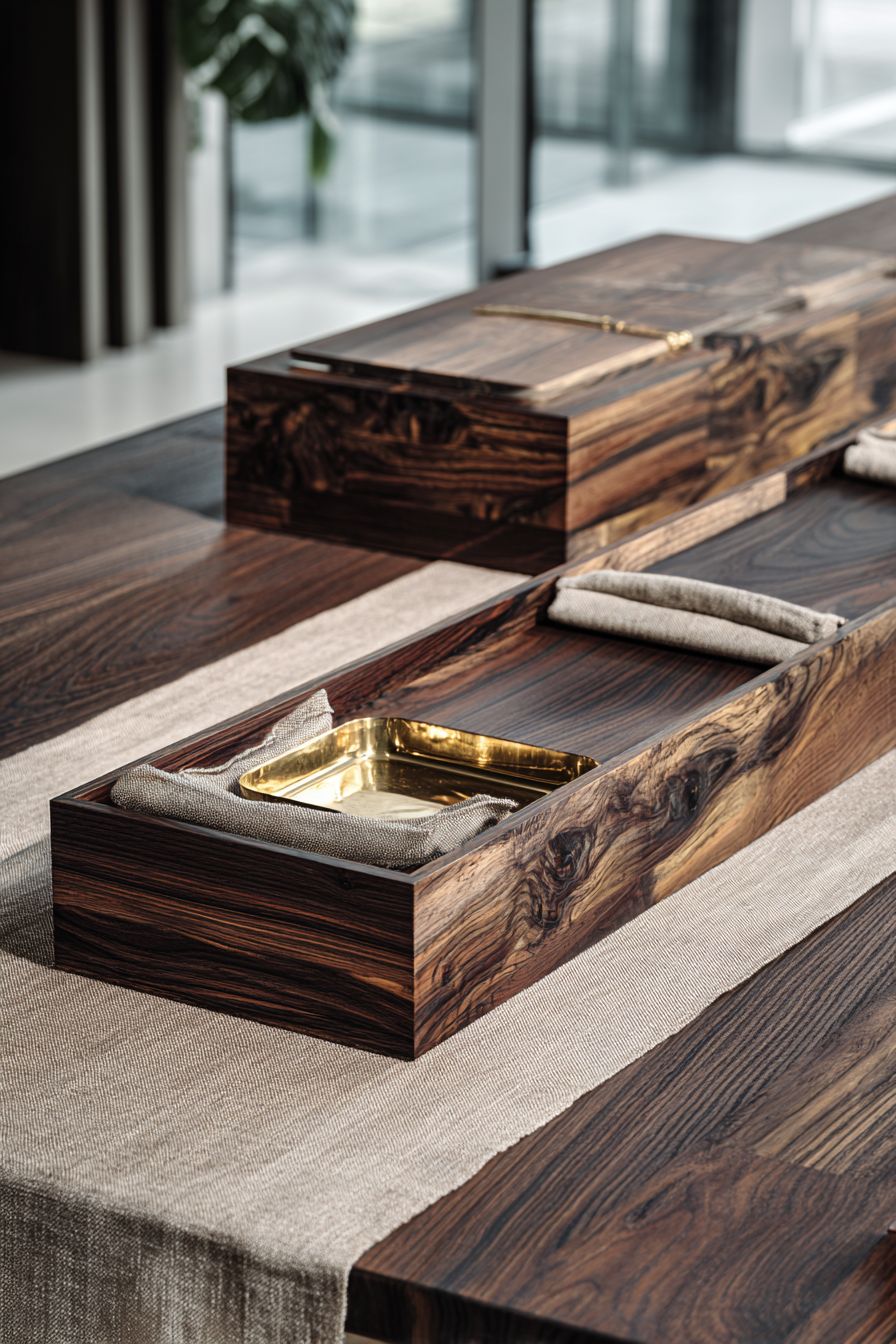
Clearing your buffet completely before styling allows you to approach the space with fresh perspective and intentionality. Remove everything currently displayed, clean the surface thoroughly, and assess the bare furniture piece. This blank slate helps prevent cluttered arrangements and ensures every item you add serves a specific purpose in your composition.
The surface condition of your buffet affects how polished your final styling appears. Repair any scratches, tighten loose hardware, and polish wood surfaces to showcase their natural beauty. A well-maintained foundation elevates even simple styling, while damaged surfaces undermine expensive accessories and thoughtful arrangements.
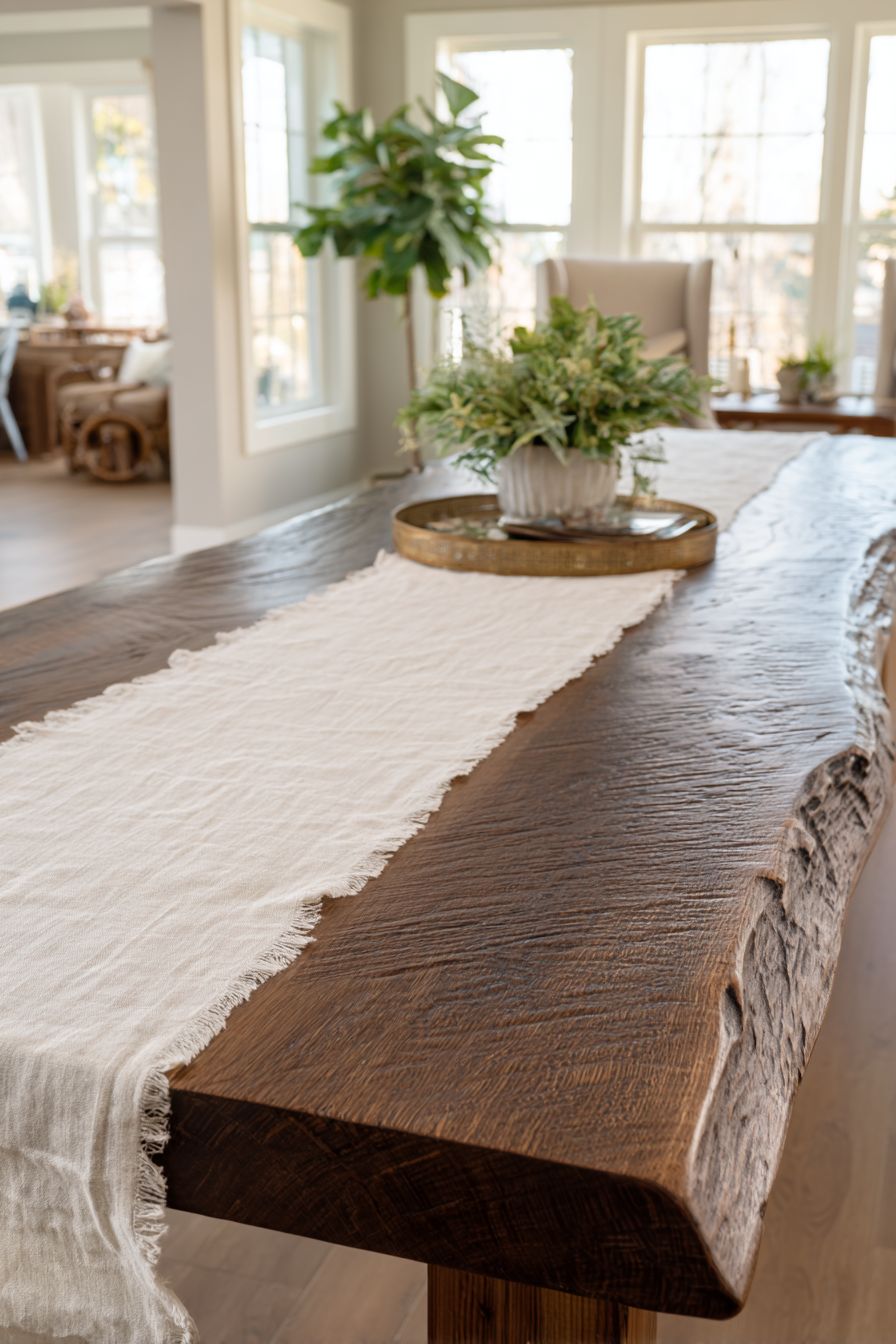
Consider adding a table runner or decorative mat as your base layer to protect the surface while adding color, texture, and visual interest. Choose materials that complement your buffet’s finish and your room’s overall aesthetic. This foundational layer anchors your arrangement while providing practical protection from scratches and moisture damage.
- Remove all items and clean the buffet surface thoroughly before styling
- Repair scratches, tighten hardware, and polish the surface for pristine presentation
- Add a table runner, decorative mat, or tray to create a protective base layer
- Choose foundation pieces in colors and textures that complement your decor
- Ensure the surface is level to prevent items from sliding or tipping
- Consider the runner length—it should extend beyond large centerpiece items
2. Create Height Variation with Layers
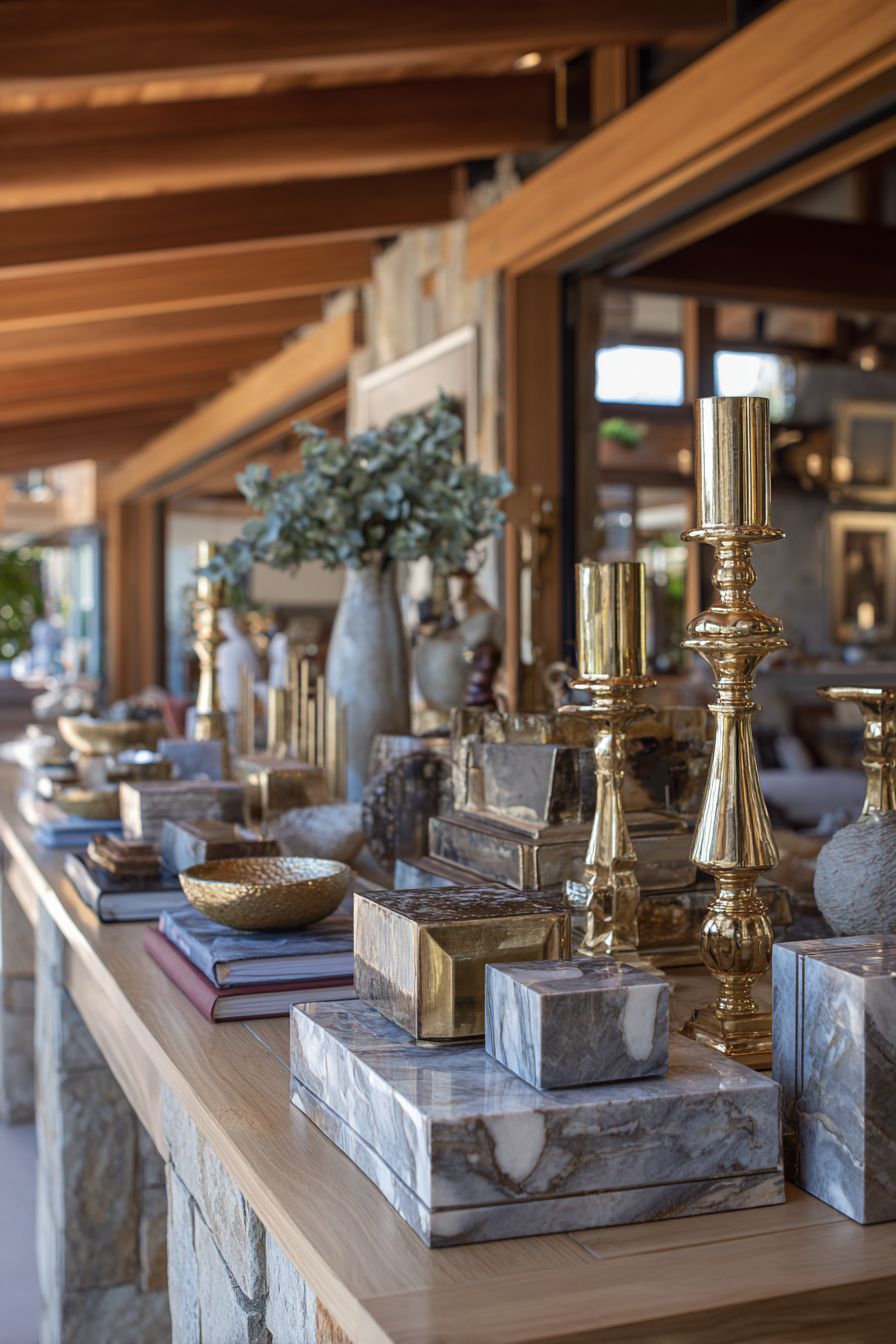
Varying heights creates visual interest and prevents flat, boring arrangements that lack dimension. Combine tall candlesticks, medium vases, and low decorative bowls to establish dynamic compositions that draw the eye vertically. This layering technique mimics how professional designers create depth and drama in styled spaces.
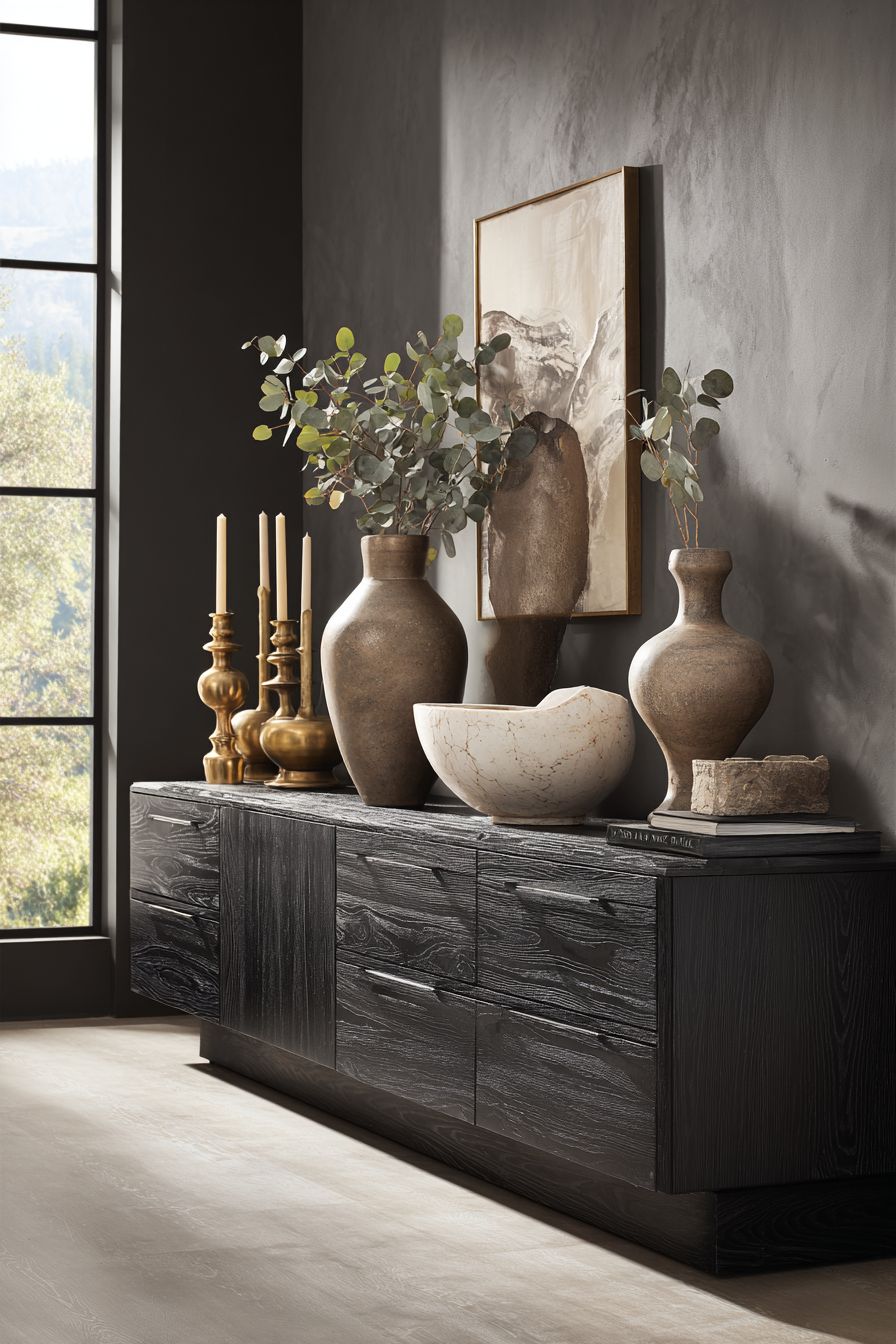
The tallest elements should typically reach 1.5 to 2 times the width of your buffet to maintain proper proportion. A 60-inch wide buffet works beautifully with elements reaching 30-40 inches tall. These vertical pieces anchor your arrangement and create dramatic impact, especially when positioned toward the back or sides of the display.
Books, risers, and pedestals provide easy height variation for smaller objects. Stack decorative books to elevate picture frames, small sculptures, or plants. Use cake stands, pedestals, or decorative boxes to showcase special items at varying levels. This technique creates professional-looking depth without requiring expensive tall accessories.
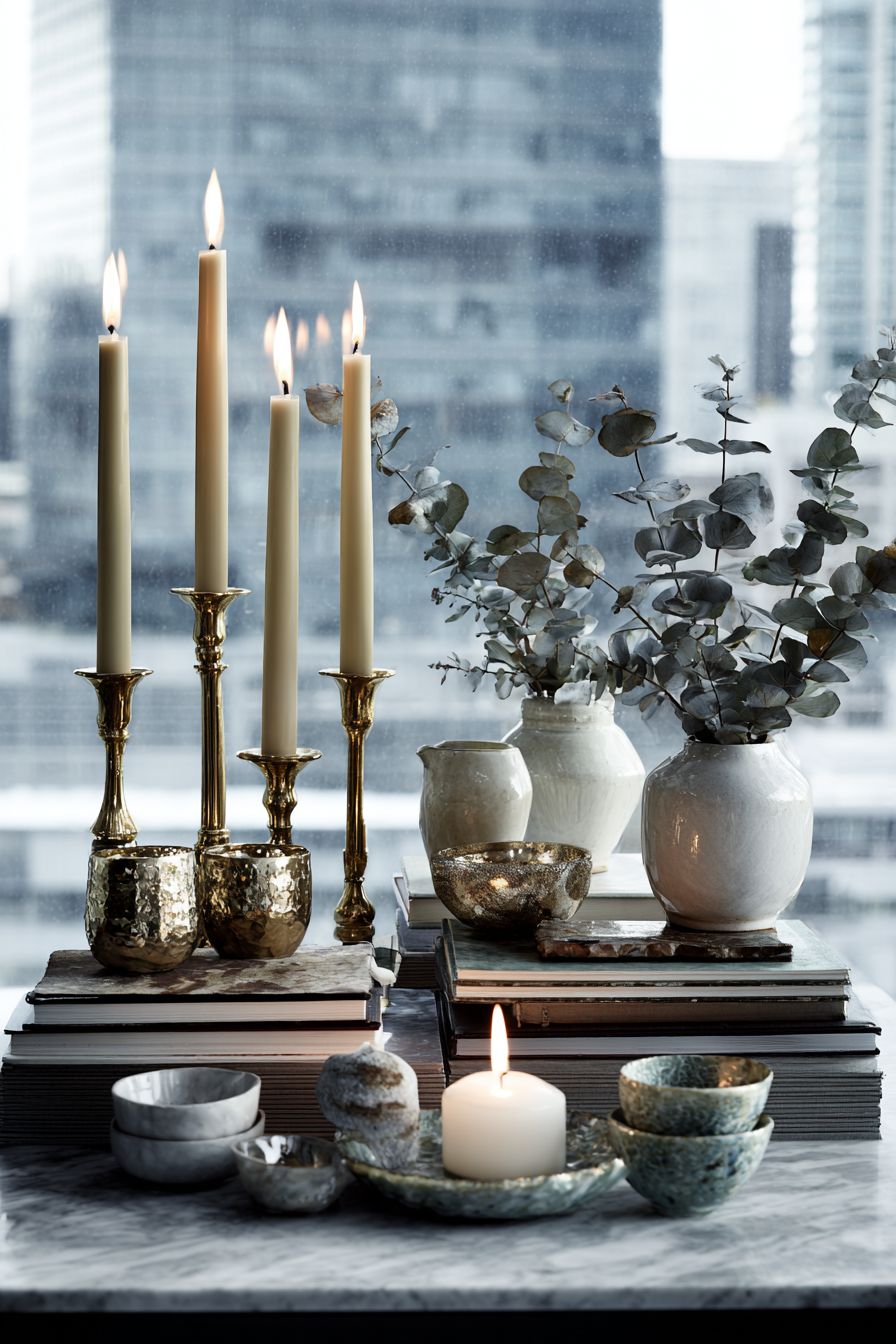
- Incorporate tall items like candlesticks, vases, or lamps for vertical drama
- Place medium-height objects in the middle ground of your arrangement
- Add low bowls, trays, or decorative objects for foreground interest
- Use books, boxes, or risers to elevate smaller items to varying heights
- Ensure your tallest piece reaches 1.5 to 2 times your buffet width
- Vary heights in odd numbers (three or five levels) for most pleasing compositions
3. Follow the Rule of Three
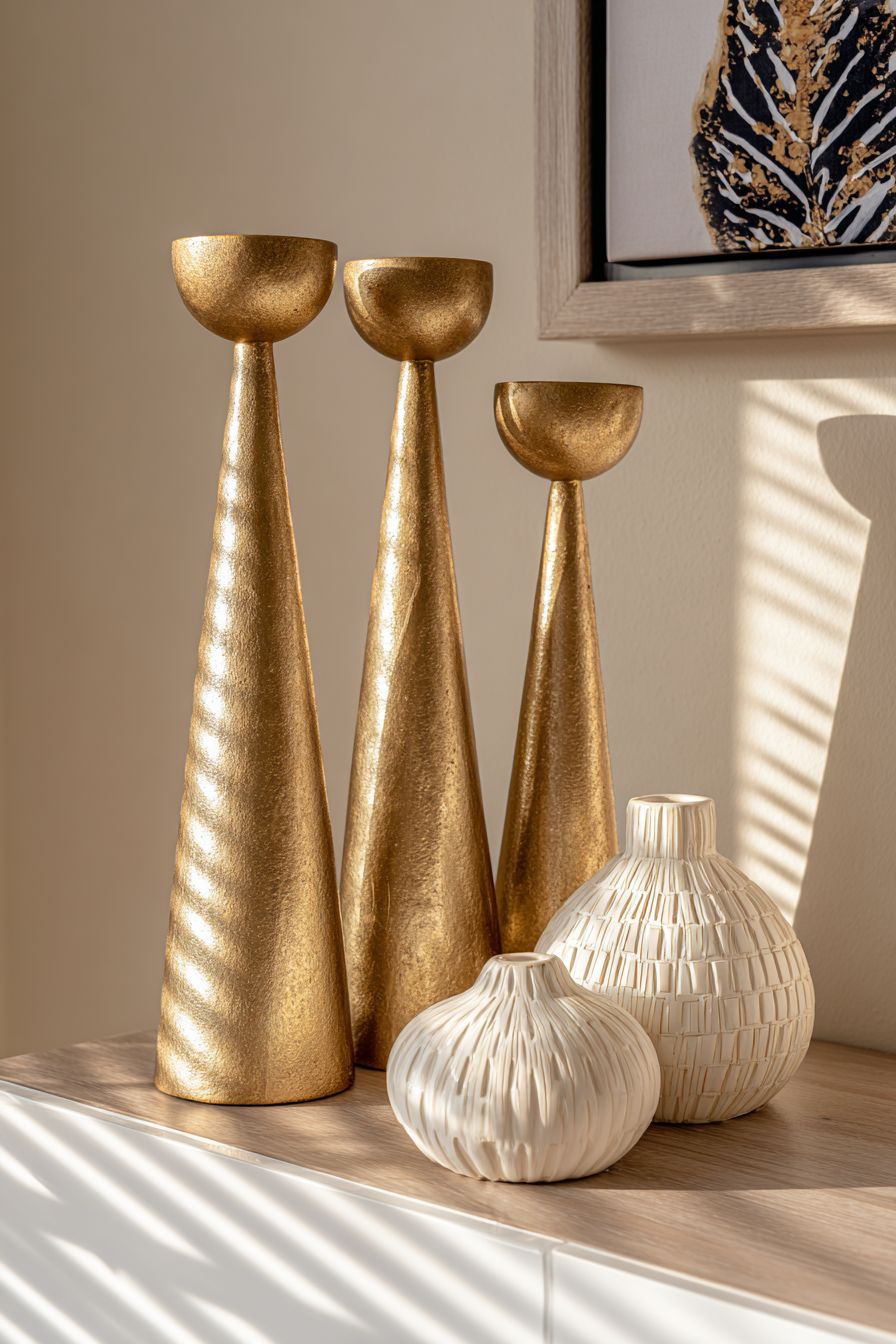
The rule of three suggests grouping objects in odd numbers creates more visually appealing and dynamic arrangements. Three items feel complete yet interesting, while even numbers can appear static or too symmetrical. This fundamental design principle works across all styling contexts from buffets to mantels to coffee tables.
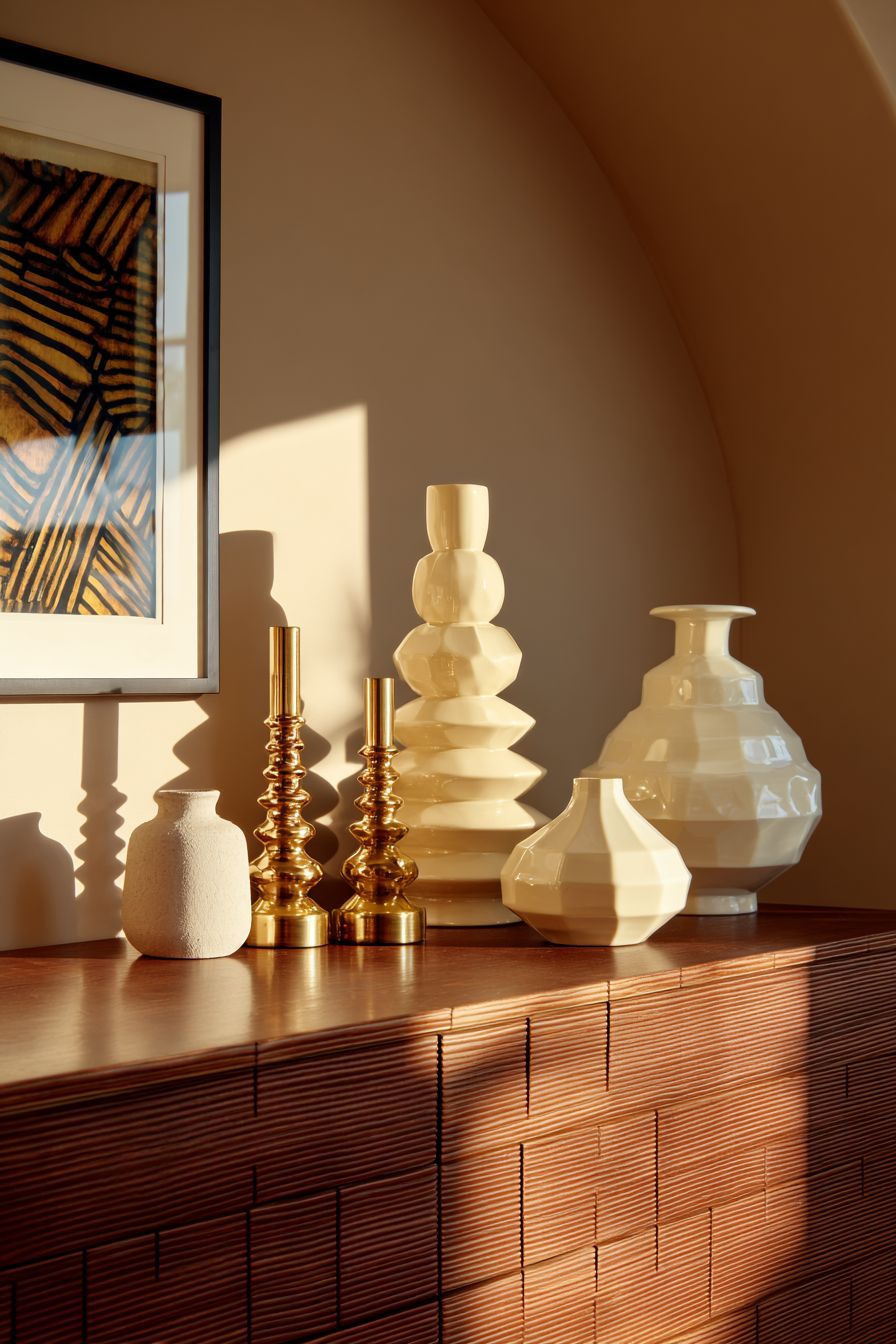
Grouping by threes doesn’t mean using exactly three items total but rather creating arrangements in sets of three varying heights, colors, or textures. You might display three candlesticks of different heights, three vases in coordinating colors, or three decorative objects with similar themes. This approach creates rhythm and movement within your composition.
The principle extends to color and texture as well. Incorporate three different materials like wood, metal, and ceramic, or use three shades within one color family. This subtle repetition creates cohesion while maintaining enough variety to keep arrangements interesting and professionally styled.
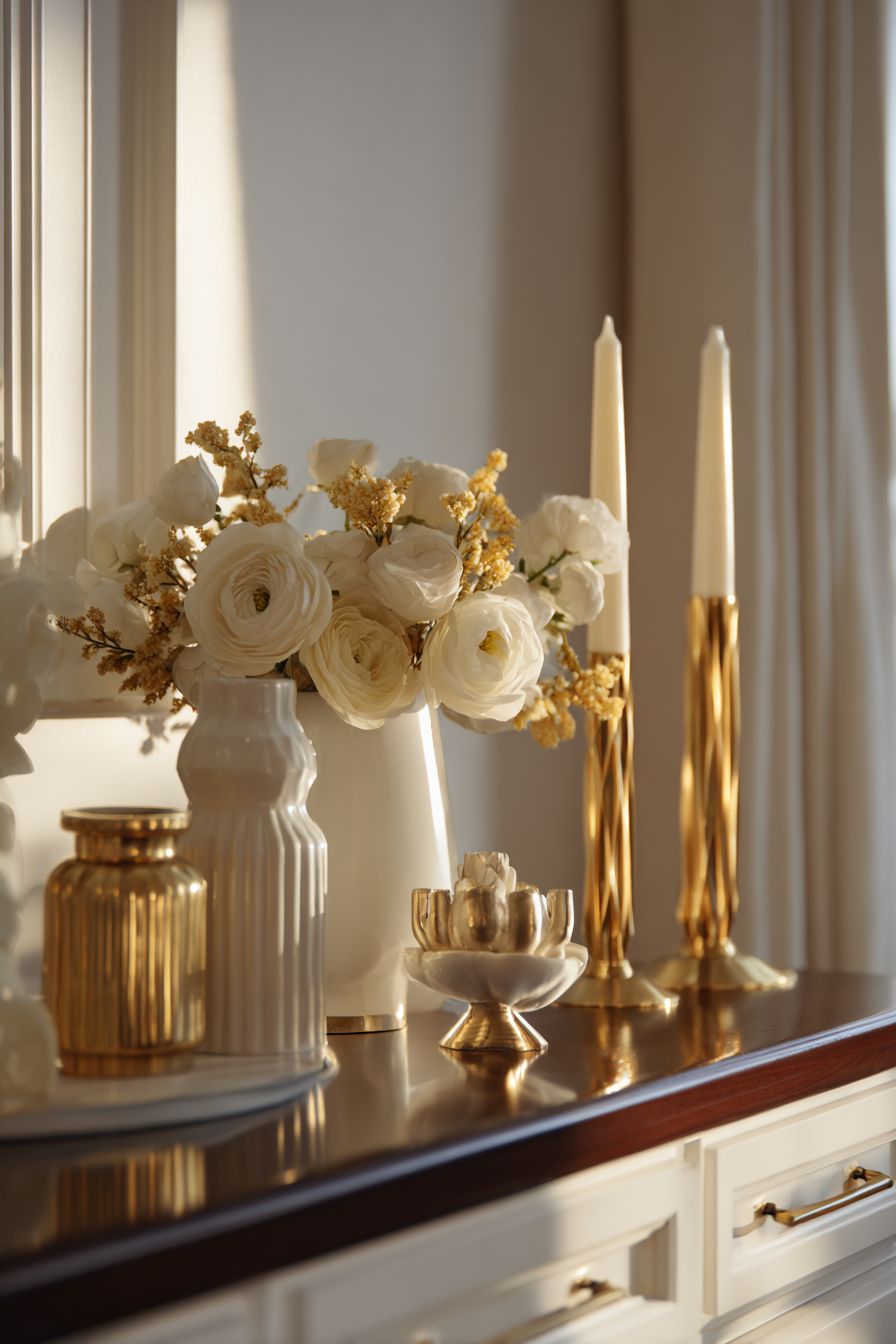
- Group decorative objects in sets of three for balanced visual interest
- Vary the heights within each grouping for dimensional appeal
- Apply the rule to colors, using three coordinating shades throughout
- Use three different textures or materials to create tactile variety
- Position groups in triangular arrangements for natural eye movement
- Remember that larger displays can have multiple groups of three
4. Balance Symmetry and Asymmetry
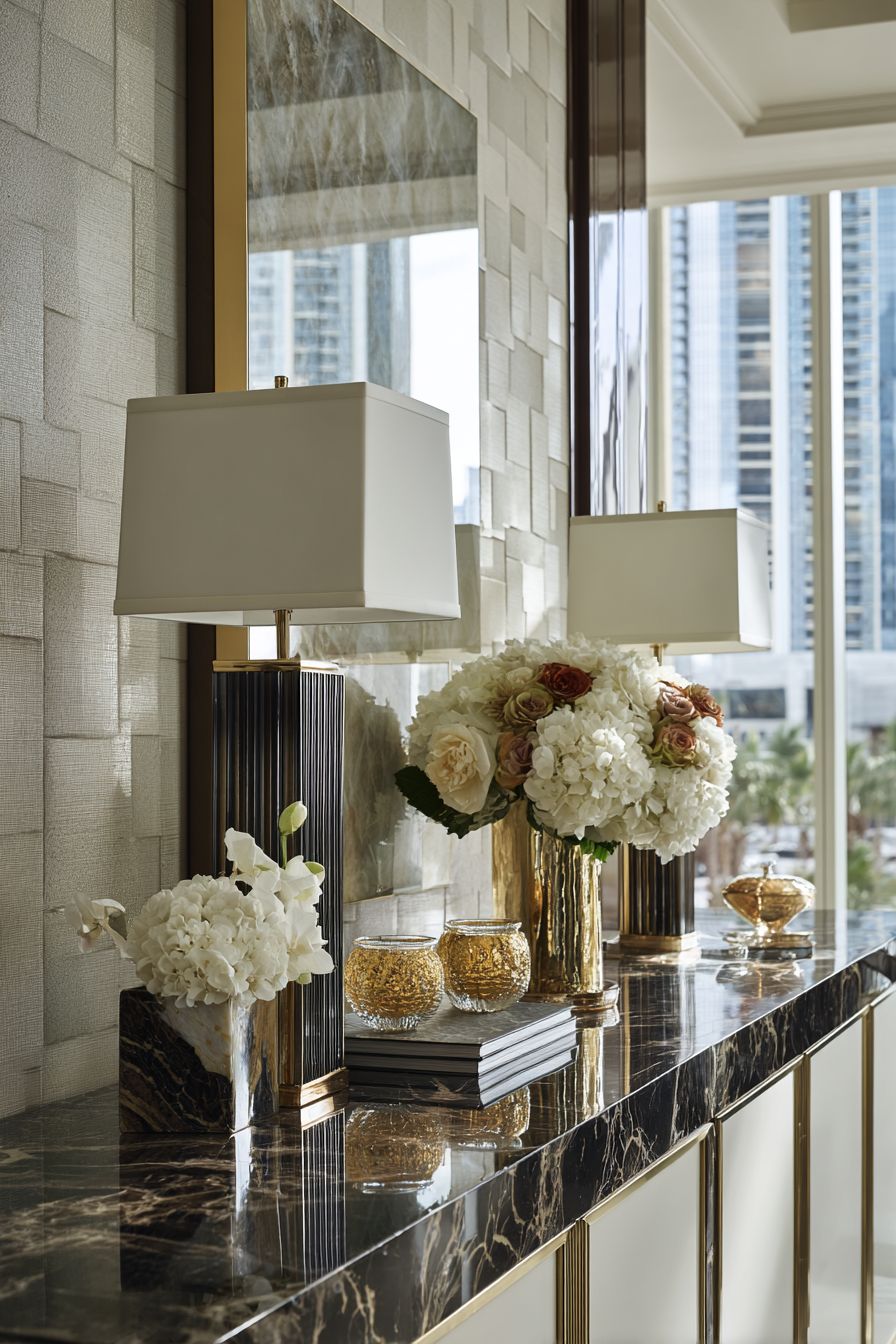
Symmetrical arrangements create formal elegance perfect for traditional dining rooms and special occasions. Position matching lamps, candlesticks, or decorative objects on either side of a central focal point like a mirror or artwork. This balanced approach feels calm, organized, and classically sophisticated.
Asymmetrical styling offers more relaxed, contemporary appeal while still maintaining visual balance. Place a tall vase on one side and balance it with a grouping of lower objects on the other side. The key lies in achieving equal visual weight without mirror-image placement, creating interest through variation rather than repetition.
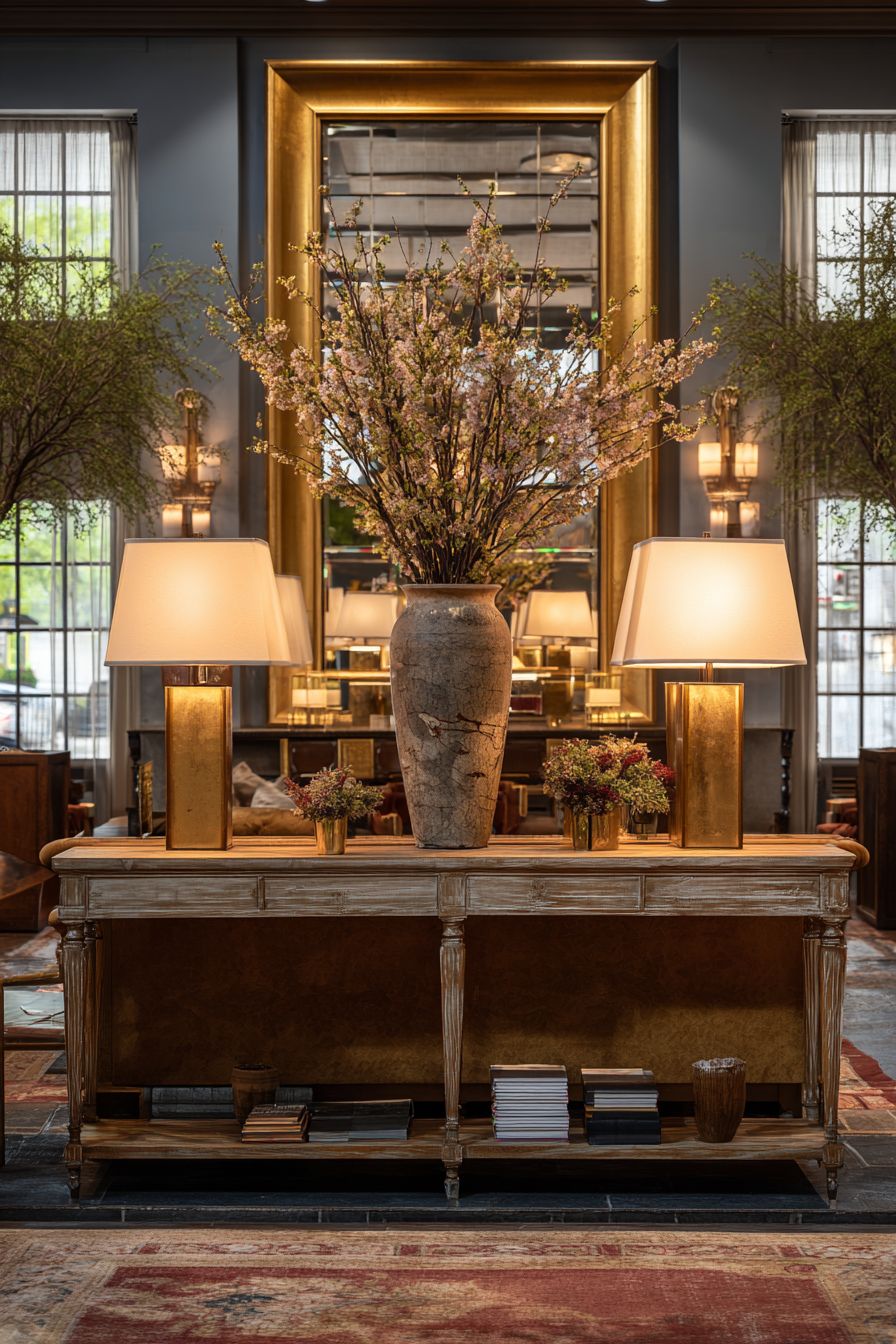
Most successful buffet arrangements incorporate both approaches, using symmetrical placement for foundational elements while adding asymmetrical details for personality. Flank your buffet with matching lamps for structure, then style the center area asymmetrically with varied objects. This hybrid method delivers both sophistication and visual interest.
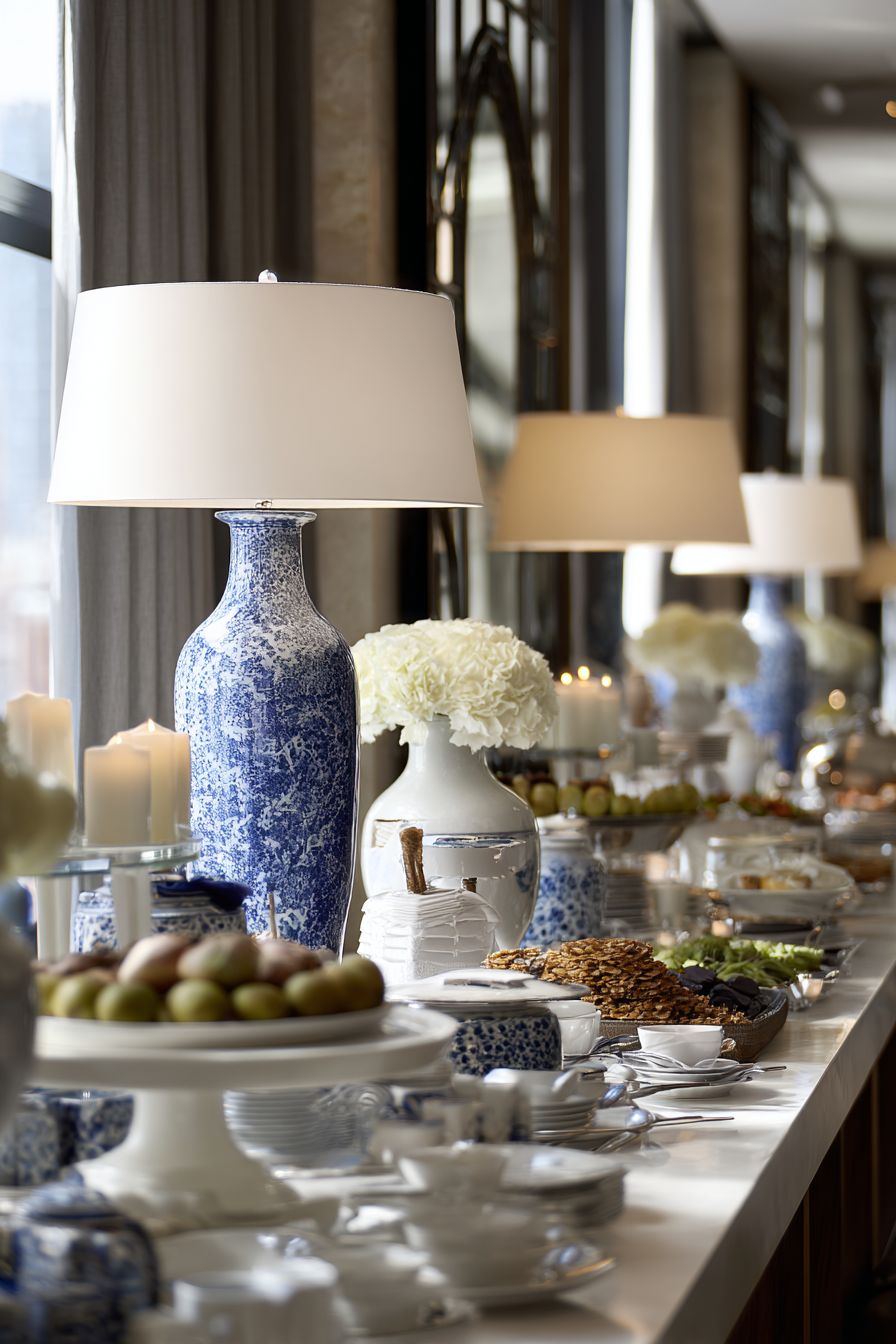
- Use symmetrical arrangements for formal occasions and traditional spaces
- Create asymmetrical displays for casual, contemporary aesthetics
- Balance visual weight rather than creating exact mirror images
- Combine both approaches with symmetrical anchors and asymmetrical details
- Consider your room’s overall style when choosing your approach
- Ensure asymmetrical arrangements still feel balanced from all viewing angles
5. Incorporate Functional Elements
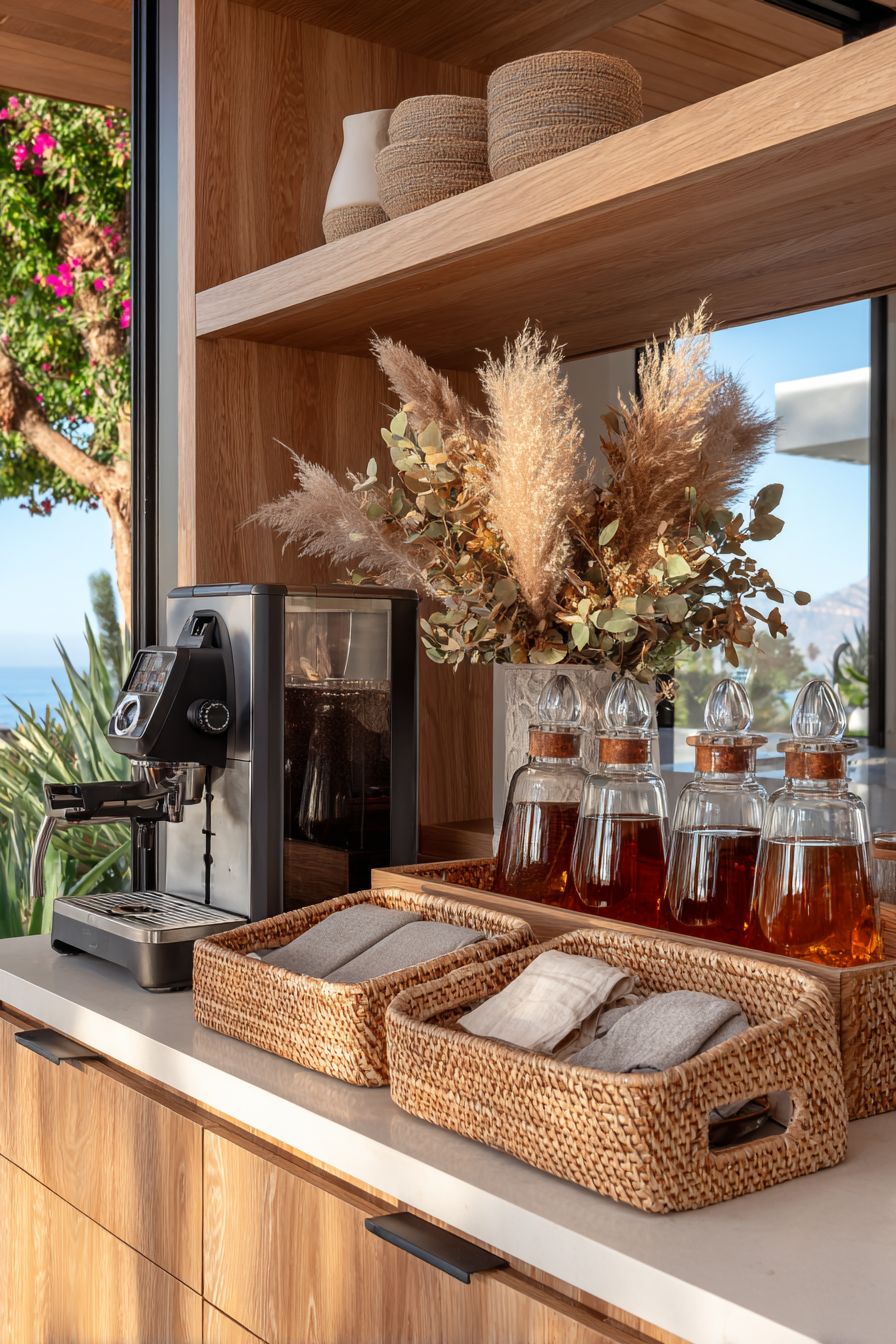
Practical items deserve beautiful presentation rather than being hidden away. Display attractive serving pieces, wine decanters, or bar accessories as part of your buffet styling. These functional elements provide convenience during entertaining while contributing to your decorative arrangement when not in use.
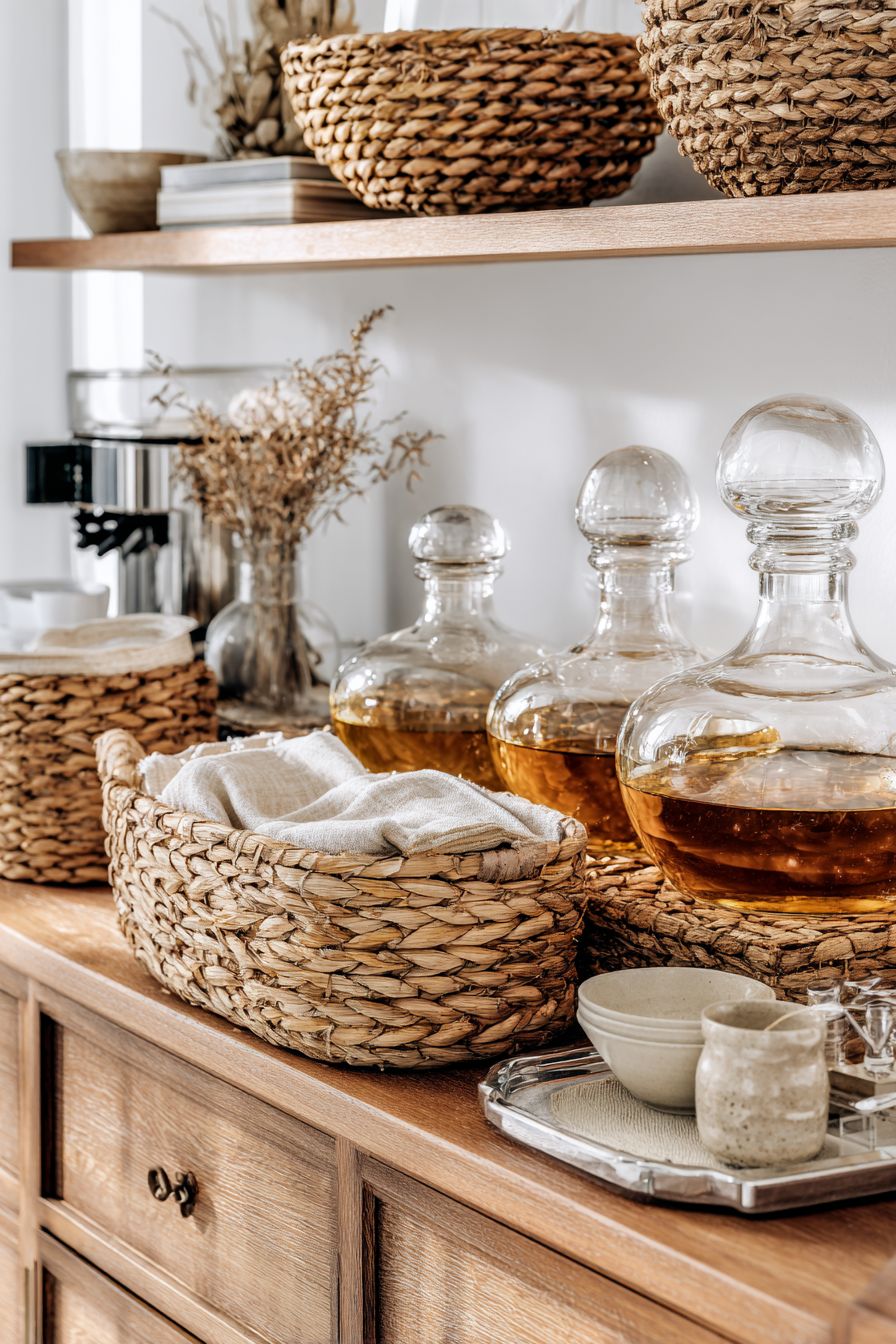
Storage baskets and decorative boxes organize small items while adding texture and visual interest. Use attractive containers to corral napkins, coasters, or serving utensils within easy reach. Choose pieces in materials and colors that complement your overall design while serving practical purposes that enhance daily life.
Beverage stations transform sections of your buffet into functional serving areas for coffee, cocktails, or water. Arrange coffee makers, glassware, and drink accessories attractively using trays to define the area. This approach maximizes your buffet’s utility while maintaining stylish presentation that works even when items aren’t actively in use.
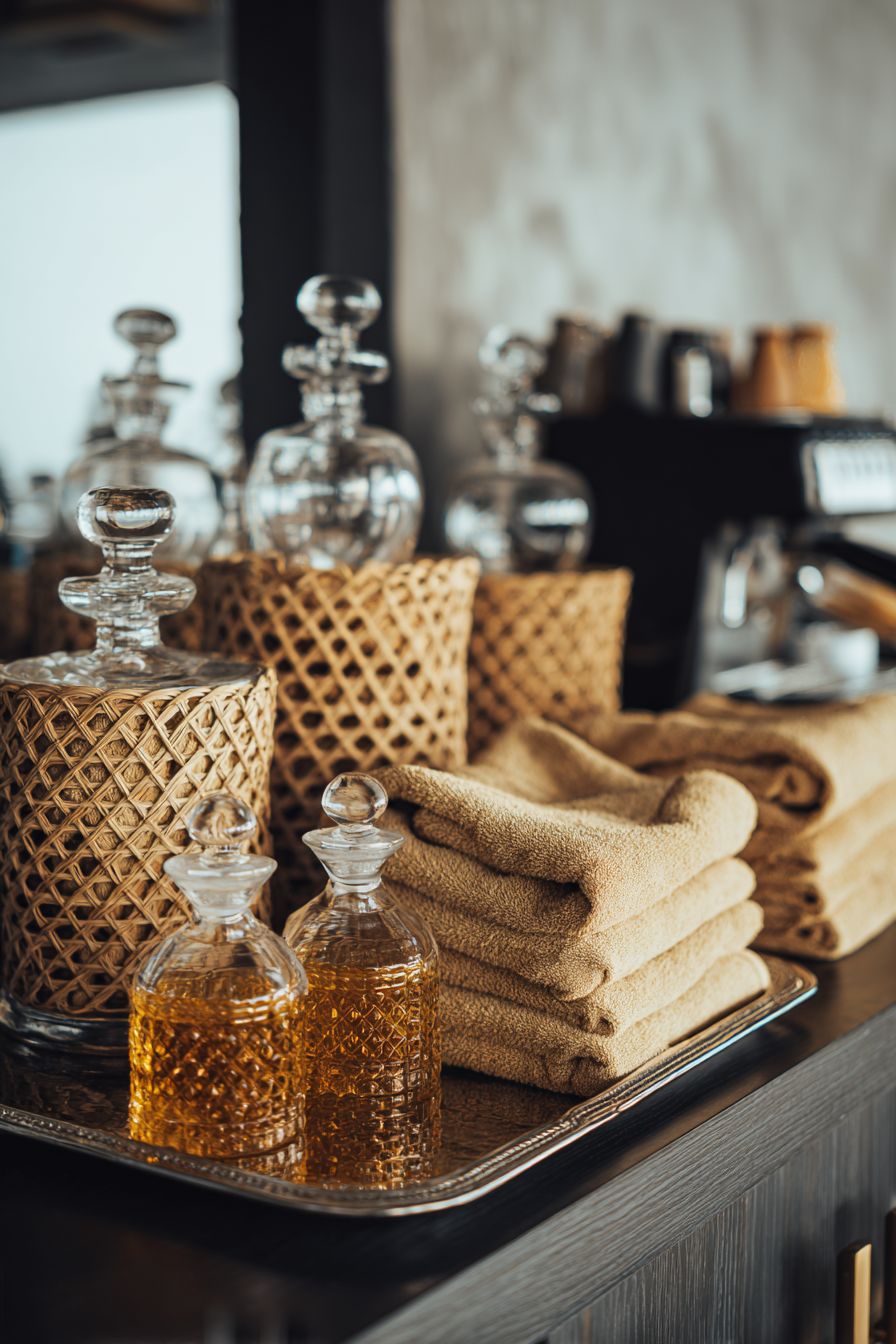
- Display beautiful serving pieces, decanters, or bowls as decorative elements
- Use attractive storage boxes or baskets to organize practical items
- Create dedicated beverage or coffee stations on one section of the buffet
- Choose functional items in materials that complement your decor style
- Keep frequently used items accessible while maintaining visual appeal
- Use trays to define functional areas and contain related items
6. Add Living Elements
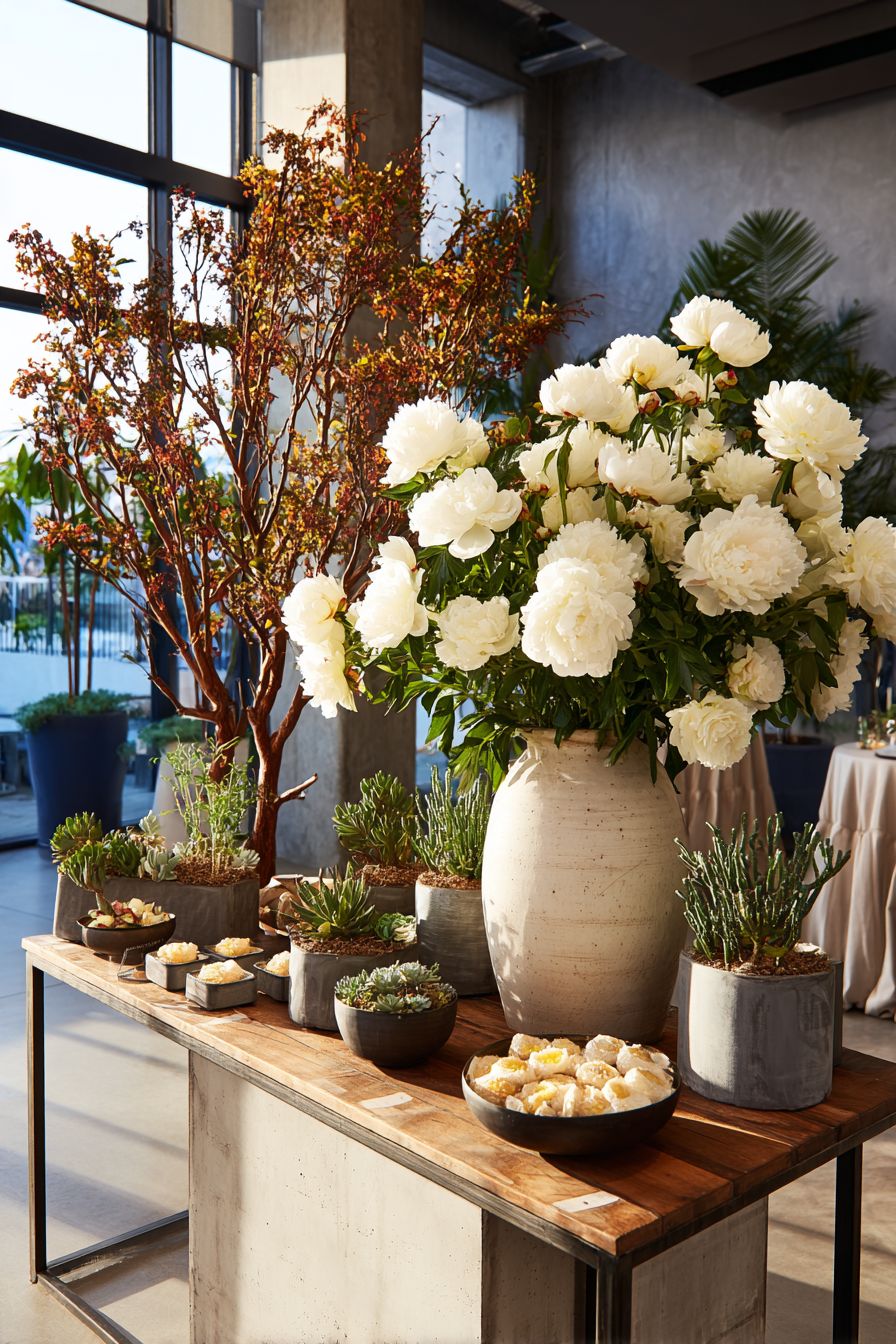
Fresh flowers instantly elevate any buffet display with color, fragrance, and organic beauty that artificial elements cannot replicate. A substantial arrangement in a quality vase creates immediate impact and sophistication. Even simple grocery store flowers presented thoughtfully transform everyday buffet styling into something special and intentional.
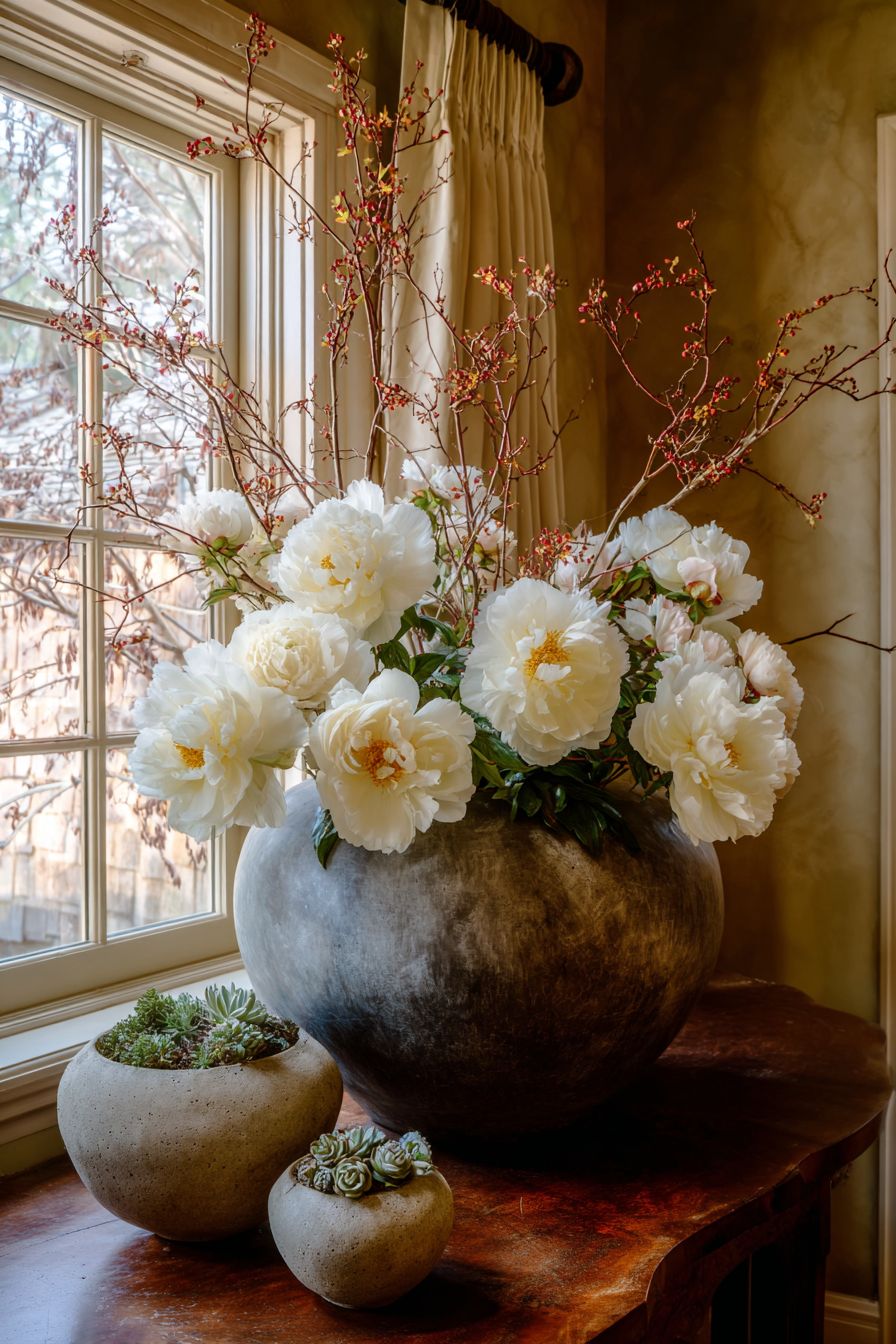
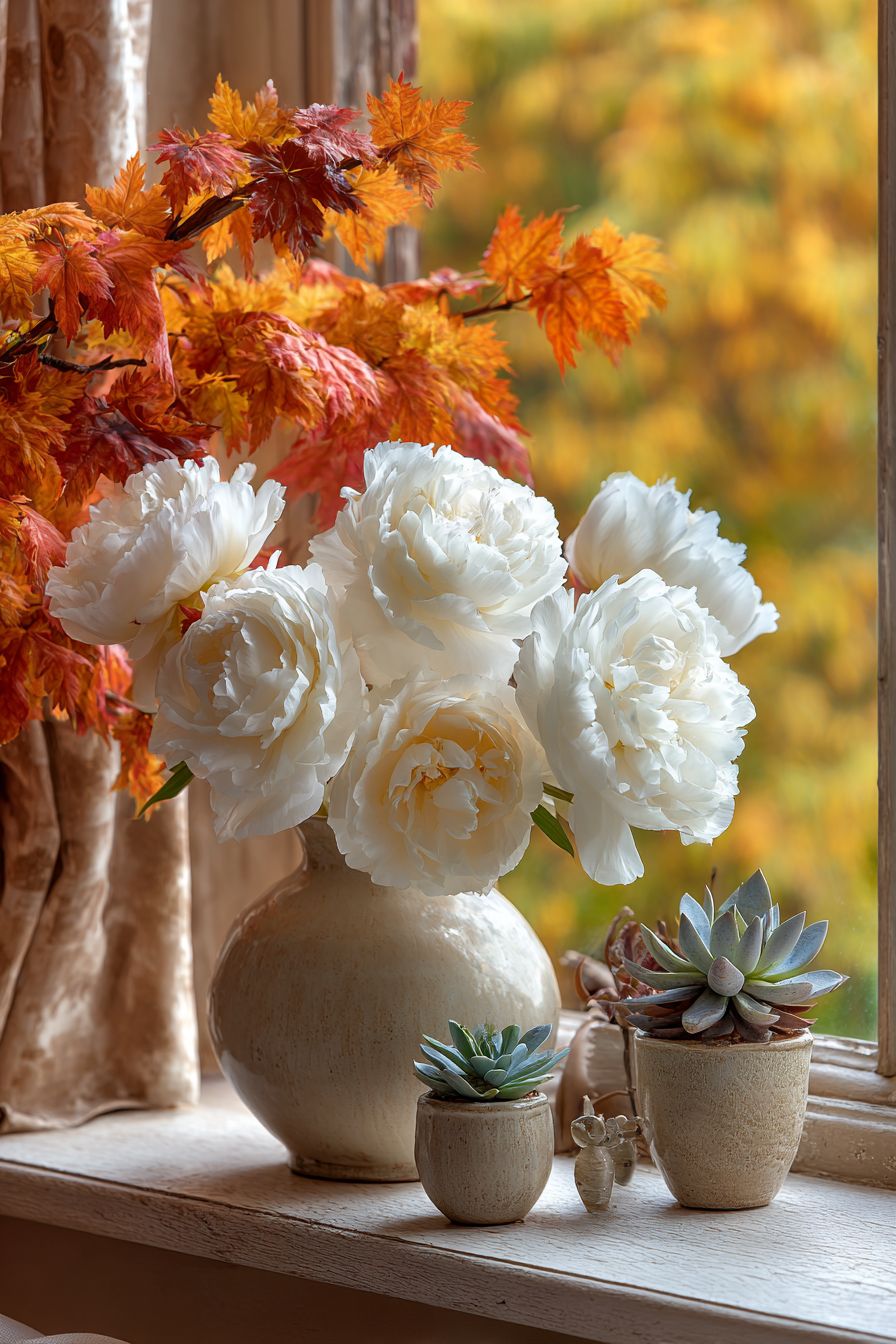
Potted plants and greenery provide lasting beauty that changes with the seasons. Consider low-maintenance options like succulents, snake plants, or pothos that thrive indoors with minimal care. Living plants add life and vitality to buffets while improving air quality and connecting your interior space to nature’s organic beauty.
Seasonal branches and foliage offer dramatic impact at minimal cost throughout the year. Spring cherry blossoms, summer hydrangeas, autumn colored leaves, and winter evergreen branches provide constantly evolving interest. Display these natural elements in substantial vases or urns for scale and presence that anchors your entire buffet composition.
- Display fresh flowers weekly in substantial arrangements for ongoing beauty
- Choose low-maintenance potted plants that thrive in your lighting conditions
- Incorporate seasonal branches or foliage for dramatic, budget-friendly impact
- Use quality vases in materials like ceramic, glass, or metal
- Vary the scale of living elements from small succulents to large arrangements
- Position plants near windows where they’ll receive adequate natural light
7. Layer with Texture and Pattern
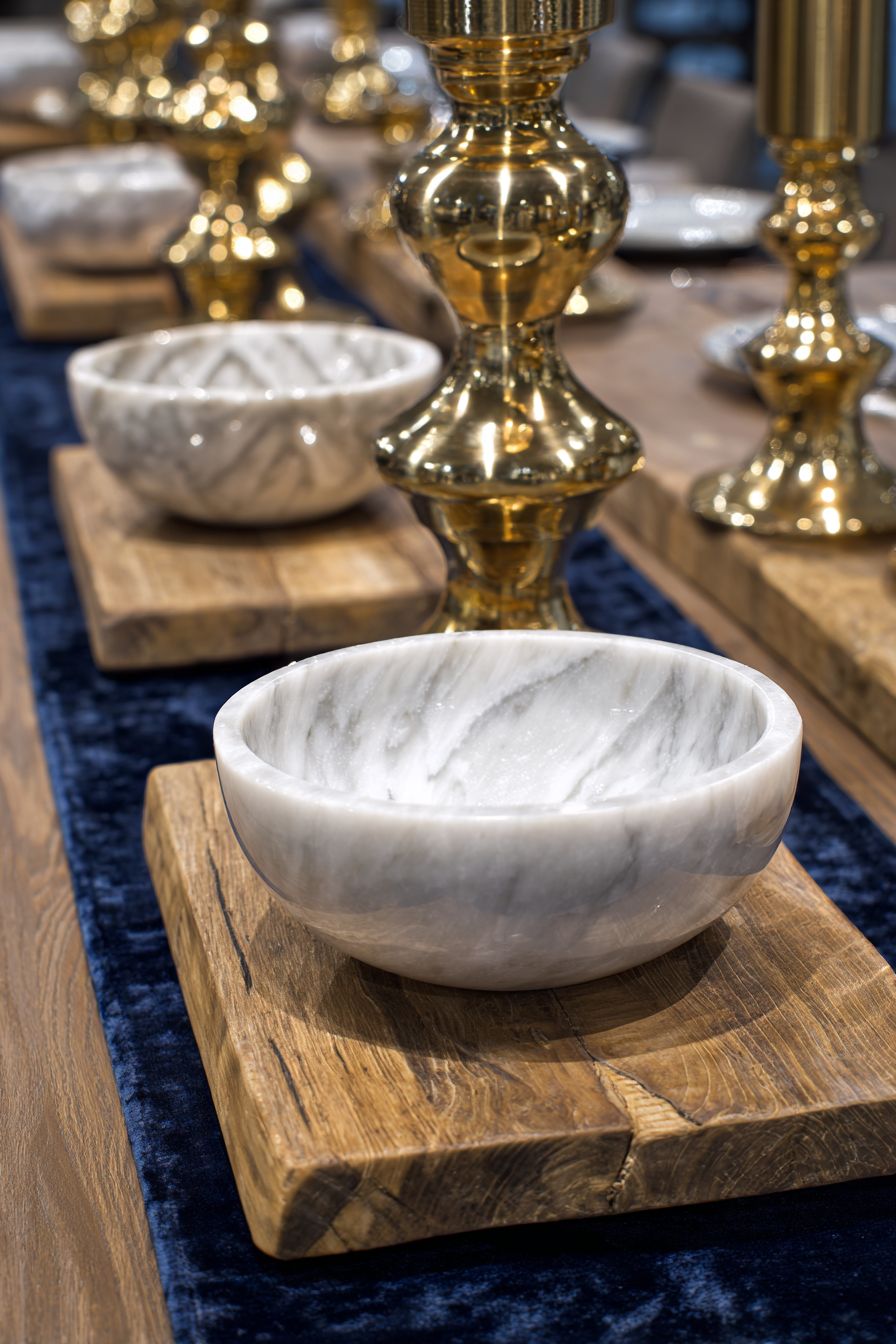
Textural variety creates sophisticated depth that monochromatic smoothness cannot achieve. Combine rough wood with smooth glass, soft textiles with hard metals, and matte finishes with polished surfaces. This interplay of textures engages multiple senses and creates visually rich arrangements that feel professionally curated.
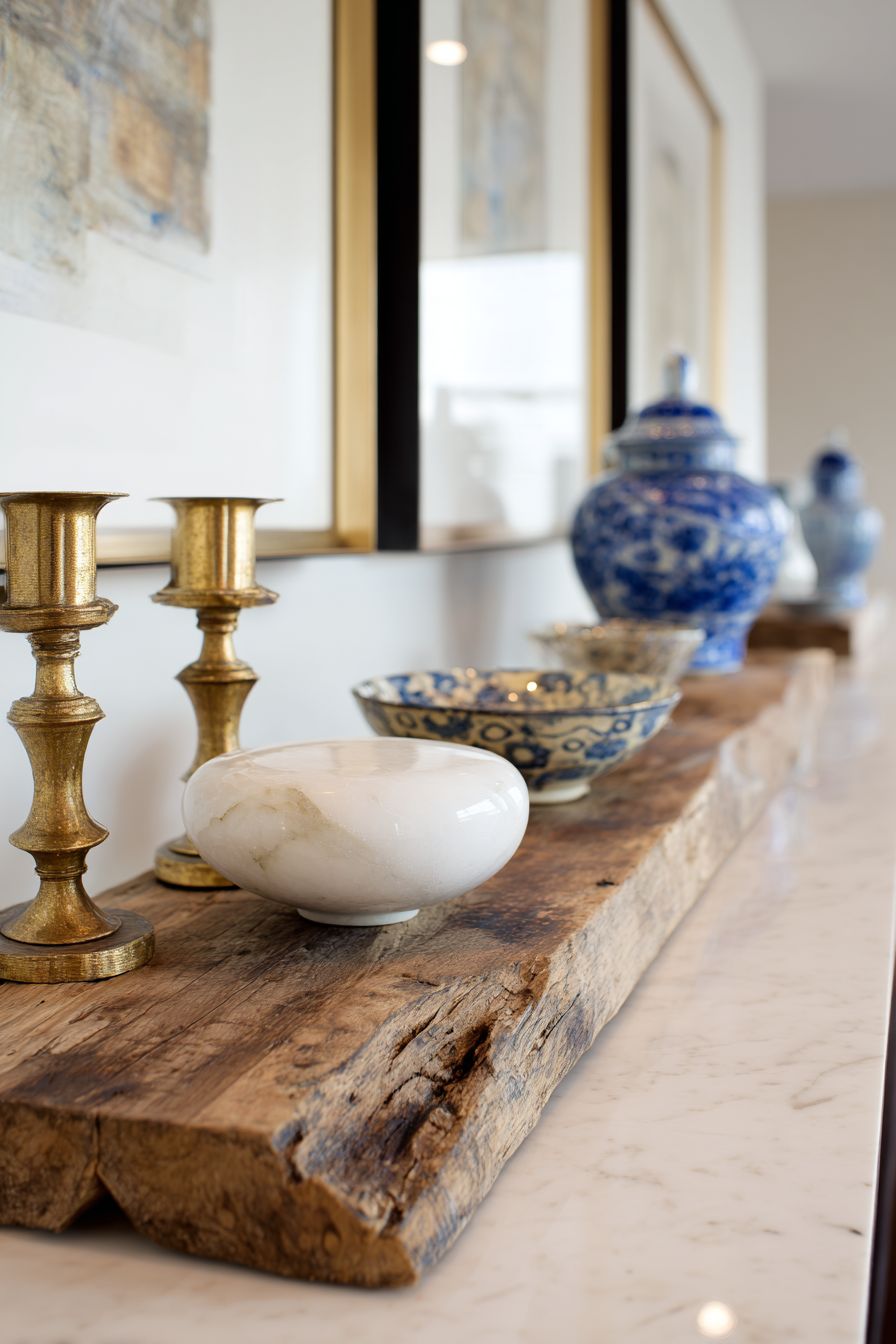
Pattern incorporation adds visual interest without overwhelming the space when used thoughtfully. A patterned table runner, decorative plates, or printed accessories introduce personality while maintaining sophistication. Limit patterns to one or two elements to prevent chaos, ensuring they complement rather than compete with each other.
The contrast between textures makes each element more noticeable and interesting. A smooth marble bowl appears more refined when displayed on rustic wood, while a silk table runner looks more luxurious beneath rough ceramic vessels. These deliberate contrasts create dynamic arrangements that reward closer inspection.
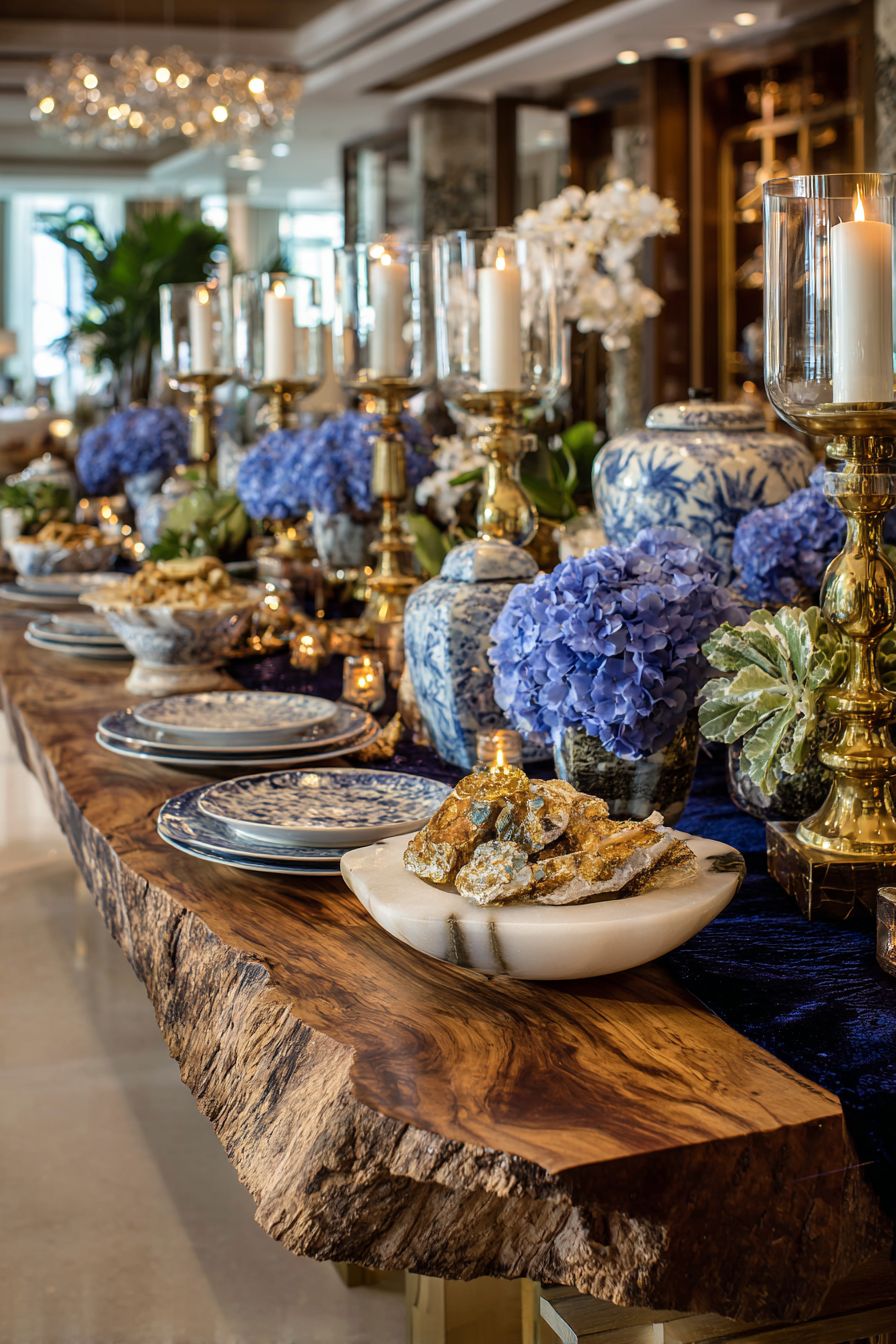
- Mix smooth and rough textures for dimensional interest
- Combine soft textiles with hard surfaces like wood, metal, or stone
- Introduce one or two patterned elements without overwhelming the display
- Use contrast to highlight the unique qualities of each material
- Layer fabrics like runners or placemats under decorative objects
- Balance shiny and matte finishes for sophisticated depth
8. Utilize Mirrors and Reflective Surfaces
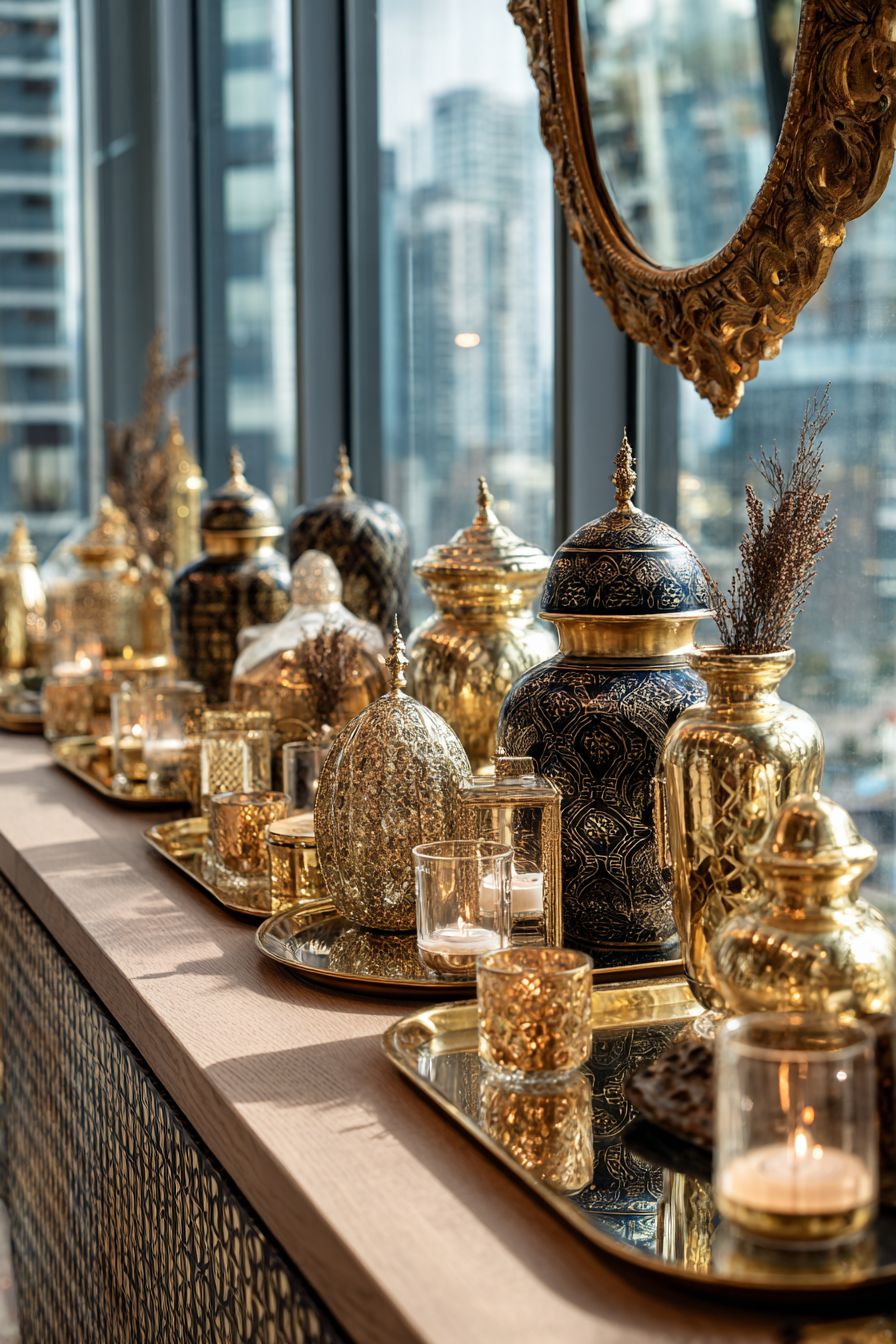
Mirrors positioned behind buffets double visual impact by reflecting light and decorative elements. A large mirror creates the illusion of more space while amplifying natural light throughout your dining room. This technique works particularly well in smaller rooms or areas with limited windows, brightening and enlarging the perceived space dramatically.
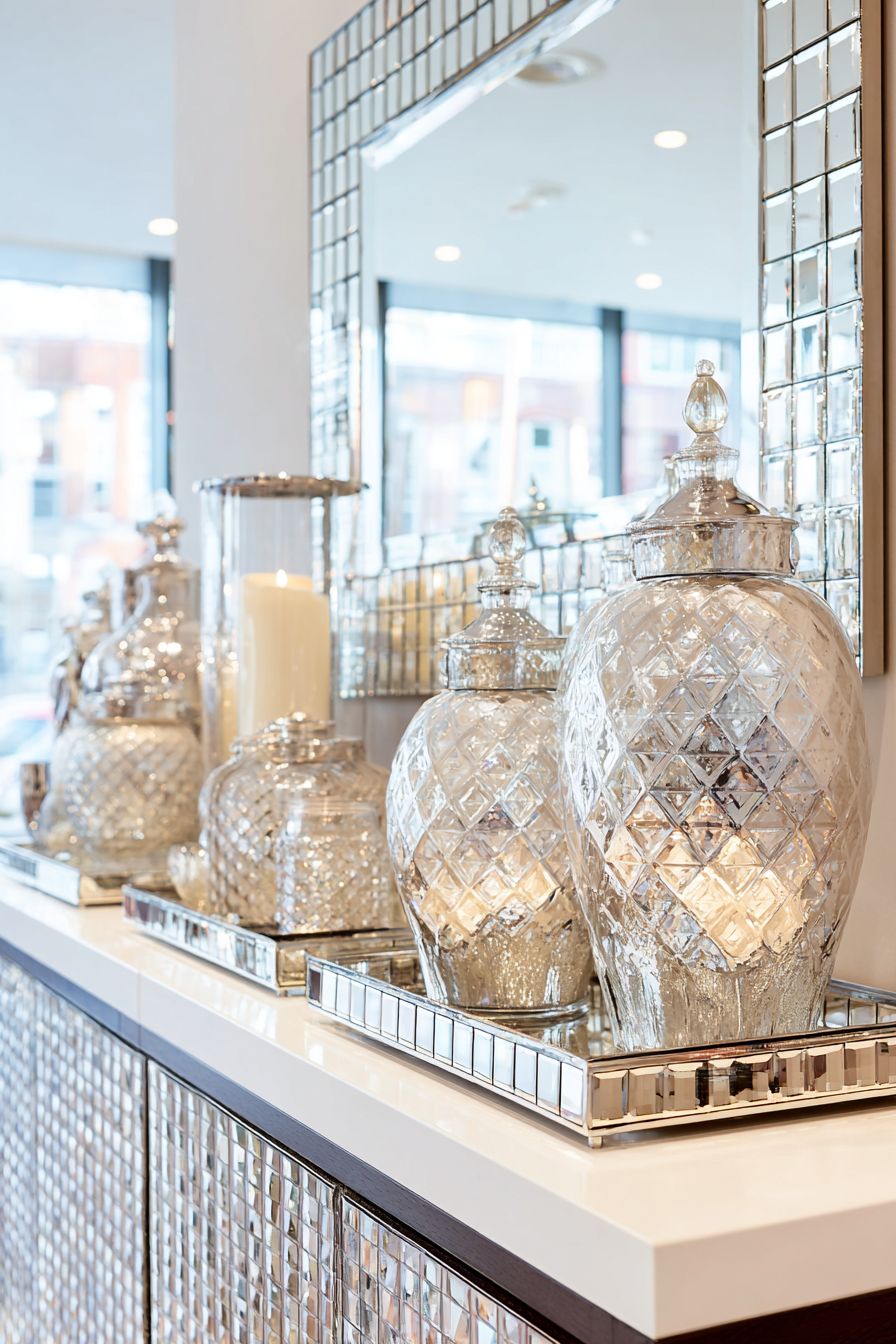
Reflective accessories like metallic vases, mirrored trays, or glass hurricanes add sparkle and luminosity to buffet arrangements. These elements catch and bounce light around the room, creating dynamic displays that change throughout the day as natural light shifts. The interplay between reflective surfaces and ambient light adds life to static arrangements.
Consider the view your mirror reflects when positioning it behind your buffet. A mirror should showcase attractive room elements or windows rather than cluttered areas or blank walls. Position your buffet thoughtfully to ensure the reflection enhances rather than detracts from your overall dining room aesthetic.
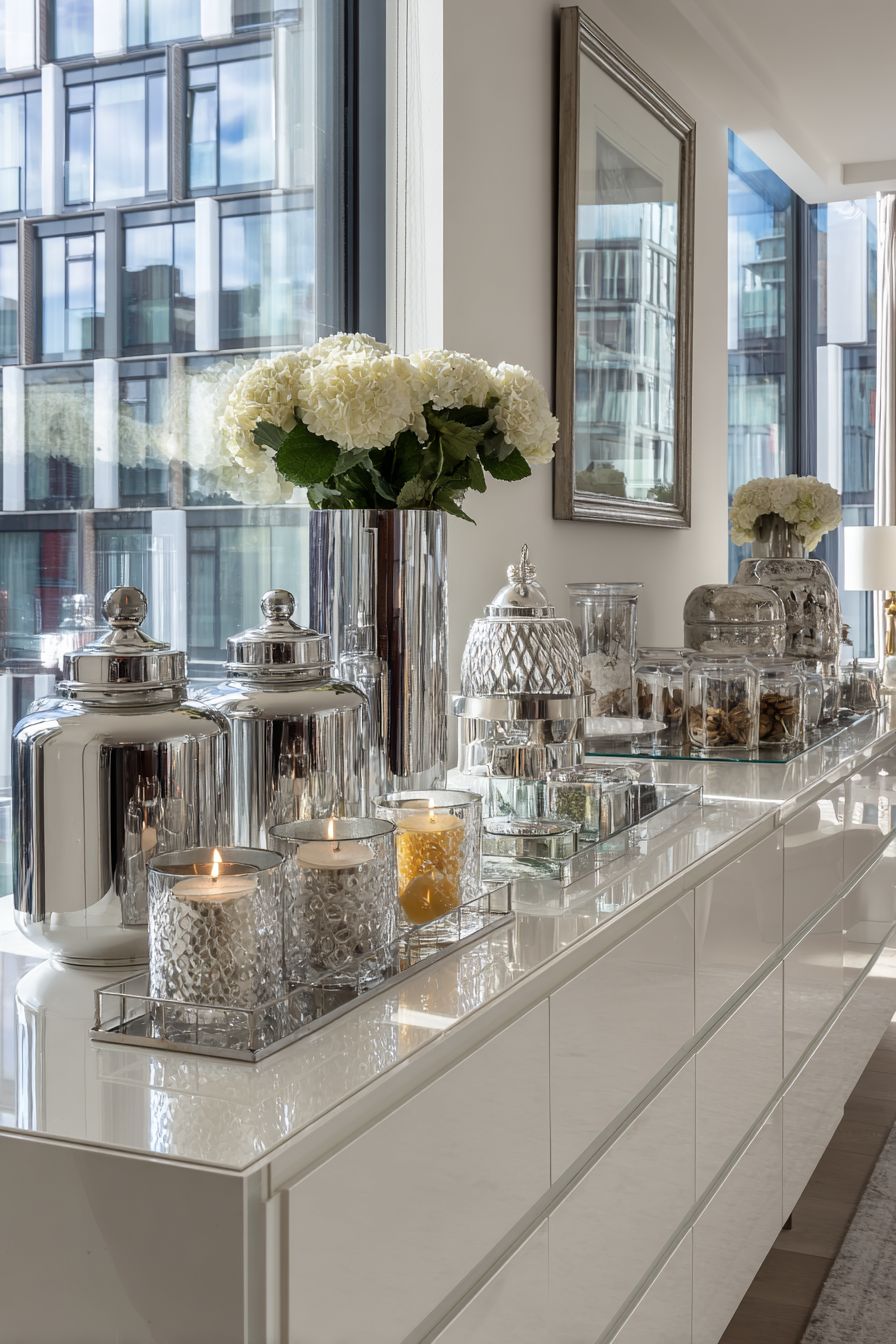
- Hang a large mirror behind the buffet to reflect light and create space
- Use mirrored trays to group items while adding reflective sparkle
- Choose metallic or glass accessories to introduce subtle shimmer
- Position mirrors to reflect attractive room features or natural light
- Clean reflective surfaces regularly to maintain their impact
- Layer mirrors with artwork by propping art in front for depth
9. Create Zones for Different Functions
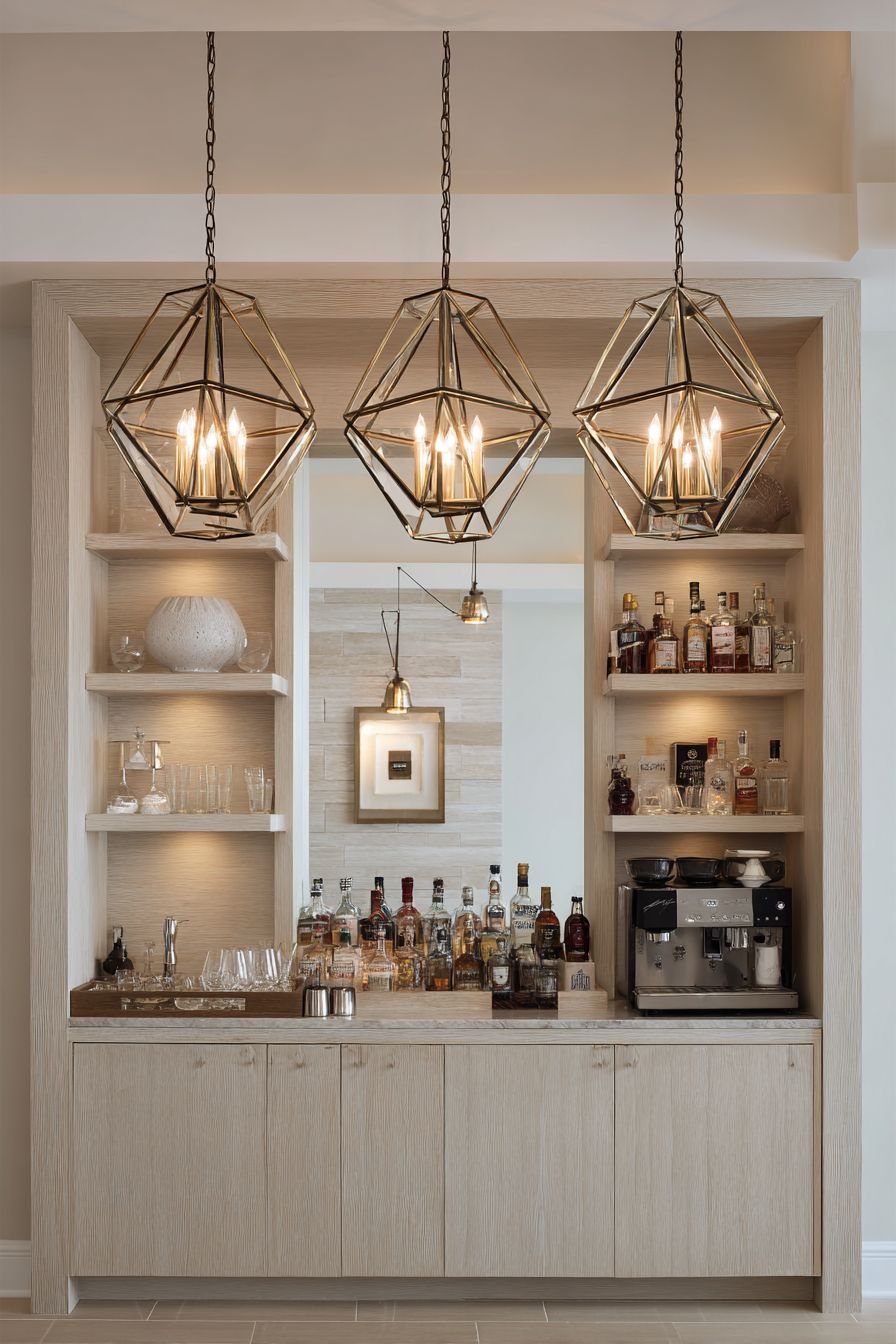
Dividing your buffet into distinct functional zones maximizes utility while maintaining visual coherence. Dedicate one section to serving pieces, another to decorative elements, and perhaps a third to a beverage station. These defined areas prevent cluttered appearance while ensuring everything has a logical place and purpose.
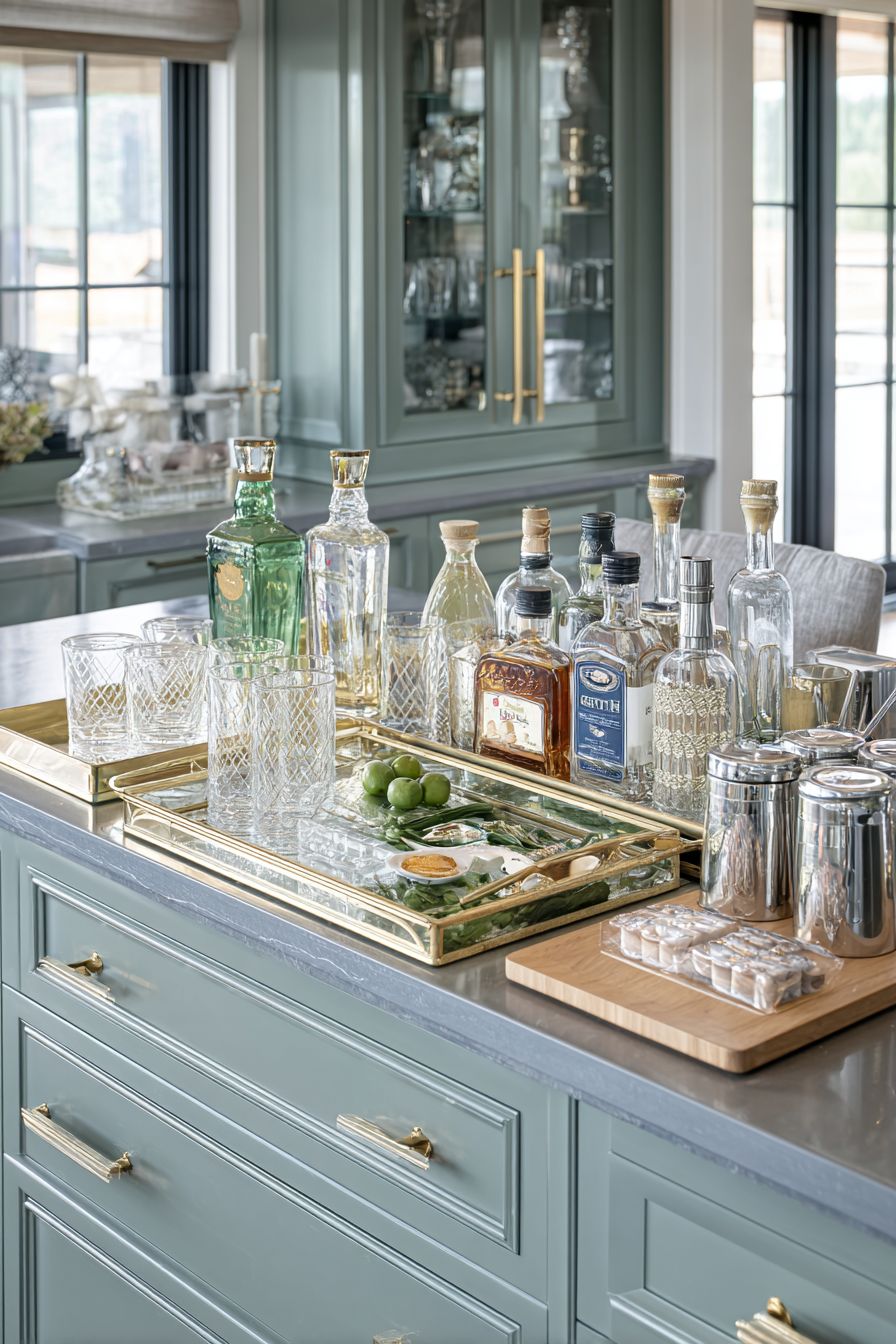
Trays and platters help define zones by visually containing related items within specific areas. A decorative tray might hold barware and cocktail accessories, while a wooden cutting board displays coffee station essentials. These boundaries create order and make it easy to rearrange or refresh individual sections without disrupting the entire display.
The size of your buffet determines how many zones work effectively. A 48-inch buffet might accommodate two zones, while a 72-inch piece can handle three or four distinct areas. Maintain breathing room between zones to prevent a cluttered appearance, ensuring each section feels intentional rather than crowded together haphazardly.
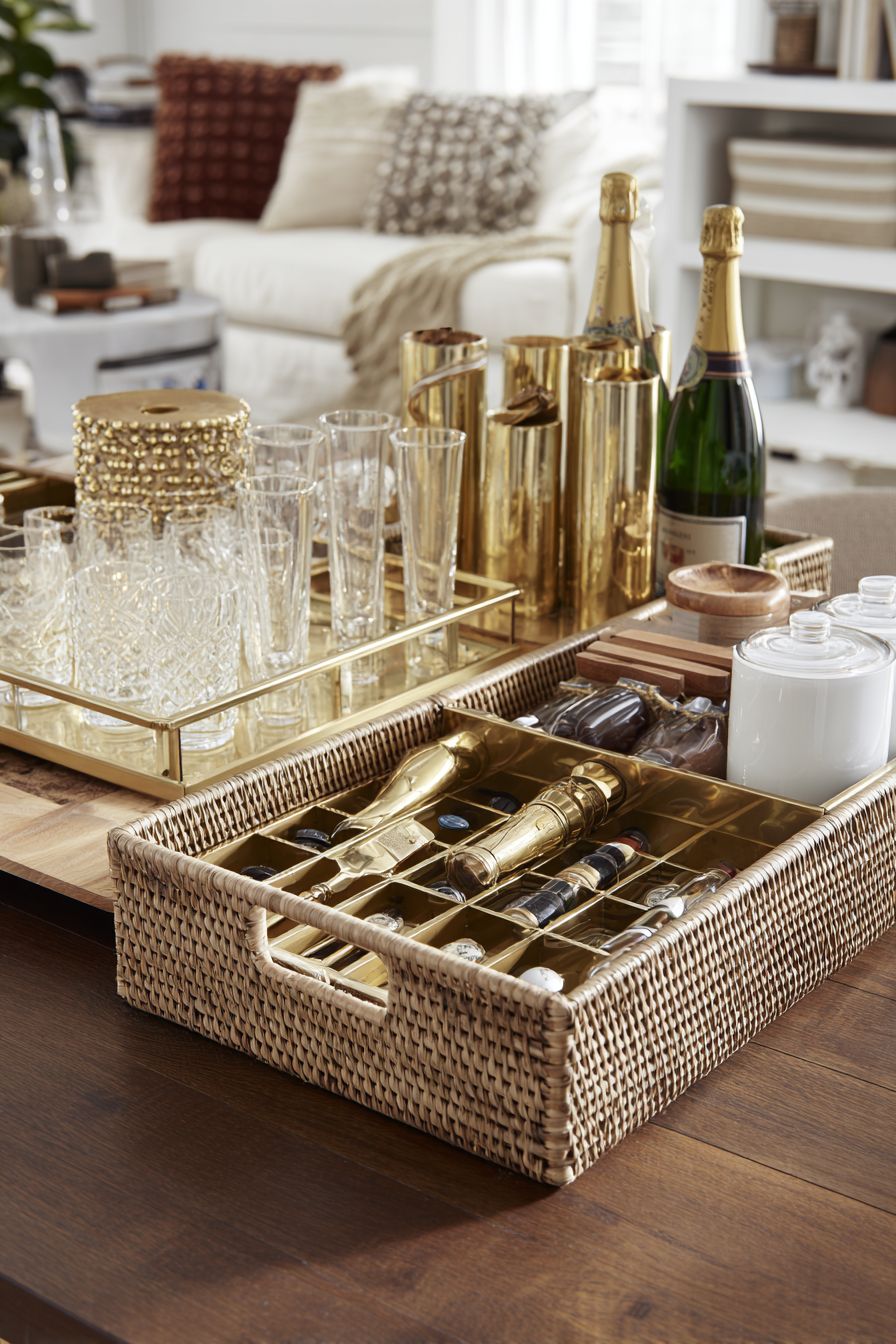
- Divide the buffet into two to four functional zones based on its size
- Use trays, platters, or runners to visually define separate areas
- Dedicate zones to specific purposes like serving, decor, or beverages
- Maintain space between zones to prevent cluttered appearance
- Ensure each zone has varied heights and textures within it
- Allow zones to adapt for different occasions and seasonal needs
10. Adjust Styling for Seasons and Holidays
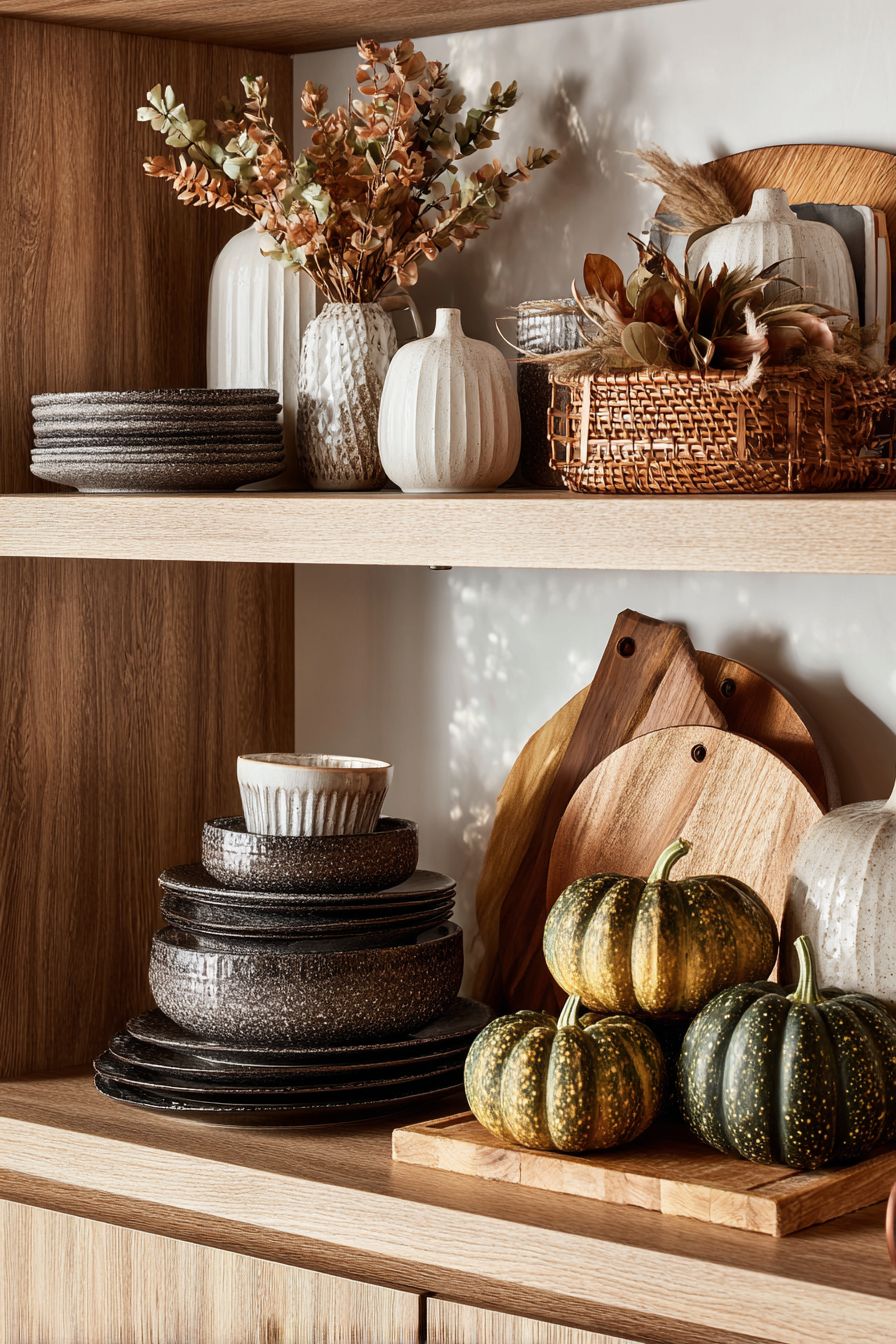
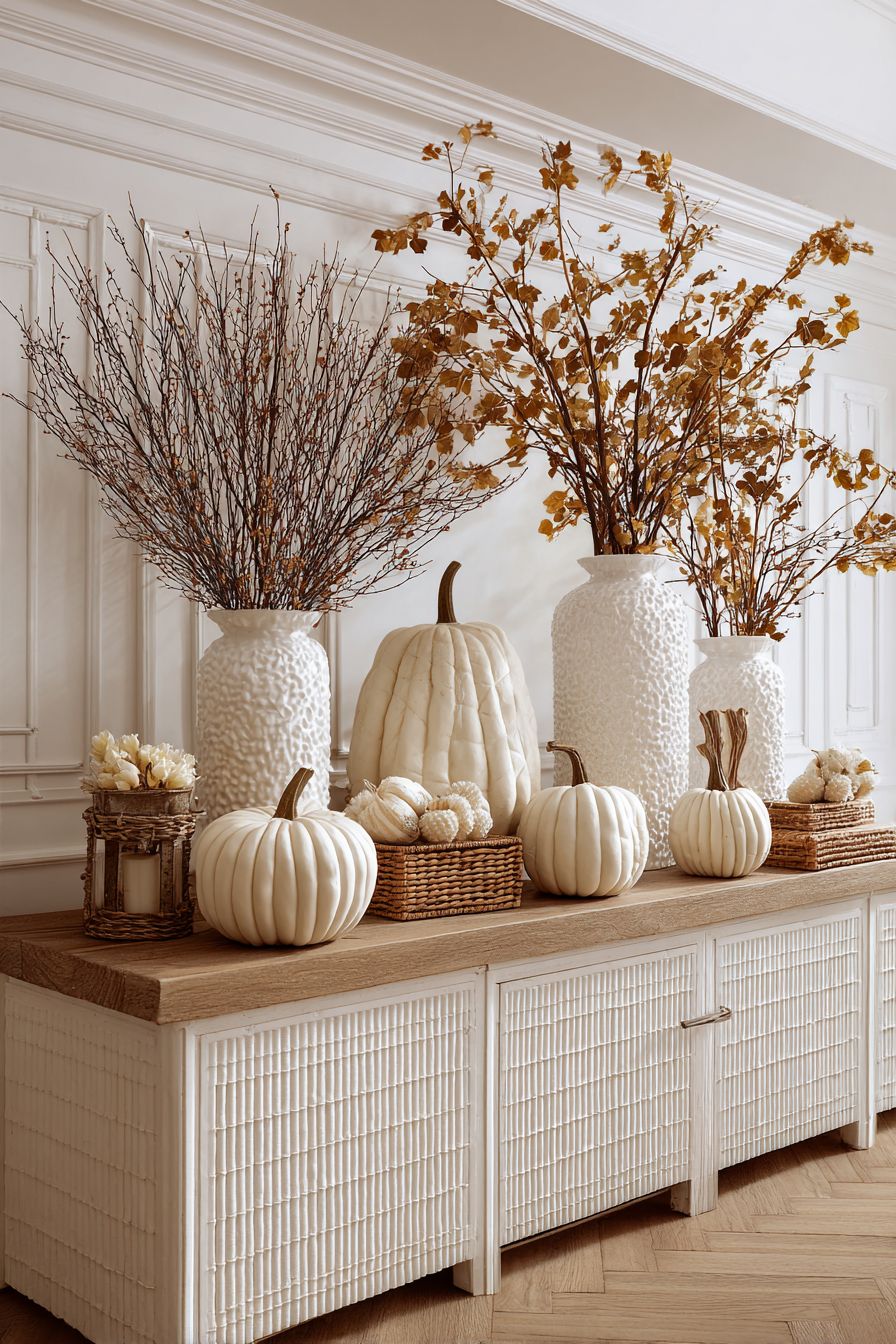
Seasonal rotation keeps your buffet feeling fresh and relevant throughout the year without requiring complete redesigns. Maintain foundational elements like lamps or mirrors year-round, swapping only accent pieces and decorative objects to reflect changing seasons. This approach saves time and money while providing regular visual refreshment.
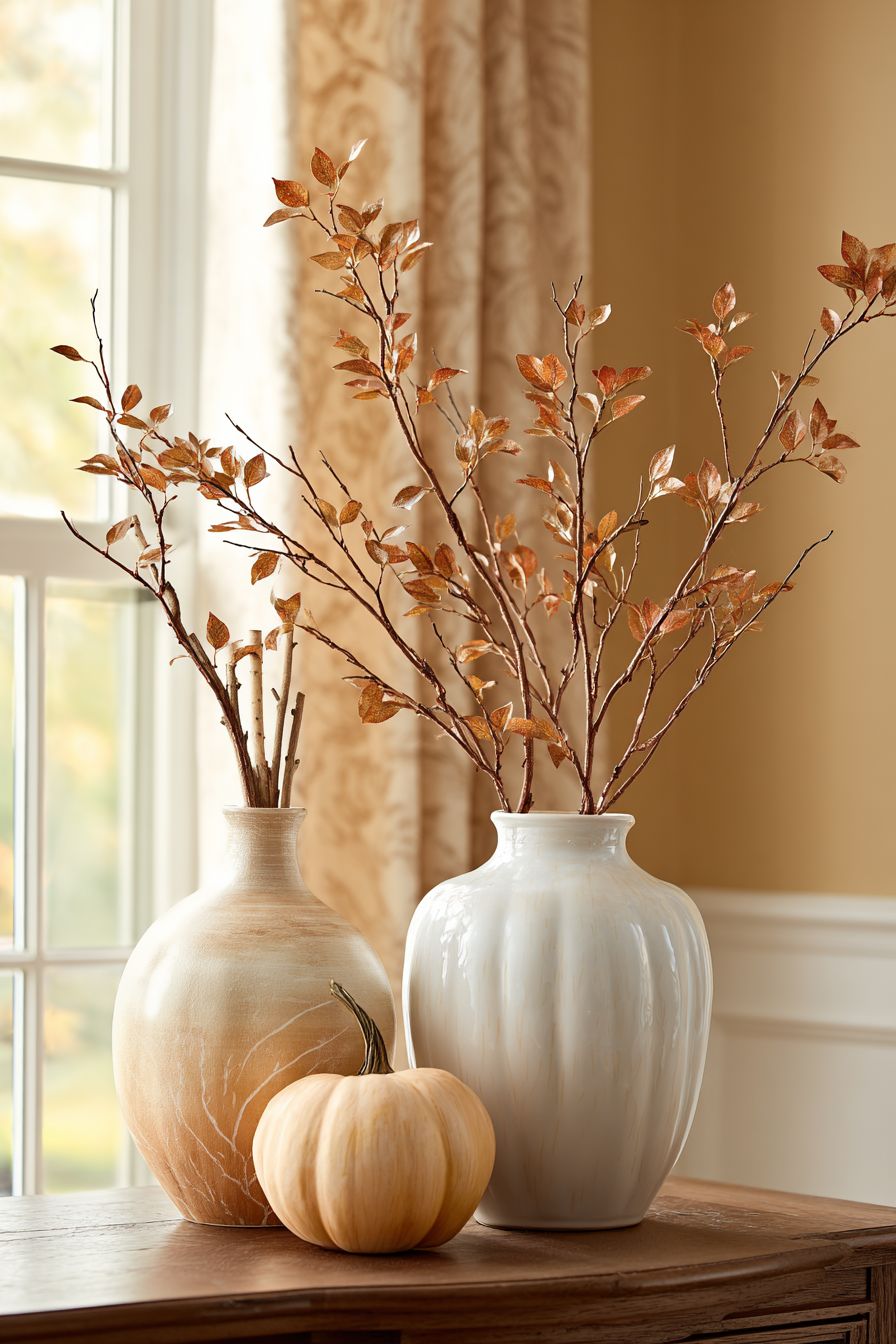
Holiday styling transforms your buffet into festive focal points for celebrations. Halloween might feature autumn leaves and decorative pumpkins, while Christmas brings evergreen garlands and metallic ornaments. Keep holiday displays tasteful by incorporating seasonal elements into your existing framework rather than overwhelming the space with themed accessories.
Transitional pieces in neutral colors work across multiple seasons, maximizing versatility and value. White ceramics, clear glass, and natural wood elements adapt easily from spring to summer to fall. Build your collection around these flexible pieces, adding seasonal pops of color through flowers, small accessories, or easily swapped decorative objects.
- Maintain core foundational pieces year-round for consistency
- Swap seasonal accents like flowers, branches, or small decorative objects
- Keep holiday styling tasteful by integrating elements into existing arrangements
- Invest in neutral transitional pieces that work across multiple seasons
- Store seasonal items organized by occasion for easy rotation
- Plan ahead by transitioning to new seasons gradually rather than abruptly
11. Scale Items Appropriately to Space
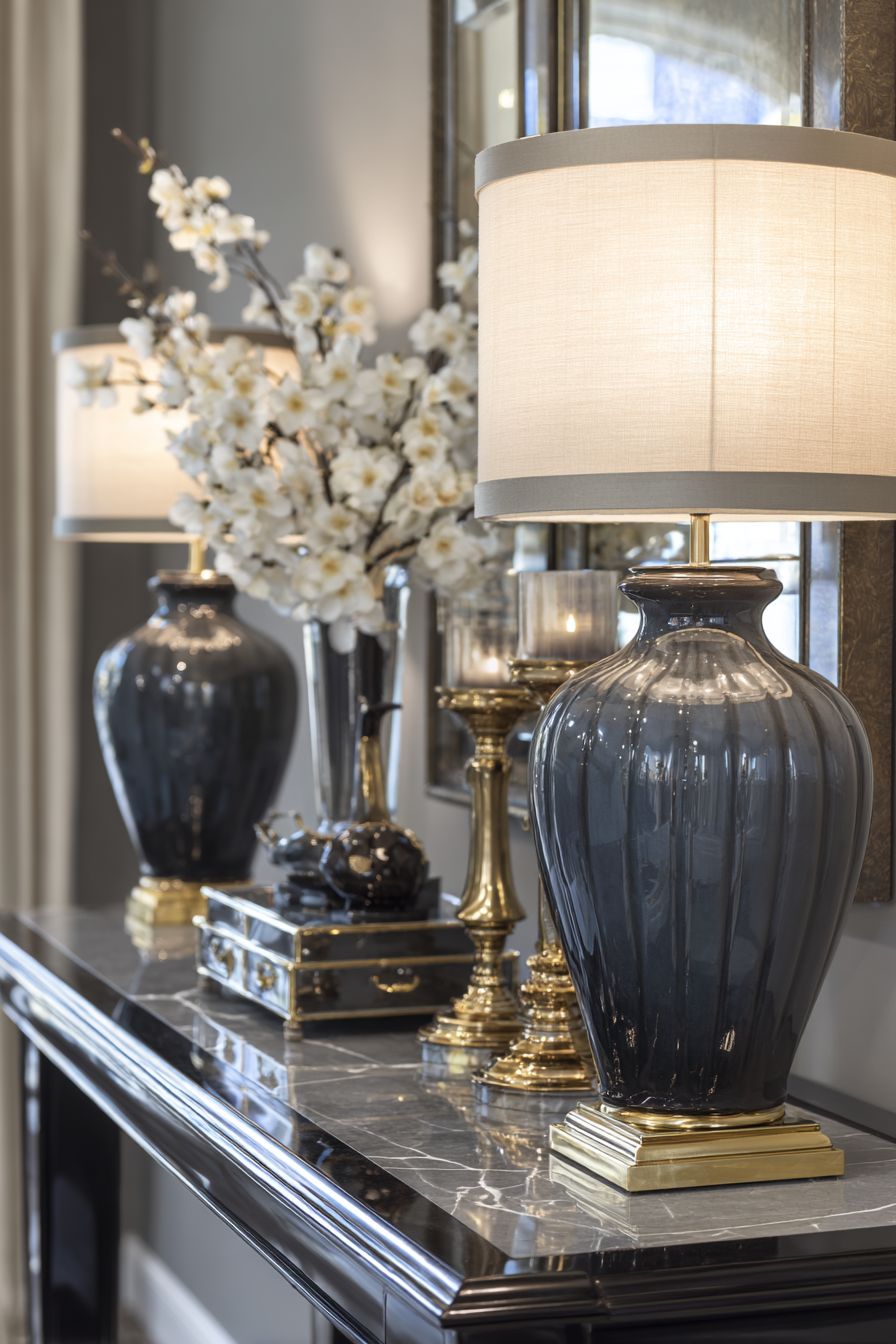
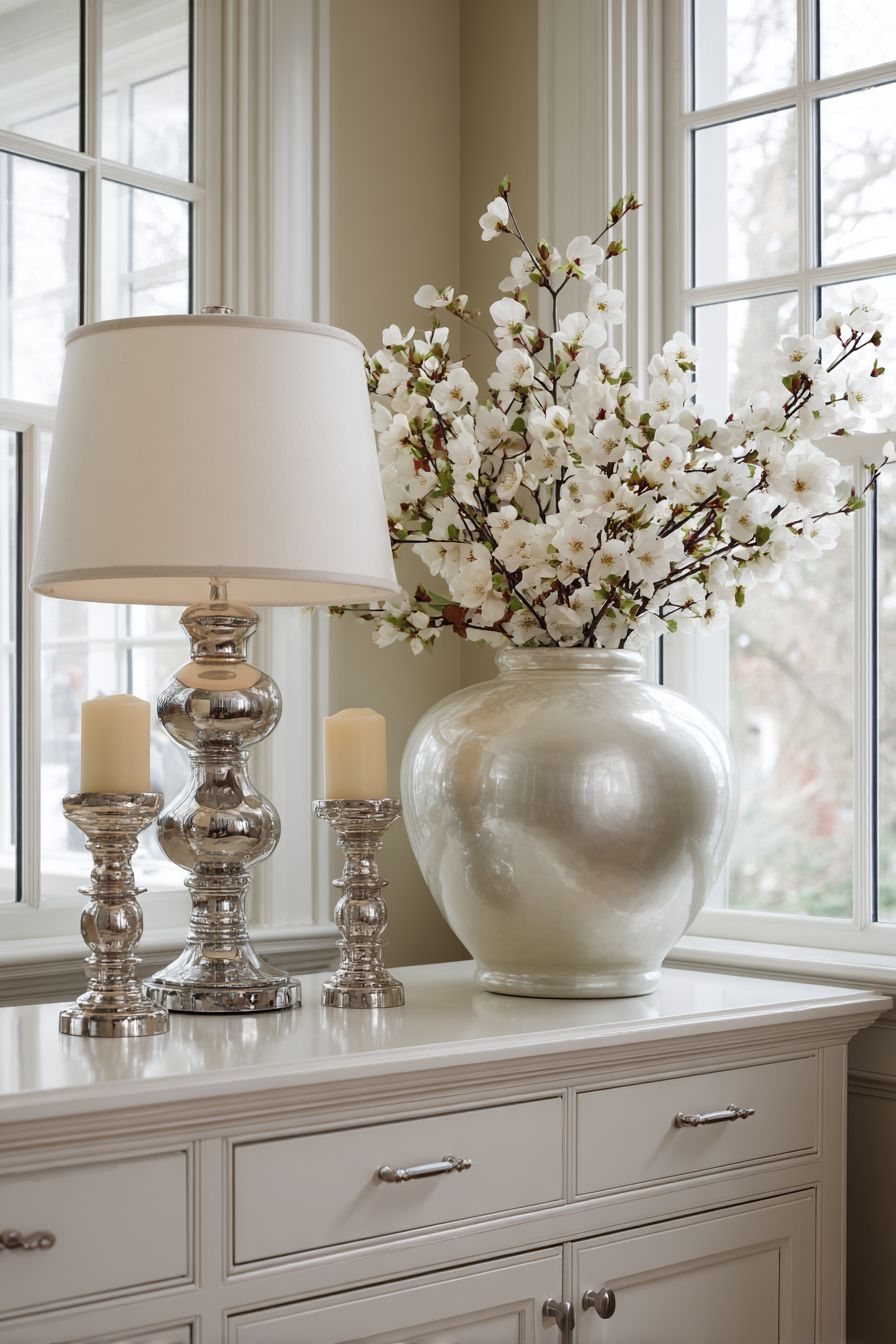
Proper proportion ensures your buffet styling feels balanced rather than overwhelmed or underwhelming. Small accessories scattered across a large buffet appear lost and insignificant, while oversized items on a petite console feel heavy and disproportionate. Match the scale of your decorative elements to your buffet’s dimensions for professional-looking results.
Substantial statement pieces anchor buffet arrangements and provide visual weight that grounds the entire display. A large vase, oversized bowl, or significant artwork prevents the surface from appearing cluttered with tiny objects. These bold elements should occupy roughly one-third of your available space, leaving room for supporting accessories.
Grouping smaller items creates the visual impact that individual small pieces cannot achieve alone. Rather than scattering individual candles across your buffet, cluster three or five together in varying heights. This grouping technique makes small objects register visually while maintaining clean, uncluttered composition principles.
- Choose decorative items sized proportionally to your buffet dimensions
- Incorporate at least one substantial statement piece as a focal point
- Group smaller items together rather than scattering them individually
- Ensure your largest item occupies roughly one-third of available space
- Avoid tiny accessories on large buffets that create cluttered appearance
- Test arrangements before committing to verify appropriate scale
12. Incorporate Personal Meaningful Items
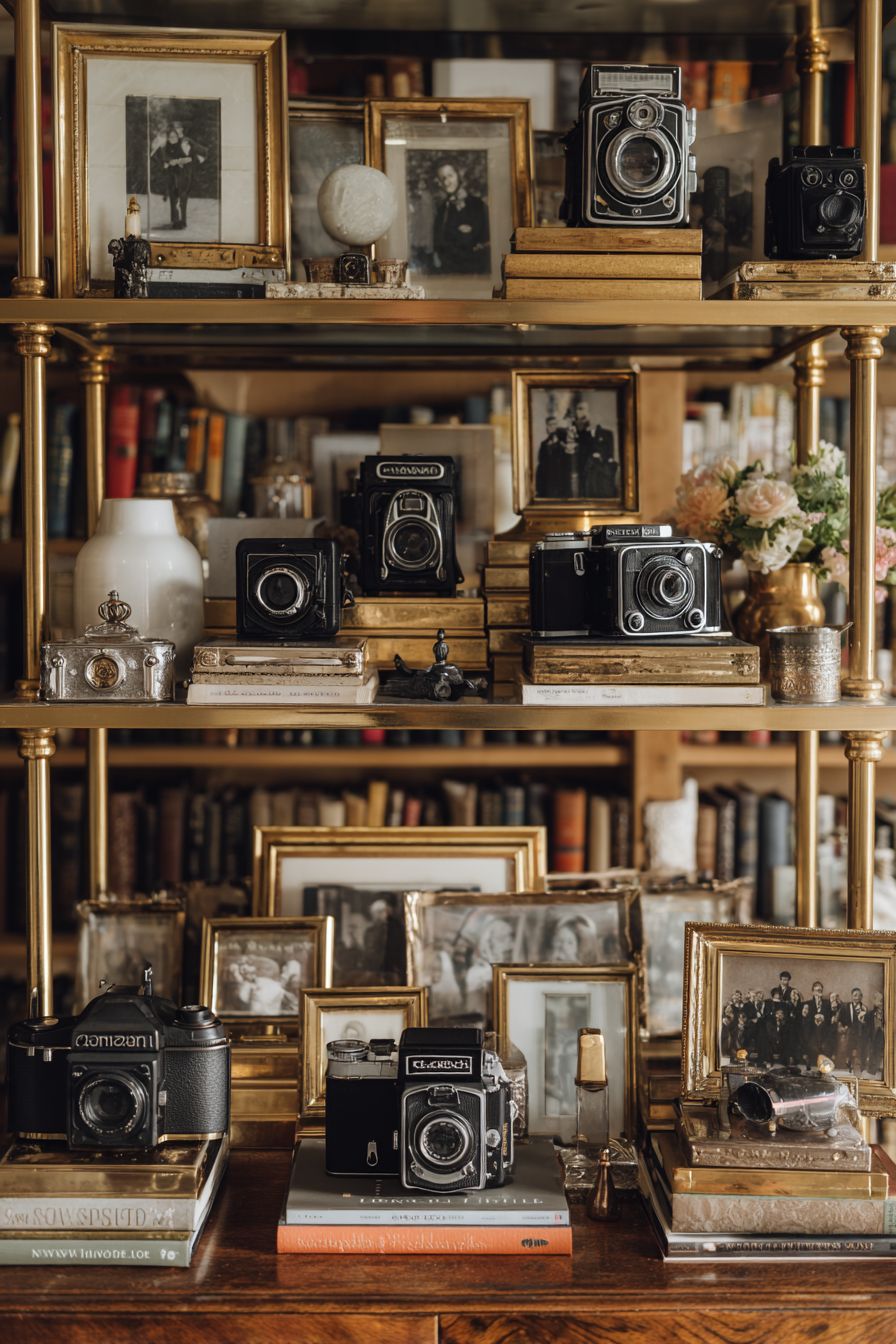
Personal collections transform generic buffet styling into displays that tell your unique story. Vintage cameras, travel souvenirs, family heirlooms, or hobby-related items add authentic personality that mass-produced decor cannot replicate. These meaningful objects create conversation starters while making your dining room feel distinctly yours rather than showroom generic.
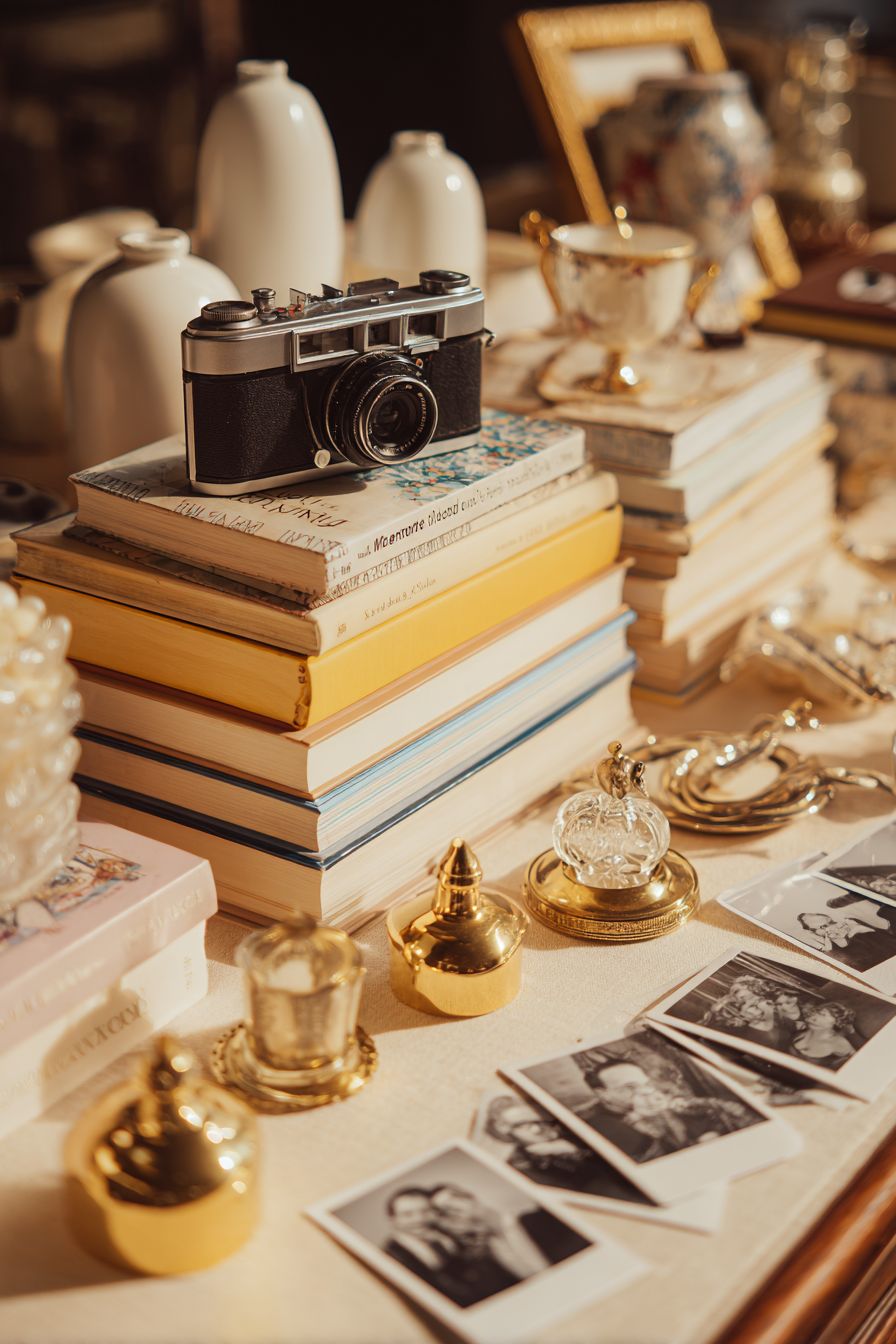
Styling personal items professionally requires treating them as intentional design elements rather than random clutter. Group collections together rather than scattering individual pieces, use matching frames for varied photographs, and display sentimental items on attractive stands or within quality containers. This curated approach honors your treasures while maintaining sophisticated presentation.
The balance between personal and decorative items determines whether your buffet feels meaningful or messy. Mix treasured objects with neutral, professional styling elements that provide structure and sophistication. Let personal items be focal points within well-designed frameworks rather than overwhelming the space with every meaningful object you own.
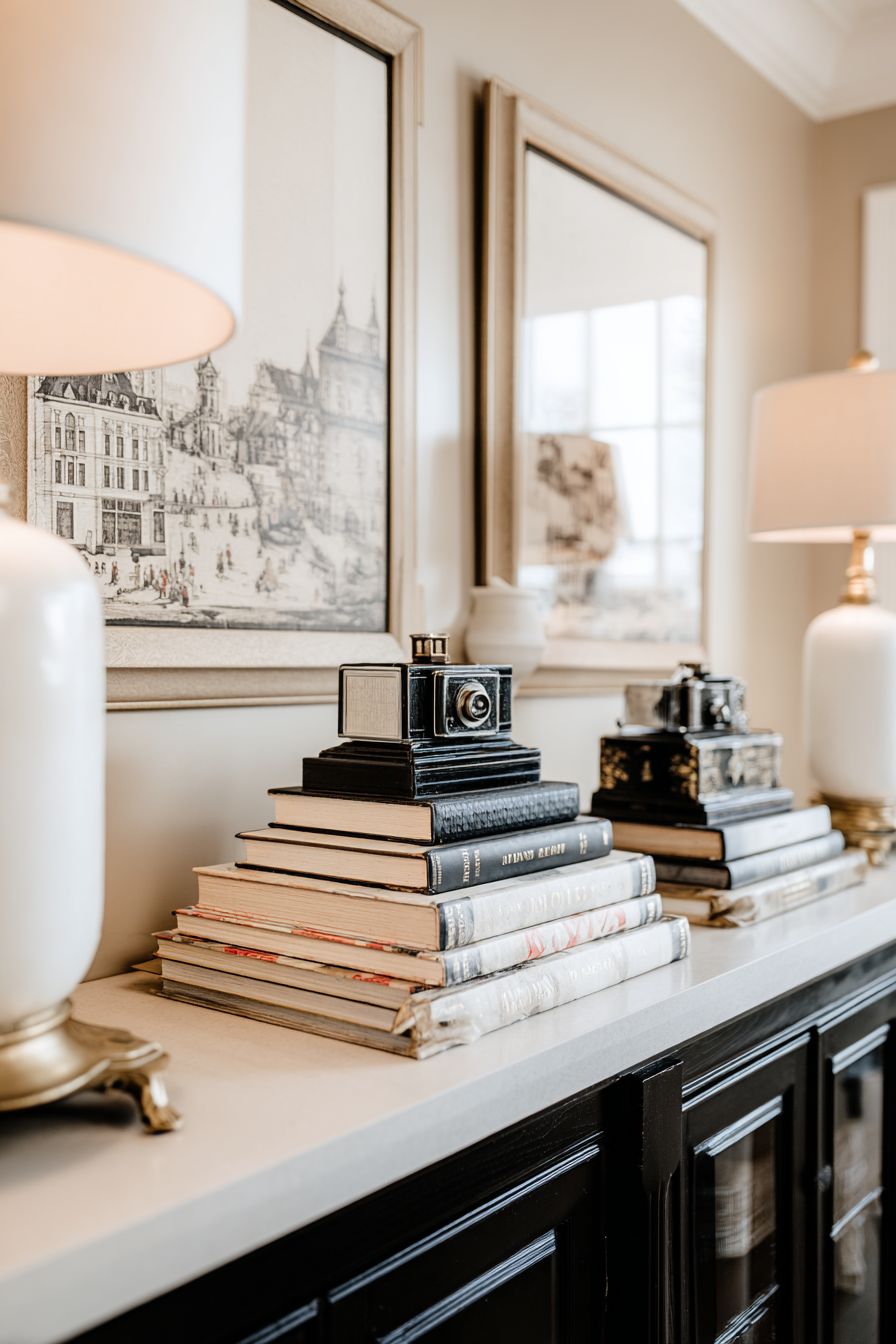
- Display personal collections grouped intentionally rather than scattered randomly
- Use quality frames, stands, or containers to showcase meaningful items
- Balance personal treasures with neutral decorative elements for sophistication
- Rotate personal items seasonally to keep displays fresh and uncluttered
- Choose your most significant pieces rather than displaying everything you own
- Ensure personal items complement your room’s color palette and style
13. Mind Your Lighting Considerations
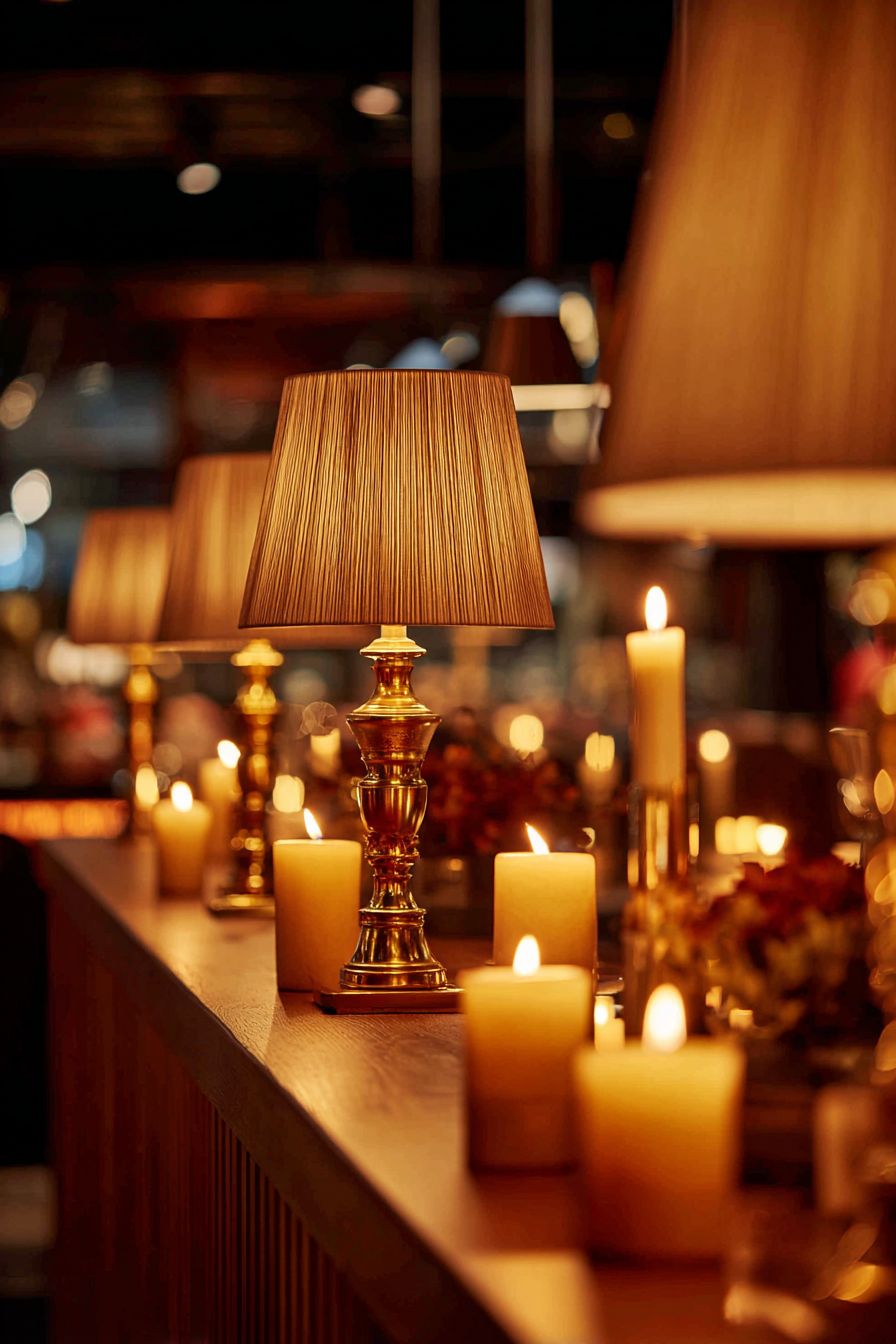
Buffet lamps provide both practical illumination and decorative symmetry that anchors the entire arrangement. Position matching lamps at either end of the buffet for classical elegance, or use a single statement lamp for contemporary asymmetry. These light sources create ambient illumination during evening meals while serving as substantial decorative elements during daylight hours.
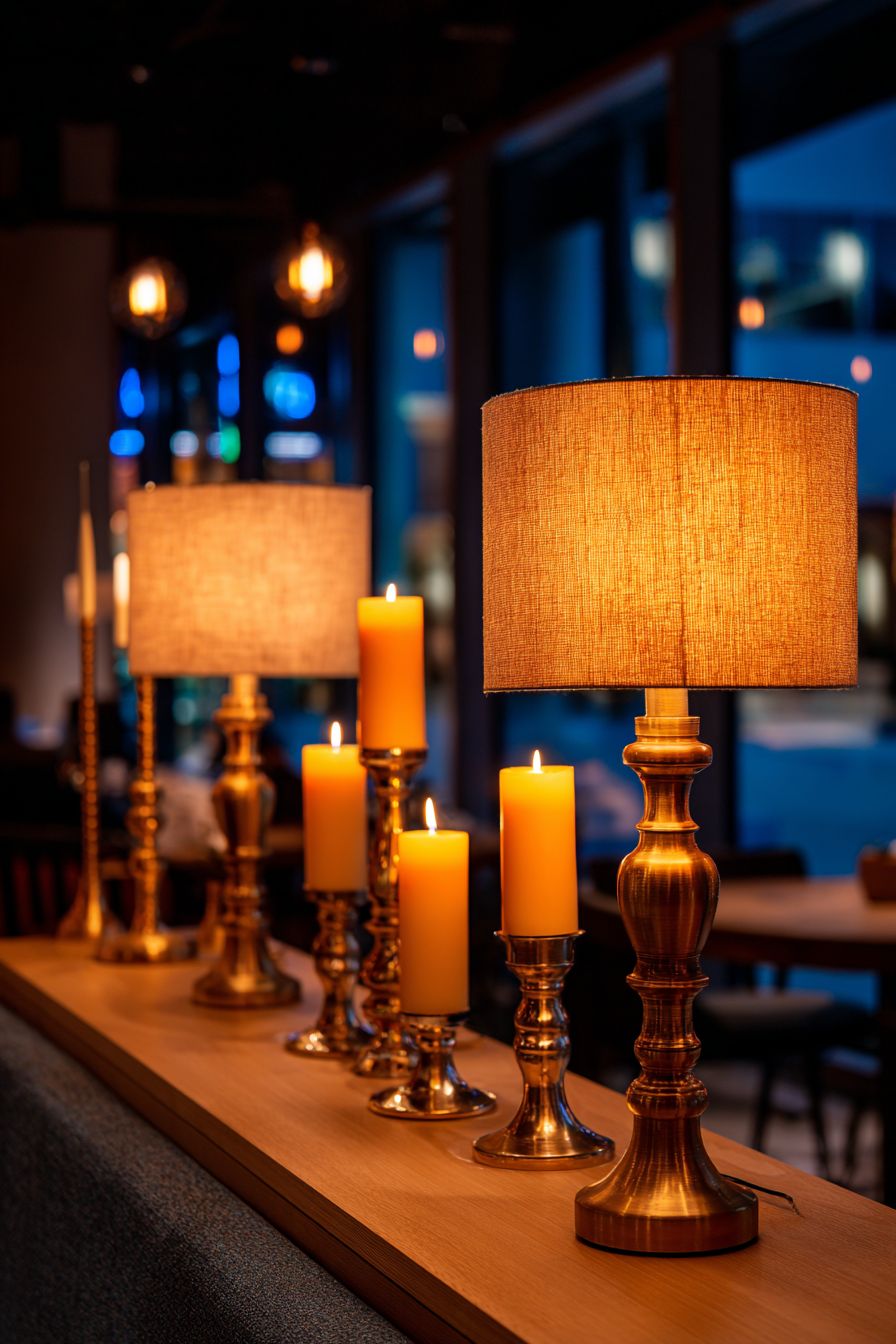
Task lighting from buffet lamps illuminates the serving surface during meals and entertaining. This practical function makes buffets more useful while creating warm, inviting atmosphere that overhead lighting alone cannot achieve. Choose lamps with three-way bulbs to adjust brightness for different occasions from intimate dinners to bright family gatherings.
Candlelight ambiance adds romance and sophistication to buffet displays during evening entertaining. Group candles in varying heights for dramatic effect, using quality holders in coordinating finishes. Battery-operated flameless candles provide the same visual warmth without fire hazards, making them practical for everyday styling that transitions seamlessly into entertaining mode.
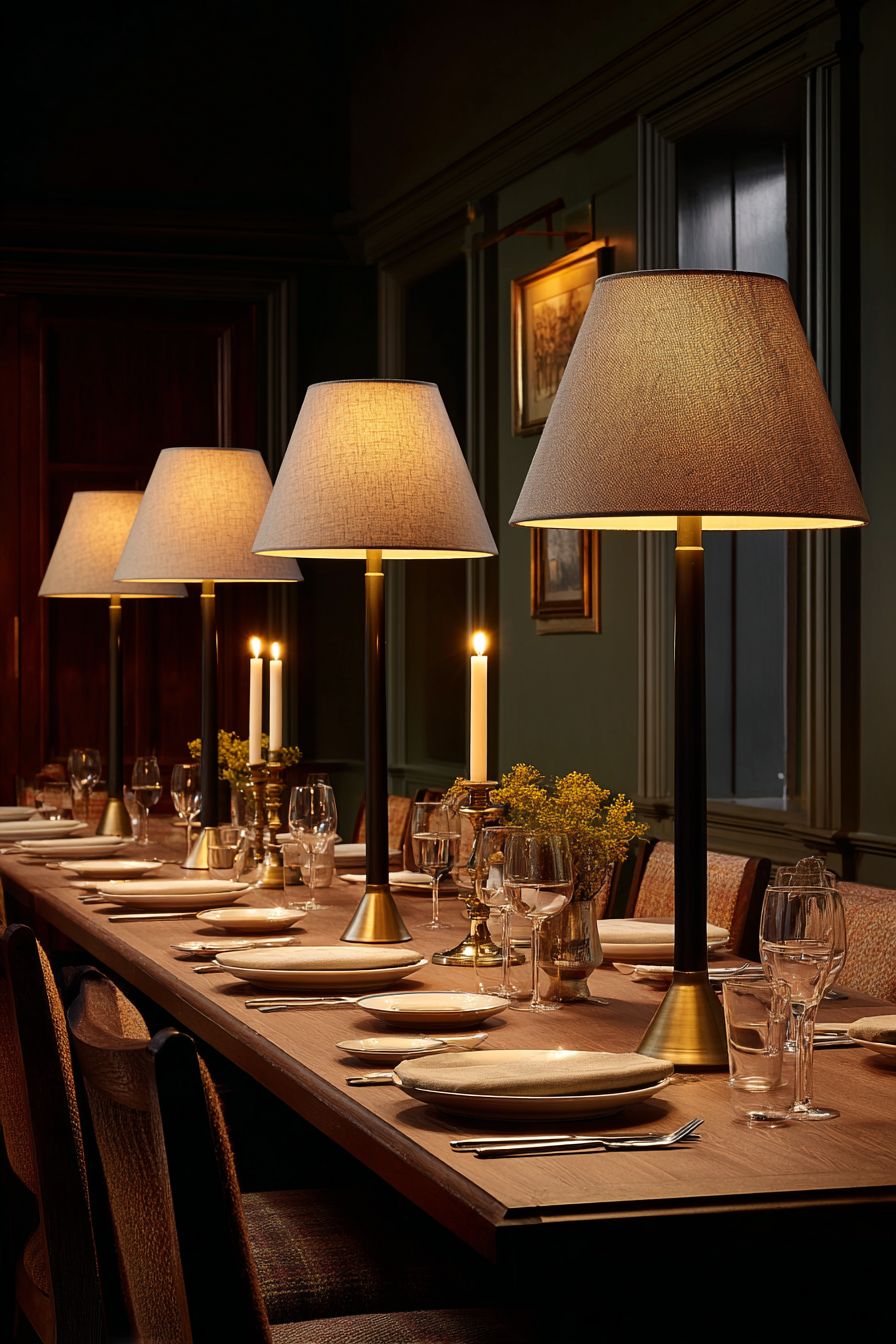
- Place matching table lamps at buffet ends for symmetrical lighting
- Choose three-way bulbs for adjustable brightness during different occasions
- Add candlesticks in varying heights for romantic evening ambiance
- Consider battery-operated candles for worry-free everyday lighting
- Ensure lamp height doesn’t exceed 1.5 times your buffet width
- Use warm bulbs (2700K) for flattering, restaurant-quality illumination
14. Maintain Clear Serving Space
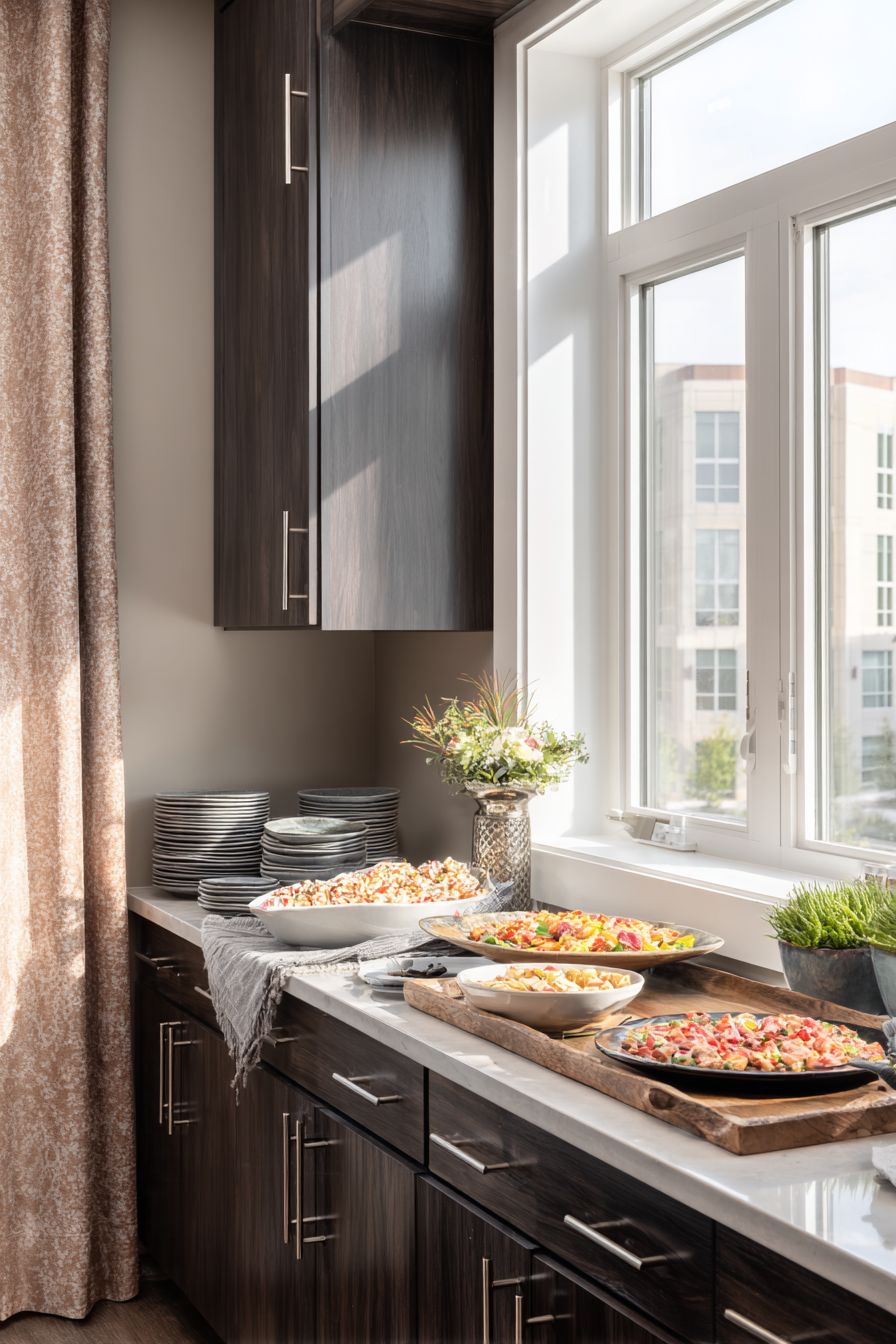
Functional clearance ensures your beautifully styled buffet remains practical for actual use during meals and entertaining. Reserve at least one-third of the surface clear or easily clearable for serving dishes, beverage setups, or food platters. Styled buffets that cannot accommodate actual serving needs fail their fundamental purpose regardless of aesthetic appeal.

Flexible arrangements allow quick transformation from decorative display to functional serving station. Use trays to group decorative items that can be lifted away as a single unit when serving space is needed. Choose lightweight accessories that move easily rather than heavy sculptures or permanent installations that complicate the transition from styled to serving mode.
Daily practicality matters as much as special occasion functionality. If you regularly use your buffet for serving family meals, maintain simpler everyday styling that accommodates this use. Save more elaborate arrangements for times when the buffet serves primarily decorative purposes, adapting your approach to match your lifestyle and entertaining frequency.
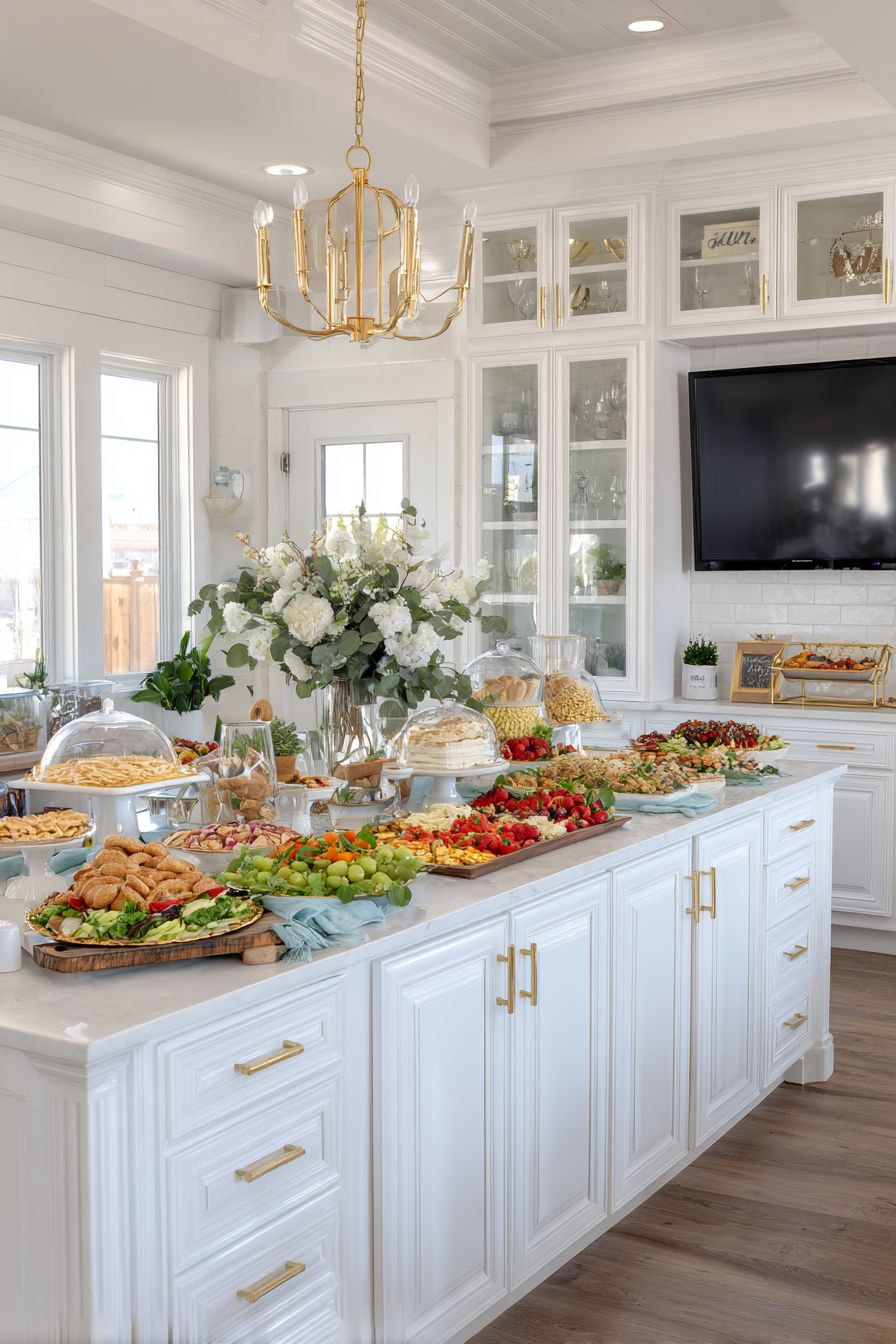
- Keep at least one-third of the buffet surface clear or easily clearable
- Use trays to group items that can be removed together when needed
- Choose lightweight accessories that move easily for serving setups
- Adapt styling complexity to match your actual entertaining frequency
- Store everyday serving pieces in buffet drawers for convenient access
- Test arrangements to ensure quick transition to serving mode works smoothly
Conclusion
Mastering buffet table styling combines aesthetic sensibility with practical functionality, creating displays that enhance your dining room while serving real purposes. The fourteen strategies presented here—from creating height variation to maintaining serving clearance—work together to produce professional-looking arrangements that adapt to any occasion.
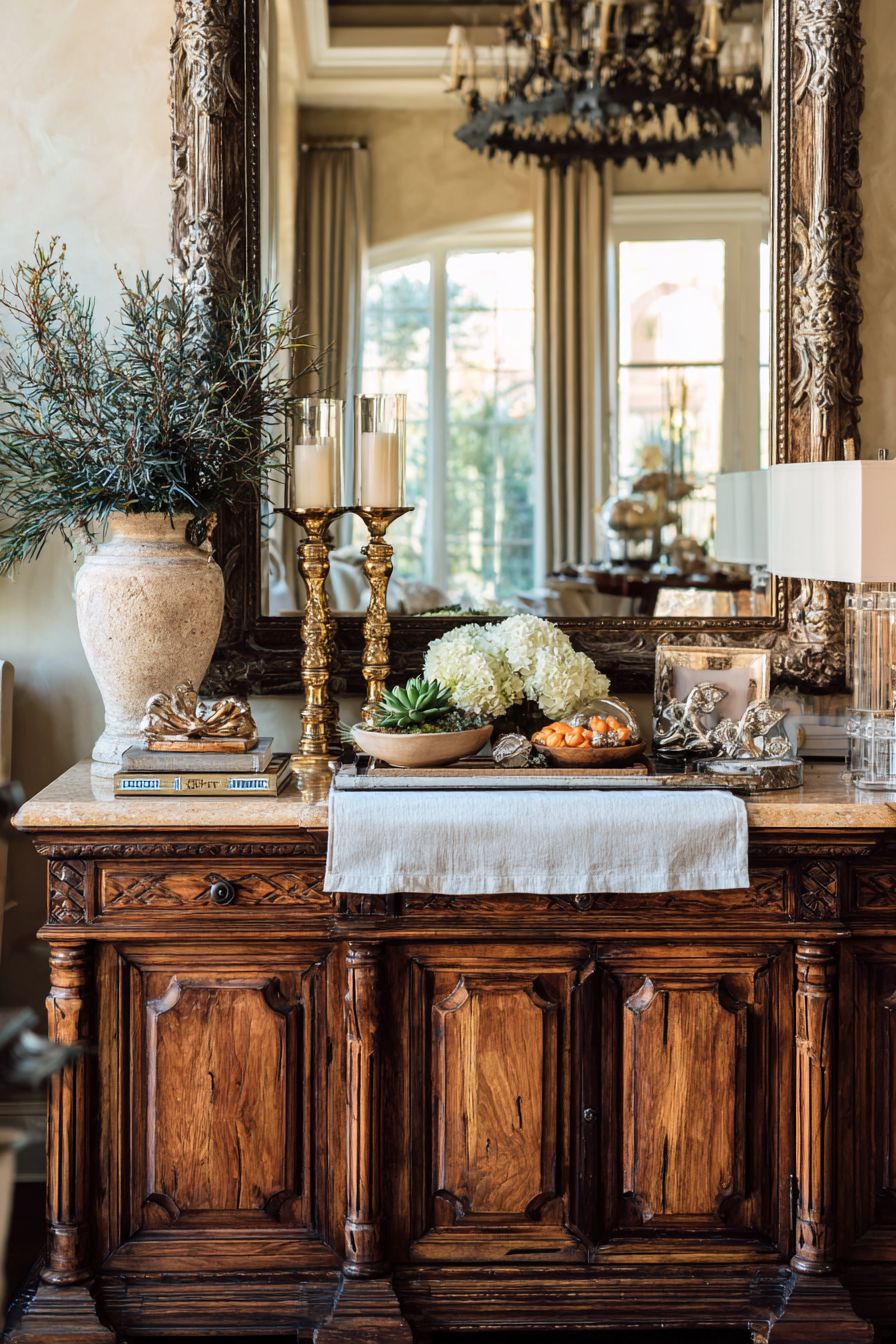
Remember that successful styling balances beauty with utility, personal expression with design principles, and consistency with seasonal flexibility. Start implementing these tips gradually, beginning with foundational elements like proper scale and height variation before adding layers of texture, color, and personal touches. Your buffet should reflect your lifestyle and taste while remaining flexible enough to transform for different occasions throughout the year.
Experiment confidently with these principles, trusting that thoughtful curation beats expensive accessories every time. The most beautiful buffet displays tell cohesive stories through carefully chosen elements that work harmoniously together, creating spaces that impress guests while serving your daily needs perfectly. Transform your buffet into a stunning focal point that celebrates both form and function with these timeless styling strategies.
"As an Amazon Associate, I earn from qualifying purchases."
