
Brown living rooms carry a timeless warmth that few other color palettes can match. Yet many homeowners struggle to prevent that cozy richness from feeling heavy, dated, or cave-like. The good news is that thoughtful interior design can transform even the darkest brown space into something that feels fresh, airy, and undeniably modern.
The key lies in understanding how light, contrast, and texture work together within a brown color scheme. Brown is incredibly versatile — it ranges from pale sand and warm taupe to deep espresso and rich chocolate. Each shade responds differently to light, furniture placement, and accent colors. By learning to work with the brown rather than against it, you unlock a living room that feels both grounded and elevated.
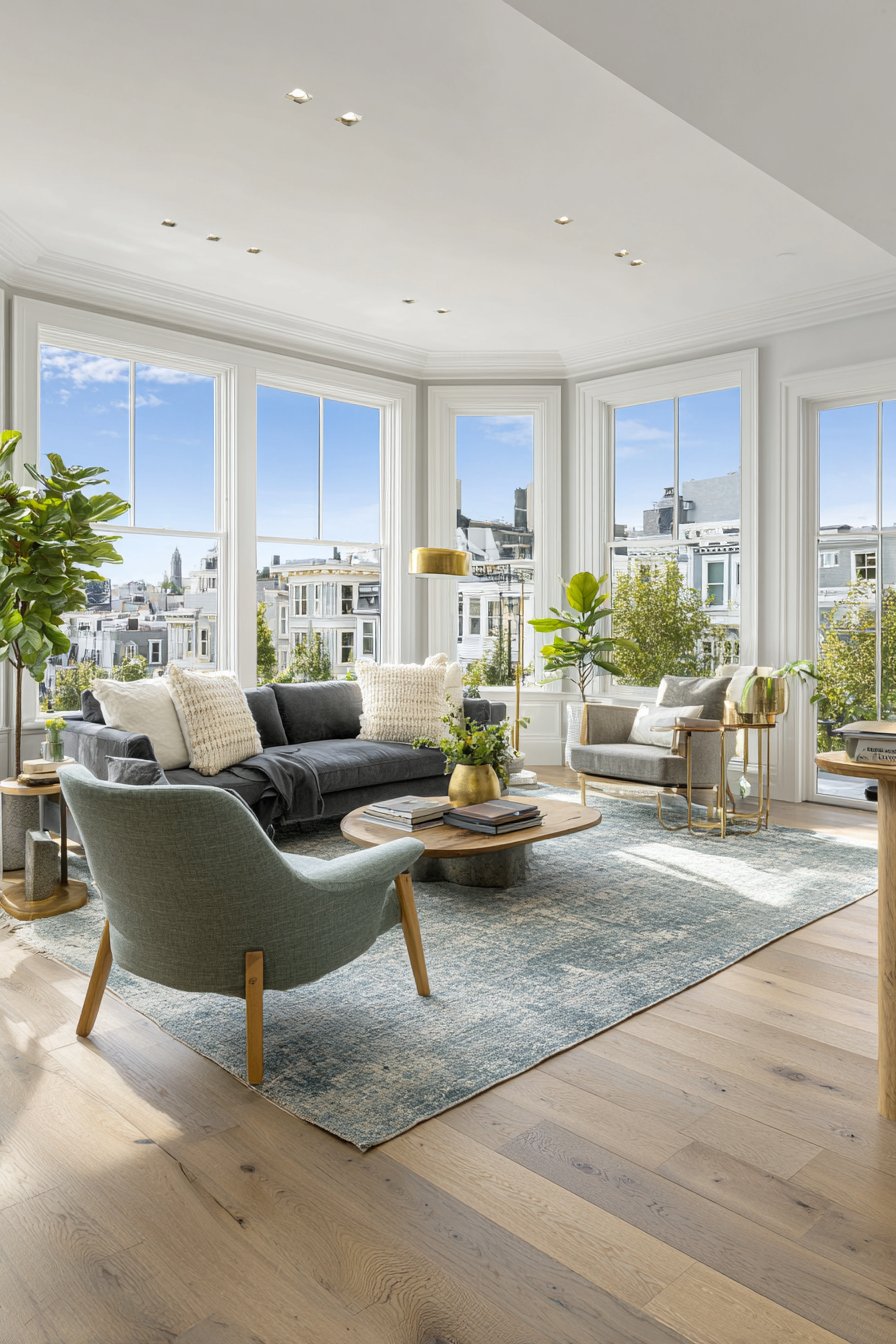
This article explores six powerful design strategies that will brighten your brown living room without stripping away its natural warmth. Whether you’re working with a brown sofa, dark hardwood floors, wooden paneling, or simply brown-toned walls, these tips will help you strike the perfect balance between cozy and contemporary.
1. Introduce Crisp White and Cream Accents
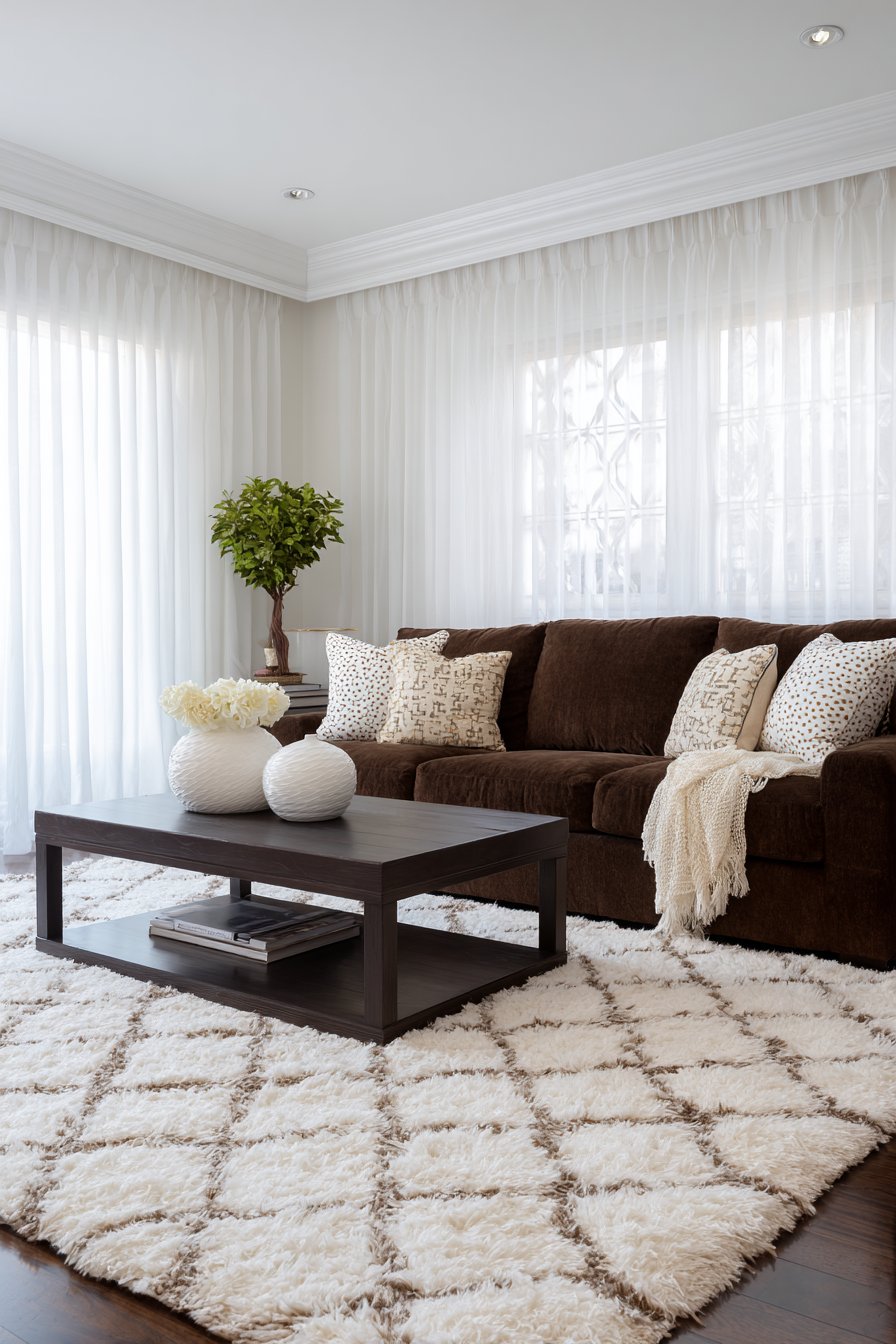
One of the most effective ways to lighten a brown living room is to introduce crisp white or cream accents throughout the space. Brown and white are natural complements — the contrast between them is sharp enough to feel modern without feeling jarring. Think white crown molding, cream-colored throw pillows, or an ivory area rug layered over dark hardwood floors.
The contrast ratio between dark brown surfaces and white accents is what creates a sense of visual lift. When you place a bright white vase on a dark espresso coffee table, your eye is drawn upward and outward. This prevents the room from feeling like it’s closing in. Even small doses of white — a single white lamp shade, a cream linen throw — can make a measurable difference in how spacious the room feels.
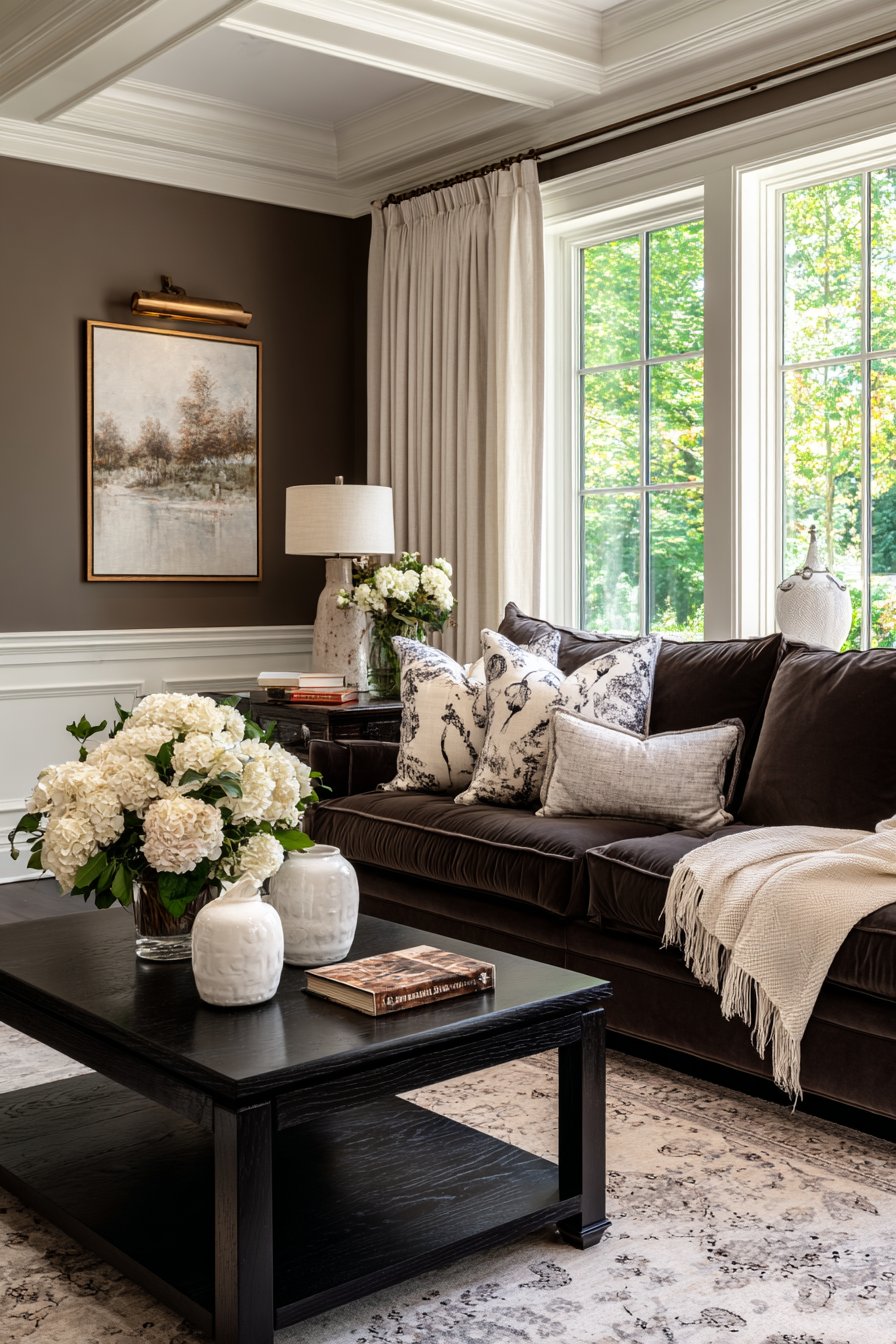
Don’t be afraid to go bold with white on larger surfaces. A white-painted ceiling is one of the most impactful and affordable changes you can make. It instantly raises the perceived height of the room and bounces natural light around in ways that brown ceilings simply cannot. Pair it with white or light-colored window casings for maximum effect.
- Paint the ceiling white or off-white to maximize light reflection
- Swap dark throw pillows for cream, ivory, or warm white versions
- Choose a light-colored area rug to ground the space without adding visual weight
- Add white or cream ceramics to shelves and surfaces as decorative accents
- Consider white or light linen curtains to frame windows without blocking light
- Layer a cream throw blanket over dark brown sofas for instant contrast
2. Maximize Natural Light With Strategic Window Treatments
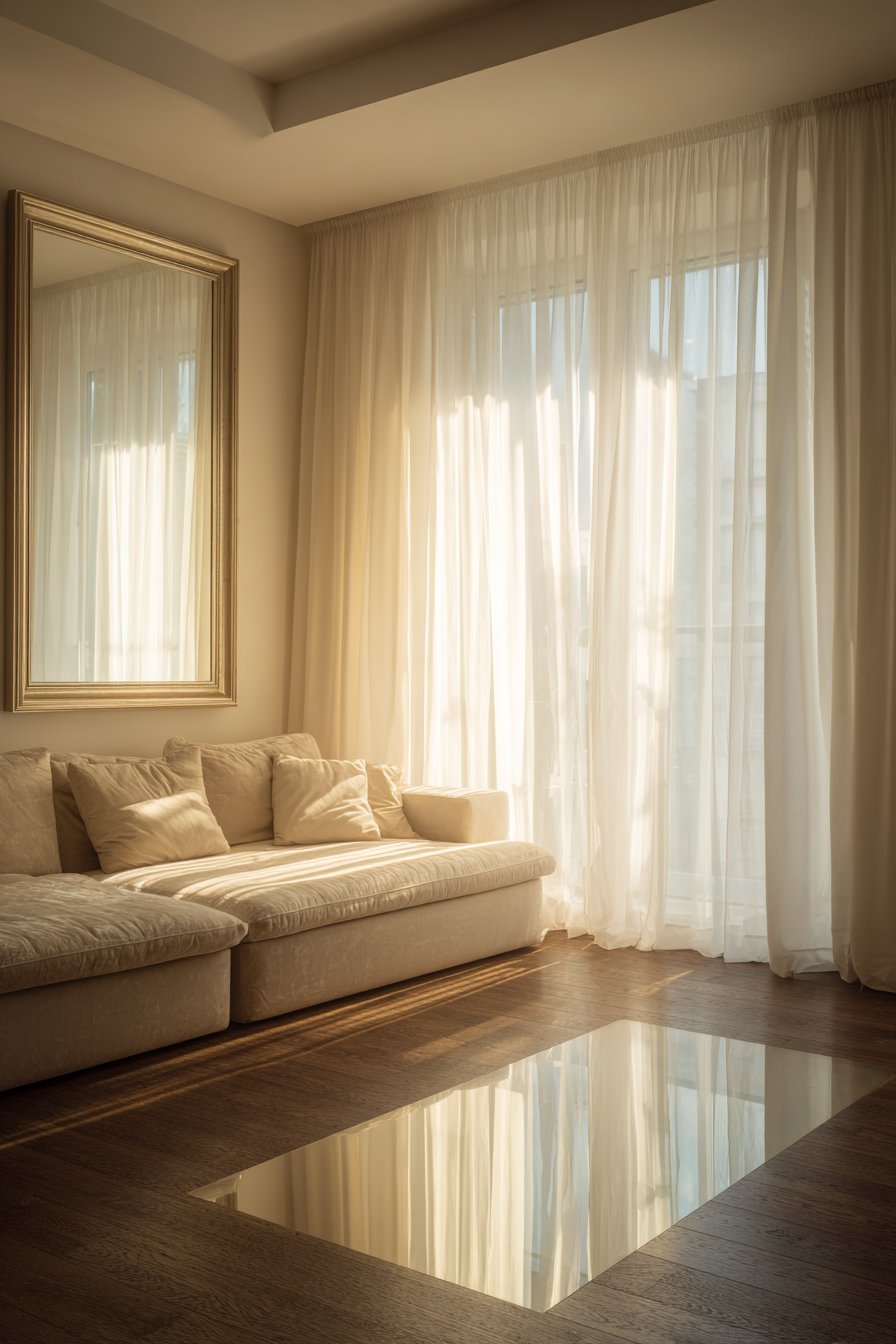
Natural light is the single most transformative element in any living room, but it’s especially critical in a brown space. Heavy, dark drapes absorb light and reinforce the heaviness of brown tones. Replacing them with sheer or lightweight curtains in white, linen, or soft gray immediately opens the room up and allows sunlight to flood in freely.
When choosing window treatments, consider how much light control you actually need. Many homeowners default to blackout curtains out of habit, but in a brown living room, light filtering shades or sheer panels often serve better. They soften incoming light into a warm glow that flatters brown tones beautifully while still maintaining a sense of privacy.
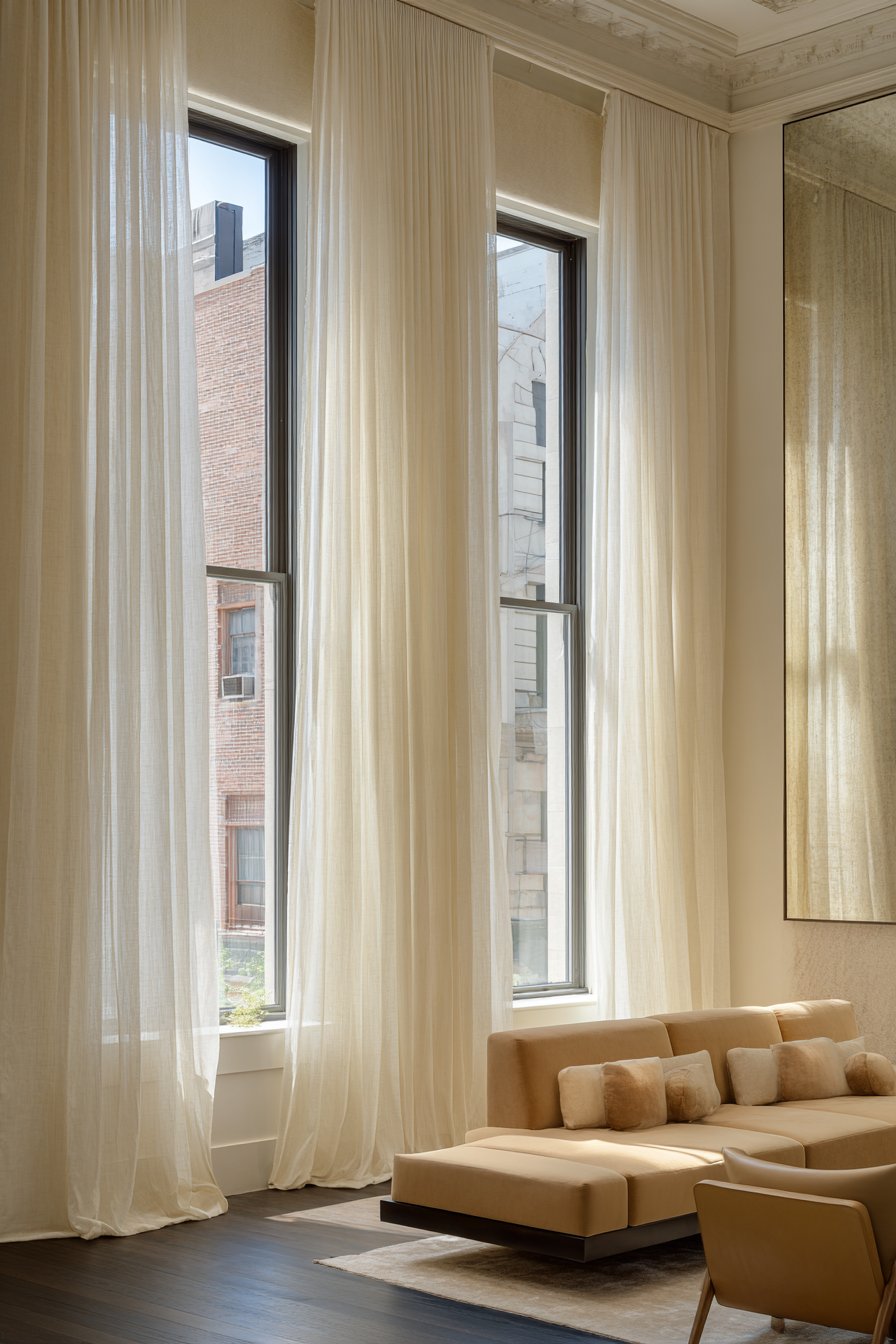
Hanging curtains higher than the window frame — ideally close to the ceiling — creates the illusion of taller windows and a loftier space. Wide curtain panels that extend beyond the window width allow you to expose the full glass when the curtains are open. This simple trick amplifies natural light significantly and gives the room a grander, more modern architectural feel.
- Hang curtain rods 4–6 inches above the window frame for a taller appearance
- Choose sheer white or linen panels that filter rather than block sunlight
- Use roman shades in neutral tones for a clean, modern alternative to drapes
- Clean windows regularly — dirty glass can reduce light entry by up to 30%
- Add a large mirror opposite the main window to double reflected natural light
- Avoid heavy valances or pelmet boxes that reduce window height visually
3. Add Metallic and Reflective Surfaces
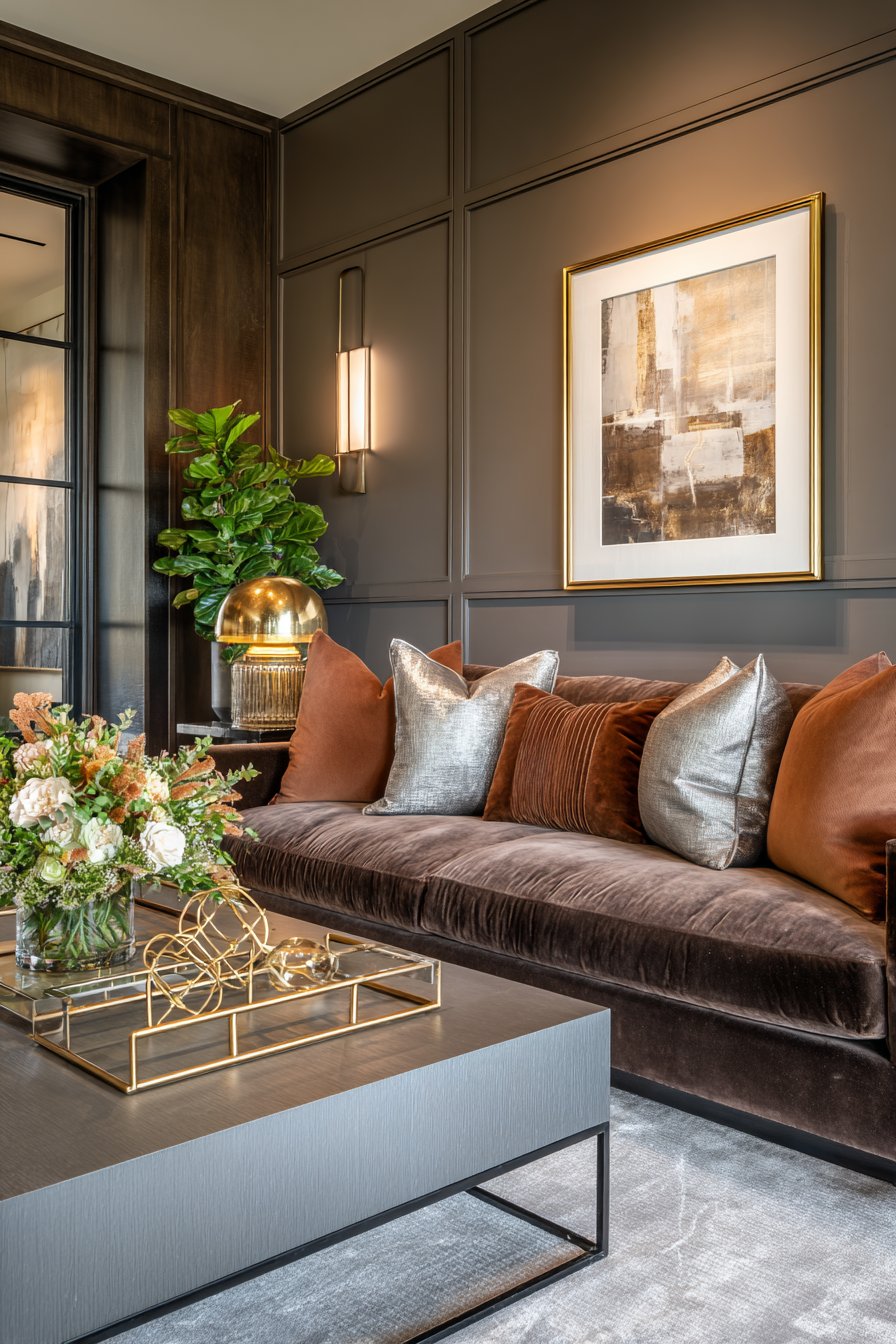
Metallic accents are a designer’s secret weapon for modernizing a brown living room. Gold, brass, copper, and silver finishes introduce a gleam that bounces light around the room dynamically. A brass floor lamp, a gold-framed mirror, or silver picture frames can completely shift the mood from rustic and heavy to sophisticated and contemporary.
The reflective quality of metals does double duty in a brown space. First, they catch and redirect both natural and artificial light. Second, they provide a visual contrast that feels inherently modern — the combination of matte brown warmth with metallic sheen is a hallmark of high-end interior design. You’ll see this pairing repeatedly in luxury hotel lobbies and magazine-worthy living rooms.
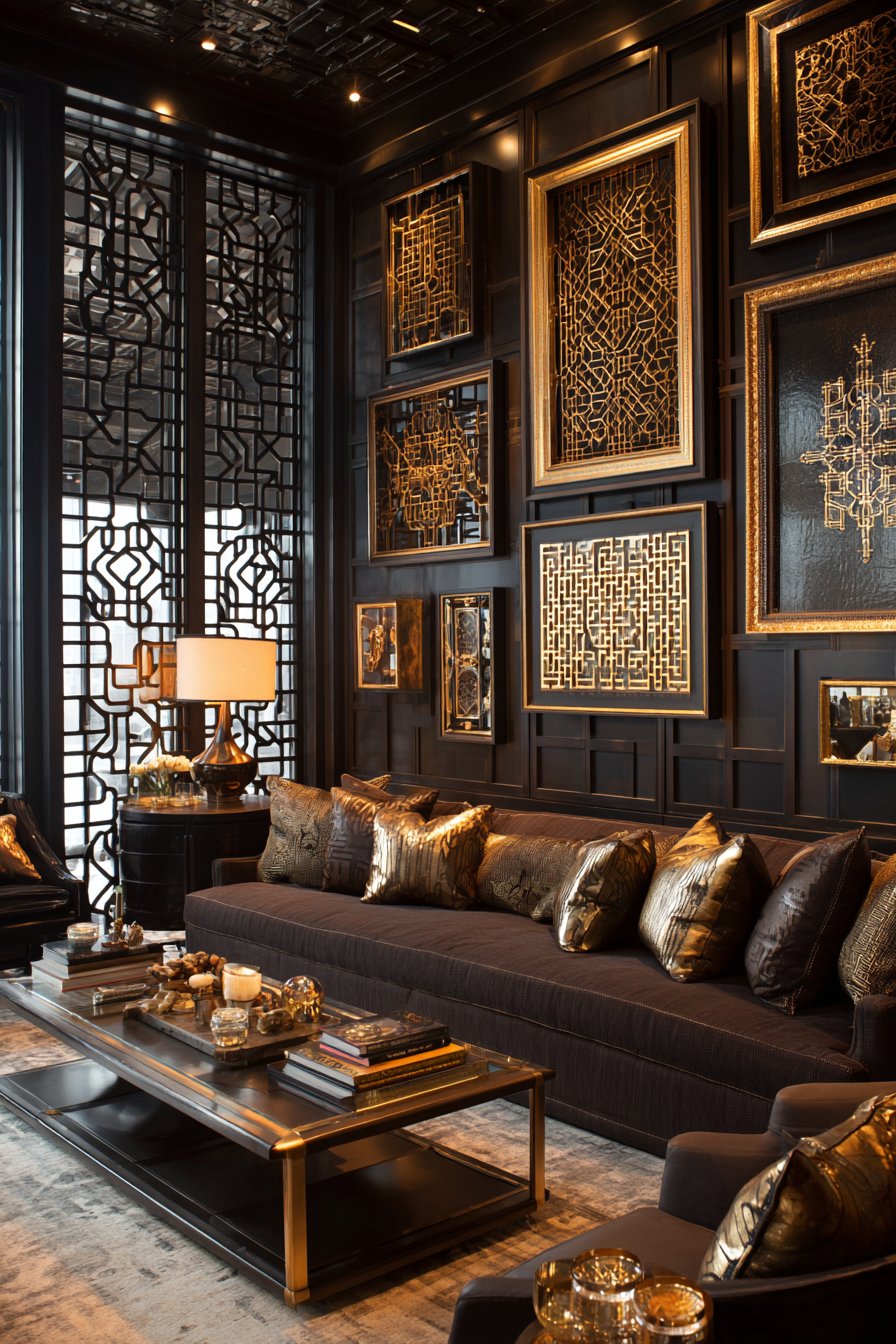
When incorporating metals, aim for one or two dominant finishes to maintain cohesion. Mixing too many metallic tones can feel chaotic. Warm metals like brass and gold pair especially well with warmer browns like caramel and tan. Cooler metals like chrome and silver complement gray-toned browns and espresso shades. A large decorative mirror with a metallic frame serves as both a light amplifier and a stunning focal point.
- Introduce a brass or gold floor lamp for ambient lighting with modern flair
- Swap basic picture frames for metallic-finish versions in gold or silver
- Choose a coffee table with metal legs to add visual lightness and shine
- Add a large mirror with a metallic frame opposite the main light source
- Use metallic throw pillow covers sparingly for subtle glamour
- Consider metal-finish hardware on furniture like drawer pulls and cabinet knobs
4. Layer in Lighter, Complementary Colors
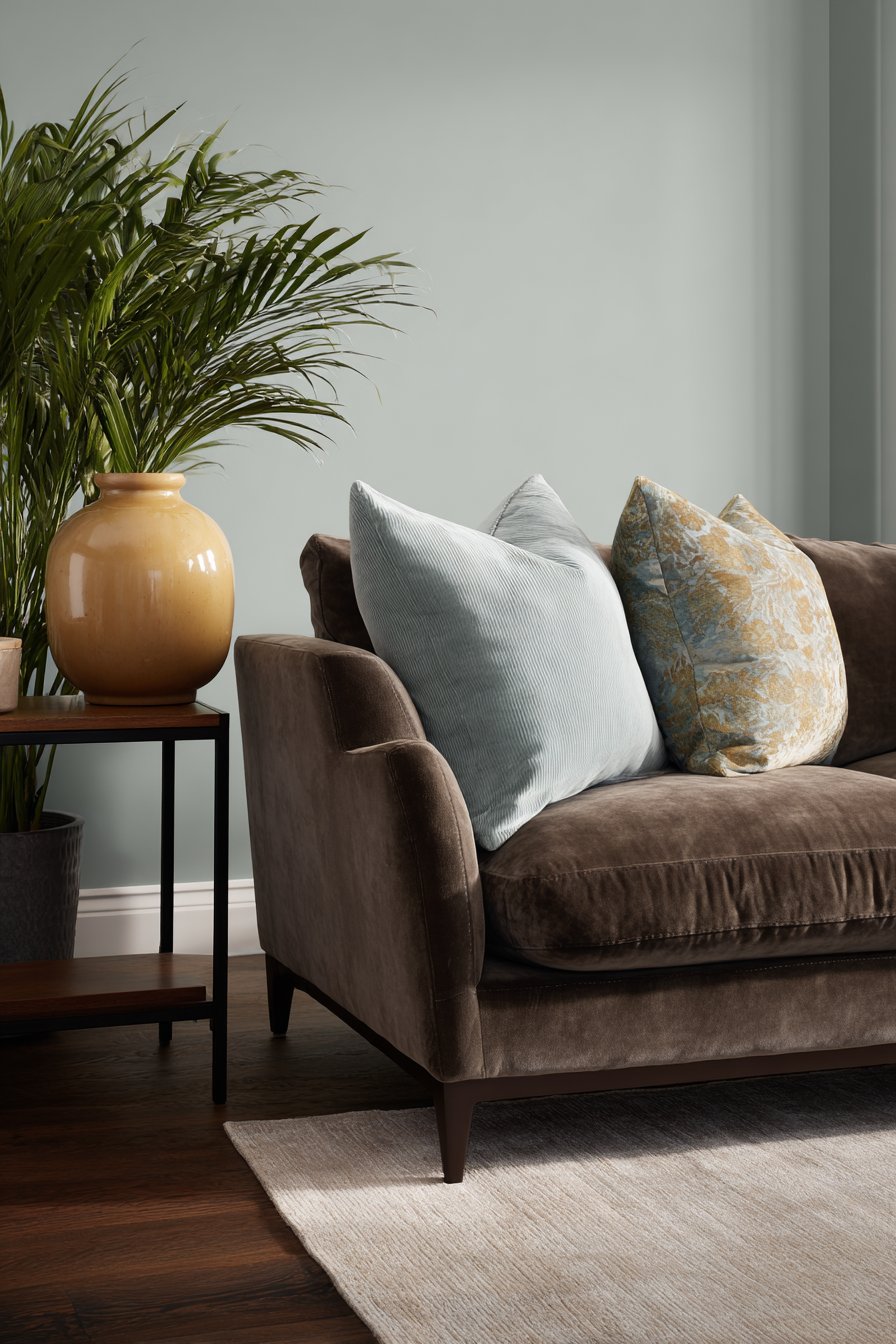
Color layering is essential for preventing a brown room from feeling monochromatic and flat. The best complementary colors for brown include soft sage green, dusty blue, terracotta, warm blush, and muted mustard. These tones share brown’s organic, earthy warmth while introducing visual variety that keeps the eye engaged and the room feeling lively.
Sage green is particularly powerful alongside brown. It evokes the natural relationship between wood and foliage, which feels inherently fresh and modern. Dusty or powder blue creates a cooler contrast that brightens the space beautifully. Either color introduced through cushions, an accent chair, or even a painted feature wall can lift an entire room’s energy without overwhelming the brown foundation.
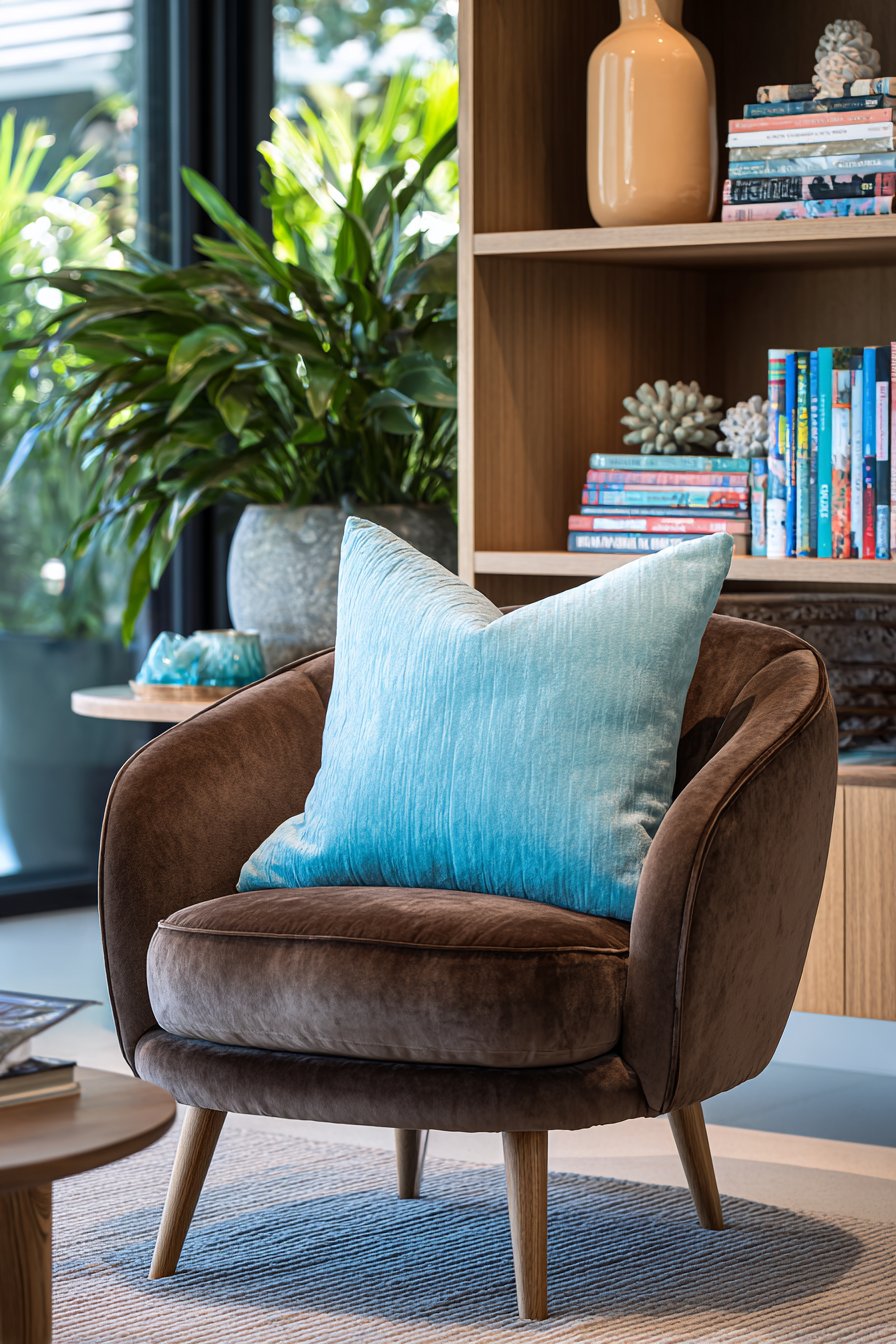
The key to successful color layering in brown rooms is to keep the accent colors muted and tonal rather than saturated and bright. Overly bright colors like electric blue or neon yellow will clash with brown’s natural earthiness. Instead, opt for colors that look like they’ve been slightly faded by sunlight — this creates a harmonious, designer-approved palette that feels effortlessly curated.
- Choose sage green or dusty blue as your primary accent color for freshness
- Introduce color through throw pillows, blankets, and small decorative objects first
- Paint a single feature wall in a muted complementary tone for impact
- Use an accent chair upholstered in a contrasting light color to break up the brown
- Add indoor plants for natural green tones that complement brown wood beautifully
- Keep 60% brown, 30% neutral, and 10% accent color for balanced proportion
5. Choose Furniture With Lighter Visual Weight
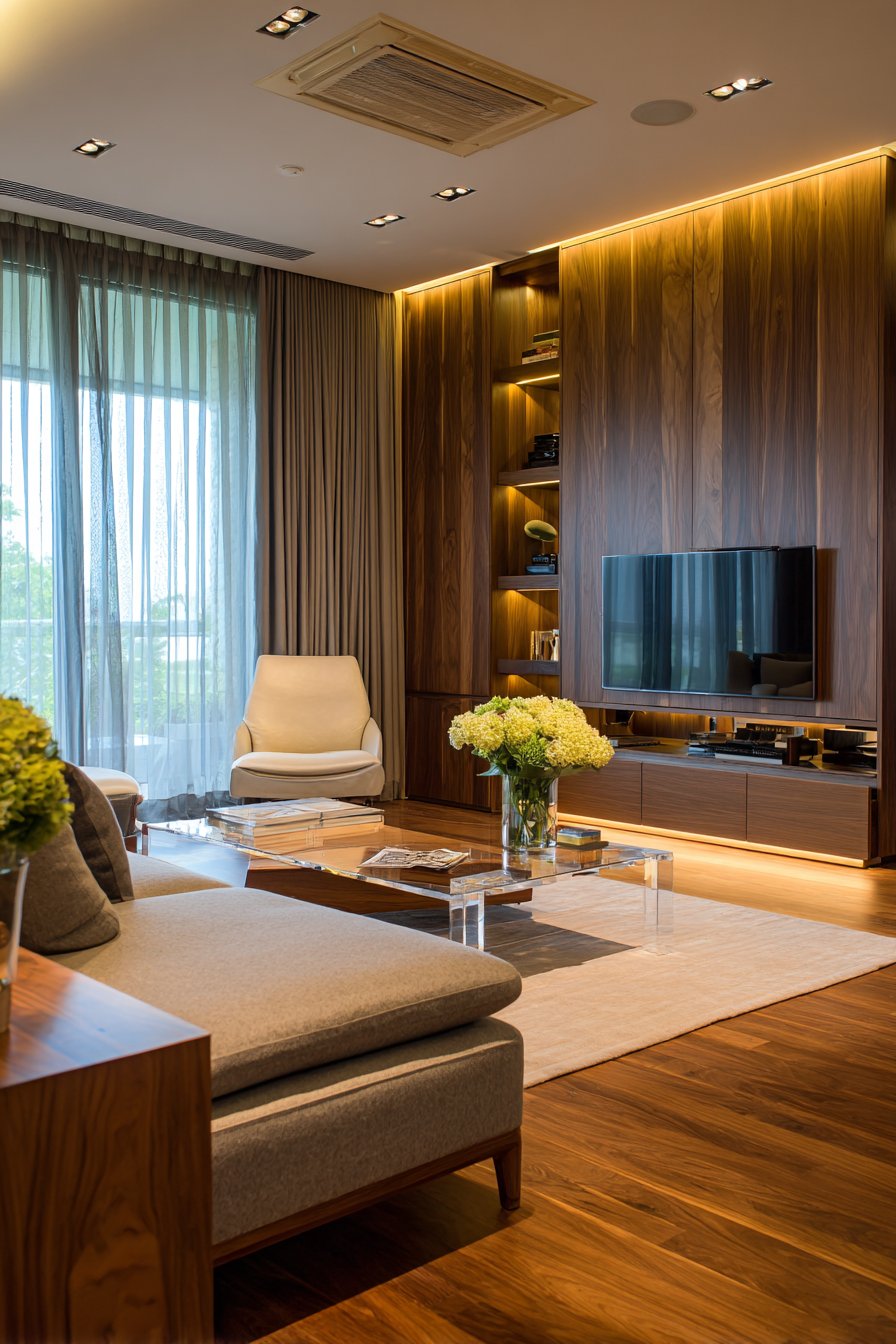
Furniture scale and visual weight have an enormous impact on how a brown living room feels. Dark, bulky, solid-wood furniture reinforces heaviness and can make a room feel smaller than it is. Swapping even one or two pieces for furniture with lighter visual profiles — think exposed legs, lighter upholstery, or sleeker silhouettes — dramatically opens up the space.
A sofa with tapered wooden legs appears to float slightly above the floor, allowing the eye to travel beneath it and creating a sense of spaciousness. Contrast this with a skirted sofa that sits flush to the ground — that style visually blocks floor space and adds weight. The same principle applies to coffee tables, side tables, and TV consoles. Glass or acrylic tops on tables are particularly effective in brown rooms because they take up almost zero visual space.
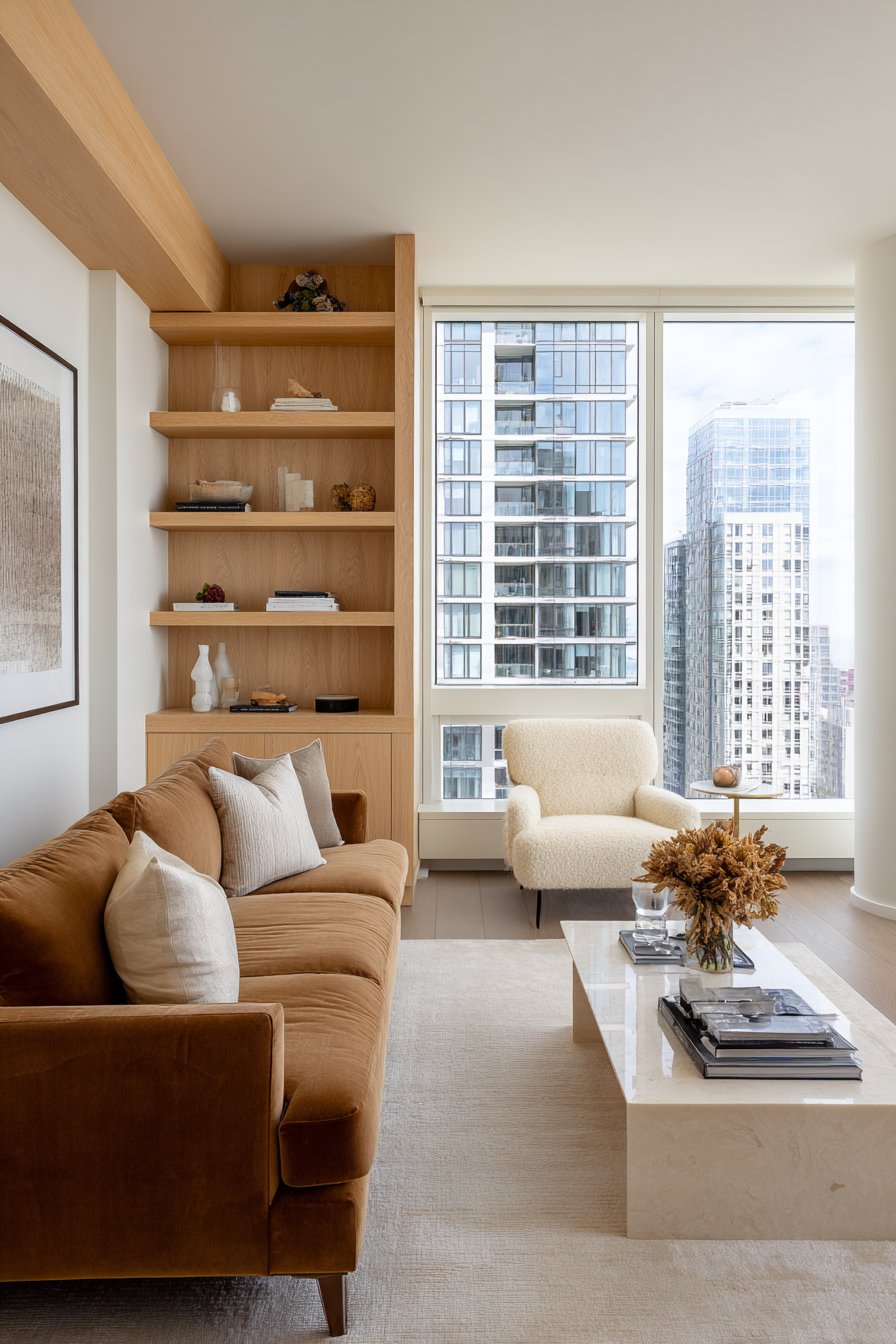
Upholstery color matters enormously here. If your main sofa is already dark brown, balance it with a light-colored accent chair in cream, beige, or sage. You don’t need to replace the sofa — simply adding one lighter-toned seating piece shifts the entire balance of the room. Multi-tonal layering across your seating creates depth without darkness, which is the defining characteristic of modern brown living room design.
- Choose sofas and chairs with exposed legs rather than skirted bases
- Opt for a glass, acrylic, or light wood coffee table to reduce visual clutter
- Select a TV console with open shelving rather than solid closed panels
- Mix upholstery tones — don’t let all seating be the same dark brown shade
- Scale furniture appropriately — oversized pieces overwhelm small brown rooms
- Consider a loveseat instead of a full sofa in smaller rooms for better proportion
6. Use Lighting Layers to Brighten and Modernize
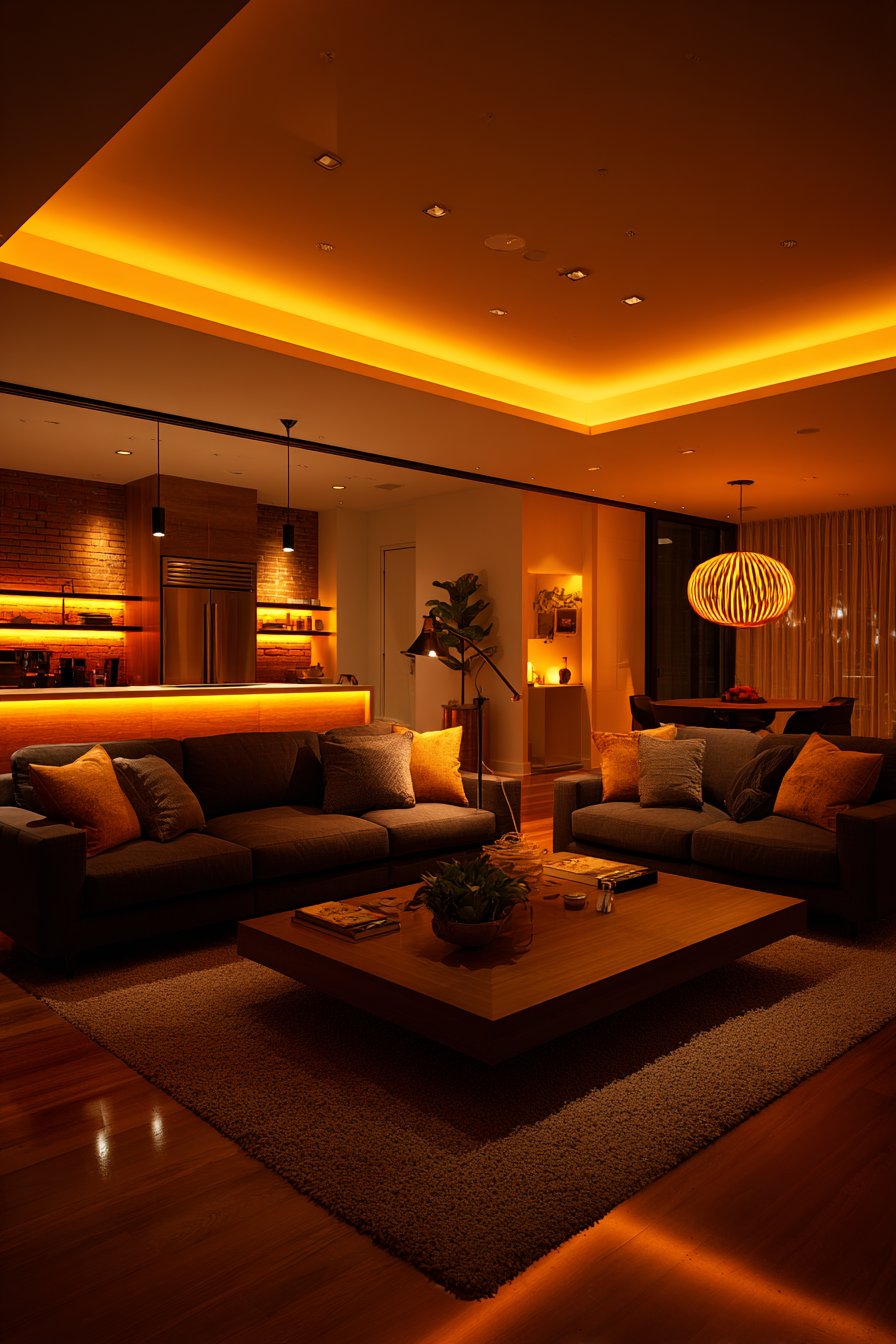
Layered lighting is the finishing touch that transforms a brown living room from dim and dated to bright and modern. Most living rooms rely on a single overhead fixture, which casts flat, unflattering light that deepens the apparent darkness of brown tones. A three-layer lighting approach — ambient, task, and accent lighting — creates dimension and makes the entire room feel more dynamic and alive.
Ambient lighting sets the overall brightness. Recessed ceiling lights or a flush-mount fixture with a high-lumen output provides the foundational layer. Task lighting — a reading lamp beside the sofa, a desk lamp on a console — adds focused brightness where you need it. Accent lighting, such as LED strip lights behind a TV unit or picture lights above wall art, creates warmth and draws attention to the room’s best features.
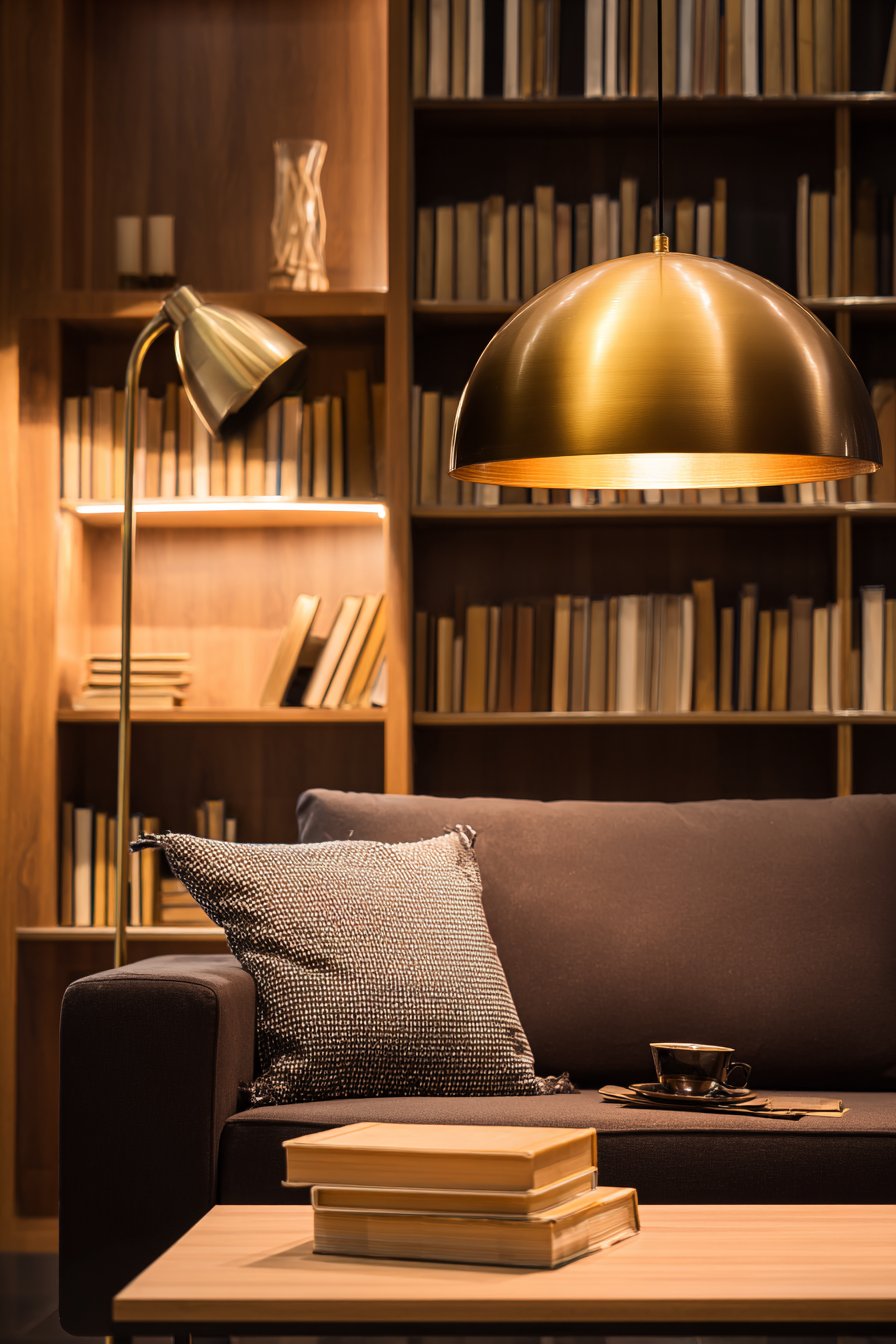
Bulb temperature plays a critical but often overlooked role in brown rooms. Warm white bulbs (around 2700K) complement brown’s natural warmth without making the room look yellowed. Cool white or daylight bulbs (5000K+) can feel sterile alongside warm brown tones. For a modern aesthetic, dimmable LED fixtures give you full control — bright and energizing during the day, warm and intimate in the evening.
- Install recessed ceiling lights or a bright central fixture for ambient illumination
- Add a floor lamp or table lamp in every dark corner of the room
- Choose bulbs in the 2700K–3000K range for warm, flattering light
- Install dimmers on all lighting circuits for flexible mood control
- Use LED strip lighting behind shelving units or under furniture for accent glow
- Add a statement pendant light as a modern focal point above the coffee table
Conclusion
Making a brown living room feel light and modern is entirely achievable with the right design approach. By combining crisp white accents, strategic window treatments, metallic surfaces, complementary colors, lighter furniture, and layered lighting, you can transform even the heaviest brown space into something that feels fresh, airy, and beautifully contemporary.
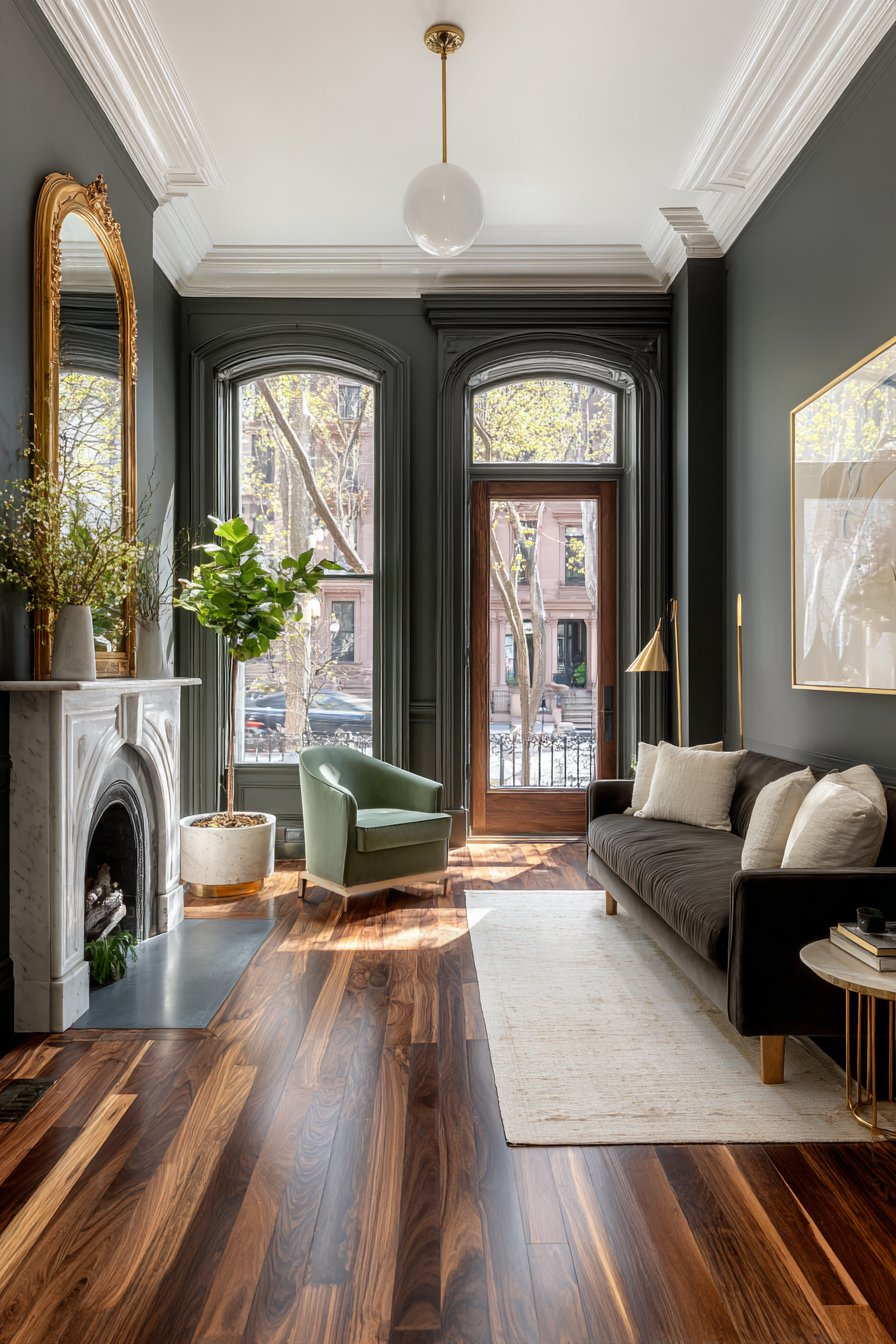
The most important takeaway is that brown is not your enemy — it’s a rich, versatile foundation that responds beautifully to thoughtful contrast and curation. Start with one or two of these tips and observe how the room shifts. You’ll quickly discover that small, intentional changes create remarkable results. Your brown living room has the potential to become the most stylish room in your home — it simply needs the right balance of light, contrast, and modern sensibility to shine.
"As an Amazon Associate, I earn from qualifying purchases."
