
In the world of interior design, few color palettes possess the timeless appeal and versatility of brown. A brown kitchen represents more than just a design choice—it embodies warmth, sophistication, and an enduring connection to natural elements that create spaces where families gather and memories are made. The rich, earthy tones of brown cabinetry, countertops, and accents transform ordinary cooking spaces into havens of comfort and elegance that stand the test of time.
Brown kitchens offer an extraordinary range of possibilities, from rustic farmhouse charm featuring reclaimed wood elements to sleek contemporary designs with mahogany cabinetry and chocolate-toned quartz surfaces. This comprehensive exploration will guide you through twenty distinctive brown kitchen concepts, each showcasing unique approaches to incorporating this versatile color into your home’s most important gathering space.
Whether you’re drawn to the deep richness of espresso-stained oak or the warm honey tones of natural wood grain, these designs demonstrate how brown kitchens can accommodate every style preference while maintaining their signature warmth and sophistication. Each concept offers practical insights and design principles that will inspire your own kitchen transformation.
1. Rich Walnut Cabinetry with Bronze Accents
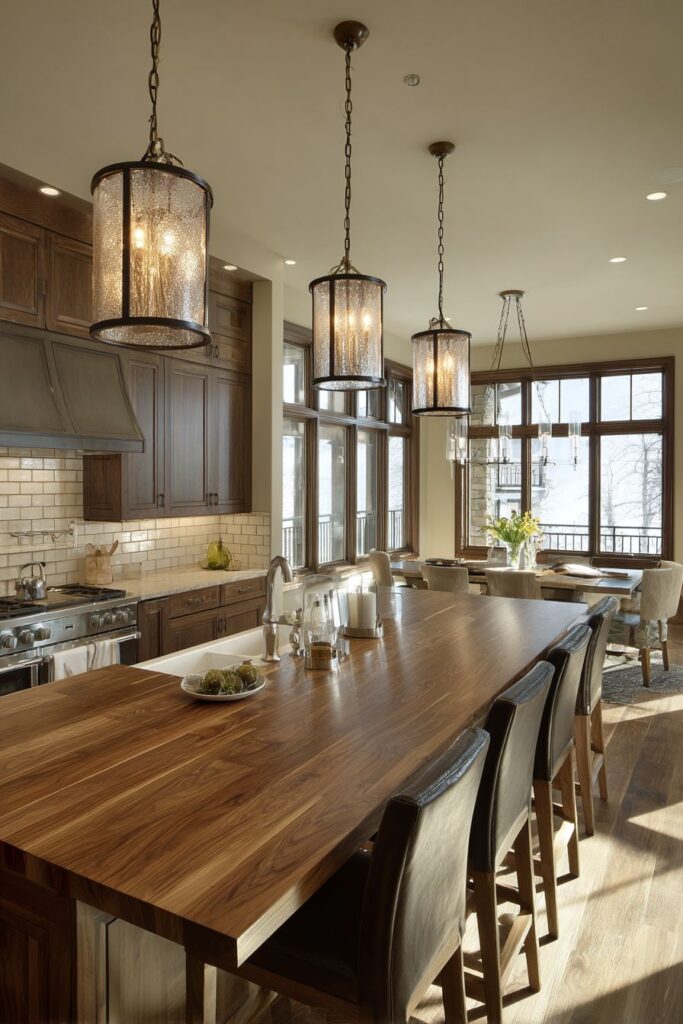
The foundation of this stunning brown kitchen lies in its rich walnut cabinetry, where natural wood grain patterns create visual depth and character throughout the space. The warm undertones of walnut provide an ideal canvas for bronze hardware that catches light beautifully, creating subtle metallic highlights that enhance the overall sophistication of the design. The kitchen island becomes a focal point with its thick butcher block countertop in honey-toned oak, offering both functionality and visual contrast against the darker cabinetry.
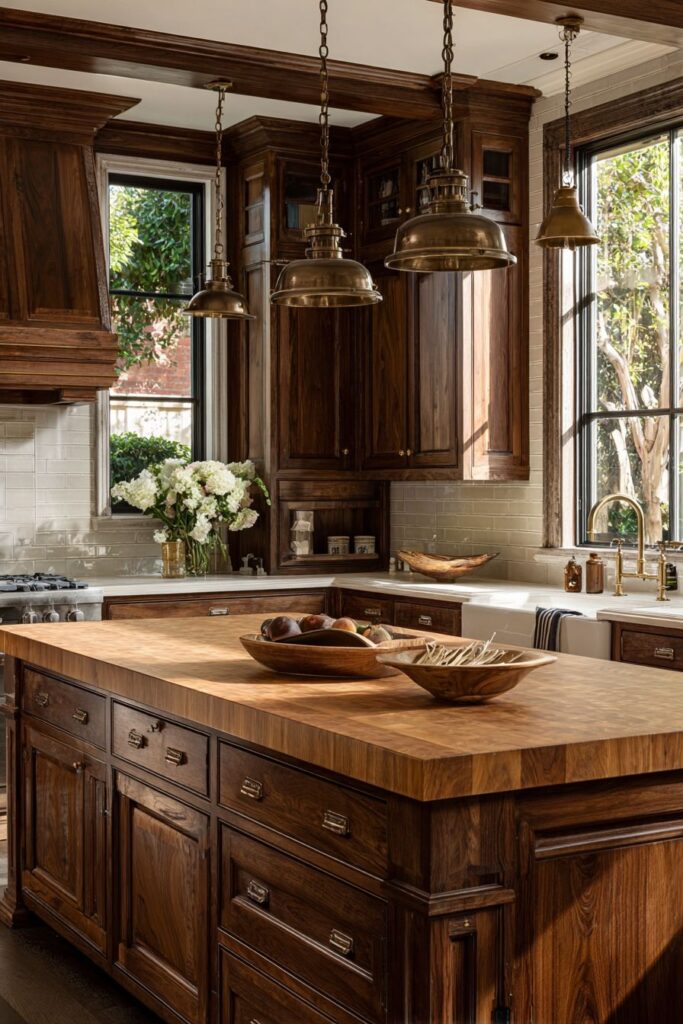
The interplay between different brown tones creates a layered, sophisticated atmosphere that feels both luxurious and approachable. Pendant lights with aged brass fixtures suspended above the island provide task lighting while contributing to the warm metallic accent theme. The cream subway tile backsplash offers just enough contrast to prevent the space from feeling overwhelming while maintaining the earthy palette that defines this design approach.
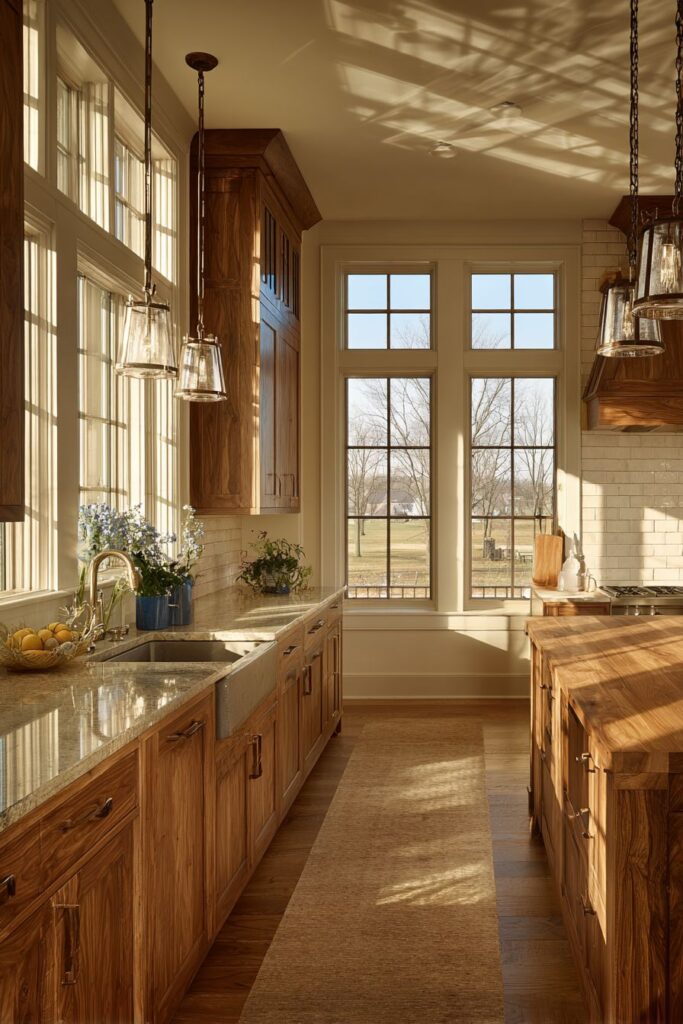
Natural lighting from strategically placed windows highlights the wood textures throughout the day, creating ever-changing patterns of light and shadow that bring the brown surfaces to life. The varying grain patterns in the walnut cabinetry ensure that each cabinet door and drawer front contributes its own unique character to the overall composition.
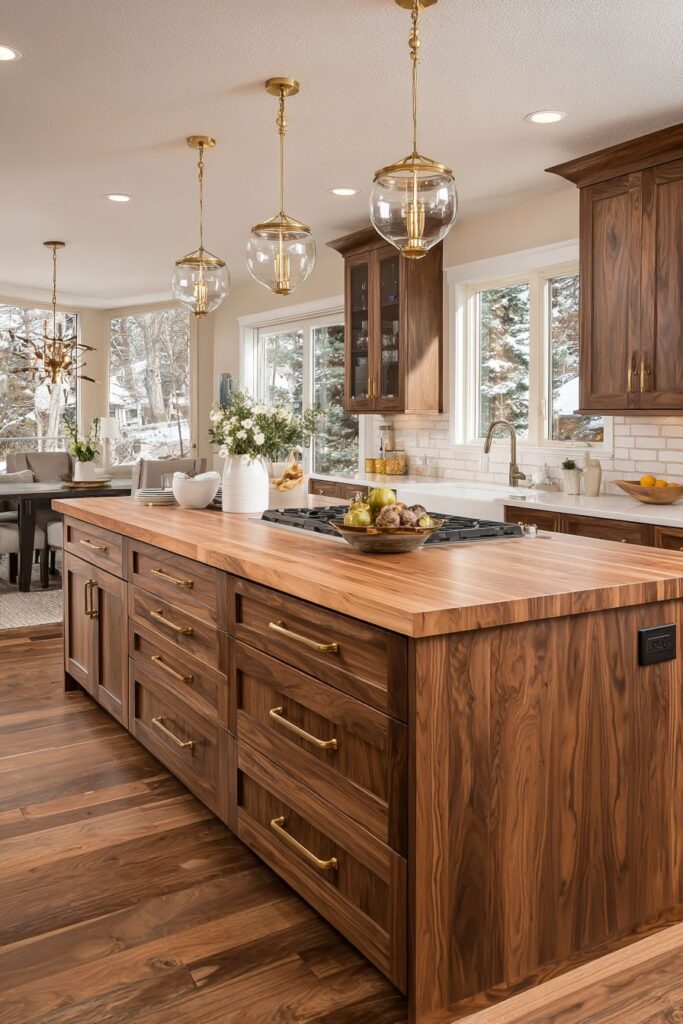
Key Design Tips:
- Choose walnut cabinetry with pronounced grain patterns for maximum visual impact
- Select bronze hardware in consistent finishes to create cohesive metallic accents
- Incorporate multiple brown tones through different materials to add depth
- Use cream or off-white elements sparingly to provide subtle contrast
- Position lighting to emphasize natural wood grain patterns
2. Chocolate-Stained Oak with Glass Display Features
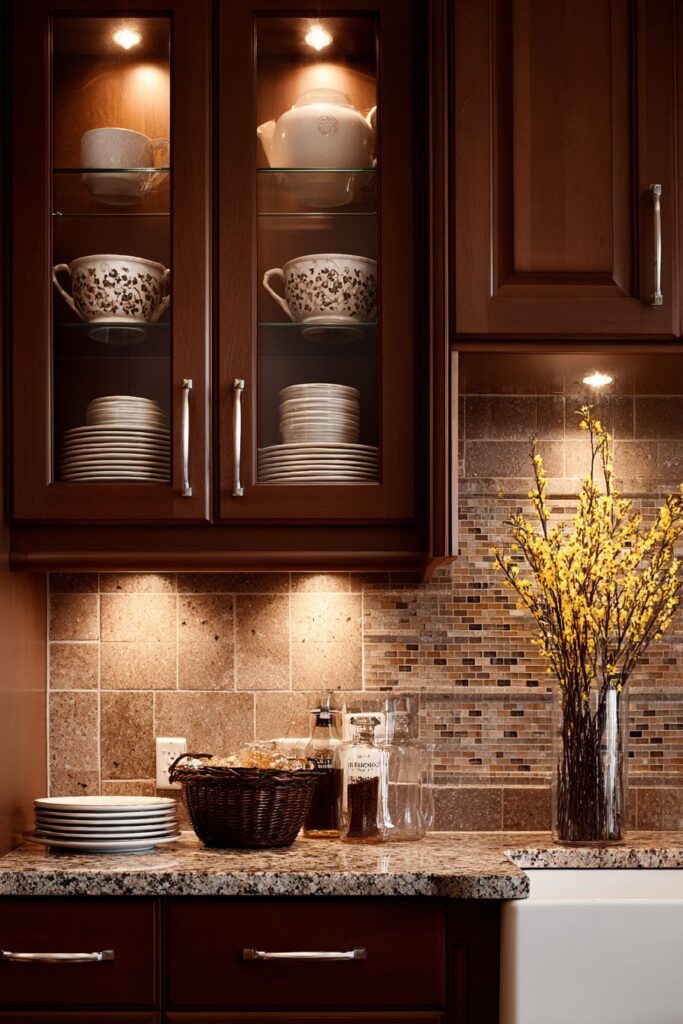
This sophisticated brown kitchen design centers around chocolate-stained oak cabinetry that provides rich, consistent color throughout the space while allowing the natural wood grain to show through the deep stain. Glass-front display areas transform upper cabinets into showcases for warm ceramic dishware, creating opportunities to introduce additional brown tones through carefully selected pottery and serving pieces. The combination of solid and glass-front cabinets adds visual variety while maintaining the cohesive brown theme.
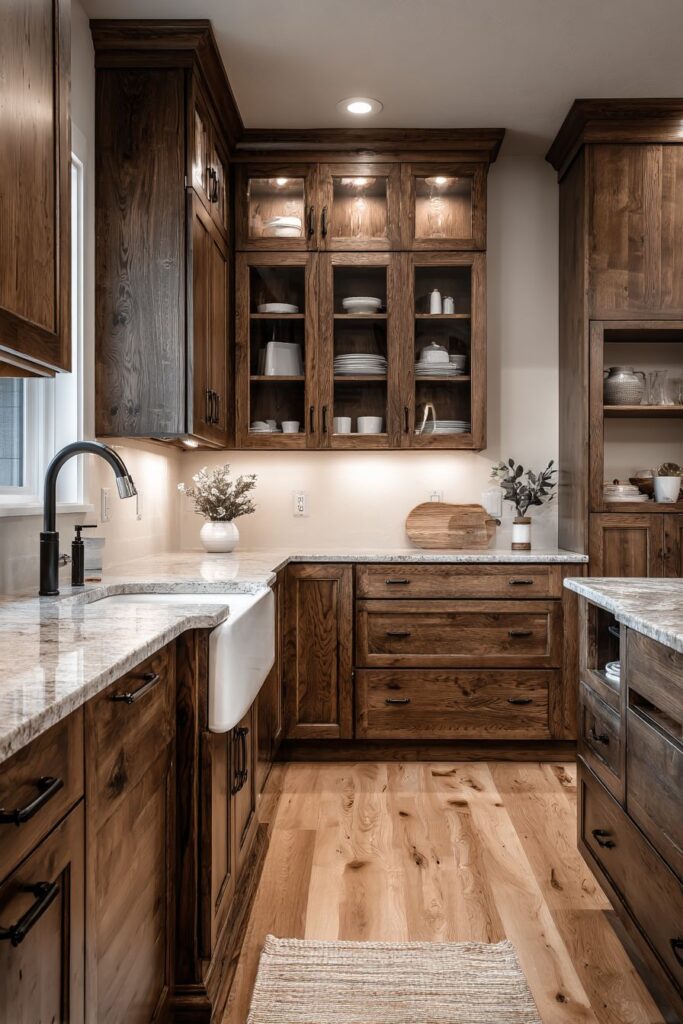
Coffee brown granite countertops with gold flecks complement the cabinetry beautifully, introducing natural stone patterns that echo the organic feel of the wood elements. The subtle metallic flecks in the granite catch light and create sparkling accents throughout the workspace. A creamy white farmhouse sink provides essential contrast, preventing the space from becoming too monochromatic while maintaining the warm, inviting atmosphere.
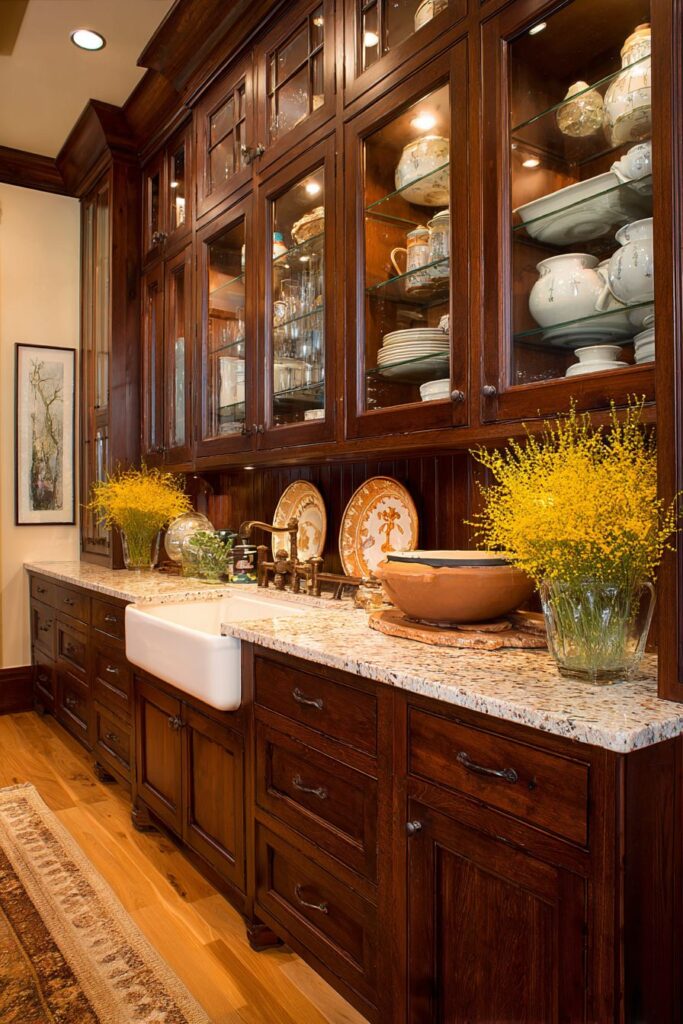
The lighting design incorporates both recessed ceiling fixtures and under-cabinet LED strips, ensuring adequate task lighting while highlighting the rich brown tones of the wood and stone surfaces. The combination of ambient and task lighting creates a layered illumination scheme that makes the kitchen functional at any time of day while emphasizing the beauty of the brown materials.
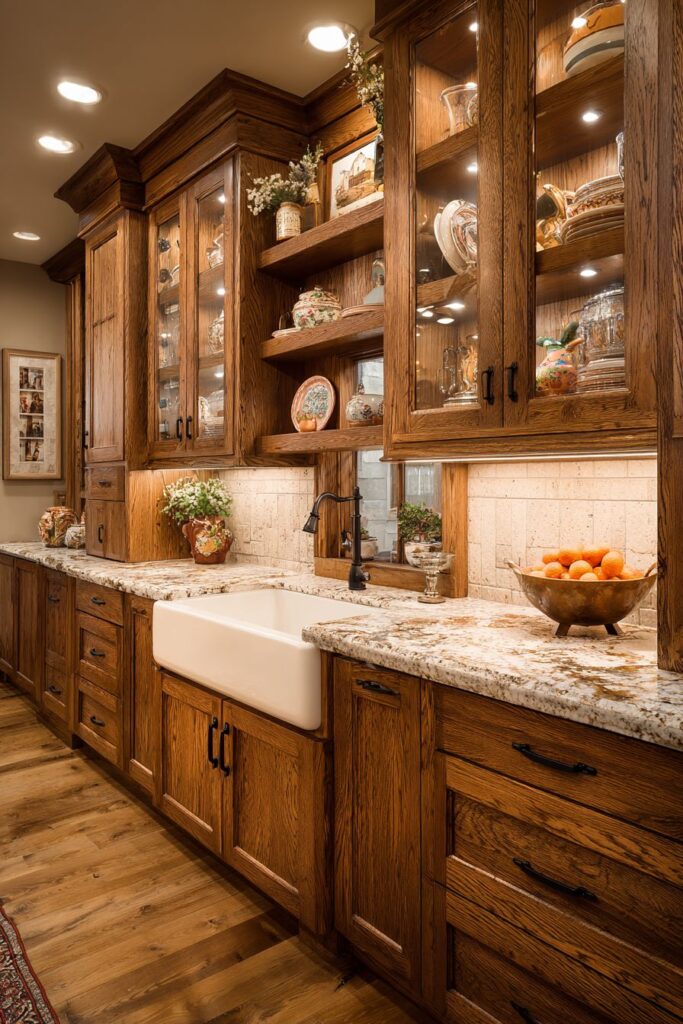
Key Design Tips:
- Use glass-front cabinets to display brown-toned ceramics and pottery
- Select granite with metallic flecks to add subtle sparkle to brown surfaces
- Include one contrasting element like a white sink to prevent monotony
- Layer different types of lighting to showcase brown material variations
- Choose cabinet hardware that complements the brown stain color
3. Cozy Breakfast Nook with Cognac Leather
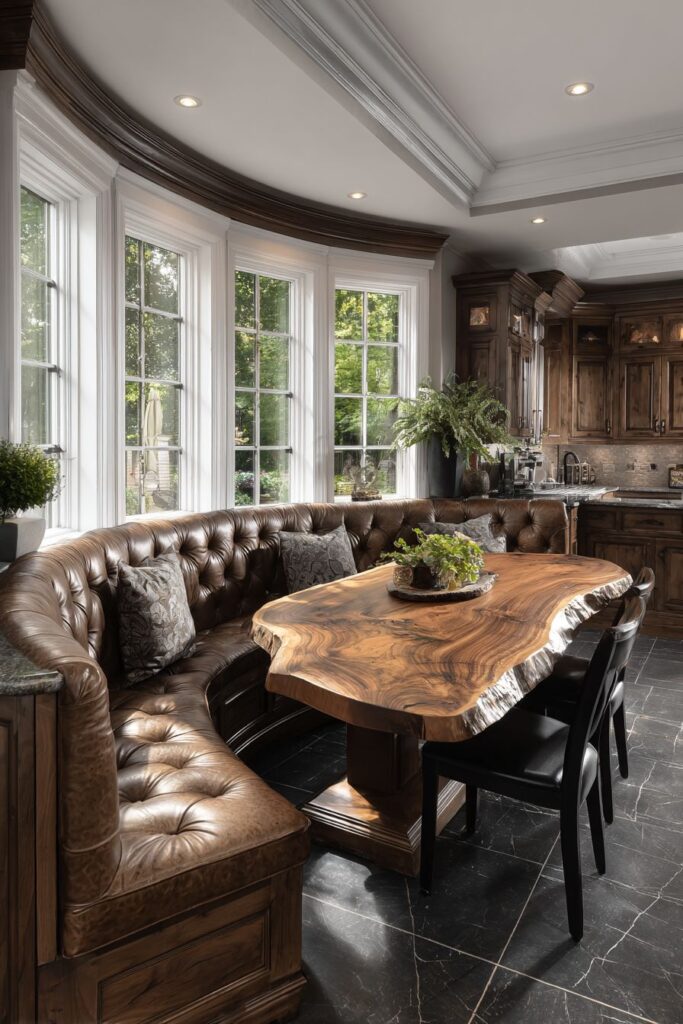
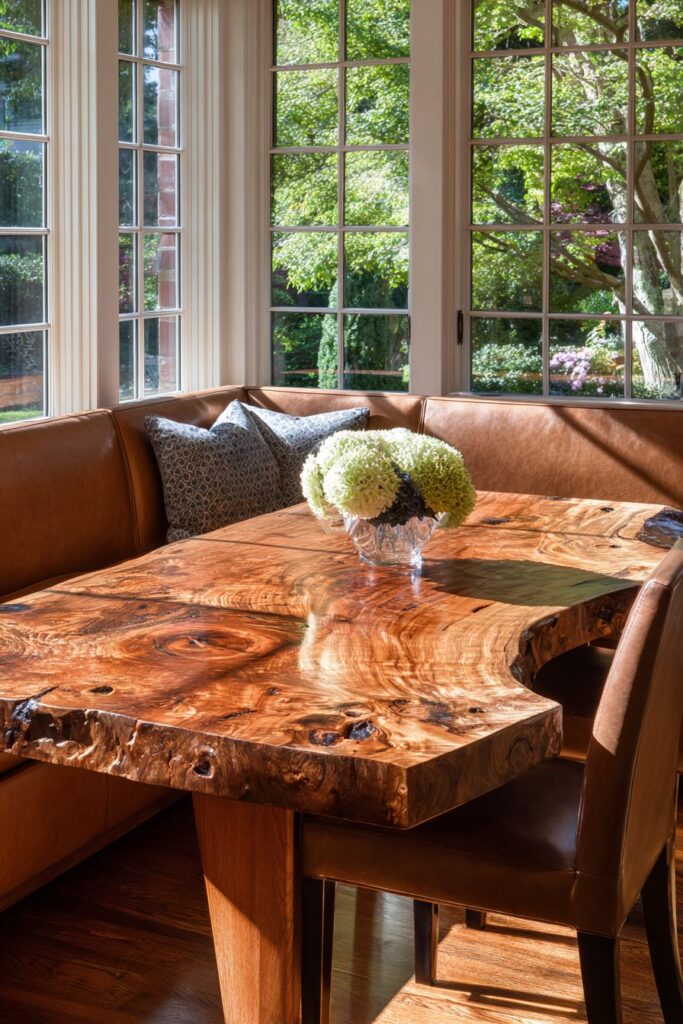
The breakfast nook represents a perfect integration of brown kitchen design with comfortable seating solutions, featuring built-in banquette seating upholstered in rich cognac leather that develops beautiful patina over time. This brown leather element introduces texture and luxury while complementing the surrounding kitchen cabinetry finished in deep espresso tones. The live-edge walnut dining table showcases the natural beauty of wood with visible knots and grain patterns that tell the story of the tree’s growth.
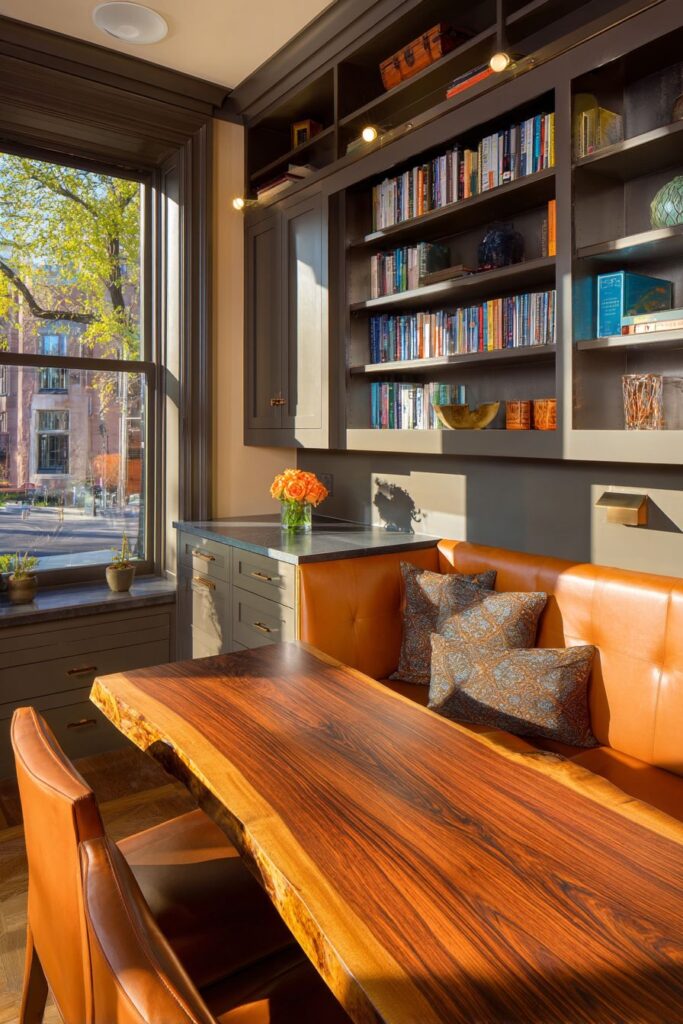
Morning light streaming through nearby windows creates magical moments as it highlights the various brown surfaces, from the leather seating to the wooden table top and surrounding cabinetry. The interplay of natural and artificial lighting throughout the day transforms the mood of the space, making it equally suitable for quiet morning coffee and lively family meals.
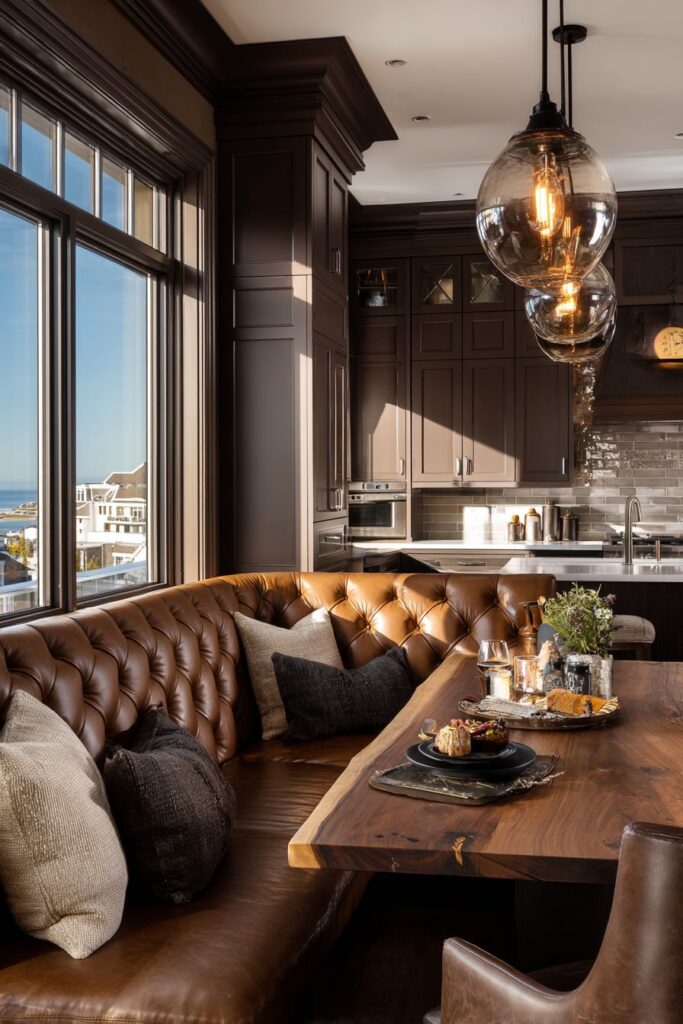
The cohesive flow between the breakfast nook and main kitchen area demonstrates how brown tones can unify different functional zones within an open floor plan. The consistent color palette creates visual continuity while different textures and materials prevent the space from feeling monotonous or overwhelming.
Key Design Tips:
- Choose leather in rich brown tones that develop character over time
- Select live-edge wood tables to emphasize natural material beauty
- Ensure adequate natural light to showcase brown material variations
- Create visual flow between different areas using consistent brown tones
- Mix textures like leather, wood, and metal to add interest
4. Waterfall-Edge Island with Two-Tone Cabinetry
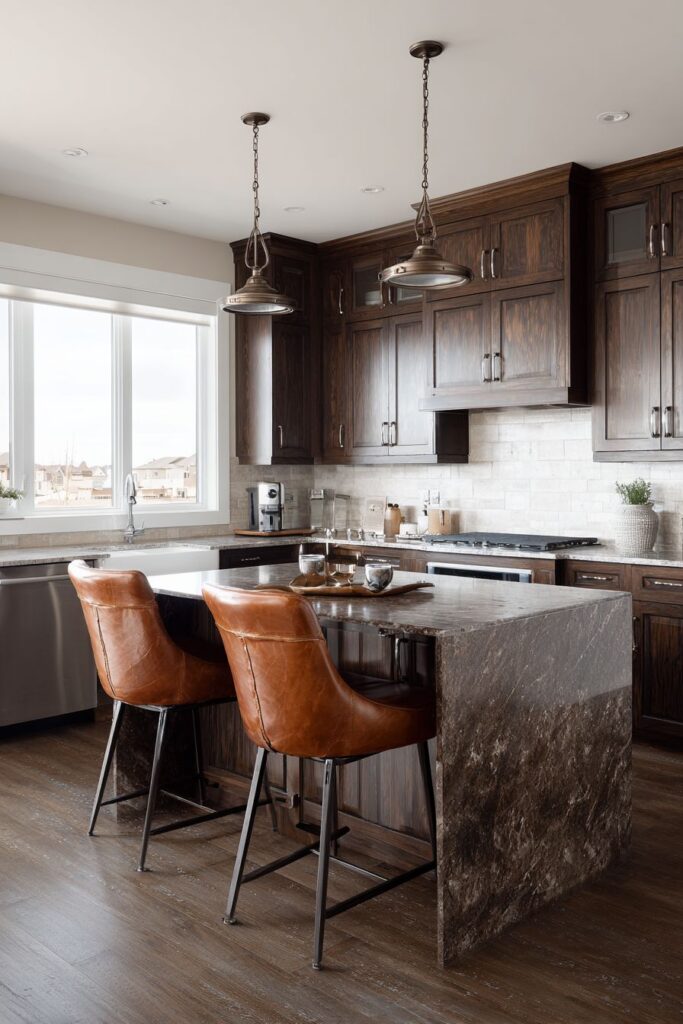
This sophisticated brown kitchen design showcases a stunning island centerpiece featuring a waterfall-edge countertop in rich chocolate quartz that creates a dramatic focal point while providing ample workspace. The two-tone cabinetry approach demonstrates advanced design thinking, with darker espresso base cabinets grounding the space and lighter natural oak upper cabinets creating visual lift and preventing the design from feeling too heavy or dark.
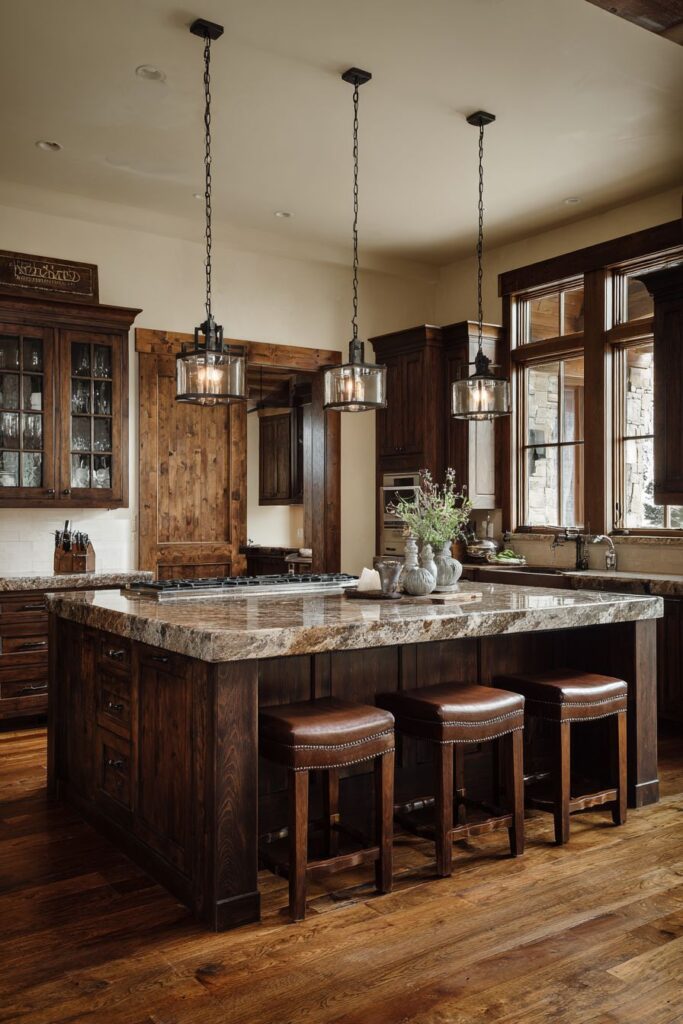
Bar stools with brown leather seats provide comfortable seating at the island while reinforcing the brown color theme through different materials and textures. The leather develops a beautiful patina with use, adding to the kitchen’s character over time. Bronze pendant fixtures illuminate the workspace while contributing to the warm metallic accent palette that enhances the brown tones throughout the space.
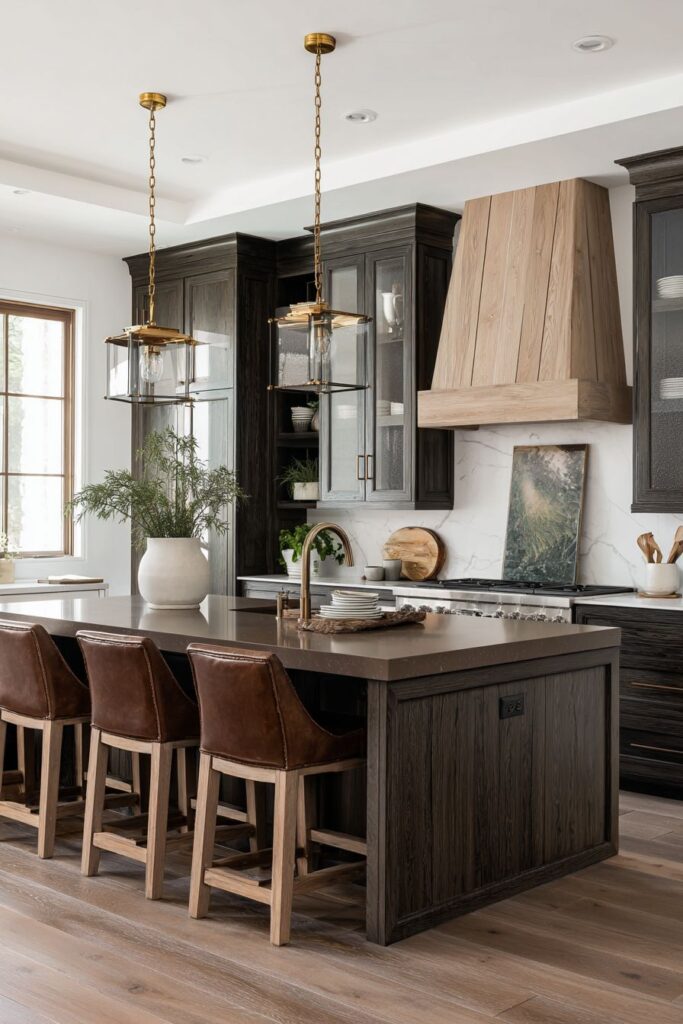
The wide-angle perspective of this design reveals how thoughtful planning can create a kitchen that feels both grand and intimate. The waterfall edge of the island creates a sculptural element that serves as functional art, while the varying brown tones prevent any single element from overwhelming the overall composition.
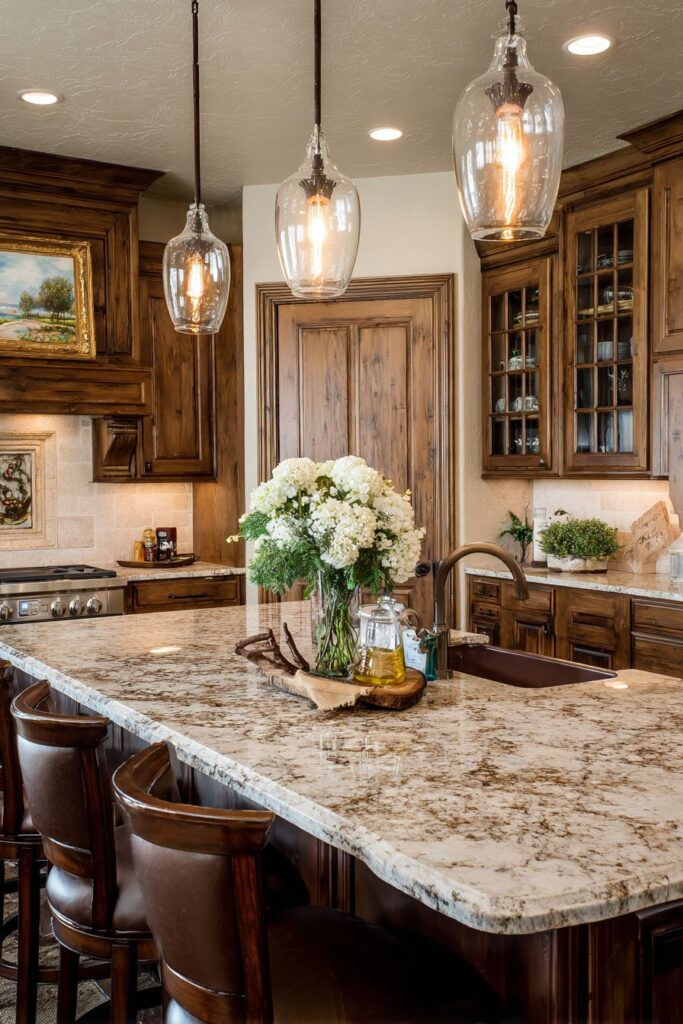
Key Design Tips:
- Use waterfall edges on islands to create dramatic focal points
- Combine darker and lighter brown tones for visual balance
- Select matching leather bar stools to reinforce color themes
- Choose bronze fixtures that complement brown cabinetry tones
- Plan sight lines to showcase key design elements from multiple angles
5. Rustic Reclaimed Barn Wood Character
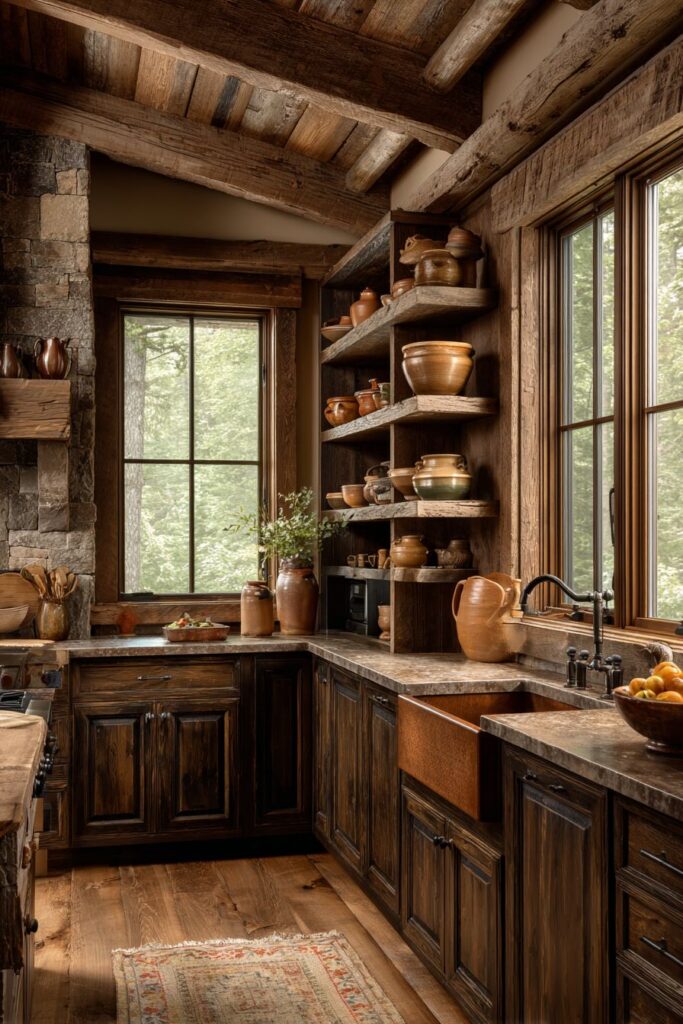
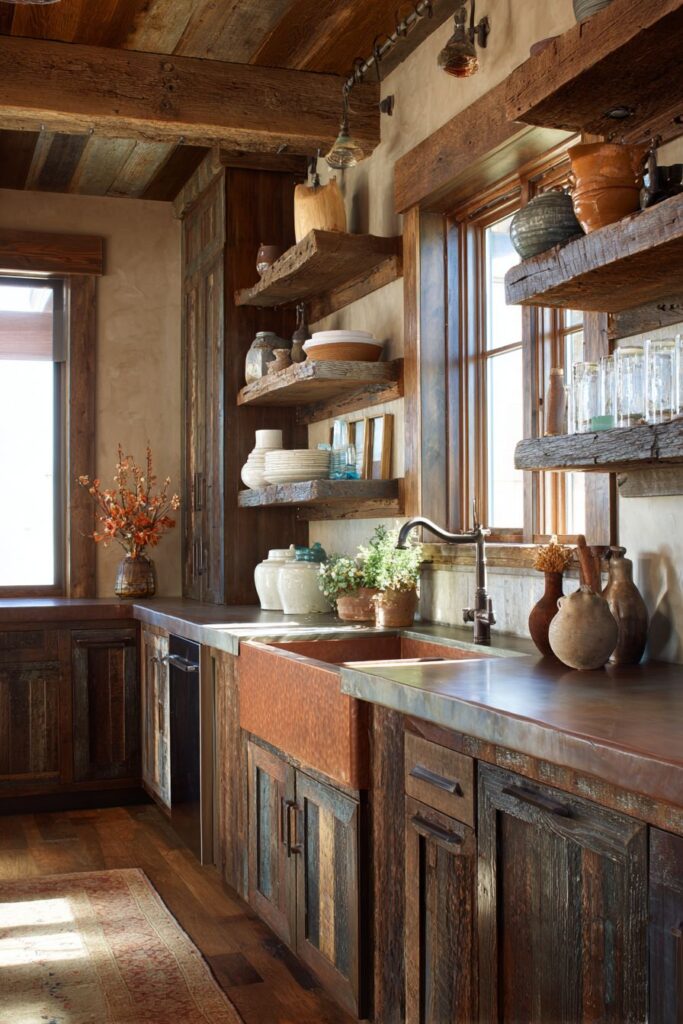
The rustic brown kitchen aesthetic reaches its peak with reclaimed barn wood open shelving that displays pottery and glassware in harmonious earth tones. This approach celebrates the history and character inherent in weathered wood materials, where each plank tells a story through its unique grain patterns, nail holes, and surface patinas. The combination of distressed brown painted cabinetry with natural wood elements creates a layered look that feels authentic and lived-in.
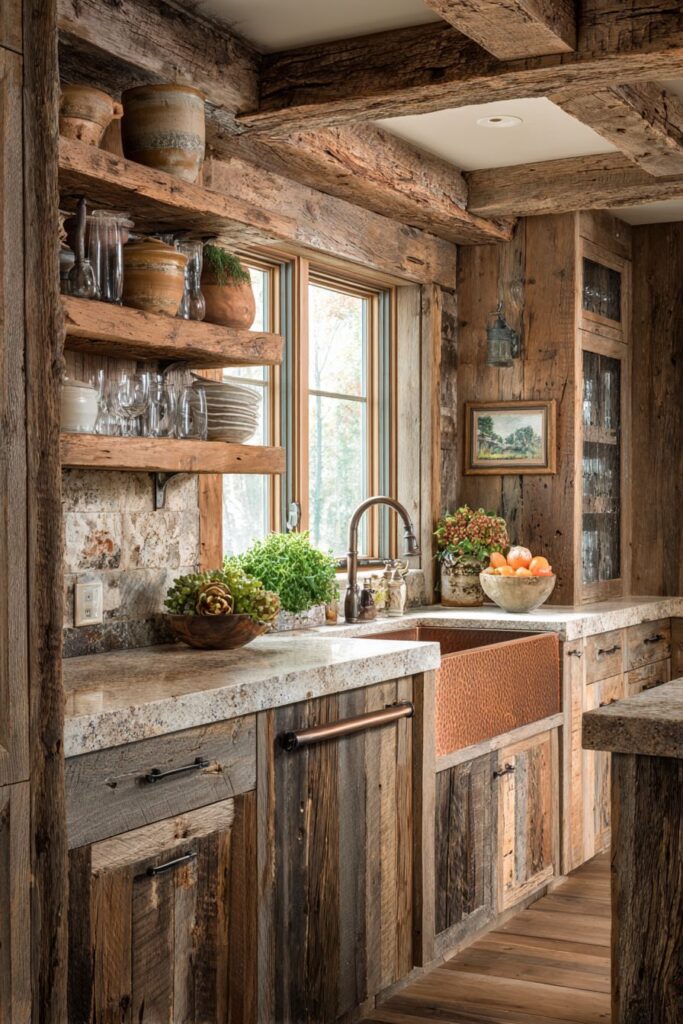
A copper farmhouse sink introduces metallic warmth that complements the brown palette while providing a stunning focal point that catches and reflects light throughout the day. The exposed wooden beams on the ceiling reinforce the rustic theme while adding architectural interest that draws the eye upward. These ceiling elements create a sense of grandeur while maintaining the cozy, intimate feeling that defines rustic brown kitchen design.
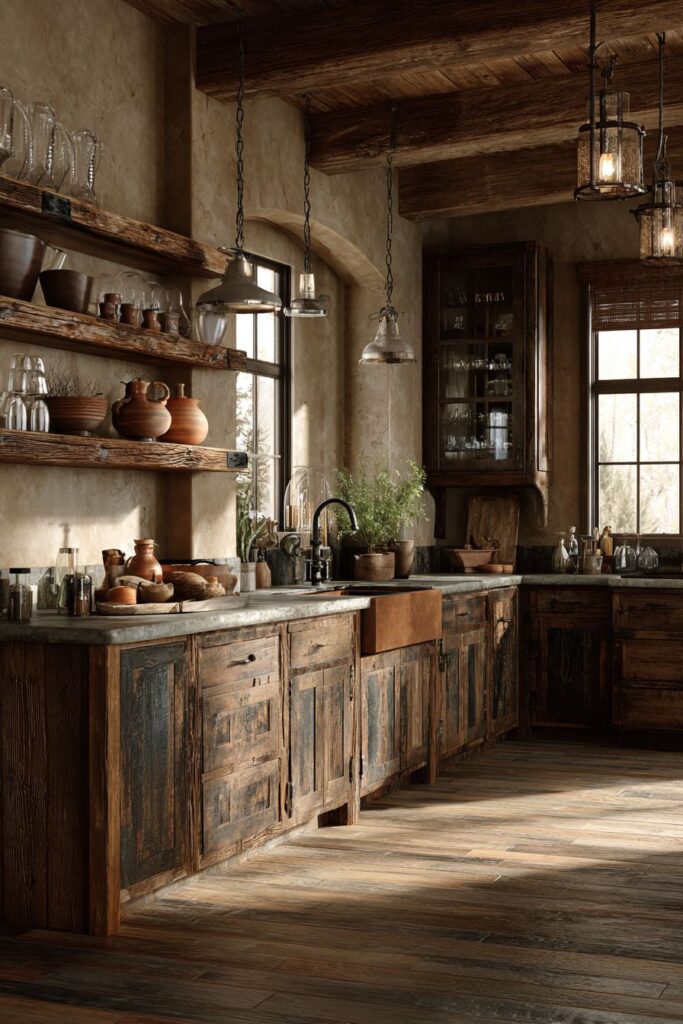
Natural daylight filtering through windows highlights the varied textures and weathered details that make reclaimed materials so appealing. The interplay between smooth and rough surfaces, new and old elements, creates visual complexity that rewards closer inspection while maintaining overall harmony through the consistent brown color palette.
Key Design Tips:
- Source authentic reclaimed materials for genuine character and patina
- Mix painted and natural wood finishes for visual variety
- Include copper elements to add warmth and metallic accents
- Use open shelving to display pottery in complementary earth tones
- Emphasize ceiling elements to create architectural interest
6. Modern Mahogany with Geometric Accents
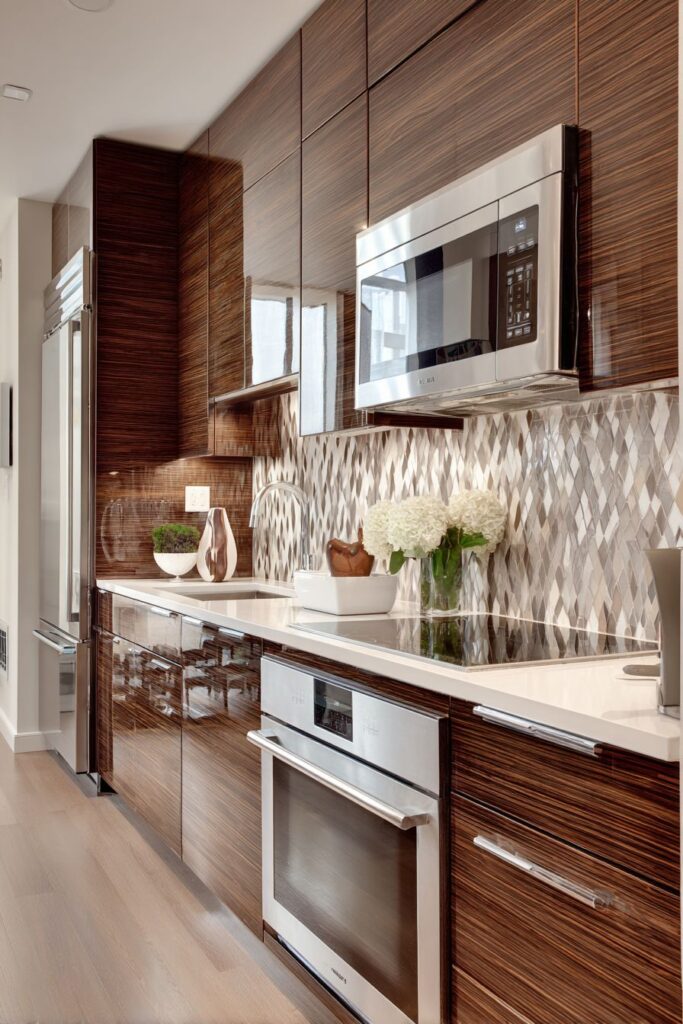
Contemporary brown kitchen design reaches new heights with flat-panel cabinetry in rich mahogany featuring horizontal wood grain patterns that create clean, sophisticated lines throughout the space. The natural beauty of mahogany provides depth and richness that traditional materials cannot match, while the flat-panel construction keeps the design firmly rooted in modern aesthetics. Quartz countertops in warm brown with subtle veining complement the cabinetry while providing durable, low-maintenance work surfaces.
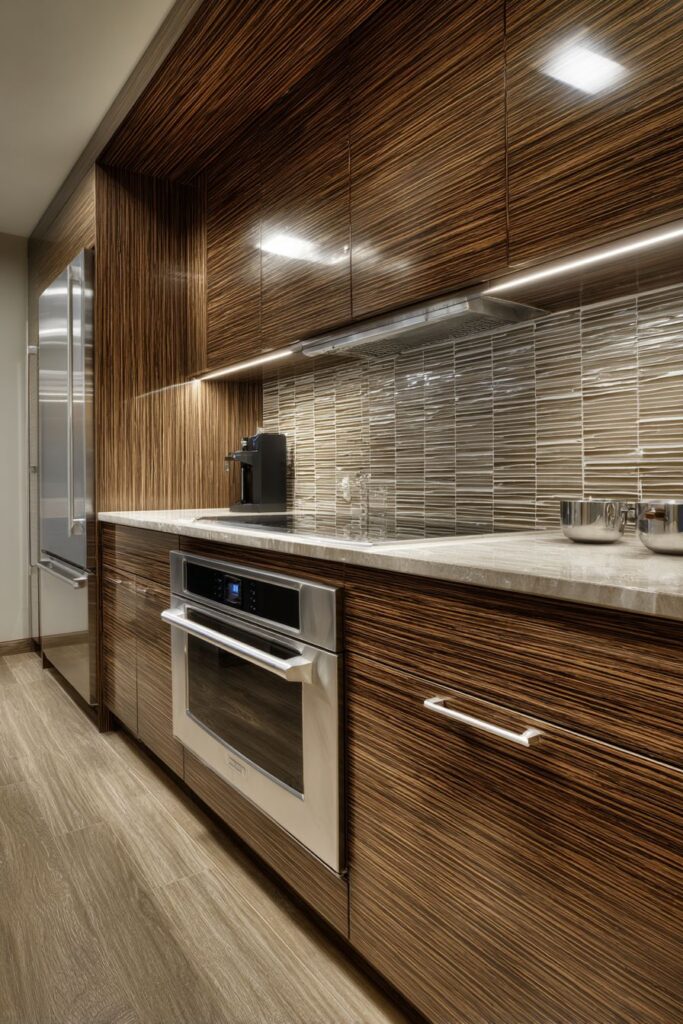
Stainless steel appliances provide contemporary contrast that prevents the brown palette from feeling too traditional or rustic. The geometric tile backsplash introduces pattern and visual interest through varying brown tones arranged in contemporary configurations. This approach demonstrates how brown kitchens can embrace modern design principles while maintaining warmth and sophistication.
Soft under-cabinet lighting emphasizes the beautiful wood grain details in the mahogany cabinetry, creating subtle shadows and highlights that change throughout the day. The careful balance of artificial and natural lighting ensures that the brown surfaces are always presented at their best while providing adequate illumination for cooking and food preparation tasks.
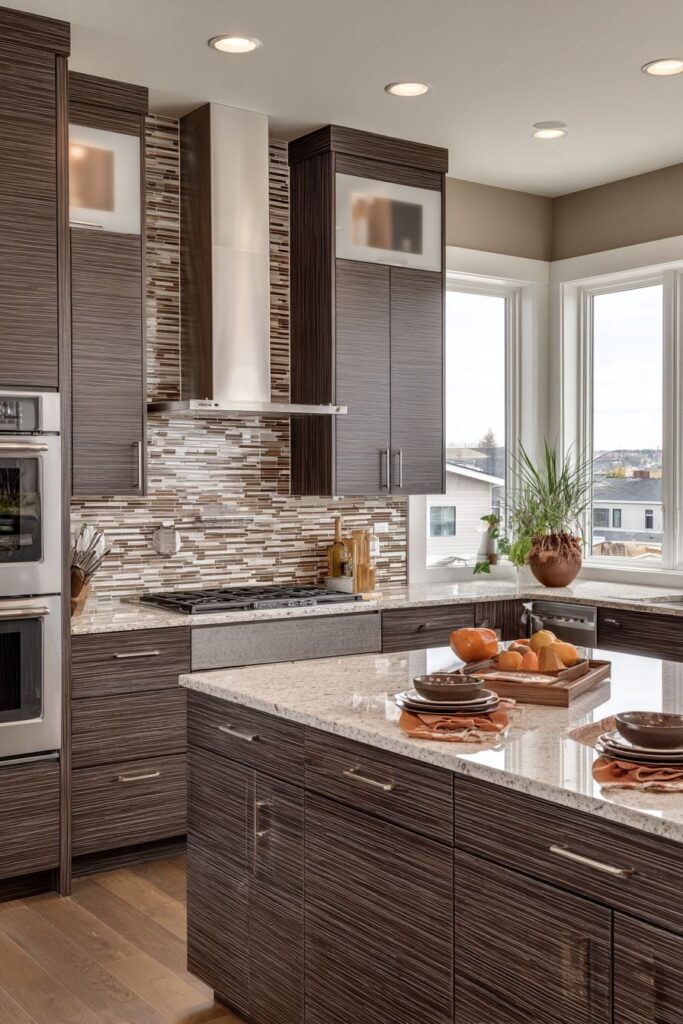
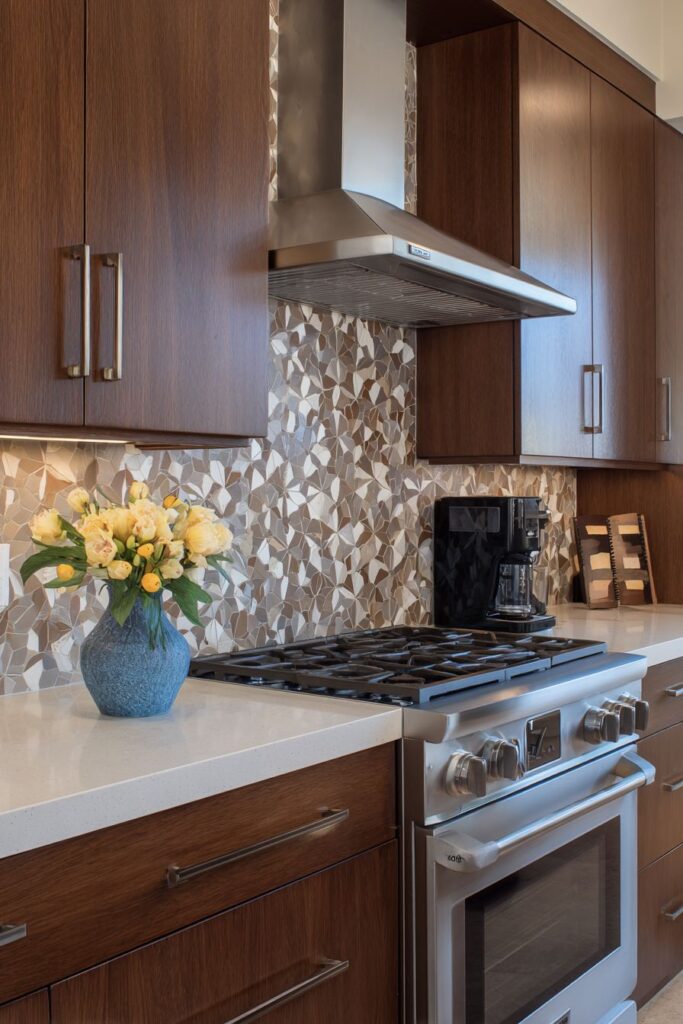
Key Design Tips:
- Choose mahogany for its rich color and distinctive grain patterns
- Use geometric patterns in backsplashes to add contemporary interest
- Include stainless steel appliances for modern contrast
- Install under-cabinet lighting to highlight wood grain details
- Select quartz countertops for durability and consistent brown tones
7. Organized Pantry with Dark Walnut Systems
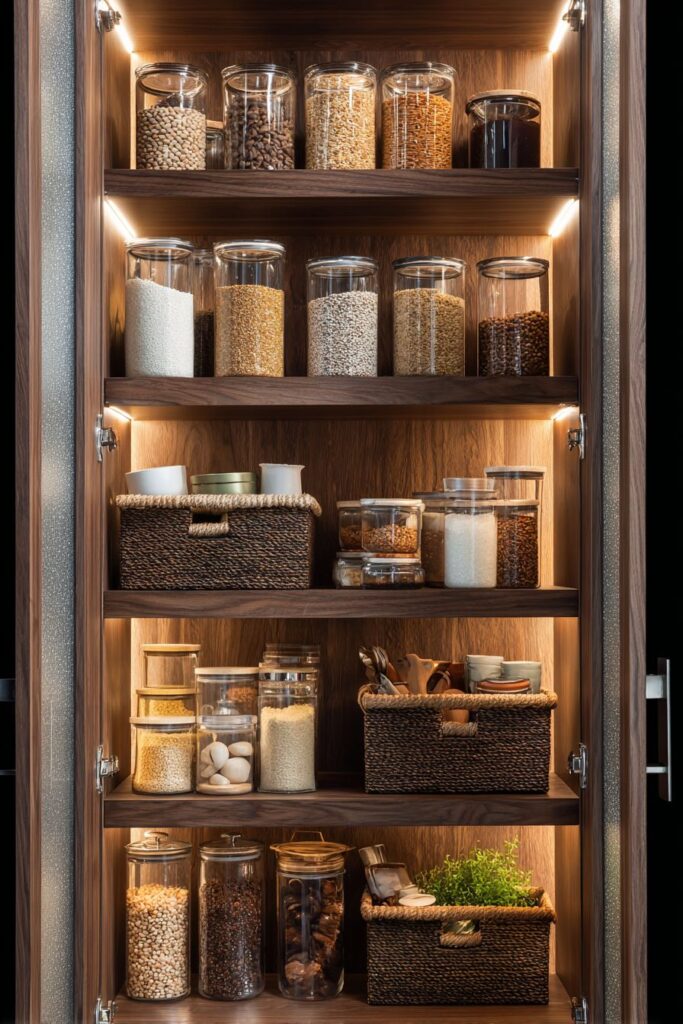
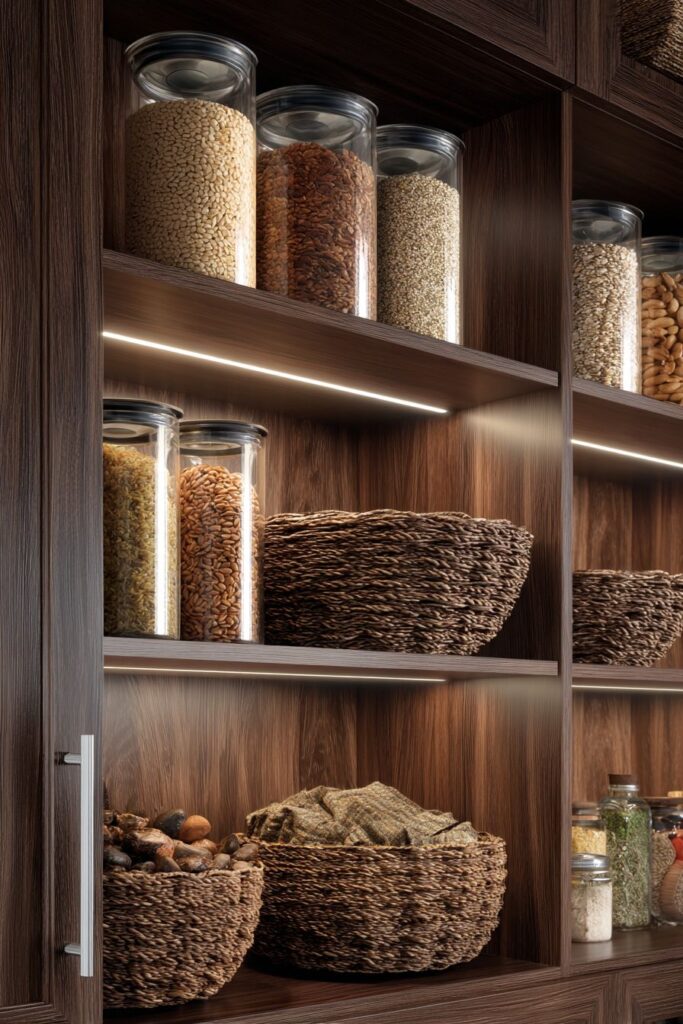
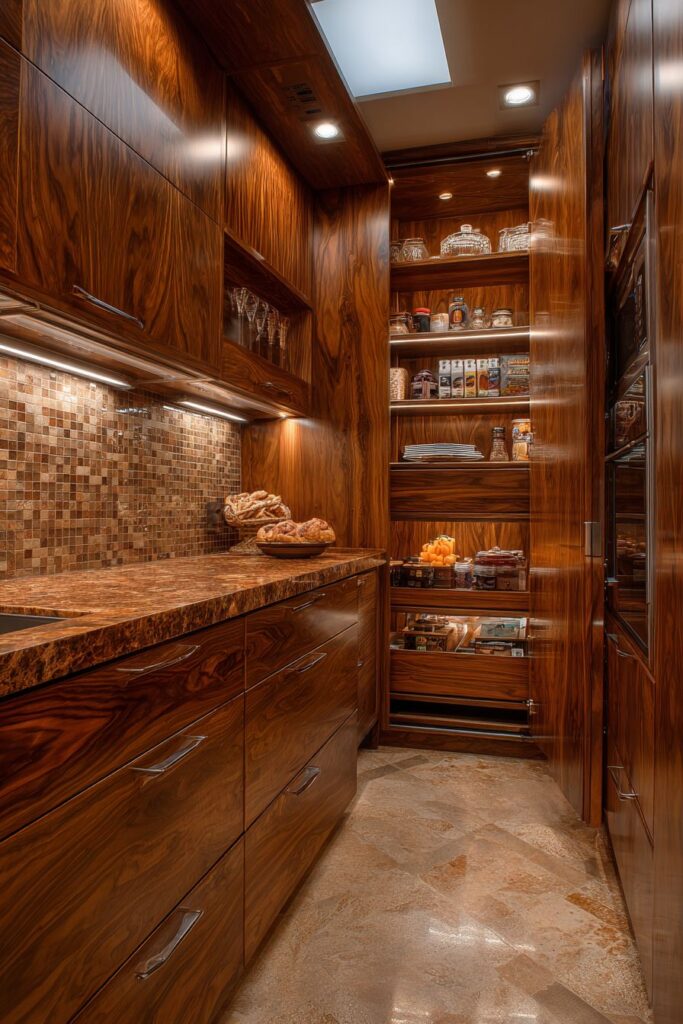
The brown kitchen pantry represents the perfect marriage of form and function, featuring custom built-in shelving in dark walnut finish that creates an organized storage system worthy of display. Glass containers showcasing various grains and spices transform everyday ingredients into decorative elements that contribute to the overall brown color scheme. Woven baskets in natural brown tones provide flexible storage solutions while adding texture and organic appeal to the highly organized space.
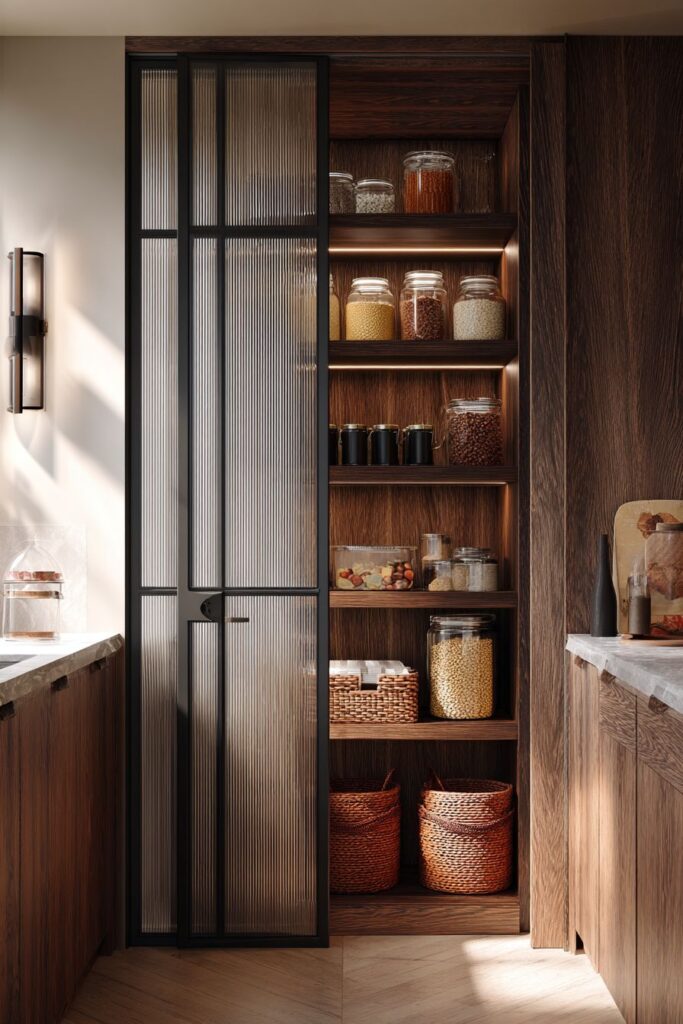
The frosted glass panels in bronze frames on the pantry door create visual interest while maintaining some mystery about the contents within. This approach allows the pantry to feel integrated with the kitchen while preventing the storage area from becoming overwhelming when viewed from the main cooking space. LED strip lighting illuminates each shelf level, ensuring that stored items are easily visible while creating a warm, inviting glow.
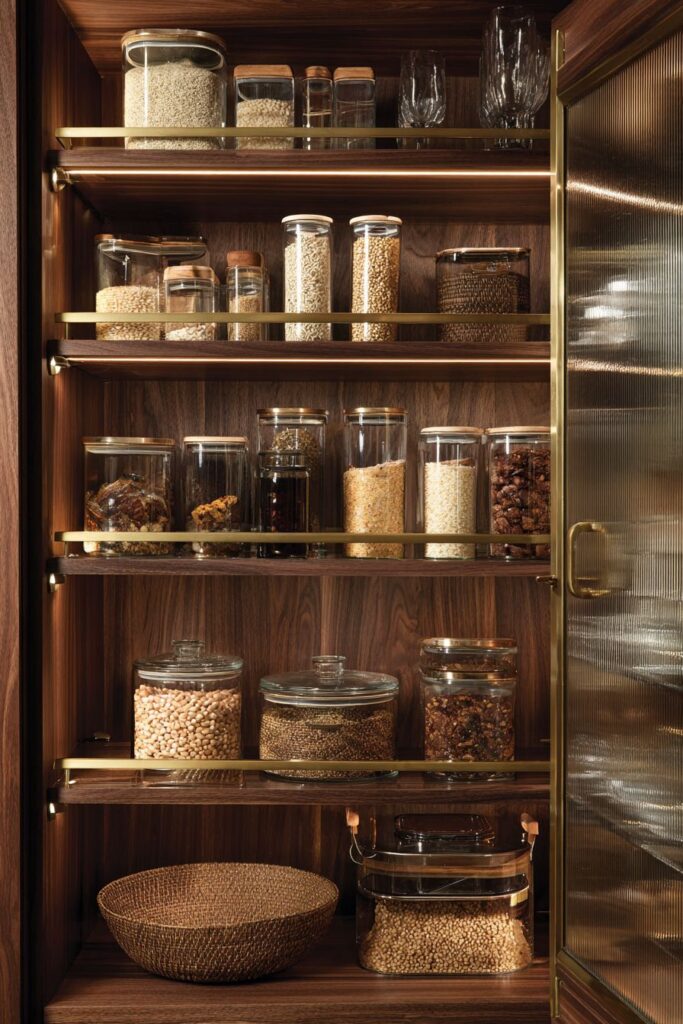
The attention to organizational details demonstrates how brown kitchen design can extend beyond the main cooking area to create cohesive storage solutions throughout the space. The consistent use of walnut finish and brown-toned accessories ensures that even utilitarian areas contribute to the overall design aesthetic.
Key Design Tips:
- Use glass containers to display ingredients as decorative elements
- Choose woven baskets that complement the wood finish tones
- Install LED strip lighting for both function and atmosphere
- Select frosted glass doors to maintain visual connection while hiding clutter
- Organize items by color to reinforce the brown palette theme
8. Artisan Ceramic Tile Backsplash
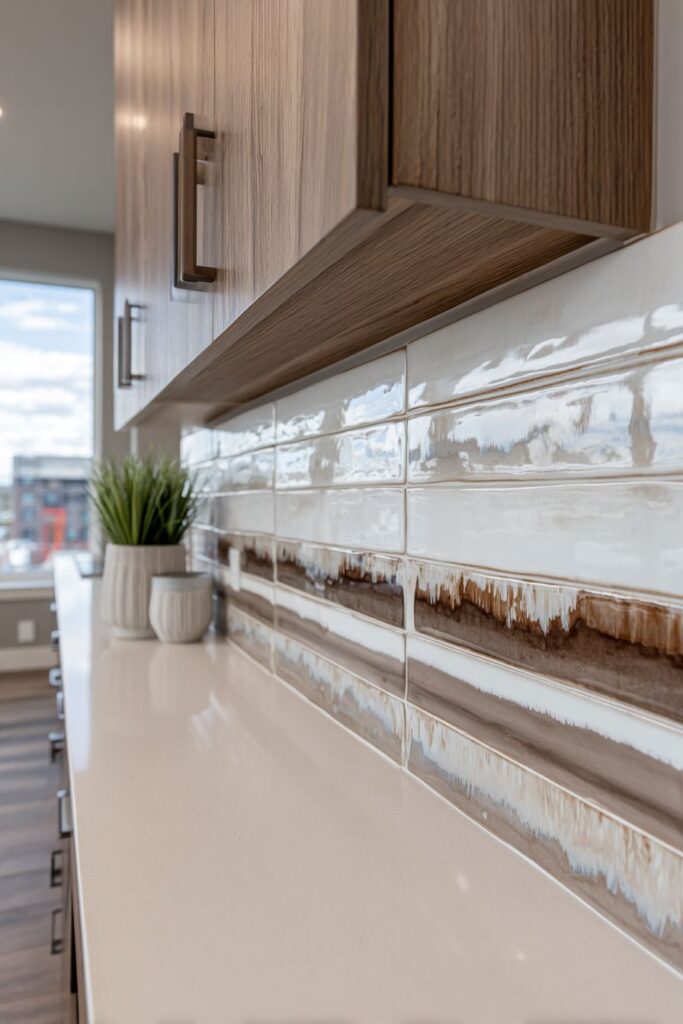
The handmade ceramic tile backsplash becomes a work of art in this brown kitchen design, featuring tiles in varying shades from warm caramel to deep chocolate that showcase the natural variations inherent in artisan craftsmanship. Each tile displays subtle texture variations and color gradients that cannot be replicated by machine-made alternatives, creating a backsplash that serves as a focal point while complementing the surrounding brown cabinetry in medium oak finish.
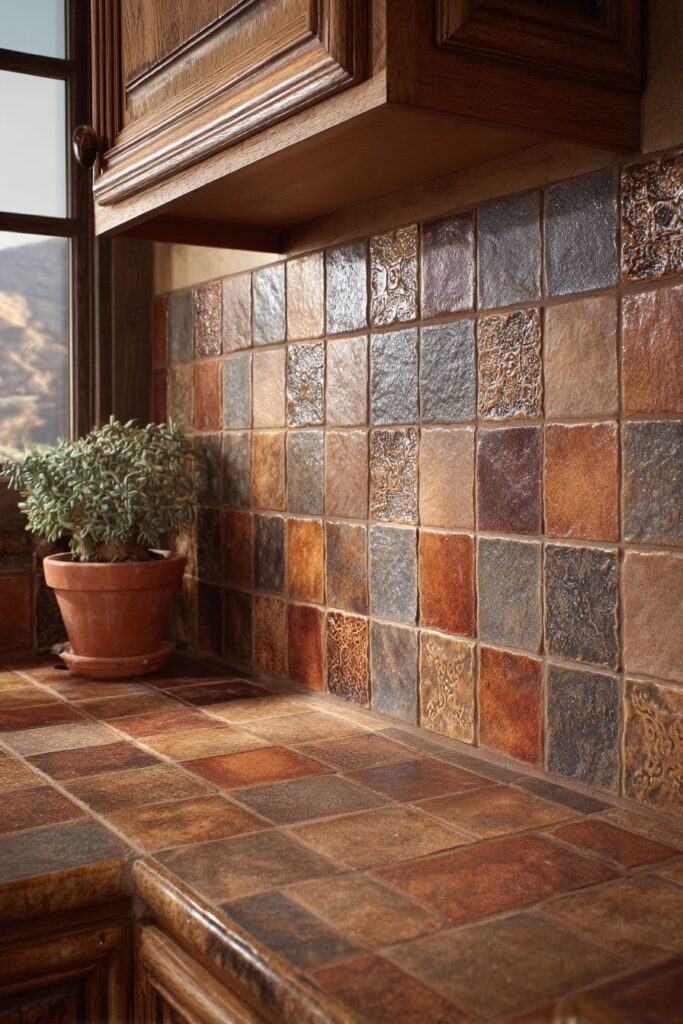
Natural lighting from nearby windows highlights the three-dimensional qualities of the handmade tiles, creating shadows and highlights that change throughout the day. The organic variations in color and texture ensure that the backsplash never appears monotonous, while the consistent brown palette maintains harmony with the overall kitchen design. The medium oak cabinetry provides the perfect frame for this artistic element, allowing the tile work to shine while maintaining cohesive color relationships.
The investment in handmade materials demonstrates a commitment to quality and authenticity that elevates the entire kitchen design. These artisan tiles develop additional character over time as they acquire a patina from daily use, making them even more beautiful and unique as the years pass.
Key Design Tips:
- Invest in handmade tiles for authentic texture and color variations
- Position windows to highlight tile texture details with natural light
- Choose cabinet finishes that frame rather than compete with tile work
- Select tiles with subtle variations to maintain visual interest
- Consider the long-term patina development of natural materials
9. Traditional Shaker Style in Warm Chestnut
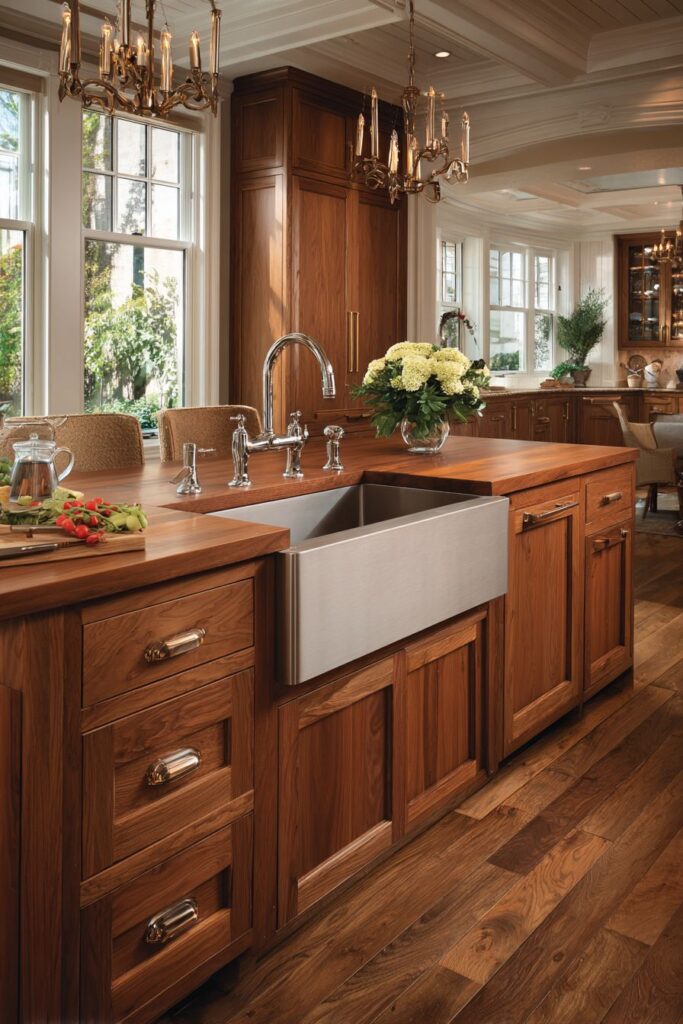
The transitional brown kitchen achieves timeless appeal through Shaker-style cabinetry in warm chestnut finish, where traditional raised panel doors and antique bronze hardware create a design that bridges classic and contemporary aesthetics. The kitchen island incorporates practical elements like a prep sink and storage drawers with soft-close mechanisms, demonstrating how traditional styling can accommodate modern conveniences without compromising design integrity.
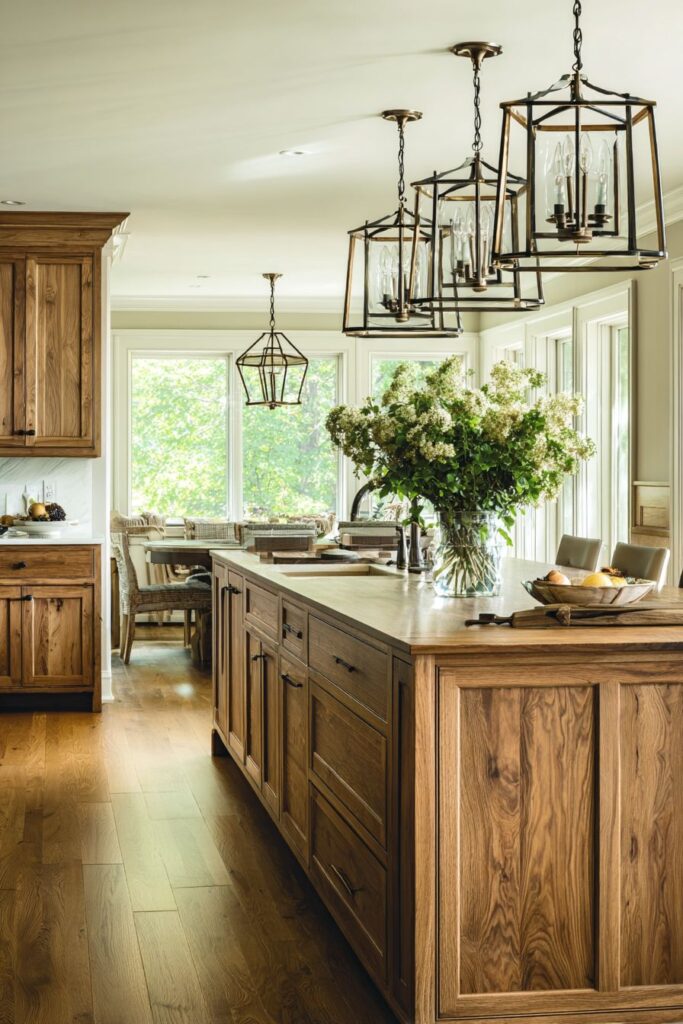
Hardwood flooring in matching brown tones creates continuity throughout the space, ensuring that the kitchen feels integrated with adjacent living areas while maintaining its own distinct character. The consistent brown color palette from floor to ceiling creates a cocoon-like atmosphere that feels both sophisticated and welcoming. Chandeliers with bronze finish provide ambient lighting that enhances the traditional aesthetic while ensuring adequate illumination for cooking and dining activities.
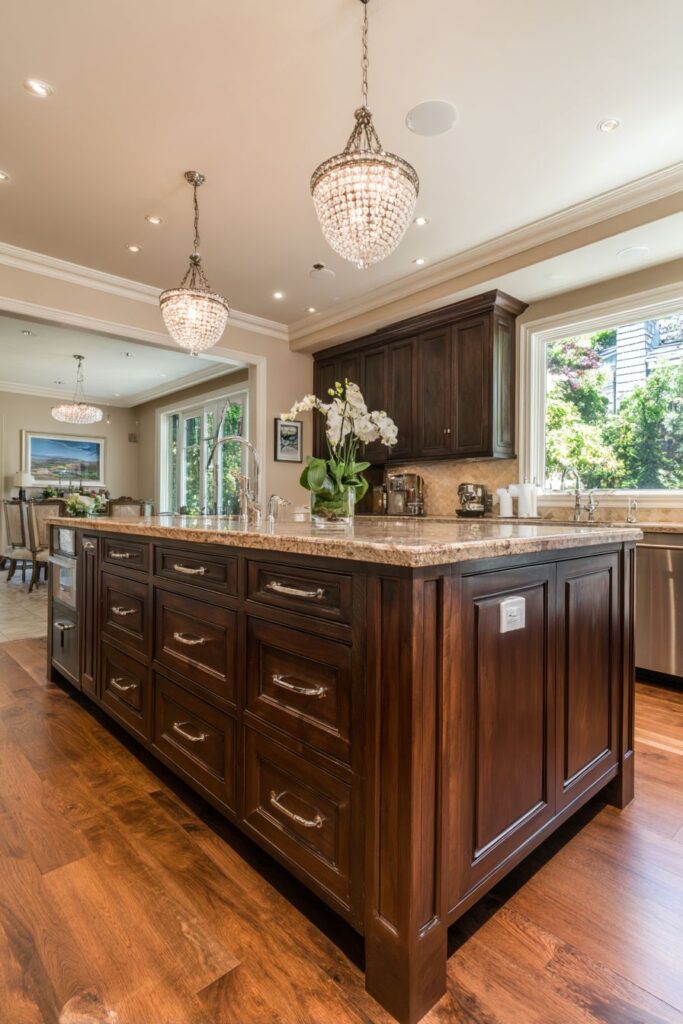
The wide-angle perspective reveals how traditional brown kitchen elements can create functional layouts that serve modern lifestyles while maintaining classic appeal. The raised panel doors and traditional hardware details add texture and visual interest that reward close inspection while contributing to the overall sense of quality and craftsmanship.
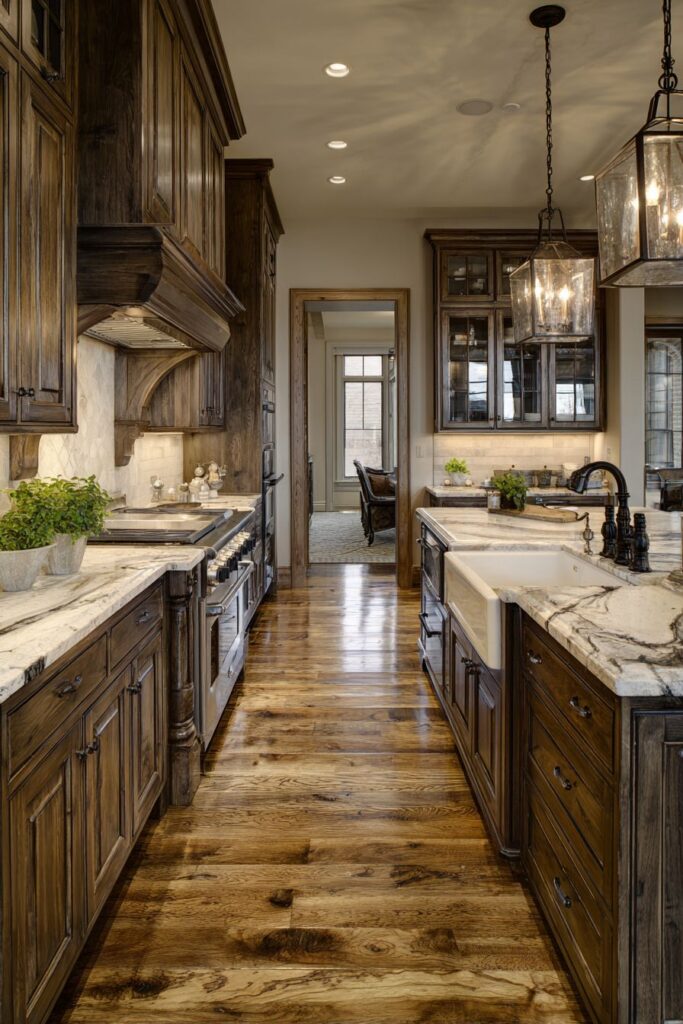
Key Design Tips:
- Choose Shaker-style doors for timeless appeal that transcends trends
- Match flooring tones to cabinetry for visual continuity
- Include practical modern conveniences like soft-close mechanisms
- Use bronze hardware consistently throughout for cohesive metallic accents
- Select traditional lighting fixtures that complement cabinet styling
10. Dedicated Coffee Station Integration
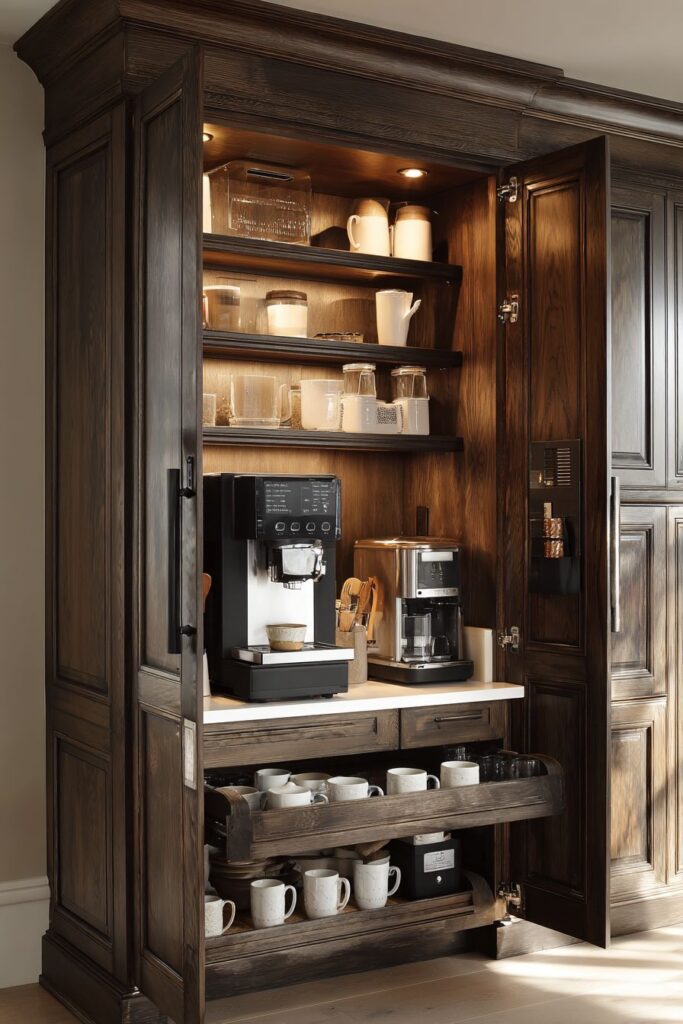
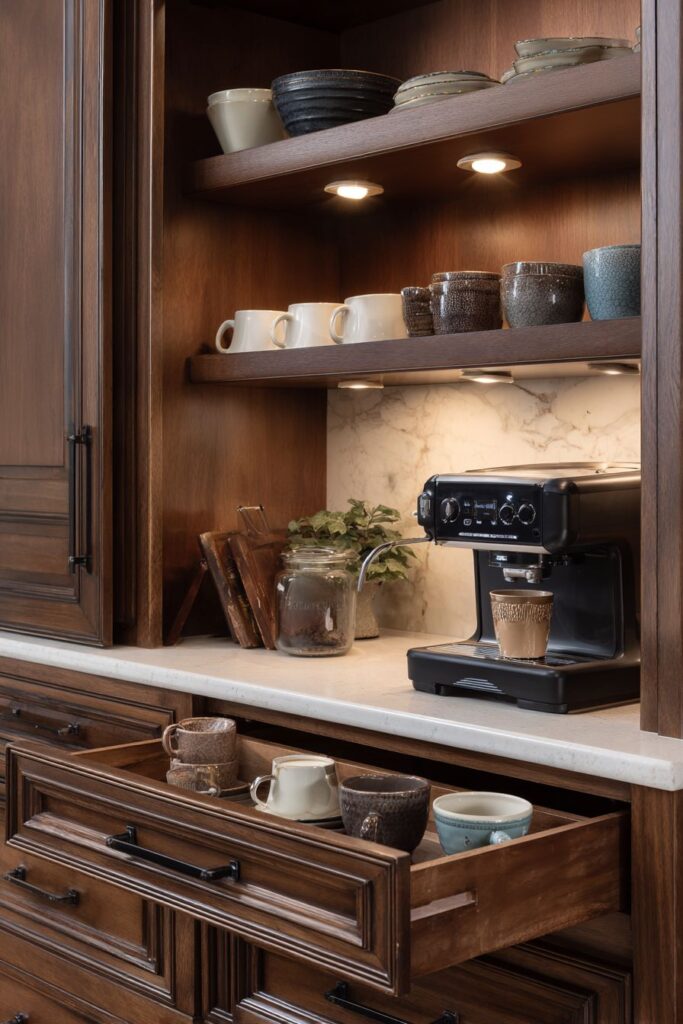
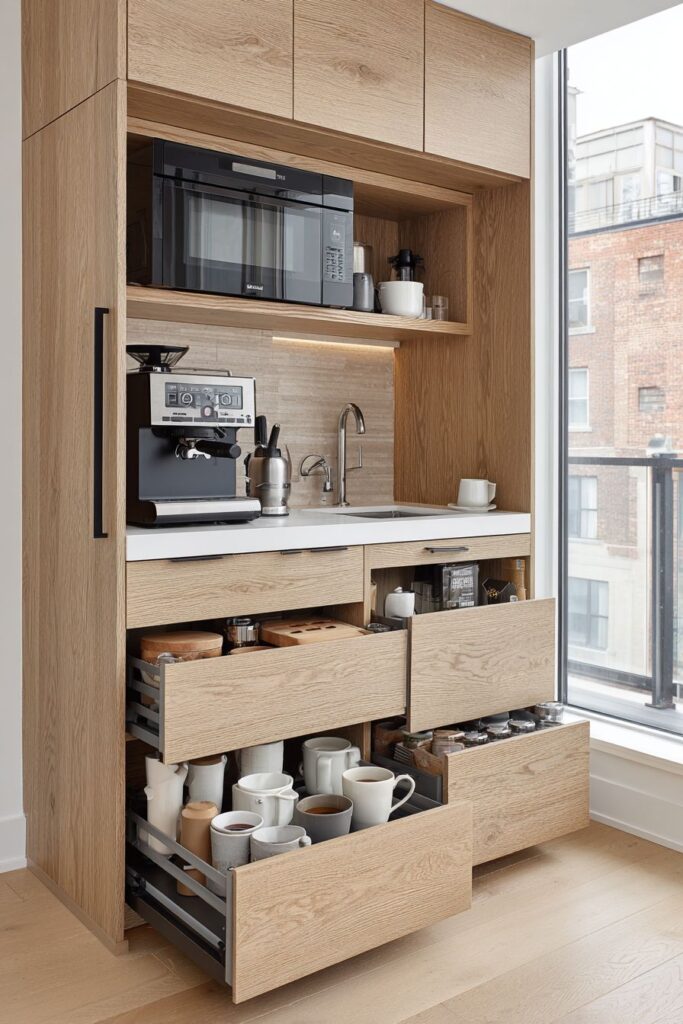
The brown kitchen coffee station represents the perfect integration of lifestyle and design, featuring custom cabinetry with pull-out drawers specifically designed for coffee supplies and a dedicated nook for espresso machine placement. The surrounding brown cabinets showcase rich cognac staining with visible wood grain patterns that create visual warmth and sophistication. Open shelving displays coffee mugs and accessories in complementary brown and cream tones, turning everyday items into decorative elements.
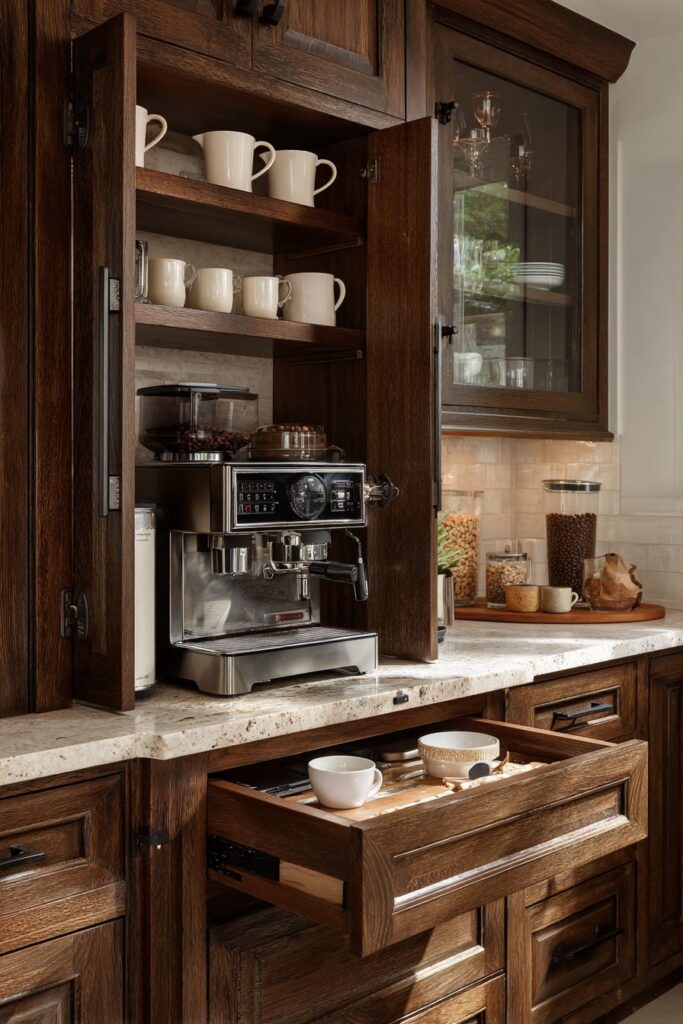
Task lighting illuminates the coffee preparation area, ensuring that morning routines are both functional and pleasant. The dedicated workspace demonstrates how brown kitchen design can accommodate specific lifestyle needs while maintaining aesthetic coherence throughout the space. The integration of specialized storage solutions shows thoughtful planning that makes daily activities more enjoyable and efficient.
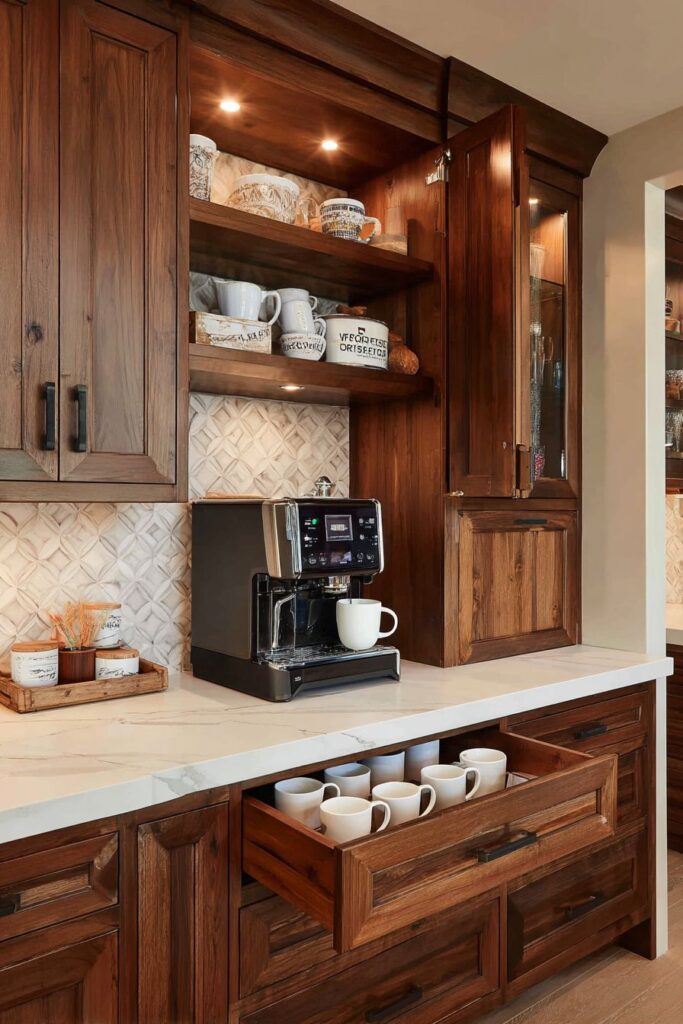
The coffee station area serves as a perfect example of how brown kitchens can incorporate contemporary lifestyle elements without compromising traditional warmth and character. The rich cognac staining provides depth and sophistication while the practical organization solutions ensure that the space functions beautifully for daily use.
Key Design Tips:
- Design specialized storage for coffee supplies and equipment
- Use open shelving to display attractive coffee accessories
- Include dedicated task lighting for functional work areas
- Choose cognac staining to highlight natural wood grain patterns
- Organize displays to reinforce the brown and cream color palette
11. Cathedral-Style Cabinet Doors in Deep Walnut
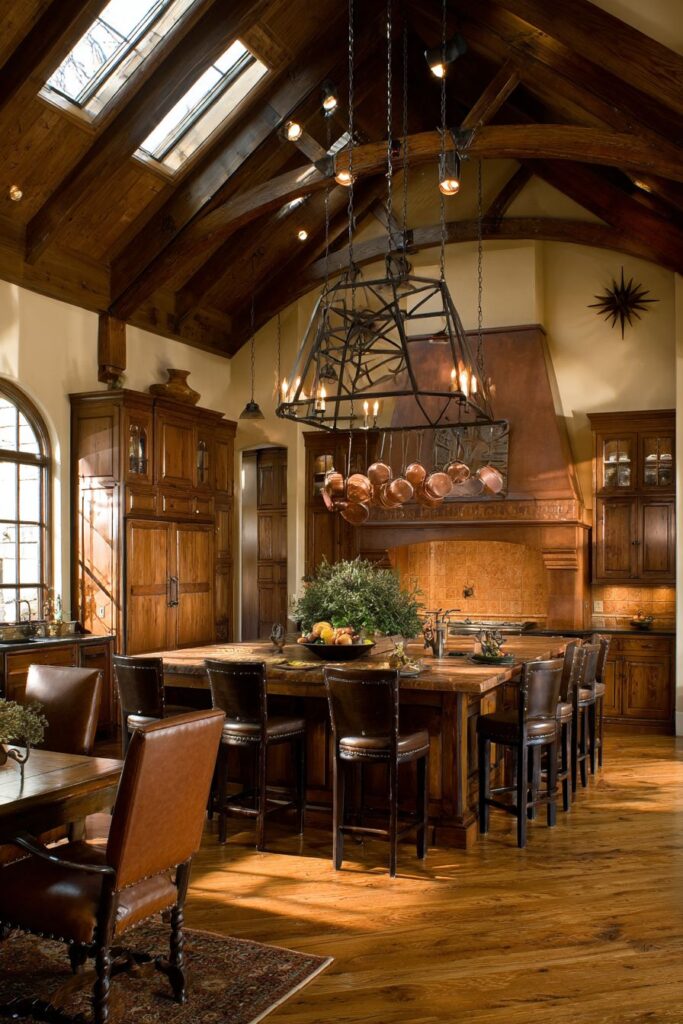
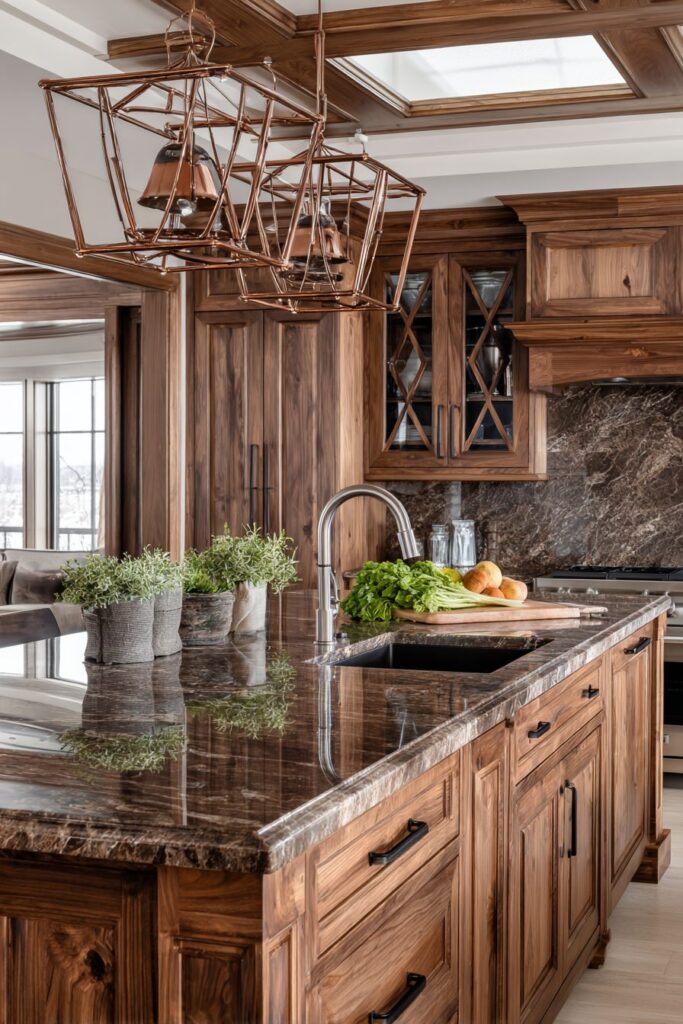
The architectural drama of cathedral-style cabinet doors in deep walnut showcases the natural wood’s distinctive grain patterns and knots, creating a brown kitchen design that celebrates the inherent beauty of premium wood materials. The large prep island features brown granite countertops and a dedicated vegetable sink, demonstrating how functional elements can be integrated into sophisticated design schemes. A suspended copper pot rack adds metallic warmth to the brown palette while providing practical storage for frequently used cookware.
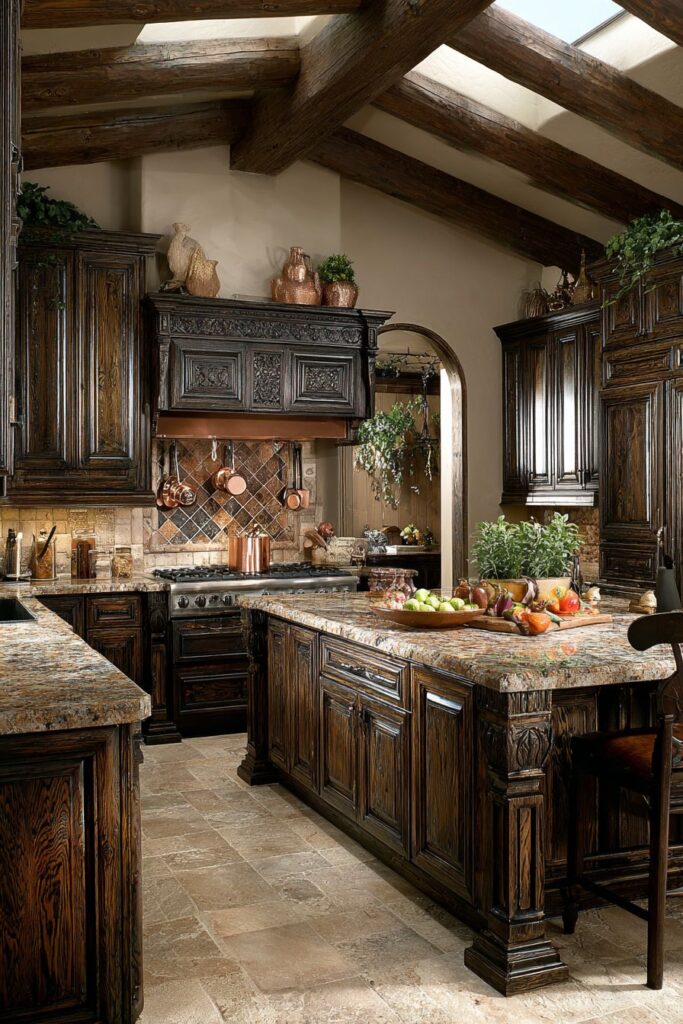
Natural lighting from skylights creates dramatic illumination that highlights the rich brown wood textures throughout the day, transforming the kitchen’s appearance from morning to evening. The interplay between natural and artificial lighting ensures that the beautiful wood grain patterns are always displayed to their best advantage. The cathedral-style doors create vertical emphasis that draws the eye upward while showcasing the premium quality of the walnut material.
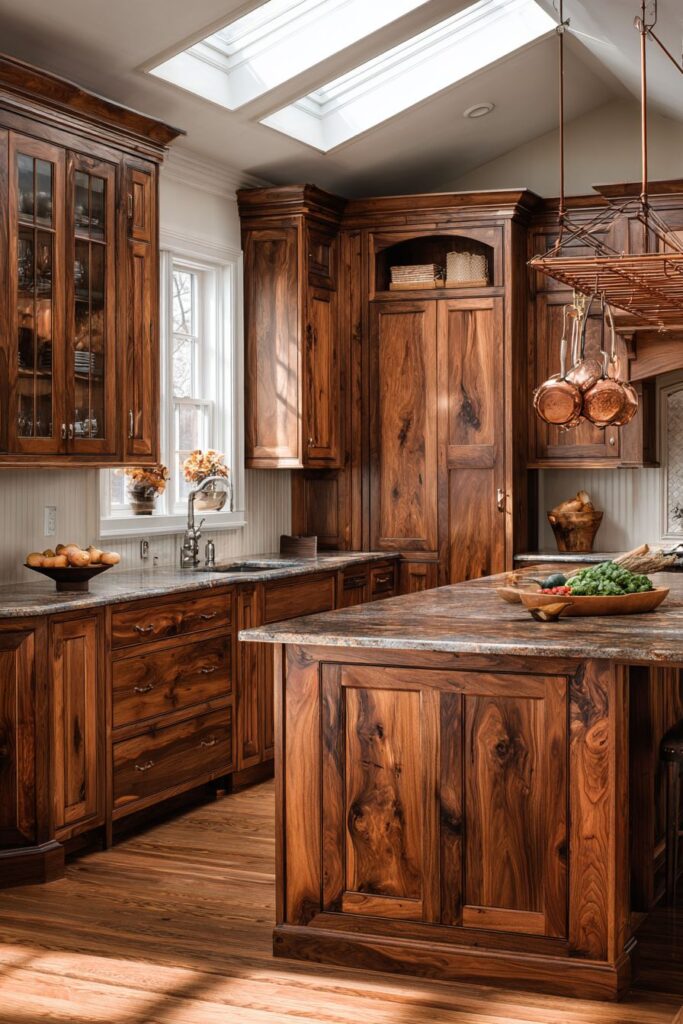
The combination of functional elements like the prep sink and pot rack with premium materials like deep walnut and brown granite demonstrates how brown kitchens can achieve both beauty and practicality. The consistent brown palette unifies all elements while different textures and materials prevent monotony.
Key Design Tips:
- Choose cathedral-style doors to showcase premium wood grain patterns
- Include skylights to create dramatic natural lighting effects
- Use copper accessories to add warmth and metallic accents
- Select granite countertops that complement wood cabinetry tones
- Plan multiple prep areas for enhanced functionality
12. Compact Galley Design with Floor-to-Ceiling Storage
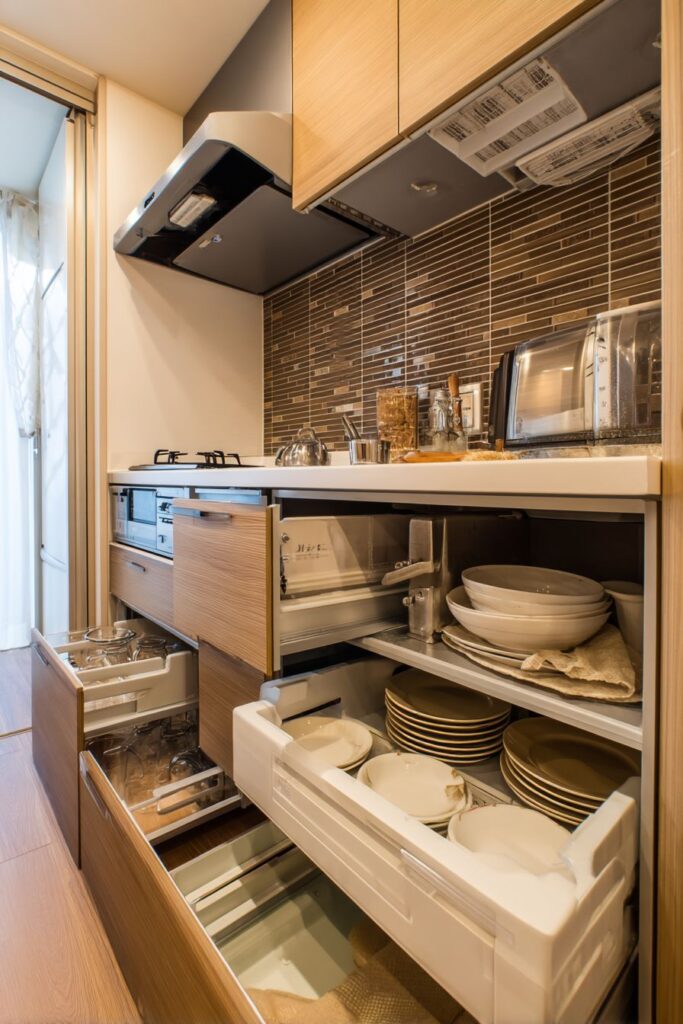
The compact brown kitchen maximizes every inch of available space through floor-to-ceiling cabinetry in honey oak finish, demonstrating how smaller kitchens can achieve impressive storage capacity without sacrificing style. The galley layout efficiently organizes workflow while brown laminate countertops with wood-grain texture provide durable work surfaces that complement the natural wood cabinetry. A neutral brown tile backsplash maintains color consistency while adding subtle pattern and texture.
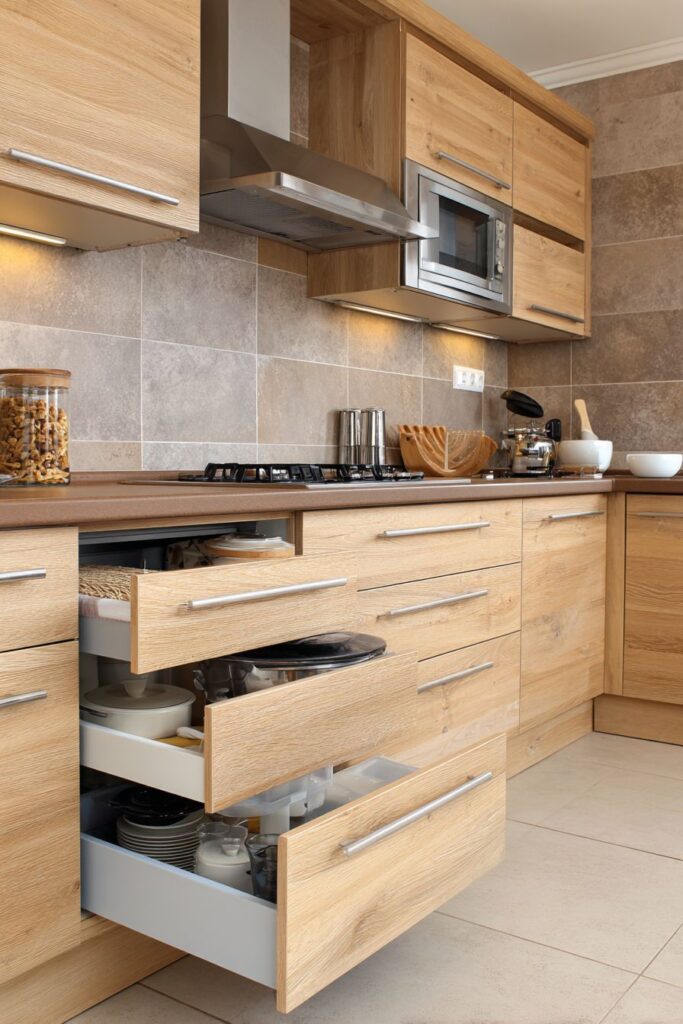
Under-cabinet lighting illuminates work surfaces while maintaining the warm brown atmosphere that makes the compact space feel welcoming rather than cramped. Space-efficient design features include pull-out drawers and corner storage solutions that maximize accessibility and organization. The consistent brown color palette creates visual continuity that makes the space appear larger than its actual dimensions.
This design demonstrates how brown kitchen aesthetics can work beautifully in smaller spaces when thoughtful planning prioritizes both storage and style. The honey oak finish provides warmth without overwhelming the compact dimensions, while practical storage solutions ensure that every item has its place.
Key Design Tips:
- Use floor-to-ceiling storage to maximize capacity in compact spaces
- Choose lighter brown tones like honey oak to prevent overwhelming small areas
- Include under-cabinet lighting to brighten work surfaces
- Select laminate countertops with wood-grain texture for durability
- Incorporate pull-out storage solutions for better accessibility
13. Farmhouse Dining Integration with Reclaimed Wood
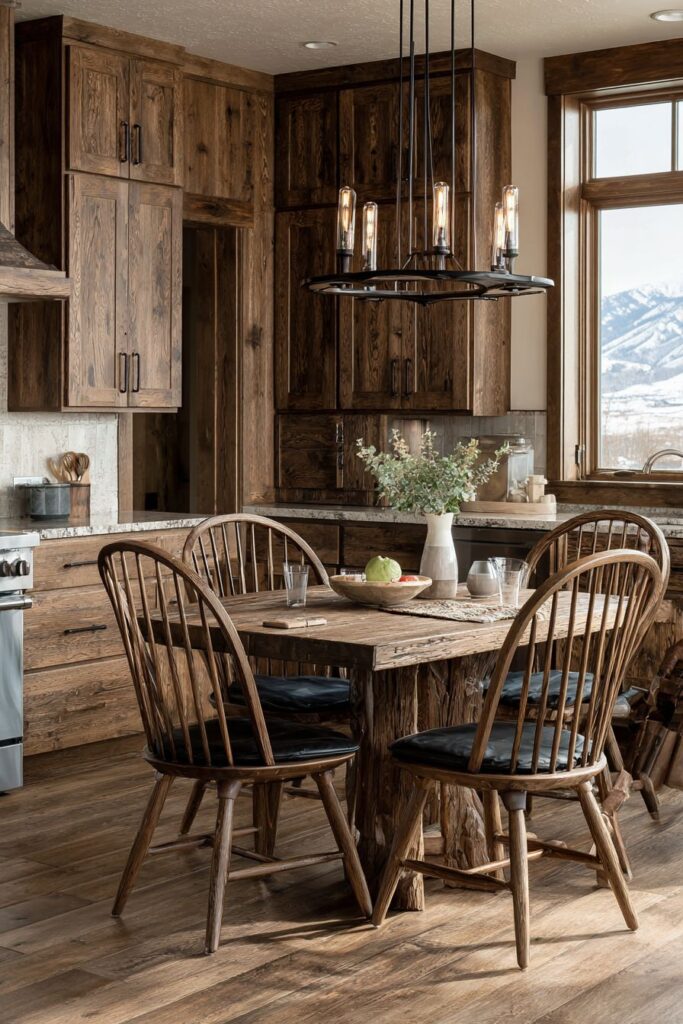
The farmhouse table with thick planked top in reclaimed brown wood becomes the heart of this integrated dining and kitchen design, featuring visible wear patterns and natural imperfections that tell the story of the wood’s previous life. Windsor chairs in matching brown finish create seating that complements both the table and surrounding brown kitchen cabinetry. The rustic chandelier with bronze finish provides ambient lighting that enhances the farmhouse aesthetic while maintaining consistency with other metallic accents throughout the space.
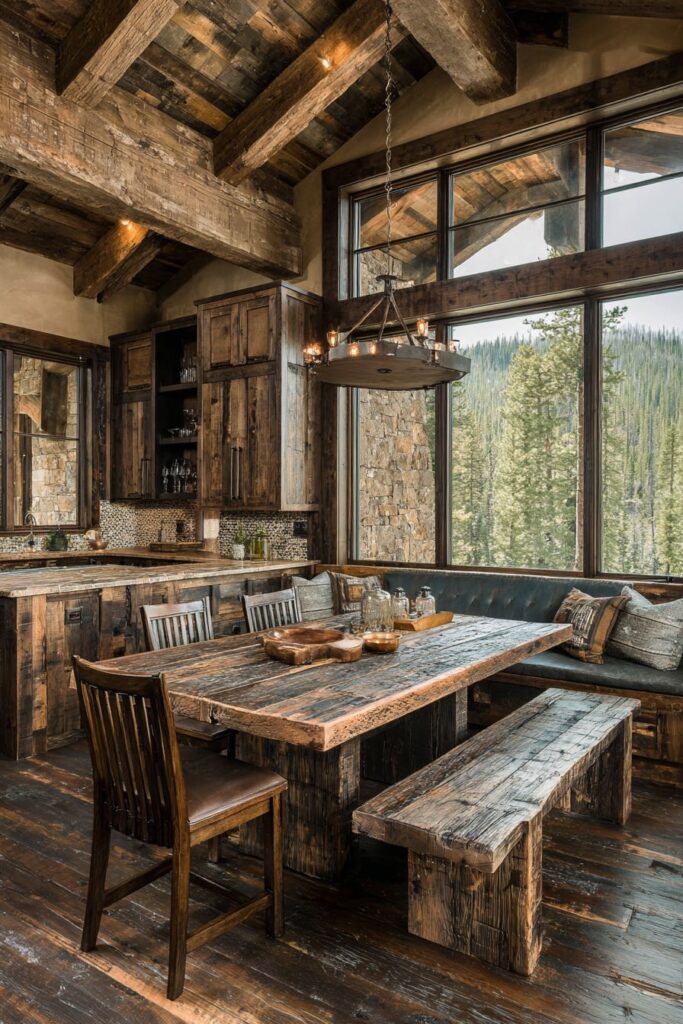
Natural window light creates warm shadows on the brown wood surfaces throughout the day, highlighting the authentic textures and lived-in quality that make reclaimed materials so appealing. The integration of dining and kitchen areas through consistent brown tones demonstrates how open floor plans can maintain distinct functional zones while creating visual harmony.
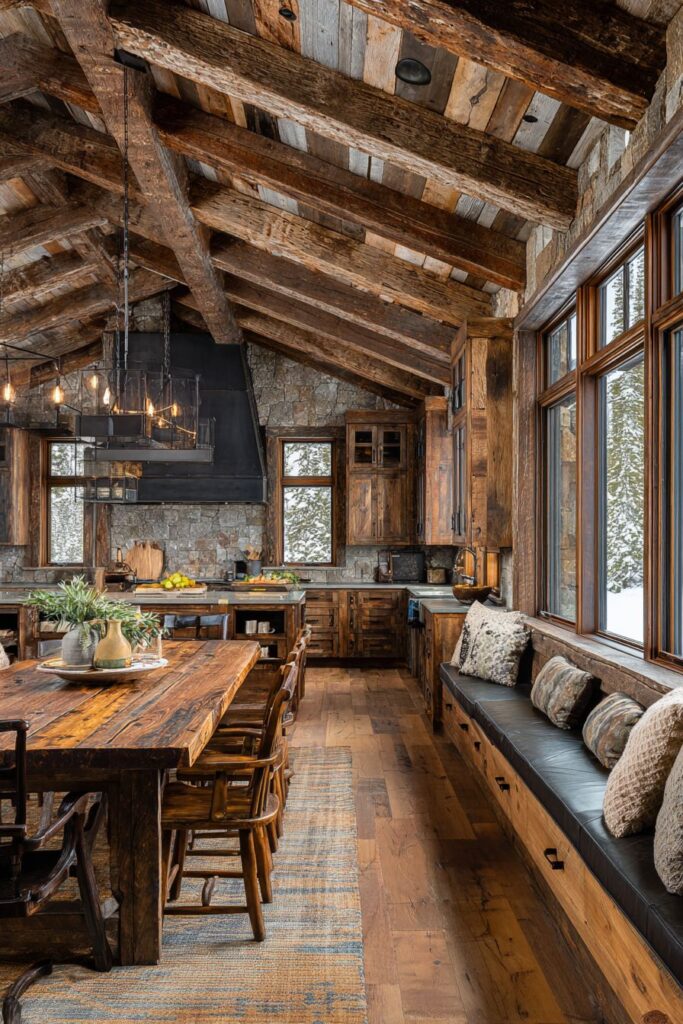
The authentic character of reclaimed materials adds instant history and warmth to the space, while the consistent brown palette ensures that all elements work together harmoniously. The varying textures and patinas of different wood elements create visual interest while maintaining overall cohesion through color consistency.
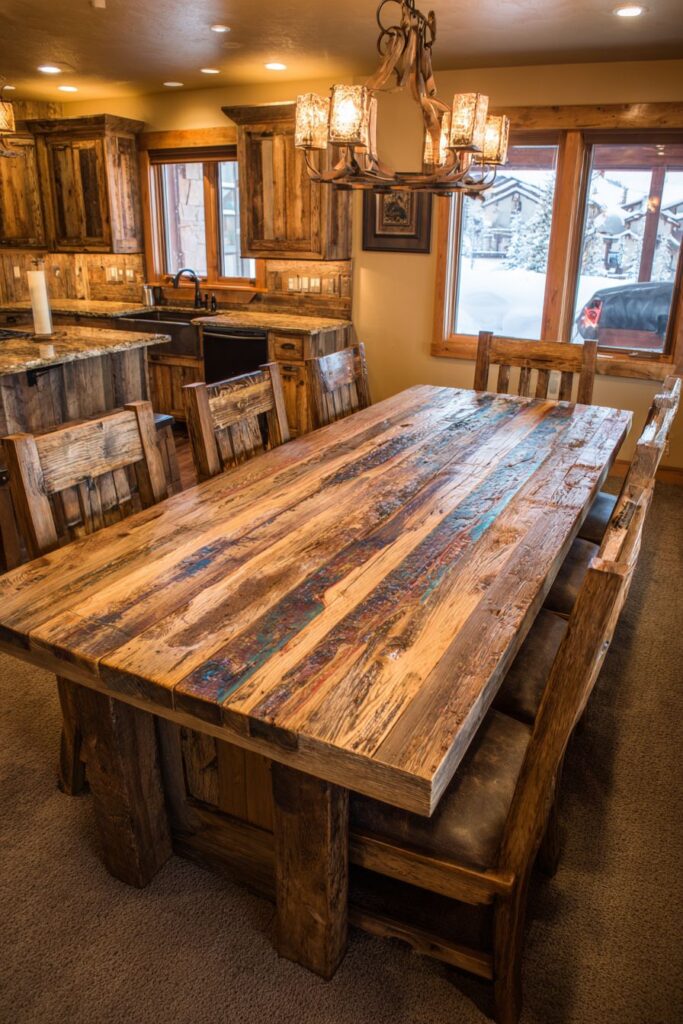
Key Design Tips:
- Choose reclaimed wood for authentic character and instant history
- Match dining furniture finishes to kitchen cabinetry tones
- Use natural light to highlight wood texture variations and patinas
- Select bronze lighting fixtures for consistent metallic accent themes
- Create visual flow between dining and kitchen areas through color consistency
14. Statement Range Hood in Custom Brown Wood
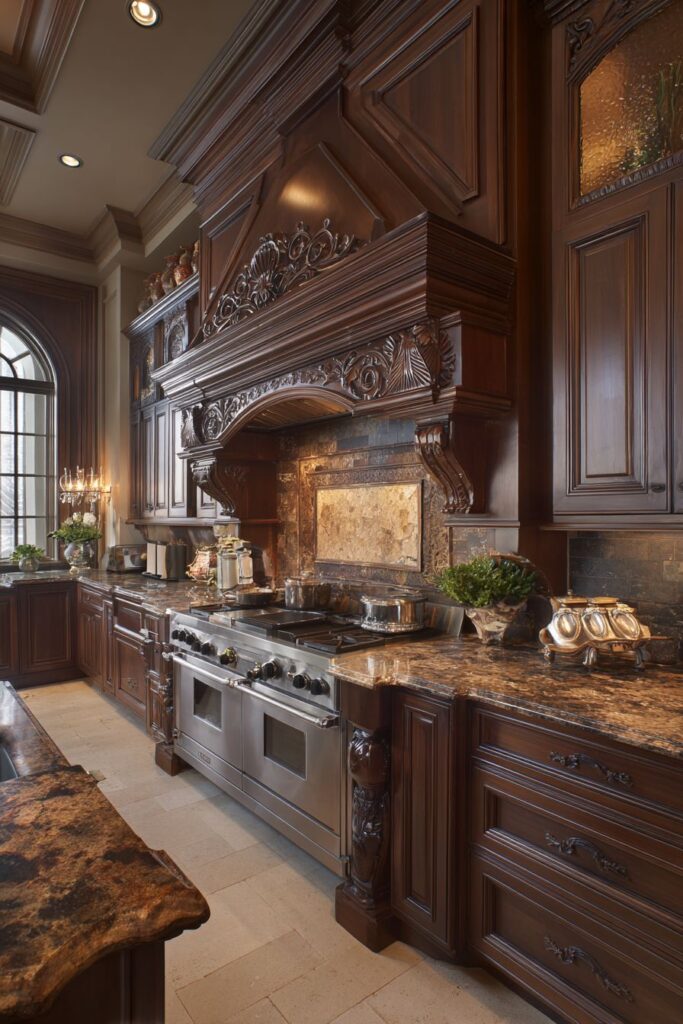
The statement range hood crafted from rich brown wood with decorative corbels and traditional detailing becomes the focal point of this sophisticated brown kitchen design. The surrounding cabinetry in matching brown stain creates visual continuity while allowing the custom range hood to command attention through its architectural presence. Brown and gold granite countertops complement the woodwork while professional-grade appliances provide modern functionality within the traditional aesthetic framework.
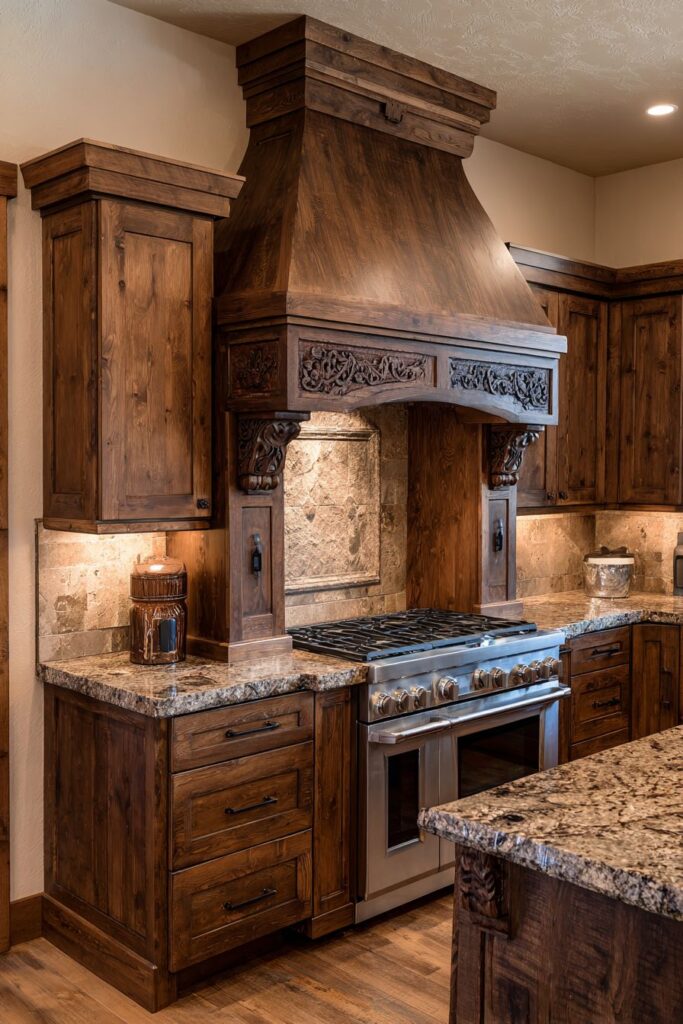
Balanced lighting showcases the custom brown woodwork details throughout the day, ensuring that the craftsmanship and design elements are always displayed to their best advantage. The integration of modern appliances within traditional cabinetry demonstrates how brown kitchens can accommodate contemporary functionality while maintaining classic appeal and sophisticated styling.
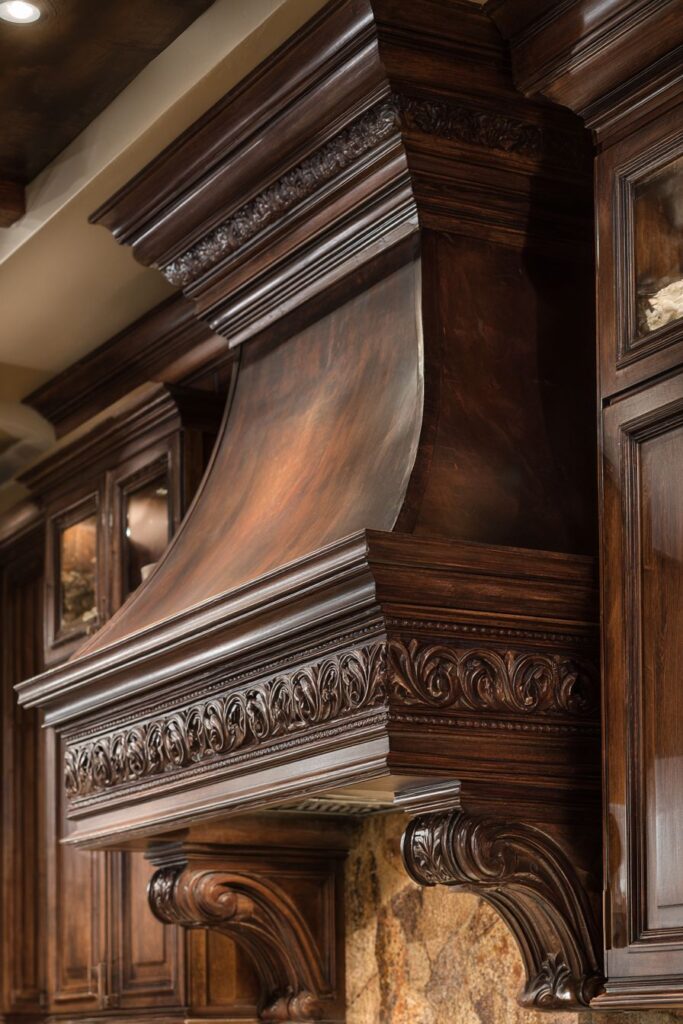
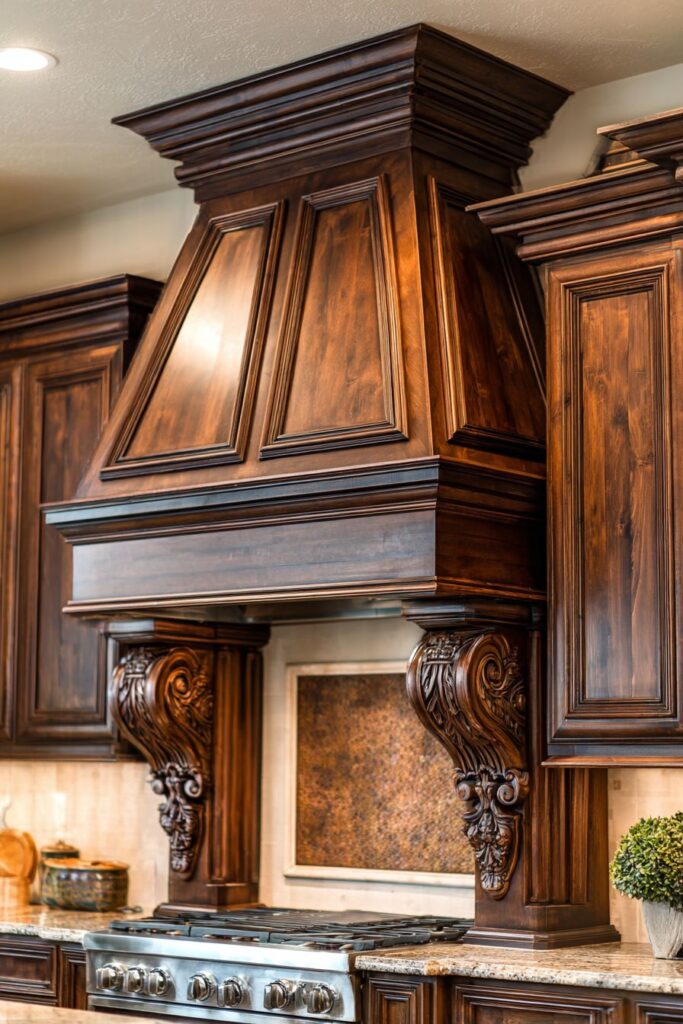
The custom range hood serves as architectural sculpture that elevates the entire kitchen design while providing essential ventilation functionality. The rich brown wood construction with traditional detailing creates a focal point that anchors the kitchen’s design while complementing all surrounding elements.
Key Design Tips:
- Design custom range hoods as architectural focal points
- Match hood wood finish to surrounding cabinetry for consistency
- Include traditional details like corbels for added visual interest
- Select granite countertops that complement wood tones
- Balance traditional elements with modern appliance functionality
15. Custom Window Treatments in Brown Linen
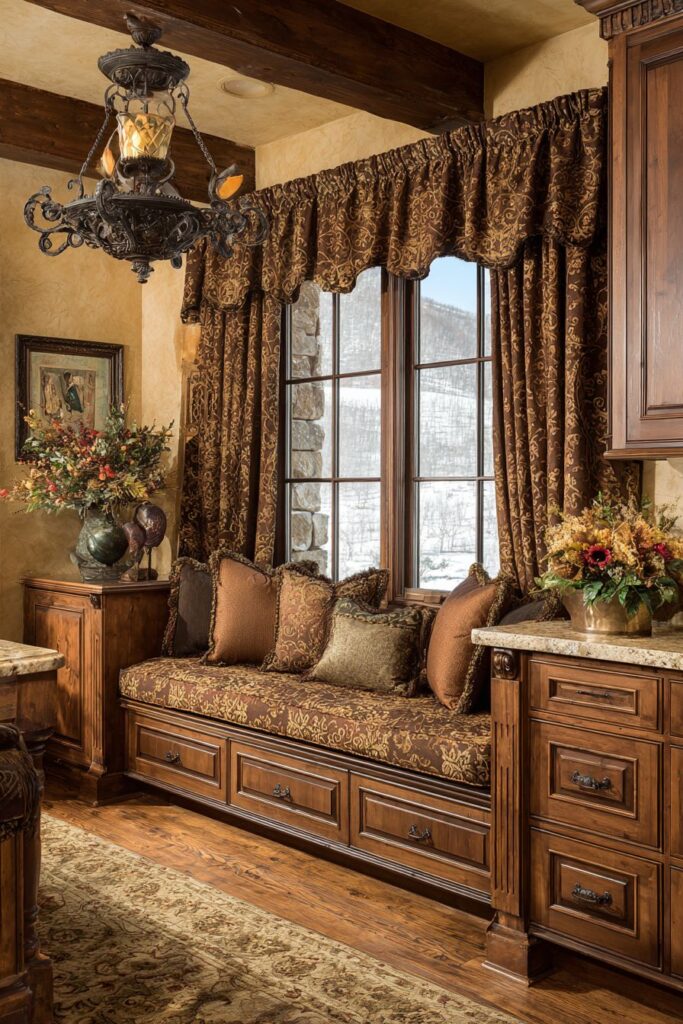
The window treatment area showcases custom valances in brown linen fabric with subtle texture weave patterns that filter natural light while maintaining privacy and style. The built-in window seat provides additional seating and storage beneath with brown-stained wood construction that matches surrounding kitchen cabinetry. Coordinating brown cushions create comfortable seating while reinforcing the overall color theme throughout the space.
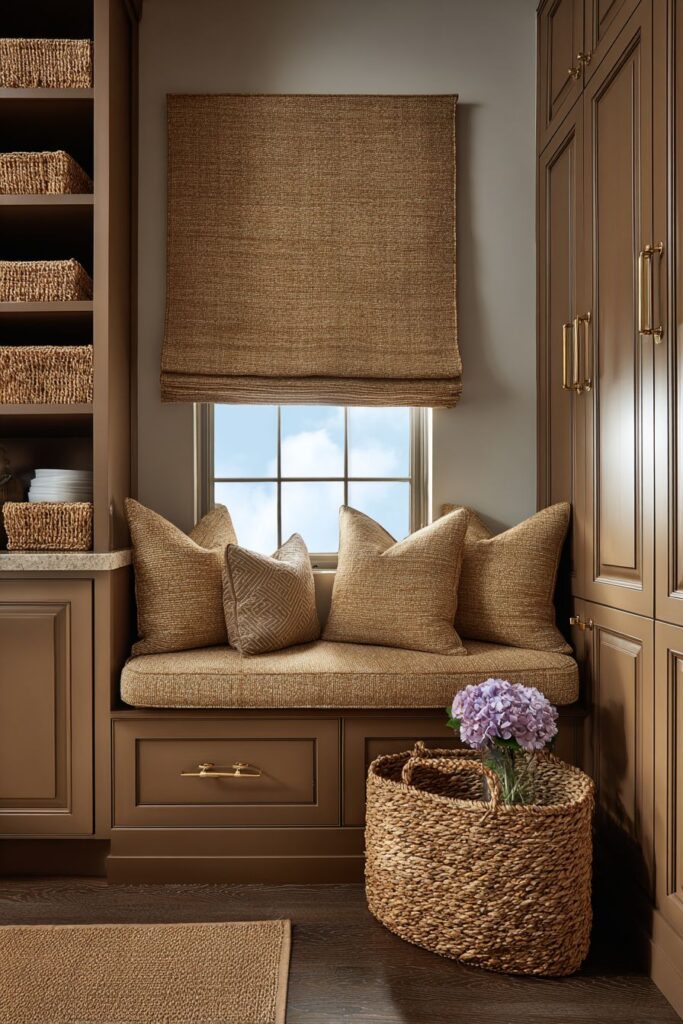
Natural light filtering through the brown fabric creates warm, diffused illumination that enhances the cozy atmosphere of the kitchen while providing functional light for daily activities. The consistent brown color palette from cabinetry to window treatments creates visual harmony while different textures prevent the design from becoming monotonous or overwhelming.
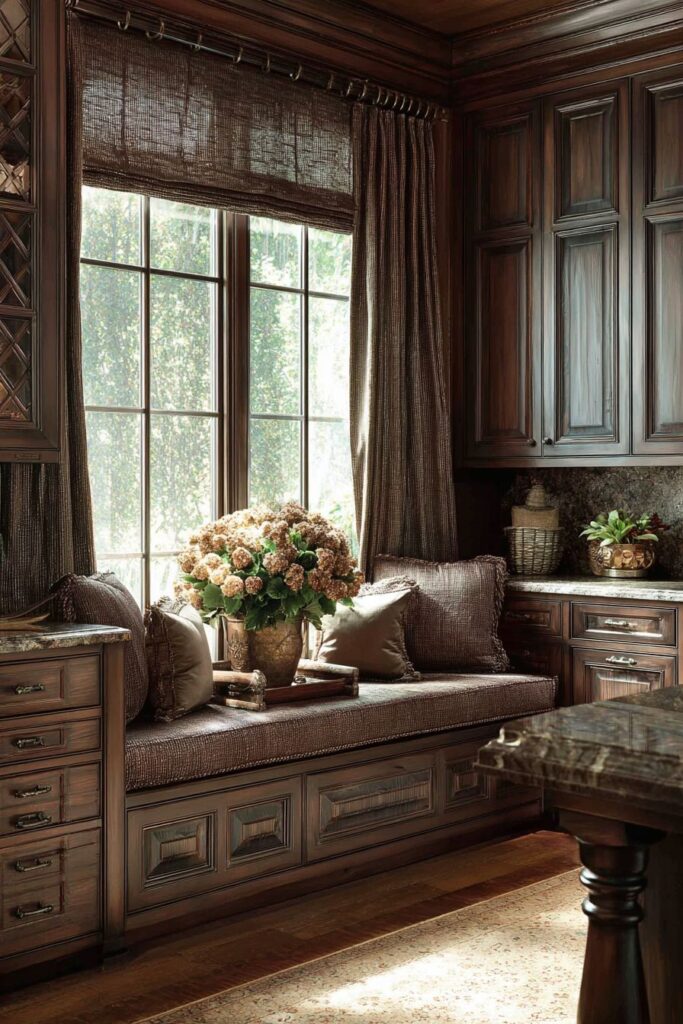
The integration of window treatments with storage solutions demonstrates how every element in a brown kitchen can serve multiple functions while contributing to the overall aesthetic appeal. The brown linen fabric adds softness and texture that balances the harder surfaces of wood and stone throughout the kitchen.
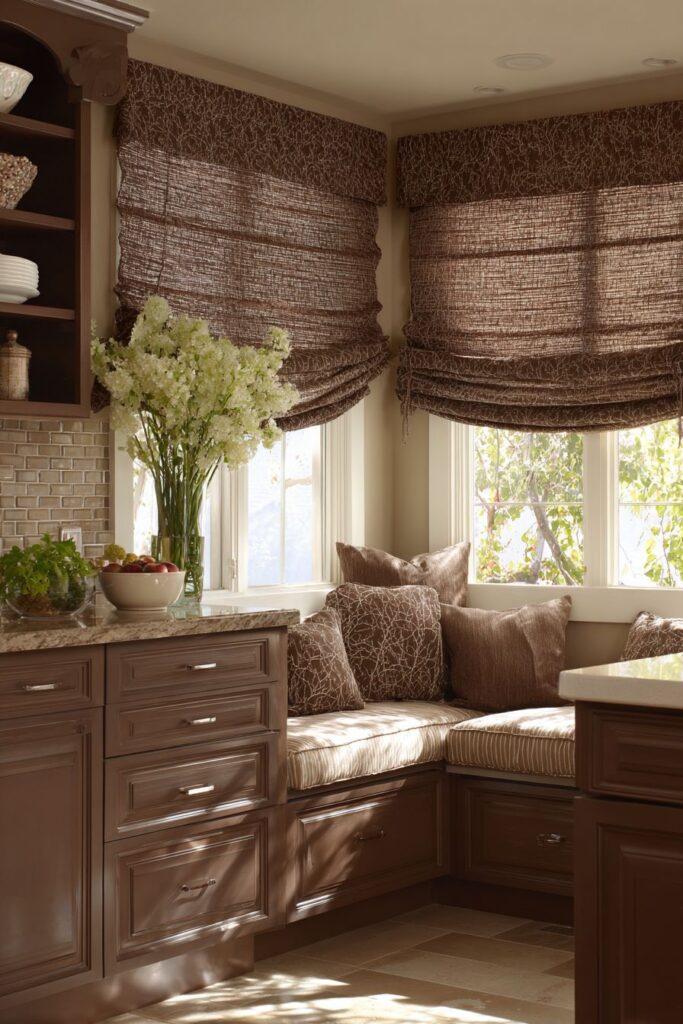
Key Design Tips:
- Choose natural linen fabrics for authentic texture and light filtering
- Build window seats with storage to maximize functional space
- Match wood staining on built-ins to surrounding cabinetry
- Use fabric textures to soften harder kitchen surfaces
- Coordinate cushion colors to reinforce overall brown palette themes
16. Mixed Cabinet Finishes for Visual Depth
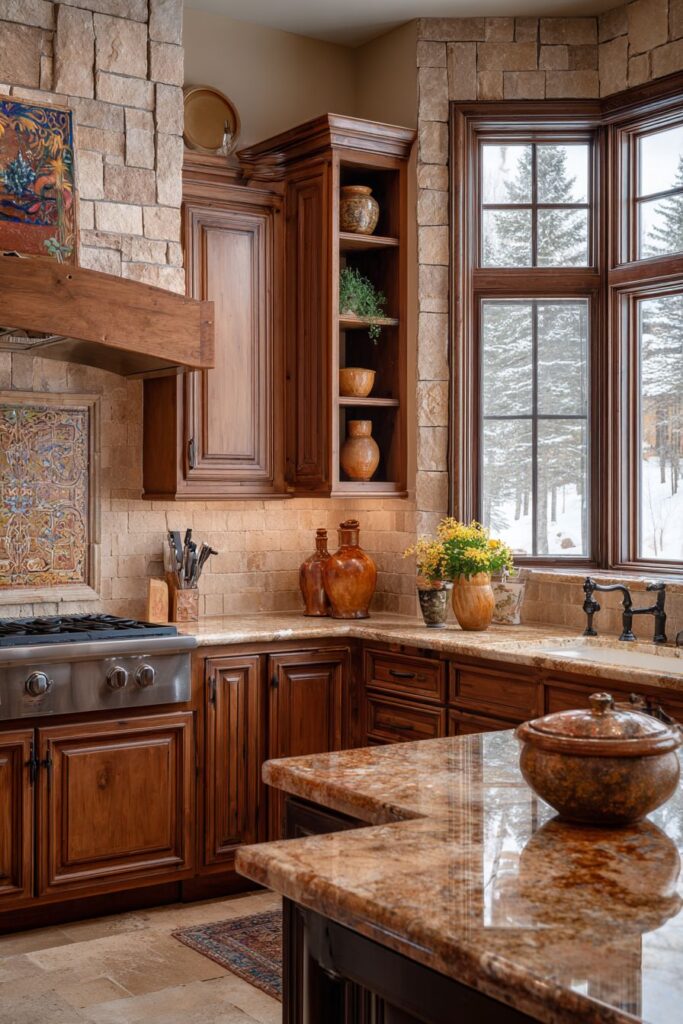
The strategic use of mixed cabinet finishes creates exceptional visual depth in this brown kitchen design, with base cabinets in dark chocolate brown providing grounding weight and upper cabinets in lighter caramel brown creating visual lift and preventing the design from feeling too heavy. Butcher block countertops in natural brown wood add warmth and functionality while introducing another layer of brown tones and natural texture to the overall composition.
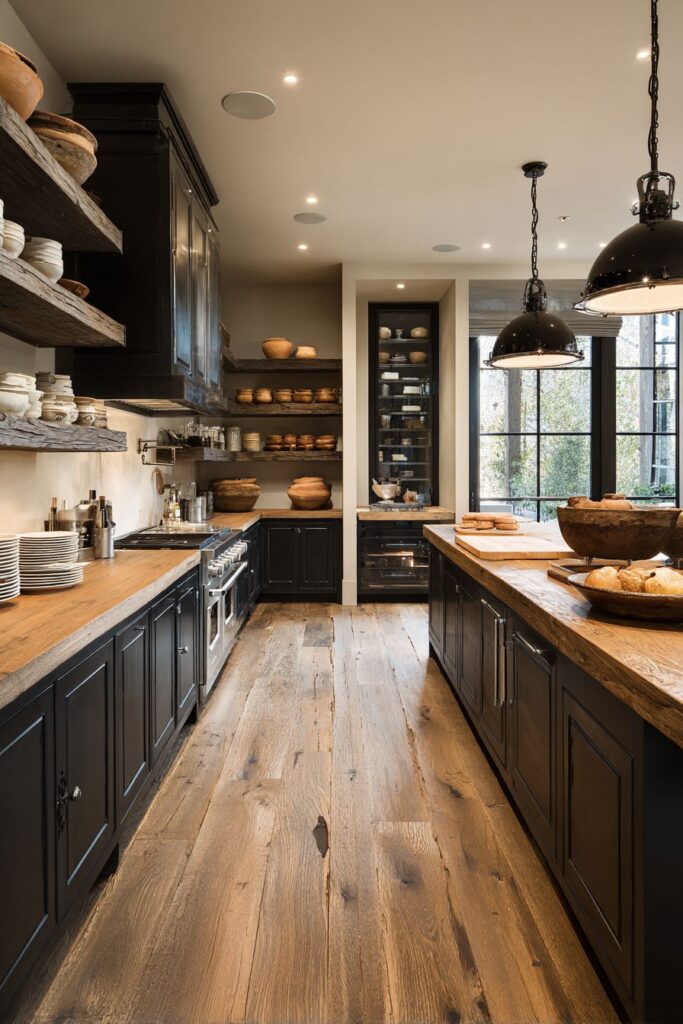
Open shelving displays pottery in complementary earth tones, creating opportunities to introduce additional brown shades while showcasing beautiful ceramic pieces that contribute to the kitchen’s aesthetic appeal. Natural lighting highlights the various brown tones throughout the day, creating subtle shifts in appearance that keep the design interesting and dynamic.
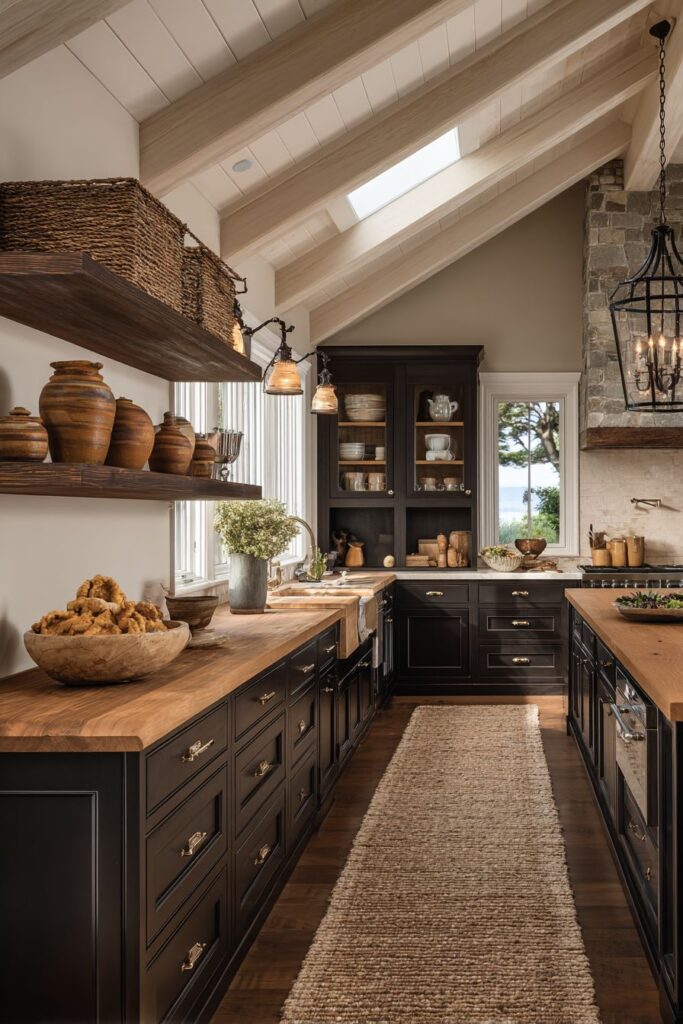
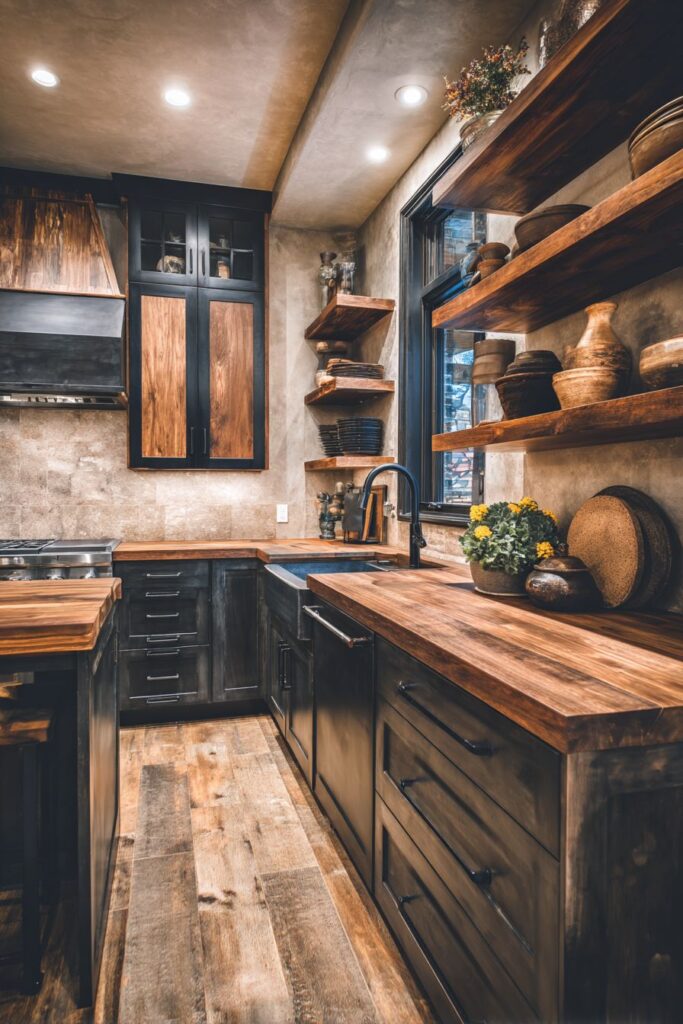
The thoughtful combination of different brown finishes demonstrates advanced design thinking that creates visual complexity while maintaining color harmony. This approach prevents the kitchen from appearing flat or monotonous while ensuring that all elements work together cohesively.
Key Design Tips:
- Use darker brown tones on base cabinets for visual grounding
- Choose lighter brown shades for upper cabinets to create lift
- Include butcher block countertops for natural wood texture
- Display pottery in earth tones to reinforce color themes
- Plan natural lighting to showcase brown tone variations throughout the day
17. Butler’s Pantry with Glass Display Storage
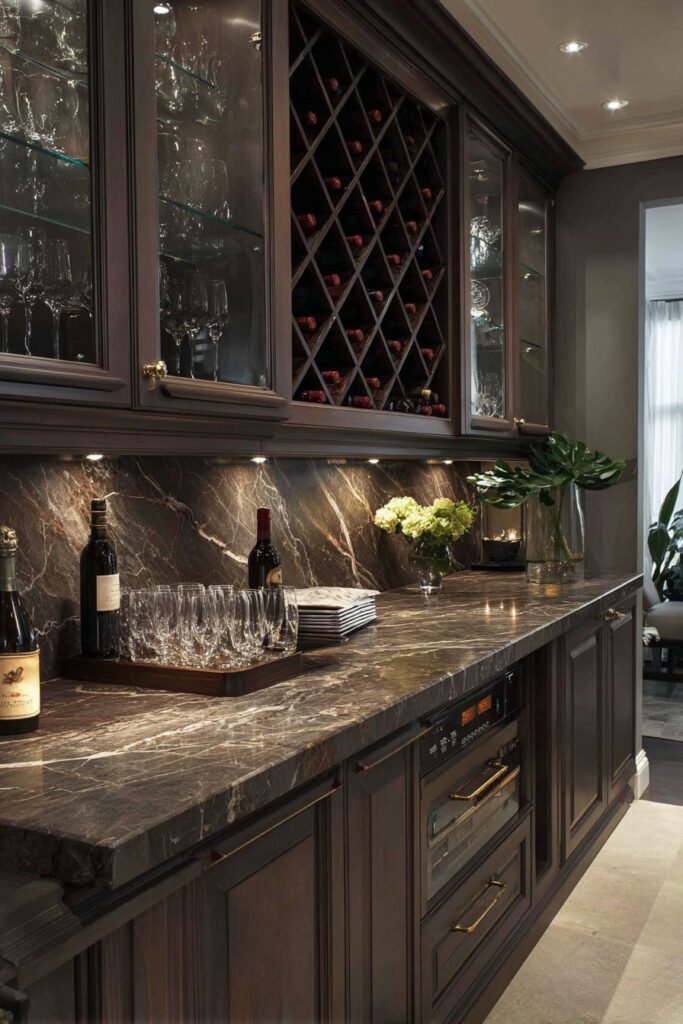
The elegant butler’s pantry extends the brown kitchen design into specialized storage areas, featuring glass-front cabinets in rich brown stain that transform everyday china and glassware into beautiful displays. Brown marble countertops with distinctive veining patterns provide luxurious work surfaces while brass hardware adds metallic accents that catch and reflect light throughout the space. Wine storage includes wooden racks in a matching brown finish that integrate seamlessly with surrounding cabinetry.
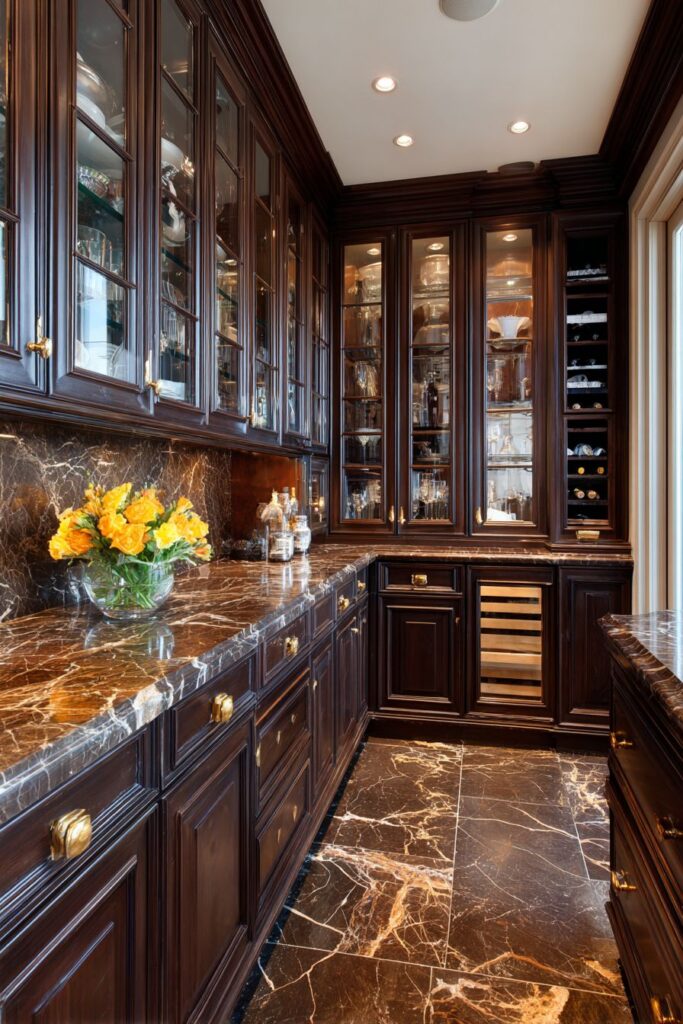
Soft lighting illuminates display areas while highlighting the natural variations in brown marble and wood materials, creating an atmosphere of refined elegance that makes everyday items appear special. The consistent brown palette ensures visual continuity between the butler’s pantry and main kitchen area while specialized storage solutions maximize organization and accessibility.
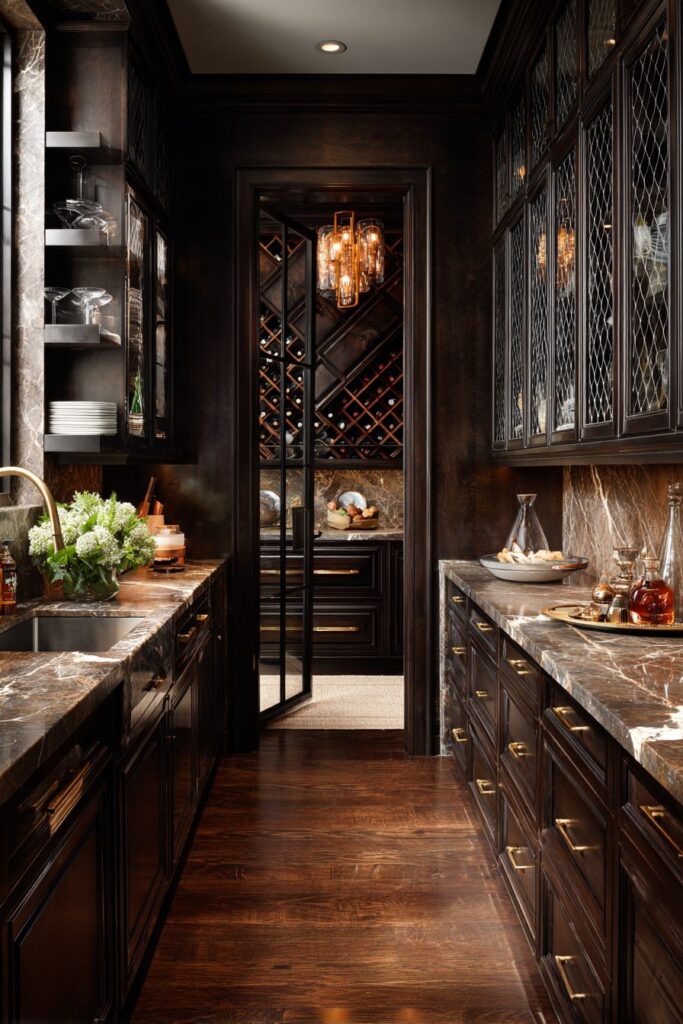
The integration of display and storage functions demonstrates how brown kitchen design can extend throughout service areas while maintaining aesthetic consistency. The glass-front cabinets allow beautiful items to become part of the overall design scheme while keeping them protected and organized.
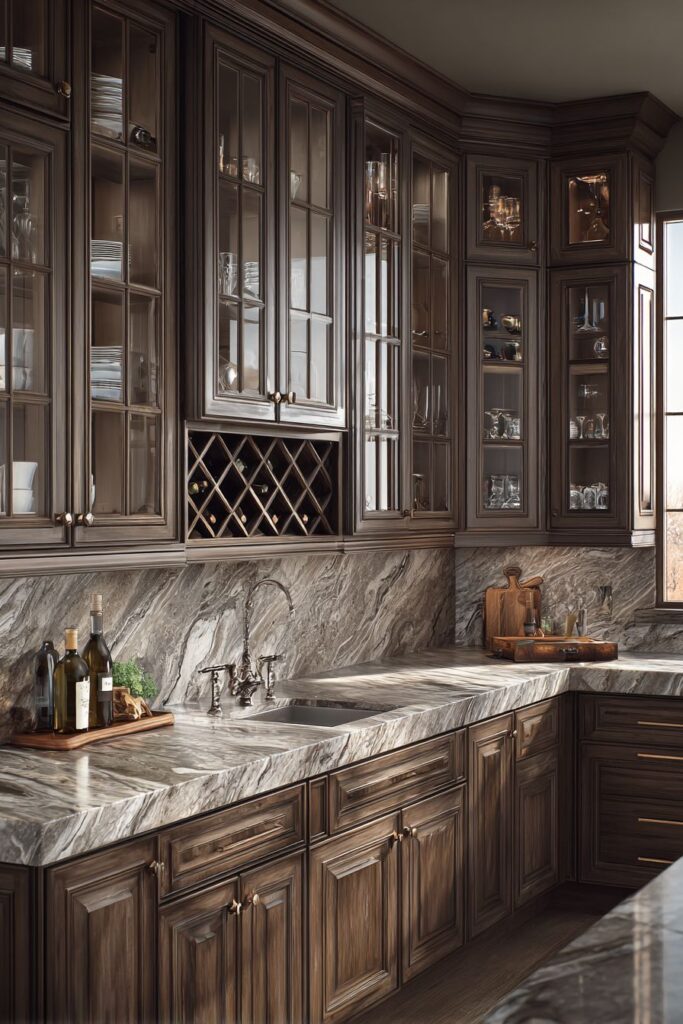
Key Design Tips:
- Use glass-front cabinets to display beautiful china and glassware
- Choose marble countertops with interesting veining patterns
- Include brass hardware for elegant metallic accent themes
- Design wine storage to match surrounding cabinetry finishes
- Install soft lighting to highlight display items and material variations
18. Decorative Floor Patterns in Brown Tones
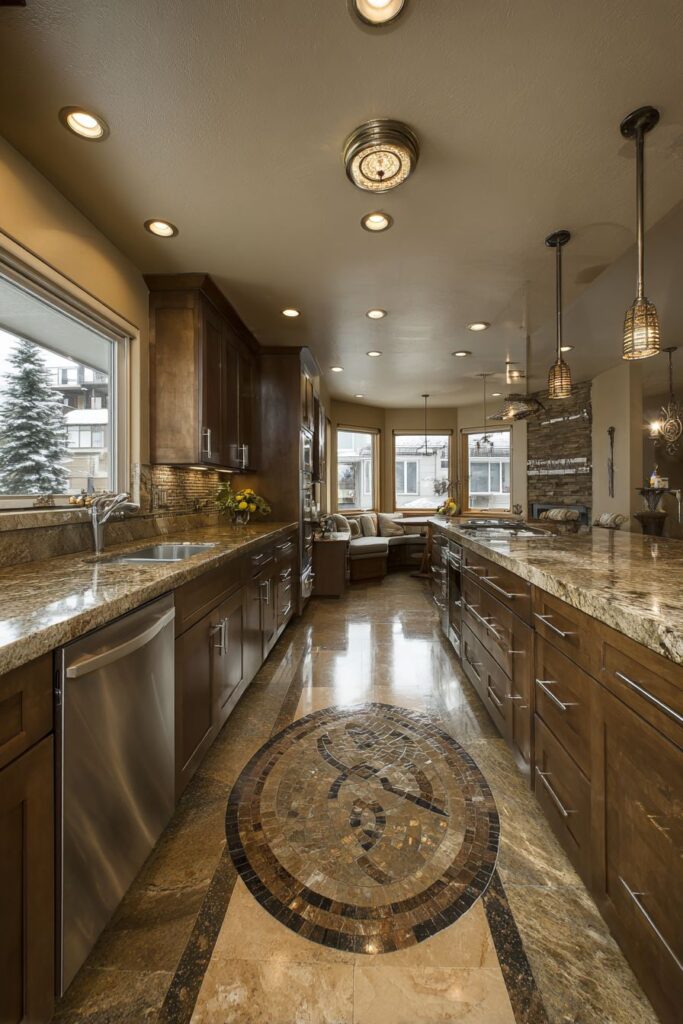
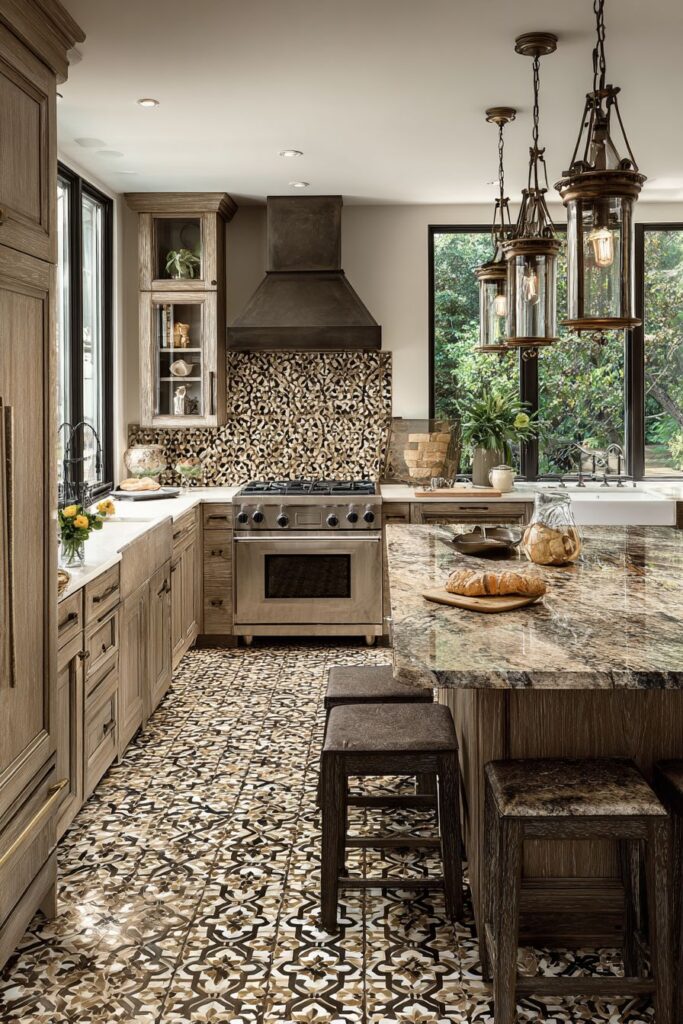
The decorative tile floor creates a stunning foundation for this brown kitchen design, featuring varying brown tones arranged in geometric patterns that add visual interest and sophisticated styling from the ground up. The cabinetry features brown paint in sage-brown undertones that complement the floor while the island includes brown granite tops with natural stone patterns that echo the organic feel of the overall design approach.
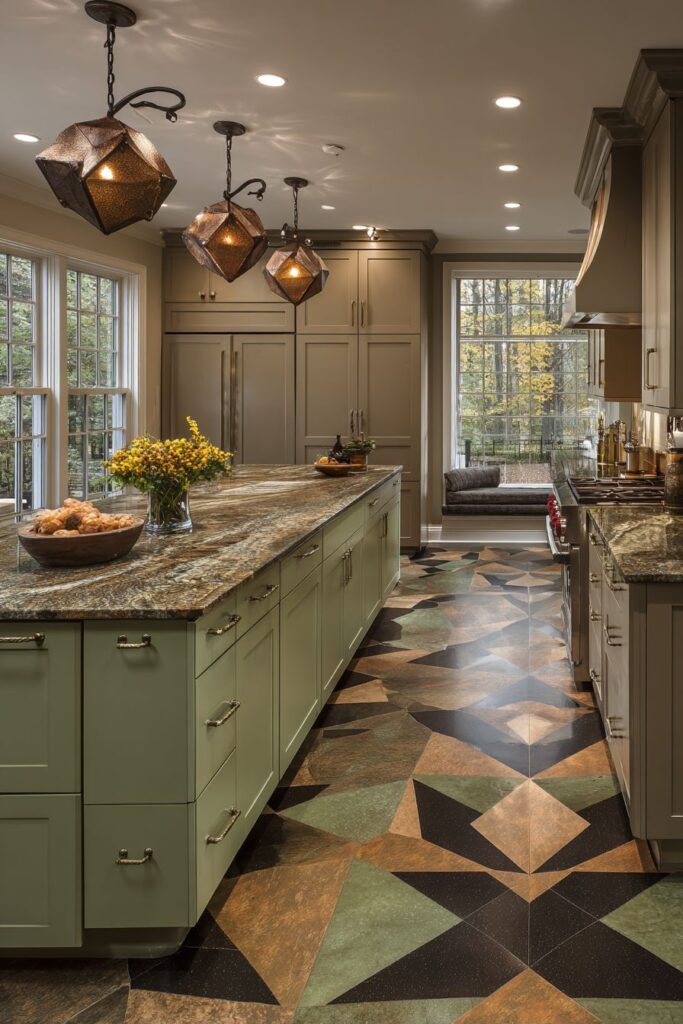
Vintage-style lighting fixtures in bronze provide period-appropriate illumination that enhances the brown palette while adding metallic warmth throughout the space. Natural daylight from multiple windows highlights both the floor pattern details and brown cabinet finishes, creating dynamic visual effects that change throughout the day. The geometric floor pattern serves as artwork that enhances every other element in the kitchen.
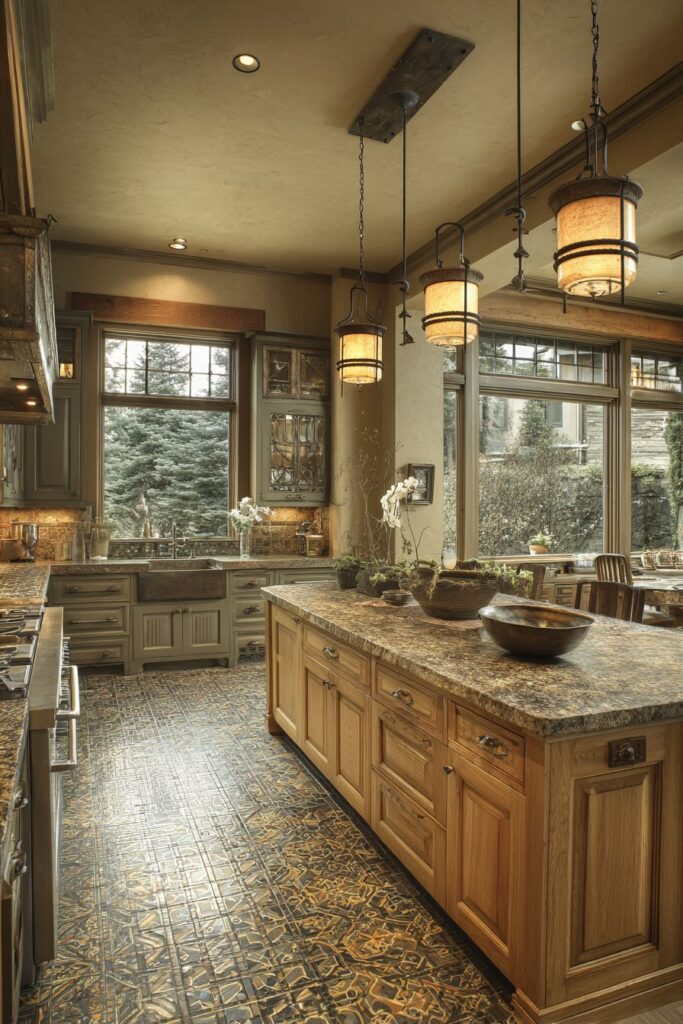
The investment in decorative flooring demonstrates how foundational elements can become focal points that elevate the entire kitchen design. The brown tones in the floor tiles coordinate with all other brown elements while the geometric pattern adds contemporary sophistication to the overall aesthetic.
Key Design Tips:
- Use decorative floor tiles to create artistic foundations
- Choose geometric patterns that complement rather than compete with cabinetry
- Select sage-brown paint tones for sophisticated color variation
- Include bronze lighting fixtures for consistent metallic themes
- Plan multiple windows to highlight floor pattern details with natural light
19. Brick Accent Wall with Industrial Elements
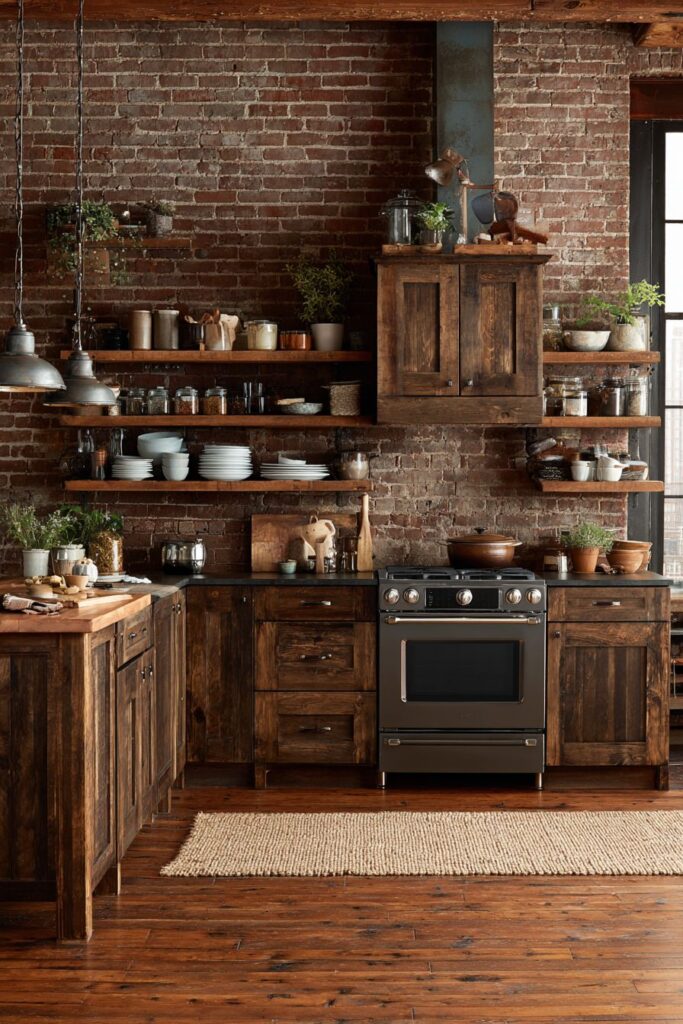
The rich reddish-brown brick accent wall creates dramatic focal point behind the cooking area, introducing texture and color that complements the surrounding brown kitchen elements while adding industrial character. Wooden shelving in matching brown stain displays cookware and ingredients while maintaining the earthy brown theme throughout the space. The combination of brown base units with natural wood upper cabinets demonstrates how mixed materials can work together harmoniously.
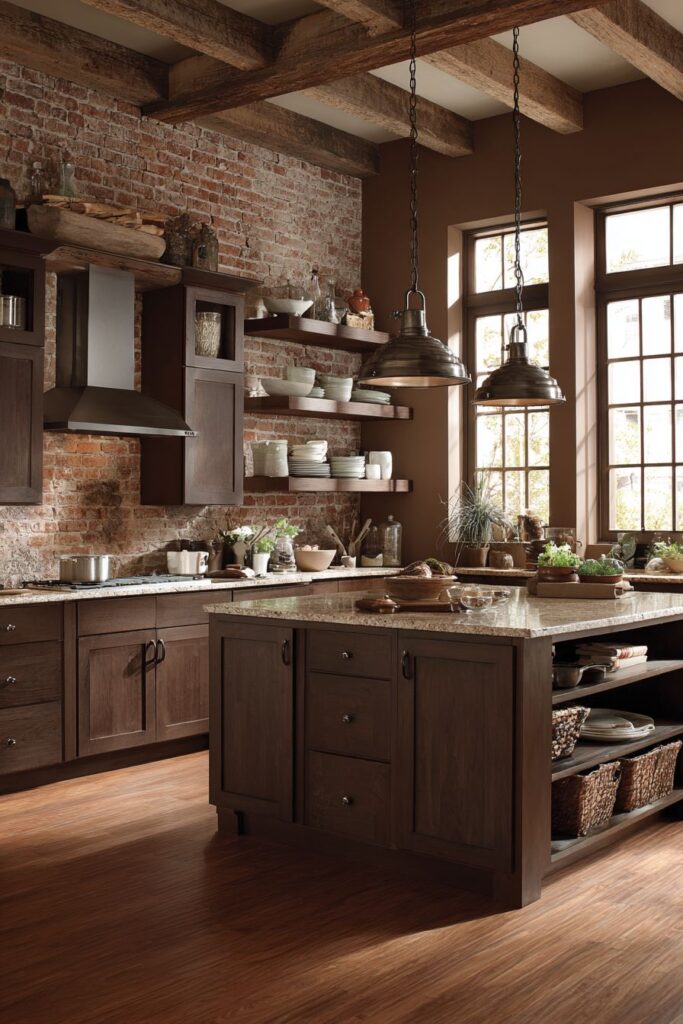
Industrial-style pendant lights with bronze finish illuminate the workspace while reinforcing the urban aesthetic that makes this brown kitchen design unique among more traditional approaches. The interplay between rustic brick textures and refined wood cabinetry creates visual interest that rewards closer inspection while maintaining overall design cohesion through consistent brown color palette.
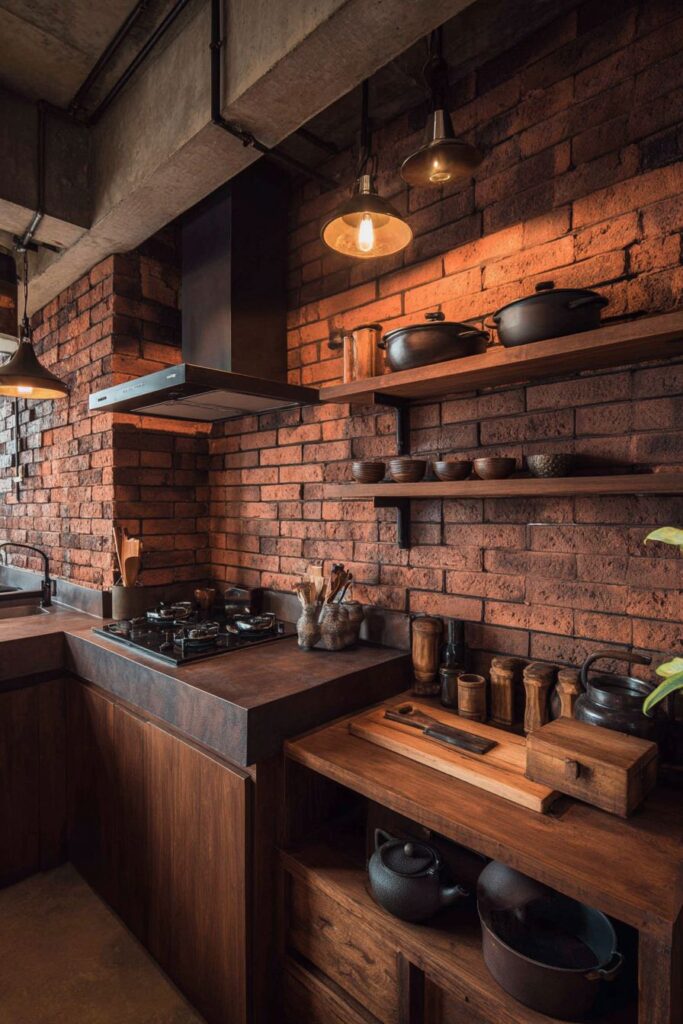
The brick accent wall serves as both functional and aesthetic element, providing easy-to-clean surface behind the cooking area while adding architectural interest that makes the kitchen feel more substantial and well-designed. The brown tones in the brick coordinate beautifully with all wood elements throughout the space.
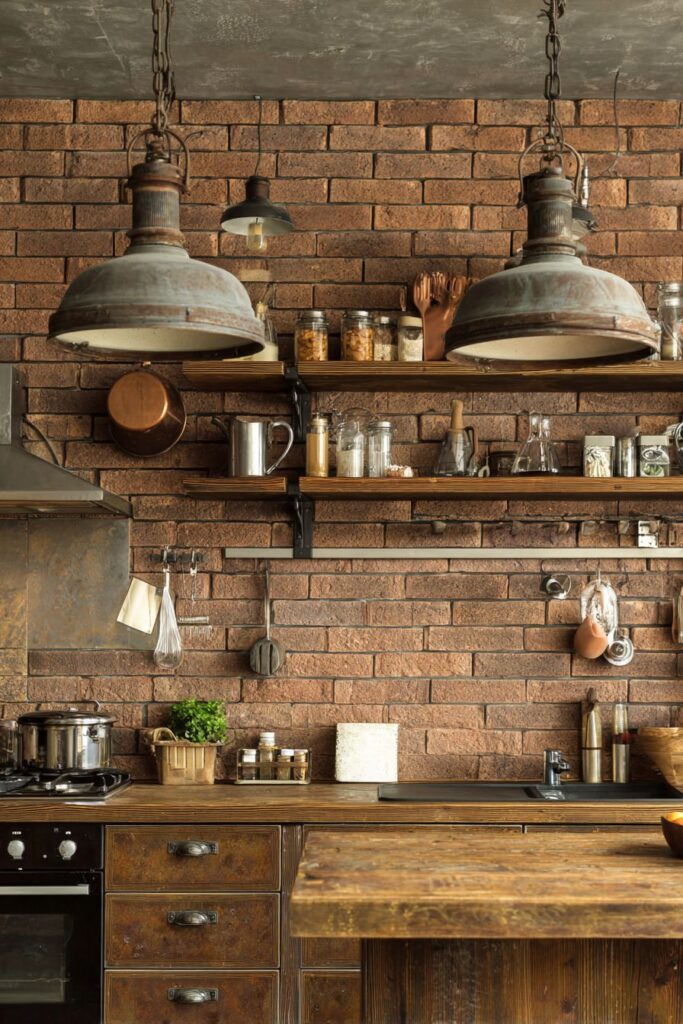
Key Design Tips:
- Use brick accent walls to add texture and industrial character
- Choose reddish-brown brick tones that complement wood cabinetry
- Include wooden shelving that matches cabinet stain colors
- Select industrial lighting fixtures with bronze finish for consistency
- Mix base and upper cabinet materials for visual variety while maintaining brown themes
20. Mudroom Integration with Functional Storage
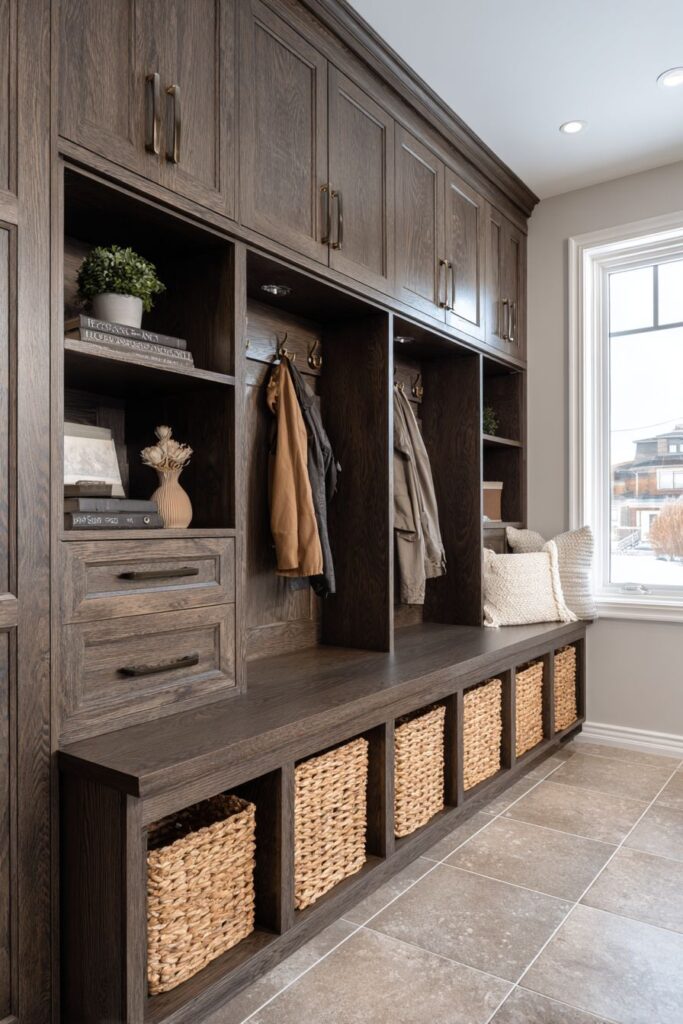
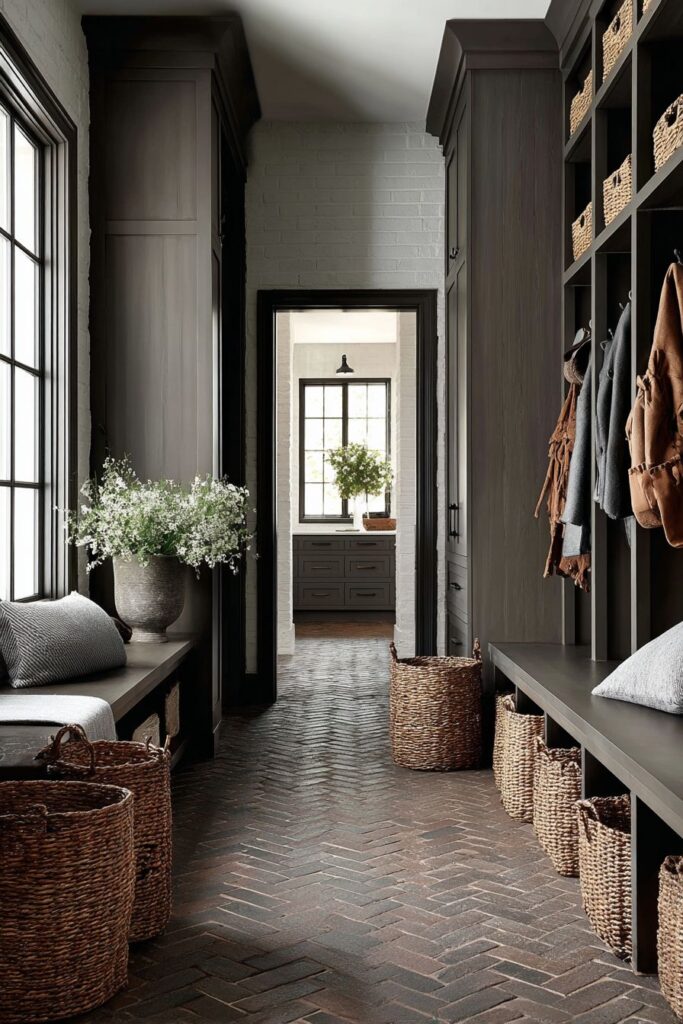
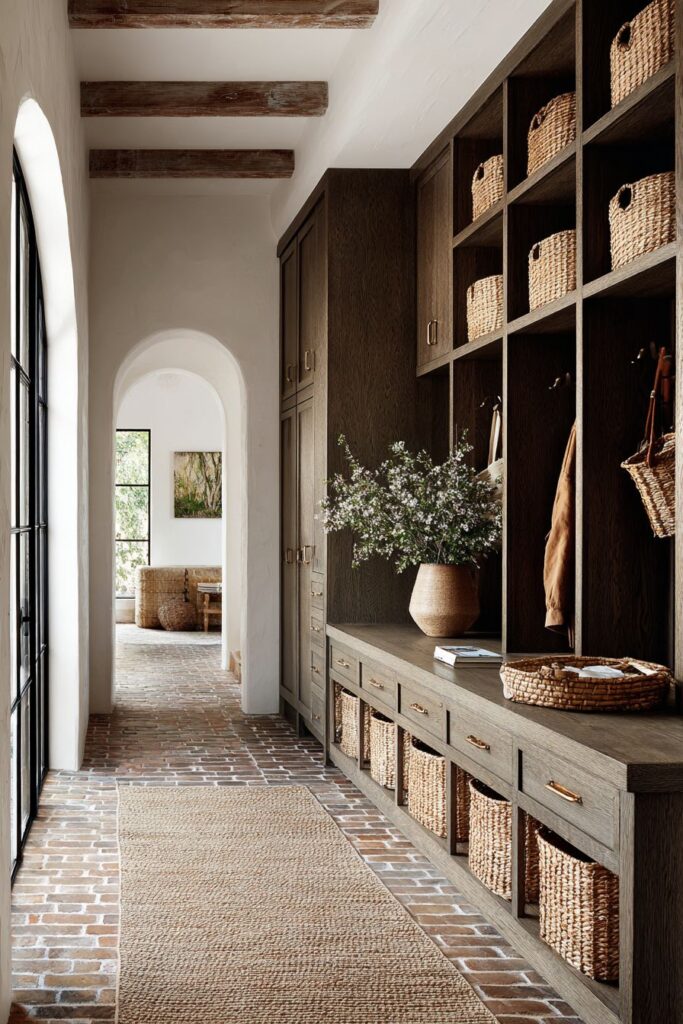
The brown kitchen mudroom transition demonstrates how design consistency can extend beyond cooking areas into practical service spaces, featuring built-in storage cubbies with brown-stained wood construction that matches surrounding kitchen cabinetry. Woven baskets in natural brown tones provide flexible storage solutions while bronze hardware maintains metallic accent consistency throughout the connected spaces.
Brown ceramic tiles with natural stone texture provide durable flooring that can handle heavy traffic while maintaining aesthetic appeal that connects seamlessly with kitchen design elements. Natural lighting from adjacent windows highlights the brown storage solutions and functional design details, ensuring that utilitarian areas contribute positively to the overall home aesthetic.
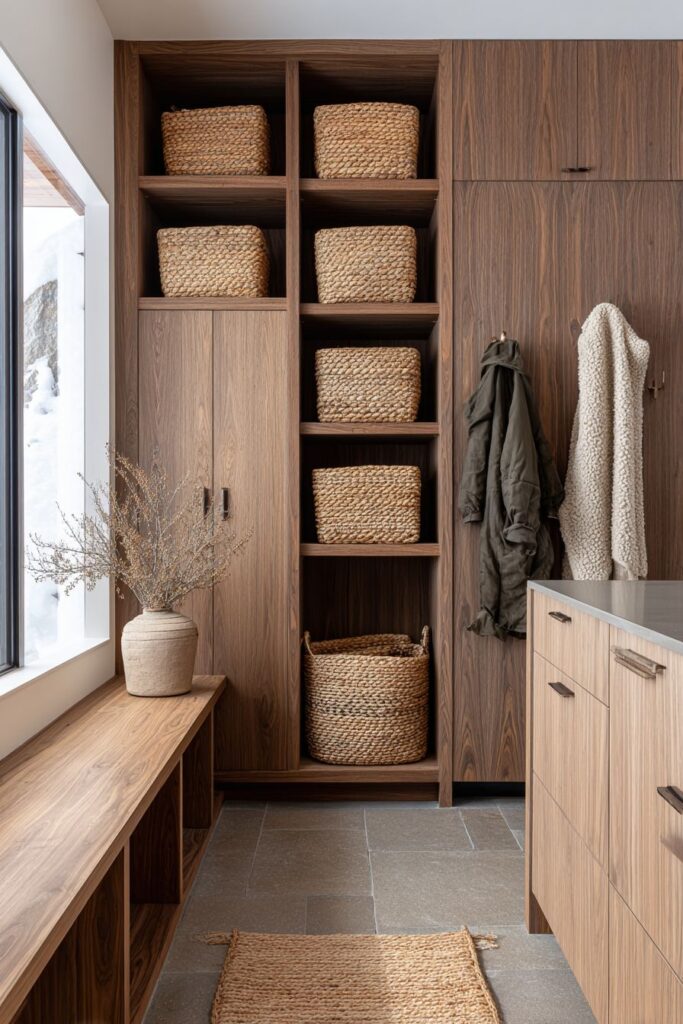
The seamless connection between mudroom and kitchen areas through consistent brown palette and materials demonstrates how thoughtful design can create flow throughout service areas. The practical storage solutions ensure that family life functions smoothly while maintaining the sophisticated brown aesthetic throughout all connected spaces.
Key Design Tips:
- Extend kitchen cabinetry finishes into adjacent service areas
- Use woven baskets for flexible storage that reinforces brown themes
- Choose durable flooring materials in coordinating brown tones
- Include bronze hardware consistently throughout connected spaces
- Plan natural lighting to highlight functional design elements
Why These Brown Kitchen Designs Represent the Best in Contemporary Home Design
These twenty brown kitchen concepts represent the pinnacle of contemporary interior design, showcasing how this versatile color palette can accommodate every lifestyle preference while maintaining sophistication and warmth. Brown kitchens excel because they create environments that feel both luxurious and comfortable, spaces where families naturally gather and memories are created. The organic nature of brown tones connects us to natural materials like wood, stone, and leather, creating environments that feel grounded and authentic in our increasingly digital world.
The versatility of brown kitchen design allows homeowners to express personal style preferences while maintaining broad appeal that supports long-term home value. From rustic farmhouse charm featuring reclaimed materials to sleek contemporary designs with mahogany cabinetry, brown kitchens can accommodate any architectural style or personal aesthetic preference. The color’s inherent warmth makes kitchens feel welcoming while its sophisticated nature ensures that spaces remain elegant and refined.
Brown kitchen materials like walnut, oak, and mahogany develop beautiful patinas over time, becoming more attractive with age rather than showing wear in negative ways. This aging process ensures that brown kitchens actually improve over time, developing character and authenticity that newer materials cannot replicate. The investment in quality brown materials pays dividends through increased durability, timeless appeal, and enhanced home value.
The psychological benefits of brown kitchen environments cannot be overlooked, as these warm, earthy spaces create feelings of comfort, security, and well-being that enhance daily life quality. Brown tones promote relaxation and social connection, making kitchens ideal spaces for family gatherings and entertaining friends. The natural associations of brown colors create subconscious connections to stability, reliability, and quality that enhance the overall home atmosphere.
From practical perspectives, brown kitchen surfaces hide everyday wear and minor imperfections better than lighter colors, making them ideal choices for busy families who need beautiful spaces that also function well for daily life. The forgiving nature of brown tones means that these kitchens maintain their attractive appearance with minimal maintenance while providing the sophisticated aesthetics that make homes feel special and well-designed.
Conclusion
The journey through these twenty exceptional brown kitchen designs reveals the extraordinary versatility and enduring appeal of this sophisticated color palette. From rich walnut cabinetry with bronze accents to rustic reclaimed barn wood charm, each concept demonstrates how brown tones can create spaces that are simultaneously warm and elegant, traditional and contemporary, practical and luxurious.
The key to successful brown kitchen design lies in understanding how different brown tones interact with each other and with complementary materials like metals, stones, and fabrics. The most successful designs layer multiple brown shades while incorporating varied textures and materials that prevent monotony while maintaining color harmony. Natural lighting plays a crucial role in showcasing the beauty of brown materials, highlighting grain patterns in wood and creating warm atmospheres that make kitchens feel welcoming throughout the day.
As you consider your own kitchen transformation, remember that brown palette offers incredible flexibility for personal expression while providing a foundation that will remain attractive for decades to come. Whether you’re drawn to the rustic charm of reclaimed materials, the sophistication of mahogany cabinetry, or the warmth of honey oak finishes, brown kitchen design offers pathways to create spaces that truly reflect your personal style while serving your family’s practical needs.
The investment in a brown kitchen represents more than just an aesthetic choice—it’s a commitment to creating a home environment that nurtures family connections, supports daily routines, and provides a beautiful backdrop for life’s most important moments. These designs prove that brown kitchens can accommodate any lifestyle while maintaining their signature warmth, sophistication, and timeless appeal, that makes them among the most desirable and enduring approaches to kitchen design.
"As an Amazon Associate, I earn from qualifying purchases."
