
Black-and-white living rooms are among the most timeless and sophisticated design choices available. The contrast between these two non-colors creates a visually striking environment that suits both modern and classic interiors. However, many homeowners struggle to make this palette feel warm, inviting, and livable rather than sterile and unwelcoming.
The challenge with monochromatic contrast schemes is that they can easily tip into feeling clinical or cold. Without the right layers of texture, material, and warmth, a black-and-white room can feel more like a waiting room than a cozy retreat. Understanding how to balance boldness with comfort is the key to making this palette truly work.
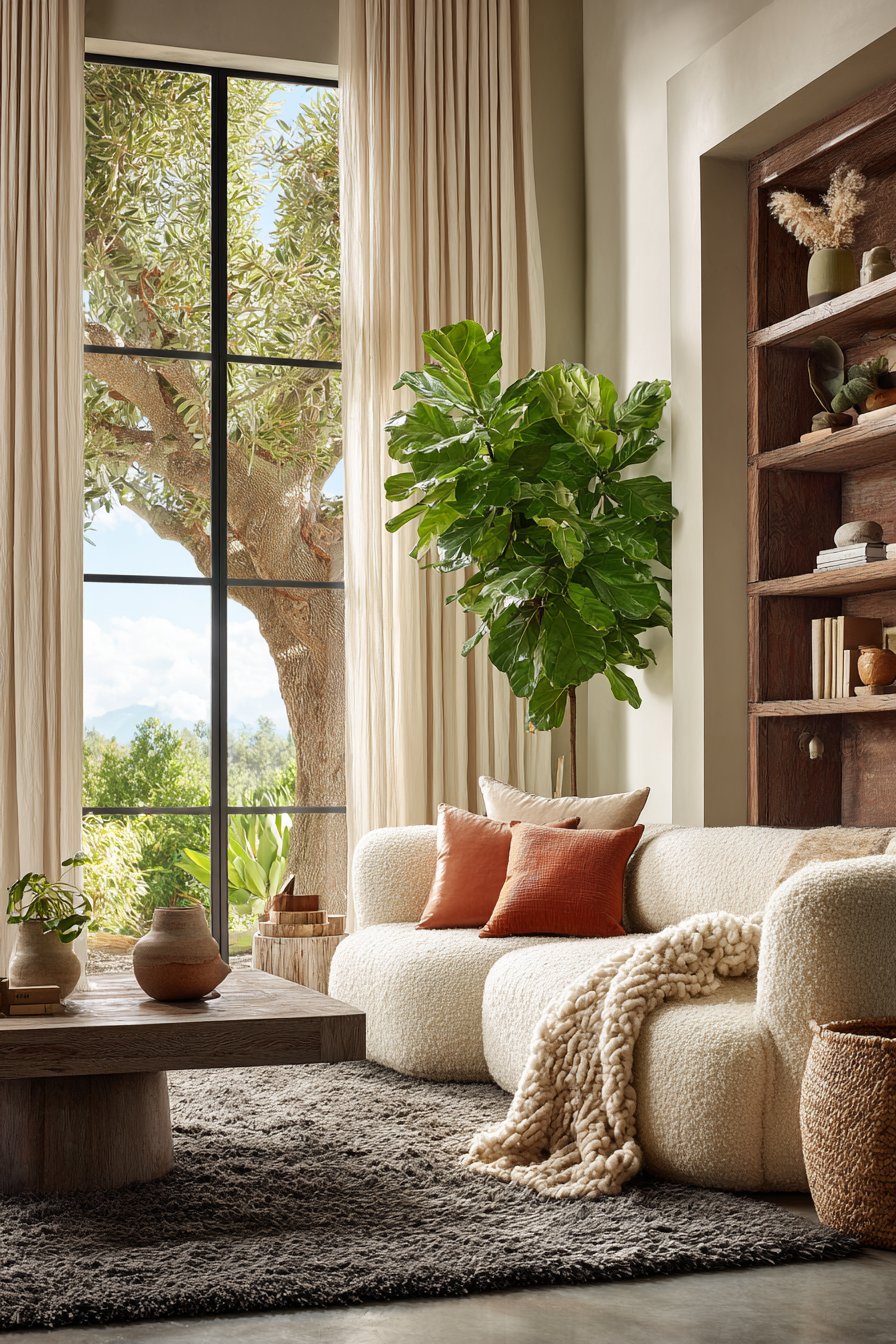
This article explores the essential elements that every black-and-white living room needs to feel warm and inviting. From texture layering to accent color strategy, these practical insights will help you design a space that is both visually stunning and deeply comfortable. Whether you are starting from scratch or refreshing an existing room, these tips apply at every budget level and style preference.
1. Texture Is Your Most Powerful Tool
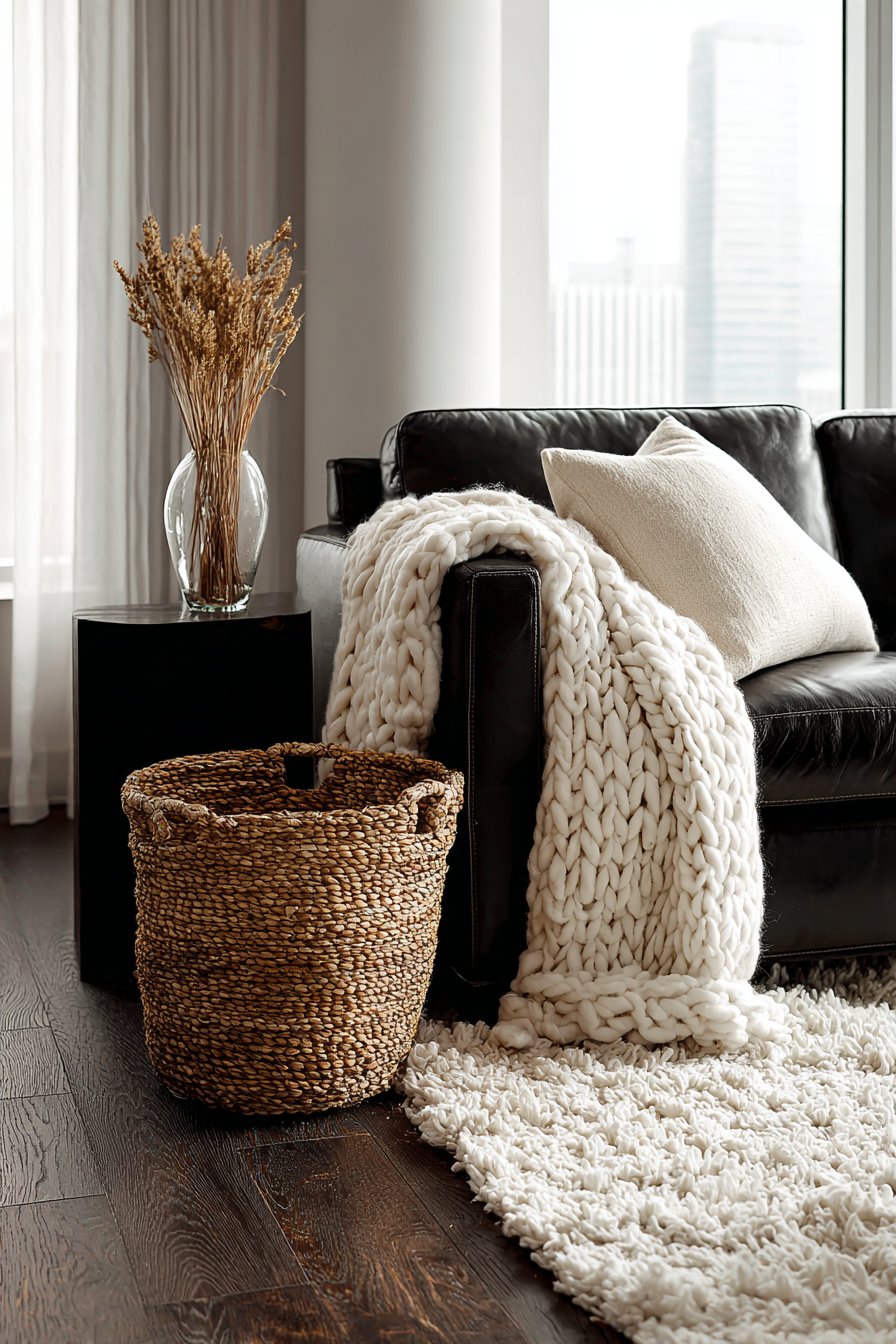
In a room without color variation, texture becomes the color. When you remove the visual interest that hues provide, your eye naturally travels to surface quality instead. This means that smooth, flat surfaces in a black-and-white room will always look cold and uninviting. The solution is to layer as many contrasting textures as possible.
Think about combining rough and refined materials — a chunky knit throw alongside a sleek leather sofa, or a raw linen cushion next to a polished lacquer side table. These tactile contrasts create visual warmth even without introducing additional colors. The brain associates certain textures with comfort, and this emotional response translates directly into how a room feels.
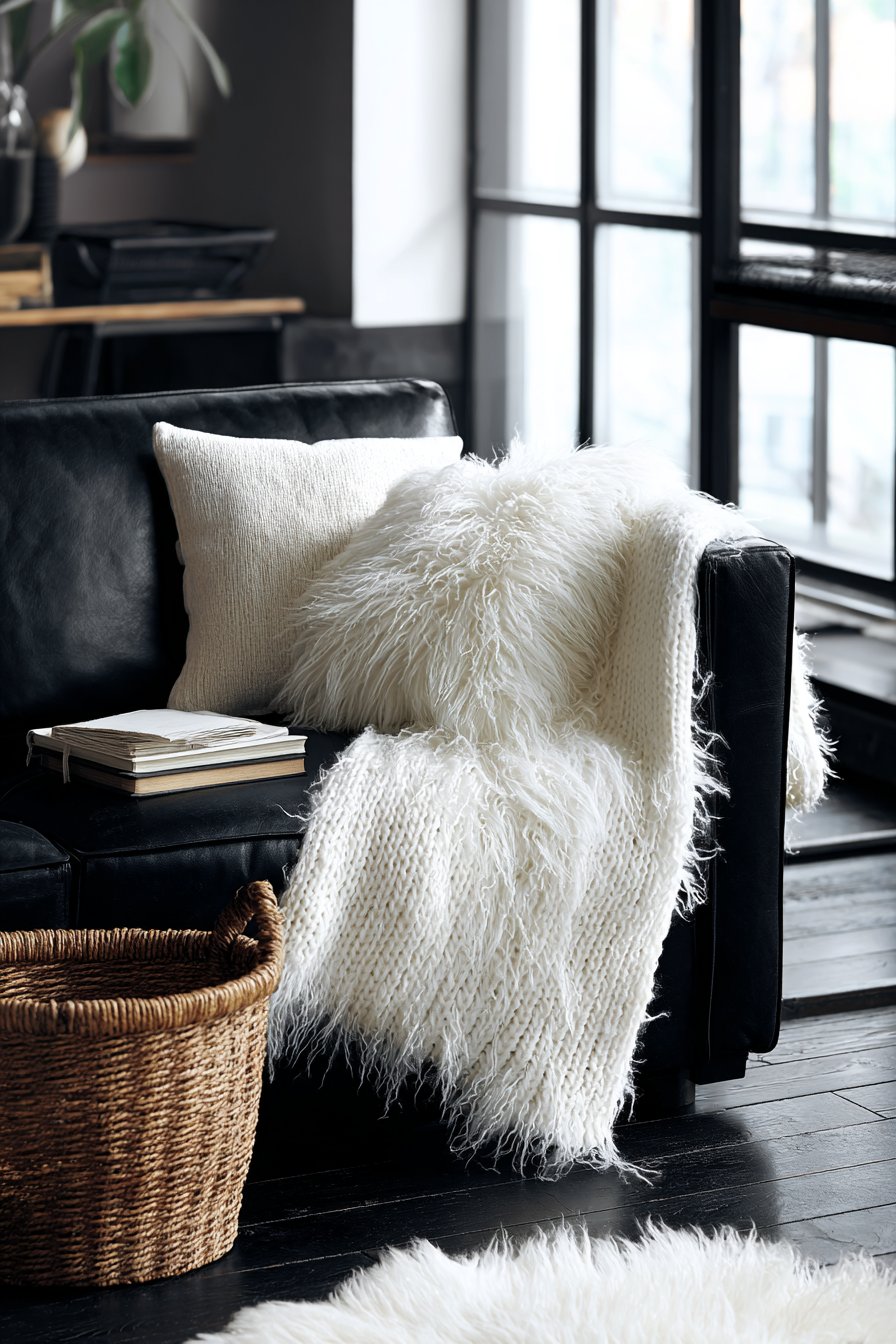
Start building texture from the floor up. A high-pile area rug in ivory or charcoal immediately softens a black-and-white space. Add woven baskets, a bouclé armchair, or a velvet accent piece to continue layering richness throughout the room. Each new texture you introduce reduces the clinical feel and adds depth.
- Choose a high-pile or shaggy rug in white, cream, or charcoal as your base layer
- Mix at least three to four different fabric textures across cushions and upholstery
- Incorporate natural textures like rattan, jute, or linen for organic warmth
- Use a chunky knit throw on sofas or armchairs to add immediate coziness
- Combine matte and glossy surfaces on furniture and decor pieces
- Avoid large expanses of flat, smooth walls without any textural break
2. Warmth Through Wood Tones
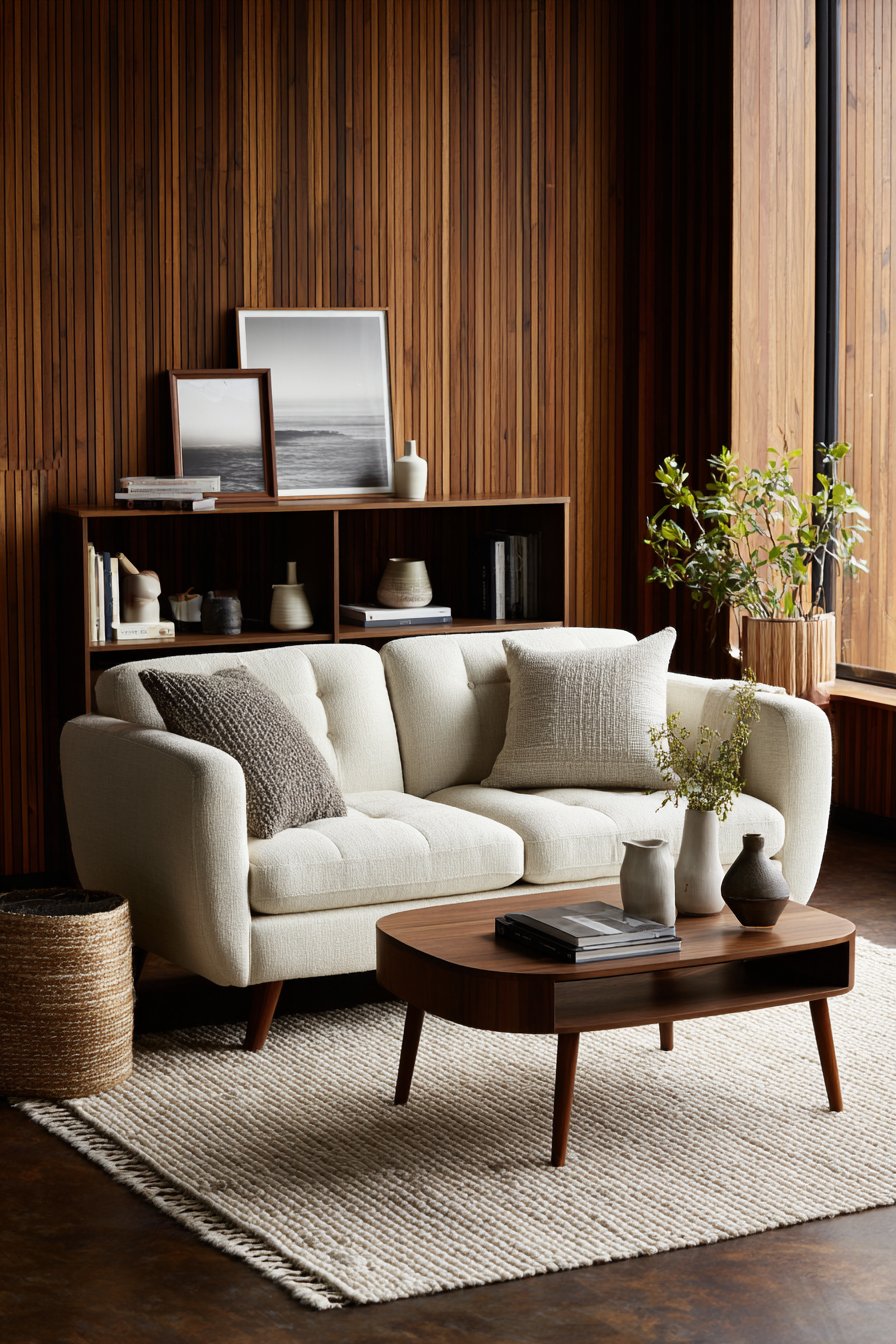
Natural wood is perhaps the single most effective antidote to a cold black-and-white interior. Wood introduces organic warmth, biological familiarity, and tonal richness that perfectly bridges the gap between stark black and bright white. Even a small amount of wood can transform the emotional temperature of a room.
The key is choosing warm-toned wood varieties such as walnut, teak, oak, or cherry rather than cooler-toned woods like ash or bleached pine. These darker, richer grains read as warm accents rather than neutral additions. A walnut coffee table, wooden shelving, or a reclaimed timber accent wall can anchor an entire black-and-white scheme beautifully.
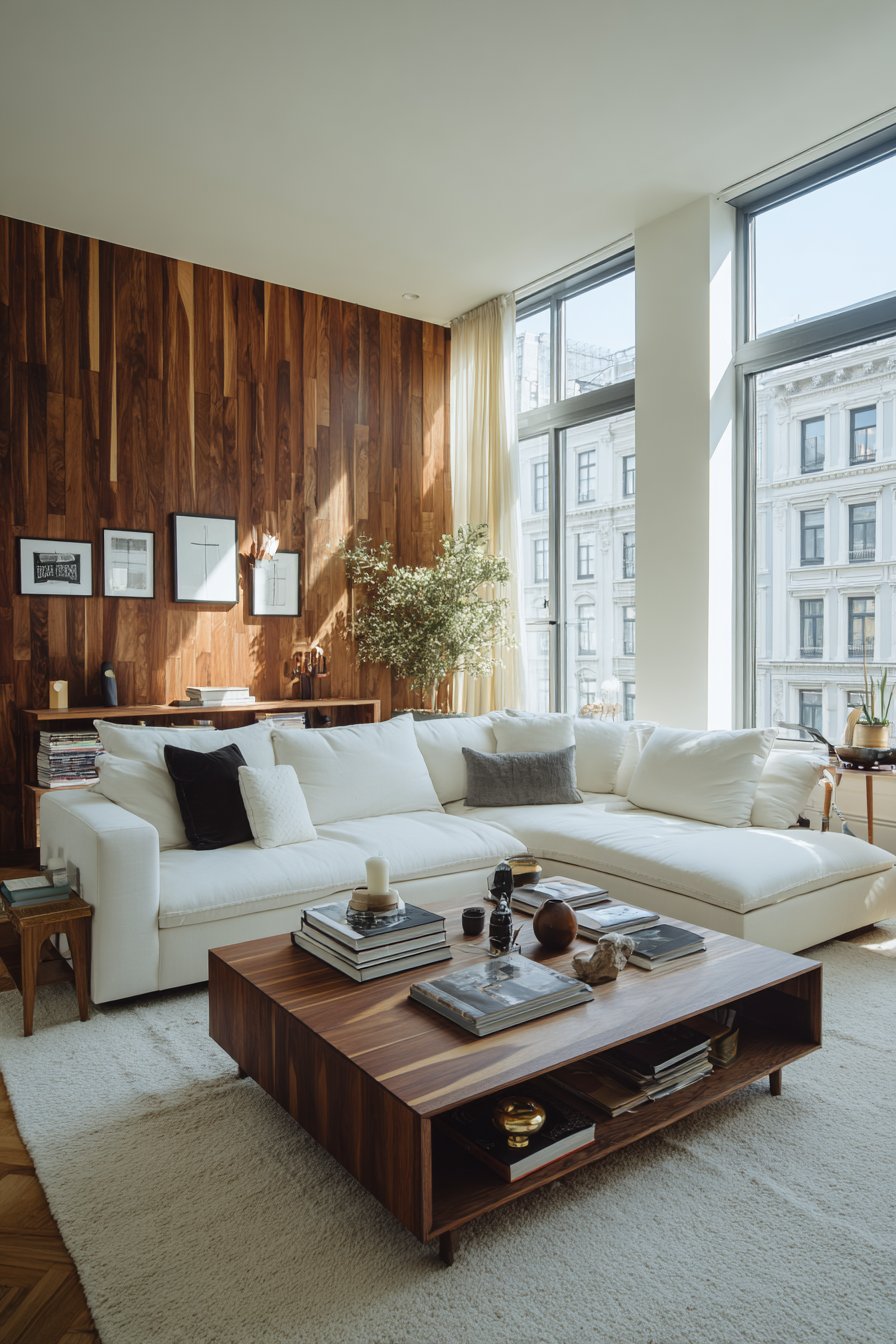
Wood does not have to dominate the space to be effective. Even small wood elements — a tray on the coffee table, picture frames, a side table leg — register warmth at a subconscious level. This principle allows you to preserve the clean, modern aesthetic of your black-and-white palette while gently softening it with natural material.
- Introduce a walnut or oak coffee table as a central warming element
- Use wooden picture frames throughout the room for consistent warmth
- Consider open wooden shelving to display books and objects
- Add a reclaimed wood accent wall or fireplace mantle for bold impact
- Choose furniture with tapered wooden legs rather than metal or acrylic
- Use wooden trays, bowls, or decorative objects on tabletops
3. The Strategic Use of Warm Metallics
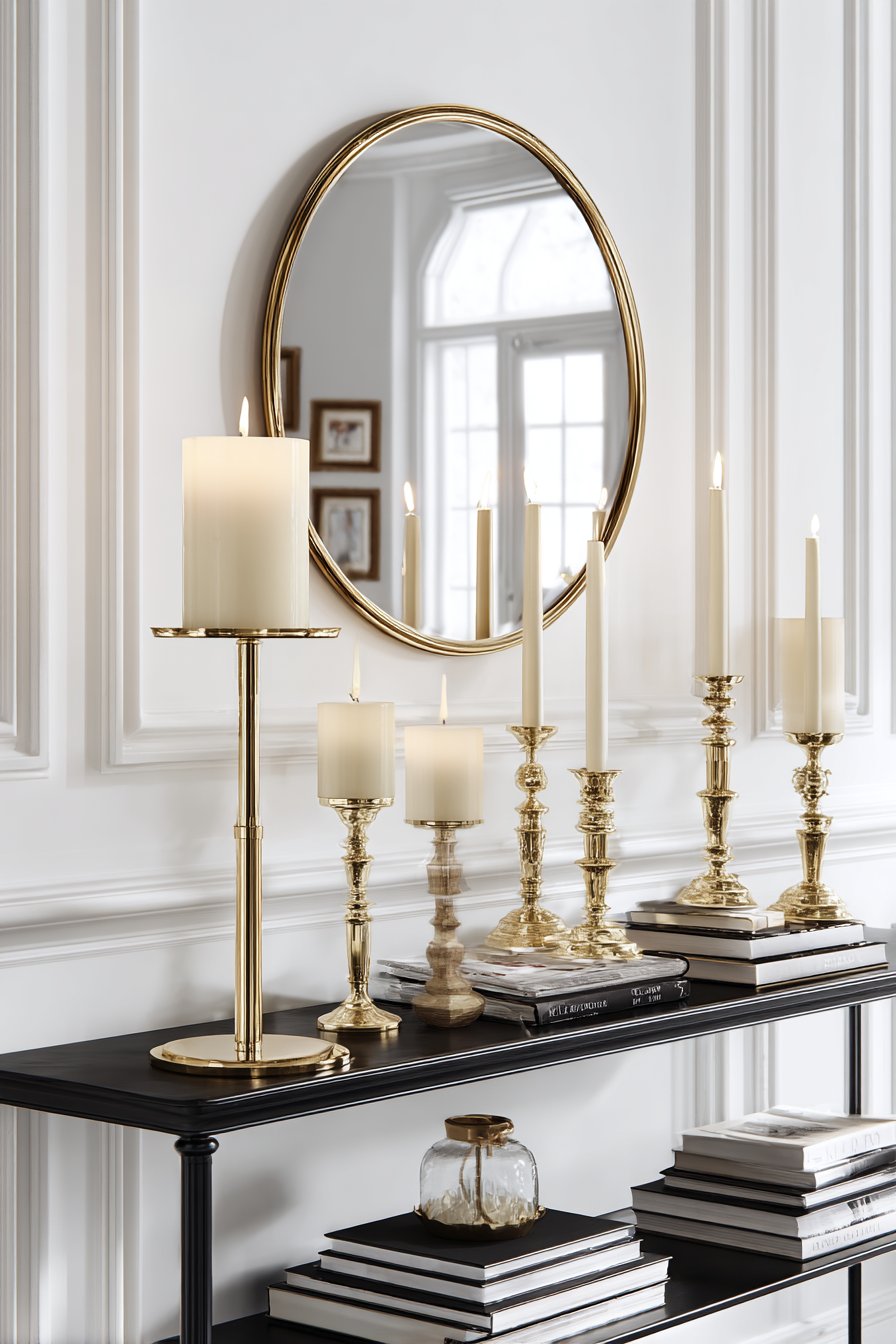
Not all metallics are equal when it comes to adding warmth. Cool metallics like chrome, silver, and brushed nickel will amplify the coldness of a black-and-white room. Instead, turning to warm metallic finishes is one of the smartest moves you can make in this palette.
Brass, gold, and bronze are particularly powerful in black-and-white interiors. These metals add a layer of richness and luxury that feels inherently warm. A brass floor lamp, gold picture frames, or bronze cabinet hardware can shift the entire mood of a room from sterile to sophisticated.
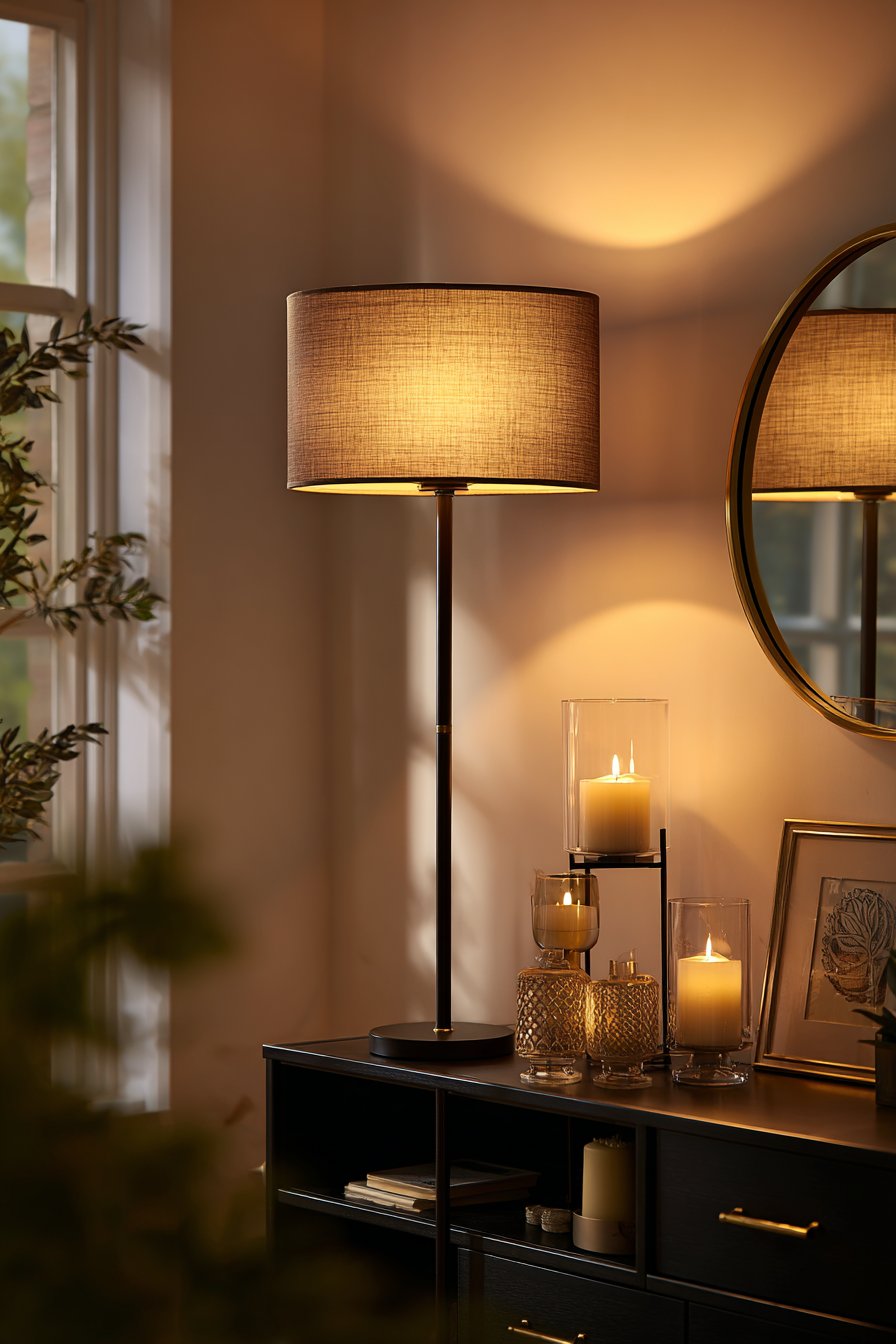
The beauty of warm metallics is that they work within the monochromatic design framework without technically breaking it. They do not introduce color in the traditional sense but they do introduce warmth, sheen, and visual complexity. Use them at key focal points — lighting fixtures, drawer pulls, decorative vases, and mirror frames.
- Replace cool chrome fixtures with brass or gold alternatives
- Choose a statement brass or gold floor lamp as a room focal point
- Use metallic picture frames in gold or antique bronze tones
- Add a mirrored or gold-framed mirror to reflect light warmly
- Incorporate bronze or brass candle holders on shelving and tables
- Avoid mixing warm and cool metallics, which creates visual confusion
4. Soft Lighting Over Harsh Overhead Light
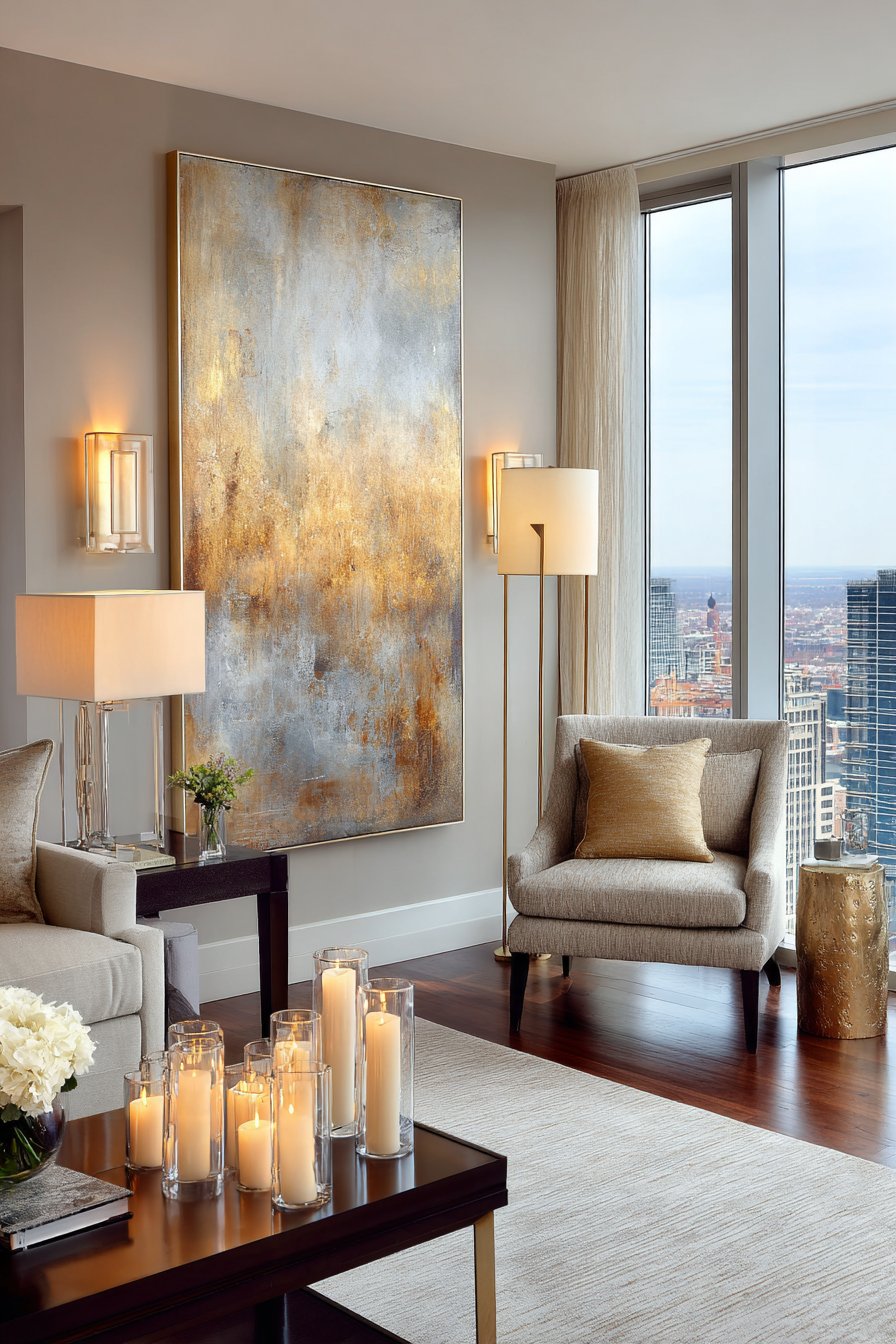
Lighting is the soul of any interior, but it becomes especially critical in a black-and-white room. Harsh overhead lighting casts stark shadows and amplifies the coldness of the palette. Switching to layered, soft lighting is essential for making the space feel livable and warm.
Invest in warm-toned bulbs with a color temperature between 2700K and 3000K. These emit a soft, amber-toned light that wraps every surface in warmth. Avoid cool white or daylight bulbs (above 4000K), which intensify the clinical feeling of a high-contrast interior.
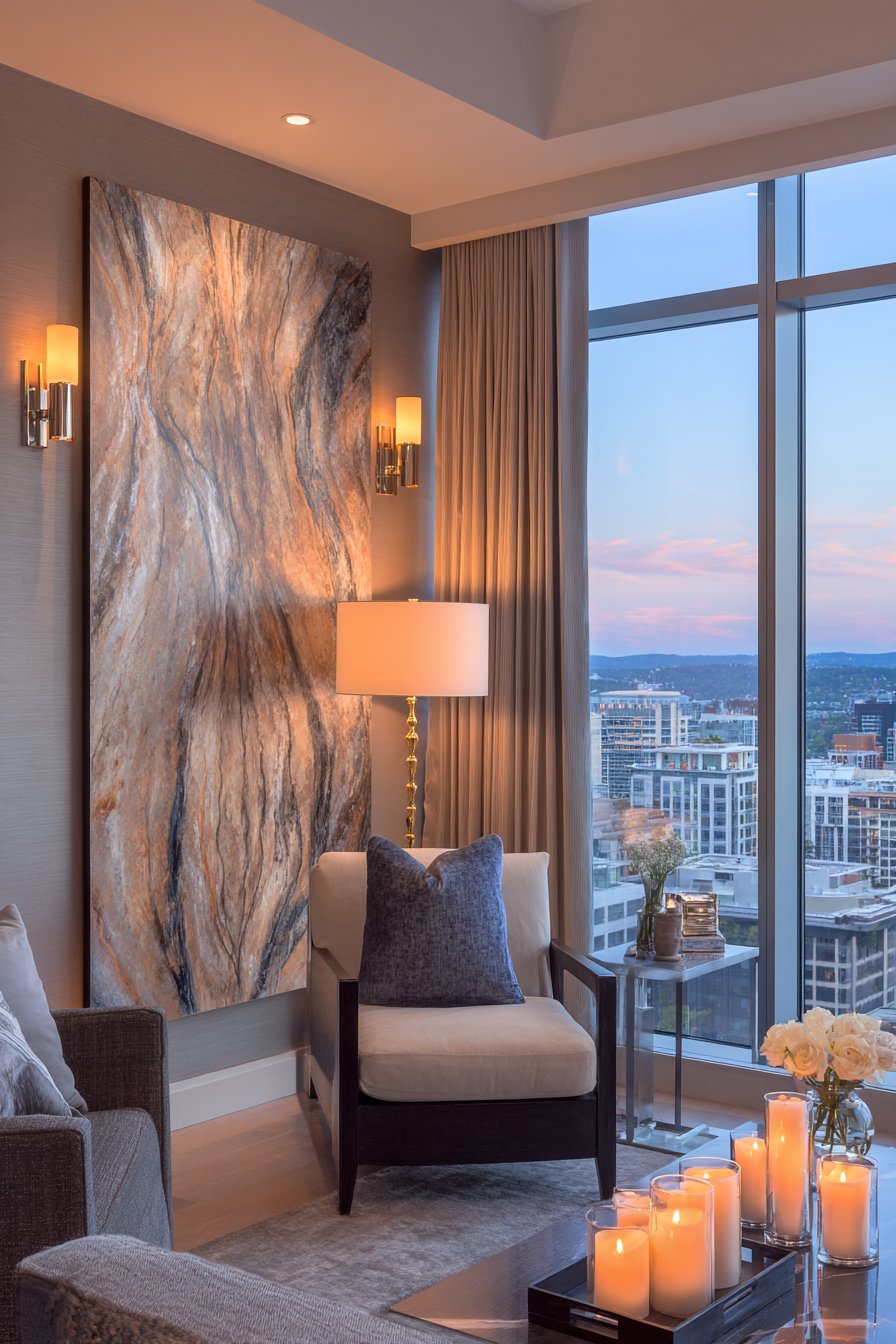
Layer your lighting across three levels — ambient, task, and accent lighting. Use floor lamps and table lamps alongside overhead fixtures. Candles, whether real or flameless, add a flickering warmth that no electric light can fully replicate. Consider wall sconces to create intimate pools of light that break up the starkness of white walls.
- Switch all bulbs to warm white at 2700K to 3000K color temperature
- Add at least two table lamps or floor lamps to each main seating area
- Use dimmer switches on all overhead lighting for flexible ambiance
- Incorporate candles or flameless candle clusters for flickering warmth
- Install wall sconces on either side of key focal points
- Use lampshades in cream, ivory, or natural linen rather than white
5. Introduce a Thoughtful Accent Color
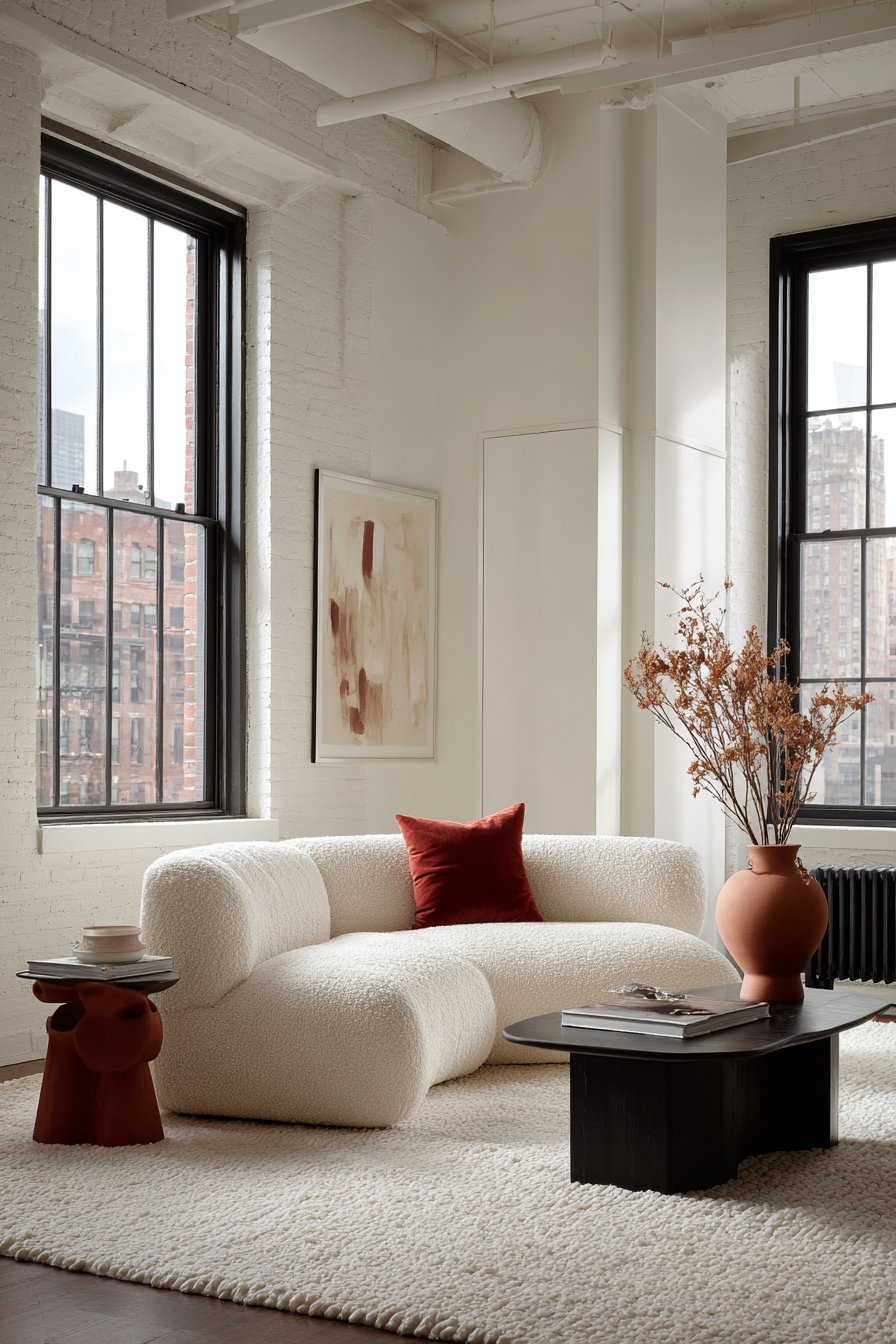
A purely binary black-and-white room is technically possible but practically challenging to make feel warm. Introducing a single, carefully chosen accent color can solve this problem without compromising the dominant palette. The key is restraint — less than 10% of the room’s visual surface should carry this accent.
Warm accent colors work best in this context. Consider deep terracotta, dusty blush, warm camel, sage green, or muted navy. These tones add emotional warmth and prevent the space from feeling like a graphic design project. They work particularly well on cushions, artwork, a single chair, or a decorative vase.
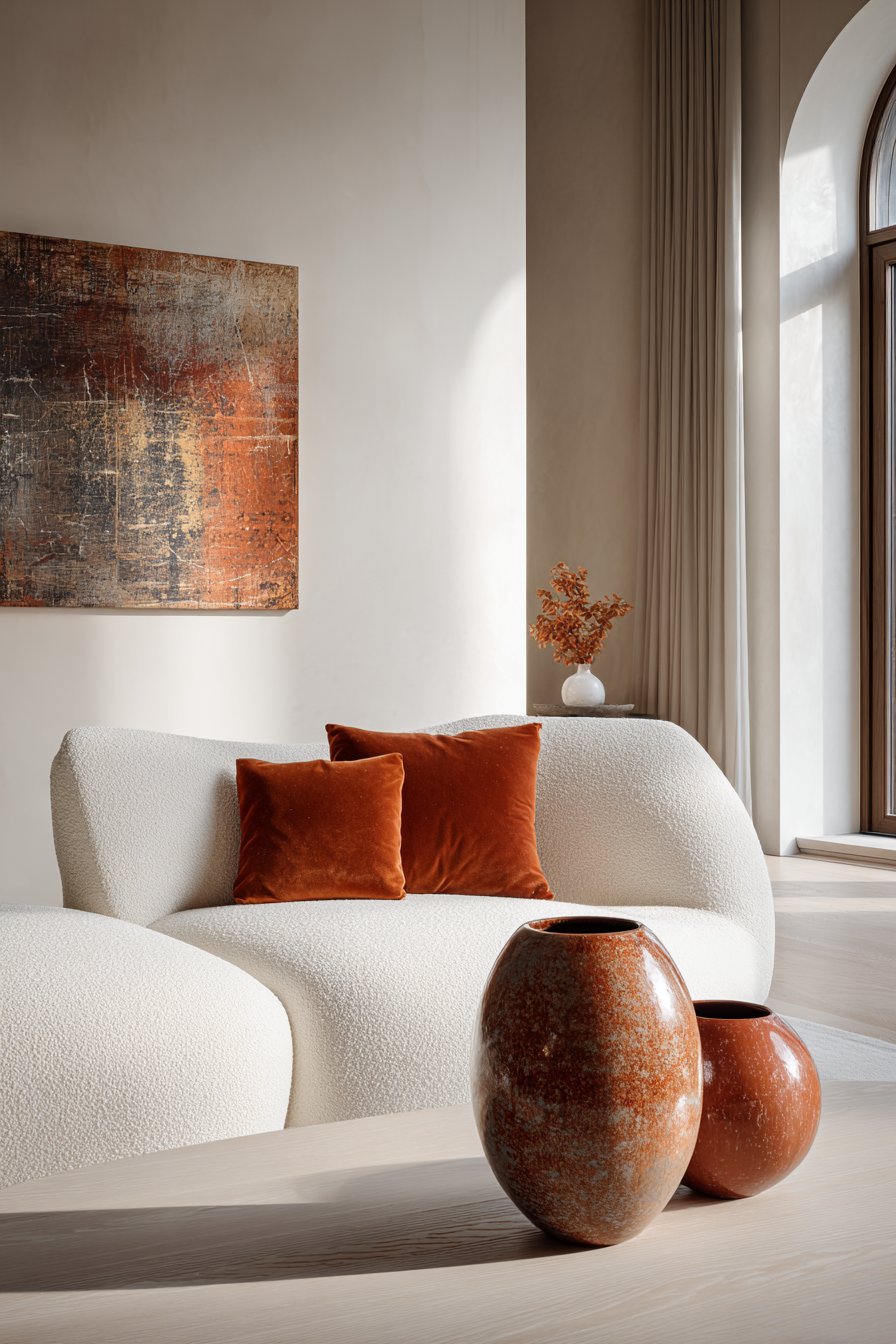
The accent color also creates visual rhythm throughout the room. When you repeat a small amount of the same tone in two or three places — perhaps a terracotta cushion, a terracotta candle, and terracotta tones in one piece of art — the eye moves naturally through the space. This movement creates the feeling of a curated, thoughtful, and welcoming interior.
- Choose one warm accent color and use it consistently in three to four spots
- Introduce accent tones through cushions, throws, or a single armchair
- Use warm-toned artwork to bring in color at eye level
- Consider terracotta, blush, camel, or dusty sage as accent options
- Avoid cool accent colors like lavender, icy blue, or mint green
- Keep the accent color at under 10% of the total visual surface area
6. Layer Your Rugs and Soft Furnishings
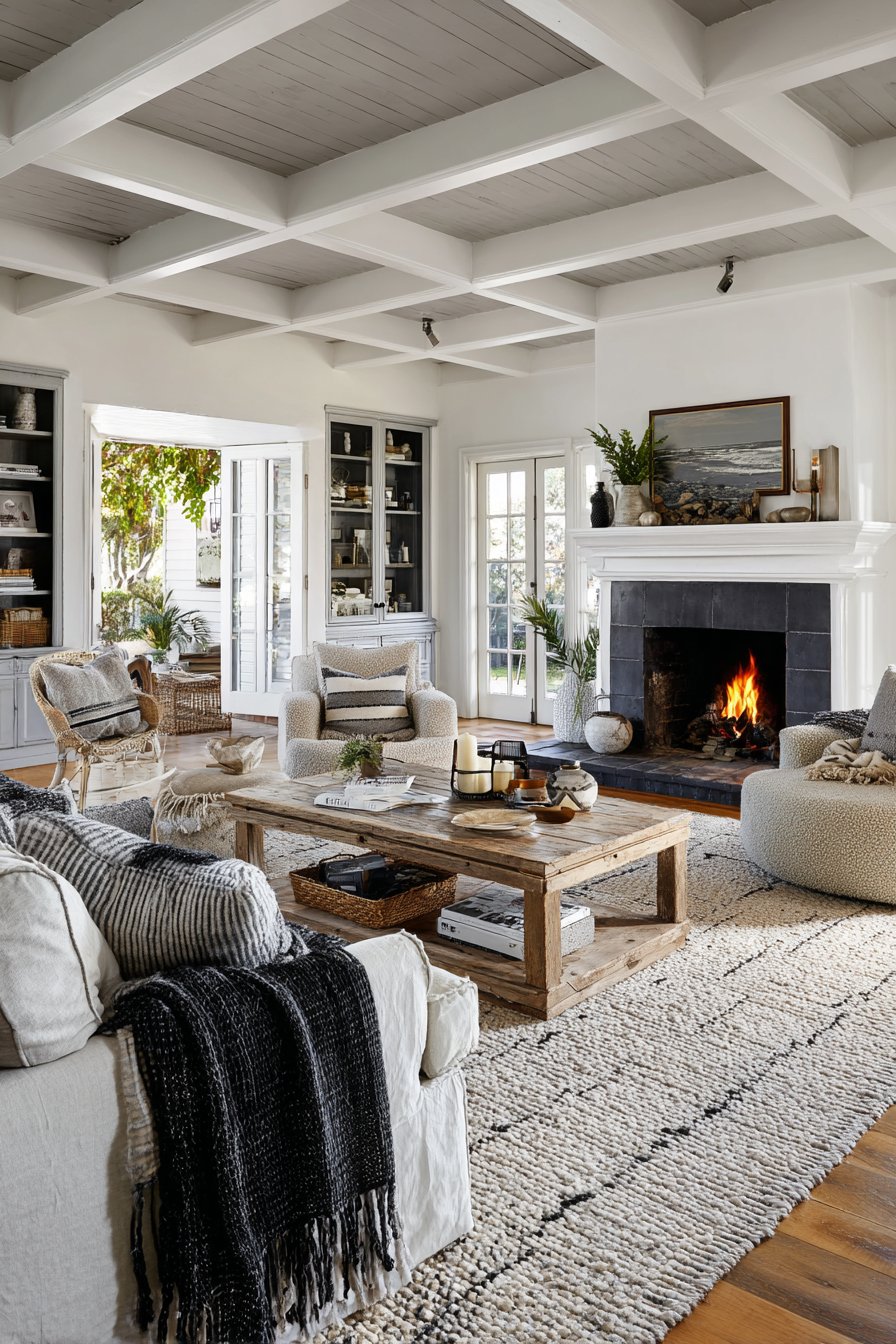
Soft furnishings are your primary defense against a cold, echo-y interior. Hard floors, bare walls, and minimal upholstery are the hallmark of a cold room. The opposite of this — layered, plush soft furnishings — creates the warmth and coziness that black-and-white rooms desperately need.
Start with a generous rug that is large enough to anchor your seating area. A common mistake is choosing a rug that is too small, which makes the room feel disconnected and the seating area feel like an island in a cold expanse. Aim for a rug that sits under the front legs of all major seating pieces at minimum.
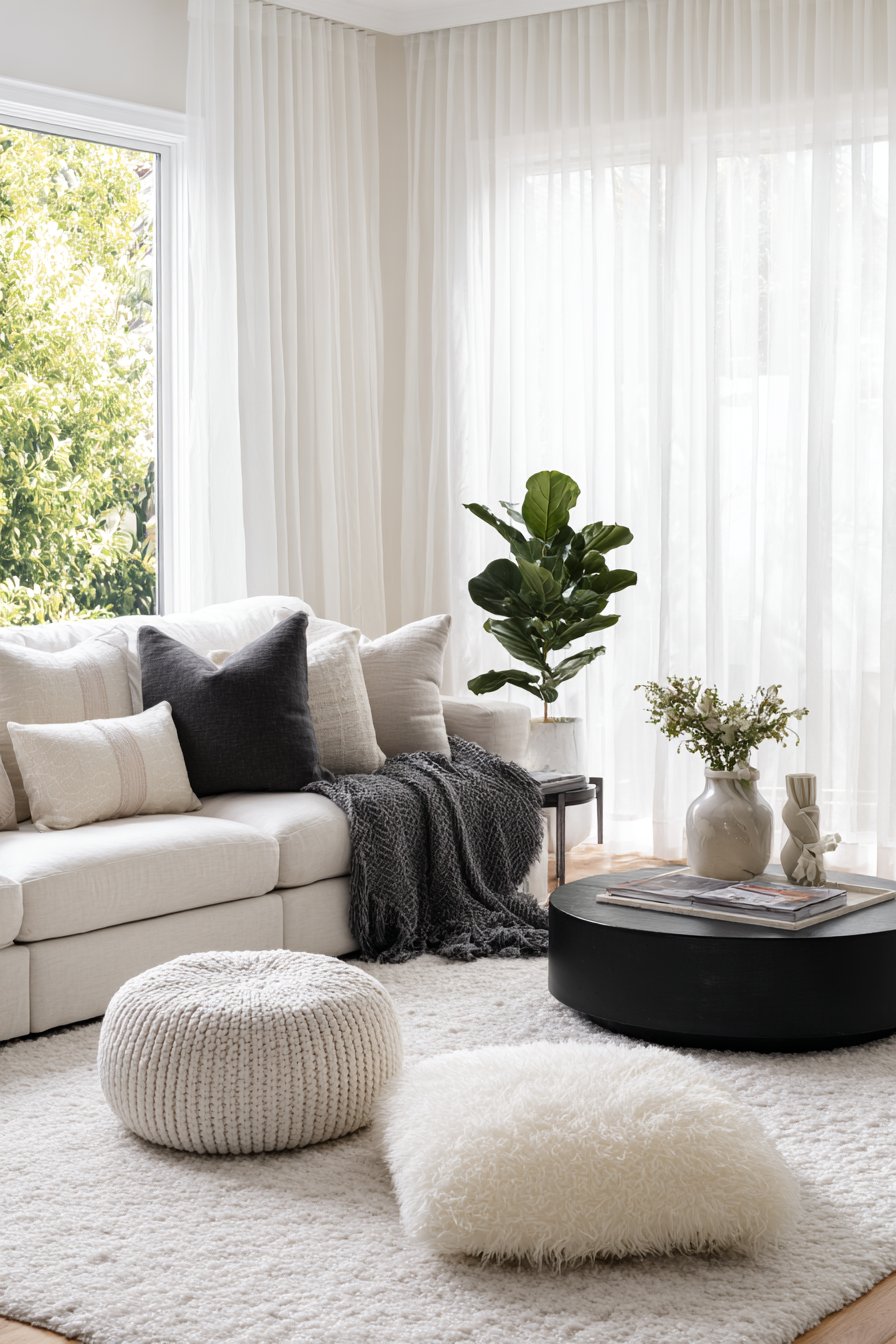
Beyond the rug, pile on the cushions and throws without apology. A sofa with four to six cushions of varying sizes and textures immediately reads as warm and inviting. A folded throw draped casually over an armrest communicates comfort. These simple textile additions cost relatively little but transform the emotional quality of the space dramatically.
- Choose a rug large enough to sit under the front legs of all seating
- Layer two rugs for a bohemian warmth — a flat-weave under a high-pile
- Add a minimum of four cushions to a standard two-seat sofa
- Vary cushion sizes between 18-inch, 20-inch, and 24-inch for visual interest
- Keep at least one throw blanket visible on sofas or armchairs at all times
- Upholster key seating pieces in tactile fabrics like velvet, bouclé, or linen
7. Art and Contrast on the Walls
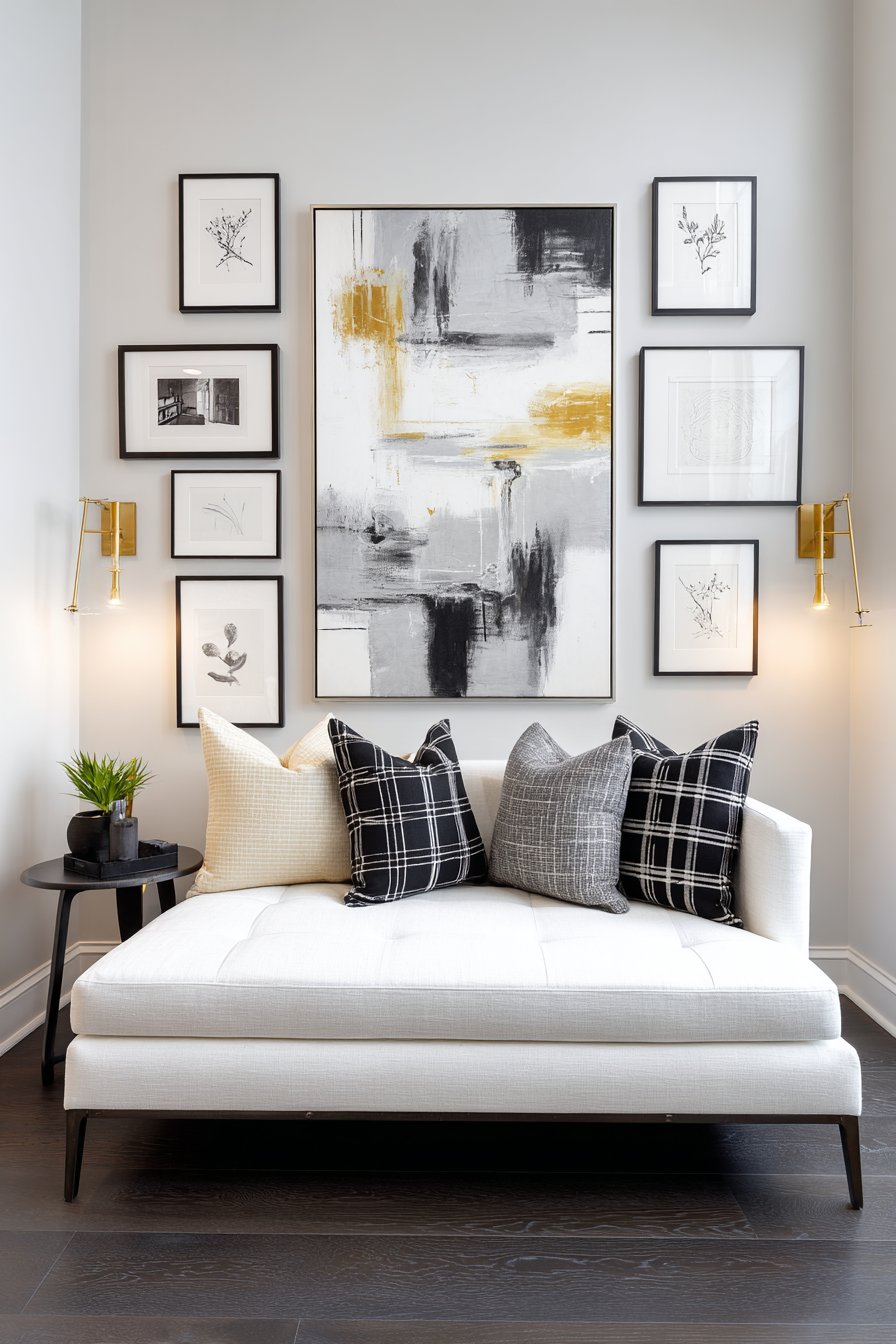
Bare white walls are one of the fastest ways to make a black-and-white room feel cold and unfinished. While the palette naturally lends itself to monochromatic art, adding some warmth and life through your wall decor choices is essential for a finished, inviting interior.
Consider oversized artwork with organic shapes, warm tones, or rich textures. Abstract paintings with gestural brushwork, botanical prints, or photography with warm tonal ranges all work beautifully in this context. The art does not need to match the palette exactly — in fact, art that introduces a hint of warmth will enrich the overall composition.
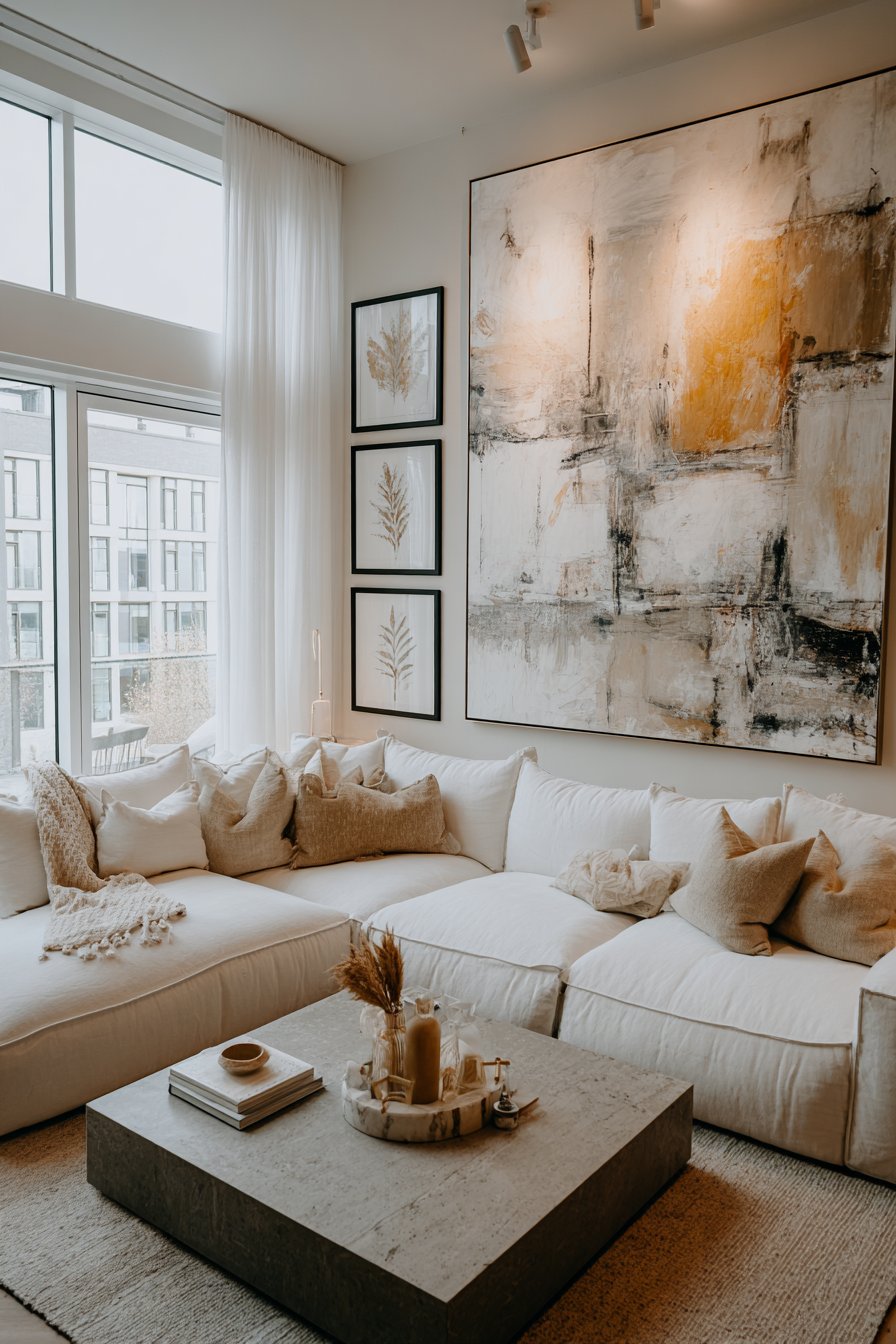
Gallery walls offer another powerful strategy. A curated gallery arrangement mixing frames in black, white, and warm gold creates visual interest and scale that immediately warms a blank wall. Vary the frame sizes and orientations, and mix photography with illustrations or abstract pieces for a collected, personal feel.
- Hang at least one piece of oversized artwork to anchor the main wall
- Choose art with organic shapes, gestural marks, or warm photographic tones
- Create a gallery wall using a mix of black, white, and gold frames
- Include at least one piece with botanical or nature-inspired imagery
- Position art at eye level — the center of the piece at 57 to 60 inches from the floor
- Consider wall sconces or picture lights above key pieces for a gallery effect
8. Plants and Natural Elements
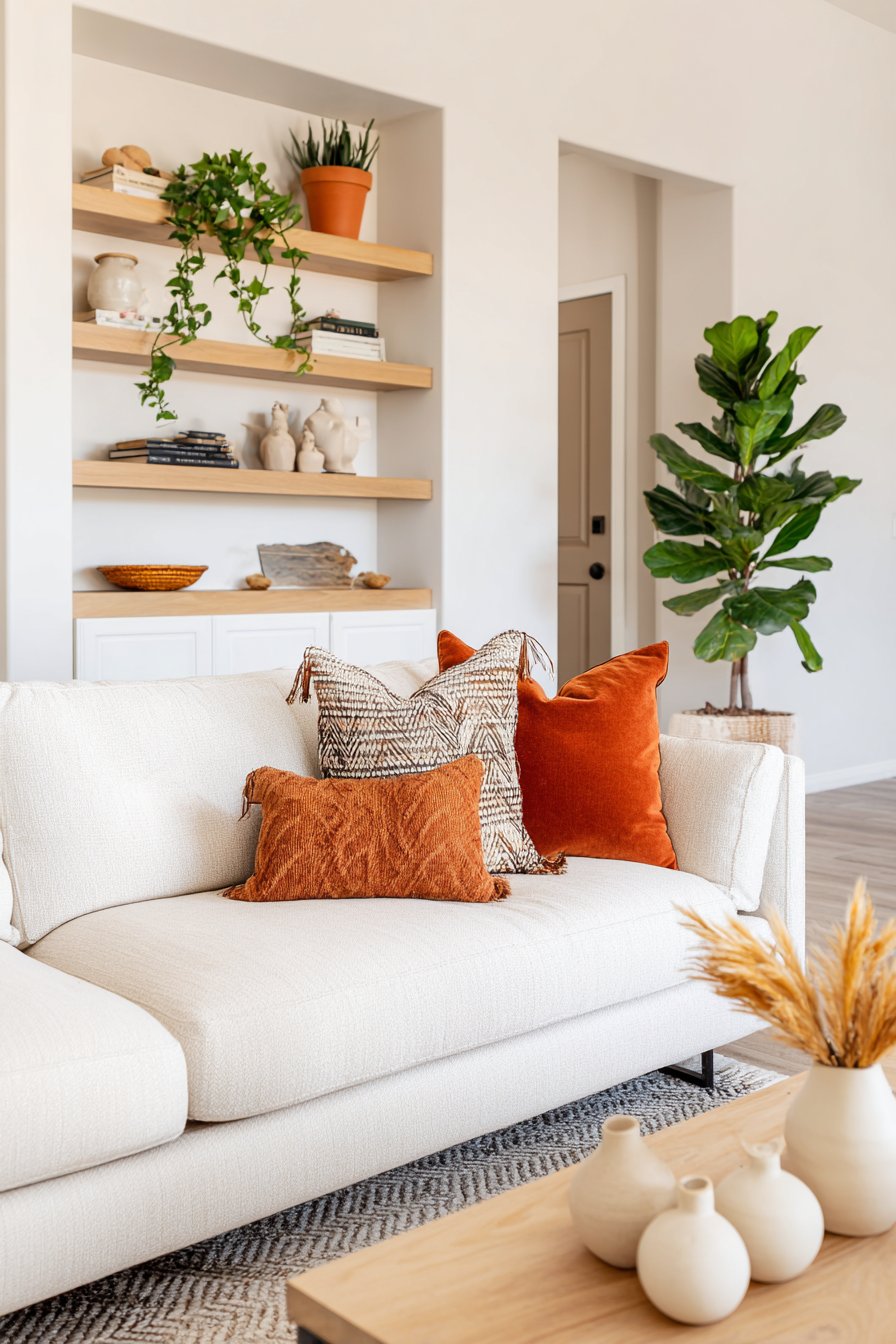
Biophilic design is the practice of incorporating nature into interior spaces, and it is one of the most effective ways to warm up a black-and-white room. Plants introduce organic color, life, movement, and a primal sense of comfort that no manufactured material can replicate.
The rich green tones of foliage contrast beautifully with both black and white, creating a tricolor palette that feels sophisticated rather than complex. A large fiddle-leaf fig, a trailing pothos, or a cluster of smaller plants on a shelf all work within the high-contrast framework while adding undeniable warmth and vitality.
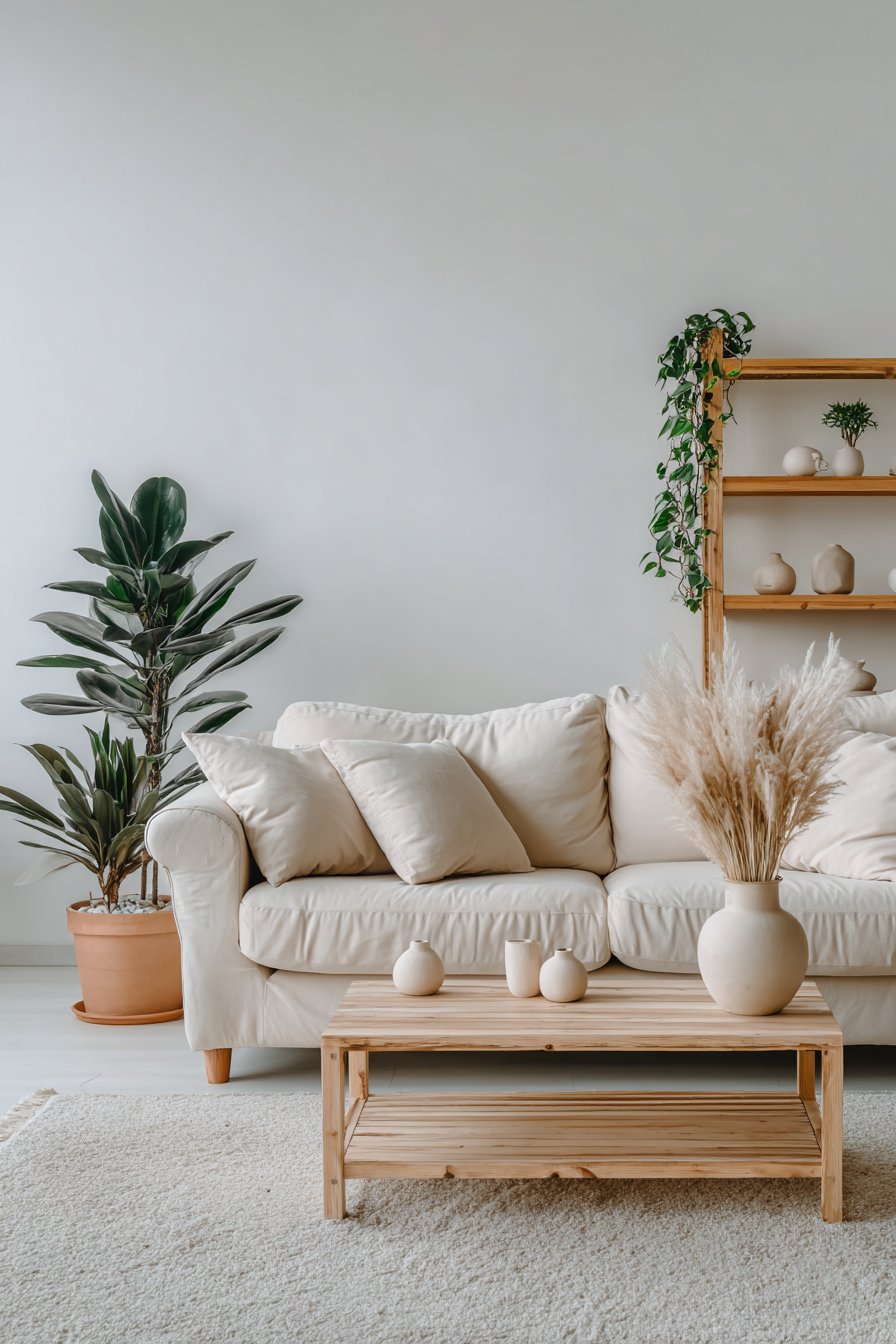
Beyond plants, consider other natural elements such as dried pampas grass, stones, branches, or ceramic objects with an earthy quality. These elements connect the interior to the natural world and introduce the kind of organic imperfection that makes a room feel lived-in and human rather than cold and sterile.
- Introduce at least one large floor plant such as a fiddle-leaf fig or monstera
- Cluster smaller plants on shelving or side tables for visual variety
- Use ceramic planters in warm earth tones — terracotta, sand, or cream
- Add a vase of dried pampas grass or eucalyptus for organic texture
- Consider a moss wall panel or framed botanical artwork as alternatives
- Rotate seasonal blooms in white vases for fresh organic color
9. Consider Scale and Proportion Carefully
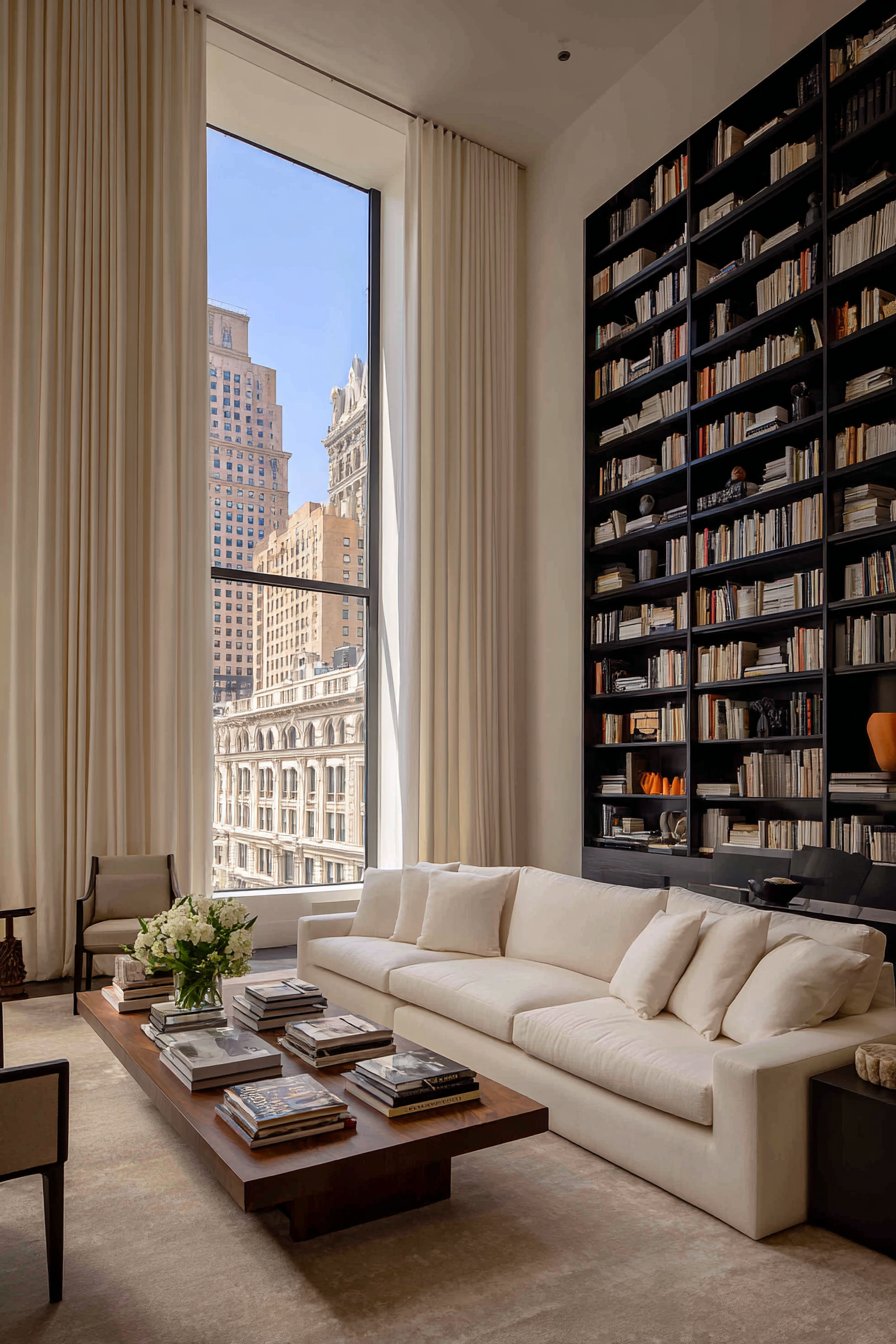
Scale misjudgments are one of the most common reasons black-and-white rooms feel cold and unwelcoming. Furniture that is too small for the space creates visual emptiness, which translates emotionally to coldness. Getting scale right is foundational to creating a warm, cohesive interior.
Choose furniture that fills the space confidently. A sofa that floats in the middle of a large room, surrounded by visible floor on all sides, will always feel cold and disconnected. Pull seating toward the center, close the gaps between pieces, and choose a coffee table that is roughly two-thirds the length of your sofa for proper proportion.
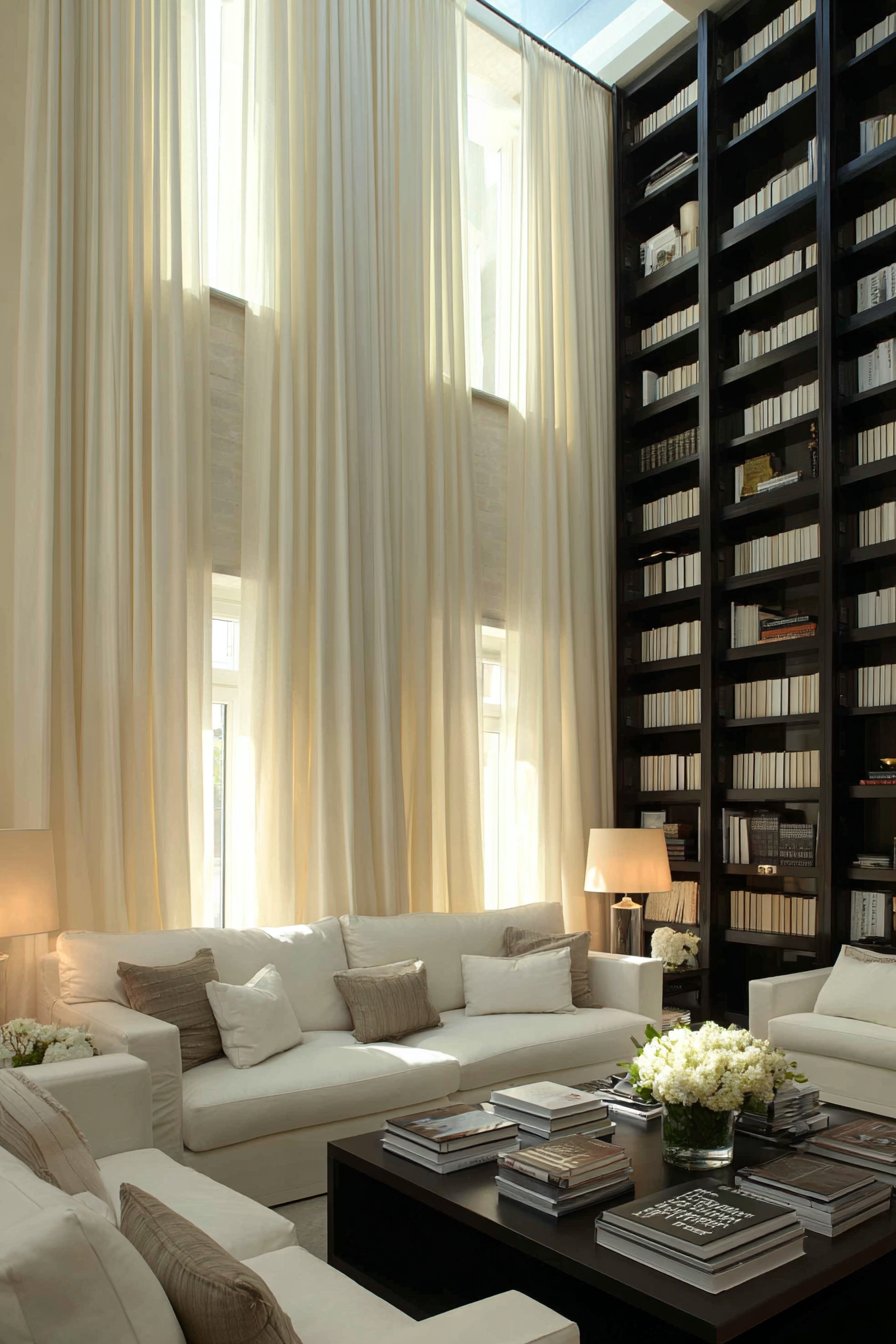
Vertical scale matters equally. In rooms with high ceilings, tall bookcases, floor-to-ceiling curtains, and large art will prevent the room from feeling cavernous and cold. Low, horizontal furniture against high walls emphasizes empty vertical space, which amplifies the coldness of the palette dramatically.
- Choose a sofa length that suits the room — avoid undersizing the main seating
- Position furniture to create intimacy rather than spreading pieces apart
- Use floor-to-ceiling curtains to maximize perceived warmth and height
- Select a coffee table that is two-thirds the sofa length for proper scale
- Fill vertical space with tall bookcases, plants, or art in rooms with high ceilings
- Avoid pushing all furniture against walls, which creates a cold, empty center
10. Window Treatments That Add Softness
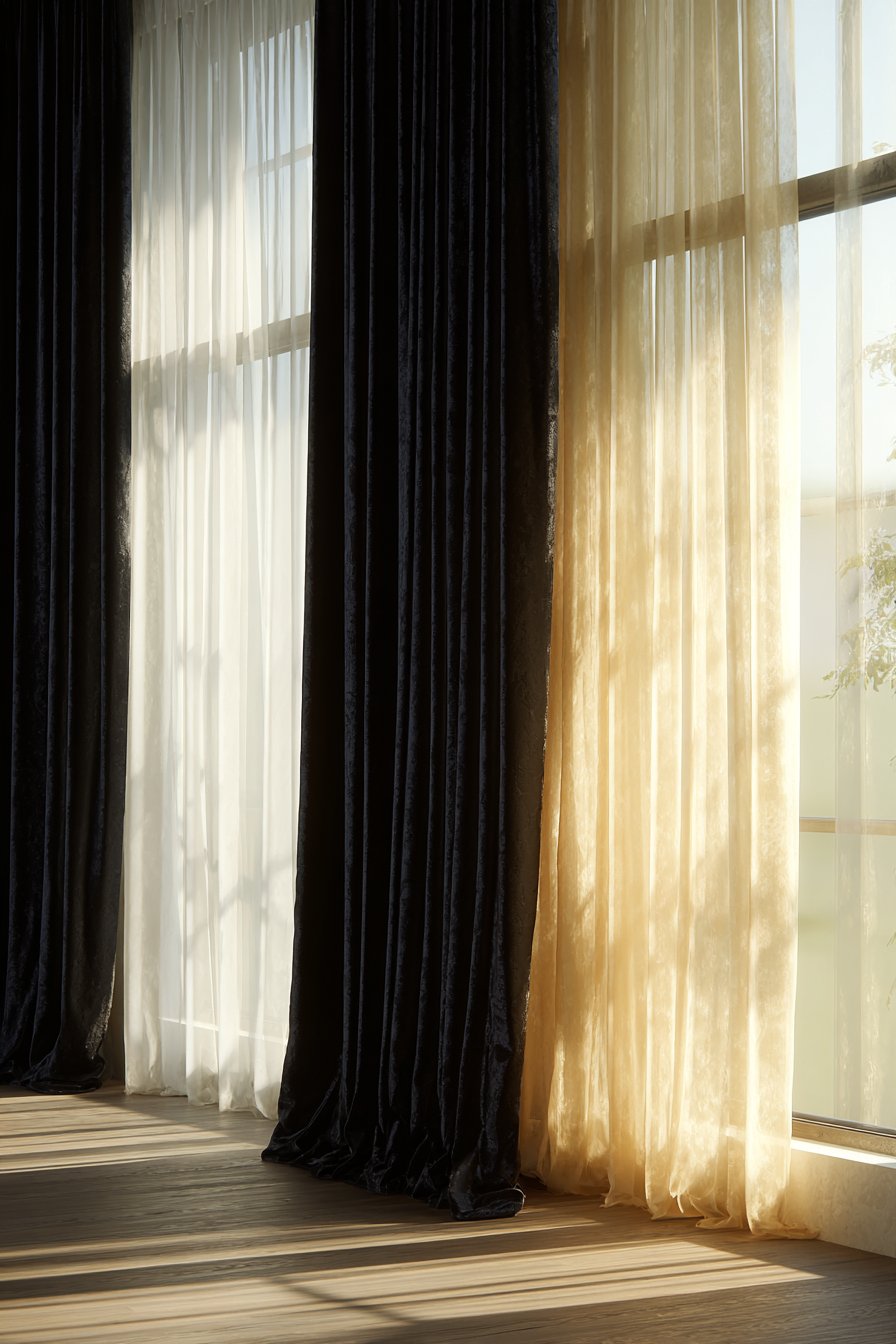
Window treatments are often overlooked in black-and-white rooms, but they have an enormous impact on warmth and softness. Bare windows, while minimal and clean, allow harsh light in and expose the hard architectural lines of the space. The right curtains or drapes transform this completely.
Choose floor-length drapes in soft, tactile fabrics — linen, velvet, or cotton in white, cream, or charcoal. These fabrics pool slightly on the floor and create an immediate sense of luxury and warmth. Hanging curtains higher and wider than the actual window frame also makes windows appear larger and the room more generous.
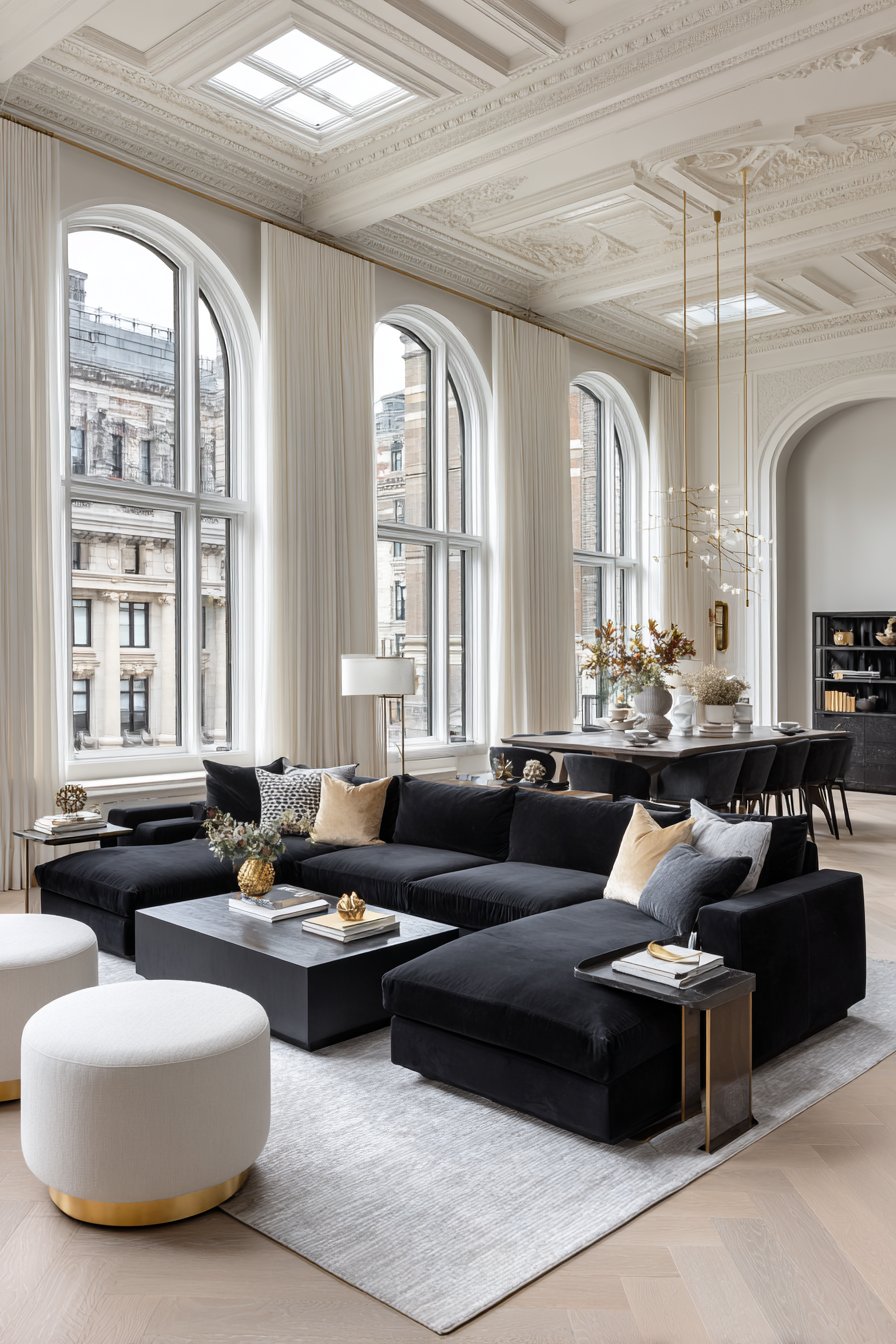
For light control and layering, combine sheer curtains with heavier drapes. The sheer layer diffuses incoming sunlight into a warm, golden glow during the day. The heavier drape layer adds insulation, texture, and visual weight that anchors the window wall and prevents the room from feeling sparse.
- Hang curtain rods six to twelve inches above the window frame for height
- Extend curtain rods six inches beyond the frame on each side for width
- Choose floor-length drapes that skim or gently pool on the floor
- Layer sheer curtains behind heavier drapes for flexible light control
- Choose warm-toned sheers in cream or ivory rather than bright white
- Avoid thin, cheap curtain panels that look limp — invest in good fabric weight
11. Books and Personal Objects
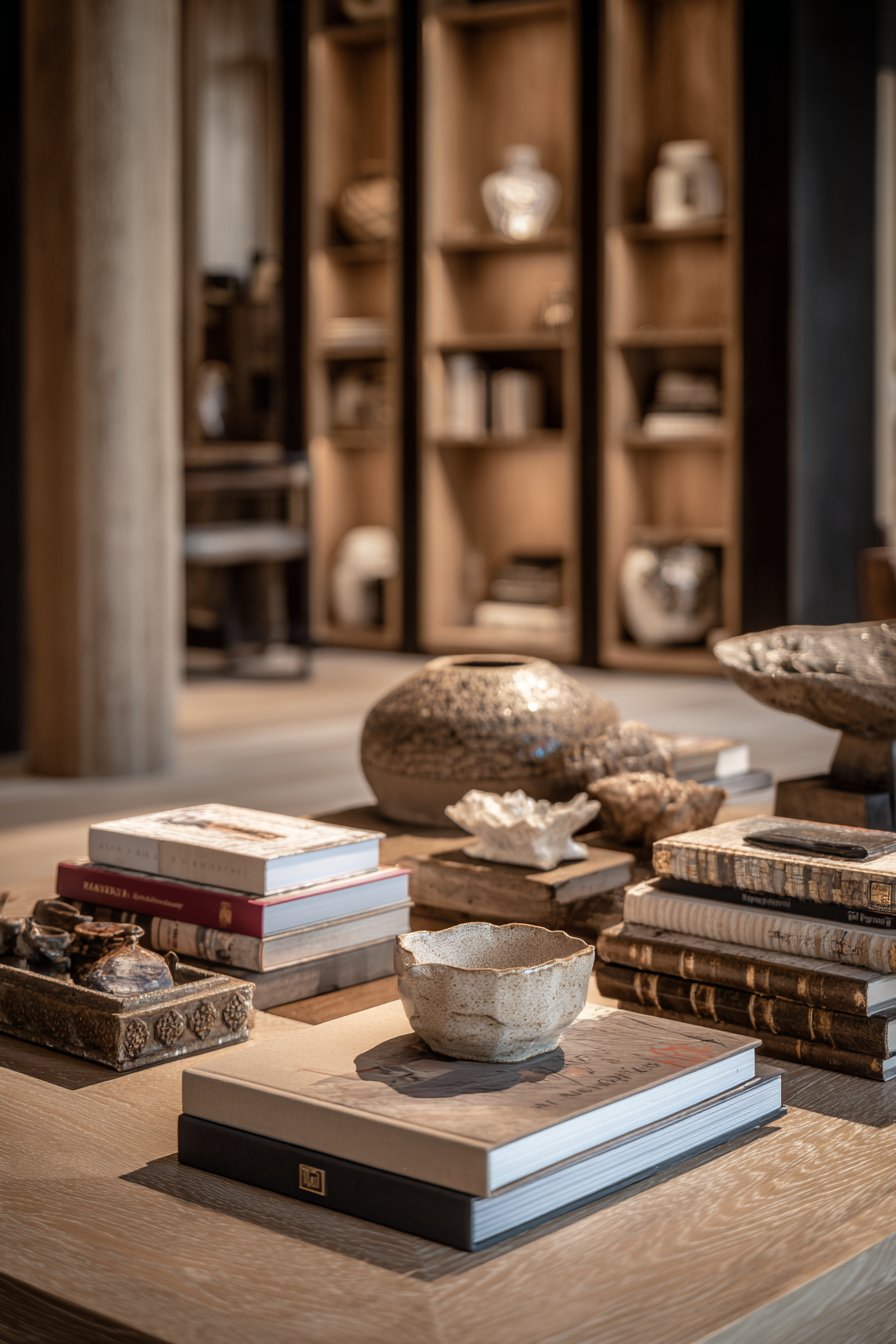
Books and personal objects are among the most powerful warming elements in any interior. They signal that a real person lives in the space, that it has been curated over time, and that it holds meaning beyond mere aesthetics. In a black-and-white room, they add color, texture, and human warmth simultaneously.
Arrange books on open shelving or stack them on the coffee table as decorative elements. Books with colorful spines add a surprising warmth to the monochromatic framework. Turned backward to display their white pages, they create a sculptural, textural element that is both modern and warm. Both approaches are valid — choose based on your preference.
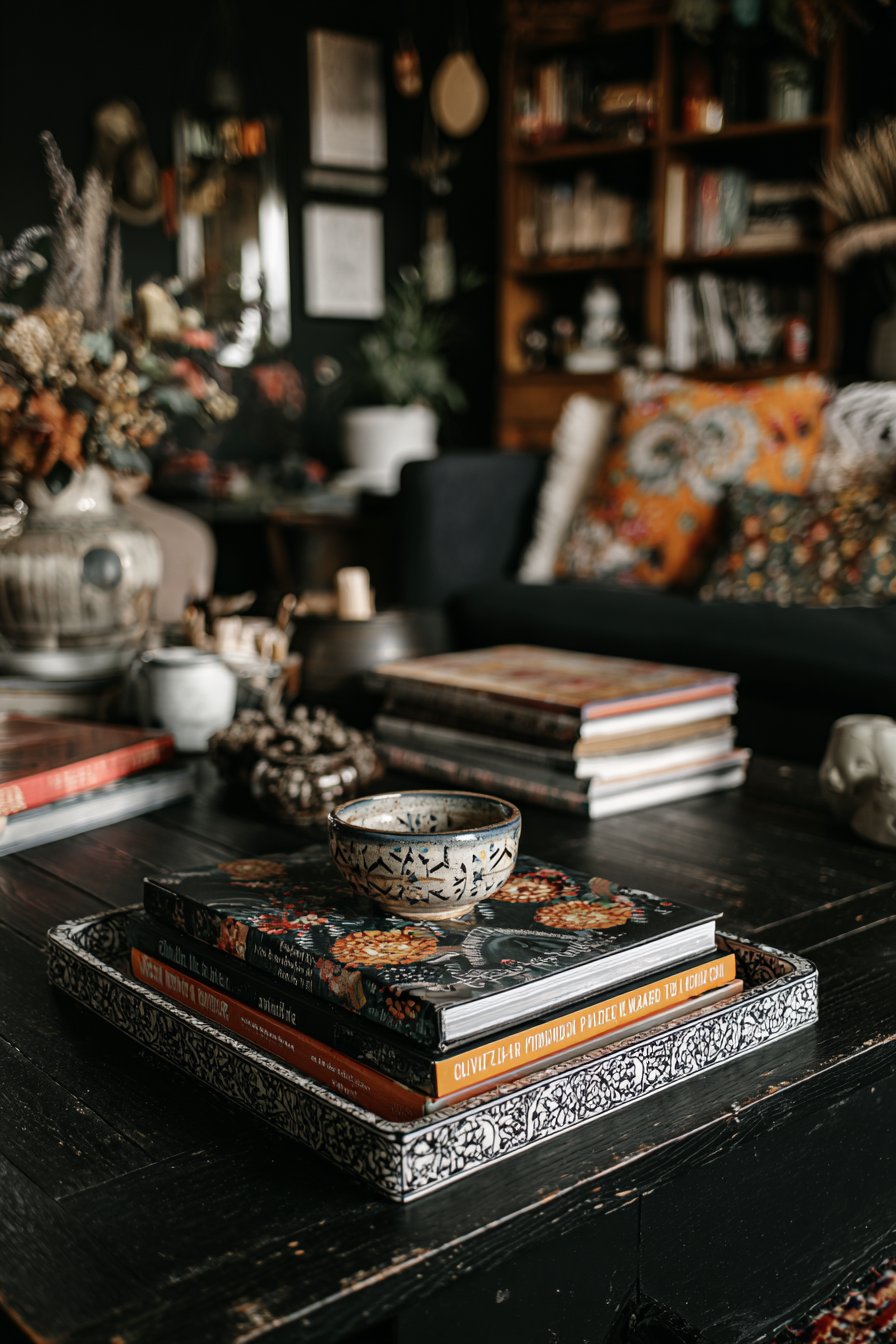
Mix books with personal objects — travel souvenirs, inherited pieces, handmade ceramics, or sculptural objects collected over time. These items tell your story and prevent the room from feeling like a showroom. A perfectly styled room with no personal objects always reads as cold, regardless of how technically correct the design may be.
- Style open shelving with a mix of books, plants, and personal objects
- Stack three to four books on the coffee table for relaxed visual interest
- Display meaningful personal objects — ceramics, sculptures, or travel keepsakes
- Use decorative trays to group small objects for a curated, intentional look
- Vary the heights of objects on shelves to create visual rhythm
- Avoid overly sparse shelves — negative space is good, but emptiness is cold
12. Scent and Sensory Warmth
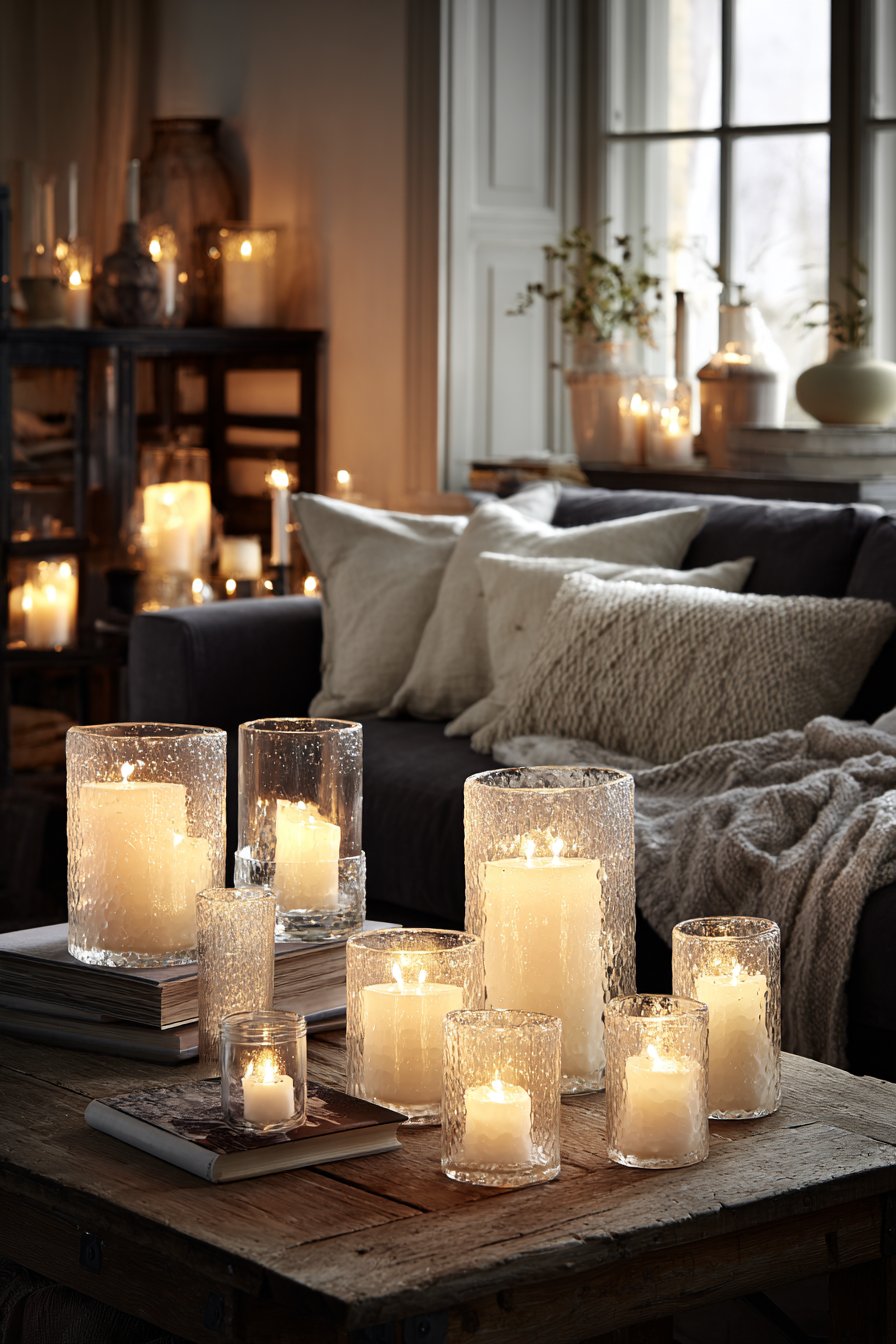
Scent is underestimated in interior design but it is genuinely powerful. A room that smells warm and inviting — cedar, vanilla, sandalwood, amber — activates a sensory warmth that supports and enhances the visual warmth you have built through design. This dimension of interior warmth is often the difference between a room that people enjoy visiting and one they leave quickly.
Use candles, diffusers, or room sprays in warm, woody, or spiced scent families. Place them at key moments in the room — on the coffee table, on shelving, in a window alcove. Choose candles in glass or ceramic vessels that also function as decorative objects. The flicker of real candlelight adds an additional layer of visual warmth that few design elements can replicate.
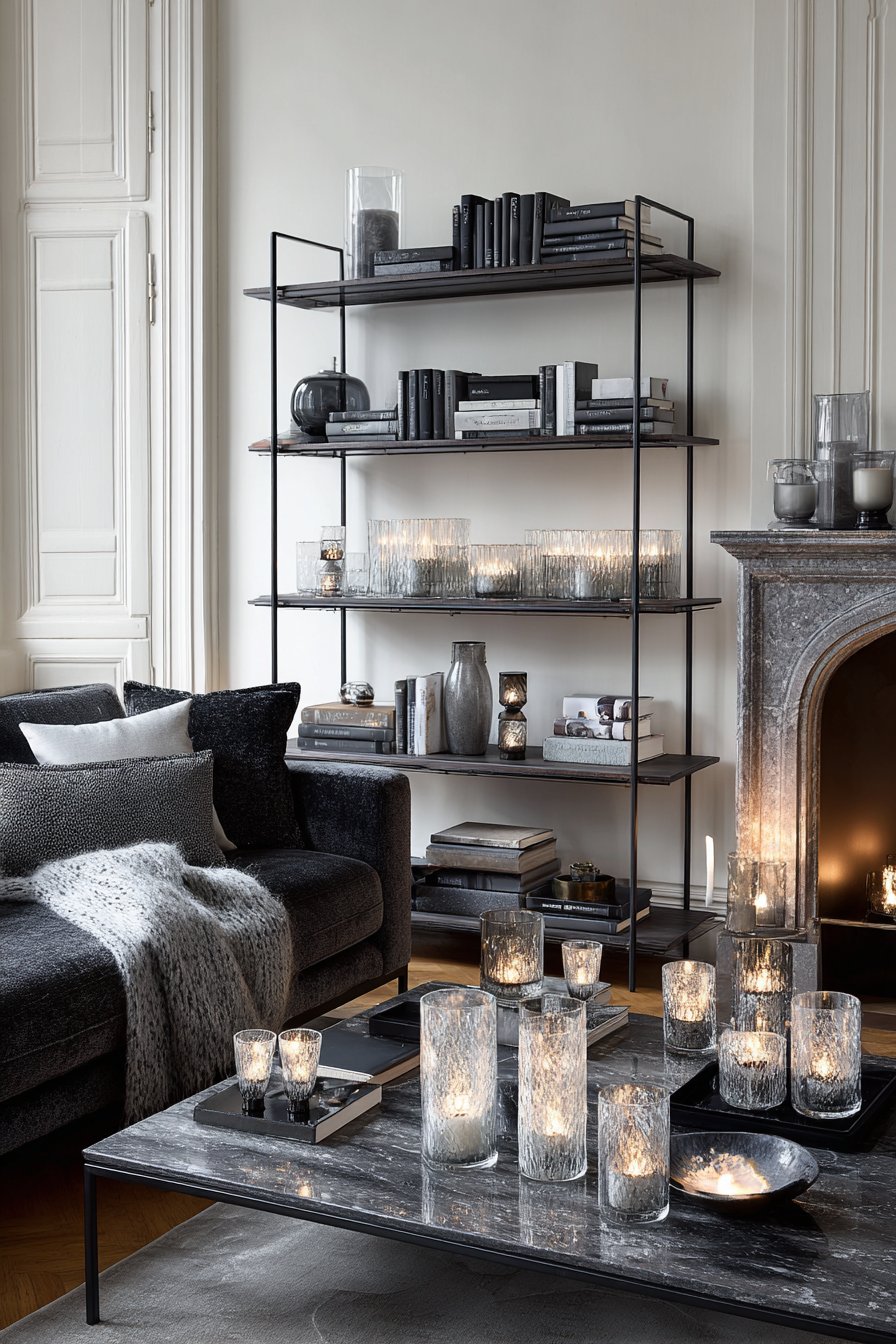
Fireplaces, both real and decorative, provide the ultimate combination of visual and sensory warmth. A fireplace — even an electric or bioethanol model — becomes the instant focal point of a black-and-white room. It introduces warmth at every sensory level simultaneously and anchors the room with a natural gathering point.
- Place scented candles on the coffee table and bookshelves as part of the styling
- Choose warm scent families: cedar, amber, sandalwood, vanilla, or warm spice
- Use a consistent scent throughout the room rather than mixing competing scents
- Consider a bioethanol fireplace if a real fireplace is not possible
- Use ceramic or glass candle vessels that double as decorative objects
- Refresh scent regularly — a stale room undermines all other warmth efforts
Conclusion
A black-and-white living room has enormous potential to be one of the most beautiful, sophisticated, and inviting spaces in a home. The secret lies in understanding that warmth is multidimensional — it comes from texture, material, light, scale, scent, and human presence, not from color alone. When you layer these elements thoughtfully, the stark contrast of black and white becomes a backdrop for richness rather than a recipe for coldness.
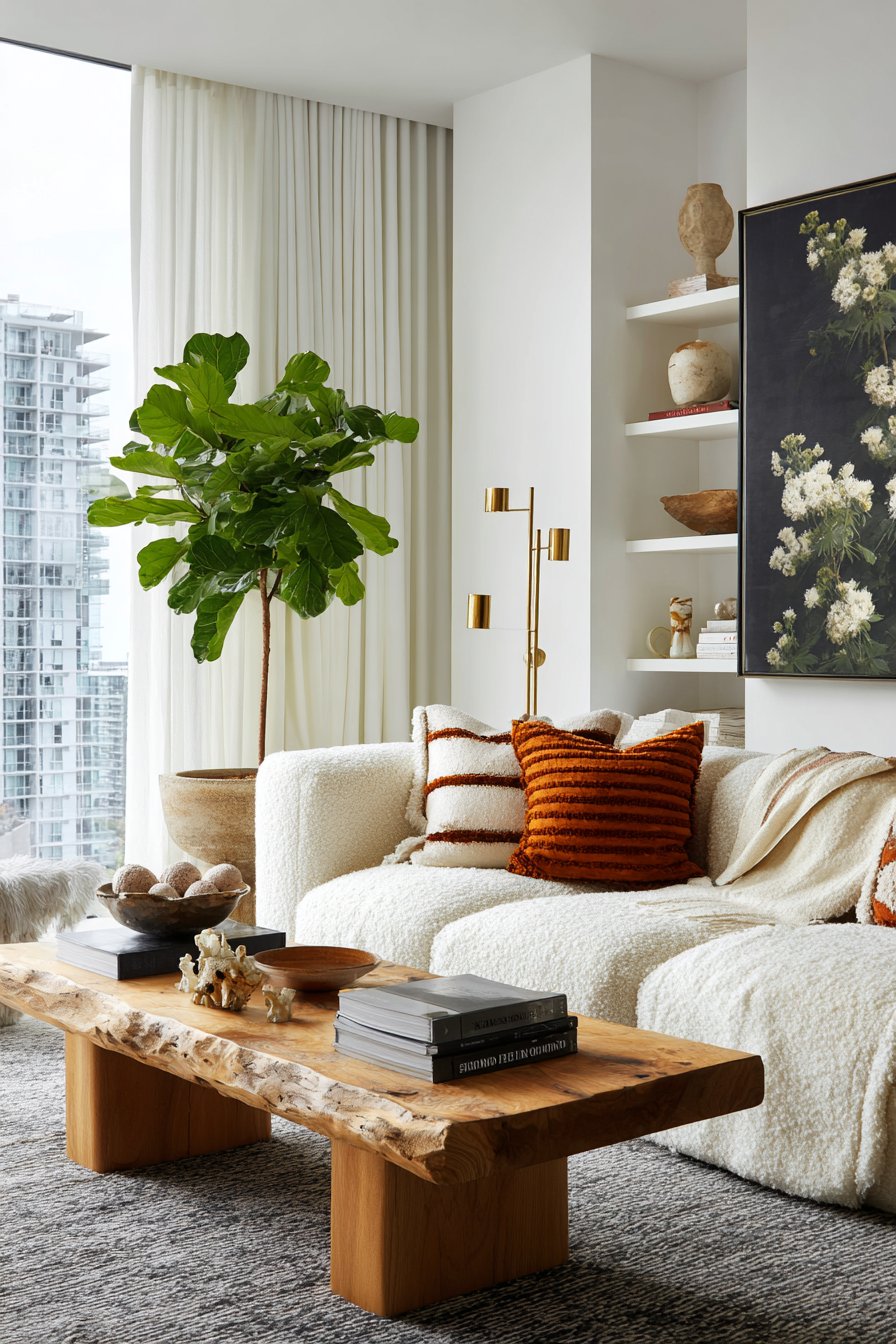
Begin with one or two changes from this article and build gradually. Every layer you add — a warm rug, a wooden table, a brass lamp, a personal object — shifts the room closer to that ideal balance of bold and warm. Design is an evolving process, and the most beautiful rooms are those that reflect the lives and personalities of the people who inhabit them. Trust your instincts, invest in quality where it counts, and allow your black-and-white living room to become a space you genuinely love coming home to.
"As an Amazon Associate, I earn from qualifying purchases."
