
Beige bedrooms often get dismissed as boring or uninspired, but this neutral canvas offers incredible potential for creating sophisticated, layered spaces. The challenge isn’t the color itself—it’s understanding how to add depth and dimension to prevent that dreaded flat appearance. When styled thoughtfully, beige becomes the foundation for a calming retreat that feels anything but bland.
The secret to a successful beige bedroom lies in strategic layering and intentional contrast. Unlike bolder colors that command attention immediately, beige requires careful attention to texture, tone variation, and visual interest. This subtlety allows you to create a space that feels both timeless and personal, adapting easily to changing tastes without requiring complete overhauls.
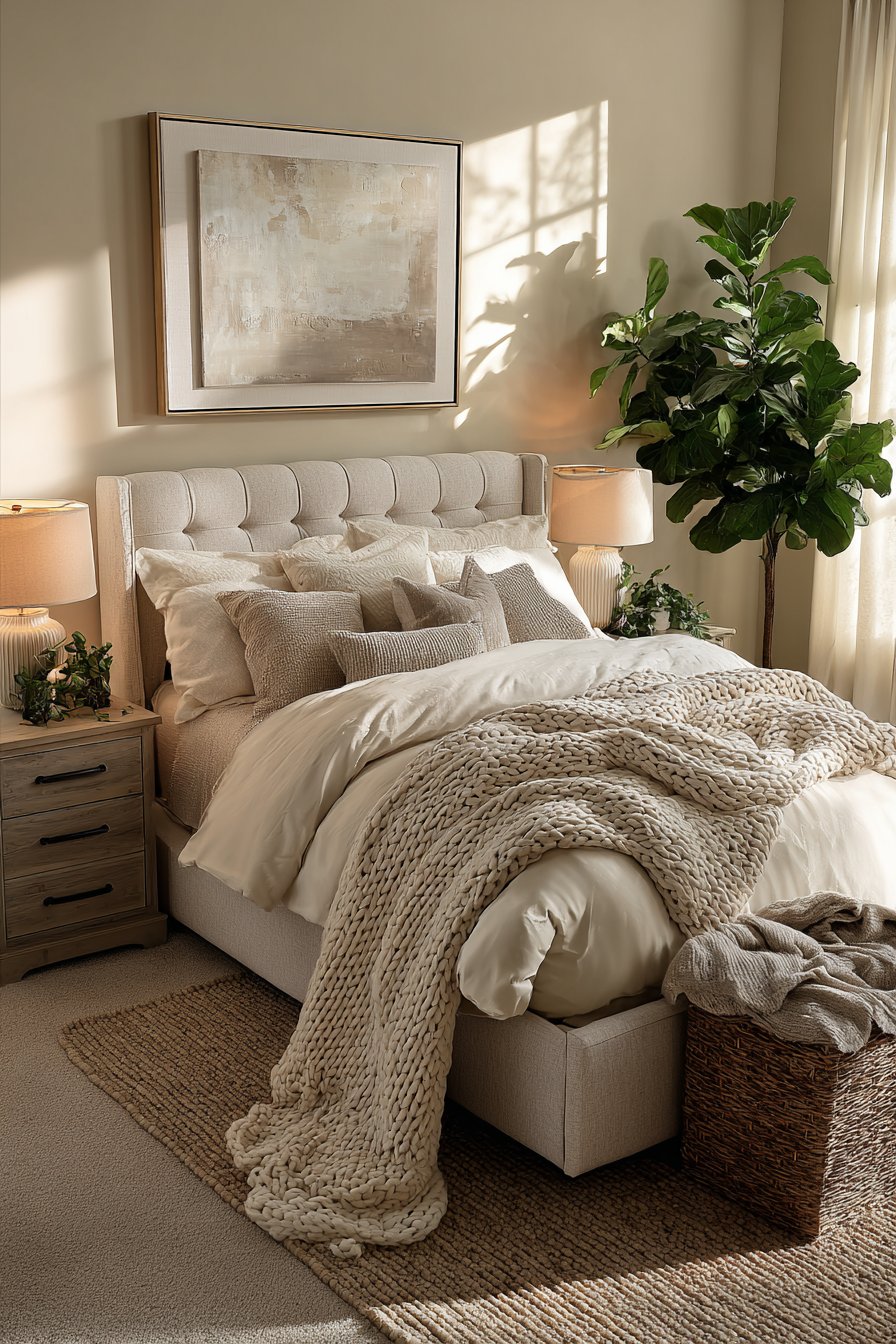
Throughout this guide, we’ll explore proven techniques for transforming a beige bedroom from flat to fabulous. From texture layering and tonal contrast to strategic accent placement and lighting design, you’ll discover how to maximize the potential of this versatile neutral while creating a space that feels warm, inviting, and decidedly not boring.
1. Layer Multiple Beige Tones for Depth
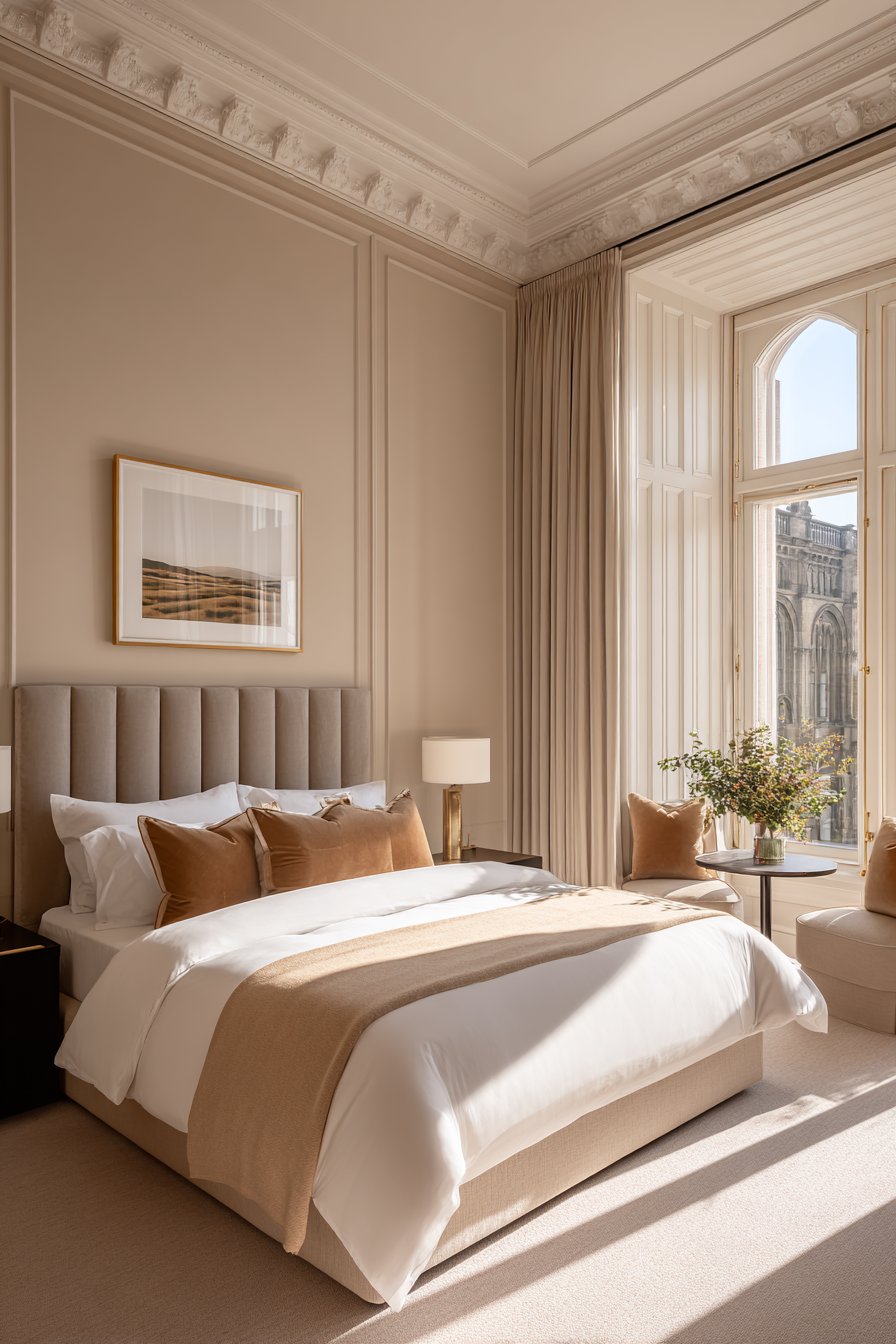
The biggest mistake in beige bedrooms is using a single shade throughout the space. Tonal variation creates visual depth that prevents the monotonous appearance many people fear. Think of beige not as one color but as a spectrum ranging from warm sand and honey to cool taupe and greige.
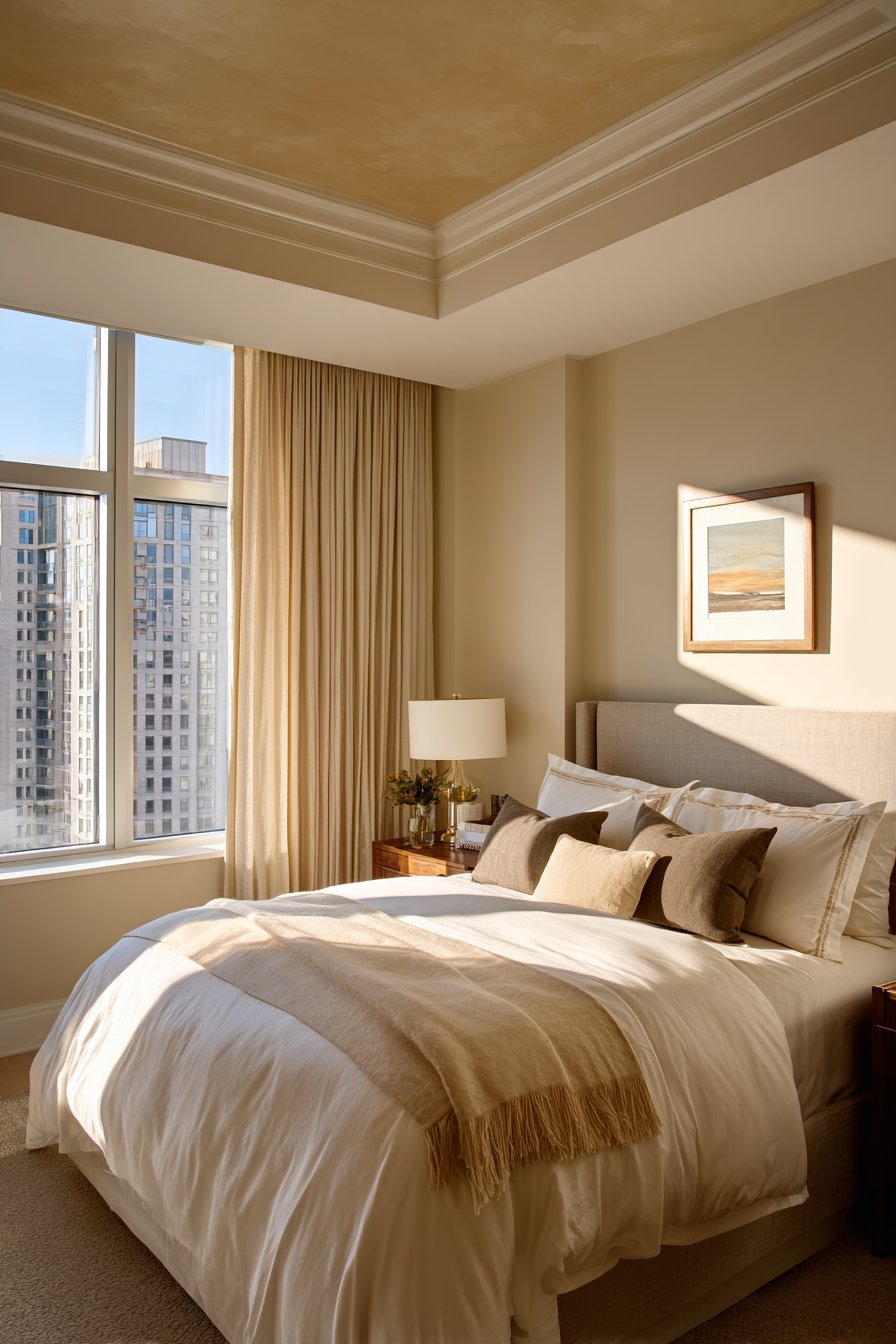
Start by selecting three to five different beige tones across various surfaces. Your walls might feature a mid-tone beige, while bedding incorporates both lighter cream and deeper tan shades. This approach creates subtle shadows and highlights that add dimension without introducing contrasting colors. The eye travels across these variations, perceiving richness instead of flatness.
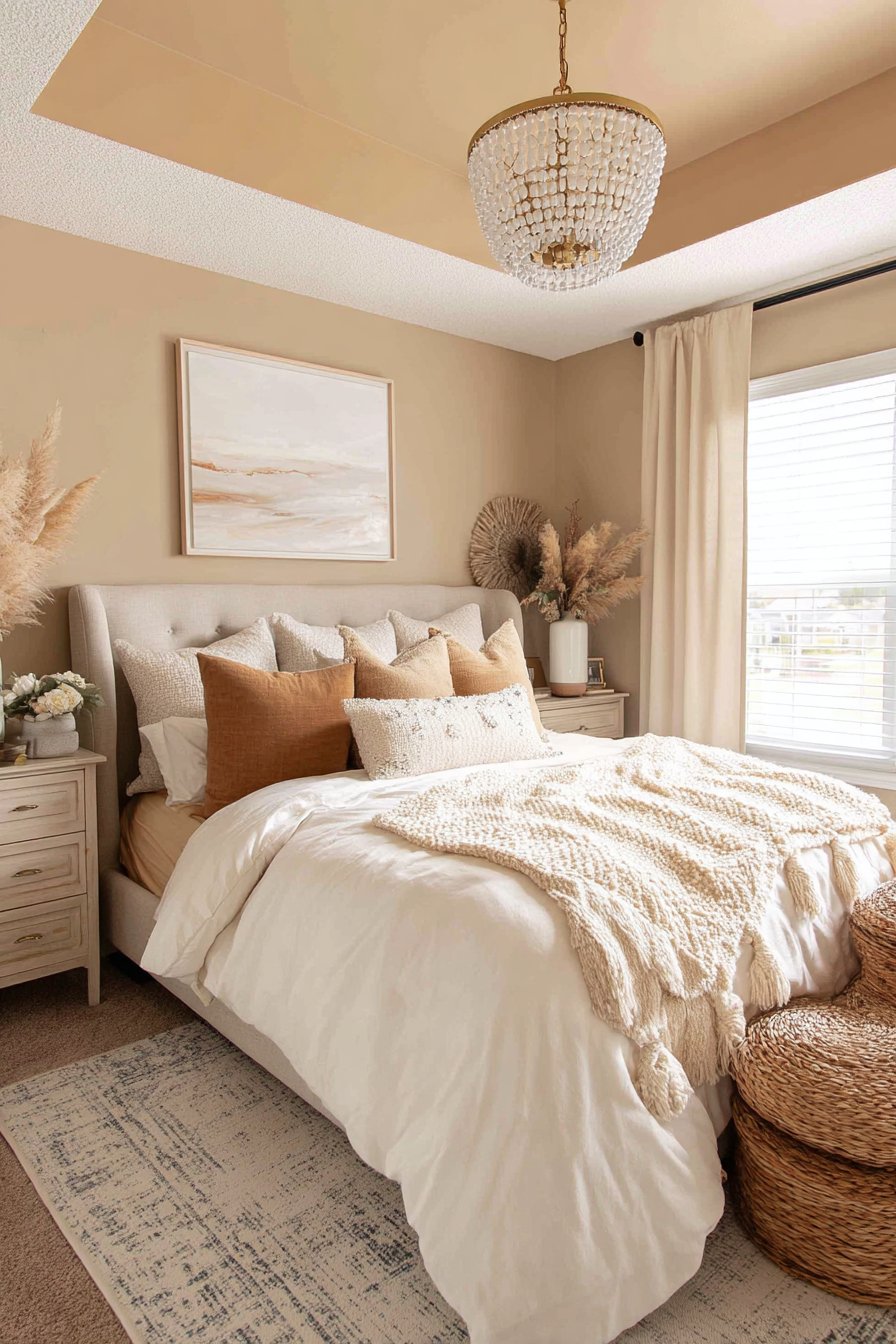
Consider the undertones carefully when selecting your beige palette. Some beiges lean pink, others yellow, and some gray. Mixing undertones haphazardly creates muddiness, so commit to either warm or cool beiges throughout the space. This cohesion ensures your layered tones complement rather than clash with each other.
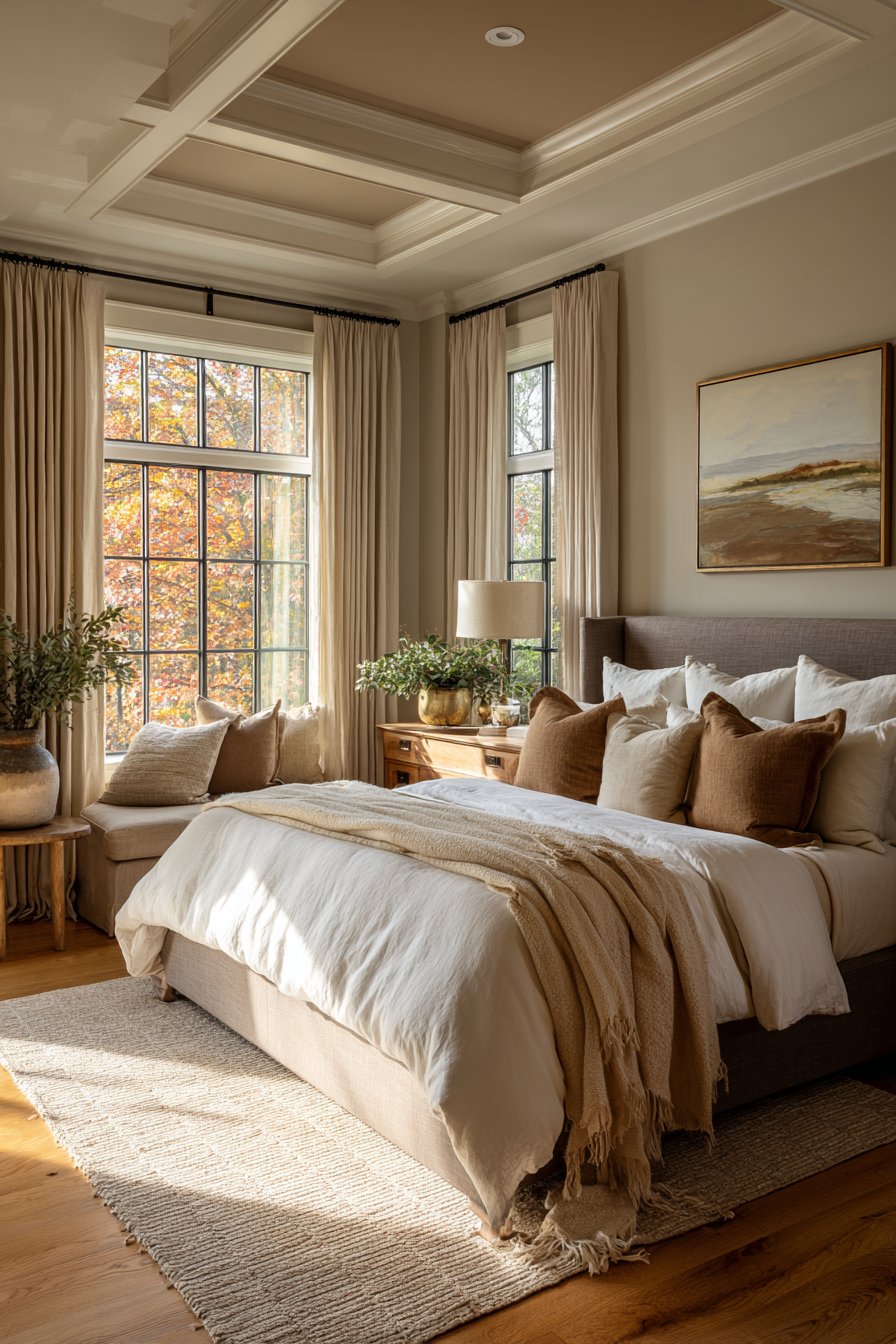
- Choose a dominant beige for walls, then select two lighter and two darker variations
- Test paint samples in different lighting conditions before committing to shades
- Use the lightest tones near windows to reflect natural light effectively
- Incorporate deeper beiges in areas farther from light sources for shadow definition
- Consider ombre effects with bedding by graduating from light pillows to darker throws
- Reference nature’s beige palette—sand dunes, driftwood, and wheat—for harmonious combinations
2. Introduce Rich Textures Throughout the Space
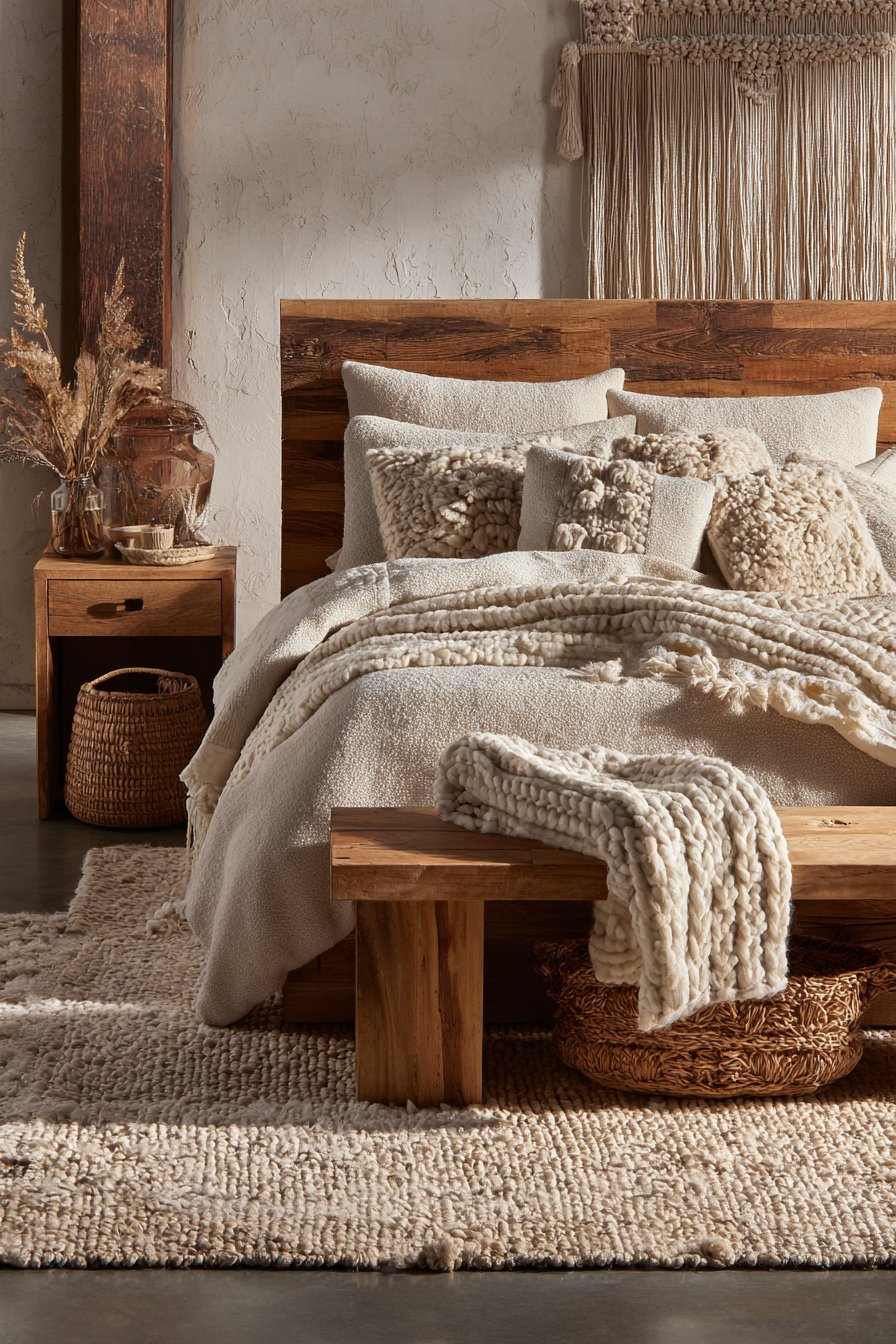
Texture transforms flat beige into a tactile experience that engages multiple senses. When color provides minimal contrast, texture creates the visual interest necessary to prevent blandness. Different materials catch and reflect light uniquely, adding complexity to your neutral palette without introducing new colors.
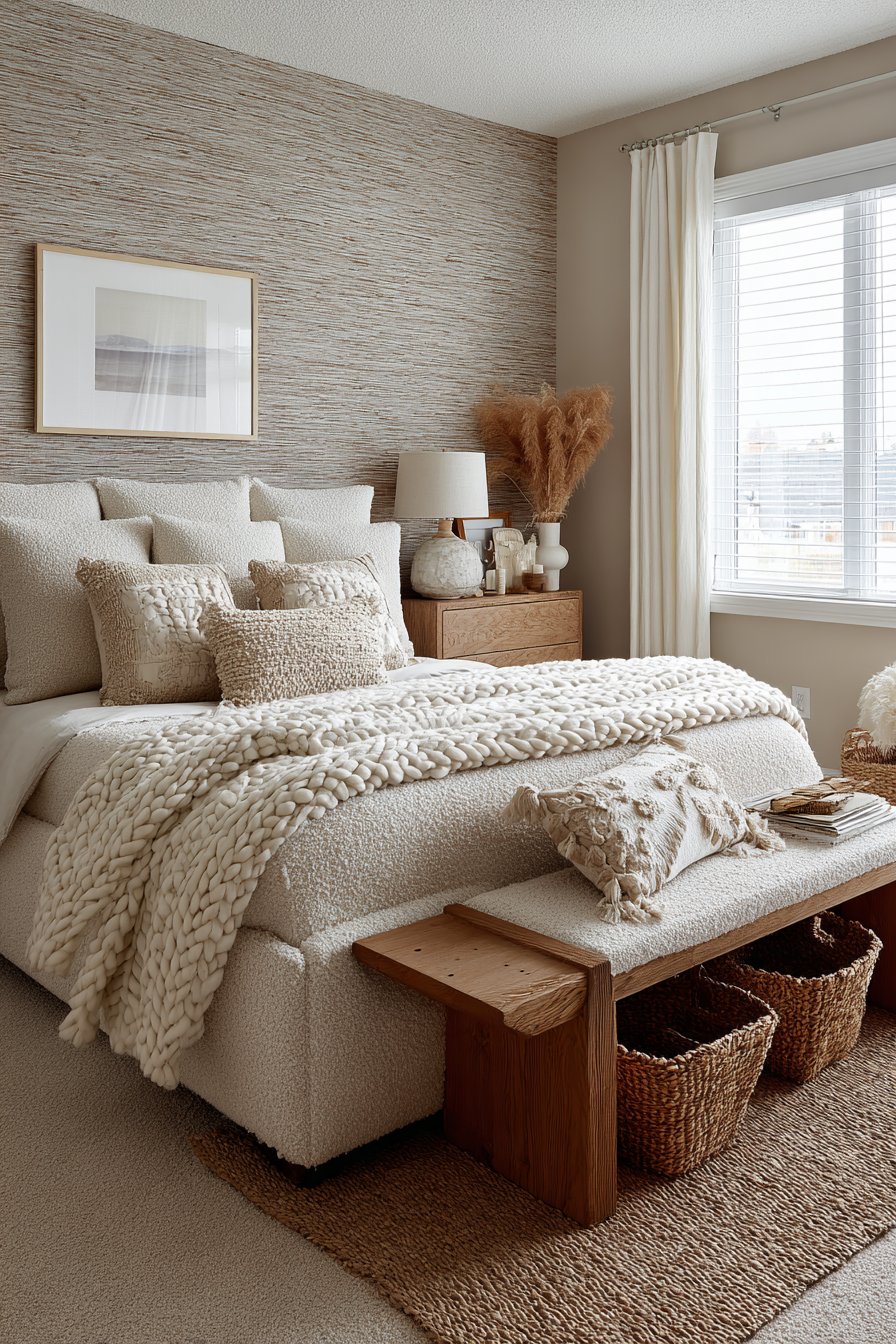
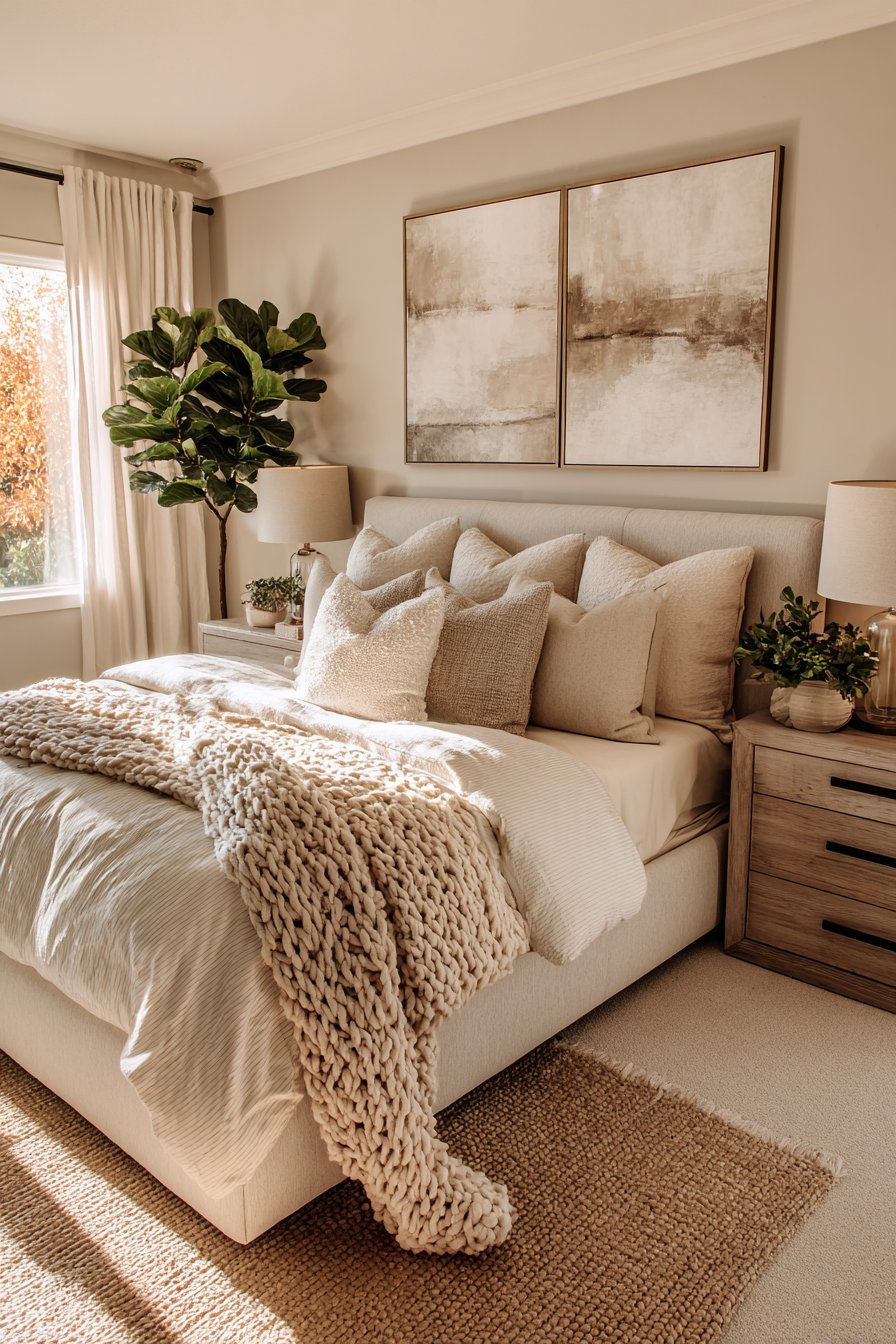
Layer materials with varying surface qualities throughout the bedroom. Pair smooth linen bedding with chunky knit throws, sleek wooden furniture with rough jute rugs, and soft velvet pillows with crisp cotton shams. This textural diversity creates shadows and highlights that give dimension to your beige surfaces.
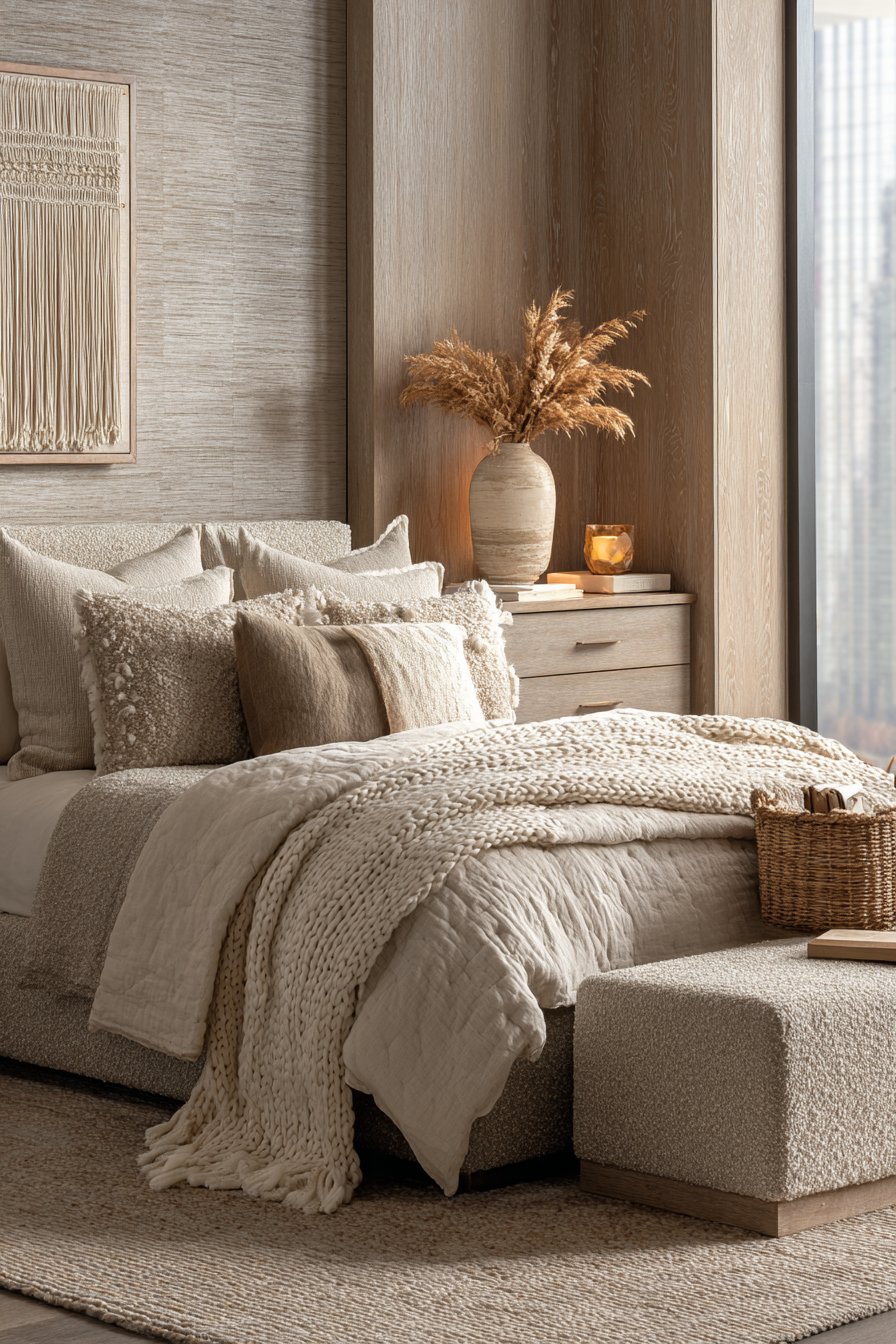
Focus particularly on textiles since bedrooms naturally feature abundant fabric surfaces. Consider adding bouclé furniture, woven wall hangings, embroidered pillows, or quilted coverlets. Each texture interacts with light differently, creating movement and visual interest that flat surfaces simply cannot achieve.
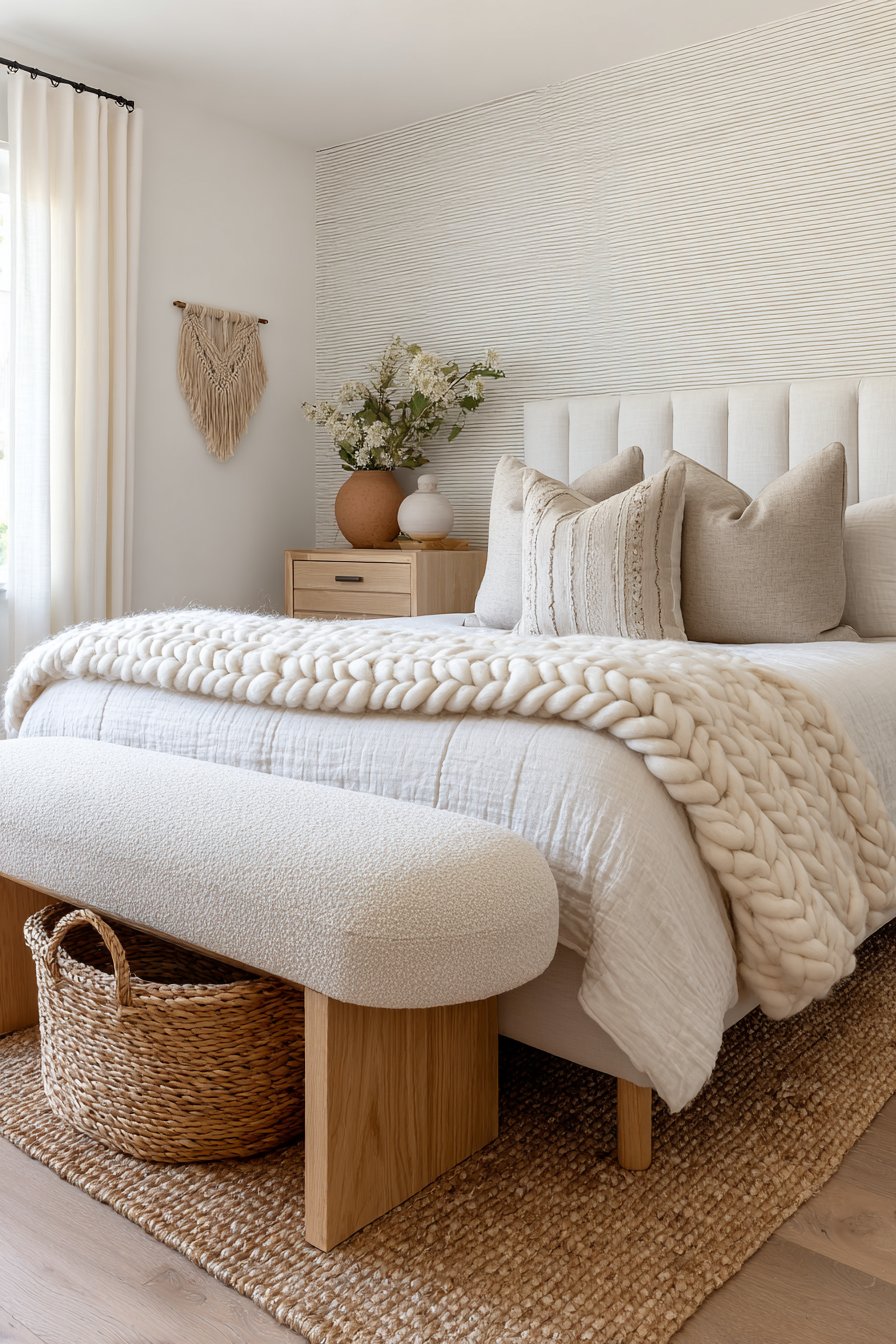
- Incorporate at least five different textures: linen, wool, wood, metal, and natural fiber
- Add a textured accent wall using grasscloth wallpaper or wood paneling
- Choose furniture with interesting grain patterns or upholstery details
- Layer rugs by placing a textured natural fiber rug under a softer area rug
- Include three-dimensional elements like macramé wall art or carved wood pieces
- Vary pile heights in textiles from flat-weave to high-pile for maximum contrast
3. Add Strategic Dark Accents for Contrast
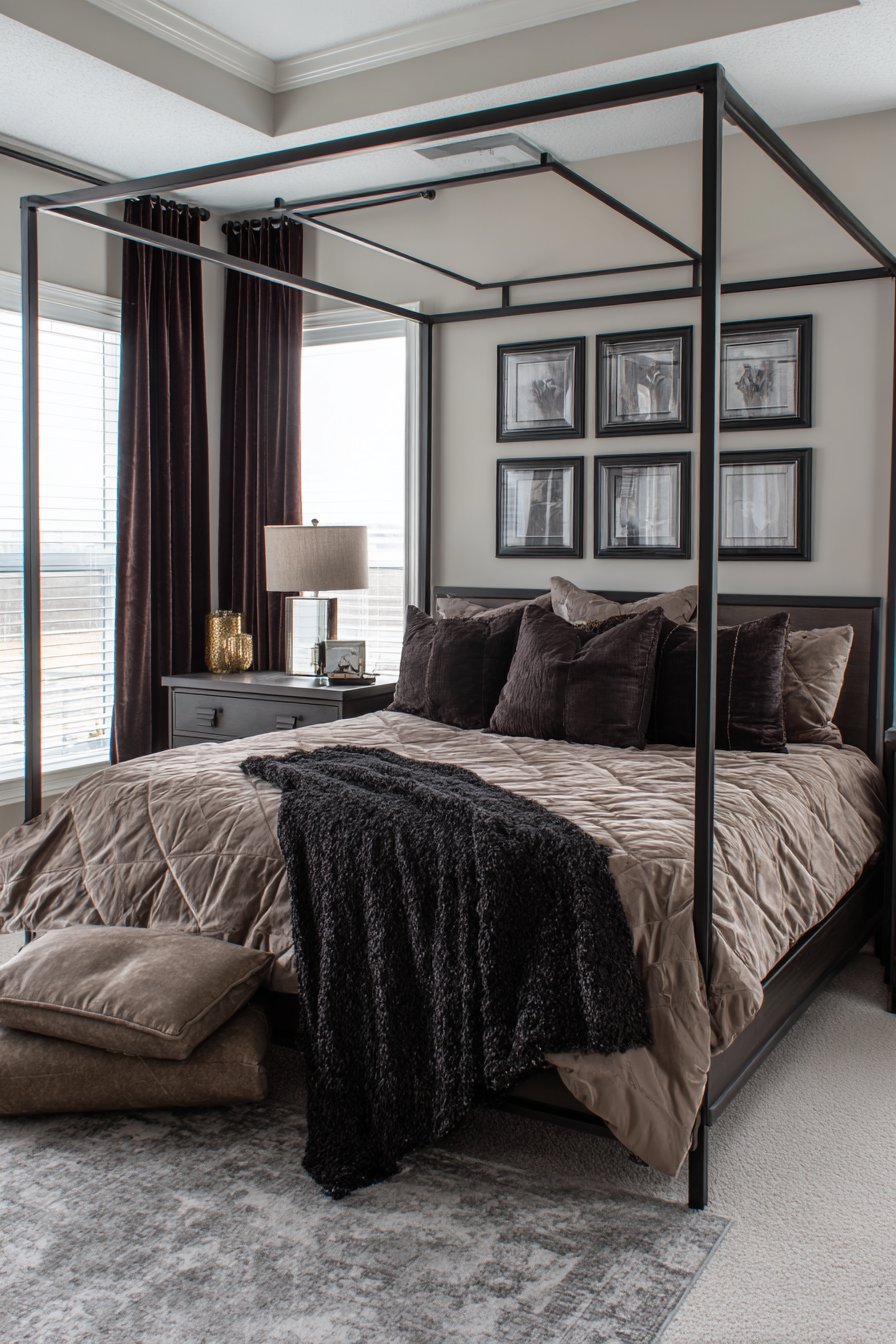
Beige needs visual anchors to prevent floating aimlessly in bland territory. Dark accents provide the contrast necessary to make your neutral palette pop. Black, charcoal, deep brown, or navy elements create definition and prevent the washed-out appearance that plagues poorly styled beige spaces.
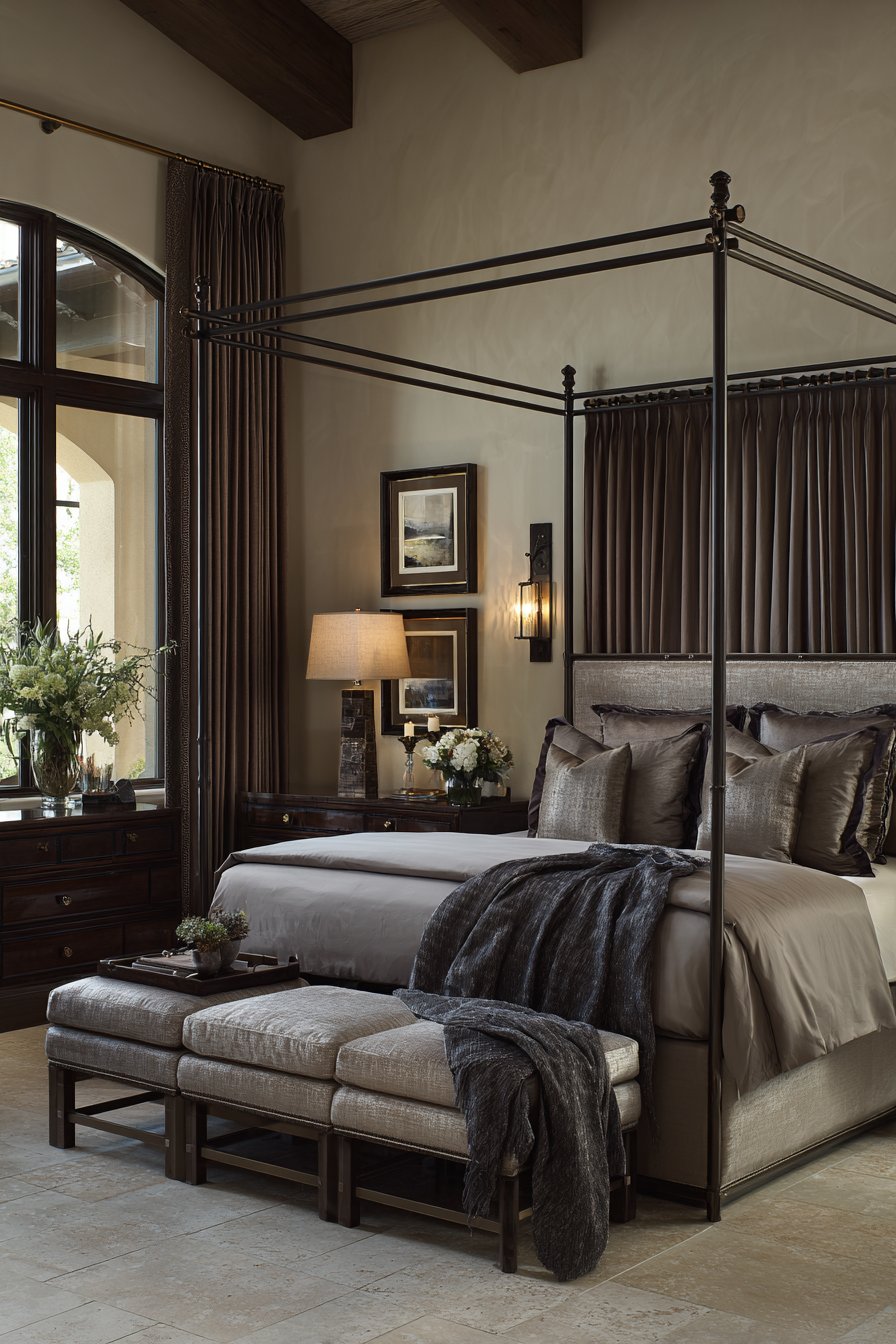
Introduce dark elements through furniture, window treatments, or decorative accessories. A black metal bed frame or dark wood nightstands immediately ground the space and provide focal points for the eye. These contrasting pieces create boundaries and structure within your neutral envelope, adding sophistication and intentionality.
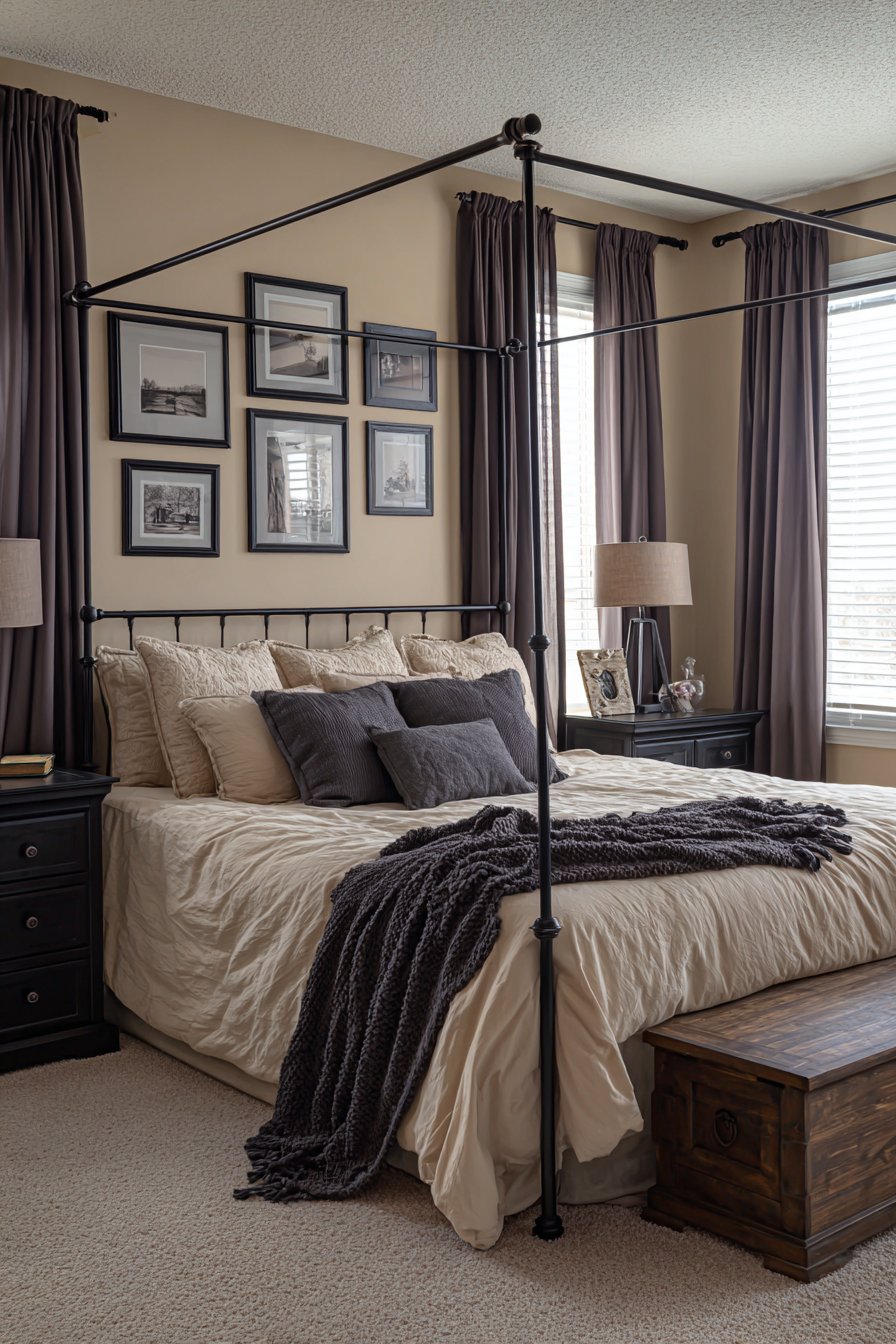
Balance is critical when adding dark accents. Too few and your beige remains flat; too many and you lose the calming neutral atmosphere. Aim for dark elements to comprise roughly fifteen to twenty percent of visible surfaces, distributed throughout the room rather than clustered in one area.
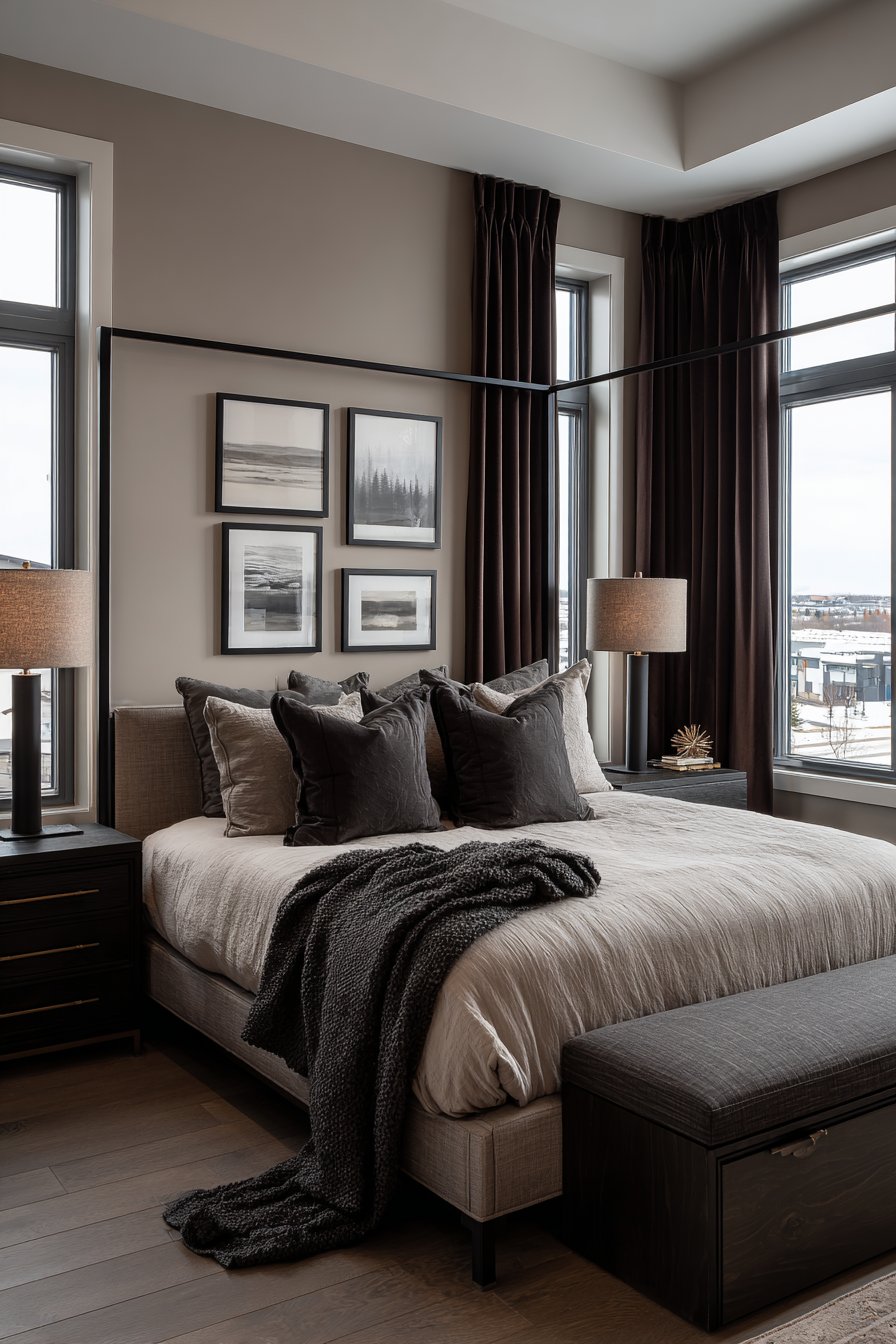
- Incorporate dark picture frames to create gallery walls with visual punch
- Choose black or dark bronze hardware for dressers and closet doors
- Add a charcoal throw blanket folded at the foot of the bed
- Select window treatments in deep chocolate or graphite tones
- Include black candlesticks, vases, or table lamps as decorative accents
- Consider a dark accent wall behind the bed for maximum impact
4. Incorporate Natural Elements and Greenery
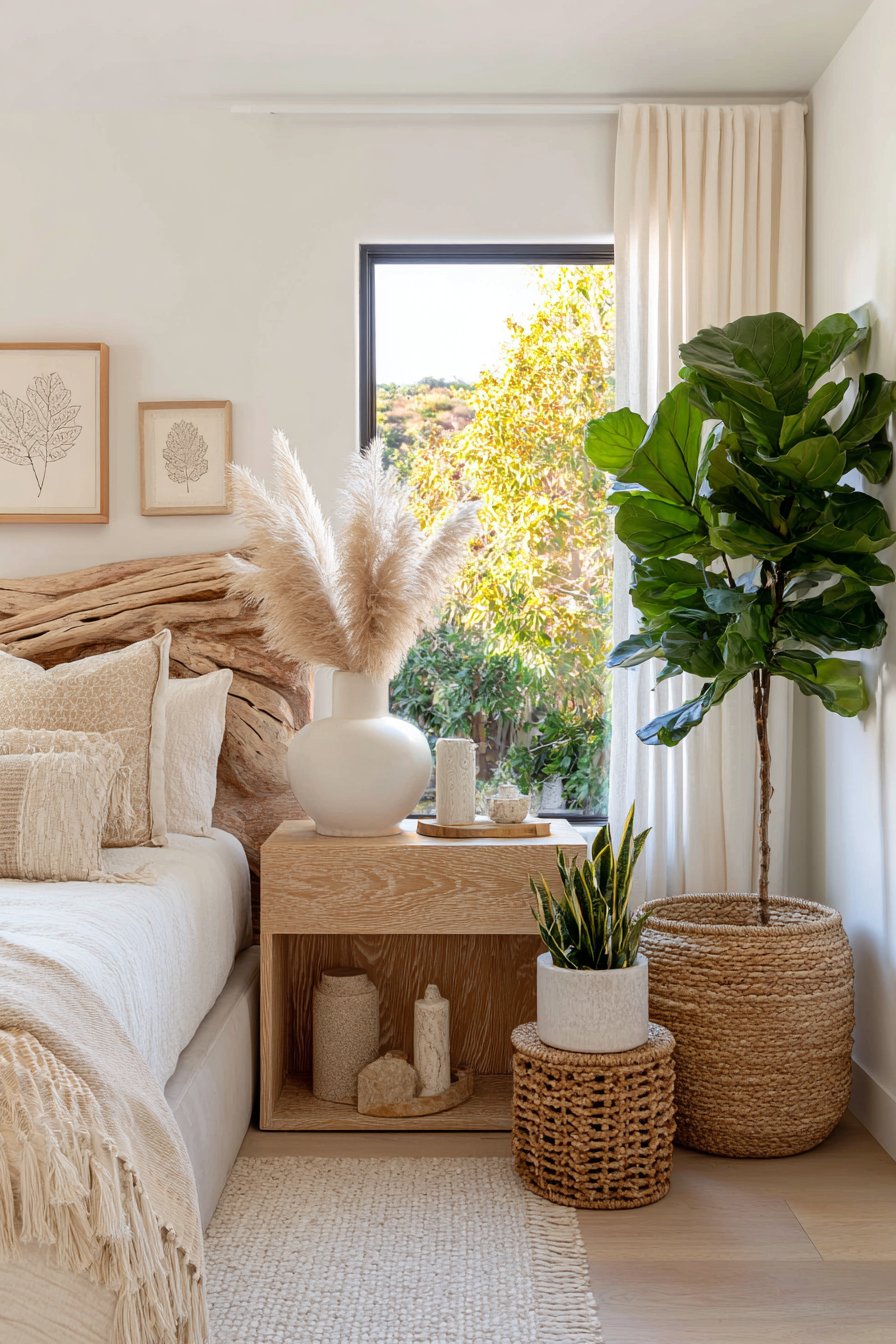
Nature provides the perfect complement to beige palettes, adding organic vitality that prevents sterility. Plants, wood elements, and natural materials introduce subtle color variation while maintaining the earthy, grounded feeling that makes beige so appealing. These elements bring life and movement into neutral spaces.
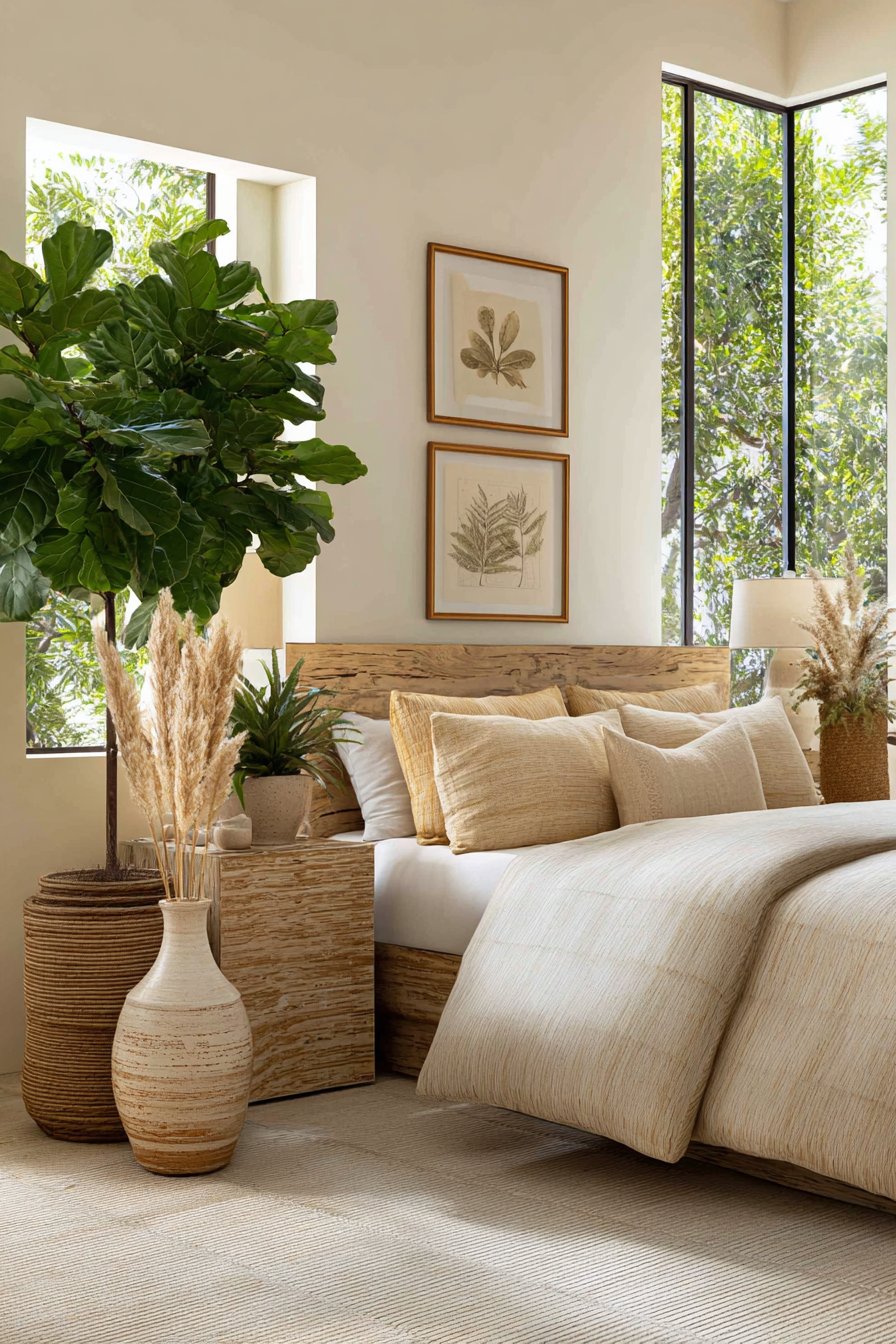
Living plants offer the dual benefit of color and texture. The various greens—from deep forest to bright lime—create beautiful contrast against beige backgrounds without overwhelming the neutral palette. Plants also add vertical interest and organic shapes that soften the angular lines of furniture and architecture.
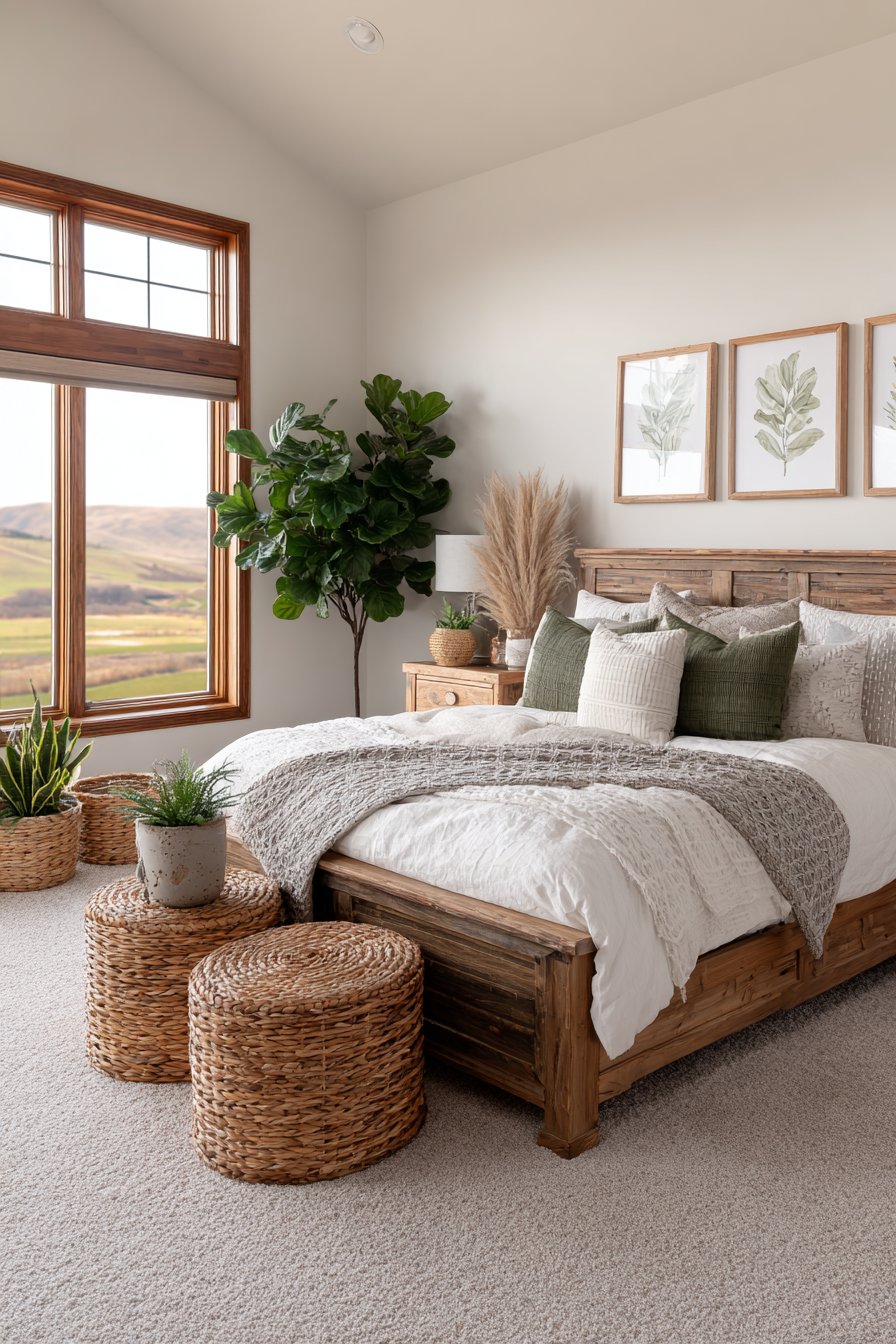
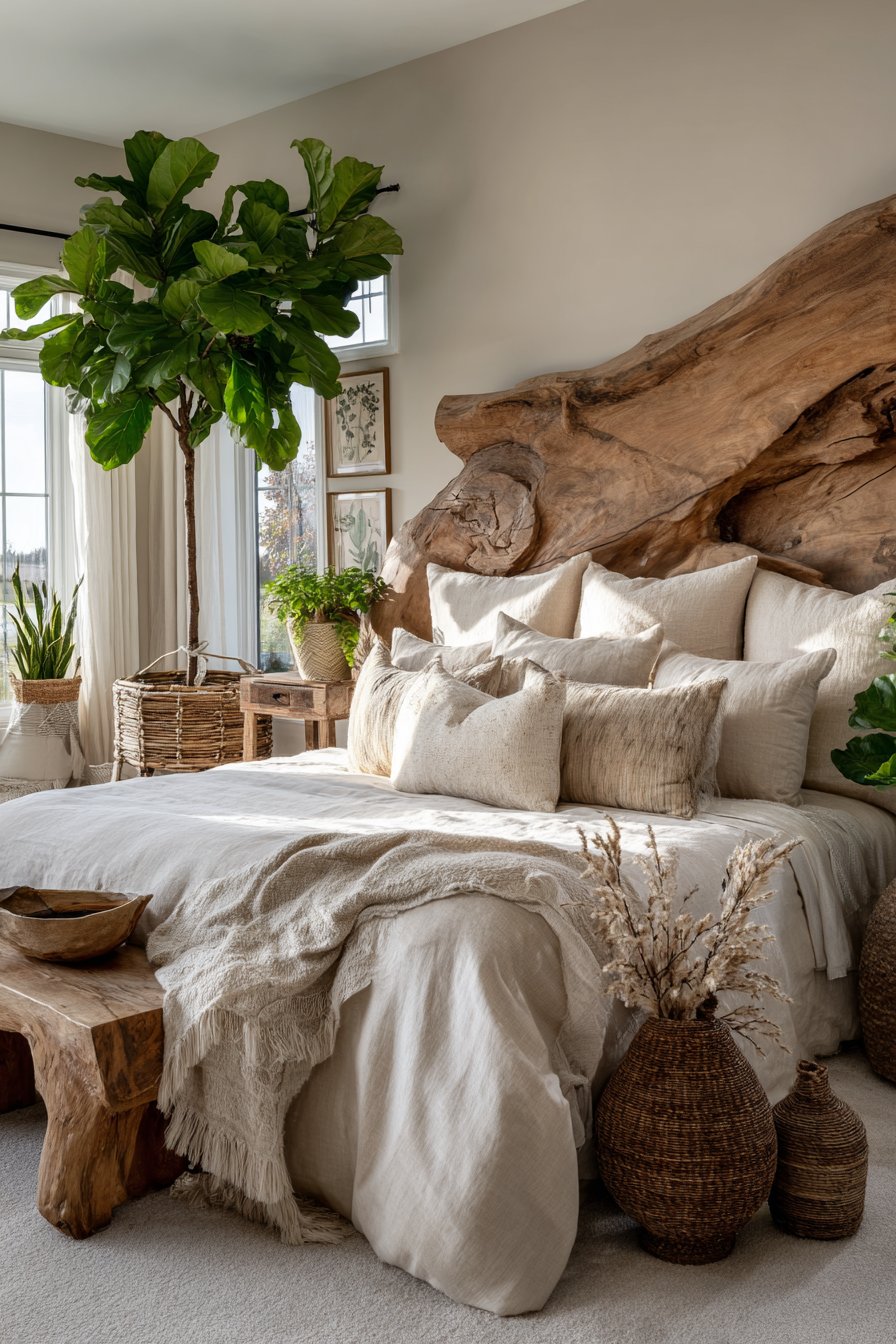
Beyond greenery, incorporate other natural materials like driftwood, stone, or dried branches. These elements reference the outdoors while staying within your neutral color story. A reclaimed wood headboard or stone-topped nightstand connects your beige bedroom to nature’s timeless palette.
- Place at least three plants of varying heights throughout the bedroom
- Choose low-maintenance varieties like snake plants or pothos for realistic upkeep
- Add a substantial indoor tree like a fiddle leaf fig for dramatic impact
- Display natural elements in glass vessels or wooden bowls as decorative vignettes
- Incorporate botanical prints or pressed leaves in frames for wall art
- Use natural fiber baskets for storage that doubles as textural decoration
5. Layer Lighting at Multiple Levels
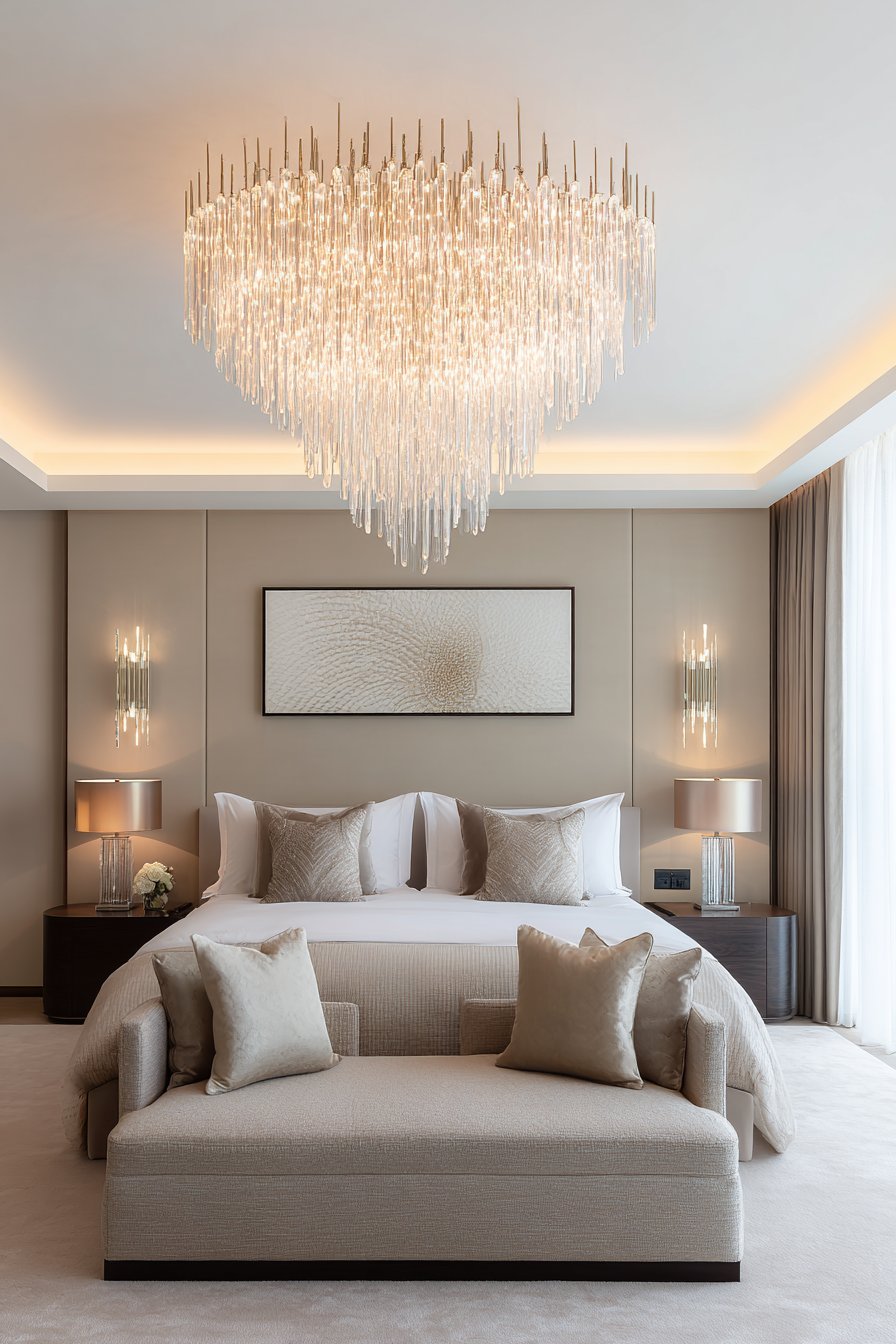
Lighting makes or breaks a beige bedroom’s success. Poor lighting renders beige lifeless and institutional, while thoughtful illumination creates warmth and dimension. Multiple light sources at varying heights add depth by creating shadows, highlights, and ambient glow throughout the space.
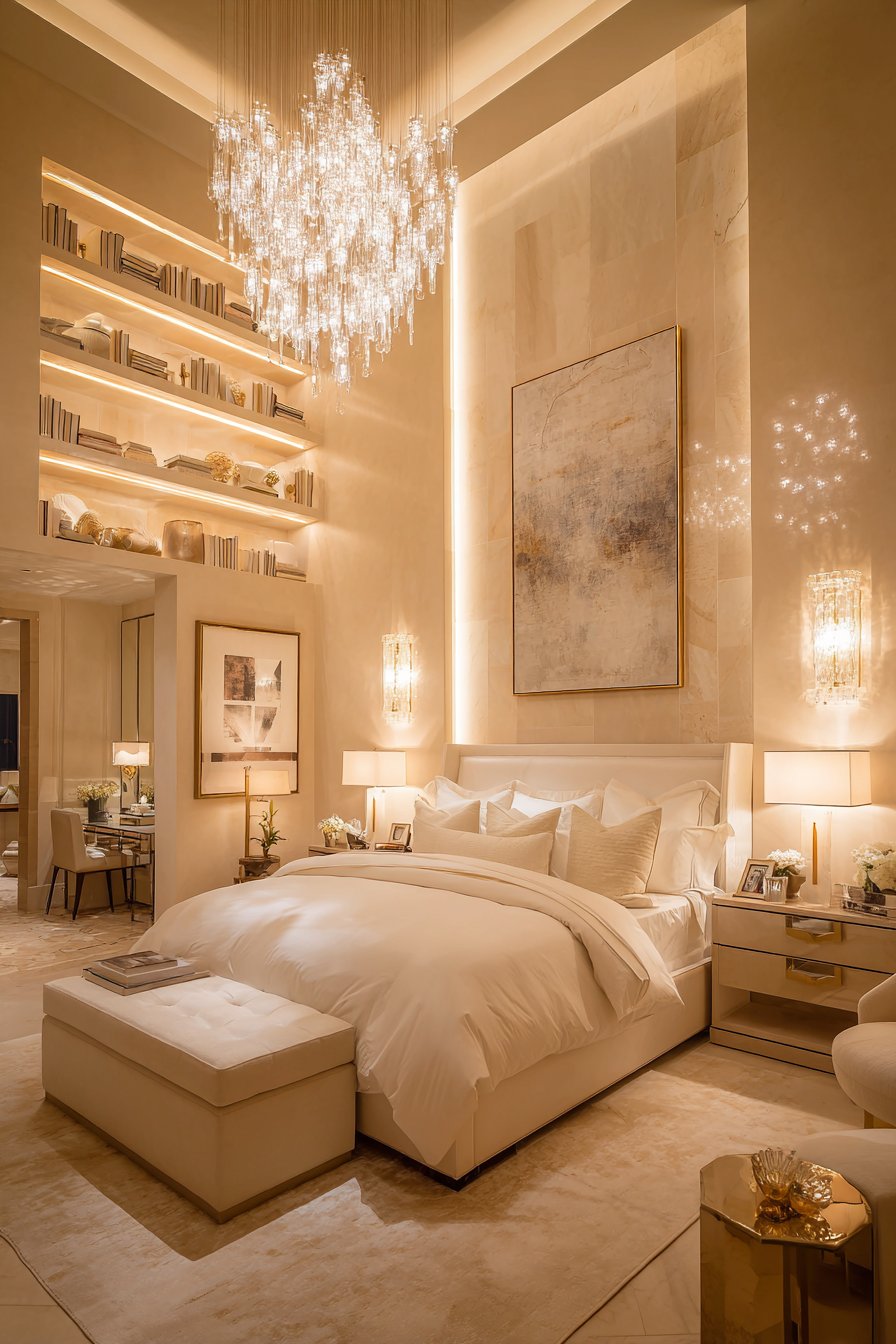
Avoid relying solely on harsh overhead fixtures that flatten your carefully chosen beige tones. Instead, combine ambient, task, and accent lighting to illuminate different aspects of the room. Table lamps provide pools of warm light, wall sconces create interesting shadows, and pendant lights add visual interest at eye level.
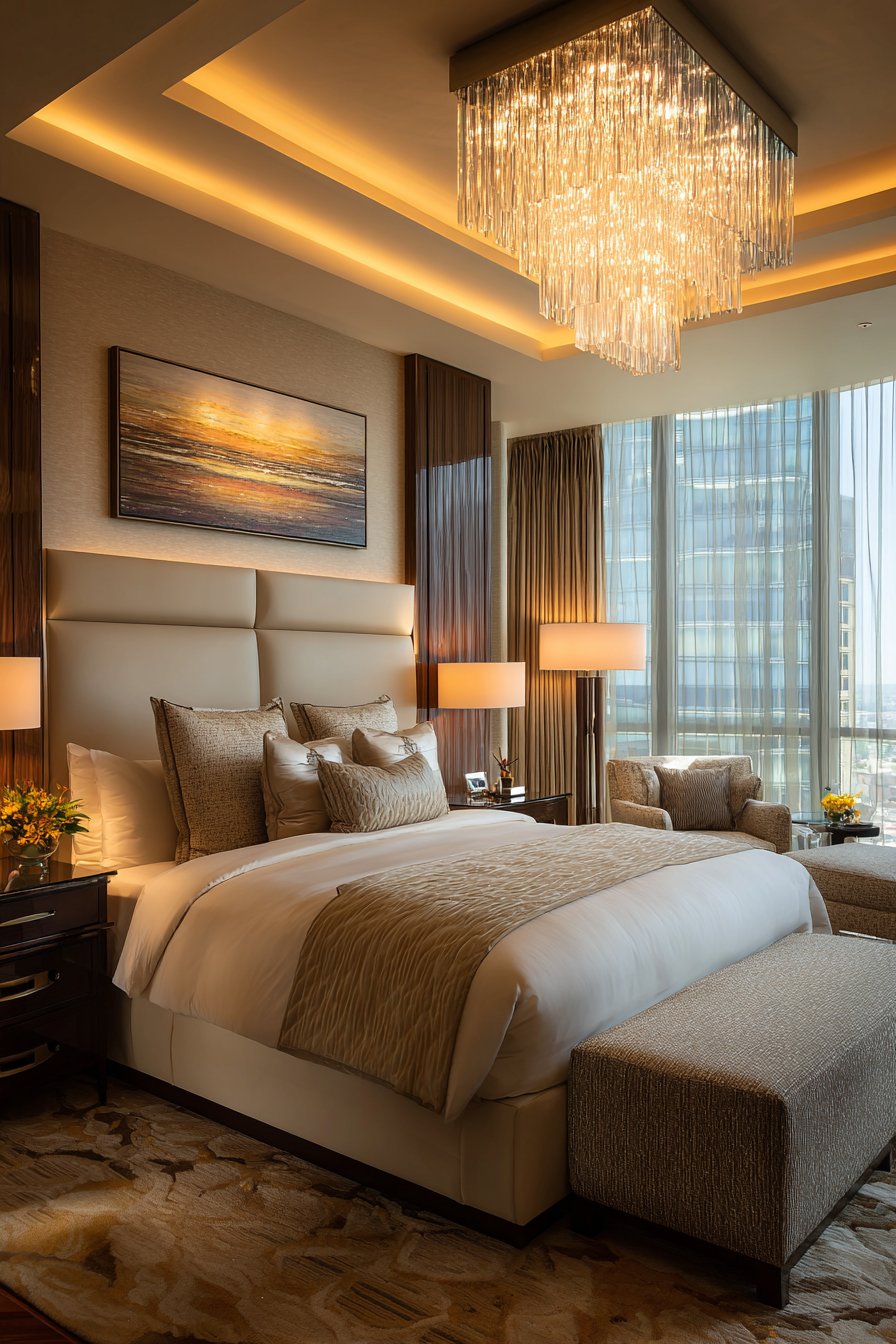
Consider the color temperature of your bulbs carefully. Warm white bulbs (2700-3000K) enhance beige’s cozy qualities, while cool white creates an uninviting, clinical atmosphere. Dimmable fixtures offer flexibility to adjust lighting based on time of day and mood, preventing your beige bedroom from feeling one-dimensional.
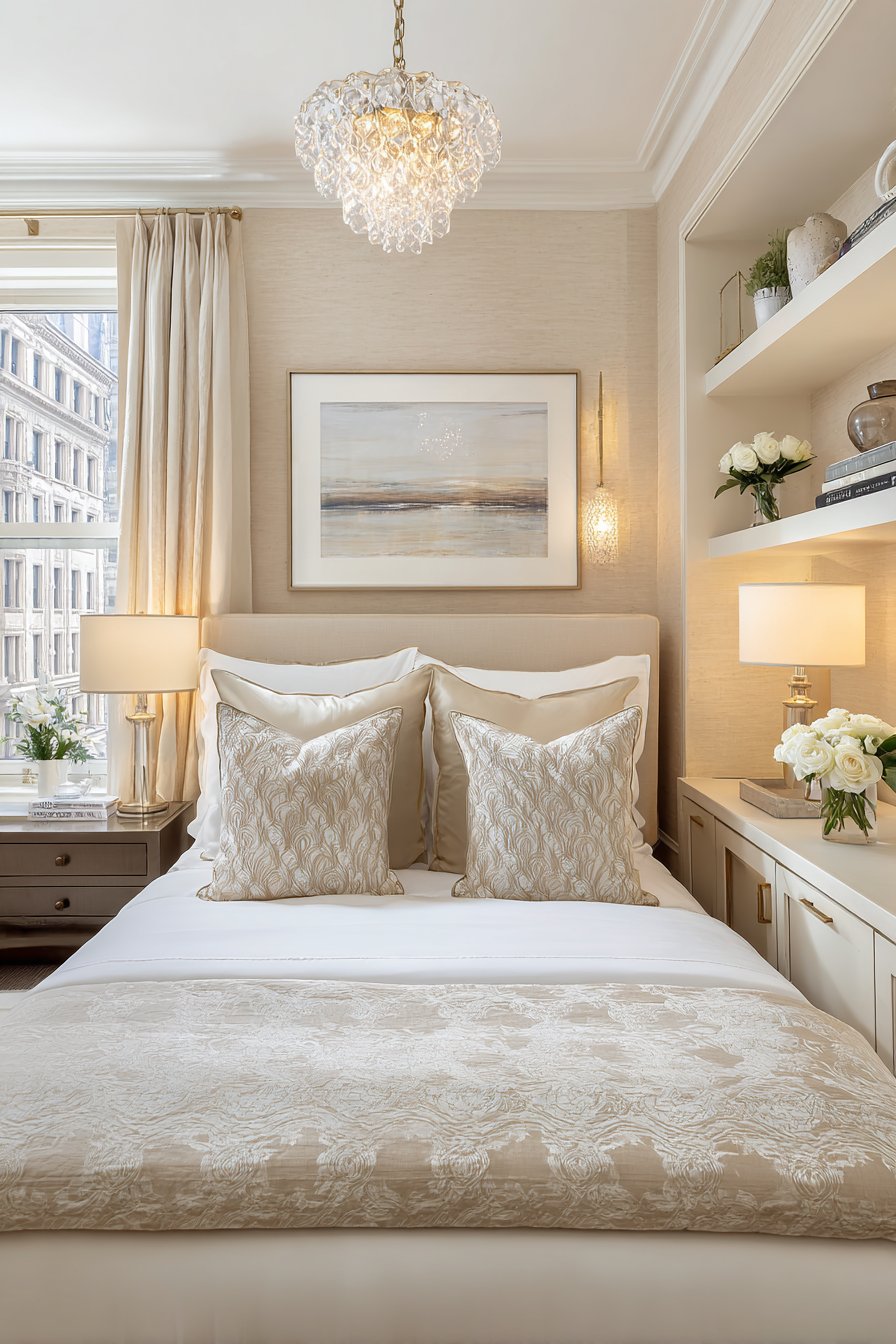
- Install dimmer switches on all light fixtures for maximum control
- Place lamps on both nightstands for balanced, symmetrical lighting
- Add a statement pendant or chandelier as a decorative focal point
- Include LED strip lighting under floating shelves or behind the headboard
- Position floor lamps in dark corners to eliminate shadowy dead zones
- Use warm-toned bulbs exclusively to enhance beige’s natural warmth
6. Create Focal Points with Intentional Art and Decor
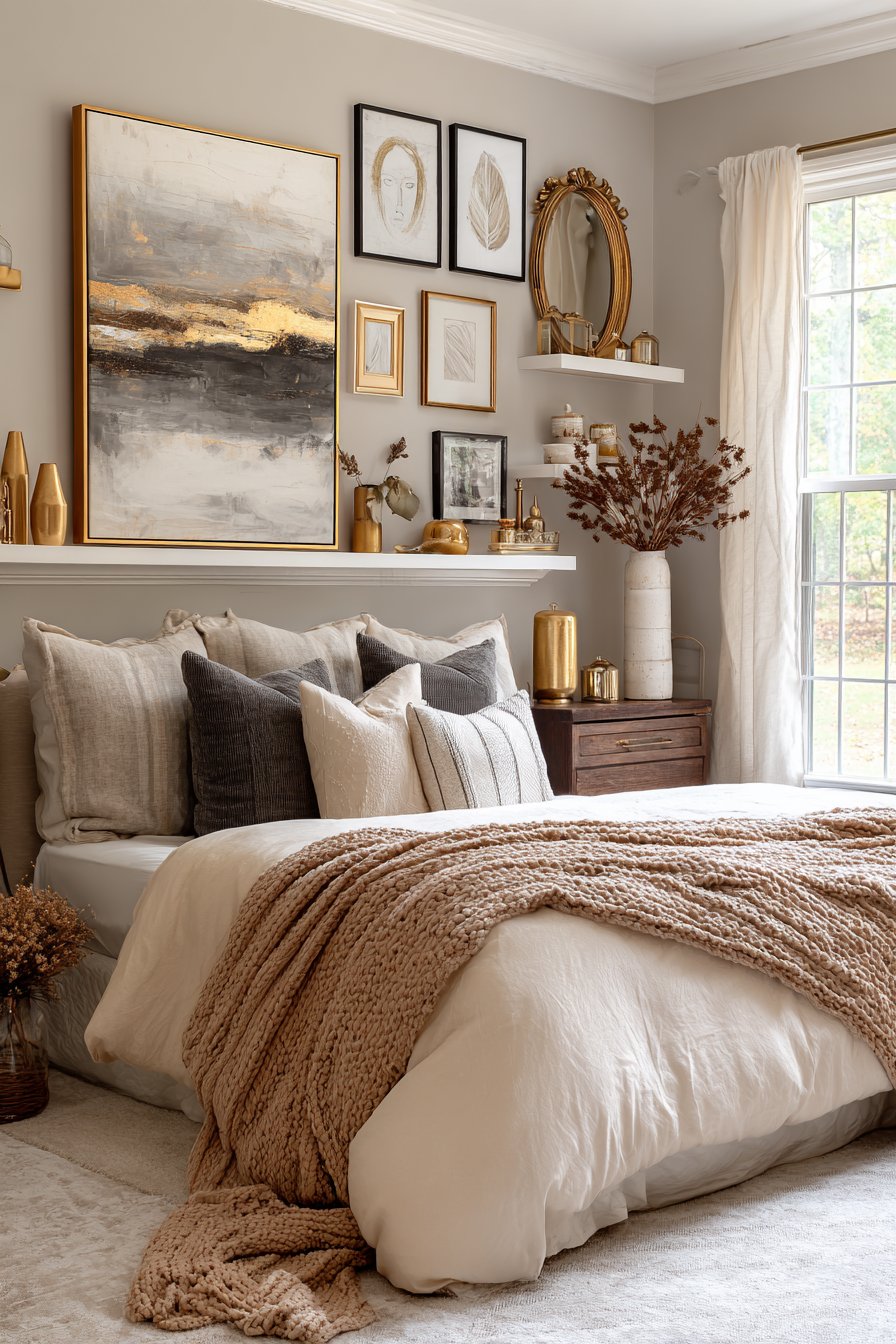
Without a visual anchor, beige bedrooms lack direction and purpose. Strategic artwork and decorative elements create focal points that guide the eye and add personality. These pieces inject interest while maintaining your neutral foundation, preventing the space from feeling generic or hotel-like.
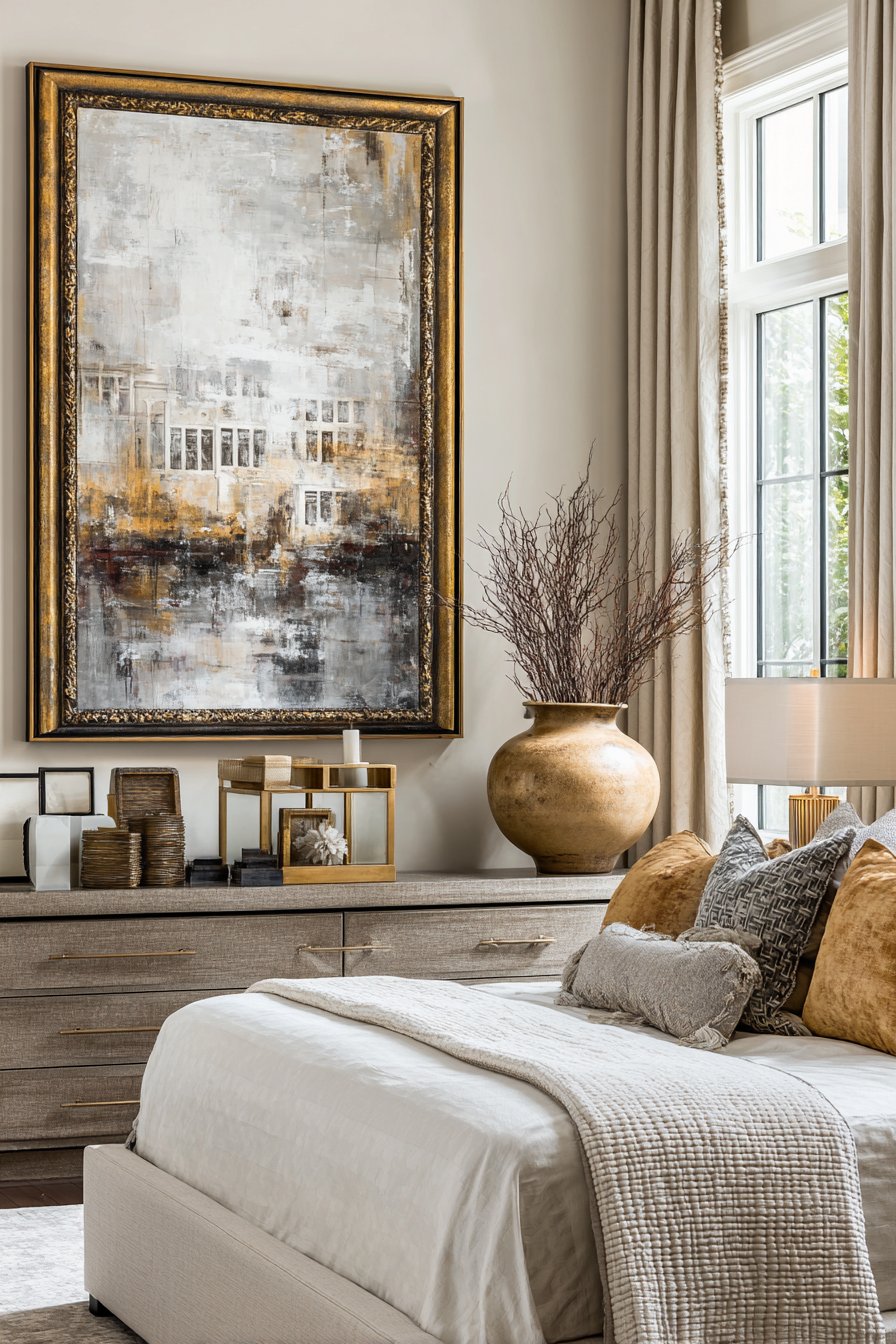
Select artwork that incorporates beige alongside other complementary colors. Abstract pieces with mixed neutrals and metallic accents work particularly well, as do black-and-white photography with beige matting. The key is choosing pieces large enough to make impact—undersized art disappears against beige walls.
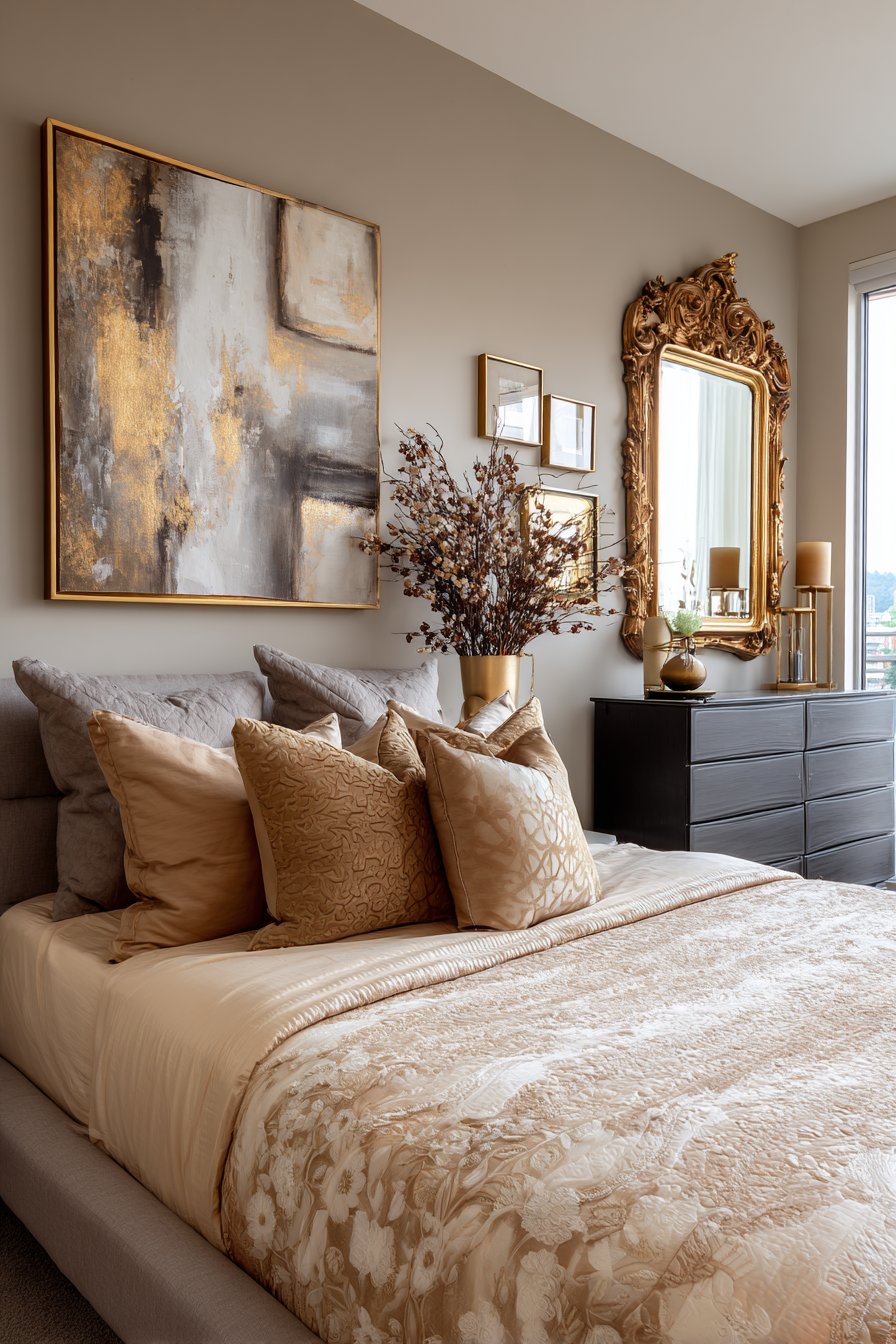
Group decorative objects in odd numbers and varying heights to create visual interest on dressers and nightstands. A tall vase, medium candle holder, and small decorative box create more appeal than items of uniform size. This principle of varied proportions prevents flat, lifeless styling.
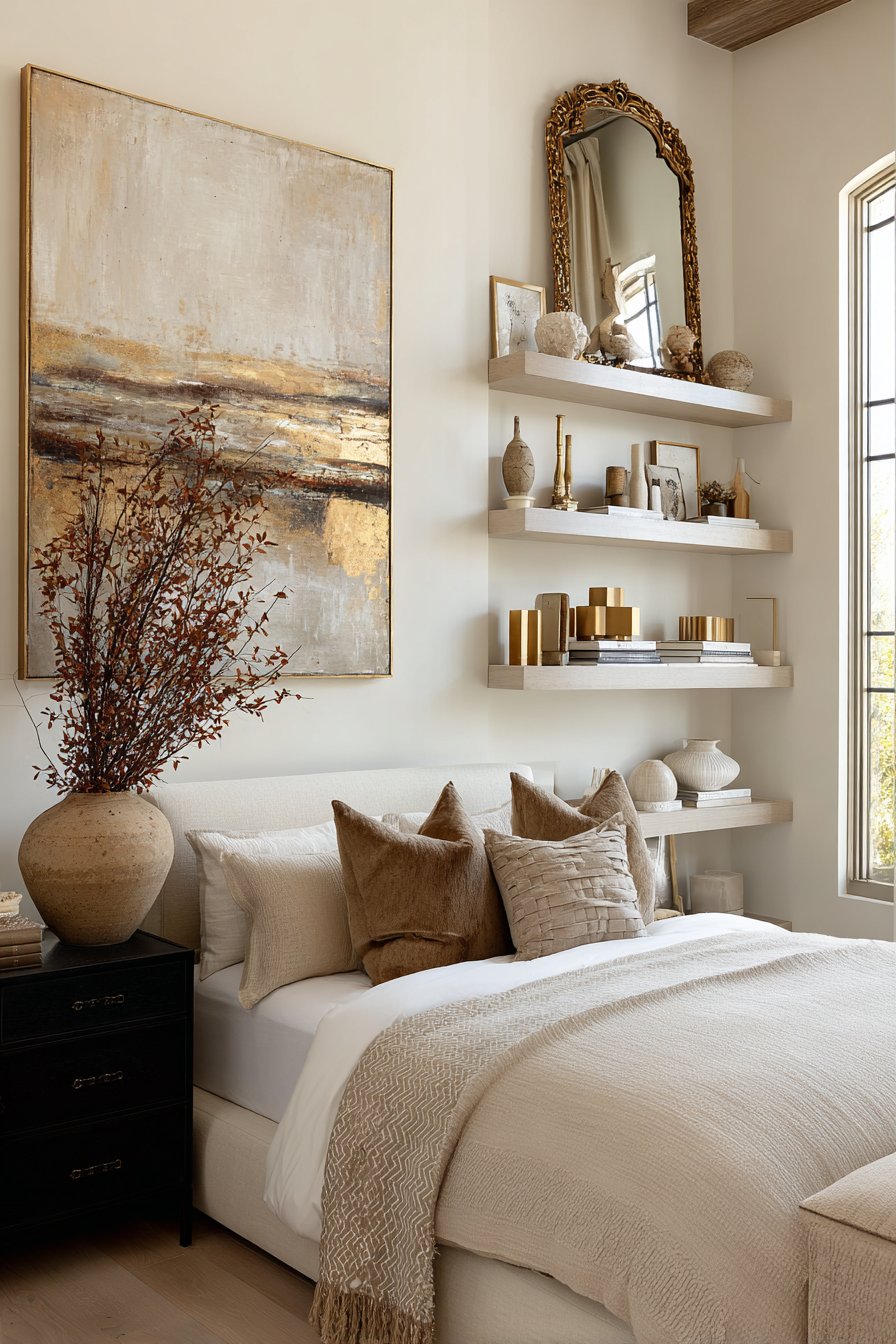
- Hang oversized art above the bed as the room’s primary focal point
- Create a gallery wall using frames in black, gold, and natural wood
- Display sculptural objects with interesting shapes on floating shelves
- Add a decorative mirror to reflect light and create depth perception
- Include metallic accents in gold, brass, or bronze for subtle shimmer
- Rotate seasonal accessories to keep the space feeling fresh and intentional
Conclusion
Styling a beige bedroom that feels rich and dimensional requires strategic layering across multiple design elements. By varying tones within your neutral palette, introducing diverse textures, adding dark contrasts, incorporating natural elements, layering lighting, and creating intentional focal points, you transform flat beige into sophisticated depth. The beauty of this approach lies in its flexibility—you can adjust intensity and style while maintaining the calming neutral foundation.
Remember that successful beige bedrooms develop gradually through thoughtful curation rather than rushed decoration. Start with your foundational elements—wall color, major furniture, and lighting—then layer in textures, accents, and personality over time. Your beige bedroom should feel collected and intentional, not generic or incomplete. Embrace the versatility of this timeless neutral, and you’ll create a sanctuary that feels anything but flat.
"As an Amazon Associate, I earn from qualifying purchases."
