
The living room stands as the heart of every home, a sanctuary where families gather, guests are welcomed, and memories are woven into the fabric of daily life. Within this essential space, the accent chair emerges as a design element that transcends mere functionality, becoming a statement piece that defines character, enhances comfort, and elevates the entire aesthetic of your interior. Far more than just additional seating, accent chairs serve as visual anchors that can completely transform the atmosphere of a room, offering both practical comfort and artistic expression. Whether you’re drawn to the clean lines of Scandinavian minimalism, the rich textures of bohemian design, or the timeless elegance of traditional styling, the right accent chair can become the focal point that ties your entire living space together.
In today’s world of interior design, the possibilities for accent chairs are virtually limitless, spanning decades of design evolution and cultural influences. From the plush embrace of velvet upholstery to the organic warmth of natural rattan, from the sleek sophistication of mid-century modern silhouettes to the cozy comfort of oversized reading chairs, each style speaks to different personalities and lifestyles. The beauty of accent chairs lies in their versatility—they can serve as bold statement pieces that command attention or subtle complements that harmonize with existing decor. This comprehensive guide explores twenty distinct approaches to incorporating accent chairs into your living room, each offering unique design perspectives that cater to various tastes, spatial requirements, and functional needs.
Throughout this article, we’ll journey through diverse design concepts that showcase how accent chairs can adapt to any interior style, from coastal casual to industrial chic, from glamorous Art Deco to serene Japanese minimalism. You’ll discover how materials, colors, textures, and placement work together to create inviting spaces that reflect your personal style while maintaining comfort and functionality. Whether you’re furnishing a spacious family room, a compact apartment, or a rustic cabin retreat, you’ll find inspiration and practical guidance to help you select and style the perfect accent chair for your living room.
1. Emerald Elegance: The Modern Velvet Statement
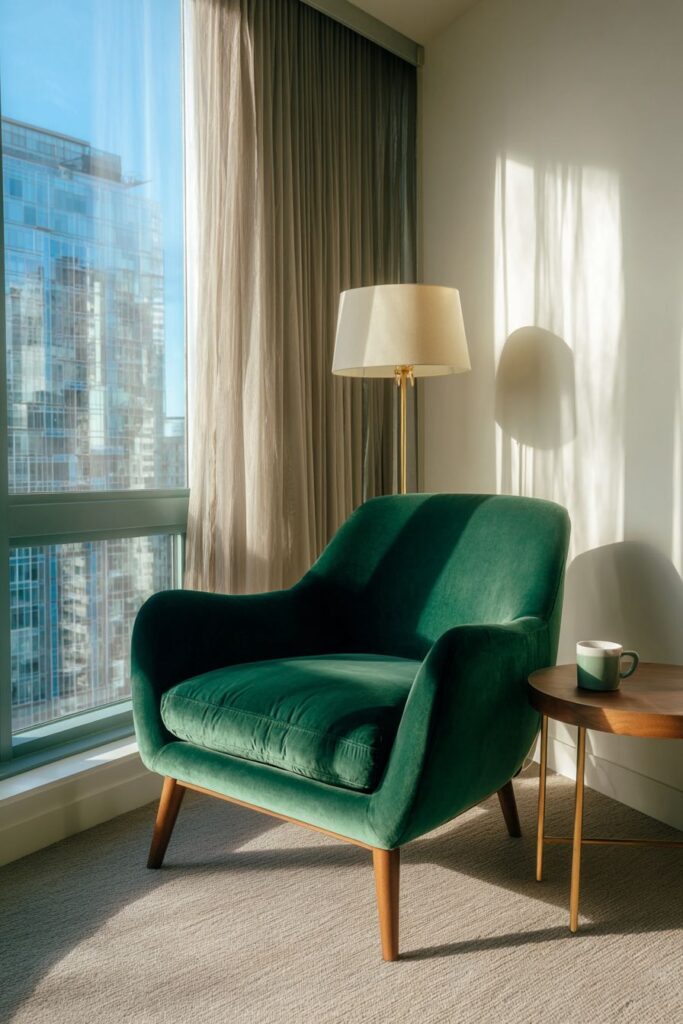
Stepping into a living room graced by a plush velvet accent chair in deep emerald green creates an immediate sense of luxury and sophistication. This modern classic features gently curved arms that invite you to settle in for hours of comfortable reading or quiet contemplation. The tapered wooden legs in rich walnut finish provide a beautiful contrast against the sumptuous fabric, grounding the piece with natural warmth while maintaining clean, contemporary lines. Positioned strategically at an angle near a floor-to-ceiling window, this chair becomes more than just seating—it transforms into a personal retreat where natural afternoon light streams through sheer curtains, creating an ever-changing play of shadows across the textured velvet upholstery.
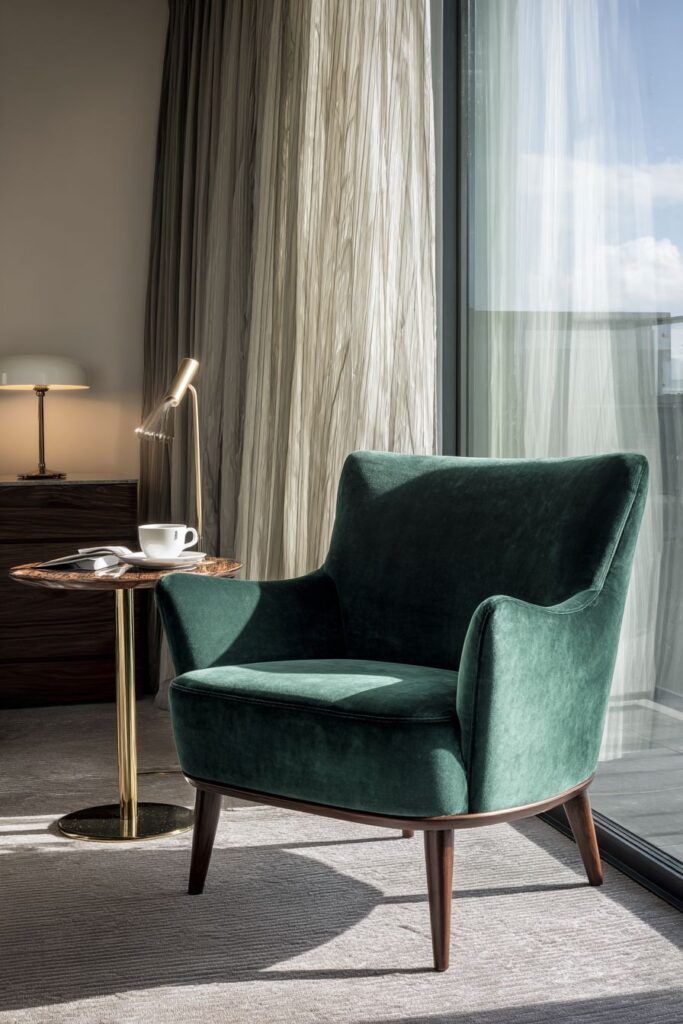
The magic of this design lies in its ability to balance opulence with approachability. The emerald green hue brings depth and richness to the space without overwhelming it, acting as a jewel-toned accent that draws the eye and anchors the seating area. A small round side table with a brass base completes the vignette, offering practical surface space for a reading lamp and morning coffee while adding another layer of metallic warmth. The brass catches and reflects light throughout the day, creating subtle sparkles that enhance the overall ambiance.
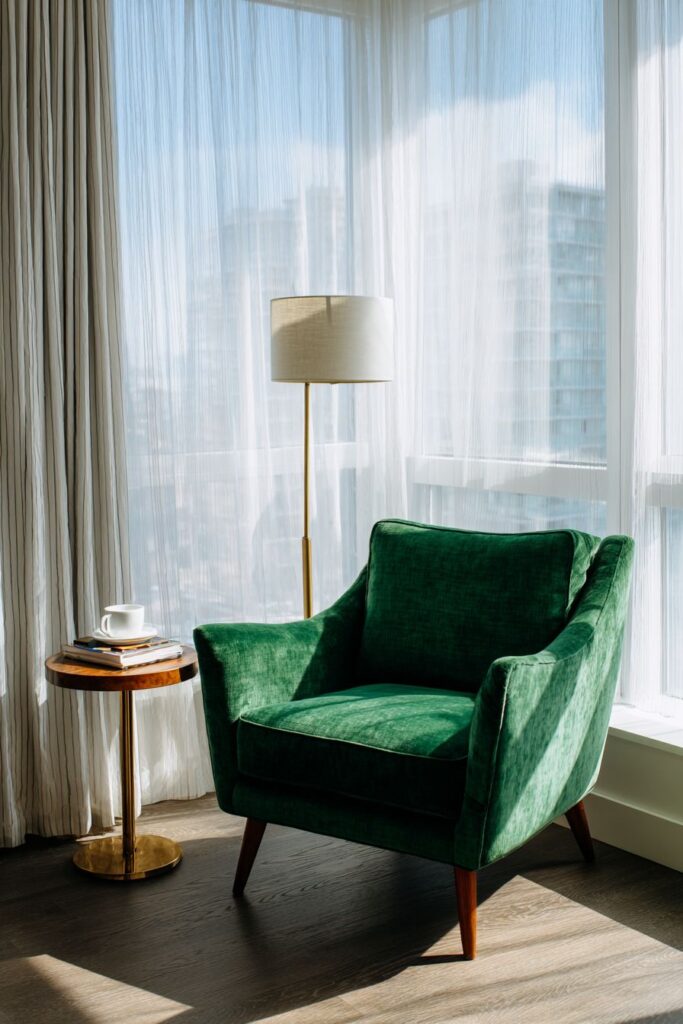
The textural quality of velvet cannot be overstated—it shifts and changes with light and viewing angle, revealing deeper tones in shadow and lighter highlights where illumination strikes directly. This dynamic quality keeps the chair visually interesting throughout the day as natural light patterns shift. The wide-angle perspective of this reading corner showcases how a single well-chosen piece can define an entire zone within a larger living space, creating an intimate nook that feels both connected to and distinct from the main seating area.
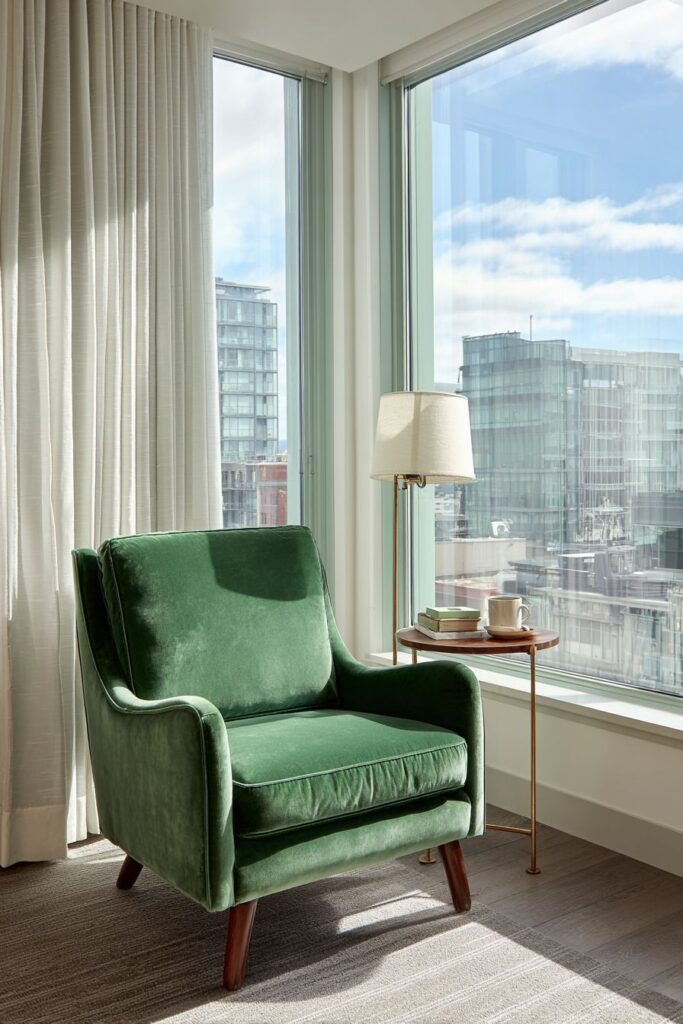
Key design considerations for this luxurious modern setup include:
- Select velvet upholstery in rich jewel tones like emerald, sapphire, or ruby for maximum impact and timeless appeal
- Position the chair near natural light sources to fully appreciate the fabric’s textural depth and color variations
- Choose wooden legs in darker finishes to create visual weight and prevent the chair from appearing too delicate
- Incorporate metallic accents through side tables or lighting to add warmth and contemporary sophistication
- Angle the chair slightly rather than placing it parallel to walls to create a more dynamic, inviting arrangement
2. Scandinavian Simplicity: Light and Airy Comfort
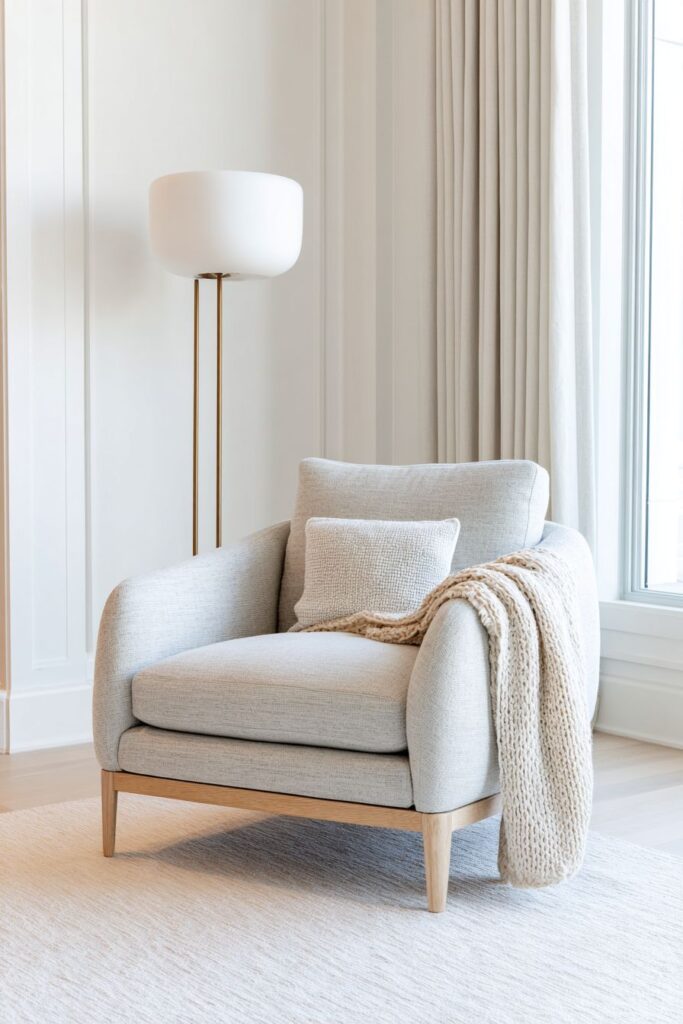
The Scandinavian approach to accent chairs embodies the principle that less truly can be more, showcasing a minimalist design upholstered in light grey linen with a visible weave texture that celebrates the beauty of natural materials. This chair features clean lines and a slightly reclined back that prioritizes comfort without sacrificing aesthetic purity. The exposed oak frame reveals natural wood variations that tell the story of the tree from which it came, embracing organic imperfections as design elements rather than flaws to be hidden. Positioned on a cream wool area rug, the chair sits in harmonious conversation with its surroundings, exemplifying the Scandinavian design philosophy of creating serene, uncluttered spaces that promote wellbeing and mindfulness.
The understated elegance of this piece lies in its restraint and careful attention to proportion. Every element serves a purpose, from the simple floor lamp with its white shade that provides task lighting without visual clutter, to the knitted throw blanket in soft beige that drapes casually over one arm, adding both texture and warmth while maintaining the color palette’s cohesion. This is furniture designed for real living—comfortable enough for daily use yet beautiful enough to elevate the everyday into something special.
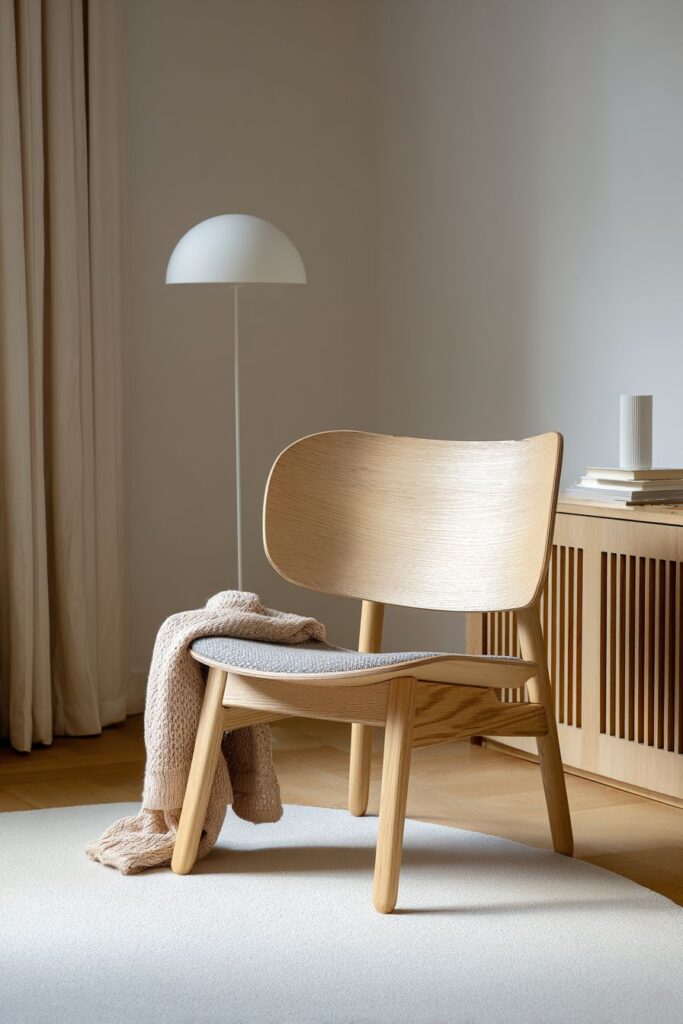
The professional interior photography style that captures such spaces emphasizes soft, diffused natural lighting that enhances rather than overpowers the chair’s subtle beauty. There’s an honesty to Scandinavian design that rejects artificial enhancement in favor of authentic representation. The light grey linen upholstery isn’t trying to be something it’s not—it embraces its natural texture, its slight variations in weave, even the way it might wrinkle slightly with use. This acceptance of natural material behavior creates spaces that feel relaxed and livable rather than precious and untouchable.
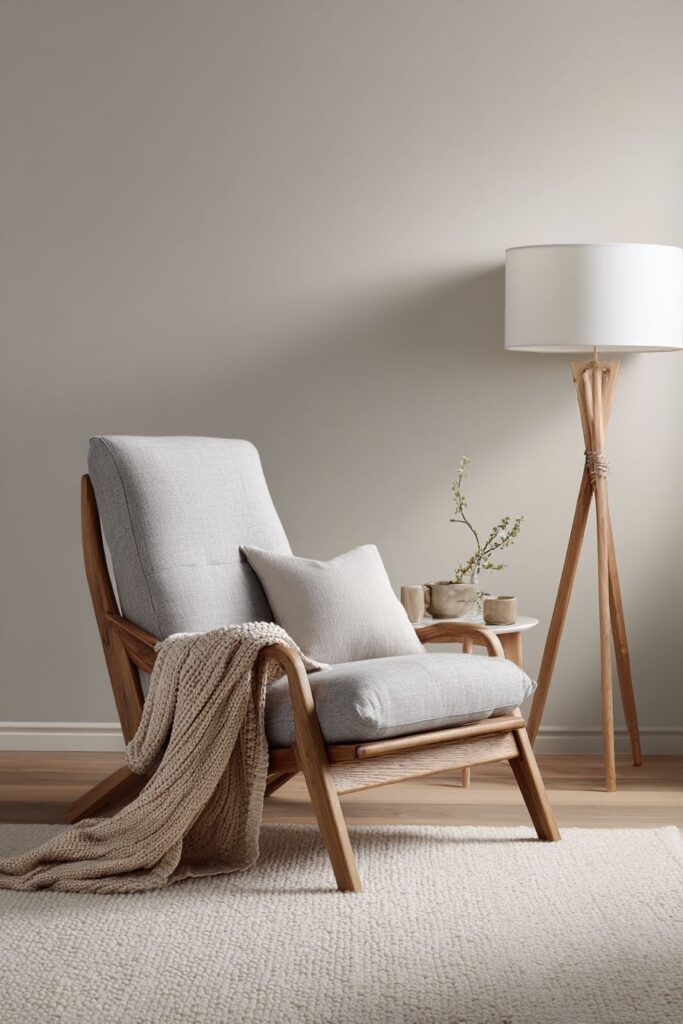
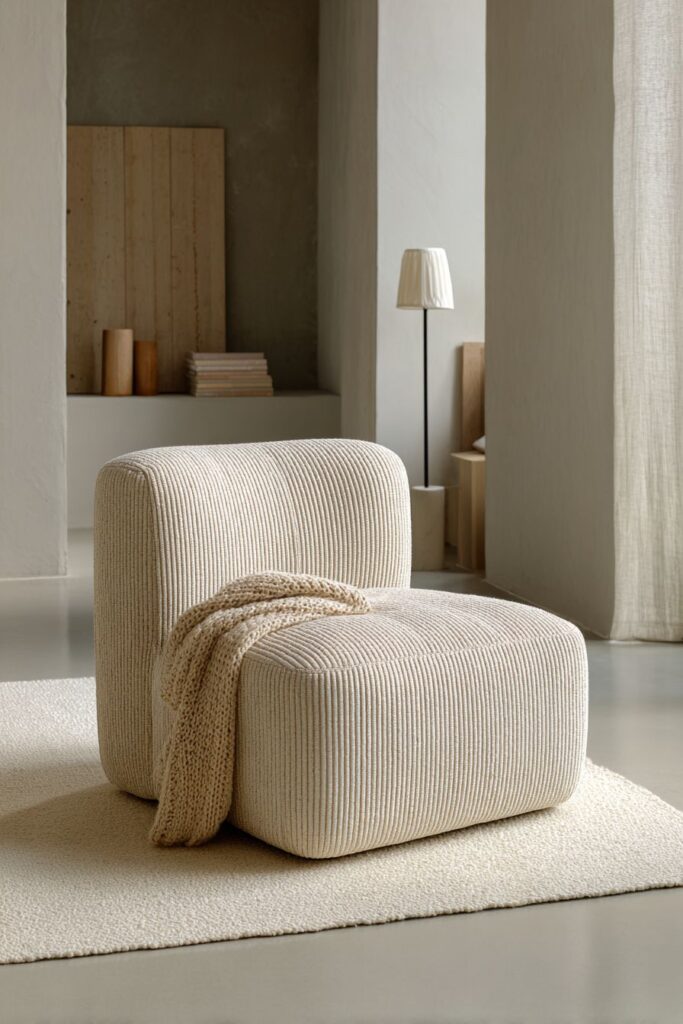
Essential elements for achieving authentic Scandinavian styling:
- Choose neutral upholstery fabrics in light greys, creams, or soft whites with visible natural texture rather than perfectly smooth finishes
- Select furniture with exposed wood frames in light oak, ash, or birch to maximize the sense of openness and connection to nature
- Keep accessories minimal and functional, selecting only items that serve a clear purpose or bring meaningful beauty
- Layer different natural textures through wool rugs, linen fabrics, and knitted throws to add depth without visual clutter
- Maximize natural light and use simple white or cream lamp shades for supplemental lighting that doesn’t compete with the space’s serenity
3. Farmhouse Warmth: Timeless Leather Comfort
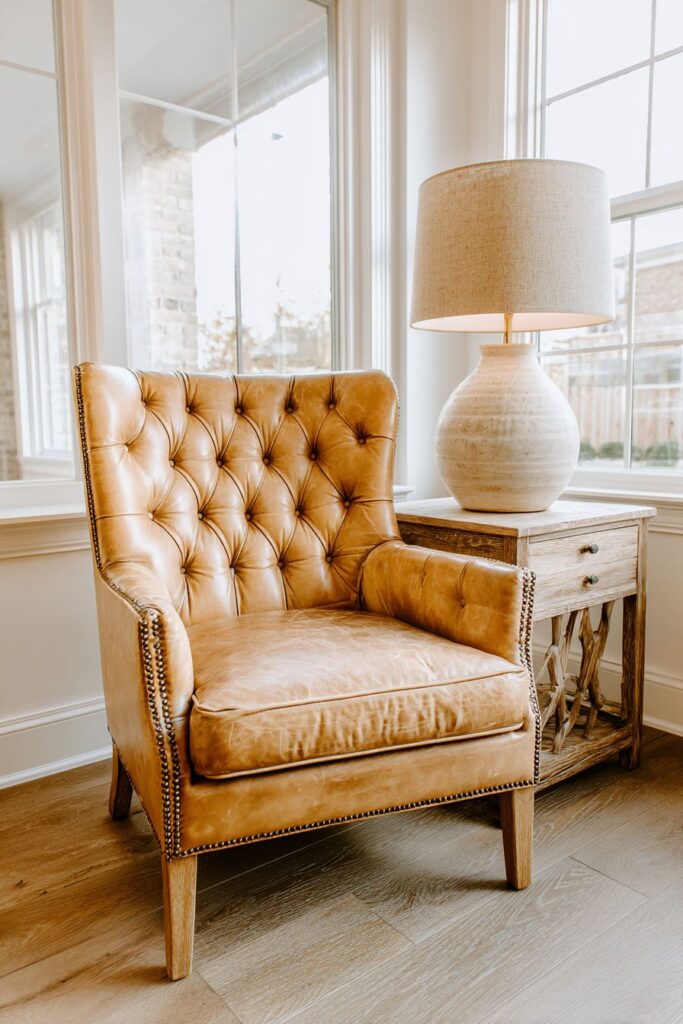
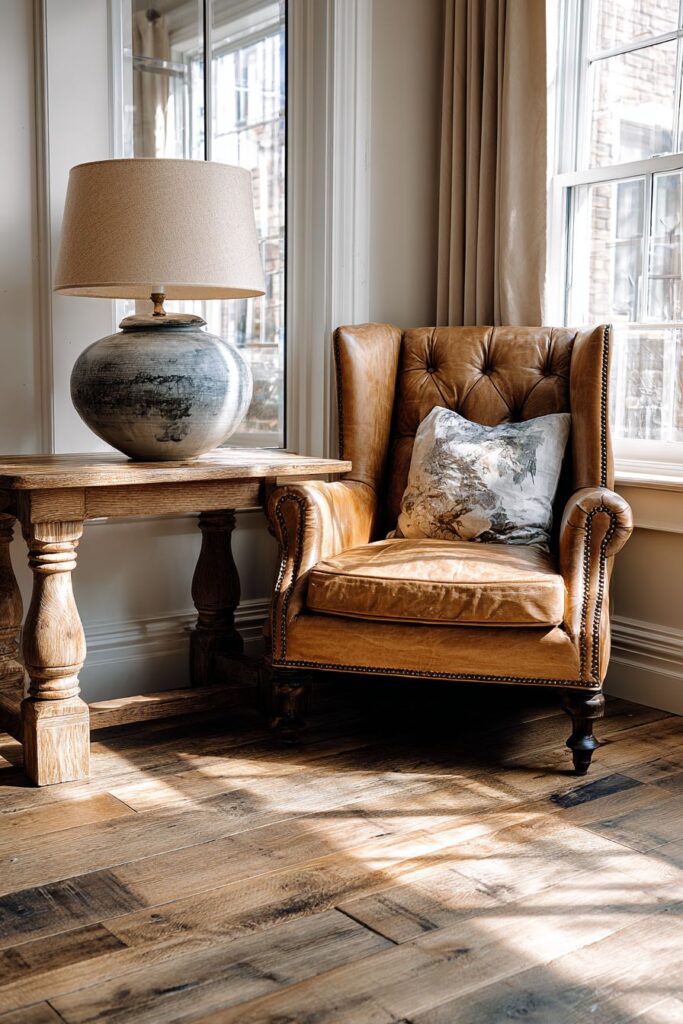
There’s something undeniably inviting about a tufted wingback accent chair upholstered in warm caramel leather, a piece that seems to improve with age as it develops a gentle patina and natural wear patterns that tell the story of countless afternoons spent reading, conversing, or simply relaxing. This farmhouse classic combines traditional silhouettes with durable materials, featuring nailhead trim details that add visual interest along the chair’s edges and solid turned wooden legs in a distressed finish that suggests generations of family use. Positioned on wide-plank reclaimed oak flooring, the chair becomes part of a larger narrative about authenticity, quality craftsmanship, and the beauty of materials that age gracefully.
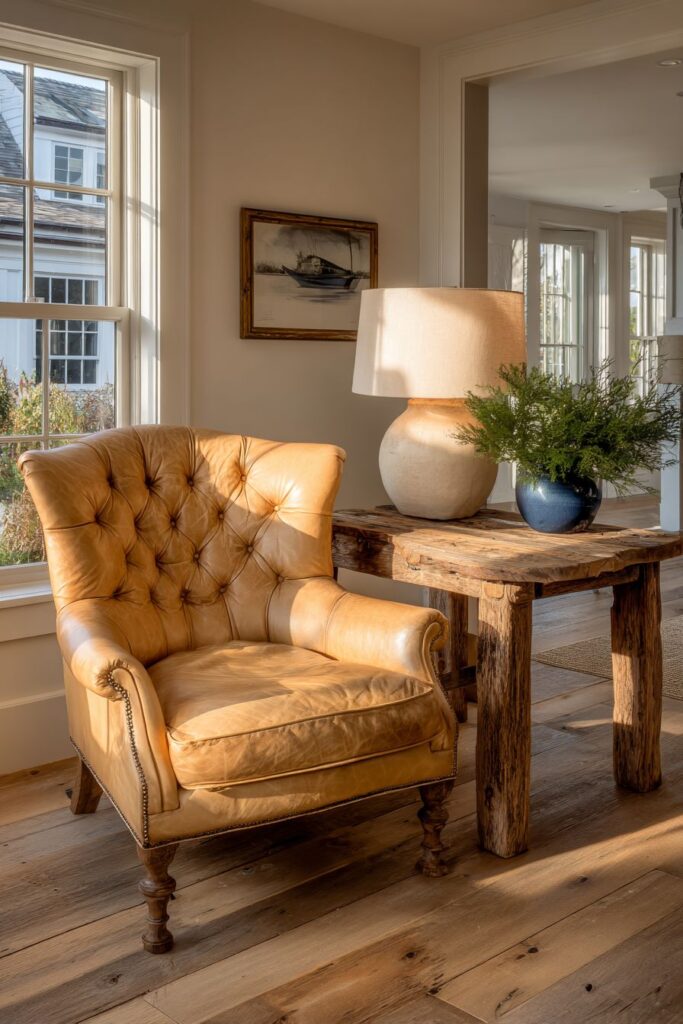
The wingback design offers more than aesthetic appeal—it provides practical comfort by creating a sense of enclosure that makes the sitter feel embraced and protected, almost cocooned within the chair’s generous proportions. This makes it ideal for reading nooks or conversation areas where you want to create intimacy within a larger space. The caramel leather brings warmth to the room through its rich, honeyed tones that seem to glow when touched by natural light from nearby windows. Subtle highlights play across the leather surface, emphasizing its natural grain and the slight variations that confirm its genuine quality.
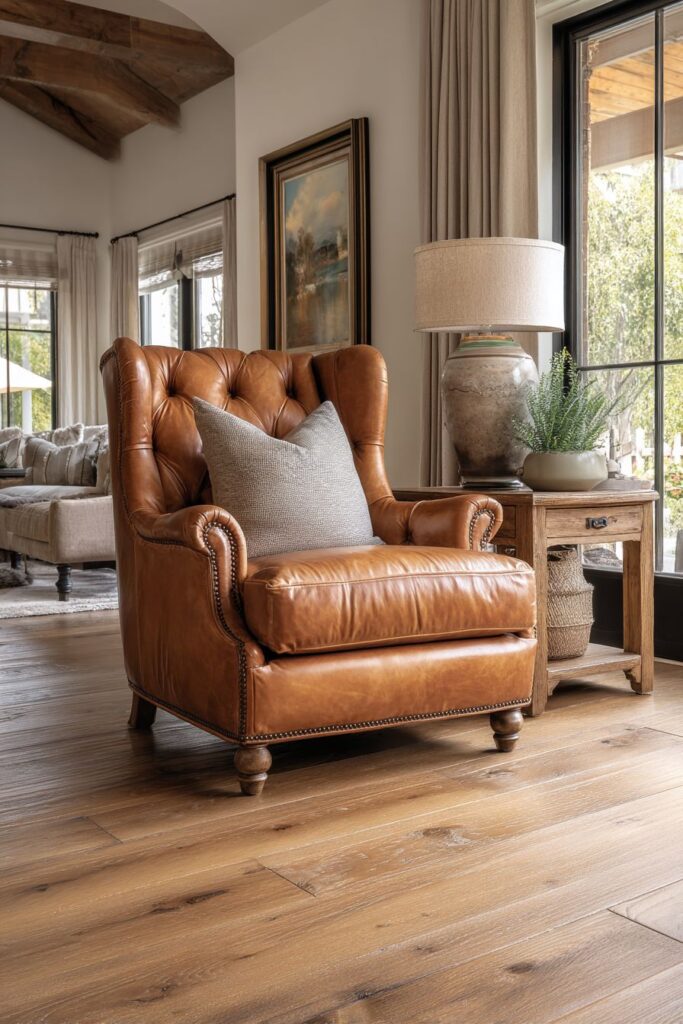
A rustic wooden side table with a ceramic table lamp completes this farmhouse vignette, providing the perfect resting spot for books, beverages, or decorative objects. The distressed finish on the table echoes the chair’s turned legs, creating visual cohesion while the ceramic lamp adds a handcrafted element that reinforces the farmhouse aesthetic’s appreciation for artisanal quality. The wide-angle interior design photography captures not just the chair itself but its inviting presence within the room, showing how a single piece of furniture can anchor an entire design scheme and establish the welcoming, lived-in character that defines true farmhouse style.
Creating an authentic farmhouse aesthetic with leather accent chairs:
- Invest in genuine leather rather than synthetic alternatives to ensure the beautiful patina development that defines farmhouse style
- Look for traditional silhouettes like wingbacks or club chairs that reference historical furniture forms
- Incorporate nailhead trim, button tufting, or other decorative details that add visual interest without feeling overly ornate
- Pair leather chairs with reclaimed or distressed wood elements to emphasize the aesthetic’s connection to history and craftsmanship
- Allow natural light to highlight the leather’s surface, creating depth through shadows and highlights that change throughout the day
4. Mid-Century Magic: Iconic Yellow Statement
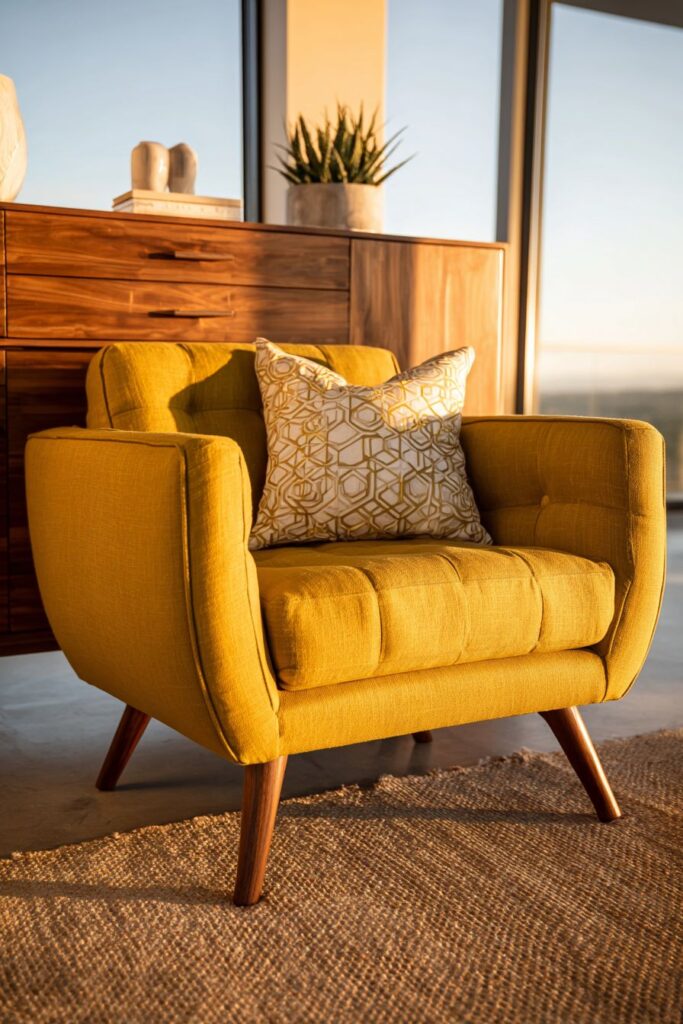
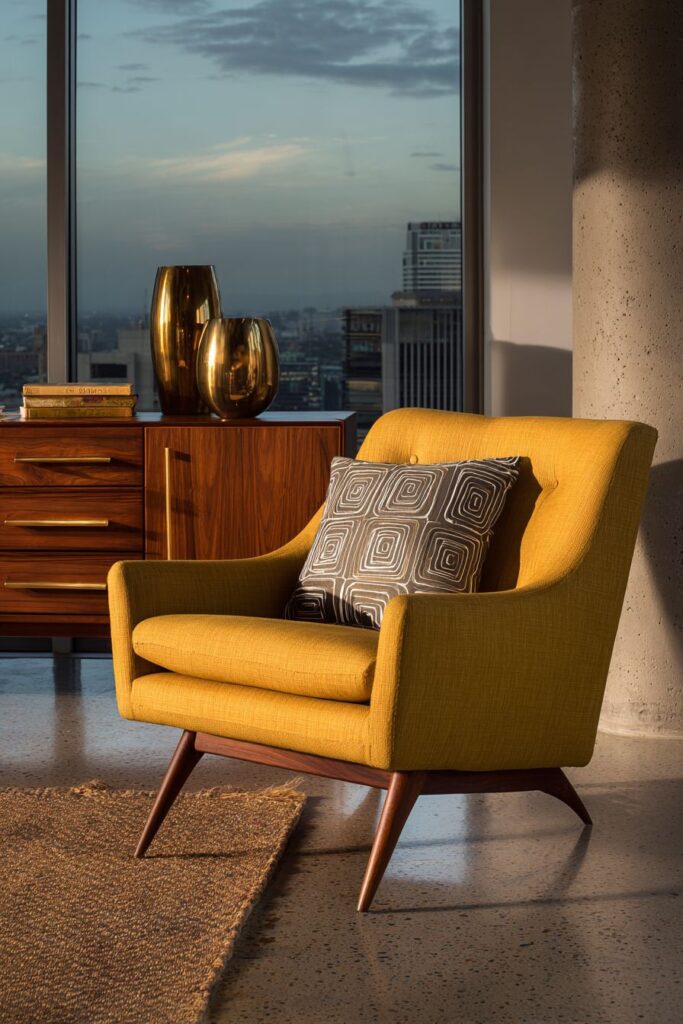
The mid-century modern movement revolutionized furniture design with its emphasis on organic forms, clean lines, and the marriage of beauty with function—principles perfectly embodied in a sleek accent chair upholstered in mustard yellow fabric with tight upholstery that emphasizes its sculptural qualities. This iconic design features angled splayed legs in dark walnut that seem to dance beneath the seat, creating visual lightness despite the chair’s substantial presence. Button tufting on the back adds texture and dimension while armrests curve organically, following the natural contours that make mid-century pieces so comfortable and visually appealing. The chair’s silhouette alone tells a story about an era that celebrated innovation and optimism through design.
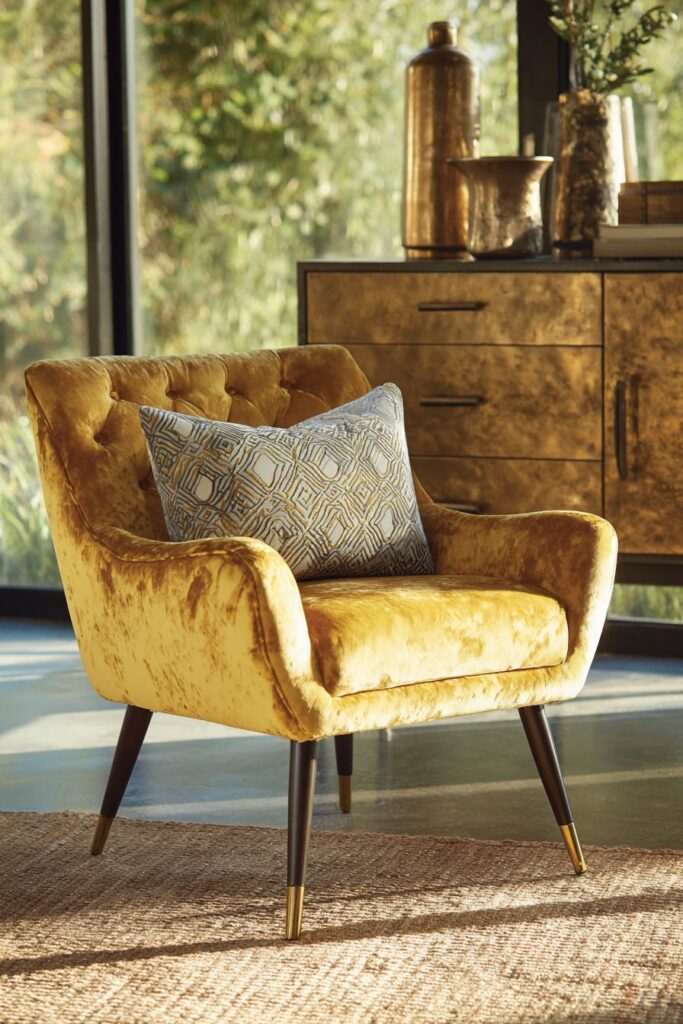
The mustard yellow upholstery makes a bold statement, bringing warmth and energy to the living room while referencing the color palettes favored during the mid-century modern era. This isn’t a timid pastel or a stark primary color—it’s a rich, saturated hue that commands attention without overwhelming the space. A geometric patterned throw pillow in complementary tones rests against the backrest, adding another layer of period-appropriate pattern that was characteristic of 1950s and 60s design. The contrast between the warm yellow fabric and dark walnut legs creates visual drama that keeps the eye engaged.
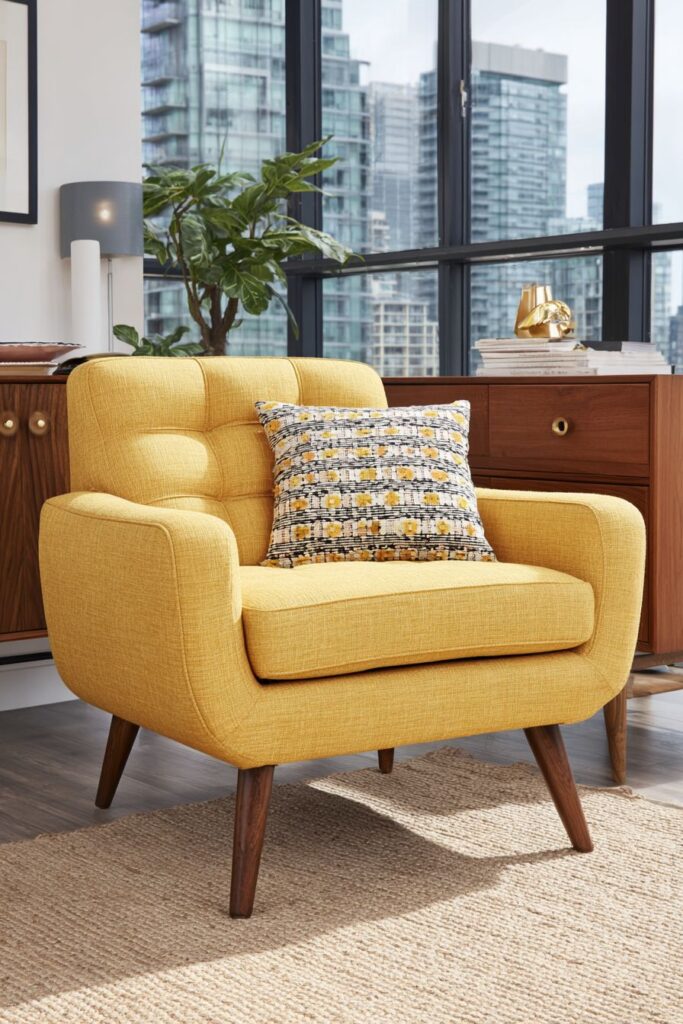
Positioned on a jute rug near a credenza with brass hardware, the chair becomes part of a carefully curated mid-century vignette. The natural fiber rug provides textural interest while the credenza’s brass hardware echoes the warm metallic tones found throughout mid-century design. As golden hour light filters through the space, it highlights the chair’s iconic silhouette and brings out the warmth in both the fabric and wood tones. Professional interior photography captures these details with precision, showing how lighting transforms the piece throughout the day and emphasizing the thoughtful material choices that make mid-century furniture so enduringly popular.
Achieving authentic mid-century modern style:
- Choose chairs with distinctive features like splayed legs, organic curves, and exposed wood elements in walnut or teak finishes
- Embrace bold colors, particularly warm tones like mustard, orange, avocado green, or teal that reference the era’s optimistic palette
- Look for pieces with clean lines and minimal ornamentation, where the form itself provides visual interest
- Incorporate geometric patterns through pillows, rugs, or artwork to add period-appropriate detail
- Position mid-century pieces thoughtfully within the room to showcase their sculptural qualities and allow their silhouettes to shine
5. Bohemian Bliss: Natural Rattan Retreat
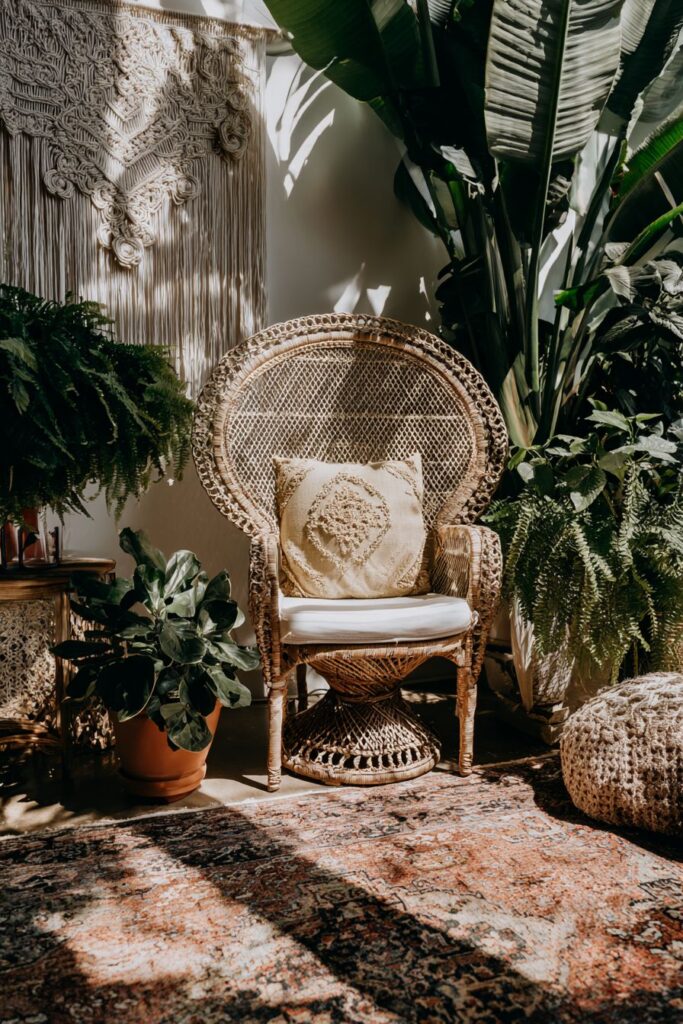
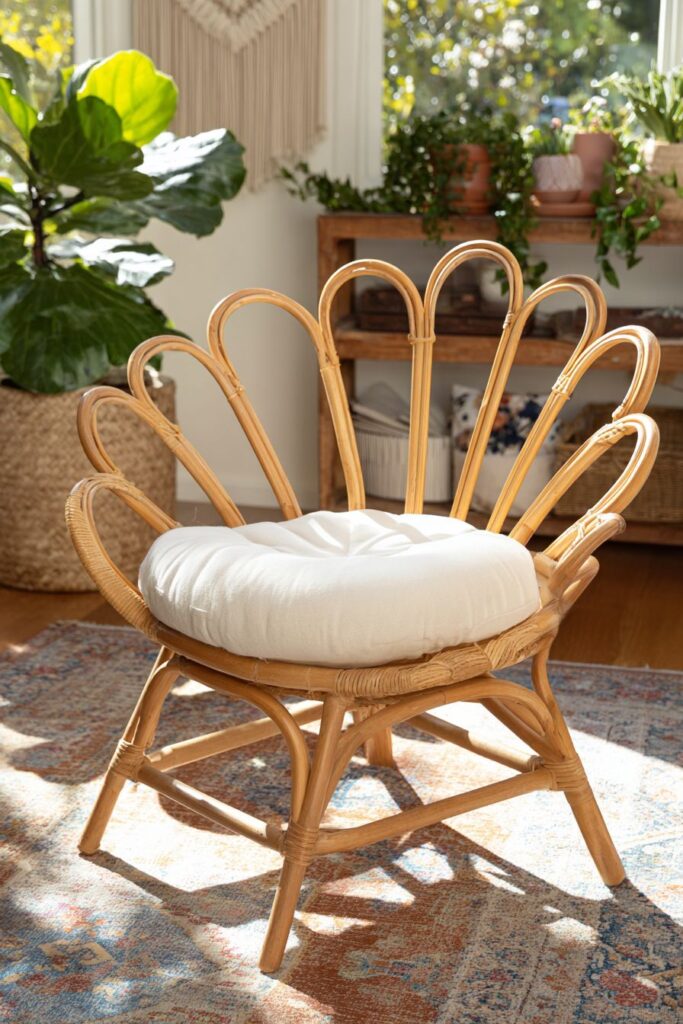
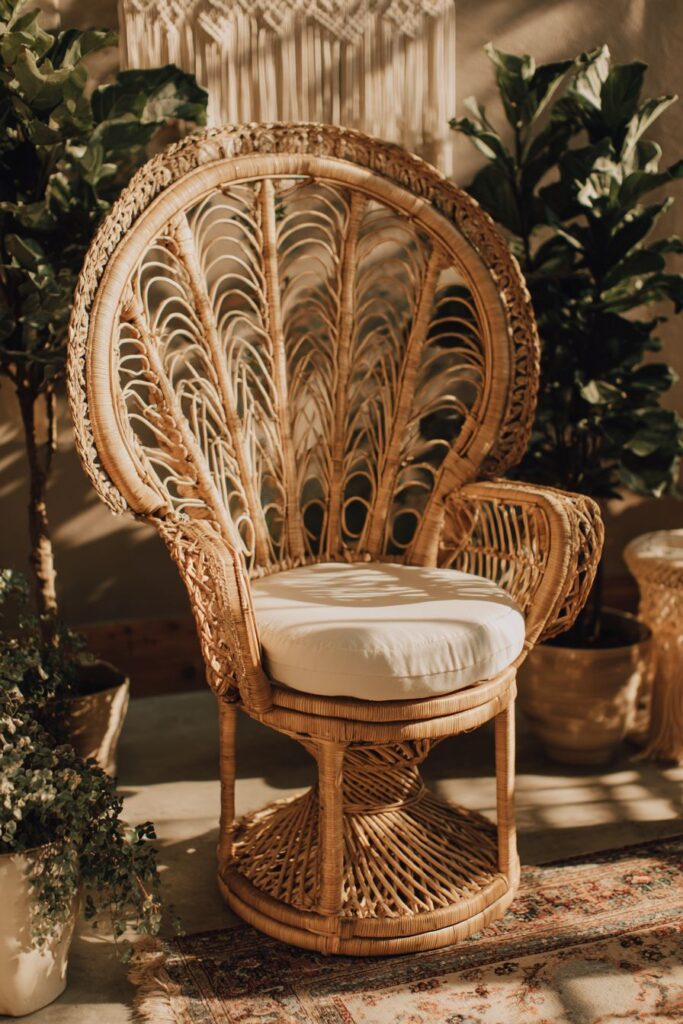
The bohemian aesthetic celebrates eclecticism, natural materials, and a relaxed approach to design that prioritizes comfort and personal expression over rigid rules—qualities beautifully expressed in an accent chair with a natural rattan frame and cream cushions that show slight fabric wrinkles, authenticating its lived-in appeal. This chair features an organic curved peacock-style back that makes an immediate visual impact, transforming functional seating into a sculptural statement piece. The intricate rattan weaving showcases traditional craftsmanship while the open, airy structure keeps the piece from feeling heavy despite its substantial size. Positioned on a layered arrangement of vintage Persian rugs in muted earth tones, the chair sits within a rich tapestry of colors and patterns that defines bohemian style.
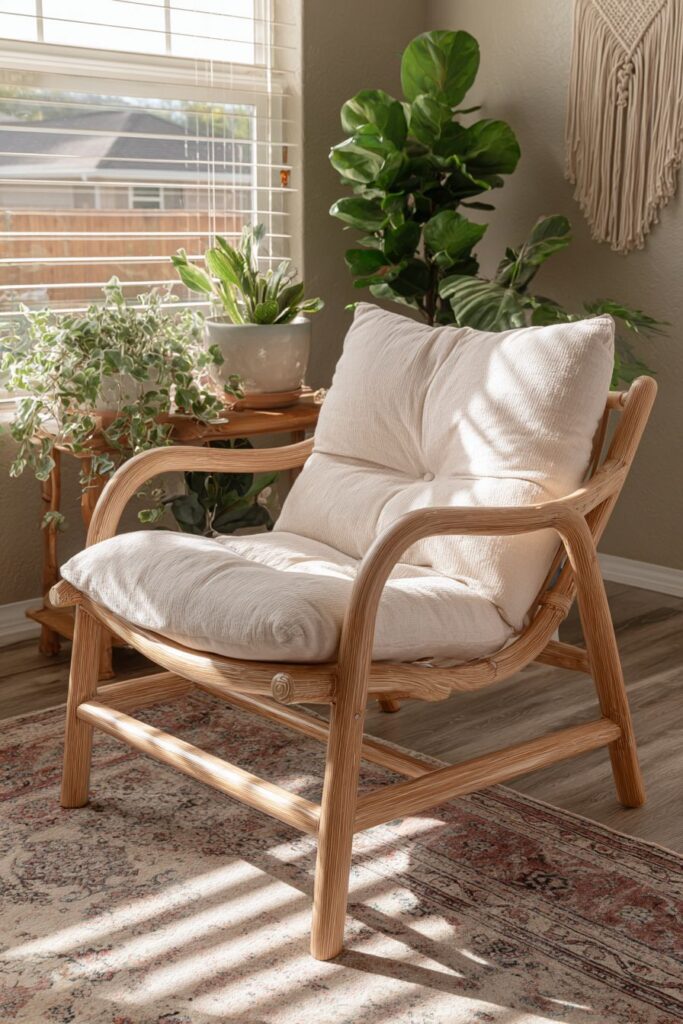
Surrounding the chair with potted plants creates a jungle-like atmosphere that brings the outdoors in, a key element of bohemian design philosophy. A fiddle leaf fig stretches toward nearby windows while trailing pothos cascades from elevated surfaces, their green leaves creating dappled shadows that dance across the rattan and cushions as natural daylight shifts throughout the day. A macramé wall hanging visible in the background adds another layer of handcrafted texture, its intricate knotwork echoing the chair’s woven construction and reinforcing the aesthetic’s appreciation for artisanal techniques.
The beauty of this bohemian arrangement lies in its apparent effortlessness—nothing feels overly planned or precious. The layered rugs suggest gradual accumulation rather than one-time purchasing, while the plants appear to have found their spots organically. Yet beneath this casual appearance lies thoughtful design consideration. The cream cushions provide visual rest amid the busy patterns and textures, while the natural rattan’s warm tones tie together the various earth-toned elements. Wide-angle interior design photography captures the eclectic, relaxed atmosphere with attention to the natural material textures that give bohemian spaces their distinctive character and warmth.
Essential elements for creating authentic bohemian spaces:
- Select furniture made from natural materials like rattan, wicker, or bamboo that showcase organic forms and traditional craftsmanship
- Layer multiple rugs in complementary patterns and colors to create depth and visual richness underfoot
- Incorporate abundant plant life at various heights to bring natural energy and movement into the space
- Mix patterns, textures, and global influences freely, trusting your instincts rather than following strict matching rules
- Include handcrafted elements like macramé, woven baskets, or pottery to celebrate artisanal traditions and add personal character
6. Navy Sophistication: Elegant Paired Seating
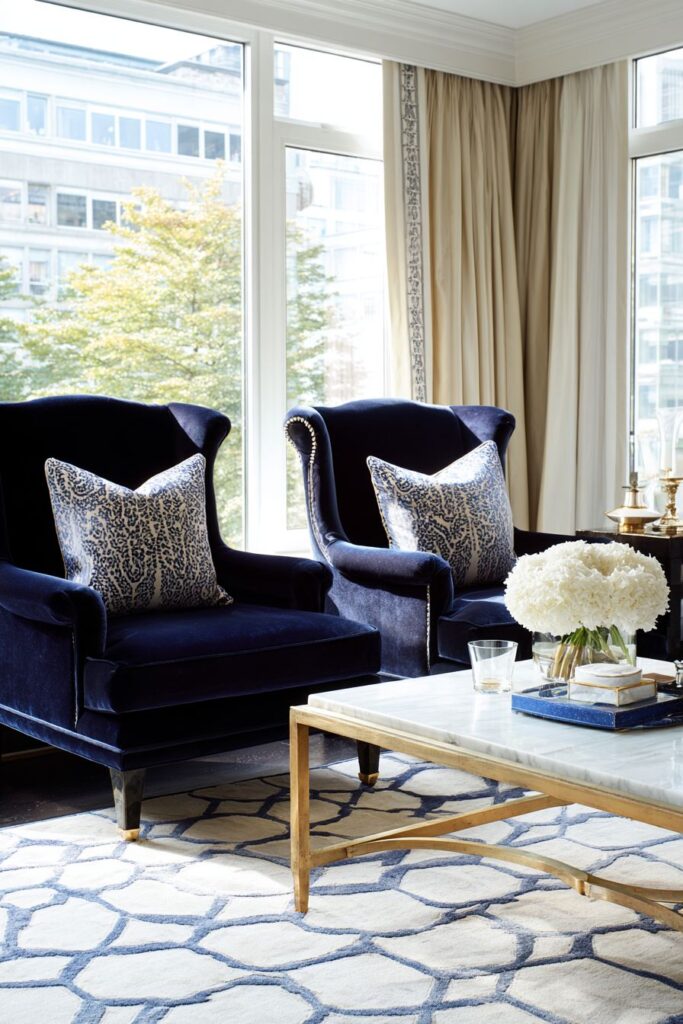
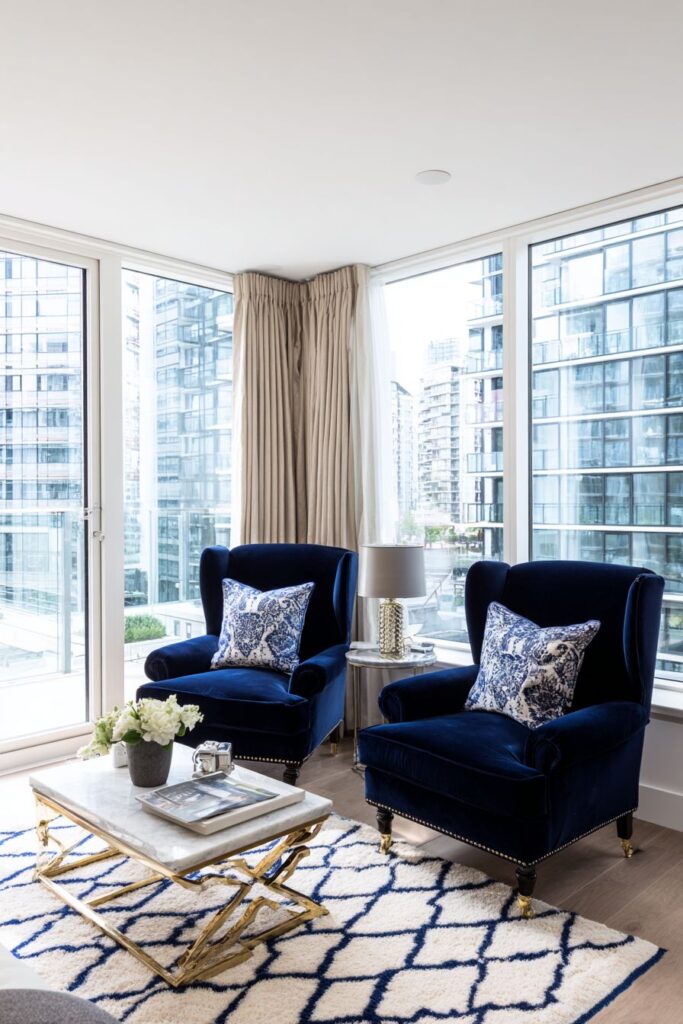
Creating conversation areas within living rooms requires thoughtful furniture arrangement, and nothing accomplishes this more elegantly than a pair of accent chairs positioned to face each other, fostering intimate dialogue and social connection. Upholstered in navy blue velvet with subtle sheen variations in the fabric pile that catch and reflect light beautifully, these chairs bring sophisticated color to the space while maintaining versatility—navy works with virtually any color palette while feeling more interesting than neutral tones. The chairs feature rolled arms and slightly curved backs that provide ergonomic comfort while their brass-capped legs add a touch of metallic glamour that elevates the overall aesthetic from merely comfortable to genuinely luxurious.
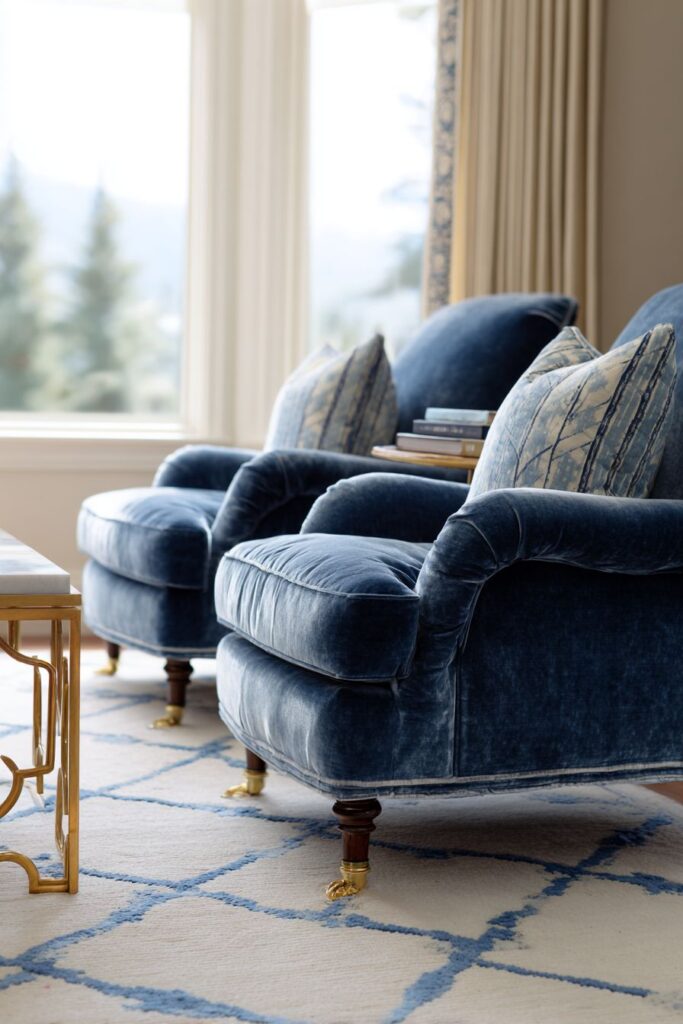
Positioned across a marble-topped coffee table with a gold metal base, the paired chairs create a formal yet inviting seating arrangement that encourages conversation and social interaction. The marble introduces natural stone patterns that add visual interest while the gold metal base echoes the brass leg caps, creating cohesive metallic accents throughout the vignette. A soft area rug in cream and blue geometric patterns anchors the seating arrangement, defining the conversation zone within the larger living room while its geometric design adds contemporary energy without overwhelming the classic silhouette of the chairs.
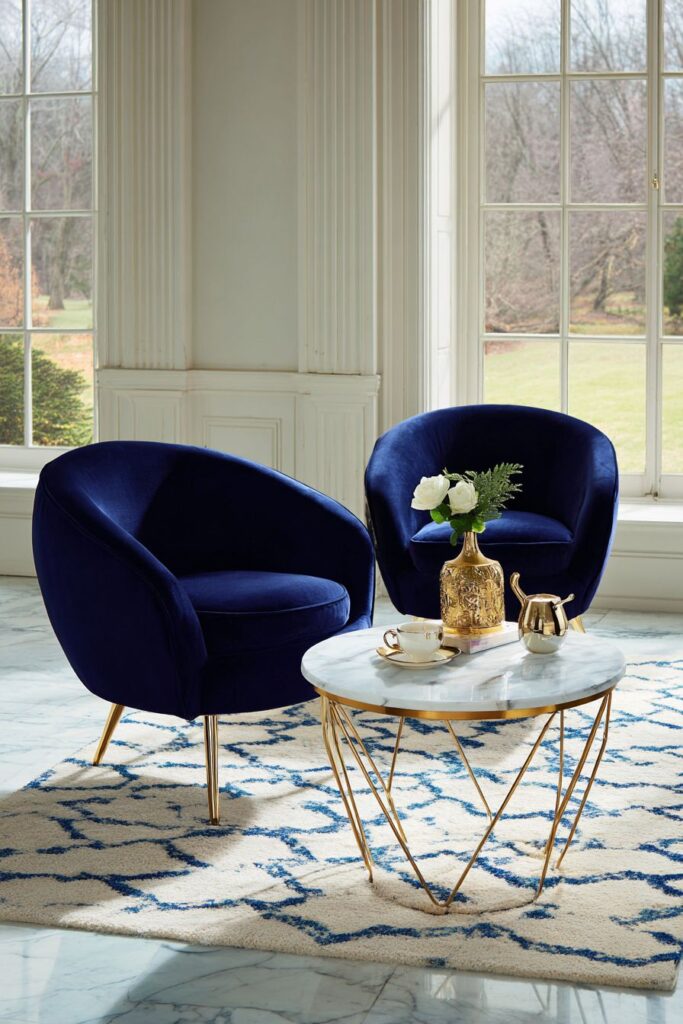
Professional interior photography with balanced exposure captures the elegant symmetry of this arrangement while highlighting the rich velvet texture and metallic accents in soft natural window light. The symmetrical placement creates visual balance and formality, suggesting a room designed for entertaining and sophisticated gatherings. Yet the plush velvet upholstery and curved forms keep the space from feeling too stiff or unapproachable. This is the kind of seating arrangement that makes guests feel special while remaining comfortable enough for family use—the hallmark of truly successful interior design that balances beauty with livability.
Creating sophisticated paired seating arrangements:
- Choose identical or coordinating chairs to create visual symmetry that suggests intentional design and formal balance
- Position chairs facing each other across a coffee table to facilitate conversation and create an intimate social zone
- Select rich upholstery fabrics like velvet or silk that add luxury and visual depth to the space
- Incorporate metallic accents through legs, nailheads, or nearby accessories to add glamour without overwhelming
- Use area rugs to define and anchor the conversation area, creating a room-within-a-room effect in larger spaces
7. Transitional Comfort: Oversized Relaxation
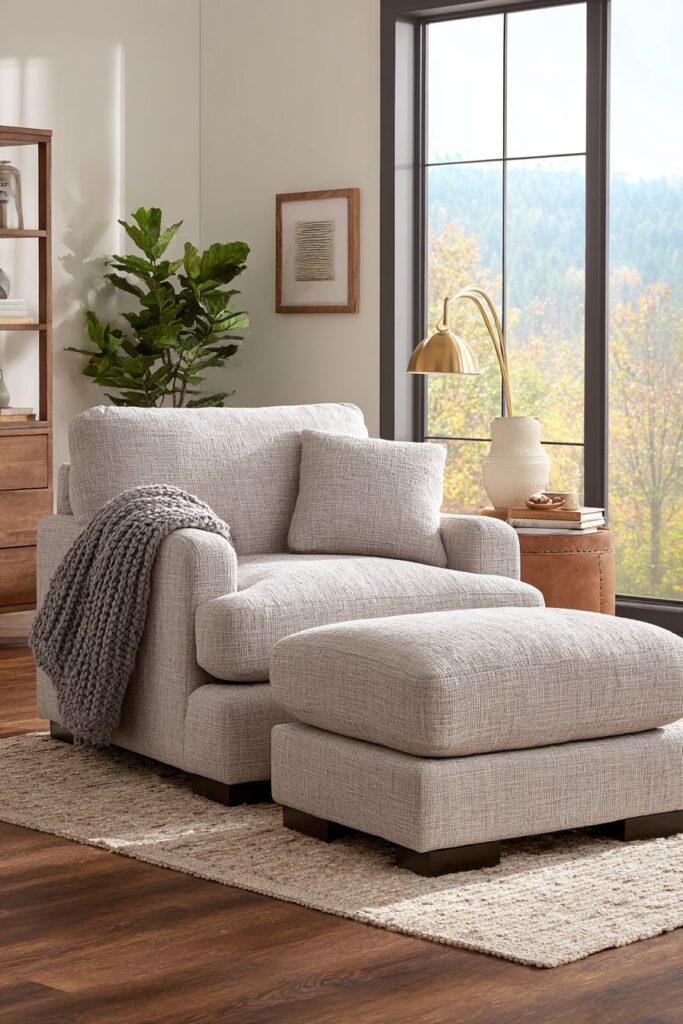
Modern life demands furniture that can adapt to multiple activities and moods, making the oversized accent chair an increasingly popular choice for living rooms where comfort is paramount. Upholstered in oatmeal-colored performance linen with visible natural slub texture that adds visual interest to the neutral palette, this generously proportioned chair features deep cushioning that invites you to sink in and stay awhile. The slightly rounded arms provide comfortable support for reading or relaxing, while a matching ottoman positioned for extended lounging transforms the chair into a chaise-like retreat perfect for afternoon naps or marathon reading sessions. This is furniture designed for real life, where comfort and durability meet refined aesthetic sensibility.
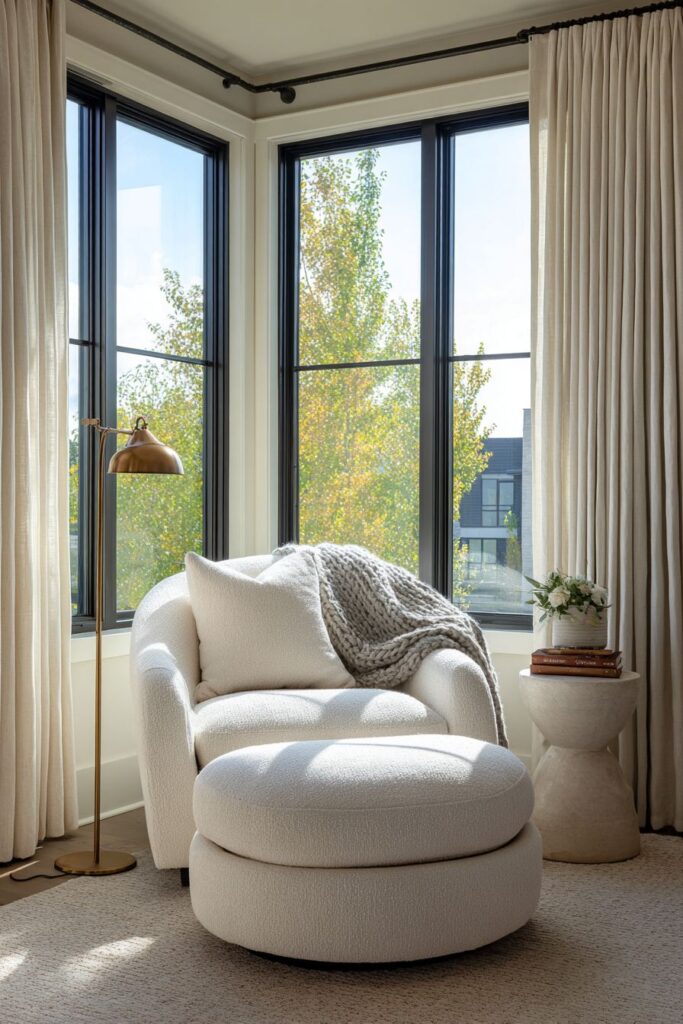
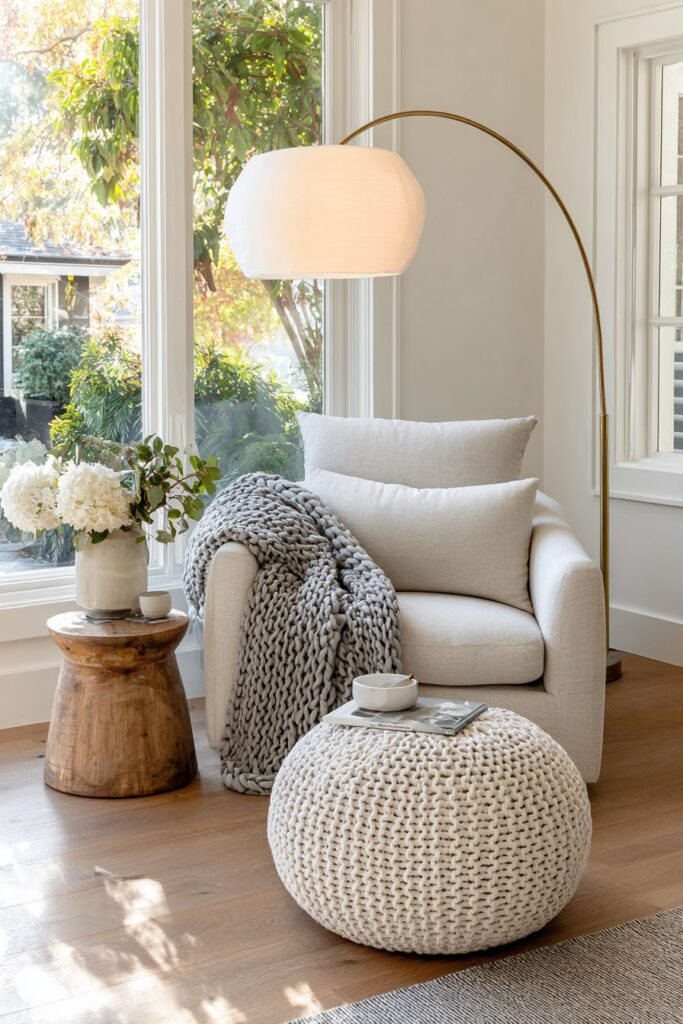
A chunky knit throw blanket in soft grey drapes over the chair back, adding another layer of texture while providing warmth on cooler evenings. The throw’s handcrafted appearance brings human touch to the space, softening the chair’s clean lines with organic texture. A ceramic side table sits within easy reach, offering surface space for books, beverages, or decorative objects, while a brass arc floor lamp curves gracefully over the seating area, providing adjustable task lighting that makes the space functional for reading or other activities requiring focused illumination.
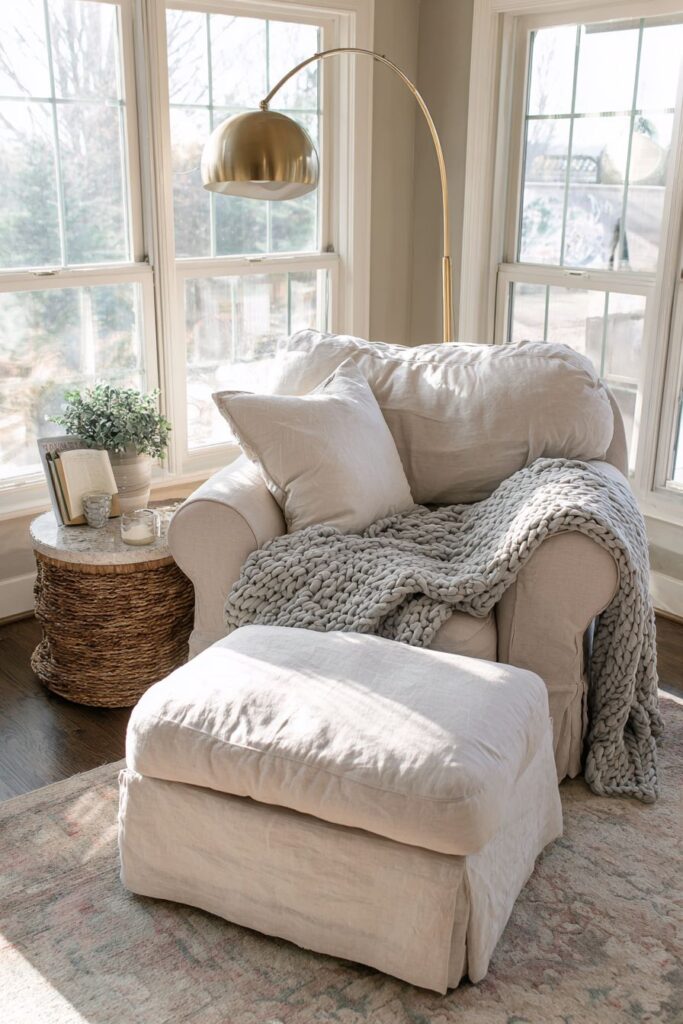
Natural afternoon light creates gentle shadows that emphasize the fabric’s slub texture, revealing the natural variations in the linen weave that give it character and depth. Interior design photography with a wide-angle lens captures the inviting scale and practical comfort of the seating area, showing how oversized furniture can create cozy zones within larger rooms without overwhelming the space. The transitional style successfully bridges traditional comfort with contemporary aesthetics, resulting in a chair that feels current yet timeless, substantial yet not heavy, luxurious yet approachable—perfectly suited to how modern families actually live.
Maximizing comfort in transitional seating:
- Select oversized proportions with deep seating and cushioning for maximum lounging comfort
- Choose performance fabrics that combine beauty with practical durability for family-friendly functionality
- Add matching ottomans to extend the seating and create flexible lounging configurations
- Layer soft textiles like throw blankets and pillows to increase coziness and textural interest
- Position adjustable lighting nearby to make the space functional for various activities from reading to conversation
8. Art Deco Glamour: Blush Pink Luxury
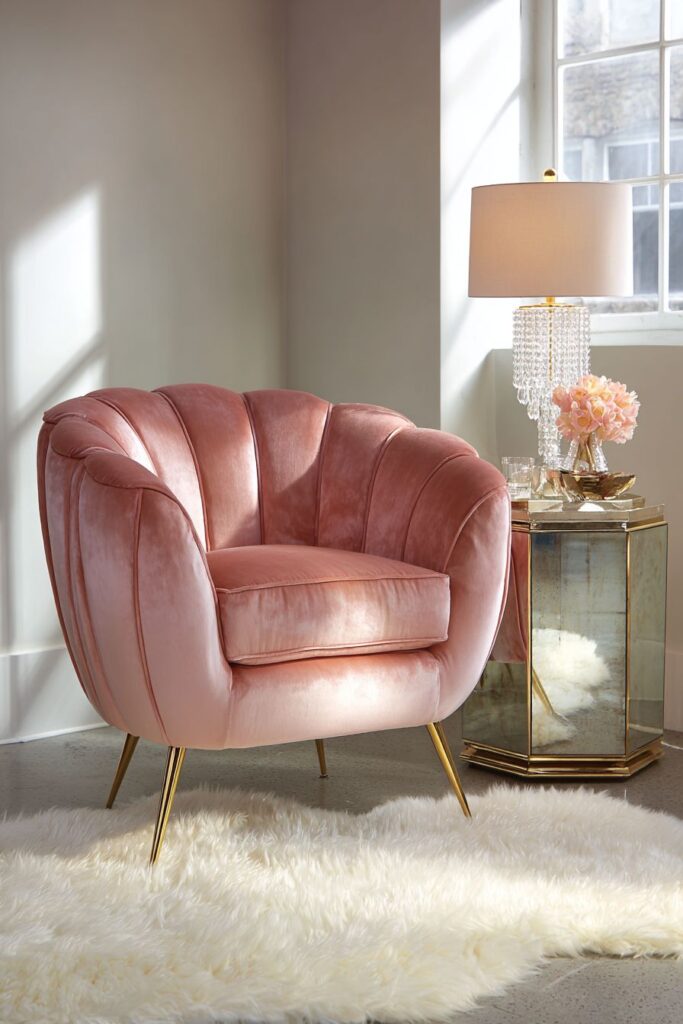
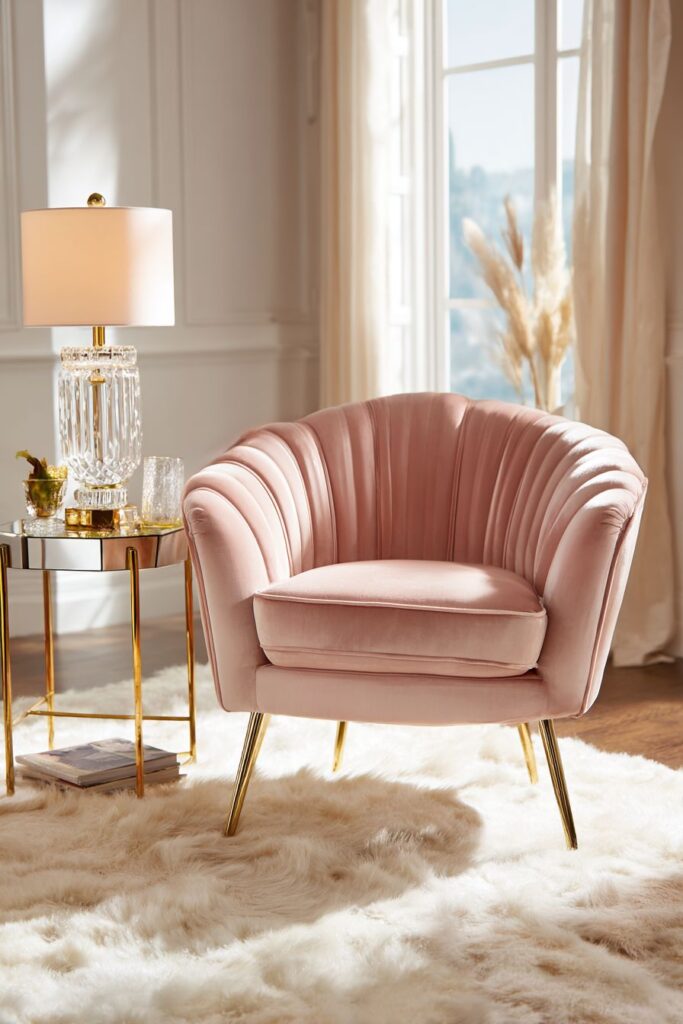
The Art Deco movement of the 1920s and 30s celebrated luxury, geometric forms, and unabashed glamour—aesthetic principles beautifully embodied in a curved barrel back accent chair upholstered in blush pink velvet with subtle color variations that create depth and visual interest. This statement piece features channeled tufting details that create vertical lines emphasizing the chair’s height, while sleek brass legs with geometric feet reference the Art Deco era’s fascination with metallic finishes and angular forms. The distinctive curved barrel back wraps around the sitter, creating a sense of enclosure and intimacy while making a bold sculptural statement that commands attention within the living room.
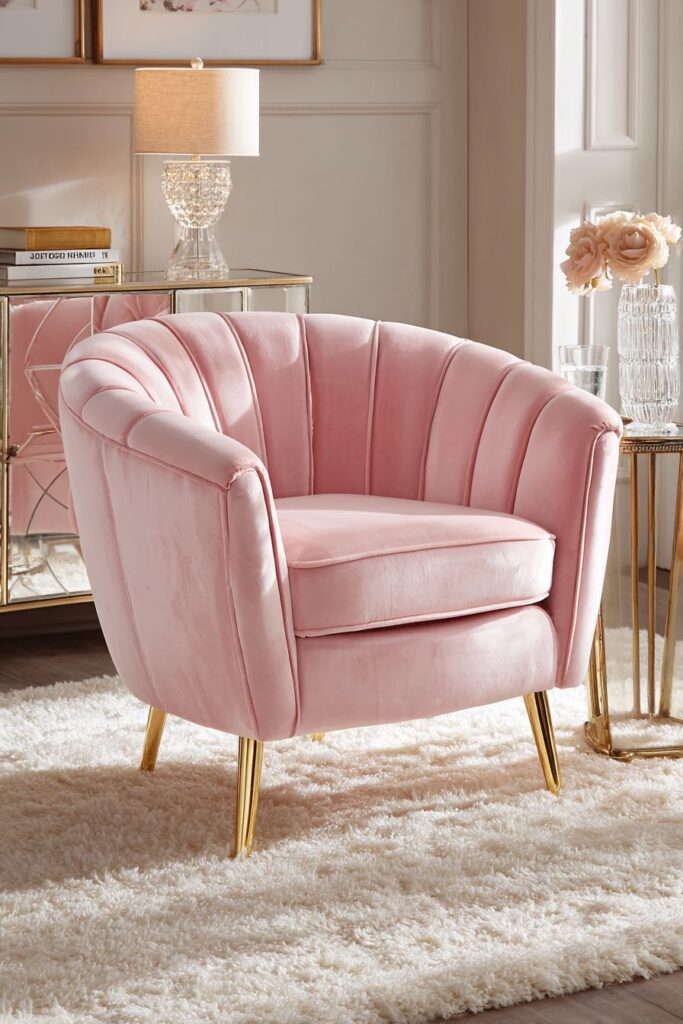
Positioned on a plush cream rug beside a mirrored side table, the chair becomes part of a glamorous vignette that celebrates reflection and light. The mirrored table multiplies light sources and creates visual expansion, a classic Art Deco trick for adding sparkle and dimension to interior spaces. A crystal table lamp atop the mirrored surface adds another layer of luxury, its faceted surfaces catching and refracting light throughout the day. Soft diffused natural lighting highlights the luxurious velvet texture and brass metallic finish, while professional interior photography captures the elegant curves and sophisticated color palette with careful attention to material reflectivity and shadow play.
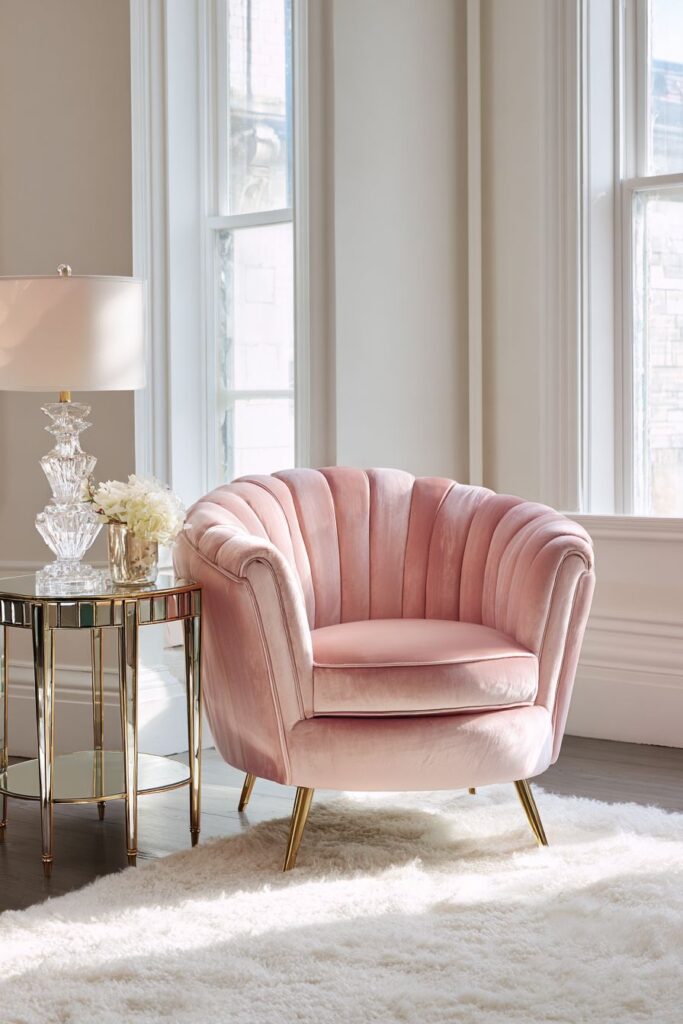
The blush pink upholstery represents a daring color choice that pays dividends in visual impact—it’s romantic without being saccharine, luxurious without being ostentatious, and feminine without being exclusively girly. This color works beautifully with both warm and cool palettes, making it surprisingly versatile despite its boldness. The contrast between the soft pink velvet and gleaming brass legs creates visual tension that keeps the eye engaged, while the curved forms suggest movement and fluidity that prevents the formal styling from feeling rigid or unwelcoming.
Achieving authentic Art Deco glamour:
- Select furniture with curved, geometric forms that reference the era’s distinctive aesthetic vocabulary
- Choose luxurious materials like velvet, silk, lacquer, and brass that emphasize quality and opulence
- Incorporate mirrored or metallic surfaces to create light reflection and visual expansion
- Embrace bold colors including jewel tones, metallics, and sophisticated pastels like blush or mint
- Add crystal or glass accessories for light refraction and additional sparkle that enhances the glamorous atmosphere
9. Industrial Edge: Cognac Leather Character
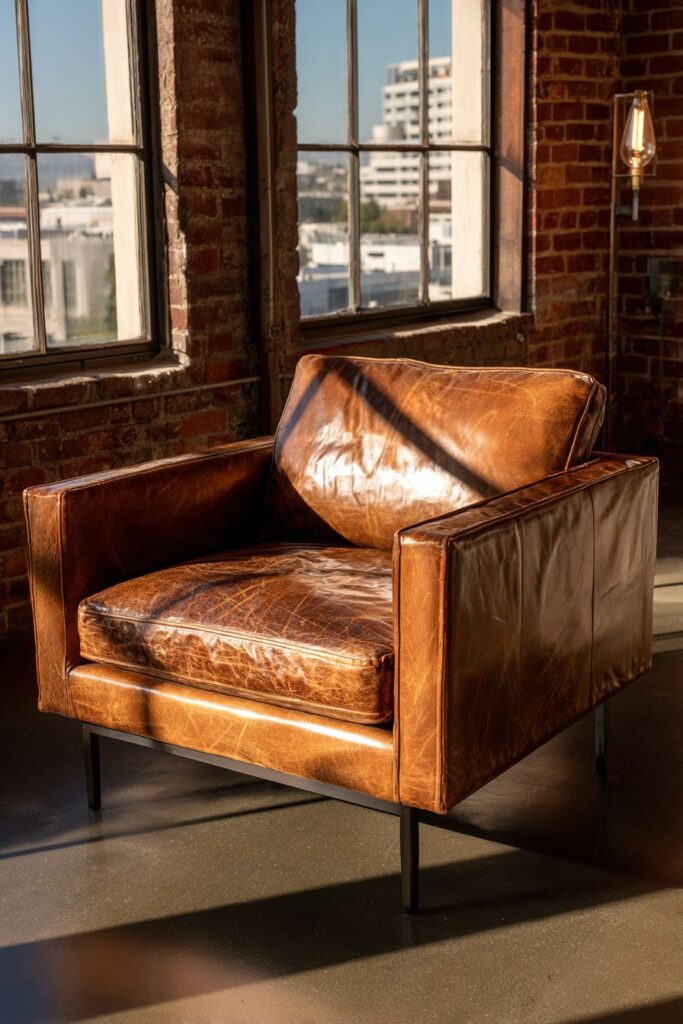
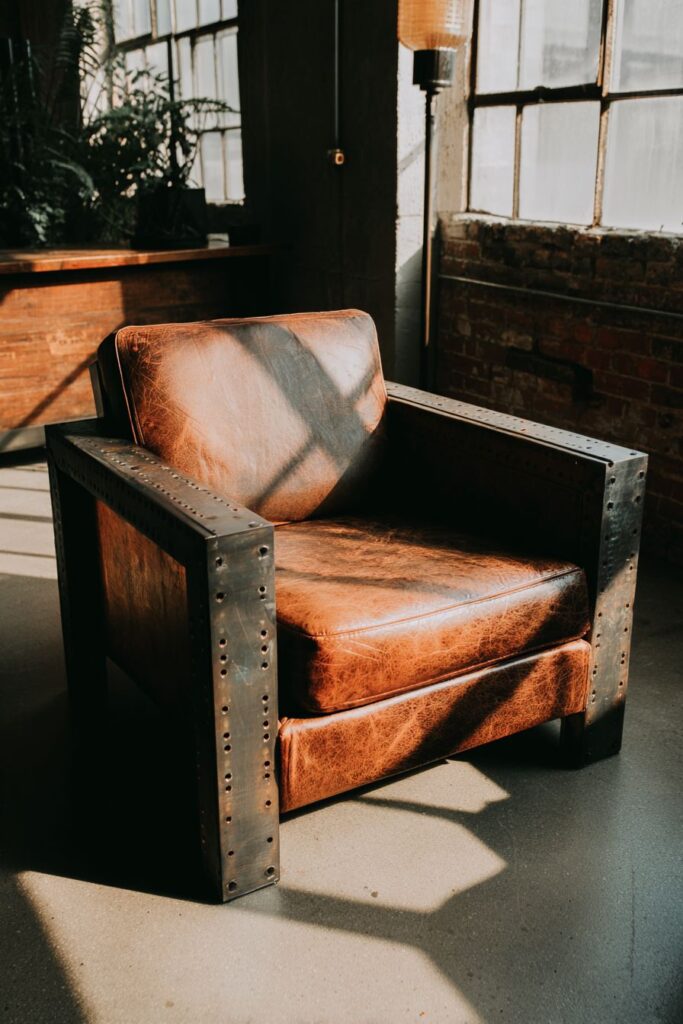
Industrial design embraces the raw beauty of utilitarian materials, celebrating exposed construction and honest materiality that references warehouses, factories, and urban lofts—aesthetic principles perfectly expressed in a leather accent chair in rich cognac brown with natural grain texture and slight color variations that authenticate its genuine leather construction. This chair features a simple geometric frame with exposed black metal legs and riveted details on the armrests that reference industrial joinery techniques, transforming functional fasteners into design elements. Positioned on polished concrete flooring, the chair sits within an authentically industrial setting where materials are celebrated rather than concealed.
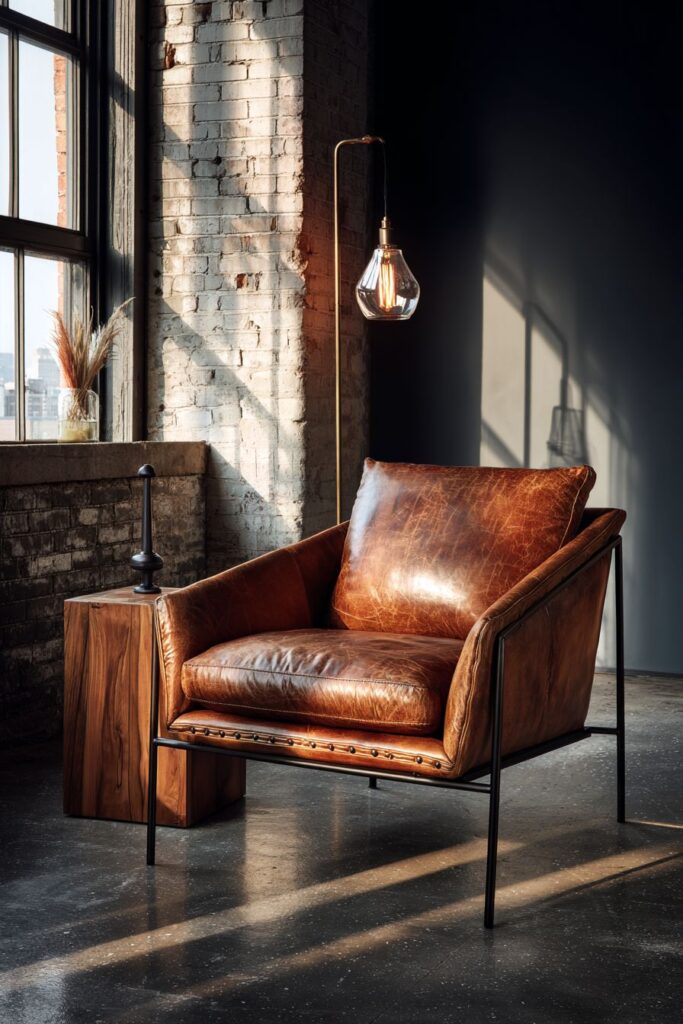
A reclaimed wood side table and Edison bulb floor lamp complete the industrial vignette, each element contributing to the aesthetic’s celebration of repurposed materials and vintage-industrial styling. The reclaimed wood shows the marks of previous use—nail holes, weathering, patina—that tell stories about its prior life while the Edison bulb’s visible filament references early electrical lighting, adding warm amber light that contrasts beautifully with the space’s raw materials. An exposed brick wall visible in the background provides texture and historical character, its weathered surface adding another layer of authentic urban character.
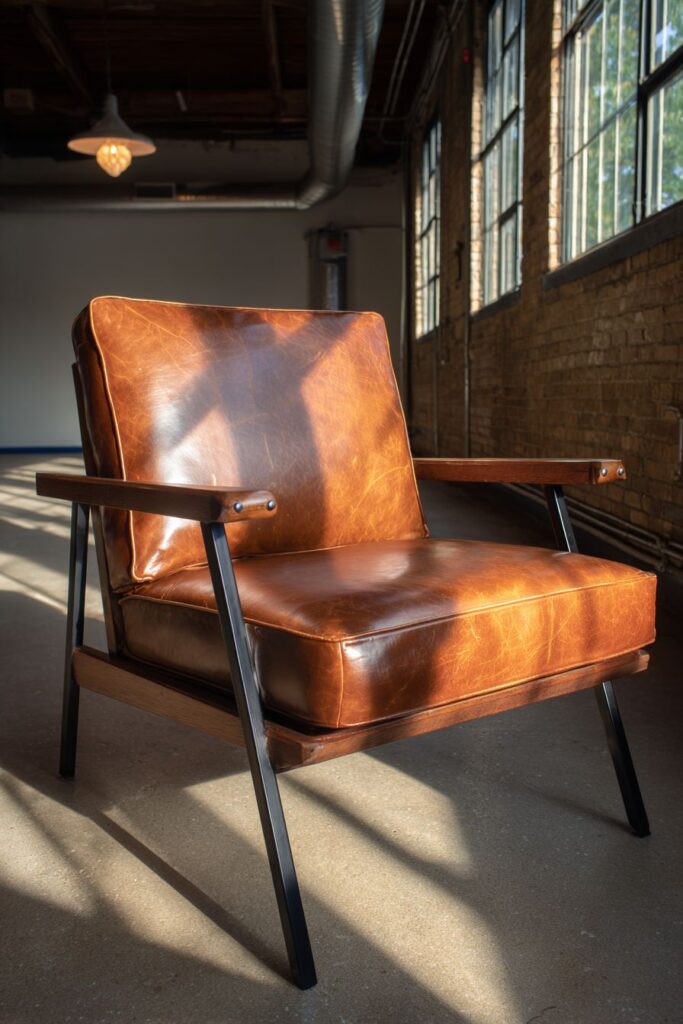
Natural light from tall warehouse-style windows creates dramatic shadows and highlights on the leather surface, emphasizing its texture and natural variations. Architectural digest style interior photography emphasizes the raw materials and utilitarian aesthetic, capturing the way different textures—smooth leather, rough concrete, weathered brick, rustic wood—work together to create visual richness despite the limited color palette. This is design that celebrates authenticity over perfection, character over polish, and honest materials over artificial finishes.
Creating authentic industrial interiors:
- Select furniture with exposed metal frames, rivets, or other visible construction elements that reference industrial fabrication
- Choose genuine leather in rich browns or blacks that will develop beautiful patina with age and use
- Incorporate reclaimed wood elements that show authentic wear and historical character
- Expose architectural elements like brick walls, concrete floors, or metal ductwork rather than concealing them
- Use Edison bulb lighting and metal fixtures to add warm light while maintaining the industrial aesthetic
10. Coastal Casual: Breezy White Linen
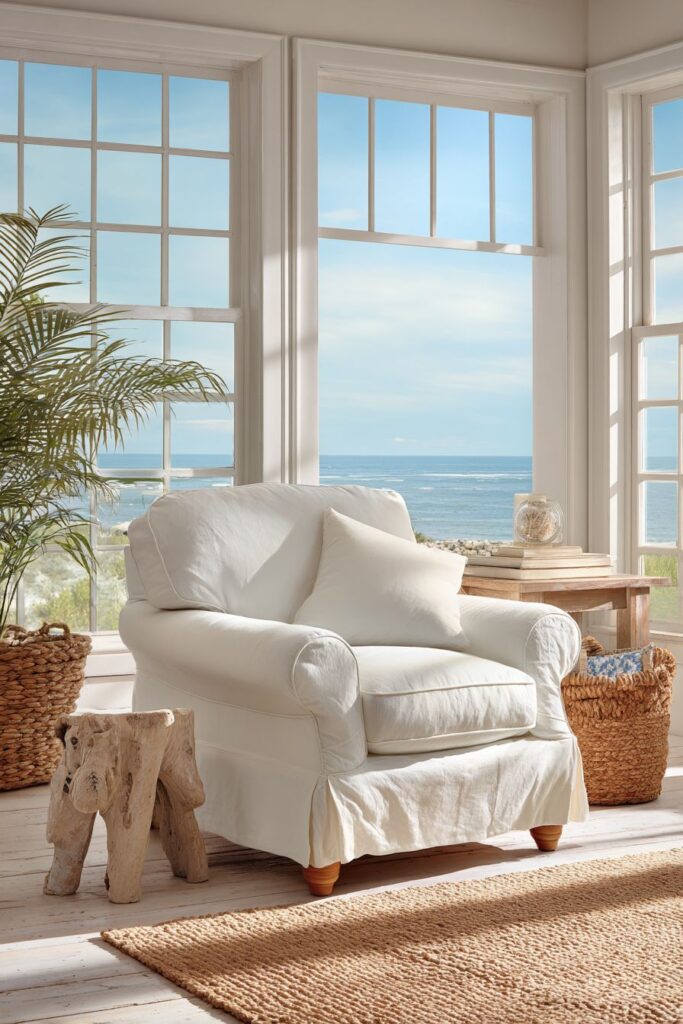
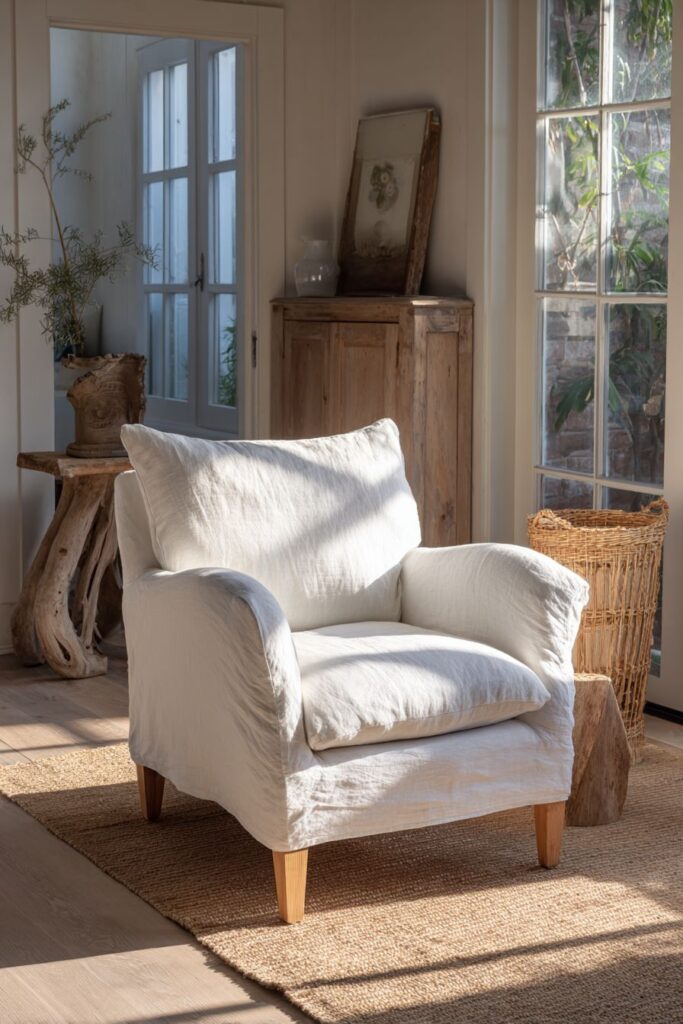
The coastal design aesthetic celebrates the relaxed elegance of seaside living, where salty air, natural light, and informal comfort create spaces that feel perpetually vacation-ready. A slipcovered accent chair in white-washed linen embodies these principles perfectly, with natural wrinkles and soft texture that suggest ease and livability rather than fussy perfection. The loose-fit design features gentle gathers that accommodate the fabric’s natural movement, while exposed light oak legs and casual rolled arms maintain the relaxed silhouette. This is furniture that invites you to kick off your shoes, settle in with a book, and lose track of time—the very essence of coastal living.
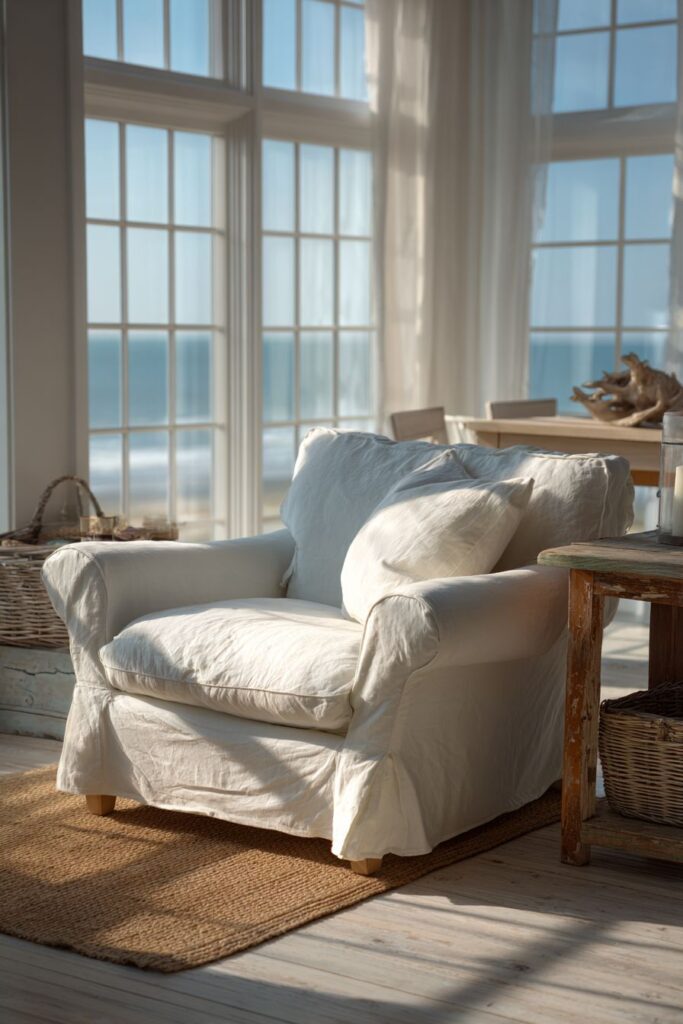
Positioned on bleached hardwood floors with a natural fiber jute rug underneath, the chair sits within a layered composition of natural materials that reinforce the coastal aesthetic’s connection to nature and organic elements. A driftwood-inspired side table brings sculptural interest with its organic curves and weathered appearance, while a woven basket nearby provides practical storage that doubles as a textural accent. Every element feels collected rather than purchased, suggesting gradual accumulation of beloved pieces rather than one-time room decoration.
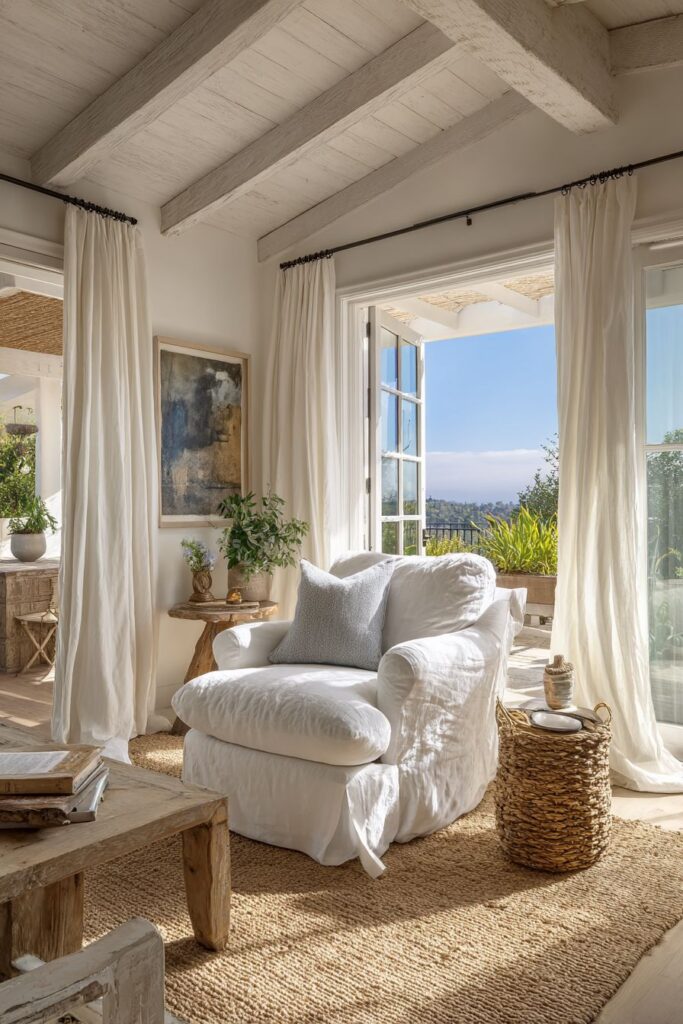
Bright natural daylight floods the space creating an airy atmosphere that defines coastal interiors—this is lighting that celebrates sunshine and ocean views, that makes rooms feel expanded and open. Wide-angle interior design photography captures the breezy, livable comfort with soft shadows and highlighted fabric details, showing how the linen catches light and creates depth through its natural texture and gentle folds. The overall effect is one of effortless sophistication, where casual comfort meets refined taste in a way that feels both welcoming and stylish.
Essential elements for coastal casual styling:
- Choose slipcovered furniture in white, cream, or light natural tones that can be easily cleaned and that brighten spaces
- Select natural fiber rugs like jute, sisal, or seagrass that reference beach sand and organic textures
- Incorporate driftwood or weathered wood elements that suggest beachcombing discoveries
- Maximize natural light through window treatments that diffuse rather than block sunlight
- Layer natural materials and textures to create depth while maintaining the light, airy aesthetic
11. Modern Farmhouse: Charcoal Wingback Elegance
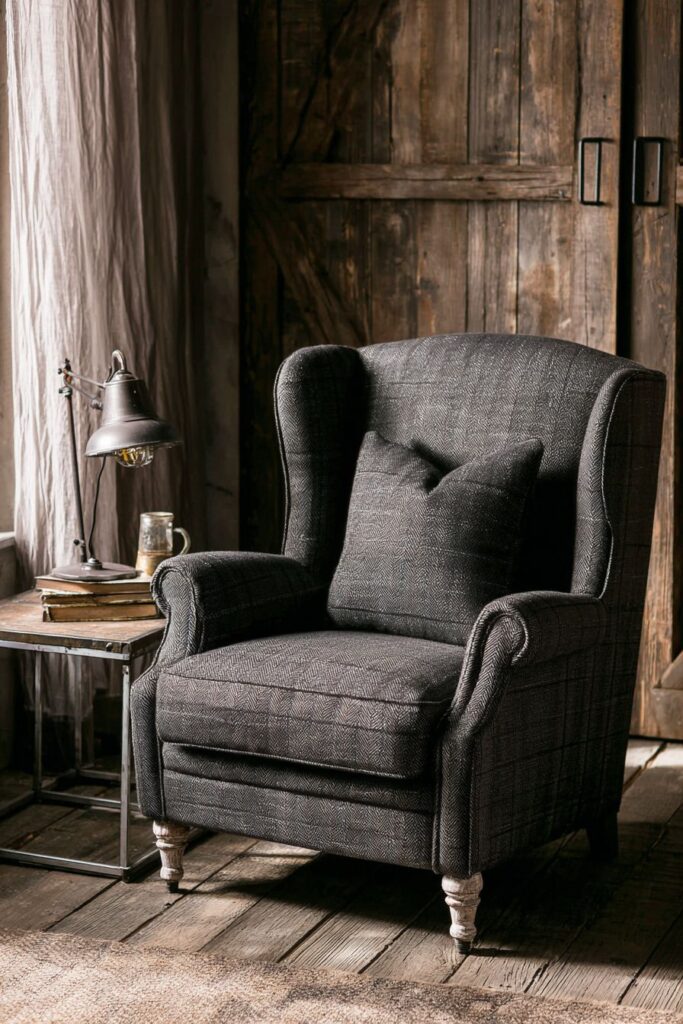
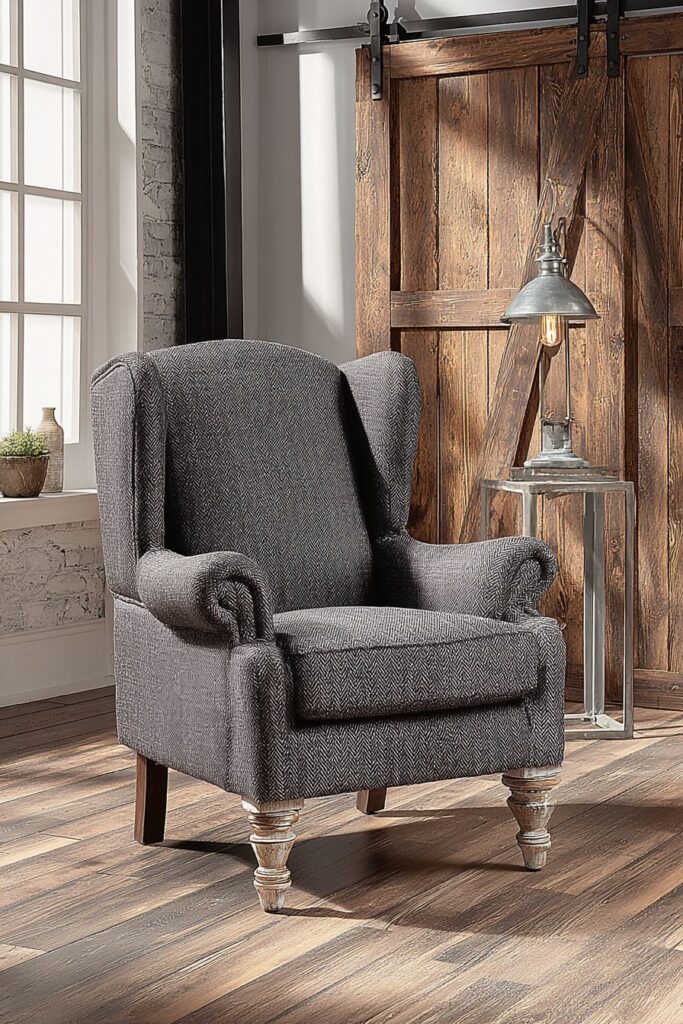
The modern farmhouse aesthetic successfully bridges traditional silhouettes with contemporary color palettes, creating spaces that feel both timeless and current. A classic wingback accent chair upholstered in charcoal grey textured fabric with subtle herringbone weave pattern exemplifies this hybrid approach. The chair maintains the traditional wingback’s high back and scrolled arms that provide comfort and visual presence, but updates the look with modern grey upholstery that feels fresh and versatile. Turned wooden legs in an aged white finish add farmhouse character while the neutral grey fabric ensures the chair works with virtually any color scheme.
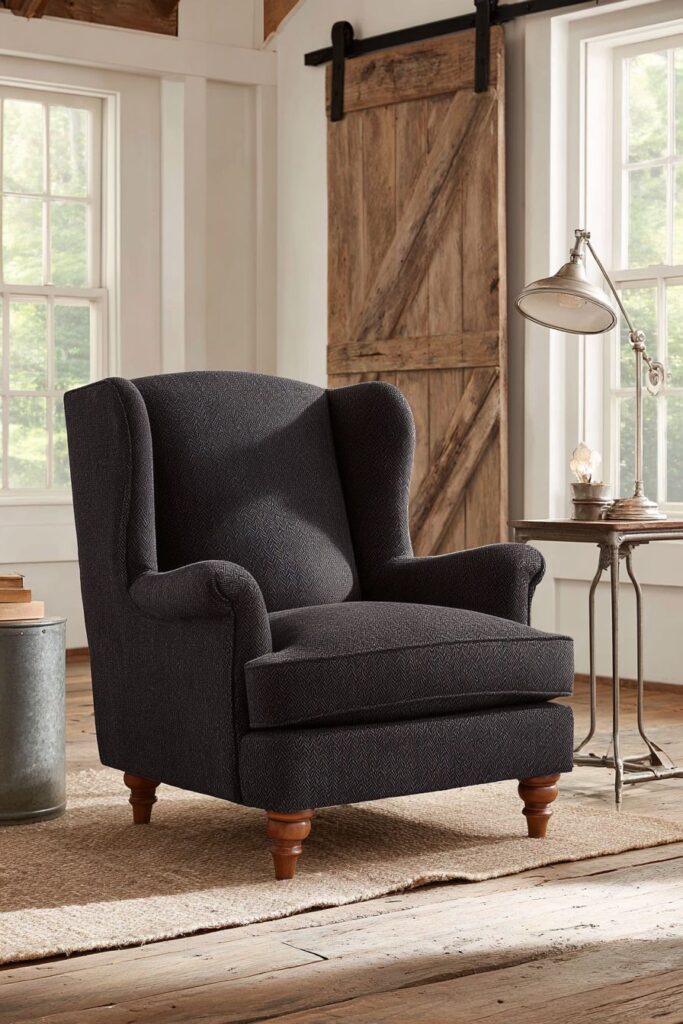
Positioned beside a sliding barn door—itself a signature modern farmhouse element—the chair sits on distressed wide-plank flooring that suggests historical character even in new construction. A galvanized metal side table holds a vintage-style lamp, mixing industrial elements with farmhouse aesthetics in the eclectic way that defines this popular style. The combination of traditional form with contemporary finishes creates visual interest through contrast while maintaining overall cohesion through the neutral color palette.
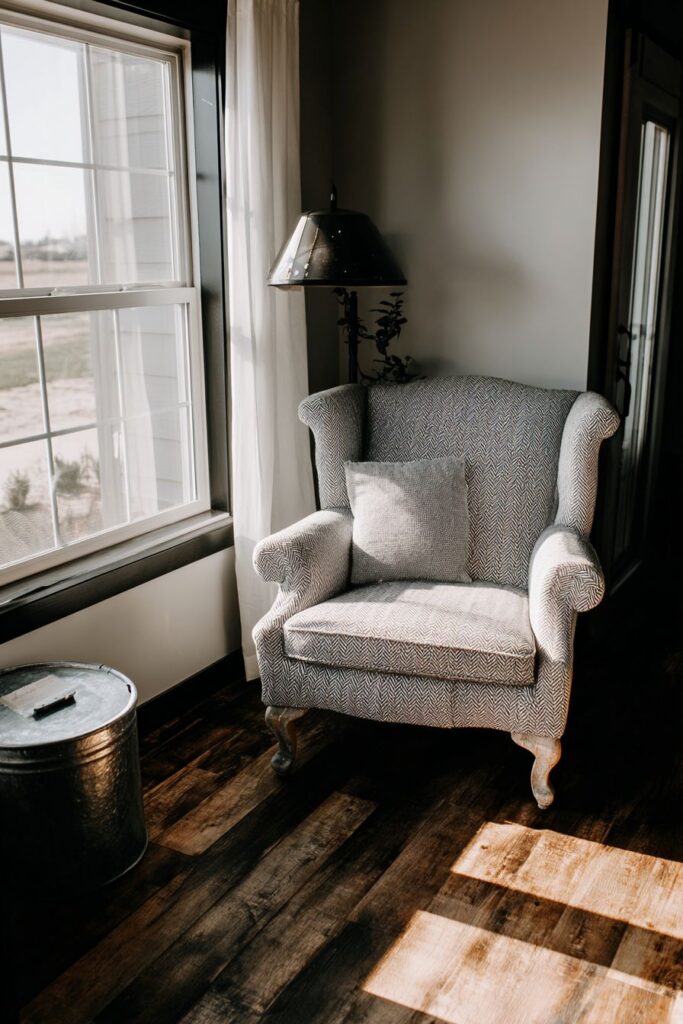
Natural window light creates soft shadows emphasizing the chair’s traditional profile and fabric texture, with professional interior photography using balanced exposure to showcase the blend of classic form and modern neutral palette. The herringbone weave adds subtle pattern that provides visual interest without overwhelming, while the charcoal color brings sophistication that elevates the space beyond country casual into something more refined. This is farmhouse design for the modern era—comfortable and welcoming but polished enough for contemporary tastes.
Achieving modern farmhouse aesthetic balance:
- Combine traditional furniture silhouettes with contemporary neutral colors like greys, whites, and blacks
- Select textured fabrics that add visual interest while maintaining the neutral palette
- Mix vintage or vintage-inspired accessories with modern elements for eclectic character
- Incorporate architectural elements like barn doors, exposed beams, or shiplap to reinforce the farmhouse aesthetic
- Use aged or distressed finishes on wood elements to suggest history and craftsmanship
12. Sculptural Statement: Terracotta Bouclé Beauty
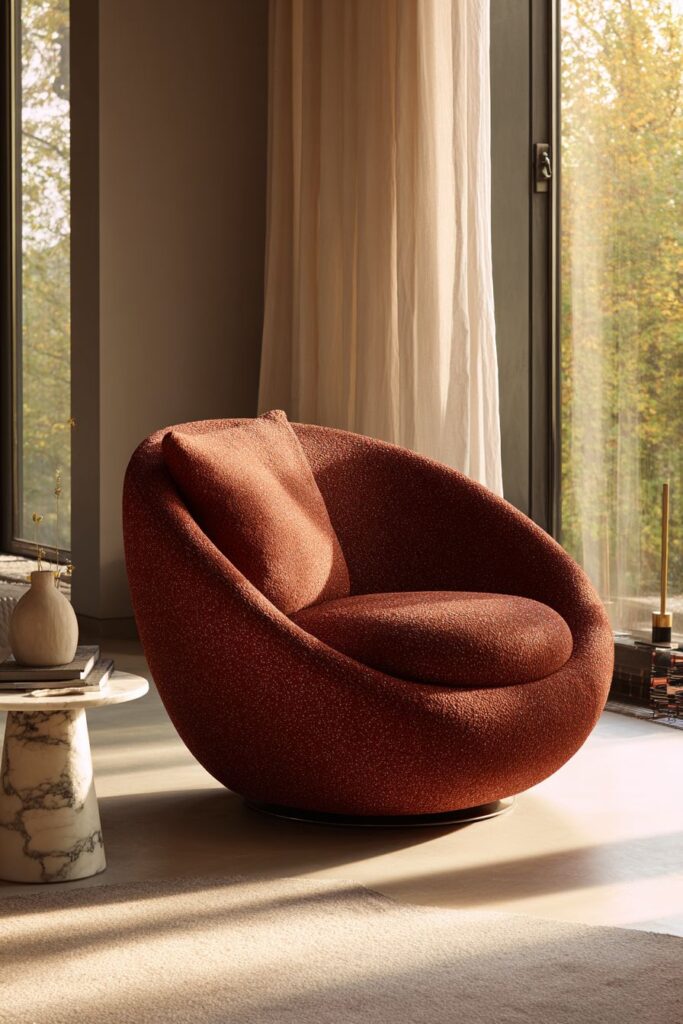
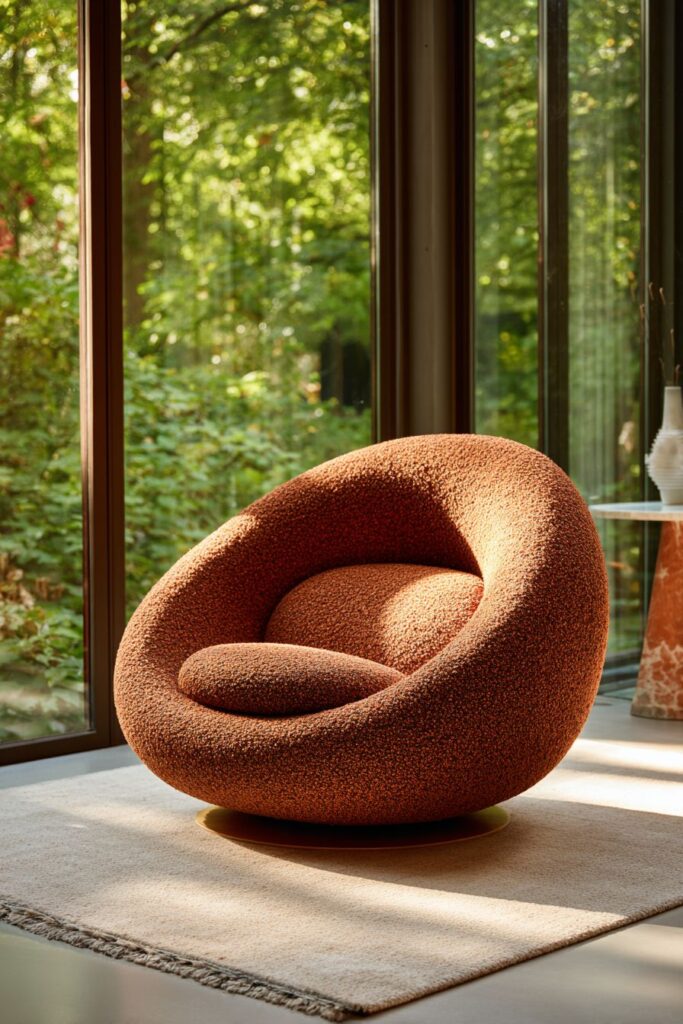
Contemporary furniture design increasingly embraces sculptural forms that blur the line between functional seating and art objects—a trend beautifully exemplified by an organic curved accent chair upholstered in terracotta-colored bouclé fabric showing natural texture variations. This piece features a rounded cocoon-like shape that wraps around the sitter, creating an intimate enclosed feeling while its dramatic silhouette makes a bold visual statement. With no visible legs, the upholstery extends to the floor, emphasizing the chair’s sculptural qualities and creating a solid, grounded presence. A hidden swivel base adds unexpected functionality, allowing the chair to rotate for optimal viewing angles or conversation positions.
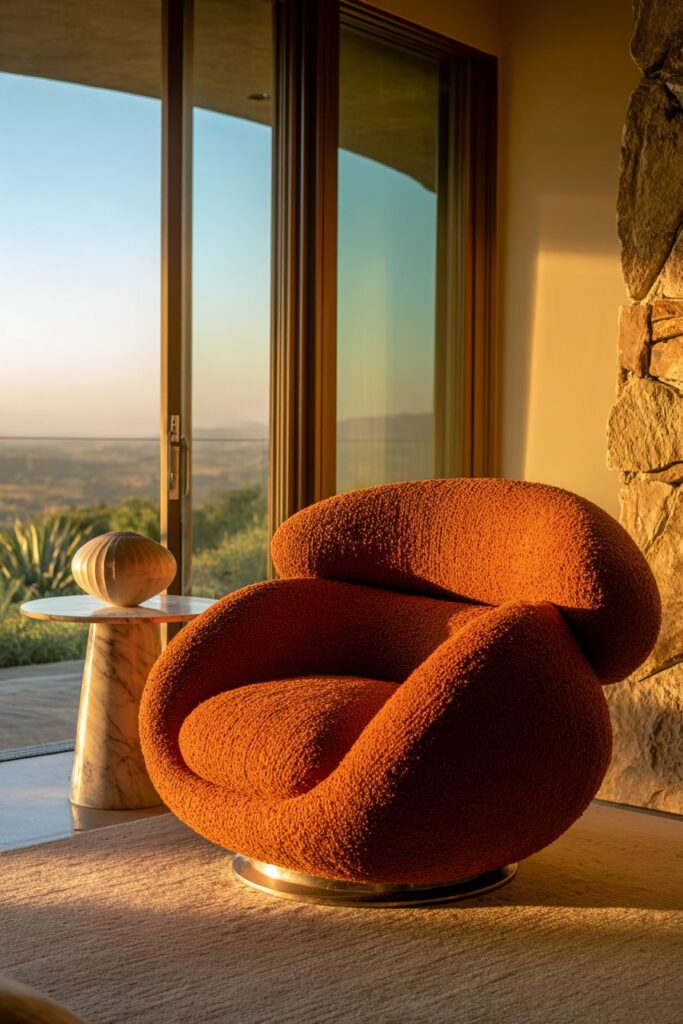
Positioned on a neutral area rug near floor-to-ceiling windows, the chair basks in golden hour natural light that creates warm highlights on the textured bouclé surface. The terracotta color—a rich, earthy tone that references clay and Mediterranean landscapes—brings warmth without overwhelming, serving as a bridge between neutrals and bolder hues. A small round marble side table nearby provides practical surface space while its smooth stone contrasts beautifully with the chair’s soft, nubby texture. Interior design photography captures the chair’s artistic silhouette and rich earthy tone with attention to the interplay of light and sculptural form.
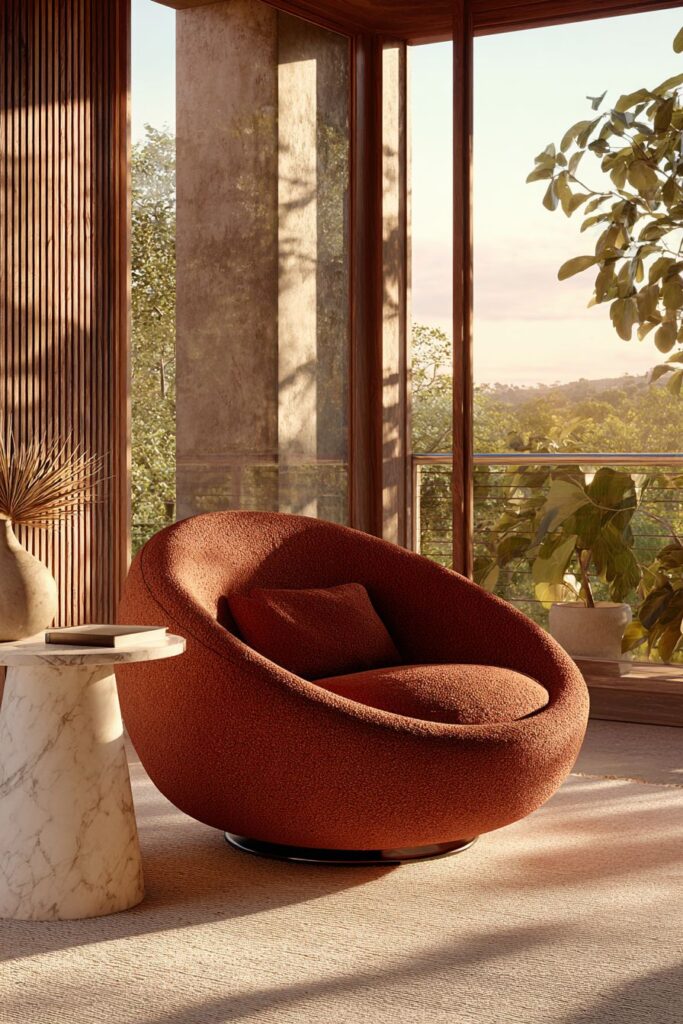
The bouclé fabric deserves special attention—this textured material featuring looped yarn creates a soft, tactile surface that invites touch while providing visual depth through its varied texture. Natural variations in the fabric add to rather than detract from its appeal, creating organic character that prevents the bold form from feeling too perfect or unapproachable. This is furniture as art, pieces that make statements and start conversations while remaining functionally comfortable for everyday use.
Incorporating sculptural furniture successfully:
- Choose pieces with distinctive organic forms that function as focal points within the room
- Select textured upholstery fabrics like bouclé that add tactile interest and visual depth
- Position sculptural chairs where they can be appreciated from multiple angles, allowing their three-dimensional qualities to shine
- Keep surrounding furniture relatively simple to allow the statement piece to command attention without competition
- Use lighting strategically to highlight the sculptural qualities and create dramatic shadows that emphasize form
13. Japanese Minimalism: Serene Simplicity
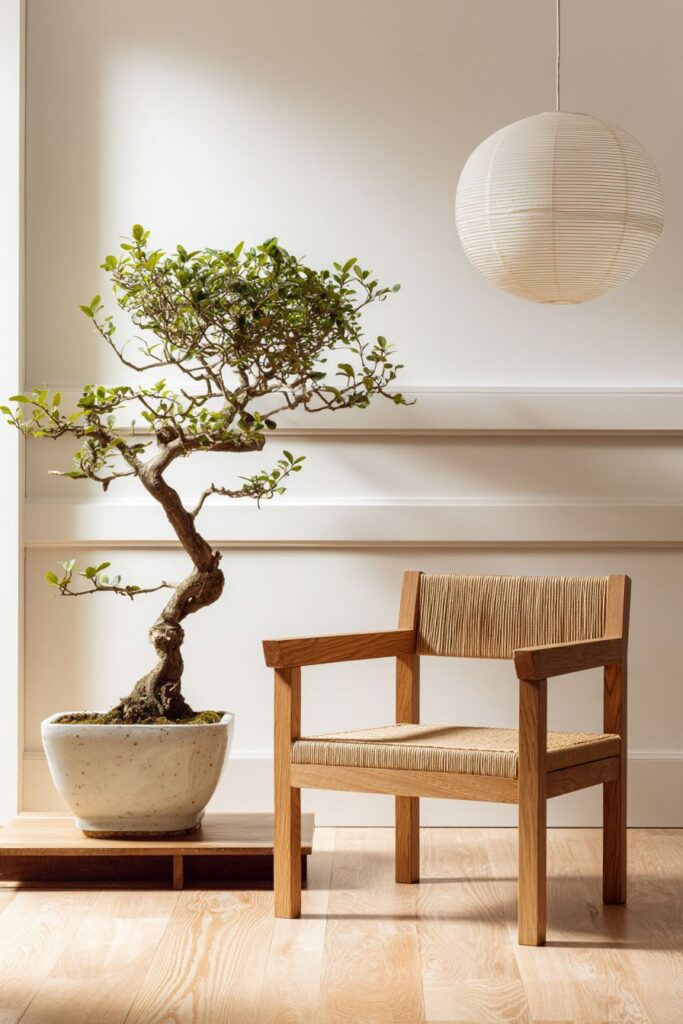
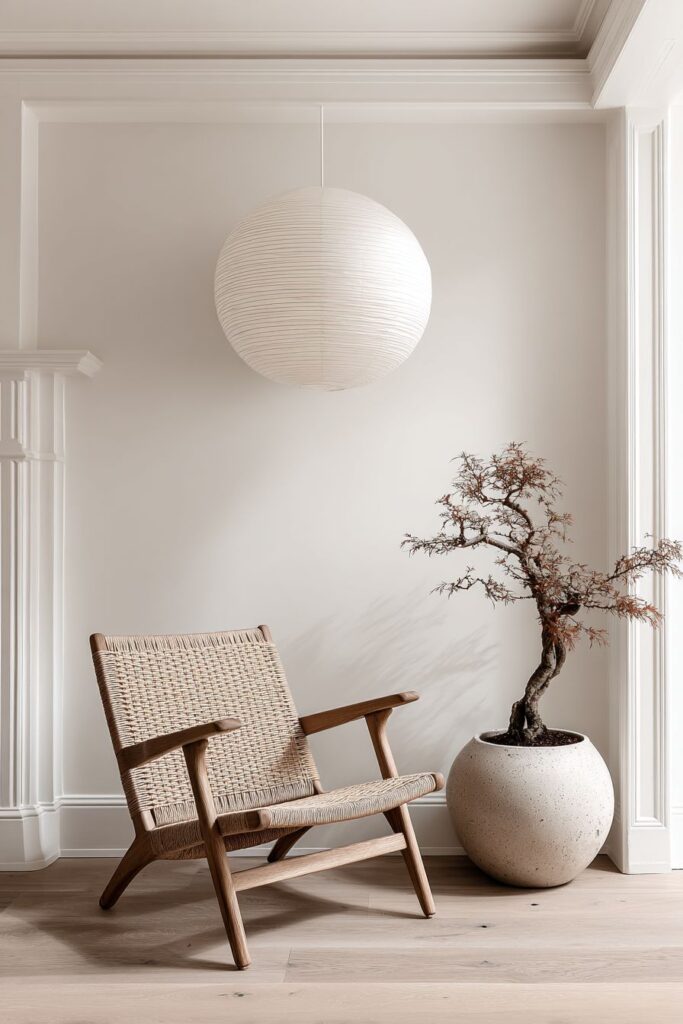
Japanese design philosophy emphasizes simplicity, natural materials, and mindful craftsmanship—principles beautifully embodied in a low profile accent chair with natural oak wood frame and woven paper cord seat. This chair features clean horizontal lines and simple armrests that provide comfort without visual clutter, while exposed joinery details reveal the craftsmanship that holds the piece together. Rather than concealing construction, Japanese design celebrates it, transforming functional elements into aesthetic features. The paper cord seat—woven by hand in traditional patterns—adds texture and craftsmanship while remaining visually quiet and unobtrusive.
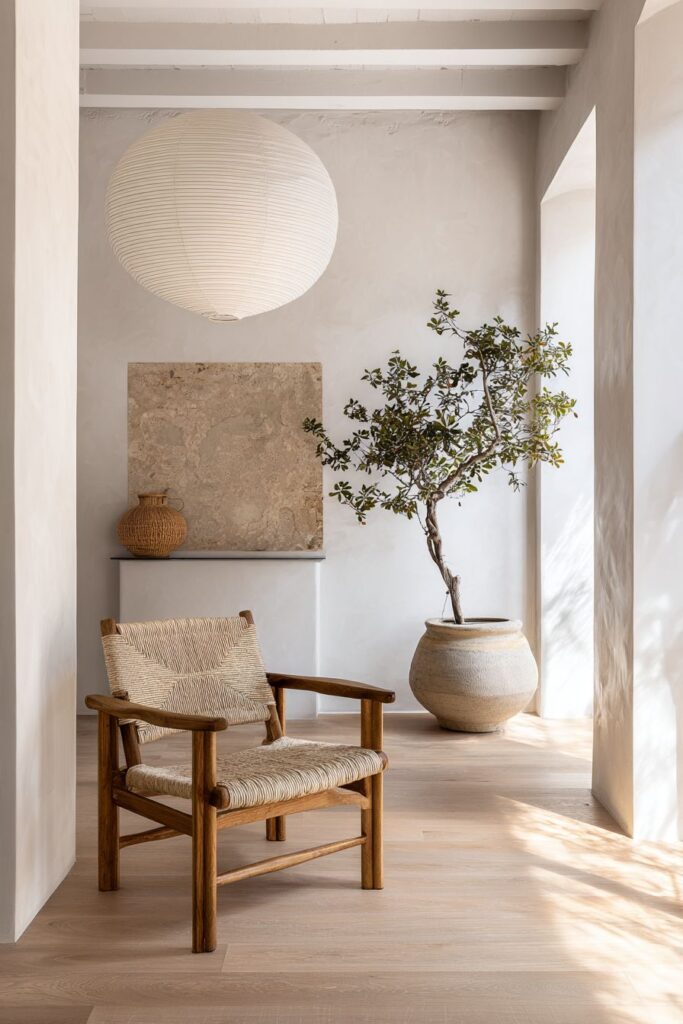
Positioned on light bamboo flooring beside a simple ceramic planter holding a small bonsai tree, the chair sits within a carefully edited space where every element serves a clear purpose. White plaster walls provide a neutral backdrop that allows the natural materials to shine, while a single paper lantern pendant provides soft, diffused lighting that creates minimal shadows. The restraint is intentional and purposeful—this is design that believes true beauty emerges from simplicity rather than accumulation, that celebrates the essential while eliminating the superfluous.
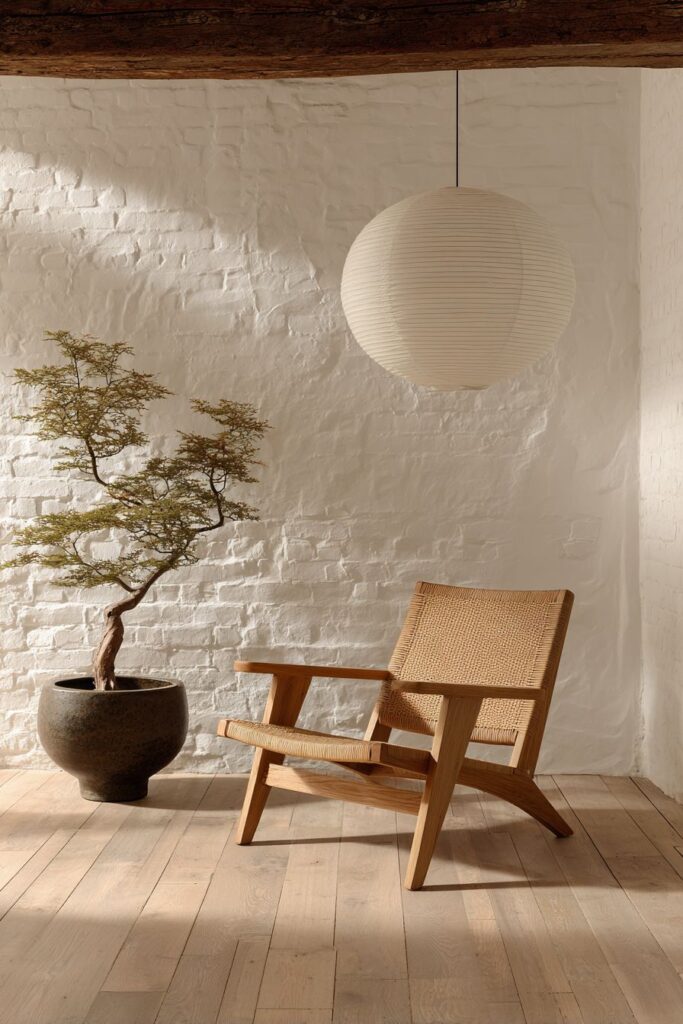
Soft diffused natural lighting creates minimal shadows emphasizing the chair’s refined simplicity and natural materials. Wide-angle interior design photography captures the serene, uncluttered aesthetic with focus on authentic material textures—the wood grain in the oak frame, the intricate weave of the paper cord, the smooth ceramic of the planter. This is design for mindful living, where furniture encourages presence and awareness rather than distraction, where spaces support contemplation and peace rather than stimulation and activity.
Creating authentic Japanese-inspired minimalism:
- Select furniture with low profiles and clean horizontal lines that maintain visual calm and connection to the floor
- Choose natural materials like wood, paper, bamboo, and stone that age beautifully and connect to nature
- Embrace visible joinery and craftsmanship details that celebrate traditional woodworking techniques
- Edit ruthlessly, including only elements that serve clear functional or aesthetic purposes
- Use soft, diffused lighting that creates subtle ambiance rather than dramatic contrasts
14. Traditional Refinement: Sage Green Damask
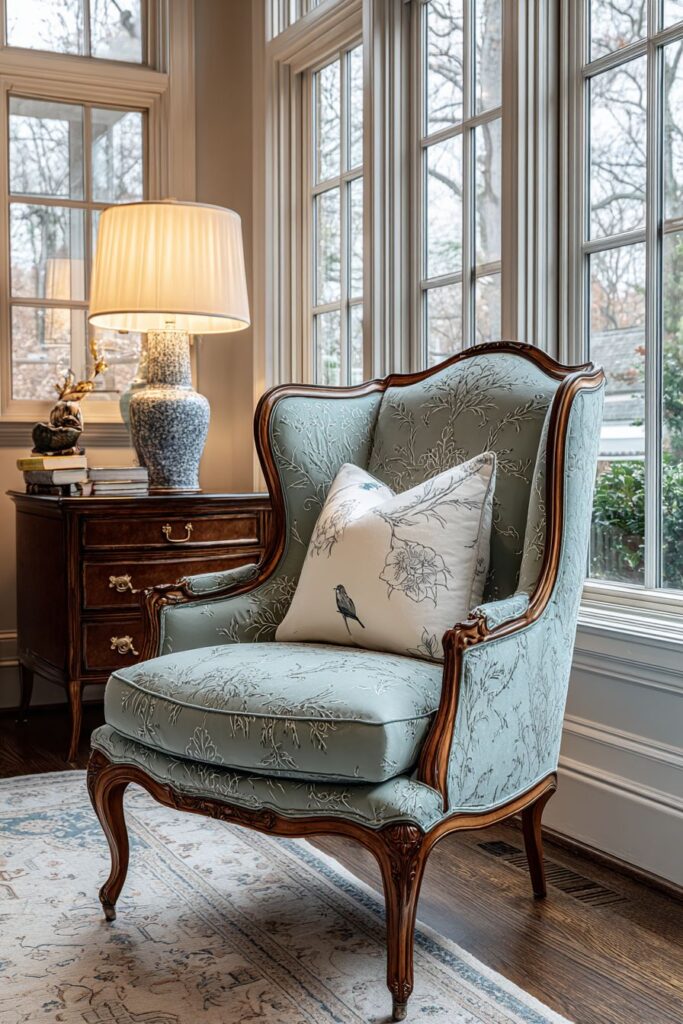
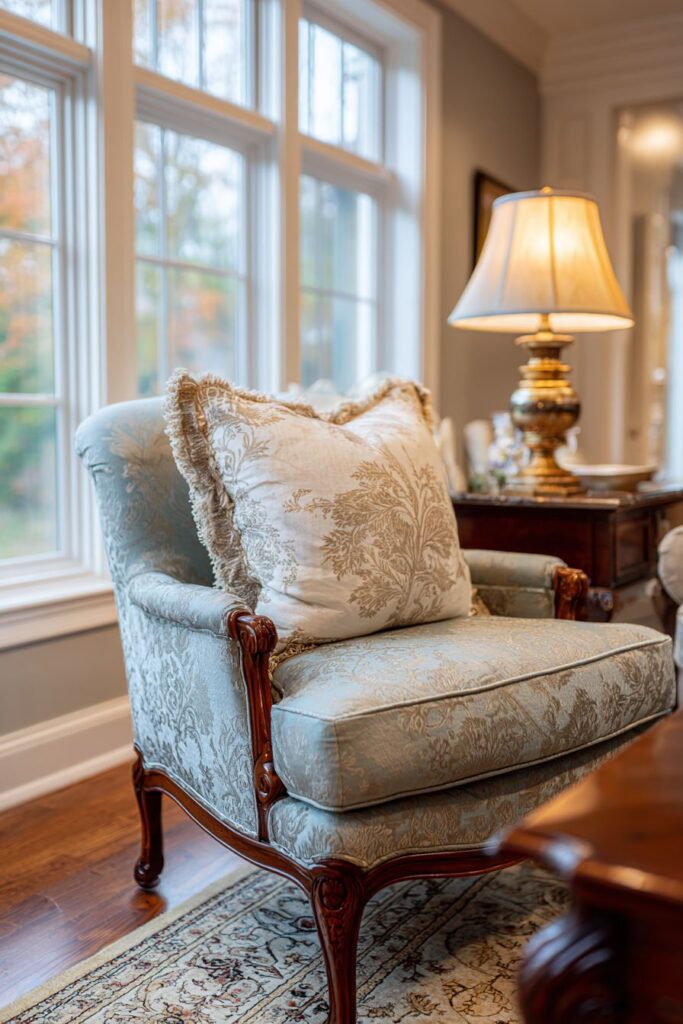
Traditional interior design celebrates historical forms, rich materials, and formal elegance that references centuries of refined taste—qualities perfectly expressed in an accent chair upholstered in sage green damask fabric with subtle botanical pattern. This chair features a formal high back that provides both comfort and visual presence, while gently curved cabriole legs in cherry wood with hand-carved details showcase the craftsmanship that defines quality traditional furniture. Coordinating piping along the seams provides a finished edge that emphasizes the chair’s tailored construction and attention to detail.
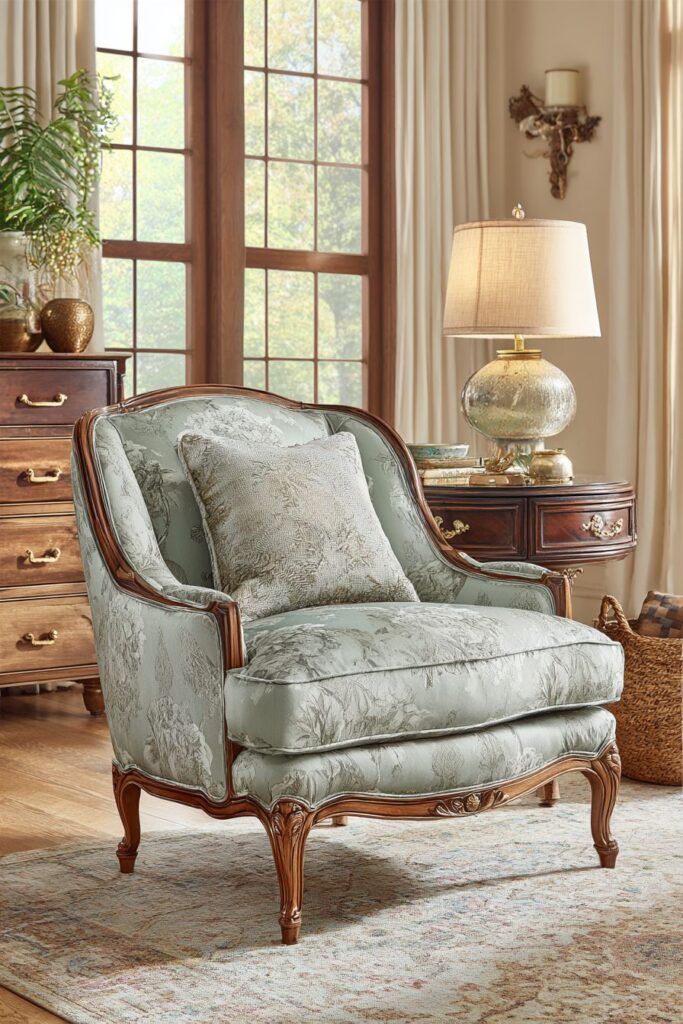
Positioned on an Oriental rug in complementary colors, the chair sits beside a mahogany side table with brass hardware, creating a vignette of traditional elegance. A silk lampshade diffuses warm light from a table lamp, creating soft ambient lighting that enhances the formal atmosphere. Natural daylight from divided-pane windows—themselves a traditional architectural element—creates additional illumination while the window’s mullions cast interesting shadow patterns that add visual complexity to the scene.
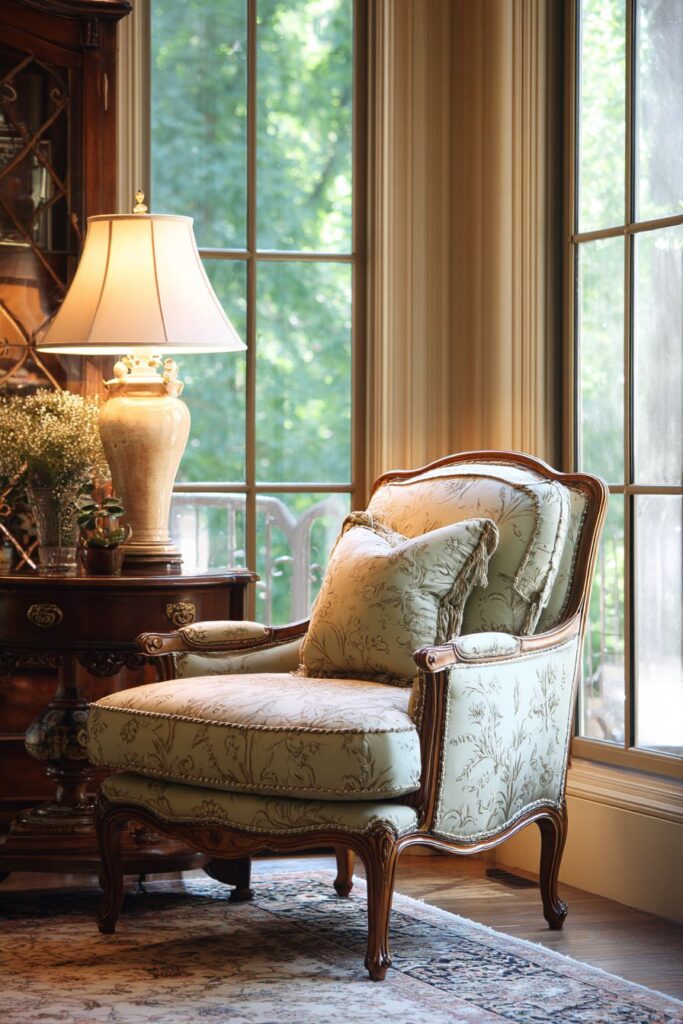
Professional interior photography with attention to fabric pattern details and wood grain captures the refined traditional aesthetic, showing how the damask pattern catches light and creates subtle visual interest through its woven design. The sage green color brings natural sophistication—neither too bright nor too muted, it suggests garden spaces and natural elements while maintaining the formal character appropriate to traditional design. This is furniture for rooms designed to impress, where hosting guests and maintaining gracious living standards remain priorities.
Achieving authentic traditional elegance:
- Select upholstery fabrics with woven patterns like damask, brocade, or jacquard that add richness without busy prints
- Choose furniture with carved wood details, cabriole legs, or other historical references that suggest quality craftsmanship
- Coordinate multiple traditional elements including Oriental rugs, formal side tables, and classic lighting
- Use rich wood tones like mahogany, cherry, or walnut that bring warmth and historical character
- Pay attention to finishing details like coordinating piping, nailhead trim, or tassels that complete the refined aesthetic
15. Scandinavian Hygge: Cozy Sheepskin Warmth
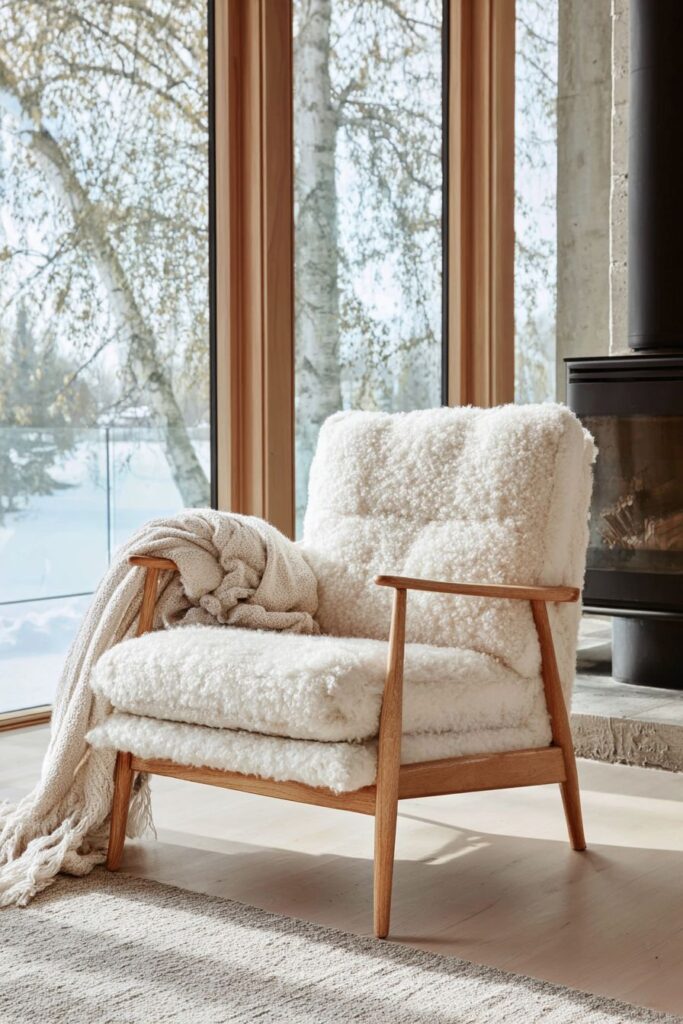
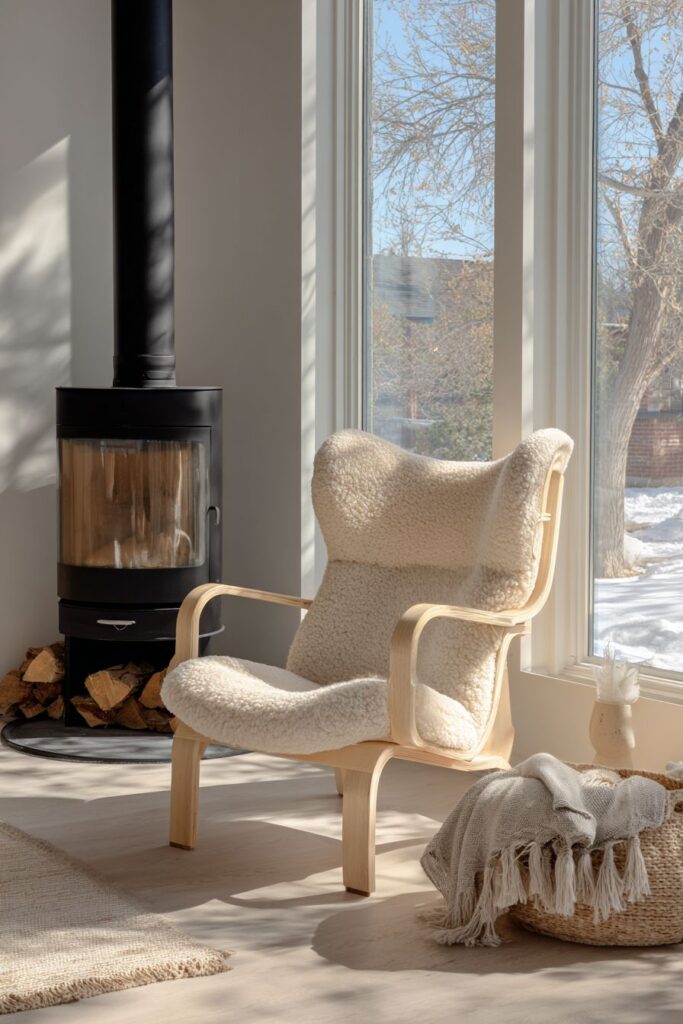
The Danish concept of hygge—roughly translated as cozy contentment—has influenced interior design worldwide, emphasizing comfort, warmth, and the creation of intimate atmospheres perfect for long winter evenings. A hygge-inspired accent chair draped in soft cream sheepskin over a simple wooden frame embodies these principles perfectly. The minimalist Nordic design features rounded bentwood arms and natural birch legs showing subtle wood grain, maintaining the clean aesthetic lines that characterize Scandinavian furniture while the sheepskin adds luxurious texture and warmth that transforms the chair into an irresistible cozy retreat.
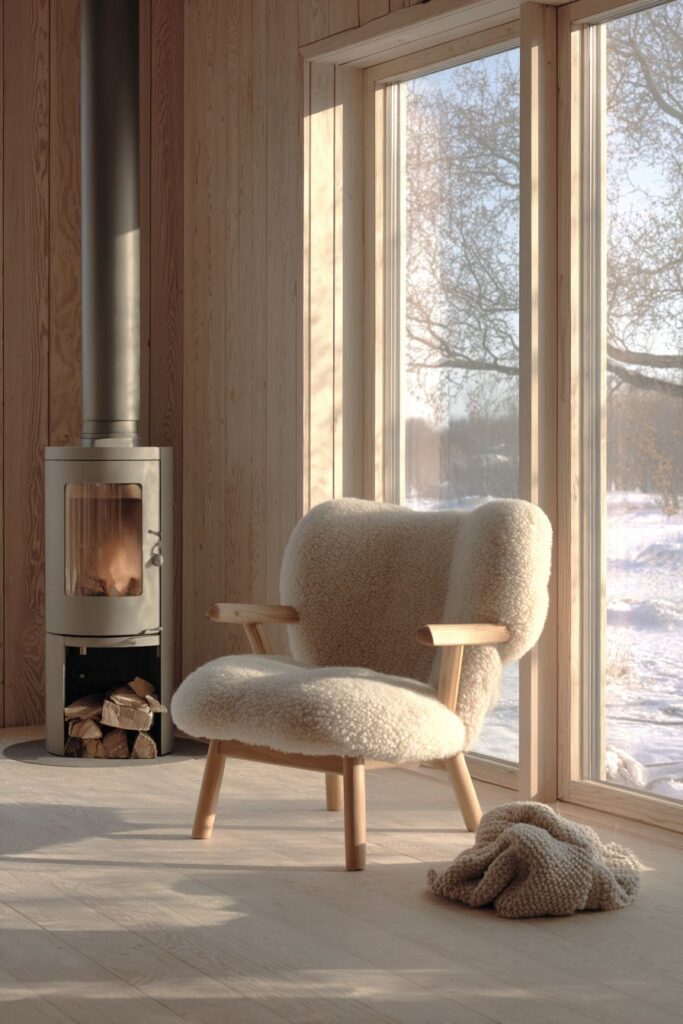
Positioned near a wood-burning stove on light ash flooring, the chair becomes part of a larger scene of Nordic coziness. A chunky wool throw blanket nearby provides additional warmth and texture, while large windows reveal a snowy landscape outside—the contrast between cold exterior and warm interior being central to hygge’s appeal. The wood-burning stove provides both practical heat and the psychological comfort of visible flame, creating a focal point for gathering and relaxation that defines the hygge lifestyle.
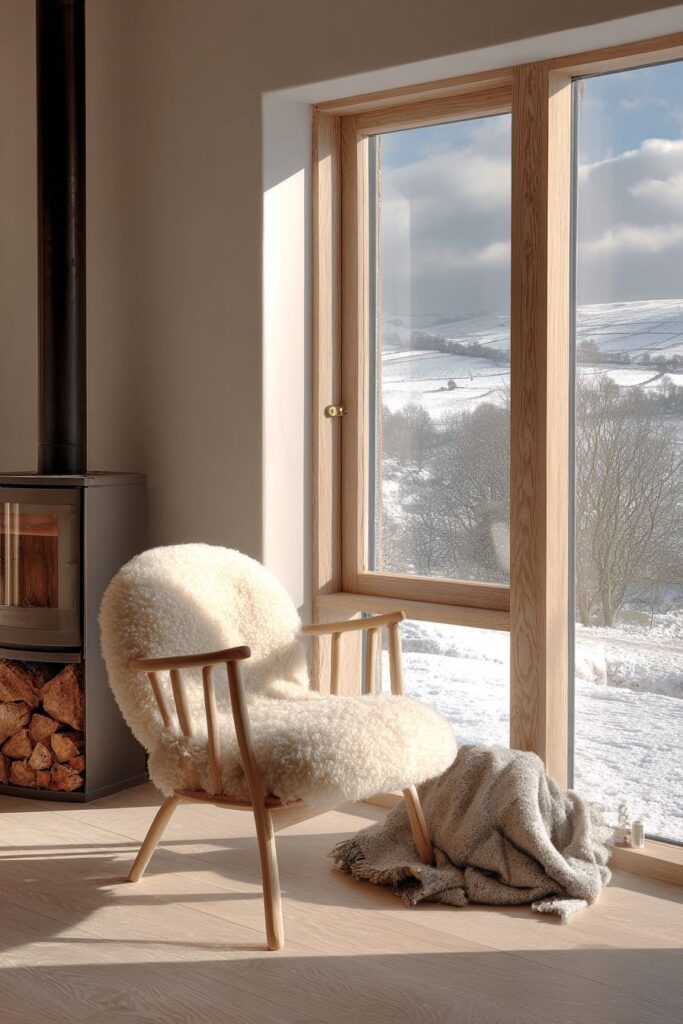
Gentle natural winter light creates a cozy atmosphere with subtle shadows, with interior design photography emphasizing the warm, inviting comfort and natural materials characteristic of Scandinavian hygge design principles. The sheepskin catches light beautifully, its natural fibers creating depth and texture while providing genuine physical warmth. This is design for human wellbeing, furniture that doesn’t just look inviting but truly enhances comfort and quality of life through thoughtful material choices and attention to the multisensory experience of inhabiting a space.
Creating an authentic hygge atmosphere:
- Layer natural materials like sheepskin, wool, and wood to create tactile warmth and visual coziness
- Position seating near heat sources like fireplaces or wood stoves to create gathering spots
- Maximize natural light while creating opportunities for candlelight and soft evening illumination
- Choose neutral colors in warm tones like cream, beige, and light wood that create calm, peaceful environments
- Include chunky textiles like knitted throws and wool blankets that invite physical comfort and relaxation
16. Maximalist Expression: Bold Floral Drama
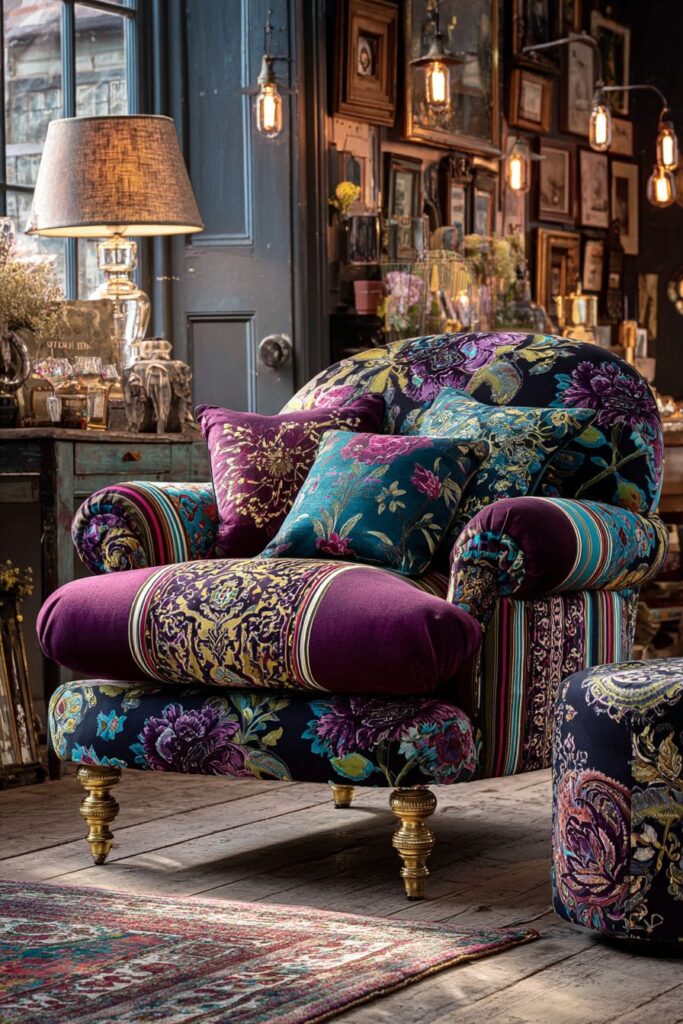
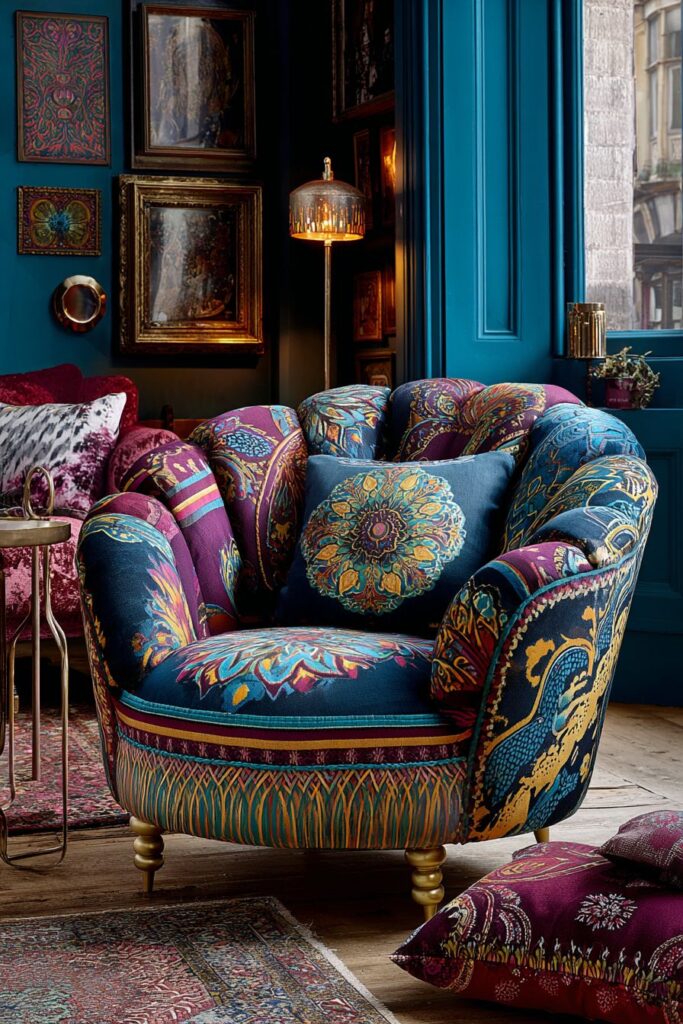
Maximalist design rejects minimalism’s restraint in favor of abundance, pattern mixing, and bold color combinations that celebrate visual richness and personal expression—an aesthetic joyfully embodied in an accent chair upholstered in large-scale floral print featuring rich jewel tones of purple, teal, and gold on a deep navy background. This is not furniture for the faint of heart; it’s a declaration of confidence and style that immediately becomes the focal point of any room. The chair features a generous rounded back and plush cushioning that promises comfort equal to its visual impact, while gold-finished turned legs add another layer of luxury and metallic shimmer that catches light throughout the day.
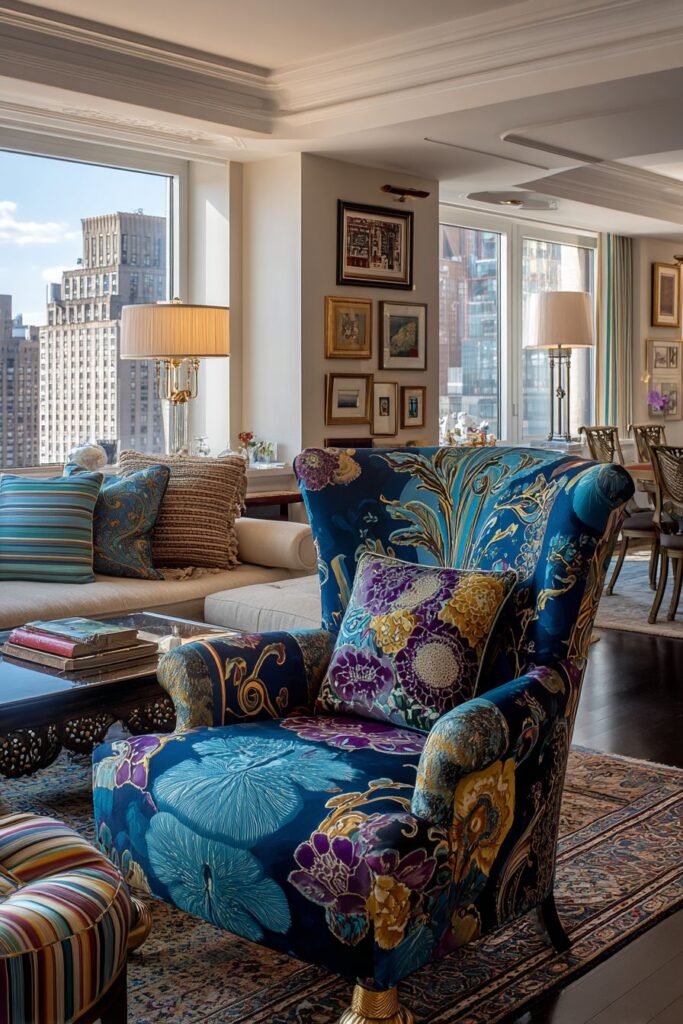
Surrounded by mixed patterns including striped pillows and paisley ottomans on a layered rug arrangement, the chair sits within a kaleidoscope of color and design that might seem chaotic but actually follows the maximalist principle of intentional abundance. A gallery wall with varied frames visible behind adds another dimension of visual interest, creating layers of pattern and color that engage the eye and reveal new details with each viewing. This is design as personal expression, where rules about matching and coordination give way to instinct and joy in color and pattern.
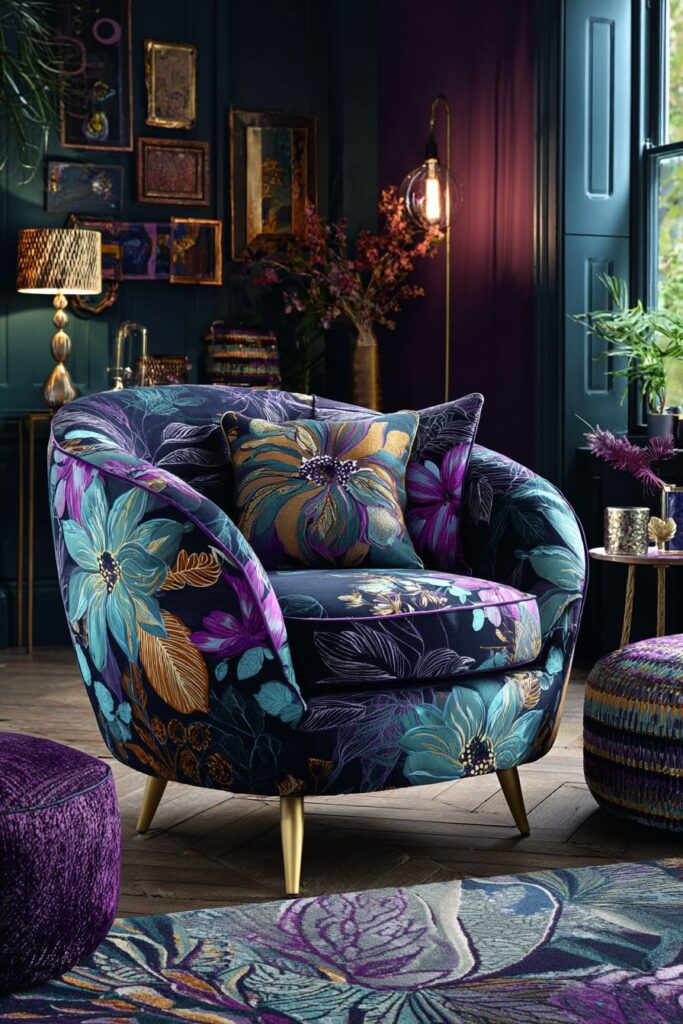
Multiple light sources including natural window light and table lamps create dimensional lighting that brings out different aspects of the patterns throughout the day. Wide-angle professional interior photography captures the exuberant layering of colors, patterns, and textures, showing how seemingly disparate elements can work together when unified by confident color choices and balanced proportions. The floral pattern itself deserves attention—large-scale rather than dainty, it features bold blooms rendered in saturated jewel tones that feel luxurious rather than dated, contemporary rather than grandmotherly.
Mastering maximalist pattern mixing:
- Start with a bold anchor piece like a dramatic patterned chair and build the room around its color palette
- Mix pattern scales—pair large-scale prints with medium stripes and small-scale geometrics for visual variety
- Maintain color consistency across different patterns to create cohesion within the abundance
- Balance busy patterns with solid colors in pillows, ottomans, or other elements to give the eye places to rest
- Layer with confidence, trusting that abundance creates its own kind of harmony when colors are well-coordinated
- Include metallic finishes like gold or brass to add glamour and light reflection that elevates the overall aesthetic
17. Small Space Solutions: Compact Grey Elegance
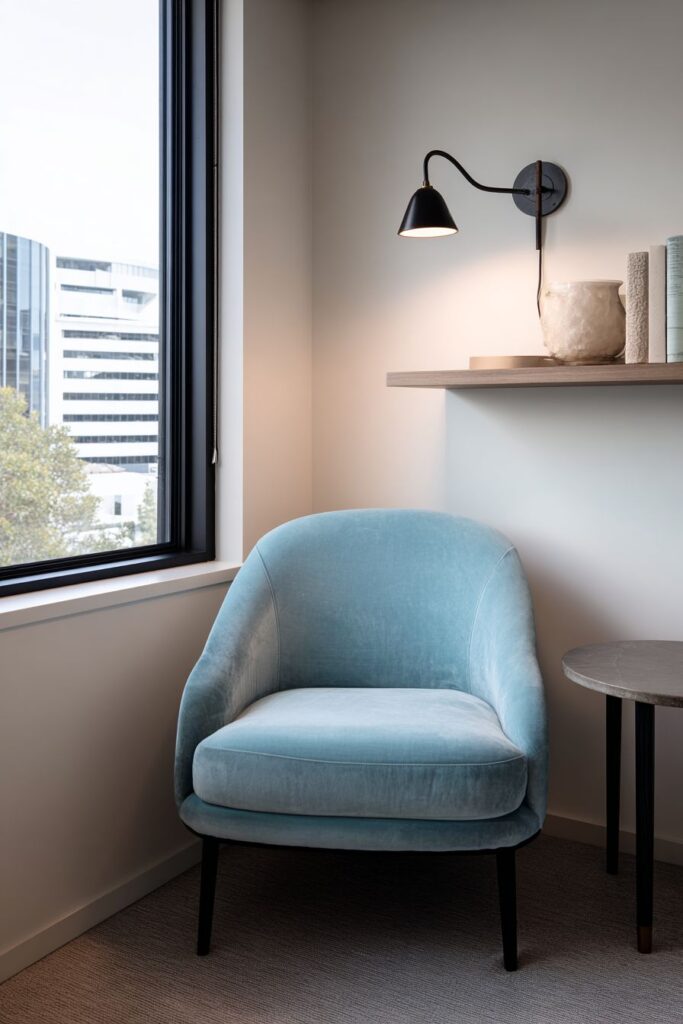
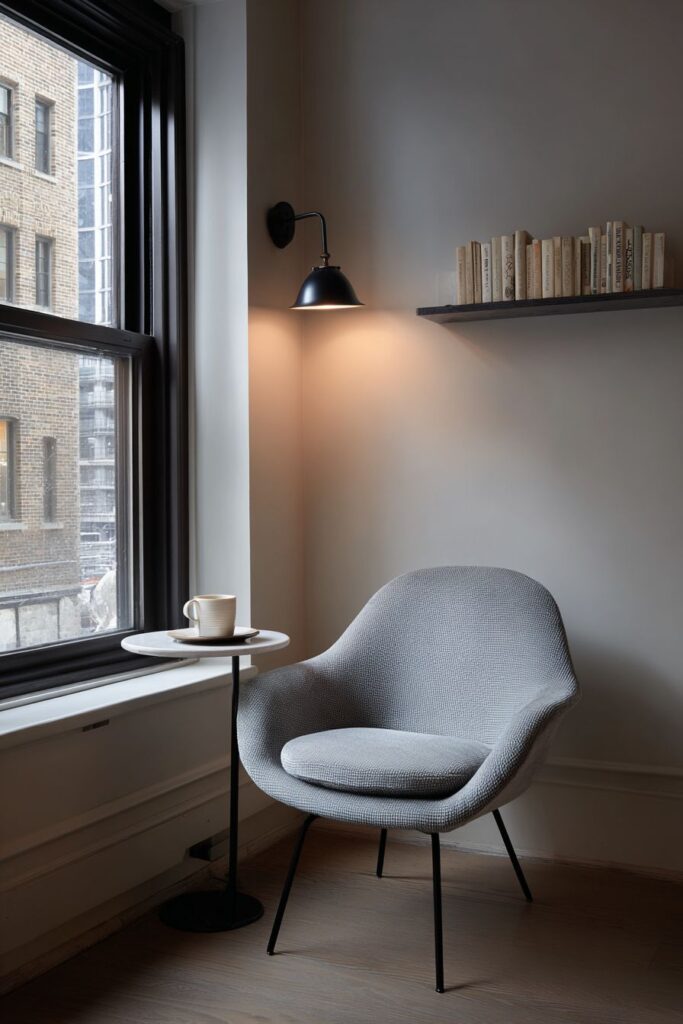
Urban living and smaller homes require furniture that delivers both style and space efficiency—a challenge perfectly met by a compact accent chair in soft grey velvet with streamlined proportions specifically designed for tight spaces. Measuring under thirty inches wide, this chair proves that limited square footage doesn’t mean sacrificing quality or aesthetics. The modern silhouette features track arms and slightly tapered legs in matte black metal that create visual lightness despite the chair’s solid construction, while the velvet upholstery brings luxury and sophistication that elevates the space beyond merely functional.
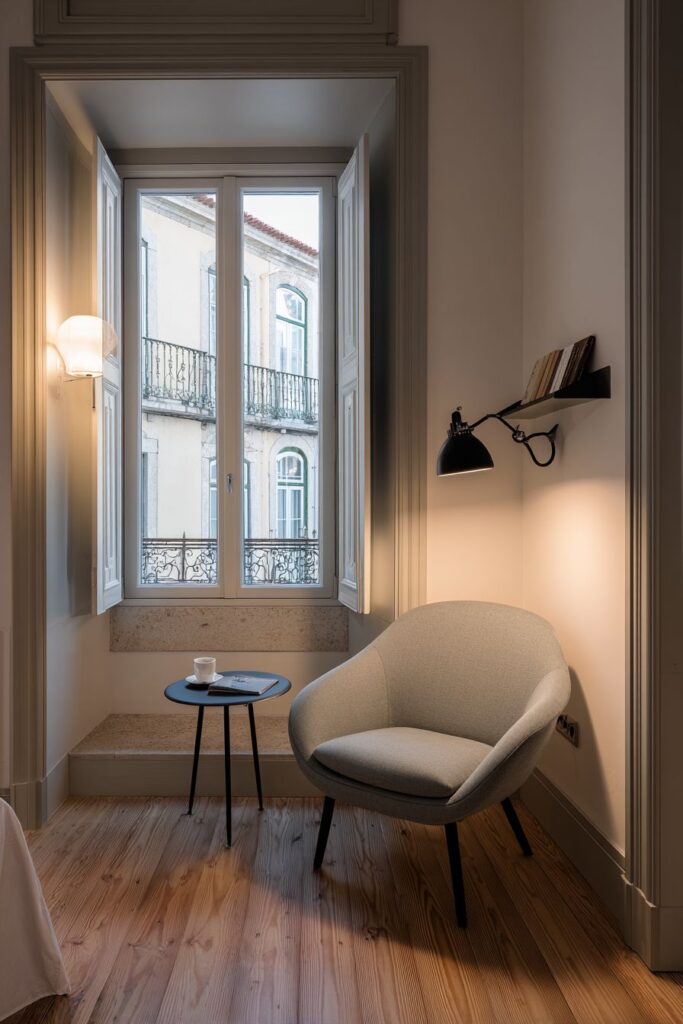
Positioned in a corner beside a narrow wall-mounted shelf and small round side table, the chair maximizes every inch of available space without creating crowding or visual chaos. A reading lamp with an adjustable arm provides task lighting that can be directed precisely where needed, essential in small spaces where floor space for large lamps is limited. Natural light from a single window illuminates the space-efficient arrangement, with interior design photography demonstrating practical small-space solutions while highlighting the chair’s quality upholstery texture and smart scaled-down design.
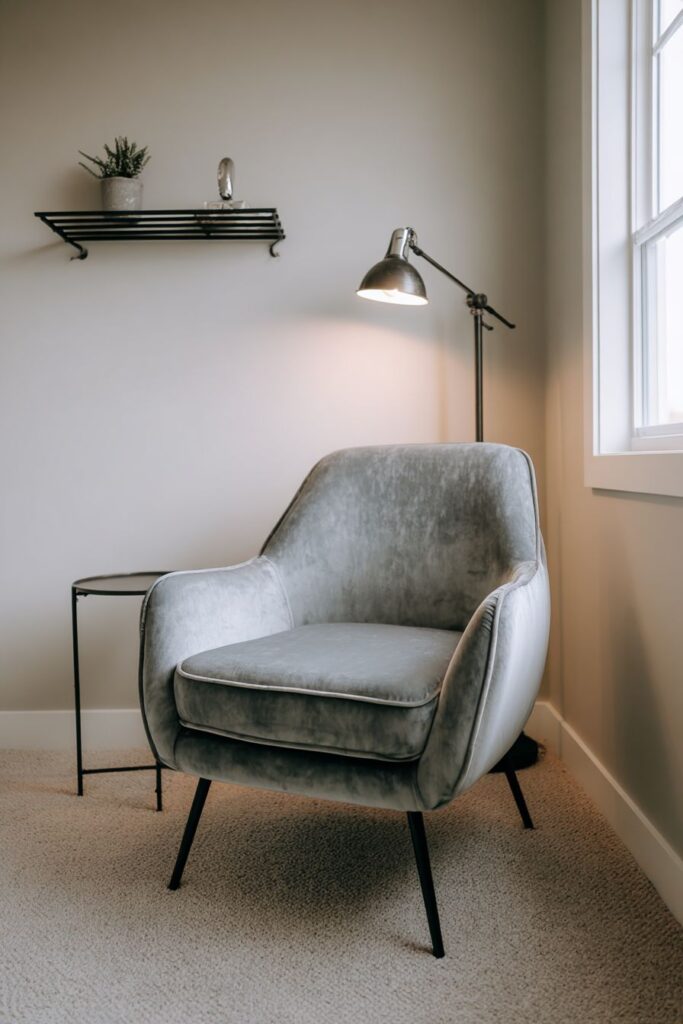
The compact proportions make this chair ideal for apartments, condos, or smaller homes where every piece must justify its footprint. Yet despite its modest size, the chair doesn’t feel cheap or flimsy—the quality of materials and construction ensure it feels like a full-sized chair that happens to fit in smaller spaces rather than a compromise forced by limited square footage. The grey velvet upholstery provides visual weight and substance while the black metal legs prevent the chair from appearing too delicate or insubstantial.
Maximizing style in small spaces:
- Measure carefully and select furniture with compact proportions that leave adequate circulation space
- Choose pieces with exposed legs rather than skirted bases to create visual openness and the illusion of more floor space
- Utilize corners and wall-adjacent spaces efficiently with thoughtfully scaled furniture arrangements
- Select multi-functional pieces or pair chairs with space-saving accessories like wall-mounted shelves
- Use quality materials and finishes to ensure small-scale pieces still feel luxurious and substantial
- Incorporate adjustable or flexible lighting solutions that don’t consume valuable floor or table space
18. Rustic Lodge: Western Cowhide Character
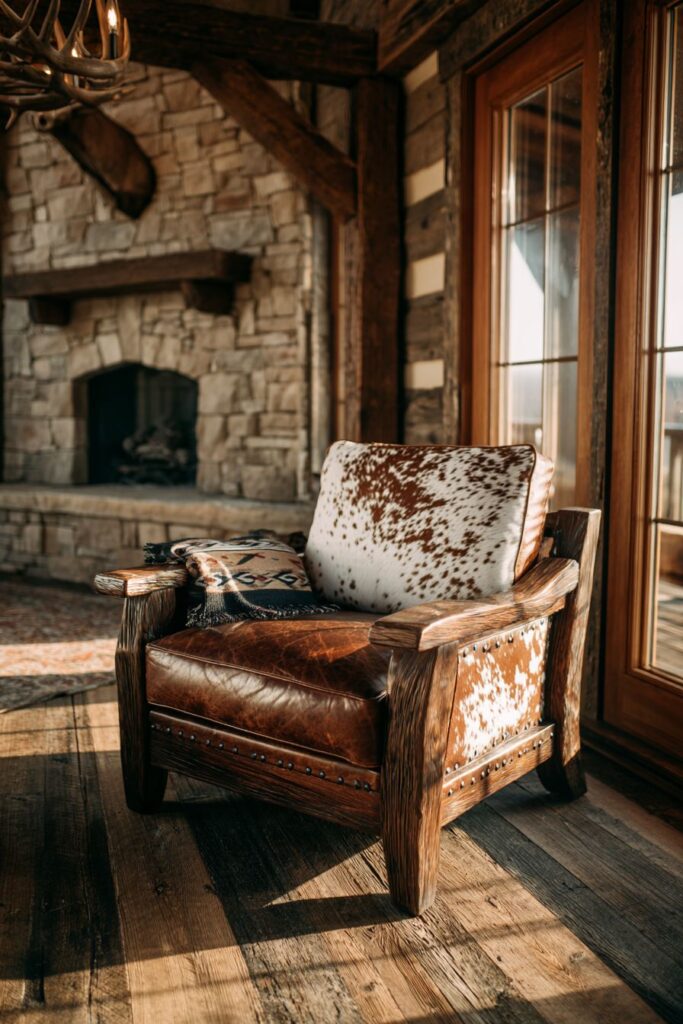
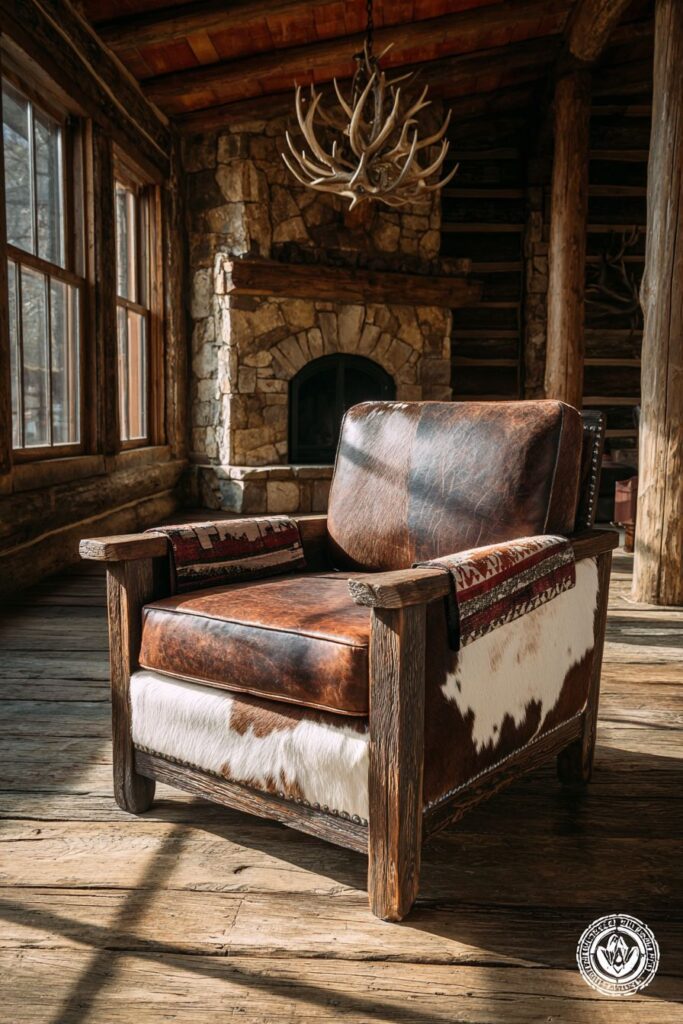
Rustic cabin and lodge aesthetics celebrate regional heritage, natural materials, and authentic Western styling that references frontier history and outdoor living—qualities boldly expressed in a leather and cowhide accent chair with genuine brown and white cowhide upholstery featuring natural markings that make each piece unique. Studded details along the seams add decorative interest while referencing traditional leatherworking techniques, and the solid pine frame with visible knots in distressed finish emphasizes natural wood character over manufactured perfection. This is furniture with personality and presence that immediately establishes a room’s rustic credentials.
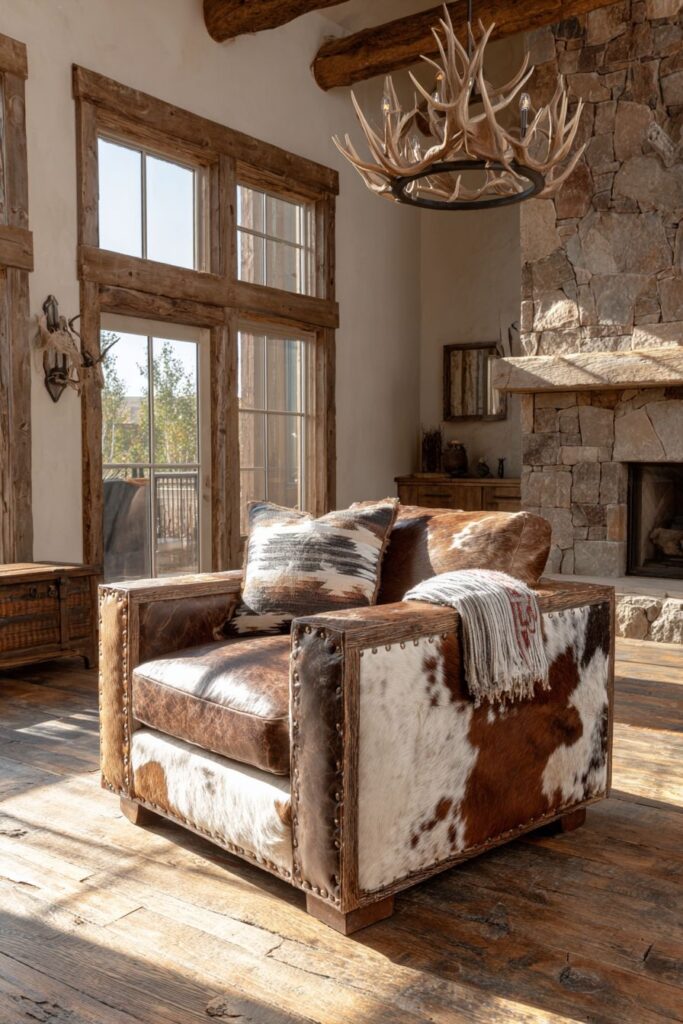
Positioned on wide-plank reclaimed wood flooring beside a stone fireplace, the chair sits within an authentically Western setting where materials reference the natural landscape and pioneer heritage. A Navajo-pattern wool throw draped over the arm adds another layer of Southwestern influence with its geometric designs in earth tones and natural dyes. An antler chandelier visible above provides dramatic sculptural lighting that reinforces the lodge aesthetic’s connection to hunting and outdoor traditions, while natural light from timber-framed windows creates warm ambient lighting with distinct shadows that emphasize textures and three-dimensional forms.
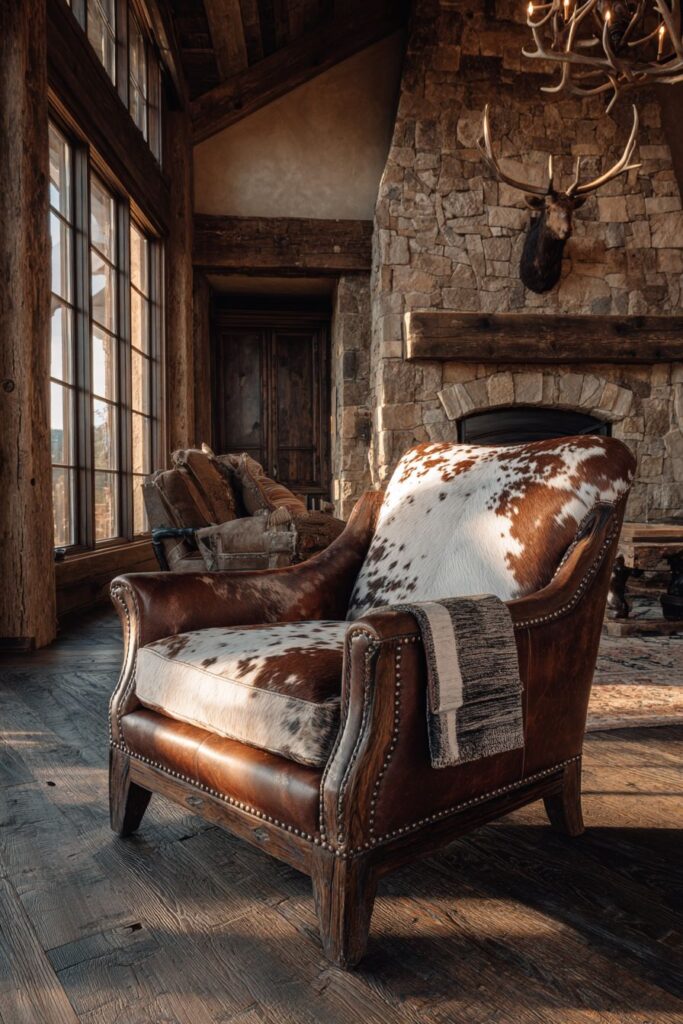
Architectural photography captures the authentic lodge aesthetic with emphasis on natural materials and rugged textures—the varied coloring in the cowhide, the grain and knots in the pine frame, the irregular stones in the fireplace, the hand-hewn character of the timber window frames. This is design that celebrates regional character and authentic materials over mass-produced uniformity, creating spaces that feel connected to place and tradition rather than generic and interchangeable. The overall effect is one of masculine strength tempered by genuine comfort, creating rooms designed for relaxation after outdoor adventures.
Creating authentic Western lodge interiors:
- Select furniture featuring genuine leather, cowhide, or other authentic animal hides with natural variations and markings
- Incorporate stone elements like fireplaces or accent walls that reference mountain and desert landscapes
- Use reclaimed or distressed wood extensively to suggest historical character and pioneer heritage
- Add Southwestern textiles with traditional Native American patterns in natural dyes and earth tones
- Include rustic lighting like antler chandeliers or wrought iron fixtures that reference outdoor and hunting traditions
- Embrace natural imperfections in materials—knots in wood, color variations in hide—as character rather than flaws
19. Conversational Coordination: Paired Fabric Mix
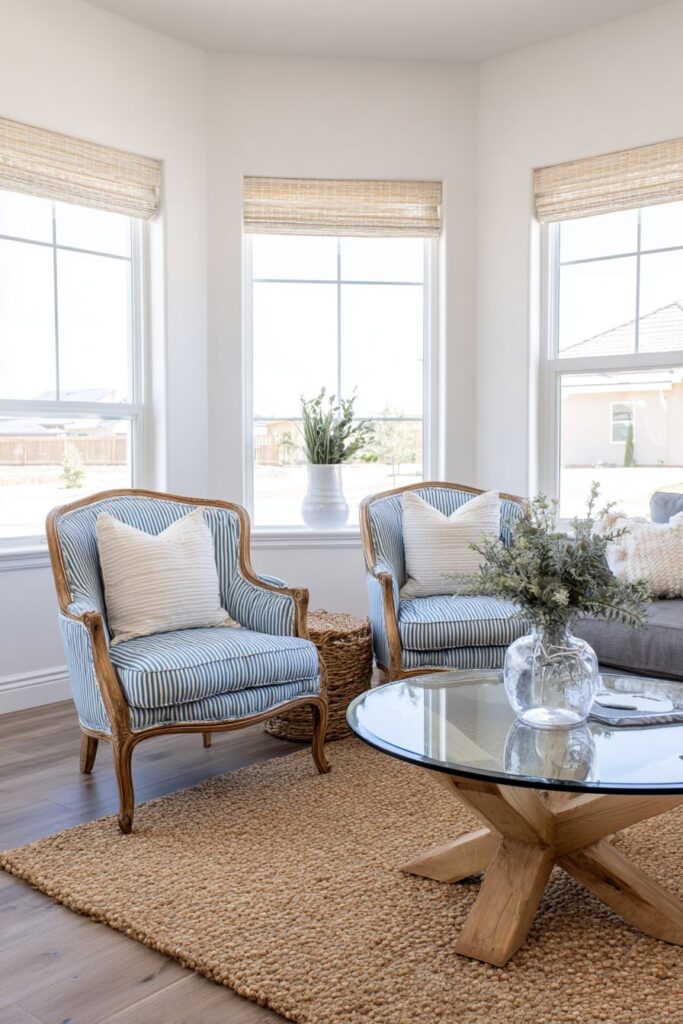
Creating flexible seating arrangements that encourage social interaction while maintaining visual interest requires thoughtful furniture selection and placement—goals beautifully achieved through accent chairs positioned as a conversational pair, upholstered in complementary fabrics that coordinate without precisely matching. One chair features soft grey linen while its partner showcases cream and grey striped cotton blend, creating variety within a cohesive color palette. Both chairs share matching wood frames in medium walnut with gentle curves and comfortable scale, ensuring visual relationship while the varied fabrics prevent the matchy-matchy appearance that can feel overly coordinated and stiff.
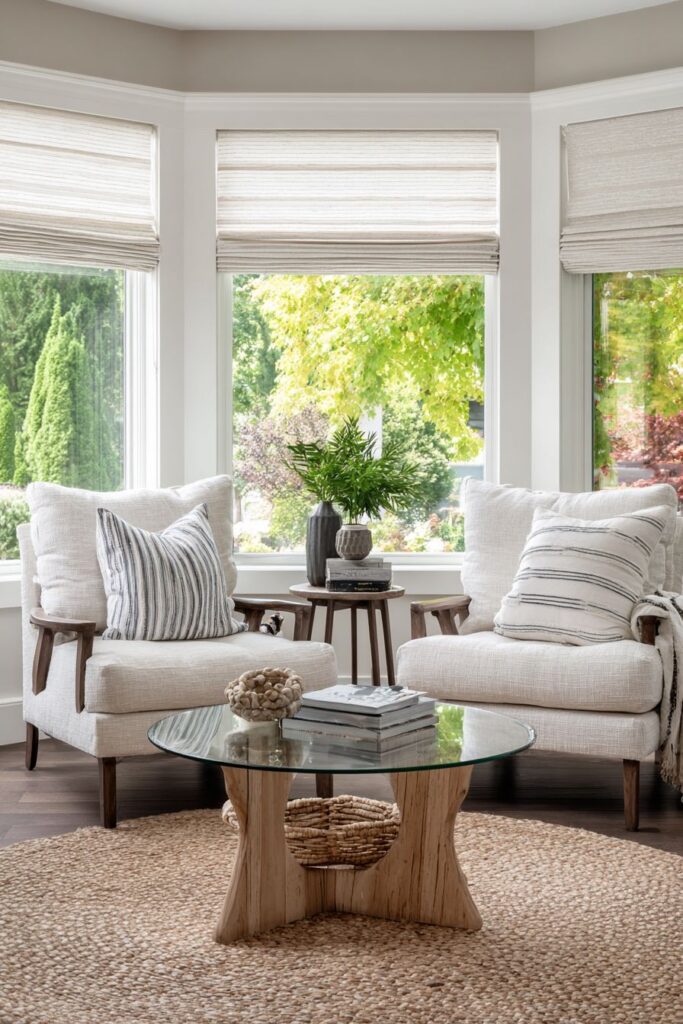
The chairs face each other across a round glass-topped coffee table with wooden base, creating an intimate conversation zone that invites social interaction and extended discussions. A natural fiber rug anchors the arrangement, defining the seating area within the larger living room and providing textural contrast to the smooth glass and polished wood. Large windows with simple Roman shades allow soft natural daylight to highlight the coordinated but not overly matched styling, with professional interior photography capturing the balanced, livable arrangement with attention to fabric textures and natural wood tones.
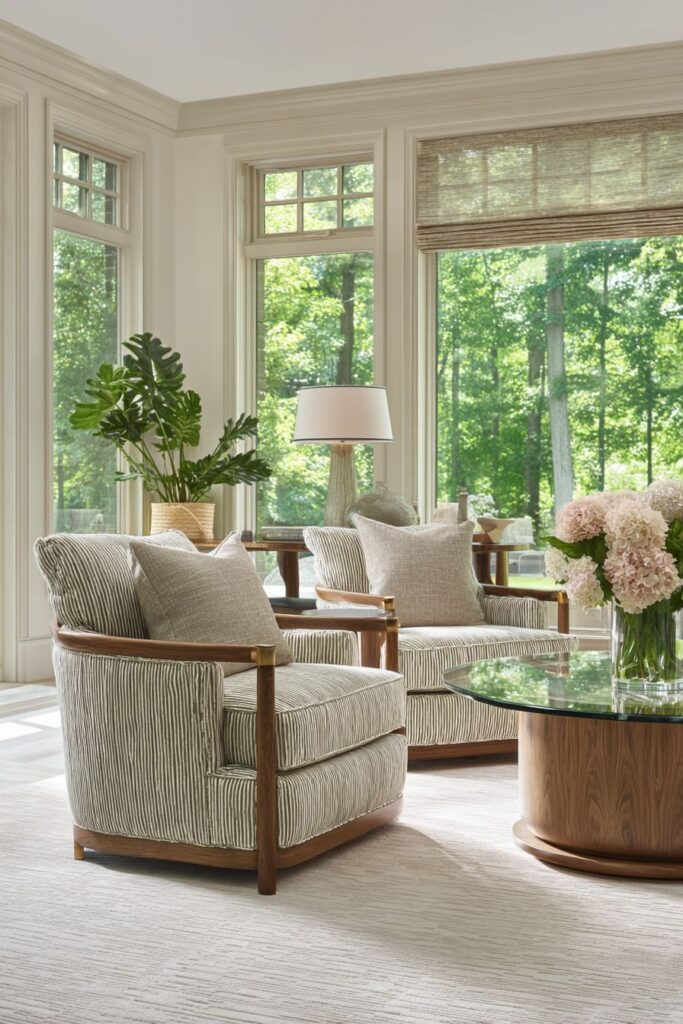
This approach to pairing—coordinated rather than identical—creates sophistication through subtle variation while maintaining overall harmony. The grey linen provides solid visual rest while the grey-and-cream stripe adds pattern and movement without overwhelming. The shared wood frames and similar proportions create enough similarity that the chairs clearly belong together, while the fabric variation keeps the arrangement from feeling too formal or precious. This is design for real living, where rooms need to be beautiful enough for entertaining yet comfortable enough for daily family use.
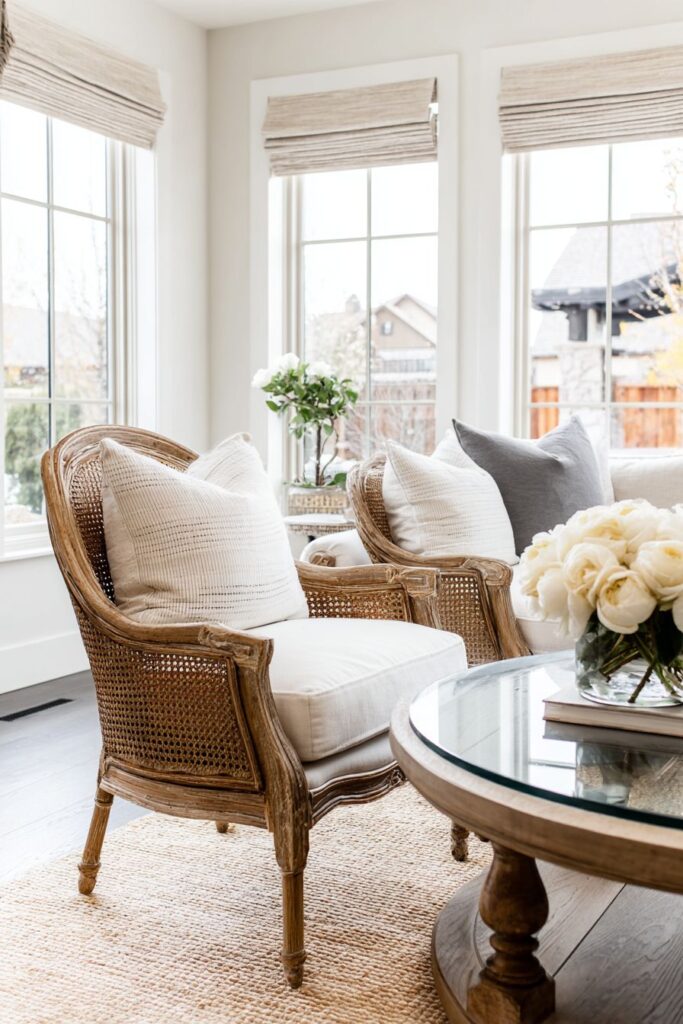
Creating effective conversational seating arrangements:
- Choose coordinating rather than identical chairs to create visual interest while maintaining overall harmony
- Select fabrics in related colors with one solid and one patterned for balanced variety
- Ensure chairs share similar frames, proportions, or design details to create clear relationship
- Position chairs facing each other across an appropriately scaled coffee table to facilitate conversation
- Anchor the arrangement with a rug that defines the seating zone without overwhelming the space
- Allow natural light to highlight the fabric textures and wood tones that give the arrangement character
20. Family-Friendly Function: Performance Fabric Swivel
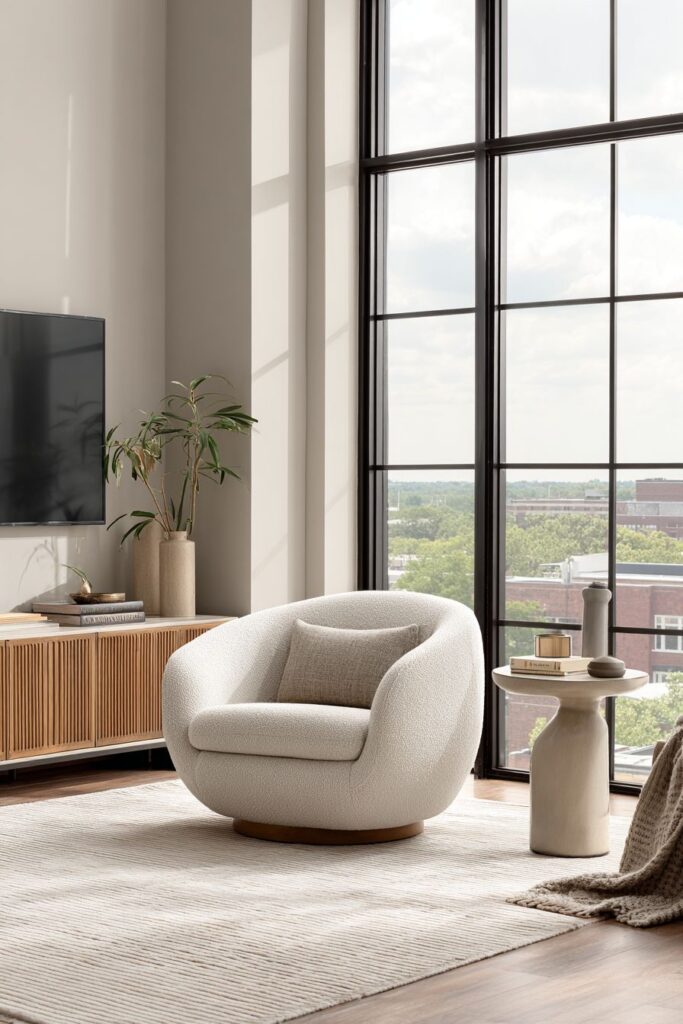
Modern families require furniture that balances aesthetic appeal with practical durability, accommodating active lifestyles, children, and pets without sacrificing style—needs perfectly met by a swivel accent chair upholstered in performance fabric in warm taupe with subtle texture and stain-resistant finish. This chair features a modern barrel shape with continuous curved back and seat that provides ergonomic comfort and visual appeal, while the hidden swivel mechanism adds functionality that allows the chair to rotate for optimal TV viewing angles or to join different conversation groupings. A low wooden base in light oak provides stability while maintaining the contemporary aesthetic.
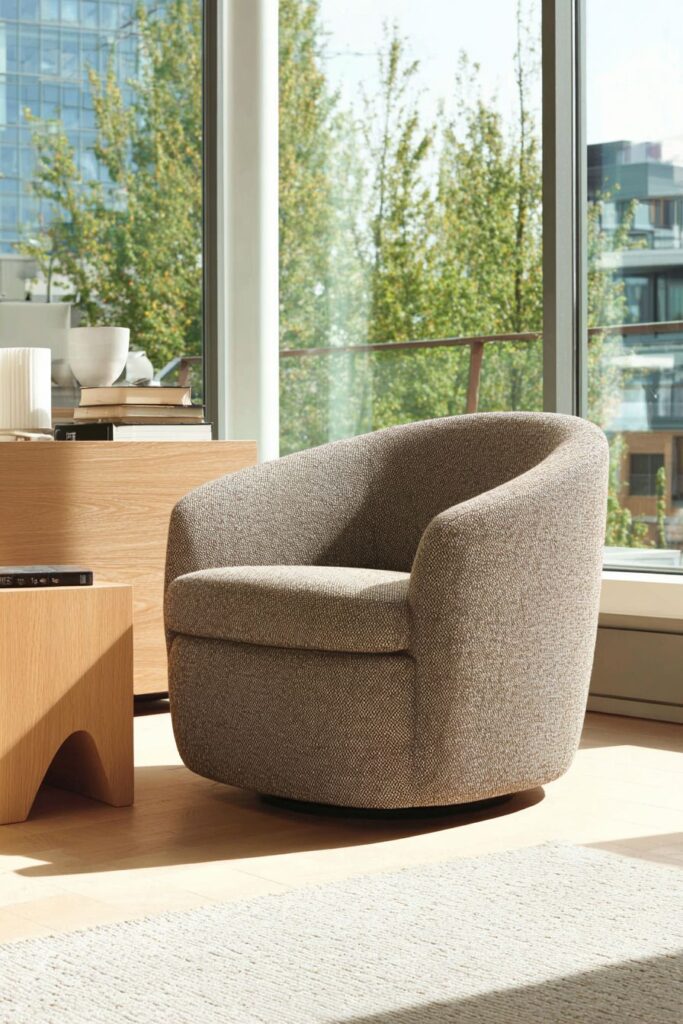
Positioned for optimal TV viewing angle on a low-pile area rug in neutral tones, the chair demonstrates how functional furniture can maintain sophisticated aesthetic appeal. A C-shaped side table nearby provides convenient surface space for remotes, beverages, or snacks without requiring reaching or getting up, perfect for family movie nights or casual entertaining. Natural afternoon light from large windows creates soft ambient illumination while wide-angle interior design photography emphasizes the chair’s functional swivel feature and family-friendly durable upholstery while maintaining sophisticated aesthetic appeal with balanced exposure and realistic material representation.
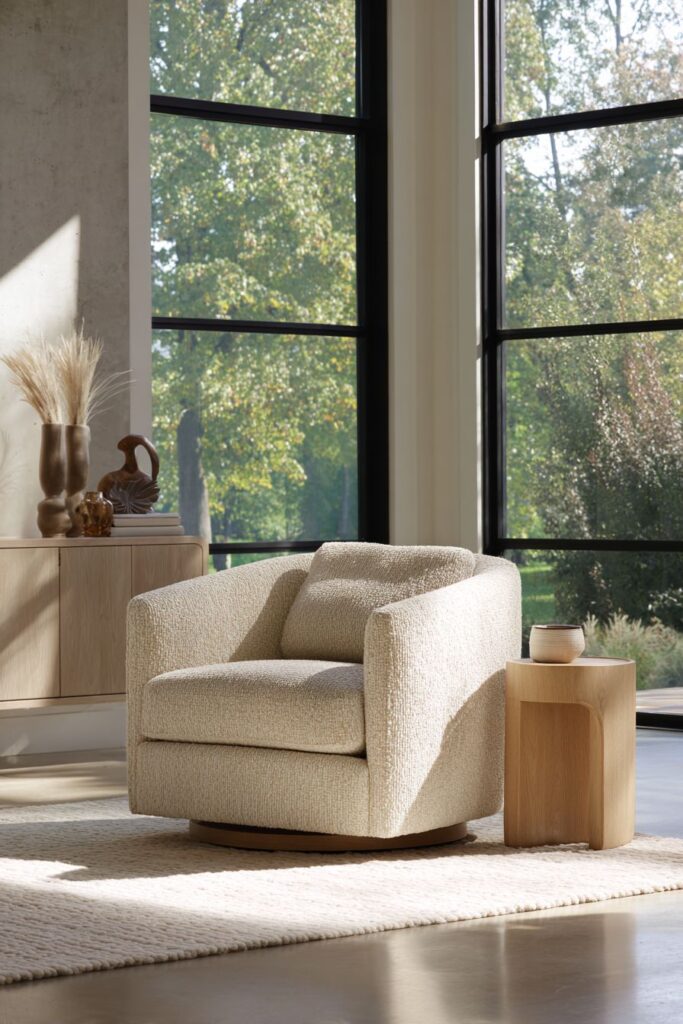
The performance fabric deserves special attention—engineered to resist stains, fading, and wear while maintaining the look and feel of natural fiber, these modern textiles have revolutionized family-friendly furniture. The warm taupe color hides minor imperfections while remaining light enough to keep spaces feeling open and fresh, walking the perfect line between practical and attractive. The subtle texture adds visual interest without emphasizing dirt or wear, while the stain-resistant finish means inevitable spills won’t result in permanent damage or constant anxiety about furniture care.
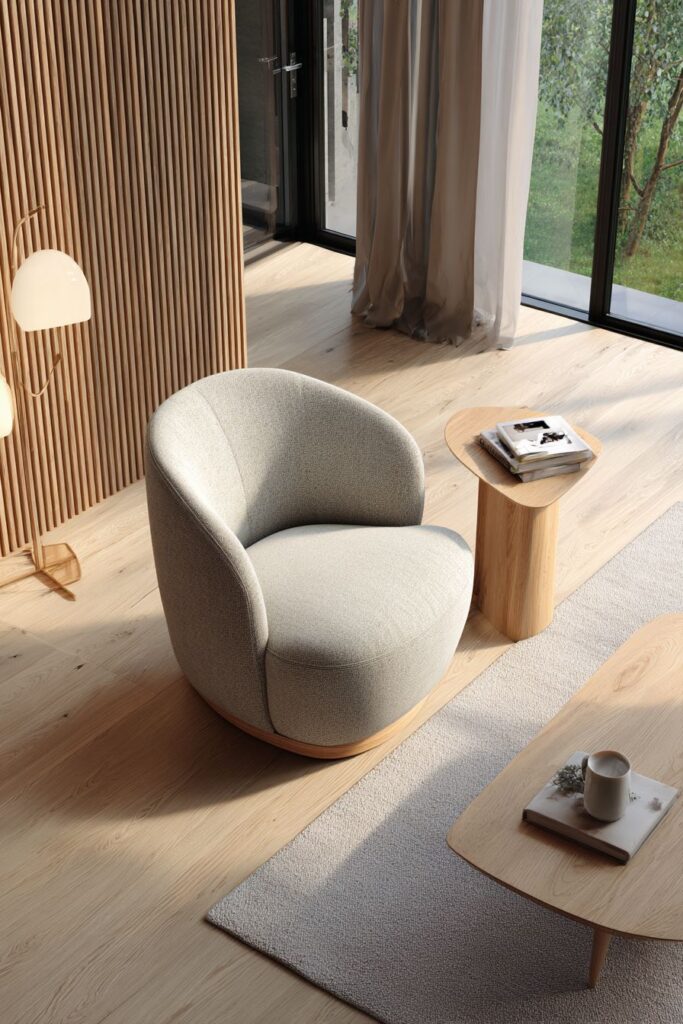
Selecting family-friendly furniture without sacrificing style:
- Choose performance fabrics engineered for durability and stain resistance while maintaining aesthetic quality
- Select neutral colors with subtle texture that camouflage minor wear while remaining visually appealing
- Incorporate functional features like swivel mechanisms that add versatility for different activities and viewing angles
- Position furniture thoughtfully for actual use patterns including TV viewing, conversation, and traffic flow
- Include convenient side tables or surfaces within easy reach for practical daily living
- Look for hidden mechanisms and clean silhouettes that maintain contemporary aesthetics while adding function
Why These Accent Chair Designs Represent the Best in Living Room Furniture
The twenty accent chair designs explored throughout this comprehensive guide represent the pinnacle of contemporary furniture design, each exemplifying excellence in specific aesthetic categories while demonstrating the versatility and transformative power that accent chairs bring to living room spaces. From the luxurious emerald velvet reading chair that creates intimate retreats bathed in natural light, to the family-friendly swivel chair that proves performance fabrics can maintain sophisticated aesthetics, these selections showcase how thoughtful furniture choices elevate both form and function in modern homes.
The modern velvet accent chair in deep emerald green stands as a masterclass in balancing luxury with livability, proving that rich materials like velvet and sophisticated colors like jewel tones work beautifully in contemporary living spaces. Velvet upholstery has experienced a renaissance in recent years precisely because it delivers visual richness and tactile luxury while remaining surprisingly durable and easy to maintain. The emerald green color specifically has become a design favorite because it brings natural depth—referencing forests and gemstones—while working harmoniously with both warm and cool palettes, making it remarkably versatile despite its boldness.
Scandinavian minimalist accent chairs continue to dominate modern design preferences because they address contemporary desires for simplicity, natural materials, and uncluttered spaces that promote mental clarity and wellbeing. The light grey linen chair with exposed oak frame represents this aesthetic perfectly, demonstrating how restraint in design creates spaces that feel calm rather than cold, simple rather than sparse. These chairs work particularly well in smaller homes and apartments where visual lightness prevents spaces from feeling cramped, while their neutral palettes provide flexibility as decor preferences evolve over time.
Farmhouse accent chairs upholstered in caramel leather have remained perennially popular because they successfully bridge traditional comfort with contemporary casual living, creating furniture that feels simultaneously timeless and current. The warm caramel tones bring natural richness that complements wood finishes beautifully, while leather’s durability and improving patina make it ideal for families who need furniture that can withstand daily use while growing more beautiful over time. Wingback silhouettes specifically offer ergonomic comfort through their enveloping design while maintaining enough formal presence to anchor living rooms aesthetically.
Mid-century modern accent chairs in bold colors like mustard yellow represent iconic design that has proven its enduring appeal across decades, demonstrating that truly excellent furniture design transcends temporary trends. The clean lines, organic curves, and quality craftsmanship that define mid-century pieces continue resonating with contemporary audiences who appreciate furniture that functions as both practical seating and artistic statement. The splayed walnut legs specifically have become shorthand for mid-century style, instantly signaling design sophistication and historical awareness.
Bohemian rattan accent chairs with peacock-style backs satisfy growing desires for sustainable, natural materials and globally-inspired aesthetics that feel personal rather than generic. Rattan’s renewed popularity reflects broader movements toward environmentally conscious design and appreciation for traditional craftsmanship, while the material’s natural flexibility allows for the organic curves and intricate patterns that give bohemian furniture its distinctive character. These chairs work particularly well layered with textiles, plants, and global accessories, creating spaces that feel collected and lived-in rather than decorated.
Navy velvet paired accent chairs demonstrate the power of sophisticated color choices and thoughtful furniture arrangement in creating formal conversation areas that encourage social interaction. Navy specifically has emerged as a sophisticated neutral alternative to black or grey, bringing depth and richness while remaining versatile enough to work with virtually any accent colors. Paired seating arrangements create intentional conversation zones that reflect growing interest in designing living spaces that facilitate connection and meaningful interaction rather than simply orienting everything toward television viewing.
Oversized transitional accent chairs upholstered in oatmeal performance linen address practical modern needs for furniture that accommodates various activities—reading, napping, device use, conversation—while maintaining aesthetic sophistication. The deep cushioning and generous proportions reflect understanding that contemporary lifestyles demand genuine comfort, while performance fabrics resolve the historical tension between beauty and durability. These chairs prove that family-friendly doesn’t mean sacrificing style, appealing to design-conscious homeowners who refuse to choose between aesthetics and practical functionality.
Art Deco accent chairs in blush pink velvet with brass legs represent the glamour and luxury that characterized 1920s and 30s design while feeling completely current in contemporary interiors. The resurgence of Art Deco influences reflects desires for elegant, dramatic spaces that feel special and intentional rather than casual and minimal. Blush pink specifically occupies an interesting position in the color spectrum—sophisticated enough for adult spaces yet warm and inviting, bold enough to make statements yet neutral enough to work with various palettes.
Industrial leather accent chairs in cognac brown with exposed metal frames appeal to urban dwellers and those who appreciate honest materials and utilitarian aesthetics that reference warehouse and factory spaces. The industrial style’s emphasis on quality materials, visible construction, and repurposed elements aligns with contemporary values around sustainability and authenticity. Cognac leather specifically ages beautifully, developing rich patina and character that makes furniture more attractive over time—the opposite of most manufactured goods that deteriorate with use.
Coastal casual slipcovered accent chairs in white linen embody relaxed elegance and breezy comfort that has made coastal design perennially appealing, particularly to those seeking vacation-home aesthetics in primary residences. Slipcovers specifically offer practical advantages including easy cleaning and seasonal refresh possibilities, while white and cream upholstery creates light-reflecting brightness that makes spaces feel larger and more open. The natural wrinkles and loose-fit design prevent spaces from feeling too precious or formal, creating livable comfort perfect for family life.
Modern farmhouse wingback accent chairs in charcoal grey successfully bridge traditional silhouettes with contemporary color palettes, creating furniture that honors historical design while feeling completely current. This hybrid aesthetic has dominated design trends precisely because it resolves tensions between traditional comfort and modern simplicity, creating spaces that feel both timeless and fresh. Charcoal grey specifically provides sophisticated neutrality that works beautifully with both warm wood tones and cool metals, making it remarkably versatile.
Sculptural bouclé accent chairs in terracotta represent contemporary design’s embrace of furniture-as-art, where pieces function as both practical seating and sculptural statements. Bouclé fabric has experienced tremendous popularity because its nubby texture adds depth and interest to solid colors, preventing minimalist forms from reading as stark or cold. Terracotta specifically brings earthy warmth that connects interiors to natural landscapes while remaining sophisticated and contemporary rather than rustic or casual.
Japanese-inspired minimalist accent chairs with paper cord seats and exposed joinery satisfy growing interest in mindful living, natural materials, and design that emphasizes quality craftsmanship over quantity of possessions. These chairs embody principles of simplicity and intentionality that resonate with contemporary movements toward decluttering and conscious consumption. The visible joinery specifically transforms construction into aesthetic feature, celebrating craftsmanship and traditional techniques in ways that mass-produced furniture cannot.
Traditional accent chairs upholstered in sage green damask demonstrate that formal, historical design styles remain relevant for those who appreciate refined elegance and classical proportions. Damask fabrics specifically add subtle pattern and textural richness without the visual busyness of printed fabrics, making them ideal for traditional spaces that balance ornamentation with restraint. Sage green brings natural sophistication that feels calming and elegant, working beautifully with the wood tones and Oriental rugs typical of traditional interiors.
Scandinavian hygge-inspired accent chairs draped in sheepskin address desires for cozy comfort and textural warmth, particularly appealing in cold climates or during winter months. The layering of natural materials—wood, sheepskin, wool—creates multisensory comfort that goes beyond visual appeal to provide genuine physical warmth and tactile pleasure. This approach to design prioritizes human wellbeing and comfort, creating spaces that nurture rather than simply impress.
Maximalist floral accent chairs in jewel-tone prints celebrate personal expression, bold color, and confident pattern mixing that represents rejection of minimalism’s dominance in contemporary design. These chairs prove that more can indeed be more when executed with skill and confidence, appealing to those who find joy in color, pattern, and visual richness. The large-scale floral prints specifically feel contemporary rather than dated, with saturated jewel tones that bring luxury and drama.
Compact accent chairs in grey velvet demonstrate that space limitations don’t require aesthetic compromises, offering solutions for urban dwellers and those with smaller homes who refuse to sacrifice style for size. These scaled-down designs prove that quality materials, thoughtful proportions, and sophisticated finishes matter more than sheer size in creating furniture that feels substantial and luxurious. The streamlined silhouettes specifically maximize seating comfort while minimizing spatial footprint.
Western lodge cowhide accent chairs satisfy desires for regional character, authentic materials, and design that celebrates natural imperfections and variations. These pieces appeal particularly to those seeking furniture with personality and uniqueness, where natural markings ensure no two chairs are identical. The rustic aesthetic specifically creates warm, inviting spaces that feel connected to outdoor landscapes and historical traditions.
Coordinated conversational accent chair pairs demonstrate sophisticated approaches to furniture arrangement that create social spaces encouraging interaction and connection. The mix of solid and patterned fabrics within a cohesive palette shows design maturity, creating interest without chaos. These arrangements specifically address growing recognition that living rooms should facilitate conversation and connection rather than simply providing television viewing seating.
Performance fabric swivel accent chairs represent the practical evolution of furniture design, incorporating stain-resistant materials and functional mechanisms that accommodate real family life without sacrificing contemporary aesthetics. These chairs specifically prove that family-friendly furniture has moved far beyond the bulky, utilitarian designs of previous generations, now offering sophisticated style alongside practical durability. The swivel mechanism adds versatility that makes single chairs function for multiple purposes and viewing angles.
Together, these twenty accent chair designs showcase the remarkable diversity available in contemporary furniture markets, proving that every design preference, spatial requirement, and lifestyle need can be met with furniture that delivers both beauty and functionality. Whether drawn to minimalist simplicity or maximalist abundance, traditional elegance or contemporary edge, natural materials or performance fabrics, coastal casual or industrial urban, there exists an accent chair perfectly suited to enhance your living room while reflecting your personal style and meeting your practical needs.
Conclusion:
The journey through these twenty distinctive accent chair designs reveals a fundamental truth about interior design: the right furniture has the power to completely transform a space, turning ordinary rooms into extraordinary environments that reflect personality, support lifestyle, and inspire daily living. Accent chairs specifically offer unique opportunities to introduce color, texture, pattern, and form in ways that larger furniture pieces often cannot, serving as both functional seating and artistic statements that elevate entire rooms.
As you consider which accent chair style might work best in your own living room, reflect on how you actually use your space. Do you need a cozy reading nook bathed in natural light? Consider the emerald velvet chair or the oversized transitional design with ottoman. Are you furnishing a small apartment where every square foot matters? The compact grey velvet chair proves that limited space doesn’t mean limited style. Do you have an active family with children and pets? Performance fabric swivel chairs deliver durability without sacrificing sophistication. Are you drawn to bold statements and dramatic color? The Art Deco blush pink chair or maximalist floral design might speak to your aesthetic sensibility.
Remember that accent chairs succeed not just through their individual beauty but through their relationship with surrounding elements. Consider how your chosen chair will interact with existing furniture, architectural features, lighting conditions, and traffic patterns. Think about complementary side tables, appropriate lighting, and anchoring rugs that help integrate the chair into your overall design scheme. Pay attention to scale—oversized chairs can overwhelm small rooms, while compact chairs might disappear in expansive spaces.
Don’t be afraid to embrace bold choices that genuinely excite you. Your living room should reflect your personality and bring you joy every time you enter it. Whether that means sophisticated navy velvet, warm caramel leather, or dramatic patterned fabric, trust your instincts and select furniture that resonates with your aesthetic sensibility. The most successful interiors result from confident choices made with personal conviction rather than timid selections based solely on what might appeal to future home buyers or conform to temporary trends.
As you embark on your accent chair journey, visit furniture showrooms to sit in various styles and experience their comfort firsthand. Order fabric samples to see how materials look in your specific lighting conditions. Measure carefully to ensure proper fit and circulation space. Consider commissioning custom upholstery if you find the perfect frame but want different fabric. Remember that quality furniture represents investment in daily comfort and long-term satisfaction, making it worth spending time and resources to get exactly right.
The accent chairs explored in this guide demonstrate that contemporary furniture design offers unprecedented variety, quality, and accessibility. Whether your budget allows for investment pieces or requires more modest spending, whether you prefer shopping online or visiting brick-and-mortar stores, whether you want immediate availability or don’t mind waiting for custom orders, options exist to meet your specific needs and preferences. The key is knowing what you want, understanding how you’ll use the furniture, and selecting pieces that will bring lasting satisfaction rather than fleeting trend appeal.
Ultimately, the perfect accent chair for your living room is the one that makes you smile when you see it, welcomes you when you sit in it, and enhances your space in ways both practical and beautiful. Use the inspiration and guidance provided throughout this article as starting points for your own exploration, adapting ideas to suit your unique circumstances while maintaining the design principles that create successful interiors. Your living room awaits transformation—the perfect accent chair is out there, ready to take its place in your home and your life.
"As an Amazon Associate, I earn from qualifying purchases."
