

In an era where our homes serve as sanctuaries from an increasingly complex world, the minimal living room has emerged as a beacon of tranquility and intentional design. The art of minimalism in interior design transcends mere aesthetic choice—it represents a philosophy of living that prioritizes quality over quantity, function over ornamentation, and peace over chaos. A thoughtfully designed minimal living room becomes more than just a space for relaxation; it transforms into a canvas where natural light dances across clean surfaces, where every element serves a purpose, and where the absence of clutter allows the mind to find clarity and rest.
The beauty of minimal living room design lies in its ability to create maximum impact through careful restraint. Each piece of furniture, every material choice, and all spatial decisions work harmoniously to establish an environment that feels both sophisticated and welcoming. This approach to interior design celebrates the inherent beauty of high-quality materials, the power of natural light, and the elegant simplicity that comes from thoughtful curation rather than accumulation.
The following collection presents thirty distinct interpretations of minimal living room design, each offering unique insights into how this timeless aesthetic can be adapted to different spaces, lifestyles, and personal preferences. From floating media consoles to conversation pits, from integrated planters to retractable furniture systems, these designs showcase the innovation and creativity possible within minimalist principles while maintaining the serene, uncluttered atmosphere that defines this enduring style.
1. Pure Geometric Serenity with White Linen Sectional
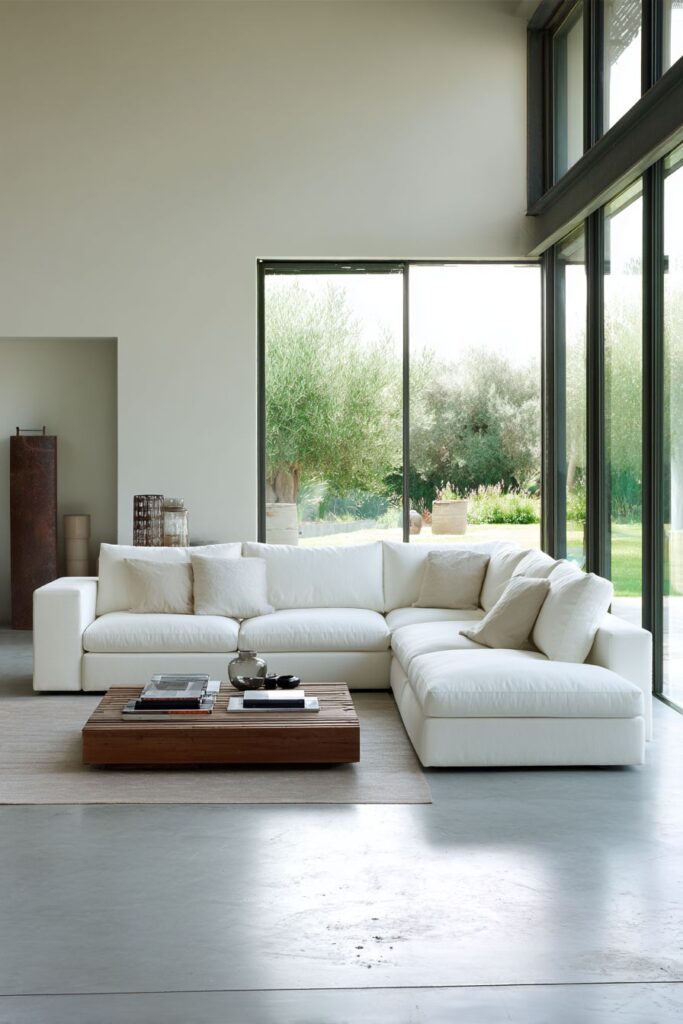
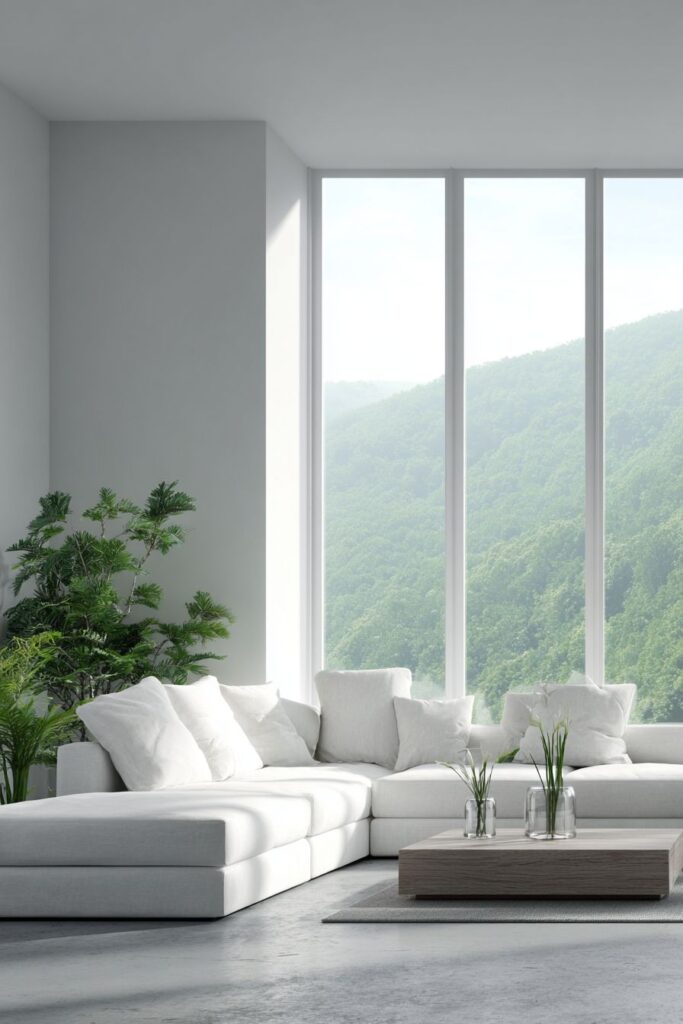
The epitome of minimal living room design begins with the pristine white linen sectional, positioned with mathematical precision against an unmarked white wall. This low-profile seating solution embodies the minimalist principle that furniture should enhance rather than dominate a space. The clean geometric lines of the sectional create visual harmony while the natural linen upholstery introduces subtle texture that prevents the space from feeling sterile or cold.
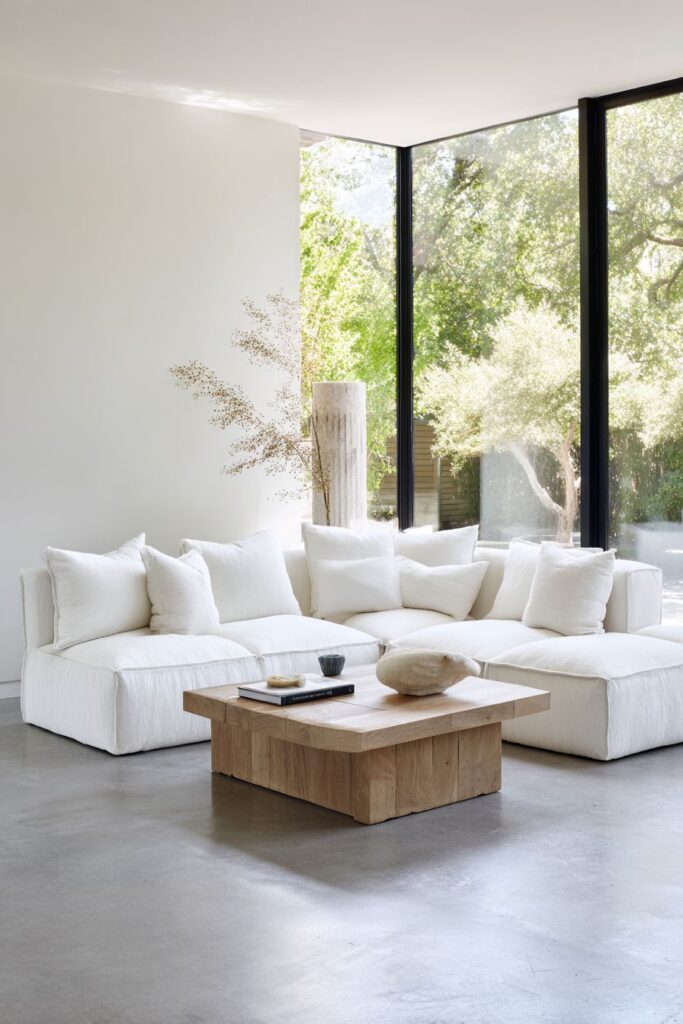
The rectangular oak coffee table serves as the room’s gravitational center, its warm wood tones providing essential contrast against the cool concrete flooring. This carefully considered material palette—white linen, natural oak, and polished concrete—demonstrates how minimalist design achieves sophistication through the thoughtful combination of high-quality materials rather than decorative embellishment.
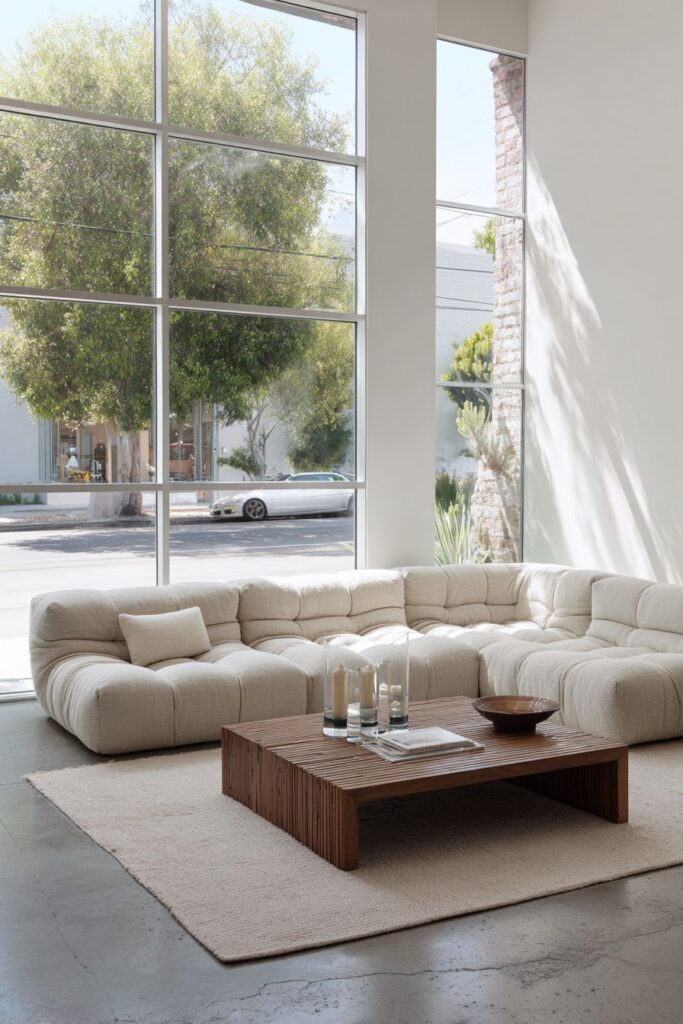
Floor-to-ceiling windows without treatments allow natural light to flood the space, creating an ever-changing display of shadows and highlights that bring the room to life throughout the day. The absence of window coverings reflects minimalist design’s embrace of natural elements and its rejection of unnecessary layers that might obstruct the pure relationship between interior and exterior environments.
The polished concrete flooring extends seamlessly throughout the space, its reflective surface amplifying the natural light and creating a sense of spaciousness that makes the room feel larger than its actual dimensions. This material choice exemplifies minimalist design’s preference for honest materials that showcase their inherent beauty without artificial enhancement.
Key Design Tips:
- Choose low-profile furniture to maintain visual openness and prevent the space from feeling crowded
- Embrace natural light by eliminating window treatments where privacy allows
- Select a limited material palette of three to four elements for cohesive design
- Position furniture with adequate breathing room to emphasize the architecture
- Invest in high-quality materials that age beautifully and provide lasting appeal
2. Floating Media Console Elegance
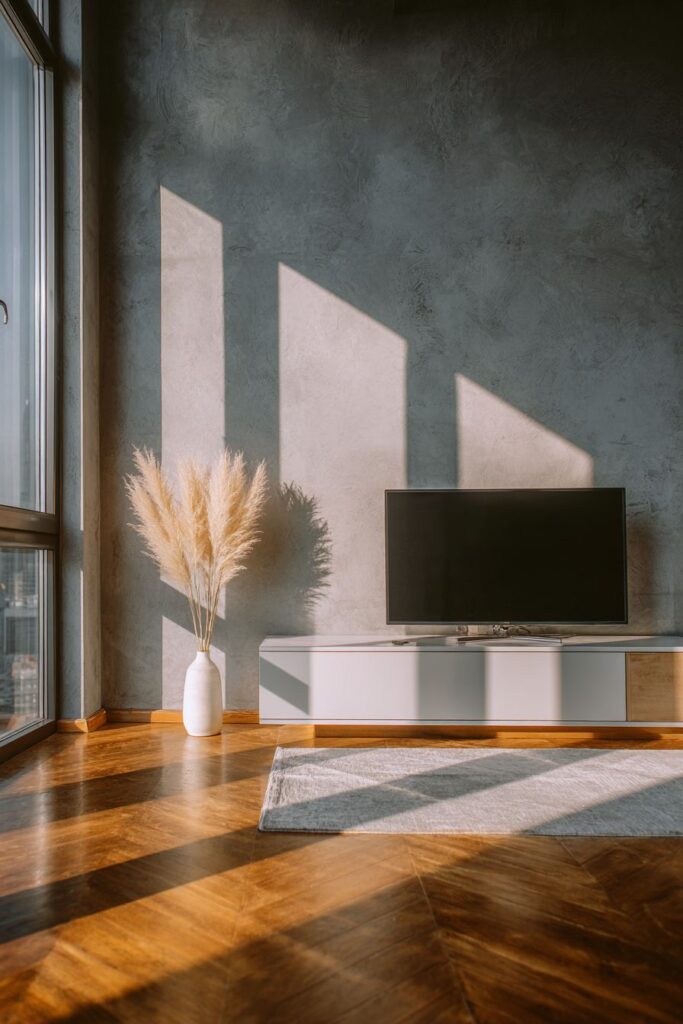
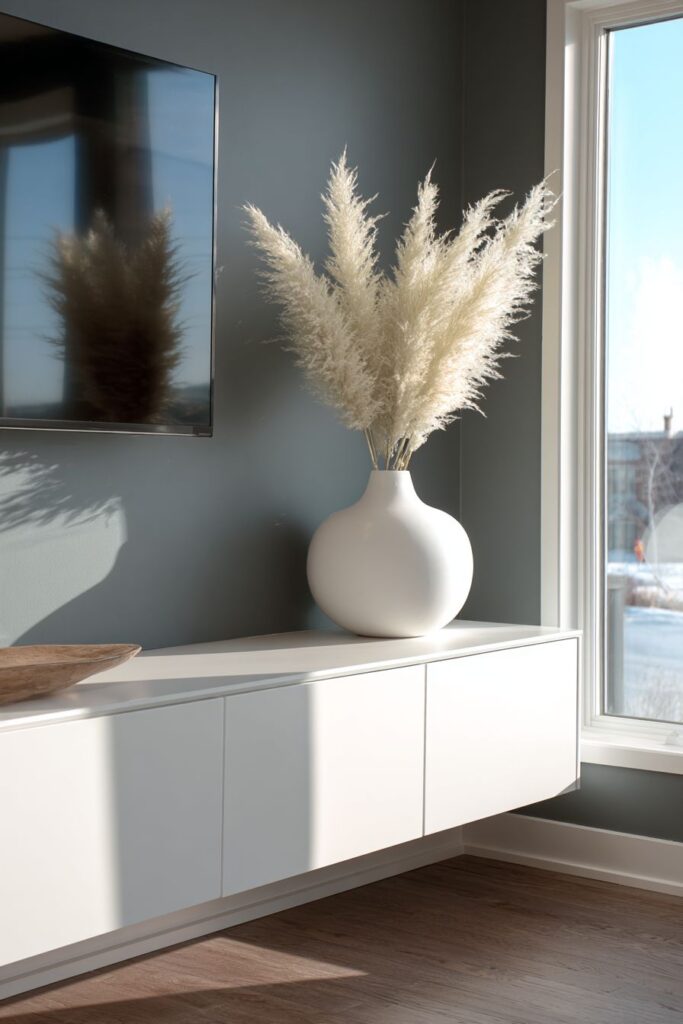
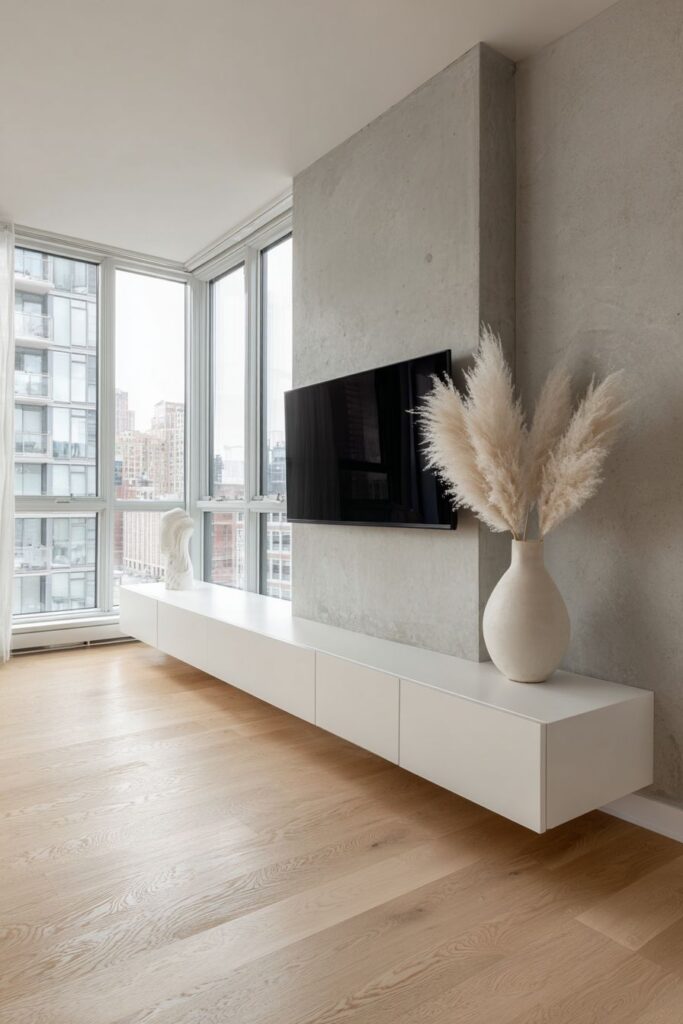
The floating white media console represents minimalist design’s mastery of visual weightlessness, appearing to hover against the smooth grey accent wall without visible support systems. This wall-mounted approach eliminates visual bulk while providing essential storage for modern entertainment systems. The seamless integration demonstrates how minimalist design solves practical needs without compromising aesthetic purity.
The oak hardwood flooring beneath showcases natural grain variations that add organic warmth to the otherwise cool color palette. These subtle wood variations prevent the space from appearing too uniform while maintaining the restrained aesthetic that defines minimal living room design. The contrast between the cool grey wall and warm oak creates visual interest without requiring additional decorative elements.
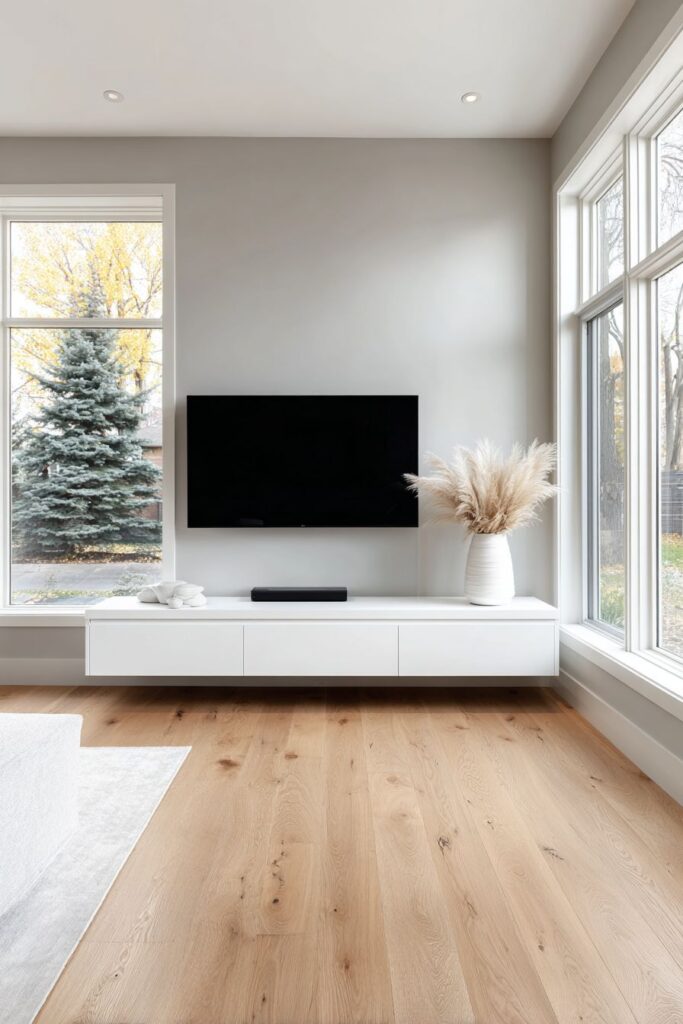
A single white ceramic vase holding dried pampas grass provides the room’s only decorative accent, demonstrating minimalist design’s philosophy that one carefully chosen element can be more impactful than numerous smaller accessories. The dried grass introduces natural texture and movement while the ceramic vessel’s pure white finish harmonizes with the console and wall color.
Natural daylight streaming through large windows creates gentle highlights on the wall surface, emphasizing the subtle texture of the grey paint and casting soft shadows that change throughout the day. This dynamic interplay of light and shadow provides visual interest without requiring permanent decorative elements, exemplifying minimalism’s appreciation for natural beauty.
Key Design Tips:
- Mount media consoles to walls for visual lightness and easier floor cleaning
- Choose accent walls in subtle colors that complement rather than compete with furnishings
- Limit decorative accessories to single, impactful pieces that serve the overall design
- Embrace natural material variations as sources of visual interest
- Position furniture to take advantage of natural light patterns throughout the day
3. Symmetrical Conversation Area
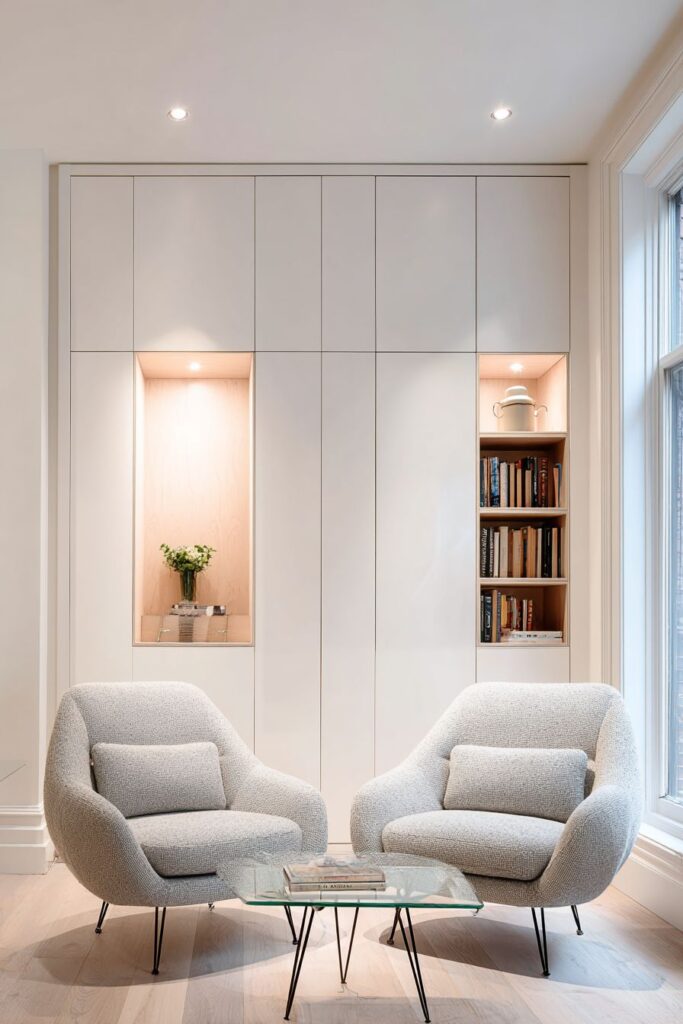
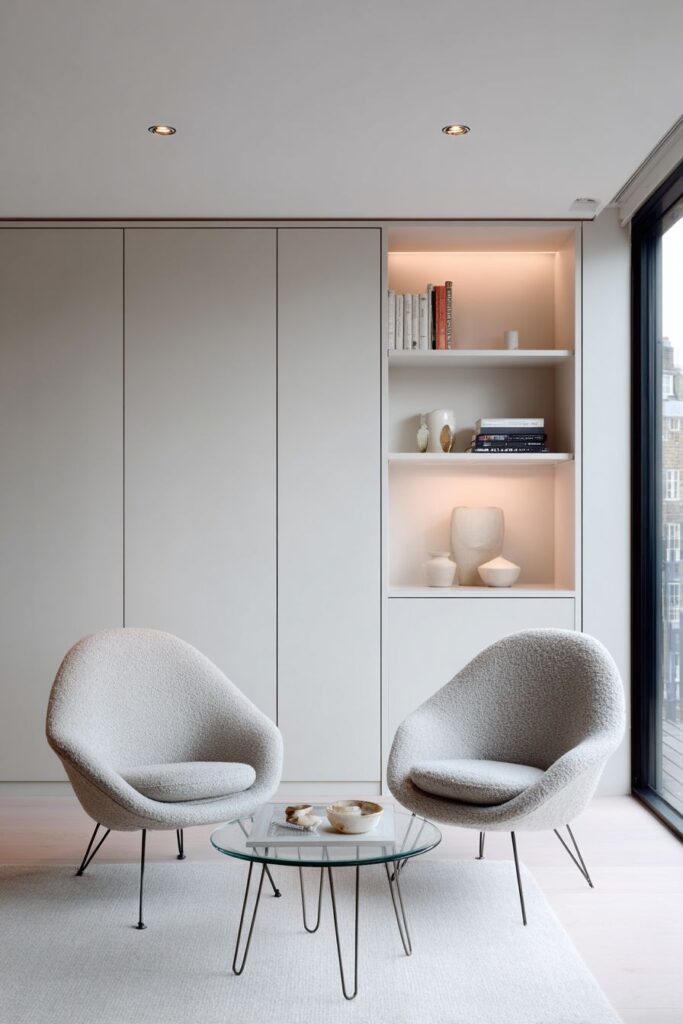
The identical grey wool armchairs positioned facing each other create a perfectly balanced conversation area that embodies minimalist design’s appreciation for symmetry and intentional furniture placement. These matching chairs eliminate visual confusion while establishing clear circulation patterns and functional zones within the larger living space.
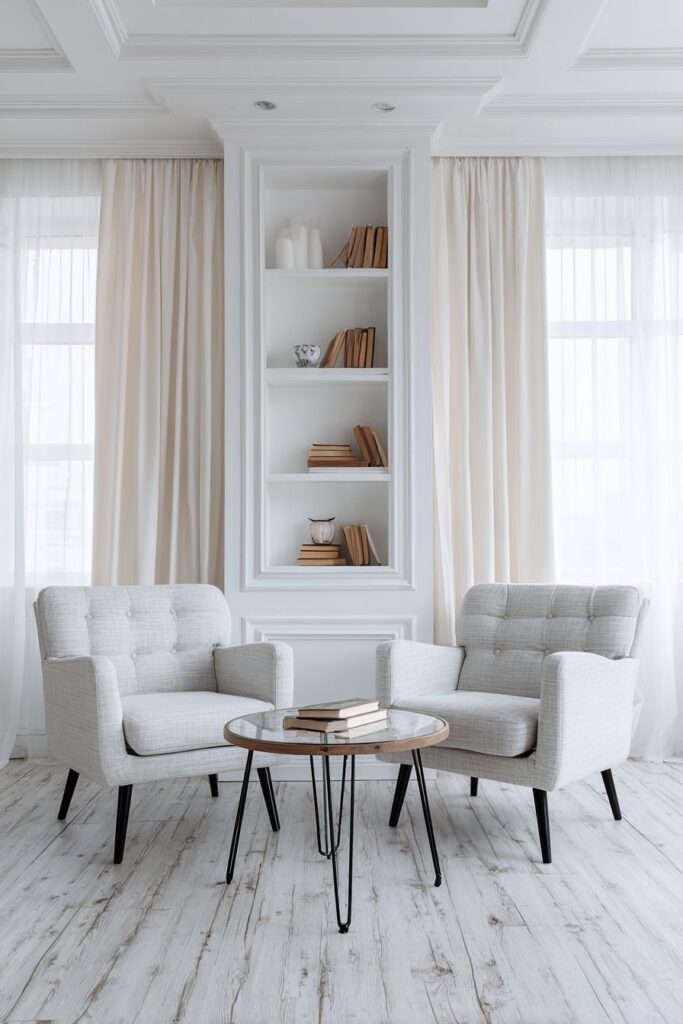
The simple glass coffee table with hairpin metal legs provides essential surface area without visual obstruction, allowing the eye to flow freely through the space while maintaining the room’s open feeling. The transparency of glass and the delicate metal legs demonstrate minimalist design’s preference for furniture that appears to barely touch the ground.
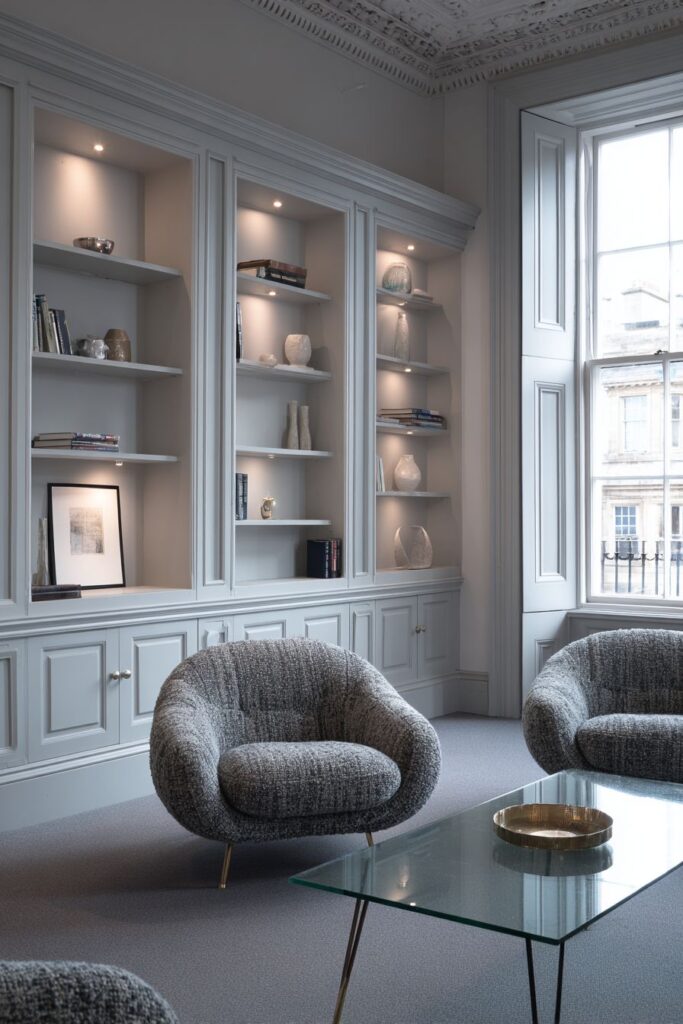
Floor-to-ceiling built-in shelving painted in soft white creates architectural interest while providing organized storage that doesn’t disrupt the room’s clean lines. The shelving displays only carefully selected books and ceramic objects, illustrating minimalist design’s principle that storage should enhance rather than complicate the overall aesthetic.
The combination of recessed ceiling lighting and natural light from side windows creates layered illumination that highlights the room’s architectural features while maintaining even light distribution. This lighting strategy eliminates the need for additional floor or table lamps that might disrupt the carefully balanced composition.
Key Design Tips:
- Use matching furniture pieces to create visual harmony and reduce decision fatigue
- Choose transparent materials for coffee tables to maintain spatial openness
- Integrate storage solutions as architectural elements rather than added furniture
- Layer different light sources for optimal illumination throughout the day
- Arrange seating to promote conversation and create clear traffic flow
4. Corner Reading Sanctuary
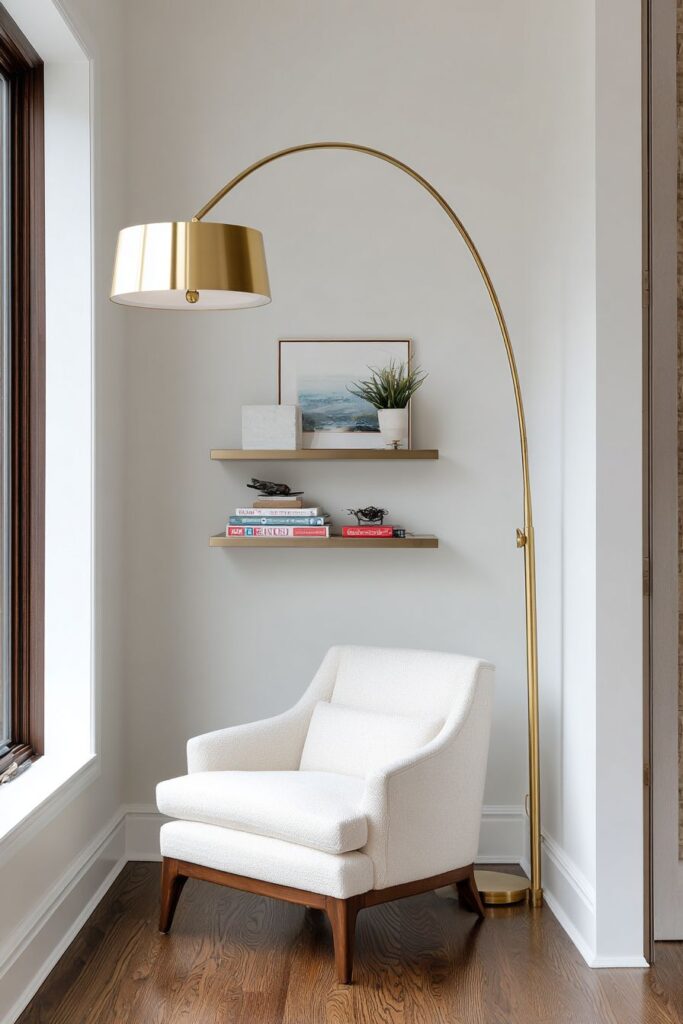
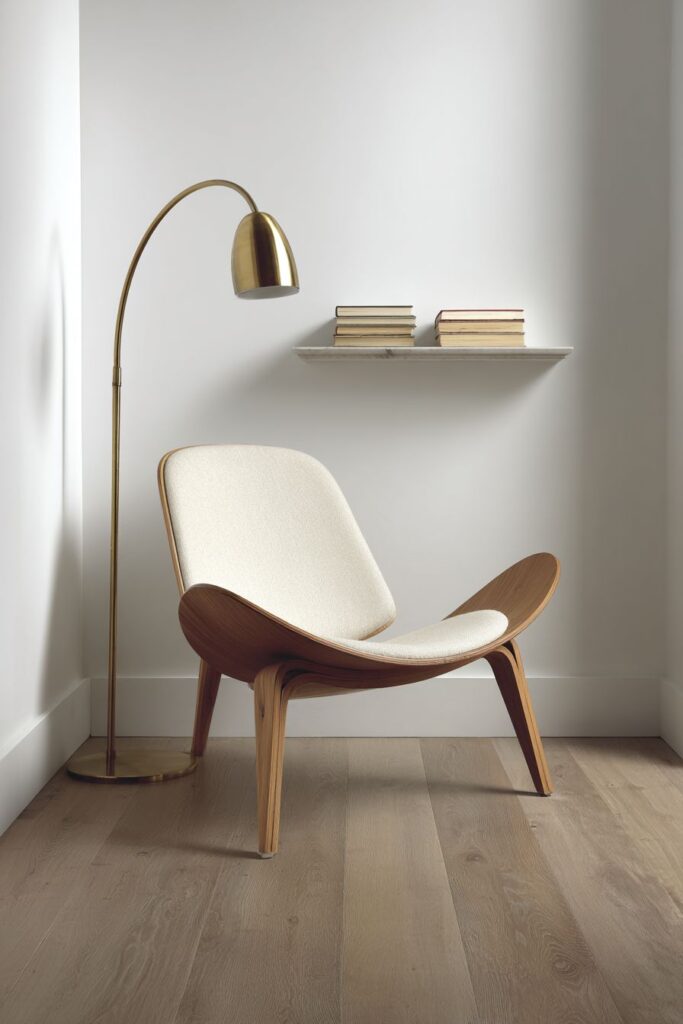
The mid-century modern walnut chair upholstered in cream fabric creates an intimate reading nook that demonstrates how minimalist design can accommodate specific lifestyle needs without compromising aesthetic principles. The chair’s clean lines and quality materials make it worthy of display as both functional furniture and sculptural object.
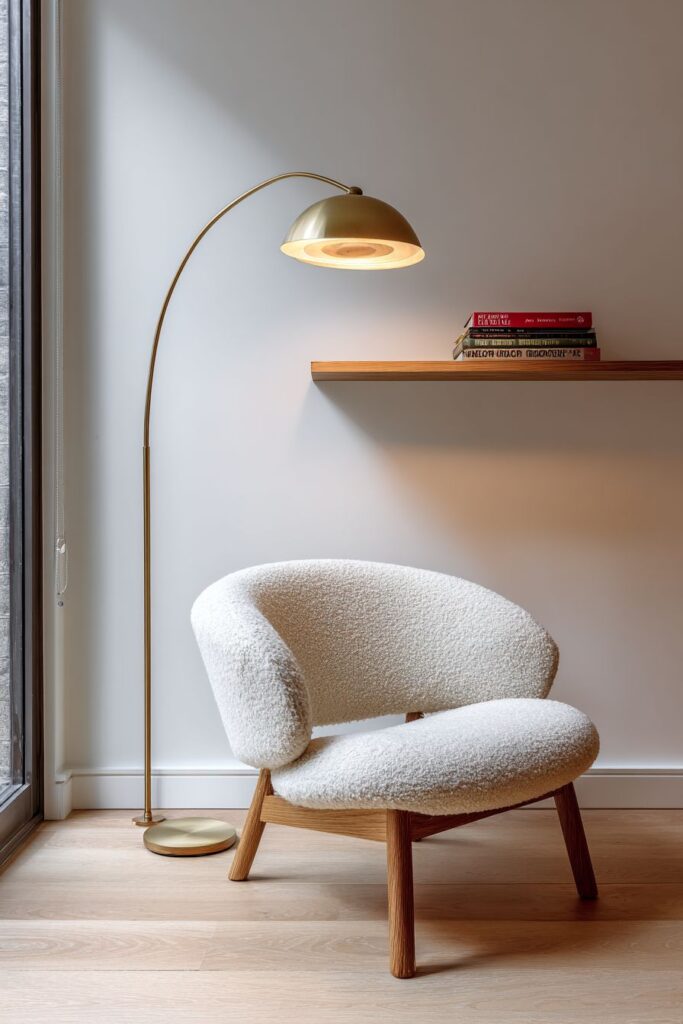
The sleek arc floor lamp with brass finish provides focused task lighting while its elegant curve adds visual interest to the corner composition. The brass finish introduces warm metallic tones that complement the walnut wood, showing how minimalist design can incorporate subtle color variations within a restrained palette.
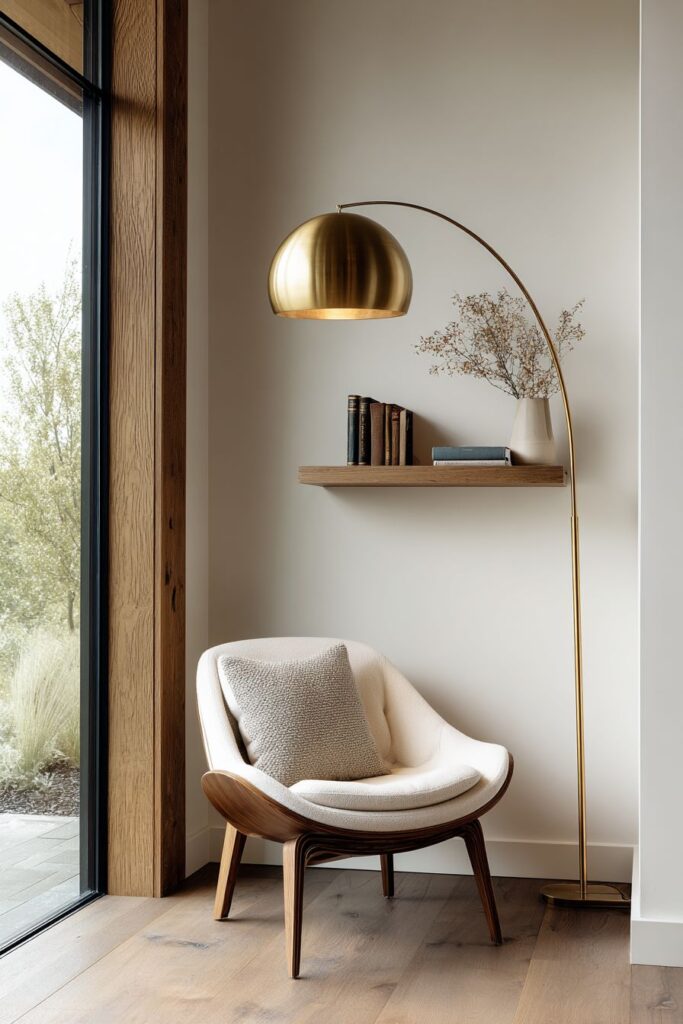
A single floating shelf holding three hardcover books reinforces the reading function while providing display space for carefully chosen objects. This minimalist approach to storage eliminates visual clutter while keeping essential items within easy reach, demonstrating efficient space planning principles.
The natural oak flooring extends throughout the space, creating visual continuity between the reading nook and the larger room. This material consistency prevents the corner from feeling disconnected while the warm wood tones provide essential contrast against the white walls.
Key Design Tips:
- Create functional zones within larger spaces using furniture placement and lighting
- Choose task lighting with sculptural qualities that contribute to the overall design
- Use floating shelves for storage that doesn’t interfere with wall planes
- Maintain consistent flooring materials to unify different areas
- Select furniture pieces that serve dual roles as functional and decorative elements
5. Oversized Comfort Statement
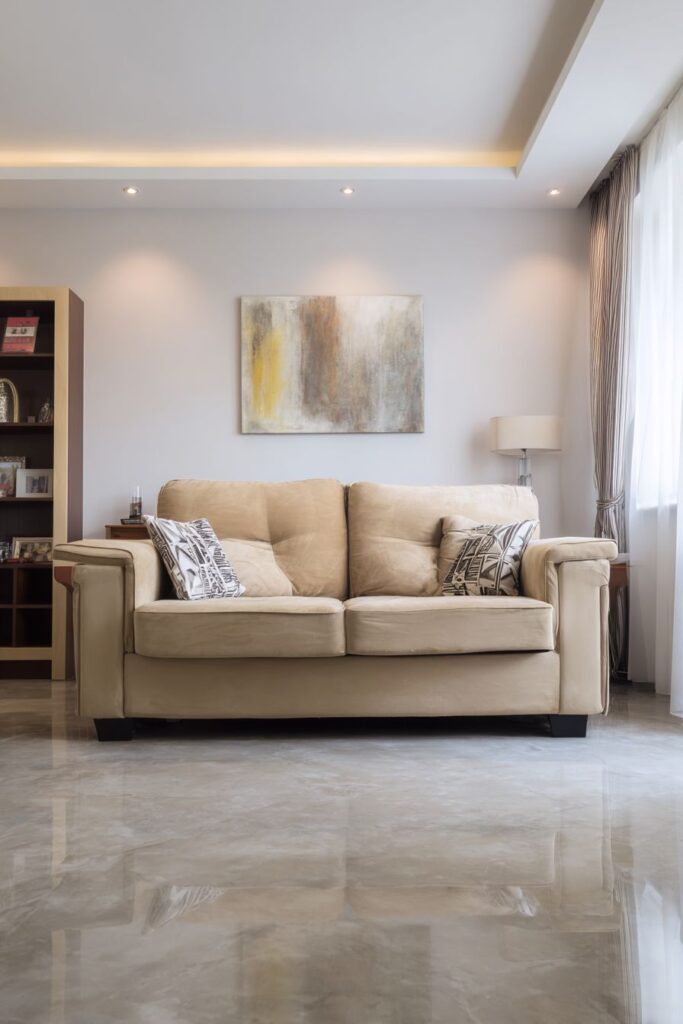
The oversized beige linen sofa with deep cushions becomes the room’s commanding presence while maintaining minimalist design principles through its clean lines and absence of decorative pillows. This substantial piece demonstrates how minimal living rooms can prioritize comfort without sacrificing aesthetic purity.
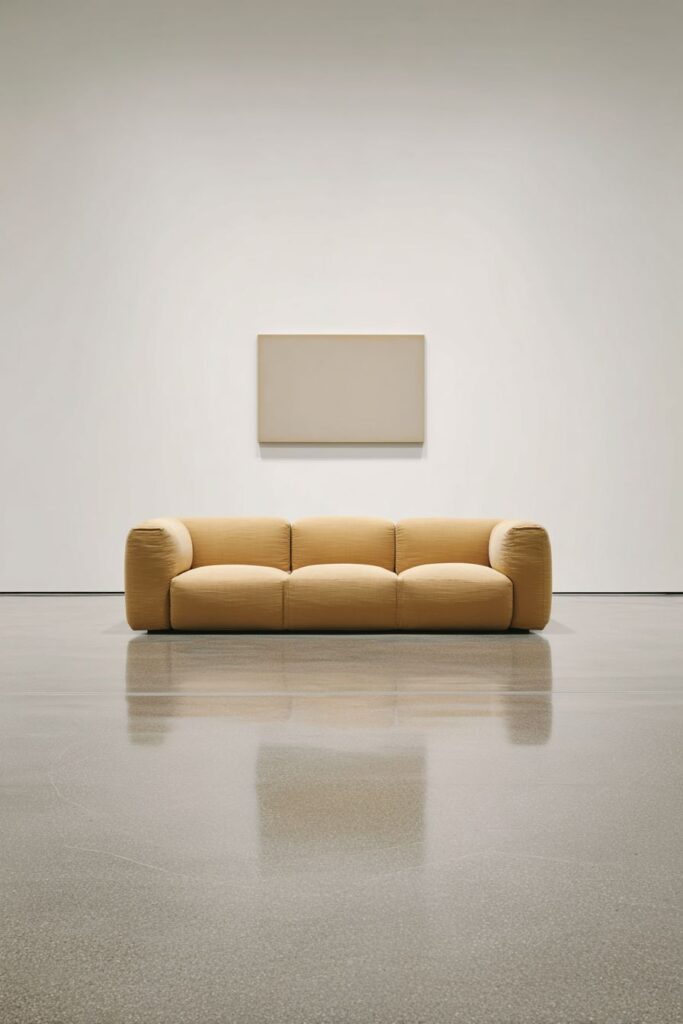
The continuous white wall behind the sofa extends uninterrupted except for a single rectangular abstract painting in muted tones, showing how minimalist design can incorporate art while maintaining visual restraint. The painting’s muted colors complement rather than compete with the sofa’s beige upholstery, creating a harmonious color story.
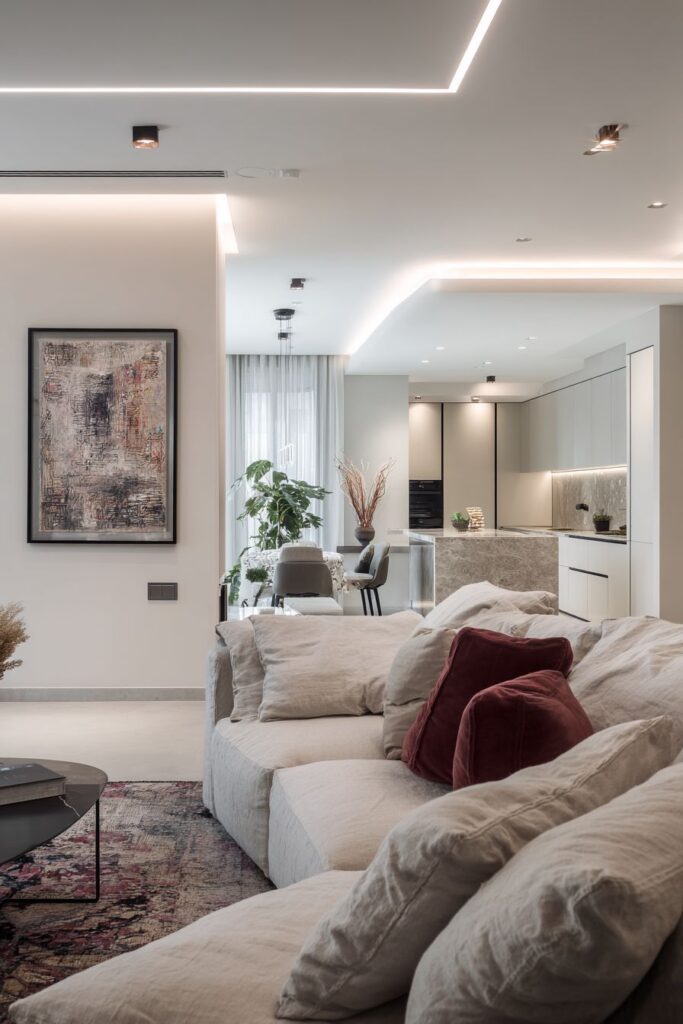
Polished concrete flooring reflects subtle ambient light from hidden LED strips along the baseboards, creating a sophisticated lighting scheme that eliminates the need for visible fixtures while providing gentle illumination. This approach demonstrates minimalist design’s integration of technology in ways that enhance rather than complicate the space.
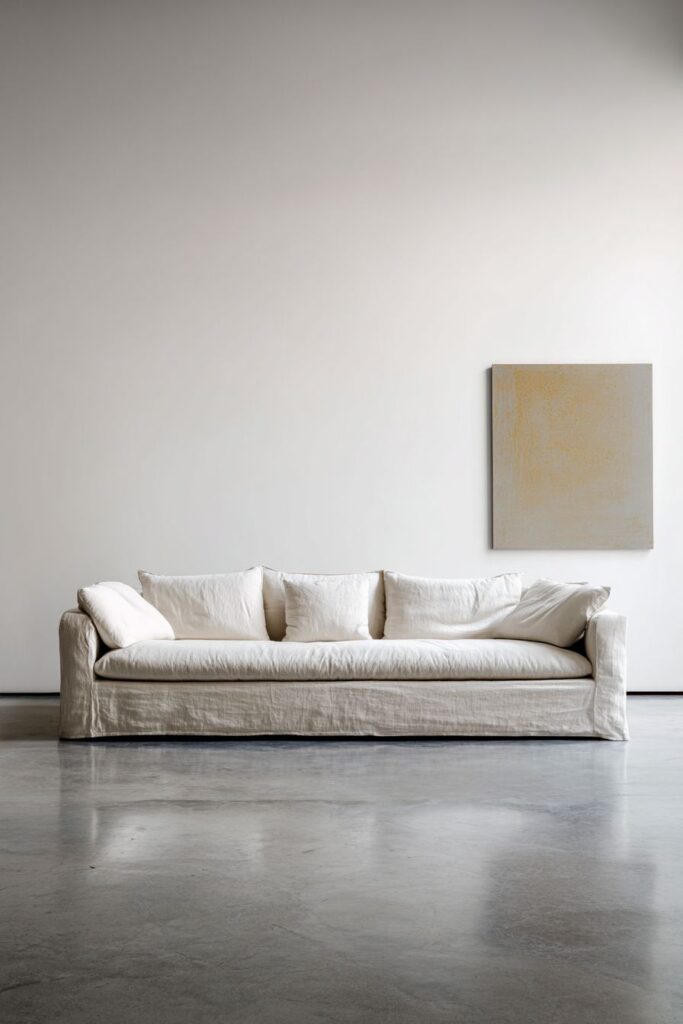
The wide-angle perspective of the room emphasizes the expansive feeling created by the large sofa and open floor plan, showing how minimal living room design can create grandeur through scale and proportion rather than ornate decoration.
Key Design Tips:
- Choose oversized furniture pieces to create impact while maintaining simplicity
- Integrate hidden lighting systems for ambient illumination without visible fixtures
- Limit artwork to single, carefully chosen pieces that complement the color palette
- Use reflective flooring materials to amplify natural and artificial light
- Plan furniture scale to match room proportions for optimal visual balance
6. Integrated Entertainment Wall
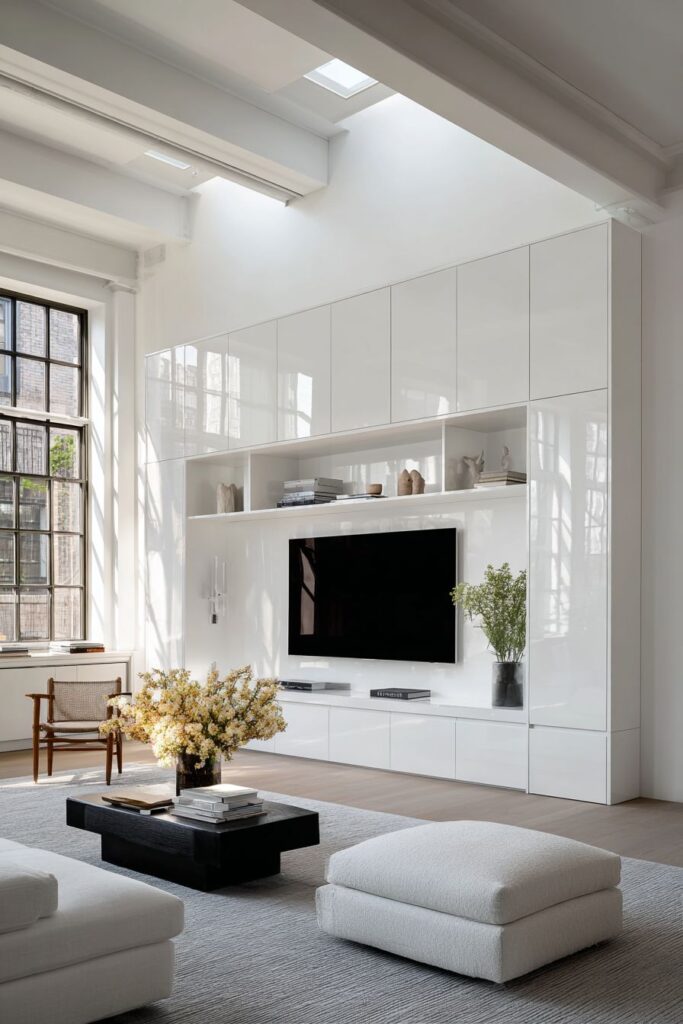
The built-in white lacquer entertainment unit spanning an entire wall creates seamless storage that conceals all cables and equipment while maintaining the room’s clean aesthetic. This architectural approach to media storage demonstrates minimalist design’s ability to solve modern technological needs without visual compromise.
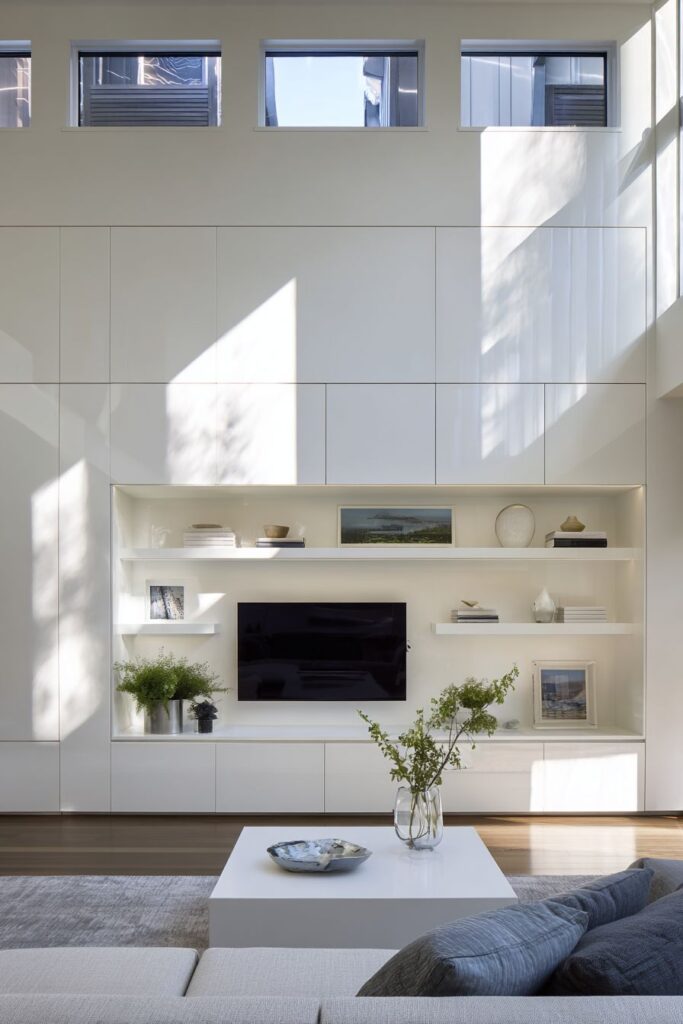
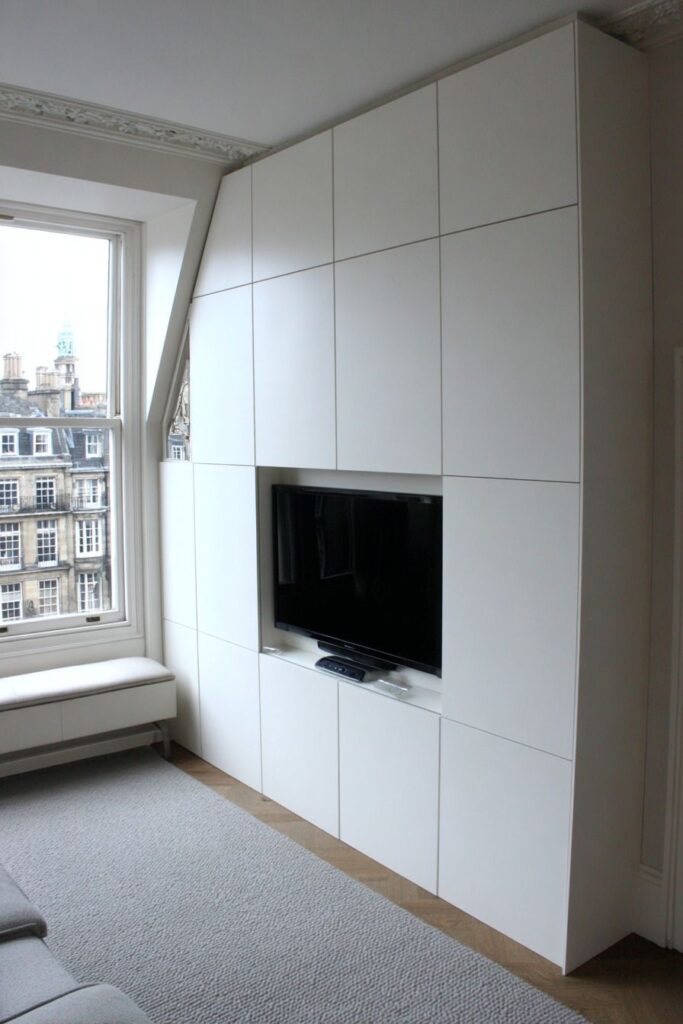
The unit’s seamlessly integrated storage compartments with hidden hardware eliminate visual interruption while providing ample space for electronics, media, and personal items. The push-to-open mechanisms maintain the wall’s smooth surface, showing how minimalist design can incorporate convenience without sacrificing appearance.
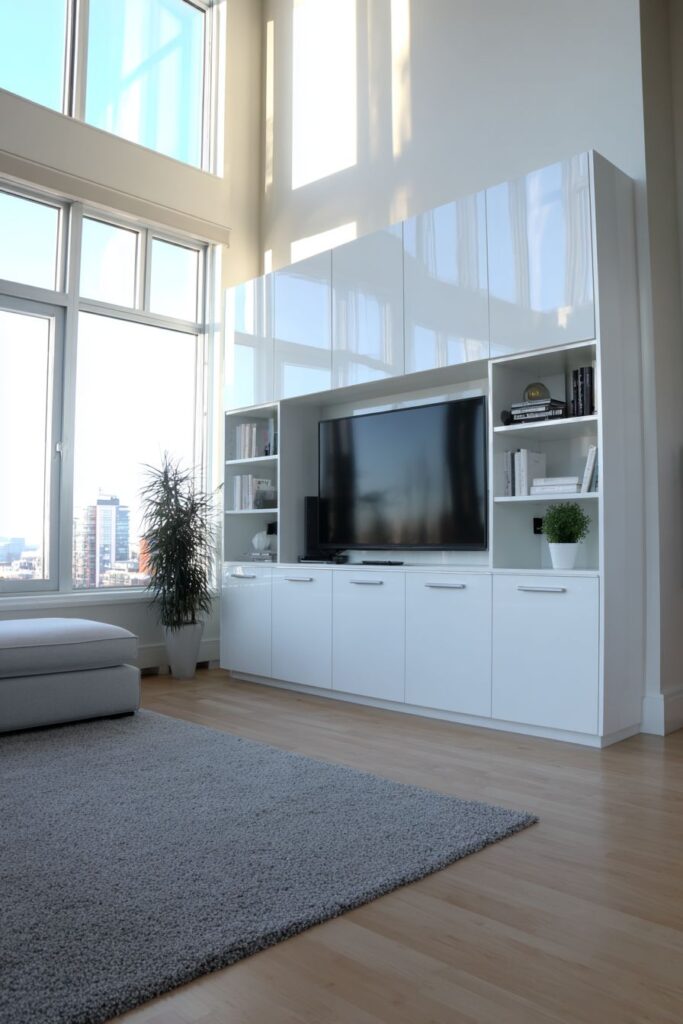
A single grey wool area rug defines the seating area without overwhelming the space, providing essential softness underfoot while maintaining the room’s restrained color palette. The rug’s placement creates a clear boundary between the seating area and circulation zones.
Natural light from clerestory windows above creates dramatic shadows on the pristine surfaces, emphasizing the entertainment unit’s clean geometry while providing illumination that changes throughout the day. This lighting strategy eliminates the need for additional fixtures while creating visual drama.
Key Design Tips:
- Design built-in storage solutions that become part of the architecture
- Use push-to-open hardware to eliminate visible handles and maintain clean surfaces
- Position area rugs to define functional zones without overwhelming the space
- Incorporate clerestory windows for natural light without compromising privacy
- Plan entertainment storage to accommodate current and future technology needs
7. Japanese-Inspired Floor Living
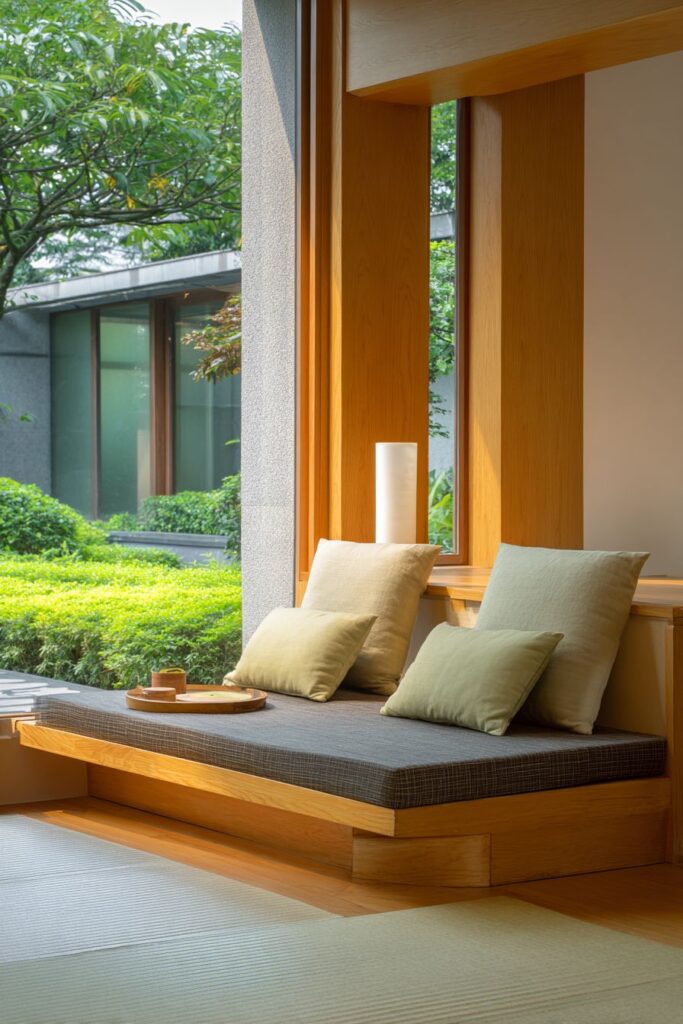
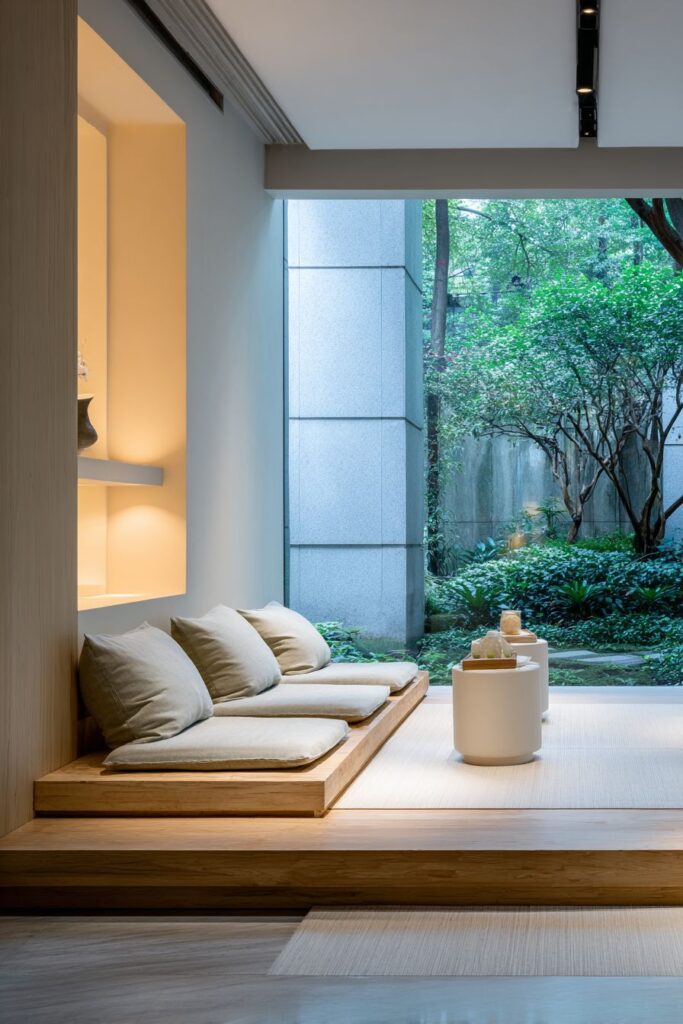
The low Japanese-inspired wooden platform seating covered in natural linen cushions introduces the concept of floor-level living to minimal living room design. This approach reduces visual height while creating intimate seating that encourages relaxation and contemplation, hallmarks of both Japanese design and minimalist philosophy.
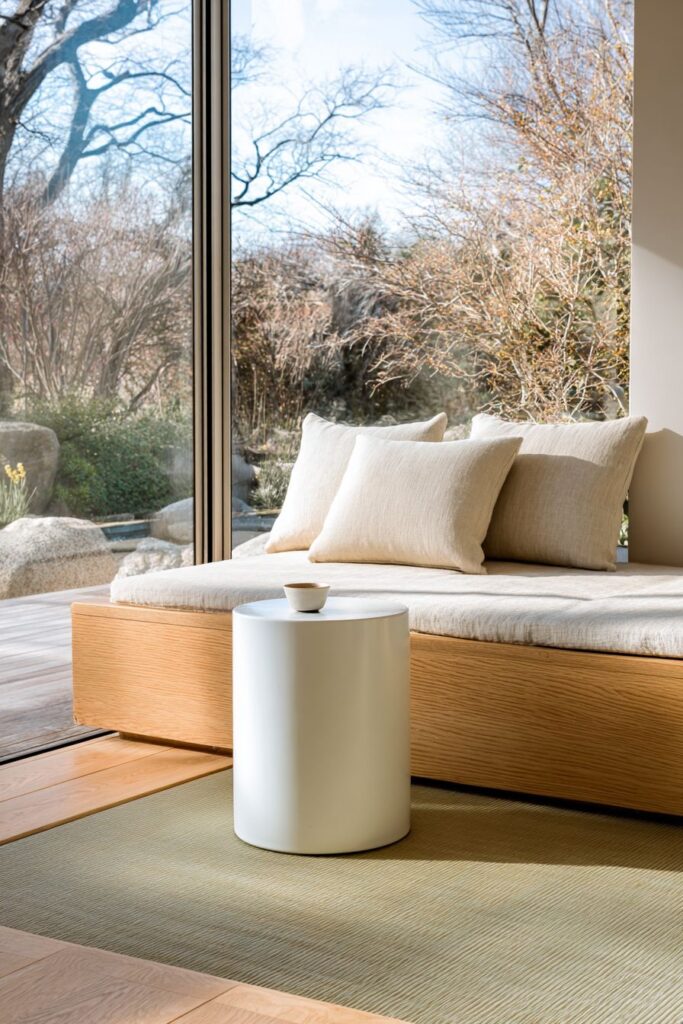
Tatami-style flooring with visible weave texture provides organic pattern and natural comfort underfoot while maintaining the room’s connection to natural materials. The textural interest of the woven surface prevents the floor from appearing flat while staying true to minimalist principles of material honesty.
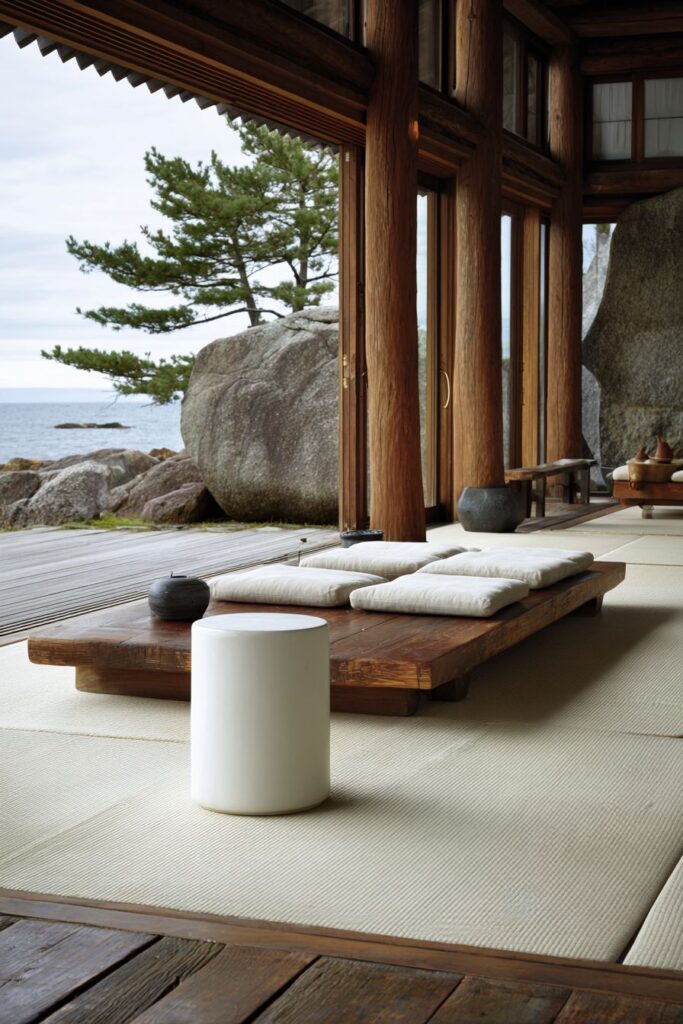
The single cylindrical white ceramic side table provides essential function without competing with the low seating platform, demonstrating how minimalist design can incorporate necessary furniture while maintaining visual hierarchy and proportion.
Large sliding glass doors that open to reveal natural garden views blur the boundaries between interior and exterior spaces, a key principle of both Japanese design and minimalist philosophy. This connection to nature provides visual expansion while introducing changing seasonal elements to the interior environment.
Key Design Tips:
- Consider floor-level seating for intimate, contemplative living spaces
- Incorporate natural fiber flooring for texture and comfort
- Use sliding doors to maximize connection between interior and exterior spaces
- Choose simple geometric forms for accent furniture and accessories
- Maintain low furniture heights to emphasize horizontal space and create calm
8. Suspended Fireplace Drama
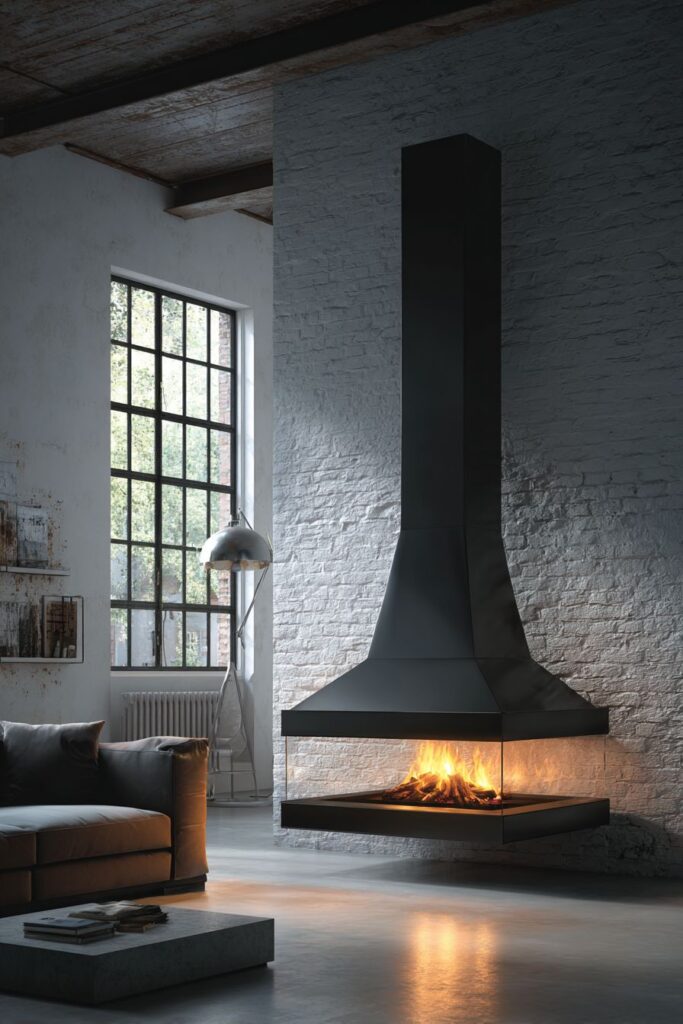
The suspended fireplace with sleek black metal surround creates a dramatic focal point while maintaining minimal design principles through its geometric form and clean installation. The fireplace appears to float against the white brick accent wall, demonstrating how minimalist design can incorporate traditional elements in contemporary ways.
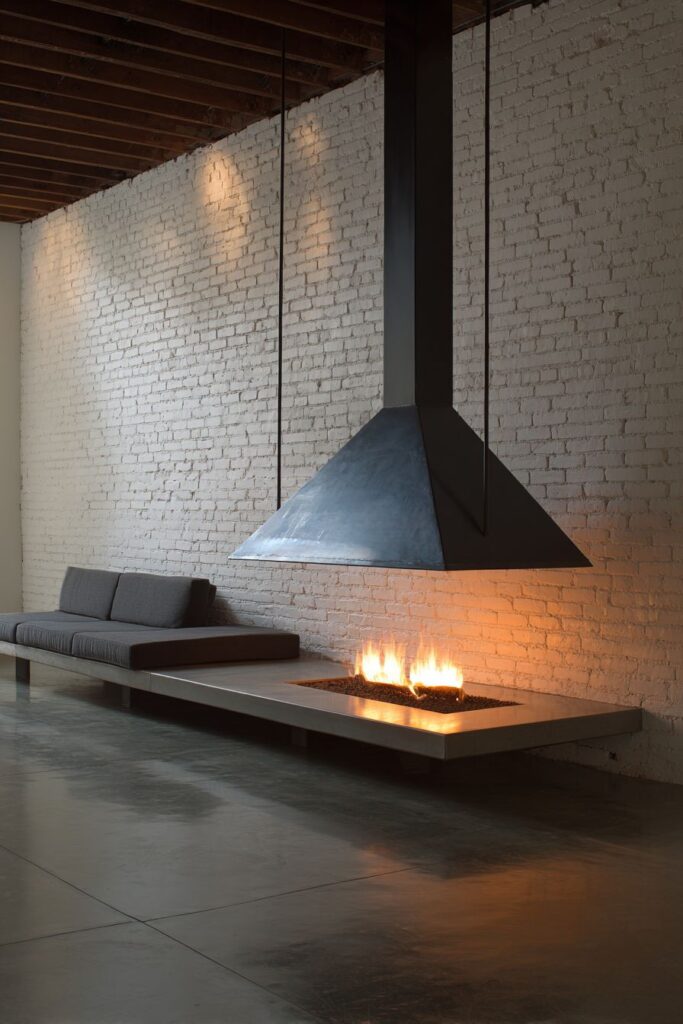
The white brick accent wall provides subtle texture and visual interest while maintaining the room’s light, open feeling. The brick’s painted white finish allows the material’s texture to show without introducing additional color, staying true to minimalist design’s restrained palette.
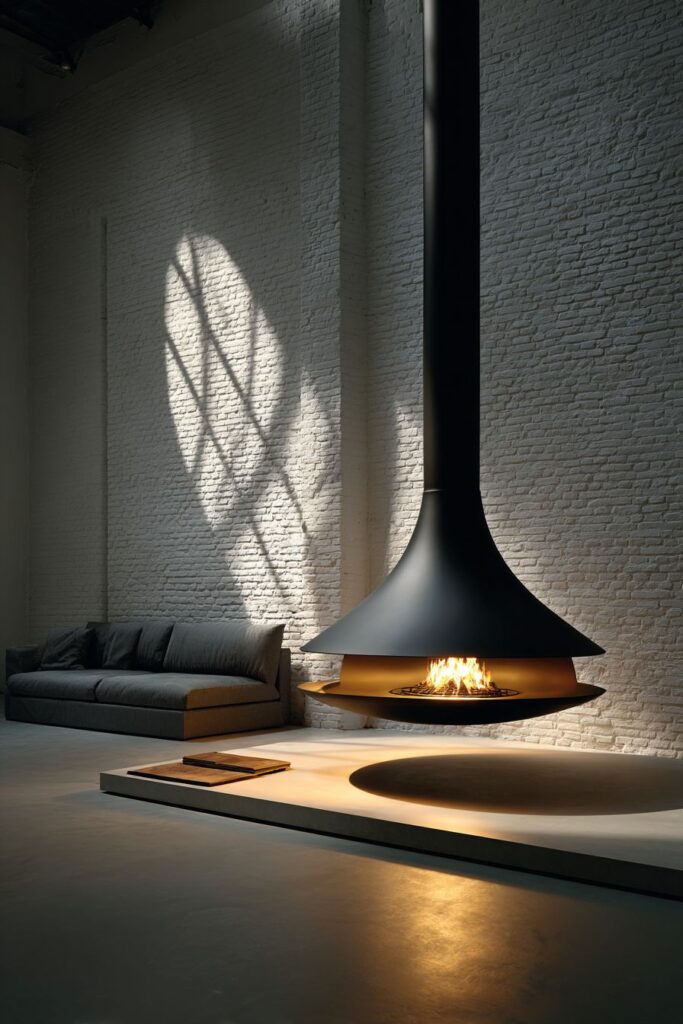
A simple concrete platform defines the hearth area while providing a clean base for the suspended fireplace. This architectural detail creates visual grounding for the floating element while maintaining the room’s geometric clarity and material consistency.
The charcoal grey sofa positioned with adequate clearance from the fireplace creates a comfortable viewing area while its dark color provides necessary contrast against the light walls. The sofa’s placement demonstrates proper spatial planning for both function and fire safety.
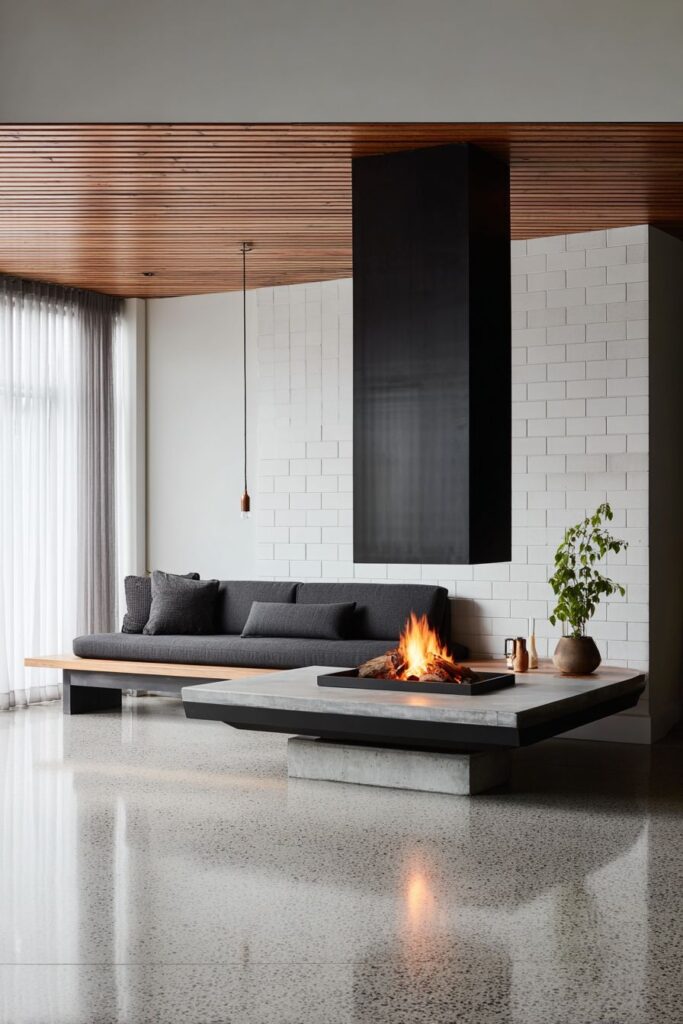
Key Design Tips:
- Use suspended fireplaces to create drama without sacrificing floor space
- Paint brick walls white to maintain light reflection while preserving texture
- Create adequate clearance around fireplaces for both safety and visual balance
- Choose dark furniture colors to provide contrast against light architectural elements
- Position seating to take advantage of both fireplace warmth and room circulation
9. Seamless Hidden Storage
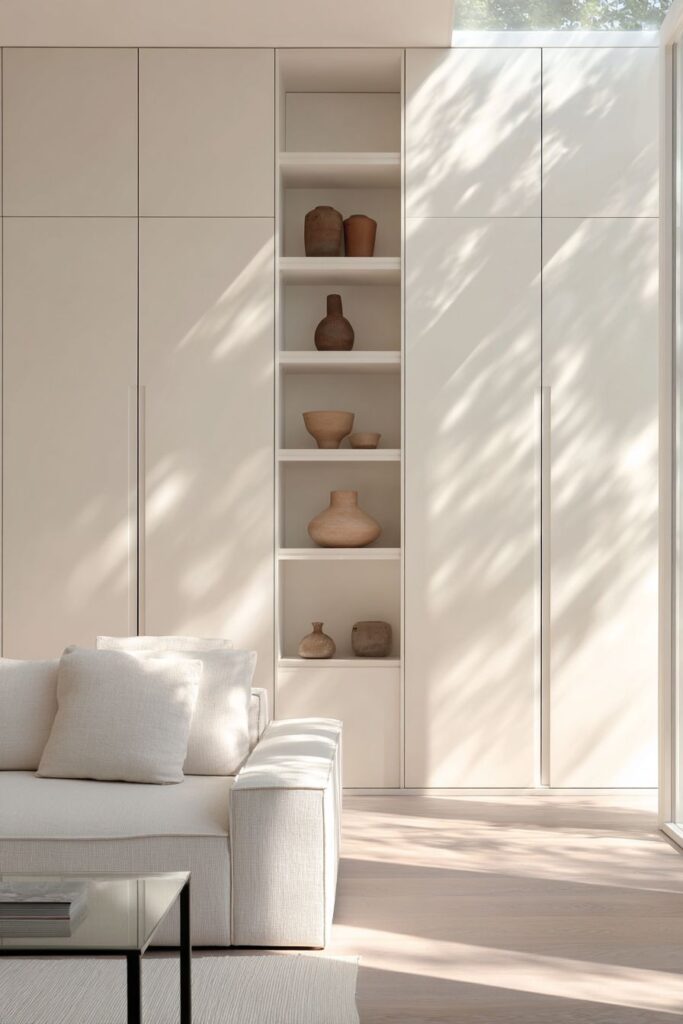
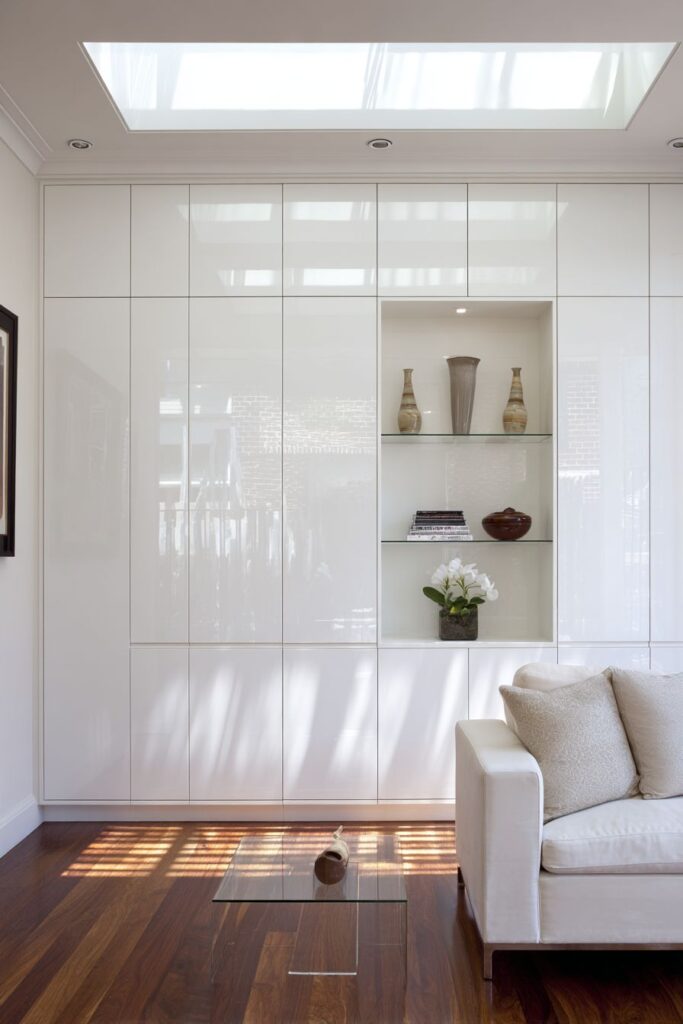
Floor-to-ceiling white built-in cabinets with push-to-open doors create a wall of seamless storage that eliminates visual clutter while providing extensive organization space. The absence of visible hardware maintains clean surfaces that align with minimalist design principles while offering practical solutions for modern living needs.
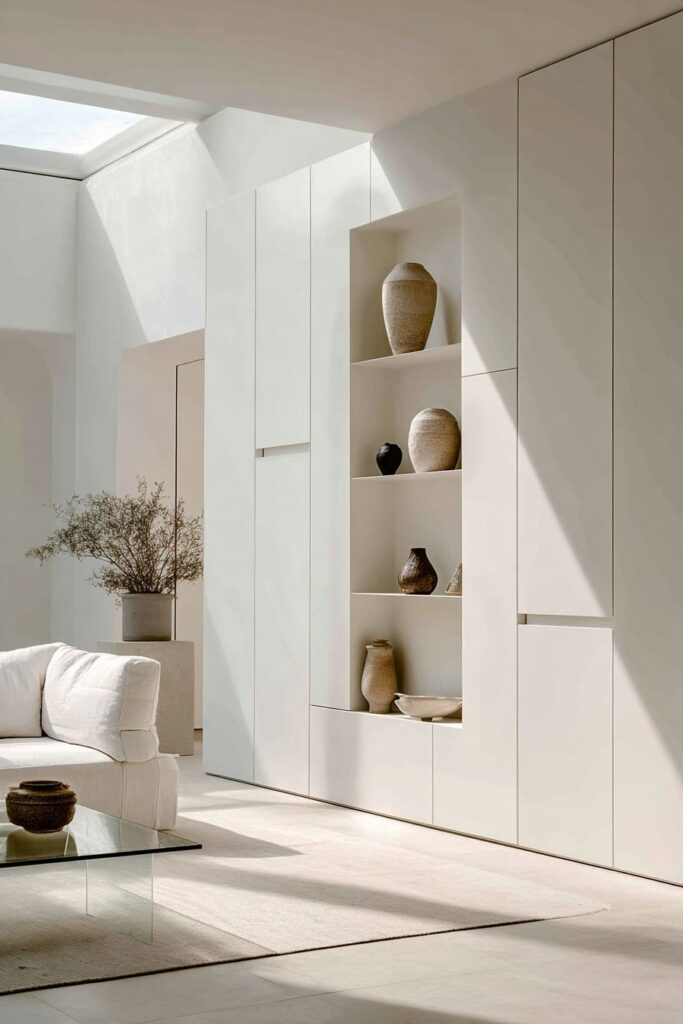
The smooth, seamless surfaces create an unbroken wall plane interrupted only by one open section displaying ceramic vessels, showing how minimalist design can incorporate display areas without compromising the overall aesthetic. This selective display approach demonstrates the power of curation in minimal living room design.
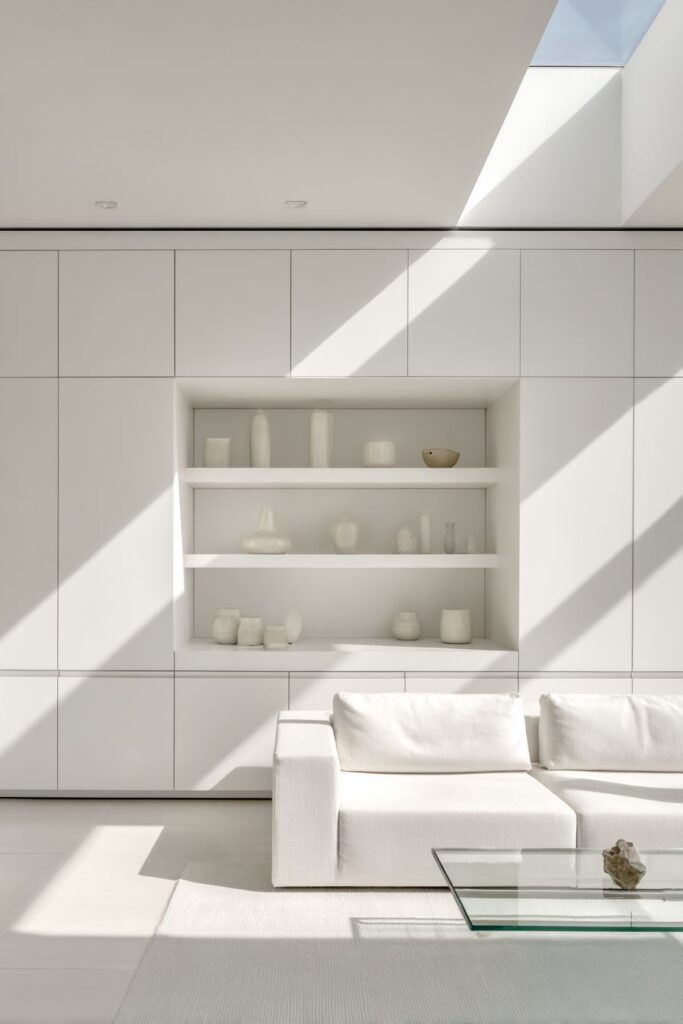
The simple white sofa positioned opposite the storage wall with a glass coffee table maintains visual balance while providing comfortable seating that doesn’t compete with the architectural storage solution. The transparent coffee table prevents additional visual weight in the space.
Natural lighting from a skylight above creates interesting geometric shadows on the cabinet surfaces throughout the day, providing dynamic visual interest without permanent decorative elements. This lighting strategy shows how minimalist design can use architecture to create beauty through light and shadow.
Key Design Tips:
- Design built-in storage with push-to-open mechanisms for seamless surfaces
- Create selective display areas within larger storage systems
- Use skylights to introduce natural light and create dynamic shadow patterns
- Position furniture to balance architectural elements without competition
- Plan storage systems that can accommodate changing needs over time
10. Conversation Pit Innovation
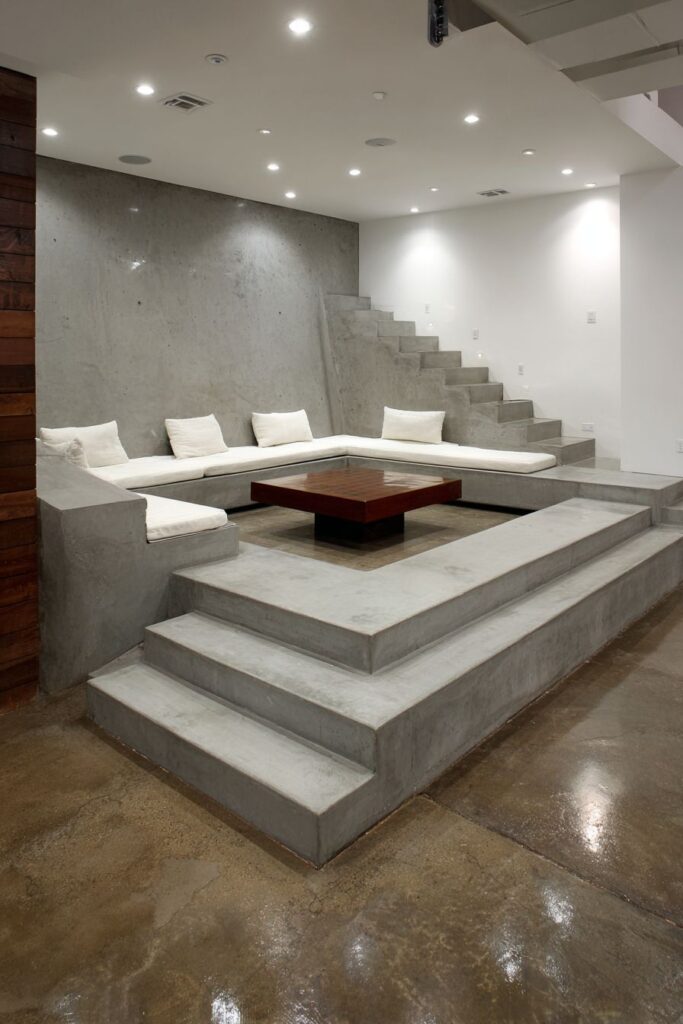
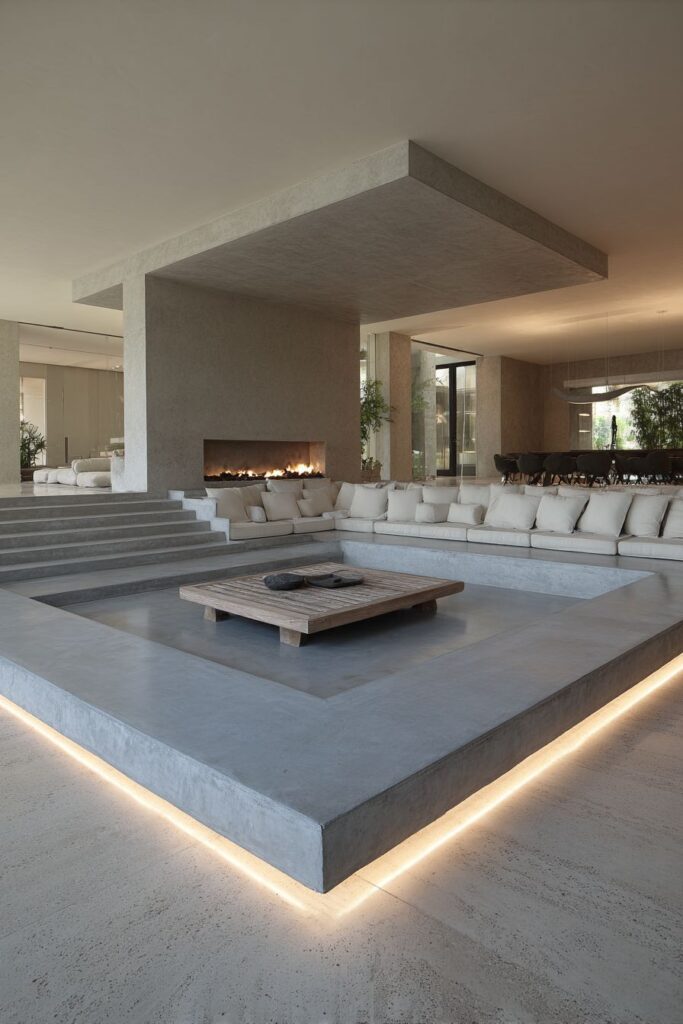
The built-in concrete bench seating system with integrated white cushions creates a conversation pit that redefines living room seating through architectural innovation. This sunken area defined by clean geometric lines demonstrates how minimalist design can incorporate dramatic spatial changes while maintaining aesthetic restraint.
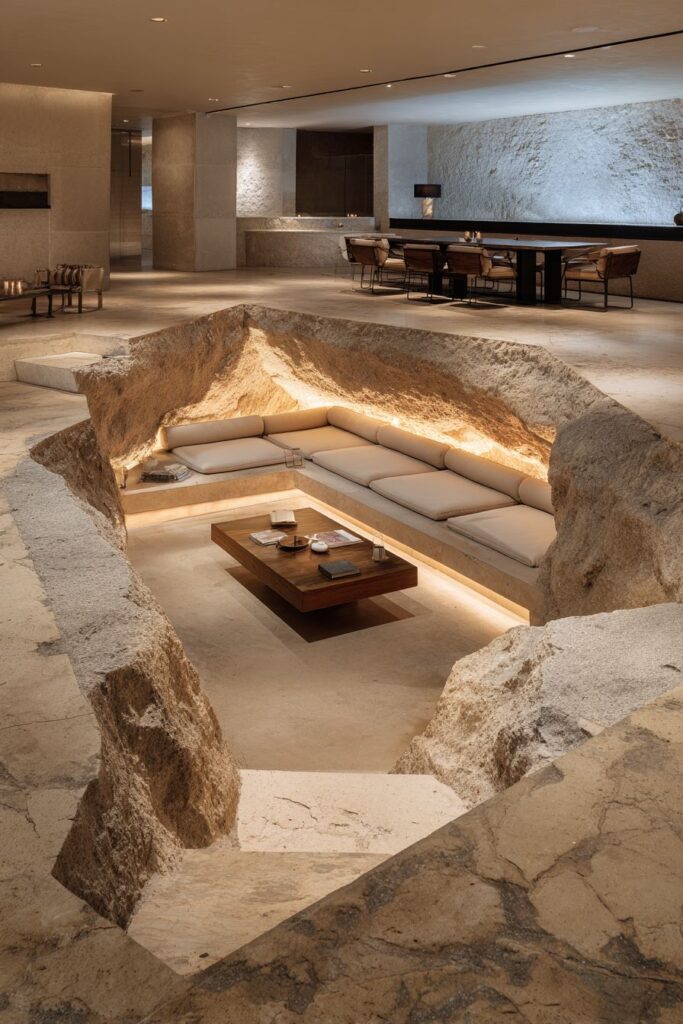
The two-step access to the sunken area creates clear definition between circulation and seating zones while maintaining easy movement throughout the space. The steps’ clean lines and concrete construction integrate seamlessly with the overall design language of geometric precision.
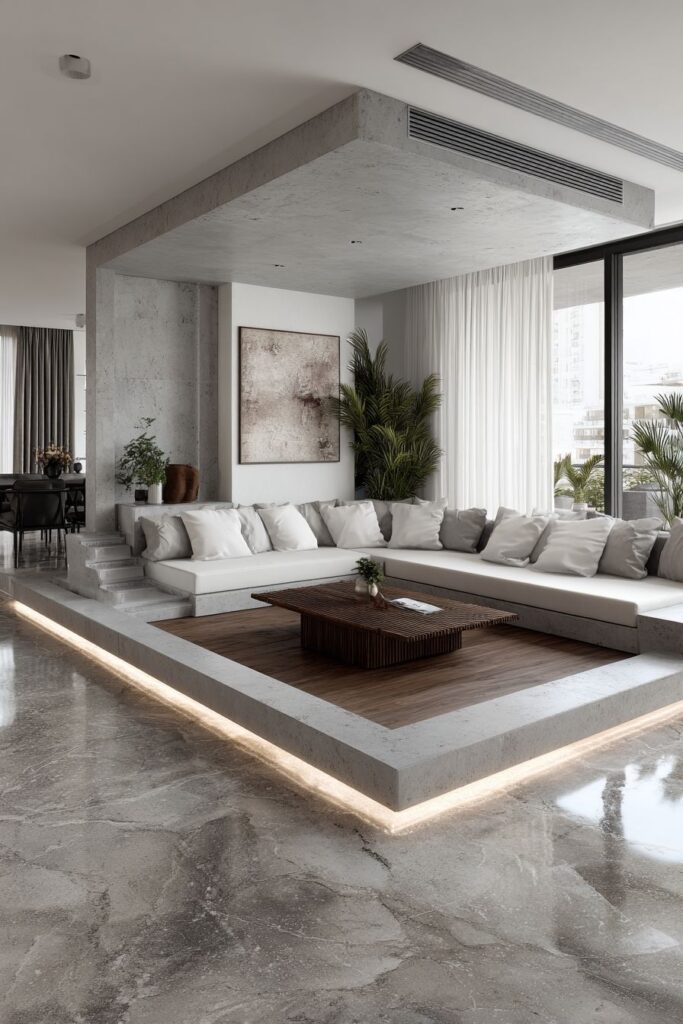
A single low wooden coffee table positioned centrally provides essential surface area while its warm wood tones contrast beautifully with the cool concrete construction. The table’s low profile maintains sight lines across the conversation pit while providing functional utility.
Indirect lighting from LED strips hidden in the bench structure creates ambient illumination that highlights the architectural details while providing comfortable light levels for conversation. This integrated lighting approach eliminates the need for additional fixtures while creating a warm, inviting atmosphere.
Key Design Tips:
- Consider sunken seating areas to create intimate conversation zones
- Use built-in cushions for seamless integration with architectural elements
- Incorporate hidden LED lighting for ambient illumination without visible fixtures
- Design clear transitions between different floor levels for safety and accessibility
- Choose warm wood accents to soften concrete architectural elements
11. Marble Statement Centerpiece
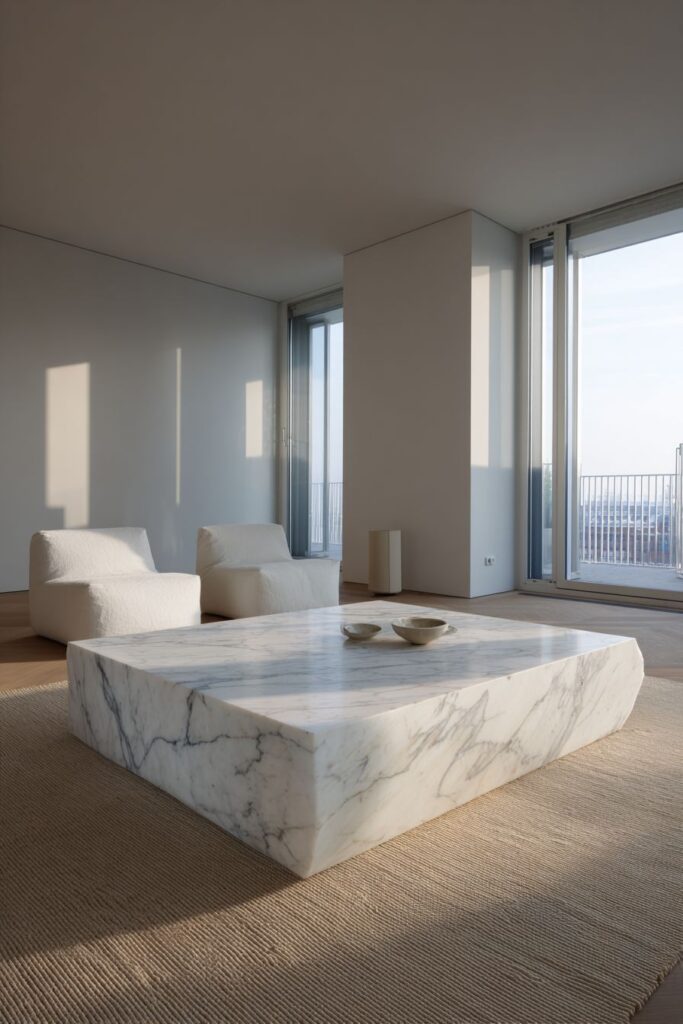
The oversized white marble coffee table with distinctive veining functions as both furniture and art object, demonstrating how minimalist design can incorporate luxury materials as focal points. The marble’s natural patterns provide organic beauty that contrasts with the room’s geometric precision while maintaining the space’s sophisticated aesthetic.
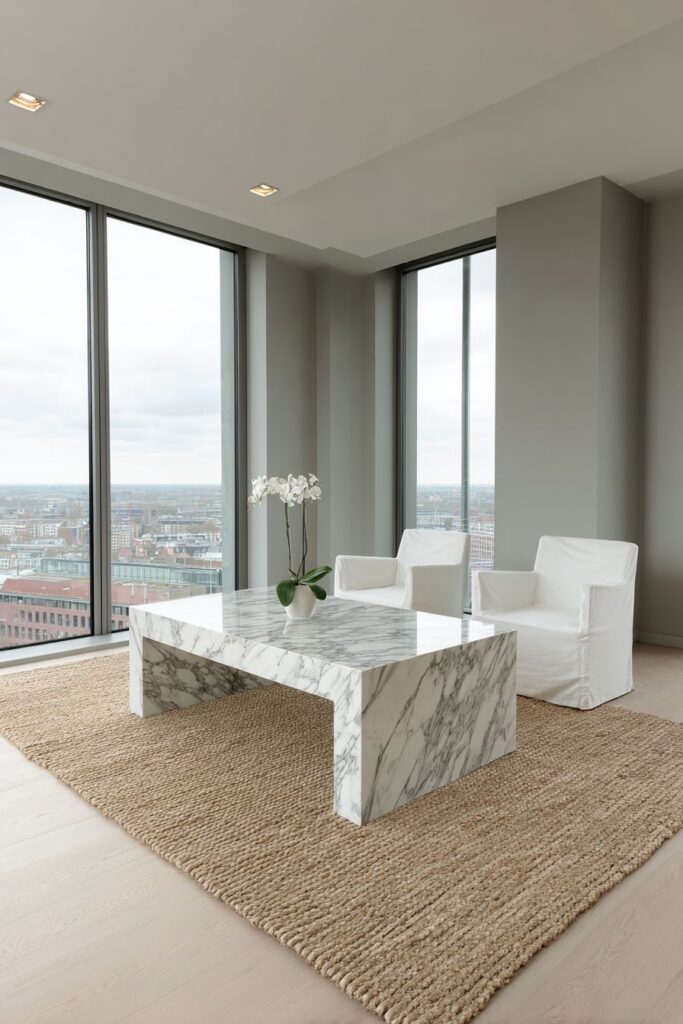
Two simple white fabric chairs flank the marble table symmetrically, creating a formal seating arrangement that emphasizes the table’s importance while maintaining visual balance. The chairs’ clean lines and white upholstery allow the marble to command attention as the room’s primary decorative element.
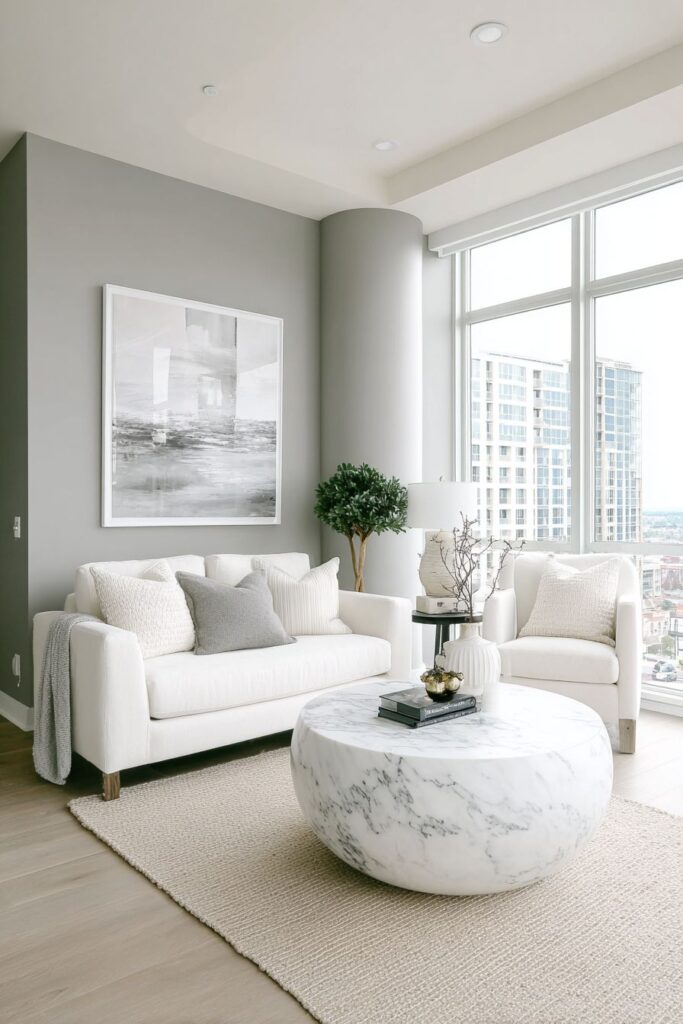
The neutral jute area rug provides textural contrast under the heavy marble table while defining the seating area boundaries. The rug’s natural fiber construction and neutral color maintain the room’s material honesty while providing essential softness underfoot.
Natural light from floor-to-ceiling windows creates subtle highlights on the marble surface, emphasizing the stone’s translucent qualities and natural veining patterns. This lighting relationship demonstrates minimalist design’s appreciation for natural materials’ inherent beauty when properly illuminated.
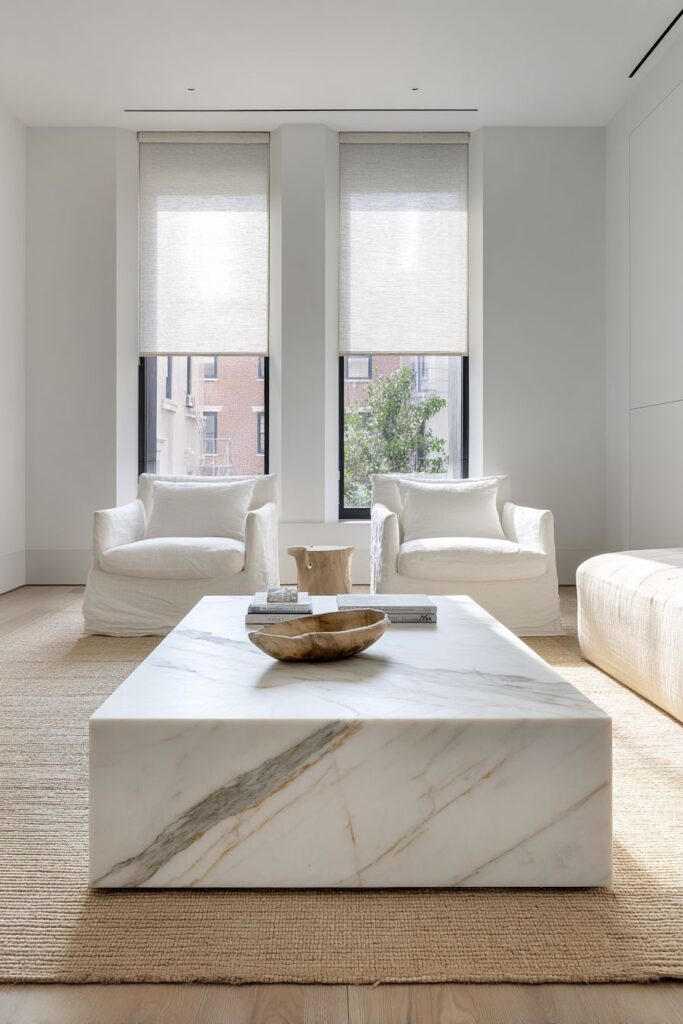
Key Design Tips:
- Use natural stone as both functional furniture and decorative focal point
- Create symmetrical seating arrangements to emphasize important central elements
- Choose area rugs that complement rather than compete with statement pieces
- Position natural stone to take advantage of changing light throughout the day
- Invest in quality materials that serve multiple design functions simultaneously
12. Integrated Workspace Solution
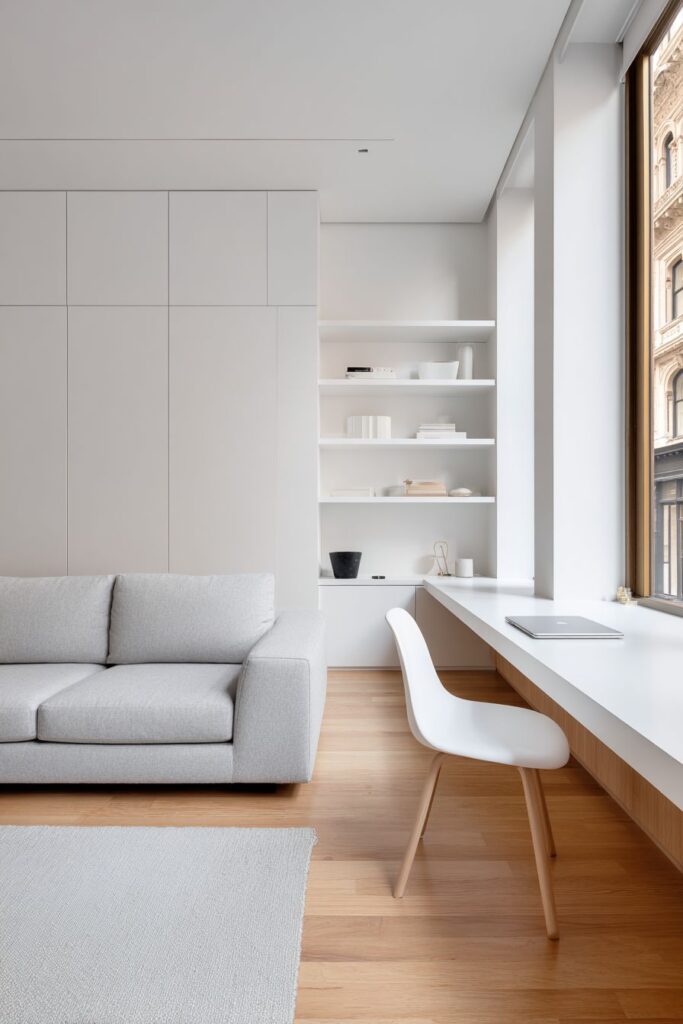
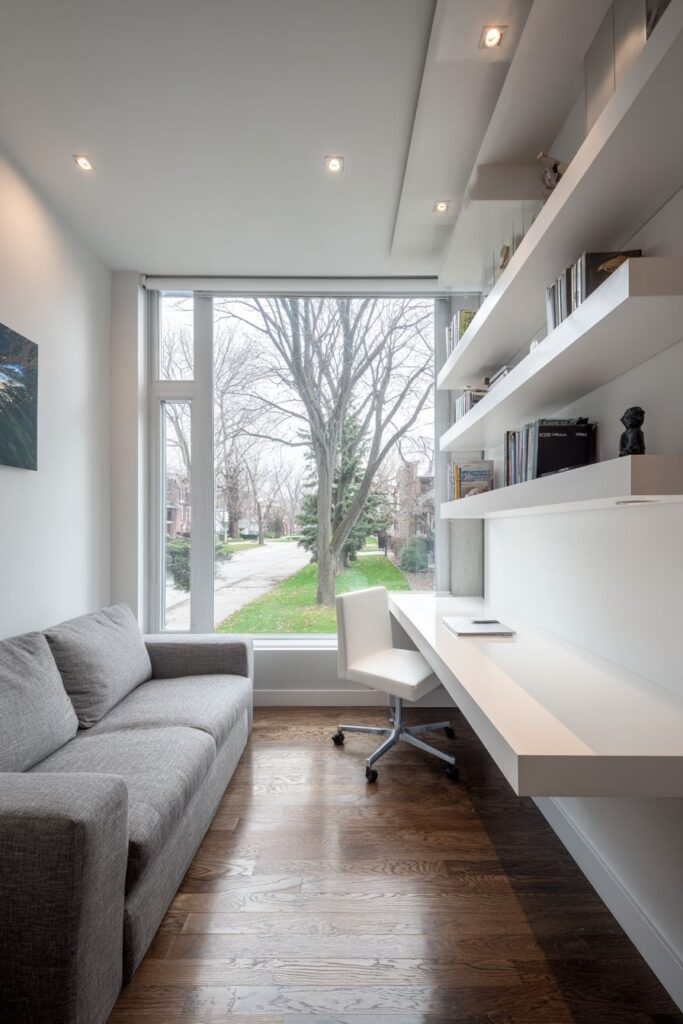
The sleek white wall-mounted desk extending seamlessly from the wall with no visible supports creates a workspace that doesn’t compromise the living room’s minimal aesthetic. This integrated approach demonstrates how modern homes can accommodate multiple functions without visual clutter or spatial compromise.
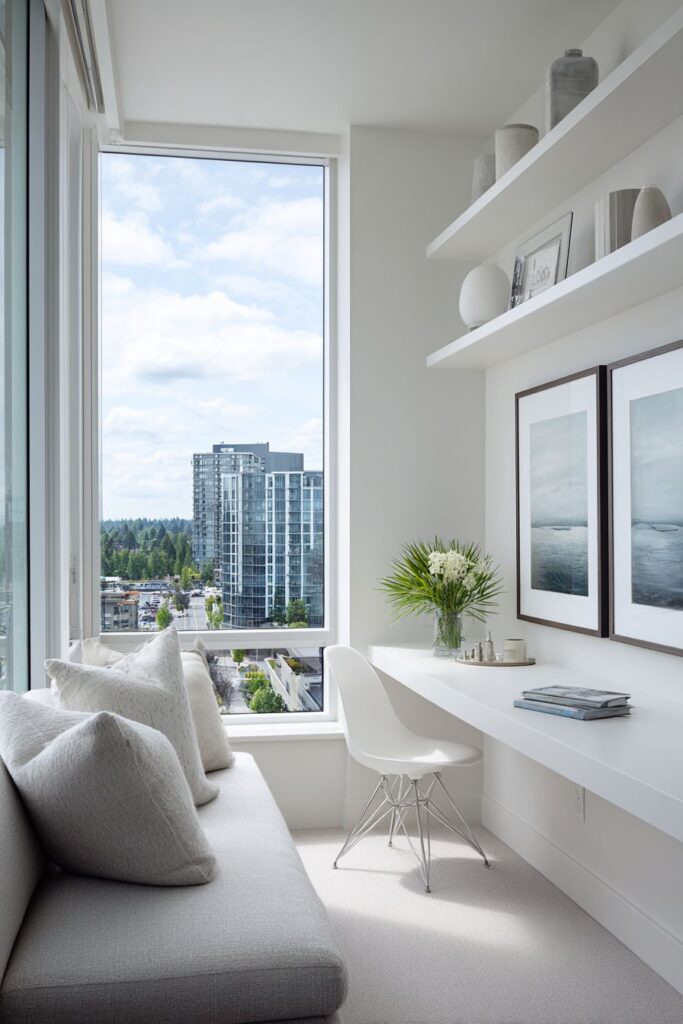
Floating white shelves above the desk hold minimal office supplies while maintaining the wall’s clean appearance. The shelves’ integration with the desk creates a unified workspace that appears architectural rather than furniture-based, aligning with minimalist design principles.
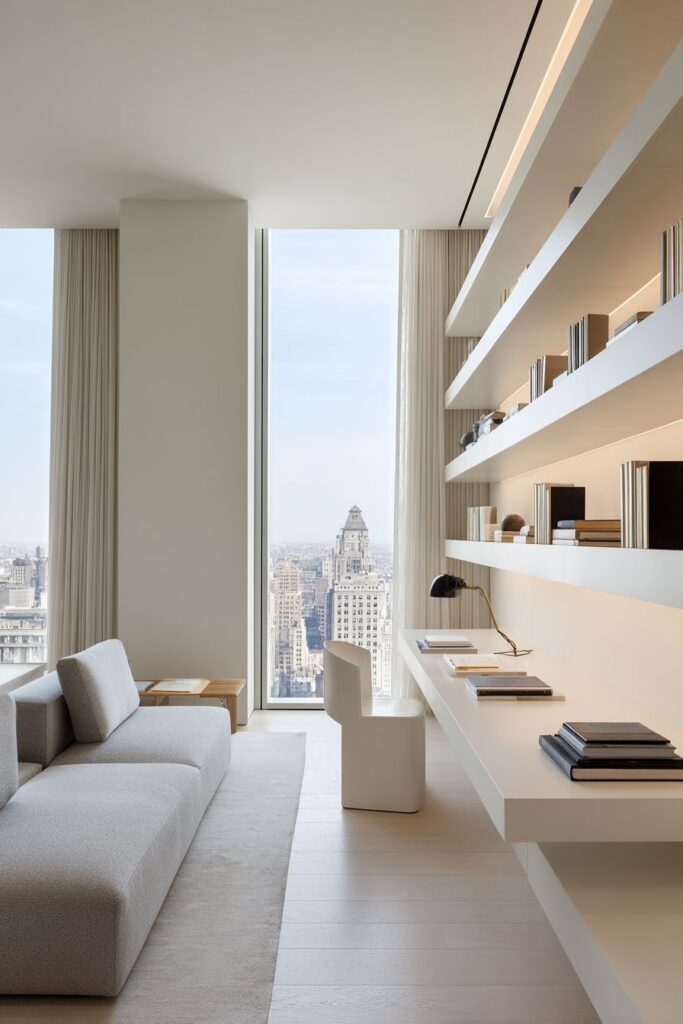
The adjacent seating area with a simple grey sofa shows how living and working functions can coexist in minimal living room design without conflict. The consistent material palette and clean lines create visual continuity between different functional zones.
Natural lighting from a large window illuminates both workspace and seating area evenly, eliminating the need for additional task lighting while providing optimal working conditions. This lighting strategy demonstrates efficient space planning that serves multiple functions simultaneously.
Key Design Tips:
- Integrate workspaces using wall-mounted furniture for minimal visual impact
- Use floating shelves that align with desk systems for unified appearance
- Maintain consistent material palettes across different functional zones
- Position workspaces to take advantage of natural lighting for optimal productivity
- Design multifunctional spaces that can adapt to changing daily needs
13. Dramatic Vertical Emphasis
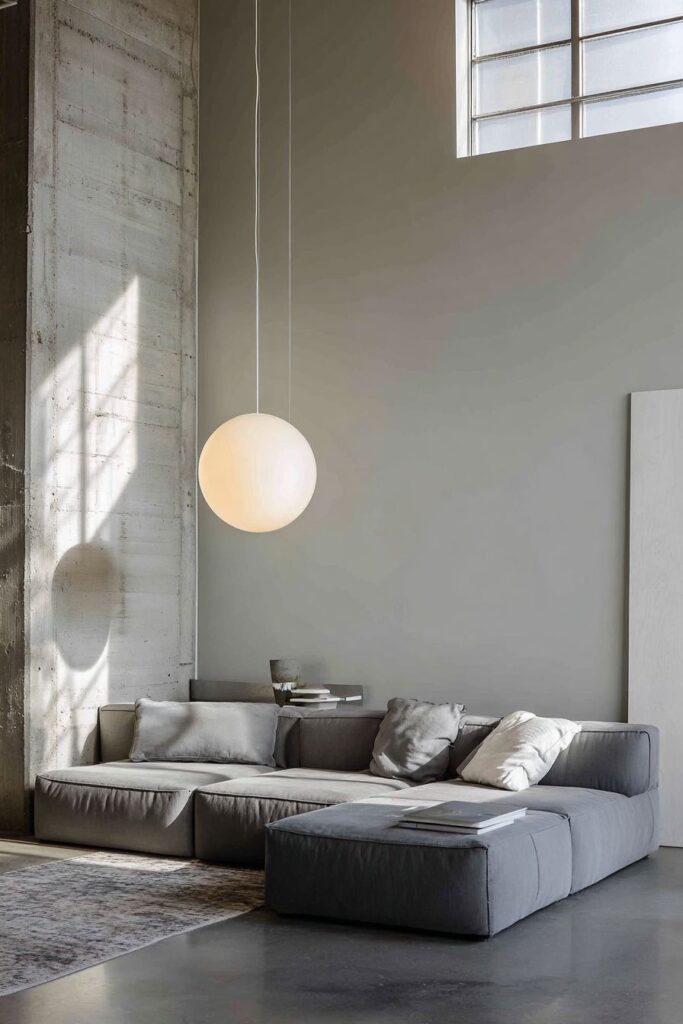
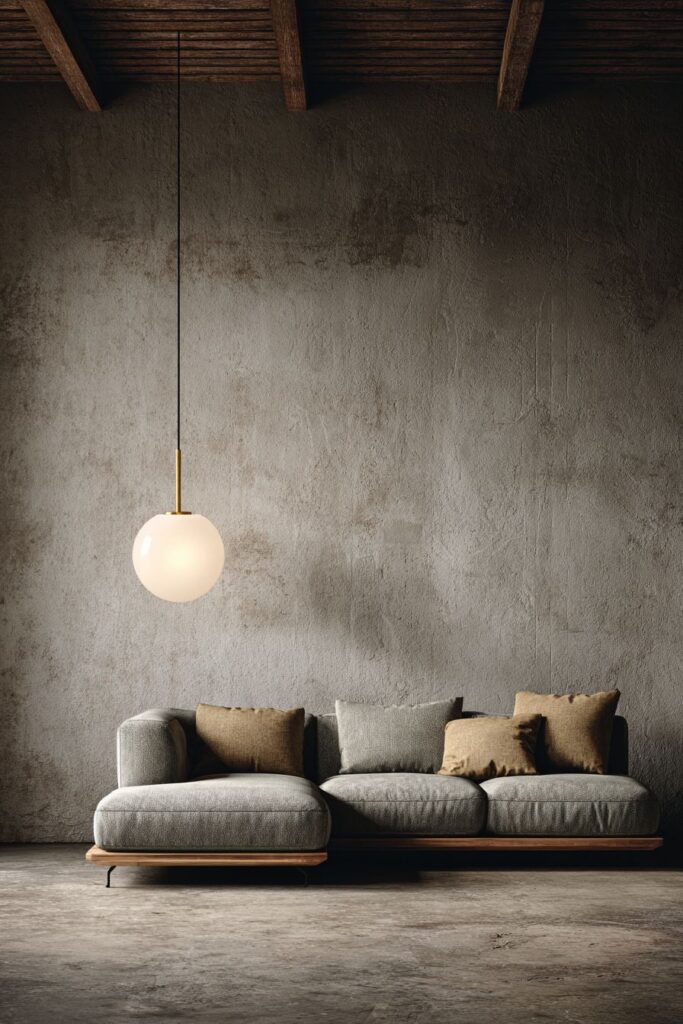
The single hanging pendant light with a simple white glass sphere shade suspended on a thin cable creates dramatic emphasis on the room’s exceptional ceiling height. This lighting choice demonstrates how minimalist design can use singular elements to enhance architectural features rather than compete with them.
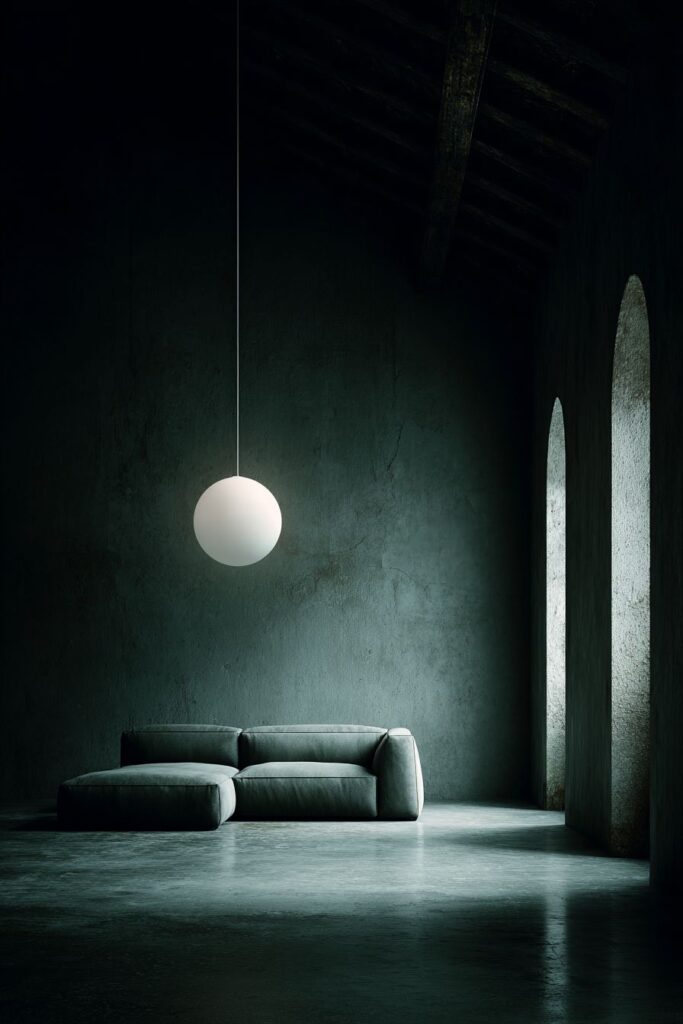
The low-profile grey sectional sofa positioned below creates an intimate seating area that contrasts with the room’s vertical drama, showing how furniture scale can be used strategically to emphasize architectural proportions. The sofa’s horizontal lines balance the vertical emphasis created by the pendant light.
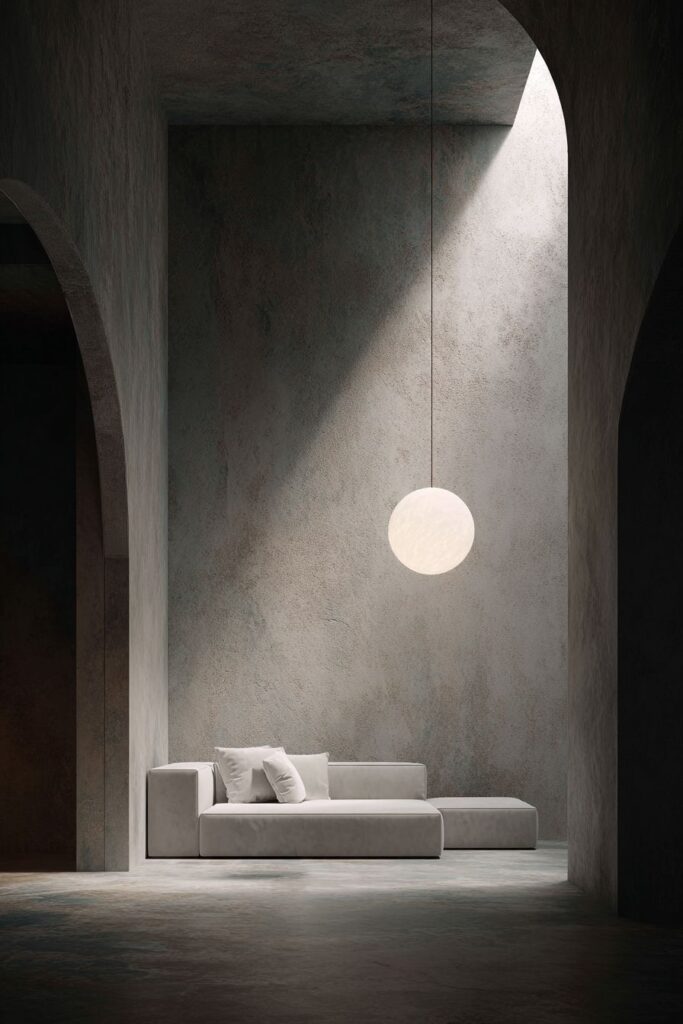
Expansive polished concrete flooring reflects light from both the pendant and natural sources, amplifying illumination while creating a sense of boundless space. The reflective surface demonstrates minimalist design’s use of materials to enhance rather than decorate the environment.
Natural light from clerestory windows filters down to create depth and scale, providing changing illumination throughout the day while maintaining the room’s connection to exterior conditions. This lighting strategy shows how minimalist design can use architecture to create beauty through natural phenomena.
Key Design Tips:
- Use single pendant lights to emphasize dramatic ceiling heights
- Choose low furniture to contrast with and highlight vertical architectural elements
- Incorporate reflective flooring to amplify natural and artificial lighting
- Position clerestory windows to provide natural light without compromising privacy
- Plan furniture scale to work harmoniously with room proportions
14. Geometric Media Wall Precision
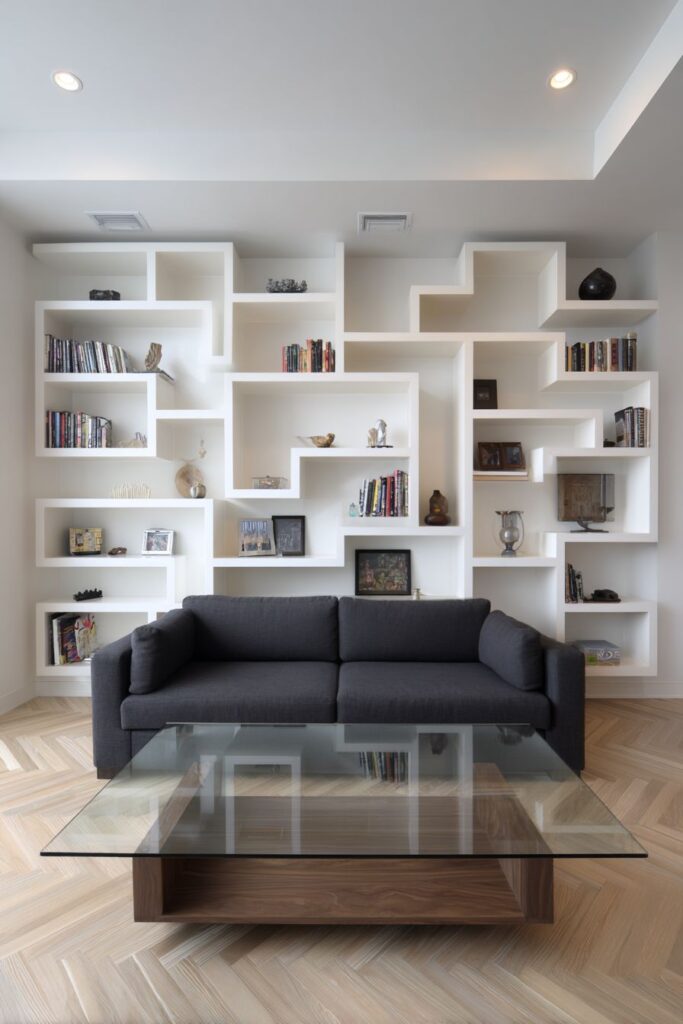
The custom white lacquer media wall with geometric cutouts demonstrates how storage can become architectural art through precise design and execution. The grid-like composition creates visual interest through negative space alone, showing minimalist design’s power to achieve impact through careful subtraction rather than addition.
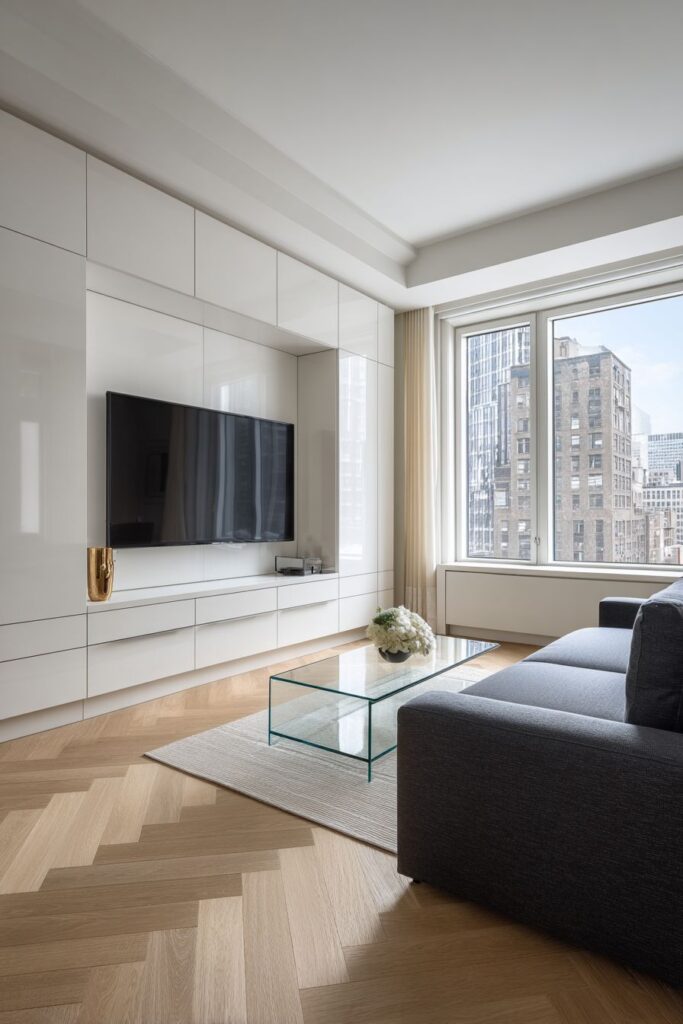
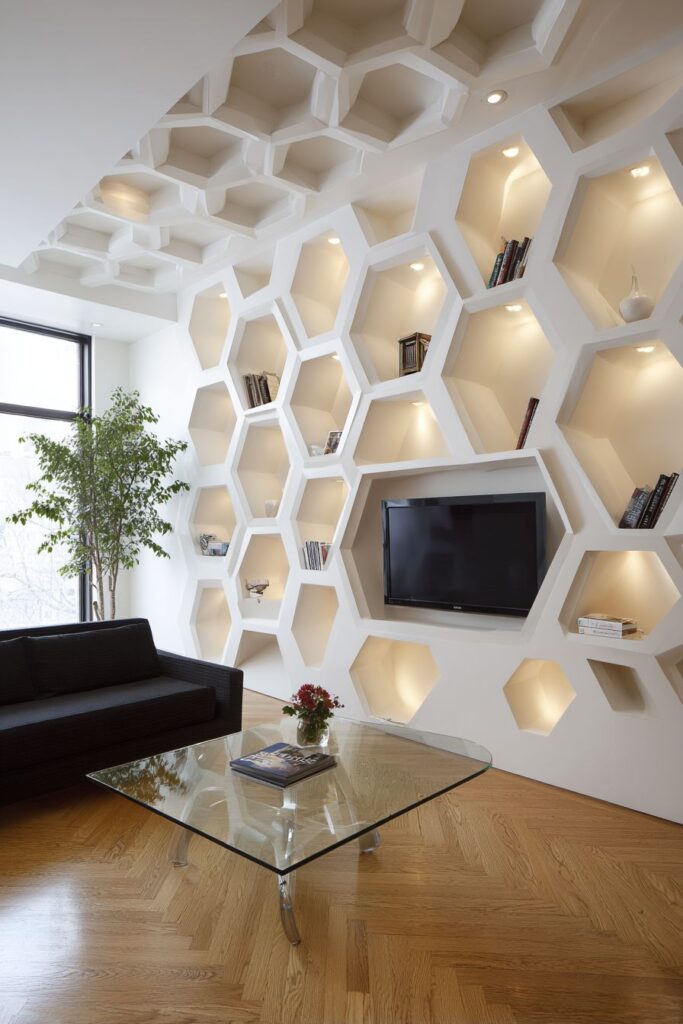
The grid-like composition housing television and electronics eliminates visual clutter while creating a sophisticated display that transforms necessary technology into design elements. Each cutout is precisely sized and positioned to create overall geometric harmony while serving specific functional needs.
A single charcoal sofa positioned to face the media wall with a glass coffee table between maintains optimal viewing distances while the dark upholstery provides necessary contrast against the bright white lacquer. The sofa’s placement demonstrates proper ergonomic planning within minimalist design principles.
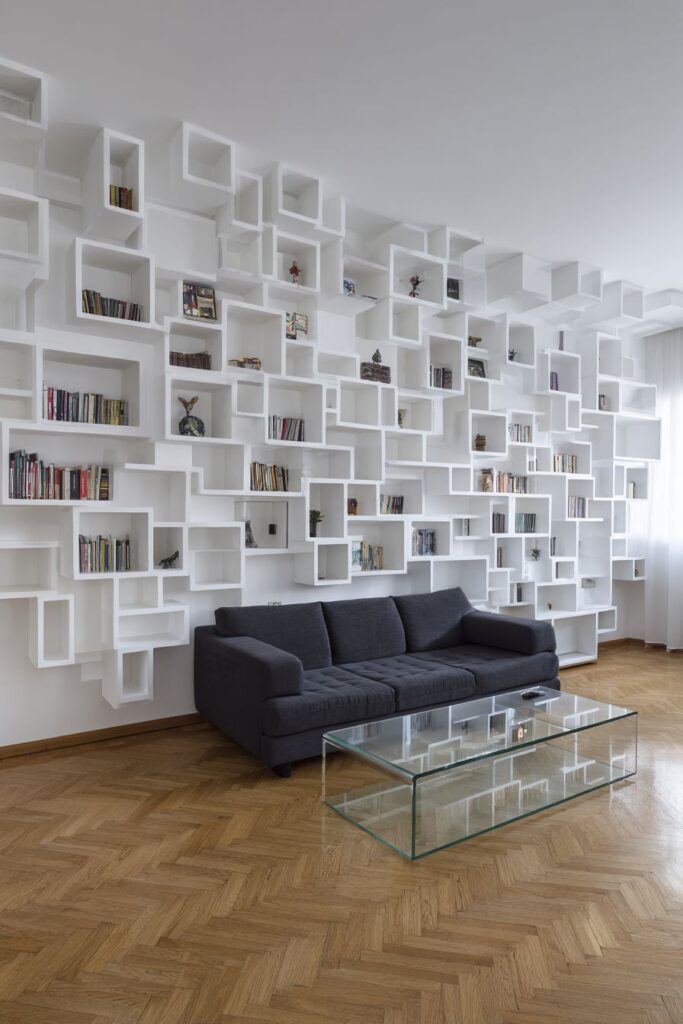
The oak herringbone flooring provides the space’s only pattern element, adding visual interest through traditional wood laying techniques while maintaining natural material honesty. The herringbone pattern creates movement and texture without overwhelming the space’s clean aesthetic.
Key Design Tips:
- Design media walls as architectural features rather than furniture additions
- Use geometric compositions to create visual interest through negative space
- Choose single pattern elements like herringbone flooring for subtle complexity
- Position seating at optimal viewing distances for both comfort and proportion
- Incorporate dark furniture colors to provide contrast against light architectural elements
15. Daybed Simplicity
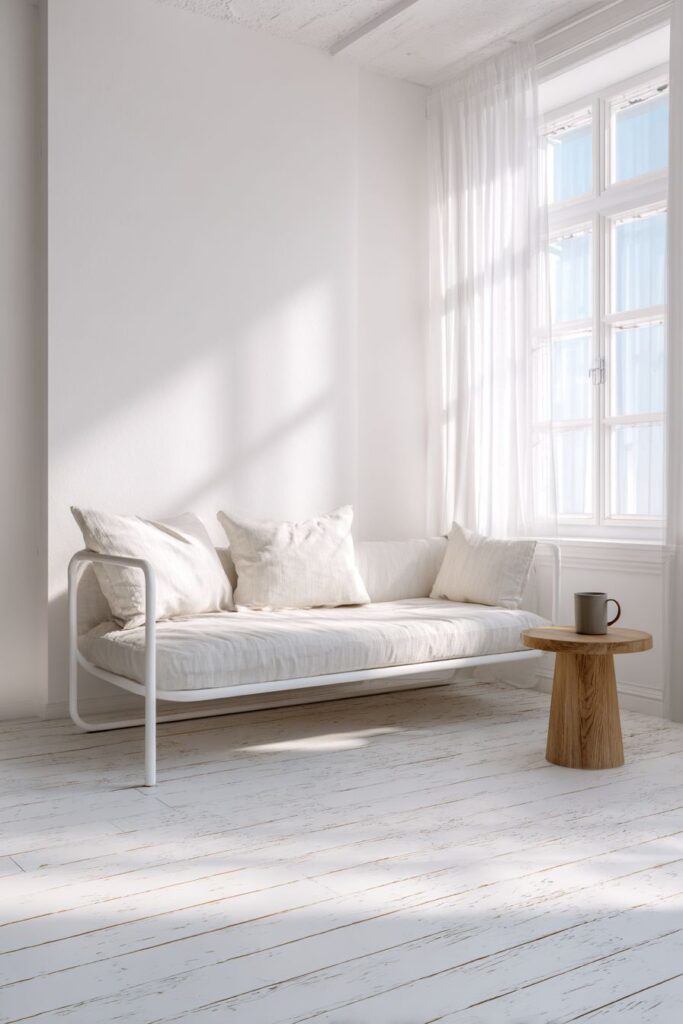
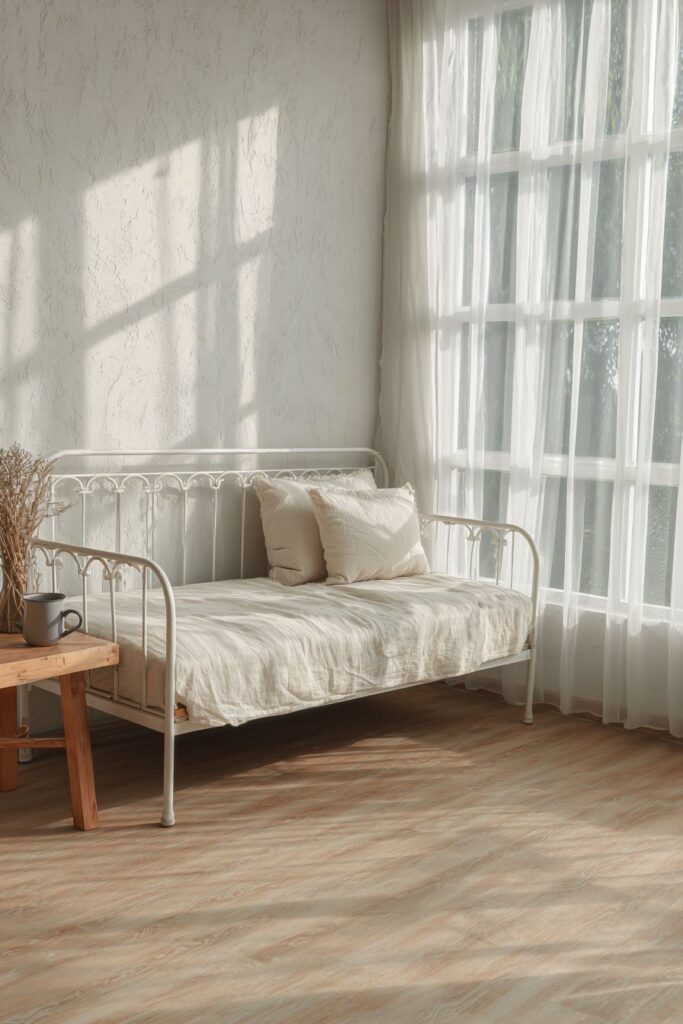
The daybed-style seating solution with a simple white metal frame and natural linen mattress cover positioned lengthwise against a window wall creates relaxed seating that emphasizes horizontal repose. This approach to living room seating demonstrates minimalist design’s embrace of simplified, multifunctional furniture.
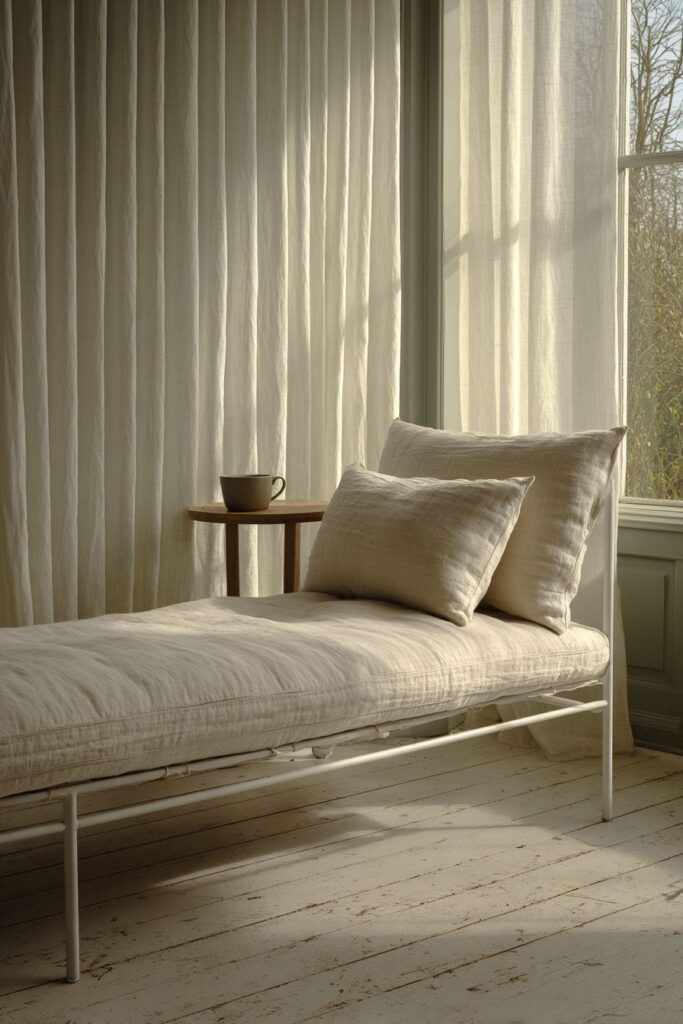
White sheer curtains filter natural light softly while maintaining privacy, showing how window treatments can be incorporated into minimal living room design when necessary for function. The sheer material maintains the room’s connection to natural light while providing gentle screening.
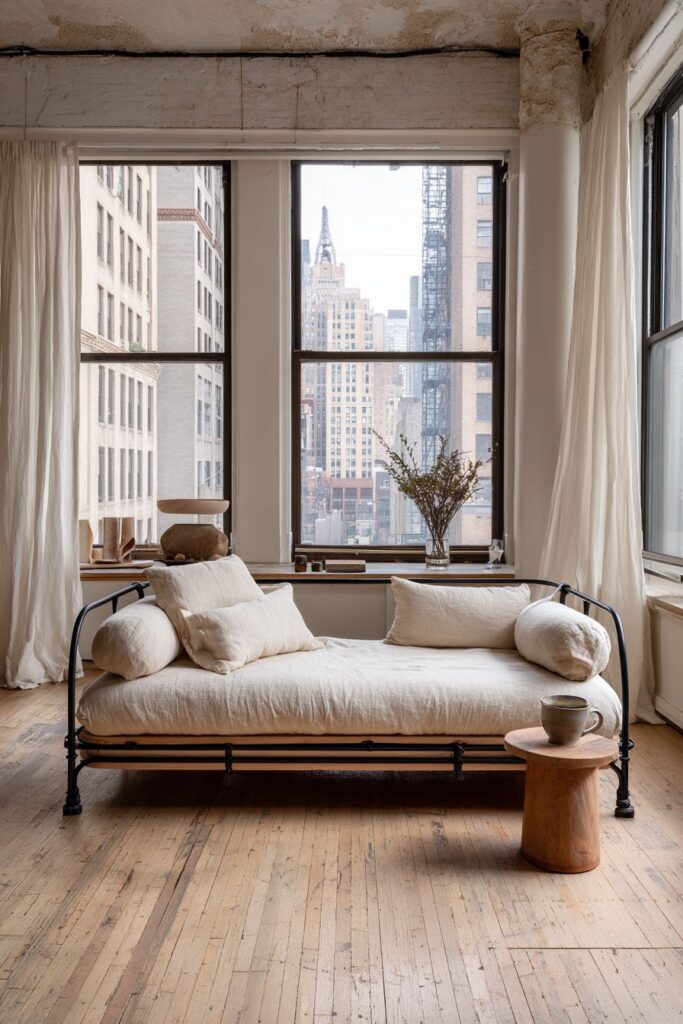
A single wooden side table holds a ceramic mug, demonstrating how minimalist design can accommodate daily life’s practical needs through carefully chosen, simply designed accessories. The table’s placement and scale show thoughtful consideration of use patterns and proportional relationships.
The white-painted wooden floor shows subtle grain texture that prevents the surface from appearing flat while maintaining the room’s light, airy feeling. The painted finish demonstrates how traditional materials can be adapted to serve contemporary minimal design aesthetic.
Key Design Tips:
- Consider daybed seating for relaxed, multifunctional living spaces
- Use sheer curtains when privacy is needed without blocking natural light
- Choose simple wooden side tables for essential surface area without visual weight
- Paint wooden floors white to maximize light reflection while preserving texture
- Position seating to take advantage of natural light and exterior views
16. Integrated Biophilic Design
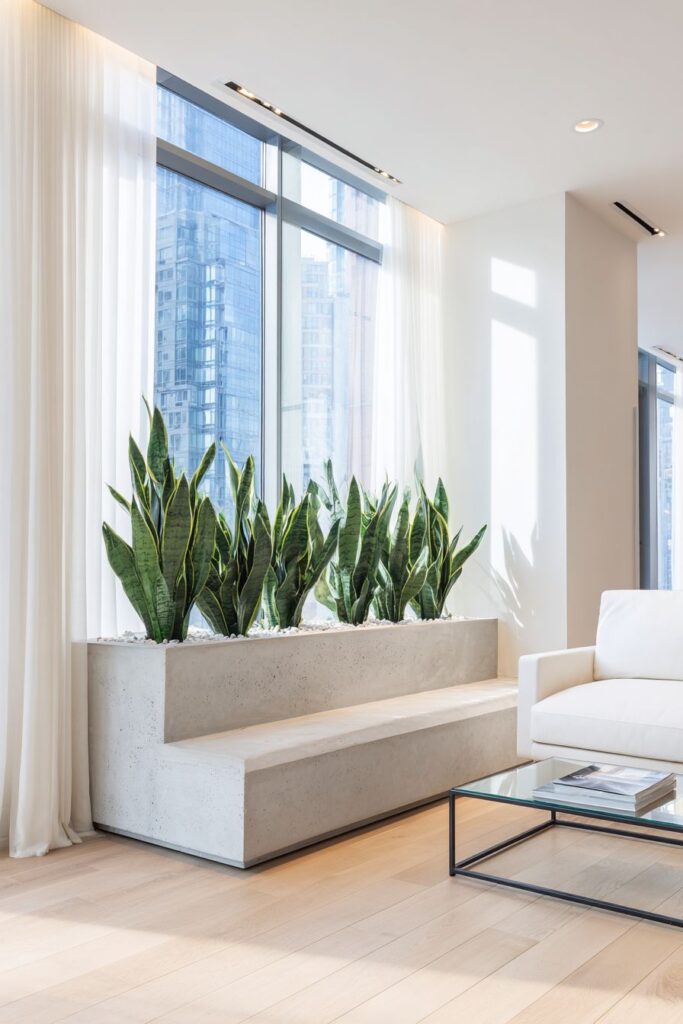
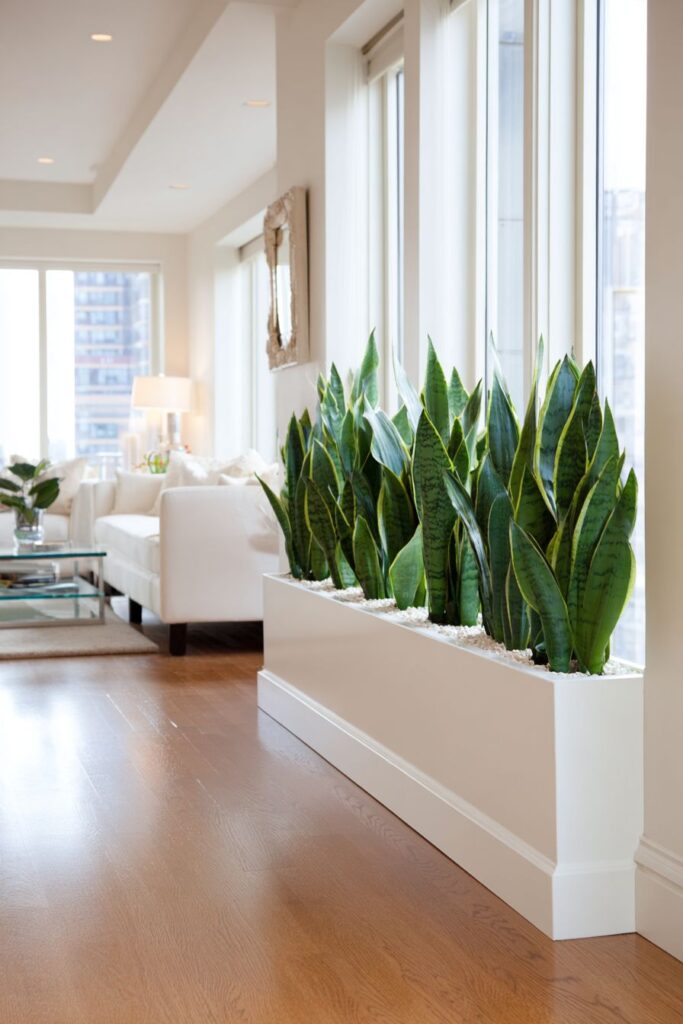
The integrated planter system featuring a long white concrete planter box built into the floor level demonstrates how minimal living room design can incorporate natural elements through architectural integration rather than decorative addition. The row of identical snake plants creates living sculpture within the minimalist framework.
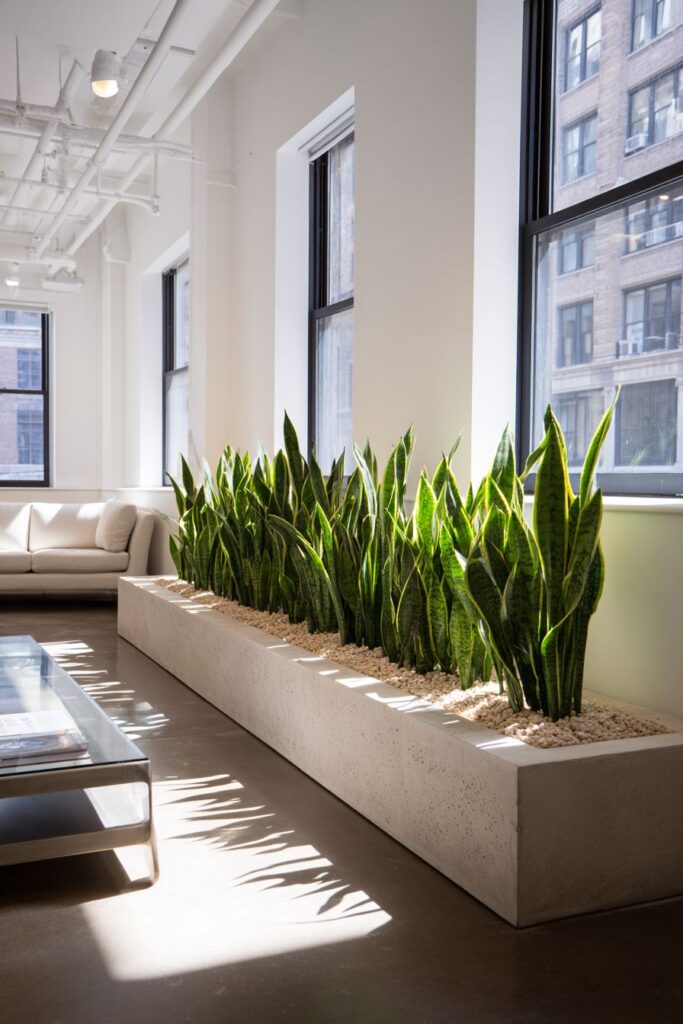
The built-in concrete planter eliminates the visual clutter of individual plant containers while creating a permanent landscape element that changes seasonally. This approach shows how minimalist design can embrace nature through systematic integration rather than casual placement.
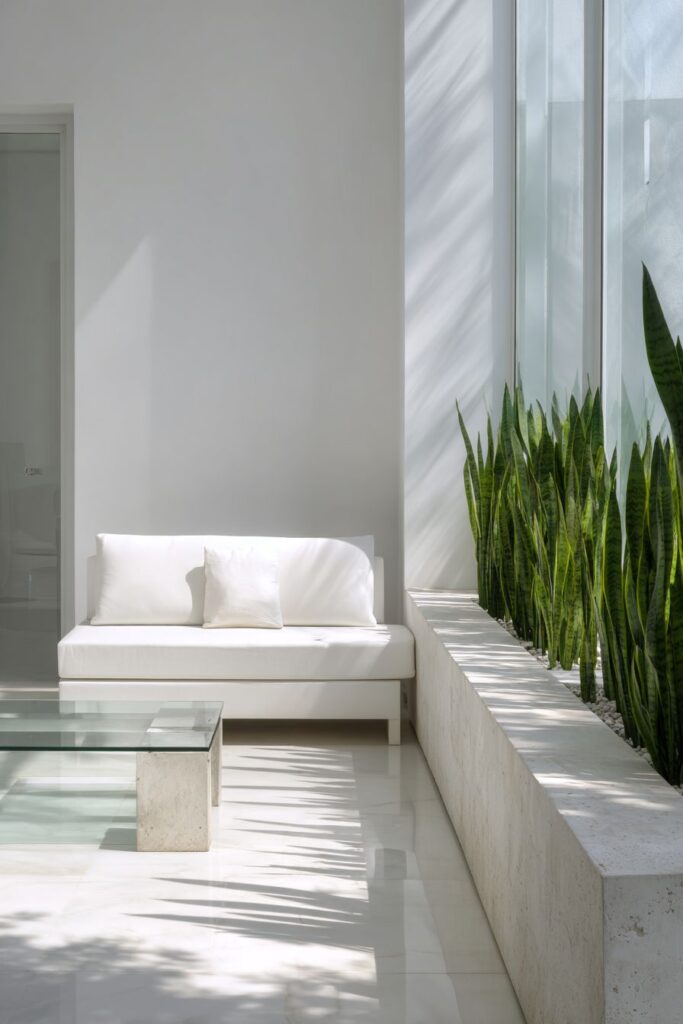
The simple white sofa and glass coffee table positioned to enjoy the green element create a seating area that benefits from the biophilic design while maintaining clean sight lines and spatial openness. The transparent coffee table ensures unobstructed views of the planted area.
Natural light from adjacent windows illuminates both the plants and living area, creating shadow patterns that change throughout the day while providing optimal growing conditions. This lighting relationship demonstrates minimalist design’s holistic approach to environmental planning.
Key Design Tips:
- Integrate planters as architectural elements rather than furniture additions
- Choose plants with strong geometric forms that complement minimal design
- Position seating to take advantage of biophilic elements and natural light
- Use built-in planters to eliminate visual clutter of individual containers
- Plan integrated landscapes that provide year-round visual interest
17. Innovative Adjustable Functionality
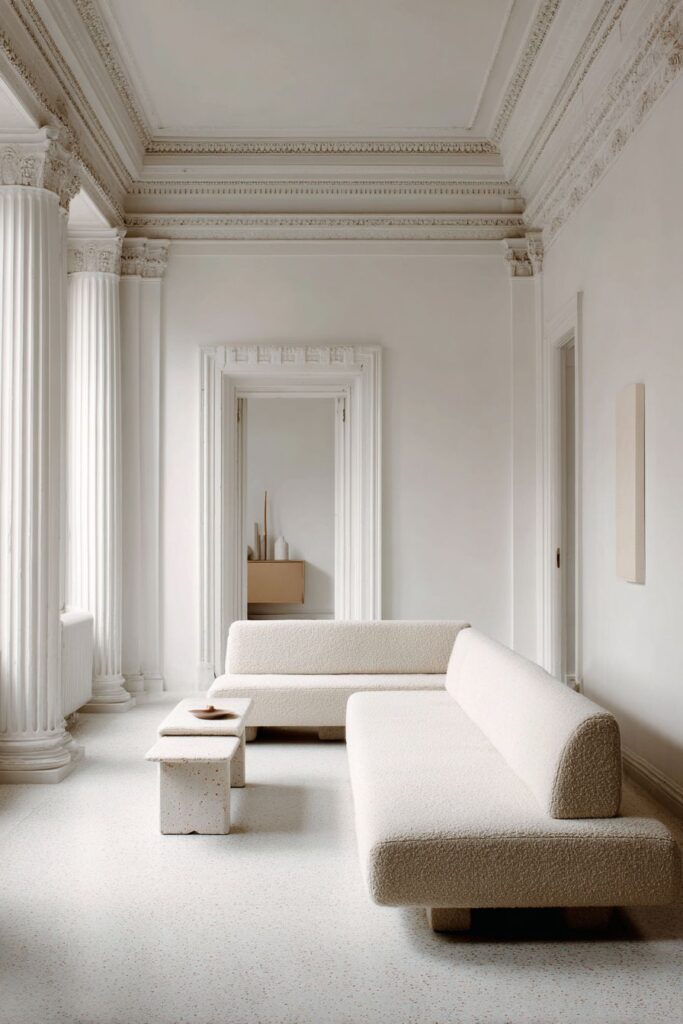
The telescoping white coffee table system with multiple height levels demonstrates how minimalist design can embrace functional innovation without compromising aesthetic principles. This adjustable furniture piece shows how minimal living rooms can adapt to different uses while maintaining clean, geometric forms.
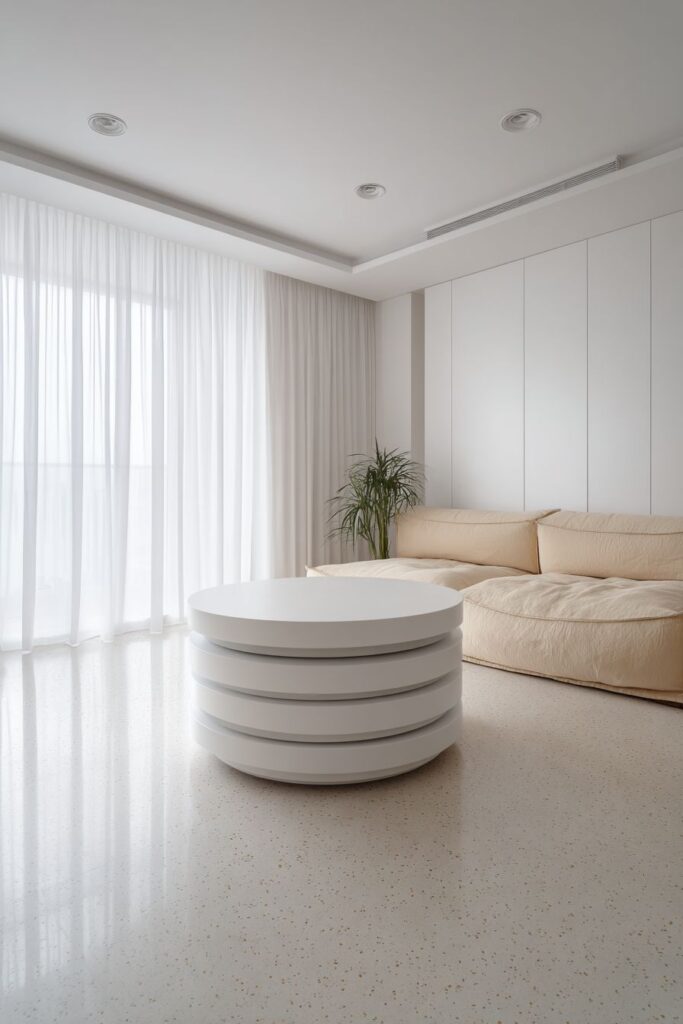
The innovative furniture piece on white terrazzo flooring with subtle aggregate texture creates visual interest through material honesty while providing a neutral backdrop for the functional table system. The terrazzo’s speckled surface adds organic variation within the geometric framework.
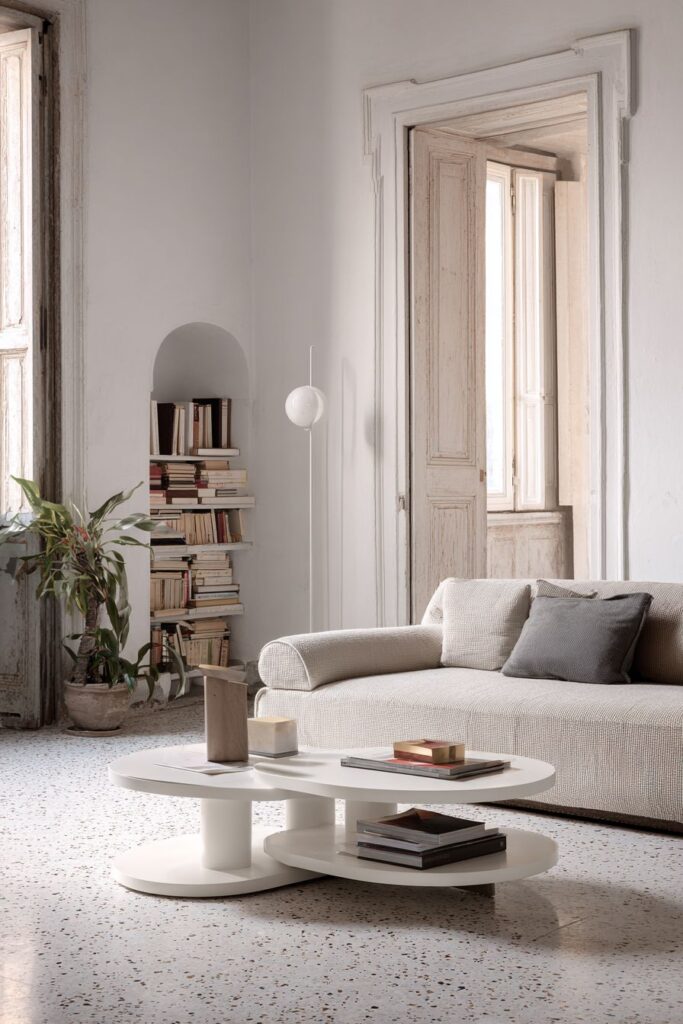
A single beige linen sofa provides seating that complements the adjustable table’s flexibility, showing how furniture pieces can work together to create adaptable living spaces. The sofa’s neutral color and simple form allow the innovative table to demonstrate its functional capabilities.
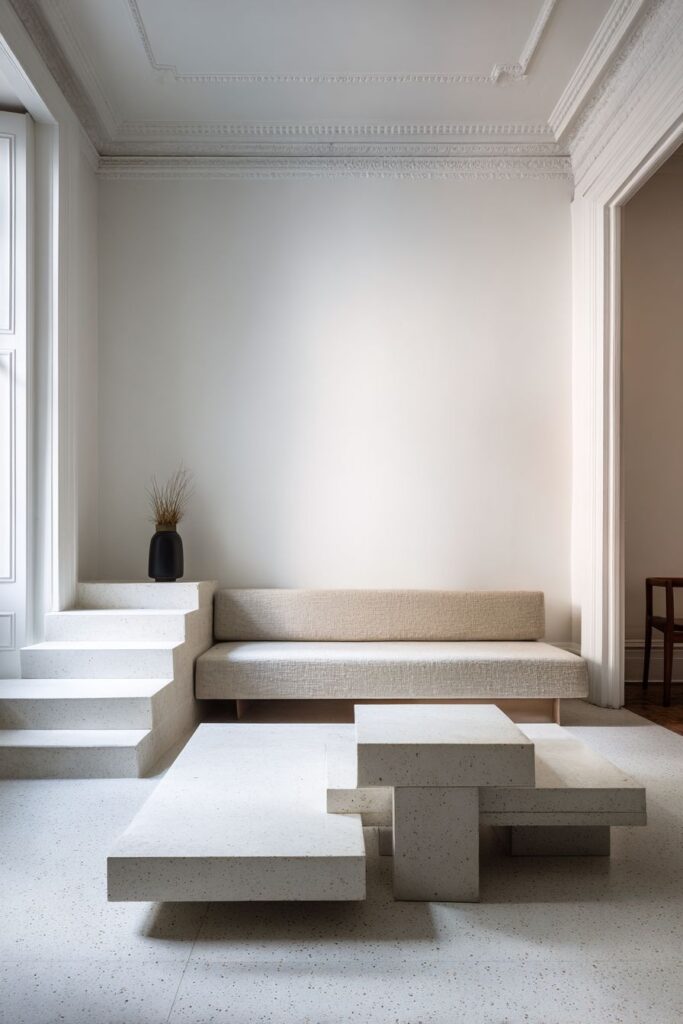
The unadorned white walls with only architectural details like clean baseboards and crown molding create a gallery-like backdrop that emphasizes the furniture’s design qualities. This restraint shows minimalist design’s confidence in allowing individual pieces to command attention through their inherent merit.
Key Design Tips:
- Choose adjustable furniture that maintains clean geometric forms in all positions
- Use terrazzo flooring for subtle texture and visual interest without pattern
- Position innovative furniture pieces against neutral backdrops to emphasize design
- Maintain architectural details like baseboards for visual completion without decoration
- Plan adaptable furniture systems that serve multiple functions efficiently
18. Light Control Integration
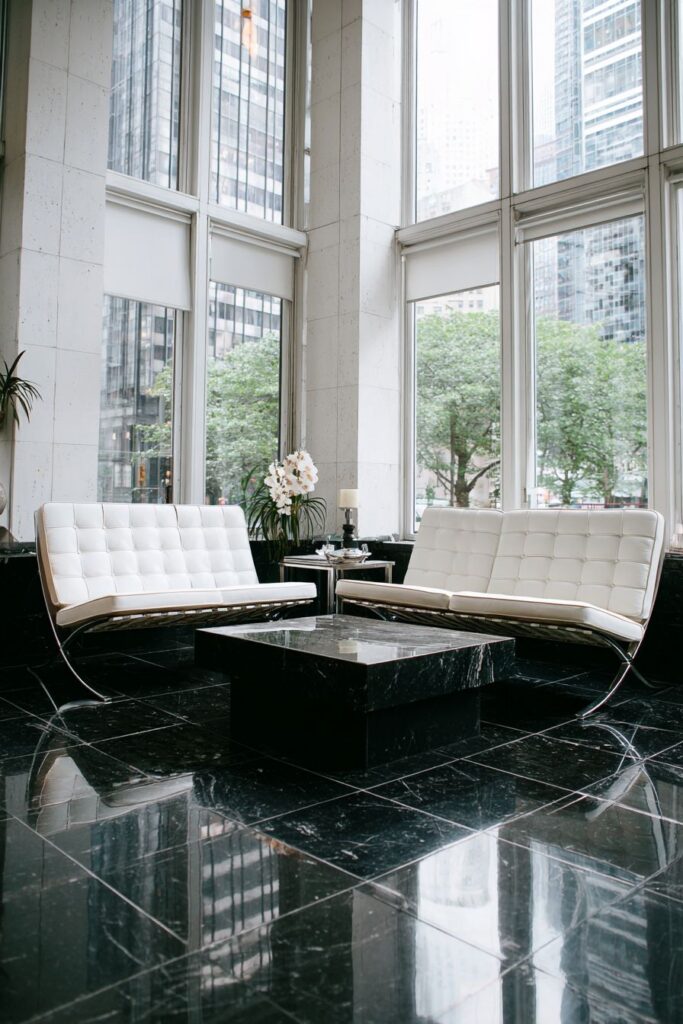
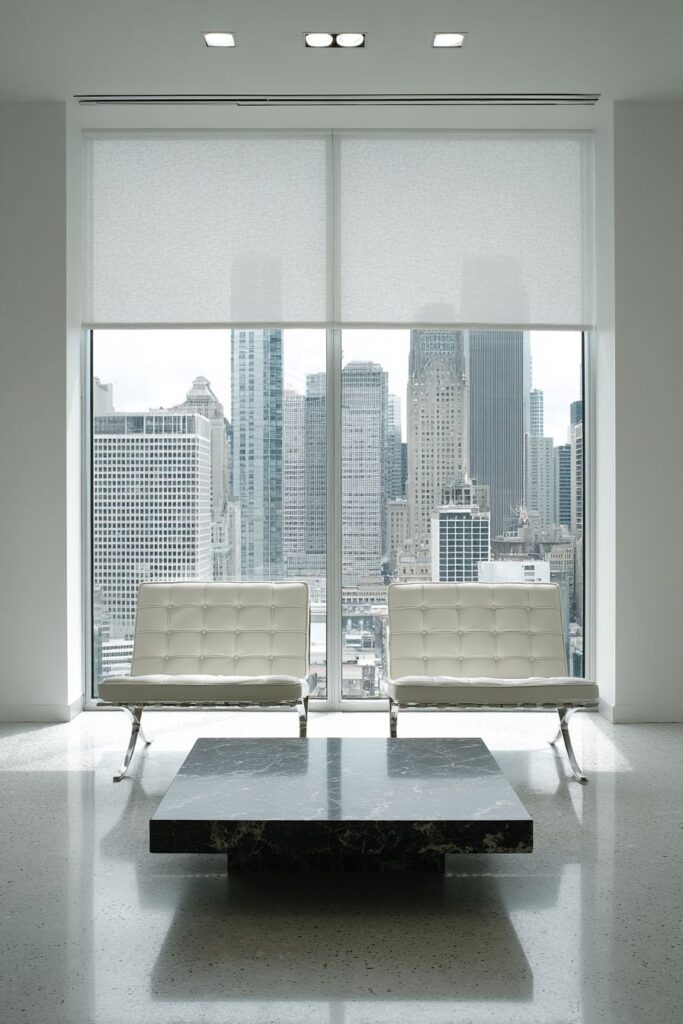
The double-height window wall with motorized white roller shades demonstrates how minimal living room design can incorporate technology for light control without visual compromise. The automated shades provide precise environmental control while maintaining the wall’s clean architectural lines.
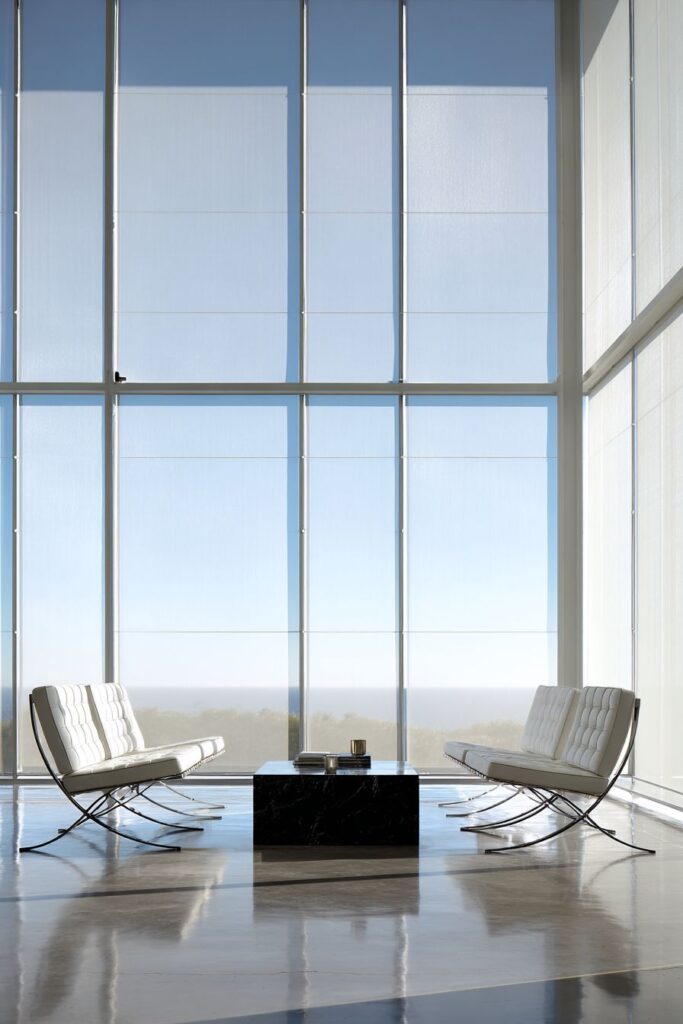
The identical white leather Barcelona-style chairs with chrome frames create iconic seating that embodies minimalist design principles while providing comfortable conversation areas. These classic modern pieces demonstrate how timeless design can serve contemporary minimal living room needs.
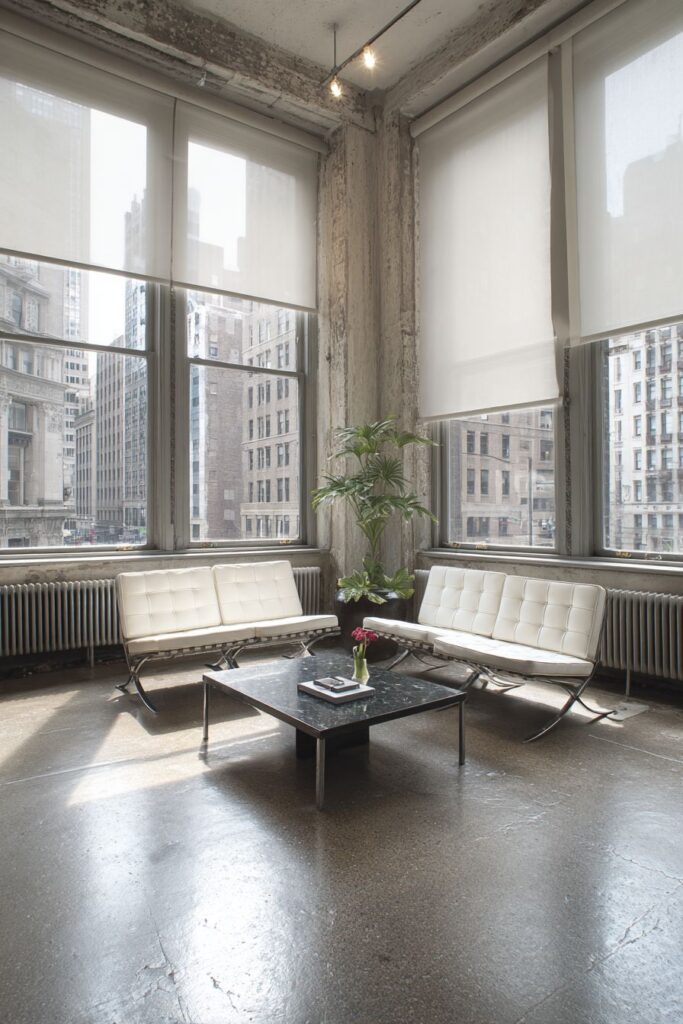
The black granite coffee table positioned between the chairs provides a dark contrast element while its polished surface reflects light and creates visual depth. The granite’s natural patterns add organic interest while maintaining sophisticated material quality.
Abundant natural light controlled by the motorized shades creates optimal illumination conditions throughout the day, showing how minimal living room design can use technology to enhance rather than complicate the living experience. The polished concrete floor reflects and amplifies the controlled lighting.
Key Design Tips:
- Integrate motorized window treatments for light control without visual clutter
- Choose iconic modern furniture pieces that embody minimalist design principles
- Use dark stone surfaces to provide contrast and reflect light effectively
- Plan automated systems that enhance daily living without requiring constant attention
- Position reflective surfaces to maximize the benefit of controlled natural lighting
19. Built-in Seating Efficiency
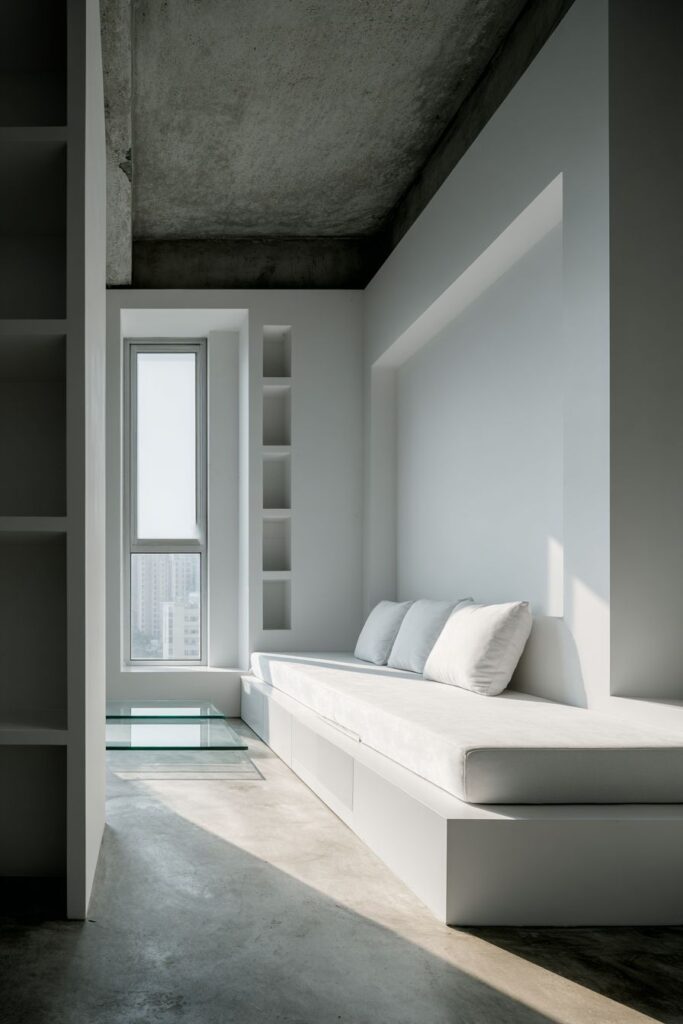
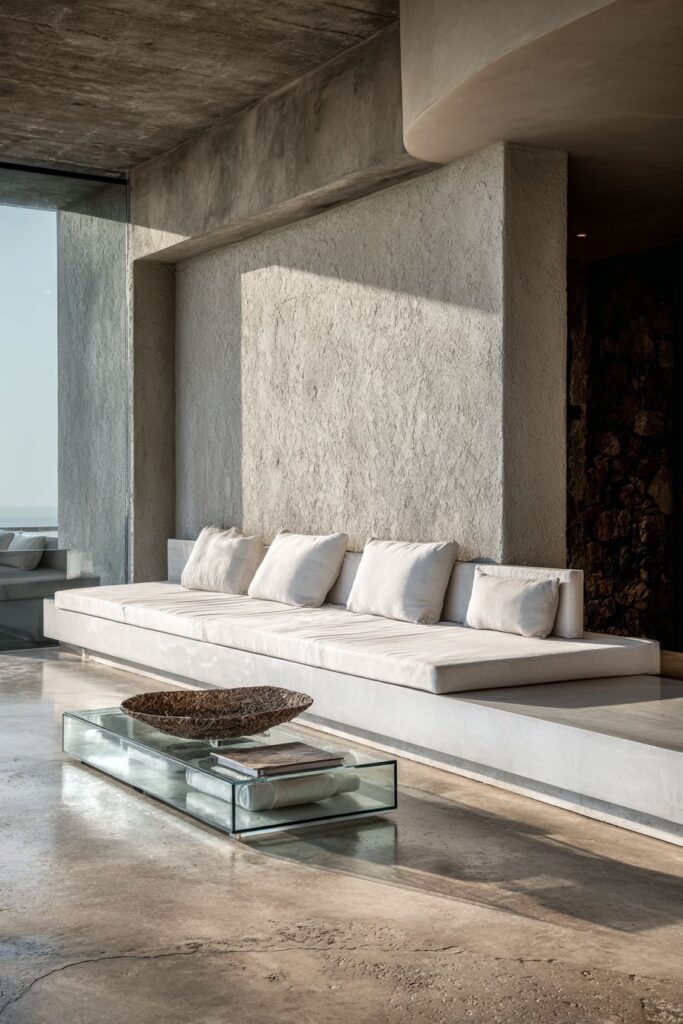
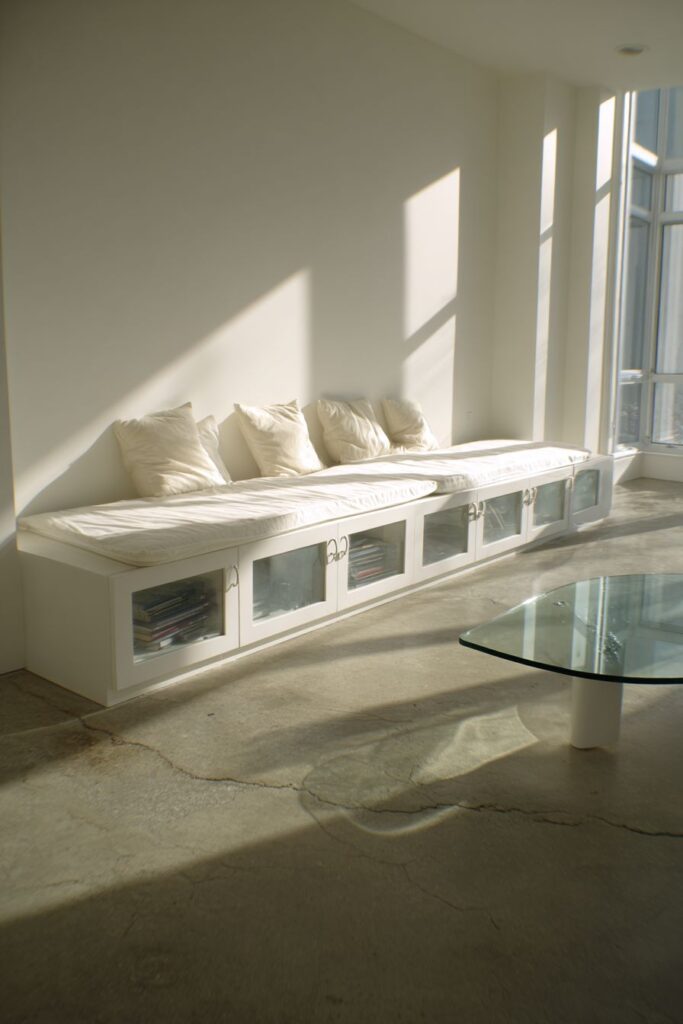
The built-in white concrete bench spanning the length of one wall with a continuous white cushion creates architectural seating that maximizes space efficiency while maintaining clean design lines. The bench incorporates hidden storage compartments accessed through push-open panels, demonstrating minimalist design’s integration of function and form.
The hidden storage compartments accessed through invisible mechanisms show how minimal living room design can provide extensive organization without visual clutter. This approach eliminates the need for additional storage furniture while maintaining the room’s clean aesthetic.
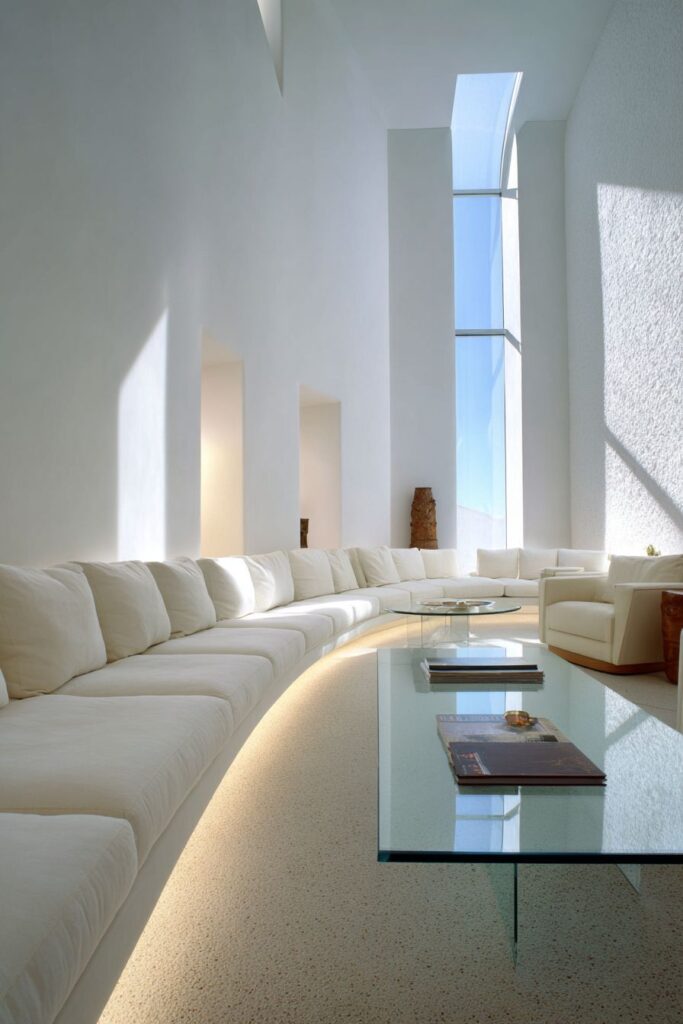
A single glass coffee table positioned opposite the bench provides essential surface area without obstructing sight lines or competing with the architectural seating element. The transparent material maintains spatial openness while serving functional needs.
The poured concrete floor with visible trowel texture details provides organic surface variation that prevents the space from appearing too uniform while maintaining material honesty. The natural lighting from a ribbon window above creates dramatic shadows that emphasize the bench’s architectural presence.
Key Design Tips:
- Design built-in seating with integrated storage for maximum space efficiency
- Use push-open mechanisms to maintain seamless surfaces while providing access
- Position transparent furniture to maintain sight lines and spatial openness
- Incorporate texture details in poured surfaces for visual and tactile interest
- Plan ribbon windows to provide dramatic lighting effects on architectural elements
20. Floating Console Sophistication
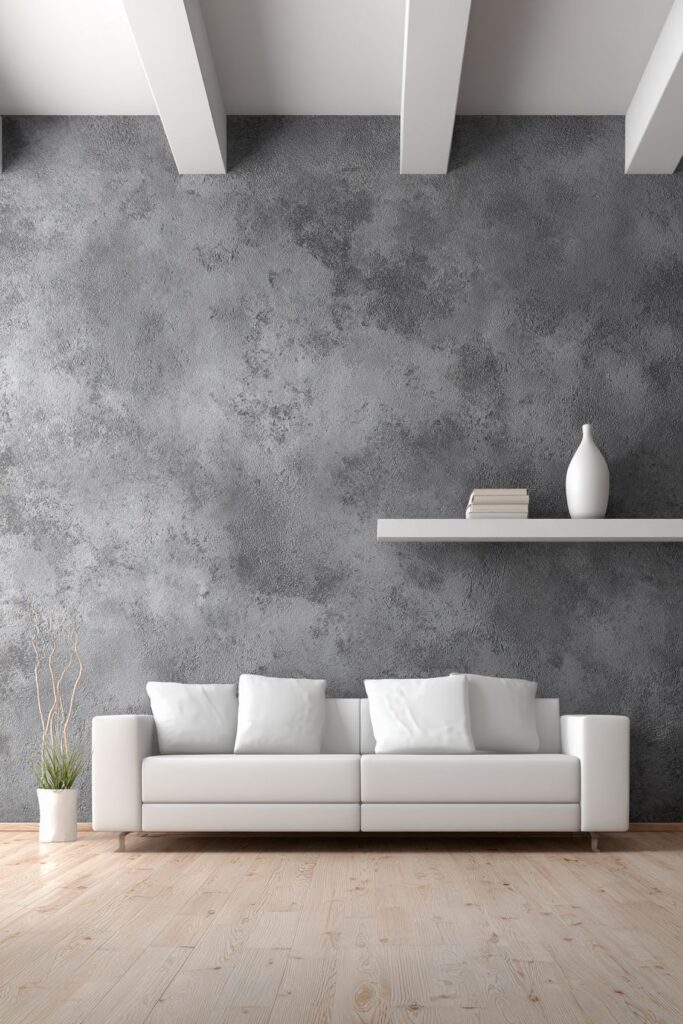
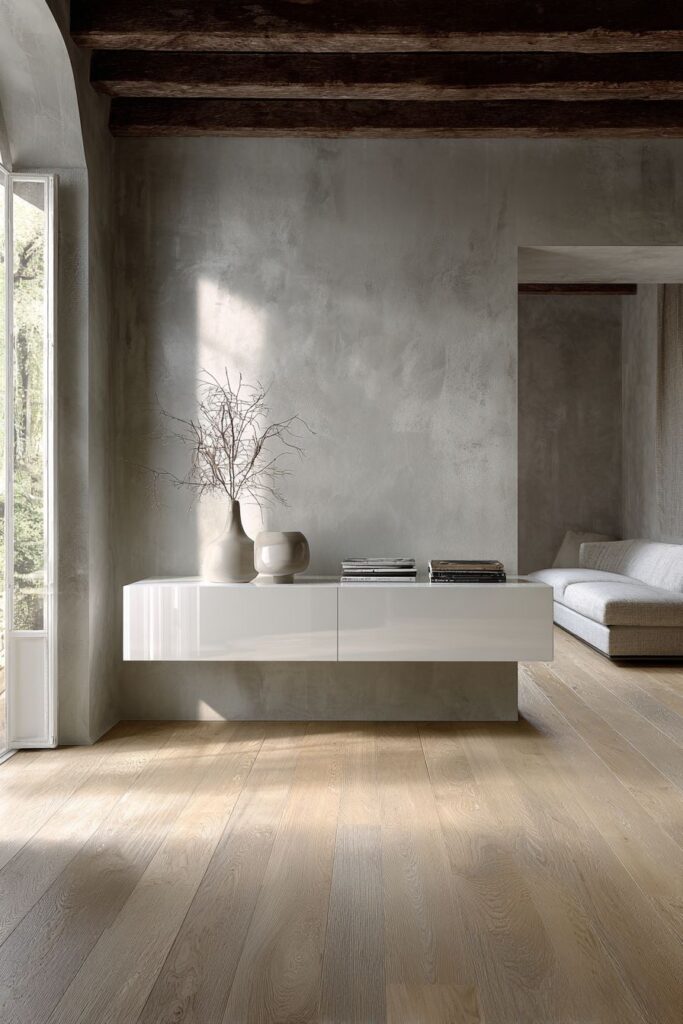
The suspended white lacquer console appearing to float against a grey textured plaster wall creates sophisticated storage that eliminates visual weight while providing display opportunities. The console’s seamless mounting system demonstrates minimalist design’s technical precision in achieving effortless appearance.
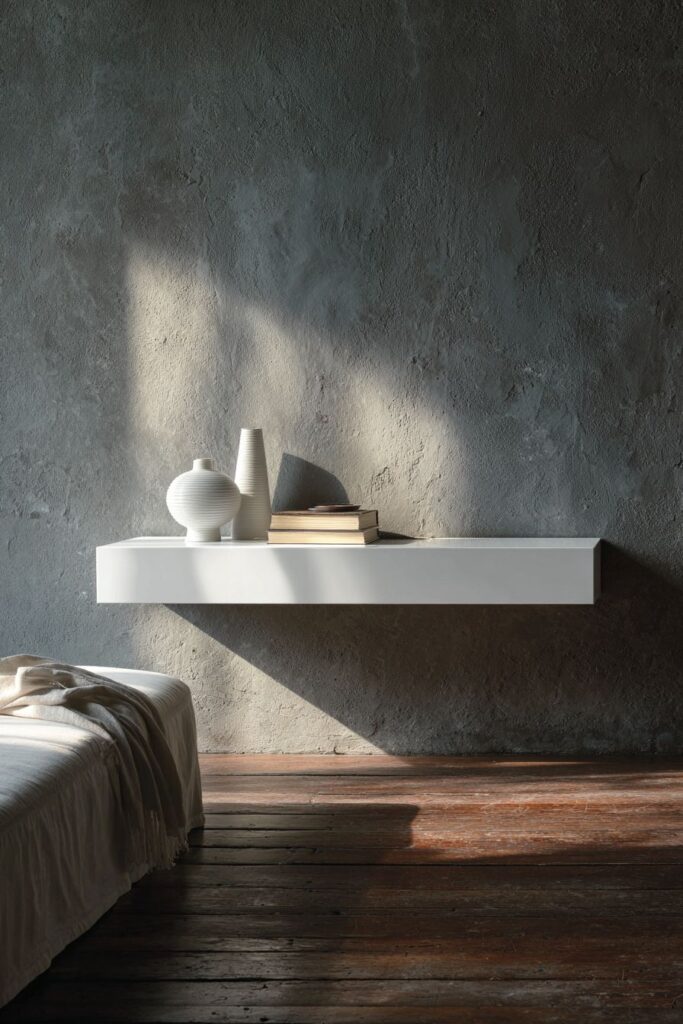
The console supports carefully selected objects: a single white ceramic vase and two hardcover books, showing how minimalist design approaches display through curation rather than accumulation. Each object is chosen for its contribution to the overall composition rather than personal sentiment alone.
The white oak flooring extending uninterrupted beneath the floating console creates visual continuity while the wood’s natural grain provides organic warmth against the cool wall colors. This material combination demonstrates minimalist design’s balanced approach to color and texture.
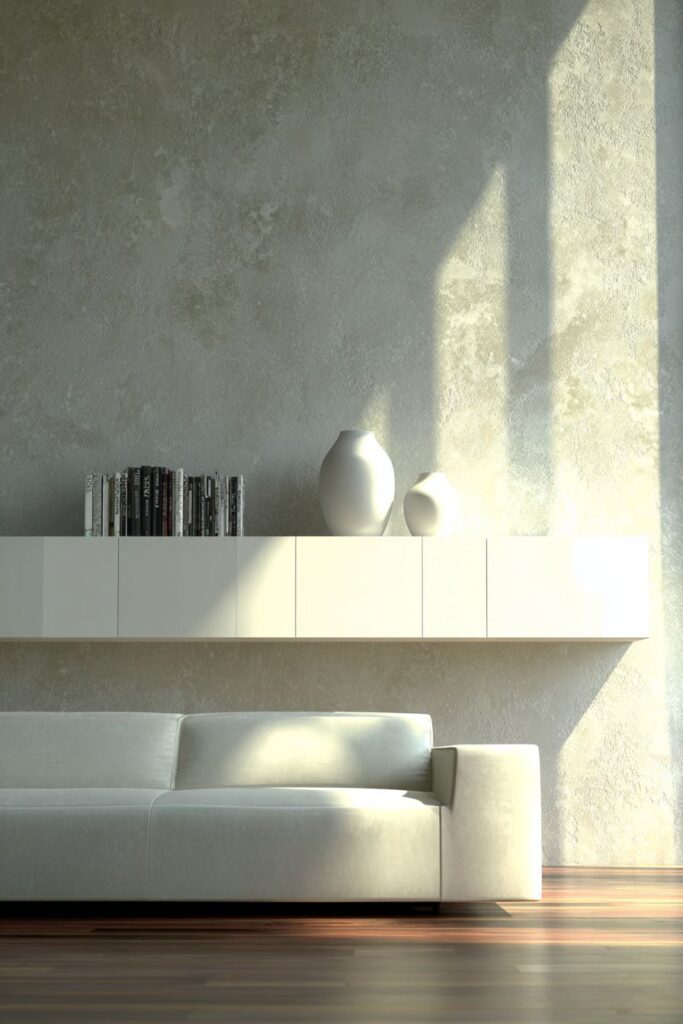
Soft natural lighting from clerestory windows creates subtle gradients on the textured wall surface, emphasizing the plaster’s handcrafted quality while providing gentle illumination that changes throughout the day. The simple white sofa positioned opposite maintains visual balance with adequate breathing room.
Key Design Tips:
- Mount consoles to appear floating for visual lightness and modern appeal
- Curate display objects carefully, choosing pieces that contribute to overall design
- Use textured wall surfaces to add tactile interest without decorative compromise
- Maintain adequate spacing between furniture pieces for visual breathing room
- Position clerestory windows to create changing light patterns on architectural surfaces
21. Modular Flexibility Innovation
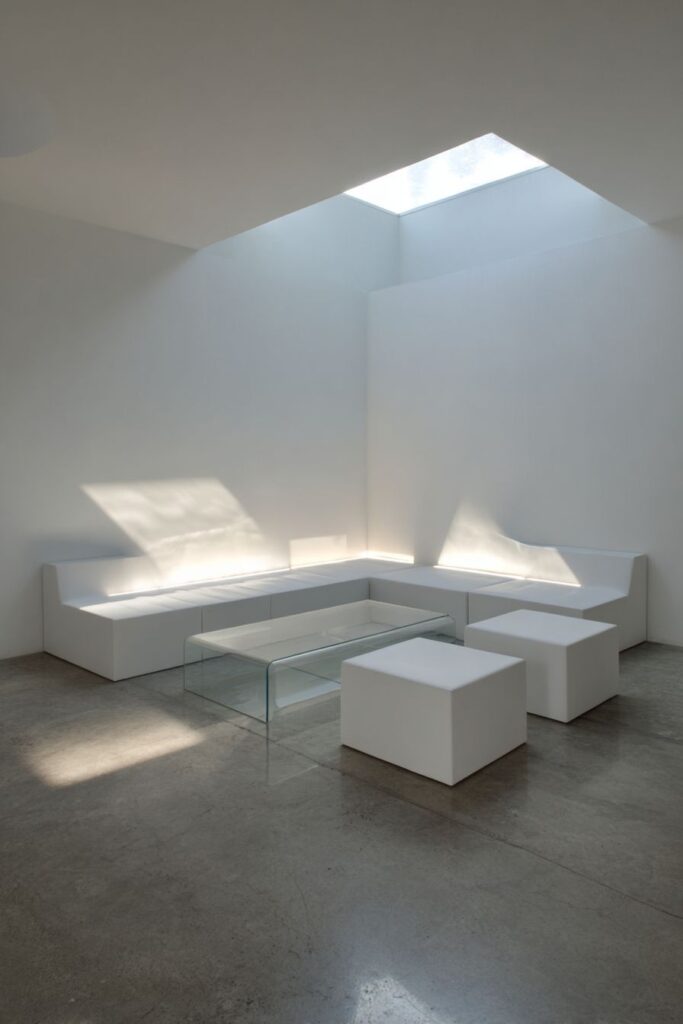
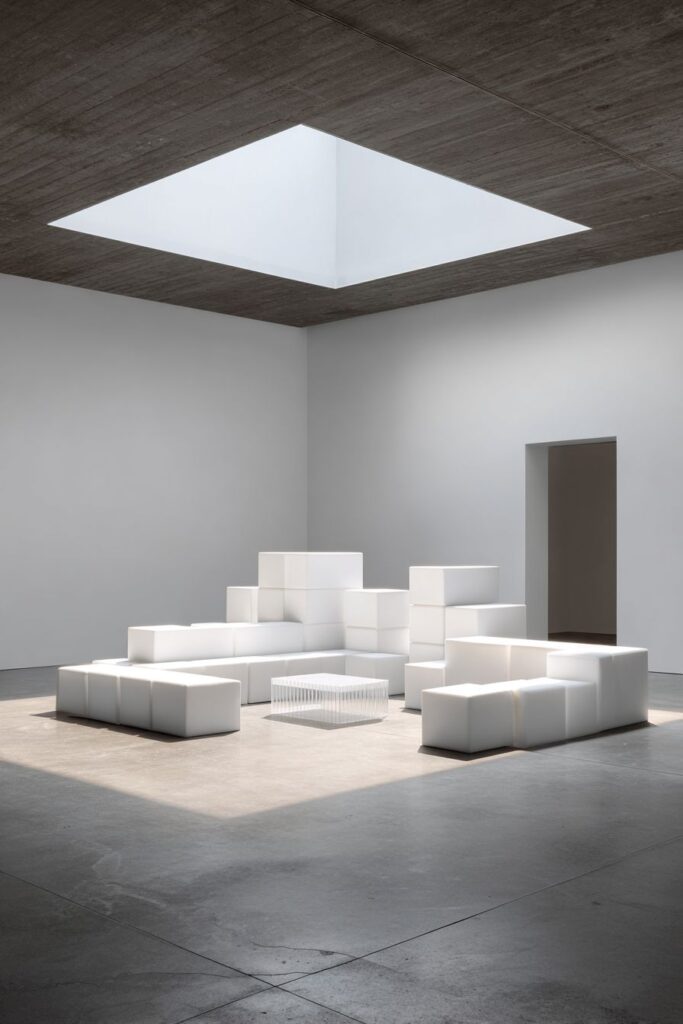
The modular white foam seating elements that can be reconfigured as needed demonstrate minimalist design’s embrace of flexibility without sacrificing aesthetic coherence. The cubes and rectangles arranged in an L-shape on polished concrete flooring create comfortable seating that adapts to different social configurations and space needs.
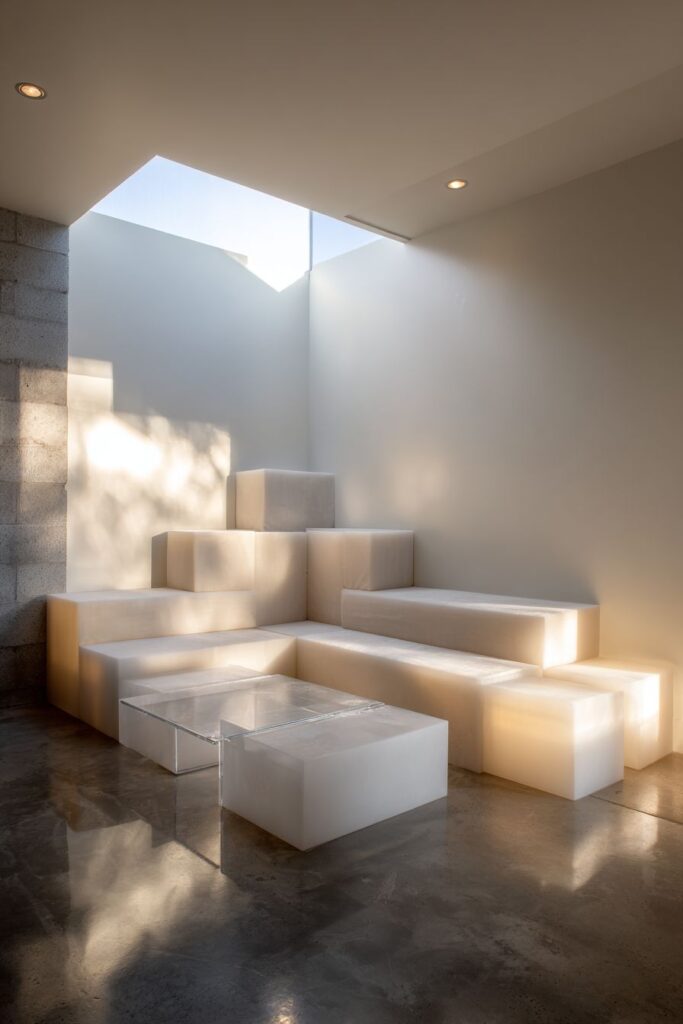
The geometric furniture pieces show how minimalist design can incorporate playful flexibility while maintaining clean forms and restrained color palettes. Each module’s simple geometry allows for multiple arrangement possibilities while ensuring visual harmony in any configuration.
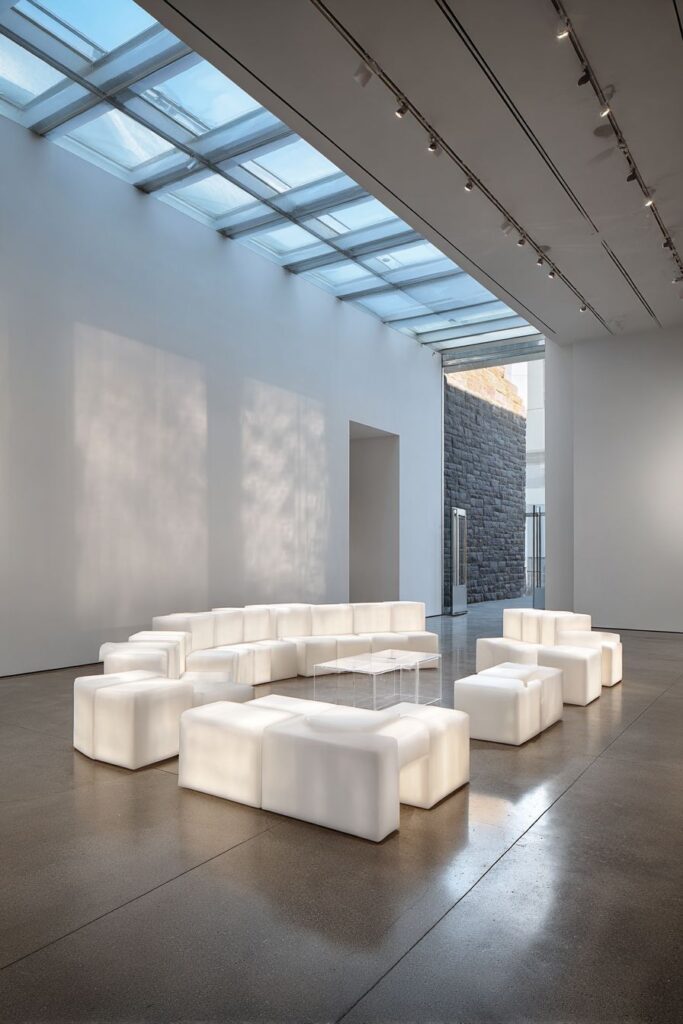
A single acrylic coffee table provides transparency that doesn’t compete with the modular seating while offering essential surface area. The clear material maintains spatial openness and allows the seating modules to command visual attention as the room’s primary design feature.
Natural light from a skylight above creates dynamic lighting throughout the day, casting shadows that emphasize the geometric furniture’s sculptural qualities while providing even illumination for the flexible seating arrangements. The warm white walls provide a neutral backdrop that accommodates changing furniture positions.
Key Design Tips:
- Choose modular furniture systems that maintain aesthetic coherence in all arrangements
- Use clear materials for coffee tables to avoid competing with primary furniture elements
- Plan skylight placement to provide optimal lighting for flexible furniture arrangements
- Maintain neutral wall colors that work with changing furniture configurations
- Design geometric seating that functions as both furniture and sculptural elements
22. Invisible Technology Integration
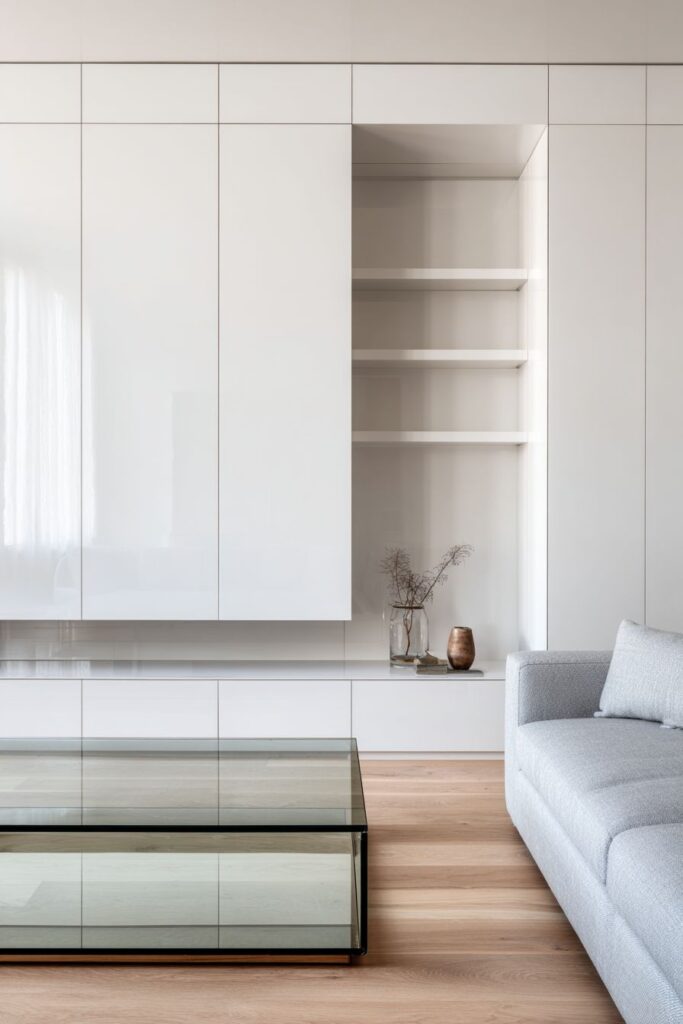
The integrated sound system with invisible speakers built into the white gypsum walls demonstrates how minimal living room design can incorporate advanced technology without visual compromise. This seamless integration shows minimalist design’s ability to enhance lifestyle comfort while maintaining aesthetic purity.
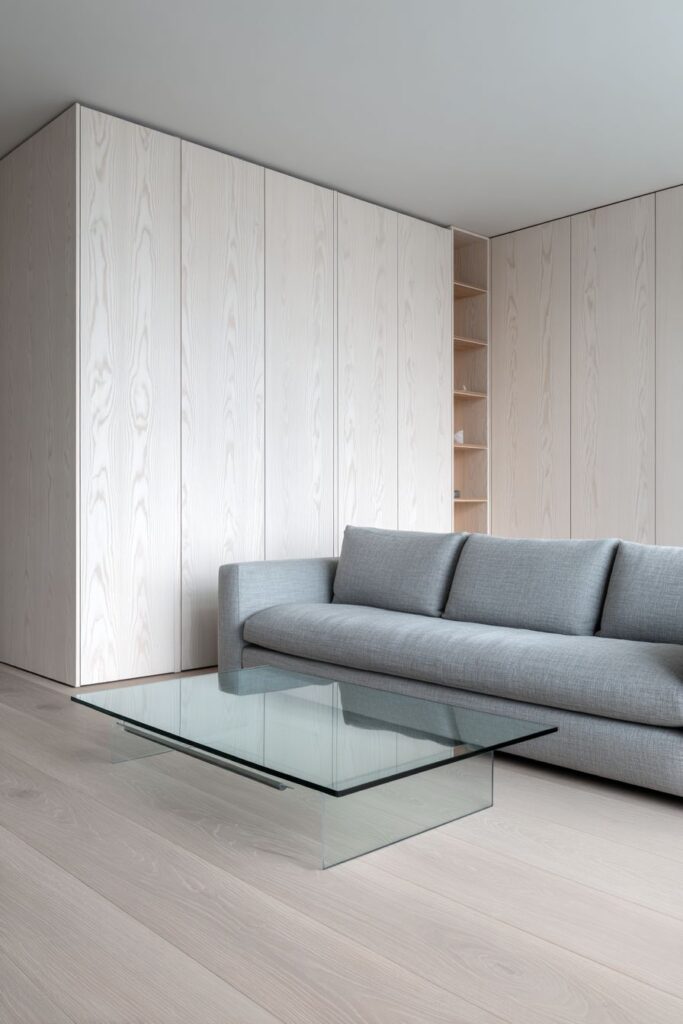
The single grey wool sofa faces a blank white wall where audio equipment is completely concealed, creating a clean seating area that benefits from high-quality sound without visible technological intrusion. The sofa’s placement demonstrates confidence in technology that performs without demanding visual attention.
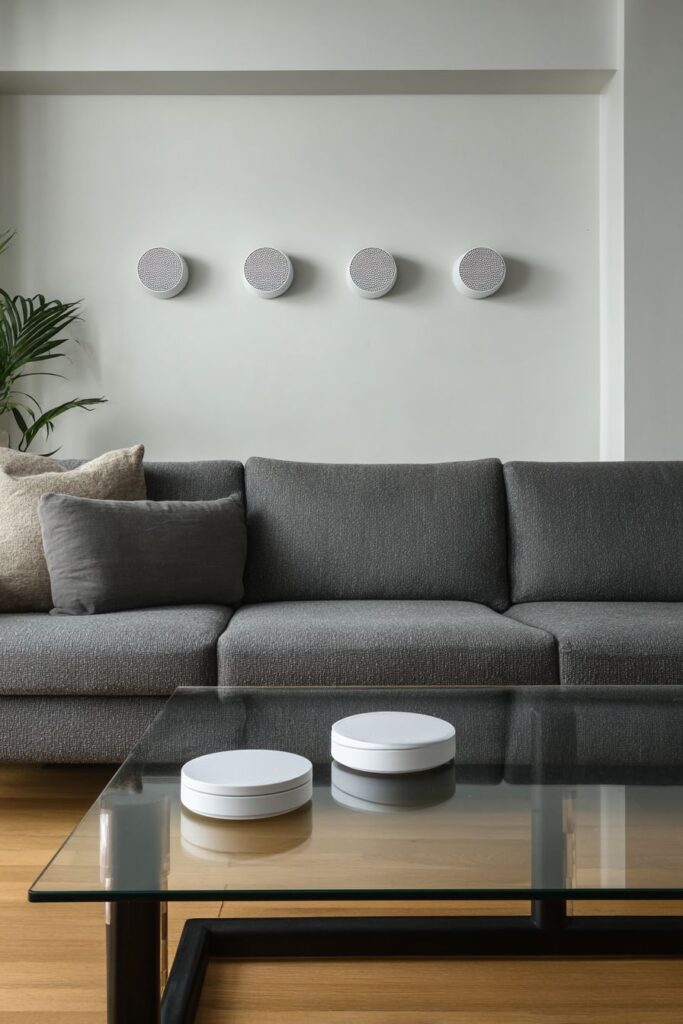
White oak flooring with natural grain variation provides organic warmth and visual interest while serving as a neutral backdrop for the invisible technology systems. The wood’s natural beauty demonstrates minimalist design’s preference for materials that provide inherent rather than applied decoration.
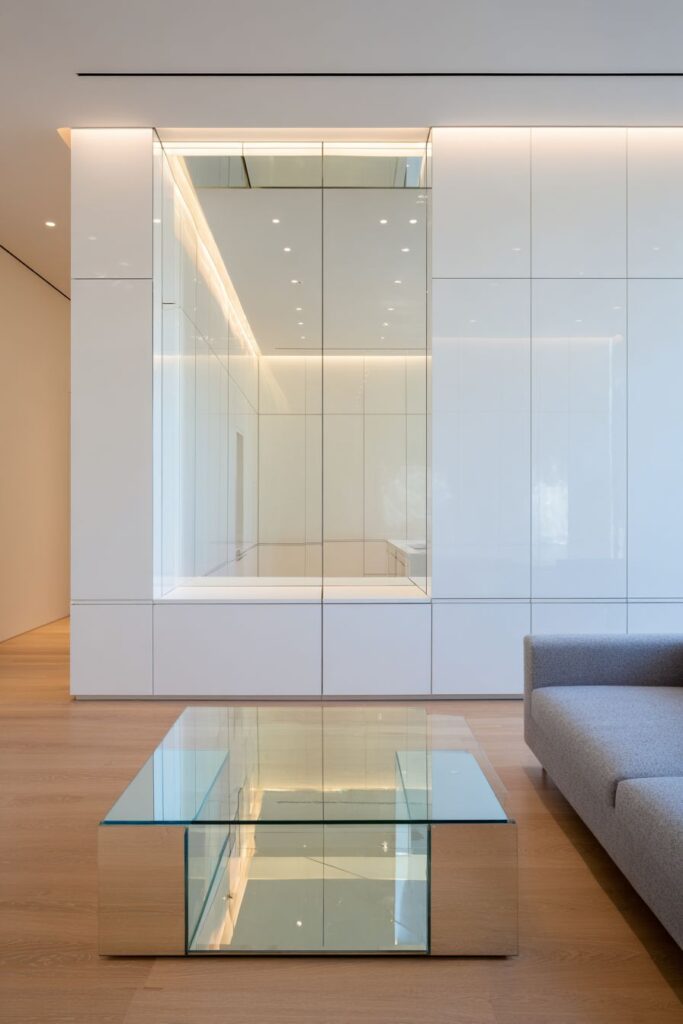
The simple glass coffee table reflects clean surfaces above while maintaining transparency that doesn’t interrupt the room’s spatial flow. Professional interior photography emphasizes the seamless wall construction where technology integration is completely invisible yet functionally present.
Key Design Tips:
- Plan technology integration during initial design phases for seamless installation
- Choose invisible audio systems that provide quality without visual presence
- Use natural wood flooring for warmth and visual interest in technology-focused spaces
- Position furniture to benefit from invisible systems without obvious arrangement cues
- Invest in quality invisible technology that enhances rather than complicates daily living
23. Floor-Level Living Comfort
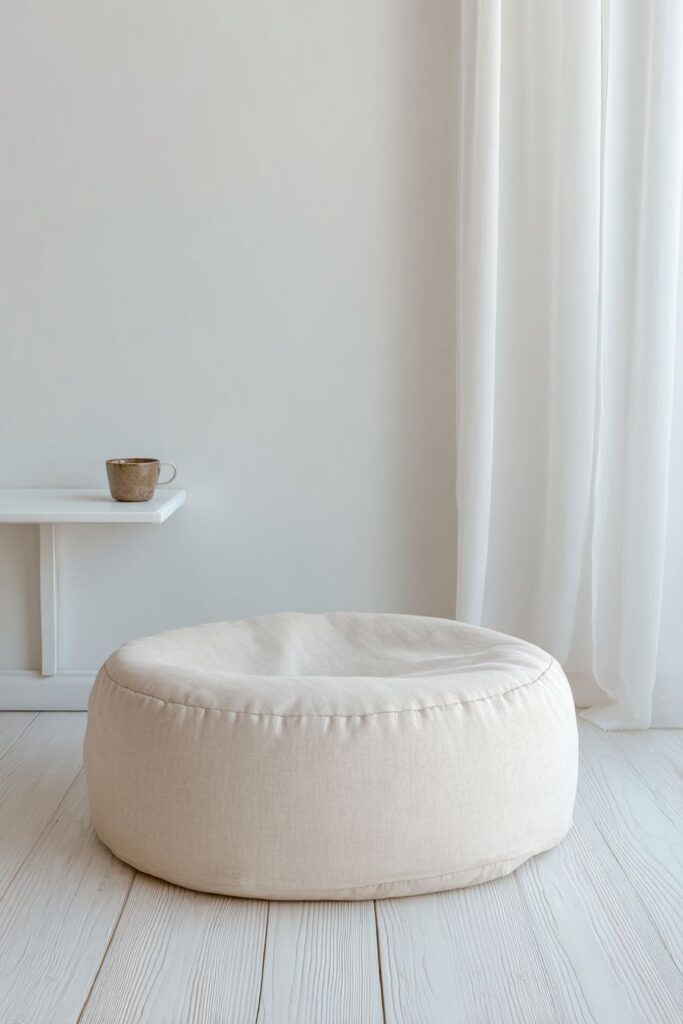
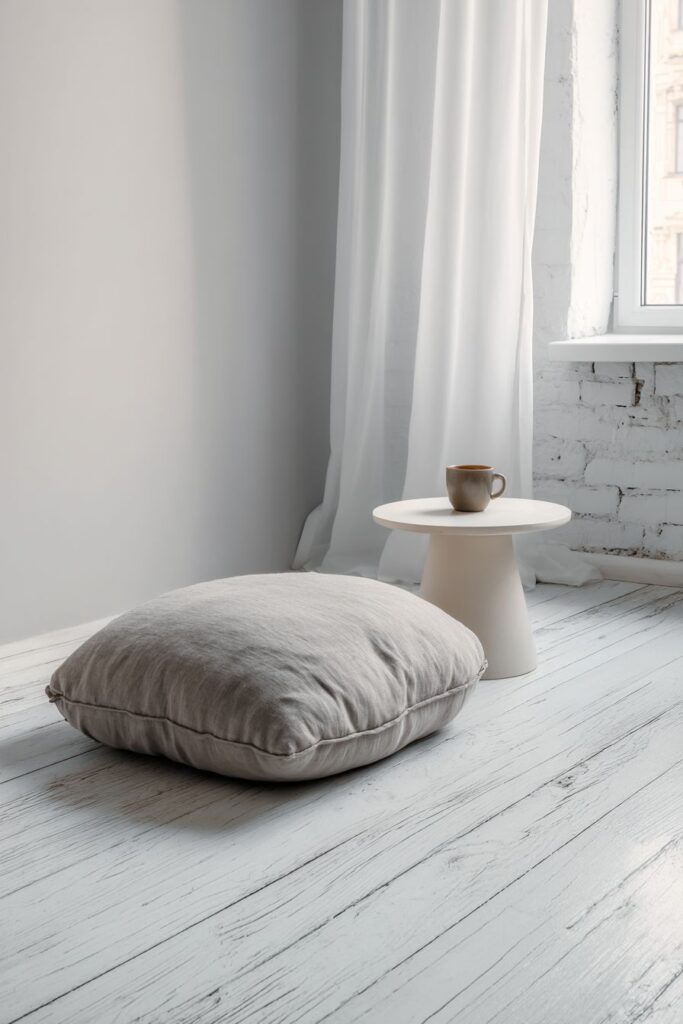
The single oversized floor cushion in natural linen positioned on white-washed wooden flooring introduces casual, floor-level living to minimal design principles. This approach creates intimate, relaxed seating that encourages contemplation and informal social interaction while maintaining aesthetic simplicity.
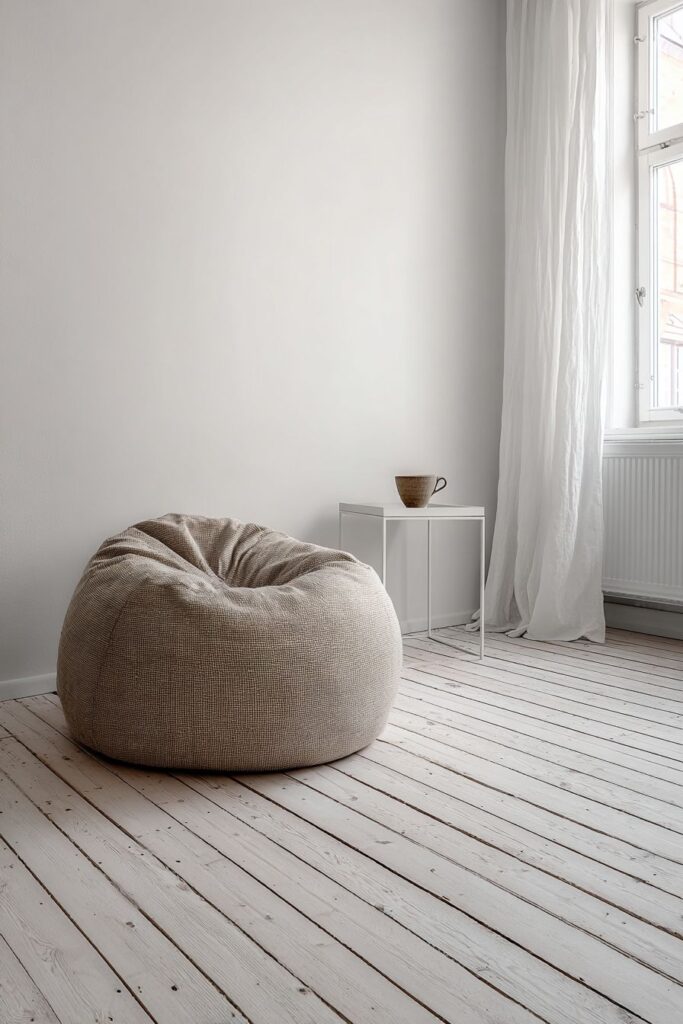
The cushion’s placement adjacent to a simple white wall-mounted side table holding a ceramic cup demonstrates how minimal living room design can accommodate casual lifestyle needs through carefully chosen, simply designed accessories. The wall mounting eliminates visual weight while providing essential functionality.
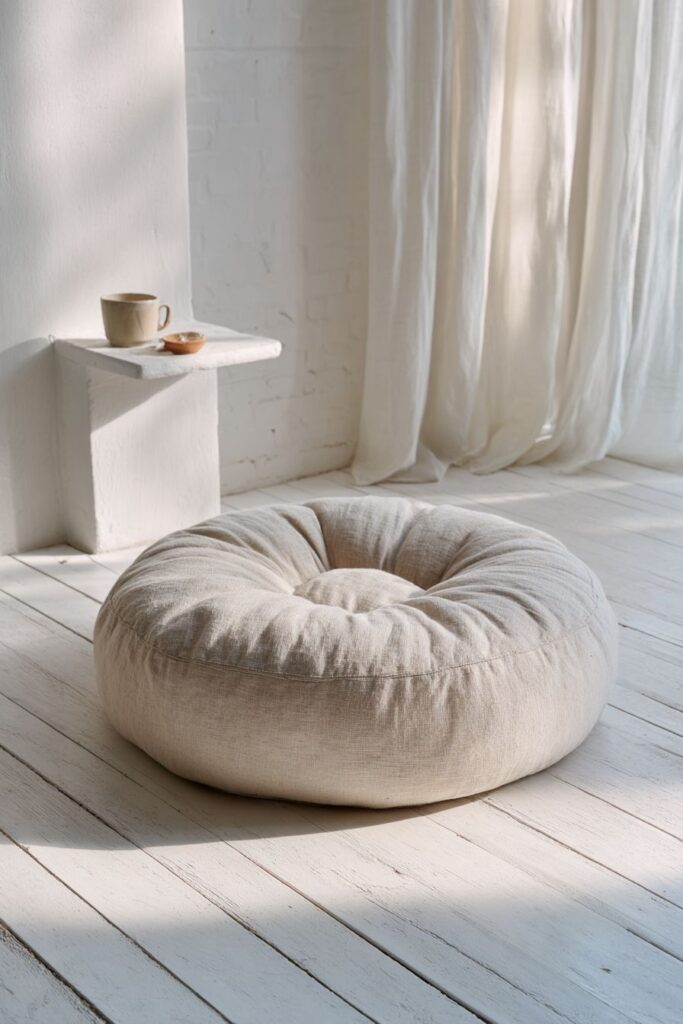
Floor-to-ceiling white curtains provide privacy while filtering natural light softly, showing how window treatments can be incorporated when necessary for function without compromising the space’s clean aesthetic. The curtains’ full-height installation emphasizes ceiling height while maintaining simplicity.
The completely unadorned walls demonstrate minimalist design’s confidence in spatial relationships and material qualities rather than decorative additions. The white-washed wooden flooring provides sufficient visual interest through its subtle grain patterns and painted finish that preserves material character while maximizing light reflection.
Key Design Tips:
- Consider floor-level seating for intimate, casual living arrangements
- Use wall-mounted side tables to eliminate furniture legs and visual weight
- Install curtains at ceiling height to emphasize room proportions
- Choose white-washed wood finishes for light reflection while preserving grain texture
- Maintain unadorned wall surfaces to emphasize spatial and material relationships
24. Linear Fireplace Sophistication
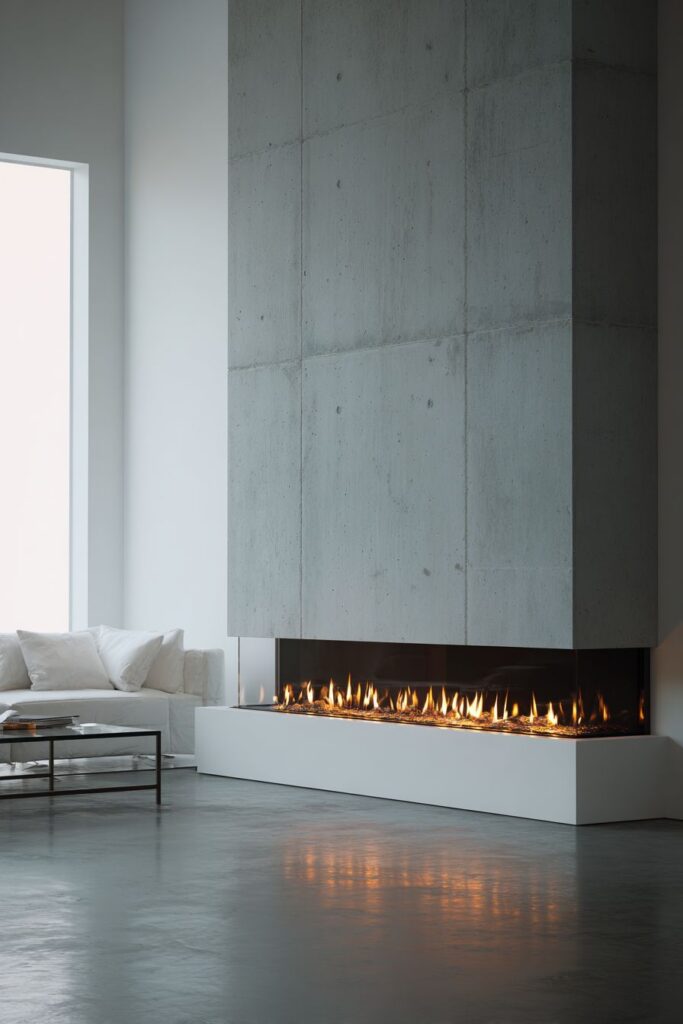
The linear white fireplace insert built flush into a smooth grey concrete wall creates contemporary heating that emphasizes horizontal lines and geometric precision. The fireplace features a continuous slot opening with no visible surround or mantel, demonstrating minimalist design’s reduction of traditional fireplace elements to essential function and form.
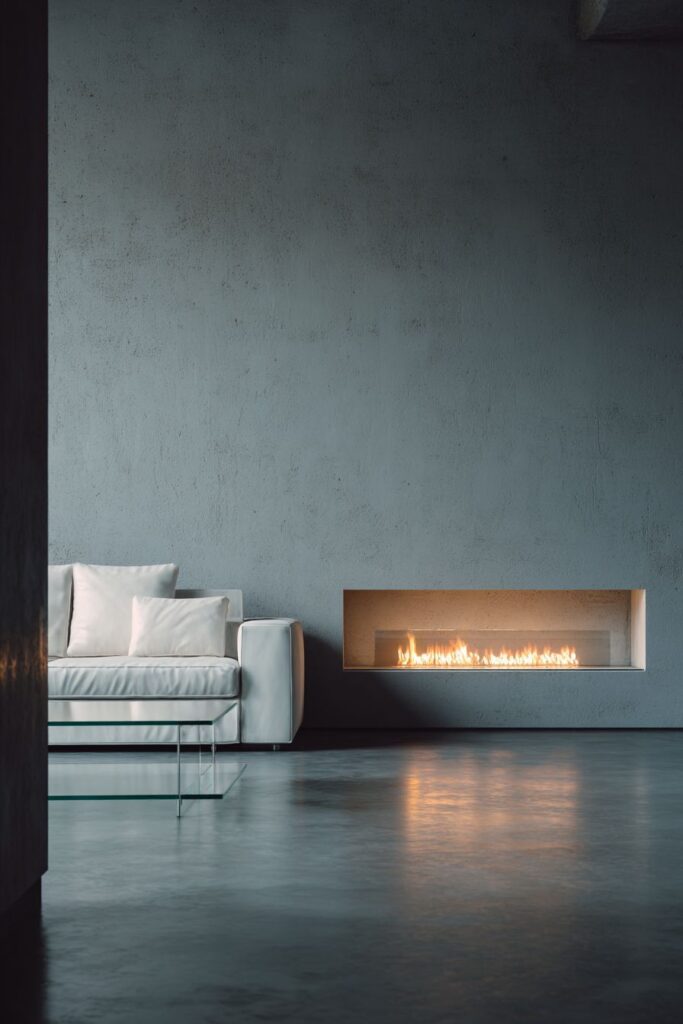
The continuous slot opening creates a dramatic flame effect that emphasizes horizontal movement while the flush installation maintains the wall’s smooth surface integrity. This approach shows how minimalist design can modernize traditional elements through geometric simplification and material honesty.
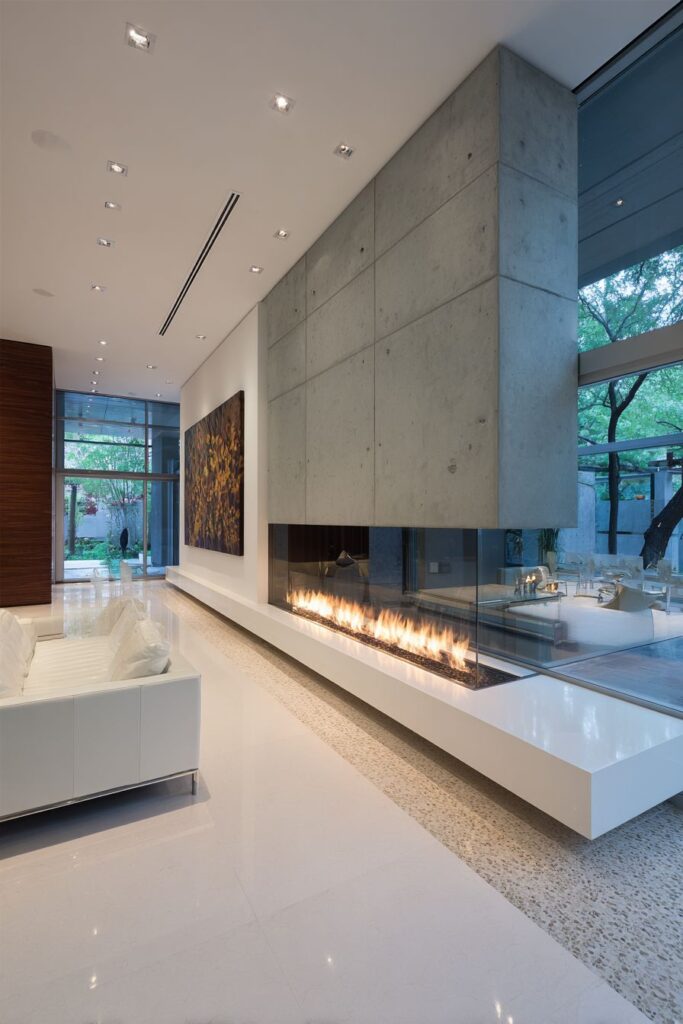
A single white sofa positioned perpendicular to the fireplace creates optimal viewing angles while maintaining proper clearance for both safety and visual balance. The sofa’s clean lines and white upholstery complement the fireplace’s geometric precision while providing comfortable seating for fireplace enjoyment.
The polished concrete floor extends seamlessly throughout the space, reflecting the linear flame effect while providing material continuity that unifies the room’s architectural elements. Evening interior photography captures the flame’s dramatic shadows while maintaining the space’s geometric purity and sophisticated material palette.
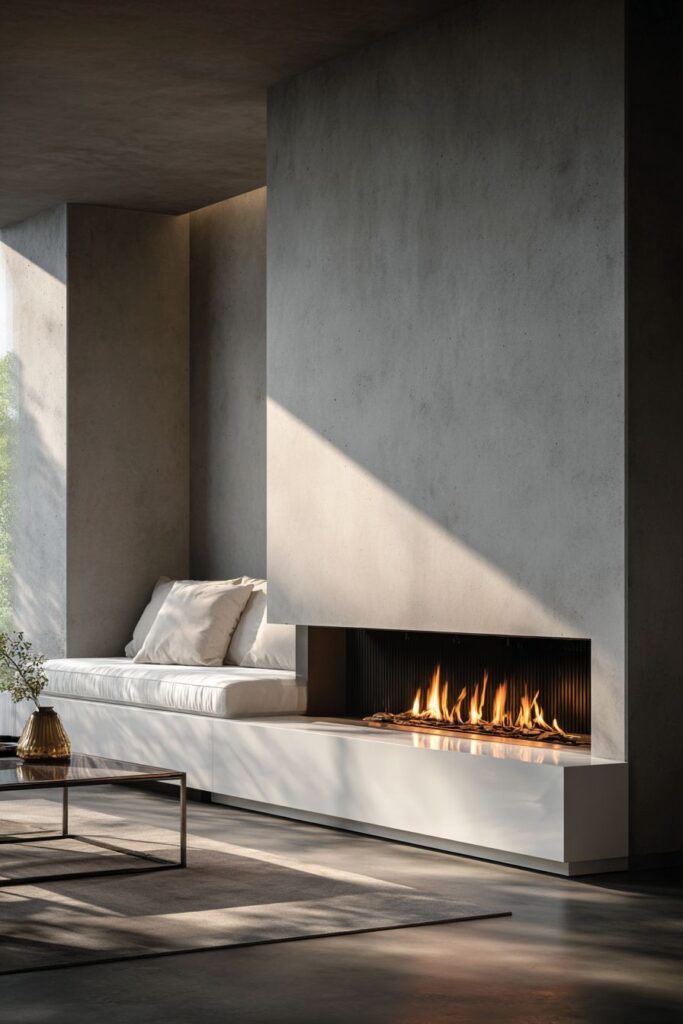
Key Design Tips:
- Choose linear fireplace designs for contemporary horizontal emphasis
- Install fireplaces flush with wall surfaces for seamless architectural integration
- Position seating perpendicular to linear fireplaces for optimal viewing angles
- Use polished concrete flooring to reflect flame light and provide material continuity
- Plan fireplace installations that emphasize geometric precision over traditional decoration
25. Wall-to-Wall Seating System
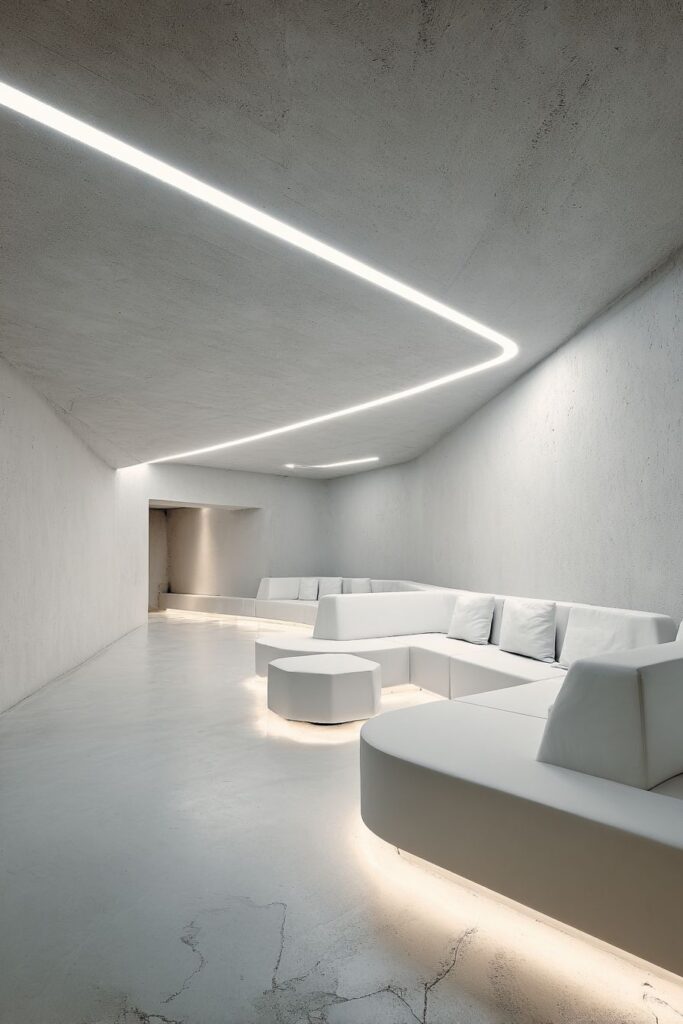
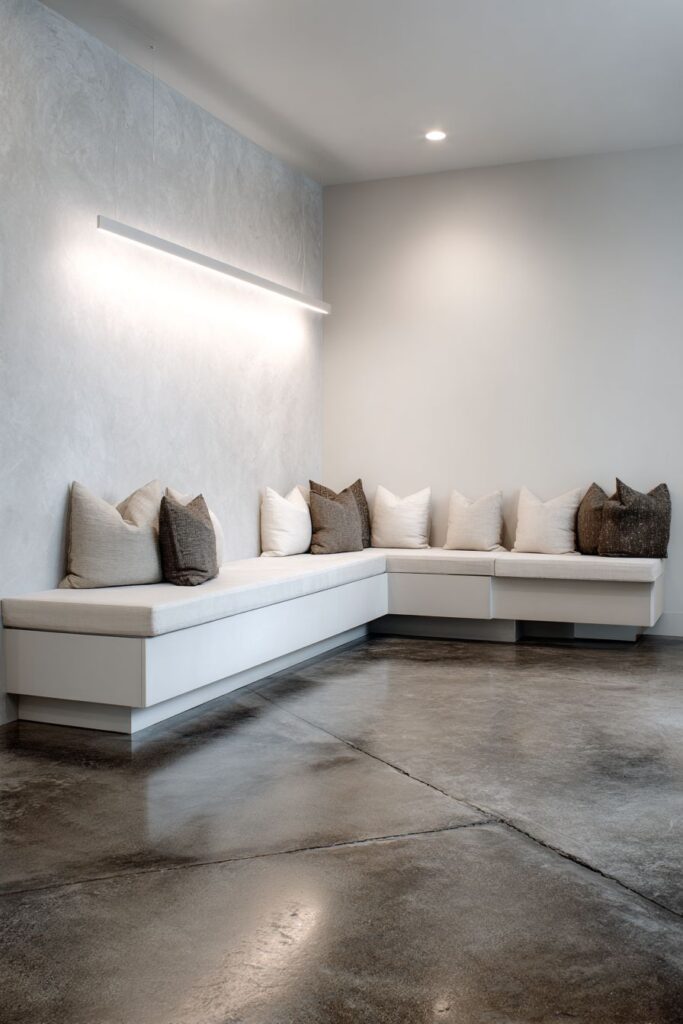
The wall-to-wall white built-in seating system with integrated side tables creates architectural furniture that maximizes space efficiency while eliminating visual clutter from individual furniture pieces. The banquette-style seating includes white cushions that create comfortable, intimate conversation areas within the architectural framework.
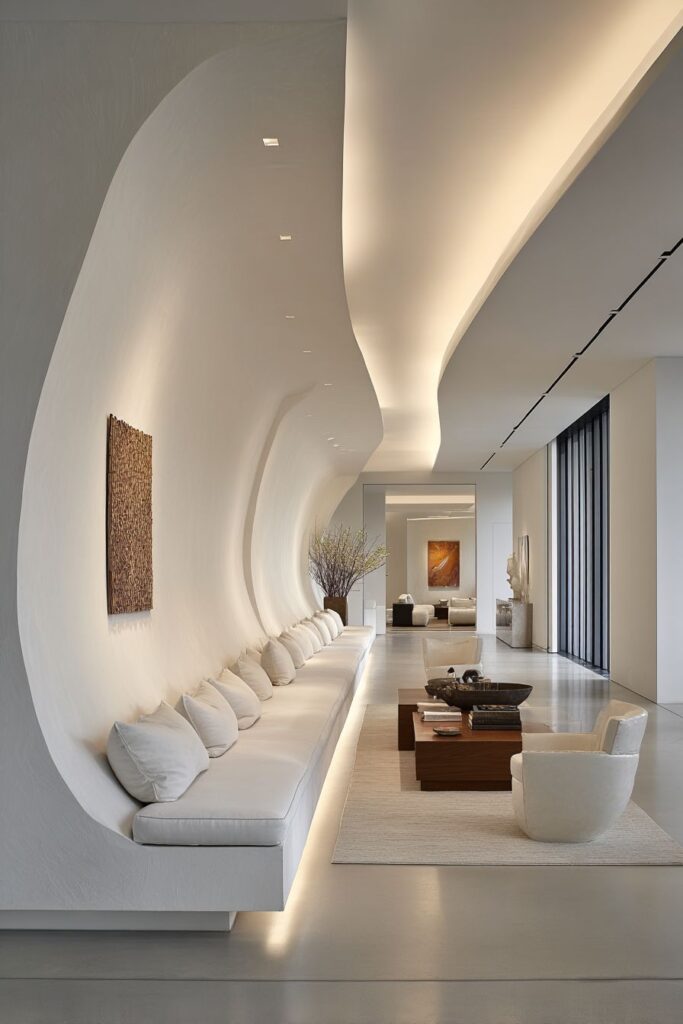
The integrated side tables emerging from the continuous form demonstrate minimalist design’s preference for unified elements over separate pieces. This approach creates seamless functionality while maintaining clean lines and eliminating the visual complexity of multiple furniture legs and separate surfaces.
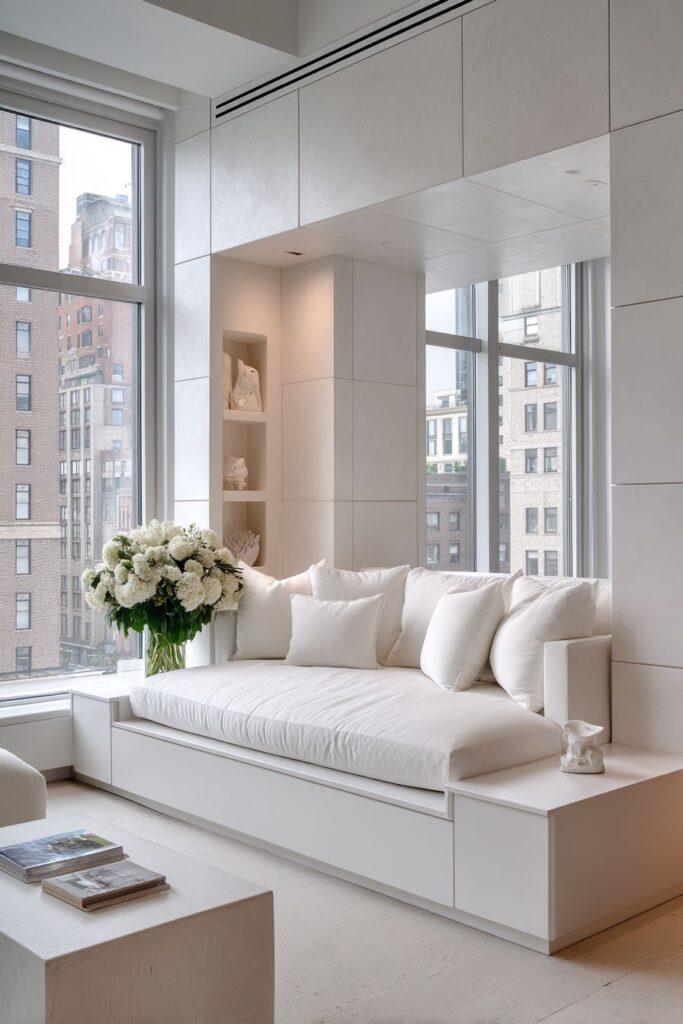
Above the seating, a single linear LED light fixture provides even illumination without requiring table or floor lamps that might disrupt the architectural seating’s clean lines. The linear lighting emphasizes the seating system’s horizontal emphasis while providing adequate light for conversation and reading.
The concrete floor shows subtle trowel marks that add textural interest without competing with the architectural seating system. Professional interior photography emphasizes the custom millwork and shows how furniture can become architecture through thoughtful integration and precise execution.
Key Design Tips:
- Design built-in seating systems that integrate side tables for seamless functionality
- Use linear LED lighting to emphasize horizontal architectural elements
- Plan banquette seating for intimate conversation areas and space efficiency
- Show construction details like trowel marks for authentic material expression
- Create architectural furniture that eliminates separate piece visual complexity
26. Retractable Innovation Marvel
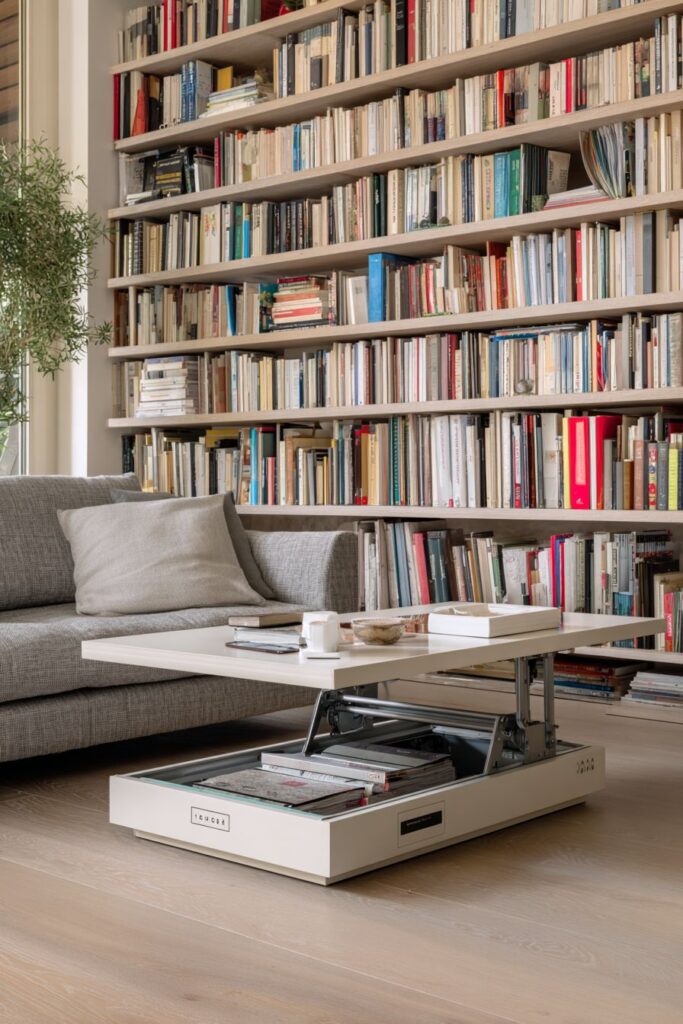
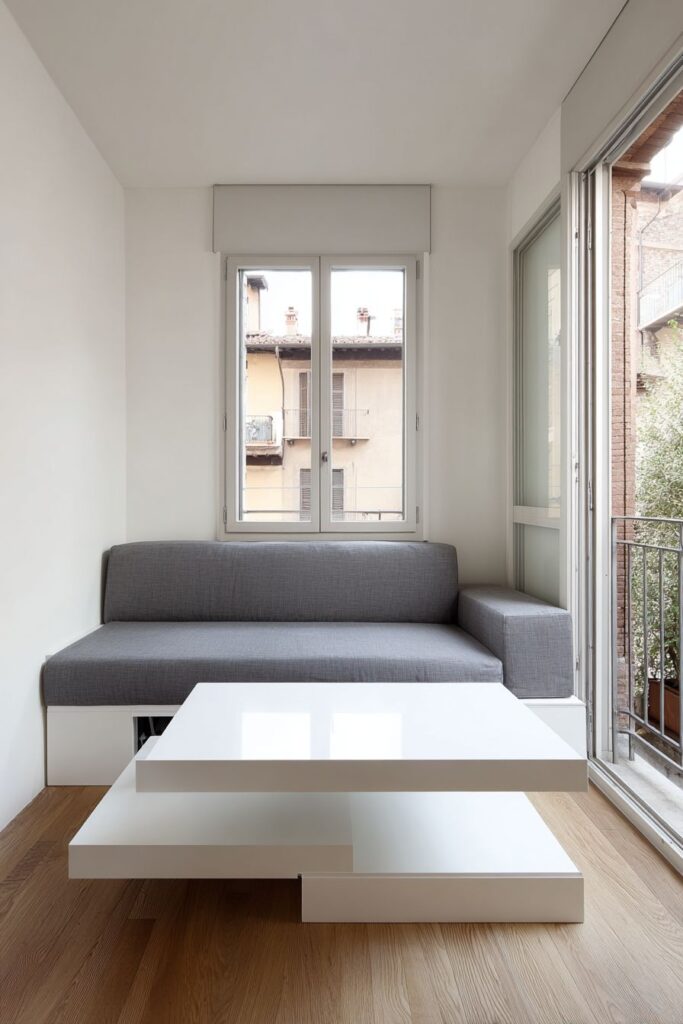
The retractable white coffee table that disappears into the floor when not needed represents the ultimate in space-saving minimal design innovation. When deployed, the hydraulic system raises a simple white lacquer table to standard height, while the mechanism remains completely invisible when retracted, leaving only smooth flooring surface.
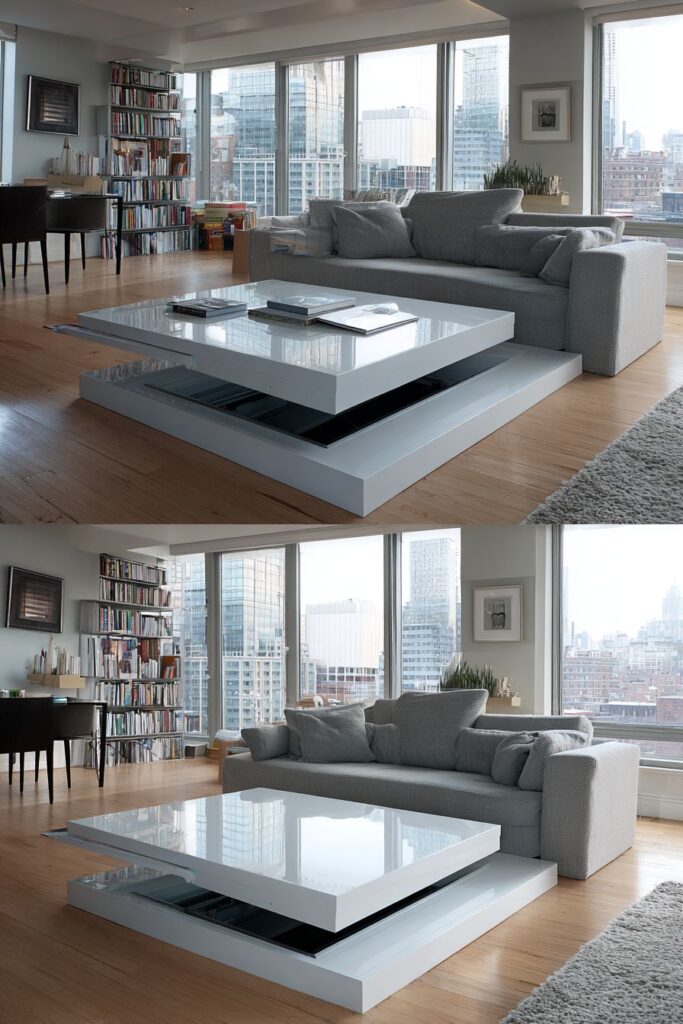
The hydraulic deployment system demonstrates how advanced technology can serve minimalist design principles by providing functionality only when needed while maintaining clean, unobstructed space when the function isn’t required. This approach shows minimalist design’s embrace of innovation that enhances rather than complicates living.
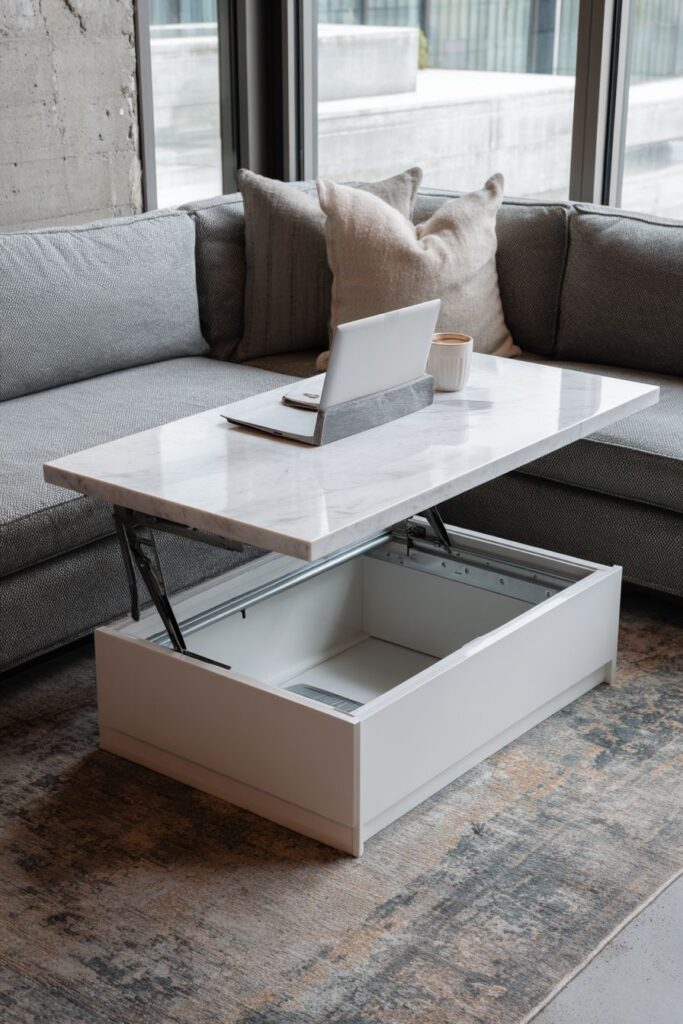
The single grey sectional sofa positioned to benefit from the retractable table creates flexible living arrangements that can adapt to different daily needs and social configurations. The sofa’s placement demonstrates confidence in technology that reliably provides function when needed.
Interior photography capturing both deployed and retracted states emphasizes the innovative space-saving technology while showing how minimal design can incorporate dramatic functional changes without compromising aesthetic principles. The seamless floor surface when retracted maintains the room’s spatial purity.
Key Design Tips:
- Consider retractable furniture systems for ultimate space flexibility
- Plan hydraulic systems during initial construction for seamless installation
- Choose furniture that benefits from flexible surface arrangements
- Document innovative features through photography showing multiple operational states
- Design retractable systems that maintain spatial purity when not in use
27. Suspended Seating Drama
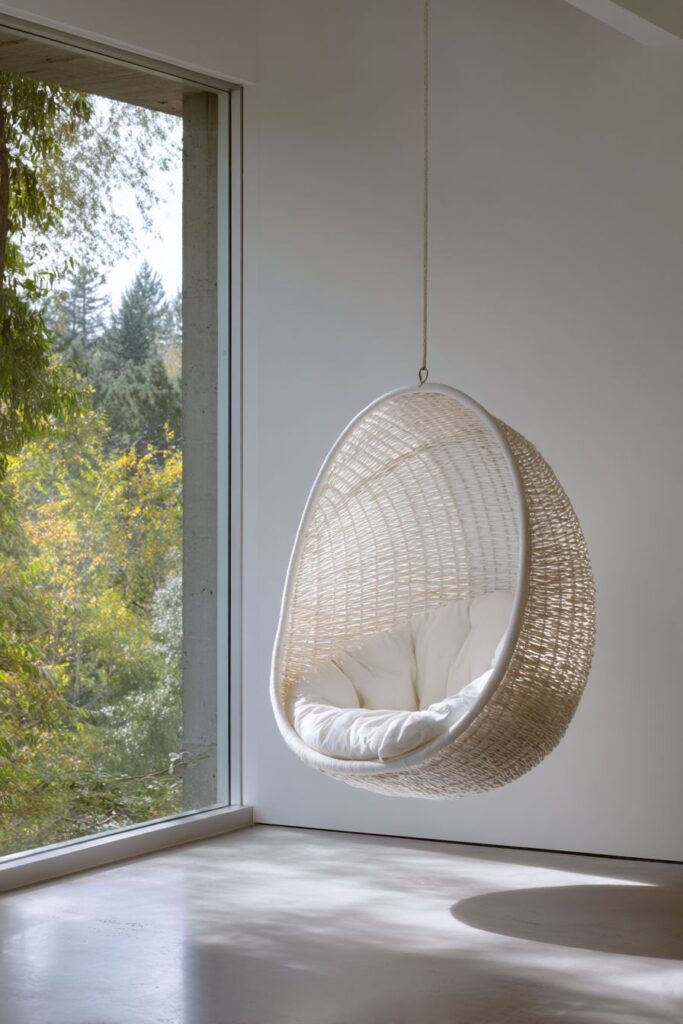
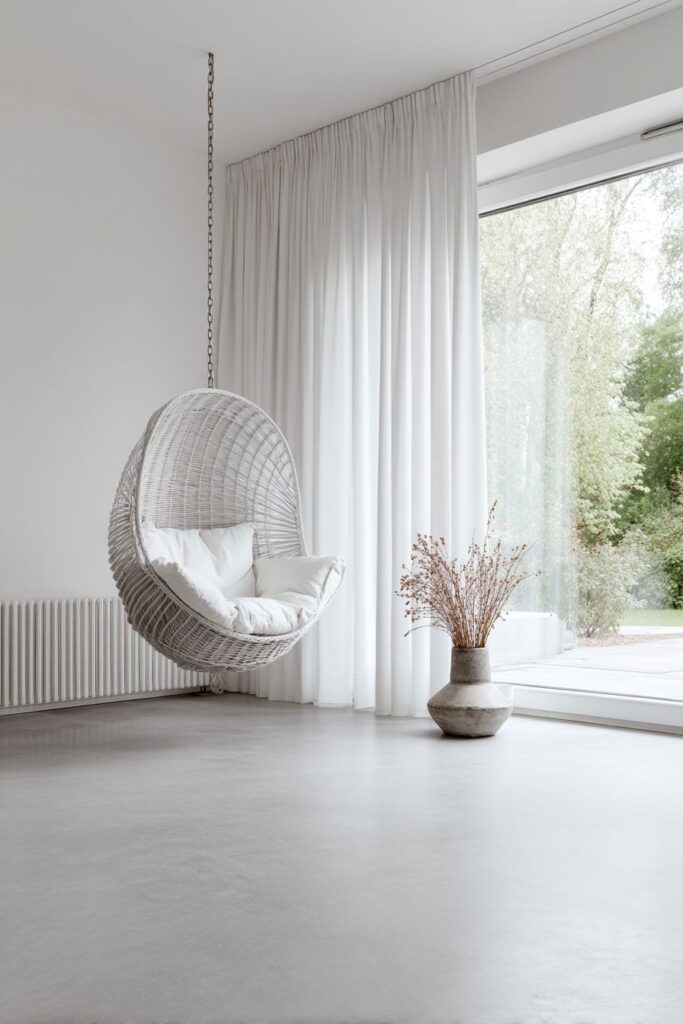
The single hanging egg chair in white rattan suspended from the ceiling by a thin steel cable creates dramatic seating that appears to float within the minimal space. The chair includes a white linen cushion and is positioned to take advantage of natural light from a large window, creating a focal point that embodies both comfort and visual drama.
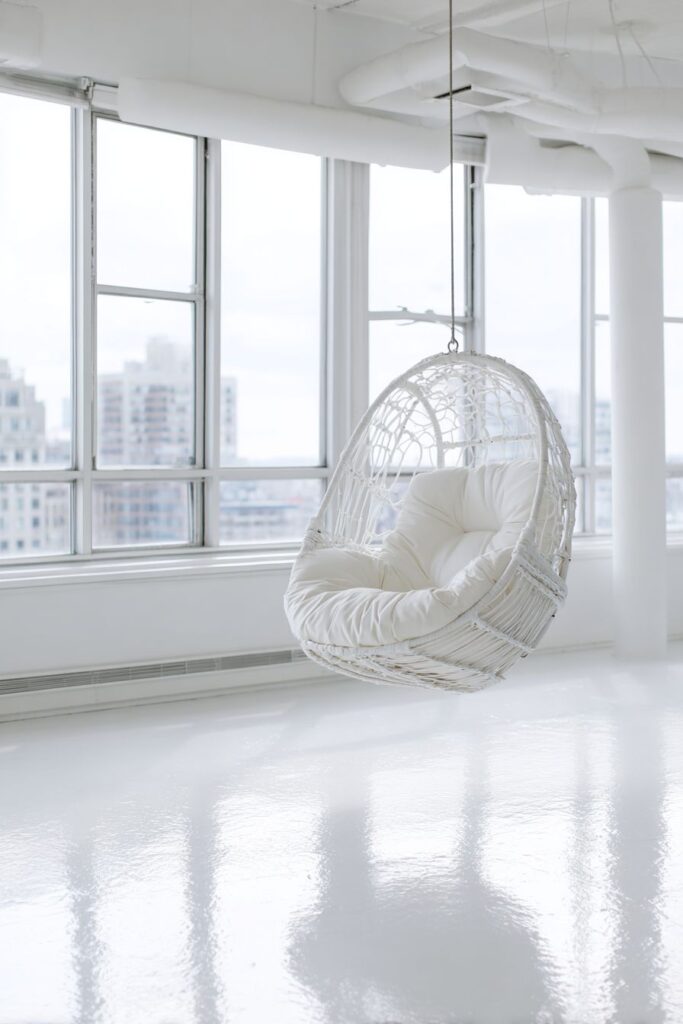
The suspended element demonstrates minimalist design’s occasional embrace of unexpected elements that command attention through their unique positioning rather than decorative complexity. The thin steel cable maintains visual lightness while providing necessary structural support for the hanging chair.
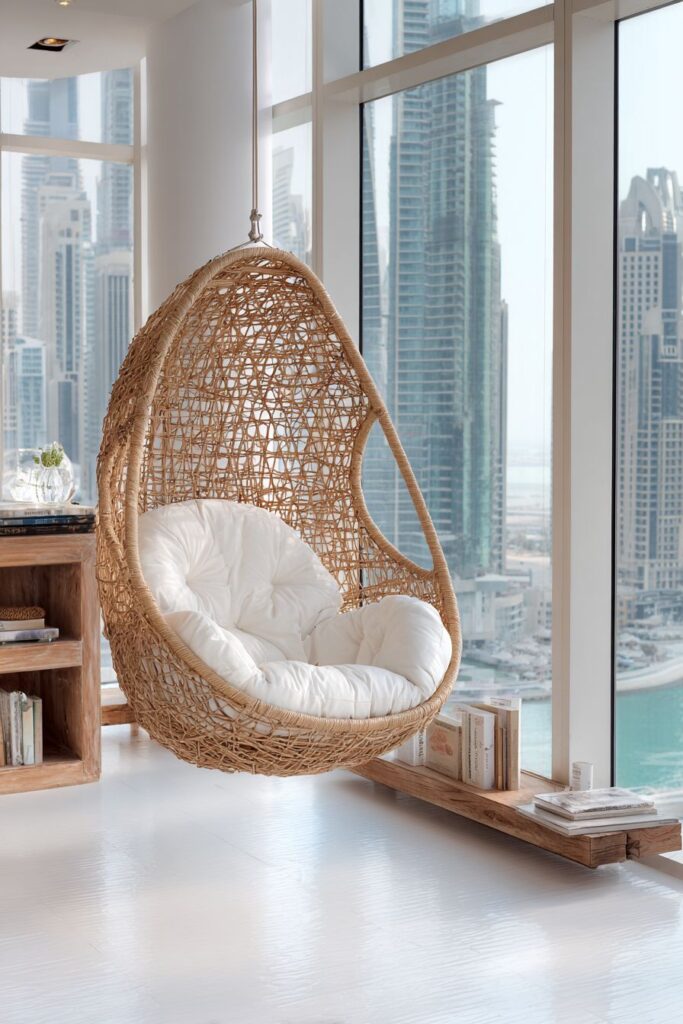
White rattan construction with natural fiber texture provides organic interest and tactile comfort while maintaining the room’s restrained color palette. The material choice shows minimalist design’s appreciation for natural materials that provide inherent beauty through their structural and textural qualities.
The white-painted concrete floor extends uninterrupted beneath the suspended chair, emphasizing the furniture’s floating quality while providing a neutral backdrop that doesn’t compete for attention. No other furniture is present, allowing the hanging chair to command complete focus as the room’s singular design statement.
Key Design Tips:
- Consider suspended furniture for dramatic focal points in minimal spaces
- Use thin support cables to maintain visual lightness with suspended elements
- Choose natural fiber furniture for textural interest within restrained color palettes
- Position suspended seating to take advantage of natural lighting
- Allow singular dramatic elements to command attention without competition
28. Architectural Lighting Integration
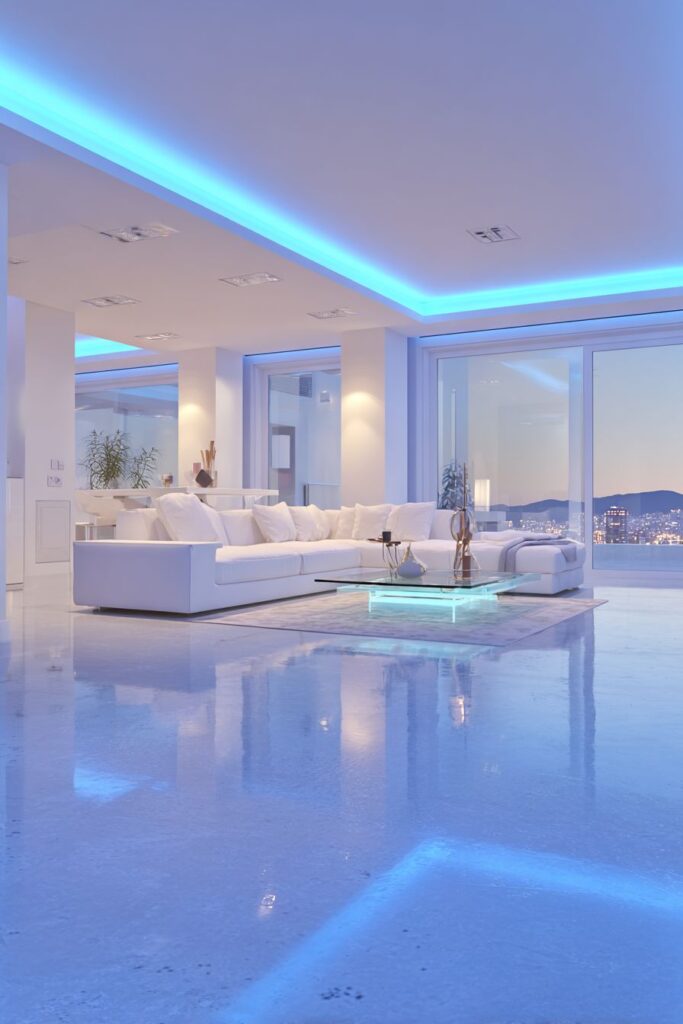
The integrated LED strip lighting hidden within architectural details—baseboards, crown molding, and window recesses—creates ambient illumination that washes walls with light without visible fixtures. This approach demonstrates minimalist design’s integration of lighting as architecture rather than applied decoration.
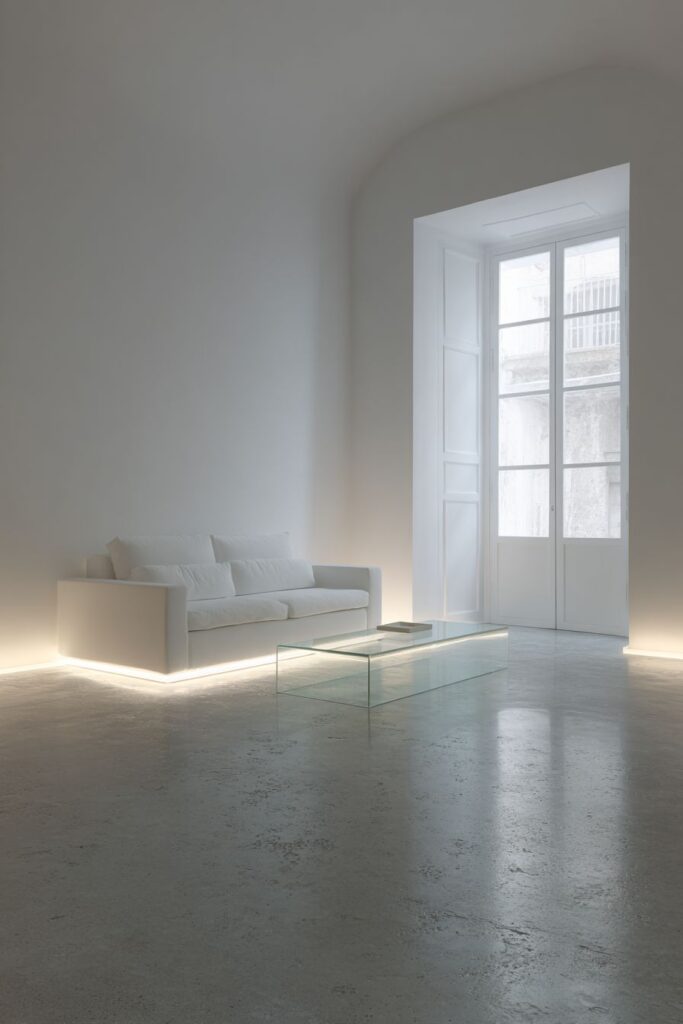
The continuous linear illumination from hidden LED strips creates gallery-like atmosphere while maintaining residential comfort, showing how lighting can enhance space perception and mood without requiring traditional fixtures that might disrupt clean architectural lines.
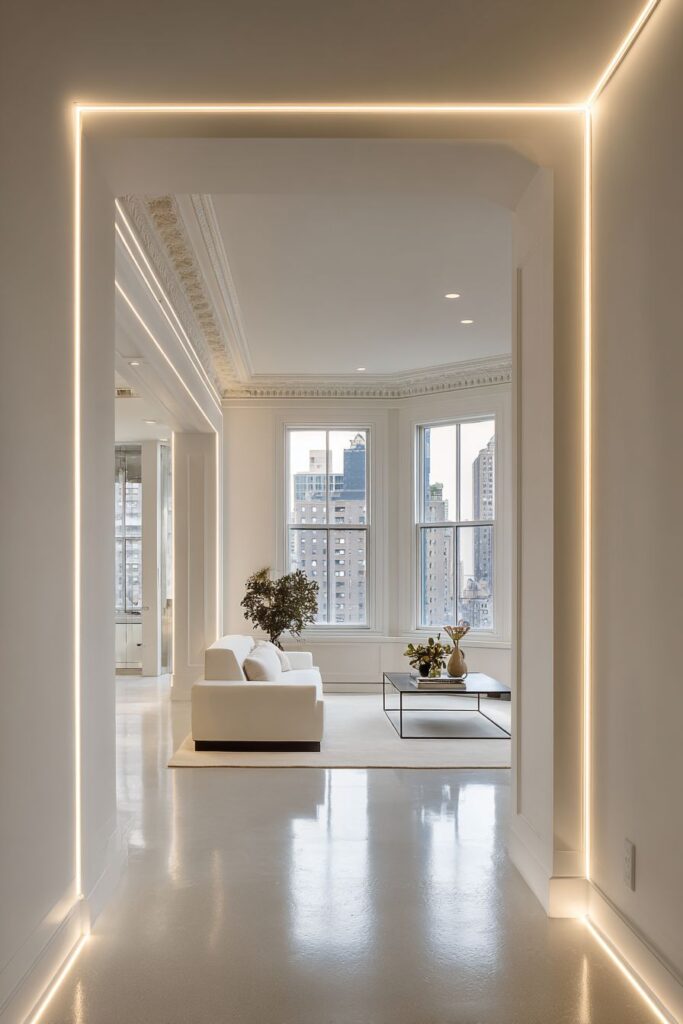
The space includes a single white sofa and glass coffee table on polished concrete flooring, allowing the architectural lighting to provide primary visual interest while furniture maintains essential function without competing for attention. The restrained furniture selection emphasizes the lighting’s architectural integration.
Evening interior photography captures the ambient lighting effects and creates a serene atmosphere that transforms the space from daytime simplicity to evening sophistication. The hidden lighting demonstrates how minimalist design can use technology to enhance daily living rhythms without visual compromise.
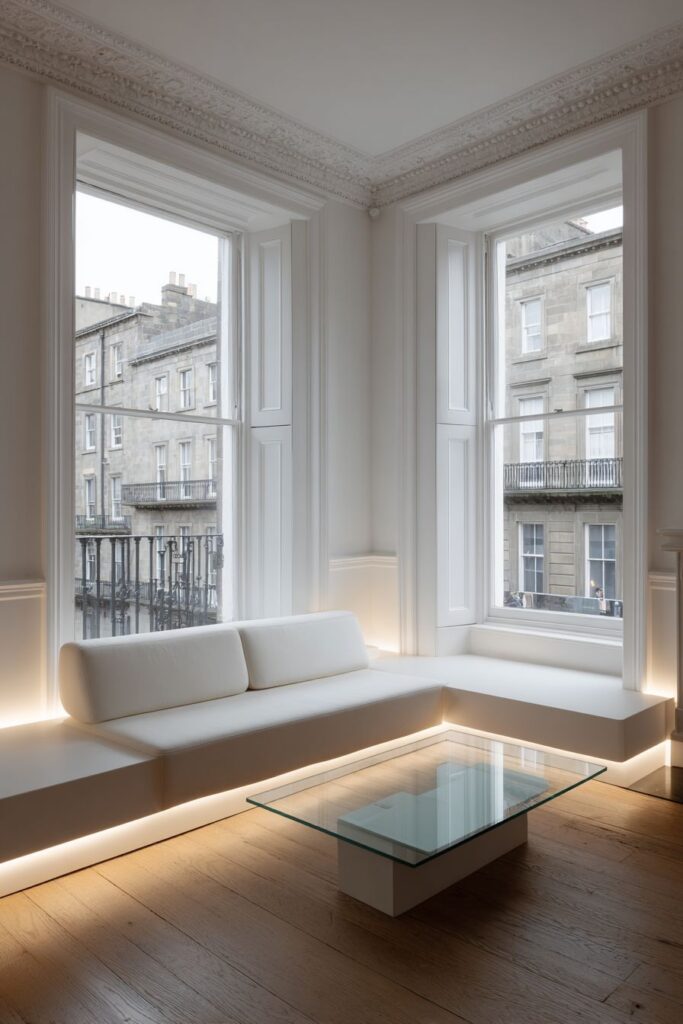
Key Design Tips:
- Integrate LED strip lighting within architectural details for invisible ambient illumination
- Plan hidden lighting during construction phases for seamless installation
- Use architectural lighting to create gallery-like atmosphere in residential spaces
- Choose minimal furniture that allows architectural lighting to provide primary visual interest
- Design lighting systems that adapt space mood to daily rhythms without visible fixtures
29. Marble Luxury Statement
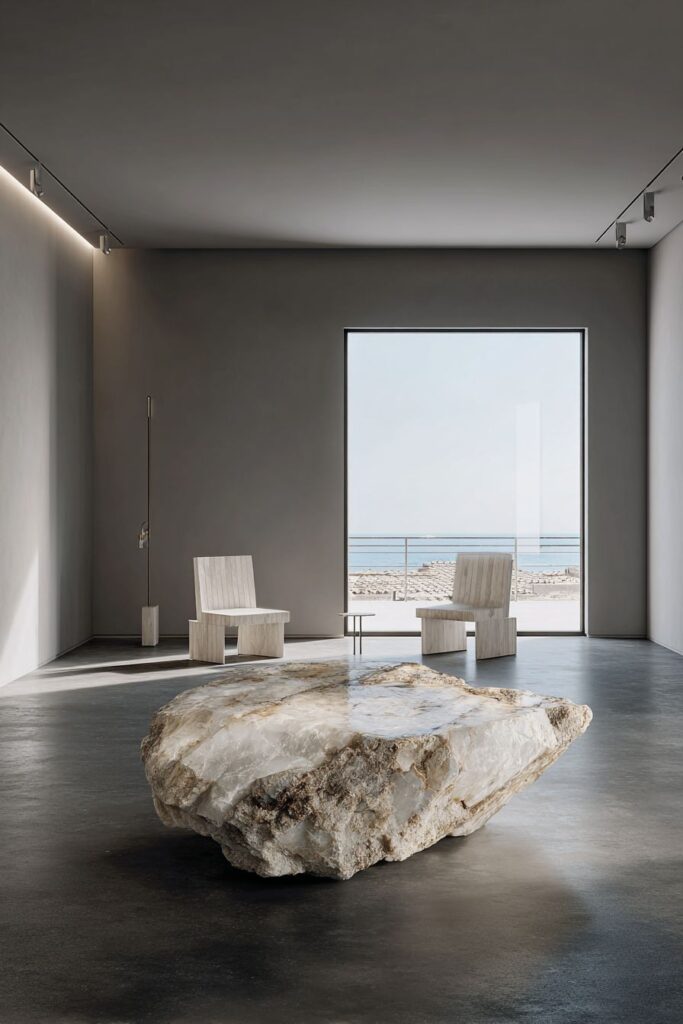
The massive single piece of white Carrara marble functioning as both coffee table and art object creates a luxury centerpiece that demonstrates minimalist design’s appreciation for exceptional materials. Positioned centrally on dark charcoal concrete flooring, the marble’s dramatic veining provides the space’s only decorative element within an otherwise austere environment.
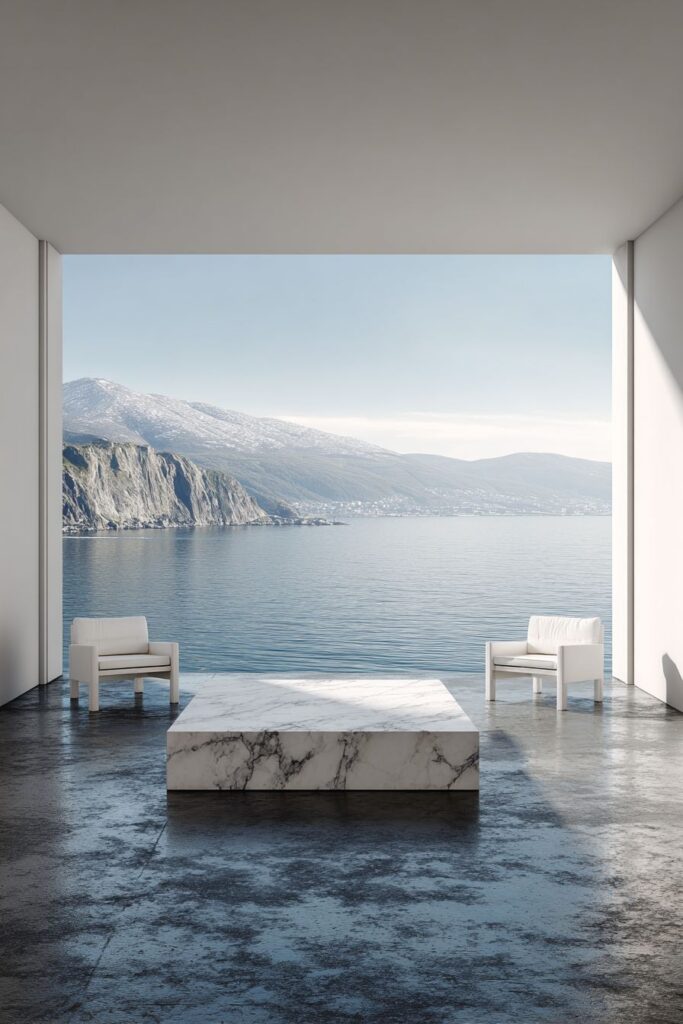
Two simple white chairs flank the marble piece symmetrically, creating formal seating that emphasizes the stone’s importance while maintaining visual balance. The chairs’ clean lines and white upholstery ensure that the marble commands attention as the room’s primary focus and luxury statement.
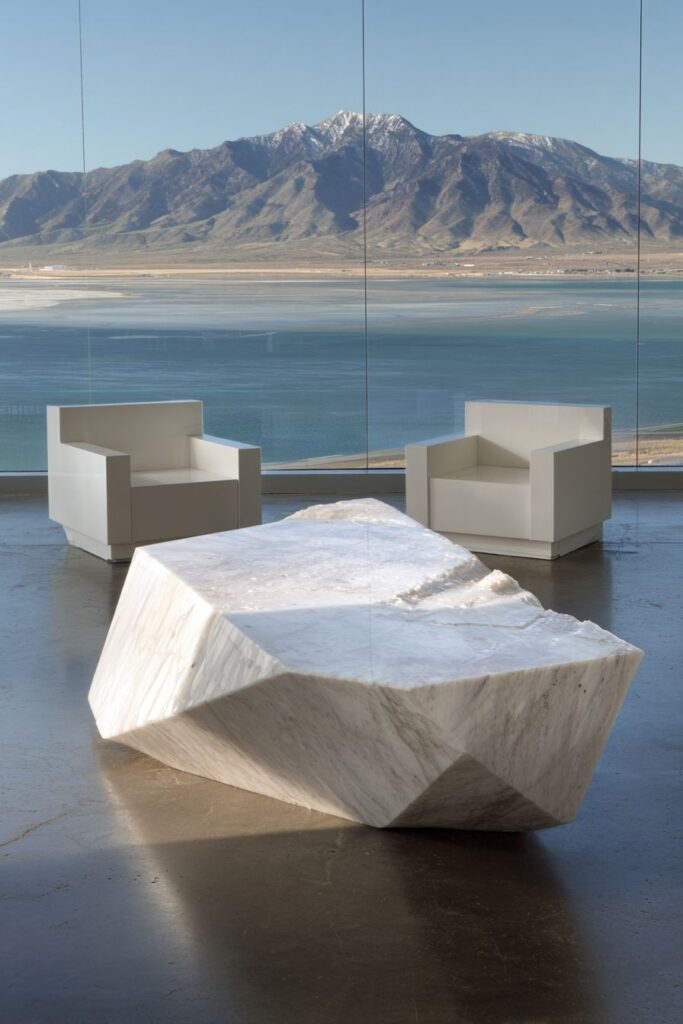
The dramatic veining in the Carrara marble creates organic patterns that provide visual interest and natural beauty without requiring additional decorative elements. The stone’s translucent qualities interact with natural lighting to create subtle variations in appearance throughout the day.
Natural light from a single large window highlights the marble’s translucent qualities and emphasizes the stone’s natural veining patterns, showing how minimalist design can use lighting to enhance premium materials’ inherent beauty. The professional interior photography captures material luxury within minimalist restraint.
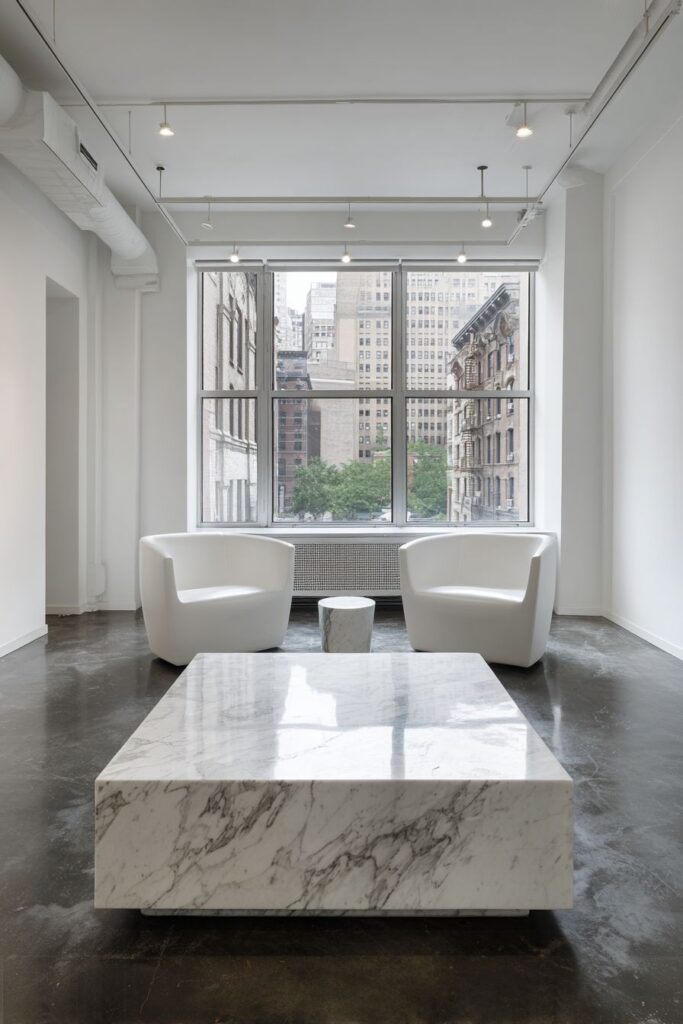
Key Design Tips:
- Invest in exceptional natural materials that function as both furniture and art
- Use dramatic natural stone veining as primary decorative elements
- Position luxury materials to take advantage of natural lighting for optimal visual impact
- Create symmetrical arrangements to emphasize important central elements
- Choose single statement materials rather than multiple decorative accessories
30. Invisible Comfort Systems
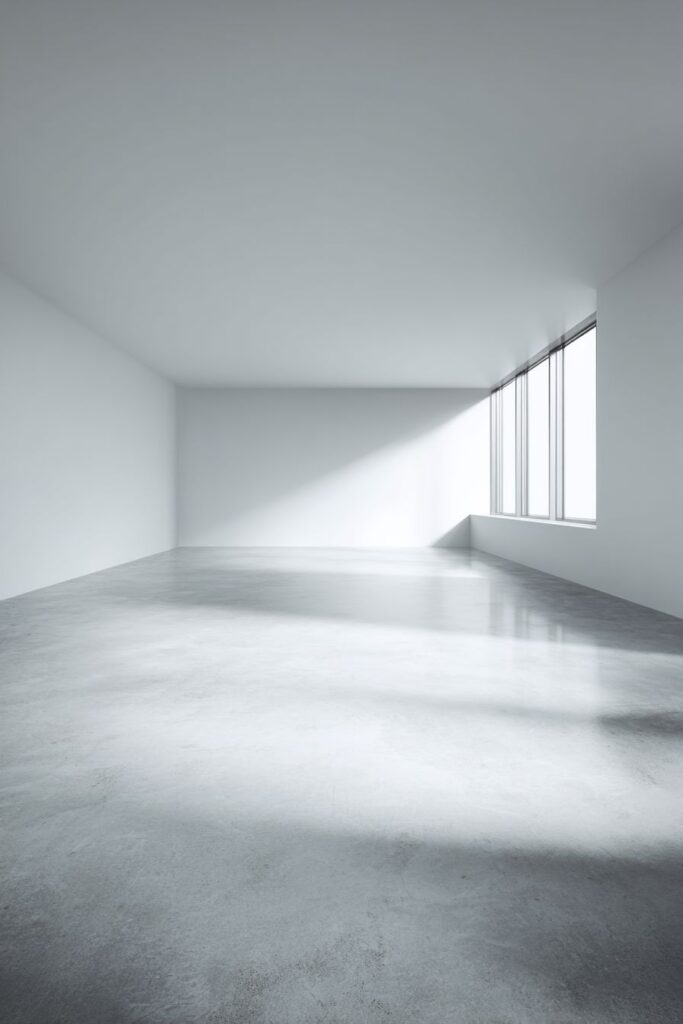
The temperature-controlled white concrete floor featuring radiant heating eliminates the need for visible heating equipment while providing optimal comfort through invisible systems. This approach demonstrates minimalist design’s ultimate integration of technology and comfort without visual compromise.
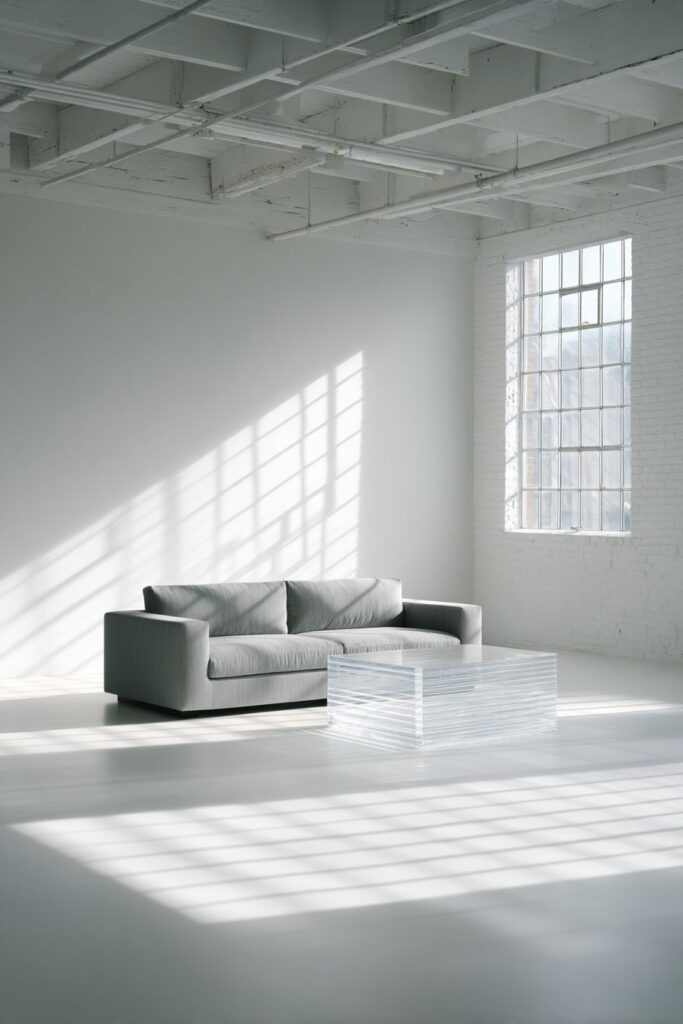
The radiant heating system built into the concrete flooring provides even, comfortable warming that allows furniture to be positioned directly on the surface without consideration for heating vents or radiators. A single low-profile grey sofa sits directly on the warm surface with a transparent acrylic coffee table.
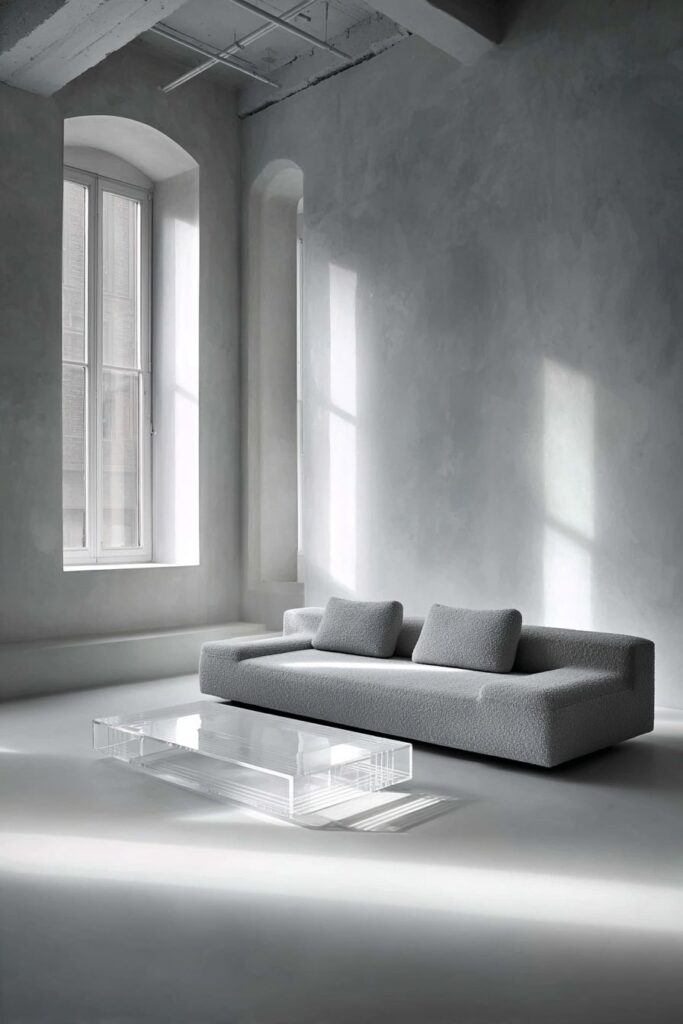
The smooth white plaster walls with no visible vents or mechanical equipment demonstrate how minimal living room design can achieve complete comfort while maintaining absolute visual purity. All environmental systems are integrated invisibly within the architecture itself.
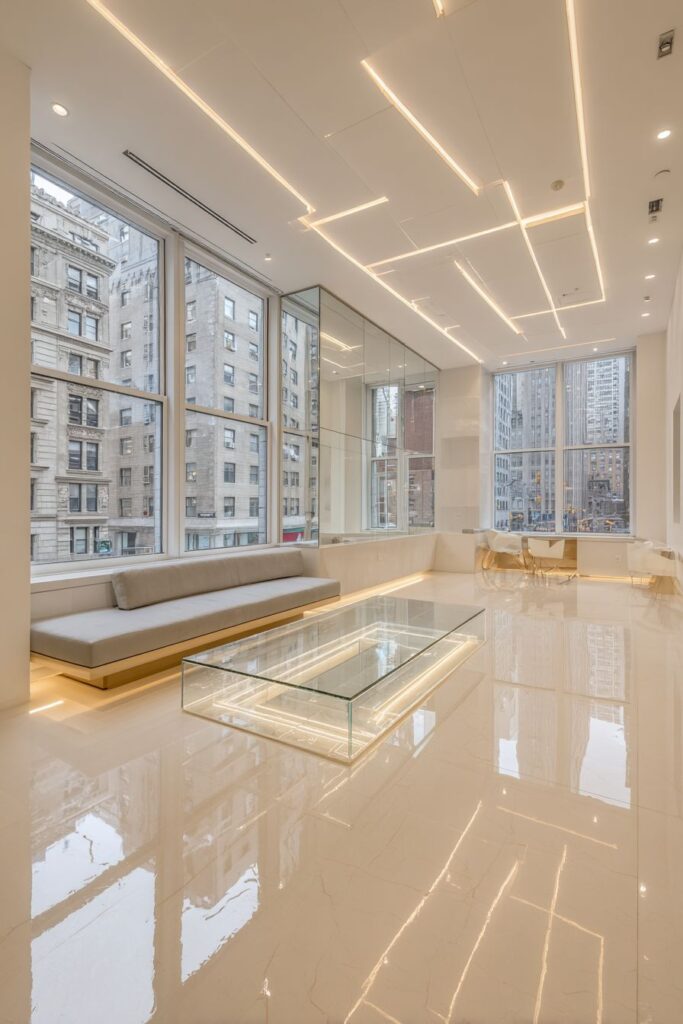
Natural light from ribbon windows creates clean geometric shadows while the temperature-controlled environment maintains optimal comfort without visible mechanical intrusion. Interior photography emphasizes the invisible comfort systems and the sensory experience of the refined minimal environment where technology serves occupant comfort without demanding visual attention.
Key Design Tips:
- Plan radiant heating systems for invisible comfort without visible equipment
- Integrate all mechanical systems within architectural elements during construction
- Use ribbon windows for natural lighting without compromising wall plane integrity
- Position furniture to benefit from invisible comfort systems
- Design environmental controls that enhance occupant comfort without visual presence
Why These Minimal Living Room Designs Represent the Best in Contemporary Interior Design
These thirty minimal living room designs represent the pinnacle of contemporary interior design because they successfully balance aesthetic sophistication with practical functionality. Each design demonstrates minimal living room principles while offering unique solutions to modern lifestyle needs. The best minimal living rooms featured here showcase innovative approaches to common design challenges: storage integration, technology accommodation, flexible living arrangements, and environmental comfort.
The selection emphasizes modern minimal living room concepts that push beyond simple furniture arrangement to embrace architectural integration. These minimal living room ideas demonstrate how contemporary design can create spaces that are both visually stunning and highly functional through careful material selection, precise proportional relationships, and thoughtful spatial planning.
Minimal living room decor approaches shown throughout these designs prove that restraint and curation create more impact than accumulation and decoration. The minimal living room design principles evident in each space—clean lines, quality materials, purposeful furniture placement, and controlled color palettes—establish timeless environments that adapt to changing lifestyle needs while maintaining their essential character.
These minimal living room concepts represent the evolution of interior design toward spaces that prioritize occupant wellbeing, environmental harmony, and aesthetic refinement. The minimal modern living room designs featured demonstrate how contemporary technology can enhance daily living without compromising visual purity, while small minimal living room solutions show that spatial limitations can inspire rather than constrain creative design thinking.
Conclusion
The thirty minimal living room designs presented in this comprehensive guide demonstrate that minimalist interior design has evolved far beyond simple reduction or sparse decoration. Instead, these spaces represent sophisticated approaches to contemporary living that embrace innovation, prioritize quality, and celebrate the inherent beauty of carefully chosen materials and thoughtful spatial relationships. Each design offers unique insights into how minimal living room principles can be adapted to different architectural contexts, lifestyle needs, and personal preferences while maintaining the essential characteristics that define this enduring aesthetic approach.
From floating consoles and retractable furniture systems to integrated planters and invisible technology, these designs show that minimal living rooms can accommodate the complex demands of modern life while providing the visual calm and spatial clarity that make these spaces so appealing. The consistent themes of material honesty, geometric precision, and functional integration demonstrate that minimalist design is not about limitation but about making intentional choices that enhance rather than complicate daily living.
As you consider incorporating these ideas into your own home, remember that successful minimal living room design begins with understanding your specific needs and lifestyle patterns, then selecting elements that serve those needs with both functional efficiency and aesthetic integrity. The goal is not to recreate these exact spaces but to understand the principles they demonstrate and adapt those principles to create your own version of minimal living that brings clarity, beauty, and comfort to your daily life.
"As an Amazon Associate, I earn from qualifying purchases."
